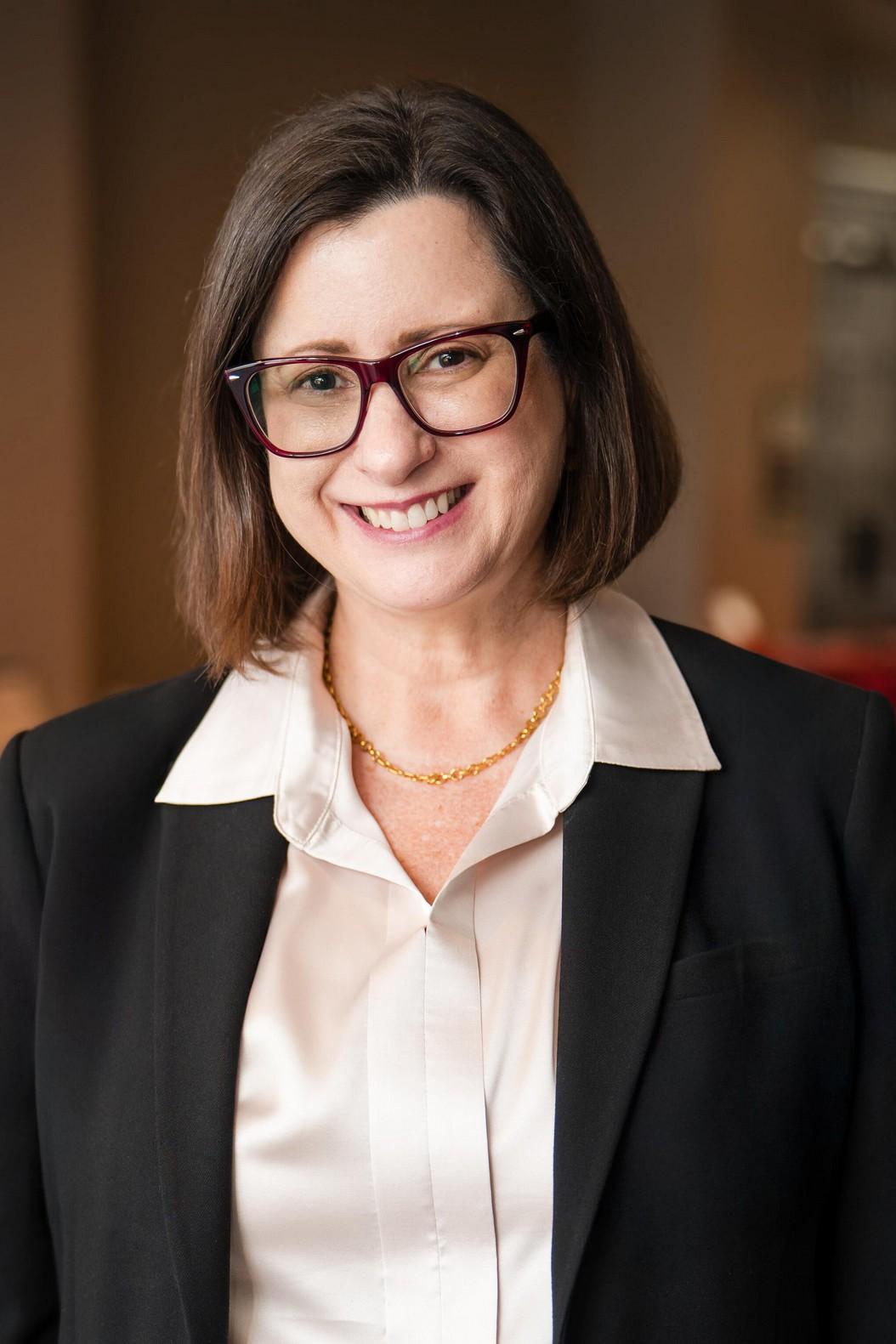
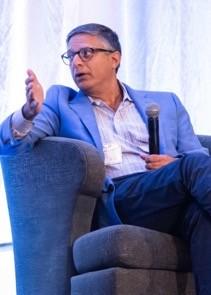
Vice President, Patient Support, International Myeloma Foundation Understanding Myeloma Basics
Daniel O'Leary, MD
University of Minnesota, Minneapolis, MN
IMF MYELOMA COMMUNITY WORKSHOP MINNEAPOLIS MORNING AGENDA
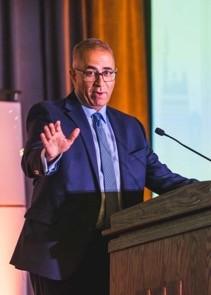
(Video) Closing the Gap: Health Disparities in Myeloma
Joseph Mikhael, MD, MEd, FRCPC, FACP, FASCO, Medical Advisor, International Myeloma Foundation
Advancing Treatment Options Through Clinical Trials
David Dingli, MD, PhD
Mayo Clinic, Rochester, MN
Q&A with Panel
Coffee Break
Breakout: Frontline or Relapsed Treatment Approaches
-NDMM: Getting Started with Myeloma Management
Daniel O'Leary, MD
-RRMM: Continuing the Myeloma Treatment Journey
David Dingli, MD, PhD
LUNCH
Find Your Path: Navigating Your Myeloma Journey
IMF Nurse Leadership Board
Teresa Miceli, RN, BSN, OCN
Mayo Clinic, Rochester, MN
IMF MYELOMA COMMUNITY WORKSHOP
MINNEAPOLIS
AFTERNOON AGENDA
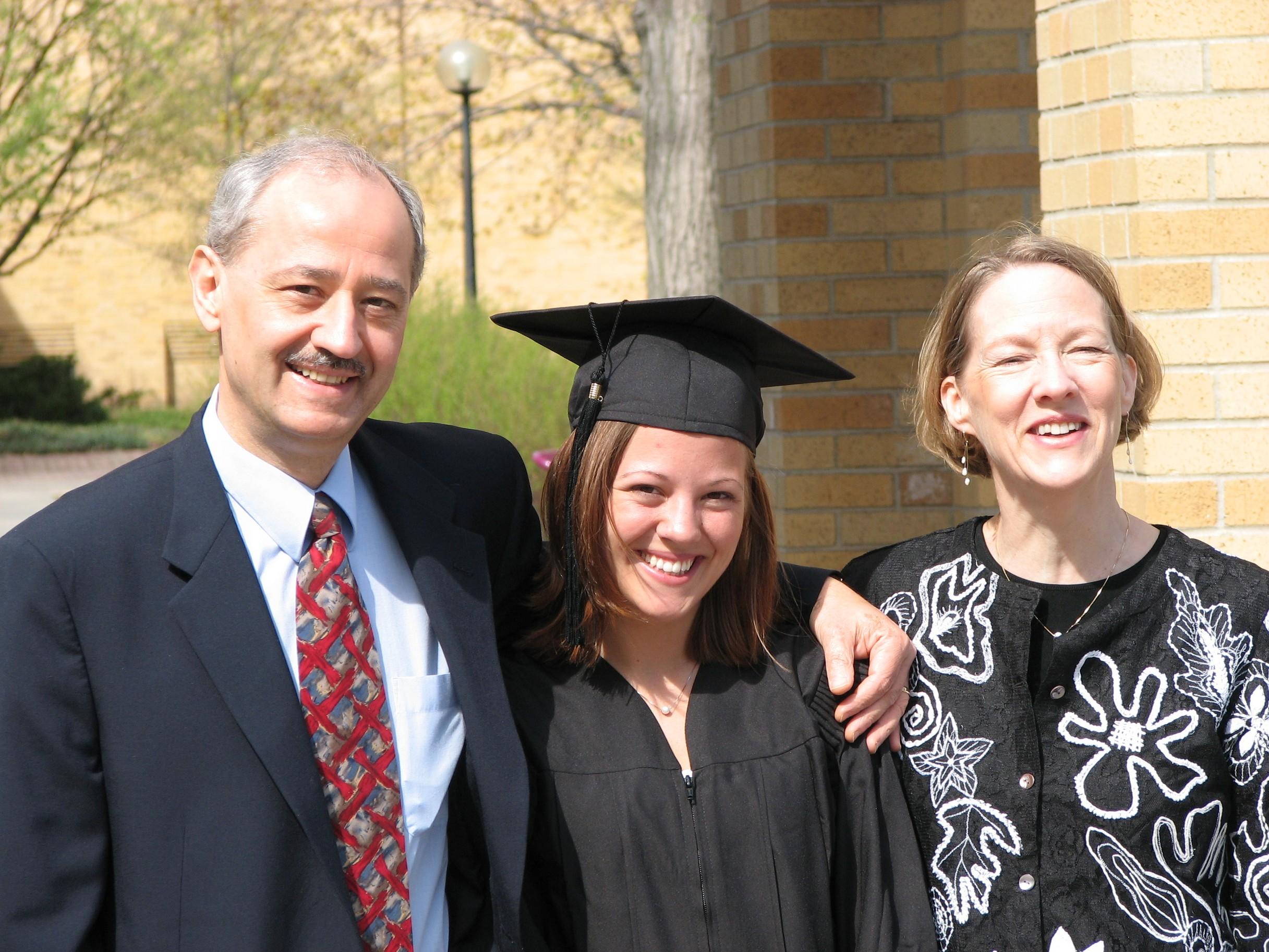
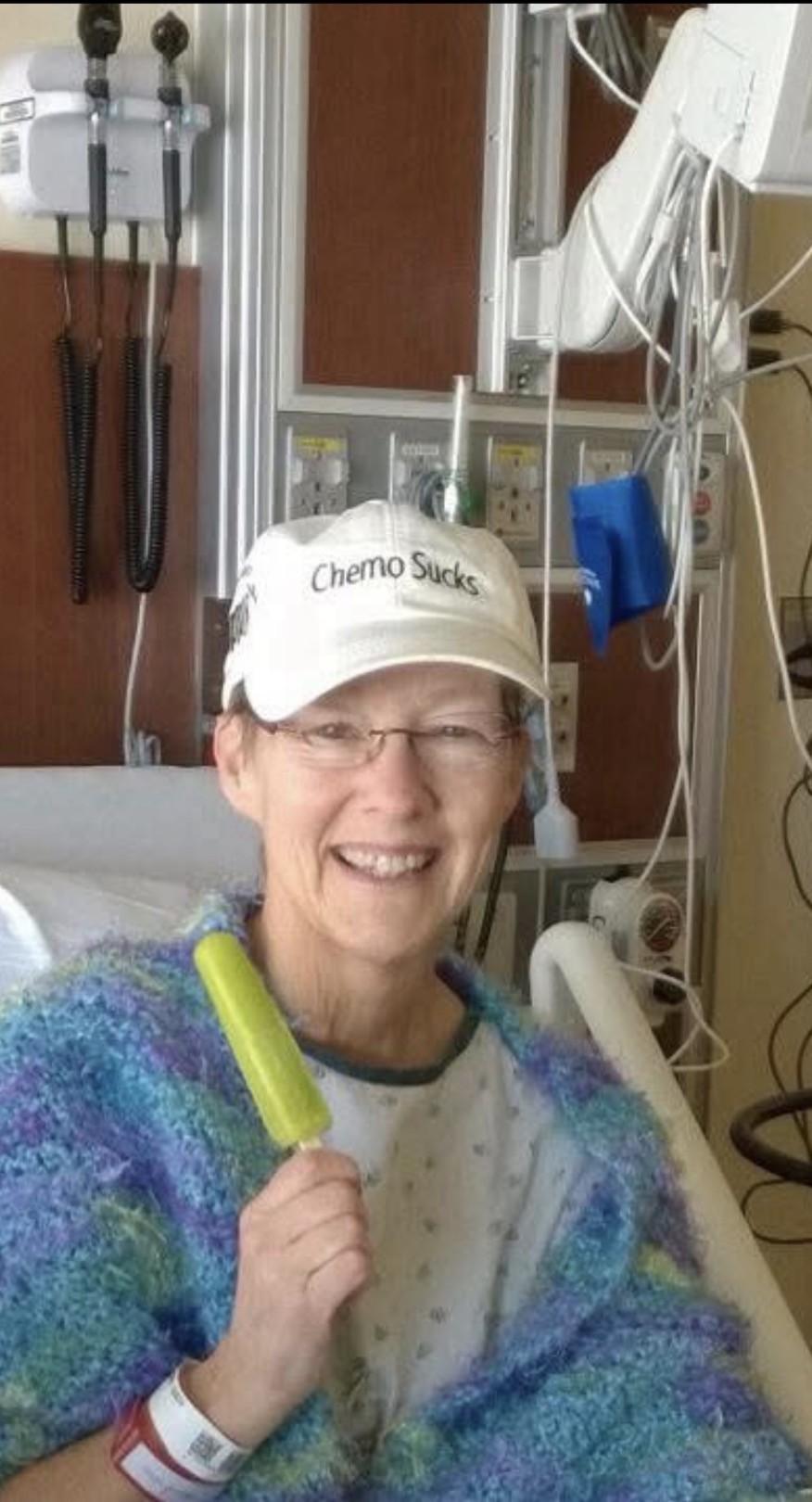
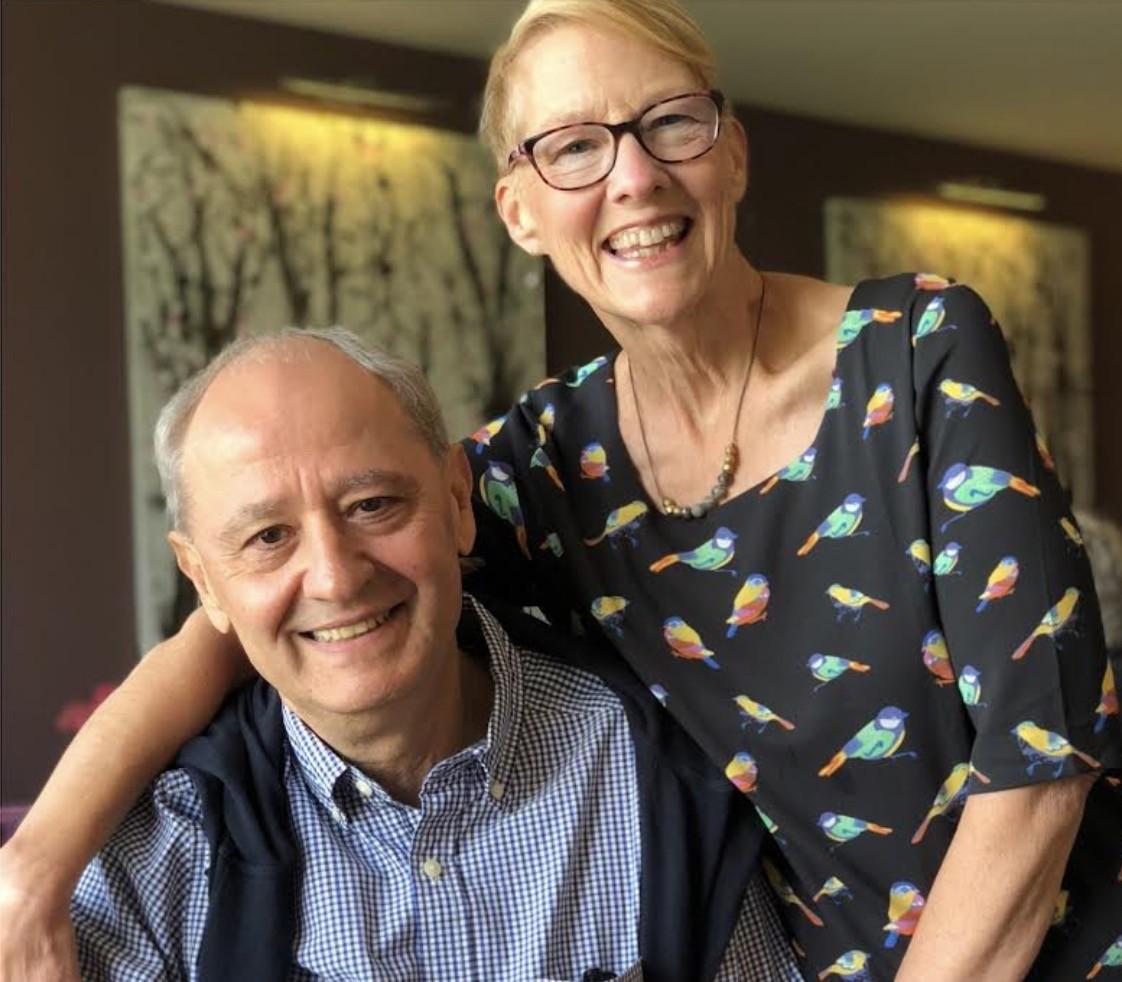
Living the Myeloma Life: Local Patient & Care Partner
Barb Davis, Patient Advocate
Fatih Kinoglu, Care Partner
The Unseen Impact of Myeloma: Taking Care of your Emotional Health
Jennifer Wieworka, DNP, RN, OCN
Director, Support Groups, International Myeloma Foundation
Q&A with Panel
Closing Remarks
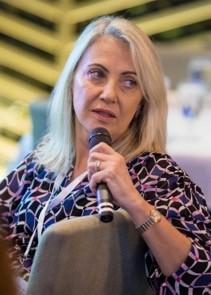
Robin Tuohy, 26-year Myeloma Care Partner
Vice President, Support Groups, International Myeloma Foundation
Coffee/Network
SCAN THIS QR CODE FOR KEY IMF RESOURCES
Helpful Links to:
• Slides for Today’s Program
• Evaluations PLEASE complete before you leave today
• SparkCures Search Engine specific for the Minneapolis region
• Ways to Give
OUR FOUNDATION
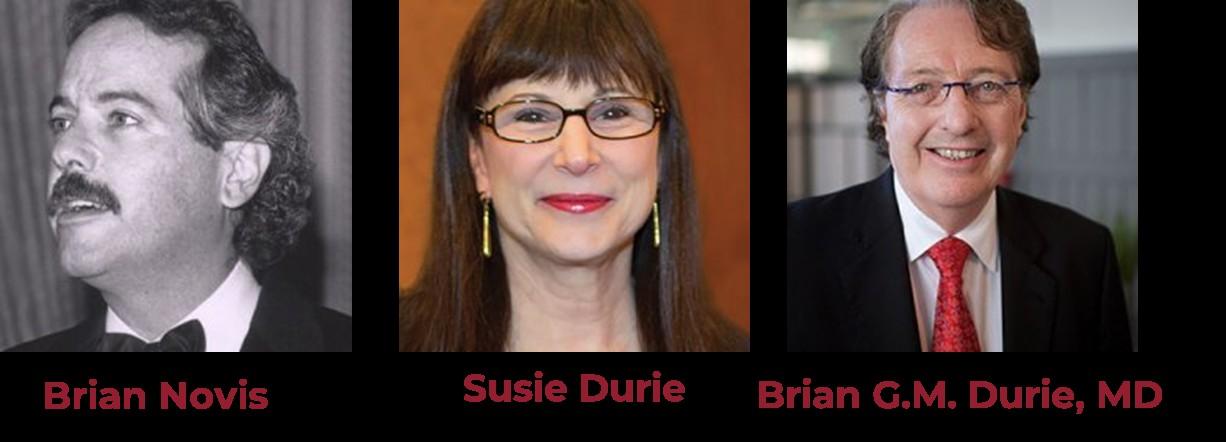
The International Myeloma Foundation was founded in 1990, when a myeloma patient, care partner, and their specialist came together to fulfill an unmet need: a trusted resource for the global myeloma community, so no one would feel alone.
HONORING THE LEGACY OF BRIAN G.M. DURIE, MD
1942 - 2025
HEATHER COOPER ORTNER
IMF President & CEO
“I
am humbled to serve alongside so many who are making a difference every day for patients and families affected by myeloma, and I look forward to building on the IMF’s legacy of impact”
The International Myeloma Foundation is the global leader in multiple myeloma
OUR MISSION:
To improve the quality of life of myeloma patients while working toward prevention & a cure
OUR VISION:
A world where every myeloma patient can live life to the fullest, unburdened by the disease
IMF LEADS THE WAY
Together, we are turning hope into action:
one meeting, one conversation, one connection at a time.
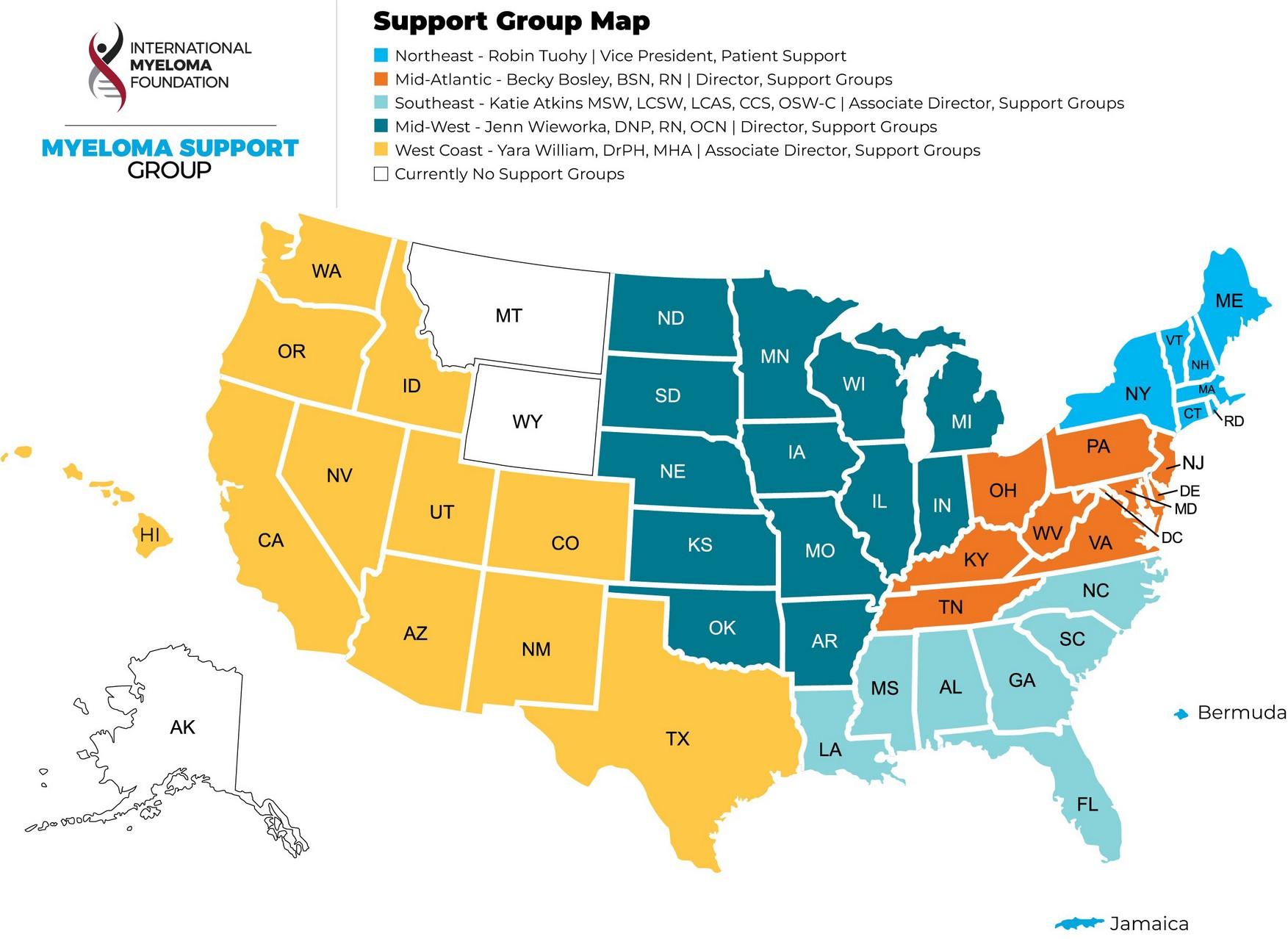
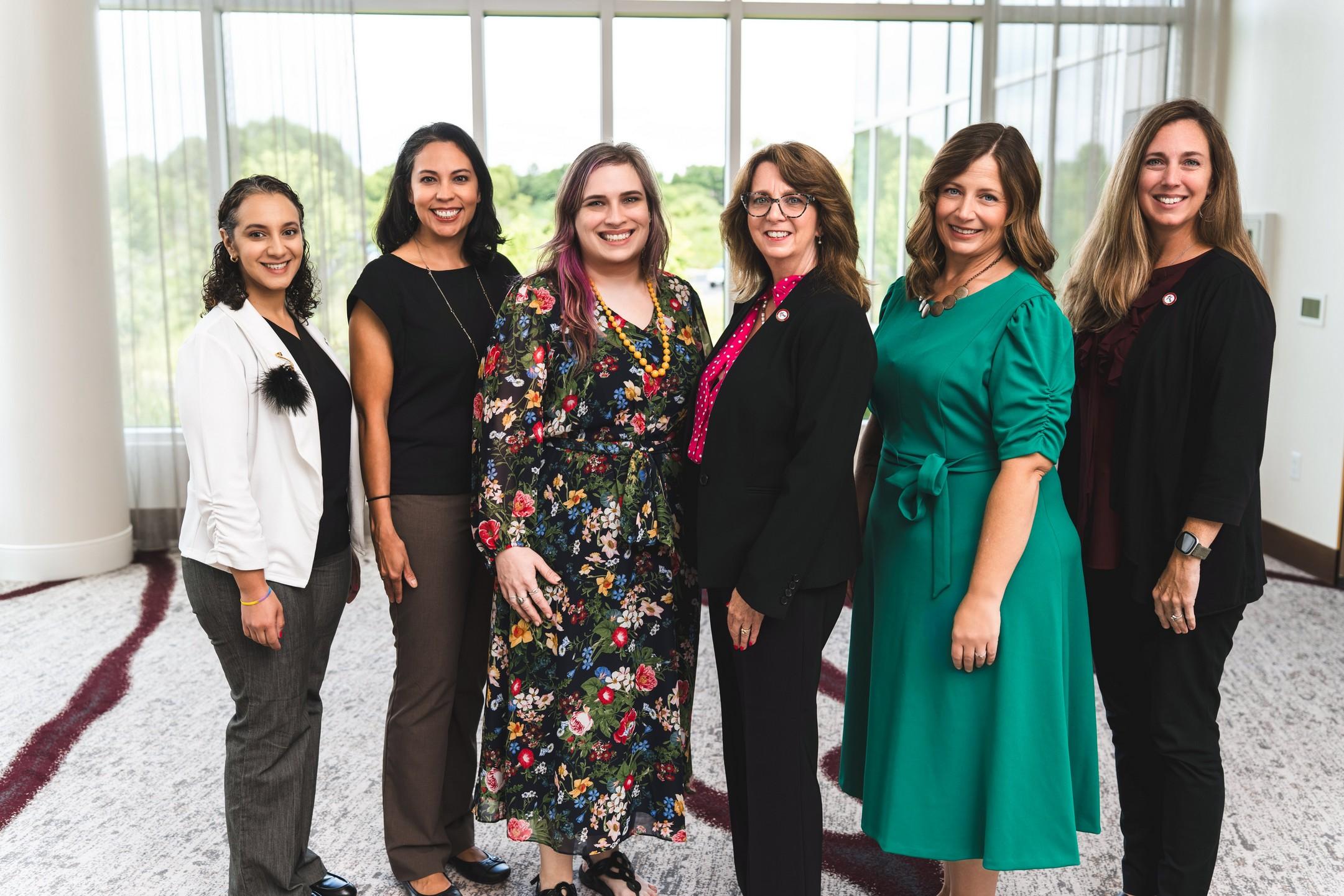
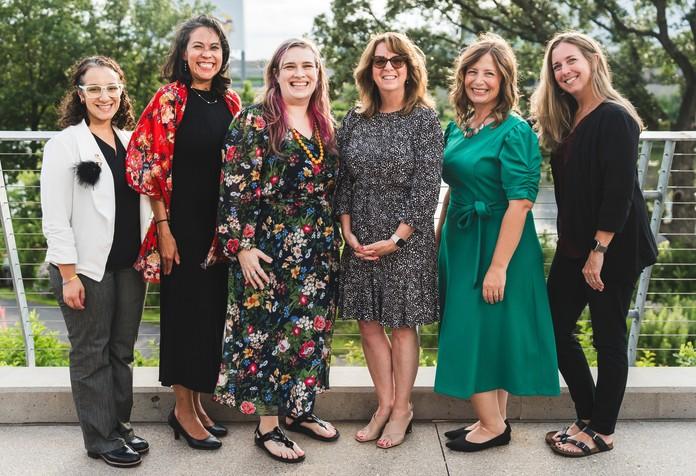
THE IMF SUPPORT GROUP TEAM
Shared Experiences Become Shared Strength!
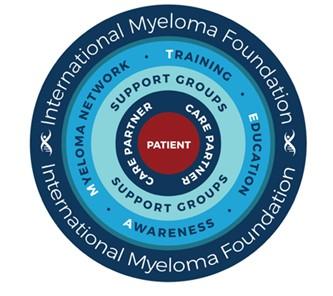
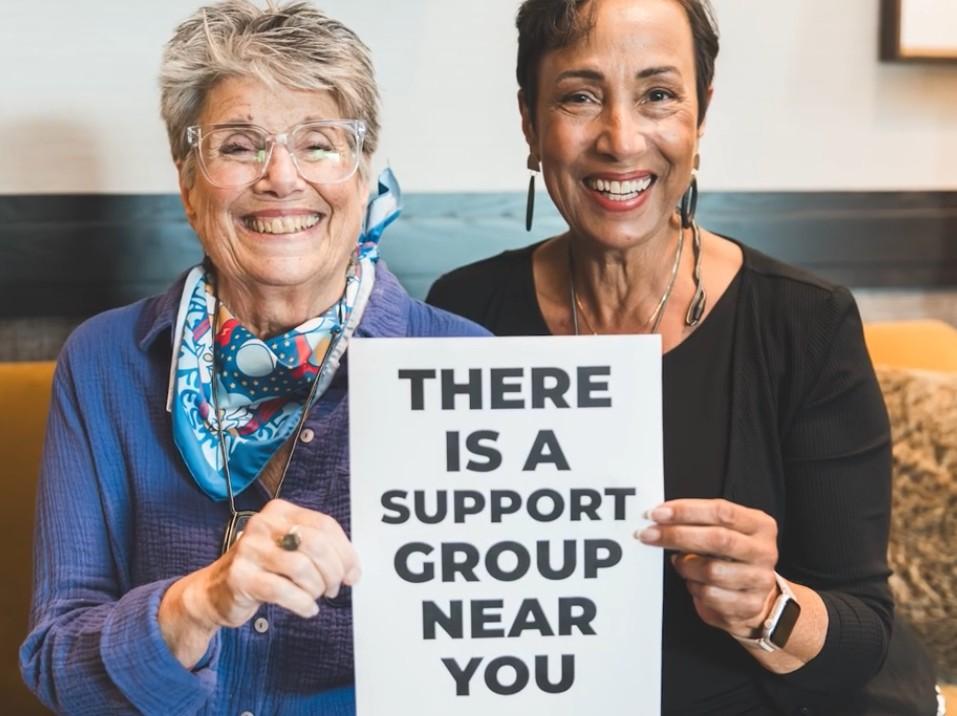
Support Groups empower patients & care partners with information, insight & hope
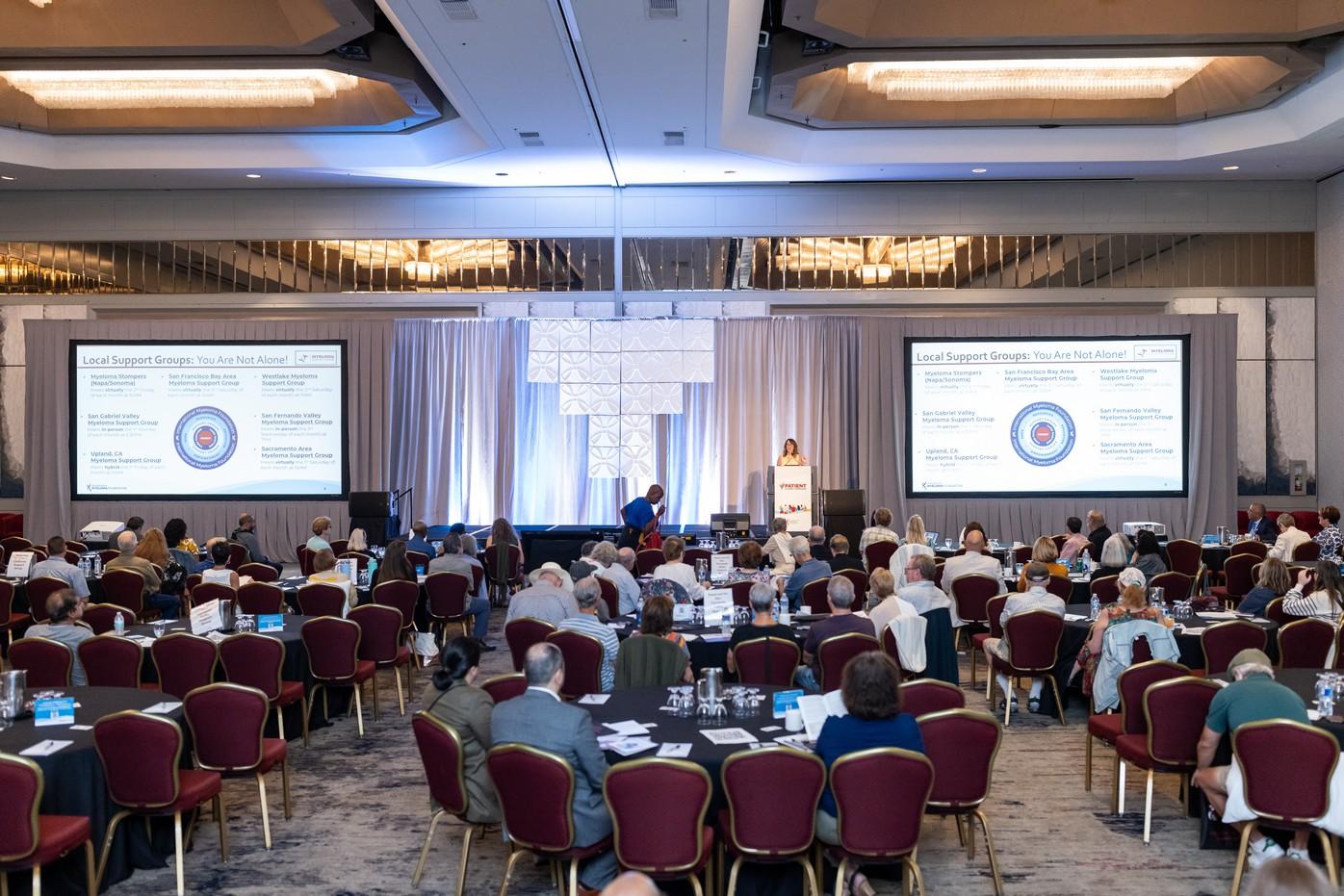
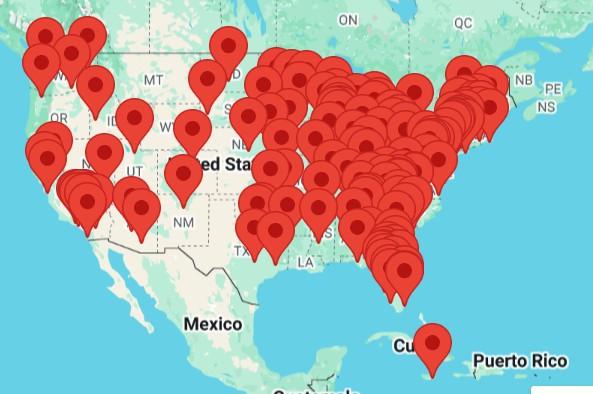
The IMF provides educational support to a network of over 155 myeloma specific groups
SPECIAL INTEREST GROUPS
Special interest groups are designed as a supplemental support for specific populations of patients, in addition to their local Support Groups
MM Families
Founded in 2021
For patients & care partners with young children
Las Voces de Mieloma
Founded in 2022
For Spanish speaking patients & care partners
Living Solo & Strong
Founded in 2022
For patients without a care partner
Veterans SIG
Founded in 2025
For those who served our country
MM in the Middle
Founded in 2026
For those diagnosed before age 50
Smolder Bolder
Founded in 2023
For smoldering myeloma patients & care partners
Living with High-Risk Multiple Myeloma
Founded in 2023
For high-risk myeloma patients & care partners
Care Partners Only
Founded in 2024
For myeloma care partners only
LOCAL SUPPORT GROUPS
Twin Cities, MN
Meets hybrid on the 2nd Saturday of each month at 10:00 AM
Central Time
Central MN
Meets in-person on the 2nd Saturday of each month at 10:00AM
Central Time
Rochester, MN
Meets virtual on the 3rd Saturday of each month at 10:00AM Central Time
Eau Claire, WI
Meets hybrid on the 2nd Monday of each month at 3:00 PM Central Time
2026 DIRECTOR PRESENTATION LIBRARY
Stronger Together: The IMF’s Commitment
The Myeloma Treatment Landscape
Guided Member Roundtable
Myeloma.org website walkthrough
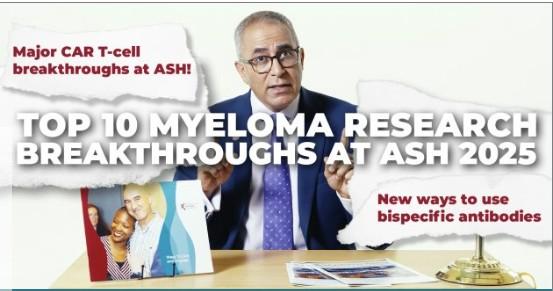
ASH/ASCO Research Updates
Emotional Health: The Unseen Impact of Myeloma
Understanding Clinical Trials
Hope and Healing When the Future Is Uncertain
Palliative Care & Hospice
Emergency Planning
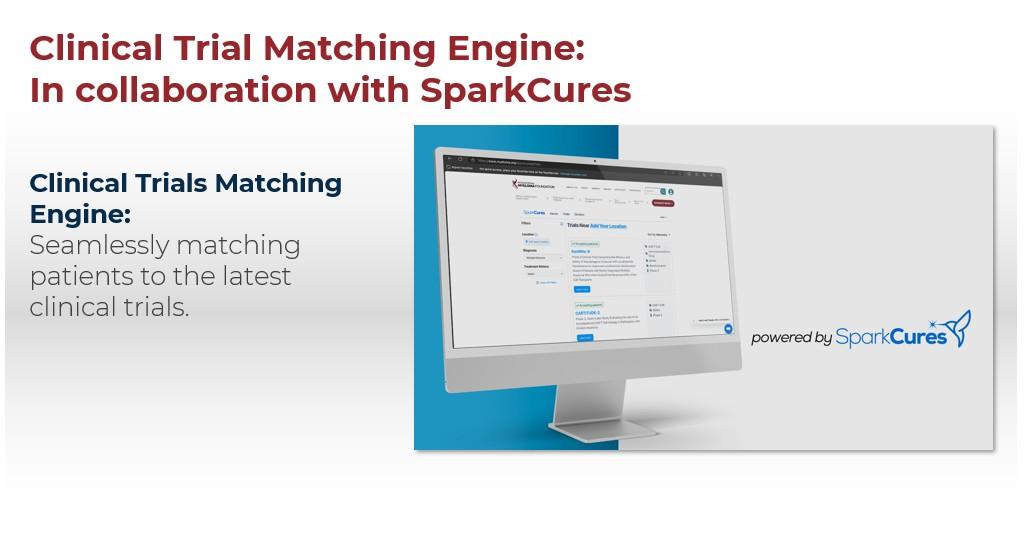
CLINICAL TRIAL MATCHING ENGINE
Powered by SparkCures
2026 LIVE IN THE US - PATIENT EDUCATION
Patient & Family Seminars
• Boca Raton, FL – March 13 – 14
• Cleveland, OH – May 1 – 2
• Los Angeles, CA – August 14 – 15
• Short Hills, NJ – October 2 – 3
Myeloma Community Workshops
• Kansas City, MO – March 28
• Virtual – April 20 – Newly Diagnosed
• Minneapolis, MN – April 25
• Detroit, MI – June 27
• Salt Lake City, UT – August 1
• Virtual – August 24 - Relapsed • Portland, OR – September 19
San Diego, CA – October 24 • Phoenix, AZ – November 14
Virtual – November 16
EDUCATION –
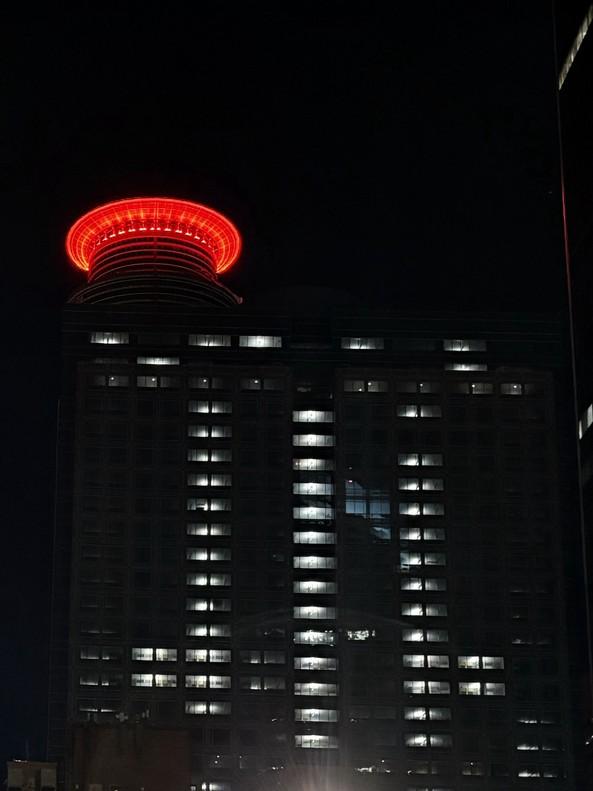
This year’s theme, #MoreThanMyeloma us that every patient is more than their diagnosis. And together, we will made the world take notice by lighting landmarks red across the globe.
Thank you for helping shine a light on multiple myeloma by engaging Minnesota landmarks to be lit in red in March. From bridges and buildings to monuments and city halls, every illuminated landmark sparks curiosity and inspires conversation! Thank you Capella tower, I-35W Bridge, and Mayo Clinic!
INTRODUCTION | ADVOCACY AT THE IMF
The IMF Advocacy Team collaborates with multiple stakeholders to inform and influence decision-making on the critical healthcare issues that directly impact myeloma patients.
The U.S. Advocacy Team advocates for equitable access to timely diagnosis, innovative treatments and research on Capitol Hill and with key regulatory
The team advocates both alongside of and on behalf of the patient community that we serve.
Advocacy play a critical role to educate policymakers about the issues important to our community and motivate them to act.
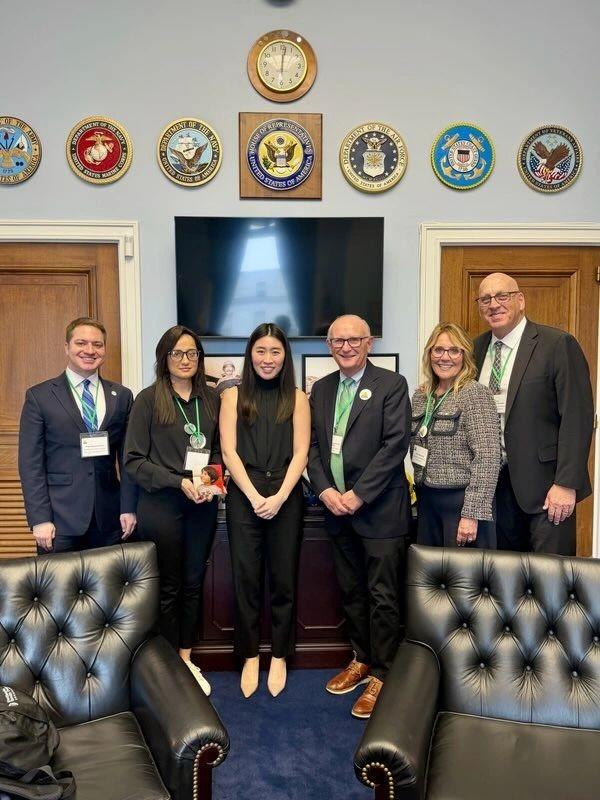
YOUR VOICE MATTERS IN WASHINGTON, D.C.
WHAT THIS IS:
Each year, the International Myeloma Foundation brings myeloma patients and caregivers to Capitol Hill to meet with members of Congress. Together, we advocate for:
• Better access to treatment
• Stronger support for cancer research
• Policies that improve the lives of people living with myeloma
HOW YOU CAN GET INVOLVED:
No policy experience is needed.
Just a willingness to share your experience.
IMF provides:
• Advocacy training
• Policy briefings
• Guidance every step of the way
Email us to join the IMF Advocacy Master Class and prepare for the next Hill Day.
EDUCATION – ENDURING
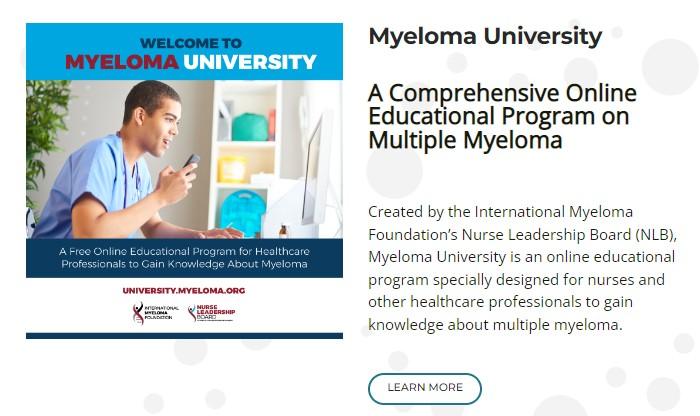
Videos, Webinars, Podcasts, and
EDUCATION- WRITTEN
Understanding
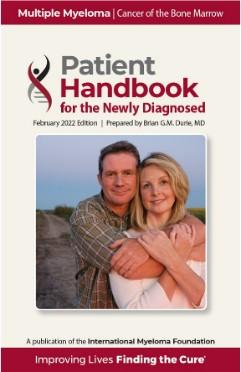
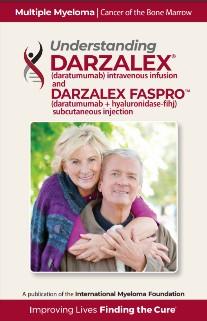
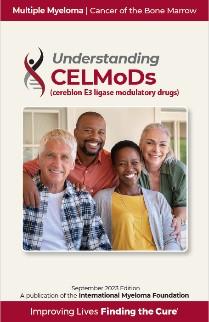
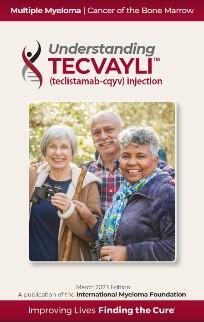
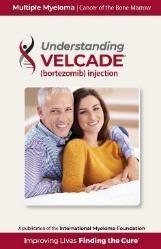
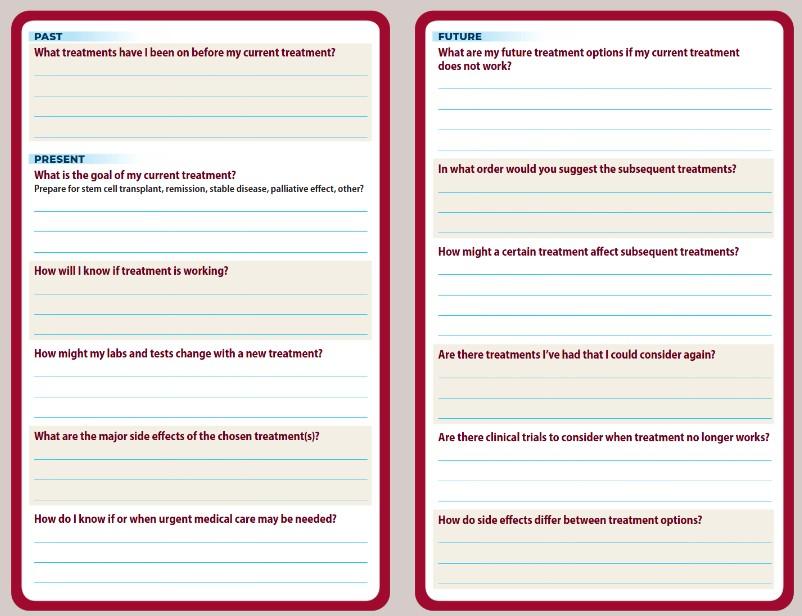
Booklets
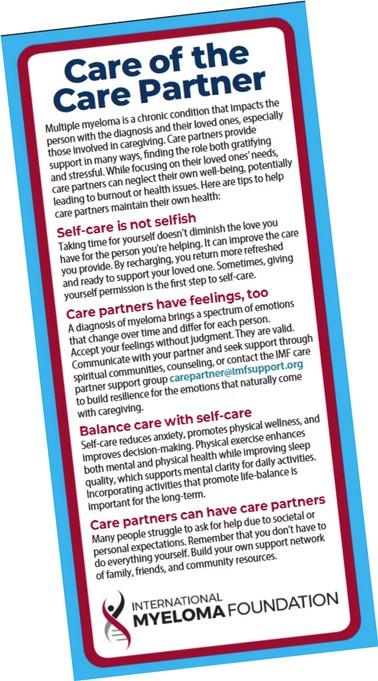
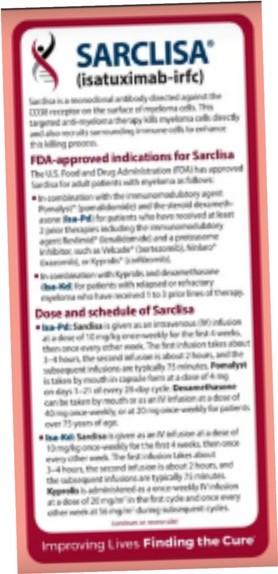
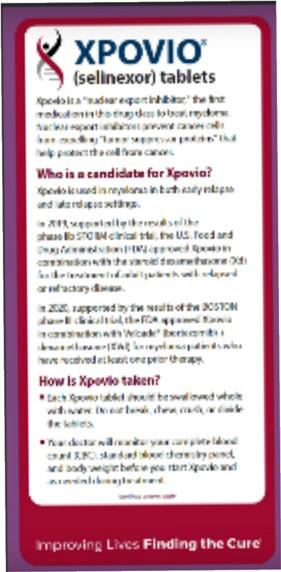
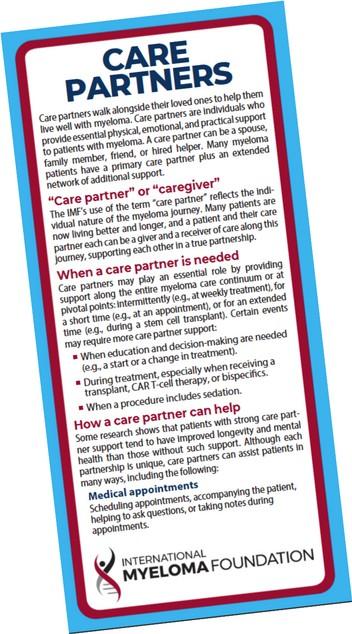
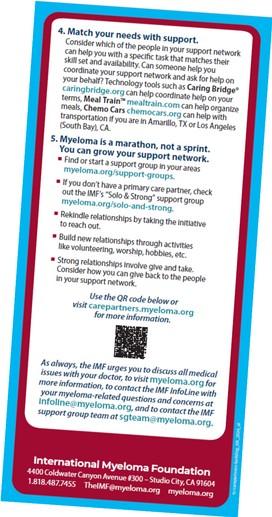
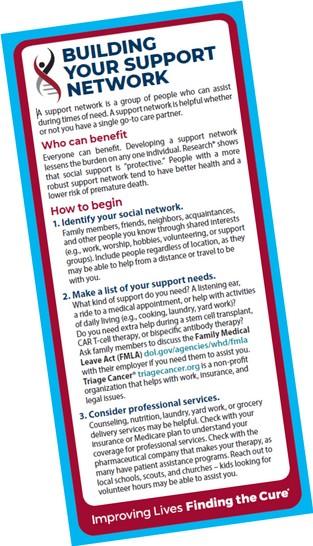
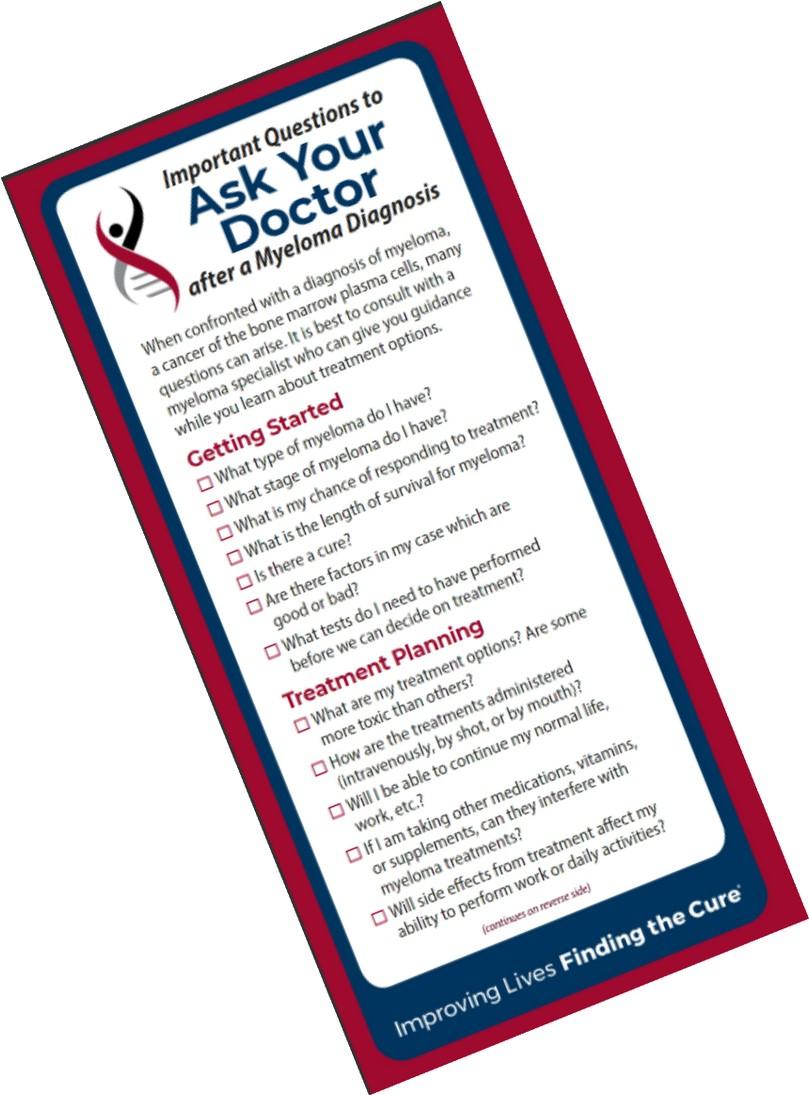
Tip Cards
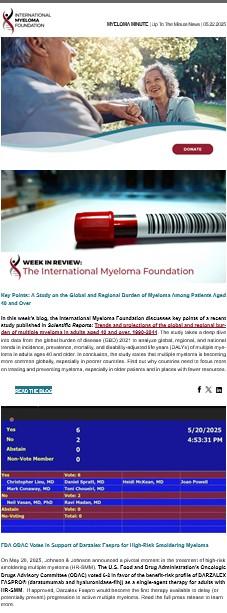
Myeloma Minute
Weekly Updates
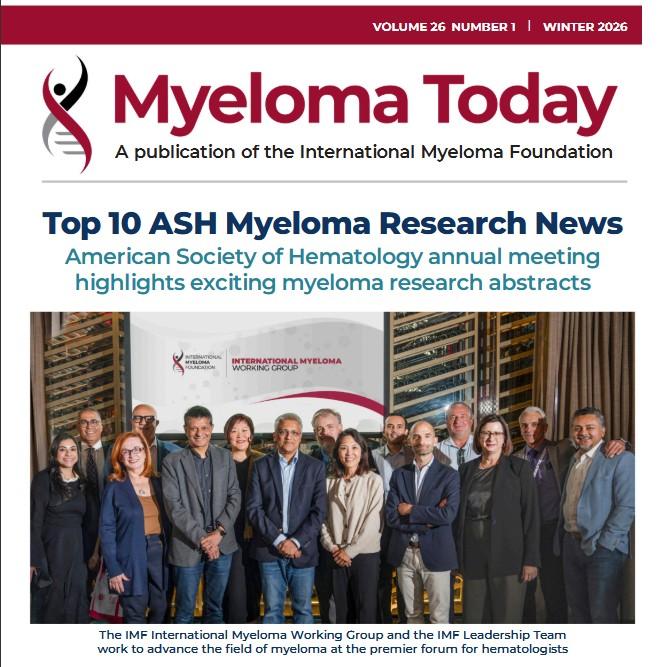
Myeloma Today
Quarterly News
RESEARCH – SCIENTIFIC ADVISORY BOARD
S. Vincent Rajkumar, MD IMF Board Chair
Sagar Lonial, MD, FACP
Winship Cancer Institute, Emory University
Joseph Mikhael, MD, MEd, FRCPC, FACP IMF Chief Medical Officer
Thomas Martin, MD UCSF, Helen Diller
Family Comprehensive Cancer Center
Wee Joo Chng, MD National University of Singapore
María-Victoria Mateos, MD, PhD University of Salamanca
Vania Hungria, MD, PhD Santa Casa de São Paulo
Philippe Moreau, MD University Hospital of Nantes
Sigurður Yngvi Kristinsson, MD, PhD University of Iceland
NIkhil Munshi, MD Dana-Farber Cancer Institute
Shaji Kumar, MD Mayo Clinic
Jesús San Miguel, MD, PhD University of Navarra
Saad Zafar Usmani, MD, MBA, FACP, FASCO
Memorial Sloan Kettering Cancer Center
INTERNATIONAL MYELOMA WORKING GROUP
Under the guidance of the IMF Scientific Advisory Board, the IMWG identifies critical research needs, collaborations, and funding
• Primary Goal: To improve patient outcomes by identifying the most promising research to prevent and treat myeloma and ultimately, find a cure!
Clinical Trials
MGUS SMM
Immune Therapies
High Risk Access
Real World Data
MRD Quality of Life
355 Doctors
43 Countries
70 Publications
NURSE LEADERSHIP BOARD
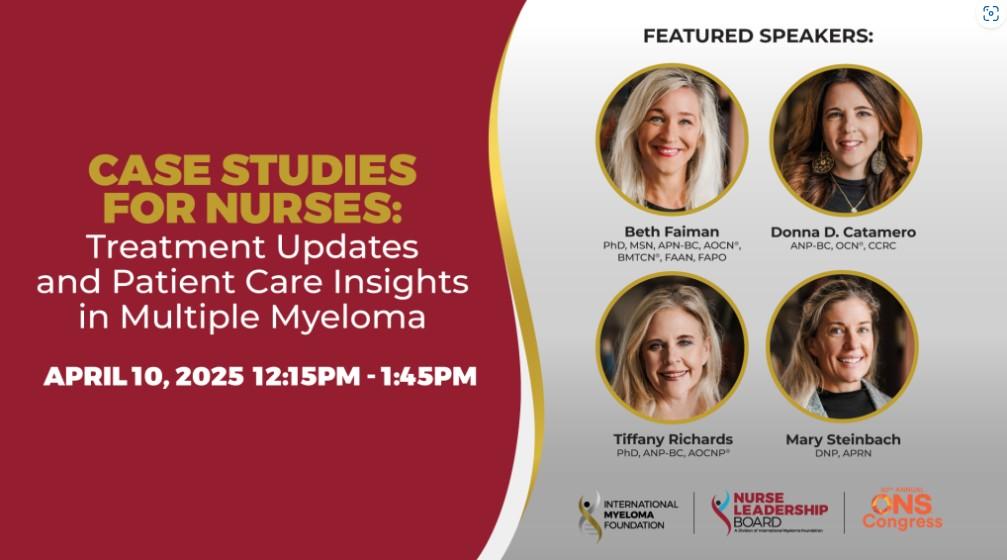
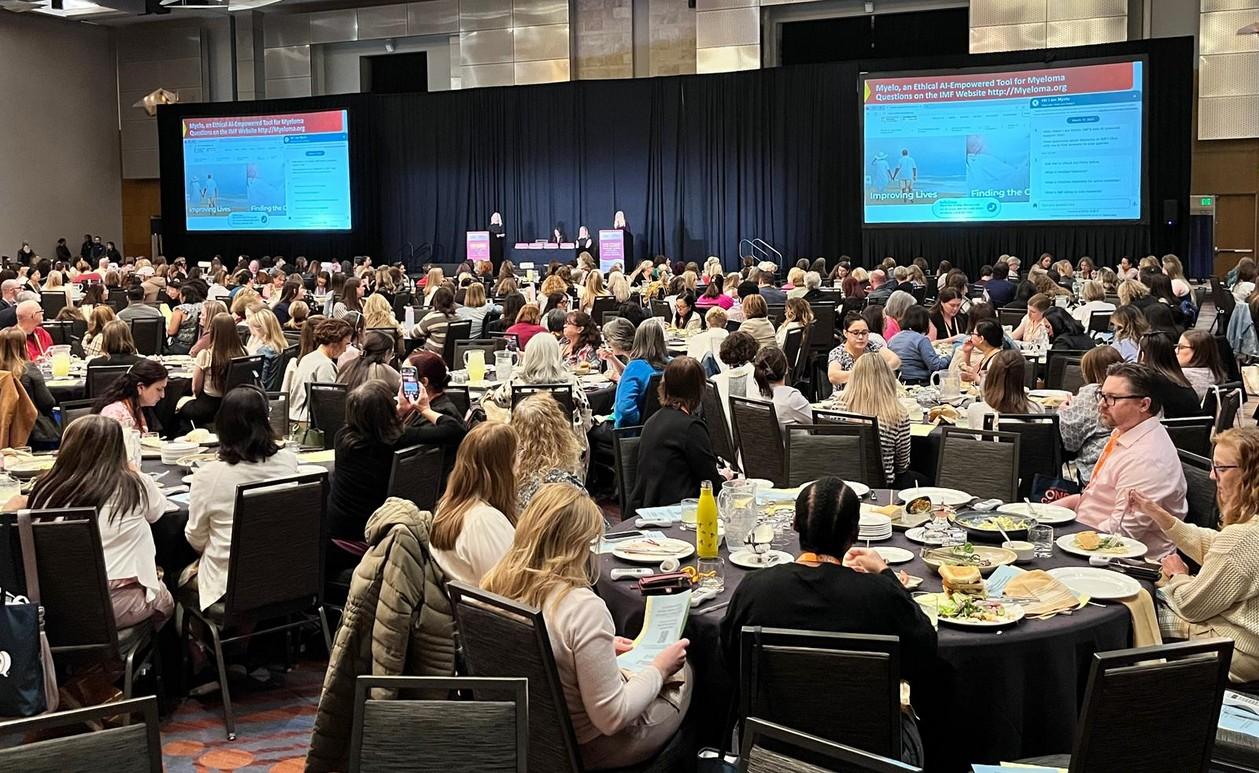
19th Annual ONS Symposium
4,400+ learners
25,000 MM patients impacted per month!
You are NOT Alone
UNDERSTANDING MYELOMA BASICS
DANIEL O'LEARY, MD
UNIVERSITY OF MINNESOTA, MINNEAPOLIS, MN
Understanding Myeloma Basics
Daniel O'Leary, MD, Assistant Professor Division of Hematology, Oncology and Transplantation
University of Minnesota, Department
of Medicine
Learning Objectives
• Define multiple myeloma
• Review the spectrum of myeloma diseases
• Explain the various tests done for myeloma
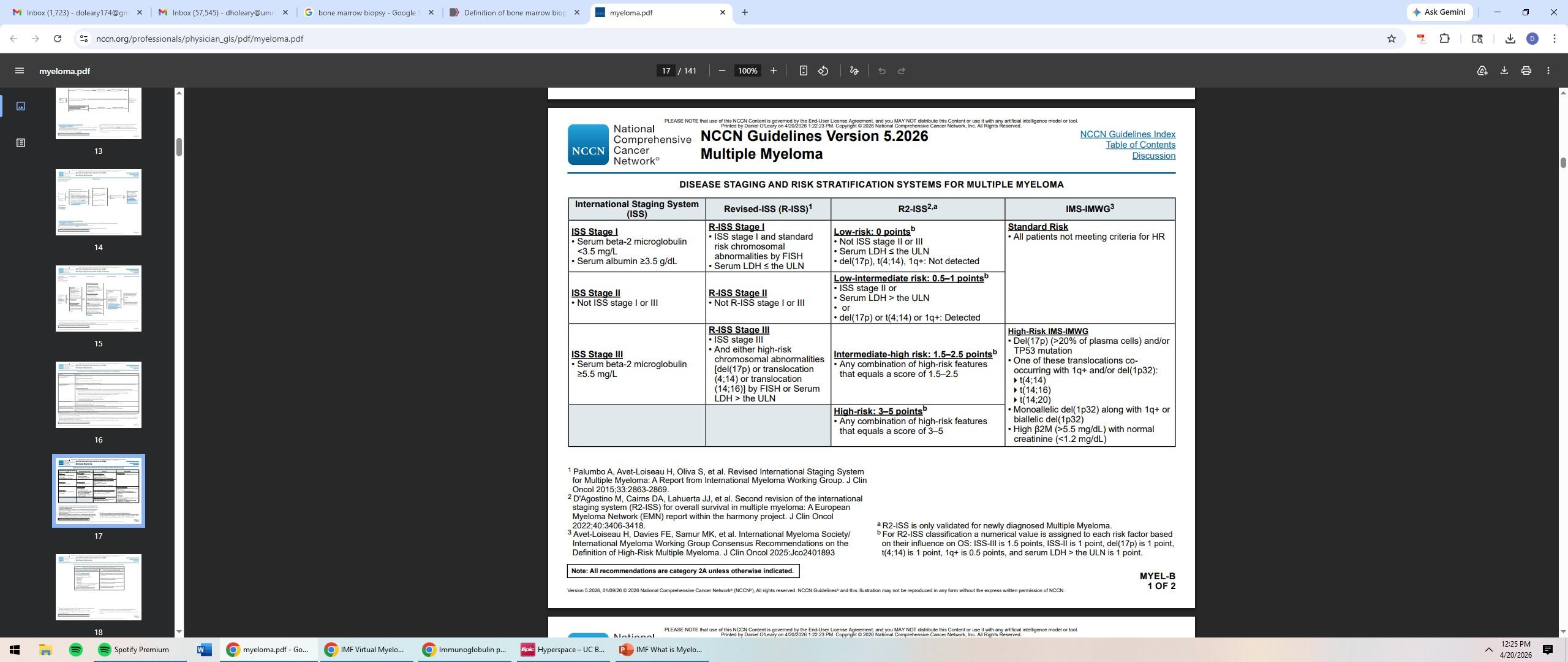
• Discuss staging and what it means
• Review the broad outlines of treatment
What is myeloma?
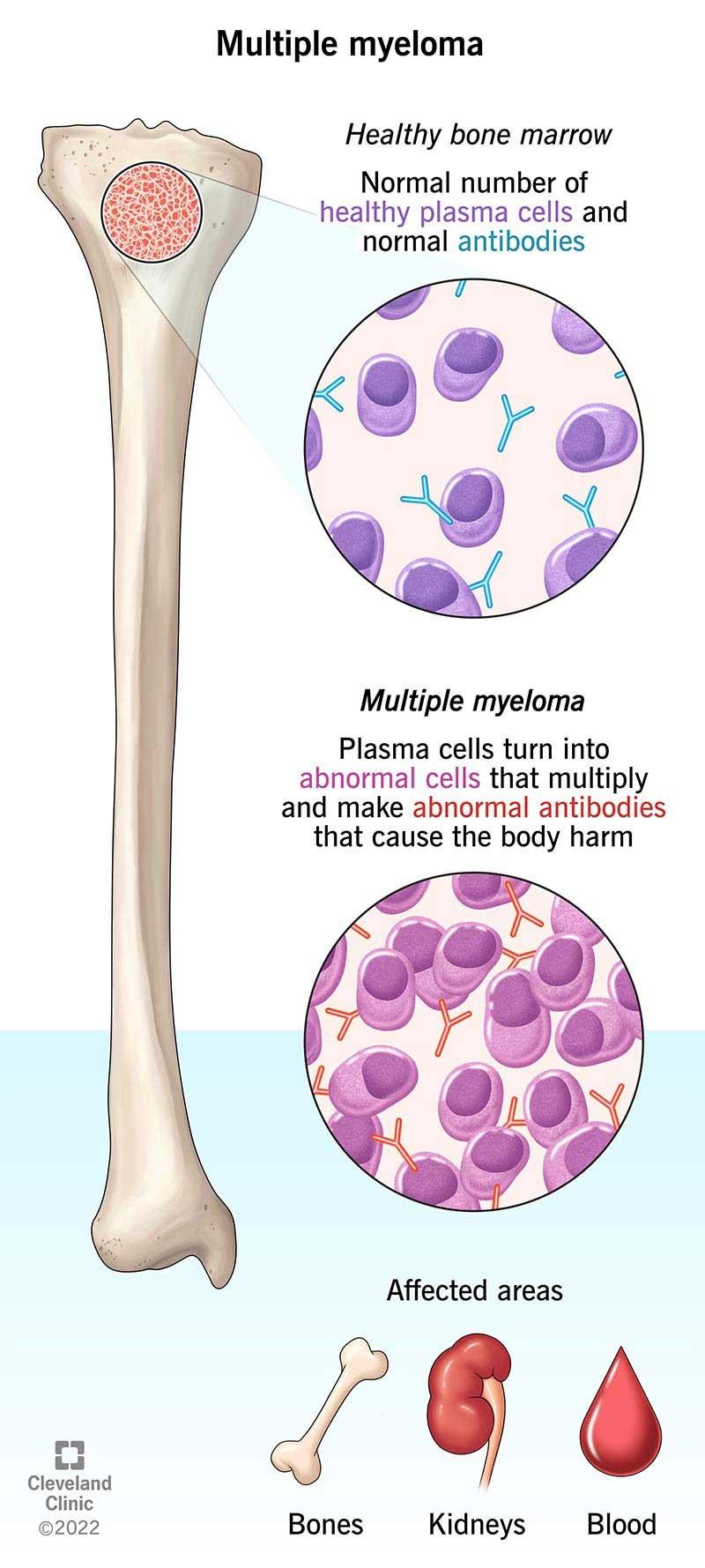
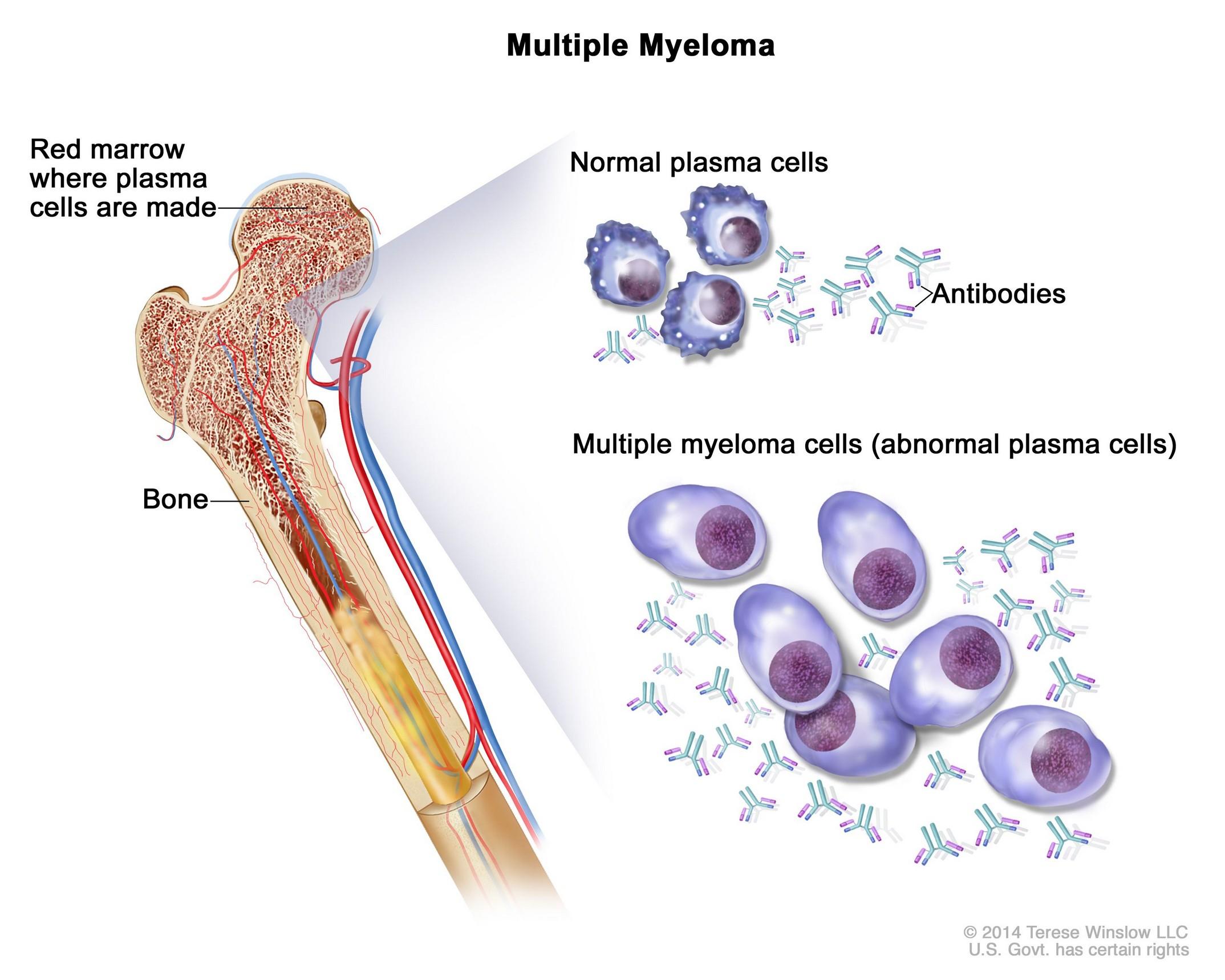
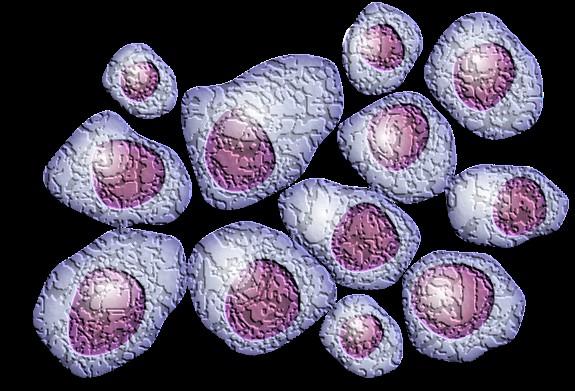
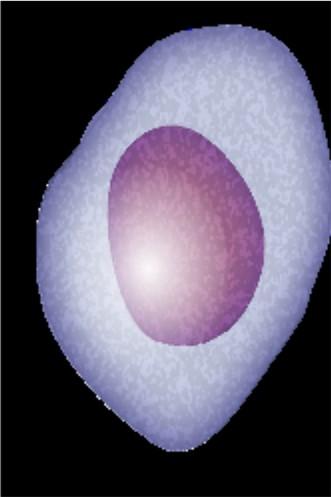
• Cancer of plasma cells
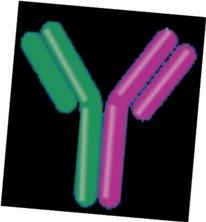
• Plasma cells are white blood cells that make antibodies
• Antibodies are part of the immune system and help fight infections
• Each type of plasma cell makes a different antibody
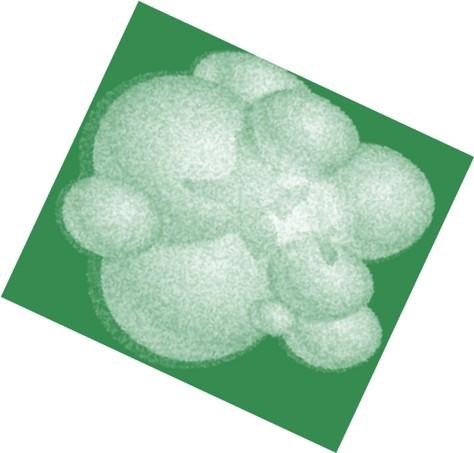
• When multiple myeloma occurs a cancerous plasma cell “clones” itself over and over
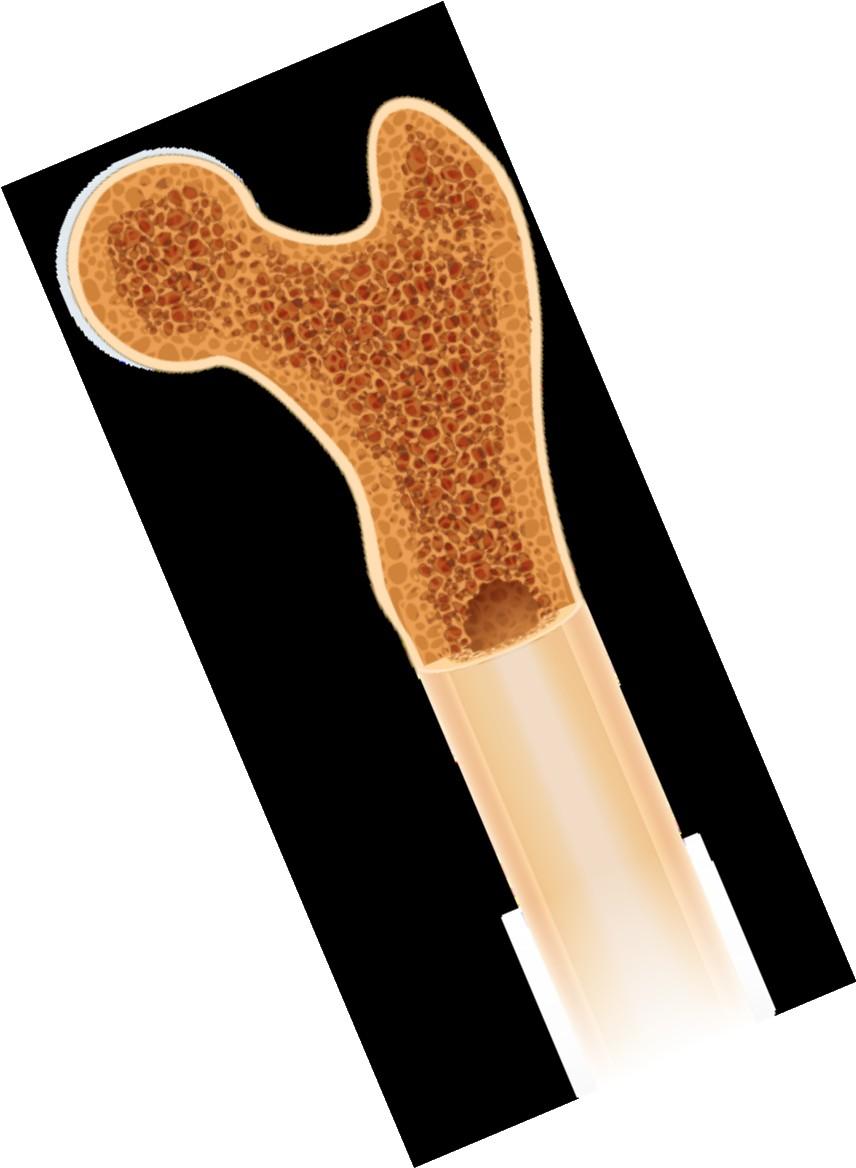
• Eventually crowds out normal/healthy cells in the bone marrow
• Can cause damage to the bones and other organs, like the kidneys
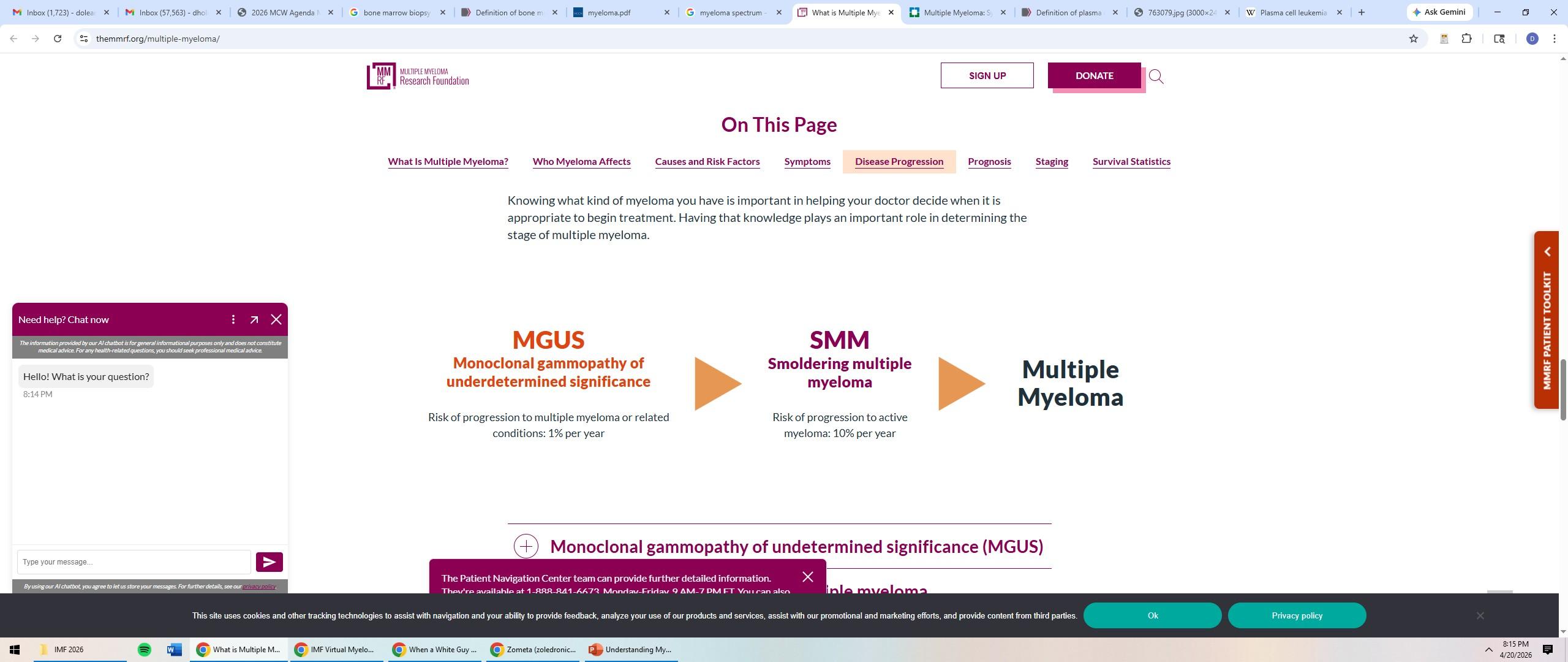
Myeloma includes a spectrum of disorders
• Monoclonal gammopathy of unknown significance
• Should not cause symptoms
• Does not require treatment but is monitored regularly
• 1% chance of progressing to multiple myeloma per year
• Smoldering myeloma
• Should not cause symptoms
• Sometimes not treated (higher risk disease may be treated), but is always monitored regularly
• Approximately 10% chance of progressing to multiple myeloma per year
• Risk varies based on certain markers and stability over time
• Multiple myeloma
• Causes symptoms if untreated
• Requires treatment
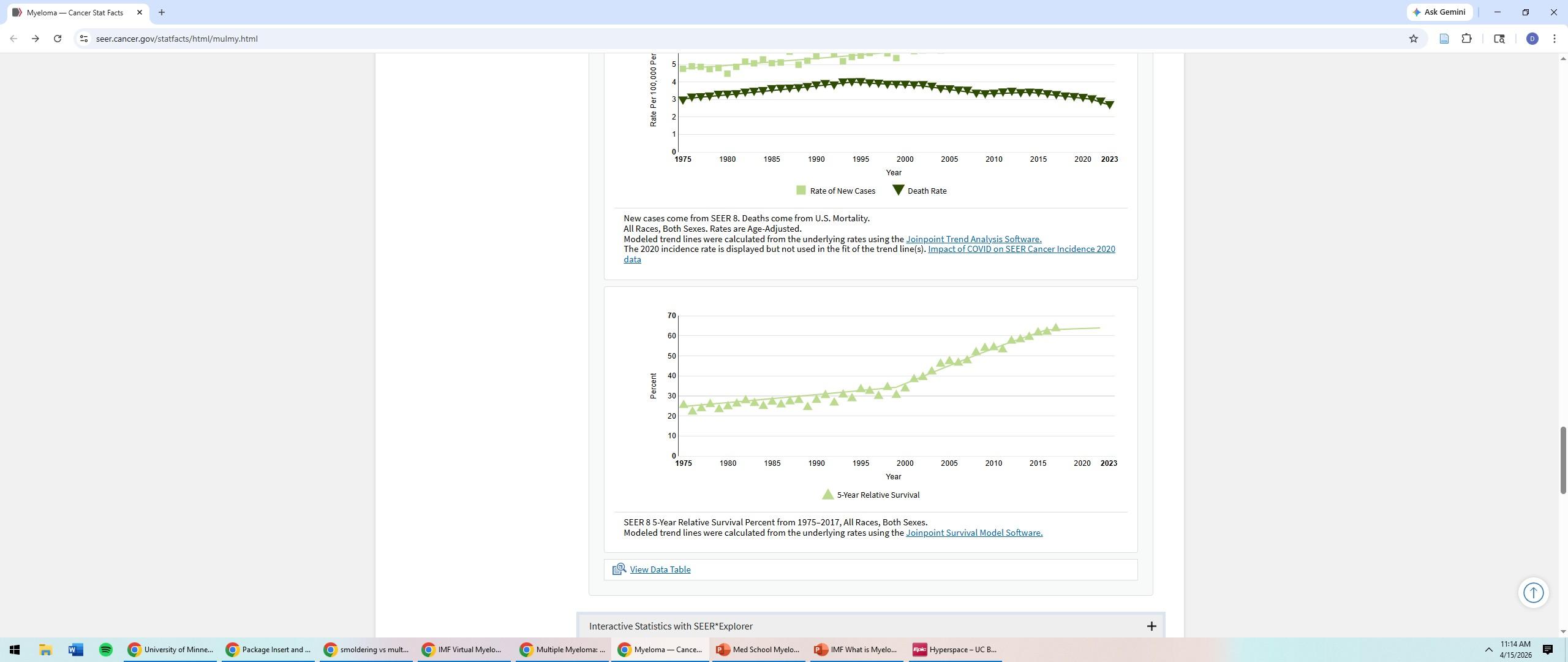
How common is multiple myeloma?
• Estimated New Cases in 2025: 36,110
• % of All New Cancer Cases: 1.8%
• In 2022, there were an estimated 192,144 people living with myeloma in the United States.
https://seer.cancer.gov/statfacts/html/mulmy.html
https://seer.cancer.gov/statfacts/html/mulmy.html
How do we define multiple myeloma?
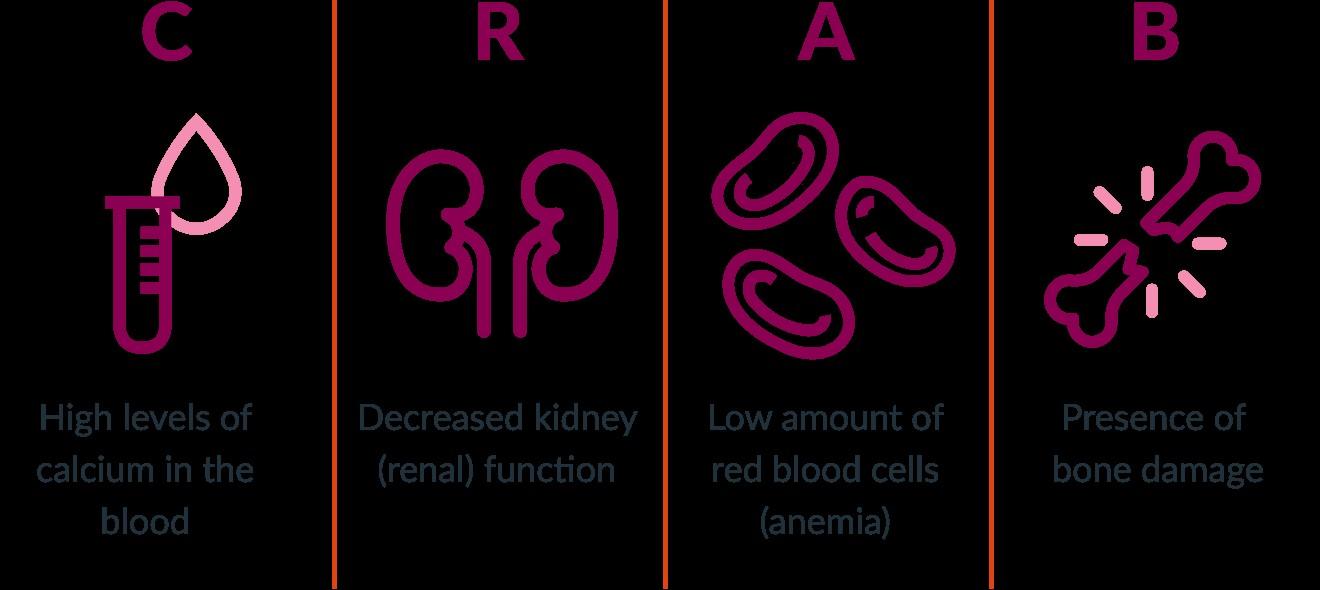
CRAB Criteria
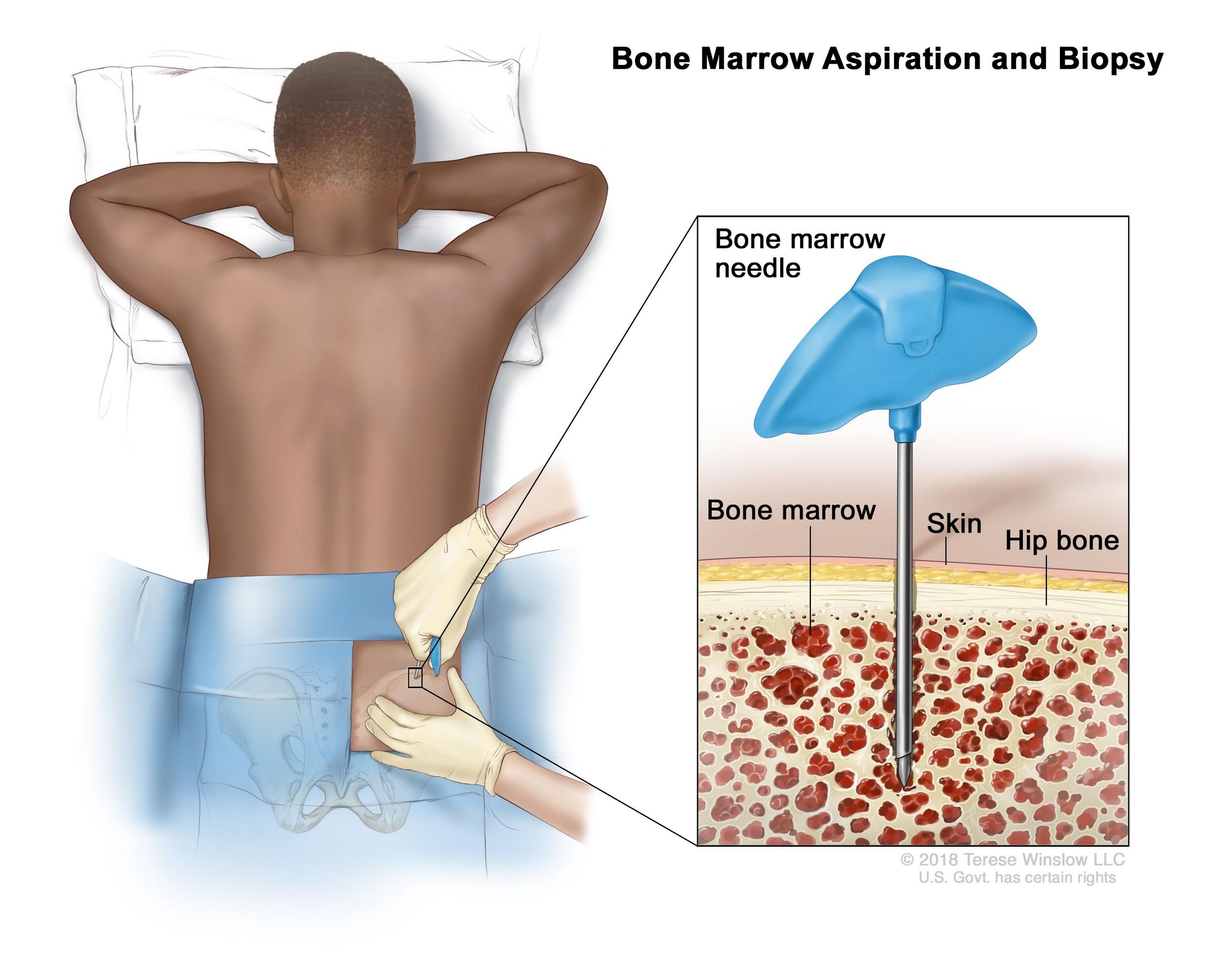
• Bone marrow biopsy with at least 10% clonal plasma cells or a biopsy-proven myeloma tumor (called a plasmacytoma) AND one of:
• High Calcium
• Kidney (Renal) injury
• Low red blood cell counts (Anemia)
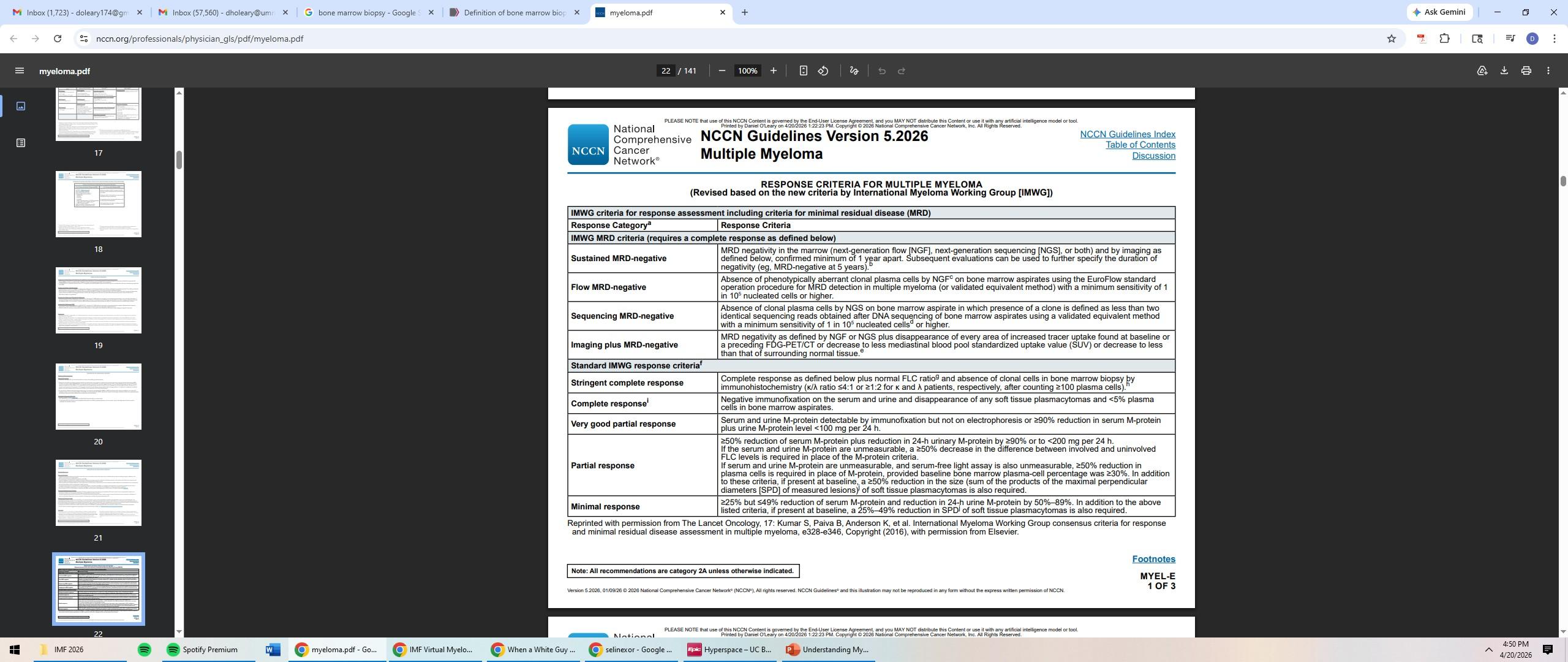
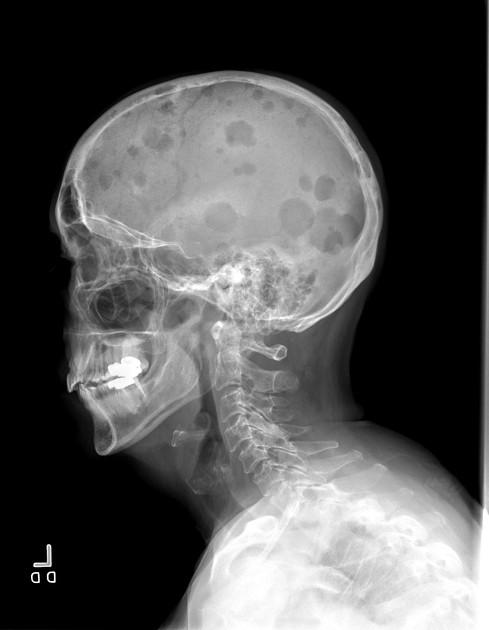
• Bone lesions
SLiM criteria
• Lab tests can also define multiple myeloma even if the above criteria are not met
• >60% plasma cells in the bone marrow (Sixty percent)
• Free Light chain ratio >100
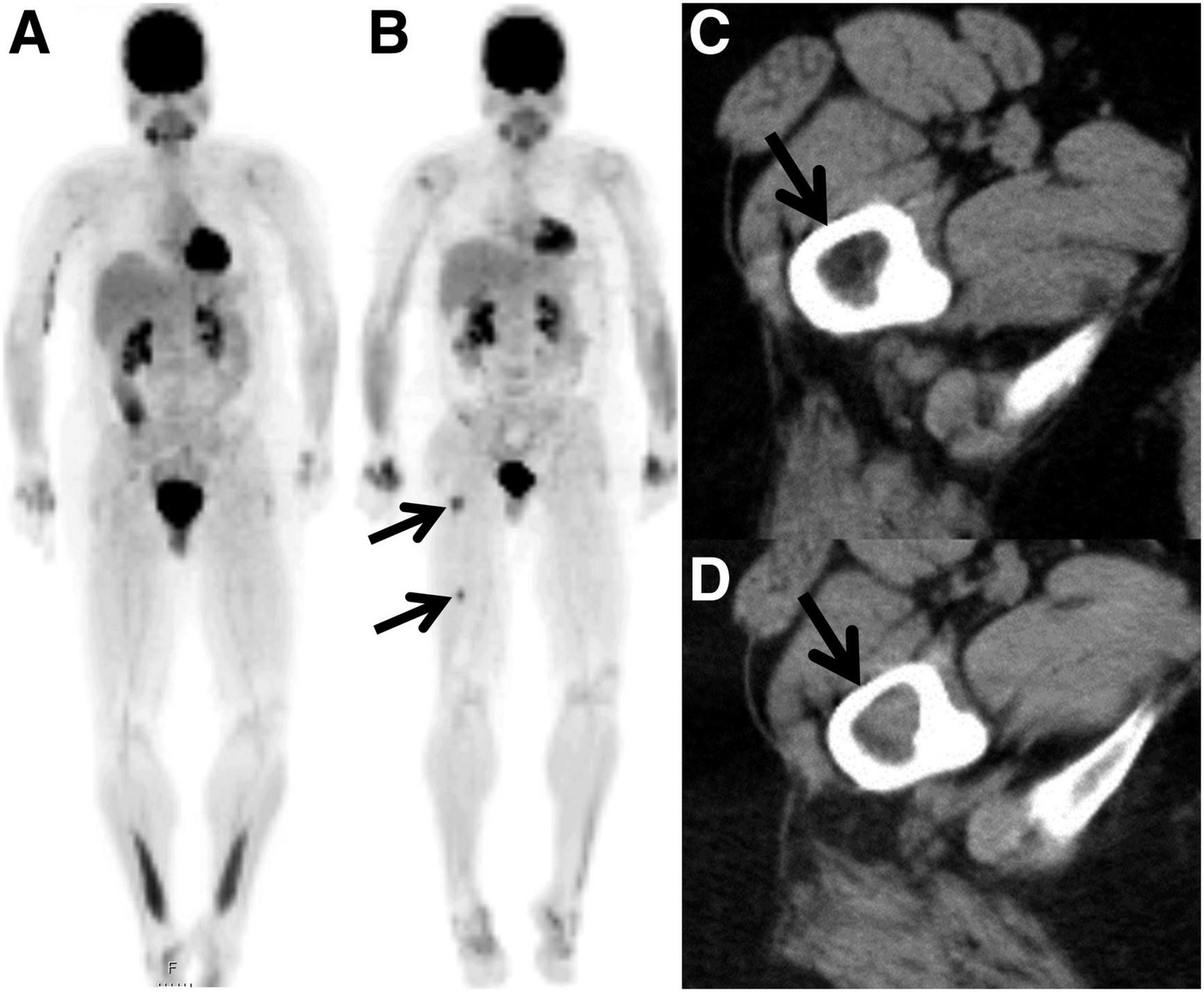
• Imaging (MRI) with more than one lesion (hole) in the bones
What does the type of myeloma mean?
• Myeloma comes from cancerous infection fighting cells
• Each person’s myeloma has a specific type
• IgG kappa, IgG lambda, IgA kappa etc…
• Understanding what normal infection fighting cells look like helps us understand what abnormal myeloma cells look like
What do normal infection fighting cells look like?
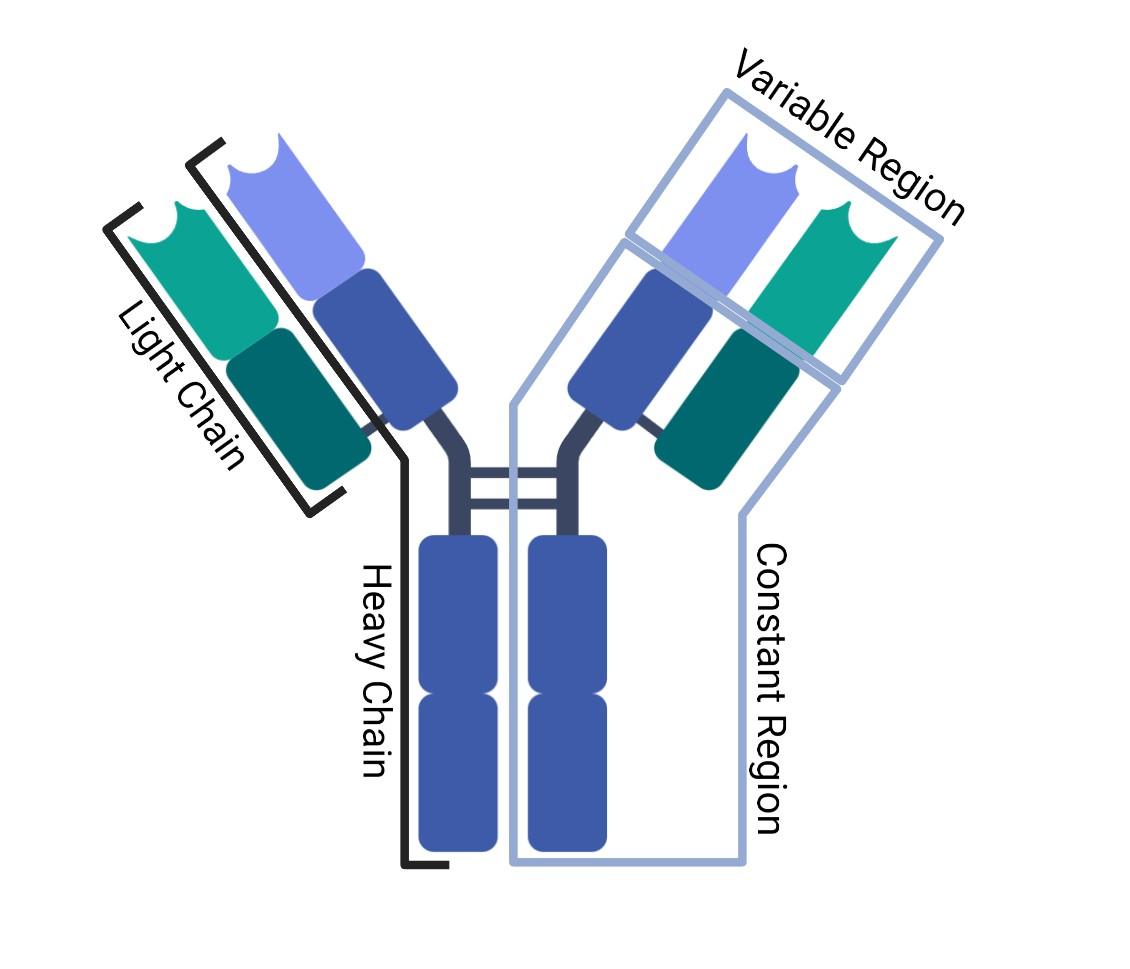
● Immunoglobulins, which help fight infections, are made up of two heavy chains and two light chains
● Heavy chains are larger
● Light chains are linked to the heavy chain Example IgG
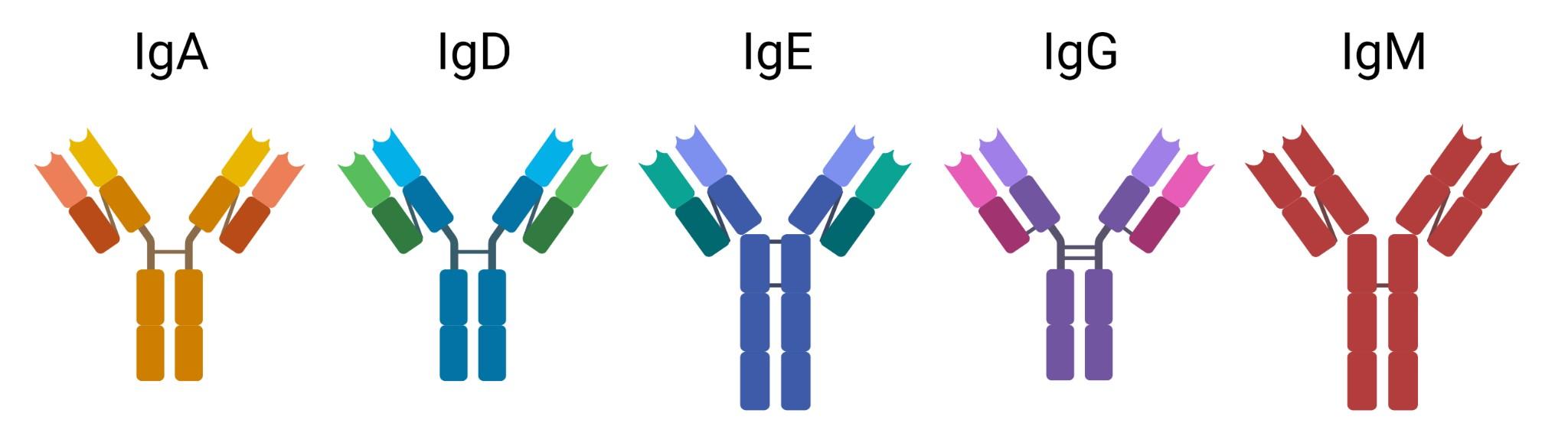
There are multiple types of normal immunoglobulins
● The heavy chains that make up the backbone of the molecule are always paired as the same type (IgG, IgA, etc)
● The light chains can be either lambda or kappa, but will always be paired as the same type on each molecule
What are the most common types of multiple myeloma?
● Around 65% of myeloma patients have IgG myeloma, with either a kappa or lambda free light chain
● IgA is the second most common type of myeloma (around 20% of cases)
● IgD, IgE and IgM myeloma are all rare
● 20% of myeloma is free light chain only – so only shows kappa or lambda on testing with no heavy chain (IgG, IgA etc)
Complications in Multiple Myeloma
Bone disease
○ Bone destruction leading to skeletal-related events, such as fractures
Low red blood cell counts (anemia)
○ Bone marrow myeloma infiltration can result in reduced development of red blood cells
Kidney injury
○ Numerous mechanisms can impact different parts of the kidney
Peripheral neuropathy
○ Can result from the disease itself, but can also be caused by specific myeloma treatments
Infections
○ Frequent with multiple myeloma due to impairment of the immune system
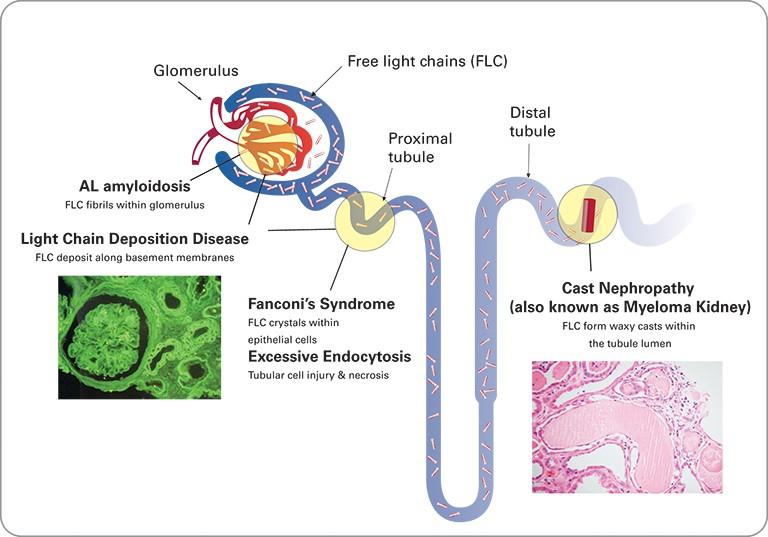
Kidney failure in multiple myeloma
- Free light chains are primarily cleared by the kidneys
- Excessive free light chains can build up in the kidneys and cause damage
- High calcium and NSAID use can also complicate kidney disease
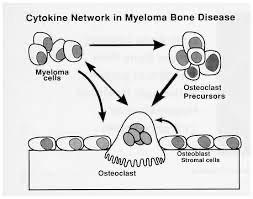
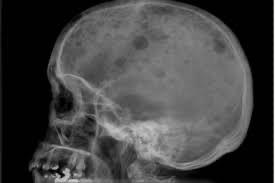
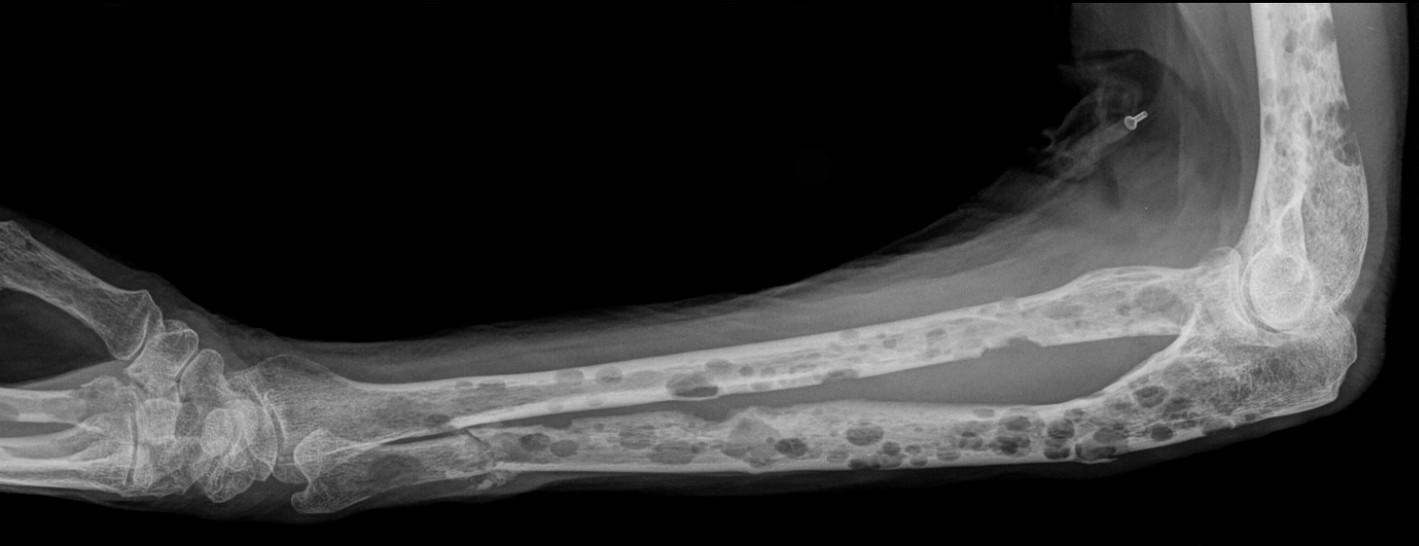
Bone Abnormalities in Multiple Myeloma
- Bone disease is present in up to 80% of patients at diagnosis
- Myeloma activates the body’s normal bone destroying cells while turning off normal bone building cells
What is the role of bone strengthening with myeloma?
• Zoledronic acid or denosumab are medications that help strengthen the bones over time
• Recommended for initial treatment regardless of whether there is existing bone damage
• Zoledronic acid improved progression-free survival by about two months and reduced mortality by about 5.5 months in the Myeloma IX trial
• Helps prevent future bone damage; does not necessarily reverse existing injuries
• Evaluations PLEASE complete before you leave today
• SparkCures Search Engine specific for the Minneapolis region
• Ways to Give
LUNCH
SCAN THIS QR CODE FOR KEY IMF RESOURCES
Helpful Links to:
• Slides for Today’s Program
• Evaluations PLEASE complete before you leave today
• SparkCures Search Engine specific for the Minneapolis region
• Ways to Give
FIND YOUR PATH: NAVIGATING YOUR MYELOMA JOURNEY
TERESA MICELI, RN, BSN, OCN
MAYO CLINIC, ROCHESTER, MN ; IMF NURSE LEADERSHIP BOARD
Find Your Path: Navigating Myeloma
Teresa S. Miceli BSN RN OCN
Mayo Clinic - Rochester
Myeloma’s Terrain: Finding Your Footing
Myeloma Is a Cancer of the Plasma Cells
Myeloma’ s
Terrain
Plasma
Cells come from white blood cells produced in the bone marrow and make many different antibodies to help fight infection (polyclonal).
In Multiple Myeloma, one plasma cell mutates, making many identical plasma cells (monoclonal).
Bone marrow
Myeloma Causes Cell Dysfunction & Symptoms
Myeloma’
Terrain
Bone marrow
Anxiety
Stress Depression
Decreased red blood cells
Decreased white blood cells
Myeloma protein in blood and urine
Changes in bone remodeling
Clonal myeloma plasma cells can cause many issues
• Crowd out normal bone marrow cells
• Can cause kidney dysfunction
• Affect bone cells (balance of osteoclasts & osteoblasts)
Anemia & Fatigue
Immune Dysfunction & Infection
Renal Dysfunction
Bone Damage
Infections Are Serious for People with Myeloma
Myeloma’ s Terrain
Preventing infections is paramount.
Infection remains the leading cause of death in patients with multiple myeloma. Several factors account for this infection risk, including the overall state of immunosuppression from multiple myeloma, treatment, age, and comorbidities (e.g., renal failure and frailty).
Report fever of more than 100.4°F, shaking chills even without fever, dizziness, shortness of breath, low blood pressure to HCP as directed.
IMWG Consensus guidelines and recommendations for infection prevention in multiple myeloma; Lancet Haematol.2022;9(2):143–161.
Infection Prevention Tips
Good personal hygiene (skin, oral)
Environmental control (avoid crowds and sick people; use a high-quality mask when close contact is unavoidable)
As recommended by your healthcare team:
Immunizations:
Flu, COVID, RSV & and pneumococcal vaccinations; avoid live vaccines
IMWG = International Myeloma Working Group; HCP = healthcare provider. Raje NS, et al. Lancet Haematol.2022;9(2):143–161. IMF Nurse Leadership Board ONS Symposia 2024.
HR-SMM = high risk smoldering multiple myeloma; M-protein = monoclonal protein; MGUS = monoclonal gammopathy of undetermined significance; misc = miscellaneous (no dominant clone); MM = multiple myeloma; SMM = smoldering multiple myeloma.
Adapted from Durie B. Keats JJ, et al. Blood. 2012;120(5):1067-1076.
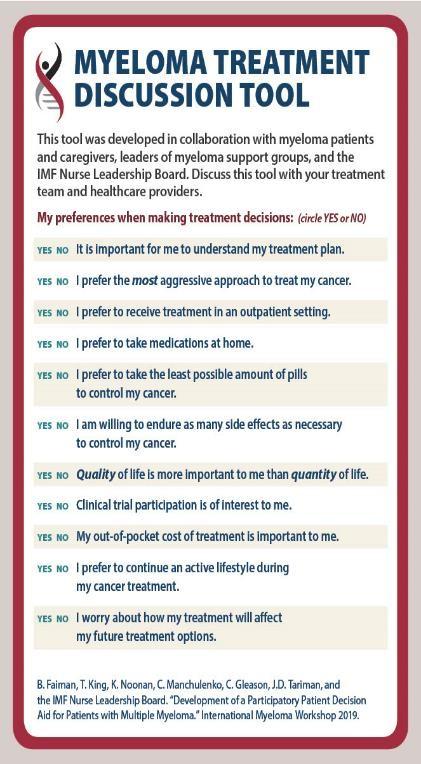
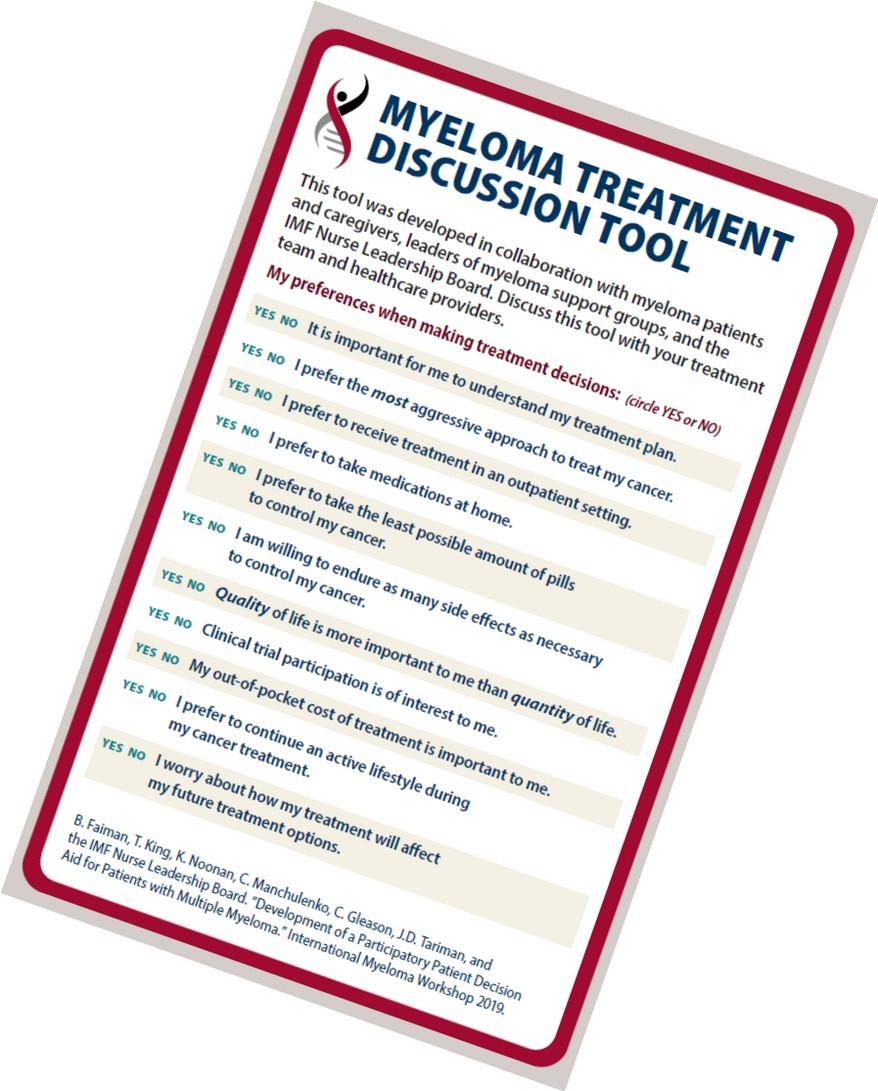
Why Shared Decision Making in Multiple Myeloma?
The relapsing nature of multiple myeloma means patients and their care partners may have multiple points to make decisions about treatment & care
People with myeloma are living longer; goals, preferences, and values may change over time
“The aim of shared decisionmaking is to ensure that:
- Patients understand their options and the pros and cons of those options.
- Patient's goals and treatment preferences are used to guide decisions.”
Patient and Care Partner Roles in Shared Decision Making – Come Prepared
Ask questions (write them down in advance of visit)
• What are my treatment options?
• What are the pros and cons of each option? Efficacy? Side effects? Administration? Insurance nuances?
• Are there treatments that wouldn’t be a good option for me? Why?
Express your desire to participate in the treatment decisions
• I want to make sure the treatment we chose is the best option for me
• I want to be sure we are choosing the best therapy for my husband/wife
Ask for time (if needed/ appropriate)
• There is a lot to think about. Can I/we have some time to consider the options?
• Ask for information you can consider at home
• Note: if medical emergency/high risk, may not be appropriate
Patient and Care Partner Roles in Shared Decision Making
Starting Your Trek
Understand options; consider priorities
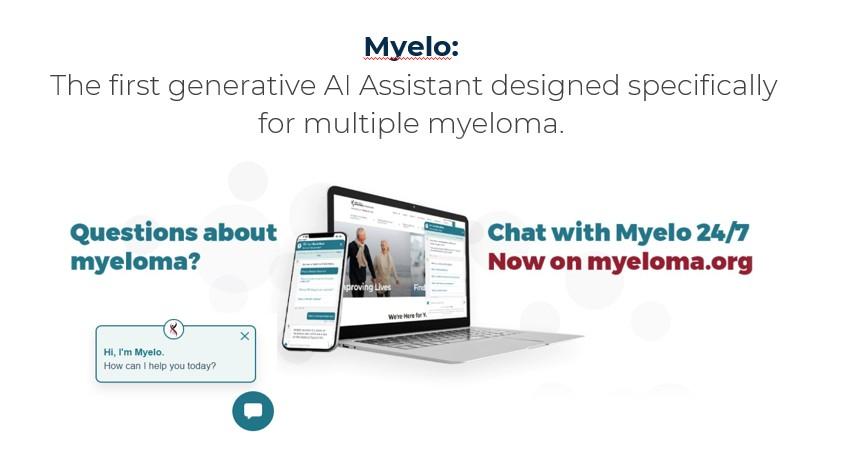
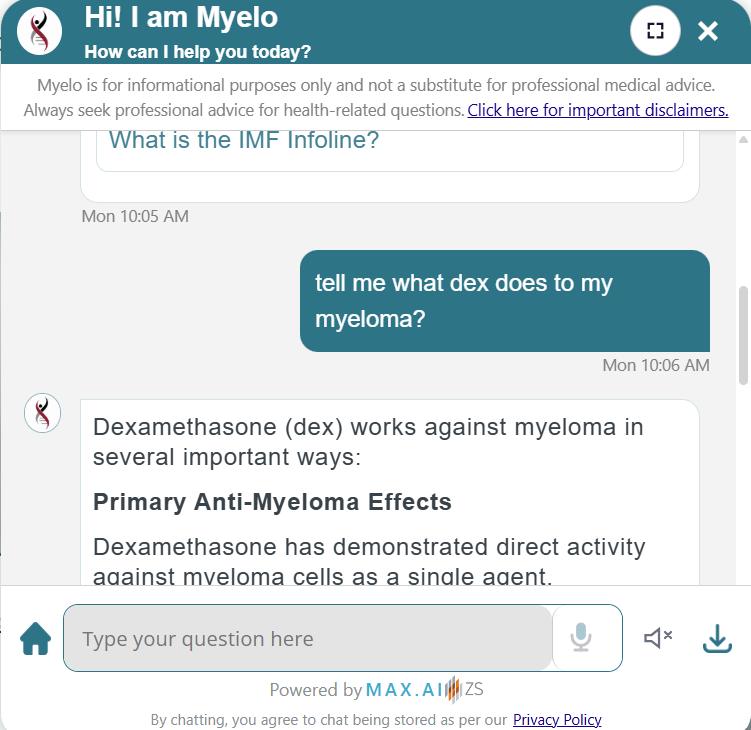
• Use reliable sources of information like the IMF and “Myelo”
• Use caution when considering stories of personal experiences
• Consider your goals, values and preferences
Express your goals/values/preferences; create a dialog
Arrive at a treatment decision together
• My top priority is [goal/value]; additional [preferences] are also important.
• I think [treatment] may be a good choice given my priorities… What do you think?
• What treatment would you recommend given my goals and priorities?
IMF Has Resources to Help You Be A Part of Your Treatment Decisions
• Be empowered to be part of decision-making
• Stay informed, understand options
• Use reliable and current sources of information
• Use caution considering stories of personal experiences
• Consider your priorities
• Discuss with your care partner
• Consider your goals/values/preferences
• Be a part of the conversation, create a dialog
• Ask questions & Express your goals/values/preferences
• Ask for time to consider options, if needed
• Arrive at a treatment decision together
• Arrange follow up to review and adjust, if needed
New Directions: Treatment for High-Risk Smoldering
High-Risk SMM
High potential to progress to active MM in 2 years
• M-spike ≥ 2 g/dL
• Free light chain assay (involved/uninvolved ratio ≥ 20)
• Bone marrow ≥ 20% clonal plasma cells
Multiple Myeloma (HR-SMM)
51% Reduction in risk of disease progression or death with Darzalex Faspro® treatment of high-risk SMM (compared with active monitoring) FDA = US Food and Drug Administration; MM = multiple myeloma; SMM = smoldering multiple myeloma Dimopoulous MA, et al. N Engl J Med. 2024;394(18):1777-1788. doi: 10.1056/NEJMoa2409029. Mateos, MV, et al. Blood Cancer J. 2020;10:102. (2020).
DARZALEX FASPRO® as monotherapy is indicated for the treatment of adult patients with high-risk smoldering multiple myeloma
Treatment of Newly Diagnosed Multiple Myeloma (NDMM)
Induction
Consolidation
Initial treatments aimed at reducing the amount of myeloma cells
Intensification of treatment to deepen response. Either additional cycles of induction or autologous stem cell transplant (in eligible patients)
Prolonged lower-intensity treatment designed to sustain remission Maintenance
National Comprehensive Cancer Network® (NCCN®) NCCN Clinical Practice Guidelines In Oncology (NCCN Guidelines®) for Multiple Myeloma. Version 4.2026. To view the most recent or complete version of the guideline, go online to NCCN.org; Rajkumar et al, 2014. Rajkumar SV. Am J of hematology. 2022;97(8):1086–1107. https://doi.org/10.1002/ajh.26590; Faiman et al, 2016.
Induction Standard of Care
Starting
Your Trek
Quadruplet therapy is preferred for nearly all patients with newly diagnosed myeloma
1 2 3 4
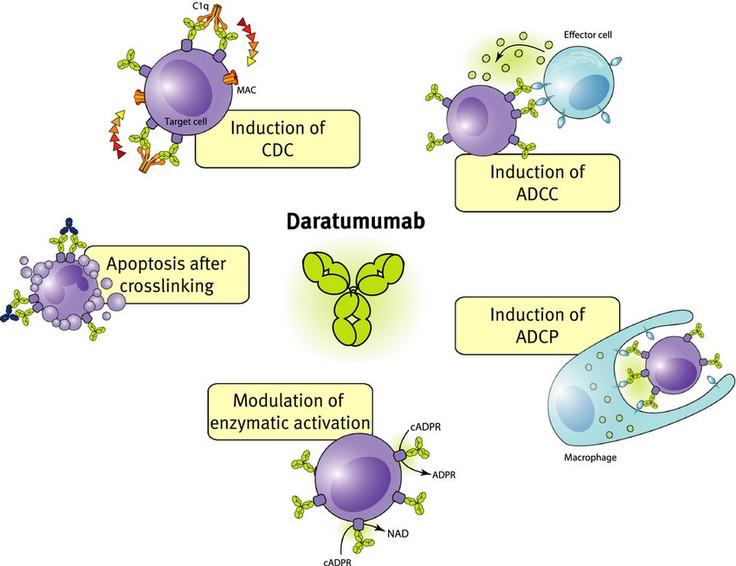
Anti-CD38
Monoclonal Antibody (mAb)
• Darzalex (daratumumab)
• Sarclisa (isatuximab)
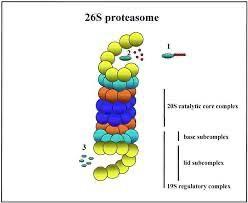
Proteosome Inhibitor (PI)
• Velcade (bortezomib)
Immunomodulatory Drug (IMiD)
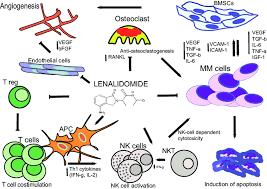
• Revlimid (lenalidomide)
• Kyprolis (carfilzomib) Steroids
• Pomalyst (pomalidomide)
At infusion clinic: subcutaneous injection, on body device or infusion
Supportive medication:
• Decadron (dexamethasone)
• Prednisone
Oral medication taken at home
• Antiviral prophylaxis (i.e., acyclovir or valacyclovir) to prevent viral infections, particularly shingles.
• Antibacterial agents (i.e., Bactrim, levofloxacin) to prevent bacterial infections.
• Aspirin or other anticoagulant therapy to reduce the risk of blood clots from IMiDs.
• Bone-strengthening agents (i.e., zoledronic acid, denosumab) to strengthen bones and protect against fractures.
Steroids: Part Of The Treatment Plan
Steroids enhance the effectiveness of other myeloma therapies
Your provider may decrease or discontinue the dose as myeloma responds to therapy.
Do not stop or alter your dose of steroids without discussing it with your provider
Possible Steroid Side Effects
• Irritability, mood swings, depression
• Difficulty sleeping (insomnia), fatigue
• Blurred vision, cataracts
• Increased risk of infections, heart disease
• Muscle weakness, cramping
• Increased blood pressure, water retention
• Flushing/sweating
• Stomach bloating, hiccups, heartburn, ulcers, or gas
• Weight gain, hair thinning/loss, skin rashes
• Increased blood sugar levels, diabetes
Managing Steroid Side Effects
• Consistent schedule (AM vs. PM)
• Take with food
• Stomach discomfort: Overthe-counter or prescription medications
• Medications to prevent shingles, thrush, or other infections
Rajkumar SV, et al. Lancet Oncol 11(1):29–37. King T, Faiman B. Clin J Oncol Nurs. 2017;21(2):240-249. Banerjee,R. et al. Blood 9.25.24
Peripheral Neuropathy
Peripheral neuropathy happens when there is damage to nerves in the extremities (hands, feet, limbs). Damage can be the result of myeloma, treatment or unrelated conditions (i.e., diabetes).
Blood clots can cause swelling, pain, discoloration (DVT), shortness of breath, chest pain, sense of doom (PE). Blood clots are serious and can be life threatening.
• Prescribing blood-thinning medications according to assessed risk (DOAC, aspirin, warfarin, heparin)
• Balancing the risk of DVT and PE with that of bleeding with low platelets
Additional strategies to reduce risk of clots:
• Anti-embolism stockings (elastic stockings)
• Exercise regimen
• Moving frequently when sitting long periods
• Travel precautions (foot/leg exercises, walking, aspirin if not already on blood thinner)
You may be at risk: • Family History • Obesity • Immobility
Smoking • Surgery
DOAC = direct oral anticoagulant; HCP = health care provider; DVT=deep vein thrombosis; PE=pulmonary embolism
Rome, S, et al. Clin J Oncol Nurs. 2008;12(3)suppl:37-52. Faiman B. Clin J Oncol Nurs. 2016;20(4):E100-E105. De Stefano, et al. Hematologica, 2022
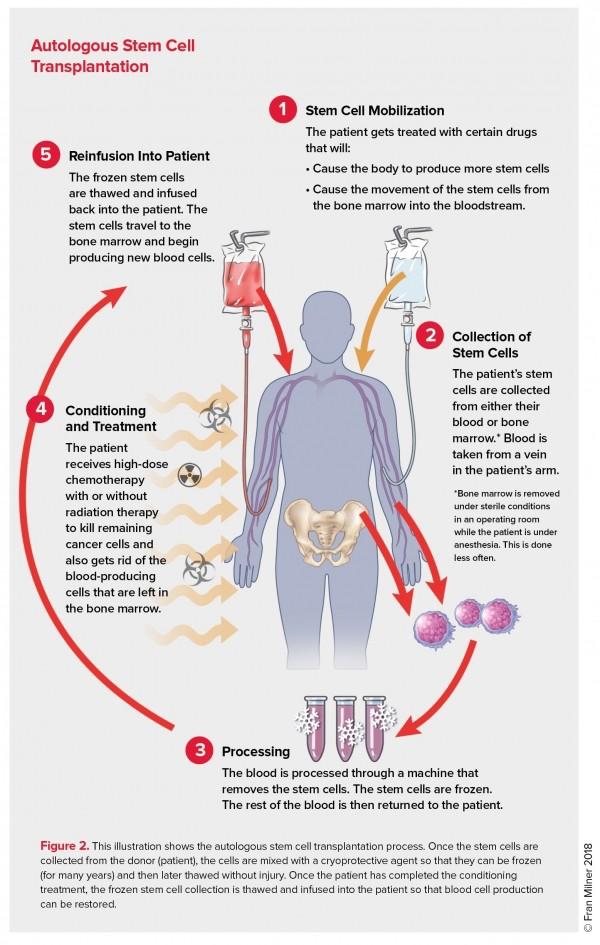
Stem Cell Transplant
ELGIBILITY
Location: Transplant Center P H A S E 1
Measuring treatment response Testing for Eligibility
Insurance authorization Collecting stem cells
Duration: Approximately 2 weeks
P H A S E 2
TRANSPLANT
HD-Melphalan Stem cell infusion Supportive Care
• GI Management
• Transfusions
• Antibiotics
Hair Loss Engraftment
Duration: Approx. 3-4 weeks Location: Transplant Center
Location: HOME P H A S E 3
Restrengthening Appetite recovery
“Day 100” assessment
Begin maintenance therapy
Duration: Approximately 1012 weeks
Stem cell transplant after induction remains the standard of care for eligible patients
GI Symptoms: Prevention & Management
Constipation is more common in the induction phase
Opioid pain relievers, antidepressants, heart or blood pressure medications (check with provider, pharmacist)
Supplements: Calcium, Iron, vitamin D (rarely), vitamin B-12 deficiency
Increase fiber
Stay well hydrated
Fruits, vegetables, high fiber whole grain foods
Fiber binding agents – Metamucil® ,
Citrucel®, Benefiber®
Fluid intake can help with both diarrhea and constipation and helps kidney function Discuss GI issues with healthcare providers to
Anorexia, the inability to eat, is common during transplant and resolves with time.
• Hydration is most important
• Small, frequent meals with a focus on protein intake
• You will work closely with a dietician to help monitor your calorie intake
Diarrhea is common during transplant and long-term maintenance therapy.
Other medications and supplements can cause GI issues.
Hydration is very important
Electrolyte replacement is common
Good skin care will help prevent irritation
Stool exam may be needed to rule-out infection
If no infection, anti-diarrheal medication may be prescribed
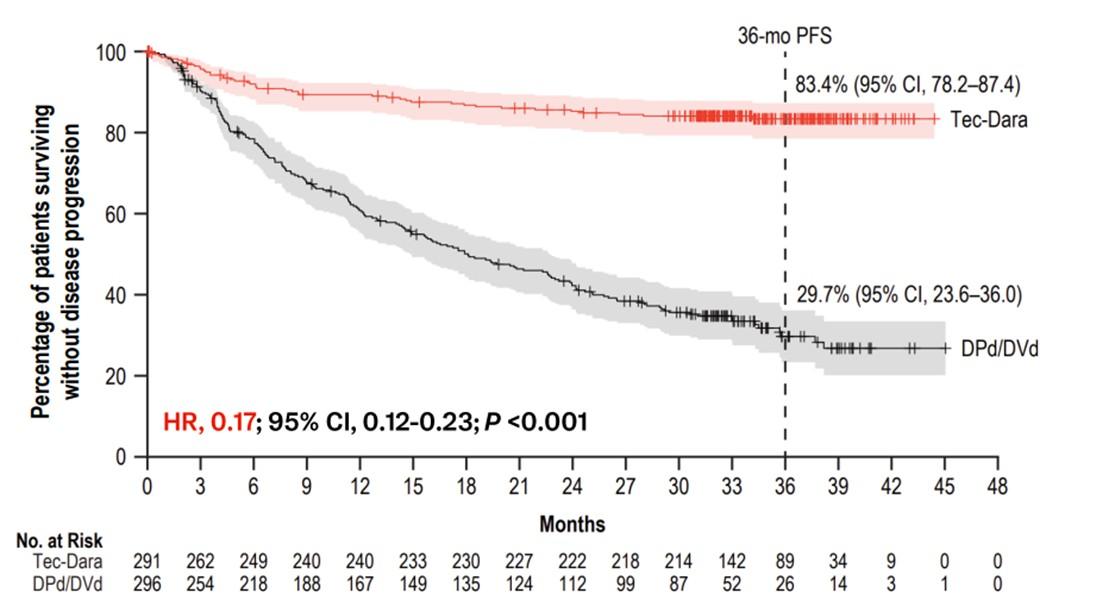
T cell Engager (Bispecific)b Elrexfio®, Lynozyfic™, Talvey®, Tecvayli
New agents or regimens in clinical trials may be an option
Many therapy options are in the myeloma toolkit and more are being studied
a2 or more prior therapies. b4 or more prior therapies. cOff-label; not currently FDA-approved.
C = cyclophosphamide; d = dexamethasone; Dara = daratumumab; FDA = US Food and Drug Administration; E = elotuzumab; Isa = isatuximab; I = ixazomib; K = carfilzomib; M = melphalan; p = prednisone; P = pomalidomide;
R = lenalidomide; SQ = subcutaneous; V = bortezomib; X = selinexor.
NCCN Guidelines®. Multiple Myeloma V4.2026. Accessed December 22, 2025.
Changing Course
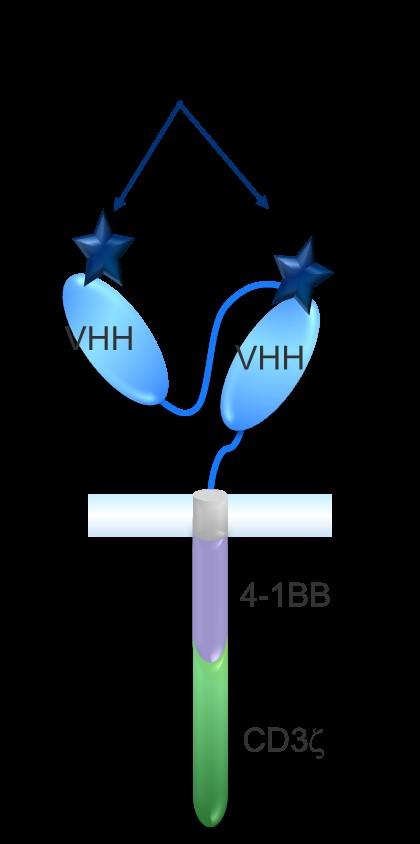
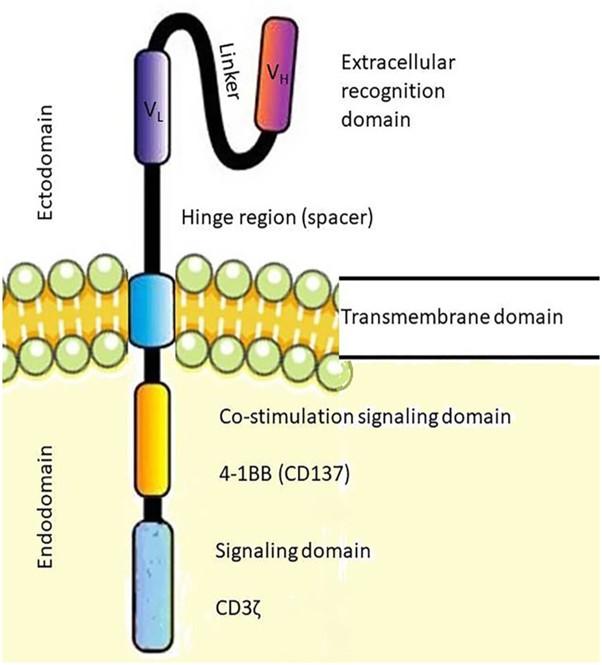
CAR T-Cell Therapy T-Cell Engager (TCE) Therapy
Relapsed MM with 1-2 prior LOT
BCMA target: potential for infection
• Abecma® (ide-cel)
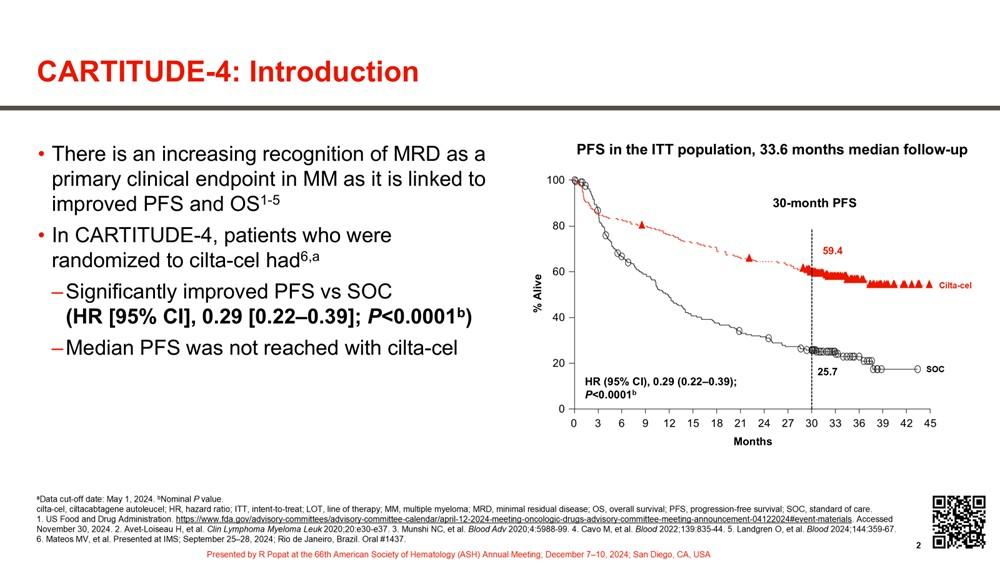
• Carvykti® (cilta-cel)
• (anito-cel – pending FDA approval)
Bridging therapy, if needed; Lymphodepleting therapy when CAR T cells are ready T Cell Infusion Close monitoring and Management of side effects 1 3 4 5 HOME! Apheresis to Collect T Cells T Cell Manufacturing 2a 2b
Relapsed MM after 4 prior LOT (or clinical trials)
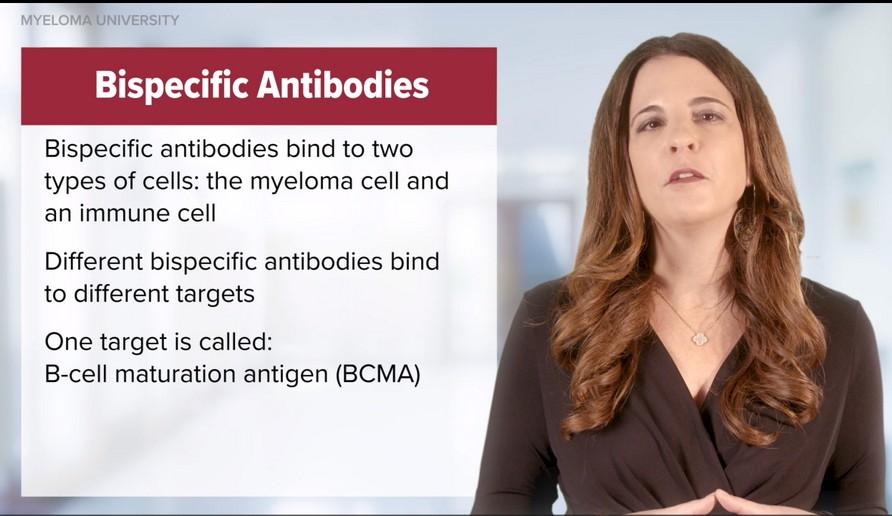
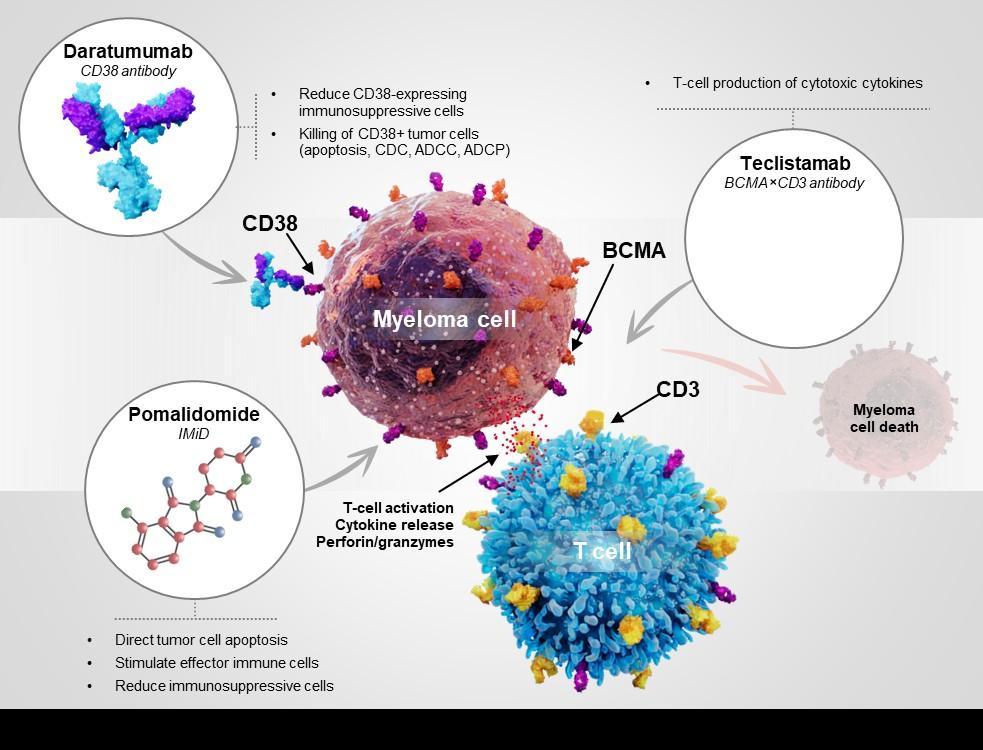
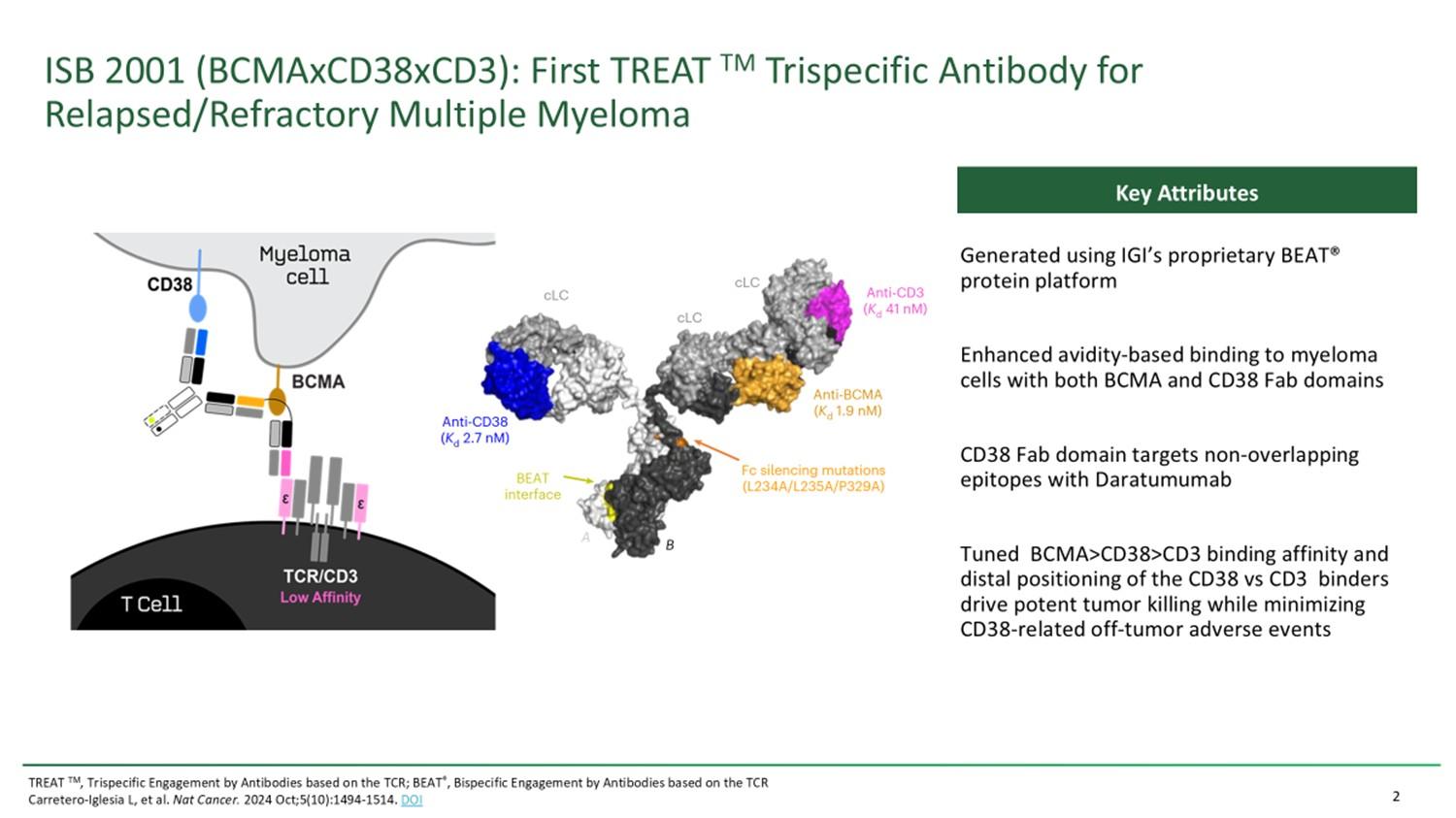
TCE are innovative immunotherapies used in the treatment of relapsed multiple myeloma. These therapies work by redirecting the patient's own T-cells to recognize and attack myeloma cells.
Bispecific antibodies
• About 7 in 10 patients respond
• Off-the-shelf treatment; no waiting for engineering cells
BCMA target: potential for infection
• Tecvayli® (teclistamab)
• Elrexfio® (elranatamab)
• Lynozyfic™ (linvoseltamab)
Cytotoxic cytokines
Bispecific antibody T cell MM cell
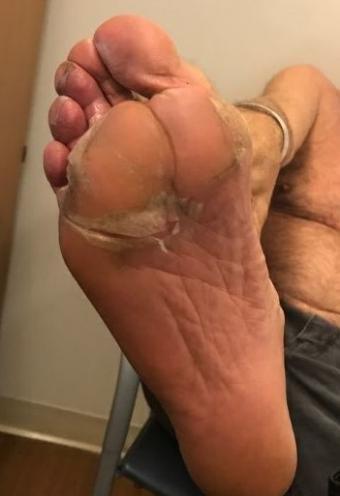
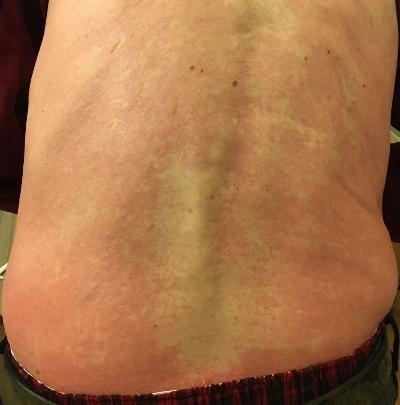
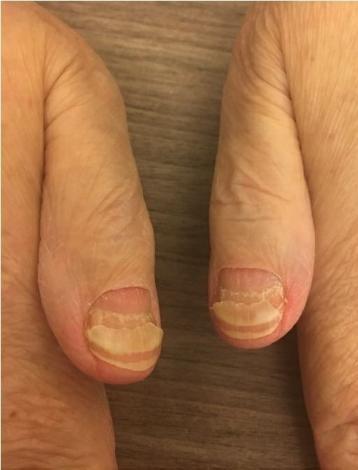
GPRC5D target: potential for skin and nail side effects, GI issues of taste change, anorexia and weight loss
• Talvey® (talquetamab)
FcRH5 target: new myeloma target
• (cevostamab - pending FDA approval)
Target CD3
BCMA = B-cell maturation antigen; CAR = chimeric antigen receptor; GPRC5D = G protein–coupled receptor, class C, group 5, member D; CAR = Chimeric Antigen Receptor; LOT = Lines of Therapy; MM = multiple myeloma.
Shah N, et al. Leukemia. 2020;34(4):985-1005.
CAR T and Bispecific Antibodies: Known Side Effects
CYTOKINE
Changing Course
RELEASE SYNDROME (CRS) ICANS AND NEUROTOXICITY
• Fever
• Fatigue & Weakness
• Headache
• Nausea/Vomiting/Diarrhea
• Chills
• Low blood pressure
• Rapid heart rate
• Difficulty breathing
CRS is a common but typically mild & manageable side effect
PREVENTION AND MANAGEMENT of CRS
• Disease management to reduce tumor burden
• Bispecific Step-up Dosing (SUD)
• Tocilizumab
• Steroids
• Anti-Seizure medications
• Close monitoring
• Headache
• Difficulty concentrating
• Lethargy
• Agitation
• Hallucinations
• Tremors
• Confusion
• Memory loss
• Aphasia (difficulty with speech, reading, writing, or understanding language)
• Personality change
• Delayed Neurotoxicity can include Parkinsonism, Cranial Nerve Palsies and Peripheral Neuropathy/Guillan Barré syndrome (GBS)
Dietary modifications with small bites, eating upright, and sips with food can help manage symptoms
Weight Monitoring
Some medications lead to weight gain, others to weight loss. Meet with a nutritionist
Consider diet changes, supplements
Care
Attention to oral hygiene. Regular dental cleaning and evaluation. Close monitoring for ONJ, oral cancer and dental caries
ONJ = Osteonecrosis of the Jaw; OTC = Over The Counter
Work closely with your entire health care team to manage oral side effects.
Management of Skin and Nail Side Effects
Possible side effect to some treatments and supportive care medications
Skin Rash
Prevent dry skin; apply lotion
Report changes to your care team
Medication interruption or alternative, as needed
Steroids:
• Topical for grades 1-2,
• Systemic and topical for Grade 3
Anti-histamines, as needed
Nail Changes
Keep your nails short and clean.
Watch for “catching and tearing”
Apply a heavy moisturizer like Vaseline or salve. Wear cotton hand coverings to bed
A nail hardener may help with thinning
Tell the team if you have signs of a fungal infection, like thickened or discolored nails
Fatigue, Anxiety and Depression
Symptoms are under-reported:
“I mentioned it before. Nothing can be done.”
“I don’t want to be put on another medication.”
Fatigue is the most reported symptom. Sources include anemia, pain, reduced activity, insomnia, treatment toxicity, bone marrow suppression. Symptoms can improve with continued physical activity
Healthy Practices to Sustain Your Trek
Adopt Healthy Behaviors
• Mental health / social engagement
• Stress reduction; relaxation
• Sufficient Sleep
• Maintain a healthy weight; eat nutritiously
• Activity / exercise / prevent falls, injury
• Stop smoking
• Sexual health / intimacy
• Complementary or alternative therapy
• Socializing, Staying connected
Have a PCP for general check ups, preventative care, health screenings, vaccinations
Have specialists for dental care, eye exams/screening, skin cancer screening
Vision Women specific: mammogram, pap smear Men specific: prostate
Faiman B, et al. CJON. 2017;21(5)suppl:19-36. Dimopoulous M, et al. Leukemia. 2009;23(9):1545-56.
Brigle K, et al. CJON. 2017;21(5)suppl:60-76. Faiman B, et al. CJON. 2017;21(5)suppl:19-36. Faiman B, et al. CJON. 2011;15suppl:66-76. Miceli TS, et al. CJON. 2011;15(4)suppl:9-23.
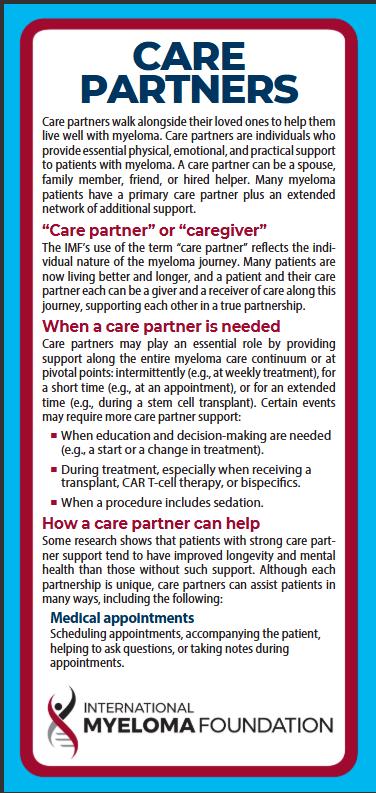
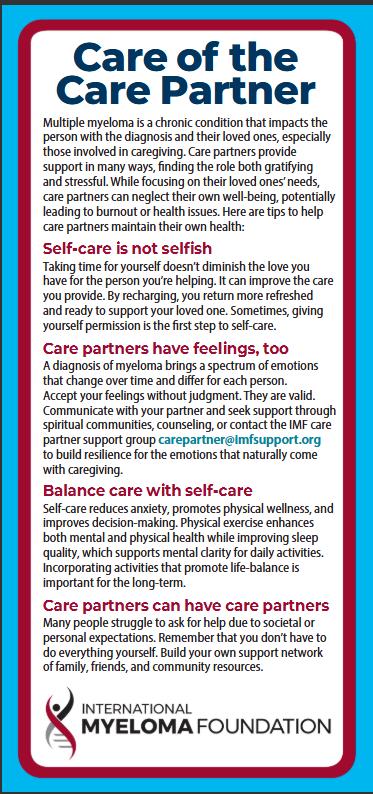
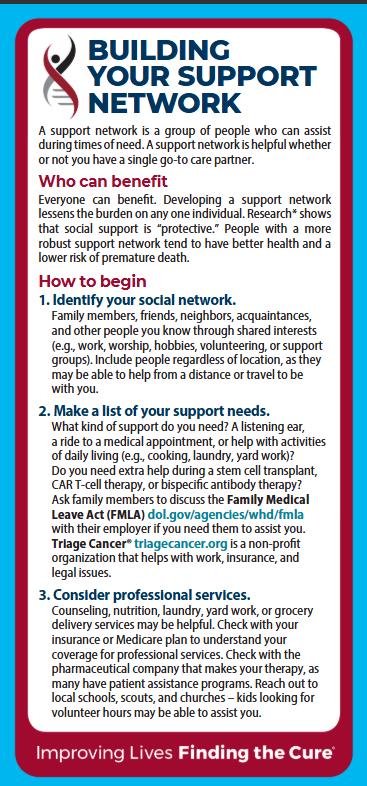
Don’t Hike Alone: Care Partners
Multiple studies demonstrate that strong social ties are associated with
• Increased longevity, including people with cancer
• Improved adherence to medical treatment leading to improved health outcomes
• Lower risk of cardiovascular diseases
• Increased sense of purpose & life satisfaction
• Improved mood and happiness
• Reduced stress and anxiety
• Enhanced resilience
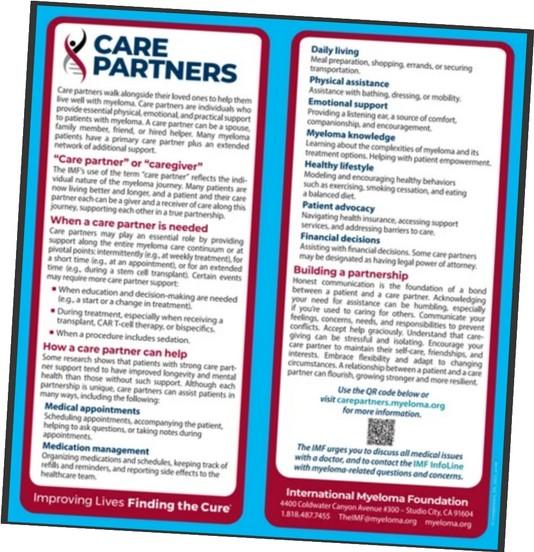
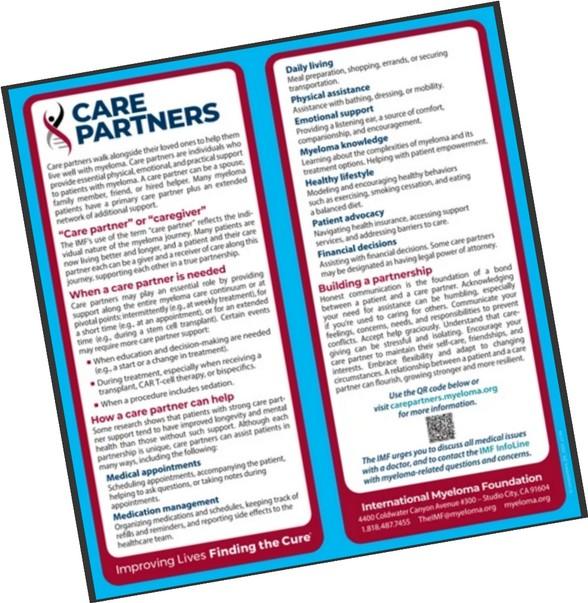
Care partners may help with medical appointments, managing medication, daily living, physical assistance, emotional support, myeloma knowledge, healthy lifestyle, patient advocacy, financial decisions
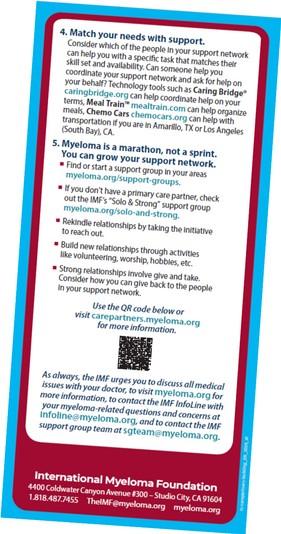
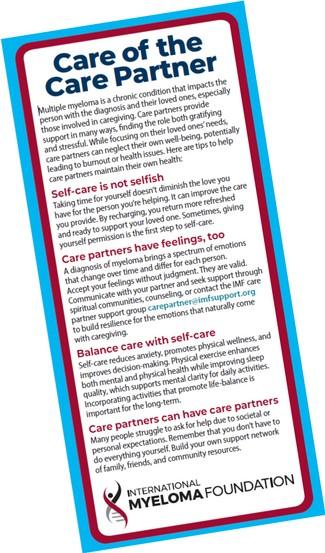
Caring for the care partner
• Recognize that caregiving is difficult and stressful
• Encourage care partners to maintain their health, interests, and friendships
• The IMF has information and resources to help care partners
Care partners can be a spouse, close relative, a network of people (family, friends, neighbors, church members, etc) IMF Tip Cards
“THANK YOU!”
LIVING THE MYELOMA LIFE
BARB DAVIS, PATIENT ADVOCATE
FATIH KINOGLU, CARE PARTNER
THE
UNSEEN IMPACT OF MYELOMA: TAKING CARE OF YOUR EMOTIONAL HEALTH
JENNIFER WIEWORKA, DNP, RN, OCN
IMF DIRECTOR, SUPPORT GROUPS
Disclaimer
The International Myeloma Foundation Support Group Team presents this information to support learning and conversations with your healthcare team.
This presentation is for informational purposes only and is not intended to provide medical advice or replace guidance from your medical providers.
Common Emotional Responses
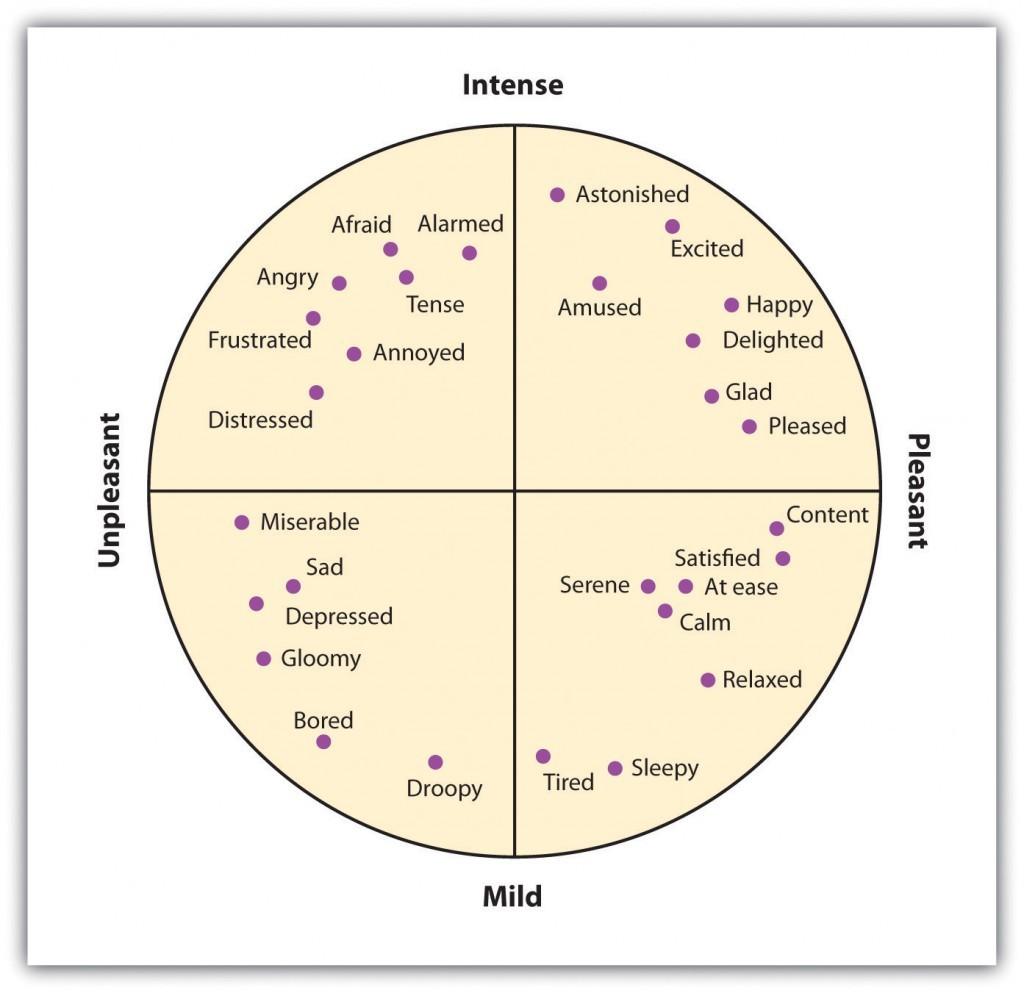
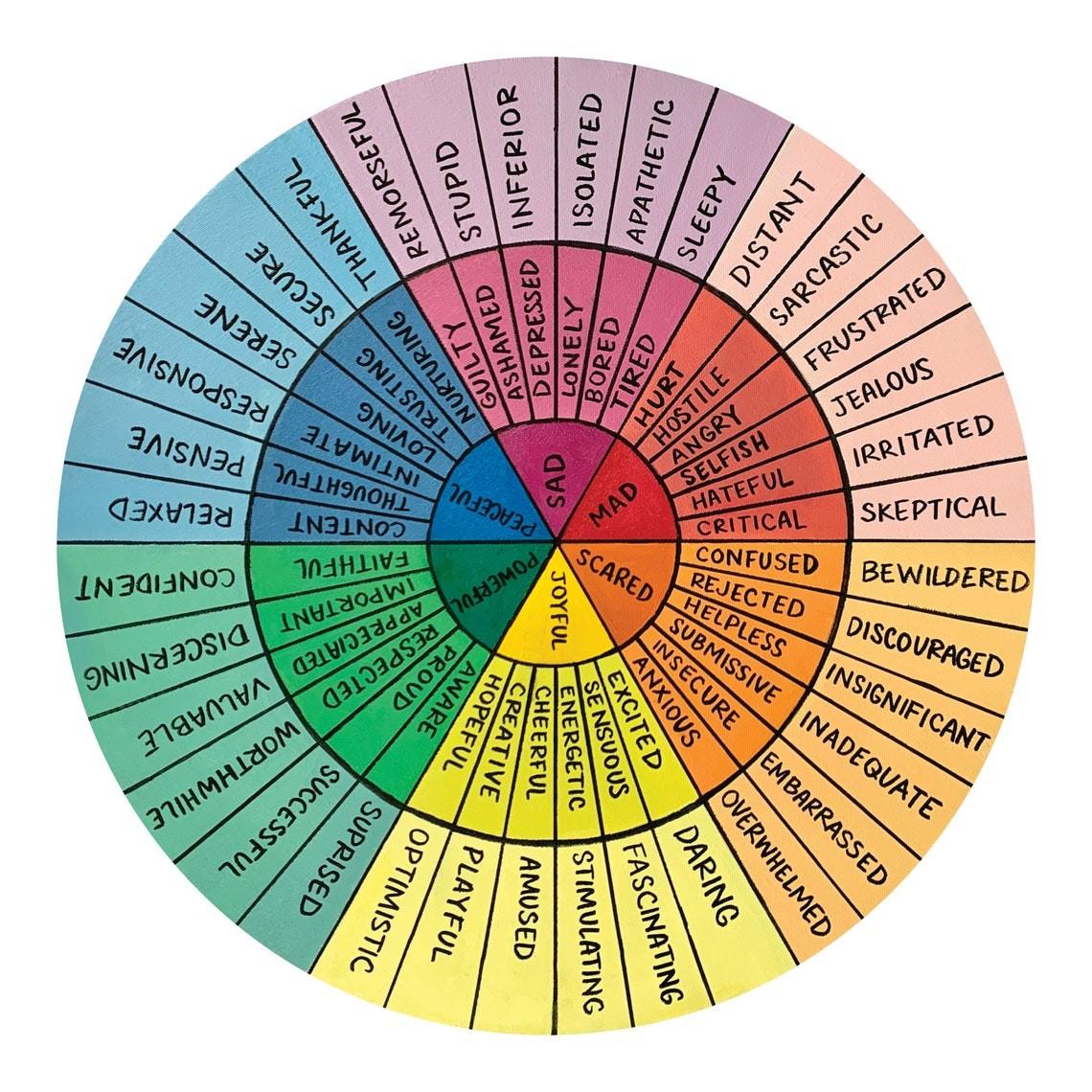
The Spectrum of Emotions
Coping with your Emotions
Grounding Exercises
AGENDA
When & Where to Seek Help
Wellness Tips & Resources for Support
Questions & Discussion
COMMON EMOTIONAL RESPONSES
Myeloma is often seen through the lens of physical symptoms, treatments, and survival rates.
Beneath the surface of this medical battle lies a profound emotional journey that affects not only the person diagnosed but also their loved ones.
Initial Feelings
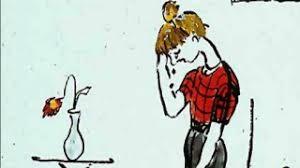
Getting a diagnosis of cancer can feel like getting the wind knocked out of you.
• Side effects like fatigue, hair loss, nausea, and cognitive changes can strip away one’s sense of normalcy and identity.
• Some people feel isolated as they withdraw from social activities, work, or relationships due to physical limitations or emotional distress.
• The loss of independence and routine can be demoralizing and defeating.
Relationship Challenges
• Cancer can significantly impact relationships with partners, family, friends, and coworkers.
• Some people may not know how to respond or offer support, leading to awkwardness, discomfort, or distance.
• Care partners can also experience emotional exhaustion, guilt, and helplessness as they witness their loved one's suffering.
Anxiety
Symptoms of anxiety include:
• ruminating about a specific fear
• sleep disturbance
• feeling restless or edgy
• irritability
• being easily fatigued or overstimulated
• difficulty concentrating or forgetfulness
Depression
Symptoms of depression include:
Sleep disturbance Loss of interest/pleasure in activities that used to feel exciting (anhedonia)
• Feelings of guilt or worthlessness
• Changes in energy or excessive fatigue
• Appetite/weight changes
• Psychomotor disturbance
• Suicidal thoughts
• Depressed mood
Prevalence of Depression
• In the US, 23.1% of the general population meet criteria for a diagnosis of a mental health disorder.
• Over 56% of patients living with blood cancers experience anxiety and depression
THE SPECTRUM OF EMOTIONS
Finding Value in the Challenge
• This is never about suggesting the illness itself is “good” or that someone should suffer.
• Rather, it’s about recognizing that within extremely difficult or unwanted experiences, people sometimes discover forms of meaning, strength, connection, or clarity.
Emotional and Spiritual Growth
Research in psycho-oncology shows that post-traumatic growth is surprisingly common. People sometimes describe:
• A greater appreciation for life’s small moments
• New or deepened spiritual beliefs
• A sense of inner strength they didn’t know they had
• Increased empathy or patience
Suffering forces confrontation with vulnerability and uncertainty, and some individuals emerge with a transformed worldview.
Healing Versus A Cure
• We may not yet have a cure for myeloma, and the reality is our physical bodies are never perfect, but we can experience emotional or spiritual healing in the midst of this journey.
• Consider for yourself what it would mean to engage in “healing.”
Hope & Empowerment
Cancer strips away control, but in that loss, people often find a different kind of agency:
• Choosing how to spend meaningful time
• Choosing how to speak about their experience
• Choosing how they meet uncertainty emotionally and spiritually
The struggle becomes a teacher of resilience and presence.
Purpose Through Helping Others
A powerful source of meaning comes from turning personal suffering into support for others:
• Advocating
• Volunteering
• Leading a support group
• Sharing one’s story
• Helping someone newly diagnosed
The idea of “I can use what I’ve been through” gives suffering a sense
of direction.
COPING WITH YOUR EMOTIONS
Coping with Heavy Emotions
• Awareness
• Identify
• Accept
• Recognize
• Stay Curious
• Let go
Coping with Heavy Emotions
Don’t feel that you have to be “strong.”
If you feel tired, lonely, anxious, depressed, angry, etc., acknowledge your feelings and talk about them. If all you want to do is cry, then go ahead.
Crying is a natural catharsis.
Grief & Gratitude
“The work of the mature person is to carry grief in one hand and gratitude in the other and to be stretched large by them.
How much sorrow can I hold? That’s how much gratitude I can give. If I carry only grief, I’ll bend toward cynicism and despair. If I have only gratitude, I’ll become saccharine and won’t develop much compassion for other people’s suffering.
Grief keeps the heart fluid and soft, which helps make compassion possible.”
-Francis Ward Weller
GROUNDING TECHNIQUES
Emotional Grounding Techniques
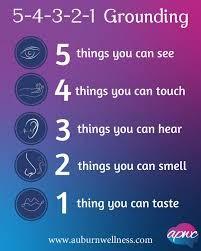
5-4-3-2-1 Grounding Exercise
The “Pretzel” or other bilateral stimulation exercises
Mindful Walking
4 Square breathing
Categories (i.e. Colors, college football teams, etc.)
Aromatherapy
Hold a piece of ice
Eat a small bite of food with intention and mindfulness
WHEN & WHERE TO SEEK HELP
Practical Help
Think about what you need. Lots of people will want to help but don’t know how.
• Practical needs
• Financial help
• Emotional support
When to Seek Professional Help
Your mental health is as important as your physical health!
Tell your healthcare team or another medical professional if you need support.
Ask if your hematology/oncology clinic employs a clinical social worker or counselor. Emotional support and therapy services are available at many clinics.
WELLNESS TIPS & RESOURCES FOR SUPPORT
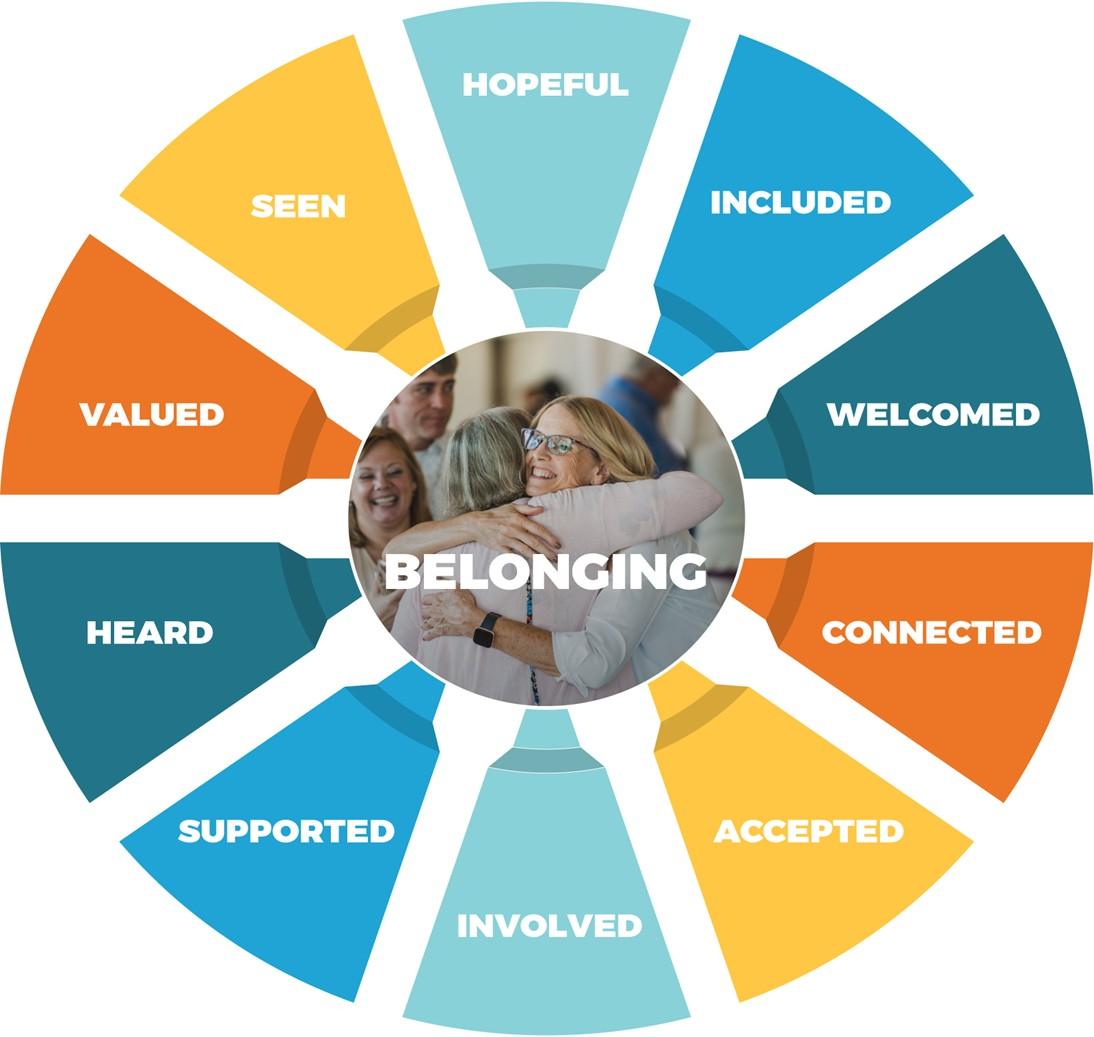
Support Groups Provide a Sense of Belonging
• Included
• Welcomed
• Connected
• Accepted
• Involved
• Supported
• Heard
• Valued
• Seen
• Hopeful
Wellness Tips
Talk to friends and family, and others you trust
Ask for help and be specific about what you need Join a support group
Get education and information only from reliable/reputable sources
Take time for yourself
Spend time with supportive friends
Celebrate every victory!
Resources
Talk with your doctor to determine what plan of action works best for you. Medications could potentially be part of a treatment plan that you and your doctor work on together.
If you think therapy/counseling could be beneficial, ask for a referral or check out websites/platforms such as:
• Headway
• Better Help
• Talkspace
• CaringBridge
• Psychology Today
Q&A WITH GUEST PANEL
SCAN THIS QR CODE FOR KEY IMF RESOURCES
Helpful Links to:
• Slides for Today’s Program
• Evaluations PLEASE complete before you leave today
• SparkCures Search Engine specific for the Minneapolis region
• Ways to Give
OUR MISSION:
Improving the quality of life of myeloma patients while working toward prevention and a cure.
OUR VISION:
A world where every myeloma patient can live life to the fullest, unburdened by the disease.
SCAN THIS QR CODE FOR KEY IMF RESOURCES
Helpful Links to:
• Slides for Today’s Program
• Evaluations PLEASE complete before you leave today
• SparkCures Search Engine specific for the Minneapolis region