
A Servant’s Heart with Unwavering Faith in Interfaith
By Molly Monroe
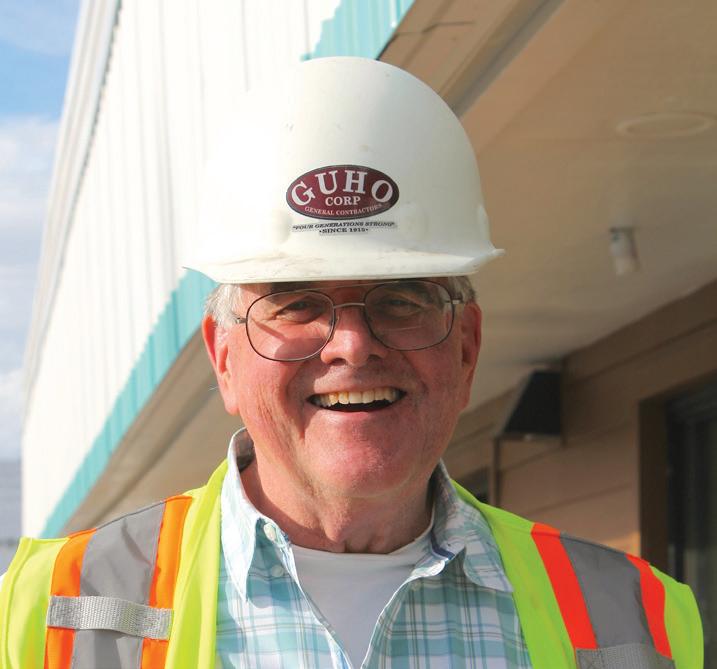
Through arduous legalities, uphill battles, and crises, one man’s faith in Interfaith Sanctuary has never wavered. “I never doubted that it would happen,” he said about the construction of Interfaith Sanctuary’s new Shelter Home on State Street, “You have to have faith that something’s going to happen.” That man is Nick Guho, the third-generation owner of the construction company, Guho Corp.
This man’s boots have been on the ground since day one. After two decades of service, he is being honored as the recipient of the FRED of the Year Award at the 2025 FRED Awards Nov. 19 for his fearlessness, resilience, empathy and dynamism.
As Guho facilitated tours through the Shelter Home construction site, he beamed with joy at the neighbors, friends, and donors of Interfaith, who were amazed at the sheer size of the building and the thoughtfulness that went into the design and construction. He carried around memories of when the homeless shelter first opened twenty years ago.
In 2005, churches took turns opening their doors for a month at a time to welcome people off the cold streets and give them a warm place to sleep at night. Burdened by the need for a permanent homeless shelter in Boise, Father Ritchie of Holy Apostles asked his congregation at one mass if anyone knew of a building downtown that was available to give the most vulnerable a safe, stationary place to lay their heads. Nick, his brother Mark, and their business partner, Kurt Barats, all agreed, walking out of church, that the building that they had just finished remodeling was perfect.
It was complete with a large open room, handicap bathrooms, and a mechanical room, on 17th St. and Jefferson St. They jumped through the necessary hoops to gain a conditional use permit that would allow them to use the building as a homeless shelter. After getting a permit for December through the end of March approved, just enough to get them through the cold months, Guho caught flak for pushing through to give people on the streets a roof over their heads. Nonetheless, he stayed true to his mission to provide a place for people experiencing homelessness.
Volunteers from churches of various faiths and denominations across Boise helped organize and maintain the homeless shelter, giving it its name, Interfaith Sanctuary. Multiple religions banded together under a common goal: to help the most vulnerable population.
When the Jefferson’s conditional use permit expired in 2007, a building on River Street came up for sale to relocate the homeless shelter. Donors generously gave the amount needed to purchase the property and furnish all the bunk beds and bedding. By a miracle, the permits, demolition and remodeling, required fire sprinklers, handicap improvements (most of which was donated), final inspection, and all the official signatures needed to open the doors came together within one month.
All those who were displaced finally had a stationary shelter to seek refuge in for the night. The emergency shelter has operated out of the building on 1620 River Street for the past 19 years. Guho didn’t see this place as the finish line, but just the beginning.
“One of the most touching things I ever saw was one morning when I went into the shelter to do some work, there was a bed on the family side where a little girl had her teddy bear on her little bed, and I thought, ‘This is sad, that’s where she’s calling home.’’ Guho said, “That was moving to me and kept me driving through this whole thing.”
Guho holds fast to his Catholic faith, which believes in serving others. “The Catholic faith teaches me to do what is right, to help others, provide shelter, feed
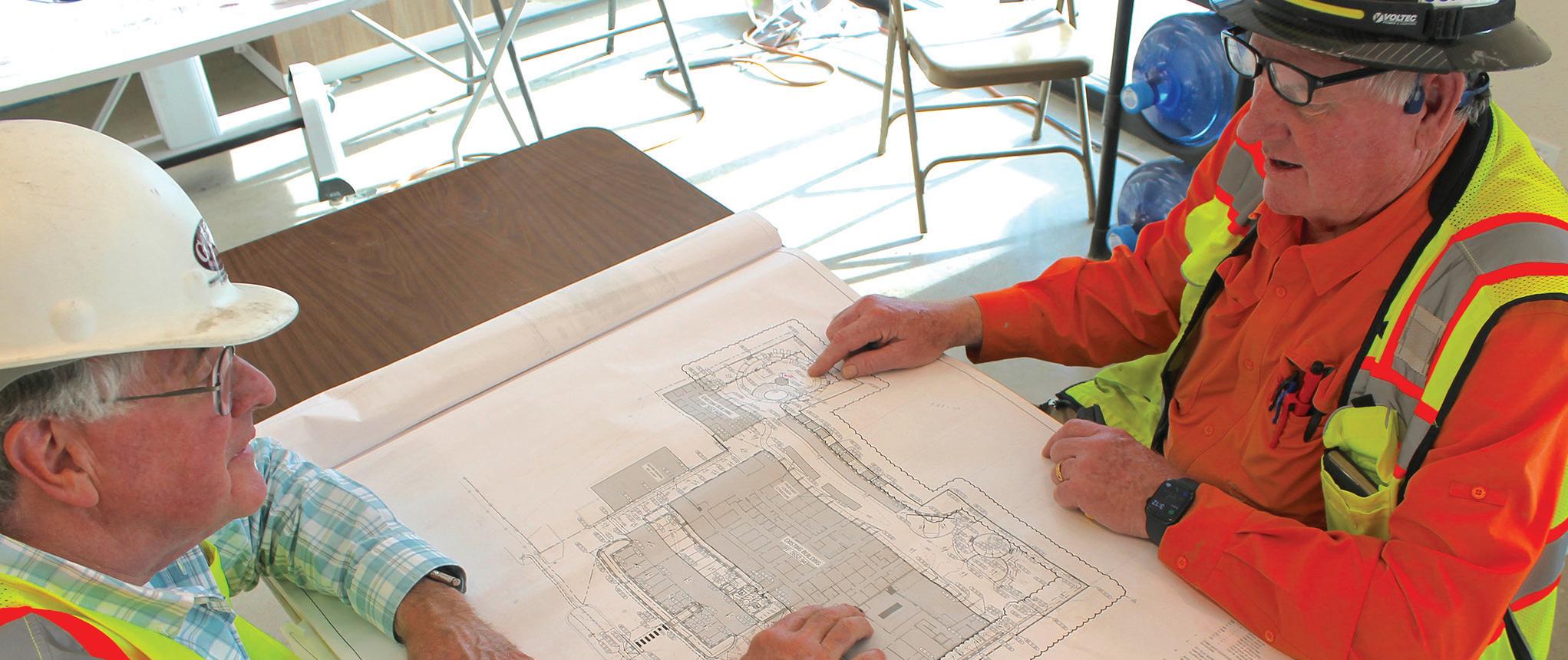
the hungry and clothe the naked” he said. “Do what Jesus would do and help out people who are less fortunate.”
Guho used his abilities to build, organize, lead, and delegate, and his knowledge in construction to serve a greater purpose than himself. Yet he said he couldn’t do it without the support of his wife, Yvonne, who also gives her time to serve those in need through Saint Vincent De Paul.
Eight years ago, on a cool October afternoon, Guho got a call from Executive Director Jodi Peterson-Stigers “We need blankets!” she said, so Guho acted. Walking into Mass on Sunday morning, he asked Fr. Len at Holy Apostles Catholic Church if he could make an announcement and shared with the congregation the need for blankets for people sleeping in the parking lot of the homeless shelter, because there was no room for them inside. He built wooden bins to collect donations and let the congregation do the rest. “To my amazement, we got over one hundred blankets the first year. It gave a lot of people the option to do something good.” Every year since then, Holy Apostles has generously given to the annual blanket drive.
Guho also lent a helping hand on the operations side of the nonprofit. He helped the bookkeeper at the time, Elinor Cheney, who has remained on Interfaith’s board, by taking over the bookkeeping for three years to get everything organized in QuickBooks, allowing the organization to have a records system for applying to grants. This act of service gained Interfaith more money to fund the shelter over the years.
As programming developed and expand-
ed over the last ten years, the River Street shelter didn’t have the functionality or capacity to deliver the best possible services, working out of a job trailer for their support services programs and a food truck for their food assistance. The search for a new building began. The old Salvation Army building, on State St., proved to be the best location as far as size, space, and transportation.
Guho Corp was asked to be the general contractor for this project and began construction in April 2024. “This project is dear to my heart,” he said.
The original budget for the new building grew sharply after long-winded entanglements over the conditional use requirements put on the building permit, and the ability to provide most of the required services and programming needed under one roof. The cost rose to 15.6 million dollars. The total cost of the building, before legalities came into play, was fully funded solely from private donors. Interfaith continues to fundraise to support the ongoing construction to fully build out the new shelter.
Guho believed that every battle was worth it. “I think the end result was a better result,” he said. “God works on his own time.” Perhaps having more time to construct the new Shelter Home made it even more impactful. It grew partnerships, programming, staff, and strength.
His servant’s heart continues to spur him on toward love and good deeds. Who knows where the homeless shelter would be without his unwavering faith in God and Interfaith Sanctuary.
Nick Guho and Superintendent Marvin Bergloff discuss the plans for Interfaith Sanctuary’s construction.
Word on the Street
PO BOX 9334
511 S Americana Blvd
Boise, ID 83702
EDITOR IN CHIEF
Molly Monroe
WOTS WRITERS/COLUMNISTS
Shyloh Crawfurd
Gerri Graves
Julie Loomis
Nate Dodgson
Chris Alverez
Jodi Peterson-Stigers
Molly Monroe
Nicki Vogel
Janet Kaufman
Terry Reilly Health Services
WOTS Historian
Nicky MacAislin
WOTS STREET PHOTOGRAPHERS
Gypsy Wind
Julie Loomis
Heather
ART COLLECTIVE DIRECTOR
Chris Alvarez
CONTACT THE EDITOR
To submit story ideas or community articles, please send request and information to molly@interfaithsanctuary.org
POETRY CORNER
Clipped Wings 5

By Shyloh Crawford
They dressed it up in holy white, But every word was edged with spite. “Be good,” they said, “and He’ll forgive,” As if I’d sinned just to exist. They washed my skin with sacred fear, And scrubbed the softness from the mirror.
Each curve a shame, each thought a stain—
The gospel preached through quiet pain. I learned to flinch at loving hands, To choke on prayers I couldn’t stand. They named me wicked, whispered
Saffron Skies

By Molly Nunamaker
Saffron skies
Sweet goodbyes
Crossword Puzzle
Callout Crossword
From yesterdays to tomorrows
Working through deep sorrows
Finding peace in PRESENCE
Fleeting moments
Speckled with delight
Harbored oceans
Behind deep soulful eyes
Tell me your stories
Sweetness and sovereignty coalesce in a symphony
Shadowy whispers living on in infamy
Saffron skies crown the horizon, a canvas painted by endings and beginnings.
Sweet goodbyes linger, threads of memory weaving into tomorrow.
I walk the bridge between grief and grace, sorrows heavy, yet softened by the tender hands of presence. Moments, though fleeting, glimmer like fireflies— tiny lanterns of delight.
Behind my eyes, oceans rest, vast and uncharted, holding storms, holding stillness.
sweet—
While carving guilt beneath my feet. They crowned my silence as “discreet.” But I remember every glare— How holiness just watched, and didn’t care.
They lined my spine with “meant to be,” Then dared to call that breaking free. I sang their hymns with bloody lips, While they gave God a tighter grip. Their hands were warm—their words were not.
They named my ache, then said “forgot.” As if the scars were just a phase, And I should thank them for the blaze.
Don’t talk of grace—I know that smell, It reeks of guilt and Sunday hell.
No psalm, no priest, no sacred name
Can make me bless what made me flame.
So let the church doors shut behind— I won’t go crawling back so blind. I rise not clean, not claimed, not kissed—
But loud, and raw, and still not His.
Unstop Your Ears
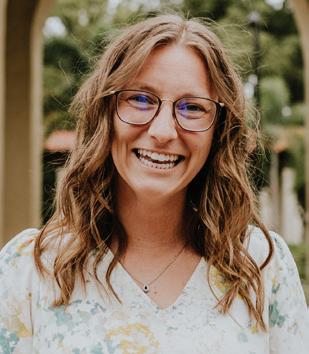
By Alexa Hazel
The pain must be piercing for the numb to feel.
Nails in flesh, sin that brings death, one word to sum it up; brokenness. Do you feel the depravity that’s just too real?
The images have to be startling for the blind to see.
39 lashes, a crown of thorns, spitting, mocking, whipping, flesh being torn.
Now do you see?
It’s our deep and utter need.
The voice must be loud for the deaf to hear.
A cry in the wilderness, 33 years later, “It is finished”, with His final breath.
A veil torn in two, thunderstorms and darkness announcing the beginning of all things made new.
Can you hear? He is here. Immanuel, God came near.
Maybe the cross was so grotesque to break the silence to ears that were deaf.
Grief in a Homeless Shelter
By CCGT
Grief in a Homeless Shelter
Looks like
Being told you can have one day Inside
But you’d better start participating In the shelter programs
You already participate in, And putting All the clothes on at once
That you’ve risked
Being stolen from you By family members
By having brought them inside
Your home, So that The Man
Of your household
Can’t decide
That today they’ll just throw them away, As so much worthless trash, As though they aren’t what keeps you warm
When they turn you away into the night, Without throwing you away too. And at least then you’ll both be safe. If only from Them.
If only I could keep my people
Safe
In the same way.
So that when we’ve both been thrown away,
Still warm and breathing, And made a warm nest of our own, From the pieces we’ve been able to keep safe
From both them and them, as well as Them, And yet I start to feel
My skin go cold anyway, I could wake up
In time to keep their soul from being Ripped away from my skin, In my sleep, Leaving me straddling
A corpse, In the morning, It clothed, me naked, Exposed to the world
In choosing any chance They may live
Over personal dignity.
Two Narcan and chest compressions, Like if I could circulate
The warmth left in them from my body being next to theirs,
So close, but not close enough, Their heart will start to beat again. Being thrown away together Keeps you both safe from Them, But not from the consequences Of souls being tossed away, Treated as if They are just one more piece Of trash
In the landfill they so delicately call Social Services.
Down:
1. Rain armor to stay dry --- size large.
2. They shave off yesterday’s stubble — blades on a handle.
3. Night’s little helper — the supplement nicknamed the ‘sleep hormone.’
4. Tiny double-ended cotton helpers for touch-ups, crafts, and small cleanups.
Tell me your stories, let me hear the music of your becoming. For even in shadows, there is a hymn— a song of remembrance, a truth that whispers, and dares to live on forever.
Across: --- size large. 5. A small stick you swipe to keep pit smells yesterday’s stubble — quiet. the supplement hormone.’ cotton helpers for small cleanups.
Across:
5. A small stick you swipe to keep pit smells at bay
Maybe Jesus evokes such controversy, because we’re unwilling to admit, we’re too blind to see.
Maybe the ways we numb are attempts to avoid He who could actually healthe Son.
Unstop your ears, open your eyes, let your heart of stone be shattered. The scandal is true. Grace is offered to me and you.
– In grief of David Wooton
ART COLLECTIVE
Brilliant Little Things
By Nicki Vogel
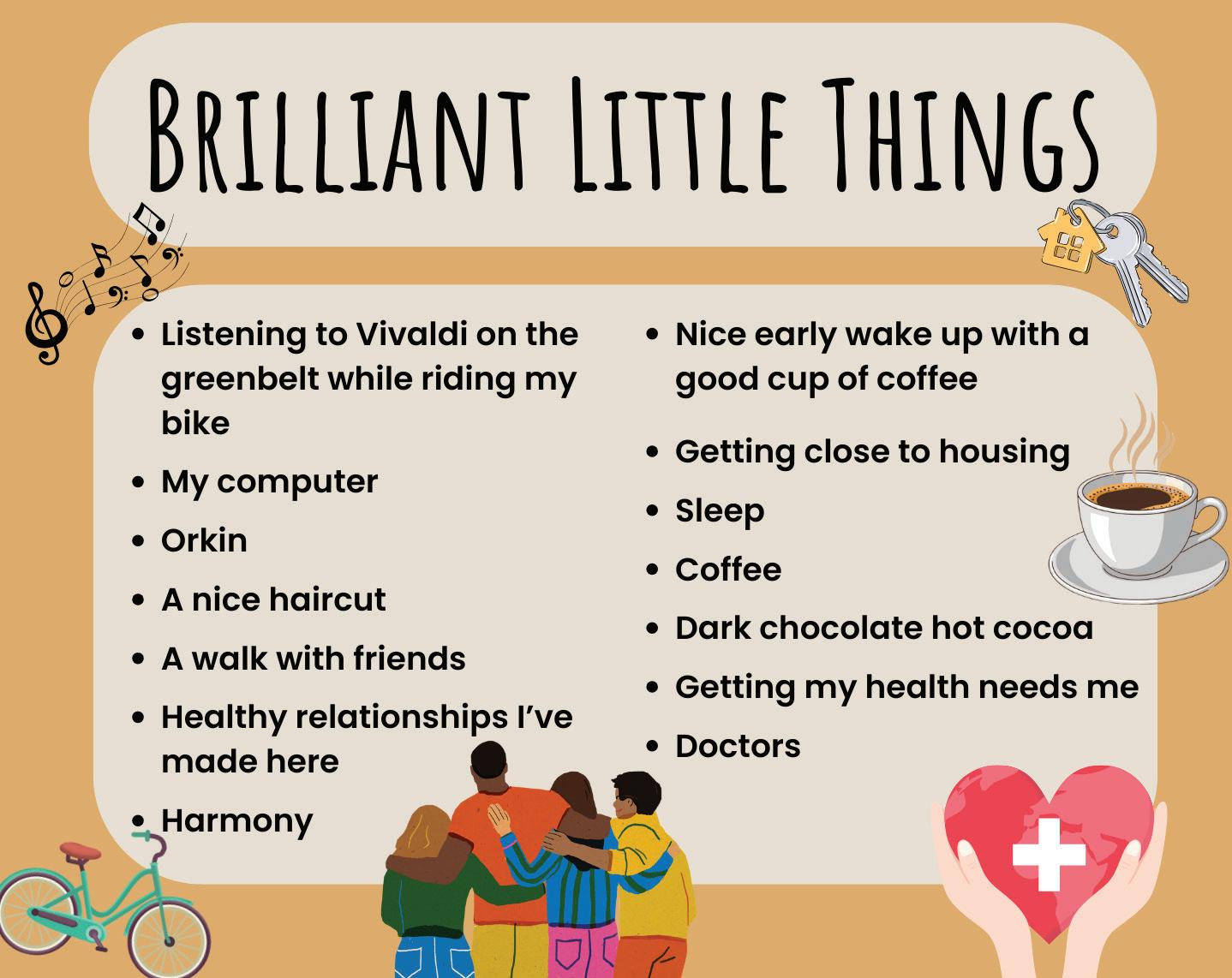
Brilliant Little Things is a tradition we hold every Friday in Project Well Being, a practice I’ve maintained for about six years. We’ve collected thousands of entries that I keep on my computer, documenting simple joys and reasons to hope. My vision is to share portions of this list with our guests when they leave the shelter and move into their new homes. This serves as both a reminder of the brilliant things still around them and a connection to the caring community they found here.
The idea is directly inspired by the play Every Brilliant Thing, written by Duncan Macmillan with Jonny Donahoe. This powerful solo performance uses humor and honesty to confront the difficult subjects of suicide
and clinical depression, offering a deeply life affirming message.
The central concept of the play is that hope is an active choice. The story follows a narrator who, as a young child, starts the list to help his mother cope with her depression. By focusing on what he can control… noticing and recording the small joys in the world he creates a vital tool for survival, a reminder that beauty exists alongside pain.
Ultimately, Every Brilliant Thing is a deeply human story that encourages us to find the simple reasons to stay, notice the tiny miracles of everyday life, and share those reasons with each other.
For our group, the list has brought some truly amazing, light-filled moments. The best part is when guests start to notice and hold onto these little joys throughout the week…from dark chocolate hot cocoa to a nice haircut or simply getting closer to housing. It encourages a powerful shift in perspective, helping to find the hope that is always present. We are excited to share this tradition with the readers of Word on the Street!

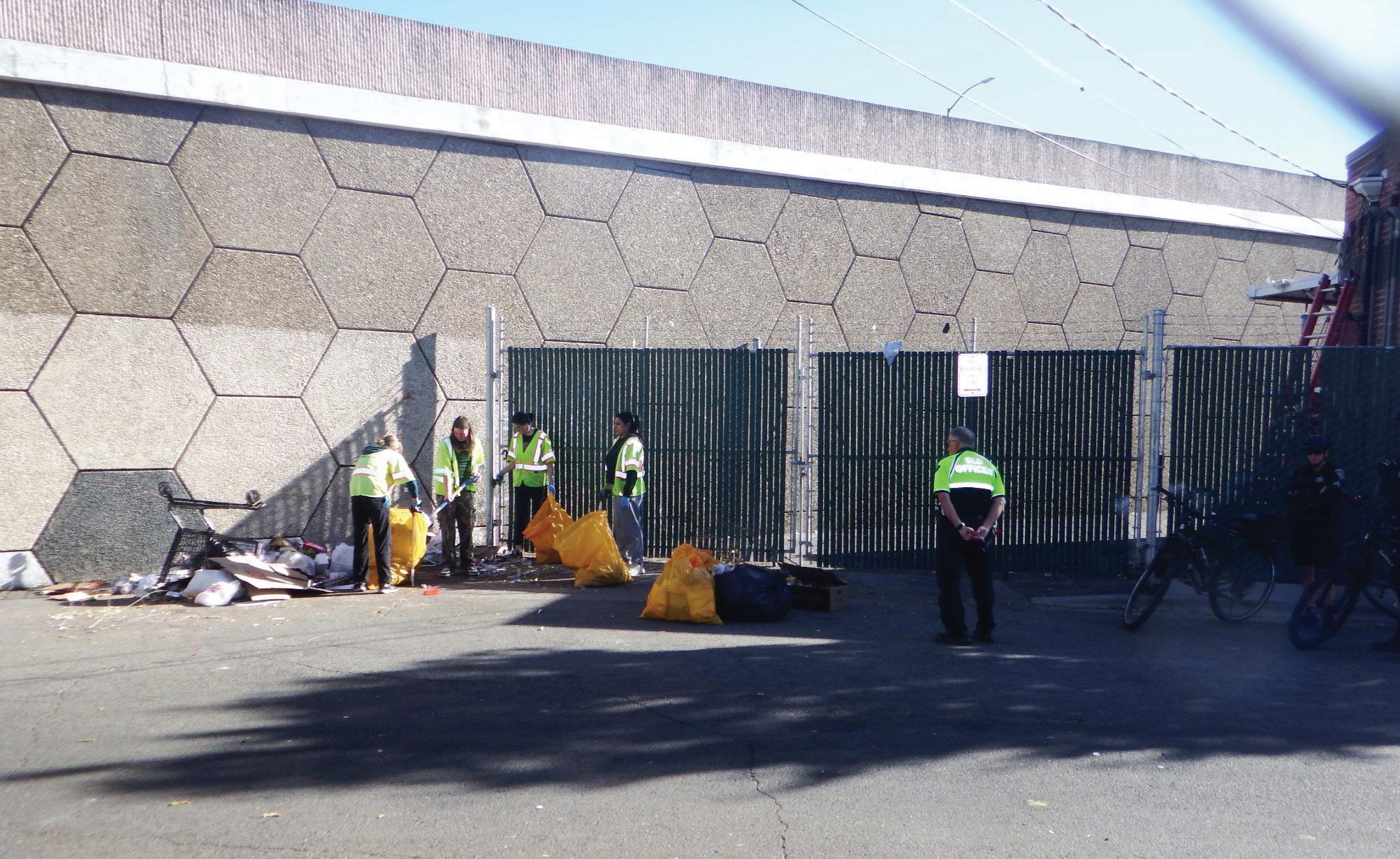
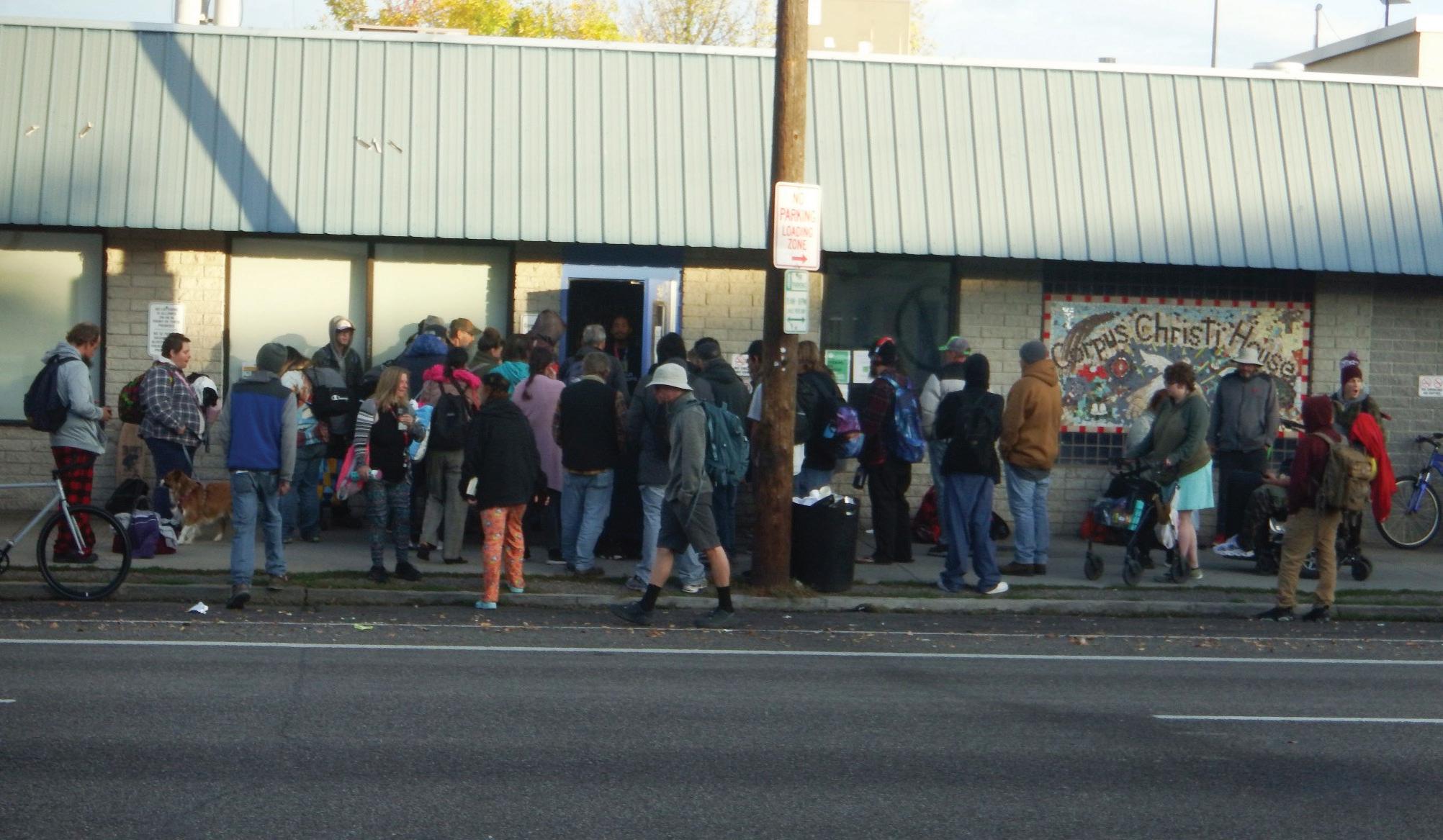
Photos by Gypsy
COMMUNITY PARTNERS
What Tough Times Can Teach Us Furnishing Hope Testimonials
By Molly Monroe
WOTS
WOTS
DEEDS ON THE STREET
By Briana S., Case Manager Terry Reilly Health Services
What if we never made mistakes or had adversity? It’s easy to think that a life without challenges would be wonderful. However, there is something to be gained when we have failures or struggles – the potential to learn and grow. Confucius said “Our greatest glory is not in never falling, but in rising every time we fall.” It’s natural to want to avoid missteps in life. But resilience is built by going through difficult experiences, not by avoiding them. A wise mentor recently shared with me that “it is important to keep doing hard things.” Why is this? Because without challenges and struggles in life, there is no opportunity to work through hard things, learn from them, and get stronger. Often it is not fun to do these hard things. But it is how we grow.
Here are some ways to help yourself and others build resilience:
• Find support in a family member, friend, or therapist
• Acknowledge failure or painful experiences with a matter-of-fact, understanding approach
• Journal about hard things you’ve succeeded at doing, and how you were able to get through them
The beautiful new shelter needs furniture to make it feel like a home, so the Furnishing Hope campaign was introduced to churches, community members, and friends of Interfaith. Through shelter tours, and partnerships, both funding and helping hands were raised to furnish each room in the new shelter.
Those who signed up to be on the build team, will gather in early December to assemble the hundreds of pieces of Ikea furniture purchased for the rooms.
DEEDS ON THE STREET
• Have discussions with a trusted loved one about what happened, how to help the situation, and together think of ways to handle or do things differently next time
Learning resilience, as with most things in life, is a constant process. It is not about perfection, but progress.
DEEDS ON THE STREET WOTS
Ways you can help this holiday season!

Some who sponsored an entire room get to design and decorate the space. Thanks to the generous hearts and in our community, every adoptable room in the shelter has been sponsored. This campaign provides hope to not only our staff and guests, but to those who are choosing to be a part of the campaign.
Here is what room sponsors are saying:
“I heard about the opportunity to furnish a room in the new shelter, and I chose the teen lounge because I have three recently former teens and feel like I know what they liked and what their friends liked and what they needed to do to decompress and hang out and have fun and a lot of my friends are in the same situation, so I knew it would be easier to pull together items and to get feedback from our kids on what would be a really fun space for teenagers.”
-Dana Zuckerman
“We chose to get involved in the Early Childhood Room because we believe every
child deserves a space that sparks joy, curiosity, and comfort—no matter where they live or what their family may be experiencing. Play is how young children learn and grow, and we hope to help create a place where they can explore, imagine, and simply be children. Contributing to Furnishing Hope is a wonderful way to ensure that even in moments of uncertainty, children and families can find beauty, belonging, and a sense of home.”
-Beth Oppenheimer
“We chose to sponsor the recovery room because we have been blessed to have two very special people in our lives. Daniel, our precious brother-in-law, has saved so many lives through his dedication to AA for more than 40 years. Our bilingual nephew, Joshua, has helped many legal immigrants connect with their sponsors across the USA. Unfortunately, he passed unexpectedly at the age of 29. He is certainly an angel in heaven. We admire and love both of them.”
- Susan Hogan

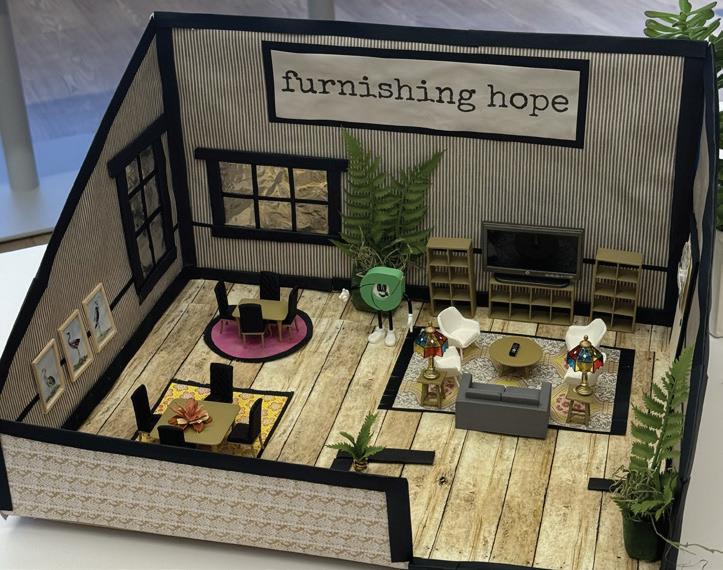
A diorama made by Clenera Solar Company, who excitedly sponsored the family suite
GRATITUDE AND GRIEF
Remembered with Compassion
By Molly Monroe
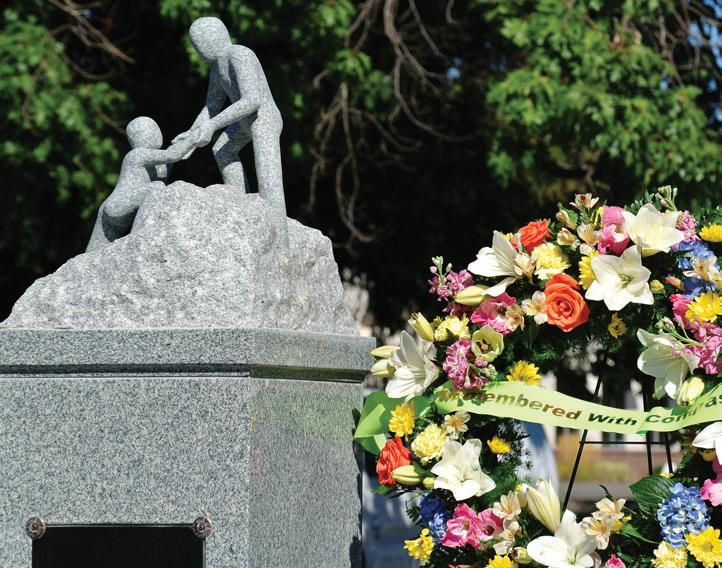
About 50 people clutching folded programs and single roses gathered on the lawn of Cloverdale Funeral Home for the annual Remembered With Compassion memorial to honor those who have passed away without a proper burial by family. Since 2016, the Ada County Coroner’s Office and the Ada County Treasurer’s Office have remembered individuals in the community who either had no legal next of kin or were abandoned in death.
Fifty-four deceased individuals, including three babies, were honored at this memorial. Each one with a story and a life who was laid to rest in the new ossuary built last year, including Rebecca Owsley, a beloved former guest of Interfaith. Owsley was known for smiling through trials.
Interfaith Sanctuary’s executive director, Jodi Peterson-Stigers gave the heartfelt invocation for the ceremony, thinking of people like Owsley who fell upon the
hardship of homelessness near the end of her life. “So many of our guests live with the quiet fear of dying alone and being forgotten,” she said. “Knowing that there is a compassionate community that will hold them with dignity, remember their names, and give them a place to rest brings real comfort to those who have lost their connections.”
Peterson-Stigers along with Coroner Rich Riffle and the Ada County Coroner’s
How Grief and Gratitude Can Go Hand in Hand
By Sharla Phelps, LCSW, Certified Grief Counselor, Ancora Health Services
In thinking about the journey of grief, it can be challenging to see where gratitude fits in. Certain authors have said that “even though we are not hard-wired to feel thankful while suffering, adopting a gratitude practice can help us move through the grief process more purposefully.” (Felps, 2019)
Grief is a normal part of being human. We will not make it through life without grieving something. We can find some comfort in the fact that EVERYONE experiences grief in their lives and that it isn’t an isolated event specific to us.
Additionally, each loss has its own set of challenges. For example, grief is different when we think about the loss of a parent, the loss of a child, the loss of a spouse, the sudden death of a loved one, a prolonged illness and death, or other losses that we can experience in life. There is no room for what is called, “comparative suffering”. Each loss has its own toll and is different from other losses.
A key component in healing grief is action. Making a decision to move forward with life can be challenging but with the right support and coping skills, it can be rewarding and beneficial. Gratitude is part of this moving forward. For some people, activities such as gratitude journaling or lists, writing letters of gratitude to your loved one, or completing acts of gratitude for others are a part of the healing process.
In order to find gratitude within your grief process, it is not essential for you to acknowledge the deep-rooted pain of grief, rather to access the simple act of noticing and being aware of what is around you; laughter, sunshine, nature, memories, our own health, friendship, a garden, a home, or a smile from someone else. Being able to hold grief and gratitude helps with the healing process and builds our resilience as we face the pain of loss.
Starting a Gratitude Practice
1. Make a commitment to be consistent in practicing gratitude. A good idea is to set a goal to practice each day/week/month.
2. Observe the world around you. Go outside and lay in the grass. What do you see, hear, and experience? Which of those are you thankful for. Write them down on a list.
3. Think of difficult times in the past, and of the ways that you were able to move through those times. Difficult times build our resilience. This is fertile ground for gratitude.
5. Share your gratitude with others who care about you. This helps you when you say it out loud and it has a positive effect on other people.
6. Use a journal or notebook to write down your gratitude list. Writing our thoughts helps cement the ideas in our head, which helps our brains in how they respond to future challenging events in our lives. Whatever you choose to do, remember that “practice” is an action word and may need repetition or regularity in order to develop fully.
office are committed to ensuring that the memory of no one’s life is lost. Coroner Rich Riffle was elected three years ago and inherited the weighty responsibility of conducting the Remembered with Compassion ceremony.
“It’s our way to show compassion for the deceased. Ultimately it doesn’t matter why they’re there, but they are there… It’s one way to show the community that we care,” Riffle said.
Not only does the event touch the hearts of community members, friends and families who attend, but also those who have invested time and energy in investigating the cases of the deceased. Team members like Sheila Silva find closure in these memorials.
Once the investigators have completed their investigation, the case gets passed on to Silva, the Office and Records Manager, who works with the Ada County Treasurer’s Office and the Ada County Indigent
Services to make sure the descendent’s life insurance protects their loved ones from financial burdens and secures their cremains. She also talks to the families of the deceased and learns about the decedent’s life and backstory. The meetings can be relieving or painful.
“We may have a friend or a family member that would love to handle final disposition, but legally, they don’t have the authority to do so. This gives them an opportunity to remember them and grieve them and still have that final rest with them,” Silva said.
“A lot of family and friend feedback this year about how thankful they were that.. their loved one received a loving send off,” Silva said.
This event is slowly building to be more significant and recognized by the community. Each person deserves to be remembered with dignity, a reminder that no one should be laid to rest alone and no one is forgotten.
Memories of Riley
By the WOTS team
Our beloved shelter dog was recently laid to rest and is missed by all. Riley had been his owner, Skip Murray’s, therapy dog for 13 years, but he was also a lovable companion to many in the shelter. We love you Riley!
“Riley Is the best friend anyone could have” -Elliot
“He was comfortable with everyone at the shelter. Had a lot of trust in people. - Marco
“Rylee was everyone’s pet at the shelter. He was everyone’s companion animal. He loved being scratched underneath his harness” - Gypsy
He showed everyone love. He was the sweetest dog there is. -Chey I truly believe Riley could smile because of the way he would run up to me until he felt my hand on his back to scratch. He was an amazing dog who gave all of himself to others and never expected anything more than a pat, a scratch, or he would just lay down and silently give me comfort when I needed that gentle support. He would lay down and touch me with his body touching my leg, or resting his paw or his snout as close as he could because he always knew when I was hurting and needed some Riley time.” - Branda
I love dogs and I fell in love with Riley. He was such a happy dog.
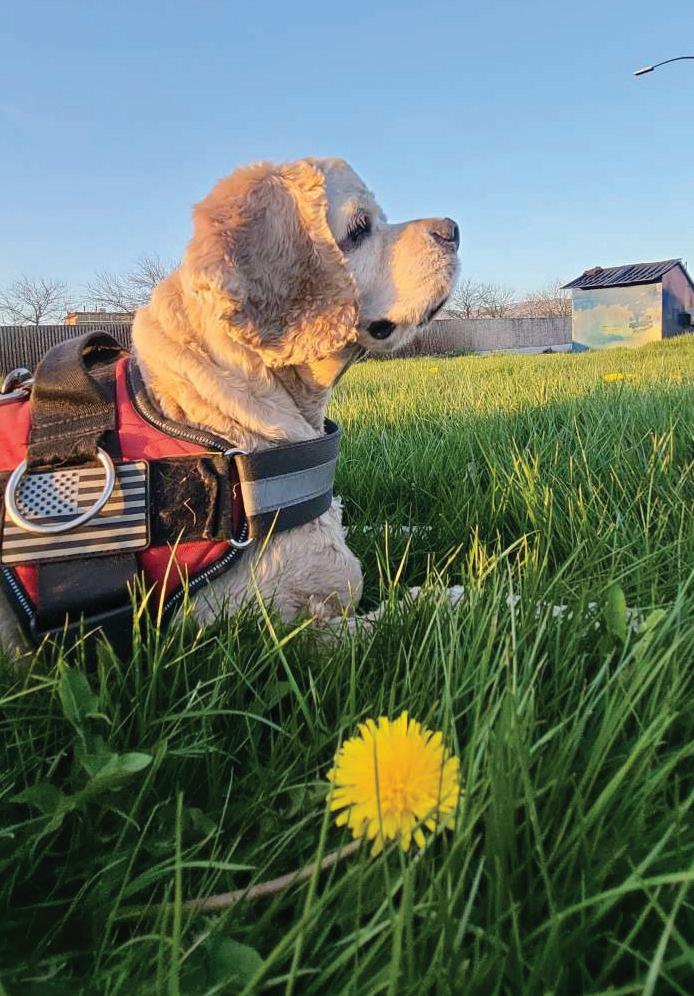
Riley loved everyone and would go from person to person spreading his doggy love. He was the program therapy dog. Riley held a special place in my heart. When I was sick he didn’t want to leave my side or my feet he would sit on. Riley was a doggy angel that made everything brighter and that wiggly tail. Riley helped me have a little bit of love just by wanting pets and treats. - Julie
“Riley was the love of my life and my higher power. I miss him every day. He was the most loving, gentle soul I will ever know. I miss him dearly.” - Skip
The History of Black Friday Gratitude and Grief
by Elliot
The first recorded use of the term “Black Friday” was applied to the crash of the U.S. gold market on September 24, 1869. Two Wall Street financiers bought much of the nation’s gold, hoping to drive the price sky-high and sell it for astonishing profits. On that Friday, the stock market went into free-fall and bankrupted everyone from Wall Street barons to farmers.
The Black Friday shopping tradition comes from the idea that after an entire year of operating at a loss (“in the red”), stores would supposedly earn a profit (“in the black”) the day after Thanksgiving because
holiday shoppers blew money on discounted merchandise.
Back in the 1950s, Philadelphia police used the term to describe the chaos that ensued on the day after Thanksgiving, when hordes of shoppers and tourists flooded the city. The police worked extra-long shifts dealing with the crowds and traffic and shoplifters.
In the late 1980s, retailers reinvented Black Friday to reflect the “red to black” concept and the notion that the day after Thanksgiving marked the occasion when America’s stores finally turned a profit.
Source: History.com
By Critter
Gratitude and grief dualistically exist with us. I’m grateful for being so busy with work, but it’s exhausting at the same time. The instant I realize that this is happening, I become sad because if I’m not enjoying anything (and I mean anything) I’m doing, then that’s a crappy way to live. But wait, there’s light to this. I realized I’m automatically going to be tired if I never accept mediocrity. I’m just tired, I’m not angry or hurting. The most important part to realize is that accepting good and bad, in other words,
the dualistic reality of gratitude and grief, means to move along in peace. Not to focus on the gratitude or grief itself, but to focus on the existence of peace.
Christians would call this giving your burdens to the Lord. Buddhists would say that you welcome every storm like a wave and imagine yourself swimming through it, not happy or sad, but embracing it. Focus your energy on peace of mind, and at the end of the day, just know that it’s ok to be grateful and it’s ok to grieve.
Shyloh: Guest of the Year
By Julie Loomis
I am writing a story about the young man who will be honored as the guest of the year at the 2025 FRED awards. A recipient of a FRED award is fearless, resilient, empathic, and dynamic. Shyloh Crawfurd ended up at the shelter and has left an impression on those around him. This is his story based on what others say about his best characteristics. Shyloh’s peers mainly told stories about his fearlessness and his resilience. Project Well Being praised him for his ability to go to college online even though he is experiencing homelessness. He even found work to have an income. When people let him down, he still keeps proving that he is determined to thrive. Shyloh also manages to dress with style even when it is not easy.
I am most impressed with Shyloh’s poetry, which is published in Word on the Street.
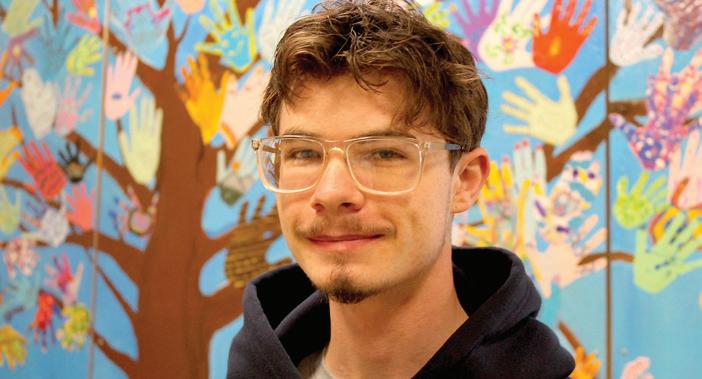
Shyloh is articulate in expressing his feelings and draws you into his world. This shows his empathy and dynamism through his words, which are written so well. Shyloh has so much potential and is bringing his talent to our readers as he is taking college courses to become successful. There is a lot more to Shyloh than a handsome face.
Here is what some of the Interfaith Sanctuary staff have to say about Shyloh:
“Shyloh’s story is a powerful testament to the human spirit’s ability to overcome immense
challenges. His story shows us all that fearlessness, resilience, empathy, and dynamism can illuminate the darkest path. He is dynamic in every way. He is a shining light for so many.” - Nicki, Project Well Being “You’re going to hear this a lot, but you’re an inspiration to people who are experiencing great difficulty and have overcome it. Keep making good choices and remember that the woes of regular life are better than the woes of failure.” - Critter, Homeless Art Collective
“Shyloh is open to growing, whether it’s furthering his education, investing in his mental health, building relationships, seeking help, and getting up whenever he is knocked down. He has been a figure of resilience in the shelter despite the hurdles he faces. He is passionate about writing and determined to learn and study journalism to share his and others’ stories.” - Molly, Word on the Street
Hays House: A Safe Place for Youth in Crisis
By Molly Monroe
A teenage girl clutching a backpack hopped off the bus in downtown Boise.
After her last stay at a friend of a friend’s house, her list of places to couch surf ran short, and she had no plan and nowhere to go.
She wandered down Main Street and walked by the storefront of the Idaho Youth Ranch Thrift store, where a yellow sign in the shape of a diamond caught her eye. A sigh of relief escaped her lips as she read the words “Safe Place”.
The doorbell chimed as she entered. “Hi, welcome in!” a friendly clerk exclaimed. “I need help,” the teen replied.
Within an hour, the girl was on her way to Hays House, the only youth homeless shelter in the Treasure Valley and a refuge for nine to seventeen-year-olds who are experiencing homelessness, running away, or escaping abuse or neglect.
She’d first learned about Hays House from an outreach table at her high school. Now, peering out the car window, she noticed the same “Safe Place” sign at the shelter’s entrance. Inside, she saw a spacious living room where kids lounged on couches and bean bags, did homework with staff, played foosball, pool, and video games, and played instruments in a music corner. During intake, a staff member asked her questions to understand what brought her to Hays House, filled out paperwork, contacted a guardian, and decided if law enforcement involvement was needed. After a tour of the 18-bed house, she chose her own bedding and a handmade, donated quilt to keep, then settled into a shared room with two other girls. Relief replaced her nerves.
Homelessness looks different for an adolescent than for an adult. Youth are often running away from something. Many attempt to stay hidden at libraries, stake parks, or friends’, even strangers’, couches, where they can be exposed to unsafe environments or exploitation.
“For a youth who feels like they can’t go home safely or desperately doesn’t want to go home, to accept help runs the risk of them entering the system and CPS getting involved, and then being taken back home or taken away from that home. A lot of youth are desperately trying to avoid that,” Idaho Youth Ranch Vice President of Marketing & Communication, Jeff Myers said.
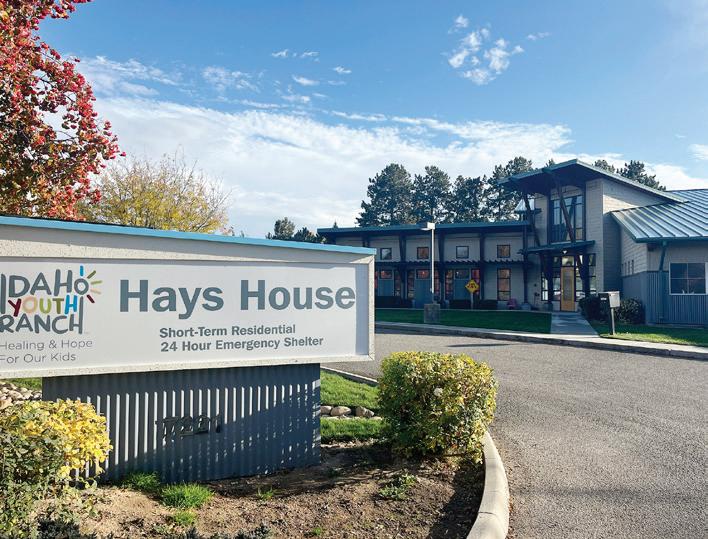
Outreach specialists like Janessa Stell meet kids where they are, whether it’s at school or events, so students become familiar with resources. “I just love working with youth...specifically older youth,” Stell said. “Those are just such formative years, and being a teenager is already hard regardless of whatever trauma or background you have. It’s important to utilize that time to build community and foster hope.”
Stell encouraged a discouraged boy, who had a hard time letting staff help him and
From Dead End to North End
By Nate Dodgson
I consider myself very fortunate and even lucky to be alive and have an apartment of my own. I underwent three subsequent appeal processes after my housing was denied due to my criminal record. Needless to say, I was finally approved as the denial was overturned. I am very grateful to have had the opportunity to appeal because without it, I would still be homeless.
I spent nearly 2.5 years at Interfaith Sanctuary, and before that, 13 months at River of Life (Boise Rescue Mission). I moved to Boise from the Seattle area 4 years ago in a desperate attempt to sober up and save my life from the grips of alcoholism.
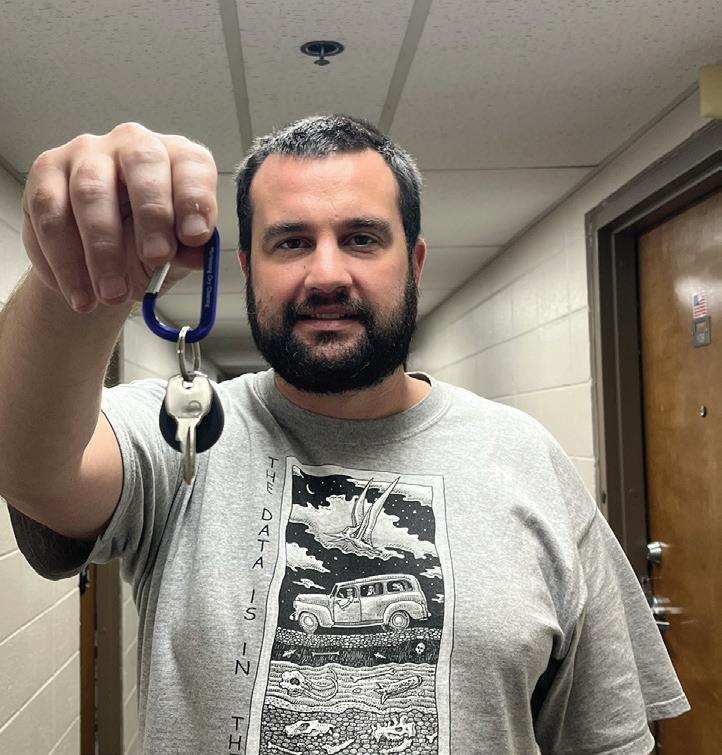
Moving into homeless shelters was a result of losing the ability to provide for myself. It was a result of a slow, gradual decline due to my inability to quit drinking. Even-
his younger siblings, to break out of his shell and play at an after-school summer bash in Hays House’s backyard. “It was such a special thing to be able to see this youth who can just let the burden go for a second,” she said, “We try to create an environment where kids can be kids.”
Stell accompanied a girl to an Idaho Youth Ranch thrift store with a voucher and helped her pick out outfits. A seemingly simple shopping trip stuck with this girl for years, and after coming to Hays House for the third time, she told Stell she would never forget that day.
“It makes you realize how many things so many of these kids are missing and they’re experiences growing up, and just having some of those almost expected experiences to many kids is a whole new experience and a victory for these kids,” Myers said.
At Hays House, all youth are enrolled in school and participate in dialectical behavioral therapy and equine therapy to support healing and growth. A team of therapists, case managers, and family specialists helps them transition back to a safe environment and continue receiving support after leaving the shelter.
November is National Homeless Youth Awareness Month, but Hays House works all year long to bridge the gap in services for unaccompanied youth in the Treasure Valley, providing hope, comfort, and safety no matter the situation.
If you are in a dangerous situation and need a way out, text the word “SAFE” to 44357 (4HELP) or call the Youth Crisis Help Line (208) 322-2308. There is a safe place for youth in crisis.

By Janet Kaufman
In Interfaith Sanctuary’s well-being programs, we explore the fundamental needs that help people thrive. For instance, all human beings have basic needs like food, water, shelter, and clothing. As an organization, Interfaith helps people meet those basic needs, and individuals work hard to meet these needs for themselves.
In addition to those, all human beings have needs for qualities like purpose, acceptance, friendship, fun, compassion, and many more. In Project Well-Being and Project Recovery, we take time to identify and name our needs, considering how we can meet them in ways that support needs like growth, peace, and stability.
Here are some needs that surfaced in a recent discussion in Project Recovery. The words below are important to all of us, yet we find different ways to fulfill them. These needs intersect with and connect to each other, like silk threads in a web.
Connection: When we experience connection, we feel comfortable, so meeting our need for connection with other people, animals, or the natural world can help us meet our need for comfort.
And by comfort, we don’t mean lying on the couch—though that sure is nice sometimes. We mean feeling comfortable in our own skin.
Integrity: When we have it with ourselves, we hold ourselves accountable, and we’re honest with ourselves and others.
When we speak and act with integrity, we give ourselves Dignity.
Empowerment: When we accomplish things, make good decisions for ourselves, and find independence, we feel a sense of inner strength and power within. Experiencing empowerment leads to… Harmony, which we feel when we are growing, learning, experiencing a sense of flow in our lives, finding meaningful ways to contribute, and are working in connection with others, everyone doing their part. Hope gives us reason to get up in the morning, and freedom is the ability to be ourselves, not to feel chained mentally. Take a moment in your day to think about a need that’s important to you. Maybe it’s respect, honesty, learning, consideration, trust… Give yourself some time to contemplate how you are trying to meet one or two of these most important needs. Sometimes we need new approaches and creativity to help ourselves or others meet needs. We hope you find this exploration meaningful as we do!
tually, you’re left empty and with nothing. I’m grateful for all the support and love which the staff so selflessly provide. The shelter and other guests became family. It’s like a tribe or village. I had to build a lot of faith and courage in order to get through the day-to-day without falling deeper into oblivion, mentally. An extreme, deadly dependence on alcohol combined with losing everything really tested my spirit. So much shame, anger, and hopelessness. That feeling of emptiness and loss deprives one’s soul to the point of lifelessness. It’s the reality of being stuck and never seeing it comingblindsided by the consequences of my past actions and behavior.
When I moved into my own studio, I was
even more blessed from the assistance I received from a local church. Red Rock Christian Church furnished my apartment as well as provided other essential items so that I could actually be at home and live the way we are meant to live. Things such as a shower curtain, towels, toilet paper, kitchen utensils, and food we often take for granted. I am so grateful for their time and provisions which helped me get and stay on my feet at a time where I really had nothing else. Without their help, I would most certainly been in an eerily empty apartment with a sleeping bag.
But thanks to their contribution, the place has always felt like home to me. I want to thank everyone who has supported and helped me along my journey.
Navigating Grief Through the Holidays
By Gerri Graves
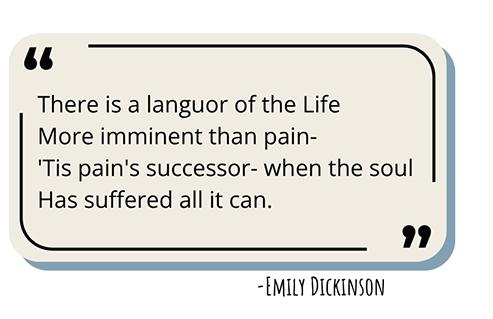
This piece of a poem is about the pain that comes after the pain.
The hollow shell of a person who follows immense sorrow. Where you argue on the hour, if you could or should go on at all. It’s heavy. Exhausting. Nothing inspires. Nothing gets done. Every breath feels like a betrayal.
It’s like taking pictures of a day at the beach...and the sun is snipped out of each one. There’s a hole in every scene where someone used to be.
Life is incomplete. Life will remain incomplete.
When I experienced loss, I locked myself away. Stopped returning calls. Perpetually busy when the invites came. Hid behind a locked door when someone would dare to visit in person.
Some of the advice that was forced on me after the loss was unconscionable. I honestly couldn’t bear to hear one more
word of it.
I’d like to think they meant well, but it’s hard to excuse some of the statements uttered. Perhaps we, as people, are unaware of what to say. We don’t like to talk about death or the uncomfortable silence that comes after. We need to fill that silence with words; otherwise, the silence might be contagious. Sorrow might be communicable.
It occurred to me that maybe I could dispel some common misnomers. Even the uncommon ones. I’m not a professional, but I can speak from experience.
If you find yourself in the company of someone in the deep throes of sorrow this holiday season, here are some words born out of experience that might help you navigate the conversation instead of avoiding it altogether.
Silence
Most of us will be stuck in a room with family and friends who bring their baggage with them. Grief does not take a holiday. If silence is all they can muster, sit with them in silence. Let them BE silent.
Try not to let the discomfort that accompanies silence rule the conversation.....or lack thereof. It isn’t about you and your discomfort. It’s about one human needing another human. Even if it’s just living in the quiet for a moment.
If they want to talk, let them.
Try not to fix them or give unsolicited advice. Let them talk it out, uninterrupted. Listening is one of the best gifts you can offer someone who is grieving.
There is no time limit on grief. Every one of us grieves differently. There is no wrong way. Some recover quickly, while others never recover. They just learn to live with their new reality. Giving a time limit to one’s grief is hurtful, even if you mean well.
The replacement
I had someone actually tell me, “You can always have more children.” Like she was a truck that broke down! You cannot replace a loved one with another loved one. It just doesn’t work like that.
“She was a very sick little girl....”- That one hurt just as much as the one above. Being aware that someone is sick does nothing to prepare you for a death. She deserved to live just as much as any other child.
Avoidance
Avoiding the name of the person who’s passed feels as if they never existed at all. I think you’ll find some prefer not to talk about them until they feel more in control of their emotions. But some want to talk about them and remember the joy they brought into the world. This one, you’ll have to navigate carefully. I belong to the latter category. I wanted to remember her often. Use her name often. But my ex, he couldn’t say her name without crying. I would wait until they approach you with it. You’ll know where to go from there.
Honor and legacy
I know families that set a place at the
holiday table for their family member who has passed on. I keep a photo on my dresser and light a candle under it. Some sponsor benches or trees in parks. There is a long list somewhere of all that is done in the name of a loved one, I’m sure. I’ll add one more- perhaps donate money to a charity in honor of the departed and give it to the family at Christmas. Maybe buy a Christmas dinner box for a needy family, in the name of the loved one. It’s a way of saying- I still remember them and wanted you to know that I remember them.
These are just the tip of the iceberg, but I’ll leave off here. I think the key here is just to be present for those who are experiencing grief. Squeeze their hands. Meet their eyes. Listen with all your heart. It’s especially hard this time of year. When family get-togethers spotlight the one who is missing. We don’t talk enough about grief. Often, we avoid conversations about it. We tiptoe around the bereaved and quietly pretend that it never happened. It’s Christmas. No one wants a Debbie downer under the tree. But grief is a natural part of life. It’ll happen to all of us one day. The hand that reaches today may be that hand that receives in the future.
Because we loved her so hard, her loss is harder. It speaks volumes to how special she was that I cannot mend her absence. Someone out there knows exactly how that feels. I see you. I hope I touched on the topics you’d want to talk about when you’re ready to talk about them.
Forging My Own Path When the System Doesn’t Fit : Part 1
By Amberly Smith
As I scroll through job applications, I realize I’m searching for the same thing people with criminal records are searching for, the same thing my unhoused neighbors need: a place built to include us. Let me tell you how I discovered I’m not alone in needing to forge my own path.
Pivotal Moment
Like many Americans across the United States, I was recently laid off from a job I felt secure in. I worked for the company in different capacities for over nine years. I have a lot of historical knowledge, I wear a lot of hats, and I’m always capable and dependable, and available. So I thought that would protect me.
A month before my layoff, my husband and I talked about his government job, which was up for contract renewal. He’s survived company changes before and has always migrated with the contract. But what if this time was different? How will we pay for prescriptions? Can we afford to switch to my company’s insurance or a government plan? We reassured each other by creating a basic plan, calculating the absolute necessities. Neither of us is a stranger to living on beans and ramen. So when I was laid off, I felt a little more prepared. I qualify for unemployment, and I’m able to supplement that to a certain extent by doing odd jobs and contract work. I know or can find the gaps in the systems to keep us afloat for a few months.
A couple of weeks ago, I started attend-
ing the editorial meetings at Interfaith Sanctuary. I’m getting to know the pillars of Word on the Street—Molly, Nicki, Nick, Chris, Gypsy, and many more. Our conversations sparked something in me, and I started seeing connections I hadn’t noticed before.
The Job Hunt
As I look for a new job, I know a lot of what I don’t want. I don’t want to work a nine-to-five.
I need flexibility to take my daughters to their recurring medical appointments (both are
neurodivergent with multiple diagnoses).
I can’t afford a long commute, wearing a uniform stresses me out, and repetitive tasks put me to sleep.
Oh, wait—that probably makes more sense if you know I’m neurodivergent. My brain is wired differently from what’s considered “typical.” Neurodivergence includes ADHD, autism, dyslexia, and other mental processing disorders that fall outside the narrow definition of “typical.”
My brand of ADHD manifests in ways that might surprise you. I have time blindness and time optimism, which means both an inability to recognize the amount of time passing as well as being unable to realistically measure how much time something will take. Working 60 hours a week on a salary feels totally normal. So does doing 10 things in one hour, and yet not understanding why other people can’t.
I also have demand avoidance. Too much restriction and structure creates a hypersensitivity; everything inside of me wants to climb out of my skin. I will do everything I can NOT to do whatever I’ve been told to do. This is magnified if I don’t agree with or understand the reason behind a task.
It sounds bleak, but actually, I’ve created processes and systems that allow me to look very corporate on the outside. People don’t know I’m neurospicy until I tell them because everything gets done on time and accurately.
There are positives to my ADHD, though. I rarely do the same thing the same way twice, which means I develop deep understandings of policies and programs. I’m always looking for ways
to optimize, improve, and streamline to keep things feeling new and interesting. I get really motivated by being able to teach others. I’ve found something that will make your job easier and even fun, so of course I want to share that!
The Same Barriers
As I continue my job search, I keep thinking about the people I’ve met at Word on the Street. This must be even harder for people with criminal records trying to fill out these same applications. My unhoused neighbors don’t have an address to put on the form at all.
Some face those barriers without the cushion of unemployment benefits or the privilege of time to figure it out. They need work now, not in three months when savings run dry. We’re all looking for the same thing, though: a chance to prove what we can do instead of being judged for our perceived differences. I want to understand why we are all being failed by the same rigid structures. So I did what I do best—I went down the research rabbit hole.
Quest unlocked
What I discovered in my research is staggering. People are thriving in ways the system (and I) never expected. I need to reshape my plans to be even more epic. I will continue this story in next month’s issue, so stay tuned for “Part 2: The Overlap: Why So Many of Us Become Entrepreneurs”.