Education, Innovation, and Best Practices Across Workers’ Compensation, Occupational Health, and Public Safety
Education, Innovation, and Best Practices Across Workers’ Compensation, Occupational Health, and Public Safety




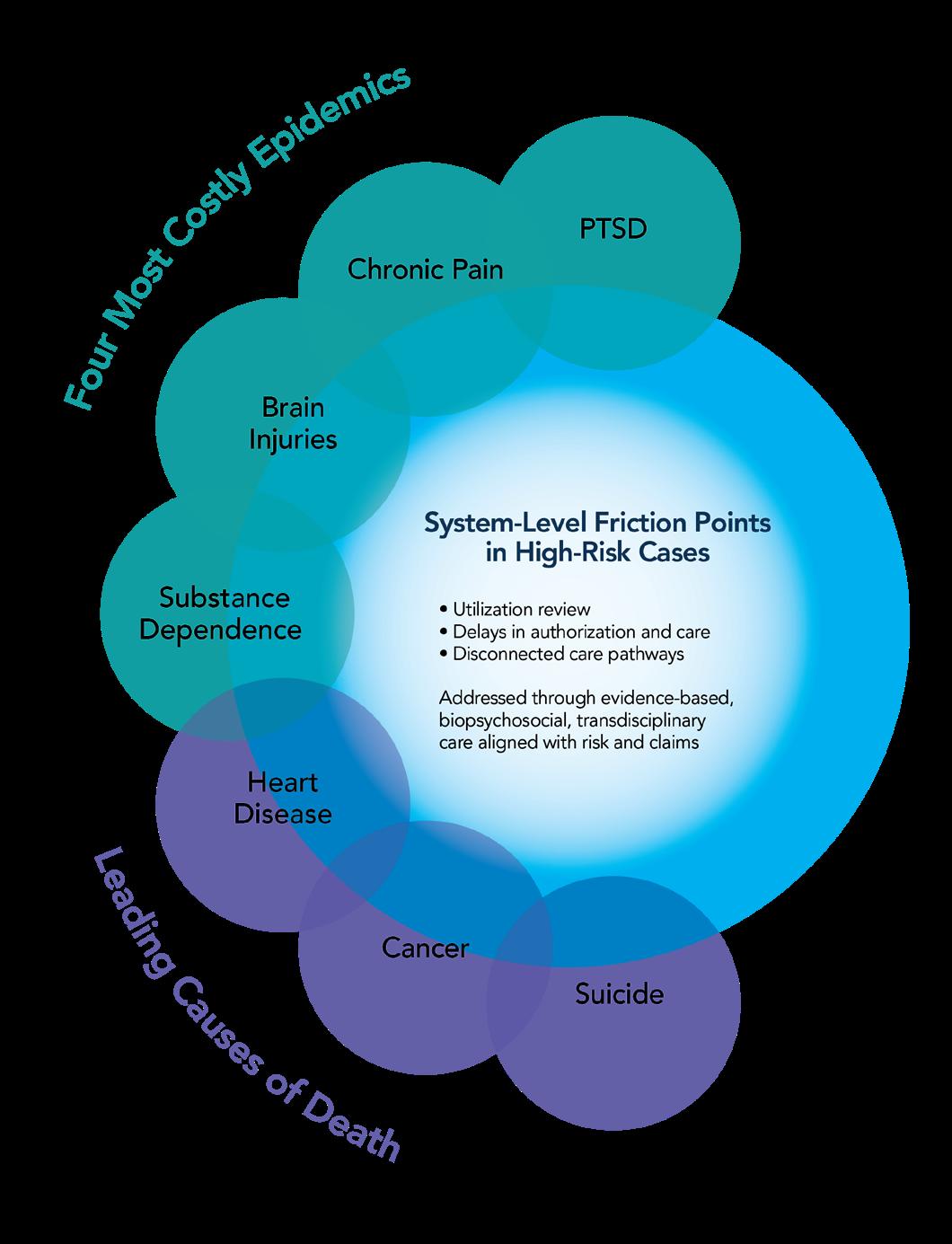
Public safety professionals across the country are living within a workers’ compensation system that was never designed to address the realities of their work. The System-Level Friction Points in High-Risk Cases, chronic pain, brain injury, trauma, substance use, suicide, cancer, and cardiovascular disease, are not abstract concepts. They represent a predictable pattern that emerges when complex occupational exposures are addressed through a narrowly biomedical care paradigm and administrative claims processes that are not aligned with the clinical realities of public safety work. This approach lacks the proven transdisciplinary healthcare architecture these conditions require.
These structural barriers do not simply increase costs; they drive the progression of acute injuries into chronic, life-altering, and in some cases life-threatening conditions. They prolong suffering and push far too many first responders toward preventable adverse outcomes, including long-term disability, career loss, family disruption, and premature mortality.
The critical insight is that these outcomes are not inevitable; they result from system design, and that design can be changed. We now have a proven blueprint. A Transdisciplinary Biopsychosocial Therapeutic Community (TBTC) model, paired with an Integrated Workforce Health Ecosystem framework, has demonstrated that the System-Level Friction Points facing first responders are not inevitable, are largely preventable, and are systematically reversible when risk management and healthcare are designed to function as one integrated system.
The City of San Diego Proved This
When fire, police, and risk management aligned around evidence-based care within a Transdisciplinary Biopsychosocial Therapeutic Community (TBTC) model, return-to-work accelerated, disability decreased, and costs declined. These results did not come from working harder, but from redesigning the system to work for public safety professionals. They represent measurable Proof of Value when risk management and healthcare function as one coordinated system.
Every Jurisdiction in the Country Can Adopt These Principles
The roadmap is clear. The results are reproducible. When care delivery and risk management are aligned, outcomes become systemic, predictable, and reversible through coordinated, evidence-based reform.
The Health and Safety Leadership Alliance exists to help agencies, risk managers, and clinical partners build these systems together, ensuring that no first responder faces unnecessary barriers to care, recovery, or return to service.
We have reached a structural inflection point, one that calls for deliberate, coordinated action across employers, providers, risk managers, and policymakers to match the complexity and courage of the workforce it serves.
The Call to Action at the end of this brochure outlines the concrete steps required to move from intent to implementation.
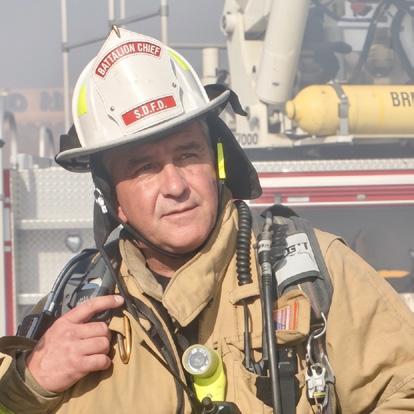
David Picone CEO, Health & Safety Leadership Alliance Battalion Chief / Paramedic, SDFD (Ret.)
For decades, the workers’ compensation system was built for isolated injuries and linear recovery - not for complex, overlapping conditions driven by high-risk work, operational stress, and repeated exposure to trauma.
In practice, most first responders encounter a system defined not by clinical urgency, but by administrative friction. Authorizations stall at critical moments. Providers with the appropriate expertise decline participation. Care arrives in pieces - physical health on one track, behavioral health on another, claims management on a third.
Most first responders never reach the specialty care that can reverse complex PTSD, brain injury, polytrauma, or chronic pain, even when the law guarantees medically necessary care.
The consequences are measurable across the country:
• Contributing to the four most costly epidemics: Chronic Pain, Brain Injury, PTSD, Substance Dependence, and the three leading causes of death for first responders Heart Disease, Cancer and Suicide
• Rehabilitation takes longer, not because injuries are more severe, but because access and coordination break down early.
• Modified duty becomes indefinite, increasing overtime and backfill costs for municipalities.
• Specialty care is inconsistently approved, causing treatable conditions to worsen.
• Workforce readiness declines, particularly in departments already strained by staffing and recruitment challenges.
• Clinicians leave the system, reducing access to evidencebased care precisely when demand is rising.
Within the workers’ compensation system, both employers and first responders absorb the consequences of delayed, fragmented, and misaligned care; employers through escalating financial and operational exposure, and first responders through prolonged suffering, functional decline, and, in some cases, permanent or life-altering harm. Across jurisdictions, agencies incur avoidable costs in overtime, disability exposure, workforce attrition, and lost institutional experience, driven not by medical care itself but by systemic failures to authorize, coordinate, and deliver evidence-based care. While proven solutions exist, what remains lacking is the aligned clinical, administrative, and governance architecture required to deploy them at scale.
This is where stakeholder alignment becomes mission-critical. Reform is possible, but adoption requires training, clinical capacity, informed risk management, and support systems that do not currently exist at scale. To improve outcomes, we must change the underlying system – and that takes transparency, alignment, and leadership.
Care arrives too late.
Delays, denials, and fragmented authorizations turn treatable injuries into chronic conditions that take firefighters and police officers off the line for months or years.
Specialists are leaving the system.
The administrative burden and inconsistent reimbursement drive critical specialists out of workers’ compensation, shrinking access where demand is highest.
Cities absorb the financial fallout.
Extended modified duty, overtime backfill, and prolonged claims cost public employers millions of dollars, not because care is unnecessary, but because medically necessary, appropriately tiered care is delayed or never provided. 3 2 1
55% of requests for authorization are delayed or denied, leading to an increase in chronic conditions, delayed recovery, disability, and increased costs.”
California Police Chiefs Association (CPCA, 2022)
When systems are slow, fragmented, or misaligned, first responders pay the price firstand communities pay it longer. Delaying care doesn’t reduce cost; it transfers it.”
Robert Logan
| Fire Chief, San Diego
Fire-Rescue Department
What has been missing is a common understanding of care architecture. Physical injury, psychological stress, social disruption, and operational impact frequently interact, and when care is fragmented or mismatched to injury complexity, disability is prolonged, and cost escalates.
Correcting these failures requires matching injury complexity to the appropriate care architecture across 6 verified tiers. When leadership, clinicians, and claims professionals operate within a shared, evidence-based framework, alignment improves access to care, accelerates recovery, restores trust, and reduces long-term system cost. Each tier reflects a distinct, verifiable treatment architecture, defined by how care is structured, coordinated, staffed, and governed, not by program names or self-described labels.
Put simply: tiers of care are not interchangeable. Each tier has specific strengths and limitations. Using the wrong tier, either undertreating or mis-treating complexity, produces predictable failure. This introduces a critical evolution in practice: verified tiers of care. Verified tiers of care represent an essential framework for workers’ compensation.
Verified Tiers of Care
Tier 1 – Unimodal Care
Single-discipline treatment is appropriate for simple, linear injuries. Efficient, but insufficient for interacting conditions.
Tier 2 – Multimodal Care
One clinician applying multiple tools. Effective for moderate complexity, it is limited when biological, psychological, and social systems interact.
Tier 3 – Multidisciplinary Care
Multiple specialists are treating in parallel. Coordination is limited, and the patient becomes the integrator, increasing the risk of fragmentation.
Tiers of care define capacity, not prestige. When injury complexity is matched to the correct care architecture, fragmentation decreases, recovery stabilizes, returnto-work rates improve, and lifetime claim costs decline. Alignment across agencies, clinicians, and risk management is the mechanism that produces durable outcomes and system integrity.
Tier 4 – Interdisciplinary Care
Shared goals, coordinated planning, and structured functional restoration. Effective for many complex injuries.
Tier 5 – Transdisciplinary Care
Cross-trained teams operating with shared cognition and real-time co-treatment can address interacting mechanisms simultaneously.
Tier 6 – Transdisciplinary Biopsychosocial Therapeutic Community
An immersive care environment where clinical structure, peer modeling, and continuous governance directly influence recovery, reintegration, and long-term function.
• Integrated care improves outcomes more than siloed treatment
• Proper staffing and provider competency are essential
• Financial incentives must support, evidence-based practices
• System alignment reduces cost, complexity, and disability
• The Alliance helps agencies adopt this model through structured training, system development, and ongoing support
The City of San Diego demonstrated that replacing fragmented treatment with tier-appropriate transdisciplinary care reduced disability duration, restored operational readiness, and lowered long-term claim costs.
Through this collaboration, injured firefighters and police personnel were triaged quickly and directed – when clinically appropriate - into specialized programs designed to treat complex trauma, chronic pain, brain injury, and related conditions simultaneously. The approach eliminated gaps between physical and behavioral health, eliminated unnecessary delays, and ensured that every participant received appropriate care at the right time.
These outcomes, achieved across multiple years and hundreds of cases, show that system alignment is not theoretical - it is repeatable, measurable, and scalable. When care is timely, coordinated, and delivered by trained clinicians, first responders recover faster, trust improves, and agencies regain essential staffing capacity.
The Alliance trains agencies, risk managers, and clinical partners to implement these proven practices, ensuring measurable improvement, reduced disability, and long-term system sustainability.
94% 5.5 of patients who completed the PTSD Intensive Outpatient Program returned to full duty.
100%
of all first responders received the necessary care, reached Maximum Medical Improvement (MMI), and were classified as Permanent and Stationary. Average time to full recovery and return to work. MONTHS
Timely, evidence-based care is not a luxury for first responders; it is the minimum standard.”
Darshan Patel, MD, Board Member, Health & Safety Leadership Alliance
San Diego’s partnership model shows that when risk management, fire and police leadership, and evidence-based clinical teams work together, outcomes change. Disability drops, recovery accelerates, and the overall cost of claims goes down.”
Joseph Sousa, Workers’ Compensation Program Manager, City of San Diego
Firefighters, Police Officers, Paramedics, EMTs, and dispatchers face exposure to trauma, physical risk, and operational stress. These cumulative pressures affect health, family stability, and longterm well-being.
National Consensus Standards require tier-appropriate intervention and coordinated, evidence-based care, yet frontline experience often includes:
• Inappropriate use of Utilization Review
• Fragmented care pathways
• Incentives that reward denial of appropriate care rather than recovery
The result is avoidable disability, higher costs, and frustration across all stakeholders. Closing this gap requires aligning clinical, operational, and risk teams around shared outcomes.
Building a culture of caring requires leadership, alignment, and commitment. The opportunity now is to modernize how we support those who serve by replacing adversarial processes with coordinated, evidence-based solutions that are measurable, repeatable, and scalable.
Glenn Lorenzo, Captain, Anaheim Police Department, Public Safety Peer Support Association (PSPSA) “
At the end of the day, we want the same things. First responders want to get back to work. Risk managers and agency leaders want better outcomes. Working in partnership is how we get there.”
Collaboration Framework
DEPARTMENT SENIOR LEADERSHIP
CITY CLAIMS ADMINISTRATOR/ HR/RISK MANAGER
PROVEN MEDICAL PROVIDERS
It is essential that all workers’ compensation stakeholders – employers, risk managers, clinical providers, and agency leaders – work together to create a coordinated, evidence-based system of care for our first responders. We must:
Embrace a collaborative approach to claims management that prioritizes recovery and reinforces trust.
2
Ensure providers are vetted and trained in this advanced model of care, with cultural competence in treating first responders.
3
Adopt treatment tiers proven to improve outcomes, reduce disability, and lower long-term costs.
4
Align all stakeholders - departments, clinicians, and risk managers - to deliver integrated care that addresses physical, psychological, social, and operational needs.
This is the moment to act together and modernize how we care for those who serve.
Through advocacy, training, and multi-sector collaboration, the Alliance accelerates adoption of modern, evidence-based systems that reduce disability, improve outcomes, and strengthen organizational resilience.