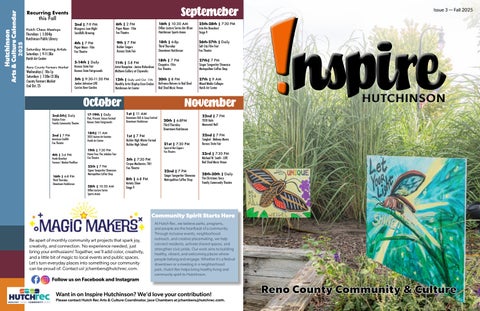
Be apart of monthly community art projects that spark joy, creativity, and connection. No experience needed, just bring your enthusiasm! Together, we’ll add color, creativity, and a little bit of magic to local events and public spaces. Let’s turn everyday places into something our community can be proud of. Contact us! jchambers@hutchrec.com.
Follow us on Facebook and Instagram
Community Spirit Starts Here
At Hutch Rec, we believe parks, programs, and people are the heartbeat of a community. Through inclusive events, neighborhood outreach, and creative placemaking, we help connect residents, activate shared spaces, and strengthen civic pride. Our work aims to building healthy, vibrant, and welcoming places where people belong and engage. Whether it’s a festival downtown or a meeting in a neighborhood park, Hutch Rec helps bring healthy living and community spirit to Hutchinson.
Rooted In Abundance
by Kelli Snider Short
On The Cover
The Art Of Giving
by Loribeth Reynolds
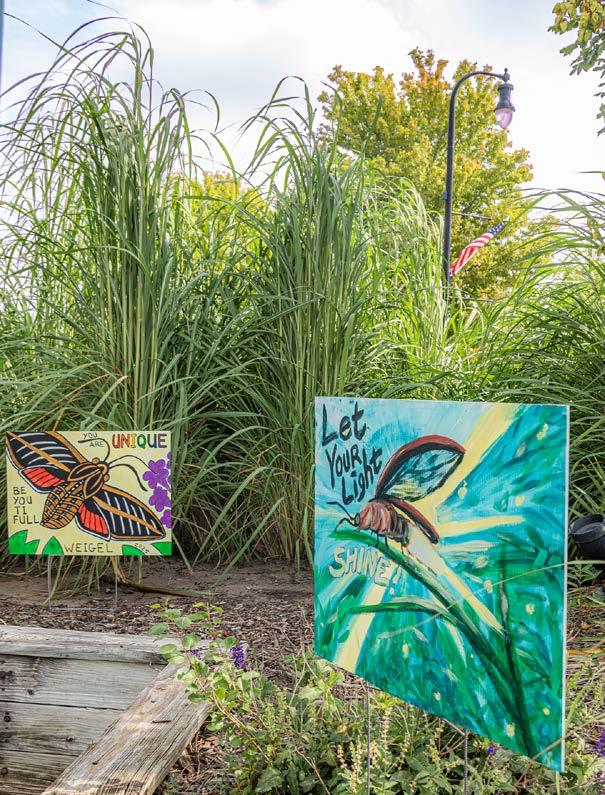
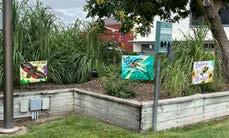
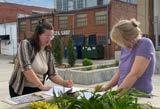
The Postivity Pollinators yard sign art demonstration is displayed in DCI Park during July’s Third Thursday. A grassroots group of creatives called the Magic Makers come together monthly to bring a bit of magic to local events and spaces in hopes of inspiring community pride.
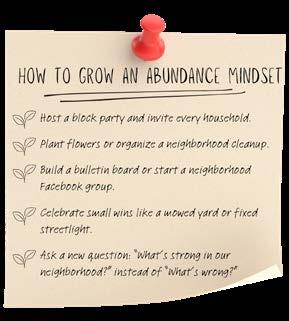
The Power of An Abundance Mindset
by Denice Gilliland
Rooted Abundance: in More Than Food At The Farmers Market
Story by: Kelli Snider Short Reno County Farmers Market
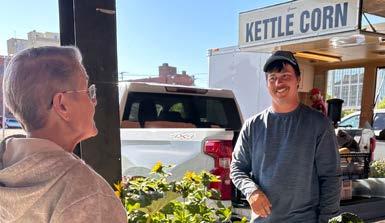
The Reno County Farmers Market has a pulse that can be felt throughout the community. It nourishes more than just the bodies of its residents. The connections created at the market make Hutchinson and Reno County fertile for the kind of growth that occurs when people come together on a Saturday morning, in a space where popcorn and fresh baked bread permeate the air, live music and the sound of friends, neighbors, and strangers talking and laughing together send a welcoming signal to “come on in,” and there is a palpable vibration of enterprise coming from the producers who truly love what they do.
The Reno County Farmers Market
was established in 1985 by a group of local farmers who were feeling the squeeze of the 1980s farm crisis.
Land prices had plummeted which brought an influx of corporate farms, saturating the market and causing
met with the Reno County Extension Horticulture Agent, and requested to start a farmers market. The not-forprofit organization was formed and articles of incorporation were signed on April 4th, 1985.
Now in its 40th year, the market is bigger and better than ever! So what does one get out of getting up early on a Saturday to go to the farmers market? First and foremost, there is the quality of the food. Sure, you can go to the grocery store and find something similar to the produce at the market.
But anyone who loves tomatoes, cucumbers, asparagus, lettuce, or garlic will tell you that the grocery store variety of these foods don’t hold a candle to the flavor, freshness, nutritional value, and shelf life of the produce you can get at the farmers market. And let’s talk about baked goods!
Photo provided by: Kelli Snider Short
commodity prices to tank. But local farmers were resourceful.
They began growing horticultural crops to sell to residents. Earl Polk, an orchard farmer, and Bruce Schulz, an Arlington area farmer,
Cakes, pies, fresh baked sourdough, cinnamon rolls, and all those surprise treats that the bakers were inspired to add to their lineup for that week. Sure, food is the lifeblood of any farmers market, but there is much more to discover. Handmade toys, carefully crafted
wood pieces, made from scratch soaps and body care products, holistic remedies, locally made pottery, small batch roasted coffee, and lots of little treasures that would be PERFECT for (fill in the blank with your special person). But that’s just the tip of the iceberg.
There are the gifts that you leave with and never paid for. The human brain is wired for connection, and the market is a great place to harvest those connections. Any given Saturday, you can walk up to Denise Gerhart of Grassrootz and get a “Free Hug.”
The info table located in the north east corner of the market pavilion provides community support in mental health services, housing, food, gardening, environmental issues, small business startup guidance, social equality, health, youth services, and so much more.
The Market Manager and Ambassador, Joey Short, provides service and support for SNAP recipients who can use their benefits at the market and receive up to $25 in free produce with the Double Up Food Buck program, and he always has a smile to share.
And finally, let’s not forget the educational opportunities through connection with the knowledgeable vendors, sponsors, and Info groups.
Sheila Corn is a founding member of the Reno County Farmers Market and a life-long learner and educator. She still attends the market, and after 40 years, she still loves teaching others about animals, agriculture, and self-reliance.
“I’ve been a substitute for 24 years but I have no teaching credentials, she said. “My BS is in Agronomy — however, I love to share what I’ve learned with people.”
“Do you need a recipe for eggplant? Need to know how long eggs will last in the fridge? What’s killing your cucumbers? There is someone that can answer these questions at the farmers market.”
“Our info table features Master Gardeners, community groups, recipes from Reno County Extension, the health department. Our vendors offer much practical advice on the growing and serving of their products. And we will greet you by name.”
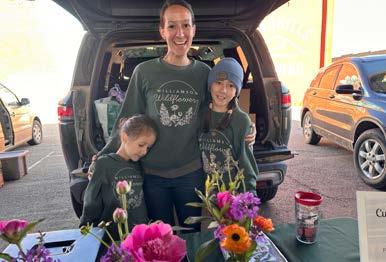
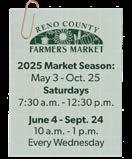
Left: Vendors and patrons of the Reno County Farmers Market come together on Wednesday and Saturday mornings from May through October to share a unique experience in Reno County culture with food, education, and resources.
Photo provided by: Kelli Snider Short
Photo provided by: Kelli Snider Short
THE ART OF
Magic Makers & the Creative Abundance Movement
Giving
On an unassuming Thursday afternoon, a group of volunteers known as the Magic Makers gather in the heart of Downtown Hutchinson, armed not with capes or wands, but with any number of paintbrushes, extension cords, garden gloves and a mission to put the art of abundance on display during Third Thursday.
Magic Makers, a grassroots volunteer group launched under Hutch Rec’s Community Initiatives Division, is redefining how our community contributes, not through charity alone, but by tapping into a deeper sense of abundance.
Whether it’s demonstrating community art in an empty park or repurposing a refrigerator box into a large photo op, their work
transforms the ordinary into spaces of connection, creativity, and curiosity.
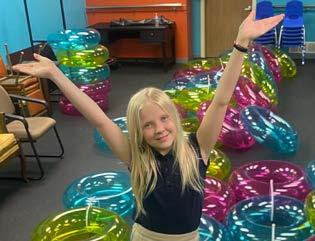
Bobbie Monkel, age 11, has been part of the Magic Makers since their very first project in May 2025, always showing up with a contagious smile. For her, contributing through creativity is both fun and purposeful.
“I like being able to create stuff and share it with the community,” she said. “I also like helping our community because it makes people happy and lifts their spirits. That’s why I do it.”
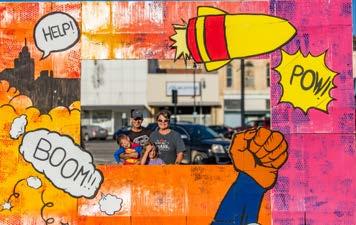
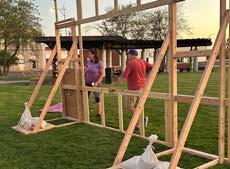
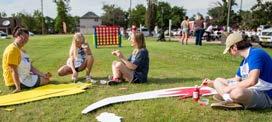
One of the standout projects that debuted during Third Thursday’s Smallville Festival Kick-Off in June was the Pow Pic Frame; a largerthan-life comic-art-inspired photo frame designed by local artist Jace
Chambers and built by a crew of Magic Makers. Constructed from lightweight wood and painted in bold, pop-art colors, the interactive frame allowed families to step into their own superhero moment. It wasn’t just a photo op, it was a spark of joy, wonder, and community pride.
Kensley Harper, who had entered her two children in the Smallville Kids Costume Contest, saw it as the perfect finishing touch.
“This is a super spot to take a family photo especially since the kids are already dressed in their costumes,” she said. “It’s so big, bright, and beautiful.”
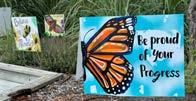
Another hit came in the form of the Positivity Pollinators Yard Signs, displayed in DCI Park during Third
Thursday’s Arts & Eats in July.
These hand-painted signs featured uplifting messages tied to Kansas pollinators. While subtly educating the public about the vital role of bees, butterflies, and birds, the project spreads a second, equally important message: that small acts of art and kindness can create a ripple of positivity.
The vision behind Magic Makers began with a simple question: What if contributing community art could be a form of community service? That question sparked a conversation among a few key staff at Hutch Rec and soon after, the Magic Makers were born.
Denice Gilliland, Community Initiatives Director at Hutch Rec, helped launch the group alongside Arts & Culture Coordinator Jace Chambers and Marketing Manager Loribeth Reynolds.
“We recognized the need for a creative volunteer group to help us inspire community pride,” Gilliland said. “Magic Makers came out of brainstorming with Jace and Loribeth, where we identified projects that allowed our community to creatively contribute to Third
Thursday, one of our most successful community events.”
The success of the Magic Makers underscores a larger truth: when creativity shows up in public spaces, it shifts how people experience their community. For Jace Chambers, Hutch Rec’s Arts and Culture Coordinator, that’s exactly the point.
“Art in public spaces has the power to spark curiosity, create conversation, and make people feel like they belong. It turns everyday places into shared experiences, and that’s what helps strengthen community.”
Rooted in the idea that everyone has something to give, be it time, talent, or tools, the Magic Makers are a direct answer to scarcity thinking. Instead of asking “What do we lack?” the group starts with “What do we have on-hand right now?” That philosophy has fueled everything from the creation of the Project Park Canvas Cube to repurposing promotional yard signs to share positivity and art.
The concept of “abundance as a contribution” lies at the heart of their ethos. Magic Makers believe
abundance isn’t measured in wealth, but in moments of showing up, sharing skills, and creating beauty in unexpected places. As the impact of the Magic Makers continues to grow, so does the vision for what’s possible. Gilliland sees this as just the beginning.
“I foresee the Magic Makers growing. We already have a great group of people who are excited to contribute, create, and connect,” she said. “They also continue to show up, and invite their friends.”
As cities across the country reckon with how to rebuild trust, inspire civic pride, and amplify community voices, this Hutchinson, Kansas-born movement offers a model grounded in simple, radical generosity.
The Magic Makers’ contributions are proof that public art doesn’t need to be permanent or expensive to be meaningful. It just needs to show up, just like they do, month after month, with open hearts and big imaginations.
Because sometimes, the most magical thing you can do is show up, again and again, with the belief that what we need is already here.
Story by: Loribeth Reynolds Marketing Manager, Hutch Rec
Photo by: Loribeth Reynolds
Photo by: Denice Gillialand
Photo by: Denice Gillialand
Above & Right: The Pow Pic Frame and Postivity Pollinators projects are displayed in DCI Park during June and July Third Thursday. These projects, designed by Magic Makers, encourage creative community contributions.
Left: The Magic Makers work on their monthly projects. From planning to prepping to painting — they volunteer their time to create projects that inspire community pride.
Photo by: Loribeth Reynolds
Photo by: Jeff Johnson
Photo by: Kensley Harper
THE P wer of An Abundance Mindset
Story by: Denice Gilliland Director of Community Initiatives, Hutch Rec
In too many neighborhoods, it’s a familiar feeling: the roads are cracked, the houses are aging, the parks are overgrown, and the promises of help—if they came at all— faded long ago. These are the places where disinvestment echoes in every boarded-up window and neglected sidewalk. The places off the radar of ribbon-cuttings and headlines.
And yet—something remarkable happens when residents stop waiting to be rescued and start believing they already have what they need.
That shift is called an abundance mindset. It’s not about ignoring hardship or pretending the issues don’t exist. It’s about choosing to see what is still possible, even in the face of inequities. It’s the belief that people—not programs—are our greatest resource. And when we recognize that, we stop asking for permission and start creating change from the inside out.
In neighborhoods that have been overlooked, scarcity thinking often sets the tone. And it’s no wonder.
After years—sometimes decades—of being left out of city plans, passed
over for investment, or blamed for their own decline, exhaustion sets in. Apathy creeps in. Hope gets quieter. When you’ve been told you’re less than for so long, it’s easy to believe it.
But something powerful happens when residents flip the script.
The abundance mindset says: We already have enough to start. We have neighbors with wisdom. Children with dreams. Porches for gathering, stories worth sharing, and a deep sense of place. When we focus on what we have— rather than what we lack—we open the door to possibility.
Take the Farmington neighborhood, for example.
Long before their park was officially renovated in 2022, residents were already showing up. They didn’t wait for a city truck or a formal committee. They trimmed trees, edged sidewalks, and repainted the gazebo. When graffiti appeared, they removed it. When things broke, they patched them. And all the while, they kept advocating for more—resources, attention, recognition. Not from a place of helplessness, but from ownership. That kind of care doesn’t come from obligation—it comes from pride. The kind of pride that says, “This is ours. And it matters.”
That’s what abundance looks like. It’s not just optimism—it’s action. The everyday decision to care for a place, even when others have stopped. To believe in a future for your block when no one else is talking about it.
Abundance isn’t a budget line. It’s a perspective.
Maybe your neighborhood doesn’t have a state-of-theart community center—but someone’s backyard becomes the gathering space.
Maybe the city hasn’t fixed the park—so neighbors bring tools and paintbrushes and do it themselves.
Maybe no one else believes in your block, but you do. And that belief is contagious.
It’s not about pretending we don’t need outside support—of course we do. Public investment, strong partnerships, and policy change are vital. But the abundance mindset doesn’t wait for those things. It moves forward anyway.
This mindset says: we don’t build strong neighborhoods through programs alone—we build them through relationships. When we know each other, we can mobilize. When we see each other, we can heal. When
A group of teens from Hutchinson High School lend a hand to help repaint the gazebo in Farmington Park during Salthawk Day of Service. Resident Sherrie Neufeldt, and others helped organize and supervise the group. Residents of the neighborhood take much pride in their park to keep it beautiful and useful for everyone in Reno County.
Photo by: Loribeth Reynolds
Photo by: Nick Hemphill
Photo by: Loribeth Reynolds
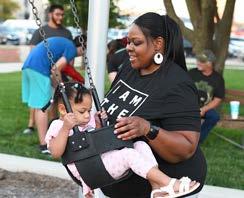
A mom pushes her daughter on the swingset at SW Bricktown Park. The park is a popular place for local families to gather and be active in their neighborhood.
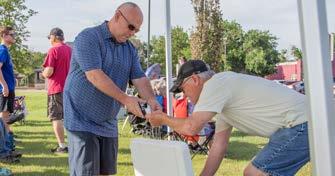
Grace Arbor resident, Larry Fast hands an ice cream sandwich to a fellow neighbor during a Grace Arbor gathering in June 2025. Residents gathered in a shared open field to enjoy ice cream and a free performance by the Hutchinson Municpal band. Residents hope to create a neighborhood park where the open field stands in the near future.