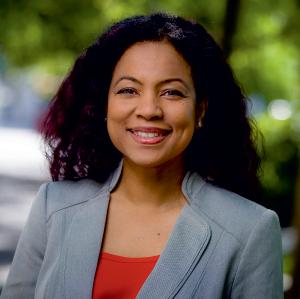
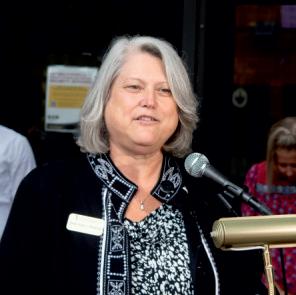
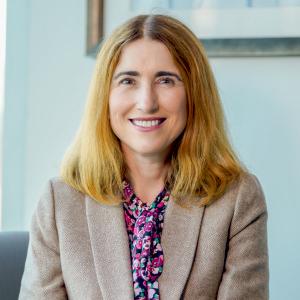
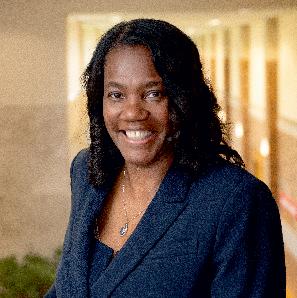
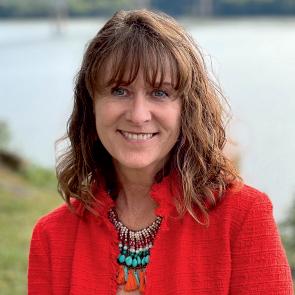
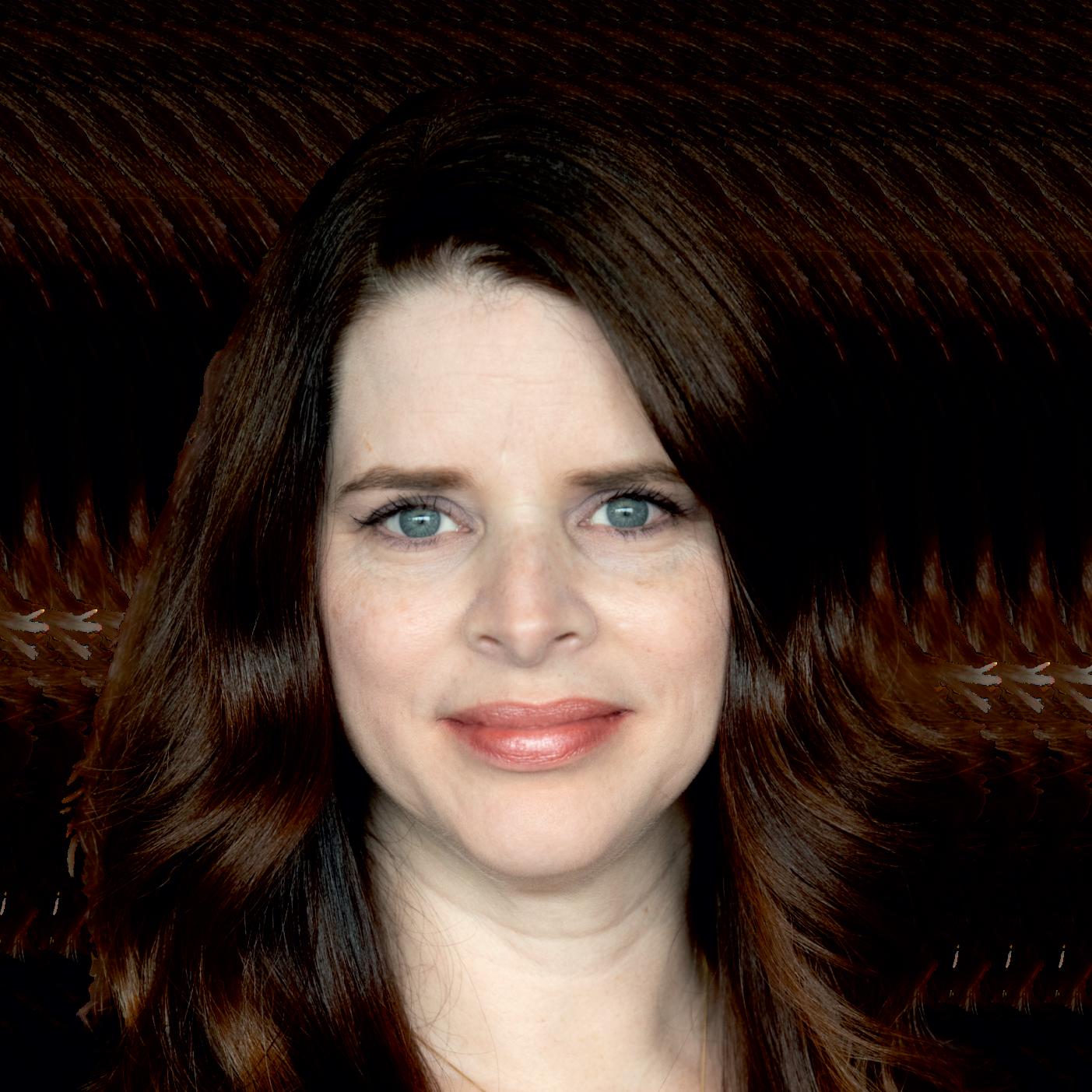
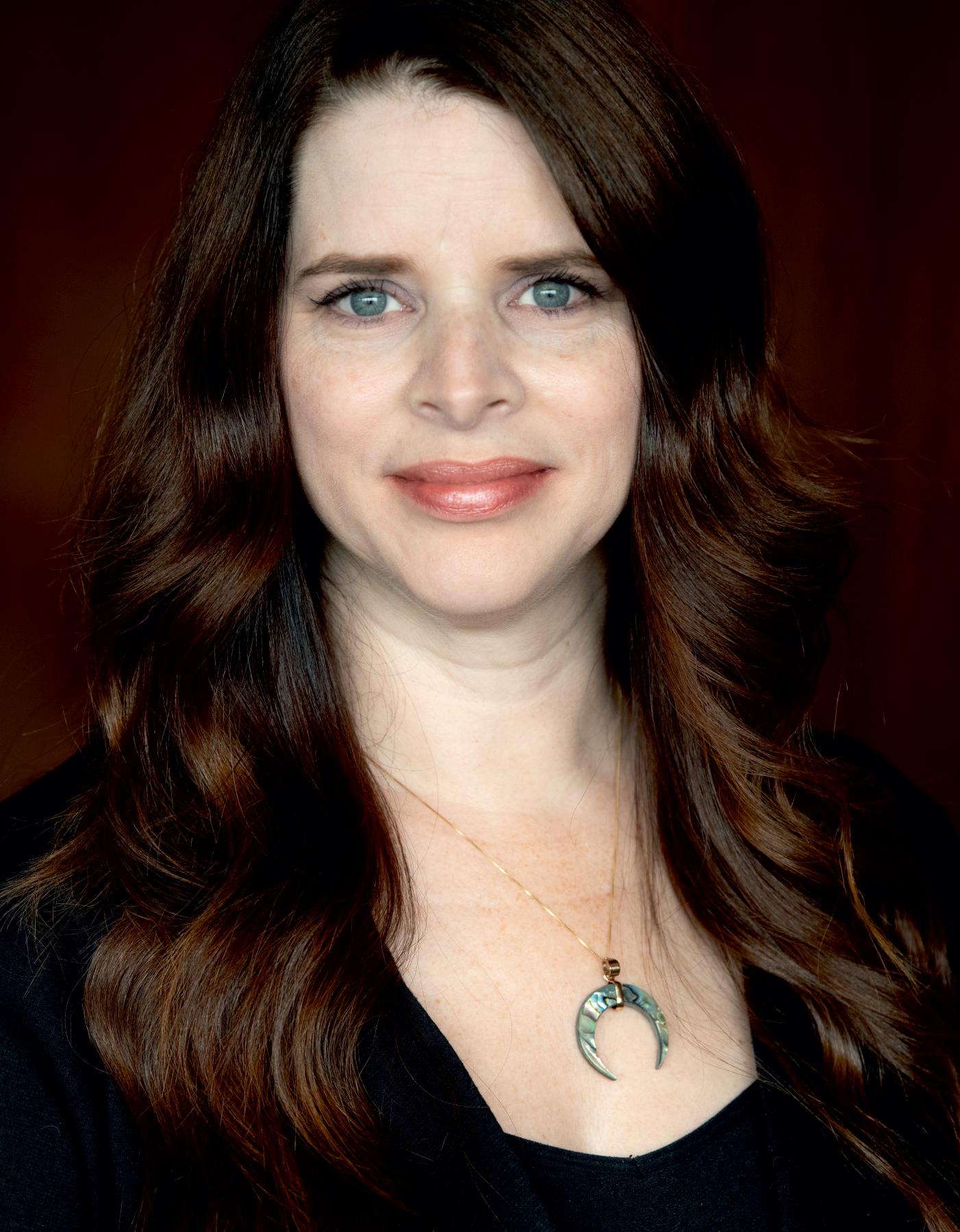
I consider it invaluable that everyone on our team is very dierent because it allows us to leverage our strengths in complementary ways
DefyingExpectations
“Growing up in a small town in Oklahoma, I was exposed to regular messages about the ‘right’role for women,”Alana reflects.“I was praised pretty early on for being a so-called ‘smart kid,’but I was also told by men and women alike that women don’t belong in leadership, that women can be smart and go to college but they don’t belong in decision-making roles.”
“Overcoming the impact of those voices is something I still reflect upon,”shecontinues,“because I regard the parts of myself that are intrinsically connected to my identity as a woman—and a mom—as strengths that add value to my abilities as a lawyer and as general counsel.”
Aftergraduation,Alana’slaw careerbeganatafirmwhereshe wastheonlywomanlitigatorin afirmwith35attorneys.Alana reflects,“Watching the
experienced litigators in the firm who were masters of Southern charm and legal oratory was, at first, intimidating. But I soon realized, ‘I was never going to ‘out men’these men. I was never going to be that outwardly confident and polished.’“
Shecontinues“Instead, I realized my strengths as a lawyer were found in being kind, nurturing, intuitive, diligent, and a bit goofy. I realized I didn’t have to sacrifice the nurturing parts of myself to be a great lawyer. I’ve learned that I perform best when I’m my authentic self, some of which is based on my being a woman and some of which is based on my being awkward and not a polished shiny attorney at all.”
Followingthat,theadventofCOVID-19unfolded.For employmentlawyerslikeAlana,thepandemicbroughton legalchallengesthatnoamountofpreparationcouldhave predicted.Sheexpresses,“At its core, employment law is about relationships and the pandemic created the necessity and opportunity to quickly and regularly adjust what those relationships look like.”
Inadditiontoherstrategicleadershiprole,Alanaoverseesa teamoftenstaffmembersatUMB.Drawingfromherearly careerexperiences,sheprioritizesnurturingtheunique strengthsofeachteammember.Sheemphasizes“I recognize that everyone’s best self is different. In fact, I consider it invaluable that everyone on our team is very different because it allows us to leverage our strengths in complementary ways. We have diversity of perspective, experience and personality.”
Whenaskedforadvicetogiveotherwomenonovercoming impostersyndrome,Alanashares,“I don’t know if I will ever fully overcome feeling like an imposter in a profession that has traditionally valued and celebrated traits that don’t feel authentic to me.”Sheadds,“But I manage those feelings by taking the time to acknowledge, for myself, the intrinsic value of things I have done even if they’re things nobody knows about or understands how complicated they were.”
Alanafindssolaceinrecognizingheraccomplishments, eveniftheygounnoticedbyothers.“I will go back and review a memo I wrote, or advice I gave, or reflect on how I navigated a particularly sticky legal situation in a way that stayed true to myself as well as our core values and then say—wow, that was really clever.”Shefindsconfidencethat comesfrominternalvalidationisthemosteffectivecounter toanyfeelingsofinsecurityorself-doubt.
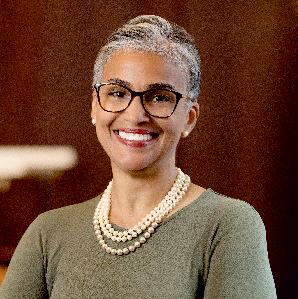
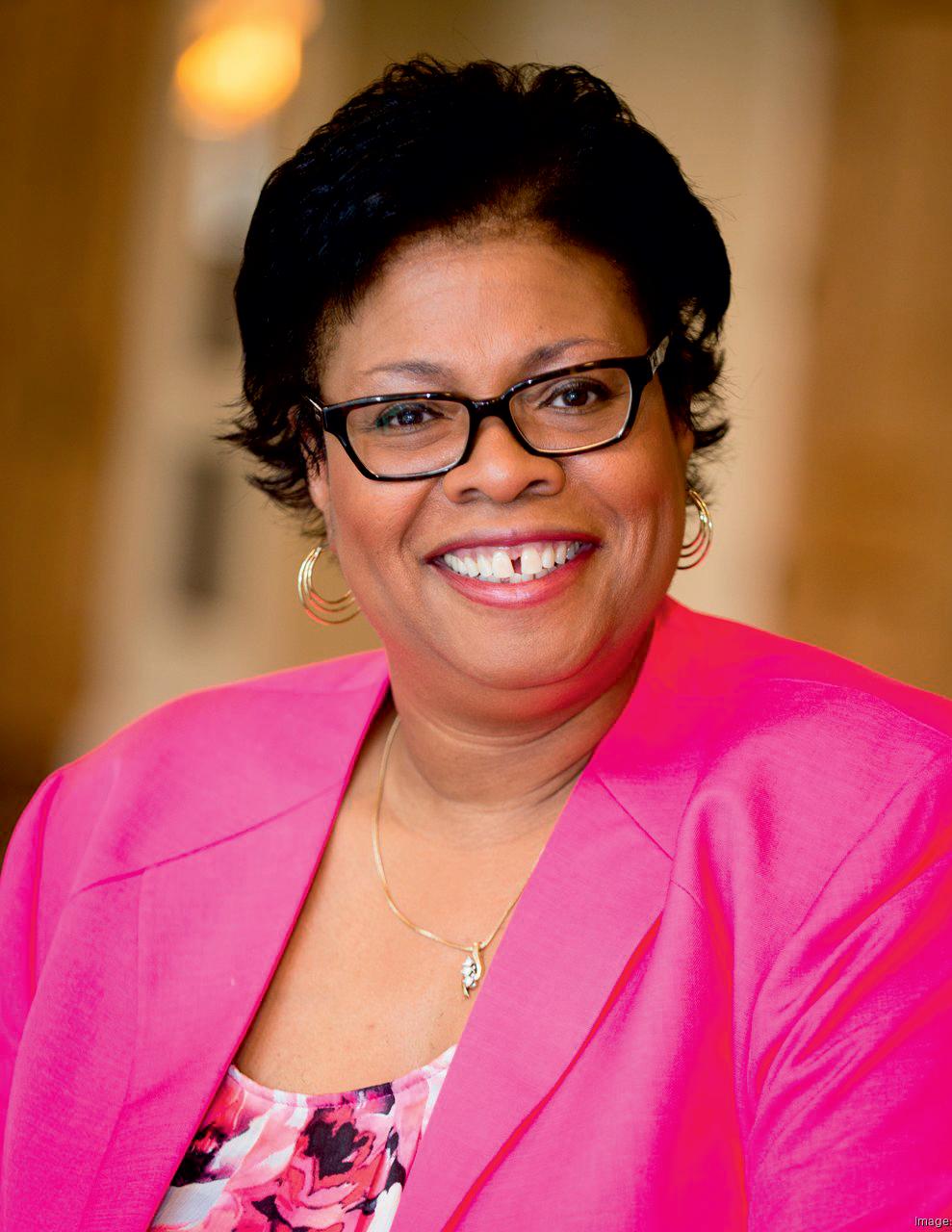
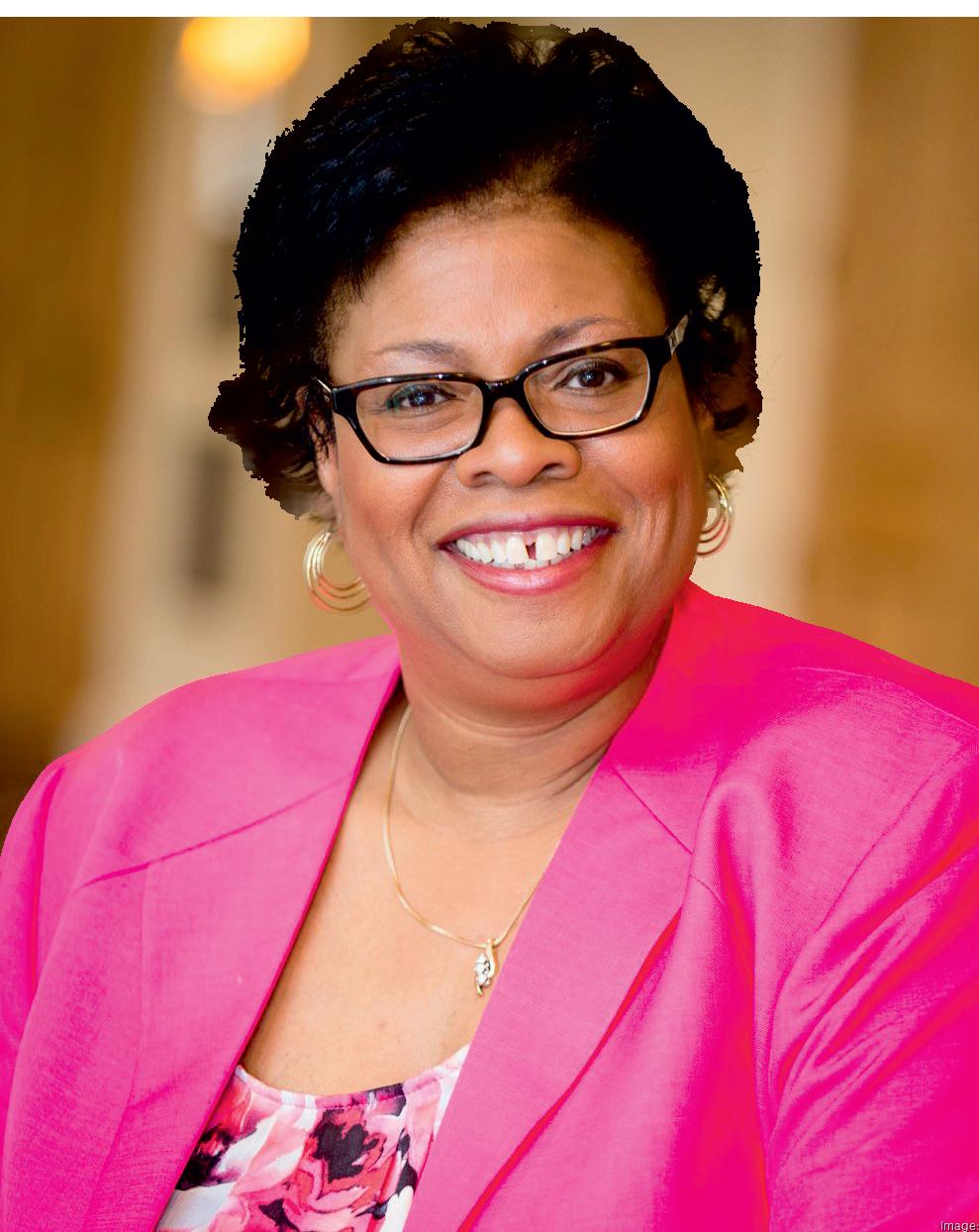
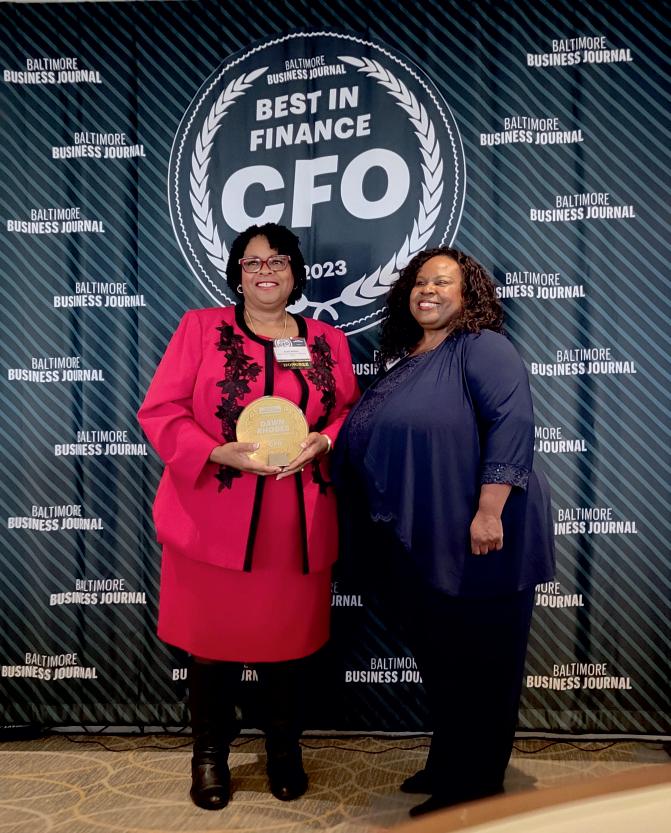
Dr. Dawn M. Rhodes Chief Business & Finance
Ocer
and Senior Vice President of Administration and Finance (A&F)
SeizingOpportunities
Dr.Rhodesdefinesherleadershipstyleasablendofhybrid transformationalandservantleadership.Shebelievesin engagingwithherteam,turningfollowersintoleadersand providinganethicalframeworkfordecision-making.Asshe putsit,“Leadership is about investing in people and providing them with the vision and tools to accomplish their goals. To me, transformational and servant leader are in the same ballpark.”
Despitehermethodicalapproachtowork,Dr.Rhodes' journeyintohighereducationwasserendipitous,itwas sparkedbyacasualconversationatherchurch.“Somebody at my church said there was a budget manager position at the University of Toledo,”shereminisces.Initially,Dr. Rhodeshesitated,asherbrotherhadexpressedinterestin therole.However,hermother'ssageadvicenudgedher towardsseizingtheopportunity.“My mother told me if you really have interest, you should apply.”
Uponcloserexaminationofthejobdescription,Dr.Rhodes foundherselfintrigued.Theprospectofpioneeringanew positionheldsignificantappeal.“The job description seemed interesting, and because it was an inaugural position, it would give me a lot of room to develop the position.”Withablendofcuriosityanddetermination,she decidedtothrowherhatintothering.“So, I applied, got the job and the rest was history.”
In2016,Dr.RhodessteppedintoUMB,theshemanageda positionwithdiverseresponsibilities.Inherownwords, “The position leads the operational backbone of the university. I’m dealing with all the finances and business of the organization. There’s also the human resources aspect of the job, the facilities components, the police and emergency management components, the real estate and space planning components and international operations. It's everything that’s critical to the day-to-day business of the university.”
BuildingCommunities
Dr.Rhodes’positionoffersvarietywhichissomethingshe loves.Sheshares,“I love the diversity of issues that can come across my desk because administration and finance kind of touch it all.”
higher education does much better with women leadership than some other industries might,”sheaffirms.“I make sure that female colleagues know it's important for their voice to be heard and that they take a seat at the table. I've had to say this to a number of women at UMB that you belong at the table.”
Dr.ForbesBerthoudleadstheinstitution'sstrategyand implementationinthesecrucialareas.Forher,thisroleis deeplypersonalandmeaningful.Sheemphasizes,"I am privileged as a leader, Black woman and woman of color to be UMB’s inaugural chief equity, diversity and inclusion officer and vice president and to lead the justice, equity, diversity, and inclusion strategy along with implementation of this premier institution.”
Seek out anity spaces that are supportive, enhance your success and help to provide you with resources and tools as you grow in your role and through your role.” “
HerinterestinEDIdatesbacktothemid-1990swhenthe fieldwasinitsearlystages.Reflectingonherjourney,Dr. ForbesBerthoudremarks,"At the time, it was still in the nascent stage of development. It was not called diversity, equity and inclusion rather included things like sensitivity training and cultural diversity courses had different terminology."Thisearlyengagementlaidthefoundationfor herimpactfulworkinadvancingEDIprinciplesand practices.
ReframingDiversity
Sheservedasleadconsultantinacountywideinitiativethat wascalleddiversitymanagementandorganizational effectivenessfortheMontgomeryCounty(Md.) government.Shesays,“Diversity was something to manage. It was almost as if it was a problem or a conundrum to solve and to work through organizations.”
ThatisnotwhatEDImeanstoday.Dr.ForbesBerthoud expresses,“We are smarter and better when we have more diverse teams. Also, when people are included, they feel like they belong.”Sheadds,“When people feel like they belong, they are more engaged, productive, satisfied in their work, and more likely to interact more positively. This gives more positive outcomes for the organization.”
DuringhertenureatUCSD,theinstitutionachievednotable recognition,rankingsecondamonghighereducation institutionsinForbesmagazine'slistofbestemployersfor diversity.Now,atUMB,hereffortscontinuetoyield results. Forbes has recognized UMB as one of the best employers for diversity for two consecutive years (2022 and 2023).Dr.Berthoud'simpactisfurtheracknowledged byCIOViews,namingherasoneoftheir"Most Inspiring DEI Leaders to Follow in 2023.”
PathwaystoSuccess
ForDr.ForbesBerthoud,successasaleadermeansshehas beenabletoincreaseandimproveaccesstoopportunities forallpeopleregardlessoftheirbackground,heritageand identityandhelpedthemthriveandexcel.“If we look at our institution over time and we see that people who have traditionally been marginalized are now in positions of leadership or have increased in scale or capacity in a particular discipline or area, that for me is a success.For her,“Success is movement from one point to another, an increase or expansion of a set of resources over commitment we had.”
Notably,sheisacontributortothe2019HarvardUniversity Pressbook,‘Race, Work, and Leadership: New Perspectives on the Black Experience,’whichfocuseson thesignificanceofraceinorganizationalandleadership contexts.Additionally,herworkhasbeenfeaturedin ‘Gender, Communication, and the Leadership Gap’(2017) and‘The Personal Is Political: Body Politics in a Trump World’(2020),amongothers.
Currently,Dr.ForbesBerthoudisworkingonaforthcoming booktobepublishedbySUNYPresstitled‘Race, Gender, and Leadership in the Public Imagination.’Thisbook examinesthemultifacetedlandscapeof2020,particularly focusingonthepolitical,organizationalandsocial
Whenaskedaboutadviceforwomenbeginningtheir leadershipjourney,Dr.ForbesBerthoudoffersencouraging words,"Believe in yourself. Know you are capable and with preparation, you will be successful
Sheshares,“Seek out affinity spaces that are supportive, enhance your success and help to provide you with resources and tools as you grow in your role and through your role."Herinsightaccentuatestheimportanceofselfconfidence,preparationandseekingsupportive environmentstothriveinleadershiproles.
Emily Hurst Dean of the Health Sciences and Human Services Library
THurst
Elevating Health Information Services And Empowering Communities
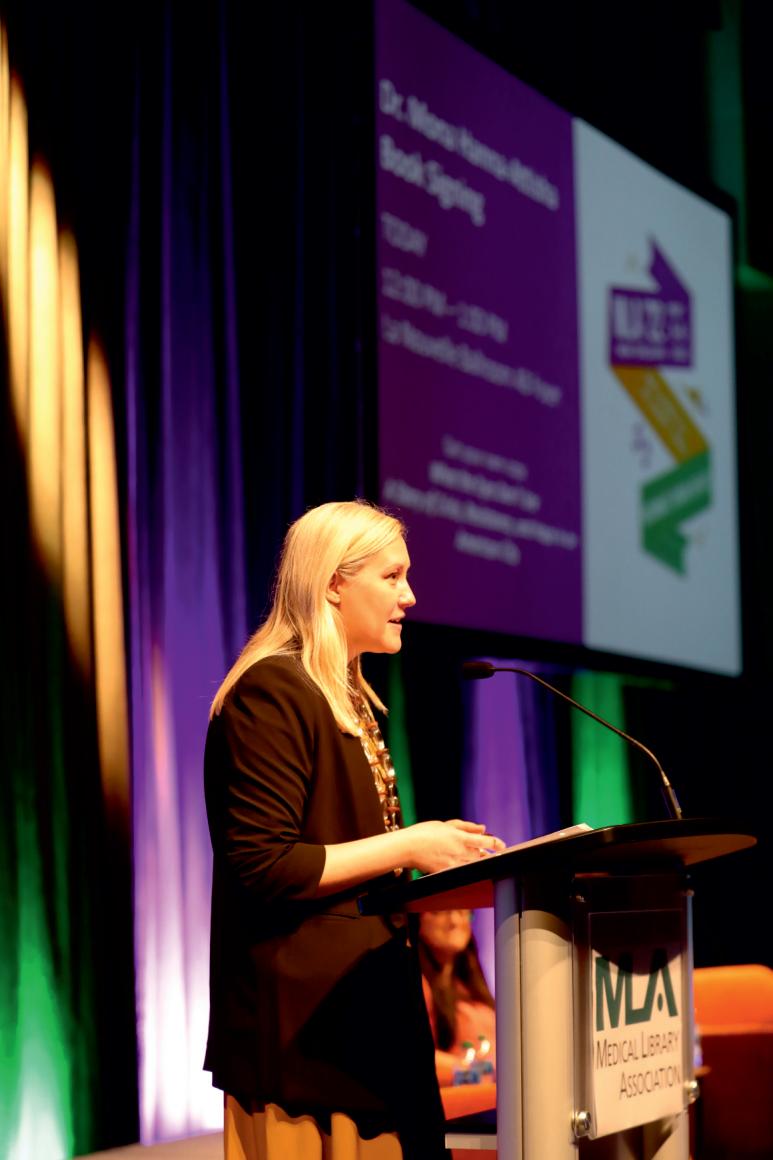
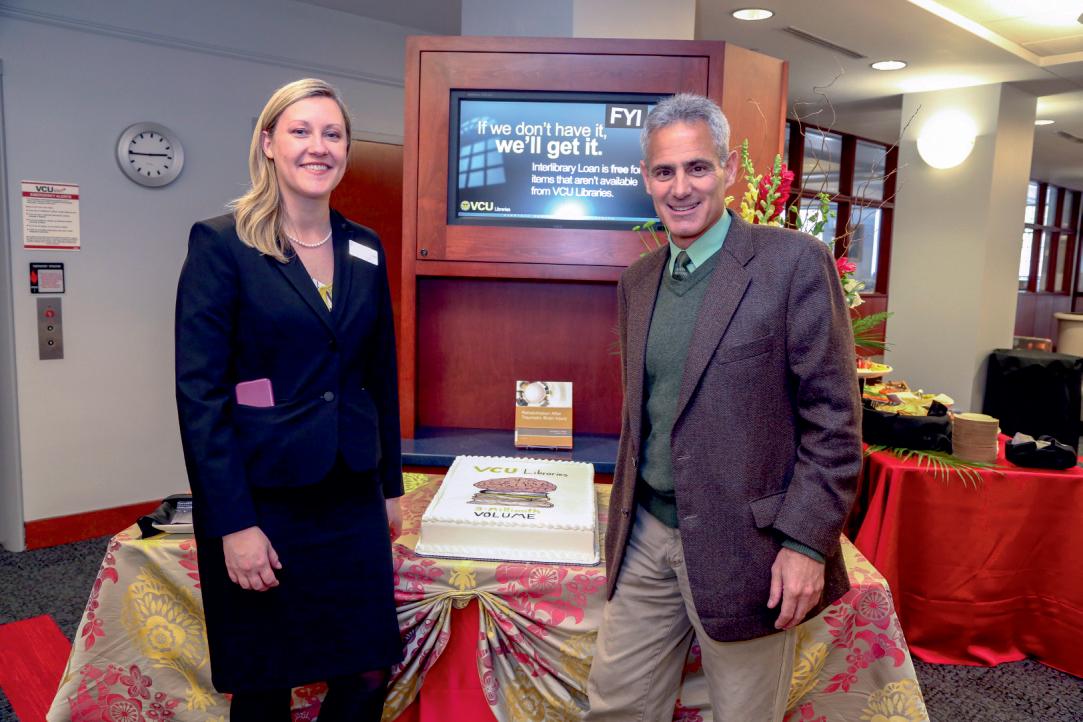
Recently, Hurst Co-authored a book chapter focusing on the collaborative role of medical libraries in partnering with local public libraries to provide essential health information to consumers
NavigatingGenderDynamics
Hursthighlights,‘Despite the prevalent representation of women in the library profession, gender issues persist Traditionally,librarymanagementhasbeendominatedby men,atrendthatHurstacknowledges.
Excitedly,HurstacknowledgesUMB’sdesignationas the Region #1 Hub fortheNetworkoftheNational LibraryofMedicineNetwork.Thispivotalroleallows UMB'sHealthSciencesandHumanServicesLibrary toextenditsoutreacheffortstocommunitiesacross
I wanted to create a mechanism to spotlight UMB's rich history and celebrate the creative talents of our university community, while also underscoring the connections between arts, sciences and well-being.”
Jennifer B. Litchman Senior Vice President for External Relations
In2014,JenniferestablishedtheCouncilfortheArts& Culture—apivotalplatformaimedatenhancingcampuslife andenrichingtheWestBaltimorecommunity Throughthis initiative,JennifersoughttoleverageUMB’spublicspaces toshowcasethevisualandperformingarts,whilealso highlightingthesymbioticrelationshipbetweentheartsand sciences.Reflectingonhermotivation,Jennifer emphasizes,“I wanted to create a mechanism to spotlight UMB's rich history and celebrate the creative talents of our university community, while also underscoring the connections between arts, sciences and well-being.”
Jennifer’simpactextendspasttheconfinesofUMB,asshe hasplayedapivotalroleinfosteringcollaborationswith localtheaters,establishingpublicoutdoorartgalleriesand curatingaward-winningartandliteraryjournals.Through theseendeavors,Jenniferhasmaintainedapositiveculture andcreativityenrichingbothUMBandthebroader community
Whenofferingadvicetoaspiringwomenleaders,Jennifer sharesamessage,particularlyforthosewhomayfeel uncertainorlatetothegame,“For the late bloomers out there, don’t let the uncertainty of ‘I don’t know what I want to be when I grow up’hold you back. I never had a rigid plan. I entered graduate school at 31 and secured my first professional role at 33. Along the journey, I seized opportunities that ignited my passion and aligned with my purpose. I’ve continuously reinvented both myself and my career. Remember, we’re all works in progress and there’s always room for growth. I’m just getting started and so are you!” Whetheradvocatingforthearts,championingwomen’s issues,orsupportingthenextgenerationofleaders, Jennifer’simpactisfeltfarbeyondthe wallsofUMB.
West Baltimore.’Thiscompellingdocumentaryseriesspans fiveinstallmentscapturingthetransformativejourneysof fiveremarkableyouthsfromBaltimore’sWestSide. Filmedoveraspanofsevenyears,theseriescombinestheir experiencesfrom6thgradethroughhighschoolgraduation andintocollege,illuminatingtheirresilienceandsteadfast determinationasfirst-generationstudents.
JennifertakesprideinUMBrella’ssignificantimpact, stating,“Many participants in our coaching program have achieved salary increases, promotions, or secured entirely new positions.”Thisunderscoresthetangibleandpositive effectsonthelivesandcareersofwomenatUMB, highlightingtheircommitmenttoadvancementandsuccess.
identifyingunmetneedsandactivelyworkstoaddress them.ReflectingoninitiativeslikeUMBrellaandtheArts Council,Jenniferemphasizes,“Neither of those endeavors were outlined in my job description. There was no directive to create something for the university or its female population.”
Sheadds,“However, recognizing a gap, I took the initiative to fill it.”Sheunderscorestheimportanceofvision, resilienceanddedicationinestablishingandintegrating suchinitiativesintotheinstitutionalframework.
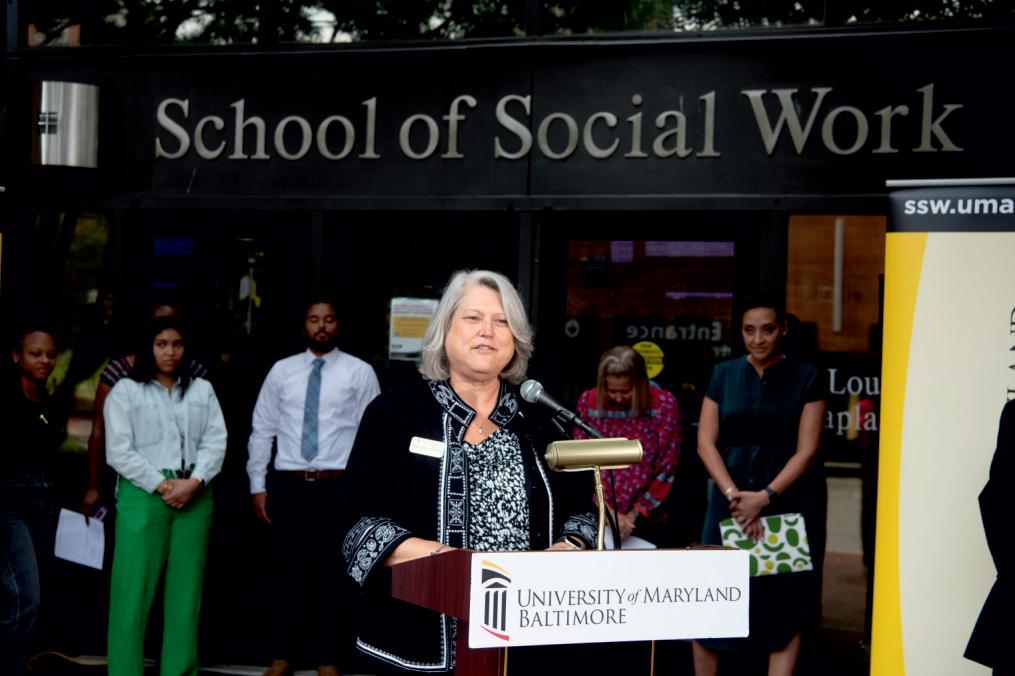
Asmentioned,PostmussteppedintoherroleonJuly1, 2020,amidstthechallengesposedbytheCOVID-19 pandemic.Reflectingonherinitialtenure,Postmus acknowledgesthedifficultiesencountered.Sherecallsthat thefirsttwoyearswerechallenging.Thefirstyearwas entirelyremoteandthesecondremainedpredominantlyso. Sheelaboratesontheuniqueobstaclesofleadingremotely duringaglobalcrisis,emphasizingtheimpactoffostering connectionswithintheschoolcommunity.Sheexplains, "Establishing relationships and understanding the school's culture was particularly challenging during that period, yet
we have made significant strides in navigating both the pandemic and enrollment hurdles."
Continuing,Postmusunderlinesheracknowledgmentof inevitablemisstepsinleadership."I recognize that errors provide growth opportunities when approached with humility, openness and a readiness to learn,"shestates."I perceive constructive feedback as valuable insights that enable me to gain fresh perspectives and evolve into a more adept and considerate leader."Shehighlightsherongoing commitmenttoenhancingherinclusiveleadership capabilities."I am dedicated to continual self-assessment and strive to approach situations with cultural humility," sheaffirms.
"I actively engage others and prioritize listening to gather feedback and input,"explainsPostmus.Thisapproachleads tobetter-informeddecisionsandfostersasenseof ownershipandinvestmentamongteammembers.She acknowledgestheadvantagesofthismethodnoting instanceswhereconversationshavesteeredherawayfrom lessoptimalpaths.Postmusreflects,"There have been occasions where I've been set on a particular course only to realize through discussion that alternative routes may be more suitable."
However,Postmusacknowledgesthechallengesinherentin collaborativedecision-making.Itrequirestimeandinsome cases,decisionsmustbemadeswiftly.Tomitigatethis,she leveragestechnologysuchasMSTeamsandtextingto facilitatereal-timecommunication,ensuringtimely collaborationevenwhenteammembersarenotphysically present.Additionally,shehighlightsthenecessityof involvingdifferentstakeholdersbasedonthenatureofthe decisionathand.Postmusexplains,"Not everyone can be involved in every decision. However, there's a risk of individuals feeling excluded, so careful consideration is essential to maintain inclusivity and transparency."
ChampioningWomeninLeadership
Postmuschampionstheadvantagesofwomentakingon leadershiproleshighlightingthepropensityfor collaborationandopenness.Yet,sheconfrontstherealityof heightenedscrutinydirectedatwomenleaders,as evidencedbyrecenteventsinvolvingHarvardPresident ClaudineGay."Women face intensified scrutiny,"Postmus observes.
Shestressestheimperativetochallengesocietalnormsthat imposeunrealisticstandardsonwomen,particularlywomen ofcolor—whooftenfindthemselvesnavigatingadelicate balancebetweenexhibitingstrengthandbeingperceivedas overlyassertive."There's a pervasive belief that if you display strength, you're labeled aggressive. Conversely, showing vulnerability may cast doubt on your managerial abilities,"sheremarks.
Sheemphasizestheburgeoningopportunitieswithinthe field,notingitsgrowthtrajectoryandtheincreasing demandforsocialworkersacrossvariousemployment sectors."Contrary to prevailing beliefs, social work is a profession offering diverse career paths,"Postmusasserts. "Moreover, the misconception of low pay is gradually shifting as rising demand elevates salaries within the field."
Followinganextensivenationalsearch,theUniversityof MarylandBaltimore(UMB)extendedanofferto Hutchins—anofferthatresonateddeeplywithher Reflectingonheracceptance,Hutchinsshares,“I was overjoyed to return to the school I loved and the place where I became an academic.”Herreturnwasareunion withacommunitythatheldaspecialplaceinherheart.
At Carey Law, faculty members are deeply invested in the achieving of societal good. They recognize that the courses they teach serve as conduits for their students’ passion for positive change.
Renee Hutchins Dean of the University of Maryland Francis
King Carey School of Law
GuidingwithGrace
Hutchinsreflectsonherroleasaleaderandasserts,“In my opinion, I have the best deanship in the country.”Quoting thelateJudgeNathanielR.‘Nate’JonesoftheSixth Circuit,withwhomsheclerked,sheshares,“Just make your own corner of the world a little bit brighter. If we all do that, the world will be a better place.”ForHutchins,this sentimentembodiestheethosembracedbyeveryoneather institution.Shereflects“In my experience, it is not that common to work with such a large group of people who are on the same page in that regard.”
Whenitcomestoherleadershipapproach,Hutchinsdraws inspirationfromheresteemedcolleagues.Communication andtransparencyareparamountinherleadershipstyle.She acknowledges“People may not always agree with the decisions I make, but they should be able to understand them.”Beyondthat,sheemphasizesamanagement philosophyof‘Hire smart people and let them do their jobs.’Thistrustinherteamhighlightsherbeliefinfostering acollaborativeandempoweredworkenvironment.
Addressingtheprogressmade,Hutchinsacknowledgesthat whilestrideshavebeentakeninadvancingthe representationofwomeninhighereducationleadership,it isessentialtomaintainvigilance.Shepointstorecent instancesofwomenuniversitypresidentsfacingscrutiny duringCongressionalhearingsasevidenceofongoing challenges.“It will be delightful when we no longer have to focus on the novelty of women as leaders,”sheasserts, envisioningafuturewherethegainsmadeareboth sustainedandsustainable.
Firstly,sheemphasizesprogress,particularlyasthelaw schoolcommemoratesitsbicentennialthisyear.Hutchins seesthismilestoneasanopportunityforreflection, acknowledgingthesignificantstridesmadesinceits inception.Shesays,“There was a time, not all that long ago, when [as a Black woman] I would not have been admitted as a student at this school,” she reflects, “and now I am leading it.”Thistransformationsymbolizesprogress andHutchinsurgesacollectivefocusonacknowledging andcelebratingthedistancetraveled.
Secondly,Hutchinsunderscorestheimportanceofimpact. Despitebeingthefourtholdestlawschoolinthenation witharichhistory,shebelievesit’scrucialnottoreston pastachievementsbutrathertoactivelyengageinmakinga difference.“We have to lean into making an impact in this neighborhood, in this state, in this nation,”sheasserts. Hutchinsviewslawyersaspivotalinshapingcritical decisionsforthecountry’sfutureandemphasizesthe responsibilityofstudentsandfacultyaliketobeagentsof positivechange.