


![]()


InanerawheretheGulf'sindustrialmomentumisbeingredefinedby
sustainability,operationalexcellence,andhuman-centeredleadership,Bahrain continuestostandoutasastrategicforce—notonlyforitsgeographical advantage,butfortheleaderswhoaremodernizingmanufacturingandenabling enterpriseresilienceacrosstheregion.Thisedition,“Bahrain'sMostImpactful LeaderPoweringtheGulfRegion,”isdedicatedtoonesuchexemplary changemakerwhoseinfluenceisfeltfarbeyondthefactoryfloor.
AttheheartofthisissueisRohinton“Ronnie”Surty,apeople-firstindustrialleader whohasshapedAwalPlasticsintoabenchmarkfordisciplinedgrowth,performance culture,andexecutionmaturity.Hisstoryisnotoneofsuperficialtransformation,but ofdeeplyrootedleadership—wherelong-termoutcomesarebuiltthroughtheright foundations:People,Process,andTechnology
WhatmakesRonnieSurty'sleadershiptrulynotableistheclarityofhisframework.In asectoroftendrivenbymachineryandmargins,hedemonstratesthathumancapitalis therealcompetitiveadvantage—whenempoweredwithstructuredprocessesand strengthenedbysmart,scalabletechnology.Hisapproachreflectstheleadershipmodel theGulfincreasinglyneeds:principled,operationallysound,anddeeplyalignedwith workforcedevelopment.
Asyouturnthesepages,youwillfindanarrativerootedinpragmaticinnovation—the kindthatenhancesefficiencywithoutlosingempathy,anddrivesmodernization withoutdisruptingorganizationalstability.Ronnie'sjourneyisalsoanimportant reminderthatimpactfulleadershipisrarelyloud;itisconsistent,intentional,and visibleinthesystemscreatedforotherstosucceed.
Thisissuecelebratesnotjustanindividual,butaleadershipphilosophythatis poweringBahrain'sindustriallegacyintothefuture—whilecontributingmeaningfully totheGulf'swidereconomicvision.


08. A People's Leader
Ronnie Surty
Creating Awal Plastics Success Stories with People-ProcessTechnology Framework
I N D U S T R Y I N S I G H T S
26. Culture That Performs Creating Standards People Follow
24.
Strategy Under Pressure Making the Right Calls in Uncertain Times


Editor-in-Chief
Deputy Editor
Managing Editor
Assistant Editor
Visualizer
Art & Design Head
Art & Design Assitant
Business Development Manager
Business Development Executives
Technical Head
Assitant Technical Head
Digital Marketing Manager
Research Analyst
Circulation Manager
Thanh Truong
Sam Carter
Alaya Brown
Maria Evans
Chris Carter
Millie Simon
Judy Smith
Phoebe Jacob
Aisha, Olivia
David Walker
Mia Rodricks
Helena Smith
Eric Smith
Richard Martinez


Copyright © 2026 The CIO World, All rights reserved. The content and images used in this magazine should not be reproduced or transmitted in any form or by any means, electronic, mechanical, photocopying, recording or otherwise, without prior permission from The CIO World. Reprint rights remain solely with The CIO World. Follow us on www.facebook.com/thecioworld We are also available on RNI No.: MAHENG/2018/75953 www.x.com/thecioworld


Bahrain’s Most Impactful Leader Powering the Gulf Region
Creating Awal Plastics Success Stories with People-Process-Technology Framework
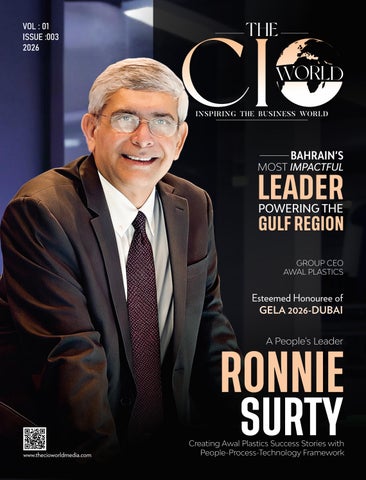
Group CEO | Awal Plastics


Peoplemakeanintegralpartofanyorganisation. Successtoanyprofessionalproject,company, business,enterprise,organization,sector,and industryisallaboutpeople,whoarethecoretoexecutethe strategy. Noorganizationcanoperatewithoutpeople, process,technology Yet,inhislongprofessionaljourney overfourdecades,RohintonSurty,A.K.A.Ronnie,firmly believesthatitispeoplewithinanorganisation,who ultimatelymakeanorganisationsucceedorfail. Throughoutaprofessionaljourneyspanningoverfour decades,Ronniehaslearnedthatpeoplearethedefining factorinanyorganisation'sperformanceandsustainability
AwalPlastics,isafamilybusinessinanenterprising countrylikeBahrain.Afterhisjobofover20yearsat BritishAmericanTobacco,hejoinedAwalPlastics,which wasanestablishedfamilybusinessforover44years.One ofthemainreasonshewasbroughtintoAwalPlasticswas toidentifytherequiredchangesinorderto transform Awal Plastics, afamily-ownedbusiness, into a corporate business entity.“AndIcansaythewordproudisvery pompous,butIcansurelysay,Ifeelveryhonouredtohave hadthisopportunityoverthelast12plusyears.”
However,thejobwasRonnie'smostexcitingchallenge afterhisthreedecadesofprofessionalcareerinvarious industriesandcountries.A61-year-oldveteranleader, RonniewasborninIndiaandhasobviouslytravelledalot throughthejobs.Bahrainhappenstobethe19thcountry wherehehasworkedandlivedthroughouthiscareer.“I mean,IstartedmylifeinHongKongattheageof19, workingforaglobalelectronicsandtradingcompany, sellingWalkman's.”Hethenexploredpotentialavenuesfor hiscareergrowthintheMiddleEastandcametoOman wherehestartedasanautomotivesalesmansellingMazda carsandthenlateronmovedtoHonda.Hefurther transitionedintothetobaccoindustrystartedasatrade marketingrepwithRothmansfromwherehegrewinto seniorroleswithinRothmansandthenwhenthecompanies mergedhemovedtoBritishAmericanTobacco.“So,the processoflearningneverendsandthejourneyofmylife hasbeen fullofon-the-joblearning.RothmansandBritish AmericanTobaccowereactuallythemanagementschoolof myprofessionallifeintermsofmyprofessionalandcareer growth,whichnurturedmyprofessionalunderstandingto makemewhatIamtoday.”
Ashegrewthroughthevariouspositions—salesman,,trade marketingrepresentative,Gulfsalestrainerandthen variousseniormanagementpositionsuptoregionalhead withinthe countriesacrossAfricaandMiddleEast.The learningcurveofRonnie'slifeandthecross-functional understandingfromeveryjobthathewentto—fromtrade marketing,brandmarketing,logistics,procurement,general managementtoregionalmanagement—hadbeena completegamutofmanagingpeople,cultures,andvery importantly,it'sallaboutadapting.“Imean,I'mjustone person.”
So,whenhewentintoanewcountry,Ronniehadtoadapt tothatcountry.Inhisownwords“Thecountryisnotgoing toadapttome.AndIhavetofindaway,intermsofmaking peoplefeelcomfortable,inthesensethatwhenyou'rea leader,youhavetohavethatcompassion.Alongwiththe compassion,youalsohavetohavedisciplinewithfirm rulesofengagement,'Apersonalitylacedwithdiscipline, leadershipandastutemanagementattributes.'
Thatcomesintermsofworkinginaprocess-driven organization,process-drivenpeoplecreatingdisciplinesand adaptingtotherulesofengagement.“Sothat'sexactlyhow mylifehasevolved,andthat'showIcameintomycurrent roleofGroupCEOatAwalPlasticsinBahrain.”
“
My primary role as a Group CEO was to transform a family-run business into a corporate business entity that resulted in the best-inclass signage manufacturing company in the Middle East.


My analysis was focused upon People-ProcessTechnology as being the key drivers and pillars of this organisation.


Asstatedearlier,theturnaroundofAwalPlasticswas Ronnie'sbiggestleadershipopportunity Therewerethree anglestotheturnaroundplannedbyRonnie.“An organizationismadeupofpeople.”So,theturnaroundhad tobefarmorethanatechnicalrestructuring;itwasa delicatesurgicalinterventiononaforty-four-year-old legacy.
Ronniefoundaculturedefinedbystrongego'sanda“my wayorthehighway”mentality,wheredecisionsweremade atvariouslevelswithasubjectiveoutlookandhearsayand personalityissuesfrequentlyoverrodeprofessionallogic. Comingfromabackgroundofglobalmultinationals, Ronnierealizedthatthefirm'ssurvivalwasnot synonymouswithperformance.Tomoveforward,hehadto replaceegosandsubjectivitywithconstructiveand productiveobjectivitytotransformafamily-driven environmentintoadisciplined,productiveprocessdriven corporateentity
Hisfirstprioritywasadeepfunctionaldissection.He analysedeverydepartment,fromfinancetoHR,lookingfor thepresenceofstandardoperatingprocedures,corporate governanceandduediligence.Asaprocess-drivenleader, RonniebelievedthatwithoutSOPs,disciplinedisappears andconfusionreignswithsubjectivity.Hediscovereda vacuumofstructure;recruitmentwasoftenbasedon referralsratherthanmerit,andthetechnologywasnot conducivetogrowthduetoego'sanddecisionmaking basedonemotionsratherthanlogic.
TheexistingFoxProERPsystemwasparticularly problematicandlackedcontrols,ascorporategovernance andduediligencewerenon-existentandweresusceptibleto manualmanipulation.Toprovidethefamilyboardwitha necessaryeye-opener,Ronniebroughtinnewauditors,to objectivelyauditeveryareaofthefinancialsandoperations tohaveacompletelyindependentandunbiased understandingofwherethebusinesswas.Thelawyersalso hadtobechangedinordertoensuretheoverduecredit issueswerelegallylookedintoandtherecoverieswere made. Oncethetransparentrealityofthebusinesswere exposed,theboardgrantedhimthefreehandheneededto growthecompany,albeitwithatransformationstrategy overthenextthreeyears.Aglobalmultinationalthat designedERPsolutionswasinvitedtocreateasolutionthat

Inclusion with an objective rationale coupled with intensive communication results in bringing people together who become the believers and the drivers for the required change. “


wouldhaverobustmanagementandfinancialreportingand accounting.Thiswaskeytothetransformationofthe organisation.
Withthismandate,Ronnieshiftedhisfocustothehuman element.Heunderstoodthatanyreorganizationtriggers resistance,sohechosetocreateanenvironmentoftrustby involvingemployeestofirstlyunderstandthereasonswhy changewasrequiredandfurthermorethebenefitsand advantagesthosechangeswouldmake toprogressthe organisationintoasustainablemodewithorganicgrowth forthefuture,thustheemployeesthemselvesbecamethe driversofchangeratherthanresistthechange.
Heisastrongbelieverofmakingpeoplelead,hence,he movedawayfromleadingfromthefrontandtookthe objectiveviewofmakingpeopleleadwithanagreed executionplanandthatwaypeoplebecamethedriversof thechangeinwhichtheybelievedwasbeneficialforone andall..Thisstyleofmanagementallowedhimtomanage throughmanagementdashboardsandmetricswithatraffic signalmatrix,onlysteppingintoguidetheteamwhenany greenindicatorturnedtoamber,toensureitwouldnot becomeredwhichwouldbeabusinessblockordetrimental totheoperations.Trustwasthebiggestfactorheinculcated intheteamandduetowhichhewasabletoreplacea previouscultureofmicromanagementwithacultureof trust,inclusionbybreakingthe“themandus”dividethat hadexistedfordecades.
Tobridgethegapbetweenthecompany'spastandits future,Ronniepersonallyconductedworkshopstoalignthe staffwithanewshort-term strategy.Hefavouredshort tomediumtermconcrete two-to-five-yearstrategic plansoverabstractdecadelongvisionswhichserved nopurposebyensuringthe teamcouldseetangible progress.Theentirehuman capitalpoliciesand procedureswereevaluated toweedoutthosewhowere simply'survivors'rather thanperformers.Role modelbehaviourwaswhat
hebelievedcouldcreatefutureleadersandhemovedthe entireorganizationintoaperformancemodebyintroducing astructuredrewardandrecognitionstrategybyrevamping roleprofiles,jobdescriptionsandarigorousperformancebasedappraisalsystem.Bydefiningkeyperformance indicatorsandkeyresultareas,heremovedallthe subjectivitybyensuringthatnoonecouldescapethetruth oftheirownproductivity.
Thisnewfoundobjectivitypavedthewayforamentality thatprofessedinnovation.Ronniefosteredaconceptoffitfor-purposewherebyacollaborativeenvironmentofvarious teamsi.e.,procurement,technicalandstructuraldesign, productionandengineeringworkedintandemtoturn conceptualpicturesintofit-for-purposeviableproducts.He successfullydismantledtheinternalpoliticsandsilosthat hadpreviouslystifledcommunicationsandwasstagnation ofgoodpeoplewithintheorganisationwhichalso preventedtheorganisationfromorganicgrowth.
Bygivingeveryone,fromthesecurityguardtothe chairman,avoiceandtherighttospeaktheirmind,he instilledasenseofownershipcoupledwithcomfortand confidence.Ronnieprovedthatwhilehehadthevision,the strengthofthetransformationlayinthecollectivepowerof multiplebrainsworkingasone,ashestronglybelievedin teamwork.Today,henolongerneedstoforceadirection; hesimplyofferssuggestivepointersandwatchesashis empoweredteamscollectivelydrivetheorganization towarditsnextsuccess.
Ronnierecognizedthatanorganizationcanonlybemade sustainablewithorganicgrowthwithvariousfactorsthat needtobeevaluatedinordertotransform. Tomakethe changes,eachfunctionhadtobeevaluatedfroma technical,skills,competencies,agilityandtrackrecordof theemployeesworkingwithinthedepartment. Unlessthe skillsetsandknowledgebasewerenotmatchedthere wouldbeabiggapinthecompetenciesrequiredforfast trackingtheorganisationintermsoftransformation,in ordertogrow.Itshouldbeunderstoodthatamaster carpenter,whilstbeingbrilliantinhiscraft,cannotsimply beplacedinfrontofamodernlaserorroutermachine withoutthepropertechnicalandsoft-skillexposurethrough traininganddevelopment.Thisrealizationledtothe creationofacomprehensivepeopledevelopmentprogram designedtoelevatethecross-functionalteam'scapabilities.
Leadership is all about leading from behind by people believing, accepting and respecting the person with objective logic without the pressure of the position. The person that sits on the chair should be respected, rather than the position of the chair.


However,hiscommitmenttoexcellencealsorequireda difficultcleanupandexitoftheblockersunwillingto changeorgrowandnon-performersinthebusiness.
Attitudecoupledwithaptitudeandadaptabilitywerekeyto thetransformation.Afterevaluatingallavenuesfroma peopleattitudeperspectiveanexitstrategyhadtobe implementedforthosewholackedtherightattitudeandhad mentalblockstochangeforthebetter.ToRonnie,aperson canbetrainedforanyskilliftheyhavetherightattitude andmindsetwithawillingnesstochange.Amentalblockis verycontagiousthatsetsanegativeexamplefortherestof theorganisation.Hefosteredaradicalcultureofinclusion wheretraditionalhierarchywasdismantledinfavourofan open-mindedandcollaborativespirit.Heconsistently emphasizedthatnooneworkedforhim;instead,they workedwitheachothertoachieveanagreedobjectivethat everyoneunderstoodandbelievedinasasingularteam. Thisshiftinmindsetwasessentialforgainingthedeep employeeloyaltyandsenseofbelongingrequiredfora successfultransformation,inordertoachievecollective successthatwasnotattributedtoapersonbuttoateamof peoplewhoputintheeffortswithapassionatedesireto achieveacommongoal.
Therecipeforsuccessisdisciplinethroughadefined processandtheadherencetotheprocessbymakingpeople responsibleandaccountableforthesame.Ronniedescribes thisinawaywhereby“freedomthroughresponsibilitywith authorityandaccountability”astheengineofdisciplinethat managespeopleatalllevelscoupledwithcollective decisionmakingatalllevels.Hemovedawayfrom subjectivedecision-makingbyinstitutionalizingarigorous processfromaforecasting,projectbased,financial evaluationwithadefinedROIparameterthatwasincluded intheannualbudgetingcyclethatbeginseveryyearin Octoberandisthenpresentedtotheboardastheframework ofacompanyplanforthefollowingyear.Thisprocess requireseverydepartment—fromfinance,operations,risk andaudit,salesandprocurement,logistics,manufacturing andengineering—tocollectivelymeetdiscuss,agreeand consolidatetheirideasthroughcollaborativeworkshopsand recordthesameforalignmentpurposes.Bycreatinga definedbusinessprocessblueprint,hemappedtheentire SOPsbyeachfunctionanddepartmentwhichtransparently showedtheflowofaproject,fromtheinitialestimationto thefinalrealizedprofitabilityatjobclosure.Hebelieved thatprovidingauthoritywithoutmatchingitwith
responsibilityandaccountabilitywasarecipeforfailure andwasnotconducivetofuturegrowth.Therefore,he ensuredthateverymanagerwaspersonallyresponsibleand accountableformanagingandimplementingthestandard operatingprocedureswithintheirdomain,albeitafter collectivediscussionsalignmentandagreement.For Ronnie,SOPsaretheguidelinesthatremoveconfusionand establishdefinedrulesofengagementforrunningthe companyandforeveryproject,ensuringthatthe organizationoperateswiththefinancialprecisionthat generatesefficienciesandgrowthonacontinuedand sustainablebasis.
Upgradedtechnologytocomplimentpeopleand processes
Technologywhichisthemostimportantfactorof enhancingproductivityandgrowthdesignedtosupportthe refinedprocessesandtheempoweredpeople.WhenRonnie arrived,hefoundthatthetechnologyateveryjuncturefrom ITtoproductionmachinerywasnotonlyoutdatedbutalso environmentallyunacceptable.Drawingonhisexperience withinternationalhealthandsafetystandards,hereplaced hazardousoutdatedmachineswhichcreatedenvironmental hazardsandwerenotsupportingspeedasanexamplewater jetmachineswhichwereusedforcuttingsheetmetal causedsignificantpollutionandsiltdrainageissues—with verylowspeedandthesewerereplacedwith high-speed, eco-friendlyfiberlasersheetmetalcuttingmachinery capableoftripling theproductionoutput.
Hismostambitioustechnologicalmoveinvolvesthe company'sdigitalheart.AfterfindingamajorglobalERP systemtoorestrictiveandfocusedonimplementationfees ratherthananalyticalfreedom,hepivotedtoanin-house ERPsolution,whichwastailor-madetosuitany manufacturingortradingbusiness.Heiscurrentlyadvising ateamofoverfivehundreddevelopersinChennai,India,to createaproprietary,trademarkedERPsystemwithendto endthirteenmodulesthatwouldgivearealtimeP&L reportingandalsoprovidedataandanalysiswhichhasalso beenembeddedwithAIanddisciplinedwithalgorithmsto ensureaccuracyandobjectivity Thissystemwillmanage theentireorganisationfromafinancial,operational, manufacturing,employeelifecycleandfinancial accounting,eventuallybecomingadiversificationanda newbusinessventurewhichshallbemarketedinthenext 12to18monthstovariousmanufacturingcompanies worldwideinmultiplelanguages.


Ultimately,Ronnieviewstheorganizationasaconnected ecosystemwherenooneoperatesinasilo.Hebelievesthat everyemployeeneedstocollectivelycontributetoachieve thegrowthandmakeanorganisationsustainabletaking prideinwhattheydo.Ateverylevelfromthehousekeeping staffandthesecurityguardsrightuptothesenior managementteamarejustasvitaltotheefficientdelivery ofthecompany'sstrategy.Inhisview,anorganisationthat lacksbasichygienewithinthefacilityisanegativeexample ofadon't-careattitudeandthusbecomesadetrimental factortoorganizationjustaslackofobjectivityinthe companyplanformation.Itallgoeshand-in-hand,andthe keyisintegratingpeople,processandtechnologyintandem tocreateasynchronisedorganisation. Usingsuch managementtechniquesandtheskillsacquiredinhis previousjobswithglobalmultinationalcompanies,Ronnie hassuccessfullytransformedaforty-four-year-oldfamily legacyintoa56-year-oldsustainable,modernised, performance-drivencorporateentity.Everypersonwithin theorganisationhasaroletoplaywithapre-defined objectivewhichbecomesanintegralpartofone'srolein deliveringtheobjectiveswhichare,boundtogetherbya systemthatvaluesthecontributionofeveryindividualfrom theentrancegatetotheboardroom.
Ronnie'smoralandprofessionalcompasswasforgedinthe variousrolesandcountriesheworkedfortheglobal multinationalsespeciallyBritishAmericanTobacco,which hedescribesastheuniversityoflearningover20yearsthat empoweredhimwiththeskillsetsrequiredtomoveahead inlifewhichhelpedtransformafamilybusinessintoa corporatebusinessentity Thisexperienceandbackground alsoembeddedarigiddisciplinerelatedtoensuring corporatesocialresponsibilityandthenecessityofbeinga responsibleplayerandrole-modelateveryjunctureofthe transformationprocess.Ronniebelievesthataccountability requiresadeepunderstandingofglobalandlocal legislationswitharelentlesscommitmenttopersonal ethicalstandardsthatneedtobecascadedaspoliciesacross theorganisationateverylevel.Heendeavouredtocreate AwalPlasticsasthebenchmarkineveryangleof manufacturingandbusinessrelationshipscoupledwithhigh levelsofintegritythroughouttheregion.
Tohaveanobjectiverewardandrecognitionstructure, Ronniemovedbeyondthecomplacencyofannualreviews byimplementingquarterlyperformancereviewswhich werecoupledwithquarterlyauditsacrosstheorganisation. Recognizingthathumannatureoftentrendstowards movingintocomfortzones,theperformancewaslinkedina tier-basedappraisals,bonuses,andsalaryincrements.The organisationrestructurealsoensuresthatESGgoalsare operationalmandatesratherthanmereslogans.By prioritizingthehumanfactorandenvironmentalsafety, Ronniehasearnedtheorganizationanewlevelof institutionalrespect.
Ashelookstowardthenextdecade,Ronnie'svisionof leavingbehindalegacyinthenextfewyearsisdefinedbya teamthatcouldsurviveandsustainintheregionalbusiness environmentwithabsoluteagility.Hehasspentovertwelve yearsfast-trackingaframeworkoftrustbyprovingthata leadermust'walkthetalk'tobecomeatruerolemodel.His advicetoemergingleadersisasternwarningagainstthe arroganceofignoringattentiontodetails;toRonnie, attentiontodetailisthefundamentalbedrockof management.Bydeep-divingintothebasicsandgivingdue credittoeverylevel—fromthejanitortothesenior managershehasbuiltaninclusiveentitywheresuccessisa sharedvictory.Ultimately,Ronnie'sgreatestprideisthe fierceloyaltyofateamthatmovesforwardnotbecause theyaretoldto,butbecausetheybelieveinthejourneythey createdtogetheristheonlywaytosucceedandgrow.
Since2013,Ronniehasstartedhisleadershipjourneywith AwalPlasticsinhisprimaryroleasaGroupCEOand transformeditfromafamily-runbusinessintoacorporate businessentity,buildingitontheexistinglegacybyfurther strengtheningthecorefoundationthatwouldgrowthe businesswithspeedand agilitytocreatesustainable organicgrowthandbusinessdiversificationovertheyears.
Today,with44yearsofleadershiplegacy,RonnieSurty shinesasoneof'Bahrain's Most Impactful Leaders Powering the Gulf Region.'
RonnieSurty CIO


Everygroupassertsthatitcherishesperformance. Butperformanceisnotjustamatterofambition;it isamatterofstandards—definiteexpectationsthat determinehowpeopleact,makedecisions,cooperate,and produce.Thedifferencebetweenmediocrityandgreatness isnotatthelevelofthetalenttheyrecruitbutatthelevelof thestandardsthattheymaintain.Andthemostpowerful standardsarenotfoundinrules;theyarefoundinthe organizationalmilieu.
Anefficientculturedoesnotseektobeheard,isnot ostentatious,andisnoteveninspiringintheusualsense.It isdown-to-earth.Itestablishesnormsthatpeoplewillreally complywith,evenifthetopmanagementisabsent.It diminishesmisunderstandings,boostsresponsibility,and transformsqualityintoaprocess.Inthecaseof
organizationsthatperformataveryhighlevel,culture becomesthesoftwarethatfacilitatestheconversionof effortintooutcomes.
Motivationgoesinwaves.Standardsareconstant.Many companiesusethemainsourceofmotivationquitea lot—rallies,speeches,incentives,andshort-termpressure. Motivationcanleadtoburstsofenergy,butitcannotleadto consistentexecution.Theconsistencycomesfromthe standards.
Standardsaretheonesthatdefinewhat“good”is.They determinetheteam'sresponsetime,thedecision-making process,thequalitycontrolmeasures,andwhatis consideredunacceptablebehavior
Withstrongstandards,performanceispredictable.With weakorinconsistentstandards,performanceisatthemercy oftheindividualmanagersorthesituation.Cultivatinga goodcultureisnotaboutsurroundingstaffwithengagement vibes.Theaimistohaveatrustworthyperformance.
Incaseindividualsarenotsureabouttheexpectations,they starttothinkthatwayandthiscreatesmisunderstandings, conflicts,andworkbeingdoneagain.Thefirstthingthata performingculturerequiresisClarity Thecommunication ofexpectationsisalwaysdoneexplicitlybyhighperformingorganizations.Theyestablishtogetherwiththe staffsuchthingsasoutcomes,time,quality,collaboration, andcustomerexperience.
Theydonottakeitforgrantedthatpeopleareawareof "whatexcellencelookslike."Theydemonstrateit,bolster it,andteachit.Thiskindofunderstandingisofutmost importanceespeciallywhenthereisalargescale.The greaterthecompany,thelargerpartinperformancecomes fromhavingcommonstandardsinsteadofpersonalcontrol.
Onlyindailyexecutiondothestandardsbecome significant.TheyarepresentonlyinHRdocumentsor leadershippresentations,sothey'renotstandards—they're merelyslogans.Performanceculturesintegratestandards intotheveryfabricofdailylives.
Theway,e.g.,howmeetingsareconducted,howfeedback isdelivered,howdecisionsarerecorded,howdeadlinesare respected,andhowproblemsareescalated,allthesefactors communicatewhattheorganizationgenuinelyvalues.
Thesedailypracticeshaveamoreprofoundimpacton behaviorthananyofficialdeclaration.Theemployeeswill adheretowhatthecompanyisalwaysstrengthening.
LeadersDon'tSetCulturebyWords—TheySetItby Tolerance
Oneofthemostpowerfulstatementsconcerningcultureis this:thetolerancesoftheleadersdeterminetheculture. Ignoringthemisseddeadlinesmeansthatthedeadlinesare nolongerimportant.Ifbadteamworkisnotpunished, everybodywillworkintheirowndepartment.Ifthebest workersaregiventhesamefreedomsastheworst,the qualityofworkwilldrop.
Whattheleadersineachorganizationpermitbecomesthe norm.Theperformanceculturenecessitatesthattheleaders takequickanddeterminedactionswheneverthestandards arebroken--notinadramaticwaybutratherinaconsistent manner
Whenstandardsareenforced,itisnotacaseofbeingharsh butratherofbeingclear.Itisasignaltoeachandeveryone intheorganizationthatthestandardsaretrulythere.
Performanceculturesarebasedonaccountability,but accountabilityisaproblemwhenitisperceivedasbeing unfair.Iftherulesareapplieddifferentlytodifferent people—strictforsome,lenientforothers—trustinthe systemvanishesveryfast.Organizationswithhigh performanceapplythesamestandardsconsistently.
Theygiverewardsforresults,butalsorewardsforthe behaviorsthatsupportperformance:takingresponsibility, beingdependable,workingtogether,andbeingdisciplined.
Theyidentifyandaddressunderperformanceveryearlyand inaverytransparentmanner,andtheydoitinawaythat protectstheperson'sdignitywhilemaintainingthe standards.Whenpeoplebelievethataccountabilityisfair, theydonotresentbutratherrespectthestandards.
Theculturethatdeliversresultsrestsonthestandardsthat peoplefollow—notbyobligationbutbecausetheyare understandable,reliable,andintegratedintothedaily workflow Thestandardsensurethereliabilityofexecution, eliminatethepointsofcontactbetweentheprocessesthat leadtotheproductionofsubstandardwork,andmakethe drawingofhigh-qualityworkatalargescalearegular occurrence.Leadersfosterthisculturethroughsetting preciseexpectations,demonstratingdiscipline,applying accountabilityjustly,andrewardingperformance.
Overtime,thestandardsbecomethecommunity'sidentity, andtheperformancethenatureofthecommunity Thus,the strongestcompetitiveadvantagerefersnottostrategyalone buttoaculturewherestandardsareauthentic,andresults aretheonlypossibleoutcome.


Uncertaintyisnowthestandardbusiness environment.Marketfluctuations,alterationof rules,geopoliticalrisk,technologicaldisturbance, andnewcustomerbehaviorhavealltogetherreducedthe timeframesforplanningandincreasedthestakesfor makingdecisions.Insuchascenario,strategyisnotjusta cleanyearlyexercise,whichmightbethecaseinanideal world.
Itratherbecomesaleadershipdisciplinepracticedunder pressure—whentheinformationispartial,thetimelinesare short,andthecostofdelayisveryhigh.Pressurestrategyis notreallyabouthavingtheperfectanswers.Rather,itis aboutmakingtherightcallswiththeclarity,discipline,and couragerequiredtomoveforwardwhenthereisno certainty.
Instableenvironments,thestrategyisformedthrough forecastingandoptimization.Themanagersrevisetheir plans,assignbudgets,andcarryouttheirstrategiesthrough cyclesthatareverypredictable.Whenitcomestothe pressure,thosecyclesbecomenon-existent.Thecompany hastomakedecisionsquickly,reducingthenumberof assumptionsandincreasingtherisks.
Moreover,pressureinfluencesone'sthinkingnegatively.It raisesthelikelihoodofreactingimproperly,clingingto outdatedmethods,orseekingimmediaterelief.Leaders maybecomemorelikefollowersofthechanges,andthe organizationmaysufferfromlackofclaritywhenthenew directionisnotclearlycommunicated.

Thesekindsofactionsleadtoagreaterdanger:strategic drift.Intimesofuncertainty,themostsignificantstrategic riskisnotthedisruptionbutthemisunderstanding.
Whilebeingpressured,theapproachtothemattershould totallychangefromperfecttogoodenough.The organizationisnottoanticipatethefutureaccurately,but rathertomakeitfitforthetimebeingformanypossible futurescenarios.Thisnecessitatesbringingtheleadership uptotheleveloftreatingthestrategyaslive.
Theyareregularlylookingforsignals,checkingtheir assumptions,andrevisingtheirplansasthesituation changes.Ratherthanputtingtheirtrustinoneprojection only,theygoforascenario-basedapproach—determining whatpossibleresultstheremightbeandwhatmeasures wouldstillbeeffectiveregardlessoftheresults.
Beingreadyinadvancecutsdowntheriskofpanic.It opensupawholerangeofchoicesfortheleaderwhile providingjustafewforthereaction.
Pressuretransformseverythingintoamatterofgreat significance.Uncertaintymagnifiesthestakeholders'actions intheoppositedirection,thatis,theydemandimmediate attention,whichtheteamwillrespondtobybringingmore risks,whilethemanagementisgettingmoreandmore occupied.Thebest-performingorganizationsarethosethat holdthefocus.Topleadersoftheorganizationconcentrate onprioritiesveryaggressively.
Theydeterminewhatthemostimportantthingistobekept safe—cashflow,customertrust,operationalresilience,or innovationpipeline—andthenthedecisionsaremade accordingly.
Theymakethetrade-offsclearandgivethereasonsfor theminaveryconspicuousway.Beingabletosaynoturns outtobeastrategicadvantage.Focusisthemain contributortothecreationofcapacity,andcapacityisthen themaincontributortoexecution.
Duringuncertainperiods,oneofthehiddenriskscanbe waitingforcompletedatatocome.Decision-makersareleft inasituationwheretheyjusthavetoseealittlebitofthe wholestoryandcontinuallyadjusttheirstandasthenew factsunfold.Theoptimalwayforwardwouldbeto
categorizethechoicesmadeintotwogroups.Thereare decisionsthat,whilestillnotfinal,canbeeasilychanged later
Quickdecision-makingintheseareas,however,isessential tokeepthemomentumgoing.Ontheotherhand,thereare decisionsthatcanbecostlytoundo—biginvestments, withdrawalfromamarket,changesintheorganizational structure.Thesekindsofdecisionswillneedmorein-depth validationandacarefuldecision-makingprocessinvolving moregovernance.Speedwithoutdisciplineisthehallmark ofastrongstrategyunderthepressureofuncertaintimes.
Atthetimeofuncertainty,riskmanagementfrequently turnsouttobetoostricttothepointofbeing unmanageable.Thepresenceoftoomanycontrolsand approvalscanevenmaketheexecutionprocesssoslowthat iteventuallyresultsinthelossoftheopportunity.However, unmanagedriskisstillthesourceofinstabilityanddamage tothereputation.
Thepowerfulleaderssetupthe"safespeed."Theysetup unambiguousrisklevels,performescalationprocesses,and makeriskconsideringapartofdailydecision-making throughtheorganization.Thiswaysurprisesareavoided andteamsareallowedtoworkfastwithinlimits.Risk managementshouldnotactlikeahaltonthecompany's strategy.Itshouldbe,instead,astabilizer."
Conclusion
Strategyinpressuresituationsistheultimatechallengefor leaders.Itrequirestheabilitytoconcentrateamidst distractions,tobeorderlyduringrush,andtohaveaclear viewduringthefogofdoubt.
Theleaderswillnolongerbeabletorelyonperfect planning,buttheyshouldratherbereadyforaction;they willhavetomakethecallsbasedonpartialknowledge,to carryonwithrisk-takingandatthesametimenottolose thedrive,andtointeractinwaysthatmaintainthestability oftheperformance.Thecompaniesthatcanwithstand uncertaintywillalwaysbetested.
However,theywillalsohavethesilverliningof opportunitiesaroundthem.Thecompanieswhoseleaders canmaketherightdecisionsaregoingtobethewinning ones—notbecauseofleaders'completeknowledgeofthe future,butduetotheirabilitytothinkclearly,actfastand flexiblyduringthecriticaltimes.


