


By Al McFarlane
Minnesota Gov. Tim Walz and legislative leaders from both parties announced a bipartisan end-of-session agreement Wednesday, May 13, concluding weeks of negotiations in a closely divided legislature and producing a supplemental budget deal that its architects say puts Minnesota on firm financial footing heading into a turbulent federal climate. The supplemental budget agreement — reached
with the regular session set to close May 18 — includes a $1.2 billion bonding bill for infrastructure, state funding to stabilize Hennepin County Medical Center (HCMC), a reduction in vehicle tab fees, property tax refunds, and anti-fraud measures including $75 million for county IT modernization and creation of a new statewide Office of Inspector General. Leaders described the agreement as evidence that divided government can still function. The Minnesota House is split 67–67 between DFL and Republican members, a historically narrow margin that forced negotiation on nearly every ma-
“We
are keeping a balanced budget, making targeted reductions, and focusing every dollar on core priorities: fiscal sustainability, critical infrastructure, and the health and wellbeing of our communities.”
— Gov. Tim Walz
As the Minnesota legislative session races toward its constitutionally mandated May 18 conclusion, the fight for stable, affordable housing has moved into the conference committee phase — the high-stakes room where the House and Senate must reconcile two different visions for the state’s roof over its head. For the Twin Cities Black community, these negotiations are not just about line items; they are about the fundamental right to remain in the neighborhoods we built.
The bridge between $100 million and $50 million The most significant gap in the current negotiations is over Housing Infrastructure Bonds — the state’s primary tool for building and preserving affordable rental housing. On Monday, May 4, the Minnesota House passed HF 1141, the supplemental housing finance and policy bill, on a 99-34 vote. The House version would authorize the sale of up to $100 million in housing infrastructure bonds, which bill sponsor Rep. Michael Howard, DFL-Richfield,
calls the bread-and-butter tool for building more homes and more affordable homes. Critically, none of the supplemental appropriations would come from the state’s General Fund; instead, the measure relies in part on interest earned by Minnesota Housing on legislative appropriations and on unspent funds set aside for the Tyler Settlement.
On Thursday, May 7, the Senate passed HF 1141 off the Senate floor with bipartisan support in a 35-31 vote. Senate Housing and Homelessness
jor decision. Governor Walz framed the deal as an expression of fiscal discipline in an era of federal uncertainty. “At a time of real uncertainty,” he said, the agreement delivers “a historic, bipartisan investment in HCMC, a cornerstone of our health care system and a critical safety net for Minnesotans across the region.” He added that the deal “strengthens Minnesota’s long-term stability, supports the broader health care ecosystem, and reflects the discipline of living within our
Prevention Chair Sen. Lindsey Port, DFL-Burnsville, carried a version that invests $50 million through Housing Infrastructure Bonds. The $50 million gap between the chambers is now the central financial question in conference. Conferees have agreed on the financial framework, which includes at least $50 million in housing infrastructure bonds, as well as funding for family homelessness prevention and workforce housing — but the final bond authority figure remains to be settled as part of the overall negotiated package. The House version, taken in total, would
By Pulane Choane Contributing Writer

Frey signs gun reform ordinance, calls on state legislature to finish the job
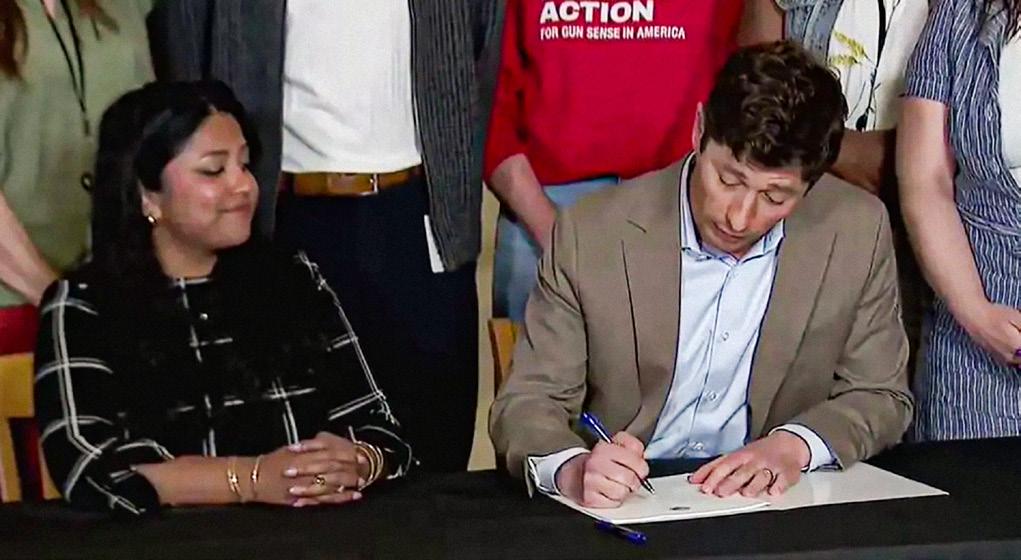
On Wednesday, Mayor Jacob Frey signed a landmark gun reform ordinance passed unanimously by all 13 members of the Minneapolis City Council, marking one of the most significant local gun safety actions in the state's history. The signing comes roughly nine months after a gunman opened fire through the windows of Annunciation Catholic Church during a morning Mass on August 27, 2025, killing two children — 10-year-old Harper Moyski and 8-year-old Fletcher Merkel — and wounding 21 others, most of them children between the ages of 6 and 15.
"The cost of inaction has been measured in lives lost." — Mayor Jacob Frey
"Minneapolis is stepping up because residents should not have to wait for action while gun violence continues to devastate families," Mayor Frey said. "The legislature now has both the opportunity and the responsibility to establish a clear statewide standard for gun safety. We urge the House GOP to allow this bill to come to a vote before the end of session."
The Minnesota Sen-
While Minnesota's state preemption law currently prevents cities from enforcing local firearms ordinances that exceed state standards, the Minneapolis measure positions the city to act immediately should the legislature grant that authority — and places direct pressure on the Minnesota House GOP to bring a gun safety package passed by the Senate to a floor vote before the session ends.
Governor Walz signs eleven bills, enacting new measures on housing, corrections, and financial fraud
Governor Tim Walz has signed eleven bills into law, implementing new provisions across housing, public safety, and consumer protection ahead of the Legislature’s May 18 constitutional adjournment. The legislative package includes significant changes for tenants and property owners, expanded behavioral health care inside Minnesota’s correctional system, and a new statewide framework to protect older Minnesotans and other vulnerable customers from financial fraud and exploitation. For Twin Cities readers, the housing measures in this round of signings carry the most immediate weight. Two of the eleven bills directly reshape the rules of the rental market and homeowners associations in Minnesota.
Housing and property: submeters, digital rent, and HOAs SF 4171 establishes final billing rules for submetered utility services when tenants vacate a unit, and updates statutory provisions for the payment of rent by tenants, including provisions related to digital rent payment. The bill builds on the 2024 utility billing reforms now codified in Minnesota Statutes § 504B.216 and §§ 216B.022–216B.024, which capped administrative billing charges at $8 per period, capped late fees at $5 per month, and barred landlords from passing

through submeter installation, maintenance, and reading costs to tenants. For renters in North Minneapolis and along central corridors where shared-meter buildings are common, the cumulative effect is to narrow the loopholes that have historically produced surprise charges at move-out.
SF 1750 restricts certain practices by property management companies, adjusts termination thresholds, and modifies rights and duties for common interest communities and unit owners. The bill also bars some governing bodies from mandating the creation of new homeowners associations. The HOA-related provisions in particular respond to long-standing concerns from first-time Black homeowners about hidden assessments, opaque governance, and post-purchase obligations that did not appear at closing.
Corrections and public safety HF 3769 clarifies substance






























By Haley Taylor Schlitz, Esq.
I kept thinking about my great-grandmother Margaret.
I imagined her as a teenager in Tatum, Texas, standing somewhere between the life she knew and the life she was brave enough to believe might exist somewhere else. I imagined the heat, the sound of a train, the smallness of what she could carry, and the heaviness of what she had to leave behind.
She was young. Young enough that the world should have been opening itself to her. But she was Black in Jim Crow Texas, where the world was constantly reminding her of its limits.
So she made a choice that still humbles me.
She left.
She boarded a train to Los Angeles not because she knew exactly what waited for her, but because she knew enough about what staying meant. She did not have a guarantee. She did not have a map to safety. She did not have the comfort of certainty. What she had was courage, clarity, and the refusal to let segregation write the boundaries of her life.
When I moved from Texas to Minnesota, I thought about her often.
I would never pretend my move was the same as hers. It was not. I moved with protections, education, and choices she was never allowed to assume. But I understood something more deeply because of her: geography is never just geography for Black people. It can be inheritance. It can be opportunity. It can be confinement. It can be escape. It can be the difference between being counted and being heard.
Living in Texas as a Gen Z Black woman had begun to feel like accepting a future someone else was narrowing for me. The signs were there long before the Supreme Court’s latest attack on representation: the book bans, the attacks on truthful history, the restrictions on bodily autonomy, the hostility toward diversity, and the growing sense that political power was being used not to expand possibility, but to contain it. My great-grandmother’s generation moved because America made staying dangerous. My generation may have to think about movement because America is making representation fragile.
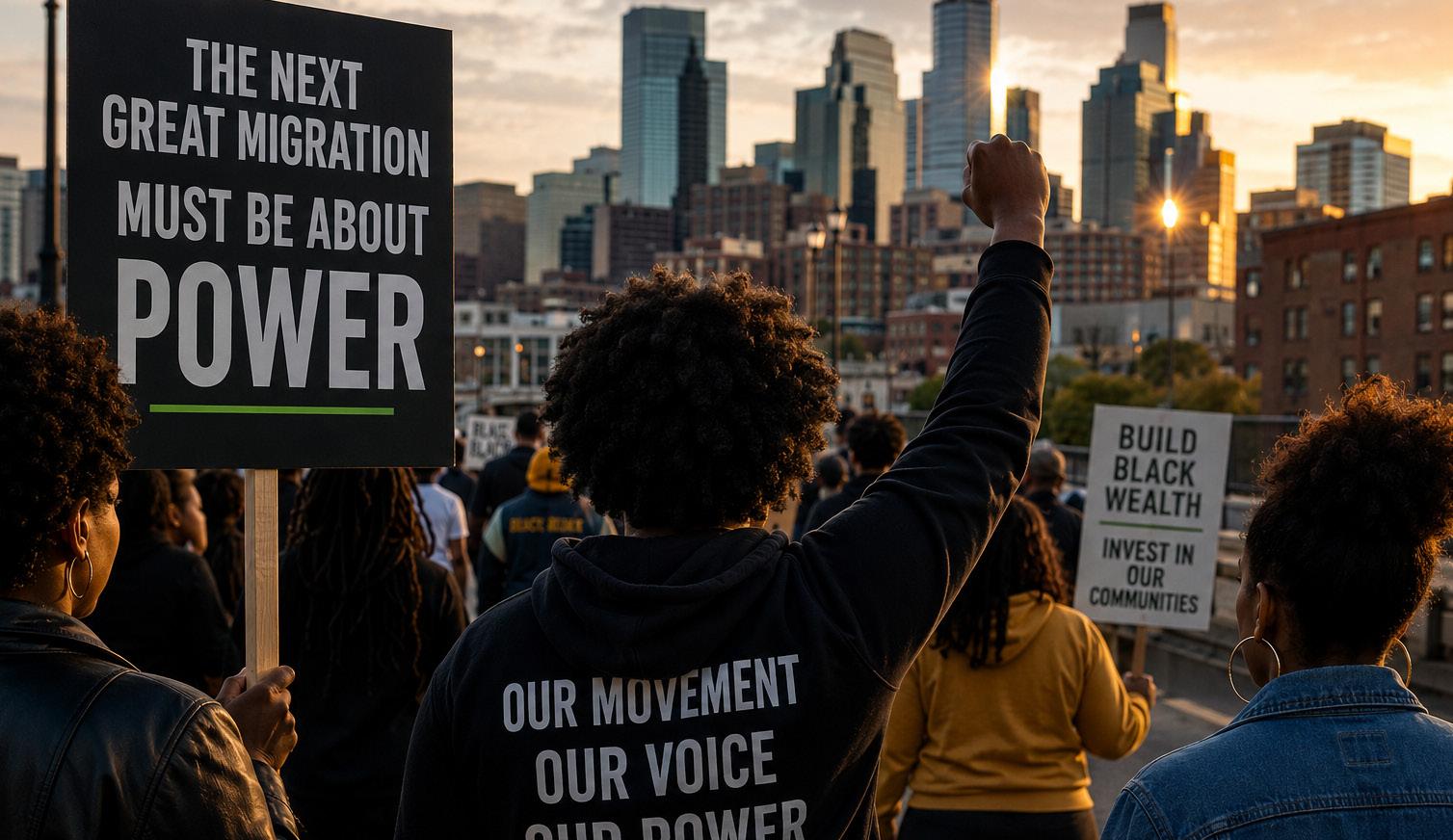
The Great Migration was not simply a demographic event. It was millions of private acts of courage that became a public transformation of America. From 1916 to 1970, roughly six million Black Southerners moved to Northern, Midwestern and Western states to escape Jim Crow, racial violence, and limited economic opportunity.
Black families did not just move toward work, schools, churches, newspapers, unions and neighborhoods.
They moved power.
But the first Great Migration also teaches us something else: arrival was not freedom.
Black Americans who reached Northern and Western cities still felt the sting of racism. They encountered redlining, restrictive covenants, housing discrimination, employment barriers, segregated schools, police violence, and neighborhoods starved of investment. Jim Crow did not always wear the same uniform outside the South, but it still knew how to draw a line.
That history matters now.
A second Great Migration is already beginning. The question is whether it will be met with preparation or indifference.
In my last column, I wrote about the danger of Black people being counted for political power while being denied fair representation within that power. But if that is what the map is revealing, then the next question is unavoidable: If geography shapes power, where should Black America build next?
Pew Research Center reported this year that the U.S. Black population reached 49.2 million in 2024, up from 36.2 million in 2000. The fastest growth since 2010 has been in states not historically known as large Black population centers: Utah, Arizona, Minnesota and Nevada. The largest numerical increases were in Texas, Florida and Georgia.
The future Black map
of America may not look exactly like the past one.
That also means blue states cannot treat Black migration as something that is simply happening to them. They have to decide whether they are ready to receive it, support it, and help turn it into power.
Minnesota is already part of this changing Black map.
Minnesota’s Black population has grown rapidly over the past decade, increasing by 67% since 2010. That growth has been shaped by births, migration, and immigration from African nations including Somalia, Ethiopia, Nigeria, and Liberia. Minnesota’s Black future is not one story, and that is precisely why it must be built with intention.
Pew’s 2026 data also shows why this is a future-facing question. Black Americans are younger than non-Black Americans, with a median age of 33.7 compared with 40.2 for Americans who do not identify as Black.
Pew also found that 27 percent of Black Americans were under 18 in 2024, compared with 21 percent of nonBlack Americans.
So when we talk about Black migration, we are talking about where the next generation will be educated, governed, protected, represented, and prepared to lead.
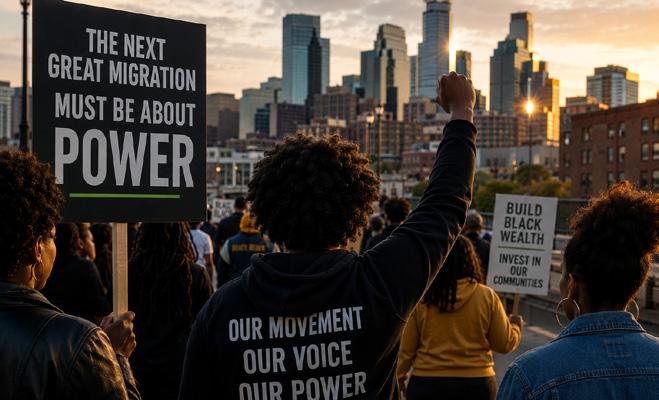
That is why the next Great Migration cannot be accidental. It cannot be reduced to private decisions made family by family, student by student, and professional by professional, with everyone simply hoping the next place will be better. It has to be about power.
That does not mean abandoning the South. Too much Black history is buried there. Too much Black brilliance is rising there. Too many organizers, pastors, teachers, lawyers, students, entrepreneurs, artists, athletes, parents and elected officials are fighting there every day. The South is not disposable. It is central to Black history and Black power.
But where we live matters.
It determines which legislatures draw our districts, which governors sign our laws, which courts hear our cases, which schools teach our children, which prosecutors hold discretion, which employers shape our opportunities, and which coalitions can win statewide power.
That is why blue states have a responsibility. The first Great Migration taught us that leaving Jim Crow did not mean leaving racism. The second must teach us that welcoming Black people means more than being less hostile than the places they left. It means building the conditions for Black power to thrive.
That starts with law.
Blue states should pass strong state voting rights acts that protect communities from voter suppression and vote dilution, especially as federal protections weaken. Minnesota has already shown one version of that responsibility. The Minnesota Voting Rights Act includes protections against voter suppression and vote dilution, including unfair districts or atlarge elections that weaken the voices of Black voters and other voters of color.
More states should follow that path.
Blue states should strengthen ballot access, protect local representation, defend truthful education, enforce fair housing laws, protect reproductive freedom and labor rights, and create pathways for Black professionals into public leadership, boards, commissions, judgeships, school leadership, university governance and economic development.
But government cannot do this alone.
Black communities in blue states also have work to do.
Our churches, NAACP branches, Urban Leagues, Divine Nine organizations, Black professional associations, Black business networks, Black media outlets, civic clubs, alumni groups and
cultural institutions should be asking a serious question: If more Black families and young people are coming, are we ready to welcome them into power, not just into community?
Welcome matters. But welcome is not power.
New residents need civic maps: how school boards, city councils, county offices, state legislatures, appointments, capital networks and leadership pipelines actually work.
Black organizations should be building that infrastructure now.
As this migration unfolds, Black communities in blue states should prepare to receive people as future leaders.
That means mentorship, voter registration, candidate training, homeownership support, business development, youth leadership programs, legal education, cultural belonging, and making sure Black newcomers are not only invited to attend events, but asked to help shape agendas.
Blue states cannot treat Black migration as a compliment. They must treat it as a responsibility.
A state cannot call itself welcoming if Black families cannot afford to live there, if Black children do not feel seen in school, if Black profession-
als cannot rise into leadership, if Black businesses cannot access capital, if Black voters are only courted in election season, and if Black newcomers are expected to be grateful rather than powerful.
That is the difference between receiving population and cultivating power.
For Black Gen Z, the question is not only where can we survive. It is where can we lead. Where can our votes matter? Where can our rights be protected? Where can our history be taught? Where can our families thrive? Where can our presence become power?
I do not know everything my great-grandmother Margaret felt when she stepped onto that train from Tatum to Los Angeles. I imagine fear was there. I imagine grief was there. But courage was there too. So was clarity.
She understood something Black America has had to understand again and again: sometimes the place you are standing is also the structure limiting your future.
By Lawrence Wright
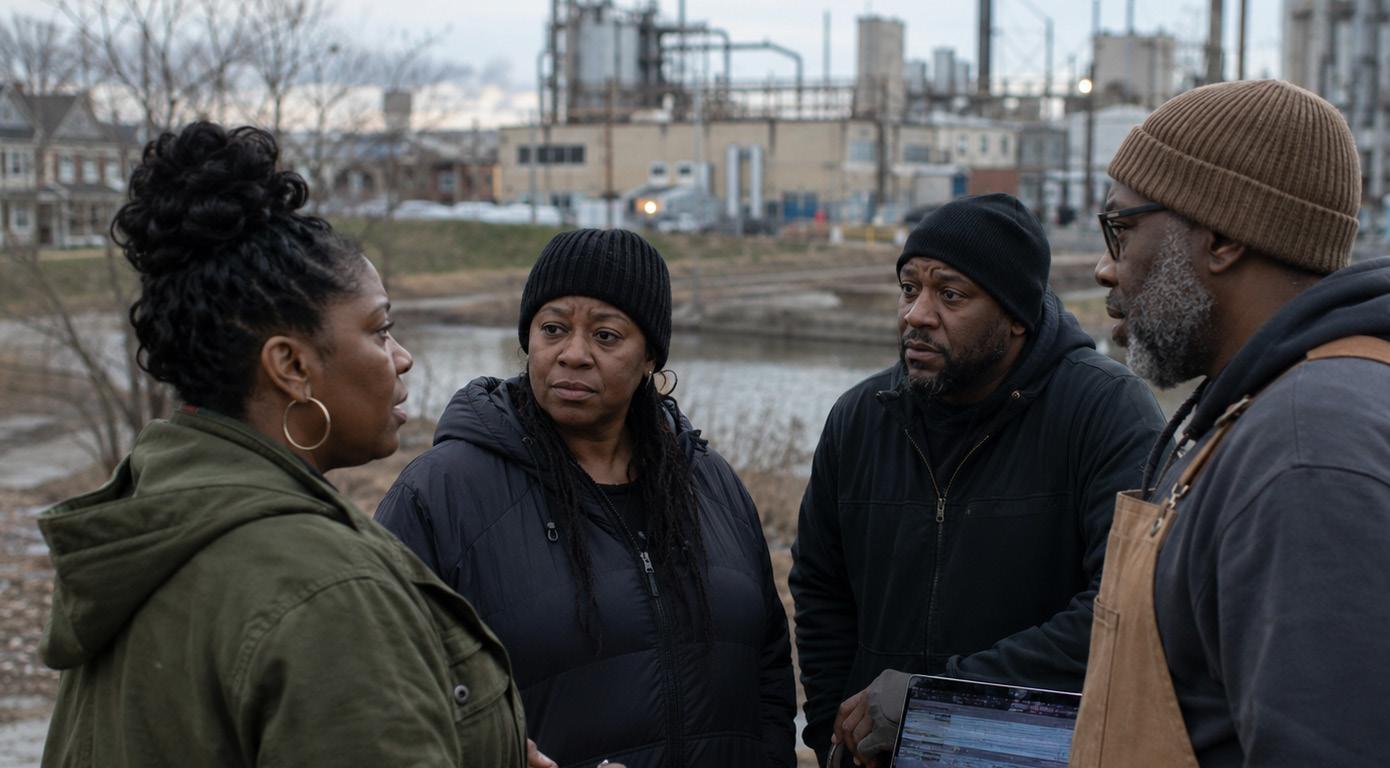
say the system is not yet functioning reliably enough to support that level of reporting. The concern is real for retailers, manufacturers, and small businesses in the community. Under the law, companies that fail to report required data could face restrictions on selling products in Minnesota. If the system cannot handle submissions at scale, even companies trying to comply may find themselves shut out of the market. That could disrupt supply chains, limit access to everyday goods, and create uncertainty for workers and small businesses alike. In communities that
have historically borne the brunt of environmental harm, a failed rollout carries additional weight. When policies meant to protect public health fall short in execution, it reinforces a pattern many residents know too well, where promises are made, but results never fully reach the people who need them most. State leaders have emphasized the importance of moving forward to ensure the law achieves its environmental goals. But others argue that enforcing an arbitrary deadline while the system still flounders risks undermining those same goals, and strains the very communities the law is intended to serve. A year-long reporting extension offers a compromise. Minnesota’s leadership on PFAS is too important to fall prey to another botched IT rollout. It’s important to pass strong laws, but it’s equally important to make sure those laws work, in practice, at scale, and for everyone. Lawrence Wright is a member of the DFL African American Caucus.





Her generation moved toward possibility. Mine must learn to move toward power. Minnesota will soon be enforcing one of the toughest laws in the country to track PFAS “forever chemicals”. This is a move many in North Minneapolis are championing after suffering years of exposure to industrial pollution. But as the first reporting deadline approaches, community members and local businesses are raising a different concern: whether the state is prepared to deliver on that promise. There is broad support for addressing PFAS contamination. In communities that have lived with the consequences of environmental harm, the need for accountability was yesterday. What is being questioned is whether the system meant to enforce that accountability is ready. Minnesota has an uneven track record with largescale IT rollouts. Its troubled launch of MNLARS in 2017 took years to resolve and cost over $100 million to remedy. More recently, the rollout of the Minnesota DNR Electronic Licensing System left both customers and vendors in the dark, sparking an investigation by the Office of the Legislative Auditor. The state’s e-bike rebate program crashed within minutes of opening. Now, a new platform known as PRISM is being positioned as the backbone of PFAS reporting. The system is designed to collect detailed chemical data on a vast range of products, many tied to complex, global supply chains. Businesses required to submit that data
Building A New Table:
Dr. Brittany Lewis convenes a national gathering in Minneapolis, with a new book and the first statewide survey on Black women, girls, and femmes
On Thursday, June 11, and Friday, June 12, Research in Action (RIA) and the Equity in Action Way (EAW) Foundation will host the inaugural Community Research for Liberation National Convening at Westminster Presbyterian Church, 1200 South Marquette Avenue in downtown Minneapolis. The two-day gathering carries a theme — Building a New Table with Black Women, Girls, and Femmes — that names the project squarely. Founder and CEO Dr. Brittany Lewis is calling community members of all ages, educators, organizers, philanthropic leaders, and frontline public service workers to a working room, not a panel. The convening lands in the same season as the May 5 Minneapolis launch of Dr. Lewis’s new book, Building a New Table: A Community-Centered Handbook for Transformative Social Change, published by the University of Minnesota Press. The book operationalizes the Equity in Action (EIA) model Dr. Lewis has built across more than fifteen years of community-engaged research — a step-
means while preparing for the challenges ahead.”
For Senate Democrats, the negotiation was hardwon. Senate Majority Leader Erin Murphy (DFL-St. Paul) did not shy away from the difficulty of the session or the limits of what divided government could deliver.
“This was a hardfought negotiation, and I’m damn proud to say we defended many of our most essential Senate positions, including property tax relief for homeowners and through direct support to counties, and funding to stabilize healthcare at HCMC and critical access hospitals around the state.”
— Senate Majority Leader Erin Murphy Murphy acknowledged a structural challenge that overshadowed this entire session: a significant portion of the state’s new budget resources went not toward new investment but toward “backfilling costs created by cuts from the federal government.” The consequence, she said, is that some of the Senate DFL’s “strongest proposals did not have support across the aisle.” She pledged to connect with Minnesotans after session to “prepare our-
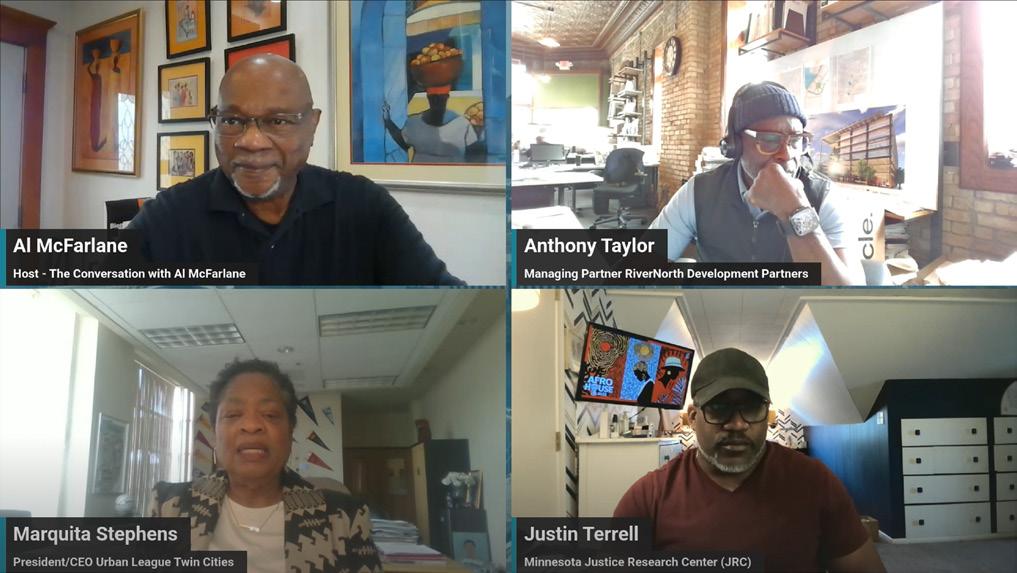
With Al McFarlane, where community leaders examined the growing pressure facing Minnesota’s legacy Black institutions. “There’s been a lot of fraud documented, adjudicated in the courts,” journalist and community leader Al McFarlane said during the conversation. “But the question is, has that air of accountability and responsibility also immobilized good thinking, right thinking, right work?” The issue resonated because Minnesota’s racial disparities remain among the nation’s most persistent despite the state’s reputation for economic prosperity and progressive politics. Black Minnesotans continue experiencing major gaps in homeownership, household income, educational outcomes and incarceration rates compared to White residents. Within that environment, many long-standing Black organizations evolved far beyond their original missions because communities themselves were navigating interconnected crises at the same time. A family facing eviction may also need employment assistance. Someone reentering society after incarceration may also need housing support, mental health resources and childcare access. Youth mentorship often overlaps with
by-step practitioner’s guide to a kind of research that does not extract from communities, but builds with them.
“We are no longer bringing folding chairs. We are building new tables.”
— Dr. Brittany Lew is, Founder and CEO, Research in Action
What happens June 11 and 12 Day one opens at 4:30 p.m. on Thursday, June 11, with two parallel affinity spaces running until 8 p.m. “Collective Heal ing: A Sacred Space to Reflect and Connect” is convened for Black women, girls, and femmes. A separate companion space, “From Fragility to Collective Liberation: Unlearning and reimagining how to build new tables with Black women, girls, and femmes,” is convened for accomplices — the term RIA uses for those who arrive ready to do their own unlearning before sharing a table.
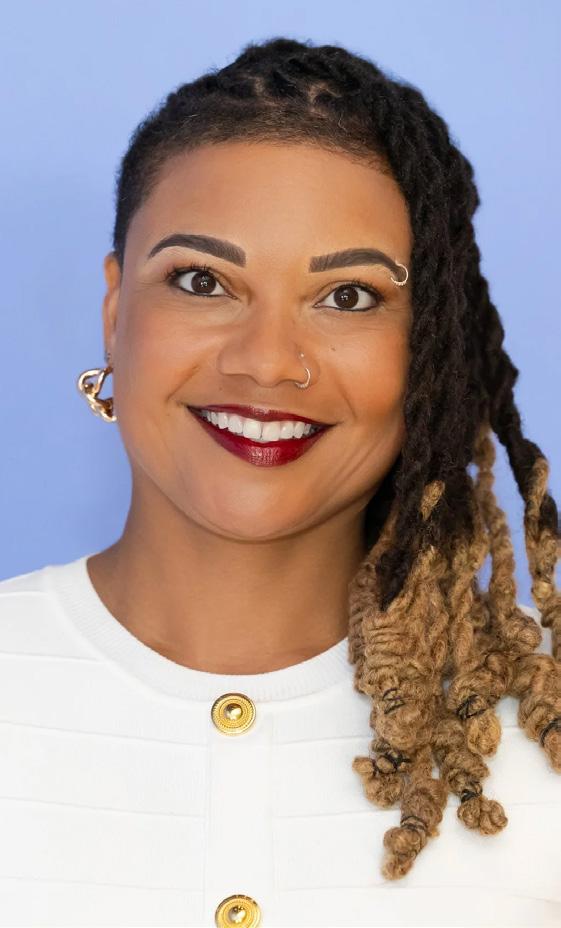
healing-centered engagement, and accountable partnerships across community and institutional settings, alongside the public release of new data.
The data: a statewide first for Minnesota
Day two on Friday, June 12, runs from 9 a.m. to 6 p.m. and contains the convening’s working core: workshops in liberatory research design,
selves for the challenge we face and solutions we can build next year.”
House Republicans, led by Speaker Lisa Demuth (R-Cold Spring), claimed significant victories on affordability — the signature theme of the GOP’s legislative agenda this session.
“Our caucus has fought all session long for car tab relief, property tax cuts, and meaningful anti-fraud measures. This budget delivers that, along with help for rural and critical access hospitals across the state and relief for our counties.”
— Speaker Lisa Demuth Demuth pointed to tab fee reductions, property tax cuts, and anti-fraud measures as concrete deliverables for Minnesota households. “With this budget, we’re delivering on affordability for communities across the state. This will help Minnesotans statewide afford their lives for years to come,” she said.
House DFL Leader Zack Stephenson (DFL-Coon Rapids) offered measured endorsement of the deal from the minority position, calling it “a strong bipartisan agreement” that advances key Democratic priorities even without achieving everything the caucus sought.
“Providing certainty and stability for HCMC was a
violence prevention, academic support and food insecurity.
As a result, institutions like the Urban League increasingly became centralized spaces where residents could navigate systems that often feel fragmented or inaccessible elsewhere. That role helps explain why conversations about nonprofit trust carry unusually high stakes inside historically underserved communities.
“We celebrated our hundredth year anniversary last year,” said Marquita Stevens, president and CEO of the Urban League Twin Cities. “So we’re one hundred and one doing what we do.”
Founded in 1925, the Urban League Twin Cities originally emerged during a period when Black residents migrating north frequently encountered barriers to housing, employment and economic opportunity. More than a century later, Stevens suggested many of those barriers still exist, though they now appear in more layered and institutional forms.
Most people know the Urban League through workforce development and housing programs, Stevens said, but the organization’s work increasingly intersects with family stabilization and child welfare support. “One of the things that we do is work with people that are at risk, families that are at risk, child protection claims, working with kids and families to make sure that doesn’t happen,”
Statewide Survey — the first statewide survey of its kind in Minnesota, examining how Black women, girls, and femmes across different geographies experience institutions including healthcare, housing, criminal justice, and education. RIA and its partners are working with survey respondents to calculate a score for each institution that reflects the trust, stress, and support Black women, girls, and femmes report inside that institution. The scores become part of a statewide tool that maps where institutions are serving Black women, girls, and femmes well — and where the gap between mission statement and lived reality remains widest. RIA is partnering with county leaders to pilot how that tool can be used to redesign programs and services.
On June 12, RIA will publicly release the findings of its Justice in Institutions for Black Women, Girls, and Femmes
necessity, and I’m glad we were able to find bipartisan support. DFLers are ready to pass this agreement and complete this work for the people of Minnesota.”
— House DFL Leader Zack Stephenson Stephenson highlighted the HCMC stabilization funding alongside the $1.2 billion bonding bill, property tax refunds, and tab fee reductions as evidence that divided government can still produce meaningful outcomes. He acknowledged the deal “certainly doesn’t include everything House DFLers wanted,” but called it “a strong step forward on important issues while working in divided government.”
HCMC: Minnesota’s safety-net hospital was weeks from the edge To understand what is at stake in this agreement, you have to understand what nearly happened to Hennepin County Medical Center.
HCMC — operated by Hennepin Healthcare, the county’s public health system — is Minnesota’s busiest Level 1 adult and pediatric trauma center. It is also a safety-net hospital, meaning it accepts patients regardless of their insurance status or ability to pay.
More than half of Minnesota’s practicing physicians trained there. In 2025, the hospital saw nearly 115,000 patients, includ-
Stevens explained. “We’re looking at moving into foster care as a result of the work that we’ve done in family stability.” That expansion reflects broader realities facing many families across Minnesota. Housing instability can increase the likelihood of child welfare intervention. Job loss can trigger housing insecurity. Incarceration or unresolved court involvement can interrupt employment and destabilize entire households. Community organizations often become firstplace residents before problems escalate into larger crises.
Before joining the Urban League, Stevens led an African American adoption agency focused on helping Black children leave foster care permanently. “We were successful in moving over four hundred Black kids out of foster care and into permanency,” she said. Later, after the killing of Philando Castile intensified tensions between law enforcement and Black communities statewide, Stevens helped facilitate conversations between Roseville residents and police. That history of relationship building, Stevens suggested, is part of why legacy institutions continue holding trust even during moments of widespread public skepticism surrounding nonprofits.
“Why are our time slots full with people coming to us?” Stevens asked. “Because
kee, Wisconsin, and Executive Director of The Leadership Undercommons. Dr. Liston’s practice centers what she names directly as her organizing question: what happens when Black identity — and particularly the lives of Black women, girls, and femmes — is loved, protected, and defended as we collectively learn about process and change in organizations?
Friday evening from 6 to 9 p.m., RIA hosts “Advancing Equity in Action: An Evening of Art and Activation to Resource Community-Led Research” — the first inaugural fundraiser for the Equity in Action Way Foundation. The Foundation is the philanthropic vehicle RIA has stood up to resource future community-led research outside the constraints of grant cycles and institutional gatekeeping.
The keynote and the fundraiser The convening’s keynote will be delivered by Dr. Monique Liston, Founder, Chief Strategist, and self-described Joyful Militant of UBUNTU Research and Evaluation in Milwau-
ing more than 94,000 emergency department visits. But HCMC has been bleeding financially for years. It has posted operating losses in seven of the last eight years, driven largely by unpaid bills from uninsured and underinsured patients, Medicaid underpayments, and the catastrophic collapse of UCare — a Minnesota-based health insurer that went out of business owing the hospital $115 million. By early 2026, HCMC could not make its $33 million biweekly payroll and was relying on a county line of credit to survive. In February, the hospital cut 100 beds, reducing its capacity to 390. Projections shared with the Hennepin County Board estimated $1.7 billion in cumulative losses over the next decade.
Hennepin County Commissioner Angela Conley warned in April that if lawmakers failed to act before the May 18 session end, HCMC could begin closing in June — a process that would cost up to $100 million and send shockwaves through the broader regional healthcare system. Roughly 40% of patients transferred to HCMC come from outside Hennepin County; 30% of all HCMC patients reside outside the county. “HCMC is not just a Minneapolis hospital,” said Jeremy Olson-Ehlert, a registered nurse and officer of the Minnesota Nurses Association. “It’s Minnesota’s safety net. It
they do have other choices.”
The answer, she said, goes beyond programming or funding. “They trust us,” Stevens said. “They can tell their story without fear of reprimand, without fear of shame, and they can leave whole.” That issue of trust also shaped remarks from economic development advocate Anthony Taylor, who argued that conversations about nonprofit accountability cannot be separated from the underlying economic conditions many Black neighborhoods continue facing. “My very big focus is really looking at real economic measurement of success,” Taylor said. Taylor described his current work as an attempt to create long-term economic infrastructure in North Minneapolis through jobs paying roughly $55,000 annually, wages he believes create measurable shifts in family stability.
“What I really see is that getting the fifty-five thousand dollars for a family increases voting,” Taylor said. “It increases educational outcomes. It increases health outcomes.” His point reflected a larger reality repeatedly referenced throughout the discussion: economic instability rarely remains isolated to finance alone. Lower income levels often correlate with reduced access to stable housing, healthcare, transportation and educational opportunities, conditions that can compound across generations.
tion, the Saint Paul and Minnesota Foundation, the Women’s Foundation of Minnesota, Wilder, the African American Leadership Forum, the Addieun Foundation, and the University of Minnesota’s Office for Diversity, Inclusion, Community Engagement, and Equity.
How to participate Convening registration: researchinaction.com/ convening-reg. Use code EARLY BIRD26 for an early-registration discount. Gala tickets (June 12 evening): zeffy.com/en-US/ ticketing/gala-15.
Sponsors of the convening Confirmed sponsors of the Community Research for Liberation National Convening include the McKnight Foundation, the Blue Cross and Blue Shield of Minnesota Founda-
is Minnesota’s last line of care.”
The bipartisan investment announced Tuesday marks what leaders called a “historic” commitment to HCMC’s future. Critical access hospitals — smaller rural facilities that qualify for special Medicare reimbursement structures — are also included in the stabilization funding, a nod to the coalition of rural legislators whose communities depend on these institutions.
The federal cost-shift: The story under the story Perhaps the most significant context for understanding this budget agreement is what it was forced to absorb. Senate Majority Leader Murphy’s reference to “backfilling costs created by cuts from the federal government” signals a structural shift that will define Minnesota’s budget debates for years to come.
Federal reductions in Medicaid, housing assistance, and related programs have pushed enormous costs onto state ledgers, compressing the available resources for new investment even as legislators sought to address affordability and infrastructure. The Minnesota Senate’s HHS budget bill earlier this session noted $700 million in spending above base levels needed simply to alleviate the impact of the federal budget passed in 2025. Medicaid enrollment changes, food
Taylor contrasted those realities with broader citywide prosperity. “Median household income in Minneapolis is about eighty-nine thousand dollars,” he explained. “Median household income in North Minneapolis… is about thirty-nine thousand dollars a year.” He also connected today’s nonprofit debates to the longer history of Black self-sufficiency efforts in America.
“The early mutual aid for Black institutions was really driven by the churches, the informal neighboring networks,” Taylor said. That historical context became important because speakers repeatedly distinguished between organizations accused of exploiting public systems and institutions that developed through decades of direct community relationships and local accountability. The same theme surfaced when Justin Terrell of the Minnesota Justice Research Center discussed how Minnesota’s criminal legal system continues shaping economic outcomes for Black residents.
“The criminal legal system has had a disparate impact on our communities,” Terrell said. “It gets in the way, creates significant barriers to some of the economic goals that Anthony is talking about.” Terrell discussed his organization’s push to eliminate cash bail in Minnesota, arguing that the current system disproportionately
• Sponsorship: download the Sponsorship Invitation one-pager at researchinaction.com/convening. Volunteer interest: linked from the convening page. • Convening website: researchinaction.com/convening.
Insight News will publish a major feature profile of Dr. Lewis and the Equity in Action model in the May 25, 2026 edition, ahead of the convening.
security strains, and the collapse of UCare all reflect a pattern: federal retrenchment arriving at the worst possible moment for a safety-net system already under stress.
For Insight News readers — particularly in North Minneapolis, Saint Paul’s East Side, and communities of color — the downstream effects of this federal-to-state cost shift will be felt in the hospitals, clinics, food shelves, and county offices that anchor community life. The agreement reached today is a floor, not a ceiling. What to watch next Legislative leaders indicated readiness to move quickly to pass the agreement. The signed framework is available for public review through the governor’s office. Full budget bill language, fiscal notes, and committee votes will be the next measures of what this agreement means in practice for Minnesota households, healthcare providers, and local governments. The regular legislative session ends May 18, 2026. Insight News will continue to cover the impact of this budget agreement on Twin Cities communities. Insight News uses AI-assisted tools in some editorial production. Read our AI Policy & Transparency Statement at www.insightnews.com/ site/ai_policy.html.
harms lower-income residents unable to afford release while awaiting trial. “If you are arrested for a crime, accused of a crime, you sit in jail until they give you a bail hearing,” Terrell explained. “Those who can pay get to go home. For single mothers or fathers or whomever who can’t afford to pay, they sit there.” The consequences, he argued, extend far beyond the courtroom itself. Even a short jail stay can interrupt employment, destabilize childcare arrangements or lead to missed rent payments, pressures that often push families toward already strained community support organizations.
By the end of the conversation, the discussion had evolved beyond fraud allegations alone. Instead, it became a broader examination of what happens when public trust weakens around institutions operating in communities where many residents already feel disconnected from larger systems of support. For Stevens, the significance of those organizations comes down to continuity and familiarity. “We’re the grandma,” she said. “And no community can do without the grandma.” For more in-depth reporting and community coverage on this issue and others affecting Minnesota communities, visit Insight News.
Every time a "best places to live" ranking is published, Minnesota and the Twin Cities rank at or near the top. And every time those lists are parsed by race, we fall all the way to the bottom. This is the urgency of now
1
2
3
That Governor Tim Walz meet with representatives of Minnesota's Black communities to affirm the state's commitment to prioritize disparities elimination across all aspects of Minnesota governance and administration.
That the Governor hold his appointed State Commissioners and the departments they lead accountable for measurable and reportable strategies to eliminate disparities embedded in state policy and procedure.
That the Minnesota Legislature prioritize intentional solution-making by engaging Minnesota's Black community at the table of decision — in committee rooms, not just at press conferences.
The median Black household's wealth ($9,000) is one-fifteenth that of white households ($134,520). Structural barriers in lending, housing, and employment cripple Black business formation. We demand capital access, not just conversation.
P R I O R I T Y 3 I n v e s t N o w !
Public Safety
Employment
Black Minnesotans face unemployment rates nearly triple their white counterparts. Criminal justice contact removes Black applicants before they enter the queue. Break institutional barriers. Create pathways to well-paying careers.
Safety encompasses physical, economic, and emotional well-being. Playgrounds, streets, and malls remain unsafe in North Minneapolis and East St. Paul. Real public safety requires community investment — not just policing. P R I O R I T Y 4 I n v e s t N o w !
P R I O R I T Y 5 I n v e s t N o w !
Education
Black student reading and math scores are 20+ points below state average. Minnesota ranks 50th for Black on-time graduation. Only 25% of Black students are college-ready Our children deserve more than remediation as a starting point.
P R I O R I T Y 7 D e m a n
and Capacity
Housing
Twin Cities Black homeownership stands at 30.1% — among the lowest in the nation. The gap is the fourth-largest in the country per the Federal Reserve Bank of Minneapolis. Investor acquisition of single-family homes is accelerating the crisis.
P R I O R I T Y 6 I n v e s t N o w !
Health & Wellness
Heart disease, stroke, homicide, substance abuse, cancer, and infant mortality strike the Black community at disproportionate rates. The Legislature must act with urgency proportional to the crisis.
Conflicting interests and diffuse capacity have produced policies that systematically disenfranchise the Black community We demand policy coherence — legislation that reflects the documented needs, expressed will, and political power of Black Minnesota. Every legislator, regardless of party, bears this responsibility
Minnesota ranks 2nd worst in the nation for Black Americans to live — a recognition that, alongside the May 2020 murder of George Floyd, placed this state at the center of the national racial reckoning.
The racial wealth gap is structural. It is the accumulated result of intersecting policies — in lending, housing, employment, and education — that built intergenerational wealth for white families while systematically denying it to Black families. The losses from unpaid wages and denied inheritances are estimated at $20 trillion.
In the Twin Cities, the homeownership gap is among the nation's widest — and it has grown over two decades, accelerated by investor acquisition of hundreds of single-family homes now operated as rentals.
Minnesota's record budget surpluses of recent years offered a historic opportunity to address these disparities in a meaningful way That opportunity cannot be squandered. The United Black Legislative Agenda — convened by faith leaders, organized by the Minnesota Organizing Coalition — brings the voice of community to the table of decision.
"There are two Minnesotas — one white, one Black — separate and unequal."
The session ends. Our demand does not.
ate passed a gun violence prevention package on May 4 along party lines, including a ban on the sale of assault-style weapons and large-capacity magazines, a felony prohibition on ghost guns, and funding for school safety and mental health resources. The measure has yet to clear the committee process in the Republican-controlled House. Speaker Lisa Demuth and her caucus hold a oneseat majority; Democrats have accused House leadership of blocking a vote.
What the ordinance would do According to the mayor's office, if the legislature lifts the preemption barrier, the Minneapolis ordinance would ban certain semiautomatic assault-style weapons, ghost guns — firearms lacking serial numbers — binary triggers, and large-capacity magazines. The Senate's package also includes provisions to strengthen firearm storage requirements, require reporting of lost or stolen guns, and expand restrictions on carrying firearms in certain public spaces.
All three of the firearms used in the Annunciation shooting — a rifle, a shotgun, and a pistol — were purchased legally. That fact has become a centerpiece of the reform argument: the weapons were acces-
use disorder care provided by the Minnesota Department of Corrections and expands access to mental health unit beds for incarcerated individuals. The change is significant. Behavioral health access inside the state correctional system has been an ongoing concern for community advocates working on reentry and recidivism, particularly for Black men returning to the Twin Cities after incarceration. HF 4151 modifies the eligibility requirements for individuals seeking licenses as private detectives or protective agents. The bill updates the licensing standards the state applies to a class of private security and investigative workers whose presence has expanded in commercial and public-facing settings across the metro.
From Cover
provide approximately $160 million for additional housing and homelessness prevention, including $40 million for the Family Homeless Prevention Assistance Program and $20 million for the Greater Minnesota Workforce Housing Development Program. House sponsors have estimated the package would result in more than 2,000 new housing units across the state.
sible, traceable, and legal. Two children died in their pews. According to the mayor's press release, Minneapolis, Saint Paul, and Edina are currently the only cities in Minnesota to have advanced local gun reform ordinances. Saint Paul passed its ordinance in November 2025 and immediately faced a lawsuit from the Minnesota Gun Owners Caucus; that litigation remains active. Saint Paul's City Council President Rebecca Noecker put the city's posture plainly at the time of that vote: "We are lined up at the door — us, dozens of other cities, and thousands of residents — and we just need the legislature to open the door."
The council: 'Weapons of war do not belong in our neighborhoods' Ward 12 Council Member Aurin Chowdhury, who authored the ordinance, has been direct from the start about what this vote means. "Weapons of war do not belong in our neighborhoods. And today, Minneapolis is saying: enough. This harm has touched every corner of our city — from the north side to the south side. With this action, we say to every impacted community member: we stand with you in your grief, and we will do everything in our power to end this violence."
— Council Member Aurin Chowdhury, Ward 12, as reported by CBS Minnesota
Consumer protection and transportation safety
HF 4502 establishes a statewide trusted contact program designed to help mitigate financial exploitation and fraud. Under the new law — to be coded in Minnesota Statutes chapter 45A — a financial services provider may offer customers the option to designate one or more trusted contacts the provider may reach in defined circumstances: when the customer cannot be reached, when an urgent matter or emergency arises, when the provider suspects third-party fraud or financial exploitation targeting the customer, or when the account has been deemed dormant.
The bill limits provider liability for participating in the program in good faith, and grants immunity to a trusted contact who acts in good faith and exercises reasonable care. Elder financial exploitation, identity-theft-driven account takeover, and predatory family-member fraud have been documented harms for Black seniors in particular; the
Chowdhury acknowledged that legal challenges are likely and said city attorneys worked closely with council members on the ordinance's language to prepare for them.
Protect Minnesota: 'We cannot normalize fear' Maggiy Emery, Executive Director of Protect Minnesota, connected the ordinance to the broader demand she says is now impossible for the legislature to ignore.
"This ordinance reflects the growing demand from Minnesotans for action on gun violence and for leaders willing to meet this moment. Minnesota families are exhausted by preventable gun violence, and there is strong public support for common-sense measures like safe storage and lost-and-stolen firearm reporting laws that save lives and reduce youth access to guns. Since the tragic shootings last summer, communities have made it clear that we cannot normalize fear in our schools, neighborhoods, and places of worship. We're grateful to city leaders for taking bold action, and we urge state lawmakers to do the same."
— Maggiy Emery, Executive Director, Protect Minnesota (Mayor's office press release) Emery has been visible throughout the 2026 session. Just one day before the mayoral signing, on May 12, she joined healthcare professionals at the Capitol — including the pediat-
trusted contact framework is a structural intervention that does not require the customer to detect the fraud first.
HF 4063 updates first aid kit requirements for school buses, mandates United States Department of Transportation (USDOT) numbers for all school buses operated in Minnesota, and authorizes school buses to be used on public roads for driver training purposes.
Other enacted legislation
Additional bills signed in this package include SF 1714, which establishes a payment transparency provision for public contracts; SF 2814, which establishes an advisory disciplinary sanction matrix for real estate appraisers; and HF 3521, which creates an exception to the state’s hospital construction moratorium. Coming as the Legislature negotiates separately over an emergency funding package for Hennepin County Medical Center, the hospital construction moratorium excep-
ric trauma surgeon who treated seven children the day of the Annunciation shooting — in a final push for the House to act before adjournment.
Moms Demand Action: 'Minneapolis families are done waiting' Leah Kondes, Minneapolis lead of Moms Demand Action, placed the burden for inaction precisely where her organization believes it belongs.
"This ordinance sends a clear message: Minneapolis families are done waiting for action while politicians at the Capitol continue to stall on policies that would keep our communities safe. In a perfect world, there would be a strong federal response to this national crisis. Failing that, state lawmakers should be doing everything they can to protect our kids and communities. But if they can't or won't act, cities should at the very least have the ability to reduce gun violence and save lives. I'm grateful to the Minneapolis City Council and Mayor Frey for stepping up and showing Minneapolis residents that they are ready and willing to do something about this issue."
— Leah Kondes, Minneapolis lead, Moms Demand Action (Mayor's office press release)
Annunciation Light Alliance:
'We are parents first' Since August 27, the parents of
tion is a reminder that statewide hospital capacity policy is being adjusted at the margins even as the larger HCMC question remains on the conference committee table.
“These measures, taken together, tighten the rules of the rental market, expand behavioral health access for incarcerated Minnesotans, and put a new tool in customers’ hands against financial fraud.”
— Editor’s framing, Insight News
Why these bills, why now The eleven-bill package lands inside the closing window of the 2026 legislative session, with conference committees still working through the larger omnibus questions: housing infrastructure bonds (HF 1141), HCMC emergency funding (SF 4612 and the companion sales tax options), and the suite of statewide policy bills awaiting reconciliation between House and Senate versions. The Governor’s signing pace in this final
Annunciation Catholic School have done something remarkable: they organized. The Annunciation Light Alliance — co-chaired by Kristen Neville and Brittany Haeg, with a membership of roughly 160 — has testified before legislative committees, carried their children's names into the Capitol rotunda, and installed 60 empty school desks on the Capitol grounds in February in memory of Harper Moyski, Fletcher Merkel, and more than 200 Minnesota children lost to gun violence since 2021.
"We are parents first," Neville said when the Alliance was formed. "We came together not out of anger or ideology, but out of love for our kids and a belief that no family should experience this kind of loss."
When the Minnesota Senate passed its gun safety package earlier this month, Neville was watching from the gallery.
"What I felt like I saw today was courage in action."
— Kristen Neville, co-chair, Annunciation Light Alliance "I think there were people that were really standing up for what they believe will keep our kids safe," she said after the Senate vote. "Knowing that it's the first time that any type of bill has been brought to the floor that involves guns — that's huge, and I think that the state of Minnesota should be really proud."
At the signing ceremony Wednesday, Neville re-
stretch is one indication that the routine but consequential bills — the ones that govern submeter billing at move-out, or how a bank can intervene when an elderly customer’s account is being drained — are moving even as the headline negotiations continue.
For Black tenants, Black homeowners navigating HOA governance, families with members inside the correctional system, and Black seniors who have been targeted by financial predators, the bills signed in this package are not abstract. They are the rules that will govern lived encounters with landlords, banks, hospitals, and the state itself.
The eleven bills, at a glance
• SF 4171 — Submetered utility final billing for vacating tenants; digital rent payment provisions. SF 1750 — Property management company practices; common interest community rights; HOA
sponded to the mayor's action directly.
"We are grateful to the City of Minneapolis for taking this meaningful step forward and recognizing that protecting children and communities cannot wait. No family, school, or community should endure the lasting impact of gun violence. This ordinance reflects a commitment to prevention, accountability, and meaningful action to reduce harm and strengthen community safety."
— Kristen Neville, co-chair, Annunciation Light Alliance (Mayor's office press release)
What comes next The Minneapolis ordinance, like Saint Paul's before it, faces the real possibility of immediate legal challenge. The Minnesota Gun Owners Caucus has signaled it is watching the final ordinance language closely and has a pattern of filing suit within days of passage. The St. Paul litigation remains unresolved. Beyond the courts, the legislative calendar is the binding constraint. The session is in its final days. Democrats have tried and failed to force a floor vote in the House. Emergency room physicians, nurses, parents, and mayors have all made their case at the Capitol. The Senate has done its part. Two desks still stand in the memory of Harper and Fletcher. Minneapolis is, at last, on the record.
mandate restrictions.
• HF 3769 — Department of Corrections substance use disorder care; mental health unit bed access.
• HF 4151 — Private detective and protective agent licensing eligibility. HF 4502 — Trusted contact program for financial services providers. HF 4063 — School bus first aid kits, USDOT numbers, and driver training authorization.
SF 1714 — Payment transparency in public contracts. SF 2814 — Advisory disciplinary sanction matrix for real estate appraisers.
• HF 3521 — Exception to the hospital construction moratorium.
• Two additional bills in the package; full text and bill summaries available at revisor.mn.gov and at the Governor’s Legislation Tracker, mn.gov/governor/ news/legislation.jsp.
vention Committee
“Housing infrastructure bonds are the bread-andbutter tool for building more homes and more affordable homes.”
— Rep. Michael Howard, DFL-Richfield, CoChair, House Housing Finance and Policy Committee
Greater Minnesota workforce housing and what it means here
A component of the House proposal is a $20 million increase for the workforce housing development program. This program — formally the Greater Minnesota Workforce Housing Development Program — targets communities statewide facing gaps between construction costs and affordable rents.
For North Minneapolis and the Rondo neighborhood, this funding is the lifeblood of community-led development. These bonds fund the bricks and mortar of affordable units that keep legacy residents in place.
Advocates argue that how these dollars are structured can either open or close doors for local, minority-owned developers and contractors who are too often squeezed out of larger projects.
The principle applies here in the Twin Cities: when capital is available to bridge the gap between construction costs and market-rate affordability, it creates space for Black-led firms to take the lead on revitalizing our own corridors — producing both new housing stock and good-paying jobs that stay within the ZIP code. The Senate version includes a policy change allowing market-rate projects in Greater Minnesota that receive Workforce Housing Development Program funding to also qualify for the State Housing Tax Credit without in-
come restrictions, a provision conferees will weigh against the House framework.
Homeownership and the insurance hurdle
Paired with development funding is expanded support for the Homeownership Education, Counseling, and Training Fund — known by its statutory acronym HECAT, codified in Minnesota Statutes § 462A.209. The program provides training, counseling, and education to new homebuyers, those considering refinancing, and those at risk of foreclosure. For a community facing one of the widest racial homeownership gaps in the nation, these counseling resources are critical — providing the technical know-how that helps Black families navigate


a system too often designed to exclude them.
Even a successful closing, however, is currently threatened by skyrocketing property insurance premiums. Lawmakers have been working through task force recommendations to address these rising costs, which advocates argue function as a form of redlining 2.0 by unfairly penalizing urban ZIP codes and older housing stock.
“Minnesotans continue to face a housing crisis that is raising rents and mortgages across the state. This legislation will help build and maintain affordable housing for Minnesotans in every ZIP code.”
— Sen. Lindsey Port, DFL-Burnsville, Chair, Senate Housing and Homelessness Pre-
What is at stake
The looming end of session marks the end of an intense twoyear conversation on housing. The conference committee has heard public testimony and is working through the House and Senate versions side by side. If the House’s higher funding levels for infrastructure bonds prevail and the final bill reflects the actual scale of the crisis on the ground, it could signal a meaningful shift toward closing the housing gap. Insight News will continue to monitor the committee’s progress to ensure that the final signatures on these bills reflect the needs of the people.

By Tim Walker
Rep. Kim Hicks (DFL-Rochester) wants to put more teeth in Minnesota Human Rights Act provisions that prohibit discrimination against people with disabilities.
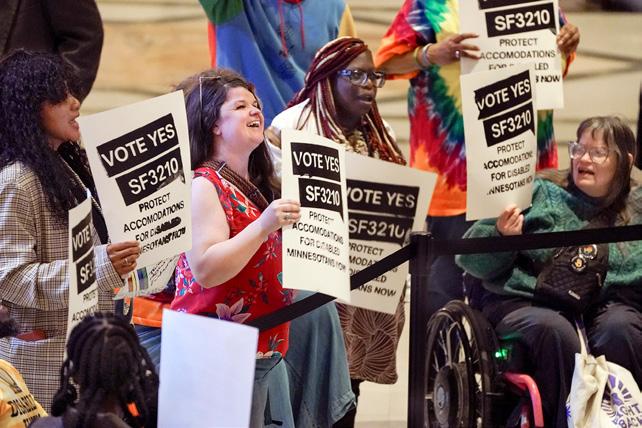
To that end, she sponsors HF2380/SF3210* that would add language to the public policy statement of the act specifying that not engaging in a process to provide an accommodation could be classified as a discriminatory practice.
A change Hicks said the disability community has been requesting for years, the bill specifies that the process must occur when people with disabilities seek “to participate fully in employment, housing and real property, public accommodations, public services, and education.”
“It’s making sure people with disabilities are able to have a conversation to make sure they can participate in our community,” she said.
Rep. Danny Nadeau (R-Rogers) successfully offered an amendment that the process must be to seek a “reasonable”
Via an 88-42 vote, the House passed HF2380/SF3210* Tuesday. The amended bill goes back to the Senate for concurrence.
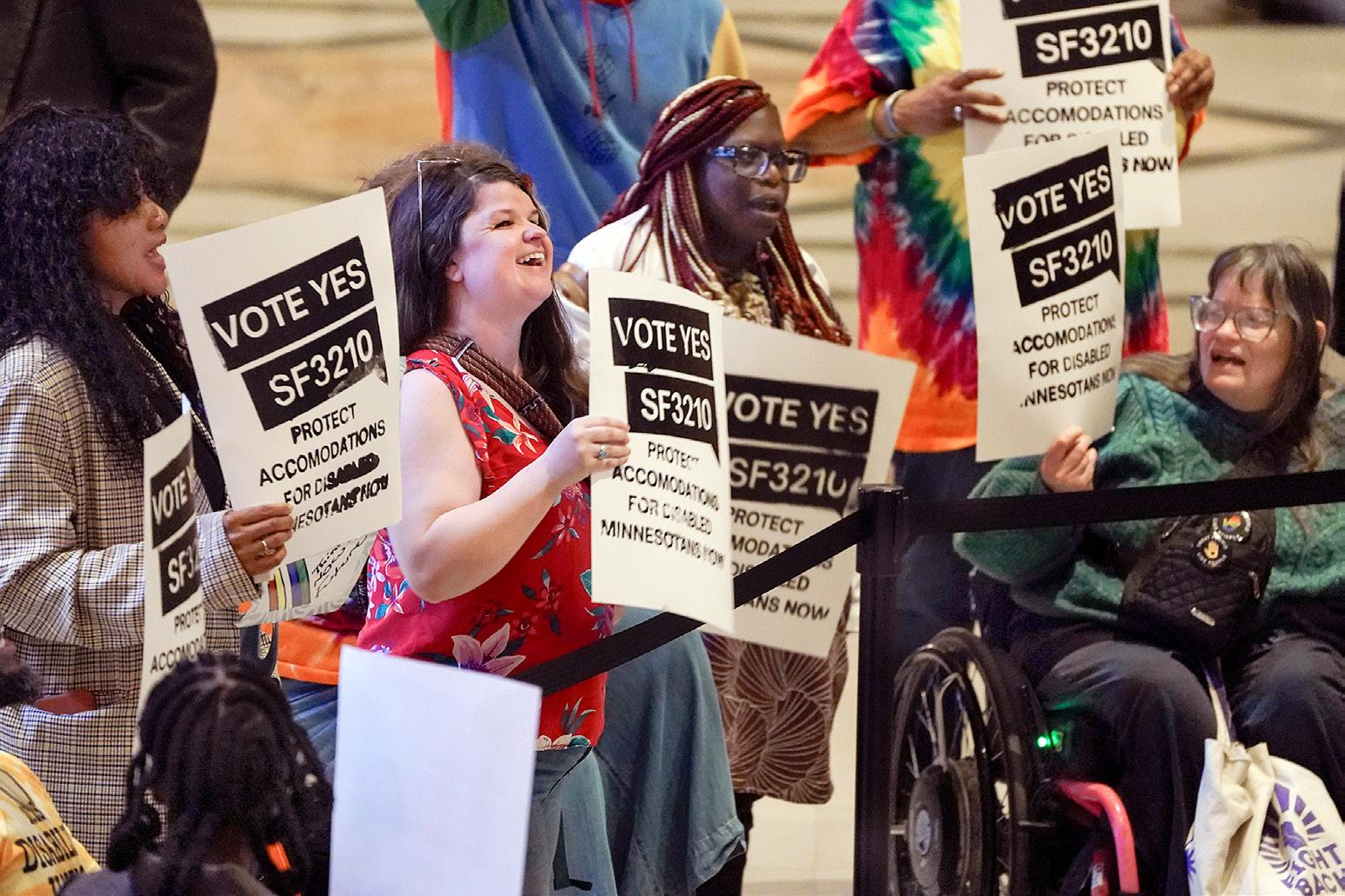
accommodation.
Bill opposition focused on the possibility that the change would open the door to employers being sued because they could not accede to an accommodation request.
“This just seems like it’s opening me up for litigation,” said Rep. Jim Joy (R-Hawley), a business owner. But another business owner predicted the changes would not be onerous.
“When we as employers do right by our employees, that comes to benefit us, and nobody sues us,” said Rep. Sandra Feist (DFL-New Brighton), an immigration attorney.
By Tim Walker
A fundamental redesign of the look and feel of the content in a child’s social media feeds re ceived strong House support Tuesday.
“No more ads, no more push notifications, no more infinite scrolling … and the strongest privacy protec tions,” Rep. Peggy Scott (R-An dover) said.
She believes children are especially vulnerable to the dangers posed by social media and need extra protection and therefore sponsors HF4138, which would require age mon itoring and verification for social media platforms, parental approval, and specific treatment
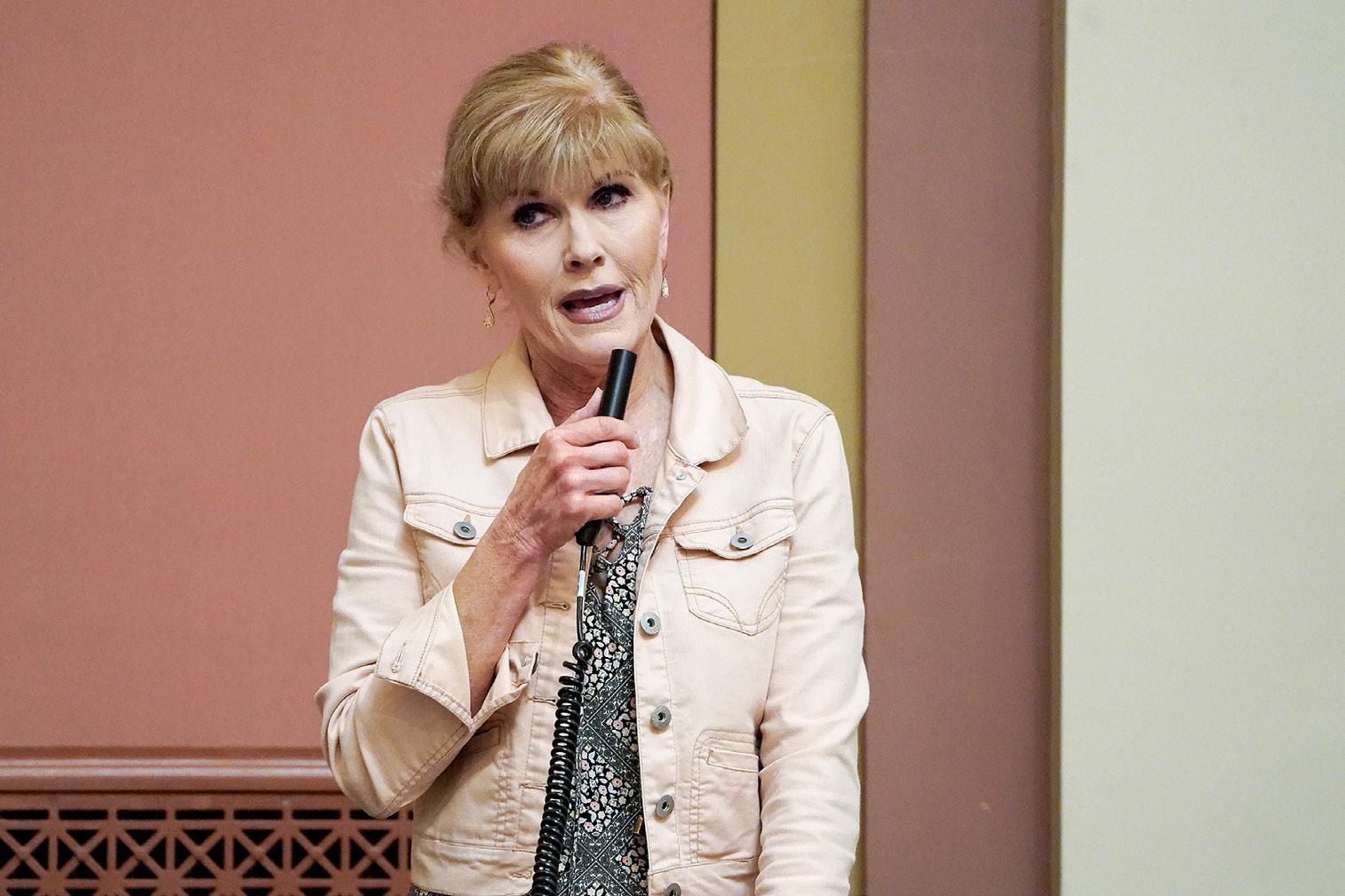
of accounts for children under age 16 related to addictive features, paid advertising, and the creation and termination of ac-
Passed 132-2, the amended bill next goes to the
The bill would not ban younger users from having social media, Scott emphasized, rather it would require a parent or guardian to approve of social media contractual agreements. Socal media companies would be required to use their software to determine the age of a person signing up to their platform. If the new user is 15 or younger, parental permission would be required and a restriction would limit what content could be shown. Scott said companies can make these
adjustments by using the technology they already employ.
Privacy settings for younger users would be automatically set to the highest level, which would restrict, for example, only content sharing between a child’s direct friends.
This would be a big step to keep grooming, pedophiles, drug dealing, sexploitation and sex traffickers away from vulnerable children, Scott said.
Rep. Kristin Bahner (DFL-Maple Grove) unsuccessfully offered an amendment that would have raised to 18 the age that users would be protected.
She said the bad actors trying to exploit our vulnerable children will still be out there after a child turns 16. “It’s time that we tell
big tech that we’re going to protect kids and not their profits,” Bahner said.
Scott said she chose the age of 16 because social media companies have successfully sued other states that have extended similar protections to older children.
Rep. Andy Smith (DFL-Rochester) successfully offered an amendment that would require social media platforms to promptly inform the Bureau of Criminal Apprehension if in monitoring a user’s account they suspect that a criminal offense involving a threat to the life or safety of a person or persons has taken place, is taking place, or is likely to take place.
The Minneapolis City Council vote on a data center moratorium, scheduled for Wednesday, May 21, is not a routine first reading. The procedural ground beneath the vote has already been tested. The legal mechanism is sharper than early coverage suggested. The state Legislature is moving on a parallel track. And one suburb just moved before Minneapolis did. This is what is actually on the table, and where the votes appear to be.
The vote that already happened
At the Minneapolis City Council meeting on Thursday, April 24, Council Member Elizabeth Shaffer moved to return the data center ordinance to its authors. In Council procedure, sending an item back to its authors is a polite way to kill it. The motion failed eight to five.
The eight votes to move the ordinance forward came from Council President Elliott Payne (Ward 1), Council Vice President Jamal Osman (Ward 6), Minority Leader Robin Wonsley (Ward 2), Majority Leader Aisha Chughtai (Ward 10), Council Member Jason Chavez (Ward 9), Council Member Soren Stevenson (Ward 8), Council Member Jamison Whiting (Ward 11), and Council Member Aurin Chowdhury (Ward 12). The five votes against came from Council Member Elizabeth Shaffer (Ward 7) and the moderate bloc, including Council Member Pearll Warren of Ward 5. Council Vice President Jamal Osman, who often votes with the Council's left wing on policy questions while
describing himself as pro-business, was on the moving-forward side. The eight-to-five count on a procedural motion is not a guarantee for the May 21 substantive vote. But it is a strong signal, and the substantive vote will require a comparable coalition to take effect.
What the ordinance actually does The ordinance is jointly authored by Council Members Aurin Chowdhury, Ward 12, and Jason Chavez, Ward 9. It would create a new Chapter 597 in Title 21 of the Minneapolis Code of Ordinances. The mechanism is an interim ordinance, a specific procedural tool in Minneapolis land-use law that pauses permitting and zoning approvals while staff prepare analysis and recommendations. If the ordinance passes on May 21, the moratorium would take effect immediately. It would halt permitting and zoning approvals for new, re-established, or expanded data centers for one year. During that year, city staff would prepare zoning, permitting, and development standards. The pause is not permanent. It is structured as a hold that ends when the framework is in place.
The state-level parallel: HF 4888 Minnesota House File 4888 would impose a statewide moratorium on data center development. Chowdhury has said her original intention was to wait for the state legislative cycle to conclude before introducing local language. The state cycle ends today, May 18. The Minneapolis vote follows three
days later. The relationship between the two is direct: if the state acts, the city's framework moves into that floor; if the state does not, the city's pause becomes the operative limit on the industry within Minneapolis boundaries.
Inver Grove Heights moves first
On Monday, May 11, the Inver Grove Heights City Council approved a one-year moratorium on data centers. Even after the vote, residents were frustrated that council members declined to allow public comment before the moratorium was approved, saying they had received enough input. The Inver Grove Heights vote makes the Minneapolis decision a follow rather than a lead in the metro, and it confirms that the data center fight is no longer hypothetical at the municipal level in Minnesota.
The counter-argument: Council Member Rainville's case Council Member Michael Rainville has published a public counter-argument against the moratorium. His case rests on three points. First, climate. Rainville argues that because Minneapolis is in a northern climate, data centers can use air to cool their systems from October through March, substantially reducing water usage compared with facilities in warmer regions. Second, electrical demand. Rainville argues that downtown Minneapolis currently has lower electric demand than its built capacity, and that data centers would absorb ex-
isting infrastructure rather than require new capacity. Third, jobs. Rainville argues that data centers provide well-paid union jobs both during construction and in the workforce that staffs them around the clock. Rainville frames a moratorium as a knee-jerk response and calls instead for city staff and the Council to research the differences between urban and rural data center models, particularly the use of underutilized downtown buildings.
The downtown tax base argument Behind the Rainville case is a broader argument made by the Council's moderate faction. Downtown Minneapolis commercial property values have fallen sharply since 2020, driven by remote work, vacancy, and a softening office market. Some moderate Council members have framed data centers as a potential revenue replacement for the downtown commercial tax base.
Council Member
Robin Wonsley, who voted with
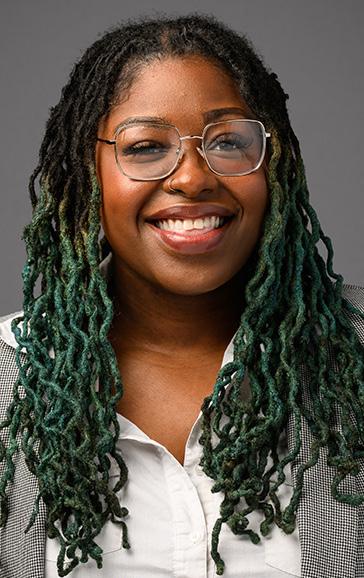

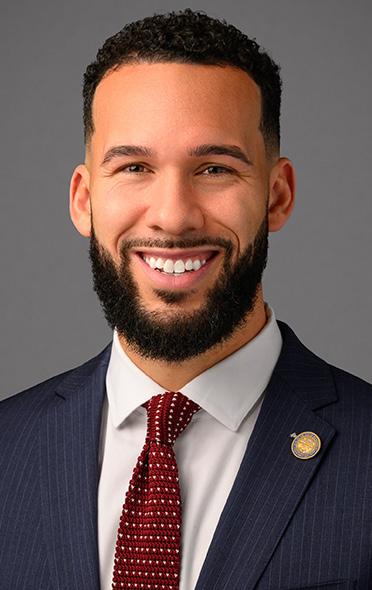
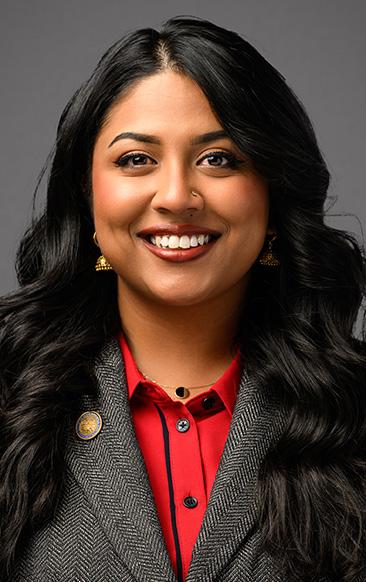
the moving-forward majority on April 24, has named the alternatives directly. Wonsley has said there are other ways to replace downtown tax revenue that do not involve corporate players she described as sucking up the city's resources. A consultant to the city recently laid out several options the Council has not yet acted on, including an income tax on residents, a real estate transfer tax, and a tax on empty homes and businesses.
Why Council Member Chavez keeps naming East Phillips Council Member Chavez, in his May 11 constituent communication, drew a direct line between federal policy and Minneapolis land-use decisions. Chavez said that in July 2025, the Trump administration signed an executive order directing the Environmental Protection Agency to identify Superfund and Brownfield sites for data center development, while weakening the National Environmental Policy Act, which requires environmental review before major federal actions. In January 2026,
Chavez said, the EPA issued guidance directing technology firms to contaminated sites near municipal water supplies, including sites where cleanup is ongoing.
Chavez named East Phillips by name. The neighborhood sits on a former federal Superfund site where arsenic contamination has not been fully remediated and which remains an active state Brownfield site. The Roof Depot fight, the Urban Farm proposal, and decades of cumulative pollution exposure are the context in which the data center conversation lands.
The pivotal vote Council Vice President Jamal Osman is widely understood to be the pivotal vote on the substantive ordinance. Osman has said publicly that Minneapolis needs to gather information about data centers in order to make the right decision. He voted with the moving-forward majority on the April 24 proce-
issues, also voted with the moving-forward majority on April 24. He represents the other key swing position. Five votes are needed to uphold a mayoral veto. The moderate faction has already demonstrated, on other Council items this term, that it can hold those five.
Two votes, one Council:
Member
Two ordinances and one contract amendment moved through the Minneapolis City Council in the first half of May. Each tells you something different about where the Council is, where it is divided, and where state law sets the ceiling on what the city can actually do.
Data centers: the May 21 vote and what an eight-to-five tells you
Council Members Aurin Chowdhury, Ward 12, and Jason Chavez, Ward 9, are the joint authors of an interim ordinance that would create a new Chapter 597 in Title 21 of the Minneapolis Code of Ordinances. The ordinance would establish a citywide pause on data center uses, halting permitting and zoning approvals for new, re-established, or expanded data centers while staff prepare analysis and recommendations on zoning, permitting, and development standards. If passed on May 21, the moratorium would take effect immediately and would run for one year.
for the May 21 substantive vote, but it is a strong signal. The opposing case is being made publicly. Council Member Michael Rainville, Ward 3, has argued that Minneapolis's northern climate allows data centers to use air-cooling from October through March, reducing water demand. Rainville has also argued that downtown electric demand is currently low, that no additional capacity is needed, and that data center jobs are well-paid union jobs, both during construction and in ongoing operations. Council Member Shaffer has called a blanket moratorium a blunt tool sending unclear signals to the market.
Jason Chavez, Ward 9 There is also a parallel state-level effort. Minnesota House File 4888 would impose a statewide moratorium on data center development. Chowdhury's original intention, she has said, was to wait for the state legislative cycle to conclude before introducing local language. The state cycle ends today, May 18. The Minneapolis vote follows three days later. On May 11, Inver Grove Heights became the latest Minnesota city to approve its own one-year data center moratorium, in a council vote that drew complaints from residents who said they were not allowed to comment before approval.
The May 7 firearms ordinance: unanimous, and limited

East Phillips, the EPA, and the line Council Member Chavez is drawing Council Member Chavez, in his May 11 constituent communication, drew a direct line between federal policy and Minneapolis land-use decisions. Chavez said that in July 2025, the Trump administration signed an executive order directing the Environmental Protection Agency to identify Superfund and Brownfield sites for data center development while weakening the National Environmental Policy Act, which requires environmental review before major federal actions. In January 2026, Chavez said, the EPA issued guidance directing technology firms to contaminated sites near municipal water supplies, including sites where cleanup is ongoing.
Chavez named East Phillips by name. The neighborhood sits on a former federal Superfund site where arsenic contamination has not been fully remediated and which remains an active state Brownfield site. The Roof Depot fight, the Urban Farm proposal, and decades of cumulative pollution exposure are the context in which the data center conversation lands.
“I will not allow this conversation to only be about downtown when our environmental justice neighborhoods will be severely impacted.”
On Thursday, May 7, the Minneapolis City Council voted unanimously, 13 to 0, to pass an ordinance banning the sale and possession of assault-style weapons, large-capacity magazines, ghost guns, and binary triggers within the city of Minneapolis. It also prohibits firearms in schools, churches, and government buildings, and requires safe storage of firearms in homes. Council Member Aurin Chowdhury, Ward 12, served as lead author. In his May 11 constituent newsletter, Council Member Jason Chavez, Ward 9, named Council Members Jamison Whiting (Ward 11), Linea Palmisano (Ward 13), and himself as partners on the package. The legislation drew advocacy support from the Annunciation Light Alliance, Moms Demand Action Minnesota, and Protect Minnesota. “Weapons of war do not belong in our neighborhoods. And today, Minneapolis is saying: enough. This harm has touched every corner of our city, from the north side to the south side. With this action, we say to every impacted community member: we stand with you in your grief, and we will do everything in our power to end this violence.”
cil Member Chowdhury has acknowledged the legal landscape directly. The city, she has said, is prepared for a challenge, and city attorneys worked closely with council members on the policy. The Minneapolis vote is, in practical terms, a message to the Legislature: pass the repeal, and this ordinance becomes law.
Meet Minneapolis: oversight, $400K, and the limit of incentive funding
The procedural ground has already been tested. At an April 24 Council meeting, Council Member Elizabeth Shaffer, Ward 7, moved to return the data center ordinance to its authors, effectively killing it. That motion failed eight to five. The eight votes to move forward came from Council President Elliott Payne (Ward 1), Council Vice President Jamal Osman (Ward 6), Minority Leader Robin Wonsley (Ward 2), Majority Leader Aisha Chughtai (Ward 10), Council Member Jason Chavez (Ward 9), Council Member Soren Stevenson (Ward 8), Council Member Jamison Whiting (Ward 11), and Council Member Aurin Chowdhury (Ward 12). The five votes against came from Council Member Shaffer and the moderate bloc, including Council Member Pearll Warren of Ward 5. Council Vice President Osman, who often votes with the Council's left wing on policy questions while describing himself as pro-business, was on the moving-forward side. The eight-to-five count on a procedural motion is not a guarantee
Data Center
From 8
What May 21 decides
If the moratorium passes, three things follow. The pause takes effect immediately. City staff begin the analysis and rulemak-
— Council Member
ing that the ordinance contemplates. And Minneapolis joins a growing list of local jurisdictions, in Minnesota and nationally, that have moved on data centers ahead of state and federal regulation. Seattle's council announced plans on April 30 to introduce a 365-day emergency moratorium with a six-month extension option. Denver's
— Council Member Aurin Chowdhury, Ward 12, on the passage of the May 7, 2026 firearms ordinance
council holds a second reading and public hearing on a oneyear moratorium today, May 18, with a May 21 effective date if approved. New York lawmakers are advancing a three-year moratorium and a separate bill capping or banning data center subsidies.
If the Minneapolis moratorium fails, the city con-
The ordinance heads now to Mayor Jacob Frey's desk. A spokesperson for the Mayor has indicated he is supportive. But the legal ceiling on the ordinance is set in Saint Paul, not Minneapolis. Minnesota law preempts cities from passing their own gun regulations. The ordinance will not take effect unless the Minnesota Legislature repeals that preemption. A repeal bill was introduced this session but has not advanced. House Speaker Lisa Demuth has been the central figure in blocking a vote on statewide assault-weapon legislation, an outcome documented by Everytown for Gun Safety in advocacy released one month after the Annunciation Catholic Church mass shooting. Rob Doar, President of the Minnesota Gun Owners Law Center and General Counsel for the Minnesota Gun Owners Caucus, has raised the preemption issue publicly. In a letter to the Council before the May 7 vote, Doar called the ordinance facially invalid and immediately susceptible to legal challenge, arguing that the City of Minneapolis lacks the authority to adopt any ordinance that regulates firearms or ammunition, whether directly or contingently. The Minnesota Gun Owners Caucus has already sued Saint Paul over a similar ordinance the Council there adopted in November 2025; Caucus Chair Bryan Strawser said the group is evaluating every available legal option to challenge the Minneapolis ordinance as well. Coun-
tinues to process permits under existing zoning. The state legislative track on HF 4888 remains open but is constrained by today's adjournment. The question becomes not whether to regulate data centers but on whose timeline, and the answer in that scenario sits with developers.
Beyond the headline votes, Council Members Chavez and Robin Wonsley, Ward 2, intervened on a proposed amendment to the city's contract with Meet Minneapolis, the tourism agency. Under the existing agreement, Meet Minneapolis can earn incentive funding up to $800,000 per year by hitting key performance indicators. The agency proposed releasing the full $800,000 regardless of KPI performance and giving the City Operations Officer and Meet Minneapolis director unilateral spending authority through 2029. Wonsley pressed for clarification. Chavez and Wonsley worked the proposal into an amended form that applies only to 2026. Meet Minneapolis achieved roughly half of its KPIs this year, meaning the agency earned approximately $400,000. Chavez authored a second amendment requiring Meet Minneapolis leadership to report proposed spending of the remaining $400,000 to the Council before any of it is released. The intervention pro-
What to watch this week
tects, by Chavez's accounting, more than $3 million in taxpayer dollars across the remaining term of the contract.
The People's Way at George Floyd Square: still in limbo Council Member Chavez also flagged in his constituent letter that the future of the People's Way at George Floyd Square remains unresolved. A decision was promised by May 2025. As of mid-May 2026, Mayor Frey has not brought a proposal before the Council. The Urban League Twin Cities, an earlier front-runner among community owner applicants, withdrew its application for a George Floyd Museum, citing concerns about financial viability without city resources. Chavez has signaled he will continue to press the Mayor's Office for a decision so the Council can deliberate.
What to watch Today, May 18: the Minnesota Legislature adjourns. Whether the May 7 firearms ordinance ever takes effect, and whether HF 4888 sets a statewide data center floor, depends on what happens in Saint Paul before midnight. Wednesday, May 21: the Minneapolis City Council votes on the data center moratorium. If the eight-to-five procedural alignment holds, the moratorium takes effect immediately and runs for one year. Across the same week: the question of whether municipal authority can move faster than state law remains the underlying argument. Data
Wednesday, May 21: the Minneapolis City Council substantive vote on the data center moratorium. The vote count to watch is whether the eightto-five procedural alignment from April 24 holds, and where Council Members Osman and Whiting land on a vote that triggers immediate effect. Across the same week: whether HF 4888 survives the Legislature's adjournment, and whether the Inver Grove Heights vote on May 11 marks the start of a metro-wide pattern.
The redevelopment of the Hamm's Brewery site returns to the community table on Monday, May 18, when Ward 7 Councilmember Cheniqua Johnson hosts a public update at Hope Community Academy on Payne Avenue. The meeting runs from 5:30 to 7:00 p.m., and the development team is expected to present current plans, project progress, and recent changes.
The Hamm's site sits at the geographic and symbolic heart of Saint Paul's East Side. For more than a century the brewery anchored a neighborhood economy and a workforce that, in its peak years, was one of the largest industrial employers in the city. The complex
closed in 1997. The buildings have outlasted three rounds of redevelopment proposals, and the question of what the site becomes — housing, mixed-use, cultural space, manufacturing, or some combination — has been before Saint Paul for the better part of a generation.
“Community input continues to play an important role throughout the redevelopment process, and residents are encouraged to stay informed and involved.”
— Councilmember Cheniqua Johnson, Ward 7
Why this meeting matters
Public meetings on Hamm's have historically drawn neighbors from Dayton's Bluff, the
Greater East Side, and the Payne-Phalen corridor. The site straddles those communities. The meeting on May 18 is being held at Hope Community Academy, 720 Payne Avenue, a charter school with deep ties to the surrounding Hmong, Karen, and East African families who have made the East Side one of the most internationally diverse stretches of Saint Paul.
Three neighborhood organizations are listed on Councilmember Johnson's outreach as continuing partners in the redevelopment conversation: the Dayton's Bluff Community Council, the SouthEast Community Organization, and the Greater East Side Community Council (District 2). Their
participation matters because each has a long memory of past Hamm's proposals and the conditions under which earlier developers came in and pulled back.
What residents can ask Attendees will have the opportunity to ask questions and share feedback. Among the questions that have surfaced in past meetings on this site: how much of the redeveloped complex will be affordable housing, how the historic brewery buildings will be preserved or adapted, what public access will be built into the site plan, what the construction timeline looks like, and how the development team intends to engage workforce partners on the East Side as construction proceeds. Insight News will be at the meeting and will follow up with the development team
and Councilmember Johnson's office for the May 25 edition.
Meeting details
Date: Monday, May 18, 2026. Time: 5:30 to 7:00 p.m. Location: Hope Community Academy, 720 Payne Avenue, Saint Paul. The meeting is open to the public.
Saint Paul Pride: variance application filed Separately, the City of Saint Paul has received a sound level
variance application from Kyle Rucker on behalf of the Saint Paul Pride Festival for the June 13 event, scheduled from 12:00 p.m. to 8:00 p.m., and continuing on June 14. The festival is among the longest-running Pride celebrations in the Upper Midwest. The variance application is part of routine city permitting for outdoor events with amplified sound; community comment on the application is open through city channels.
Council lays over Melanie McMahon’s permanent appointment as Planning and Economic Development director, citing need for shared governance, communication, and community-centered priorities
The Saint Paul City Council voted May 13 to delay for two weeks the permanent appointment of Melanie McMahon as Director of the Department of Planning and Economic Development (PED) — a move council members framed not as opposition to McMahon but as a call for deeper alignment on equity, accountability, and community-centered governance.
The layover was led by Housing and Redevelopment Authority (HRA) Chair and Ward 7 Councilmember Cheniqua Johnson and Ward 1 Councilmember Anika Bowie, who chairs the Council’s Public Safety Committee. Both cited the critical role PED and the HRA play in shaping housing, investment, and economic opportunity across every ward of the city.
“For me, this conversation is about accountability, communication, respect, and ensuring that all residents, tenants, and neighborhoods remain central to the work of one of the most important departments in the City.” — Councilmember
Cheniqua Johnson, Ward 7
“For me, this conversation is about accountability, communication, respect, and ensuring that all residents, tenants, and neighborhoods remain central to the work of one of the most important departments in the City,” said Councilmember Johnson, who represents the East Side neighborhoods of Dayton’s Bluff, Battle Creek, Conway, Mounds Park, and Swede Hollow. “The East Side deserves the same level of investment and partnership as every other part of Saint Paul.” Ward 1, represented by Councilmember Bowie, encompasses some of Saint Paul’s most historic and culturally significant ground: the Thomas-Dale neighborhood (Frogtown), Summit-University — the historic heart of the Rondo community — the North End, and the Union Park communities east of Snelling Avenue.
“I look forward to working with the Director to strengthen impactful initiatives like the Rondo Inheritance Fund and continue supporting
the growth and vitality of our cultural neighborhoods,” Bowie stated.
The Rondo Inheritance Fund, administered through PED, offers up to $110,000 in downpayment assistance to direct descendants of families displaced from Saint Paul’s historic Rondo neighborhood when Interstate 94 was constructed in the 1950s — a project that destroyed more than $100 million in generational wealth and displaced over 600 Black families. The Fund stands as one of the most concrete municipal equity-repair programs in Minnesota.
“I look forward to working with the Director to strengthen impactful initiatives like the Rondo Inheritance Fund and continue supporting the growth and vitality of our cultural neighborhoods.” —
Councilmember Anika Bowie, Ward 1
The layover also drew support from Council Vice President Nelsie Yang (Ward 6) — the first Hmong American woman to serve as Council Vice

President — reflecting a broader Council consensus around the importance of building a foundation of trust and shared purpose before confirming permanent department leadership. McMahon has served as interim PED director since September 2025, when the full council voted unanimously to place her in the role. An attorney with nearly a decade of service to the City of Saint Paul, she joined PED in 2024 after earlier positions that included legislative aide in Ward 3, Community Services Attorney in the Ramsey County Attorney’s Office, and Administrator of the Public Safety Finance Division of the Minnesota House of Representatives — where she managed budget bills totaling nearly $2 billion.

Mayor Kaohly Her’s office proposed McMahon’s permanent appointment. Council members emphasized that the two-week period is intended for continuing dialogue — not opposition — and expressed a commitment to productive conversations with Interim Director McMahon and the Mayor’s office to ensure that the final confirmation aligns with the city’s shared goals for equitable growth, transparent governance, and meaningful inclusion of small businesses, renters, and community organizations in Saint Paul’s economic vision.
PED oversees housing programs, business development grants, zoning, and redevelopment projects across the city — functions that directly determine which neigh-
County Attorney Mary Moriarty marks two convictions; Excelsior Boulevard repaving begins May 18; Falcon Heights and St. Louis Park sketch the suburban civic calendar.
Hennepin County opened the week of May 11 with two case dispositions in the County Attorney's Office, a major infrastructure project beginning in Hopkins on the same day this edition reaches readers, and a string of suburban civic events that together paint a picture of the County's reach beyond the central cities.

borhoods attract investment and which communities gain access to wealth-building opportunities. The HRA, governed by the full council, controls significant housing and redevelopment dollars.
Council members noted that in a city as racially and economically diverse as Saint Paul — where over 60 percent of Ward 7 residents are Black, Indigenous, Hmong, Somali, or Latinx, and where Ward 1 has been shaped by generations of displacement — the leadership of PED is not a bureaucratic question but a question of whose lives get shaped, and how.
The council is expected to take up the appointment again at its next regularly scheduled meeting.
“My thoughts are with Derrick Ewing's family and loved ones. Derrick should still be alive. This was a terrible act of violence and today's sentence ensures Mr. Jackson will not commit additional harm.”
— Hennepin County Attorney Mary Moriarty
Three days earlier, on Friday, May 8, the same office secured convictions against Marquan Deshaun Tucker, 21, on all counts in a December 2024 shooting case. The two outcomes, announced within four days of each other, anchor a stretch of trial activity that has
Two convictions, one office On Monday, May 11, Hennepin County Attorney Mary Moriarty announced the sentencing of Mickiah Latrell Jackson, 40, to 480 months — 40 years — for the April 2025 murder of Derrick Ewing in Minneapolis. A Hennepin County jury convicted Jackson on one count of second-degree intentional murder and one count of prohibited possession of a firearm following a 10-day trial in March 2026. Jackson received 371 days of credit for time already served.
run through Moriarty's office since the start of the year.
Excelsior Boulevard repaving begins May 18
Hennepin County Public Works begins major repaving work on Excelsior Boulevard (County Road 3) in Hopkins on Monday, May 18, the same day this edition publishes. The work covers Excelsior Boulevard between 5th Avenue and 11th Avenue. The corridor is a primary eastwest connector through the western suburbs, and the project is the kind of infrastructure work that residents and commuters will feel in their daily routes for several weeks.
Separately, the County will begin a one-day closure of 5th Avenue this weekend,
near the intersection of Franklin Avenue (County Road 5) and 5th Avenue, to install a new storm sewer. The two projects are reminders that the County's transportation and stormwater portfolio runs from urban Minneapolis through the inner-ring suburbs and out to the western communities.
Falcon Heights and St. Louis Park: suburban civic life
The City of Falcon Heights issued its weekly newsletter on May 11, distributed through GovDelivery. The newsletter is the kind of routine communication that knits together a small suburb of roughly 5,000 residents — the type of community where the city's own e-mail can still set the tempo of the civic week. Falcon Heights matters for reasons beyond its size: it is the city where Philando Castile was killed in 2016, an event that reshaped how the suburb thinks about policing, race, and com-
munity safety. St. Louis Park has scheduled its 2026 State of the Community for Tuesday, June 2, from 4:30 to 6:00 p.m. at the Westwood Hills Nature Center, 8300 W. Franklin Avenue. The communications were issued in English, Spanish, Russian, Somali, and Amharic — a window into who St. Louis Park understands itself to be in 2026.
Hennepin County engagement opportunities

Two County engagement items are open this week. Residents can take a survey and comment on an interactive map regarding the future of Cedar Avenue between Lake Street and 42nd Street — a corridor that runs through some of the most densely populated and culturally diverse neighborhoods in South Minneapolis. The County is also hosting a virtual community resource fair on Wednesday, May 20, where multiple agencies will give short presentations on services available across Hennepin County.
Expungement clinic: a continuing thread On Monday, May 11, the Hennepin County Attorney's Office held an expungement clinic from 1:00 to 7:00 p.m. at 1256 Penn Avenue North — the same address as the Build Wealth Minnesota office, where this newspaper has covered youth financial literacy programming in recent weeks. The clinic is one in a series. Moriarty's office has made expungement access a defining theme of her tenure, and the May 11 clinic in North Minneapolis sits inside that pattern.
Session ends today: HCMC waits, and what the Legislature does in the next twelve hours will shape Black Minnesota's safety net
The House is tied 67-67. The Senate has passed two bills. The Governor is at the table. Hennepin County Medical Center is projecting up to $50 million in operating losses this year and as much as $1.7 billion over the next ten. A new CEO says there is no Plan B.
The Minnesota Legislature adjourns today, May 18. If lawmakers do not agree on a stabilization package for Hennepin County Medical Center before they leave Saint Paul, the state's busiest Level I trauma center, its largest emergency department, and the hospital that has served North Minneapolis and communities of color for generations regardless of ability to pay will face a choice between closing services and burning through county-extended credit to make its $33 million biweekly payroll.
This newspaper has been covering the HCMC funding crisis throughout the session. The reporting in this column draws on three House committee hearings, two Senate bills, a 24-hour clergy vigil outside the hospital on April 30, and public statements from Hennepin County commissioners, hospital leadership, and the new chief executive of Hennepin Healthcare.
The numbers Hennepin County Medical Center has operated at a loss in eight of the past ten years. The hospi-
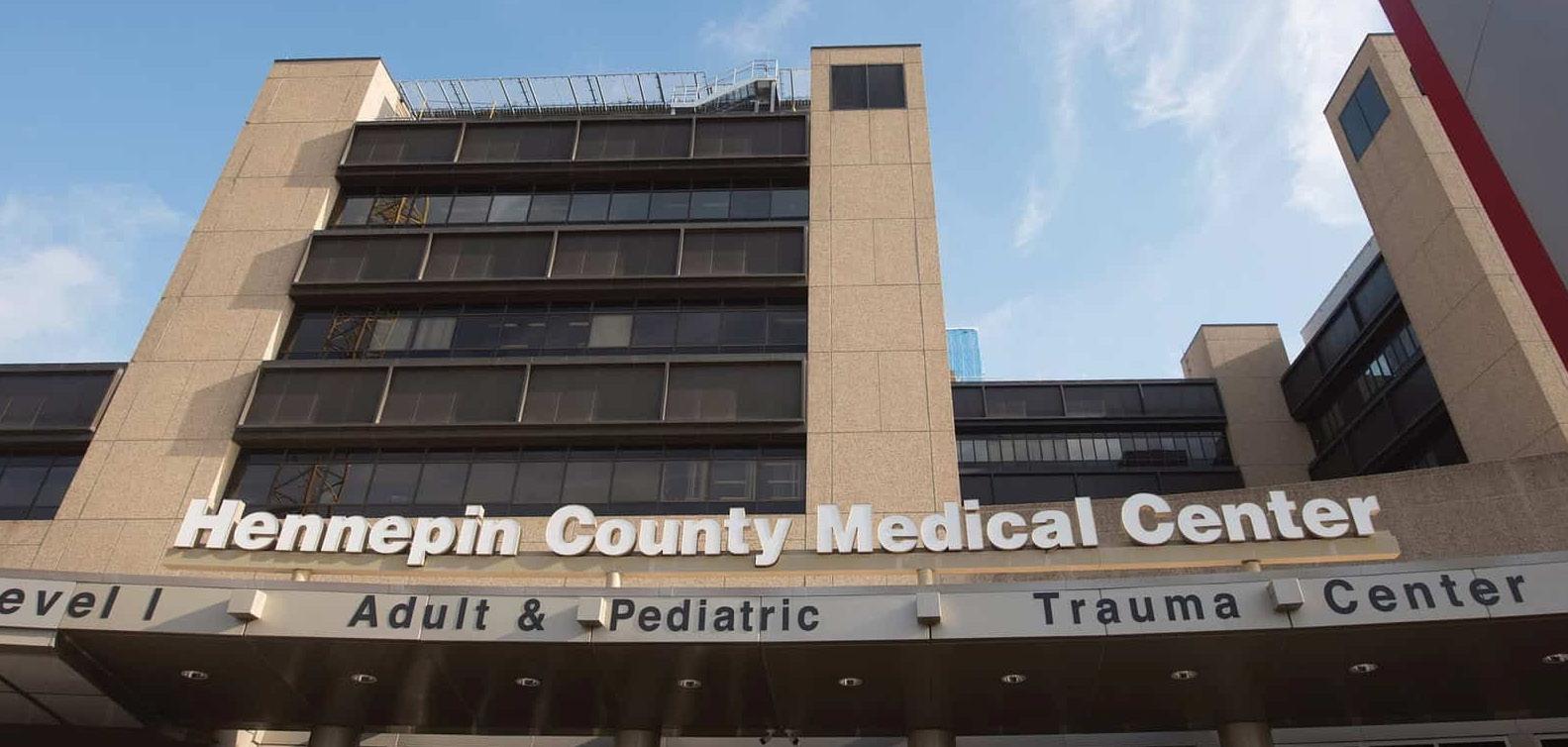
tal is projecting up to $50 million in operating losses in 2026 alone and up to $1.7 billion in cumulative losses over the next decade. Uncompensated care at HCMC has increased from $40 million in 2020 to $104 million in 2024, with $24 million of the 2024 figure provided to patients living outside Hennepin County. Roughly forty percent of trauma and burn cases treated at HCMC come from outside Hennepin County. In August 2025, the Hennepin County Board of Commissioners voted six to one to dissolve HCMC's inde-
pendent community board and assume direct oversight, citing the financial crisis. The hospital has gone through three chief executives in roughly a year. The most recent, Dr. J. Kevin Croston, stepped down on April 1, 2026, after approximately three months as co-administrator, citing what he described in his resignation letter as continued micromanagement and the overruling of operational decisions and his professional expertise. His co-administrator, David Hough, resigned the following week. On April 10, 2026, the Hennepin Healthcare Board
appointed Dr. John Cumming, MD, MBA, FACS — a trauma surgeon and former interim CEO of Hennepin Healthcare from 2019 to 2020 — as Chief Executive Officer. “Without the Legislature's help, there is currently no back-up plan.”
— Dr. John Cumming, Chief Executive Officer, Hennepin Healthcare
What's on the table at the House HF4841 is sponsored by Rep. Esther Agbaje, DFL-Minneapolis, with co-author Rep.
Danny Nadeau, R-Rogers. The bill in its current form, after a delete-all amendment heard by the House Taxes Committee on May 5, would increase the Hennepin County sales tax from 0.15 percent to 0.75 percent. The 0.15 percent rate was imposed in 2007 to finance the construction of Target Field, and Hennepin County estimates that bond will be paid off by next year. The amended bill would generate an estimated $253 million annually. It would also appropriate, in Fiscal Year 2027, $150 million from the General Fund for a hospital stabilization program and a separate $150 million for an HCMC stabilization grant. North Memorial Health in Robbinsdale, also a level-one trauma center in similar financial distress, would be eligible to apply for grants from the new fund.
The original Agbaje bill proposed a one percent sales tax. The 0.75 percent rate is a negotiated step down. The House is tied 67-67, which means any bill requires bipartisan support. HF4841 has bipartisan authorship; it has not yet passed the House floor.
Two other House proposals remain in the conversation. HF4892, sponsored by Rep. John Huot, DFL-Rosemount, would temporarily draw on the state's General Fund
surplus. Rep. Danny Nadeau, R-Rogers, has presented a yetto-be-numbered bill that would dedicate $250 million from the General Fund each year to HCMC and North Memorial, decreasing after five years, while requiring the Hennepin Healthcare governance board to transition to 80 percent membership with professional health system experience.
What the Senate has passed The Minnesota Senate has moved on two tracks. Sen. Melissa H. Wiklund, DFL-Bloomington, chair of the Senate Health and Human Services Committee, is the lead author of SF4612, which would provide $150 million in one-time funding over two years. Sen. Ann Rest, DFL-New Hope, chair of the Senate Taxes Committee, is the lead author of SF4985, which would increase the Hennepin County sales tax from 0.15 percent to 0.25 percent, generating an estimated $84 million annually. The Senate's combined approach yields roughly half the annual revenue of the House proposal. Governor Tim Walz has been meeting privately with legislative leaders, multiple times the week of April 28,
working toward alignment. No agreement has been reached as of publication.
Why this matters where we live HCMC is the safety-net hospital for North Minneapolis. It is where uninsured and Medicaid patients go when no one else will see them. A majority of HCMC patients rely on government programs. Dr. Nate Scott, an emergency physician at Hennepin Healthcare, told the House Health Finance and Policy Committee that adults and children with complex wounds or burns often require specialty care that HCMC provides and that is otherwise unavailable in the Upper Midwest. The hospital is also a primary teaching site for Black and brown physicians in training in Minnesota.
On August 27, 2025, HCMC neurosurgeon Dr. Walt Galicich operated on twelveyear-old Sophia Forchas, who was shot in the head during the Annunciation Catholic Church mass shooting that killed two children — Fletcher Merkel, 8, and Harper Moyski, 10 — and wounded seventeen others. Galicich described her on arrival as having a bullet lodged in the right occipital lobe of her brain.
Surgeons removed the left half of her skull to relieve the pressure. She survived. Her survival is the kind of outcome that depends on a Level I trauma center being a short drive away from where she fell.
“It would be catastrophic. HCMC is essentially a pillar of our hospital system. If that were to go down, many other hospitals would soon be facing serious constraints.”
— Rep. Esther Agbaje, DFL-Minneapolis
The clergy and the unions move
On Thursday, April 30, clergy from across Minneapolis held a 24-hour vigil outside HCMC. Among the speakers was Pastor
B. Charvez Russell, senior pastor at Greater Friendship Missionary Baptist Church in South Minneapolis. A short walk away, nearly 200 health care workers and community members joined a Red Alert tour organized by National Nurses United. The nurses' union put HCMC on Red Alert in late April, warning that closure would have what the union called a drastic and irreversible impact.
On May 13, Attorney General Keith Ellison convened a community forum on the future of HCMC, from 6:00 to 7:30 p.m. in Minneapolis. Rep. Esther Agbaje invited constituents to attend. Ellison framed the forum as a listening session for HCMC staff, civic leaders, community members, and patients. Insight News will report from that forum in a subsequent edition.
The questions Insight News is asking First, what is the structural floor? The Senate approach yields roughly $84 million a year in sales tax revenue plus one-time grants. The House approach yields roughly $253 million annually plus two $150 million tranches from the General Fund. Hospital leadership has been clear that one-time funding addresses cash flow, not the underlying structural mismatch. Rep. Mike Freiberg, DFL-Golden Valley, and Rep. John Huot have both raised the question of whether it is fair to ask Hennepin County taxpayers to bear the full cost of a regional asset. Rep. Aisha Gomez, DFL-Minneapolis, has framed the same question from the other side, arguing that Hennepin County property taxpayers have been subsidizing this asset for the whole state to the tune of tens of millions of dollars a year.
Second, what does the governance picture look like going forward? In August 2025, the County Board dissolved the independent hospital board. HF4841 establishes an advisory task force on Hennepin Healthcare governance and financing. Rep. Nadeau's proposal would mandate 80 percent profession-
al health-system membership on the governance board. The question of who controls a public hospital that serves a Black and brown patient population, while being subsidized by a property-tax base that is largely white and suburban, is not separate from the funding question. It is the funding question.
Third, what about North Memorial? North Memorial Health in Robbinsdale serves an emergency department patient population of more than 100,000 a year, with seventy-five percent covered by government programs. CEO Trevor Sawallish has said publicly that the system lost $50 million in 2025 and has already laid off employees. North Memorial is eligible for grant funding under the amended House bill but is no longer a direct recipient of sales tax revenue. The framework for safety-net hospital funding in the Twin Cities is being built in this session, and North Memorial is the second hospital it will be built around.
What happens after today If the Legislature adjourns today, May 18, without a deal, HCMC's options narrow to county-extended credit and continued service reductions. Hennepin County Commissioner Angela Conley has said publicly that HCMC could begin closing in June. A special session is possible but not guaranteed.
House Speaker Lisa Demuth has publicly stated she is willing to help, and Reps. Agbaje and Katie Jones, DFL-Minneapolis (District 61A), have said they remain optimistic that a funding bill will pass within the closing window.
Insight News will be reporting the outcome of today's session and the May 13 community forum with Attorney General Ellison in the May 25 edition. Readers are encouraged to make their voices heard with their state representatives and state senators. The Capitol switchboard is 651-296-2146, voice, or 800-657-3550.