
A SOLDIER’S PLAY
Pulitzer Prize and Tony Award-winning play at Fitzgerald Theater Pulitzer Prize and at Fitzgerald Theater

A Soldier’s Play comes to The Ordway Feb 8-12. The 1982 Pulitzer Prize-winning thriller by Charles Fuller, has rocketed back into the spotlight, thanks to the 2020 Tony Award to Roundabout Theatre Company, winning in the Best Revival category.

Venue: The Fitzgerald Theater - Ordway Center for the Performing Arts, 10 East Exchange Street, in Downtown Saint Paul. For ticket information: 651-224-4222
Broadway’s Norm Lewis leads a powerhouse cast in the North American tour of A Soldier’s Play, a show The Chicago Tribune calls “a highly entertaining, strikingly taut drama that you don’t want to end.”

Directed by Tonywinner Kenny Leon, A Soldier’s Play “deserves to be staged regularly all over America— though it’s hard to imagine that it will ever be done better than this. It keeps you guessing all the way to the final curtain,” The Wall Street Journal said in praise of the show. In 1944, on a Louisiana Army base, two shots ring out. A Black sergeant is murdered. The series of interrogations that follows triggers a gripping barrage of questions about sacrifice, service, and identity in America. The horrific beating
death last month in Memphis, Tennessee, of Tyre Nichols, at the hands of five Black police officers screams the pain of generational urgency and specific enduring timeliness of themes examined by this play. What happens when Black men, driven by internalized racism, turn on each other?
For Robin Hickman Winfield, CEO and Executive Producer at SoulTouch Productions here in Twin Cities, A Soldier’s Play compels us to cast an alternative vision. What happens when Black men turn to each other, rather than turn on each other? In partnership with The Ordway and Minnesota Humanities Center, HickmanWinfield is convening a Vision Trust of Black Men, creating sharing sessions inspired by A Soldier’s Play, where Black veterans of military service and, Black veterans of street service engage each other and their families and community to elevate work for justice and the dismantling of negative narratives about the value of Black life. A Thursday night talk-back session will follow the performance, encouraging veterans to share their lived experiences in the military and in the community.
A Soldier’s Play had its debut in November, 1981, by Negro Ensemble Company, at Theatre Four in New York
City. The production emerged as the most successful play of the barrier-breaking work of the Ensemble. The popularity of the production ensured the Negro Ensemble Company’s financial well-being for the next 10 years.
Back Story
In 1966, Douglas Turner Ward, Robert Hooks, and Gerald Krone began to work on their vision for a groundbreaking, inclusive space in the theatre: a permanent home where Black theatre artists could have agency over projects made for them, by them, and about them. With Ward writing, Hooks raising money, and Krone managing, the trio produced two new plays (Happy Ending and Day of Absence) off-Broadway at the St. Marks Playhouse in Greenwich Village—to fantastic critical success. Running for 504 performances and winning Ward an Obie Award® for acting and a Drama Desk Award for writing, the plays also drew the attention of The New York Times, who invited Ward to write on American theatre’s exclusivity problem and the future of Black theatre artists in the industry. Ward took the opportunity to publish a manifesto arguing for the establishment of a resident Black theatre company, and with a $1 million grant from the Ford Foundation, The Negro Ensemble Company was born. The company—which

celebrated its 50th anniversary in 2017—has since been a powerhouse in training and presenting outstanding Black artists. “There is no way we could survive except by being excellent,” Ward says, and the Negro Ensemble Company’s list of alumni provides ample evidence: Denzel Washington, Laurence Fishburne, Samuel L. Jackson, S. Epatha Merkerson, Adolph Caesar, LaTanya Richardson-Jackson, Garrett Morris, Ruben SantiagoHudson, Billy Dee Williams, and Lou Gossett Jr., to name just a few. Overall, the Negro Ensemble Company has been home to more than 4,000 artists from every theatre practice and background, producing over 200 new plays and creating an extensive theatrical training program to solidify its commitment to inclusive arts education.
Segregation in the military Jim Crow was in full force during the early 20th century and even extended to segregation within the military. During World War II, Black soldiers were not accepted into the Marines and the Army Air Corps (the precursor to the Air Force) at the beginning of the war, and in the Navy and Army, they were only allowed to take on non-combat jobs. In addition to the injustices that
these separate but inherently unequal policies reproduced, the military had its own hierarchies, structures, and laws that created a pressure cooker for the Black soldiers living under its rule. Inequitable systems such as Jim Crow breed conflict and competition among those they subjugate as a way of dividing the population and thereby decentralizing their power. There is a long history among Black Americans of intraracial prejudice enforced through respectability politics. There was a belief that if Black people behaved more “respectably,” then they would not be subject to criticism and therefore would not be victims of racism. Many prominent Black social critics and journalists write about this phenomenon even today.
In his article, “Blackon-Black Racism: The Hazards of Implicit Bias,” professor, writer, and retired U.S. Navy commander Theodore R. Johnson writes, “Too often, racism is seen as a social phenomenon that happens to Black people. But it happens through Black people as well. That is, the negative associations thrust upon Black people and Black culture can color how we Black people view each other.”
It’s easy to see, in the aforementioned pressure
Robin Hickman-Winfield CEO and Executive Producer of SoulTouch Productionscooker of the Armed Forces in the 1940s, how Black soldiers might internalize this racism. Jim Crow laws put a ceiling on the potential success of Black individuals, and some fell prey to the false narrative that by breaking through that ceiling they could rise above the limits of systemic racism— when in reality, this was just another “coping mechanism,” in Johnson’s words, that put the onus back on Black Americans rather than on the system that oppressed them in the first place.
mmaa
Photos courtesy of broadwayworld Photos
Vol. 50 No. 6• The Journal For Community News, Business & The Arts • insightnews.com Vol 50 No 6• The Journal For News, Business & The Arts • insightnews com February 6, 2023 - February 12, 2023 6 2023 - 12 2023 INSIGHT NEWS IS AUDITED BY THE ALLIANCE FOR AUDITED MEDIA TO PROVIDE OUR ADVERTISER PARTNERS WITH THE HIGHEST LEVEL OF MEDIA AS SURANCE. I N S I G H T N E W S I S A U D I T E D B Y T H E A L L I A N C E F O R A U D I T E D M E D I A T O P R O V I D E O U R A D V E R T I S E R P A R T N E R S W I T H T H E H I G H E S T L E V E L O F M E D I A A S S U R A N C E Insight News News
2. That the Governor hold his appointed State Commissioners and the state departments they lead accountable for measurable and reportable processes and strategies to eliminate disparities that exist in and that are supported by policies and procedures of state governance.
3. That the Minnesota Legislature prioritize intentional solution making that can occur when Legislators, Committee Chairs and Committees engage Minnesota’s Black community at the table of decision.
4. Housing Invest now in multiple housing options for the Black community to close the home ownership gap.
Multiple housing options are an important part of any community. It provides a safe and affordable place for people to live and can help reduce poverty and homelessness. However, there are many challenges associated with providing low-income housing, such as limited resources, high demand, and the need to ensure that the housing is safe and secure. Minneapolis has one of the widest homeownership gaps in the country between whites and Blacks.
new businesses among all races do not receive any outside investors. Most people use the equity in their homes to start their firms. This is a huge disadvantage to Black folks in Minnesota because of the home ownership gap. Further, the report stated that minority owned businesses experience higher loan denial probabilities and pay higher interest rates than white-owned businesses even after controlling for differences in credit-worthiness, and other factors. Limited access to investment capital in its many forms is inextricably linked to systemic discrimination in lending, housing, and employment. It cripples Black business development.
2. Employment Invest now in creating employment opportunities for the Black community
In an article published by the Urban Institute, the issue of Black employment was addressed.


It stated that, “while many are heralding the drop in the national Black male unemployment rate, which recently fell below 10 percent for the first time in seven years, joblessness remains much higher in many poor African American communities. It stated that for many low-income Black men, finding and keeping work is a constant struggle, never far from their minds. Black job applicants might not even make it into the queue if they have had an encounter with the criminal justice system. Helping Black folks secure steady employment at decent wages will require resources to break down the institutional barriers that separate people from decent job opportunities and to enable Black people to build the skills needed for well-paying jobs
3. Public Safety
Invest now in Public Safety in the Black community.
Public safety exists to protect citizens, organizations, and communities by preventing them from being in danger and guarding their well-being. Abraham Maslow defined safety in his famous “Hierarchy of Human Needs“. He said that to function as a society public safety is needed. He said this safety goes beyond just physical safety but also safety when it comes to health, money, possessions, and family. Less we forget, there’s an Emotional Impact on Public Safety. When folks feel unsafe, it could have major effects on individuals, their loved ones, and the community they live in. Violence has been way to prevalent in the inner cities of Minneapolis and St. Paul. Playgrounds are unsafe, the streets are unsafe, and the shopping malls are unsafe.
5. Education
Invest now in ensuring that our Black students are educated at the same level as White students.
Dr. Sinclair Grey lll stated that education is without a doubt crucial to the success of our students competing for jobs. Quality education that enforces and reinforces math, science, writing, and cognitive thinking will separate those who desire a prosperous future from those who are simply content with getting by. Yet, in Minnesota, reading test scores for Black students are over 20 points below state average and math test scores are 20 points below state average. Minnesota ranks 50th in the nation for Black students who graduate on time. Minnesota has one of the worst college-readiness gaps in the nation by race and ethnicity – only 25% of Black students are prepared for college. Thus, Black students who attend college must take significantly more remedial courses than their peers as their starting point.
6. Health & Wellness
Invest now in efforts that will impact the health and wellness of the Black community.
The Black community is faced with escalating social, economic, and life-style problems, which threaten the life and well-being of current and future generations of Black people in crisis proportion. The rising number of deaths due to heart disease and stroke, homicide and accidents related to substance abuse, AIDS, cancer, and infant mortality are among the leading culprits. They interfere with prospects of longevity and contribute to joblessness, poverty, and homelessness and further complicate the crisis in the Black community. The magnitude of the problems dictates the need for support from the Minnesota State Legislature.
7. Policy Each member of the legislature, regardless of political affiliation, is involved in setting public policy. These policies should reflect the will of the people and is carried out by those elected to vote. Because of conflicting interests and capacities, some policies have disenfranchised the Black community. There is therefore a need for coherence of interest/capacities in an attempt to pass policies that reflect the needs of the Black community.
Every time another national “quality of life” is broadcast or published about the best places to live in the U.S., Minnesota and the Twin Cities always rank at or near the top. The Atlantic’s Derek Thompson once referred to this as the miracle of Minneapolis.” Likewise, every time those lists are parsed out further, the state and the metro fall all the way to the bottom when it comes to quality of life measures for Black people, or, what some have called the “Two Minnesotas.” But to ensure that all those in our state have the opportunity to thrive, we cannot forget about the communities that have been systematically abused, persistently underrepresented, and long underserved.
Minnesota is now the seventh (7th) worst state in the country for Blacks to live. This dubious recognition alongside the May 2020 murder of George Floyd has brought the State into an era of racial reckoning and has put racial inequity at the center of the national conversation, and Minnesota on the racial map. Today Black folks are more than twice as likely as their white counterparts to live below the poverty line. Additionally, the typical Black household earns just 63 cents for every dollar a typical white household earns, and African American workers are more than twice as likely to be unemployed as white workers.
Using data from the U.S. Census Bureau, 24/7 Wall St. created an index to measure socioeconomic disparities between Black and white Americans to identify the worst states for Black Americans. High on the list of cities that have extremely troubling disparities is Minneapolis-St. Paul. Minnesota’s urban core boast these disturbing rates:
• Black population: 290,210 (8.2% of total)


• Black median income: $36,127 (44.0% of white income)
• Unemployment: 9.2% (Black); 3.2% (white)


• Homeownership rate: 25.2% (Black); 75.5% (white)
• Black poverty rate of 28.3% in the metro area, 5.9% (white)
• Black medium household earn $36,127 a year — the median income among white area households is $82,118.
The profound racial wealth gaps for Blacks in Minnesota is structural, as they are across the United States. Structural racism is inherent in intersecting and overlapping institutions, policies, practices, ideas, and behaviors that give resources, rights, and power to white people while denying them to others. The roots of racial wealth gaps can be traced back centuries through racialized public and private policies and practices, which fueled economic boosts to white families that allowed for intergenerational wealth transfers and created barriers to Black families. Past discrimination and injustices accumulate and build across generations, making it hard for communities that have been harmed to catch up. As one example, the losses from unpaid wages and lost inheritances to Black descendants is estimated at around $20 trillion today. The NAACP Twin Cities 2019 Economic Inclusion Plan states: “There are two Minnesota’s, one white, one Black – separate and unequal.”
Data from the 2019 Prosperity Now Scorecard shows that 40% of Americans are liquid asset poor—meaning they do not have enough in savings to make ends meet at the poverty level for three months ($6,275 for a family of four in 2018). This problem is even more stark when disaggregated by race. 31.7% of white households are liquid-asset poor compared to over 62% of Black households.
Recent trends in Hennepin and Ramsey Counties are moving in the wrong direction. The share of Black families who own a home has declined from 31 percent in 2000 to 21 percent in 2018. The racial homeownership gap in the Twin Cities is the highest in the nation and has only widened over the past two decades, especially in neighborhoods where investors have acquired hundreds of single-family homes to now use as rentals, according to a June 2021 report from the Urban Institute.
Page 2 • February 6 2023 - February 12 2023 6, 2023 - 12, 2023• Insight News insightnews.com BLACK MINNESOTA PRIORITIES • Equity in distribution and stewardship of resources • Advancing innovation and collaboration in problem solving • Upending traditional systems • Bringing the voices of community front and center THE URGENCY OF NOW! • Minnesota’s record budget surplus enables addressing disparities in a meaningful way •We demand genuine inclusion in the resource allocation process •We must outline, up front, what this inclusion looks like THREE STEPS BACKGROUND INVEST NOW! 2023 UNITED BLACK LEGISLATIVE AGENDA 1. That Minnesota governor Tim Walz, meets with representatives of Minnesota Black communities t0 affirms Minnesota’s commitment to prioritize disparities elimination in all aspect of Minnesota governance and administration. 1. Business and Economic Development Invest now in Black folks and their abilities to create businesses in the community. An article published by the Brooking Institute stated that the underrepresentation of Black businesses does not come from a lack of will or talent. Rather, the underrepresentation of Black businesses encapsulates a myriad of structural barriers underscoring America’s tumultuous history with structural racism. One of the principal barriers to the growth and development of Black businesses is that Black households have been denied equal opportunities for wealth accumulation. The median Black household’s wealth ($9,000) is nearly one-fifteenth that of non-Black households ($134,520). The article states that 90% of
Sen. Bobby Joe Champion’s CROWN Act and Juneteenth state holiday bill pass in Minnesota Senate
On Thursday, January 26, the Minnesota Senate passed the CROWN Act (Creating a Respectful and Open World for Natural Hair Act), chief authored by Sen. Bobby Joe Champion (DFL – Minneapolis). The legislation adds discrimination based on the style or texture of someone’s natural hair to the racial discrimination protections under the Minnesota Human Rights Act.


“The CROWN Act will ensure that no Minnesotan now or in the future can be discriminated against because of their natural hair,” Champion said. “This kind of discrimination disproportionately affects Black women, who deserve to experience a welcoming environment in our state. Recognizing the right to wear natural hair in the workplace is another step toward creating a more inclusive Minnesota.”
By KarteronThe severe beating of Tyre Nichols, a 29-year-old Black man, by five Memphis police officers – leading to his death three days later – has sparked renewed calls for federal measures to combat police violence and racism.
The George Floyd Justice in Policing Act, a package of reform initiatives aimed at local police departments, passed the U.S. House of Representatives in 2021 but did not make it through the Senate.
On Jan. 29, 2023, Ben Crump, the lawyer for Nichols’ family, told CNN: “Shame on us if we don’t use [Nichols’] tragic death to finally get the George Floyd Justice in Policing Act passed.”
By Rashad ShabazzOnce again, Americans are left reeling from the horror of video footage showing police brutalizing an unarmed Black man who later died.
Some details in the latest case of extreme police violence were gut-wrenchingly familiar: a police traffic stop of a Black male motorist turned violent. But, for many of us, other details were unfamiliar:

The five police officers accused of using everything from pepper spray to a Taser, a police baton and intermittent kicks and punches against the motorist were also Black.
After pulling over 29-year-old Tyre Nichols for what they said was reckless driving, Black officers in the Memphis Police Department’s now disbanded SCORPION unit beat Nichols, ultimately to death.

The Conversation
Since the rise of the Black Lives Matter movement and massive protests in 2020 in response to the murder of George Floyd, the Black man killed that year by a police officer in Minneapolis, there has been widespread interest in the problems of racism in American policing. Now, there appears to be renewed appetite for change, including from President Joe Biden, who mentioned the George Floyd Justice in Policing Act in his statement on Nichols’ death. People are looking to the federal government to address this issue of national importance.
But as a law professor who studies policing and constitutional law, I have seen how essential local and state reform efforts are, because the federal government has limited power to regulate policing.
With few notable exceptions, the Constitution
does not allow the federal government to control state or local government agencies. In accordance with federalism, a core principle that underlies the organization of American government, the federal government has only the powers expressly provided to it in the Constitution.
For example, Congress has authority to oversee the federal government, levy taxes and spend money, and declare war. Other powers not listed in the Constitution are “reserved to the States,” giving them broader responsibility for governance.
The George Floyd Justice in Policing Act of 2021 offered the possibility of significant policing reforms. But for those looking to the federal government to solve what’s wrong with policing in America, federal legislation can’t ensure that every police department
will make meaningful changes. That’s because the bill reflects the hard reality that the federal government has almost no control over state and local police departments.
Dollars and change
Although race discrimination is widely regarded as a major problem in American policing, the federal government’s ability to address it is limited.
The Equal Protection Clause of the 14th Amendment promises equal treatment of all racial groups by local and state government agencies and officials. Congress has the power to pass legislation in response to violations of the Equal Protection Clause, such as the Voting Rights Act of 1965. But the Supreme
“I am proud of my colleagues for passing the CROWN Act into law,” added Rep. Esther Agbaje (DFLMinneapolis), the chief author of the companion bill in the House of Representatives. “Hair has been used as a proxy for race to deter qualified and talented individuals from applying for jobs and showing up to spaces as their authentic selves. The passing of the CROWN Act signifies our
commitment to ensuring every Minnesotan, especially our young children from black and brown communities, are given the opportunity to be themselves and feel empowered to be themselves.”
The Senate also passed another bill chief authored by Champion which recognizes Juneteenth (June 19) as a state holiday. “Great nations do not ignore their most painful moments, they face them. Today, we faced the pain and suffering caused by the legacy of slavery and segregation by designating Juneteenth as a day to be commemorated by Minnesotans,” said Champion. “This is about acknowledging our nation’s struggles, celebrating our history, and recognizing the importance of forging our future together.”
The hate that killed Tyre Nichols
By James Trice, CEO Public Policy Project James_publicpolicyproject@msn.com
asked Rashad Shabazz, a geographer and scholar of African American studies at Arizona State University, to explore the societal conditions in which Black police officers could brutalize another Black
man.
What could influence Black police officers to savagely beat a Black motorist?
Policing in the U.S. has, from its inception, treated
Black people as domestic enemies. From the the slave patrols, which some historians consider to be among the nation’s earliest forms of
As we embark on the 53rd celebration of Black History month – first proposed in 1969 and first celebrated in 1970 –passed by the US Congress in 1986, we are met with the harsh reality that anti-Blackness still permeates the soul and culture of America. The recent brutal beating and murder of Tyre Nichols -a Black man- on January 10, 2023, by five Black police officers in Memphis, TN, underscore the fact that the pathology of anti-Blackness is alive and well in the hearts and minds of some white folk as well as some Black folk in America. Anti-Blackness is a byproduct of the false ideology of white supremacy and Black inferiority woven within the fabric of America, so much so that even the victims of this deadly ideology – some Black people- have internalized it.
James Baldwinsaid, “The reason people think its important to be white is that they think it’s important not to be Black.” Anti-Black hate is as old as America and America as apple pie and baseball. You don’t need to go back to our history to see evidence of this pernicious reality. In 2015, Dylan Roof – a 21-year old white man- walked into a church in Charleston, SC, and murdered 9 Black people in cold blood. It was reported that the police officers who captured Roof treated him to fast food before escorting him to the police station.
In May 2022, a gunman -an 18-year-old white man- murdered 10 Black people in a Buffalo, NY, supermarket, targeting Black people. There are other cases of

insightnews.com Insight News • February 6 2023 - February 12 2023 6, 2023 - 12, 2023 • Page 3
Scott Olson/Getty Images News via Getty Images
Demonstrators block traffic in Memphis after police released video footage depicting the fatal beating of Tyre Nichols.
NICHOLS’ 6
Black police officers aren’t colorblind – they’re infected by the same anti-Black bias as American society and police in generalBLACK
POLICE 6
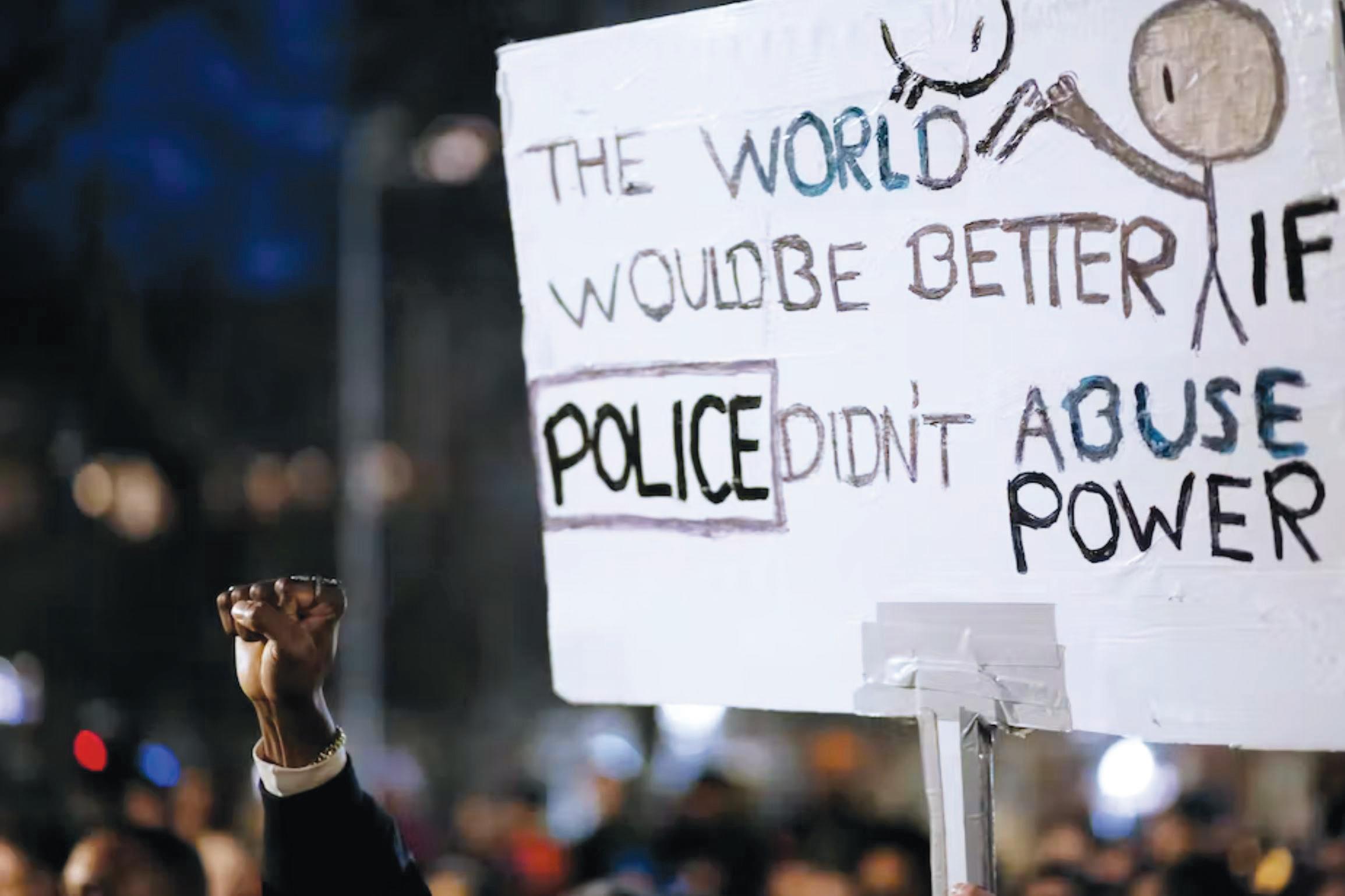
Tyre Nichols’ death prompts calls for federal legislation to promote police reform – but Congress can’t do much about fixing local police
A
Leonardo Munoz/VIEWpress
sign held at a protest against police brutality on Jan. 28, 2023, in New York City.
photo/Minnesota Senate Sen. Bobby Joe Champion (DLF-Minneapolis)
TRICE 6
APTOPIX Memphis Police Force Investigation
Alexis
Associate Professor of Law, Rutgers University – Newark
Insight News Insight News Vol 50 No 6• The Journal For Community News, Business & The Arts • insightnews com Vol. 50 No. 6• The Journal For Business & The Arts • insightnews.com February 6, 2023 2023 - February 12, 2023 - 2023 I N S I G H T N E W S I S A U D I T E D B Y T H E A L L I A N C E F O R A U D I T E D M E D I A T O P R O V I D E O U R A D V E R T I S E R P A R T N E R S W I T H T H E H I G H E S T L E V E L O F M E D I A A S S U R A N C E INSIGHT NEWS IS AUDITED BY THE ALLIANCE FOR AUDITED MEDIA TO PROVIDE OUR ADVERTISER PARTNERS WITH THE HIGHEST LEVEL OF MEDIA AS SURANCE. AI Corduroy returns to Children’s Theatre Company stage PAGE 7 News ‘The Prom,’ A dance-filled broadway musical, comes to Chanhassen Dinner Theatres PAGE 8
Associate Professor at the School of Social Transformation, Arizona State University
AFRODESCENDIENTES
LULA DA SILVA
SILVIO ALMEIDA
Photocredit:FátimaMeira/FuturaPress
SILVIO ALMEIDA, JURIST AND PHILOSOPHER, APPOINTED MINISTER OF HUMAN RIGHTS OF BRAZIL
The lawyer and professor Silvio Almeida was recently appointed Minister of Human Rights in the government of Luiz Inácio Lula da Silva (PT). A jurist, professor and philosopher, he is seen by scholars as one of the greatest Brazilian intellectuals of his generation.
Almeida is a postdoctoral fellow at the Faculty of Law at USP (University of São Paulo); and professor at FGV (Fundação Getúlio Vargas) and Mackenzie. He is president of the Luiz Gama Institute and of the Center
for Brazilian Studies at IREE (Institute for the Reform of State-Business Relations) and author of the book Racismo Estrutural, one of the mostlished in 2019.

Almeida was also part of Lula’s transition team. After the announcement, Silvio Almeida used social net“immense honor and responsibility”.
Almeida is the son of former goalkeeper Barbosinha, who defended Corinthians in the 1960s. In 2020, in
SILVIO ALMEIDA, JURISTE ET PHILOSOPHE,
L’avocat et professeur Silvio Almeida a récemment été nommé ministre des Droits de l’homme dans le gouvernement de Luiz Inácio Lula da Silva (PT). Juriste, professeur et philosophe, il est considéré par les universitaires comme l’un des plus grands intellectuels brésiliens de sa génération.
Almeida est chercheur postdoctoral à la Faculté de droit de l’USP (Université de São Paulo) et professeur à la FGV (FundaçãoGetúlio Vargas) et à Mackenzie. Il est président de l’Institut Luiz Gama et du Centre d’études brésiliennes de l’IREE (In-
an interview with SporTV, he spoke about racism in football and said that sport can be an anti-racist weapon.
In the same year, Almeida was interviewed on the program Roda Viva, on TV Cultura, and said that the federal government would be “aligning itself with a project to destroy Brazil” and that the denial of racism, especially in the historical moment in which we live, is a “reinforcement of racist positions”.
Almeida said he believes that there
political process of accepting black racial leaders and agendas. “The fact that they are parties historically sup-ical demands of the black movement does not mean that their internal organization will reproduce.”
For Pedro Serrano, professor of Law at PUC-SP, there is no better name to head the folder. He said he believes that Almeida will overcome theme he defends “as common ground between the right and the left”.
NOMMÉ MINISTRE BRÉSILIEN DES DROITS DE L’HOMME
stitut pour la réforme des relations État-entreprise) et auteur du livre Structural Racism, l’un des ouvrages en 2019.
Almeid faisait également partie de l’équipe de transition de Lula. Après l’annonce, Silvio Almeida a utilisé les réseaux sociaux pour dire qu’il prend ses fonctions avec “un honneur et une responsabilité immen-dien de but Barbosinha, qui a défendu les Corinthians dans les années 1960. En 2020, dans une interview avec SporTV, il a parlé du racisme dans le
football et a déclaré que le sport peut être une arme antiraciste. La même année, Almeida a été interviewé dans l’émission Roda Viva, sur TV Cultura, et a déclaré que le gouvernement fédéral « s’alignerait sur un projet de destruction du Brésil » et que le déni du racisme, en particulier dans le moment historique de que nous vivons, est un “renforcement des positions racistes”. Almeida a déclaré qu’il pensait qu’il y avait une grande interne d’acceptation des dirigeants noirs et des agendas raciaux. “Le fait qu’il s’agisse de partis historique-
ment soutenus par des agendas qui s’inscrivent dans les revendications historiques du mouvement noir netion interne, ils se reproduiront.” Pour Pedro Serrano, professeur de droit à la PUC-SP, il n’y a pas de meilleur nom pour diriger le portefeuille. Il a dit qu’il croyait qu’Almeida suravec le thème qu’il défend “comme un terrain d’entente entre la droite et la gauche”.
SILVIO ALMEIDA, JURISTA E FILÓSOFO, NOMEADO MINISTRO DOS DIREITOS HUMANOS DO BRASIL
O advogado e professor Silvio Almeida foi nomeado recentemente ministro dos Direitos Humanos do governo Luiz Inácio Lula da Silva (PT). Jurista, professorsos como um dos maiores intelectuais brasileiros de sua geração.
uldade de Direito da USP (Universidade de São Paulo); e professor da FGV (Fundação Getúlio Vargas) e do Mackenzie.
É presidente do Instituto Luiz
Gama e do Centro de Estudos Brasileiros do IREE (Instituto para a Reforma das Relações Estado-Empresa) e autor do livro Racismo Estrusobre o tema, publicado em 2019. Almeida também fez parte da equipe de transição de Lula.

da usou as redes sociais para dizer que toma posse com “imensa honra e responsabilidade”.sinha, que defendeu o Corinthians na
década de 1960. Em 2020, em entrevista ao SporTV, ele falou sobre o racismo no futebol e disse que o esporte pode ser uma arma antirracista
No mesmo ano, Almeida foi entrevistado no programa Roda Viva, da TV Cultura, e disse que o governo federal estaria “se alinhando a um projeto de destruição do Brasil” e que a negação do racismo, especialmente no é um “reforço de posições racistas”. Almeida disse acreditar que há uma
político interno de aceitação de lideranças e pautas raciais negras. “O fato de serem partidos historicamente sustentados por pautas que se enquadram -
organização interna se reproduzirão.”
Para Pedro Serrano, professor de Direito da PUC-SP, não há nome melacreditar que Almeida superará as que defende “como um terreno comum entre direita e esquerda”.
Page 4 • February 6 2023 - February 12 2023 6, 2023 - 12, 2023• Insight News insightnews.com
-
-
SILVIO ALMEIDA, JURISTA Y FILÓSOFO, NOMBRADO MINISTRO DE DERECHOS HUMANOS DE BRASIL
El abogado y profesor Silvio Almeida fue nombrado recientemente Ministro de Derechos Humanos en el gobierno de Luiz Inácio Lula da Silva visto por los académicos como uno de los más grandes intelectuales bra-
Almeida es becario posdoctoral de la Facultad de Derecho de la USP (Universidad de São Paulo) y profesora de la FGV (Fundação Getúlio Vargas) y Mackenzie. Es presidente del Instituto Luiz Gama y del Centro de Estudios Brasileños del IREE
(Instituto para la Reforma de las Relaciones Estado-Empresa) y autor del libro Structural Racism, uno de tema, publicado en 2019.
Tras el anuncio, Silvio Almeidacir que asume el cargo con «un inmenso honor y responsabilidad». Almeida es hijo del ex arquero Baren la década de 1960. En 2020, en
bre el racismo en el fútbol y dijo que el deporte puede ser un arma antirracista.
En el mismo año, Almeida fue entrevistada en el programa Roda Viva, de TV Cultura, y dijo que el gobierno federal estaría «alineándose con un
que vivimos, es un «refuerzo de posiciones racistas».

Almeida dijo que cree que existe político interno de aceptar líderes ne-
gros y agendas raciales. “El hecho de se sustentan en agendas que encajan a reproducir”.
Para Pedro Serrano, profesor de Derecho de la PUC-SP, no hay mejor nombre para encabezar la cartera. Dijo que cree que Almeida superará común entre la derecha y la izquierda».
SILVIO ALMEIDA, MWANASHERIA, NA MWANAFALSAFA, ALIMTAJA WAZIRI WA HAKI ZA KIBINADAMU WA BRAZILI
Wakili na profesa Silvio Almeida hivi majuzi aliteuliwa kuwa Waziri wa Haki za Kibinadamu katika serikali ya Luiz Inácio Lula da Silva (PT). Mwanasheria, profesa na mwanafalsafa, anaonekana na wasomi kama mmoja wa wasomi wakubwa wa Kibrazili wa kizazi chake. Almeida ni mhitimu wa udaktari katika Kitivo cha Sheria katika USP (Chuo Kikuu cha São Paulo); na profesa katika FGV (FundaçãoGetúlio Vargas) na Mackenzie. Yeye ni Rais wa Taasisi ya Luiz Gama na Kituo cha Mafunzo ya Brazili huko IREE (Taasisi ya Marekebisho ya Mahusiano ya Seri-
kali na Kampuni) na mwandishi wa kitabu Structural Racism, mojawapo ya kazi zenye ushawishi mkubwa juu ya mada hiyo, iliyochapishwa mwaka wa 2019.
Almeidawa pia alikuwa sehemu ya timu ya mpito ya Lula. Baada ya tangazo hilo, Silvio Almeida alitumia mitandao ya kijamii kusema kwamna uwajibikaji mkubwa”. Almeidais mtoto wa golikipa wa zamani Barbosinha, ambaye alitetea Corinthians katika miaka ya 1960. Mnamo 2020, katika mahojiano na SporTV, alizungumza juu ya ubaguzi wa rangi

katika mpira wa miguu na akasema kwamba mchezo huo unaweza kuwa silaha ya kupinga ubaguzi wa rangi.
Katika mwaka huo huo, Almeida alihojiwa kwenye kipindi cha Roda Viva, kwenye TV Cultura, na akasema kwamba serikali ya shirikisho “italingana na mradi wa uharibifu wa Brazil” na kwamba kukataa kwa ubaguzi wa rangi, haswa katika wakati wa kihistoria huko. ambayo tunaishi, ni “kuimarisha misimamo ya kibaguzi”.
Almeida alisema anaamini kuwa kuna ugumu mkubwa ndani ya
SILVIO ALMEIDA, ONÍDÀÁJO ÒDODO, ÀTI ONÍMO OGBON ORÍ, LÓ
Almeida ni laipe yi ni Minisita fun Eto
ti a gbe, ni a “imuduro ti alaifeirued-


mchakato wa kisiasa wa ndani wa kukubali viongozi Weusi na ajenda za rangi. “Ukweli kwamba ni vyama ambavyo vinaungwa mkono kihistoria na ajenda zinazolingana na matakwa ya kihistoria ya vuguvugu la watu weusi haimaanishi kuwa katika shirika lao la ndani, watazaliana.”
Kwa Pedro Serrano, profesa wa Sheria katika PUC-SP, hakuna jina bora la kuongoza kwingineko. Alisema anaamini kuwa Almeida atashinda ugumu wa kufanya kazi na mada anayotetea “kama msingi wa kawaida kati ya kulia na kushoto”.
nla wa laarin ilana ielu inu ti gbigba
FGV (FundaçãoGetulio Vargas) ati
SILVIO ALMEIDA, SHARCI YAQAAN, IYO FAYLASUUF, AYAA LOO MAGACAABAY WASIIRKA XUQUUQUL INSAANKA EE BRAZIL
Qareenka iyo Professor Silvio Almeida ayaa dhawaan loo magacaabay Wasiirka Xuquuqul Insaanka ee dawladda Luiz Inácio Lula da Silvaar iyo faylasuuf, culimadu waxay u arkaan mid ka mid ah waxgaradkii reer Brazil ee qarnigisii.
Almeida waa dhakhtar sare oo ka tirsan Kulliyadda Sharciga ee USPar wax ka dhiga FGV (FundaçãoGetulio Vargas) iyo Mackenzie. Isagu waa Madaxweynaha Machadka Luiz Gama iyo Xarunta Daraasaadka Brazil ee IREE (Machadka Dib-u-habaynta Xiriirka Shirkadaha Dawladda)
iyo qoraaga buugga Cunsurinimada Dhiska, mid ka mid ah shaqooyinka ugu saameynta badan mowduuca, oo la daabacay 2019.
Almeidawas waxa kale oo uu ka mid ahaa kooxda kala guurka ee Lula. Ku dhawaaqista ka dib, Silvio Almeida waxa uu isticmaalay shabakadaha bulshada si uu u sheego in uu xilka kula wareegayo “sharaf iyo mas’uuliyad aad u weyn”.
Almeidais oo uu dhalay goolhayihii hore ee Barbosinha, kaasoo difaacay Corinthians 1960-meeyadii. 2020, wareysi uu siiyay SporTV, ayuu kaga hadlay cunsuriyadda
kubadda cagta, wuxuuna sheegay in ciyaaruhu noqon karaan hub ka dhan ah cunsuriyadda.
Isla sanadkaas, Almeida waxaa lagu wareystay barnaamijka Roda Viva, ee TV Cultura, waxayna sheegtay in dowladda federaalku ay “la jaanqaadi doonto mashruuca burburinta Brazil” iyo in diidmada cunsuriyadda, gaar ahaan xilliga taariikhiga ah ee taas oo aan ku nool nahay, waa “xoojinta jagooyinka cunsuriyadda”.
Almeida waxa uu sheegay in uu rumaysan yahay in ay jirto dhibaato weyn oo ka dhex jirta hanaanka siyaasadeed ee gudaha ee ah in la
aqbalo madaxda Madowga ah iyo ajandayaasha isir-sooca. “Xaqiiqda ah inay yihiin xisbiyo taariikh ahaan lagu taageeray ajendayaal ku habboon shuruudaha taariikheed ee dhaqdhaqaaqa madow macnaheedu maaha in ururkooda gudaha, ay soo saari doonaan.”
takhasusay sharciga PUC-SP, ma jirolalka. Waxa uu sheegay in uu aaminsan yahay in Almeida ay ka gudbi doonto dhibaatooyinka ka haysta ku shaqaynta mawduuca uu difaacayo “sida dhul ay wadaagaan midig iyo bidix”.

insightnews.com Insight News • February 6 2023 - February 12 2023 6, 2023 - 12, 2023• Page 5
-
-
-
-
---
2019.
-
PÈ NÍ ÒJÍSE ETO OMONÌYÀN TI BRAZIL Photocredit:EstadodeMinasPhotocredit:Poder360Photocredit:CartaCapital
Court has held that the equal protection guarantee bans only intentional race discrimination by governmental bodies and officials. Policies and practices that have a disproportionate effect on a racial group do not necessarily violate the Constitution. So the Supreme Court would likely conclude that the Constitution does not allow the federal government to bar state and local police policies and practices simply because they have a disproportionate racial impact. That means that the federal government’s primary tool for influencing American policing is its spending power. Congress has wide latitude to use money to provide
Black Police
From 3


policing, to the murder of George Floyd, and now the death of Nichols, law enforcement officers often have viewed Black people as what sociologist and civil rights activist W.E.B. Du Bois, in “The Souls of Black Folk,” called a “problem.”
American society assumes that Black people are prone to criminality and therefore should be subject to state power in the form of policing or, in some cases, vigilantism – as in the killing of Ahmaud Arbury. This is a link deeply woven into American consciousness. And Black people are not immune. In this
From
anti-Black violence, but I will stop here. In both notable cases, anti-Black hate was the motive which fueled their terror.
Eddie S, Glaude
JR., in his book, Democracy
incentives for policy changes at the state and local levels by attaching conditions to federal grants. For example, Congress spurred some states to raise the drinking age to 21 by making the greater age a condition of federal highway funding.

Congress can make the adoption of certain policies and practices a condition for getting federal grants – as long as it does not coerce acceptance of the conditions. States and localities must remain free to decline federal funds. So, if a state or locality declines a federal grant, it doesn’t have to comply with the grant program’s conditions.


Seeking influence
Within the limits that the Constitution sets, the George Floyd Justice in Policing Act aims to assert some federal influence on local and state policing practices.
way, the long-held targeting of Black men by police and widely held negative beliefs about them are a powerful cocktail that can compel even Black officers to stop, detain and brutally beat a man who looks just like them.
Could their actions have been motivated by anti-Black bias?
It’s hard to investigate the minds of the officers who beat Nichols so savagely and say for sure what motivated them. But there is ample research that suggests anti-Blackness is a factor in American policing. And Black officers, agents of an institutionally racist system, are affected by this. AntiBlackness affects Black people, too. And this might explain why Black police officers exhibit more anti-Black bias than the Black population as a whole.
in Black; How Race Still
Enslaves the American Soul, wrote, “a host of assumptions about who Black people are and what they are capable of shape everything about how we live in this country.”
After viewing the horrific recording of the beating of Tyre Nichols, I heard news reporters and commentators - primarily white- question whether the murder of Nichols
The bill’s most significant direct regulation of state and local police departments would be a ban on racial profiling by all law enforcement agencies. Although federal courts have repeatedly concluded that the 14th Amendment bars racial profiling, the bill would make the prohibition explicit and expand its definition. The bill would also indirectly regulate state and local police departments by eliminating “qualified immunity” in civil lawsuits where a plaintiff alleges that a law enforcement officer violated their constitutional rights. Under the qualified immunity doctrine, courts dismiss claims when there is no prior case with a highly similar set of facts where a government official’s conduct was ruled unconstitutional. Government officials, including police officers, therefore
To comprehend this, we have to take a step back and think about race. Stuart Hall, a cultural theorist, described race as a sign. When we look at skin color or people as racialized subjects, they signify something to us. Black people, in this society – and in other parts of the world – for many signify danger, threat and criminality. And as a result, institutions like the criminal justice system respond to their perceived threat with profiling, harassment and violence.
Our surprise that five Black police officers could brutalize another Black man indicates we have an impoverished understanding of race and racism in this country. What does Tyre Nichols’ death mean for calls to diversify policing?
was a racial issue, pointing out the race of the officers who were Black. These questions reveal either a sincere ignorance or a willful indifference to racism in America. I submit that being Black does not preclude a Black person from subscribing to anti-Blackness and supporting racist ideologies. For example, Candance Owens, a Black conservative and anti-Black activist, said in a 2021 Fox News interview with Tucker Carlson, ‘Black Americans are the most murderous group in America.’
sometimes escape liability even if they have engaged in egregious misconduct. If qualified immunity is unavailable, police officers will arguably be less likely to violate someone’s rights because they will expect to be liable for their misconduct. Further, the bill would expand the U.S. Department of Justice’s authority to investigate unconstitutional conduct by police departments, and would make it easier to prosecute police officers for federal civil rights violations.
Conditions on grants
Most significantly, if enacted, the George Floyd Justice in Policing Act would attach stringent new conditions to two programs that together funnel hundreds of millions of dollars to local and state police departments every year, the COPS program and the Edward J. Byrne Memorial Justice

For years, elected officials, activists and citizens have been making calls to reform policing. Many have said bringing more people from ethnically diverse backgrounds onto police forces would go a long way toward correcting institutional racism in the criminal justice system.
The final report of “The President’s Task Force on 21st Century Policing,” commissioned through an executive order by President Barack Obama, called for law enforcement agencies to “strive to create a workforce that encompasses a broad range of diversity, including race, gender, language, life experience, and cultural background to improve understanding and effectiveness.”
One recent study
There is no evidence to support her assertion. However, this is what she -a Black womanand other Black people believe about Black people. Do not be deceived. Anti-Black hatred held by Black people does not negate the reality of racism. Race is a social construct, but racism is real and is facilitated by global white supremacy. Black lives still matter even when Black lives are taken by Black people. I believe the five Black police officers who
Assistance Grant Program.

To take just a few examples, both Byrne and COPS grantees would be required to ban the use of chokeholds. Byrne grants would be available only to states and localities whose use-of-force policies bar the use of deadly force unless it is necessary.
COPS grants would be available only to states and localities that ban the use of noknock warrants in drug cases. Recipients of COPS grants would be required to certify that they will use at least 10% of their grants to support efforts to end racial and religious profiling.
These provisions divide activists who decry the current state of policing. Some laud them as bold reforms, while others argue that less money should be directed to police departments, not more.
If the George Floyd Justice in Policing Act is enacted, some of America’s
concluded that Black and Hispanic police officers make fewer traffic stops and use force less often than their white counterparts. But, at the same time, Black and brown police officers live in the same culture that sees Black people as criminals and threats. So simply having more officers of color doesn’t do enough to fix the problem.
How does seeing video of another Black man brutalized by police, this time Black officers, affect Black people?
Over the past decade, videos of Black people killed at the hands of police officers have filled social media and news sites. I, for one, cannot watch them because they terrify me and amplify fears for my safety and that of my family
murdered Tyre Nichols were acting per the societal norm of racism and anti-Black hate. In the Myth of Race, The Reality of Racism Critical Essays, Dr. Mahmoud El-Kati eloquently said, “custom is more powerful than the force of written law. Habits and social conventions influence individual attitudes. A collective outlook, a collective myth, produces collective behavior patterns.”
It doesn’t make a difference how many antiracism laws are passed or how much “racial sensitivity” training a person is forced to undergo to keep their job or even how many Black people are elected to office, lead an organization, or corporation; anti-Black sentiment is pervasive in American culture.
The Black officers freely and readily beat Tyre Nichols. They knew they were being recorded because of the body cameras they wore. They did it knowingly and without shame or fear of any consequence. They treated Nichols as if his life didn’t matter and as if he was expendable.
15,000 state and local police departments would readily accept its conditions and the federal dollars they unlock. Others would likely sue, arguing that the federal government is attempting to coerce them into adopting policy reforms they do not need or want.
Former House Speaker Nancy Pelosi said in 2021 that the George Floyd Justice in Policing Act “fundamentally transforms the culture of policing.” But states and localities have to want to change and accept federal grants, with strings attached, for that vision to become reality. This is an update of a story originally published on June 1, 2021, and reflects the death of Tyre Nichols. This article is republished from The Conversation under a Creative Commons license.
and friends. I watched about 30 seconds of the Black police officers pummeling Nichols and couldn’t take any more. I know I’m not alone. Studies tell us that police killings of unarmed Black people are psychologically traumatizing events for Black people. This kind of horror should be traumatizing to the nation. But if Black is the sign of danger and criminality, who will have empathy for the Tyre Nicholses of the world? This article was updated to cut out repetition in the introduction. This article is republished from The Conversation under a Creative Commons license.
McFarlane Associate Editor & Associate Publisher B.P. Ford Culture and Education Editor Dr. Irma McClaurin, PhD.
Associate Editors Afrodescendientes
Jesús Chucho Garcia
Mestre Yoji Senna DaBahia
Columnist Brenda Lyle-Gray Book Review Editor W.D. Foster-Graham Content & Production Manager Sunny Thongthi Yang
Distribution/Facilities Manager Charles Royston Receptionist Lue B. Lampley Intern Naomi Thomson Photography Uchechukwu Iroegbu Lou Michaels
Roy Lewis - Washington D.C. Artist Donald Walker Contact Us: Insight News, Inc. Marcus Garvey House 1815 Bryant Ave. N. Minneapolis. 55411 Ph.: (612) 588-1313 Fax: (612) 588-2031
Member: Minnesota Multicultural Media Consortium (MMMC) Minnesota Newspaper Association (MNA) National Newspaper Publishers Association (NNPA)


Postmaster: Send address changes to McFarlane Media Interests, Marcus Garvey House 1815 Bryant Avenue North, Minneapolis,


They wrongly believed they could do what white officers have done and still do to many Black men, women, and children with impunity for far too long. They saw Nichols the same way, so many Americans -white and Black- see Black people - as an interloper in a society built by the forced labor of our enslaved ancestors. Anti-Blackness still prevailed.
In his book, The Racial Contract, Charles Mills writes, “we live in a world which has been foundationally shaped for the past five hundred years by the realities of European domination and the gradual consolidation of global white supremacy.” Let’s be clear, the pathology of white supremacy, which produced anti-Black hate, murdered Tyre Nichols. I am not saying the five Black police officers are not responsible for his death. On the contrary, they are 100% accountable and should be punished to the law’s limit. They deserve whatever punishment they receive and probably more. What I am saying is that anti-Black hate was the driving force and underlining cause of Nichols’ murder, as was the murder of Eric Garner, Michael Brown, Tamir Rice, Eric Harris, Walter Scott, Freddie Gray, Alton Sterling, Philando Castile, Stephone Clark, Botham Jean, Breonna Taylor, George Floyd, Daunte Write, Patrick Lyoya, Nina Adams, LaShanda Anderson, Deresha Armstrong, Kisha Arrone, Crystalline Barns, India Beaty, Dereshia Blackwell, Jonie Block, Alexia Christian, Decynthia Clements, Monique Jenee Deckard, Cynthia Fields, Janisha Fonville, Korryn Gaines, Francine Graham, and the list goes on. Until anti-Blackness is killed, there will be more Tyre Nichols.
Page 6 • February 6 2023 - February 12 2023 6, 2023 - 12, 2023• Insight News insightnews.com
Nichols’ From 3
Trice
3 PARTTIME DISTRIBUTION ROUTEDRIVER Onetotwodaysperweek. $15perhour. Validdriver'slicenserequired. Calltoapply 612-695-0417 WEARE HIRING Insight
News is published weekly, every Monday by McFarlane Media Interests. Editor-In-Chief Al McFarlane Publisher Batala-Ra
INSIGHT NEWS www.insightnews.com
Courtesy of CTC
Corduroy returns to Children’s Theatre Company stage

Children’s Theatre Company (CTC) presents the return engagement of Corduroy, following the 2018 World Premiere production. Adapted for the stage by Barry Kornhauser, and directed by CTC’s Artistic Director Peter C. Brosius.
Corduroy is based on the classic children’s books Corduroy and A Pocket for Corduroy by Don Freeman. Winner of the
American Alliance for Theatre & Education “Distinguished Play” Award Corduroy will play from February 14 – April 2, 2023 at CTC’s UnitedHealth Group Stage (2400 Third Avenue South Minneapolis MN 55404). Opening Night is Saturday, February 18 at 7pm. Tickets may be purchase online at childrenstheatre.org/corduroy or by calling the ticket office at 612.874.0400. Ticket prices start
at $15. “Corduroy, with its title character’s quest for his missing button, is the story of a little toy bear’s very real need to find a ‘Friend’ and a place to call home, along with that of a little girl’s corresponding need to bring that bear home—as a Friend,” says Playwright Barry Kornhauser.
“It is such a joy to bring Corduroy to our stage,” said Corduroy Director and
CTC Artistic Director Peter C. Brosius. “This is a story that touches our hearts and has us rolling in laughter. Barry Kornhauser has brought his brilliant comic mind to this adaptation and created a truly delightful play of friendship, persistence and determination and what it means to never give up on your dreams . Corduroy inspires us all with his heart and his hope and we can’t wait to share it with you.”
The cast of Corduroy features Autumn Ness* as Nighttime Security Guard, Alexcia Thompson* as Lisa’s Mother, and Dean Holt* as Corduroy. Corduroy also features Ayla Porter as Lisa, and Luciana Mayer and Hugo Mullaney as Mannequins. The Understudies for Corduroy (in alphabetical order) include: Truman Bednar as U/S Mannequin, Mathias Brinda as
U/S Lisa, Erin Nicole Farste as U/S Mother, Taj Ruler as U/S Corduroy and U/S Nighttime Security Guard, and Harriet Spencer as U/S Mannequin. Ticket Information Tickets to Corduroy may be purchase online at childrenstheatre.org/corduroy or by calling the ticket office at 612.874.0400. Ticket prices start at $15.
Tips on choosing the right university from HBCU alumni and Ford executive Ivan Boykin

Ford’s dedication goes beyond supporting HBCUs, opening the scope for those to join them in their mission to build a better world.
“Our success isn’t because we’re without weakness or because we are perfect in any way. But it’s really about the way we find our own unique strengths and develop them – I felt like that was done for me at A&T”, said Ford’s Retail Marketing & Yield Management Director, and North Carolina A&T graduate, Ivan Boykin.
Q :How has attending an HBCU had an impact on your career and life?
Ivan: The impact was huge. I loved my experience at North Carolina A&T State University. It was amazing to see so many talented and driven and young black people in one place motivating and pushing each other to excellence. My
grandmother used to say iron sharpens iron, and this was so true. I also loved my instructors. They took a personal interest in my development. I was not just another student. My instructors knew me. They understood the reason why I was there, which was to reach my highest potential.
Lastly, I would say preparation was a key component as well. I remember hearing Les Brown, a motivational speaker, say: “It’s always better to be prepared and not have an opportunity than to have an opportunity and not be prepared”. And I felt like A&T did a phenomenal job in preparing me.
HBCUs have a way of connecting with students to help them in that space. It breeds this attitude of excellence, and excellence is a choice. So, for me, my trajectory was heavily influenced by the experiences that I gained at my HBCU.
Q: Your daughter also now attends North Carolina A&T, right?
Ivan: She added A&T to her list, I was ecstatic, and at the same time a little surprised. Honestly, because I never put pressure on her to specifically attend my school. That said, when she was going through her College selection journey and narrowed her scope to pick five schools to visit for consideration, I asked that two of them be HBCUs. I felt that it was important for them to be considered because the experiences gained at HBCUs are so important. So, we started doing campus visits, and she fell in love with A&T and made that decision on her own.
Q: How did your career lead you to working at Ford?
Ivan: It’s interesting because my career after leaving A&T has only been with Ford, so I am one of the rare ones that have
stayed with the same company and progressed as opposed to moving from one company to another. A&T was one of the HBCUs where Ford specifically recruited for marketing. I asked the Dean of Student Affairs, to help me connect with the recruiters because the interview slots were filled. So, she asked the interviewers if they would do one additional interview and promised it would be worth their time. So, I’ve always been grateful for that help because that interview led me to a series of other interviews which led me to being hired by Ford. And I’ve been here ever since, so it worked out well.
Q: What does your role as Director of US Retail Marketing and Yield Management include?
Ivan: My organization is chiefly responsible for overseeing the retail marketing activities used to create demand and promote sales of our Ford and
Lincoln vehicles across the U.S. through our independently owned and operated Dealer Network. In fact, the Rainbow Push survey and our own CEO, Jim Farley, recently highlighted several major improvements, particularly around Black-owned dealerships. Also, we partner with our fixed marketing team, developing campaigns, building brand awareness, analyzing trends in the industry, and coming up with strategies to profitably grow our business.
Q: What advice would you give to those deciding on which college to attend? Ivan: Your major is one of the first things to consider. If you decide to study engineering versus business, you may choose one school over another depending upon the major. Academic support and career placement are important because they really supplement whatever
major you select, and that›s what›s helping you move to the next phase once you get out of school. I like the fact that the instructors knew me specifically, as opposed to having too large of a class where they can’t really get a chance to know the students. So, to me class size is important. Lastly, I would say campus life and finding the right fit because sometimes that is so important for your overarching experience.
WE ARE INNOVATING MENTAL HEALTH CARE TO DELIVER THE RIGHT CARE AT THE RIGHT TIME.
Our EmPATH unit – the first in Minnesota – offers emergency mental health care in a calming, living-room environment. We’re proud to be moving healthcare in a new direction.
Mental health is a significant – and growing – concern in the United States. That’s why we’ve taken an innovative approach to guide people safely through a current crisis while building skills that will support them through future challenges.
Want more details? Go here.

insightnews.com Insight News • February 6 2023 - February 12 2023 6, 2023 - 12, 2023 • Page 7
photo/NNPA Ivan Boykin, Ford’s Retail Marketing and Yield Management Director
2333 MHFV Loca Campaign - EmPATH - Insight News Print indd 1 1/16/23 10:11 AM
A Veterinarian’s Memoir of Trauma and Healing
 By: W.D. Foster-Graham Book Review Editor
IN THE COMPANY OF GRACE A Veterinarian’s Memoir of Trauma and Healing


 By Jody Lulich
Mental health


awareness is a topic that has gained more attention in recent years on all levels. That wasn’t the case decades ago, especially in the African American community. Such matters weren’t discussed; as a result, those secrets did more harm than good, manifesting into what is commonly known as generational curses. However, despite the dysfunction, there is healing, as Dr. Jody Lulich shares his story in In the Company of Grace: A Veterinarian’s Memoir of Trauma and Healing.


He begins his story in 2012, when he is about to receive the Morris Lifetime Achievement Award for his work in veterinary medicine. He is conflicted about the acceptance speech he is to deliver—does he give the accepted reason for his path to becoming a veterinarian, or the true reason, which is a source of guilt and shame for him?
Lulich then takes us back in time to his childhood in southside Chicago. Born in 1957, he is the son of an African American mother and a white first-generation Croatian American father. The early years of his childhood have fond memories of his parents. However, those memories deteriorate as time goes on into intimate partner violence, alcoholism, and mental health issues. In 1967, he and his older brother Gary lose their mother to suicide when she drinks a glass of antifreeze, a memory which


lingers with him throughout his adult life. Despite the subsequent parental neglect of his father, Lulich wanted his love and approval, which was withheld and kept their relationship strained. However, he was not without the compassion of neighbors like the Galvins, who became part of his found family. His career path takes him to the Tuskegee School of Veterinary Medicine, where he meets Grace Hooks, the woman who becomes the mother figure he lost upon his own mother’s death.
Grace shares her stories about her own experiences with racism and Jim Crow, such as Cornell University’s policies prohibiting African Americans from living on campus during the 1930s, and her home serves as an example of what she overcame in her life as well as her successes. His road to tenure at the University of Minnesota was not without its challenges when it came to disparities, but he had allies such as Dr. Carl Osborne. And added to the secrets of the family life he kept under wraps
was his own fears of coming out as a gay man.
Lulich’s memoir is raw, introspective, and honest. Though he dealt with the tough issues and how they impacted his life as an adult, there are those lights of healing, especially with Grace (Miss G) Hooks. His description of certain procedures with his patients, and his compassion for them, speaks for itself when it comes to the reason he received his awards. He reminds us that healing is an ongoing process, which starts by letting go of the secrets that keep us in bondage, thus taking our power back.

He is currently a professor of veterinary clinical services and internal medicine at the University of Minnesota, holding the Osborne/Hills Chair in Nephrology/Urology, and is the director of the Minnesota Urolith Center. In the Company of Grace will be available through the University of Minnesota in April 2023. Thank you, Jody, for sharing your story and your strength, and for sharing Grace’s story. If we don’t share our stories, who will?
The Prom, an uplifting, hilarious musical comedy that dazzled Broadway audiences with its oldschool song-and-dance energy and message of acceptance, is coming to Chanhassen Dinner Theatres! The Tony-nominated show has only recently been licensed to regional theaters, and Chanhassen Dinner Theatres’ production is a regional premiere. The Prom will open in previews on the Main Stage on February 10, 2023, and will run through June 10, with opening night on Friday, February 17.

In the musical Variety calls “so full of happiness that you think your heart is about to burst!,” a small Indiana town is rocked when a group of parents and school officials try to prevent high school student Emma from bringing something totally new to the prom: a samesex partner! The national media spotlight draws to the town four fabulous-but-fading Broadway stars looking to lend their skills to a worthy cause–and to raise their own profiles. The Prom was a hit with Broadway audiences, nominated for a Best Musical Tony and for Best Musical Score. A national touring production and 2020 Netflix movie–starring Meryl Streep and Nicole Kidman–spread the story’s magic even wider.
“The Prom is one of the funniest shows I’ve ever seen, and has us excited on so many levels,” said Michael Brindisi, Chanhassen Dinner Theatres resident artistic director and president. “We’re proud to share our own production of this hit show that pays tribute to
the classic Broadway musical comedy. And we’re inspired by The Prom’s message of acceptance, which we hope will resonate with audiences — both new and returning to an unmatched Chanhassen Dinner Theatres experience.”
Details:





Who: Composed by Matthew Sklar with lyrics by Chad Beguelin, who cowrote the book with Bob Martin. Directed by Michael Brindisi. Choreographed by Tamara Kangas Erickson. Musical Direction by Andy Kust. Scenic design by Nayna Ramey, costume design by Rich Hamson, lighting design by Sue Ellen Berger, sound design by Russ Haynes.
When: Starts February 10, 2023, with opening night on Fri., Feb. 17, runs through June 10. Shows are 8 p.m. Tue.-Sat.; 1 p.m. Wed. & Sat.; 6:30 p.m. Sun.


Where: Chanhassen Dinner Theatres, 501 W. 78th St., Chanhassen.


Note: Appropriate for those age 11 and above. There is mature content and strong adult language in the production.
Tickets: $73$98. Call 952-934-1525 or visit chanhassendt.com for showtimes.


Cast: Monty

Hays (Emma Nolan), Maya Richardson (Alyssa Greene), Jodi Carmeli (Dee Dee Allen), Tod Petersen (Barry Glickman), Shad Hanley (Trent Oliver), Helen Anker (Angie Dickinson) JoeNathan Thomas (Principal Hawkins), Jay

Albright (Sheldon Saperstein), Tiffany Cooper (Mrs. Greene), Daysha Ramsey (Shelby) Laura Rudolph (Kaylee), Dylan Rugh (Nick), Mitchell Douglas (Kevin), Ensemble: Lussi Pearl, KateMarie Andrews, Kersten Rodau, Mark King, Michael Gruber, Andrea Mislan, Andre Shoals, Kayli Lucas, Abby Magalee, Javari Horne, Sam Stoll, Tyson Insixiengmai, Ann Michels, Linda Talcott Lee, Matthew Hall, Janet Hayes Trow, Joey Miller, Tony Vierling, Tommy Benson, Noah Coon.
Celebrating more than 50 years, Chanhassen Dinner Theatres is the nation’s largest professional dinner theatre company. Since 1968 CDT has welcomed nearly 13 million visitors with its unique form of hospitality. Chanhassen Dinner Theatres is a fully professional, producing musical theatre company. With scenic and costume shops on site, all design elements are created and executed by CDT’s resident artistic design and technical staff. The artistic program is led by President and Artistic Director, Michael Brindisi. Brindisi works with co-owners Tamara Kangas-Erickson, VP and Choreographer, and Steven L. Peters, to manage CDT. Chanhassen Dinner Theatres provides inspired entertainment and world-class hospitality to its guests. We create amazing, lifelong memories through living the values of respect hospitality, creativity and collaboration. To learn more, visit ChanhassenDT. com
Page 8 • February 6 2023 - February 12 2023 6, 2023 - 12, 2023 • Insight News insightnews.com
Sharing Our Stories
‘The
Courtesy of Chanhassen Dinner Theatres 612.332.5299 dakotacooks.com 1010 Nicollet Mall Minneapolis, MN DAVE HOLLAND, KEVIN EUBANKS & ERIC HARLAND MAYYADDA & RICKI MONIQUE Emotive Soul Vibes CHARANGA TROPICAL Sizzling Cuban Sounds CAFÉ ACCORDION ORCHESTRA Parisian Street Music BOB JAMES TRIO feat. Andrey Chmut Jazz Piano Legend BILL CHARLAP TRIO Art of the Piano Trio THOMAS ABBAN W/ SPECIAL GUEST ALLIE MCINTOSH Visionary Pop Shaman A SOULFUL FRIDAY OF JAZZ, RHYTHM & BLUES W/ JAMECIA BENNETT SARAH MORRIS Honey-voiced Americana MASON JENNINGS “Minnesota Folk King.” - Rolling Stone FEB 17 FEB 16 FEB 20 FEB 22 FEB 18-19 FEB 21 FEB 23 FEB 24 FEB 27 FEB 25-26 VALENTINE’S DAY SHOW FEAT. SOPHIA SHORAI & TOMMY BARBARELLA Ticket includes 4-course dinner, music, tax + gratuity *beverages not included TUE FEB 14 GET VACCINATED For more information, visit northpointhealth.org/covid Scan this QR code for more vaccine information NORTHPOINT HEALTH & WELLNESS CENTER IS PROUD TO CELEBRATE BLACK HISTORY MONTH.
Prom,’ A dance-filled broadway musical, comes to Chanhassen Dinner Theatres