InPark Magazine (ISSN 15531767) is published by Martin Chronicles Publishing, LLC. 2349 E Ohio Ave. Milwaukee, WI 53207, USA. Shipping address: 2349 E Ohio Ave. Milwaukee, WI 53207, USA. Phone: +1-262-4127107. Printing by Johnson Press of America.
Postmaster: Send address changes to InPark Magazine 2349 E Ohio Ave. Milwaukee, WI 53207, USA. Subscriptions are available annually on our website ($35 USA / $50 international). Opinions expressed in editorial matter are not necessarily those of InPark Magazine or its publishers, Martin Chronicles Publishing, LLC.
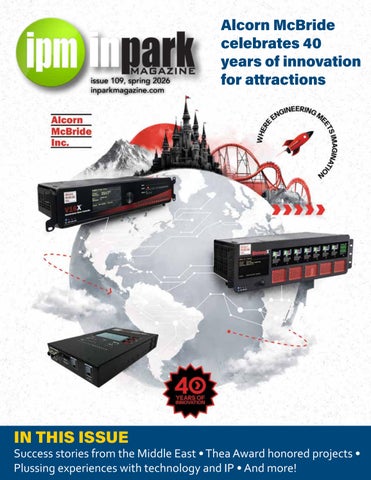
ON THE COVER
Alcorn McBride celebrates 40 years in business. Started after Steve Alcorn’s experiences opening EPCOT, the company has become a staple in the attraction A/V industry.
Page 22
6
9
Positioning entertainment for the future interview by Martin Palicki
Q&A with RWS Global’s AJ Gardner
InPark News
News from Haus Collection 10
Building Acromagic by Becci Knowles
How Epson projection makes Cirque du Soleil’s ALIZÉ possible
The moment I realized everything I thought about DEI was wrong by Patrick Kling
16
18
22
The first in a series of columns in a partnership with Big Break Foundation
Shaping the future of branded experiences by George Wade
Exploring the alliance between IAAPA, TEA and Licensing International
Engineering the invisible magic by Gabrielle Russon
Alcorn McBride at 40
28 To IP or not to IP? by Benoit Cornet
The pros and cons of using intellectual property in attraction design
Journey to the wish by Joe Kleiman
32
37
42
46
50
54
58
65
68
Animal Repair Shop helps create WishWorks for Make-A-Wish kids
Secret Laboratory interview by Martin Palicki
Creative Studio Berlin and The Room Labs turn a workshop into a show
Bringing steel to life by Philip Hernandez
How the USS Midway Museum created its most ambitious exhibit to date
Growing together by Becci Knowles
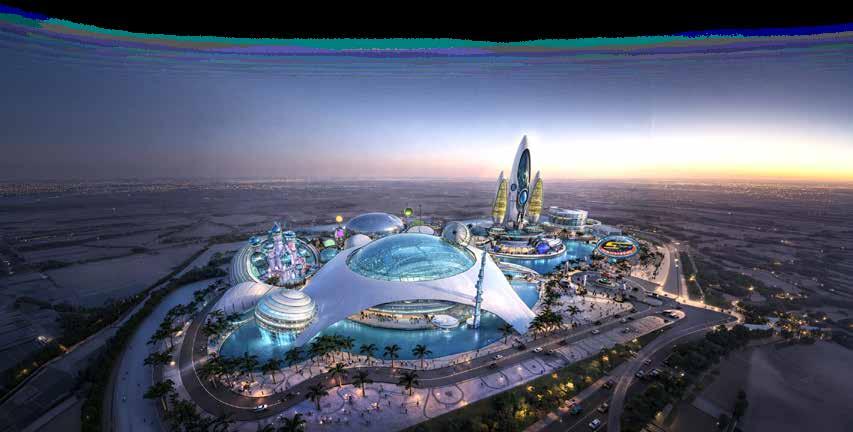
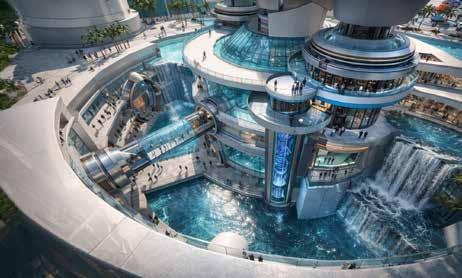
Jora Vision, Alterface and ETF help create The Enchanted Greenhouse for Six Flags Qiddiya City
All aboard!! by Judith Rubin
St. Louis Union Station’s lobby show gets a technology and media upgrade
Installing the thrills by Joe Kleiman
Almeria emerges as a key leader in attraction construction services for the Middle East
Designing what’s next by Wendy Grant
PGAV turns 60 and explores the future of guest experience design
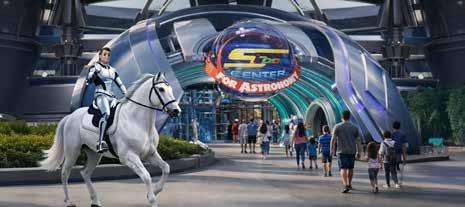
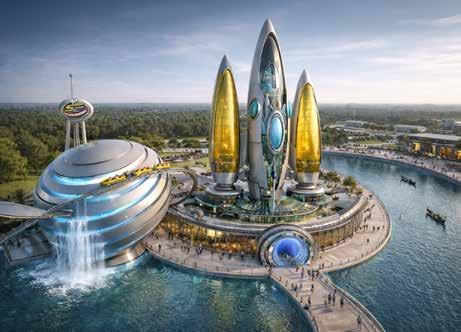
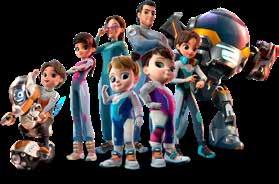
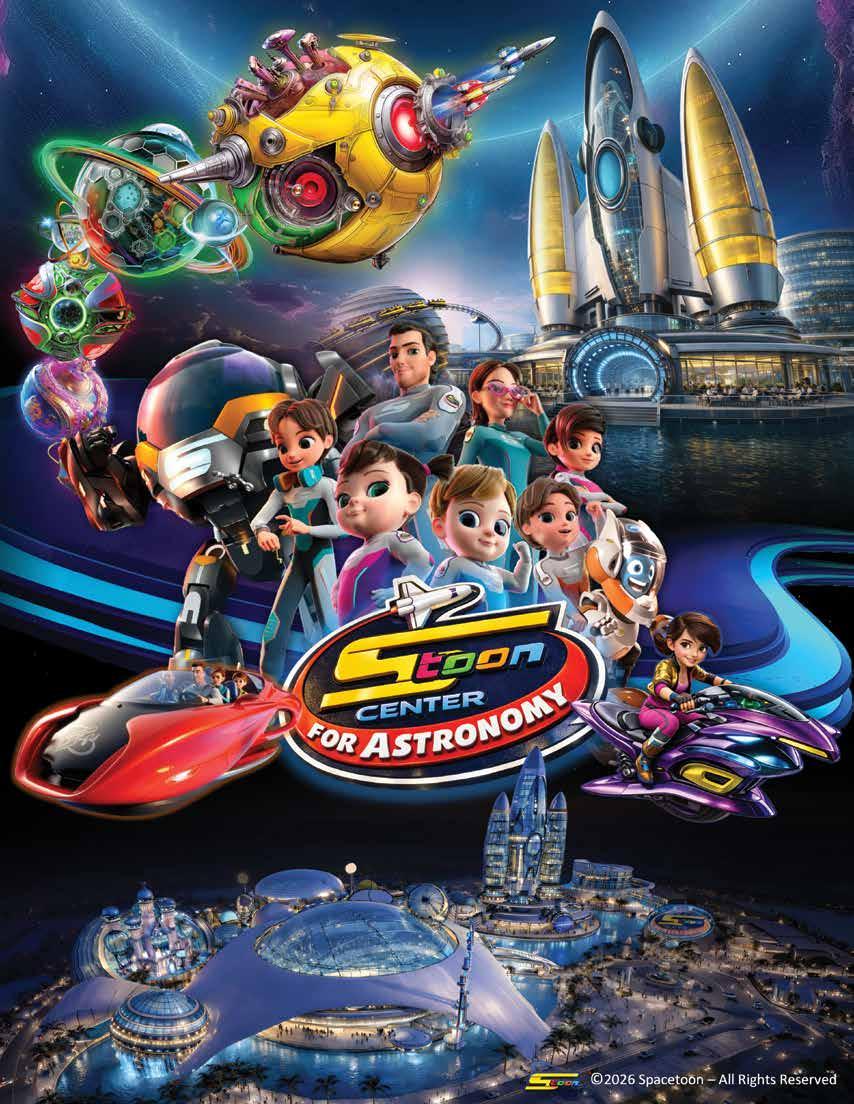
Spacetoon by Becci Knowles
Bringing a broadcast universe to life as an entertainment destination
Why experience design is replacing the attention economy by Dominic Audet
Moment Factory shares insight on the evolution from attention to connection
72 A Continental journey by Philip Hernandez
78
Jason Egan’s journey and collaboration with Lionsgate and AREA15 lead to the JOHN WICK EXPERIENCE
Enjoying Xcaret by Martin Palicki
An “Xcerpt” from IPM’s coverage of TEA Thea Classic Xcaret
Evolving to meet the changing times
MARTIN PALICKI, PUBLISHER
Everyso often it feels right to change the way the magazine looks – not for the sake of change, but because the industry it serves has evolved and grown. This is one of those moments. Our refreshed design is a visual expression of what I am seeing everywhere I turn: a themed entertainment community that is rebuilding confidence, expanding geographically and, more than ever, working together.
That sense of momentum runs through this entire issue. For years we have talked about the Middle East as an emerging market. Now we are watching it become something much more significant – a place where projects are not only opening, but where long-term infrastructure, permanent teams and local talent pipelines are taking shape.
What has struck me most in the articles in this issue is how often the word collaboration comes up - not as a buzzword, but as a requirement. Whether it is the alignment between brands, operators and designers, the partnerships behind major productions, or the alliances forming between our industry organizations, the message is the same: the scale and complexity of what we create today demands that we work together earlier and more openly. The projects recognized by the TEA Thea Awards have always demonstrated that truth. They are reminders that our greatest achievements are never the result of a single company or discipline, but of teams that share a vision and execute it at the highest level.
JOE KLEIMAN, SENIOR CORRESPONDENT
On a personal note, one of the most rewarding aspects of putting this issue together was the range of voices represented. You will find industry veterans whose work has defined entire eras alongside new contributors who are bringing fresh ideas and new questions. That mix matters. Hearing these perspectives side by side gives me optimism about where we are headed.
There is also a thread in these pages about the “invisible” – the technology, the systems, the people behind the scenes who make the magic possible. As our cover story feature company Alcorn McBride celebrates 40 years, it is a reminder that our industry is sustained by companies and individuals who rarely get to take a bow but whose work is experienced by millions of guests every day. That kind of legacy deserves to be celebrated.
So yes, this issue looks different. But more importantly, it feels different to me. It reflects an industry that is broader, more connected and more diverse than at any point in our history. And it reflects a magazine that continues to evolve along with the community it serves.
Martin founded InPark Magazine in 2004, combining years of experience working in themed entertainment with a passion for writing and design.
Raised in San Diego on theme parks, zoos, and IMAX films, Joe Kleiman would expand his childhood loves into two decades as a projectionist and theater director within the giant screen industry. In addition to his work in commercial and museum operations, Joe has volunteered his time to animal husbandry at leading facilities in California and Texas and has played a leading management role for a number of performing arts companies. Joe served as news editor at InPark Magazine starting in 2011, becoming the publication’s senior correspondent in 2021. His blog ThemedReality.com takes an unconventional look at the attractions industry. Follow Joe on Instagram @JalekAvant
team & contributors
PUBLISHER
Martin Palicki
EDITORIAL ADVISOR
Judith Rubin
SENIOR CORRESPONDENT
Joe Kleiman
NEWS EDITOR
Jordan Zauha
CONTRIBUTORS
Dominic Audet
Benoit Cornet
Wendy Grant
Philip Hernandez
CONTRIBUTORS (cont’d)
Patrick Kling
Becci Knowles
Gabrielle Russon
George Wade
DESIGN
Martin Palicki
EDITORIAL ASSISTANCE
Jordan Zauha
Positioning entertainment for the future
by Martin Palicki
With the opening of its Riyadh headquarters in Saudi Arabia’s King Abdullah Financial District, RWS Global has made a clear statement about its long-term commitment to the Middle East. Leading that effort is AJ Gardner, VP, Operations | Middle East. His career spans theme parks, opera, live entertainment, and large-scale destination development across the U.S. and the Gulf Cooperation Council (GCC). Most recently he served as Manager of Entertainment and Events at Six Flags Qiddiya City in Riyadh and previously held key roles at Dubai Parks & Resorts. His diverse background in creative production, operational management and live event strategy positions him to drive RWS Global’s continued growth and partnership expansion across the market. In this interview, Gardner discusses RWS Global’s strategy for the region, the evolution of the Saudi market, and how talent development and collaboration will define the next chapter.
Why Riyadh and why now?
RWS Global has built a global reputation for delivering world-class entertainment and elevating the guest journey across land-based attractions, cruises, megaevents, museums, and destination experiences. Opening our seventh international headquarters in Riyadh positions us to serve the Middle East with speed, professionalism, and cultural understanding.
There is an enormous appetite in Saudi Arabia and across the GCC for premium entertainment, and the region deserves the very best. By establishing permanent operations in Riyadh, we are creating a foundation for long-term growth at a moment when the world’s attention is turning toward Saudi Vision 2030. We are excited to contribute meaningfully
to that plan and to the transformation of tourism and entertainment in the region.
How has your work in the Middle East shaped your perspective?
I was raised in the southern United States and had very limited exposure to the Middle East early on. When I had the opportunity to relocate to Dubai in 2016, I wanted to experience the region firsthand and form my own perspective.
What I discovered is that people are people everywhere. Stories transcend language, and live performance is one
AJ
of the oldest and most powerful ways to share culture. Working in Dubai taught me how to collaborate across cultures and nationalities toward a shared goal: great entertainment.
That experience was also the first time I worked on a theme park resort from the ground up. Watching a project rise from sand to a fully operational destination, and then seeing families experience it for the first time, was transformative. It gave me a deep respect for the scale, collaboration, and care required to create meaningful guest experiences. It also made me fall in love with the Middle East. The hospitality and openness I’ve experienced here is unmatched.
You’ve worked on both the operator and supplier sides of the industry. How does that inform your approach?
GARDNER LEADS RWS GLOBAL’S NEW OFFICE IN SAUDI ARABIA. HE WEIGHS IN ON DEVELOPMENTS IN THE REGION, THE ROLE OF ENTERTAINMENT AND WHAT’S TO COME IN THE MIDDLE EAST.
AJ Gardner, VP, Operations | Middle East
interview
Having been on the client side at major parks and resorts gives me a very practical understanding of what works and what doesn’t, especially in this region. Success here requires flexibility, commitment, cultural awareness, and strong teams.
RWS Global is uniquely positioned because we can provide full turnkey support, from master planning and design through execution, operations, consulting, and special events. Our global network, combined with more than 25 years of collective GCC experience, allows us to support projects of any scale while remaining deeply focused on guest experience. That balance is critical in the Middle East.
How would you describe the entertainment landscape in the region today?
It’s ambitious, immersive, and happening everywhere. Entertainment is embedded into daily life, from parks and festivals to malls and public spaces. There is a strong emphasis on lighting, architecture, and atmosphere, creating thoughtful and inclusive guest environments.
Events like Riyadh’s Noor Light Festival, which broke international records using light as a storytelling medium, show how seriously experiential entertainment is taken here. Free, citywide immersive installations, drone shows, and exhibitions connected by public transit made culture accessible to everyone.
The region now hosts major international music acts, comedy festivals, opera, musical theater, and large-scale touring productions. Audiences are highly engaged, and entertainment is available
on demand, any day of the week. Most importantly, it’s family-focused, which is central to the culture.
Where do you see the Middle East market heading over the next decade?
We’re only at the beginning. In particular, Saudi Arabia has a familycentered culture that deeply values immersive entertainment. With recent milestones such as the opening of Six Flags Qiddiya City, global tourism has taken notice. The scale, pace, and vision behind Saudi Arabia’s transformation is unlike anything I’ve seen before. It will reshape expectations for destination entertainment worldwide.
Looking at Saudia Arabia alone gives a hint of what’s to come. Qiddiya City will continue to expand with Aquarabia, F1, more hotels and entertainment. Expo 2030 takes place in Riyadh in a few years, and it’s going to be impressive. The World Cup arrives in 2034 and those stadiums are already being built. They will need fan activations, sports production and entertainment. And these are only the largest projects. There are countless smaller community-sized developments for entertainment and culture planned as well.
As projects move from development into long-term operations, what role does RWS Global play?
We are a bespoke, turnkey entertainment provider. Whether a project needs master planning, execution, operations, consulting, or long-term operational support, we can step in at any phase.
Our Riyadh headquarters is designed as an operational hub, not a satellite office.
We provide the same level of care and attention to every project, from gigadevelopments to smaller activations. Accessibility and responsiveness are core to how we work.
How would you characterize Saudi Arabia’s transformation in relation to the rest of the region?
The Kingdom of Saudi Arabia has positioned itself in a unique way, as the Kingdom is reforming their entire economic and cultural systems at the same time. Their transformation is unprecedented in its scale and vision. Transforming its economic diversification to focus on tourism, cultural heritage, and entertainment will define the success of the Kingdom.
His Highness Mohammed bin Salman (MBS)’s Saudi Vision 2030 development plan will go down in history books, as one of the most ambitious and well executed reform plans in human history. The vision is clear, purposeful, built to directly benefit the people of Saudi Arabia, and will bring prosperity and opportunity to the entire Kingdom.
Outside of Saudi Arabia, the UAE has done a fantastic job putting their tourism and business sector on the map. Their rapid climb to becoming a top global destination through the development of infrastructure, including the incoming Disneyland Abu Dhabi, will be studied and discussed for years to come.
Talent development is a major topic in the region. How is RWS Global approaching this?
Developing local talent is essential, and it’s something I’m personally passionate
about. Our goal is to help build a worldclass entertainment workforce within the region by combining local leadership with global expertise.
We want to bring international educators, performers, and industry experts into the region to share knowledge, conduct training, and support long-term professional growth. This industry isn’t only for expatriates. Saudi professionals want to build careers here, and we want to support that ambition.
How would you describe the collaborative environment in the Middle East entertainment sector?
Collaboration is key to success here. RWS Global is one of the most
collaborative organizations I’ve ever worked with, and that mindset extends into how we engage with partners and clients.
The companies that succeed in this region are the ones that prioritize collaboration, cultural respect, and long-term relationships. Closing doors or operating in silos is not a sustainable approach, especially in a market that is still defining its future.
How do you envision RWS Global’s impact in the region over the next five to ten years?
Our focus is simple: deliver world-class entertainment at scale, supported by our international network and grounded in local culture. Training, workforce
development, and operational excellence will be central to our growth.
We are here for the long term, committed to contributing to the region’s success and to creating experiences that resonate with families and communities. Being part of this moment in Saudi Arabia’s evolution is a privilege, and we’re excited about what’s ahead. •
Haus Collection adds Caroline Moore Hinrichs as Senior Growth Executive
Haus Collection, the group of seasoned growth leaders known for its relationship-first strategic model, announced the addition of Caroline Moore Hinrichs as Senior Growth Executive. Hinrichs’s addition is a major expansion of the company’s services and leadership capacity. With a career spanning architecture, experience technology, strategic partnerships, and innovation leadership, Hinrichs brings a combination of design thinking and business acumen that perfectly aligns with Haus Collection’s mission and client needs.
“Caroline’s arrival is a true gamechanger for Haus Collection,” said Morgan Rottinghaus, Founder & CEO. “Her unique skillset and her ability to build meaningful relationships mixed with strategy created a unicorn in the industry that is rare to find. This is a powerful next step for our team and the companies we support.”
Working as part of the broader Haus Collection leadership team, Hinrichs strengthens the firm’s ability to help best-in-class companies navigate growth across entertainment, experience design, branded environments, and adjacent markets.
“The experience economy is accelerating, and the lines between entertainment, brand and guest experience are increasingly blurred. That convergence is exactly where our clients are focused,” said President & Co-Founder Jay Rottinghaus. “The strength of Haus Collection has always been the collective experience of our team, and Caroline adds a deep layer of insight that offers even more value for the companies we support.”
A strategic leader with design and innovation DNA Hinrichs has led innovation initiatives, built strategic partnerships, and helped launch and scale teams and brands. She was an early leadership hire as Global Director of Strategic Partnerships at Experience Technology Group (XTG), a division of AVI/SPL, where she created a deep-rooted network of strategic partnerships for XTG and its clients.
Most recently, she served as Vice President of Growth & Innovation for Physical Space at geniant, expanding architecture and built-environment user experience design practices while shaping strategies that connect physical and digital experiences.
“Haus Collection understands that the most powerful, transformational growth comes from relationships built on trust, clarity, and shared ambition,” said Hinrichs. “That’s what drew me to
Jay Rottinghaus, Morgan Rottinghaus and Caroline Moore Hinrichs
their work, because it’s what allows real opportunity to take shape over time.”
In her role at Haus Collection, Hinrichs will lead strategic growth planning, executive and stakeholder workshops, and partnership developmentdeepening the firm’s ability to help clients grow with clarity, alignment, and intention.
Haus Collection is a team of Strategic Growth Executives helping businesses unlock their full potential through intentional, relationship-driven growth. The firm embeds seasoned growth leaders alongside client teams to deliver clear strategy, actionable market insight, and thoughtfully built growth roadmaps that lead to measurable, sustainable results. Grounded in trust, realworld experience, and practical outcomes, Haus Collection partners with companies navigating complex, evolving markets - positioning them to set the pace, lead the conversation, and become the “horse” everyone wants to chase.
How Epson projection makes Cirque du Soleil’s ALIZÉ possible
by Becci Knowles
Co-produced with Live Nation Germany, ALIZÉ – Cirque du Soleil’s first permanent resident production in Europe – premiered at Berlin’s Theater am Potsdamer Platz in November 2025. As Official Projector Partner of Cirque du Soleil Entertainment Group, Epson America worked closely with Cirque du Soleil’s creative and technical teams to implement a projection system capable of sustaining illusion at scale, night after night.
Billed as “a journey into the invisible,” Cirque du Soleil ALIZÉ introduces a new performance style called “Acromagic” – a fusion of its signature acrobatics with Magie Nouvelle (New Magic), an artistic movement that has spent more than 20 years reimagining magic as poetic expression rather than illusionary trickery. It is a form that depends on
Building Acromagic
uncertainty: on making audiences question what they are seeing, where reality ends, and where imagination begins.
For example, in one sequence, a bedroom appears at height onstage, rendered in such a way that it initially looks like a 3D animation rather than a physical set. A figure lies motionless on a bed. Only when his arm drops does it become clear the performer is physically present. Even then, the distinction between projected environment and physical objects remains unclear. The bed, the surrounding furniture, and the space itself seem to exist somewhere between physical structure and projection. It
becomes difficult to determine what is real and what is not.
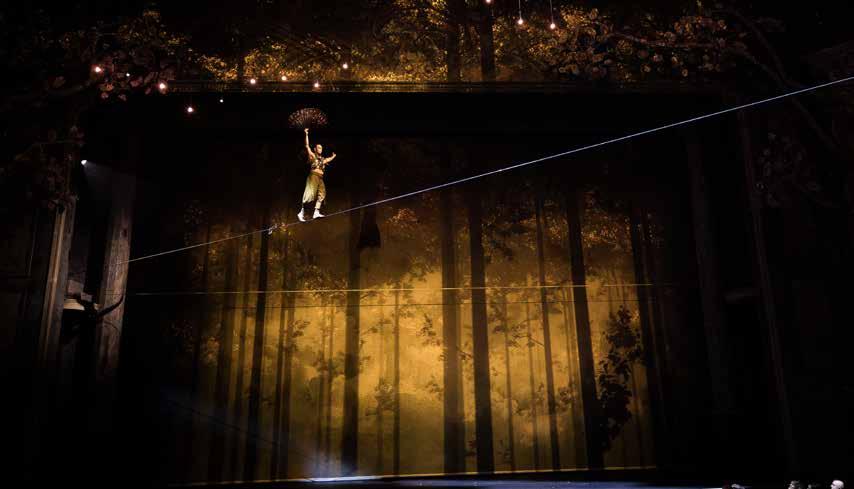
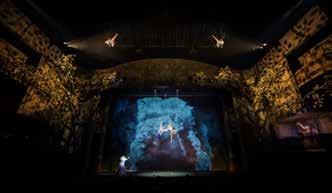
Elsewhere, suspended high above the audience, a high wire walker balances in stillness as fireflies drift around him, marking a path that seems to exist alongside his movement rather than on any visible surface. The effect is subtle but disorienting. Projection does not frame the act; it shapes the space the performer occupies, which again makes it difficult to separate the physical environment from the illusion. Moments such as these (and there are many) capture the essence of Acromagic, where projection and reality coexist without clear boundaries.
CIRQUE DU SOLEIL ’S FIRST PERMANENT EUROPEAN RESIDENCY MARKS A NEW CREATIVE CHAPTER, INTRODUCING ACROMAGIC – AN ILLUSION-DRIVEN PERFORMANCE STYLE WHERE EPSON ’S PROJECTION BECOMES CENTRAL TO THE EXPERIENCE.
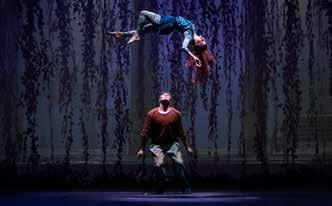
Projection builds a forest of shifting light behind the high-wire act, deepening the sense of height, space, and suspended reality. Photo credit: Anne-Marie Forker
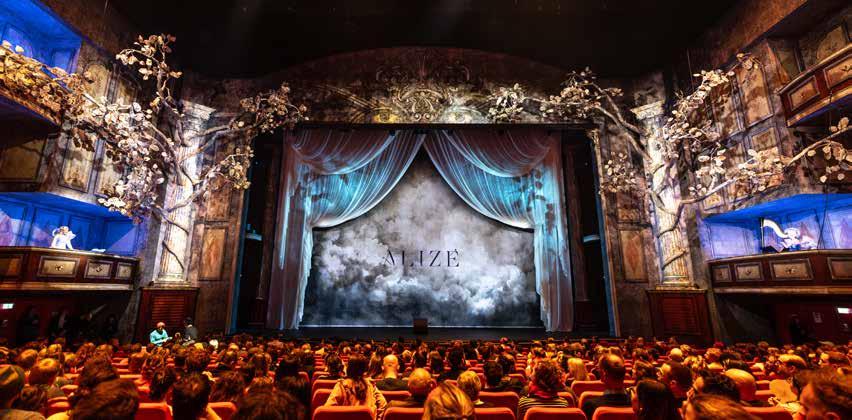
The auditorium itself feels animated long before the first acrobatic moment unfolds. Fireflies drift across the walls, the environment subtly breathes, and the boundary between stage and auditorium begins to soften. With a performer playing the harp on each balcony, stage right and stage left, there is an immediate sense that the venue has been tuned like an instrument. The walls, the architecture, and the space around the audience all feel active, as projection shifts across surfaces in ways that make the room feel alive rather than static.
To support that vision, Theater am Potsdamer Platz has been extensively redesigned and transformed to meet the unique requirements of a complex permanent production. Over the course of just three months, a team of 60 technicians reconfigured the space. The resident cast features 43 artists from 21 countries, supported by approximately 40 technicians operating systems above the audience, below the stage, and throughout the theater.
The Theater am Potsdamer Platz is relatively compact compared to Cirque du Soleil’s purpose-built residency venues, with seating rising steeply toward balconies and technical infrastructure integrated tightly into the architecture.
Scenic elements, automation systems, lighting, and projection equipment occupy nearly every available space, extending vertically into the grid and below the stage. Rather than relying on a single scenic focal point, the production uses projection to extend and transform physical set pieces, allowing environments to appear, dissolve, and reconfigure without visible mechanical change.
Jason Meyer, Director of Product Management at Epson America, describes the project as something Cirque du Soleil had been moving toward for some time. “When Cirque du Soleil described their aspirations for storytelling, we knew projection was the only technology capable of bringing it to life.” The concept Cirque du Soleil brought to Epson wasn’t a general wish list. It was specific, visual, and ambitious. Meyer recalls sitting with the show’s technical leadership early in the process. “It was similar to a pitch, beautifully rendered technical concepts that simply blew us away in their scope and ambition. It was truly exciting.”
The show’s defining visual language is inseparable from projection, not as a scenic overlay, but as a core mechanism of the magic. That is where Epson enters the story: not as a supplier in the traditional sense, but as a technology partner providing the brightness, consistency, and creative flexibility required to make Cirque du Soleil ALIZÉ’s constant “is it real or not?” experience land.
When Meyer explains the technical concept behind Cirque du Soleil ALIZÉ, he does not present projection as just another production ingredient. Instead,
he describes it as the core technology that helps everything come together. Eight overlapping Epson EB-PU2220B large venue laser projectors, each delivering 20,000 lumens, form the central visual canvas. In total, approximately 20 Epson laser High above the stage, illusion and safety operate in tandem; projection is meticulously aligned and rehearsed to preserve both visual impact and performer safety. Photo credit: Anne-Marie Forker
Jason Meyer Epson America
John Thurston Cirque du Soleil
projectors are deployed throughout the theater. These projectors are positioned within the grid, technical galleries, and front of house positions, covering scenic elements, architectural surfaces, and performance areas. Their output extends across stage floors, vertical scenic structures, and atmospheric effects, allowing projection to exist within the same spatial environment as performers and physical scenery.
Brightness, Meyer emphasizes, is not a technical indulgence. It is a creative requirement. “The role of projection is both hugely ambitious yet incredibly nuanced. Cirque du Soleil uses color to drive emotion, demanding hues that need to be incredibly precise, consistent, and bright. At the same time, ALIZÉ is a journey into the invisible. This is where projection becomes the perfect medium: it provides a level of subtlety and can disappear entirely, leaving the audience in awe.”
In an entertainment landscape increasingly dominated by LED, both
Cirque du Soleil and Epson are clear about projection’s continuing relevance.
“LED is amazing. It can do incredible things,” Meyer says. “But it can’t do what projection does.” Specifically, projection allows light to exist across dimensional surfaces rather than within a defined screen. “You can’t bend light with LED screens around three-dimensional surfaces very easily, not with quality,” he explains. “And you can’t create a hologram in the middle of a stage, for example a tree blowing in the wind. There are things that only projection can do.”
Subtlety as strategy
One of Cirque du Soleil ALIZÉ’s most powerful creative choices is subtlety. Rather than foregrounding technology, the production allows projection to seep into the experience gradually. “The subtlety with which the projection is used in the beginning - you almost don’t notice it’s there,” says John Thurston, Lead System Manager for ALIZÉ.
That understatement lays the groundwork for the show’s central tension: the constant uncertainty between what is real and what is not. This becomes especially apparent during the contortion sequence. From a mass of drifting projected clouds, the volutes emerge and appear to dissolve back into them as they move. Projection fragments their silhouettes and reshapes the surrounding space, creating the impression that their bodies exist somewhere between physical presence and illusion.
“There could be something real, which you question if it’s not real,” Thurston explains. “There could be something unreal that you question if it is real.” From the audience, that ambiguity becomes physical. Attention drifts from stage to ceiling, from walls back to performers, and then outward again. “That’s exactly the aim,” Thurston says. “I don’t think they use the same tactic twice. The idea is to keep you on your toes.”
Approximately 20 Epson laser projectors, including eight overlapping EB-PU2220B units, create a continuous visual canvas that spans stage, scenery, and architecture - turning Berlin’s Theater am Potsdamer Platz into an immersive Acromagic environment. Photo credit: Anne-Marie Forker
A brush for a painter
Thurston, a veteran lighting and show designer, describes the creative goal in familiar terms. “When you’re using technology creatively,” he says, “you want to lose the fact that it’s a piece of technology. It just wants to become a brush for a painter. It’s a tool for an artist. And you want the tool to disappear and the art to come out.” That philosophy carries through into how the system is built. Projection systems remain permanently installed throughout the theater, positioned in the grid, front of house, and technical galleries.
Performers and scenic elements move through precisely mapped projection zones while tracking and calibration systems ensure projected imagery remains correctly aligned. This allows projection to maintain spatial accuracy even as performers move through complex choreography, preserving both illusion and performer safety.
For example, the tightrope performer has learned the act in coordination with lighting and projection cues that define what he can see and how he moves through the space. Projection and lighting must remain perfectly aligned, night after night. Even small inconsistencies could disrupt his spatial reference points, affecting both the illusion and the safety of the performance. Maintaining that consistency requires projection systems capable of delivering stable brightness, color, and alignment across every performance.
Projection in Cirque du Soleil ALIZÉ does not exist in isolation. It is interlocked with lighting, audio, automation, scenic elements, and most critically, high level acrobatics where safety is non-negotiable. Thurston describes lighting and projection as “weapons of mass distraction” if mishandled. Used correctly, they support illusion without exposing its mechanisms.
Reliability as a creative requirement
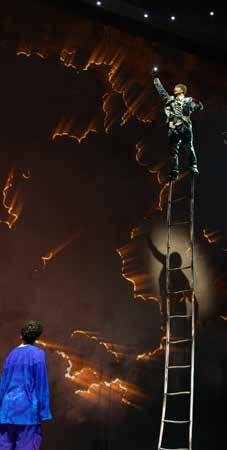
As a permanent resident production, Cirque du Soleil ALIZÉ demands absolute consistency. Epson’s laser-based systems were selected specifically for live Photos, Right, Top to Bottom (All photos credited to Anne-Marie Forker):
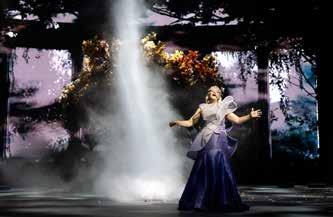
Projection mapping integrates with live effects in the tornado sequence, maintaining alignment and visual clarity even as lighting, haze, and movement intensify around the performer.
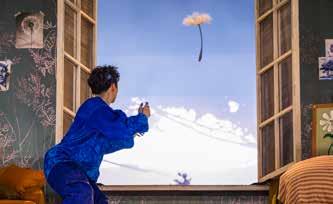
The bedroom sequence that sets the tone for ALIZÉ. What first appears to be a projected animation gradually reveals a live performer within it, blurring the boundary between physical set and illusion through precisely mapped Epson projection.
Hanging vines of projected light create a layered environment that feels spatially present around the performers. In ALIZÉ, projection enhances intimacy rather than spectacle.
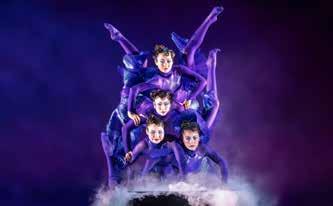
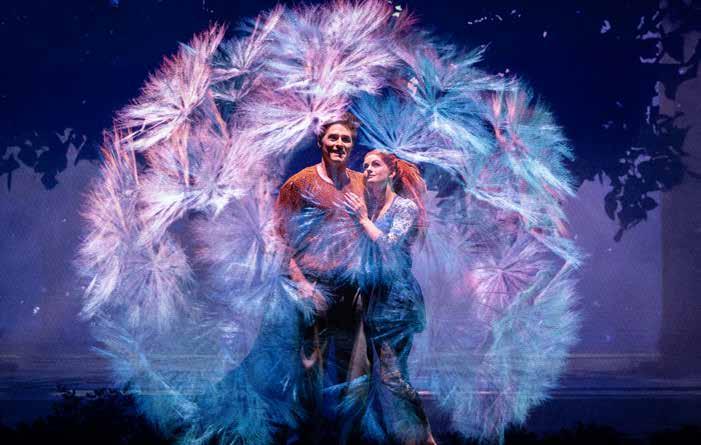
During the contortion act, described by Lead System Manager John Thurston as the moment when audiences “sit forward in their seats,” projected volutes gather and expand around the performer, transforming quiet detail into immersive illusion.
Projection and aerial choreography remain precisely aligned, creating the impression that performers are moving within the image itself rather than in front of it.
entertainment environments, designed to run at full brightness for thousands of hours. “The equipment we provided is built to run hard,” Meyer says. “That’s what these environments demand.”
For Thurston, reliability directly affects the people who live with the show night after night. “If you spend less time on maintenance, that value goes back into the show,” he explains. “It goes back into the team.” Once a production transitions from creation to operation, stability becomes essential. “The operations team’s job is hard enough as it is,” Thurston says. “Anything they don’t have to worry about is worth its weight in gold.”
Perhaps the most telling aspect of the collaboration is how Thurston describes Epson’s role. “This is not a sponsorship between Cirque du Soleil and Epson,” he says. “It’s a partnership.” From the outset, Epson positioned itself as a creative ally.
“They came in saying, ‘We want to know what you’re trying to do. We want to understand the thought process behind it,’” Thurston recalls. “We weren’t just a client. It wasn’t just a project.” That proximity, he believes, shows in the result. “The quality of the show that was delivered is in no small part because of Epson and their care for us.”
Ultimately, Cirque du Soleil ALIZÉ does not ask audiences to admire technology. It asks them to doubt their senses. If you leave the theater thinking you have understood one or two moments, the show has done its job. If you try to assemble the whole puzzle, you quickly realize you cannot. “If you try and add them all up and figure out the total game plan,” Thurston says, “you just tie yourself in a knot.”
That knot, the lingering uncertainty between what was real and what was illusion, is the show’s visual signature.
And it is made possible by projection that is bright enough, subtle enough, and reliable enough to disappear entirely.
As the performance concludes, the illusion gives way to something more human. The technical crew emerge alongside performers for the final bow, acknowledging the coordination required to sustain the production. It is a rare moment where the invisible becomes visible, revealing the scale of collaboration behind the illusion. •
Becci Knowles is a U.K.-based writer and editor with 20 years’ experience in trade and consumer press. Becci’s first taste of the themed attractions industry came in 2015 with a visit to Gothenberg, Sweden, for IAAPA to support the Park World and Global Amusements & Play team. She went on to edit Park World from 20182022 before deciding to go freelance, making the move into travel and lifestyle before returning to the visitor attractions industry for InPark.
The dandelion moment exemplifies ALIZÉ’s approach to projection: subtle, layered, and integrated with live performance. Photo credit: Anne-Marie Forker
FAMILY ADVENTURE
ABU DHABI 31 MARCH - 2 APRIL BOOTH #2618
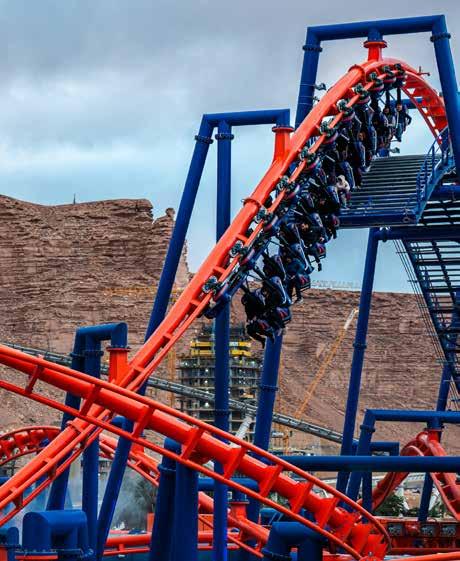
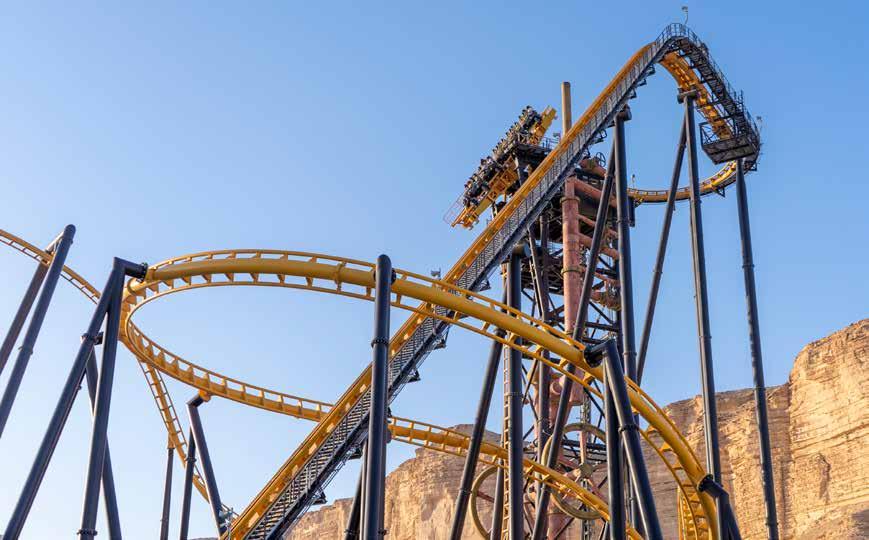
SUSPENDED FAMILY COASTER ‘ADRENA-LINE’ SIX FLAGS QIDDIYA CITY, SAUDI ARABIA
MAXIMUM THRILL
ULTIMATE COMFORT
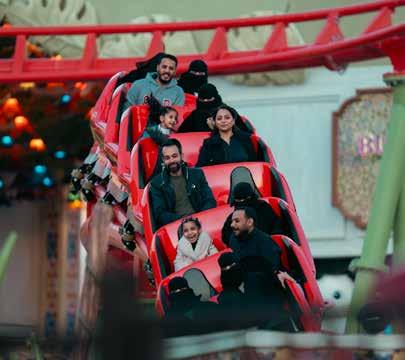
FAMILY COASTER ‘TWILIGHT EXPRESS’ SIX FLAGS QIDDIYA CITY, SAUDI ARABIA
FAMILY ADVENTURE FOR ALL GENERATIONS
Turn your park into the ultimate family destination and bring families closer with unforgettable adventures! Vekoma specializes in designing and delivering attractions that delight kids, excite teens, and engage parents and grandparents. From groundbreaking family coasters to adrenaline-fueled rides, we create experiences that keep guests coming back. Elevate your park’s reputation and partner with us to create signature attractions that drive guest loyalty and long-term success. Together, we’ll turn your vision into reality! We look forward to meeting you at IAAPA EXPO MIDDLE EAST!
WWW.VEKOMA.COM
The moment I realized everything I thought about DEI was wrong
by Patrick Kling, Founder & Board Chair, Big Break Foundation
You might be asking yourself how a white, straight male ends up founding a nonprofit focused on inclusion, diversity, equity, and accessibility (IDEA).
That’s a fair question. Conversations around inclusion aren’t simple, and there are real disagreements about the role white men should play in this space. I’m not writing as an expert; but rather, as someone whose thinking changed, slowly and then all at once, through conversations inside the themed entertainment industry.
I grew up in Southern California believing in meritocracy. If you worked hard and treated people well, everything would work out. The idea of someone being denied a job simply because of their skin color or gender felt outdated to me. My family believed we didn’t see color. We were taught that everyone
should be treated the same and that talent would rise on its own.
For a long time, I believed that was enough, and that belief followed me into my career.
The first crack in that thinking came in 2019. I was scrolling through Twitter when I saw a retweet of a project team’s photo. The user pointed out that the team was overwhelmingly white and male.
I responded asking what we could do about it. From my experience, the industry felt welcoming. No one I knew was actively trying to keep people out.
I received a blunt reply at first. But instead of ending the conversation, the person suggested I connect with a colleague who was trying to create change within the industry. I did, and we
ended up having a long conversation that changed how I saw everything.
They were a person of color who recently landed a spot at one of our industry’s major companies. As they described their background, I was impressed. They were a writer and a musician, and they had a wide range of creative and technical skills. I remember saying how amazing it was that they could do so many things.
“No, Patrick,” they said. “I have to do all of these things. I HAVE to overperform. I have to do the work of five people.”
They explained that many of their white male peers could enter the industry with a single skill straight out of college. To compete, they needed to be exceptional across multiple disciplines just to be seen as viable.
INPARK IS PARTNERING WITH BIG BREAK FOUNDATION TO BRING READERS A SERIES OF COLUMNS THIS YEAR ON ISSUES SURROUNDING DIVERSITY, EQUITY, INCLUSION AND ACCESSIBILITY. THIS IS THE FIRST OF THESE ARTICLES.
Patrick Kling, Big Break Foundation
That moment hit me hard. What made it even harder was realizing this wasn’t an isolated story. Study after study shows how people of color – especially Black, Latine and Indigenous applicants – are passed over in hiring decisions. In 2017, PNAS (Proceedings of the National Academy of Sciences) published research demonstrating that people of color receive fewer callbacks than white applicants even with identical qualifications.1 In 2024, researchers at NYU and Yale found employees of color receive fewer promotions.2 And a 2025 article in the Journal of Biomedical and Life Sciences found that even with higher levels of education and skills, Black employees continue to receive fewer economic benefits.3
As I kept learning, another moment stood out. I was watching a conference presentation when the speaker posed a scenario that felt uncomfortably familiar. You’re in a meeting and someone asks, “Does anyone know someone who could do this entry level job?”
The speaker explained that when a room is made up mostly of white people, the referrals that come out of it will usually reflect that makeup. Not because anyone is trying to exclude others, but because systems tend to reproduce themselves. Who we know, and who gets invited in often looks like what is already there.
One of the simplest solutions they offered was also one of the most eye opening. Open up the process. Create more than one door into the industry.
1 www.pnas.org/doi/10.1073/pnas.1706255114
Then I came across a statistic that completely reframed how I understood hiring decisions. In 2016, the Harvard Business Review published research showing that when there’s only one woman or person of color in a final candidate pool, their chances of being hired are effectively ZERO. But, when there are at least two, their chances of landing a job are about 194 times greater, and their odds increase as the candidate pool diversifies.4
For me, the most pivotal point came during a virtual seminar called “The Listening” early in the pandemic. The two presenters pointed out that challenges faced by women and people of color are not problems they can solve alone. Change requires action from those who currently benefit from the system and are in the room.
They explained that many wellintentioned white men – myself included – move through systems that reward us in ways we may not even notice. Ignoring that reality doesn’t make things fair, but acknowledging it gives us a chance to fix what isn’t working.
That’s when I finally understood why saying “I don’t see color” isn’t neutral. It erases real experiences. It ignores the extra effort, pressure, and exhaustion that many people carry just to belong in the same rooms.
If we want people to actually succeed because of their character, talents, and knowledge, we have to create
purposeful systems. That means taking responsibility for opening doors and changing how we hire.
IDEA is often oversimplified to just focus on skin color. But it’s more than that. IDEA addresses the real socioeconomic barriers in our industry. There are people who never had the right school, the connections, or the ability to move to the right city at the right time. And yes, there are many white men who are not benefiting from the system either, who are working just as hard and still struggling to break through.
Acknowledging inequity does not mean pretending everyone who looks like me has it easy. It means recognizing that the system itself is uneven, and that different people hit different obstacles along the way. If we want an industry where talent truly rises, then we have to care about all of those barriers, not just the ones that are easiest to see.
That is the work. Not blame. Not guilt. Just building something better, together. •
Patrick Kling is the Founder and Board Chair of Big Break Foundation, a 501(c)(3) nonprofit dedicated to making the location based entertainment industry more inclusive and welcoming to all. He has served as a creative leader on world class theme park and waterpark projects around the globe, with work spanning Nickelodeon, SeaWorld, Paramount, and other major brands.
TheInternational Association of Amusement Parks and Attractions (IAAPA), the Themed Entertainment Association (TEA), and Licensing International (LI) have formed a new working alliance aimed at advancing the rapidly growing world of branded location-based entertainment (LBE). By aligning brand owners, experience operators, and the creative professionals who design immersive environments, the three organizations are working together to develop shared education, best practices, and frameworks that elevate branded experiences worldwide.
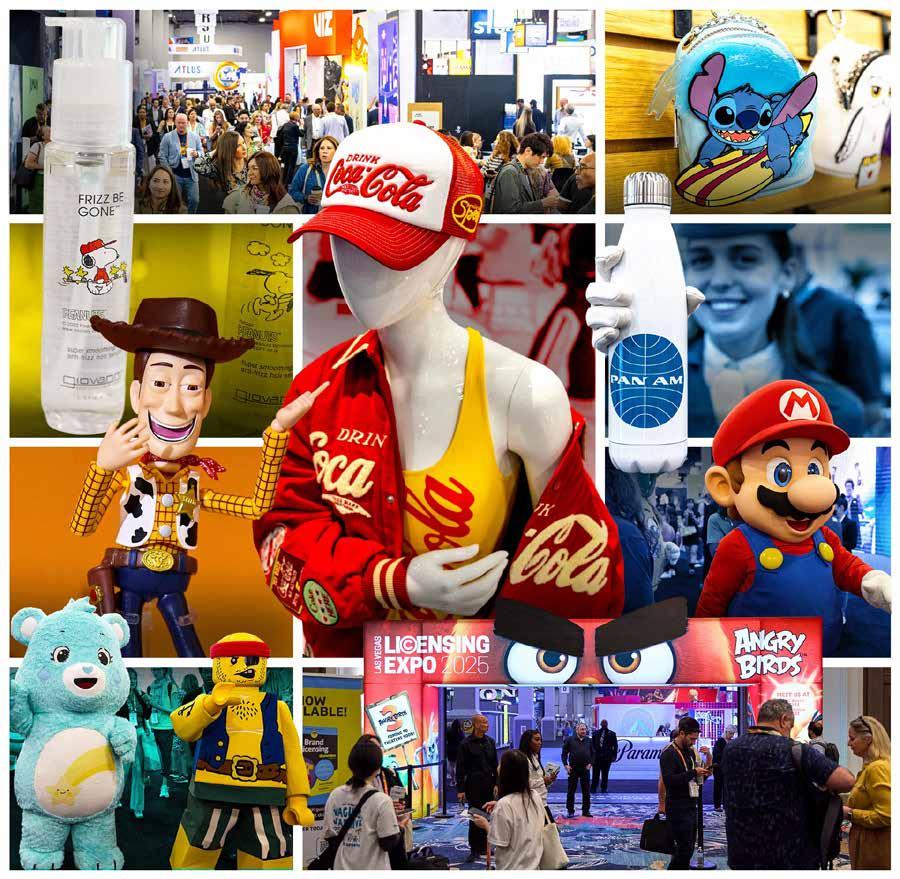
Each May, the global brand licensing industry converges on Las Vegas for Licensing Expo, produced by Informa and Licensing International and long known as the marketplace where brands and consumers meet. This flagship event with over 12,000 attendees has increasingly become a bellwether for location-based entertainment. This year’s show provides a timely platform for the alliance to articulate its shared vision and begin rolling out collaborative initiatives.
Shaping the future of branded experiences
This shift reflects a broader change in consumer behavior. Today’s audiences place as much value on memorable experiences as they do on physical products - often more. As a result, brands have become a powerful driver for experience operators. The most recent data from Licensing International shows that global sales of licensed merchandise and services reached $369.6 billion and the industry is only expected to continue to grow. Branded LBE offerings reported significant increases in 2024 (+5.5%), 2023 (+13.5%), and 2022 (+67.3%).
Whether it’s immersive attractions, themed destinations, live events, or branded environments, consumers are actively seeking experiences that allow them to engage emotionally with the stories, characters, and worlds they love.
For experience operators, this evolution represents a tremendous opportunity. At the same time, it introduces new challenges. Guest expectations continue to rise, driven by advances in technology, competition for leisure time, and the
growing sophistication of experiential design. Delivering experiences that feel authentic, high-quality, and worthy of beloved brands has never been more complex.
One proven way to meet these expectations is by bringing popular entertainment brands to life through immersive experiences. However, success in this arena requires close coordination between three distinct but interdependent communities: brand owners, experience operators, and the designers and producers who create these environments.
Recognizing this reality, IAAPA, the TEA, and LI have come together to form a new working alliance. Each organization represents a critical piece of the experiential ecosystem: operators, creative and technical professionals, and brands. All three see clear benefits in aligning their efforts.
Formed in mid-2025, the alliance is focused on developing coordinated
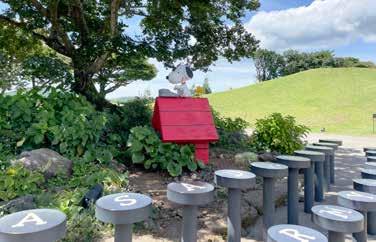
Top: Snoopy Garden in Jeju, South Korea, brings the beloved Peanuts characters to enchanting outdoor settings. Photo courtesy of Peanuts Worldwide.
educational programs, sharing best practices, and establishing frameworks that help all stakeholders succeed. The goal is straightforward: to enable the creation of best-in-class branded experiences that delight consumers while protecting and enhancing the value of the underlying intellectual property.
“We are excited about our partnership with IAAPA and TEA. Now more than ever, consumers everywhere are seeking a 360-degree experience with their favorite brands. LI is a global organization at the forefront of connecting brands with business leaders globally. Our alliance with IAAPA and TEA provides the connections and tools needed - including insights and education - for operators and experience developers to create new business opportunities and accelerate their current businesses worldwide,” said Maura Regan, President of Licensing International.
As Licensing Expo approaches this May, and as location-based entertainment continues to gain prominence within the entertainment landscape, the alliance signals a clear commitment by all parties involved. By aligning brands, operators, and creators around shared standards and education, LI, IAAPA, and TEA are laying the groundwork for the next generation of immersive branded experiences.
The alliance in action
At its foundation, the alliance is dedicated to advancing education and providing meaningful support to the memberships of all three organizations. Through shared learning opportunities, practical tools, and the development of industry best practices, the partnership is designed to help members unlock new
business opportunities while elevating the overall quality of guest experiences across the sector.
“Branded experiences succeed when brands, operators, and creators are aligned from day one,” shared Melissa Oviedo, CEO, Themed Entertainment Association. “Our alliance with IAAPA and Licensing International is about raising the bar across the industrystrengthening collaboration, protecting brand integrity, and delivering immersive experiences that truly resonate with today’s audiences.”
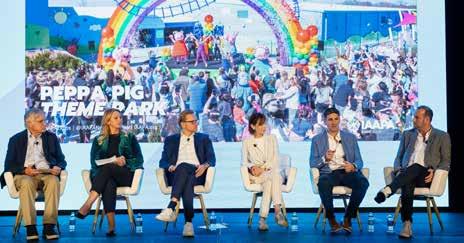
During a panel discussion at IAAPA Expo 2025, I had the privilege of moderating a conversation focused on the alliance’s potential benefits for the entire industry. The session convened the chief executives of the three partner organizations: Jakob Wahl, President and CEO of IAAPA; Melissa Oviedo, CEO of TEA; and Maura Regan, President of LI. It offered a leadership-level perspective on the motivations behind the collaboration and its long-term strategic importance, while emphasizing the increasing interdependence among all project stakeholders. All three underscored that as branded experiences become more sophisticated and more central to brand strategy, closer collaboration and shared standards are no longer optional.
The panel also featured an operator–brand case study with Matthew Proulx, SVP of Location-Based Entertainment at Hasbro, and Rob Smith, COO of Merlin Entertainments. Together, they shared insights from their highly successful licensed partnership built around PEPPA PIG, highlighting how alignment between brand stewardship
and operational execution can result in experiences that resonate deeply with families while delivering strong commercial performance.
“The brands that truly last are the ones that make people feel something. As experiences play a bigger role in how audiences engage with IP, collaboration across the ecosystem becomes essential,” said Proulx. “Through our work with Merlin Entertainments on our U.S. PEPPA PIG attractions, we have seen how early alignment between brand teams, operators and creators leads to work that feels authentic and deeply meaningful for families. When everyone is building with the same care and intent, those moments become memories that stay with guests long after they leave.”
Location-Based Entertainment will have a visible presence at Licensing Expo, with LBE-focused educational offerings and networking opportunities planned during the event. The Themed Entertainment Association and Licensing International will co-host their second Licensing Expo networking mixer on the evening of Wednesday, May 20; final details regarding the time and venue are forthcoming. The inaugural mixer, sponsored by TEA and held in 2025 at JOHN WICK EXPERIENCE, attracted more than 100 industry professionals, underscoring the growing momentum behind experiential licensing.
As the experiential licensing sector continues to evolve, the alliance among IAAPA, the Themed Entertainment Association, and Licensing International represents a deliberate commitment to ensuring that industry growth is matched by excellence in execution. The collaboration ultimately benefits
brands, operators, creators, and - most importantly - the guests they serve.
“Intellectual property is shaping many of today’s most exciting attractions. This alliance unites global experts to elevate collaboration, best practices, and the
future of branded experiences. We are excited to see this also coming to life at our IAAPA Expos,” said Jakob Wahl, President and CEO of IAAPA.
Planning is already underway for joint initiatives at upcoming TEA, IAAPA,
and LI events throughout the year, all with the objective of strengthening relationships across the Location-Based Entertainment and brand licensing communities and fostering a more connected, collaborative industry. •
With over 40 years in the entertainment and leisure industry, George Wade has become a leading innovator in the development of highly participatory immersive Location-Based Entertainment (LBE) projects including theme parks, themed attractions and interactive entertainment venues. He is also a leading expert in utilization of high-powered entertainment brands within the LBE industry. In 2009, George established Bay Laurel Advisors, a broad-based consulting firm dedicated to the development of unique LBE projects. George also serves as a member of the Licensing International Board of Directors focusing on brand licensing’s ability to create memorable and profitable guest experiences in LBE.
George Wade (Bay Laurel Advisors), Melissa Oviedo (TEA), Jakob Wahl (IAAPA), Maura Regan (LI), Matt Proulx (Hasbro) and Rob Smith (Merlin) share insights on branding and LBE at IAAPA Expo 2025 in Orlando. Photo courtesy of IAAPA
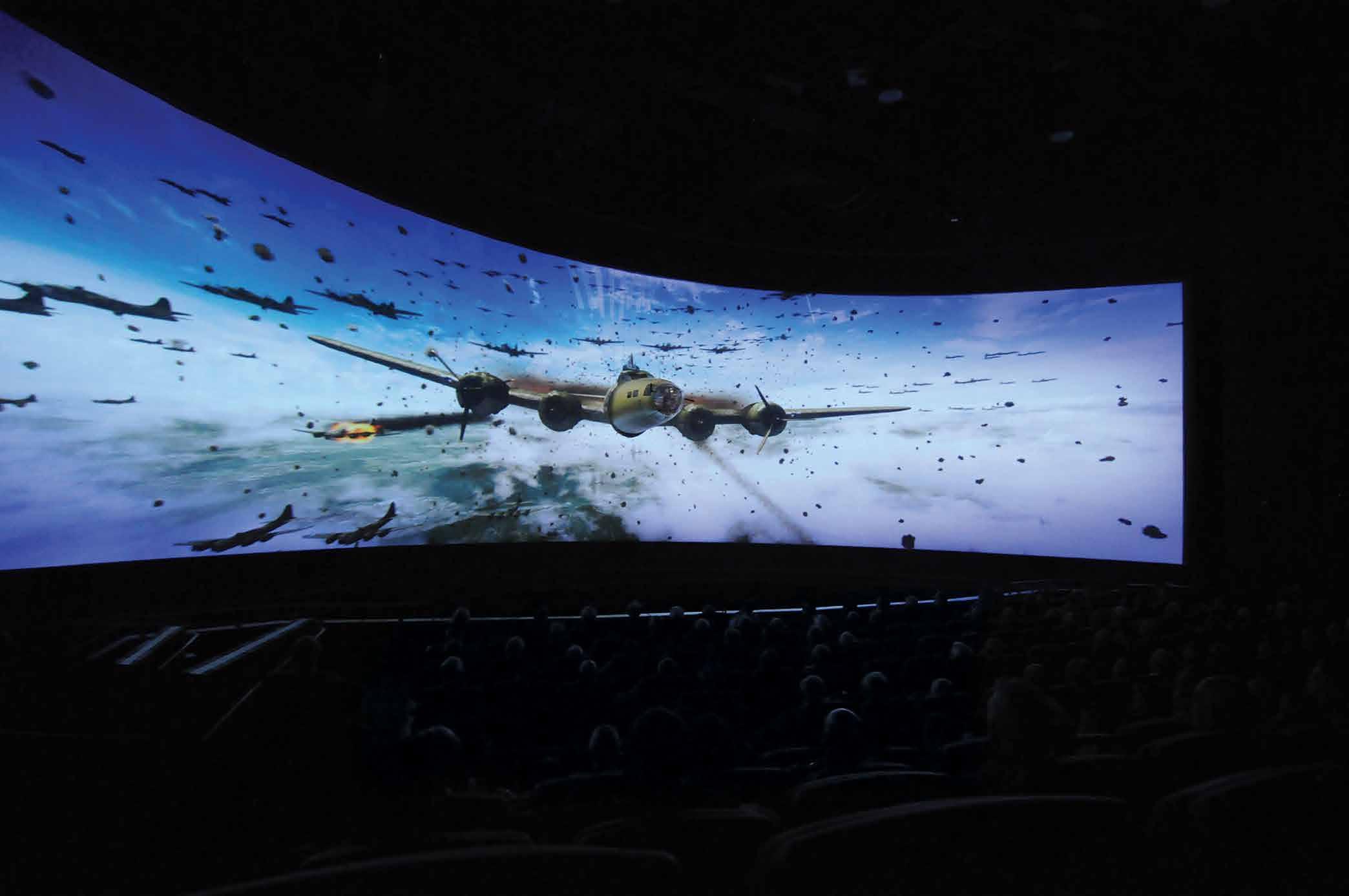
National World War II Museum
New Orleans, Louisiana
Theme Parks
Museums & Exhibits
Branded Attractions
Immersive Retail & Dining
DREAM DESIGN BUILD BEYOND
Cultural Attractions
Hospitality and Resorts
Location Based Experiences
Iconic Landmarks
by Gabrielle Russon
Engineering the invisible magic Alcorn McBride at 40
Inthemed entertainment, the most important technology is often the least visible.
Guests do not come to a theme park to admire show control systems or audio playback hardware. They come for Spider-Man leaping across rooftops, for parades that pulse with perfectly timed music, for immersive worlds that feel seamless and alive. Yet behind those moments (synchronized to the
millisecond) stands a company that has quietly shaped the modern theme park experience for four decades: Alcorn McBride.
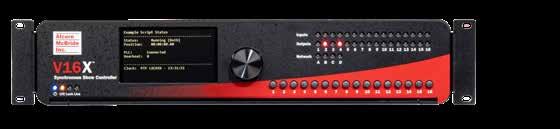
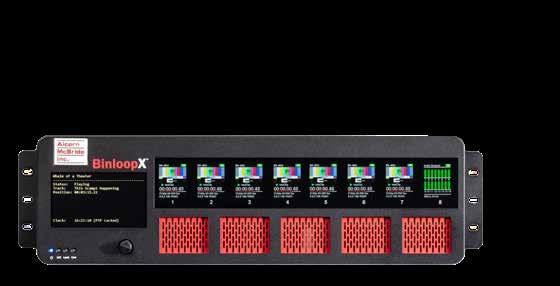
As the Orlando-based firm celebrates its 40th anniversary, its influence on the industry is undeniable. From the groundbreaking V16 show controller to the now-legendary Binloop digital audio and video player, Alcorn McBride has become synonymous with reliability,
precision and purpose-built technology. But the company’s true legacy is not in circuit boards and firmware. It is in the people who built it, sustained it and continue to define its future.
EPCOT origins
The story begins, fittingly, at EPCOT. In the spring of 1982, Steve Alcorn joined the massive effort to bring the ambitious new park to life. As Disney’s first systems engineer in the final months before
opening, he was tasked with designing the complex control systems at The American Adventure show in World Showcase. To get it done on time the 10 people working on the attraction pulled 24-hour coverage, meaning Alcorn enjoyed 16-hour workdays, seven days a week. “We each had an eight-hour window to sleep, although many of us regularly slept in the building because it eliminated the 10-minute commute to our trailers,” he recalled.
In the chaos of construction, Alcorn had to compete for time and space to work with heavy equipment moving through, animators programming the show, and hydraulics getting worked on. All of it paused Alcorn’s own progress as the countdown to opening day loomed. “It was quite a nightmare of coordination,” he said.
What they were doing was big. Back then, nobody had computers on their desks. “Everybody was working on paper. There was a whole room full of draftsmen who were drawing out the drafts and any schematic,” Alcorn said. “It was all drawn in pencil by hand on big paper and then we went to blueprint machines, printing everything.”
In a moment that later helped spark the creation of Alcorn McBride, Alcorn realized no third-party companies existed to provide the systems Disney required. Imagineers were forced to design everything they needed, driving up the construction project’s cost.
“Our electronic engineering department had been developing new technologies to be able to do all of these things. But we couldn’t use PCs because they didn’t exist. So we were building our own computers from scratch in order
to accomplish everything,” Alcorn said. “That meant designing circuit boards and writing operating systems and hand wiring things together.”
From home office to industry disruptor
By 1986, after leadership roles in the music technology sector, Alcorn launched his own company from home. “I had always had an entrepreneurial streak,” explained Alcorn. “I sold business cards and comic books in high school, had a college side hustle as a music producer, and even mailed out build-your-own computer kits.” He named the new company Alcorn McBride in honor of his wife, Linda McBride – herself a pioneering engineer and the first female engineer hired by Walt Disney Imagineering (WDI). McBride worked on ten pavilions for EPCOT’s opening and spent nearly four decades at WDI.
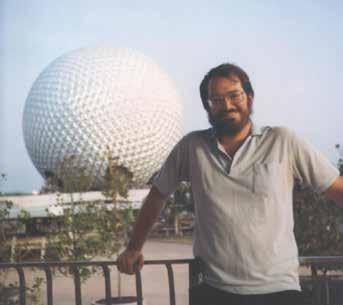
Above: Steve Alcorn in 1982 helping prepare EPCOT for opening day.
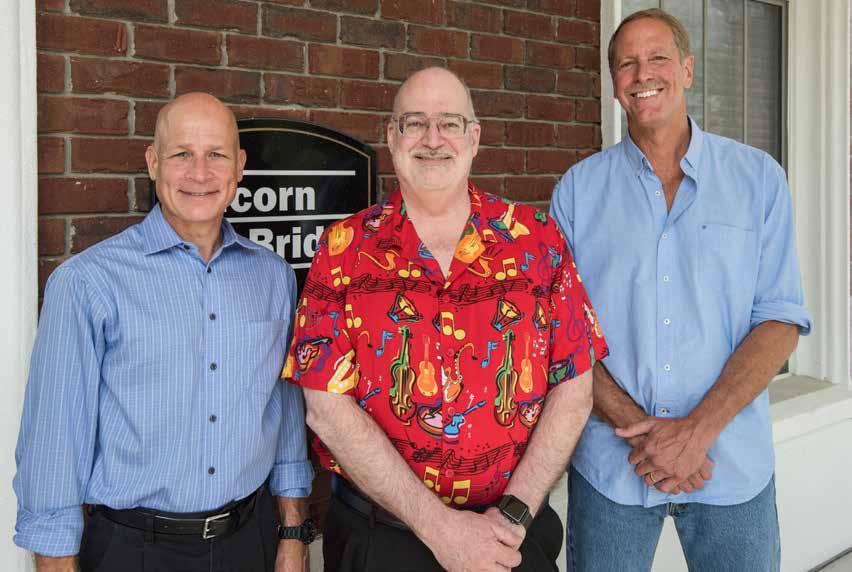
Opposite: Mike Polder, Steve Alcorn and Jim Carstensen outside of Alcorn McBride’s headquarters in Orlando. All photos courtesy of Alcorn McBride
The company initially designed products for other manufacturers, including musical instruments and playback systems. But themed entertainment kept popping up. An early interactive exhibit for the Los Angeles Zoo required custom laserdisc control to allow Betty White to appear (wearing a gas mask) in the skunk exhibit to give a lesson on the animal.
But soon Disney called with a question: Did Alcorn McBride sell a product with the capability of controlling 16 interactive screens simultaneously for the new Wonders of Life Pavilion at EPCOT?
“Of course,” Alcorn answered, thinking quickly on his feet. “It’s called the V16.”
At the time, it did not yet exist. But that didn’t stop Alcorn. Delivered under tight deadlines, the V16 show controller quickly became the company’s breakout product when it launched in 1989. It provided high-quality, synchronous show control in a rugged, purpose-built package that could handle the complex needs of attractions running nearly nonstop.
The introduction of the V16 coincided with a broader shift in the industry. As parks grew beyond simple ride systems into multimedia dark rides, large-format theaters and synchronized spectaculars, the technical support systems also had to mature. Reliability was no longer optional. Downtime meant lost revenue and damaged guest trust. The V16 did more than solve a problem. It helped professionalize show control across the industry.
“We are responsible for huge attractions operating day in and day out,” said Scott Harkless, Chief Innovation Officer. “So everything needs to be very dependable. We have an amazing team of engineers that are creating custom-designed, easily maintained electronics specifically for these demanding environments.”
The Binloop becomes a legend
If the V16 established the company, the Binloop made it iconic. In the early 1990s, Disney needed precise synchronization between parade floats and distributed speakers along the route
for the Main Street Electrical Parade at Disneyland. The technical challenge was formidable for its time, requiring complex communication between moving and fixed systems with perfect timing.
Alcorn’s solution became the first Binloop. Like its analog predecessor (the looping tape decks once ubiquitous in parks) the Binloop was engineered for continuous duty. Alcorn McBride systems are intentionally not PC-based. Doing so means they avoided hard drives, operating system crashes and forced updates. Instead, the company designs from the chip level up, controlling both hardware and software.
That philosophy has allowed the company to weather multiple waves of technological change. As consumer electronics cycles accelerated and obsolescence became commonplace, Alcorn McBride focused on longevity. Many systems installed decades ago remain operational today.
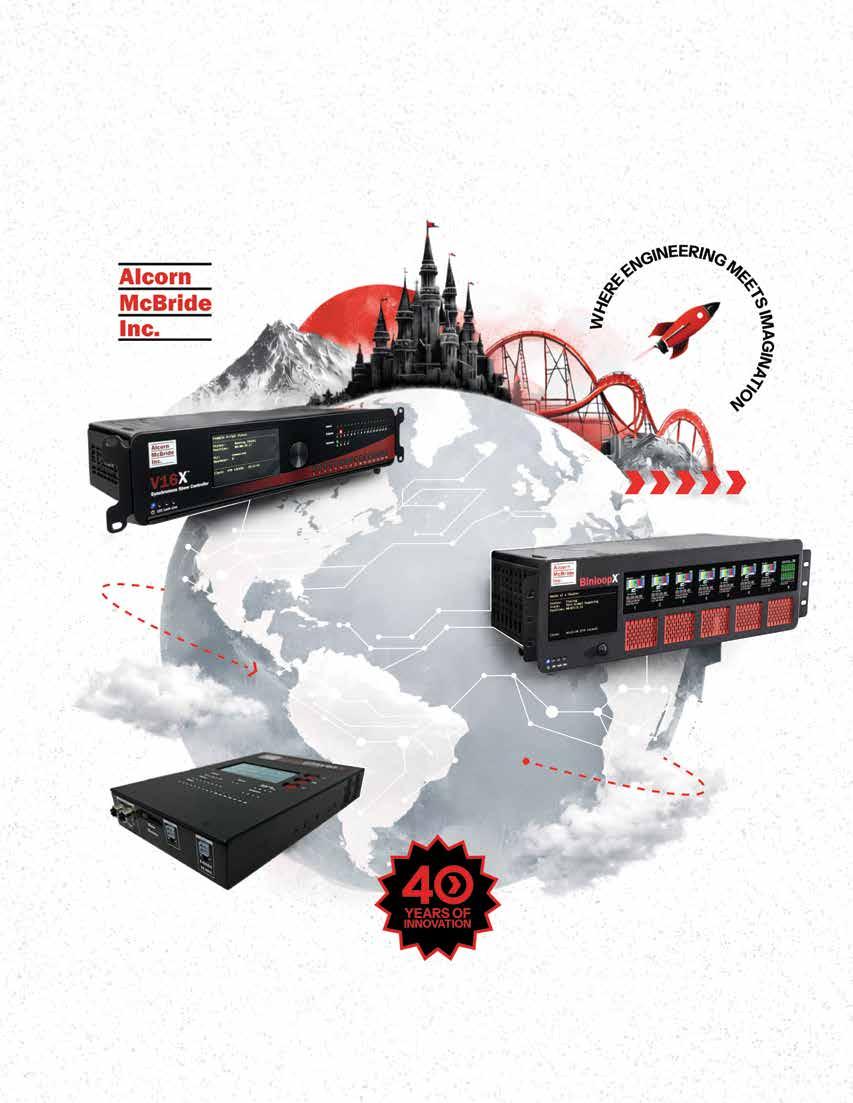
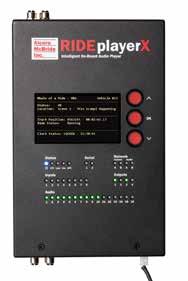
Alcorn McBride’s V16X (top), BinloopX (bottom), and RidePlayerX (right) products.
Over time, the Binloop digital audio and video player would become so widely adopted that it entered industry vernacular. “I would even say the Binloop is now the ‘Kleenex’ of our industry, in terms of overall familiarity,” said Loren Barrows, Chief Executive Officer. In 2022, the City of Orlando renamed the street leading to the company’s headquarters Binloop Drive – a rare civic tribute to a piece of show hardware and the company behind it.
Even today, forty years later, the company remains focused on the precision of synchronization that Binloop pioneered.
“If a character leaps onto the front of your vehicle in a 3D film projected around you, and there are speakers behind your headrest and speakers in the set, if those are off by even a tiny fraction
of a second, the effect is ruined,” Alcorn said. “The ability to seamlessly and easily do that is really what makes Alcorn McBride successful from a product standpoint. What makes us successful from a company standpoint is the people that make that happen.”
Small team, global impact
For all its influence, Alcorn McBride has never been a sprawling corporation. The company has remained intentionally lean, typically employing around 20 people. It does not operate massive warehouses or chase scale for its own sake. Instead, it builds trust.
The biggest players in the global theme park industry rely on Alcorn McBride for custom electrical products that cannot be replicated elsewhere. As international markets have expanded, so too has the company’s reach, including the addition
of a Channel Partner and Reseller focused on the European Union and United Kingdom markets [See InPark Issue #107, “Frank-ophile”].
Its reputation has been cemented as much by service as by technology. On one occasion, the company dispatched an employee around the world with just eight hours’ notice to troubleshoot a client issue. In a business where opening dates are fixed and reputations are hard won, that responsiveness matters.
While the products are widely known, the personalities behind them are truly legendary within the industry. Jim Carstensen, one of Alcorn’s earliest hires, became the engineering backbone of the company for more than three decades. He oversaw development of flagship products and embodied the firm’s engineering philosophy.
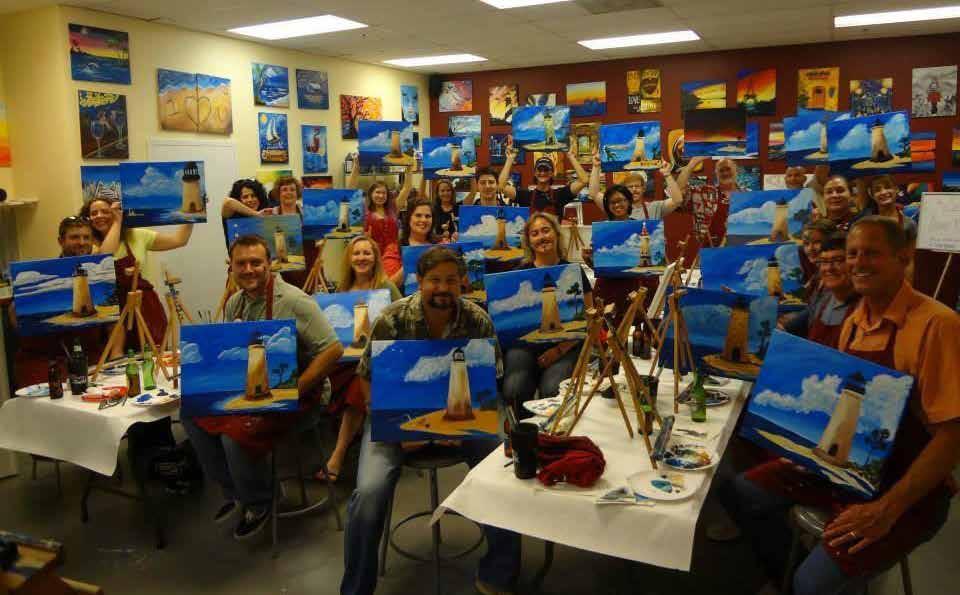
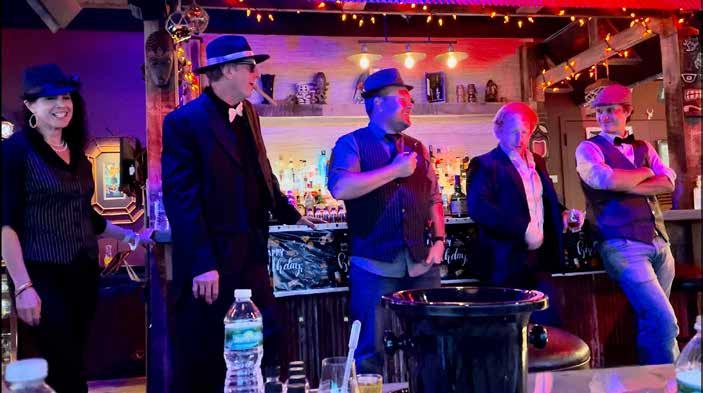
Alcorn McBride prides itself on its “Have fun, make money” philosophy, as evidenced by this paint-and-sip team activity.
“People looked up to him literally –because he’s 6’5” – and figuratively because he was just so important,” said product manager Mike Polder, himself a 30-year veteran of the company.
Carstensen combined deep technical mastery with practical ingenuity. He also cultivated a culture of creativity and humor, famously hiding green army men around the office and staging elaborate pranks. The message was clear: excellence and enjoyment are not mutually exclusive.
Mechanical engineer Martin Chaney, who passed away last year, designed virtually every piece of hardware for more than 30 years. Known for declaring challenges “impossible” only to deliver elegant solutions days later, Chaney’s brilliance and craftsmanship remain embedded in every chassis and enclosure the company produces.
The Orlando headquarters reflects that spirit. A tiki bar anchors Friday afternoon gatherings beneath a simple motto: “Have fun, make money.” It is not a gimmick. It is a reminder that passion fuels performance.
A different kind of succession
When Steve Alcorn retired in 2024 at age 70, he made a decision that speaks volumes about the company he built. Rather than selling to a larger corporation or private equity firm, he transferred control of Alcorn McBride into a trust managed by a trustee selected by the company’s leadership team. The move shielded the company from external shareholder pressure and ensured continuity of culture and purpose.
“We are all here due to the unselfishness of Steve Alcorn,” Polder said. “He could
have sold the company years ago and retired to an island, but that’s not what he wanted. He wanted this beautiful environment he created to continue.”
Today, Barrows oversees day-today operations. Hunter Olson leads engineering. Harkless drives innovation. Alex Wasson, Chief Financial Officer, positioned the company to purchase its MetroWest headquarters in 2018. A new generation of engineers is being mentored by veterans who understand not just the technology, but the philosophy behind it.
Alcorn still checks in, occasionally dropping a joke into the company Slack channel or attending meetings. But the company operates confidently without him – a testament to the foundation he laid.
The leadership team at Alcorn McBride during a company improv night event. L to R: Loren Barrows, Jim Carstensen, Scott Harkless, Alex Wasson and Hunter Olson.
The legacy continues
For 40 years, Alcorn McBride has helped define how themed entertainment sounds, moves and synchronizes. Its systems power attractions, parades, museums and experiences around the globe. In many cases, guests will never know the company’s name. They will simply feel the magic working flawlessly around them.
As the industry embraces immersive media, networked attractions and ever more complex storytelling environments, the demand for precision will only increase. The invisible backbone must become even more robust.
If the past four decades are any indication, Alcorn McBride will continue doing what it has always done: solving niche problems others overlook, supporting clients others cannot, and empowering engineers to build systems that make the impossible feel effortless.
What will theme park audio and visual technology look like in the next 40 years? It will be faster, smarter and more interconnected. And somewhere behind the scenes, on Binloop Drive, an impressive team of engineers will be creating it. •
Gabrielle Russon (gabriellerusson@gmail.com) is a freelance journalist who lives in Orlando. She previously covered the business of theme parks for the Orlando Sentinel, earning several statewide and regional honors for her coverage of theme park injuries, the economic challenges facing theme park workers and the pandemic’s impact on the tourism industry. A Michigan native, she is a Michigan State University graduate and has worked at the Sarasota Herald-Tribune, the Toledo Blade, the Kalamazoo Gazette and the Elkhart Truth during her newspaper career. In her spare time, she loves visiting Orlando’s theme parks and running marathons.
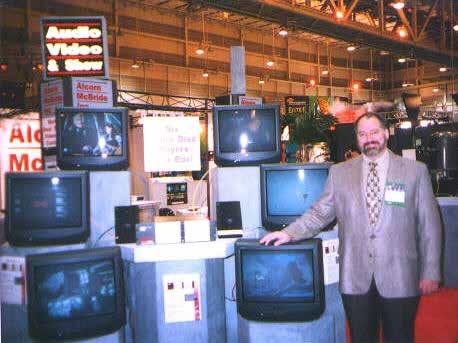
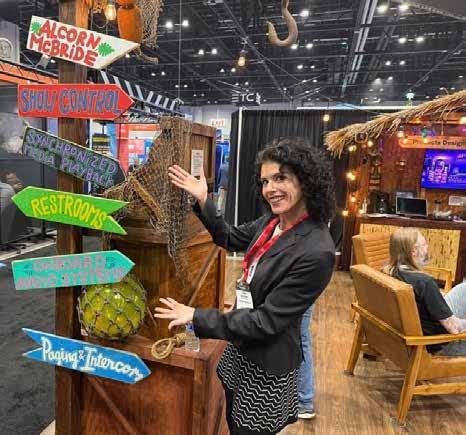
THEN & NOW: Steve Alcorn shows off the latest Alcorn McBride tech at the 1995 IAAPA Expo. The company’s 2025 IAAPA Expo booth still showcases cutting edge technology, but also features detailed theming, highlighted by Loren Barrows.
by
Inthe attractions industry, intellectual property (IP) is often perceived as the ultimate accelerator. A recognizable brand promises emotional engagement, immediate awareness, and commercial appeal. But IP alone does not create a successful attraction. It is the way it is translated into space, movement, story, and interaction that determines whether it becomes timeless or forgettable.
At its best, an IP brings emotional equity from day one. Guests already know the characters. They understand their personalities, their conflicts, their humor, and their world.
To IP or not to IP?
EXPLORING THE PROS AND CONS OF USING INTELLECTUAL PROPERTY IN DESIGNING ATTRACTIONS FOR THEMED ENTERTAINMENT
However, recognition alone is not enough. Not every film, comic strip, or animated series lends itself to a physical attraction. Cinema operates through framed perspectives and controlled storytelling. Attractions are spatial and experiential. Guests move through them. They look around. They interact. The story unfolds in 360 degrees.
For an IP to succeed in this environment, it must offer more than popularity. It needs multidimensional characters, a universe, supporting roles, and narrative
that can be translated into physical environments.
So choosing the right IP approach for a ride or attraction requires careful strategic consideration.
Power and complexity
Global IPs such as The Smurfs, Harry Potter or Avatar demonstrate the power of established storytelling. But they also introduce complexity.
Major licenses are often expensive and come with strict usage guidelines. IP owners may apply detailed rulebooks
Benoit Cornet, BoldMove Nation
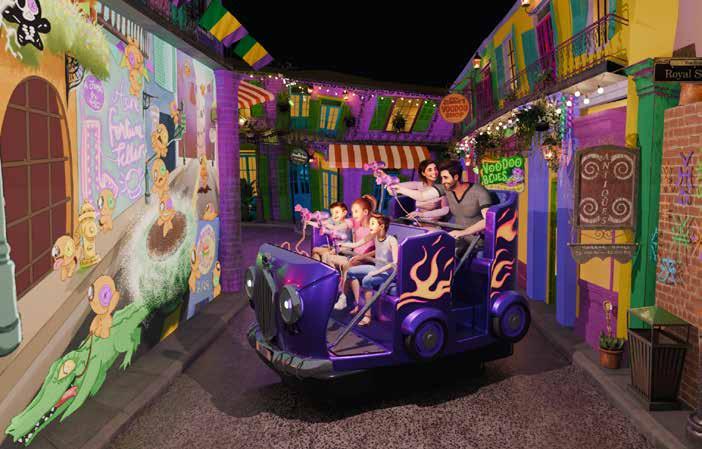
Top: The Smash & Reload interactive dark ride with Voodoo Festival IP. Image courtesy of BoldMove Nation.
that limit creative flexibility, sometimes without fully understanding the operational dynamics of the theme park industry. What works in cinema does not automatically work in a ride system.
There is also the question of longevity, which depends on large production studios. Films may dominate the box office for a few years, but a dark ride typically has a lifespan of ten to fifteen years, often longer.
Interestingly, some attractions inspired and outlived their cinematic versions. Pirates of the Caribbean began as a ride before becoming a film franchise. Disney’s Haunted Mansion remains iconic despite its movie adaptations fading from memory.
The Belgian Tomorrowland is another example of a festival organizer that created an IP with an entire universe and storyline, which they recently lent to a rollercoaster and themed park area.
It is clear that when choosing a major IP, long-term emotional resonance matters more than temporary hype.
Emotional roots
Not all successful IPs are global blockbusters. Flåklypa in Norway is a powerful example of a regional IP based on the iconic characters designed by Aukrust. With multiple films, books, and a deep presence in national culture, its characters are part of childhood memory. Generations grow up with them, passing it on to the next generations.
“Flåklypa is part of Norwegian childhood. Families don’t just recognize the characters, they have emotions and memories connected to them. That makes it natural to bring them into a physical world where guests can interact with their heroes,” says Fredrik Kiøsterud, CEO of Qvisten Animation.
At Hunderfossen, Norway’s popular fairytale theme park, the Flåklypa IP is not limited to a single attraction. The dedicated themed area includes a rollercoaster, a 4D attraction and shops with themed merchandise – all built around the same narrative universe. This extends the emotional bond and strengthens long-term loyalty.
Therefore it makes total sense for the park to choose this IP for their new family attraction which opens this spring. A dark ride perfectly lends itself to more detailed storytelling with immersive experiences. This new ride will feature impressive and dynamic media animation by Qvisten Animation, aligned with Rogue Rides trackless ride system in a dark ride configuration designed by BoldMove Nation. The team is centering the guest experience around the latest movie storyline with digital and physical theming, lots of surprising interactions, and a breathtaking race.
As this IP is quite recognizable and universal, with a clear proof of concept, it will surely be successfully deployed across other countries.
Creative freedom
Proprietary dark ride IPs such as Popcorn, TooMush, and the most recent Voodoo Festival have been developed by me and my team. Instead of adapting characters from another medium, they are conceived from the beginning as spatial storytelling tools. TooMush has been successfully implemented by BoldMove in the multiple awarded interactive Champi’Folies dark ride in the French park Le PAL.
When you develop your own characters, you can design them specifically for spatial storytelling. They are born for rides and experiences, not adapted afterward. The challenge, however, lies in building recognition and emotional attachment from scratch. Strong visual identity, consistent storytelling, and repeat engagement become essential.
The advantage is creative freedom. There are no external restrictions, no
licensing limitations, and full flexibility across merchandising, F&B, and live entertainment. This integrated approach increases both emotional depth and commercial sustainability.
Many parks have the capacity and footfall to grow beyond a logo or mascot, becoming their own IP with a strong brand identity. The famous Efteling fairytale park in the Netherlands succeeds in creating a bespoke universe with fitting characters and stories in an immersive environment.
Cohesive experience
Interactive dark rides add another layer of complexity. Many rely on shooting or throwing mechanics, which are inherently fun but can clash with narrative logic.
If guests are asked to help or defend a superhero at the end of the ride, the hero’s invincibility becomes questionable and the character appears weak. The key is to respect the DNA of the IP while allowing meaningful guest participation.
Successful examples, such as Toy Story Mania, demonstrate how playful
competition can align naturally with the story world. The interactivity feels organic rather than imposed.
In more advanced gaming rides, storytelling, media, vehicle choreography, and scoring systems merge into one cohesive experience. Achieving balance is critical. Too much focus on scoring can overshadow immersion. Too much narrative complexity can overwhelm guests. Scene transitions, vehicle motion, and the dialogue between physical décor and digital media all become part of the storytelling dynamics.
“IP in dark rides only works when story, media, space, and motion feel like one continuous world. Guests should not feel where the technology starts and stops,” says Anja D’Hondt, Co-Founder and Queen of Happy Hearts at BoldMove.
In BoldMove’s Smash & Reload, for example, interactivity evolves beyond shooting. Surprise moments, characterdriven engagement, and unexpected twists create a dynamic rhythm. Sometimes guests influence the media. At other moments, the media challenges them. This interplay strengthens
emotional involvement rather than reducing the ride to mechanical gameplay with plain shooting.
Storytelling engine
Ultimately, IP enhances and drives the experience. Whether it is a global franchise, a culturally rooted story like Flåklypa, or an original universe such as Voodoo or TooMush, success depends on thoughtful implementation in space. The narrative must work in 360 degrees. The characters must feel authentic. Gameplay and media must respect the story’s integrity. And the world should be able to extend beyond the ride itself.
IP is a storytelling engine. And when brought to life with creativity, strategic thinking, and immersive design, it creates something far more powerful than recognition.
It creates emotions and memories in worlds guests want to return to! •
Benoit Cornet, CEO & Captain of Creative Minds at BoldMove, steers the team with a smart market vision to realize its mission in bringing unique rides and attractions to regional parks. Most recently he was awarded the title of ‘Industry Icon’ with a Park World Excellence Award.
Media and gameplay from TooMush IP at Champi’Folies. Image courtesy of BoldMove Nation
Journey to the wish
ANIMAL REPAIR SHOP
MIXED-REALITY WISH DISCOVERY ATTRACTION FOR MAKE-A-WISH® SOUTHERN FLORIDA
Foralmost forty-five years, the attractions and entertainment community has partnered with Make-AWish® to provide life-changing wishes to children diagnosed with critical illnesses – through things like theme park trips, sports idol meet-and-greets, and blockbuster concerts. The 2025 opening of WishWorks in Miami took that partnership to a new level, with the team at Animal Repair Shop helping craft a custom magical experience for kids beginning their Make-A-Wish Journey.
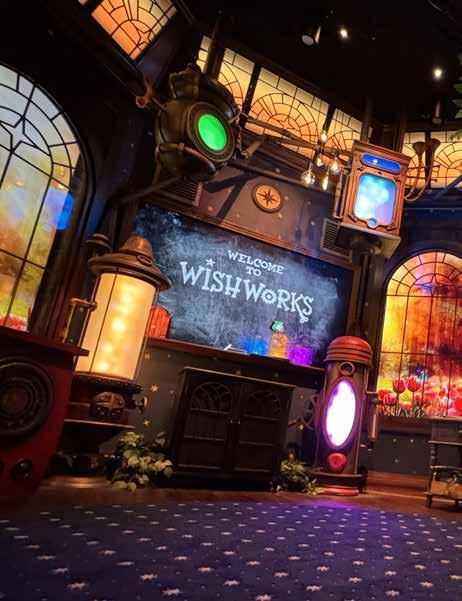
WishWorks was designed to create the journey of making a wish just as magical as the wish itself, combining themed entertainment magic, cutting edge technology and unforgettable storytelling to create a personalized mixed-reality experience re-imagined for the future. Animal Repair Shop’s refreshing approach helped earn WishWorks a TEA Thea Award, though perhaps the best rewards can be found on the faces of kids enjoying the new experience.
determine what wish the child has that the organization can fulfill. But Miami-based Make-A-Wish Southern Florida (MAWSF) wanted to reinvent that process and create an imaginative experience where wish discernment is presented as pure entertainment, where creative exploration is encouraged, and where a fantastical environment inspires new ideas and restores the whole family. MAWSF turned to Animal Repair Shop, the themed entertainment design firm founded by Susan Bonds, to head up the team creating WishWorks.
Among the team’s contributors were lighting design firm Visual Terrain, led by Lisa Passamonte Green, AV show control programmer Joe Fox, fabricators Nassal and Ravenswood, special effects firm Technifex, and animation firm Roger.
the Board) had this vision and reached out to us. Projects need an advocate to make them happen, and Shareef was that advocate for almost a decade.”
“WishWorks should be a magical adventure,” says Karen Mullins, MAWSF’s Chief Program Officer. “It should be more than just ‘tell me what you want.’”
“Some Make-A-Wish chapters were starting to experiment with themed environments,” shares Norman Wedderburn, President and CEO of MAWSF. “However, these were relatively static experiences that provided a themed environment for the traditional process. We wanted to take it to another level, so that the entire wish experience would be so magical that it would awaken the deep imagination of children.”
Norman Wedderburn MAWSF
Karen Mullins MAWSF
Susan Bonds Animal Repair Shop
Alex Lieu Animal Repair Shop
Wedderburn adds: “In doing that, the children from right out of the gate know that something truly special is happening to them, and that’s transformational.”
Wishing upon the stars
The experience actually starts at home, where the Wish Kid receives a special medallion that gives them access to a secret workshop, where the science of wishing stars is studied. Upon arrival at the Finker-Frenkel Wish House, Make-A-Wish Southern Florida’s new headquarters in Miami, the family finds a special parking space designated just for them. Once inside, the child’s image appears in a digital frame behind the reception desk, welcoming them.
The WishWorks experience lasts 60-90 minutes and is designed for only one child and their family at a time. “One of the greatest outcomes is that everyone gets to participate,” points out Bonds. “It becomes an experience for the whole family.”
Make-A-Wish staff welcome the family into an ordinary reception room with a beautiful custom mural depicting the wish discovery journey led by a Wish Granter.
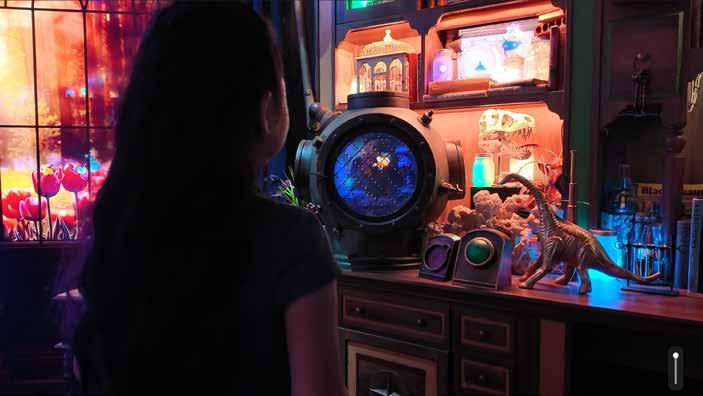
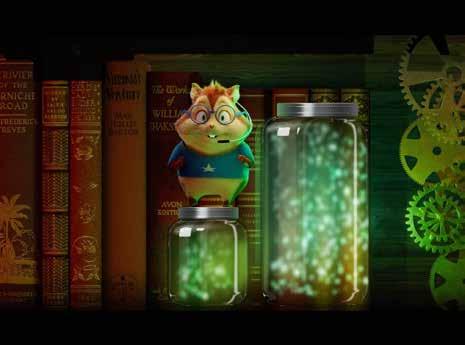
Magically gaining access to the Wish Workshop, the child is introduced to their guide Einstein, an animated hamster who appears throughout the room in integrated media, special effects and upon physical props. Einstein addresses the child directly, making a personal connection and is voiced by Bob Bergen, the voice of Porky Pig and Tweety Bird. Through pipes adorning the walls, Einstein can be seen moving from one spot to another, encouraging the child to explore all aspects of the
360-degree physical space, with its variety of analog and digital interactives.
Einstein introduces the child to the four concepts of wishing – what they want to be, who they want to meet, where they want to go, and what they want to have – along with the idea that all things (animals, plants, and even inanimate objects) have wishes. Kids get to meet a cactus that wants to go on a shopping spree and a fish that wants to meet the
also shares his own wish that he wants to travel.
The child then enters the Starcatcher room, where they summon their wishing star to appear in the special Starcatcher machine. The child’s power proves too great and the star bounces around the room, ultimately breaking into parts strewn around the building. It’s now up to the child to help recover the star. This is where the power of XR shines as
Loch Ness Monster. Einstein
WishWorks transforms the wish making process into a magical interactive journey for the Make-A-Wish child and their family. Photo courtesy of Animal Repair Shop.
the Wish Kid is given a digital device to explore the building. Here, the reality of an office space is mixed with the fantastical elements of the wish decision process as the child uses an AR-enabled tablet to locate and collect stardust and pieces of the broken star.
“During this process, the child learns that The Wish House, the building itself, wishes to be a castle,” continues Wedderburn. “This is why, at the end of the hallway on the third floor, the child next discovers the Royal Hall of a castle.”
Within this grand hall, using media, physical sets, props and costumes, the child explores various examples of wishes to be made and begins to determine what wishes they want to pursue. The MakeA-Wish staff help collect the child’s top few choices for each of the four wish categories, so that the team has several
options to work from. “It takes time to fulfill a wish, so WishWorks turns the standard wish selection process into an engaging and memorable experience while providing an immediate sense of gratification,” explains Wedderburn.
The Wish Kid returns to the StarCatcher room, where the Wish Discovery process is completed in a spectacular finale, with the child receiving a special momento to take home until their wish is fulfilled.
“They don’t yet know what that wish is going to be,” says Wedderburn. “There are some logistics on our part, but when they leave, the child knows that one of their wishes will be coming true.”
Wishing while you work
To create the immersive WishWorks experience, the team at Animal Repair Shop, led by Bonds and Chief Creative
Officer Alex Lieu, was a natural choice. Bonds spent a large portion of her career at Walt Disney Imagineering, working on major attractions like Indiana Jones Adventure and Mission: SPACE before getting into gaming. Lieu came from the online gaming world and was one of the early hires at Disney Online. Together, they had been integrating physical and digital into award-winning storytelling experiences through emerging technology for decades.
“At Disney there was a lot of discussion about next-gen technology between Disney Interactive and Imagineering –including taking technology, gaming and theme park design concepts to create experiences that give you agency and personalization,” explains Lieu. “We saw AR and mixed reality as natural extensions of storytelling and used that to bring WishWorks to life.”
The first Wish Kid through WishWorks begins to explore the Wish Workshop and all the magic it holds within. Photo courtesy of Animal Repair Shop.
“It’s important to note this is not gamification,” Bonds clarifies. “We created a responsive fantasy world surrounding the child, designed to enable them to accomplish a task in a way that they will always remember.”
The team’s background helped solve challenges throughout the design process. For example, with Make-A-Wish recipients ranging from toddlers to teens, Animal Repair Shop was challenged with figuring out a proper age-appropriate approach that worked equally as well for 8-year-olds as 18-year-olds. They initially considered creating custom content for different ages but looked to classic storytelling combined with emerging technology to come up with a singular story that worked across age groups. “We knew if we created something cool, cute and emotional, we could target it for teenagers and the younger kids would still get it,” explains Lieu. “The really young kids may not capture all of the story, but they would still be able to enjoy the environment we created.”
The project allowed the team to break from traditional theme park design, which often focuses on precise and repeatable experiences. “Specialization and customization were important in designing the WishWorks experience,” adds Bonds. “The Wish Granter needs to consider the specific needs of each child. Some children may have sensory processing issues or attention issues, so we’ve designed it where the facilitator can adapt things easily through a tablet controller, altering the speed or order of events or the intensity of lighting or sound. There’s a lot of flexibility that a normal theme park operator would not have.”
Also unlike traditional theme park design, for the first five years of development, Animal Repair Shop created concepts for a property that MAWSF had yet to acquire. That meant once a location was secured, plans had to be modified as the office space was being developed.
“Pre-visualization became an important element in the parallel implementation of the office buildout and the experience,” explains Bonds. “Heidi Wigand, project manager for Cumming Group, stayed with us throughout the design process, even when they were in a completely different stage than we were. She was very open and embraced this idea that had never been done before.”
Behind the magic are 38 unique screens and projectors, hundreds of light fixtures, over 45 pieces of unique animation, original music played through 64 audio players and more than 200 cues controlled by Wish Granters
that allow them to customize and pace the show for each Wish Kid.
Wishing for the future
Since opening, WishWorks has become the talk of the Make-A-Wish community, with many chapters paying a visit, including a recent one from Make-AWish Greece. Though the experience was designed to be changed as needed and potentially even adapted to become a home experience, Wedderburn sees the high level of satisfaction from kids visiting WishWorks as proof that it’s already a success. “Many of them tell us they never want to leave,” he adds.
“When a child walks into the Workshop, they are so inspired and able to see different things that we previously could not bring to them,” says Make-A-Wish’s Mullins. “The experience of WishWorks is really a wish come true - not only for the kids, but for the entire Make-A-Wish family.” •
The animated Einstein hamster character helps guide the child on the process of wish making. Image courtesy of Animal Repair Shop.
by Martin Palicki
Some experiences are easy to label. Museum. Workshop. Escape room. Dark ride. Secret Laboratory is not.
Inside the historic Schloss Augustusburg in Germany, guests dress in robes, pass through candlelit rooms and meet Renaissance-era figures who send them on historical missions. Along the way are practical puzzles, scent and sound cues, integrated media systems, theme parkstyle special effects and a descent into a mysterious basement.
Secret Laboratory is themed entertainment disguised as an educational workshop, providing participants with an interactive history lesson and a special souvenir to showcase their accomplishments. Guests
Secret Laboratory When a workshop becomes a show
pick from one of two experiences: Elixir of Life or Treasure of the Earth. Both take place in the same small three-room space, alternating throughout the day.
Creative Studio Berlin (CSB) did the initial ideation and design, then reached out to The Room Laboratories (The Room Labs) to build upon and execute it.
InPark spoke with Chris Lange (Chief Creative Officer/Owner, Creative Studio Berlin), Chris Lattner (Founder/Creative Director, The Room Labs) and Niels Reinhard (Creative Director, The Room Labs) about how the experience came together, why it defies categorization and what made it worthy of earning a coveted TEA Thea Award.
HOW CREATIVE STUDIO BERLIN AND THE ROOM LABS BLENDED EDUCATION, HISTORIC STORYTELLING AND THEME PARK TECH INSIDE AN AUTHENTIC GERMAN CASTLE
Secret Laboratory lets guests step back in time while learning. Photo courtesy of The Room Labs.
How do you explain the experience?
Chris Lattner: It’s difficult to categorize because it has elements of different categories mixed together. In a very basic way, we refer to it as a handson workshop. A group of 24 people experience a 45- to 60-minute instructorled workshop on one of two different topics.
What makes it special is that the workshop is fully themed. Guests are traveling back to the Renaissance, meeting people from that time, and enjoying a workshop in a completely
different environment than a typical classroom. We incorporated detailed theming, special effects and interactive puzzles to make it feel as real as possible.
Niels Reinhard: It’s a show, it’s a workshop and it’s a little bit of an escape room, all under the roof of historical theming. It’s hard to put a label on it.
Chris Lange: That’s part of why it feels truly innovative. A lot of science centers and museums have traditional workshops. This is delivering education on an experience level.
Where did the idea originate?
Chris Lange: Creative Studio Berlin had a relationship with the client already, having designed experiences for some of their historic environments, including castles. They approached us with a desire for a workshop or “classroom” experience. They wanted something new and innovative that would help students, families and groups learn about the region. We did initial ideation and design before reaching out to The Room Labs.
Chris Lattner: I remember Chris calling me and saying, “Can we do something magical and wizard-inspired in that castle?” That was the core spark.
We knew, of course, that it couldn’t be fantasy. It needs to be “real” Renaissance to fit the period and place of the castle. So we asked: What would have felt like magic back then? Casting metal. Creating potions in the form of distilling herbal medicine. Those things could have felt like magic to people at the time. We took those ideas and then translated them into fun experiences that were also historically grounded.
Chris Lange Creative Studio Berlin
Chris Lattner The Room Labs
Niels Reinhard The Room Labs
The preshow area gives guests background on Anna and Augustus through enchanted wardrobes, portraits and more. Photo courtesy of The Room Labs.
Walk us through the spaces.
Chris Lattner: Guests are first greeted outside by a guide in period costume with a lantern. The guide leads them into the preshow room, which is set up as a candlelit study with bookshelves, cabinets and a fireplace. There’s also a conservatory with frosted glass on one end. This room introduces guests to one of the two historical figures they will be following in the footsteps of during their experience: Anna or Augustus. The two characters are based on the former Duke Augustus and his wife Anna of Denmark. Together, they ruled as Elector and Electress of Saxony during the mid1500s.
From there guests enter the main classroom workshop with 12 shared workbenches, and a small basement area is accessed by a spiral staircase.
What happens in the Anna version?
Niels Reinhard: In the preshow, the guide introduces the story of Electress
Anna. Woodwork in the wardrobe magically comes to life and helps set the scene. Moments later the silhouette of Anna appears in the conservatory and speaks directly to the group about her skills with herbs and plants. She provides a challenge to the group: help her create an elixir of life, or aquavit.
Once inside the classroom, guests decode a secret recipe, identify ingredients through the use of smell, prepare the
mixture with a mortar and pestle, and finally assemble and use a small distillation apparatus at each table.
But there’s one key ingredient missing and the group must retrieve shimmering vials of “moonlight water” from the basement and add it to their potion to complete the effect. Achieving success, each guest gets to keep a small container of their elixir as they leave.
What happens in the Augustus version?
Niels Reinhard: In this preshow, portraits of Augustus and Agricola begin talking to one another about Augustus’ skills with mining. At one point the wardrobe opens to reveal an infinite mine shaft illusion.
Back in the classroom, guests crack open a small rock to find ore. The guide collects it and loads it into the oven for melting. Guests must determine the correct wood to fire the oven and retrieve it from the basement. The guide then carries a pot of “molten silver” across the room and pours it into a casting machine. Guests see the liquid
Lighting, audio, fog and a Pepper’s Ghost effect makes visitors think real molten silver is pouring out of the oven and into coin molds. Photo courtesy of The Room Labs.
Each custom-built desk features period-appropriate lighting and a distilling apparatus for The Elixir of Life workshop. Photo courtesy of The Room Labs.
metal flow into the molds and then the guide retrieves the silver coins and distributes them among the guests to keep.
How did historical accuracy shape the design?
Chris Lattner: Prior to this project, we did not have deep knowledge of Anna and Augustus, and there is not a huge amount written about them. We had to research how they might have spoken, how they would react if 24 people arrived in their castle, and how to tie a learning objective to these historic characters.
We also had to learn about mining and pharmacy processes. In a way, our learning journey became the guest journey. We wanted guests to leave with the kinds of insights we developed ourselves while creating the project.
Once we started making decisions, we had a team of historians that reviewed everything. Frequently, the historians would see early drawings and say, “No, that’s from the wrong period,” or “That didn’t exist.” For example, the inclusion of the conservatory became a debate as they were not really in use at that time in Germany.
Chris Lange: We were able to convince the historians that it was worthwhile keeping the conservatory because it really helped to tell the story. Conservatories existed in Italy in that period and Anna had connections to Italy, so it wasn’t too much of a stretch. Many times in projects like these it’s about finding the right balance.
Niels Reinhard: As another example, we also had to balance what audiences
visually expect from the Renaissance period. Many people think of Italian Renaissance cues, but not much is recognized from the German Renaissance. We needed visual storytelling that felt right immediately, without requiring heavy explanation, so we did take a few liberties with style in order to convey the period and mood intuitively.
What technology are you using in the show?
Chris Lattner: The core show control runs on a system called COGS, originally built for escape rooms, and now used in large immersive experiences. We enhanced it for our needs, particularly for the added levels of media and audio in the experience.
A lot of the physical effects are custom built. Every school desk is essentially a prototype device: each one has sound, lighting cues and an internal mechanism that can dispense liquid. We even created custom “candle” lighting fixtures to reflect how light would have been created in the period.
Niels Reinhard: One of the most convincing elements is the coin-casting machine. We couldn’t use actual liquid metal to create coins, so we had to design a special illusion. We created a protective “glass” surface that also becomes the reflective plane for a Pepper’s Ghost image. Guests can stand very close, and it looks like real liquid metal falling from the tube into the molds below. Of course, timing, sound and smoke cues complete the illusion.
Chris Lattner: I also must mention the projection of Anna in the conservatory. It’s a mixture of projected plants and physical plants, and Anna appears quite realistic. To accomplish it, we studied what happens when someone moves behind frosted glass. Most silhouette effects are too crisp, so we created a more realistic blur level, including layers of shadows from multiple light sources. The result is that even when you know it’s a projection, it still feels real.
Have you had any feedback on the experience?
Chris Lattner: The client is very happy with the experience and has interest in a third story, potentially about witches and witchcraft, which will likely take place in a new space.
Chris Lange: The only “problem” they have now is capacity. They can only do a limited number of sessions per day and demand has grown. This is a good problem to have, of course. Because it means you’ve successfully created a new benchmark for what can happen when you combine education, storytelling and the themed entertainment toolkit in a beautiful, historical real-world location.
Above: Anna appears in silhouette form in the conservatory. Photo courtesy of The Room Labs.
YOUR VISION DESERVES SOMETHING EXTRAORDINARY
Together, your passion for unforgettable experiences and our drive for innovative excellence
unlock limitless possibilities.
Discover projection and LED solutions engineered for brilliance — delivering extraordinary performance thrill after thrill, day after day, year after year.
Bringing steel to life
by Philip Hernandez
“Hot,Loud & Crowded = Home” states the sign emblazoned on the walls deep below the flight deck of the USS Midway, where the ship’s ultimate problem solvers, its engineers, once lived and worked. When the USS Midway Museum set out to turn the engineering spaces into an exhibit, the goal was not simply to restore machinery or add another technical exhibit. Instead, the team wanted to take visitors on an emotional journey that honors the engineers whose work kept the carrier alive for nearly half a century.
Honorable initiations
Commissioned in 1945, the USS Midway was the longest-serving aircraft carrier in the United States until being
HOW
THE USS MIDWAY MUSEUM CREATED ITS MOST AMBITIOUS EXHIBIT TO DATE
decommissioned in 1992. In 2004, it launched into a different kind of service as the USS Midway Museum in San Diego Bay. With roughly 1 million visitors per year, the ship has become a popular attraction, and in the early 2020’s, museum staff began exploring options to revitalize and enhance worn and underutilized sections of the ship.
Their first stop: the ship’s engineering spaces. In December 2023, the unused 4,000-square-foot space looked like a construction zone, filled with debris. Over the next five months, a team of designers, technicians, and volunteers transformed it into an immersive exhibit
honoring the USS Midway’s invisible heroes, the engineers who kept the aircraft carrier operational.
Midway’s Engineers: Service, Sacrifice and Everyday Life opened Memorial Day weekend 2024, and redefined the museum’s approach to exhibit creation. “This was our first foray into a new way of storytelling,” said Bill Coleman, Director of Exhibits at the USS Midway Museum. “It was a departure from everything we’d done up to that point.”
Making plans
The exhibit brief focused on people first, work second. “One of our goals was to
Top: When guests touch tools on the engineering display table a spotlight illuminates the item and educational content appears on the table. Photo courtesy FELT Design.
put more of a human face on this part of the military,” Coleman explained. “Most sailors serving aboard ships are young, 18 to 22 years old, and they’re taking on critical jobs. We didn’t want to inundate guests with technical data that lacks a personal connection. Instead, we took that data and wanted to apply it to actual human experiences.”
To accomplish that meant bringing museum visitors down into spaces not initially designed for high traffic. Passageways and spaces were optimized for equipment needs first and people second. To help overcome those obstacles, the museum partnered with Art Processors to help develop the exhibit. (Since then, the creative leads who led the design and production of the exhibit have formed FELT Design, a boutique experience design studio.)
The concept focused on two interconnected exhibits: the engineering experience (covering steam generation, tools, and living) and a simulated fire experience to address the single most dangerous threat aboard any ship.
Turning a ship into a canvas
In December 2023, the design teams made their first site visits, and it quickly became clear that the engineering deck was in bad shape. “It had been torn apart several times,” Coleman said. “The decks and bulkheads were mostly destroyed.”
“The limitations of the space were obvious,” recalled David Crumley, Technical Director at FELT Design. “I quickly realized how difficult it was to even stand up in the space. How were we going to fit both visitors and AV equipment down there?”
The tightness of space meant the technology had to be carefully selected to sustain the emotional journey, but minimal enough to fit. “The ceilings were only eight feet tall, so I knew fitting theatrical fixtures in the space would be a challenge,” said Harry Foster, lighting designer at Lightswitch.
Not only was the space tight, but the vessel’s immense size also discouraged guests from lingering long. “Midway is massive, and there’s so much to explore,” Crumley noted. “People are constantly moving. We had to design everything to work in a period of 30 to 45 seconds.”
Relying on traditional video screens would take up space and slow down the exhibit. So, the ship itself had to become a canvas. To accomplish that, the experience needed to rely on theatrical lighting, audio design, projection mapping, and interactive elements.
It also meant understanding which natural elements on the ship to highlight. For example, instead of fabricating a
prop to illustrate ingenuity at sea, they lit some of the existing pipes.
“The pipes became a sculptural element,” Crumley explained. “It’s one of the strongest areas of the exhibit because we’re highlighting the actual lived experience of engineers on the ship.”
The engineering experience
The interconnected exhibits were designed to guide guests through a classic emotional story arc, conveying the realities of living on the engineering deck and prompting them to care about the individuals.
As visitors near the engineering spaces, they hear the engine below increasing in intensity. “As you descend, you feel the engine room getting closer,” Crumley said. “We used transducers under the stairs for vibration and engine rumble, combined with the 36 audio channels and multiple subwoofers.”
The first gallery builds context by introducing the steam cycle and
The Gantom One lighting fixture is small (only slightly larger than a chess piece), making it easy to mount in challenging and tight environments. Photo courtesy of Gantom.
explaining how steam powered virtually everything aboard the vessel. A table of engineering tools (an engine telegraph, a gas mask, etc.) invites hands-on exploration. As guests touch a tool, a spotlight illuminates it and a short video plays, sharing the story of how the tool is used and why it matters.
The journey continues through the berthing space, where engineers lived and slept. Bunks and lockers have been restored to period condition, filled with clothing, stickers, pictures, and keepsakes. As visitors explore, targeted motion sensors trigger audio from former Midway sailors. For example, when approaching a blank letter on a bed, the letter illuminates, then begins to fill in as the sailor’s voice dictates a letter to his sweetheart. The more guests explore, the more personal stories they encounter.
“We interviewed former shipmates and created compelling stories from those testimonials,” Crumley said. “The
interviewees also donated personal items such as jackets and photographs, so we could authentically recreate their actual lockers and bunks.”
Having built an emotional connection to the sailors and set the context, the exhibit moves on to the climax: the fire.
The fire simulation
“Fire, Fire, Fire!” blare the speakers, as guests move through red-washed corridors to see firefighting tools spotlighted in front of them. Alarms, bustling noise, and silhouettes of rushing firefighters projected against the walls create a sense of motion and rising action, carrying guests into the fire simulation.
Guests enter a bare room, facing a clean wall framed by pipes and a breaker box on the left. The two-minute sequence begins with a spark in the breaker box that ignites projected flames, which then lick across the wall, growing in intensity. Voices fill the room as you see water
attempting to extinguish the flames. Just as the flames seem controlled, an ember catches, and the second round of fighting begins. With the flames finally extinguished, the voices recede, and guests can move on.
The team spent substantial time tuning color temperatures and media to create something that felt authentic without being overly theatrical. “We never wanted people to feel like they were not on a ship,” Foster added.
“Saving the Ship,” the final gallery, provides guests a moment to reflect and decompress; Somber music, blue tones, and projected water effects set the background. Scrim screens divide the area, honoring sailors who lost their lives in fire-related incidents aboard the Midway and other vessels.
How do you hide the tech?
To create this authentic story experience within the ship’s confines, lighting was essential, yet space was limited. The
Images of flames dance up the walls in the fire simulation exhibit aboard the USS Midway. Photo courtesy FELT Design.
experience needed theatrical lights with show control, but traditional fixtures were too large for the ceilings. “We selected Gantom fixtures for that reason,” Foster said. The team specified Gantom One UP fixtures, which are compact, low-voltage DMX fixtures roughly the size of a soda can that are easily hidden throughout the exhibit. “In the past, we would have used a track system with traditional mounts,” Foster said. “Here, we used Gantom spots for everything: wall graphics, pattern projection, and focused lighting on objects.”
Even with compact fixtures, mounting them to irregular I-beams presented another challenge. Lightswitch worked with FractaVisual Designs to create bespoke mounting brackets that attached to the ship’s irregular I-beam structure, positioning fixtures precisely where needed. The approach allowed the team to sneak lights into areas that would have been impossible with standard rigging.
Building on success
The resulting exhibit takes guests on an emotional, human-centric journey through the life of an aircraft carrier engineer. It opened to record attendance and maintains strong visitor engagement and satisfaction to this day. Coleman credits both the technology and the volunteers’ commitment for this success.
“The reliability of the tech has been impressive,” Crumley noted. “The ship is open every day, and the equipment has performed well.”
But it is also the dozens of volunteers, including retired machinists, electricians, and general contractors - many of whom are former military - that helped craft the new exhibit. “The volunteers made this possible,” Coleman said. “They brought real skills and were here every day to turn our ideas into reality.”
With Midway’s Engineers: Service, Sacrifice and Everyday Life, the USS Midway Museum has done more than add a new exhibit. It has established a new creative framework for interpreting history by treating the ship itself as both artifact and storyteller, with technology as a quiet partner. The exhibit ensures that visitors leave not just impressed by the engineering but connected to the people who lived it. In doing so, Midway once again proves that even the most imposing machines are ultimately defined by the humans who bring them to life. •
Philip Hernandez is a journalist reporting on the themed entertainment industry. He is also the CEO of Gantom Lighting and Publisher of both the Haunted Attraction Network and Seasonal Entertainment Source Magazine. Based in Los Angeles, he co-hosts the Green Tagged podcast weekly. He can be reached at: hernandez.philip@gmail.com
CREDITS
USS Midway Museum
Bill Coleman, Director of Exhibits
Mark Berlin, Director of Operations
Rudy Shappee, Exhibits Content Developer
FELT DESIGN
Christine Murray, Content Lead
Julie Flechoux, Creative Director
David Crumley, Technical Director
Chris Carlson, Creative Technologist
Melanie Malkin, Producer
LIGHTSWITCH
Warren Kong, Principal
Harry Foster, Lighting Designer
Jerreme Aldrich, Project Manager
VENDORS
Electrosonic, AV Integrator
Lightswitch, Lighting Designer
Ironwood, Fabricator
Gantom Lighting, Lighting Manufacturer
Theatrical quality lighting highlights the natural architecture and mechanics within the ship. Photo courtesy of Lightswitch.
Growing Together
by Becci Knowles
Inan emerging destination park trumpeting ambition and scale, one of Six Flags Qiddiya City’s most powerful statements blooms behind the doors of an abandoned greenhouse. The Enchanted Greenhouse is not simply a family dark ride filled with foliage, animatronics and interactive effects – it is a living demonstration of what can happen when creative vision, ride technology and interactivity are conceived as one from day one. Rooted in themes of growth and renewal, the attraction mirrors its own message: when the right partners cultivate trust and shared purpose, story and system
The Enchanted Greenhouse at Six Flags Qiddiya City
can flourish together into something far greater than the sum of their parts.
The Enchanted Greenhouse is a trackless interactive dark ride located in the Twilight Gardens land at Six Flags Qiddiya City, which officially opened to the public in December 2025. Developed by a consortium under the creative leadership of Jora Vision, the team included Alterface and ETF Ride Systems. Together, they positioned The Enchanted Greenhouse as a cornerstone immersive family dark ride within the park’s six themed lands.
Set inside a long-abandoned greenhouse, the attraction combines dense physical theming, autonomous trackless vehicles and a deliberately non-competitive form of interactivity. Guests travel in one of twelve six-seat vehicles along a 160-meter route using handheld magical dew sprayers to awaken hidden creatures, influence behavior and transform the environment (rather than accumulate points or scores). The whole tale is told by multiple animatronics, 14 multimedia projectors and ground-breaking special effects on the ride vehicle itself, all concealed
Top: The Enchanted Greenhouse combines trackless vehicles, interactive play and whimsy in a dark ride. Photo courtesy of Jora Vision
within immersive decor overgrown with thousands of lifelike otherworldly plants.
The project is significant not because of any single technology, but because story, ride system and interactivity were conceived together from the outset. Rather than a sequential delivery model, The Enchanted Greenhouse was developed as a fully integrated collaboration, allowing narrative intent to be embedded directly into vehicle choreography, timing and guest interaction.
According to the official press release, “The Enchanted Greenhouse is set in an abandoned greenhouse with a symbolic story rooted in growth, love and rediscovery.” For Jora Vision’s Project Director & Creative Producer Robin van der Want and his team, the challenge was translating those abstract themes into physical space, scenes and pacing, particularly for a family audience encountering this type of attraction for the first time.
With a themed surface of 1,300 square meters, the dark ride is relatively compact. Still, through careful scene planning, the experience lasts almost
five minutes and includes an extensive preshow. “We really put a lot of effort into building up the story in the queue,” van der Want explains. “The moment people step into the building they are already completely immersed. Throughout the queue they get glimpses of the flora and fauna that await them, and we already introduce interactive effects, so the environment feels alive before the ride even begins.”
The queue incorporates projection mapping, Pepper’s Ghost-style illusions and interactive stations that allow guests to activate hidden creatures and visual moments. An elaborate preshow introduces Farasha, whose name means butterfly in Arabic, guiding visitors into a greenhouse that has been closed for decades and is only now reopening. “We didn’t spare any design effort in the queue,” van der Want says. “From the moment people step inside, they are already part of the environment.”
Once onboard, the experience intensifies. Dense layers of artificial foliage cover ceilings, rockwork and sightlines, creating the impression of a living ecosystem within a compact footprint. “We used many, many square
meters of fake foliage,” says van der Want. “Ceilings, rockwork, everything is covered. The scenery changes constantly, so the environment never feels static.”
A key mid-ride transition deliberately alters scale, making guests feel physically smaller as the world around them grows. “That transformation moment is one of my favorite aspects,” he adds. “Suddenly you are under mushrooms, under leaves, everything becomes larger. That is also why the creatures, including the bee, feel so imposing.”
Bespoke vehicles as storytelling devices
The ride vehicles themselves play an active role in reinforcing the attraction’s narrative. Each bespoke vehicle seats six passengers in two rows and features a meticulously crafted body finished in a teal and copper color palette. An elegant butterfly motif is emblazoned across the facade, visually linking the vehicles to Farasha and the ride’s overarching themes of transformation and renewal.
While the narrative is built on universal themes, it was shaped by Saudi cultural context and by the fact that large scale indoor dark rides are still relatively
Robin van der Want Jora Vision
Rob Reijnen ETF Stéphane Battaille Alterface
unfamiliar to local audiences. “This is one of the first interactive dark rides of this scale in Saudi Arabia,” van der Want explains. “So, we had to carefully balance local references with something immediately readable for international guests.”
Local influence appears subtly in architectural patterns, materials and detailing rather than overt iconography. “You see Arabian influences in the queue fencing, tiling and motifs,” he says. “They are not pushed forward, but they are there.” The design team worked closely with local curators throughout development. “We asked, ‘Is this appropriate? Will this be understood?’ That dialogue was essential.” The family friendly tone was deliberate. “We designed it as something families experience together,” van der Want notes.
Early guest behavior reflected the novelty of the format. “Some visitors were
hesitant to enter,” he recalls. “They would ask, ‘What is in there? Does it go upside down?’ The whole concept of a dark ride inside a building was new.”
From the outset, The Enchanted Greenhouse was conceived as a fully integrated collaboration. From a creative leadership perspective, this allowed Jora Vision to shape story moments that could only exist through synchronized ride systems and interactivity. “As overall art director, we touched everything,” van der Want explains. “Scenery, characters, interactivity, mechanical effects, animatronics. When you separate those disciplines, you lose the intertwined thinking.”
Forming a consortium with Alterface and ETF Ride Systems was therefore a deliberate choice. “It was not just contractual,” he says. “It was a shared creative goal, and that only works when you trust your partners.” That trust
also enabled delivery on a compressed schedule. “The sheer planning of this ride would never have worked in the time we had if the partners did not already know each other.”
Trackless navigation as storytelling tool
For ETF Ride Systems, the absence of a physical track was never simply a technical solution. “With trackless technology, you can create unexpected movements,” explains ETF’s Sales Manager, Rob Reijnen. “Splits, merges, roundabouts, dead ends, all of those features are used here.” With the dead end it is possible to increase intimacy, where the ride guests are fully immersed in the scenery. The use of the trackless system also creates more interaction with other vehicles, for example getting chased by the massive animatronic bee on the roundabout. “That would not be possible with a traditional physical track,” he adds. The split and merger in
Guests are transported to magical places within The Enchanted Greenhouse. Photo courtesy of Jora Vision.
this ride layout create more time for an individual experience for the guests in the vehicles, by means of duplicating scenes.
ETF’s autonomous Multi Mover vehicles also support a nonlinear loading station. “With this feature we create more time for the guests to embark the vehicle, which also allows us to combine operational efficiency with storytelling,” Reijnen explains. Operational moments are folded into the narrative. “At the rear, an illuminated tank houses the vehicle’s dew supply, a functional element that also reinforces the storytelling. As vehicles load and unload, the tank visibly refills, signaling to guests that they are preparing to nurture and awaken the environment ahead. The result is a vehicle design that supports both narrative clarity and operational flow, reinforcing the idea that guests are caretakers rather than competitors.
Designing interactivity without distraction
Alterface’s involvement was guided by a core belief that an interactive dark ride should still be compelling even when guests are not actively triggering effects. “For interactive dark rides, the ultimate goal is engagement,” says Alterface CEO Stéphane Battaille. “Scoring is one way to do that, but it is not the only way. Here, the reward is awakening the environment and making it more beautiful.”
Guests use specially designed magical dew sprayers to reveal hidden creatures, transform plants and unlock surprising effects throughout their journey. The interaction follows a hide-and-seek logic, encouraging exploration rather than rapid fire action. “We did not want to explain how to play,” Battaille says. “It must be extremely intuitive. You do
not collect objects or compete, you just interact and the world responds.”
The ornate dew sprayer itself reinforces that philosophy. Featuring a golden body with a detailed orb at its base, it resembles a horticultural tool rather than a weapon. “It looks like a sprayer, not a gun,” says Battaille. Alterface blended physical interactives, media content and projection mapping so guests can interact with their entire surroundings. “People are encouraged to work together,” he explains. “It becomes a collective experience where you transform the environment as a group.” That design choice fundamentally changes guest behavior. “It becomes a family experience. You share the moment together instead of being in your own bubble chasing points.”
While the attraction integrates physical effects, ghostly illusions, projection mapping, lighting, music and media into a single interactive experience, the challenge, Battaille says, is ensuring that complexity never feels technological. “If people say, ‘nice projection mapping,’ we have failed. Technology is a magic trick; the technique should disappear.” The same principle applies to interactivity. “As soon as people understand the trick, the magic is gone. Story always comes first. Technology should support narrative, not overshadow it,” he adds.
One shared answer
Interestingly, each company converged on the same “bee-spoke” element that represents the attraction’s unique level of integration between creative design, interactivity and ride systems.
“The scene where you are chased by the animatronic bee embodies the
full collaboration,” says van der Want. “You have the vehicle movement, the animatronic, the interactive eyes and the show system all working together.”
Alterface integrated the interactive eyes and behavioral responses, ETF supplied the trackless chassis and movement logic, and Jora Vision designed and themed the creature and scene. “It is the first interactive animatronic on a vehicle,” Battaille claims. “We had been thinking about it for a long time, and this project made it possible.” From ETF’s perspective, the scene reflects long standing trust. “That level of detail was only possible because we fully trust each other’s expertise,” says Reijnen.
For the industry, The Enchanted Greenhouse is less of a showcase of individual technologies than a case study in integration. Developed for a new destination park in an emerging market, the attraction demonstrates how aligning creative intent, interactive design and ride systems from the earliest stages can unlock experiences that are efficient, culturally responsive and distinct.
Beyond the attraction itself, The Enchanted Greenhouse also represents a significant milestone for the European themed entertainment industry. All three consortium partners are based in the Benelux region, and the attraction was designed, engineered and largely built there before being shipped to Saudi Arabia for installation. As van der Want says, it is “something we as a Benelux region can be genuinely proud of: a globally scaled, culturally responsive dark ride conceived and delivered by companies working seamlessly together, thousands of kilometers from the park it now anchors.” •
All aboard!!
Sinceby Judith Rubin
opening in 2014, the Grand Hall Experience in downtown St. Louis, Missouri, has helped focus attention on the re-transformation of historic Union Station as a hospitality and entertainment destination under the direction of Lodging Hospitality Management (LHM), which acquired the complex in 2012. The Grand Hall Experience is a free attraction running a nightly series of immersive shows, projection-mapped on the ceiling and walls of the lobby/lounge of St. Louis Union Station Hotel (Curio Collection by Hilton). The shows highlight the period architecture while telling stories
ENHANCED
LUMENS, COLOR GAMUT AND RESOLUTION FROM CHRISTIE PROJECTORS COMBINE WITH NEW MEDIA FROM DREAMLAB IMMERSIVE FOR A FIRST-CLASS UPGRADE TO THE HISTORIC UNION STATION IN ST. LOUIS.
that speak to local history and feature local celebrities.
LHM has continued to invest in this successful attraction to keep it at its best over a decade-plus of steady operations including special events. In fall 2025 the projection system received a comprehensive, state-of-the-art upgrade with all projectors provided by Christie®: two Griffyn® 4K50-RGB projectors and 12 projectors from the Jazz Series, model DWU2400A-JS. At this writing, the
existing show library was in the process of being re-rendered and two new shows were in production by DreamLab Immersive, which also specified the new Christie projectors.
“We didn’t just patch things up, we rebuilt the system to suit a next-generation immersive show environment,” says John Miceli, DreamLab founder and executive creative director. Miceli has been creatively affiliated with the project since
Above & Next Spread: Christie projectors and the media for The Grand Hall Experience have been updated. Photos courtesy of LHM.
it first opened. “LHM recognized that a refresh would not only delight guests but also reaffirm the Grand Hall’s position as a must-see, immersive destination.”
The team at LHM give positive marks to the new system, and foresee a good run from the Christie projectors with notable improvements in show quality and guest experience, while anticipating improved operations and business benefits. “The system is very heavily used every day, almost like a theme park installation,”
says Greg Buerkle, audiovisual director at St. Louis Union Station. “The Grand Hall is our crown jewel. I think people are going to notice the improvements we have made.”
Raising the bar
The Grand Hall began life as the waiting room of the venerable train station that was built in 1894 in the Romanesque Revival style and was, in the 1940s, the nation’s busiest. Preservation dictated that the installation preserve
the character of the ornate interior, concealing the technology that would display media on the 65-foot, vaulted barrel ceiling and two curved walls or endcaps.
“The primary goal was to bring the experience up to current technological standards, upgrading to higher resolution, smoother frame rates, richer color, and more dynamic shows, while preserving the architectural integrity and magic of the space,” says Miceli.
The workhorses of the installation are the two Christie Griffyn 4K50-RGB pure laser projectors selected for the endcap projections, ably supported by the Christie Jazz Series projectors covering the barrel-vaulted ceiling. Miceli outlined the projectors’ power to deliver better imagery. “First, brightness: the Griffyn 4K50 is powerful enough to overcome the ambient light in the Grand Hall during the day to expand on the ability to play daytime shows without washing out the projection. Second, color: the RGB pure laser architecture delivers a broader and more saturated color gamut, allowing us to produce vivid, painterly visuals and delicate tones that weren’t as achievable with older lamp-based or single-source projectors. Third, resolution
Ernest Bakenie Christie
John Miceli DreamLab Immersive
Greg Buerkle Lodging Hospitality Management
12 Christie Jazz Series projectors (two of which are pictured here) and two Christie Griffyn 4K50-RGB projectors illuminate the Grand Hall for the nightly shows. Photo courtesy of Ken Saba.
and frame rate: combined with our upgraded server infrastructure, we could push true 16K imagery at 60 frames per second [fps], giving the shows a smoother, more cinematic feel.”
“They are able to get super high contrast and amazing, accurate color reproduction with these new, best-inclass projectors,” says Ernest Bakenie, senior director of sales, themed entertainment, Christie. “Going to 60 fps doubled the frame rate, supporting more fluid images. And this technology delivers true blacks, so the contrast really pops, and you can see more details in the content. It really makes a difference. ”
Other Griffyn features include Christie TruLife+™ electronics, proprietary RGB pure laser illumination architecture with a sealed optical path. This model also delivers 50,000 lumens at full brightness, native 4K resolution and includes Christie’s electronic color convergence (ECC), which enables color alignment to be adjusted by remote control.
The Griffyn produces a wide color gamut, approximately 98% of the Rec. 2020 color space. This expansive color palette leaps beyond the earlier benchmark of Rec. 709 associated with HDTV and is a producer’s dream in terms of visual richness and range, and precise color matching. “We’re bringing the content to life like it’s never been seen before,” says Bakenie.
Buerkle praised the projectors’ ability to deliver so much so efficiently. “It was exciting to get them up there and start to see their performance and the immediate increase in brightness. During the daytime, we used to have a noticeable difference in visibility due to ambient
light. Now, the new projection punches right through.”
The compact form factor was a boon to installation and promises well for future maintenance. “We had to move the new projectors up to the historical Grand Hall without an elevator,” says Buerkle. “Due to being smaller and lighter, they required less manpower to lift.” [A Christie Griffyn 4K50-RGB weighs in at 197 lbs; a Jazz at 65 lbs.] “Some of the projectors are placed in areas that are not very accessible, and due to taking up less space and being lighter, they’re going to be much easier to clean. We’re expecting to bring maintenance costs down.”
He continued, “Of course we are always concerned about servicing. We were looking at a lot of factors when we purchased the new Christie projectors, such as how long we can expect to keep an installation like this running with the existing equipment. That was a big factor. We’re seeing indications that we’ll get good life performance out of them.”
The new system and higher resolution also provided the capability to enlarge the projection area. “We now have a much wider field,” says Miceli. “The rerendered library and the new shows will make the most of it, bringing the view farther down the walls while also further enhancing the room’s architecture.”
The overhaul also includes new digital VYV Xenon media servers, selected by DreamLab for performance, reliability, and compatibility with high-frame-rate content.
Reading the room
By any standard the Grand Hall Experience is unique due to its content,
setting and presentation. But it is further distinguished by having set a new model for the industry when it first opened - as a permanent, indoor projection mapping installation on a large scale. In 2015, the attraction was recognized with a TEA Thea Award.
LHM has continued to redevelop Union Station into a competitive entertainment and hospitality destination, expanding its leisure offerings with an aquarium, a Ferris wheel and new restaurants, with
more on the horizon. Today’s Union Station stands as a leading element within a corridor of downtown St. Louis improvements and attractions serving locals, tourists and business travelers.
Because the Grand Hall Experience takes place in a working hotel lobby and lounge as opposed to a theater or ride, it had to have the right ambience to complement the primary functions of that space and not overwhelm the room or the guests. It had to be respectful to
the nature of the space and why guests were there.
“It really is about enhancing the venue,” says Bakenie. “The media has to be purposefully complementing the beauty of the architecture and the history of the venue, not detracting from it. And that’s what a great creative team can do, along with the proper technology and the proper tools. You’re not just sitting there and seeing objects on the ceiling. It’s actually an event that evokes emotions. And in order to get an emotion, you have to have the right tools.”
“This refresh represents not just a technical upgrade, but a reaffirmation of what immersive storytelling can be in an historic space,” says Miceli. “The Grand Hall Experience fuses artistry and technology in ways that deepen emotional connection, celebrate architectural heritage, and create memories in a location that is steeped in history.”
“It was like seeing a whole new show, with the difference in the vibrancy and the lumen level,” says Buerkle. “And now we’re able to get so much more punch out of a smaller body. Instead of a threefoot-long monster sitting on a truss, you have a projector that’s the size of a large shipping box. The advancement of technology is an amazing thing.”
Other areas of St. Louis Union Station have also benefited from updates. “About two years ago we upgraded an installation in our aquarium with Christie projectors, and the performance has been excellent,” says Buerkle. “I look forward to seeing the performance of these newest ones.”
Buerkle continues, “Content-wise, we’re really trying to make this place a destination and that’s a big part of the current upgrade. The Grand Hall Experience is a central facet of St. Louis Union Station. It drives business to our hotel and helps people appreciate our city. I think it’s going to be good for us.”
It is because of the operator’s continual reinvestment in the attraction, and the team’s dedication to high quality and thoughtful choices, that the Grand Hall Experience has retained its wow factor, even as industry standards and public expectations keep rising. The praise given to this attraction when it first earned a Thea Award still rings true: In the words of the Thea Committee, “The project has not only rejuvenated a National Historic Landmark, but it is an engaging, dynamic space that allows the audience to see the architecture in a whole new way with gorgeously rendered, uniquely stylized and fullydeveloped moments in time or place.” •
Acknowledgment: The writer thanks Ken Saba for providing valuable assistance in gathering information for this article.
Judith Rubin is a leading journalist, content marketing specialist and connector in the international attractions industry. From 20052020 she led communications and publications for the Themed Entertainment Association (TEA) and was editor of the annual TEA/AECOM Theme Index. She has been honored with the TEA Service Award. She was development director of IMERSA and publicist for the Large Format Cinema Association, and has contributed to the publications of PLASA, IAAPA, GSCA and the International Planetarium Society. She began her work in the attractions industry in 1987 at World’s Fair magazine. In 2010, she joined InPark. Connect with Judith at linkedin.com/in/judithrubin/.
Installing the thrills
ALMERIA BRINGS ITS RIDE INSTALLATION EXPERTISE TO SEAWORLD AND SIX FLAGS PARKS IN THE UAE AND SAUDI ARABIA
by Joe Kleiman
Asthe Middle East accelerates its investment in world-class themed entertainment, the scale and complexity of new attractions are reaching unprecedented levels. Delivering those experiences requires more than innovative ride design. It demands installation partners with deep construction expertise, rigorous safety standards, and the ability to operate in extreme environments.
Over the past several years, Almeria has emerged as a key player meeting that challenge. The company has been responsible for installing landmark attractions at SeaWorld Yas Island, Abu Dhabi and Six Flags Qiddiya City, working closely with manufacturers, developers, and contractors to bring some of the region’s most ambitious rides to life.
“At the end of the day, the right installation comes down to precision,”
says Karim Malaeb, Managing Partner at Almeria. “You have to consider every factor, not just how the ride performs for the guest, but how it will operate and endure over its entire lifespan.”
From construction roots to attractions specialization
Almeria’s story emerges from the construction legacy of International Décor & Contracting (IDC), a UAEbased specialized contracting and fit-out firm founded in 1983 by Karim’s father Majid Malaeb. For over forty years, IDC has delivered complex projects across aviation, healthcare, hospitality, and culture, including Zayed International Airport in Abu Dhabi and the recently opened teamLab Phenomena Abu Dhabi on Saadiyat Island.
“IDC was the foundation of our construction background in the UAE,” Malaeb explains. “My father founded the
company and he still plays an active role today as a leader and visionary within the business.”
IDC’s entry into themed entertainment came with Warner Bros. World Abu Dhabi, the region’s first indoor Warner Bros.-branded theme park. That project introduced the company to the unique demands of attractions construction, where structural precision, creative intent, and operational performance must align seamlessly.
“Warner Bros. World was really a steppingstone into the attractions industry,” Malaeb says. “Developers were keen to see what further services we could deliver at those same standards.”
Recognizing the opportunity, the team established Almeria as a specialized service focused on ride installation and attractions delivery, leveraging IDC’s
Falcon’s Flight and Spitfire at Six Flags Qiddiya City. Photo courtesy of Almeria
construction expertise while building dedicated technical and operational capabilities for the entertainment sector.
“We knew our clients had the same high expectations they were used to with IDC,” Malaeb says. “So we took our extensive construction background, combined it with strong technical expertise, and pushed a specialized new service to the market.”
Managing complexity through collaboration
Large-scale attraction projects involve a wide network of stakeholders, from creative consultants and project management teams to ride manufacturers, main contractors, and client representatives. Almeria operates as a specialist contractor within that ecosystem, coordinating closely with all parties to ensure installations meet both creative and technical requirements.
“It’s always a group effort,” Malaeb says. “We work with the creative consultants to ensure the finished product meets their expectations, with the Project Management Consultant overseeing the work with the main contractor, and with the client’s representatives. There’s a lot of planning and managing involved to achieve what you ultimately see on site.”
That collaborative approach was critical at SeaWorld Yas Island, Abu Dhabi, the
world’s largest indoor marine life theme park and adopted on many attractions
Almeria was involved in. Over the past few years, Almeria installed a wide range of attractions across the UAE, including several from notable manufacturers Zamperla and Intamin. The company led the installation of a large-scale dome simulation ride, a custom indoor/ outdoor triple-launch coaster, and expansive mega soft play structuresalong with performing maintenance and refurbishment work on other attractions.
Precision inside and out at indoor theme parks
Erecting rides indoors presents unique challenges. On one of the theme parks Almeria was involved in, massive steel structures had to be assembled within confined spaces while coordinating with façade installation, theming, and building systems. Sequencing was essential, particularly when ride components needed to be installed before roof closures limited access.
MEMORIA EXPANDS THE INTEGRATED OFFERING
“You’re dealing with very restricted spaces, but at the same time you’re building massive structures,” Malaeb says. “That required a high level of coordination between many different parties.”
Desert temperatures can significantly affect installation procedures, particularly when it comes to bolting and re-torquing. “There are specific temperature ranges recommended by manufacturers for activities like torquing,” Malaeb explains. “Those conditions have to be respected, especially before final re-torquing after the ride has been running.”
Environmental exposure also demands immediate inspection protocols. To manage these risks, Almeria develops detailed installation methodologies and risk assessments in advance, based on manufacturer recommendations and site conditions. “Our planning allows us to foresee and prepare for every possible installation scenario,” Malaeb says. “That’s how we mitigate risks and avoid delays.”
Pushing limits at Six Flags Qiddiya City
At Six Flags Qiddiya City, Almeria’s work reached new extremes with the installation of two Intamin attractions that opened in December 2025: Falcon’s Flight and the Spitfire triple-launch coaster, which features the world’s tallest inversion.
IDC’s & Almeria’s growth in themed entertainment continues through Memoria, a joint venture with Lagotronics Projects providing professional AV integration for media-based attractions in the UAE. “IDC was our first foray into the entertainment industry, and Almeria followed as a ride installation service,” Malaeb says. “As we became more involved in theme parks, we saw that Lagotronics shared the same belief in quality delivery.”
Today, IDC, Almeria, and Memoria offer complementary capabilities, from specialized contracting and ride installation to advanced audiovisual systems. “Each company offers something different, but together we can bring all these specialized capabilities under one roof,” Malaeb says. “That puts us in a strong position to take on any new and challenging concepts moving forward.”
Karim Malaeb Almeria
Falcon’s Flight, designed to set new world records, required extensive planning and risk assessment. While the ride design itself did not change during construction, the installation methodology was critical. “You can imagine the challenges of hanging at 170 meters in midair to put a camelback into place,” Malaeb says. “Several sections alone weighed over 20 tons and were installed in single lifts.”
Every lift was calculated and reviewed by thirdparty specialists, with wind speed, alignment, and safety continuously monitored by all stakeholders. “Everything was overseen by the client, the contractor, our team, and independent inspectors,” Malaeb says.
communication and cooperation” throughout the project.
Building what comes next
Wind conditions in the desert frequently forced schedule changes. “There were many nights when we had to postpone installations because of high wind speeds,” Malaeb says. To reduce time spent working at height, Almeria collaborated with Intamin and the client to preassemble major components on the ground before lifting them into place. “That allowed us to minimize the hanging time,” Malaeb explains. “When that last piece fit in, it was a great feeling. It was a major milestone for everyone involved.”
A turnkey approach to ride installation
Almeria’s value in the region lies in its turnkey approach to ride installation. The company manages logistics,
surveying, methodology development, risk assessment, and execution, ensuring manufacturer requirements are met and inspection approvals are achieved efficiently.
“We use our own in-house electrical and mechanical technicians, project managers, and riggers,” Malaeb says. “That’s how we ensure constant quality delivery.”
Decades of construction experience in the UAE further strengthen that capability. “Those 43 years in the construction business add real value for our clients,” Malaeb says.
Feedback from ride manufacturers has reinforced Almeria’s reputation. In a message from Intamin’s roller coaster team, the manufacturer praised the “high work quality” of Almeria’s installation teams and the “constructive
As the Middle East continues its rapid expansion into large-scale, technologically advanced themed entertainment, the expectations placed on ride installation partners are only increasing. Projects are becoming taller, faster, heavier, and more integrated with architecture, media systems, and extreme site conditions, demanding a level of precision that leaves little margin for error. For Almeria, that evolution aligns directly with the company’s DNA.
“Our focus has always been on being prepared before we ever step on site,” says Malaeb. “That means understanding the manufacturer’s requirements, developing the right methodology, and planning every scenario in advance. When you’re working at these scales, preparation is everything.”
The installations at SeaWorld Yas Island and Six Flags Qiddiya City have positioned Almeria at the forefront of the region’s most ambitious attractions, not simply as an installer, but as a trusted technical partner capable of translating bold creative vision into operational reality. “We’re very proud of what we’ve achieved so far,” Malaeb says. “But more importantly, we’re excited about what’s coming next.” •
Installing thrill rides requires expertise, safety and attention to detail.
Photo courtesy of Almeria
Designing what’s next
AsPGAV Destinations marks its 60th anniversary, a new generation of leadership is looking forward. The firm currently has more than 80 active projects globally, spanning attractions, cultural destinations, branded experiences, and tourism developments. John Kasman, one of the new Principals with 32 years of experience at PGAV Destinations, says, “Our roots have always been in destination design and guest experience, but the definition of destination is expanding. Brand destinations, cruise developments,
by Wendy Grant
cultural attractions are all drawing lessons from themed entertainment. That’s exciting because we’ve always worked across multiple destination types, and now our expertise in these markets is expanding even faster.”
Founded in 1965, PGAV Destinations has evolved alongside the themed entertainment industry itself, beginning with early master planning and design work for Busch Gardens parks, then expanding through the 1980s into collaborations with SeaWorld,
Universal Studios, and major zoological institutions. By the 1990s and 2000s, the firm was helping shape a more narrativedriven era of destination design, from international projects like PortAventura in Spain to innovative experiential environments such as SeaWorld Orlando’s Discovery Cove and Georgia Aquarium, then the world’s largest aquarium.
In the 2010s, PGAV broadened its scope further into museums, cultural heritage destinations, and brand-driven
PGAV DESTINATIONS AT 60 AND THE FUTURE OF GUEST EXPERIENCE DESIGN
SeaWorld Yas Island, Abu Dhabi boasts the region’s largest multi-species habitat. Guests explore the aquarium through an undersea base with views into a variety of ocean habitats, including one through a circular window (pictured) and another through a 20-meter vertical window. Photo courtesy of PGAV Destinations.
experiences, including projects such as the Space Shuttle Atlantis exhibit at Kennedy Space Center Visitor Complex, master planning for The Biltmore Estate, and the design of Chimelong Ocean Kingdom in China. More recent projects, like the world’s largest indoor marine life theme park, SeaWorld Yas Island, Abu Dhabi, reflect the themed entertainment industry’s increasing focus on global tourism and hybrid destination models.
For PGAV Destinations, that history serves as a foundation for what comes next. As the firm looks forward to a future shaped by expanding experiential markets, new technologies that will enhance shared guest experiences, and deeper cultural storytelling, PGAV Destinations’ intentional leadership continuity, deep understanding of their clients and visitors, and passion for the industry positions the firm to help create the next generation of destinations.
Internal succession as strategic strength
Last year, Ashley Edelbrock, Emily Howard, John Kasman, Diane Lochner, and Tom Marschner became Principals with PGAV Destinations. This ownership expansion was intentional. Each Principal is an active practitioner who has contributed to PGAV’s success for years.
“This is really only the third generation of leadership in 60 years,” Kasman
says. “All of us have been here a long time, working together across themed entertainment, zoos, aquariums, and other destination types.”
That continuity extends beyond the leadership team. Many of PGAV Destinations’ 140 core team members have been with the organization for decades, reflecting a deliberate emphasis on cultivating talent internally.
Tom Marschner sees that generational depth as one of the firm’s greatest strengths. He says, “It’s incredibly special to have people with 40 years of experience working alongside those with just a couple and seeing how much they learn from each other. It’s exciting to think about the amazing projects this team will continue to create around the world.”
Kasman adds, “We support our team members’ growth through professional development within their disciplines, such as architecture, exhibit design, and graphics. And we also help them gain the leadership skills and expertise they need to serve clients expertly.”
PGAV’s in-house development programs include presentation skills workshops, mentorship initiatives, and the PGAV GO program, which provides funding for employees to seek certifications, attend professional events, and to gain industry insights.
That investment, Kasman notes, directly benefits clients. “Sixty years of cultivating talent adds depth to what we bring to projects. That investment matters.”
Diane Lochner agrees. “Growth at PGAV isn’t only about expanding markets or services - it’s about expanding our people: their confidence, their expertise, and their influence in shaping meaningful guest experiences,” she says.
Designing a strategy
That strong foundation of PGAV Destinations’ work frequently extends from early master planning and design through construction oversight and execution. Kasman says, “That means we’re integrating all the elements that shape the experience, including storytelling, ride design, media, lighting design, and special effects. We’re thinking strategically early on, and we also have boots on the ground during construction.”
In addition to offering a balance of creativity and execution, PGAV applies deep strategic thinking to each project. “Understanding how a project will help a client reach business goals, operational goals, and revenue goals is a key part of the design process, no matter the size of the project,” Kasman notes.
“We focus not only on great creative design but on serving our clients by really learning their business. That
Ashley Edelbrock PGAV Destinations
Emily Howard PGAV Destinations
John Kasman PGAV Destinations
Diane Lochner PGAV Destinations
Tom Marschner PGAV Destinations
strategic level of partnership is one of our differentiators,” Kasman says.
In-depth insights
Equally central to PGAV’s methodology is a deep understanding of the client’s clients. “We work to understand the guest experience at a very deep level,” Kasman says. “It’s a priority for us.”
That’s why PGAV conducts extensive visitor research. For the past 10 years, PGAV’s Voice of the Visitor report has explored visitor motivations and industry trends. Additional reports, like Transformation, have explored visitor avatars, like Zen Chasers and Escape Voyagers. Destinology, a bi-weekly publication that reaches more than 40,000 subscribers, offers articles on topics ranging from complying with accessibility regulations to navigating changes in federal funding for cultural institutions to rebranding for zoos and aquariums.
And rather than holding these insights and reports as proprietary information, PGAV makes them available to everyone. “We absolutely love sharing that knowledge,” Kasman says. “It’s better for the industry, better for our clients, and it helps us do our work more effectively. It’s a big part of who we are.”
Ashley Edelbrock says, “Our promise at PGAV is to be a thoughtful partner who is guest-focused, brand-based, and business-centric. We make it our business to know our clients’ business, while also being out-of-the-box thinkers who know what it takes to get difficult jobs done. We like to take complex challenges and turn them into opportunities uniquely positioned within the market.”
Recent projects reflect industry evolution Kasman highlights hybrid projects, like
cruise-linked destinations, as emblematic of the industry’s increasing convergence across entertainment, tourism, and hospitality sectors.
One example is Celebration Key, Carnival Cruise Line’s new private destination on Grand Bahama, where PGAV led master planning, guest experience strategy, and thematic design. Structured around distinct themed zones serving families, adults, and mixed audiences, Celebration Key combines large-scale water attractions, retail, hospitality, and culturally rooted storytelling into a single cruise-linked destination designed to accommodate multiple ships simultaneously.
The project opened in July 2025 and won the World Waterpark Association’s Leading Edge Award. Kasman notes, “It’s a mix of waterpark, themed entertainment, and tourism
Celebration Key, Carnival Cruise Line’s private island in the Caribbean, combines luxury, play and relaxation in a fun destination. Photo courtesy of PGAV Destinations.
infrastructure. That blending of sectors is happening everywhere, and we helped lead the effort.”
A fusion of innovative habitat design, guest experience strategy, storytelling, and operational thinking can be seen at Congo Falls at the San Antonio Zoo, which was developed as part of a broader campus master plan with PGAV and opened in December 2025. “Attractions are linking more directly to events, programming, and revenue opportunities. That melding is part of where the industry is headed,” Kasman says.
Built within a former quarry, the new gorilla habitat integrates animal wellbeing, immersive guest viewing, and event programming anchored by The Ralston event center that overlooks the habitat. Visitors encounter Congo Falls through layered vantage points,
from below-grade views through vegetation to elevated trails mimicking gorilla pathways. The design prioritizes environmental complexity for the animals while simultaneously creating a dynamic guest journey, illustrating how modern zoological destinations increasingly balance conservation, entertainment, and revenue-generating uses such as events and hospitality.
Emily Howard sees their work on Celebration Key and the San Antonio Zoo as representing two particular strengths of PGAV: experiential tourism and natural environments. She notes, “We have been building on the momentum of experiential tourism by immersing people into destinations through media, themed environments, interactions, and the like. Additionally, appreciating and being part of nature in a meaningful way will never go away.
“We design natural environments for all species, thinking deeply about how to provide spaces to disconnect from busy lives, connect with the world around us, and just take a breath. We create opportunities to help people make lasting memories,” says Howard.
Technology, culture, and shared experiences
Continuing to look ahead, Kasman sees technology uniting rather than isolating visitors. “We’re just at the beginning of how tech can allow guests to impact their environment,” he says. “What excites me is how it can encourage shared experiences.”
For instance, advances in AI-driven language translation, real-time interaction, and adaptive storytelling may help visitors from different cultures experience destinations together seamlessly. Kasman says, “It’s wonderful
When designing Congo Falls at the San Antonio Zoo, PGAV applied their expertise in animal wellbeing and visitor experience to create an innovative new habitat for gorillas. Photo courtesy of PGAV Destinations.
to imagine people sharing experiences even when they don’t speak the same language, and technology making that effortless rather than operationally complicated.”
PGAV’s work increasingly spans North America, Europe, the Middle East, and Asia, and Kasman is seeing cultural storytelling as a growing industry trend. “We’re seeing destinations celebrate the culture they’re in more intentionally,” Kasman says. “Intellectual property [IP] will always matter, but cultural expression is becoming a bigger part of destination design.
“I don’t think the world is getting smaller - I think it’s getting more connected,” he continues. “I love seeing regions invest in celebrating their culture and sharing that through tourism.”
Curiosity, collaboration, and passion
This global connectivity reinforces Kasman’s positive outlook. “There’s definitely optimism - for the industry and for PGAV’s future,” he says.
Kasman says that the words that characterize PGAV’s culture are curiosity, collaboration, and passion. Those
qualities, he believes, translate directly into stronger projects.
“When you have curiosity and you keep pushing yourself to learn more, it helps in strategy, it helps in design, it helps in everything,” he says. That means staying curious about clients’ businesses, emerging technologies, cultural contexts, and the evolving expectations of guests.
Collaboration, he says, is equally foundational. PGAV intentionally fosters a highly collaborative environment, because complex destination projects demand integrated thinking. “We’ve always encouraged teams to work closely together, not just with each other but with our consultants and clients. That collaboration improves how we execute projects,” explains Kasman.
Passion is tied closely to storytelling. Kasman says the firm’s work, whether rooted in IP, culture, conservation, or place-based narrative, naturally invites deeper engagement. He shares, “When you dive into the story behind a project and you’re passionate about it, when you fall in love with what you’re doing, the project only gets better.” That passion, he believes, ultimately shapes the guest experience as much as design does.
Sixty years forward
As experiential destinations evolve, becoming more multidisciplinary, culturally rooted, technologically connected, and strategically driven, firms that are able to combine creative design, research, operational insight, and execution expertise could shape the next chapter of themed entertainment on a global scale.
For PGAV Destinations, its 60th anniversary marks continuity more than change, with internally cultivated leadership, deep institutional knowledge, a sustained focus on understanding both guests and clients, and passion for the projects they take on. And at PGAV, that legacy serves as a springboard for what’s next: PGAV is expanding its international practice with a physical presence in Abu Dhabi to better serve clients, responding to accelerating investment in themed entertainment, cultural institutions, and experience-led tourism in markets such as the Middle East and Asia.
“We’re proud of where we’ve been,” Kasman says, “but even more excited about where the industry - and our work - are heading.” •
Wendy M. Grant has worked in marketing for more than 25 years. She served as Director of Marketing and Communications for San Diego’s Fleet Science Center, home to the world’s first IMAX Dome Theater, where she directed marketing for all exhibitions, films, shows and events for 13 years. She served on the Marketing Committee for the Giant Screen Cinema Association and she was a board member for the Giant Dome Theater Consortium. Since 2019, Grant has worked as a communications consultant, writer and editor, with clients in the education and entertainment fields.
The entrance to Chimelong Ocean Kingdom, designed by PGAV, immediately immerses guests in the park’s aquatic theme. PGAV continues to have a client relationship with Chimelong. Photo courtesy of PGAV Destinations.
Spacetoon
Bringing a broadcast universe to life as an entertainment destination
by Becci Knowles
For more than two decades, Spacetoon has existed as a navigable universe on screen, organized into distinct “planets” that guide audiences by age, interest and identity. Now that universe is being tapped for a bigger, grander plan: to become a physical destination in the Middle East.
Spacetoon Group has deep experience in kids’ media as it started as a publishing house more than 40 years ago, and is now one of the largest media providers in the MENA region. The company has a deep understanding of the needs of kids and families because of its accumulated experience in the media and entertainment world, which has led to billions of views in all its media platforms. Spacetoon has established a specialized department dedicated to the development of entertainment destinations, museums, and locationbased entertainment (LBE).
At the center of the new concept is a Space Center on Earth, the real-world counterpart to the network’s conceptual Space Center, designed as the operational and emotional heart of the project. From there, guests move to an Orbital Station that serves as the central hub and gateway to ten fully redesigned planets. The way that flow matches the network
system is intentional. It transforms a broadcast structure into a master plan for families to enjoy.
Fayez Weiss Al-Sabbagh Spacetoon Group
For founder and CEO Fayez Weiss AlSabbagh, the shift is not about revisiting the past but about defining the next stage of the brand’s development and fulfilling his vision for Spacetoon Network.
“We are not building a theme park,” he explains. “We are building a Space Center that connects everything. The network, the stories and the real world will follow the same structure.”
That structural alignment between media and location-based entertainment is the foundation of the project’s appeal. The television network continues to operate as a daily engine of content, while the physical destination becomes the place where that universe is experienced. One feeds the other and neither stands alone.
A platform, not a single-IP park
The ten planets remain the core of Spacetoon’s identity, but in the new model they function as a demographic and commercial framework as much as
a narrative one. Each planet represents a defined audience segment (for example: preschool, action, science, education and others) allowing intellectual property to be placed within a clearly targeted environment.
“That demographic clarity is our strength,” says Weiss Al-Sabbagh. “Every property belongs somewhere. Every audience knows where to go.”
Crucially, the destination is not limited to Spacetoon-owned content. The planetary system is designed as a hosting platform for regional and international intellectual property, giving developers and partners a modular environment that can evolve over time. New worlds can be activated, refreshed or expanded without altering the core infrastructure.
For investors and developers, the model offers a rare combination: a culturally rooted brand with multi-generational recognition, supported by a flexible framework capable of accommodating third-party IP and changing market demands. The developers currently in discussion with the company already understand that brand value firsthand. They grew up with it. “We do not need to explain what Spacetoon was,” Weiss Al-Sabbagh says. “We are showing what it is becoming.”
Designing the system in three dimensions
The concept is built on the idea of parallel existence. On screen, the Space Center and family characters manage the Orbital Space Station, where spacecraft depart to all 10 planets. On the ground, the physical Space Center LBE (or theme park) functions as the headquarters, operating now as a family entertainment center while featuring destination planets as attraction zones. Family is not treated as a marketing theme but as the narrative engine of the destination. It defines the tone of the environment and the mix of experiences. “When guests arrive, they should feel they are entering a place created for them,” Weiss Al-Sabbagh says. “A place that is safe, inspiring and full of discovery.”
Creative Director Mario Kamberg’s design approach positions the destination as an indoor, climateresponsive environment with a strong mixed-use component. Retail, dining and social spaces are integrated into the circulation system so that the complex operates as a daily gathering place as well as a ticketed attraction. “This is not just about rides,” he says. “Families need a place where they can spend time together throughout the year. In this region, that means a fully protected environment that works day and night.”
Mario Kamberg Creative Director
Kamberg has spent two and a half years working in close collaboration with Weiss Al-Sabbagh to bring the Spacetoon universe into three dimensions. His role has spanned the design of the Space Center on television, the creation of its ground-based counterpart, the planets, the robotics systems, the vehicles, the interiors and the experiential flow that connects them. “We started with the planets, that’s where the fantasy begins,” he says. “And at the same time, we built architecture that turns the television universe into a functioning reality. This is not a theme park. This is a network you can physically enter.”
The experience begins inside a domecovered space city, a fully immersive metropolis beneath a living LED sky. Spacecraft move across the dome overhead. Robotic systems animate service zones. Interactive floors and walls respond to movement. The environment behaves as if it were part of the broadcast world itself. From there, families transition to the Orbital Station, the central distribution hub. They do not walk between themed lands. They launch. Guests board their own orbital
transport and choose their destination within the ten-planet galaxy. “That’s the defining moment,” Kamberg says. “You’re not crossing into another area. You’re departing for another world.”
Immersion is structural. “If the building is designed correctly, the illusion becomes natural,” Kamberg says. “Guests should feel they are inside the Space Center, not visiting a version of it.” Controlled sightlines, projection environments and large-scale LED surfaces create launch bays, moving horizons and spatial portals that stretch perception beyond physical walls. “It’s not IP applied to rides,” he says. “It’s a living cartoon network in physical form.” New programming feeds new attractions. New characters feed new retail. New stories open new planetary expansions. The network never stops. The park never becomes dated.
From vision to execution
Spacetoon has established a dedicated entertainment project management department overseeing everything from design through operational investment. The team leading the development
of the SPACETOON Entertainment Center consists of experienced researchers and designers (including Kamberg) with extensive global theme park development backgrounds. The destination is being developed as a scalable model, capable of adapting to different locations and partnership frameworks while maintaining its central narrative and spatial logic.
For Weiss Al-Sabbagh, the transition from media network to physical infrastructure is the realization of a longheld ambition, but it is also a statement about the role of regional brands in the global entertainment landscape. “International names are important,” he says. “But a local brand, built on our culture and our values, can stand at the same level.”
The project is designed to make that statement visible. It is the place where a generation that grew up navigating Spacetoon’s planets can return with families of their own, and where new audiences can enter the universe for the first time.
The broadcast network continues to map the imagination. The destination gives that map physical form.
“Our universe already exists,” Weiss AlSabbagh says. “Now we are building the place where people can live inside it.” •
Why experience design is replacing the attention economy
by Dominic Audet, Co-Founder & Chief of Innovation, Moment Factory
The evolution from attention to connection
For decades, brands, urban destinations, and theme parks have competed for visibility, measuring success through reach and digital KPIs. This attention economy has shifted the discourse on the value of these metrics. The infinite content, game mechanics and ubiquitous screens of the digital age have fundamentally reshaped how we experience and interact with each other. Destinations do not compete on impressions and clicks, or the behavioral constraints of attention. They aim to generate persistent and cumulative relationships with people, real-world conditions for emotional connection and cultivating a sense of belonging.
After designing more than 600 largescale public and cultural experiences around the world over 25 years, we’ve seen this shift take place. The places people return to and talk about are no longer the loudest or most visible. They are the ones that create remarkable shared moments, spark emotion, and
guarantee to leave a lasting memory. Attention may get people through the door, but forging connections through authentic shared experience is what makes destinations stand out, making people stay longer and return again.
Multi-layered experience design
Some of the world’s most digitally native companies are now investing heavily in physical, real-world experiences to extend their impact. Urban developers and themed destinations are recognizing this change as well. Around the world, we’re moving away from single-purpose destinations toward living models where different generations, interests, and activities coexist. Entertainment and culture are no longer programs considered at the end of a project; they have become anchors. Mixed-use development is creating innovative hybrids, with emotional gravity becoming the driving purpose of destinations that succeed in bringing people together. Happiness, belonging, and community are no longer abstract
outcomes; they are central design principles shaping how places are imagined and built.
Working across verticals - from concerts, festivals, public space activations and hospitality programmed in theme parks like in urban development and sports venues - we see a future of experience design in placemaking where these layers coexist in an annual schedule. By programming them with local and authentic flavor, destinations can integrate this thinking from the earliest stages of master planning, deepening engagement and reclaiming the appeal and cultural resonance that truly draw local audiences with repeat visits and give tourists a remarkable authentic experience to remember.
A themed entertainment mindset
For example, applying a themed entertainment mindset to a sports venue enables operators to blend storytelling tied to the venue’s identity and IP with creative, immersive design, bringing the
Dominic Audet, Moment Factory
space to life year-round while preserving its integrity and core function.
Realmadrid Games, a permanent addition to the newly renovated Bernabéu Stadium in Madrid exemplifies this approach in action. The objectives of Real Madrid were to strengthen the connection between fans, the team, the stadium, and the city of Madrid, while generating new revenue streams on nonmatch days and optimizing underused infrastructure.
While Real Madrid is one of the world’s most powerful sports clubs, Bernabéu, like many stadiums worldwide, faces the challenge of maintaining engagement with the public on non-match days. In close collaboration with the club, we developed an innovative experience that transforms the stadium corridors into a multi-level, Real Madrid-themed
gamified journey. This modular attraction, which does not obstruct high traffic on game days, combines interactive technology and immersive media, allowing players to progress from “rookie” to “elite” status via connected devices and custom avatars wearing the club’s colors.
Emotional bonds through shared collective experiences
Why does it work? Everything we do is guided by a simple belief: people form strong emotional bonds through shared collective experiences. Human connection always comes first in the design. From there, we craft narratives rooted in place, purpose, and audience, using creative and multimedia tools to transform spectators into participants. When people actively engage with each other - not just coexist - emotional
impact becomes deeper and more enduring.
Immersion and interactivity play a central role in this, allowing people to connect directly and emotionally with their surroundings, moving from passive observation to active participation. Sound and music are particularly essential; with our roots in the music world, we know they create the heartbeat of an experience, synchronizing emotions and generating collective energy that transcends language and culture.
Hidden technology at the service of human connection
Technology, when used well, supports the goal of immersion and enhances participation with interactivity. The most powerful technologies are often the least visible, seamlessly integrated into the
Realmadrid Games. Photo courtesy of Moment Factory
environment. Storytelling, scenography, and sensory design are just as vital as digital systems. It is the creative integration of technology that amplifies wonder and magic in an experience, giving people the feeling of living something truly remarkable.
At Curiosity Cove at Mandai Wildlife Reserve in Singapore, we were commissioned as lead experience designers to create a permanent attraction that sparks children’s curiosity for the natural world. The 4,600-squaremeter space features more than 30 tactile and interactive elements where technology - from sensors, projectors, and lighting to spatialized sound - is thoughtfully embedded directly into the architectural elements, creating a unified physical and digital environment where movement awakens hidden life or alters light and sound.
Building bridges for the future
Looking ahead, destinations will be judged by how they make people feel. Engagement through participation and emotional resonance will become key indicators of success. Entertainment and play are powerful enablers, lowering barriers, encouraging connections and building bridges across cultures and generations to create thriving communities.
As we approach 2026, this shift is accelerating. Moment Factory is committed to being part of this movement, continuing our international expansion with new offices in Abu Dhabi and Riyadh, supporting the growing demand for transformative experiences in the Middle East.
The opportunity within theme park destinations lies in their ability to experiment with new forms of social experience. Entertainment creates a unique mindset - one where visitors momentarily leave behind the complexity and seriousness of everyday life to reconnect with joy and shared human emotion. These environments can become modern sanctuaries: living testbeds for how future cities might feel - contemporary utopias where people genuinely see and connect with one another. In celebrating life together, they remind us that we belong to something larger than ourselves. •
Dominic Audet is Co-Founder and Chief Innovation Officer of Moment Factory. From Montreal’s rave scene roots to building a global immersive entertainment company, he now drives innovation for world-class destinations, blending architecture, technology, and storytelling to create remarkable experiences that connect people in the real world.
Curiosity Cove at Mandai Wildlife Reserve. Photo courtesy of Moment Factory
A Continental journey
Ina city built on spectacle, it’s often difficult to rise above the noise.
But Las Vegas transplant Jason Egan, founder of Egan Productions, has made a career out of doing just that. The JOHN WICK EXPERIENCE, a collaboration between Lionsgate, AREA15 and Egan Productions, brings together all he has learned through years of crafting immersive and interactive experiences in Sin City.
The JOHN WICK EXPERIENCE combines popular IP, themed beverages,
by Philip Hernandez
interactive group experiences, and “interactors” under one roof to create a compelling 90-minute experience that blurs the lines between escape room and themed entertainment.
Seeing opportunity on The Strip
Jason Egan moved to Las Vegas at age 22, identifying an opportunity in the city’s lack of quality haunted attractions.
“The entertainment capital of the world was being served by temporary haunts
in grocery store parking lots,” he says. “No one was investing in permanent infrastructure or high-quality scenic.”
After raising capital working at MGM Grand, he launched his first haunted house in a 10,000-square-foot abandoned ballroom near The Strip. The permanent location allowed him to build higher-quality sets than the competition.
The work soon caught the attention of Circus Circus, which was looking to add a similar experience to its property.
Top: The Switchboard at The Continental, where guests learn more about the adventure that awaits them at the JOHN WICK EXPERIENCE. Photo courtesy of Lionsgate.
At age 23, Egan contracted with Circus Circus to build and operate a professional seasonal haunted house on their property. The result was Fright Dome, which would run for 15 years and rank among the top five haunted attractions in the nation by USA Today. Fright Dome became a Vegas institution, and it’s where Egan first learned about the power of IP, finding underserved demand, and building partnerships that transform cult fandom into scalable business.
Learning the power of IP
During the Fright Dome years, Egan experimented with licensed collaborations. He worked with Lionsgate on SAW-themed mazes, brought in Halloween and Friday the 13th IP, and partnered with filmmaker George Romero. The relationship with Lionsgate began here, in the seasonal haunt context, years before it would evolve into permanent installations.
In 2016, he created a haunted house based on Five Nights at Freddy’s. The response was immediate and visceral. “Fans were literally breaking into the attraction just to capture footage,” he says. “Their videos generated millions of views online.”
While witnessing how excited fans were to see their beloved stories brought to life was inspiring for Egan, the business model was brutal. Seasonal haunted attractions face cash flow constraints because they must generate a year’s worth of revenue in a single month. “It’s like having a year-round business, but you only have 23 working days to make your money,” Egan explains. “That is a real tall order.”
Jason Egan Egan Productions
Another issue is scale. Operating for one-month caps overall capacity because haunted attractions can only put through so many guests per night. “You can’t add more hours to the night or more days to October,” he jokes.
The escape experience innovation
By 2017, Egan began to take notice of another market gap and opportunity. Local escape rooms lacked the
production values and storytelling depth he’d developed in haunted attractions, but there was clearly an opening in the marketplace for that level of quality. “At that time, the market standard didn’t prioritize compelling narratives and high-quality scenic,” he says. As he did fifteen years prior with haunted attractions, Egan would redefine the local escape room experience.
This new genre of escape experience combined multiple rooms of quality scenery with theatrical elements, while leveraging IP relationships. Additionally, the year-round business model addressed both the cash flow and capacity issues he faced with haunts. Rather than having a single group solve puzzles in a single room for 45 minutes, he built linear, multi-room attractions where groups moved through elaborately themed environments roughly every 10 minutes, allowing for steady throughput throughout the day.
Jason poses with some undead friends, highlighting his background in haunted attractions. Photo courtesy of Egan Productions
In collaboration with Lionsgate, Egan opened The Official SAW Escape in 2018 (later named Best Escape Room by USA Today). Escape Blair Witch followed in 2021, continuing his collaboration with Lionsgate. With each project, Egan refined the format, culminating in 2023 with his largest installation: Escape IT, produced in collaboration with Warner Bros.
Escape IT is divided into two experiences, chapters One and Two, corresponding to the movies. Each experience lasts 90 minutes, and guests travel through 16 rooms featuring live actors and show sequences that follow each movie’s plot. Guests work together to solve puzzles in each room, walking through iconic scenes from the movies while trying to escape before Pennywise catches them. “When guests first approach the Neibolt House, you can see the reaction on their faces,” Jason says. “We’ve had many sold-out months, and demand remains strong.”
Crossing genres
As Escape IT was growing in popularity, Universal Destinations & Experiences announced Universal Horror Unleashed for AREA15 in Las Vegas. Egan’s escape experiences were already differentiated from Universal’s walkthrough model as they relied on people actively solving puzzles together and participating in the story, which was fundamentally different from being scared by actors in a linear haunted house. Still, as he considered expansion, diversification beyond horror made strategic sense. “I thought this was probably a good time to look beyond my go-to genre of horror,” he says. “I knew we had to diversify and would be better off if we didn’t put all our eggs in the horror basket.”
Around the same time, Lionsgate began developing an experience at AREA15 based on the John Wick franchise. With Egan’s relationship with Lionsgate stretching back to the early Fright Dome days, continuing with SAW Escape in
2018, and followed by Blair Witch, he was a natural choice for the project’s producer role.
The project marked Egan’s first major installation in the action genre. The creative process was also different, featuring a three-way collaboration with Lionsgate and AREA15. It wasn’t a standard licensing deal, with the collaboration involving everyone from early concept through execution. “We knew the standards would be incredibly high, but we were ready for the challenge,” Egan said.
Concepting the John Wick Las Vegas Continental
In the world of John Wick, The Continental is a neutral-ground hotel that serves the criminal underworld, operating under strict rules that prohibit violence on the premises. The New York location, managed by Winston Scott and concierge Charon in the films, provides specialized services to its exclusive
The Continental lobby reflects the style and aesthetics featured in the John Wick movies. Photo courtesy of Lionsgate
clientele through a gold-coin currency system.
Lionsgate wanted to create a Las Vegas branch of The Continental with its own identity - distinct from the New York location - while remaining authentic to the brand. “To bear the John Wick name, it was necessary for the attraction to be an authentic and compelling action-packed experience,” a Lionsgate spokesperson explains. “Everything from the world needed to come to life in a credible and captivating way.”
As with his previous work redefining local haunted attractions and escape rooms, Egan saw an opportunity with the JOHN WICK EXPERIENCE to incorporate trends from the themed entertainment industry and build on
the format of his previous experiences. For example, Escape IT lacks a space that offered drinks, food, and VIP experiences along with a place where guests could reflect on the experience.
The solution centered on one of The Continental’s defining features: its hotel bar, which operates as a public space where anyone can visit without purchasing the experience ticket. There is also a second bar, the Unseen Bar, a hidden speakeasy that serves as the exit point for guests completing the experience. The bars contribute to the themed environment, increase dwell time before and after the core attraction, create additional revenue sources through beverage sales, and give guests space to linger in the themed environment.
The John Wick Las Vegas Continental’s design offers several strategic benefits:
• Extended dwell time: The twobar structure encourages guests to extend their stay well beyond the core attraction, which takes 45-60 minutes.
• Integrated amenities: Both bars and retail spaces are tied directly to the narrative rather than functioning as separate add-ons, maintaining immersion throughout the visit.
• High-quality live performances: Bar staff are interactors who maintain character while also serving drinks.
• Tiered packages: While the core attraction experience remains the
“Interactors” play a critical role in bringing the JOHN WICK EXPERIENCE to life. Photo courtesy of Lionsgate.
same, the additional bars create the opportunity for customized packages, offering guests various bonus experiences that also increase per capita revenue potential.
The guest experience
Upon arrival, guests check in at the concierge desk and, depending on the package they purchased, may receive a gold coin. Guests can redeem their coin for a drink, enjoy the John Wick Las Vegas Continental Bar’s atmosphere, and interact with staff. The concierge, bartenders, and other staff provide background on the John Wick Las Vegas Continental’s rules, The High Table’s authority, and the world guests are about to enter. This pre-experience time
allows guests unfamiliar with the films to understand the stakes before the action begins.
When called, guests board an elevator simulator that transports them inside the world of John Wick. They then find themselves in the Switchboard room where contracts and bounties are posted. Guests speak to interactors assuming the role of accountants about current bounties when suddenly the switchboard comes to life.
The experience guides guests through themed environments inspired by the world of John Wick, where they collect items and complete tasks to aid their escape. For example, guests engage in
training and meet with a tailor to inquire about bulletproof garments. Each space incorporates interactive elements and show sequences that advance the escape narrative.
The journey concludes in the Unseen Bar, a speakeasy-style space hidden from public view. The bar maintains the John Wick aesthetic and offers specialty cocktails, temporary tattoos mimicking the films’ iconography, and occasional live performances. Guests can remain in the space as long as they wish.
To maintain the high level of interactivity, the experience uses a controlled entry system. Groups of twelve enter every ten minutes, with
JOHN WICK EXPERIENCE provides high levels of interactivity in a roughly one-hour experience. Photo courtesy of Lionsgate
VIP options available for private group experiences. “Smaller groups allow us to maintain intimacy and ensure every guest can actively participate,” Egan explains. This approach prioritizes engagement over throughput, allowing guests to meaningfully interact with the environment rather than moving through as passive observers.
Recognition and what’s next
The JOHN WICK EXPERIENCE opened in March 2025 and currently maintains a 4.9 rating on Google with over 2,600 reviews. According to a Lionsgate spokesperson, “Fan love and guest reviews are our greatest success metrics.” Industry insiders have noticed as well. Recently, the attraction was honored with a TEA Thea Award.
The Thea Award validates more than the commercial success of the attraction. For Lionsgate, it recognizes the further expansion of a billion-dollar film franchise into location-based entertainment. For AREA15, it confirms their model of drawing guests off-strip for high-quality immersive experiences.
For Egan, the award represents the culmination of a strategic approach developed over two decades. Each time, he developed solutions that raised industry standards while building sustainable business models.
His portfolio now spans horror (Escape IT), action (JOHN WICK EXPERIENCE), and hospitality-
entertainment hybrids (Odyssey Manor at AREA15). He operates six attractions, with more in development, including family entertainment ventures soon to be announced.
The formula is tried and true: identify gaps in growing markets, execute experiences that address those shortfalls, and build collaborations with studios seeking to extend their IP into physical spaces. As the locationbased entertainment industry continues to evolve, Jason Egan remains at the intersection of market demand and untapped opportunity. •
Enjoying Xcaret
by Martin Palicki
Xcaret is being honored by the Themed Entertainment Association with the Thea Classic Award. InPark Magazine has been writing about the park (and Groupo Xcaret’s other properties) since 2014. We’ve assembled an “Xcerpt” on Xcaret based on IPM’s coverage over the past 12 years.
If you haven’t had the opportunity to explore these parks, it’s well worth it. Perhaps the perfect time will be during the IAAPA Honors event being held there this May, 2026. -M.P.
In 1986, when Mexican architect Miguel Quintana Pali purchased 12 acres of property south of Playa del Carmen in Quintana Roo, Mexico, his initial plan was to create an oceanside retreat for his family. While clearing the land, however, he discovered the site was full of cenotes (large sinkholes) and underground rivers, and the land was likely once inhabited by Mayans, the region’s native population from over 2,000 years ago.
He felt the location was special enough to be turned into a destination attraction
and partnered with the Constandse brothers (Oscar, Marcos and Carlos) to help develop the property into a public attraction.
In December of 1990 the group opened Xcaret park (pronounced ESH-carett, meaning “little inlet”). The park combines natural landscapes with local customs and art influenced by both Mayan and modern Mexican traditions.
Xcaret is somewhat difficult to define. It’s not quite a traditional theme park, nor is it a zoo. It’s exploration-based and highly connected with the natural environment. The core experience centers around the park’s three underground rivers. Armed with snorkel gear and life vests, guests float or swim down the winding rivers, which oftentimes lead to dark caverns and seemingly endless pits. The rivers are a common feature of the peninsula and remain unenhanced, allowing their natural beauty to shine.
Scattered around the park are ancient ruins, natural animal habitats, and a
variety of man-made attractions. The pinnacle of the park’s entertainment offering comes in the form of the nightly show “Xcaret México Espectacular.”
Housed in a giant theatrical arena, the two-hour production features over 300 performers guiding guests through Mexican history and folklore. The production feels akin to an Olympics opening ceremony, conveying a sense of pride in and admiration for the country of Mexico. •
Since its founding, Grupo Xcaret has become a major force in the Riviera Maya tourism market. The company now operates a variety of parks and experiences. Here are some highlights:
Xel ha – The company acquired this natural park in 1995. It features all-inclusive service, snorkeling and water activities. In 2017, the park added a lighthouse-themed waterslide tower.
Xplor – Opened in 2009, this adventure park features zip lines, amphibious vehicles, swimming and rowing in underground rivers. The park also operates an evening version of the activities called “Xplor Fuego.”
Xichen – Starting in 2010, the group started offering tours to archeological and cultural sites in the Yucatan. In 2013, they added a tour devoted to visiting regional cenotes.
Xoximilco – In 2013, Xoximilco opened as a tribute to the traditional Xochimilco of Mexico City. Guests board colorful themed boats and cruise through canals while enjoying Mexican cuisine, drinks and live music.
Xenses – Xenses opened in 2016, offering more than 17 different activities that challenge the power of the senses and the mind.
Xavage – In 2019, the company debuted Xavage, an extreme thrill park whose activities amp up the adventure level offered to guests with whitewater rafting, off-road vehicle courses, a ropes course, and more. The park is currently closed for remodeling.