Metal Additive Manufacturing is published on a quarterly basis as either a free digital publication or via a paid print subscription. The annual print subscription charge for four issues is £175.00 including shipping. Rates in € and US$ are available on application.
ACCURACY OF CONTENTS
Whilst every effort has been made to ensure the accuracy of the information in this publication, the publisher accepts no responsibility for errors or omissions or for any consequences arising there from. Inovar Communications Ltd cannot be held responsible for views or claims expressed by contributors or advertisers, which are not necessarily those of the publisher.
ADVERTISEMENTS
Although all advertising material is expected to conform to ethical standards, inclusion in this publication does not constitute a guarantee or endorsement of the quality or value of products or of the claims made by its manufacturer.
REPRODUCTION, STORAGE AND USAGE
Single photocopies of articles may be made for personal use in accordance with national copyright laws. All rights reserved. Except as outlined above, no part of this publication may be reproduced, modified or extracted in any form or by any means without prior permission of the publisher and copyright owner.
Following past criticism of overambitious expectations, the metal AM industry appears to be entering a more disciplined phase. With the core technologies no longer being the dominant barrier to wider adoption, the next challenge lies in walking further on the path to industrialisation: qualification, repeatability, and integration into established manufacturing systems.
It is well understood that metal Additive Manufacturing will not scale on technical capability alone. Its adoption will be determined by economics – throughput, uptime, cost-per-part – and by the industry’s ability to move from part-by-part validation towards processes that can be trusted and repeated. In this sense, the bottleneck is no longer capability, but the systems and standards needed to qualify and sustain production at scale.
That shift is evident throughout this issue. Defence remains a near-term anchor market, where performance and supply chain resilience can outweigh cost sensitivity. Here, metal AM is already being applied through distributed production, rapid iteration, and sustainment in demanding environments.
More broadly, end-user industries are also settling into a more realistic view of metal Additive Manufacturing within the wider production landscape. It is not a replacement for conventional methods, but a complementary capability best applied to high-value design-critical applications where it offers clear advantages.
Long-term success, it appears, will depend on how effectively metal AM is integrated into production workflows, rather than treated as a standalone process.
Nick Williams Managing Director
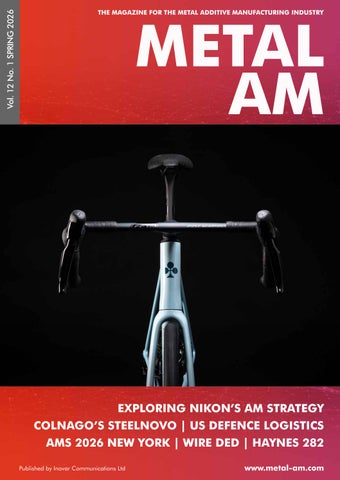
Cover image
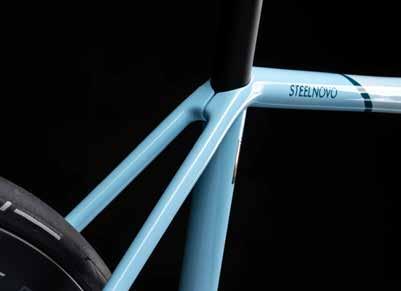
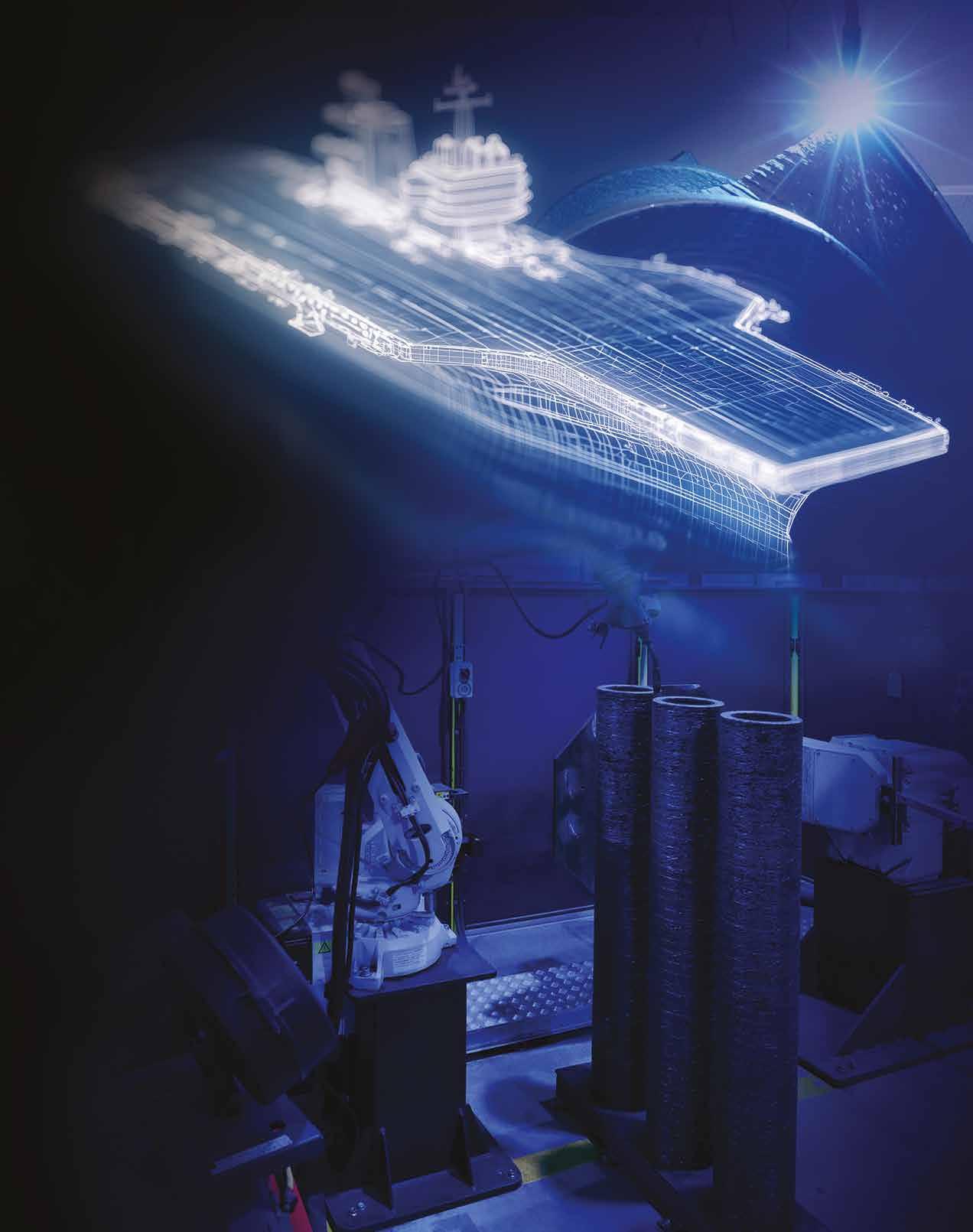
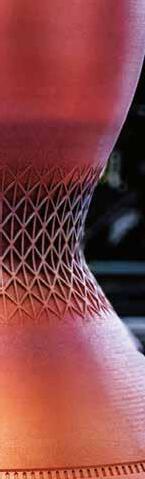
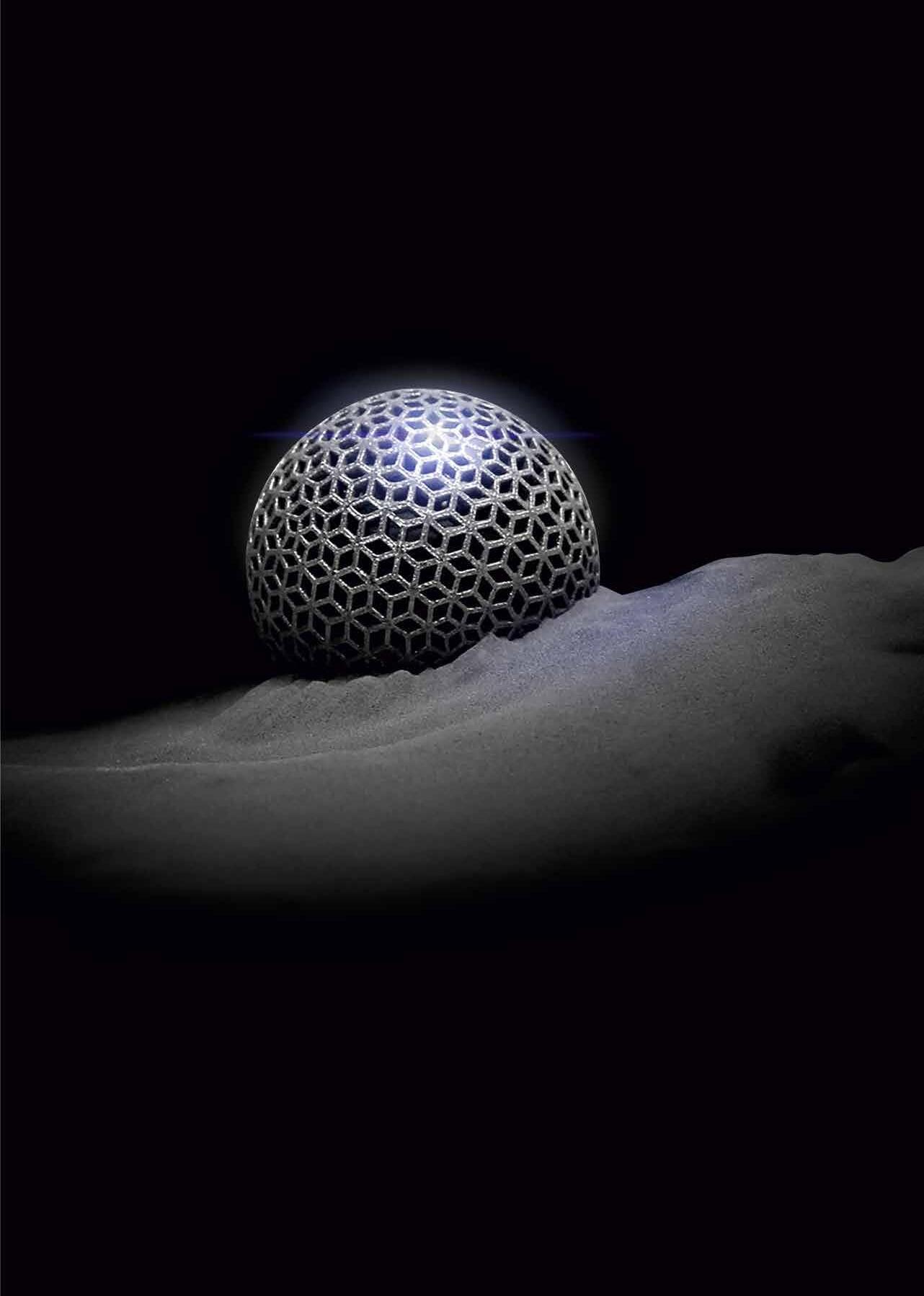
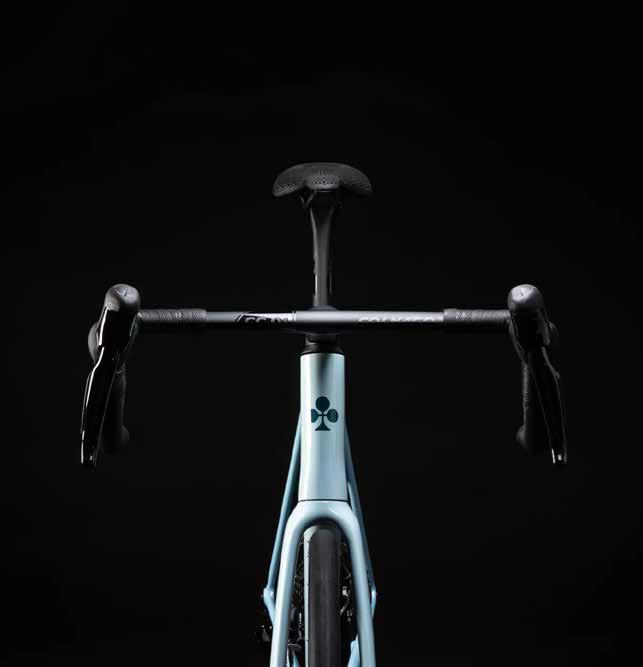
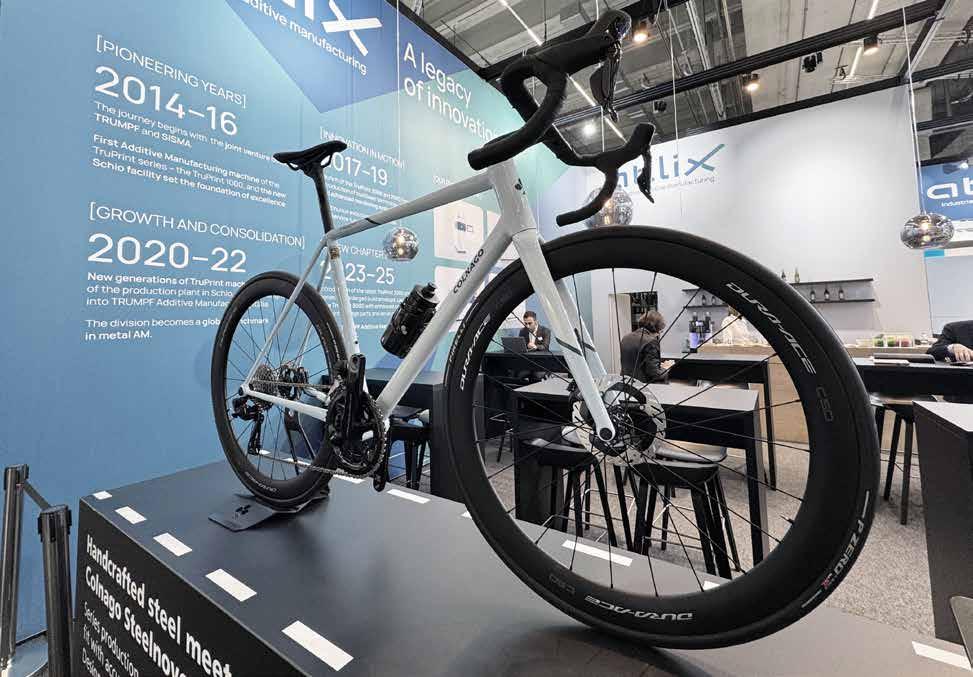
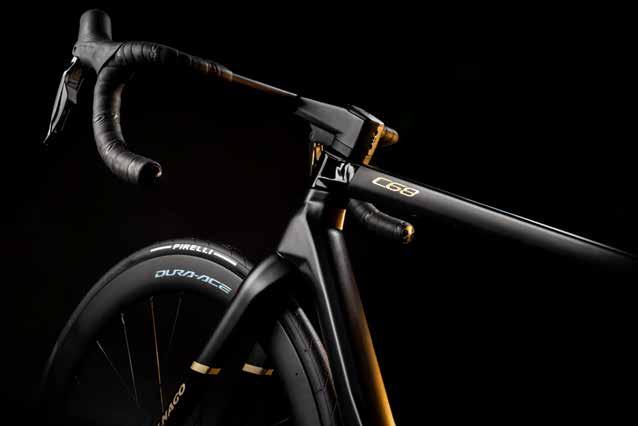
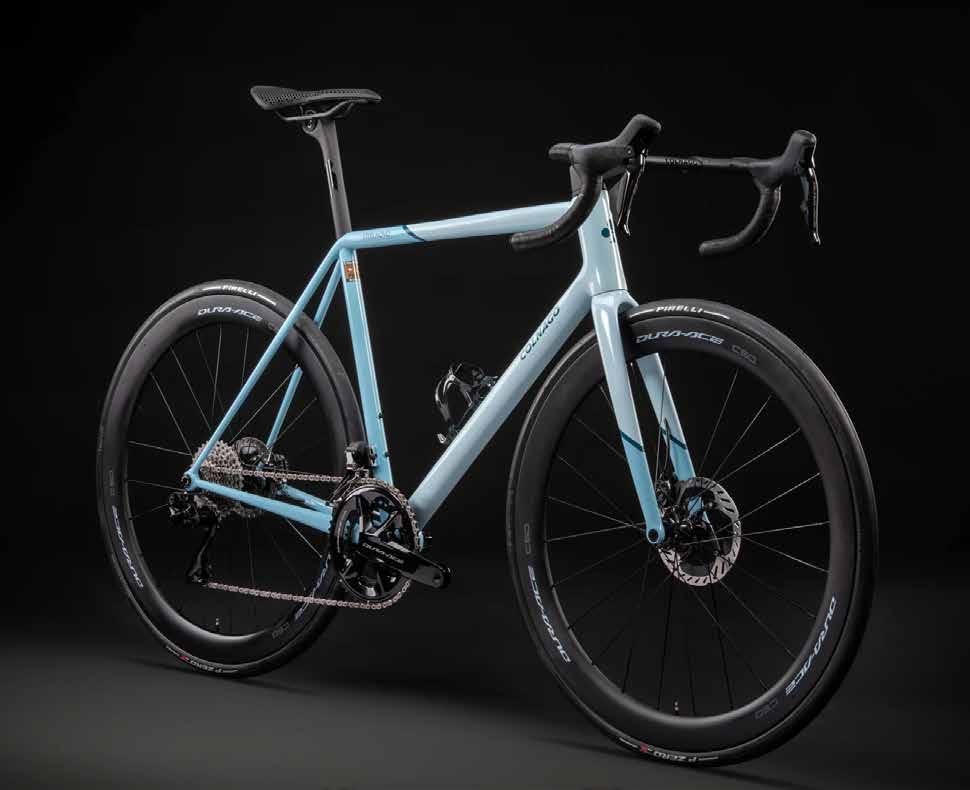
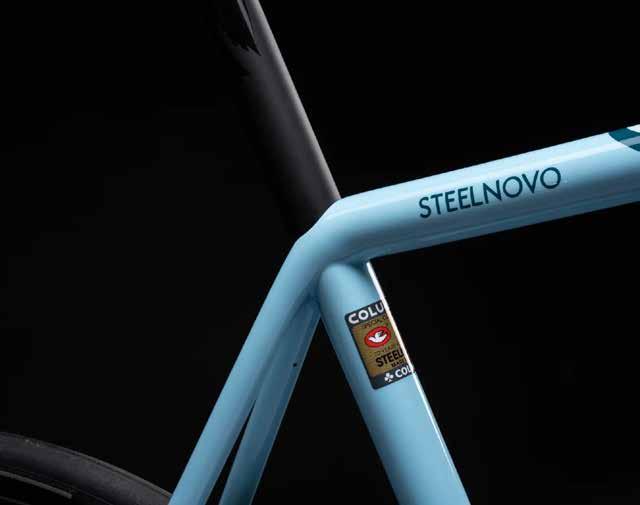
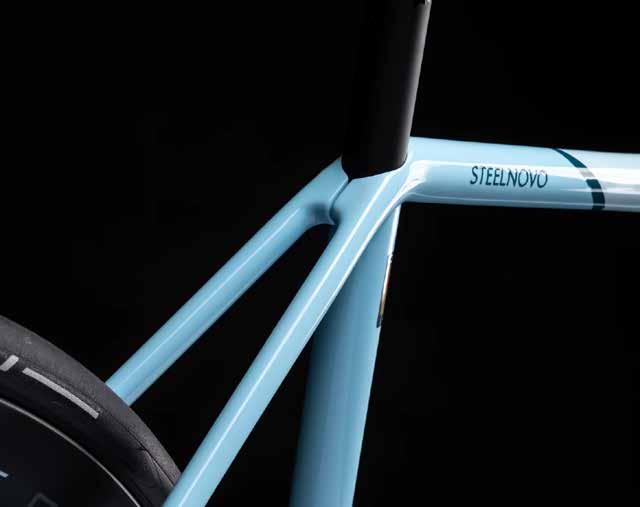
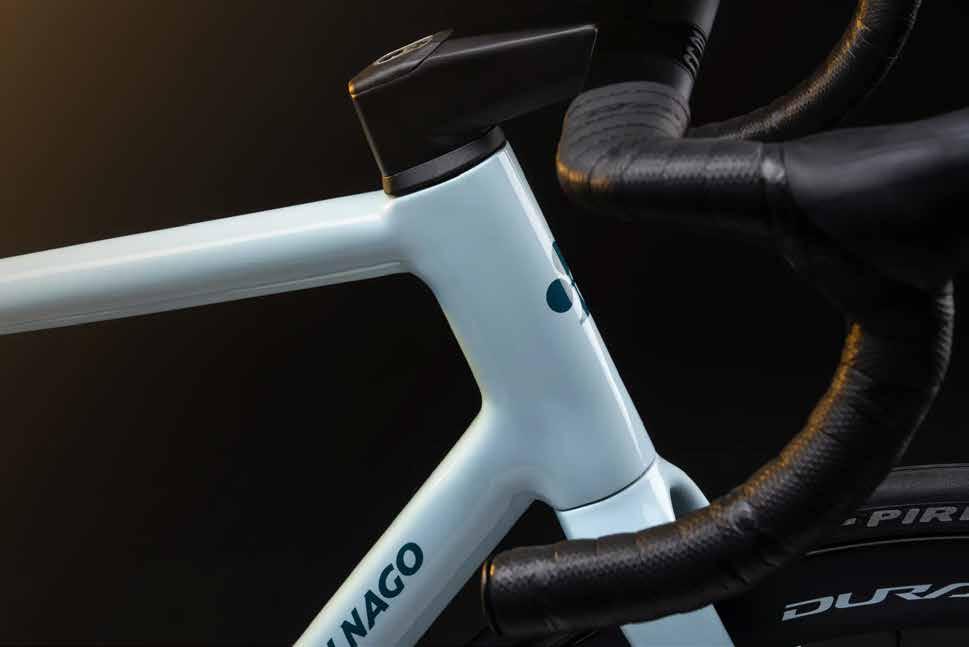
Colnago’s Steelnovo combines steel frame construction with AM nodes, bringing modern design freedom to one of cycling’s most iconic materials (Courtesy Colnago)
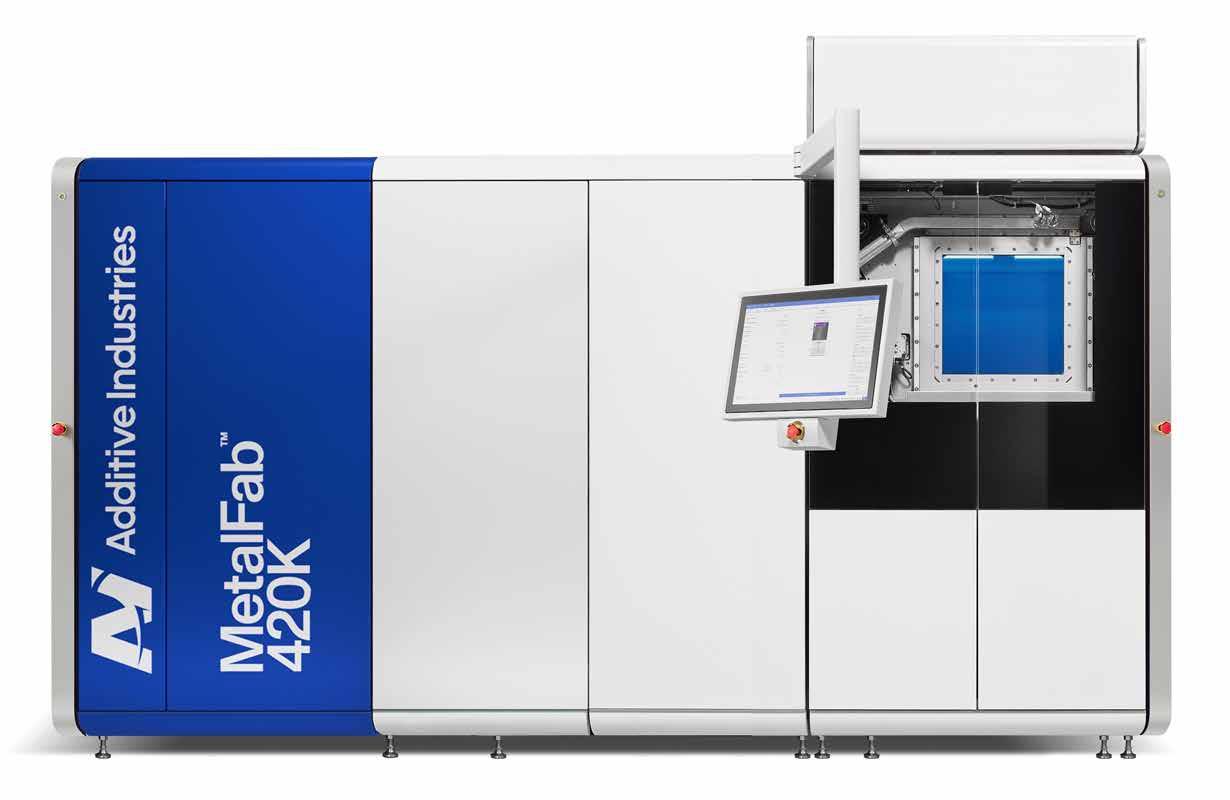
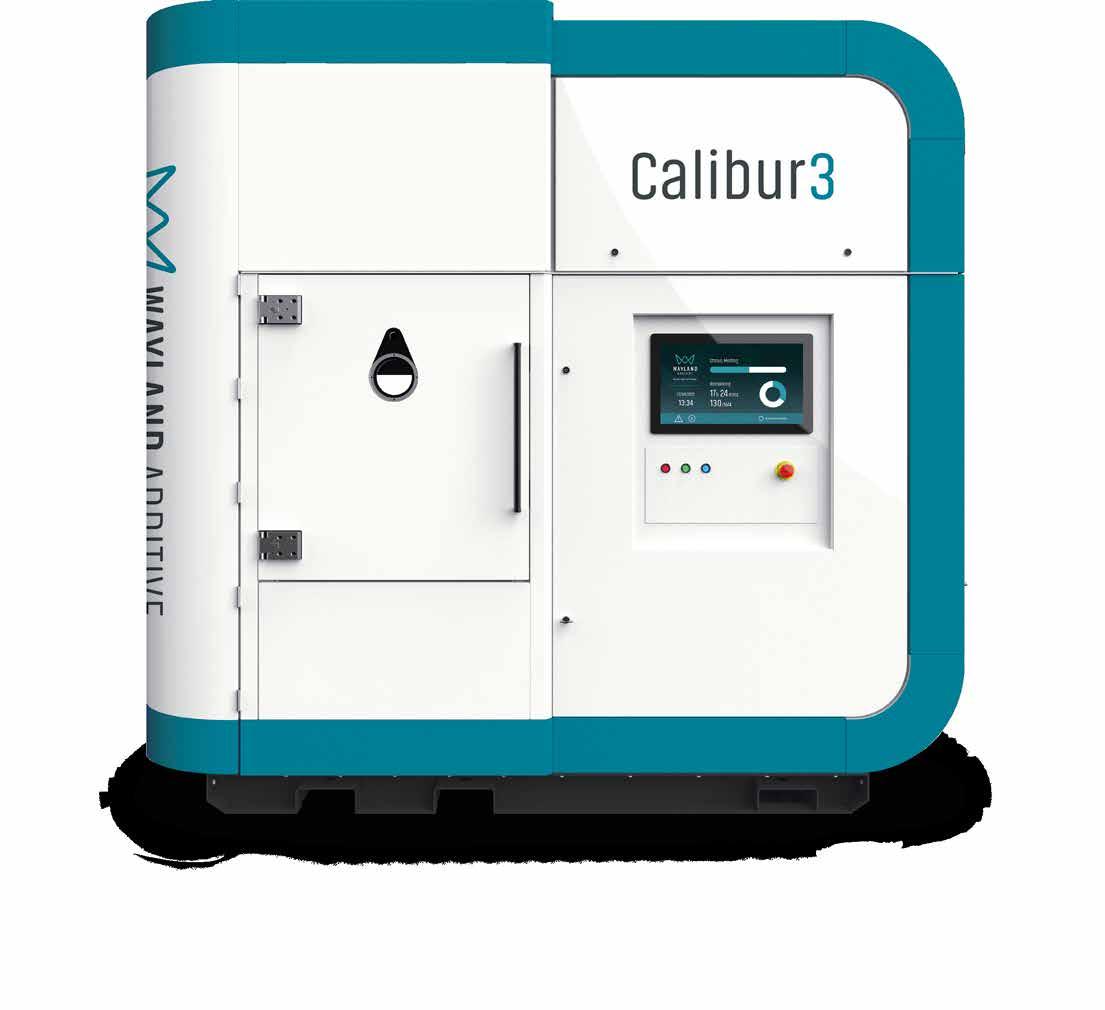
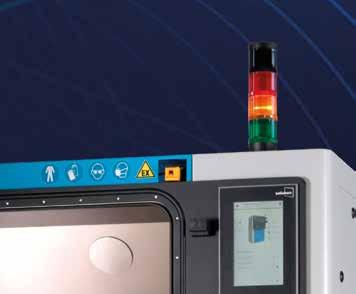
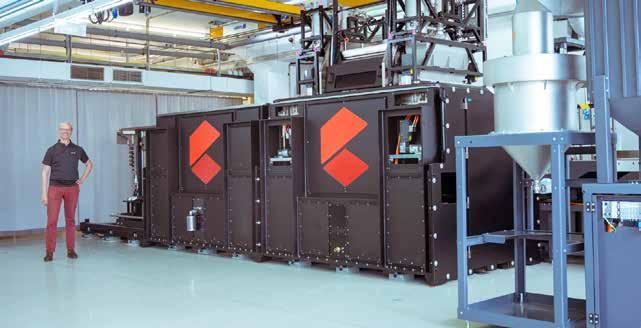
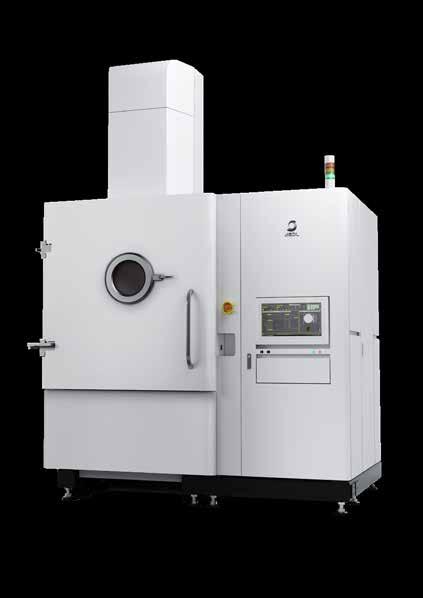
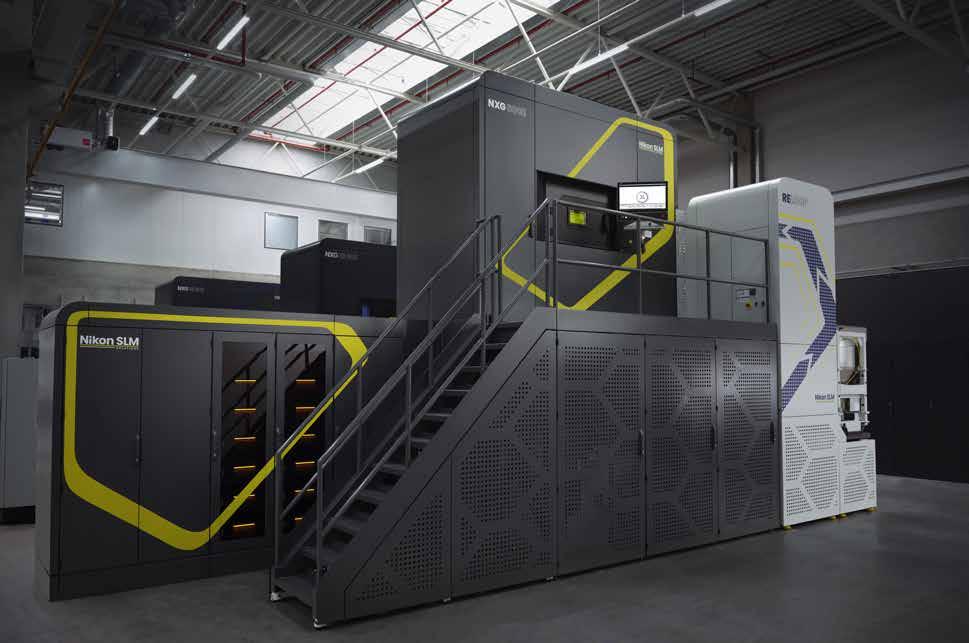
Our latest technological development in laser powder bed fusion, the MetalFab 420K is an automated, modular system that unlocks the most advanced metal AM applications in the most demanding industries. Featuring:
4 x 1kW full field lasers
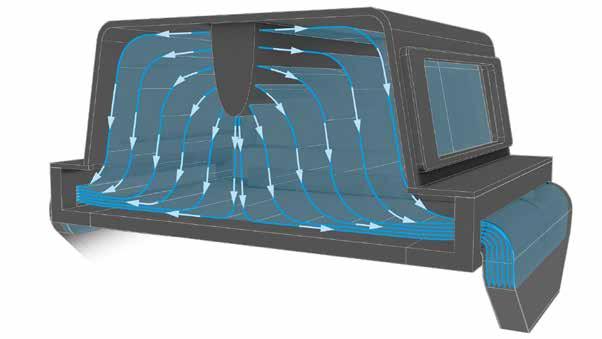
Optimised gas flow for increased productivity & quality
Variable beam diameter on demand
Automated & in-process calibration
System enhancements for operation & serviceability
115 Inside Nikon’s metal Additive Manufacturing strategy, Part 1: Hamid Zarringhalam on building a new growth pillar
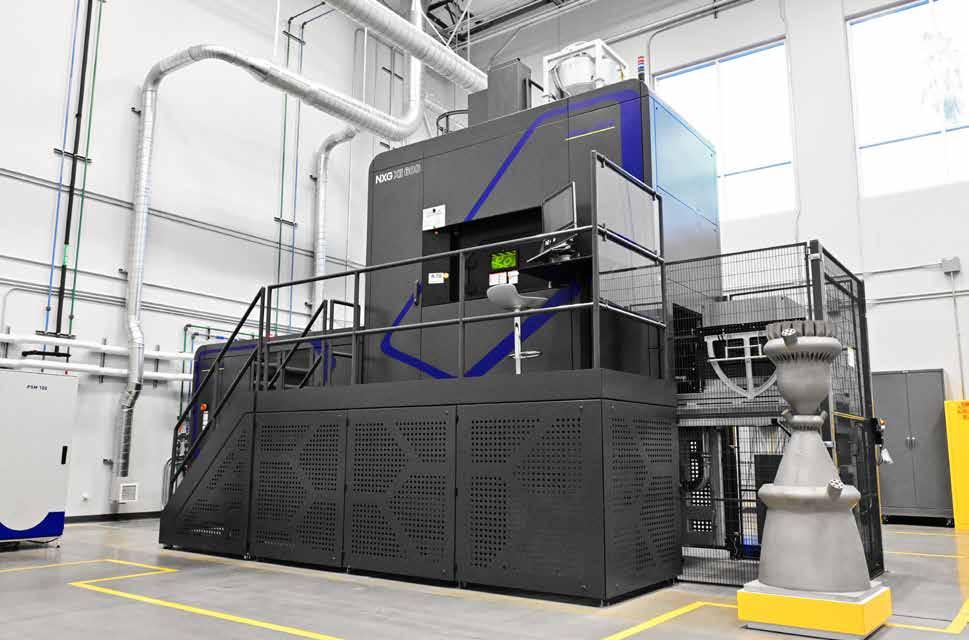
Nikon believes metal Additive Manufacturing can become its next billion-dollar business. Backed by significant cumulative investment, the company is concentrating on defence, qualification strategy and production economics rather than general rapid expansion.
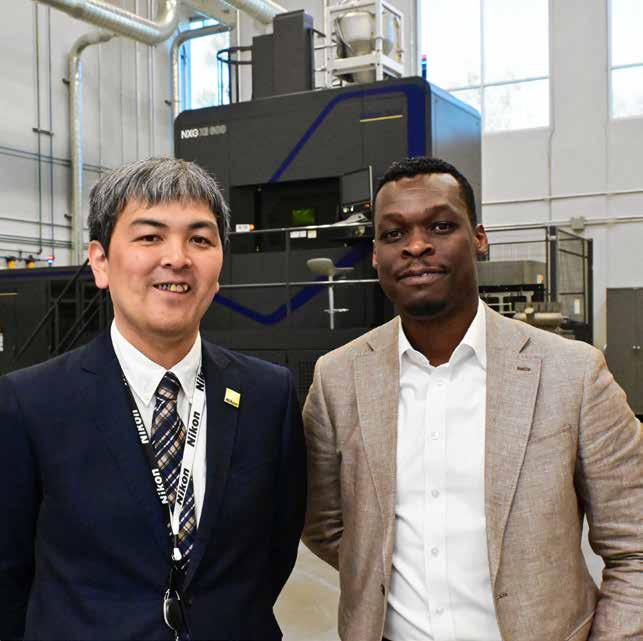
Hamid Zarringhalam, in conversation with Martin McMahon and Nick Williams, explores how semiconductor-style process control and long equipment lifecycles underpin Nikon’s approach – and why execution, not enthusiasm, will determine how AM delivers durable industrial scale. >>>
125 Inside Nikon’s metal Additive Manufacturing strategy, Part 2: Scaling industrial production in Long Beach
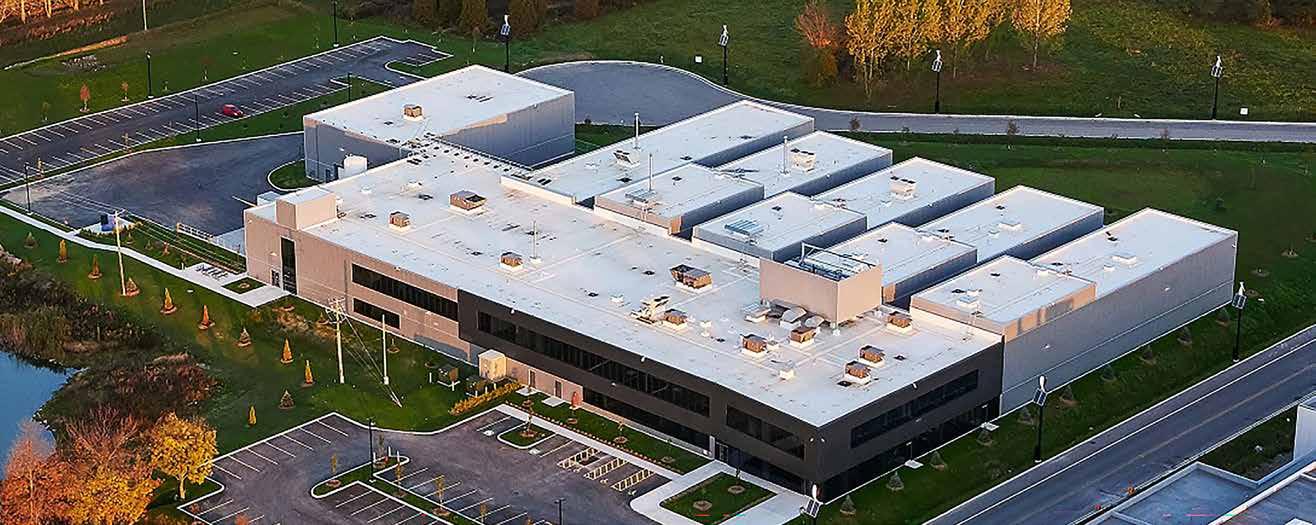
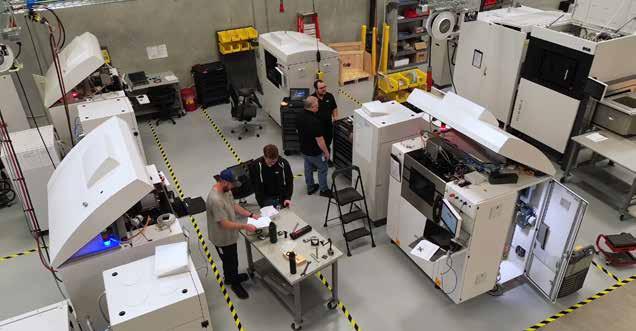
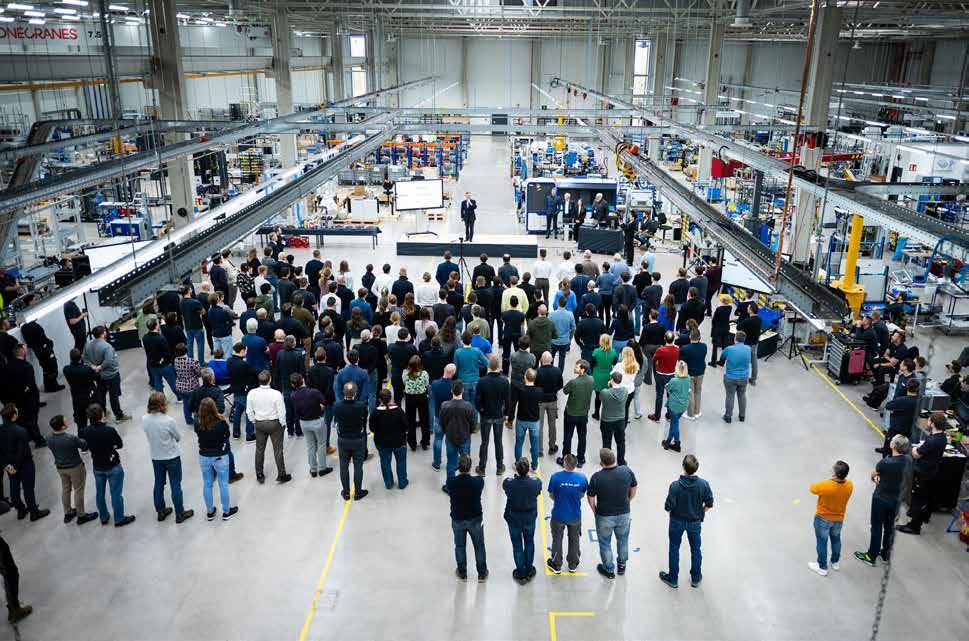
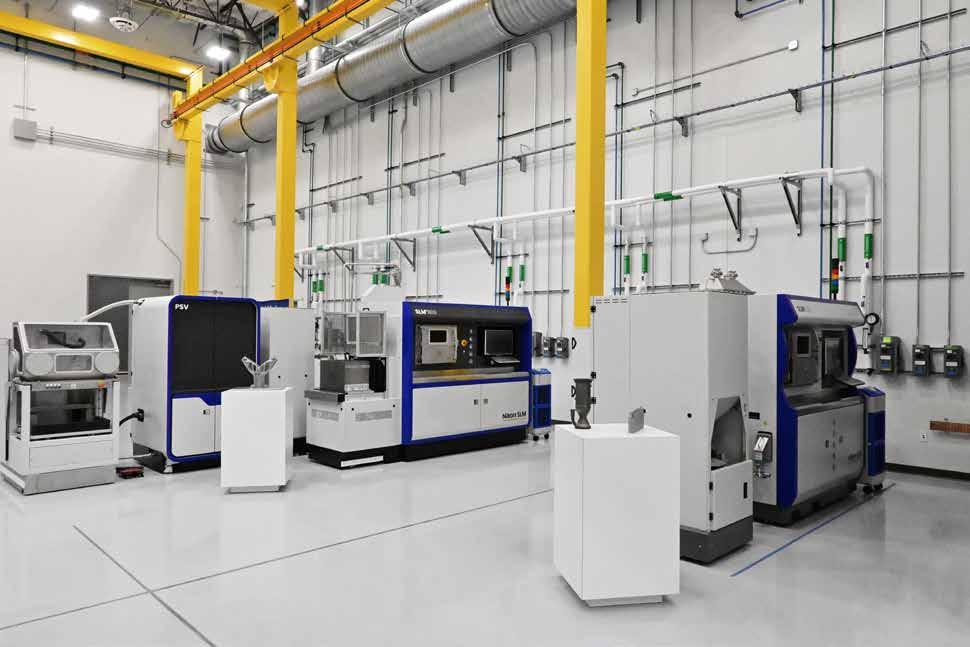
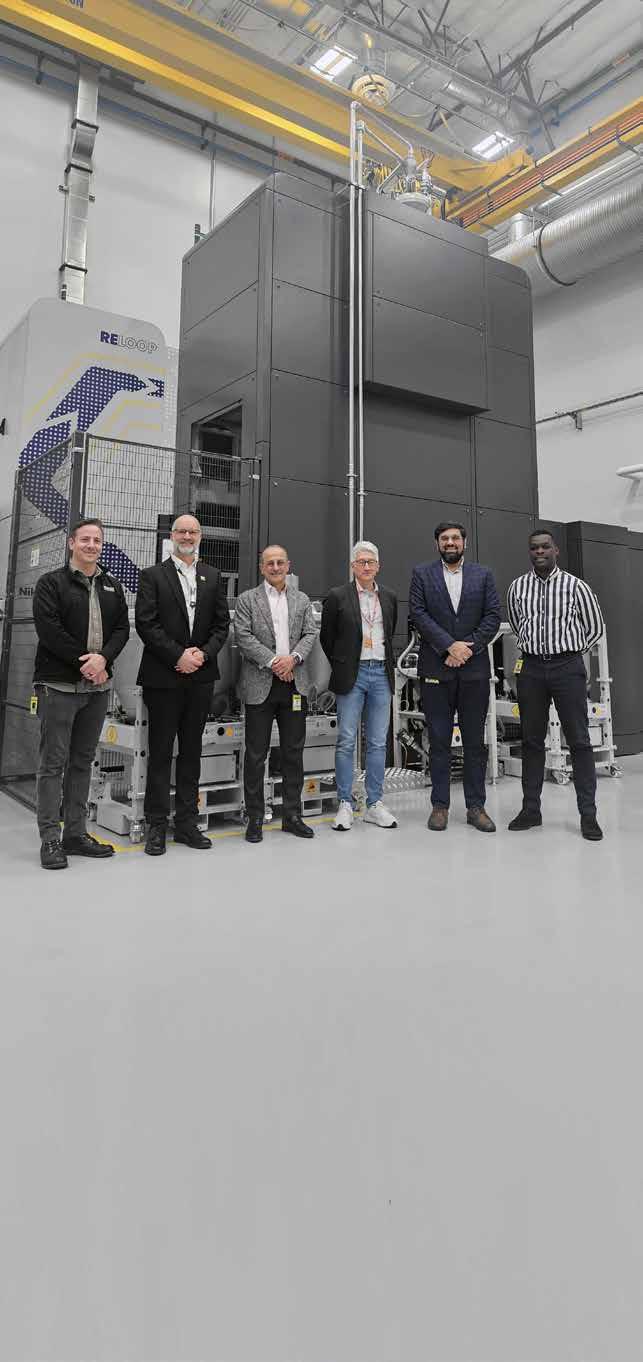
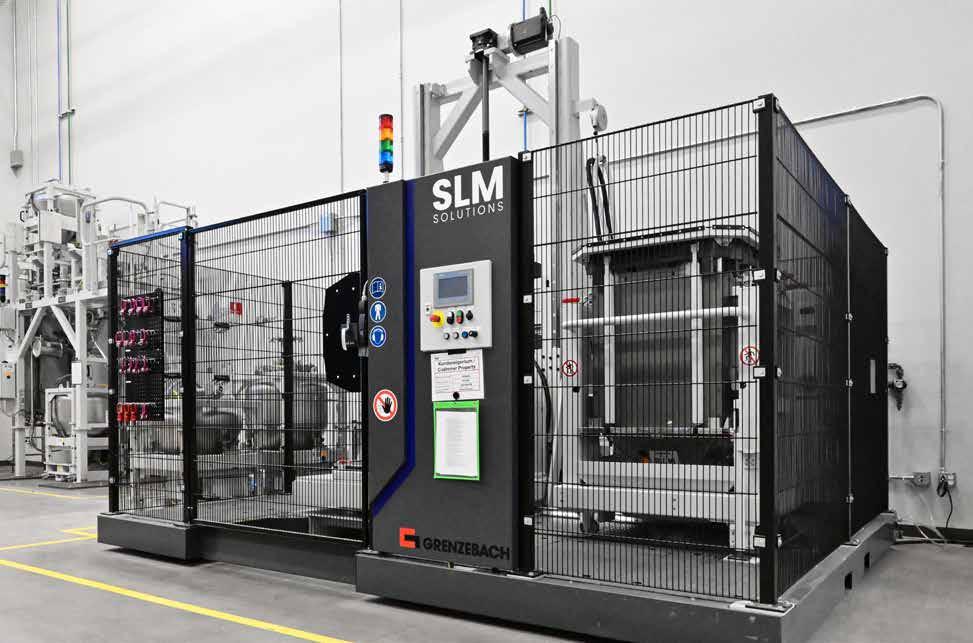
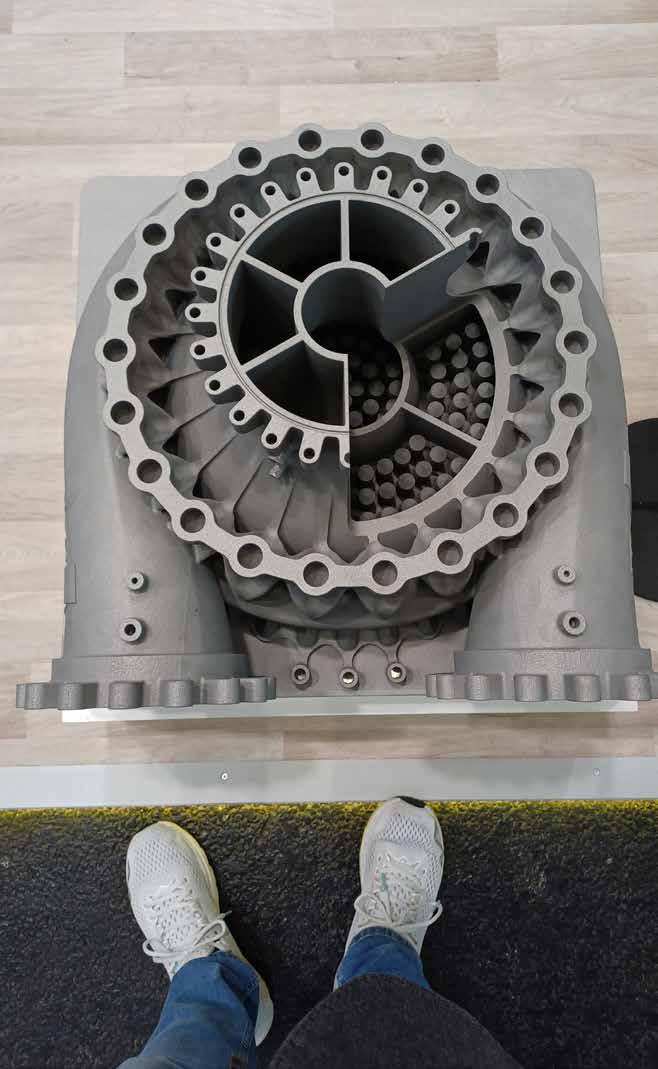
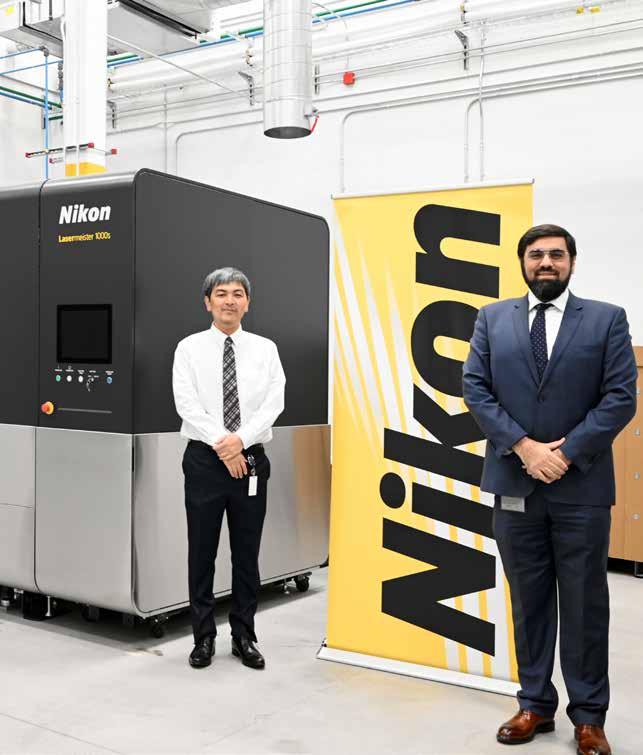
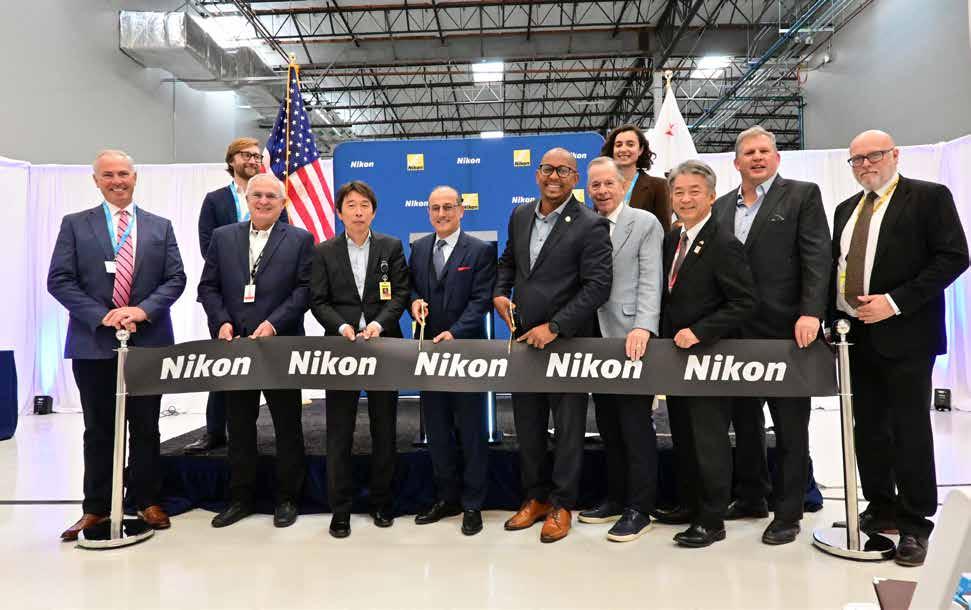
Following our interview with Hamid Zarringhalam in the preceding article, Metal AM travelled to Nikon Advanced Manufacturing’s Long Beach, California facility to examine how the company’s defence-led strategy is being executed in practice.
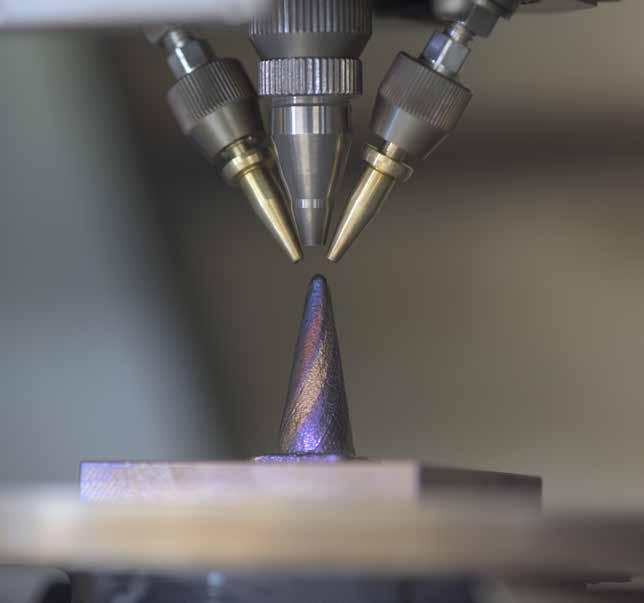
Reporting for Metal AM magazine, Martin McMahon toured the production floors, qualification laboratories and large-format NXG installations supporting U.S. defence programmes, assessing how Nikon is translating capital investment and policy alignment into repeatable process control, production throughput and industrial-scale capability. >>>
Osprey® MAR 55 –bridging the gap between strength and weldability
Discover our latest and highly versatile tool steel powder Osprey® MAR 55. This new alloy bridges the gap between maraging steels and tool steels. With Osprey® MAR 55 you no longer have to choose between good weldability of carbon-free maraging steels and the strength and high wear resistance of carbon-bearing steels. Also, Osprey® MAR 55 gives you good mechanical properties and wear resistance already in the as-built condition.
Now available via Osprey® Online.
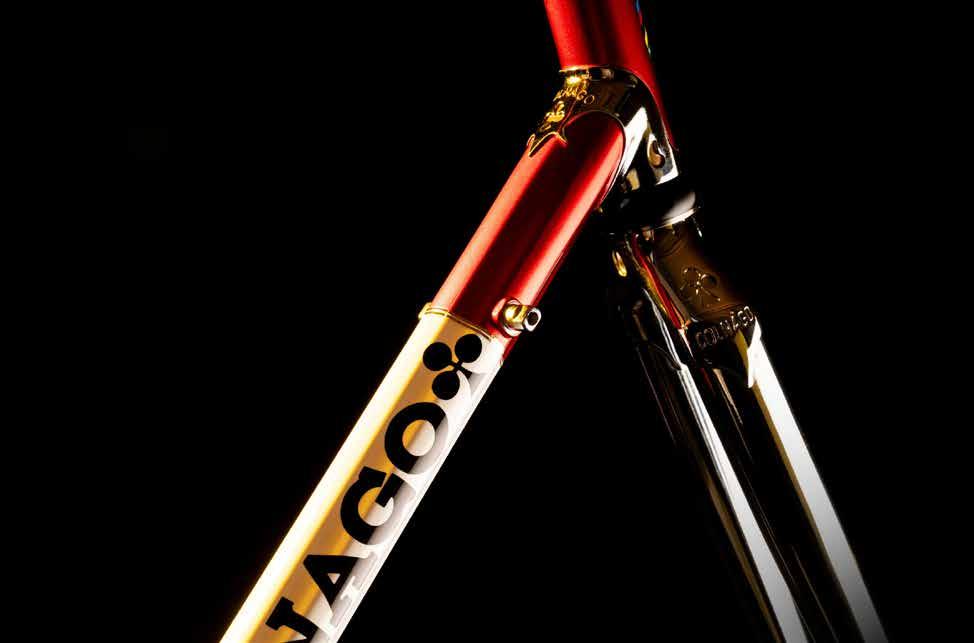
139 Steel reinvented: Colnago’s Steelnovo and the search for the perfect modern road bike
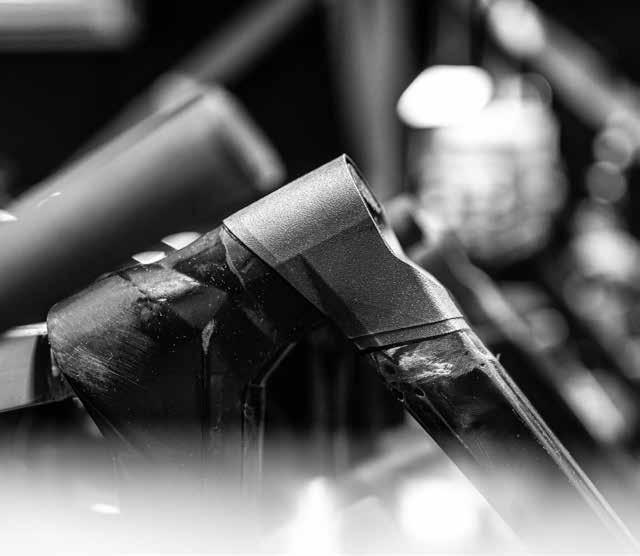
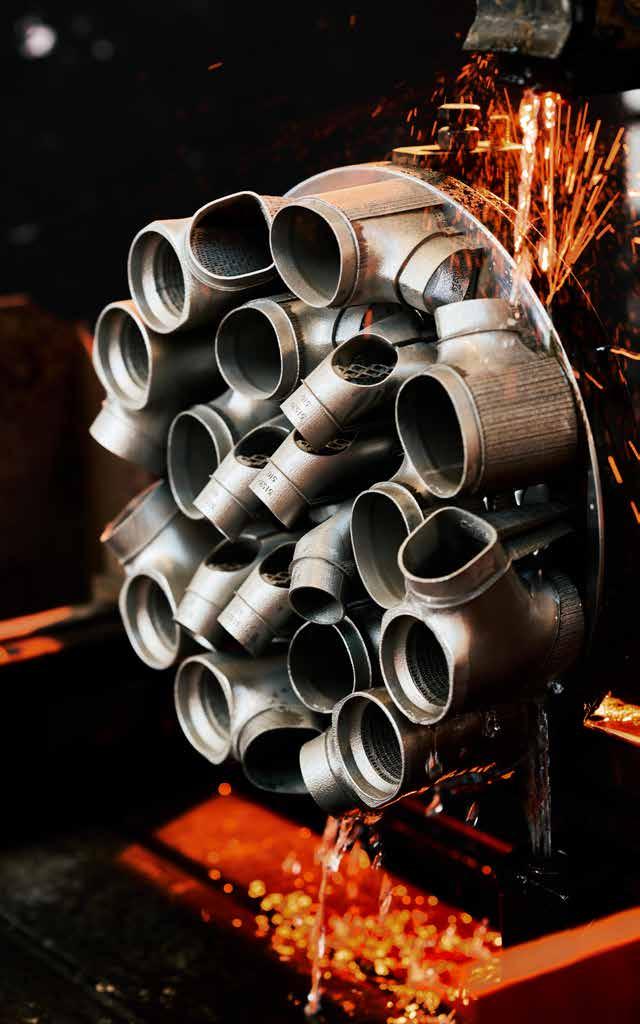
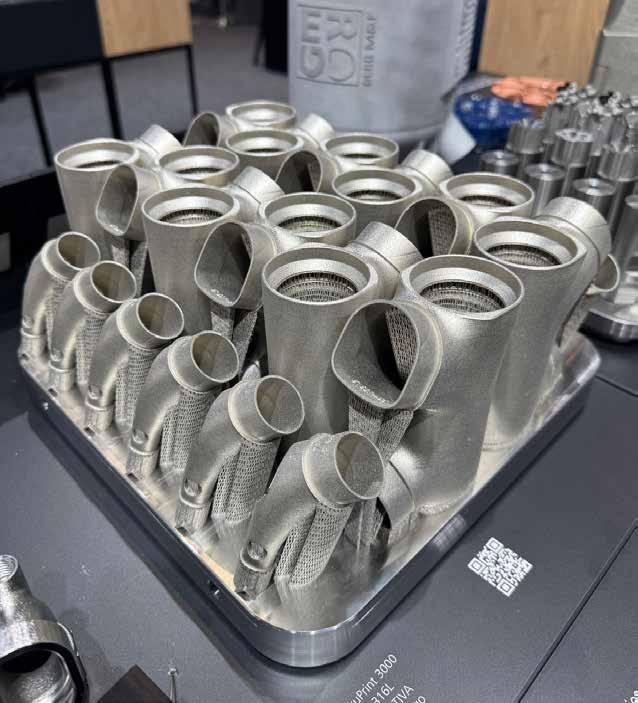
For Colnago, one of cycling’s most prestigious brands, the Steelnovo represents a showcase project – a modern interpretation of what the ‘perfect’ road bike might look like. Instead of the titanium more commonly used for additively manufactured frame lugs, the company worked with Additiva Srl and ATLIX to develop complex 316L steel nodes combined with Columbus steel tubing.
Metal Additive Manufacturing magazine’s Nick Williams explores how the project demonstrates the potential of AM to modernise traditional materials while preserving the distinctive ride quality associated with steel frames. >>>
151 Additive Manufacturing in US defence logistics: From technical progress to operational capability
Additive Manufacturing is advancing rapidly across the defence sector, but technology alone does not deliver operational advantage. The real challenge is integration – linking machines, materials, data, and logistics into systems that can perform under operational pressure.
In this article, MG (Ret.) Edward F Dorman III, former US Army theater sustainment commander and a recognised authority on contested logistics and defence industrial integration, assesses the current state of advanced manufacturing within the United States defence ecosystem and the implications for the future of US military sustainment and manufacturing. >>>
OUR READERS YOUR AUDIENCE BE VISIBLE
Metal AM magazine is the only publication exclusively dedicated to covering the world of metal Additive Manufacturing. Our mission is simple: to be the leading source of knowledge for industry professionals while actively championing the adoption of metal AM technology globally.
Advertising with Metal AM is more than exposure; it is a strategic partnership that elevates your brand’s visibility and authority within the complex and multifaceted metal AM industry. Together, we can shape the conversation and accelerate the global adoption of metal Additive Manufacturing.
40,000+ metal AM professionals can’t be wrong Follow Metal Additive Manufacturing magazine on LinkedIn
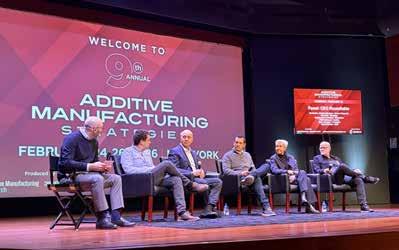
163 Additive Manufacturing Strategies 2026: Strategy without the strategyspeak in a maturing AM industry
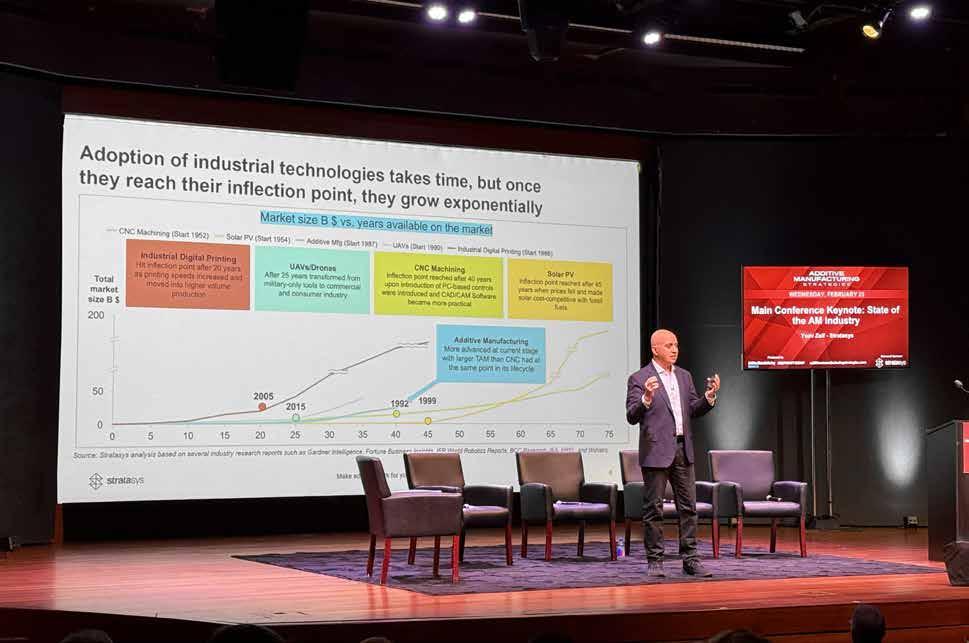
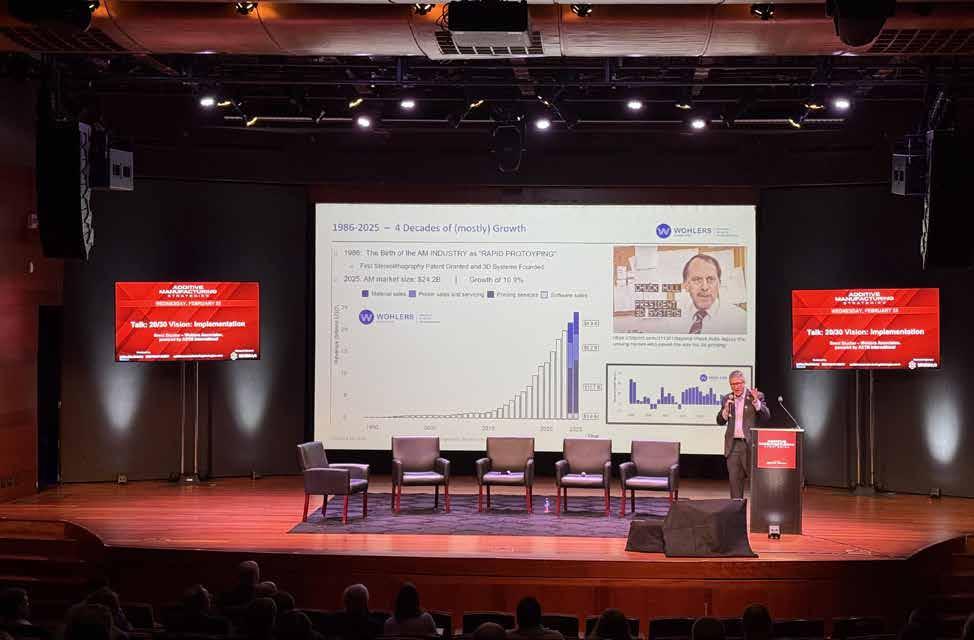
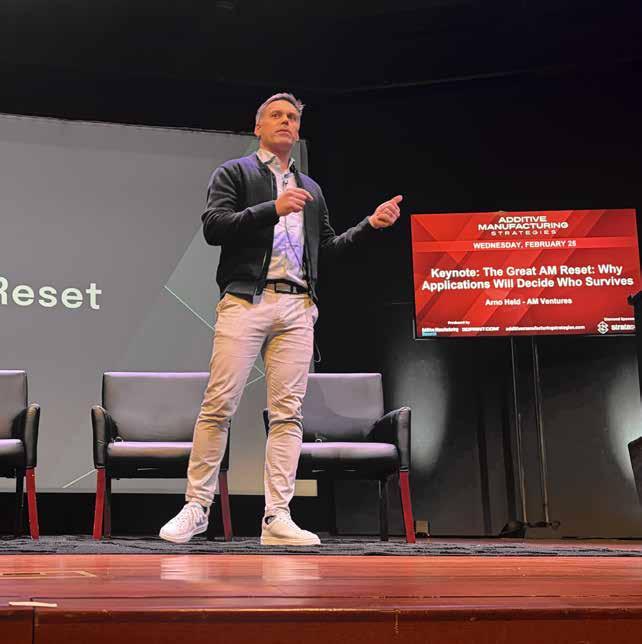
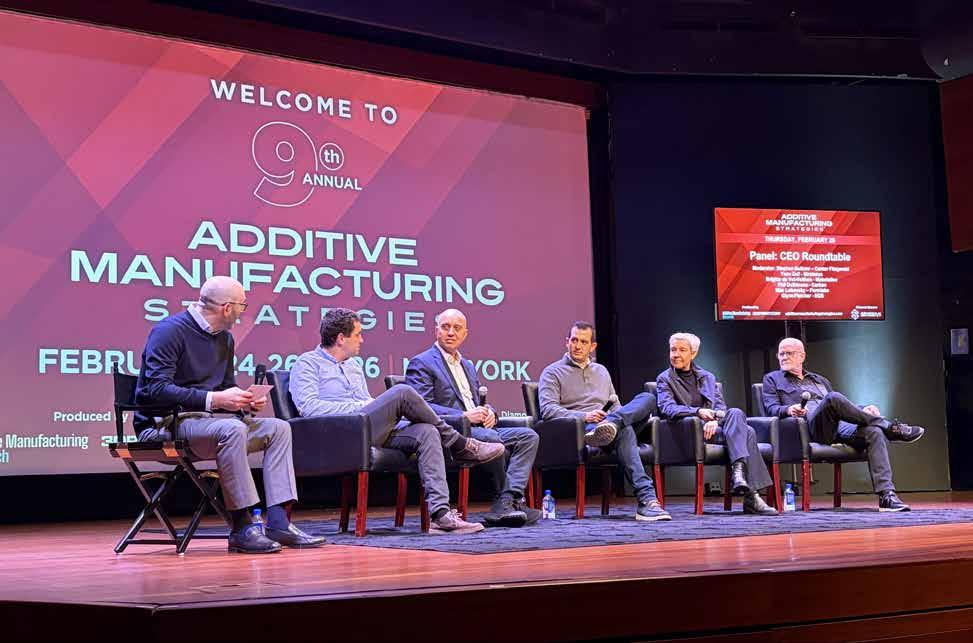
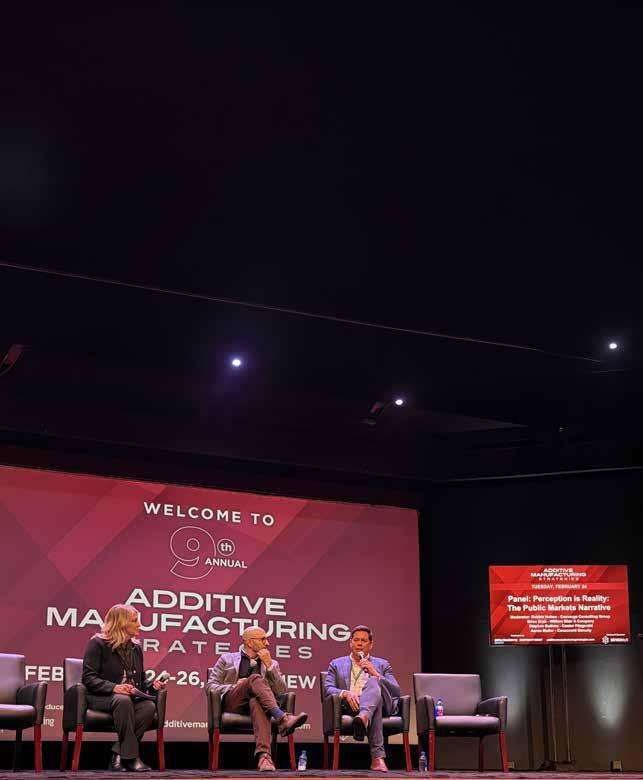
Additive Manufacturing Strategies 2026 offered a revealing snapshot of an industry entering a more sober phase. The discussions in New York were less about disruption and more about execution: how capital cycles shape machine sales, why software and ecosystems may determine who scales, and where polymer and metal Additive Manufacturing follow very different economic paths. If there was a common thread, it was that AM’s future will depend less on technology claims and more on solving specific industrial problems. Joseph Kowen reports. >>>
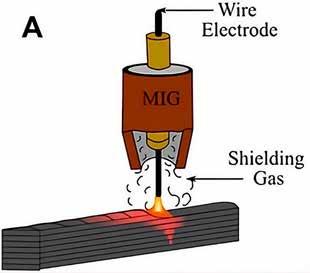
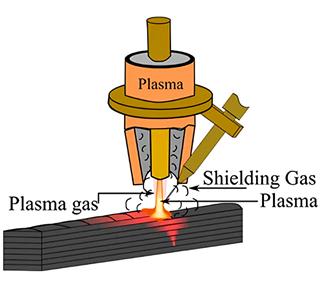
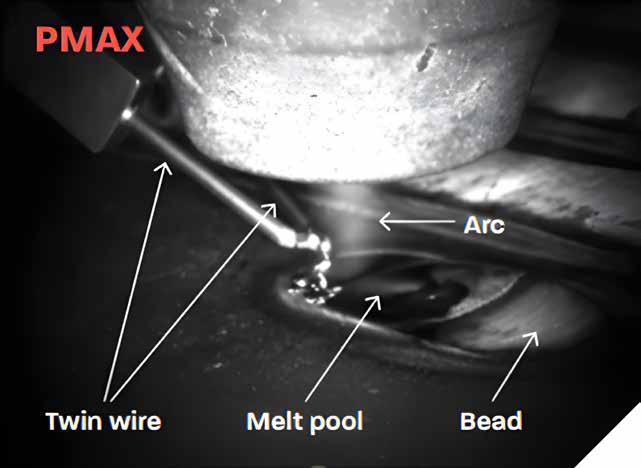
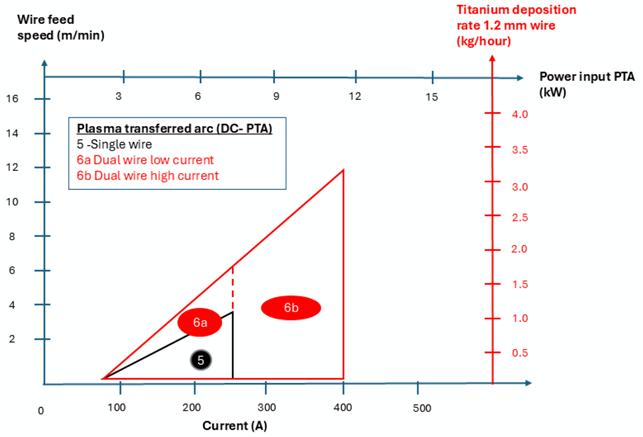
173 Wire-based Directed Energy Deposition in large-scale metal Additive Manufacturing: Choosing the right process
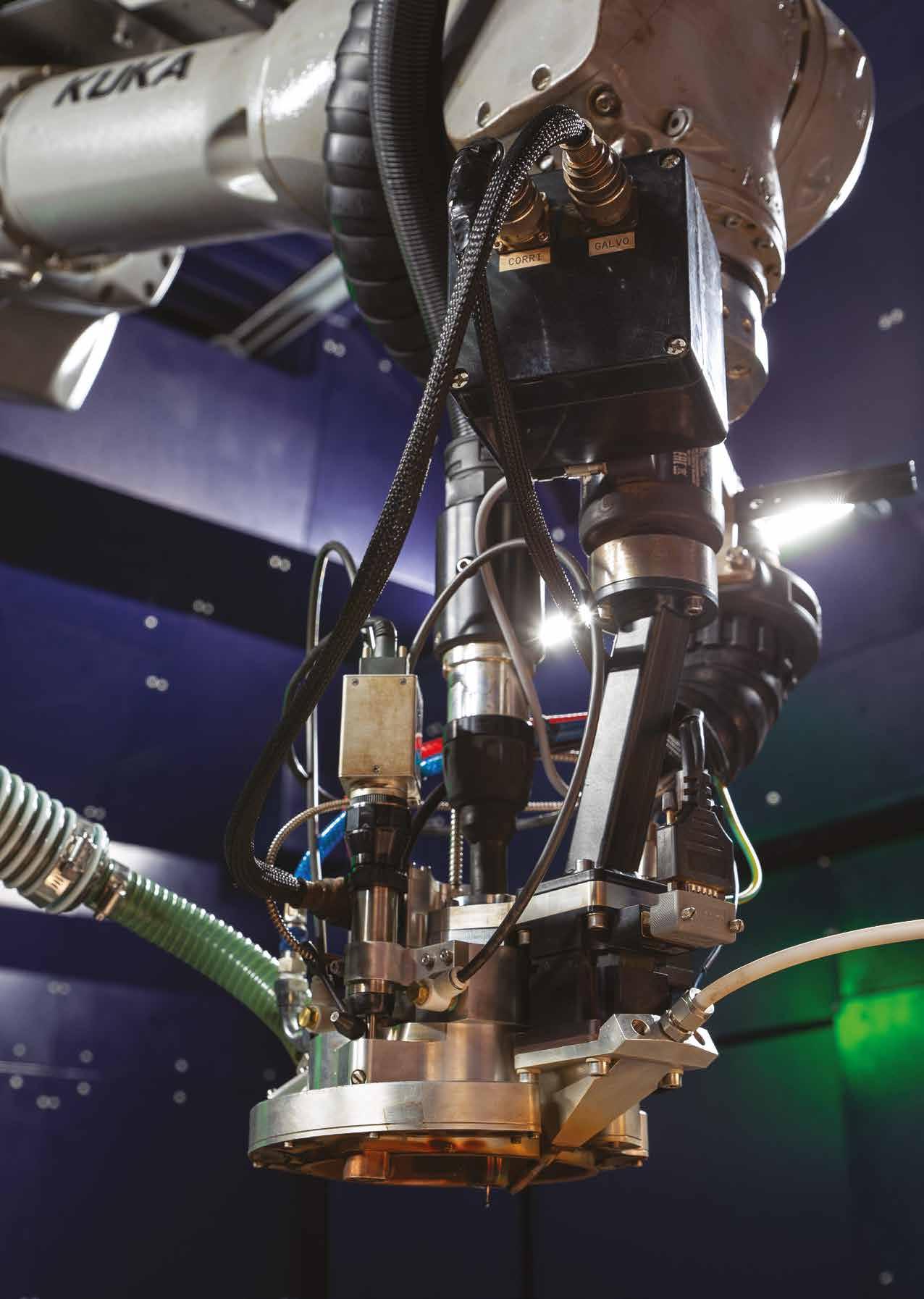
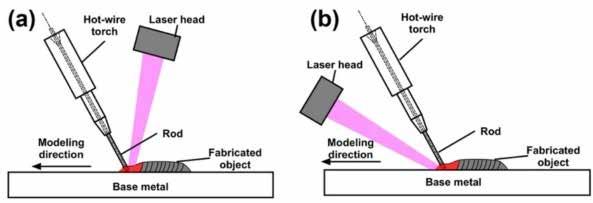
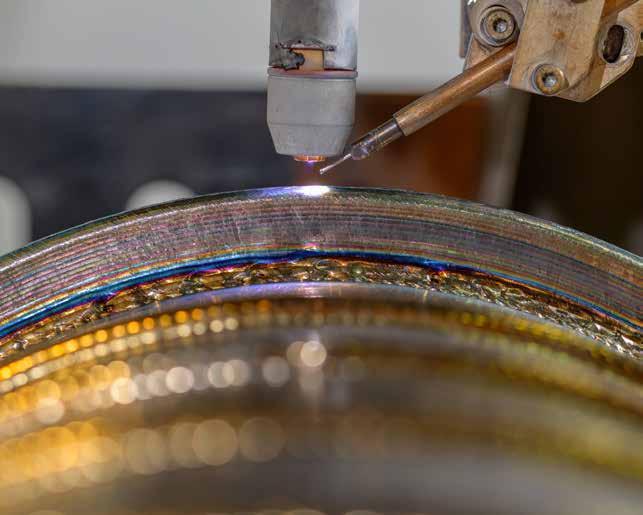
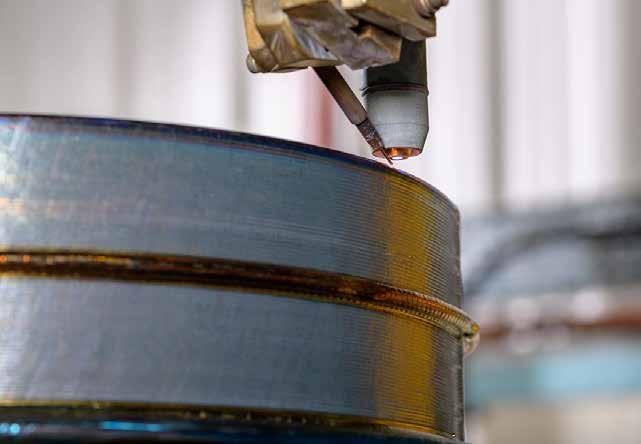
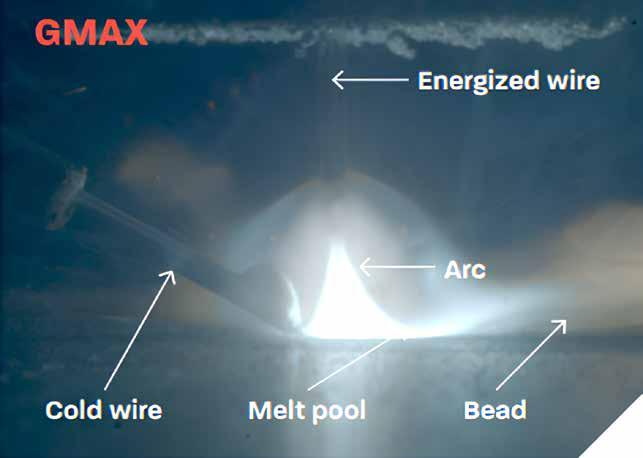
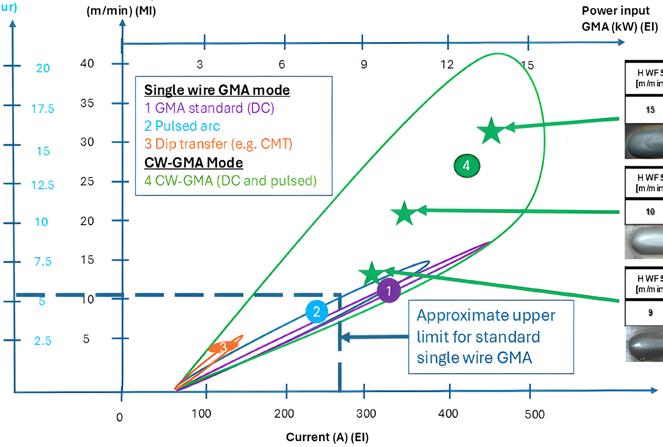
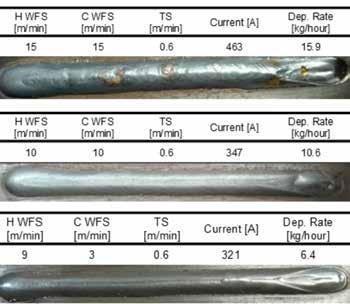
Wire-based Directed Energy Deposition (DED) is becoming one of the most practical routes for manufacturing large metal components, offering higher deposition rates and better material utilisation than many powder-based Additive Manufacturing processes. Yet wire-based DED is not a single technology category. Laser, electron beam, and arc-based systems each present different trade-offs in precision, productivity, thermal control, and industrial practicality.
In this article, WAAM3D examines how these process families compare and why newer dual-wire approaches are expanding the industrial potential of large-scale metal AM. >>>
187 Industrialising Haynes® 282®: Laser Powder Directed Energy Deposition for high-temperature performance
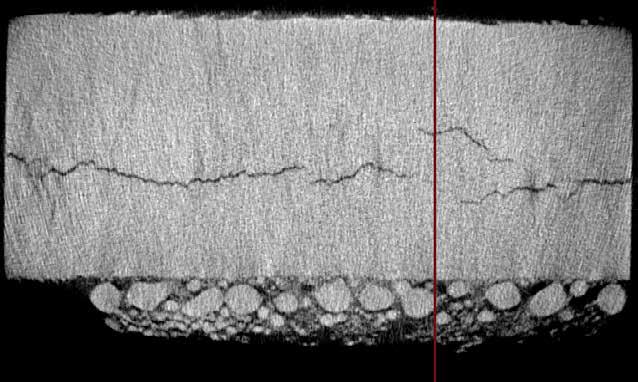
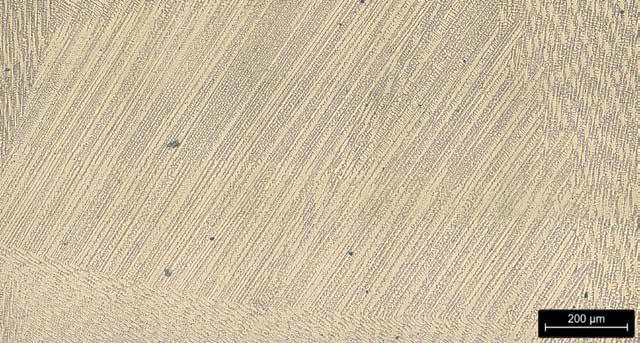
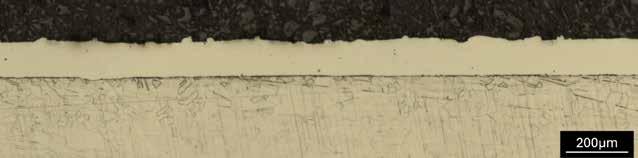
Although Haynes® 282® offers an excellent balance of weldability, creep strength and high-temperature stability, processing via metal Additive Manufacturing presents challenges. Steep thermal gradients during deposition can promote hot cracking and porosity, narrowing the process window.
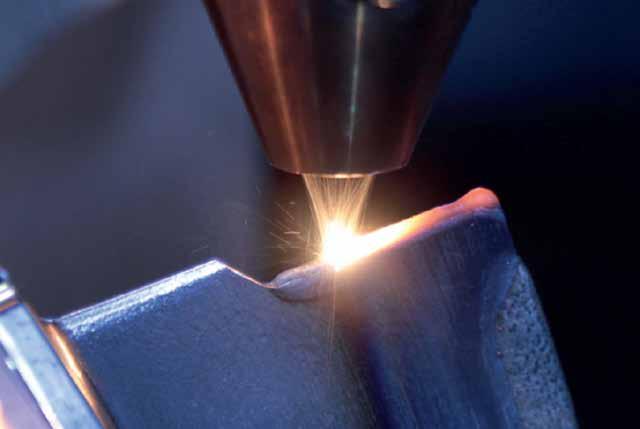
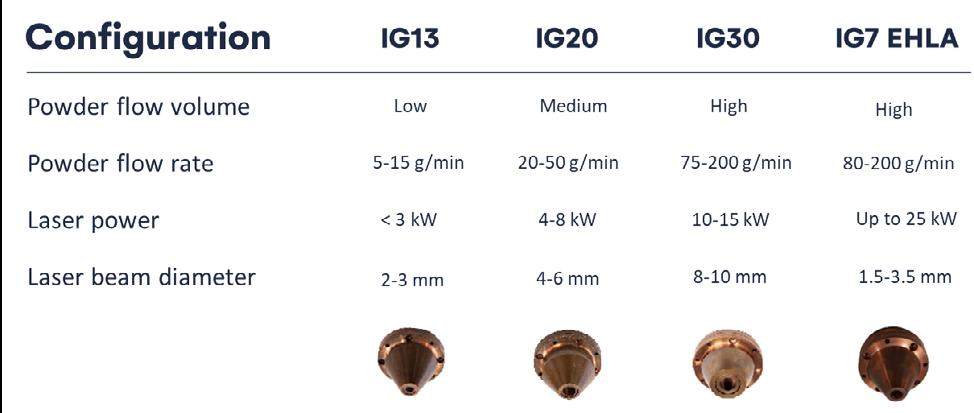
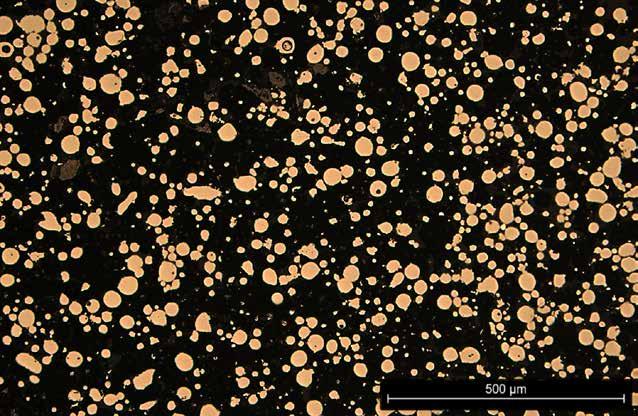
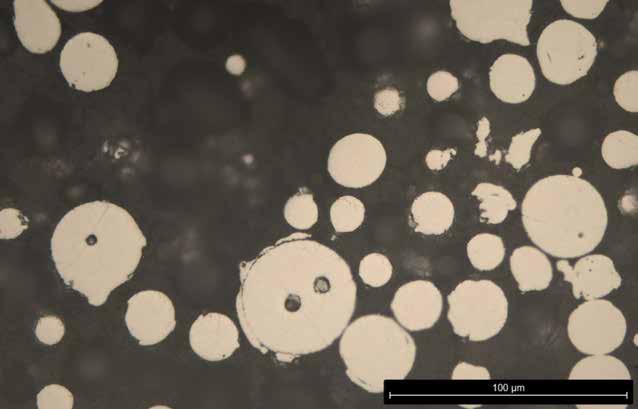
In this article, Spain’s Etxetar explores what is required to industrialise laser and powder-based Directed Energy Deposition (DED) of this alloy. It shows how adoption depends on aligning feedstock quality, deposition strategy and hardware configuration, using IG-series heads to demonstrate how nozzle design, monitoring and toolpaths are tailored to application requirements. >>>
Our advertisers’ index serves as a convenient guide to suppliers of AM machines, materials, part manufacturing services, software and associated production equipment.
In the digital edition of Metal AM magazine, available at www.metal-am.com, simply click on a company name to view its advert, or on the weblink to go directly to its website. >>>
Industry news
To submit news please contact Paul Whittaker, Group News Editor: paul@inovar-communications.com
LEAP 71 and HBD produce largest aerospike rocket
engine to date
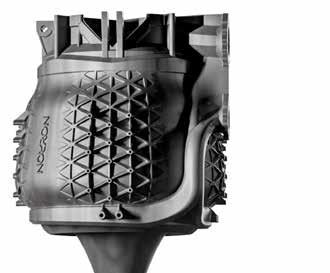
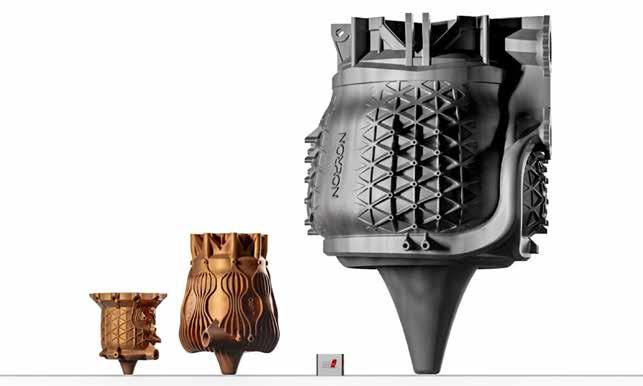
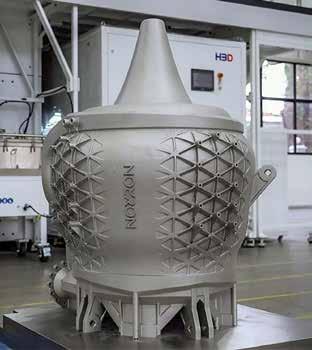
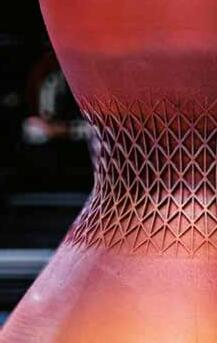
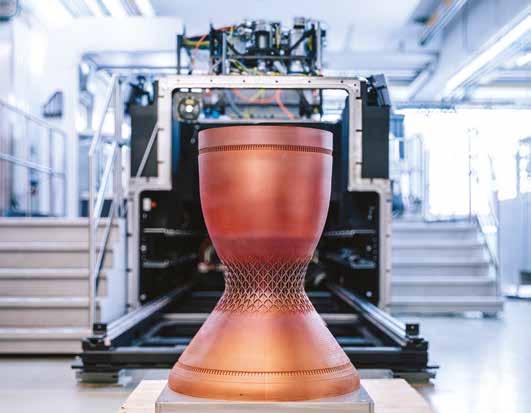
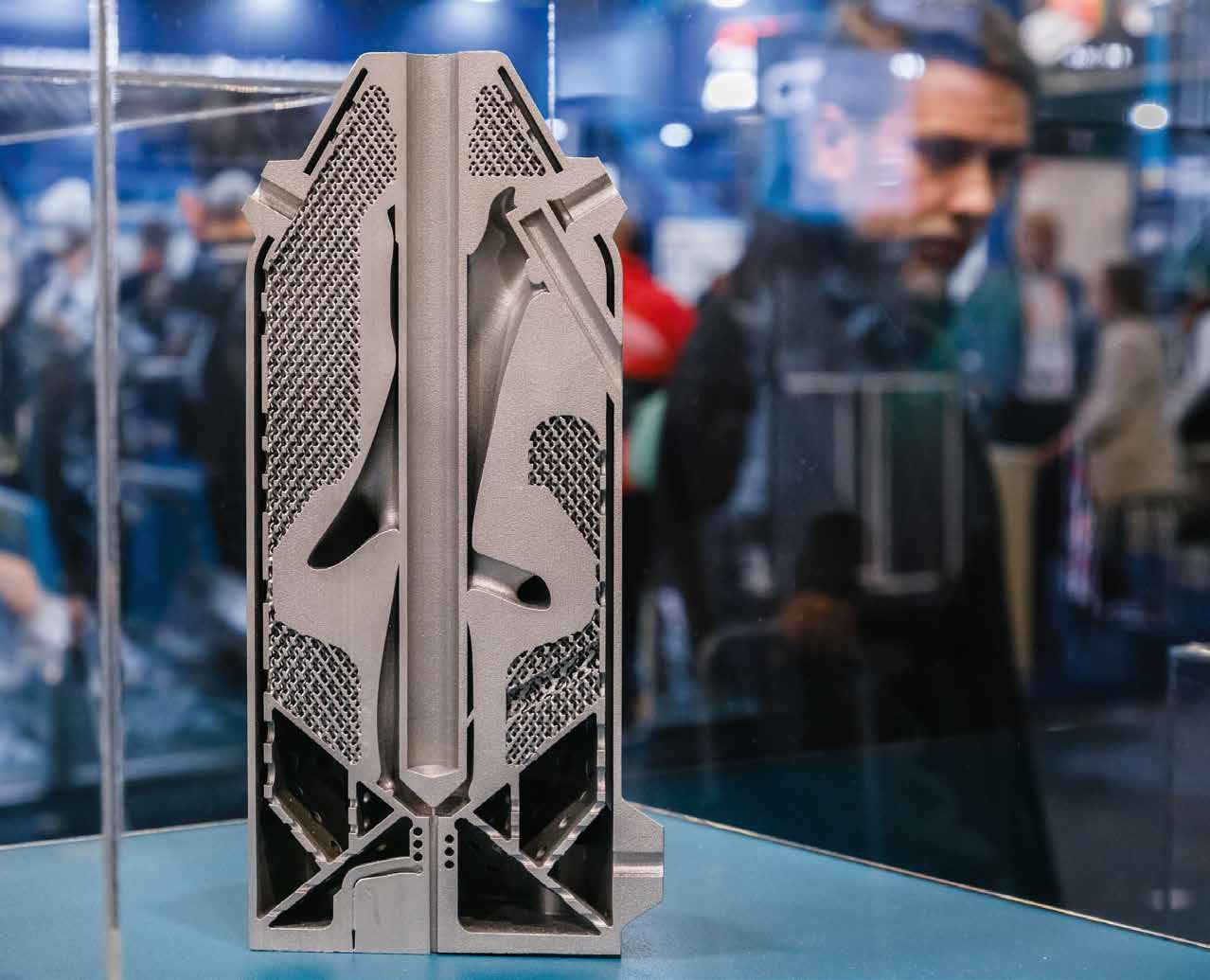
LEAP 71, headquartered in Dubai, United Arab Emirates (UAE), and Shanghai Hanbang 3D Tech Co, Ltd (HBD), headquartered in Shanghai, China, have produced an additively manufactured aerospike rocket engine capable of generating 20 tons of thrust (200 kN/45,000 lbf). The one-metre-tall cryogenic methane/ liquid oxygen engine, designated XRA-2E5, was engineered using Noyron, LEAP 71’s Large Computational Engineering Model.
HBD additively manufactured the monolithic engine in 289 hours of continuous build time using the HBD 800, a ten-laser metal Additive Manufacturing machine with a build volume of 830 × 830 × 1,250 mm.
“Aerospikes are often considered the holy grail of space propulsion,” said Josefine Lissner, CEO of LEAP 71 and principal architect of Noyron.
“They promise major performance advantages over conventional engines, but their complex geometry has historically made them extremely difficult to design, manufacture and
operate. We believe that by combining computational engineering with advanced Additive Manufacturing, we can finally make them fly.”
The engine shares its DNA with two earlier Noyron-generated aerospike engines that LEAP 71 hot-fired over the past 15 months. The 200 kN design, reportedly the largest additively manufactured aerospike ever produced, is suitable for the upper stages of large reusable launch vehicles.
Aerospike engines use an insideout architecture with a toroidal combustion chamber and a central spike. To manage the intense heat loads from the combustion gases, the XRA-2E5 uses a regenerative cooling strategy where the outer chamber is cooled by the cryogenic methane fuel, while the spike is cooled using liquid oxygen.
Unlike conventional engines with their bell-shaped nozzles, aerospikes maintain high efficiency from sea level to vacuum, making them particularly attractive for next-generation launch
systems that reuse both stages of the rocket. In a fully reusable launch system, both the booster and the upper stage return to the launch site, requiring propulsion systems that operate efficiently inside and outside the Earth’s atmosphere and provide deep throttling capability.
Kevin Chen, Director of Marketing at HBD, shared, “Just a year ago, producing an engine like this at this scale would have been impossible. The physics-driven geometry of the aerospike, with shallow overhangs and intricate internal structures, pushes even advanced metal printing processes to their limits. Successfully producing the engine on the first build demonstrates the stability and precision of HBD’s large-format Additive Manufacturing platform and provides hardware ready to move toward hot-fire qualification.”
The companies collaborated closely to align Noyron’s design strategy with the capabilities of HBD’s AM platform. The result is a fully integrated monolithic engine manufactured in Inconel 718, a high-temperature nickel superalloy commonly used in rocket propulsion systems.
en.hb3dp.com
www.leap71.com
The engine shares its DNA with two earlier Noyron-generated aerospike engines that LEAP 71 hot-fired over the past 15 months (Courtesy LEAP 71)
HBD manufactured the engine in 289 hours (Courtesy LEAP 71)
VulcanForms raises $220M to scale US metal Additive Manufacturing
VulcanForms, based in Burlington, Massachusetts, USA, has announced the close of an oversubscribed $220 million financing round led by Eclipse and 1789 Capital, with participation from Washington Harbour, Fontinalis, IEQ Capital, and others. The financing is said to reflect growing demand for secure US domestic production of metal products and reinforces VulcanForms’ role in strengthening critical American advanced manufacturing capability.
“American manufacturers need a domestic alternative that can compete with global production at scale with superior speed and precision,” stated Kevin Kassekert, CEO of VulcanForms. “This financing enables us to meet surging demand
and expand our role as a critical partner to companies rebuilding resilient domestic supply chains.”
The capital will support the expansion of VulcanForms’ fully integrated manufacturing facilities. These facilities combine advanced metal Additive Manufacturing technologies, precision machining, automation, inspection, and proprietary AI-enabled software into a single end-to-end workflow.
By compressing this supply chain into one integrated production system, VulcanForms reduces complexity, minimises waste, lowers total system cost, and delivers finished, high-performance products at production scale with consistent quality and fully integrated, secure supply chains.
VulcanForms has closed an oversubscribed $220 million financing round (Courtesy VulcanForms)
Velo3D signs $32.6M contract with US DoD to support weapon systems
Velo3D, based in Fremont, California, USA, has entered into an Other Transition Agreement (OTA) contract with the US Department of Defense (DOD)’s Defense Innovation Unit (DIU) in support of a major weapon system programme. The $32.6 million contract supports DIU’s Foundry for Operational Readiness and Global Effects (Project FORGE), currently focused on finding solutions for major manufacturing bottlenecks associated
with traditionally manufactured parts and platforms within the defence industrial base.
Velo3D will work with the DIU, the US Navy and an unnamed industry prime to prototype and qualify additively manufactured components to better scale production rates for the programme. The company will prototype alternatives to traditionally manufactured components using its Rapid Production Solution (RPS).
Omeed Malik, President of 1789 Capital, commented, “1789 Capital is thrilled to support VulcanForms, a company revitalising America’s industrial strength and sharply reducing our dependence on foreign suppliers. By restoring high-skilled manufacturing jobs to American soil, VulcanForms is helping to drive the next great chapter of American prosperity.”
The investment also enables continued execution of the company’s technology roadmap and R&D programmes that strengthen the platform, advance the company’s materials portfolio, and support future capacity expansion.
VulcanForms has moved from development into scaled industrial production, whilst reportedly securing large multi-billion commercial programmes across numerous market verticals including medical devices, consumer products, aerospace, defence, and industrial segments.
“Rebuilding America’s industrial capacity requires bold engineering and the ability to manufacture at scale, and VulcanForms has proven it can deliver both. Their platform brings production of mission critical components back onshore with unmatched precision, speed, and reliability. Eclipse is proud to back a team that is delivering real industrial output today while shaping the future of American manufacturing,” concluded Greg Reichow, Partner at Eclipse.
www.vulcanforms.com
“As the only US-based industrial scale OEM with domestically developed Laser Powder Bed Fusion technology, Velo3D is absolutely honoured for the opportunity to collaborate with the DOD, DIU, the Navy to ultimately deliver a solution that supports the warfighter,” stated Dr Arun Jeldi, CEO of Velo3D.
“Through our Rapid Production Solution, we are providing faster part delivery, enhanced reliability and the surge capacity needed to meet evolving defence demands.”
www.velo3d.com
www.diu.mil
ALD launches EBuild 850 Electron Beam PBF machine for large-scale AM
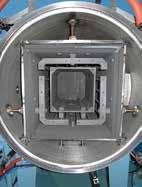
ALD Vacuum Technologies, GmbH, Hanau, Germany, has announced that its EBuild 850 Electron Beam Powder Bed Fusion (PBF-EB) metal Additive Manufacturing machine is now commercially available.
The large-format machine, with an 850 x 850 x 1,000 mm build volume, is aimed at manufacturing complex, large-scale components in a continuous process. ALD also offers an optional second build
chamber to allow setup and cooling times to be uncoupled from the build process, thereby increasing manufacturing rates.
“To deliberately overcome limitations in component size, we significantly expanded the chamber design, without compromising process stability,” stated Dr Alexander Klassen, VP – Additive Manufacturing at ALD. “For our customers, this not only means a substantial increase in
productivity with consistent quality, but also opens up entirely new dimensions for alternative processing strategies and shorter lead times.”
The EBuild 850 is reportedly capable of processing powders with a broad particle size distribution (PSD) – including surplus material from ongoing production or batches that don’t meet tight specifications – supporting both lower production costs and closed-loop manufacturing. The machine also features integrated process monitoring to analyse each layer individually. www.ald-vt.com
Oerlikon plans Michigan facility expansion to meet future AM demand
Oerlikon Metco, headquartered in Pfäffikon, Switzerland, has announced plans to invest further in its Michigan operations. The company is evaluating options to expand manufacturing capacity in 2028 to meet growing customer demand.
“Oerlikon’s Michigan operations are a cornerstone of our North American strategy,” said Michael Suess, Executive Chairman of Oerlikon. “Our ongoing commitment to Michigan builds on the major investment we made in 2017 and we continue to strengthen our advanced materials capabilities to serve high-growth industries. We are also assessing further expansion in
the region to meet future customer needs.”
Oerlikon’s commitment to Michigan began with a significant investment in 2017, marked by the groundbreaking of its advanced materials manufacturing and R&D centre in Plymouth Township. The 80,000-square-foot facility, which opened in 2018, consolidated critical powder production capabilities, created approximately 80 skilled jobs and supported the state’s advanced manufacturing ecosystem.
Oerlikon has continued to invest in Michigan, supporting the aerospace, energy and automotive industries with high-performance materials and surface solutions. The company’s
ongoing investment will focus on expanding manufacturing capacity, advancing materials expertise and supporting workforce development in the state.
The Plymouth site reportedly plays a critical role in the US supply chain, providing essential materials for strategic industries and supporting skilled employment in the region.
Oerlikon is working closely with the State of Michigan and local partners to ensure that strategic know-how and advanced manufacturing capabilities remain in the region, while positioning the business to meet increasing demand in Additive Manufacturing and surface coatings. The company is currently evaluating options for an additional plant in Michigan, with a decision expected in 2028.
www.oerlikon.com
The EBuild 850 is now commercially available (Courtesy ALD Vacuum Technologies)
The EBuild 850’s 850 x 850 mm build area (Courtesy ALD Vacuum Technologies)
Precision Additive launches PA-300 for high-speed metal AM
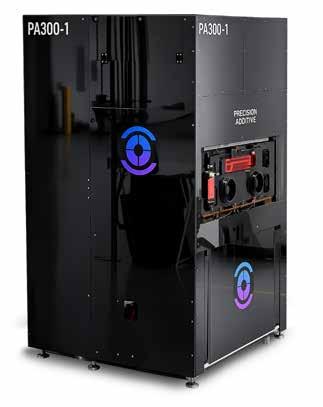
Precision Additive, Noblesville, Indiana, USA, has launched the PA-300, the company’s first Laser Beam Powder Bed Fusion (PBF-LB) metal Additive Manufacturing machine. The PA-300 combines
Precision Additive has launched the PA-300, its first metal Additive Manufacturing machine (Courtesy Precision Additive)
proprietary high-performance laser technology, Artificial Intelligence, and Precision Additive’s qualification process. Its Selective Stepped Laser Melting (SSLM) laser reportedly enables build speeds up to 10x faster than other PBF-LB AM machines.
The PA series is designed for the production of high-quality, qualification-ready components for use in strictly regulated sectors such as defence, aerospace, energy, and medical. The machine’s embedded AI continuously monitors the build and is designed to automatically correct deviations in real time.
These capabilities are unified through Precision Additive Qualification (PAQ), a data-driven framework that enables consistent, repeatable results. According to Precision Additive, the tightly controlled process makes it possible to reliably additively manufacture reactive alloys such as magnesium, tungsten and copper.
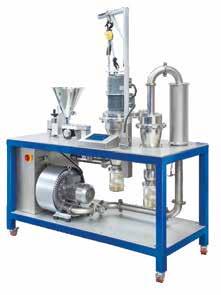
Volkmann debuts updated PowTReX powder system for metal AM
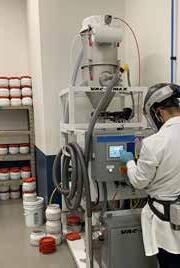
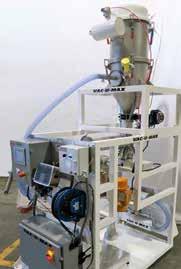
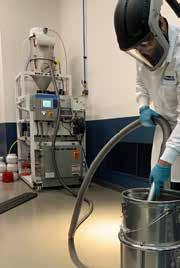
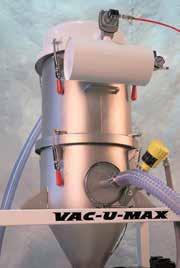
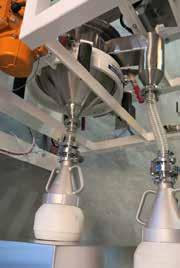
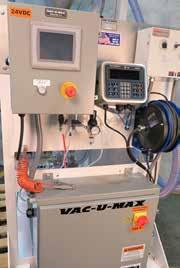
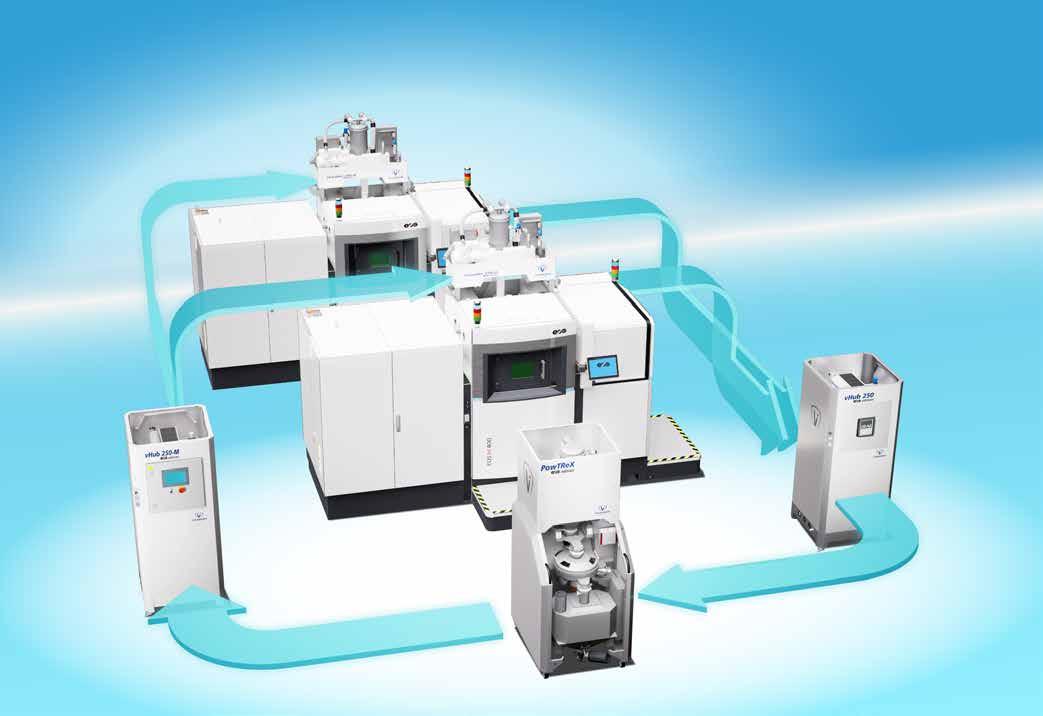
Metal powder conveying equipment manufacturer Volkmann USA, located in Bristol, Pennsylvania, has introduced the next generation of its PowTReX automated metal powder conveying system. The updated PowTReX is designed to help metal AM manufacturers produce large volumes of high-quality parts, enabling the use of multiple AM machines at scale.
First introduced in 2018, the latest PowTReX further optimises the transfer of metal powder from a container or supply hopper to the Additive Manufacturing machine. It extracts and sieves used powders to remove oversize particles and collects the sieved powder for reuse.
Featuring proprietary material handling technology proven effective in more than 100 AM installations worldwide, the latest PowTReX draws the metal powder from storage via vacuum conveying into a powder buffer, then feeds it to an ultrasonic screener, and collects any agglomerates while permitting on-spec material to be transferred to the machines. The enclosed, explosion-proof system protects the material from contamination and protects workers from contact with the material while also eliminating manual handling procedures.
The portable PowTReX is compatible with AM machines
“As defence programmes face fragile supply chains and increasing reliance on foreign sources for high-complexity parts, domestic manufacturing capability has become essential to readiness,” stated Jon Haase, Chief Strategy Officer and President of Government Business.
“The PA machines are designed to restore secure US-based production. These machines are critical to US defence and exceed international printers.”
Precision Additive has collaborated with NVIDIA to advance physics-based, AI-driven manufacturing technologies. The company’s AI framework reportedly supports real-time process optimisation, predictive quality assurance, and scalable qualification workflows.
“Additive Manufacturing is entering a new era defined by intelligence, reliability, and accountability,” said Bala Anand Jeldi, founder and CEO of Precision Additive. “Precision Additive was created to ensure advanced manufacturing systems are not only innovative, but dependable enough to support the most demanding applications.”
www.precisionadditive.com
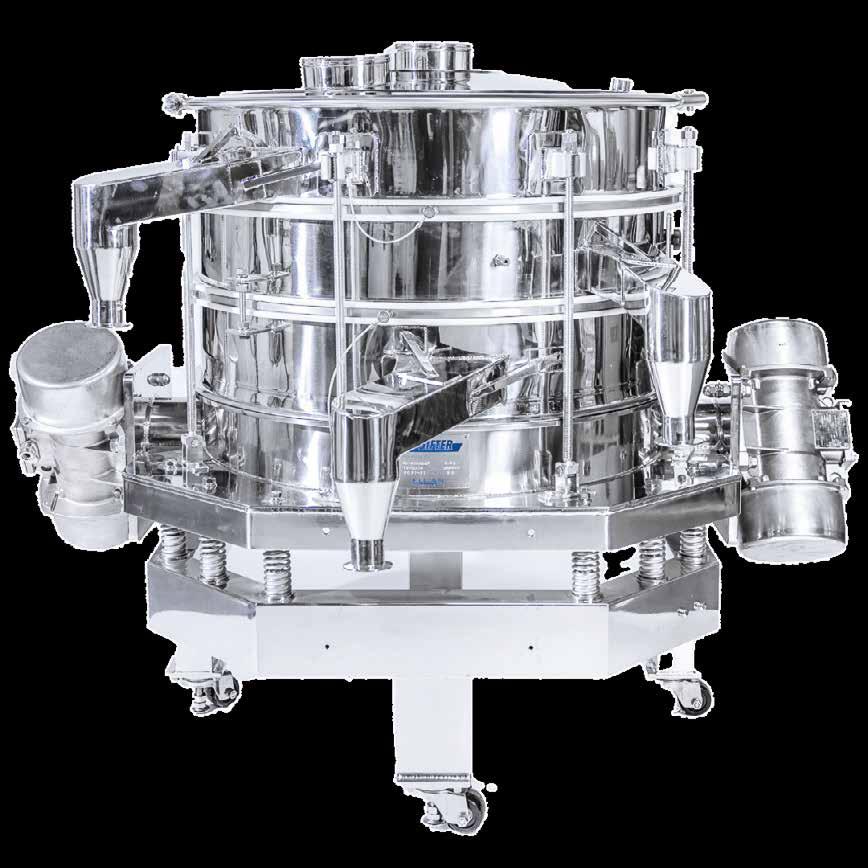
Volkmann USA has introduced the next-generation of its PowTReX metal powder conveying machine. Seen on the right, the system transfers metal powder to and from the AM machine (Courtesy Volkmann USA)
from all major manufacturers and is suitable for tungsten, cobalt, silver powder, iron, stainless steel, alumina, nickel chrome, copper, titanium, carbide dust, corundum, and other metallic powders. An optional inert gas model is also available. www.volkmannusa.com
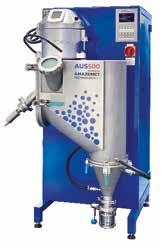
Unleash new manufacturing capabilities with AML3D’s ARCEMY® Systems.
Purpose-built for mission-critical environments, ARCEMY® delivers Wire Additive Manufacturing (WAM®) solutions to rapidly produce certified, large-scale metal components on-demand. From sovereign defense readiness to energy infrastructure resilience, ARCEMY® Systems enable:
• Agile, scalable production of complex metal parts;
• On-site manufacturing readiness;
• Reduced lead times, lower carbon emissions, and enhanced performance.
Build parts bigger, stronger, faster, greener with AML3D’s ARCEMY® Wire Additive Manufacturing Systems.
Discover how ARCEMY® empowers manufacturing supply chains. Visit aml3d.com/arcemy-build-the-future
Hadrian Additive launches to support defence AM production
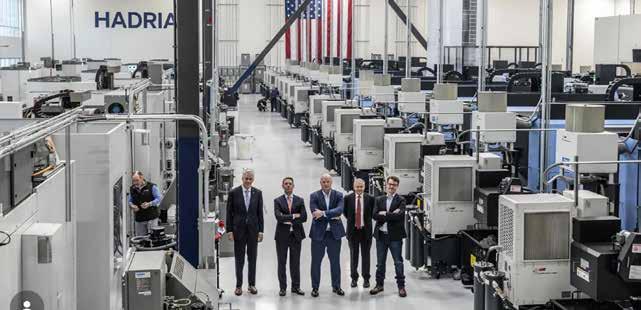
Hadrian, an advanced manufacturing company based in Los Angeles, USA, has announced the launch of Hadrian Additive, a dedicated division designed to deliver scalable, production-ready AM capacity for the US Defense Industrial Base and allied partners.
The new division expands Hadrian’s Opus factory platform to include AM machines built for qualification, repeatability, and sustained throughput, enabling defence programmes to move from validated designs to reliable, scaled production. Initial Additive Manufacturing capacity is expected to come online in 2026 as part of Hadrian’s expanding US factory footprint.
Hadrian Additive integrates AM directly into the company’s existing
factory model, allowing additive production to support mission-critical systems within a single, end-to-end manufacturing environment.
“America’s defence industrial base needs Additive Manufacturing that works in real production, not just in prototypes,” said Chris Power, Founder and CEO of Hadrian. “We’re building this capacity the same way we build our factories - engineered for qualification, throughput, and speed - so critical programmes can scale when it matters most.”
The division will be led by Matthew Parker, Vice President of Additive Manufacturing at Hadrian, and will focus on meeting the reliability, quality, and traceability requirements of defence and national security programmes.
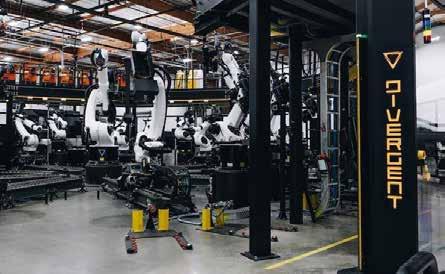
Inside one of Hadrian’s manufacturing facilities (Courtesy Hadrian)
GMH establishes ProMateria for metal powder and Additive Manufacturing
GMH Gruppe, based in Georgsmarienhütte, Germany, has combined the production of advanced metal powders and Additive Manufacturing under the umbrella of ProMateria GmbH. The new company, led by Robert Teuber and Philip Stöhr, is co-located alongside GMH’s sister company Energietechnik Essen GmbH.
ProMateria’s focus is on the use of high nitrogen-alloyed steels (HNS) in Powder Metallurgy and serial Addi -
tive Manufacturing. These materials combine high corrosion resistance with hardness, strength and biocompatibility, opening up opportunities for high-performance components in the aerospace, medical, luxury goods, engineering and energy sectors.
ProMateria produces metal powder in batches ranging from 25 kg to 10 tonnes in a high-throughput process tailored to Powder Metallurgy. The HNS feedstock is supplied by Energietechnik Essen.
“Additive Manufacturing only becomes strategic when it’s industrialised,” Parker said. “Hadrian Additive is designed as a production system from day one, integrated with our factory stack and capable of scaling as demand grows.”
As Vice President of Additive Manufacturing, Parker leads the company’s Additive Manufacturing business unit and the buildout of a large-scale AM capability supporting defence and aerospace customers. He is an engineering and operations leader in industrial AM, with experience establishing manufacturing capacity, industrialising processes, and transitioning additive programmes into repeatable production.
Prior to joining Hadrian, Parker held senior leadership roles in AM operations and engineering, leading cross-functional teams spanning production, engineering, quality, and customer delivery. A US Army veteran, he brings a mission-first perspective and an emphasis on readiness, prioritising speed, reliability, and disciplined execution, directly aligned with scaling AM into dependable production capacity. His background includes large-format AM deployment, process qualification, industrialisation, and partnership development across industry and standards organisations to advance material and process maturity for demanding applications.
www.hadrian.co
“With ProMateria, we combine our own powder production, Additive Manufacturing and finishing,” stated Philip Stöhr, Commercial Director of ProMateria.
Using Tritone’s MoldJet AM technology, the company offers flexible prototyping to full series production across a fleet of six AM machines. ISO 9001 certification for this area is expected in the third quarter of 2026. Beyond HNS, ProMateria offers a range of materials including stainless steel, tool steel, low-alloy steels, high-temperature alloys, titanium alloys, ceramics, copper and others. www.gmh-gruppe.de
Revolutionize Your 3D Printing with Höganäs’ Aluminium-Based Metal Powder
Discover Höganäs’ extensive selection of premium AM powders, including specialized aluminium powders for higher operating temperatures, tailored to meet a diverse array of applications. We are dedicated to pioneering innovative solutions that enhance performance, boost material efficiency, and promote sustainability. Our expert engineers craft cutting-edge alloys specifically for additive manufacturing, optimizing particle size, distribution, morphology, flow properties, and oxide content to perfectly align with your unique requirements. Choose Höganäs for unparalleled quality and precision in additive manufacturing.
Nikon AM awarded DoD contract to reduce supply bottlenecks
Nikon AM Synergy Inc, the engineering and manufacturing services division of Nikon Advanced Manufacturing based in Long Beach, California, USA, has been awarded an Other Transaction Agreement (OTA) contract by the US Department of Defense (DoD) Defense Innovation Unit (DIU). The contract is part of the Foundry for Operational Readiness and Global Effects (FORGE) programme and is intended to increase production capacity and reduce supply bottlenecks for aeronautical components used by the US government.
The DIU connects US military organisations addressing national
security and operational challenges with advanced technology companies to identify, prototype, and transition new solutions for defence applications. Through the FORGE programme, the DoD is seeking technologies capable of increasing production capacity and removing manufacturing bottlenecks for metal components used in highperformance aeronautical systems.
Many of these components have traditionally been produced using metal casting processes. The FORGE initiative is therefore evaluating advanced manufacturing approaches capable of enabling higher-rate production while meeting govern -
Dauch finalises GKN Powder Metallurgy and GKN Automotive acquisition
Dauch Corporation (formerly American Axle & Manufacturing Holdings), headquartered in Detroit, Michigan, USA, has completed its previously announced acquisition of Dowlais Group plc and its subsidiaries, GKN Automotive and GKN Powder Metallurgy. The combined company will operate under the Dauch Corporation brand.
“This is a defining and transformational time for both companies,” stated David C Dauch, chairman and Chief Executive Officer of Dauch Corporation. “By uniting the capabilities of both organisations under one brand, we’re creating a premier Driveline and Metal Forming supplier serving the global automotive industry that is built to perform, one positioned to meet today’s demands
ment requirements for survivability, reliability and affordability.
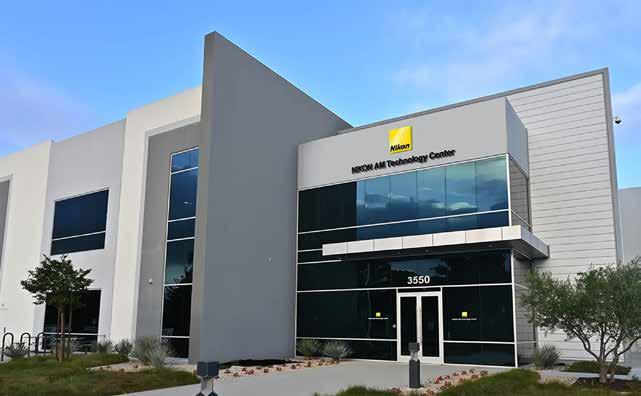
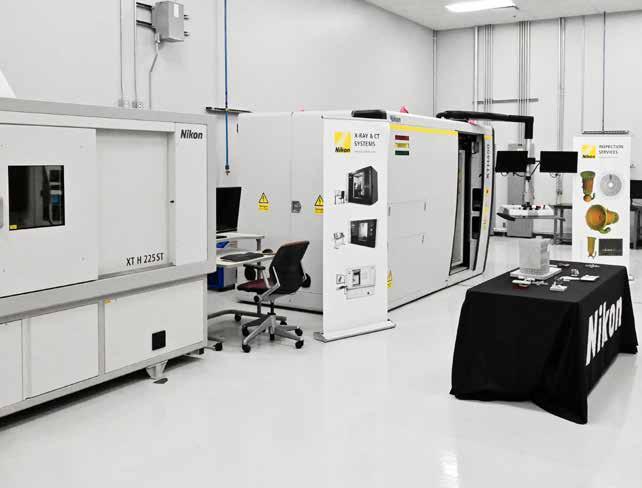
The programme will be conducted at the Nikon AM Technology Center in Long Beach, California, USA. The facility focuses on metal Additive Manufacturing and supports applications in the naval, defence, aviation and space sectors.
“The DIU is excited to partner with Nikon AM and leverage its extensive engineering, manufacturing and qualification capabilities as we work to expand production capacity and alleviate aeronautical component bottlenecks,” stated Derek McBride, Program Manager at the DIU.
Dr Behrang Poorganji, Vice President of Technology at Nikon AM, added, “Nikon AM is uniquely positioned to support the DIU through Nikon AM Synergy’s comprehensive design and materials qualification capabilities, combined with Nikon SLM Solutions’ laser Powder Bed Fusion Additive Manufacturing systems and Nikon’s advanced inspection technologies, all operating under stringent manufacturing requirements at our Long Beach facility.”
“As we continue to advance our holistic approach to delivering critical manufacturing capabilities to the United States and allied partners, we are proud to support the DIU in accelerating the adoption and scaling of Additive Manufacturing to strengthen warfighter readiness,” Poorganji concluded.
www.nikon.com
and lead into the next era of propulsion.”
With the completion of the transaction, trading in Dowlais shares was suspended and have been delisted from the London Stock Exchange. To mark the completion of the acquisition, the company introduced its brand platform: Built to Perform. The company stated that the platform reflects its heritage as well as the consistency, reliability, quality and performance expectations of its global customers. www.dauch.com
The programme will be conducted at the Nikon AM Technology Center in Long Beach, California (Courtesy Nikon)
Freeform secures $67M to scale Skyfall Additive Manufacturing
Freeform, a metal Additive Manufacturing company founded by engineers from SpaceX and based in Los Angeles, California, USA, announced that it has closed a $67 million funding round.
The Series B funding round included participation from Apandion, AE Ventures, Founders Fund, Linse Capital, NVentures (NVIDIA’s venture capital arm), Threshold Ventures, and Two Sigma Ventures.
This funding is expected to accelerate the release of Freeform’s Skyfall Additive Manufacturing machine, scheduled to go live in the first half of 2026. The laser-based machine is reportedly capable of producing thousands of kilograms of parts per day. Skyfall is anticipated to expand Freeform’s capacity by a factor of 25 and broaden material offerings by a factor of ten.
Freeform states that it aims to reduce the time between design ideation and real-world application through the development of its proprietary, purpose-built technology across robotics, sensing, simulation, control, machine learning, and verification. The company states that the technology has been designed from first principles to operate as a unified, flexible and scalable machine. www.freeform.co
Croom Medical breaks ground on €18M orthopaedic centre
Croom Medical, based in Limerick, Ireland, has broken ground on an €18 million, 3,500 m 2 Advanced Centre of Orthopaedic Technologies (ACOT), the largest investment in the company’s 42-year history.
Patrick Byrnes, CEO of Croom Medical, stated on LinkedIn, “ACOT isn’t about adding capacity. It’s a shift into a true R&D and industrialisation centre of excellence, built to develop new capability and transfer it into validated production at scale.”
The ACOT has been designed to bring multiple manufacturing processes under one roof, including electropolishing, anodising, lights-out machining and grinding, palletised loading, vacuum furnace heat treatment, multi-material Additive Manufacturing, automated polishing and finishing, digital inspection, and clean-and-pack operations.
The facility aims to provide a fully integrated production cycle, taking metal and plastic components to finished implants for OEMs across shoulder, hip, knee, spine, trauma and sports medicine product lines.
Byrnes continued, “The industry is moving toward cementless fixation, robotic-assisted surgery, and additive at scale. That demands advanced technology, advanced surface finishing, and vertically integrated supply chains. ACOT is designed to achieve this.”
The company has not yet confirmed a completion date for ACOT.
www.croommedical.com
ISO/ASTM 52948 standard classifies imperfections in metal Powder Bed Fusion
Revolutionize your production with our innovative solution: The SupportBlaster 320-HA quickly, safely, and efficiently removes support structures from additively manufactured metal parts. Optimize your processes and set new standards in post-processing quality and speed
The joint working group ISO/TC 261-ASTM F42 JG59 ‘NDT for AM parts’ has published its third standard: ISO/ASTM 52948:2026 Additive manufacturing of metals – Powder bed fusion – Classification of imperfections
This document specifies the classification of imperfections generated during the process of metal Laser Beam Powder Bed Fusion (PBF-LB) or Electron Beam Powder Bed Fusion (PBF-EB) Additive Manufacturing. The document also identifies the most probable causes of imperfection formation and includes illustrations.
While this standard can be extended to other Additive Manufacturing process categories, the indication of probable causes is process-specific. Acceptance criteria and dimensional description or scale for imperfections, however, are not included in this document.
www.iso.org
TITANIUM & REFRACTORY POWDERS
Metal powders designed for mission-critical, high-temperature applications.
HEADQUARTERS
130 Innovation Drive SW McDonald, TN 37353
REGISTRATIONS AND CERTIFICATIONS
The Future of Engineered Materials & Manufacturing
MADE IN AMERICA
Explore Amaero’s innovative, high-performance materials, specifically engineered to meet the demanding needs of industries such as Defense, Space, Aerospace, Oil & Gas, Industrial, Heavy Industry, Medical, and Energy.
Partner with us to harness cutting-edge solutions for your most challenging applications.
PM-HIP (Powder MetallurgyHot Isostatic Pressing)
Near-net-shape components with reduced lead times, ideal for high-mix, low-volume demand.
SEE AMAERO AT THE UPCOMING SHOWS:
DMC | Orlando, FL Mar. 30 – Apr. 2
RAPID/TRX/AeroDef | Boston, MA Apr. 14 – Apr. 16
SeaAirSpace | National Harbor, MD Apr. 19 – Apr. 22
NSMMS | Columbia, SC Jun. 22 – Jun. 25
World PM | Montreal, Canada Jun. 25 – Jun. 29
Space & Missile Defense | Huntsville, AL Aug. 11 – Aug. 13
FOLLOW US CONTACT SALES
Tekna posts improved margins in Q4; marks one millionth kg of titanium powder
Tekna Holding ASA, headquartered in Sherbrooke, Quebec, Canada, has reported its fourth-quarter 2025 financial results. The period marks Tekna’s second consecutive EBITDA-positive quarter, supported by strong materials performance and the sustained impact of the company’s efficiency and costreduction programme.
Total revenues in Q4 2025 amounted to CA$ 9.9 million, representing a 2% year-on-year increase. The company delivered a significant improvement in profitability, with overall contribution margin increasing to 60%, compared to 41% in the corresponding period last year. Adjusted EBITDA for the quarter was positive at CA$ 0.9 million, corresponding to an adjusted EBITDA margin of 9.3%. This improvement was driven by record-high margins in materials and continued operational discipline across the organisation.
Claude Jean, CEO of Tekna Holding ASA, shared, “We achieved our second consecutive EBITDA-positive quarter, with record materials performance
and expanding margins. We are seeing growing traction with larger strategic customers placing larger orders, reinforcing our position as a trusted supplier in Additive Manufacturing.”
“Combined with disciplined cost execution and a significantly strengthened balance sheet, Tekna has reached an important inflection point. With ample capacity, deep technical expertise, and strong customer relationships, we are well positioned to scale and capture long-term value in Additive Manufacturing and adjacent industrial applications.”
Total revenue for year-to-date was CA$ 35.6 million (-4% YoY). This included record materials revenues of CA$ 8 million, with a contribution margin of 59%, compared to 38% in the same period last year. Materials order intake increased by 18% YoY to CA$ 9.1 million. Cash flow from operating activities was CA$ -1.2 million in Q4.
Subsequent to the reporting period, Tekna announced several orders, further supporting visibility into 2026 revenues.
Long-term strategy and 2030 targets
Tekna expects its materials segment to be the primary revenue driver toward 2030. Within its existing business areas, materials and systems, the company targets double-digit annual revenue growth and EBITDA margins in the range of 15% to 20% by 2030.
During the fourth quarter, Tekna successfully completed its refinancing plan through a fully underwritten rights issue of NOK 300 million (CA$ 41 million).
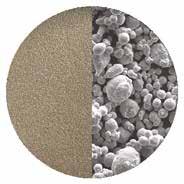
Tekna’s one million kg of Ti powder
Tekna has also announced that it has reached its one millionth kilogram of titanium powder.
The company began developing its atomisation process in 2015. At that time, industrial production consisted of one atomisation machine and one shift of work per day. Within months, the company scaled to 24/7 operations.
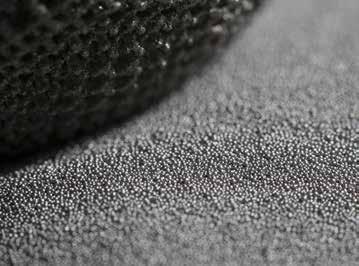
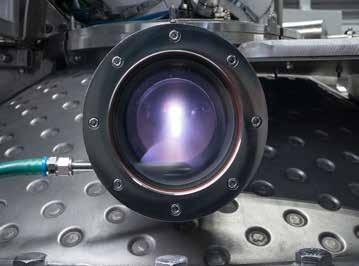
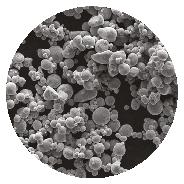
Tekna produces powders using its radio frequency (RF) induction plasma atomisation technology, a process in which titanium wire is fed into a high-temperature plasma torch. The intense heat melts the wire, transforming it into fine droplets that solidify into spherical powder particles as they cool.
The proprietary plasma atomisation process is continuous and does not require any consumables that may interrupt or contaminate the process. Without any external gas jets or electrodes in contact with the material, the powder remains free from contaminants, making it suited to applications in the aerospace, medical and industrial sectors.
“We are proud of our R&D team who built the foundation, our Quality team who secured world-class certifications, and our Operations team who run complex systems every day with precision and discipline,” Tekna posted on LinkedIn. “This milestone belongs to the people behind it.”
www.tekna.com
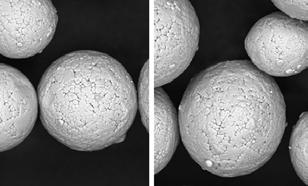
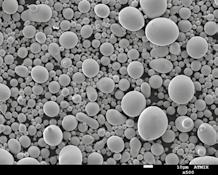
Tekna offers Ti-6Al-4V, Grade 5 & 23, as powder in a variety of sizes (Courtesy Tekna)
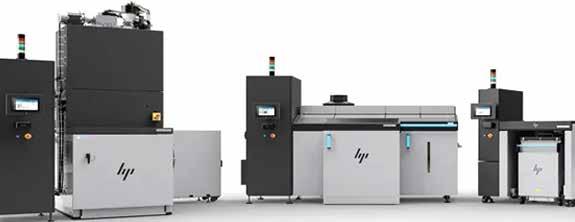
Sculpteo adds on-demand HP Metal Jetting
Sculpteo, headquartered in Paris, France, has announced the availability of HP Metal Jet Binder Jetting (BJT), expanding its offering of metal Additive Manufacturing technologies to customers across Europe and the United States.
HP Metal Jet enables highperformance metal components with consistent material properties and complex designs, including internal channels, lattice structures, and consolidated assemblies that reduce part count and weight. This makes the technology suited
to sectors such as automotive, aerospace, medical, industrial equipment and consumer products.
“This service marks a new era for digital manufacturing. Our integration of HP Metal Jet technology means customers can now leverage production-grade metal Additive
Plastometrex debuts MultiScale mechanical testing for thin components
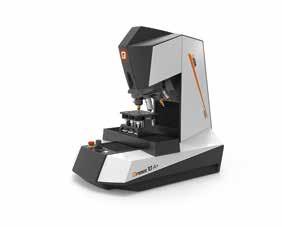
Plastometrex, a developer of mechanical testing solutions based in Cambridge, UK, has debuted its MultiScale capability. This is designed to capture high-resolution mechanical property variation across thin, welded and complex geometries that may be inaccessible through conventional mechanical testing. MultiScale was developed in response to a common gap in mechanical testing and enables engineers and materials scientists to:
• Test directly on components and specimens as thin as 0.75 mm without destructive sectioning
• Map mechanical properties across welds and complex geometries with 1.5 mm indent spacing, providing insight into local variations and process performance
As with the PLX-Benchtop, MultiScale is supported by Plastometrex’s ASTM-standardised PIP Testing (Profilometry-based Indentation Plastometry), a physics-based approach that extracts stress-strain curves from indentation test data using accelerated inverse finite element analysis. This testing methodology
non-destructively gathers yield and ultimate tensile strength (UTS) data from an automated five-minute test. The standard indenter size in every PLX-Benchtop device is 1,000 µm. With the addition of the MultiScale capability, users now have access to 250 µm and 500 µm indenters.
“We developed the MultiScale capability to give engineers access to the data they’ve been missing,” stated Dr Jimmy Campbell, CTO at Plastometrex. “Many of our users work with parts that are too thin or geometrically complex for conventional mechanical testing. We wanted to change that, to make it possible to test the untestable and capture reliable property data wherever it’s needed.”
According to the company, MultiScale has already been used by NASA to characterise local variations in mechanical properties within spaceflight components. By mapping stress-strain responses across an additively manufactured part, process-structure-property relationships were revealed. This information was said to inform manufacturing optimisation and reduce conservative safety factors.
Manufacturing to produce bespoke prototypes through to hundreds or thousands of parts without upfront investment in hardware,” stated Alexandre d’Orsetti, CEO of Sculpteo. www.sculpteo.com www.hp.com
MultiScale capability for the PLX-Benchtop enables mechanical property testing on samples as thin as 0.75 mm, and high-resolution mapping across welds and complex parts (Courtesy Plastometrex)
One reported finding was that yield strength fell by approximately 15% as wall thickness decreased: an insight which would have been missed by tensile testing.
Dr Mike Coto, CCO at Plastometrex, added, “MultiScale gives users the ability to zoom in on the fine details that drive overall performance. That level of resolution supports more efficient design decisions, whether that means adjusting print parameters, refining weld procedures, or reducing unnecessary safety margins while maintaining structural integrity.”
The MultiScale capability is now available to all PLX-Benchtop users through the CORSICA+ subscription. www.plastometrex.com
Sculpteo has added HP Metal Jet AM technology (Courtesy HP)
The
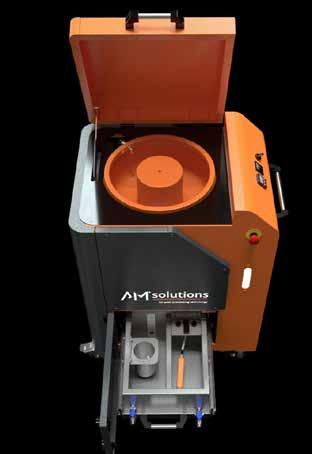
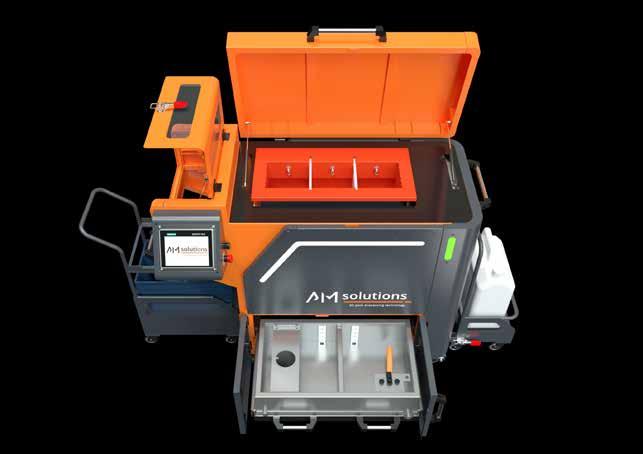
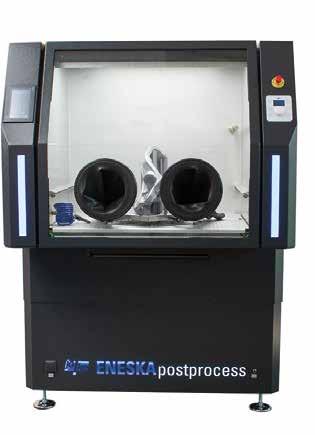
AM Solutions upgrades M1 and adds M4 Basic for cost-effective post-processing
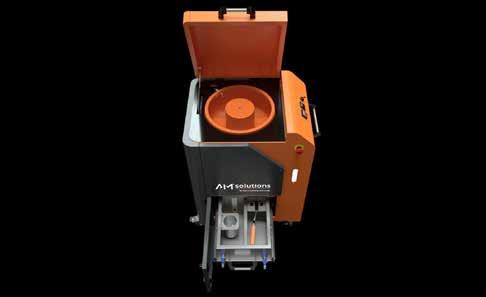
AM Solutions, part of Germany’s Rösler Oberflächentechnik, headquartered in Untermerzbach, has launched the M4 Basic for postprocessing metal AM components. Designed as a cost-effective entrylevel solution, the M4 Basic is aimed at companies ready to move beyond manual grinding and polishing. The company also announced an updated version of its M1 surface finishing machine, set to replace the previous M1 Basic.
The new M4 Basic M4 Basic for post-processing metal AM components. Designed as a cost-effective entry-level solution, the machine is aimed at companies ready to move beyond manual grinding and polishing.
Despite its small footprint, the M4 Basic is a fully fledged vibratory finishing system engineered specifically for additively manufactured metal and polymer parts produced by processes such as Laser Beam Powder Bed Fusion (PBF-LB) and Binder Jetting (BJT). It handles workpieces up to 70 x 70 x 25 mm and offers a range of finishing
options, including smoothing and grinding through to polishing and deburring.
The machine combines a 20 litre rotary vibrator with an integrated 25 litre process water tank, extending process-water life and reducing downtime. This closed-loop approach, together with lower water and power consumption, is designed to keep operating costs down while minimising environmental impact.
The updated M1
Positioned as an ‘all-rounder’ for Additive Manufacturing, AM Solutions claims that the M1 offers smoothing, grinding, polishing, and deburring in a single vibratory finishing platform. Parts up to 550 x 150 x 130 mm can be processed as individual components or in small batches, with a divider system that allows up to three process steps to run in parallel without changing media, making it well-suited to multi-stage finishing recipes.
Upgrades include an additional fresh-water connection that enables processing with AM Solutions’ Keramo-Finish for improved surface
quality, a redesigned processing trough with end-side profiling and extra partitions, and the aforementioned separation concept that shifts media/part separation onto a dedicated material cart intended to improve workflow and throughput.
The M1 retains its compact, mobile footprint and plug-and-play configuration. An integrated settling tank, modern HMI with intuitive menu navigation, and low noise levels are intended to make it easy to position alongside Additive Manufacturing machines or within existing finishing cells. Users can choose to run in closed-loop process-water recirculation or fresh-water operation, depending on quality and productivity demands. Booth settings are fully automated and controlled by the machine and PLC.
“For many AM users, the real bottleneck isn’t printing, it’s finishing,” stated Colin Spellacy, Head of UK Sales at AM Solutions. “With the relaunched M1, we’re giving them a robust, repeatable and economically attractive way to turn rough builds into market-ready products, without jumping straight to a large, fully automated line. It closes the gap between R&D and industrial production.”
www.solutions-for-am.com
AM Solutions’ updated M1 machine offers smoothing, grinding, polishing, and deburring in a single vibratory finishing platform (Courtesy AM Solutions)
The M4 Basic can process metal or polymer (Courtesy AM Solutions)
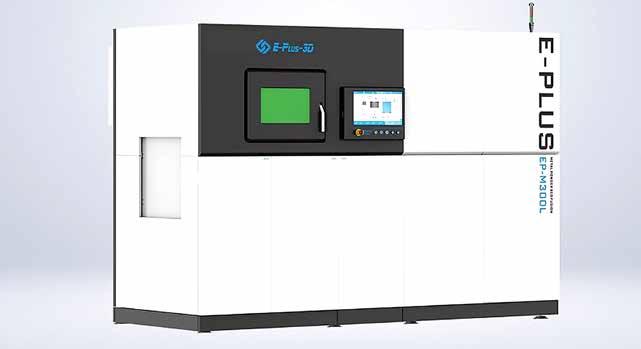
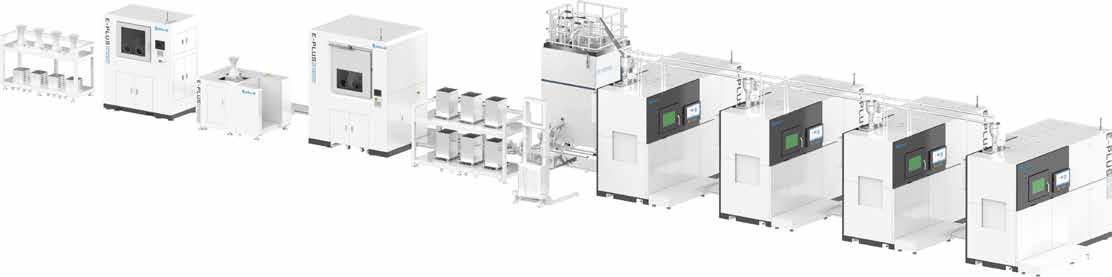
Eplus3D introduces EP-M300L metal AM machine
Eplus3D, headquartered in Hangzhou, China, has introduced the EP-M300L Laser Beam Powder Bed Fusion (PBF-LB) metal Additive Manufacturing machine together with its Production-Ready Automation Line. Engineered for continuous and batch production, the EP-M300L features a build volume of 300 × 300 × 450 mm, designed to balance production flexibility with efficiency and enable integration into multi-machine automated lines.
Equipped with a high-performance multi-laser configuration (supporting up to six lasers) and an intelligent optical system, the EP-M300L delivers high scanning speed and precision, states the company. This ensures consistent, high-accuracy production, suitable for demanding industries such as computers,
communications and consumer electronics, tooling and aerospace.
At the heart of the EP-M300L is its proven and highly efficient modular and removable build cylinder technology. Unlike conventional Additive Manufacturing machines that require extensive downtime for powder handling and part removal, the EP-M300L employs a decoupled architecture where the manufacturing module operates independently from the powder recovery station. The entire build cylinder can be quickly exchanged as a self-contained unit, reportedly enabling non-stop production.
By reducing idle time, this approach boosts Overall Equipment Effectiveness (OEE), enabling a single EP-M300L line to deliver output reportedly comparable to
multiple traditional machines, while maintaining consistent quality and reducing manual intervention.
Centred on the EP-M300L, Eplus3D’s production-ready automation line is intended to integrate metal AM into a continuous industrial manufacturing cell. This integrated system combines the company’s core technology with dedicated ancillary modules, robotic automation, and intelligent software to deliver a complete “lights-out manufacturing” workflow.
Key processes, from manufacturing and powder recovery to part handling and logistics, are seamlessly connected via automated stations and AGVs. Critically, the EP-M300L seamlessly integrates with a closed-loop powder system. This enables the automatic suction, sieving and circulation of metal powder within a closed inert atmosphere system. According to the company, the system maintains material integrity and safety throughout the powder lifecycle. This orchestrated setup is intended to reduce labour dependency, allowing a single operator to oversee multiple lines while maximising equipment uptime and material reuse. The result is a substantially lower cost per part and a significant increase in overall throughput.
Governed by a smart, datacentric platform, the EP-M300L line integrates with a Manufacturing Execution System (MES) and features in-process monitoring, including melt pool monitoring, to ensure full traceability and closed-loop quality control. Each component receives a “digital birth certificate”, intended to support consistent, reproducible quality and compliance with rigorous industry standards in aerospace, medical, and other high-stakes sectors.
This intelligent foundation not only automates production tasks but also delivers the predictability, documentation, and consistency required for certified serial manufacturing.
www.eplus3d.com
The EP-M300L features a removable build cylinder (Courtesy Eplus3D)
Sample components built using the new EP-M300L (Courtesy Eplus3D )
SSAB
Swedish steel company SSAB has announced that it is introducing metal Additive Manufacturing at sites in Borlänge, Sweden, and Raahe, Finland, in collaboration with LaserTool, based in Olofström, Sweden.
“SSAB has a legacy of not settling ‘good’ – we always aim to be greater,” stated Jesper Vang, Head of Powder Technology at SSAB. “Working with innovative partners like LaserTool allows us to challenge how the market looks today. By using highperformance AM steel powder, we unlock design possibilities that were impossible yesterday.”
Before adopting AM, SSAB reported problems replacing worn or obsolete components: OEM parts were inconsistent in quality, had long lead times, and were costly,
reducing productivity. To address this, LaserTool and SSAB reverseengineered and planned parts using Design for Additive Manufacturing principles and taking into account laser hardening after the build process.
Unlike traditional parts, SSAB would source newly additively manufactured components developed and customised for their intended use.
“The biggest challenge with metal 3D printing is that many parts are designed for traditional manufacturing,” stated Martin Nilsson, CEO of LaserTool. “You have to rethink the process: print only what’s needed and optimise for performance. With laser hardening, we can choose exactly where a part should be harder, and we get minimal distortion.”
According to SSAB, redesigning and additively manufacturing replacement parts has increased their service life by more than 300%. SSAB also reported improved wear resistance, alongside reductions in lead times, costs and material waste.
By integrating Additive Manufacturing into SSAB’s own supply chain, the company can leverage on-demand manufacturing, reducing the need for large inventories and long distance transport.
“The component we made for SSAB has triple the lifetime compared to the original,” explained Nilsson. “It’s more durable, more efficient to produce, and directly supports SSAB’s sustainability goals.”
Jesper Vang added, “From automotive to industrial use, from new components to repairs – Additive Manufacturing strengthens both performance and sustainability. It’s a step toward a more efficient and resilient supply chain.”
www.ssab.com
Results You Can Trust for Aluminum & High Performance Materials
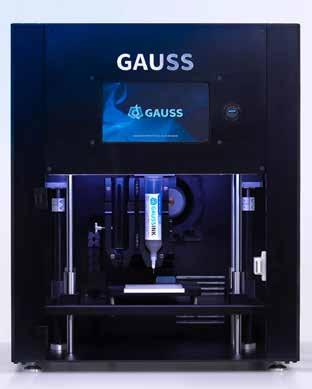
Ohsung System wins CES 2026 award for Gauss MT90 MEX AM machine
Ohsung System Co, Ltd, headquartered in Ansan-si, South Korea, has won the Innovation Award at the IT and electronics trade show CES 2026 for its Gauss MT90 Additive Manufacturing machine, which uses a paste-based Metal Extrusion (MEX) technology.
The Gauss MT90 features an AI camera-based viscosity unit, precision dispensing algorithm, and extrusion control system, enabling stable deposition for high-precision parts such as heat sinks and electronic components. It comes with nozzle sizes ranging from 0.2-1.4 mm to enable the Additive Manufacturing of both fine details and fast production.
The machine can operate via a Quick Start mode which automatically configures process parameters, enabling use by those without exten -
sive AM training to use the machine. An automatic bed replacement system aims to simplify workflow.
The Gauss MT90 features a built-in HEPA filter to block emissions, while an LED signalling system delivers status feedback. By replacing high-power lasers and heating with a high-efficiency paste system, MT90 is reportedly able to lower energy use and carbon emissions.
Unlike powder- or welding-based Additive Manufacturing technology, Gauss technology is said to remove dust, explosion risks, and hightemperature processes, making it safe for offices and laboratories. The Gauss MT90’s low-noise design and 420 x 420 x 500 mm footprint also supports integration into these settings.
The Gauss MT90 officially launched in August 2025, but saw its
The Gauss MT90 won CES 2026’s Innovation Award (Courtesy Ohsung System Co, Ltd)
public debut at CES 2026. It supports SUS 316L, copper, titanium, and aluminium, enabling applications from prototyping to smart factory integration. www.ohsungsys.co.kr
Urwahn integrates Additive Manufacturing in Smart Bike Factory
Urwahn Engineering GmbH, Magdeburg, and wheelset and component manufacturer Roland, based in Garrel, have announced the Smart Bike Factory Made in Germany initiative. This will focus on the creation of regional value through the use of additively manufactured frame platforms, highly automated wheel production, and digitised processes.
The companies are utilising Urwahn’s additively manufactured frame platforms to match wheelsets and bicycles to one another in terms of performance, weight and safety. This cooperation extends from design and engineering through testing procedures, to shared standards in quality assurance and traceability.
“Urwahn challenges us in the best possible way. We work in short cycles, with high variance and a clear focus on quality,” stated Heiko Plorin, Managing Director of Roland. “That forces us to rethink processes, reduce set-up times, further develop our automation and remain flexible at the same time. This is precisely what makes the partnership so valu -
able – it pushes both of us forward technologically.”
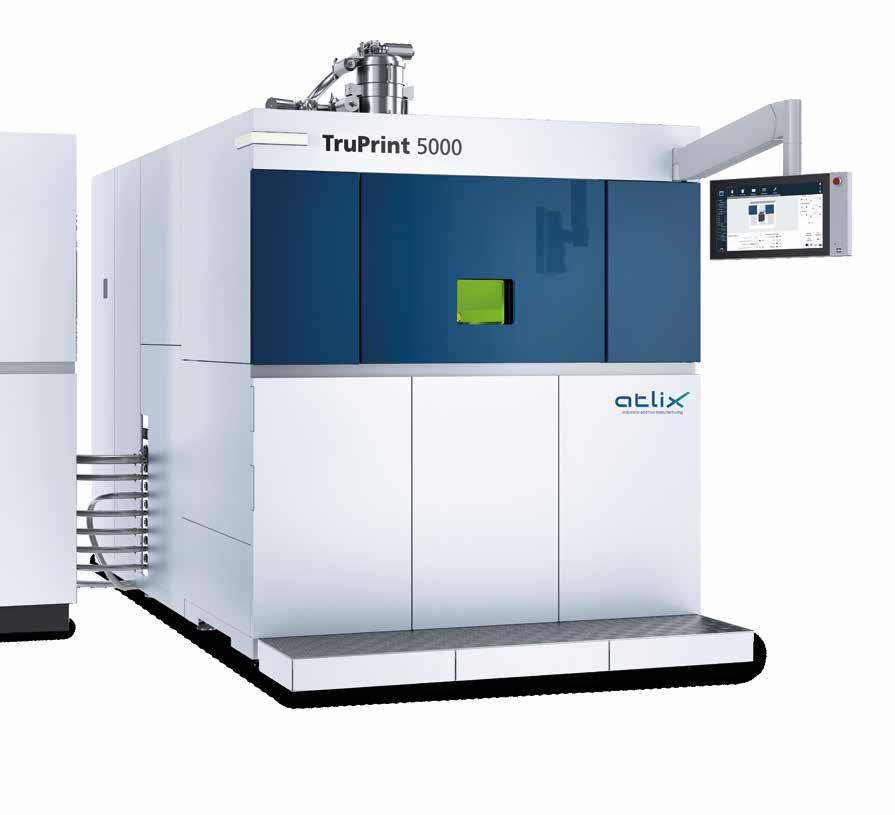
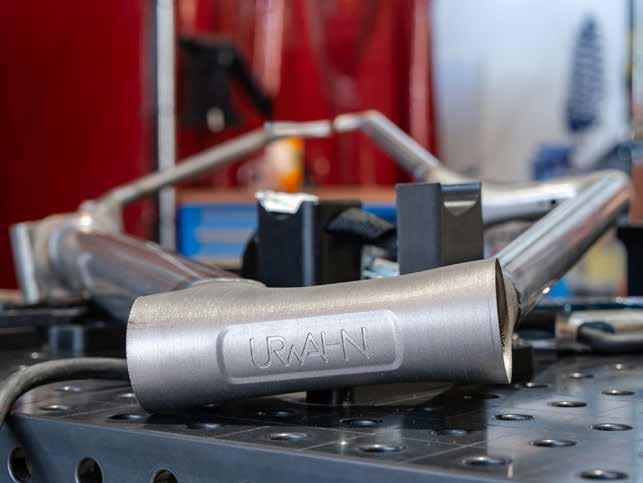
Last year, Urwahn partnered with Trumpf (now Atlix) to develop its SOFTRIDE steel bike frames which are produced using Laser Beam Powder Bed Fusion (PBF-LB) Additive Manufacturing. Trumpf provided the machinery and material parameters, while H+E Produktentwicklung GmbH established the entire process for serial production and contributed feedback to optimise the frame design. The company also introduced a limited edition version of the SOFTRIDE featuring an additively manufactured titanium alloy frame in January 2026.
The adoption of Additive Manufacturing enables a reduction in postprocessing steps such as welding or extensive mechanical machining, leading to a reportedly significant enhancement in manufacturing efficiency and overall improvement to Urwahn’s production process. PBF-LB enables the creation of internal cavities that would be difficult to produce using traditional manufacturing
methods, as well as precise control over layer construction, allowing the final product to have fine-tuned mechanical properties.
“We are no longer talking about a conventional supplier set-up, but about an integrated part of our value chain,” explained Leonard Harress, COO of Urwahn. “For us, Roland is both a local hero and a technology partner. Together, we no longer think of wheelsets as mere components, but as an integral part of a smart bike factory, where quality, automation, digitalisation and flexibility come together.”
In a video about the collaboration, Harress, stated, “When we talk about a smart bike factory, we are not just referring to our own site in Magdeburg, but to the entire network of partners operating at the same level of quality and technological sophistication. Roland is very much part of that for us.”
With ongoing market consolidation reported in the bicycle sector, Urwahn and Roland also consider their cooperation an ‘alternative to short-term thinking’ in the sector: rather than shifting costs elsewhere, the focus is on strengthening local value creation, clean processes, the highest safety standards and a form of production that enables both scaling and individualisation.
“Resilience in times of crisis does not emerge from gut feeling, but from robust structures and reliable partnerships,” Harress added.
“Roland is one of those partners with whom we not only master current challenges, but also shape the next stage of industrialisation in the bike segment.”
“At the same time, the message to the market is clear: the shared infrastructure – consisting of 3D printing, engineering expertise, automated wheel building and digitalised workflows – is not a closed system behind locked doors. It is intended as an open platform for further collaborations with companies that want to rethink mobility, technology and production.”
www.urwahn.com
www.roland-werk.de
Roland and Urwahn are partnering to integrate Urwahn’s Additive Manufacturing-based frames with automated wheelset production as part of the Smart Bike Factory initiative (Courtesy Urwahn)
Nikon reports lower metal AM revenue, revises outlook for 2026
Nikon Corporation, headquartered Tokyo, Japan, has reported that in the first nine months of the year ending March 31, 2026, revenue in its Digital Manufacturing Business segment was ¥16.6 billion ($106 million), a slight fall compared with the prior period of ¥18.2 billion ($116 million). The consolidated revenue for the nine-month period for the whole Nikon group was reported to be ¥483.9 billion ($3.1 billion), down from ¥512.6 billion ($3.26 billion) in the prior period.
Revenue in Nikon’s Digital Manufacturing Business was down due to reduced sales of its large-format Laser Beam Powder Bed Fusion (PBF-LB) metal Additive Manufacturing machines. Operating losses widened further following the recognition of impairment losses totalling ¥90.6 billion ($577 million), mainly for goodwill and intangible assets resulting from the acquisition of Nikon SLM Solutions.
In recognition of these impairment losses, Nikon revised its forwardlooking plan for the overall Digital
Manufacturing Business segment. Nikon cited a “lower future growth rate in the metal 3D printer market” alongside “increased competition, including the emergence of Chinese makers” as key drivers behind the revision.
According to Nikon, “Chinese makers have emerged and are gaining share in general industries mainly in China and Southeast Asia.” It also recognised “other select competitors are also performing well, and competition is intensifying in the defence and space segments, too.”
Despite this, Nikon said that “demand for large-format metal 3D printers, mainly for defence and space segments, is expected to grow.”
Future course of action
Nikon said it plans to “implement structural reforms and lower the breakeven point (leaner organisation, reduced expenses, etc).” In regard to research and development, the company said it will “rein in R&D costs for DED systems and focus on PBF systems.”
AM North joins Fieldnode’s digital inventory network for on-demand manufacturing
AM North AS, Rypefjord, Norway, has joined Fieldnode’s digital inventory ecosystem. Since its establishment in 2023, AM North has rapidly expanded, offering end-to-end services spanning design, Additive Manufacturing, post-processing, heat treatment, and machining.
Fieldnode specialises in supply chain management by digitising and streamlining processes, while connecting users to a qualified network of on-demand manufacturers. Its digital inventory is
intended to be used as a connected network rather than a traditional supply chain, enabling spare parts to be produced locally and on demand, and supporting collaboration between its users.
Christian Duun Norberg, founder and CEO of Fieldnode, shared via LinkedIn, “AM North’s commitment to innovation, quality, and regional impact aligns strongly with Fieldnode’s mission to enable resilient, efficient, and distributed manufacturing networks. We look forward to
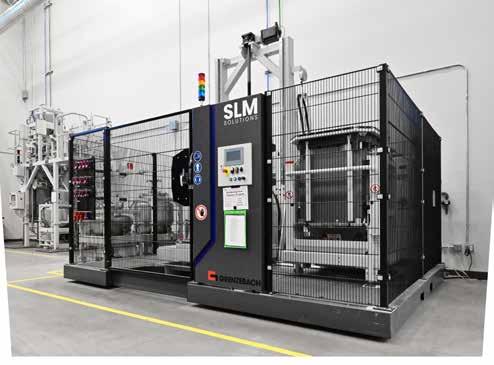
Revenue in Nikon’s Digital Manufacturing Business was reported to be down due to reduced sales of its large-format metal Additive Manufacturing machines (Courtesy Nikon SLM Solutions)
It added that the company will “aim to capture mid-to-long-term growth targeting mainly the defence and space segments in regions such as the US and Europe.”
For the full year ending March 31, 2026, Nikon has revised its Digital Manufacturing revenue forecast to ¥25.0 billion ($159 million) and now expects an operating loss of ¥105.0 billion ($669 million) for the segment. Year on year, revenue is now expected to be up ¥1.7 billion ($10.8 million), with operating profit down ¥89.8 billion ($572 million).
www.nikon-slm-solutions.com www.nikon.com
AM North AS has joined Fieldnode’s digital inventory ecosystem (Courtesy Fieldnode)
supporting their continued growth and to seeing their capabilities strengthen digital inventory access across northern communities and beyond.”
www.fieldnode.com
www.amnorth.no
Materialise joins SONRISA project to standardise QA in aerospace AM
Materialise, headquartered in Leuven, Belgium, has joined SONRISA, a joint project led by Liebherr-Aerospace Lindenberg GmbH and funded by the Federal Republic of Germany under the LuFoVII-1 call. Project partners include Bundesanstalt für Materialforschung und -prüfung (Federal Institute for Materials Research and Testing), Boeing Deutschland GmbH, Materialise GmbH and MTU Aero Engines AG.
The SONRISA joint project will develop digitised, standardisable quality assurance concepts for Additive Manufacturing weight-optimised aviation components. Together, the consortium aims to ensure the stability and repeatability of Laser Beam Powder Bed Fusion (PBF-LB) through in-situ and ex-situ process
monitoring and statistical process control, accelerating the approval process as a result.
A robust data infrastructure, advanced analysis methods, and optimised testing concepts will help reduce costs, time, and energy consumption, support international standardisation efforts (EASA, FAA) and contribute to sustainability in aviation.
Materialise’s role in the project is to develop a digital concept for the quality assessment of metal PBF-LB components. The fusion and analysis of process and test data (e.g. temperature, image, and CT data) will enable automated, data-based acceptance decisions.
Additionally, it is developing virtual feasibility testing workflows for AM that can make a significant
impact during the CAD design phase, which is expected to bring technological and sustainable improvements, strengthen Materialise’s methodological basis in quality assurance, and expand the software portfolio for aviation and other certification markets.
“This project is all about generating trust. We have the chance to play a significant role in shaping how Additive Manufacturing is seen and adopted in aviation.
To prove to the industry that this technology delivers the parts they need, at the quality and price point they demand,” said CTO Bart Van der Schueren. “As the first choice in additive manufacturing for aerospace, Materialise has driven this movement for many years; now, we’re excited to see how this project helps the aerospace industry pursue a more sustainable, cost-effective future.”
www.materialise.com
ADVANCED SOLUTIONS
SCAN TO LEARN MORE
Proterial announces company restructuring, plans new subsidiaries
Proterial, Ltd, headquartered in Tokyo, Japan, has announced it plans to significantly restructure the company. The move is said to be aimed at further accelerating efforts to meet market needs and optimising the company’s corporate structure.
From April 1, 2026, Proterial will integrate its current Specialty Steel, Roll, and Power Electronics Materials Businesses with parent company, K.K. BCJ-52, and implement a
Autodesk to cut 7% of workforce as part of go-tomarket strategy
Autodesk, headquartered in San Francisco, California, USA, has announced plans to reduce its workforce by approximately 7% globally as part of its multi-year go-to-market (GTM) strategy, announced in 2025. Most of the approximately 1,000 job losses are expected to affect those working in sales.
“I recognise the weight of this news, particularly as it follows the organisational changes we made last year,” stated Andrew Anagnost, Autodesk President and CEO. “I want to be clear that this will not become an annual process at Autodesk and these changes are not driven by the external environment or an effort to replace people with AI.”
“We remain steadfast in our belief that technology is only as powerful as the people who use it and humans will always be the most important part of the equation. This announcement reflects a deliberate decision by leadership to align our organisation with our long-term strategy and the opportunities ahead,” concluded Anagnost.
www.autodesk.com
re-segmentation of the business units by establishing a Power & Electronics Material Business Unit and an Aero & Industrial Alloy Business Unit (unit names yet to be confirmed).
In addition, the Magnetic Materials, Electric Wire & Cable, and Automotive Components Businesses will be converted into separate subsidiaries.
“We are executing measures aimed at sustainable growth and maximising
corporate value,” stated Representative Director, Chairperson, President, & CEO Sean M Stack. “The Magnetic Materials Business, the Electric Wire & Cable and the Automotive Components Businesses will continue operating as before, while establishing a structure that enables rapid and flexible responses to market and customer needs and product characteristics, thereby maximising business value.”
“We will continue to make proactive investments in growth areas and strive to enhance our market presence and competitiveness,” concluded Stack.
www.proterial.com
MKS Instruments launches BeamWatch AM-3 for metal AM
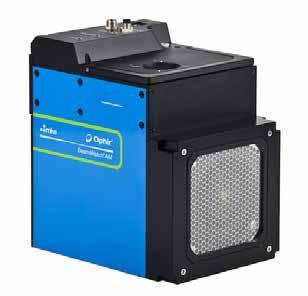
MKS Instruments, Inc, headquartered in Andover, Massachusetts, USA, has introduced the Ophir BeamWatch AM-3, a beam analysis system developed for laser-based metal Additive Manufacturing applications, including Laser Beam Powder Bed Fusion (PBF-LB). The compact, integrated system provides real-time, non-contact measurement of the laser beam
The Ophir BeamWatch AM-3 beam analysis system uses Rayleigh scatter to image the beam without contacting the laser, removing the potential for damage to the laser and speeds the measurement process (Courtesy MKS Instruments)
caustic – including near field, focus and far field – together with absolute laser power. Measured parameters include waist (focus spot) width and location, focal shift, centroid position, M 2 (Beam Parameter Product, BPP) and Rayleigh length. In metal Additive Manufacturing processes, these parameters are critical for maintaining consistent melt pool behaviour and build quality.
The BeamWatch AM-3 incorporates a higher-sensitivity, higher-resolution camera designed for faster acquisition and improved detection of focal shifts. The system can characterise focal spots down to 35 µ m and operate with both medium- and high-power laser sources. Standard wavelength coverage is 1,030 – 1,100 nm; additional wavelengths are available on request.
Beam caustic measurement is achieved by imaging Rayleigh scatter from two directions, enabling beam propagation and M 2 measurement in accordance with ISO 11146. As a non-contact method, the system avoids inserting
Xact Metal sees 30% order growth in 2025, names Barfoot VP of Global Sales
Xact Metal, a manufacturer of metal Additive Manufacturing machines headquartered in State College, Pennsylvania, USA, has reported a 30% increase in orders in 2025, compared to 2024. The company has also appointed Mark Barfoot as Vice President of Global Sales.
“Our growth strategy and product roadmap to expand the use of metal Additive Manufacturing by offering a new level of price and performance continues to be welcomed by our customers,” stated Juan Mario Gomez, CEO of Xact Metal. “In 2025 orders
were up by more than 30% when compared to last year. Our XM200G single- and double-laser metal printer is being well received in defence, plastic injection moulding, medical and other manufacturing applications. Plus, we continue to receive positive responses to the launch of our XM200G µ HD metal printer - which allows customers to print very small parts using 5-15 µ m particle size metal powder and has a 25 µ m laser spot size - and to the development of our XM300G mid-size four-laser printer.”
optics into the beam path, reportedly reducing the risk of component damage and measurement artefacts. Real-time monitoring also enables detection of dynamic focal shift during laser startup and thermal stabilisation.
“Additive Manufacturing users need to know where the system’s laser is focusing, if the focus is stable, and, if not, where focus occurs after the system has thermally stabilised,” stated Reuven Silverman, General Manager, Ophir Photonics Products. “This information is crucial for avoiding structural weaknesses, captured stress, and voids in the AM build. The Ophir BeamWatch AM-3 beam analysis system solves these problems by providing detailed information about key laser beam parameters and how they change with time in order to help maintain the quality and repeatability of the manufactured parts.”
The BeamWatch AM-3 integrates a NIST-traceable power sensor for analysis of laser power density profiles and is supplied with BeamWatch software for caustic and power analysis. Data can be displayed in tabular, 2D and 3D formats, with USB connectivity for Windows-based PCs. www.mks.com
“To further support our growth plans, we are pleased to announce that Mark Barfoot has been named Vice President – Global Sales,” added Gomez. “Mark brings over 25 years of experience in Additive Manufacturing. His roles have included VP of Engineering at Voxel Innovations; Director of Additive Manufacturing Programs at the Edison Welding Institute (EWI); Director of Business Development at Javelin Technologies; and Managing Director of Multi-Scale Additive Manufacturing Lab at the University of Waterloo. In addition, for over 13 years, Mark has been actively involved with AMUG (Additive Manufacturing Users Group), where he served as its President for over two years.” www.xactmetal.com
Rethinking AM productivity: the case for HIP integration
The final push toward true industrial-scale additive manufacturing
Additive manufacturing enables design freedom but scaling it economically has remained a challenge. High-speed AM strategies can dramatically increase productivity—yet higher print speeds often introduce defects that limit part reliability.
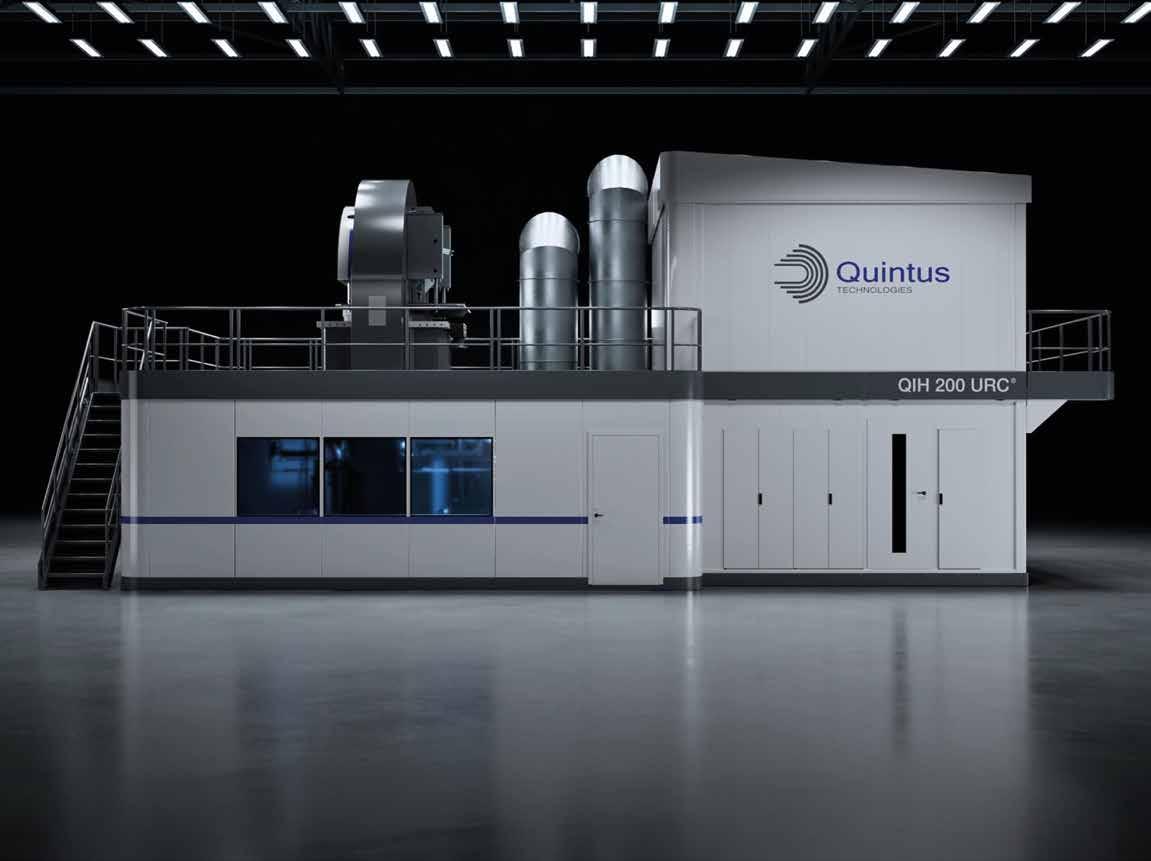
By combining AM speed printing with patented Quintus innovation High Pressure Heat Treatment (HPHT TM) , manufacturers can break the productivity–quality tradeoff. HPHT merges full densification and tailored heat treatment into a single, controlled process, eliminating internal defects while delivering precise control of microstructure and mechanical properties.
This integrated AM + HPHT approach makes high-volume, cost-sensitive production viable. Faster printing, fewer process steps, and HIP-grade quality. The result is shorter lead times, lower part costs, and industrial reliability across aerospace, medical, and beyond.
Learn more in our on-demand webinar on the Quintus Knowledge Center.
Farsoon and Addimax partner to expand metal AM in South Africa
Farsoon Technologies, headquartered in Changsha, China, has announced a strategic distribution partnership with Addimax, Pretoria, South Africa, to expand access to Farsoon’s comprehensive portfolio of industrialgrade metal and polymer Additive Manufacturing machines, materials, and part production services throughout the sub-Saharan African region.
A cornerstone of this partnership was the establishment of a new Additive Manufacturing Demo Center by Addimax in Pretoria, opened in January 2026. The centre provides metal and polymer Additive Manufacturing services and features the Farsoon high-speed Flight 403P-2 Series dual-laser fibre-light AM machine. This demonstration hub offers local industry professionals first-hand experience, from live machine demonstrations and benchmarking to full-scale production runs, supported by comprehensive training and technical services.
“We are excited to enter this partnership with Addimax to bring
world-class industrial 3D printing solutions to South Africa’s thriving market,” stated Vince Zhao, Farsoon Direction of Business Development – AMEA. “We highly value Addimax for its deep local market insights and proven technical service capabilities. They are perfectly positioned to extend Farsoon’s reach, delivering serial production solutions and tailored support to sectors like aerospace, mining, and automotive –key growth drivers of South Africa’s Additive Manufacturing landscape. This collaboration unites Farsoon’s 25+ years of technological excellence with Addimax’s on-the-ground agility, enabling local businesses to unlock efficiency, customisation, and supply chain resilience. Together, we’re not just expanding access to innovation; we’re fuelling South Africa’s industrial advancement through collaborative success.”
With a focus on industrial-grade production using materials such as nylon, stainless steel, titanium, Inconel, and aluminium, Addimax uses its deep design-for-AM expertise
Atlix sees highest 2025 order intake following rebrand and TruPrint 5000 launch
Atlix, formerly TRUMPF Additive Manufacturing, has reported strong results for 2025, said to reflect market recognition of its new brand identity and its expanded product range.
The company stated that December 2025 marked the highest monthly order intake of the entire year, representing the strongest order value achieved in 2025.
Atlix also reported a successful Formnext, with numerous customers and partners visiting the company’s booth and experiencing first-hand the
new branding and expanded product portfolio. During the event, Atlix showcased its new TruPrint 5000, which features a build volume of 500 x 500 x 400 mm as well as advanced automation features.
“The strong response we received at Formnext and the excellent close of the year clearly demonstrate that our transformation is being recognised by the market,” said Matthias Himmelsbach, Atlix’s CEO. “Our new brand identity, the products we presented, and the commitment of our team have strengthened
to offer rapid turnaround times. It is the trusted partner for manufacturers in aerospace, automotive, electronics, tooling, energy, and more.
Marius Vermeulen, CEO of Addimax, added, “We are thrilled to announce our distributor agreement with Farsoon Technologies, a leading global innovator in industrial-grade metal and polymer laser powder bed fusion systems. On the back of this collaboration, our new high-tech demo centre was recently launched in Pretoria, showcasing the newest technologies in 3D printing from Farsoon and local machine manufacturer, Aditiv Solutions. This partnership marks a significant milestone for Addimax as we bring Farsoon’s high-performance, open-platform 3D printing solutions to South Africa. By combining our expertise in Additive Manufacturing with Farsoon’s cutting-edge technology, we aim to empower local industries with faster production, superior precision, and cost-effective innovation. We believe this collaboration will accelerate the adoption of advanced 3D printing in our region, driving economic growth and technological advancement.” www.farsoon-gl.com www.addimax.co.za
Atlix reported strong end-of-2025 commercial results, reflecting recognition of its new brand identity and expanded product range (Courtesy Atlix)
customer confidence in Atlix and provide a solid foundation for continued growth. We truly appreciate our customers for their continued trust in our expertise.” www.atlix.com
With the Legor 3D Metal Hub, Binder Jet additive manufacturing in precious and non-precious metals unlocks new possibilities for jewelry, fashion accessories, industrial components, medical devices, and automotive applications.
Complex geometries, movable parts produced in a single print, and uncompromised design freedom.
Intech launches eight-laser iFusion450-8 metal AM machine
Intech Additive Solutions, based in Bangalore, India, debuted its iFusion450-8 metal Laser Beam Powder Bed Fusion (PBF-LB) Additive Manufacturing machine at IMTEX Forming 2026.
Featuring eight lasers, the company states that the new machine can reduce cost-per-part by around 70%, increasing annual throughput up to seven-fold. Its 450 x 450 x 450 mm build space is intended to bridge the gap between prototype and series production.
“Additive Manufacturing matters in serial production only when it delivers predictable economics at scale,” stated Sridhar Balaram, Founder and Director of Intech Additive Solutions. “We focused on cost per part, throughput, and repeatability, not just speed. What
makes this system productionready is the way hardware, process, and software work as one. That integration allows manufacturers to move from pilots to dependable serial production.”
The new machine features a scalable architecture designed to minimise downtime, with integrated workflow and automated powder handling.
Srinivas Shastry, Director, Sales and Marketing, added, “In production environments, fragmentation creates risk. When machines, software, and process support come from different vendors, accountability suffers. With the Infinity series, customers get a unified hardware-software ecosystem they can run as a production system, not an
The iFusion450-8 targets the aerospace, automotive, defence and energy sectors (Courtesy Intech Additive Solutions)
experiment. That clarity is what gives decision-makers confidence to scale.”
The iFusion450 design is reportedly targeted at sectors including aerospace, defence, automotive and energy. www.intechadditive.com
SeAH Superalloy updates progress on $110 million Texas facility
SeAH Superalloy Technologies, a subsidiary of Korea’s SeAH Group, has published an update on the construction of its new $110 million facility in Temple, Texas, USA. Once complete, the site will be home to the first US special-alloy plant built by a South Korean company, producing up to 6,000 tons of advanced nickelbased alloys for aerospace, energy, and other critical sectors.
The update stated that work across core utilities and campus infrastructure continues to support long-term operations and site integration. Factory buildout progressed with continued electrical, dust collection, and equipment preparation work supporting future production systems. The company added that the atomiser decking installation is also progressing.
Recent efforts have reportedly been focused on bringing key laboratory systems online and advancing site and factory utilities that support future superalloy production. Outfitted to support repeatable, highconfidence analysis, the laboratory provides direct engineering feedback as SeAH advances long-term process control and validation efforts. A dedicated preparation suite, including saws, grinders, and polishers, supports consistent sample preparation for laboratory analysis and reliable downstream elemental testing across a range of materials. The laboratory’s GD-MS system supports detailed chemical analysis, enabling verification of elemental composition and purity against customer requirements and internal quality standards. This capability
Once complete, the site will produce up to 6,000 tons of advanced nickelbased alloys for aerospace, energy, and other critical sectors (Courtesy SeAH Superalloy Technologies)
strengthens quality assurance and supports ongoing accreditation preparation. Multiple LECO elemental analysers expand the lab’s ability to confirm the elemental composition of superalloy products. Alongside tools such as the Optical Emission Spectrometer, they support an accurate and repeatable testing environment for product specification control. www.seahsuperalloys.com
3D Systems to expand US Aerospace & Defense operations
3D Systems, Rock Hill, South Carolina, USA, has announced significant momentum in its Aerospace & Defense (A&D) business, including robust revenue growth projections, a major US facility expansion, and key technological advancements. These initiatives are expected to enable the company to capitalise on rising demand for secure, US-based manufacturing in national security and space applications.
The company stated that revenue from AM machines and custom metal parts, core elements of the business, is expected to exceed $35 million in 2026. After several years of sustained double-digit growth, A&D is reportedly on track to become 3D Systems’ largest and fastest-growing industrial business in 2026, fuelled by rising demand across crewed/ uncrewed aircraft, naval platforms, defence systems, rocket propulsion, and satellite systems.
Littleton expansion
3D Systems is adding up to 7,500 m 2 to its Littleton, Colorado, facility, enhancing its A&D Application Center of Excellence. This phased investment expands capacity for application development, process qualification, validation, and production-scale
manufacturing, supporting accelerated innovation and strengthened domestic supply chain resilience.
The Littleton facility has been selected for certification under the America Makes JAQS-SQ framework. This effort, under the National Center for Defense Manufacturing and Machining, in collaboration with the National Institute for Aviation Research (NIAR) aims to scale defence industrial base capabilities for qualified Additive Manufacturing production, enabling accelerated qualification and deployment of additively manufactured defence components. This leverages the company’s Littleton quality infrastructure established through its medical technology business, where high-performance metal implants, such as titanium implants created on the DMP 350 system, have been manufactured over many years.
Next-generation PBF-LB technologies
The company is reportedly progressing on schedule in its multiphase, $18.5 million US Air Forcesponsored programme to develop next-generation Laser Beam Powder Bed Fusion (PBF-LB) technologies for large format, high-efficiency metal part production. These technologies are essential for the application of
metal AM to an expanding range of US defence systems. Key programme milestones remain on track through 2027.
When completed in 2027, 3D Systems will reportedly be the only US provider of a complete, end-to-end metal AM ecosystem entirely onshore for large-frame metal AM machines with over 1 m build area, encompassing system design, next-generation AM machine manufacturing, and certified metal parts production with advanced application development.
Global operations
Paralleling the company’s US A&D infrastructure, European operations provide aerospace-focused design and application expertise in Leuven, Belgium (AS9100-certified), and metal AM machine production in Riom, France, directly supporting European, Korean, Japanese, and other international A&D customers. In addition, the NAMI joint venture in Saudi Arabia, now the Kingdom’s first AS/EN 9100-certified AM provider, is advancing localised A&D solutions, including a collaboration with Lockheed Martin to qualify and manufacture mission-critical components within the Kingdom for global markets.
“Aerospace and defence customers worldwide increasingly require a reliable partner that delivers qualified, scalable solutions with speed, security, and supply chain resilience - supported by deep regional expertise and seamless global capabilities,” stated Dr Jeffrey Graves, president and CEO of 3D Systems. “Our Littleton expansion and strategic investments are significantly strengthening our US-based Application Center of Excellence with advanced engineering, qualification-ready platforms, and expanded production capacity - dramatically accelerating the path from prototype to missioncritical deployment and improving outcomes for customers across our US, European, and international operations.”
www.3dsystems.com
3D Systems is adding around 7,500 m 2 to its Littleton facility, enhancing its A&D Application Center of Excellence (Courtesy 3D Systems)
DEPOWDERING SYSTEM
AFM Capital acquires Incodema3D, eyes further capacity expansion
AFM Capital Partners Inc announced that it has acquired a majority ownership interest in Incodema3D Holdings, Inc, Ithaca, New York, USA. Sean Whittaker, CEO, and the senior leadership team retained significant equity ownership and will continue to lead the business in partnership with AFM Capital. Incodema3D will continue to operate under its existing name.
Founded in 2014, Incodema3D has evolved from a prototypingfocused operation into a scaled production platform targeting high-performance applications that require advanced engineering, tight tolerances, and complex geometries. The company operates a 5,574 m² advanced manufacturing facility, reportedly housing one of the largest fleets of industrial metal Additive Manufacturing machines in North America, supported by integrated subtractive machining and other postprocessing requirements as well as quality assurance capabilities.
“We are excited to partner with AFM Capital,” stated Sean Whittaker. “AFM Capital brings operational expertise and strategic
resources that will allow us to accelerate our growth, expand production capabilities, and continue investing in advanced additive technologies. Together, we are well positioned to meet the increasing demand for high-performance metal components across mission-critical defence, aerospace, space, energy, and industrial markets. I would also like to express my appreciation to our early-stage investors for their support in helping establish our organisation as a strong and trusted enterprise.”
“Incodema3D represents exactly the type of advanced industrial platform we seek to build at AFM Capital,” added Mark McTigue, president and founding partner, AFM Capital. “The company has established itself as a trusted partner to leading customers by delivering highly engineered metal components at production scale. We look forward to working closely with Sean and the Incodema3D team to invest in capacity and large-format additive technologies, while expanding the company’s manufacturing footprint to support long-term customer programmes.”
www.incodema3d.com
XJet partners with Complete AM to expand metal AM in North America
XJet, based in Rehovot, Israel, has announced a partnership with Complete AM, an Additive Manufacturing service and knowledge hub based in Schaumburg, Illinois, USA. Through this collaboration, Complete AM will deploy XJet’s Carmel 1400M metal AM machine and serve as XJet’s full-service channel partner for both ceramic and metal solutions for North America.
Complete AM specialises in future-proofing equipment and building robust production workflows, delivering comprehensive end-to-end services from machine and component sales and project consultation to material development.
Complete AM’s strategic adoption of XJet’s NanoParticle Jetting (NPJ) solution reportedly represents the company’s first direct material jetting system in-house, completing its technology portfolio. The partnership is intended to position XJet to significantly strengthen its market presence in North America while ensuring customers receive highlevel support throughout the entire equipment lifecycle. Complete AM’s dual role as both service bureau and reseller creates a unique value proposition, combining hands-on production experience with comprehensive sales and technical support capabilities.
“Complete AM was founded on the principle of bridging the gap between impressive technology and the long-term support customers actually need,” said Rory Jackson, CEO of Complete AM. “The Carmel 1400M represents the pinnacle of NPJ technology, and we are excited to not only utilise this system for our bureau services but to champion XJet’s expansion in North America by providing the hands-on engineering expertise and reliable service the industry demands.”
www.xjet3d.com
www.complete-am.com
AFM Capital Partners Inc has acquired a majority ownership interest in Incodema3D (Courtesy Incodema3D)
Industrializa on of Lab-Validated Parameters into tailored LP-DED solu ons
At Etxetar, we bridge the gap between laboratory-scale research and real industrial deployment Our exper se in material behaviour and process parameter development enables robust, repeatable, and high-qual depos on solu ons tailored to demanding applica ons.
Advanced Process Monitoring
Etxetar's monitoring technologies transform process data into ac onable insights that guarantee depos on qual and produc on reliabil . By combining material exper se with real- me process supervision, we translate complex material science into a robust LP-DED industrial solu on that delivers superior proper es and e ciency for demanding applica ons
Czinger Vehicles establishes UK base at MIRA Tech Park
Czinger Vehicles, headquartered in Los Angeles, California, USA, has established a new base at MIRA Tech Park, a mobility R&D campus located in Nuneaton, UK. The move is expected to provide Czinger with direct access to the UK’s advanced component supply chain, world-class powertrain development expertise, and the comprehensive suite of test facilities at MIRA Tech Park.
“Czinger is a global brand with a vision that transcends borders, and we’re incredibly proud to have established our UK base of operations at MIRA Tech Park,” stated Lukas Czinger, founder, president and CEO at Czinger Vehicles. “This world-class facility provides us with the advanced infrastructure and collaborative
ecosystem we need to push the boundaries of automotive innovation. Our presence here reinforces our commitment to building cutting-edge hypercars while contributing to the UK’s position as a leader in advanced manufacturing and automotive technology.”
Ewan Baldry, Chief Engineer at Czinger Vehicles, added, “Establishing a presence at MIRA Tech Park allows us to work alongside leading technology partners and leverage world-class infrastructure to bring our next generation of vehicles to life faster and more efficiently than ever before.”
The MIRA Tech Park works to develop up-to-date automotive technologies by offering a range
Copper redefined. Additive. Precise.
of serviced property, offices and workshops, as well as bespoke property solutions. It has recently expanded its autonomous vehicle test environments and offers links to public test infrastructure.
“Czinger represents exactly the kind of visionary, disruptive business that thrives at MIRA Tech Park,” stated Jack Bartlett, Head of Commercial and Partnerships at MIRA Tech Park. “Their investment reinforces the UK’s position as a global leader in powertrain and advanced mobility development, and underscores our role as the location of choice for the future of mobility.”
Over 350 additively manufactured components are used in the company’s 21C hypercar. These include applications in the vehicle’s structure, suspension, brake systems, drivetrain and more.
www.czinger.com www.miratechpark.com
Our high-resolution µ-LPBF technology meets the exceptional performance of the demanding material copper.
We manufacture precise microstructures and microlattices starting at 100 µm for maximum thermal efficiency – in a field where every micrometer counts. high material strength high electrical and thermal conductivity temperature stability along with strong wear resistance
Additive powders from CD Bioparticles improve mechanical and chemical properties
CD Bioparticles, headquartered in Shirley, New York, USA, has added a range of additive powders to its product portfolio. Used to enhance or modify the properties of base materials, the additive powders can improve mechanical and chemical properties, including strength, durability, conductivity, and heat resistance.
Additive powders play a crucial role in fields such as Additive Manufacturing, Metal Injection Moulding, Powder Metallurgy, coatings, composites (such as metal matrix composites and polymer composites), energy storage and batteries, and biomedical applications (such as orthopaedic and dental implants).
CD Bioparticles provides various additive powders, including alloy powder, compound powder, and elemental powder. The alloy powders primarily encompass iron-, nickel-, and cobalt-based materials used extensively in Additive Manufacturing, Powder Metallurgy and surface coating processes.
The alloy powders designed specifically for Additive Manufacturing, for example, are characterised by high purity, high sphericity and diverse particle size distributions. Additionally, custom particle sizes are available for high-entropy alloy powders for advanced manufacturing applications.
CD Bioparticles also offers boride powders, multi-element oxide powders
and single-element oxide powders in various particle sizes for different applications. Nanoscale and micronscale powders are also available upon request. Compound powders can be formulated through multiple methods and are characterised by their ability to combine the advantages of their constituent elements in order to achieve specific physical, chemical or functional properties.
Generic metallic, non-metallic and rare earth element powders are also available with customisable particle size specifications. These powders are suitable for a variety of applications, including Additive Manufacturing, Powder Metallurgy, chemical reactions, pharmaceuticals, and electronics. Elemental powders consist of a single element and are primarily used in scientific research, manufacturing, materials science, chemistry, pharmaceuticals and other specialised fields.
www.cd-bioparticles.com
Metal-Base unveils low-cost Metal 1.0 AM machine ahead of Kickstarter launch
Metal-Base, headquartered in Geldrop, the Netherlands, has announced that its Metal 1.0 Laser Beam Powder Bed Fusion (PBF-LB) Additive Manufacturing machine has entered the pre-launch stage on Kickstarter. With pricing for the base machine starting at just €8,500, the Metal 1.0 is intended for use in labs, startups, and by home users.
The floor-standing Metal 1.0 has a build area of either 128 x 100 mm or 128 x 150 mm and uses a single 60 W 445 nm laser. It can process 316L stainless, Inconel 718
and bronze (CuSn), with copper reported to be in development.
The Metal 1.0 runs off a standard home power outlet and has a compact footprint. It uses open-source Klipper - based firmware for motion control processing and is compatible with the Orca Slicer slicing software.
Optional upgrades for the Metal 1.0 include a nitrogen generator that requires only compressed air and eliminates the need to handle heavy nitrogen bottles.
www.metal-base.com
SPEE3D metal AM supports repairs in Trident Warrior exercise
SPEE3D, headquartered in Melbourne, Australia, announced that its metal Cold Spray Additive Manufacturing technology was selected as one of the leading AM machines during the US Navy’s Trident Warrior 25 fleet experimentation exercise.
Led by the Consortium for Advanced Manufacturing Research
Soldiers receive training with a XSPEE3D at the Naval Postgraduate School CAMRE’s Advanced Manufacturing Facility during the Trident Warrior 2025 exercise (Courtesy Ethan Brown/Fleetwerx)
and Education at the Naval Postgraduate School (CAMRE NPS), the trial examined whether an XSPEE3D metal Additive Manufacturing machine could reliably produce missionrelevant components on demand, at the point of need, and in the hands of newly trained operators.
Trident Warrior provides the US Navy with a realistic shore-based and at-sea environment to trial technologies under operational tempo rather than laboratory conditions. For maintenance, the underlying problem is familiar: a single locally unavailable part can sideline an otherwise capable platform, while traditional manufacturing and logistics move at the pace of bureaucracy and freight.
Against that backdrop, CAMRE at NPS introduced the XSPEE3D machine to service members from each branch of the US military who were participating in the exercise, training them to operate the SPEE3D’s machine as well as the company’s proprietary Cold Spray Additive Manufacturing process.
While there were numerous examples of additively manufactured, near-net-shape metal parts created, CAMRE developed a process through
The Metal 1.0 will be available starting from just €8,500 (Courtesy Metal-Base)
which it utilised XSPEE3D to conduct a repair of a damaged aviation part for the US Navy.
“I think perhaps the biggest win for SPEE3D during the event was showing how you can use the machine to precisely add material to a damaged part and not have to manufacture a completely new part, saving material labour while improving readiness,” stated Chris C Curran, LtCol, USMC (Ret), Program Manager – CAMRE.
For the US Navy, those outputs translated directly into shorter periods of equipment downtime and more options for maintaining readiness during the exercise, rather than waiting on external suppliers.
“Military readiness is critically important to all branches, and they need technologies that provide them the ability to get assets back into service,” added Mark Menninger, SPEE3D US Vice President of Defense. “The Trident Warrior exercises demonstrated how SPEE3D offered the warfighters and maintainers the fastest and most efficient solution to get their systems back up and running, giving them the best chance to complete their missions quickly and effectively.”
SWISSto12 secures €73M ESA funding for HummingSat expansion
SWISSto12, a manufacturer of advanced satellite and RF systems headquartered in Renens, Switzerland, has secured €73 million in financial support from ESA member states through the HummingSat ARTES partnership project.
The funding is intended to support the development and industrialisation of HummingSat, scale up manufacturing capacity, and enable new product innovations. These initiatives address increasing global demand for cost-effective,
agile and sovereign communications in both government and commercial sectors.
The investment will also allow SWISSto12 to further develop its phased-array antenna technologies to be used onboard satellites in Low Earth Orbit (LEO), Medium Earth Orbit (MEO), and Geostationary Earth Orbit (GEO), as well as in ground-based products such as user terminals. This will strengthen its ability to serve a broad set of customer needs, for communications to and from both
SWISSto12 uses metal AM to produce a wide range of components including RF tested and environmentally qualified antennas for diverse applications (Courtesy SWISSto12)
SWISSto12 produces AESAs for LEO, MEO and GEO in X-, Ku- and Ka-band using metal AM and solid-state technologies for beamforming and amplification (Courtesy SWISSto12)
geostationary and non-geostationary orbits.
The additional ESA funding, through the Advanced Research in Telecommunications Systems (ARTES) HummingSat Partnership Project, within ESA Connectivity and Secure Communications, was backed at the 2025 ministerial conference by pledges from Member States Switzerland, Germany, Austria, Sweden, Norway, and Associate Member Canada.
Developed in partnership with ESA and scheduled for first launch in 2027, the HummingSat platform is reportedly smaller and more cost-efficient than legacy geostationary satellites, giving customers a flexible, cost-effective platform to expand transponder capacity, enable network flexibility and reconfigurable software-defined payloads, deploy sovereign capabilities and introduce new services with agility. Laurent Jaffart, ESA Director of Connectivity and Secure Communications, said, “We are proud to continue our support of SWISSto12, particularly in creating cost-effective solutions for satellite systems that answer to the SatCom ecosystem’s ever-increasing demands. ESA is committed to elevating Europe’s future in space through our support of industry, and by accelerating nextgeneration satellite technologies.”
Emile de Rijk, CEO and Founder of SWISSto12 shared, “The recent subscriptions of Member States and Cooperating States at the ESA Ministerial Council to the HummingSat Project, and the latest round of funding from European private investors sends a strong message to the global market that SWISSto12 is at the heart of satellite communications innovation. With our growing suite of agile, cost-effective and highly performant SatCom solutions, we provide a credible answer to some of the most pressing challenges facing the space economy, including the critical issue of enabling satellite sovereignty –something, until now, out of reach for most of the world’s nations.” www.swissto12.com
The OmniFamily by Schaeffler Special Machinery
Integrated machine systems for multi-material additive manufacturing from a single source
With the introduction of the new OmniFamily, Schaeffler Special Machinery is fundamentally redefining additive manufacturing. At the core of these advanced systems lies the innovative key technology Selective Powder Deposition (SPD), which forms the foundation for two distinct machine platforms:
OmniFusion 3D
• A multi-material additive manufacturing system based on the LPBF process, designed for high-performance and demanding applications.
OmniForm 3D
• A new AM platform that enables cost-efficient entry into multi-material production through subsequent conventional sintering processes.
Selective Powder Deposition: one technology – multiple possibilities
At the heart of both OmniFusion and OmniForm 3D lies the Recoater system, built on the patented Selective Powder Deposition (SPD) technology. This technology enables the precise and selective placement of multiple powder materials within a single powder layer, allowing the production of true multi-material components with tailored properties, whether metallic, ceramic, or hybrid combinations. As a result, material usage and production costs are reduced, while the functional performance and quality of the components are significantly enhanced.
Schaeffler Special Machinery: Partner for Industrial Excellence
Schaeffler Special Machinery leverages decades of mechanical engineering expertise to develop innovative manufacturing technologies. As a Partner for Industrial Excellence, the company is recognized worldwide for its quality, precision, and comprehensive production solution expertise.
Unlock new horizons with multi-material additive manufacturing. Learn more about our portfolio.
Nordic Alpha Partners backs Additive Drives’ AM motor technology
Nordic Alpha Partners, based in Hellerup, Denmark, has acquired a significant minority stake in Additive Drives GmbH, Dresden, Germany, investing a mid-double-digit millioneuro figure in the manufacturer of high-performance additively manufactured electric motor technology. Existing investor AM Ventures also committed new capital, having backed Additive Drives since its seed stage.
Reportedly delivering the highest available thrust-to-weight ratio, Additive Drives uses its innovative manufacturing processes to improve efficiency-per-dollar ratios. Its inductive engines are also free from any rare-earth materials. The company is already serving some of the largest blue-chip customers in the world, including Amazon, Airbus, Audi, Schaeffler, and BMW.
“It is truly rare to see a founder team build something so pioneering and at the same time have such a strong financial performance less than five years after inception,” stated Nikolaj Magne Larsen, Partner at Nordic Alpha Partners. “It requires them to make great decisions consistently, and that’s what they’ve done.”
With Nordic Alpha Partners joining as an investor, Additive Drives
hopes to accelerate its mission to significantly reduce global energy consumption, enable new types of electrification and upgrade hundreds of sectors with the future of e-motors.
Philipp Arnold, Chief Financial Officer at Additive Drives, commented, “We wanted to work with Nordic Alpha Partners because they have a unique toolkit for industrial scaling and navigating industrial transformations. We have been cashpositive from early on and we were looking for an operational partner that could really enable us to tap into hypergrowth and expand globally even faster.”
Electric motors at the centre of the global energy transition Electric motors and the systems they drive are reported to account for around 53% of global electricity consumption. Additive Drives’ technology reaches up to 98% energy efficiency, lowering overall energy loss by 70%, states the company.
This performance exceeds the most advanced IE5 benchmark defined by the International Electrotechnical Commission, effectively reaching IE7 performance.
For industrial customers, this means tremendous gains
in energy efficiency, lower total cost of ownership, and improved sustainability performance in highdemand applications.
Mitigating energy loss from these motors is one of the most direct ways to improve energy use and support the global re-industrialisation agenda.
Technology leadership and financial strength
Additive Drives’ production technology further enables rapid deployment, prototypes can be manufactured in just 21 days, cutting development cycles and down-time.
As a result, Additive Drives has seen strong profitability from day one and is already bankable with several European lenders.
The company was recently ranked seventh in a German financial performance ranking amongst more than 8,000 founded companies.
Arno Held, Managing Partner at AM Ventures, stated, “Additive Drives is a prime example of the innovative power of the German Mittelstand. We are proud to have supported the team from day one, building a technology leader in e-mobility. By introducing our trusted co-investor Nordic Alpha Partners, we are helping accelerate the next growth phase on the path to create a European champion for a more sustainable future.” www.amventures.com www.nordicalpha.com www.additive-drives.de
Additive Drives uses metal Additive Manufacturing in the production of its electric motors (Courtesy Additive Drives)
ATI backs Alloyed’s high-temperature AM superalloy development
In partnership with Cranfield University and ITP Aero, Alloyed Ltd, based in Oxford, UK, has secured funding to accelerate the development of ABD-1000AM, a hightemperature nickel-based superalloy specifically designed for Laser Beam Powder Bed Fusion (PBF-LB) Additive Manufacturing.
The project, funded by the Aerospace Technology Institute (ATI) Programme, will focus on advancing the manufacturing readiness level of the material towards the production of next generation jet engines.
“Alloyed have been fortunate to have the opportunity to partner with the ATI in several key technology areas ranging from design of new materials to the development of digital software platforms to support adoption of Additive Manufacturing in the aerospace industry,” stated Dr David Crudden, Chief Metallurgist at Alloyed. “ABD-1000AM is the world’s highest-temperature nickel-based superalloy designed for additive manufacture. We have identified huge demand for this material and believe it will be a game-changing technology
ABD-1000AM is high-temperature nickel-based superalloy specifically designed for Laser Beam Powder Bed Fusion Additive Manufacturing (Courtesy Alloyed)
AM 4 AM gains US patent for cold plasma-treated metal powders
AM 4 AM, a producer of metal powders for Additive Manufacturing based in Foetz, Luxembourg, has shared that its patent is now officially approved in the United States, highlighting the international recognition of its plasma powder treatment process.
It also supports wider accessibility of its advanced metal powders. The company’s cold plasma technology works by evenly coating the surface of metal powders with ceramic particles to produce a dense microstructure that is reported to improve the
for gas turbines across aerospace propulsion and industrial power generation.”
Alloyed, which originated from Oxford University’s aerospace materials group, specialises in the computational design and optimisation of metallic materials for Additive Manufacturing and advanced post-processing. Cranfield University will contribute its experience in high-temperature coatings through its National High Temperature Surface Engineering Centre.
The team will develop a protective coating to enhance the superalloy’s performance in jet engine environments. ITP Aero UK will offer its experience in combustor technology.
“AMRAM is another good example of how partnering across academia, SMEs and industrial partners can directly shape the future of the aerospace industry. We are delighted to support Alloyed and Cranfield University in the pursuit of this enhanced capability for combustor technology,” stated Rob Mitchell, director of engineering at ITP Aero UK. “We look forward to working together to discover how this advancement can make a real-life difference to our industry, the technology we are developing today, and the future projects we are focused on for the pioneers of tomorrow,” Mitchell concluded.
powder’s durability, processability and reliability. The process requires only 2 kW during each hour of processing and runs entirely on nitrogen gas, reducing the use of potentially harmful chemicals.
This news follows on from the Japanese and Chinese patents that the company received in October and December 2025, respectively.
www.am-4-am.com
AMCM M 8K
BUILD VOLUMES: 800 × 800 mm² or larger
Z-AXIS: 1600 mm or larger
Scalability redefined with AMCM AirSword™
Effortlessly adaptable for large-scale additive manufacturing. Experience reliable performance and uniform gas coverage –every layer, every time.
Precision meets productivity
Unlock superior accuracy and speed with our nextlevel light engine, featuring advanced beam shaping technology.
Discover AMCM: your gateway to advanced printing
Velo3D raises $30M to meet growing demand for its offerings
Velo3D, based in Fremont, California, USA, has announced that it has entered into a securities purchase agreement with two fundamental institutional investors to raise $30 million of gross proceeds via a private investment in public equity (PIPE) transaction. The offering is led by a $20 million investment from a new fundamental institutional investor, with additional participation from a large existing institutional shareholder.
The company intends to use the net proceeds for general corporate purposes and capital expenditures to meet growing demand for its offerings, such as Rapid Production Services (RPS), which supports the space and defence sectors.
Under the terms of the securities purchase agreement, the company will issue, for an aggregate purchase
price of $30 million, a total of approximately 3.6 million shares of common stock, par value $0.00001 of the company, at a price of $8.25 per share.
“We believe securing this capital from a new fundamental institutional investor and a large existing institutional shareholder is a powerful endorsement of Velo’s trajectory and the critical role we play in the modern space and defence landscape,” said Arun Jeldi, CEO of Velo. “As the defence and space sectors demand faster, more resilient supply chains, this investment empowers us to execute our strategic vision. We are eager to collaborate with our new partners as we scale our capabilities and deliver on the promise of next-generation manufacturing for our nation’s most vital industries.”
Velo3D will use the funds to support its offerings, including its Rapid Production Services business (Courtesy Velo3D)
Lake Street Capital Markets and Lucid Capital Markets are acting as Placement Agents for the PIPE.
The shares of common stock being sold have not been registered under the US Securities Act of 1933, as amended (the US Securities Act), and may not be offered or sold in the United States absent registration under the US Securities Act and all applicable US state securities laws or in compliance with applicable exemptions therefrom.
www.velo3d.com
Mastrex debuts $39K MX100 metal AM system at CES 2026
Mastrex, based in Mt Laurel Township, New Jersey, USA, made its first appearance at CES 2026, one year after the company’s founding, to showcase an entry-level metal Additive Manufacturing machine that is claimed to offer the performance of a legacy system at a fraction of the cost.
The company’s flagship entry-level unit, the MX100, is launching with a starting price of $39,000. Despite the relatively low price, Mastrex claims that its technology does not sacrifice the fine-detail capabilities required for professional engineering.
Key features of the MX100 include:
• Industrial-grade Laser Beam Powder Bed Fusion (PBF-LB) metal AM in a desktop format. Designed for precision, performance, and ease of use, it is suited to prototyping,
research, small-batch production, and educational environments.
• Exceptional accuracy and repeatability, producing parts with outstanding surface finish and fine details right from a desktop.
• Minimal post-processing, smoother parts, right out of the machine. Ideal for functional components, prototypes, and medical or aerospace-grade applications.
• Improved build fidelity compared to other entrylevel systems, states the company.
Material versatility across titanium, stainless steel, aluminium, and more.
Mastrex showcased its MX-100 Additive Manufacturing machine at CES 2026 (Courtesy Mastrex)
• User-friendly software and intuitive controls, making setup and operation simple, even for those new to metal AM. Designed for ease of use, enabling quicker operator onboarding.
Mastrex spent its first six months in stealth, focusing heavily on research and development to ensure its hardware was ready for its public debut.
www.mastrex.com
Continuous high temperature pusher furnaces for high volume 3D printed metal parts
DMG MORI utilises Additive Manufacturing for its Adaptive Coolant Flow system
DMG MORI, Tokyo, Japan, has developed Adaptive Coolant Flow, a solution designed to automatically optimise highpressure coolant flow during machining. The function is able to reduce excessive coolant usage while maintaining machining performance, contributing to lower
energy consumption and reduced CO 2 emissions.
The system’s complex highpressure piping components are additively manufactured via the company’s LaserTec 30 Laser Beam Powder Bed Fusion (PBF-LB) machine. The compact design is intended to enable efficient pressure
PyroGenesis secures European Ti64 titanium powder order
PyroGenesis Inc, headquartered in Montreal, Quebec, Canada, has signed a contract with a scientific aerospace research organisation for the supply of titanium metal powder produced by PyroGenesis’ NexGen plasma atomisation process.
The unnamed client is based in Europe and provides research and testing of advanced techniques and systems to the European aerospace industry. The organisation operates in a similar manner to other nationally funded research bodies, where government collaborates with companies within the aerospace sector to advance innovation and strengthen the industry.
The contract is for the supply of coarse-cut Ti64 powder, with a particle size range of 45-106 µm. The powder produced by PyroGenesis’ NexGen plasma atomisation machine will reportedly be shipped to the customer in the coming days. The powder is to be used in an Electron Beam Powder Bed Fusion (PBF-EB) manufacturing process as part of the customer’s aerospace research and development programme. The contract terms will remain confidential for competitive reasons.
“The order announced today is important for two reasons: i) not only is it the first contract with this very respected aerospace organisation, but ii) it’s also the first contract for
and flow control integrated directly onto the coolant tank. Built-in sensors monitor flow rate, pressure, concentration, and temperature, with all data displayed in real time on ERGOline X with CELOS X.
The system consists of two elements: software that calculates and regulates the optimal flow rate, and a control unit on the coolant tank.
Conventional coolant systems discharge coolant at maximum pressure by default, which can cause unnecessary coolant and energy loss. DMG MORI reported that its Adaptive Coolant Flow reduces the energy consumption of high-pressure pumps by over 80% while maintaining tool life and surface quality.
Adaptive Coolant Flow is also designed to minimise mist generation and coolant evaporation in the machining area, decreasing total coolant consumption. DMG MORI noted that this results in fewer refills, higher operability, and stable automated production, thus making it particularly suitable for unmanned night-time and weekend operation.
www.dmgmori.com
the specific particle size range of 45 to 106 microns,” said P Peter Pascali, President and CEO of PyroGenesis.
“With this contract, we continue to methodically grow both our client base and the range of powders offered by the company. Notably, this adds to our expanding list of aerospace industry customers, in a sector we continue to develop and attract attention from.”
www.pyrogenesis.com
PyroGenesis’ titanium metal powder as produced by NexGen plasma atomisation (Courtesy PyroGenesis)
The Adaptive Coolant Flow system’s complex piping components are additively manufactured via the company’s LaserTec 30 (Courtesy DMG MORI)
Amaero confirms plan to operate as US-based company
Amaero has entered into a scheme implementation deed with newly formed, Delaware-based Amaero Inc (Amaero US HoldCo) to pursue a re-domiciliation of Amaero and its subsidiaries (Amaero Group) from Australia to the United States of America. Amaero US HoldCo will become the ultimate parent company of the Amaero Group.
“After months of consideration and planning, commencing the re-domiciliation process is a very significant milestone for Amaero,” stated Hank J Holland, Amaero’s chairman and CEO. “We are fortunate to have had strong institutional and individual investor support in Australia and we will maintain an ASX listing. At the same time, we have taken intentional corporate actions to establish Amaero as a leading
US company that is integral to domestic sovereign manufacturing and supply chains for missioncritical applications that support defence, aerospace, nuclear energy, medical and industrial sectors.”
“In response to demand pull, we acted boldly three years ago to establish the largest domestic production capacity and the lowest unit cost production for refractory and titanium alloy spherical powders; moreover, we have demonstrated a leadership position in PM-HIP manufacturing of near-net-shape parts that provides an immediate and viable substitute for castings and forgings. We are committed to working closely with our partners in the US government, the Department of War, the US Navy and our
commercial customers to continue to innovate, to integrate and to scale advanced material production and advanced manufacturing,” Holland concluded.
If the scheme becomes effective, all ordinary and unlisted shares in Amaero will be transferred to Amaero US HoldCo.
If successful, the re-domiciliation will position Amaero for a potential initial public offering in the US in 2026 or 2027, depending on market conditions.
These changes are also expected to position the Amaero Group in a larger, deeper defence market in the United States, supporting growth for shareholders. They are also expected to offer access to a broader US investor pool that may not have invested in non-US securities and improve the group’s access to lower-cost US debt and equity capital markets.
www.amaeroinc.com
MiniWAAM ® : Precision Power in a Compact Form
Plasma Transferred Arc: An enhanced Wire Arc Additive Manufacturing process
• Build envelope: L600 × W600 × H500 mm3
• Materials: Titanium, nickel, steel, refractory alloys and more
• Designed especially for material development with dual-wire system (PMAX WAAM Process), for multi-material structures and in-situ alloying capability
• Global shielding environment with inert atmosphere control
• Flexible sensor configuration and full digital capability
• Integrated Siemens control system and dedicated WAAM3D software
Engineered for R&D, Material Qualification, and Process Optimization
MiniWAAM® is a compact, fully integrated Wire Arc Additive Manufacturing (WAAM) system designed to deliver industrial-grade performance. Engineered around Plasma Transferred Arc (PTA) technology, MiniWAAM® provides exceptional process stability, material versatility, and precision control. It is enabling manufacturers to produce high-value metal components with confidence. The system is also the perfect companion for process development, metallurgical characterization, production of mechanical test pieces, exploration of new wires, and testing of new sensors.
Benefits
Easy Implementation
MiniWAAM® features an established dual-wire Plasma Transferred Arc process, industrial control architecture, and dedicated software platform. Integration into additive workflows is straightforward, enabling confident operation from day one.
Advanced Multi-Material Capability
Produce functionally graded components or introduce new alloy combinations in-situ. MiniWAAM® enables material innovation without compromising process stability.
Intelligent Process Control
Comprehensive monitoring and control systems ensure consistent deposition quality and repeatable results. Ready to deliver the reliability expected in industrial manufacturing environments.
AMCM launches M 8K with eight lasers for large-format PBF-LB
The American Center for Manufacturing & Innovation (ACMI), based in Austin, Texas, is the first organisation worldwide to acquire the AMCM M 8K, a large-scale Laser Beam Powder Bed Fusion (PBF-LB) Additive Manufacturing machine. Developed by AMCM, the customisation division of EOS, the M 8K is engineered specifically for high-end aerospace and defence applications. The platform is based on established technology, enhanced by new features such as AirSword gas flow technology, Dynamic Scan Fields and advanced beam shaping solutions.
The M 8K combines an expansive build volume of 800 × 800 × 1,200 mm with eight 1.2 kW nLIGHT lasers,
advanced optical systems, and state-of-the-art thermal management. Its cooling architecture and optimised process gas flow are intended to support consistent part quality, including when processing demanding materials such as copper alloys. Designed for both scalability and performance, the machine enables the efficient production of complex, mission-critical components including rocket engines and missile structures.
The machine can move up to four tons of powder along the Z-axis while maintaining accuracy. Eight lasers operate simultaneously across the powder bed with the same high level of precision, enabling the creation
The AMCM M 8K prototype machine with eight lasers, large building volume, AirSword Technology and Dynamic Scan Fields (Courtesy AMCM)
The AirSword technology results in dynamic, multi-layered, and seamless gas flow spanning the entire build area (Courtesy AMCM)
of highly intricate structures even in the largest and most demanding components.
AirSword technology
AMCM’s AirSword is designed specifically to address the airflow challenges of ultra-large PBF-LB builds, implemented in the AMCM M 8K and the upcoming M 10K. It ensures uniform, multi-layered gas flow across the entire building area, reduces laser-smoke interaction for clean and reliable processing, protects optics and laser paths during long-duration jobs, and reduces maintenance requirements while increasing system uptime for high-volume production.
“The AirSword technology allows AMCM to retain the proven fixed-scanner approach, delivering unmatched speed and quality without the added complexity of moving optics,” explained Georg Fey, Team Manager Application & Innovation at AMCM.
Dynamic Scan Fields
The AMCM M 8K is powered by EOSPrint, featuring the new Dynamic Scan Fields capability. Large overlap areas introduce unique challenges, and optimal results depend on selecting how each part is exposed. EOSPrint brings all strategies onto a single platform, giving users full freedom of choice.
Dynamic Scan Fields enable fully automated, layer-dependent optimisation in which scan fields adapt dynamically, and lasers work cooperatively rather than in rigid segments, maximising productivity. For applications requiring predictability and control, options without overlapping or with controlled overlap allow transparent, layer-by-layer collaboration between lasers.
Full-field overlap removes rigid quadrant logic entirely, intelligently balancing unevenly populated areas for uniform exposure. Fixed segmentation supports multipart jobs where reproducibility and maximum control are paramount. www.eos.info www.amcm.com www.acmigroup.com
6K Additive signs nickel alloy powder recycling deal with Siemens Energy
6K Additive, a division of 6K, based in North Andover, Massachusetts, USA, has signed a global long - term supply agreement under which Siemens Energy will supply spent nickel alloy powder from its Additive Manufacturing facilities to 6K Additive for use as feedstock.
This agreement enables the productive reuse of nickel - based superalloy revert material that would otherwise remain in low - value recycling streams. 6K Additive converts this feedstock into virgin, AM - ready metal powder using its advanced UniMelt microwave plasma production process, supporting material efficiency and reduced environmental impact across the AM supply chain.
To date, 6K Additive has reportedly processed close to 20 tons of nickel superalloy powder originating from Siemens Energy, with the resulting material supplied into the broader Additive Manufacturing market. The collaboration is intended to demonstrate how industrial revert materials can be effectively up-cycled into high - quality powders, contributing to a more resilient and sustainable metal AM ecosystem.
“At Siemens Energy, sustainability and responsible resource use are integral to how we approach advanced manufacturing,” said Steve Sarcander, Head of Finance, Additive Manufacturing of Siemens Energy. “By supplying our revert material into 6K Additive’s production process, we are supporting circular material flows while helping to reduce waste and emissions associated with metal powder production. Partnerships like this play an important role in strengthening the overall Additive Manufacturing value chain.”
Frank Roberts, CEO of 6K Additive, added, “Siemens Energy is a strong example of an industrial partner committed to advancing circularity. Their consistent and high - quality feedstock enables us to produce premium nickel alloy powders using our UniMelt process, delivering meaningful reductions in energy use and carbon emissions while supporting the growing demand for sustainable AM materials.“
www.siemens-energy.com
www.6KAdditive.com
Siemens will supply spent nickel alloy powder from its AM facilities to 6K Additive for use as feedstock (Courtesy Siemens Energy)
If you can imagine it, you can print it.
SSAB AM high-strength steel powder
Tungsten 3D Printing using Electron Beam Melting
Upcoming Events:
Rapid + tct
Booth No. 1501
April 14-16, 2026
Boston, USA
Medtec Japan
Booth No. 512
April 21-23, 2026
Tokyo, Japan
MACH 2026
Booth No. 17-525
April 20-24, 2026 Birmingham, UK
• 75yrs of Electron Optics Expertise
• Existing Service Network
• Rapid Onsite Support
Two decades of metal powder
Since its founding in the early 2000s, CNPC Powder has leveraged its technological innovation to deliver a diversified portfolio of advanced metal powders to customers and industry partners worldwide. Its materials portfolio includes aluminium alloys, fully recycled SGS-certified titanium alloy, iron-based alloys including tool and stainless steel, nickel alloys, copper alloys, precious metals, as well as tailored
www.cnpcpowder.com
CMF is an innovative technology developed by Headmade Materials. It uses laser-based low-temperature Additive Manufacturing machines to construct a green part, followed by debinding, sintering and any required post processing to produce cost-efficient series production of complex metal
www.headmade-materials.de www.coldmetalfusion.am
MADIT has added two AT350 machines from Solukon (Courtesy Excelencia-Tech Metal via LinkedIn)
New Wohlers Report 2026 highlights $24.2B global Additive Manufacturing market
Wohlers Associates, powered by ASTM International, Washington, DC, USA, has released the Wohlers Report 2026 through ASTM International’s new digital platform. The report describes a market characterised by increasing utilisation of installed capacity, regional divergence, and policydriven dynamics shaping adoption.
According to Wohlers Report 2026, global AM revenues reached $24.2 billion in 2025, representing 10.9% year-on-year growth, a slight increase from 2024, but significantly less than the 20%+ growth rates seen prior to the COVID-19 pandemic.
Manufacturing services were said to have accounted for the largest share of the market at 48%, followed by machine sales and
servicing (26%), materials (20%), and software (6%).
The report suggests that this reflects a maturing industry, in which value creation is increasingly concentrated in production and service delivery rather than new hardware sales.
“Additive Manufacturing is no longer advancing on a single, uniform growth curve,” stated Dr Mahdi Jamshid, director of market intelligence at Wohlers Associates. “What we see in Wohlers Report 2026 is an industry adjusting to tighter capital conditions, more selective investment, and higher expectations for utilisation and return. Growth continues, but it is more uneven, more regional, and more closely tied to real production outcomes.”
Wohlers Report 2026 reported global AM revenues of $24.2 billion in 2025 (Courtesy Wohlers Associates)
The report highlights strong growth in AM services, which increased by 15.5% in 2025, compared to 3.6% in system sales. Regional trends diverged, according to the report, with companies in the Asia-Pacific region reporting average revenue growth of 19.8%, compared with 12.6% in the Americas and 9% in Europe, the Middle East, and Africa. www.wohlersassociates.com
Aluminium powder
30 years of expertise – at your service
Standard and custom alloys of consistent quality for additive manufacturing and beyond. Let’s shape the future together.
Farsoon's serial AM production line layout
Metalysis secures €1M ESA funding for titanium process
Metalysis Ltd, based in Rotherham, UK, has been awarded near €1 million in funding from the European Space Agency (ESA) to develop a continuous or quasi-continuous process for titanium production using its FFC (Fray-Farthing-Chen) molten salt electrolysis technology. The twenty-four-month project aims to scale Metalysis’ FFC process to support more sustainable bulk titanium production and strengthen Western supply chains for critical metals.
Metalysis will lead a consortium including the UK’s Lucideon Ltd, TTP plc and NCHG Ltd, along with Austria’s RHP-Technology GmbH. Covering key unit operations associated with the FFC process, the partners bring experience in ceramics processing, materials science, electrochemistry, process development and Powder Metallurgy.
Titanium and its alloys are widely used in space and aerospace applications due to their high strength-to-weight ratio, corrosion resistance and performance at elevated temperatures. However, supply chain resilience has become an increasing concern. Prior to 2022, a significant proportion of the titanium sponge used by Western
Due to the efficiency of our cuttingedge technology we can offer the lowest priced powder on the market with no compromise in quality.
Our powder is:
•
Spherical
Free-flowing •
•
D50 of 35µm for most materials
•
D50 of 20µm for titanium super alloys
Has high tap density •
We process directly from:
Raw elemental material •
Pre-alloyed stock
Recycled chip
Recycled parts •
Over-sized powder
We can handle refractory and reactive alloys
www.arcastmaterials.com
aerospace manufacturers was sourced from Russia, Metalysis explains. China now accounts for roughly 70% of global titanium sponge production, increasing pressure to develop alternative supply routes.
“The near €1 million from ESA to our consortium, led by Metalysis, reflects the strategic need across the space, aerospace, defence, hypersonics and wider advanced manufacturing sectors for industrial-scale production of critical metals such as titanium,” stated Nitesh Shah, CEO of Metalysis. “Scaling our technology to continuous or semi-continuous production will help strengthen Western supply of sustainable titanium, as the Metalysis FFC process is leaner, greener and cleaner than traditional manufacturing routes.”
The conventional Kroll process used for titanium production is energy-intensive and involves multiple processing stages, including melting and thermomechanical processing, explains Metalysis. The process also relies on chlorine gas and generates hazardous waste streams. The FFC process, however, offers a potential alternative through direct electrochemical reduction of metal oxides in molten salt. This approach enables titanium and titanium alloys to be produced in the solid state, avoiding several melting and thermomechanical processing steps associated with conventional production routes.
“Titanium is essential for space exploration and satellite manufacturing, and establishing a secure, environmentally responsible supply chain is vital for the long-term competitiveness of our space sector,” explained Matthew Cook, Head of Space Exploration at the UK Space Agency.
The FFC process was originally developed at the University of Cambridge in 1997 as a lower-cost and more energy-efficient route for producing titanium and other metals.
Tim Abbott, Director of Commerce at Lucideon, added, “By combining our materials and processing expertise with the facilities available at The AMRICC Centre, we aim to help develop scalable feedstock production processes that enable more efficient and sustainable manufacturing solutions.”
David Pooley, Project Leader at TTP plc, stated that the project represents “a major step towards securing a sustainable titanium supply chain for the UK and Europe,” noting that the company will apply modelling and pilot-scale data to support the transition to reliable large-scale production.
Erich Neubauer, General Manager at RHP-Technology, said the company will contribute its expertise in advanced materials and consolidation processes “to optimise titanium powder and bulk component properties.”
Nick Weeks, Director of NCHG Ltd, noted that the programme highlights the importance of developing more resilient and lower-impact supply chains for critical materials across UK and European industry.
www.metalysis.com
Strategic investment boosts amsight’s traceability tech for regulated AM sectors
amsight GmbH, based in Hamburg, Germany, has gained a strategic investor in Butterfly & Elephant, the investment company of GS1 Germany. This investment, part of a Pre-Seed II financing round, is intended to strengthen amsight’s role as a technological enabler for qualityassured Additive Manufacturing.
Together, the companies aim to advance end-to-end traceability of additively manufactured parts as well as the exchange of digital product and process data based on GS1 standards, particularly in highly regulated industries such as medical technology, defence, aerospace, and aviation.
The investment is intended to actively support the digitalisation, standardisation, and automation of AM through the development of solutions that enable companies to transparently document and securely exchange quality-critical parameters across the entire production chain.
“We are very pleased to have gained Butterfly & Elephant as an investor who not only provides capital, but above all brings deep strategic expertise in standardisation as well as part identification and labelling,” said Dr-Ing Tim Wischeropp, CEO & Co-Founder of amsight GmbH. “Together, we will elevate the exchange of digital manufacturing data and traceability in industrial 3D printing to a new level.”
The new capital will be used to accelerate product development, further expand the software, particularly in the areas of data standardisation and compliance,
Jonas Hansen (MBG SH), Raoul Dittmann (amsight), Benjamin Birker (B&E), Tim Wischeropp (amsight), Simon Schauß (amsight), Peter Lindecke (amsight) after the notary appointment on December 17, 2025 (Courtesy amsight)
and to drive market entry in highly regulated industries.
Benjamin Birker, Managing Director of Butterfly & Elephant, shared, “amsight addresses a central lever of industrial Additive Manufacturing: transparency and trust through data. We see tremendous potential in jointly establishing GS1 standards for digital process quality in regulated markets.” www.amsight.de
3D-PRINTED TUNGSTEN CARBIDE
WEAR SOLUTIONS
TANIOBIS
Based on our 60 years expertise in manufacturing and development of refractory metals, we have developed AMtrinsic® atomized tantalum and niobium spherical powders and their alloys for demanding additive manufacturing technologies. Our ability to adjust specific intrinsic material properties enables us to push the limits according to the requirements of your application.
AMtrinsic® spherical tantalum and niobium powders provide outstanding combinations of material properties customized for specific applications. Aligned with 3D-printing technology, AMtrinsic® powders can help overcome hurdles in various high-tech industries. The high temperature stability, excellent corrosion resistance and biocompatibility of AMtrinsic® Ta, Nb powders and their alloys deliver a perfect fit for biomedical (Ta, TNT and TNTZ), chemical (Ta, Nb, Ta-W) and aerospace (Ta-W, C103 and FS-85) applications. In addition, AMtrinsic® Nb with its prominent superconducting properties is ideal for the superconducting industry.
TANIOBIS offers atomized AMtrinsic® C103 (Nb-10Hf-1Ti) and FS-85 (Nb-28Ta-10W- 1Zr) pre-alloyed powders. Hightemperature strength, superior creep properties and their excellent workability with Additive Manufacturing make these alloys great candidates as structural materials for various aerospace applications. AM offers design freedom enabling manufacturing of lightweight components with complex features e.g. rocket thruster with integrated cooling channels which is one of the many applications of our AMtrinsic® C103 and FS-85 alloys.
NASA JPL and Proteus Space achieve successful on-orbit deployment thanks to AM
Proteus Space, headquartered in Los Angeles, California, USA, has achieved a successful on-orbit payload deployment in collaboration with NASA’s Jet Propulsion Laboratory (JPL). The mission utilised the JPL Additive Compliant Canister (JACC), a deployable mechanism based on helical antenna systems, showcasing how Additive Manufacturing can simplify compliant mechanisms and deployable structures.
About the size of a small paperback book when stowed, and weighing under 500 g, the jack-in-thebox–style system integrates its lid, canister, hinges, torsion springs, and deployable compression spring into a largely monolithic titanium structure. According to Proteus, this reduces
the part count by a factor of three compared with conventional designs.
The system features a novel, embedded kinematic hinge architecture and was developed and produced in-house at JPL in less than a year, from napkin sketch to delivery, leveraging the laboratory’s advanced Additive Manufacturing capabilities. Its successful on-orbit demonstration aboard the Proteus Space M1 ESPA-class satellite underscores the utility of AM for advanced deployable systems on future space missions.
The coiled spring used for on-orbit deployment was additively manufactured from Ti-6Al-4V on an EOS M290 system at JPL. According to Douglas Hofmann, Senior Research Scientist and Principal at JPL, the laboratory has been exploring the
The titanium deployment spring (Courtesy Proteus Space)
novel capabilities of metal Additive Manufacturing to embed springs, flexures, and mechanisms directly into structural hardware for applications such as deployment, flexible thermal management, pointing, and manipulation or grasping. The collaboration with Proteus Space enabled rapid flight infusion of the additively manufactured spring. www.proteus-space.com www.jpl.nasa.gov
Cut Metal Powder Handling Time
Direct-to-printer, HEPA-filtered metal powder transfer, full extraction, and integrated sieving in one compact, mobile system. Move faster, recover more − safely.
Reactive & Non-Reactive Metal Powders
No Manual or Open Transfer Steps
Closed-Loop Capability
PRECISION BEYOND THE PRINT
From internal channel polishing to fatigue life increase—we provide the ultimate finish for complex Metal AM components.
Oerlikon AM highlights suppressor production with Atlix
Oerlikon AM, headquartered in Pfäffikon, Switzerland, has highlighted the scaling production of its end-of-barrel suppressors for firearms using technology from Atlix, formerly TRUMPF Additive Manufacturing.
End-of-barrel suppressors, or silencers, function by capturing and redirecting high-pressure propellant gases through carefully engineered internal structures and channels. By disrupting the gas flow before it exits the muzzle, these devices significantly reduce the sound and flash when the firearm is discharged.
In June 2025, Oerlikon AM announced that it had manufactured more than 25,000 additively manufactured suppressors using a proprietary MetcoAdd nickel powder on the Atlix TruPrint Laser Beam Powder Bed Fusion (PBF-LB) AM machine series. Months later, Oerlikon doubled its fleet of TruPrint machines, reportedly making it the largest contract manufacturing partner in North America.
“Scaling suppressor production takes far more than simply printing parts – it requires precision,
repeatability, and industrial-grade reliability at volume,” stated Dan Haller, Oerlikon AM Head of Commercial. “With Atlix TruPrint technology, we produce highly complex suppressor designs in a single build that previously required multipart assemblies. This boosts performance and durability while cutting production time and complexity. As demand – particularly
in the fast-growing defence sector –continues to rise, Atlix delivers the robust [PBF-LB] platform we rely on to scale confidently while maintaining the quality our customers expect.”
Oerlikon AM plans to install a TruPrint 5000 PBF-LB Additive Manufacturing machine in Charlotte, North Carolina. Referring to it as Atlix’s most industrial to date, Oerlikon AM expects that the machine will significantly expand its suppressor manufacturing capacity.
www.atlix.com
www.oerlikon.com
Oerlikon plans to scale its industrial silencer production in line with the growing market (Courtesy Oerlikon AM)
HII orders second NXG 600E from Nikon SLM Solutions for US Navy shipbuilding
Nikon SLM Solutions, located in Lübeck, Germany, a unit of Nikon Advanced Manufacturing based in California, USA, has announced that HII’s Newport News Shipbuilding (NNS) division has placed an order for a second NXG 600E metal Additive Manufacturing machine. The order is said to further strengthen HII’s advanced manufacturing capabilities in support of US Navy shipbuilding and the Maritime Industrial Base (MIB).
The order builds on a previously announced NXG 600E acquisition and reflects HII’s continued investment in large-format metal Additive
Manufacturing to enable production of large, complex components and replacement of legacy castings for critical naval applications.
Through close collaboration with HII, Nikon SLM Solutions will lead parameter development and process maturation for Laser Beam Powder Bed Fusion (PBF-LB) production of NiAlBr components, expanding material capability for AM within US Navy supply chains and supporting long-term maritime readiness.
“This second NXG 600E order reflects HII’s leadership and longterm commitment to advancing the
maritime industrial base through Additive Manufacturing,” said Hamid Zarringhalam, CEO of Nikon Advanced Manufacturing and Chairman of the Board, Nikon SLM Solutions. “Expanding critical materials capabilities such as Nickel Aluminium Bronze is a foundational part of Nikon Advanced Manufacturing’s holistic approach, combining scalable platforms, material and process development, and US-based production and support. Together with HII, we are enabling Additive Manufacturing to move from isolated applications to a repeatable, industrial capability that supports US Navy shipbuilding at scale.”
www.nikon-slm-solutions.com www.hii.com
Avimetal raises Series C funding to expand aerospace alloy powder production
Avimetal, a subsidiary of Jingcheng Electromechanical, Beijing, China, has announced that it has completed Series C funding. The investment is said to significantly strengthen the company’s financial foundation, enabling it to expand production
capacity for aerospace aluminium and titanium lightweight alloy powders.
The company plans to leverage its advanced atomisation technology to build a new manufacturing facility for the production of aluminium and
Sintervac AM debind and sinter vacuum furnaces for Additive Manufactured parts
Over 6,500 production and laboratory furnaces manufactured since 1954 ®
• Metal or graphite hot zones
• Processes all binders for metals or ceramics
• Sizes from 8-1500 liters (0.3–54 cu ft.)
• Pressures from 10-6 mbar to Atmosphere
• Precision heat treating post processing available
• Vacuum, Ar, N2 and H2
• Max possible temperature 3,500°C (6,332°F)
• Worldwide field service, rebuilds and parts for all makes
titanium powders. The expansion will add 2,000 tons of annual capacity for Additive Manufacturing grade metal powders.
In addition to metal powders for AM, Avimetal produces powder grades for Metal Injection Moulding, Hot Isostatic Pressing (HIP), spray coating and laser cladding. The company also manufactures a range of Additive Manufacturing machines and equipment.
www.avimetalam.com
AM 4 AM secures
Chinese patent for plasmatreated metal powders
AM 4 AM, a producer of metal powders for Additive Manufacturing based in Foetz, Luxembourg, has announced that it has received a Chinese patent for its metal powder plasma treatment. This follows on from the company’s patent that was granted in the Japanese market in October.
The company’s cold plasma technology works by evenly coating the surface of metal powders with ceramic particles to produce a dense microstructure that is reported to improve the powder’s durability, processability and reliability. Requiring only 2 kW of power per hour of processing time, the process runs entirely on nitrogen gas, reducing the use of potentially harmful chemicals.
“This is a key step in protecting our technology in one of the most dynamic Additive Manufacturing markets worldwide,” AM 4 AM stated on LinkedIn. “Innovation has no borders, and we’re proud to see our work recognised across continents.”
The right gas matters. The right supplier makes the difference.
Airgas and Air Liquide: building your AM success
Continuum Powders adds CuNi 70/30 powders for marine, energy and industrial sectors
Continuum Powders, based in Houston, Texas, USA, announced that it has expanded its alloy portfolio with the commercial availability of copper-nickel CuNi 70/30 powders, engineered for demanding marine, energy and industrial applications.
The company’s new OptiPowder C715 and OptiPowder C964 alloys are said to deliver exceptional resistance to seawater corrosion, stresscorrosion cracking, and high-velocity erosion, while maintaining strong thermal and electrical conductivity and stable mechanical performance across wide temperature ranges.
“Continuum’s primary mission is to provide customers with reliable, high-performance powders,” stated Rob Higby, CEO of Continuum Powders. “With the addition of
C715 and C964, engineers working in marine, energy, and industrial sectors now have access to copper-nickel powders that combine exceptional corrosion resistance with the consistency required for production-grade Additive Manufacturing.”
Produced using the company’s proprietary Greyhound Meltto-Powder (M2P) atomisation technology, which transforms reclaimed aerospace-grade metal into high-purity, spherical powder with consistent flowability and morphology. As part of the company’s OptiVantage quality framework, each powder undergoes rigorous chemical and physical characterisation to support repeatable performance in serial production environments.
Continuum has released OptiPowder C715 (left) and OptiPowder C964 nickel-copper powders (Courtesy Continuum Powders)
These powders are suitable for repeatable performance in serial production environments and optimised for technologies such as Laser Beam Powder Bed Fusion (PBF-LB), Binder Jetting (BJT), Hot Isostatic Pressing (HIP), Directed Energy Deposition (DED) and Wire Arc Additive Manufacturing (WAAM). OptiPowder C715 and OptiPowder C964 powders are available in multiple particle size distributions, including custom cuts. www.continuumpowders.com
Aluminium, Zinc and Tin Metal and Alloy Powders
no ultrasonics required - finer cuts - reduce powder waste
Reclaim valuable metal powders and maintain tight particle size distributions using the Hi-Sifter. Ideal for Titanium, Aluminum, Nickel Alloys, and other powders used in additive manufacturing applications
Send your powders for testing to one of our facilities. Let our equipment prove that, unlike other OEMs, we offer results, not promises.
Rolls-Royce seeks UK funding for £3B UltraFan 30 engine programme
Rolls-Royce is seeking up to £200 million in initial UK government support as part of a £3 billion UltraFan 30 engine programme aimed at re-entering the narrow-body aircraft market, reports the Financial Times
The funding is being sought for the first half of 2026 to support the development and testing of a scaled demonstrator for its UltraFan technology, building on more than £500 million already invested in the project. Anticipated to cost around £3 billion total, the full programme aims to deliver a certified engine for single-aisle aircraft, a segment Rolls-Royce exited over a decade ago. UltraFan is designed to be 25% more efficient than the firstgeneration Trent engines, positioning it for Airbus and Boeing decisions anticipated before the end of the decade.
Rolls-Royce has posited that the programme could support 40,000 UK jobs and generate up to £120 billion
in lifetime economic value and open access to the $1.6 trillion narrowbody market. The company’s request for government funding is part of an increasingly interventionist industrial strategy that prioritises advanced manufacturing and recognises
that US and European competitors can benefit from substantial state backing.
The UK government is reportedly assessing multiple funding routes, including the Aerospace Technology Institute and potentially the National Wealth Fund, with options ranging from R&D grants to launch aid or a government equity stake.
www.rolls-royce.com
LLNL links laser scan speed to atomicscale control in High-Entropy Alloys
In a new study published in Advanced Materials, researchers from Lawrence Livermore National Laboratory (LLNL) and collaborators from several universities have demonstrated a method to guide the settling of atoms as a metal solidifies during Additive Manufacturing.
By adjusting the laser speed in a High-Entropy Alloy (HEA), the team reportedly controlled the material’s properties directly at the atomic scale.
In ‘Unravelling Microstructure Selection in an Additively Manufactured Eutectic High-Entropy Alloy’, the researchers combined thermodynamic modelling and molecular dynamics to simulate the Additive Manufacturing of HEAs in order to determine how the cooling rate impacts the internal structures.
“By increasing the laser speed, the cooling rate increases and, as the material cools down faster, it has less time to rearrange into a low energy configuration,” explained Thomas Voisin, Deputy Group Lead.
“This freezes the material in a non-equilibrium state, which can be
used to tune atomic structures and resulting mechanical properties.”
Fast cooling yields a very strong but more brittle alloy; slower cooling yields more flexible, balanced structures. By adjusting the laser speed, the researchers were able to create this range of properties in the single HEA material investigated.
“We are now at a place where we can effectively design new materials that take full advantage of the Additive Manufacturing features like the very rapid cooling rate,” added Voisin.
The researchers have stated that this development could enable the use of Additive Manufacturing as a platform for producing metals with specially engineered properties.
The paper is available here: https://advanced.onlinelibrary. wiley.com/doi/10.1002/ adma.202508659 www.llnl.gov
Rolls-Royce is seeking UK government support as part of a £3 billion UltraFan 30 engine programme (Courtesy Rolls-Royce)
Artist’s rendering of LLNL’s additively manufactured HEA, developed using a laser scan speed adjustment method (Courtesy Daniel Herchek/LLNL)
ATOMIZE OWN ALLOYS • ANY FEEDSTOCK FORM • POWDER size FOR DIVERSE AM TECHNOLOGIES
RECOVER POWDER FROM MANUFACTURING SCRAPs • AUTOMATIC MODES • MODULAR CONSTRUCTION
Freemelt signs MoU with Novatron Fusion Group on fusion reactor manufacturing
Freemelt AB, based in Mölndal, Sweden, has signed a Memorandum of Understanding (MoU) with Novatron Fusion Group (NFG), Stockholm, to collaborate on manufacturing methods for fusion reactors. Through this MoU, Freemelt looks to expand its fusionrelated activities in the Nordic market.
Freemelt has established itself within fusion and is deeply engaged in the European fusion ecosystem centred around the International Thermonuclear Experimental Reactor (ITER). The company is currently leading a feasibility study for Fusion for Energy (F4E), the EU organisation responsible for Europe’s contribution to ITER, with the objective of qualifying tungsten as a material and conducting application testing for fusion-related use cases.
In 2023, Freemelt initiated a collaboration with the United Kingdom Atomic Energy Authority (UKAEA). Following successful projects in material studies and application development, UKAEA acquired an industrial eMELT Electron Beam Powder Bed Fusion (PBF-EB) Additive Manufacturing machine from Freemelt for the continued development of tungsten components. Freemelt stated that this work forms part of its long-term commitment to enabling advanced manufacturing for future energy systems.
Novatron Fusion Group is reportedly the only private fusion initiative in the Nordic region. In 2025, NFG entered a collaboration with Fusion for Energy (F4E)
focused on knowledge exchange, strengthening public-private collaboration and enhancing Europe’s competitiveness in fusion energy.
“Fusion is a strategic focus area for Freemelt. Through this MoU with NFG, we aim to contribute to the development of Nordic fusion as a future clean energy source, while strengthening the Swedish and Nordic high - technology ecosystem,” said Daniel Gidlund, CEO of Freemelt.
Philip von Segebaden, Head of Partnerships at Novatron Fusion Group, shared, “Our collaboration with Freemelt and their expertise in tungsten helps propel us forward in our work to realise fusion energy. We enter this partnership with strong momentum and a shared belief in what we can achieve together – a clear step forward in building a robust Nordic fusion ecosystem.”
www.freemelt.com
BLUE POWER. EQUIPMENT & EXPERTISE FOR YOUR METAL POWDER PRODUCTION
● GAS AND ULTRASONIC ATOMIZERS FOR SPHERICAL POWDERS WITHOUT ANY SATELLITES for LPBF, MIM, Binder Jetting and other Additive Manufacturing applications. High purity, sphericity and wide range of reproducible particle size distribution.
● WATER ATOMIZERS FOR MORE IRREGULAR POWDERS ideal for recycling/refining process, press & sinter process and others.
● AIR CLASSIFIERS FOR THE PRECISE SEPARATION OF METAL POWDERS into fine and coarse powder fractions especially in the range < 25 µm
EOS invests $3M to expand US metal Additive Manufacturing capacity
EOS GmbH, headquartered in Krailling, Germany, has announced the expansion of its US manufacturing and logistics capabilities with a $3 million investment at its Pflugerville, Texas, campus, and the opening of its new warehouse in Belton, Texas. This marks a further step in EOS’ efforts to strengthen its US manufacturing capacity, enabling regional production and faster delivery of its metal AM machines to its North American customers.
This expansion involves a reconfiguration of existing facilities as well as the opening of a new warehouse to support the expanded assembly of its EOS M 290-1, EOS M 290-2, and EOS M 400-4 metal AM machines. The expansion also includes a dedicated powder handling
area and an in-house machine shop. The expansion has created ten new jobs at the Pflugerville production site, including operations, quality assurance, engineering, and machine commissioning functions.
The expanded manufacturing area was made possible by EOS consolidating its North American warehouse and logistics into a new facility in Belton, Texas. The move is intended to provide benefits to EOS’ US customers with a larger spare parts, peripheral equipment, and product inventory.
By expanding its US-based manufacturing, EOS can better meet the increasing customer demand for its metal AM machines, decrease delivery times, and address domestic procurement requirements, particularly for defence and government organisations.
is
and logistics
Nano Dimension adopts shareholder rights plan
Nano Dimension, headquartered in Waltham, Massachusetts, USA, has announced that its Board of Directors has adopted a limited duration shareholder rights agreement. The agreement is intended to protect the long-term interests of Nano Dimension and all Nano Dimension’s holders of American Depository Shares (ADSs). The
rights agreement is designed to reduce the likelihood that any entity, person or group would gain control of, or exert significant influence over, Nano Dimension.
The rights agreement is not intended to prevent or interfere with any action with respect to Nano Dimension that the Board determines to be in the best interests of
“Our Texas expansion enables us to scale North American metal AM assembly with both precision and consistency,” said Kent Firestone, SVP of Operations, EOS North America. “From optimising our production areas to onboarding new team members, every step has been carefully designed to accelerate turnaround times while maintaining the quality and reliability our customers expect from EOS.”
While production capacity in Maisach, Germany, remains the cornerstone of EOS manufacturing, the company is strategically expanding its US capabilities to ensure resilience and responsiveness to the needs of North American-based customers. The company announced it would begin production of its popular EOS M 290 at its Pflugerville site in September 2024. Glynn Fletcher, president of EOS North America, shared, “This expansion demonstrates our continued commitment to support the resurgence of American manufacturing. This manufacturing facility is not just an investment in our own infrastructure; it is also about standing shoulder-toshoulder with the US manufacturing community to provide products and services for a superior customer experience. It demonstrates our dedication to the growing US markets where our technology is in greatest demand. We fully understand the criticality that AM plays in the future of domestic manufacturing, and this expansion ensures EOS will continue to play a leading role for years to come.”
www.eos.info
the company. Instead, it will assist the Board with fulfilling its fiduciary duties to the company by ensuring that the Board has sufficient time to make informed judgments about any attempts to gain control or significantly influence Nano Dimension. The rights agreement will encourage anyone seeking to gain a significant interest in Nano Dimension to negotiate directly with the Board prior to attempting to gain control or significantly influence the company.
www.nano-di.com
EOS
expanding its US manufacturing
capabilities at its Pflugerville site (Courtesy EOS)
Momentus to test additively manufactured fuel tank for Vigoride-7
Momentus, Inc, headquartered in San Jose, California, USA, has announced the development of an additively manufactured fuel tank, designed in collaboration with Velo3D, Fremont, California. The fuel tank is scheduled to perform flight testing aboard Momentus’ Vigoride-7 Orbital Service Vehicle.
According to the companies, the fuel tank is said to represent a significant step forward in the adoption of Additive Manufacturing for mission-critical spacecraft components. Leveraging Velo3D’s Additive Manufacturing technology, Momentus designed and produced a tank with optimised features that would have been difficult to manufacture via traditional methods.
Momentus plans to utilise this technology to serve new markets
AD.pdf 1 3/17/26 11:29 AM
as a qualified supplier for spacerated fuel tanks that typically are high cost and require long lead times.
“Testing an additively manufactured fuel tank on Vigoride-7 is a major achievement for Momentus and a testament to the strength of our partnership with Velo3D,” stated John Rood, Chief Executive Officer of Momentus.
“Additive Manufacturing opens new possibilities for spacecraft design and production, and this successful demonstration paves the way for broader adoption across our future missions.”
Arun Jeldi, CEO of Velo3D, added, “Momentus is pushing the boundaries of what’s possible in space transportation, and we’re proud to support their vision with our technology. Our Additive
Manufacturing platform enables aerospace innovators to design without compromise, and this fuel tank is a perfect example of how advanced manufacturing can deliver performance and reliability in space.”
www.momentus.space www.velo3d.com
Momentus’ Vigoride-7 Orbital Service Vehicle under testing (Courtesy Momentus)
Chris Spagnoletti named Ursa Major CEO
Ursa Major Technologies Inc., located in Berthoud, Colorado, USA, has appointed Chris Spagnoletti as its Chief Executive Officer. Spagnoletti brings more than thirty years of experience developing and delivering critical systems for military and commercial aircraft, with leadership roles spanning engineering, operations, and business development. Since joining Ursa Major in 2022, most recently as President of Liquid Systems, he has advanced the company’s hypersonic and space programmes.
Ursa Major uses metal Additive Manufacturing to develop and manufacture its rocket engines.
“Over the past four years, Ursa Major has evolved from a startup into a trusted name in aerospace and defence,” stated Spagnoletti. “We’ve flown hypersonic systems multiple
times, designed and built the Draper engine and our first all-up round, and launched modernised solid rocket motor and in-space propulsion businesses. Leading this team through many of these milestones has been a defining chapter of my career. I have deep confidence in our people and in what we’re building. I’m honoured to serve as CEO as we continue delivering critical capabilities to our customers at speed and scale.”
Prior to Ursa Major, Spagnoletti served as president of US Cargo Systems, a TransDigm aerospace business, where he led teams delivering aerospace solutions across defence and commercial markets. His career has primarily centred on aligning technical expertise with operational excellence to bolster profitability and sustainable growth.
Better By Design.
Ursa Major has appointed Chris Spagnoletti as its Chief Executive Officer (Courtesy Ursa Major Technologies Inc)
Spagnoletti succeeds Dan Jablonsky, who is departing after leading a period of significant growth and technical achievement, including the company’s best year on record. Ursa Major thanks Dan for his leadership and contributions and wishes him well in his future endeavours.
www.ursamajor.com
Conflux AM oil cooler completes endurance race on Multimatic car
Conflux Technology, headquartered in Geelong, Australia, has announced that its additively manufactured configurable transmission oil cooler completed a fulldistance endurance race in a Multimatic-engineered car.
Using Conflux’s configurable core platform, the transmission cooler was adapted to the programme’s specific boundary conditions and produced within two weeks using metal Additive Manufacturing.
Multimatic Motorsports selected and integrated the unit for an endurance application. The Conflux oil cooler used engine coolant to manage gearbox oil temperatures within a shared water circuit. In this application, it was reported to have delivered approximately 20% higher heat rejection than the incumbent solution within the same packaging envelope, providing additional thermal headroom without extra space, weight or aero penalty.
“Endurance racing is the ultimate test for any cooling system,” stated Glenn Rees, Principal Engineer at Conflux Technology. “We’ve shown that our configurable,
The Conflux oil cooler used in a full-distance endurance race on a Multimatic-engineered car (Courtesy Conflux)
3D printed technology can move from design to race car in weeks, deliver significantly improved performance, and still be trusted to reach the finish line in some of the world’s toughest races.”
The additively manufactured core incorporates optimised internal channels to increase heat transfer while controlling pressure drop within a compact, lightweight envelope. Conflux’s configurable AM machine allows engineers to tune geometry for different gearboxes, layouts and duty cycles, reportedly reducing non-recurring engineering costs and shortening programme time-to-track, without compromising durability or consistency over long stints.
“At Multimatic, we look for partners who can combine innovation with robust delivery,” stated Julian Sole, Design Manager at Multimatic Motorsports. “The Conflux oil cooler, built from their configurable design and packaged efficiently in a very tight space, delivered the reliability we required over a full endurance race distance.”
The same configurable oil cooler architecture is now available to other OEMs and race operations seeking increased thermal capacity and improved packaging without a complete cooling-system redesign.
www.confluxtechnology.com www.multimatic.com
Recycled titanium structural hinge flies on QinetiQ helicopter
QinetiQ, Farnborough, UK, and Additive Manufacturing Solutions Limited, Ormskirk, have completed the maiden flight of an aircraft featuring a structural component produced by Laser Beam Powder Bed Fusion (PBF-LB) Additive Manufacturing from recycled titanium.
The flight was conducted by QinetiQ’s Flight Test Organisation and took place at MOD Boscombe Down in Wiltshire. The additively manufactured component flown was a hinge, forming part of an Air Data Boom, attached to a QinetiQ-owned A109S helicopter, which is being
developed for the ETPS flight test training school. QinetiQ designed and integrated the AM component, while AMS Ltd manufactured the hinge using titanium recovered from a decommissioned aircraft.
AMS Ltd’s proprietary process recycles scrap metal and produces powder that meets the quality requirements for Additive Manufacturing of a new component, reportedly achieving 97% efficiency and minimising material loss –something that may be particularly valuable for high-cost, hard-tosource metals like titanium. The
AMS Ltd additively manufactured a hinge flown on a QinetiQ-owned A109S helicopter (Courtesy QinetiQ)
One Click Metal partners with Tandem to enter Turkish market
One Click Metal, located in Tamm, Germany, has announced a new reseller partnership with Tandem, marking One Click Metal’s official entry into the Turkish market. Through this collaboration, One Click Metal’s metal Additive Manufacturing systems will now be available to customers across Türkiye.
Founded in 2006, Tandem is a provider of manufacturing solutions
with three locations across Türkiye. The company serves a broad customer base from traditional manufacturing industries and represents several internationally recognised technology brands.
Through Tandem, Turkish companies, research institutions, and technical organisations will gain access to One Click Metal’s metal AM solutions, designed to enable
process also uses 93.5% less CO 2e compared to traditional manufacturing, offering a step change in environmental impact.
Titanium is commonly used in defence platforms due to its high strength-to-weight ratio and corrosion resistance. Global demand for the material has increased due to urbanisation and infrastructure growth, with China and Russia as the largest suppliers of aerospace-grade titanium globally.
The approach adopted by AMS Ltd and QinetiQ could reduce UK dependency on imported titanium, with AMS Ltd estimating that the UK could become self-sufficient, if all the titanium held in scrap aircraft was extracted for recycling.
Simon Galt, Managing Director – Air, QinetiQ, stated, “Our testing and engineering expertise is helping to prove the technology which will reduce the UK’s dependency on other nations for aerospace-grade titanium. Not only are we helping to strengthen UK supply chains, we are also leading the rest of the world in the very latest 3D printing technology.”
Rob Higham, AMS Director & CEO, added, “AMS has tirelessly built momentum and expertise within the additive powder market, with a sharp focus on providing recycled feedstocks. This milestone reflects the dedication of our team and QinetiQ’s commitment to a more resilient and sustainable future.”
www.additive-manufacturing.co.uk www.QinetiQ.com
efficient production, prototyping, and research applications. Tandem owns a One Click Metal system, which can be demonstrated to customers locally.
“We are pleased to welcome Tandem as our reseller in Turkey,” said Martin Heller, Global Sales Manager at One Click Metal. “Their strong market position, industry experience, and service capabilities make them an excellent partner to support customers in adopting metal 3D printing technology.”
www.tandem.com.tr
www.oneclickmetal.com
Struggling with complex AM geometries and hidden defects? Experience AI-driven segmentation and precision analysis free for 30 days.
Dragonfly 3D World already equips additive manufacturing professionals with powerful tools for visualization, segmentation, and defect analysis - and our latest release takes it to the next level. Smarter segmentation models cut hours from your workflow, sub-voxel surface determination delivers cleaner meshes and more accurate measurements, and GPU-accelerated performance ensures faster results even on the largest datasets.
Image shown: Exemplary visualization capabilities of Dragonfly 3D World based on a CT scan of an additively manufactured impeller. Data courtesy of Comet Yxlon.
Divergent and Mach partner on Venom autonomous strike aircraft
Divergent Technologies, based in Torrance, California, USA, and Mach Industries, Huntington Beach, California, have announced a partnership to deliver Venom, a prototype flight demonstration aircraft with an additively manufactured structure.
“This partnership between Mach Industries and Divergent demonstrates a pivotal capability for the nation. By combining Mach’s innovative systems with Divergent’s revolutionary digital manufacturing platform, we’ve moved from concept to a flight-ready prototype in seventy-one days,” stated Alex Lovett, the Principal Deputy Assistant Secretary of War for Mission Capabilities in the Office of the Under Secretary of War for Research and Engineering (OUSW(R&E)). “This isn’t just an impressive metric, it’s a direct enabler of our strategy to achieve affordable mass and support the Secretary of War’s ‘Drone Dominance’
vision. ODASW(P&E) is committed to sponsoring collaborations like this that accelerate rapid acquisition and deliver urgent, low-cost munitions to the warfighter.”
Mach Industries established the baseline requirements and architecture leveraging the avionics and simulation from existing, flight-proven technology architecture with a modular, opensystems architecture to accelerate development from concept to flight. Divergent executed the digital design and Additive Manufacturing of the Venom structure, including wings, fuselage, skins, and control surfaces as monolithic assemblies rather than conventional multi-part builds.
The Divergent Adaptive Production System (DAPS) enables the company to collapse traditional multi-hundred-part assemblies into unified additively manufactured structures. This accelerates production, achieves superior mass
Divergent and Mach produced a prototype flight demonstration aircraft with an additively manufactured structure (Courtesy Divergent)
and performance, and reduces overall part count.
“Going from inception to flight in seventy-one days is a clear demonstration of what’s possible when Divergent’s Adaptive Production System is utilised from day one. This is what production at the speed of relevance looks like,” added Lukas Czinger, co-founder and CEO of Divergent. “Most importantly, Divergent will drive the rapid scale-up of this system, producing thousands of airframes annually. Partnering with Mach has been an immediate win and reflects two mission-aligned, innovative companies executing at maximum pace.”
Ethan Thornton, founder and CEO of Mach, stated, “Over the last eighteen months Mach has taken four products from concept to flight test through rapid iteration, and Divergent’s adaptive tech stack has been instrumental in accelerating that iteration. Mach’s selection for a production contract is the first of many opportunities to show not only speed to prototype, but speed to scaled manufacturing.”
By leveraging a common simulation and controls foundation, Mach Industries is able to support highfidelity prototyping and adaptable iteration across hardware and software. The result: a framework that enabled parallel development, accelerated validation, and achieved concept-to-first-flight in seventy-one days.
Together, Divergent and Mach Industries aim to demonstrate a new model for autonomous defence systems, replacing tooling-heavy aerospace processes with a softwaredefined manufacturing approach that enables rapid iteration, scalable production, and speed to field.
www.divergent3d.com www.machindustries.com
TRUSTED CONTENT . TARGETED AUDIENCE
Advertise with Metal AM and access a global base of over 50,000 AM professionals
Contact Jon Craxford: jon@inovar-communications.com
Researchers from IMDEA Materials Institute and the Technical University of Madrid (UPM), Spain, have manufactured nickel-titanium (nitinol) alloys as a deformable, interwoven material, reportedly more similar to fabric than to a metal component. In a recent study, researchers increased the deformability of woven superelastic nitinol metamaterials. The team has said that their results, published in Virtual and Physical Prototyping, may hold promise for the development of high-performance actuators in robotics, aerospace and healthcare.
Nickel–titanium alloys are known for their superelasticity and shape-memory behaviour. Their compatibility with advanced Additive Manufacturing technologies, however, has been limited. Typically, when processed by AM techniques such as Laser Beam Powder Bed Fusion (PBF-LB), nitinol exhibits reduced elasticity and recoverable strain compared with conventionally manufactured nitinol materials.
Carlos Aguilar Vega, researcher from IMDEA Materials and the UPM, and one of the authors behind the recent publication, shared, “While LPBF remains the gold standard of
nitinol Additive Manufacturing, the shape-memory and superelastic properties of these additively manufactured NiTi parts do not yet match those achieved with more conventional industrial processes.”
“Effectively, this means that we have so far been unable to harness the enhanced control of mechanical performance by design, or the geometrical complexity offered by 3D printing techniques in the Additive Manufacturing of nitinol structures,” he added.
Previous studies have shown that the deformability rate of additively manufactured nitinol samples is roughly half that of industrial nitinol produced via traditional processes, with additively processed powders promoting increased brittleness.
To address this challenge, the study’s researchers adopted a design-centred approach, shifting the focus from material optimisation to architected structures intended to amplify mechanical performance through geometry. They also placed particular focus on highly deformable, woven structures, including meshes, spheres and rings.
Fellow author, Prof Andrés Díaz Lantada from the UPM and IMDEA
Materials Institute, stated, “These were some of the most complexshaped woven nitinol structures ever created. Promisingly, they represent a breakthrough in the Additive Manufacturing of superelastic alloys and demonstrate the possibility of achieving self-supported NiTi wovens via LPBF techniques.”
The study introduces a novel algorithm-based design framework for creating highly deformable interwoven metamaterials, specifically tailored for the Additive Manufacturing of nitinol. Using this approach, the team developed and manufactured two structure families: tubular lattices and cylindrical woven architectures. Both design families were successfully manufactured in superelastic nitinol and systematically characterised. Mechanical testing was said to have revealed that, by design alone, the stiffness, load-bearing capacity, energy absorption and toughness of these structures can be modulated across several orders of magnitude. To ensure compatibility with Additive Manufacturing and structural fidelity, the team combined computed tomography of the additively manufactured samples with digital models generated by AM slicer software, enabling a detailed comparison between designed and manufactured geometries.
The multi-scale validation is said to indicate the robustness of the proposed methodology and its suitability for complex, customisable architectures.
Aguilar Vega concluded, “This work represents the first demonstration of design-based optimisation of additively manufactured superelastic nitinol, showing that mechanical drawbacks inherent to current Additive Manufacturing processes can be effectively mitigated through architecture.”
Fellow researchers behind the breakthrough include IMDEA Materials’ Óscar Contreras, Dr Muzi Li, Dr Vanesa Martínez, Amalia San Román and Prof Jon Molina, in collaboration with the UPM’s Rodrigo Zapata Martínez. materials.imdea.org
Researchers from IMDEA Materials Institute and the Technical University of Madrid developed highly deformable, interwoven nickel–titanium material (Courtesy IMDEA Materials Institute)
Altair HyperWorks 2026 debuts with AI, simulation upgrades
Altair, based in Troy, Michigan, USA, has announced updates to its HyperWorks software. HyperWorks 2026 targets accelerated development and improved product performance via computer-aided engineering (CAE) design and simulation.
“HyperWorks 2026 exemplifies how Altair and Siemens are driving the future of simulation and empowering engineers to design smarter, faster, and with greater confidence in real-world outcomes by bringing AI, automation, and multi-physics into a unified ecosystem,” stated Sam Mahalingam, Chief Technology Officer, Altair, and executive vice president, Siemens Digital Industries Software. “Following the acquisition by Siemens earlier this year, our commitment is to create the world’s most complete AI-powered portfolio of product lifecycle intelligence software and further enhance the most comprehensive digital twin.”
AI-powered design and simulation
Geometric deep learning and generative algorithms and GPU-accelerated reduced order modelling (ROM) are said to enable near-real-time predictions and faster validation. Physics-based AI models can be deployed in secure, browserbased environments, reportedly producing results up to 1,000x faster than traditional solver simulations. Expanded support for vectors and smoothed-particle hydrodynamics (SPH) broadens domain coverage.
Enterprise-scale pre-processing and model assembly
HyperWorks 2026 enables engineers to simulate large, complex assemblies with speed and fluidity in an effort to shorten build and validation cycles. Enhanced navigation, batch meshing, and connector management are intended to streamline pre-processing while direct data management integration helps to ensure consistency across teams.
Integrated multi-physics simulation
Unified solvers and domain coupling allow engineers to analyse complex interactions – such as thermal-fluid or electromagnetic-structural systems – with greater fidelity. New workflows support e-motor optimisation, battery safety studies, and high-temperature analysis, while co-simulation standards aim to enhance digital continuity. Electromagnetic simulations reportedly run up to 40% faster and propagation modelling up to 20x faster with radar and electromagnetic compatibility (EMC) analysis expanded for next-generation applications.
Automation, collaboration and connectivity
Expanded Python and API support, intuitive no-code workflow tools, and cloud integration promote digital continuity. Enhanced visualisation and plotting tools simplify result interpretation and sharing, while interoperability with third-party
software is intended to strengthen digital twin fidelity.
Realistic particle, fluid, and material behaviour
New modelling approaches are said to capture bulk flow, impact behaviour, and high-temperature effects with greater realism. Python-based automation accelerates discrete element method (DEM) workflows and coupled solvers enable advanced studies of battery safety and material response.
Intuitive design and motion exploration
Real-time updates across multi-window views aim to reduce setup time, while flexible implicit modelling and direct surface editing work to remove geometry barriers.
HyperWorks in use at JetZero
JetZero, an aviation startup targeting ultra-efficient air travel, is collaborating with Siemens on the development and production of a blended wing aircraft. The all-wing design aims to improve fuel efficiency by up to 50%, reduce noise, and advance the industry toward zero carbon emissions. According to the company, key to the pace of its development schedule is gaining engineering insights faster than using conventional high fidelity computational fluid dynamics (CFD) with FlightStream, part of the HyperWorks suite.
As John Vassberg, chief design officer at JetZero, explained, “JetZero is pioneering the next step change in the aerospace industry and, to accomplish that at the scale the industry is demanding, means we need a toolset that allows us to work at pace and gain accurate insights early in design, which FlightStream does. It is easy for our engineering team to use, does not require the traditional highperformance computing resources of high-fidelity CFD, and gets us answers fast and without heavy resource demands. This is critical for companies like JetZero that need to iterate faster than ever before.”
www.altair.com
HyperWorks 2026 features enhanced AI, automation, and multi-physics (Courtesy Altair)
“Fast” Wire EDMs
Horizontal/Submerged Models
FC series features:
• Pure deionized water dielectric
• Inverted cutting, submerged
• Easy wire threading, one person, 300 meters/ load
• No wire conditioning
• Small footprint 71 x 79”
• Optional loading cart
• Two models 400 x 400 mm and 625 x 625 mm
• Panasonic drive
• On site training
• Low operating costs ~$1.00/ hour
• Made in Taiwan
• US patent pending
The 650 and 1100 HW feature:
• Easy set up
• Submerged cutting
• Safer loading of large and heavy build plates
• No concern with “ catching” the cut parts
• Very large cut capacity 650 x 1000 mm and 1100 x 1400 mm. Weights up to 2000 and 3000 kg
Japanese researchers from Hiroshima University, Higashi-Hiroshima, and Mitsubishi Materials Hardmetal Corporation, Gifu, have reported the successful Additive Manufacturing of tungsten carbide–cobalt (WC-Co) cemented carbide in the International Journal of Refractory Metals and Hard Materials
The study aimed to produce dense WC-Co cemented carbide while suppressing porosity caused by WC decomposition during processing. To achieve this, the researchers used Directed Energy Deposition (DED)
Additive Manufacturing using a hotwire laser Directed Energy Deposition (DED) process with sintered rodshaped WC-16%Co feedstock.
To evaluate the influence of laser irradiation strategy, the researchers compared two fabrication approaches; the rod-leading configuration (where the laser directly irradiated the top
surface of the WC-Co rod) and the laser-leading configuration (where the laser irradiated the region between the base material and the advancing rod).
In the rod-leading configuration, WC decomposition occurred in the directly irradiated region, resulting in significant defects. In the laserleading configuration, WC decomposition was suppressed; however, iron
(Fe) from the base material diffused into the deposit, reducing hardness. Introducing a Ni-based alloy interlayer limited Fe diffusion and produced WC-Co cemented carbide with hardness exceeding 1,400 HV, without decomposition or observable defects.
‘Effect of the hot-wire laser irradiation method and a Ni-based alloy middle layer on mechanical properties and microstructure in additive manufacturing of WC–Co cemented carbide’ is available here: www. sciencedirect.com/science/article/pii/ S0263436825005906?via%3Dihub www.hiroshima-u.ac.jp www.mmc-carbide.com
Schematic illustration of the process used to fabricate WC-Co cemented carbide. (a) The rod-leading method. (b) The laser-leading method
Divergent validates AM gearbox housing in KF-21 fighter aircraft flight
Divergent Technologies, based in Torrance, California, USA, has announced that its additively manufactured gearbox housing has completed flight testing on Korea Aerospace Industries’ KF-21 Boramae twin-engine fighter aircraft.
The flight-safety component underwent rigorous testing from material specimens through full gearbox assemblies. According to Divergent, the component was qualified through a testing programme ranging from material specimens to full gearbox assemblies. The company stated that performance exceeded the standards applied to comparable cast components, demonstrating that Additive Manufacturing can meet the requirements of high-performance, manned fighter aircraft.
Divergent produces components using its Divergent Adaptive Productive System (DAPS) Additive Manufacturing solution. DAPS is an end-toend engineering and manufacturing platform that integrates AI-driven design, production-rate Laser Beam Powder Bed Fusion (PBF-LB)-based
AM, and universal robotic assembly. It enables the development and production of structures optimised for performance, production speed, and scalability factors.
“Achievements like the KF-21 test flight demonstrate how Divergent continues to support the broader shift toward faster, more resilient, and modern aerospace production,” the company stated. www.divergent3d.com
Divergent’s AM gearbox housing flew as a flight-critical component during testing of the KAI KF-21 Boramae (Courtesy Divergent Technologies/KAI)
UK announced as partner country for Formnext 2026
Mesago Messe Frankfurt has announced the United Kingdom as the partner country for Formnext 2026. With its strong manufacturing background and leading position in Additive Manufacturing, the UK is home to an ecosystem of AM systems, software, and industrial applications. In addition, Formnext announced it is starting the year with fresh impetus and ramping up its focus on key user industries such as orthopaedics, aviation, and the automotive sector.
“The UK has long been a key global player in the world of Additive Manufacturing thanks to the close ties with the country’s robust manufacturing industry, and with established system manufacturers
The United Kingdom has been named partner country for Formnext 2026 (Courtesy Mesago/Mathias Kutt)
such as Renishaw as well as fastgrowing companies such as Wayland Additive and many innovative start-ups,” says Sascha F Wenzler, Vice President Formnext at Mesago Messe Frankfurt GmbH.
According to Head of Additive Manufacturing UK (AMUK), Joshua Dugdale, “The UK plays a leading role in the global Additive Manufacturing ecosystem, with strengths spanning research, materials, machine development, software, and high-value industrial applications across aerospace, defence, energy, and healthcare.”
Additive Manufacturing UK (AMUK) aims to bring together industry, academia, and government to support innovation, accelerate adoption, and increase the industrial use of AM technologies, positioning UK Additive Manufacturing capabilities on the world stage.
A greater focus on key user industries
In addition, this year Formnext will be placing a greater focus on key user industries, such as orthopaedics, aviation, and automotive, through targeted events at leading industry exhibitions.
Christoph Stüker, Vice President Formnext at Mesago, explained, “In partnership with our exhibitors and stakeholders, our aim is to shine a
EPMA calls for entries to 2026 Powder Metallurgy Thesis Competition
The European Powder Metallurgy Association (EPMA) is now open to submissions for its 2026 Powder Metallurgy Thesis Competition. The competition aims to promote Powder Metallurgy among young scientists at European academic institutions and encourage research at undergraduate and postgraduate levels.
Held since 1994, the thesis competition recognises excellence at both Masters and Doctorate levels. This year, the event is sponsored and supported by HILTI.
The submissions will be judged by a panel of Powder Metallurgy experts from
light on the specific benefits and potential of Additive Manufacturing in these key industries to appeal to a broader user base.”
To deliver on this commitment, Formnext will be hosting a number of special AM-focused events at selected trade shows throughout the year, including the AERO Friedrichshafen (April 22–25), OT-World in Leipzig (May 9–22) and Automechanika in Frankfurt (September 8–12).
“These events will enable us to reach an even broader target audience, some of whom will be unfamiliar with AM, and open their eyes to the possibilities of industrial 3D Printing. Users thus have an opportunity to speak to exhibitors at the various events throughout the year, experience the entire spectrum of Additive Manufacturing at Formnext in Frankfurt in November, and develop specific solutions with our exhibitors,” said Stüker.
Additionally, Formnext 2026 will feature a new and improved hall structure, with the exhibition taking place across three levels in the future: in Hall 11.0, 12.0 and 12.1.
Wenzler added, “The new hall structure optimises the space available to improve visitor flows, reduce walking distances, and create a more vibrant experience overall. Formnext continues to improve in both its thematic scope and its quality, and the new floorplan accommodates this perfectly.”
www.formnext.com
academia and industry. Winners will receive €500 for the Diploma/ Master’s category and €1,000 for the Doctorate/PhD category, alongside complimentary registration to the Euro PM2026 Congress and Exhibition, courtesy of EPMA and the chance to present a three-minute summary of their thesis during the opening plenary session.
The application deadline is April 22, 2026. Those interested can submit their applications here: thesiscompetition.epma.com
South Carolina’s AEC named official Meltio US sales partner
Meltio, based in Linares, Spain, has appointed Automation Engineering Company (AEC), Greer, South Carolina, USA, as an official Meltio sales and integration partner, playing a key role in the distribution, system integration, and support of Meltio’s metal Additive Manufacturing solutions across the US market.
As both a sales partner and systems integrator, AEC will focus on building a strong industrial ecosystem for Meltio’s technology in the US, driving business opportunities in collaboration with technology centres, machine tool builders, robotic integrators, academic institutions, and industrial customers. This approach ensures that Meltio’s solutions are effectively integrated into automated and production-ready manufacturing environments.
Bobby Larmer, CEO of AEC, shared, “By combining AEC’s deep experience in advanced robotic welding and turnkey automation systems with Meltio’s blue-laser, wire-fed metal 3D printing technology, we can deliver practical, production-ready additive solutions. This welding-wire-based process gives manufacturers a safer, cleaner, and more cost-effective path to high-deposition, near-net-shape production, repair, and hybrid manufacturing. It’s a strong fit with our mission to engineer real-world solutions that improve performance, flexibility, and ROI for our customers.”
The partnership with AEC is said to represent a strategic step in expanding its presence in the US. Meltio’s technology is already deployed across the country, supporting production for a range of manufacturers in demanding sectors,
including oil & gas, energy, and heavy industry. These deployments demonstrate how wire-laser metal AM delivers reliable, scalable, and production-ready results, helping reduce lead times, optimise material usage, and increase operational efficiency in challenging settings.
Gabriel Ortiz, Americas Channel Manager at Meltio, stated, “Manufacturers today, particularly in challenging industrial sectors like oil & gas, require additive solutions that are reliable, scalable, and ready for production. Meltio’s wire-laser metal 3D printing system delivers efficiency, flexibility, and operational performance in real-world industrial environments. Partnering with AEC ensures we can extend these benefits to more US manufacturers, helping them optimise processes, reduce costs, and implement productionready Additive Manufacturing solutions across diverse sectors.” www.meltio3d.com www.teamaec.com
Xometry adds compliance features to Instant Quoting Engine
Xometry, Inc, based in North Bethesda, Maryland, USA, has announced platform enhancements designed to help engineers and procurement professionals keep pace with the rapid evolution of materials and manufacturing processes.
To support the industry’s shift toward more high-performance applications, Xometry reports it has expanded its Additive Manufacturing capabilities available directly through the Xometry Instant Quoting Engine. Additions include:
CMMC-certified manufacturing selection
Xometry achieved CMMC Level 2 certification in early 2025, supporting its ability to support aerospace and defence customers with US Department of Defense security
requirements. Customers can now select CMMC requirements during the quoting process, alongside other certifications and qualifications.
Global sourcing selection
Xometry will expand its sourcing controls to give buyers more granular authority over production geography, including the ability to designate permitted and restricted regions in line with compliance, risk, and cost considerations.
These updates build upon the 2025 launches of Instant Quoting for Injection Molding in the US and the global expansion of the Teamspace collaboration suite.
“The demands of custom manufacturing are evolving faster than ever before,” said Sanjeev Singh Sahni, Xometry President. “By
Xometry has added compliance features to its Instant Quoting Engine (Courtesy Xometry)
expanding our material selection and giving buyers more choices, we are continuing to broaden our role as a leader in manufacturing transformation leveraging our core in AI, machine learning and marketplace intelligence.”
www.xometry.com
One Click Metal highlights PBF-LB for knife manufacturing
One Click Metal, Tamm, Germany, has highlighted the use of Laser Beam Powder Bed Fusion (PBF-LB) Additive Manufacturing in the future of knife production, a sector that places high demands on material performance, precision and design.
One of the key advantages of PBF-LB Additive Manufacturing that has been highlighted is the ability to
produce fully functional prototypes without tooling or moulds. Knife manufacturers can iterate CAD changes and quickly test handle or blade geometries using productionrelevant metals.
One Click Metal noted that PBF-LB enables the processing of hardenable steels and advanced alloys that are ideal for knife applications. Due to
Knives produced by Divra, additively manufactured on One Click Metal machines (Courtesy One Click Metal)
China completes its first metal Additive Manufacturing build in space
China has announced that it successfully conducted its first metal Additive Manufacturing build in space in January. The experiment was performed aboard a recoverable payload developed by the Institute of Mechanics under the Chinese Academy of Sciences (CAS).
The payload was launched on the Lijian-1 Y1, a suborbital reusable commercial spacecraft developed for space tourism by CAS Space, based in Guangzhou.
After the Lijian-1 Y1 reached approximately 120 km, the on-board Additive Manufacturing machine autonomously produced metal components in the microgravity environment.
“This successful mission marks a transition of China’s space-based Additive Manufacturing technology from ‘ground-based research’ to a
new phase of ‘space engineering verification,’ elevating its overall technological capability to the world’s forefront,” CAS stated in a press release.
The research team responsible for the project had to overcome a series of core challenges, including stable material transport and forming under microgravity, full-process closed-loop control, and high-reliability coordination between the payload and the launch vehicle.
“This breakthrough will strongly propel the development of China’s space manufacturing technology and serve as a key enabler for future space infrastructure development,” CAS added.
Following the experiment, the payload capsule was reported to have made a safe parachuteassisted landing. Scientists have
rapid solidification during the build process, the technology produces a fine microstructure, resulting in improved edge stability and reduced microchipping compared to conventionally manufactured steels.
As well as enabling the production of traditionally difficult-to-manufacture shapes, Additive Manufacturing produces near-net-shape components, meaning blades and handles can be produced very close to their final geometry. This significantly reduces grinding, machining and post-processing effort, saving time and cost.
One Click Metal also noted that PBF-LB allows multiple functions to be integrated into a single component (e.g., bottle openers and screwdrivers).
The company noted that PBF-LB Additive Manufacturing is already being used in real-world knife production by Midgards Knives and Divra. Both companies produce their knives on machines from One Click Metal.
www.oneclickmetal.com
now obtained first-hand data, including the dynamic characteristics of the melt pool, material transport, solidification behaviour, and the geometric precision and mechanical properties of space-made parts. english.cas.cn
China successfully conducted its first metal Additive Manufacturing in space aboard the Lijian-1 Y1 recoverable spacecraft (Courtesy Chinese Academy of Sciences)
www.indo-mim.com
LOOKING
LOOKING FOR PROTO-SAMPLES IN 15 DAYS ?
3D PRINTING IS YOUR SOLUTION
3D PRINTING IS YOUR SOLUTION
3D PRINTING IS YOUR SOLUTION
LPBF Binder-Jetting Metal SLA
3D PRINTING IS YOUR SOLUTION
(Nikon SLM) (HP | Ex-One) (Incus)
LPBF Binder-Jetting Metal SLA
Mater ial Options (Metal)
Build Envelope
(Nikon SLM) (HP | Ex-One) (Incus)
SS 17-4PH, SS 316, SS 304, Tool Steel M2, S-7, & H13, IN 625, IN 718
SS 17-4PH, SS 316, SS 304, Tool Steel M2, S-7, & H13, IN 625, IN 718
Weight: 1gm to 8Kg
Minimum Wall Thickness: 0.2 to 1mm
Weight: 1gm to 8Kg Minimum Wall Thickness: 0.2 to 1mm Build
Quantity
Quantity
Tolerance capability
Quantity
Mater ial Options (Metal) Weight: 1gm to 8Kg Minimum Wall Thickness: 0.2 to 1mm Build Envelope Tolerance capability
CONTACT FOR MORE DETAILS
www.indo-mim.com
IN 718
10-50 samples/build box based on envelope dimension/Serial production possible
10-50 samples/build box based on envelope dimension/Serial production possible
Within 2% of the feature size, 2~3 Ra Surface finish, Option of finishing to closer tolerances available
10-50 samples/build box based on envelope dimension/Serial production possible
Within 2% of the feature size, 2~3 Ra Surface finish, Option of finishing to closer tolerances available
Within
Within 2% of the feature size, 2~3 Ra Surface finish, Option of finishing to closer tolerances available
ASIA Email: InfoHQ@indo-mim.com Ph: +9198459 47783 / +91 8970081826
CONTACT FOR MORE DETAILS
EUROPE Email: InfoEU@indo-mim.com Ph: +49 71165500243
NORTH AMERICA Email: shrikant.t@indo-mim.com Ph: +1 609-651-8238
ASIA Email: InfoHQ@indo-mim.com Ph: +9198459 47783 / +91 8970081826
CONTACT FOR MORE DETAILS
EUROPE Email: InfoEU@indo-mim.com Ph: +49 71165500243
CONTACT FOR MORE DETAILS
ASIA Email: InfoHQ@indo-mim.com Ph: +9198459 47783 / +91 8970081826
NORTH AMERICA Email: shrikant.t@indo-mim.com Ph: +1 609-651-8238
ISO 9001:2015 / IATF 16949:2016 / AS 9100:Rev D / ISO 13485:2016 / ISO 14001:2015
ASIA Email: InfoHQ@indo-mim.com Ph: +9198459 47783 / +91 8970081826
EUROPE Email: InfoEU@indo-mim.com Ph: +49 71165500243
EUROPE Email: InfoEU@indo-mim.com Ph: +49 71165500243
NORTH AMERICA Email: shrikant.t@indo-mim.com Ph: +1 609-651-8238
An Australian-led Additive Manufacturing research project aims to transform how long-duration space and defence missions are powered, delivering reliable, maintenance-free energy for space, subsea and extreme environments.
The Additive Manufacturing Cooperative Research Centre (AMCRC) is partnering with South Australian nuclear engineering and technology company entX to transition its GenX Betavoltaic Power Generator to pre-commercial manufacture.
Developed in collaboration with Adelaide University, GenX is a next-generation nuclear battery that combines Additive Manufacturing and advanced surface engineering to deliver what is reported to be unprecedented power density in an ultra-compact form.
“Reliable, long-life power is one of the biggest bottlenecks facing space, subsea and defence systems,” stated Dr Scott Edwards, entX General Manager, Space and Defence. “GenX fundamentally changes what’s possible. By re-engineering betavoltaics as ultra-thin, additively manufactured devices, we’re achieving power densities that were previously out of reach and enabling entirely new mission profiles.”
At the core of GenX is a novel manufacturing process that integrates AM with advanced coating and thin-film deposition, blurring the traditional boundaries between
surface engineering and Additive Manufacturing.
Nanoscale metal, metal-oxide and semiconductor layers are deposited sequentially to build complex functional architectures layer by layer, resulting in ultra-thin betavoltaic films that reportedly exceed current global performance benchmarks.
Professor Drew Evans, who helped develop the GenX prototype and will lead the research project at Adelaide University, shared, “This is not an incremental improvement – it’s a genuine step-change. By combining novel semiconductor deposition methods with Additive Manufacturing and surface engineering, we’ve demonstrated betavoltaic devices with power densities that simply weren’t achievable using conventional approaches.”
Over the next 14 months, entX and Adelaide University will validate both the GenX device and its manufacturing process to prepare for customer evaluation.
The project will focus on transitioning critical prototype activities, including physical vapour deposition (PVD) to form high-efficiency electrical junctions, into an integrated, scalable Additive Manufacturing process at entX’s certified radiation facility in Adelaide.
Simon Marriott, Managing Director of the Additive Manufacturing CRC, commented, “This $1.8m project is a clear example
Nikon Advanced Manufacturing, based in California, USA, has received Vendor Qualification Approval from the US DEVCOM Ground Vehicle Systems Center (GVSC). This enables the company to produce parts in accordance with the requisite standards of the GVSC via Nikon SLM Solutions’ large-format Laser Beam Powder Bed Fusion (PBF-LB) Additive
Manufacturing machines.
The GVSC is a US Armed Forces research and development facility for advanced technology and serves as the US Department of Defense’s technology laboratory and engineering centre for all ground vehicle advancement.
“We are very proud to receive this qualification approval for a number of
GenX will offer maintenance-free power for terrestrial, space and lunar missions (Courtesy entX)
of how Additive Manufacturing can take breakthrough research and make it manufacturable at scale. By supporting the transition from laboratory prototype to integrated production, AMCRC is helping Australian innovators bring worldleading technologies to market faster and with lower risk.”
Additive Manufacturing will also rapidly prototype radiation-shield encasements that ensure safe integration into space, defence and remote systems.
Professor Evans added, “It will unlock new applications across space, defence and remote systems, and establish sovereign capability in strategically important technology areas. As global demand grows for long-duration, maintenance-free power systems, GenX demonstrates how Additive Manufacturing is enabling entirely new classes of products, turning Australia’s research strengths into globally competitive manufacturing outcomes.”
www.entx.com.au
www.cooperativeresearch.org.au
www.adelaideuni.edu.au
alloys, including Ni 718 and 17-4PH stainless steel, the two most critical and widely used materials for Army Ground Vehicle applications,” stated Dr Behrang Poorganji, Vice President of Nikon Advanced Manufacturing. “This qualification recognises our demonstration of the necessary materials integrity, quality assurance, and process control that are imperative for these mission-critical parts.”
www.nikon-slm-solutions.com ngpd.nikon.com
Divergent Technologies qualified for US Army ground vehicle parts production
Divergent Technologies, based in Torrance, California, USA, reports it has been formally qualified for Additive Manufacturing US Army ground vehicle parts through the Complex AM Assembly Printing Pilot CRADA with the US Army DEVCOM Ground Vehicle Systems Center (GVSC).
Divergent’s Additive Manufacturing is based around its Divergent Adaptive Production System (DAPS™), an end-to-end structural engineering design and manufacturing process that leverages AI-driven design, Laser Beam Powder Bed Fusion (PBF-LB) Additive Manufacturing, and robotic assembly.
“This qualification validates our Additive Manufacturing process for mission-critical hardware and marks another step toward software-defined manufacturing at scale for defence,” the company stated on LinkedIn.
The US Army DEVCOM GVSC is the US Army’s research and development centre for advanced ground vehicle technologies. The engineers, scientists, technicians, and project leaders at GVSC support the Army’s ground vehicles beginning with basic research in support of the future of
Arcast Atomizers are custom built and competitively priced to meet the growing demand to produce high quality, low cost, technically advanced metal powders fulfilling the requirements of today’s pioneering manufacturing processes.
We can supply machines to atomize titanium alloys, super alloys, refractory and reactive metals, and ferrous and non-ferrous alloys in high vacuum purged vessels with inert gas replacement atmospheres.
We have installed machines all over the world, from 1 kg research furnaces to 1000 kg production units.
Divergent’s Additive Manufacturing is based around its Divergent Adaptive Production System, using PB-LB and robotic assembly (Courtesy Divergent Technologies)
ground vehicle technology, further developing emerging technologies for integration onto Army platforms, sustaining platforms through their lifecycles, and all of the research, development, testing, integration, and relationship building with our industry partners that is necessary to be successful in providing its Warfighters with the best capabilities possible.
www.divergent3d.com gvsc.devcom.army.mil
Titomic appoints ex-Boeing VP Jim Chilton to advisory
role
Titomic Limited, based in Brisbane, Australia, has named Jim Chilton, a former Senior Vice President at Boeing Defense, Space & Security, to its Strategic Advisory Group.
Chilton has nearly four decades of experience across space, defence and launch systems. His portfolio includes work on the ISS, SLS, Starliner, and various satellite programmes.
“Jim brings unmatched strategic and technical insight as we continue to expand Titomic Kinetic Fusion [TKF] manufacturing capabilities in the US and globally,” the company stated.
www.titomic.com
Jim Chilton has been added to Titomic’s Strategic Advisory Group (Courtesy LinkedIn)
(Conference and AGM) will take place in
Yinchuan,
September 13th-16th 2026
Non-members are welcome to attend this event. The T.I.C. General Assembly attracts global industry leaders. Full details will be made available at www.tanb.org
Our 2026 conference will explore issues such as:
Chaussée de Louvain 490, 1380 Lasne, Belgium
Phone: +44 7745 521 449 Email: info@tanb.org
Conference: April 13-16
Exhibits: April 14-16 2026 Boston,
EXECUTIVE PERSPECTIVES
Three Years of Shaping Additive’s Future
Returning for the third year, join senior leaders from across the additive ecosystem as they deliver candid insights on where the technology is headed—and what it means for decision-makers today.
TUESDAY
Mission Critical: Scaling AM for Aerospace and Defense
WEDNESDAY
Life Saver: How AM is Transforming Point-of-Care
THURSDAY
Stay tuned! Presentation to be announced.
FEATURING LUMINARIES FROM
NORTH AMERICA’S LARGEST ADDITIVE MANUFACTURING AND INDUSTRIAL 3D PRINTING EVENT CLAIM YOUR FREE EXPO PASS
Use promo code RPMS when registering
Thomas M. Menino Convention & Exhibition Center
Inside Nikon’s metal Additive Manufacturing strategy, Part 1: Hamid Zarringhalam on building a new growth pillar
Nikon believes metal Additive Manufacturing can become its next billiondollar business. Backed by significant cumulative investment, the company is concentrating on defence, qualification strategy and production economics rather than general rapid expansion. Hamid Zarringhalam, in conversation with Martin McMahon and Nick Williams, explores how semiconductor-style process control and long equipment lifecycles underpin Nikon’s approach – and why execution, not enthusiasm, will determine how AM delivers durable industrial scale.
Nikon has made clear its intention to establish Additive Manufacturing as a new pillar of growth. The measure of this ambition is not the declaration, but the substance behind it: is this corporate positioning, or a durable industrial commitment? Since our initial conversation with Hamid Zarringhalam – Corporate Vice President of Nikon Corporation and CEO of both Nikon Advanced Manufacturing Inc. and Nikon Ventures Corporation – at Formnext 2025, the company’s latest reporting has sharpened scrutiny of the economics of metal AM.
Nikon recently recognised impairment losses totalling ¥90.6 billion (about $608 million) in its Digital Manufacturing business, primarily through a write-down of goodwill and intangible assets associated with the Nikon SLM Solutions acquisition, and revised its full-year outlook accordingly. For the year ending March 31, 2026, it forecasts Digital Manufacturing revenue of ¥25 billion (about $168 million) and an operating loss of ¥105 billion (about $705 million) for the segment, including the one-
time impairment charges [1]. This creates a more demanding financial backdrop for its long-horizon ‘pillar’ ambition and raises fresh questions about how Nikon plans to sustain investment amid a slower-thanexpected adoption cycle.
When asked what the impairment does – and does not – change, Zarringhalam was unequivocal: “This does not, in any way, alter our market focus, customer strategy, or our unwavering commitments to our customers.” He added that
Fig. 1 Hamid Zarringhalam – Corporate Vice President of Nikon Corporation and CEO of both Nikon Advanced Manufacturing Inc. and Nikon Ventures Corporation (Courtesy Nikon)
Over a century in optics –now scaling metal AM
Zarringhalam uses Nikon’s origin story to frame how the company sees itself beyond the camera brand. “Before Nikon was even Nikon, Nikon started as a glass company, supplying glass to the Japanese military,” he said. “They made some scopes for the Japanese military during the war. But when it was over, there was no military, so they started to make lenses for photography.”
From there, he explains, the business evolved over the decades from optomechatronics into semiconductor inspection and lithography systems.
Zarringhalam has spent thirtyeight years at Nikon, rising through the company’s precision and semiconductor equipment businesses. He describes being “deeply involved with the entire evolution of Moore’s law – and you know Moore’s law died several times along the way!” That is quite a career journey – enough to give just about anyone a claim to fame, given its significance for technological advancement and, in parallel, our development as a species.
Nikon’s view of the metal AM market “remains unchanged,” with particular focus on defence and space, “especially in the U.S. and Europe.”
This context matters because it shapes how he frames AM: less as a hype cycle and more as an industrialisation problem – process control,
qualification and unit economics under uneven adoption. In Part 2 of our Nikon Advanced Manufacturing coverage in this issue of Metal AM , we report from Nikon’s Long Beach facility on how shared qualification and production support are being put in place.
“So you print small things onto wafers for semiconductors. You print small things onto large glass for display. That’s all in the 2D world, but it is ultra-precise printing, it is total process control manufacturing, and it is also extreme quality-conscious inspection.”
Zarringhalam has built a substantial career across precision industries. Hearing him talk through Nikon’s lithography business, in particular, sheds light on why Nikon sees AM as adjacent to work it already does in high-precision systems. “So you print small things onto wafers for semiconductors. You print small things onto large glass for display. That’s all in the 2D world, but it is ultra-precise printing, it is total process control manufacturing, and it is also extreme qualityconscious inspection.” He added, “Then, we have metrology both within the machine itself as well as our standalone metrology company within Nikon’s Industrial Solutions unit.”
“So altogether now, the company is generating $4.7 billion per year in revenue. It’s about 40% in cameras and imaging, another third or so in Precision Equipment, which includes semiconductor and flat panel display lithography. Inspection and things
Fig. 2 Nikon’s early venture into metal Additive Manufacturing focused on Directed Energy Deposition, resulting in its Lasermeister product line (Courtesy Nikon)
like that are another $500 million, and we have $750 million in the healthcare business.” Nikon’s stated aim is to make Additive Manufacturing a pillar of growth, and in that context, Zarringhalam sees that pillar of growth translating into another closeto-billion-dollar business alongside what the company already generates elsewhere. Given the company’s history of success in precision equipment, it isn’t far-fetched to think Zarringhalam would add metal AM to Nikon’s story.
How Nikon built its AM position
Zarringhalam traces Nikon’s entry into AM back to a broader interest in digital manufacturing. “Digital manufacturing was the area that Nikon looked at, and broadly at that time, it was about how do you go from a CAD model into an assembled product?” In that context, he argues, metal AM felt adjacent to Nikon’s optics heritage: “Metal additive was a natural thing because that’s still light – that’s still driving and guiding that light into something.”
Directed Energy Deposition (DED) at Nikon originated as a skunkworksstyle project – a small internal programme set up to move quickly. By 2020, Zarringhalam was asked to get involved. He recalled the broader strategy of not trying to do everything organically. As CEO of Nikon Ventures, he was well placed to pursue inorganic options, and Nikon’s first move was an investment in what was then Morf3D in El Segundo, California.
“My thought was, it’s a way to evaluate and learn more about this technology. Also, this was the area related to aerospace and defence, which we did not know enough about.” He explained that experience helped Nikon gain insight in the aerospace sector, understand the key players in the equipment market, and identify the main issues across the sector –and whether Nikon could help address them.
Like much of the industry at the time, Nikon concluded that Laser
“We modelled out what this business could look like, and decided that maybe in ten or fifteen years’ time, this is the next billiondollar business.”
Beam Powder Bed Fusion (PBF-LB) had gained the most traction in metal AM, even if it was struggling to make significant strides beyond rapid prototyping applications. This led to Nikon’s acquisition of SLM Solutions. “We found good technology in a company that is synergistic with the values and the way we look at customers and technology innovation,” he said. “So we decided to acquire SLM Solutions.” The
announcement surprised much of the market at the time.
Perhaps more significantly, the deal also marked the point at which Nikon’s cumulative investment in AM started to approach roughly $1 billion. As Lasermeister DED developed organically and Nikon acquired both a services business and a technology supplier, Nikon was committing at a scale it expected would reshape the business over the
Fig. 3 Zarringhalam speaking to guests at the Long Beach State of the City 2025 (Courtesy of the Office of Mayor Rex Richardson)
long term. “We modelled out what this business could look like, and decided that maybe in ten or fifteen years’ time, this is the next billiondollar business.” The next pillar of growth.
Why Nikon believes metal AM’s success will come from defence
While the billion-dollar ambition remains intact, the path towards it has become more selective. Zarringhalam said AM accounts for about 3% of Nikon’s business;
it’s understandable that reaching a billion-dollar scale will take time and sust ained effort. He framed defence as the most practical route to near-term growth in metal AM. “Nikon Advanced Man ufacturing has been steadily and consistently executing to a holistic strategic vision with focus on defence and space, and focus on the U.S. and Europe, and we expect those segments to continue to grow.”
“The underlying fact is that the total metal Additive Manufacturing market itself has not grown as quickly as predicted a few years ago due to slower AM adoptio n outside of
“The underlying fact is that the total metal Additive Manufacturing market itself has not grown as quickly as predicted a few years ago…”
defence and space markets, coupled with increased competition in those two segments, as well as bifurcation of the Chinese and non-Chinese markets.”
The U.S.
In the U.S., he argues, defence demand and policy priorities create a clearer pull for production adoption than many other sectors. Nikon, he added, does not want to operate as a service provider. Instead, it wants to be “a catalyst to accelerate the adoption of metal additive.”
That approach still required defence-specific know-how, and Nikon brought in retired U.S. Navy Admiral Michael Mullen in 2023 to advise on synthesising Nikon’s plans to focus on defence. Zarringhalam said Formnext 2025 may have been when he began discussing defence more openly in Europe, but argued Nikon had already been active in the sector for more than two years. “We’ve been very active in defence. I only started talking about it in Europe this year
Fig. 4 The large format NXG machine range from Nikon SLM Solutions already accounts for “about 60-65%” of revenue (Courtesy Nikon)
[2025]. But I was speaking actively about this in the U.S. prior to that, because in the U.S., defence was a big issue for understandable and expected reasons.”
U.S. defence demand is creating a stronger pull for faster, domestically anchored supply solutions, and this aligns with Nikon’s investment in its Long Beach centre. He described the site as set up to support large-format work and programmes where parts are difficult to source. “There have been shifts in timing and customer investment cycles while adoption in some areas has been slower than initially predicted,” he said. Even so, he argued that defence demand provides the strongest pull for nearterm growth, and said the business would need to sustain roughly a 15% CAGR over the next five years to move toward its billion-dollar ambition.
“I believe that probably the first two of the next five years will be moderate growth. Then ultimately, I think in the succeeding years, with a technology and business like ours (large platform NXG systems) that’s concentrating on defence, we are probably going to go faster than the general market.” He added that NXG machines already account for “about 60-65%” of revenues. He pointed to recent momentum on large platforms: “We have just recently closed additional NXG orders that validate our value proposition… for space applications with highly strategic customers.”
Interestingly, Nikon’s defence plans are not limited to large-format machines. The SLM®280 and SLM®500 remain part of the portfolio, including for customers outside defence, and Nikon does not plan to disrupt that installed base. For defence customers, he argued, the current portfolio allows Nikon to “meet their large format needs and all their medium-sized format needs.”
However, Zarringhalam hinted at further development. “We have a mid-sized machine platform capability today that’s public – there’s some stuff that’s not public – and so we think that market is important. We don’t stop at 600, right?”
“We’ve been very active in defence. I only started talking about it in Europe this year [2025]. But I was speaking actively about this in the U.S. prior to that, because in the U.S., defence was a big issue...”
Europe: slower path, less alignment
In Europe, Zarringhalam described a more fragmented environment –in procurement and in qualification approaches – including variation not only between countries but across defence bodies within individual nations. Nikon, he said, will focus on countries with the industrial capacity and political
will to implement metal AM in defence. The practical implication is that faster progress in Europe will likely depend on greater alignment across qualification and procurement pathways. US programmes may still be imperfect, but they have generally shown more willingness to take controlled risk in building AM capability.
Fig. 5 Inside the medium format SLM®500 machine. The company stresses that these machines remain an important part of the portfolio, in particular for customers outside of defence (Courtesy Nikon)
“Indo-Pacific is such a big part of the U.S. defence strategy that a key pillar of that strategy is actually Japan [...] Interoperability means we’re doing some manufacturing in the U.S., but we’ve got to be able to have that replication in allied countries, and Japan absolutely fits in.”
Japan: Indo-Pacific alignment and the home-market ‘bloc’ effect
Finally, Zarringhalam framed Nikon’s position as a Japan-headquartered company as relevant to Indo-Pacific defence priorities and allied manufacturing. “Indo-Pacific is such a big part of the U.S. defence strategy that a key pillar of that strategy is actually Japan,” he said.
“Interoperability means we’re doing some manufacturing in the U.S., but we’ve got to be able to have that replication in allied countries, and Japan absolutely fits in.”
Using Patriot missiles as an example, he pointed to existing licenced production in Japan. “The Patriot missile is being manufactured in Japan by Mitsubishi Heavy
Industries (MHI), under licence from Lockheed Martin,” he said. “So I see, whether it’s directly or whether it’s an offset programme, Japan will be picking up on defence, and AM will become a big part of it.”
Up to this point, Nikon’s nearterm AM push may sound centred on US defence. But Zarringhalam also described Japan as a separate growth engine, where adoption can accelerate quickly once major manufacturers commit. In Japan, he suggested, when industry decides something matters, it tends to move together. Japan may be behind other industrialised markets in AM adoption, he said, despite Nikon’s global position. “We’re in a position where with our HQ in Japan, we are the biggest player in AM, but as of now, AM in Japan is pretty small.”
However, he also pointed to Japan’s heavy industrial base –including MHI, Kawasaki Heavy Industries (KHI) and IHI Corporation (IHI), and in automotive, Honda – and said these companies have been involved in AM for more than a decade. These mega-corporations operate across multiple sectors, meaning the net for AM can be cast very widely once evaluation phases are complete and they determine that AM is a strategic fit.
Zarringhalam described the situation clearly: “Their R&D spans across several areas, aviation, auto, and much more, and we’ve got some big work that’s going on. I think when these things get validated, they will get propagated into other sectors. For instance, I see it extending to semiconductor, and that’s how Japan gets big.”
To support this, Nikon opened a new site in Gyoda, Saitama Prefecture, in February 2025, close to its semiconductor factory. The company has placed two NXG machines there alongside the Lasermeister LM300A and Nikon’s X-ray CT technology.
“It’s probably not even one-third of the size of our Long Beach facility, but we’re doing some benchmark testing. We will probably do some parts for Japanese customers, demonstrations, and our part in the
Fig. 6 Nikon opened a new AM Technology Centre in Gyoda, Saitama Prefecture, in February 2025, close to its semiconductor factory (Courtesy Nikon)
Japan Aerospace Exploration Agency (JAXA) project will be done over there.” He added that other parts of Nikon’s manufacturing businesses are likely to find uses for AM, and said several sites in Japan already have SLM®280s and SLM®500s installed. Simply from his thirty years in semiconductors, Zarringhalam said he hopes to see AM used there before too long.
China
When asked about the recent success of companies such as Apple in China, Zarringhalam described consumer electronics as a more cautionary market for Nikon. He knows the industry well and understands that the procurement culture in that sector is to drive everything to be “super-cheap.” Moreover, production in the consumer electronics sector is dominated by China’s domestic AM supply chain, so there is little rationale to pursue that market aggressively. He said, “For now, we are cautious about that sector.”
The bottlenecks to scaling metal AM
Qualification
“Advanced manufacturing often dies in qualification and testing,” Zarringhalam stated. The AM sector broadly recognises that one of the major barriers to the industrialisation of Additive Manufacturing is the gap between process qualification and part qualification, and Zarringhalam
said Nikon sees the same challenge. He contrasted this with approaches that repeatedly qualify each material, feedstock supplier, machine, design and end-use application. Nikon SLM Solutions and Nikon AM Synergy, he said, are trying to do this differently.
Like others, the company first develops and validates parameters at the factory, which are transferable across all its machines. Because Nikon is specifically looking to
“The AM sector broadly recognises that one of the major barriers to the industrialisation of Additive Manufacturing is the gap between process qualification and part qualification, and Zarringhalam said Nikon sees the same challenge.”
Fig. 7 View inside the production hall at Nikon SLM Solutions in Lübeck during a visit by Nikon Corporation President Muneaki Tokunari (Courtesy of Nikon)
“The aim is simple,” explained Zarringhalam. “Generate the datasets once, validate collectively, and place them all into a central repository that the entire defence industrial base can use.”
serve the U.S. defence sector, Zarringhalam explained the company has been “closely partnering with both industry and government organisations in demonstrating Nikon Advanced Manufacturing’s abilities to deliver the necessary materials integrity, manufacturing quality assurance, and process control that are imperative for their most critical parts.” This work has included primes and specific branches of the U.S. military production infrastructure.
“The aim is simple,” explained Zarringhalam. “Generate the datasets once, validate collectively, and place them all into a central repository that the entire defence industrial base can use.” However, he admitted that this does not eliminate the burden of final part testing and said that it remains the major bottleneck. The difference, he argued, is that with a site like Long Beach, Nikon can stay involved. Customers are not taking the final qualification step alone; if something needs to be modified along the way, Nikon engineers are already working alongside them to address it.
From the conversations that followed during our visit to the Long Beach facility – covered in the companion feature – it was clear that Nikon is designing AM Synergy to support the kind of defence qualification work Zarringhalam alluded to. The site is set up for high-security programmes and for hosting shared qualification activities with customers and partners.
Economics: cost-per-kg and machine lifetime
It won’t all be about defence. Zarringhalam also pointed to space, automotive and energy as sectors Nikon has in view. In space, he said, there are already signs of growth, but he sees limits on the upside – particularly as the industry pushes toward re-using hardware. Space activity remains largely US-led, followed by Europe, and specifically relevant to Nikon, Japan is also increasing spending through the JAXA programme. “It’s not going to be a repeat of SpaceX,” he said, “but it is going to be big, and we’re already a part of it.”
Automotive is highly costsensitive; on a cost-per-kg basis, more so than aerospace. In his view, adoption will expand as the cost of AM production declines, driven by improvements in AM machines, materials, and energy efficiency. He added that wider adoption also depends on confidence in the equipment’s lifespan and reliability, with machines expected to perform for at least ten years – and ideally longer.
More broadly, Zarringhalam framed AM adoption as an economic problem driven by availability, throughput and yield – a problem that can be addressed through laser count and power, and through data movement, ease of use and maintenance strategies. He said Nikon is less focused on headline claims and more focused on meeting cost-per-kg requirements that can support sustained production. That’s
why Zarringhalam pushed back when asked about the market’s perception that machines become obsolete after just three years. “I’m going to go back to semiconductor. We have machines in the industry that people have been using for thirty years, and what’s nice about that is, after five years, that machine is completely depreciated.”
Nikon’s AM portfolio
We’ve seen that, other than the self-developed DED business, Nikon has taken the bold step of acquiring AM market share through strategic acquisitions. But what does the pedigree of ultra-precision optical systems mean for the existing SLM technology?
“You have to remember that the technology is inherently old – not very old – but you’ve got some limitations on what you can do,” Zarringhalam said, gesturing toward the NXG mock-up outside. “That’s why the other stuff that we’re working on allows you to really unlock new capabilities, and do a whole lot of new stuff.” He added that within PBF-LB, Nikon is advancing the SLM®280 and SLM®500 for sectors such as medical, where certification is demanding and performance and reliability are central – a theme explored in greater detail in our companion report from Long Beach.
Financial realism behind Nikon’s long game
For all the ambition, Zarringhalam was direct about return expectations. “Today, if you look at our financials, our business actually is losing money,” he said. “No company can withstand that unless you have a diversified business, unless you have a long-term view on where this has a pillar of growth.”
He also stressed that growth is not linear – particularly for a company with Nikon’s history – and described the path as inherently
uneven. The point, he said, is having the resilience and governance to keep investing through those periods.
He mentioned in a pre-Formnext event that reinvestment into R&D was running at around 20%, and I asked how long that could be sustained. Zarringhalam said that, in percentage terms, this would change as revenues rise – even if absolute R&D spending increases. He also said work currently in development would come to market and support revenue growth. Ultimately, he framed it as an obligation to deliver for shareholders: that is, he has to make AM a billiondollar business over the long run.
Zarringhalam’s tone was notably unhyped, shaped by decades in semiconductors and experience living through repeated cycles of Moore’s Law expectations. He described Nikon’s AM business as loss-making today and acknowledged that part qualification remains the principal bottleneck to wider industrialisation.
At the same time, the commitments are tangible: roughly $1 billion of cumulative investment, the build-out of Long Beach, concentration on large-format NXG platforms, and a pooled-data approach designed to reduce duplicated materials qualification across the U.S. defence industrial base. The strategy is clear. Rather than wait for broad-based adoption, Nikon is concentrating capital and organisational focus where urgency, policy alignment and programme funding are most likely to convert capability into production revenue.
That concentration carries risk. Defence-led growth narrows exposure and ties momentum to procurement cycles and geopolitical
“Nikon is effectively applying semiconductor capital-equipment logic to metal Additive Manufacturing: long machine lifetimes, controlled process environments, shared validation frameworks and scale built over decades, not refresh cycles.”
priorities. But it also imposes discipline. Nikon is effectively applying semiconductor capital-equipment logic to metal Additive Manufacturing: long machine lifetimes, controlled process environments, shared validation frameworks and scale built over decades, not refresh cycles.
Whether AM becomes a durable new pillar for Nikon will depend less on headline machine performance and more on execution – on qualification throughput, cost-per-kg economics and the company’s ability to sustain investment through good and bad years. If those elements hold, Nikon’s bet is not on hypedriven expansion, but on industrial necessity gradually turning into repeatable production demand.
Author Martin McMahon
Technical Consultant, Metal AM Founder of M A M Solutions Martin.McMahon@MAMSolutions.uk
Further information
https://ngpd.nikon.com/en/materialprocessing
https://amsynergy.nikon.com
https://nikon-slm-solutions.com
References
[1] Metal AM , ‘Nikon reports lower metal AM revenue, revises outlook for 2026’, February 9, 2026, available at: www.metal-am.com/ nikon-reports-lower-metal-amrevenue-revises-outlook-for-2026/
JUNE 3-4, 2026 | ANAHEIM, CALIFORNIA
SHAPE THE FUTURE OF SPACE
4500+ ATTENDEES
350+ EXHIBITORS
80+ SPEAKERS
Inside Nikon’s metal Additive Manufacturing strategy, Part 2: Scaling industrial production in Long Beach
Following our interview with Hamid Zarringhalam in the preceding article, travelled to Nikon Advanced Manufacturing’s Long Beach, California facility to examine how the company’s defence-led strategy is being executed in practice. Reporting for Metal AM magazine, Martin McMahon toured the production floors, qualification laboratories and large-format NXG installations supporting U.S. defence programmes, assessing how Nikon is translating capital investment and policy alignment into repeatable process control, production throughput and industrial-scale capability.
It felt fitting to arrive in Long Beach a year after Nikon Advanced Manufacturing formally opened its facility there. The site offers a practical view of what Nikon means when it calls metal Additive Manufacturing a new growth pillar. This visit followed first conversation with Hamid Zarringhalam – Corporate Vice President of Nikon Corporation and CEO of both Nikon Advanced Manufacturing and Nikon Ventures Corporation – at Formnext 2025, reported in the preceding article. He stressed that this growth pillar won’t succeed on vision alone; it requires repeatable process performance, applications support, and the operational backbone to serve industrial
This isn’t a story of speculative investment chasing quick returns in a disruptive technology. Huge sums have already been sunk into AM with exactly that aim – and, to many observers, the results still haven’t matched the funding. Nikon is presenting something more deliberate: to build metal AM into a business line alongside its
optical solutions and semiconductor processing operations. Zarringhalam says Nikon has already established pillars in those areas, each generating billions of dollars in annual revenue. The ambition, he says, is to make metal AM another close-to billion-dollar business.
Nikon has assembled capability through a series of moves, including the acquisition of what is now Nikon AM Synergy and the acquisition of SLM Solutions in Germany, together totalling an investment of around $1 billion. The scale is striking, but the more important question is what
Fig. 1 Nikon Advanced Manufacturing’s AM Technology Center in Long Beach, California, was officially opened in January 2025 (Courtesy Nikon)
the investment has delivered: core technologies, market intelligence, and engineering experience, showing up in larger platforms and more process-ready solutions.
Nikon granted access to discuss the strategy with Zarringhalam, Behrang Poorganji (Vice President of Technology at Nikon Advanced Manufacturing), Nneji Kemakolam (Vice President of Engineering/Products at Nikon SLM Solutions), and Jesse Lea (CEO of Nikon AM Synergy). On the shopfloor, Joshua Forster (Director of Operations for Nikon AM Synergy) acted as tour guide, introducing the relevant teams and systems as we moved through the facility.
Inside the Long Beach facility
From the outside, there is little to suggest that the building houses some of the world’s most advanced manufacturing capabilities. A small sign at the car park entrance is the only hint that you have arrived at the correct location. Otherwise, it looks like a large industrial unit – unremarkable in an industrial park, much like the many thousands of others. Equally, when entering the building’s reception, it feels understated. Only as you move past the front desk and into the rear of reception do you start to get a feel for technology, particularly Additive Manufacturing.
“The scale is striking, but the more important question is what the investment has delivered: core technologies, market intelligence, and engineering experience, showing up in larger platforms and more process-ready solutions.”
Just like many AM facilities, there are samples of previous work: an almost obligatory space-themed bracket as a centrepiece, alongside a handful of other parts demonstrating fine features and different metals.
One display stood out immediately, though: a full-height, 600 mm, nearfully populated build of copper test coupons. I have never seen such an exhibit in a reception area.
It is also an early indicator of intent. Committing to a full-height build is a substantial undertaking, and doing so in difficult materials such as copper alloys is not for the faint-hearted. Putting that build front and centre reads as a deliberate statement: materials
Fig. 2 Exterior of Nikon Advanced Manufacturing’s Long Beach facility (Courtesy Nikon)
development and qualification are being treated seriously here. Even so, the reception hides as much as it reveals. Behind it sit secure bays for controlled access to sensitive programmes, along with large enablement spaces where customers can learn on productionready hardware rather than through canned demonstrations.
Later, during the tour, I was led past rooms housing confidential projects. Much of the open industrial floor space was screened behind a long wall of graphics; clearly placed to block views from prying eyes. My hosts were unanimous in telling me there was “very cool stuff” going on behind it.
The strategy behind engineering services
Morf3D was a recognised name in metal AM, particularly in the U.S. aerospace and defence sector clustered around the greater Los Angeles area. The company offered design optimisation, serial production, and qualification of flight hardware – capabilities that go beyond machine performance and into the realities of customer adoption.
When Nikon’s investment became public in spring 2021, it surprised the AM community. Why invest in a service provider? In practice, it gave Nikon a way to learn about Laser Beam Powder Bed Fusion (PBF-LB) up close, without first having to create demand for its own machines. Existing relationships with defence primes also reduced commercial risk. Geography mattered too. El Segundo, California, sits within a region with deep aerospace manufacturing activity.
Qualification under one roof
The message throughout the tour was consistent: Nikon is applying its heritage in precision optics and metrology to rigorous materials
Fig. 3 Metrology and inspection area at Nikon’s AM Technology Center, including X-ray and computed tomography (CT) systems (Courtesy Nikon)
“Nikon is applying its heritage in precision optics and metrology to rigorous materials work and an operational environment designed to qualify parts, support adoption, and scale the process.”
work and an operational environment designed to qualify parts, support adoption, and scale the process. Walking into a fully equipped testing area, Poorganji explained that many delays occur in the gaps between steps in the end-to-end workflow –particularly when powders or parts must be sent out for measurement and testing as part of qualification. Leveraging Nikon’s metrology heritage, Nikon AM Synergy has integrated much of the measurement, testing, and qualification workflow on-site to reduce inter-step delays. It’s one of the most complete setups I’ve seen to date. The dedicated space includes a powder
analysis room with equipment for particle size distribution (PSD), morphology, composition, flow, and rheology – essential checks for feedstock consistency.
Of course, feedstock quality is only half the story. The quality of the built parts matters just as much, and Nikon hasn’t skimped here either. Poorganji pointed out a very busy tensile testing system in the centre of the test area, with options for elevated-temperature testing and fatigue. Almost ironically, for a company so closely associated with high technology, they machine test coupons on a simple benchtop lathe. But as my host explained, there’s no
“Having test results within 24 h of a build finishing changes the economics. That’s the difference – the things that add to the cost are the delays. Because when your machine is idle, your programme is idle, and you’re just burning your overheads...”
point spending money for the sake of it – this machine does the job perfectly.
The facility also included the prerequisite Nikon XCT system, along with a number of Nikon optical microscopes (as one would expect from a company with such a
pedigree in imaging technology), and a state-of-the-art scanning electron microscope with crystallographic characterisation and micro-chemical analysis capabilities.
Poorganji was clear that this capability is a critical part of Nikon’s investment. Being able to test,
measure, and qualify under one roof creates savings in multiple ways. It’s not only the transport costs of shipping coupons or parts out to external labs; it’s the value of speed and decision-making. Having test results within 24 h of a build finishing changes the economics. “That’s the difference – the things that add to the cost are the delays. Because when your machine is idle, your programme is idle, and you’re just burning your overheads,” Poorganji added.
The NXG floor: Powder Bed Fusion at scale
If any proof was needed that the Long Beach site is producing parts on Nikon’s SLM Solutions machines, it came as we reached a room at the end of the long corridor formed by the wall of graphics. Inside were two NXG machines – huge, imposing machines – filling a space that felt
Fig. 4 Nikon SLM Solutions SLM®500 (centre) and SLM®280 (right) PBF-LB machines installed in Long Beach (Courtesy Nikon)
surprisingly narrow. We weren’t allowed to linger, and the surprises didn’t stop there.
In the next demonstration area, Nikon had arranged the platforms almost like a family: the SLM®280 at the front, the mid-sized SLM®500 behind it (Fig. 4), and the much larger NXG 600E RELOOP at the back (Fig. 5). Seen together in a full installation, the scale difference is unmistakable. The NXG occupied almost the entire end wall of the building and dwarfed the other two machines. This NXG configuration had a 1,500 mm-tall build volume, with the powder feed and optical train towering above everything else.
Another NXG machine, with a 600 mm build height chamber, was more or less opposite, separated by a set of roller doors. The intent, I was told, is to comply with safety requirements for management of reactive and non-reactive materials, and thereby allow different powders to be run while reducing the risk of cross-contamination.
Powder handling at scale
I found myself imagining having to fill this machine from the types of small plastic containers that have become endemic across the AM sector. I remembered the days of manually emptying a smaller 250 x 250 mm machine and concluded that changeover would be a complete nightmare for this NXG system. It really would be too if Nikon SLM Solutions hadn’t already thought about this.
Standing next to the NXG 600E system, equally tall and equally imposing, was RELOOP: Nikon SLM Solutions’ own powder recirculation system. RELOOP closes the loop on powder management during the build process and enables lights-out operation – even when using the full height of the NXG 600E’s unusually tall build volume. Forster explained that RELOOP handles in-situ drying, inline sieving, and recirculation, enabling safe top-ups during long builds.
“RELOOP closes the loop on powder management during the build process and enables lights-out operation –even when using the full height of the NXG 600E’s unusually tall build volume.”
Fig. 5 NXG 600E with RELOOP powder management (build volume: 600 x 600 x 1,500 mm). Left to right: Joshua Forster, Jesse Lea, Hamid Zarringhalam, Martin McMahon, Behrang Poorganji, Nneji Kemakolam (Courtesy Nikon)
However, managing the powder inside the AM machine is one thing, but getting it out again is a completely different process. Here, as with other system developers, Nikon SLM Solutions has worked with external partners to automate downstream steps. Grenzebach provides an automated exchange process: once a build completes, the hot cylinder can be swapped out for a prepared
build chamber, allowing the next job to start. It requires heavy lifting and a crane, but in a relatively short time, the part and substrate can be removed, leaving around 80-90% of the powder. From there, depowdering and recovery are handled by a dedicated Solukon system, while AZO provides the remaining stages of powder recovery, reconditioning, and refilling based on customer configu -
“We have really advanced the number of times we can reuse the powder. We track from lot to lot what powder goes in the machine, and what we’re seeing is that over time – even with dozens of lot numbers mixed in a single machine –we’re still seeing great results.”
ration. The equipment is substantial and laid out to optimise the process flow.
It would be impressive to see this in full swing. Forster seemed genuinely proud, “with our depowdering solutions, we’re able to capture a significantly greater amount of that fine, trapped powder that usually would have been lost in post-process, and reuse it. We have really advanced the number of times we can reuse the powder. We track from lot to lot what powder goes in the machine, and what we’re seeing is that over time – even with dozens of lot numbers mixed in a single machine – we’re still seeing great results.”
That last point matters because it suggests a long-standing constraint – keeping a single lot of powder per build – may be less rigid than many workflows assume. Beyond machine cost, powder consumption and losses are one of the biggest drivers of part cost. So securing feedstock quality, recovering it efficiently, and reusing
Fig. 6 Grenzebach automated exchange cell for Nikon’s NXG workflow: a completed build cylinder is swapped for a prepared chamber to restart production quickly, leaving around 80-90% of the powder in place (Courtesy Nikon)
it reliably is a critical step towards making metal AM a more economic, everyday production solution.
Uptime by design
Despite the scale of the NXG machines, staffing remains lean, to the point that the requirements are no different from those of the smaller machines we have all become accustomed to. Forster explained that Nikon staggers job starts so that a single technician can be responsible for four or more machines at a time. Builds are timed so most finish over the weekend, then follow a Monday-morning routine to turn everything around. He added, though, that because builds can last a couple of weeks, this doesn’t mean multiple turnarounds every Monday; staff are moved onto other tasks, such as support removal and other postprocessing steps.
Building the ecosystem
Returning to the conversation with Kemakolam, I asked whether Nikon considered the four separate systems – the NXG, Grenzebach, AZO, and Solukon – to be the core solution for Nikon’s AM process. He responded, “This is a full process now, from print to final component, without powder in it.” Then he became a little more excited, “But this is not us”, pointing at the de-build unit, “and that’s not us”, pointing to the powder handling unit. “As an open architecture platform, we are focused on delivering system solutions based on our customers’ needs. We are able to identify areas of our strengths complemented by our partners’ powers to deliver a complete production solution.”
Some argue that AM system vendors should be responsible for every aspect of the process. Nikon takes a different view: the company analyses the ecosystem and identifies suppliers that can fill gaps in areas where it does not specialise, thereby providing an interface through which
a solution can be co-developed. Kemakolam explained in practical terms: “We go to industry greats and partner with them, providing interface requirements. It needs to be able to handle X tonnes, a build envelope of X, Y, Z, and these types of materials. They come up with a solution that we co-develop together.”
Rather interestingly, he added, “Now, they have a solution that they can go to the market and sell to anyone, not just our customers, and they’re welcome to.” Here, he was pointing out that the co-developed solution meets the performance requirements of Nikon’s systems. It is not exclusive, but it is tailored to Nikon’s needs, and the knowledge
Fig. 7 A liquid rocket engine injector head (cutaway model), manufactured on a Nikon SLM Solutions NXG 600E, at Formnext 2025 (Courtesy Martin McMahon)
Production, not demonstration
“What’s unique about what we do here –especially for defence – is that we have a holistic capability that can be used to scale up. [...] We have this capability to get defence companies to adopt AM and anchor to our solutions.”
and expertise gained can be leveraged to develop solutions for other AM applications.
Part depowdering is a different matter, and the conversation continued, “Solukon, on the other hand, is a very interesting partner because of the way we work with them. Whenever we’re developing a new machine, we effectively provide interfaces for our substrate plates to
Solukon, and they design a machine around us.” He continued to explain how they, too, have the freedom to sell what they make anywhere in the market, but with a nod to the special relationship between these two companies, he added, “And whenever they size, they’re sizing for whoever is in that landscape, which is why you have the SFM AT1500, and the AT1000.”
All in all, this site demonstrates PBF-LB at scale and the infrastructure that is required to support it. Interfaces and material flow are designed to keep machines productive, turning large-format PBF-LB into a dependable factory process, and for real customers, not just the best AM showroom.
Zarringhalam, who had let others take most of the spotlight during the tour, stepped in to explain what he believes makes Long Beach different. “What’s unique about what we do here – especially for defence – is that we have a holistic capability that can be used to scale up. Some people are only machine sellers. Some people are only contract manufacturers. We’re not even a contract manufacturer. We have this capability to get defence companies to adopt AM and anchor to our solutions.” These are not just words, either; press releases from the last few months, particularly
Fig. 8 An NXG II 600 installed in the Long Beach facility, with a single-build rocket engine on the right demonstrating the size capabilities of the platform (Courtesy Nikon)
those involving US Navy-backed work, have reported that a number of NXG machines have been sold into the U.S. He continued, “That is very important for defence, and the customers can deploy that technology here, and some of what you see here are customer-owned assets,” pointing to the large grey domineering machines.
As we moved back towards the front of the building, we paused at the open doors of a large space fitted with a gantry-mounted crane. Poorganji introduced it as “the future Department of War and Services room”, and said the U.S. Navy would fund Nikon AM Synergy to run the system. Working on a new coppernickel alloy, they will “develop a technical data package, materials data, and then make production parts for ten years.” We discussed what happens if a customer wants to stand up the same capability elsewhere. “A technical data package, the process parameters, and the workflow will be transferred, rather than transferring the machine. This machine will continue making parts. This entire facility is really part of defence industry ethics, very much dedicated.” The expectation is that three to four NXG machines will be fully operational in this services room before too long.
With the NXG floor and its surrounding infrastructure, Long Beach is clearly geared for largeformat PBF-LB at scale. But Nikon’s metal AM strategy is not built on Powder Bed Fusion alone.
Directed Energy Deposition: from repair workflow to fine-feature capability
Nikon first formally announced the availability of a metal AM machine in April 2019 with the launch of the Lasermeister 100A. A year later, it introduced Lasermeister 101A, followed by Lasermeister 102A in 2021. These machines were all Directed Energy Deposition (DED) platforms. At that stage, Nikon had no publicly known involvement in PBF-LB.
Fig. 9 Koki Takeshita (left), Assistant Director, Nikon Advanced Manufacturing (DED solutions), and Nneji Kemakolam (right), VP of Engineering and Products, Nikon SLM Solutions (ultra-large platforms) (Courtesy Nikon)
Fig. 10 Nikon Lasermeister DED head above a cone-shaped deposition sample used to demonstrate multi-material processing (Courtesy Nikon)
There was also Japan’s ‘Technology Research Association for Future Additive Manufacturing’ (TRAFAM) project. While Nikon has not formally acknowledged its role, Zarringhalam confirmed that the company was embedded in the programme – exposure that would likely have placed Nikon alongside
PBF-LB development efforts, even as it continued advancing its DED portfolio. That steady evolution of Nikon’s DED portfolio brings us to the Lasermeister LM300A.
Earlier in the tour, Forster led me into one of the building’s smaller rooms – though ‘smaller’ is relative. The space was roughly the
“Features that once sat firmly within the domain of Laser Beam Powder Bed Fusion (PBF-LB) are becoming possible – and at speed – through fine-beam-controlled DED.”
size of many AM companies’ entire workshop floors. In that room, I met Koki Takeshita, Assistant Director of Nikon Advanced Manufacturing and lead for the company’s DED technology solutions. He introduced the Lasermeister LM300A and SB100 – a combined DED laser workstation and high-resolution 3D scanning system.
Nikon positions the pairing as a near stand-alone repair system, designed to refurbish damaged turbine blades and other high-value components. The SB100 scanning unit generates a three-dimensional model of the part and transfers the data directly to the LM300A. From there, the component can be prepared for Directed Energy Deposition, repaired or augmented under controlled automation and, if required, semi-finished through laser ablation.
The scan-to-repair workflow is impressive in its own right. What elevates the system, however, is the level of feature resolution Nikon is now achieving with DED. Features that once sat firmly within the domain of Laser Beam Powder Bed Fusion (PBF-LB) are becoming possible – and at speed – through fine-beam-controlled DED. I was shown a twin-walled part with exceptionally thin connections. It looked as though it had been pulled directly from a powder bed build. (Some of you may have spotted this at Formnext in November – I had missed it).
Kemakolam added perspective on what this level of feature resolution could mean: “Looking at these feature resolutions opens a completely different ballgame for the future AM ecosystem. By the time we start manufacturing single-engine rocket components that are very thin with conformal cooling channels, and we’re looking for a method to repair them, we’re not going to stick it back in a PBF machine, right? We’re going to start looking at how you can leverage something like this DED to repair it. I think that’s where the beauty of this comes into play.”
Fig. 11 Koki Takeshita with Behrang Poorganji (Vice President of Technology at Nikon Advanced Manufacturing) in front of a Lasermeister 1000s DED machine (Courtesy Nikon)
Charlie Grace; David McKee; Yuichi Shibazaki; Hamid Zarringhalam; Long Beach Mayor Rex Richardson; Adm. Mike Mullen (Ret., USN); Kenko Sone, then Consul-General of Japan; Hon. James Geurts; Gerhard Bierleutgeb. Back row: Jack Cunningham (left); Maria Onorato (right) (Courtesy Nikon)
The implication is clear: if DED approaches PBF-LB-level resolution, its role shifts from cladding and heavy repair towards precision augmentation – and, critically, the repair of geometries originally produced via powder bed processes.
It was also during this part of the tour that Zarringhalam alluded to the level of external collaboration behind Nikon’s DED programme. He stopped short of sharing details about DMG Mori’s integration of Lasermeister core technology into its Lasertec systems. The collaboration between the two companies has been publicly discussed before, but this was not the moment for specifics.
When asked what it is like to work with a leading competitor to help develop and exploit a technology, Zarringhalam responded, “Well, you know, Sony is a customer, a partner, and a competitor of ours in a variety of areas”, with a knowing sideways glance towards the latest DED machine in the Nikon AM portfolio.
“AM is built on knowledge, and the installed SLM®280 and SLM®500 fleets have functioned as a real-world data mine from which knowledge and experience have been extracted in order to develop the large NXG machines.”
The SLM Solutions legacy
What does it really take to change metal Additive Manufacturing from an endless science project into a dependable production process?
During a candid lunchtime conversation, Kemakolam explained how the company went from the SLM®280 and SLM®500 to the NXG machines. In his telling, the gains haven’t come from gimmicks. They have come from process monitoring, rigorous data analysis, and operational discipline.
Nikon SLM Solutions insists the SLM®280 and SLM®500 remain central to its machine portfolio. Why? Because AM is built on knowledge, and the installed SLM®280 and SLM®500 fleets have functioned as a real-world data mine from which knowledge and experience have been extracted in order to develop the large NXG machines. Scaling up, in Kemakolam’s view, is safer when you preserve the same underlying process conditions, rather than reinventing them for every new platform.
Fig. 12 At the opening of Nikon Advanced Manufacturing’s AM Technology Center in Long Beach, January 2025. Left to right:
“The scale of the machines is striking, but the more telling detail is the surrounding infrastructure: qualification under one roof, integrated powder handling, disciplined data use, and a willingness to work within an ecosystem.”
That doesn’t mean every NXG-led improvement will automatically filter all the way down to, say, the SLM®125. Kemakolam argued that the NXG has shifted the definition of “entry level.” He explained that if the SLM®125 was once considered an entry-level machine for Powder Bed Fusion, it has been replaced by the SLM®280. The 125 has become a lower-budget research machine suitable for university labs. Even so, with plenty of headroom remaining for wider metal AM adoption, he still views the SLM®280 and SLM®500 as foundational: technically and commercially, they are stepping stones for users looking to grow into the NXG over time. However, with additional support and training from Nikon’s team, customers
can also adopt an NXG as a first machine. It is an approach we have seen work before: Materials Solutions is a clear example of a business that scaled in exactly that organic way.
Our conversation then drifted to how the industry has, at long last, moved on from the days of ‘print and pray’ towards evidence-based qualification. The full-height build of copper test coupons in the reception area speaks to an adherence to a build-test-analyse regime, and Kemakolam described how full build volume tensile testing to demonstrate uniformity across the chamber – combined with factory and on-site acceptance testing – is now standard for each machine. He emphasised how strongly the
company is focused on accumulated data, and how it’s used to deliver optimised, repeatable performance. Crucially, it’s also what enables maintainability: swap a laser or optical component, verify a small set of metrics (power, beam diameter, alignment), and return the machine to production without re-qualifying from scratch.
The scale of the machines is striking, but the more telling detail is the surrounding infrastructure: qualification under one roof, integrated powder handling, disciplined data use, and a willingness to work within an ecosystem. If metal Additive Manufacturing is to become a core business for Nikon, it will be because of those fundamentals.
Author Martin
McMahon
Technical Consultant, Metal AM magazine Founder of M A M Solutions Martin.McMahon@MAMSolutions.uk
Camaraderie, conversations, and meaningful relationships —without the agenda. REAL EXPERTISE
Hands-on learning, real-world solutions, and a community of problem-solvers. REAL
All-inclusive access: 4 days of sessions, workshops, expo, competitions, meals, and entertainment.
17 – 20.11.2026
FRANKFURT / GERMANY
Redefining Industry through Additive Manufacturing
Formnext 2026 demonstrates how Additive Manufacturing is transforming the industry: through customized products, more sustainable manufacturing, and local, flexible production.
Position yourself as a driver of this development and showcase your solutions along the entire process chain to an international audience.
Secure your spot as an exhibitor!
formnext.com/ exhibitors
Honorary sponsor
Steel reinvented: Colnago’s Steelnovo and the search for the perfect modern road bike
For Colnago, one of cycling’s most prestigious brands, the Steelnovo represents a showcase project – a modern interpretation of what the ‘perfect’ road bike might look like. Instead of the titanium more commonly used for additively manufactured frame lugs, the company worked with Additiva Srl and ATLIX to develop complex 316L steel nodes combined with Columbus steel tubing. Metal Additive Manufacturing magazine’s Nick Williams explores how the project demonstrates the potential of AM to modernise traditional materials while preserving the distinctive ride quality associated with steel frames.
The dominant narrative around materials in metal Additive Manufacturing tends to centre on titanium alloys, aluminium alloys, and nickel-based superalloys. Much of this reflects the influence of early adopter sectors such as aerospace and power generation. Yet steel – despite being one of the most widely used structural materials in engineering – still receives relatively little attention in discussions of new AM applications.
That is why, while exploring the halls of Formnext – the leading international exhibition for Additive Manufacturing and industrial 3D printing – in November 2025, the striking Colnago bike displayed front and centre on the ATLIX booth caught my attention. At first glance, it appeared to follow the now-familiar trend of additively manufactured titanium bike frames. Instead, the frame was made from steel.
The bike, called the Steelnovo, was originally developed as a limited edition of seventy frames to celebrate Colnago’s 70 th anniversary, but it has since become a regular production model. The decision to
Fig. 1 Colnago’s Steelnovo combines traditional steel frame construction with additively manufactured nodes, bringing modern design freedom to one of cycling’s most iconic materials (Courtesy Colnago)
“For a company with such a strong heritage in performance road bikes, its decision to use steel for a contemporary frame produced by Additive Manufacturing warranted closer examination.”
use steel rather than titanium seemed surprising, given titanium’s growing success in the cycling world.
Yet steel’s potential in Additive Manufacturing is already being demonstrated elsewhere. In the Autumn 2025 issue of Metal AM , our feature on Domin
highlighted how the company’s selective and carefully considered use of maraging steel enabled the production of high-performance additively manufactured hydraulic components [1]. In Domin’s designs, the material outperformed aluminium in fatigue strength-toweight, matched titanium closely in
final part weight, and provided the stiffness required for thin-walled, pressure-loaded geometries – all while having a significantly lower powder cost.
For those unfamiliar with Colnago, it is a premium Italian bike brand known for blending racing pedigree, craftsmanship, and distinctive design. Founded by Ernesto Colnago in the 1950s, the company built its reputation through decades of success in professional cycling and a long history of technical experimentation, from iconic steel frames to carbon-fibre race bikes. Today, Colnago’s brand identity is centred on design and performance, while remaining connected to cycling tradition.
For a company with such a strong heritage in performance road bikes, its decision to use steel for a contemporary frame produced by Additive Manufacturing warranted closer examination.
Fig. 2 Colnago’s Steelnovo displayed on the ATLIX stand at Formnext 2025, where the bike drew attention as an example of steel frame design enabled by metal Additive Manufacturing (Courtesy Nick Williams)
Why metal Additive Manufacturing for bike design?
The most common approach to using Additive Manufacturing in bike frame production, as with Domin’s hydraulic servos, is not to ‘print everything’, but to apply the process where geometric complexity and engineering value are greatest. In bike design, this same selective logic applies: use AM where it solves the most difficult structural and integration challenges, rather than attempting to manufacture an entire bike additively.
In practice, this typically means producing nodes – junctions where multiple tube angles, load paths, and component interfaces converge. These nodes are among the most complex and highly loaded parts of the frame, making them strong candidates for AM. To date, they have most commonly been produced using titanium.
Some of the clearest early demonstrations of this concept came from small, specialist startups willing to experiment with unconventional production approaches. One prominent example, previously reported in detail by Metal AM, is Atherton Bikes. Its frame architecture uses titanium AM nodes bonded to carbon fibre tubes using aerospace-grade adhesives, enabling optimisation of complex junctions while allowing digitally tailored geometries [2]. What began as a high-profile engineering proposition evolved into a competition-winning downhill mountain bike and later a commercially viable production model, with the company eventually bringing AM production in-house [3].
Colnago’s first venture into metal Additive Manufacturing followed a similar approach. In 2022, the company introduced the C68 Road Ti, a modular carbon frame featuring titanium AM nodes at key junctions, including between the head tube and top tube and at the seatpost cluster.
Fig. 3 Colnago’s C68 Road Ti used additively manufactured titanium nodes at critical frame junctions (top). A close-up view of a node during frame assembly (bottom) (Courtesy Colnago)
“The most common approach to using Additive Manufacturing in bike frame production, as with Domin’s hydraulic servos, is not to ‘print everything’, but to apply the process where geometric complexity and engineering value are greatest.”
“...meeting modern riding standards requires features such as oversized components, generous tyre clearance, integrated cable routing, and carefully tuned stiffness – elements that traditionally push steel frames toward weight and design compromises.”
The case for steel & AM
To understand the choice of steel for a showcase bike celebrating Colnago’s 70 th anniversary, it is important to recognise the material’s historic role in the company’s identity. Colnago built its reputation on steel racing bikes and became closely associated with Columbus tubing, produced by Columbus Tubi, the Italian company famed for high-performance steel tubes for
bike frames. A succession of highperformance steel models defined this era, including frames such as the Super and the Master.
Steel became popular for bike tubing because it combines high strength, fatigue resistance, and excellent workability. It can be drawn into thin-walled, butted tubes that are lightweight yet durable, while its stiffness provides predictable handling and a smooth ride. Steel is also easy to form, braze, and repair,
making it especially well-suited to precision framebuilding. In combination with Additive Manufacturing, these characteristics are opening new possibilities for steel frame engineering.
In comments to Metal AM , Marco Andreetta, Industry Manager –General Industry at ATLIX, the company whose Laser Beam Powder Bed Fusion (PBF-LB) technology is used to manufacture the steel nodes, explained, “Steel remains highly valued for its robustness, comfort, and distinctive ride quality. However, meeting modern riding standards requires features such as oversized components, generous tyre clearance, integrated cable routing, and carefully tuned stiffness – elements that traditionally push steel frames towards weight and design compromises.”
In the Steelnovo, this philosophy is expressed through additively manufactured frame nodes produced in 316L stainless steel and brazed or welded to custom alloy Columbus steel tubes.
Fig. 4 A detail of the Colnago Master, one of the company’s most iconic steel road frames and a symbol of its long heritage in high-performance steel bike design (Courtesy Colnago)
Andreetta stated, “Steel is often described as an ‘alive’ material in terms of its feel when used for bike frames, but it presents unique challenges in frame development. Tubes and components rarely behave exactly as predicted by modelling, making integration and stiffness tuning particularly complex. Additive Manufacturing, thanks to the ability to rapidly prototype components, fundamentally changed the development process. Complex frame parts that would traditionally require long lead times and high tooling costs can now be produced, tested, and refined quickly.”
Davide Fumagalli, head of R&D at Colnago, has spent more than fifteen years developing the company’s latest bikes. In a film on the Steelnovo project by Global Cycling Network (GCN), he explained how, in a sector dominated by carbon fibre frames, steel had come full circle for Colnago. “A long part of the Colnago history has been made on steel bikes. From 1954 to the beginning of the 2000s, we still had steel frames in our catalogue. We wanted to explore the metal side of things again, but bring it in a more modern way and try to use new technologies” [4].
For Fumagalli, steel brings a unique set of design constraints, but Additive Manufacturing makes them manageable. “Steel is an amazing material to work with. It gives you different challenges. For example, it’s almost impossible to get the shape you want out of a mould.” He added, “Without Additive Manufacturing, it wouldn’t have been possible to make such a shape with the thickness we needed, and without internal ribs and materials that we don’t really use. Simply put, a piece from 3D printing technology can weigh about 90 g. If you CNC-machined it out of a block, it can easily be 50% more, because you cannot remove all the material you don’t need. So, it’s about the strength, but also the weight” [5].
Metal Additive Manufacturing allows these requirements to coexist within a modern steel architecture. Andreetta told Metal AM , “By precisely tailoring geometry and
“Simply put, a piece from 3D printing technology can weigh about 90 g. If you CNC-machined it out of a block, it can easily be 50% more.”
Fig. 5 Steelnovo frame nodes produced by Laser Beam Powder Bed Fusion (PBF-LB) being separated from the build plate by wire EDM (Courtesy Colnago)
“Even relatively simple components benefit from the speed and flexibility of Additive Manufacturing processes, allowing Colnago’s engineering team to iterate quickly, validate designs early, and reduce overall development risk.”
reinforcement, it becomes possible to achieve responsive acceleration, precise handling, and effective vibration absorption without undermining the clean lines and ride characteristics associated with steel.”
In Colnago’s product materials, the Steelnovo is presented in similar terms: additively manufactured lugs for extremely accurate fit, hidden welds for cleaner junctions, full integration, and Columbus tubes explicitly linked back to historic models.
In practical engineering terms, the advantage of Additive Manufacturing lies in the removal of conventional tooling constraints. The result is a frame junction that can combine smooth external surfaces, thin sections where loads are low, and localised reinforcement aligned with
Fig. 6 The Steelnovo represents Colnago’s modern interpretation of the steel road bike, enabled by metal Additive Manufacturing (Courtesy Colnago)
real load paths. As Filippo Galli, R&D Project Leader at Colnago, stressed, “The result is not only functional efficiency, but also visual integration – an essential aspect of modern high-end bikes.” This is particularly significant in a steel frame, where conventional lugged or welded construction can otherwise impose visible compromises in shape and packaging.
Beyond frame construction, Additive Manufacturing is increasingly relevant for highly optimised accessories, clamps and functional interfaces, as well as integrated mounts and supports. Equally important is AM’s role in rapid prototyping. Andreetta stated, “Even relatively simple components benefit from the speed and flexibility of Additive Manufacturing processes, allowing Colnago’s engineering team to iterate quickly, validate designs early, and reduce overall development risk.”
In partnership with ATLIX and Additiva
Colnago’s use of metal Additive Manufacturing involved close collaboration with Additiva and ATLIX, who supported the company from the early design phases through process optimisation and production planning. This included collaboration not only on designing the parts themselves, but also on ensuring their manufacturability and optimising the manufacturing route around them so that AM could move from concept validation toward industrial repeatability.
“This collaborative approach enabled shape optimisation to reduce material usage and the co-development of dedicated process parameters for the ATLIX proprietary build processor. Together, these helped to minimise support structures and manual post-processing, reduce costs and lead times, and deliver performance-driven design without quality compromises,” said Andreetta
Fumagalli also emphasised the performance and design value
Laser Beam Powder Bed Fusion – the process behind the parts
Numerous metal AM processes are used industrially across applications ranging from rocket engines to smartwatches, aircraft structures to microcomponents.
The most widely used process in the bike industry, and one of the most commercially mature, is Laser Beam Powder Bed Fusion (PBF-LB).
Thin layers of metal powder are spread across a build platform and selectively melted by a laser according to a digital design file.
Built layer by layer, the process enables the creation of geometries that would be difficult or impossible to realise using conventional machining or casting. In the case of the Steelnovo, the nodes are manufactured by Additiva Srl, Modena, Italy, on an ATLIX TruPrint 3000 PBF-LB machine. ATLIX emerged in 2025 as a new company following a carve-out from TRUMPF Additive Manufacturing.
Fig. 7 Laser Beam Powder Bed Fusion (PBF-LB) uses a laser to selectively melt layers of metal powder according to a digital design (top). The Steelnovo nodes were produced by Additiva Srl on an ATLIX TruPrint 3000 PBF-LB machine (bottom)
“For Colnago customers, the value of metal AM lies precisely in this balance: higher performance without sacrificing design harmony or brand identity.”
of metal AM. “Performance improvements, reduced weight, and advanced integration are immediately tangible. At the same time, Additive Manufacturing is widely perceived as a premium, forwardlooking technology – particularly when its potential is fully exploited at the design stage.”
“Components designed specifically for AM often exhibit either a futuristic character or an exceptionally clean integration within the overall system. In both cases, the technology enables designers to avoid the compromises that traditionally result in visually disjointed or overbuilt components. For Colnago customers, the value of metal AM lies precisely in this balance: higher performance without sacrificing design harmony or brand identity,” stated Fumagalli.
Made in Italy: how Additive Manufacturing is reviving domestic production
For much of the past four decades, bike frame manufacturing has been defined by globalised production. As the industry expanded in the late twentieth century, largescale manufacturing gradually concentrated in Taiwan and later mainland China, and specialised supply chains and production capacity supported the growth of global brands.
However, the premium end of the market has always been closely tied to regions with strong design and engineering traditions. Italy, in particular, remains synonymous with high-performance cycling and distinctive industrial design. As Additive Manufacturing matures, many are seeing an opportunity to rethink how and where high-end frames are produced.
Andreetta explained, “The possibility that metal AM could strengthen high-end Made in Italy bike production is a recurring theme in industry discussions. Italian manufacturing remains globally associated with excellence in design
Fig. 8 Frame junctions on the Steelnovo, where additively manufactured nodes are combined with Columbus steel tubing to achieve clean integration and precise structural tuning (Courtesy Colnago)
and performance, but maintaining leadership requires continuous innovation.” He added, “Additive Manufacturing contributes by reducing dependence on complex tooling, enabling localised and flexible production, supporting faster design-to-production cycles.”
“However, AM is not a shortcut. International competition is already technologically advanced, and sustained leadership depends on ongoing research, process optimisation, and engineering expertise. Within this context, metal AM is a strategic enabler – one that complements, rather than replaces, established manufacturing know-how.”
Conclusion
Modern premium bikes are no longer defined solely by raw performance metrics. Integration, packaging, and system-level design now play an equally important
“Within this context, metal AM is a strategic enabler – one that complements, rather than replaces, established manufacturing know-how.”
role. Frames and components must accommodate larger bearings, a trend toward wider tyres for ride quality and comfort, complex internal cable routing, and aerodynamic profiles, often within increasingly compact geometries. These demands are particularly challenging at frame junctions, where multiple tubes, interfaces, and load paths converge.
Metal Additive Manufacturing is enabling engineers to address these
manufacturing cannot. By allowing complex junctions, controlled wall thickness, and precisely placed reinforcement, the technology supports new approaches to integration, structural optimisation, and design freedom. For Colnago, metal AM is not simply a prototyping tool but a means of enabling precision engineering, design integration, and performance optimisation in both steel and titanium frames.
challenges in ways that conventional
Fig. 9 The Steelnovo achieves the smooth, aerodynamic appearance typically associated with carbon fibre frames while retaining the ride characteristics and durability of steel (Courtesy Colnago)
“As materials, processes, and digital design methods continue to evolve, metal AM will play an increasingly influential role in shaping premium bikes – quietly enabling solutions that were previously unattainable, and doing so exactly where they make the greatest difference.”
“Metal AM is not redefining bike design by replacing tradition, but by expanding the engineer’s toolbox. At Colnago, AM supports a design philosophy focused on integration, performance, and long-term product quality,” stated Fumagalli. “As materials, processes, and digital design
methods continue to evolve, metal AM will play an increasingly influential role in shaping premium bikes –quietly enabling solutions that were previously unattainable, and doing so exactly where they make the greatest difference.”
In this context, the Steelnovo represents more than a commemora -
tive project. It demonstrates how heritage materials such as steel can be reinterpreted through modern manufacturing technologies, combining traditional ride characteristics with contemporary engineering and modern frame integration.
Summing up the Steelnovo, Colnago’s Fumagalli stated, “This bike is a pure modern frame, starting from the geometry, the technology, but also the tube shapes and the ride quality of this bike. This is not a historical bike. This is a modern and future-proof bike” [5].
Further information
Colnago www.colnago.com ATLIX www.atlix.com
Additiva Srl www.additivalab.com
References
[1] Martin McMahon, ‘Doing more with less: Domin’s evidence-based path to Additive Manufacturing success using maraging steel’, Metal AM , Vol. 11 No. 3, p. 143
[2] Robin Weston, ‘Atherton Bikes: The journey from world title success to mastering Additive Manufacturing for performance bike production’, Metal AM , Vol. 6 No. 3, p. 121
[3] Robin Weston, ‘Innovation to commercialisation: Atherton Bikes and the journey of an SME bringing AM production in-house’, Metal AM , Vol. 8 No. 1, p. 167
[4] Global Cycling Network, ‘This New Colnago Will Blow Your Mind’, YouTube , available at: https://www. youtube.com/watch?v=OKFledinDUQ
[5] ColnagoWorld, ‘Colnago Steelnovo | Steel reinvented | A modern steel bike featuring 3D printing technology’, YouTube , available at: https://www.youtube.com/ watch?v=bWPS4VT9wq8
Fig. 10 Steelnovo frame nodes on the build plate, displayed on the ATLIX stand at Formnext, illustrating the complex geometries enabled by Laser Beam Powder Bed Fusion (PBF-LB)
JUNE 22 & 23 BANFF, AB, CANADA 9
HOLISTIC INNOVATION IN ADDITIVE MANUFACTURING
REGISTRATION IS OPEN
Scan the QR code or visit hiam.uwaterloo.ca/2026/ to learn more.
Early-bird registration ends May 1, 2026.
Photo Credit: Paul Zizka
We Convene...
We Convene...
The most brilliant minds from industry and academia
The most brilliant minds from industry and academia We Coordinate... Transformative technical and workforce data We Catalyze... High-value, high-impact collaborative projects
We Coordinate... Transformative technical and workforce data We Catalyze... High-value, high-impact collaborative projects
America Makes is the leading collaborative partner for additive manufacturing and 3D printing technology research, discovery, and innovation in the U.S.
America Makes is the leading collaborative partner for additive manufacturing and 3D printing technology research, discovery, and innovation in the U.S.
Structured as a public-private partnership, we innovate and accelerate AM/3DP to increase global manufacturing competitiveness.
Structured as a public-private partnership, we innovate and accelerate AM/3DP to increase global manufacturing competitiveness.
Focused on additive manufacturing, America Makes is the first institute of the Manufacturing USA® network.
Focused on additive manufacturing, America Makes is the first institute of the Manufacturing USA® network.
REGISTER TODAY!
® Join Us for Our Technical Review & Exchange (TRX) April 14-16, 2025 in Boston, MA
® Join Us for Our Technical Review & Exchange (TRX) April 14-16, 2025 in Boston, MA REGISTER TODAY!
Learn more at www.AmericaMakes.us
Learn more at www.AmericaMakes.us
Additive Manufacturing in US defence logistics: From technical progress to operational capability
Additive Manufacturing is advancing rapidly across the defence sector, but technology alone does not deliver operational advantage. The real challenge is integration – linking machines, materials, data, and logistics into systems that can perform under operational pressure. In this article, MG (Ret.) Edward F Dorman III, former US Army theater sustainment commander and a recognised authority on contested logistics and defence industrial integration, assesses the current state of advanced manufacturing within the United States defence ecosystem and the implications for the future of US military sustainment and manufacturing.
In early February 2026, I attended the Military Additive Manufacturing (MILAM) Symposium in Tampa. The event brought together defence leaders, industry executives, researchers, and technologists focused on the evolving role of advanced manufacturing in national security. My purpose in attending was not to catalogue presentations or individual remarks, but to assess the broader state of play. How mature are we, truly, in integrating advanced manufacturing into defence posture, resilience, and deterrence?
In truth, much of the core technology is already viable. Some elements remain immature, and some claims exceed demonstrated performance, but the decisive gap is not technological – it is architectural. Ultimately, the purpose of this architecture is not manufacturing efficiency alone. It is operational endurance – the ability to adapt supply, repair, and production under contested conditions faster than an adversary can disrupt them. The Department of Defense (DoD) cannot continue purchasing
isolated machines without the digital, logistical, inspection, and sustainment frameworks that make them operationally meaningful.
The answer is encouraging, but incomplete. Across the advanced manufacturing ecosystem, tech -
nological progress is undeniable. Additive Manufacturing machines are more capable, but they are only one component of a broader production architecture. Cold Spray repair and solid-state deposition are gaining traction. Wire arc processes are
Fig. 1 Deployable Additive Manufacturing in forward, infrastructure-limited environments underscores the shift toward expeditionary sustainment capability. As early as 2014, the US Army’s Rapid Equipping Force (REF) deployed units to take advantage of AM technology in theater (Courtesy US Army)
“Advanced manufacturing must now evolve from a promising collection of machines, materials, and demonstrations into a coherent industrial and operational architecture.”
becoming more deployable. Subtractive machining, finishing, metrology, and heat treatment remain essential complements. Digital design environments are advancing, and Artificial Intelligence is increasingly integrated into planning and production workflows. The US retains substantial industrial capability across the manufacturing stack. Yet technology alone does not produce deterrence. Deterrence emerges when capability is integrated into posture, sustained across time, embedded in doctrine, linked to data, and exercised under stress. In that sense, advanced
manufacturing is not merely a production technology; it is part of a broader system for shaping the sustainment battlespace before conflict begins. It emerges when industrial capacity and operational employment are synchronised – not episodic, not demonstrative, but institutionalised.
As one senior leader observed, “The Organic Industrial Base isn’t what you see – it is what it makes.” Deterrence is measured not by machines displayed, but by sustained output under pressure. Assembling impressive pieces is not the same
as building a system. Advanced manufacturing must now evolve from a promising collection of machines, materials, and demonstrations into a coherent industrial and operational architecture. That architecture must function across the competition continuum – from steady-state competition through crisis and, if required, conflict.
This is not an abstract concern. Our adversaries are not waiting for perfection. They are adapting, experimenting, iterating, and scaling – particularly in integrating industrial capacity with operational needs.
In contrast, our system often avoids the language of industrial failure. Programs that do not achieve intended return on investment are extended, re-scoped, or relabelled. Facilities are assumed viable because they exist. Capacity is presumed resilient because it is funded. Yet deterrence is not strengthened by budget lines – it is strengthened by output under stress.
Fig. 2 Attendees at the Military Additive Manufacturing Symposium 2026 in Tampa, where defence, industry, and research leaders discussed advances in manufacturing technologies for national security (Courtesy MILAM 2026)
The strategic question before us is therefore straightforward: Will advanced manufacturing remain a collection of technical achievements? The US has already demonstrated remarkable innovation in this domain. The question now is not whether we can innovate – we can. It is whether we will integrate those gains into a durable pillar of national industrial deterrence.
The state of play: real progress, and persistent friction
Capability is maturing faster than adoption
If you step back from individual technologies and look across the defence advanced manufacturing landscape, the most honest characterisation today is this: we are advancing rapidly in capability, but unevenly in adoption. The tools are improving; the system that must absorb them is not keeping pace.
On the progress side, several trends are clearly moving in the right direction. First, the technology baseline continues to mature. Machines are more reliable, repeatable, and capable across a broader range of materials. Post-processing and inspection pathways are becoming more standardised. Repair technologies such as Cold Spray and related solid-state deposition methods are demonstrating tangible value, particularly when traditional supply chains cannot deliver on time. Polymer AM – often overlooked in metal AM discussions – delivers outsized readiness benefits through adaptive tooling and fixtures, and through rapid replacement of noncritical components.
Beyond
additive: the full manufacturing stack
Second, advanced manufacturing must mean more than additive alone. Additive and subtractive are not competing philosophies; they are complementary production modes within a broader manufacturing stack. If the objective is operational
“Additive and subtractive are not competing philosophies; they are complementary production modes within a broader manufacturing stack. If the objective is operational availability and endurance, then the conversation must include machining, finishing, heat treatment, metrology, surface treatments, and inspection.”
Fig. 3 Subtractive methods remain essential within an integrated productionand-sustainment value stream alongside AM (Courtesy US Army)
Fig. 4 Advanced manufacturing’s value emerges only when the full production chain – machines, materials, inspection, finishing, and trained operators – is aligned and deployable. The ambition is not new – in 2018, the US Army tested AM in battlefield environments using a Stratasys F370 during the Combined Resolve 10 exercise in Hohenfels, Germany (Courtesy US Army)
“The future will not be won by the best AM machine. The most integrated productionand-sustainment architecture will win it.”
availability and endurance, then the conversation must include machining, finishing, heat treatment, metrology, surface treatments, and inspection – as an integrated value stream rather than a single machine solution.
Resilience is the strategic effect
Third, momentum is building around a critical insight: manufacturing is not only production – it is resilience. In contested environments, the ability to create, repair, and substitute locally is a form of operational flexibility. It is also a form of strategic signalling. When a force can sustain itself longer than an adversary expects, it changes the adversary’s calculus.
But progress does not automatically translate into institutional capability. In many places, Additive Manufacturing remains a pilot effort or shop-level initiative rather than a fully integrated component of sustainment design and execution.
Qualification timelines often remain misaligned with operational urgency. When process cycles stretch into months, the practical value of field production diminishes. Risk management is unevenly applied, sometimes pushing decision authority downward rather than embedding structured testing and standards upstream.
Workforce continuity also remains fragile. Advanced manufacturing skills are perishable. Rotational systems frequently move trained personnel before they build depth, and equipment usage rates may not sustain proficiency. Capability at the edge requires training models that assume churn and systems that are intuitive enough to reduce cognitive burden under stress.
Architecture beats hardware
Finally, industry engagement still leans too heavily toward the machine itself, rather than the architecture that makes it operationally meaningful. The future will not be won by the best AM machine. The most integrated production-and-sustainment architecture will win it.
Operationalisation vs demonstration: moving beyond the ‘pilot phase’
One of the clearest observations across the advanced manufacturing landscape is that the US is exceptionally good at demonstration, but less disciplined at institutionalisation. Demonstrations generate excitement. They prove what is technically possible. They attract leadership attention and unlock early funding. But demonstration alone does not create enduring capability.
In many defence environments, Additive Manufacturing still sits adjacent to readiness rather than inside the sustainment enterprise. Institutionalisation requires alignment between doctrine, force design, and operational delivery mechanisms such as depot capabilities, Army Materiel Command authorities, and forward sustainment units. It is not enough to include these tools in training curricula or brigade tables of organisation if the surrounding systems cannot absorb them.
Operationalisation requires more than machines. It demands deliberate integration into logistics systems, acquisition pathways, workforce models, and planning assumptions. It requires secure digital file movement
across echelons, rapid inspection protocols, and maintenance systems configured to recognise distributed production as legitimate supply.
Recent conflicts reinforce this reality. The war in Ukraine illustrates not geography, but adaptation speed. Systems are redesigned and fielded in weeks. Tactical feedback loops are compressed. When vulnerabilities appear, iterations follow quickly. In that environment, manufacturing flexibility is not optional. But flexibility under pressure only exists when digital infrastructure, materials, inspection, and repair capabilities are aligned in advance. It does not materialise once a crisis begins.
The US possesses world-class research and manufacturing capability. What it does not yet consistently possess is a seamless bridge from laboratory success to fielded permanence. The problem is endurance under stress. In contested environments, units cannot wait months for qualification, nor can they rely on supply chains that may be disrupted.
A mobile additive capability has limited value if it cannot be sustained. The same is true of an additively manufactured part stalled by procedural delay, or distributed production that enterprise systems are unable to validate. The next phase must move from proof of concept to proof of endurance.
Industrial sustainability: a strategic warning to industry
If there is one message that must be delivered clearly to the advanced manufacturing industry, it is this: the long-term viability of defencefocused firms will depend less on machine performance and more on systemic integration. But integration is not solely an industry burden. The DoD must also align acquisition authorities, qualification models, and sustainment policies to absorb these capabilities at an operational scale.
Fig. 5 The Tennessee Army National Guard, in collaboration with the University of Tennessee, Knoxville, and the DEVCOM Army Research Laboratory, used its deployable Cold Spray Additive Manufacturing technology from SPEE3D to repair a combat support vehicle during a live training exercise. The work received the Expeditionary & Tactical Additive Manufacturing Excellence Award at MILAM 2026 (Courtesy SPEE3D)
“One of the clearest observations across the advanced manufacturing landscape is that the US is exceptionally good at demonstration, but less disciplined at institutionalisation.”
Cybersecurity
Additive Manufacturing
Industry 4.0 to Defence Manufacturing
Cyber Physical Systems
Augmented reality
Strategic alliances
Horizontal and vertical systems integration
Smart factory
Ownership of information
Data standards
Data strategy
Fig. 6 Manufacturing as strategic capacity requires long-term integration, industrial mobilisation, and sustained collaboration rather than short-term technological opportunity
“Industrial sustainability will require disciplined collaboration and long-term commitment to integration. The firms that endure will think in decades, not quarters.”
The current environment rewards innovation, speed, and bold material claims. But defence markets are not venture markets. They are endurance markets. Companies that cannot survive the integration phase will not survive at all.
Across industry conversations, a structural tension persists. Defence demand signals often reward initial procurement more clearly than long-term integration. Firms compete to place capability; far fewer are incentivised to design for sustainment, interoperability, and lifecycle accountability from the outset.
Not a hardware sale: an integration contract
A machine placed into service is only the beginning of the responsibility chain – training, sustainment, inspection, cybersecurity, file governance, material logistics, and data traceability. When those elements are treated as follow-on considerations rather than core design requirements, integration stalls.
Defence demand signals are inherently dynamic. Budgets evolve. Priorities adjust. Programs accelerate and, at times, pause as requirements mature. Firms that anchor exclusively
to episodic procurement cycles expose themselves to instability – but those that design for dual-use integration, diversified markets, and interoperable ecosystems position themselves for durability. Dual-use capability is not merely a growth strategy. It is a resilience strategy – for both industry and the defence enterprise. Durable firms will align their commercial and defence portfolios, invest in workforce depth, and participate in standards development rather than remain passive recipients of requirements.
Advanced manufacturing is a system-of-systems domain. No single firm provides the entire stack. The future will favour interoperable partnerships.
If industry doesn’t shape the rules, the rules will shape industry Policy engagement also requires recalibration. The National Defense Authorization Act (NDAA) is not an abstract congressional document. It shapes funding priorities, standards direction, and integration incentives. Firms that do not provide informed, disciplined input risk allowing
others to define frameworks that may constrain rather than enable innovation.
Engagement should focus less on procurement line items and more on structural enablers: streamlined qualification pathways, digital thread standards, distributed production authorities, cybersecurity harmonisation, and balanced intellectual property protections aligned with operational needs.
There is also a more complicated truth. Adversaries do not treat manufacturing as a niche vertical. They treat it as a strategic capacity. Nations that prioritise industrial mobilisation invest in production infrastructure as posture – not as product. If US firms treat defence advanced manufacturing as a temporary opportunity rather than a strategic domain, they risk ceding influence to competitors who see integration as power.
Industrial sustainability will require disciplined collaboration and long-term commitment to integration. The firms that endure will think in decades, not quarters (Fig. 6)
Holistic integrated manufacturing: static, mobile, and AI-enabled sustainment architecture
If advanced manufacturing is to become a pillar of deterrence rather than a tactical novelty, it must be designed as an integrated architecture – not assembled as a collection of machines. That architecture should be modelled, simulated, and stress-tested in the digital environment before capital investments are made. Digital engineering and operational modelling can expose integration gaps, qualification friction, and sustainment bottlenecks early – increasing the probability that equipment purchases translate into operational capability rather than stranded assets.
Operational flexibility does not emerge from isolated nodes. It emerges from connectivity. Strategic hubs provide scale and certification
AI-enabled additive sustainment architecture: what is required
For AI-integrated manufacturing to move from concept to capability, five components must converge:
• Digital Thread Integrity –secure, authenticated part files linked to lifecycle data
• Real-Time Logistics Integration – inventory and readiness data feeding decision engines
Distributed Certification Models – tiered standards aligned to risk
• Remote Inspection & Reachback – AI-assisted metrology with human validation
• Cyber-Hardened Infrastructure – protection against digital compromise
Without these pillars, ‘AI-enabled sustainment’ remains marketing language. With them, it becomes a strategic advantage.
“If advanced manufacturing is to become a pillar of deterrence rather than a tactical novelty, it must be designed as an integrated architecture – not assembled as a collection of machines.”
authority. Regional nodes provide responsiveness. Tactical (‘Mobile’) units provide adaptation under pressure. The decisive factor is digital synchronisation.
AI-enabled logistics architecture becomes the connective tissue. A mature sustainment system would integrate real-time unit stock status, predictive maintenance data, and qualified digital files into a decision engine capable of determining whether a part should be drawn from inventory, rerouted from another unit, produced regionally, or additively manufactured locally. Inspection data, certification tier, material availability, and energy constraints would inform that decision. Outputs would feed back into enterprise systems, improving forecasting and readiness modelling.
Digital synchronisation is the difference between scale and fragmentation
True integration must account for secure digital file management, lifecycle traceability, remote inspection capability, and cyber-hardened infrastructure. These are not constraints – they are enablers of scale.
Distributed production without synchronised data becomes fragmented. Digital synchronisation without production capacity becomes an illusion. But when data integrity and production capability are aligned, distributed manufacturing becomes a force multiplier – resilient, adaptive, and credible under stress.
When linked properly, this layered architecture strengthens industrial interdependence. Demand signals become clearer. Production surges can be anticipated. Material suppliers
PHYSICAL SYSTEMS COMPUTATION CONTROL
Fig. 7 Conceptual relationship between information, cyber, physical systems, and the enabling functions of control, computation, and communication
“...when data integrity and production capability are aligned, distributed manufacturing becomes a force multiplier – resilient, adaptive, and credible under stress.”
gain visibility. Manufacturing transitions from episodic response to an adaptive network.
That transition will not occur automatically. It requires interoperability standards, aligned qualification models, and deliberate investment from both government and industry (Fig. 7).
Competitive reality: adversaries are optimising for adaptation
It is tempting – and politically convenient – to assume that the US maintains a decisive advantage in advanced manufacturing, supported by strong research institutions, industrial capability, and technical expertise. Our competitors are not
trying to out-innovate us in isolation. They are attempting to out-adapt us in contested, resource-constrained operational environments. Ukraine offers a sobering example – not for replication, but as an indication of how rapidly industrial and operational requirements can converge in conflict. The conflict has highlighted several features of this environment:
• Design-to-field iteration cycles measured in weeks
• Distributed drone and component production
• Field-expedient repair and rapid modification
• Tight feedback loops between operators and manufacturing nodes
Agile use of commercial technologies under pressure
The lesson is not that Additive Manufacturing alone wins wars. It is that industrial agility now shapes operational tempo. Meanwhile, in the Indo-Pacific, China pursues scale and integration deliberately. It dominates global shipbuilding capacity, controls significant critical mineral processing, and aligns civil and military production under centralised direction. Its model compresses the friction between research, investment, and defence output.
The US model is different: it is market-driven, congressionally appropriated, and procedurally governed. That model offers important strengths, but also structural drag. Adversaries examine qualification timelines, industrial concentration points, cyber vulnerabilities, and supply chain dependencies. Disruption need not be kinetic; it can be digital, economic, or informational. Modern competition includes cyber intrusion into industrial systems, intellectual property theft, critical-mineral leverage, digital file manipulation, and infrastructure targeting. It is persistent and cumulative.
The risk is not sudden collapse but gradual erosion. If adversaries can iterate in weeks while ours require months; if they can retool rapidly while we remain constrained by slower pr ocesses; if they manage industrial risk while we default to delay, advantage shifts, quietly but steadily. Our adaptation speed must outpace adversary integration speed.
Advanced manufacturing alone will not determine conflict outcomes. But it will influence endurance, resilience, and operational tempo. Industrial deterrence depends not on rhetoric, but on visible, credible, integrated manufacturing capability.
Industrial deterrence across the competition continuum
Deterrence is often misunderstood as something that emerges only in a crisis. In reality, deterrence is cumulative. It is shaped during competition, tested in crisis, and validated – or
disproven – in conflict. Advanced manufacturing operates across all three.
Across the competition continuum, industrial capability has distinct roles: in competition it can reinforce credibility, in crisis it can demonstrate responsiveness, and in conflict it helps sustain operations. Modern rivalry unfolds across this continuum daily. Adversaries probe supply chains, test cyber defences, map industrial dependencies, and study adaptation speed. Industrial deterrence at this stage is less about rhetoric and more about visible resilience. That requires:
If alignment between the industry and the DoD begins only in a crisis, deterrence is already weakened. In a crisis, the questions become sharper:
• Can production accelerate without restarting qualification cycles?
• Can design modifications propagate securely across units?
• Can manufacturing nodes operate in contested environments?
Can industrial partners surge sustainably?
Investments made during competition shape performance in crisis and conflict. Once conflict begins, the key issue is industrial endurance: the ability to replace attrition quickly, repair forward, adapt designs in response to battlefield feedback, and maintain digital integrity under cyber pressure. The side that does
this more effectively will hold a clear operational advantage.
Industry’s role spans the entire continuum. Too often, engagement focuses on peak production during declared war. But strategic positioning in advanced manufacturing requires integration long before crisis: digital standards, interoperable systems, shared data frameworks, workforce continuity, and sustained policy engagement. Firms that focus narrowly on product wins risk strategic marginalisation. Those that integrate across complementary technologies and align with broader sustainment architecture become enduring partners.
The DoD cannot create this architecture alone. Industry cannot sustain it alone. Industrial deterrence across the competition continuum demands shared responsibility – disciplined, transparent, and accountable.
Fig. 8 At MILAM 2026 Gen. (Ret.) Edward M Daly, former Commanding General of US Army Materiel Command and now CEO of DALY Consulting & Logistics, sp oke primarily about the strategic role of Additive Manufacturing in military logistics, sustainment, and supply-chain resilience (Courtesy MILAM 2026)
From promise to discipline: an unmistakable call to action
Attending early-2026 defence and industry discussions reinforced two truths: the innovation is real – and so is the integration gap. We are building remarkable capabilities. But deterrence will not be secured by isolated brilliance. It will be secured by disciplined integration.
The DoD must continue to reform qualification pathways, enable structured risk acceptance, and align acquisition with operational urgency. Industry must move beyond machine sales towards integrated capability: hardware, feedstock, software, AI, cybersecurity, and sustainment delivered as a coherent system.
Our competitors are studying timelines, dependencies, and industrial weak points. Complacency is not an option. Deterrence is not secured by isolated moments of innovation, but by consistent, resilient industrial performance. The path exists. The technology exists. What remains is disciplined execution.
Author Edward F Dorman edward@s10consulting.com www.linkedin.com/in/edward-fdorman-iii-04029b13/
MG (Ret.) Edward F Dorman III is a former US Army theater sustainment commander and currently serves as a senior advisor on global sustainment, contested logistics, and offensive supply chain operations. He works at the intersection of defence industrial integration, expeditionary logistics, and strategic deterrence.
Additive Manufacturing and European defence: a critical opportunity as the US and China accelerate
ahead
In the Summer 2025 issue of Metal AM magazine, Calum Stewart, former Army Engineering and Logistics Officer and now Director of Defence Programmes at SPEE3D, considered the issues covered in this article from a European perspective, asking if Europe is falling behind the US and China in deploying Additive Manufacturing as a defence capability.
The full article is available to read online: https://bit.ly/4lmGjkj
Topics
D r Cho-Pei Jiang
D istinguished Professor
National Taipei University of Technology
Powder production and characterization
Metal Injection Molding (MIM)
Consolidation of PM alloys
Sinter-based Additive Manufacturing
Powder-bed and powder-deposition Additive
Manufacturing
Wire or slurry-based Additive Manufacturing
Alloy design in Power Metallurgy (PM) and Additive
Manufacturing (AM)
Titanium Aluminides and Ti Metal Matrix Composites
Proper ties and characterization
Par t and process qualification
Post-processing
Microstructural obser vation and fatigue analysis
Applications
Recycling and sustainability
Modelling and simulation
Impor tant Dates
D r. Hsu -Wei Fang
D istinguished Professor
National Taipei University of Technology
Abstract Submission Deadline February 28, 2026
Notification of Abstract Acceptance
March 21, 2026
Manuscript Submission Deadline May 21, 2026
Early Bird Registration Deadline July 1, 2026
26 – 28.8.2026
Asia’s definitive meeting point for industrial AM
The range of metal AM parts reaching the production floor has never been broader. High-volume production runs are now driving results across consumer electronics, automotive, tooling and footwear, moving applications from design to delivery in months.
This is metal additive manufacturing at its most versatile, and in Shenzhen, it is already a reality.
Formnext Asia Shenzhen brings together the systems, the expertise and the production knowledge you need to understand what is possible. Handle the parts. Question the engineers. See the machines in action.
Shenzhen World Exhibition & Convention Center, Shenzhen, China
Additive Manufacturing Strategies 2026: Strategy without the strategy-speak in a maturing AM industry
Additive Manufacturing Strategies 2026 offered a revealing snapshot of an industry entering a more sober phase. The discussions in New York were less about disruption and more about execution: how capital cycles shape machine sales, why software and ecosystems may determine who scales, and where polymer and metal Additive Manufacturing follow very different economic paths. If there was a common thread, it was that AM’s future will depend less on technology claims and more on solving specific industrial problems. Joseph Kowen reports.
If the name Additive Manufacturing Strategies suggests some clean, business school-case-study exercise in which a wise industry ascends a mountain, receives a tablet of principles, and returns with the AM strategy, AMS 2026 did its best to slay that notion. That is probably a good thing.
One implied lesson from the breadth and range of presentations at this year’s New York gathering was that ‘strategy’ in AM is not a singular term. It is contextual, sector-specific, and often technology-specific. It may mean consolidation for one company, workflow discipline for another, overcoming qualification challenges for a third, and simply surviving and growing for a fourth. It can mean one thing in desktop polymers, another in advanced aerospace polymers, and something else entirely in metal AM, where price structures, qualification burdens, machine costs, and application economics are meaningfully different.
That distinction matters for Metal AM magazine readers. AMS is not a metal-only conference, nor was Fig. 1
Central Park after February’s blizzard (Courtesy Adobe Stock/white78)
“One is tempted to conclude that the organisers planned it this way all along: summon a historic storm, filter for only the hardened, the proximate, the stubborn, and the talented at rerouting air itineraries [...] and then let camaraderie do the rest.”
this year’s edition framed that way by the organisers. It was a broad AM leadership event, with speakers from across polymer and metal, and presenters from a wide range of verticals, including dental, medtech, rail, aerospace, and defence. The conference is positioned as an “industry touchstone” that covers the topics most critical to Additive Manufacturing as a whole, not just one material class.
Still, some of the most useful ideas presented in New York do
translate directly into the metal world. Others do not. And this, more than any slogan about “strategy,” was one of the most useful takeaways of the conference: polymer and metal AM are not merely variants of the same business model with different powders or feedstocks. They are usually different economic animals. That is why it is worth being careful with generalisations. A lesson from Formlabs, Carbon, or Stratasys may be valid in their own context and still require translation or clarifica -
tion before it applies to metal. In polymers, especially at the lower end of the market, price convergence with conventional manufacturing is more easily observed. Machine prices are lower, throughput can be higher, and in many cases, parts are good enough and at the right price. In metal, by contrast, the premium of AM over conventional production remains significant. That means the breakeven quantity is lower in some cases, meaning that the economic justification usually has to be stronger on other grounds: lightweighting, part consolidation, inventory reduction, thermal performance, or some combination of the above. Metal AM still has to explain itself more often and more rigorously than polymer AM does.
So perhaps the right way to think about “strategies” at AMS is not as doctrine, but as precedent: examples, learned behaviour, business patterns, warning signs, and success stories. Not a promised AM land, but a set of maps – some drawn up for the polymer world, some for metal, and a few drawn at a high enough altitude to be relevant to both.
Blizzard as conference curator
There was, of course, another force shaping AMS 2026: the weather. The conference opened in the wake of a severe Northeast blizzard that forced travel cancellations and brought New York City its first blizzard warning in nine years. Central Park recorded 50 cm of snow, while parts of the broader region saw well over 76 cm; Rhode Island’s T.F. Green Airport registered 96 cm over two days, an all-time local record.
One is tempted to conclude that the organisers planned it this way all along: summon a historic storm, filter for only the hardened, the proximate, the stubborn, and the talented at rerouting air itineraries and even – horrors – using East Coast trains (including your diligent correspondent), and then let camaraderie do the rest.
Fig. 2 Heavy snowfall in New York during the February blizzard that disrupted travel to AMS 2026 (Courtesy Adobe Stock/Cavan)
Jokes aside, the weather gave day one an unusual atmosphere. Attendance was visibly lighter than normal, but the people who made it in were there to talk. The result was a lowerstress, more direct, more universal tone than one often gets at a packed event. According to post-event coverage, the conference retained its energy despite the disruption, and the organisers worked quickly to reconfigure schedules and cover for missing presentations. The substance of the event, in the end, did not appear to suffer significantly.
One might argue that AMS accidentally rediscovered something conferences often forget: when the crowds thin out, people tend to speak more openly. With fewer distractions and less pressure to rush between sessions, conversations become more direct. Not that we can expect the organisers to willingly repeat the apparent success or a more laid-back atmosphere anytime soon!
The keynote thread: AM is maturing, not failing
The most consistent message from the event’s senior voices was not chest-beating about great achievements, about which there are many anecdotes rightfully worth telling. It was something more sober and more useful: Additive Manufacturing
is maturing, and maturity does not always express itself in a simple growth curve.
Yoav Zeif of Stratasys framed this particularly well. He argued that the industry’s recent struggles should not be mistaken for a crisis. Industrial AM machine sales have been hit by macroeconomic headwinds and a challenging financing environment,
“One might argue that AMS accidentally rediscovered something conferences often forget: when the crowds thin out, people tend to speak more openly. With fewer distractions and less pressure to rush between sessions, conversations become more direct.”
Fig. 3 Yoav Zeif, Stratasys, presenting the State of the AM Industry keynote (Courtesy Additive Manufacturing Strategies)
“Capital-equipment industries are cyclical by nature. Companies buy machines, then take time to qualify them, integrate them, ramp them, and seek return on investment before buying again. That is not uniquely an AM problem; it is a capital goods problem.”
but capital-equipment industries are cyclical by nature. Companies buy machines, then take time to qualify them, integrate them, ramp them, and seek return on investment before buying again. That is not uniquely an AM problem; it is a capital goods problem. Zeif’s more provocative point was that the additive industry has perhaps spent too long talking as if faster growth were owed to it by historical destiny. AM is not exempt
from the long slog that other manufacturing technologies have faced. Case in point: the CNC industry took a long time to mature and become mainstream. If that is a yardstick, then AM need not be ashamed of its growth trajectory, even though it is routinely castigated for slower-thandesired growth.
That line of thought was echoed by Brent Stucker, drawing on fresh Wohlers Report data. The headline
numbers – roughly a $24 billion industry, still growing, with services remaining especially important –were, in his view, less striking than the idea that additive creates enormous value. Still, much of that value is captured downstream by end users rather than by the machine, software, or materials suppliers themselves.
That is particularly relevant to metal AM, where the strategic question is often not ‘how many machines can be sold?’ but ‘who captures the economic value from the performance improvement or supply-chain advantage?’
Arno Held of AM Ventures also addressed the point. His thesis was that the industry has suffered not from a lack of capital, but from too much poorly allocated capital chasing too many versions of the same story. He argued that AM has too often behaved like a Swiss Army knife – many things done reasonably well, too few done exceptionally. The winners, in his formulation, will not
Fig. 4 Brent Stucker, drawing on fresh Wohlers Report data, highlighted the downstream value of metal AM (Courtesy Additive Manufacturing Strategies)
be the companies that begin with a technology and then go searching for a problem. They will be the ones who know an application deeply enough that AM becomes the enabling method rather than the headline.
This matters for metal. Metal AM has often justified itself precisely through indispensability: better heat exchangers, turbine performance, geometries impossible or uneconomic to produce by machining or casting, supply-chain resilience, repair, and critical spares. In other words, metal AM has always had to live closer to Held’s world than some of the polymer market has. It may be one of metal AM’s strengths.
Polymers and metal diverge
Max Lobovsky of Formlabs, Phil DeSimone of Carbon, Yoav Zeif of Stratasys, and Brigitte de Vet-Veithen of Materialise all offered the same conclusion: the industry took too long to focus on customer outcomes rather than on technology descriptions.
For the polymer-oriented businesses, one recurring theme was the astonishing speed with which low-cost, easy-to-use systems have changed the market. Lobovsky was admirably blunt about this, openly pointing to Bambu as a serious industrial fact rather than a hobbyist footnote. Whether one agrees with all his comparisons, the strategic lesson is unmistakable: affordability, usability, and robust, user-friendly software can change a market faster than incumbents expect. Lobovsky went so far as to express regret that he had not moved faster in the early days of Formlabs.
For Metal AM readers, however, this lesson is only partly applicable. Metal AM cannot simply replay the desktop polymer script at higher prices. A more affordable metal machine is welcome, and we have recently seen movement in the low-cost metal systems space. A simpler user experience is also welcome, and so is better software. But none of these, by themselves,
erase the deeper cost and qualification structure of metal production. Metal AM is more often slowed by certification, yield consistency, powder economics, post-processing, quality assurance, and the need to make a much stronger case for each application. The most important lesson from several CEOs is therefore not to
follow the polymer path. It is better to focus relentlessly on where ease of use, workflow simplification, and cost reduction genuinely unlock demand.
Glynn Fletcher of EOS made an especially important point in this regard: the real competition is not other AM firms. It is conventional manufacturing. AM companies still
“The most important lesson from several CEOs is therefore not to follow the polymer path. It is better to focus relentlessly on where ease of use, workflow simplification, and cost reduction genuinely unlock demand.”
Fig. 5 Arno Held, AM Ventures, argued that AM must move beyond being a ‘Swiss Army knife’ and focus on deeply understood applications. (Courtesy Additive Manufacturing Strategies)
“AM companies so often talk as though their main strategic challenge is winning share within a niche sector, when the larger question is how to take work from machining, casting, moulding, and inventory-heavy supply chains.”
too often talk as though their main strategic challenge is winning share within a niche sector, when the larger question is how to take work from machining, casting, moulding, and inventory-heavy supply chains. Metal AM is particularly exposed to this truth, because its most compelling results usually come when a metal part is not just additively made, but better justified additively than conventionally.
The software and ecosystem case
If one theme rose above nearly all others, it was the role of software and ecosystems.
De Vet-Veithen provided perhaps the conference’s clearest analogy, comparing AM’s current state to pre-container shipping. Before standardised containers, transport worked, but badly:
fragmented handoffs, incompatible infrastructure, poor visibility, lost goods, and needless inefficiency. Containerization did not just make ports more efficient. It transformed global logistics and enabled new business systems.
She argued that AM today still resembles that pre-container world: too many disconnected tools, too many incompatible workflows, too much local optimisation, and not enough system integration. Hardware innovation remains essential, but hardware alone will not scale the industry. AM needs a common language, software interoperability, and true workflow integration –what she and Karsten Heuser of Siemens Digital Industries both described in different ways as the basis for scaling the industry.
Heuser’s presentation extended the argument from software into manufacturing systems. For him, additive is just one layer in a larger next-generation manufacturing environment: automation, industrial AI, digital engineering, and full workflow integration. His examples ranged from rail spares to furniture to aerospace components, but the deeper point was that additive’s next phase depends on achieving better industrial execution. Additive should be a single integrated option across design, simulation, qualification, and production.
This is a particularly powerful point for metal AM. Metal’s biggest commercial successes rarely happen because customers want a metal AM machine. They happen because a customer wants a better thermal solution, a lighter aerospace bracket, a spare part delivered without tooling, a medical implant customised in days, or a repair pathway that saves inventory and downtime. In all of those cases, software and workflow are not back-office conveniences. They are part of the value proposition.
Another perspective on the software backbone required for distributed manufacturing came from Lior Polak of Assembrix. His presentation focused on trust in
digital manufacturing networks. If Additive Manufacturing is to move toward geographically distributed production – additively manufacturing parts close to where they are needed rather than where they were originally designed – then protecting intellectual property becomes a central issue. The company’s approach can be particularly relevant for metal AM, where part value and IP sensitivity are often high, and where sectors such as aerospace, defence, and oil & gas increasingly view distributed manufacturing as a means of strengthening supply-chain resilience. In such environments, secure software infrastructure is not merely a technical convenience; it becomes a prerequisite for scaling AM across multiple locations.
The announcement at AMS that the Leading Minds and AM I Navigator initiatives would join forces was fitting in this context. The
symbolism matters: an industry that still competes fiercely can nevertheless benefit from shared, non-proprietary discussion around terminology and adoption. There are few opportunities for senior
leadership to meet outside the commercial pressures of a trade show; when such a forum produces even modest cooperation on common problems, that should be viewed as progress.
“There are few opportunities for senior leadership to meet outside the commercial pressures of a trade show; when such a forum produces even modest cooperation on common problems, that should be viewed as progress.”
Fig. 7 Left to right: Stephan Bulkow (Cantor Fitzgerald), Max Lobovsky (Formlabs), Yoav Zeif (Stratasys), Phil DeSimone (Carbon), Brigitte de Vet-Veithen (Materialise), and Glynn Fletcher (EOS) during the CEO Roundtable at Additive Manufacturing Strategies 2026 in New York. (Courtesy Additive Manufacturing Strategies)
Metal AM themes
For all the broad AM themes, AMS 2026 did offer plenty of metalspecific material. Heuser’s emphasis on aerospace, rail, and industrial integration was important, in part, because these are sectors where metal AM’s logic is stronger than average.
Stefanie Brickwede of Deutsche Bahn provided a particularly concrete illustration of how this logic plays out in practice. Deutsche Bahn has spent years building one of the most extensive AM spare-parts programmes in the rail sector, qualifying built components for use across a fleet that spans multiple generations of rolling stock. The challenge is not simply to additively manufacture a part once, but to establish the certification, documentation, and digital traceability required for repeatable use in an operational rail network. Brickwede emphasised that AM allows operators to address the long-tail problem of spare parts for ageing equipment, where tooling has disappeared, and conventional supply chains have little incentive to reproduce low-volume components.
Tom Nogueira and Bryan Wisk, speaking around the Desktop Metal - Arc Impact structure, made the case for Binder Jetting (BJT), not as a generic industry-saving story but as a platform that may be especially compelling in metals and ceramics
where materials, microstructure, and supply-chain needs align. Their focus is on nickel superalloys and silicon carbide. Broader advanced materials work underscored an important truth: metal AM’s future may rely less on winning the same familiar applications more cheaply and more on proving out materialsand-process combinations that conventional workflows struggle to supply.
Many of the opinions expressed reinforce the same conclusion for metal AM: strategy is not an abstract exercise. It is the hard work of deciding where metal AM solves an expensive, painful, recurring problem better than any alternative.
That is why the defence and aerospace theme, raised by multiple speakers, deserves particular attention. Zeif pointed to aerospace and defence as among the most exciting near-term opportunities. Heuser tied additive to rail, aerospace, and industrial AI. Panel discussions on venture funding repeatedly returned to defence and distributed manufacturing. In metal AM, these sectors matter not just because budgets are large, but also because they value what metal AM is comparatively good at: high-value parts, low-to-medium volumes, complex logistics, and the premium placed on speed.
In polymers, affordability may be the dominant factor. In metals, urgency, mission value, and performance often matter just as much.
“Many of the opinions expressed reinforce the same conclusion for metal AM: strategy is not an abstract exercise. It is the hard work of deciding where metal AM solves an expensive, painful, recurring problem better than any alternative.”
The more counterintuitive lessons
The industry’s problem may not be too little demand, but too much fragmentation De Vet-Veithen, Heuser, and Held all reached this conclusion from different angles. The issue is not that AM lacks basic use cases. It is that too much of the workflow remains disjointed and expensive, and too many companies still speak in process terms instead of customer terms.
Low-cost systems are not just a hobbyist story
Lobovsky’s remarks about Bambu, however uncomfortable for the industry in Western countries, were important. This does not mean that desktop Additive Manufacturing economics translate neatly into metal. It does mean that industrial players should not treat cost reduction and usability improvements as peripheral to ‘serious’ AM.
AM adoption remains slow – perhaps because the industry has yet to adopt a manufacturing mindset Zeif was particularly clear on this point. It is striking that even basic metrics such as Overall Equipment Effectiveness (OEE) required years of discussion among sophisticated industrial participants. That is not a sign of failure, but rather that AM is still learning to behave more like mature manufacturing.
AI is useful – but not magical
Here again, there was convergence across speakers. Lobovsky, Zeif, DeSimone, de Vet-Veithen, and Fletcher all treated AI as a genuine lever for speed, design assistance, service, and internal efficiency. But de Vet-Veithen’s caution against another hype cycle was well taken. The most credible AI examples at AMS were not grand proclamations; they were concrete improvements: faster medical workflows, better service tools, smarter coding, tighter build accuracy, and the possibility of better designs sooner.
China is no longer a concern for the future. It is a present competitive fact
De Vet-Veithen said outright that the industry took too long to take Chinese competition seriously. That point also surfaced during market analysis sessions. For metal AM, this is not only about machine pricing. It is about supply chains, clusters, domestic competition, and the ability to scale around ecosystems rather than around isolated companies.
Repeat orders matter more than heroic first sales
This point came through especially clearly in the market intelligence panel. A first machine sale is good. Repeat machine sales and material orders are better. In metal AM, where application development can be long and engineering-intensive, repeatability is the real strategic signal that something is working.
What AMS is for
There remains a strong case for an event like AMS. The industry does need a forum that is not simply a trade show floor adorned by a conference. There is real value in getting senior management, researchers, investors, software people, OEMs, and users into the same room without the full commercial velocity of a normal exhibition. The event’s relative intimacy – helped this year, ironically, by the storm – encourages a more candid exchange.
The discussions in New York also underlined how broad the idea of “strategy” in Additive Manufacturing has become. Depending on the company and the sector, strategy can mean industrial integration, software ecosystems, supply-chain resilience, application development, or simply learning how to scale adoption under more difficult economic conditions. That breadth was itself revealing. The industry is still working through what strategy means in practice.
The distinction between polymer and metal Additive Manufacturing remains important in that context.
“AMS 2026 did what a mature industry
conference
ought to do:
it encouraged participants to think beyond hype, beyond technology labels, and beyond easy narratives. What emerged was an industry trying, imperfectly but seriously,
to grow up. ”
Fig. 8 Panel discussion ‘Perception is Reality: The Public Markets Narrative’ at AMS 2026 featuring Debbie Holton, Stephan Bulkow, and Aaron Muller (Courtesy Additive Manufacturing Strategies)
Some themes clearly cut across both domains, while others reflect very different economic and operational realities. The discussions that acknowledged those differences often yielded the most useful insights for attendees trying to translate broader AM themes into their own industrial context.
AMS 2026 did what a mature industry conference ought to do: it encouraged participants to think beyond hype, beyond technology labels, and beyond easy narratives. What emerged was an industry trying, imperfectly but seriously, to grow up. For Additive Manufacturing, that may be strategy enough for now.
Author Joseph Kowen
Joseph is an industry analyst and consultant who has been involved in AM since 1999. He is an Associate Consultant at Wohlers Associates, part of ASTM International’s AM Center of Excellence.
www.linkedin.com/in/joseph-kowena5129b3/
AMS 2027
AMS 2027 takes place from February 23–25, once again in New York City. https:// additivemanufacturingstrategies.com
Wire-based Directed Energy Deposition in large-scale metal Additive Manufacturing: Choosing the right process
Wire-based Directed Energy Deposition (DED) is becoming one of the most practical routes for manufacturing large metal components, offering higher deposition rates and better material utilisation than many powder-based Additive Manufacturing processes. Yet wire-based DED is not a single technology category. Laser, electron beam, and arc-based systems each present different trade-offs in precision, productivity, thermal control, and industrial practicality. In this article, WAAM3D examines how these process families compare and why newer dual-wire approaches are expanding the industrial potential of large-scale metal AM.
Large metal components remain among the most challenging products to manufacture efficiently using conventional routes. Aerospace structures, energy components, mining equipment, and defence systems are often produced from forgings, castings, or thick plate, followed by extensive machining. For many of these parts, a substantial proportion of the starting material is removed before the final geometry is reached. The result is long lead times, high buy-to-fly ratios, significant material waste, and high manufacturing costs, especially when the alloy itself is expensive. Due to geopolitical tensions, supply chains have been severely restricted. In many instances, these capabilities are no longer available in numerous countries. Finally, there is just not enough capacity to supply demand in sectors such as aerospace, where there is a huge backlog of orders, and defence, where production levels need to be rapidly scaled up. Wire-based Directed Energy Deposition (DED) is one of the few technologies capable of meeting this demand.
By feeding a continuous metal wire into a high-energy heat source and depositing material layer by layer, wire-based DED can build parts weighing tens or even hundreds of kilograms at deposition rates substantially higher than most powder-based Additive Manufacturing technologies. The approach also benefits from relatively simple feedstock handling and good material utilisation.
Fig. 1 Close-up of the wire/arc DED process, showing the wire feed and energy source (Courtesy WAAM3D)
This combination of productivity and practicality is driving growing interest across aerospace, space, energy, maritime, mining, and heavy industry. However, wire-based DED is not a single process. Laser, electron beam, and electric arc-based processes all offer different balances of precision, deposition rate, process stability, and material compatibility.
For companies evaluating wire-based Additive Manufacturing, the key question is therefore not simply whether wire-based DED is attractive, but which specific process is best suited to a given application. That decision depends on more than deposition rate and ease of use alone. Component size, alloy type, required microstructure, geometric complexity, surface-finish expectations, and the level of industrial practicality required for production all matter.
This article reviews the major families of wire-based DED processes and discusses how their characteristics influence productivity, process control, and industrial suitability. It also examines how dual-wire arc processes are expanding the operating window of wire-based Additive Manufacturing by increasing deposition efficiency and improving control over the relationship between material input and energy input.
Why process selection matters
Although all wire-based DED processes follow the same basic principle of depositing molten metal from a wire feedstock, the way energy and material are introduced varies significantly. These differences strongly influence process efficiency, thermal behaviour, build quality, and the range of applications that can be addressed successfully.
From a manufacturing perspective, three aspects are especially important. The first is process stability. Stable metal transfer and predictable melt-pool
Fig. 2 Surface details of a 1 m tall tank, weighing 8.5 kg, made from Ti-6Al-4V and manufactured using wire/arc DED (Courtesy WAAM3D)
Laser wire DED Laser Low-medium
Electron beam wire
AM
GMA WAAM®
PTA WAAM®
Dual-wire PTA (PMAX)
Cold-wire GMA (GMAX)
Electron beam
Electric arc (consumable electrode)
Electric arc (non-consumable electrode)
Electric arc (plasma) + second wire
Electric arc + cold wire
Medium
Medium-high
Medium
Medium-high
High precision, low spatter, smooth surfaces
High energy coupling across materials, efficient melting
Industrial simplicity, mature welding technology, and good robustness
Independent control of energy and material input, good microstructure control
Improved deposition efficiency, wider process window, good metallurgical control
High-very high
Very high deposition rates, improved efficiency, partial decoupling of heat and material input
Large structural components with relatively simple geometry
Higher-value alloys such as titanium and nickel
High-value materials requiring both quality and higher productivity
Large industrial components requiring maximum productivity
Table 1 Comparison of major wire-based DED process families by energy source, relative deposition rate, key strengths and typical applications (Courtesy WAAM3D)
behaviour are essential if a build is to proceed without spatter, interruptions, uncontrolled droplet formation, or geometric errors. The second is geometric control. Layer height, bead width, contact angle, and local fusion behaviour all need to remain predictable if the process is to deliver near-net-shape parts with manageable finishing requirements. The third is thermal management. Cooling rate, reheating cycles, dilution (excessive alloying or penetration into the underlying substrate), and heat accumulation determine the microstructure and, therefore, the mechanical properties of the final component.
A good wire-based DED process must therefore do more than melt wire quickly. It must balance deposition rate, energy efficiency, metallurgical control, and industrial robustness. Some processes prioritise precision and surface quality. Others prioritise productivity for very large structures. Some
Across all families, industrial wire-based DED machines are usually integrated with robotic or CNC motion platforms and use shielding gas to protect the molten metal from oxidation. Depending on the process, the system may also incorporate temperature monitoring, melt-pool sensing, height control, seam tracking, and closed-loop adjustment of travel speed or process parameters. Process
offer broad control over energy and material input, while others couple the two together in ways that simplify the hardware but reduce process flexibility.
This is why process selection matters so much in practice. The ‘best’ technology for a high-value titanium aerospace structure is unlikely to be the same as the best technology for a 200 kg steel component in mining or energy.
Overview of major wire - based DED process families
Wire-based DED machines are primarily distinguished by two design choices: the energy source used to melt the wire and the method of introducing the wire into the process. The most widely used energy sources are lasers, electron beams, and electric arcs. The wire can be delivered either coaxially with the
energy source or off-axis relative to it. In coaxial arrangements, the wire is introduced along, or very close to, the axis of the heat source. This simplifies path planning because the process is more omnidirectional. In off-axis systems, the wire is introduced from the front. This provides a much higher degree of independence between energy delivery and material feeding, but it generally requires more careful control of wire position and more sophisticated path planning.
“Electron beam-based machines are therefore most attractive where their advantages clearly justify the vacuum environment – for example, in selected aerospace applications or niche highperformance components.”
Laser/wire DED
Laser-based wire DED uses a focused laser beam to generate a melt pool on the substrate and to melt the incoming wire. One of the principal attractions of the process is the precise control that lasers provide over energy delivery. This allows for relatively smooth deposits with low spatter and good dimensional definition. For applications that value accuracy, fine heat-source control, and good surface quality, laser-based machines can be highly attractive.
In many laser wire processes, material transfer occurs through surface-tension-driven transfer, with the wire feeding into the front or edge of the melt pool. Because there is no arc force to detach droplets, the process can be very clean when conditions are well controlled. However, it is also sensitive. Wire position relative to the melt pool is critical, and the tolerance to layerheight variation can be limited. Small changes in standoff, local geometry, or wire position can therefore more
easily disturb the process than in some arc-based machines.
A second key challenge is coupling efficiency between the laser and the material. Some alloys, especially titanium, absorb laser energy reasonably well and are therefore well suited to the process. Others, including aluminium and copper, reflect a large proportion of the incident energy, particularly at common infrared wavelengths [3]. This can reduce process efficiency, constrain deposition rate, and increase sensitivity to surface conditions. Even within the same alloy family, different wire surface finishes can influence absorption and therefore process behaviour.
For these reasons, laser/wire DED is often best suited to applications where precision and surface quality are more important than maximum deposition rate, and where the alloy is favourable from an absorption standpoint. It can be an excellent choice for certain aerospace parts and repair applications, but it is
generally less compelling when the main objective is to deposit large volumes of material as quickly as possible.
Electron beam/wire DED
Electron beam/wire DED shares some of the advantages of laserbased deposition while changing the underlying physics of energy delivery. Instead of a laser beam, a focused beam of high-energy electrons is used to melt the wire and substrate. Electron beams offer high energy density and generally achieve strong absorption across a wide range of materials [4].
The major trade-off is that the process must operate in a vacuum. This requirement adds substantial system complexity and cost, and it limits the size and throughput of the machine. Thermal management can also become challenging during long builds, particularly for large structures where heat accumulation may be difficult to dissipate.
Another practical issue is that the vacuum environment and high temperatures can encourage evaporation or loss of volatile alloying elements. In some cases, this means that feedstock composition or process strategy must be adjusted to achieve the desired final chemistry. Electron beam-based machines are therefore most attractive where their advantages clearly justify the vacuum environment – for example, in selected aerospace applications or niche high-performance components.
Wire/arc DED
Electric arc-based wire-DED processes, sometimes referred to as Wire Arc Additive Manufacturing (WAAM®) [5], are among the most widely used approaches for largescale metal Additive Manufacturing because they build on mature welding technology, use readily available wire feedstock, and can achieve attractive deposition rates with industrially robust equipment.
Wire/arc DED processes can be divided into two broad categories (Fig. 3). In consumable-electrode processes, the wire itself forms part
Fig. 3 Schematic comparison of consumable- and non-consumable-electrode wire/arc DED processes. Adapted from [1]
of the electrical circuit and is melted by the arc. Gas Metal Arc (GMA) processes fall into this category and represent the most common route for many industrial users because the underlying power sources and wire-feeding systems are derived from conventional welding. In non-consumable-electrode processes, the arc is generated independently of the wire feed, typically using a tungsten electrode. Gas Tungsten Arc (GTA) and Plasma Transferred Arc (PTA) processes fall into this second category.
The distinction is important because it affects how independent energy and material input can be controlled. In a consumableelectrode process, increasing the wire feed speed also increases current and therefore energy input. In a non-consumable-electrode process, wire feed and arc energy can be adjusted independently. This difference has major consequences for process flexibility, thermal control, and the ability to handle changing component geometry.
Consumable-electrodes: strengths and limitations
Conventional GMA-based wire/ arc DED is attractive because it is practical, scalable, and relatively easy to integrate into industrial manufacturing machines. Coaxial wire feeding simplifies path planning, and commercially available power sources offer a wide range of pre-programmed waveforms and synergic lines for established materials. For many users, this makes GMA the most accessible starting point.
However, the same architecture that makes the process simple also imposes a fundamental limitation: material input and energy input are inherently coupled [6]. Increasing wire feed speed raises current and arc power, so any attempt to increase productivity also increases the energy entering the substrate and previously deposited material. This can lead to greater penetration, higher dilution, more remelting, and stronger reheating of earlier layers. For simple walls, cylinders, or very large structures, this may be manageable. For components with changing wall thickness, intersections, local mass variations, or complex heat-flow conditions, it becomes more difficult to maintain consistent geometry and microstructure.
These thermal effects can also constrain the maximum practical deposition rate. In welding, a large amount of energy going into the substrate is beneficial because fusion is the objective. In AM, excessive substrate heating is often undesirable because it causes heat buildup, geometric instability, and unnecessary remelting of already deposited material (Fig. 4). As a result, conventional GMA-based wire/arc DED often operates within a practical current range of 200-300
A rather than simply pushing wire feed speed ever higher.
Non-consumable-electrodes
Non-consumable-electrode processes address some of these challenges by separating the arc source from the wire feed. In these machines, the arc is formed using
a non-consumable electrode, usually tungsten, while the wire is introduced independently into the arc or melt pool. This gives the process engineer greater control because energy input and material feed rate can be adjusted separately.
Three broad metal-transfer modes can occur: continuous surface-tension transfer, free droplet transfer, and droplet surface-tension transfer. Of these, droplet surface-tension transfer is often preferred because it combines efficient wire melting in the energy source with relatively stable, low-spatter transfer into the melt pool. Because energy is delivered continuously rather than through highly tailored waveform control, the process is more transferable across a wider range of materials.
Among the non-consumableelectrode routes, Plasma Transferred Arc (PTA) is often preferred over GTA for Additive Manufacturing. PTA provides a more constricted, stable arc, along with a longer standoff distance between the electrode and the workpiece. This can improve access for wire delivery and process monitoring, while increasing tolerance to some geometric variations. However, PTA is not without limits: arc pressure and process stability must still be carefully managed, and high current can introduce risks, such as excessive local penetration or keyholing if the process is not well balanced.
Overall, non-consumable-electrode wire/arc DED is especially attractive where the user wants stronger control over bead shape, thermal input, and microstructure, particularly for highervalue materials such as titanium and nickel alloys.
Fig. 4 Effect of wire feed speed (WFS) on penetration and dilution in a standard GMA wire/arc DED process (Courtesy WAAM3D)
Why deposition efficiency matters
The economic promise of wire-DED is closely linked to deposition efficiency. Large components only become compelling additive candidates if
substantial volumes of material can be deposited at high rates without losing control of shape or material quality. In practical terms, this means that as much of the input energy as
“The challenge is therefore not just to add more energy, but to increase the fraction of that energy that is productively used to melt incoming material.”
possible should be used to melt new wire rather than unnecessarily reheating the substrate and previously deposited layers.
This is an important distinction between welding and AM. In welding, deep fusion into the substrate is usually a positive. In Additive Manufacturing, excessive energy entering the already-built structure often creates problems: remelting, dilution, large heataffected zones, longer interpass cooling times, and an increased risk of distortion or local geometric collapse. The challenge is therefore not just to add more energy, but to increase the fraction of that energy that is productively used to melt incoming material.
Many attempts to solve this problem have involved additional electrodes, multiple power sources, or more complex hardware arrangements designed to redirect heat away from the substrate [6]. While technically interesting, such solutions often add significant cost and complexity. A more elegant approach is to increase the amount of wire being melted by the existing heat source without proportionally increasing power. This is where dual-wire strategies become particularly powerful.
Dual-wire plasma transferred arc (PMAX)
WAAM3D’s PMAX process implements a dual-wire plasma transferred arc (PTA) configuration designed to improve deposition efficiency and productivity while maintaining precise control of bead geometry and metallurgy. In this approach, a second wire is introduced alongside the primary wire into the plasma arc, as shown in Fig. 5. The additional wire absorbs energy that would otherwise enter the melt pool and substrate, increasing deposition efficiency and therefore increasing the amount of material deposited for a given power input [7]. In practice, this can significantly increase the
Fig. 6 Expanded operating window of dual - wire PTA processes compared with single - wire operation (Courtesy WAAM3D)
deposition rate while retaining the key advantage of PTA: independent control of material input and arc energy.
The second wire brings another important benefit. By partially screening the melt pool from direct arc pressure, it can reduce the tendency toward keyholing and allow the process to operate at higher current, from 250 A to 400 A or more. This expands the operating window and makes it easier to use the process at elevated productivity while preserving stability. As shown in Fig. 6, for titanium alloys, deposition rates can increase from around 1 kg/h in conventional
single-wire PTA to >3 kg/h in dualwire configurations, depending on the alloy and process settings. Because energy and material can still be adjusted independently, PMAX-type processes provide strong control over bead geometry and thermal history. Width responds primarily to energy input, while layer height is influenced strongly by material input. This gives the process engineer a useful set of levers for tailoring deposit shape to the application (Fig. 7). Just as importantly, microstructure can also be influenced. By adjusting the balance between energy and material input, it is possible to move between
more columnar and more equiaxed solidification structures, which have implications for anisotropy and final mechanical performance (Fig. 7). These characteristics make dual-wire PTA particularly attractive for high-value applications where component quality and metallurgical control matter as much as productivity. Titanium and nickel-alloy aerospace structures are obvious candidates, but the process is also interesting for high-purity copper and for demanding energysector components where process stability and property consistency are critical (example parts shown in Fig. 8).
Fig. 7 Influence of energy and material input on bead geometry (top) and microstructure (bottom) [8]
increasing material input with constant energy input
Fig. 8 Examples of titanium and copper components produced using plasma - based wire AM (Courtesy WAAM3D)
Ti6Al4V
Pure copper
A further advantage of the dualwire PTA approach is the opportunity to introduce two different wire materials into the same process zone. Because the current is carried by the plasma arc rather than by the wires themselves, the two wires do not have to be identical. Their feed rates can be adjusted to control the ratio of the materials entering the deposit.
This opens the door to a range of advanced manufacturing strategies (examples shown in Fig. 9). The most obvious is the production of functionally graded structures, in which composition varies gradually through the thickness or along a part. Dual-wire PTA can also support local alloy modification, dissimilar-material transitions, and the production
“From an industrial perspective, this is an important reminder that the most interesting process innovations in wire-based DED are not just about speed.”
of compositions that may not be commercially available as single wires. For manufacturers interested in material grading, corrosionresistant overlays, or tailored local properties, this flexibility is highly valuable.
From an industrial perspective, this is an important reminder that the most interesting process innovations in wire-based DED are not just about speed. They are also about extending the design space – geometrically, thermally, and chemically.
Dual-wire Gas Metal Arc (GMAX / CW-GMA)
WAAM3D’s GMAX process uses a dual-wire configuration for gas metal arc (GMA) DED, enabling significantly higher deposition efficiency and, consequently, higher deposition rates, and providing independence between material and energy inputs. In this approach (shown in Fig. 10), a second, non-energised wire is introduced into the arc region alongside the primary consumable electrode wire [9]. The additional wire absorbs a significant portion of the arc energy that would otherwise be transferred into the substrate, thereby increasing deposition efficiency and deposition rate without requiring a proportional increase in electrical power.
This is particularly significant because it addresses the main limitation of conventional consumable-electrode wire-arc DED: the tight coupling between material feed and heat input. By introducing
Fig. 9 Multi - material structures produced using dual - wire deposition (Courtesy WAAM3D)
Fig. 11 Operating regimes for gas metal arc (GMA) processes at fixed travel speed, showing the operating windows for single-wire GMA and CW-GMA as a function of current, wire feed speed, power input, and steel deposition rate for 1.2 mm wire; representative bead appearances at selected parameter sets are shown on the right (Courtesy WAAM3D)
cold wire, the process can add more material while limiting the increase in net heat entering the workpiece. The result is a wider operating window, reduced remelting, lower dilution, and less component overheating.
For low-alloy steel, deposition rates well above 10 kg/h and up to around 15 kg/h have been demonstrated in stable operating windows (shown in Fig. 11). That makes the GMAX process particularly compelling for producing large structural components where throughput matters but the user still needs acceptable surface quality and process stability.
Just as important as the increase in deposition rate is the increase in
“For low-alloy steel, deposition rates well above 10 kg/h and up to around 15 kg/h have been demonstrated in stable operating windows.”
controllability. Because part of the material is introduced through the unenergised wire, it is now possible to vary the balance between arc power and total material input. This is what allows GMAX to move from merely a faster process to a more capable one.
Independent control strategies in GMAX
Two control concepts are especially useful in GMAX systems [10, 11].
The first is Arc Power Control (shown in Fig. 12). Here, the total wire feed speed is held constant while the ratio between the hot wire
for
but varying the
Fig. 12 Arc power control method
the GMAX process, constant Total Wire Feed Speed (TWFS)
ratio of Hot Wire Feed Speed (HWFS) to the Cold Wire Feed Speed (CWFS) at constant Travel Speed (TS). Deposition rate, TS, and energy input indicated [11]
and the cold wire is changed. As the proportion of hot wire is reduced, the electrical current and arc power decrease, but the total material input is the same.
The second concept is Travel Speed Control (shown in Fig. 13). In this approach, the hot-wire feed speed is kept constant while the cold-wire feed is increased. Travel speed is then adjusted to maintain the same material input per unit length. The net effect is that material input per unit length is constant whilst energy input varies between >1,000 J/mm and <400 J/ mm, a range of >2.5. In practice, this gives the process engineer a broad and useful adjustment range for energy input, thereby controlling bead shape, penetration, and remelting behaviour.
These strategies matter because they give GMAX a degree of process flexibility that conventional GMA wire/arc DED lacks. Bead width can be tuned by energy input, while layer height can be tuned by total material input (Fig. 14). That improves the ability to handle changing local geometry, manage wall thickness transitions, and respond to varying thermal mass within a part. It also makes the process better suited to structured production strategies rather than a simple ‘deposit as fast as possible’ approach.
Microstructure and properties
Changes in the balance of material and energy input do more than alter bead shape. They also influence cooling rate, solidification behaviour, reheating history, and, therefore, the microstructure. As
Fig. 13 Arc power control method for the GMAX process, constant HWFS but varying CWFS and compensating change in TS. Deposition rate, TS and energy indicated [11]
Fig. 14 Dependency of layer height and width at constant material input as a function of energy input (top), and constant energy input for varying material input (bottom) (Courtesy Cranfield University and Christoff Group)
observed in PMAX/PTA processes, increasing the material input in the GMAX process while maintaining a fixed energy input promotes grain refinement and reduces strongly columnar growth. This, in turn, helps reduce anisotropy and improves the consistency of mechanical properties, as shown in the example in Fig. 15.
As expected, changes in microstructure alter material properties. Fig. 16 shows the changes in the properties of ER90 from the GMA process to the GMAX process, with increased strength and reduced elongation, along with nearly a doubling of the deposition rate.
That metallurgical flexibility is important in industrial terms. Users do not buy additive processes only to make metal shapes; they buy them to make components that meet property requirements. A process that combines high productivity with broader microstructural control becomes much more attractive for aerospace, energy, and defence applications, where qualification is inseparable from manufacturability.
Industrial examples and manufacturing strategy
The industrial potential of the high-productivity GMAX process
is most visible in large structural components. Oil and gas manifolds, stiffened panels, pressure vessels, mining tools, maritime structures, and large aerospace shells can all involve part masses that make powder-bed processes impractical and subtractive manufacture inefficient. For such parts, the ability to build quickly while limiting the buy-to-fly ratio can be transformative.
Fig. 15 Effect on grain size of increasing the material input (MI) at a fixed energy input (EI) (Courtesy Cranfield University and Christoff Group)
Fig. 16 Mechanical property comparison between conventional GMA and GMAX (CW- GMA) deposits [11]
One useful manufacturing approach for very large components is the skin-and-core strategy. Here, an outer skin is deposited at a lower deposition rate to maintain good geometric fidelity and surface quality. In comparison, the internal volume is filled at a much higher deposition rate. This approach is especially relevant for the GMAX process because it can combine high fill deposition rates with sufficient control to avoid overflow and maintain wall stability.
This type of deposition strategy reflects a broader truth about industrial AM: no serious manufacturer wants to choose
between quality and productivity if a process can deliver both in different zones of the same component. The more adaptable the process, the more realistic its industrial adoption becomes.
The future of large-scale metal AM
Wire-based Directed Energy Deposition is moving beyond the stage where process selection is based solely on broad categories such as ‘laser’, ‘electron beam’, or ‘arc’. Increasingly, the most significant developments are those
“Increasingly, the most significant developments are those that reshape the relationship between energy input, material input, and process control, because this relationship is where real industrial value is created.”
that reshape the relationship between energy input, material input, and process control, because this relationship is where real industrial value is created.
New approaches such as PMAX and GMAX clearly move in this direction. By increasing deposition efficiency and expanding the process operating window, they improve the economics of large-scale AM while maintaining the level of control required for demanding engineering applications. At the same time, advances in sensing, path planning, thermal modelling, and closed-loop control are making these processes more repeatable and increasingly ready for production environments.
For the wider market, this means wire-based DED is becoming a more differentiated, more capable technology family. Different processes will continue to occupy different positions, and that is healthy. There is no single universal winner. Instead, success will come from matching process physics and system architecture to the real needs of the part, the alloy, and the production environment.
Fig. 17 Example parts built with the GMAX process. Left: T-Section oil & gas component with peak deposition rates of 15 kg/h, middle: 100 kg slurry agitator additively manufactured in 24 h, right: aluminium rocket body, 2 m tall with 6 mm wall width, additively manufactured at 2.3 kg/h (Courtesy WAAM3D)
“Selecting the right process, therefore requires a realistic assessment of application priorities rather than a purely technology-led decision.”
Conclusion
Wire-based DED technologies are rapidly expanding the practical capabilities of large-scale metal Additive Manufacturing. Laser and electron beam-based machines offer high energy control and, in the right applications, excellent part quality. Wire/arc-based processes provide industrial robustness and scalability. Newer variants (PMAX and GMAX processes) build on that foundation by improving deposition efficiency and broadening the range of control available over bead shape, thermal behaviour, and material response.
For manufacturers, the main message is clear: wire-based DED should not be treated as a single process category. The choice of energy source and wire-feeding architecture fundamentally affects productivity, process stability, microstructure control, and industrial practicality. Selecting the right process therefore requires a realistic assessment of application priorities rather than a purely technology-led decision.
As large-scale metal AM continues to mature, the most successful processes will be those that combine high throughput with reliable control of geometry and properties. The latest developments in the PMAX and GMAX processes from WAAM3D suggest that this balance is becoming increasingly achievable, opening the door to broader industrial adoption across aerospace, energy, defence, mining, and other sectors where massive metal parts matter most.
References
[1] Kapil S, Rajput AS and Sarma R (2022) Hybridization in wire arc additive manufacturing. Front. Mech . Eng 8:981846. doi: 10.3389/ fmech.2022.981846
[2] Tran, T.Q., Truong, M.N., Nguyen, T.H. et al. An assessment of wire laser additive manufacturing with focus on characteristics research progress and quality improvement. Discov Mechanical Engineering 4 , 44 (2025). https://doi.org/10.1007/ s44245-025-00133-3
[3] Kaufmann, Florian & Möttingdörfer, Robert & Roth, Stephan & Schmidt, Michael. (2024). Investigation of coupling efficiency in laser beam welding of copper materials using brilliant infrared and green laser radiation. Journal of Manufacturing Processes 131. 2037-2050. 10.1016/j. jmapro.2024.10.028.
[4] Osipovich, K., Kalashnikov, K., Chumaevskii, A., Gurianov, D., Kalashnikova, T., Vorontsov, A., Zykova, A., Utyaganova, V., Panfilov, A., Nikolaeva, A., Dobrovolskii, A., Rubtsov, V., & Kolubaev, E. (2023). Wire-Feed Electron Beam Additive Manufacturing: A Review. Metals , 13(2), 279. https://doi.org/10.3390/ met13020279
[5] Williams, S. W., Martina, F., Addison, A. C., Ding, J., Pardal, G., Colegrove, P. (2016). Wire + Arc Additive Manufacturing, Materials Science and Technology , 32:7, 641-647, DOI:10.1179/1743284 715Y.0000000073
[6] Hu, Qingsong & Zhao, Tao & Yan, Zhaoyang & Xiao, Jun & Xiaoyong, Zhang & Jiang, Fan & Wang, Kehong & Xiong, Jun & Chen, S. (2026). Innovative application and trends of multielectrode arc: State of the art review. Journal of Manufacturing Processes . 157. 623-669. 10.1016/j. jmapro.2025.12.018.
[7] Wang, C., Suder, W., Ding, J., Williams, S. (2021). The effect of wire size on high deposition rate wire and plasma arc additive manufacture of Ti-6Al-4V. Journal of Materials Processing Tech . 288 (2021) 116842
[8] Davis, A.E., Wainwright, J., Sahu, V.K. et al. Achieving a Columnar-to-Equiaxed Transition Through Dendrite Dualning in High Deposition Rate Additively Manufactured Titanium Alloys. Metallurgical and Materials Transactions A , 1765–1787 (2024). https://doi.org/10.1007/s11661024-07388-7
[9] Wang C, Wang J, Bento J, et al., (2023) A novel cold wire gas metal arc (CW-GMA) process for high productivity additive manufacturing. Additive Manufacturing , Volume 73, July 2023, Article Number 103681
[10] PROCESS FOR ADDITIVE MANUFACTURE AND SURFACE CLADDING PATENT-GB2601784. https://patentimages.storage. googleapis.com/a8/34/e1/ cc244374ee2168/GB2601784A.pdf
[11] Bento, J. B., Wang, C., Ding, J., & Williams, S. (2023). Process Control Methods in Cold Wire Gas Metal Arc Additive Manufacturing. Metals , 13(8), 1334. https://doi. org/10.3390/met13081334
About WAAM3D
7 Thornton Chase, Milton Keynes, MK14 6FD, UK info@waam3d.com www.waam3d.com
Industrialising Haynes® 282®: Laser Powder Directed Energy Deposition for
high-temperature
performance
Although Haynes® 282® offers an excellent balance of weldability, creep strength and high-temperature stability, processing via metal Additive Manufacturing presents challenges. Steep thermal gradients during deposition can promote hot cracking and porosity, narrowing the process window. In this article, Spain’s Etxetar explores what is required to industrialise laser and powder-based Directed Energy Deposition (DED) of this alloy. It shows how adoption depends on aligning feedstock quality, deposition strategy and hardware configuration, using IG-series heads to demonstrate how nozzle design, monitoring and toolpaths are tailored to application requirements.
Haynes® 282® is a nickel superalloy developed in the early 2000s by Lee M Pike at Haynes International Inc. Officially introduced around 2005, it emerged as aerospace propulsion and next-generation power plants drove demand for alloys capable of withstanding severe service environments. Haynes 282 was engineered to address critical limitations in existing superalloys, particularly weldability, creep resistance, and thermal stability. Compared with other superalloys such as Inconel 718, Waspaloy, and R-41, it offers excellent creep and oxidation resistance up to approximately 1,050°C.
However, application in laser powder Directed Energy Deposition (DED) is not straightforward. The alloy’s process sensitivity and a tendency toward a highly fluid, elongated melt pool can lead to instability during deposition. It is also prone to hot cracking under steep thermal gradients and cyclic reheating. These factors
significantly narrow the process parameter window. An integrated approach to hardware, monitoring, and metallurgical expertise is therefore essential to maintain structural integrity and dimensional precision.
Industrial landscape and barriers
Haynes 282 has been in use for over a decade in laser powder DED, particularly in the aerospace and energy sector s, where high-perfor -
Fig. 1 Laser powder DED repair in operation: powder stream and laser melt pool rebuilding material on a component edge (Courtesy Etxetar)
mance alloys are required. While laser powder DED enables the build or repair of large-scale parts at high deposition rates, achieving mechanical properties – particularly tensile strength – comparable to those of Laser Beam Powder Bed Fusion (PBF-LB) or forged material remains technically challenging [1]. As a result, optimised post-processing and robust thermal monitoring are essential to narrow the performance gap between additively manufactured parts and their forged counterparts. Beyond technical challenges, industrialisation is also affected by supply and qualification constraints. Powder costs and availability remain constrained, due to the complex atomisation process required for this superalloy, which is currently handled by only a limited number of licensed producers.
Additionally, stringent certification requirements in aerospace and energy mean that even minor microstructural variability can complicate qualification. Lastly, annual powder production for laser powder DED remains in the low tens of metric tons, reflecting its status as a high-value niche material for medium-volume, high-added-value parts for critical components in aerospace and energy. Despite these constraints, industry leaders have successfully integrated Haynes 282 into critical components [2]. NASA utilises laser powder DED for rocket engine jackets and nozzles to replace heavy, complex forged assemblies, while Rolls-Royce investigates the alloy for gas turbine components featuring intricate cooling geometries. In the energy sector, the alloy
“...achieving mechanical properties – particularly tensile strength –comparable to those of Laser Beam Powder Bed Fusion (PBF-LB) or forged material remains technically challenging [1].”
is increasingly adopted for modular rotors in advanced ultra-supercritical (A-USC) steam turbines and heat exchangers.
These applications demonstrate that while the volumes are currently limited to hundreds or low thousands of parts annually, the material is indispensable for next-generation systems where performance and reliability cannot be compromised.
A process-first approach: configuring laser powder DED around the material
Etxetar applies a ‘process-first’ approach to industrialising laser powder DED, configuring machines and process packages around the target geometry, material set and production requirements. Configurations include continuous (24/7) powder delivery, in-house computeraided manufacturing (CAM) software, and process-monitoring tools to support in-process inspection.
Optics and nozzle geometries are designed in house and adapted to the thermophysical demands of each application. As shown in Fig. 2, the IG-series heads span distinct operating windows in powder flow, laser power and beam diameter, allowing the melt-pool regime to be matched
Fig. 2 IG-series heads used in laser powder DED (Courtesy Etxetar)
to the required deposition mode (high-precision repair, near-/netshape manufacture, or high-speed cladding/coating). The intention is to define application-specific processing windows and maintain them under production conditions.
IG13 is used for precise thinwalls and small-component repair, such as turbine blades; IG20 for medium-volume repairs on bearings and shafts; IG30 for high-deposition builds on large parts, including wind main shafts; and IG7 Extreme HighSpeed Laser Application (EHLA) for high-speed coatings with limited substrate interaction on parts such as brake discs and landing gear.
Powder quality as process foundation: porosity, chemistry, and flow behaviour
Etxetar begins each project with an independent powder-feedstock assessment in collaboration with the supplier to establish a baseline that informs subsequent process optimisation. For this study, Haynes 282 powder in the 15-45 µm size range was characterised, focusing on internal porosity, chemical composition, particle morphology, and particle size distribution (PSD).
Cross-sectional analysis is used first to assess internal porosity, as gas trapped within powder particles can persist during deposition and appear as defects in the final coating or component [3]. Fig. 3 shows optical micrographs of the 15-45 µm powder fraction. At 100x magnification (Fig. 3a), particles exhibit the spherical morphology expected from gas atomisation. Higher magnification (200x; Fig. 3b) reveals isolated internal pores within some particles. In the broader feedstock assessment, higher internal porosity was observed in the coarser 45-90 µm fraction, which is commonly used in standard laser powder DED; subsequent trials therefore used the finer 15-45 µm fraction to reduce porosityrelated risk in critical aerospace and energy applications.
Fig. 3 Optical micrographs of Haynes® 282® powder cross-sections: (a) 15-45 µm fraction at 100x, showing spherical morphology typical of gas atomisation; (b) higher-magnification view at 200x, revealing isolated internal porosity within individual particles
“...gas trapped within powder particles can persist during deposition and appear as defects in the final coating or component [3].”
The porosity observed in Fig. 3b is due to the argon-based atomisation process. In laser powder DED, argon does not dissolve in the melt pool and can remain trapped as a pore in the finished part, compromising the microstructure and, consequently, the mechanical performance of the part.
Identifying and managing this risk at the powder stage is essential for achieving high part density from the very first layer.
Chemical composition was determined using inductively coupled plasma mass spectrometry (ICP-MS), while carbon, sulphur, nitrogen, and
Table 1 Chemical composition of Haynes 282. Comparison of the values measured and the material specification
oxygen contents were measured in accordance with ASTM E1019-18 using LECO analysis. The results (Table 1) show that all analysed elements fall within the specified limits for Haynes 282, confirming
compliance with the material specification required for highperformance applications.
Scanning Electron Microscopy (SEM) was used to analyse particle morphology. As shown in Fig. 4, the
of the powder used for PSD estimation
particles are almost perfectly spherical, with smooth surfaces and very few satellites. While a few fractured particles were identified, these are not considered a risk to deposition performance or the final result. No significant presence of fine particles below 5 µm was observed.
Because excessive fine particles can cause flow instabilities during powder delivery through the nozzle, PSD is a key factor in laser powder DED. Fig. 5a shows the PSD of the analysed batch. The data aligns well with the 15-45 µm range specified and confirms the minimal presence of fine particles (<5 µm). By ensuring the powder matches these exact specifications, this prevents flow issues that could compromise the microstructure and, consequently, the mechanical performance of the part [4].
To characterise the PSD, a static image-based measurement approach was used, processing multiple powder micrographs (Fig. 5b) to obtain statistically representative data, thereby confirming the absence of problematic small particles (<5 µm) [5].
From powder to process: developing and validating laser powder DED parameters
Etxetar conducts studies across different manufacturing strategies. This multi-stage approach is necessary to understand how the material behaves under varying thermal conditions and deposition rates.
Consequently, results are analysed using three representative geometry families. Single-track walls are
Fig. 4 SEM image of the metal powder Haynes 282
Fig. 5 Calculated particle size distribution of the batch of Haynes 282 used in this study, a) Particle size distribution of the powder, calculated in number, b) Micrograph
used to establish fundamental bead geometry and thin-wall stability; volumetric blocks are employed to evaluate heat accumulation and density in bulk components; and EHLA coatings are used to validate high-productivity surface protection strategies.
Each geometry category addresses a specific industrial requirement and introduces distinct challenges related to metallurgical integrity, mechanical response, and surface quality. Evaluating these manufacturing paths in parallel progressively narrows the process-parameter window, supporting stable, repeatable deposition. The following sections assess each geometry using microstructural analysis, hardness measurements, and tomography to verify material integrity and process quality against industrial requirements.
Thin-wall geometries enabled by single-track deposition
Single-track deposition strategies enable the manufacture of thin-walled geometries using laser powder DED, which are difficult to achieve using conventional manufacturing routes. When combined with appropriate nozzle configurations, this approach is particularly valuable for industrial applications requiring lightweight yet high-strength components.
Fig. 6a shows the metallographic cross-section of a single-track wall produced using the IG13 nozzle. The wall reached a height of 28 mm with a consistent width of 1.7-1.9 mm along its length. This stability demonstrates the process’ ability to maintain dimensional accuracy throughout a non-stop deposition cycle. Real-time process monitoring was used during deposition to track consistency at every stage.
The hardness profile shown in Fig. 6b provides insight into the material’s thermal history. Vickers hardness measurements are approximately 250 HV at the top surface, increasing significantly to around 350 HV approximately 5 mm below the top. This change is attributed to hardening caused by heat accu -
6 a) Metallographic cross-section of a single-track wall manufactured with the IG13 nozzle, b) Hardness profile of the wall
“Evaluating these manufacturing paths in parallel progressively narrows the process-parameter window, supporting stable, repeatable deposition.”
Fig.
mulation during the deposition of successive layers. The resulting hardness gradient reflects the influence of repeated thermal cycling during the build.
As a further example of a singletrack strategy, Fig. 7 shows a hexagonal geometry with a height of 140 mm and a side length of 40 mm. This 480-layer section was built in 150 minutes using 730 g of powder. Together, the straight wall and the hexagonal geometry show the role of the IG13 nozzle in supporting different single-track deposition geometries.
The thickness of a single-track wall is directly determined by the laser head configuration, specifically the combination of optics and nozzle. Consequently, each hardware setup yields a distinct geometric result. Fig. 8 illustrates single-track walls manufactured with the IG20 nozzle, where a significant increase in wall thickness is compared to the previously discussed IG13 results.
The wall shown in Fig. 8a was produced using optimised parameters and had no visible cracking,
Fig. 7 Hexagonal component fabricated using a continuous, uninterrupted deposition process, based on the single-track strategy developed for the IG13 nozzle (480 layers, 140 x 40 mm)
Fig. 8 Metallographic cross-sections of single-track walls produced with the IG20 nozzle, demonstrating the impact of process parameters on structural integrity: a) optimised process parameters, defect-free wall; b) unoptimised process parameters resulting in longitudinal cracking
whereas Fig. 8b exhibited a longitudinal crack near the substrate, caused by unsuitable parameter selection. This comparison highlights how precise monitoring of the energy input and material flow prevents structural failure.
The unoptimised wall shown in Fig. 8b was examined in more detail using computed tomography (CT). This non-destructive method provides three-dimensional visualisation of internal defects, enabling analysis of crack morphology beyond what can be observed using conventional two-dimensional metallography. This is essential for understanding failure mechanisms and guiding process optimisation to mitigate defects induced by residual stress.
Fig. 9a defines two reference planes: a blue plane intersecting the longitudinal crack along its propagation path and a red plane oriented vertically to capture its height. The section corresponding to the blue plane (Fig. 9b) reveals the full trajectory and extent of the crack through the wall. Conversely, the red plane section (Fig. 9c) allows for the quantification of the defect’s vertical dimension
Using different laser head (optics and nozzle) configurations, laser powder DED can manufacture walls of varying thicknesses. Across the builds presented, wall thicknesses range from approximately 1.2 to 5 mm, with thinner or wider walls achievable through alternative configurations.
Beyond single-track wall sections, the same deposition strategy can be extended to complex freeform geometries, such as honeycomb structures formed of hexagonal cells, as shown in Fig. 7.
Volumetric blocks for bulk deposition, repair, and gap filling
Laser powder DED is effective for producing volumetric geometries used for near-net-shape building, repairing damaged parts, or filling cavities in existing structures. Unlike single-track walls, these builds require multi-track deposi -
Fig. 9 Three-dimensional computed tomography reconstruction of the cracked wall: a) 3D visualisation illustrating the defined reference planes; b) blue plane section (perpendicular to the building direction) showing the longitudinal propagation; c) red plane section (parallel to the building direction) revealing the vertical extent of the defect
“The thickness of a single-track wall is directly determined by the laser head configuration, specifically the combination of optics and nozzle. Consequently, each hardware setup yields a distinct geometric result.”
Hardness (HV)
“Notably, no hardness instabilities were detected, in contrast to gradients typically found at the top of single-track structures or throughout the crosssections of bulk deposits.”
tion with overlapping strategies to achieve substantial volume while maintaining structural integrity.
Fig. 10 shows the cross-section of a volumetric block specimen with dimensions of 50 x 100 x 30 mm, demonstrating the capability to produce defect-free solid structures. The metallographic analysis (Fig. 10a) confirmed the integrity and stability of the deposited Haynes 282, showing no visible porosity or cracking. This result indicates effective thermal management and strong interlayer bonding throughout the build.
To evaluate the hardness evolution across the block, a hardness chain was performed along the central region of the metallographic cross-section (Fig. 10b). The measured values ranged from 300-350 HV, reaching up to 400 HV in specific areas. These blocks exhibited slightly higher hardness values than single-track walls, demonstrating that volumetric deposition and a more complex thermal history influence microstructural evolution.
Microstructural examination (Fig. 11) revealed dendritic grains aligned with the build direction and the predominant heat flow. This morphology is characteristic of rapid solidification under directional thermal gradients. Understanding grain orientation and growth patterns is essential for predicting and optimising process parameters for improved performance.
High-speed coatings are particularly effective for component repair and surface property enhancement, as they minimise the thermal impact on the substrate. To achieve this, the laser powder DED process is carried out at very high processing speeds to reduce the interaction time between the melt pool and the base material.
To evaluate material limits and potential industrial applications, coatings of varying thickness were
Fig. 11 Optical micrograph of the microstructure obtained in the laser powder DED blocks
Fig. 10 Haynes block manufactured by laser powder DED. a) Metallographic cross-section, b) Hardness profile
manufactured using Etxetar’s IG7 nozzle, from single-layer to multilayer deposits. The objective was to assess material performance under extreme processing conditions, particularly at ultra-high speed.
The process was carried out at speeds exceeding 100 m/ min, with a powder feed rate of approximately 100 g/min and a laser power of around 9 kW. This operating window pushed the material toward its upper performance limits.
Metallographic cross-sections for one-, three-, and five-layer coatings are shown in Fig. 12 to illustrate the internal structure and integrity of the deposits.
Despite the extreme processing conditions, the coatings show high metallurgical quality, excellent adhesion and interfacial integrity, and low surface roughness. This demonstrated that Haynes 282 can maintain structural integrity even when processed at the productivity levels required for industrial surfacing and repair applications.
Hardness measurements were used to evaluate the EHLA coatings further. The hardness profile measured across the coating (Fig. 13) shows stable values within the 300-350 HV range, consistent with average hardness observed in the thin walls and volumetric blocks.
Notably, no hardness instabilities were detected, in contrast to gradients typically found at the top of single-track structures or
throughout the cross-sections of bulk deposits. Only minor local variations were present, attributed to inherent microstructural heterogeneities in high-speed deposition. This consistency across multiple layers indicated a uniform material response, even at extreme speeds. Overall, the combination of low thermal impact, superior surface quality and defect-free deposition supports Haynes 282’s potential for surface engineering and component repair applications when processed using Etxetar’s high-speed approach.
What this means for industrial laser powder DED
Given the well-known processing challenges associated with Haynes 282, the findings across singletrack walls, volumetric blocks and high-speed coatings show that stable laser powder DED process behaviour can be achieved through the combined control of thermal management, deposition rate and hardware configuration as deposition moves beyond laboratory-scale test structures. Rather than
Fig. 12 Metallographic cross-sections of coatings with one, three, and five layers
Fig. 13 Hardness profile of EHLA coatings
Distance from the edge in [mm]
Distance from the edge (µm)
“...laser powder
DED
processing of Haynes 282 emerges as a balance between material behaviour, deposition strategy and hardware configuration, rather than something dictated by any single parameter.”
geometry or productivity targets alone, it is the interaction of these factors that governs material integrity under application-relevant conditions.
Extending deposition from singletrack walls to complex volumetric blocks demonstrates that build stability is governed more by heat accumulation and thermal control than by geometric scale. Within the operating windows examined, maintaining controlled thermal conditions was central to achieving consistent deposition behaviour as build volume increased, underlining the importance of process robustness for bulk components.
The coating trials further show how deposition rate must be adapted to application requirements rather than maximised uniformly. Ultra-high-speed EHLA processing is effective for surface coating applications, while lower and more controlled deposition rates remain necessary for thin-walled and geometrically complex features.
Across the investigated build strategies, the successful use of different nozzles (IG7, IG13, and IG20) highlights the importance of matching the hardware configuration to the deposition mode and material requirements to maintain stable processing behaviour across different geometries.
When these processing controls are applied in combination, the resulting builds show consistent material behaviour across the
investigated geometries. Correlating laboratory-scale analyses, including hardness mapping and microstructural evaluation, with larger, more representative builds provides a route for assessing mechanical performance beyond simplified test structures.
Looking ahead
Overall, laser powder DED processing of Haynes 282 emerges as a balance between material behaviour, deposition strategy and hardware configuration, rather than something dictated by any single parameter. Seen across walls, volumetric blocks and highspeed coatings, the work shows how laboratory understanding has the potential to be carried forward into more demanding builds as complexity increases.
Authors
María Azpeleta, Itziar Onandia, Evelin Cardozo, Santiago Ayala, Aritz Etxabe, Piera Alvarez
About
Etxetar specialises in advanced manufacturing solutions for high - precision metal parts. With more than fifteen years of experience in laser technologies, the company has expanded its capabilities from
conventional machining to include laser powder DED. Etxetar provides solutions that seek to bridge the gap between laboratory-scale research and industrial deployment, drawing on material and process knowledge.
Etxetar
Basque Country, Spain www.etxetar.com
References
[1] Nabeel Ahmad, Reza Ghiaasiaan, Paul R. Gradl, Shuai Shao, Nima Shamsaei (2023) Microstructure and Mechanical Properties of Additively Manufactured Haynes® 282®: A Comparative Analysis between Laser Powder Bed Fusion and Laser Powder Directed Energy Deposition Technologies. 2023
International Solid Freeform Fabrication Symposium. https://doi. org/10.26153/tsw/50971
[2] A. Ramakrishnan, G.P. Dinda (2019) ‘Microstructure and mechanical properties of direct laser metal deposited Haynes® 282® superalloy’, Materials Science & Engineering A 748(2019) 347-356. https://doi.org/10.1016/j. msea.2019.01.101
[3] M. Azpeleta, P. Alvarez, I. Ortiz, A. Arizmendiarrieta, D. Montoya, (2024) Study of the influence of the porosity of stellite 6 powder on the microstructure and wear properties of coatings processed by laser cladding technology. 2024 EuroPM congress & exhibition
[4] P. Alvarez, G. Mier, F. Cordovilla, M. Azpeleta, M. Ángeles Montealegre, I. Ortiz, Jose L. Ocaña (2023) Investigation on the influence of the particle size distribution on the quality of the EHLA process, Laser in Manufacturing Conference 2023
[5] D. Montoya-Zapata, M. Azpeleta, I. Ortiz, A. Isaacson, M. Wagner (2025) Repair and fabrication of gear using laser direct energy deposition, AGMA
• Gain Insights into the Latest Advancements in Powder Metallurgy
• Meet Experts in Metal Powders, MIM, Hard Materials, and More
• Full Supply Chain Representation : From Materials to Applications
• Network with New Leads and Potential Collaborators
11-14 OCT 2026
Industry events
Metal AM magazine is dedicated to driving awareness and development of metal Additive Manufacturing and its related technologies. Key to this aim is our support of a range of international partner conferences and exhibitions. View our complete events listing on www.metal-am.com
2 nd TEMW Conference on Additive Manufacturing of Electrical Machines 2026
April 9, Bristol, United Kingdom forms.cloud.microsoft/e/ZiP9TWHq2j
Additive Manufacturing Conference Türkiye
April 13–15, Antalya, Türkiye amctr.org
RAPID + TCT 2026
April 14–16, Boston, MA, United States www.rapid3devent.com
America Makes Technical Review & Exchange (TRX) in partnership with SME & RAPID+TCT
April 14–16, Boston, MA, United States www.americamakes.us/events/trx-spring/
Hannover Messe
April 20–24, Hannover, Germany www.hannovermesse.de
Additive Manufacturing Coalition DC Fly-In
April 28–30, Washington D.C., United States www.addmfgcoalition.org/dc-fly-in
Ceramics Expo
May 5–6, Cleveland, OH, United States www.ceramicsexpousa.com
Thermal Management Expo North America
May 5–6, Cleveland, OH, United States www.thermalmanagementexpo.com
Advanced Factories
May 5–7, Barcelona, Spain www.advancedfactories.com
Materials on the Edge Workshop / Seminar
May 19, Madrid, Spain sites.google.com/view/materials-on-the-edgeworkshop/inicio
Elmia 3D
May 19–22, Jönköping, Sweden www.elmia.se/en/3d/for-exhibitors/
FAME Symposium – Industrializing Research in Additive Manufacturing
May 20–21, Lappeenranta, Finland fame3d.fi/event/fame-symposium-2026-open-for-all/
EPMA Seminars – Powering the Future: Powder Metallurgy for Advanced Energy Solutions
June 2–3, Lyon, France seminars.epma.com/event/powering-the-futurepowder-metallurgy-for-advanced-energy-solutions/
3D Print Lyon Congress & Exhibition
June 2–4, Lyon, France www.3dprint-exhibition-lyon.com
EMATec 2026 – International Conference on Emerging Applications of PM & AM Materials and Technologies: Sustainable Materials and Technologies June 2–5, Dresden, Germany www.ifam.fraunhofer.de/EMATec
Space Tech Expo USA
June 3–4, Anaheim, CA, United States www.spacetechexpo.com
EPMA Seminars – Gearing Up for the Future: PM Breakthroughs in Automotive Engineering
June 3–4, Lyon, France seminars.epma.com/event/gearing-up-forthe-future-pm-breakthroughs-in-automotiveengineering/
CSAT 2026 (Cold Spray Action Team)
June 9–10, Worcester, MA, United States www.coldsprayteam.com
LSAAT 2026 (Large Scale Additive Action Team)
June 11, Worcester, MA, United States www.largescaleadditiveteam.com
WAAMATHON #3 Berlin
June 11, Berlin, Germany www.waamathon.de
Aerospace & Defense Manufacturing & R&D Summit
June 22–23, Boston, MA, United States www.marcusevans.com/summit/aerospacedefense/ jun26
HI-AM Conference – Holistic Innovation in Additive Manufacturing
June 22–23, Banff, AB, Canada hiam.uwaterloo.ca/2026/
WorldPM 2026 | AMPM 2026 | Tungsten2026
June 25–29, Montreal, Canada www.worldpm2026.org | www.ampm2026.org www.tungsten2026.org
The Advanced Ceramics Show
The Advanced Materials Show
July 8–9, Birmingham, United Kingdom www.advancedceramicsshow.com www.advancedmaterialsshow.com
EPMA Summer School
July 19–24, Porto, Portugal summerschool.epma.com
America Makes Members Meetings & Exchange (MMX)
August 4–6, Youngstown, OH, United States www.americamakes.us/events/mmx/
Formnext Asia Shenzhen
August 26–28, Shenzhen, China qr.messefrankfurt.com/s0606
Powder Metallurgy and Additive Manufacturing of Titanium (PMAMTi 2026)
September 2–4, Taipei, Taiwan www.pmti2026.com
AM-SMART Conference 2026
September 14–16 – Enschede, Netherlands am-smart.net
EXPO 3D Istanbul
September 17–19, İstanbul, Türkiye expo3d.istanbul
RM Forum
September 23–24, Arese MI, Italy www.rmforum.it
ASTM International Conference on Advanced Manufacturing
September 28 – October 2, Orlando, FL, United States amcoe.org/event/icam2026/
The Advanced Materials Show USA
October 6–7, Pittsburgh, PA, United States advancedmaterialsshowusa.com
Euro PM 2026 Congress and Exhibition
October 11–14, Budapest, Hungary powdermetallurgycongress.com
Smart Manufacturing Aerospace & Defense
October 27, Chicago, IL, United States www.amg-world.co.uk/smart-manufacturingaerospace-defense/
Formnext
November 17–20, Frankfurt am Main, Germany www.formnext.com
If you would like to see your metal Additive Manufacturing related event listed in this magazine and on our websites, please contact:
Merryl Le Roux, Operations and Partnerships Manager merryl@inovar-communications.com
Advertisers’ index & buyers’ guide
Our advertisers’ index and buyers’ guide serves as a convenient guide to suppliers of AM machines, materials, part manufacturing services, software and associated production equipment. In the digital edition of Metal AM magazine, available at www.metal-am.com, simply click on a company name to view its advert, or on the weblink to go directly to its website: www.metal-am.com
Beam Powder Bed Fusion (PBF-EB)
METAL POWDER
Amaero Ltd 23 www.amaeroinc.com
AP&C 10 www.advancedpowders.com
Arcast Inc. 72 arcastinc.com/materials.htm
Avimetal AM Tech Co., Ltd 24 www.avimetalam.com
CNPC Powder Group Co., Ltd. 31 www.cnpcpowder.com
Constellium 107 www.constellium.com
Epson Atmix Corporation 97 www.atmix.co.jp
FOMAS Group 57 www.fomasgroup.com
Global Advanced Metals Pty Ltd 51 www.globaladvancedmetals.com
Gränges Powder Metallurgy GmbH 70 www.granges.com
Höganäs AB 19 www.hoganas.com
IMR metal powder technologies GmbH 82 www.imr-metalle.com
Legor Group S.p.A. 43 www.legor.com
Linde Advanced Material Tech. Inc. IFC www.linde-amt.com Metal Powder Works Limited 91 www.metalpowderworks.com