Best Practices for Laser Safety Compliance
In our tech-savvy world today, lasers are making waves across various fields like healthcare, manufacturing, research, and construction. They bring amazing precision and efficiency to the table, but let’s not forget about the safety concerns that come with them. To keep everyone safe on the job, it’s crucial to follow laser safety compliance protocols. By sticking to best practices, companies can minimize the chances of accidents, protect their workers, and meet legal and regulatory standards.
Understanding Laser Hazards
Before we jump into the best practices, it’s really important to grasp the potential dangers that come with using lasers. These devices emit powerful, concentrated beams of light that can inflict serious injuries to your eyes and skin.
If you get direct exposure to your eyes, it could lead to permanent vision loss, and skin contact might cause burns or damage to your tissues. Plus, some high-powered lasers can even pose fire risks or release harmful particles into the air.

1. Conduct Laser Hazard Assessment
The very first step to ensuring laser safety compliance is to carry out a detailed hazard assessment. This means taking stock of all the laser systems currently in use, categorizing them according to their power levels (ranging from Class 1 to Class 4), and figuring out the risks that come with each. It’s also important to think about how long someone might be exposed, the path of the beam, and any reflective surfaces that could create indirect hazards.
2. Develop and Enforce
Once hazards are spotted, organizations need to set up clear laser safety policies and procedures. These guidelines should be in line with established standards, like those from the American National Standards Institute (ANSI Z136) and the Occupational Safety and Health Administration (OSHA). The policies should clearly define who is allowed to operate lasers, the necessary safety measures, proper usage protocols, and emergency procedures. It’s also crucial to make sure that all employees are familiar with these policies and receive the appropriate training. Regular audits and updates to these policies help maintain compliance and adapt to new technological advancements.
3. Laser Safety Officer (LSO)
A Laser Safety Officer (LSO) is essential for keeping everything in line with safety regulations. This person is in charge of the laser safety program, making sure that everyone follows the rules, leading training sessions, and addressing any incidents or safety issues that come up. An LSO needs to have a solid understanding of laser systems, safety standards, and how to manage risks effectively. Having a dedicated LSO fosters a culture of safety and responsibility throughout the organization. This proactive mindset helps ensure that safety is always a top priority at every level of operation.
4. Provide Training and Education
Education is key to fostering a safe work environment. All personnel who work with or around lasers should receive detailed training on laser safety principles, operating procedures, potential hazards, and the correct use of personal protective equipment. Training should be tailored to the specific classes of lasers in use and updated regularly to reflect changes in equipment or safety guidelines.
Training sessions should also cover how to recognize early symptoms of laser exposure and the immediate steps to take in the event of an accident. Wellinformed employees are less likely to engage in unsafe practices and more likely to respond effectively during emergencies.
5. Engineering Controls
Engineering controls are considered the first and most effective line of defense in a laser safety program. These controls are physical modifications to the laser equipment or the work environment that help eliminate or reduce exposure to laser hazards at the source — before they reach the worker. Unlike personal protective equipment, engineering controls do not rely on human behavior and thus offer a more consistent level of protection.
These controls should be integrated into the laser system design and maintained regularly. Effective engineering controls not only protect users but
also minimize the reliance on PPE, thereby reducing the margin for human error.
6. Use Proper Personal Protective Equipment (PPE)
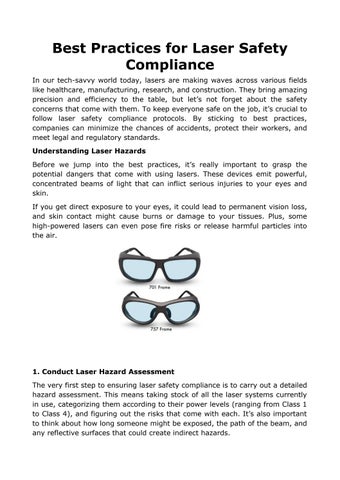
When it comes to laser safety, personal protective equipment is your last line of defense. Among all the PPE options, Laser Safety Glasses are absolutely essential. These glasses are specifically designed to filter out certain wavelengths of laser light, which helps minimize the risk of eye injuries. When selecting the right pair, it’s important to consider the laser’s wavelength, optical density, and the environment where they’ll be used. Besides safety glasses, you might also need other PPE like gloves, lab coats, and face shields, depending on the task at hand. Make sure all your equipment meets industry standards and is regularly checked for any damage or wear.
7. Accurate Documentation
Keeping accurate documentation is crucial for laser safety products. Organizations need to keep thorough records of hazard assessments, safety policies, training sessions, incident reports, and equipment maintenance logs. These documents are not just helpful for internal audits; they’re also vital during regulatory inspections. Regularly reviewing your documentation can help spot trends, gaps, or recurring issues that need to be addressed. Plus, it shows that your organization is committed to upholding high safety standards.
8. Conduct Routine Safety Audits and Inspections
Safety isn’t a one-time effort; it’s an ongoing process, and regular audits are key to ensuring compliance. These inspections should evaluate the condition of laser equipment, confirm that safety measures are being followed, and pinpoint areas that could use improvement. Involving various stakeholders, including operators and supervisors, provides a well-rounded view of the situation on the ground. Routine audits promote continuous improvement and help prevent complacency. Any issues that come up should be tackled promptly with corrective actions.
9. Establish Emergency Response Procedures
Despite all precautions, accidents can still occur. Therefore, it is vital to have well-defined emergency response procedures in place. These procedures should include immediate first-aid steps, evacuation protocols, and communication channels for reporting incidents. Employees must be trained to act swiftly and calmly during emergencies.
Having a prepared response plan minimizes the impact of accidents and ensures that help is rendered without delay. It also helps in legal protection and insurance claims if required.
10. Promote a Safety Culture
Compliance isn’t just about ticking boxes — it’s about building a culture where safety is ingrained in daily operations. Encourage open communication about safety concerns, reward safe behavior, and engage employees in continuous learning. A positive safety culture enhances morale, reduces incidents, and boosts overall productivity.
When safety becomes a shared responsibility, everyone plays a part in maintaining a secure work environment.
Conclusion
Laser technology brings a lot of benefits, but using it safely demands careful attention, responsibility, and sticking to best practices. Whether it’s performing hazard assessments, training your team, or ensuring everyone wears the right PPE like Laser Safety Glasses, every single step is vital for fostering a safe and compliant work environment. Companies that make laser safety a priority not only safeguard their employees but also boost their operational efficiency and uphold their reputation. By adopting these best practices and weaving them into your everyday operations, you can make sure that laser usage is both effective and safe.