How to have a black belt practice with Legacy Marketing Group’s
John Terry
PAGE 8
Georgia insurance agent wows on ‘American Idol’
PAGE 18
Vanishing commissions and complicated rules make it challenging for advisors to survive in this market. Here’s how they continue to serve clients amid a changing environment. PAGE 14
ACA subsidy turbulence is reshaping employee benefits
PAGE 32
ONE MARKET. TWO MINDSETS.
How Baby Boomers and Gen X are rewriting the rules — and your opportunity
What drives today’s retirement decisions isn’t the same across generations. Discover how to align with what matters most to Boomers and Gen X.
Turn insight into measurable results. See page 4 for the full approach.
TURN STRATEGY INTO RESULTS
Stay ahead of client expectations across generations
Protection, legacy and stability for Boomers
Growth, flexibility and income pathways for Gen X
Position solutions around client priorities — not product features. Strengthen conversations. Deepen trust. Drive outcomes.
Scan to put strategy into action
View our easy-to-follow generational insights matrix — and discover how to engage Baby Boomers and Gen X with the right message at the right time.
and
* Based on Protective operations cycle times over a trailing 12-month period, calculated by comparing non-Velocity process path to Velocity path, displayed as a percentage. Data current as of April 2025.
** As of June 1, 2025. www.usnews.com/insurance/life-insurance
Take a faster route with a term solution built for how you do business
Confidently meet more client needs with a process that’s fast and effortless.
Protective® Classic Choice term is built to work as hard for your clients as you do.
Protective refers to Protective Life Insurance Company (PLICO) located in Omaha, NE, and its affiliates, including Protective Life and Annuity Insurance Company (PLAIC) located in Birmingham, AL. Product guarantees are backed by the financial strength and claims-paying ability of the issuing company.
Protective® is a registered trademark of PLICO. The Protective trademarks, logos and service marks are property of PLICO and are protected by copyright, trademark, and/or other proprietary rights and laws.
Cases placed 57% faster* 35- and 40-year term periods
You get paid faster, too!
Our Velocity digital platform simplifies the sales process at every step.
We’re one of only three carriers that offer longer coverage.
Protective Classic Choice (TL-21) is a term life insurance policy issued by Protective Life Insurance Company, located in Omaha, NE. Policy form numbers, product features and availability may vary by state. Consult the policy benefits, riders, limitations and exclusions. Subject to underwriting. Up to two-year contestable and suicide period. Benefits adjusted for misstatement of age and sex.
A direct path to permanent coverage
All payments and guarantees are subject to the claims-paying ability of Protective Life Insurance Company.
U.S. News 4.3-star rating and named best for term life. **
* Based on Protective operations cycle times over a trailing 12-month period, calculated by comparing non-Velocity process path to Velocity path, displayed as a percentage. Data current as of April 2025.
** As of June 1, 2025. www.usnews.com/insurance/life-insurance
Protective refers to Protective Life Insurance Company (PLICO) located in Omaha, NE, and its affiliates, including Protective Life and Annuity Insurance Company (PLAIC) located in Birmingham, AL. Product guarantees are backed by the financial strength and claims-paying ability of the issuing company.
For Financial Professional Use Only. Not for Use With Consumers. business
Protective® is a registered trademark of PLICO. The Protective trademarks, logos and service marks are property of PLICO and are protected by copyright, trademark, and/or other proprietary rights and laws.
Protective Classic Choice (TL-21) is a term life insurance policy issued by Protective Life Insurance Company, located in Omaha, NE. Policy form numbers, product features and availability may vary by state. Consult the policy benefits, riders, limitations and exclusions. Subject to underwriting. Up to two-year contestable and suicide period. Benefits adjusted for misstatement of age and sex.
All payments and guarantees are subject to the claims-paying ability of Protective Life Insurance Company. Protective is a registered trademark and Classic Choice is a trademark of Protective Life Insurance Company.
Protective is a registered trademark and Classic Choice is a trademark of Protective Life Insurance Company. CLA.6621462 (05.26)
IN THIS ISSUE
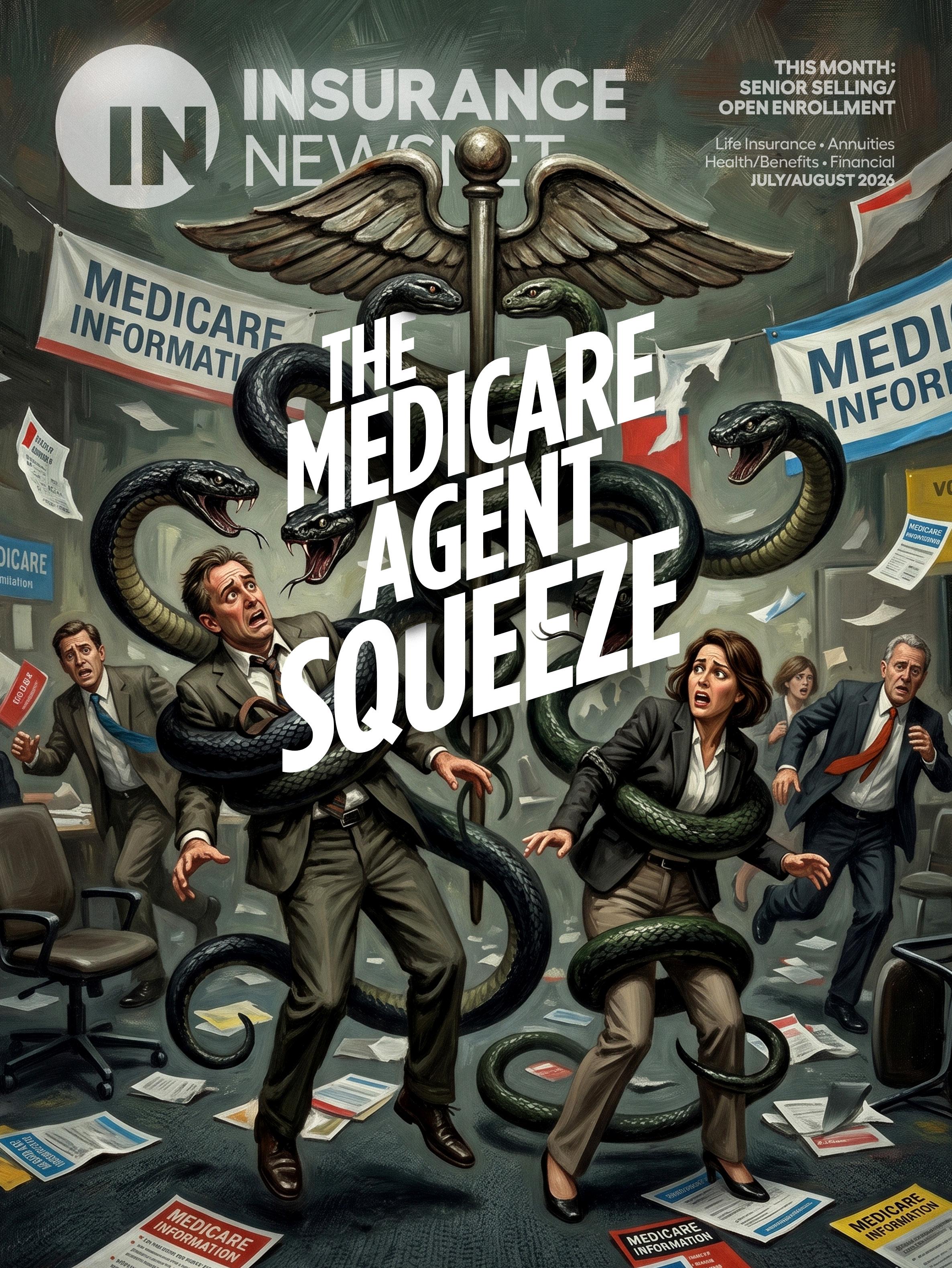
The Medicare agent squeeze
By Susan Rupe
INTERVIEW
8 How to have a Black Belt Practice
John Terry is a seasoned insurance sales and marketing coach with black belts in five different martial arts systems. He describes how to apply “black belt mentality” to grow your practice and turn your clients into lifelong fans.
IN THE FIELD
18 Georgia insurance agent wows on ‘American Idol’
By John Hilton
Philmon Lee works at an insurance agency while making his musical dreams come true.
4 The 2026 Senior Selling and Open Enrollment Section
This
24 7 things to do when term life is about to expire
By Scott Harper
A term policy’s expiration isn’t a dead end. It’s an opportunity to assess what clients need next.
An NAIC group begins what could be a long process to rein in illustrations.
29 Are knowledge gaps limiting annuity recommendations?
By Kush Kotecha
A look at three traditional financial solutions and how annuities may be a better alternative.
HEALTH/BENEFITS
32 ACA subsidy turbulence is reshaping employee benefits By Christopher Berggren
Employees priced out of the exchanges are looking for relief.
ADVISORNEWS
36 The overlooked retirement security risk that must be addressed By Rayne Morgan
Cognitive decline can undermine a client’s retirement plan. Advisors must not be afraid to discuss that risk.
INSURTECH
38 AI: Building or buying? What insurers are doing By Rayne Morgan
Insurers are increasingly choosing to build their own artificial intelligence solutions instead of buying someone else’s.
BUSINESS
40 Every role in your agency touches revenue By Lisa Raebel
When you understand how those roles connect, you create clarity, alignment and growth.
IN THE KNOW
42 The preventive insurance model By Anna Baluch
Technology helps carriers prevent claims before they happen.
changes to InsuranceNewsNet Magazine, 20 Erford Road, Suite 304, Lemoyne PA 17043. Please allow four weeks for completion of changes. Legal Disclaimer: This publication contains general financial information. It should not be relied upon as a substitute for professional financial or legal advice. We make every effort to offer accurate information, but errors may occur due to the nature of the subject matter and our interpretation of any laws and regulations involved. We provide this information as is, without warranties of any kind, either express or implied. InsuranceNewsNet shall not be liable regardless of the cause or duration for any errors, inaccuracies,
Medicare agents in ‘the wild, wild West’
Medicare Advantage didn’t exist back in the days of the wild, wild West. But agents and those who represent them often refer to that era when describing the environment in which they work today.
Back in December, Ronnell Nolan, president and CEO of Health Agents for America, told the National Association of Insurance Commissioners Senior Issues Task Force, “I feel like I’m living in the wild, wild West. Carriers are doing things that have never been done before, and no one is stopping them.”
Nolan expressed her frustration to the task force about Medicare Advantage carriers that decided to eliminate agent commissions during the most recent enrollment period.
Nolan told the task force members that in 44 years of working in the industry, “I have never seen anything like what’s happening in the market today.
“The day before open enrollment, after insurance agents have prepared to take care of seniors, an insurance company will say, ‘We’ve decided not to pay you.’ When your client calls and needs help, you’re going to help them because that’s
what agents and brokers do. We have no choice. We have many agents across the nation who are working for free. They worked for free through the entire open enrollment. … Seniors deserve assistance and calling the 1-800 numbers and things like that will not help them.”
Six months later, Medicare agents and their clients are still frustrated over what they are experiencing in the market.
InsuranceNewsNet put out a request for Medicare agents to tell us what they and their clients are experiencing as they gear up for the start of annual enrollment. And the first agent we spoke with — one with a dozen years in the business — described the current environment for agents as “the wild, wild West.”
Agents described how vanishing commissions, changes to benefits, pullbacks by carriers and shifts in provider networks are confusing clients and making it more difficult to sustain a practice.
Adding to the challenge is that Medicare’s annual enrollment period and open enrollment for individual health insurance under the Affordable Care Act occur in the same brief timespan. This leads to a scramble in helping clients choose coverage while the clock ticks.
As the U.S. population grows older and more Americans depend on Medicare, the role of the agent in helping them obtain coverage becomes more crucial.
Dr. Mehmet Oz, administrator of the Centers for Medicare & Medicaid Services, has publicly floated the idea of using artificial intelligence as a decision-support and navigation tool for Medicare beneficiaries. He proposed using AI to help consumers understand their Medicare options, compare Medicare Advantage plans and providers, and navigate their enrollment choices.
But whether AI can take the place of the advice and guidance that a professional agent can provide remains to be seen. For now, at least, opinion is on the side of the agent.
AI and editorial content
AI tools are impacting every business, and that includes InsuranceNewsNet.
Our editorial team uses AI for research and for organizing tasks, as well as for creating some images to illustrate articles. But until recently, we did not have a consistent policy on using AI in editorial content. We noticed that we were receiving an increasing number of contributed articles that were almost completely written by AI. Our readers deserve better than that. Our new policy, which is included in the editorial guidelines posted on our website, states:
We reserve the right to run contributed articles through an artificial intelligence detector. AI-assisted articles are acceptable; AI-created articles are not.
In addition, each issue of the magazine contains the disclaimer “InsuranceNewsNet uses AI tools to assist in producing content, which is reviewed and edited by staff.”
Our goal is to provide our readers with timely content that will inform and inspire. We want to deliver the industry’s most comprehensive news and original insights, and give them the information they need to run their practice and increase their bottom line.
AI can do only a small part of that. It takes human intelligence to do the rest.
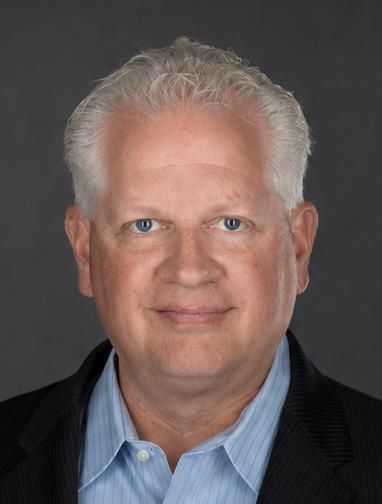
Susan Rupe Editor in Chief, magazine
One market, two mindsets: Engaging Baby Boomers and Gen X in today’s retirement landscape
Turn generational insight into more productive client conversations — and measurable growth
In today’s retirement landscape, success isn’t defined by offering more solutions. It comes down to how effectively you position what you already deliver and how clearly those solutions connect to what clients value most.
Baby Boomers and Gen X represent the majority of today’s retirement planning opportunity, holding a significant share of retirement assets. Both groups are actively shaping their financial futures, but their decision-making mindsets differ in meaningful ways. That distinction is where your opportunity begins.
Boomers: Protection, legacy and stability lead the conversation
For Baby Boomers, the accumulation phase has passed. The focus has shifted to protecting what they’ve built and ensuring it delivers lasting security.
Today’s Boomer clients are increasingly focused on prioritizing long-term care planning, legacy and wealth transfer and stability through major life transitions. Together, these priorities are reshaping the conversation.
Rather than focusing on maintaining lifestyle alone, discussions now center on preserving a lifetime of work, managing risk and creating confidence in what lies ahead.
For financial professionals, this is a moment to lead with wellpositioned solutions that reinforce long-term security. This is a high-intent audience making critical decisions now, with a strong preference for clarity, trust and informed guidance. Confidence matters — not just in the solution itself, but in the outcomes it delivers.
Conversations grounded in these priorities deepen relationships, strengthen trust and lead to more meaningful outcomes.
“For Baby Boomers, retirement planning is about more than income — it’s about protecting what they’ve built, managing risk and creating outcomes they can rely on.”
Gen X requires a different approach and plays a critical role in driving business growth. While they continue building wealth, retirement is approaching quickly, bringing greater urgency and a need for action.
Many Gen X clients are actively balancing careers, family responsibilities and long-term financial goals while working to close the retirement gap. They are also more engaged in the process — researching options, asking detailed questions and expecting transparency in how recommendations fit into their broader strategy.
With this audience, positioning matters. Where the conversation starts can determine how it progresses.
Meeting Gen X where they are means guiding them toward greater income security without sacrificing flexibility. The strategy is sequencing: lead with growth, then connect it to income — not the other way around.
Over time, Gen X becomes more than a moment of opportunity — it evolves into deeper relationships, broader planning conversations and expanding assets.
“Gen X isn’t behind — they’re at a turning point. When you lead with growth and show a clear path to income, you turn ambition into action.”
— Heather Kane, Senior Vice President, Sales and Marketing
Lead with what matters most
Success starts with the right conversation, not more products.
• Boomers: protection, income and legacy
• Gen X: growth, flexibility and future income
Life insurance and annuity solutions resonate most when aligned with client priorities, not product features.
Looking ahead without losing focus
While Boomers and Gen X are strengthening your client base today, Millennials represent the next wave of opportunity. Their emphasis on independence, flexibility and digital engagement is already shaping expectations.
These evolving preferences reinforce the need for financial professionals to adapt how they communicate, build trust and deliver value across generations.
The bottom line for growth-focused financial professionals
Driving production and long-term value comes down to focus:
• Lean into long-term care benefits, legacy planning and stability with Boomers
• Help Gen X close the retirement gap with growth strategies that evolve into income
• Position annuities based on client mindset, not just product features
Turn strategy into results with the right approach for Boomers and Gen X.
Success isn’t built on more solutions. It’s built on positioning them with purpose to create stronger relationships, better outcomes and lasting growth. EquiTrust
AI is the biggest risk for financial leaders
New research from the Society of Actuaries has found that insurance and financial services leaders across a range of sectors all named artificial intelligence as the top emerging risk for 2026 and in the years to come.
“The study suggests that AI is becoming a core strategic risk. It’s not just this information technology sort of question; it’s a whole business model sort of question,” Dale Hall, managing director of research, Society of Actuaries, said.
There’s no doubt that AI continues to breed innovation in the global insurance landscape, enhancing products and services and opening a new realm of possibilities. However, it also comes with no small share of challenges for the industry and significant uncertainty that some companies remain uncomfortable with.
WHAT’S BEHIND SKYROCKETING HOSPITAL PRICES
The chairman of the U.S. House Ways and Means Committee told hospital system CEOs that hospital consolidation and mergers “are fueling the borderline extortionary prices hospitals charge patients.”
Rep. Jason Smith, R-Mo., opened a committee hearing into hospitals’ role in high health care costs by saying, “Hospitals are charging an insane amount for care. Hospital prices have skyrocketed 300% in just over two decades — more than any other sector of our economy.” He blamed hospital consolidation and mergers as one factor leading to high health care costs.
Hospital CEOs who testified at the hearing agreed on several possible solutions to deliver affordability. They include ensuring stable and affordable health insurance coverage, reducing administrative complexity and regulation, strengthening access to care and investing in preventive health.
MANDATORY QUARTERLY EARNINGS REPORTS COULD END
Corporate quarterly earnings reports could be a thing of the past as the Securities and Exchange Commission formally proposed a rule change that would allow companies to file semiannual reports on a new Form 10-S in place of the traditional quarterly 10-Qs.
New Form 10-S?
The move brings regulators closer to a structural change that the Trump administration has advocated, contending that mandatory quarterly reporting encourages a short-term mindset and distracts executives from long-term strategy. Critics of the proposal say reducing mandatory disclosure frequency risks limiting transparency. It could also disadvantage retail investors, who rely more heavily on public filings than large
It is a more dangerous world, and that is increasing geopolitical volatility.”
— Jack Aldrich, BlackRock’s director for geopolitical research and strategy
institutional players do. Supporters of the rule say that a less frequent reporting cycle could encourage investment and strategic planning over immediate results.
RECORD DEBT IS DRIVING UP MONTHLY BILLS
American families are deeper in debt than ever, with the Federal Reserve Bank of New York reporting that household debt rose to a record $18.8 trillion in the first quarter of 2026. Household debt is pushed up as consumers’ purchasing power fails to keep pace with inflation.
More Americans are turning to credit cards and loans to afford even everyday expenses. The New York Fed reported that even though credit card balances dipped in the first quarter to $1.25 trillion, total credit card balances have risen more than 60% in the past five years. And recent research from financial services firm JG Wentworth found that higher interest rates are stretching repayment timelines across all types of — with these sometimes lasting the better part of a lifetime.
Put your client’s retirement income dollars on the right path
Set yourself apart from the competition by providing your clients a guaranteed income for life with Kansas City Life Insurance Company’s Lifetime Income Rider that:
• Offers 7.2% guaranteed increase to Lifetime Income Amount for the first 10 rider years if no withdrawals in years 1 – 10.
• Provides a secure, guaranteed retirement income stream for life.
• Helps clients grow their retirement savings with a competitive fixed interest rate.
• Protects the value of a fixed annuity during market turmoil.
• Allows clients the ability to maintain the flexibility and control of their deferred annuity contract even after they start receiving income.
The Lifetime Income Rider provides guaranteed income for life and is an optional benefit available on all of Kansas City Life’s fixed annuity portfolio.
TA-53421-02
For information about a career with Kansas City Life Insurance Company, call Mike Deon, Vice President, Agencies, Marketing, 855-277-2090
Ablack belt in martial arts is one of the most recognized symbols — but it’s often misunderstood. It doesn’t simply mean “expert fighter.” It represents a combination of skill, discipline and personal development earned over years of training.
John Terry earned black belts in five different martial arts systems. But he said earning the black belt is about more than kicking and punching; it’s a lifestyle in which you try to live each day by doing better than you did the day before.
Terry is the director of training for Legacy Marketing Group. He is a seasoned sales and marketing coach with over 30 years of experience in the financial services industry, focusing on developing training programs to help agents and advisors.
He is also the author of 11 books. The most recent one, Mastering Business Success: Defeat the 7 Saboteurs Destroying Your Business; Master the 10 Disciplines Needed to Win, released in April.
In this interview with InsuranceNewsNet Publisher Paul Feldman, Terry describes how to apply “black belt mentality” to expand your practice and gives tips on how advisors can turn clients into lifelong fans.
PAUL FELDMAN: How did you get into financial services?
JOHN TERRY: My grandfather was a banker, and my uncle was an accountant. I started doing taxes with my uncle when I was 13. We had what we called the “pizza and Dr Pepper rule.” He would teach me how to do the simple returns — that’s back when we did it with a pencil on paper. And the rule was we did tax returns until we ran out of pizza or until the two bottles of Mountain Dew or Dr Pepper that he bought went empty.
But my uncle started pouring his vision of the world into me. This was during the Glass-Steagall era. So insurance was insurance, banking was banking and investing was investing. The three couldn’t combine. He envisioned a world where Glass-Steagall was gone and we could come together and do all of this as financial professionals. That stuck with me, and I became very fascinated with money early on.
When I wrote my first book on financial principles, I went into the Bible and wrote a book on what the Bible says about money. That book was picked up by a seminary and went into 25 countries around the world. Soon after that, I received an invitation to join Prudential, and I thought, “Well, why not? I’m writing about finances; I’d love an opportunity to help people with their finances. Why not go and see what this world looks like?” That’s where I got my start, back in the late 1980s, and I’ve been in love with this industry ever since I became successful as a personal producer.
My competition carrier called and asked, “Would you like to make an override to train your competition?” And I said, “What’s an override?” I didn’t know what that was.
The next thing I knew, I’d built what today we would call an independent marketing organization. I had Insurance Marketing Group of America, a life and health IMO. We built a broker-dealer, built a registered investment advisory. Over the years, I’ve asked, “What’s next?” That’s a question I love to ask when it comes to innovation: What’s next?
FELDMAN: Tell me about your interest in martial arts.
TERRY: It goes back to my being bullied as a 13-year-old kid. Dad’s solution was to throw me in a martial arts class, where I was the only kid in the class.
In the 1970s, martial arts was an adult thing. They didn’t teach kids, but the school owner made an exception. I was
little bit better version of yourself than you were the day before. One of the things I’m doing here as director of training at Legacy Marketing Group is having an opportunity to bring these black belt principles into business, because what I often see in our industry is that we have some incredible financial professionals who are gifted at their trade. They can sell insurance; they can make investments and do all the other things they do in that space. But many of them are what I call the proverbial white belt when it comes to the business aspect of running the business.
I had the opportunity to move to Hot Springs, Ark. Somebody wanted to buy the broker-dealer I was part of. I came with the deal, and they discovered all this incredible knowledge in my head. I went from being more of a product guy in the IMO space to being a consultant and focusing on coaching, consulting, mentoring and training. For the last 20 years, I’ve been more on the coaching and consulting side. I still understand the products and still know how to sell the products and teach the products, but I do it more from the perspective of, let’s look at the process itself and let’s learn the processes, but let’s also learn the leadership aspects we need to know, to lead ourselves and to lead our clients. How do we become better communicators? How do we understand how to deal with human behavior when we’re dealing with all these different personalities and they want to be communicated with in different ways? Those are the types of things I’m doing today, and I love what I do.
about the same size as a 23-year-old woman who was in the class. So my dad was paying good money for me to get beaten up by a girl. And that became the standing joke: my dad saying, “When you learn to fight like a girl, the bully in school will stop.” Fast-forward, five black belts and three Hall of Fame inductions later, and it turned out to be a pretty good life.
FELDMAN: You’re the highest degree of black belt.
TERRY: I have five black belts in five different martial arts systems. I’ve been inducted into three different martial arts halls of fame: the United States Martial Arts Hall of Fame in 2008, the Masters Hall of Fame in 2016 and the International London Martial Arts Hall of Fame in 2022.
FELDMAN: Tell us how that applies to a financial advisor or any other professional.
TERRY: The black belt is not something you earn just by punching and kicking. It is a lifestyle, a discipline you learn to live, where you strive every day to become a
I saw the same thing in the martial arts industry. You have incredible instructors who can teach taekwondo and kung fu and all the different martial arts styles. But when it comes to understanding how to run a successful business, how to understand human behavior, how to engage in all the things necessary to scale and grow a business, there are a lot of white belts out there who are wondering why they’re not as successful as they could be.
We’re all black belts at something because, if you think about our industry, we have some incredible professionals who show up and show out in what they do in terms of understanding products and services and how to engage with their customers. But often it’s the back-end systems and processes and other things they miss in their business. They end up putting what I call saboteurs in their way, and they sabotage their own success by not paying attention to working on their business and not working in their business.
FELDMAN: What do you see other financial professionals doing?
TERRY: The biggest thing I see is that many of our peers in the financial services industry have stopped learning and growing. To me, that is a problem. It takes me back to something Albert Einstein said back in the early 1900s.
Einstein made a powerful statement. He said the world we have created is a product of our thinking. That world can’t be changed without first changing
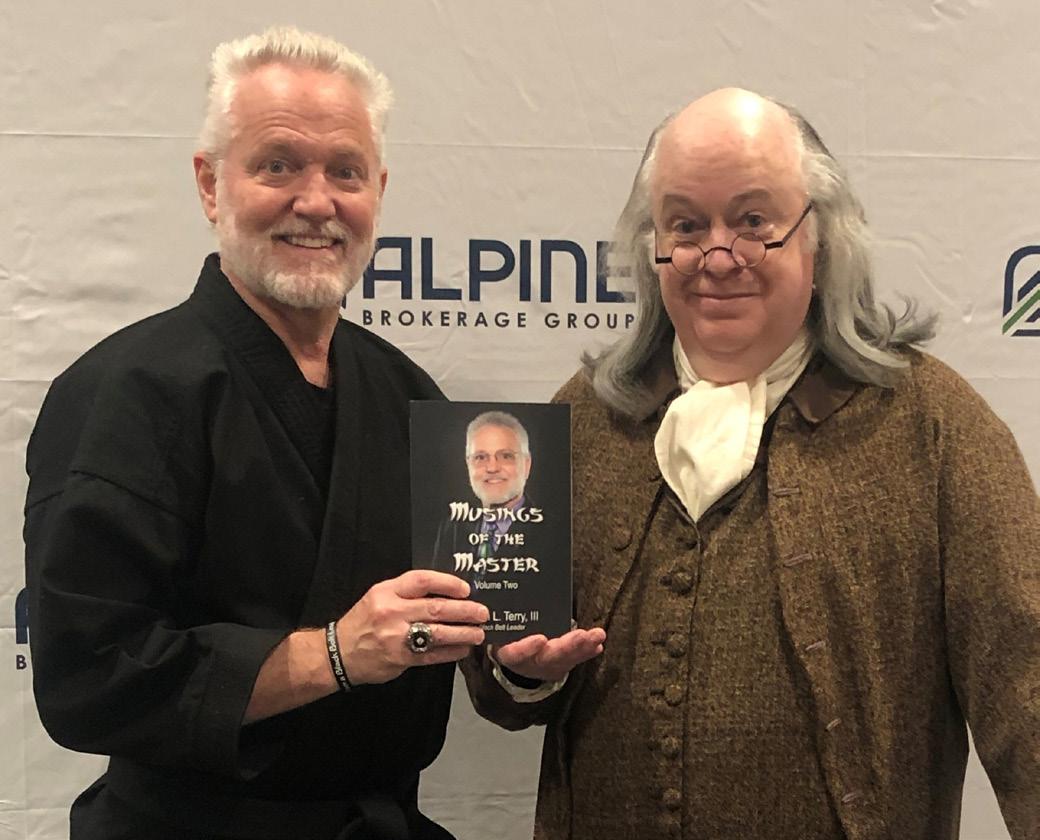
With black belts in five different martial arts systems, John Terry frequently draws on the lessons he learned in martial arts in his writing and speaking. Here, he presents a copy of his book Muses of the Master, to “Ben Franklin” at an industry event.
our thinking. We stop changing our thinking and developing the quality of who we are when we stop being curious and we stop learning.
The biggest thing I see today with financial professionals is that they get their license, they learn how to sell insurance and they learn how to manage assets. But once they learn how to do it a certain way, they stop learning, they stop growing and they stop discovering what might be new and whether there is a better way than the way they’re doing things. It’s that status
imposed on themselves that became their own saboteur of their success, because they stopped looking at how they can grow their business beyond $5 million and position their business so they can go from $5 million to $7 million to $10 million to $20 million to $50 million. They get content with a certain level of production and a certain level of influence. At that point, they get the mindset that they’ve learned all they need to be successful, and they end up stymieing their own growth and their
reading something inspirational, vocational, educational or biographical, so they can stretch the quality of their thinking to be able to see things that are right in front of them that they’ve not yet trained their mind to see. So learning to stretch yourself and grow would be the second step.
The third step is to learn to become much more efficient at managing time, because we all have 1,440 minutes a day. How many of those 1,440 minutes are wasted because we’re doing mundane
“The black belt is not something you earn just by punching and kicking. It is a lifestyle, a discipline you learn to live, where you strive every day to become a little bit better version of yourself than you were the day before. ... Many financial professionals are what I call the proverbial white belt when it comes to the business aspect of running the business.”
quo mentality that often holds them back from stepping into the next level of that success, because they’re stuck in the same old ways of doing things in the way they’ve always done them.
FELDMAN: How do we “unstick” them from these same old ways?
TERRY: The easiest way to unstick them is through personal growth. I write about that in my book Black Belt Leadership 101 The first principle of becoming a black belt leader is belief, and you cannot achieve what you do not believe. That’s the No. 1 principle that comes out of that book. We have producers who go into the mindset “If I can only get to $5 million a year, I’ve made it.” Then once they get there, that becomes the ceiling that they set for themselves. They get to $5 million, and they wonder why they can’t get from $5 million a year to $7 million or $10 million. It’s because of a limiting belief they
FELDMAN: Give them three steps to get out of that mindset.
TERRY: My latest book, Mastering Business Success, came out in April. In that book, I write about the seven saboteurs that we often place in our way. One of those saboteurs is an unwillingness to systemize, delegate and prioritize. Here’s one thing I often see producers doing: They run a successful business, they get to about $5 million and that’s probably all they can handle on their own, with maybe one assistant. At that point, if they’re not delegating processes, they’re not bringing on new people they can train to take on the 80% of mundane tasks that they don’t need to be doing so they can focus on the 20% of tasks they do best. That becomes a roadblock.
The second step is engaging in personal growth. One thing I’ve learned in studying the most successful people who ever lived is that they start their day
rather than doing productive work that drives our business forward?
In my new book, I write that one of the challenges is the fact that we can’t manage time, but we can manage what we do with our time. It’s about constantly asking ourselves whether what we are doing right now is the best use of our time. And if it’s not the best use of our time, why are we doing that when we could do something to move our business forward or help us grow into a better version of ourselves to show up and serve our clients at a higher level than we’re serving them today?
Another saboteur I write about is the failure to innovate, and that’s an area that is killing advisors. I tell advisors, artificial intelligence will not necessarily replace you, but you will be replaced by agents and advisors who learn to use AI as a resource in their business, because they’re adopting innovation that’s letting an incredible partner do their research. You have to check it to make sure it’s all correct. But
there are things we can do with technology today that can simplify our lives, take the mundane routine things that we’re still doing manually, and put those into a system or a process to make us more efficient and more effective.
FELDMAN: Where are you seeing AI helping advisors?
TERRY: In Geoff Woods’ book, The AIDriven Leader, he writes about making AI a thought partner. If you lead your organization, you are the thought leader. But Geoff says you need a thought partner that can do the heavy lifting.
So when it comes to developing a plan for your business for the next 12 months, you can put that plan together, build that out, give it to AI and ask AI to question and challenge it. AI can take on different personalities. It can be an analyst. It can be a researcher. We can use that technology in different roles to make sure that we’re being the very best that we can be.
It’s through asking the right questions and asking the right prompts, and giving AI an assignment to do and a goal that we want it to achieve, and asking it to deliver results — but validated results where you can check the sources — that’s where AI can be valuable.
Let’s say I have a client who wants to retire at age 65 and here are the parameters. Let AI do some research and come back with a variety of different plans. Now you, as the thought leader, can say, “Let’s add my color; let’s add my flair, let’s add my wisdom that AI doesn’t have and now make this my own.” Suddenly, a project that would have taken you two weeks to put together for a client is done in 30 minutes to an hour.
FELDMAN: Let’s talk about Black Belt Marketing. How is it working with advisors?
TERRY: Where agents and advisors are crushing it, they’re taking the time to understand their clients’ wants, needs and concerns, and the goals and objectives they want to achieve. They’re tailoring that message directly to that audience. Previously, I saw many financial professionals had a general story of “I’m an insurance agent, come see me.”
What I’m seeing now is that the
insurance agent is also getting a Series 6 or Series 7; the investment guy is adding insurance to their practice. They’re bringing in an estate planner, they’re bringing in an accountant and being much more holistic.
But they’re also using a more emotional approach that speaks to the consumer’s needs and desires because they’re beginning to understand something I’ve been teaching for a long time. From what I know about human behavior, our initial decision to say yes or no to an offer is an emotional decision because of all the stimuli that we receive from seeing, hearing, speaking, tasting and feeling. As those impulses flow up through our body into our brain, they immediately enter the primal part of our brain, where our emotions reside. That nonverbal response of saying yes or no to an offer is initially emotion driven. If someone likes the idea, it has been pushed into the conscious mind, where it’s now intellectually validated.
But for years, we saw advertising that was kind of the Joe Friday approach — just the facts — and all the reasons why you should do business with me. What people are learning today is that approach doesn’t work because people are always asking: What’s in it for me? We see that pivot in the conversation now. Consumers are more savvy; they can do research on Google or AI, and they can learn all the facts there. They need somebody who can say, “I understand your pain, I understand your fear, I understand your concern. This is how I can help.” That approach makes a huge difference.
I love to tell financial professionals, “If the consumer doesn’t know who you are, they don’t know what you do, they don’t know how you uniquely do it so you’re different than everybody else in the people pile. And most importantly, if they don’t know how it benefits clients, you’re the invisible man or you’re the invisible woman.”
FELDMAN: Will you give us some sales tips?
TERRY: One ninja trick I’m using right now is an old trick, but it’s a new trick to a generation of financial professionals who haven’t heard it. It goes back to something that we heard from Steven Covey: Start with the end in mind. What I see most financial professionals do is walk in the door with a presupposition — this client
needs an annuity or they need life insurance or they need managed money.
The approach I take is, let’s move that to the end of the conversation and let’s start with the client. Let’s start with asking questions to understand exactly what that client or prospect wants or needs and identifying why that’s important or why it’s keeping them awake at night.
The second part of that conversation is explaining the benefits of the solution that you’re going to bring. Whatever those benefits are, bring them out first, get the consumer to say that’s what they want. The minute they say the benefit of that product or service is what they want, they’ve already leaned in to the annuity or the life insurance or the managed money or the stock portfolio.
Now you don’t have to do the heavy lifting because they see the benefit to them first before they ever see the solution.
And I describe it as being like having the plumber come to your house. When the plumber comes in your house, he walks in with a toolbox, but he doesn’t know what tool he’s going to use until he analyzes the problem that needs to be fixed.
When we sell from that perspective, we’re engaging in a sales process that makes sense in the client’s mind. It works in conjunction with how their brain makes a buying decision, and it lets them see the benefit of the solution before they ever see the tool you’re going to pull out of the toolbox and all the financial products you have to solve the problem.
Suddenly, it’s not just a transaction; the agent becomes part of that individual’s family because they know what’s important to them and why. And as they’re building a relationship, those clients now become walking, talking billboards for that financial professional as they go around saying, “You will not believe what Paul did for me. He sat down, and we had a conversation. He understood exactly what was going on in my world, and he said, ‘I can fix that. I can make that pain go away,’ or ‘I can help you achieve that objective.’ And guess what? He did!”
Now they become your marketing team, and you’re not paying them to do it. They’re paying you for the service that you’re providing, but they’re out there telling your story. And when somebody really likes you, they’re going to talk about you all day long, and they can’t stop.
From Foundation to Forward Momentum
How Knighthead Life Is Turning Early MYGA Success into a Next-Generation FIA Strategy
Momentum in annuities is earned. Sustaining it while expanding into new products is where most companies get tested. Knighthead Life has managed both, using its first year in the MYGA market to build a foundation and its entry into FIAs to show where it is headed.
“We’ve been very clear from the beginning. This is about building an institution,” says Edward Massaro, CEO of Knighthead Insurance Group and Knighthead Life. “We are in the retirement services business, making long-term promises to clients. That requires a deliberate approach.”
Getting the First Year Right
Knighthead Life did not treat year one as a race for premium. The priority was establishing credibility with advisors and distribution partners.
“The goal early on was advocacy over volume,” says Michael Brandriet, Chief Distribution Officer at Knighthead Life. “We wanted partners to feel supported and know they had access to us.”
That focus influenced everything from distribution strategy to operations. The company partnered selectively with Independent Marketing Organizations, choosing partners who value service and long-term alignment. At the same time, it invested in its own administrative platform to control the experience from submission through issue.
“If there is a question, people can reach us and get answers quickly,” Brandriet says. “That accessibility builds confidence.”
Massaro is quick to point out that strong rates alone do not create staying power.
“You have to be competitive, but it isn’t just about rates,” he says. “Advisors also want consistency, a strong balance sheet, and confidence that you will be there for the life of the product.”
That combination helped Knighthead Life gain traction quickly while positioning itself as more than just another new entrant.
Expanding With Intention
The move into fixed indexed annuities was never a pivot. It was the next step.
“We always planned to offer a full suite of retirement solutions,” Massaro says. “The sequencing mattered. We wanted to establish the foundation first and then expand.”
Launching with MYGAs provided the opportunity to build relationships and refine internal processes. Only after that groundwork was in place did the company launch FIAs.
“This is a long-term business,” Massaro says. “We wanted to make sure we could deliver the same level of experience across a more sophisticated product set.”
That confidence is backed by the broader capabilities and experience of Knighthead Insurance Group, which has offered and reinsured indexed products internationally for a decade.
“We have been managing this type of risk for a long time,” he says. “Since 2014, we’ve been selling fixed indexed annuities to international clients,” Massaro says. “We are
focused on delivering an experience that matches our expertise.”
A Different Approach to FIA Design
The FIA market offers no shortage of choice. Knighthead Life entered with a clear point of view on what needed to change.
“One of the biggest challenges we heard from advisors was product complexity,” Brandriet says. “It has become harder to explain how some of these products work.”
Chartline FIA and Chartline Bonus FIA were built to address that issue directly. Instead of layering on features, the product’s design centers on clarity, transparency, and outcomes that can hold up over time.
“We wanted to create something advisors could clearly explain and clients could easily understand,” Brandriet says.
The products rely on well-known indices and avoid structures that require heavy explanation. They also include guaranteed accumulation features that define a baseline outcome.
“With our 10-year Chartline, clients know they will have a specific level of accumulation,” Brandriet says. “That clarity makes a difference in conversations.”
Transparency carries through to how the products are structured.
“If you want a higher cap, you can see how that is supported,” he says. “We are not hiding trade-offs. That helps advisors set expectations upfront.”
Massaro views that discipline as essential.
“You have to offer something you can maintain,” he says. “The focus is long-term consistency, not shortterm positioning.”
Making It Easier to Do Business
Knighthead Life has placed as much emphasis on execution as it has on product design.
“We made the decision to control our administration,” Brandriet says. “That allows us to respond quickly and maintain a consistent experience.”
That mindset is shaped by the experience of Knighthead Insurance Group across asset management and reinsurance. It influences how products are priced and how capital is deployed.
“You cannot assume today’s environment will last,” he says. “You have to build with resilience.”
That includes setting rates and structures that can hold up over time.
“When we design a product, we are doing it with the expectation that we can support it over the
Owning that process reduces friction and gives the company more control over outcomes when questions or issues arise.
“It comes down to speed, accuracy, and communication,” he says. “That is what people remember.”
Knighthead Life has taken a similarly focused approach to distribution, favoring depth over breadth.
“We are building real partnerships,” Brandriet says. “We want to work alongside our distribution, not compete with them.”
That alignment has created early momentum and laid the groundwork for expanding the FIA lineup.
Growth With Guardrails
Growth in annuities can come quickly. Managing that growth requires restraint.
“We understand the liabilities we are taking on and make sure we have the assets and capital to support them,” Massaro says.
full duration of a client’s needs,” Massaro says.
For advisors, that consistency matters as much as the initial illustration.
A More Informed Buyer
The client sitting across from advisors today looks different than they did even a few years ago.
“Clients are doing their own research,” Brandriet says. “They are comparing options and asking more detailed questions.”
That shift changes how products need to be positioned.
“They are not just being sold an annuity. They are choosing one,” he says.
Clarity and transparency become more than product features. They become essential to earning trust.
Building for What Comes Next
Knighthead Life is a small but growing player in the US market, and it is
using that position to stay focused as it scales.
“This is about creating a durable platform,” Massaro says. “We are building something that can serve clients and partners for decades.”
That includes expanding beyond accumulation products over time and continuing to invest in infrastructure, distribution, and capabilities.
For Brandriet, success is measured in relationships.
“We want to be a company that people choose to do business with,” he says. “That comes from delivering a strong experience and standing behind what we offer.”
It also comes down to the people behind the company.
“We are building a team of talent that understands the importance of this work,” Brandriet says. “Helping clients manage retirement risk is meaningful and we want people who take pride in that.”
Turning Early Success Into LongTerm Strategy
Knighthead Life’s first year established credibility. Its expansion into FIAs shows how that foundation will be used.
The company is not trying to outpace the market. It is working to build something that lasts within it.
For advisors, that distinction matters. It signals a partner focused on consistency, clarity, and long-term alignment rather than short-term momentum.
And that is what turns early success into something more durable. •
Pictured from left to right: Kyle Ryan, Chief Operating Officer, Corey Liebman, Chief Financial Officer, Chief Actuary, Amy Pramer, Chief Marketing Officer, Edward P. Massaro, Chief Executive Officer, Michael Brandriet, Chief Distribution Officer, Joe Evangelista, General Counsel
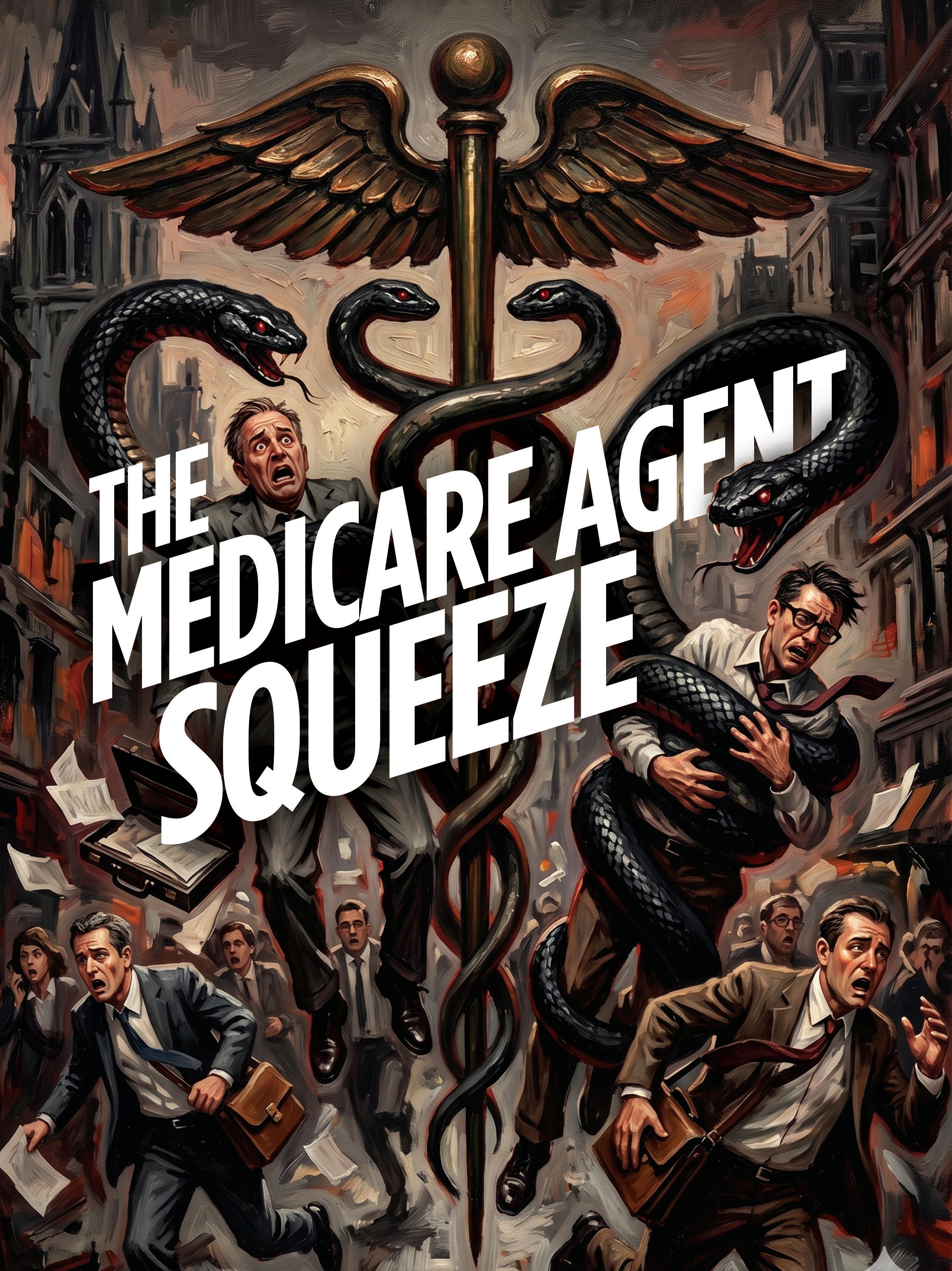
Vanishing commissions and complicated rules make it challenging for advisors to survive in this market. Here’s how they continue to serve clients amid a changing environment.
BY SUSAN RUPE
Zachary Freeman has been a Medicare agent for nearly 12 years and described the current environment for agents this way.
“It truly is the wild, wild West.”
Freeman is an agent at Ann M. Wiley Insurance in Conneaut, Ohio, where he works solely with Medicare clients. He told InsuranceNewsNet the current Medicare market is “chaotic.”
“We’re seeing insurance companies cutting commissions. Making the market harder for agents to navigate and be able to help their clients. We’re seeing a lot of plans pulling out from certain areas. It’s chaos,” he said.
Several hundred Medicare Advantage and Part D plans have stopped paying agent commissions on new enrollments over the past three years, although commissions on renewals continue to be paid.
Freeman said he has lost between $20,000 and $30,000 in commissions in the past year but remains committed to helping clients choose the plan that best suits their needs.
“I’ve taken a hit. But my main priority is the client.”
In addition to the dropped commissions, Freeman said that he and his clients are affected by carriers removing Medicare Advantage plans from the market.
“In the past couple of years, we’ve seen a carrier come in with a rich-benefited plan during open enrollment season. They’ll be in the market for a year, and one of two things will happen. They’ll pay commission on it for a year, then pull it out of the market completely. Or they will, as I like to put it, throw a bait at the end of the fishing line. They’ll throw the plan out there for two weeks or so in open enrollment and then take out commissions. So what they essentially did is create interest on the client side and give agents two or three weeks to talk about it with all their clients and then hold the ability to sell it, so those clients will still want it, but now the carriers don’t have to pay the agents.”
Freeman described the removal of Medicare Advantage plans and agent commissions as “a double-edged sword.”
“Insurance companies are definitely
playing the game here. They’re putting rich-benefited plans out there, then cutting the agents away from them and trying to save money on the other end because they overshot their benefits. You’re seeing a lot of companies mismanage how many people they will have enroll in their plans when they do their predictions. Then when they’re two or three weeks into open enrollment, they realize they can’t afford to do this and they have to cut something, so they cut out the agent.”
Fewer plans, higher premiums
Four firms left the Medicare Advantage market entirely in 2026, and nine had contracts taken over by other insurers, according to KFF, a nonprofit health policy research, polling and news organization. In addition, six Medicare Advantage organizations ended operations in 2026. This affected nearly 100,000 individual Medicare Advantage prescription drug plan enrollees.
in 2025. The number of PDPs has fallen by 55% since the passage of the Inflation Reduction Act of 2022, which included a cap on annual out-of-pocket prescription drug costs and allowed Medicare to negotiate drug prices with pharmaceutical companies.
Medicare beneficiaries have been impacted by the termination of plans. KFF said about 13% of those who were enrolled in individual Medicare Advantage PDPs — about 2.6 million people — had their plans terminated for 2026. This is up from the 1.3 million Medicare Advantage enrollees whose plans were dropped for 2025. The forced disenrollment rate in Medicare Advantage plans reached a record high of 10% for 2026.
Financial pressure is the primary driver for carriers eliminating Medicare Advantage and Part D plans, with carriers citing rising healthcare costs and changes to Part D resulting from the Inflation Reduction Act. In response, the Centers
More than 400,000 people who lost Medicare Advantage coverage moved to MedSupp, usually because there was no other Advantage plan in their area.
Four major plan sponsors — Cigna, Clear Spring Health, Elevance Health and Mutual of Omaha — exited the Medicare Part D market.
The total number of Medicare Advantage prescription drug plans declined 10% nationally, from 3,719 plans in 2025 to 3,373 plans in 2026, KFF reported. Several major national carriers also sharply reduced the number of counties in which they offer plans.
UnitedHealthcare exited 225 counties while entering only 14 new ones, and Humana left 198 counties but entered just five new ones. Each insurer now offers plans in 80% of all U.S. counties. This is a decrease from nearly 90% in 2025.
Part D drug plans also saw a drop in 2026. KFF reported 360 PDPs offered nationwide in 2026 — a 22% drop from 464
for Medicare & Medicaid Services announced a 5.06% average increase in the government’s final reimbursement rates for 2026 Medicare Advantage health plans run by private insurers, more than double the increase it proposed in January.
Although the Medicare Supplement market hasn’t seen as big a plan exit as Medicare Advantage, premium increases have hit enrollees hard. More than 400,000 people who lost Medicare Advantage coverage moved to MedSupp, usually because there was no other Advantage plan in their area. That influx of enrollees, combined with the rising healthcare costs hitting every segment of insurance, led in 2025 to some of the highest MedSupp rate hikes ever recorded, KFF reported. Premiums rose between 8% and 50%, depending on the carrier and state.
As carriers end the era of benefit-rich Medicare products with lower premiums while repricing risk and cutting back from certain geographic areas, it’s more important than ever for Medicare beneficiaries to conduct an annual plan review. This is where Medicare advisors come in.
Clients depend on advisors more than ever
In Connecticut, where about 60,000 Medicare Advantage beneficiaries had to search for new coverage after they lost their plans for 2026, advisors like Traci O’Brien were busy helping them enroll in other plans.
O’Brien owns Senior Insurance Consultants in Orange, Conn., with her husband, Christopher Wojtusik, and has a downline of 40 agents.
“We had to have very difficult but very honest conversations with our clients about what 2026 would look like for them,” O’Brien told InsuranceNewsNet. “If we can put people in the right plans with carriers that want their business, we can hopefully add to the solution and not be part of the problem.”
O’Brien said she has a special gift for understanding the details of every plan available for her to offer clients.
“I can tell you what the preferred pharmacy is for every carrier, what this plan’s dental coverage is versus another plan and all those different things that are so important. We have so many tools to take information from beneficiaries and put it into a system, and the system will tell us what the best plan is for them without having to spend hours putting together spreadsheets and possibly choosing the wrong plan. We just want to make sure people are in the right and best plan for them.”
Clients are frustrated
over-the-counter medications are being cut back or eliminated.
Bilgere is owner of Bilgere Insurance in Bedford, Texas.
“Clients really got spoiled in a sense,” he said. “In those Advantage plans with all kinds of freebies and bigger allowances for dental, hearing and vision, and overthe-counter benefits, clients all became focused on that. Now, since those benefits are getting pulled or reduced, clients are getting frustrated with that and sometimes that’s frustrating for me as an agent. We spend a lot of time with our clients because what I want them to focus on is, ‘This is your healthcare first, this is your health insurance. It’s trying to prevent you from a catastrophic financial loss and give you the healthcare you need.’ But some clients have been so conditioned to think of only the extra benefits that they sometimes lose sight of how important the health insurance aspect is.”
Bilgere said clients also are frustrated with hospitals being dropped from insurer networks, an issue he tries to help them work through.
“The big hospital systems used to negotiate with the carriers kind of privately and got it settled,” he said. “Now either the carrier or the hospital system sends letters to Medicare clients saying that the plan is going to drop its contract with the hospital system and then everyone is upset. For the agents, we have fewer things to offer clients because when carriers suppress plans, what they’re really telling us is that they don’t want people in that plan because it’s not profitable. We’re conditioned to do the best for the client, and you always want to do that, but you can’t offer them those plans.”
Bilgere said he is adjusting his practice to the changing Medicare landscape by doing more cross-selling of ancillary products to clients.
“I think everyone who is in an Advantage plan will go into an HMO. I think choice will go away and networks will become more important.”
Changing networks leave clients scrambling
William Gray, aka “The Medicare Dude,” works with Medicare clients in Florida and around the country from his office in Daytona Beach. After nearly three decades of experience in the market, he said he is seeing consolidation of hospital systems and changing Medicare Advantage networks leaving his clients scrambling for answers and help.
“We’ve seen a lot of controversy about who’s going to stay in network and who’s not, and a lot of carriers arguing right up to the last minute,” he said. “We have people who didn’t know until the very end of open enrollment what plan was going to be accepted by what hospital. So people go running to their agent, saying, ‘Help me out,’ and that left us to work with them to try to figure out what plans they can use.”
Gray said he believes the Medicare Advantage model “is not sustainable.”
“I believe you’ll see premiums for Medicare Advantage plans start coming up. So you won’t see zero-premium plans. The extra benefits, like dental, will either go away or be cut back dramatically.”
Part D is daunting for many seniors
Mark Bilgere said that one of the most challenging parts of his job as a Medicare advisor is dealing with clients’ frustration over their Medicare Advantage plans, especially as once-plentiful perks such as transportation and allowances for healthy food and
“Hospital indemnity plans, cancer plans, dental plans are big,” he said. “I believe agents must educate themselves about long-term care, short-term care — not just how they work but how they help people.”
Bilgere predicted the Medicare market will reset in the next couple of years as carriers figure out how they can be profitable in the wake of changing regulations and government reimbursements.
“I think Medicare will become more healthcare and network focused,” he said.
Rebecca Davis is owner and founder of Kannonball Insurance Solutions in Stephenville, Texas, where she has spent nearly a decade helping clients with Medicare. In addition to the challenges described by agents earlier in this article, Davis said she has found her clients are increasingly turning to her for help with Part D.
“The whole Part D debacle has been an absolute nightmare ever since the changes made by the Inflation Reduction Act a few years ago,” she said. “It sounds good on paper, but seniors are getting front-loaded.
Bilgere
Gray
Davis
O’Brien
“In those Advantage plans with all kinds of freebies and bigger allowances for dental, hearing and vision, and over-the-counter benefits, clients all became focused on that. Now, since those benefits are getting pulled or reduced, clients are getting frustrated with that and sometimes that’s frustrating for me as an agent.”
Even though they have a maximum outof-pocket of $2,100, if the plan actually covers all their meds — which adds up to a lot less than years past when they had the doughnut hole and the $6,000 out-ofpocket maximum — that sounds great.
“But the carriers are front-loading these plans. So the senior is basically responsible for almost all that money with these high deductibles and high copays until they hit the $2,100. A senior making, let’s say, $1,800 a month makes too much for extra help or Medicaid. They’re basically taking that senior’s entire paycheck for the first couple of months of the year just to get their medications. What happens is that people end up just not getting their medications at all.”
Davis said she and her staff often try to find other financial resources for their senior clients to pay for prescription drugs that they cannot afford.
“But there are still some meds that there is just no help for. So the client chooses not to take the med. That might be a life-altering medication, and now the client has just put themselves in harm’s way. I’ve had clients who will say to me, ‘Well, I guess I’m just going to die then because I can’t afford it.’”
Davis said she predicts prescription drug affordability for seniors will only get worse in the coming years.
While prescription drug coverage has become confusing and expensive for seniors, agents are feeling the pinch as well, as Davis said all but one of the Part D plans she sells are noncommissionable.
Davis also sells individual health insurance in the Affordable Care Act market,
and said that with ACA open enrollment and Medicare annual enrollment both ending in December, agents will be hardpressed to review coverage and get clients enrolled by the deadline.
“It’s going to take so many man-hours to rework Part D plans this fall. But now with the ACA hard stop of Dec. 15 instead of in January, we’ll have to choose between helping seniors and helping our ACA clients.”
Davis said she wishes CMS would allow an open enrollment period only for Part D.
“If they would do that, every agent will follow up with their senior clients in January and double-check to make sure their drug plan will work for them — because agents will have time to check up on their clients. Agents want to help, but CMS is making it dang near impossible for us to help.”
Seniors need agents
will be hurt by what she called a “snowball problem.”
“With carriers suppressing plans and making plans noncommissionable, we have no warning,” she said. “This is a huge problem, especially during annual enrollment. We don’t have much time to look at what the plan changes will be for the coming year. Is this plan still suitable for the client to stay in for the next year? Will the carrier eliminate this plan for next year? Clients have fewer plan selections and they need information.
“There truly is a disconnect here, and unless people are working with a broker, a lot of people are unaware of the changes happening until it is almost too late.”
Logan said clients often don’t receive carrier notifications of changes until after annual enrollment has begun.
“There’s no warning with carriers pulling plans,” she said. “We’ve had carriers pulling plans left and right in the middle of annual enrollment period. It’s extremely frustrating.”
Logan said what complicates the situation for clients is when a carrier removes commission from a plan that a client had decided to enroll in.
“Now the client can’t go through me, and I have to explain to them. It’s confusing to the client, and they don’t understand why it’s happening. I have to tell them that I can still help them get into this plan but now I’m not the agent of record, I’m not receiving the commission. And if I’m not the agent of record, then I’m not the agent who can stay in contact with them. So in order for me to continue to work with them, I had to create a letter so they fully understand what that means.”
With carriers discontinuing certain Medicare Advantage plans, provider networks changing and seniors having a 54-day window each year to enroll in or change coverage, Medicare beneficiaries need guidance from advisors to choose the best plan for their needs.
Jeanette Logan owns JJL Insurance Services in Austintown, Ohio. She said that the elimination of commissions is leading agents to either shift their business to other segments or exit their practices altogether. Seniors are the ones who
She described the changes in plans as being “a financial disconnect and harmful thing” for clients, as well as an emotional burden.
“I don’t want people to go through that,” she said. “I want to be able to help my clients, be their resource.”
Susan Rupe is editor in chief, magazine, for InsuranceNewsNet. She formerly served as communications director for an insurance agents’ association and was an award-winning newspaper reporter and editor. Contact her at srupe@ insurancenewsnet.com.
Logan
Philmon Lee finished 11th in the 2026 season of “American Idol.”
Philmon Lee grew up tagging along as his father made music. Now he is making his own musical dreams come true, thanks to a recent run on “American Idol.”
By John Hilton
Abreakout appearance on “American Idol” is turning Philmon Lee’s lifelong dream into an unexpected second chance.
A Georgia insurance agent by day, Lee, 26, grew up in a house filled with music. He was on his way to a recording and performing career of his own when the COVID-19 pandemic wrecked those plans.
“A lot of the process of me making music and putting down music videos, and the whole shebang just got put on pause,” Lee told InsuranceNewsNet. “And it was kind of hard to get it going again.”
Then “American Idol” came calling. Although he was delayed in getting his chance on the show, once he started performing, Lee quickly won over viewers.
He didn’t win the coveted competition, but a top 11 finish is opening a lot of doors for Lee in the music industry. Still, the agent with Burns Marketing in LaGrange, Ga., isn’t moving on from the insurance world just yet.
“I do enjoy insurance, and I love the whole process,” Lee said. “Hopefully, I can get my team built up big enough to where I can pursue my first dream and still have a successful insurance business.”
‘That’s what I want to do’
From as early as 4 years old, Lee remembers touring with his father, who enjoyed some local success as a member of The Georgia Melody Boys.
“I grew up in a household of music,” Lee said. “My dad has always been a singer. I was on a tour bus with him when I was little. He turned to gospel singing, and then he started performing Southern rock and roll, and I got a lot of input from him.”
He learned to play piano, guitar and drums at a young age. Starting around age 10, Lee began singing in the school chorus and in other school vocal groups.
“It definitely gave me a hunger,” Lee
said during an “American Idol” interview. “Even as a kid, it was ‘That’s what I want to do for the rest of my life.’”
After high school, Lee went to college, but it was a short stay. He would trade books and classes for the hustle of making music while trying to get noticed.
“I knew I had to buckle down and really take it seriously,” Lee said on the “Bringin’ it Backwards” podcast.
Over the next several months, Lee worked on a few songs with a musician he met in college. Then he met a pair of rap artists from LaGrange, and the three worked on music for “six, seven months,” Lee said.
But his talent was still getting noticed. When an “American Idol” producer first reached out, the Sony contractual terms prevented Lee from pursuing the opportunity.
“Six months went by and he reached back out, and I decided I might as well give it a shot,” Lee recalled.
The “American Idol” tryout experience is a multitiered, months-long gauntlet in which contestants must pass through several rounds of screening by producers before ever seeing the celebrity judges.
Although the television episodes make the process look instant, the real-world experience is a grueling test of patience,
“I was making as much music as I could and doing as many shows as I could,” Lee said.
Getting a record deal
After months of “grinding,” Lee attracted the attention of record labels. Specifically, video of a Lee performance made its way to Tyshawn “Fly Ty” Johnson, Atlanta-based vice president of A&R at Epic Records and CEO of his own label, Against Da Grain Entertainment.
He put Lee in touch with Sony Music executives, and Lee was soon on a plane to California. He would sign a deal with the label in 2020. The label set Lee up with professional songwriters, and they worked on several songs.
Then the COVID-19 pandemic stopped Lee’s momentum cold. After recording songs and shooting a pair of videos, things ground to a halt. Months turned into years, and Lee continued working on his music and performing — all while under his Sony contract.
personality and vocal endurance. Being a known quantity did not exempt Lee from that experience. He first sang on Zoom calls for producers, then advanced to a live audition in Nashville.
A musical thrill ride
Lee kept impressing new judges with each round, relying on his eclectic range of musical styles. He describes his musical influences as “all over the place,” from gospel to rock and roll bands such as Aerosmith and Lynard Skynyrd. He has a tattoo of Elvis Presley on his left forearm.
After wowing enough people with his vocal pipes, Lee found himself in Los Angeles taping “American Idol” before judges Carrie Underwood, Lionel Ritchie and Luke Bryan.
For his on-camera audition, Lee delivered a powerful performance of Michael Bolton’s “When a Man Loves a Woman.” The judges were unanimous in praising the performance.
“You look like you were born to sing,”
Philmon Lee pays tribute to one of his music idols with an Elvis Presley tattoo on his left forearm.
the Fıeld A Visit With Agents of Change
Bryan said. “When we get somebody like you, it’s pretty dang exciting.”
As the weeks went by, Lee won over judges and the voting audience for 10 shows. His favorite performance came in week eight: a rendition of the Otis Redding song “Hard to Handle,” made famous in the 1990s by the rock band the Black Crowes.
While “American Idol” airs as a tight two hours, many multiples of those hours go into the behind-the-scenes production, Lee said.
“It’s a lot of hurry up and wait, man,” Lee said. “Sometimes you get up a little bit later, like 8 or 9 o’clock, but you just go and you sit at the studio all day and you do wardrobe, or you do vocal coaching or you do band run-through. There’s always something to do.”
Lee was eliminated on April 13, during the Top 11 Rock and Roll Hall of Fame Night, after performing “Hot Blooded” by Foreigner. Following his elimination, he returned for a final appearance to perform alongside Shinedown during the May season finale.
His departure was not without controversy. Social media platforms were
flooded with thousands of comments from outraged viewers claiming that Lee was “robbed.”
Much of the controversy centered around the show’s voting format. Viewers across the country complained that the East Coast-biased live voting window closed too quickly, preventing many fans in later time zones from even watching the performances before voting ended.
Lee remained steadfastly positive on the experience.
“It was a great experience,” he said. “You meet a lot of cool people. I’ve made a lot of close friends who I’ll probably talk to for the rest of my life.”
Returning to the day job
The Burns Marketing Group was all in on supporting Lee’s “American Idol” adventure, said Nick Burns.
“We are incredibly proud of Philmon — not just for what he accomplished on the ‘American Idol’ stage, but for who he is every single day,” Burns said. “Philmon brings heart, humility and dedication to his work serving clients, and that same authenticity shines through in his music.
“Watching him pursue his passion
while staying grounded in service to others has been inspiring for our entire organization. He represents the very best of our agency, and we’re honored to support him on this journey.”
Founded in 2010 by Nick Burns, the firm specializes in providing life insurance, final expense, and mortgage protection options across multiple states. The agency fields a network of agents, and a late-2025 partnership with Integrity is expected to scale its nationwide insurance distribution.
Since his time on “American Idol” ended, Lee is back selling insurance at Burns and back to making music. But new and exciting opportunities await.
“A lot of different meetings are about to be taken,” he said. “Live show opportunities and possible tour opportunities. My manager’s phone is blowing up.”
InsuranceNewsNet
Senior Editor John Hilton covered business and other beats in more than 20 years of daily journalism. John may be reached at john.hilton@innfeedback.com. Follow him on X @INNJohnH.
Philmon Lee shares a laugh with Ryan Seacrest on the set of “American Idol.”
AMERICA—250 YEARS
Celebrating not only our past, but also the opportunities we carry into the future.
As America marks 250 years of freedom and independence, Legacy Marketing Group® also honors the Producers who help Americans protect what matters most and secure their financial freedom.
Prepare for retirement
Create lasting nancial security for future generations
Navigate adversity
UNITED WE STAND —be in business for yourself, not by yourself. Built for Producers by Producers, Legacy Marketing Group exists to help you succeed. If you’d like to engage with an organization that truly understands and appreciates you—the Producer—we invite you to explore Legacy.
Visit www.BuiltForProducers.com, or scan the QR code to learn how to unlock all that Legacy has to o er—and receive a commemorative America 250 T-shirt when you respond.* appreciates
Life insurance premium jumps 10% in 1Q
Total U.S. individual life insurance new annualized premium plus excess jumped 10% year over year to $4.5 billion in the first quarter of 2026, according to LIMRA. The total number of policies sold also improved 9% in the first quarter.
“Following record sales in 2025, the individual life insurance market performance remained strong, posting double-digit premium growth in the first quarter. Every product line except fixed universal life marked positive gains in premium and all product lines experienced policy sales growth,” said Sean Grindall, senior vice president and chief member relations and solutions officer, LIMRA and LOMA.
Whole life remains the dominant product in the U.S. market, representing 36% of the total new annualized premium plus excess sold in the first quarter. Whole life new annualized premium plus excess totaled $1.6 billion in the first quarter, up 9% from the prior year’s result. The number of whole life policies sold increased 13% in the first quarter, compared with the first quarter of 2025.
HOW AI CAN CLOSE THE GENDER GAP
Besides helping speed up claims process and generally bringing the insurance practice into the 21st century, artificial intelligence may also help address a longstanding industry issue: the gender gap in coverage.
Katie Kahl, chief product officer at iPipeline, gave three ways AI can help bridge the life insurance coverage gap for women: 1) provide marketing insights, 2) simplify and expand education, and 3) build tailored recommendations. In her view, part of that is the education piece and helping people understand why a product is important to protect their family — especially if they are the primary caregiver — and how companies can personalize the right offering. Additionally, AI can help simplify long, complex policy
documents that typically contain a lot of industry jargon and are difficult for the average consumer to digest.
FACTORS RESHAPING FINANCIAL SERVICES BY 2030
Deloitte believes AI-driven distribution models may increase U.S. life insurance premiums by up to 11% by 2030 and add as much as $2 billion annually, helping insurers reach underserved populations through personalized, low-friction engagement.
The predictions signal a broader transformation: Financial services firms are moving beyond digitization toward intelligent, autonomous and platform-based models. AI is increasingly embedded into products and workflows, blockchain is reshaping financial
When our insurance conversations focus on death and dying, clients tune out.”
— Matt Alina, market development manager for The Marketing Alliance
infrastructure, and shifting investor expectations are driving greater access to alternative assets. At the same time, rising demand for personalized advice, broader investment access and integrated service models is accelerating the business case for transformation.
Nationwide has reached an agreement with MassMutual to reinsure a block of fixed universal life insurance policies, comprising more than 30,000 policyowners. The transaction has a total face value of nearly $16 billion and will increase Nationwide Financial’s reserves by $6 billion. Nationwide said it expects to take on this additional business without adding staff.
Nationwide CEO Kirt Walker said:
“This agreement represents a tremendous opportunity to put our strong capital position to work and grow our life insurance business, which was designated the third-largest writer of life insurance in 2025.”
MassMutual will continue to administer these policies and remain the point of contact for policyowners.
Source: LIMRA
Walker
7 things to do when term life is about to expire
A term policy’s expiration is an opportunity for a deeper discussion of client goals.
By Scott Harper
When term life policies enter their final year, a surprising number of people don’t realize the clock is ticking. At the same time, many individuals still hold term coverage that quietly lapses. When a 10-, 20- or 30-year contract ends, the choices become more limited, more expensive and often more confusing.
A term policy's expiration isn't a dead end. It's a moment to reassess protection, long-term strategy and what people truly need next.
Diligence at renewal time protects customer confidence
I've sat across from enough families to know how quickly this moment sneaks up on them. Renewal notices get ignored, conversion windows close unnoticed and more households fall into coverage gaps than the industry often acknowledges. Many people don't realize they're underprotected until their coverage is about to expire, and the Insurance Barometer Study revealed that 72% of Americans overestimate the cost of term life insurance. This often keeps them from updating their protection when they should.
The data backs up what we're seeing. The National Association of Insurance Commissioners’ most recent industry analysis shows the life sector holds more than $3 trillion in total admitted assets. People value protection. They want
stability. They want income replacement built into their future. They need guidance on how to transition from one phase of protection to the next.
In my experience, this is where our work matters most. When we help people understand their options early, we protect more than a policy — we protect the financial confidence they've built over decades.
Here are seven strategies I rely on when someone's term coverage is nearing its end and they're not sure what to do next.
1. Start with a needs review while the window is still open
I try to begin this conversation as early as possible, sometimes up to three years before the expiration date. Most individuals in this stage of life have higher income,
fewer liabilities and a much clearer sense of the retirement lifestyle they're aiming for. Early conversations give them room to compare solutions without the pressure of a looming deadline.
A needs review also reframes the original policy's purpose. It wasn't designed to cover them forever; it was designed to protect them when their financial risk was highest. Now the question becomes what protection should look like for the next chapter.
4.
Encourage new applications while people are still insurable
When someone is healthy, new coverage is always the most affordable path. A fresh term or permanent policy resets the structure for the next 10 to 20 years and can be tailored to their current goals.
Application volume supports this trend. Younger Generation X and older millennial consumers continue to drive a meaningful share of new life insurance ap-
Most people are surprised by how much stability a smaller, wellstructured policy can still provide. The goal is to avoid the all-ornothing thinking that pushes people to drop coverage they still need.
2. Use guaranteed renewals only as a temporary bridge
Guaranteed renewals can help people who are dealing with health issues or transitional life events. The pricing jumps sharply because it's based on their current age. I've found that when individuals understand this structure up front, they're less frustrated by the sticker shock and more willing to use renewability as short-term coverage.
It may not be a permanent solution, but it can be a bridge that keeps protection in place while they determine their longer-term plan.
3. Point out conversion opportunities before they disappear
Term-to-permanent conversions are often the most valuable but least understood features in a term contract. A surprising number of consumers don't know they have this option, and the conversion window often closes years before the term ends.
We can deliver real value here. For people whose health has changed, conversion preserves insurability and offers longterm stability without new medical underwriting. It also supports legacy needs, final expense planning and income protection that lasts into retirement.
plications, reflecting a shift in how today's households view long-term protection. They want coverage that adapts with them. Applying early keeps all options on the table. Carriers continue to refine pricing and underwriting models, which means acting early helps people lock in coverage before age, lifestyle changes or market shifts tighten eligibility.
5. Make sure clients understand what happens if the policy expires
Many individuals believe their term policy will refund premiums or automatically convert to another form of coverage. Most will not. When the level premium period ends, the price goes up but the coverage continues — no cash value, no refund.
Inflation and rising expenses make this risk even sharper. Without income protection in place, a sudden loss can disrupt retirement contributions, college funding plans and everyday stability. A clear explanation helps people understand why this decision shouldn't wait until the final notice arrives.
6. Adjust the coverage instead of walking away from it
Not every client needs to replace the full death benefit. Some need only income
replacement for a few remaining high-risk years. Others want a smaller policy that stays with them into retirement.
I often work with individuals to reduce the face value amount, blend term and permanent coverage or restructure the plan entirely.
These adjustments keep the cost reasonable while preserving meaningful protection. Most people are surprised by how much stability a smaller, well-structured policy can still provide. The goal is to avoid the all-or-nothing thinking that pushes people to drop coverage they still need.
7. Tie the decision back to the bigger financial picture
The term expiration impacts more than insurance; it also affects debt paydown strategies, retirement planning, caregiving responsibilities and lifestyle goals. Many clients don't connect these dots until they're in the middle of the transition.
When we frame the decision through the lens of their overall plan, they start to see life insurance as a stabilizing force. Late-wave baby boomers and Gen Xers carry more responsibility for their own retirement income than does any previous generation. Aligning their protection with their broader financial goals is often the missing piece.
Where this leaves advisors
Clients look to us for clarity during one of the most overlooked transition points in personal finance. We understand underwriting cycles, conversion windows and long-term consequences. When we start early, communicate clearly and guide without pressure, clients walk away with stronger coverage and a more straightforward path forward.
A term expiration doesn't have to trigger panic. With proper guidance, it becomes an opportunity to reinforce stability and strengthen the next stage of someone's financial life.
Scott Harper is the owner and founder of Insurance 360, an AmeriLife company. Contact him at scott.harper@innfeedback.com.
ANNUITY WIRES
Q1 sales flat at $100B, Wink reports
An unfavorable interest-rate environment depressed overall deferred annuity sales in the first quarter, causing significant quarterly declines across most product
Broader diversification within annuity segments offers the potential to improve the risk/
from $117 billion in the first quarter. Traditionally, the first quarter is the annual low-water mark for annuity sales. Wink provided a product breakdown:
MYGAs: Sales declined both quarter-over-quarter and year-over-year.
Fixed Annuities: Sales grew year over year but fell significantly compared to Q4 2025.
Indexed Annuities: Sales dropped sharply over Q4 but showed minimal decline year over year.
Structured Annuities (RILAs): Sales dipped from Q4 but achieved doubledigit growth from Q1 2025, pacing toward another record year.
Variable Annuities: Sales fell quarter over quarter but bucked the trend with a meaningful year-over-year increase.
ANNUITY RATES ON THE MOVE
Annuity rates saw attractive movements in recent weeks.
After briefly surging in early May, top multiyear guaranteed annuity rates pulled back as insurers adjusted pricing alongside Treasury yields. Industry trackers reported the leading 5-year fixed annuity rate falling from 7.65% to roughly 6.15% within weeks.
Even with the decline, annuity payouts remain near their highest levels since
the 2008 financial crisis, making income annuities more attractive to retirees seeking stable cash flow in a higher-rate environment.
Among fixed indexed annuity sellers, several insurers raised cap rates into the 9%-12% range. Providers such as Allianz, Protective and Athene continued promoting FIAs as a middle ground between traditional fixed annuities and market investments.
AMERITAS SETTLES WITH NAVY VET OVER DISPUTED ANNUITY SALE
A Navy veteran and his wife dropped a lawsuit against Ameritas recently after the two sides settled their dispute.
Andrew and Jennifer Johnson alleged wrongdoing by Ameritas Life Insurance Corp. and its affiliated broker Allison
Savings Plan and Vanguard accounts,” the lawsuit said. They used those proceeds to purchase three “concentrated, illiquid and unsuitable proprietary” equitylinked annuities from Ameritas.
The Johnsons claimed that Ameritas deliberately concealed Terlip’s felony aggravated assault with a deadly weapon charge and her subsequent no-contest plea in July 2023, calling it “material information that Defendants knew would have prevented Plaintiffs and other customers from ever doing business with [the broker] or the Ameritas enterprise.”
According to court documents and BrokerCheck, Ameritas fired Terlip in October 2023.
NAIC REGULATORS WORK TO IMPROVE COMPLIANCE WITH BESTINTEREST SALES RULE
Regulators say annuity sellers need more guidance tied to the National Association of Insurance Commissioners’ best-interest annuity sales rule.
Industry trade groups aren’t so sure.
In a pair of comment letters, industry trade groups defended the current framework while the Certified Financial Planner Board of Standards argued for a tougher fiduciary standard.
The comment letters were collected by the NAIC’s Annuity Suitability Working Group, which is working “to promote greater uniformity” in compliance with the best-interest annuity sales model revision adopted in February 2020.
An NAIC working group is at the beginning of what promises to be a very long process to rein in illustrations.
By John Hilton
Once annuity illustrations began showing returns as high as 27%, regulators knew they had to do something.
The National Association of Insurance Commissioners’ Annuity Illustration Working Group is well on its way to either changing to the annuity illustration model regulation or working with an actuarial guideline. Maybe both.
At minimum, annuity sellers should expect a significant overhaul of how illustrations are used in the sales process.
Under Chairman Ben Slutsker, director of life actuarial valuation at the Minnesota Department of Commerce, the working group is weighing revisions addressing illustration length, disclosure requirements, accountability measures and how insurers present non-guaranteed crediting rates.
But first, the working group needs approval from its parent committee, the
Life Insurance and Annuity Committee, as well as the NAIC Executive Committee before it can reopen the annuity illustration Model 245.
adopted by individual states. Industry trade groups are not keen on that idea.
“Hopefully, in the next couple of months we can get sign-off there to reopen the model, at which point under NAIC policy I believe we have a year … to modify the model,” Slutsker explained during a recent conference call.
The group is simultaneously considering a temporary “stopgap” approach through an actuarial guideline that could be used before any model revisions are
“We think that there are some other alternatives that you could use as a stopgap that is not an actuarial guideline,” said Carrie Haughawout, senior vice president of life insurance and regulatory policy at the American Council of Life Insurers, during a June call. “There are some questions about whether an actuarial guideline is going to go beyond and act more like a policymaking tool than a guideline.”
Slutsker shared this flow chart plan for a stopgap solution.
Regulators have informally collected illustrations from roughly 25 to 30 of the top annuity market leaders. A preliminary review found that about one-third of companies showed highest illustrated annual returns of 10% or lower. The remaining two-thirds showed at least one product or index with illustrated returns above 10%.
through decades of compound growth, said Mike Yanacheak, chief actuary at the Iowa Insurance Division.
“A lot of people don’t really get and understand compound interest and what it can do and might miss the whole point of what the illustration is trying to show about how a product works when it just dazzles with really, really big numbers
Of those above 10%, roughly half fell in the 11% to 15% range, while the rest ranged from 16% to as high as 27%.
Comment letters discussed
As this issue went to press, regulators were considering a list of potential modifications compiled from public comment letters. Several proposals focused on shortening annuity illustrations, which some regulators said have become overly lengthy and difficult for consumers to understand.
Joshua Blakey of the Oregon Division of Financial Regulation expressed support for combining multiple illustration scenarios into a single ledger, arguing that side-by-side comparisons could reduce consumer fatigue caused by lengthy documents.
Shorter illustrations would not only reduce document volume but also help consumers avoid being distracted by large projected account values generated
“There are some questions about whether an actuarial guideline is going to go beyond and act more like a policymaking tool than a guideline.”
Carrie Haughawout, senior vice president of life insurance and regulatory policy at the American Council of Life Insurers
that might be 50 or 70 or more years out,” Yanacheak said.
Consumer advocates urged regulators to focus on simplifying disclosures rather than adding complexity.
Bonnie Burns of California Health Advocates said consumers often struggle to understand annuity products and may be unaware of fees and charges associated with riders and benefits.
She suggested a simple questionand-answer format addressing common consumer concerns, including benefit eligibility requirements, costs and longterm care features increasingly attached to annuity products.
And it is worth repeating some information contained in the Annuity Buyer’s Guide, Burns stressed.
“The buyer’s guide is a great tool,” she said, “but not everyone will read that, and they certainly won’t read it at the time of sale. Some duplication of the most common things that consumers are
concerned about would be an appropriate disclosure.”
Non-guaranteed rate debate
Regulators are particularly concerned with how insurers should illustrate non-guaranteed crediting rates, one of the most contentious issues facing the working group.
Some participants questioned whether illustrations should be used primarily as educational tools or as sales tools that allow consumers to compare competing products.
Some speakers on the June call urged regulators not to eliminate consumers’ ability to compare products from different insurers. Others argued that illustrations should focus on explaining product mechanics rather than projecting future performance.
Blakey said illustrations that function as sales tools create incentives for insurers to show increasingly optimistic crediting rates.
“I feel like the more that these are used as sales tools, the more incentive there is to show higher and higher crediting, regardless of the product type, if you’re trying to differentiate yourself from competitors,” he said. “So I like the idea of trying to make them more informational and educational than a sales tool.”
There are rate sheets and brochures and other items that can be used as advertising, Blakey added.
The working group is collecting feedback on a pair of exposure drafts: one seeking feedback on potential modifications to Model 245 and another requesting comments on the proposed actuarial-guideline framework and alternative stopgap measures.
Regulators said they expect to review comments later this summer as they continue work on the model revision effort.
InsuranceNewsNet
Senior Editor John Hilton covered business and other beats in more than 20 years of daily journalism. John may be reached at john. hilton@innfeedback.com. Follow him on X @INNJohnH.
Are knowledge gaps limiting annuity recommendations?
We continue to see a disconnect between what annuities can do and how advisors sometimes use them.
By Kush Kotecha
The annuity industry is in the midst of a historic run.
According to LIMRA, U.S. retail annuity sales surpassed $460 billion in 2025, marking the fourth consecutive year of record-breaking growth. One reason for this momentum is that we are moving through the heart of the “Peak 65” wave, the largest surge of Americans turning 65 in history. Many of these consumers are actively seeking solutions such as annuities to manage risk and provide guaranteed income they won’t outlive.
Annuities themselves have evolved just as dramatically. Product design has advanced, features have become more consumer friendly and the purchasing experience has improved. Carriers are increasingly helping financial
professionals match solutions to client needs. Yet despite this momentum, we continue to see a disconnect between what annuities can do and how advisors sometimes use them.
To better understand that disconnect, Nationwide and Zeldis Research Associates recently conducted interviews with more than 500 advisors. Most told us they primarily position annuities as income or accumulation tools, while benefits like inflation mitigation, tax deferral and death benefit protection became secondary considerations. When annuities don’t appear to fit within these narrow dimensions, advisors told us they pivot to more familiar options such as certificates of deposit, brokerage accounts or bond funds.
Those choices can certainly be appropriate. However, framing annuities too narrowly can cause advisors to miss opportunities to solve more of their clients’ real-world challenges with one flexible solution. It’s worth considering whether you might be overlooking ways to expand the role annuities can play for
your clients — and whether knowledge gaps are limiting the products you feel comfortable recommending.
With that in mind, it’s worthwhile to consider three traditional financial solutions advisors told us they frequently rely on — and how annuities may serve as effective alternatives better aligned with certain client needs.
1.
Brokerage accounts
Brokerage accounts offer flexibility, liquidity and familiarity, but they can’t provide the guarantees or income protection many clients now expect.
Variable annuities, by contrast, can deliver lifetime income without sacrificing market exposure, something a brokerage account alone cannot replicate. When a client’s primary concern is outliving their savings, guarantees shift from a “nice to have” to a core requirement.
Tax treatment is another important differentiator. In brokerage accounts, clients generally pay taxes on dividends, interest and realized capital
gains annually, creating a drag on longterm performance. Assets held within a variable annuity can grow tax-deferred, making them a valuable tool for clients who have already maximized other tax-advantaged vehicles. For high earners, business owners or clients in peak accumulation years, that flexibility can be critical.
Today’s variable annuities also provide access to institutional-grade investment options from leading asset managers. Clients can build diversified, professionally managed portfolios within a tax-advantaged wrapper, combining growth potential with insurance-based protection. Brokerage accounts may offer breadth, but they can’t match that combination of curated investments and guarantees.
Brokerage accounts clearly have their place. But when client goals include guaranteed income security, growth potential and tax efficiency, variable annuities aren’t just an alternative — they also can be a strategic upgrade.
2.Certificates of deposit
CDs were another frequently cited alternative. They offer a simple way to take advantage of interest rates, diversify and reduce volatility — appealing qualities for risk-averse clients. However, today’s environment and the evolving needs of retirees and near-retirees demand a wider conversation that includes solutions such as fixed annuities.
CDs feel safe because they’re familiar and backed by the Federal Deposit Insurance Corp. up to statutory limits. Fixed annuities offer a different form of security: guarantees backed by the issuing insurance company, with additional protection through state guaranty associations. FDIC limits can require clients to spread assets across multiple institutions, adding complexity without necessarily improving outcomes. Fixed annuities allow clients to consolidate assets while maintaining principal protection.
Fixed annuities can also help mitigate reinvestment risk. When a CD matures, clients must decide where to reinvest, sometimes in an uncertain rate environment. A short-term CD may feel prudent today, but what happens if rates
When annuities don’t appear to fit within these narrow dimensions, advisors told us they pivot to more familiar options such as certificates of deposit, brokerage accounts or bond funds.
are lower tomorrow? Fixed annuities can lock in multiyear rates, reduce the need for frequent reinvestment decisions and protect clients from timing mistakes caused by rate anxiety. For clients who want to set money aside for three, five or even 10 years, that stability can be especially valuable.
Tax treatment is another often-overlooked difference. Clients generally pay taxes on CD interest each year or at maturity, even if they don’t spend those interest dollars. Fixed annuity interest grows tax-deferred, with taxes due only upon withdrawal. For clients in higher tax brackets, those who don’t need current income or preretirees in peak earning years, tax deferral can significantly improve net returns over time.
Fixed annuities will not be appropriate for every client, but for individuals seeking CD-like safety with better tax efficiency, longer guarantees and optional income features, fixed annuities deserve serious consideration. When a client asks for a CD, the most productive conversation may start by exploring what they want their money to accomplish — and whether a fixed annuity is the more effective vehicle.
3.
Bond funds
For decades, bond funds have played a key role in client portfolios, serving as a source of income, diversification and risk moderation. But today’s environment calls for a more nuanced conversation about risk, income and client outcomes. In that context, fixed indexed annuities and registered index-linked annuities deserve a serious look — not as bond replacements in every case but as potentially more effective solutions for certain objectives. Interest rate and duration risk expose bond funds to negative returns, which clients can experience daily. Incomeoriented investors may find these losses
particularly difficult to tolerate. FIAs eliminate market-downside risk through principal protection, while RILAs allow advisors to define risk through buffers or floors.
Bond funds also offer limited return potential, particularly after fees and in rising-rate environments. Many clients are surprised by how little upside bonds deliver relative to the risk assumed. FIAs provide index-linked growth potential without direct market exposure, typically with caps or participation rates. RILAs can provide even greater upside potential by allowing additional market participation in exchange for limited, predefined downside.
In the right situations, FIAs and RILAs can improve portfolio efficiency by shifting risk away from interest rates and toward equities while controlling losses. Bond funds still have a role but should no longer be the default “safe” allocation many assume. FIAs and RILAs give advisors more control over risk, clearer outcomes and better alignment with client behavior.
As record annuity sales converge with the Peak 65 wave, advisors have a rare opportunity to reshape how clients think about safety, income and risk. Brokerage accounts, CDs and bond funds will remain important tools, but they no longer need to do all the heavy lifting. By thoughtfully incorporating variable, fixed, fixed indexed and registered index-linked annuities alongside those familiar solutions, advisors can build more resilient, tax-efficient portfolios, helping clients approach retirement with greater clarity, confidence and control.
Kush Kotecha is president of Nationwide Annuity. Contact him at kush.kotecha@ innfeedback.com.
HEALTH/BENEFITSWIRES
Outpatient departments increase the cost of care
Two shifts in care are bringing more people to hospital outpatient departments, and these hospital departments are more expensive than independent physician offices for the same service.
That was part of a report from Christine Monahan, assistant research professor at Georgetown University, who presented her findings to the National Association of Insurance Commissioners Health Care Affordability and Mitigation (B) Working Group.
While hospital inpatient usage has increased since 2000, hospital outpatient usage went up by 31% between 2000 and 2023, she said. At the same time, the percentage of U.S. physicians employed by hospitals and health systems rose from nearly 47% in 2019 to more than 55% in 2024.
The consequences of increased use of hospital outpatient departments include more vertical integration, higher total spending, greater consumer out-ofpocket exposure, consumer surprises and potential access problems, the report said.
HAFA TAKES LEGAL ACTION AGAINST NEW YORK STATE
Health Agents for America, along with members of the independent health insurance agent community, is taking legal action against New York state following the decision to eliminate commissions for agents assisting consumers with enrollments on that state’s Affordable Care Act exchange.
New York issued a directive, implemented Jan. 1, that prohibits insurance companies doing business in New York from paying commissions to agents and brokers who enroll or renew consumers in essential plans in that state’s ACA marketplace.
The verified petition was filed April 25 in the Supreme Court of New York, County of New York on behalf of HAFA and four health insurance agents. The petition said that in March, the four health insurance agents began to lose access to the NY State of Health broker portal.
Their clients were reassigned to one or more agents of the NY State of Health without the consent of the four petitioner agents or their clients. The four agents contend that this action interfered with an existing contract between them
NEXT YEAR
The Cigna Group executives said the health insurer will exit the Affordable Care Act individual exchange business beginning in 2027 as part of a broader effort to reshape its portfolio and focus on higher-growth segments.
The health insurer made the announcement during a call with Wall Street analysts to discuss first-quarter financial results. It marked the debut of incoming CEO Brian Evanko, who will succeed David Cordani on July 1.
Evanko framed the move away from the ACA exchanges as a strategic decision to exit a market where Cigna is unlikely to achieve scale. The insurer said
8% of Americans had no health insurance in 2025.
Source: U.S. Centers for Disease Control and Prevention
People should be able to spend their own money financing healthcare the way that works best for them.”
— Brian Blase, president of Paragon Health Institute
expectations for its exchange business in 2026 remain unchanged.
HOSPITALS SUE CVS HEALTH OVER 304B PROGRAM
Major hospital systems filed suit in federal court, alleging CVS Health improperly diverted of funds generated through the federal 340B Drug Pricing Program. The complaints allege that CVS Health orchestrated a scheme to siphon from the hospitals about $250 million in savings generated under the drug pricing program that was intended to support care for low-income, uninsured and underserved patients.
According to the complaints, the hospitals entered into agreements with Caremark, Wellpartner and CVS Specialty requiring all third-party payments for successfully adjudicated 340B specialty drug claims — except for CVS Specialty dispensing fees and Wellpartner administrative fees — to be passed through to the hospitals.
The complaints allege that several weeks after the point of sale, when Wellpartner flagged the claim as 340B-eligible, CaremarkPCS secretly paid CVS Specialty an artificially reduced reimbursement rate. Wellpartner then falsely presented to the hospitals the artificially reduced amount as the full reimbursement for the 340B specialty drug claim. The hospitals contend that CVS concealed the earlier claim that, if reimbursed at higher rates, would have yielded more revenue to the hospital. The complaints allege CVS retained the “spread” as pure profit.
ACA subsidy turbulence is reshaping employee benefits
The implications for benefits brokers are immediate and significant.
By Christopher Berggren
The Affordable Care Act landscape is undergoing its most significant shift in years. Enhanced federal premium subsidies, initially expanded under the American Rescue Plan and extended through 2025, expired on Dec. 31, 2025. This returned consumers and employers to the pre2021 subsidy rules.
As of Jan. 1, millions of Americans face higher premiums, tighter eligibility standards and more complex compliance requirements. Premium spikes in the individual market may reach double-digit or even triple-digit levels for many households now that the enhanced premium tax credits have lapsed.
How brokers can lead
For brokers, the implications are immediate and significant: Employers (especially those with hourly, part-time and
seasonal workforces) are struggling to keep plans affordable, while employees priced out of the exchanges are looking back to the workplace for relief. This moment creates an urgent need and an opportunity for brokers to reposition themselves not only as benefits advisors but as pain-point solution providers.
What’s
driving major premium and subsidy disruptions?
» Expiration of enhanced subsidies. The most significant driver of market instability is the sunset of the enhanced premium tax credits, which for five years kept individual coverage more affordable for low- and middle-income enrollees. Without them, the “subsidy cliff” has returned, meaning households earning above 400% of the federal poverty level no longer qualify for subsidies at all.
» Significant marketplace premium increases. Benchmark ACA premiums have jumped 20% to 26% nationally, with some regions experiencing far higher increases, the Urban Institute reports. These hikes reflect an anticipated loss of
subsidized enrollees, as well as broader medical and pharmacy inflation.
» Stricter eligibility and verification rules. Beginning in 2026, the Centers for Medicare & Medicaid Services tightened reconciliation rules for advance premium tax credits, an ACA subsidy paid directly to insurers to lower monthly health insurance premiums for eligible marketplace users. The CMS rules added more stringent income verification requirements and imposed new limitations on special enrollment periods. These changes are expected to reduce improper enrollments but also contribute to greater eligibility confusion.
» Tighter employer affordability requirements. Applicable large employers face a higher affordability threshold, plus larger noncompliance penalties. Employers must review their contribution strategies and reconsider how they handle part-time and variable-hour labor.
For employer groups already stretched thin by rising labor costs, inflation and
wage competition, benefits affordability is becoming a renewed crisis point.
How these changes impact employers
» More workers are migrating away from ACA marketplace coverage. Employees who previously relied on subsidized marketplace plans — especially hourly, part-time and seasonal workers — now find ACA coverage unaffordable. Many will return to employers seeking alternative options, lower-cost plans or at least a pathway to basic coverage.
» Risk pools and cost dynamics for employer plans may shift. Rising individual-market premiums create competitive pressure on employer plans. Workers who would otherwise opt out may now reenroll in group coverage, changing the risk composition, particularly for smaller employers.
» Applicable large employers are under increased compliance pressure. Higher penalties and more stringent affordability rules mean employers must carefully evaluate contribution levels, payroll deductions, plan value, and documentation and employee declinations. Mistakes are becoming more expensive!
» Variable-hour industries are hit hardest. Hospitality, retail, warehousing, logistics and food service are all industries with high ACA-sensitive workforces, and those industries face the toughest affordability challenges as a result. Many of these employees now find even bronze-level ACA plans out of reach. That’s where employer-sponsored alternatives play an important role.
Where brokers add strategic value right now
Brokers are uniquely positioned to help businesses navigate the uncertainty, stabilize benefit expenses and maintain workforce satisfaction. This is the moment to step forward with consultative, cost-smart strategies. Here’s how.
» Reframe the conversation: “Access,” not just “insurance.” Major medical may no longer be the only viable path to adequate coverage for many employers. Brokers can help employers rethink benefit architecture, leaning into flexible, tiered solutions.
» Position more affordable alternatives as strategic tools. Alternative benefits options such as minimum essential coverage, fixed indemnity, enhanced MEC, gap coverage and shortterm medical are not second-tier benefits: They’re practical, budget-aligned options that preserve access and help employers stay compliant.
Here are examples of strategic deployment.
» Minimum essential coverage or enhanced MEC. MEC keeps employers compliant with the ACA employer mandate while offering employees preventive care and essential benefits. It also helps reestablish affordability for hourly, parttime and seasonal workers. Enhanced MEC can pair with fixed indemnity or supplemental benefits for more robust coverage.
» Gap insurance. This offsets rising deductibles and out-of-pocket exposure.
Gap insurance also helps employees who move from ACA plans into employer coverage absorb the cost shock. The product’s flexible plan designs make it scalable for frontline workforces.
» Short-term medical. Short-term medical provides immediate protection when employees lose marketplace coverage. It’s useful in industries with turnover or fluctuating hours. It also works as a bridge option when premiums spike unexpectedly.
Brokers who proactively educate employer groups on the subsidy changes, expected premium increases, stricter eligibility rules and rising penalties will be seen as strategic advisors, not just renewal managers.
Offer a “workforce affordability audit.” This can include modeling affordability, identifying employee segments priced out of ACA coverage, and building tiered benefits with MEC, fixed indemnity, gap or short-term medical coverage.
Brokers who adapt now will win the next five years
The ACA subsidy environment has entered a period of volatility that will extend through at least 2026 and possibly longer, depending on congressional action. Employers are anxious, employees are confused, and premiums are rising faster than at any point since the early ACA era. This creates a defining opportunity for brokers.
By offering employer-sponsored alternatives such as enhanced MEC, gap and short-term medical, coupled with strong education and affordability strategies, brokers can ease employer pain points, stabilize budgets and preserve coverage for the workers most affected by ACA changes.
Your role is no longer simply to provide insurance quotes. It is to engineer a benefits strategy resilient enough for a changing ACA world.
Christopher Berggren is vice president of benefits distribution for Pan-American Accident & Health, the U.S. group division of Pan-American Life Insurance Group. Contact him at christopher.berggren@innfeedback.com. The
Seniors fear spending their own wealth
Older Americans may be financially prepared for retirement, but they are hesitant about spending the funds they worked so hard to squirrel away for their post-employment years.
New data from Security Benefit shows that 2 in 5 financial professionals say 30% or more of their clients spend less than they prudently can in retirement , highlighting a growing “retirement confidence gap.”
Retirees have very real concerns about outliving their money or needing it later for healthcare, long-term care or other major expenses. Longevity risk and concerns about market volatility are often the biggest drivers of underspending.
In many cases, a retiree who watched a parent struggle with the cost of long-term care does not want to repeat that experience or place that burden on others. Generational experiences such as these strongly influence how comfortable people feel spending in retirement.
Boomerang living is the new normal
Returning home to live with their parents is becoming a defining feature of life for many young adults, according to Thrivent’s fifth annual Boomerang Kids Survey.
Half of U.S. parents with adult children ages 18–35 said this year that a child has moved back home at some point. That percentage is in line with 2025’s percentage (46%). This sustained trend continues to shed light on a living arrangement that has become more of an expectation than an exception, the survey said.
Economic pressures, not preference, continue to drive young adults back home, often for extended periods. More than half of young adults (55%) who currently or previously boomeranged back home said that it was financially necessary, with an additional 27% saying it was not necessary but provided financial benefits.
More investors will seek comprehensive financial planning
Advisors expect that 54% of clients will receive ongoing comprehensive planning advice by 2027, up from the current 48%, according to Cerulli Edge.
A comprehensive financial plan covers a client’s entire financial situation,
Four out of 5 investors expect taxes to rise in the future.
Addressing the ‘menopause
tax’ with female clients
Many women must cover a variety of expenses as they go through menopause. In most cases, there isn’t one significant expense. It’s the accumulation of multiple expenses that can become overwhelming, especially for those who are unprepared.
The “menopause tax” doesn’t typically appear in a financial plan until it’s already underway. It’s not one big expense but the accumulation of smaller, recurring costs.
“A doctor appointment here, a prescription change there, follow-up visits, and ongoing trial-and-error care,” said Danielle K. Roberts, founding partner of Boomer Benefits. “None of it looks alarming on its own, but over time, it pushes out-ofpocket spending higher than what most projections ever accounted for.”
Since menopause has historically been treated as a short-term, minor issue, it hasn’t been built into retirement models as a sustained driver of healthcare costs. This has led to underestimating the ongoing, multiyear impact on out-of-pocket spending. Advisors must acknowledge this and take action to ensure their clients are adequately prepared.
explained Noah Serianni, research analyst at Cerulli Associates. Examples of comprehensive financial services include retirement income planning, tax planning, estate planning and education funding, among others .
“These services are important to clients because they now expect more than just basic investment management from their advisor, and they want an advisor who can serve their full financial life,” he said.
The overlooked retirement security risk that must be addressed
Cognitive decline can undermine a client’s retirement plan, and advisors must not be afraid to discuss that risk. • Rayne Morgan
Age-related cognitive decline is the stigmatized yet growing threat to retirement security that “can undermine even the most well-constructed financial plan” if it goes unaddressed, said Chris Heye, research fellow at the LIMRA Retirement Income Institute and CEO of Whealthcare Solutions.
Heye told InsuranceNewsNet that decision-making risk due to age-related cognitive decline, such as Alzheimer’s disease or dementia, is increasingly a concern as people live longer.
“Historically, when we think about retirement and retirement risk, we think mostly about things like sequence of return risk or inflation — sort of what I call ‘market-related risk,’ risks that are more or less external to the retiree or beyond their control. We just assume that they’re going to make good decisions within that environment and that the risk primarily stems from these external factors,” Heye said.
“But with people living longer, I believe that it’s introducing new sources of risk, and one source of risk is what I call ‘decision-making risk.’”
He acknowledged that this can be a sensitive matter for financial professionals to address with their clients, given the stigma that still surrounds cognitive decline in older adults.
However, he maintained that “the only
Around 11% of American adults over age 65 are living with Alzheimer’s disease, the most common form of dementia, according to data from the National Institutes of Health.
thing harder than talking about cognitive decline is not talking about it.”
And, in his experience, clients “may be hesitant to bring it up” but are “very grateful” when their advisor talks about it because “these issues are top of mind, and many clients actually want to talk about this.
“I do feel the stigmas around cognitive decline and health issues are going away a little bit, simply because this is life. When you get in your 60s and 70s, this is your life, and there’s no avoiding it. In many cases, the clients recognize how important this is and the threats that these health-related issues pose to their personal finances,” Heye said.
The ‘irony’ of retirement
Heye suggested the “irony of retirement is that many of us have accumulated the largest amount of resources in our lives and have to make decisions about those resources precisely at a time when we’re becoming less and less capable of making sound financial decisions.”
He pointed out that age-related cognitive decline is a fairly common and natural occurrence, with around 11% of American
adults over age 65 living with Alzheimer’s disease, the most common form of dementia, according to data from the National Institutes of Health.
A 2009 study published in the Brookings Papers on Economic Activity suggested the peak age of financial decision-making was 53 — “well before retirement ages of 63 or 73,” Heye underscored.
Accordingly, seniors can be at greater risk of costly financial fraud, errors in judgment and poor decision-making if cognitive decline sets in.
This is especially the case in an age of artificial intelligence, where bad actors are using “ever more sophisticated forms of financial exploitation, and frequently aim at older adults.
“I’ve known friends whose parents have been scammed literally for millions of dollars from some combination of financial scam and poor financial decision-making. It’s a real issue, and it’s something that I think, with AI, it may only get worse,” Heye said.
He cited a recent study published by the National Bureau of Economic Research that looked at the net worth of families whose financial resources were managed
Heye
by individuals experiencing age-related cognitive decline.
That research found a 25% decline in net assets over a period of five years, which Heye noted is “a lot more than the stock market usually goes down.
“The sad thing about this is, when markets go down, they come back up. For a lot of people, once you start losing capacity to make financial decisions, it doesn’t come back. So, in my view, these risks of poor financial decision-making as we get older are more significant than the risk of a downturn in the stock market or even a major recession,” Heye said.
How advisors can help
While financial professionals may not be able to influence their clients’ health, Heye said they can help in two ways:
1. Talk to clients who they believe may be experiencing cognitive decline
2. Recommend appropriate products that can help provide a safety net
Heye pointed out that one of the first signs of cognitive decline is a decreased ability to organize finances and make rational decisions. He said this means “financial professionals are really on the front line” and “may see signs of cognitive decline in their clients before their clients’ doctor does.
“It does put some onus on financial professionals to be more vigilant and to monitor the signs of cognitive decline in their customers. The other thing, too, is looking at annuities and other forms of protected income. These can provide what I like to call ‘cognitive insurance,’” he said. In his view, financial professionals have a legal obligation to “protect your client from all financial risks, not just stock market risks.” This means having the difficult conversations when needed but doing so in a way that demonstrates empathy and shows “you and your client are on the same team.”
Rayne Morgan is a journalist, copywriter and editor with over 10 years’ combined experience in digital content and print media. You can reach her at rayne. morgan@innfeedback.com.
Warning signs of cognitive decline in financial decision-making
Financial professionals are often among the first to notice when a client’s decision-making ability begins to change. Research shows that financial skills can deteriorate years before a formal dementia diagnosis, making early warning signs especially important to recognize. Here are some red flags to watch out for.
1. Memory lapses affecting finances
» Repeatedly forgetting appointments or prior conversations
» Missed or duplicate bill payments
» Confusion about recent financial transactions
2. Difficulty handling routine tasks
» Trouble balancing a checkbook or reviewing statements
» Errors in basic calculations or payments
» Increasing reliance on others for simple financial tasks
3. Slower processing and confusion
» Taking longer to understand financial products or recommendations
» Difficulty comparing options or weighing trade-offs
» Becoming overwhelmed by complex decisions
4. Poor judgment or unusual decisions
» Uncharacteristic investment choices
» Increased risk-taking or sudden conservatism
» Susceptibility to scams or “too good to be true” offers
5. Overconfidence despite declining ability
» Insisting on managing finances independently despite errors
» Rejecting advice or assistance
» Confidence that remains high even as outcomes worsen
6. Behavioral and emotional changes
» Increased anxiety or irritability around financial discussions
» Withdrawal from decision-making — or making impulsive decisions
» Signs of loneliness or isolation that may amplify vulnerability
Sources: LIMRA, National Institutes of Health
BUILD OR BUY?
AI: Building or buying? What insurers are doing
Insurers are increasingly choosing to build their own artificial intelligence solutions instead of buying someone else’s.
Rayne Morgan
At this stage of the insurance industry’s journey in artificial intelligence, insurers are increasingly opting to build versus buy solutions, according to several experts who spoke with InsuranceNewsNet.
and then stick with it for 20 to 30 years. However, he believes AI is now “blowing this up” because it “takes the cost and complexity out of implementing these solutions.”
“Because so many people have been burned with buying, they’re leaning toward building. Last year, everything was, ‘Oh, I’ve got to do something in AI.’ This year, it’s much clearer. We’re seeing AI-led development and specific projects popping up where we are doing something and it has value,” said Paul Tiede, partner, insurance practice with Capco US.
He noted that previously, a company would typically buy an admin system
“I’ve been in the industry for about 25 years now and I think, with AI’s acceleration in the last few years, the build versus buy debate has now increased more than I’ve probably seen in the last 10 to 15 years,” said Chris Raimondo, EY’s global and U.S. consulting leader, insurance sector.
In his view, while “there was a heavy index toward buy” for the past 10 to 15 years, “AI has really changed that in the last couple of years, particularly in the last 12 months as the AI technologies and the frontier labs have really matured and started to make more traction in the industry itself.”
However, Ben Schwartz, global product owner of AI platforms at Manulife, believes many are implementing hybrid solutions — buying some solutions and building others.
“I think most people are not willing to be dependent on a single technology or a single vendor, plus there’s the clear speed of change. And so, in most people’s case, I think they are building some things and buying some things,” Schwartz said.
Choosing build over buy
According to industry leaders, insurers are now choosing to build instead of buy due to:
» Long-term cost and sustainability in a rapidly changing environment
» Opportunities to differentiate from competitors
“It doesn’t necessarily make sense right now to lock into three- and fiveyear contracts with vendors the way we previously did around certain technologies, just because we know the technology will change and processes are changing so rapidly,” said Michael
Tiede
Raimondo
Schwartz
“I’ve been in the industry for about 25 years now and I think, with AI’s acceleration in the last few years, the build versus buy debate has now increased more than I’ve probably seen in the last 10 to 15 years.”
— Chris Raimondo, EY
Corrigan, chief information officer at World Insurance Associates.
“As an annuity insurer, I can now stand up a policy admin system for about the same amount of money as what I can buy a solution for, building it custom, using AI system development. That fundamentally changes the calculus because I’m not locked into this 20-year relationship where I pay a fortune of money for support. I have a custom app that I can control and get exactly what I want for about the same cost,” Tiede said.
For Manulife, Schwartz said the decision can also be a matter of simply not finding existing market solutions for specific use cases.
“Our approach is to build first and buy later if the capabilities that we need indeed mature and emerge,” he said.
Hybrid options are viable
Schwartz also said AI solutions can be a unique combination of build and buy that fits more specific needs and drives competitive advantage.
“I think there is a strategic hybrid decision where we are buying, but we are deploying it by building something to glue together both the technologies themselves and the way the teams work in those technologies to make sure that we build in a way that is more creative and more efficient,” he said.
In Corrigan’s experience, companies buy solutions for “common capabilities” such as document processing or automated incident response. But then they build solutions for “something niche or bespoke for our business” that can foster competitive advantage through differentiation.
“We’re seeing a little of that hybrid functionality be a bit of a sweet spot. You can get some of the best of both worlds where you can bring in a proven platform,
integrate it with your data models and your process flows and then you have the innovation that comes from a vendor-provided solution while getting the tailor-made model that applies to how your business operates,” Corrigan said.
Workflow vs. systems
Avitesh Kesharwani, senior principal consultant at Genpact and AI researcher at the University of North Carolina at Charlotte, said the build versus buy decision isn’t about technology but about workflow expertise and intellectual property.
“If the value is coming from commodity capability, just go ahead and buy it. But if the value is coming from the unique workflow of your enterprise, of your particular enterprise or data or expertise, that’s usually where building becomes worthwhile,” Kesharwani said.
“I think the subtle point that is sometimes missed in the buy versus build decision is that it is really not the technologies themselves that solve the problem; it is how clever, efficient and well-executed we are when we use those technologies,” Schwartz said.
“Think of it more as maybe not building systems. Today, where we’re at in the build life cycle, we’re really building workflow and capability that sits above the core transactional system,” Raimondo said. “I don’t think we’re there at the point yet where those systems are being fully rebuilt. There’s certainly some discussion around it, and I think we have some time to go there.”
Rayne Morgan is a journalist, copywriter and editor with over 10 years’ combined experience in digital content and print media. You can reach her at rayne.morgan@innfeedback.com.
It all adds up to lost revenue. 70–80% Commissions still processed manually 18–20% Average revenue lost
GreenWave helps BGAs, IMOs, and agencies find, fix, and prevent commission errors.
$108B+ Premium processed annually
$6.4B+ Commissions flowing through GreenWave
Take control of your commissions. We wrote the book on commission management. Scan the code to download the first 3 chapters!
Corrigan
Kesharwani
Every role in your agency touches revenue
Aligning every team member's role with revenue goals drives agency growth and retention.
Lisa Raebel
What drives revenue in your agency?
Most people will say sales. And that is partially true. Let me explain.
Revenue is shaped long before a policy is written and long after it’s issued. Every interaction before the sale, during the process and after the client signs either strengthens that revenue or quietly weakens it.
Every role in your organization influences revenue, whether you want to admit it or not. From:
» The first phone call
» To underwriting
» To policy service
» To claims support
And during every interaction in between, each role either builds trust or chips away at it. When you understand how those roles connect, you create clarity, alignment and growth.
When you don’t, you create confusion that quietly costs you clients, referrals and renewals.
Every advisor has a unique story about how they got started in this business. In my more than 30 years of working with business owners, including advisors and agency owners, one common pattern shows up time and time again.
Around the 5-to-7-year mark, after the book of business has grown, new certifications have been earned and the team has expanded, many owners find themselves in a very different role than
where they started.
They wake up each morning focused on one thing: keeping everything moving.
Suddenly, they’re dealing with staffing, service issues, carrier relationships, compliance and processes. What got them here isn’t working the same way anymore, and they don’t fully understand why.
» Engaged teams drive 23% higher profitability, Gallup reports.
They haven’t lost their purpose — serving clients, protecting families and providing guidance — but their focus has shifted to managing the business instead of growing it.
Sound familiar?
And when that happens, it doesn’t just create stress; it creates disconnect.
The truth is, it’s not a delegation problem and it’s not a people problem.
It’s a clarity problem.
Here’s what’s really happening: As the agency grows, the connection between roles and revenue starts to fade.
Account managers focus on servicing policies. Producers focus on closing new business. Customer service handles incoming requests.
But few people think about how their role impacts retention, referrals, cross-sell opportunities or client experience.
People become focused on tasks instead of impact. Departments operate in silos instead of in alignment.
And the bigger picture — how everything works together to drive revenue — gets lost in the day to day.
That’s where things start to break.
When team members understand how their role affects revenue, not just their task list, the impact is measurable.
Don’t take my word for it. Let’s look at what the research shows.
» Clear expectations increase motivation, job satisfaction and retention, according to Talent Logic.
» Work quality improves, leading to better customer experience and stronger ratings, a reworked.com survey revealed.
When they don’t:
» Disengagement leads to lower sales and 24%-59% higher turnover, according to GoJoe.
» Employee disengagement cost the global economy an estimated $438 billion in 2024, Gallup reports.
» Innovation declines when employees don’t understand their impact, McKinsey & Co. reports.
Clarity around roles and their influence on revenue drives performance, profitability and retention.
What does this look like inside an agency?
Not only will your team be more productive and engaged, but you, as an owner or advisor, will experience fewer interruptions, fewer client issues and more time to focus on growth.
When team members understand how their role affects revenue not just their task list, the impact is measurable.
If your team doesn’t understand how their role impacts renewals, referrals and client trust, they can’t consistently support growth.
Imagine this:
» Your team understands what they do and why it matters.
» Service issues are resolved and client retention is easy.
» Communication between roles is proactive, not reactive.
» You’re not the bottleneck for every decision.
That’s not a fantasy. That’s clarity. Right now, you might be thinking, “OK, but how do I actually make this happen in my agency?”
Fair question. Just as Rome wasn’t built in a day, this won’t happen overnight. But it can happen, starting with two things: clarity and strategy.
Clarity
Are roles in your agency clearly defined? Do your team members understand what’s expected of them and how their work impacts the client experience and retention?
If yes, great! If not, that’s where you begin. Because if your team doesn’t understand how their role impacts renewals, referrals and client trust, they can’t consistently support growth.
Take a step back and map your operation.
» What does your marketing say about you and your team?
» Who handles new business intake?
» Who communicates with clients during underwriting?
» Who owns follow-up after the policy is issued?
» Who manages ongoing service and relationship touchpoints?
Then ask: Where does revenue get supported or lost along the way? This is where most leaders have their first “aha” moment. Here are some examples.
A delayed response to a prospect’s question may seem small, but it can:
» Leave the impression that you are too busy to care for yet another client.
» Give them time to call your competition with the same question.
» Create a negative reflection of you and your agency in the prospect’s mind.
A delayed response to a client’s question may seem small, but it can:
» Create doubt in the client relationship.
» Reduce the likelihood of referrals.
» Impact retention at renewal.
That’s more than a service issue. That’s a revenue issue. And the real question becomes: Does the team truly understand all of this?
When individuals understand how their role influences client experience, retention and trust, they stop seeing it as “just a job” and start seeing themselves as a critical part of the client relationship.
Strategy
After you see how every role is connected, the next step is to bring your team along. This won’t be a “we’ve been doing it wrong” conversation. You are in this situation because you have been doing so many things right; it is simply time to reevaluate how the team is working together, whether they understand how their roles influence revenue and whether they recognize that what they do has a direct impact on the client relationship. This is leadership at its best.
Start with your leadership team or your key team members. This mindset shift must happen from the top down. From there:
» Equip your team to understand how their role impacts revenue.
» Create conversations across roles (not just within them).
» Identify breakdowns in client experience together.
» Encourage ownership at every level.
In an agency environment, this often means aligning:
» Producers and service teams
» Communication between client touchpoints
» Expectations around responsiveness and follow-through
This is where alignment starts to take hold. Don’t stop there. Build it into onboarding so new team members understand from Day 1:
» What they do.
» Why it matters.
» How it impacts client relationships and revenue.
I’ve seen this work. I’ve seen teams shift from reactive service to proactive client care. I’ve seen agencies improve retention, strengthen relationships and grow more intentionally simply because people understood how their role mattered.
Now it’s your turn. When every role understands how it touches revenue, you do more than just keep your book of business — you strengthen it, grow it and protect it.
Lisa Raebel is a growth strategist and former insurance sales professional who spent a decade in the industry before building a more than 30-year career in sales and marketing. She is the author of The Rebel Girl’s Guide to Marketing. Contact her at lisa.raebel@ innfeedback.com.
the Know In-depth Discussions With Industry Experts
The preventive insurance model: From paying claims to preventing them
How technology helps carriers
prevent
claims before they happen.
BY ANNA BALUCH
Massive amounts of data are now accessible in real time. As a result, the insurance industry is rapidly evolving from a risk transfer model toward a more active prediction and prevention model. Thanks to artificial intelligence and advances in sensor technology, insurers can mitigate loss before it happens.
“Trusted advisors are now more technology-enabled risk consultants. They’re focused on understanding the prediction and prevention tools available and how to incorporate them into a plan that works for their clients,” said Todd Ackerman, president and Iowa unit leader at World Insurance Associates.
At the end of the day, preventing claims before they happen is good for everyone involved. The preventive insurance model is built on collaboration, where everyone shares the same goal: mitigating risk before it leads to costly losses.
“If we can reduce risk and accidents together, we’re helping protect the individuals we serve, which allows us to avoid disruptions and unexpected costs, such as extended downtime or reputational damage,” explained Sarah Veader, assistant
vice president of risk control at Church Mutual, which specializes in insurance for nonprofits, religious organizations, schools and camps.
How telematics and wearable data reduce risk
Over the past few years, the data that insurers can collect has evolved quickly, with a focus shifting toward underwriting insight, risk segmentation and ongoing loss prevention rather than solely post-incident claims analysis.
As wearables evolve, real-time data provides insurers with additional behavioral and physiological indicators that can be used in underwriting models, wellness-based pricing programs and proactive risk-mitigation strategies. Common tools include the following.
Heart monitors: These measure both heart rate variability and resting heart rate. They’re solid indicators of stress levels and cardiovascular health and can be used in predictive risk scoring and wellness program participation tracking.
Fitness wearables: Wearables can provide indicators linked to longevity and overall risk exposure, which insurers may incorporate into wellness incentives or
risk stratification models. Studies show that those with fitness levels 15% below their age-group average face an 80% higher mortality risk.
Sleep monitoring devices: The goal of sleep devices is to provide data on individual sleep cycles. They highlight risks related to mental health, obesity and diabetes, which can inform long-term health risk assessments and early intervention strategies used by insurers and employers.
Glucose and blood pressure monitoring tools: These products are designed to support higher-risk individuals. They’re particularly valuable for those with diabetes and are increasingly used in chronic condition management programs that help insurers reduce avoidable claims.
The value of telematics in preventing claims
Veader also reinforced the value of telematics.
“Many of our customers aren’t just transporting products — they’re transporting people. For example, a food pantry that is making deliveries, a church group on a field trip, or a camp moving youth to an off-site activity,” Veader noted.
The risk in those scenarios usually isn’t the number of vehicles — it’s the number of different drivers who get behind the wheel. Each driver has different habits and tendencies.
Telematics gives organizations another set of eyes on the road so they can identify risky behaviors early, coach their drivers in real time and reinforce safe habits before an unsafe pattern becomes an incident.
Turning loss prevention into a scalable business model
Internally, insurers are moving the focus from short-term premium growth to longterm proactive risk mitigation and better overall outcomes.
“Most insurance companies are shifting investments from heavy claims management focus to improvements in risk management,” Ackerman explained.
By preventing or reducing claim frequency through predictive modeling, carriers can not only accurately price risks but also avoid insuring high-risk individuals. AI and the Internet of Things allow them to position themselves as risk partners rather than merely claim payers.
To help ensure loss prevention is both viable and scalable, carriers are also partnering with tech companies that can provide holistic approaches to risk management.
“By working with partner companies like telematics providers and property sensor programs, we’re able to offer them tools at a discount and help lower the barrier to entry. Some insurers go further with safety dividend programs that create a direct financial incentive tied to loss performance, which helps reinforce and reward safe behavior,” Veader said.
Consumer hesitation around datadriven insurance prevention
Several barriers to consumer adoption of preventive models exist.
Data privacy and security concerns are the most notable, as data breaches erode trust in how insurance companies handle sensitive information. Along the same lines is the fear that health data is collected and either sold or used against the individuals who supply the data.
Adoption of the technology and perceived lack of immediate value, especially
with the aging population, create another set of barriers. Older adults tend to struggle with newer technology and are not willing to invest in up-front costs for future benefits.
“There’s a real stigma around monitoring, whether it’s health monitoring, driver behavior or how the information may be used. We address that head-on. The primary purpose is prevention and to help leaders identify risks earlier, before a pattern turns into a larger accident,” Veader explained.
These tools give leaders better visibility so they can coach safer behaviors and make proactive adjustments. If that leads to positive change and fewer claims over time, not only does it protect their people and organization, but it can also put them in a stronger position in the long term, including at renewal time.
Cost is often a barrier as well. That’s why Veader and her team have built so many prevention tools with affordability and accessibility in mind. If there’s a price tag on something that could prevent a major loss, the conversation often starts there.
Veader explained that for adoption to work, the solution must genuinely fit into how people operate day to day.
“Drivers, for instance, are less likely to install an app on their personal phones for a telematics program. Finding a transparent solution that could plug into your company’s vehicle instead of ports is a good example,” Veader said.
With anything safety-related, you need buy-in for it to be effective — and that starts from the leadership level and flows throughout the organization. The product must meet users where they are, both practically and personally, and leaders need to communicate the benefits throughout the organization.
That’s why positive reinforcement matters so much. When the framing focuses on rewarding safe behavior rather than catching mistakes, the whole dynamic shifts. Then it’s time to connect the longer arc: Organizations that invest in safety tend to have fewer incidents, and fewer incidents over time tend to mean a more favorable insurance experience.
“More security tools are being used in communication and data collection, such as data encryption, secure
coding and multi-factor authentication. Technology is becoming more personalized to the individual, rather than just a piece of equipment to gather information,” Ackerman said.
The result is more personalized, actionable insights that users can understand and apply, while still giving them greater control over how their data and settings are managed.
Immediate risks and opportunities for insurance advisors
For insurance advisors, providing valueadded differentiators through services and tools helps strengthen the client relationship. It positions them as trustworthy and brings results-driven solutions to the table. Over time, stronger outcomes support higher client satisfaction and improved retention.
“An insurer or advisor who walks into a meeting and says, ‘Here’s a set of tools to help protect your people and your organization because we care about you and what you do,’ is fundamentally creating a more valuable conversation around insurance,” Veader said.
From the carrier’s perspective, the more data collected, the greater the data security and compliance risks become. As a result, strong risk management practices are required and must be followed strictly. Without them, reputational risk increases significantly, ultimately impacting financial performance and longterm stability.
“As an industry, we must be prepared not just to recommend but to follow through and check in: Make sure customers know what’s available, help them get set up, and help them think through what actions they can take when they receive the notifications or data,” Veader added.
Ultimately, the shift toward preventive insurance highlights the growing role of advisors and carriers working together to translate data into meaningful action that reduces risk before it becomes a claim.
Anna Baluch is a finance reporter and writer with more than a decade of experience. Contact her at anna.baluch@ innfeedback.com.
State policy: What advisors must watch
What is happening at the state level is no longer background noise for the financial security profession.
By Melissa Bova
State legislatures and regulators are quietly reshaping the environment in which financial security professionals operate. At Finseca, we track these developments not as abstract policy debates but as issues that will shape your clients’ planning options and your day-to-day practice.
During a recent member call, I walked members through five state-level trends that deserve a close eye: emerging wealth tax proposals, the impending liquidation of Phoenix Variable Life, Tennessee’s professional privilege tax, new National Association of Insurance Commissioners’ work on fixed indexed annuity illustrations and a first-of-itskind bill in Louisiana addressing insurable interest on former employees
Several states have introduced ambitious wealth-related tax proposals in 2026, ranging from mark-to-market taxes on unrealized gains to net worth taxes and targeted assessments on high net worth individuals.
Although many of these efforts have run into political headwinds — especially in an election year — one California ballot initiative appears poised for the November ballot. That measure would apply a onetime assessment on individuals with a net worth of more than $1 billion as of Jan. 1, and would apply even if they later leave the state, although the legality of such a backdate remains in question.
Our concern is not only today’s threshold; historically, frameworks introduced at very high net worth levels are often reduced to increase revenue to the state. Over time, these approaches could influence how states view life insurance and retirement products, including the
possibility of assessments touching those assets. Next year will be a pivotal year in seeing how these proposals move forward.
Phoenix Variable Life rehabilitation
The Phoenix Variable Life situation is another reminder that carrier failures, while rare, still matter at the client level. Phoenix, a Connecticut-domiciled carrier, entered rehabilitation in May 2024 after a significant financial shortfall.
The Connecticut Insurance Department has now announced that the company will be liquidated by the end of 2026, shifting existing policies into state guaranty association frameworks. In practice, that means death benefits will be subject to state guaranty association caps. Generally, death benefits up to $300,000 are expected to be protected in full, while those above that level will see guarantees capped at $300,000 (whatever the limit is in the state where the insured lives).
For fixed indexed annuities, the cap is generally $250,000. Advisors with affected clients must understand both the coverage limits and the timeline, with the next major update from the rehabilitator scheduled for June 30.
Other state proposals that impact advisors
Not all the story is about carriers and taxes. In Tennessee, a $400 annual professional privilege tax continues to be a friction point for financial professionals, particularly newer advisors for whom that cost is meaningful.
A bipartisan effort to phase down and ultimately repeal the tax did not advance during this session due to its estimated $58 million budget impact, but we expect
the issue to resurface when Tennessee convenes its first legislative session under a new governor in 2027. Member experiences with the tax — especially where it has constrained recruiting or practice growth — will be critical as we shape the next phase of advocacy.
Meanwhile, regulators are sharpening their focus on product communication. NAIC launched a new working group devoted to product illustrations, with an initial focus on FIAs. Regulators have flagged instances where proprietary indices are used to project annual returns that do not reflect typical or expected performance. Our position is straightforward: Consumers need accurate and transparent disclosures; they also need continued access to a broad range of products, and any new rules must be workable across carriers and distribution. Advisors with direct experience in this space have a valuable advantage and should be part of shaping that conversation.
Finally, Louisiana passed a bill that would explicitly permit insurable interest on former employees for purposes of bankowned life insurance, primarily to facilitate 1035 exchanges of underperforming policies. The bill includes guardrails — such as allowing the state insurance department to develop regulations about consent — but it also raises broader questions about insurable interest standards and how future federal guidance might interact with state law.
Taken together, these developments underline a core reality: State policy is no longer background noise for the financial security profession. It is an active front that will shape product design, client conversations and practice economics in the years ahead.
Melissa Bova is senior vice president of state affairs and policy at Finseca. Contact her at melissa.bova@ innfeedback.com.
The new rules of financial services distribution
A power shift is transforming the way products are distributed and the way consumers seek help.
By Cindy Hoes
The U.S. financial services industry is undergoing a significant transformation, particularly in distribution.
Structural shifts that once seemed on the horizon have arrived — and they’re actively rewriting the rules of how financial products are distributed, who holds power in the ecosystem, and what advisors and consumers expect from the experience.
At the heart of the transformation is a fundamental power shift. Independent distribution channels now account for 60% of all U.S. life insurance new annual premium and nearly half of annuity production. What was once a fragmented collection of smaller players is transforming into larger, more influential firms. Independent marketing organizations and brokerage general agencies are expanding their marketing support, forming strategic partnerships and expanding their practice management capabilities.
Mergers and acquisitions and private equity investment have accelerated this consolidation, with more than one-third of industry participants expecting M&A activity to increase.
Consolidation is reshaping talent dynamics just as dramatically as it’s reshaping market structure. With large numbers of financial professionals approaching retirement over the next decade, the industry faces a genuine succession planning crisis. Firms must overhaul how they recruit, onboard and develop the next generation of advisors — and they must do it with a clear understanding of what younger advisors actually want, both in their careers and from the firms they represent.
Clients’ priorities have changed as well
While financial services companies navigate these structural pressures, consumer expectations are evolving just as quickly. LIMRA research shows that although 6 in 10 consumers turn to social media for financial information, they ultimately want to talk to a financial advisor when making personal decisions about life insurance, retirement and investments. Carriers can have a meaningful presence where people go to get educated, and they can help improve engagement by providing more useful online content and connecting them with a financial professional.
Meeting those expectations requires more than better products — it demands a fundamentally different experience. Advisors and consumers alike expect seamless, integrated interactions that blend technology with a human touch. Financial services companies that can orchestrate that balance across marketing, sales, operations and technology will be the ones that earn lasting trust. Another driver of change is technology
What was once a fragmented collection of smaller players is transforming into larger, more influential firms.
— and artificial intelligence in particular — which is accelerating change across every dimension. Generative AI and agentic tools are reshaping wholesaler productivity, advisor workflows and customer experiences. Carriers and intermediaries are investing in AI-powered reporting, productivity support, workflows and smarter decision-making tools. But this shift also demands greater attention to cybersecurity, data privacy and compliance. Companies that implement AI strategically will grow faster and more efficiently than their peers.
Taken together, these dynamics signal a fundamental reset in financial services distribution. The firms that act decisively now — aligning strategy, talent, technology and governance around the advisor and consumer experience — will define what this industry looks like in the years ahead.
Cindy Hoes is corporate vice president and head of LIMRA Distribution Research. Contact her at cindy.hoes@innfeedback.com.
Making magic happen between experienced and next-gen financial planners
Bridging the gap between retiring and new financial planners fosters professional growth and successful transitions.
By Dan Galli
We are at an interesting inflection point in the financial planning profession. On one hand, about 110,000 financial planners are expected to retire between now and 2035. And at the other end of the experience spectrum, thousands of new or career-changing financial planners enter the workforce each year. Our profession would benefit greatly if these two groups could connect effectively. I ask for your help to accomplish this.
These retirees may be looking to exit their business. Although the sale of a successful practice can provide a “big check” to the owner, agency owners often have other issues to consider. The firm they have spent years, perhaps even decades, building and perfecting is not something they want to give away to a person or group that may not maintain their standards and relationship history with clients and staff. A well-thought-out exit plan, perhaps assisted by a third-party firm, may be helpful.
For next-gen planners, connecting with these planners can be an opportunity to become more engaged with the profession while learning to create lasting and meaningful client relationships. The profession has evolved to allow new planners to enter it in this fashion rather than starting from a sales-oriented position.
Both groups would benefit from each other. So, how can we get these planners to network and connect? I have some
ideas, although I readily admit this quandary likely requires multiple solutions.
Join the Financial Planning Association’s Residency Program
Whether as a dean or mentor or conversely as a participant, CFP professionals benefit from joining this 35-person cohort held twice a year. For five days, new professionals glean insights from the seasoned and experienced professionals hosting this program.
At the same time, FPA mentors and deans are learning from the next-generation attendees about how to work with clients of this age and/or from career-changers who are bringing their life experience and other skills to view
financial planning from a different perspective. Inefficiencies and fresh ideas are uncovered in these sessions each time they’re held.
Attend conferences with diverse professionals
Conferences are opportunities for people to be exposed to fresh perspectives, but also to interact with others in the profession and reconnect with professional friends they may not often see in person. These represent opportunities for both groups of planners to make a concerted effort to connect with people in different life and career stages, both to broaden their perspectives and to find potential job opportunities.
For next-gen planners, connecting with these planners can be an opportunity to become more engaged with the profession while learning to create lasting and meaningful client relationships.
CFP undergraduate and graduate programs
The CFP Board has about 300 different programs for students at the undergraduate and graduate levels to learn the ins and outs of financial planning. Seasoned professionals can offer to lecture at any of these programs, regardless of where they live, as we now exist in a virtually connected world. They can also ask to become mentors to students in a particular program.
This kind of first-person, hands-on advice and attention not only benefits the up-and-coming planner in setting their
career on a stronger trajectory, but it can also serve as a place for experienced professionals to evaluate incoming talent as their upcoming successor.
Internships
What better way for a new professional to get on-the-job training than an internship where client situations can be observed and challenges can unfold before the new professionals’ eyes? For the firm providing the internship, this is an opportunity to help support the firm and the individual’s personal growth. Internships can easily lead to long-term positions.
CONVERT CHAOS INTO COMMISSIONS
These are all potential opportunities for planners across generations and experiences to meet and learn from each other. We do not have all the answers, and the profession will only benefit from the innovative ideas that come from various planners. So, I am asking for financial planners at both ends of this spectrum to add their thoughts to this conversation. I look forward to how our profession continues to evolve and grow in the coming years.
Dan Galli, CFP, is 2026 president of the Financial Planning Association. Contact him at dan.galli@ innfeedback.com.
Like this article or any other? Take advantage of our award-winning journalism, licensure and reprint options. Find out more at innreprints.com
The senior health market is changing. Your income doesn’t have to. You already have the clients. Now you have the solution.
Cross-sell simplified issue life and turn market disruption into revenue.
Why LifeShield?
• One application for both level and graded plans
• Same premium and commission structure — no surprises
• Competitive pricing that helps close the sale
• Joint coverage options to deepen client relationships
Turn today’s market shifts into tomorrow’s income. Get started with LifeShield.
Empowering Agents. Elevating Coverage.
Scan the code to learn more today!
Turning 530A accounts into long-term financial planning conversations
Trump Accounts provide an opening for financial advisors to engage families in building financial security.
By Kevin Mayeux
When Americans celebrate Independence Day this year, many financial professionals will also be watching the launch of a new savings opportunity that could shape financial conversations for years to come: 530A accounts, commonly referred to as Trump Accounts.
While much of the public discussion has focused on the mechanics of the accounts themselves, the larger story may be what they represent — an opening for financial advisors to engage families earlier, build multigenerational relationships and help Americans think differently about longterm financial security.
For advisors, the introduction of 530A accounts arrives at a time when many consumers are actively seeking guidance. Retirement anxiety remains high, inflation concerns persist and families increasingly recognize that financial success requires more than simply opening an account online.
Recent data from the 2026 Northwestern Mutual Planning & Progress Study reinforces the value of professional guidance. Americans who work with a financial advisor expect to retire at age 63.7 on average, roughly two-and-a-half years earlier than those without an advisor, who expect to retire at age 66.1. Moreover, 74% of Americans with an advisor believe they will be financially prepared for retirement, compared with only 43% of those without one.
That confidence gap matters. It reflects something advisors understand
well: While financial planning is about products and investments, it is also about behavior, education, accountability, and helping families create long-term strategies that evolve.
That is why the rollout of 530A accounts may become far more significant than a single government initiative. For advisors, these accounts can serve as a starting point for deeper conversations about saving, investing, education funding, protection planning and generational wealth.
A discussion about opening an account for a child can naturally expand into broader planning questions.
How should parents prioritize retirement savings versus college savings? Should grandparents be involved? How can families teach children healthy financial habits? What protections should be in place if a wage earner becomes disabled or dies unexpectedly? What long-term opportunities can compound growth create over 18 years or more?
A discussion about opening an account for a child can naturally expand into broader planning questions.
These questions prompt relationship-building conversations, exactly the kind that define professional financial advice.
Industry organizations are also encouraging advisors to view the launch through a broader lens of service and community engagement. NAIFA’s new NAIFA Cares initiative frames the opportunity as part of a larger mission to improve financial literacy and expand access to long-term financial planning conversations for American families.
NAIFA’s President Christopher Gandy said that “NAIFA Cares is where service becomes legacy: investing in children,
families and communities while empowering advisors nationwide to protect dignity, create opportunity and secure tomorrow for Main Street America.” This concept is not centered solely on opening accounts; it also focuses on financial professionals serving as educators and trusted guides within their communities.
That role has become increasingly important as financial decisions grow more complicated. Many Americans still lack confidence in their understanding of investing, retirement planning, insurance protection or long-term savings strategies. Advisors often serve as the bridge between financial products and practical decision-making.
The introduction of 530A accounts also creates opportunities for advisors to engage younger families who may not yet view themselves as candidates for comprehensive financial planning. A simple conversation about a child’s future can become the foundation for a much larger relationship involving budgeting, debt management, insurance planning, retirement readiness and wealth accumulation. That matters to financial professionals looking to grow their practices, but so does the broader impact.
If advisors use this moment effectively, 530A accounts could become a catalyst for earlier financial engagement, stronger family planning habits and greater long-term financial confidence for the next generation of Americans. And in an environment where many consumers feel uncertain about their financial futures, trusted guidance may ultimately prove as (or even more) valuable than the account itself.
Kevin Mayeux, CAE, is NAIFA’s CEO. Contact him at kevin.mayeux@ innfeedback.com.