As President Donald Trump moves closer to the midpoint of his second term, the full impact of his agenda is being felt. What does it mean for advisors?
PAGE 16
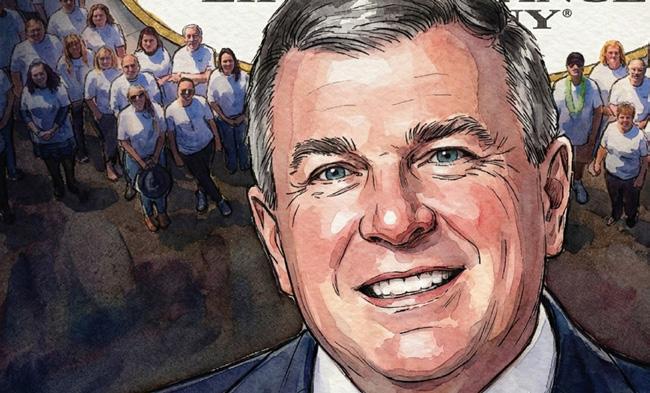
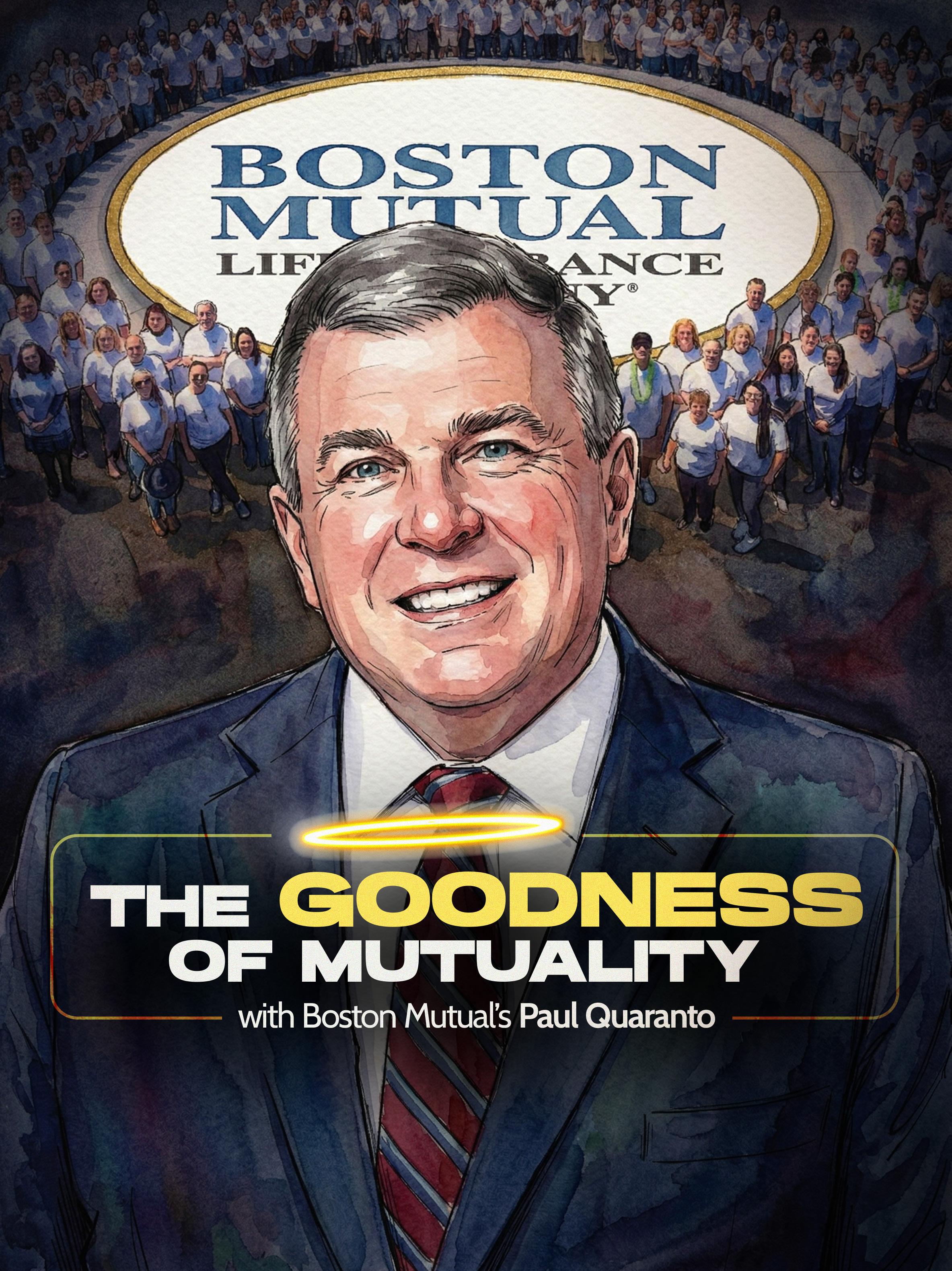
The goodness of mutuality — With Boston Mutual’s Paul Quaranto
PAGE 10
What to know about market‑ linked life strategies
PAGE 28
Can AI be trusted for premium finance planning?
PAGE 42
Navigating Success, Together
Knighthead Insurance Group is a family of global insurance companies helping customers around the world protect and grow their wealth for more than a decade.
A Legacy of Growth
For over a decade, Knighthead Insurance Group has been dedicated to one thing—helping our global customers preserve and grow their wealth, their way. Across our insurance businesses, high ratings from AM Best and KBRA reflect our financial strength.
The Knighthead Insurance Group Businesses
Established 2024 Annuities for US-based customers. WWW.KNIGHTHEADLIFE.COM
Established 2014 Annuities for customers outside the US.
WWW.KNIGHTHEADINTERNATIONAL.COM
Established 2017 Reinsurance for life and annuity companies.
WWW.KNIGHTHEADRE.COM
Knighthead Life is the brand name of Knighthead US Holdings, Inc. and its subsidiaries, Merit Life Insurance Co. (“Merit Life”) and Knighthead American Life Insurance Company (“KALIC”). Knighthead International and Knighthead Re are the brand names for Knighthead Annuity & Life Assurance Company.
With the Smart Start Accumulator series, clients begin with an immediate edge thanks to the
Reduce market timing anxiety
Sidestep early volatility swings Capture favorable growth opportunities
IN THIS ISSUE
FEATURE
Trump 2.0: Financial chains unleashed or unraveled?
By John Hilton
The Trump administration’s economic program continues to take effect. What does it mean for advisors and their clients?
INTERVIEW
10 The goodness of mutuality
In a world that often believes bigger is better, 133-year-old Boston Mutual is focused on serving Americans of more modest means. Paul Quaranto discusses how his company stayed true to its roots during its long history.
IN THE FIELD
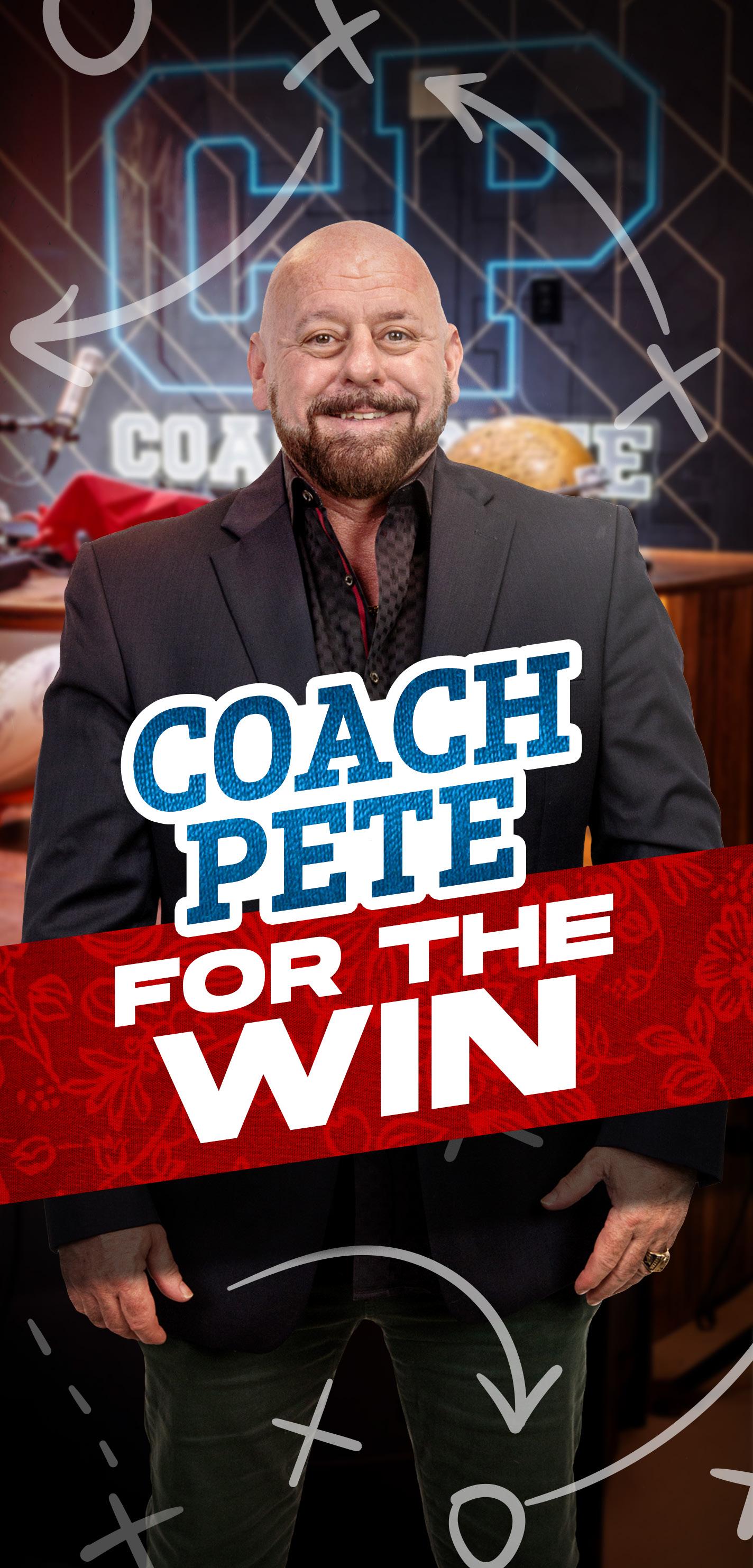
20 Coach Pete for the win
By Susan Rupe
Pete D’Arruda uses radio, books and billboards to reach clients, while coaching other advisors how to position themselves to deliver to a wider audience.
LIFE
28 What to know about market-linked life insurance strategies
By Darrel Tedrow
HEALTH/BENEFITS
36 Disability succession planning: What’s at stake, when to pivot By Sean McNiff
The right disability insurance coverage helps prevent a catastrophic liquidity event from becoming a defining challenge for the business.
ADVISORNEWS
40 Why advisors can’t afford to delay succession planning
By David Blake
The last thing any advisor wants is to be forced to sell their practice or scramble for a buyer when they’re out of options.
It’s important to look past the name of an index and understand how it’s built.
ANNUITY
32 Customizing FIAs with riders meets a broad set of client needs
By Val Majewski Advisors who focus solely on caps and participation rates miss the real marketing edge.
INSURTECH
42 Can AI be trusted for premium finance planning?
By Rayne Morgan
AI can do complex risk calculations more quickly and accurately than humans can.
IN THE KNOW
44 The wolf of AI
By Sue Kuraja
A tale of the
Diversified Brokerage Specialists 80 Years of Independent Expertise
Then. Now. Always.
Today’s clients expect speed. Advisors need efficiency. And underwriting shouldn’t slow great opportunities down.
Whether it’s life insurance, disability, long-term care, or annuities, we handle it all — from illustrations and presentations to applications and processing. Bring us a client, and we’ll deliver tailored solutions every step of the way.
And when traditional underwriting becomes the bottleneck, there’s a better way.
We make selling insurance easy:
• Life, Disability, LTC, and Annuities with full-service support
• Professional illustrations & client-ready presentations
• Application management that keeps cases moving
• Guaranteed Standard Issue (GSI) programs that minimize underwriting and speed approvals
Over 200 years of combined experience. Proudly independent. Always focused on you.
The April explosion
An exceptionally cold and snowy winter put most of us here in Pennsylvania into some kind of holding pattern in the early part of this year. Subfreezing temperatures, uncertainty about travel conditions and a general reluctance to venture outdoors made many of us hunker down and put life on hold until things began to thaw.
But then April comes along — and everything explodes.
Those first few warm days hit, and everyone goes crazy. People emerge from their winter cocoons and begin doing all those outdoor tasks that signal the change of season — washing cars, getting the porch furniture out of storage, pressure-washing decks — all while wearing shorts. Trees burst into bloom, and the pollen count goes through the roof.
Here at InsuranceNewsNet, we are feeling that April explosion.
We started a few weeks ago, as our editorial staff resumed travel and attended the first of the 2026 lineup of industry events. It’s crucial that we get out there and mingle with experts in the business as well as rank-and-file members of industry associations. These trips result in timely articles for the magazine and website, valuable relationships as we interpret the latest industry movements, and a better overall understanding of what our readers face as they serve their clients and manage their practices.
Our April issue reflects the explosion of new laws and deregulation in the industry as well as the snowball effect of technology.
What does OBBBA mean for taxpayers and advisors?
The One Big Beautiful Bill Act dominated the news when this landmark legislation was signed into law on July 4, 2025. Aggressive deregulation and protectionist trade policies contributed to a period of robust growth, with real gross domestic product reportedly rising by 4.3% in the third quarter of 2025. The Dow Jones Industrial Average
exploded above 50,000 for the first time in February.
What does this mean for everyday Americans and those who advise them? John Hilton breaks it down in our April feature article.
While the administration touts “largest tax refund season in history” and rising blue-collar wages, critics point out that the OBBBA is projected to increase the federal deficit by $3.4 trillion over the coming decade.
Analysis suggests a K-shaped impact where the top 1% of earners see significant net income increases, while middle-income and lower-income households may face net losses as the costs of tariffs and potential spending cuts to social services offset direct tax savings.
John discusses what advisors need to know as their clients are impacted by changes to the tax laws.
In addition, Trump Accounts that were established as part of OBBBA provide eligible children with $1,000 in government seed money. Although this is an attractive “free money” entry point, these accounts have significant planning drawbacks compared to traditional 529 plans. John discusses what these funds can mean to families as they plan for their children’s futures.
Meanwhile, the Trump administration has actively moved to roll back the
Retirement Security Rule — also known as the fiduciary rule — dropping legal defenses as of November 2024 and planning to have a new deregulatory framework by May of this year.
Will deregulation prioritize sales over fiduciary duty? John discusses some possible answers.
A lighthearted look at a serious subject
Technology — especially artificial intelligence — is exploding into every aspect of our personal and professional lives. In this month’s issue, Sue Kuraja takes a lighthearted look at a serious subject, the capabilities and potential pitfalls of using AI models. Sue uses the story “The Three Little Pigs” to illustrate ways organizations can scale their AI strategies responsibly.
And this month’s In the Field features an interview with the high-energy Pete D’Arruda, also known as Coach Pete. He exploded on the radio scene, dispensing practical financial advice to callers, and now helps other advisors position themselves as thought leaders in their own communities.
Spring is brief, and the April explosion doesn’t last long. Go out and enjoy it while you can.
Susan Rupe Editor in Chief, magazine
What’s in the news on InsuranceNewsNet.com
Judge orders Greg Lindberg to pay $526 million to policyholders
By John Hilton
A North Carolina judge ordered Greg Lindberg to pay $526 million to long-suffering policyholders following a civil trial.
Wake County Superior Court Judge Graham Shirley oversaw the trial to determine the amount of financial damages Lindberg and his companies owed to insurers they were found to have defrauded.
It was the culmination of a long-standing civil lawsuit originally filed in October 2019 by life insurers formerly owned by Lindberg: Southland National Insurance Corp., Bankers Life Insurance Co., Colorado Bankers Life Insurance Co. and Southland National Reinsurance Corp.
The majority of the award, $351 million of it, consists of punitive damages. Shirley stated this was intended “to punish him
and discourage others from committing similar wrongful acts.”
On June 27, 2019, all four insurers were placed in rehabilitation by order of the Superior Court of Wake County. On the same date, the parties entered into a memorandum of understanding under which Lindberg agreed to place certain special-purpose insurance companies — known as special purpose captive insurers — under a new holding company governed by an independent board tasked with protecting policyholders.
Judge: Money was ‘stolen’
The plaintiffs later sued, claiming that Lindberg violated the memorandum. Plaintiffs also brought claims of fraud and negligent misrepresentation, “alleging that Defendants made misstatements in the text of the MOU that induced Defendants to enter into two other agreements: the Revolving Credit Agreement and Interim Amendment to Loan Agreement,” court documents say.
Local TV station WRAL covered the proceedings and quoted Shirley, who stated that he’s confident Lindberg has the money to pay up from funds “that he has, to put it lightly, stolen.”
This ruling is separate from other recent legal developments, such as the $122 million contempt order that Lindberg petitioned the North Carolina Supreme Court to review.
Investors holding $130M in PHL benefits slam liquidation, seek to intervene
By John Hilton
Investors holding PHL Variable universal life policies with combined death benefits totaling more than $130 million say they paid monthly premiums north of $1 million while Connecticut regulators fed them false hopes of a company rehabilitation.
The hefty premiums helped pad the PHL bottom line for 19 months, and now investors stand on the losing end of potential liquidation.
Investors are not happy.
BroadRiver Asset Management filed an emergency motion to intervene. The firm represents policyholders who own 32 inforce UL policies with cumulative death benefits of $130.3 million.
Large UL policyholders “have funded the PHL estate in reliance on persistent, false representations by the Rehabilitator
that a rehabilitation plan — where death benefits would remain due and owing by PHL with various premium cost adjustments to address actuarial projections — would be forthcoming,” reads a memorandum accompanying the motion.
The BroadRiver policyholders have paid $57.1 million in premium payments, $19.7 million in the 19 months since Connecticut regulators began their rehabilitation of PHL Variable, the memo reads.
From the end of 2023 to September 2025, the amount of cash and short-term
investments held by the PHL companies increased from $103 million to $437.5 million. Regulators fattened PHL’s coffers via the large premiums paid by investors, the BroadRiver motion says.
A liquidation order would result in the termination of UL policies. That means BroadRiver policyholders would be left with nothing more than guaranty association coverage (limited by the $300,000 cap or whatever else the guaranty association agrees to) and a subordinated claim in a PHL liquidation.
Read the full story online: https://bit.ly/phl2026
InsuranceNewsNet Senior Editor John Hilton has covered business and other beats in more than 20 years of daily journalism. John may be reached at john.hilton@innfeedback.com.
CVS Health CEO David Joyner fires back at
AOC’s monopoly criticism
By John Hilton
CVS Health President and CEO David Joyner took the brunt of Rep. Alexandria Ocasio-Cortez’s viral broadside on health insurers.
The New York City Democrat called out CVS Health’s corporate strategy to “monopolize patient care” during a hearing held by the Health Subcommittee of the Committee on Energy and Commerce. Joyner responded during a fourth-quarter and full-year earnings call update for Wall Street analysts, where he devoted a significant portion of his prepared remarks to addressing the legislative criticism of CVS’s “vertical integration.”
While never mentioning OcasioCortez, Joyner said CVS Health’s control of the health insurer, medical provider, pharmacy benefit manager, drug manufacturer and pharmacy — meaning its members rarely leave a CVS-owned health business — saves the patient money.
“We can provide a connected solution for consumers that delivers better experiences and improves health outcomes at lower cost,” Joyner said. “Aetna members who have a combined medical and pharmacy offering have lower medical costs. Aetna members who consistently use CVS Pharmacy have higher medication adherence and lower ER utilization.”
During the hearing, Ocasio-Cortez noted that CVS Caremark, a PBM, processes nearly 30% of all prescriptions in a given year and helps determine what millions of patients pay for needed drugs.
She described a fictional patient named “Kate,” who has an Aetna health insurance plan, goes to a CVS Pharmacy and is connected to an Oak Street Health medical clinic. That led to a snarky exchange when Ocasio-Cortez pointed out the financial benefits for CVS.
“I would suggest it’s a model that works really well for the consumer,” Joyner said.
“Yeah. I think it works very well for CVS,” Ocasio-Cortez shot back.
Read the full story online: https://bit.ly/cvsjoyner
InsuranceNewsNet Senior Editor John Hilton has covered business and other beats in more than 20 years of daily journalism. John may be reached at john.hilton@innfeedback.com.
About 3M kids signed up for Trump Accounts
Families have filled out about 2 million Trump Account forms for about 3 mil lion kids, Treasury Secretary Scott Bessent said.
Parents or guardians can elect to open Trump Accounts for their kids with IRS Form 4547. Families can file Form 4547 with their 2025 tax return or through TrumpAccounts.gov. Once their account is open, babies born between 2025 and 2028 are eligible for $1,000 in seed money from the U.S. Department of the Treasury. The money will be placed in the accounts on July 4.
Parents, guardians and others can contribute up to $5,000 annually to Trump Accounts until children turn 18 years old.
A growing number of companies have pledged to match the Treasury’s initial deposit for the children of employees. Employers can deposit up to $2,500 as part of the $5,000 limit.
‘BOOMCESSION’
The economy seems to be in a boom and a recession at the same time, which may explain why many Americans don’t feel the economic growth that appears on paper.
This so-called boomcession describes how the average American’s feeling that they are not reaping the benefits of an economy that — by many indications — is humming along. That’s according to the American Economic Liberties Project.
Economic output and the stock market are on the rise, consumers are spending big and the post-pandemic recession that many expected never materialized. But many Americans feel pessimistic about their finances, and debt is at alltime highs.
MIDDLE-CLASS HOUSEHOLDS FACE A WORSENING SQUEEZE
Middle-class households face worsening cost pressures for the first time since October 2024, the American Council of Life Insurers conducted its first Financial Resilience Index survey.
The Financial Resilience Index also found that more than 4 in 10 middle-class households (42%) are not confident that they could pay an unexpected expense of $5,000 and bounce back financially.
Despite these pressures, middle-class households are taking some steps to improve or maintain financial stability, but there is room for improvement. More than half (52%) of middle-class households are putting money into a savings account and almost 6 in 10 (58%) said they are paying off debt or making debt payments.
Strong stock markets don’t mean a lick to you if you don’t own any stocks.”
— Joanne Hsu, director of the University of Michigan’s Surveys of Consumers
AMERICANS SACRIFICE TO AFFORD HOMEOWNERS INSURANCE
High home insurance rates are hitting Americans hard in 2026. A new survey from Insurify found that 59% of policyholders said their costs increased last year, and 57% made financial sacrifices to help pay for coverage.
Forty percent say they spend more on home insurance than they do on other coverages, such as car or health insurance. More than 1 in 4 homeowners (28%) said they would drop their home insurance if they could because of unexpected stress over high premiums.
To cut their insurance costs in half, 30% would allow insurers to install and monitor internal or external home cameras, and 19% say they
Nearly three-fifths of Americans believe the U.S. economy is currently in a recession
In a world that often believes bigger is better, 133-year-old Boston Mutual is focused on serving Americans of more modest means.
An interview with PAUL FELDMAN, publisher
In a world that often believes bigger is better, a 133-year-old mutual insurer is focused on serving Americans of more modest means. Boston Mutual was founded with the purpose of providing working Americans with financial peace of mind in their time of need. The company provides life, accident and related insurance products through the workplace as well as in the individual market.
Paul Quaranto led Boston Mutual from 2012 to 2025 and currently serves as chair of Boston Mutual’s board of directors and of the board of Life Insurance Company of Boston & New York. He also served as chairman of the American Council of Life Insurers from 2023 to 2024, helping raise awareness of the life insurance industry among lawmakers, policymakers and consumers.
In this interview with publisher Paul Feldman, Quaranto describes the philosophy that has led Boston Mutual through more than a century of serving its policyholders, as well as the company’s efforts in using artificial intelligence and data analytics to improve the customer experience.
PAUL FELDMAN: How did you get into this industry?
PAUL QUARANTO: It’s a simple story. My wife and I were engaged to be married — it was almost 45 years ago — and it was my senior year of college. Her father suggested that I should have a job before I married his daughter. I interviewed on campus for a company called Paul Revere — it later became part of the Unum companies — and I had the opportunity to take a job there as a group insurance underwriter.
That’s where I began. It began by default. It’s amazing to think that 45 years later, I’ve been blessed to have the opportunity to work in this industry and to grow into a leadership role that I never thought could happen. It has been a fantastic run, and I’m very humbled and honored to have had this happen.
One of the problems we have as an industry is that people don’t look at this industry as giving you real professional opportunity. We developed an intern program here, and I try to remind the interns that this industry has evolved. It’s not only about actuaries and accountants and
attorneys anymore. Everything they find in other walks of life — whether it’s technology, project management, public relations, investments — exists in this world. We need to compete in all those areas. This industry provides incredible opportunities for younger people. I believe it’s an industry that serves what many younger people want, which is balance in their life, purpose and mission, the feeling that they’re not only growing professionally but they’re meeting some of their personal goals of serving in a meaningful role and giving something back. I think this industry can provide that for people. We need to do a better job of telling that story.
FELDMAN: What can we do as industry tell our story better?
QUARANTO: A year ago, I was chosen to chair the American Council of Life Insurers. For a company like Boston Mutual, to be selected to do that was truly an honor.
nobody knows that. That was my pitch when I served my year at ACLI: Let’s tell our story better.
We must do a better job of saying we serve people from all walks of life. We need to make life insurance simpler and understandable. It’s a complex business, and what goes on behind the curtain can be complex, but we must do a better job of telling that story. I hear every day how a $5,000 or $10,000 or $15,000 life insurance policy is saving a family. Think about that. We don’t live in that world every day, but most people in this country live in that world. That’s pretty powerful stuff.
FELDMAN: Boston Mutual serves the lower-to-middle-income market. It’s such an underserved market. What made you choose that market?
QUARANTO: Part of Boston Mutual’s metamorphosis was we started by selling life insurance policies at the kitchen table, and today, we sell them at the cafeteria ta-
“We’re owned by policyholders for the benefit of our policyholders. We’re not trying to appease quarterly market returns versus long-term promises to clients ... . It affords us this opportunity to say we want to serve our customers. We know who they are.”
I think it was a recognition by companies of all sizes of a company of our size — which is small to midsized by industry standards and serves in a unique space. More than 130 years ago, Boston Mutual’s first president said we want to be a progressive life insurance company serving the needs of working families who, at that time, didn’t have the opportunity to secure any level of financial security. Fast-forward to today and we’re still that company. I think it has been a wonderful opportunity to be the face of an organization saying we serve people in all walks of life and then having the opportunity to say we need to tell that story better so that people can understand what we do is affordable. We need to make things simpler.
I think this industry is a noble one. It is a noble industry doing good things, yet
ble. We’re using the workplace as a leverage point, and I think a lot of companies are looking at that. When you get to the markets we serve, when you think about access and you think about payroll deductions, there is a means that’s more efficient in terms of selling the products. Our market for group products is companies with five all the way up to 50 employees.
We sell some group life chassis products, but we still sell a traditional individual whole life product that is built to serve those markets. That’s a policy that the employee owns. Regardless of whether they stay with that employer, they have the opportunity to maintain the policy forever. Part of what we want to represent through the agents who sell our product is that if an employer is concerned about their people and they want to give them products that can provide a
level of protection they believe they need, then let’s have a conversation. Because for us, it’s about giving employees that level of security and a product they can own and carry forward.
If an employer is just looking to put a menu of products out there and leverage an insurance buy with a technology platform that can also serve as an HR system for them, and all they want are products that will plug into that, and they don’t care if only 3% of the group signs up, that’s not who we want to talk to. I want to talk to Paul who’s got 30 employees, who knows most of them and is concerned that if the worst were to happen, he knows the family and doesn’t want to be in a position where he hasn’t done anything.
Now he can give them that policy — life, accident, critical illness, whatever — and they have a level of protection. If someone has that sort of sense as an employer, then that’s someone we want to talk to. There’s something that’s a value we can bring to them. We don’t want to be a commodity. We want to be a value-add for a family.
business and do it the right way but align all those pieces as well.
FELDMAN: What’s new and exciting at your company?
QUARANTO: I think it’s a combination of what is new and exciting and what isn’t new and exciting. I believe in the power of our story. I was the seventh president of Boston Mutual. We are in the middle of a leadership transition, and I am now the chairman and CEO. We have named a new president who will transition into the role.
be another 100-plus years of good stuff going forward?
We launched the first phase of a new policy administration platform and a new customer service model. These are incredibly exciting and will serve this company well.
FELDMAN: How has technology improved your processes?
QUARANTO: We needed to bolster our IT area. We needed a project management discipline to come into the company. We not only needed actuaries but we
FELDMAN: Boston Mutual is a 133-year-old mutual company. Tell us what that means to you.
QUARANTO: At Boston Mutual, we talk about the goodness of mutuality. We’re owned by policyholders for the benefit of our policyholders. We’re not trying to appease quarterly market returns versus long-term promises to clients. I think it allows us to live everything in terms of our brand and the value that we want to bring to the table. It affords us this opportunity to say we want to serve our customers. We know who they are. We want to serve the people who sell us. We want to serve our employees. We want to serve our communities. We’ve developed the Making an Impact program. We’ve been recognized for seven years as one of the most charitable organizations in Massachusetts. There is a bigger picture, a greater good that exists, and as a mutual company we can touch all those, but at the end of the day, we must be successful. We must grow our
“I hear every day how a $5,000 or $10,000 or $15,000 life insurance policy is saving a family. Think about that. We don’t live in that world every day, but most people in this country live in that world. That’s pretty powerful stuff.”
John Wheeler, our company’s first president, said our mission was to provide working Americans with the opportunity to take care of their families. That’s who we are today. Who we are, what we do, why we do it and who we do it for haven’t changed. But it’s how we do it that needs to change.
With 100-plus-year-old mutual companies, you’re dealing with all these legacy systems. Your ability to put product on the street, make that product simple and understandable and affordable, and your ability to serve your customers better with these legacy technology systems are real challenges. We’re not only competing with each other, but we’re competing against every customer experience that people have.
So what’s new and different is how do we take all of that good stuff and move it into a world where we can be better at how we do it? That’s the transition going on here. That has been the theme of the vision I had, the strategic plan we had — how do we prepare ourselves for the future so that 130 years of good stuff can
needed data scientists who could begin to help us understand where our data was stored and how we were going to put it into a new system.
Our organization had some gaps to fill, and then we needed to be sure that we had people in the organization who were capable of handling the change that would take place and who would be excited to be part of that journey. We recognized that some of us had to hold down the fort today while we build out tomorrow. All this required a thoughtful strategy on the people side of things as well.
It took two or three years of getting ready for this before we went to market. But we found what we wanted, and by doing it right, you give yourself a greater chance of success.
As we wrap up our strategic plan, we had several milestones for this year. One was to get this thing launched and move it forward. We’re excited about it. Having the combination of the organization and its people supporting a vision and a strategy was how we approached this, and it worked well for us.
FELDMAN: Tell me how your data scientists work. I don’t believe a lot of people think about data science in life insurance.
QUARANTO: I would always joke with our chief actuary that we need to morph from actuaries to data scientists. He would say, ‘What do you mean by that?’ I said, ‘Actuaries are great at looking backward. Data scientists will be the ones who look forward, take that data and begin to do more predictive analytics. They will use that data to help us better understand and give us a greater chance of success for the things that we want to do going forward.’
This is where you get into discussions about where artificial intelligence takes us in the long run. It’s about access to data, which is difficult with legacy systems, and how you will use that data to support future planning.
FELDMAN: What are you doing with the data, and how is that helping Boston Mutual?
QUARANTO: First, we had to identify how to access our data. With a 130-yearold company, we have lots of data, but with some of our legacy systems, a lot of that data was not readily available. A lot of data was baked into some of our programming, so we had to come up with a strategy to access the data and scrub that data so that we’re using accurate data.
We’ve made great progress on that. It’s critical not only for using your data today but preparing your organization for converting from those old legacy systems to a new system because you need clean data to bring forward into the new system.
We also looked to apply more science, if you will, to our distribution and sales efforts. Where are our target markets? Who is our customer? What can we learn about them from a socioeconomic standpoint? How can we use data to identify where they live, where they work, the types of jobs they’re in, and how can we go from a broad-based approach to a narrower focus with our sales team?
Helping our people to be better at identifying these things improves our closing ratios. It also improves our participation levels with our voluntary benefit products.
We’ve also used data as far as our own employees are concerned. This gives us a better understanding of what it is about our company that makes us a viable professional employment opportunity for them and how we get feedback on who they are, what they want and how they want to grow personally and professionally — and how do we create an environment where that can happen.
FELDMAN: What are some surprising discoveries you made from using data analytics?
QUARANTO: One surprise was how hard it was to get at our data. But a good surprise was how the data validated the socioeconomic profile of who we serve. We serve a lower-middle-income market, including a lot of single mothers. Now all of a sudden, the data validated that. It helped us do a better job of thinking about the products we need to serve those people if we want to move the needle to a broader base of customers.
The people we serve are probably some of the most economically challenged people in the marketplace. Many of them want to do right by their families, and they look to us for some sort of guaranteed solution if something bad happens in their lives. But we’re seeing people struggle to make their premium payments. So we’re making sure what we do is simple and helps people understand what their options are but also allows us as a company to sort of push up and be more relevant. This gives us a little bit more stability and growth opportunities in the market we serve.
FELDMAN: Where do you see artificial intelligence taking this industry?
QUARANTO: I think that for smaller companies, AI will be used to create efficiencies of scale. We’re already on that path.
I want to apply technology to process and people to our customers. You apply technology to the process so that your people aren’t doing the process. They’re talking to the customers and creating the customer experience.
FELDMAN: You served as chairman of ACLI in 2023-2024. What are you seeing at that organization?
QUARANTO: I think the industry has come together in understanding that we must be unified in terms of presenting who we are and what our needs are, and why the industry is important. We are letting those in Washington and in the state capitals know that if there are things that will affect us, please give us a call and at least have a conversation with us.
I think ACLI is focused on the optics of the industry — showing a more positive side of what we do and the opportunities we present.
The better job we do of articulating the value of this industry at all levels — the economic level, the community level, the level of financial security for Americans — all of those other conversations become easier.
FELDMAN: What should an agent understand about the industry as you see it?
QUARANTO: When I get an opportunity to chat with our agents, the first thing I always do is just thank them. I tell them, ‘You are the front line of this industry. You’re the people out there educating people on the need to have some level of financial security. And then, God forbid, if they need to tap into that, you’re the ones who deliver the checks.’
I think we need to remind our people that this is a noble industry, doing good things for people. There are financial opportunities for agents in that, but it’s not only about financial opportunities; it’s about the ability to give back and help people.
The distribution in the industry — the sellers and the manufacturers — must come together to work on that. Because you don’t put most of what we sell on a platform and expect people to wake up and say, ‘I’m going to buy life insurance today’ and figure out what’s right for them. They still need counsel and advice. That’s what we must provide, and we must find an efficient way to do that and find good people who are happy with making a living doing that.
Like this article or any other?
Take advantage of our award-winning journalism, licensure and reprint options. Find out more at innreprints.com
Financial chains unleashed or unraveled?
As President Donald Trump moves closer to the midpoint of his second term, the full impact of his agenda is being felt. What does it mean for advisors?
BY JOHN HILTON
April showers may bring May flowers, but for advisors and clients, they also bring a torrential downpour of forms, figures and that age-old question: “Is my dog finally tax-deductible?”
Rest assured that Fido remains off limits. Still, taxing questions remain as the Trump administration’s economic program continues to take effect.
Of course, the centerpiece of the Trump return was signed in a July Rose Garden event: the One Big Beautiful Bill Act, a landmark piece of legislation that permanently extended many of the 2017 Tax Cuts and Jobs Act provisions while adding highly visible, targeted benefits.
On the economic front, the administration’s second term has been defined by aggressive deregulation and protectionist trade policies, which contributed to a period of robust growth. Real gross domestic product rose by 4.3% in the third quarter of 2025. The Dow Jones Industrial Average hit a historic high of 50,000 in February.
The long-term fiscal and distributional impacts of Trump’s policies remain a point of significant debate. While the administration touts “the largest tax refund season in history” and rising blue-collar wages, critics point out that the OBBBA is projected to increase the federal deficit by $3.4 trillion over the coming decade.
Analysis suggests a K-shaped impact where the top 1% of earners see significant net income increases, while middle-income and lower-income households may face net losses as the cost of tariffs and potential spending cuts to social services offset direct tax savings.
One certain thing is that financial advisors and retirement planners will earn their fees. Advisors will want to pay particular attention to the following three areas.
1. Fiscal stability and the 2028 sunset
The OBBA provided immediate tax relief, but it carries long-term fiscal risks.
» Debt and yield pressure: The OBBBA authorizes a $5 trillion debt limit increase, which may flood the market with
Treasurys, lowering bond prices and putting upward pressure on yields.
» Sunset planning: Although many TCJA provisions were made permanent, others are still slated to expire after 2028. Advisors are warning clients to consider Roth conversions now to lock in today’s lower tax rates before potential increases in 2029.
The most important thing the OBBBA did for advisors and their clients was to bring stability to their financial planning, said Dennis Bielik, executive vice president and managing director at Hub International.
the portion of total charitable contributions that exceeds 0.5% of adjusted gross income will be deductible.
The OBBBA also reduces the marginal value of charitable deductions for top-bracket taxpayers. Under current law, donors in the highest bracket receive a deduction that offsets tax at about 37%. Beginning in 2026, the value of that same deduction will fall to roughly 35%, modestly increasing the net after-tax cost of each dollar given.
Future charitable giving and the tax impacts of that giving were the main topics of a recent webinar hosted by the National Association of Insurance and Financial Advisors.
“A common mistake with the estate tax is taking the word ‘permanent’ too literally. The law can very easily change again next week.”
“The new standard deduction is $15,750 for individuals and $31,500 for couples, while the state and local tax cap expands to $40,000 for the next five years. Combined with higher income thresholds for the alternative minimum tax exemption and continued limits on itemized deductions, these provisions favor income and liquidity management over estate tax planning,” Bielik wrote in a recent column for InsuranceNewsNet.
“For high-net-worth clients, that means shifting attention from legacy transfers to active income timing, Roth conversions and charitable strategies,” he added.
Among the many changes ushered in by the OBBBA, how charitable deductions are handled is among the biggest. These changes reduce the tax value of charitable giving for many high-income individuals and introduce new limitations on itemized deductions. The changes are significant, tax experts say, and not favorable to the taxpayer.
There are strategies to maximize charitable giving. But first, the changes.
For starters, a new 0.5% “floor” on charitable deductions means that only
Steve Gorin is a trust and estate lawyer and partner at the law firm Thompson Coburn. Business owners can convert charitable contributions into business expenses if they receive a financial return commensurate with the payment, he explained.
Examples include paying for an advertisement in a charity’s program, or a restaurant donating a percentage of sales on a specific night.
“There’s a direct correlation between the sales and the charitable payment,” Gorin noted. “That restaurant can deduct that charitable payment as a business expense relating to the sales.”
For wealthy clients, the OBBBA brought relief by increasing the federal estate tax exemption and making that increase permanent. The federal estate and gift tax exemption was scheduled to drop to $7 million but instead rises to $15 million per person and $30 million for married couples.
The worry now is complacency, the NAIFA panel agreed.
Michael Tessler is president of Brokerage Unlimited, where he assists
financial professionals with wealth transfer and wealth protection strategies.
A common mistake with the estate tax is taking the word “permanent” too literally, he said. The law can very easily change again next week. Tessler gave the example of a fictional couple who put a life insurance policy in an irrevocable trust with the idea that it would provide liquidity for their estate. After the OBBBA, the couple removed the life insurance, assuming the estate tax exemption would be $30 million forever.
“If things change, one, they’re going to be older and it’s going to cost more,” Tessler explained. “And two, insurability is always in question. To have a strategy in place, completely ditch it and then wind up needing or wanting it back in place — when it comes to life insurance, not so simple.”
There certainly are clients who will want to surrender a life insurance policy in this situation, Tessler acknowledged. Advisors must consider many factors from a financial standpoint.
“What is the rate of return on that death benefit, depending upon how many years the client lives?” Tessler asked rhetorically. “And keep in mind that if the client’s health has deteriorated since the time they purchased the policy, that only makes the rate of return go up based on a shorter life expectancy.”
as ordinary income rather than being tax free like a 529, which can push students into higher tax brackets and reduce the usable value of the savings.
» The “public benefits trap”: Assets in these accounts are currently not exempt from eligibility tests for Medicaid or Supplemental Nutrition Assistance Program, potentially disqualifying low-income families from essential aid.
Chris Gandy, NAIFA president, is a big fan of the Trump Accounts.
that compound over a lifetime.”
Parents and relatives can each provide up to $5,000 annually to the account, while employers are limited to a $2,500 annual contribution. The funds will be invested in the stocks of “American companies” through what is described as a “broad stock-market index.”
At least 28 companies have pledged a $1,000 match, including Bank of America Corp., JPMorgan Chase & Co. and Wells Fargo & Co.
But some economists doubt the true effectiveness of the accounts beyond the seed money given investment limitations, compared with a state-sponsored 529 plan. Likewise, critics say the realistic inability of low-to-moderate-income parents to contribute funds on a consistent basis will serve to widen the wealth inequality.
“Analysis suggests a K-shaped impact where the top 1% of earners see significant net income increases, while middle-income and lower-income households may face net losses as the cost of tariffs and potential spending cuts to social services offset direct tax savings.”
2. The ‘Trump Account’ structural risks
While the $1,000 government seed is an attractive “free money” entry point, these accounts have significant planning drawbacks compared to traditional 529 plans:
» Sequence of returns risk: Unlike 529s, Trump Accounts lack age-based “glide paths.” A 17-year-old’s account is 100% invested in U.S. stocks, exposing the entire balance to a market crash right when it’s needed for college.
» Tax friction: Withdrawals are taxed
Part of the OBBBA, the tax-deferred savings accounts provide $1,000 from the U.S. Treasury as investment seed money. Children eligible for the $1,000 seed money are those born to U.S. citizens between Jan. 1, 2025, and Dec. 31, 2028.
An initial $1,000 investment in a lowcost stock index fund can grow meaningfully over 18 years, Gandy noted in a recent column for InsuranceNewsNet.
“But the true promise of Trump Accounts lies in steady contributions from parents, grandparents, employers and even community organizations,” he wrote. “These accounts can support long-term objectives such as college, firsthome savings or early investing habits
With one-third of American households having less than $2,000 in emergency savings, “it makes them unlikely to contribute to their children’s Trump Accounts,” the Urban Institute said.
The money in Trump Accounts can grow tax deferred, but any withdrawals — even for the approved uses of college tuition, a first home or starting a business — are taxed at capital gains rates. Only half of the money can be withdrawn at age 18, and the rest at age 31.
Many financial experts believe 529 plans are a better option for committed savers. A 529 plan is a state-sponsored, tax-advantaged investment account designed to save for future education costs, including college, vocational school and up to $10,000 annually for K-12 tuition.
Earnings grow tax free, and withdrawals are tax exempt when used for qualified education expenses. Anyone can open a 529 account, and the plans offer high contribution limits with no income restrictions.
At the very least, Trump Accounts give those less-motivated savers something to get started.
“For many middle-income families, a structured, tax-advantaged, early-start investment vehicle is something they’ve wanted but never had the infrastructure or guidance to use,” Gandy said.
In late-February comments to the IRS on establishing the accounts, NAIFA recommended that the Treasury Department work with Congress to amend current investment restrictions that limit Trump Accounts primarily to index funds and exchange-traded funds. Although these investments can be appropriate in many circumstances, NAIFA cautioned that overly restrictive investment menus could limit customization and long-term performance.
“Restricting access to broader investment options limits customization and
say the best-interest framework created by the National Association of Insurance Commissioners and adopted in nearly every state is fair and thorough.
» Risky assets in 401(k)s: New executive orders aim to “democratize” access to private equity and digital assets in retirement plans. Advisors warn that these are often illiquid and hard to value and could lead to “life-altering losses” for ordinary savers.
All eyes are on the Department of Labor and its May regulatory agenda. It could contain a resolution to a more than 10-year pursuit of an extension of fiduciary duties to a broader range of financial professionals.
With one-third of American households having less than $2,000 in emergency savings, “it makes them unlikely to contribute to their children’s Trump Accounts.”
— The Urban Institute
prevents advisors from tailoring strategies to the specific needs of the individual,” Gandy said. “Financial experts are positioned to responsibly advise their clients on the multitude of investment options available to them and then use that knowledge to maximize value and returns over time.”
3. Weakened fiduciary protections and ‘buyer beware’ advice
The Trump administration has actively moved to roll back the Retirement Security Rule (fiduciary rule), dropping legal defenses as of November 2024 and planning a new deregulatory framework by May 2026.
» Conflict of interest? Deregulation may prioritize sales over fiduciary duty, making it harder for clients to know whether an advisor is acting in their best interest or chasing commissions. Industry officials
With Trump’s return, the DOL has effectively abandoned its defense of the Biden-era Retirement Security Rule, essentially a rerun of the fiduciary rule published during the Obama administration.
On Nov. 28, 2025, the Court of Appeals for the Fifth Circuit granted the DOL’s motion to dismiss its own appeal of lower court rulings that had blocked the rule. Because the government stopped defending the rule, nationwide stays issued by Texas district courts remain in place, preventing the expanded fiduciary definition from taking effect.
The industry has returned to the “fivepart test” established in 1975 to determine fiduciary status, supplemented by existing exemptions like PTE 2020-02.
But while it might seem a sure thing that a Trump DOL will pursue light regulation, history tells us a different story. The first Trump administration left us with PTE 2020-02, which allows
investment advisers to receive compensation for retirement advice, aligning with the Securities and Exchange Commission’s Regulation Best Interest.
The exemption mandates that advisors adhere to “Impartial Conduct Standards,” which include acting in a client’s best interest, providing written fiduciary acknowledgment, documenting rollover advice and conducting annual reviews.
Lawsuits challenged PTE 2020-02, and a federal court tossed portions of the preamble that allowed one-time rollover advice to trigger fiduciary status.
Recent Supreme Court rulings, specifically Loper Bright Enterprises v. Raimondo, have weakened the DOL’s ability to broadly interpret its authority under the Employee Retirement Income Security Act, making a return to the Biden-era expansive definition unlikely.
Meanwhile, a best-interest model law compiled by the NAIC has been passed in all 50 states. More recently, regulators signaled that they are looking at more active monitoring of compliance issues.
In March 2024, Iowa Insurance Commissioner Doug Ommen first noted that reviews of compliance with the best-interest regulation turned up “deficiencies” in producer monitoring. Ommen chairs the Annuity Suitability Working Group, which is behind the draft guideline.
After more than 18 months of discussion, the NAIC approved the Annuity Suitability Safe Harbor Guidance document during its 2025 fall meeting.
“To meet safe harbor requirements, insurers must monitor the insurance producer or their supervising entity,” the guidance reads. “An effective monitoring program involves the insurer taking active steps to assure itself that the supervising entity is complying with its obligations. Simply awaiting complaints or regulatory actions after regulatory exams are passive approaches that are inadequate in and of themselves.”
InsuranceNewsNet
Senior Editor John Hilton covered business and other beats in more than 20 years of daily journalism. John may be reached at john.hilton@innfeedback.com. Follow him on X @INNJohnH.
A Visit With Agents of Change
PETE D’ARRUDA uses radio, books and billboards to deliver his message of financial security.
By Susan Rupe
One of Pete D’Arruda’s fondest childhood memories is of when his family would pile into the station wagon and take vacation trips to a national park. While spending hours driving to and from their destination, the family would be entertained by listening to the radio — and one particular radio personality sparked something in D’Arruda.
Bruce Williams had a nationally syndicated advice program that ran for nearly three decades. He was known for offering practical, sometimes blunt advice on listener problems, earning the nickname “America’s Answer Man.”
D’Arruda was inspired by Williams to take to the airwaves after launching his insurance and financial services career. D’Arruda is president and founding principal of Capital Financial, with offices in North Carolina, South Carolina, Arizona and Nevada.
But he is best known as “Coach Pete” and “America’s Wealth Coach,” dispensing advice about annuities, life insurance, tax planning and retirement issues in the 20 books he has authored, the most recent one being “Tax $avvy Retirement.” His multimillion-dollar production and broadcasting company, Broadcasting Experts, produces more than 80 weekly radio shows and long-form video and audio podcasts heard and seen nationwide. His national show, “The Financial Safari,” can be heard at FinancialSafari.com.
He has won three Emmy Awards.
He founded Capital Financial to help his clients “cross the street of life.“ His goal is to help clients take the worry out of living in retirement.
But although D’Arruda seems to be everywhere in the world of financial communication, his 32 years in the industry had a modest beginning.
D’Arruda told InsuranceNewsNet that he became a mortgage broker when he was newly graduated from the
University of North Carolina. He soon realized that he wasn’t helping people the way he wanted to in that career. He thought about his former girlfriend’s father, who sold 403(b) annuities to teachers, and he began to do the same.
“My mom was a teacher and my dad was a college professor,” he said. “I knew that each school had a room with little cubbyhole mailboxes for each teacher. So I designed a postage-paid card for the principal to put in each box, saying, ‘You’re entitled to your tax shelter benefits, and your enrollment agent will be here in the next two weeks. Send this back.’”
A new way to get out there
As his teacher clients eventually retired, D’Arruda pivoted to retirement planning, doing dinner seminars as a way of prospecting. But he eventually became dissatisfied with the turnout and response to those dinners, so it was time to try a new way to get his name in front of the public.
He walked into each of the radio stations in Raleigh, N.C., and asked the staff whether they would sell him broadcast time to do a show about retirement planning. “And they all laughed me out of there,” he said. “They had never thought about selling radio time for someone to do that.”
D’Arruda made his way to a smaller radio station in Aberdeen, N.C., where the station manager offered him a time slot and recorded the show for him. The show began to pick up steam, and eventually the radio staff in Raleigh who had laughed at him were asking him to be part of their programming lineup.
“So now I have seven hours every weekend on the biggest Raleigh station, doing a live call-in show,” he said. He began calling his show “Money Matters with Coach Pete,” but now calls the show “The Financial Safari.”
His popularity caught the attention of other advisors, who asked him to help them get started with on-air shows of their own. D’Arruda found himself branching out from advising clients about life insurance and retirement to producing radio programming for other financial professionals.
“We have about 80 advisors that we do weekly shows for,” he said. “We also do TV shows and podcasts for advisors,
and we do them for ourselves as well. I’m on the local TV news every week. They have a segment on planning, but also whenever anything happens in the economy, they call on me to do some commentary, so it has been a big credibility builder.”
What listeners want to know
Questions from listeners run the gamut from how to pay off a mortgage early to what to do with the money in their 401(k) accounts. D’Arruda said some of the hot topics from his audience include concerns about market risk, how to generate lifetime income in retirement and whether to invest in cryptocurrency. He also has interviewed a number of personalities, including Barbara Corcoran of TV’s “Shark Tank” and former NBA coach Dick Vitale.
to follow to be successful, D’Arruda said. “You have to figure out what you’re going to say, and you need to say it the right way,” he said. “You must make sure you have calls to action. You must make sure you don’t come across too ‘salesy’ — you don’t want to come across as someone from a late-night infomercial. You want to be educational, and you want to give people ways to contact you.”
D’Arruda also has developed the Financial Speakeasy, a website that will offer 24/7 multimedia content on everything from mortgages to real estate to a show called “Bucketing on a Budget” that describes ways people can check off experiences on their bucket list without breaking the bank. D’Arruda has lined up a number of
We all want something. I call it
“gratisfaction.” We want immediate return. Especially insurance and financial professionals, we want immediate return for what we spend.
The need for information on what to do with money accumulating in retirement accounts led D’Arruda to devise what he calls the “financial fill-up strategy.” When he discusses it on his radio show, the conversation is accompanied by the “ding-ding” sound that used to be heard when a car drove up to a full-service gas station pump in years past. He even has an antique gas pump in his office. It’s all part of his branding efforts.
“We all want something. I call it ‘gratisfaction,’” he said. “We want immediate return. Especially insurance and financial professionals, we want immediate return for what we spend. But you have to take a longer-term approach and build so you become known as somebody people can trust.”
Don’t be too ‘salesy’
Advisors who want to use media to build their own brand have a few steps they need
experts to present the programming, which will be produced in his studio that includes seating for a live audience of up to 20 people. The site is scheduled to go live later this year.
Airport billboard advertising is another avenue D’Arruda has used to get his name in front of people. He has airport billboards in his home community of Raleigh and also has billboards in the departure terminal at the airport in Aruba. Being in the departure terminal costs him far less than in other parts of the airport, where hotels and tour operators pay a premium for advertising to tourists.
“But if I have some people from Raleigh who are in Aruba and they see my advertising, it’s another way to build recognition and credibility. Do I expect immediate return? No, and if you expect immediate return in this business, you’ll be sadly disappointed,” he said.
the Fıeld A Visit With Agents of Change
Protecting against market risk
You must make sure you have calls to action. You must make sure you don’t come across too ‘salesy’ — you don’t want to come across as someone from a late-night infomercial.
2 26 PREMIUM FINANCING & HIGH NET WORTH SOLUTIONS
In his years of advising, D’Arruda said he sees consumers making several bad financial decisions, and the most common bad decision revolves around market risk.
“People are way too impulsive. Everyone thinks they can take on a lot of risk until they experience the downside of risk. It’s easy to say, ‘Oh, yeah, I can take that risk,’ but when you look at it in real dollars, can they really take that risk?
“Let’s say someone is two years away from retirement and they have $1 million saved. But maybe it’s exposed to risk, so you ask, what’s their goal in keeping that money at risk? And sometimes they say they want to make another 20% on it. All right, so 20% of the $1 million is another $200,000, and now they have $1.2 million when they reach retirement. Is that really going to change their lifestyle, going from $1 million to $1.2 million? Not really. But when they realize if they lost 20% and now they have $800,000 instead of $1 million, their whole attitude changes.”
The financial fill-up strategy
That’s where D’Arruda’s financial fill-up strategy comes in.
It’s a guaranteed lifetime retirement income plan where clients receive
another “fill-up,” another payment, every month for life.
“The people who have this fill-up are the happiest people in the world because they don’t care what the market’s doing anymore,” he said. “They keep some money in the market, but even if they lost that money, they still have their lifetime income plans together. And I can sleep a lot easier at night knowing I’m not putting people right in front of a train coming toward them.”
D’Arruda calls himself “a multitasker extraordinaire” and said he wants to inject some fun into a business that deals with serious topics.
“I like to have fun doing what I’m doing. And if you’re not having fun, you’re in the wrong business. Life’s too short to not have fun. We only have a certain number of minutes here on Earth, so we need to make sure we’re having fun.”
Susan Rupe is managing editor for InsuranceNewsNet. She formerly served as communications director for an insurance agents’ association and was an award-winning newspaper reporter and editor. Contact her at srupe@ insurancenewsnet.com.
Premium finance solutions and wealth management are top of mind for affluent clients and the businesses that serve them. Read up on the latest from trusted partners and finacial leaders in our special sponsored section.
Adapt or Die — HNW and UHNW Clients Need Intentional Coordination by Jeff Wick, First VP, Client Solutions, Cambridge Investment Research, Inc. PAGE 23
Legacy Planning with Non-Qualified Deferred Annuities by Allison Anne Hoyt, JD, CLU, VP Head of Advanced Sales Consulting, MassMutual Ascend PAGE 24
Adapt or Die – HNW and UHNW Clients Need Intentional Coordination
By Jeff Wick, First Vice President, Client Solutions, Cambridge Investment Research, Inc.
For years, the wealth management industry has buzzed about “holistic planning.” But for today’s high-net-worth (HNW) and ultra-high-net-worth (UHNW) clients, that popular phrase isn’t just something to aspire to; it has become table stakes. As the financial lives of HNW and UHNW clients have grown more complex, more interconnected, and more multigenerational, the old-school, fragmented advisory model simply can’t keep up.
The industry is at an inflection point, and firms that don’t adapt to the evolving expectations of highly affluent clients will be left behind. It’s adapt or die.
From Fragmentation to Intentional Coordination
One of the biggest pain points HNW and UHNW clients face today is fragmentation; it’s not uncommon for them to work with a dozen or more professionals. They have financial advisors, CPAs, estate attorneys, insurance specialists, investment managers, and others, but often with scant coordination among them. The solution isn’t about advisors becoming experts in everything – it’s about taking responsibility for orchestration.
Allow me to coin a new phrase: “intentional coordination.” In practice, that means an advisor acts as the quarterback. They coach, consult, and coordinate across disciplines to ensure decisions are made in concert, instead of in silos. What we see far too often is a fragmented approach, when clients really want a single point of contact and intentional coordination with all the professionals they rely on.
True holistic planning goes beyond portfolio construction. It comprises a wide range of interconnected considerations: tax strategy, estate planning, asset management, risk mitigation, philanthropic goals, access to alternative investments, business succession planning, and more.
Pressure Is Intensifying
While complexity has always existed in the HNW and UHNW space, expectations have rocketed over the past decade. New technologies have democratized investment tools, and once-exclusive strategies are now widely available. With lesser-funded families having access to many of the same tools and opportunities, HNW and UHNW clients are asking, “What’s unique for me?”
That demand extends to private capital opportunities, specialized tax planning, and access to networks that, realistically, a single advisor or even a single firm can’t provide in-house. At the same time, the migration of advisors from wirehouses to independent and RIA models
has forced independent firms to evolve. There’s been a lot of lip service in the independent space, but there’s a lack of firms actually building the infrastructure required to deliver intentional coordination and a seamless client experience.
At Cambridge, we made a deliberate decision several years ago to invest heavily in serving HNW and UHNW clients. That commitment led to the creation of our Private Client Solutions group with a focus on intentional coordination.
From the top down, we put real resources behind it. This included strategic partnerships with nationwide attorney and Personal CFO networks, enabling Cambridge advisors to access specialized expertise across all 50 states without trying to replicate it internally. While it’s not economically feasible for any one firm to have that expertise in-house, it’s feasible to intentionally coordinate it for the client.
Asking The Right Questions
Another differentiator in serving HNW and UHNW clients isn’t access to products or platforms; it’s the willingness to ask deeper, sometimes uncomfortable questions.
One of the simplest but most powerful questions we ask is, “What is this money for?” What’s for the spouse? What’s for the kids? What’s philanthropic? And what happens if something unexpected occurs?
Engaging in these conversations builds trust and positions advisors as true partners instead of transactional providers. When an advisor understands where clients want their money to go and why, it’s easier for them to align the client’s wealth with their long-term objectives.
The Bottom Line
Firms must recognize that many HNW and UHNW clients now expect their advisor to function much like a family CFO. They want greater visibility into their entire financial ecosystem and demand more sophistication and personalization. Firms that are reliant on surface-level offerings will fall short. And while there is a significant opportunity for firms willing to invest in intentional coordination, the future of wealth management is not willing to wait for firms that aren’t.
Legacy Planning with Non-Qualified Deferred Annuities
Using a Revocable Living Trust to Give the Gift of Guaranteed Income
by Allison Anne Hoyt, JD, CLU, VP Head of Advanced Sales Consulting, MassMutual Ascend
Two of the most common reasons retirees and pre-retirees engage a financial professional are to assess their level of retirement savings and to learn about options to save and invest outside of their employer-sponsored retirement plan.1 For those retirees who planned ahead and previously purchased a non-qualified deferred annuity (NQDA), some may find themselves in the enviable position of not needing their NQDA for their own retirement security. With these fortunate individuals, financial advisors can shift the conversation from retirement planning with NQDAs to legacy planning and discuss how to pass the NQDA to the next generation.
Imagine a parent (Suzy) who purchased an NQDA in her 50s for $100,000. Now in her 70s, Suzy has been happily retired for a few years and does not anticipate needing to access the nearly $265,000 in her NQDA. Suzy has two children, Mark and Mindy. Mindy is a public high school teacher and has access to a pension plan and has also saved for retirement through voluntary contributions to an employer plan. Mark has been an entrepreneur all of his life and has a spattering of thinly funded retirement accounts and IRAs with multiple custodians. After discussing the options with her financial professional, Suzy decides that the NQDA would better serve its purpose of providing guaranteed income in retirement for Mark.2
As the owner and annuitant of her NQDA, Suzy has a couple of different options to achieve her objective. Let’s explore a potentially tax efficient way for Suzy to make the transfer of her NQDA to her son, Mark.3
First, Suzy would fill out the appropriate paperwork at the insurance carrier to change the annuitant of the contract to Mark. By making Mark the annuitant, his life will ultimately be determinative of any future life-contingent annuity payout benefits provided by the NQDA so that future payments can provide him with lifetime income in retirement and so that, after the second step, only Mark’s death would trigger a death benefit. Second, Suzy would change the owner (and beneficiary) of the NQDA contract to her revocable living trust (RLT). It is important that Suzy complete these steps in this order because many NQDAs do not allow an annuitant change when the annuity contract
is owned by a non-natural person, like a trust. If allowed, an annuitant change when the annuity contract is owned by a non-natural person would require the NQDA to begin distributions or lose the tax deferral for its accumulated earnings.4 Note that generally there is neither income tax nor transfer tax consequences when an individual transfers an asset into or out of their RLT.5
Ultimately, as the trustee of her RLT, Suzy remains in control of the NQDA during her life — maintaining access to its account value in case she’s ever in a pinch or if her plans change. Further, Suzy could authorize a successor trustee to exercise ownership rights over the NQDA in case she is incapacitated in the future. For example, the successor trustee could change the investment allocations in Suzy’s fixed-indexed annuity (FIA) or registered index-linked annuity (RILA) as the successor trustee deemed prudent. Assuming that Mark is alive, Suzy’s death will not trigger a death benefit. This is because it is the life of the annuitant (Mark) that determines whether a death benefit is payable. The NQDA remains intact. Also, at Suzy’s death, her RLT will become an irrevocable, non-grantor trust. At this point, the NQDA is still owned by the trust, the trust is still the beneficiary of the NQDA, and Mark is still the annuitant.
“…financial advisors can shift the conversation from retirement planning with NQDAs to legacy planning and discuss how to pass the NQDA to the next generation.”
Allison Anne Hoyt
The ability to impact the financial security of multiple generations with a single asset is a gift that is worth giving...
Assuming Mark is a trust beneficiary, or a member of a class of trust beneficiaries, and certain other trust provisions are present, the successor trustee of the trust can make an in-kind distribution of the NQDA to Mark, allowing him to become the new owner of the annuity contract.6 Ideally, the terms of the trust will grant the trustee the discretion to distribute trust principal to Mark and the authority to make distributions of assets in-kind (which virtually all trustees will have).
If mandatory distributions depend on the age of a trust beneficiary, the trustee will have to ascertain whether/ when distribution of the entire NQDA would be possible. If discretionary distributions are limited to a HEMS (health, education, maintenance, or support) standard, the in-kind distribution of the NQDA may not be permitted.7
In most cases, the in-kind distribution of the NQDA from the trust to Mark should not be a taxable transaction, and the investment in the contract immediately prior to the distribution will be Mark’s carryover basis in the annuity contract. The taxation of non-grantor trusts can be a fairly intimidating topic. However, in-kind distributions of assets
from such trusts are a little less so. In Private Letter Ruling (PLR) 1999050151, the Internal Revenue Service found that an in-kind distribution of a NQDA from an irrevocable, non-grantor trust to a trust beneficiary was not a transfer of an annuity contract “without full and adequate consideration” and thus was not taxable.8
As the new owner of the NQDA, Mark should name an appropriate beneficiary and will be able to exercise all the rights of ownership.
Mark has inherited a valuable and versatile asset to aid him in his retirement, which can be annuitized to provide income for him for life based on his age and his life expectancy. It’s a wonderful gift to have received from his mother.9 And, depending on the type of NQDA and the success of Mark’s investment choices, the value of his NQDA will likely far surpass the $265,000 contract value at the time Suzy transfers it to her trust, and play a significant role in allowing Mark to achieve a safe and secure financial future.
The wealth transfer potential of NQDAs should not be overlooked. Suzy and her advisor were able to accomplish a valuable shift in the function of the NQDA in her overall financial plan: From retirement asset to legacy asset, and, in so doing, will provide a meaningful and substantial gift to her son. The ability to impact the financial security of multiple generations with a single asset is a gift that is worth giving, and one that will hopefully serve to reinforce family financial values that include responsibility, prudence, and generosity.
Find out more
To learn more about how we can help, scan the code or visit www.massmutualascend.com.
1. Employee Benefit Research Institute/Greenwald Retirement Confidence Survey 2025.
2. Note, if Suzy is currently married and has ever lived in a community property state during her marriage, spousal consent may be required to name a beneficiary other than her spouse.
3. This article assumes that Suzy has an “owner-driven” annuity contract. An “annuitant-driven” annuity contract may have different considerations. This article also assumes that the NQDA does not have a living benefit rider or death benefit rider that would be negatively affected by the proposed use of the NQDA. It is also important to ascertain with the insurance carrier that certain contract changes are allowable as different carriers may have different practices.
4. See I.R.C. § 72(s)(7).
5. See Rev. Rul. 85-13, 1985-1 C.B. 184.
6. If a charitable organization is also a beneficiary of the trust, an attorney should be consulted to determine whether the NQDA is eligible for tax deferral after Suzy’s death. See IRC 72(u)(1).
7. The trustee of the now irrevocable non-grantor trust should seek the opinion and guidance of an attorney to resolve the various legal, tax, and factual issues presented by making an in-kind distribution of a NQDA contract.
8. Although other taxpayers cannot rely upon PLRs, they do provide insight into the position of the IRS on various issues.
9. Alternatively, Mark may decide to name his spouse as a joint owner and/or as a joint annuitant and thus achieve other valuable planning objectives.
Global life insurance market to hit
$16.35T by 2033
The global life insurance market was valued at $7.59 trillion in 2024 and is expected to reach $16.35 trillion by 2033, growing at a compound annual growth rate of 8.9% from 2025 to 2033, according to an Astute Analytica report.
A substantial underinsured population is creating a powerful opportunity within the life insurance market, the report’s authors said. An estimated 102 million U.S. adults recognize a personal demand for more life insurance coverage. Key segments driving this demand include 50 million middle-income Americans and 54 million women who have identified specific gaps in their financial protection.
The current scale is already vast, with 134.93 million individual policies in force and more than 118 million people covered by group plans in 2024. These figures point to a widespread and acknowledged demand for coverage, signaling a clear runway for growth.
LIMRA PREDICTS GROWTH IN LIFE PREMIUM
After several years of remarkable expansion, the U.S. life insurance industry enters 2026 with both strong momentum and a shifting economic landscape. LIMRA’s 2026 forecast suggests that while growth will continue, it will be moderated as consumers’ concern about economic uncertainty increases.
In announcing its optimistic forecast, LIMRA cited several factors fueling future premium growth, including heightened awareness of the need for life insurance following the pandemic and favorable economic conditions boosting the appeal of indexed universal life and variable universal life products.
In addition, LIMRA said innovation in products aimed at the middle market and advances in distribution also will lead to premium growth.
NAIC LOOKS AT EVALUATING INSURERS’ USE OF AI
A National Association of Insurance Commissioners group moved closer to launching a multistate pilot of a new artificial intelligence system evaluation tool, a move that industry trade groups have criticized.
The AI system evaluation tool is expected to enter a pilot phase, with Colorado, Maryland, Louisiana, Virginia, Connecticut, Pennsylvania, Wisconsin, Florida, Rhode Island, Iowa and Vermont participating.
Insurance companies have steadily expanded their use of AI over the past decade, moving from basic automation to more sophisticated applications throughout the insurance value chain. More recently, generative AI and advanced automation have reshaped how insurers engage with customers and manage internal operations.
IUL makes up 25% of new life insurance premiums in the U.S.
Source: LIMRA
We think this year’s narrative theme is one of strategic adaptation.”
—
Scott Hawkins, head of insurance research, Conning
Through it all, NAIC regulators have struggled to establish guardrails to preserve fairness, transparency and consumer protection.
HOW LIFE INSURANCE IS GOING HIGH TECH
Life insurers are increasingly turning to technology tools to help their policyholders live longer, healthier lives and, in turn, help boost the insurers’ bottom lines.
Companies such as John Hancock and MassMutual have spent the past few years looking at programs to help improve their policyholders’ health
MassMutual created its Health and Wellness Program in 2023. This year, it is looking to offer the program as a rider to all its eligible life insurance policyowners. MassMutual also said about 20% of the policyholders who took genetic testing learned that they were predisposed to certain medical conditions, such as heart disease.
Meanwhile, John Hancock has been offering policyholders wellness incentives through its John Hancock Vitality program for more than a decade. The company offered Vitality after observing that leading causes of death in the U.S. were diseases often influenced by lifestyle, such as diabetes, stroke and heart disease. About 80% of John Hancock policyholders who participate in the program said their health was about the same or better than it was 10 years ago.
Celebrating 60 Years of Serving Medicare Clients
When Medicare began in 1966, Mutual of Omaha was one of the first major carriers offering Medicare supplement insurance. As a matter of fact:
With 60 years in the market and over 1.4 million policies in force, Mutual of Omaha offers the staying power and stability your Medicare-age clients value.
We also offer competitive rates, a household discount up to 12%, dedicated sales support for you and automated underwriting (most applications auto decision within two minutes).
Your clients can complement their Med supp coverage with the Mutual of Omaha Hospital Protection℠ plan or a dental insurance policy.
Questions? Contact your marketer or scan the QR code below.
What to know about marketlinked life insurance strategies
Not all indexes are created equal, and not all of them are easy to understand.
By Darrel Tedrow
In a moment defined by market turbulence and rising uncertainty, more Americans are looking for financial solutions that offer both protection from market volatility and meaningful long-term growth potential. In fact, a recent Lincoln Financial study found that 67% of consumers want an equal mix of growth and protection when choosing an investment or an insurance product.
Indexed universal life insurance has steadily expanded its market share over the past decade as a response, with LIMRA reporting IUL new premium topping 25% of total U.S. life insurance sales in the first three quarters of 2025. Much of that growth is driven by the appeal of linking policy performance to market indexes, while maintaining downside protection.
But as the number of index designs grows — from traditional equity benchmarks to sophisticated, rules-based volatility-controlled indexes — it’s become increasingly clear that not all indexes are created equal. And not all of them are equally transparent or easy to understand.
The landscape has shifted — and so have index designs
Most people understand the basic idea of linking performance to a familiar benchmark such as the S&P 500. But in recent years, index designs have introduced new methodologies aimed at addressing a central challenge in modern markets: managing volatility.
Rather than relying solely on traditional equity indexes, many carriers now offer access to rules-based indexes designed to maintain a more stable level of volatility over time. These “volatility-controlled” or “risk-managed” indexes monitor market conditions and adjust the allocation between growth and stability-focused asset classes to help reduce extreme swings.
But these indexes can vary widely in their volatility targets, how frequently they rebalance, the composition of their underlying asset mix and the growth caps or participation mechanics that determine how returns are credited. This variability means performance can
As more proprietary and volatility‑controlled indexes enter the market, it’s becoming increasingly important to look past the name of an index and understand how it’s built.
differ widely depending on the index they select, even when two indexes share similar names.
Understanding the structure is more important than the label
As more proprietary and volatility-controlled indexes enter the market, it’s becoming increasingly important to look past the name of an index and understand how it’s built. Two indexes may sound similar yet behave differently depending on their underlying components and how they respond to market conditions.
One challenge is that some index designs don’t make their methodology or asset mix immediately clear. When the underlying basket is hard to see or relies on complex rules, it becomes difficult for clients — and sometimes even advisors — to understand what drives performance. That can create gaps between expectations and outcomes.
This is where transparency becomes especially valuable. Indexes with clear, easy-to-follow structures, whether they use broad equity benchmarks, cash or straightforward rules-based adjustments, make it easier to explain how returns are generated. Even simple distinctions, such as whether an index leans heavily on dividend-focused stocks or includes a rotating mix of asset classes, can have meaningful implications for how it performs relative to the broader market.
Ultimately, the goal isn’t to favor one type of index over another; it’s to ensure that both advisors and policyholders understand what’s inside the index and how its design may influence long-term results.
For financial professionals, the key is to know how the index is built:
» What is the target volatility?
» How often does the index rebalance?
» How transparent is the methodology?
» Is the underlying market exposure understandable to the client?
» How do caps, spreads or participation rates interact with the index design?
These questions are especially important given the recent proliferation of
proprietary indexes in the market. When clients know what drives an index, they’re better equipped to choose a strategy that aligns with their goals.
Volatility control isn’t about limiting growth
One common misconception is that volatility- controlled indexes dampen performance in a way that disadvantages policyholders. In reality, these indexes aren’t designed to outperform equity markets outright. Instead, they’re
help support more consistent crediting outcomes over time, even as markets move through periods of heightened volatility.
Index choice matters more than ever
As the life insurance industry evolves, index options will continue to expand and diversify. This represents an opportunity. A broader set of index choices means more ways to customize a policy to match risk tolerance, growth expectations and time horizon.
Indexes with clear, easy‑to‑follow structures, whether they use broad equity benchmarks, cash or straightforward rules‑based adjustments, make it easier to explain how returns are generated.
designed to provide more consistent, less erratic performance, which can create more predictable crediting outcomes inside an IUL chassis.
But why does volatility matter so much inside an IUL?
Because policy performance is influenced not just by average returns but also by the sequence of those returns. Extreme market drops can disrupt long-term policy values, especially for consumers relying on IUL as a supplemental retirement asset or a long-term accumulation tool. Indexes that target steadier volatility can help moderate those swings. In other words, volatilitycontrolled indexes attempt to balance participation in market opportunity with protection against the kind of turbulence that can disrupt long-term planning.
Advisors often ask how carriers maintain stability in caps and participation rates over long periods, and one factor is that volatility-controlled indices generally produce more stable option pricing than traditional designs do. That stability can
For financial professionals, it underscores the industry’s responsibility to ensure clients understand the mechanics behind the indexes they select and to guide clients toward options that align with their expectations and risk level. Not all indexes are created equal. And in a rapidly changing market, that’s a good thing because it gives consumers the flexibility to choose the strategy that best fits their goals, their timeline and their comfort with uncertainty.
Darrel Tedrow is president of retail life solutions at Lincoln Financial Group. Contact him at darrel.tedrow@ innfeedback.com.
Like this article or any other?
Take advantage of our award-winning journalism, licensure and reprint options. Find out more at innreprints.com
ANNUITY WIRES
Annuity sales push closer to half a trillion
2025: $461.3 billion (Preliminary)
2024: $434.1 billion
2023: $385.4 billion
2022: $313.0 billion
2021: $254.8 billion
Source:
U.S. Individual
Annuity sales are still riding high. Total annuity sales climbed 6% to $461.3 billion in 2025, according to preliminary results from LIMRA. The fourth quarter kept the momentum going, with sales up 12% to $114.4 billion — marking the ninth straight quarter topping $100 billion.
Fixed indexed annuities continued their steady run. Fourth-quarter FIA sales rose 8% year over year to $34.4 billion. For the full year, FIA sales reached $128.2 billion, up 1% from 2024 — the fifth consecutive year of growth and a new annual record for the product line.
Registered index-linked annuities were the real standout. Fourth-quarter RILA sales hit $22.2 billion, up 24% from a year earlier. For all of 2025, RILA sales jumped 20% to $79.6 billion — 10 times what they were a decade ago — extending the product’s growth streak to 11 straight years and setting both quarterly and annual records.
Although Q4 fixed-rate deferred annuity sales declined 24% from the prior quarter, they increased 12% year over year to $32.8 billion. In 2025, FRD sales improved 5% year over year to $160.6 billion.
ANNUITY ILLUSTRATIONS SOAR TO AS HIGH AS 27%, REGULATORS SAY
The newly named Life Insurance and Annuities Illustrations Working Group is just starting its work on illustrations.
During the group’s kickoff meeting, Ben Slutsker, director of life actuarial valuation at the Minnesota Department of Commerce, said current annuity illustrations from top sellers show returns as high as 27% in one year
Created at the National Association of Insurance Commissioners’ fall meeting in November, the working group will “evaluate concepts for improving life insurance and annuity illustrations and disclosures, and consider revisions to relevant NAIC models or develop other guidance where feasible and appropriate.”
Tackling illustrations is sure to be a lengthy and difficult process, as illustrations
have become a de facto sales tool for complicated life insurance and annuity products. Slutsker acknowledged the fear-of-missingout factor among life and annuity sellers.
The working group is starting slowly, collecting comments on the question, “What are both short-term and longterm approaches to ensure consumers receive reasonable expectations for index annuity investment returns at the point of sale?”
TALCOTT FINANCIAL LAYS OFF 101 EMPLOYEES
A life and annuity insurer recently cut jobs in downtown Hartford, Conn., trimming about a third of the workforce it moved to the city’s iconic “Boat Building” less than three years ago.
Talcott Financial Group said in a letter to the state Department of Labor that 101 employees at its Talcott Resolution Life Inc. subsidiary will be permanently laid off. The cuts are expected to take effect April 24.
The company said the layoffs are tied to the closing of certain functions within
QUOTABLE
“If a company wants to compete in this [annuity] space … they might be forced to show some of the higher illustrated rates.”
— Ben Slutsker, director of life actuarial valuation at the Minnesota Department of Commerce
its operations and information technology departments at its One American Row office in Hartford.
The notice did not detail the reasons for the departmental changes.
CONNING: SUCCESS IN 2026 WILL DEPEND ON ‘STRATEGIC ADAPTATION’
Conning Asset Management experts say insurers must remain strategically adaptive to stay ahead.
Scott Hawkins, head of insurance research, and Alan Dobbins, director of Conning’s insurance research group, detailed the firm’s 2026 projections for life and annuities during a recent webinar.
In Hawkins’ view, insurers’ success will depend on their ability to “ innovate, manage risk and seize emerging opportunities amid profound macroeconomic and investment shifts.”
While experts at Conning believe each insurer will ultimately “find their own blend of actions,” they nonetheless reviewed projected trends to take into consideration.
“For the life annuity sector, 2026 means building a scalable platform that links distribution, spread investment, asset management and capital capacity, while meeting elevated expectations on transparency and risk control,” Hawkins said.
Hawkins
Dobbins
APPROVAL
• NO health questions • NO underwriting • NO interview
NO medical exams
NO prescription checks
NO field underwriting
Customizing FIAs with riders meets a broad set of client needs
Advisors who focus solely on caps and participation rates miss the real marketing edge.
By Val Majewski
What truly builds trust in the financial world? It’s more than just offering the right products. It’s also about delivering personalized solutions — the kind that speak directly to a client’s specific fears and provide clarity amid uncertainty.
In our business, sustained growth comes from solving the client’s most complex problems. Right now, that problem is simple: Retirees need protected growth and ironclad income guarantees. This need is driving the massive momentum behind fixed indexed annuities.
Why FIAs are your sales engine
LIMRA showed FIA sales were $93.8 billion in the third quarter of 2025, slipping
1% from record results posted in the nine months of 2024.
Although the base FIA contract is a solid foundation — offering principal protection (a 0% floor) and a tax-deferred, index-linked upside — it is the strategic utilization of optional riders that transforms the product into a tailored solution. These riders are essential for customizing the contract and delivering individualized value to every client.
Why base FIAs require customization
A base FIA is a great tool, providing a floor of 0% protection and the potential for greater index-linked interest crediting. However, a single, standardized contract can’t solve every intricate client need.
A “vanilla” FIA protects principal, but it doesn’t address the client’s specific, deepseated anxieties: outliving money, protecting the spouse, unforeseen medical costs or ensuring efficient wealth transfer.
Advisors who focus solely on caps and participation rates miss the real
marketing edge. Diagnose these precise risks and build the corresponding layer of assurance. We position the rider not as an optional add-on, but as a critical, customizable component designed to meet the client’s risk-need-time profile.
The three pillars of risk mitigation
Successful agents train to match each client to one of these three rider categories: income, accumulation or legacy.
1. The income pillar: the guaranteed lifetime withdrawal benefit guarantee
Longevity risk — the fear of outliving one’s money — is perhaps the most significant psychological barrier facing retirees today. The guaranteed lifetime withdrawal benefit rider is our most decisive countermeasure against this fear.
This feature provides a contractual guarantee: a percentage of the benefit base that the client can withdraw every year, for life, regardless of how the actual accumulation value performs. Furthermore, the income stream is
calculated using a separate benefit base that often grows at a guaranteed rate of return during the deferral period. This mechanism is a game-changer for clients seeking predictable cash flow. The value of this guarantee translates directly to asset retention. Contracts with a GLWB rider consistently demonstrate higher client persistence. For example, a joint study by the Society of Actuaries and LIMRA showed that surrender rates dropped significantly. Approximately 10% of contracts with a GLWB were surrendered in the year the surrender charge expired, compared with 33% for those without. The guaranteed lifetime income stream creates emotional lock-in that transcends mere performance anxiety.
2. The accumulation and protection pillars: GMAB and GMIB
For clients who are earlier in the accumulation phase or who demand maximum certainty in their final contract value, we turn to guaranteed minimum riders.
» Guaranteed minimum accumulation benefit: This rider assures the contract value will reach a specified minimum amount at the end of the surrender period. This protects assets against years of low index performance and ensures a baseline return regardless of market volatility.
» Guaranteed minimum income benefit: When the client plans to annuitize, they use this feature. The GMIB establishes a minimum floor for future income payouts, providing a stable target for retirement income planning.
3. The legacy pillar: Enhanced death benefit
Many high-net-worth clients, or those focused on nonprobate asset transfer, use FIAs for wealth preservation. The enhanced death benefit rider makes this possible, especially when legacy is the priority. This rider ensures that beneficiaries receive the greater of the actual accumulation value, the total premium, or a value that has grown at a set, guaranteed interest rate. This strategically bypasses market downside and ensures maximum efficiency for generational wealth transfer.
Advisors who focus solely on caps and participation rates miss the real marketing edge. Diagnose these precise risks and build the corresponding layer of assurance.
The advisor’s guide: Matching riders to client goals
We train our agents to use a simple risk assessment framework. Match the product’s customization to the client’s most significant psychological need.
Client Profile Primary Concern
Pre-retiree (Age 55)
Conservative Retiree (Age 70)
Longevity risk, maximize future income
Capital preservation, unforeseen health needs
risk, paying the fee is unnecessary and would be a drag on potential growth. Use sophisticated analysis to prove that for the client who needs the guarantee, the cost is a highly effective premium for essential risk transfer.
Recommended Rider Rationale
GLWB with a higher deferral bonus
GMAB and terminal/ nursing waiver
High Net Worth (Legacy focus)
Maximizing nonprobate transfer
Maximizing value: Transparently addressing costs
As we know, these valuable riders come at a cost. Riders typically incur an explicit annual fee, generally ranging from 1% to 1.5% of the benefit base. Since this fee is deducted from the accumulation value, a year of zero index credit results in the contract value declining by the fee amount. We must address costs clearly, as transparency is the cornerstone of trust and the best-interest standard.
This is the strategic conversation point: The value of the guaranteed benefit must demonstrably outweigh the ongoing cost. If the client has ample retirement savings and minimal longevity
Enhanced death benefit rider
Locks in income guarantee early and rewards income deferral.
Guarantees the final account value floor and provides penalty-free access for critical health events.
Ensures the asset passes efficiently with a guaranteed minimum stepped-up value.
Move beyond selling a product to providing a fully engineered financial strategy. Master the diagnostic approach and become the go-to guide on rider utilization to elevate your practice. Remember, you are not just selling an annuity; you are selling certainty — the one guarantee every retiree truly needs and the path to your agency’s growth.
Val Majewski is the vice president of sales & marketing at American Benefits Exchange, an AmeriLife company. Contact him at val.majewski@ innfeedback.com.
HEALTH/BENEFITSWIRES
Less than half of workforce holistically healthy
Less than half of America’s workforce is holistically healthy, as employees battle rising costs and employers balance investing in benefits with broader costcutting measures. That’s according to MetLife research. Holistic health is defined as a combination of physical, mental, financial and social health.
The research found that on average, employees miss 6.1 days per year of work because of health-related issues and 50% of key employees often avoid seeking medical care because of out-of-pocket costs.
Meanwhile, employers cited “controlling health care costs” as their top benefits objective. This surpasses productivity, loyalty and attracting new talent for the first time since 2022.
The survey also pointed out that employers recognize that investing in workforce health and well-being improves business outcomes. According to the employers surveyed, for every $1 invested in employee health, employers would expect a return of $2.30 through gains in productivity, retention and lower medical spending.
HOSPITALS OFFER THEIR OWN MEDICARE ADVANTAGE PLANS
“If you can’t beat ’em, join ’em,” the saying goes. Hospitals, tired of fighting insurers, are offering their own MA plans.
Although hospital-owned plans are only a small piece of the Medicare Advantage market, their enrollment continues to grow. Of the 62.8 million Medicare beneficiaries eligible to join MA plans, 54% signed up last year, according to KFF, the health information nonprofit that includes KFF Health News. While the number of MA plans owned by hospital systems is relatively stable, Mass General Brigham in Boston and others are expanding their service areas and types of plan offerings.
Kaiser Permanente, the nation’s largest nonprofit health system by revenue, started an experimental Medicare plan in 1981 and now has nearly 2 million people enrolled in dozens of MA plans in eight states and the District of Columbia. The Justice
Department announced in January that KP had agreed to pay $556 million to settle accusations that its Advantage plans fraudulently billed the government
HEALTH CARE INFLATION EATS INTO RETIREMENT BUDGETS
Health care inflation isn’t going away anytime soon and will eat into retirement budgets, according to a recent HealthView Services report. The report highlights the long-term impact of retirement health care cost inflation across Medicare Part B, Part D, Medigap, Medicare Advantage and related out-of-pocket expenses.
Health-related cost inflation is expected to remain stubbornly high, with a projected long-term inflation rate of 5.8%, while Social Security cost of living adjustments are projected to rise at 2.4%.
The report said that in 2026, Medicare Part B and Medicare Advantage premiums directly ded ucted from Social
QUOTABLE
People are terrified to use their care. They may delay something until it’s more serious.”
— Katherine Hempstead, senior policy officer with the Robert Wood Johnson Foundation
Security increased by 9.7% and the Social Security COLA was 3.2%. It also notes that the national average Medicare Advantage inflation rate was 6.6% — reflecting the combined impact of higher Part B premiums deducted from benefits and additional Medicare Advantage premiums to cover drugs and other services.
SPENDING 1/10 OF INCOME ON HEALTH INSURANCE
In many states, health insurance premium contributions and deductibles take a significant bite out of household incomes, with many middle-income families reporting spending at least one-tenth of their annual income on coverage.
An analysis from the Commonwealth Fund found that in 2024, premium contributions and deductibles for family plans totaled 10% or more of the median household income in 19 states. The calculation did not include copayments.
The share spent on premium contributions and deductibles for family coverage ranged from a low of 5.7% in the District of Columbia to a high of 15.6% in Louisiana. The states with the highest percentages were concentrated in the South — Florida, Mississippi and North Carolina, all at 13.7%, were the only other states that topped 13%.
About 167 million working-age adults under 65 in the U.S. get their health insurance through an employer.
Source: The Commonwealth Fund
65%+ INCOME REPLACEMENT
THE LAYERED SOLUTION
The High Limit Disability income protection plan was developed specifically to meet the needs of those needing supplemental disability insurance. A High Limit Disability plan through Lloyd’s of London provides coverage to those who would like to obtain more protection beyond their existing inadequate disability plans. Our goal is to provide at least 65% replacement of income. Lloyd’s of London is the only market that makes this available.
As incomes increase, the issue and participation limits of traditional Disability Insurance carriers decrease. To properly insure a highly compensated individual at 65% of income, multiple disability income plans are often required and are layered to provide sufficient income protection.
The following scenario illustrates the way income protection plans can be layered to provide an individual with 65% coverage of monthly income.
EXECUTIVE
INCOME: $900,000 annually $75,000 monthly
Disability succession planning: What’s at stake, when to pivot
Clients may know about buysell agreements but not about buy-sell disability solutions.
By Sean McNiff
Advisors who work with business owners know that buy-sell agreements are essential planning tools, but disability funding remains one of the most misunderstood and poorly addressed exposures. In many cases, clients recoil at the cost of fully insuring their buy-sell obligations, leading them to walk away from crucial coverage entirely.
Advisors must recognize when a disability buy-sell solution makes sense, when it’s appropriate to pivot to a key person disability structure instead and why the financial stakes are far too high to dismiss the conversation with “It’s too expensive.”
The goal is not to force clients into an all-or-nothing choice. Instead, advisors should understand how to balance risk, cost and practicality so clients can meet their obligations without jeopardizing the business they’ve worked so hard to build — and which is often the cornerstone of their net worth.
For example, two equal partners each owned 50% of a $100 million construction company following the transition of the business from the first generation to the second. When their buy-sell
agreement was drafted, they secured $50 million of life insurance on each partner but declined the recommended $50 million of disability buy-sell coverage, as it did not fit their current budget.
Eighteen months later, the chief financial officer revisited the issue with the advisor, prompting the development of additional design alternatives. Working closely with the CFO, the partners selected a revised structure that better aligned plan objectives with the company’s budget. The updated design extended the
With intentional planning, advisors can contain expenses, design flexible alternatives and put coverage in place that helps prevent a catastrophic liquidity event from becoming a defining challenge for the business.
disability repurchase trigger from 12 to 24 months and insured 50% of the firm’s current exposure. Under the original structure — providing $50 million per insured after 12 months — the annual premium was approximately $375,000.
Following the design modifications and corresponding updates to the buysell agreement, the annual premium was reduced to $129,800 — a cost the business found acceptable, as it still delivered the peace of mind the partners were seeking.
This scenario underscores that when cost becomes the sole driver, businesses may remain fully exposed to disability buy-out obligations. With intentional planning, advisors can contain expenses, design flexible alternatives and put coverage in place that helps prevent a catastrophic liquidity event from becoming a defining challenge for the business.
The repurchase obligation in a disability event is nonnegotiable. Once a partner becomes permanently disabled — whether due to stroke, accident, neurological issue or another unexpected medical event — the business is typically required to buy back that partner’s shares after a 12-month waiting period. Advisors routinely address the death contingency through life insurance, yet many hesitate to engage in the disability discussion — often due to uncertainty around accessing sufficient benefit limits or the assumption that cost will be a barrier for the client.
When a buy-sell agreement contemplates both events, failing to address the disability exposure creates a material gap in planning. From a fiduciary perspective and increasingly from an errors and omissions standpoint, advisors have an obligation to identify and address this risk rather than leave clients exposed to what is frequently the most financially disruptive outcome under the agreement.
A strategic product pivot
A second example demonstrates how a strategic product pivot can better align with business owners’ objectives while addressing cost concerns instead of abandoning coverage altogether. In this example, three brothers jointly operated a river-dredging and road-paving company. Each had $5 million of life insurance, and their advisors recommended purchasing traditional disability buyout coverage for the same amount. However,
existing family dynamics made them cautious about adopting a structure that would require a forced buyout after just 12 months of disability.
The proposed disability buyout coverage carried a cost of $47,056 annually to fully fund the partners’ disability obligations — about 0.314% of the business’s value — but the brothers still balked, saying, “It’s too expensive!”
Instead of leaving the clients without a plan, their advisor pivoted to a high-limit Lloyd’s key person disability strategy. Under this structure:
» Each partner would continue receiving income for 24 months if disabled.
» The company would cover the first six months of that compensation.
» After a 180 -day waiting period, a key person disability benefit of $50,000 per month would begin.
» After 24 months from the onset of a disability, a $1 million lump sum would be paid to begin the buyout of the disabled partner’s shares.
The total cost was only $20,404 annually, saving more than $26,000 per year and reducing the cost ratio to 0.14% of the company’s value. When the advisor moved away from a buy-sell funding approach and listened to the clients’ concerns, goals and objectives, implementing key person disability coverage delivered meaningful protection within a structure and cost the clients could confidently move forward with. The “too expensive” objection disappeared once the coverage matched the clients’ risk tolerance and goals for planning.
Understanding when and how to pivot elevates an advisor’s succession-planning expertise, transforming product selection into intentional design. At the highest level, this capability becomes a critical differentiator for businesses with complex ownership structures and multiple partners.
In a recent case, a commodities trading firm had one founder with $30 million of equity and five minority partners, each with less than $5 million in equity. The CFO was confident the business could handle an unexpected disability repurchase obligation of a minority shareholder’s stock through cash flow. But if the founder became permanently disabled, not only would the remaining partners face a $30 million obligation, but they would also suffer the loss of their key rainmaker, whose name was on the door.
In this setting, the advisor used a key person disability program to provide the business with a monthly benefit of $100,000, beginning after six months, which was designed to pay the business for 12 months. Following the exhaustion of the monthly benefit within the program, a lump sum of $30 million would infuse the company with sufficient cash to repurchase the named partner’s equity.
Disability more likely than death
When evaluating buy- sell repurchase obligations, advisors must acknowledge a fundamental reality: Disability is statistically more likely than death during one’s working years. Yet disability remains the most consistently underinsured risk, largely because many advisors underestimate the flexibility and strategic applications of the solutions available in the excess lines markets. At its core, succession planning is about ensuring the continuity and success of a business when faced with the loss of a key partner. An advisor’s true value lies not in delivering a perfect or fully funded solution, but in the ability to design a plan that is thoughtful, intentional and clearly documented. When constructed with care, even an imperfect plan can provide meaningful direction, protection and confidence at the exact moment business owners need them most.
Sean McNiff is the vice president of business development and marketing at Exceptional Risk Advisors, Saddle Brook, N.J. Contact him at sean.mcniff@ innfeedback.com.
A recent survey from the Nationwide Retirement Institute reveals a surprising generational divide in retirement planning. Younger workers — Generation Z and millennials — are starting to save earlier, engaging more actively with their workplace retirement plans, and planning for market volatility, while many baby boomers and members of Generation X wish they had taken similar steps sooner.
On average, Gen Z and millennial savers started contributing to their workplace retirement plans at age 23 and 28, respectively — nearly a decade earlier than Gen X (34) and boomers (40), the survey said. They’re also more engaged and protection-focused, checking balances weekly, increasing contributions annually and planning for market volatility. Roughly 7 in 10 younger savers said that they have a strategy to safeguard their savings before retirement, compared to just 55% of Gen Xers and 44% of boomers.
Ultimately, these habits are paying off, the survey said. Eight in 10 younger savers feel optimistic about their retirement plans , and nearly half also feel confident about the savings they’ve accumulated. This is compared with just a third of Gen X and a quarter of boomers.
Despite these pressures, middle-class households are taking some steps to improve or maintain financial stability, but there is room for improvement. Just over half (52%) of middle-class households are putting money into a savings account, and almost 6 in 10 (58%) said they are paying off debt or making debt payments.
More using AI for financial advice
Nearly half of Americans said they have used artificial intelligence to help with their personal finances, according to FNBO’s 2025 Financial Wellbeing Study.
AI platforms have rapidly evolved in a short time, but many users and experts still
Finseca and the International Association of Qualified Financial Planners announced they will merge.
Source:
Finseca
When retirement could last to age 100
Half of the respondents to a Corebridge Financial survey think it is possible they could live to be 100. So they need to plan for a retirement that could last up to and beyond the day they hit that centennial milestone.
How can they do this? Corebridge had some recommendations. One is conducting a retirement savings checkup With potentially more years of life to fund, putting away more money for the future has never been more important. Help make sure that clients are fully maximizing the use of available tax-advantaged savings opportunities, including contributing to individual retirement accounts and plans such as 401(k)s and 403(b)s. And if they are 50 or over, remind them about the opportunity to make catch-up contributions.
Also educate clients about their Social Security options and how Social Security fits into their overall retirement income strategy. Help clients better understand their Medicare options and factor in Medicare costs, as well as how potential long-term care costs fit into their retirement income planning.
have their concerns. The more information shared with an AI chatbot, the more personalized advice it can offer. However, sharing sensitive information can open the door for potential scams and privacy concerns.
A 2024 study by PYMNTS.com found that consumers are worried about how using AI makes them more dependent on technology and susceptible to privacy breaches.
Why advisors can’t afford to delay succession planning
How to develop a strategy to protect your business and control your legacy.
• David Blake
Arecent survey by research company Cerulli found that more than one-third of advisors expect to retire within the next decade, yet many still don’t have a clear succession plan in place.
At first glance, that may seem counterintuitive. After all, we spend our careers helping clients prepare for the unexpected — managing risk, safeguarding their wealth and ensuring their families are protected. But when it comes to securing our own continuity, it’s surprisingly easy for planning to fall to the bottom of the list.
Succession planning is most effective when it begins early. By putting a strategy in place well before a transition is on the horizon, advisors protect the business throughout their career and gain greater control over how their legacy takes shape. With thoughtful planning, they can build a stable, enduring future — one that supports clients, empowers staff and provides long-term security for their families.
The wake-up call I didn’t expect
Three years ago, I had a serious and unexpected health scare. I was forced to confront a difficult truth in those weeks leading up to a life-changing surgery: I was not prepared. I realized I didn’t have clear answers to fundamental questions about the future of my practice: What is the value of my company? If I had to step aside suddenly, what would happen to my family? What would happen to my staff, my clients and the business we’ve all worked so hard to build?
The last thing any advisor wants is to be forced to sell their practice or scramble for a buyer when they’re out of options. This reactive, crisis-driven transition creates stress and uncertainty across all areas of the business. Without a clear continuity
plan, the people who rely on your business are pulled into uncertainty too and are suddenly worried about their jobs, their financial well-being and what the future holds. Confronting those same anxieties firsthand became the moment I realized I couldn’t keep putting this off. It was the catalyst that pushed me to finally build a real succession plan.
Know what your business is worth
The first practical step in any succession plan is determining the value of the business. Until you understand what your firm is worth, it’s difficult to ensure it will stand the test of time once you’re no longer at the helm. This process is best guided by an independent expert who can assess financial health, operational structure
The last thing any advisor wants is to be forced to sell their practice or scramble for a buyer when they’re out of options.
and long-term sustainability — creating a strong foundation for informed, forward-looking decisions.
Once you understand your business’s worth, consider how to protect that value over time. This could be through purchasing life insurance policies designed to help fund buyouts or provide the liquidity to protect your family or partners. It also may include key person coverage for yourself or other leaders to support continuity if someone critical is lost.
One overlooked tool for succession planning is a business overhead policy. In the event of disability, these policies can cover fixed expenses for six, 12 or 18 months. Many advisors assume that renewals or assets under management will carry the business, but having an overhead policy strengthens the firm’s overall financial position. A potential buyer will view a practice far more favorably if core expenses are secured for a period of time.
When it comes to timing, the truth is you should start planning as early as possible — ideally the moment your practice begins to generate real value. Early planning isn’t just strategic; it’s cost-effective. If your succession or continuity strategy involves insurance, starting sooner can mean significantly lower premiums, making early action a smart financial move as well as a protective one.
Build a real continuity blueprint
After completing a valuation of my business, I prepared detailed responses to the critical questions that would arise in the event the surgery didn’t go well, recovery was prolonged or the post-surgery prognosis was worse than expected.
However, these questions can apply at any point in the planning timeline:
• Who will speak to clients, and what will they say?
• What do we communicate to staff, and in what order?
• Who has the authority to make decisions on hiring, firing and capital purchases?
• Who is ultimately responsible for “running the ship”?
I identified a small internal leadership group and defined their roles clearly. I also
appointed someone I trust to take the company to market if needed. They would also be tasked to secure bids and negotiate with external buyers. Finally, I named a separate advocate specifically to represent my wife and my family’s interests.
These decisions were not rooted in pessimism but in practicality. They ensured that in the event of the worst-case scenario, my family, staff, and clients would be protected and the business would be positioned to capture its full value.
Take time to choose the right successor
One of the biggest questions in succession planning is whether your successor will be internal or external. Both paths can work, but each requires thoughtful preparation. If you’re looking internally, ask: Are they capable of taking over? Do they have (or can they access) the capital required? Do they share the firm’s values and vision for clients?
• Will they retain your staff and honor the client relationships you’ve built?
These are not decisions to rush. Give yourself enough runway to identify the right successor, test the fit and, if needed, adjust course before you step away.
Reassure the people who matter most
Clients and staff ultimately want stability. They want to know that no matter what happens, there is a plan. As part of my own planning and transition, I’ve considered writing letters that would be shared with clients and staff with messages that say in effect, “We’ve prepared for this. Your needs will continue to be met, and here’s how.”
Beyond that, I believe in candid, ongoing conversations. Annual reviews and client meetings are natural opportunities to reinforce that there is a plan in place and
As part of my own planning and transition, I’ve considered writing letters that would be shared with clients and staff with messages that say in effect: “We’ve prepared for this. Your needs will continue to be met, and here’s how.”
I’ve met many advisors who say, “I’m not worried; my daughter [or son] will take over when it’s time.” That may be a wonderful goal, but it still requires a plan. Are they being actively prepared to lead the practice? Do they have the training, experience and confidence they’ll need if succession is triggered sooner than expected?
If you’re planning to sell externally, thinking carefully about the alignment is even more important. Ask questions such as:
• Should the potential buyer be a peer who offers the same services and has similar systems and processes?
• Is it a firm with complementary services that would benefit from access to your clients or corporate relationships?
that clients will be in good hands for the long term. The same is true for staff. The more they understand the plan, the more secure and committed they’ll feel.
None of us are invincible, and none of us will be in the office forever. Succession planning isn’t a morbid exercise; it’s an act of leadership. Don’t wait for a health scare to start evaluating your business. Begin while you’re healthy and excited about the future. That’s when you’ll do your best to think and create a succession plan that truly reflects the value of your life’s work.
David Blake is the founder and president of InsMed Insurance Agency and current president of the MDRT Foundation. Contact him at david.blake@innfeedback.com.
Can AI be trusted for premium finance planning?
Experts say it’s possible, but it’s not without risk.
By Rayne Morgan
Artificial intelligence has become so advanced that it can now reliably be used to process and make decisions in complex processes such as premium finance planning, according to several industry experts who spoke with InsuranceNewsNet.
the profile of the consumer to whom the money is being lent.”
AI’s prevalence in insurance is expanding, with use cases quickly advancing from simple automation of repetitive tasks to advanced reasoning such as premium financing and even claims settlement.
However, AI’s inherent related risks still raise major concerns in an industry predicated on risk management and aversion.
AI modeling is used for the premium finance company to go through that stress testing term and risk stability and those decisions are made, that is an adverse outcome,” Manchester said.
Assessing complex scenarios
“Bringing AI into the conversation in terms of modeling — looking at your entire portfolio, determining stress testing and analysis — you can, of course, use artificial intelligence, specifically machine learning, to understand default probabilities of certain aspects of that portfolio,” Franklin Manchester, global insurance strategic advisor, SAS Institute, explained. “Probabilities can be higher or lower, depending on the risk associated with
Manchester noted that the waters aren’t completely clear just yet. He raised caution about the “adverse outcomes” that could result if technology is not applied appropriately, such as if an organization that offers premium financing decides to increase rates or not to lend out funds after all “because of how the AI was ultimately used.”
“Now, I’m not going to sit here and say that’s right or wrong; it is the terms of the agreement that are acknowledged by that individual when they are choosing to secure that financial vehicle to pay their premium. However, the business or the consumer does not have that insurance protection. So, ultimately, if the
Henry Zelikovsky, founder and CEO of Softlab360, explained the mechanism behind how and why technology can be used to improve scenario analysis in premium finance planning.
He said machine learning models first “examine data holdings of a portfolio over a period of time and cash distributions of a portfolio over a period of time to determine what would be a reasonable recommendation and predict what would be a better option given portfolio composition, what can be freed up to raise money for a premium.”
Then, conventional conversational AI tools such as Claude or ChatGPT can be leveraged above the structured numerical data that’s predicted through the
Manchester
Zelikovsky
language models to “really allow a personal conversation.”
“Someone could take advantage of the Claude model as a large language model to phrase a question: ‘What should I do? What can be my options? What could be a better option?’” Zelikovsky said.
Pavel Sukhachev, founder of Electromania, maintains that companies don’t necessarily need a complex AI tool for this purpose. His organization uses Claude for 99% of coding and finds it perfectly suitable for their needs.
“I’m excited about this because it saves you a lot of time. Previously, for us to do some kind of deep research, we’ve had to identify a lot of sources, contact all the sources, grab the information and compare it. It’s been quite a challenging thing. Now with the help of AI, there’s no bottleneck at all,” Sukhachev said.
Zelikovsky acknowledged concerns about how reliable or accurate AI can be when performing premium financing analysis. However, as a former engineer who has spent the last 10 to 12 years in machine learning through his business, he believes leveraging AI in this way is reliable because it merely enhances an assessment process that has existed for years.
Further, he emphasized that machine learning holds true to its name — it’s always learning, processing and analyzing historical data as well as new data and learning from that database of information.
“I think concerns are valid. I think we will use the result of what’s called an autogenerated conclusion and the question is, was that accurate?” Zelikovsky noted. “The companies that do this for a living, like my company, would come with the tools to prove that the result is consistent, and the person who looks at the results would contribute their own opinion of what they saw as a result of such an AI to decide whether it’s an appropriate conclusion.”
Insurance-specific AI solutions
Like Zelikovsky, Manchester represents one of the many technology companies that design AI solutions specifically for the insurance and finance industry, including options to support premium
“The AI that we offer and the AI that is generally available can do these very complex risk calculations fast, better than humans can ... ”
— Franklin Manchester, global insurance strategic advisor, SAS Institute
financing analysis.
“The AI that we offer and the AI that is generally available can do these very complex risk calculations fast, better than humans can with one customer — a different financial vehicle, but variable annuities,” Manchester said.
For instance, he said SAS saw a 99% reduction in stress testing calculations for expected cash flows. He added that the power of their Risk Engine tool versus standard analytical tools or even Excel — which he suggested some companies are still using — is precisely this ability to effectively “go through that scenario analysis very quickly.”
Zelikovsky, meanwhile, said his company’s LLM follows a rigorous training protocol of learning and relearning using historic data from 20 to 30 years of portfolio history until consistency reaches a benchmark of 94% or higher.
Throw new data in the mix for that AI to learn from and support it with human talent evaluating the conclusions against the machine that made the prediction, he added, and you have Softlab360’s formula for success.
“That’s our concept, and we’ve been doing it for a while. We’re a software engineering company of a solutions nature; we use our tools, our techniques to provide implementation of customer use cases per customer,” Zelikovsky explained.
Overseas, there’s an even more specific solution being developed — a new AIpowered platform designed exclusively for premium financing analysis and support. The platform is aimed at providing a loan within a matter of minutes, facilitating customizable repayment options and providing a “white-label” solution for insurers to have more control over the process instead of having to give up a big part of their brand to third-party companies.
Enrico Damioli, co-founder, explained that his new organization, Flexra, is building an API-first platform that any insurer or broker can easily integrate to give them more control.
He said its development was partially a response to a “very concentrated” market in the United Kingdom, where there are only “a few large players” in a fairly “competition-free” market with clunky systems and seemingly little motivation to improve. It’s in the prototype phase as of this writing but is expected to fully launch within the next 10 to 12 months.
“The idea is to have a platform that can be used by more old-school types of insurers, managing general agents or brokers. So, an external platform that they can use to monitor all the premium financing that they have, create new premium financing, get in touch with the clients and then have a platform to have all of this under control,” Damioli said.
However, Zelikovsky underscored that regardless of what solution finance providers opt for, what matters most is evolving the conversation about AI and how it is used.
“My vision, and suggestion to the industry, is that it is important to evolve the conversation,” he said. “It’s important to make sure that people try them out. There is no going back. AI is a fundamental here.”
Rayne Morgan is a journalist, copywriter and editor with over a decade of experience in digital content and print media. You can reach her at rayne.morgan@innfeedback.com.
Sukhachev
Damioli
the Know In-depth Discussions With Industry Experts
The wolf of AI: ‘I’ll huff and I’ll puff and I’ll blow your house down!’
A fictional tale about the Three Little Pigs — and their
AI use cases
Here is a story about The Three Little Pigs and how they used artificial intelligence.
The first little pig built a house of straw: closed source + frontier AI.
Impressive results can arrive quickly by using closed-source frontier AI models through public, vendor-run interfaces. “Closed source” means you can use the model, but you can’t inspect or control how it was built or how it may change over time; “frontier” reflects the model’s advanced capabilities, but they can still produce unexpected outputs. They can seem easy and quick, but have limited visibility and limited controls and pose real risk if sensitive client information enters the workflow.
The second little pig built a house of sticks: enterprise-approved AI tools (closed-source + frontier AI).
Here, companies start using AI tools that have been checked and approved with controls for business use. Teams can run pilots, learn faster and demonstrate value while operating with stronger controls. Some open-source models may be used, but typically only in secure, limited environments where data is carefully protected and monitored.
The third little pig built a house of bricks: proprietary + frontier AI.
At this stage, AI becomes part of the company’s core infrastructure. The company owns the system — including how
BY SUE KURAJA
the data is used, who has access to it, and how outputs are reviewed and can track what the system produces. Strong controls — such as audit trails, monitoring and documentation — are built in to meet regulatory and governance requirements. It takes longer to build, but it is safer, more reliable and easier to scale.
The first pig: The straw house
The first pig, who built his house of straw, resembles the early adopter who eagerly experimented with ChatGPT in November 2022. This was not an enterprise move; it was a bottom-up experiment driven by curiosity and accessibility.
Closed-source frontier models suddenly invited exploration beyond traditional programming techniques, opening a new door for those with decades of applied learning in computer science, software engineering and rule-based logic. “Frontier” refers to a leading-edge model with strong general capabilities, but one that can still produce unexpected outputs and requires testing and controls. An example of this would be a model that generates clean, convincing prose for a claims summary but quietly inserts an incorrect coverage detail, misreads a date or cites a policy clause that doesn’t apply.
For many testers, late 2022 marked a shift away from if-then automation toward systems in which individuals with limited or largely traditional AI engineering skill sets could engage frontier-level intelligence through a simple
interface — without building models, managing infrastructure or understanding the mechanics beneath the surface.
The straw house went up quickly. It was impressive and seemingly transformative. Productivity surged, experimentation flourished and the promise of intelligence felt immediate. But what the first pig built was a structure optimized for speed, not durability — constructed on borrowed strength.
It stood just fine until pressure arrived.
In this straw house, compliance felt deceptively simple because governance was effectively reduced to vendor terms of service. Policies, guardrails and safety controls were inherited rather than engineered, allowing rapid experimentation without internal oversight, audit trails or formal model governance.
Risk was almost entirely outsourced; accountability was not. Model behavior could change without warning. Failures were opaque, and there was little visibility into why output drifted, hallucinations appeared or prior results failed to remain consistent.
The house someone else built was sufficient for early experimentation so long as the wind blew gently.
When the first gust of wind — the wolf — arrived, it did not come as a threat; it arrived as an email. Workplaces began circulating guidance on the “responsible use of AI,” reminding employees that experimental tools were not neutral playgrounds but extensions of the corporate environment.
What had felt like personal productivity quietly crossed into organizational exposure. Knowledge workers were warned against pasting sensitive information into public interfaces, relying on unverified outputs, or using AI-generated content in client-facing or regulated workflows.
This marked the moment when informal experimentation met institutional risk awareness. The wind was still light, but it was directional. The straw house began to creak as the gap between individual experimentation and organizational responsibility became visible.
As Hasan Davulcu, computer science professor at Arizona State University, emphasizes in discussions of socio-technical systems, when capability outpaces accountability, the “first failure” it is organizational.
The wolf had not yet blown the house down — but for the first time, the pig noticed the weather changing.
The second pig: The house of sticks
The second pig chose a different material. Instead of straw, he built his house from sticks. When the wolf arrived, the house bent, but it did not collapse.
This stage reflects the shift from individual experimentation to business-led pilots, where local adopters and internal change agents began shaping AI use inside real work environments. Curiosity matured into intention. Teams were no longer simply using AI; they were testing it, inspecting it and evaluating its behavior under controlled conditions.
Frontier capability was still present, now combined with greater transparency, testing and the possibility of governance. In practice, this often appeared under the protective veil of approved, vetted and secure enterprise vendors.
What mattered was not just the copilot itself, but what came beyond it: teams experimenting with prompts, workflows, plug-ins and task-specific augmentations while remaining within corporate security boundaries. Inspectability improved, and testing became feasible, bringing governance into the conversation — not as a mandate but as a choice.
In insurance terms, this is often where copilots begin to touch real workflows (e.g., claims intake summaries, policy
quality assurance support, underwriting research assist), while still being constrained by approved environments and monitored use.
Risk was no longer fully outsourced; it depended on internal discipline, documentation and the pace at which teams matured their practices. Compliance could succeed in this environment, but only if organizations matched technical experimentation with operational rigor.
The house of sticks held — not because it was unbreakable, but because it was continuously reinforced while the wind was already blowing.
Tip: The strongest business use cases are designed within existing enterprise constraints, not around them. Start by understanding approved vendors, security guidelines and the core technology stack. Then frame use cases that extend what is already trusted — solving real workflow problems today while remaining inspectable, governable and scalable tomorrow.
The third pig: The house of bricks
The third pig built with bricks — not to slow progress but to make progress durable.
This is the proprietary + frontier strategy, where AI is treated less like a tool and more like institutional infrastructure. When the wolf — operational risk, regulatory scrutiny and the steady drumbeat of responsible use — arrives here, the brick house prevails not by being invincible but by being accountable.
Decision ownership is clear. We evolve from “systems of record” that merely store the what (policy data, claim status) to “systems of meaning” that capture the why. Outputs are traceable, logged and reviewable. Controls are expressed in language that compliance teams already understand: recordkeeping, audit trails, data classification, access management and role-based oversight.
Change moves more deliberately than it does with straw or sticks, but outcomes are more predictable. In regulated environments, predictability is not a constraint; it is the foundation that prevents innovation from collapsing under its own velocity. It allows us to capture “decision traces” — such as a senior underwriter’s judgment to override a risk score — turning momentary exceptions into permanent, teachable assets.
In Davulcu’s framing, this is the point where AI stops being “a clever assistant” and becomes an accountable socio-technical system — instrumented, auditable and aligned with how institutions actually make decisions.
Leaders responsible for business technology solutions at large insurance carriers often describe this stage as the moment when AI use cases stop being experiments and start becoming systems. This is where cautious optimism belongs. The brick house is an invitation to scale responsibly.
The most effective proprietary frontier strategies do not treat compliance as a gatekeeper to bypass, but as a partner in design. When builders engage early with legal, risk, security and business stakeholders, constraints begin to function less like roadblocks and more like architectural supports.
The overlap between innovation goals and governance goals becomes the load-bearing center of the strategy — where use cases are compelling and approvable, clever and defensible, fast and sustainable. From that center, organizations earn the ability to move faster over time because they have built a house that can withstand the wind — and continue to rise.
Tip: The most scalable AI use cases are designed with governance, not after it. Don’t just automate rules; build a “context graph” that scales human wisdom. Identify business problems where innovation, compliance and stakeholder incentives already overlap. Co-design solutions with legal, risk, security and business leaders from the outset so accountability, auditability and operational value are built in from day one.
Sue Kuraja has been in the financial services industry for 20 years, with more than 15 years of experience in business development, scaling insurance and financial services product distribution. She is an avid researcher of emerging trends in the tech space and their ability to modernize the insurance industry. Sue is dedicated to transforming the insurance industry and growing tech-ed knowledge within the broader insurance marketplace. She may be contacted at sue.kuraja@ innfeedback.com.
A new starting line for generational wealth
Trump Accounts represent a structural shift in how we think about financial planning.
By Jennifer Fox
For years, policymakers, educators and financial security professionals have grappled with the same challenge: how to help Americans start saving earlier, save wisely, stay invested longer and build lasting financial security. The upcoming rollout of Trump Accounts in July 2026 offers a timely opportunity to move that conversation from theory to action.
At their core, Trump Accounts allow parents, guardians and other authorized individuals to establish a new type of individual retirement account for children under the age of 18. Under H.R.1, or the One Big Beautiful Bill Act, every American child born between Jan. 1, 2025, and Dec. 31, 2028, will receive an initial $1,000 deposit from the federal government once a Trump Account is established on their behalf. Parents may then contribute up to an additional $5,000 per year initially, while employers may contribute up to $2,500 annually without increasing an employee’s taxable income.
But Trump Accounts are about more than contribution limits or account mechanics. They represent a structural shift in how we think about financial planning — one that begins at birth and creates an entry point for education, engagement and long-term thinking.
The power of starting early
The most compelling argument for Trump Accounts is not political. It is mathematical.
The Council of Economic Advisers estimates that under average U.S. stock market returns and with maximum contributions, a child born in 2026 could have an estimated balance of approximately $303,800 by age 18 and
more than $1 million by age 28. Even with no additional contributions beyond the initial government deposit, that same account could grow to roughly $5,800 by age 18 and $18,100 by age 28.
Those numbers underscore what financial security professionals have long understood: Time in the market matters. Compound interest is one of the most powerful wealth-building tools available, yet too many Americans are introduced to it too late or not at all.
Trump Accounts change that trajectory. They give families a tangible, visible example of how early saving works, and they create a reason to talk about money not as an intangible concept but as part of a long-term plan.
Where advisors make the difference
One of the most important elements of Trump Accounts is the role of financial advice. The decision of what to do with these funds when a child reaches adulthood is not automatic. Financial advice is the difference between keeping money invested at age 18 versus cashing out.
For many families, this may be their first real exposure to a consequential financial decision tied to long-term outcomes. Should the funds stay invested for retirement? Be used for education? Each option carries trade-offs, tax implications and long-term consequences.
This is where financial security professionals add irreplaceable value. Trump Accounts open the door to holistic planning conversations that go well beyond a single account or product.
Financial literacy starts at home and early
Trump Accounts also create a real, practical opportunity for financial literacy education. For parents, even modest contributions open the door to conversations about saving, investing and long-term trade-offs. For young adults, watching an account grow over time can be a powerful lesson
in what patience and discipline look like. Financial literacy isn’t built through one-time seminars or handouts. It’s built through experience. Trump Accounts give families something tangible to point to — an account that shows how longterm investing works.
An opportunity to get implementation right
Trump Accounts should not be viewed through a narrow lens. The core goals of helping families start saving earlier, expanding access to long-term growth and strengthening financial security for future generations are broadly shared priorities that have long drawn bipartisan support. If implemented well, this is the kind of policy that can endure beyond any single administration.
What advisors should do now
Although Trump Accounts will not officially roll out until July, advisors should begin preparing today. That means understanding the mechanics, anticipating client questions and thinking proactively about how these accounts fit into broader financial plans. It also means engaging in the policy process. Advisors have a unique perspective on how families actually use financial tools and where complexity can undermine good intentions.
A new starting line for financial security
Trump Accounts offer something rare in public policy — a chance to reset the starting line. By combining early access, long-term growth potential and professional guidance, they can help a generation of Americans experience the benefits of planning from the very beginning.
For financial security professionals, it is an opportunity to deepen relationships, expand holistic planning and play a meaningful role in shaping financial security for decades to come.
Jennifer Fox is vice president of federal affairs and political engagement at Finseca. Contact her at jennifer.fox@ innfeedback.com.
According to the 2025 LIMRA Retirement Investors Study of U.S. workers and retirees aged 40 to 85 with at least $100,000 in household investable assets, only 64% of Generation X women feel confident about achieving their desired retirement lifestyle, compared with 68% of Gen X men.
Stay on the cutting edge of our industry with the news and insights that matter most to you
come for retirement planning, while only 67% of men feel the same way. However, even with nearly half of women aged 61 to 65 expressing interest in annuities, only 39% say they understand the role annuities play in a retirement plan, compared with 52% of men.
concerns like securing retirement income after the loss of a spouse.
The most successful agents, brokers and advisors are often the most informed.
Women want advice
Gender gaps in retirement readiness
LIMRA research finds that preretiree women are generally less prepared than men for retirement. For example, only 51% of Gen X women have calculated the amount of assets they will have available to spend in retirement, compared to 54% of Gen X men.
Get the news, tips and sales strategies you need to keep your business thriving during COVID-19 and beyond. Our award-winning journalists cover topics from legislation to sales techniques — all with the goal of helping you sell more, faster and easier.
According to LIMRA research, 52% of Gen X women strongly agree that having lifetime guaranteed income gives people peace of mind in retirement, compared to 39% of Gen X men. There are clear signs that women’s retirement challenges aren’t due to the lack of interest in protected lifetime income but due to a lack of alignment between the solutions they value and how the solutions are presented. Annuities, when integrated into retirement income plans, can help close that gap and help them retire with confidence.
Customize your news and stay informed online:
» Life, health, retirement, AUM, property & casualty news and more
However, the gap between genders is not solely attributed to how they think about retirement but also represents differences in the source of retirement income. Preretiree women tend to own fewer investments or financial products from which to draw retirement income. LIMRA finds that among retired, unmarried men and women, men are more likely to receive retirement income from personal savings, traditional defined benefit plans, individual retirement accounts and other sources.
» Full access anytime/anywhere on the web, tablet or your smartphone
» Industry-first access to breaking news, expert tips, and more
Women expect to receive financial guidance through partners who communicate clearly and supportively while providing relevant advice to assist them in reaching their financial goals. LIMRA data reveals that female workers are more comfortable than male workers are with trusting their investment decisions to a financial professional. In fact, 43% of Gen X women want a paid professional to manage their investments with minimal input or want suggestions from a financial professional and will go along with their recommendations most of the time, compared with 32% of Gen X men.
For women, seeking advice is intentional. Women are now being more proactive in both planning for retirement and searching for financial professionals who will take the time to hear their goals, are willing to communicate with them before
The financial retirement landscape for women is changing. With that, so too must the financial services industry change. Women have clearly defined their needs for protected lifetime income and guidance. Financial professionals have an opportunity to provide women with the knowledge they need to achieve a financially secure and confident retirement.
Tina Beckwith is chief marketing officer, LIMRA and LOMA.
The quiet rise of AI in everyday insurance decisions
For advisors, the real change isn’t technology; it’s how technology is used.
By Srinath Chandramohan
Artificial intelligence is no longer an emerging concept within insurance organizations; it is an operational reality. Although advisors might not interact directly with AI systems, these technologies increasingly shape the decisions that reach clients: how risks are evaluated, how premiums are adjusted, how claims are routed and how service interactions unfold.
Modern AI in insurance does not function as a single “brain.” Instead, it operates as a collection of analytical capabilities working together. Some models analyze historical loss data to detect shifting risk patterns. Others scan external signals such as weather, supply costs or litigation trends. Still others support routine service by answering questions or prioritizing work.
For advisors, the real change isn’t technology; it’s how technology is used. Faster, broader data signals now drive decisions. This can improve responsiveness but also make results feel less predictable to clients. That makes advisors more important than ever as the human link between data-driven decisions and real-world understanding.
What are the pros and cons of using AI? AI excels at recognizing patterns across large datasets and applying consistent logic at scale. It can triage claims, highlight anomalies, suggest risk indicators and accelerate routine servicing. These capabilities improve efficiency and consistency.
What AI cannot do well is interpret context beyond the data it sees. It doesn’t understand a client’s history, emotional state or long-term relationship with an advisor. It cannot weigh competing priorities or exercise discretion in ambiguous situations without human guidance. This distinction matters. As AI handles more routine
processing, advisors gain greater responsibility and opportunity to guide judgment, explain trade-offs and ensure outcomes align with client expectations and values. AI may inform insurance decisions, but advisors make them understandable.
How AI can strengthen the advisor’s role
Advisors can also use AI to strengthen their role in several ways, including being more proactive in conversations about risk. Although AI may allow insurers to surface emerging risks earlier, advisors determine how those insights reach clients. When advisors initiate conversations before renewal or loss events, they reposition insurance as a forward-looking partnership rather than a reactive transaction. These discussions focus more on awareness, preparedness and choice and less on alarm.
AI can also provide more meaningful policy reviews. With AI-assisted summaries and comparisons becoming more common, advisors spend less time navigating documents and more time discussing implications. This shift elevates the review from a procedural exercise to a strategic conversation about coverage alignment and future needs.
When it comes to claims, automation will speed up straightforward claims, but complex or emotionally charged situations still demand human advocacy and interaction. Advisors help clients understand what is happening, why certain steps are required and when escalation is appropriate. In moments of stress, clarity and presence matter more than speed.
As AI becomes more embedded in insurance operations, the need for guardrails and oversight will increase rather than diminish. Insurers are reinforcing human review for high-impact decisions, documenting rationale, and strengthening governance frameworks to ensure accountability. This reinforces the advisor’s position as a trusted intermediary.
When clients question automated outcomes or feel uncertainty, advisors provide continuity, explanation and reassurance. The advisor’s role is not to defend systems but to help clients navigate them confidently.
Advisors as interpreters of an AI-influenced industry
The future of insurance is not defined by machines replacing people but by how well institutions combine data-driven insight with human judgment. Advisors sit at that intersection. Successful advisors will not be those who understand algorithms but those who understand how to explain decisions, set expectations and maintain trust in a more dynamic environment. As AI reshapes processes behind the scenes, the advisor’s value becomes more visible, not less.
In a system-driven industry, advisors are not only defined by the tools they use but also by the responsibility they carry. Technology will continue to evolve, but insurance remains a trust-based profession. Advisors who focus on interpretation, advocacy and accountability will remain essential guides for clients navigating an increasingly complex insurance landscape.
Srinath Chandramohan is a senior manager, technology consulting, at Ernst & Young and the director of the AI Council for NAIFA-Chicagoland. Contact him at srinath.chandramohan@ innfeedback.com.
Aim higher with Ascend annuities
designed to help you and advisory deserve.
Our diverse portfolio of annuities is designed to help you
rating of “A++” is the highest of 16 ratings. S&P the 3rd highest of 21 ratings. short-term investments and policy loans.
1 AM Best rating of “A++” (Superior) affirmed on October 23, 2025. AM Best rating of “A++” is the highest of 16 ratings. S&P rating of “AA” (Very Strong) upgraded on February 20, 2025. S&P rating of “AA” is the 3rd highest of 21 ratings.
2 Data is as of December 31, 2025. Fixed income investments include bonds, cash, short-term investments and policy loans.