Beyond Previous Potential
An independent review exploring the Abingdon House School approach to the use of digital to support learning & teaching
Dr Fiona Aubrey-Smith
An independent review exploring the Abingdon House School approach to the use of digital to support learning & teaching
Dr Fiona Aubrey-Smith
Abingdon House School is an independent school catering for students aged 7-19 with a range of Special Educational Needs or Disabilities (SEND). Of these students, 98% have an Educational Health and Care Plan (EHCP) and their places are Local Authority funded. Abingdon House School has two campuses: a Prep School in South Kensington and a Senior School in Marylebone.
Abingdon House offers a mainstream-style education with a specialist approach The school’s leadership demonstrates a strong commitment to meeting students’ diverse needs holistically, from physical environment design to lesson structure and resourcing� The teaching and learning philosophy emphasises practical application of knowledge, a multidisciplinary approach and continuous monitoring of student progress
This report presents an independent review of the Abingdon House School’s approach to the use of digital tools to support learning and teaching at the Senior School campus
• Data for this research was collected from February to June 2025 by an independent researcher, primarily focusing on Senior School students in the 2024-2025 academic year The data set included:
• 14 staff interviews (leaders, teachers, therapists and support staff)
• 23 classroom visits
• 9 focus groups (students and teachers)
• Analysis of 23 documents (policies, planning and strategy)
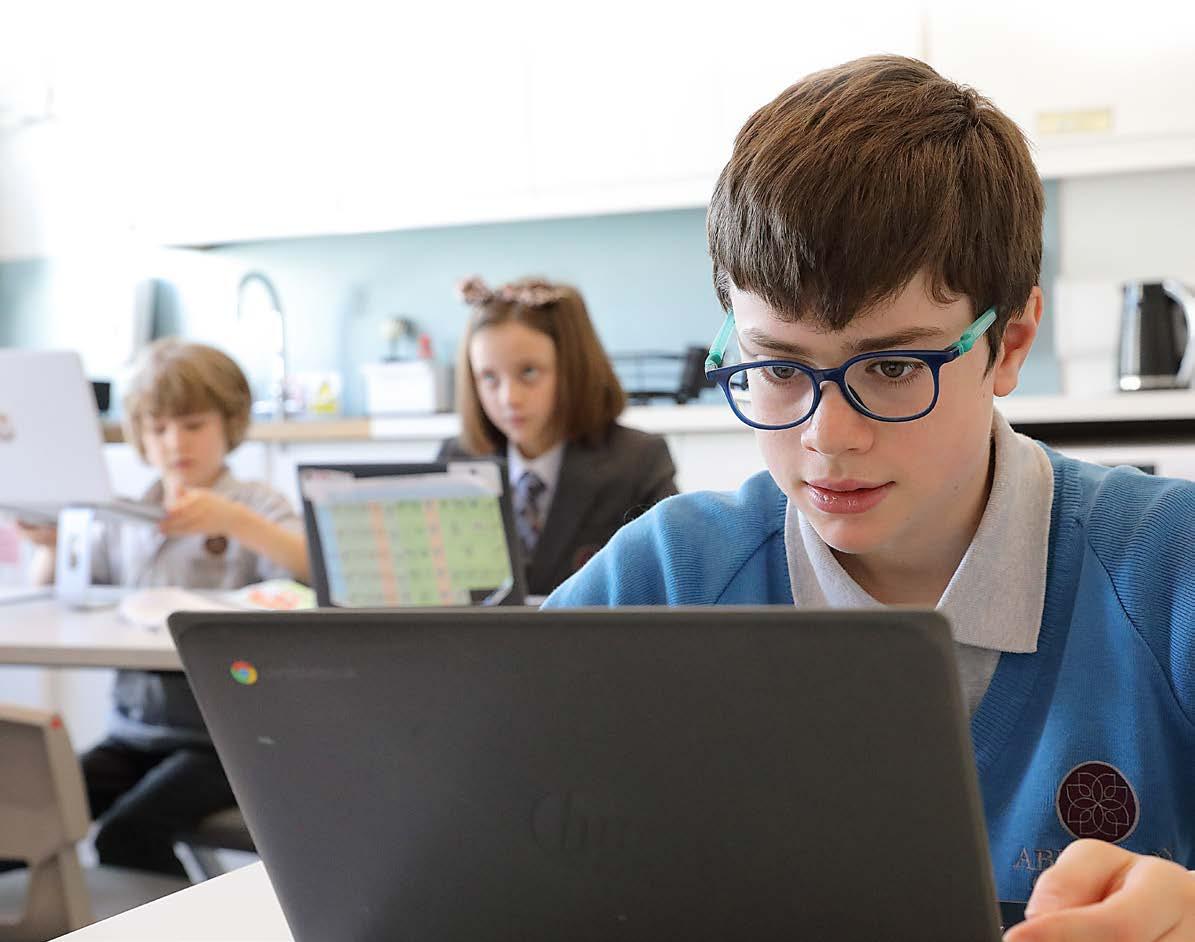
The school’s digital landscape in 2025 is characterised by a ‘pedagogy-first’ vision Key features include a focus on dignity and equity for all learners, embedded inclusive practice, deliberate planning for learner autonomy, agency and confidence building, and a focus on students not just meeting, but exceeding their previous potential in terms that are meaningful to them To support converting these ambitions into reality for young people, Abingdon House have embedded 1:1 Chromebook provision for all students and teaching staff and offer a small, strategically chosen digital toolkit that forefronts accessibility tools and a single consistent ecosystem All students have an evidence-informed profile that sets out which accessibility tools enable them to work most effectively (in terms of both productivity and quality)�
Since the introduction of 1:1 digital provision and the embedding of accessibility features as standard across the school, Abingdon House students have shown consistent additional progress in maths, spelling, reading age, fluency and comprehension, exceeding age-adjusted benchmarks in nationally benchmarked assessments by 1-2% — a particularly significant achievement given the profile of the school intake
A dedicated daily intervention program led by therapists and specialist teachers supports students in developing skills, including the effective use of assistive and accessibility tools Voice typing interventions, for instance, have led to improvements in speech and language development and social skills, and students undertaking typing interventions showed an average 63% increase in typing speed over a term
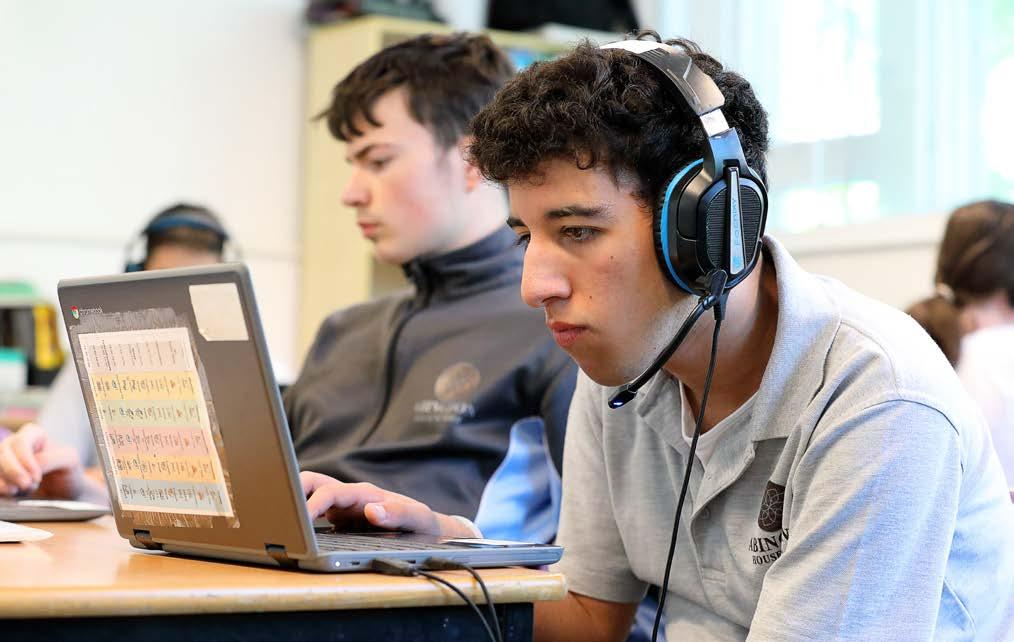
Digital accessibility tools such as voice typing and screen readers have enabled more students to sit and pass qualifications Students overwhelmingly prefer voice typing to human scribes due to increased pace and quality of output (average 62 wpm vs 25-28 wpm for human scribes)� Digital screen readers offer customisable voices and pacing, reducing social and psychological distractions often associated with human readers Noise-cancelling headphones have been identified as facilitating the use of these tools in formal examination environments
The report addresses parental concerns about screentime by differentiating between ‘low demand exchange or consumption’ and ‘cognitively active’ or ‘cognitively challenging’ uses Digital screen use at Abingdon House falls into the latter two categories, focusing on productive and purposeful learning Students clearly distinguish between school Chromebooks (for work, accessibility and purpose) and home devices (for fun, entertainment and rest) They value the digital tools for improving concentration, comprehension and supporting working memory�
Abingdon House School’s pedagogy-first approach to the use of digital technology has created a learning environment that empowers students with SEND to overcome traditional barriers, achieve academic progress and develop essential life skills The personalised use of digital tools, coupled with a strong pedagogical vision and comprehensive staff training, has fostered a culture of trust, agency and mutual respect, enabling students to not just reach, but exceed, their previous potential�
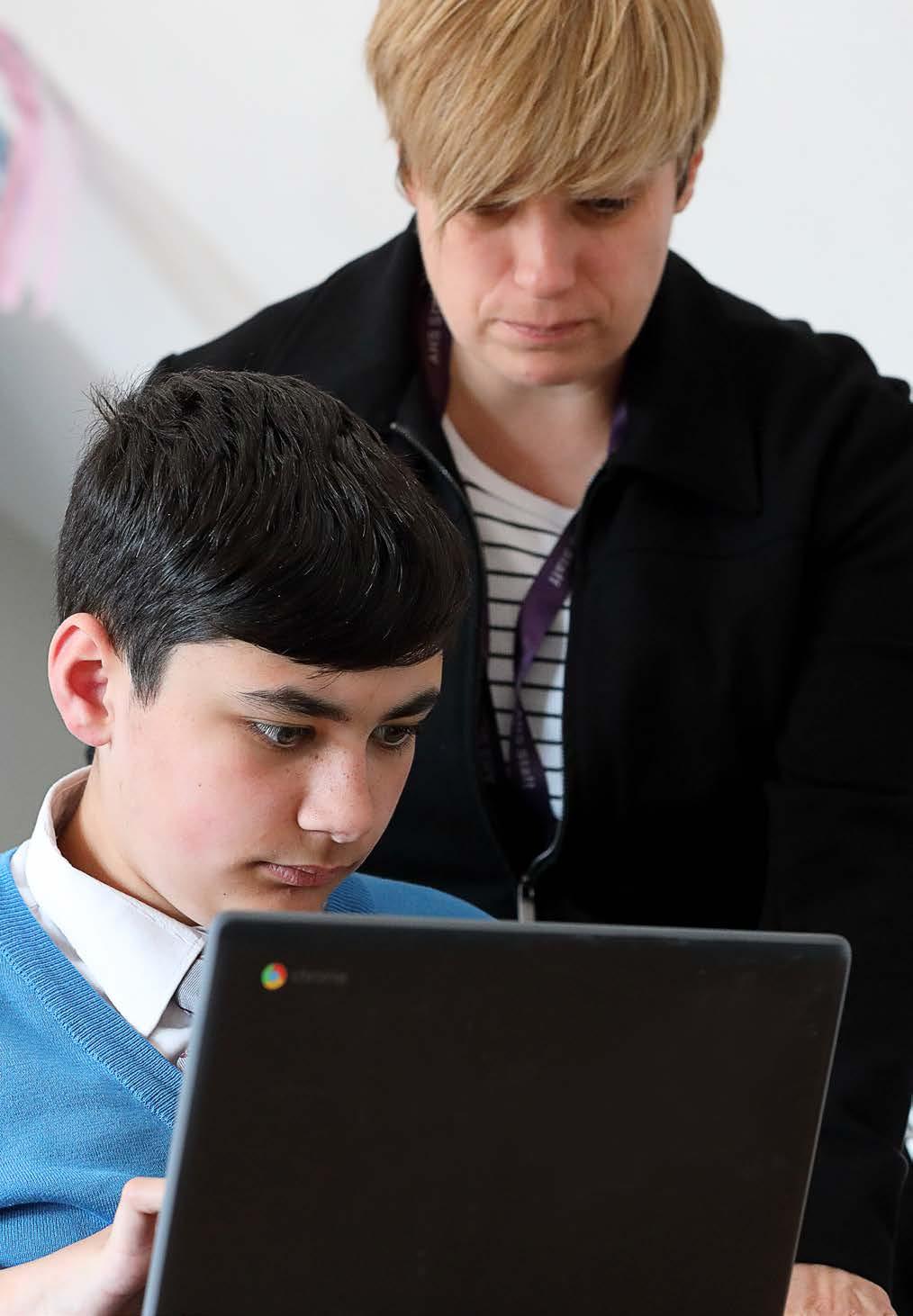
Abingdon House Senior School provides a mainstream style education with a specialist approach for students aged 11-19.1 Students attending Abingdon House have a range of neurodiversities including autism, dyslexia, dyspraxia, dyscalculia, ADHD and speech, language and communication needs. All students attending Abingdon House Senior School have a formally identified Special Educational Need or Disability (SEND) and 98% have an Educational Health and Care Plan (EHCP). There are 42 different formally diagnosed SEND categories represented across the student body at Abingdon House, with most students having at least two co-existing diagnoses.2 Students all have Individual Education Plans (IEPs) with specified long term outcomes and steps towards outcomes to ensure teachers and therapists can monitor student progress in communication and interaction; learning and cognition; social, emotional and mental health and physical and/or sensory needs.
Whilst Abingdon House School is part of the Cavendish Education family of independent schools, 98% of students attending Abingdon House are funded through their Local Authority due to their additional needs� Many of these students have had previous unsuccessful experiences attending mainstream schools, often including internal and external exclusion and academic or social disconnection
In the school year 2024-2025, Abingdon House Senior School had 91 students on roll and 15 teaching staff working across 10 forms There were three Special Educational Needs Coordinators (SENCOs), alongside in-house occupational therapists (OTs) and speech and language therapists (SALTs)� Classes have at least one additional adult working alongside the class teacher, usually to support young people with specific behavioural needs or autism
Young people attending Abingdon House School work in classes which are grouped both socially and academically (with both academic and vocational pathways available to both) A trauma-informed approach is used alongside positive behaviour support to ensure the emotional wellbeing, sensory regulation and behaviour of students throughout the day�
This is underpinned by Zones of Regulation and Social Thinking programmes Students follow the ‘Wheel of Independence Preparation for Adulthood’ curriculum which includes working towards age- and needsappropriate life and independence skills, careers advice and guidance (in line with the Gatsby Benchmarks) and specific lessons in employability and enterprise 3
Leaders at Abingdon House School demonstrate a relentless commitment to creating an environment that enables inclusive and accessible learning experiences for each and every student Strategic and operational decision making ensures that young people’s physical, emotional, social, academic and practical needs are met holistically across the school day� For example, the physical environment is designed around balanced sensory load, timetabling and lesson structure incorporate movement breaks and cognitive regulation, and classroom resourcing embeds the use of sensory tools as part of standard practice
1 Abingdon House School (2025) Marylebone Senior School [link]
2 Abingdon House School (2025) Census Data Analysis 2024-2025. [confidential]
3 Abingdon House School (2025) Curriculum Marylebone [link]
“Leaders’ deep understanding of pupils’ mental health needs, and the school’s therapeutic approach to education, ensure pupils progress from their starting points… all staff working with pupils effectively use consistent therapeutic approaches to support learning extremely successfully.”
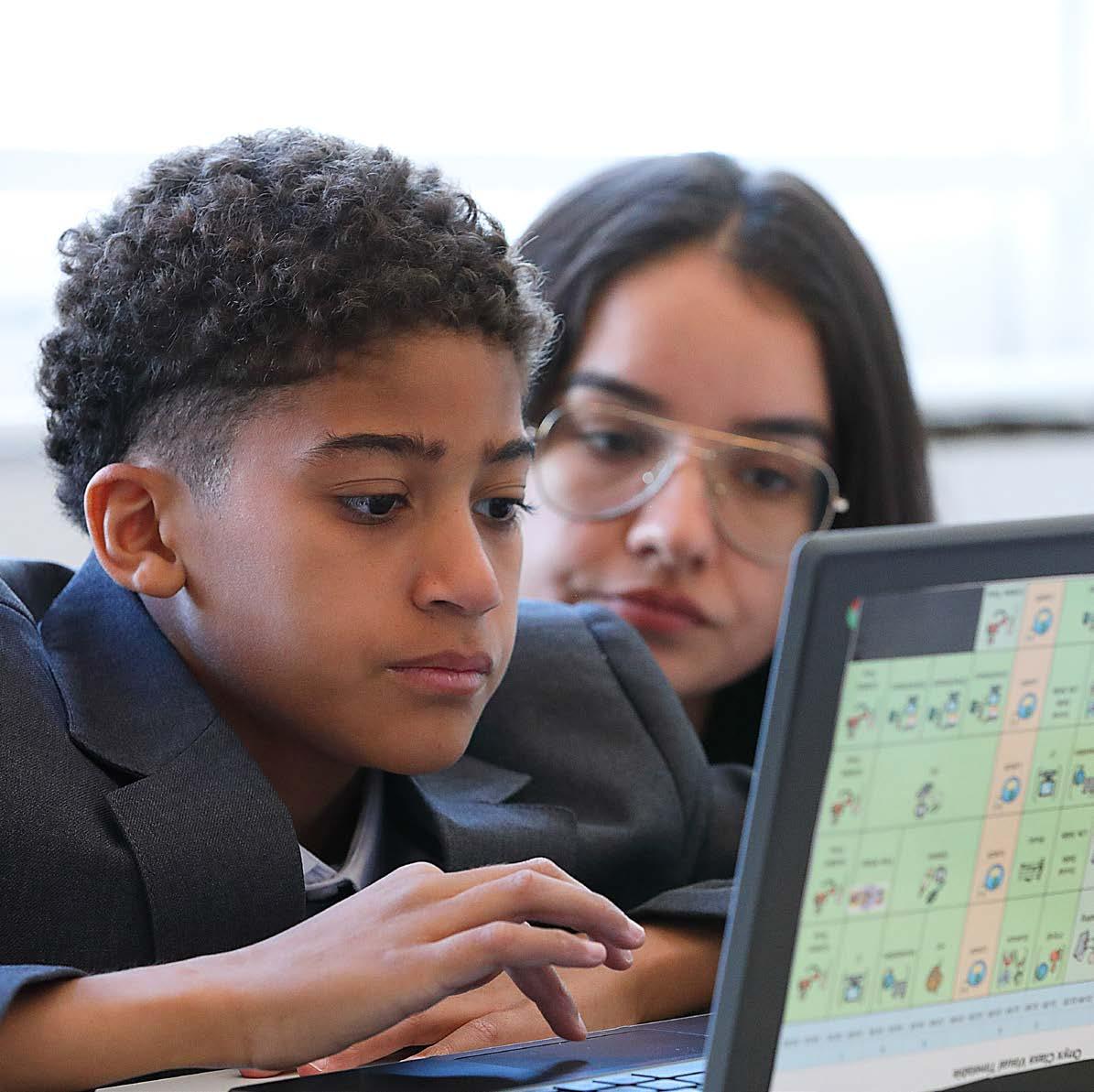
This provision is evidence-informed, consistent and embedded, resulting in focused and purposeful learning spaces for young people throughout the school day
The Abingdon House approach to teaching and learning4 is articulated as intending to:
• provide opportunities to apply knowledge and learning in practical ways;
• shape the curriculum to meet the needs of our students through an IEP, involving the children in the planning and the direction of the learning;
• use a multidisciplinary approach to teaching that is tailored to the needs of each student;
• provide opportunities for students to extend their learning inside and outside the classroom with an emphasis on enrichment;
• monitor student progress according to the skills required in the curriculum;
• set common, open ended tasks to elicit a variety and depth of response;
• set tasks of increasing difficulty, scaffolding where appropriate;
• group students by ability and differentiate within tasks
Teaching and learning is designed around the National Curriculum, which is adapted to support the needs of the students and enhanced by an integrated therapeutic programme Use of digital tools is embedded across the whole curriculum, in addition to IT being a subject in its own right� Alongside this, Abingdon House has prioritised a whole school approach to Oracy, working in partnership with Voice 21 5 Opportunities for speaking and listening are optimised as part of everyday classroom provision in harmony with therapeutic interventions that address social, emotional and communication skills�
Students are grouped by need and age, ensuring that classes are designed around provision which is academically, socially, emotionally and physically appropriate for those in the room�
Students in older age groups move along different qualification pathways that are negotiated by the student as well as the educators and therapists supporting them Qualifications options include a mix of GCSEs, Functional Skills and a range of academic and vocational subjects from Entry Level–Level 2
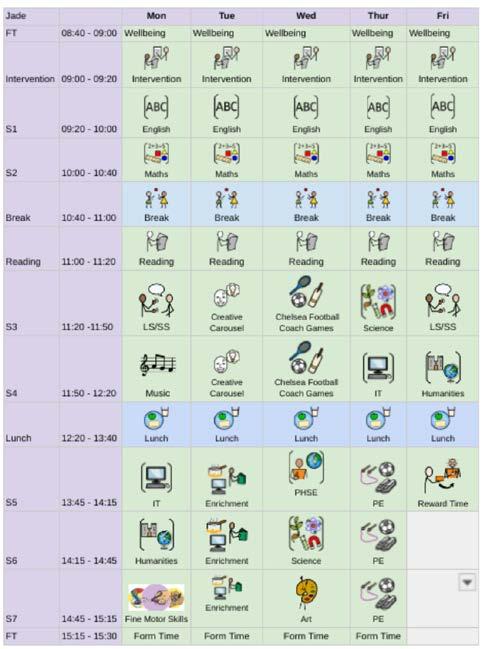
All students have a personalised timetable attached to their Chromebook, providing symbol based dual coding to encourage greater independence and mobility across the school�
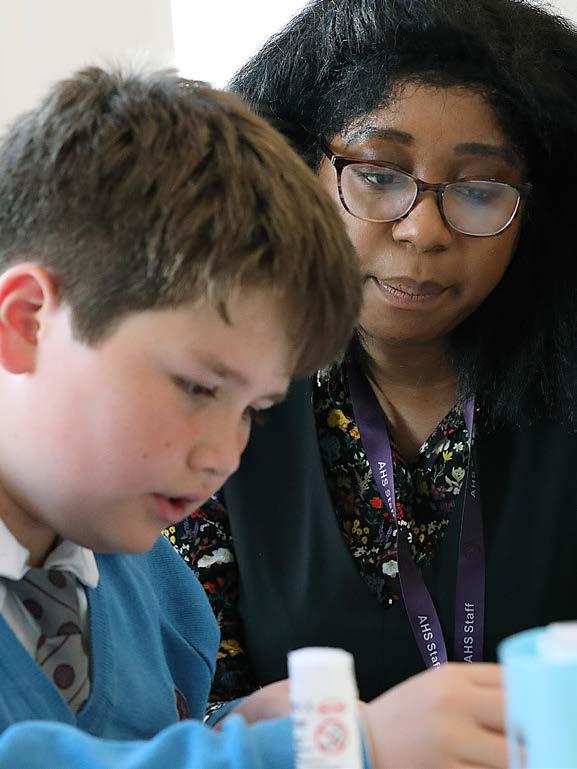
Therapy is provided as an integrated part of the education programme, rather than as an additional service All therapy provision is led by HCPC registered therapists�6 All students receive universal provision, alongside targeted and specialist therapy provision personalised to their needs by the therapy team in conjunction with teachers, professional reports, the student’s EHCP and formative assessment of ongoing therapeutic needs 7
4 Abingdon House School (2025) Curriculum Policy. [available on school website]
5 Voice 21 (2025) https://voice21.org/
6 Health & Care Professionals Council (2025) https://www.hcpc-uk.org/
7 Abingdon House School (2024) Abingdon House School Core Provision, 2024-2025 [confidential]
Universal therapy provision includes:
• In-class speech and language support: which is jointly planned by the student’s HCPC registered speech and language therapist and class teacher
• Communication skills: as part of weekly communication skills groups delivered by a qualified speech and language therapist
• In-class occupational therapy support: which is jointly planned by the student’s HCPC registered occupational therapist and class teacher
• Independent skills: as part of weekly independent skills groups planned and delivered by a qualified occupational therapist�
• Social, emotional and mental health: universal SEMH support is integrated into all lessons by teachers and therapists, as well as specific sessions in form time, PSHE classes and wellbeing days This has been recognised through Abingdon House being awarded the Silver Carnegie Mental Health Schools Award 8
As leaders summarise:
“We consistently use the graduated approach across all areas of school life to assess our impact and maintain high expectations for every student. We aim for “appropriate levels of challenge,” which means consistently finding the balance between overwhelming a student with excessive challenges and under-challenging them, which would hinder progress. Our consistent assessment and tracking methods enable us to plan personalised provisions effectively. Long-term goals are reviewed annually for all students, including those without EHCPs. These goals are broken down into actionable steps, ensuring that every staff member understands what each student is working on and can contribute to their progress. We believe that AHS is a specialist provision that meets the needs of, and is ambitious for, every student.”
The integrated approach at Abingdon House School, supported by contemporary research evidence and contemporary digital tools, was perhaps most neatly articulated by the headteacher when they explained that, “the thing we do best is not just about learning The thing we do best is to get students ready to learn ”
The purpose of this research was to surface and articulate the impact of the Abingdon House approach for supporting learning through the use of digital technology.
The intention of the report is to offer a summary of the impact of existing practice, in order to inform future strategic planning across Abingdon House
This research focuses specifically on the ways in which students experience the use of digital tools within classroom activities and how they responded to those experiences academically and pastorally
This research did not seek to evaluate the overall quality of teaching and learning, but specifically the ways in which the presence, role and purpose of digital tools within that affected it
For clarity, this report uses the following definitions:
• Pedagogy: The structural systems and support for learning This is understood through four domains of pedagogy; (i) views on the role of a teacher and the process of teaching; (ii) views on the role of a learner and learning, (iii) views on the nature and formation of knowledge; (iv) views on the goals of education and the purpose of schooling
• Learning: Experiences that are internalised by an individual learner and which result in the development of their skills, knowledge or character� Learning will manifest differently depending on the prior experiences, individual characteristics and needs, cultural and social capital, as well as environmental and point-in-time influences
• Teaching: Actions which are conducted by an individual teacher, in order to operationalise a specific educational intention (which may be predominantly focused on social, emotional or behavioural needs) Intentions are based upon a combination of school policies and curriculum, professional training and experiences, alongside the cultural and social capital of the individual teacher
• Accessibility features: Digital tools used to offer more equitable and inclusive access to tasks and actions� These include, but are not limited to, speech-to-text (voice typing), auto-predict, auto-check (spelling and grammar), screen readers, display contrast and brightness and screen magnification
• Impact: A material change to previous or alternative practice This may be articulated through quantitative (measurable) or qualitative (descriptive) evidence, and may be viewed as positive, negative or neutral
• Digital tools: Apps or features used by learners or teachers in Abingdon House School classrooms
• Digital learning: the use of digital tools to support, extend or enhance learning This is conceptualised as separate to the IT curriculum
• Environment: The physical environment that students and teachers operate within at Abingdon House This includes classroom spaces and their equivalent (indoors or outdoors), along with the furniture, resources and structures that contribute to those spaces
There has been a great deal written and spoken — both published and informally — about the role of digital tools in relation to schools. The scope of this report excludes a full literature review, but it is relevant to highlight that there are some permeating issues which affect the related literature.
First, are that research methodologies of studies in this space are historically dominated by the use of quantitative data (e g statistics) or positivistic reductionism applied to qualitative data (e g sentiment analysis) These methodologies tend to be favoured by (a) those who are time poor or non-specialist, or (b) concerned with the return on investment of supply, policy or procurement This tends to over-simplify some very complex variables (e g human internalisations and consequent behaviour over time) and often mobilises the misuse of research findings (i e surface level reporting or use by non-specialists) 9
Alongside this, research addressing the use of digital technology within schools has tended to report on (a) the implementation process of digital tools and systems (often from the perspective of operational colleagues within a school or organisation or a particular supplier or system), or (b) particular elements of use (e g engagement levels, specific tools or features)� Some studies examine particular school improvement considerations (e g role of oracy, metacognition, retrieval of knowledge, assessment systems, productivity etc) and many studies depend upon isolated data generation approaches (e g selfreporting surveys as sole data collection tool, one-off or third party observations)� These approaches create distance between the data and the researcher, often creating a wide range of ethical issues and injecting complex biases into the dataset
From a specialist perspective, the most useful way to understand the complex interaction between a young person in a classroom and the digital tools that they are experiencing requires time spent in their classrooms, triangulated by insights directly from the student, their peers, their teacher and their family� These kinds of small scale studies are often conducted by practitioner researchers (e g teachers, leaders and those studying towards postgraduate qualifications), benefitting from a detailed knowledge of the context and a nuanced understanding of the human beings within it� However, those considering policy and finance are often wary of such studies, claiming lack of objectivity or codification
The gold standard is arguably a combination of practitioner research, with its detailed insiderawareness, and outsider-researcher critique and analysis (Hammersley, 2006) Studies such as these are time consuming, but yield findings that are detailed, contextual, balanced and triangulated
9 For further reading about this issue please refer to Chapter 2 in Aubrey-Smith, F., and Twining, P., (2024) From EdTech to PedTech: Changing the way we think about digital technology. Routledge: Abingdon.
The data generation for this research was conducted February–June 2025 and largely focused on students attending Abingdon House Senior School in the academic year 2024-2025.
The focus of this research centred upon how students experience the use of digital tools within their classroom experiences There were a number of data collection and data generation mechanisms used to explore this from a range of angles
During the period February–June 2025, this included:
• 14 staff interviews (leaders, teachers, therapists and support staff)
• 23 classroom visits
• 9 focus groups (students and teachers)
• 23 documents (e g policies, planning and strategy)
All of the data collection and data generation was conducted by an independent researcher10 and took place through a number of phases, summarised as follows:
1 Interviews with Abingdon House leaders, teachers and therapists
2 Document analysis (e g policies, strategy and vision, curriculum and lesson planning)
3 Analysis of existing datasets (e g intervention plans and progression tracking)
4 Classroom observations (including in-class research interviews)
5 In-class and out-of-class focus groups and research interviews with students and teaching staff
For academic clarity, observations, focus groups and interviews were all semi-structured, utilising stimulus questions or exploratory lines of inquiry in order to balance both scoping and efficacy (Lincoln and Guba,1985) Class visits were purposively sampled in order to ensure breadth and depth across year groups, SEND needs and pathways, subject domains, background and experience of teaching staff and diversity of student characteristics and intake (Palikas et al , 2015)
10 See about the author section of this report for further background
A range of approaches to semi-structured observation were undertaken, including whole-lesson observation, observing specific parts of a lesson, observing preidentified activities or transitions, tracking students through sequences of events and periods of time and unstructured observation which allowed for unexpected or unanticipated lines of inquiry to develop
All of the classroom observations utilised some form of pre- and post-observation discussion with a leader or teacher who was able to provide specific insight and context around the relationship of what was being observed This typically included some discussion about tasks or activities and their place within sequences or planned learning, characteristics and context of specific learners or teachers being observed, and background information about lesson planning, features or tools (digital or otherwise), relevant policies and procedures and so forth
Thematic analysis was used to analyse data from interviews, focus groups and open-ended survey questions This approach, drawing on the guidance set out by Braun & Clarke (2021), involved data familiarisation, identifying patterns and themes within the data, reviewing those themes in order to surface elements of significance and then collating themes of significance in order to contribute towards a deeper understanding of the dataset
Contributing towards the thematic analysis were a number of specific analytical techniques which help to draw meaning out of small scale datasets� For example, aspects of discourse analysis were used in order to surface embedded meaning within language and communication used by participants in interviews and focus groups This approach involved identifying the language used to construct and convey meaning specific to the researcher and respondent� For example, Hammersley (2006) reminds us that specialist
researchers benefit from an assumed shared meaning in specialist domains which can be both beneficial in terms of directing attention to salient aspects of data, whilst simultaneously risking familiarisation bias Thus, to mitigate for this, it is pertinent to utilise elements of discourse analysis that unpack particular forms of embedded meaning such as dialogic undertones — where meaning accumulates as a result of a developing response or discussion (Tannen, 2015), and intertextuality — where particular meaning emerges from one source only as a result of insight from another source (Hodges, 2015) Furthermore, analysis drew upon a number of related theories which help to elicit meaning from interview, observation and focus group data For example, Centering Theory (Walker et al�, 1998), posits that when we speak, we utilise a number of specific linguistic tools to direct the attention of our audience towards particular embedded meaning In a school context this is often most apparent with the choice of ‘I’ or ‘we’ when referring to different aspects of policy or practice, conveying embedded meaning about the relationship between the person communicating and the organisation itself (Gordon et al , 1993) These techniques were combined in order to draw out meaning within individual class visits, focus groups and interviews, as well as across combinations of them
Within this research, specific consideration was given to the ethical domains highlighted by Stutchbury & Fox (2009) about the inferred consequences and impact on those involved In particular, ensuring balanced, critical and objective planning, sampling, analysis and representation This approach ensures that the research enters the domain neither biased for or against particular forms of practice, but instead surfaces and articulates the impact of specific practices being implemented on those affected by them�
As part of the analysis process it was important to consider any variation in stakeholder perception, particularly in terms of meaningfully valuing the voice and insights of students themselves (Hart, 1992) When seeking insights from young people, it is helpful to understand some embedded issues in this specific space For example, research addressing the uses of digital technology in schools often conflates adult perception with student opinions, resulting in
adults who advocate for technology believing students similarly advocate, and those who argue for less technology believing students to share their cautious views These confirmation biases are common and often mask subtle nuances and insights that young people can offer when given the opportunity to do so authentically Students were therefore asked about their views multiple times and in a range of settings to mitigate for potential bias caused by the presence of particular peers or school staff
Similarly, there are some specific trends across broader literature and narratives focused on young people with SEND where learners are often viewed through a deficit lens based on mainstream benchmarking That deficit model encourages a focus on so-called under-achievement or behaviour issues and attempts to encourage compliance based models of correction� This can create a deficit framing in language and tone Such approaches too often marginalise the strengths and voices of young people with SEND, limiting their agency and potential as a result
The voice and perceptions of Abingdon House students sit at the heart of this research Great care was taken to offer students the time and space to share what they were doing, how they were doing it, why they were doing it, and to understand the depth and breadth of their perception and internalisation of their learning experiences This is best achieved when young people are immersed in classroom activities and able to talk in-situ about their experiences in relation to their broader holistic education and wider life� Every student brings a unique set of prior experiences, characteristics and needs into their classroom, and every teacher has a range of student needs that they seek to meet through their provision Therefore, a detailed understanding of the complexity of student experiences and internalisation, alongside an empathy for a teacher who seeks to meet a highly diverse range of needs, is essential if this research is to surface meaningful insights that inform future school strategic planning The impact of this approach can be seen throughout this review with insights about students’ lived experiences revealing more nuanced understandings for the wider sector
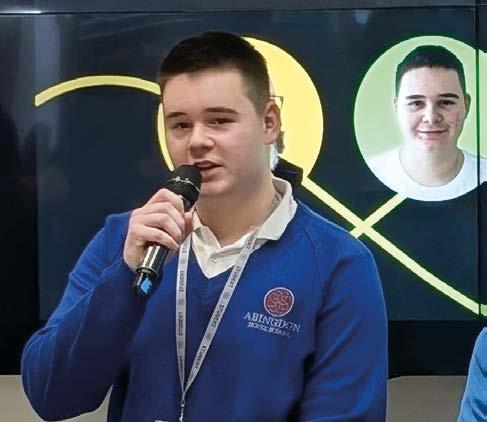
Safeguarding and data security considerations have been addressed by the anonymisation of all students, teachers and leaders The report refers to students only by year group or SEND characteristic rather than name or gender in order to minimise identifiable participants whilst maintaining data integrity There is one exception to this — Mason — a student whose articulation of impact has led to his speaking at national events and therefore existing public visibility 11 Staff are referred to by role to maintain confidentiality, although for some senior roles this means that participants are ultimately identifiable Products are referred to by their colloquial product name not to infer product promotion but in order to maintain data integrity
As set out in Section 4, there are many embedded issues within historical research that focuses on the impact of the use of digital tools in schools — not least an over-reliance on quantitative data and a well meaning but mistaken assumption that impact is only of value if it is seen through raised scores in core curriculum subject tests and exams

The difficulty in articulating the impact of the introduction or use of anything in a school context is that as Brighouse & Waters (2021) argued in About our Schools, there is no widespread agreement about the purpose of schooling and therefore the benchmark by which a school should be judged� As a result, purpose, progress and the impact of actions undertaken within the school are dependent upon an evaluator’s alignment with the beliefs of the school leaders In other words, when we seek to understand the impact of ‘thing x’, we are not necessarily seeking to understand its impact in a holistic and open way, we are looking for the extent to which its effects align (or not) with changes to elements that we consider to be inherently valuable In a school context, for some this will be about prioritising attainment or qualifications, for others it will be about rates of progress relative to a learner’s entry point For some it may be about prioritising overall happiness and wellbeing, for others it may be about compliance with laws or societal norms
This report attempts to articulate the impact of the Abingdon House School approach to the use of digital to support learning and therefore, to provide an offering to readers with diverse values and perspectives To attempt to do so, a number of impact themes have been highlighted:
• Codification of the Abingdon House approach
• Progress in core subjects
• Personalisation and access
• Expectations and behaviours
• Interventions
• Examinations
• Concepts of purposeful screentime
11 Note: Explicit permission for Mason to be named and his image used in this report was sought and obtained from both Mason and his parents.
The digital landscape in 2025 across Abingdon House School has a number of components, including that:
• The use of digital technology forms an embedded part of the overarching pedagogical vision�
• A core part of the pedagogical vision is about forefronting inclusion through design — of classroom environments, class groupings and format, curriculum and lesson provision, interventions and resourcing
• A highly effective and pathfinding Digital Education Leader directs the bidirectional relationship between pedagogy and digital
• The pedagogy-first approach to thinking about digital technology has become embedded across the leadership of both educational and pastoral support, ensuring coherent, forensic, consistent and sustainable practice across the whole school
• All students have a learning toolkit which includes a personally-assigned Google Chromebook The combination of 1:1 provision alongside individually allocated devices has given students both ownership and agency over the tools that they use to support their learning experiences
• Students all have a personalised profile of which digital tools will help them to work more effectively (taking account of both productivity and quality of learning) Students and staff are aware of these personal profiles, which also sit alongside the student’s personalised timetable which is taped to their Chromebook for consistent visibility
• All teaching staff have their own personally assigned Google Chromebook, similarly enabling portable, consistent and reliable access to teaching materials and intervention tools across both educational and pastoral support
• Staff and students use Google Workspace as one consistent ecosystem This minimises training and time spent learning individual software or tools for both staff and students and encourages the sharing of effective practice and mutual support In 2021, Abingdon House became the first SEND Google Reference School in the United Kingdom,12 reflecting a pioneering approach�
• Expectations about structures and systems within this ecosystem have been set to ensure consistency, and to minimise the demand on working memory and cognitive load burden when students move between subjects, rooms and teachers
• Class teachers have access to classroom management tools which enable teachers to see what students are doing individually on their Chromebooks at any point�
• Devices provided to both staff and students have safeguarding filters, monitoring and management software in place which provides alerts and reports aligned with school safeguarding policies and procedures
• Clear behavioural expectations have been set out to all students and staff regarding appropriate digital activity
12 Cavendish Group (2025) Abingdon House School becomes the first SEND Google Reference School in the UK [link]
At the time of writing this report, Abingdon House is approximately five years into the journey of the digital landscape seen today This was described by leaders in summary, as:
• 2018/2019: The school had a small number of rarely-used devices
• 2019/20: A small number of devices were used to explore Google Docs and Google Slides Google Classroom and 1:1 Chromebook provision was gradually introduced to specific groups of students and staff
• 2020/21: All staff and students started to use Google Classroom as the anchor for teaching and learning Accessibility features started to become more commonly used
• 2021/22: A specific focus on widespread use of accessibility features across the school
• 2022/23: A list of non-negotiables put in place that set out digital ways of working for staff and students, to be consistently applied across the curriculum and school day as ‘normal ways of working’�
• 2023/24: All students have a most efficient way of working identified, with digital support and interventions in place to support productive learning and to increase skills in underdeveloped areas
• 2024/25: The use of digital tools has directly contributed to student preparation and access to qualifications and examinations�
Leaders explained that the journey towards a 1:1, personalised, embedded way of working began with exploratory use of a small number of Chromebooks by a teacher and a SENCO Prior to that, leaders describe iPads and laptops being available but based on trolleys or in an IT suite, alongside aging interactive whiteboards and technology provision oriented around teacher use and convenience rather than student access and support With decisions about investment needing to be made, leaders considered replacing existing provision, but instead, made a pedagogical decision to pivot the focus from teachers to learners Consequently, a strategic decision was made to provide a Chromebook for every student
and teacher, complemented by projectors and standard front of class boards (rather than interactive whiteboards), along with Chromecasts — enabling a more democratised and embedded digital provisioning across the school� Teachers articulate this as creating a shift about technology moving from ‘being for the teacher’s benefit’ towards ‘everyone having access to tools that can support learning’
The early stages of the journey towards 1:1 provision were characterised by staff as a discovery phase, with initial exploration tending towards the use of digital tools to mimic offline behaviours (e g digitally annotating a photograph of student work, or digitally commenting on typed document in order to provide teacher feedback to students, reflecting offline marking processes) However, the educators involved were committed to professional reflection and discussion, with a clear focus on if, when and how the digital tools could be used to extend and augment existing pedagogical practices Teacher marking consequently evolved from ‘paper under glass’ approaches through to more meaningful pedagogical techniques — for example, teachers providing voicenote feedback so that students with dyslexia or other text-based processing barriers could access formative
feedback at a pace and time that complemented their learning These practices continue today, with teenage students at Abingdon House talking about how much they value the ability to listen to a teacher’s voice providing personalised feedback
During focus groups and interviews as part of this study, boys and girls across year groups spoke about listening to digitally recorded feedback multiple times in order to fully understand (and then act on) the points raised� Furthermore, students emphasised the importance of the dignity that this way of working affords them They no longer worry about what their peers will think about what they got right or wrong in a task, or the conversation between them and their teacher taking place ‘in front of everyone’ These social dimensions to learning are widely acknowledged as creating significant impact on progress for teenagers in classrooms in both mainstream and special provision (Daumiller & Hemi, 2025; Cushman & Rogers, 2008) It is therefore likely that the dignity and choice provided by the Abingdon House School approach is integral to the accelerated progress seen by students across the school (see Section 6 1)

During classroom visits and research interviews in this study, staff at Abingdon House School frequently referred to the role of digital tools in removing much of what students perceive as ‘the negatives of school’ — something particularly important for learners who have had previous school related trauma (e.g. internal or external exclusion from mainstream schooling). For example, traditional paper based approaches to learning were perceived by staff and students alike to value by-hand presentational skills over quality of content.
Students who struggle with presentation and handwriting spoke about the friction that this creates — they feel under pressure to create neat and accurate work on paper, yet in doing so have little scope to develop the quality of the content of their work (i�e� edits) without sacrificing presentational quality in the process With the classroom narrative prioritising presentation, students consistently referred to choosing not to edit or amend work once committed to paper
Tasks in mainstream classrooms often require students to write, annotate or create by hand, with a sub-text on ‘neat handwriting’ or ‘tidy work’,
only for teachers to then write over that work with comments, ticks and highlights often layered over a student’s efforts Conversely, in educational discourse, teacher feedback is rarely spoken about in terms of its inherent presentational neatness or cursive script quality — creating what students see as contradiction and inequality As a teacher at Abingdon House framed it, “Those who argue for the importance of handwriting, rarely struggled with presentation or handwriting themselves ”
Similarly, another teacher described the “inherent bias towards those who excel in handwriting’ in the education system — with exams, coursework,
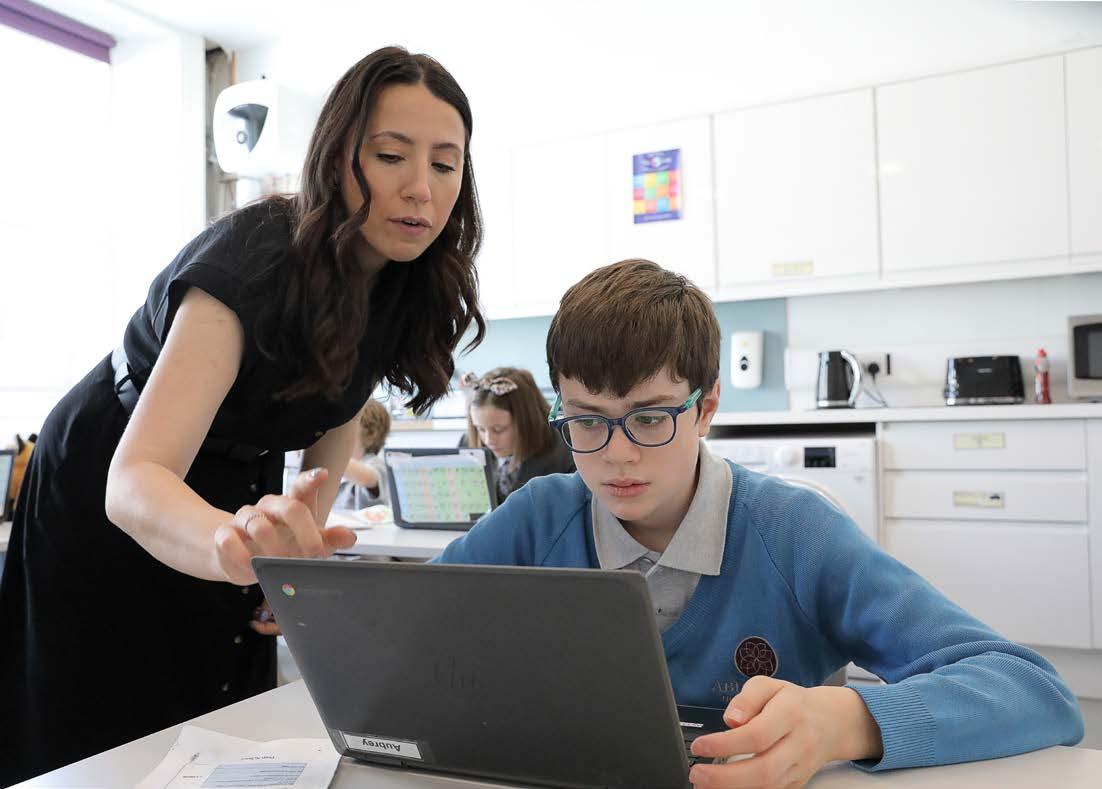
traditional classroom activities and administration historically being more accessible to those with handwriting strengths, and the consequent exclusion or discrimination against those who find that specific skillset more of a barrier�
Issues can also appear for students who excel at presentation For example, in a previous school, a teenage girl at Abingdon House had consistently experienced public recognition for her beautiful handwriting and presentation, despite significantly under achieving in terms of content based attainment She had consequently developed a learner identity based upon the presentation of her handwriting
rather than her knowledge and understanding of its content As a result, the focus on presentation had inadvertently created a barrier to her seeing the curriculum content itself as relevant, accessible or motivational to her to learn
Related to this, students spoke about historical school experiences where they felt that rather than sharing their work for formative assessment purposes (i e to aid their learning) they were instead submitting work for presentational approval, only to receive their work back, as one student explained it, ‘covered in teacher graffiti’
During research interviews, one of the occupational therapists at Abingdon House school explained that: “A big part of student confidence often relates to the act of handwriting. Handwritten work is usually held up as the gold standard in mainstream schools so when these young people come to us they feel like they have failed — they have never been offered a genuine alternative way of representing their learning or accessing resources. They arrive with a degree of educational trauma which affects their self esteem and confidence, and being asked to handwrite something might actually be triggering to them — it can make them refuse to engage with a task because they will assume they will fail at it. They might be able to access GCSE English in terms of ideas, but they just might not be able to write them down. But we live in a digital world — they won’t really do anything handwritten outside of school so we need to build their confidence and broader skill.”
One of the three Abingdon SENCOs explained further that: “Legally, all of our students will have to receive reasonable adjustments in the workplace because of their needs. So if they have that need and we know what adjustments will help them, we need to ensure that they have the skills to use them effectively.”
Leaders at Abingdon House School have invested a great deal of thought, time and energy in ensuring that the approach to the use of digital tools brings greater equity, dignity and resilience to the young people across the school� Whilst leaders in most schools talk about the importance of meeting the needs of all young people, the unfortunate reality is that this is often approached by categorising learners into different groups based on prior attainment, first language, gender, SEND need, country of birth or citizenship, socioeconomic status or care/guardianship status The unintended consequence of this approach is that provision and intervention are then targeted towards an ‘average child’ in that category which often doesn’t exist in practice Well meaning interventions thus omit the precision and relevance that are at the heart of deliberate and impactful practice However, at Abingdon House School, the leadership team have taken a very deliberate approach that focuses forensically on each individual student — which whilst more time consuming, has avoided common potholes as set out above�
There are many elements to the personal profiling that takes place for young people at Abingdon House School, but for the purposes of this review, only elements relating specifically to digital exposure are being articulated here�
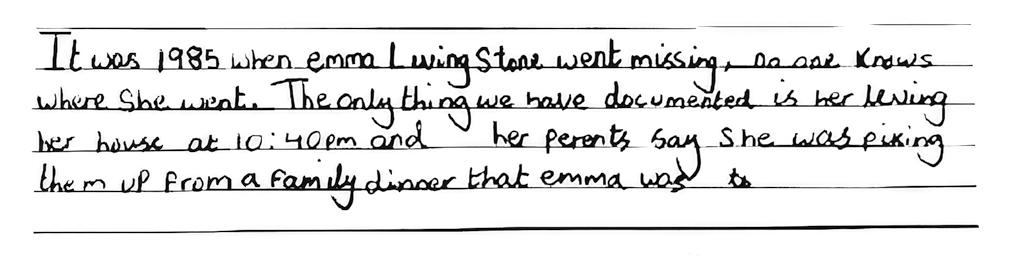
Every young person at Abingdon House has completed a task whereby they are given three minutes to record their insights, thoughts or feelings about an image that they choose (to ensure that the stimulus is relevant and familiar to them) 13 They undertake this task three times, recording by handwriting, typing and voice typing (dictation) The three work samples are then analysed in terms of both productivity and quality and nature of content� This analysis takes place through a combination of student discussion and expert insights from their teachers and therapists, taking into account any formal or potential SEND diagnosis The outcome of this process is to identify a student’s most effective way of working (based on both productivity and quality of content) and which alternative ways of working that student may benefit from improving if supported with further intervention The output is known as the student’s
personal ‘technology diet’ — with a sticker added to their Chromebook and the data shared across all those working with that student, so that students complete classroom tasks using a vehicle (handwriting, typing, voice typing) that is most likely to empower them to be most effective in their learning The technology diet also sets out any accessibility settings (e g screen colour and contrast) and any specific accessibility tools which will empower the student to be most effective when engaging with teaching and learning materials
As summarised by ISI (2025): “Pupils are highly adept at using their personal computer devices to assist them in their learning. For many of them, this enables effective engagement in reading, writing and numeracy which would not be as readily achievable otherwise given their learning difficulties. This means they receive, produce and interpret text and carry out computations and investigations to a good standard. The school has a clear commitment to facilitating pupils’ progress in this regard, and is thereby helping pupils to achieve more.”
By means of illustration, student Mason arrived at Abingdon House School at the age of 14 with very low confidence and reluctance to engage in any written work He spoke about his previous school as having no technology available to him and his struggle and consequent frustration at being prevented from accessing materials and representing his learning because of an inflexible approach that his previous school had around access arrangements
When assessed to identify his most effective way of working, in three minutes, Mason was able to handwrite 35 words with very limited grammar utilised (see overleaf)
13 Abingdon House School (2024) Accessibility Needs — Student Analysis [confidential]
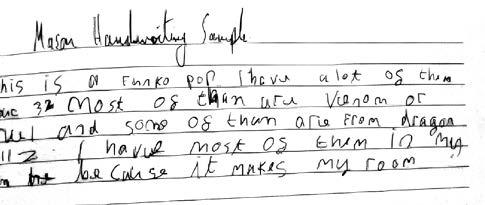
In a comparable three minute period of time, Mason was able to type a little more — 38 words — with some basic grammar and more developed sentences:
“I like playing dnd a lot because its give me time to relx and see and play with my friend outside of school . i have been playing dnd of about three yares now. I have keep the same.”
However, when offered the opportunity to use voice typing (dictation), Mason was able to produce 163 words and significantly more complex sentences which demonstrated a much higher level of knowledge and understanding:14
“This is Spider-Man 2 which comes out on the 20th October I have been waiting for this game for nearly a year now. The main reason I want to play this game is because I’m a very big fan of venom and he is the main point of this game. Soon that’s going to be a game in Comic-Con and a couple weeks time and people think by man might be there for people to play a short bit of the game. I think I’m mostly going to play as Peter’s SpiderMan because you can play as both Spider-Man. Spider-Man is one of my old time favorite game
and I can’t wait for the sequel. Everyday there is new information revealed about the game and I like to look on YouTube to see what’s new. In the game you can play as both Spider-Man and you can use the Venom symbiote for most of the game but he’s going to be the main villain.”
As a result of the assessment process, Mason was empowered to utilise voice typing and screen reader support as his normal way of working across the curriculum and as a result, he was able to engage in curriculum content at a much higher level, removing historical barriers of reading ability and handwriting Mason spoke about seeing an immediate impact when he started to use voice typing, a screen reader and a headset:
“I could understand more about what was going on in the lesson straight away. Everything made more sense. I could follow instructions better. I was working quicker and keeping up, and I was doing things in class that I felt proud about. I got more and more confident and started enjoying school. After a while my spelling and my reading improved because I could see, hear and sound out the words — I didn’t have to just rely on the word on the page or the teacher.”
Four years after moving to Abingdon House after an unsuccessful experience in a previous mainstream school, Mason entered his qualification year and passed Functional Skills Entry 2 English, Entry 3 Maths and Entry 3 IT, later going on to achieve iGCSE English grade 5 and GCSE Maths grade 6 Mason and his teachers both attribute his success to his ability to access materials and represent his learning through the use of accessibility tools This increase in confidence led to him presenting at events within and beyond the school and developing career ambitions that he felt would simply have been beyond his imagination if he had remained in his previous school Notably, Mason talked about how:
“Using these tools has improved all aspects of my learning and actually my life. I use these tools on my phone too now — I can do things outside of school that I couldn’t do before so I’m a lot happier at school and a lot happier in all my life.”
14 Abingdon House School (2024) Keynote from Association of School and College Leaders
Similarly, a twelve year-old girl arrived at Abingdon House, writing 51 nearly illegible words in three minutes Her typing output was marginally more (75 words in three minutes) However, through voice typing, she was able to produce 180 words of well structured, coherent and evaluative writing, improving both productivity and an effective representation of higher level knowledge and understanding As one of the Abingdon House students explained, “I could always do this — but now other people can see that I can do this�”
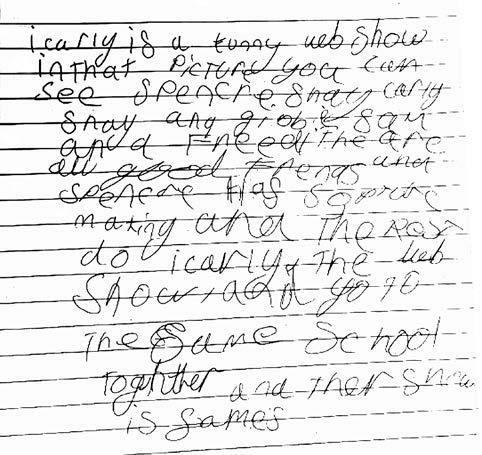
Across year groups, SEND diagnoses and learning profiles, it is significant that a majority of students have ways of working other than handwriting which are more effective for enabling them to work productively and to produce quality content� For a national system that has historically prioritised handwriting for the purposes of assessment, this is a striking observation
Students are very aware of the impact that flexibility in recording methods (i e handwriting, typing and voice typing) offers to them For example, in a focus group exploring these tools, students commented that:
“It gives me more time to think when I’m doing something in class. It makes it all a lot less stressful. It makes me feel more confident about what I can do.” and:
“It gives me thinking time. Before, I would have to spend all my time trying to write my ideas down and it would be really hard and really annoying trying to do it before the time was up. But now I can get it all down and still have time to think about it and then add something more or something different [editing] that’s better.”
Students frequently referred to the ways in which voice typing (i e speaking aloud) supported the organisation and articulation of their ideas� For example, the opportunity to think, speak, listen back, refine and re-speak multiple times Broader literature surrounding the importance of oracy supports this — with a known relationship between the opportunity to rehearse and develop ideas orally and improvements seen in idea generation, vocabulary and structure (e g DfE, 2025; Dockrell, 2014; Zimmerman, 1999) Students regularly referred to this as reducing the pressure on them to get something ‘right’ first time, and the consequent reduction in emotional and cognitive stress when compared to traditional forms of writing or one-time-only recordings� Directly related to this, teachers consistently referred to behavioural improvements from students as a result of their move to typing and voice-typing rather than traditional handwritten methods Teachers and occupational therapists attribute this to a reduction in frustration and the consequent historical dysregulation caused by the physical, cognitive and historical emotional stress associated with handwriting
Figure 1: Proportion of students who work effectively (productivity and quality of output), when using the vehicle of Handwriting, Voice Typing or Typing
Note: The total numbers add up to more than 100% because a student may have more than one way of working effectively �
Another core element to this is the way that teachers utilise classroom space to encourage focus and improve access to learning. In a special school classroom that consists of students with multiple SEND needs co-existing alongside each other, attention must be paid to enabling self-regulation, co-regulation and preventative strategies to avoid one student’s dysregulation triggering another.
Classroom layout, furnishings and the portability of student Chromebooks are a critical part of this For example, whilst most students sit at individual desks, typically in rows facing the front of the classroom; some students find the sensory experience of this to be problematic and sometimes prefer to instead sit on the floor, on a beanbag, or to move between spaces during a lesson As a result of the Chromebook being the anchor point for lesson resources and activities, neither the student’s learning, nor that of their peers become disrupted when they move places or need a movement break� There is only one object
to carry (the Chromebook) rather than a series of exercise books, text books, printed paper materials etc For students with sensory needs, the flexibility of sitting on a beanbag and accessing their learning task through their Chromebook is the difference between remaining in the classroom or becoming dysregulated and needing to exit the lesson completely� For a national system which is seeing a widespread increase of diagnoses of young people with social, emotional and sensory needs, this insight is an important call to action for further research

During class visits, there were some instances of students moving from class-specific materials to accessing unrelated materials on their Chromebook. These students were observed over a period of time to better understand what they were doing when they were not using lesson materials, and then to unpack why their attention had been shifted away from the lesson. This kind of observation rarely happens — with bystanders often assuming that these ‘distractions’ are simply poor behaviour or impulse control. The fear is often that digital access creates additional temptation and potentially worsens behaviour.
However, from a research perspective, if we take the time to observe the individual young person (from afar, so as not to influence their behaviours), to understand their characteristics and needs (in discussion with them and their teachers), and to listen to their perspectives carefully, some fascinating insights emerge For example, six instances of students moving away from lesson materials onto leisure materials (e g websites, games) were observed out of approximately 23 class visits (representing roughly 200 opportunities), suggesting a ‘distraction rate’ of around 3%� In a special school context where students are recognised as having a range of difficulties including behaviour, processing, social skills and impulse control, this is arguably an exceptionally low figure
In five out of the six scenarios where students were interacting with material on their Chromebook other than lesson materials, the root purpose related to self identified need for re-regulation In other words, the student had reached a point in their classroom task where they felt overwhelmed by the cognitive demand (i e long period of concentration, challenging content or process) and had self-prescribed a task which they felt would give them a cognitive rest (e g playing an online game or browsing a leisure interest website)� In these five cases, this activity lasted less than five minutes before the student re-directed themselves back to the classroom task Creating rest breaks to mitigate cognitive overload is commonly understood as necessary for young people to sustain attention in classroom environments (Ginns et al , 2023)� Whilst bystanders might have historically thought that the students were displaying poor behaviour by moving ‘off task’, perhaps instead,
students should be commended for self-managing their cognitive overload and applying self-discipline in returning to their original classroom task rather than remaining upon their rest break leisure task Notably, four out of the five instances where this happened took place during self-paced activities One of the students who had self-managed their cognitive overload through a short ‘rest break’ playing a game, explained their view that:
“I went through all that [the work] really quick so my head was like used up. I just needed something else for a bit so that I could [then] get enough energy to carry on again.”
The self-pacing nature of activities thus provided flexibility for individual students to choose their own speed, but also required them to self-manage their cognitive load during the duration of the activity
In the single example of an off-task activity which was clearly not a re-regulation vehicle, the student explained that they had chosen to play a game because they felt disengaged with the lesson itself As this student explained, if the lesson is engaging and perceived as relevant to them, then they are not tempted to stray — whether with a digital or non-digital distraction The issue was not about the tool, but about the student’s perceptions about the relevance of the curriculum content
There were other types of activities where Chromebooks were used by students to conduct tasks which to a bystander may initially appear to be off-task, but upon closer examination were actually instances of autonomous learning and student agency For example, in an English lesson a text about being
stranded was being used as a lesson stimulus which triggered a query from a student about how long a human being could last without food or water The teacher (based on the student’s SEND profile) invited the student to search for the answer whilst continuing the lesson discussion with the wider group, and the student then conducted their own search whilst multi-tasking and listening to the teacher continue talking A few minutes later, the student volunteered the answer to the group at an appropriate moment,
and interleaved themselves back into the group discussion Pursuing an independent line of inquiry whilst continuing in the lesson and without disrupting other students would be very difficult to achieve without the digital provision� But notably, the trust from teacher to student and the agency afforded to the student to independently conduct a search in the middle of a group task was instrumental in maintaining class cohesion and independent learning skills simultaneously
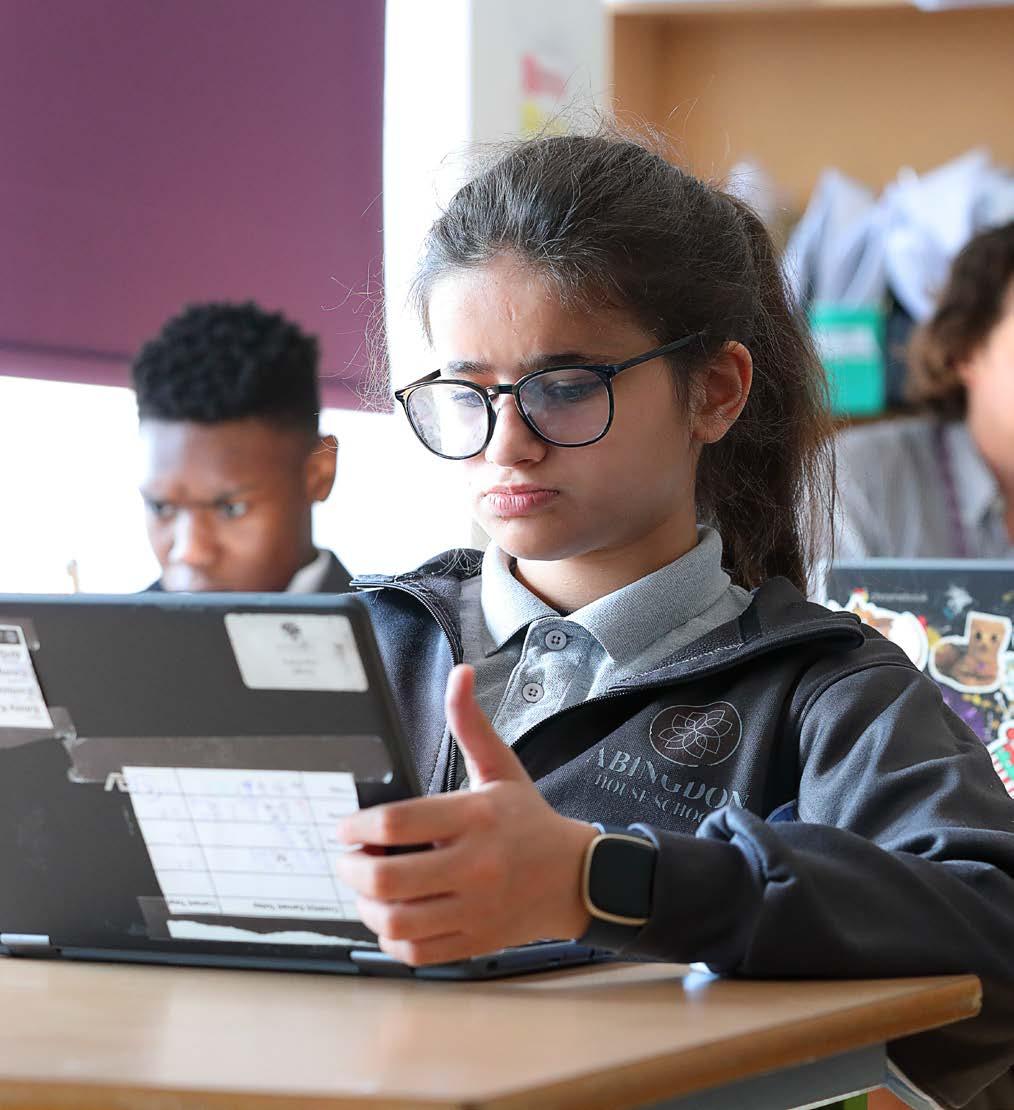
With 1:1 Chromebook provision in place for all students and staff, Abingdon House School leaders then set out a series of ‘non-negotiables’, including the use of Google Classroom to provide a single ecosystem for teaching and learning materials, and the use of Google Workspace (including Slides and Assignments) to bring consistency to front-of-class materials, student activities, homework, interventions and support resources.
This reduced the cognitive burden for students moving between subjects, teachers and classrooms — particularly important for those with processing, learning, sensory or behavioural difficulties� Leaders spoke about a significant number of students having motor planning difficulties creating an additional cognitive burden when learning new tasks, and the high number of students with ADHD who often cannot recall what happened during direct instruction or the last lesson� Having materials consistently in Google Classroom which are organised in a systematic, methodical way; combined with lesson prompts within teaching materials which are created consistently through Google Slides, are often complemented by teacher modelling videos which students can watch back multiple times The result is liberating, empowering and supportive for students
To enable this to happen in practice, Abingdon House staff undertook clear, personalised and forward-facing training to develop skills around using Google Workspace for Education Google Educator Certification was utilised as a structured and supportive way for staff to develop an appropriate digital skillset, whilst rooting tool familiarity in an educational context� All teaching staff and the leadership team now have skillsets aligned with Google Level 1 certification, with many staff being Level 2 certified and some being Google certified trainers and coaches In addition, parents are offered training in Google Workspace for Education tools such that they are able to support young people at home, and there are regular online and in person training top-ups alongside the consistent and regular sharing of effective practice through normal staff meetings, training and conversations — as part of an embedded way of working across the school
It is perhaps helpful to surface at this stage that the broader culture across staff and students at Abingdon House is instrumental in encouraging a wholeschool developmental ethos� For example, during this study, students were routinely observed taking part in healthy classroom debates and discussions about curriculum topics This demonstrated skills of respectful disagreement, empathy and building upon each other’s points� These skills have been explicitly taught through oracy and relationships programmes, enabling young people with significant social, emotional and behavioural needs to access equitable experiences to their peers In addition, relationships between staff and students are inspirational� Students respectfully challenge instructions or tasks that they don’t understand or don’t agree with, and teachers offer mutual respect to students with personalised explanations and a willingness to compromise if and when appropriate Students request additional support and intervention when they self-identify need, as well as being receptive to being guided towards targeted support
During class visits and focus groups, students routinely referred to their teachers and therapists as people who guide and help them to access learning and life skill opportunities, support them with academic and pastoral difficulties, and as people who they felt safe and confident working with That mutual respect and shared community of purpose lies at the heart of classroom trust, whereby students at Abingdon House are trusted to utilise digital tools appropriately and purposefully, and teachers at Abingdon House are trusted by those students to guide them with the skill development that will best help them not just reach, but exceed, their previous potential
Across the range of class visits during this study, learning was captured and represented in a range of ways — most commonly through documents, interactives, photographs or videos, audio recordings, diagrams, discussions and physical artefacts� The use of Google Drive to store files, Google Classroom to organise lessons and assignments has meant that students are able to easily find and retrieve previous work for both celebration, access and revision purposes
Similar principles were observed during whole class independent learning activities For example, teachers adding formative assessment via digital comments on Google Docs whilst students are working on them Teachers explained this as enabling students to remain in flow and focused on their task, reducing the need for the teacher to be in the student’s physical space which can be triggering for some students with sensory barriers to learning Students spoke consistently about their appreciation of this approach:
“I like the digital comments that [teacher name] adds in because I can edit what I’m working on
without making it all messy, or crossing it all out and ending up looking like I have done nothing by the end of the lesson.”
In addition, many students spoke about how much they value the use of digital annotation (e�g� English anthology) which allowed them to highlight text on screen with different colours representing different text features, comment and annotate texts, and search those texts to compare, contrast, analyse and inform their own written work� The digital one-single-place approach to storing student work enabled students to re-access and use previous work far more than paper based equivalents As one student explained:
“I wouldn’t be able to go back to it if it was in a book. The book might not be in my bag or my class. Or it’s more effort to go through to find it. But on the Chromebook I can just search it up. It’s easy to find things, so I use more things. That makes my learning better because I keep going back to it over again and that helps me do the right things now.”
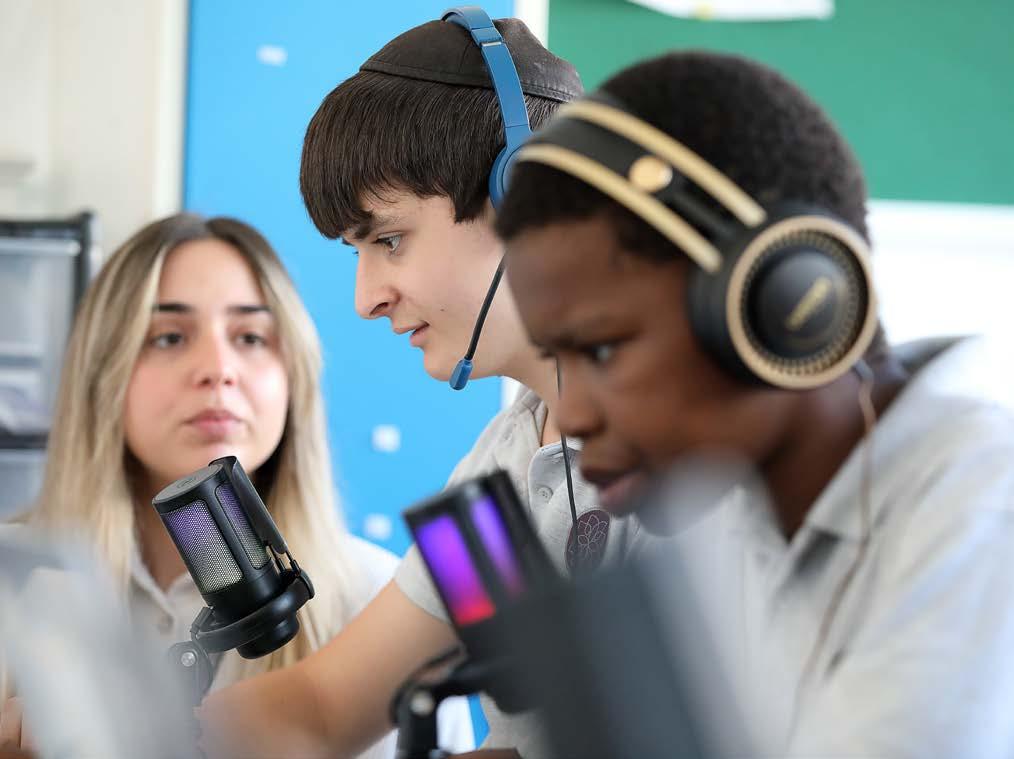
Use of Google Classroom and Assignments are now a deeply embedded way of working across the school, with school specific conventions about class and lesson names and images, expectations about how and when work will be set and clear communication about the offline impact and implications that these consistencies have on young people and efficient class time.
Students and teachers in focus groups and class visits consistently spoke about these expectations and norms as making their lesson time more efficient; reducing time spent setting up, organising, distributing, explaining and collating materials Both students and teachers shared insights about the reduction in cognitive overload and the emotional or behavioural responses that historically often came at transition points between or during lessons� The clear, consistent and embedded ways of working across the whole school were seen as key to creating a calmer, more predictable learning and working environment
Furthermore, the efficiency was perceived by teachers as making a helpful impact on the potential learning time during lessons, shifting student energy from low level tasks and processes on to more meaningful learning tasks
Consequently, a higher proportion of lesson time is now spent on subject specific concepts, targeted interventions and support, and active participation� In addition, students feel they have more agency in their learning as they know when, where and how to access support (if they are struggling with a task) or stretch (if they are feeling confident want to move further ahead) As a teacher explained:
“Every lesson is on Google Classroom, so that if a child needs to use a screen reader, or voice typing to access resources, direct instruction material, learning tasks or whatever, they always have the option to use those tools. It’s not about what an individual teacher might prefer to do, it’s about making sure we don’t remove student’s access to learning.”
As one teacher explained:
“There is little value in students copying down dates and learning objectives — particularly at the beginning of a task when their focus and motivation are highest. These are not life skills, they are things that are done just for accountability or out of habit. It’s more important to think about that precious time when students are motivated, concentrating, focused and ready to learn — and how we can channel that into their learning about subjects and skills.”
However, student voice, choice and metacognitive strategies have been vital components of Abingdon House School’s learning toolkit Leaders clearly explained the importance of standard ways of working (e g consistent use of Google Classroom to anchor lessons and the consistent availability of accessibility toolkit) as complementing student’s ability to make a choice about what they feel would be best for them in that lesson, on that day, for that specific task There may be occasions where students prefer to print something out or work in another way, where they have a clear understanding of why that may be In those scenarios, students are empowered to make those decisions as long as they have a clear and informed rationale for their choice
A key part of the Abingdon House journey has been the introduction of accessibility tools — partly through Chromebooks embedded toolset,15 and partly through the provision of Read & Write 16 In summary, this provides all students and staff with:
• Talk to text (voice typing): a voice dictation tool for those who find handwriting or typing prohibitive to working memory or productivity
• Screen magnification, filters, contrast settings and screen colour inversion: to support eye health
• On screen and external Chromebook keyboards, with options such as dyslexia friendly fonts: to support those who find oral capture or handwriting prohibitive to working memory, cognition or productivity
• Screen reader and reading highlighter: to reduce cognitive overload for those with visual or reading difficulties
• Split screen, bookmarks, Classroom and desktop layouts: to reduce cognitive load for learners finding and navigating to materials
• Cursor magnification, highlighting circle and touchpad speed adjustments: to support visual and cognitive access
• Closed captions and audio options, headphones and microphone: to overcome text-based barriers to learning and to support audio sensory barriers
• Shortcuts, sticky keys and external / switch device access: to enable those with physical disabilities to benefit from equitable access to learning materials and resources
• Co-writing prediction and spelling and grammar checkers: offering options and coaching those with reading, working memory and cognitive barriers through suggested words based on sentiment, and with spelling and grammar development
• Text and picture dictionaries, audio dictionary and vocabulary lists: to empower growth in vocabulary without the expansion being text dependent
• Understanding about hand positioning when using a stylus or typing, screen angle to support neck health: ensuring physical health and wellbeing when using digital tools
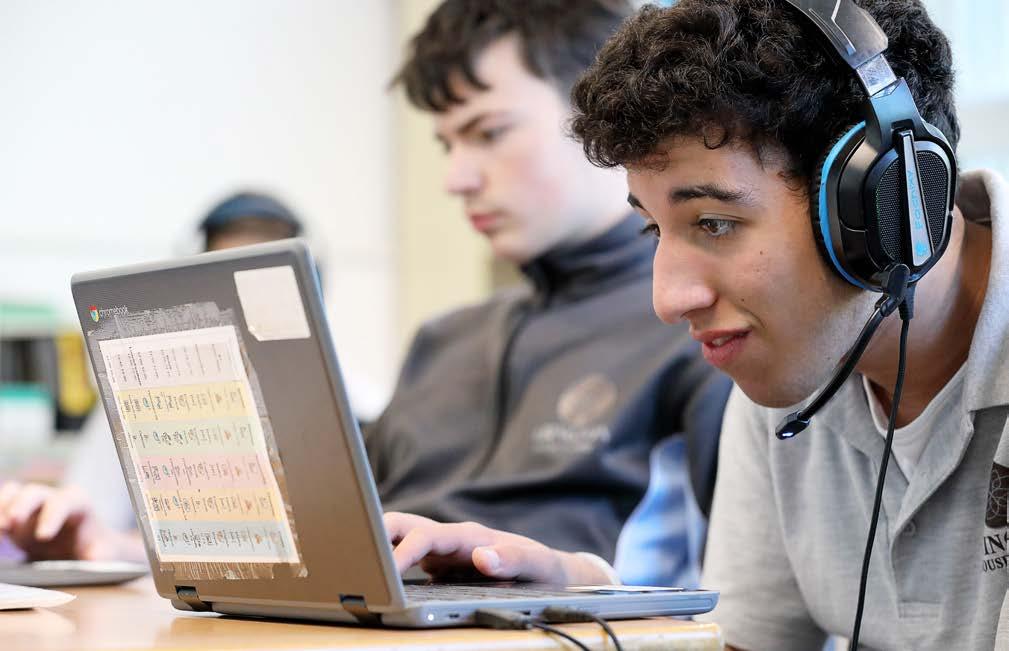
Critically, all students have been introduced to the tools available to them over time, with each individual student utilising individual tools based on their learning needs, profile and preferences This detail has been shared with all teaching staff so that in every lesson, that support is available As a SENCO described it:
“Accessibility features are a student’s real, standard way of working — there shouldn’t be any lesson or task where that is taken away from them. They might choose to use different tools based on the tasks they are asked to engage with, but it’s not acceptable to take away a child’s ability to access and learn. We don’t create barriers for our students by making them work in ways that we know create barriers — we don’t take learning opportunities away from them.”
In class visits across the school and through focus groups, students consistently shared their appreciation for being able to use tools that removed barriers to their access to learning For example:
“For someone like me who has dyslexia — I can’t read. But I can think and I can talk. So if the Chromebook can read stuff to me I can think about it and I can talk about it. I can show what I can do.”
Other students spoke about the pacing of using a screen reader:
“I can listen to the text which helps me to process it. Instead of having to read it word by word, I can hear it at the right pace [fluency]. That makes me understand the whole paragraph or the whole section not just bits of it or groups of words. So then I get what it’s about.”
As leaders described it:
“The use of Chromebooks in classes has removed barriers to learning and allowed students to engage in learning that, otherwise, would have been out of reach.” 17
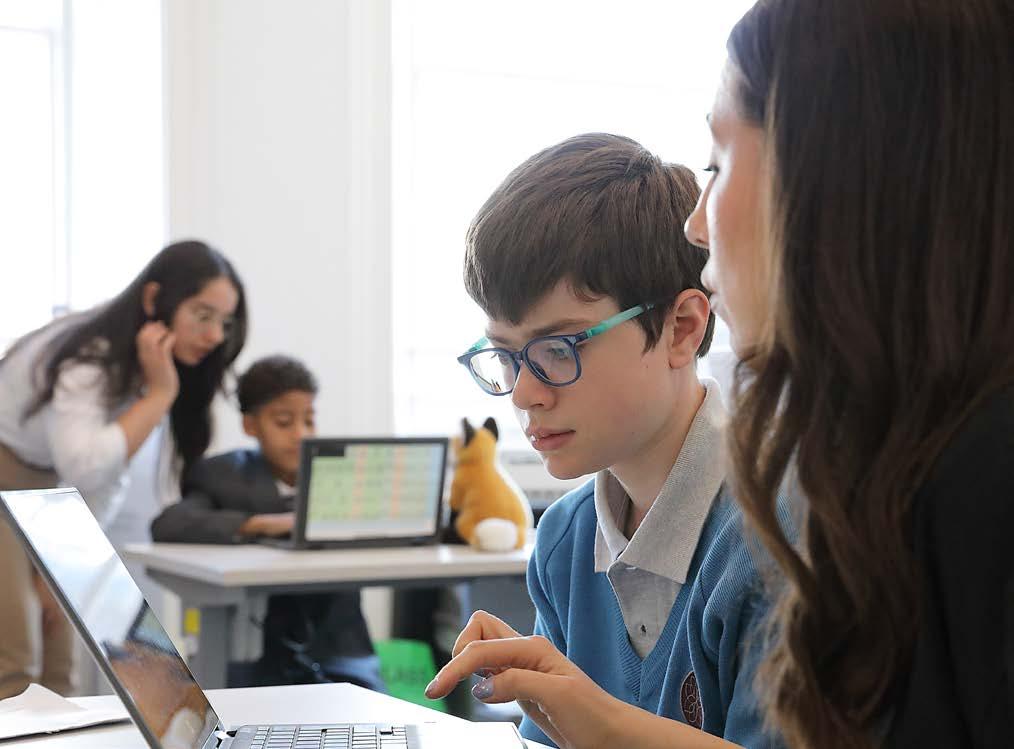
“Accessibility features are a student’s real, standard way of working — there shouldn’t be any lesson or task where that is taken away from them.”
Complementing the support made available to students through their personal provision and 1:1 Chromebook device access, Abingdon House School have also set out accessibility friendly standards for all teaching materials, including those for front of class, interventions, staff meetings and broader communications These were developed in partnership with the British Dyslexia Association,18 and include:
• Use of dark text on pastel background colours on materials (e�g� slides, documents, resources)
• Font size 16 as standard for front of room materials and size 12-14 for other materials, plus sans serif fonts such as Arial, Verdana or Comic Sans
• Avoiding the use of italics or underlining, but using bold instead for emphasis
• left-justified, ragged right-alignment
• Plenty of white space, with line spacing of 1 5 or greater
• Avoiding capitalising words, abbreviations, double negatives or long instructions
• Use of active rather than passive voice
• Using visual aids (e g images, diagrams, flowcharts, pictograms)
• Avoiding busy backgrounds or patterns
• Aim for short, simple sentences, with the use of lists where possible
• Use of headings and subheadings to structure content
In terms of teaching digital etiquette and behaviour, students are expected to only use their Chromebook when instructed or permitted by the teacher,19 closing it during parts of the lesson where the teacher or peers are speaking to them in order to ensure active listening and concentration on the speaker This was observed as consistent and embedded across subjects and year groups� Digital etiquette and behaviours were consistently observed as being explicitly taught as part of everyday teaching and learning, alongside the wide range of other social, emotional and pastoral support embedded in every classroom
The use of AI (through Google Search and Canva) was also observed supporting classroom activities Students utilised search results and AI queries as part of their independent research tasks during humanities lessons, with teachers emphasising the importance of discussion and thinking critically about their findings�
“The use of Chromebooks in classes has removed barriers to learning and allowed students to engage in learning that, otherwise, would have been out of reach.”
18 British Dyslexia Association (2025) https://www.bdadyslexia.org.uk/
19 Permitted use may be for specific tasks in a lesson, and/or ongoing individual support (e.g. SEND or EAL) provision
At Abingdon House School there is an integrated therapeutic approach whereby teaching staff work in harmony with speech and language therapists and occupational therapists, coordinated by three special educational needs coordinators (SENCOs). Classroom lessons, breaktimes and interventions are planned and facilitated by a combination of staff with complimentary specialisms. Therapists work in class, and teachers integrate therapy into everyday classroom practice.
As part of the Abingdon House School timetable, one session every day (8:50-9:15 am), is dedicated to a personalised intervention programme, defined by individual targets and needs There are 19 highly specialised intervention programmes led by therapists and specialist teachers which include (amongst others): dyslexia reading strategies, philosophical thinking and debating, working memory, touch typing and assistive technology Over the school year every student spends a term focused on one of the interventions, with approximately 22% of students each year undertaking additional intervention support to enable them to utilise assistive and accessibility tools effectively so that they can work productively and positively within classroom environments Critically, an intervention about accessibility support such as voice typing is not just about how to use
the tool from a functional perspective, but also includes metacognitive skill development relating to the thought processes that surround its use For example, students are taught to think about their complete sentence first and then speak it into the microphone to enable the voice typing to understand the context, grammar and syntax of each individual word This approach to sentence construction differs from the use of handwriting or keyboard typing which tends to be more fluid, where sentences evolve as the writing or typing commits it to the page� Whilst younger children often plan whole sentences before handwriting them, older students tend to not to do this — and so the importance of reteaching (or teaching) sentence planning skills as part of voice typing is critical in order to maintain integrity of grammar and quality of consequent text�

Another important element that has emerged through the deliberate teaching of voice typing has been in relation to speech and language development and social skills A number of students who use voice typing as their normal way of working spoke about how the process of voice typing had helped them to improve what we might describe as their enunciation, pronunciation, tone of voice, pace of speech and inflection
Over a term, there is an average 63% increase in typing speed for a student with multiple co-existing special educational needs at Abingdon House School — a notable difference for students who face multiple traditional access barriers to learning 20
Interventions thus form a vital part of a young person’s development in terms of directly taught skills (e g functional use of voice typing or touch typing speed), as well as surrounding skills (e g metacognition, planning, speech techniques), physical skills (e�g� shoulder girdles, core strength and finger isolation exercises), and indirect skills (e g improved
social interactions as a result of improved speech techniques) The diligent nature of the Abingdon House team forms the interventions into social stories so that students understand the purpose of their interventions in a way that is meaningful to them (rather than just being assigned an intervention on the basis of a diagnosis, need or issue) As part of this process, students set a personal goal and their teachers support them to present evidence of progress at the end of the Intervention cycle
This holistic and exceptionally thoughtful approach has been instrumental in providing young people at Abingdon House School with both the practical skills to benefit from digital tools as part of everyday practice, as well as the broader training and support so that they do this in a healthy and sustainable way As one student explained:
“I didn’t like school before I came here. But here I feel like the teachers get me. They are giving me skills that I really need and helping me show what I can do. It makes me believe in myself. It makes me try harder and it makes me do better.”
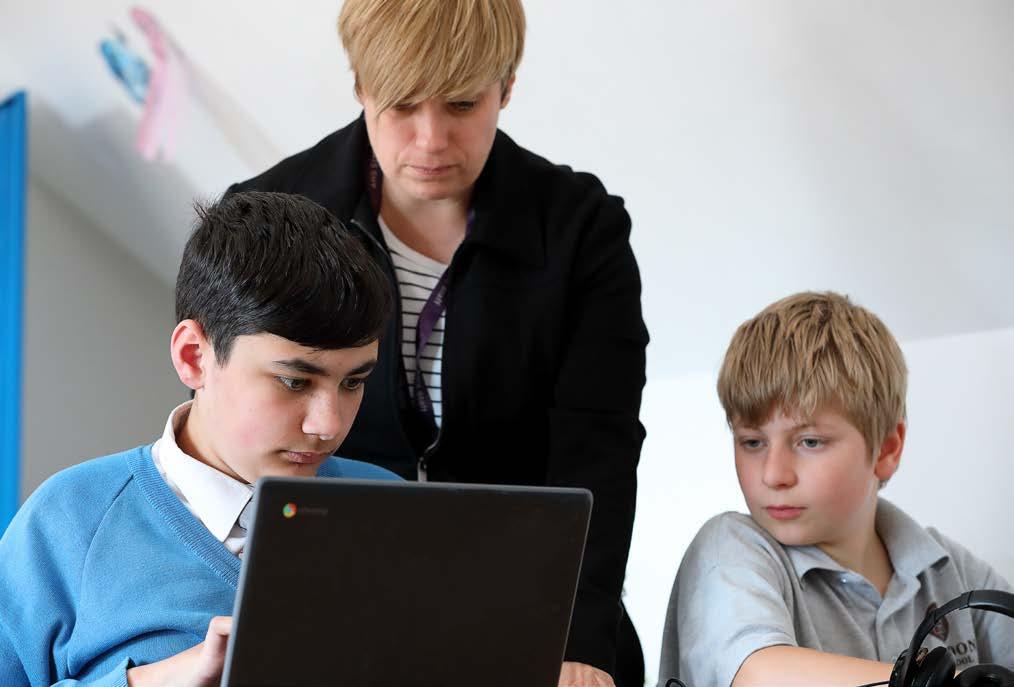
For secondary aged students attending Abingdon House School, the use of accessibility tools can make the difference between their being able to sit and pass a qualification or this being a pathway that would be otherwise closed to them. It is notable that since Abingdon House School began to utilise accessibility features as a ‘normal way of working’ for all students across the school, more young people have been able to sit and pass qualifications and progress on to further education, training and employment.
However, there are a number of systemic issues which Abingdon House have had to overcome, even within the existing JCQ (2025) access arrangements�
Leaders explained that the EHCPs which students have when they first arrive at Abingdon House often lack precise detail about support which has been identified as useful for the student� For example, an EHCP might say ‘needs scribe’ which could mean a human scribe or voice-typing/dictation Historically, most schools would assume ‘needs scribe’ to mean a human adult sitting alongside the student in their examination, with the student dictating to the adult what they want to say in their exam answer� However, with the mainstreaming of voice-typing features, the human adult no longer needs to be a default solution, but instead becomes one of a number of options This study explored student perceptions about different forms of scribe through a series of discussions with students in focus groups, with the majority of students (but not all), expressing a firm view that they prefer to use voice-typing rather than a human scribe because they believe it to have a direct impact on the quality of their work output and therefore their overall attainment grade (and therefore the success in their obtaining qualifications)� This is
because when students use human scribes their pace of recording is determined not by the student’s pace of thinking or speaking, but by the pace of the human scribe’s recording (e g writing, typing) Students felt consistently that they were held back by the use of a human scribe who wrote at a slower pace than the student wanted to work to Students were keen to emphasise that whilst their handwriting may be slower than average, their thinking was not� As one student explained in a focus group:
“I don’t want a [human] scribe. You get less marks. I can speak faster than they can write so they hold me back. You have to spell the words to them which also slows it down. I can get a whole paragraph using voice to text in the time it would take them to write a sentence. The tech keeps up with you as long as you speak clearly. And it stopped my stutter because I had to overcome that to use voice text effectively. It actually affects the way I talk away from tech because I know I need to speak clearly.”
This insight correlates with broader data in this space For example, according to LSE (2025), the average
“I like Trelson [voice to text — with no spell checker] because I can have a go at writing something and then think oh that’s not right and change it — it’s quicker getting the ideas down which gives me time and less pressure to think more about it.”
speed of a human scribe used in an exam is 25-28
words per minute, which is considerably slower than the average voice typing speed of a student at Abingdon House (62 wpm) 21
Other students in the focus group exploring the role of voice-to-text identified notable unintentional consequences on broader life skills such as oracy and creativity For example:
“I can get more marks about my creativity when I use voice to text because I can get more ideas down. But also it’s making me a lot better at speaking to people. With the technology I have to think about being clear [with my pronunciation], and I have to think about where the punctuation is going because it doesn’t do that for me. I have to think about how it will sound. Now I’m doing that all the time when I speak and I’m better at speaking to people all the time because of it.”
Similar considerations arose when students spoke about the use of ‘readers’ in exams Historically, a student may have been provided with someone who would read a given text to a student who would be otherwise unable to read it themselves However, in this study’s focus groups, students spoke about the characteristics of the human reader that sometimes created an additional barrier to their qualification success For example, citing human accents, volume or enunciation, reading speed, voice familiarity and personality As one student explained:
“I like the screen reader with the Australian accent because they sound like my teacher. I don’t like the posh voices because they don’t sound like anyone I know so that puts me on edge and then it’s hard to concentrate on what they are saying.”
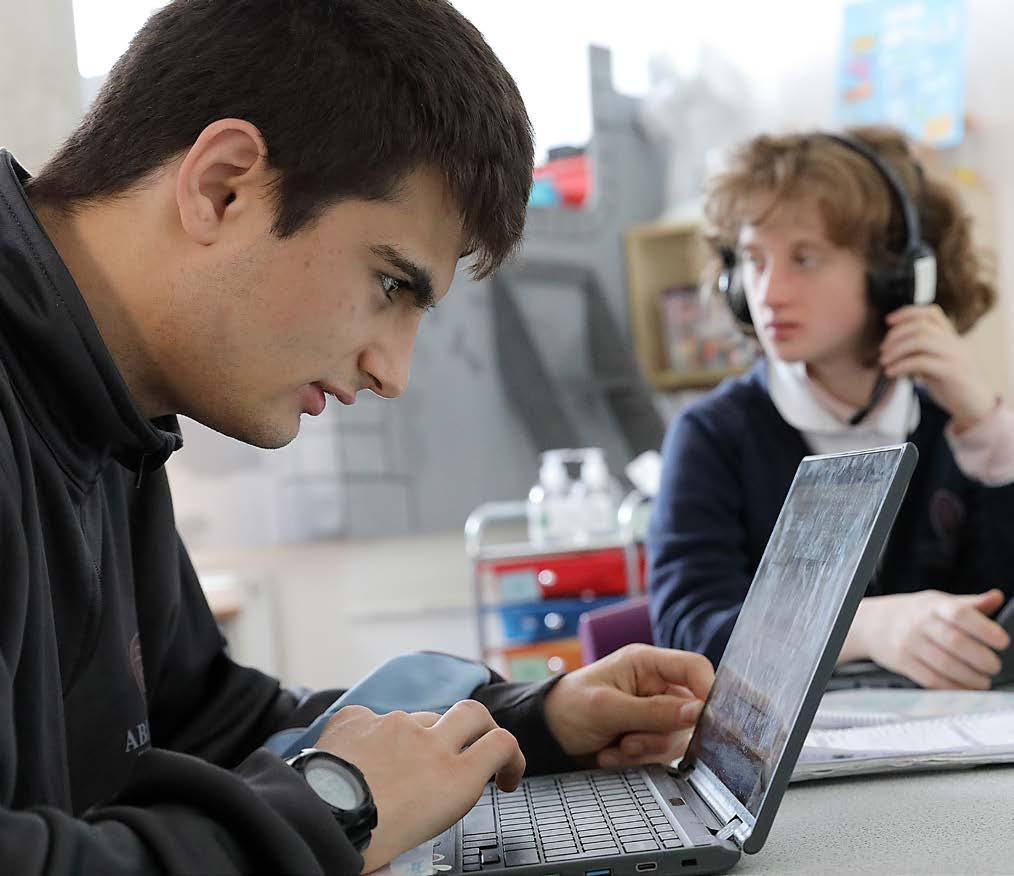
For young people with both reading barriers and sensory or social barriers, these presented distractions that made an already stressful experience even more difficult However, with the use of digital screen readers, most students felt that these issues were removed For example, with a digital screen reader, students could choose a voice accent that they felt comfortable with and was familiar to them, and in knowing it was a digital tool not a human being, they felt liberated away from any social or psychological distractions� In a focus group with students at Abingdon House exploring this point, one of the students explained that:
“In exams I had voice reading at full speed so that I could get through the text quickly so that I could use my time on answering the questions. I had a time pressure. I can understand it at that speed, I just can’t read it myself at that speed.”
There were some students who preferred a human reader, but these tended to be based on pre-existing relationships with the person doing the reading as bringing additional security within a qualification assessment experience
Across Abingdon House, a large number of students use voice-typing as scribes and screen readers as readers when they engage with text based materials One of the concerns about utilising these tools in an examination environment has been the potential disruption to other students (with the examination requirement that students do not hear or interact with each other) When there are small numbers of students using audio tools, this can be managed for the purposes of exams by allocating students to different rooms or adding sound boards and distance
between them However, this is difficult to scale in terms of space being available at the allocated examination time, and the cost of staff to invigilate and keep students safe Abingdon House School have been exploring this barrier as part of everyday classroom practice with a view that an effective solution in a classroom environment should support effective at-scale examination contexts A key part of this is the use of headsets with boom microphones and noise cancelling for input so that students can speak at a lower level This means that students can use these tools whilst working in close proximity to other students being neither heard nor disrupted by a neighbouring student Complemented by quiet and well regulated classrooms, this allows students to work at their own pace, utilise these accessibility tools and adhere to the expectation that they should neither disrupt or be interrupted by another student
In a broader landscape, in 2023-2024, 9 4% of all candidates taking GCSE exams in England were approved for computer reader or reader access arrangements, and 3�5% were approved for scribe or speech recognition arrangements (Ofqual, 2024) There was a 12 3% increase from the previous year, suggesting a growing familiarity with the impact of these tools on young people’s ability to access examination material and represent their knowledge and understanding in examinations The pathfinding approach at Abington House School to embedding these tools as part of normalised ways of working, at scale, is likely to be instrumental in helping both special provision, mainstream schools and policy shapers better understand contemporary support for today’s young people
Leaders spoke about a small number of parents who express concern about screentime given the 1:1 Chromebook provision, with queries raised generally relating to online safety and volume of time spent looking at digitised screens.
This research study did not source data directly from parents (e g parent survey or parental interviews) However, data from comparable studies may be helpful to consider For example, a similar study exploring four independent schools using 1:1 device provision (Aubrey-Smith, 2025), found two key trends which may be applicable at Abingdon House The first being that parent concern about classroom screentime is often based on their associating device use with the sedentary, social and passive use seen in the home environment This is generally compounded by a low level of parental awareness about how digital tools are used to support, extend or enhance learning or teaching in a school environment� The combination of these two trends generally creates some mistaken assumptions about the amount of time their children
spend looking at a digital screen, and the nature of their experience and interaction with it
From an academic perspective, it is also helpful to be aware that there are (at least) two permeating issues embedded within narratives about screentime The first is that current mainstream terminology (e g words like screentime or device use), conflates positive and productive uses of digital tools with damaging and destructive uses This is an unhelpful over-simplification which often encourages polarised and emotive debates ‘for’ or ‘against’ screen or device use In a fast-moving landscape, polarised debates risk diverting attention away from what matters most within an educational context — supporting young people who live in 2025 to live healthy, purposeful
and fulfilling lives The other permeating issue is a focus on the object (device), falsely separating the physical item from the human being whose behaviours define its use
In an attempt to meaningfully classify variance across experiences referred to by the term screentime, three categories are suggested:
• low demand exchange or consumption (e g watching TV, film or videos, games on mobile phones or tablets, short messaging or video calls, social sites and newsfeeds, taking photos or making videos) This tends to be what is referred to as harmful by those who campaign against screentime
• cognitively active use (e�g� creating and editing documents or artefacts, productivity tasks, researching interests or topics, taking part in creative or interactive challenges, sourcing a video or guide in order to learn and practice a new skill) These tend to be associated with ‘work’ by young people and adults
• cognitively challenging purposes (e�g� group or collaborative creation projects that span multiple days/sessions, editing/improving a tangible artefact over multiple interactions and timelines, interactive discussion that tangibly and meaningfully extends
thinking beyond that which is possible individually or in isolation) These tend to be viewed as complex digital interactions and associated with higher order thinking
Use of digital screens at Abingdon House School both by teachers and students would all be classified into the latter two of the three categories above, i e cognitively active and cognitively challenging experiences, both of which support learning Low demand exchange or consumption was not observed as part of the lessons taking place during any of the class visits associated with this study
Many Abingdon House School students have their own smartphones or digital devices which they will have and use on their journey to and from school� However, these devices are not permitted in lessons, being collected at the beginning and returned at the end of the day This sets clear demarcation between work-focused digital tools (e g on Chromebooks) and leisure-oriented digital tools (i�e� smartphone, iPad, digital watch, wearables) There were some specific notable trends, such as tablet / iPad use in the home environment being “for the same as what you do on your phone, just on a bigger screen ”
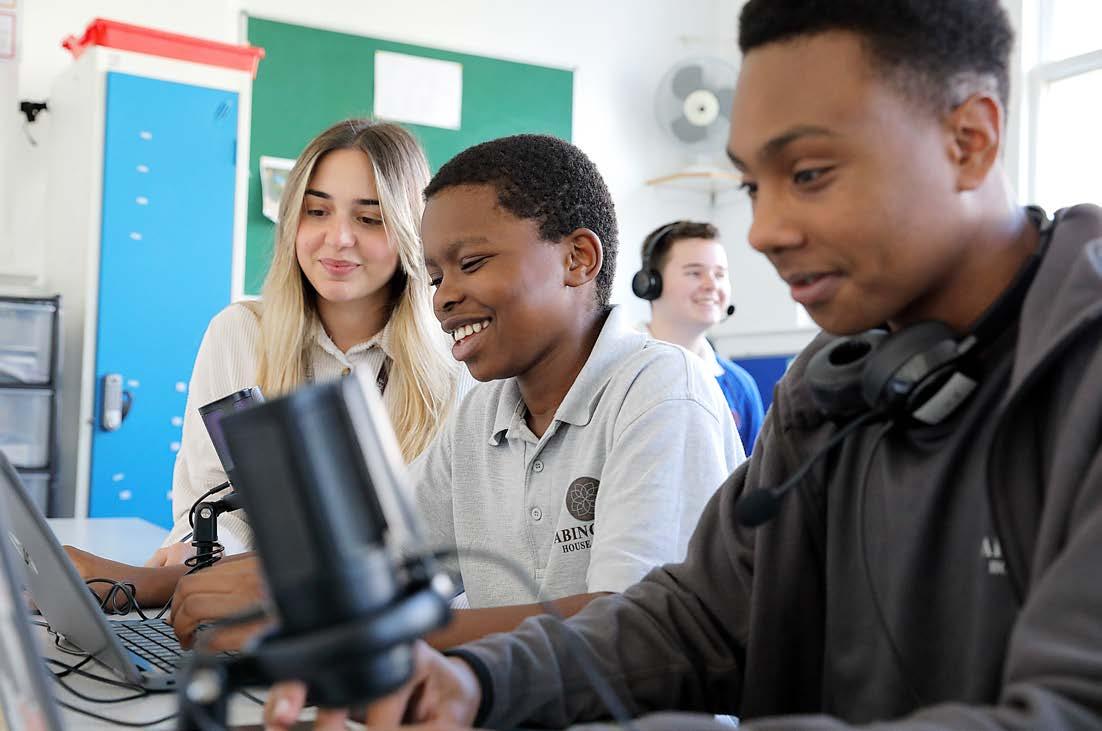
In focus group discussions, students made a clear demarcation between their home devices and their school Chromebook, seeing the Chromebook as specifically for learning tasks, and home devices for leisure purposes� Through a series of focus group word games, students reported that they associated Chromebooks with work, accessibility and purpose, but associated home devices such as tablets and smartphones with fun, entertainment and rest
In focus groups, students were also asked about role models for healthy digital use and behaviours Most students described home and social experiences as being low demand exchange or consumption (the first of the categories above) — often referencing their use of games, messaging, video or tv to ‘chill out’, relax, connect with friends, unwind or decompress Many students referred to being allowed gaming or tv time as a reward in the home environment Very few students felt that they had rules about their digital use at home or outside of school, but conversely, all students were quick to identify acceptable use rules and behavioural expectations around device use at school, suggesting a very different set of associations both practically and psychologically Students acknowledged that their adherence to rules and expectations usually mirrored what they felt individual teachers would allow or challenge� However, most students described school rules around Chromebook use in terms of wider school rules — using language about respect, aspiration and work ethic Notably, all students reported being pleased that teachers and leaders at school use Classroom Cloud, explaining that knowing teachers could see and track their Chromebook actions encouraged them to ‘behave properly’ None of the students however, wanted equivalent tools applied to their home devices
Students at Abingdon House consistently referenced how much they valued using digital tools as part of their everyday learning experiences Students were clear that they valued the access and opportunities that digital tools had opened up for them and saw these as supporting, extending and enhancing their education and future wellbeing trajectory In particular, students across year groups in class visits and focus groups commonly cited the use of digital tools as:
• Improving concentration: as a result of clear, consistent anchoring of resources through Google Classroom
• Improving comprehension: due to the use of accessibility tools removing traditional barriers to learning such as reading and handwriting
• Supporting working memory and cognitive load: by allowing students to focus on one thing at a time, with consistent models and structures for supporting learning processes
Notably, whilst students referred to enjoying other kinds of digital experiences (e g video), they were also largely clear that they did not see the value in bringing those kinds of low-demand uses of digital during school lesson time� For example, video content in lessons was seen as valuable when used for short burst stimulus to demonstrate or illustrate something that was not otherwise possible in a classroom environment, but video was seen otherwise as a distraction that encouraged sedentary ‘zoning out’� Similarly, gamification of tasks was seen by most students as enjoyable, but not necessarily beneficial to improving learning and therefore not desirable as part of their school experience
There are some other, more nuanced issues relating to common perceptions around screentime In the many articles, reports, books and presentations about criticisms of screentime, it is common to find that a domain specialist (e g ophthalmologist), has undertaken detailed research specific to their specialism (e�g� eye health), but that the bounds and limitations of their study preclude multi-disciplinary specialist definitions specific to digital terminology (i e all screen uses are considered equal rather than utilising categorisations such as those introduced above)� This creates common myths that eye sight is worsened simply through the use of a digital screen, rather than being the result of lack of variance in usage through focal distance, and balancing ultraviolet exposure and movement as part of a broader healthy lifestyle (Duarte et al , 2015)
In short, ophthalmologists and eye health care specialists advise that all of us — both young people and adults — should ensure regular variance between close-up work, near focus and far distance focus (Ku
et al , 2019) This is to avoid over-straining our eyes by sustained periods of focusing on a single object or at a set distance Sustained focus on a single objects, particularly at close range, tends to correlate with less frequent blinking, leading to dry eyes, leading to eye strain, fatigue and disengagement (Moorfields, 2025) The relationship between screen use and eye sight is therefore more about the amount of time focused on close-up, indoor, seated behaviour, which could equally be reading a physical book, working on a paper based desk task, or online using a digital device (Ku et al , 2019; Huang, et al , 2015)
Across Abingdon House classrooms, variance in focal distance was seen in the majority of classrooms as part of embedded everyday high quality provision� This was usually achieved through a blended balance of learning activities, movement breaks, and avoiding long periods focused on front-of-class boards or Chromebooks Furthermore, students at Abingdon House benefit from their eye health and wider
wellbeing being supported with a range of indoor and outdoor physical activities through a wide range of embedded therapies, to encourage physical variance and to counterbalance seated activities This is part of an established whole-person approach to supporting learners which is characteristic of strong special school settings, but not necessarily familiar to many schools in mainstream contexts (therefore also not familiar to many education and health professionals or parents) This strong pedagogy is a typical example of the Abingdon House leadership team’s approach to utilising holistic research about young people’s wellbeing to inform exemplary provision and practice
Alongside this, teachers employ a wide range of sensory tools to support student re-regulation, flexible physical classroom environments with Chromebook mobility to prevent and de-escalate emotional triggers, movement breaks to distribute surplus energy or frustration and the use of digitally provisioned music to support breathing regulation
Abingdon House captures progress in maths, reading and writing for all students, utilising annual WRAT, HAST and YARC attainment checks.23 These produce an age adjusted score based on national comparative benchmarks.
Notably, over the four years since the introduction of Abingdon House School’s 1:1 digital provision, there has been a school wide modal average of 2 percentage points of additional progress above age adjusted scores (n=97) in maths, 1-1 5 points of additional progress above age related scores in spelling, and 1 point of additional progress above age related
scores in reading age, fluency and comprehension 24 This means that students are not only consistently achieving expected progress based on age related benchmarks, but the net gains are higher than might otherwise be expected, consistently across core curriculum areas
This independent review of Abingdon House School’s approach to digital technology in teaching and learning confirms a highly effective, pedagogy-first model that has profoundly impacted student outcomes and student agency. The school’s integrated provision, which combines a specialist therapeutic environment with strategic 1:1 Chromebook access, enables students with complex SEND to consistently exceed expected age-adjusted benchmarks by 1-2% in key academic areas like maths, spelling, reading age, fluency and comprehension.
The data unequivocally demonstrates the material benefits of this approach For example, dyslexic students using voice typing (averaging 62wpm) rather than human scribes (averaging 25-28 wpm) leads to greater pace, greater quality of output and the ability for more students to successfully sit and pass qualifications
The school has successfully navigated concerns, such as the potential overuse of screentime, by focusing on the purpose and cognitive focus of digital
use, with students able to explain and demonstrate the difference between activities conducted on school Chromebooks (work) and activities using home devices such as smartphones (leisure) This cultivation of self-regulation and digital literacy, alongside the robust, evidence-informed framework described in this report, positions the Abingdon House model as a powerful case study for empowering students with SEND to not just meet, but significantly surpass, their previous potential

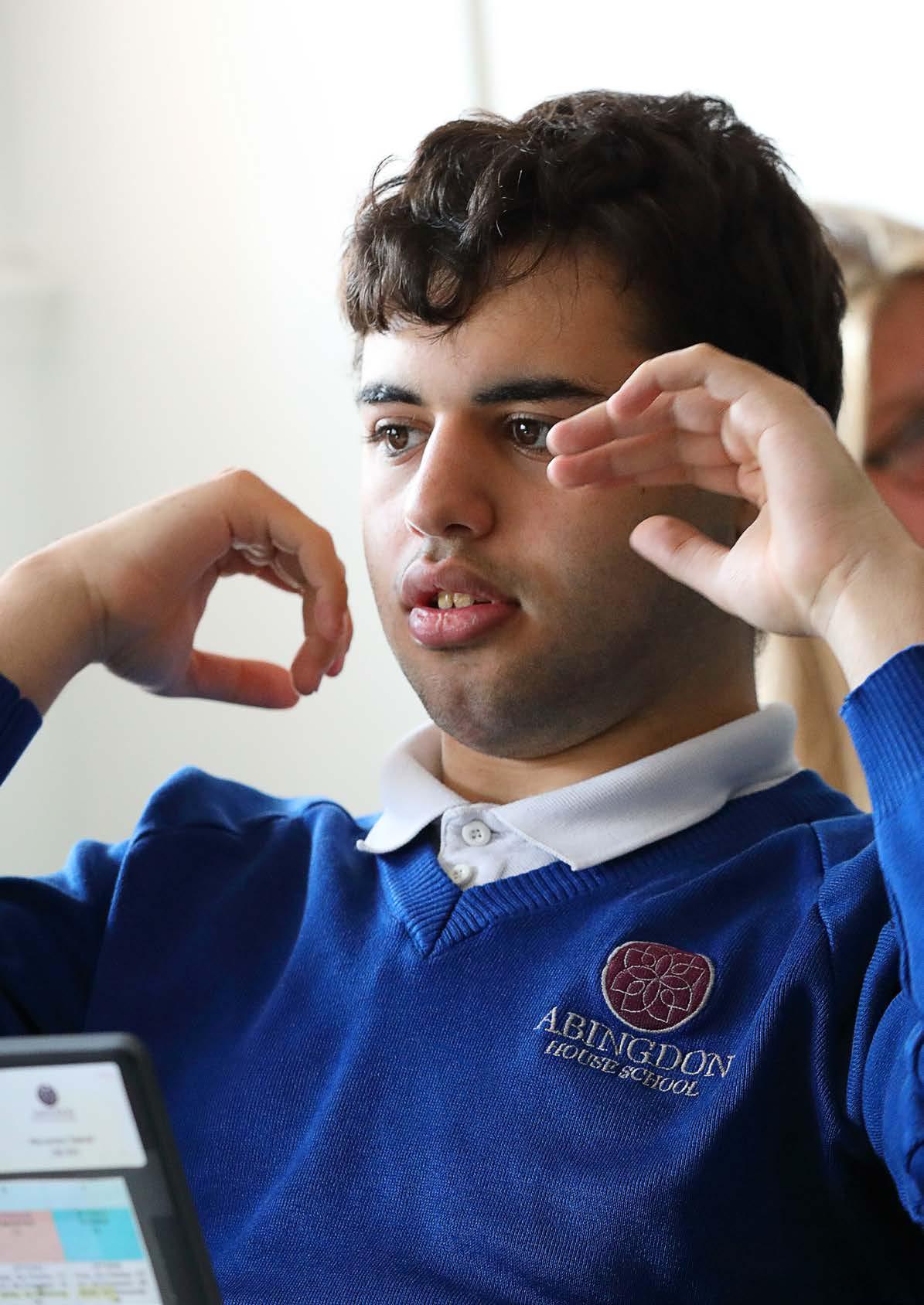
Aubrey-Smith, F , and Twining, P , (2024) From EdTech to PedTech: Changing the way we think about digital technology Routledge: Abingdon
Aubrey-Smith, F�, (2025) Be Informed, Be Precise, Be Contemporary: An independent review exploring the Thomas’s Day Schools Approach to the use of digital to support learning and teaching London
Braun, V�, & Clarke, V�, (2021) Thematic Analysis: A practical guide SAGE: London
Brighouse, T , and Waters, M , (2021) About our Schools: Improving on previous best Crown House: Carmathan
Cushman, K , & Rogers, L (2008) ‘Middle School Students Talk about Social Forces in the Classroom’ Middle School Journal, 39(3), pp 14–24
Daumiller, M�, & Hemi, A�, (2025) ‘Peer relationships and student motivation: Theoretical and methodological approaches, empirical evidence, and future directions’ British Journal of Educational Psychology 10(11) pp 1-19
DfE (2014) National Curriculum in England: Computing Programmes of Study, Key Stages 1-4 London
DfE (2025) The Writing Framework London
Dockrell, J� & Arfé, J� (2014)� ‘The Role of Oral Language in Developing Written Language Skills: Questions for European Pedagogy’ in Arfé, B , Dockrell, J E & Berninger, V W (eds) Writing Development in Children with Hearing Loss, Dyslexia or Oral Language Problems: Implications for Assessment and Instruction� New York: Oxford University Press, pp�3-15
Duarte, I A , Hafner, M deF , & Malvestiti, A A (2015) ‘Ultraviolet radiation emitted by lamps, TVs, tablets and computers: are there risks for the population?’ Anais brasileiros de dermatologia, 90(4), pp�595–597
Ginns, P , Muscat, K , & Naylor, R (2023) ‘Rest breaks aid directed attention and learning’ Educational and Developmental Psychologist, 40(2), pp 141–150
Gordon, P�, Grosz, B�, Gilliom, A�, (1993) “Pronouns, Names and the Centreing of Names in Discourse ” Cognitive Science, 17(3), pp 311-347
Hammersley, M , (2006) “On the teacher as researcher” Education Action Research 1(3), pp 425-445
Hart, R , (1992) Children’s participation: From tokenism to citizenship Innocenti Essays No 4 UNICEF: Florence
Hodges, A (2015) ‘Intertextuality in Discourse’, in Tannen, D , Hamilton, H E , and Schiffrin, D (eds) The Handbook of Discourse Analysis 2nd edn US: WileyBlackwell
Huang et al , (2015) ‘The association between near work activities and myopia in children — a systematic review and meta-analysis’ PlosOne 10(10)
ISI (2025) School Inspection Report — Abingdon House School
Joint Council for Qualifications (2025) Access arrangements, reasonable adjustments and social considerations: Regulations and Guidance
Ku, P , et al , (2019) ‘The associations between near visual activity and incident myopia in children: A nationwide 4 year follow-up study’ Ophthalmology 126(2), pp 214-220
Lincoln, Y� S� and Guba, E� G� (1985) Naturalistic inquiry� London: Sage Publications
London School of Economics and Political Science (2025) CEA Factsheet — Scribe or Reader
Moorfields Eye Hospital (2025) Myopia (short sightedness)
Ofqual (2024) Access arrangements for GCSE, AS and A level: 2023 to 2024 academic year
Palinkas, L A , Horwitz, S M , Green, C A , Wisdom, J P , Duan, N , & Hoagwood, K (2015) Purposeful Sampling for Qualitative Data Collection and Analysis in Mixed Method Implementation Research� Administration and policy in mental health, 42(5), pp 533–544
Stutchbury, K and Fox, A (2009) ‘Ethics in Educational Research: introducing a methodological tool for effective ethical analysis’, Cambridge Journal of Education, 39(4), pp 489–504
Tannen, D et al (2015) The Handbook of Discourse Analysis 2nd edn Chichester: Blackwell Walker, M� A�, Joshi, A� K� and Prince, E� F� (eds) (1998) Centering theory in discourse Oxford: Clarendon Press
Zimmerman, B J and Risemberg, R (1997) ‘Becoming a Self-Regulated Writer: A Social Cognitive Perspective’, Contemporary Educational Psychology, 22(1), pp� 73-101�
Dr Fiona Aubrey-Smith EdD MA(Ed) MMus PGCE BA(Hons) FCCT FRSA FHEA
Named by Education Business as one of the 50 most influential people in education (2025), Dr Fiona Aubrey-Smith is an award-winning teacher, leader and academic with a passion for supporting those who advocate for children and young people.
Fiona is the Founder of One Life Learning — an independent strategic research consultancy that focuses on the experiences and internalisations of learners in today’s schools She works closely with schools, professional learning providers and those providing resources and support to schools — championing the case for a pedagogy-first approach to thinking about contemporary classrooms Alongside this, Fiona is a PhD and EdD research supervisor and examiner, working across a number of universities� She also sits on the board of a number of multi academy and charitable trusts, and co-founded the National PedTech Partnership
Co-author of the best selling book From EdTech to PedTech: Changing the way we think about digital technology, Fiona is a Founding Fellow of the Chartered College of Teaching, has been awarded Fellowships by RSA, NAACE and the HEA In 2023, Fiona was granted Freedom of the Worshipful Company of Educators and in 2024 granted Freedom of the City of London� In 2025, Fiona was named Edufuturist of the Year, and recognised internationally by Higher Education Research and Development (HERD) for co-leading research concerned with deepening understanding about the development of knowledge
Contact: fiona@onelifelearning co uk
Cite this report as Aubrey-Smith, F , (2025) Beyond Previous Potential: An independent review exploring the Abingdon House School approach to the use of digital to support learning & teaching London
With grateful thanks to Everway for generously supporting the printing of this report