CELESTIQ
BY INQUIRY ONLY


SIMULATED CONTENT SHOWN
LOOKING FOR MORE? LOOKING FOR MORE?
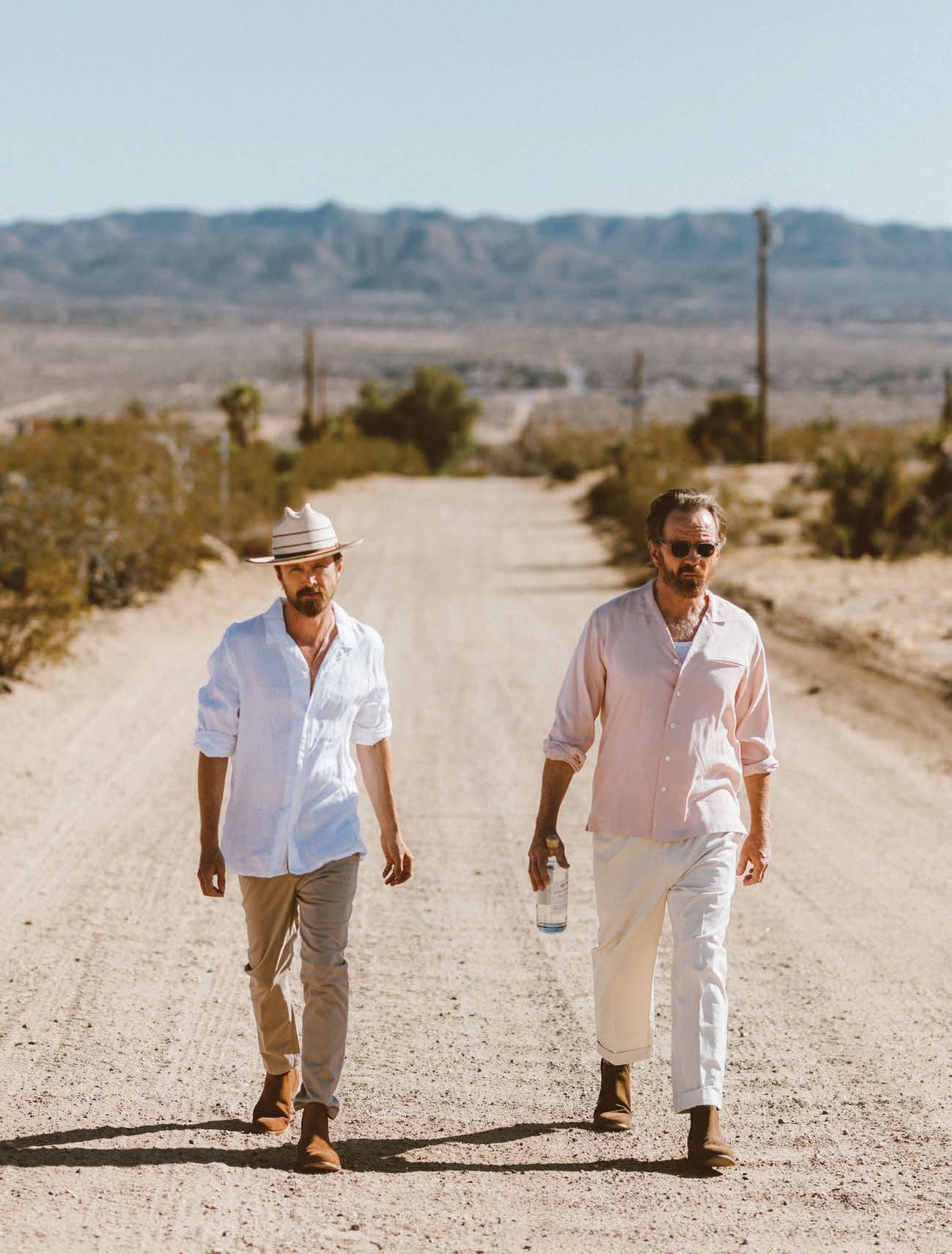

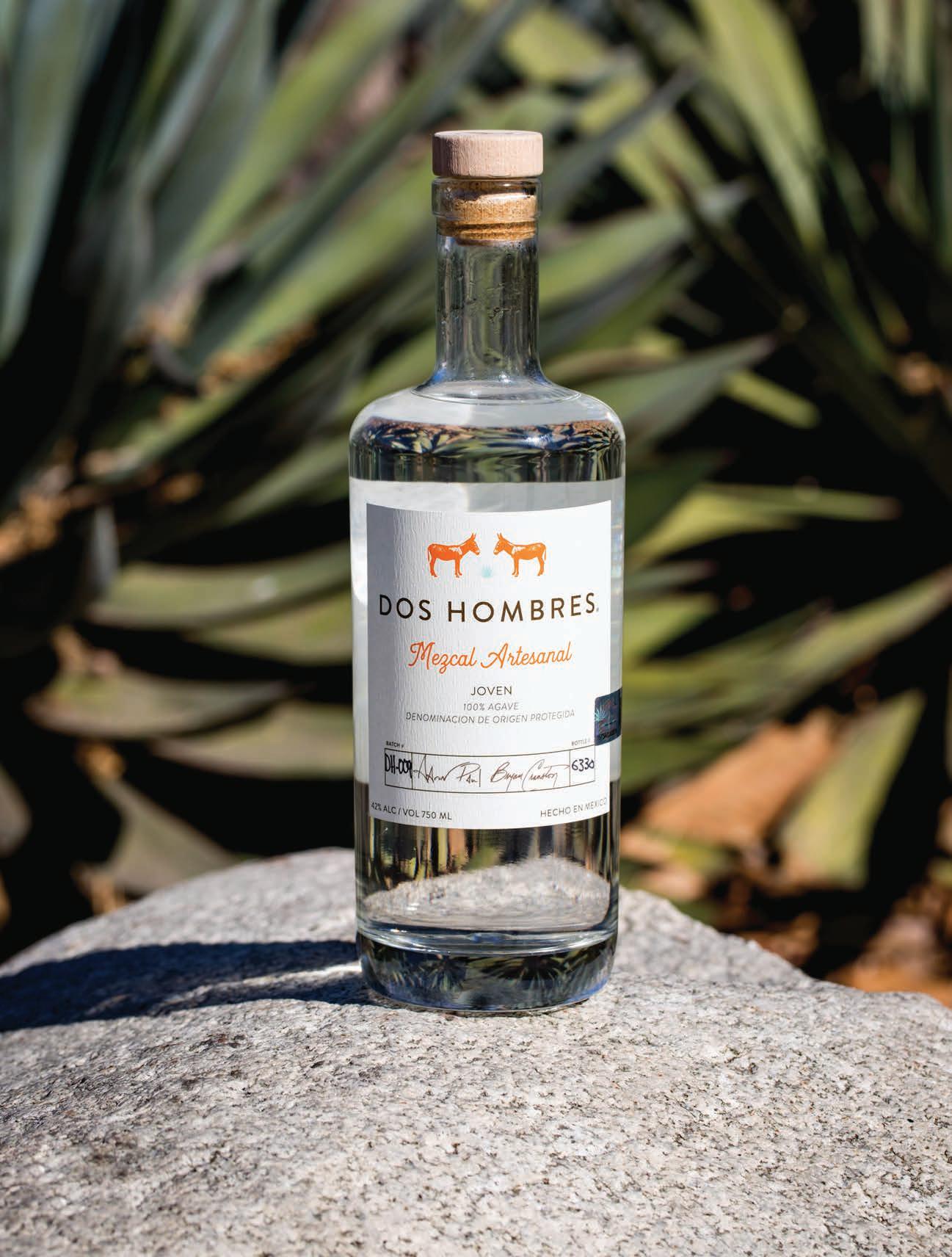

@doshombres | doshombres.comLOOKING

cd: ROBB AARON GORDON



ANTARCTICA / SOUTH AMERICA / CARIBBEAN & BERMUDA
MEDITERRANEAN / NORTHERN EUROPE / ARCTIC
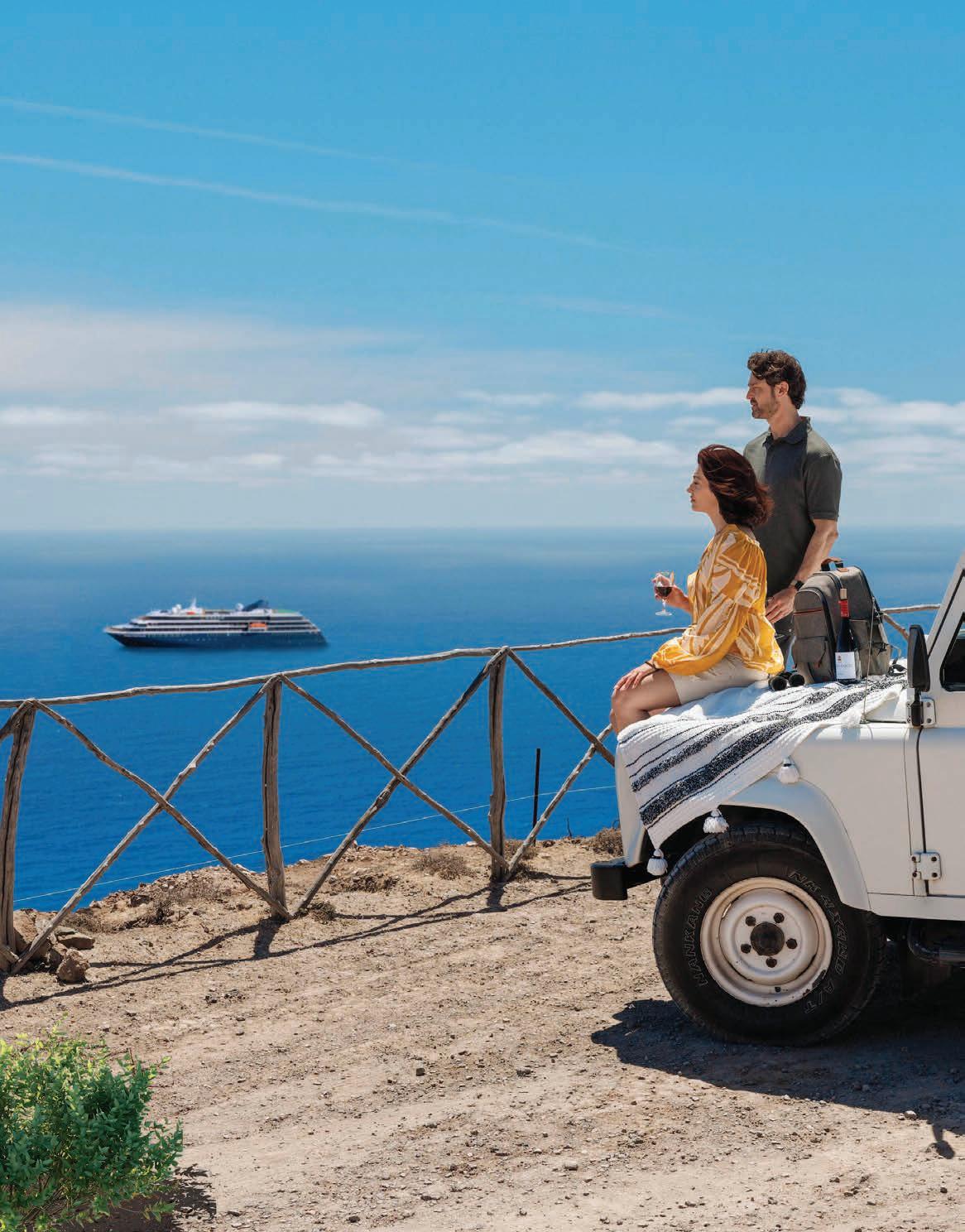

At Atlas, we have set a new course for expedition cruise travel, curated for spirited explorers, led by expert guides, and enhanced by a genuine and caring crew who share a desire to connect with people, places, and our cherished natural world. From bold adventures in the Arctic and Antarctica to Cultural and Epicurean Expeditions year-round, travelers return to our luxury yachts to savor moments well-lived among new friends in a relaxed, après expedition atmosphere
Begin exploring at AtlasOceanVoyages.com
ALWAYS INCLUDED BY ATLAS : Expedition Guides + Enriching Experiences, L’OCCITANE Amenities, Unlimited Wines + Spirits, Gratuities and More





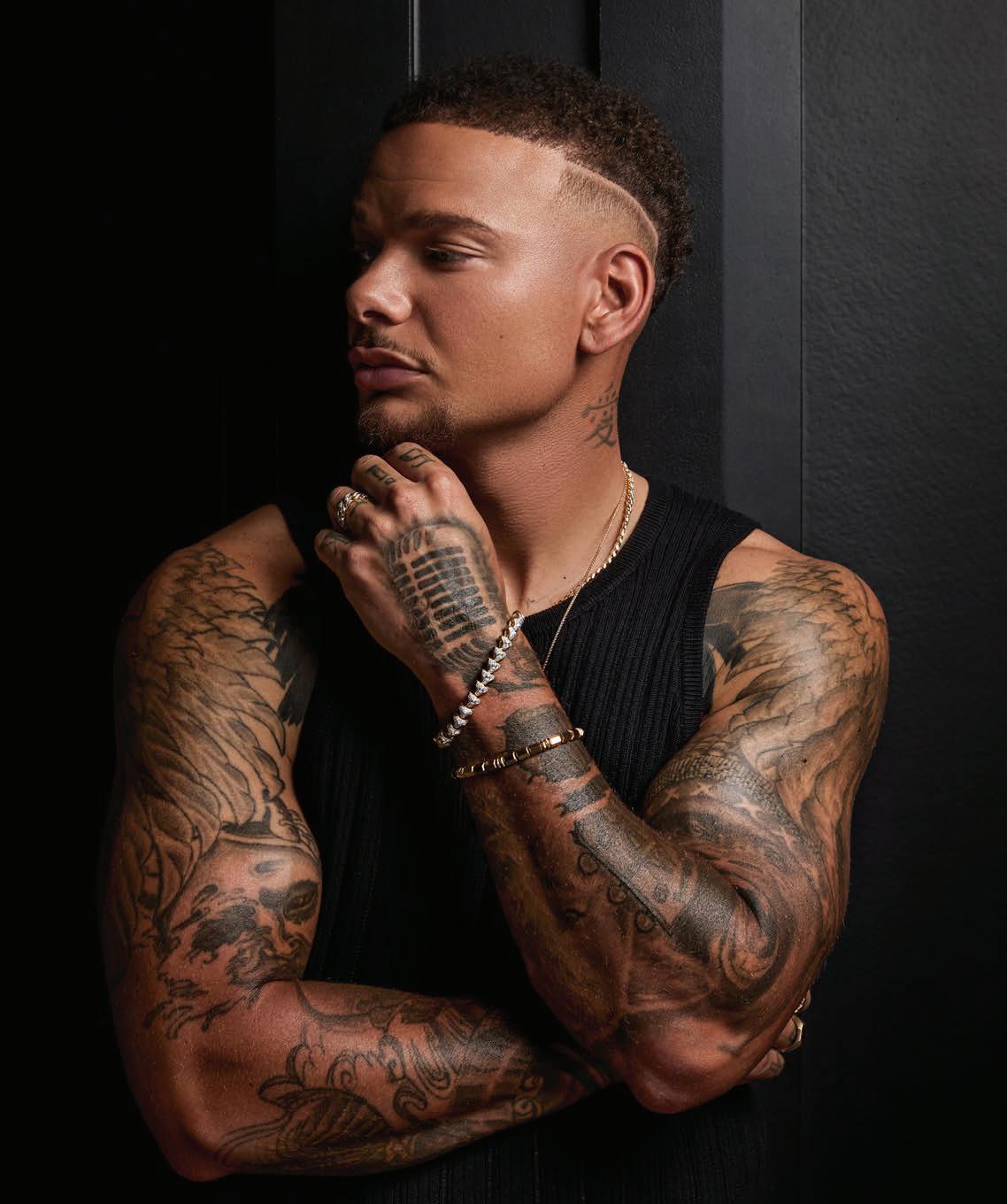
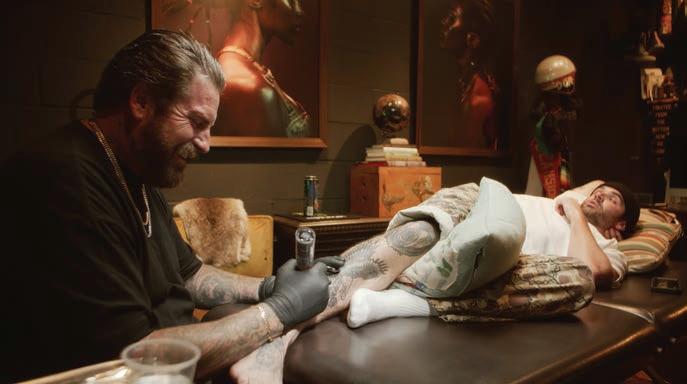
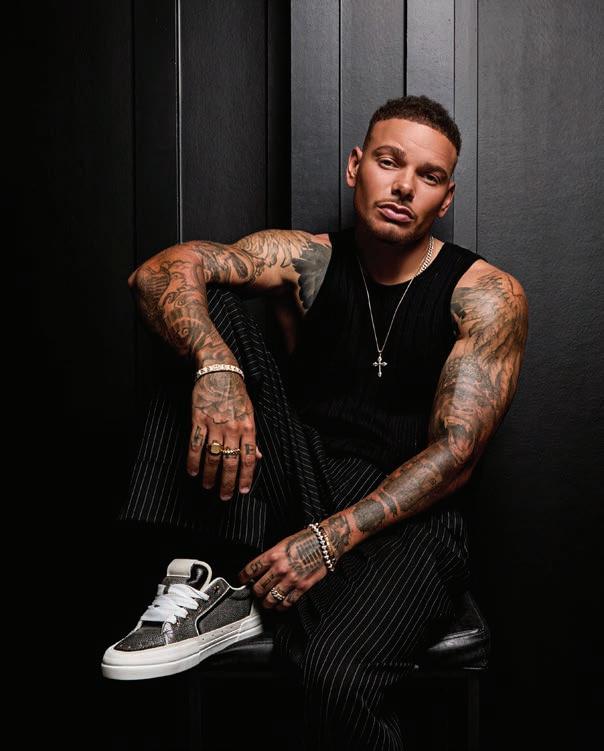
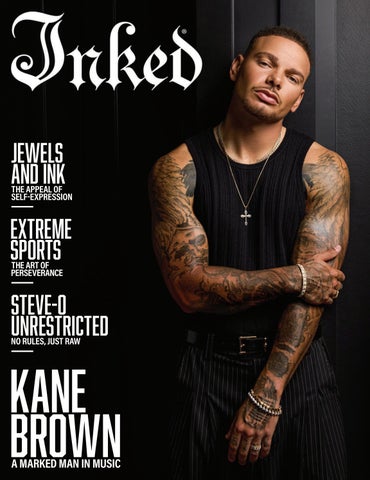
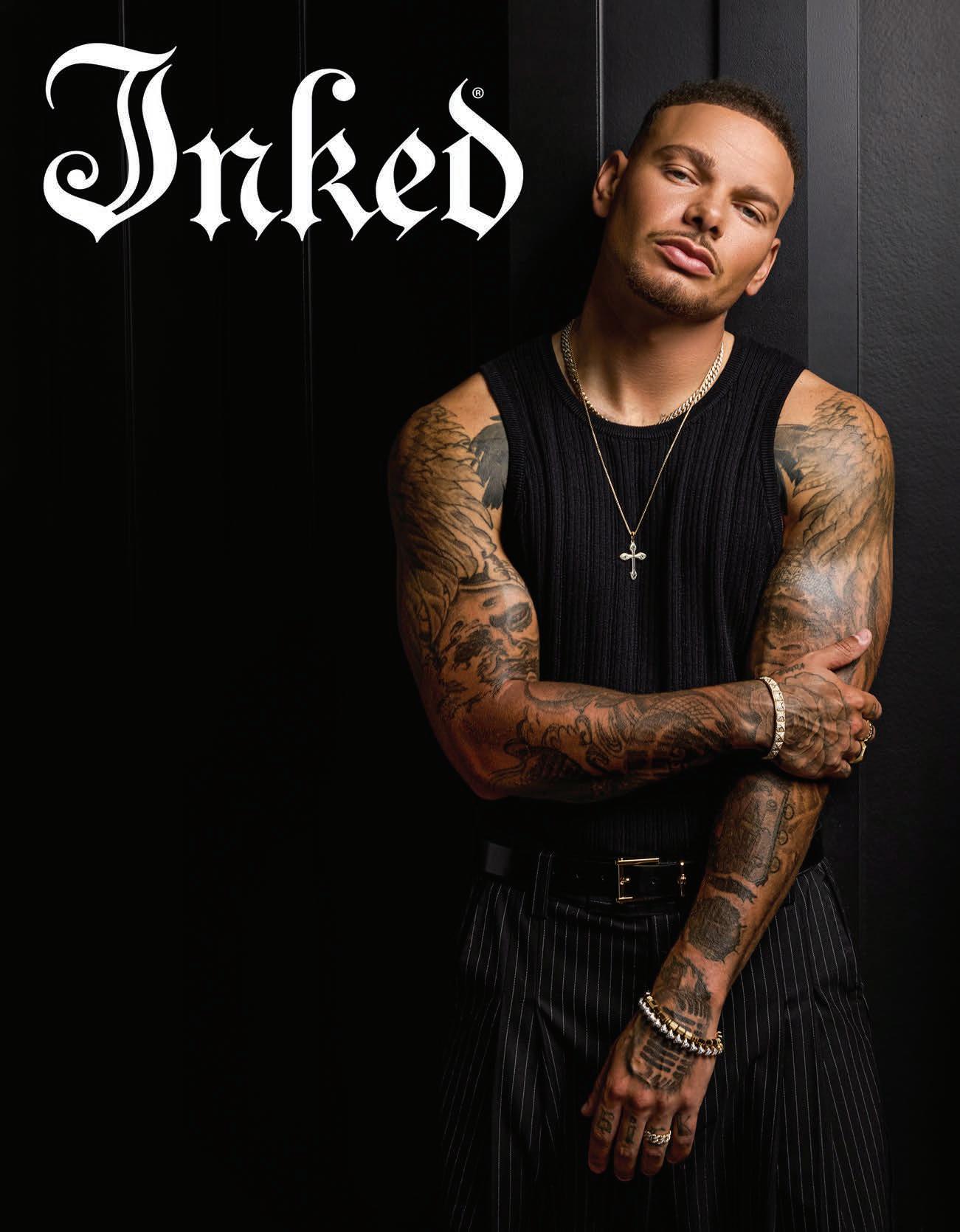
Intentionality. It’s a buzzword that can empower or, at times, drive you a little mad. Oversaturation, whether from words or tattoos, can devastate the appearance of something meant to be beautiful and meaningful, so when something is used to excess, the meaning can get lost in translation. In this issue of Inked, we unintentionally gathered a slew of inspirational stories built on intention. Take country music star Kane Brown, for example, the man behind our cover story. Known today for his deep, soulful voice, Brown was deliberate when he took to Facebook more than 10 years ago to share his music — he wanted to get noticed. And he did. At first, what grabbed viewers was his collection of tattoos, but when he sang, they were amazed that what they heard wasn’t at all what they envisioned. It wasn’t hip hop, but they kept listening. And still do.
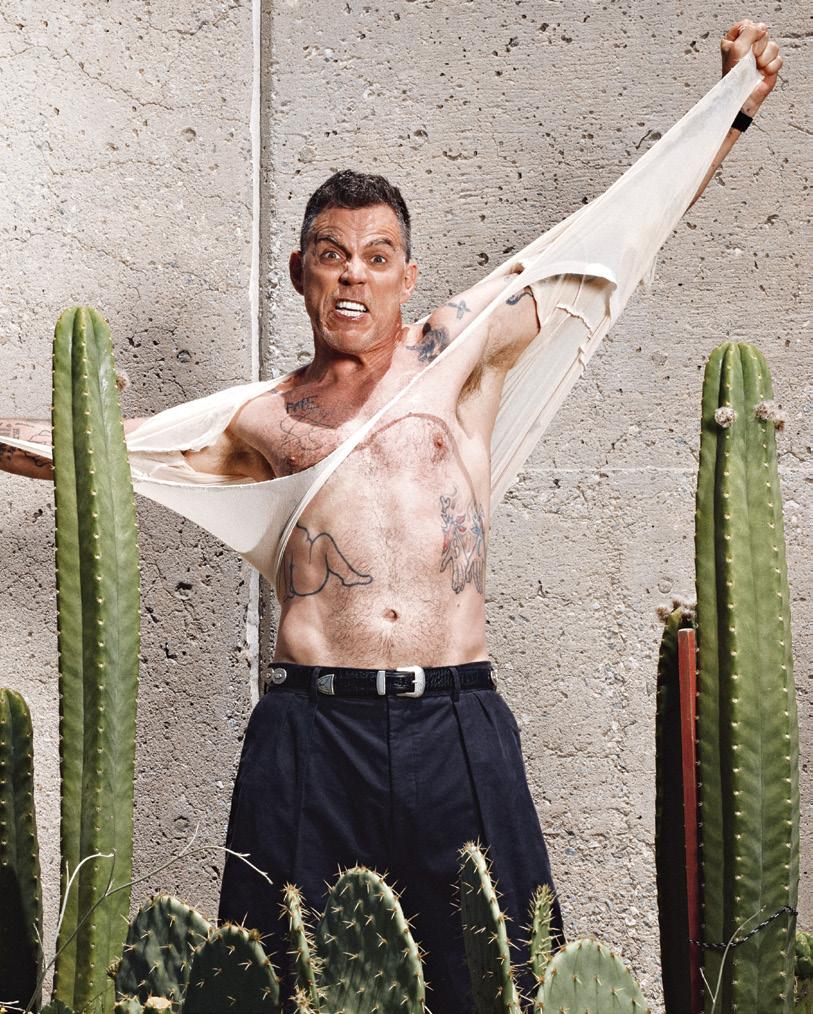
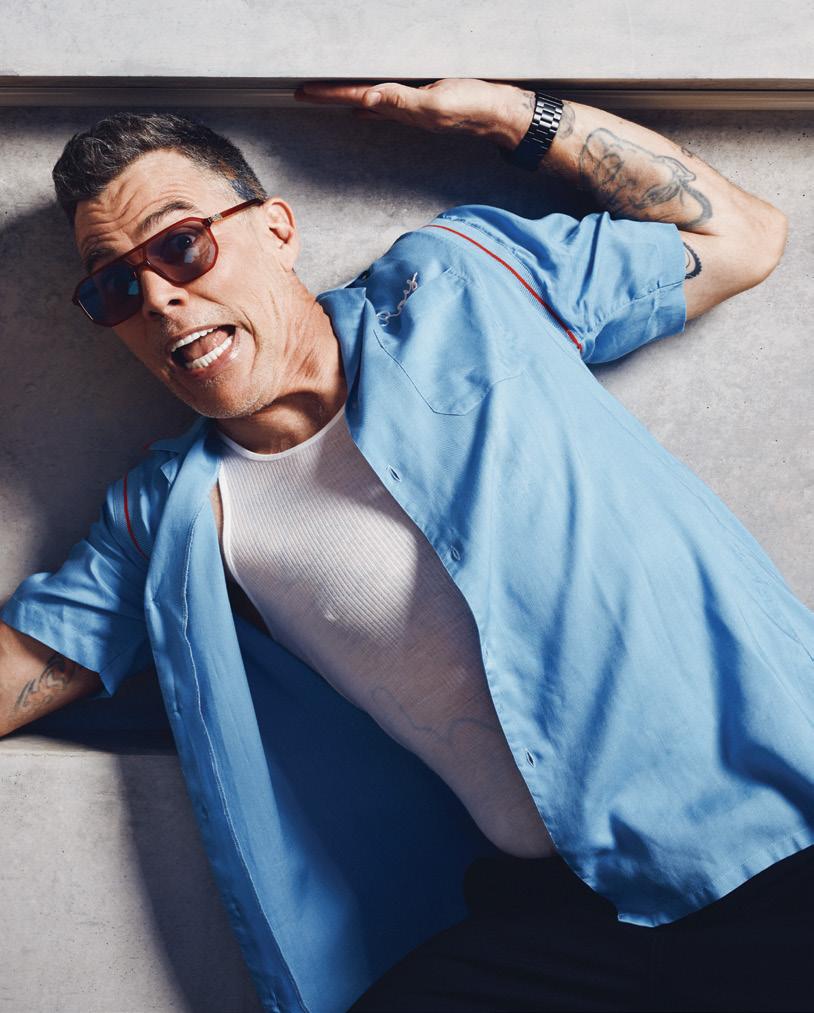
Steve-O, one of the most recognizable of the “Jackass” stars, has been methodical throughout his career, which now spans decades. He hustled with purpose and a lot of pain, but his stunts built a comedic kingdom and a personal and meaningful evolution. Steve-O and his disorderly castmates are back in the franchise’s latest movie, “Jackass: Best and Last.” As with the first film, the fans watch with an uneasy fascination. It’s sometimes a struggle to open their eyes, but they kept watching. And still do.
We’re also showcasing the stories of musician Young Miko, Monster Energy athletes, and artists who are breaking the mold. Their beginnings were calculated, and they sometimes stumbled, but their admirers were with them through the triumphs and challenges. It wasn’t always smooth sailing, but they stayed loyal. And still do.
We delve into micro-realism tattoos, non-alcoholic beers, and fashion. The talents behind the crafts were tenacious from the outset, and fanbases were formed. Their futures weren’t always rose colored, but they put in the effort. And still do.
Perhaps we were intentional about intentionality, as every issue of Inked highlights ambition and forethought that can empower, or, at times, drive you a little mad. Through the decades, the tattoo scene has always been a work in progress and, at the same time, a masterpiece. We celebrate the diverse nature of our readership. It isn’t always easy to navigate, but we are listening because we appreciate our readers. And we always have.
Darrin Austin Publisher
PUBLISHER Darrin Austin
VP OF PRINT MEDIA Toby Thompson
VP OF OPERATIONS Tianna Kaye
VP OF ADVERTISING Christa Lebar
PR/MARKETING MANAGER Carson Leathers
MANAGING EDITOR Amy Higgins
DIGITAL MARKETING Jennifer Kraybill
WEB DEVELOPMENT Peter Talavera
SOCIAL MEDIA / VIDEOGRAPHER Collin Pape
CREATIVE STRATEGY MANAGER James Leary
OFFICE MANAGER/PENNSYLVANIA Jami Pearlman
ACCOUNTS RECEIVABLE /PAYABLE Chris Watson
FULFILLMENT Theresa Jones
CONTRIBUTING WRITERS
Alex Shimalla / Amy Young / Annie Stopak / Emily Adam
Jason Murray / Joey Skladany / Miguel Costa / Nia Groce
Nicole Stover / Pete Croatto / Sean Colgrave / Tom Reardon
CONTRIBUTING PHOTOGRAPHERS
Russ Harrington / Travis Shinn / Christopher Kolk / Leigh Keily
ADVERTISING Kaydee Dici / Jaime Van Bogaert / Wallace Cedeno
CORPORATE LOCATION
Inked Holdings, LLC. 15210 N. 75th Street, Unit B
Scottsdale, AZ 85260
WEBSITE INKEDMAG.COM
SUBSCRIPTION INFO subscriptions@inkedmag.com

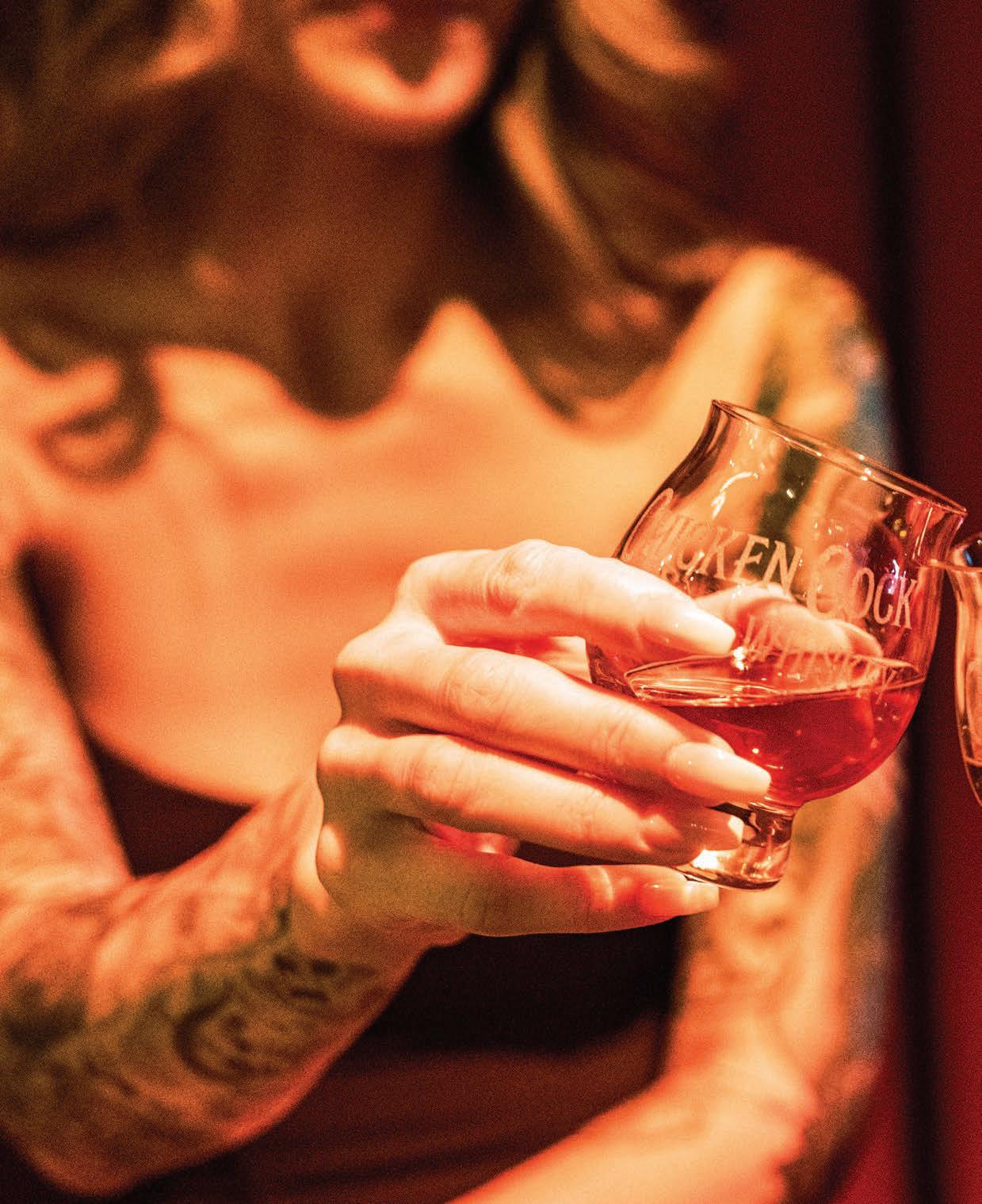
TWO AMERICAN SPIRITS LOOK BACK ON HISTORY TO COMMEMORATE THE FUTURE.
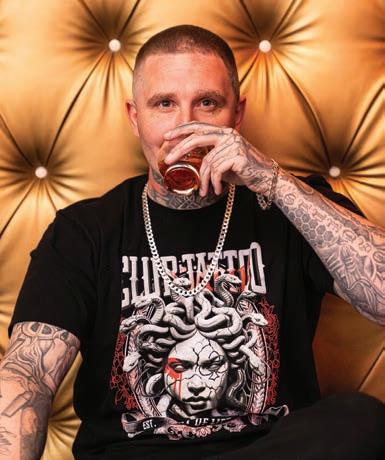
BY AMY HIGGINS PHOTOGRAPHY BY COLLIN PAPE
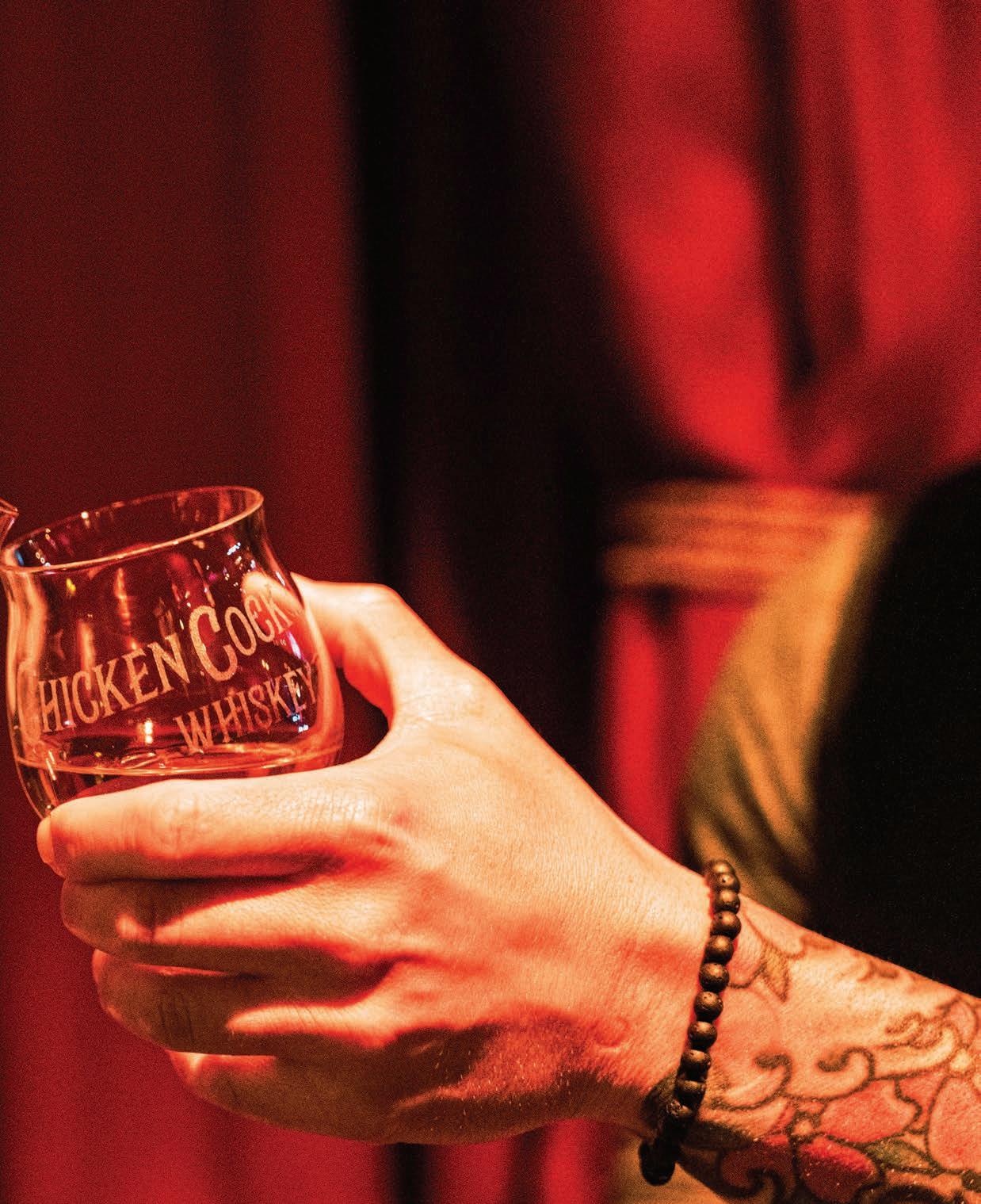
ust a smattering of spirits makers can attest that they witnessed American history unfold. Most fell when tragedy struck, tensions rose, or interference paralyzed production. While some waved their white flags, others were hell-bent to overcome the odds.
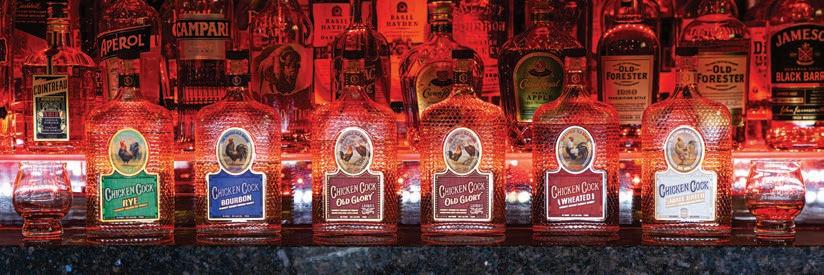
With a combined history of 416 years, Chicken Cock Whiskey and Laird & Company are seasoned in distilling disarming spirits. That history saw scrapes and wounds along the way that could have pushed aside the spirits makers for good, yet they prevailed. And few can resist a survival story.
America turns 250 this year, and the two acclaimed American distillers are celebrating with the release of Old Glory, an apple brandy-whiskey blend that slightly sweetens the warmth whiskey imbibers crave. The brands’ merging of flavors is evidence that sugar and spice can be especially nice when served neat.
A BLEND BUILT ON BALANCE
Old Glory combines 70% Chicken Cock Whiskey with 30% Laird’s Apple Brandy, creating a flavor profile that modern drinkers and America’s forefathers would pledge allegiance to.
Old Glory draws you in at first sniff, bringing about a bright orchard fruit nose, followed by ginger and toasted oak. Honey, clove, pear, and baked red apple rouse the palate, lingering with a red apple skin, cracked coriander, mint, and spice finish. This balance of bold and bright makes for a tasty tipple that can be sipped without an overwhelming sweetness.
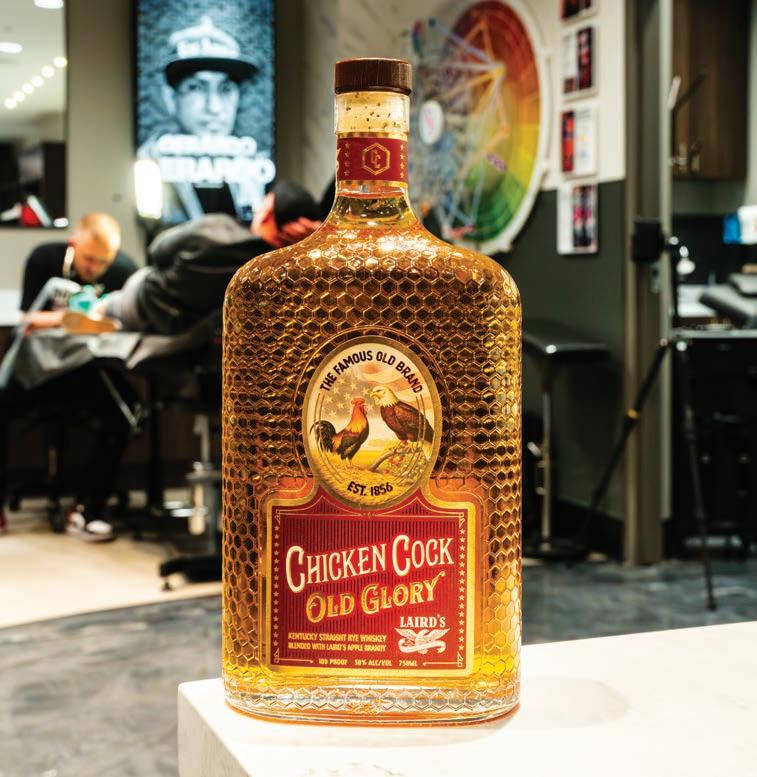
“Few things today could simultaneously break the mold while honoring tradition like Old Glory does,” says Grain & Barrel Spirits Director of Brand Engagement Will Woodington. “I couldn’t be more thrilled for us to be partnering with Laird’s, which has even older roots than we do, and has stood the test of time as an icon in American distilling. The blend may be a 70/30 split between Chicken Cock Rye and Laird’s Apple Brandy, but it is undeniably 100% American. We couldn’t be more excited to share in the incredible flavor and story of Old Glory with people across the country.”
GROWING STRONG ROOTS
In the late 1830s, James A. Miller was a successful distiller producing J.A. Miller’s Old Bourbon, whose bottles appeared in liquor cabinets across the U.S., and eventually shipped internationally, the first from Bourbon County, Kentucky, to do so.
In 1856, Miller introduced Chicken Cock Whiskey, but he died just four years later. The brand changed hands several times, and the whiskey’s flavor and quality gradually deteriorated until it finally shuttered in the 1950s.
“There are a thousand reasons why this brand shouldn’t be around today,” Woodington explains. “There were multiple distillery fires throughout the 1800s. There was financial panic. The brand changed hands numerous times. Prohibition hit it.”
Chicken Cock was defunct for more than 60 years until Grain & Spirits Founder and CEO Matti Anttila found an old bottle at the Oscar Getz Museum of Bourbon History in 2011.
“The name jumped out at me immediately before realizing the brand was actually a large player during that era. The deeper I got into the story of the brand, the more my excitement to bring it back to life grew,” he says. “Between a unique name, beautiful heritage packaging, and a real, authentic history, everything lined up to
make resurrecting the brand a no-brainer.” In 2017, Anttila put Chicken Cock Whiskey back on shelves.
“There’s no more resilient brand, in my mind, than the Chicken Cock brand,” Woodington says. “There are so many things that tried to take it down throughout almost 170 years. It’s still not only surviving but thriving today.”
While its roots were planted by Scottish distiller William Laird in 1678 in Monmouth County, New Jersey, and went on to supply General George Washington’s Revolutionary War troops with its Applejack Brandy, it wasn’t until 1780 that Laird & Company officially became the nation’s first producer of apple brandy.
Laird’s obstacles were similar. Its facility was destroyed by fire in 1849, but was quickly rebuilt in 1851 in Scobeyville, New Jersey. It survived Prohibition by producing sweet cider and applesauce until 1933, when the government ultimately granted it a permit to distill apple brandy for medicinal purposes.
The company has had many remarkable milestones and suffered several adversities along the way, but since 1976, Laird has been distilling exclusively at its North Garden, Virginia, facility. Ten generations later, Laird’s Apple Brandy is still relished by bar patrons in America and beyond.
A TOAST TO TRADITION
“This collaboration unites two historic American spirits — Laird’s Apple Brandy, passed down through 10 generations, and Chicken Cock Whiskey, a revived brand from the mid1800s,” says ninth-generation Laird & Company President & Global Ambassador Lisa Laird. “Together, we’ve created a blend that respects tradition while delivering a bold, modern profile for today’s whiskey drinker. Old Glory is a true celebration of heritage and craftmanship.”
The staying power of both distilleries in and of itself should be celebrated, and their combined strength, presented in a golden honeycomb-textured bottle, is especially symbolic of America’s rich 250-year history of the people’s capacity to roll with the punches and find substance and strength in the ashes.
ARTIST: CODY COSTELLO / @COSTELLO 2905
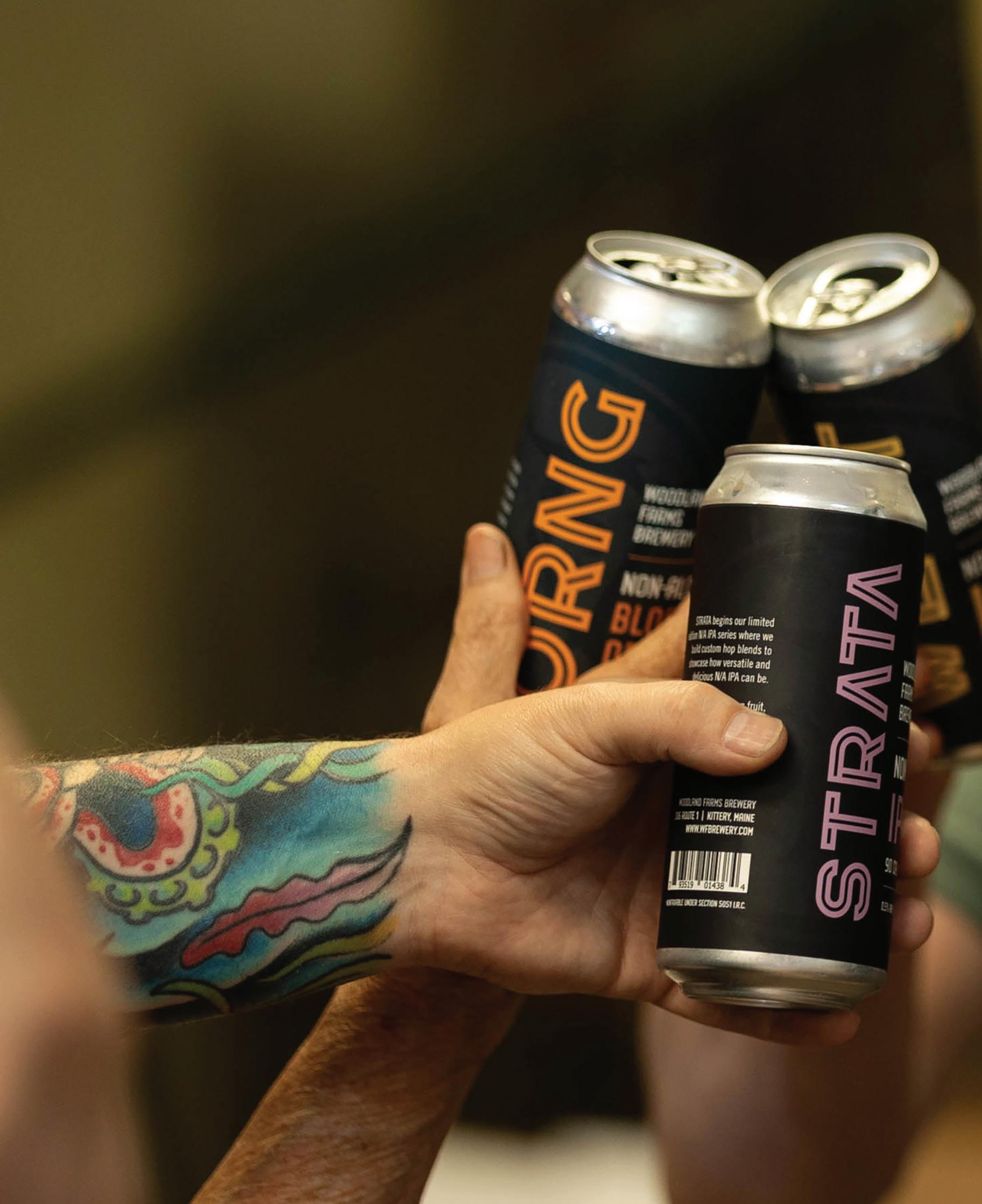
WOODLAND FARMS, CREDIT: JAMES JAY FORTIN
Being a sober beer snob has not always been easy. For those who got their first tattoos in the 1980s, the concept didn’t even exist because the non-alcoholic options at the time were notoriously brutal. More recently, though, an interesting cultural shift has taken place. People over 21 are increasingly choosing NA options when it comes to beer, wine, and spirits. Driven by a multitude of reasons — whether choosing lifelong sobriety or simply looking for a safer option to drive home after a night out with friends — NA beer has become an attractive choice for modern consumers because the quality is simply better now.
For craft beer lovers, discovering Maine-based Woodland Farms Brewery often begins on the shelves of local grocery stores. But, beyond the thrill of taking that first chance on an unknown commodity, the real magic happens at the source. Because the brewery serves both its NA and fullyleaded beers on tap, making the pilgrimage to its tasting room is a must for any enthusiast.
Once inside the brew pub, which is connected directly to the brewery itself, visitors are made to feel right at home. Woodland Farms marries the woods and punk rock perfectly. The tasting room is consistently inviting, featuring excellent artwork on the walls — including nostalgic show posters from legendary bands — a variety of comfortable places to sit, and excellent t-shirts for sale. Music is playing, not so loud that you can’t have a conversation, but still loud enough to enjoy.
THE FACE (AND SLEEVES) OF WOODLAND
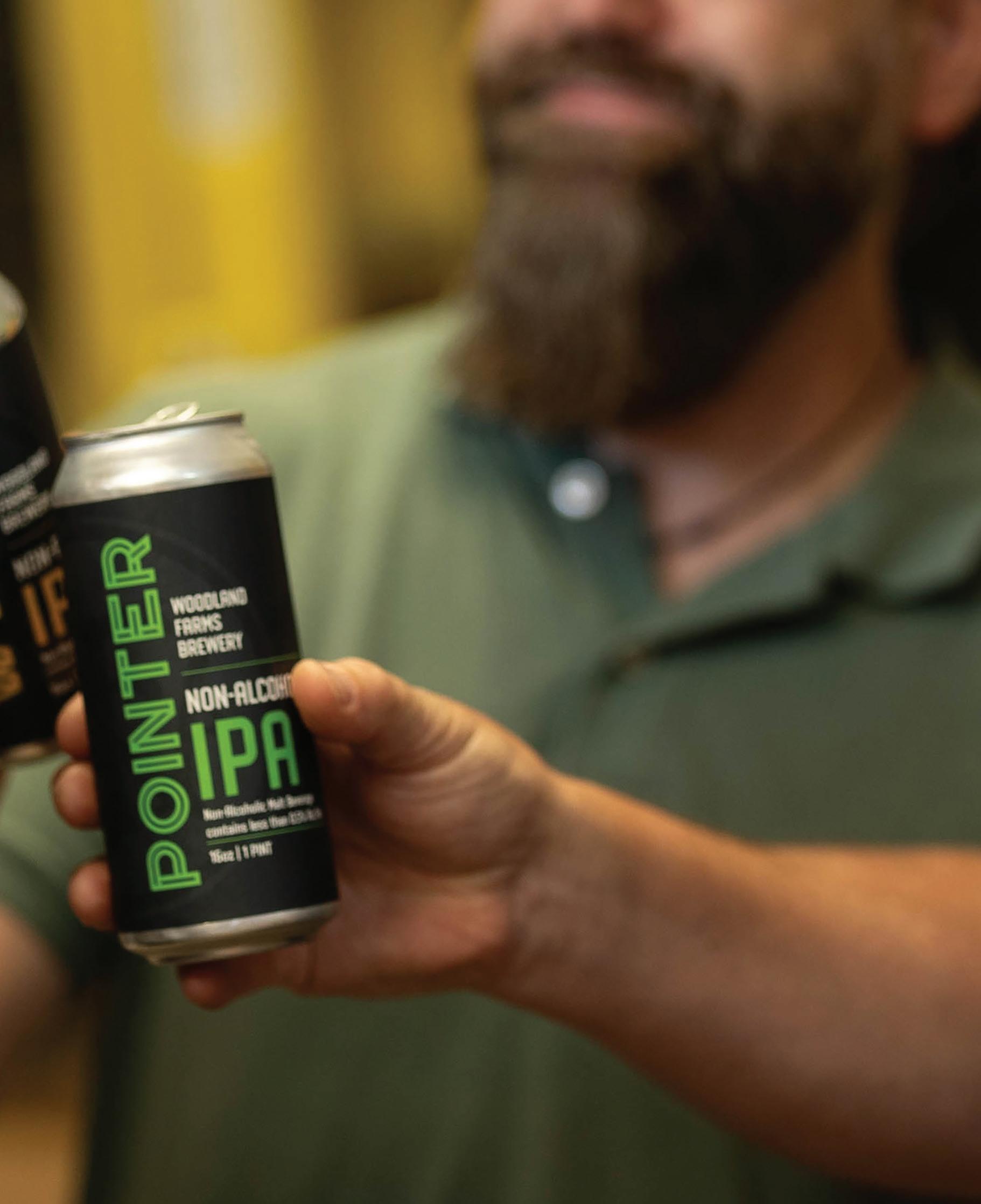
Visitors to the facility might just run into managing partner Patrick Rowan, a gregarious, larger-than-life guy who is always down to give a tour and talk shop. Fully sleeved and a veteran bassist who has played in a number of bands over the years, Rowan embodies the very culture of the brewery. “My first tattoo was a stick and poke at 14,” he shares. “It was a Sex Pistols tattoo, but like a dumbass, I got it covered up. You can still see the ‘x’, kind of.”
Tattoo culture is prominent at Woodland Farms and, like many tattoo aficionados, is a continual work in progress. “We’re all sleeved,” he says. “I’m working on my back right now with Danny (@danny_clark_tattoos). Trying to find a week to recover after an eight-hour session of getting my back worked on is tough.”
At 50, he admits that getting tattooed now “hurts like a motherfucker,” but just like his penchant for experimenting with new NA flavors and styles, there doesn’t seem to be an end in sight for his days of getting new ink.
Woodland Farms originally started brewing beer in 2016. In 2018, after a particularly successful year for the business, Rowan treated himself to a week of training at the Technical University of Munich’s Weihenstephan campus in Freising to learn how to brew world-class NA beer.
“I did the ultimate smart guy thing and, while the rest of my staff went and got hammered, I went to Germany to learn how to brew nonalcoholic beer. I absorbed about 40% of what they smashed into my brain. There is a reason why the best brewers come out of that school,” Rowan says, explaining, “They’ve been doing it for hundreds of years. (In Germany,) 1% beer is the standard. That’s the lunch beer. You have two at lunch with a sandwich, and then you go back to work. It’s food. You’re not doing it to get drunk.”
We have helped to remove the stigma of drinking an NA beer.
- Patrick Rowan
REDEFINING THE NA COMMUNITY
There is considerable pride in Rowan’s voice when he talks about the unique community Woodland Farms has established around its NA offerings.
“We have helped to remove the stigma of drinking an NA beer, and people in our community, they just don’t care. They are excited to talk about how delicious it is and how you can play three games of cribbage, drink five beers, and not be wasted,” Rowan says.
He is currently obsessed with his new White Trash Lager. “It’s probably the old punk rocker in me, but I am really focused on White Trash beer right now. I want to make the absolute best (version of a) NA Pabst Blue Ribbon I can. You know, like the Miller High Life, Sapporo… I want to try and make something like all the shitty beers I used to drink by the 30 pack and make the NA version,” Rowan says with a huge smile.
Considering the excellent beer he has already made, White Trash Lager will undoubtedly be another massive hit for NA beer drinkers everywhere.
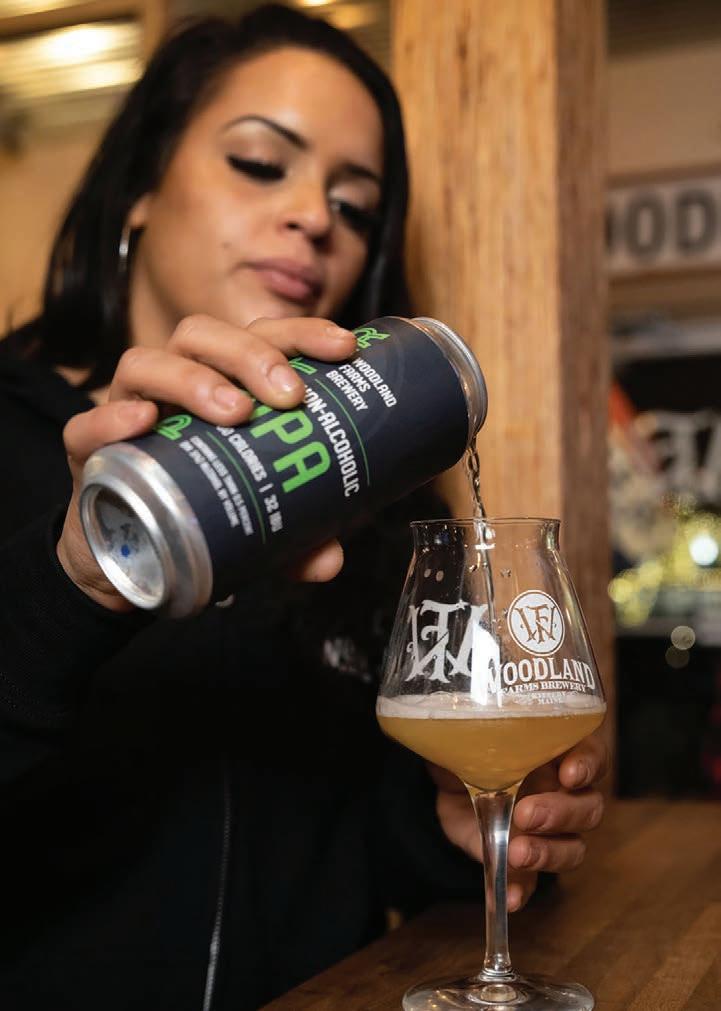
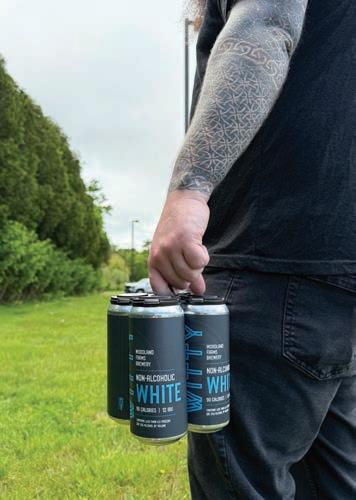
WOODLAND FARMS, CREDIT: JAMES JAY FORTIN
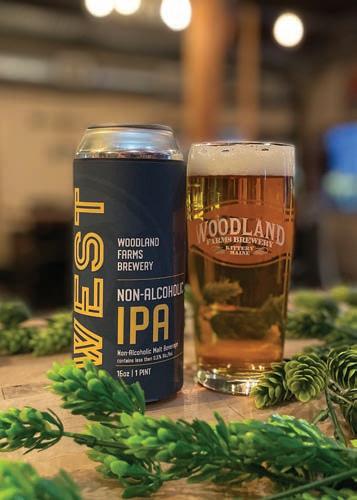
WOODLAND FARMS, CREDIT: JAMES JAY FORTIN
WOODLAND FARMS, BRET PELLETIER, CREDIT: LEIGH ANITA
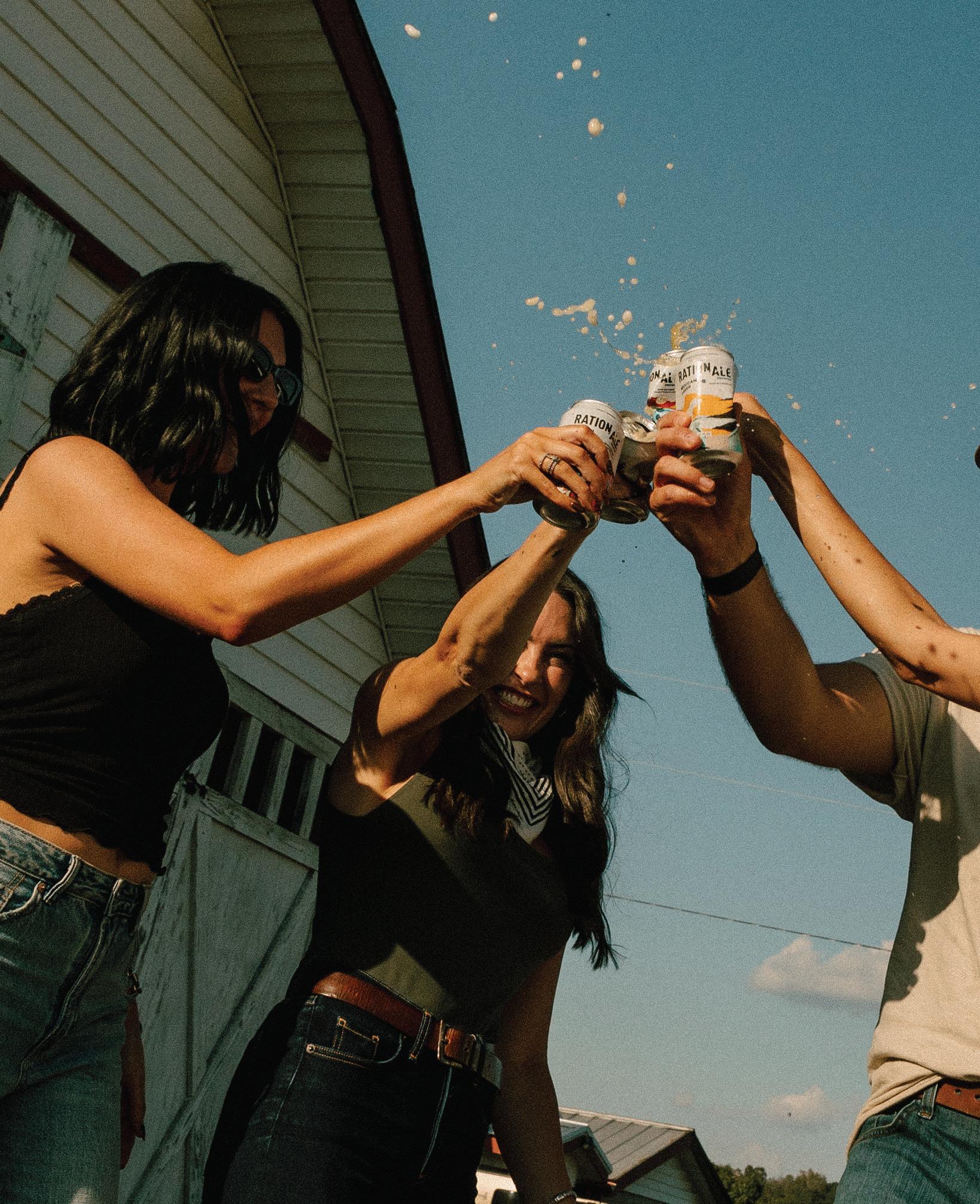
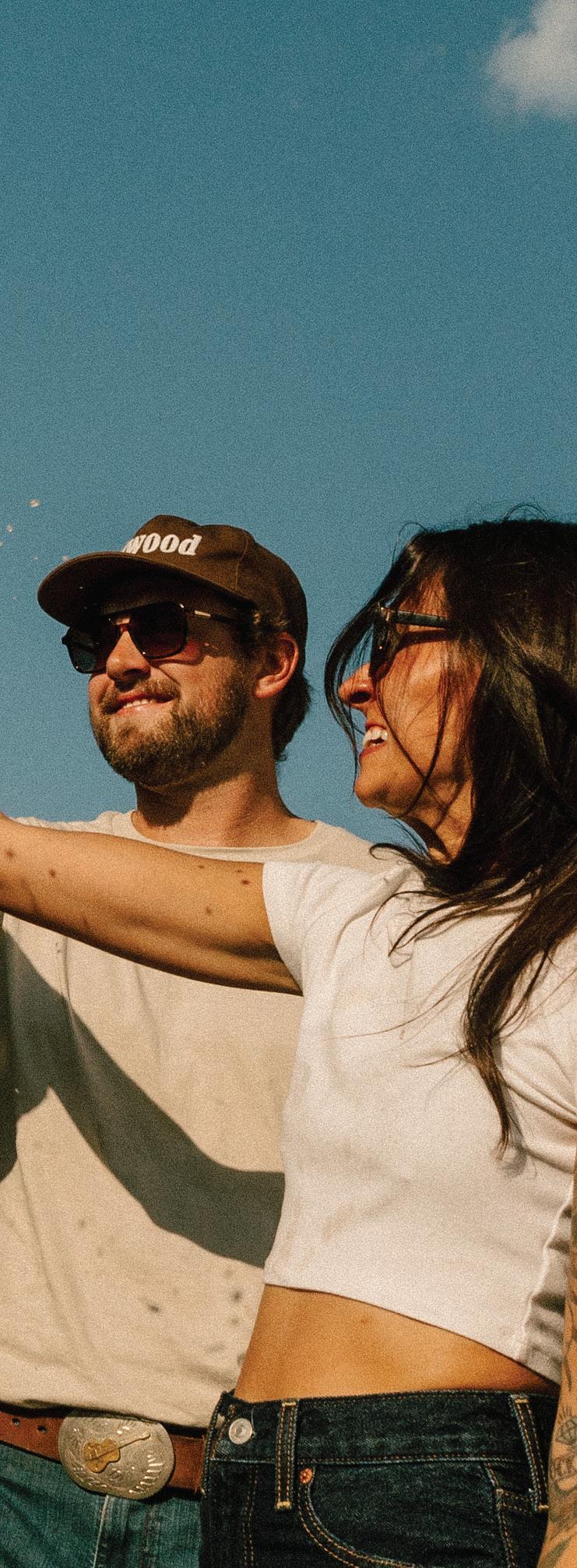
For years, it was easy to think of non-alcoholic beer as just another harbinger of bad news. The options were notoriously awful back in the day, improving only marginally as the broader consumer desire for alternatives to alcohol began to grow. Luckily for those who want to enjoy a genuinely good beer without the buzz, several excellent options are now available around the world.
RATIONALE BREWING
Based out of Encinitas, California, RationAle Brewing emerged on the NA beer scene in 2022. “We call ourselves ‘the official pacer beer’ because we’re alcohol inclusive,” says RationAle Cofounder Tyler Fay. “We still enjoy our regular brews and simply believe the most important thing is being aware and mindful of how you drink.”
Using a “reverse osmosis membrane,” RationAle brews at 5-6% alcohol by volume (ABV), then removes the alcohol at the end of the process, creating exceptional alcohol-free beer, such as its West Coast IPA and Japanese Style Dry varieties. This approach is catching on with beer drinkers who enjoy extreme sports, motorcycling, and other activities, when staying on top of your game is paramount.
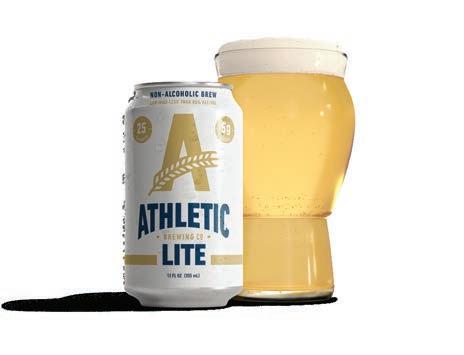
ATHLETIC BREWING COMPANY
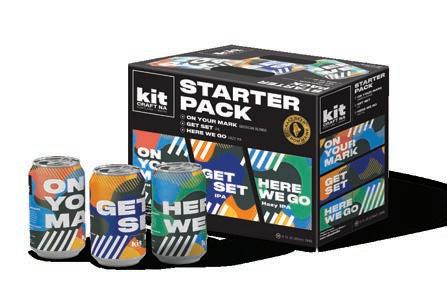
KIT NON-ALC
“Here at Athletic Brewing Co., we’re dedicated to crafting delicious non-alcoholic beer you can enjoy anytime and anywhere, with no worries and no hangovers,” Athletic Brewing Company touts. A behemoth in the NA world, the brand’s reach keeps growing. An increasing number of restaurants and bars across the United States now offer Athletic’s beers on their drink menus, typically stocking Upside Dawn Golden and Run Wild IPA. Most retail stores also carry the Free Wave IPA, alongside the highly praised
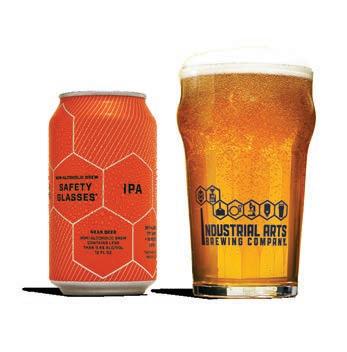
INDUSTRIAL ARTS BREWING COMPANY
While highly celebrated for its traditional, ABV beers, New York’s Industrial Arts Brewing Company is quickly making a massive name for itself in the NA world, too. Safety Glasses Pils and Al’s Classic lager are both smooth, easy-drinking NA brews with an authentic flavor profile that could easily fool someone into thinking they are drinking regular beer.
In addition to creating awardwinning beers, Industrial Arts is dedicated to supporting the local music scene and touring artists and musicians through a variety of live events at its brewery Workshop space. Keep an eye out for the NA version of its flagship IPA, Wrench, as well as an NA version of its Metric pilsner.
Another standout Maine brand, Portland-based Kit Non-ALC, consistently delivers excellent beers made by a team known for their fantastic beards. Kit’s Hazy IPA is a verified treat, as is its flagship beer, Golden. Both beers clock in under 100 calories, meaning they won’t impact the bottom line for healthconscious consumers. Available online and in major retailers, Kit beers are well worth adding to any NA repertoire for their smooth, tasty profiles that won’t break the bank.
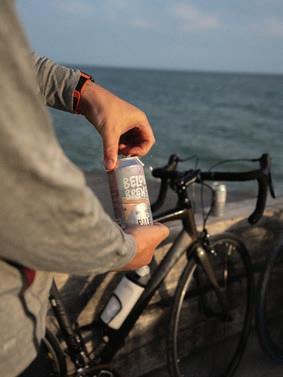
BELOW BREW CO
Below Brew Co was founded by Rob Buchinger-Jones and Dave Brown, two friends on different continents, who were having trouble finding an NA beer they enjoyed. So they decided to make it themselves. With an eye for healthy alternatives and great-tasting beer, Below Brew now has almost 20 different beers. Below Brew is based in the United Kingdom and can be difficult to find in the United States, but it is available at select specialty shops. “From unique styles to eye-catching can art, we create larger format cans designed to appeal to a wide audience of craft beer lovers, whether you’re cutting back or just curious about AF,” the company touts.
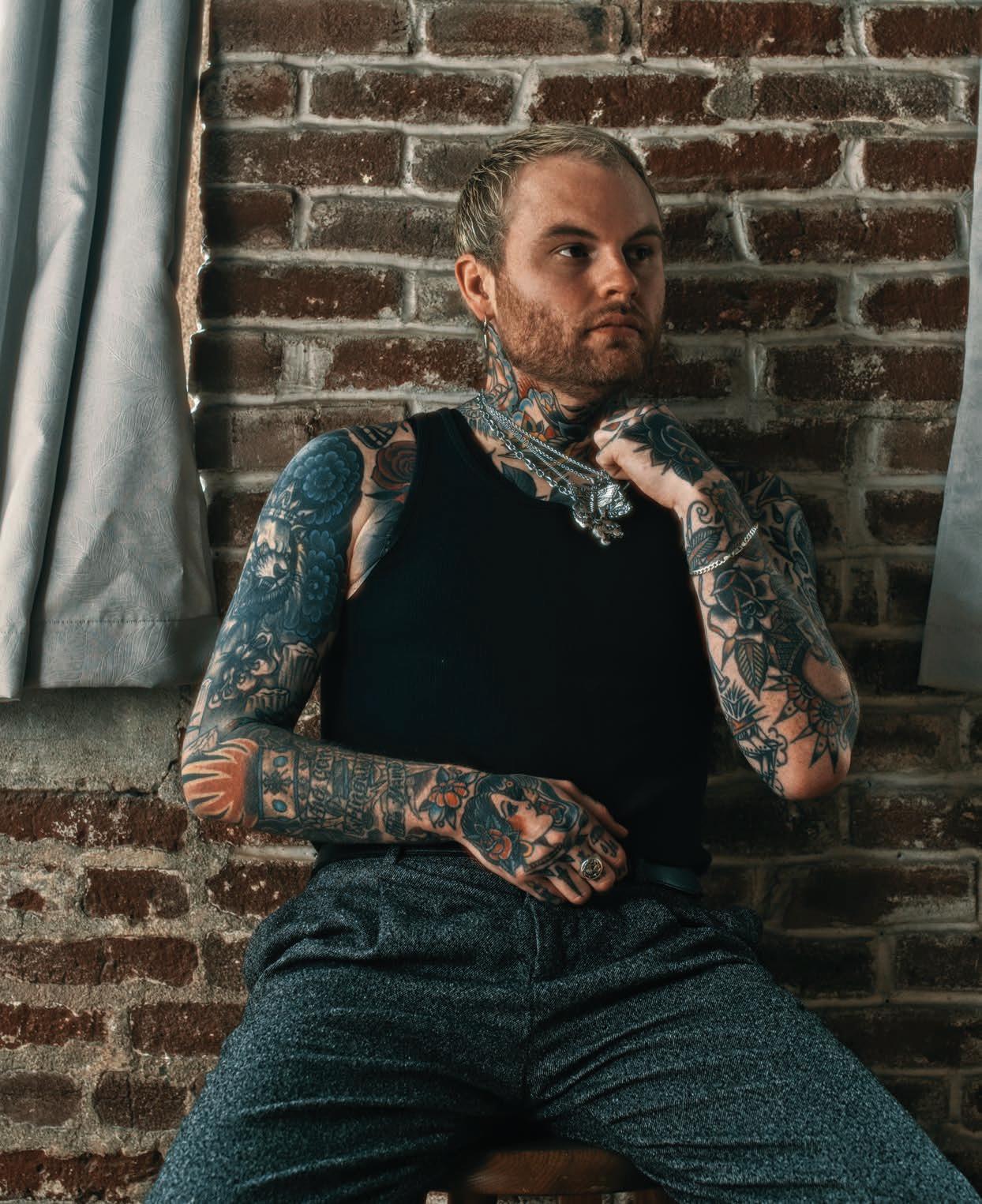
There’s a new kind of storytelling emerging — one that doesn’t live in a single medium. It moves between worlds, pulling from identity, culture, and the things we wear and carry with us. It’s less about categories and more about convergence, where art forms overlap and evolve into something entirely new.
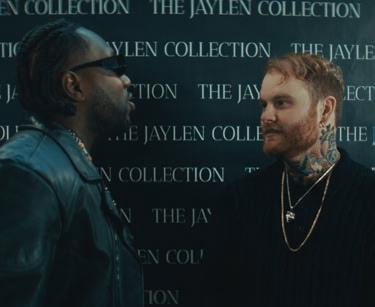
At the center of that shift is “One of One,” a psychological thriller short film written and directed by Daniel McCartney under his creative studio, DUTCH BOY HOUSE, and executive produced by Baron Bodnar.
Built through Dutch Boy Cinema, the film exists at the intersection of tattoo culture, fashion, and cinema, not as separate influences, but as a unified language. Each element informs the other, creating a visual and emotional experience that feels layered, intentional, and deeply personal.
“Everything we’re doing is about building worlds,” McCartney says. “Not just telling stories but creating something you can feel across different forms.”
That philosophy is what defines DUTCH BOY HOUSE as a whole. It isn’t confined to a single lane but rather moves fluidly between music, film, fashion, and live experiences, all rooted in original creative IP. “One of One” becomes a proof of concept for that vision: a project in which those worlds don’t just coexist but actively shape each other.
FAME AND FRICTION
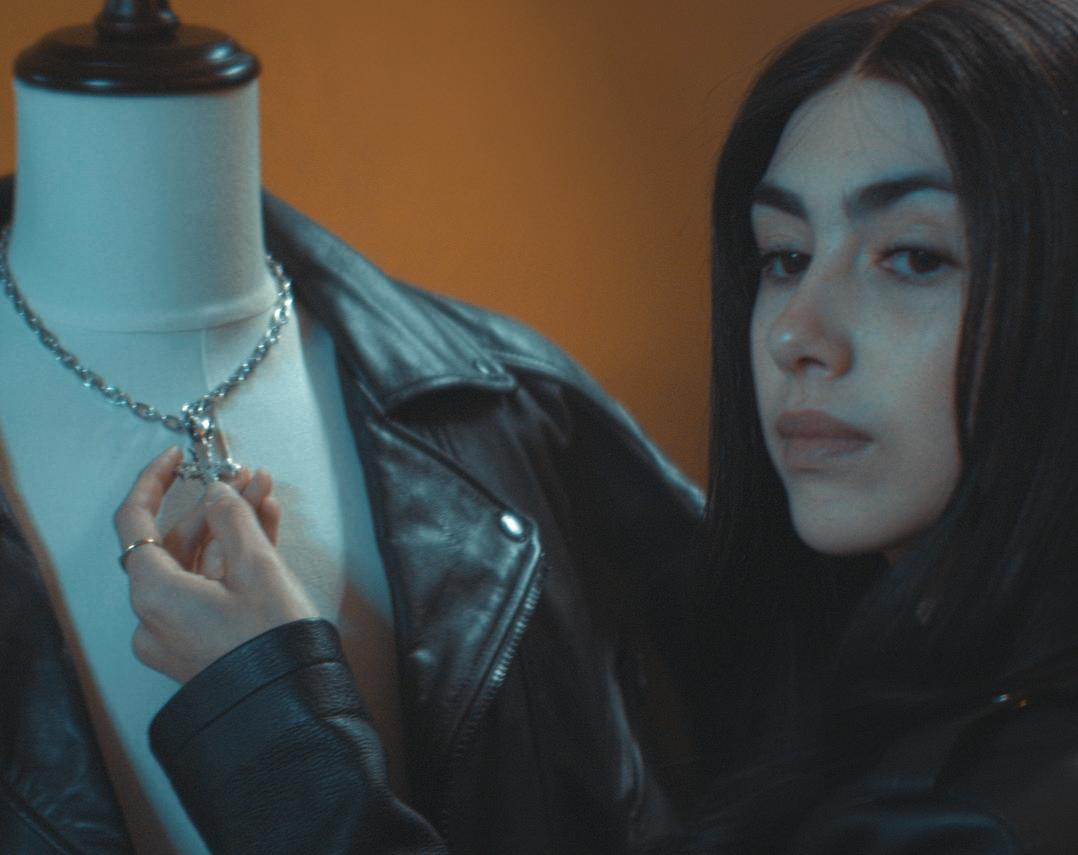
At its core, “One of One” is a story about visibility — and what it costs. The film follows Milo “Miles” Williams, played by McCartney, a rising but troubled fashion designer who meets a mysterious woman named Vee, who pushes him to turn pain into power. What began as inspiration quickly evolves into something more complex and more dangerous.
When Miles names a clothing drop after his best friend Jaylen, the release explodes overnight, propel-
BY INKED STAFF
ling him into a new level of recognition. But that success is immediately overshadowed by tragedy when Jaylen dies after a night of partying, sending Miles into a spiral of guilt, addiction, and paranoia.
As Miles’ fame grows, so does Vee’s influence, becoming darker, more controlling, and increasingly more difficult to separate from his own ambition. What once felt like creative direction begins to feel like possession, blurring the line between selfexpression and self-destruction.
Haunted by grief and driven by the pressure to capitalize on it, Miles ultimately loses himself to the very force that made him visible — becoming another chapter in Vee’s ongoing pursuit of greatness. A reminder that legacy, more often than not, comes at a cost.
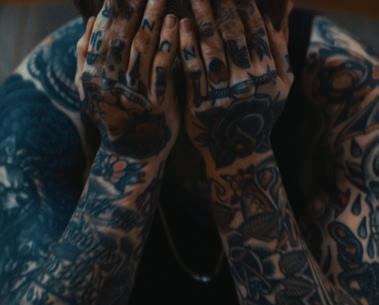
What separates “One of One” from a traditional short film isn’t just its narrative. It’s how that narrative is expressed. Fashion is character, not just wardrobe. Tattoo culture is language, not just reference. Cinema becomes the space where all of it collides and evolves.
INK REIMAGINED
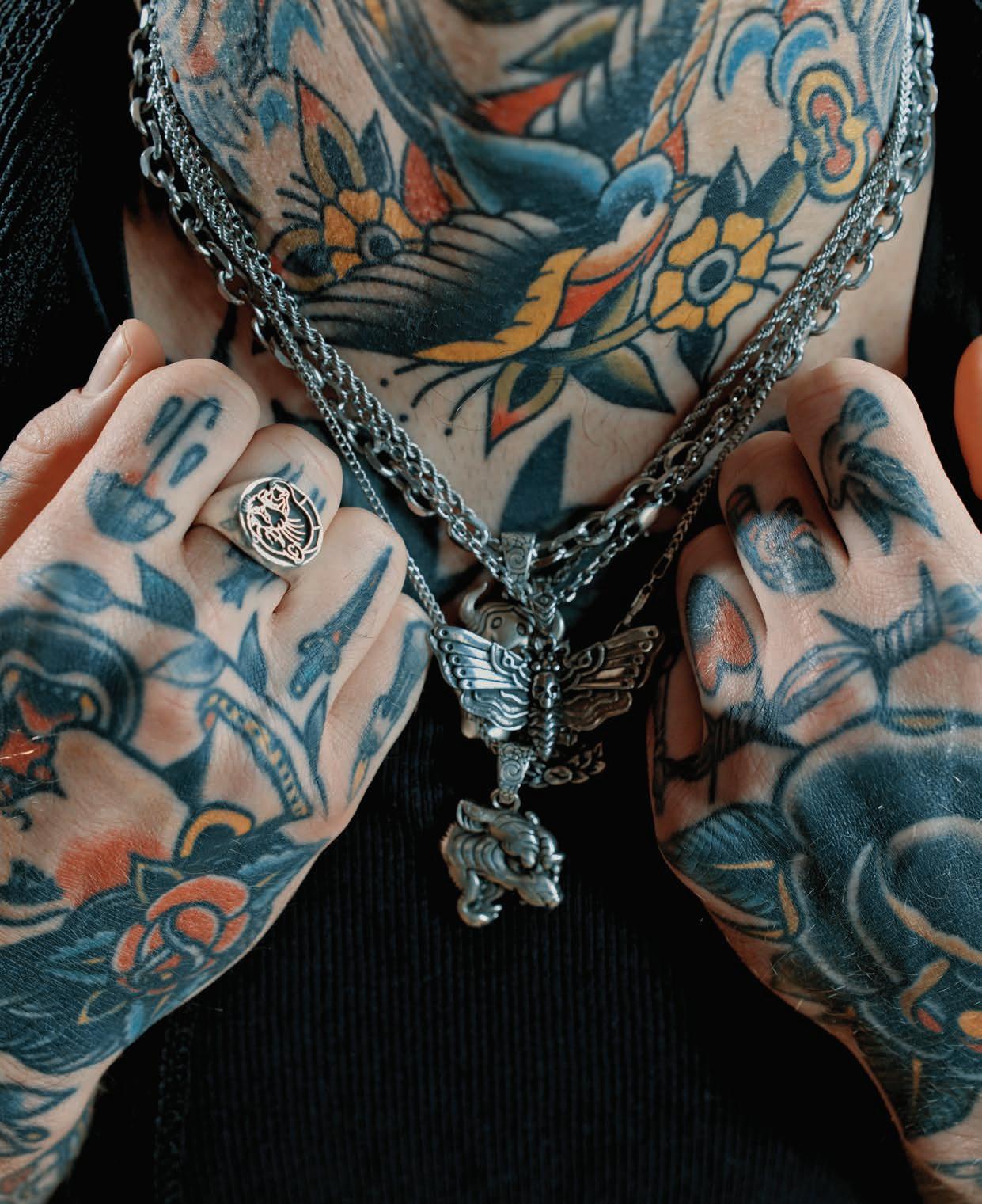
The film’s visual identity leans heavily into symbolism, where what a character wears carries as much weight as what they say. This is where the collaboration with Tebori becomes essential.
Known for translating tattoo culture into finely crafted jewelry, Tebori approaches design with the same mindset as tattooing itself: permanence, intention, and storytelling. Tebori’s pieces don’t just exist as accessories. They hold meaning, reflecting identity in a way that feels both personal and timeless.
“I have a deep respect for tattoo culture and try to represent that through my brand. I collaborate with tattoo artists for my designs and try to make jewelry as timeless as tattoos themselves,” explains
PHOTOGRAPHY BY MAITLAND LOTTIMER
EVERYTHING WE’RE DOING IS ABOUT BUILDING WORLDS. NOT JUST TELLING STORIES BUT CREATING SOMETHING YOU CAN FEEL ACROSS DIFFERENT FORMS.
- DANIEL MCCARTNEY
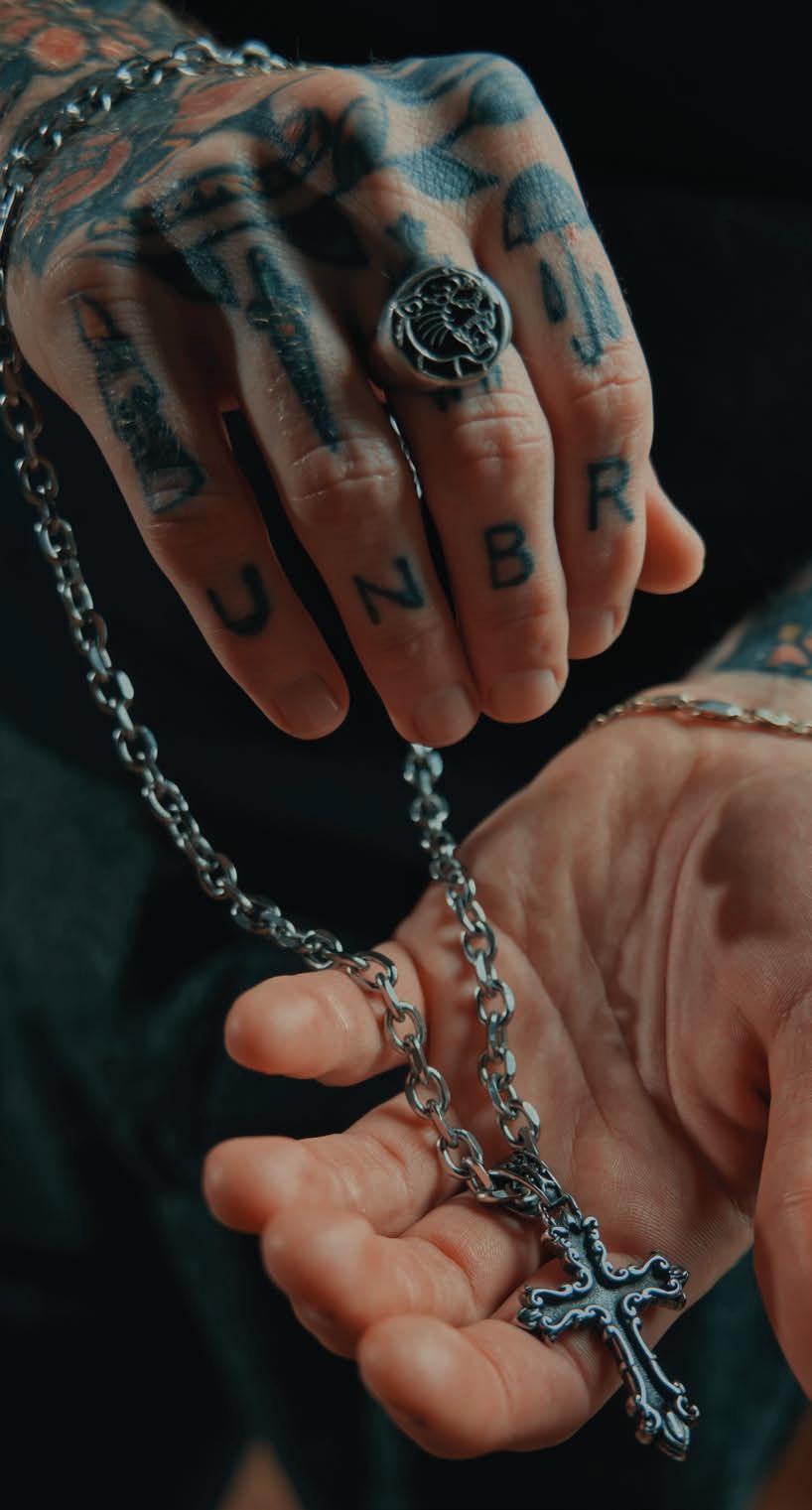
Aaron Peterson, founder of Tebori jewelry. “I honestly just make pieces that I would personally wear. I start with a good tattoo design from an artist and try to picture what it would look like if I was wearing it. I go back and forth with the tattoo artist to see what’s in their head as well.”
The collaboration for the film itself came together organically. McCartney was introduced to Tebori through his longtime friend and tattoo artist Jacob Doney of Envision Tattoo in California, after Doney had previously collaborated with the brand.
“We hit it off immediately,” McCartney says. “I’m just a massive fan of what they’re doing. It felt natural from the start.” That shared perspective made the partnership feel less like a collaboration and more like alignment — two creative worlds already speaking the same language.
McCartney, who also composed and performed the music in “One of One” alongside musician JordyPurp and producer
COLLABORATING WITH TEBORI ON THIS MOVIE ALLOWED ME TO INTEGRATE TATTOO CULTURE INTO THE STORYTELLING. FOR ME, TATTOOS HAVE ALWAYS BEEN A FORM OF EXPRESSION AND LANGUAGE, WHICH IS TIED DEEPLY INTO THE IDENTITY OF THE FILM.
- DANIEL MCCARTNEY
Zach Jones, sees the project as something larger than a single film. “I wanted this project to show the versatility of DUTCH BOY HOUSE,” he says. “We’re involved in music, cinema, fashion, tattoo culture, concert IP — at the core of all of it is original creative production. This film is where all of those worlds meet.”
“One of One” doesn’t feel like a film borrowing from culture but instead like culture expressing itself through film. “Tattoo culture has always been about storytelling and expression,” McCartney adds. “It’s about marking a moment, a feeling, a version of yourself. That’s exactly what this film is doing, just through a different medium.”
Before becoming part of “One of One,” Tebori had already established itself as a brand rooted in depth and intention. “As someone who spent my entire adult life spending all my money on tattoos and jewelry, I never found anything that brought those two worlds together,” Peterson says of the inspiration behind Tebori.
“Just as a tattoo can have different and unique meanings for each person, so do our pieces,” Peterson continues. “Each piece of
jewelry has its own meaning unique to your own story. These pieces are built to last as long as tattoos themselves — the only tattoos that can be passed on for generations.”
Drawing from the traditions of tattoo artistry, Tebori translates the symbolism and permanence of ink into jewelry that carries meaning beyond aesthetics. Each piece reflects a philosophy centered around identity, transformation, and personal narrative.
“Collaborating with Tebori on this movie allowed me to integrate tattoo culture into the storytelling. For me, tattoos have always been a form of expression and language, which is tied deeply into the identity of the film,” McCartney says.
Echoing McCartney’s sentiments, Peterson says, “Tebori is built on tattoo culture. I would love to continue to grow and expand into more films. As long as it keeps true to the culture and is authentic.”
The collaboration with DUTCH BOY HOUSE emerged from a shared belief that culture isn’t fixed. It evolves. It overlaps. And when those intersections are approached with intention, they create something entirely new.
EXPERIENCE
“ONE OF ONE”
With its layered approach to storytelling and design, “One of One” isn’t just meant to be watched, but experienced. The film was screened in select cities across the United States in a variety of theaters, tattoo shops, and creative spaces, offering audiences a chance to engage with the project in a more immersive, communal setting.
You can now watch “One of One” online at oneofonemovie.com
Included in the video-on-demand rental, you’ll also find the trailer for “Rust God,” which is Dutch Boy House’s upcoming release starring singer Jason Aalon Butler of Fever 333 and letlive., which will be released later this year.
The “One of One” digital presence continues to unfold as well, offering a deeper look into its world through curated visuals and storytelling on Instagram (@1of1movie).
BY ANNIE STOPAK
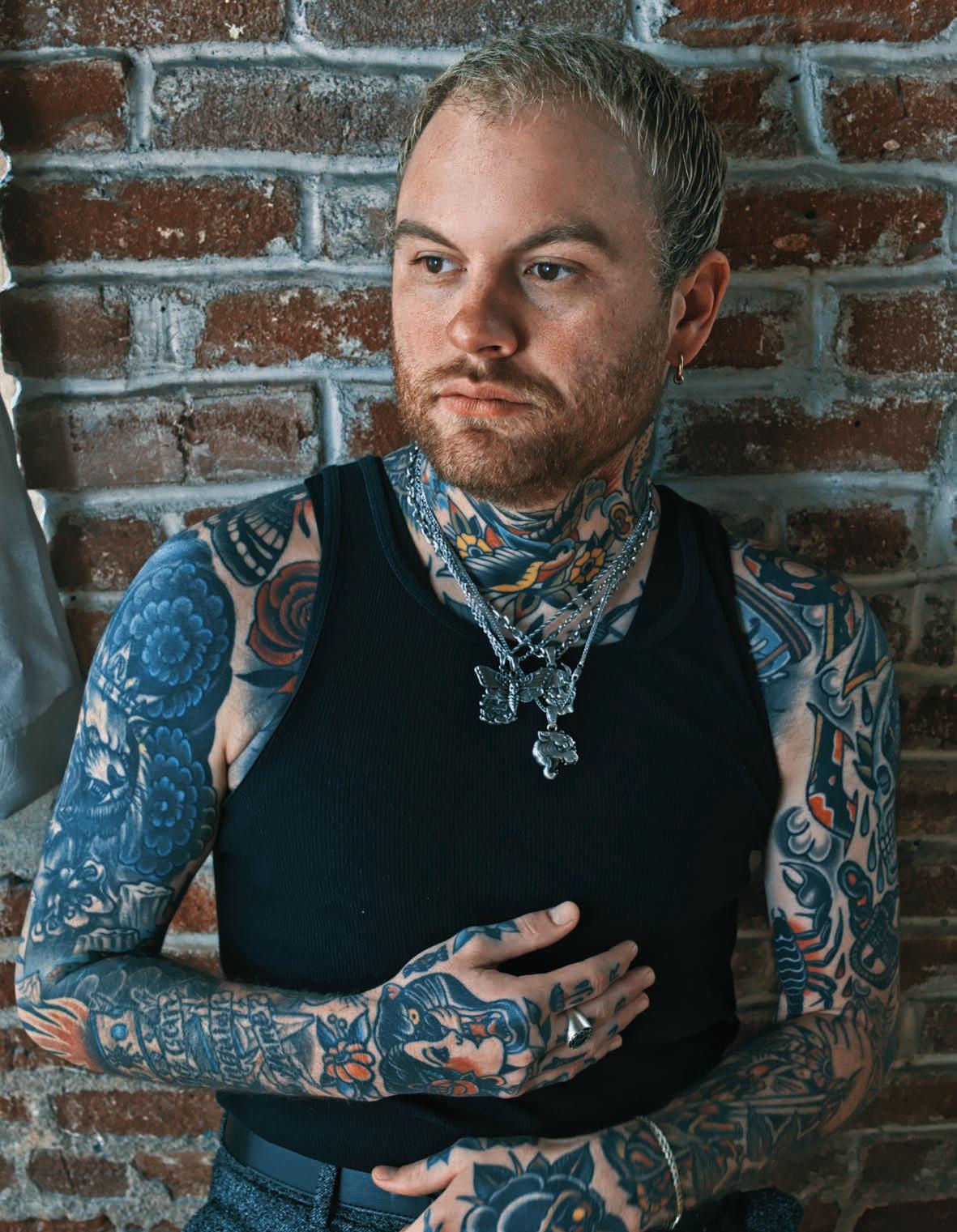
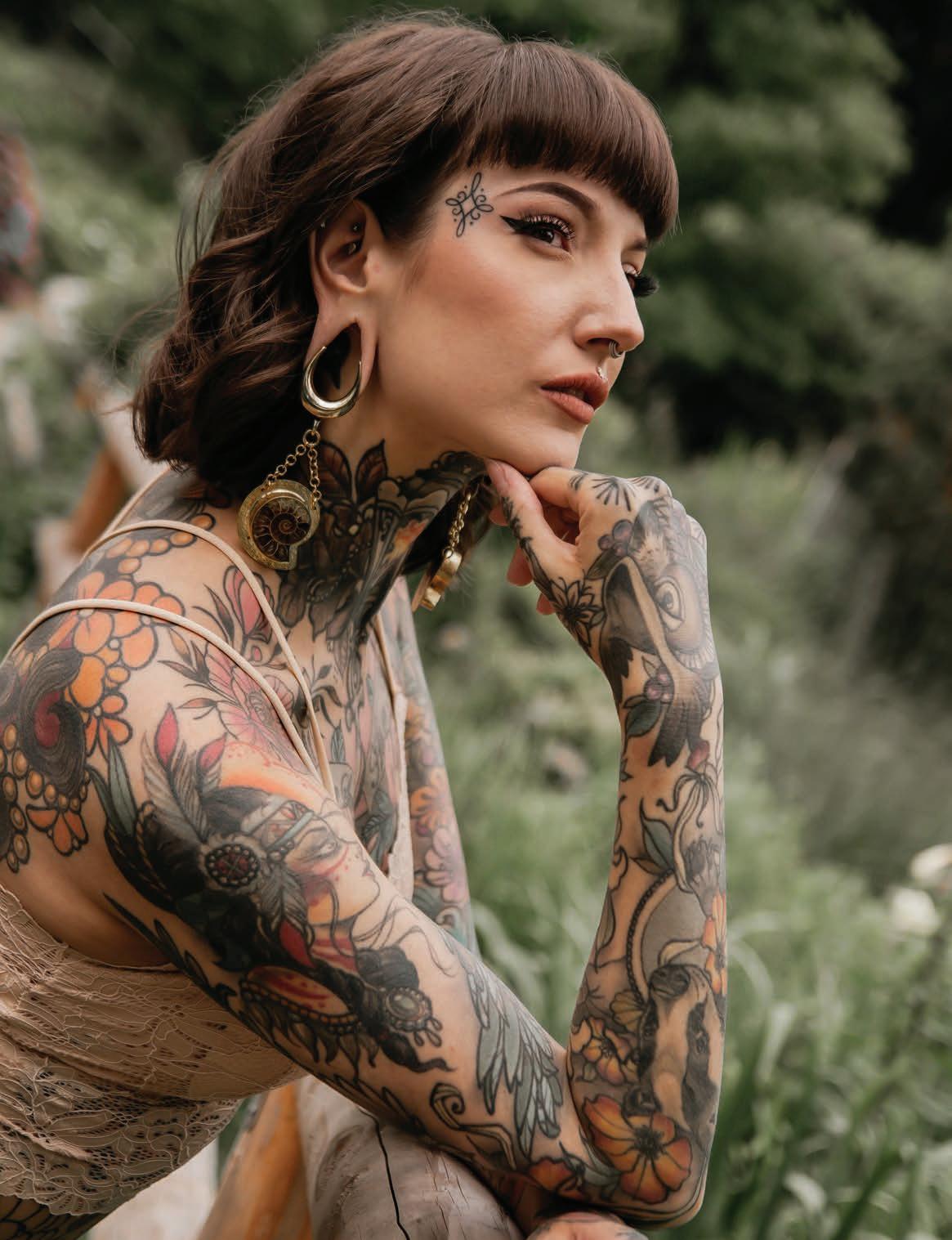
Tattoos and jewelry are not merely on the surface of our flesh — they are expressions of what is already etched into our being. Tattoo culture reminds us of the liberating quality behind fashion and what we wear — the freedom to willingly ignore labels or trends — and that style is best interpreted by our own creative eye. Tattoos, piercings, and jewelry are not just decoration. They are reflections of what we hold inside, which is as emotional as it is physical. As people become more vulnerable and authentic online, jewelry and tattoos become less about superficiality and more about our intrinsic truth. Style choices are reflective of upbringing, values, and beliefs. It is how we curate our persona from the inside out.
Tattoo culture doesn’t necessarily follow the status quo. Instead, it exposes the layers underneath the stereotypes. Tattooed individuals approach personal style with higher regard to intentionality and pay less attention to social norms. Tattoos, like the body, become the canvas, and jewelry thus becomes part of a broader story of who we are.
“We each enter this world with our own inherent blueprint, a harmony that’s uniquely ours,” said Nahal Donyadideh, owner of Azadi Adornments, a Middle Eastern jeweler who honors the rich art, history, and culture of every piece. “I believe jewelry is not just an accessory, but a powerful vessel for spirit and identity.”
SAPPHIRE & SKIN
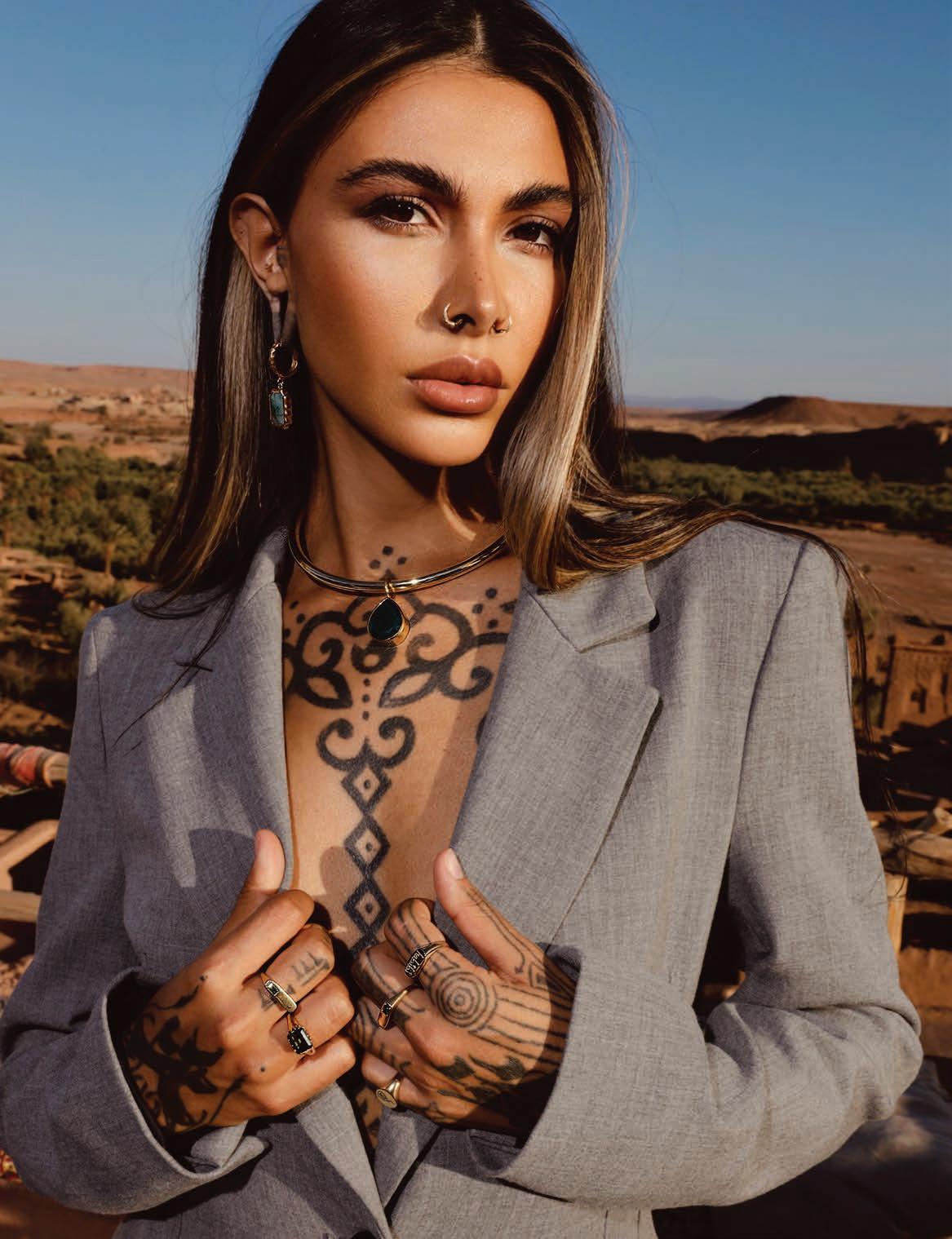
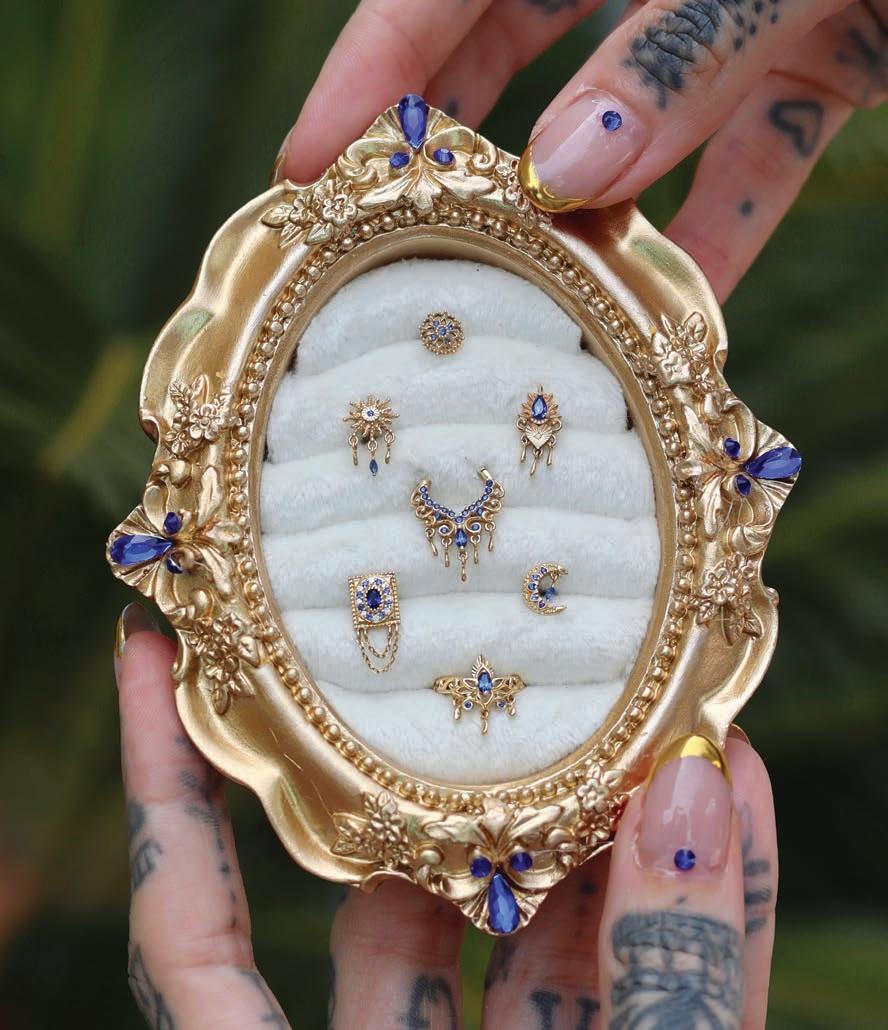
Buddha Jewelry and tattoo artist Anaïs Chabane just launched a captivating collection of 14-karat gold jewelry, shimmering with lab-grown sapphires. “The collection draws inspiration from my Moroccan heritage, my ornamental tattoo work, and the iconic blue of Jardin Majorelle in Marrakech,” Chabane shares. “Together with Rion (Wickersham), founder, designer, and piercer at Buddha Jewelry, we transformed the ornamental language I have been developing through my tattoo work into a collection of fine piercing jewelry designed as a lasting extension of the body.” It’s the first time the jeweler has teamed up with a tattoo artist, and with a gem of a collection like this, it likely won’t be the last.
WEAR YOUR STORY
Azadi, which translates to “freedom,” was born from Donyadideh’s desire to live out her own unique expression with exceptional fortitude. Her Iranian heritage lays the framework for the brand, infusing a part of her background into each design.
Donyadideh sees tattoos and jewelry as inseparable entities working together to express the essence of our individuality. “My pieces are a celebration of embracing who you are unapologetically, with purpose and confidence,” she said.
Even though tattoos and jewelry can be seen as similar forms of expression, they each hold unique power. While both jewelry and tattoo selection carry emotional meaning, tattoos often represent a deeper investment in the principles that shape our sense of self.
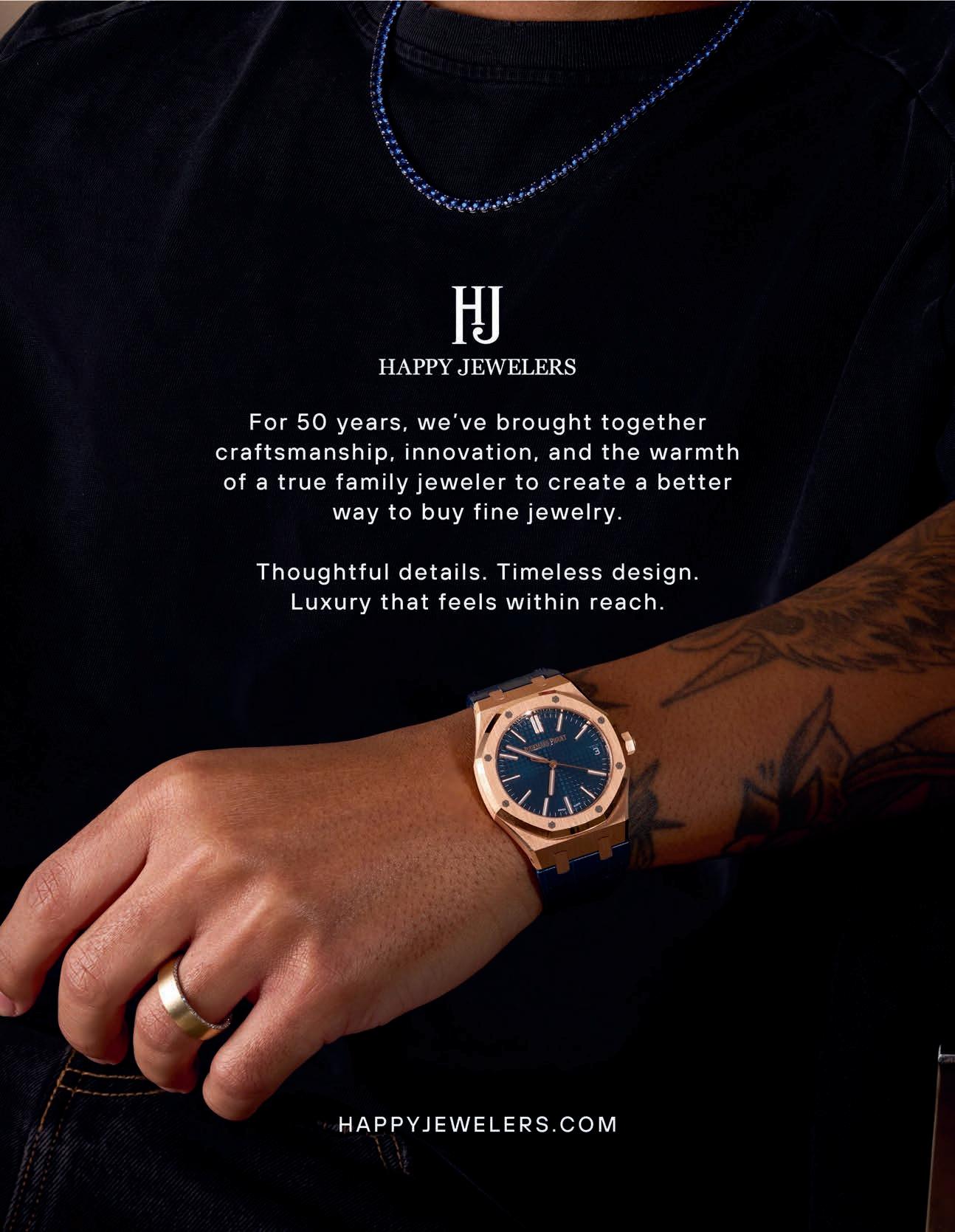
Happy Jewelers, a Fullerton, California-based jewelry wholesaler and watchmaker, brings light to this distinction. “Tattoos become part of someone’s identity permanently, while jewelry gives people the
ability to layer, evolve, and celebrate different moments throughout their life over time,” said Gabe Arik, owner of Happy Jewelers.
As a family-owned business, Happy Jewelers believes strongly in curating jewelry that feels authentic to the individual, from all walks of life. Due to their keen attention to detail and longevity in the space, the team has built a trusted clientele of families across generations and witnessed how jewelry becomes closely tied to milestones and memories. “We see both jewelry and tattoos as deeply personal forms of storytelling,” Arik said.
Buddha Jewelry and NightRider Jewelry are two brands that also believe jewelry isn’t just worn, but a part of who we are, and that begins with honoring our heritage and where we came from. NightRider is an advocate of supporting American artisans and using jewelry as a symbol of our freedom. With equal passion, Buddha Jewelry gives back to the community through partnerships and charity events.
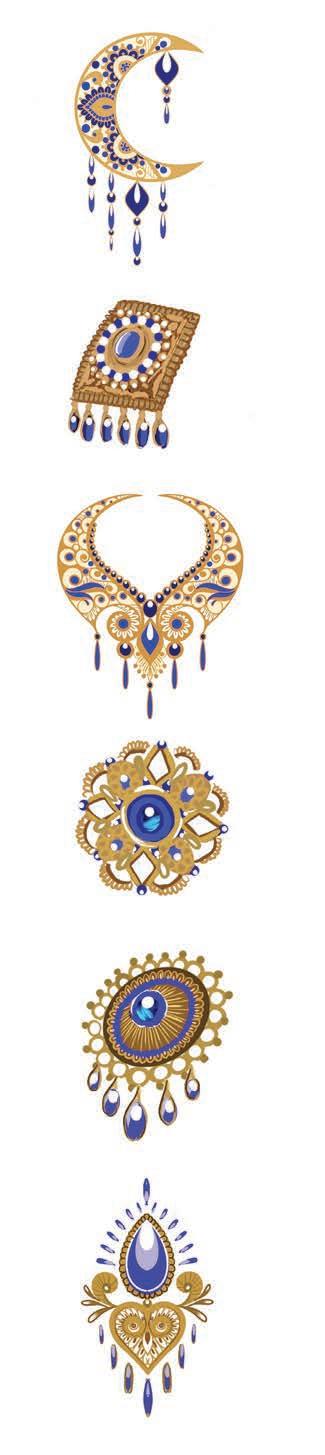
BUDDHA JEWELRY
DESIGNED FOR INDIVIDUALITY
The rise of tattoo culture has reshaped how consumers want to experience jewelry, too. The industry has built a more complex relationship with adornment that is deeply connected to both social and cultural factors. This has translated to enhancements for the consumer that are inclusive and conscious of materials and the environment.
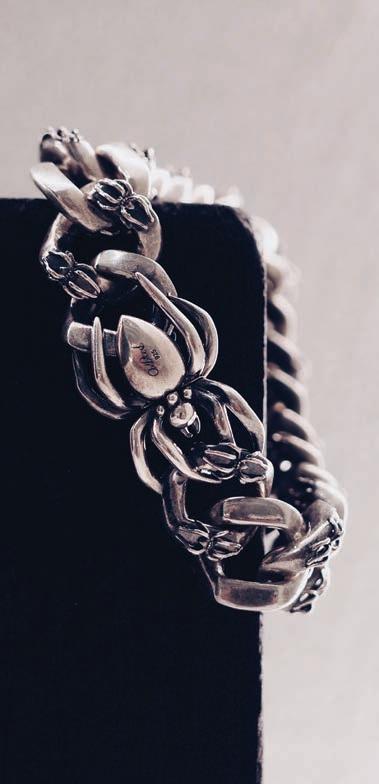
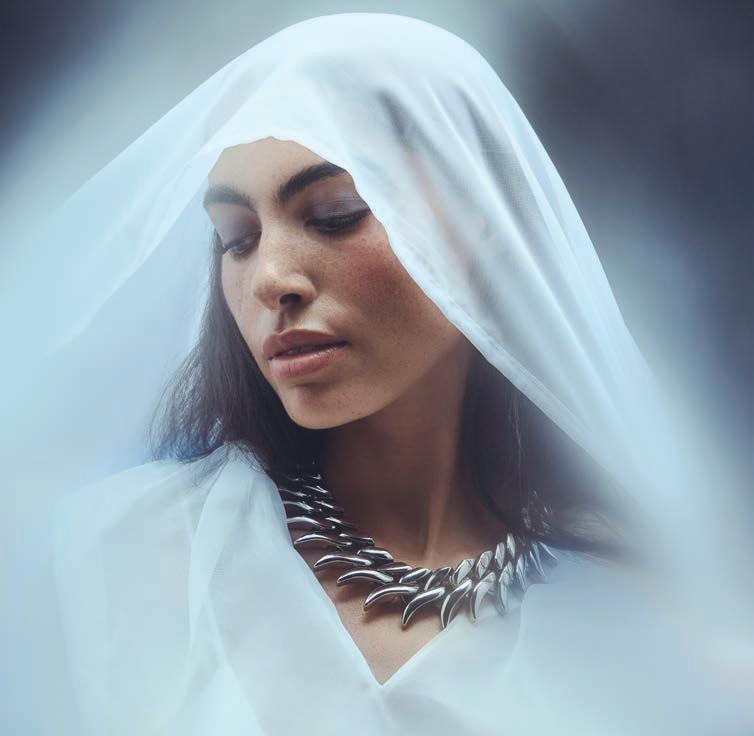
Vitaly is a jewelry brand that advocates for these ideals while creating a unique product in the process. Vitaly’s statement jewelry is crafted of stainless steel and praised for being recyclable, sustainable, and durable. “It’s really about standing out… not necessarily blending in,” said Vitaly CMO Blake Driver.
Driver explained Vitaly’s draw toward genderless jewelry and how this choice broadened their horizons in the market. Their futuristic aesthetic speaks for itself. “We are not trying to cater to one specific person or another,” Driver said. “We cater to anyone who wants to essentially be bold.”
As tattoo culture continues to gain acceptance, jewelry trends are evolving, too. Vitaly noted a rise in popularity around necklace length, which is shifting away from dense choker or collar styles. “We can see from what people are wearing at festivals and on social media, there is a movement toward longer, more loose, dangly chains,” Driver said.
Bodyartforms, a popular online retailer specializing in body and piercing jewelry, has noticed a return to trends from previous decades, especially for the younger generation of jewelry buyers. According to the brand, these consumers gravitate toward gunmetal, dark aesthetics, and stretched styles that were popular in the 1990s and early 2000s.
Ellen and Amanda Bunch, sisters who founded the brand in 2001, shared how mainstream body modification has evolved, noting its approval even across professional environments. “Visible piercings, facial piercings, and stretched ears were once considered far less acceptable in workplaces than they are today,” according to the sisters. “Now we see them represented much more openly across different generations and industries.”
Jewelry retailers have noticed a shift to individual expression over traditional style
standards. This has played out not only with the return of grunge and decade-driven trends but with a new openness in expression that more freely infuses personality into style.
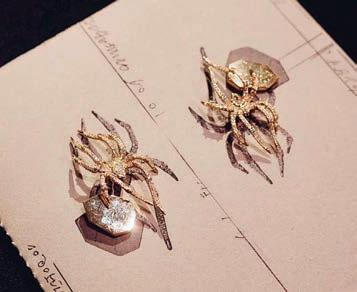
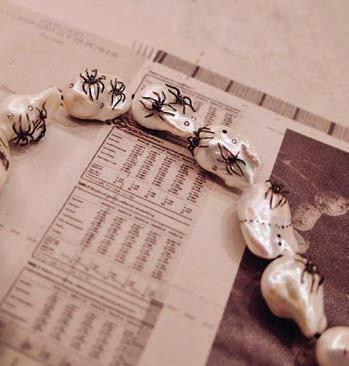
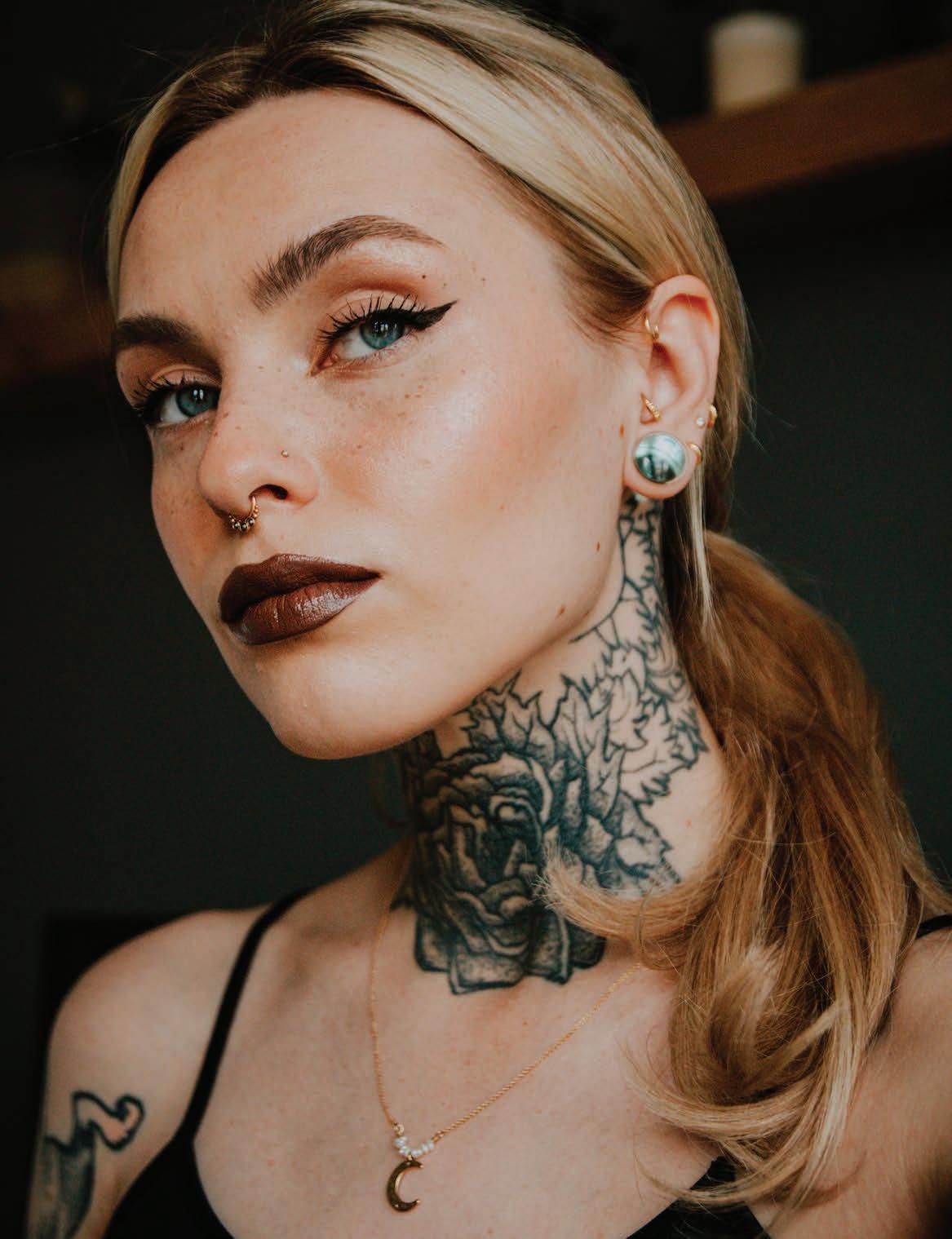
Oxblood is a high jewelry brand that values this form of uninhibited expression. The maison, based in Milan, Italy, uses mysticism and poetry to set the tone for a selection of gothic-inspired designs. Drawing inspiration from tattoo artist Dr. Woo, the jewelry suggests that style may not be about pushing boundaries for the sake of doing so, but is rather a way to uncover one’s rawest creativity.
Brands like Oxblood have brought awareness to unconventional beauty and even made jewelry that is more about expression than just status. It suggests that we could be on the precipice of a new era — one that closes the gap between luxury and alternative fashion.
VITALY
OXBLOOD
OXBLOOD
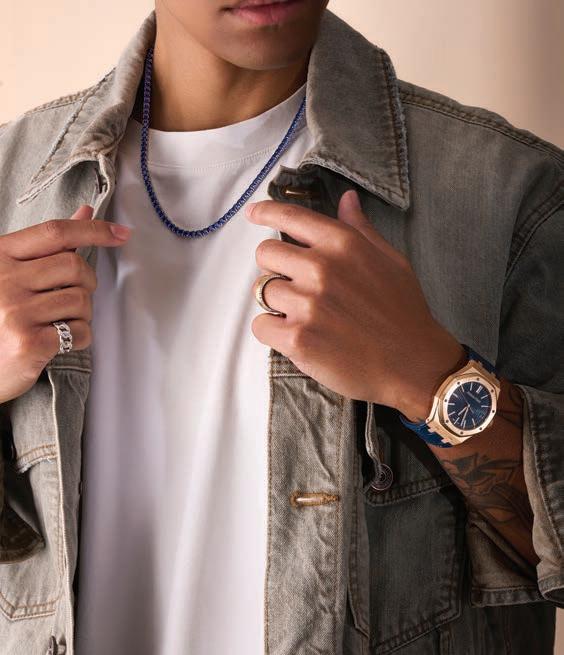
“People are moving away from the idea that luxury must feel formal,” Arik said. “Instead, there’s much more appreciation now for authenticity and creating a look that genuinely reflects who someone is and the life experience that shaped them.”
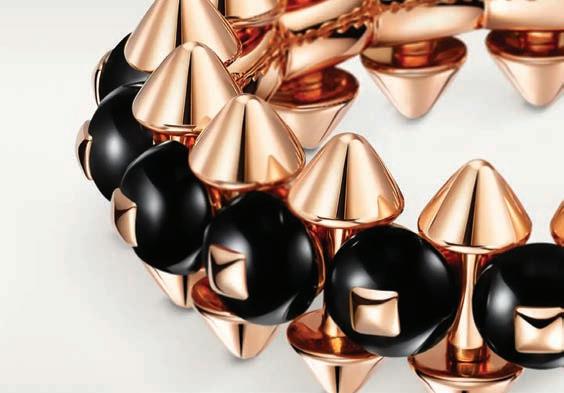
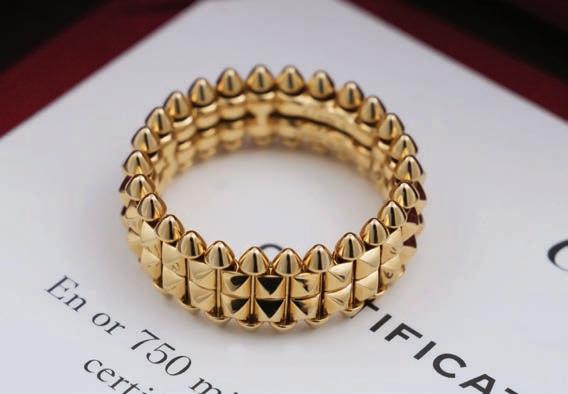
Cartier’s new collection, Clash de Cartier, shows how the luxury market is slowly warming up to playful, rebellious silhouettes. With a vibrant palette of primary hues, the modular design is a risky maneuver for the timeless and elegant fashion house. Bracelets and rings decorated with soft spikes feature a slip-on design that is easy yet alluring. Perhaps it reminds us that risk takers make deliberate fashion choices, too.
“I think the industry as a whole is beginning to recognize tattooed consumers as highly intentional collectors of jewelry/fashion
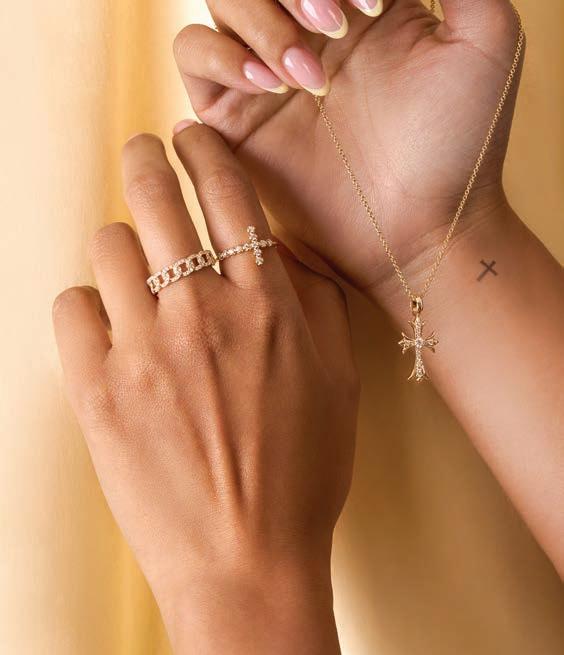
rather than niche customers,” Donyadideh said. “People with strong personal aesthetics often build lifelong relationships with the pieces they wear, which creates a much deeper connection to adornment as both art and identity.”
CURATING YOUR LOOK
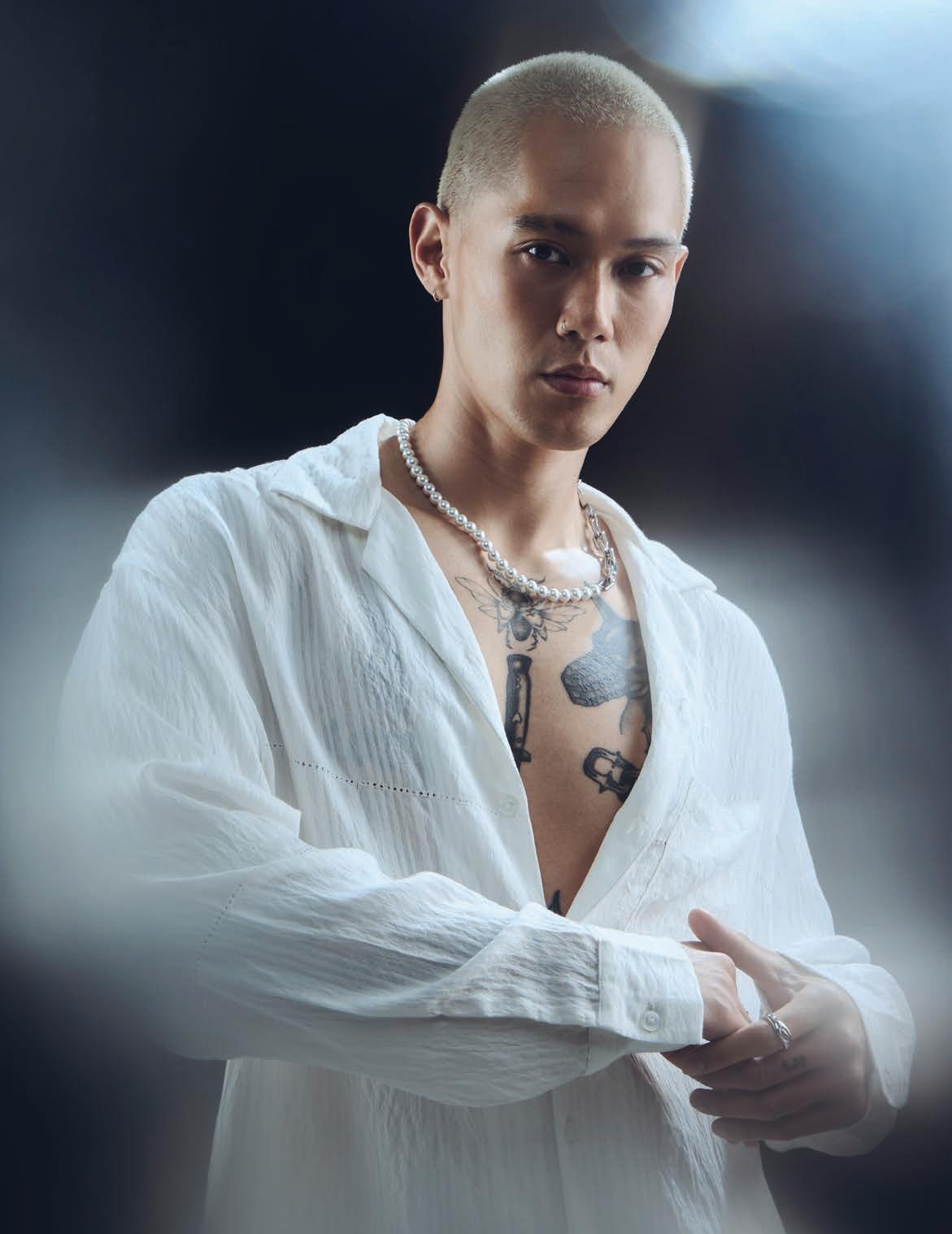
Donyadideh emphasized how well black ink tattoos coordinate with sterling silver jewelry, noting how jewelry shimmers differently against skin tone and should be considered when making style selections. She shared her love of elongated earrings, stacked jewelry, and chokers, which soften the intensity of tattoos and work with the body’s natural flow.
Mixed finishes and oxidized metals look best with tattoos, as they create visual depth,
according to Happy Jewelers. The brand also pointed to how the delicate nature of fineline tattoos pairs especially well with layered jewelry, while heavier linework on the body can support chunkier jewelry like cuffs, enlarged studs, or structured necklaces.
The visual relationship between body art and adornment is not just about aesthetics. With equal proportion and balance, jewelry guides the eye across the body, revealing the meaning that lies beneath it all.
“Our approach has never been about telling people what pairs well together,” according to the Bunch sisters. “It’s about offering a wide range of jewelry, so people can create a look that feels like their own.”
Tattoos may be permanent and jewelry replaceable, but together they tell an evolving story of who we are.
HAPPY JEWELERS
HAPPY JEWELERS
CLASH DE CARTIER CLASH DE CARTIER
BY ALEX SHIMALLA AND NICOLE STOVER PHOTOGRAPHY BY CONNOR WYSE
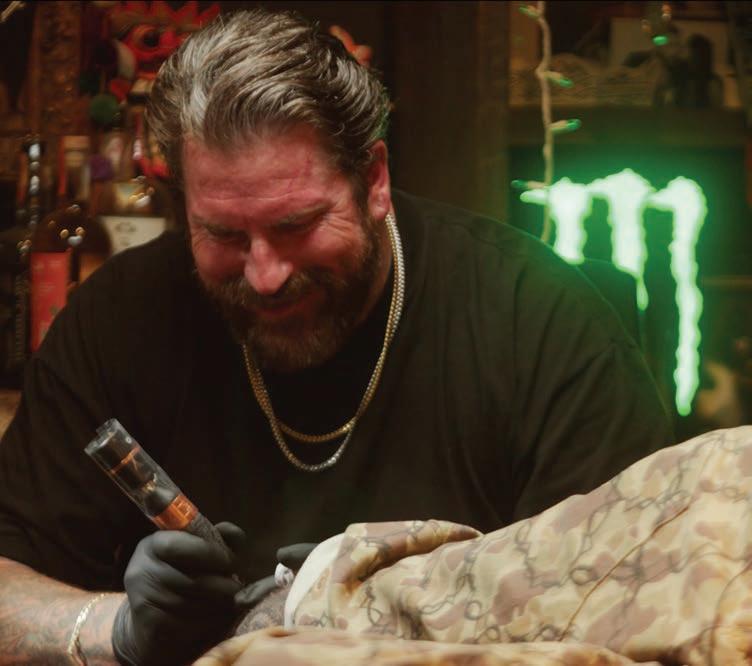
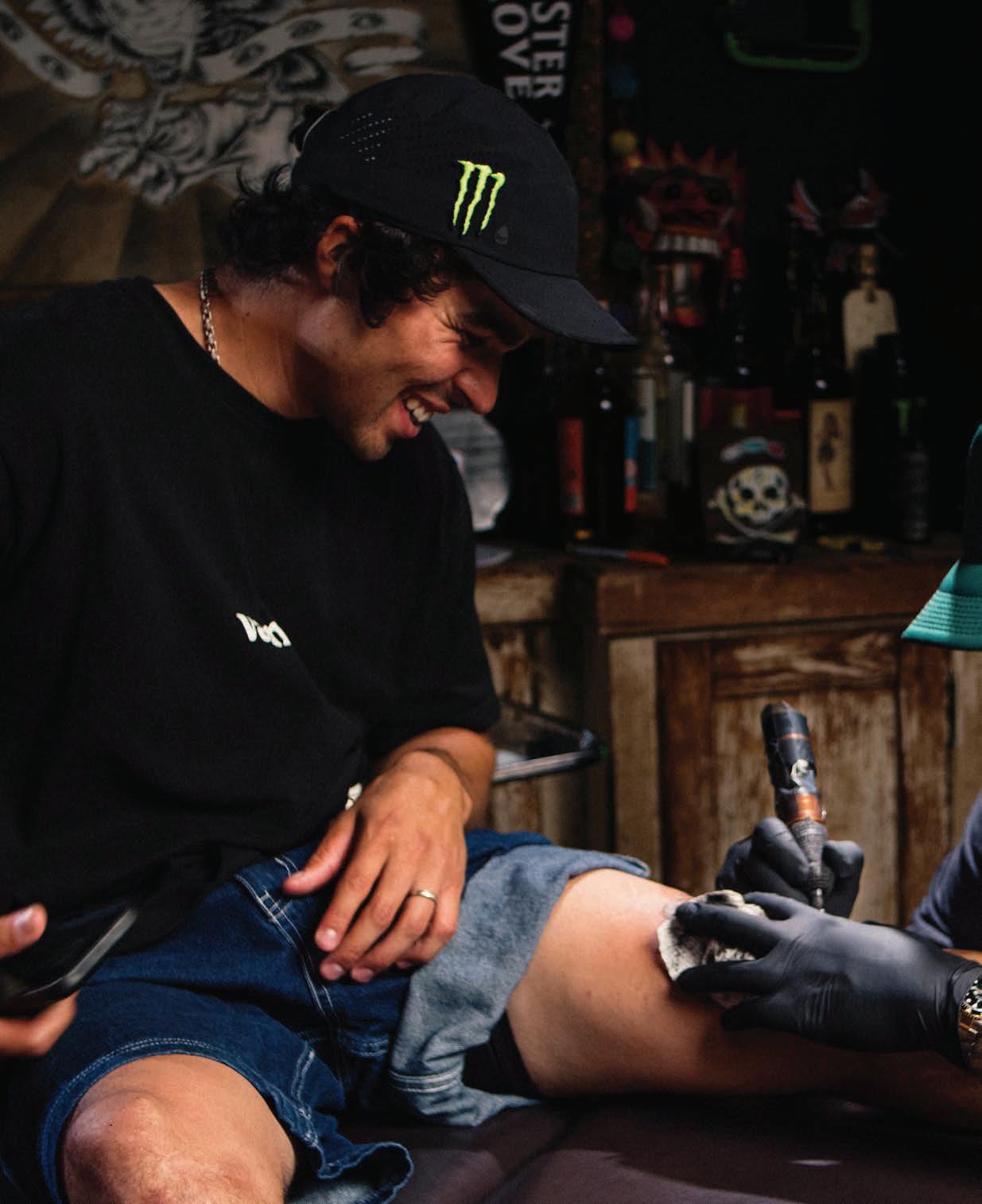
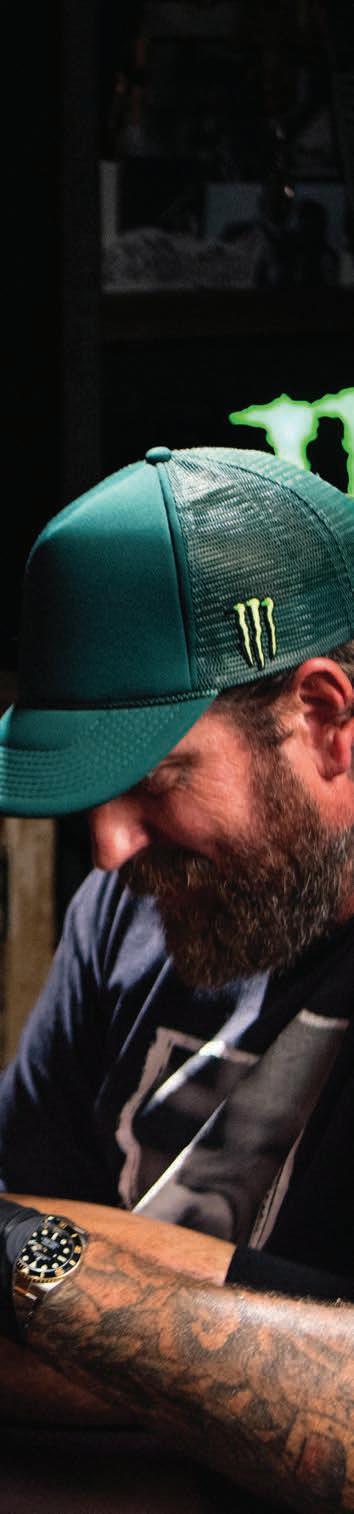
Monster Energy’s athletes are known for their fearless, fullthrottle speeds, tricks, and tenacity, but when they put on the brakes and allow themselves to be vulnerable in legendary artist Luke Wessman’s tattoo chair, that tough exterior is easier to penetrate.
“For me, those one-on-one sessions are grounding,” Wessman says. “Tattooing slows everything down and creates a space where people speak honestly. After 25 years in the chair, I’ve learned that listening is just as important as the tattoo itself.”
After a year of kicking ideas around with the Monster Energy team, Wessman was commissioned to create the original artwork for the brand’s first VIP tattoo activations at the 2023 Summer X Games in Ventura, California, strengthening his relationship with Monster and solidifying the position as its first tattoo ambassador.
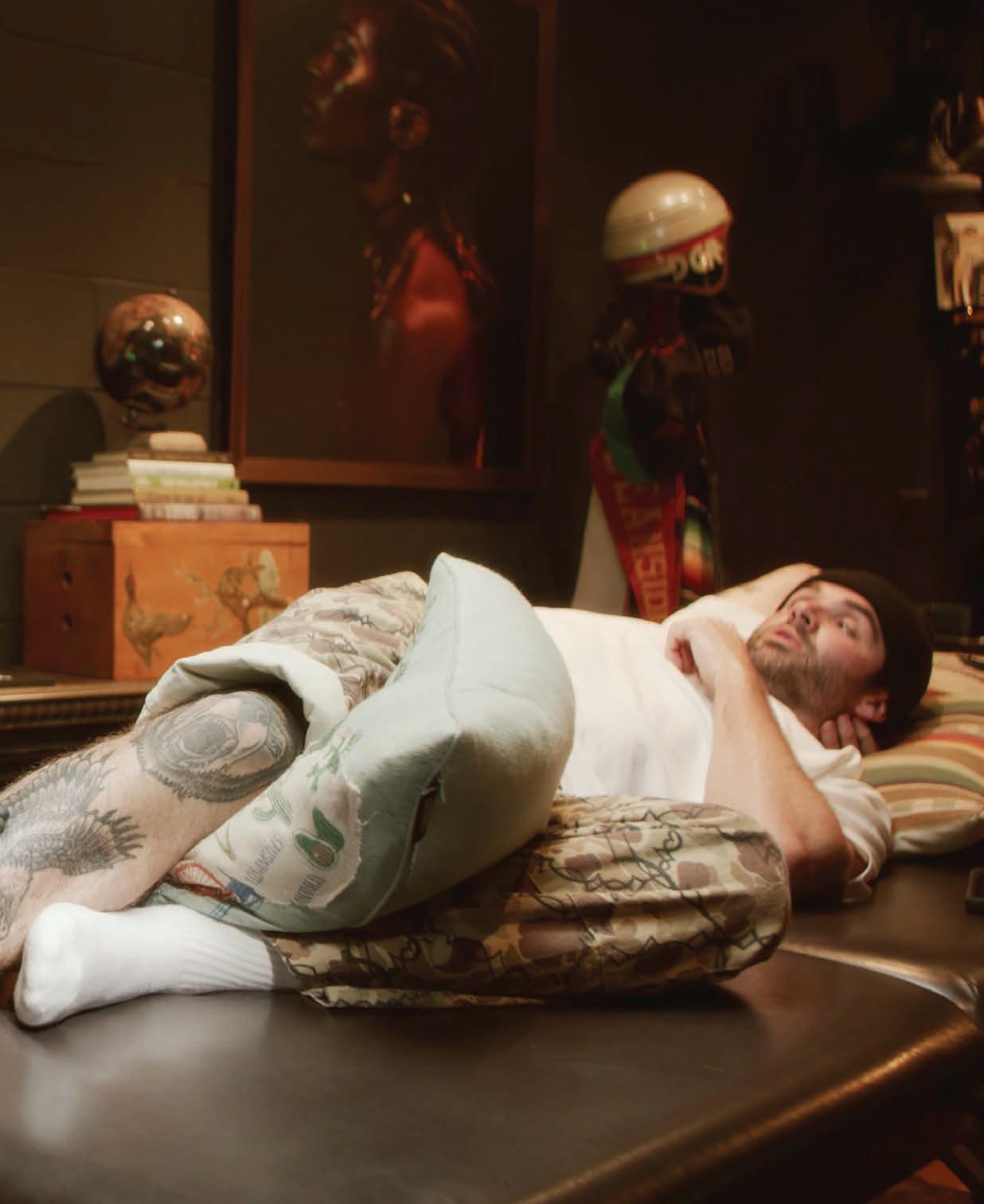
“Tattooing had always been deeply woven into Monster’s world — most of the athletes and people around the brand are collectors — but Monster had a vision to give tattooing a more intentional, active footprint within the company itself,” Wessman explains.
This is where “SELF MADE” enters the picture. In the video series, Wessman steps into the lives of Monster athletes, exploring their communities and getting a taste of their sport. The script flips to Wessman’s chair, where athletes dish on their profession, upbringing, and significant life events while getting inked.
“Sitting across from someone and hearing what they’ve carried — pressure, doubt, responsibility, sacrifice — reminds me that no matter how visible or successful someone is, they’re still human,” Wessman says. “That’s really what ‘SELF MADE’ means to me. It’s not about status or achievement; it’s about the work, the choices, and the personal code people live by when no one’s watching.”
IT SUCKED WAKING UP EVERY DAY WONDERING IF EVERYTHING YOU’VE WORKED YOUR WHOLE LIFE FOR, AND YOU LOVE THE MOST, IS GOING TO BE GONE OR NOT. IT WAS A LOT TO MENTALLY MANAGE, BUT IT ALSO BROUGHT ME BACK TO MY CORE OF WHY I LOVE TO SKATE. - MATT BERGER
The following are the stories of three Monster Energy-sponsored athletes who have a reputation for taking their sports to the extreme — never fearing the bumps, breaks and bruises that come with the territory.
MATT BERGER SKATEBOARDER
Matt Berger grew up in Kamloops, British Columbia — a place where winter bites and work is currency. Here, you proved you cared by showing up, day after day, no shortcuts. Berger learned that rhythm before he ever dreamed of Olympic qualifiers or global skate videos. “I think that those surroundings and the work ethic of people in my home city inspired me to where I wanted to work as hard as they did at their jobs, but toward skateboarding,” Berger says.
Skateboarding professionally was never a guarantee, but Berger felt it in his bones. His dad, an electrician, came home from work, his hands raw from the cold, and exhaustion etched into his posture. That image stayed with Berger. If he wanted a future on his board, he’d have to grind for it.
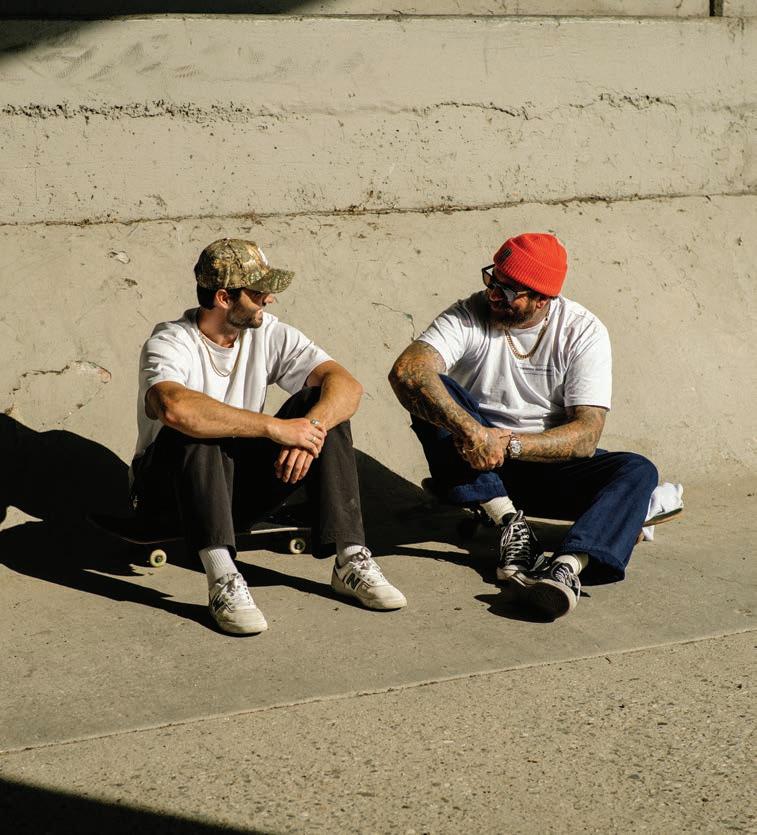
WHEN EVERYTHING CAN BREAK
Turning pro came early, but it didn’t make Berger bulletproof. A knee injury nearly erased everything. The first surgery failed. The second was a gamble. “It sucked waking up every day wondering if everything you’ve worked your whole life for, and you love the most, is going to be gone or not,” he says. “It was a lot to mentally manage, but it also brought me back to my core of why I love to skate and will always go back to skateboarding and claw my way back, no matter what happens.”
It was a four-year stretch that rewired him. His training sharpened, and the why behind every session mattered more. When he finally stepped back on his board, even the rough days felt like progress. The comeback wasn’t cinematic. It was slow, stubborn, and earned.
By the time Berger reached the Tokyo Olympics, he carried both the experience and the scars to prove his place on the team. The first run unraveled, with equipment issues, COVID-19 rules, and no easy fixes, but he adapted.
Paris went more smoothly. He didn’t medal, but he left with a sharper sense of purpose. “I gauged it on how I would feel after Paris, because it’s a lot of hard work and dedication and time away and traveling. With the way Paris went, it was kind of like, ‘Oh, my battery’s full,’” Berger explains, adding, “I definitely want to go for a third Olympics.”
He’s back in the cycle, training for his first qualifier in Brazil, locked into a routine that never softens. Five days a week start with long bike rides, then the gym. Some days it’s street filming, other days it’s warehouse sessions in Southern California. The rhythm is relentless and never easy.
He keeps himself uncomfortable by design. As a kid, Berger set a rule: do something on his board every day that scares you. That edge still drives him.
WHAT YOU CARRY FORWARD
Skateboarding splits in every direction now. Rebellion in the streets, order in the contests. Berger welcomes it all. The sport’s bigger, but for him, it’s still about the effort and intention you bring.
That grounding shows up in his tattoos, especially the family crest inked by Wessman during episode 4 of the “SELF MADE” series: a lion and crown, drawn from Berger’s British heraldry and the British Columbia coat of arms.
As a teenager, Berger’s grandparents lived in his family’s home. Their pride in heritage ran deep, and he felt it too. The tattoo is a reminder of place, spirit, and the lineage he comes from. “It was very cool to commemorate my time with my grandparents and mesh also where I’m from into one tattoo with Luke,” Berger says.
Monster Energy has backed Berger since the eleventh grade. Through injuries and setbacks, their support has remained steady, like family. “I remember when I was faced with my first knee surgery, and I was having a tough time getting through it and trying to come back. I was wondering if they’re going to cut my contract over it.” Berger says, but Monster stood by him. “Time and time again over the years, that support has been unparalleled.”
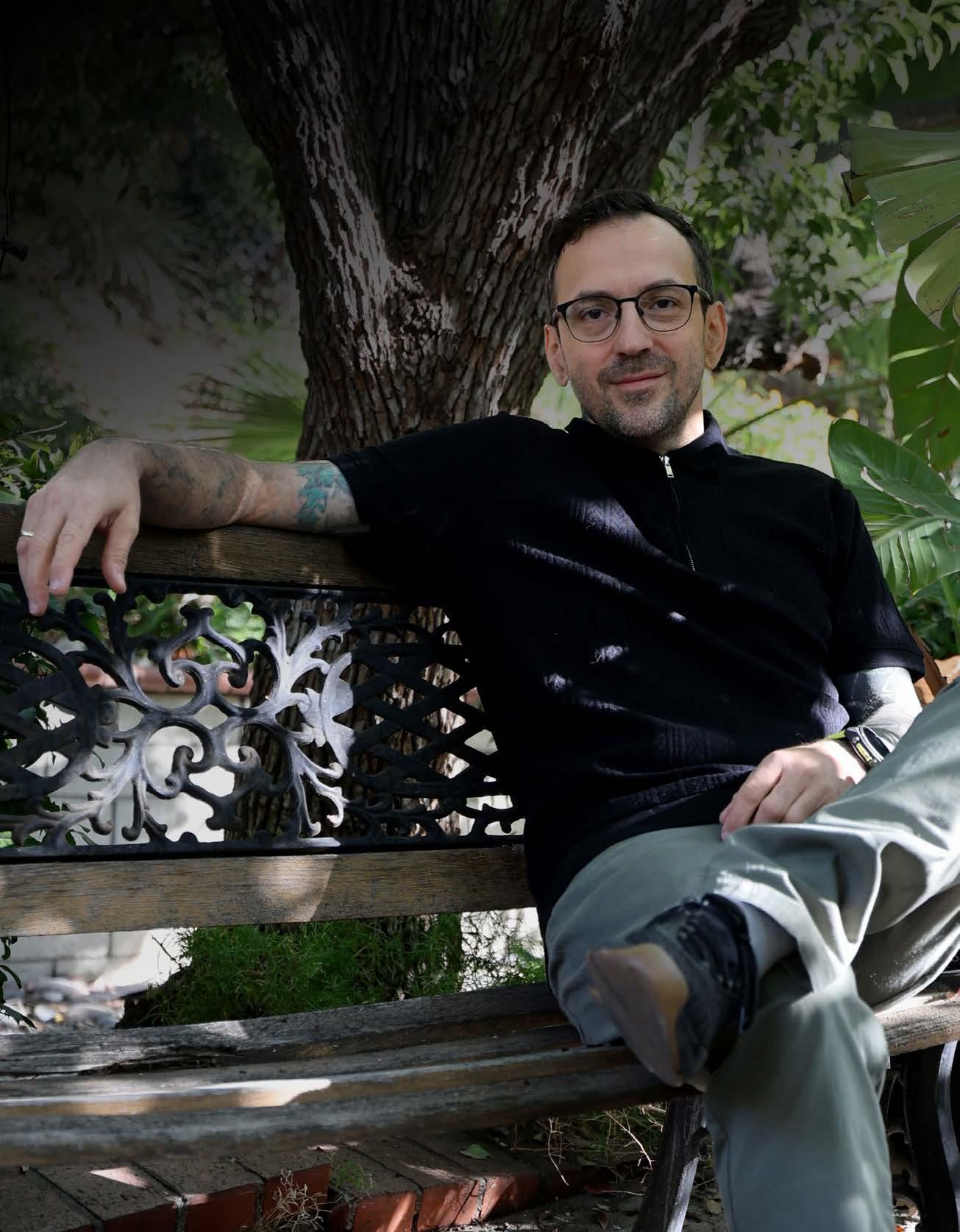
Artist-approved tattoo fading you can trust.
Make room for something new, refine old details, or rethink your placement – anything’s possible with Removery.
Laser tattoo removal has definitely opened up previously unavailable opportunities to repair or redo old or simply unwanted tattoos. The ability to lighten an old tattoo has increased the tattoo artist’s work capacity and opened up gaps that were previously impossible to overcome.”
– Marek Pawlik @marekpawlik_tattooartist
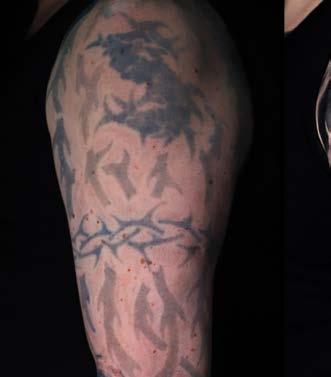
After Removery Treatment
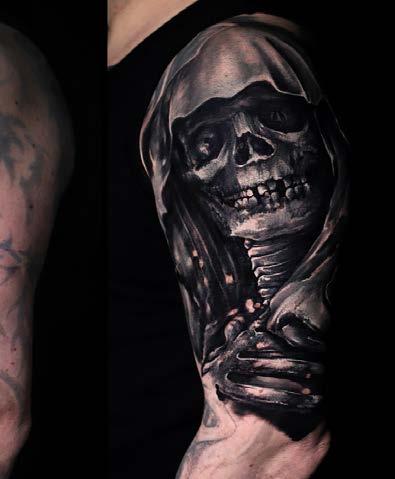
After Tattoo Cover-Up
RICKY BRABEC MOTORCYCLE
AND RALLY RACER
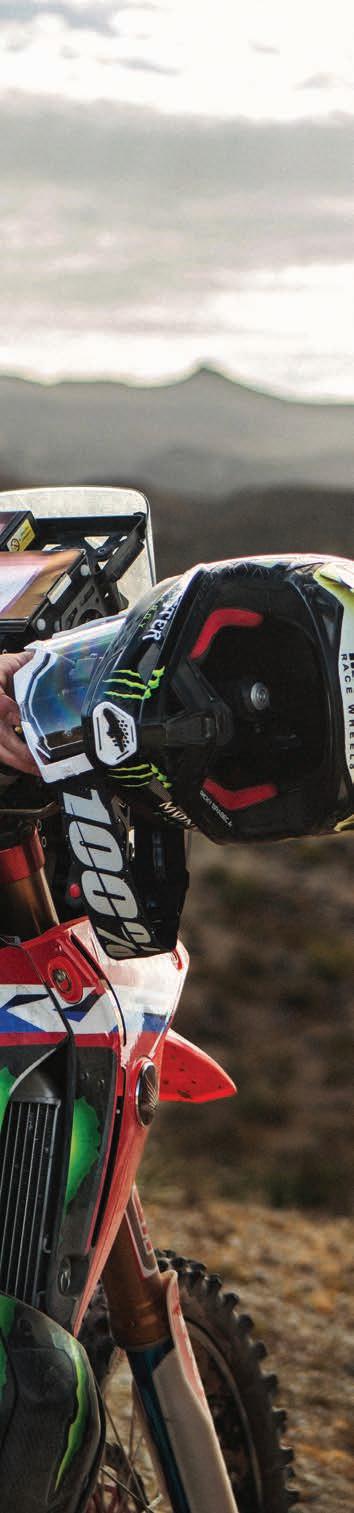
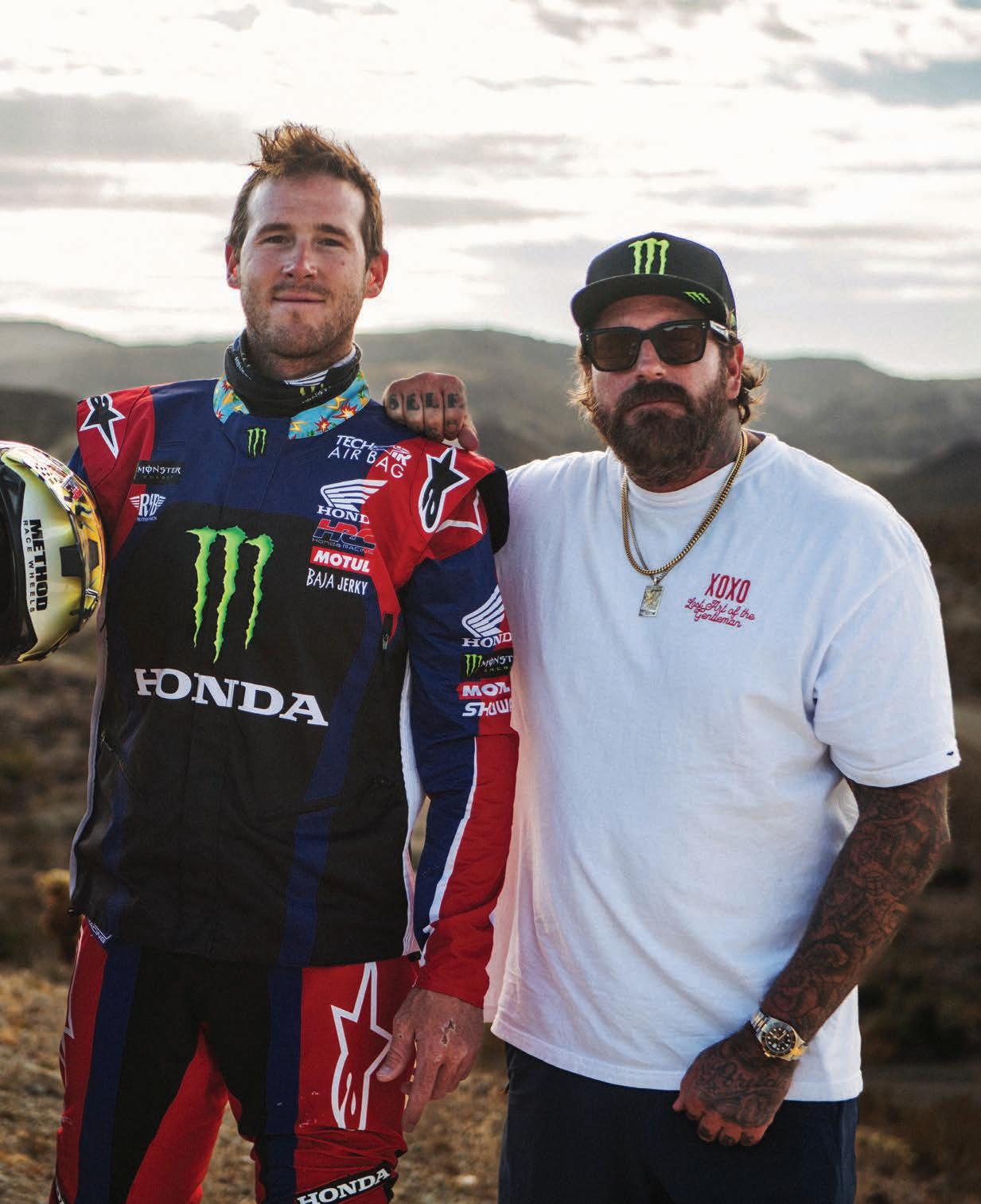
As a motorcycle rider and rally racer, Ricky Brabec has broken a lot of bones, including breaking his neck twice. But “Nothing can stop a train. Nothing’s going to stop me,” Brabec says.
After each injury, training ceased and boredom kicked in. He realized he couldn’t ride, but he could sit in the tattooing chair and add to his life story in ink: his astrological symbol, the bull; two skulls that form a heart on his right leg; a train, owl, and lion on his back.
In “SELF MADE” episode 3, Wessman tattooed a winged knobby-style wheel with billowing dust on Brabec’s right calf, representing the racer’s passion and career. Prior to the session, there was little on his skin to indicate the rider’s craft. “I was like, you know, I don’t have anything on my body that shows that I ride motorcycles,” says Brabec about the inspiration for the tattoo, adding, “I’m going to ride dirt bikes until the day I die.”
Three months later, the tattoo freshly healed, Brabec broke his leg in the exact spot of the tattoo. Surgeons had to cut into the artwork, reset his tibia plateau, and hold the bones in place with two plates
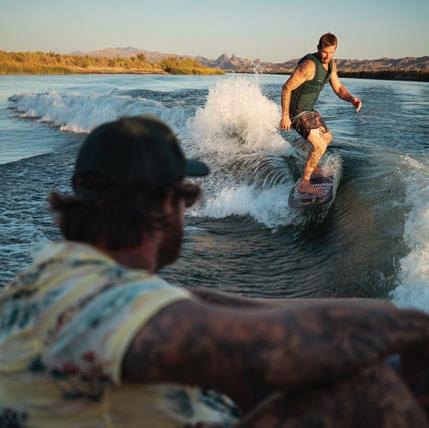
and 12 screws. It disfigured the artwork, but the scar just “adds to the story,” he says.
That story starts at age 5, when his father put Brabec on a BMX bike. When he was a teenager, Brabec’s family left Riverside, California, and moved to Hesperia, California, surrounded by the Mojave Desert. “I was like, ‘Oh, this is the open desert. I could just ride my motorcycle wherever I want, and when I want,’” he recalls.
Shortly after, Brabec signed up for his first motorcycle race. He had no idea what he was getting into, but he knew he wanted to explore his new surroundings and ride his dirt bike. That race was transformative, shifting him away from BMX and toward motorcycles.
“When you’re riding motorcycles, it’s just peaceful in a sense,” Brabec says. “You can explore so many things and go on top of these hills and get a bird’s eye view of where you came from, and it’s really cool.”
BUILDING THE BIKER
In 2011, Brabec began desert racing, and by 2014, he was winning. Now, he only competes at rallies, which take place around the world and can last anywhere from a day to two weeks.
In 2016, Brabec participated in the Dakar Rally, the stuff of legends. The event has been held in Saudi Arabia for the last several years and can last up to 14 days, with some days lasting up to eight hours. The extreme endurance event tests a rider’s navigation skills, grit, and capabilities in unknown terrains.
Brabec has red hash marks tattooed on his thighs to count the number of times he’s competed at Dakar, but he waited until he won that coveted firstplace spot in 2020 before getting a special tattoo for the Dakar Rally. That win was historic not only for Brabec, but also for America — Brabec was the first American to win the motorcycle category.
Regret is not in the discussion. “In my shoes, everything that I’ve done, every mistake that I’ve done, and every injury that I’ve gone through has made me who I am today. All of those things combined have put me where I’m at today,” Brabec says. “Why would I want to go back and change something? I’ve been so happy and so successful doing what I do that I don’t even know where else I’d be at the moment.”
In the four years between his first Dakar Rally and his win, Brabec put his perseverance and
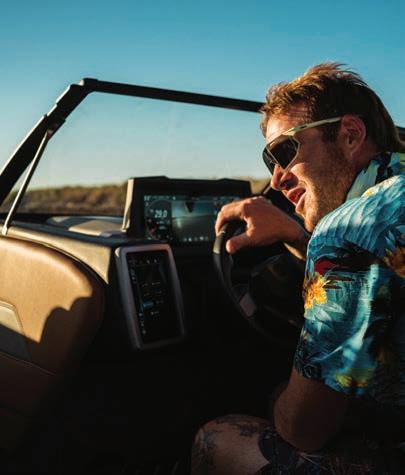
determination to the test. For three consecutive years, he had to withdraw from the race due to mechanical issues mid-race or injuries. In 2024, he won for the second time, and at the 2026 race, he placed second, missing the coveted Touareg Trophy by two seconds.
“It was pretty pissed off in the moment, and it’s definitely hard to swallow, but it’s just part of racing. It’s literally two seconds — that’s one breath,” Brabec says. “At the end of the day, on the inside, I feel like I won… I rode really well, and I’m satisfied with how my performance was.”
When he’s not competing, Brabec might go fishing, wake surfing, mountain biking, or, on rare occasions, do nothing at all “because it’s fun.” He’s also continually working on his latest side project: offering others the thrill of the outdoors through his adventure company, the Rip & Dip Ranch, located in Arizona’s Mohave Valley.
“(It’s) the new experiences that you can come enjoy, have fun, and get to live the lifestyle that we live,” Brabec says of Rip & Dip. “Other than that, I just ride motorcycles and enjoy my life as much as I can because you never know when your (last) day is.”
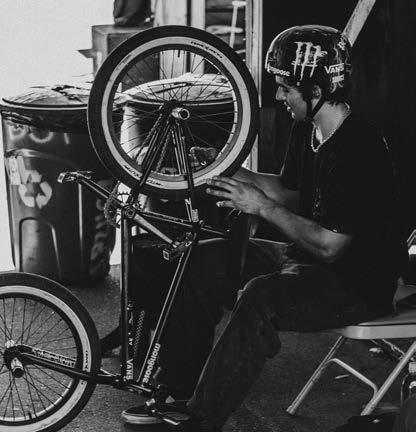
KEVIN PERAZA BMX RIDER
For Kevin Peraza, riding starts with a surge. Rubber hits dirt, adrenaline snapping through his veins. The first trick sets it off, but what keeps him moving is raw speed, the taste of freedom, and the sense that anything can happen when his wheels leave the ground. That charge has been his driving force for about 15 years.
“(Bike riding) is a freedom of expression, and it’s an outlet to just get out there, do your thing, and enjoy it,” Peraza says. “There’s no right or wrong way of doing it.”
That same unyielding energy propelled him from Tucson’s sunburnt tracks to X Games gold and to the edge of the Olympics. At 31, Peraza is still in motion: no finish line, just the next jump, the next rush.
Peraza was raised in a BMX family, the middle brother, surrounded by bikes and a backyard that doubled as a proving ground. His dad caught the BMX fever in the 80s and never let it go. He was hooked.
“He built us this backyard setup that was built on dirt,” Peraza shares. “We had a dirt jump in the backyard. We’d make all these sketchy jumps with tires under them. We would go into a ditch and build a takeoff. You name it.”
That backyard dust became a passport to the world: 13 X Games medals, podiums around the world, and a collection of stamps and scars. But the win that matters most isn’t about metal or learning the hardest trick.
“My biggest accomplishment would be being able to inspire kids with the way I ride a bike and through my personality,” Peraza says. “Whether you know BMX or don’t know BMX, I always feel like I can share a smile and positivity through riding.”
Peraza stirs park, street, and dirt into something unpredictable, rewriting the rules every time he rides. “Nowadays, I’m considered one of the few wellrounded athletes who does every discipline,” he says. “I try to bring it all into a mix and showcase, most importantly, my personality through my riding and just try to be as unique as possible.”
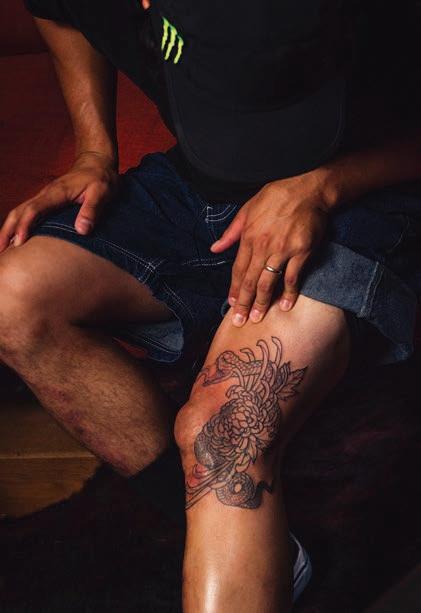
A Japanese-style snake coils around his leg, inked by Wessman for “SELF MADE” episode 2. The snake is wavy, unpredictable, and kind of wild. “The snake is something meaningful as far as how I ride, to growing up in Arizona. Lots of snakes. A little reminder of home,” Peraza shares.
Wessman softened the tattoo by enveloping the rattler with a chrysanthemum, balancing Peraza’s personality: sincere and cheerful with a competitive bite. Peraza rides with teeth bared, but off the bike, he’s generous, gracious, and impossible not to root for. That balance is why he’s earned his place among BMX’s most respected.
Today, Peraza is building as much off the bike as on it. He helps design the courses for the BMX Triple Challenges events held at Supercross, dreams up wild projects with Swatch, and fights for new skateparks in Mexico, where the scene is still finding its voice.
“My parents moved away from Mexico for better opportunities in the States,” he says. “There’s so much talent in Mexico. If I’m the voice and I (can) be that role model and that example of the few Mexican athletes that are traveling abroad with BMX, I think it’s that much more motivating to the kids that are starting or chasing the same dream as I am.”
Fatherhood has changed him. With a wife and child at home and new blueprints on his desk, Peraza rides
smarter. “I’m a little more in control when I ride,” he explains. “I try not to do crazy tricks that are out of my comfort zone to prevent injury because I still want to get home and be a dad.” Some days he’ll cut a fivehour session to two or three hours. He applies more meaning in every practice, never forgetting to enjoy the moment.
“(I fall) all the time. I fell yesterday, so hard, so dumb,” Peraza says, laughing. “But like I said, with BMX riding, it’s a risk we’re willing to take, you know? One of the greats in BMX, Dave Mirra, has a quote that says, ‘I’d risk the fall just to know how it feels to fly.’ That’s so powerful.”
Determination, intention, and focus get Peraza through the falls, and the scars and tattoos he’s collected along the way are evidence of the blood, sacrifice, and love he puts into everything. Success and failure are part of the package, and they’re proof of what it takes to be “SELF MADE.”
TATTOO STIGMA BY JOEY SKLADANY
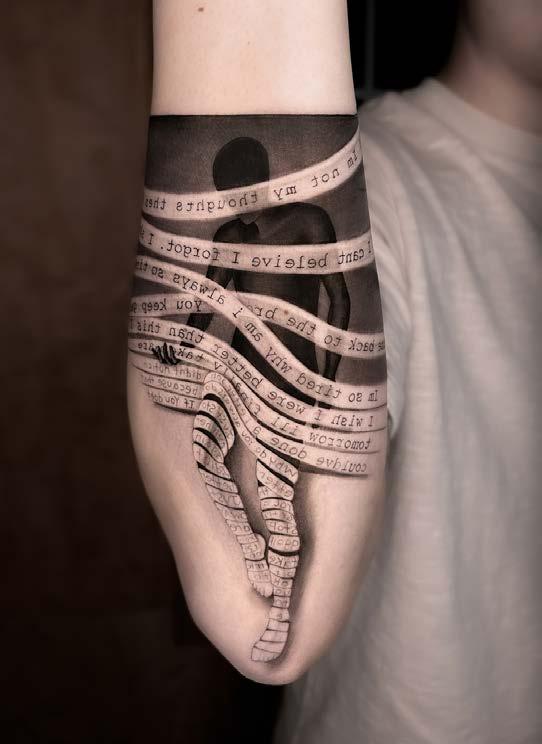
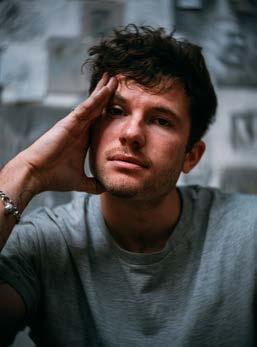
If it took aboveaverage tolerance and bravery to get through it, there’d be a whole lot less tattoos out there.
- Travis Fountain
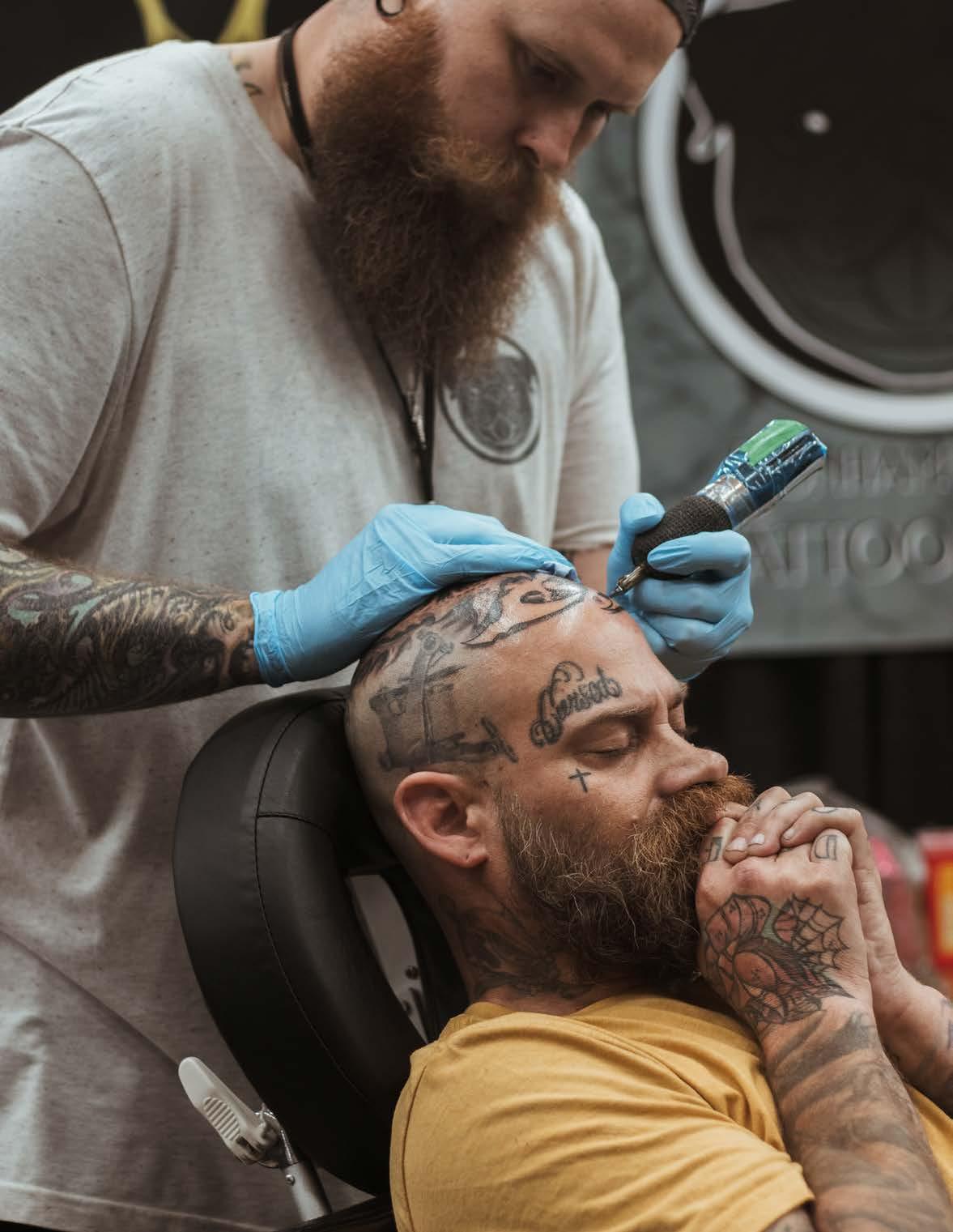
o pain, no gain” may be a common expression used to motivate professional athletes, but the same mentality can also be applied to tattoo sessions. After all, some of the most intricate ink demands hours of distress as needles repeatedly sink into the skin until a final result — the gold medal of body art — is revealed and rewarded.
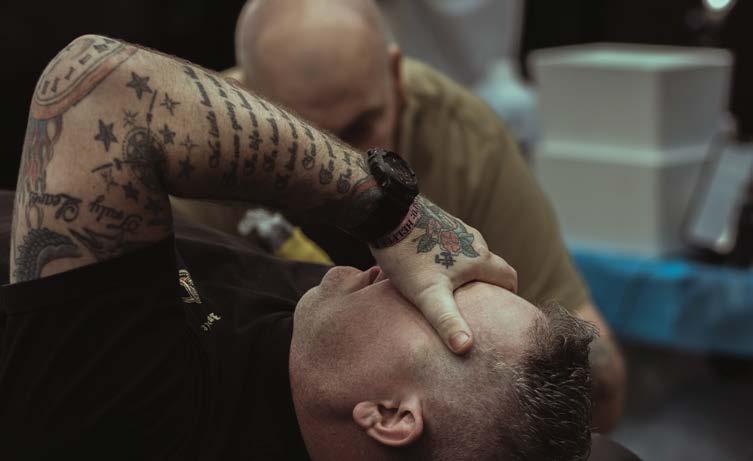
But not all tattoo pain is equal due to variations in location, shading techniques, and surface area. Whether you’re a tatted veteran or fearful first-timer, it’s important to know the level of discomfort you may experience before going into a shop and surrendering to the often long and taxing process.
BEYOND THICK SKIN
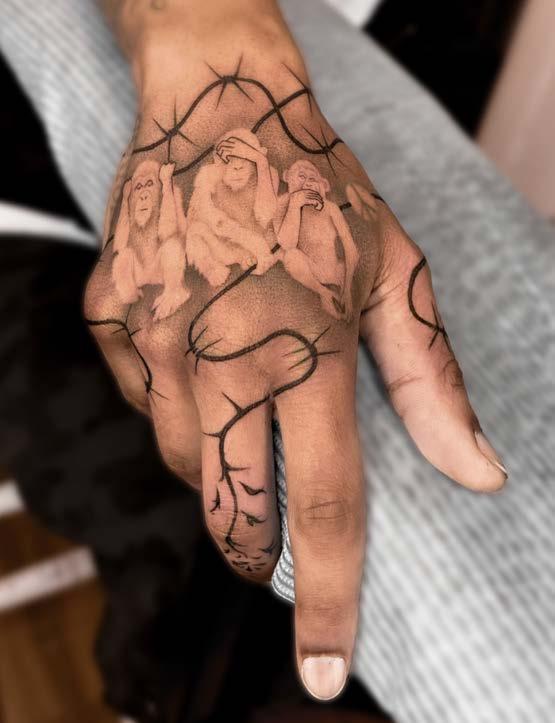
Dr. Robert Finney, founder of and dermatologist at NYC’s Soho Skin and Hair Restoration, confirms that from a physiological standpoint, the most sensitive areas of the body tend to be anything from the neck up, as well as the hands and feet.
“These regions have a higher density of nerve endings, which translates to more intense pain during tattooing,” he explains. “Pain is also amplified in areas with minimal padding. These are locations with less subcutaneous fat that allow more direct compression and stimulation of underlying nerves.”
In contrast, areas with more soft tissue tend to absorb some of that mechanical trauma, making them slightly more tolerable.
Travis Fountain, NYC- and Los Angeles-based tattoo artist, echoes these sentiments, noting that parts that bend like the ditch of an elbow, behind the knee, the lower wrist, and even the stomach are also notoriously tender. “The exception that I find interesting is how painful the back of the calf can be. It was one of the worst in my own experience,” he says, claiming that the sensation was equal parts sharp and stinging.
A quick yet tried-and-true self-assessment to determine if a tat will hurt is to pinch, twist, and scratch the skin you plan to ink. This will provide a preliminary indication of pain levels so that you’re not going into the chair completely blindsided.
COVERING UP MYTHS
When it comes to pain, there are a few longstanding myths that have plagued artists as they reassure and even convince clients that they’ll survive the poke and stick. One of the most popular is that specific ink colors, particularly white, tend to be more irritating than others.
“White ink is typically applied at the end of a session for highlights and shading. By that point, the skin is already inflamed, and your pain threshold has dropped,” Finney says. “Additionally, shading often requires multiple passes over the same area. The first pass creates a controlled wound. Repeated passes over already-inflamed skin will naturally feel more sensitive.”
The next is that paler skin is more susceptible to soreness and inflammation. The reality is that there is no evidence to suggest that a lack of melanin leads to increased sensitivity.
“Everyone I’ve tattooed perceives pain differently,” says Miss Vampira, owner of Thorn Tattoo in upstate New York and resident artist at 5 Points Tattoo in NYC. “A fun fact is that redheads, who are commonly
TRAVIS FOUNTAIN / @FOUNTAIN.NYC
TRAVIS FOUNTAIN
TRAVIS FOUNTAIN / @FOUNTAIN.NYC
very pale, actually have a higher pain tolerance (due to a mutation in the MC1R gene), and that’s usually true.”
The biggest myth that can now be accepted as fact is that the longer the tattooing session, the more painful it can become.
“Duration is the single biggest driver of tattoo pain,” Finney reveals. “As the session lengthens, your body’s stress response increases — cortisol rises, inflammation builds, and sensitivity heightens. At a certain point, it’s not about toughness — it’s about physiology.”
TO NUMB OR NOT TO NUMB
Though numbing creams are an option for lengthy sittings, they’re generally frowned upon by the tattooing community.
“Most numbing creams are solutions that you soak the skin in for extended periods of time before the tattoo session. Skin that’s been soaking in a liquid for hours has a spongy, softer texture that can make it difficult to work on fine details,” Fountain says, adding, “I also don’t think it’s widely understood that it’s not a perfect ‘no-pain’ solution and that it wears off during longer sessions.”
That said, those who feel they can’t get inked without it should consult their artist prior to meeting. “We need to know what you are using,” Vampira warns. “If you show up with it on and without letting your artist know, be prepared to possibly reschedule.”
Use of these products should also completely depend on size and duration, Finney advises.
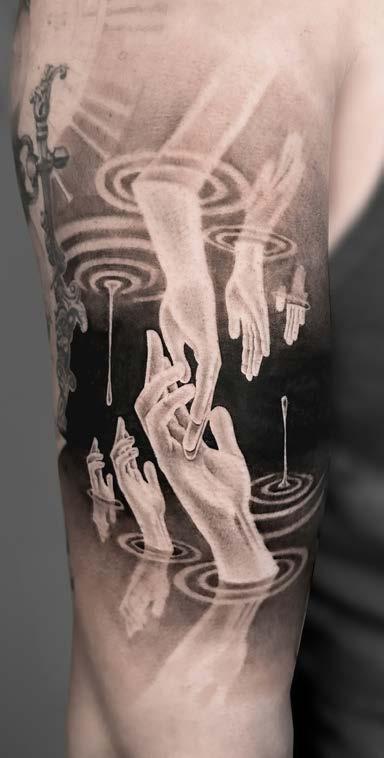
CREDIT: ANTHONY LOPEZ / @YOUNGLORD.ANT
CREDIT: ANTHONY LOPEZ / @YOUNGLORD.ANT
TRAVIS FOUNTAIN / @FOUNTAIN.NYC
“When used appropriately for small surface areas and limited time, the risks are very low. Problems arise with excessive use: large body surface areas, prolonged application, or occlusion,” he says, stressing, “Systemic lidocaine toxicity is real and potentially fatal. Used responsibly, they’re helpful. Used improperly, they’re dangerous.”
FORGET REGRET
Perhaps more painful than the tattoo itself is the decision to remove it, at least according to Carmen Vanderheiden Brodie, VP of clinical operations at Removery. Depending on the size, colors, and saturation, it will also require multiple sessions.
“The same spots that tend to sting more during tattooing usually feel more intense during laser removal,” she says. “It all comes down to skin thickness, nerve density, and how much soft tissue sits between the laser and your bones.”
The good news is that technology advancements have incorporated pain management into modern treatments.
“Devices like the Zimmer Cryo cool the skin continuously during the session, keeping the surface comfortable while picosecond pulses do deeper work on the ink,” says Brodie, who also recommends picosecond laser systems for “ultrafast pulses that tend to be gentler and more effective than older nanosecond devices.”
“Everyone I’ve tattooed perceives pain differently. A fun fact is that redheads, who are commonly very pale, actually have a higher pain tolerance (due to a mutation in the MC1R gene).”
- Miss Vampira
TIT FOR TAT
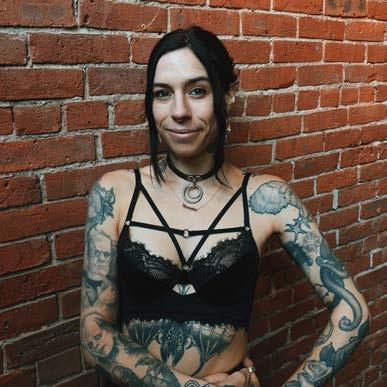
While tattoos have long been considered masochistic forms of self-expression, they’re also worn as badges of honor. Despite the temporary suffering, an appointment can actually be enjoyable with the right headspace and the right artist.
“The biggest factor in making that happen is creating a safe and comfortable environment for clients,” says Fountain, who implores anyone with hesitancy not to shy away from booking. “If it took above-average tolerance and bravery to get through it, there’d be a whole lot less tattoos out there.”
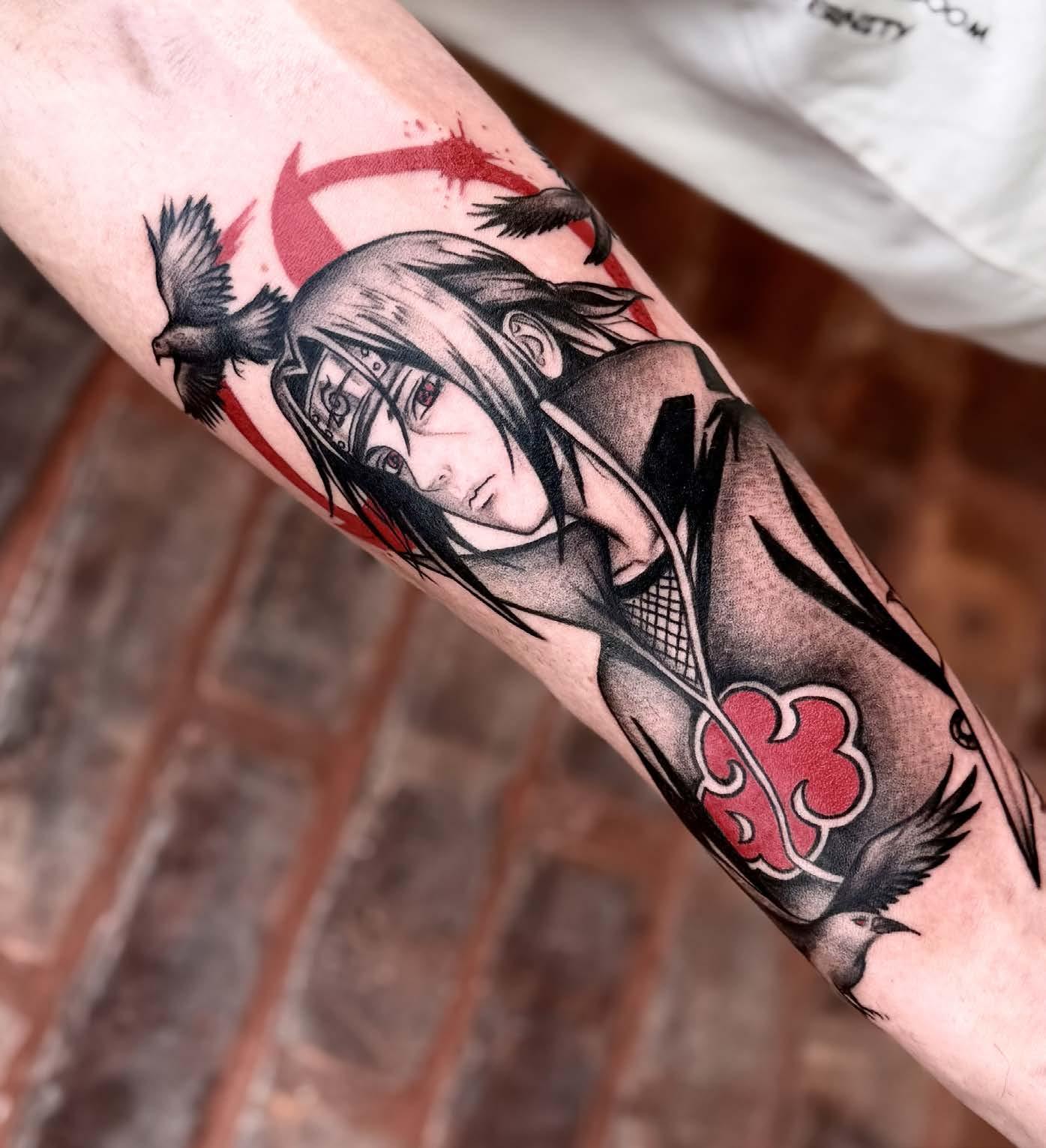
But if your first or next tat is making you feel particularly uneasy, channel your inner athlete and favorite motivational cliche. These just may provide the mental fortitude you need to get through the finish line, no matter the level of agony.
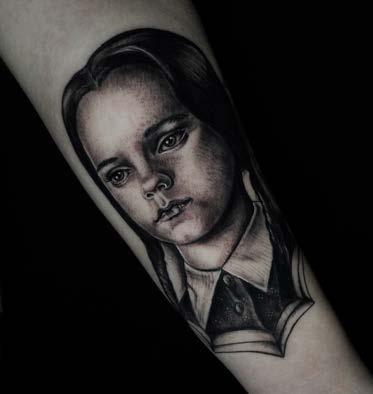
MISS VAMPIRA / @MISSVAMPIRA
MISS VAMPIRA / @MISSVAMPIRA
MISS VAMPIRA / @MISSVAMPIRA
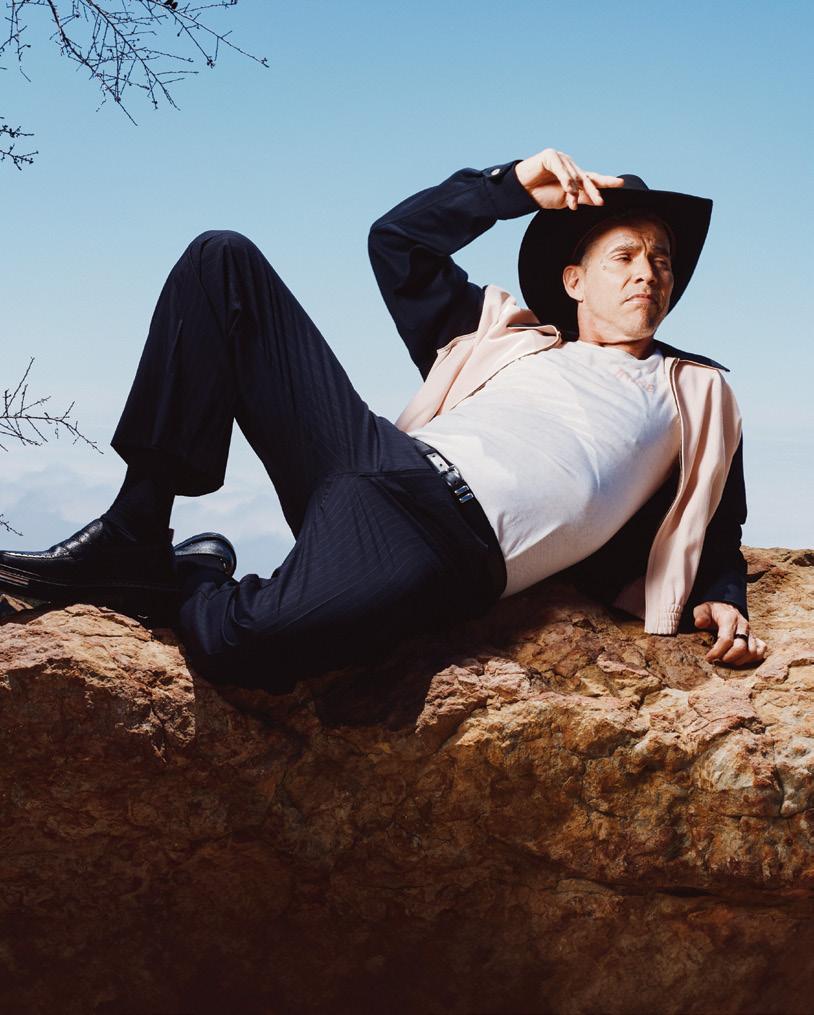
BY AMY HIGGINS
PHOTOGRAPHY: TRAVIS SHINN
STYLIST: TIFFANY BRISENO
ASSISTANT: KARLA GARCIA
Jacket: Vintage Lansky Bros. Tee: Vintage Saint Luis Pants: Second Layer Shoes: Thom Browne
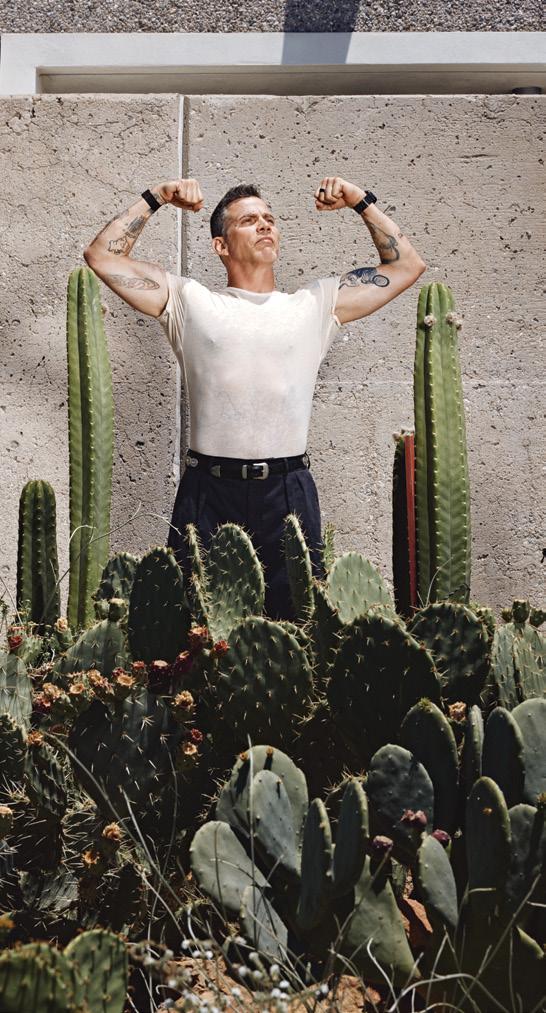
Tee: The Vintage Twin Pants: Loewe Belt: Saint Laurent
Tank: Rick Owens Shirt: Vintage Pants: Loewe
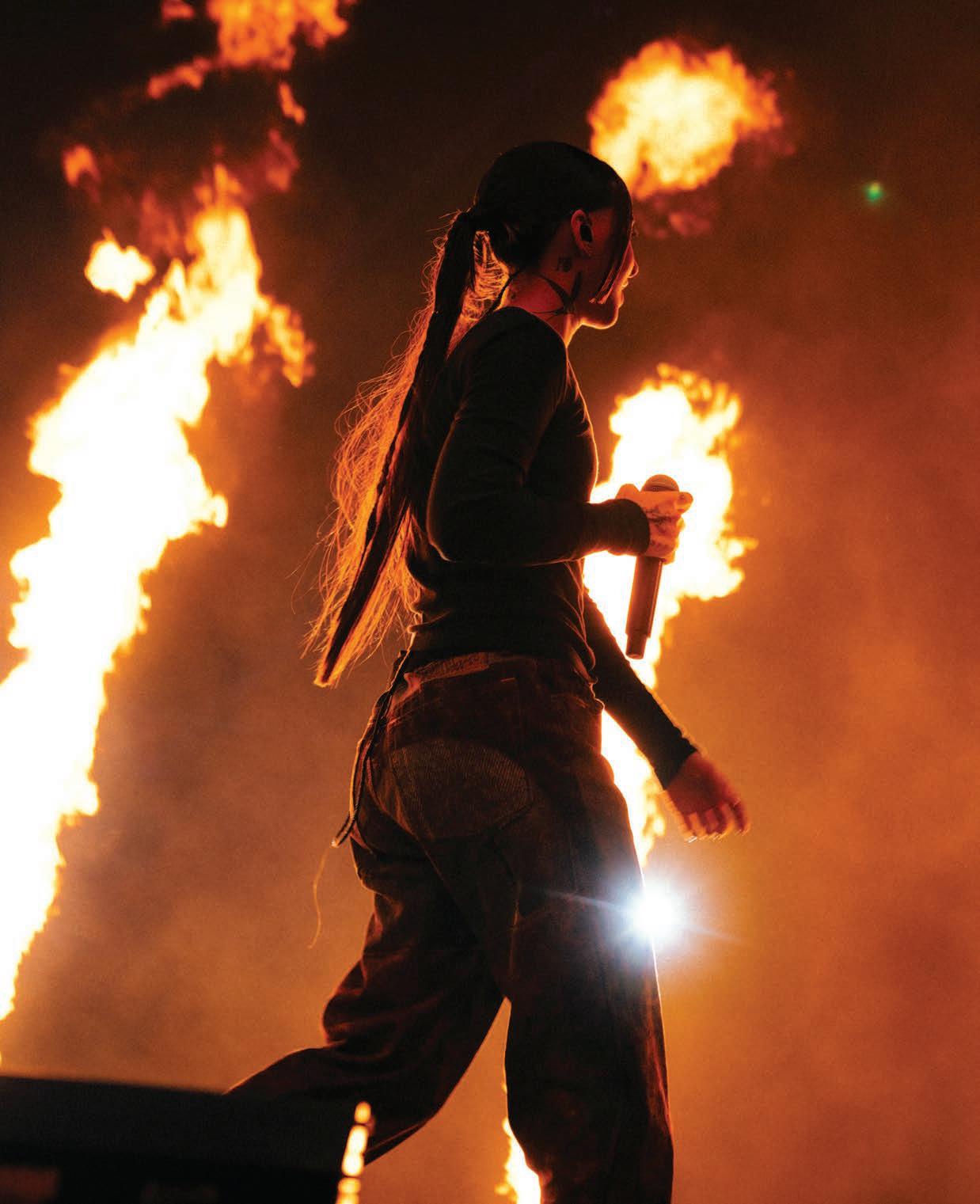
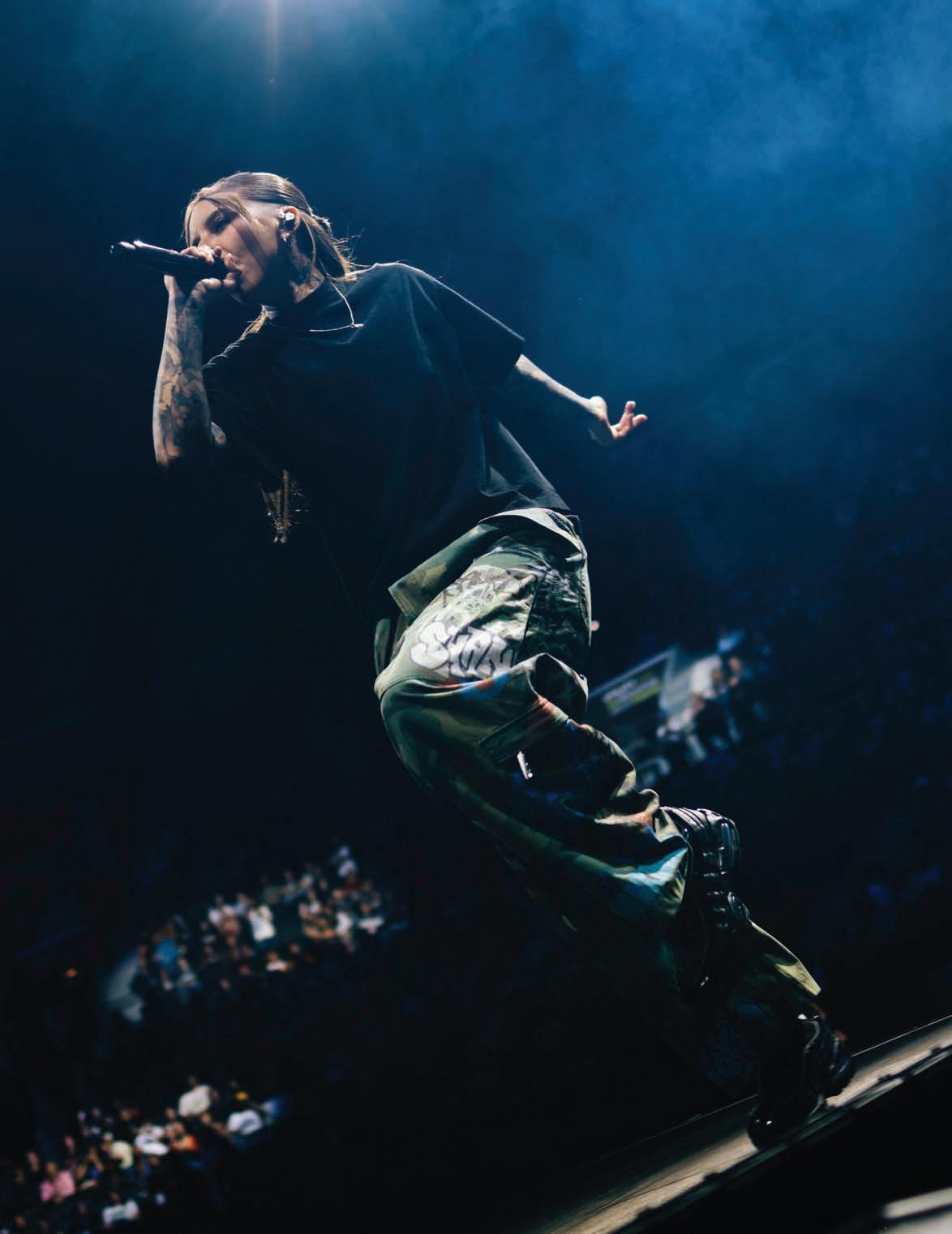
HOW YOUNG MIKO TURNED HER LOVE FOR ANIME INTO A CAREER OF MEMORABLE MUSIC AND INK.

BY MIGUEL COSTA
PHOTOGRAPHY BY JOSHUA RIVERA
Way back in the day, before Young Miko became a Latin trap star, many of her after-school hours at her childhood home in Añasco, Puerto Rico, were spent seated next to her big brother watching “Yu-Gi-Oh!,” “Pokémon,” and other shows on Cartoon Network. They were fond memories that sparked her imagination during preadolescence. She didn’t know it at the time, but the visuals behind the cel animation she was watching would go on to inspire her to pick up a pen and create worlds of her own as a tattoo artist and, subsequently, one of the 10 most-viewed reggaeton artists on YouTube in 2025.
Animation has been such a foundational part of Young Miko’s catalog that, to this day, whenever a eureka moment strikes, the 28-year-old will typically reach out to her music video director, Joshua Rivera, and relay different angles and visuals that they could apply to their future projects — which are looking highly favorable, considering the generational run that she’s been on lately.
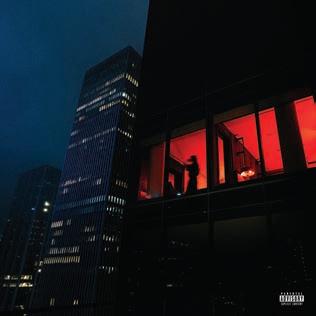
“DO
NOT DISTURB: LATE CHECKOUT”
Fresh off the release of “Do Not Disturb,” Young Miko dropped a deluxe version of her sophomore album called “Do Not Disturb: Late Checkout.” The award-winning musician reached deep into her bag of emotional vocal melodies and delivered a track list that further exemplifies her multifaceted approach to making genre-bending music steeped in her culture. She experimented with a signature Latin R&B sound by incorporating Miami Bass into tracks like “BnB” and “BIAF <3.” The standout track is a duet with her fellow countryman, Rauw Alejandro, called “Aquel diciembre.”
The past eight months alone have unfolded like a board-driven reel exciting enough to fill old programming blocks for the cartoons that once fueled her passion as a kid. After dropping her sophomore album “Do Not Disturb” and embarking on a tour with Billie Eilish in November, fans were graced with her tattooed profile throughout Super Bowl LX week. Two days after co-hosting GLAAD’s 5th Annual Night of Pride with the NFL, she appeared as a celebrity guest during Bad Bunny’s Super Bowl halftime show on the same day that her “Pokémon” commercial debuted.
Having touched new ground with her bold steps in the early part of 2026, Young Miko further established her tone as an innovator, while reminding her fans to expect the unexpected whenever she unveils a fresh project. Within the first 10 days of March, she dropped a song called “MVP” for the World Baseball Classic and starred in GAP’s spring campaign. Less than a month later, she kicked off the second quarter of 2026 by receiving the Unstoppable Artist award at the 2026 Billboard Latin Women in Music Gala.
The tattoos covering nearly half of her upper body are puzzle pieces that capture the highs and lows of the journey that has culminated in her life’s work. Her ink has become so synonymous with her profile as a rapper and singer that many of her fans show up to her concerts sporting temporary tattoos.
that would always have complete white on the front — and then I would draw custom anime characters on them and sell them.”
By the time these drawings reached her teammates in the locker room, it was clear that the young creator rocking jersey number 13 had a mind just as beautiful as her game on the field. Thus, they offered up some insightful career advice that would pay off years later.
“They were sweethearts. They would always ask me for drawings,” Young Miko said. “They would always tell me, ‘You should tattoo, you’re a good drawer.’ I think that life around me always pushed me toward the directions that I really had fun with.”
The same style of drawings that Young Miko shared behind the scenes with her teammates, before exiting professional soccer in 2019, would serve as a prelude to the fine-line and illustrative distinctions that made her name ring bells all over Puerto Rico’s West Coast as a tattooist for Silent Ink (@ink.silent), where she honed her skills under the mentorship of Nicole Irizarry.
“Nicole took me in, and she’s also one of my favorite tattoo artists in the world,” Young Miko shared. “Every single tattoo I have, it’s been by her. I usually just gave her an idea of what I wanted, and I’d just let her do whatever. And then my backpiece was collaborated (with Silent Ink artist Q’isom) as well.”
As an employee for the small tattoo shop
made from tattooing to record their music when they could, where they could.
“We were doing that literally anywhere,” Young Miko said. “We would sometimes be lucky enough to find a studio, but most times we would go to his apartment. He had a little setup in his room. We would take the mattress off the bed and create, like a little booth.”
They hustled together and turned the dire constraints of their situation into a launchpad for a widely successful catalog of music, from Urbano Latino songs like “Quiero” to Afrobeats tracks like “Meiomi,” as well as Latin R&B compositions like “What’s Ur Vibe?,” which played a significant part in the blueprint for her latest LP, “Do Not Disturb.” Now, the place of business that they share makes the sentiment all the more special during moments when Young Miko is pacing the 1K Dojo, a creative studio that she co-founded with Mariana.
“It’s such a full circle moment, because I was (Mauro’s) first artist and he was my first producer,” Young Miko said. “I was learning how to write and sing, and he was learning how to record and produce. So, we really did come up together. We built this studio together, and it’s such a rewarding thing, emotionally, to grab his hand and be like, ‘Yo, we have our own studio!’”
The Christmas lights that decorate the studio’s interior, along with the LED lights and vibey candles, are a far cry from the days when she and Mauro were cooped up in a makeshift
THE CHRONIC CREATOR
About a decade ago, before nearly half of her back was tattooed with a Japanese-traditional dragon, it was covered in a blue-and-red jersey for the national women’s soccer team of Puerto Rico. Young Miko’s responsibilities as the team’s right back and defensive midfielder came at a time when she and her peers weren’t always given access to top training facilities, unlike their male counterparts. The disparity was an obstacle that led many of the girls, including Young Miko, to travel over 100 miles just to reach the team’s practice field in Bayamón.
Those two-hour car rides from her school in Mayagüez provided her with mental breaks and daily time slots to develop her craft, with drawings largely based on anime characters, anime backgrounds, fantasy literature, and Japanese culture. Young Miko cleverly occupied her time retracing some of her fondest childhood memories with family.
“Honestly, since I can remember, anime’s been a crucial part of me,” Young Miko shared with Inked Magazine. “To this day, I use it a lot. I remember when I was very little — when I had my first drawing notebooks — I always wanted to draw anime characters. There was a point in middle school when I made my parents buy me these trucker hats — the ones
in Mayagüez, Young Miko learned valuable life lessons that helped transform her into a future hitmaker.
“When I started tattooing, I was always an introverted, shy person,” Young Miko said, noting that tattooing obligated her to be up close and personal with her clients and more social. “I would always strive to have every design be custom-made, like an original sketch. It’s very important to believe in your craft when you sell it to this person. All of that really helped me out in the (recording) studio. I really love what I do, and I give it my all. It goes into every (recording studio) session I have nowadays and is so sweet that it comes out from a drawing world.”
LEVELING UP
Riding shotgun since day one of Young Miko’s music journey are her manager, Mariana López Crespo, an ex-teammate on the Puerto Rico Women’s National Soccer Team, and her producer, Diego Amaury “Mauro” López Crespo, Mariana’s older brother. Collectively, this trio is known as “1K.” They’ve come a long way from the days when Young Miko and Mauro were an upstart pair of starving artists, in survival mode, relying somewhat on the money that Young Miko
studio cooking up the bangers that put them on the map years later. Nowadays, when Young Miko walks into the 1K Dojo for a writing camp, she does so as an entrepreneur with enough resources to host some of the most gifted songwriters in the industry — all at the same time. It’s a setting that gets the creative juices flowing right before she gets down to the business of overseeing the musicians who’ll take part in her projects.
Underneath all the ink that covers Young Miko’s neck, arms, fingers, and torso is the same girl who took her dreams from the practice field in Bayamón and ran all the way up the music charts. As she maneuvers her way through each success story, one of her greatest thrills, as of late, came when she surprised her big brother, who’s a huge “League of Legends” fan, with the news that her song, “Come Play,” would be featured in the final season of Netflix’s critically acclaimed adaptation, “Arcane.”
There are many reasons why the former tattoo artist has been so busy that she hasn’t picked up her tattoo machine in five years, despite multiple requests. In the meantime, her unofficial tattoo appointment list continues to grow by the day — just like her awards display.
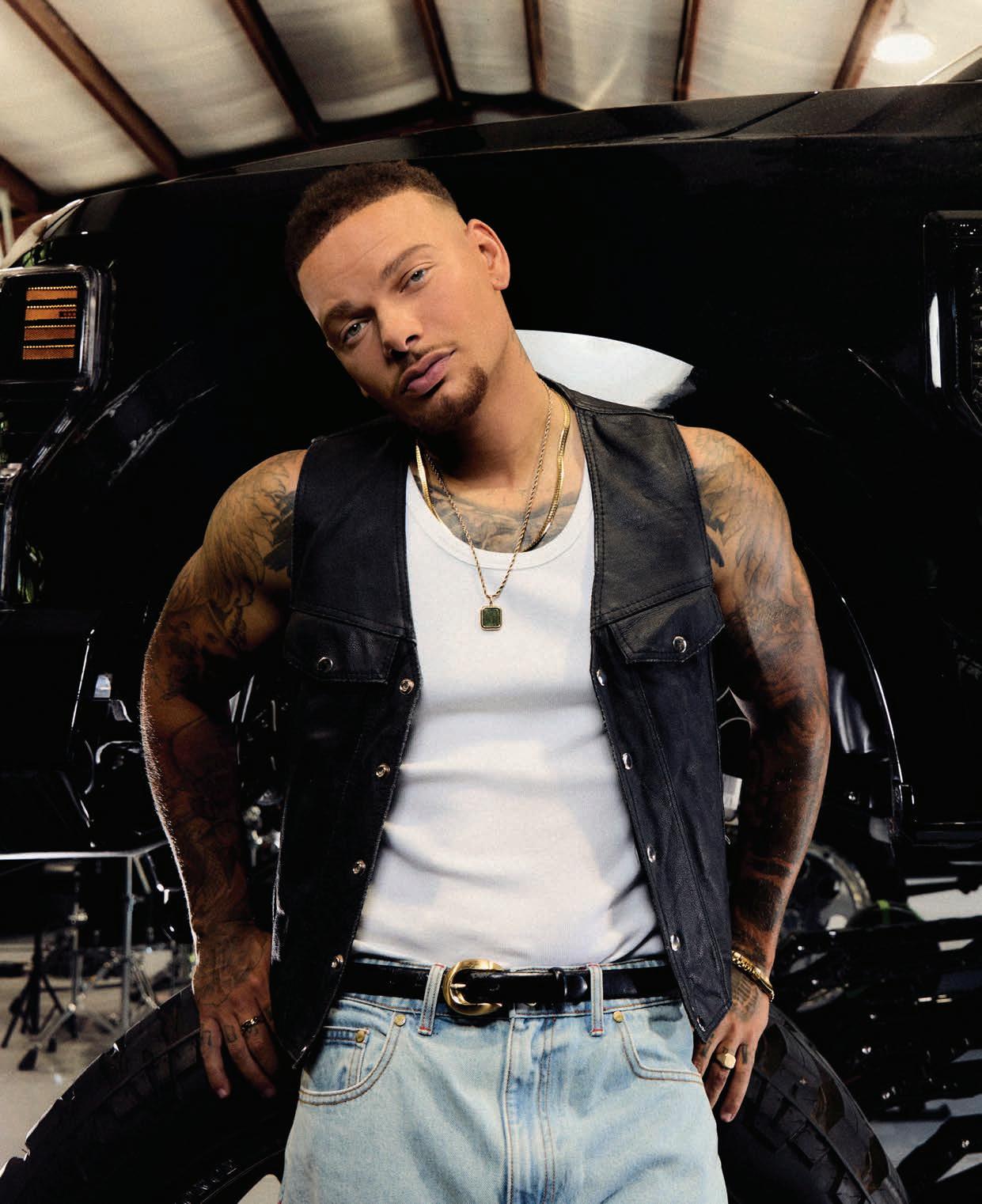
Leather Vest: Sobro Vintage Tank: Stag Provisions
Blue Jeans: Elwood Jewelry: David Yurman
BY AMY HIGGINS
PHOTOGRAPHY: RUSS HARRINGTON
STYLIST: COURTNEY GEREE
GROOMING / BARBER: CAMERON WARNACK
GLAM: CINDY RICH
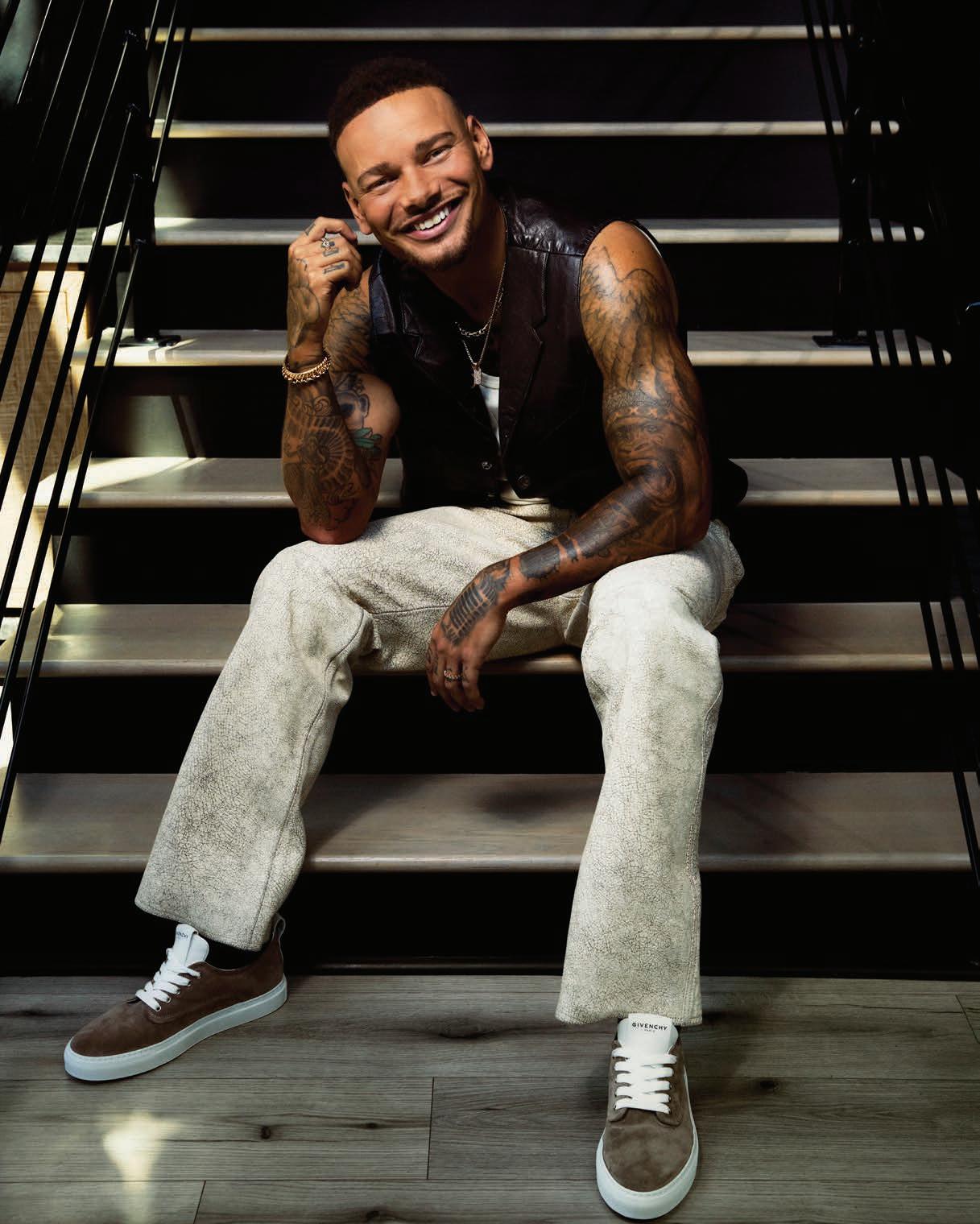
Vest: Every Direction Vintage
Cream Leather Pants: Guess
Sneakers: Givenchy
Jewelry: David Yurman
Laid-back, poised, and easy on the eyes, country musician Kane Brown carried with him his signature quiet confidence when he sat down with Inked correspondent Jordan Elizabeth at his sprawling 26-acre Tennessee home. Cozy in the confines of his twilight-tinted rehearsal space, bedecked with framed awards and mementos, they discussed Brown’s tattoo collection, how they influenced his stardom, and how he feels about his kids getting inked. And although tattoos have become synonymous with his image, it’s Brown’s voice, charisma, and character that created a celebrity.
It’s been nearly 10 years since Brown released his first full-length studio album, “Kane Brown,” which debuted at No. 1 on Billboard’s Top Country Albums chart. It was more than any 22-year-old artist could have dreamed, and yet his smooth, soulful, deep-toned vocals drew in a faithful fanbase that continues to grow.
Although artists like Keith Urban, Tim McGraw, and Brantley Gilbert helped make tattoos more mainstream in country music, Brown’s inked exterior still challenged the genre’s traditional expectations — until he sang his first note.
This was the case from the start, when he was sharing his music on Facebook, hoping to draw attention. As music fans explored new music, they were drawn to his likeness, and stunned with what they heard: country vocals, not the R&B or rap music they expected.
“I was doing covers, and my goal was just for people to be exposed to my singing. By the time I was 22, things had started really
moving along, and I had gone pretty viral,” Brown explained. “I released my first big breakout song, ‘Used to Love You Sober,’ right before my 22nd birthday, and it really put me on the map.”
In 2016, Brown signed with RCA Nashville, and the hits kept coming, like “Heaven,” “One Thing Right,” and “What Ifs,” which earned the RIAA-certified Diamond status. “It was a dream come true to have a No.1 song on country radio. It still is such an incredible feeling, and I’m so grateful every time I play it or hear it on the radio,” he said.
Through the years, Brown has collaborated with several high-caliber country artists, such as Brad Paisley, Lauren Alaina, and Chris Young, and crossed genres with artists like Khalid, blackbear, and Marshmello. He also teams up regularly with his wife, country music artist Katelyn Brown. “I think fans love it when their favorite artists work together,” he said. “Fans don’t care about genres. They just love great music.”
This success has led to more opportunities to expand his empire. Two years ago, Brown and his team were in the beginning stages of bringing a new bar to Nashville’s Lower Broadway, where the energy is electric and the music drifts throughout the bustling sidewalks. On May 22, 2026, the four-level venue opened its doors, with live music on the first floor, DJ music on the rooftop, and elevated stage views, bar access, and VIP lounging in the seam.
“I feel like we are able to bring a little different flavor than all of the other celebrity bars in Nashville,” Brown said. “It’s just a great environment and place to hang. I’m in there all the time. Just over the weekend, I jumped up on stage and sang a couple of songs.”
But it’s not all about gaining traction and living a lavish lifestyle for the 32 year old. Brown has supported the Boys & Girls Club for years, scheduling meet-and-greets, bringing the children to his shows, and forming partnerships for on-site work.
“We renovated my hometown club in Chattanooga, we built a playground in Louisville, and a basketball court in Cleveland,” Brown shared, adding, “The country music community as a whole really supports St. Jude Children’s Hospital. I’ve visited the hospital, and those kids are fighters. It’s incredibly inspiring.”
While his stage persona is energetic and engaging, Brown said he’s a low-key guy when he’s not performing. And there are a few things that might surprise fans. “I’m a pretty good gamer. At one point, I was ranked in the world, but life keeps me from gaming all the time, which is probably a good thing,” he shared. “I hate ranch (dressing). Ok, I went viral for talking about this recently, but people still find it pretty unbelievable.”
Though he’s still basking in the success of his latest hit “Woman,” Brown has been working on a new album, with some of the songs stepping outside of country music boundaries. “Some of the songs definitely have a retro R&B feel. It’s fun to be able to tap into that side of my music,” he said.
Although the “Thank God” crooner’s ink helped shape his career, some Brown fans might be stunned by his relationship with his tattoos today.
Clearly, you’re not a virgin when it comes to tattoos, so let’s go back to your very first tattoo. What was it?
The very first tattoo was John 3:16 on my chest. (Taps on left side.) It was one of my favorite Bible verses. And it was my first tattoo, so I was like, it’s very innocent. And yeah, it was just right. I was like, that’s what I could put on my body that means something. So that was my first one.
Obviously, you have a lot of tattoos. Are there any that have more meaning than others?
I would say my family’s names. I still haven’t got my son’s. I don’t know. I feel like once you have a lot of tattoos, you get to the point where you hate getting tattoos. You love them, but you can’t stand getting them. That’s me.
Are there any tattoos that you have that are more significant in the sense of like, you accomplished something in your career, and you’re like, “OK, I want this tattooed on my body so I always remember that?”
Yes, we just got them started in Europe. I have two Diamond singles, so I got a diamond right here. (Points to right hand.) So now I’ve got tally marks because I have two, so I’m just going to keep going, hopefully, as my songs go Diamond.
When you’re 80 years old, do you think you’re going to have any tattoos that you regret on your body?
I hope not. All of my tattoos mean something to me and without them I don’t know if I’d be where I’m at in my career, just because I feel like it kind of gave me that rapper vibe, and that’s what a lot of people thought. Because I went viral on social media from my music, and a lot of people said they clicked the video because they thought I was going to rap. And then I started singing country, and so it was just a shocker. It was a shock factor.
Do you feel like tattoos kind of changed the outlook that people had as far as your career? Did you feel like they made you more confident? Did they set you apart?
Definitely. I feel like they set me apart. I mean, because I had my tattoos in high school. So, I had the wings (upper right arm), I had this (points to guitar tattoo on right forearm), I had “Love” on my neck, so when people saw me in high school, they’re like, “Is this kid 30?” (Laughs.)
I think sometimes if you get them, you have to keep getting them.
Yeah, I think it’s addicting. Like, once you get your first one, you’ve already knocked out the scared factor.
Do your kids like your tattoos? Are there any tattoos that they’re fans of?
I think because they just have seen me their whole life, that they’re just used to it. My oldest is about to be 7. She just started talking about them. She’s like, “I love your tattoos, Dad. I can’t wait to get some.” And I’m like, “You’re not getting any.”
Speaking of, do you want your children to get tattoos?
No, I won’t let my kids have tattoos, at least until they’re out of the house, and then I can’t really say nothing. I don’t know, I mean, I want to be the cool parent, but I also don’t want to because I know how I feel about mine. Like, I didn’t think about mine. I just started thinking about it, and then I was like, “Whatever, just put it on my body.” And then 10 years later, I’m like, “Meh.”
If they did get a tattoo, are there any particular tattoos you don’t want them to get?
Now that I’ve seen other people do it, I would like to do the small sleeves where you start out with small things that are meaningful and you could piece them together. I clearly went for everything just to cover that one section of my arm. I was like, “I just want to be sleeved up, so draw the biggest thing possible.”
And you have your hand tattoos, too. Well, I did that so I couldn’t get a normal day job. I don’t know if that’s still a thing, but I was like, “I’m not going sit here and work in a normal day job, so I’m going try to do this.” So, I forced myself to be somebody.
That’s actually pretty powerful because I think you’re correct. There used to be a stigma that if you had tattoos, you would never be able to get a career.
Yeah, you couldn’t be a lawyer or…I mean, I went to the Army, and they told me that I’d have to remove them back then.
Where is the weirdest spot that you’ve ever gone to get a tattoo?
So, I’ve only had two tattoo artists (Bubba Irwin, @bubbaitattoos, and Alessandro Melas, @alessandromelas) my whole time. I guess the weirdest spot would be, probably a hotel room, which is where, in Europe, I got my diamond tattoo.
You said that you’re covering up your chest tattoo a little bit more, but are there any in the future that you’re wanting to get besides your son’s tattoo?
Nope. Every one of them basically is halfway done because I couldn’t make it through all of them. I was like, “You know what? That looks good. I’m gonna go.”
Do you have any matching tattoos with anyone besides your mom?
Yeah, we (band members and crew) got a wolf, so we’re like, part of the wolfpack, like “The Hangover.”
Do you have anywhere on your body that was the worst place to get tattoos, as far as pain tolerance?
(My) most painful tattoo, most insecure tattoo is my cover-up. I had it done and gone over so many times that it’s just straight scar tissue. Even the last one, I didn’t tell my wife, but they put me to sleep for it, and they still couldn’t get it done because I was twitching in my sleep. So, I woke up and I was like, “Is it done?” because it’s like my biggest thing. They’re like, “Dude, we couldn’t. We couldn’t do it. We had to wake you up.”
Do you think that’s why you’re like, “I’m done with tattoos?”
Yeah, I think that’s part of it.
Well, I don’t blame you. But you know what? From here, it looks good. You can at least tell kind of what it is now.
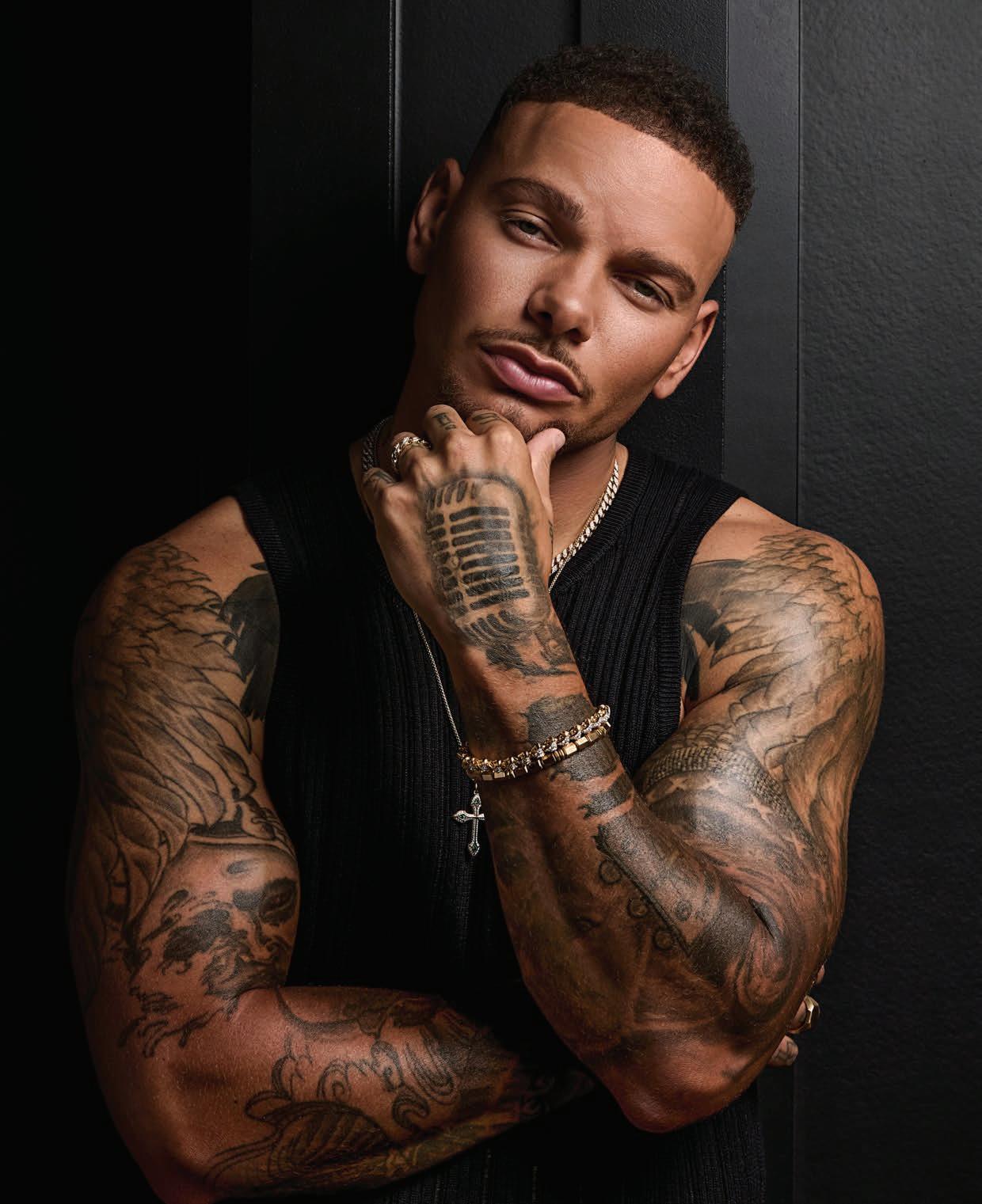
Black Tank: Tom Ford Black Pinstripe Trousers: Kody Phillips Jewelry: David Yurman
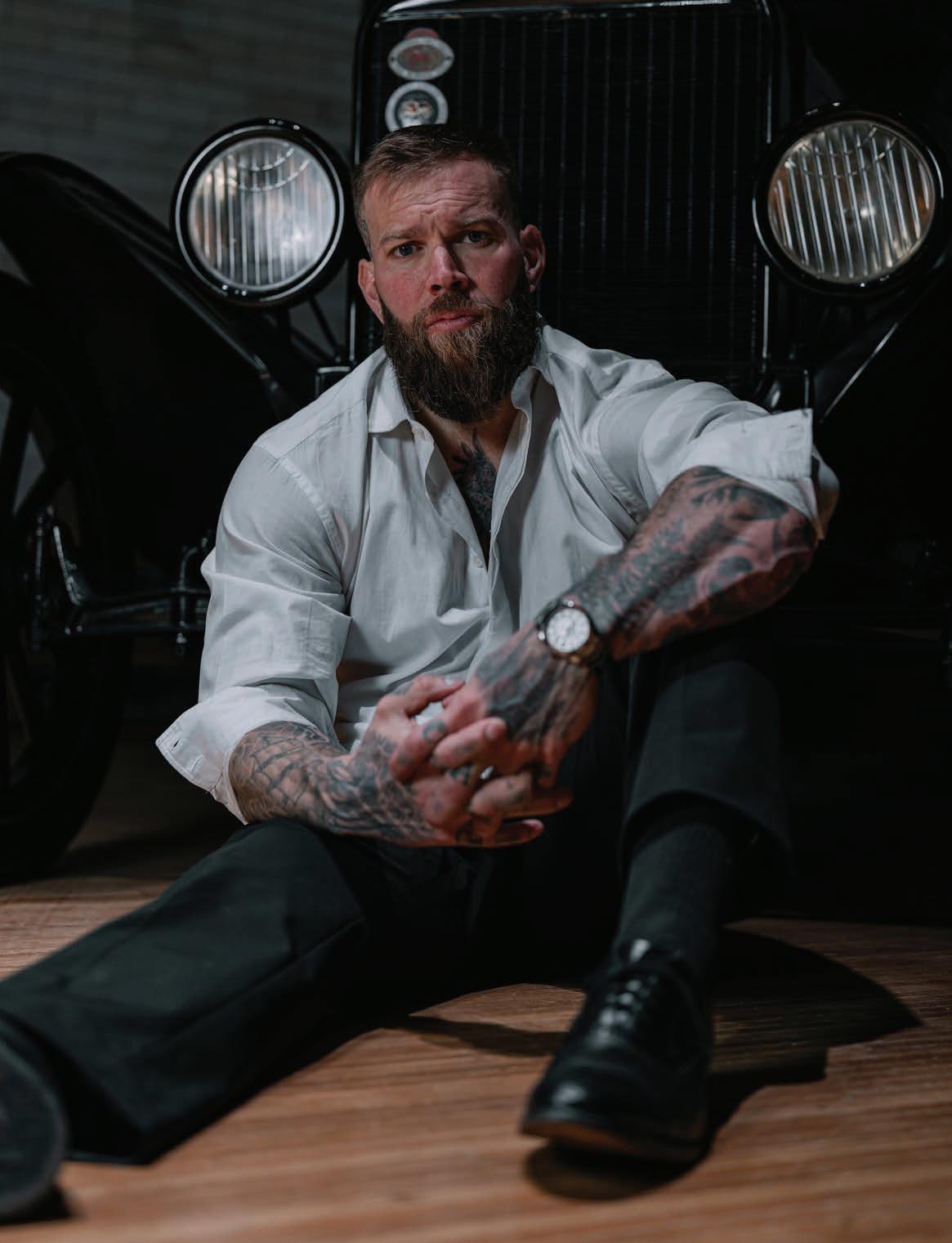
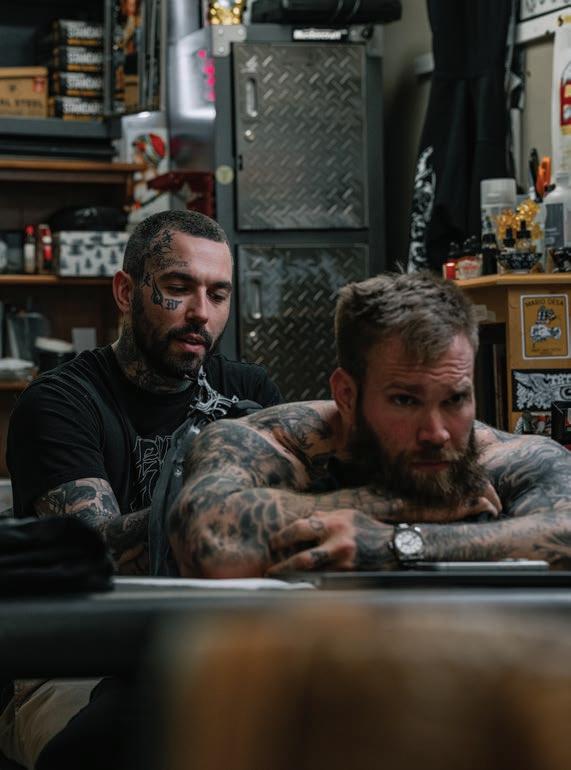
ordan Shallow’s tattoos tell a different kind of story. The skull on the inside of his forearm is by Benjamin Laukis. He flew to Greece to get it. The one on his chest, his guy Hector Salas completed it in one 15-hour session, two people driven by the delicious mania of going all-in.
Most of the work that covers Shallow’s muscular terrain doesn’t come from a hazy memory or an alcohol-induced whim. He is a collector. It’s all about the artist’s reputation and skill, less about the image.
Tattoo artists, Shallow says, are as talented and intense as anyone using paint and a brush. “(Skin) is probably the most difficult piece of canvas you could ever have to work with,” he says. “What people are able to do now is just so impressive.”
While he is in a session, Shallow’s only objective is to get something great. “The best art you’re going to get is the art that the artist wants to do,” he says. When the artist chooses, the experience reaches another level of authenticity. “In order to be successful in my field, you have to give everything to the people you work with, and I think tattooing is in some ways similar. You don’t want a tattoo artist (who) doesn’t bleed it.”
A story without passion is a story not worth telling — or living.
THE CHOSEN ONES
Shallow is a chiropractor by trade but is widely known as a sports performance coach,
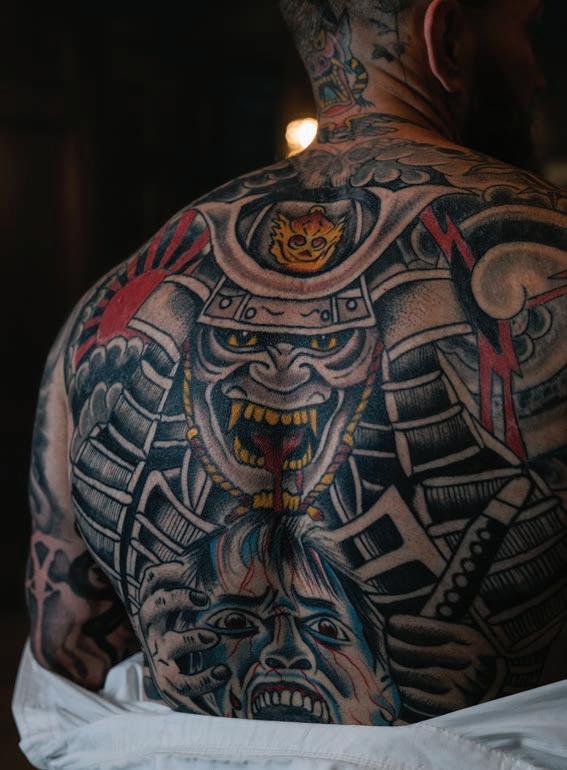
an entrepreneur, and a budding social media star, with 162,000 Instagram followers and counting. These are not inflated titles to make him sound impressive at the cocktail lounge. Shallow’s clients include teams from the major professional sports leagues and athletes or their handlers who summon him when they need answers right now, like a few months ago, when he was dispatched to a tennis tournament in Bogota, Colombia, to assist a client.
his original flash sheets. “The fact that all his pictures were black and white opened up my eyes to American electric tattooing, and just how far tattooing has come,” Shallow recalls. Everything changed. Tattoos were not just cool things you gather. Thanks to Masse, Shallow learned they had history, culture, nuance, subtlety, craftsmanship. Shallow is not an artist, but the passion and care displayed by great tattoo artists is similar to how he works.
Downtime is at a premium for Shallow, and tattooing lets him sit down and savor a human connection in an algorithm-driven world. “One of the nice parts about tattoos is the pain kind of forces you to be really present,” he says. Shallow got deep with his approach to tattoos about six years ago. He was at the shop of Brett Masse, one of his favorite tattoo artists, to get a Bob Shaw fighting tiger on his right leg, when the Windsor, Ontario-based artist showed Shallow a picture of Shaw and one of
And, so, the highs of collecting began. Due to his professional success and nomadic schedule, Shallow, who is based in Toronto, can book a session if he’s traveling for business. Or he can fly to Europe or Asia to get another piece if the feeling moves him. The journey never stops.
Yes, his skin is missing some of the greats, like Freddy Corbin and Horiyoshi III, but elite tattooists are “stewards of the culture,” Shallow says, and are happy to offer a neverending string of recommendations.
SESSION WITH BRETT MASSE / @BRETTMASSETATTOO
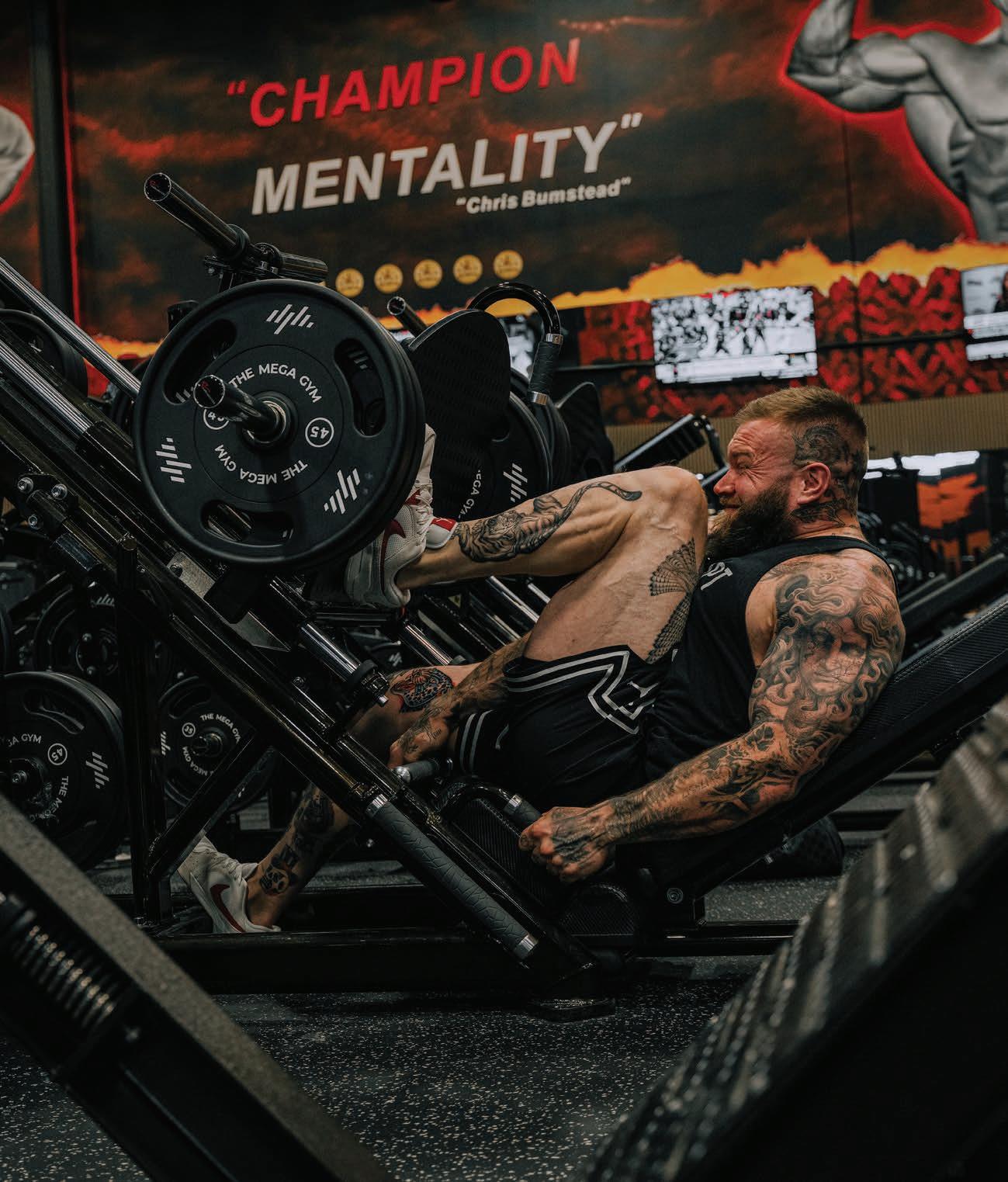
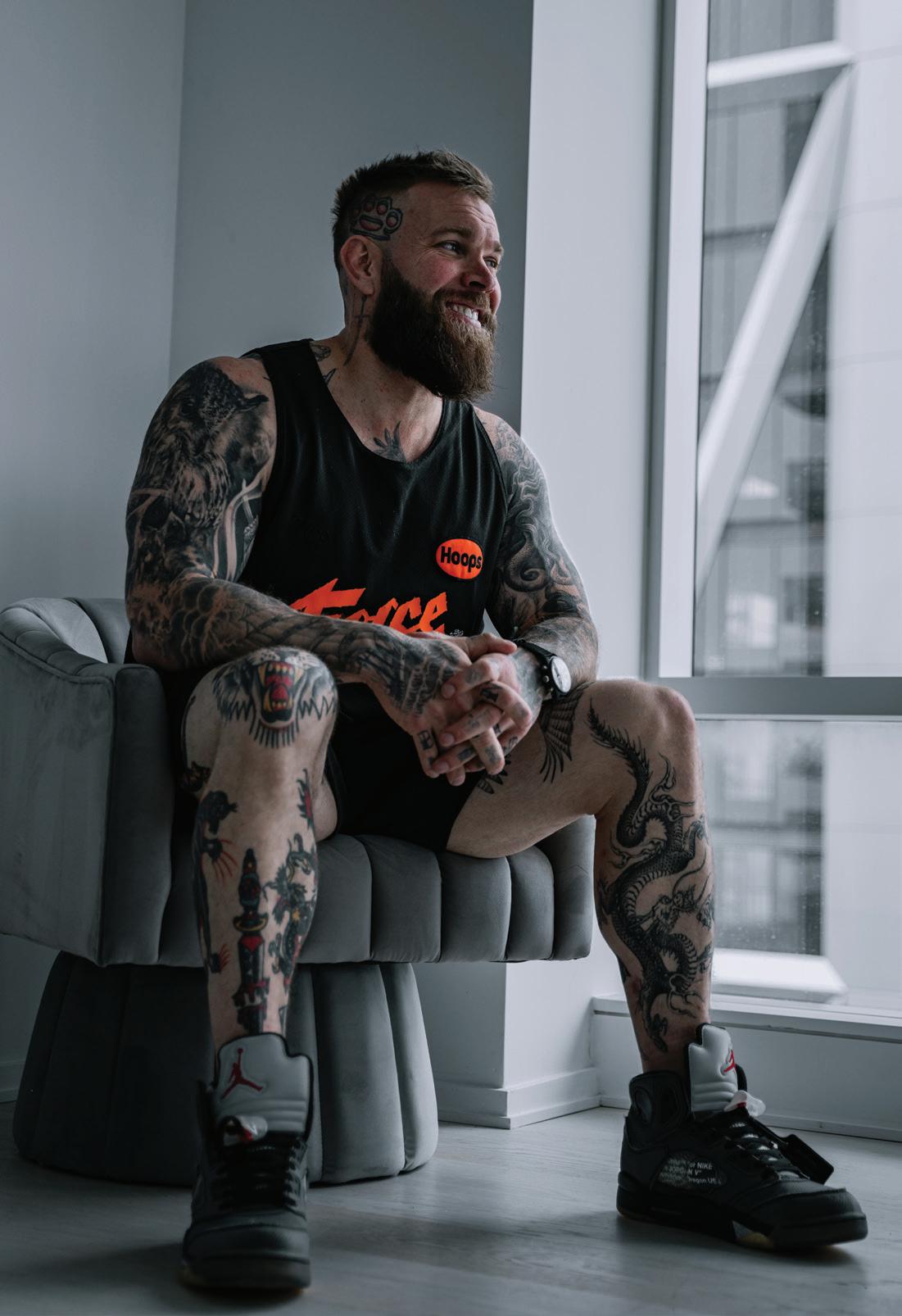
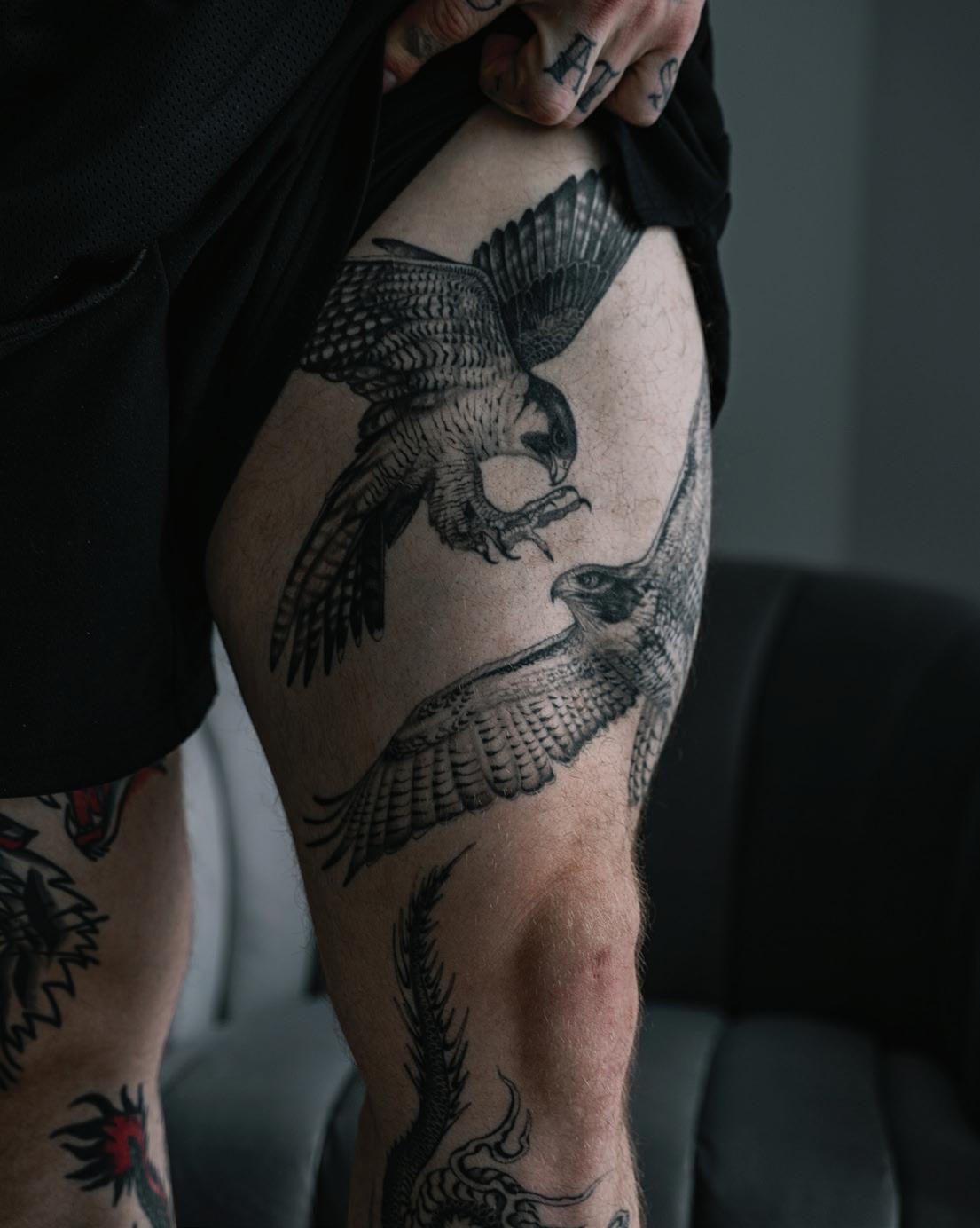
Their artwork provides a kind of VIP pass to the masters, allowing Shallow to erect an “interconnected story of all these people that know each other all over the world” who “get to put their stamp on you,” he says. Plus, he has a “wicked collection” that captures the attention of strangers and ink aficionados.
UNFINISHED BUSINESS
“There’s this sterilization of art through digital media,” Shallow says. “There’s nothing crazier than watching a guy load up a single needle into a coil (machine) and plug it in that thing.”
Especially if it’s your first skull rattler, which can be a stirring reminder of humanity, or as Shallow puts it: “When you got some guy who’s got you in a full nelson, trying to pin you down, just jamming the yellow into the back of your skull, you’re like, ‘Yep, you are very much where your feet are.’ Everything’s distant, everything’s computerized. But, no, that needle is in your head, dude.”
It is also a chance to change the prevailing narrative around tattoos. Social media, Shallow believes, takes the emphasis away from storytelling and affixes it to individual pieces. Most clients, he believes, do not care about the history of tattoos and designs.
He fears what that could portend. “I’d hate for the history of tattooing to one day just be a Pinterest board or an IG page,” he says. “It’s the floor-to-ceiling flash sheets in iconic street shops, or endless stories from seasoned artists that tell that story.”
The best art you’re going to get is the art that the artist wants to do. You don’t want a tattoo artist (who) doesn’t bleed it.
Shallow believes in keeping the tradition around tattoos and artists alive, but more members are needed in this particular choir. “I have all these people that I want to get pieces by or from, and I only have so much skin and so much time,” he says.
Some places are off limits. For now. His mother, Louise, has “asked very nicely and persuasively” that he not tattoo his neck while she is alive. “We’re really riding out the clock on that one,” Shallow quips.
When his tattoo story ends, it will be on his terms.
“I’m going to put one on my face, because I won’t have to ever answer to anyone again in my entire life, which will be a nice feature,” Shallow says. He wants to sell one of his companies, “and then ride off into the sunset.”
He knows what the last tattoo will be: “The word ‘replaceable’ in cursive writing somewhere on my hairline — if I still have it. I went through a pretty nasty buyout of one of my business partners who called me ‘replaceable.’ I’m just going to get one reminder so it’s always top of mind. I like the metaphor of the location.”
It’s not his neck, but wouldn’t his mom object?
“The thing is, I’m much like my mom,” Shallow says. “I’m like, ‘Look, I’m stubborn and hard-headed, and I get that from you. So, like, it’s kind of your fault that I’m this way.”’
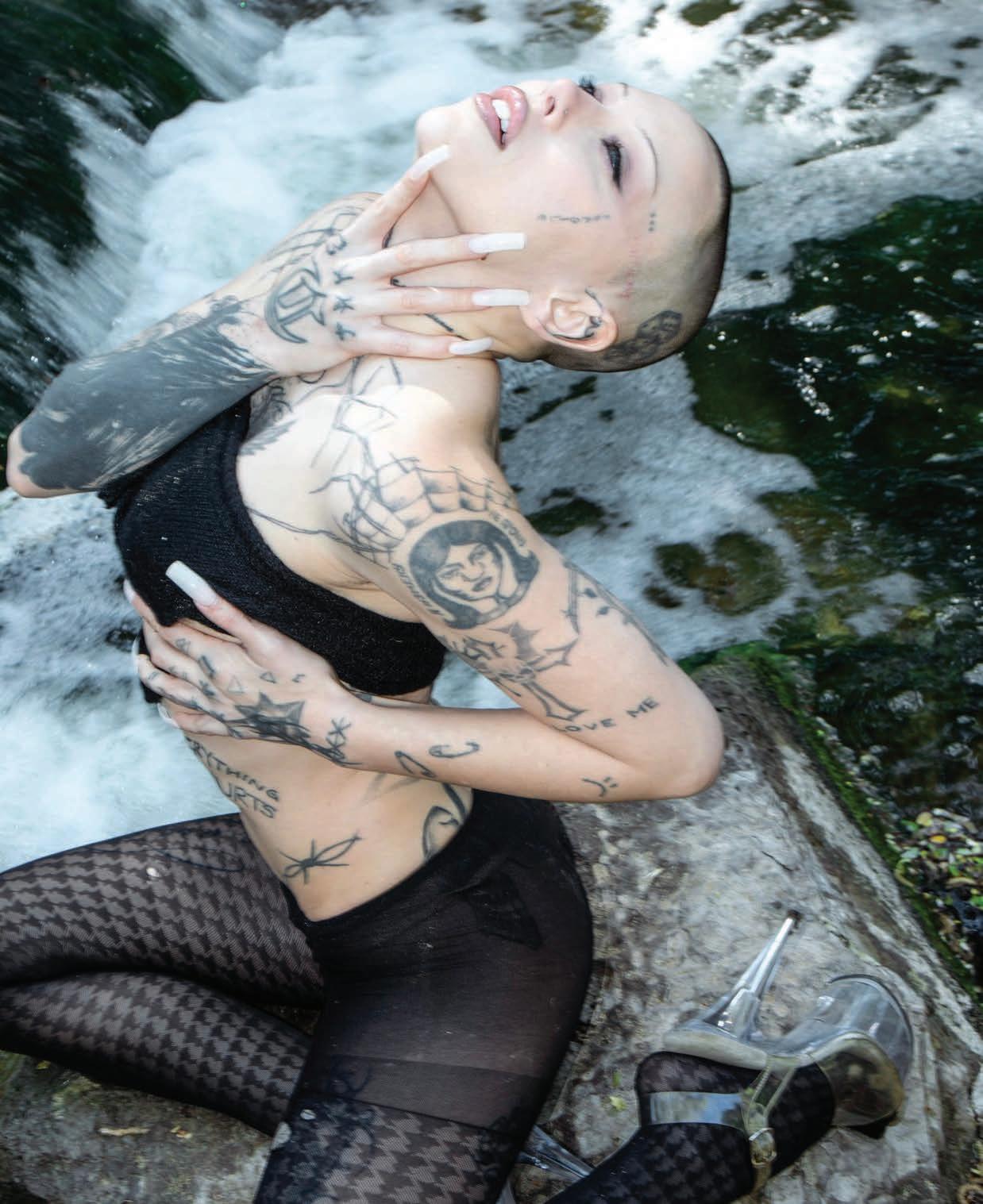
Supreme
BY AMY YOUNG
On singer Siiickbrain’s single “Palo Santo” from her upcoming full-length “Houndstooth” album, she kicks off the track with the exclamation, “I always get what I want. I get everything I want.” It becomes an anthemic cheer as it continues, and she layers the vocal atop its noisy backdrop. Delivered with hearty conviction, a little sonic distortion, and a grinding, frenetic beat, there’s no reason to doubt her words. The ferocity is cranked up and keeps you in a tight grip ‘til its end.
The song’s video is an opportunity to see the artist in action as she slinks through the shots, exemplifying the unique style that has made her a style icon — a dynamic buzz cut, dramatic makeup, and a slew of ink across her body, eyelids included. It all connects the “getting everything I want” to doing things one’s own way.
Her ink journey began when she was still living at her family home — a horseshoe on the back of her neck because she lived on a farm and “still had hair and could cover it up.” At one point, she had a lot of color on one of her arms, and she covered it all black. “How come? It didn’t go with my outfits,” she said, laughing. Funny, for sure, but she means it, too. Some color combinations between outfits and tattoos just didn’t work. “Now,” she said, “it looks good.”
MAKEUP, MUSIC, AND MAYHEM
Siiickbrain, born Caroline Miner Smith, grew up in North Carolina, and she said that while music really started for her around the time of the COVID pandemic, it’s always been a part of her life. “I always imagined
it. I could see myself performing on a stage, but it seemed sort of far-fetched, so I moved from career to career.”
When she first left home, she went to New York to study makeup artistry. She worked as a makeup artist for a bit before moving to Los Angeles, where makeup became something she still has an affinity for, just not on a professional level. She said she thought about opening a cosmetics company and also “fell into modeling.”
“I still to this day love doing makeup on everyone else. I do it on my friends all the time. But music is where my heart is. I do love everything else, but music is like my number one,” Siiickbrain said.
Pressing the ‘go’ button to create music and begin that evolution of her life was a cathartic undertaking for Siiickbrain. “It really started for me in 2020,” she explained. “I finally let go of the fear and anxiety surrounding it because I realized that life is so short. It kind of hit me like a brick wall when I had my best friend pass away. That pushed me to be ready to experience what it could be like to be an artist.”
She didn’t overthink it; she just put her passion into action, which gave her a pressure-free sense of creative expression. And she’s been influenced by a lot of things. “I love Imogen Heap; I think she’s amazing. Thom Yorke from Radiohead is one of my favorites,” Siiickbrain said, adding, “When I first started, I was really heavily influenced by bands like the Deftones and rockleaning music. Lately, weird electronic and experimental music. I love that experimental music is having a moment. I feel like that gives me a space to feel even more free in creating.
“Honestly, when I first started doing music, I was kind of just doing it more as a fulfilling purpose for me because, in my heart, I knew that I wanted to be an artist in some capacity, but I didn’t really try to make it my job or my career,” she explained. “I was just kind of doing it for me. And I think that that’s why it did well when I started, because I was genuinely just being real and creating things just for me, not thinking about what would do well. That was a blessing.”
Her efforts resulted in a mix of industrial, alternative, and experimental rock, dark pop, and trap metal. It spawned collaborations with performers like Maggie Lindemann, Skrillex, and Hawthorne Heights — all that time she spent exploring helped.
“At first, the sound leaned more toward metal because I knew that I could scream; I was always screaming along to songs. I thought, ‘Oh, I could automatically do that.’ I didn’t need training, though I ended up getting some after,” Siiickbrain said. “I knew I could scream; I knew I could write. I had been writing poetry my whole life. I knew that I could, and I knew I was like, meant to. I just wasn’t sure in what capacity.”
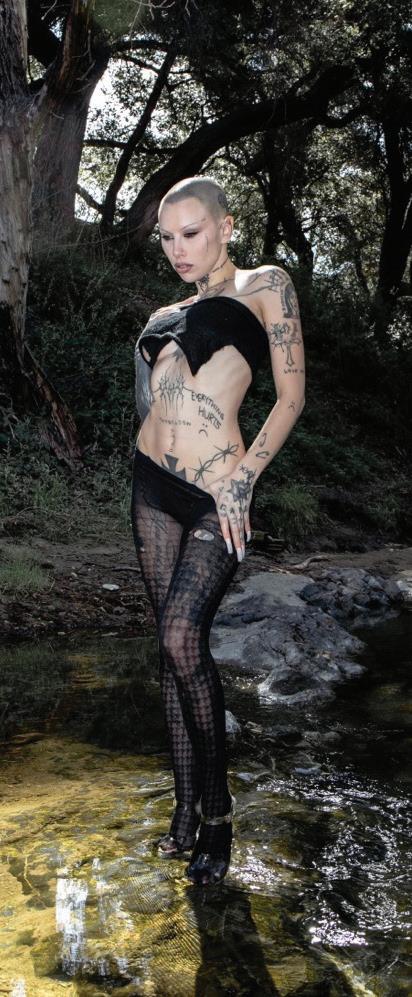
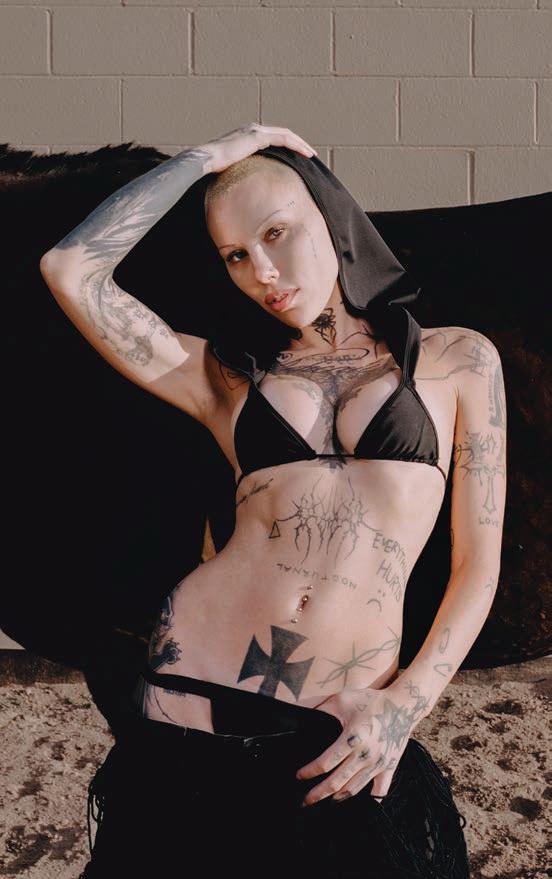
Siiickbrain reflected on a lifetime of writing words and poetry to get through anxiety and challenging times. Now, she wants her words and music to give strength to others.
“‘Houndstooth’ is a very fun project. Even though a lot of the lyrics are reflective of things that I’ve been through, it’s in an empowering way. And it’s not a sad album,” she said. “I don’t want to make a sad album right now, especially in the state of the world. We don’t need to be feeding into any sadness right now. Right now, I’m only listening to happy music.”
And her name? “It basically was my Instagram handle. Before I was making music, that is,” she revealed. “I kind of had mental health stuff, so I was like ‘my brain is sick,’ but also I’m creative and think of cool things. I was like ‘sick,’ yeah, it’s like a double entendre.”
In addition to preparing for the record release and parallel live show, Siiickbrain said she’s always creating and is just overall content.
“I love what I’m doing now and where I’m at. I think to feel complete in what I’m doing, it’s just a matter of expansion. I’m not seeking out fame. I’m just looking for the opportunity to influence people,” she said. “I want to make a difference in how people feel. I want them to hear my work and be inspired.”
CREDIT: THE GLASS CAMERA
CREDIT: VIXXION
CREDIT: VIXXION
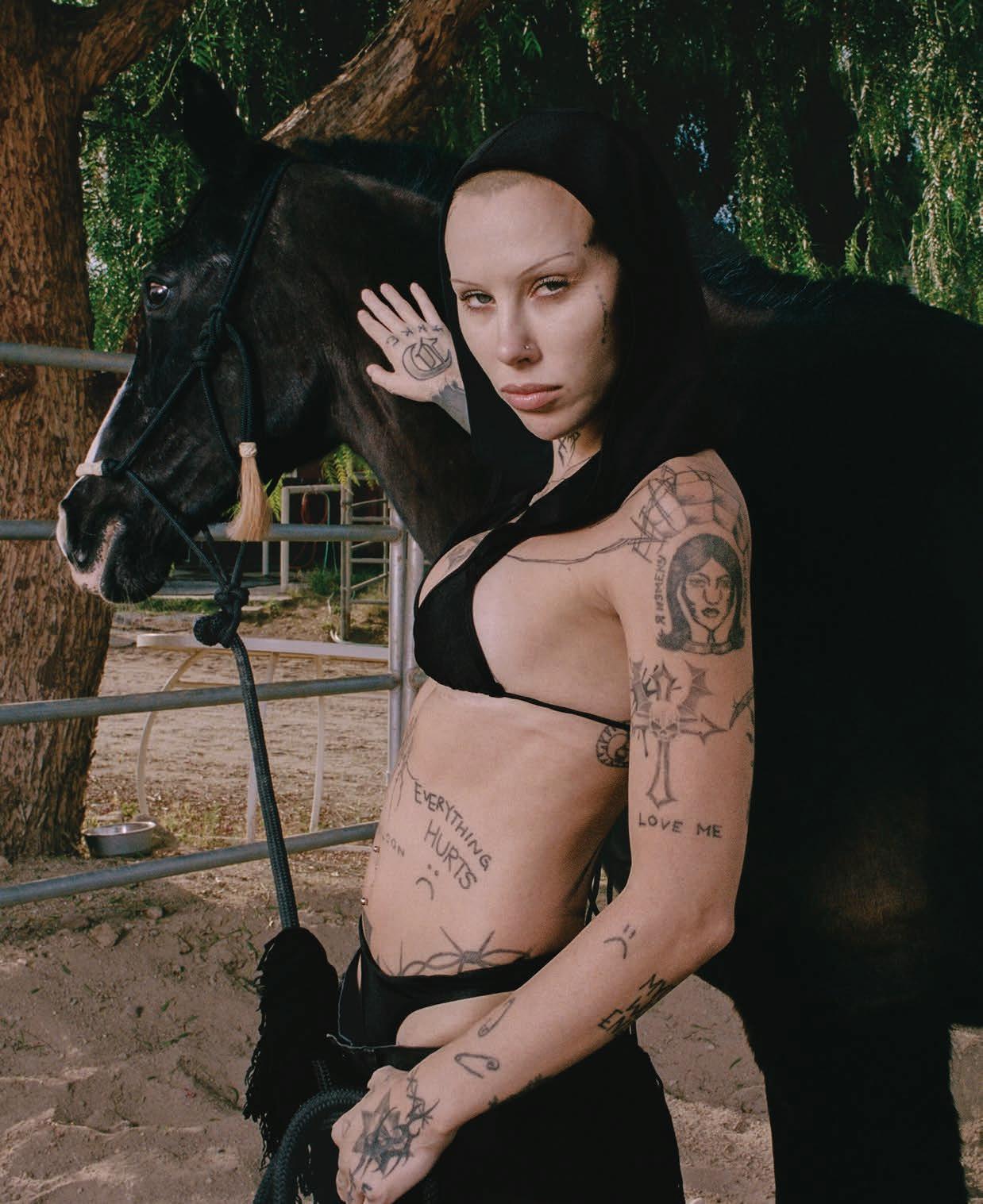
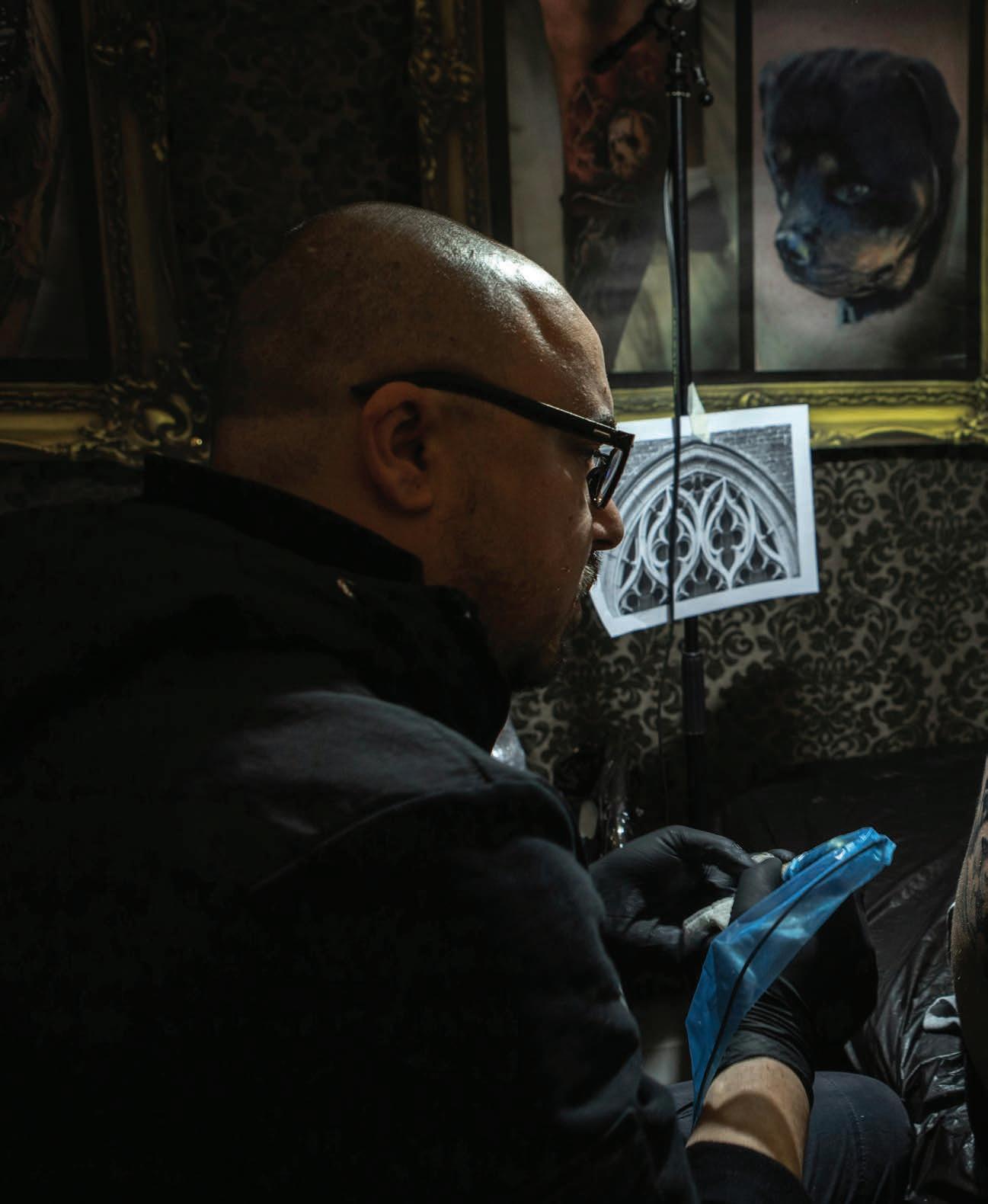
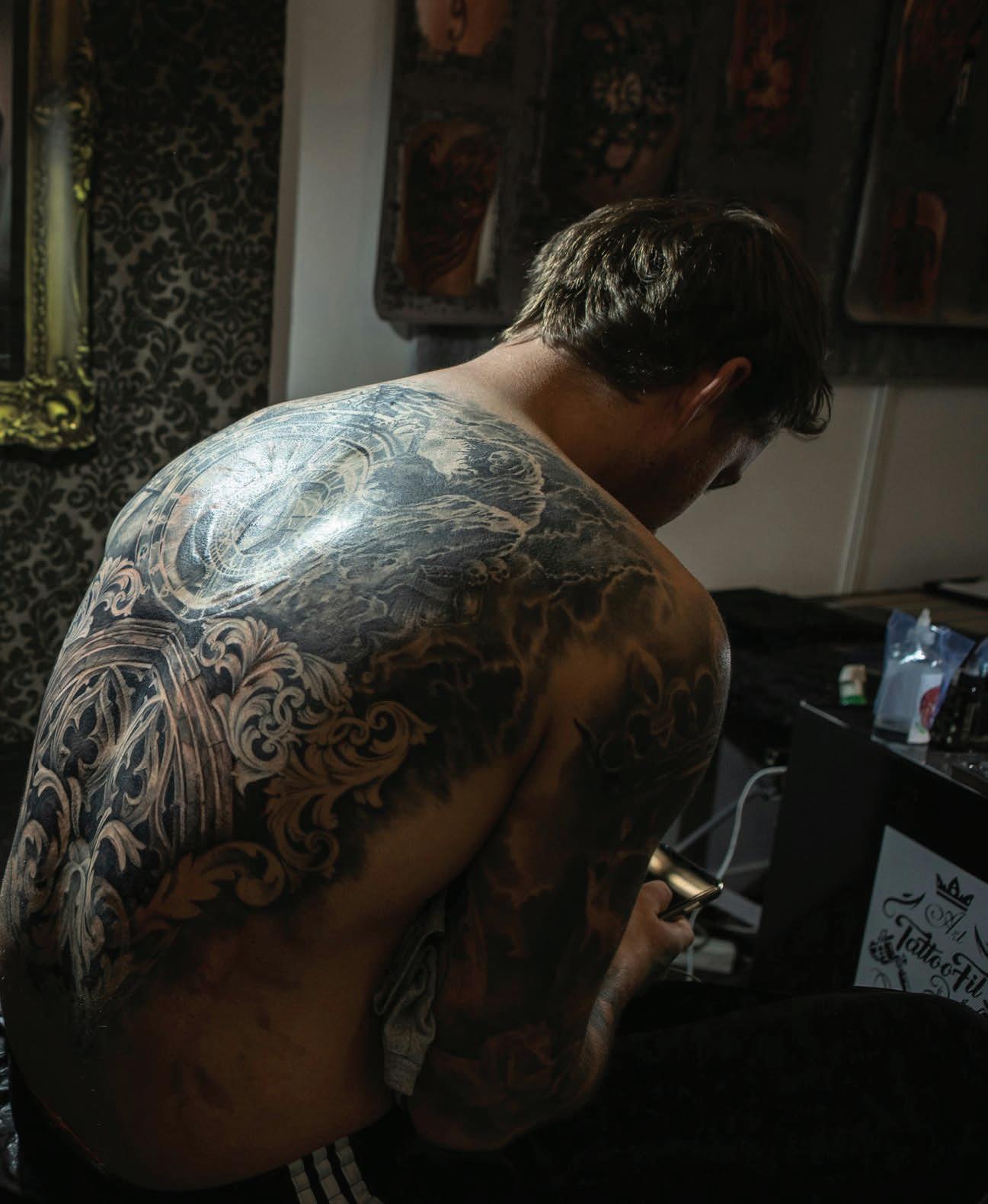
For years, tattoo schools have been positioned as a threat to an industry built on apprenticeship, criticized by established artists and dismissed as shortcuts. Yet despite the volume of opinion, there has been comparatively little engagement from the schools themselves. A dialogue fails to emerge when one side of a debate remains largely silent. Instead of creating a sense of change, it creates a vacuum that is often filled with negativity. Furthermore, when that negativity is ignored, it just solidifies into “facts.”
To understand tattoo schools, it is necessary to look beyond the present moment and return to the earliest attempts to formalize tattoo education.
THE FIRST “CLASSROOMS”
One of the first structured approaches to teaching tattooing came in 1951, when Milton Zeis introduced the Zeis School of Tattooing. His 20-lesson mail-in course offered a way to learn tattooing remotely for $125 (roughly $1,600 today) and was recognized by Illinois Governor Adlai Stevenson. Zeis wasn’t simply teaching technique but rather testing whether tattooing could be standardized and taught outside of a working shop.
That question still sits at the center of the debate.
Throughout the 20th century, tattooing developed not through institutions but through proximity. Artists like Bert Grimm and Norman “Sailor Jerry” Collins learned through observation, repetition, and exchange. Grimm worked in environments shaped by travelling tattooers, absorbing and disseminating knowledge. Sailor Jerry expanded this through dialogue with Japanese artists such as Horihide, helping shape the direction of Western tattooing.
Knowledge moved through relationships, which were often informal but embedded in the daily reality of working shops. Apprenticeships created continuity, linking generations of tattooers through direct transmission of technique, values, and perspective.
I’d hire someone who came from a school, but I’d need to know that their heart is in it. If you’re just tattooing for clout or money, I’d rather you chase that somewhere else.
- Dan Phillips
SKILL VS. CULTURE
Much of the debate around tattoo schools focuses on a simple question: can they teach people to tattoo? In technical terms, the answer is often yes. Students leave these programs capable of producing competent work.
Tattooing is a craft shaped by continuity through generations of artists. This is where the distinction between schools and apprenticeships becomes more pronounced.
Tattoo schools are structured environments. They operate within set timeframes, delivering defined information to groups of students. This allows elements like hygiene standards, basic techniques, and design principles to be delivered efficiently. It’s much harder to replicate generational camaraderie.
A working tattoo shop is not just a place of instruction but an environment where decisions are made in real time, problems arise unpredictably, and solutions are shaped by experience. It is also where less tangible knowledge is absorbed, like stories, references, and ways of thinking that rarely appear in formal teaching yet shape the work itself.
This does not sit neatly within a syllabus. It develops through exposure and repetition. Over time, it builds an understanding not just
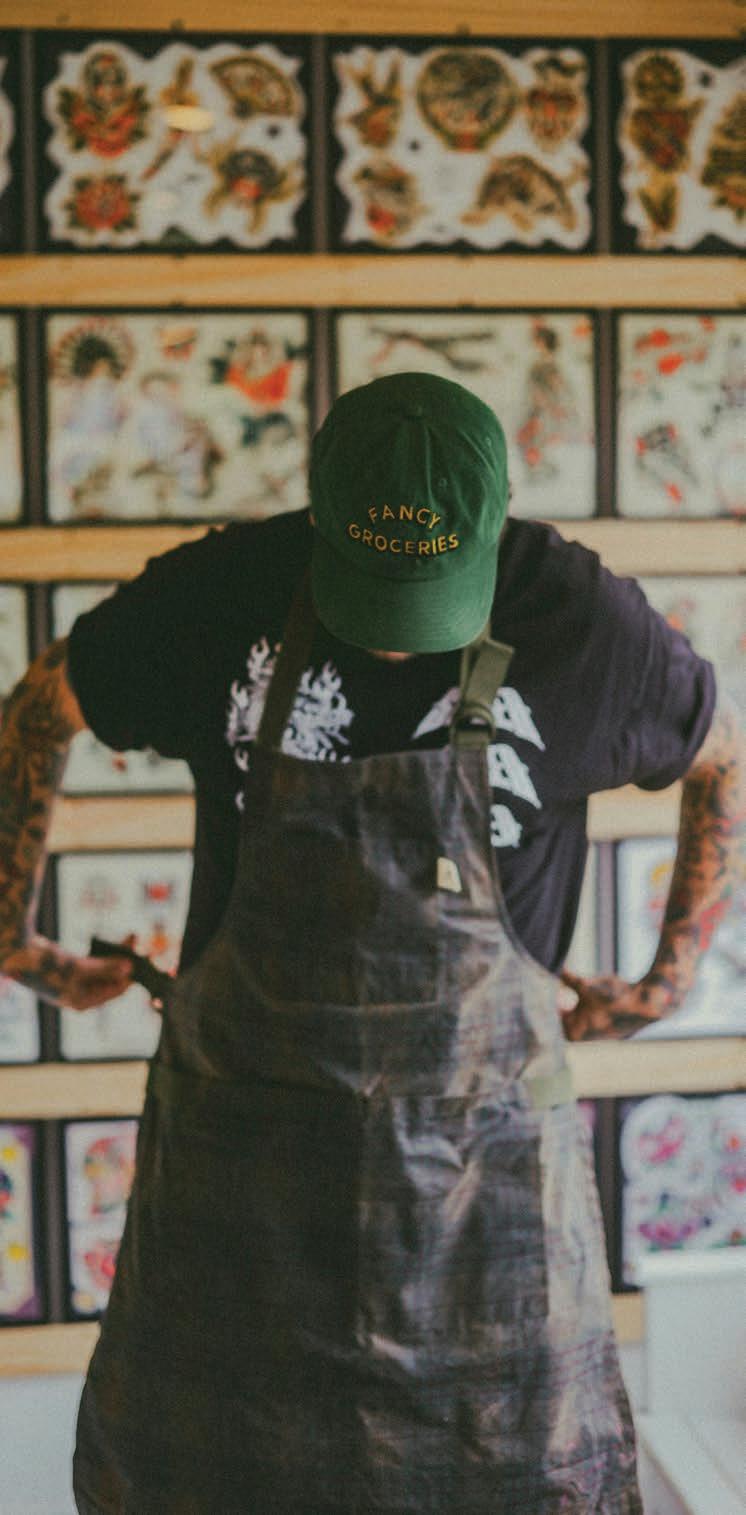
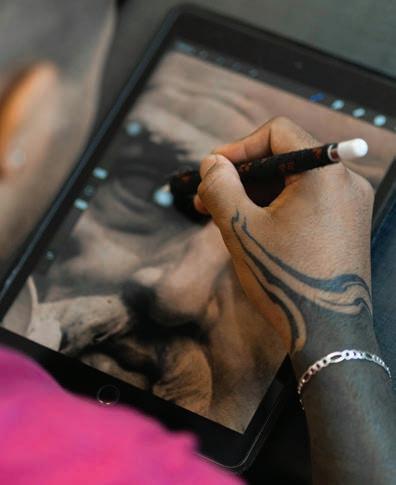
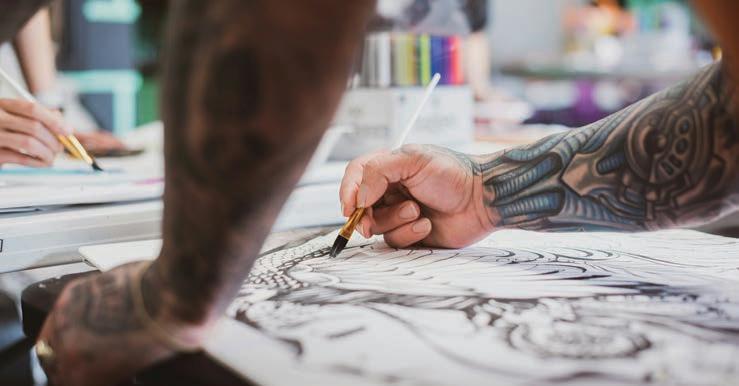
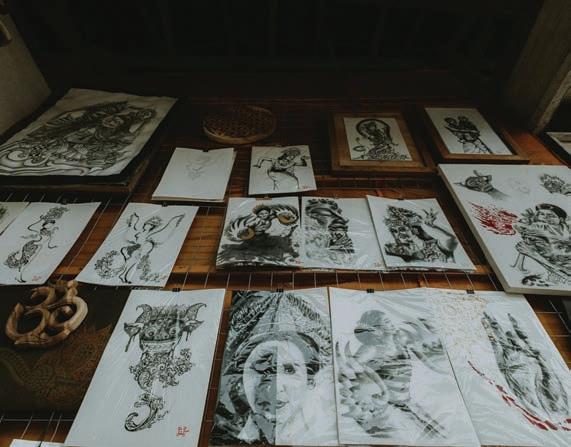
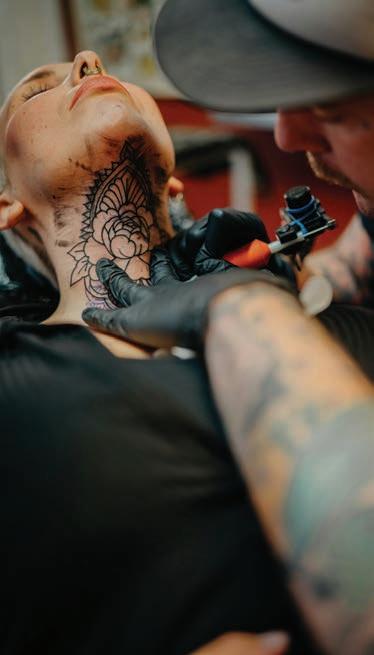
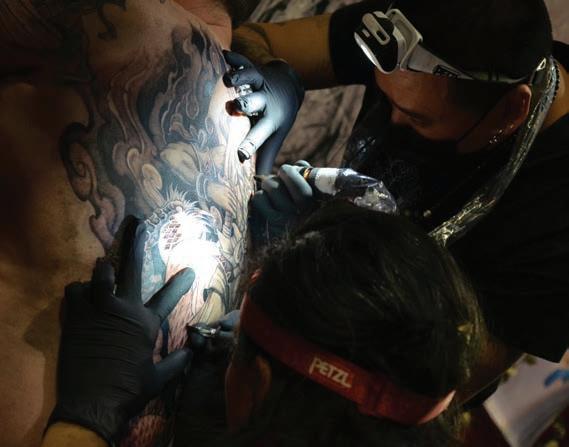
I’ve made a lot of money off coverups, but I wish my client didn’t have to go through that trauma of a bad tattoo.
- Dan Phillips
of how to tattoo but why things are done a certain way.
Anthropologist Jan Vansina argued that oral traditions, like speeches, songs, and demonstrations, depend on active transmission; once that chain breaks, reconstruction becomes difficult. Tattooing has long functioned similarly. Its history exists in relationships between practitioners. Techniques, designs, and cultural references are carried forward through use.
Tattoo schools introduce a different model. Their structure creates a clear beginning and end to the learning process. Once completed, students move forward independently, without the same ongoing connection to a mentor or lineage. That doesn’t make the model inherently flawed, but it does change how accountability and continuity function.
Apprenticeships operate differently. Apprentices reflect the person training them, and
their work carries that association forward. Standards are not just taught but upheld because they are tied to reputation. That dynamic is harder to sustain in a school setting, where relationships are often more transactional and time-limited.
THE FUTURE OF TATTOOING TRAINING
The rise of tattoo schools did not happen in isolation. Tattooing has long struggled with accessibility. Apprenticeships can be difficult to secure, often shaped by informal networks and gatekeeping. For many, schools present an alternative: more structure, transparency, and attainability.
Some of the clearest critiques of tattoo schools come from places like Oregon, where formal schooling is required. In these contexts, the model is not theoretical but visible in practice. Hannah “Hannie” Westbrook (@ skinwork_revenant) of Prairie Rose Tattoo in Texas describes them as “just a cash grab” and “a classroom where they show you the basics and then send you out with no guarantee of being hired,” sentiments echoed by many artists.
The issue is not that schools cannot produce tattooers, but that the craft resists compression. Without extended time and a clear pathway into employment, the process can feel incomplete.
That concern is reinforced by Dan Phillips (@danphillipstattoo), owner of Alchemy Moon Tattoo Collective and a tattooer for more than two decades. He argues that some schools remain inherently predatory, functioning as apprentice mills under a different name.
“The issue I have is that this skill isn’t just a pick-up-and-go. I’m putting something on someone’s body that’s going to last forever, and nothing makes me feel better than a happy customer,” Phillips says. “I feel like schools aren’t working toward that, it’s money first, money second, and then money third.”
He acknowledges the financial upside of correcting poor work but frames it as a failure of training rather than a benefit: “I’ve made a lot of money off coverups,” he says, “but I wish my client didn’t have to go through that trauma of a bad tattoo.”
His position is not entirely dismissive. “I’d hire someone who came from a school,” Phillips says, “but I’d need to know that their heart is in it. If you’re just tattooing for clout or money, I’d rather you chase that somewhere else.”
Dismissal of tattoo schools seems to be the length. Eight weeks doesn’t feel long enough to learn how to tattoo, and some courses offer it in two. A handful of schools offer a longer course. For example, Ink Different, offered across the U.S., takes up to two years, while Alchemy Tattoo Apprenticeship in Missouri takes about a year.
An anonymous Ink Different alumnus shares that he loved his time in the program but didn’t want to be published due to the backlash he’d already received from the tattoo community.
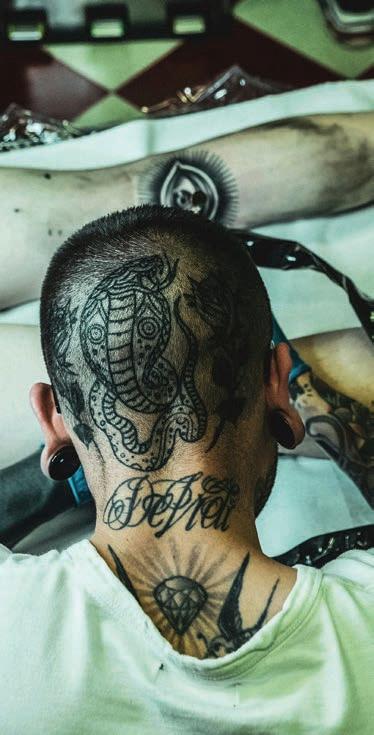
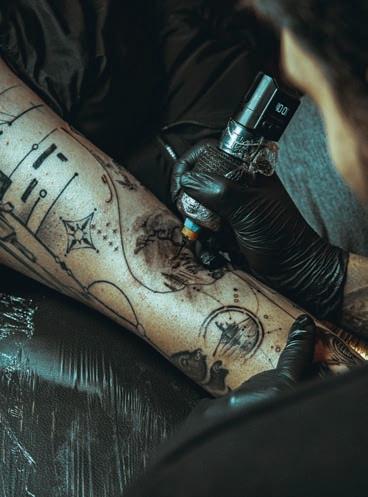
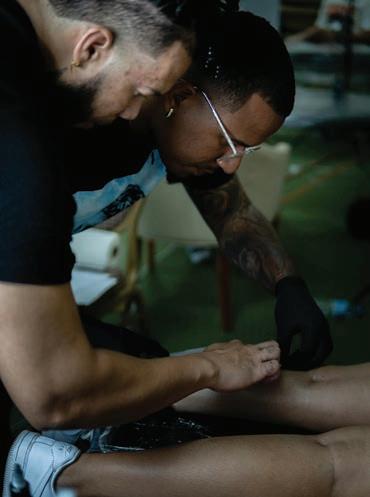
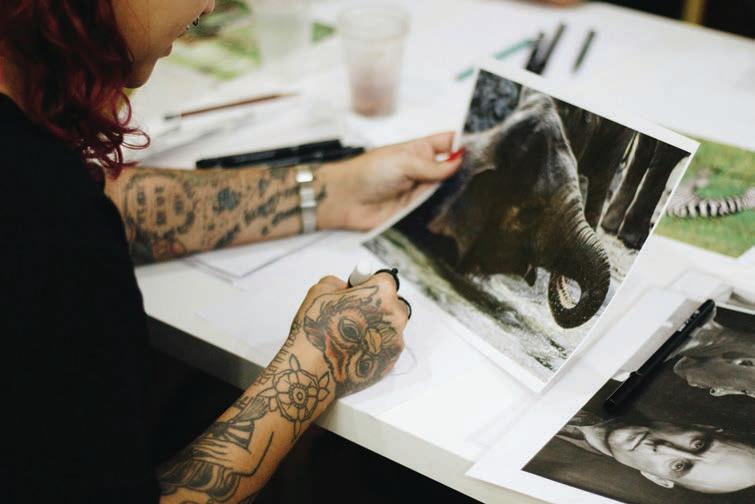
Outside of that instance, they have great testimonials. If time is often seen as the biggest issue, maybe this is a great compromise.
Criticism of tattoo schools often overlooks the flaws within apprenticeship systems themselves. There are mentors who exploit their position, drag out training, or fail to properly support apprentices. These are not defining features of apprenticeship, but they can be part of the reality. Any meaningful discussion needs to acknowledge both sides.
This presents a broader question about what tattooing becomes when taught under different structures.
Many artists who begin in school environments eventually seek out shop-based mentorship to fill gaps in their education, suggesting that while schools can provide a foundation, they may not fully replace the depth of learning that comes from immersion.
The wider issue is not whether tattooing should evolve as it always has, but how that evolution is managed. Change can build on
existing traditions or move away from them. When it moves away, we must focus more on what could be lost.
Tattooing’s history is not self-sustaining. It depends on being actively carried forward and embedded in practice rather than preserved as static knowledge. If that transmission weakens, the surface elements may remain, but their context can erode.
The result is not necessarily a decline in quality, but a shift in meaning. Work may be technically proficient while feeling disconnected from the lineage that shaped it.
Without greater input from tattoo schools themselves, their long-term role remains unclear. Tattooing has always been built on transmission: skills, stories, and ways of understanding the work passed from one person to another. If that structure changes, it does not have to disappear.
But it does need to be intentional, otherwise, the things that aren’t actively passed on don’t stick around.
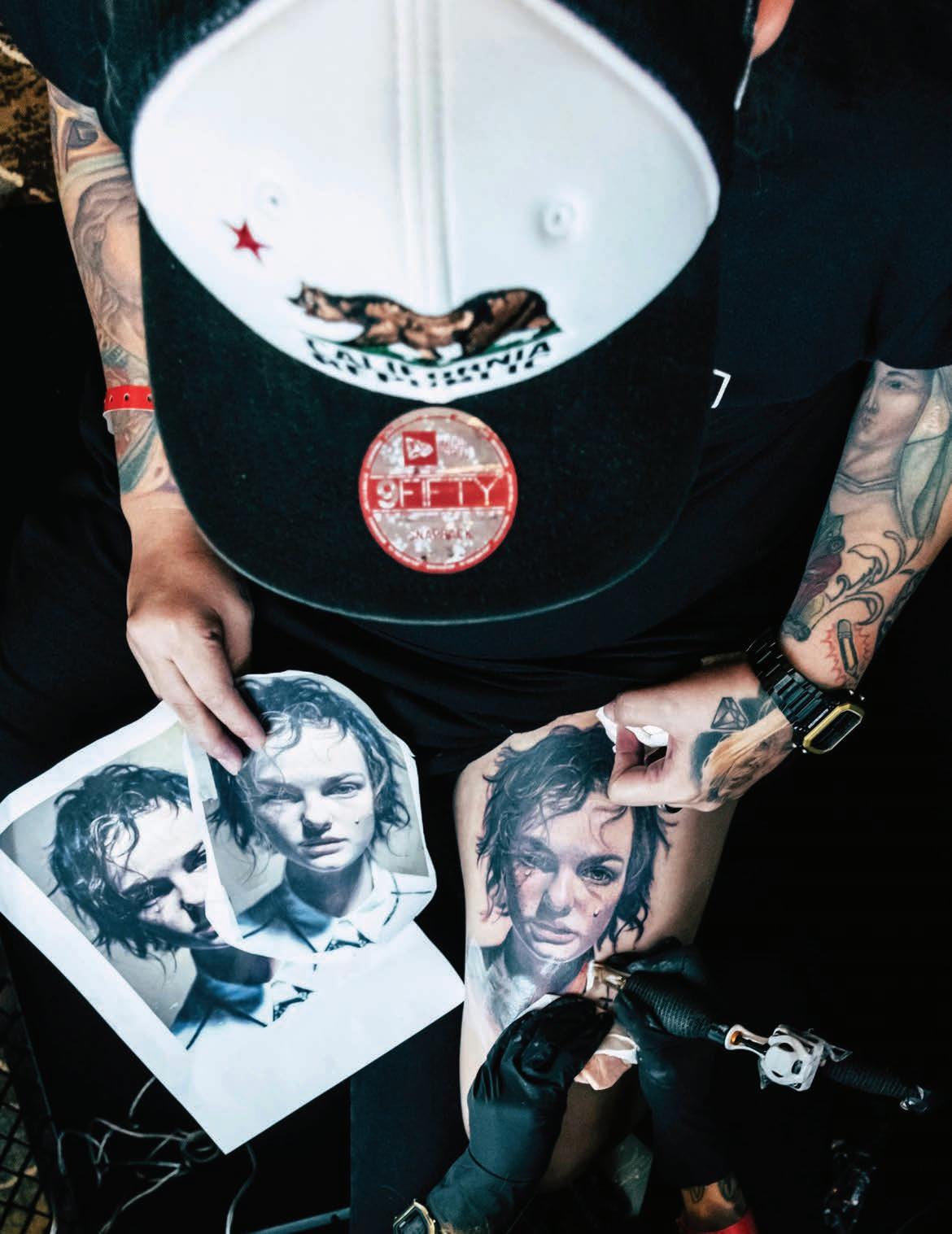

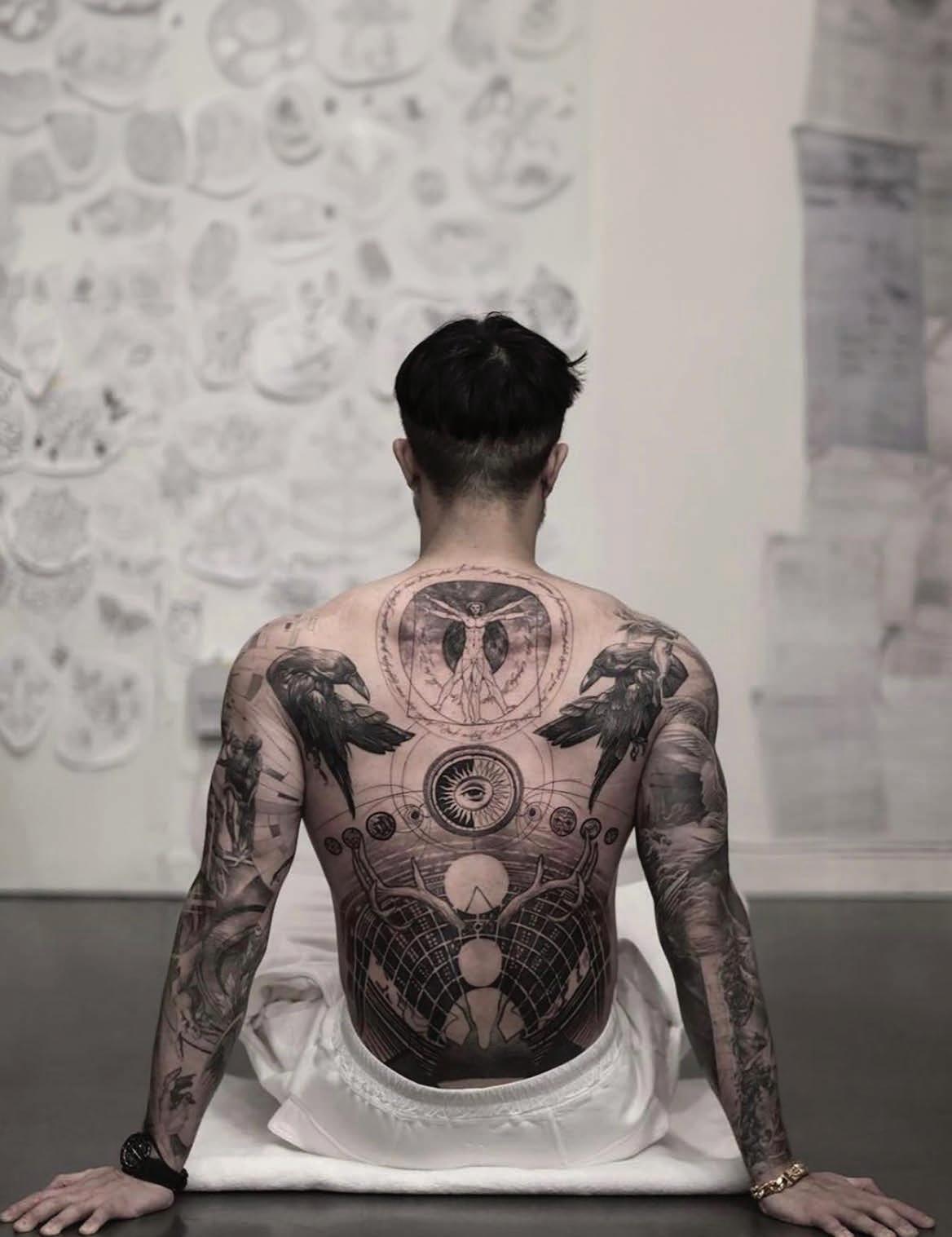
Micro-realism comes in many forms yet remains one of the most recognizable trends in modern tattooing. London-based artist Esmee Godfrey defines micro-realism as “an adaptation of traditional realism that is more accessible,” meaning smaller, photorealistic tattoos that require less time, money, and commitment, rather than large-scale works such as an entire sleeve.
According to NYC-based artist Oscar Akermo, micro-realism sets itself apart from traditional realism by being a more “narrative-driven tattoo style, with the transition to smaller tattoos in the mid-2010s allowing for clients and artists alike to think of tattoos more conceptually.”
Godfrey, who specializes in single-image micro-realism tattoos, says the subjects she gets most requests for are “animals, specifically pet portraits and birds such as swallows,” highlighting that there’s a lot of sentimental imagery and photorealistic re-creations in the niche.
Korean artist Jooa Choi says she saw an increase in demand for the style emerging “roughly around 10 years ago, with many of its roots beginning in Korea, and gradually expanding over time as it gained more attention and developed.” She explains that “modern needles are much more refined than before, allowing for thinner and more delicate expression rather than a rough or heavy result,” producing intricately detailed, small-scale artworks.
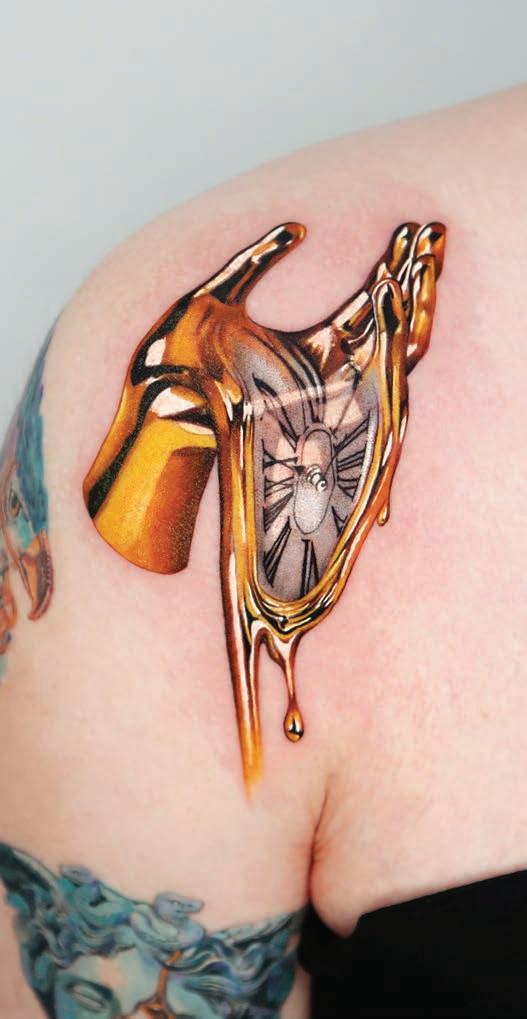
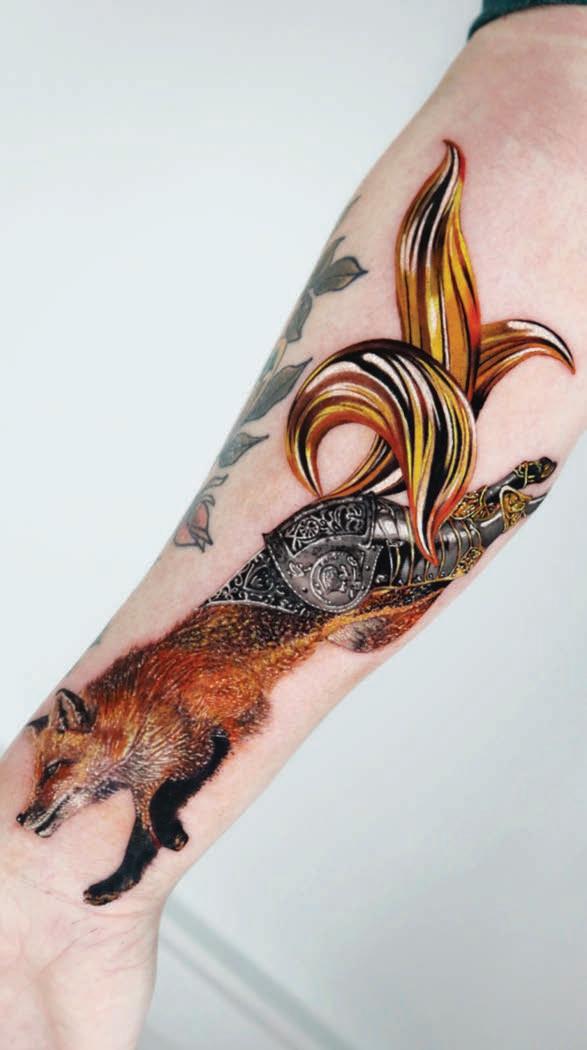
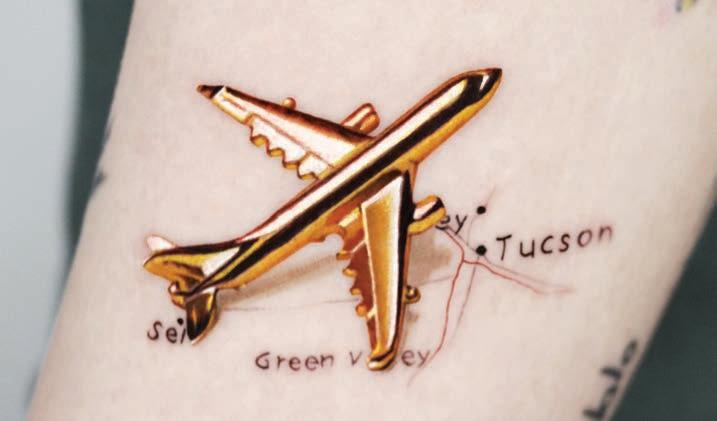
CREDIT: JOOA - @JOOA TATTOO
CREDIT: JOOA - @JOOA TATTOO
PRECISION AS A DISCIPLINE
Working at such a small scale presents unique technical challenges. Akermo, who specializes in narrative-driven, large-scale artworks made of several micro-realism motifs, explains that the biggest technical challenge is developing enough experience to know what will heal well and how to determine the best image, size, and placement. “Only through experience can you know how small you can push a size on any given body part to make sure that tattoo looks good in the future,” he says.
The process itself can differ slightly from both larger realism work and other tattoo styles. “While contrast is easier to achieve at a larger scale, it’s still very important with smaller pieces,” Godfrey explains. “I take a slower approach with my process in order to build layers of textures and detail, turning down my machine voltage and using smaller needles to build tones.”
The execution of micro-realism can be very demanding. “It requires a high level of concentration,” Jooa says. “Because every small detail has to be carefully checked, it can be visually tiring over time. Needle control needs to be extremely precise, and even minor mistakes or inconsistencies become immediately noticeable in the final result.”
While this may seem like it could put more pressure on artists, Jooa says she doesn’t feel this way. “It’s less about the size or level
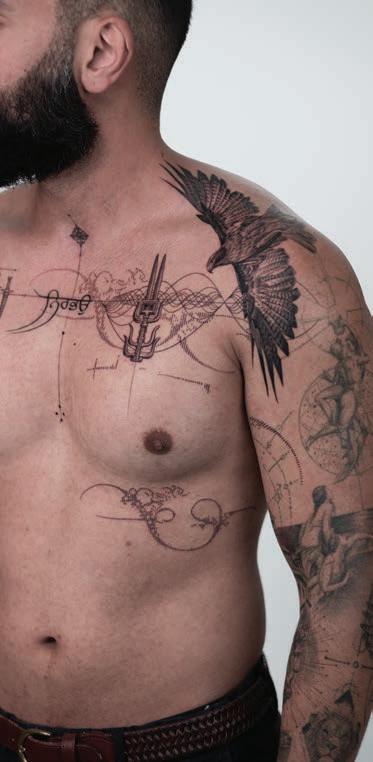
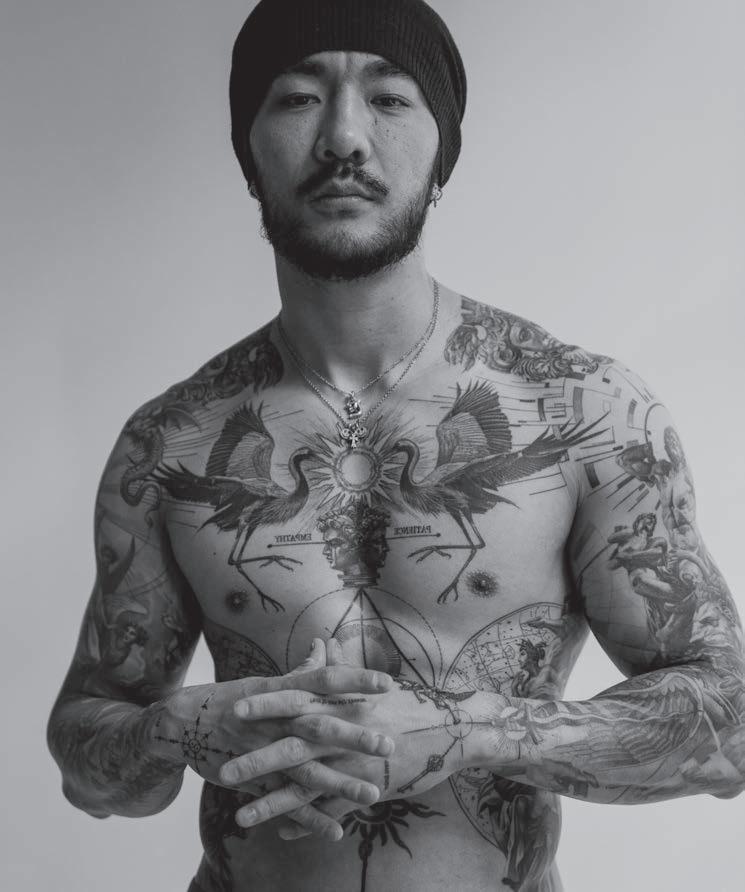
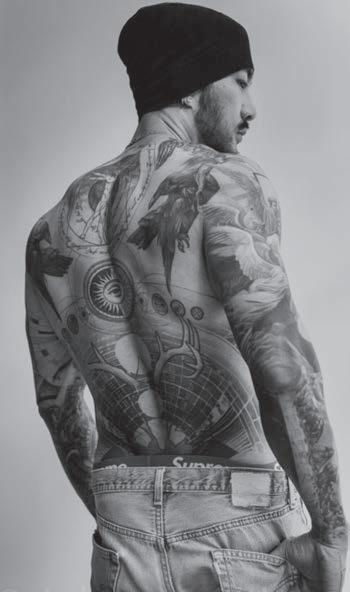
of detail, and more about how accurately and properly the overall piece is executed,” she explains.
Many artists are drawn to the challenge. “The most exciting part of working in micro-realism is designing something nerve-wracking that you love,” Akermo says, highlighting his experience in producing a full upper body piece for a client from China. It took around 27 sessions, with travels to Shanghai, L.A., and Sweden to do the work. “Seeing all the hours of work, the designing, and those separate sections — each its own little universe — come together into a coherent whole was one of my most artistically satisfying moments.”
THE MINIATURE MINDSET
Artists often connect the rise of micro realism to changing client preferences. “I think it can be a personal preference to get something small that can maybe be hidden, something sentimental that can be more for them as opposed to a statement piece, which is more on display,” Godfrey says.
Godfrey says social media has played a role in attracting audiences and increasing
CREDIT: OSCAR AKERMO / @OSCARAKERMO
CREDIT: OSCAR AKERMO / @OSCARAKERMO
CREDIT: OSCAR AKERMO / @OSCARAKERMO
demand for micro-realism tattoos. Akermo highlights that social media has its downsides, too, noting that he sees other artists posting edited photos of their healed works. “There’s always going to be a few bad actors in any field, but this can create difficulties in managing client expectations if they’re putting out falsely photoshopped representations of what can be achieved,” he says.
Reference images can be useful tools for the artist, but clients should have realistic expectations. “Sometimes clients can try to jam too many things into one design. In those cases, I’ll always be honest and advise against it,” Godfrey explains, adding, “I want to be proud of everything I produce while still making sure the customer is happy with the result, and sometimes that requires some compromise to ensure the best outcome.”
Outside of social media, micro-realism can be seen more broadly as a reflection of an ever-changing industry. “Tattoos used to be mainly flash or traditional styles, which
many people, including myself, still love,” Godfrey explains. “However, micro-realism is almost the complete opposite, demonstrating how far this industry has come, and how it has developed to cater to more tastes.”
THE LONGEVITY QUESTION
Despite its popularity, micro-realism remains open to debate within the tattoo industry, with some artists claiming that micro-realism tattoos will require touch-ups or covering after some time.
“Micro-realism doesn’t differ much from larger tattoos in terms of longevity, but because it involves very fine detail, any fading or loss of detail can become more noticeable,” Choi explains. “Loss of detail or fading is not unique to micro-realism, and, ultimately, if the ink is properly and correctly placed, most tattoos will hold up well over time.”
Micro-realism is a style reflective of the growing influence of precision, personal tastes in art styles, increasing trends of
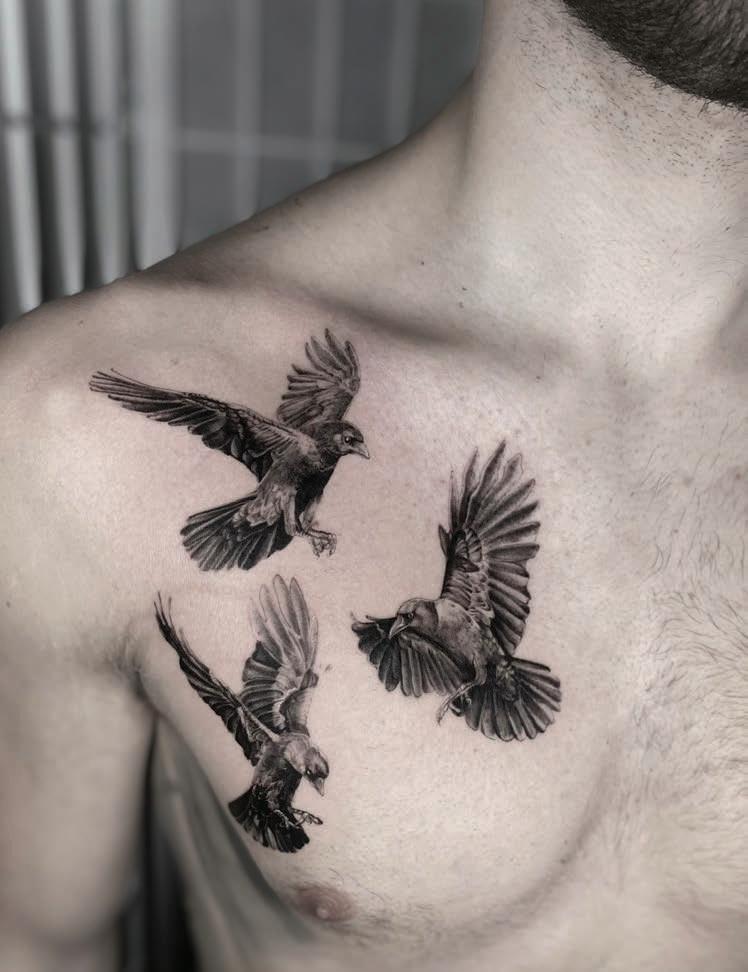
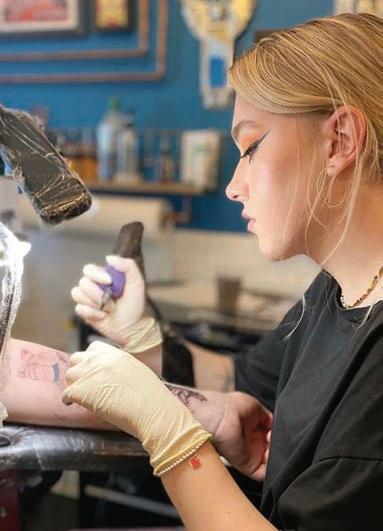
subtle aesthetics, and modern tattoo culture. It is a time-consuming style that requires meticulousness and hard work, which is incredibly rewarding for the artists who practice it. “I think that while the style and techniques will last, the terminology will change. Over time, it may evolve and develop into something else entirely,” Akermo says. “I’m not sure what’s next, but based on recent trends, I’m starting to see old styles make comebacks with a kind of facelift,” Akermo continues. “This seems to go hand in hand with pop culture and resurgences of updated styles. We’re seeing more refined and intricate barbed wire tattoos as a resurgence from the 90s, and I believe with things like this, we’ll see these older trends become more incorporated into micro realism.”
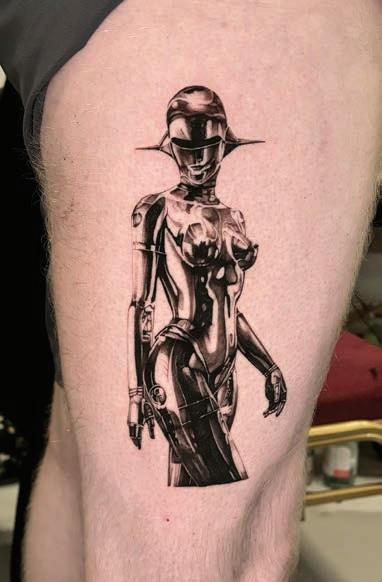
@ESMEEGODFREYTATTOOS
abio Viale didn’t stumble into art so much as get redirected toward it. In his younger years, growing up in a small Italian town, he enrolled in art school for a reason that wasn’t exactly artistically linked: there was no foreign language requirement. “Living in a small town, I knew nothing about contemporary art,” he states. “My only connection was MTV videos on television.”
The world of chisels and galleries was not, by any obvious measure, his “calling.” Until the call came straight to his classroom. At 16, an art teacher noticed something in the way Viale worked clay — a natural ease with material that for most takes years to develop. One afternoon, the teacher placed him before a small block of dark stone and issued a simple directive. “‘Fabio, now work on this small block of marble,’” he recalls.
Viale did as he was instructed, picked up a hammer and chisel, and began to transcend from student to artist. “I suddenly saw a white, brilliant shard getting out from the marble,” he says. “Let’s say that in that moment I decided to be a sculptor.”
That flash of white, the marble revealing itself from within, has guided his practice ever since. Today, Viale is known not only for his sculptural mastery but for an innovation that has made his work unmistakable in the contemporary art world: adding tattoos to his

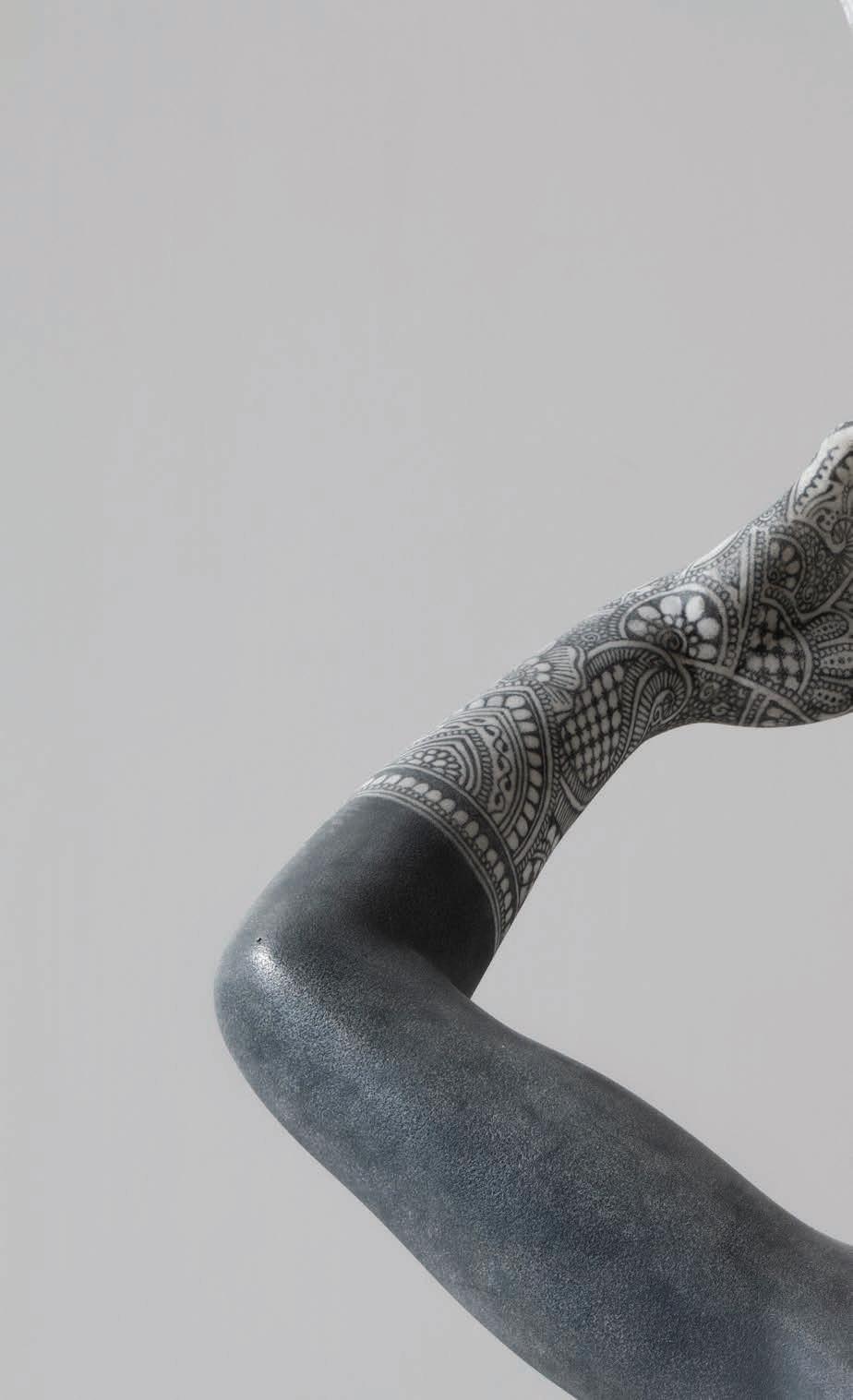
pieces. Classical forms — columns, torsos, busts — are adorned with elaborate, realistic tattoo designs drawn largely from the visual vocabulary of Russian criminal tattoos, a tradition steeped in coded meaning and fierce iconography. The result is inimitable and, once seen, impossible to forget: stone manipulated like skin.
PIGMENT MEETS MARBLE
Marble is not a forgiving medium. Viale describes it plainly as “a heavy and hostile material” that demands patience, consistency, and deep intention. The sheer labor of coaxing form from stone, the months of cutting, grinding, and finishing, requires a sustained commitment that can outlast inspiration on its own. “Without motivation,” he says, “it’s difficult to sustain this pace over time.”
Which makes what comes out of his practice all the more intentional. Once the sculptural form is complete, Viale introduces color. “Tattoos are perhaps the lightest and most carefree part of it all,” he says — a counterintuitive admission that speaks to how fully he has mastered both halves of his craft. But the lightness is relative; the technical challenges of tattooing stone are formidable in their own right. Viale collaborated with chemists to develop pigments capable of sinking into marble without looking applied.
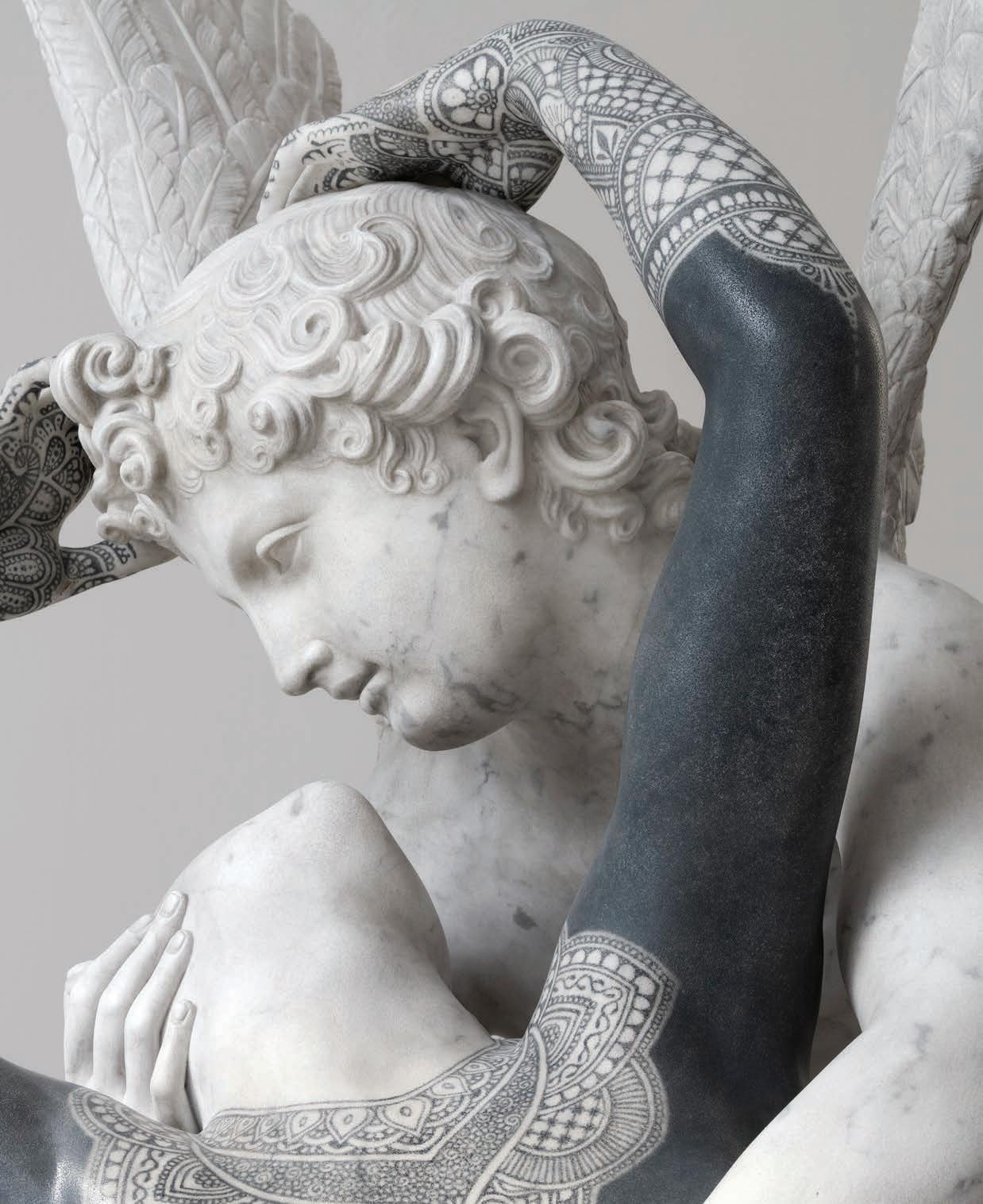
“When ‘tattooing’ a sculpture, it’s very important not to give the impression that it’s been painted. For the tattoo to appear realistic, the color and the marble must be perceived as they appear on the skin,” Viale explains.
Durability is equally critical. Marble exposed to the elements deteriorates, and conventional pigments would shift or fade unevenly over time. Working alongside technical professionals helped Viale identify compounds that could weather those changes in harmony with the stone itself. The result is a surface that reads not as decorated marble, but as stone and image unified.
His chosen aesthetic deepens that unity. Viale is drawn specifically to Russian criminal tattoos, a genre where every symbol carries weight, where, as he puts it, a design “transcends simple aesthetic questions.” He has little patience for purely decorative work. The tattoos on his sculptures are not ornamental; they are argumental.
“I’m fascinated by these dualities, these opposites that manage to find a meeting point and convey harmony,” Viale explains.
Among Viale’s most ambitious works is ROTAS, the largest piece he has ever made. The sculpture, a massive wheel uniting an ancient rosette on one face and a modern tire tread on the other, took more than a year to complete, with months lost simply to sourcing a suitable
When ‘tattooing’ a sculpture, it’s very important not to give the impression that it’s been painted. For the tattoo to appear realistic, the color and the marble must be perceived as they appear on the skin.
- Fabio Viale
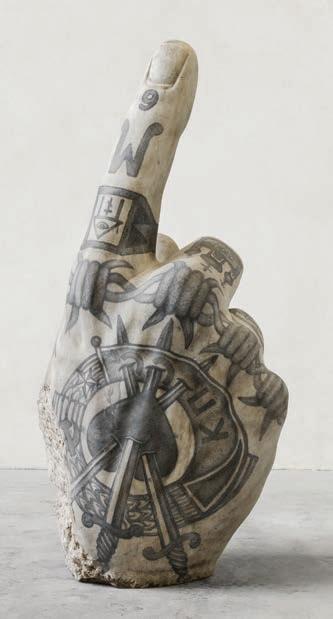
block of marble large enough, and flawless enough, to hold his vision. The process, he says, was shaped by duality from the start.
“For years I’d wanted to create a wheel that would bring together the ancient and the contemporary,” Viale says of the inspiration behind the monumental piece. “They are both distant images, yet in this work they merge as if they had always existed.”
That fascination with opposition — ancient and modern, heavy and light, hostile and carefree — runs through Viale’s work like a seam in the stone. Even his approach to subject matter carries a kind of parallel philosophy: “I simply like to give importance to something that doesn’t have it,” he says.
MAN VERSUS MARBLE
Viale’s career has not lacked for spotlight moments. A defining memory is the 2002 launch of Ahgalla, a marble boat set afloat in the port of Carrara, a city whose name is synonymous with the stone itself. The image
of a marble vessel on water distills everything Viale does: a material defined by its weight and immovability, made to exist in a way one wouldn’t expect.
More recently, he has shifted toward commissioned work, letting client proposals shape his direction. Whether his subjects arrive by request or intuition, the work finds new audiences, primarily through Instagram, where his sculptures reach viewers worldwide. Viale notes that to truly experience the pieces, one must wait for the next exhibition and encounter them in person.
He speaks of the future with a candor that is revealing but not resigned. His eyesight is changing. His stamina is not what it was. “My desire for perfection is weakening,” Viale says. “I believe my future works will either compensate for all this or will inevitably take a very different path.” It is the statement of a man who has spent decades listening closely to his material — and who, after all this time, still trusts what it has to say.
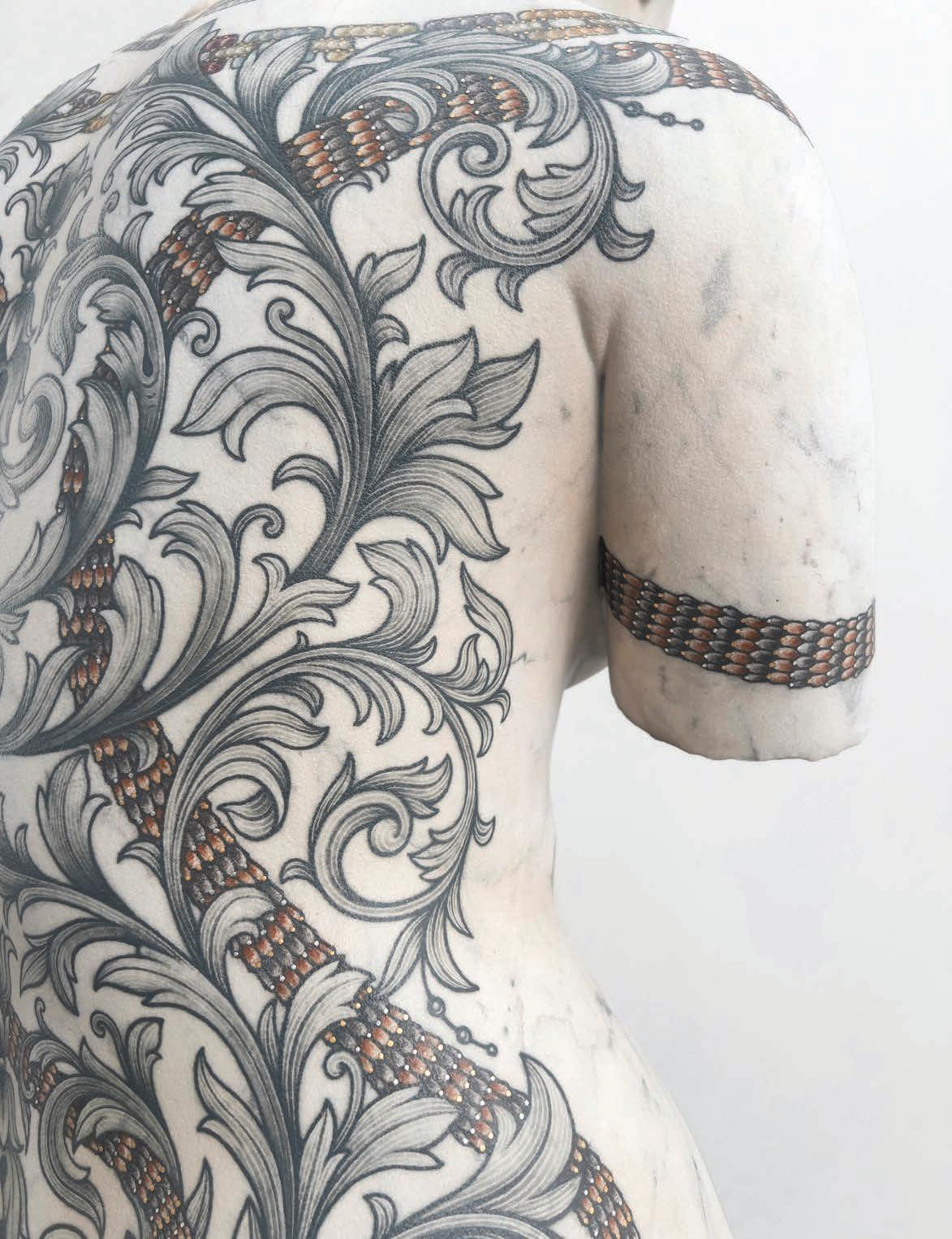
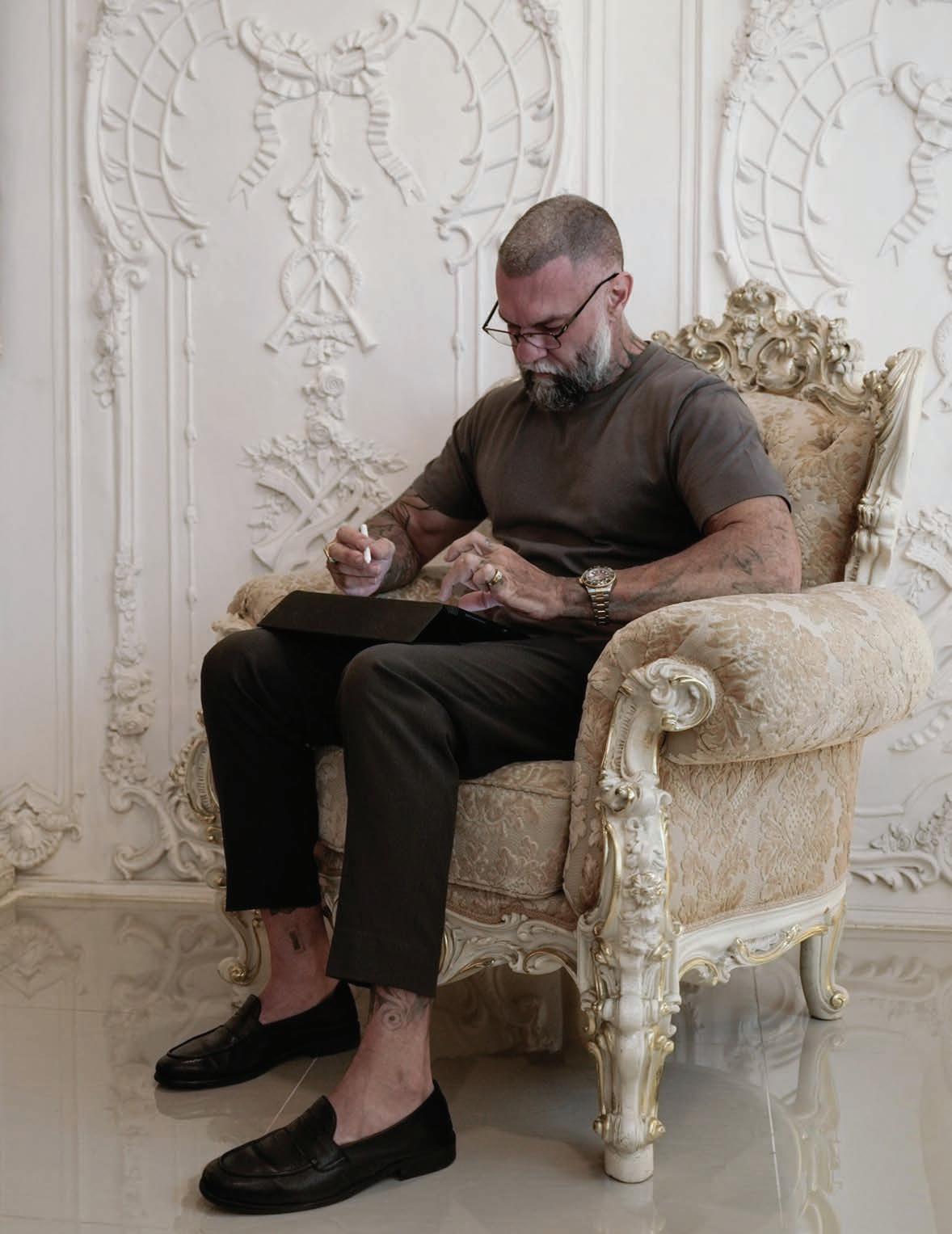
pon viewing the intricate work of tattoo artist Glen Middleton, it would not be shocking if a dig into his history revealed that he swapped a career as a stone mason for a life loaded with needles and ink.
Black-and-gray realism is his specialty, and his ability to create deeply dimensional, sculptural work on the human body is awe-inspiring. No matter where the pieces sit on the human form, that depth remains, highlighting his ability to work with the body’s twists and turns.
There’s a lot of historic imagery in his work, so it’s not surprising to see a recreation of a 17th- or 18th-century Baroque figure or a statue of Hercules, some dating back to the 2nd century. It’s especially fitting as Middleton, who is originally from Sydney, Australia, is enamored by artistic creations from bygone eras.
“I was always drawn to art,” Middleton tells Inked, but says it wasn’t in a conventional way.
“The challenge is maintaining clarity at scale. Large work can fall apart quickly if it’s overworked. I keep it controlled through strong form, strong contrast, and nothing unnecessary.”
- Glen Middleton
“Illustration never really held weight for me. I don’t look to individual artists for direction. It’s more about the work itself. Cathedral stonework, classical sculpture, architectural carving — they have always held my attention,” Middleton explains. “The way those works handle scale and depth is something I bring into every piece. You can study them repeatedly and still find more in them. That’s what I’ve been drawn to over time. Tattooing became the way to apply that to the body. It let me build with depth, structure, and light; not just surface.”
Examining his pieces, Middleton’s meticulous nature is undeniable. The whites and lighter shades used to highlight the work add the dimension
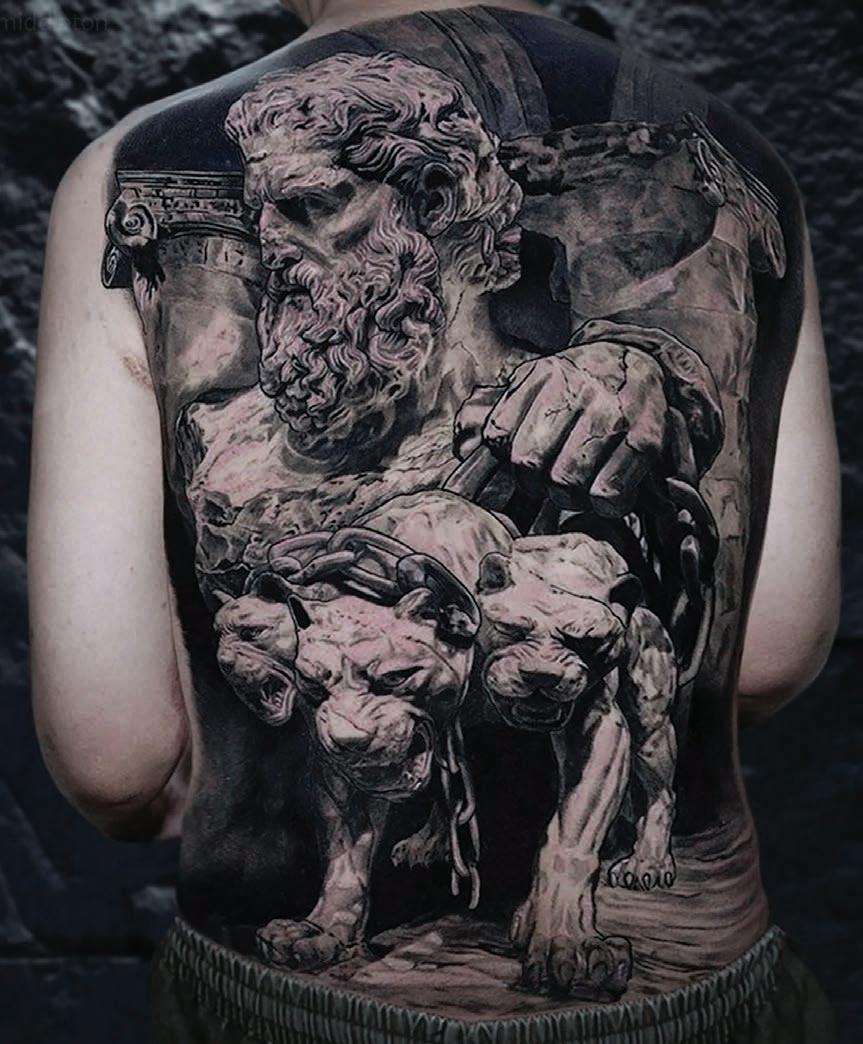
that brings each to life. It emphasizes his attention to the smallest details, like the heavy eyelids on a Frankenstein tattoo that help define the legendary character, or the bit of teeth a slightly open mouth reveals. His precision-passion combination never leaves you guessing the subject’s emotion.
“My understanding of form came from time spent in Europe studying historical work up close,” explains Middleton, who has been paying attention to art for many years. “Being around it changes your eye. You start to see weight, proportion, and how light moves across a surface. That shifted my focus
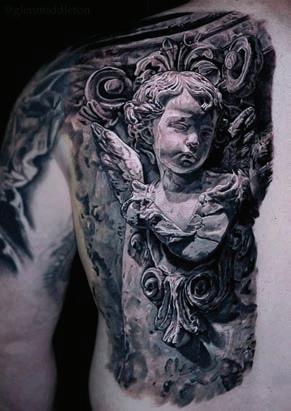
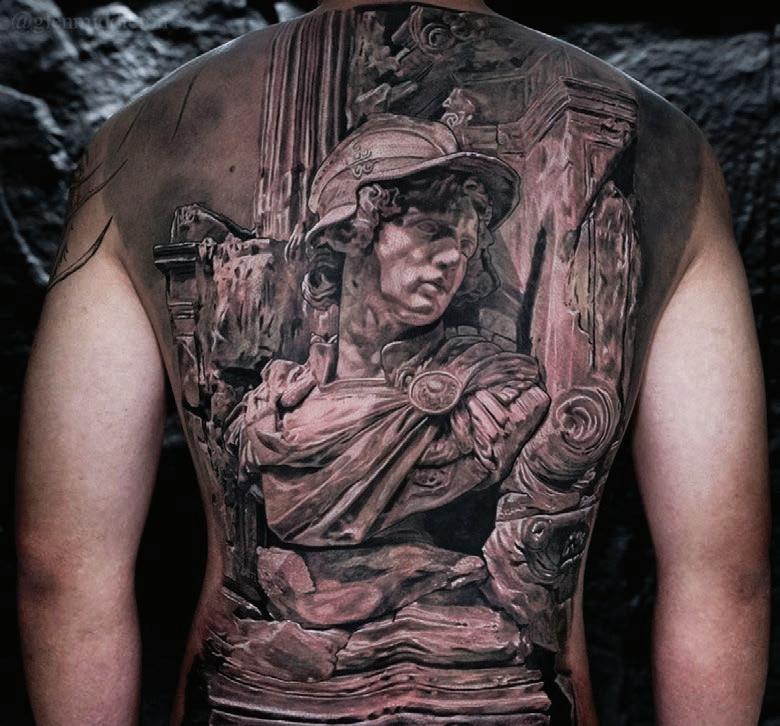
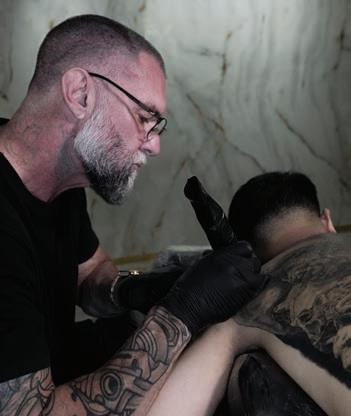
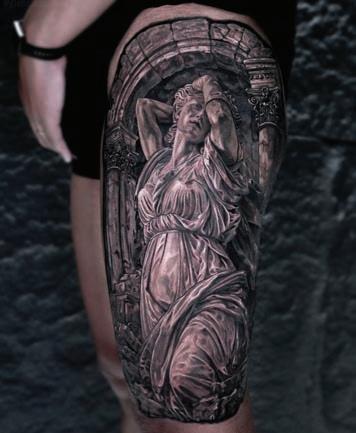
away from decoration and more toward building something that actually holds.”
While he doesn’t point to any of his artworks specifically as notable, he offers a broader perspective on what “notable” means to him. “There are a few large-scale pieces that stand out, mainly because of the level of control required across multiple days. (These include) full-back work and chest pieces, where everything has to read clearly from a distance while still holding detail up close. Those are the pieces that push the standard,” he explains.
His elaborate work can take many hours and multiple sessions, but those components of the job don’t ruffle Middleton. “Growing up in Australia, I built a direct work ethic early. I started boxing at 9, so discipline, repetition, and control under pressure were there from the start. That carries straight over into how I work now: long sessions, precision, and consistency. No shortcuts,” Middleton explains. “I don’t train in boxing anymore, but the discipline from it hasn’t changed. I still train daily, mostly strength and conditioning. It keeps the same structure and consistency that carries into the work.”
Middleton undoubtedly knows who he is and what he loves and appreciates. He has united that powerful sense of self with those artistic motivators, but that doesn’t mean it comes without some hurdles.
“The challenge is maintaining clarity at scale. Large work can fall apart quickly if it’s overworked. I keep it controlled through strong form, strong contrast, and nothing unnecessary,” he explains, adding, “Most of my clients commit to large-scale, multi-day work from the start, so I can control the piece all the way through.”
It stands to reason that this master of detail, both personally and professionally, likes a very specific work environment. “I keep the work environment controlled with minimal distractions. Usually, low, consistent music is on. It helps maintain concentration, especially during long sessions,” he says.
For Middleton, work is the constant current that permeates his time. Outside of tattooing, he says most of his time is still devoted to the work in some form, whether it’s training, studying references, or refining his process.
His job requires him to travel, but he delivers his globally influenced works mostly in New York. “Australia built the foundation. Europe refined the direction. New York is where the work gets tested; it keeps the standard high,” Middleton explains.
“The level of art, architecture, and collectors (here) aligns with where I’m taking the work,” he says of staying in New York long-term. “I’ll still travel, but selectively, with limited availability in specific cities. It’s about placement, not volume.” As Middleton looks ahead, he says that while he knows there will always be a commercial side to tattooing, the art remains the focus.
“The top end,” he says, “is moving toward refinement, structure, and long-term value. Closer to art, closer to collectors — that’s where I’m focused. Building work that holds over time.”
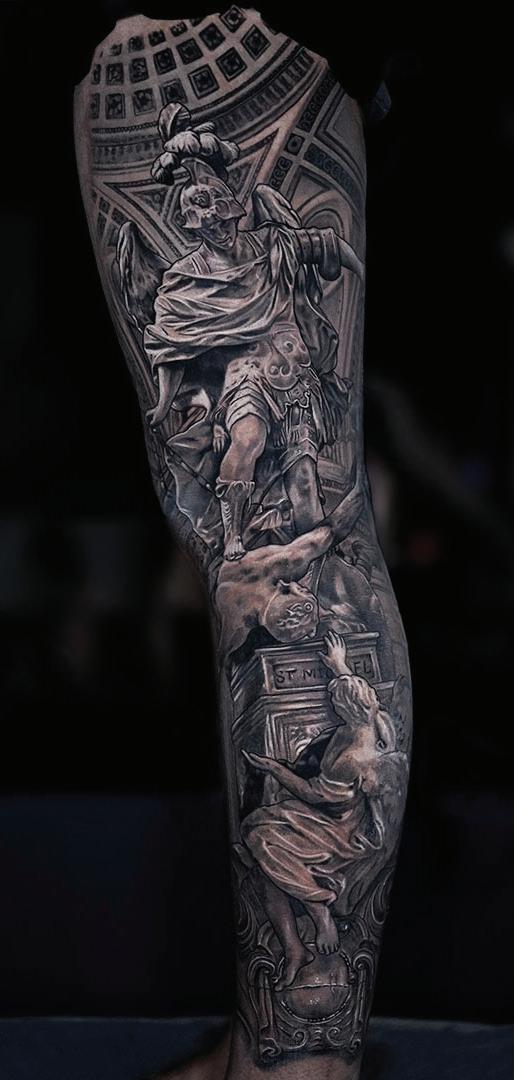

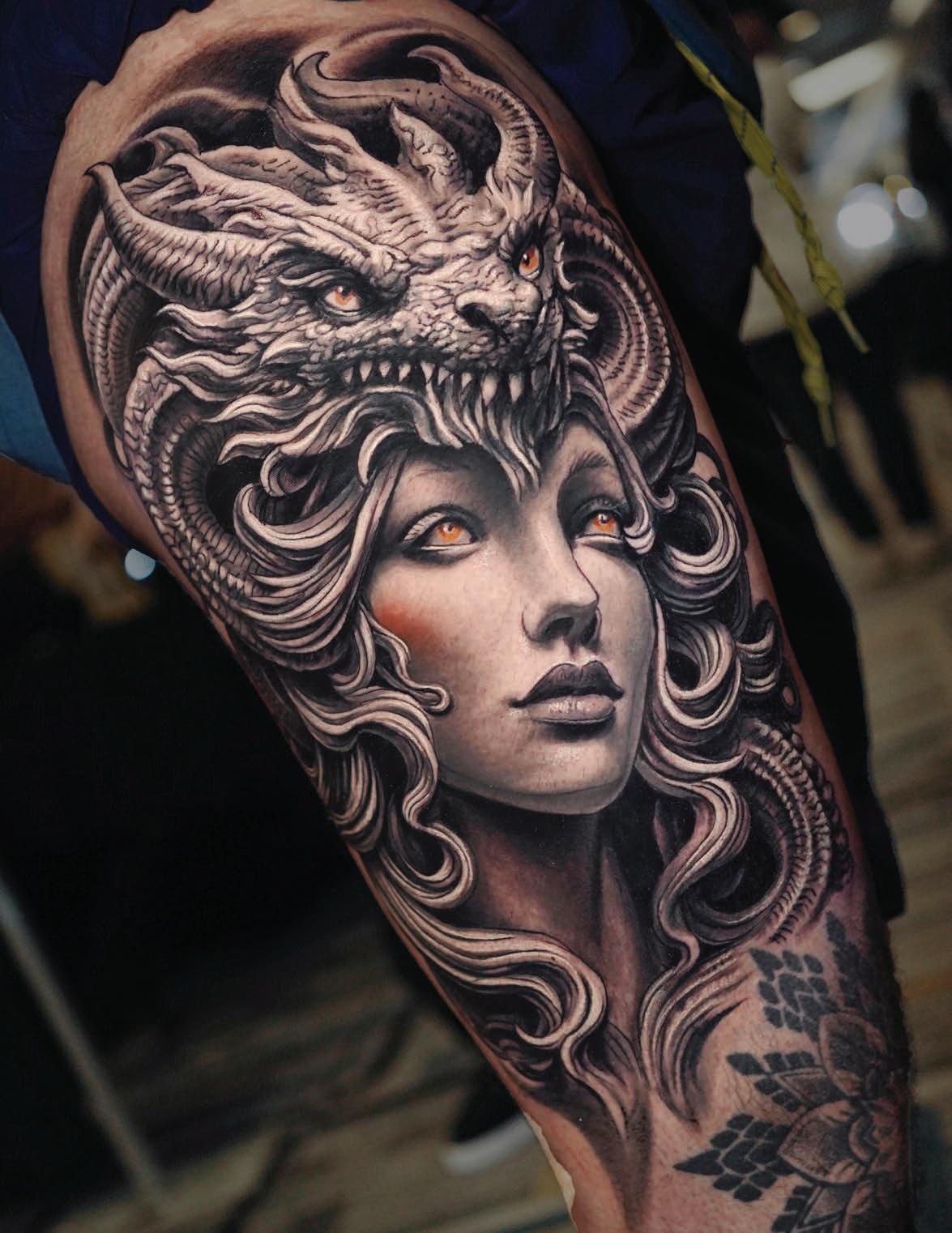
BY JASON MURRAY
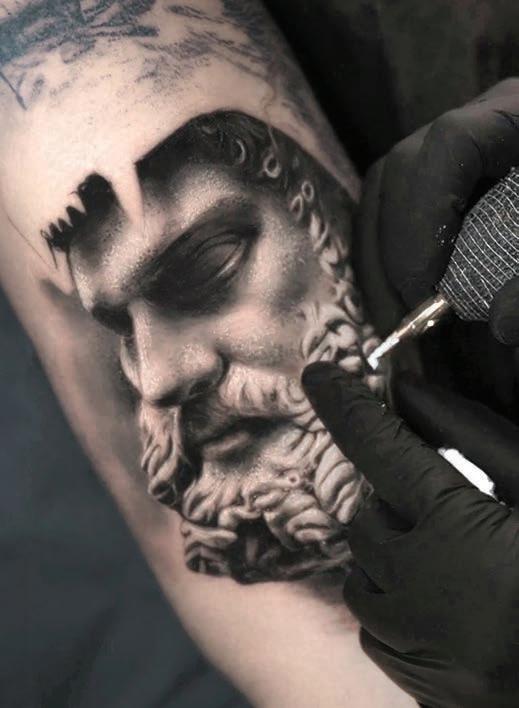
AIis transforming the world, and it’s already influencing artists and their approach to the creative process.
Tattoo artist Darwin Enriquez (@darwinenriquez), co-founder of midtown Manhattan-based Inknation Studio and TattooStencilPro, is a black-and-gray specialist who uses AI to inspire his hyper-realistic 3D images. A tattoo artist for more than 20 years, Enriquez’s approach to true realism began with color tattoos, but he eventually gravitated toward black and gray. “The environment you work in has a big influence on your art,” Enriquez said. “Being in the U.S. gradually pulled me toward black and gray realism and larger scale compositions.”
Enriquez came to New York with a vision to create his own style, his own studio, and a space that reflects the level of dedication and passion he brings to his craft. “New York is a place where ambition, diversity, and creativity all come together,” he said. He has his eye on growth, the industry, and the future. Always looking to push
himself, he chose NYC to take his ideas to the highest level.
Originally from Venezuela, Enriquez’s detailed, realistic designs have pushed the limits of what is possible with ink, a needle, and a lot of creativity. He loves the challenge of hyper-realism, how it takes time, requires focus, and pushes him to come up with new textures, effects, and details he wasn’t sure were possible.
“I’ve always been drawn to contrast, lighting and blackand-white photography,”
Enriquez said. “I like working with light, shadow, texture, and making the piece feel strong and present.”
Always looking ahead, he’s using more stencils to achieve his ultra-detailed works.
This level of detail requires a new process, and Enriquez’s TattooStencilPro is helping to power the practice, converting images into tattoo designs.
“What I love most about hyper-realism is the challenge,” Enriquez said.
“It’s not just about making something look good, it’s about making it feel alive on the skin.” He is leaning into AI and its power to help him
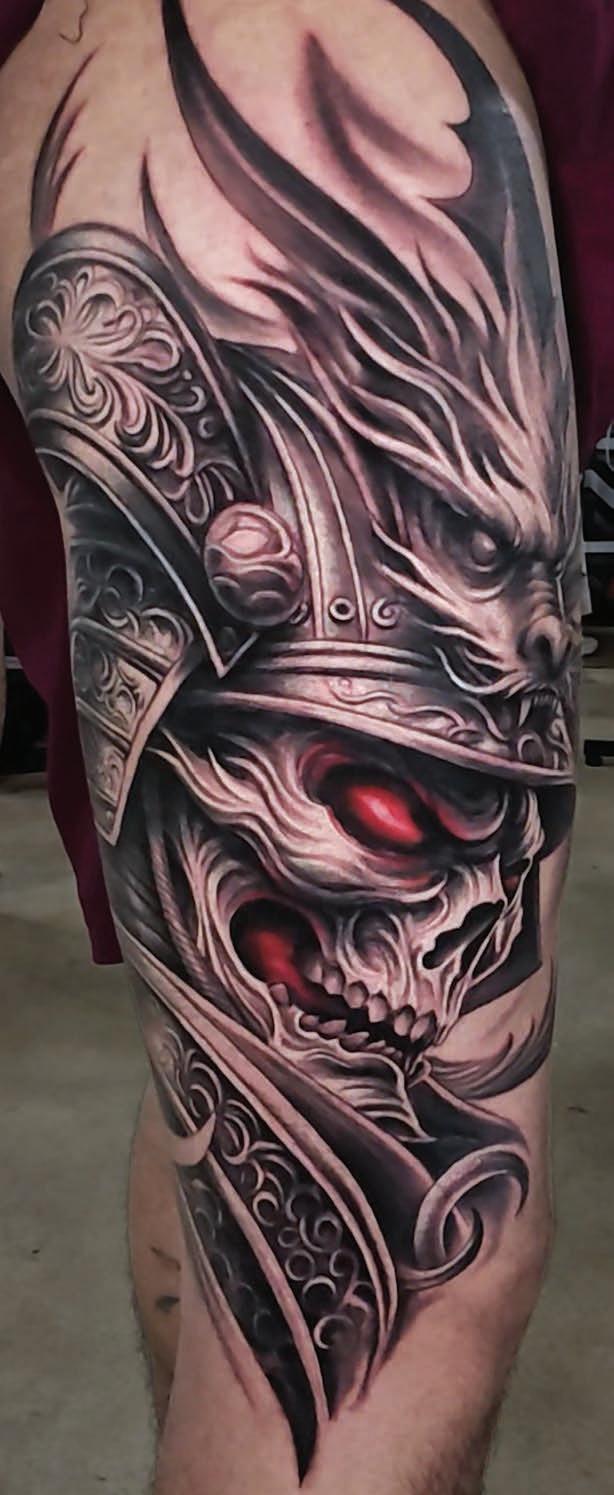
throughout the creative process. He uses it to help find inspiration, explore new ideas, and open up new creative possibilities.
Enriquez sees AI as a way to enhance ideas to help creativity and thinks artists should use the tool to their advantage. “I see artificial intelligence as a tool, not something that replaces the artist,” he said. “In the end, the judgment is still mine. I’m the one who decides, composes, interprets, and turns the idea into a real piece.”
With the internet’s prevalence, social media, and daily exposure to constant visuals, interest in surreal tattoo images is growing. “We live in a highly visual moment where people want things to feel more striking, more refined, and more special,” Enriquez said.
Now is a good time for original, more detailed, harder-to-get tattoos. Sharing, appreciation, and comparison via social media help drive this style of black-and-gray tattoo aesthetic. “I sometimes incorporate small touches of color, but black and gray is the visual language I connect with the most.”
Today’s technology is driving new 3D-style tattoo designs, and tattooing machines are more precise and controllable, making it easier to ink these heavily detailed works.
With this in mind and a constant push to improve, Enriquez was driven to design and create TattooStencilPro, a new tattoo resource that came from his need for a stencil that meets his visual criteria, allows them to be done by hand, and helps other artists get closer to their original vision. “I’m very proud of it because it brings together two things I’m passionate about: art and technology,” he said.
The demand for more realism in tattoo design has Enriquez thinking about how much tattooing has become a legitimate art form in 2026. “Skin is also an artistic
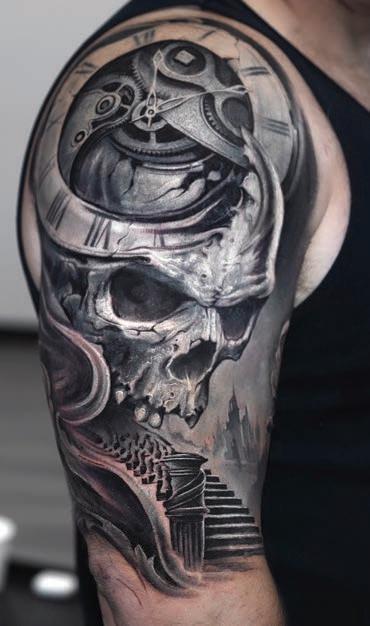
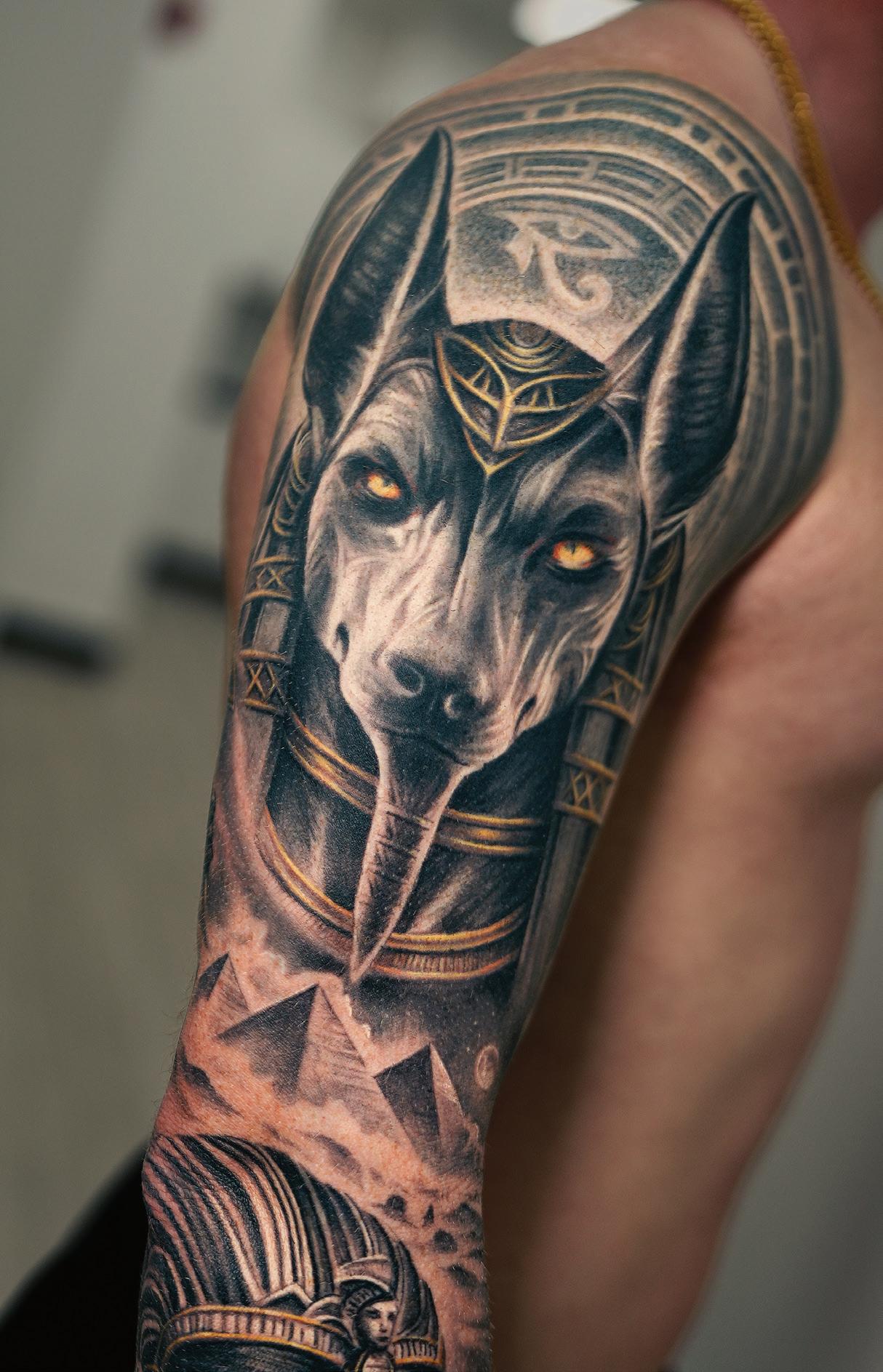
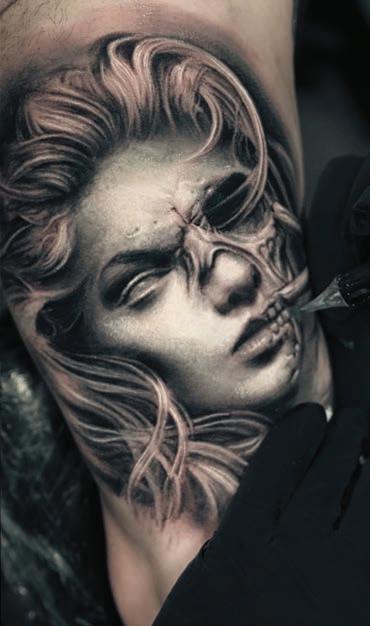
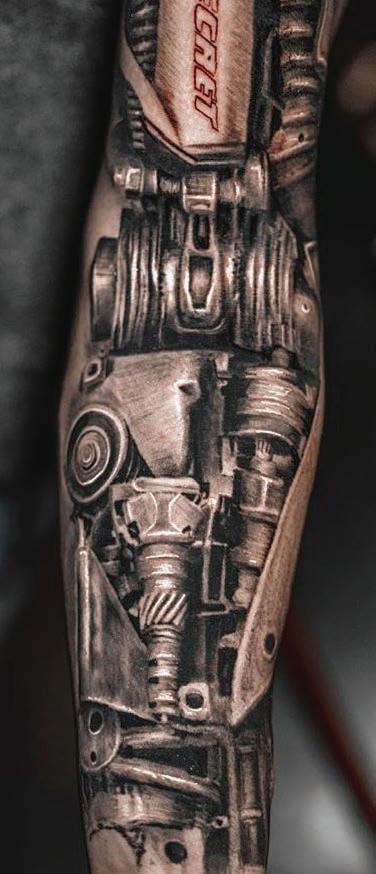
medium. It’s no longer just about getting a tattoo. It’s about wearing a piece with artistic and personal value,” he said. With smarter, more informed consumers, there is a demand for better quality tattoos. This has driven tattoo artists to make their art more unique and valuable to people getting the ink.
Enriquez has encounters with people from all walks of life, from the curious to the very famous, but he thinks his most memorable clients have a real story, a strong vision, and a lot of trust. He loves collaborating with his clients to ensure they get exactly what they want. “What matters most to me is when there’s real connection with the person,” Enriquez said. “When you can interpret their idea and build something together that has strength and meaning.”
Enriquez keeps moving forward, raising the level of both tattooing and the experience behind designing the ultimate piece of art. He’s exploring new textures, formats, and ways of taking his art to new places and spaces, and he wants Inknation to be the destination shop in New York City for realism and custom work.
“My biggest goal is to keep growing without repeating myself,” Enriquez said. “I want to keep evolving and creating better and stronger pieces.”