Ink is a literary arts magazine dedicated to student expression. Our mission is to create a space for emerging student writers, photographers, and artists, and allow them to showcase their work for the general public. Palo Alto High School to share their work with others. Reading and sharing creative writing is an essential part of the writing experience. Ink is committed to providing an open platform for diverse voices and perspectives.
As a publication run for students by students, Ink. magazine does not accept submissions generated by artificial intelligence. Any writing, art, or photography created by AI will not be published in our magazine, with no exceptions. Should a student wish to submit work where AI was involved in its creation in any way, they must note that AI was used and email the editors at literarymagazineink@gmail.com separately to discuss featuring their creation.
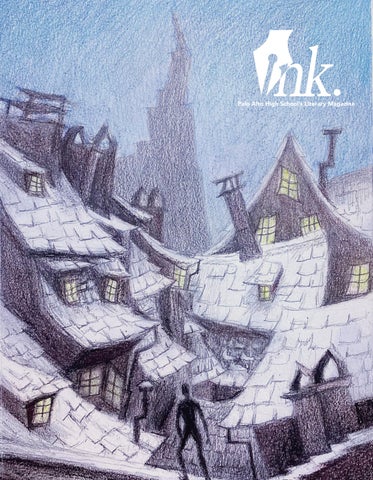
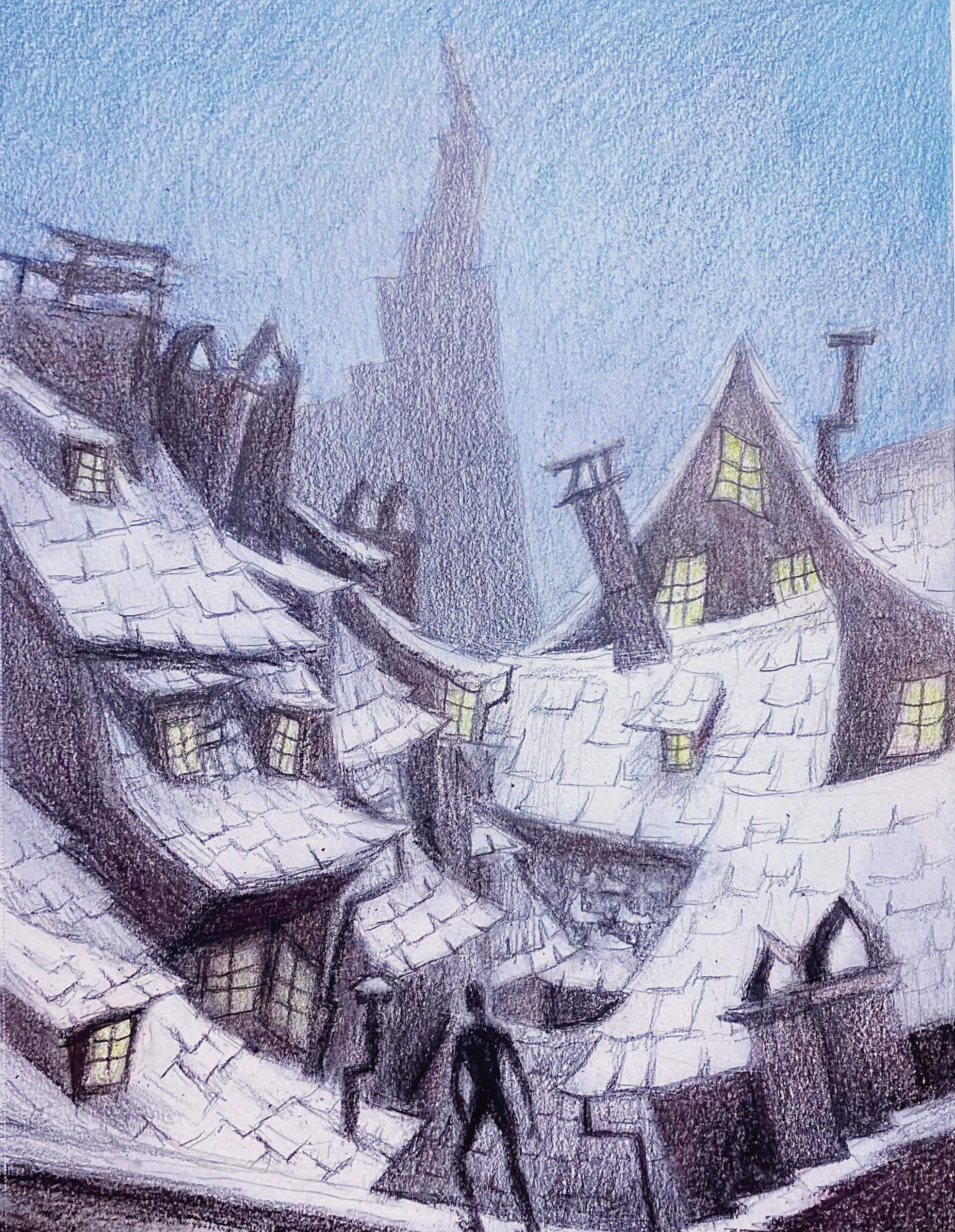
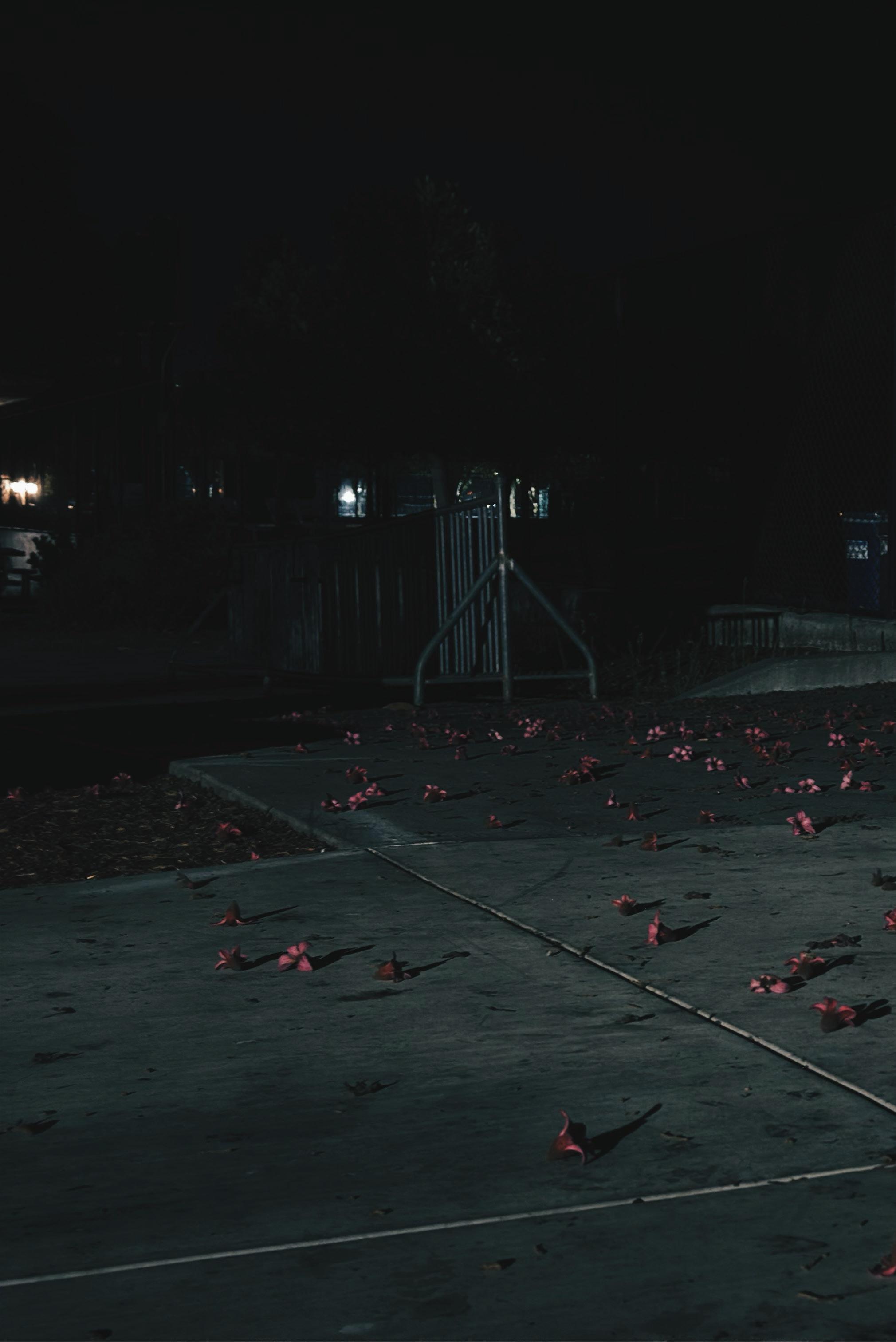
ON THE FRONT COVER
“rooftops” — dorian luo
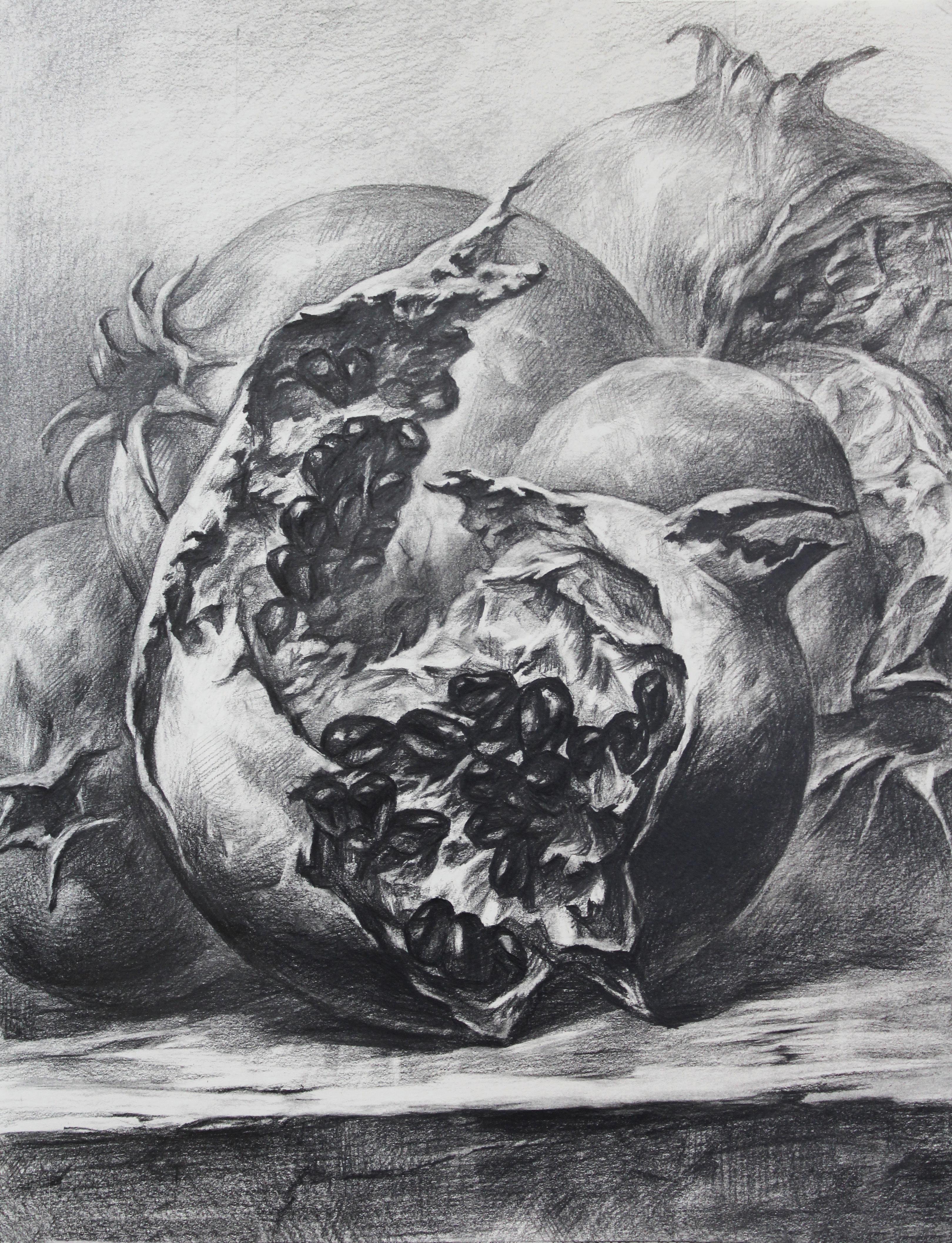
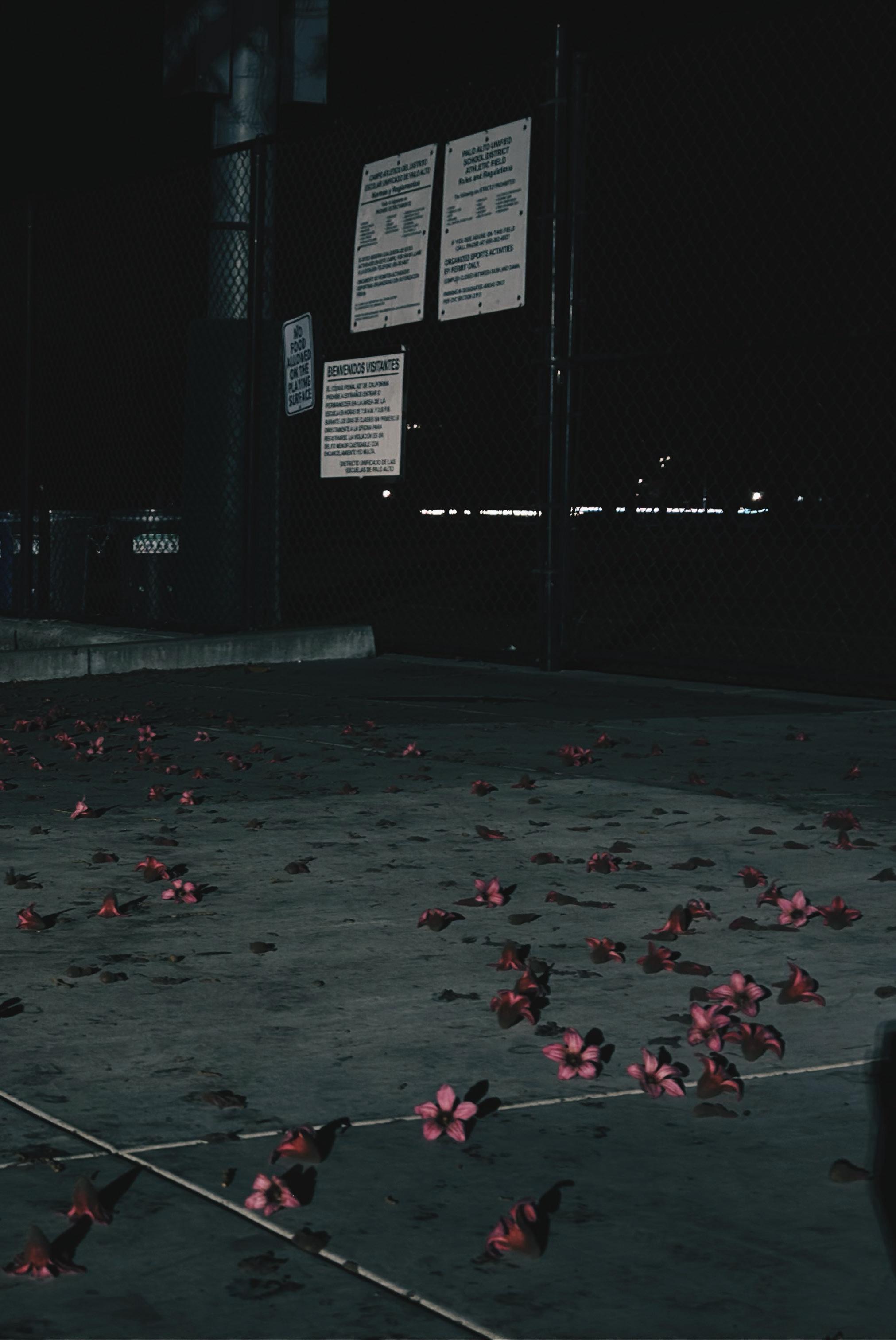
ON THE INSIDE COVER
“punica granatum” — ivy lee
WRITERS
joyce ma
clive rudolph
danny khan
chloe chan miles miller
denise dinh
xander yap
motoko iwata juni thurston henry germain richard zhang
ARTISTS
dorian luo
boris nezlobin
teresa wang
motoko iwata ivy lee
ADVERTISING
To publish an advertisement in Ink or as part of a bundle with other Incubator publications, fill out the ad contract at inkliterarymag.org and email it to palyjournalismincubator@gmail.com.
PRINTING
Issues of Ink are printed by aPrintis in Pleasanton, CA. Funding for printing comes primarily from advertisements and grants. Copies are distributed in classrooms, in the Media Arts Center, and elsewhere.
LETTER FROM THE EDITOR
We are delighted to present Ink magazine’s 12th print issue. Inside we have five poems, a short story, a review and a personality profile. This issue explores diverse themes from Juni Thurston’s deep look into how industry affects artistry to poet Miles Miller’s reflection on heaven.
This issue of Ink would not be possible without our advertisers and the MAC Boosters, or without the guidance and support of our adviser, Paul Kandell. We’re so excited for you to read this issue of Ink!
Submit to Ink’s next issue at www.inkliterarymag.org/submit
Xander Yap editor-in-chief
PAST EDITIONS
Looking for more Ink?
All stories, poetry and creative writing is published online at www.inkliterarymag.org
All magazines, like the one you see to the left, are published on our issuu at https://issuu.com/ink.litmag
text by xander yap and motoko iwata
Student Author Spotlight
Danny Khan shares an exclusive look into his poetry journey
In a dimly lit room, with family photos on the wall, faint music in the background, Palo Alto High School senior and student poet Danny Khan begins to read aloud: “Beg and plea for sweet relief,” he says. “But suffer in memory in bitter season.” His words mark the start of a new season in his spoken word poetry series, and reflect on his years of creating it to discover himself.
He has been posting this poetry on his instagram account this July and has just started his second season of poetry.
seriously.”
Khan said he was inspired to share his poetry by his friends’ support.
“The first thing [that built his confidence] was letting my friends read my poems and [them] telling me that they actually liked them, which I never thought they would,” Khan said. “Like when I let my friend Tevita read some of my poems in my poetry book and he really liked them.”
According to Khan, his big breakthrough came during the Paly cultural assembly last year.
“It’s the authenticity and the reality that really connects with people, not necessarily the poetry”
Khan said he believes the poetry he’s posting is really important because of how it connects people.
— Danny Khan, Paly senior
“We’re so connected through social media,” Khan said. “So maybe something might pop up in your feed that really resonates with you and really connects with you.”
But he’s been writing this poetry since he was much younger.
“I started writing poetry in seventh grade,” Khan said. “I was really self conscious then. So every time I would write a poem, I would think that it sucks. Then I would rip the poems out of my notebook, and throw it away.”
But Khan said his confidence as a poet has grown through support he experienced in Paly English.
“In my sophomore year we did a poetry unit,” Khan said, “I submitted a poem and even with me not trying, she [His English teacher] said it was really good. [So] when I tried again, she said I should do this a lot more so she’s the one that really made me, take it more
“When I got the opportunity to write for that cultural assembly, I was nervous, but I feel if they’re worthy of sharing, they might as well be shared,” Khan said. “And what made me proud of myself was, because it was a cultural assembly, I had a lot of Mexican kids come up to me and hug me. [They were] saying that they really connect with the piece that I did because it had a lot of references to growing up being Mexican in the United States.”
Khan writes as keep a record of who he is.
“I really grew not just as a poet or a person, but also as a thinker,” Khan said. “Its me looking back at how much I matured. It’s almost like I’m meditating within certain decisions I made”
Additionally for Khan, poetry is a way of expressing himself.
“My meaning of poetry is just simply to show another way of how I’m being myself”
And he says this authenticity connects to people.
“It’s the authenticity and the reality that really connects with people, not necessarily the poetry”
To other artists, Khan recommends having more confidence in their work.
“When it comes to art, there’s no such thing as the right way,” Khan said.
“If you want it to sound good, it has to sound good to you, and don’t worry about other people, because at the end of the day, competition and comparison are the things that kill art.”
Khan says that authenticity is important for poetry.
“Just be yourself,” Khan said. “Both poetry and life is a form of art, because at the end of the day, you’re still living your own life, the same way that I still write my own poetry about myself. Be yourself.”
As for future plans, Khan says that he wants to keep doing poetry to connect with others.
“It’s going to be a part of my life in the future,” Khan said. “I’m not trying to be famous, but I want to have some type of significance in people’s hearts.”
Read right for poetry by Danny Khan
photo by motoko iwata
text by danny khan photo by boris nezlobin
Before the Rose Rots
Beg and plea for sweet relief
But suffer in memory in bitter seas
Drown in your sorrow or feed from your tears
Allow the rose to repair its petals
Before the rose rots, it had to die
Live its life inside its own concrete
But its own roots, lifts its beauty above the breeze
Before the rose rots, it had to bloom
Not in soil but in the pavement we stomp on
From the drops of rain and urine from rats
Before the rose rots, it needs its will
Bloody thorns, chipped or intact,
Battles are fought for another day to take
Before the rose rots, it needs to breathe
From the polluted air, or through cracks in cement
Before the rose rots, it needs its spirit
So let it live
text by joyce ma
What [Remains]
In between before and after, the world was choking and burning. A blind bolting rush, a desperate gasp of air — — a stampede of suffocating fear.
Dull shells gleaming, a wave of skittering arms and legs, burst from the dry cracked ground. Fighting for the battle of their lives, they march onwards in a drumbeat of war. A frothing swarm of soldiers leaving pale dust in their wake.
In the tepid ponds, slippery webbed feet dig and burrow into the moist floor, Sheltering under big rocks and shadowy logs Safely ensconced in darkness Cowering away from the thunder above.
When the blaze begins, wings take flight in a whirl of motion into the blood-orange sky raining down a barrage of dark feathers.
Tripping over twisting roots, a flurry of hoofed feet pound in an angry crescendo of sound. Small paws, in a panic, dash into a trapping jaw of snapping teeth in a blur of white smoke and movement, trying to survive the onslaught
Engulfed in a plume of bright flame and black smoke, a towering giant creaks and groans, crashing down onto the forest floor crushing the unlucky few too slow to dodge away.
As the fire grows, those huddling in the burrows, packed like sardines and the countless still left behind are scorched alive above and below in an inferno of heat.
By the falling night, a rising pale face dons a veil of bitter grief for all that’s left of the place called home, is a smoldering ruin of painful memories blanketed by a cremation of death, a funeral for the voiceless.
By dawn, the sky will weep covering the blistered ground with a blanket of tears, A gentle pitter patter soothing the wounds left behind
And soon, even the embers will die too, Hissing and sputtering a final time, Meeting their end with a sigh of relief
And soon, the animals will return Gingerly traversing a blackened world Picking through the rubble of their lives
And soon, a new life will awaken from the ashes. Pushing out and past the skeletons left behind, What remains is a cluster of bell-shaped flowers whispering in the wind
Bird Thing
The moon has red eyes
And left to right
Wings like birds all wide in flight
Through the trees
On October 3rd-
A quiet breeze -
Consolation rhubarb ice cream
Began to melt in the bitter cold
When I first met his gaze
Labor Day decorations coming down
And up again, the pumpkin heads
A silent chime as autumn mounts
And the shape performs yet again
We Were Together Last Night
The TV is loud and we are tucked together like sardines
There is not enough space on this twin bed of hers
So we shout, complain, and accuse friends of unfairness
In trying to divide one space into five we argue
Forgetting smiles are harder to hide in the dark
The TV is loud and we are louder
in cries of debates for what we will tune out tonight
Paper thin walls enclose us in a room of hushed laughter and whispers
Of recalling the day before of the things we will forget tomorrow
So
We drift away on borrowed cotton mountains under oceans of polyester that smell of someone else’s detergent
In between presence we take for granted
Overlapping breaths and knocking knees that go unnoticed
Sounds of restlessness carry through the night
A comfort fleeting as dawn finds us and as Tomorrow seeps into slits of her blinds we seal away this moment of right now in times missed when us five go back to living
Tomorrow
The TV will be loud and we will not be here to notice
text by denise dinh
art by dorian luo
text by juni thurston
Is “Star” simply subpar?
2hollis receives mixed reviews with his newest album
As alternative electronic artist 2hollis moves to add more stops to his first worldwide tour, his most recent album “Star” becomes all the more important to revisit. Despite garnering millions of streams in its first week of release, “Star” was by far his lowest-rated project. On a popular music-based online encyclopedia, named Rate Your Music, “Star” was rated on average a 2.78 out of 5, compared to 3.35 on “White Tiger,” 2hollis’ previously lowest rated album.
“Star” is also 2hollis’ first album to be released with a record label — Interscope Records — a label controlled by UMG, the biggest record company label in the world. Many fans, including myself, wonder how this may have impacted 2hollis’ newest album.
Palo Alto High School junior and long-time 2hollis fan Jack January says that “Star” was less exciting compared to 2hollis’ previous releases, and that the record label it was published with is in large part to blame.
“I think now a lot of the corporate … forces kind of brought him to a situation where he was left to make the album more diluted and more watered down than it would be,” January said.
While 2hollis’ music has been extraordinarily popular in his specific genre, it doesn’t have all that much mass appeal. Experimental electronic music, the genre 2hollis has generally aligned with in the past, has yet to gain significant traction in more mainstream music circles.
Mass appeal, however, is precisely what big record labels need. According to a 2025 study published in Cambridge’s Finances and Society journal, music over the past two centuries has become simplified
and less diverse in its composition. They attribute this homogenization to what they call the “financialization” of music — songs being valued as assets to be invested in and traded on by record labels.
As such, labels view artists and their songs as investments. The more palatable the music they release, the safer the asset.
With this in mind, I worry that Interscope, a subsidiary of what may be the pinnacle of corporate interest in music, impacted 2hollis’ album “Star” — perhaps leading to a less experimental and more palatable album.
This is not to say that “Star” has no redeeming qualities. Many songs on the album are undeniably catchy — but sound like they could be from other, more generic artists’ catalogs. The 13th track, “Sidekick,” highlights this problem perfectly. It is the secondmost-streamed song from “Star,” but
the song has little more than generic one-liners over a simple melody with heavy bass and trap drums. In the first verse of the song, for example, the only real lyric excluding adlibs is “I ain’t never been no f— sidekick, uh / Sidekick, Jackie, Jackie, Jackie Chan, yeah,” a line that borders on nonsensical, often taking me out of the listening experience. It’s not all that distinct from other trending instrumental-based trap songs by artists like Playboi Carti or Ken Carson.
“Sidekick” highlights a general trend of overwhelming lyrical simplicity that leaves much to be desired compared to songs from his previous albums. Lyrically, “Sidekick” is a hype song meant to convey excessive confidence, but within its brief runtime of just 1 minute and 18 seconds, this idea is not elaborated upon. This is in stark contrast to other songs from his 2024 album “Boy” that explore similar concepts of fame with more solid lyrical content, like “Teenage Soldier” or “I Saw It Flash Before Me.”
2hollis has had vast success in his musical career, starting as a 13-year-old SoundCloud rapper using the alias “drippysoup” to becoming one of the most well-known figures in the alternative electronic scene — but he got there because of his creativity and willingness to go outside of the box, not by conforming to it.
Although 2hollis’ newest album didn’t live up to what I and many others expected, 2hollis is still a promising up-and-coming artist who I hope can strike a delicate balance of being able to climb the music industry ladder while still maintaining his unique style and lyrical complexity.
art by doreen hou
Death of the Smile
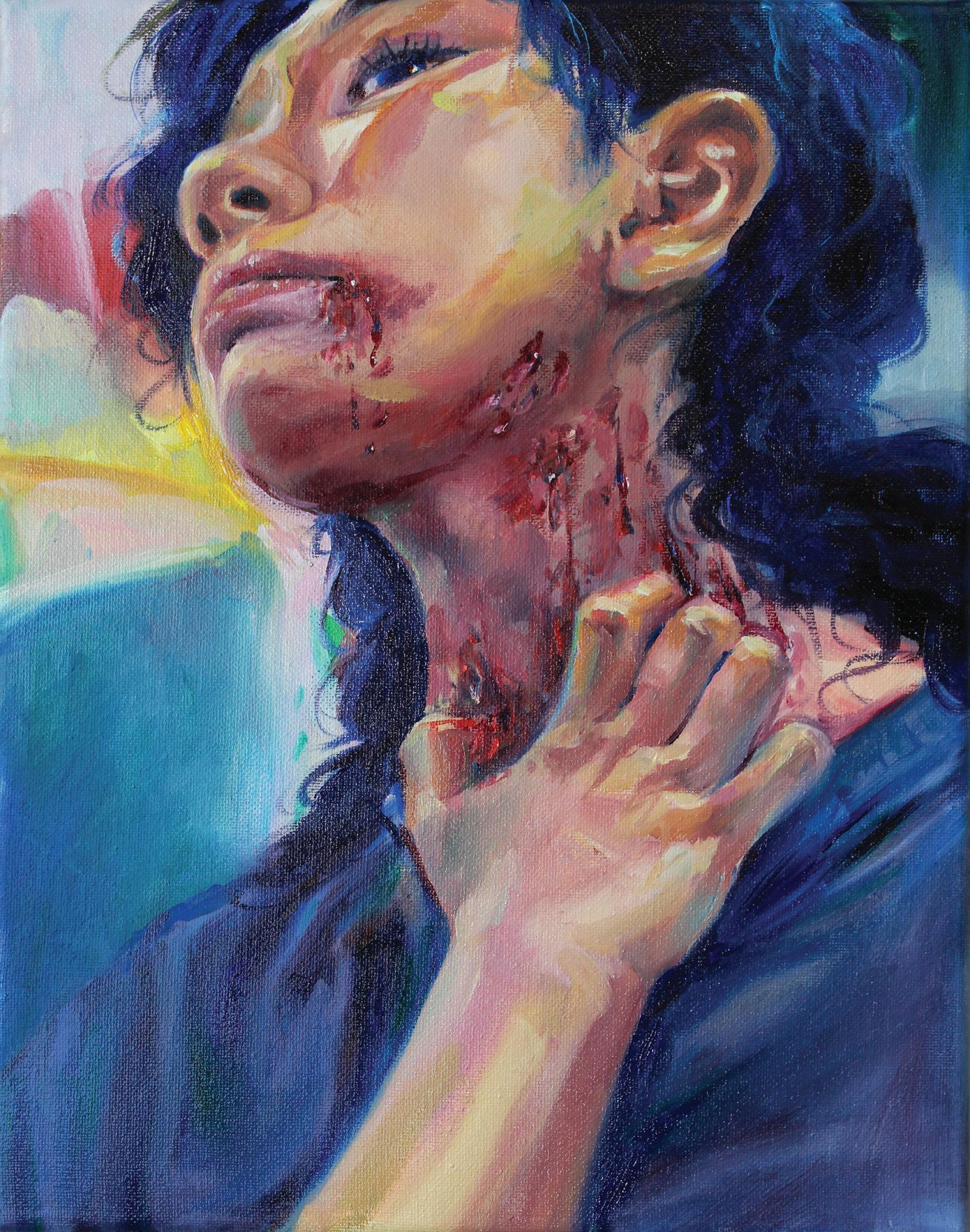
The ceiling above is stained a dark, yellowed brown, looking like it’s about to collapse at any time. From the rusted sink, a water droplet falls, echoing through the tiniest apartment New York City could forget. The wallpaper curls inward at the edges like it’s trying to escape. The windows are cracked and covered with tape, and the flickering lights tremble across the room, casting shadows even when no one is moving.
I lie here on this bed, thinking, this is where I would die. Alone.
But smiling.
I didn’t go to the hospital. I didn’t contact anyone. Everyone in this city already knows. People don’t leave their homes, and if they do, they wear a mask. Not to stop a virus or an incurable disease, but to keep a smile away from the face. The smile that took everything from me.
It all started with her.
The ache in my cheeks deepens, the corner of my mouth rises every second I lie here. But before I lose control completely, I need to record and write down the truth. I need to tell the story that people won’t believe in centuries later.
I have to tell how this all happened, how I lost my daughter.
She was always headstrong. She never listened to me, never cared for caution, and was always certain she knew better than me. Once she set her mind to accomplishing something, there was no way of stopping her. “Mom, I know what I’m doing,” she tells me all the time. I used to admire that fire
and curiosity that was deeply planted in her until the day it consumed both of us.
That day, the Times Square 42nd Street subway station was packed beyond reason. Announcement echoed overheard, trains screeching, luggage rolling around, voices tangled in a million different directions. She held my hand, but only for a moment. “Mom, I’ll be right back,” she said, and before I could stop her, she slipped away into the crowd.
It wasn’t unusual for her to wander off, so I tried to follow her, calling her name, but she had already run into the women’s bathroom. The bathroom she entered was filthy –sticky and wet floor, graffiti covering all corners, teenagers vaping by the mirrors, a man splashing water on his face, and the air smelled like a mixture of metal and dirt. But she didn’t care. Nothing bothered her. What caught her attention was something small, something simple: a nicely packed sugar cookie lying on the floor. It looked fresh. Round, perfectly shaped, white icing, two small dots for eyes – and a red, wide smile.
Without any hesitation, she picked it up. And without a thought, she shoved the entire cookie into her mouth before I could stop her.
Minutes later, she was gone again, swallowed by the sea of bodies. I tried to chase her through the hot and thick air, past the flashing lights and glow of billboards, shouting her name. Then I saw her. The back of her coat disappeared into a train crammed with peo-
ple. I reached out, but the doors clamped shut just before I could grab her arm.
Her face appeared smushed against the window - smiling. I kept mouthing, telling her to meet me at the next station, but she kept smiling. At first, I thought it was just a normal smile that she understood what I meant. But then it began to grow. Very slowly. Unaturally. The corners of her mouth trembled, then got pulled back, split wider, wider still until they got stretched to the point where they strained like wet paper. Her lips peeled back so far that her gums showed, a red, raw grin. Her eyes became huge, pupil blown, the red threads in them spreading like cracks in glass. Tears glazed the surface, making her eyes seem like they could pop out from her skull. She scratched her face trying to stop it, but it kept growing - as though magnets were forcing her face to stretch farther and farther.
The train did not move. It just sat there, humming low and wrong, and so did I. I froze, stared, blank and still, watching through the glass, my body locked in place. Soon, the woman next to her finally saw what was going on; She jumped, her hand brushed her arms.
That was all it took.
The woman’s mouth began to tremble, her lips jerking upward against her will. Her eyes widened, but the evil smile kept growing until her face was about to rip open. The passengers around them started to panic, clawing to get away.
However, it was too late. One by one, their faces cracked open with the same joy, and the sound of quiet laughter soon echoed beneath the station lights.
The doors suddenly popped open. A pile of people stacking on top of each other, screaming, fleeing, some hid their faces with their palms, some wrapped themselves in their coats.
I didn’t run. I didn’t scream. I didn’t shout. I just stood there and, before I could react, once again the door closed and the train disappeared into the darkness of the tunnel.
Her face was the last thing I saw, twisted in panic as people shoved past her. The world around me is running in chaos. However, all I heard was silence. Fear held me like a stone. I had to let her go.
The city changed overnight. The NYC Government issued a warning and an alert: STAY INDOORS, AVOID ANY PHYSICAL AND EYE CONTACT.
By the morning, news anchors wore masks on live television, voices trembling when reading their script as if they did not understand what they were saying. That is when the truth came out; it has been revealed that the Smile Company was trying to make a cookie that brings people joy, and it has been suspected that one of the testing cookies was accidentally taken out of the lab.
Soon, the city that never slept went still. Streets were only filled with several people with thousands of layers of masks on. Their eyes were darting nervously, avoiding eye contact and reflection. But for many, it was already too late. The laughter and chatter in the atmosphere were soon replaced by a low hum. The sound of people trying not to breathe too loudly behind their masks.
Her name was on the news, but not a single phone call. The news
reports called her “The Subway Girl,” the one who started it all. No one knew where she went after the train ride.
I stayed in my apartment, watching the busiest cities in the world collapse and shut down through my window. Every social media page described individuals’ faces stretching into the possible grins, people clawing at their cheeks as their skin split and sliced open. The smile just doesn’t freeze an individual’s face, but it would physically consume one, and the skin would rip open other body parts, and all skin would soon decay, leading to one’s death.
That night, I looked in the mirror.
My reflection smiled first. I didn’t feel it in the beginning, just a small twist. But then it spread, slow and sure, until my jaw ached and tears ran down my face. I tried to cover it with my hands, with clothes, tried to resist, but it was useless.
Now, lying here, I can feel the numbness on my face and other parts of my skin ripping open. Tears slide down my face as the corners of my mouth stretch higher and higher. My cheeks cracked, my eyes blurred, but I can still remember her smiling in the train car.
They say a smile can light up a room, a person’s mood. However, this one, this one smile burned the whole world down.
Heaven?
Did you reach the gates of heaven? Did the angels treat you well?
Did you look for me from heaven? I just can’t tell.
Did you reach the gates of heaven? Did the angels see you smile?
Tell me... is there a heaven? I haven’t seen one in a while.
So many are on a car ride home, with millions of lost souls
Praying that there’s a God to keep them warm
‘Cause I see their bleeding eyes, and I pray it won’t be another lonely night
I’m afraid I won’t survive, without knowing you’re in the angels’ skies
Maybe I’m a product of the fan blades, or another creation marked a mistake.