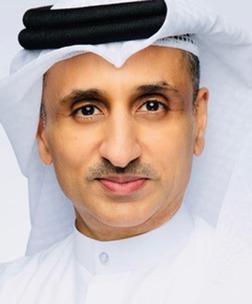
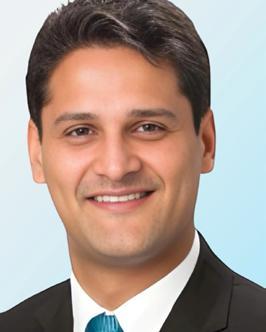
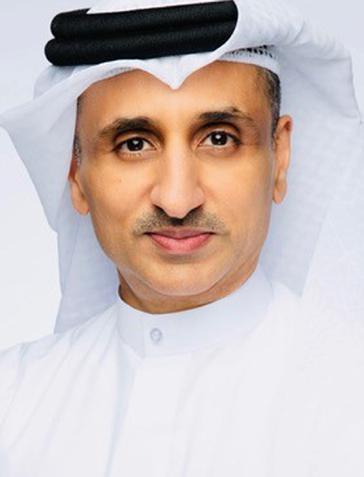
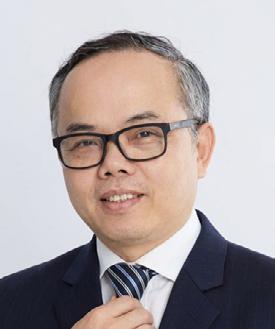
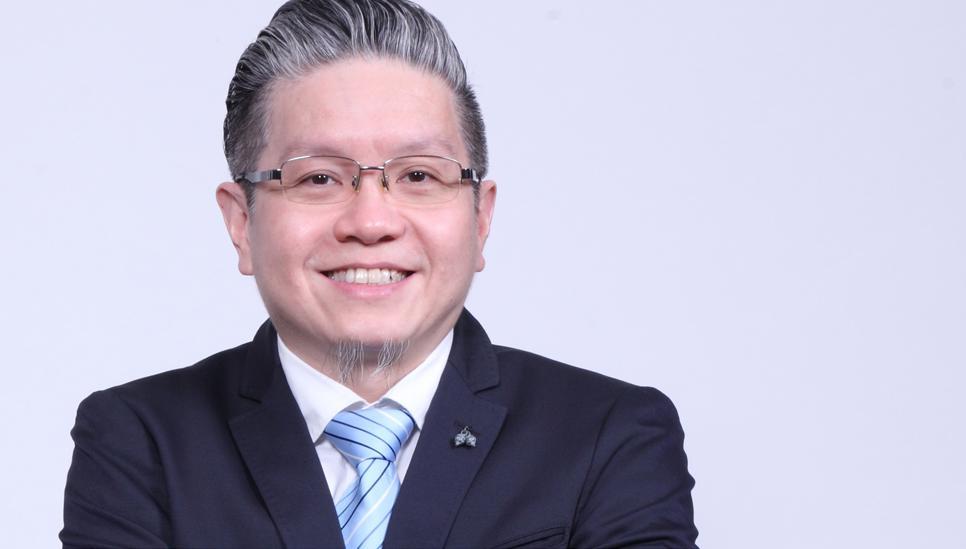
Abdelaziz Alhanaee, founder, Abdelaziz Alhanaee Law Firm
Abdelaziz Alhanaee is a UAE-based lawyer and the founder of Abdelaziz Alhanaee Law Firm. With over 23 years of experience, he specializes in civil and commercial litigation, arbitration, and criminal law. A registered arbitrator with DIAC and ICC, he has acted in numerous local and international cases and is recognized for his strategic legal expertise and strong courtroom presence.
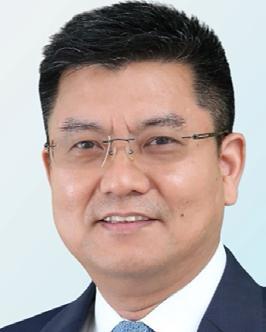
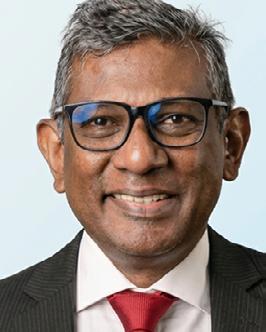
Titus Rahiri, CEO and Founder, KorumLegal
Titus Rahiri is the CEO and Founder of KorumLegal, a Hong Kong-headquartered legal solutions provider with offices across Asia-Pacific, Europe, and the Middle East. A former General Counsel with more than 25 years’ experience across private practice and global companies including Expedia, Titus founded KorumLegal in 2016 to rethink legal service delivery. The company is a Chambers Band 1 ALSP in AsiaPacific, where Titus is also ranked Band 1 Individual.
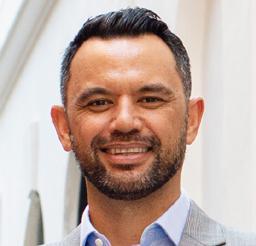
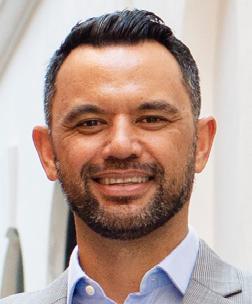
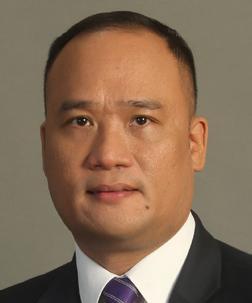
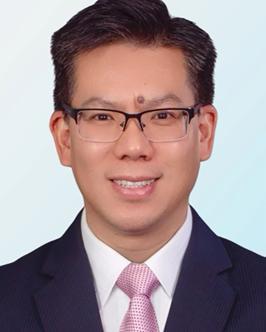
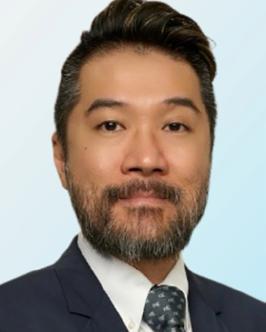
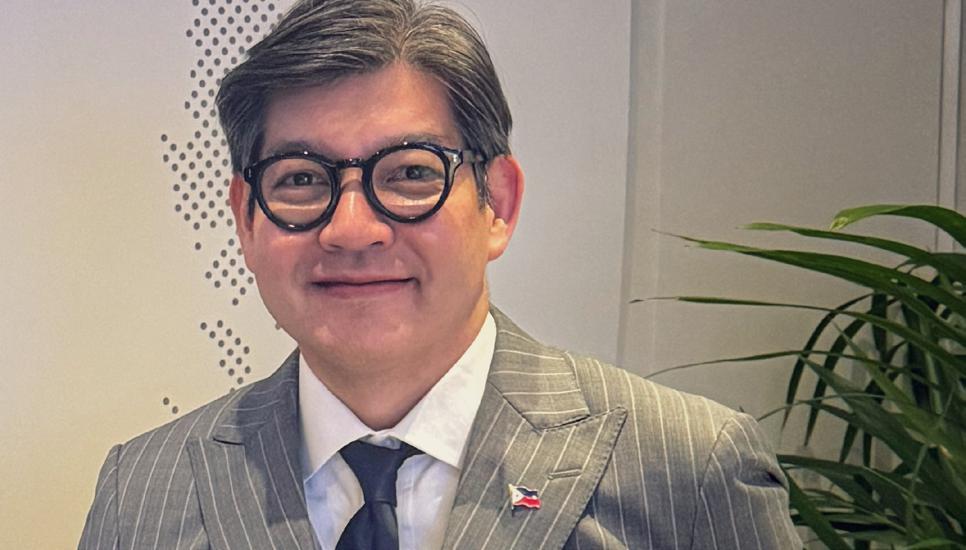
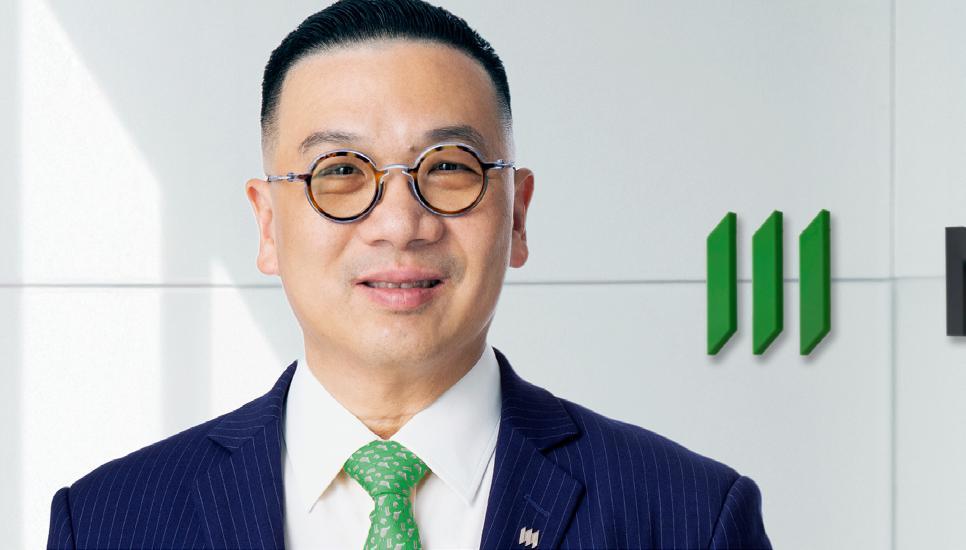
Michael Gu, Senior Partner and Head of Competition Practice, Hylands Law Firm
Michael Gu is Senior Partner and Head of Competition Practice at Hylands Law Firm. A pioneer of China’s antitrust regime, he secured the first merger clearance under the Anti-Monopoly Law in 2008 and has advised multinationals on high-profile merger filings, investigations, litigation, and leniency matters.
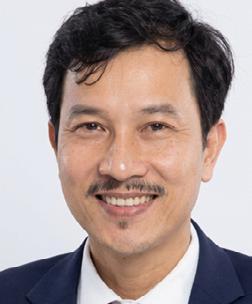
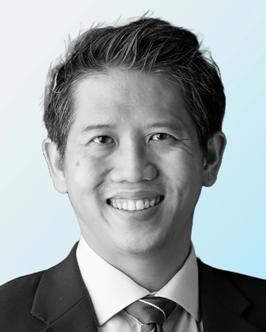
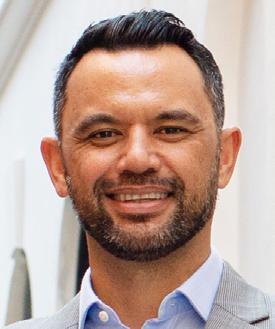
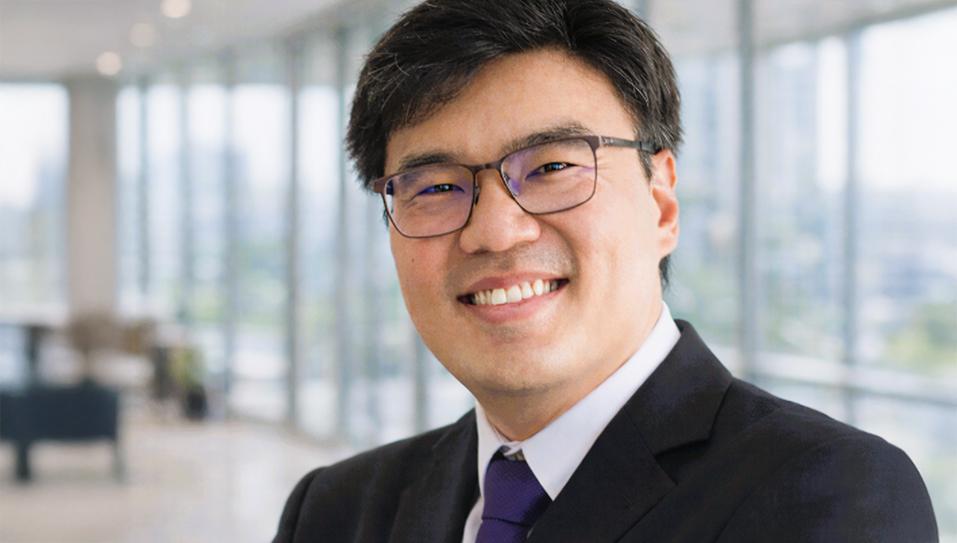
Ngoc Luong Trinh, Partner, VILAF
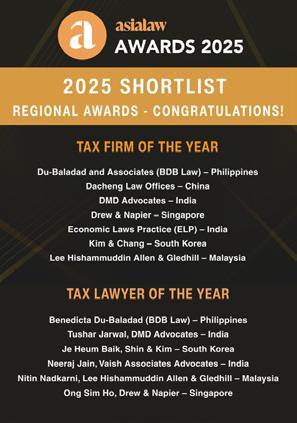
Ngoc has extensive experience in foreign invested projects, M&A transactions, corporate, capital markets, employment, antitrust, and tax. He is a distinguished practitioner in Vietnam, recognised by Asialaw for his expertise in Corporate and M&A, and is valued for his practical, solution oriented and commercially driven advice.
In-House Community
Dr.
Vu
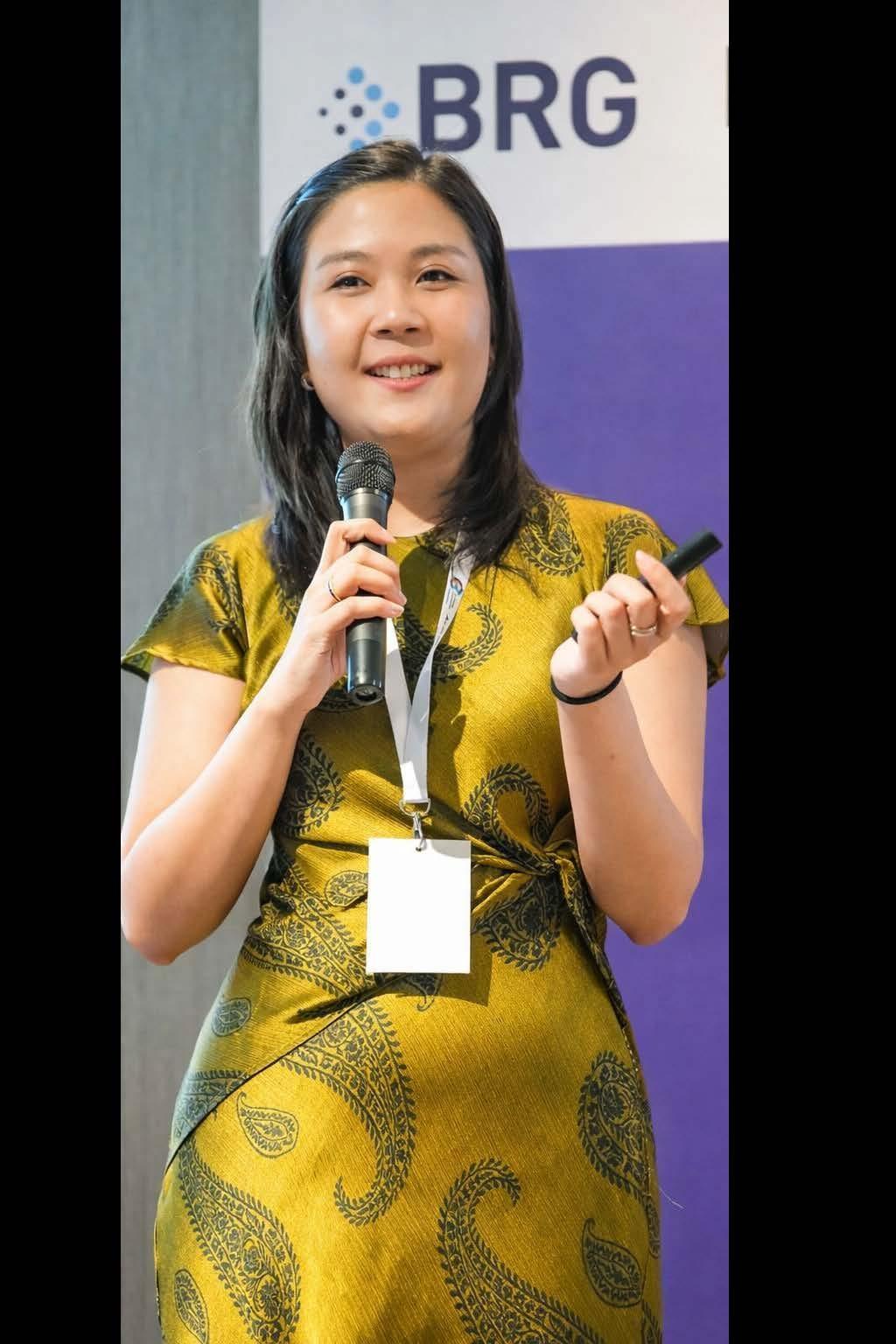
Thanh Minh, Partner, LNT & Partners
Magazine
Dr. Vu Thanh Minh is a Partner at LNT & Partners and Managing Partner of its Hanoi Office, leading the Financial Services practice. She is recognized in ALB Asia 40 Under 40 (2021), ALB Asia’s Top 15 Female Lawyers (2025), and Benchmark Litigation Asia-Pacific Top 40 Under 40 (2024–2025).
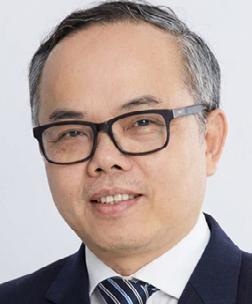
Nguyen Xuan Thuy, Partner, LNT & Partners
Mr. Nguyen Xuan Thuy is a Partner at LNT & Partners with over 20 years of legal experience. He advises on investment, M&A, banking, and regulatory matters, and is a trusted litigator in commercial disputes. He regularly contributes to leading legal publications and policy development in Vietnam.
Dr. Le Net, Partner, LNT & Partners
Dr. Le Net is a Partner at LNT & Partners, leading the infrastructure practice. He serves as an arbitrator at VIAC, SIAC, BAC, and SCIA. He has extensive experience in litigation and arbitration and also lectures at HCMC University of Law while holding leadership roles in Vietnam’s legal organizations.
Michael Gu on China’s Antitrust Evolution and What Multinationals Must Get Right
Vietnam’s Investment Law 2025
Digital Assets in Vietnam Legal Framework
Let’s Not Forget The Good Side Of
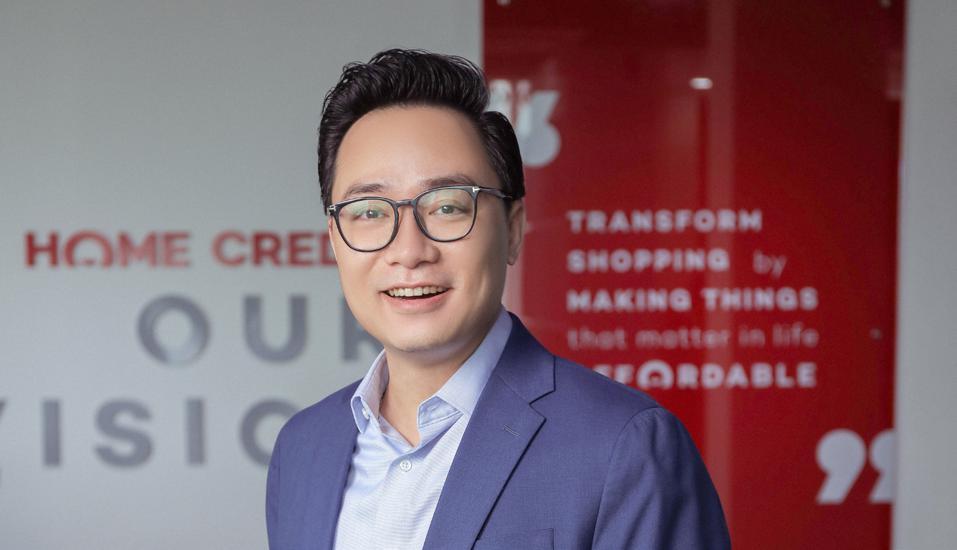
Scaling Trust: Inside MoMo’s Legal Transformation
Morgan Lewis Deepens Middle East Presence with Riyadh Office Launch
Morgan Lewis has opened an office in Riyadh, reinforcing its longstanding investment in Saudi Arabia and strengthening its ability to deliver integrated, full-service counsel aligned with the Kingdom’s evolving legal and business landscape.
The office launches with a six-lawyer team, including M&A and capital markets partners Dr Sultan Almasoud and Sanjarbek Abdukhalilov from A&O Shearman, and disputes lawyer Saeed Alqahtani from Al Tamimi & Company. Dr Almasoud will lead the Riyadh office and Saudi practice.
The team will be supported by regional specialists across finance and disputes, enhancing the firm’s Middle East platform.
Firm leaders said the move builds on decades of client relationships in Saudi Arabia and reflects a deeper commitment to the market.
With offices now in Dubai, Abu Dhabi and Riyadh, Morgan Lewis is positioned to advise investors, state entities and corporates
on cross-border transactions, financings and disputes, particularly across sectors such as energy, digital infrastructure and emerging technologies.
ARMA Law Appoints Founding Partner as New Managing Partner
ARMA Law has appointed Merari Sabati, a founding partner and expert in corporate, foreign investment and employment law, as its new managing partner.
The leadership transition supports the firm’s strategic vision ahead of its 10th anniversary in 2029, reinforcing its focus on excellence and innovation.
“With over 15 years of experience, Merari has advised multinational clients across industries, earning a reputation for strategic, results-driven counsel. Her work includes shaping regulatory and compliance frameworks in sectors such as health, personal care, property management, and for NGOs and foundations.
She also advises an international private school in Jakarta on complex regulatory matters.
Merari said she aims to lead the firm with a forward-looking approach, strengthening client relationships and ensuring ARMA Law remains a trusted legal partner.”
Yoon & Yang Strengthens Cross-Border
Corporate Advisory
Capabilities with Addition of Three Seasoned Practitioners
Yoon & Yang has strengthened its cross-border corporate advisory practice with the addition of Sukjin (SJ) Lim, senior foreign attorney; Yeon Jeong Chae, partner; and Minjung Jekarl, senior foreign attorney, enhancing its capabilities in foreign direct investment, outbound investment by Korean companies, and cross-border M&A.
The team joins from Kim Chang Lee, having worked together for many years on global and multi-jurisdictional transactions, bringing immediate synergy to the firm’s platform.
Lim, admitted in New York and New Jersey, has nearly 28 years’ experience advising on inbound and outbound investments, M&A, and joint ventures across sectors including IT, semiconductors, automotive and entertainment.
Chae brings over 20 years’ experience in crossborder transactions and regulatory matters, and has advised on high-profile investments, including Tencent’s investments in Korean companies, as well as labour matters involving foreign-invested businesses.
Jekarl, admitted in New York, focuses on M&A, joint ventures and FDI, with experience advising clients across the Americas, China, and the Middle East, including projects in the UAE and Saudi Arabia.
MOVES
Ashurst has welcomed Gareth Hughes back as a partner in its Hong Kong dispute resolution practice from Debevoise & Plimpton, marking a return for the senior litigator who previously led its Asia disputes team. Hughes has more than 25 years’ experience in Asia, focusing on commercial litigation, international arbitration and regulatory defence. He advises corporates, financial institutions and high net worth individuals on cross-border disputes, and has acted in proceedings under HKIAC, LCIA, SIAC, CIETAC, UNCITRAL and ICC rules, as well as regulatory investigations involving Hong Kong authorities.
RPC has appointed Ankit Goyal as a partner in its Singapore office, RPC Premier Law, strengthening its disputes capability across Asia and expanding its international arbitration practice and India Desk. He joins from Allen & Gledhill, focusing on international arbitration and cross-border disputes, with particular expertise in India-related matters. Goyal previously served at SIAC, supervising about 150 arbitrations. He has over 20 years’ experience advising clients across technology, media, IP and financial services sectors in complex AsiaPacific disputes.
Ontier has appointed Lojayne Shaheen , reinforcing its Middle East strategy and strengthening international arbitration as
a key growth pillar. She joins from Freshfields’ Riyadh office, bringing extensive dispute resolution experience across Europe, Egypt and Saudi Arabia. Shaheen will work with Middle East Desk Director Kamal Khashoggi to drive the firm’s regional strategy and establish a longterm presence in Saudi Arabia. She will also support the growth of Ontier’s international arbitration practice alongside its London team.
K&L Gates has added Guiping Lu as a capital markets partner in Hong Kong, rejoining the firm from Mayer Brown with counsel April Liu. Lu was previously a partner at K&L Gates from 2019 to 2021. He focuses on international debt and equity capital markets, advising underwriters, issuers and investors on high-yield and investment-grade debt, convertible bonds, MTN programmes and IPOs, including Rule 144A offerings. He also advises on cross-border M&A, venture capital, pre-IPO financings and US securities law matters.
Paul Hastings has added energy and infrastructure partner Sungjin Kang in Seoul, strengthening its capital markets and M&A capabilities in Korea. Kang will also spend time in Tokyo. He advises Korean, Japanese and international developers, sponsors and lenders on power,
infrastructure and oil and gas projects and financings. His experience includes major projects in Guam and Indonesia, and he has acted for clients including K-EXIM, K-SURE, Lotte Chemical and Korea Midland Power.
Squire Patton Boggs has hired corporate partner
Philip Lee in Singapore, joining from DLA Piper, where he held senior regional leadership roles across financial services, capital markets and the India practice. He arrives with a team of three lawyers. Lee has over 20 years’ experience across M&A, joint ventures, capital markets, restructuring and private equity. He advises clients in financial services, energy, technology, infrastructure and telecoms, with particular expertise in market access and regulatory licensing across Asia Pacific and South Asia.
Virtus Law, Stephenson
Harwood ’s alliance firm in Singapore, has strengthened its disputes practice with the arrival of partner
Terence Seah . He brings extensive experience in complex commercial disputes across sectors including medical, insurance, financial and technology. Seah specialises in commercial litigation, fraud and white-collar investigations and defence, and is known for his trial work. His recent matters include a successful criminal trial and a High Court win in a major conspiracy claim, combining
MOVES
financial expertise with investigative and defence capabilities.
Hourani has appointed Daniel Xu as a partner in its Litigation and Dispute Resolution practice in Dubai, joining from Eversheds Sutherland. A Singaporequalified lawyer and DIFC Courts advocate, he specialises in construction, engineering and infrastructure disputes, with a focus on international arbitration. Based in the Middle East since 2010, Xu advises governments, state-owned entities and corporates on project risk, dispute avoidance and high-value arbitrations across the Middle East and Asia Pacific, and sits on panels of several international arbitration centres.
K&L Gates has welcomed Huberta Chow as a partner in its asset management and investment funds practice in Hong Kong, joining from Broadfield. She has nearly 20 years’ experience advising asset managers and institutional investors on structuring and restructuring private funds across multiple jurisdictions. Chow has advised more than 100 fund managers and investors across hedge, private equity and hybrid funds, and co-investments. Her clients include sovereign wealth funds and financial institutions. She also contributed to Hong Kong’s Limited Partnership Funds Ordinance.
Malaysian firm Halim Hong & Quek has appointed Siva Kumar Kanagasabai as
MOVES
senior partner and head of dispute resolution, effective
1 January 2026, in a significant lateral move from Skrine. Kumar spent more than 30 years at Skrine, where he built a leading disputes practice spanning commercial litigation and arbitration, fraud and asset recovery, maritime and employment matters. He is widely recognised for handling complex, high-value disputes, including major fraud cases. His appointment comes as demand grows for sophisticated, cross-border dispute resolution. Managing partner Dato’ Quek Ngee Meng said Kumar’s experience and reputation would strengthen the firm’s ability to deliver high-value client outcomes.
Azmi & Associates has appointed Airene Ho as senior counsel in its Corporate & Commercial Practice Group, effective 15 January 2026.
Admitted to the Malaysian Bar in 1997, she brings more than 25 years’ experience across private practice and in-house
leadership. She began her career in practice before spending over two decades as general counsel and head of legal for leading organisations, and has now returned to private practice.
In practice, she has advised on complex corporate, commercial, intellectual property and litigation matters, including securing a landmark software piracy decision and acting in notable cases such as Arab-Malaysian Bank v Teamsystems Interior. She also advised Pengurusan Danaharta Nasional Berhad on non-performing loan recovery during the Asian financial crisis.
As an in-house lawyer, she handled highvalue, cross-border matters including acquisitions, investments, joint ventures and disputes, and advised boards across real estate and life sciences sectors, including on sustainability initiatives.
She holds an LLB from the University of East London, an MBA, and is certified in intellectual property management.
DEALS
A&O Shearman advised Deloitte Singapore’s SICC-appointed receivers on the court-supervised sale of DyStar Global Holdings shares to Zhejiang Longsheng Group in Singapore, in a landmark minority-oppression receivership. The deal implied a valuation of about US$1.8 billion. Partner Rishi Hindocha, supported by partners Tom Jokelson, Shuhui Kwok and Peter McDonald, led the team.
Allen & Gledhill advised DBS Bank and ICBC Singapore on S$418 million green term and revolving loan facilities to United Venture Development in Singapore, sponsored by UOL, Singapore Land and Kheng Leong, for a residential development at Dorset Road. Partner Lim Wei Ting led the team.
Allen & Gledhill advised Singapore’s Housing and Development Board on its issue of S$1.2 billion fixed rate notes under its S$42 billion multicurrency medium term note programme. Partners Margaret Chin and Sunit Chhabra led the team.
AZB & Partners advised TMF Group on its acquisition of a 100% stake in JSS Pro Services in India. Partner Nandita Govind led the team.
AZB & Partners advised Tiger Global’s Internet Fund V, an existing Wow Momo Foods investor, on Singularity AMC’s stake acquisition in Wow Momo Foods in India. Partners Ashwath Rau, Srinath Dasari and Nanditha Gopal are leading the team.
Baker McKenzie advised Hongxing Coldchain (Hunan) on its Hong Kong IPO
and listing, raising about HK$285.2 million, to support facilities expansion, equipment and technology upgrades, and strategic acquisitions. Hongxing is a frozen food storage and leasing provider in Hunan Province. Partners Dan Ouyang and Winfield Lau led the team, alongside Ronnie Li and Zhenzhen Bao.
Christopher & Lee Ong advised CGS International Securities Malaysia, as sole placement agent, on YTL Cement’s secondary placement of over 82.4 million Malayan Cement shares, raising MYR622.2 million in Malaysia. Partners Justin Chua and Vivian Lim led the team.
Clifford Chance advised Brookfield and a sovereign wealth investor on up to €1 billion holdco financing for Singapore-headquartered DayOne Data Centers, secured by its Finland
DEALS
platform, to support hyperscale developments in Lahti and Kouvola and broader EU and APAC expansion. Partner Tom England, supported by Matthew Buchanan and Shaun Langhorne, led the team.
Clifford Chance advised the sponsors and underwriters on Shenzhen Edge Medical’s Hong Kong IPO and listing, expected to raise about HK$1.2 billion. The Shenzhenbased surgical robotics company operates under Chapter 18A and is backed by cornerstone investors including Tencent and ADIA. Partners Fang Liu and Virginia Lee led the team.
Clifford Chance advised KKCG Maritime on its voluntary partial tender offer of up to €182 million for shares in Ferretti, the Italian luxury yacht maker dual-listed in Milan and Hong Kong, to increase KKCG’s stake from
14.5% to 29.9%. Partners Umberto Penco Salvi, Alex Bidlake, Milos Felgr and William Winterton led the team.
CMS IndusLaw advised Shriram Pistons & Rings on its 100% acquisition of three Grupo Antolin companies for about €159 million, expanding the Indian buyer into automotive lighting and interior components. Founding partner Avimukt Dar and partners Shantanu Jindel, Shweta Gupta, Ruhi Jain and Unnati Agrawal led the team.
CMS IndusLaw advised RTP Global on its investment in Ionic Professional in India, as part of the beauty and personal care brand’s Series A round. Partner Minhaz Lokhandwala led the team.
Davis Polk advised MiniMax Group on its Hong Kong IPO and Chapter 18C listing, plus
its Rule 144A and Regulation S offering, raising about HK$4.8 billion. MiniMax is a global AI foundation model company. Partners Li He and Jason Xu led the team.
DLA Piper advised Astra Partners on a €340 million financing facility from Ares Management to fund development of a data centre at Kildare Innovation Campus in Ireland. Partner Toby Barker, supported by Xavier Guzman, Jared Green, Michael Graham, Melody Brunot and Lars Jessen, led the team.
C&G Law and Rajah & Tann Singapore advised Arch Capital Management on selling its indirect stake in Pinnacle Cold Storage in the Philippines to Peregrine Cold Logistics, Stonepeak’s Asia Pacific and GCC cold chain
DEALS
platform. Partners Loh Chun Kiat and Norma Margarita Patacsil led the team.
JSA advised Coforge on its acquisition of Encora, a digital and software engineering services company owned by Advent International and Warburg Pincus, for about US$2.35 billion, one of the largest acquisitions by an Indian IT services firm. Partner Anand Lakra, supported by Niharika Mepani, Gerald Manoharan, Sonakshi Das, Yajas Setlur, Pratish Kumar, Sumitava Basu and Shareen Gupta, led the team.
JSA advised Nippon Steel on securing unconditional Competition Commission of India approval for its proposed ¥75.8 billion acquisition of the remaining 53.4% stake in Krosaki Harima, expanding the Japanese group’s presence in India’s steel-making value chain. Partner Nisha Kaur Uberoi, supported by Vikram Raghani, led the team.
JSA advised Xponentia Capital on its acquisition of a stake in ASEGO Global Assistance, a travel assistance and ancillary services business. Partner Sidharrth Shankar, supported by Nandini Seth, Shringarika Priyadarshini, Vaibhav Choukse and Ela Bali, led the team.
JSA advised Clean Max Tasman on about US$124.6 million financing from BNP Paribas, SMBC and Société Générale for construction and operation of a 140 MW AC wind power project in Karnataka, India. Partners Karan Mitroo and Kartikeya Dubey led the team.
K&L Gates advised SFOOD and S Foods USA on acquiring a majority stake in the
DEALS
parent of Old World Provisions and OWP Boston, premium meat processors in New York and Massachusetts, giving the South Korean buyer a North American production and sales foothold. Partners Tyler Hong Shik Won and Todd Southwell, supported by Scott Graham, Natalie Rainer, Mitch Weiss, Jacob Trevik and Devan Patrick, led the team.
K&L Gates advised Ally Logistic Property on a strategic investment from CapitaLand Investments, making CLI a strategic investor in the Asia-based smart logistics infrastructure company and supporting its regional expansion. Partner David Kuo led the team.
Latham & Watkins advised Black Spade Acquisition III on its US$172.5 million IPO of 17.25 million units in New York, including the underwriters’ full over-allotment option. Partners Sharon Lau and Stacey Wong led the team.
Latham & Watkins advised SoftBank Group on Emergent’s US$70 million Series B funding round, led by Khosla Ventures and SoftBank, to support the AI software creation platform’s product development, hiring and expansion. Partners Sidharth Bhasin and Nima Movahedi led the team.
Rajah & Tann Singapore advised Altallo Core Fund VCC on acquiring and financing Ang Mo Kio, Bukit Merah, Toa Payoh and Clementi HDB commercial properties in Singapore. Senior partner Norman Ho and partners Gazalle Mok and Loh Chun Kiat led the team.
S&R Associates advised Vodafone Group on its agreement with Vodafone Idea in India on the final amount payable under a contingent liability adjustment mechanism from the 2017 Vodafone India-Idea Cellular merger, and settlement of outstanding service charges. Partners Rajat Sethi and Meher Mehta led the team.
Saraf and Partners advised Adani Power on its Rs75 billion issue of secured, rated, listed, redeemable non-convertible debentures in India, the group’s largest domestic debt issuance and Adani Power’s first under SEBI’s new private placement framework. Partner Aroop Das, supported by Abir Lal Dey, led the team.
Saraf and Partners advised House of Diagnostics Healthcare and its promoters on 360 ONE’s minority investment in the North India diagnostics and imaging business, combining primary and secondary capital. Senior partner Vaibhav Kakkar and partners Sahil Arora and Debarpan Ghosh led the team.
Shardul Amarchand advised the 18-bank syndicate on the Rs106 billion IPO of ICICI Prudential Asset Management in India, comprising an offer for sale by Prudential Corporation and marking the largest syndicate assembled for an Indian IPO. Partners Nikhil Naredi and Abhiroop Amitava Datta led the team.
Simpson Thacher advised Kuaishou Technology on dual-currency senior notes offerings worth about US$2 billion equivalent, including US dollar and renminbi tranches, for the China-based content and social platform’s general corporate purposes. Partners Yi Gao, Daniel Fertig, Christopher Wong, Nicholas Ridley and Justin Browder led the team.
Simpson Thacher advised ByteDance and its affiliates on establishing TikTok US Joint Venture, a cross-border transaction spanning Asia and the United States and structured to comply with a 2025 executive order. Partners Eric Swedenburg, Atif Azher, Mark Myott, Sherry Shen and others led the team.
Trilegal advised Premji Invest and TPG NewQuest on their partial exit from iD Fresh Foods (India) to Apax Partners, which acquired about 35% through secondary purchases and a primary investment worth around Rs15 billion. Partner Ankit Kejriwal, supported by Kirti Balasubramanian and Kanishka Maggon, led the team.
Trilegal advised lead investor Mynavi Corporation on its investment in healthcare edtech business Virohan, as part of Virohan’s ongoing Series B fundraising in India. Partner Abhishek Dubey led the team.
DEALS
Trilegal advised the resolution professional on SevenHills Healthcare’s corporate insolvency resolution in India, culminating in January 2026 approval of a category-wise resolution for the Mumbai Hospital after one of the country’s longest-running insolvency proceedings. Partners Nishant Parikh, Kannan Rahul, Siddharth Ranade and Karishma Dodeja led the team.
TT&A advised Lohia Aerospace Systems on a fundraise of up to Rs1 billion from Singularity AMC through Series A compulsorily convertible preference shares for a 16.69% stake. Partners Gautam Saha and Shivranjani Ralawata led the team.
WongPartnership advised Citigroup Global Markets Singapore and DBS Bank, as joint book-runners and underwriters, on the IPO and Singapore listing of UltraGreen. ai. Partners Gail Ong and Karen Yeoh are leading the team.
Warranty Against Hidden Defects under the New UAE Civil Transactions Law:
A Critical Analytical Reading of Articles (493–510) Between Consumer Protection and Seller’s Risk
The warranty against hidden defects represents one of the most significant practical applications of the principle of good faith in contracts of exchange, particularly contracts of sale. It operates as a legal mechanism designed to preserve the contractual balance between the seller’s obligations and the buyer’s expectations.
Although this warranty was well established under the former UAE Civil Transactions Law (Federal Law No. 5 of 1985), the issuance of Federal Decree-Law No. 25 of 2025 has restructured these provisions under Articles (493–510), introducing a more precise and disciplined legislative framework with a clear orientation towards enhanced consumer protection. This article offers a critical analytical overview of these provisions and their practical implications.
I.Definition of the Hidden Defect: From Judicial Flexibility to Legislative Precision
Under the former law, the concept of a hidden defect was broadly framed as any defect that
diminishes the value or utility of the sold item, leaving the assessment of its hidden nature and the scope of reasonable inspection largely to judicial discretion. While this approach provided flexibility, it occasionally resulted in inconsistent judicial outcomes.
By contrast, Article (493) of the new law adopts a cumulative and objective definition, requiring that the defect:
• Is not apparent;
• Cannot be discovered through ordinary inspection;
• Has a material effect on the value or utility of the sold item; and
• Existed at the time of sale or arose from a pre-existing cause.
This development reflects a clear legislative shift from a discretionary standard to a structured legal test, enhancing legal certainty and predictability.
ABDELAZIZ ALHANAEE
II.Seller’s Warranty Obligation and the Limits of Exemption
The former law imposed liability on the seller for hidden defects regardless of whether the seller was aware of their existence, while permitting contractual exclusion of the warranty in the absence of fraud.
Articles (494–495) of the new law reaffirm this principle but introduce a stricter approach by:
• Rendering null and void any contractual exemption from warranty where fraud or deliberate concealment is established; and
• Allowing the buyer to claim compensation where the seller’s bad faith is proven.
Accordingly, the reform does not alter the foundation of the warranty itself, but rather intensifies the legal consequences of dishonest or bad-faith conduct.
III. Conditions for Invoking the Warranty
Under the former legal regime, the conditions for invoking the warranty against hidden defects were largely shaped by judicial practice, which occasionally led to divergent interpretations.
The new law expressly codifies these conditions, requiring the buyer to prove that the defect:
• Is hidden and material;
• Pre-existed delivery;
• Was unknown to the buyer at the time of sale and was neither expressly nor implicitly accepted.
The law also specifies situations in which the warranty is excluded, such as when the buyer disposes of the item in a manner that prevents restitution, or when the item perishes after
delivery due to an external cause. This codification enhances transactional stability and legal predictability.
IV.Buyer’s Remedies: Rescission or Arsh (Price Reduction)
Under the former law, once a hidden defect was established, the buyer was entitled to seek either rescission of the sale or a reduction of the purchase price.
The new law employs the classical jurisprudential term “Arsh”, which is substantively equivalent to price reduction. This represents a terminological unification rather than a substantive change. The combination of these remedies with a claim for compensation remains limited to cases involving fraud or gross fault.
V. Extension of the Limitation Period: A
Clear Consumer Protection Orientation
One of the most notable developments introduced by the new law is the extension of the limitation period applicable to warranty claims.
Under the former law, once a hidden defect was established, the buyer was entitled to seek either rescission of the sale or a reduction of the purchase price.
Whereas under the former law such claims were time-barred after six months from the date of delivery, the new law extends this period to one full year commencing from the
day following delivery, without prejudice to claims based on fraud.
This extension reflects a clear legislative intent to strengthen consumer protection by allowing latent defects sufficient time to manifest. At the same time, it increases sellers’ legal exposure, particularly professional and commercial sellers.
VI.Practical Challenges: Motor Vehicle Sales as a Case Study
The practical implications of the extended limitation period are particularly evident in motor vehicle sales. For example, where a buyer uses a vehicle for nearly eleven months and drives more than 50,000 kilometers before alleging a hidden defect, the mere occurrence of the defect within the one-year
period is not, in itself, sufficient to establish seller liability.
The decisive question remains whether the defect:
• Existed at the time of delivery or resulted from a pre-existing cause; or
• Arose from intensive or abnormal use, or from ordinary wear and tear.
Extensive use within a short timeframe constitutes a strong factual presumption of consumption, unless conclusively disproven by technical evidence.
VII.The Decisive Role of Technical Expertise
Disputes relating to hidden defects are inherently technical in nature. Judicial
determination in such cases depends primarily on expert evidence assessing:
• The nature and origin of the defect;
• Its connection to manufacturing defects or usage patterns; and
• The actual condition of the sold item at the time the defect manifested.
Seller liability arises only where expert reports establish that the defect was latent and pre-existed the sale, rather than resulting from use, neglect, or external factors.
VIII.Forward-Looking Perspective: Legislative Amendment or Judicial Development
From a professional and doctrinal standpoint, it is foreseeable that the UAE legislator may revisit certain aspects of these provisions in light of practical application, particularly to recalibrate the balance between consumer protection and commercial certainty.
Conclusion
The new UAE Civil Transactions Law has introduced a more structured and disciplined framework governing warranty against hidden defects, with a clear inclination towards enhanced consumer protection, most notably through the extension of limitation periods.
Nevertheless, such protection is not absolute. Sellers remain shielded from liability arising from abnormal use or unfounded claims, and the ultimate resolution of disputes continues to depend on technical evidence and judicial assessment. The future evolution of this legal regime will depend either on further legislative refinement or on the stabilisation of judicial principles developed by the higher courts, ensuring a balanced and predictable application of the law.
Extensive use within a short timeframe constitutes a strong factual presumption of consumption, unless conclusively disproven by technical evidence.
Alternatively, and perhaps more immediately, the UAE Courts of Cassation are expected to play a decisive role in developing authoritative judicial principles governing the interpretation and application of these provisions, thereby ensuring consistency and legal stability.
Abdelaziz Alhanaee, founder, Abdelaziz Alhanaee Law Firm
Abdelaziz Alhanaee is a UAE-based lawyer and the founder of Abdelaziz Alhanaee Law Firm. With over 23 years of experience, he specializes in civil and commercial litigation, arbitration, and criminal law. A registered arbitrator with DIAC and ICC, he has acted in numerous local and international cases and is recognized for his strategic legal expertise and strong courtroom presence.
Email id: abdelaziz@alhanaee.com Mobile no: +971506288599.
Ten Years of Building a Responsive NewLaw Company
Titus Rahiri is the CEO and Founder of KorumLegal, an awardwinning Alternative Legal Service Provider and NewLaw company headquartered in Hong Kong. Titus has earned Band 1 individual recognition as a leading NewLaw innovator, praised for his strategic, client-focused leadership. As KorumLegal celebrates its 10th anniversary, Titus reflects on the state of the industry and how KorumLegal has rebuilt the old model to directly address clients’ needs.
THE FIRST UNFURL:
THE NEED FOR CHANGE
My early experiences in the industry have been instrumental in shaping KorumLegal and the ways in which we support our clients. Through KorumLegal, I have attempted to address the challenges and frustrations I encountered myself As I say to our clients, “I understand because I’ve walked in your shoes.”
I started my career working at one of New Zealand’s “big three” law firms before moving to London to work in another firm and
then in-house. The shift in-house taught me an important lesson about the role of lawyers. In a law firm, you tend to focus on discrete transactions but working in-house, you are a small spoke in a big wheel driven by broader business imperatives. I realised that as lawyers, we risk missing the forest for the trees: we are there to serve the client, and the client has strategic objectives that go far beyond a single deal.
Years later, a second realisation arrived with the Global Financial Crisis. The legal industry -from the birth of the large firms in the 60s to
THE UNFURLING SPIRAL
In my home of New Zealand, the omnipresent Koru is a Māori symbol of perpetual movement. The spiral fern on the cusp of unfurling represents potential, change and the strength of an anchored core. It is a fitting representation of the legal industry today, and in combination with the concept of a legal quorum, captures KorumLegal’s philosophy of people-driven transformation.
“As lawyers, we risk missing the forest for the trees: we are there to serve the client, and the client has strategic objectives that go far beyond a single deal.”
the golden age of the 80s - has always been an ecosystem built on high revenue, prestige and a deeply ingrained respect for precedent. This model served its purpose for decades, but then everything changed.
In the aftermath of the Global Financial Crisis, I was leading a large legal team as regional General Counsel of a US-listed technology company. As a client of many major law firms across EMEA and APAC, I felt a mounting frustration with the lack of diverse thinking, agility and technology integration. We were all being pressed to cut costs and deliver more for less, yet legal services remained anchored in an increasingly outdated, high-overhead era.
I saw an opportunity to unbundle those traditional legal services and give clients access to expertise in a way that aligned better with modern businesses operations. The turbulence of recent years has confirmed this, highlighting that legal services must be as dynamic as the global markets they support.
ANCHORED IN INNOVATION AND AGILITY
Reaching the milestone of our 10th anniversary has provided the opportunity to reflect on KorumLegal’s journey and the incredible community we’ve built – from a single desk in a shared space to a headquarters of more than 100 people over the years, a network of over 1,500 lawyers, and 5 hubs across Hong Kong, Singapore, Australia, the Middle East and London.
Building a business is a 24/7 exercise in resilience and problem-solving. But we’ve persisted and grown through the challenges by staying focused on our three pillars of innovation:
•Product Innovation: Constantly improving our products and services
• Process Innovation: Reimagining how our services are delivered
• Strategy Innovation: Rethinking how we create and capture value for our clients and ourselves
Alongside innovation, we’ve embraced agility. Businesses today are under relentless pressure to control costs. As revealed in our latest whitepaper (Register your interest here)
on adaptive business models, 98% of in-house legal teams have experienced budget cuts due to economic uncertainty. At the same time, these teams are required to maintain uncompromising standards.
So we’ve designed our services to fit seamlessly into existing structures, enabling clients to maintain streamlined core teams and supplement them with added expertise as needed. This gives them the flexibility to stay lean or scale up quickly as the market demands. Our approach has helped organisations reduce overhead by up to 40% without affecting their core team’s morale and effectiveness.
THE HUMAN CENTRE: REJECTING THE STATUS QUO
The legal profession is notoriously demanding, often wrought with a mental health burden that many accept as the cost of working in law. I’ve never bought into that. All members of our team enjoy the freedom to control their own careers, whether they are parents needing a hybrid arrangement, retired practitioners keeping their brilliant minds sharp or entrepreneurs with a side hustle.
Our lawyers bring the same intellectual rigour and vast experience as the industry Goliaths, but we do it on our own terms. There is immense satisfaction in providing an opportunity for legal professionals to have a life outside the traditional high-pressure landscape. By treating our people as key stakeholders (and in some cases shareholders), we’ve created a sustainable ecosystem that has in turn fuelled our growth.
THE OUTER EDGE: THE IMPACT OF AI
Of course, we can’t talk about business growth or the coming years without addressing Generative and Agentic AI. To suggest AI won’t impact the law is naïve; it will enhance how services are delivered, and those who don’t
“It was about providing an additional avenue to access expertise in a way that was better aligned with how modern businesses operate.”
embrace it will get left behind. KorumLegal is leaning into this shift, but I remain a firm believer that law is a people industry
at heart. Technology can produce data, but personal experience, judgement and critical thinking are still vital to developing the legal advisory piece. I believe the demand for those human skills will only grow.
My real concern for the next decade is whether there will be enough opportunity for those skills to flourish among our young talent. The traditional training of having your work torn up and starting again or spending hours ‘at the photocopier’ will slip away as technology takes over the groundwork and core learnings. There is a real risk of a critical talent gap emerging across the industry.
To address this issue, we’ve launched Korum Academy - a strategic project designed to bridge the gap, creating a knowledge exchange between experienced practitioners and current or aspiring law professionals. I strongly believe in using our position to help pass down the human heart of our profession. The work is just starting, and I’m optimistic about where we’re headed.
PERPETUAL MOTION: LOOKING BACK, LOOKING AHEAD
Reflecting on the last ten years, I’m incredibly grateful, not just for what we’ve built, but for the people who helped us along the way. That includes the critics and detractors whose voices pushed us to be smarter, stronger and more agile.
If I could go back and speak to my younger self starting out in New Zealand, I would say this:
“Personal experience, judgement and critical thinking are still vital to developing the legal advisory piece –and the need for those human skills will grow.”
commit 150% but have fun. The hard yards you do when you’re young are a critical investment in your future, but if you lose the ability to have fun, you lose the very energy that makes the spiral unfurl.
Looking ahead to the next decade, our vision is to continue expanding across Asia Pacific and EMEA, competing with the Goliaths and standing up with the Davids. I see a perpetual unfurling in our future, like our symbolic namesake. It’s a momentous time to be working in NewLaw, and I’m excited to embrace the changes on the horizon.
Titus Rahiri
Titus Rahiri is the CEO and Founder of KorumLegal, a Hong Kongheadquartered legal solutions provider with offices across Asia-Pacific, Europe, and the Middle East. A former General
Counsel with more than 25 years’ experience across private practice and global companies including Expedia, Titus founded KorumLegal in 2016 to rethink legal service delivery. The company is a Chambers Band 1 ALSP in Asia-Pacific, where Titus is also ranked Band 1 Individual.
hq@korumlegal.com
Beyond the Hype: Legal Leaders Forge a Path for AI Adoption
A landmark roundtable event signals a pivotal shift from AI experimentation to strategic implementation within the legal ecosystem, with lessons for legal departments everywhere.
Shogo Osaka, FedEx Managing Director, Legal Operations Asia Pacific, Middle East & Africa
In the world of legal practice, the conversation around Artificial Intelligence has often been a mix of futuristic hype and cautious skepticism. For in-house counsel globally, the pressure to innovate is mounting, yet the path forward remains fraught with questions of cost, security, and practicality. However, a recent, high-level gathering in Kuala Lumpur signals that the tide is turning, moving the dialogue from “if” to an emphatic “how.”
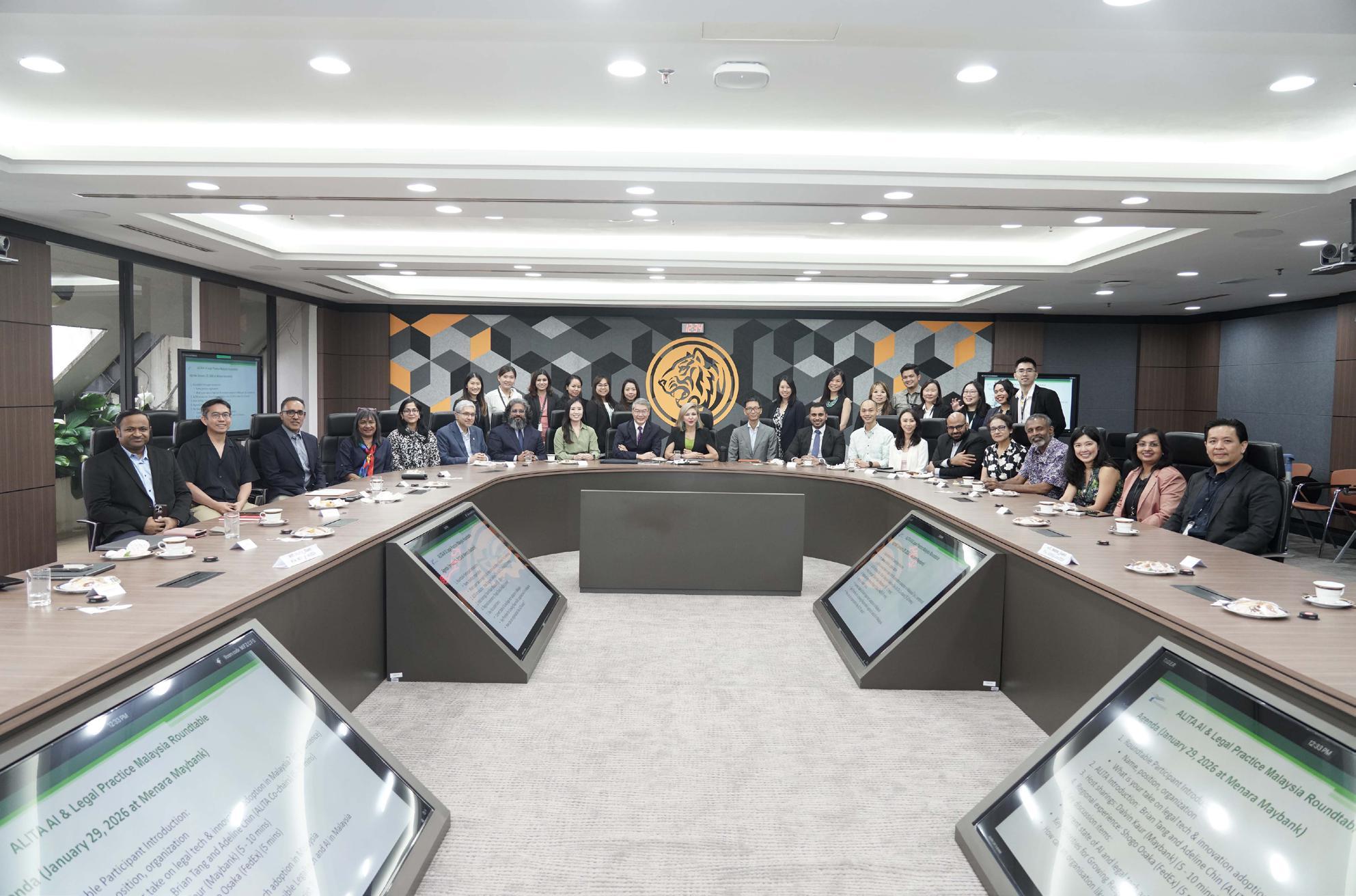
Asia-Pacific Legal Innovation & Technology Association (ALITA)’s roundtable in Malaysia, hosted by the legal team of financial giant Maybank, marked a watershed moment for the nation’s legal community. Held within the symbolic Menara Maybank—a venue where major financing decisions are often made—the event brought together a formidable cross-section of the industry. This was not a typical tech conference; it was a candid, “no holds barred” strategic discussion among in-house legal teams, representatives from Malaysia’s Bar Council technology
committees, legal technology consultants, and pioneering innovators.
This timely roundtable initiative convened by ALITA reflects an important shift in the legal sector towards thoughtfully integrating technology with legal practice.
The event was curated by a powerhouse of legal innovation leaders: ALITA co-chairs Brian W Tang of LITE Lab at The University of Hong Kong and Adeline Chin YF of Chambers Lab, alongside myself in my inaugural mission as ALITA’s Ambassador for Malaysia. Hosted with distinction by Maybank’s own Dalvin Kaur, the roundtable assembled a diverse group of minds, from practitioners in Malaysia’s leading corporations and multinational companies to partners from large law firms and even solo practitioners deeply involved in legal tech.
THE CRUX OF THE CONVERSATION: OPPORTUNITIES VS. REALWORLD HURDLES
The core of the day’s discussion was a deep and pragmatic dive into the opportunities and challenges of embedding advanced technology like AI into legal practice. The consensus was clear: the adoption of AI is not uniform. While some organizations are still in the early stages of experimentation, others are already pushing towards enterprise-wide scaling.
A key theme was the urgent need to move beyond generic, off-the-shelf AI solutions. Participants voiced a strong demand for secure, jurisdiction-trained AI models capable of understanding the nuances of local law and business context. This is a critical consideration for any in-house team, as legal frameworks can vary dramatically. The potential for AI to streamline processes like contract and document bundle reviews was a significant
point of interest, promising much-needed efficiency gains.
However, this optimism was balanced by a frank discussion of the very real concerns that keep general counsel awake at night. The paramount issues of data security and client confidentiality in an age of AI were debated at length. Alongside this were the practical barriers of cost, the challenge of securing investment, and the crucial task of capability building. How do you upskill an entire department of lawyers and legal professionals to not only use these new tools but to do so effectively and responsibly?
According to Maybank’s Dalvin Kaur, “ This timely roundtable initiative convened by ALITA reflects an important shift in the legal sector towards thoughtfully integrating technology with legal practice. For us at Maybank, we are delighted to join forces with ALITA
Inaugural ALITA Malaysia Legal Department and Operations Roundtable in Kuala Lumpur
as it aligns with our ROAR30’s RM10 billion technology investment, as we build digital and technology literacy through training on tools such as generative AI for legal research and drafting, supported by strong internal guidelines so our lawyers can adopt new technologies confidentlywhile upholding the rigour, responsibility and trust expected of the legal profession.”
The discussion was further enriched by perspectives from the Bar Council’s Legaltech, AI & Sandbox Committee, which stressed the importance of developing a framework for the inclusive and responsible use of AI, ensuring that the benefits of technology are accessible to all segments of the legal profession.
BUILDING A WIDER ECOSYSTEM
This roundtable was not an isolated event but a strategic part of a larger movement to build a robust legal tech ecosystem. The momentum continued as Brian W Tang met with the University of Malaysia’s JusTech student group
and law faculty the following day, a vital step to nurture future legal talent and bridge the gap between academia and the AI-driven legal workplaces of tomorrow.
The event marks the first of many activities to be led by ALITA’s new ambassadors. For in-house lawyers, the message is one of opportunity and collaboration. The Malaysian legal community has opened a vital dialogue, moving past the initial hype to tackle the substantive issues of AI adoption head-on. The insights from this inaugural roundtable will undoubtedly resonate with legal professionals everywhere, offering a blueprint for other legal communities grappling with the same transformative challenges.
The journey is just beginning , and for those interested in shaping the future of legal practice in Malaysia and beyond, the invitation is open to join this growing community, where you can learn more through www.alita.legal
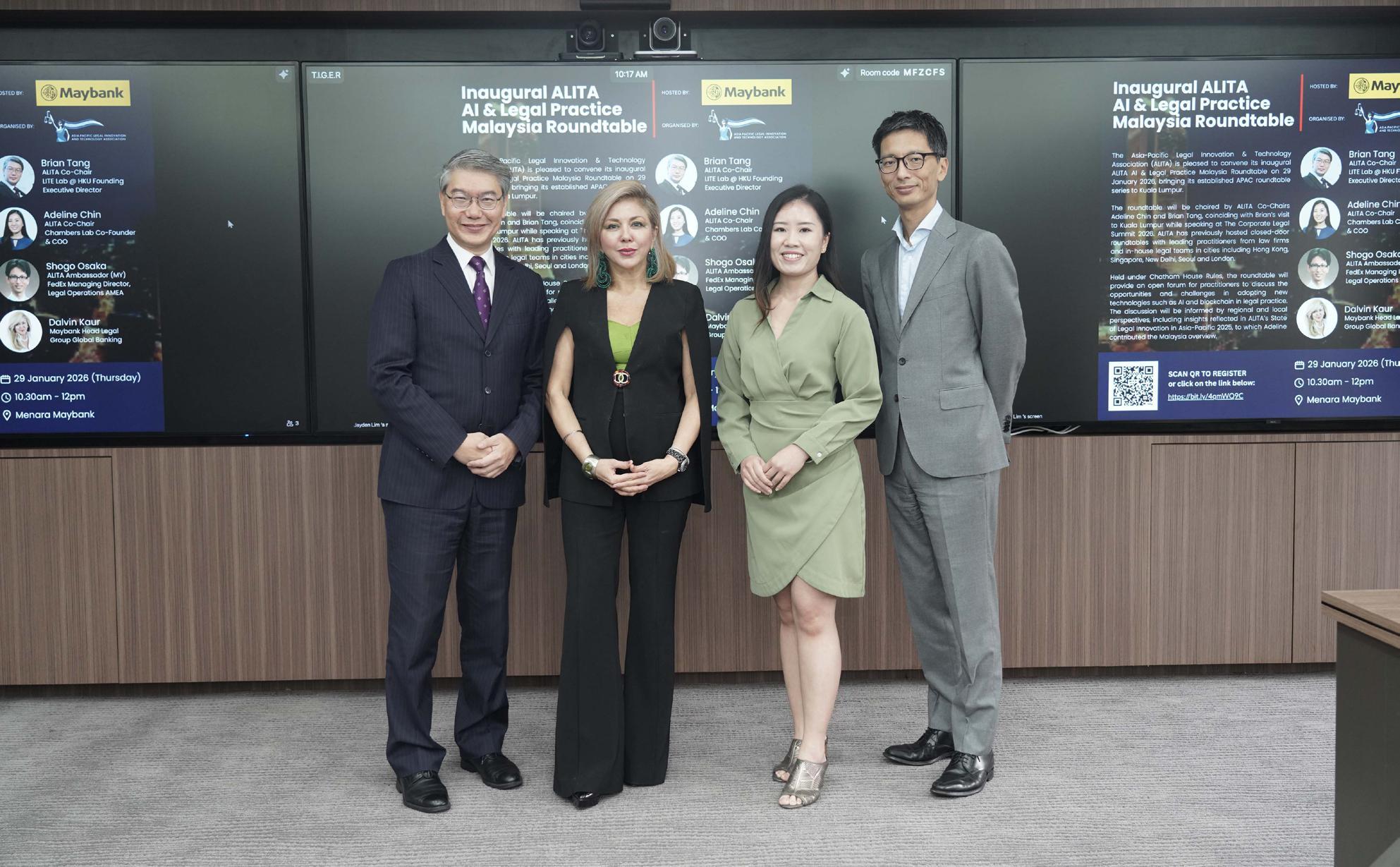
ALITA co-chair Brian Tang (LITE Lab@HKU), Maybank’s Dalvin Kaur, ALITA co-chair Adeline Chin (Chambers Lab) and ALITA Ambassador - Malaysia Shogo Osaka (FedEx)
Let’s Not Forget The Good Side Of Tech
Idon’t travel as much as I used to. As a law student who had a somewhat unrealistic perception of what life as a lawyer would be like I envisaged myself as a cool jet setting lawyer who would be flying around the world solving injustices, wowing judges, and the envy of all around me. Essentially, I thought I would finish law school and immediately be the legal version of a cross between Batman and Superman, righting wrongs and injustices no matter how difficult.
Needless to say I started a training contract and realised I was more likely to be spending the next two years trapped in a data room than being a jetsetter. Whilst I only ended up spending about 9 months or so in an actual training contract it did still make me wonder what it would have been like to be the jet set lawyer I romanticised about in my head.
I found out a few years later, as an associate. This was back in the mid-2010s, and after moving firm I found myself switch from
being only able to name Slough as a place I’d travelled to for work I was now a tech lawyer who found himself jetting off to Norway, Iceland, Spain the Netherlands, the United States, Japan, Mainland China, and of course Hong Kong. For a considerable period of time (we’re talking years, not months), it was not uncommon for me to be taking at least one long haul flight every fortnight, and multiple short haul flights each week. It was fun… for a few months.
Being stranded in the wrong country and missing a friend’s special occasion because a volcano went off in Iceland was no fun. Being pickpocketed in a foreign city without any access to Google maps or a translator was no fun either. Neither was flying halfway across the world to attend a meeting only to realise you’d arrived a week early by mistake, or being stranded in a small airport in Scandinavia for five days and running out of underwear just because it was snowing in London so you might not get home for Christmas…
Join Paul Haswell a partner at Hill Dickinson LLP in Hong Kong, as he explores the transformative impact of technology on the legal profession in his new column for IHC Magazine. Paul offers insights into the challenges and opportunities for in-house and external counsel, providing thought-provoking perspectives on the future of law in the digital age.
I was reminded of all these past “adventures” whilst watching and reading about what at the time of writing is happening in the Middle East (and what I hope has stopped happening by the time you are reading this). It dawned on me just how important and irreplaceable technology has become, and how we have come to take the convenience technology presents to us for granted. I rarely, if ever, am required to travel long distances to meet a client or interview a witness on the other side of the world now, as I just join a Teams or Zoom call. I have had the opportunity to work with and befriend clients, contacts, and opponents without ever setting foot in the same country as them. This is of course bad news for my airmiles balance, but it’s great news for the environment.
phone or computer, it’s become possible to diagnose and cure illnesses using technology and AI thereby saving countless lives, it’s become possible to share art, music and ideas across the world in seconds regardless of land or language barriers, and it’s become possible to see and hopefully resolve issues threatening lives and livelihoods at a speed and scale one would have thought impossible just a few short decades ago.
Our roles as lawyers surely must be to embrace new developments, and hopefully nudge them in the direction of making a difference for good.
It’s easy in the current geopolitical climate to be jaded by technology, as it so often is perceived to be causing harm and does cause harm. But we should not lose sight of the benefits that technology has brought us, or of our duty to use technology responsibly. Most of the young lawyers I work with today have limited memories of having to spend hours in law libraries finding cases to cite or fighting over the copy of a particular book. Newer technologies such as AI have seemingly limitless potential to benefit the world, but like any powerful technology can be used to create new problems. Our roles as lawyers surely must be to embrace new developments, and hopefully nudge them in the direction of making a difference for good.
We are often critical of technology, especially new technology. At a time when every other news headline is seemingly telling us how we’re all about to be replaced by AI, how social media platforms are harming our children, how drones have destroyed countless lives or buildings, or how our thirst for technological advancement is using so much energy that calamitous climate change seems unavoidable then it’s easy to become jaded, or cynical, or even nostalgic for the days pre-internet.
In just the short space of my career to date it’s become possible to have a live video call to almost anyone in the world just by using a
Paul Haswell
Paul Haswell is a Technology partner at Hill Dickinson LLP in Hong Kong, specialising in Technology Transactions and Sourcing. With over 20 years of experience, he focuses on TMT matters, including data and cybersecurity, telecommunications, and emerging technologies like AI and blockchain. A tech enthusiast since childhood, Paul has handled major technology disputes and offers a blend of legal expertise and passion for innovation.
Outside of his legal work, Paul is a tech and law podcaster and a DJ. He co-hosts the “Sunday Escape” radio show on RTHK and the podcast “Crimes Against Pop.” A music lover with an extensive vinyl collection, Paul enjoys discovering and sharing new music. He’s also a sci-fi fan, particularly of “Doctor Who.”
Michael Gu on China’s Antitrust Evolution and What Multinationals Must Get Right
In this Q&A, Michael Gu, Senior Partner and Head of Competition Practice at Hylands Law Firm, shares insights on China’s evolving antitrust regime, common misconceptions among multinationals, and key enforcement trends shaping 2026.
YOU’VE BEEN INVOLVED IN CHINA’S COMPETITION LAW LANDSCAPE SINCE THE EARLY DAYS OF THE ANTI-MONOPOLY LAW. WHEN YOU LOOK BACK AT HOW THINGS HAVE EVOLVED OVER THE PAST DECADE, WHAT CHANGES HAVE SURPRISED YOU THE MOST?
Reflecting on the past decade, two developments stand out as particularly remarkable.
First, the sheer speed and sophistication of the regime’s maturation. For a legal framework that only came into force in 2008, a relative newcomer compared to the EU and US, the professionalism and assertiveness of enforcement have been striking. The State Administration for Market Regulation (SAMR) has tackled complex, precedent-setting cases like Tetra Pak’s loyalty discounts and Qualcomm’s standard-essential patents (SEPs) practices, with detailed economic analysis now routinely embedded in complex penalty decisions.
Second, the efficiency gains from gradual decentralization. By delegating authority to
provincial regulators, particularly for simplified merger reviews, SAMR has dramatically accelerated the process. Today, approximately 90% of cases are cleared unconditionally within 30 days, placing China among the world’s most efficient merger review jurisdictions.
BASED ON YOUR EXPERIENCE ADVISING MULTINATIONAL COMPANIES IN CHINA, WHAT ARE SOME OF THE MOST COMMON MISUNDERSTANDINGS FOREIGN BUSINESSES HAVE ABOUT CHINA’S ANTITRUST AND REGULATORY LANDSCAPE?
In my observation, multinational companies typically fall into two common misconceptions.
First, many assume that China’s antitrust regime simply mirrors those of the EU or the U.S. While China’s Anti-Monopoly Law has indeed drawn inspiration from European and American frameworks, and the principles may appear similar on the surface, enforcement in China carries distinct characteristics shaped by its legal culture, administrative structure, and industrial policies. Compliance in other jurisdictions does not guarantee compliance in China. Companies must build tailored compliance programs that reflect China’s actual regulatory environment and enforcement practices.
Second, some interpret heightened antitrust scrutiny as a sign of a deteriorating business climate. Although Chinese regulators have intensified their review of foreign-related mergers and acquisitions, this does not reflect hostility toward foreign investment. China remains committed to fostering a fair and open market - in fact, the vast majority of foreign-involved mergers are approved unconditionally. That said, businesses should avoid repurposing overseas filing documents directly; instead, they must adapt their
strategies and submissions to align with China’s specific regulatory context.
YOU WORK CLOSELY WITH IN-HOUSE COUNSEL ACROSS DIFFERENT INDUSTRIES. WHAT ARE SOME OF THE BEST PRACTICES YOU’VE SEEN FROM IN-HOUSE
TEAMS THAT MANAGE COMPETITION RISKS PARTICULARLY WELL?
From my experience, the most effective in-house teams typically adopt a proactive and tailored approach. Three best practices stand out:
• Merger control as a strategic priority. They integrate global and local merger control reviews early in the transaction timeline, systematically identifying filing obligations, assessing approval prospects, and planning submissions well in advance. This minimizes the risk of delays or deal failures, especially in complex cross-border or Chinasensitive transactions.
• Training that reaches the front line. Beyond legal and compliance staff, they deliver practical, scenario-based antitrust training to sales, procurement, operations, investment, and R&D teams. This empowers employees to recognize red-flag behaviors such as information exchange with competitors or resale price maintenance and respond appropriately in real time.
• Localizing global policies to China’s realities. They do not simply copy-paste global antitrust guidelines. Instead, they adapt compliance frameworks to reflect China’s enforcement priorities, communication norms, and evolving regulatory landscape, ensuring guidelines are both practical and up to date.
WITH THE RAPID GROWTH OF DIGITAL PLATFORMS, AI, AND DATA-DRIVEN BUSINESS MODELS, COMPETITION LAW IS CONFRONTING NOVEL AND
COMPLEX CHALLENGES. WHICH DEVELOPMENTS IN THIS AREA DO YOU CURRENTLY FIND MOST INTRIGUING OR DEMANDING?
In today’s digital economy, the most significant and complex developments cluster around three key areas:
First, the governance of data access and rights. Dominant platforms hold vast troves of user data, yet the legal framework for data ownership and access remains unclear. A critical question is whether a platform’s refusal to share data with competitors could constitute an illegal refusal to deal. Regulators face the ongoing challenge of balancing data protection, market fairness, and innovation - especially as China introduces new rules like algorithm filing and multi-agency oversight.
Second, the enforcement challenges posed by algorithms. Algorithms can automate or facilitate conduct that violates competition law, such as collusion, personalized pricing, self-preferring, and exclusivity arrangements. Their inherent opacity, however, makes it technically difficult for authorities to detect, investigate, and sanction algorithmic anti-competitive behavior.
Third, the push toward ecosystem interoperability. Chinese regulators are increasingly encouraging or requiring major platforms to open their ecosystems. While aimed at lowering barriers and boosting competition, these cross-platform integrations raise new concerns about data flows, market fairness, and the need for careful compliance monitoring.
WHAT ARE THE GENERAL ANTITRUST ENFORCEMENT TRENDS AND PRIORITIES IN CHINA FOR 2026, AND WHAT KEY COMPLIANCE ISSUES
SHOULD MULTINATIONAL COMPANIES OPERATING HERE BE AWARE OF?
Looking ahead to 2026, multinational companies should focus on three main enforcement trends:
First, vertical agreements are under increased scrutiny. Companies should proactively assess whether they qualify for the newly updated safe harbor rules and pay particular attention to resale price maintenance risks.
Second, mergers are being reviewed with a broader strategic lens. Transactions involving supply chains, critical resources, or semiconductors face heightened attention. Companies are advised to conduct early assessments to secure approvals and avoid delays. Notably, antitrust, data security, and national security reviews are increasingly interlinked, requiring an integrated compliance approach.
Third, IP practices, especially in tech, are a growing focus. Regulators are paying closer attention to licensing conduct - including excessively high fees for SEPs, tying, and refusal to license. Chinese authorities are also asserting greater influence over global IP disputes, making it essential for legal teams to monitor antitrust risks in intellectual property matters.
Michael Gu, Senior Partner and Head of Competition Practice, Hylands Law Firm
Michael Gu is Senior Partner and Head of Competition Practice at Hylands Law Firm. A pioneer of China’s antitrust regime, he secured the first merger clearance under the Anti-Monopoly Law in 2008 and has advised multinationals on high-profile merger filings, investigations, litigation, and leniency matters.
Vietnam’s Investment Law 2025: A New Phase in Vietnam’s Investment Regulatory Reform
Vietnam’s Investment Law No. 143/2025/QH15, promulgated on 11 December 2025 and effective from 1 March 2026, (Investment Law 2025) replaces Investment Law 2020. It introduces reforms to Vietnam’s investment regulatory framework aimed at reducing administrative barriers, facilitating investment activities, and improving the overall business environment. This article highlights several notable changes under Investment Law 2025.
REFINING THE REGIME ON CONDITIONAL BUSINESS LINES
One of the notable adjustments under Investment Law 2025 concerns the regulatory
framework governing conditional business lines. The statutory list of sectors subject to investment conditions has been reduced from 227 sectors to 198 sectors, with 38 sectors removed from the list. At the same time, several new sectors associated with the digital economy and data governance have been added. These include data intermediary services, data exchange platforms, services related to crypto assets, and personal data processing services. In parallel, the scope of approximately 20 conditional business lines has been refined in order to remove regulatory criteria that are outdated, ambiguous, or no longer appropriate.
NGOC LUONG TRINH - VILAF
FOREIGN INVESTORS MAY ESTABLISH ECONOMIC ORGANISATIONS
PRIOR TO REGISTERING AN INVESTMENT PROJECT
Investment Law 2025 revises the procedural framework for establishing economic organisations by foreign investors. Under Investment Law 2020, foreign investors were generally required to have an investment project and obtain an Investment Registration Certificate before establishing an economic organisation.
Article 19.2 of Investment Law 2025 changes this sequence, allowing foreign investors to establish an economic organisation prior to obtaining an Investment Registration Certificate, provided that applicable market access conditions are satisfied.
This reform introduces greater procedural flexibility rather than expanding foreign investment rights. Foreign investors remain subject to existing market access restrictions, with the key change being that the corporate vehicle may be established before completion of investment project procedures.
SIMPLIFIED SCOPE OF PROJECTS SUBJECT TO INVESTMENT POLICY APPROVAL
Investment Law 2025 clarifies the framework for determining projects subject to investment policy approval. Article 24 now expressly lists 20 categories of such projects, replacing the approach under Investment Law 2020, which was based primarily on approving authority.
These projects broadly fall into several main groups. The first covers large scale or sensitive land and natural resource use, including forest land conversion, conversion of 500 hectares or more of rice cultivation land, large scale resettlement, projects located in areas affecting national defence and security, and allocation of sea areas. The second includes sensitive
sectors such as nuclear power, casino and betting, petroleum processing, air transport, and certain foreign invested sectors including telecommunications infrastructure, afforestation, publishing, and press activities.
The third group concerns projects in heritage or special urban areas, including protected zones of national monuments or world heritage sites, and restricted or historic inner areas of special grade cities.
The fourth group concerns large scale infrastructure and real estate projects, including housing or urban development projects where the investor already holds land use rights, golf courses, industrial parks, export processing zones, digital technology parks, major seaports, and airports or important aviation infrastructure. Finally, the fifth group covers projects requiring State allocation or lease of land or permission for land use conversion, projects proposing special policy mechanisms beyond existing laws, and other projects falling under the approval authority of the Prime Minister.
The law also refines approval authority. Under Article 25, National Assembly approves only projects requiring special policy mechanisms, Prime Minister approves eight categories, and provincial People’s Committee chairpersons approve thirteen categories.
In addition, the law narrows cases requiring adjustment of investment policy approval. Article 33.3 limits these to five circumstances, including changes to objectives, location or land area, schedule extensions, project duration, and certain changes of investor. It removes two cases under Investment Law 2020, namely changes to total investment capital exceeding 20 percent and changes to previously appraised technology.
EXPANDED APPLICATION OF THE SPECIAL INVESTMENT PROCEDURE
Investment Law 2025 expands the application of the special investment procedure, a streamlined mechanism for implementing certain investment projects.
Under Article 28, investors may opt for this procedure for projects located in industrial parks, export processing zones, high tech parks, concentrated digital technology parks, free trade zones, international financial centres, and functional zones within economic zones, except for projects subject to investment policy approval as prescribed by the Government.
Projects registered under this procedure are exempt from several pre investment administrative procedures typically applicable to investment projects, including investment policy approval, technology appraisal, environmental impact assessment reports, detailed planning, construction permits, and certain approvals relating to construction and fire prevention and fighting.
Instead, investors are required to submit a written commitment confirming compliance with applicable legal requirements, together with an investment project proposal identifying potential environmental impacts, proposed mitigation measures in lieu of a preliminary environmental impact assessment.
GREATER FLEXIBILITY IN ADJUSTING INVESTMENT PROJECT DURATION
Investment Law 2025 retains statutory limits on project duration, generally up to 50 years outside economic zones and up to 70 years within economic zones.
Article 31.4 introduces flexibility by allowing investors to adjust project duration during
implementation, including both extensions and reductions, provided the revised term remains within statutory limits. Under Investment Law 2020, adjustments were typically limited to extensions as projects approached expiry.
The law also includes a transitional provision. Under Article 52.6, projects implemented before the effective date of Investment Law 2025 may adjust their duration where the remaining term is insufficient to support the financial or business plan of a transferee investor.
Overall, Investment Law 2025 marks a further step in refining Vietnam’s investment regulatory framework. While its practical impact will depend partly on forthcoming implementing regulations, the changes reflect a continued policy direction toward greater procedural efficiency, enhanced transparency, and a more facilitative environment for both domestic and foreign investment.
Ngoc has extensive experience in foreign invested projects, M&A transactions, corporate, capital markets, employment, antitrust, and tax. He is a distinguished practitioner in Vietnam, recognised by Asialaw for his expertise in Corporate and M&A, and is valued for his practical, solution oriented and commercially driven advice.
Ngoc Luong Trinh, Partner, VILAF
Scaling Trust: Inside MoMo’s Legal Transformation
We spoke to Phuoc Doan, Senior Director, Legal and Corporate Affairs at MoMo (M_Service), about how his team has evolved alongside the company’s rapid growth, and what it takes to stay ahead of regulatory change in one of Southeast Asia’s most dynamic fintech markets.
MoMo has grown rapidly over the past few years. How would you describe the evolution of your legal team during that journey?
Yes, MoMo has grown tremendously over the past few years, transforming from a tech start-up into a full-scale financial institution. During the Covid period alone, our user base more than doubled, and it has continued to grow steadily since
then. In the early days, we had the flexibility to experiment and tolerate certain risks in order to move quickly. But as we scaled to serve millions of users, the responsibilities became much greater.
The legal team had to grow alongside the company — not only in size, but in mindset. Our role evolved from responding to issues to anticipating them. It was no longer enough to ensure compliance; we needed
to help ensure that growth remained stable, disciplined, and sustainable. We learned that being effective meant engaging early, thinking strategically, and helping the business move forward with clarity rather than caution alone.
Your team has been recognised for change management.
Was there a specific moment in the past year when you felt that legal truly stepped into the driver’s seat of the business?
I have always believed that Legal does not need to sit in the driver’s seat to make a meaningful impact. The business must lead change, because they understand the market and the users best.
Our role is different but equally important — to help the organization see further ahead, anticipate change and prepare with
confidence. I often tell my team that a legal update only becomes valuable when it reaches the business three to six months before a regulation takes effect. Over the past year, as dozens of new laws and regulations were introduced, this forward-looking approach helped ensure that change was managed calmly and deliberately, rather than reactively.
Vietnam became the first country to mandate biometric authentication for all digital payments.
What was your immediate reaction when that regulation was announced, and how did your team translate it into action?
Although we were aware of the regulators’ direction before the biometric authentication regulation was formally announced in December 2023, the scale of implementation was unprecedented. Encouraging millions
of users to provide biometric data while managing high technical failure rates was both operationally and strategically challenging.
What guided us during this period was a simple principle: regulatory change should ultimately strengthen trust. We worked closely with management, technology teams, and industry peers to seek practical solutions and engage constructively with regulators. As a result of the dialogue, the State Bank issued technical guidelines with flexibility for low-value transactions that go through the fintech system.
By the end of 2024, MoMo became the first fintech company in Vietnam to connect to the national citizen database and migrate millions of users. More importantly, the process reinforced a culture of resilience and collaboration that will continue to define how we approach future change.
MoMo was also the first fintech to renew its e-wallet licence under the new non-cash payment framework.
What does it take for an in-house team to stay ahead of regulatory change rather than constantly reacting to it?
Preparing for the renewal of our e-wallet licence was not just a regulatory requirement; it was also an opportunity to reflect on how far we had evolved. Over the past decade, MoMo has expanded significantly in scope and complexity, and with that growth comes a greater responsibility to demonstrate robust governance and operational discipline.
For me, staying ahead of regulatory change begins with disciplined preparation. Understanding the objective clearly, anticipating difficult questions, aligning early with stakeholders, and allocating the right
resources — these are habits we consciously cultivate. But preparation alone is not enough. Equally important is maintaining close and constructive engagement with regulators throughout the process. By following up consistently, clarifying expectations, and ensuring transparency in our approach, we are able to navigate complex requirements more effectively
MoMo was the first applicant for renewal of our e-wallet license at the SBV. However, due to the size and diversity of our business activities, it took the regulator longer to review our submission; therefore we got our license renewed after two other companies.
MoMo now positions itself as an AIpowered financial ecosystem.
Innovation always requires accepting a degree of uncertainty. However, once AI-driven products are introduced at scale, the tolerance for unmanaged risk becomes much lower. AI is particularly complex because its long-term implications are still evolving.
Our approach is to stay close — bothto the technology teams and to regulators. We invest time in understanding not only how AI models function, but also how they may shape user experience and societal expectations. It is not always easy for lawyers, but we are fortunate to work with a highly capable AI team who are open and patient in helping us build that understanding.
At the same time, we maintain ongoing dialogue with regulators to understand their
perspectives and appetites on emerging risk thresholds.
Vietnam’s AI Law, passed in late 2025, marks an important milestone. As we await further implementing guidance, our focus is to ensure that innovation continues within a thoughtful and responsible framework. In the long run, trust will be the foundation of sustainable AI development.
Your team contributes to the drafting and shaping of national fintech regulations. How do you see the role of in-house legal teams in Vietnam today?
Over the past year, my team and I contributed to more than a dozen draft laws and regulations relating to fintech. As a sector that supports digital transformation and financial inclusion, fintech naturally attracts close regulatory attention.
I believe the role of in-house legal teams in Vietnam is evolving. We are no longer only interpreters of regulation; we increasingly serve as a bridge between policy objectives and business realities. To do this effectively, we must understand both sides deeply. When that balance is achieved, regulation can become an enabler of sustainable growth rather than a constraint.
What has been your biggest leadership lesson?
To support MoMo’s growth, our legal team has tripled in size over the past five years and is now organized into smaller teams responsible for different areas, including commercial, corporate governance, compliance, and government relations. Despite this expansion, the workload remains significant, and the pressure comes from both the business and
regulators. At the same time, I maintain high expectations for the quality of our work.
I think that my team can only handle this level of responsibility if all the members continue to grow alongside the company, and develop deep expertise in their own area. I always encourage curiosity and a strong willingness to learn, explore new issues, and continuously strengthen their skills. At MoMo, we often talk about a “failing forward” mindset — accepting that mistakes can happen, but making sure that every mistake becomes an opportunity to learn and improve.
At the same time, none of this works unless a leader genuinely cares about the team. I see my colleagues as more than just team members and feel personally responsible for supporting their development. When people feel trusted and supported, they respond with commitment — and that shared commitment is what ultimately allows us to achieve our goals together.
Looking ahead, what will define success?
In the coming years, MoMo’s legal team may become more structured and institutionalized, similar to legal functions at large financial institutions. However, real success will be defined by whether we can maintain our curiosity, adaptability, and sense of responsibility as we grow.
Regulatory expectations will continue to evolve, and AI will reshape many traditional legal tasks. While technology may automate certain functions, it cannot replace judgment, local understanding, and the human sensitivity required to balance innovation with responsibility. These qualities will ultimately determine the long-term value of any in-house legal team.
Digital Assets in Vietnam Legal Framework, the Role of VIFC, and Onchain
Economic Integration
VIETNAM’S LEGAL FRAMEWORK FOR DIGITAL ASSETS
Vietnam is entering a decisive phase in building a legal framework for digital assets, evident by the issuance of Law on Digital Technology Industry 2025 and Resolution no: 05/2025/ NQ-CP pilot implementation of crypto asset market in Vietnam. For businesses, the key development is not only the increasing policy recognition of digital assets1, but also the creation of a controlled institutional environment in which new financial models may be tested and commercialized, alongside an organized crypto-asset market enabling
investors to trade crypto-assets and provides related services2.
Under the current policy, the Vietnam International Financial Center (VIFC) is expected to become the principal jurisdictional gateway for digital asset-related activities. The framework reflected in Resolution No. 222/2025/QH15 and Decree No. 324/2025/ ND-CP suggests that Vietnam is moving toward a model combining regulatory openness with supervision, especially for fintech, tokenization, and other innovation-driven sectors3
1 Ar ticle 45 and 47, Law on Digital Technology Industry 2025
2 Resolution no: 05/2025/NQ-CP pilot implementation of crypto asset market in Vietnam
3 Ar ticle 24 to 26, Resolution no: 222/2025/QH15; Chapter VI, Decree no: 324/2025/ND-CP
DR. VU THANH MINH, NGUYEN XUAN THUY AND DR. LE NET - LNT & PARTNERS
For businesses and traders, this is significant because legal uncertainty has long been the barrier to digital asset adoption. A sandbox-based approach does not remove regulation; instead, it reduces regulatory paralysis by allowing enterprises to test products, payment solutions, and tokenized structures in a monitored environment before broader scaling, creating a predictable pathway for compliance, investment, and cross-border structuring.
THE ROLE OF VIFC
VIFC plays a dual role: a policy laboratory and a market access platform. From a legal-business perspective, its value lies in transmitting broad national policy into an operational framework for enterprises.
First, VIFC offers a favorable incentive structure. The framework includes preferential corporate income tax treatment for priority sectors, personal income tax relief for experts and managers, and import-duty exemptions for certain technological infrastructure and software solutions4. These incentives matter because digital asset businesses are capital-intensive at the early stage and highly dependent on specialized talent.
Second, VIFC is designed to support activities relevant to innovative and internationally connected enterprises. These include foreign capital mobilization, crowdfunding, private placements through VIFC platforms, flexible use of foreign currency in qualifying transactions, overseas profit remittance, and access to international accounting and risk-management standards such as IFRS-based practices5. This makes VIFC a structured legal environment
4 Ar ticle 7 and 8, Decree no: 324/2025/ND-CP
for scaling complex financial and digital business models.
Third, VIFC provides institutional legitimacy. In emerging sectors like digital assets, commercial opportunity depends on whether a business can demonstrate that it operates within an officially recognized framework. Membership within the VIFC ecosystem can therefore strengthen investor confidence, regulatory credibility, and counterpart trust. At the same time, VIFC’s sandbox mechanism is arguably its most commercially important feature, allowing enterprises to test business models that do not yet fit neatly within existing legal categories. Importantly, the sandbox reduces legal risk by providing administrative and civil liability relief where damage arises from objective causes during the pilot process. For fintech enterprises, the VIFC mechanism allows the application of favorable incentives, including the possibility of non-refundable financial support from local budgets6
THE INTERCONNECTEDNESS OF THE GLOBAL ON-CHAIN ECONOMY ALLIANCE
The global economy is shifting from online operations to on-chain operations—a landscape where real-world assets, capital flows, and economic contracts are tokenized, rendered transparent, and automated via blockchain platforms7. Capturing this momentum, the Global On-chain Economy Alliance (GOE Alliance) was established in 2025 to spearhead an on-chain economic network within the APAC region8. The Alliance’s distinction lies not in its prestigious membership — including Viettel Digital Services, Dragon Capital, Tether, Avalanche, Republic, Sky Mavis, Onchain Academy, and Kyber Network — but in its
5 Ar ticle 11.1, 16, 18.1. and 18.4 Resolution no: 222/2025/QH15
6 Ar ticle 24 Resolution no: 222/2025/QH15
7 Decision no: 1131/QD-TTg on issuance of the list of strategic technologies and strategic technological products
8 Global On-chain Economy Alliance: A Symbol of Self-reliance and External Synergy, Tuoi Tre Online (Nov 27, 2025), available at https://tuoitre.vn/lien-minh-kinh-te-on-chain-toan-cau-bieu-tuong-cua-tu-duy-tu-luc-ket-hop-ngoailuc-20251127184021965.htm.
operational philosophy: leveraging blockchain technology to unlock the region’s inherent realeconomy advantages.
In Vietnam, the Alliance collaborates with the Ho Chi Minh City Vietnam International Financial Center (VIFC-HCMC) to deploy innovative economic models, such as on-chain agricultural trading infrastructure, the tokenization of renewable energy projects, and carbon credits — thereby ensuring food security, energy autonomy, and the Net Zero 2050 objective9. In the long term, the Alliance aims to define a unified set of standards, enabling citizens of member nations to seamlessly participate in the regional on-chain economy through a single verification process.
In the Vietnamese context, the Alliance facilitates businesses in testing innovative economic models within a regulatory sandbox and preferential incentive schemes, streamlining on-chain financial activities within a flexible yet controlled legal corridor. Nevertheless, addressing legal bottlenecks remains an urgent priority: specifically the inconsistency between crypto-asset regulations and existing statutory frameworks10. The prompt finalization of Vietnam’s legal framework serves as the foundation for establishing transparent and sustainable risk management mechanisms, ultimately realizing its pioneering role in the global on-chain economy.
Dr. Vu Thanh Minh, Partner, LNT & Partners
Dr. Vu Thanh Minh is a Partner at LNT & Partners and Managing Partner of its Hanoi Office, leading the Financial Services practice. She is recognized in ALB Asia 40 Under 40 (2021), ALB Asia’s Top 15 Female Lawyers (2025), and Benchmark Litigation Asia-Pacific Top 40 Under 40 (2024–2025).
Email: Minh.Vu@LNTpartners.com
Nguyen Xuan Thuy, Partner, LNT & Partners
Mr. Nguyen Xuan Thuy is a Partner at LNT & Partners with over 20 years of legal experience. He advises on investment, M&A, banking, and regulatory matters, and is a trusted litigator in commercial disputes. He regularly contributes to leading legal publications and policy development in Vietnam.
Email: Thuy.Nguyen@LNTpartners.com
Dr. Le Net , Partner, LNT & Partners
Dr. Le Net is a Partner at LNT & Partners, leading the infrastructure practice. He serves as an arbitrator at VIAC, SIAC, BAC, and SCIA. He has extensive experience in litigation and arbitration and also lectures at HCMC University of Law while holding leadership roles in Vietnam’s legal organizations.
Email: Net.Le@LNTpartners.com
9 Nguyen Lam Tram Anh, Perfecting the Legal Framework for Carbon Credit Transactions using Blockchain Technology and Smart Contracts, Vietnam Journal of Legal Science, 07(191), 104-114 (2025), https://doi.org/10.70236/tckhplvn.291.
10 Solutions for perfecting the legal framework and enhancing the capacity to investigate and handle legal violations related to crypto assets, available at: https://phaply.net.vn/mot-so-giai-phap-hoan-thien-khung-phap-ly-va-tang-cuongnang-luc-dieu-tra-xu-ly-vi-pham-phap-luat-lien-quan-den-tien-ma-hoa-a260391.html.
The Quiet Rebalancing of Legal Work Plus: Firms of the Year 2025 Results
Before diving into the shifting dynamics of how legal work is allocated, it is worth grounding this discussion in the latest findings from the In-House Community’s Law Firm of the Year 2025 results. These results are based on votes and feedback from over 700 in-house counsel across the region, including General Counsel and senior legal leaders from more than 40 billion-dollar corporations within the IHC membership.
Now in its 28+ year history, the IHC Law Firm of the Year awards remain among the most established recognitions in the in-house legal community. The rankings are based entirely on direct client preference, detailed testimonials, and independent IHC research in 2025. As such, they offer a uniquely accurate reflection of how in-house teams are actually engaging with, evaluating, and relying on external counsel today.
THE QUIET REBALANCING OF LEGAL WORK
Something’s changing across legal teams of all sizes and in all industries. Day to day, the pattern of life looks familiar. Work keeps flowing, deals get done, disputes are
1 https://shorturl.at/khU3i
managed. But zooming out, a quiet rebalancing of legal work is clear.
More than 70% of in-house legal departments now handle a greater share of work internally1, even as the total volume of legal demand continues to rise year over year. At the same time, external engagement has not disappeared. It has become more concentrated, more deliberate and, in many cases, more important.
In-house teams are doing more, but they are also looping in external advisers in sharper, more strategic ways, particularly where complexity, risk or independence demand it.
THE WORK THAT’S MOVED INSIDE
For some in-house teams, this shift has been subtle. Gary Ng at Roquette and Jin Cheng at ZEISS both described “no change” in their use of external counsel. Responses like this reflect a steady-state model: internal teams handle the heavy lifting, while external advisers are engaged for high-value work, like a scalpel in the hands of a trained surgeon.
RAHUL PRAKASH AND NATHAN SMITH
In other organisations, the shift has been more deliberate. Michael David Azucena at MIESCOR said routine work such as contract reviews, negotiations and corporate housekeeping now sits comfortably in-house, while the reliance on external counsel has moved upward, into areas where specialist skills are needed, such as for arbitration, complex legal issues and major transactions.
Nelson Wong at Tam Jai International agreed but added that this reliance had “slightly decreased but [become] more focused and specific in terms of scope.” In practice, that word “focus” means external counsel are brought in more often, especially when their involvement adds value.
Duc Tran at Home Credit Vietnam said it’s important to build internal capability, but with the understanding that there is always room for external advisers to help solve more complex problems. Both Martin Chen at Hektar Asset Management and Jeny Yeh at ACO Tech added that tighter budgets and higher expectations from the C-suite have made external engagement more selective, but not less important. No matter how large an internal team, outside assistance and skillsets
are enormously valuable precisely when a company cannot afford to get it wrong.
Jane Yao at Manulife-Sinochem said technology is helping shift simpler tasks in-house, particularly repetitive contract work. But this has the effect of sharpening, rather than reducing, the role of external counsel. It allows them to concentrate their involvement on more complex issues and leave the machines to dot the “I’s” and cross the “T’s”.
Another upside is that as internal teams take on more work, they are building precious institutional knowledge. Over time, this changes how legal problems are being
Jane Yao at Manulife-Sinochem
Martin Chen – General Manager, Legal at Hektar Asset Management
Jeny Yeh – Head of Legal at ACO Tech
approached. Instead of framing questions for external advisers from scratch, in-house teams are increasingly able to define the issue, narrow the scope and engage external counsel with much more precision. As a result, external advisers are stepping into a conversation that is already mature. To use Nelson
Wong’s phrase, the external input becomes more “focused,” but also more critical to the final outcome.
Other factors also play a role. Arinah Hindmarsh at Gaia Investment Partners pointed to quality concerns in some external advice as a reason for bringing more work in-house, while Paul Salanga at Maharlika Investment Corporation described a
sequencing shift, with internal teams handling early stages before external counsel are engaged when stakes rise.
Across these responses, a consistent pattern emerges. As in-house teams expand their capabilities, they are finding themselves more dependent on external partners more heavily at the edges, where issues are harder, risks are higher and the margin for error is thinner.
THE WORK THAT STAYS OUTSIDE
The flipside of more work staying in-house is
concentration. Faith Wong described this shift as external counsel acting as partners who “sit beside us and help us architect strategy,” particularly in multi-layered matters.
Joan at PLDT highlighted reliance on external counsel for “complex deals and big impact litigation.” Jason Kung at Noventiq described increasing engagement in certain areas due to rising geopolitical and regulatory risk, noting the importance of external advisers in managing both outcomes and perception in high-stakes situations.
Faith Wong – Group Head of Legal at Kuala Lumpur Kepong (KLK)
Paul Salanga – General Counsel at Maharlika Investment Corp.
Jason Kung – Head of APAC Legal at Noventiq
For many organisations, this is where the limits of internal capability become most visible. Even well-resourced legal teams cannot maintain deep expertise across every jurisdiction, regulatory regime or specialist domain. External counsel fills that gap, not as a convenience, but as a structural necessity.
This often means the most commercially significant decisions still rely on external input. Whether it is navigating regulatory approvals, structuring cross-border transactions or responding to disputes, external advisers remain embedded in the decision-making process. The work may be narrower in scope, but it is often central to
outcomes that carry financial, operational or reputational consequences.
Haslinda Abu Bakar at Yinson Production said financing, regulatory and litigation matters were areas often requiring quite a bit of specialist external input. Tu Tich Phuoc Doan at MoMo described external counsel as providing surge capacity during major transactions and special projects.
Elsewhere, cross-border work remains a particularly strong domain for external counsel. Sa Huynh at Thanh Cong Textile said
external advisers can be much close to the ground than in-house teams and can bring plenty of local expertise to problems and help ensure compliance across different regulatory environments.
Ralph Leung at Aedas said external assistance is often critical in emerging areas such as AI governance, cybersecurity and data protection. The pace of change in fields like AI, cybersecurity and data governance makes it difficult for any internal team to stay fully up to date. Michael Ting at Manulife noted that
Janina Arriola – VP & General Counsel at Alternergy Holdings
Sa Huynh – Chief Legal Officer at Thanh Cong Textile
Michael Ting – Chief Legal & Compliance Officer at Manulife
external counsel continues to support project-based and specialised advisory work that does not justify building permanent internal capability. External specialists, who operate across multiple clients and industries, are generally better positioned to track regulatory developments, interpret new standards and anticipate how enforcement might evolve.
That external perspective becomes particularly valuable when organisations are
making decisions without precedent. In those moments, the role of external counsel shifts again, from adviser to guide through uncertainty. The tech world is full of unprecedented situations – that’s just the nature of being at the cutting edge.
THE IMPORTANCE OF SIGNALLING
One comment captures a deeper truth about the role of external counsel. Janina Arriola of Alternergy Holdings described them, in some cases, as a “rubber stamp for banks and investors.” While this might sound dismissive, it reflects a deeply important dynamic woven into the globalised world. In a lot of business moves, it matters just as much who is has
responsibility for a process, as to what that process is. Signalling things like independence and reliability are all part of the game.
In major transactions, financing arrangements and capital markets work, external counsel provide shows independent review, strengthens credibility and helps manage risk across multiple stakeholders. This signalling function cannot be internalised. It depends on a level of autonomy, reputation and accountability that can often only be found under the logo of a well-known external counsel. Some decisions must stand up to scrutiny from various third-parties with different interests, and only independent legal firms can offer such a guarantee.
Doris Chen – VP Legal (APAC, China & India) at dsm-firmenich
Ralph Leung – Executive Director (Legal & Contracts) at Aedas
Duc Tran – Head of Legal at Home Credit Vietnam
There is also a practical dimension to this. External opinions and advice are portable in a way that internal analysis is not. They can be shared with lenders, regulators, investors and counterparties as part of formal processes. That portability gives them weight beyond their immediate legal content.
This is a factor in why external counsel are remaining a key part of the infrastructure of modern commercial legal activity. Their involvement helps align expectations across parties who may rely on the same advice for wholly different purposes. This shared reliance is difficult, if not impossible, to replicate internally.
WHAT SETS THE BEST APART
The respondents also showed that external advisers are highly valued for their practical, commercially grounded advice. Gary Ng emphasised it as “laser-sharp advice.” Michael David Azucena said he was looking for “clear, actionable solutions.” Jason Kung highlighted the need for practical strategies under pressure. Above all, Jane Yao, Duc Tran and Doris Chen all pointed to the importance of business understanding among external counsel.
Other responses reinforced the same theme: Haslinda Abu Bakar on regulatory depth, Jin Cheng on specialised expertise, Sa Huynh on independence and accuracy, Joan on outcomes-focused advice, Michael Ting on timely guidance, Nelson Wong on staying current, and Tou Prong Ro Men on practical applicability. Ralph Leung said he valued
foresight in identifying risks early. Martin Chen emphasised understanding stakeholder reactions Paul Salanga and Jeny Yeh highlighted the importance of working within real-world constraints, including cost, timing and complexity.
These comments reflect a broader shift in how internal teams are acting as the first filter, identifying issues, shaping initial strategy and determining when external input is required. So, by the time external counsel are engaged, the problems are often more refined, and the expectations for solutions much clearer.
As mentioned earlier, this raises the stakes for external counsel. When they are eventually brought in, their role becomes less about exploration and more about precision.
DRAWING A NEW LINE
The relationship between in-house teams and external counsel is becoming more defined and more important. In-house teams sit closest to the business, shaping decisions with context. But when internal perspective reaches its limits, particularly in moments of heightened complexity, cross-border exposure or where independent validation is required, that’s where external counsel shines the brightest (and achieves the greatest ROI).
Rather than replacing external advisers, the boundary is getting clearer and the dependence on each other at that boundary is strengthening. The result is a model that has
internal teams taking greater ownership of the business-as-usual flow, building context and continuity over time, while external counsel is engaged at the moments when that continuity is not enough, and where specialised knowledge, independence or external credibility are required in spades.
This collegiate atmosphere between the two types of corporate legal systems will no doubt continue to evolve as internal capabilities grow and as new areas of complexity emerge. But it’s clear that the more capable in-house teams become, the more often they will be able to define the moments where external expertise is essential.
It’s the age-old model of interdependence, where each side plays a distinct role and where the highest-value work still depends on external expertise.
The findings in this article closely mirror the outcomes of the IHC Law Firm of the Year 2025. As in-house teams become more sophisticated and selective, the firms that stand out are those that deliver precisely at
the moments that matter most: high-stakes, high-complexity, and high-impact work.
What emerges from both the survey responses and the awards data is a clear signal. External counsel are not being used less, but they are being used differently. The firms recognised this year are those that have adapted to this shift by providing sharp, commercially grounded advice, demonstrating deep expertise, and stepping in with credibility and clarity when in-house teams need it most.
In that sense, the rankings are not just a list, but a reflection of a broader transformation in the legal ecosystem. The relationship between in-house teams and external counsel is becoming more intentional, more strategic, and ultimately, more interdependent than ever before.
With that context in mind, the IHC Law Firm of the Year 2025 reflects how in-house teams across the region are putting these priorities into practice. The firms recognised below are those most consistently trusted for their expertise, commerciality and ability to deliver in high-stakes situations.
The awards are presented by country and practice area, highlighting the firms that have earned the strongest endorsement from in-house counsel over the past year. Winners are in bold, and the ones who have received an Honourable Mention are in italics.
China
Winners in bold Honourable mentions in italics
ALTERNATIVE INVESTMENT FUNDS
(INCLUDING PRIVATE EQUITY)
AnJie Broad Law Firm
Han Kun Law Offices
JunHe
Morrison & Foerster
Paul, Weiss, Rifkind, Wharton & Garrison
Skadden, Arps, Slate, Meagher & Flom
Fangda Partners
King & Wood Mallesons
Kirkland & Ellis
ANTI-MONOPOLY & COMPETITION
AnJie Broad Law Firm
Clifford Chance
Fangda Partners
Hylands Law Firm
King & Wood Mallesons
Tian Yuan Law Firm
Zhong Lun Law Firm
Han Kun Law Offices
Jones Day
JunHe
BANKING AND FINANCE
Baker McKenzie FenXun
Fangda Partners
Guantao Law Firm
JunHe
King & Wood Mallesons
Kirkland & Ellis
Dacheng Law Offices (Dentons China)
Global Law Office
Haiwen & Partners
CAPITAL MARKETS
AllBright Law Offices
Commerce & Finance Law Offices
Fangda Partners
Jingtian & Gongcheng
King & Wood Mallesons
Tian Yuan Law Firm
Global Law Office
Grandall Law Firm
Han Kun Law Offices
JunHe
COMPLIANCE AND REGULATORY
Fangda Partners
Guantao Law Firm
Han Kun Law Offices
Jingtian & Gongcheng
King & Wood Mallesons
Zhong Lun Law Firm
Baker McKenzie FenXun
Global Law Office
Llinks Law Offices
CORPORATE AND M&A
AllBright Law Offices
Commerce & Finance Law Offices
Fangda Partners
Han Kun Law Offices
King & Wood Mallesons
Zhong Lun Law Firm
Baker McKenzie FenXun
Clifford Chance
Morrison & Foerster
EMPLOYMENT
Haiwen & Partners
Hui Ye Law Firm
Jingtian & Gongcheng
JunHe
King & Wood Mallesons
Zhong Lun Law Firm
Baker McKenzie FenXun
Baohua Law Firm
Fangda Partners
Morgan, Lewis & Bockius
ENERGY AND PROJECTS
Dacheng Law Offices (Dentons China)
Guantao Law Firm
Hogan Lovells
King & Wood Mallesons
Tian Yuan Law Firm
Zhong Lun Law Firm
Clifford Chance
Global Law Office
JunHe
INTELLECTUAL PROPERTY
Baker McKenzie FenXun
Bird & Bird
CCPIT Patent and Trademark Law Office
Lifang & Partners
Wanhuida Intellectual Property
Zhong Lun Law Firm
Chang Tsi & Partners
Fangda Partners
Hogan Lovells
INTERNATIONAL ARBITRATION
AnJie Broad Law Firm
Commerce & Finance Law Offices
Han Kun Law Offices
Herbert Smith
Freehills Kramer
Jingtian & Gongcheng
JunHe
King & Wood Mallesons
Zhong Lun Law Firm
AllBright Law Offices
Clifford Chance
Fangda Partners
Tahota Law Firm
Tian Yuan Law Firm
LITIGATION AND DISPUTE RESOLUTION
AllBright Law Offices
Baker McKenzie FenXun
Commerce & Finance Law Offices
King & Wood Mallesons
Kirkland & Ellis
Tian Yuan Law Firm
Zhong Lun Law Firm
Dacheng Law Offices (Dentons China)
Grandall Law Firm
Han Kun Law Offices
Hylands Law Firm
REAL ESTATE/ CONSTRUCTION
Dacheng Law Offices (Dentons China)
Global Law Office
JunHe
King & Wood Mallesons
Tian Yuan Law Firm
Zhong Lun Law Firm
Baker McKenzie FenXun
Fangda Partners
Han Kun Law Offices
MOST RESPONSIVE INTERNATIONAL LAW FIRM
Baker McKenzie FenXun
Clifford Chance
Hogan Lovells
King & Wood Mallesons
MOST RESPONSIVE DOMESTIC LAW FIRMCHINA
AnJie Broad Law Firm
Han Kun Law Offices
Jingtian & Gongcheng
JunHe
Tian Yuan Law Firm
RESTRUCTURING & INSOLVENCY
AllBright Law Offices
Grandall Law Firm
Jingtian & Gongcheng
King & Wood Mallesons
Kirkland & Ellis
Zhong Lun Law Firm
Baker McKenzie FenXun
Global Law Office
Hylands Law Firm
JunHe
Winners in bold
Honourable mentions in italics
LIFE SCIENCES & PHARMA
Baker McKenzie FenXun
Haiwen & Partners
Han Kun Law Offices
JunHe
King & Wood Mallesons
Fangda Partners
Hogan Lovells
Morrison & Foerster
TELECOMMUNICATIONS,
TECHNOLOGY & MEDIA (TMT)
AllBright Law Offices
AnJie Broad Law Firm
Bird & Bird
Haiwen & Partners
Jingtian & Gongcheng
Zhong Lun Law Firm
Baker McKenzie FenXun
Morrison & Foerster
Hong Kong
Winners in bold Honourable mentions in italics
ALTERNATIVE INVESTMENT FUNDS
(INCLUDING PRIVATE EQUITY)
A&O Shearman
Fangda Partners
Goodwin Procter
Linklaters
Baker McKenzie
Kirkland & Ellis
Simpson
Thacher & Bartlett
ANTI-TRUST & COMPETITION
Baker McKenzie
Clifford Chance
Herbert Smith
Freehills Kramer
Skadden, Arps, Slate, Meagher & Flom
Haldanes
Mayer Brown
Slaughter and May
BANKING AND FINANCE
Clifford Chance
Deacons
Ince & Co
JunHe
Kirkland & Ellis
Mayer Brown
Baker McKenzie
Sidley Austin
CAPITAL MARKETS
Commerce & Finance
Law Offices in Association with Eric Chow & Co.
Davis Polk & Wardwell
Herbert Smith
Freehills Kramer
Latham & Watkins
Skadden, Arps, Slate, Meagher & Flom
Clifford Chance Linklaters
Morgan, Lewis & Bockius
CORPORATE AND M&A
Baker McKenzie
Deacons
Howse Williams
Latham & Watkins
Slaughter and May
Clifford Chance
Freshfields Bruckhaus
Deringer
Kirkland & Ellis
Stephenson Harwood
DATA PROTECTION & PRIVACY
Bird & Bird
CMS Hong Kong
DLA Piper
Linklaters
Tanner De Witt
Hogan Lovells
Norton Rose Fulbright
EMPLOYMENT
Baker McKenzie
Deacons
DLA Piper Hong Kong
Mayer Brown
Simmons & Simmons
Tanner De Witt
Clifford Chance
Howse Williams
Hugill & Ip Solicitors
INSURANCE
Clyde & Co
Howse Williams
Kennedys
Mayer Brown
Reynolds Porter
Chamberlain (RPC)
Baker McKenzie
Deacons
Norton Rose Fulbright
INTELLECTUAL PROPERTY
Bird & Bird
Deacons
Gallant
Mayer Brown
Wilkinson & Grist
Baker McKenzie
CMS Hong Kong
INTERNATIONAL ARBITRATION
A&O Shearman
Baker McKenzie
Clifford Chance
Herbert Smith
Freehills Kramer
King & Wood Mallesons
Dentons Hong Kong
Freshfields Bruckhaus
Deringer
Hill Dickinson
LITIGATION & DISPUTE RESOLUTION
A&O Shearman
Debevoise & Plimpton
Gallant
Herbert Smith
Freehills Kramer
Tanner De Witt
Davis Polk & Wardwell
Deacons
DLA Piper Hong Kong
Gibson, Dunn & Crutcher
REAL ESTATE & CONSTRUCTION
Baker McKenzie
Charles Russell
Speechlys
Deacons
DLA Piper Hong Kong
Latham & Watkins
Slaughter and May
REGULATORY COMPLIANCE & INVESTIGATIONS
Davis Polk & Wardwell
Debevoise & Plimpton
Gibson, Dunn & Crutcher
Herbert Smith
Freehills Kramer
Stephenson Harwood Haldanes
Morrison & Foerster
Reynolds Porter
Chamberlain (RPC)
RESTRUCTURING & INSOLVENCY
Deacons
Mayer Brown
Sidley Austin
Tanner De Witt
Clifford Chance
Linklaters
TECHNOLOGY, MEDIA, TELECOMMUNICATION
Bird & Bird
Gibson, Dunn & Crutcher
K&L Gates
Tanner De Witt
A&O Shearman
DLA Piper
Eversheds Sutherland
MOST RESPONSIVE INTERNATIONAL LAW FIRM - HONG KONG
Poblador Bautista & Reyes is a general practice and fullservice law firm with lawyers who have extensive experience and expertise, particularly in the fields of litigation and commercial arbitration, corporations, real estate and construction, intellectual property, energy, media and telecommunications, natural resources, antitrust and competition, insurance and banking, insolvency and restructuring, family law, taxation, and immigration.
Over the last few years, the firm’s work in international and domestic commercial arbitration has greatly increased and intensified. We continue to assert or defend the rights and interests of private investors and Philippine conglomerates involving critical Government energy contracts and infrastructure projects. As a result, the firm has been consistently ranked in the top tier in the areas of Dispute Resolution and Litigation. The founding partners and the next generation of litigation partners have likewise been consistently cited as leading practitioners.
LITIGATION AND DISPUTE RESOLUTION
Angara Abello
Concepcion Regala and Cruz Law Offices (ACCRALAW)
Cruz Marcelo & Tenefrancia
Poblador Bautista & Reyes
Romulo Mabanta
Buenaventura Sayoc & De Los Angeles Villaraza & Angangco (V&A Law)
Divina Law
Quisumbing Torres
SyCip Salazar
Hernandez & Gatmaitan
REAL ESTATE/ CONSTRUCTION
Cruz Marcelo & Tenefrancia
Gatmaytan Yap
Patacsil Gutierrez & Protacio (C&G Law)
Quisumbing Torres
Vasig Abarquez Lumauig
Abarquez Puno Law Offices (VAL Law)
Villaraza & Angangco (V&A Law)
Angara Abello Concepcion Regala and Cruz Law Offices (ACCRALAW)
SyCip Salazar
Hernandez & Gatmaitan
TECHNOLOGY, MEDIA, TELECOMMUNICATION
Disini Law Office
Gatmaytan Yap
Patacsil Gutierrez & Protacio (C&G Law)
Gorriceta Africa
Cauton & Saavedra
Quisumbing Torres Villaraza & Angangco (V&A Law)
Divina Law
Romulo Mabanta Buenaventura Sayoc & De Los Angeles
MOST RESPONSIVE INTERNATIONAL LAW FIRM - PHILIPPINES
A&O Shearman
Baker McKenzie
Latham & Watkins
Milbank
MOST RESPONSIVE DOMESTIC LAW FIRMPHILIPPINES
Angara Abello
Concepcion Regala and Cruz Law Offices (ACCRALAW)
Quisumbing Torres Villaraza & Angangco (V&A Law)
Singapore
Winners in bold Honourable mentions in italics
ALTERNATIVE INVESTMENT FUNDS
Allen & Gledhill
Clifford Chance
Dentons Rodyk
Shook Lin & Bok
WongPartnership
Baker McKenzie
Wong & Leow
Rajah & Tann
Singapore
ANTI-TRUST/ COMPETITION
Allen & Gledhill
Baker McKenzie
Wong & Leow
Dentons Rodyk
Drew & Napier
WongPartnership
Rajah & Tann
Singapore
BANKING AND FINANCE
Allen & Gledhill
Dentons Rodyk
Drew & Napier
Milbank
Shook Lin & Bok
WongPartnership
A&O Shearman
Baker McKenzie Wong & Leow
Clifford Chance
Harry Elias Partnership
Jones Day
CAPITAL MARKETS
Allen & Gledhill
Baker McKenzie
Wong & Leow
Clifford Chance
Drew & Napier
Shook Lin & Bok
A&O Shearman
Dentons Rodyk
TSMP Law Corporation
COMPLIANCE AND REGULATORY
Allen & Gledhill
Eugene Thuraisingam
Morrison & Foerster
Rajah & Tann Singapore
WongPartnership
DLA Piper Singapore
Drew & Napier
CORPORATE AND M&A
Allen & Gledhill
Baker McKenzie
Wong & Leow
Clifford Chance
Linklaters Singapore
Shook Lin & Bok
WongPartnership
Dentons Rodyk
Drew & Napier
Morgan Lewis Stamford
Rajah & Tann Singapore
DATA PROTECTION & CYBERSECURITY
Bird & Bird ATMD
Dentons
Rodyk & Davidson
DLA Piper Singapore
Rajah & Tann Singapore
Baker McKenzie
Wong & Leow
EMPLOYMENT
Allen & Gledhill
Baker McKenzie
Wong & Leow
Bird & Bird ATMD
Drew & Napier
Shook Lin & Bok
TSMP Law Corporation
WongPartnership
ENERGY AND PROJECTS
Allen & Gledhill
Baker McKenzie
Wong & Leow
Dentons Rodyk
Drew & Napier
Milbank
Ashurst ADTLaw
Mayer Brown
Rajah & Tann Singapore
INSURANCE
Baker McKenzie
Wong & Leow
Clyde & Co Clasis
Singapore
Holman Fenwick
Willan Singapore
Kennedys
Dentons Rodyk
Rajah & Tann Singapore
INTELLECTUAL PROPERTY
Allen & Gledhill
Baker McKenzie
Wong & Leow
Bird & Bird ATMD
Joyce A. Tan & Partners
Dentons Rodyk
Rajah & Tann Singapore
RHTLaw Asia
INTERNATIONAL ARBITRATION
Allen & Gledhill
Clifford Chance
Dentons Rodyk
King & Spalding
WongPartnership
Baker McKenzie
Wong & Leow
K&L Gates Straits Law
Shook Lin & Bok
Stephenson Harwood
LITIGATION AND DISPUTE RESOLUTION
Allen & Gledhill
Davinder Singh Chambers
Dentons Rodyk
Shook Lin & Bok
WongPartnership
K&L Gates Straits Law
Pinsent Masons MPillay
Providence Law Asia
Rajah & Tann Singapore
REAL ESTATE/ CONSTRUCTION
Allen & Gledhill
Dentons Rodyk
Rajah & Tann Singapore
Shook Lin & Bok
Baker McKenzie
Wong & Leow
Withers KhattarWong
RESTRUCTURING & INSOLVENCY
Clifford Chance
Drew & Napier
Gibson, Dunn & Crutcher
Rajah & Tann Singapore
Shook Lin & Bok
Allen & Gledhill
Bird & Bird ATMD
WongPartnership
SHIPPING & MARITIME
Allen & Gledhill
Clyde & Co Clasis
Singapore
Joseph Tan Jude Benny
Oon & Bazul
Rajah & Tann Singapore
Dentons Rodyk
Helmsmen
TECHNOLOGY, MEDIA, TELECOMMUNICATIONS
Bird & Bird ATMD
Drew & Napier
Holborn Law
Joyce A. Tan & Partners
Allen & Gledhill
Baker McKenzie
Wong & Leow
Rajah & Tann Singapore
MOST RESPONSIVE INTERNATIONAL LAW FIRM - SINGAPORE
Clifford Chance
Jones Day
Latham & Watkins
Milbank
MOST RESPONSIVE DOMESTIC LAW FIRMSINGAPORE
Allen & Gledhill
Dentons Rodyk
Rajah & Tann
Singapore
Shook Lin & Bok
South Korea
Winners in bold Honourable mentions in italics
ALTERNATIVE INVESTMENT FUNDS (INCLUDING PRIVATE EQUITY)
Bae, Kim & Lee (BKL)
Kim & Chang
Shin & Kim
Lee & Ko
ANTITRUST/ COMPETITION
Bae, Kim & Lee (BKL)
Kim & Chang
Yulchon
Lee & Ko
Shin & Kim
Yoon & Yang
BANKING AND FINANCE
Kim & Chang
Lee & Ko
Shin & Kim
Yulchon
Jipyong
Yoon & Yang
CAPITAL MARKETS
Bae, Kim & Lee (BKL)
Jipyong
Kim & Chang
Linklaters
Shin & Kim
Yulchon
Lee & Ko
Yoon & Yang
CORPORATE AND M&A
Bae, Kim & Lee (BKL)
Kim & Chang
Lee & Ko
Yoon & Yang
Shin & Kim
Yulchon
EMPLOYMENT
Bae,Kim&Lee(BKL)
Kim&Chang
Yoon&Yang
DR&AJU
Lee & Ko
ENERGY AND PROJECTS
Bae, Kim & Lee (BKL)
Kim & Chang
Linklaters
Milbank
Jipyong
Lee & Ko
INTELLECTUAL PROPERTY
Kim & Chang
Lee International IP & Law
Yulchon
Bae, Kim & Lee (BKL)
Paul Hastings
INTERNATIONAL ARBITRATION
Herbert Smith
Freehills Kramer
Jipyong
Kim & Chang
Lee & Ko
Peter & Kim
LITIGATION AND DISPUTE RESOLUTION
Bae, Kim & Lee (BKL)
Kim & Chang
Shin & Kim
Yulchon
D&A
Yoon & Yang
REAL ESTATE/ CONSTRUCTION
Bae, Kim & Lee (BKL) Jipyong
Kim & Chang
Shin & Kim
Lee & Ko
Yulchon
RESTRUCTURING & INSOLVENCY
Kim & Chang
Lee & Ko
Shin & Kim
Bae, Kim & Lee (BKL)
Yulchon
MOST RESPONSIVE INTERNATIONAL LAW FIRM - SOUTH KOREA
DLA Piper
Herbert Smith
Freehills Kramer
MOST RESPONSIVE DOMESTIC LAW FIRMSOUTH KOREA
Kim & Chang
Shin & Kim
Yoon & Yang
Thailand
Winners in bold Honourable mentions in italics
ANTI-TRUST/ COMPETITION
Chandler Mori Hamada
Tilleke & Gibbins
Weerawong C&P
Baker McKenzie
BANKING AND FINANCE
A&O Shearman
Baker McKenzie
Chandler MHM Limited
Weerawong C&P
Linklaters (Thailand) Ltd
The Capital Law Office
CAPITAL MARKETS
A&O Shearman
Baker McKenzie
Chandler Mori Hamada
Kudun & Partners
The Capital Law Office
Tilleke & Gibbins
Linklaters (Thailand) Ltd
Siam Premier
International Law Office
Thanathip & Partners
CORPORATE AND M&A
A&O Shearman
Baker McKenzie
Chandler Mori Hamada
Kudun & Partners
Tilleke & Gibbins
Weerawong C&P
DLA Piper (Thailand)
Rajah & Tann (Thailand)
Siam Premier International Law Office
The Capital Law Office
EMPLOYMENT
Baker McKenzie
DLA Piper (Thailand)
Kudun & Partners
Tilleke & Gibbins
Weerawong C&P
Chandler Mori Hamada
Rajah & Tann (Thailand)
Siam Premier International Law Office
ENERGY AND PROJECTS
Chandler Mori Hamada
Hunton Andrews Kurth
Kudun & Partners
Tilleke & Gibbins
Baker McKenzie
DFDL Legal & Tax
DLA Piper (Thailand)
SCL Nishimura & Asahi
INTELLECTUAL PROPERTY
Domnern Somgiat & Boonma Law Office
LawPlus
Satyapon & Partners
Tilleke & Gibbins
Ananda Intellectual Property
INTERNATIONAL ARBITRATION
Baker McKenzie
Tilleke & Gibbins
Watson Farley & Williams
Weerawong C&P
DLA Piper (Thailand)
Herbert Smith Freehills
Kramer
LITIGATION AND DISPUTE RESOLUTION
Baker McKenzie
Chandler Mori Hamada
Tilleke & Gibbins
Weerawong C&P
Kudun & Partners
Rajah & Tann (Thailand)
REAL ESTATE AND CONSTRUCTION
Baker McKenzie
Blumenthal Richter & Sumet
Chandler Mori Hamada
Hunton Andrews Kurth
Kudun & Partners
DLA Piper (Thailand)
SCL Nishimura & Asahi
Tilleke & Gibbins
RESTRUCTURING & INSOLVENCY
Baker McKenzie
Chandler Mori Hamada
Tilleke & Gibbins
Weerawong C&P
Kudun & Partners
Rajah & Tann (Thailand)
TAXATION
Baker McKenzie
Blumenthal
Richter & Sumet
DFDL Legal & Tax
Tilleke & Gibbins
Siam Premier International Law Office
The Capital Law Office
TECHNOLOGY, MEDIA, TELECOMMUNICATIONS
Chandler Mori Hamada
DLA Piper (Thailand)
Formichella & Sritawat
Tilleke & Gibbins
Linklaters (Thailand)
Weerawong C&P
MOST RESPONSIVE INTERNATIONAL LAW FIRM - THAILAND
A&O Shearman
Baker McKenzie
DLA Piper (Thailand)
Tilleke & Gibbins
MOST RESPONSIVE DOMESTIC LAW FIRMTHAILAND
Chandler Mori Hamada
Kudun & Partners
Weerawong C&P
Vietnam
Winners in bold Honourable mentions in italics
ANTITRUST/ COMPETITION
Baker McKenzie
LNT & Partners
VILAF
Asia Counsel
DN Legal
BANKING AND FINANCE
A&O Shearman
Frasers Law Company
Russin & Vecchi
VILAF
YKVN
LNT & Partners
CAPITAL MARKETS
A&O Shearman
VILAF
YKVN
Baker McKenzie
Frasers Law Company
COMPLIANCE AND REGULATORY
Baker McKenzie
DFDL
Russin & Vecchi
VILAF
Denton LuatViet
CORPORATE AND M&A
Allens
Baker McKenzie
Frasers Law Company
LNT & Partners
Russin & Vecchi
VILAF
YKVN
A & O Shearman
ACSV Legal
Global Vietnam Lawyers
EMPLOYMENT
Baker McKenzie
Frasers Law Company
Global Vietnam Lawyers
Rajah &
Tann LCT Lawyers
Tilleke & Gibbins
VILAF
LÊ & TRAN
Vision & Associates
ENERGY AND PROJECTS
Duane Morris Vietnam
Frasers Law Company
Hogan Lovells
Lexcomm Vietnam
VILAF
A&O Shearman
Allens
Baker McKenzie
YKVN
INTELLECTUAL PROPERTY
Baker McKenzie
IPMAX Law Firm
Tilleke & Gibbins
Vision & Associates
Frasers Law Company
Pham & Associates Law Firm
INTERNATIONAL ARBITRATION
Baker McKenzie
Frasers Law Company
LNT & Partners
VILAF
YKVN
Global Vietnam Lawyers
Rajah & Tann LCT Lawyers
Tilleke & Gibbins
LITIGATION AND DISPUTE RESOLUTION
Baker McKenzie
LNT & Partners
Rajah & Tann LCT Lawyers
Tilleke & Gibbins
VILAF
YKVN
Dentons LuatViet
Dzungsrt & Associates
Frasers Law Company
LÊ & TRAN
Navigating Vietnam’s Legal Landscape with Confidence
Your Strategic Legal Partner in one of Asia’s fastest-growing markets
Vietnam’s dynamic regulatory environment presents both opportunities and complexities for multinational businesses. From market entry and corporate structuring to major transactions, regulatory compliance, and dispute resolution, in-house legal teams require trusted local advisors who understand both international business standards and Vietnamese legal practice.
Indochine Counsel is a premier commercial law firm in Vietnam, advising multinational corporations, investors, financial institutions and growing enterprises on their most critical legal and business matters.
Established in 2006, with offices in Ho Chi Minh City and Hanoi, our lawyers combine international training with deep local expertise, enabling clients to operate confidently in Vietnam’s evolving business landscape.
OUR PRACTICES
Indochine Counsel provides integrated legal support across the full lifecycle of business operations in Vietnam:
•Anti-trust & Competition
•Banking & Finance
•Corporate & Commercial
•Energy, Natural Resources & Infrastructure
•Intellectual Property
•Inward Investment
WHY WORK WITH US?
•International standards with deep local expertise
•Practical advice aligned with commercial objectives
CONTACT
Ho Chi Minh City Office
Unit 305, 3rd Floor, Centec Tower, 72-74 Nguyen Thi Minh Khai, Xuan Hoa Ward, Ho Chi Minh City, Vietnam
•Global reach through international legal networks
Hanoi Office
Unit 705, 7th Floor, CMC Tower, Duy Tan Street, Cau Giay Ward, Hanoi, Vietnam
T +84 24 3795 5261 | F +84 24 3795 5262
E hanoi@indochinecounsel.com
THINK BUSINESS, PRACTISING LAW
REAL ESTATE/ CONSTRUCTION
Frasers Law Company
KPMG Law Vietnam
Rajah & Tann LCT Lawyers
VILAF
YKVN
ATS Lawyers
Baker McKenzie
Tilleke & Gibbins
TAX
Baker McKenzie
Dentons LuatViet
DFDL
Rajah & Tann LCT Lawyers
KPMG Law Vietnam
LNT & Partners
TECHNOLOGY, MEDIA AND TELECOMMUNICATIONS
Baker McKenzie
Indochine Counsel
Tilleke & Gibbins
YKVN
DNA Vietnam LLC
Frasers Law Company
Rajah & Tann LCT Lawyers
MOST RESPONSIVE INTERNATIONAL LAW FIRM - VIETNAM
A&O Shearman
Allens
Baker McKenzie
Tilleke & Gibbins
MOST RESPONSIVE DOMESTIC LAW FIRM - VIETNAM
LNT & Partners
Russin & Vecchi
VILAF
Bangkok In-House Community Congress 2026
Bringing Thailand’s Senior Legal Leaders Together
The Bangkok In-House Community Congress 2026 brought together more than 60 general counsel and senior in-house legal leaders for an afternoon of discussion and peer engagement in the Thai capital. Held at the Waldorf Astoria Bangkok, the Congress reflected the growing sophistication of Thailand’s in-house legal community and the increasing strategic role of legal teams within organisations.
The event convened legal leaders from across industries to explore how in-house counsel are responding to technological change, regulatory complexity and evolving business expectations. Throughout the programme,
discussions were grounded in practical insight, with a strong emphasis on real-world application and shared experience.
Following opening remarks from Rahul Prakash , Publishing Director at In-House Community, the programme opened with “The GC Playbook – AI, Tech, and New Skills for GCs.” Led by Gerard Tan , Commercial Manager, and Titus Rahiri , CEO & Founder at KorumLegal, the session explored how general counsel are adapting to the rapid advancement of AI and legal technology, alongside the new capabilities required to lead modern legal functions.
RAHUL PRAKASH
A cross-border perspective followed in “Navigating the Legal Landscape in the United Arab Emirates: Implications for Global GCs,” featuring Julie Beeton , Senior Counsel at Hadef & Partners, and Rahul Prakash , Managing Director at In-House Community. The discussion highlighted key regulatory developments in the UAE, and differences in ADGM and DIFC regulations.
The session “M&A Beyond Signing: Risk Zones That Shape Deal Outcomes,” presented by Bongkotkan Chumsai Na Ayudhya , Counsel at Kudun & Partners , examined the risks that emerge post-signing, including regulatory considerations, the operational impact of representations and warranties, and integration challenges.
Following a networking break, attention turned to “Corporate Fraud in Thailand: What General Counsel and In-House Legal Teams Need to Know About Risk,
Investigations, and Asset Recovery.”
Moderated by Kusalin Laksanakorn , Senior Associate at Kudun & Partners , the panel featured Emi Rowse , Partner at Kudun & Partners , Lay Sodarat , General Counsel & Strategic Operations Director at FazWaz Thailand, Vorapong Sutanont , Managing Director at BRG , and Wipanan Prasompluem , General Counsel at Thaicom Public Company Limited . The discussion provided practical insights into identifying fraud risks, managing investigations and pursuing asset recovery strategies.
The final session, “PDPA After Enforcement: Learning from Mistakes and Getting It Right,” was delivered by Nopparat Lalitkomon , Partner at Tilleke & Gibbins, focusing on common compliance gaps and practical steps for strengthening internal data protection practices.
The Congress concluded with closing remarks, a prize giveaway and informal networking, providing further opportunity for delegates to exchange perspectives and strengthen professional connections.
The success of the 2026 Congress reaffirmed the strength and engagement of Thailand’s in-house legal community. The organisers extend their sincere thanks to BRG , KorumLegal , Kudun & Partners , Hadef & Partners , and Tilleke & Gibbins , as well as Robert Walters as Exclusive Recruitment Partner, for their continued support.
The In-House Community looks forward to returning to Bangkok for the next edition of the Congress in 2027.
IHC Directory
Your ‘at a glance’ guide to some of the region’s top service providers.
Practice Area key
Alt’ Investment Funds (inc. PE)
Antitrust / Competition
— Law Firms — ASIA
CHINA
Broad & Bright
Tel: (86) 10 8513 1818
Email: broadbright@broadbright.com
Contact: Mr Jun Ji (Jun_ji@broadbright.com)
Website: www.broadbright.com
COM • CMA • ENR • LDR • TMT
East & Concord Partners
Tel: (86) 10 6590 6639
Email: Beijing@east-concord.com
Contact: Mr. Dajin Li Website: www.east-concord.com
BF • CM • CMA • IP • LDR
Llinks Law Offices
Tel: (86) 21 31358666
Email: master@llinkslaw.com
Website: www.llinkslaw.com
BF • CM • CMA • INV • LDR
W. K. To & Co.
Tel: (86) 10 8587 5076
Email: wktoco@wktoco.com
Contact: Cindy Chen
Website: www.wktoco.com
CMA • E • LDR • RE • REG
HONG KONG
Conyers Dill & Pearman
Tel: (852) 2524 7106
Email: hongkong@conyers.com
Contact: Christopher W.H. Bickley, Partner, Head of Hong Kong Office
Website: www.conyers.com
BF • CM • CMA • INV • LDR
Elvinger Hoss Prussen
Tel: (852) 2287 1900
Email: xavierlesourne_hk@elvingerhoss.lu
Contacts: Mr Xavier Le Sourne, Partner, Ms Charlotte Chen, Counsel Website: www.elvingerhoss.lu
* Elvinger Hoss Prussen’s Hong Kong office provides inbound and outbound legal services only under Luxembourg law
Learn to Dive and Fun Dive with the Winner of the PADI Outstanding Dive Centre/Resort Business Award!
Tel: (852) 9047 9603, (852) 2792 4495
Email: info@splashhk.com
Website: www.splashhk.com
— Charitable — Organisations
Impact India Foundation
An international initiative against avoidable disablement. Promoted by the UNDP, UNICEF and the World Health Organization in association with the Government of India.