Our mission is to collect and disseminate information, and to assist with research into the culture and historic heritage of Malta ~ to organise in Malta and overseas, independently or with others, exhibitions, seminars and other activities with the aim of promoting and spreading knowledge of the cultural heritage of Malta ~ to produce publications, catalogues, books, documents and other material that reflect the aim of our Foundation.
FONDAZZJONI PATRIMONJU MALTI
Feathered Finery: Millinery, Fashion, and Social Identity in Malta
Caroline Tonna traces the rise of feathered hats from early modern Europe to its peak in the late nineteenth and early twentieth centuries, highlighting how Malta actively participated in this global trend through elite consumption, millinery trade, and cultural exchange 22
The Fashionable Mandolin and Maestro Gian Felic Buhagiar (1865–1919)
Anna Borg Cardona traces the rise of mandolin culture in Malta from the late nineteenth to the early twentieth century, focussing on the lasting legacy of Maestro Buhagiar in shaping performance, education, and society-wide engagement with and through this stringed instrument
36
A Pulse on the Sea: The Vedetta of the Borsa and Commercial Maritime Signalling
Nikolai Debono takes a closer look at a landmark in Valletta and Malta’s maritime history, now lost to time and memory
48
The 1913 Visit to Corfu of a Maltese Businessman
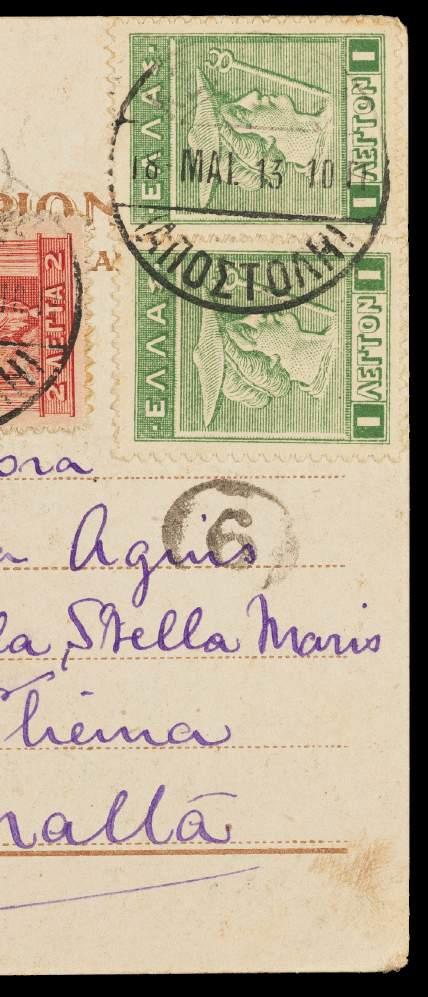
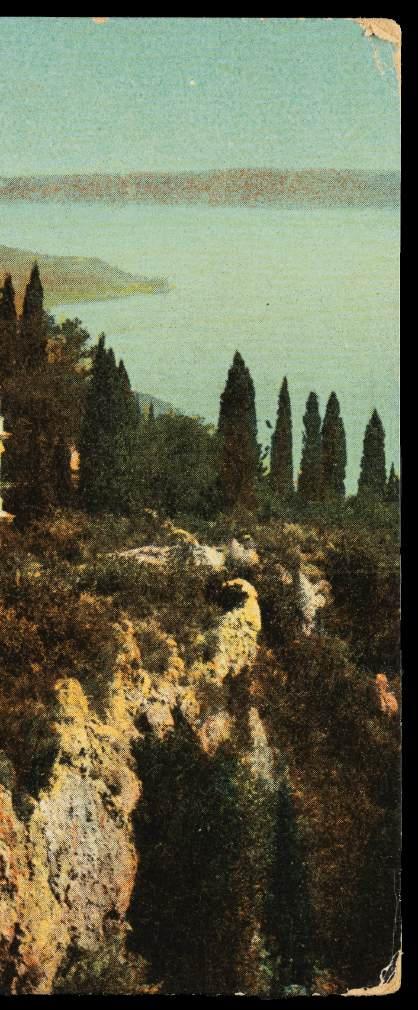
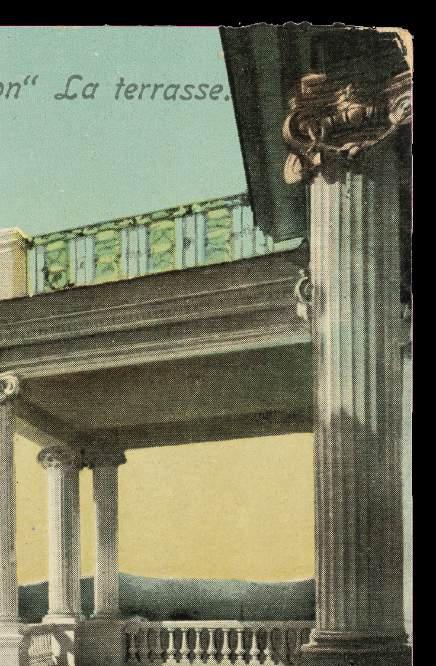
Through a series of intimate postcards, Arnold Cassola continues to elaborate on the long-standing Maltese presence in Corfu, revealing how this small, integrated community navigated identity, language, and daily life amid broader historical upheavals
62 Stan Fraser and Cecil Satariano: A Journey in the Recovery and Restoration of Photographic and Film Heritage
Veronica Galea 73
In Memoriam: Mario Buhagiar (1945–2026)
Charlene Vella 74 From Our Digitisation Studio
My Favourite Object
Paul Xuereb
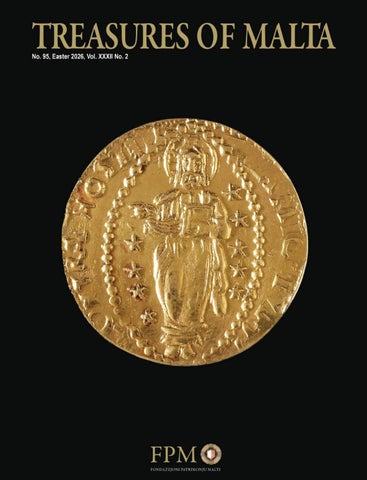
Reverse, gold zecchino, 21mm (diameter), 1595–1601. The inscription reads: ‘DA MICHI VIRTV CONTRA HOSTES TV’ (da mihi virtutem contra hostes tuos; translated: ‘give me the strength against thy enemies’). (Private Collection)
81 In Memoriam: Philip Farrugia Randon (1949–2026)
Giovanni Bonello
82
Bookshelf
Theresa Vella
83
The Cover
Colin Formosa
84
Bookshelf
Jean Noel Cutajar
88
Cultural Review
Cecilia Xuereb
90
Calendar Highlights
Antonia Critien
from the Editor
!uite a harvest of positive news, both in retrospect and in anticipation of things to come. The headlines shriek the soulless construction abominations metastasising all over the body of our nation. But, thankfully, also a consistent effort at preserving legacy and the valorisation of our artistic creativity. The standards of heritage conservation have risen exponentially, and never has Malta—chronically afflicted by insufficient, if not downright incompetent restoration management—kept so many state-of-the-art conservators busy, in both the public and private sector.
To single out: the ongoing programme for the rebirth of the Jesuits’ Church, Valletta, a major focal point in the history of higher education, of daring architecture, and of aesthetic, cultural, and artistic energies. The two side oratories no longer just reflect tired history. They have reverted to vibrant spaces of the soul and of the intellect, in no way less inspiring than similar structures in Italy. Extensive programmes are in place for rejuvenating the rest of the building—with the church itself having been recently inaugurated after extensive restoration—under the control of the joint church-state foundation, a winning formula already experimented successfully in St John’s Co-Cathedral.
Until the end of May we will remain in the vortex of Heritage Malta’s second Malta Biennale, baptised CLEAN | CLEAR | CUT, consisting of several exhibitions and satellite events spread over eleven museum spaces and other evocative sites in the islands—Valletta, Vittoriosa, and Xag "ra and the Cittadella in Gozo. Innovative and challenging creatives, both local and from overseas artistic milieus, will provide controversial fodder for the aesthetically inquisitive.
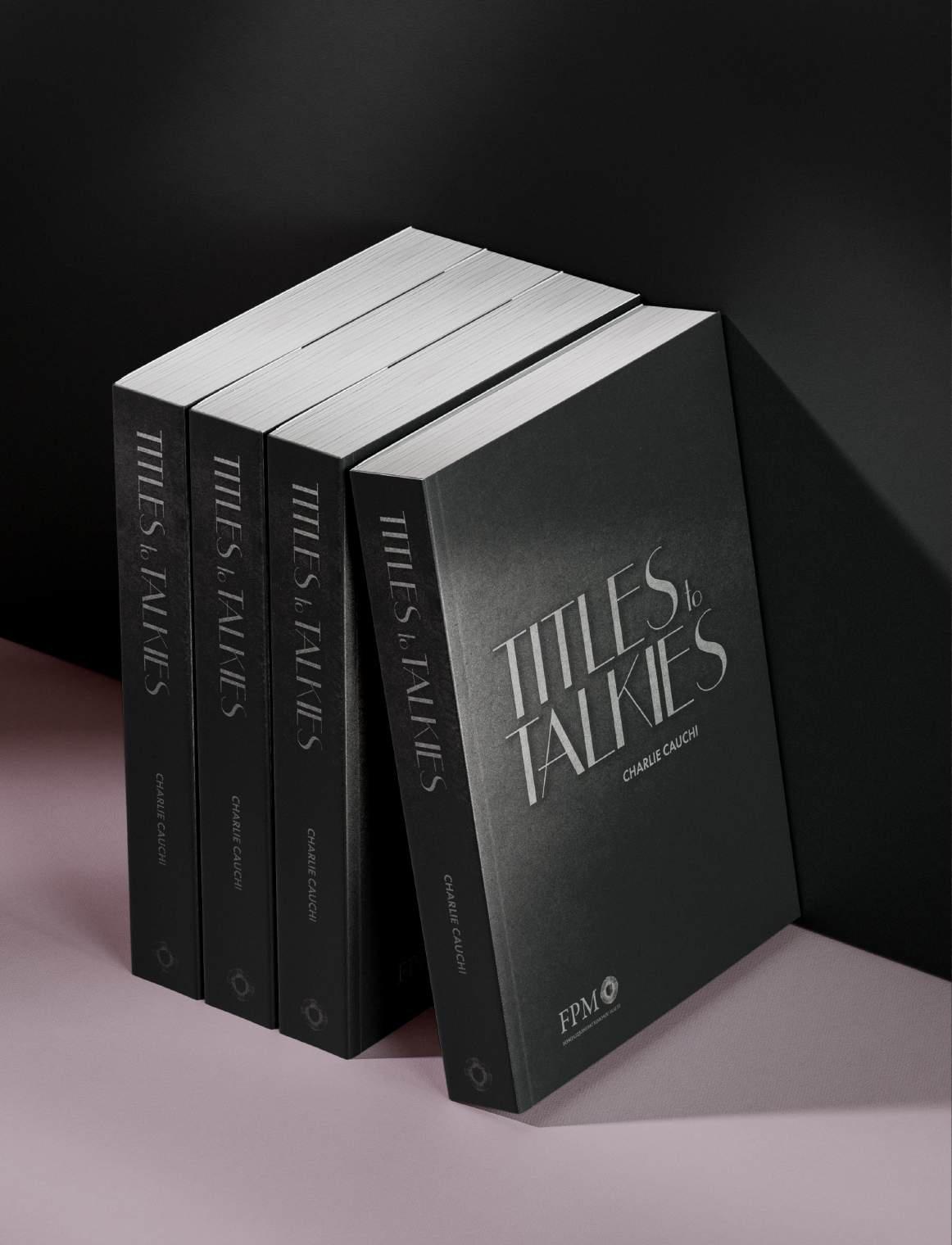
Our publishing programmes remain intense, measured, and on course. The far-reaching insights into the origins and the culture of a film industry in Malta are now firmly established by Charlie Cauchi’s Titles to Talkies, launched in February. Admittedly, not a complete overview of a vast subject which researchers have so far ignored, this book has the unchallenged kudos of pioneering enquiries that others neglected. These results, both sad and heartening, have revealed much, and we believe may have more to reveal—both the loss of cinematic heritage and the discovery of forgotten gems. We aimed for a chronicle, and we believe we ended with a page-turner.
Our series, More Histories, will soon launch its fourth volume. Differently from its precursor, the twelve-volume Histories of Malta, the present work follows a thematic template—so far, criminals and criminality, women through history, and the deeds and misdeeds of prominent people. The new volume will deal with insights about art and artists in Maltese culture, their genius and insanities, tragedy and comedy—past and present often intertwine.
This happens to be a right occasion to salute and honour the memory of Philip Farrugia Randon who had publicly, generously and perceptively, launched the first volume of this series, in 2024.
On to our exhibition agenda. In early autumn a representative assemblage of Gabriel Caruana’s impossibly variegated works and memorabilia will be on show at our venue, the VP Gallery. These include surprising exotica like carnival floats and costumes, installations for industrial sites, totems for roundabouts, murals, large and small decorative private and public motifs, fantasy public projects. A catalogue will guide and document the exposition. Prominent on the drawing board is also a large-scale exhibition to broadcast a necessary revaluation of Malta’s neolithic past. At the National Museum of Archaeology, we will curate a boundary-busting exhibition, hand in hand with experts from the University of Malta and Heritage Malta. A publication will accompany this visual display of unique artefacts.
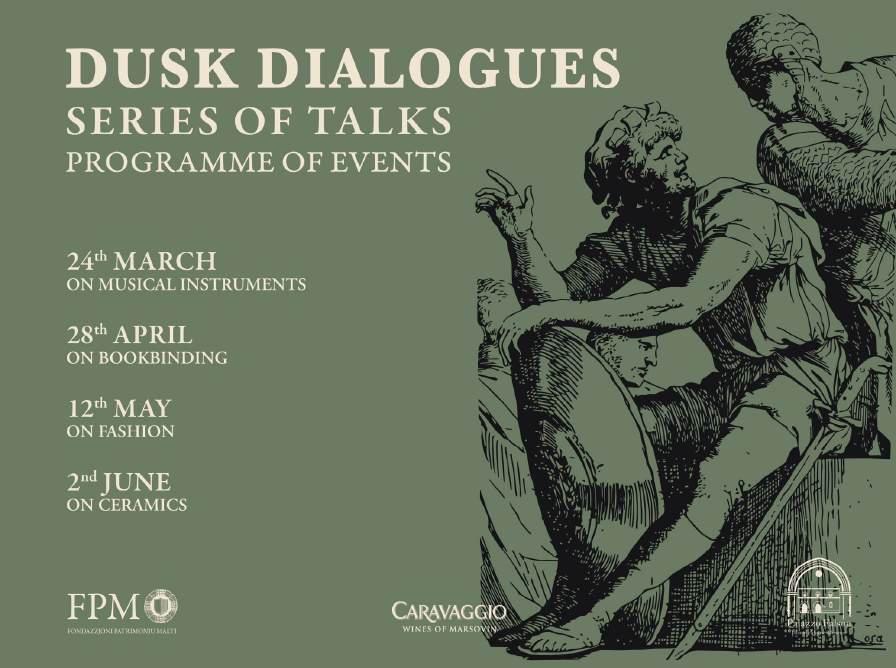
At Palazzo Falson, Mdina, our monthly Dusk Dialogues continue, now with a focus on craft. Scholars and practitioners explore the history and the creation of objects, like folk musical instruments, bookbinding, ceramics, dress, fashionable accessories, and so on.
Treasures of Malta is published three times a year, at Christmas, Easter and in the Summer
General Editor: Giovanni Bonello
Executive Editor: Giulia Privitelli
Creative Director: Michael Lowell
Publisher / Editorial Office Fondazzjoni Patrimonju Malti
APS House, 275, St Paul Street Valletta VLT 1213, Malta tel: (356) 21231515
All material, pictorial and/or editorial, published in Treasures of Malta is the property of the respective author and/or photographer. Reproduction without the necessary permission in writing from the rightful owner is strictly prohibited. issn 1028-3013
Fondazzjoni Patrimonju Malti
VO/1762
Conseil d’Honneur
Her Excellency the President, Ms Myriam Spiteri Debono
The Hon. Prime Minister, Dr Robert Abela
His Grace the Archbishop, Mgr Charles J. Scicluna
Hon. President
The Hon. Dr Owen Bonnici
Minister for National Heritage, the Arts, and Local Government
Hon. Life Founder President
Dr Michael Frendo
Life Founder Members
Rita Flamini, the late Maurice de Giorgio
Founder Members
John Lowell, the late John Manduca, Nicholas de Piro
Board of Go!ernors
Joseph Grioli, Chairman
Giovanni Bonello, Deputy Chairman
Joseph V. Bannister
Max Ganado
Michael Grech
Lawrence Pavia
Matthew von Brockdorff
Michael Lowell, Chief Executive Officer
FONDAZZJONI PATRIMONJU MALTI
&e Chairman and Board of Governors of Fondazzjoni Patrimonju Malti would like to thank the following donors for their support
ASSOCIATES
THE MARTIN LAING FOUNDATION
BENEFACTORS
CORPORATE SUPPORTERS
MR JEAN CLAUDE GANDUR
FONDAZZJONI PATRIMONJU MALTI
&e Chairman and Board of Governors of Fondazzjoni Patrimonju Malti would like to thank the following donors for their support
PERSONAL SUPPORTERS
Francis Miller Memorial Fund
PATRONS
PERSONAL
Simon Abrahams & Francesca Del Rio
Mr Neville Agius & Dr Sabine Agius Cabourdin
Mrs Janatha Stubbs
Aviaserve – Mr Kenneth De Martino
Camilleri Paris Mode – Mr Paul Camilleri
Eden Leisure Group – Mr Ian De Cesare
Forestals Group of Companies – Mr Tancred Tabone
Ganado Advocates – Dr Andre Zerafa
Gasan Group Limited – Mr Ian Sultana
Gianpula Village – Dr Roger de Giorgio
GVZH Advocates – Dr Michael Grech
Healthcare Logistics Limited – Mr Ian Galea
IIG Bank (Malta) Ltd – Mr Raymond Busuttil
John Ripard & Son (Shipping) – Mr Joseph Chetcuti
Lombard Bank Malta plc – Mr Joseph Said
Mapfre Middlesea plc – Mr Martin Galea
CORPORATE
Miller Distributors Ltd – Mr Malcolm G. Miller
PwC – Ms Lucienne Pace Ross
RiskCap International Ltd – Dr Paul Magro
Rizzo, Farrugia & Co. (Stockbrokers) Ltd – Mr Vincent J. Rizzo
Satariano – Ms Natasha Chapelle Paleologo
Shireburn So'ware Limited – Ms Yasmin de Giorgio
Sigma Coatings (Malta) Ltd – Mr Anthony Critien
Signworld – Mr Alan Azzopardi
&e Alfred Mizzi Foundation – Mr Julian Sammut
Tug Malta Ltd – Dr George Abela
Virtù Steamship Co. Ltd – Mr Charles A. Portelli
Zammit Pace Advocates – Dr Roderick Zammit Pace
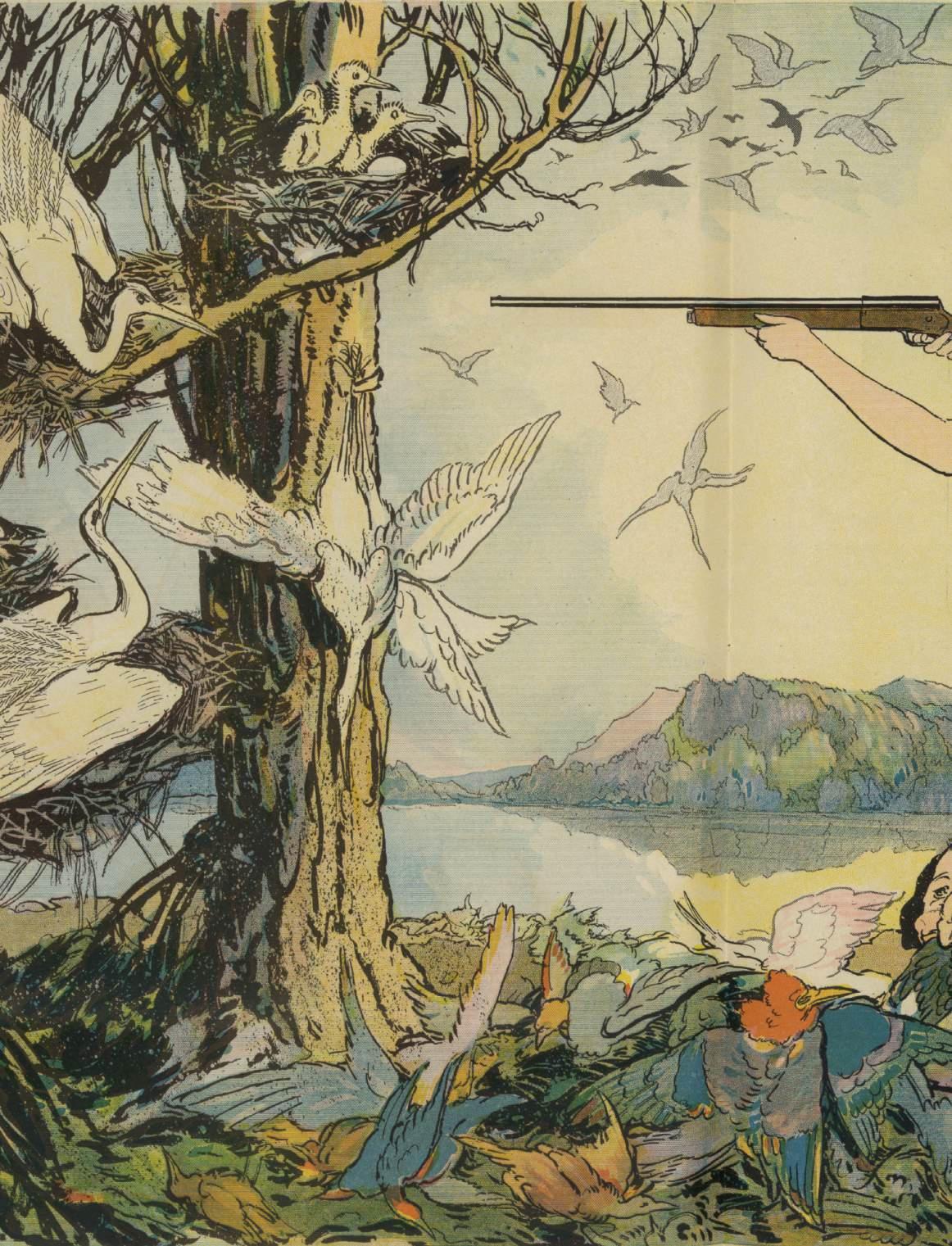
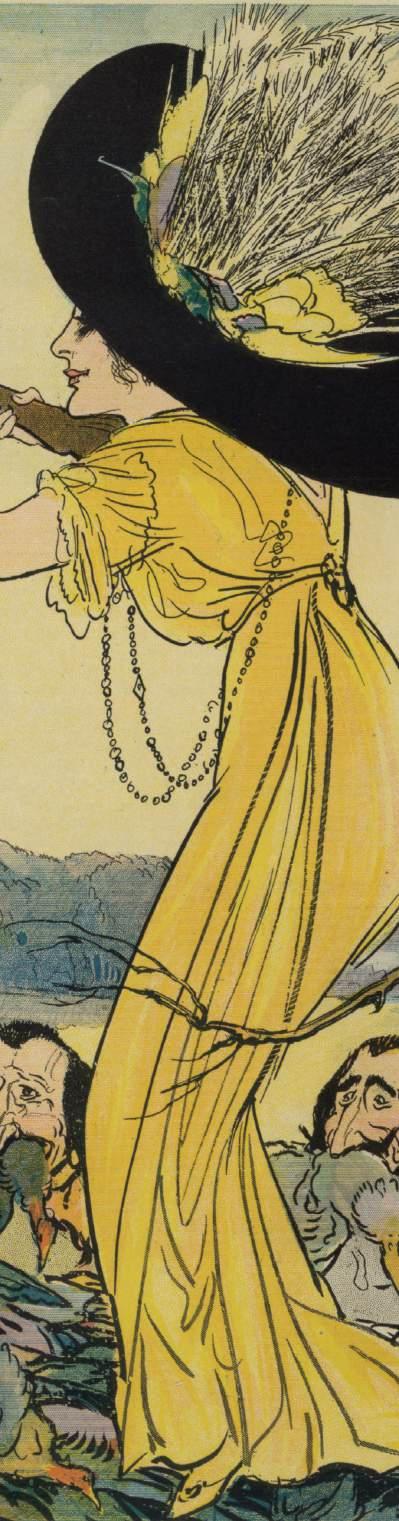
Fig. 1 (Detail) Gordon Ross (1873–1946), The Woman Behind the Gun, illustration showing a woman (possibly Coco Chanel) wearing a large hat with feathers, shooting at large white birds with a rifle, while two anthropomorphised dogs labelled ‘French Milliner’ place the dead birds on a pile at her feet, in Puck, Vol. 69 No. 1786 (24 May 1911). (Courtesy of the Library of Congress, Prints and Photographs Division, Washington, USA)
Feathered Finery Millinery, Fashion, and Social Identity in Malta
Caroline Tonna traces the rise of feathered fashion from early modern Europe to its peak in the late nineteenth and early twentieth centuries, highlighting how Malta actively participated in this global trend through elite consumption, millinery trade, and cultural exchange
The captivating history of feathered fashions piqued my interest after following a lecture by Tessa Boase, author of Mrs Pankhurst’s Purple Feather: Fashion, Fury and Feminism, published in 2018.1 Her work explores the late nineteenth and early twentieth centuries, a period when the use of feathers and entire birds on women’s hats was a major fashion trend that drove several exotic birds to the brink of extinction. Boase’s book contrasts two pioneering women who engaged in public activism; Emmeline Pankhurst, a celebrated suffragette, and Etta Lemon, a lesser-known anti-feminist who led a campaign against the use of bird feathers in hats. Lemon’s efforts were instrumental in founding key conservation organisations, including the Royal Society for the Protection of Birds (RSPB) in the United Kingdom, and the National Audubon Society in the United States of America.
Caroline Tonna is a dress historian and a multidisciplinary researcher, highly engaged in the creative sector. She holds BA degrees in Anthropology and Art History, and a MA in Art History, all from the University of Malta. She is a former curator of Palazzo Falson Historic House Museum, Mdina. Her monograph, Society Fashion in Malta: The Portrait Photography of Leandro Preziosi (1869–1930), was published by Fondazzjoni Patrimonju Malti, in 2022.
Fig. 1
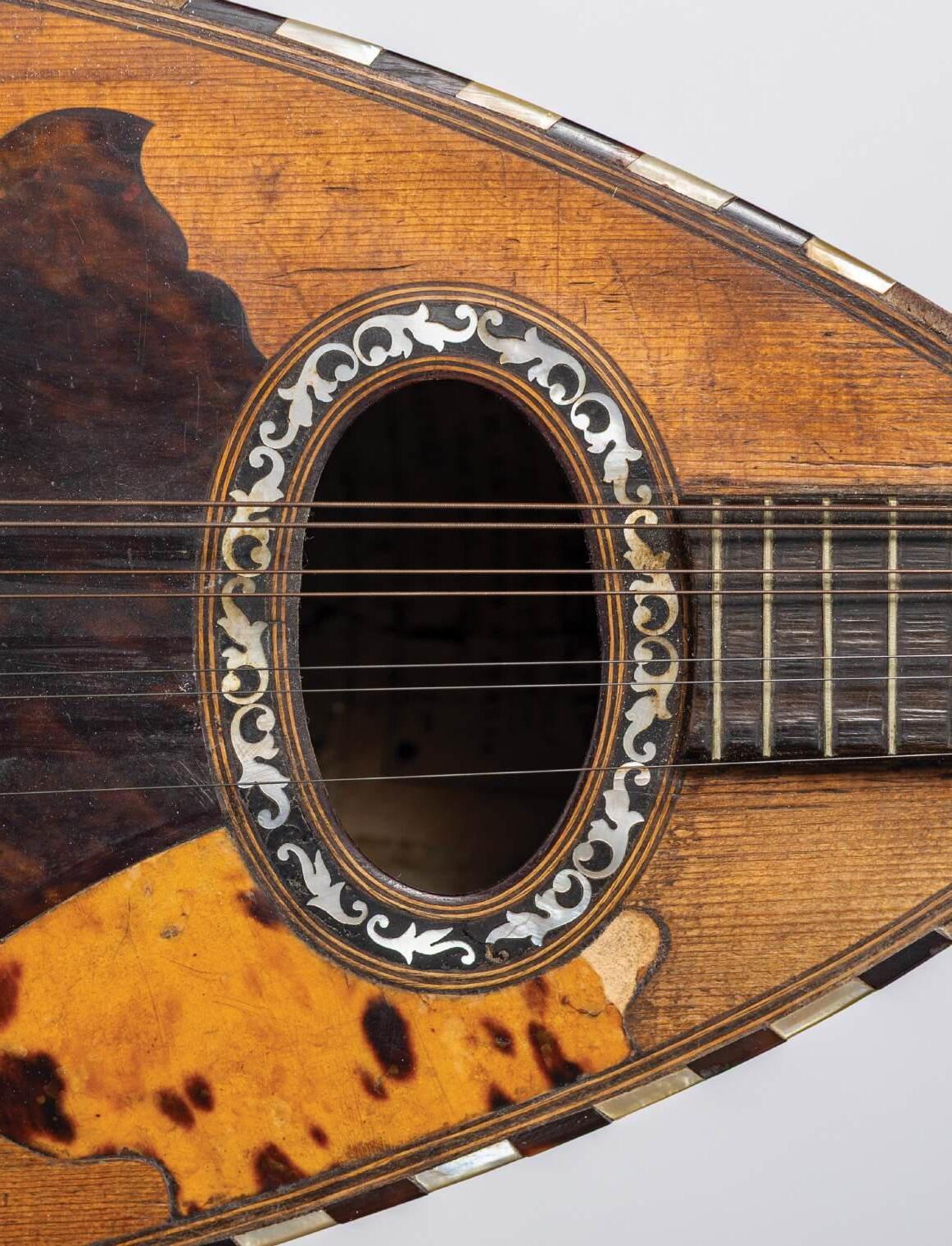
Detail of a mandolin belonging to Maestro Gian Felic Buhagiar, manufactured by Pasquale Vinaccia e Figli, 1889. (Private Collection, Malta / Photo: Lisa Attard)
The Fashionable Mandolin and Maestro Gian Felic Buhagiar (1865–1919)
Anna Borg Cardona traces the mandolin culture in Malta from the late nineteenth to the early twentieth century, focussing on the lasting legacy of Maestro Buhagiar and his mandolin bands in shaping performance, education, and society entertainment
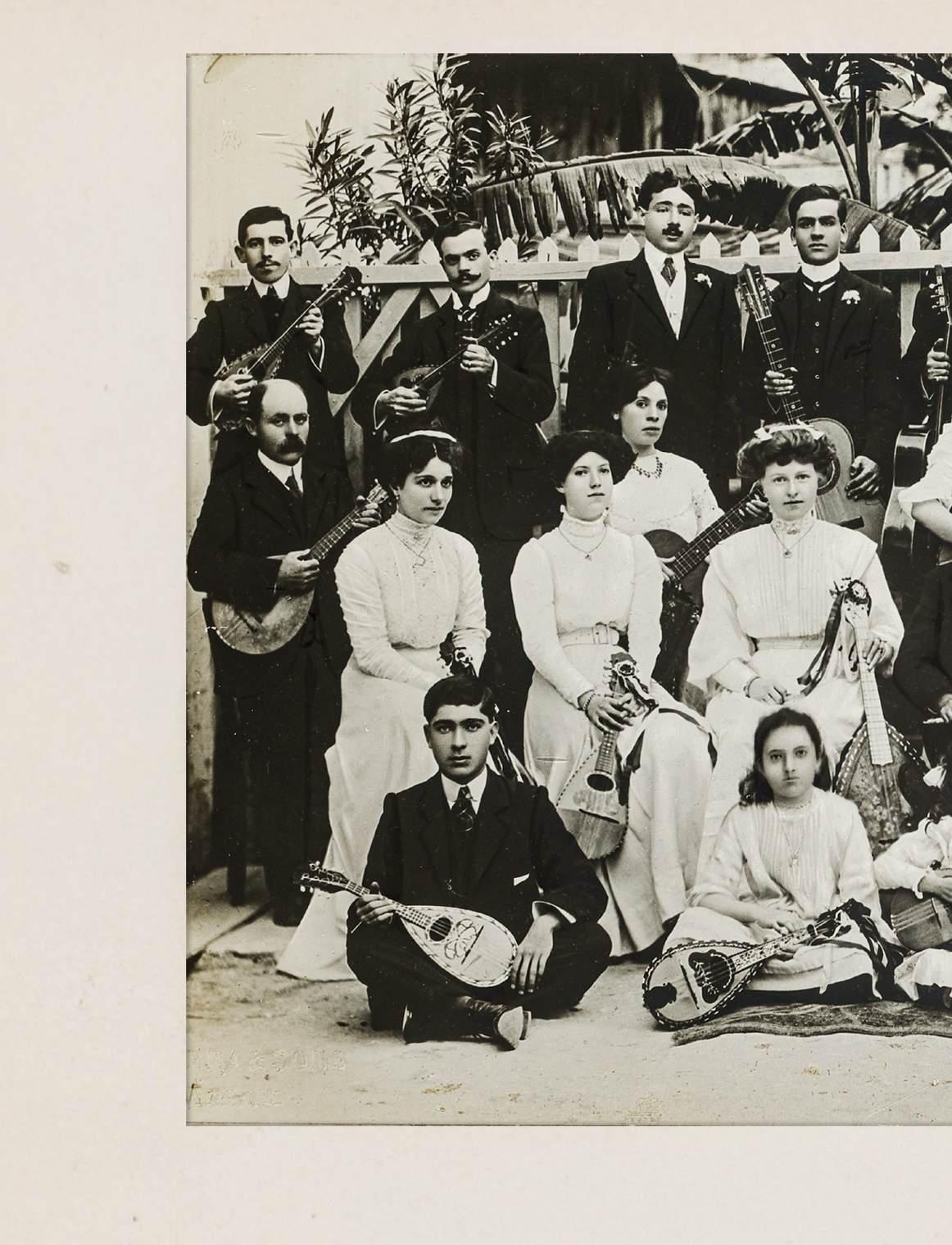
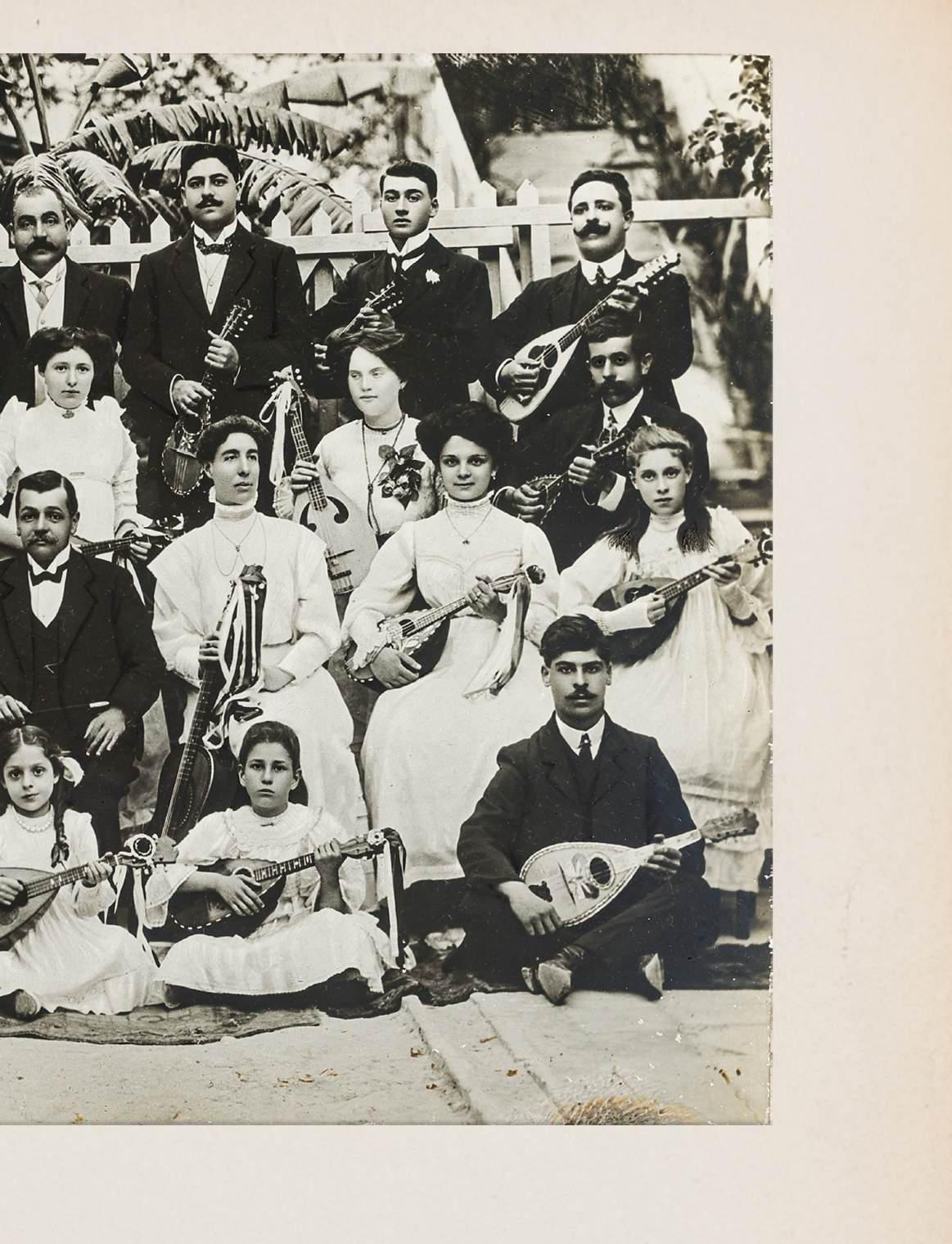
The nineteenth century saw the rise of the amateur musician, with every young lady and gentleman aspiring to play an instrument, particularly the pianoforte. Evenings in the sala, where they performed and sang for their guests, constituted a large part of society’s entertainment of the time. Public charity concerts also became an opportunity to demonstrate one’s prowess. By the latter decades of the century, another instrument, the mandolin, arrived on the scene, and rapidly gained popularity in Malta at every level of society.
Anna Borg Cardona is a musicologist and author of Musical Instruments of the Maltese Islands: History, Folkways and Traditions (2014), Musical culture and the chitarraro Mattheo Morales in seventeenthcentury Malta (2022), Music Printing by the Brocktorff Lithographers 1832–1893 (2025), and has contributed several entries to the second edition of The New Gro!e Dictionary of Musical Instruments (2014). In 2019, she curated the Fondazzjoni Patrimonju Malti exhibition Music in Malta: From Prehistory to Vinyl. She is the founder of the Ġukulari Ensemble, dedicated to performing Malta’s music and placing it within its historical and social context.
A Pulse on the Sea
1
The Vedetta of the Borsa and Commercial Maritime Signalling
Nikolai Debono takes a closer look at a landmark in Valletta and Malta’s maritime history, now lost to time and memory
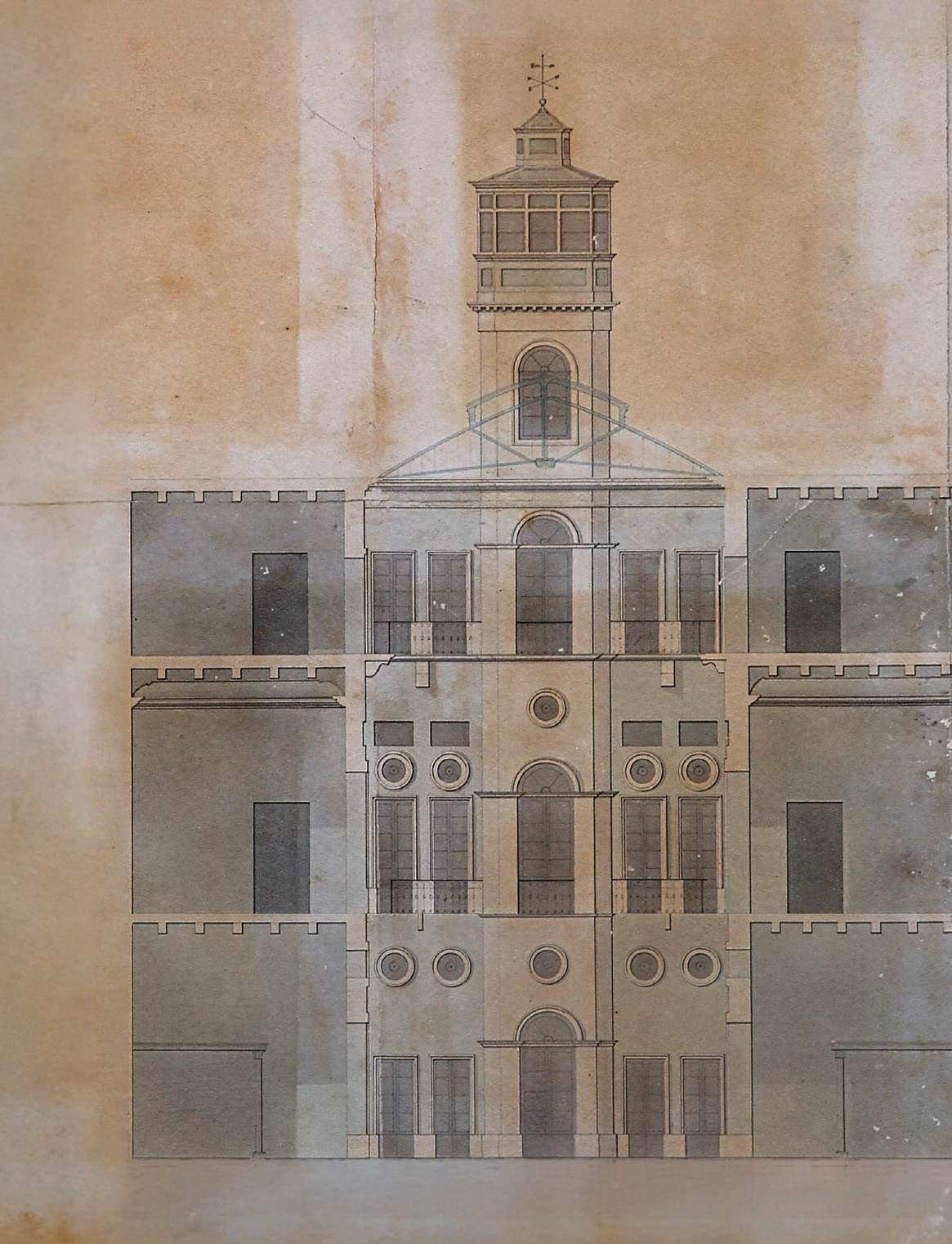
Hundreds of years have seen thousands of ships sailing and steaming to and from Malta’s harbours. Certainly, innumerable commercial, mercantile vessels of all nations. These ships needed navigational aids such as lighthouses and, perhaps just as importantly, means of communication. Through the use of visual signalling methods such as flags, as well as visual and, eventually, wireless telegraphy, ships were guided safely into the harbour.
The importance of maritime signalling in commerce was also related to efficiency, as it informed the respective agents of the arrival of their cargoes. Port agents and ship chandlers would also be ready to cater for any needs. Even if a ship was not destined for Malta, a steamer outside of the Grand Harbour could signal for coal barges to be prepared before it entered the harbour, saving valuable time.1 It was also crucial for local agents to report to their principals, largely in the UK, about ship arrivals or passages near the islands as quickly as possible, especially vessels with high insurance premiums, the rates of which were affected if communication in Maltese harbours was inefficient or imprecise.2 Flags also indicated if mail-carrying boats arrived or departed.3
Debono is a PhD student at the University of Antwerp whose research interests lie at the intersection of history and anthropology. He is also engaged in archives and collections management and recently led conservation efforts on the archives of the Borsa (Chamber of Commerce), in Valletta.
Nikolai
Fig.
The central tower leading up to the vedetta at the very top, as proposed in the original plans for the new Borsa by the architect Giuseppe Bonavia. (Courtesy of the Malta Chamber of Commerce, Valletta)
The 1913 Visit to Corfu of a Maltese Businessman
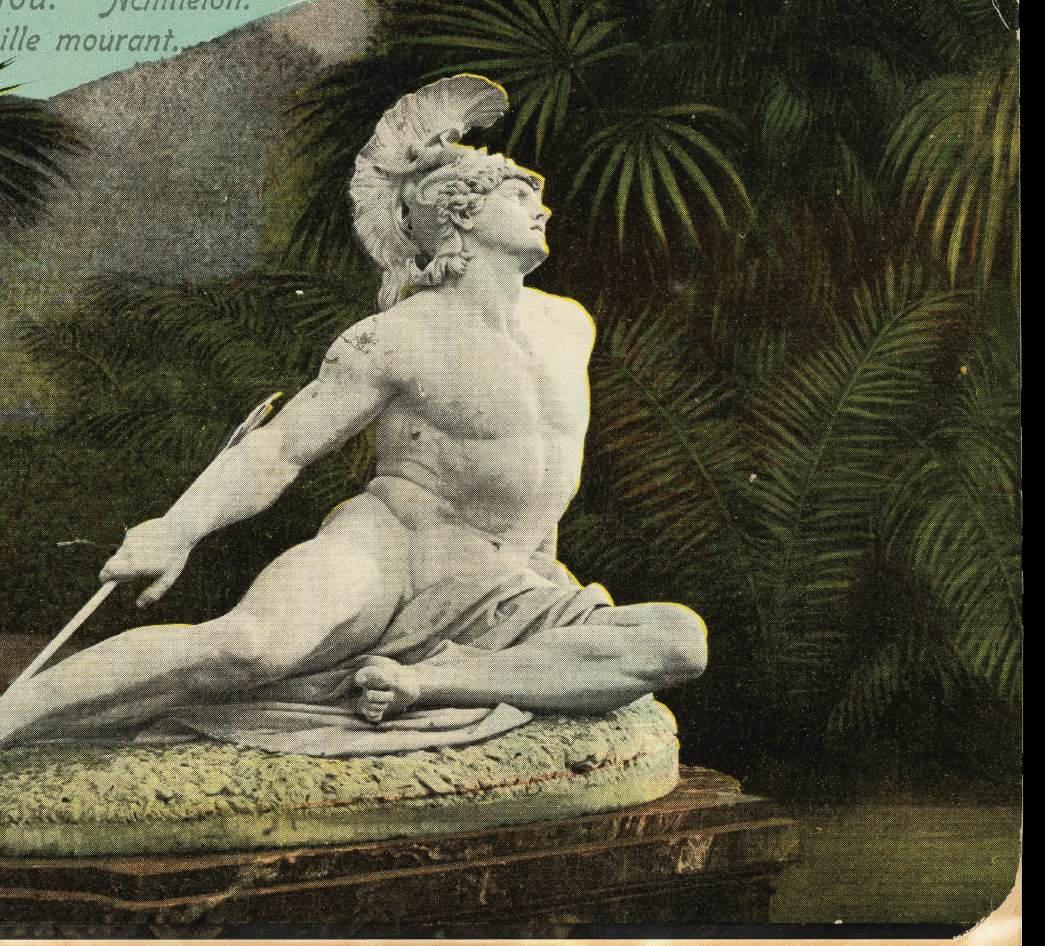
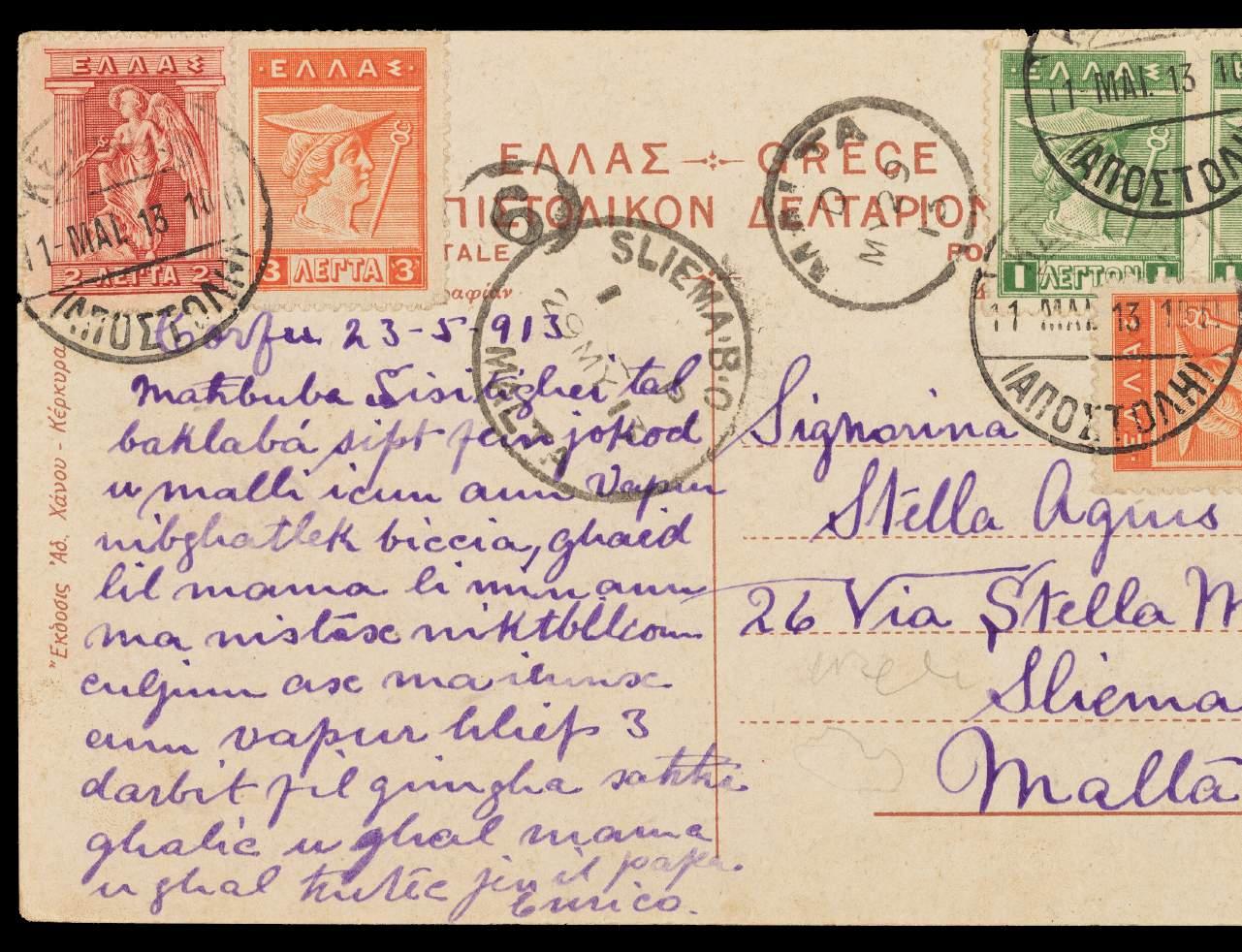
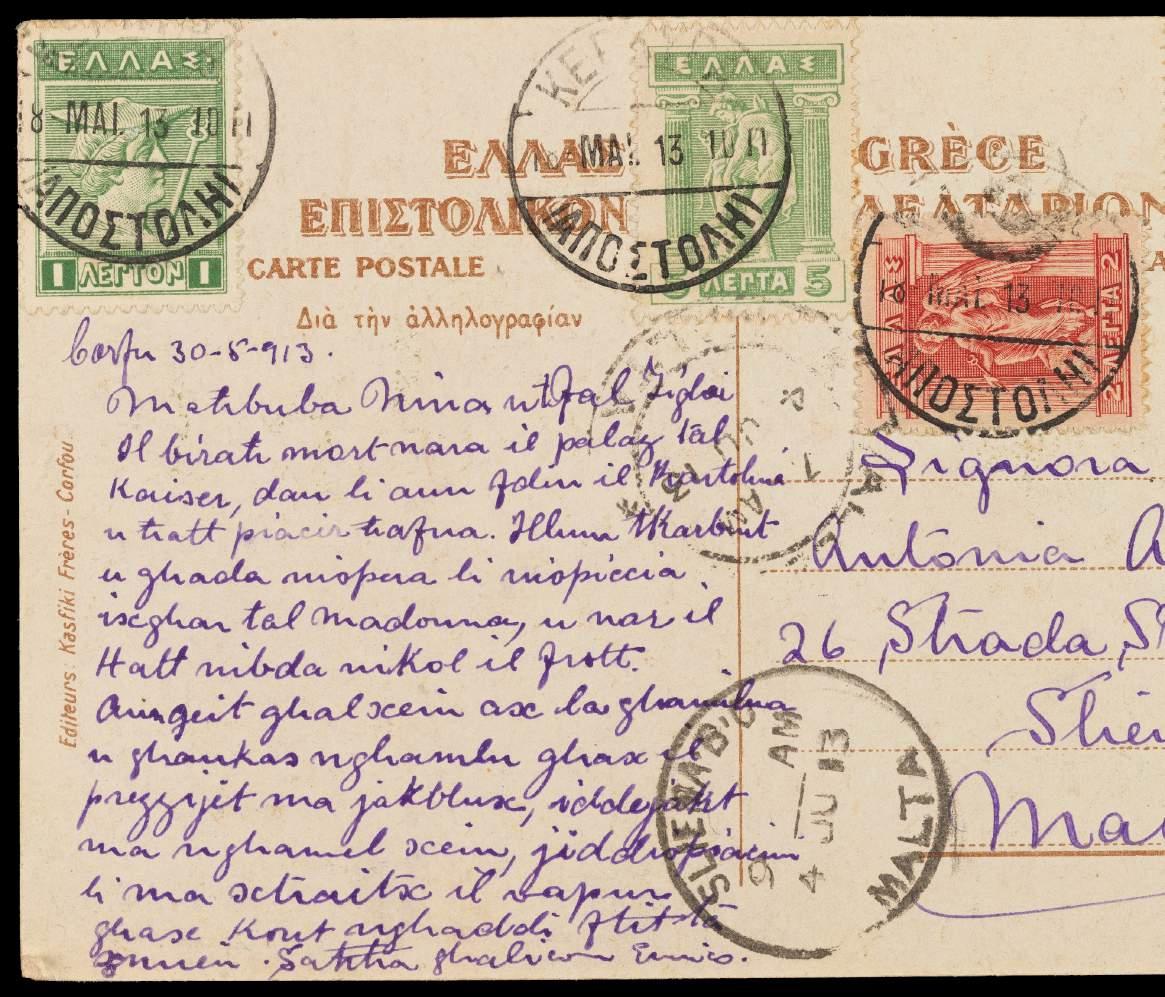
Through a series of intimate postcards, Arnold Cassola continues to elaborate on the long-standing Maltese presence in Corfu, revealing how this small, integrated community navigated identity, language, and daily life amid broader historical upheavals
My recent articles on the first Maltese inhabitants of Corfu have attracted quite some attention.1 One must keep in mind that the descendants of the nineteenth-century Maltese are today fully integrated in the Corfiot society, but they still keep their Hellenised Maltese surnames.
Indeed, when Corfu fell to the Nazis in September 1943, the German commander reported to the headquarters (HQ) in Ioánnina, on the mainland, that 562 Anglo-Maltese still inhabited the island. After a few days, the commander reported that the Maltese were descendants of preceding generations and were fully integrated in the Greek community and, thus, to be considered as Greeks. This evaluation was to save them from being deported to the infamous labour camps in Germany.
Professor Arnold Cassola, academic and politician, is a Senior Fellow at the University of Malta, and has also been invited as a guest lecturer in many foreign universities. He is the author and editor of numerous publications on the history, literature, language and culture of Malta, Maltese migration in the Mediterranean, and the cultural relationship between Malta and Italy. His latest book, published in 2025, is entitled The Maltese in Corfu (1815–1831)
Fig. 1
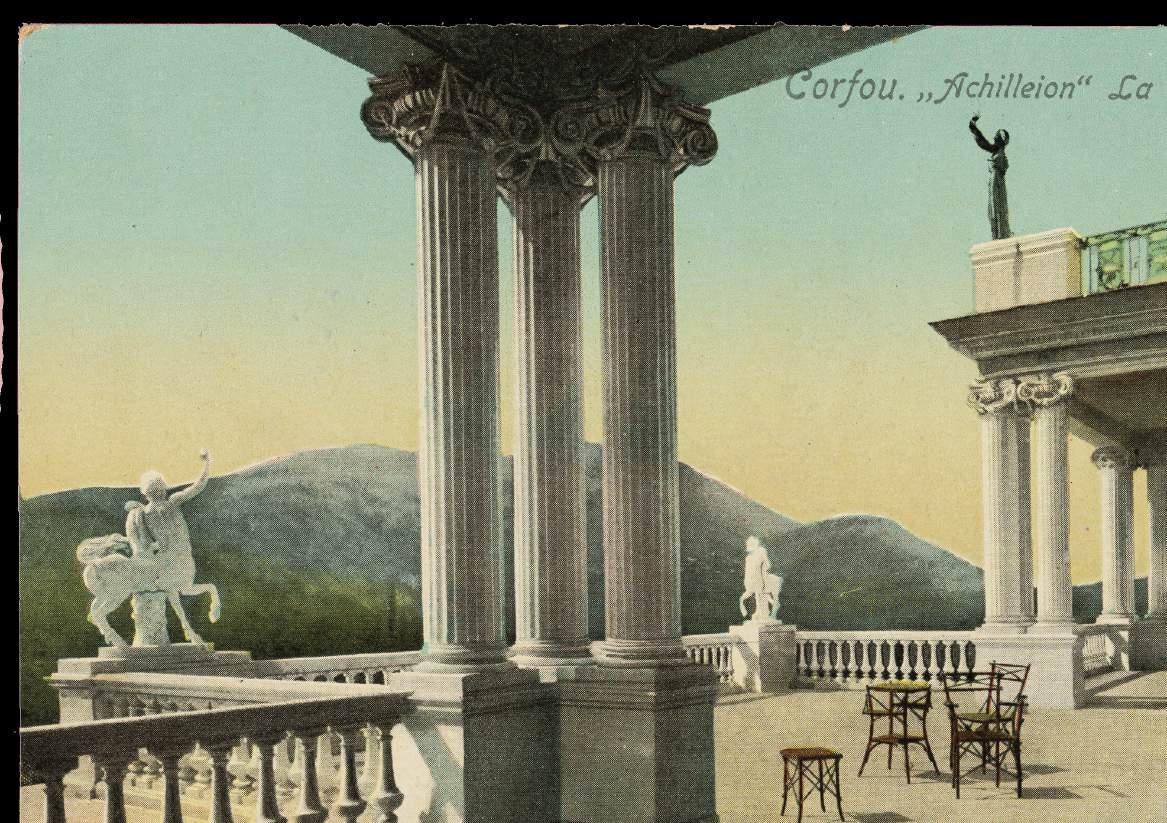
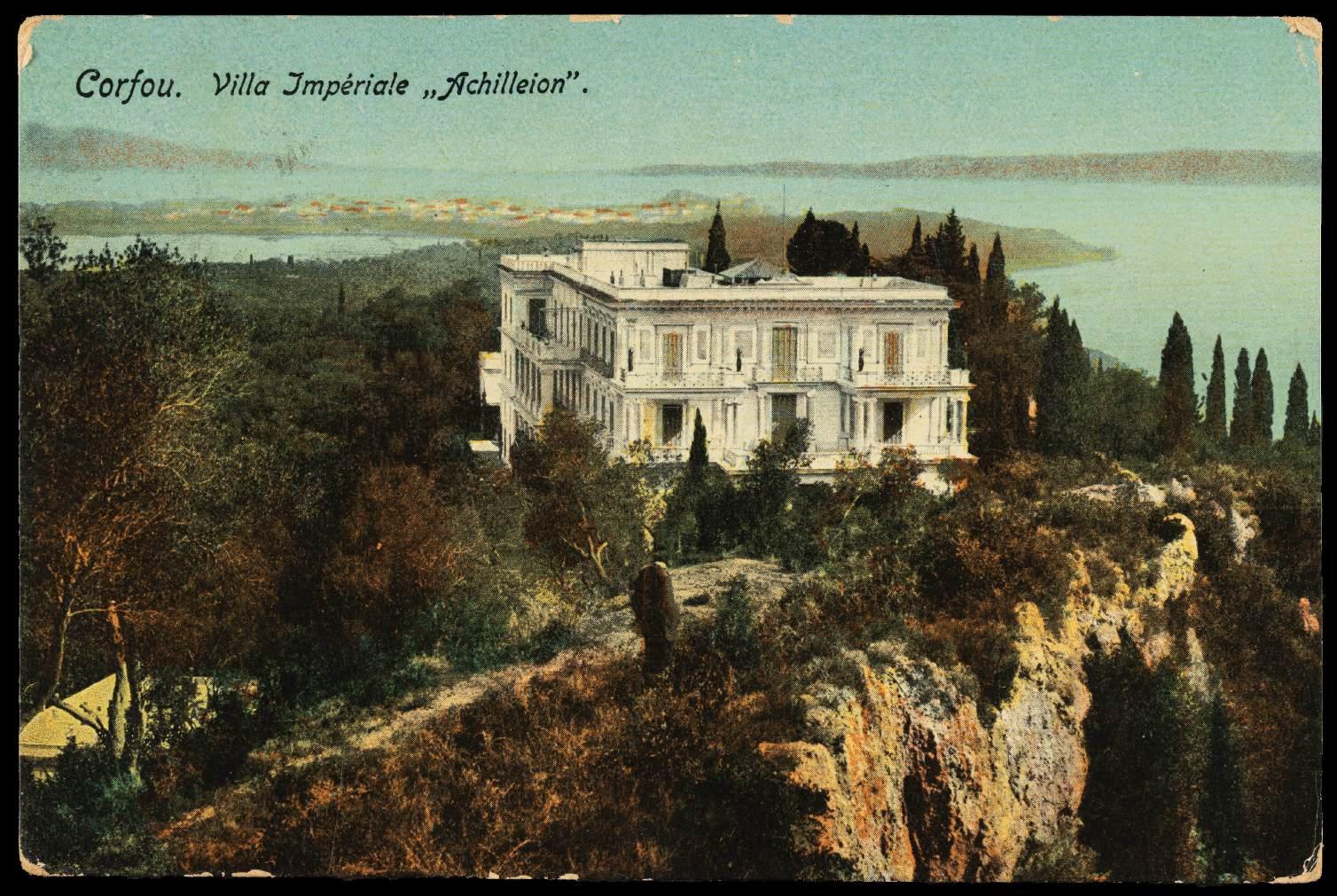
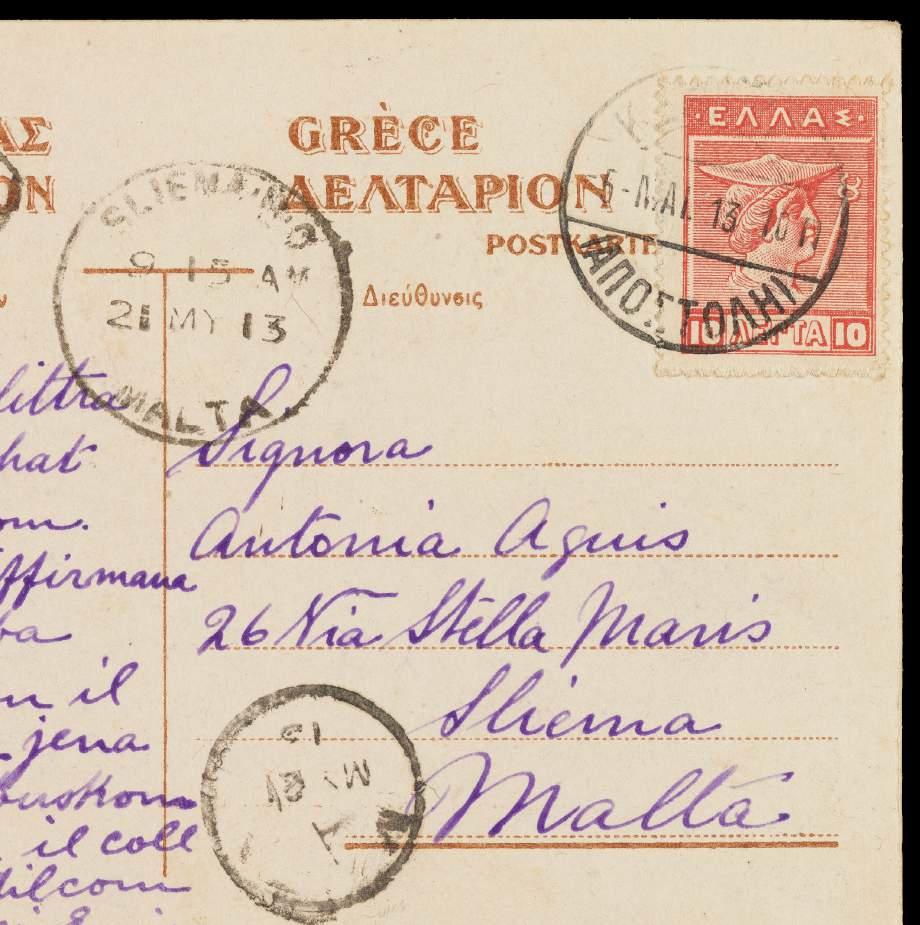
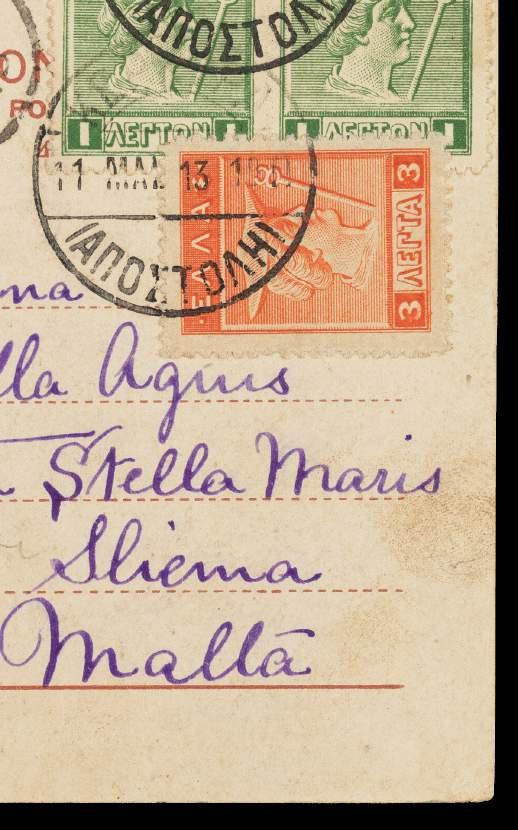
Selection of the 1913 set of postcards sent from Corfu. (Private Collection, Malta)
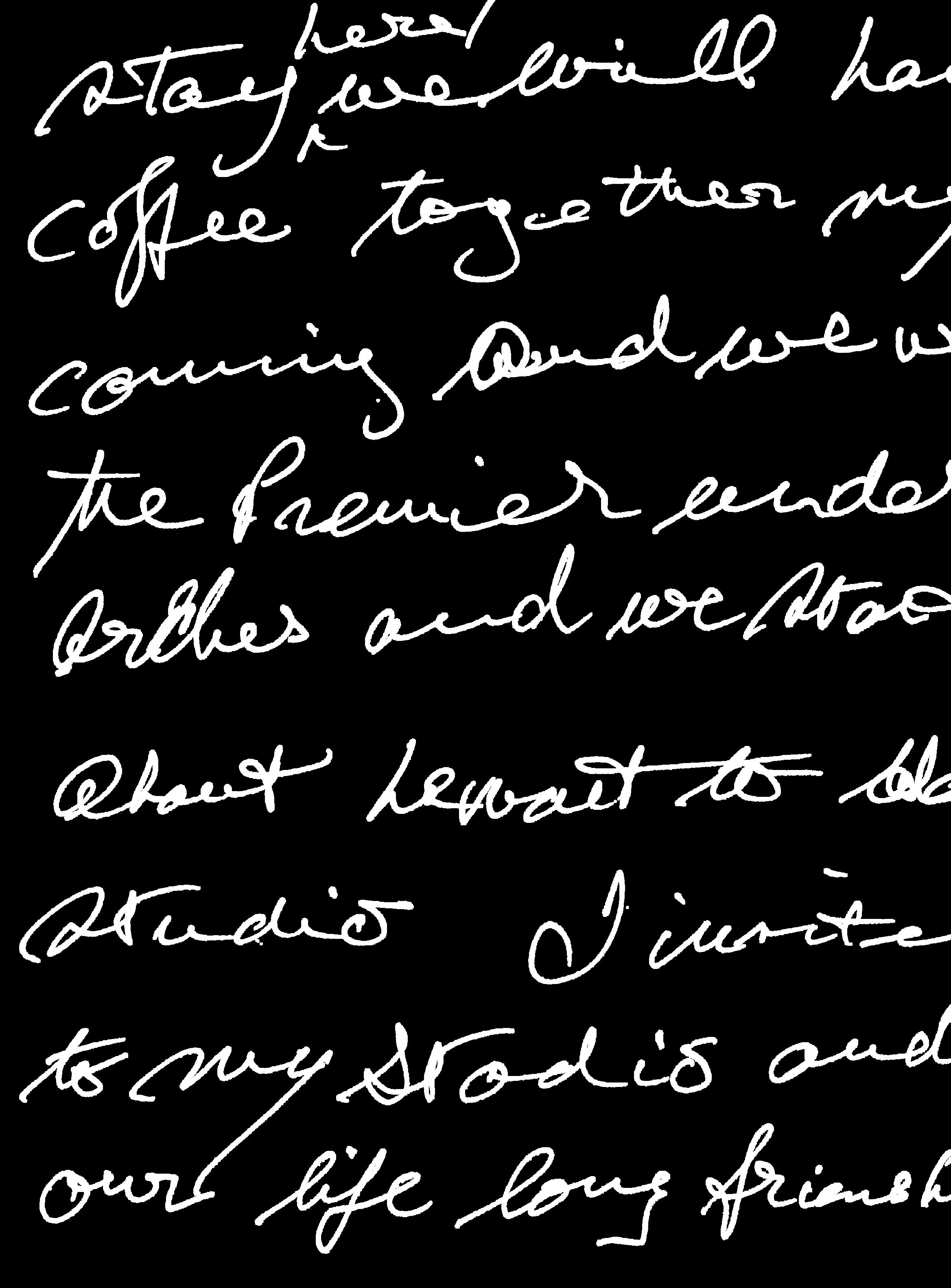
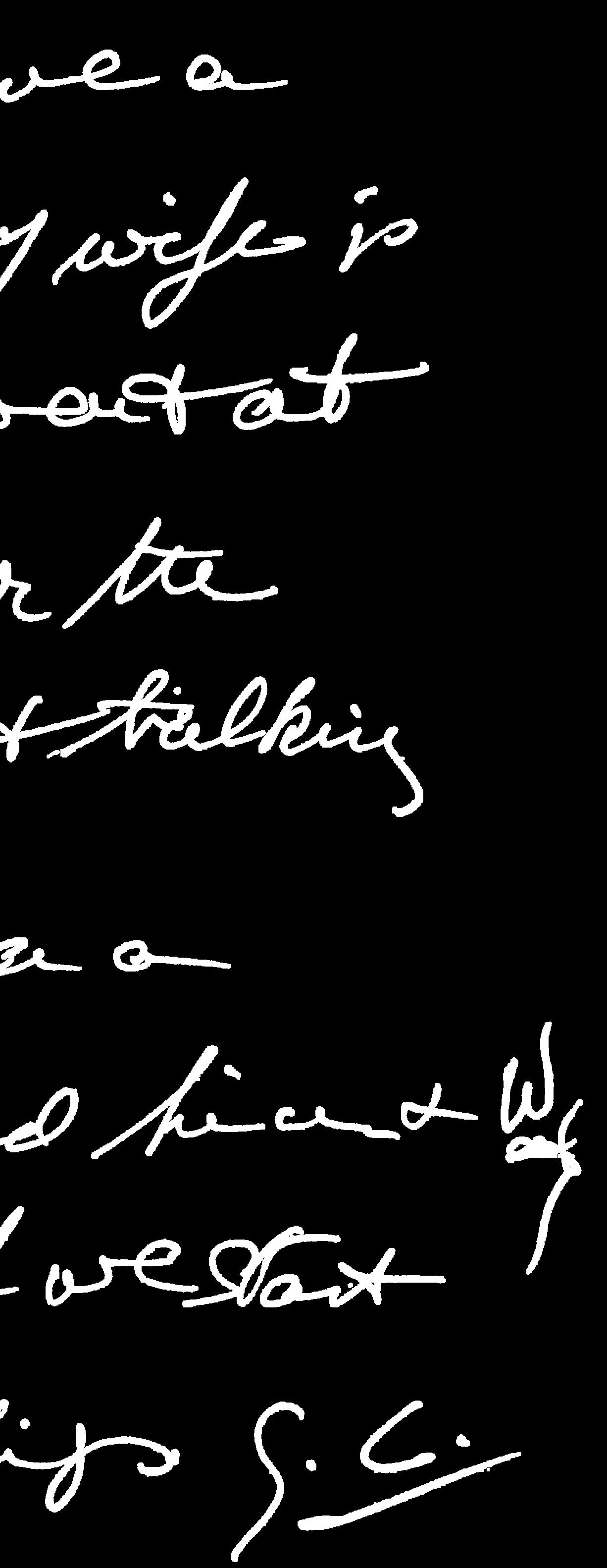
Hand-written over six lined sheets, and dated 17 October 2002, Gabriel Caruana recounts his (rst meeting with Victor Pasmore. &e entry opens up with a brief account of Pasmore's (rst contact with Malta, which the artist personally shared with Caruana. &e write-up then continues with Caruana’s own recollection of meeting Pasmore. &e transcription of the original manuscript has been edited slightly for legibility, and any sections written in Maltese have been translated into English.
From Our Digitisation Studio
e concluding part of Gabriel Caruana’s hand-written account. Edited for design purposes.
(Courtesy of the Gabriel Caruana Foundation)
75
· Treasures of Malta 95, Easter 2026
(VP) I was in Haymarket, London, looking for a travel agency to establish a studio in Cyprus or Tunis. As I was walking along the pavement, a ceramic panel in a showcase caught my attention. I looked up and saw that it was the Malta House. I called Wendy, my wife, over to see the ceramic relief. I told her immediately we [should] go to Malta. We went into Malta [House] and picked an air ticket to Malta for the Phoenicia Hotel. It never
came to my mind, Malta, because I always thought that Malta is all military barracks, but with that ceramic relief I changed my mind.
We arrived at the Phoenicia and I presented my passport at the door together with my wife[’s]. When I gave the passport to the concierge he said to me, ‘are you Victor Pasmore the painter?’ and I said, ‘they say so’. I asked him: ‘where are some interesting Modern Art pieces?’
‘... but with that ceramic relief I changed my mind.’
– Victor
Pasmore
opposite, Fig. 1:
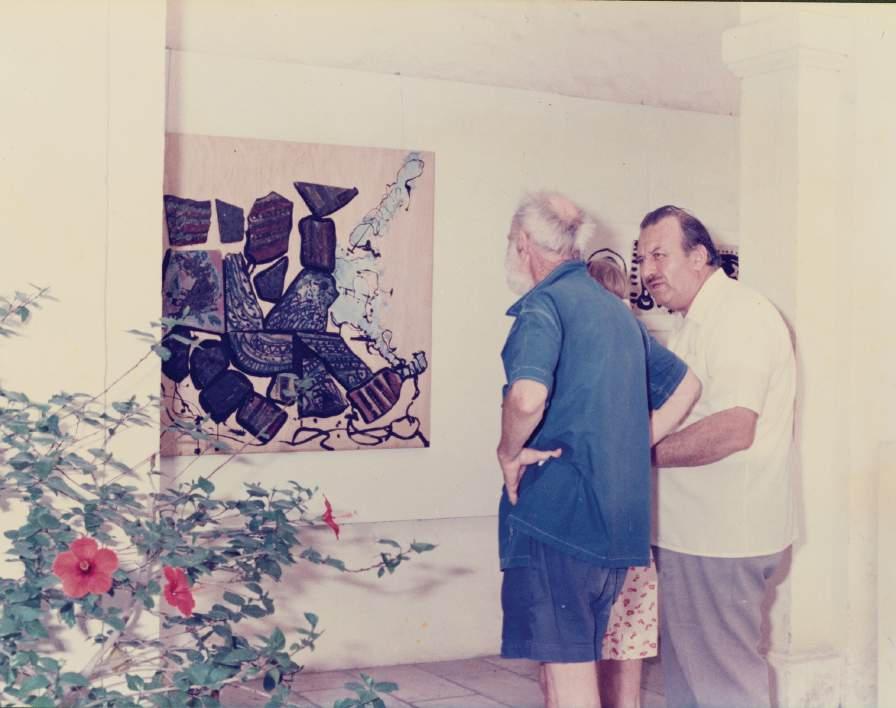
On the retro of this photograph is written: ‘Exhibition at Museum, Valletta. Victor Pasmore and Gabriel Caruana looking at a work by G.C.’; photographed by John Parnis.
(Courtesy of the Gabriel Caruana Foundation)
(GC) [...] this was his (rst chat with Victor Diacono [who] studied sculpture in Rome and England. Diacono said to Victor Pasmore, the most two interesting places re[garding] moden art are the Richard England church of Manikata and the Alderney Gallery in Zachary Str, Valletta, at the Bank of Alderney, run by Clary March.
A'er setting his luggage at the Phoenicia, he asked for a taxi and he went to Manikata, and VP [Victor Pasmore] told himself that he was really impressed, and he teleph[oned] RE [Richard England] and congratulated him. He went later to see the Gallery, he told me that he saw my pieces and he asked Clary March to meet, and she said to VP that Gabriel is busy[?] he doesn’t meet anyone.
&en, one day, I saw on the TOM [Times of Malta] that VP and Mrs Wendy P[asmore] le' the Island. I was very annoyed that Pasmore was on the Island and I did not meet him. Two months a'er the notice on the TOM, I le' early from a council meeting at Palazzo de la Salle, the Malta Society of Art, in Strada Reale, Valletta. Going up in front of the Grandmaster’s Palace, I meet, in front of my face, Victor Pasmore. I stopped him and I asked if he is Mr Victor Pasmore (I know him from books at the super[?] library of art at the British Council, the British Institute situated near St Paul’s cathedral).
He said ‘yes, what can I do for you?’ I said my name is Gabriel Caruana. ‘Oh yes, the one I want to meet.’ And he gave me a tap with his hand on my shoulder which I still feel. He said are [you] the one [who has] works at the Alderney Gallery and at Malta House in London? I said ‘yes’. He said to me, ‘stay here we will have a co)ee together, my wife is coming’. And we went [to] the Premier under the arches and we start[ed] talking about [him wanting to have] a studio. I invited him and Wendy to my studio and we start[ed] our life long friendships.
78 · Treasures of Malta 95, Easter 2026
My Favourite Object
Paul Xuereb
Paul Xuereb was the director of the University of Malta Library from 1967 till 1997. His main interest is the theatre, but has, over the years, amassed a large collection of books on Maltese history—a subject he constantly discusses with academic peers and friends. He has published several Maltese bibliographies; his distinction in this field was recognised by the compilers of the revised edition of Malta (Clio Press, 1998) in the World Bibliographical Series (vol. 64), who dedicated the edition to him. He has also published biographical articles in Encounters with Malta, edited by Petra Bianchi and Peter Serracino Inglott (Encounter Books, 2000), and in Festschriften in honour of people like Gio!anni Bonello, Pawlu Mizzi, Eddie Fenech Adami, Joseph Schirò, and Lino Spiteri. He was the editor of this very journal, Treasures of Malta, from 2005 to 2009. He is a Member of the Order of Merit.
Need for Corn:
An 1800 document signed by Alexander Ball
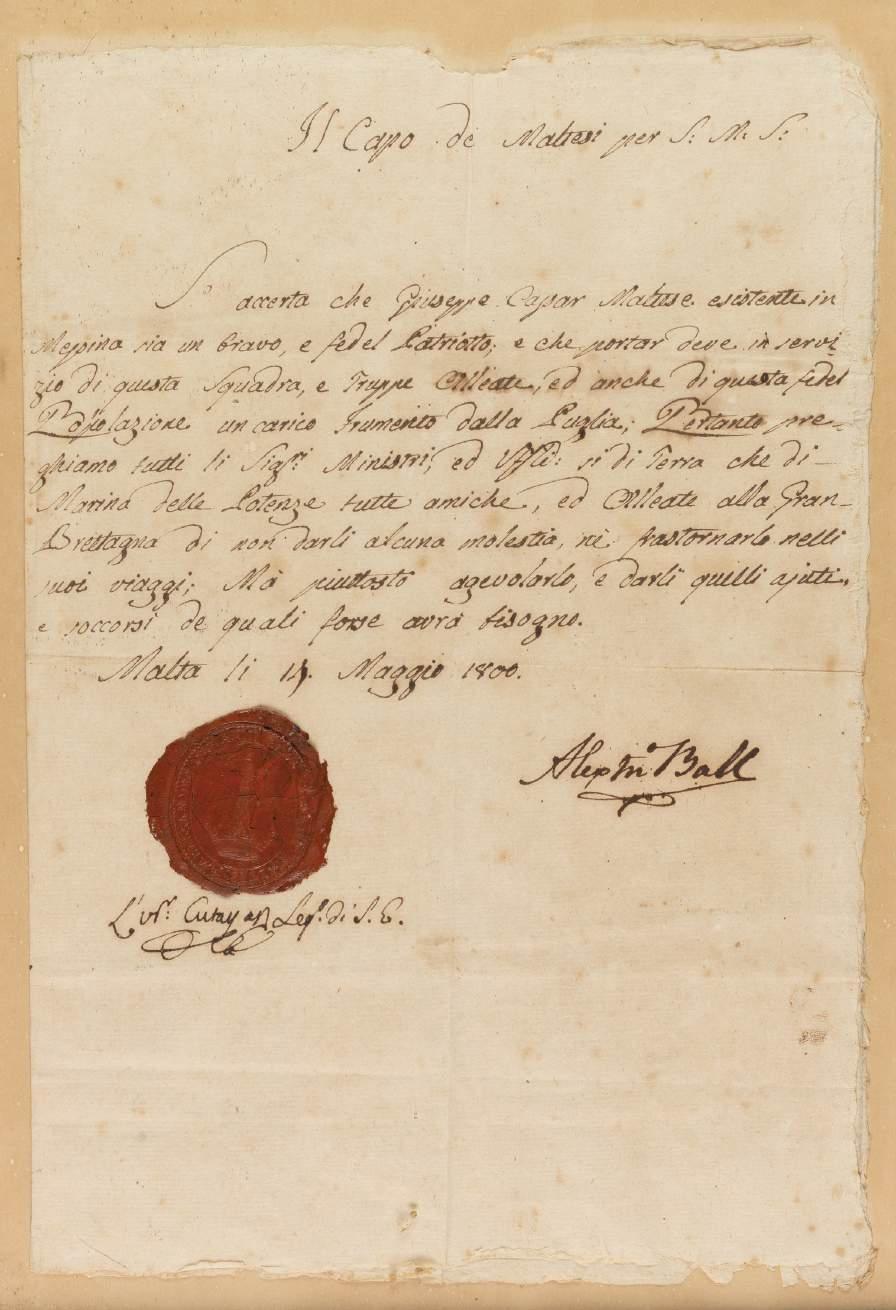
A treasure in my artistic-cultural collection, which I have been lovingly building up alongside Cecilia, my wife, is a document dated 14 May 1800. It is in prime condition, recording a time in the precarious period when the Maltese, having risen in rebellion against the French forces that had seized Malta, forced the French to endure a long siege within the forti(cations around the Grand Harbour. Supported by naval and military forces from Britain, Portugal, and Naples, the Maltese insurrection was headed by a Maltese congress, which chose as its president the British naval o*cer, Captain (later Sir) Alexander Ball. &e congress met in San Anton Palace, + ’Attard. One of the great problems that the insurgents faced was to obtain corn to feed both the Maltese and the supporting forces. &e document is, essentially, a request to foreign ministers, o*cers on land, and military and naval forces to be of assistance to a Maltese man, Giuseppe Cassar, then living in Messina, Sicily, in his project to obtain corn from Apulia (now known as Puglia), in southern Italy. &e following is my translation of the document:
&e Chief of the Maltese for His Majesty
We assert that Giuseppe Cassar, a Maltese man now living in Messina, is a respectable and faithful patriot who on behalf of this squadron and allied troops and also on behalf of this faithful people is to procure a cargo of corn from Apulia. We therefore request all the Honourable Ministers and the O*cers on land and sea of all the friendly powers and allies of Great Britain to refrain from causing him any kind of harassment or obstacle during his travel and to render him any assistance and rescue he might need.
opposite: Fig. 1
Document signed by Alexander Ball and countersigned by Felice Cutajar, dated 14 May 1800.
(Courtesy of the author ’s collection / Photo: FPM Digitisation Studio)
&is document, complete with a seal, is signed by Ball as ‘Head of the Maltese for His Majesty’—a reference to the King of Naples who was still King of Malta at the time— and countersigned by Felice Cutajar.
Alexander Ball (1757–1809), in charge of the British ships blockading the French forces, was an o*cer greatly favoured by his admiral, Horatio Nelson, especially for his distinguished service in the Battle of Aboukir Bay in Egypt, in 1798. Ball was knighted and ended his naval career as Rear-Admiral. &e handsome monument in his honour in Valletta’s Lower Barrakka Garden clearly indicates the reverence with which he was held by the Maltese people. Felice Cutajar—inscribed on the document as ‘Auditor Cutayar’— was a ,uent French speaker, writer, and was well connected to the leaders of the Maltese insurgents, as he had recently been made secretary to the famous rebel (gure, Vincenzo Borg, known as ‘Brared’. In the (rst years of British rule, Cutajar was given the role of second secretary, second to the Briton Alexander Macaulay who was the secretary to Alexander Ball when he served as British Civil Commissioner of Malta. Cutajar’s position improved in 1804, when he was given the important post of Amministratore di Beni Pubblici (administrator of public goods).
& is document entered our collection several years ago when Cecilia inherited it from her father, Magistrate
G. F. Gouder, whose father, Tancred Gouder, had much interest in Maltese history and built up a large collection of Melitensia. My own long-lasting interest in our country’s history, nourished through my friendship with University of Malta historians like Roger Vella Bonavita, Victor Mallia-Milanes, and Godfrey Wettinger, had led me to examine this fascinating document when it was still hanging on the walls of the Gouder residence in +al Balzan. When the Gouder sisters passed away, long a'er their father, Cecilia, as the co-inheritor of her father together with her late brother Adriano, was asked to make a choice of the valuable objects bequeathed. She took my advice and chose this document. It remains a favourite of mine.
&e document’s importance derives not just from it being signed by Sir Alexander Ball, a name familiar to me since my schooldays, but also in its testament of the privation our ancestors su)ered in the hope that they would get rid, as they did, of the detested French occupiers. It being co-signed by Felice Cutajar is a reminder of the intelligent cooperation between Malta and Britain—a dialogue that would continue to serve useful when British rule was established over Malta, even if it was too o'en hardly recognised by the British rulers.
Fig. 2
Anon., possible portrait of Felice Cutajar, oil on canvas.
(Image courtesy of Heritage Malta – National War Museum, Valletta)
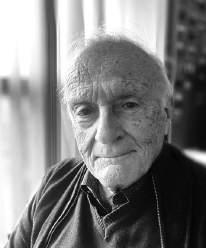
We mourn the loss of a friend, but, far more poignantly, the passing of an institution. Philip Farrugia Randon left culture and humanity in a better place than he found them. Consumed as he was by cravings to learn, he excelled in sharing with others his immense hoard of knowledge. His communication skills shone, unique and mesmerising, whether expounding on academia, law, history, humanity, g "ana, art, trivia, or gossip. He camouflaged gravitas in mischievous humour, striking a perfectly harmonious balance between wisdom and wit, banter and insight.
By profession, Philip trained as a lawyer, but by nature almost nothing could constrain his boundaries. He left his mark on broadcasting, radio, and early television, crowning his career as the esteemed chairman of the Public Broadcasting Services.
He practised art from its insides and recorded it on its outsides. A competent watercolourist, he immersed himself in art history and criticism. His published volumes on Caravaggio and Turner wed research to vision, learning with perception, making the arcane and intellectually sophisticated accessible to anyone of goodwill. Equally at home with art dialectics as with children’s novellas, he bequeathed the iconic Puttinu to the nation. His nomination as first president of the National Book Council cogently recognised these qualities. No greater accolade to Philip than that he democratised culture. He distilled rational enjoyment from what for many spelled boredom.
Philip occasionally contributed to Treasures of Malta, participated in our podcasts and book launches, and invariably offered his participation with warmth, commitment, and a smile. His selling points included a magnetic personality, command of the nuances of languages, and amazing voice projection.
On a personal plane, Philip proved intensely loyal, refined, supportive, entertaining, generous, tolerant, and of daunting integrity. For years he presided over the Cana Movement from their offices, but then, forever, from the heart of his spouse, his daughter, and grandchildren.
Most find it easy to laugh at others, but he found it equally easy to laugh at himself. He even pulled his own leg contemplating his afterdeath. He mocked his own funeral, in rollicking-epic Trilussa satire. In his words:
Philip Farrugia Randon (1949–2026) He
made culture democratic
An appreciation by Giovanni Bonello
X’għarukaża! Dik il-koppja qed tiddieħaq taħt l-ilsien.
Ħeqq! Ma tafx li f’nofs il-knisja fit-tebut hemm mejjet jien.
Dik ix-xiħa! Qiegħda tonħor!
Taqa’ w tqum li jiena mitt. Kif rajt hekk telgħatli fawra w’ninfexx fiha jiena ridt.
Iżda mbagħad ilmaħt lil tfajla tgħid kliem sbieħ lil maħbub tagħha waqt li l-qassis jippriedka.
Ridt li mmur u nwerżaq magħha.
U l-qassis! Dak x’waħda ħawwad!
Fi kliem ta’ tifħir inħall.
Dnub li dak li qal mhux veru, Dak żgur ġie hemmhekk bi żball!
Funeral ta’ xi ħadd ieħor!
Anki ismi għal darbtejn
ħażin qalu, u fesfsulu.
Aħjar ma semmieni xejn!
Kien hemm wieħed beda jibki.
Għidt ‘almenu’ w mort warajh. Indunajt li ta’ quddiemu poġġiet siġġu fuq subgħajh.
Avukat minn tal-kors tiegħi beda jikxef kull praspura!
Dak nuqqas ta’ gosti fini. Fil-mument, ma kinetx sura.
Ara jien kont minn għalija li fil-funeral kbir tiegħi se’jkun hemm eluf iwerżqu w jibku kollha mgħannqa miegħi.
Xejn minn dan! Tassew li farsa!
Kemm hi kiefra illi f’daqqa issib li m’int xejn … bużżieqa. Kif timtela … bumm! ... titfaqqa’.
Inkwetajt, u qomt mill-ħolma. X’funeral u x’diżunur! &ert li għall-funeral tiegħi għax bilfors ikolli mmur!*
Dear Reaper, he was so kind to you. Why were you so unkind to him?
In Philip, the best of matter and spirit met. They coexisted when he lived and survive in the memory of all he graced just by having crossed their path.
* The poem was read during Philip’s funeral by Archbishop Scicluna on 7 February 2026.
Cultural Review
Cecilia Xuereb reflects on the journey of the history of ‘early opera’ in Malta, tracing the island’s enduring relationship with opera from its baroque origins to its modern revival
Opera is ingrained in the culture of the Maltese people. It was introduced in the country by the Italian knights of the Order of St John who, in 1631, performed the first dramma per musica in their auberge as part of the Carnival celebrations. These theatre works, or libretti, clearly indicated that the text was meant to be sung to musical accompaniment. The knights’ venture was so successful that the production of one or two operas remained a regular feature of Carnival celebrations in Malta right up to the end of the eighteenth century.
The plots of the drammi per musica typically revolved around themes of ancient myths, gods, heroes, kings, and their associated virtues. The drama was largely advanced through recitative, while emotional high points and reflections were expressed through formal, elaborate arias that showed off the beautiful singing and vocal virtuosity of celebrated singers, as well as duets and choruses. By the eighteenth century, this genre was referred to as opera seria to distinguish it from the dramma giocoso or opera buffa, which was a light-hearted genre featuring everyday people, contemporary settings, and humorous plots, that developed in Naples at about the same time.
In 1732, Grand Master Manoel de Vilhena felt the need to build a proper theatre; drammi, thus, started to be performed in the theatre. Though the stalls were reserved for the knights, a number of seats seem to have been made available to the Maltese public, probably members of the aristocracy. Productions were no longer limited to the Carnival period, but the theatre season stretched from 1 September to the last day of Carnival which happened either in February or March. An impresario rented the theatre from season to season and was responsible for providing a suitably varied programme and good singers.
!uite a number of the new operas that continued to be written especially in Italy throughout the seventeenth and eighteenth centuries reached the Maltese stage. The number of performances of each opera was limited in order to give way to new works. Forty-six different operas were presented in Malta between 1664 and 1798. These included works by composers like Cavalli, Cimarosa, Pergolesi, Piccinni, Paisiello, and Hasse. One name that is surprisingly missing from the list of composers is that of Claudio Monteverdi, considered to be the pioneer of opera seria and one of the major composers of his time.
By the turn of the eighteenth century, the tastes of the public for opera, which was essentially an Italian dramatic genre, had changed. Audiences in Europe started demanding characters that were more obviously human, with amours and intrigues and comic escapades, more scene changes and spectacle, and more dramatic tension. By this time, what had started as an exclusive aristocratic toy performed in royal courts, had become a public sensation with the opening of commercial opera houses. Gods and goddesses or mythical figures had to behave like real people with whom the audience could identify.
Musical tastes were also changing; towards the second half of the eighteenth century, Christoph Willibald Gluck, a German composer writing in Italy, brought about a radical change in opera seria. He aimed for a unified dramatic enactment of human stories, with the voice and orchestra working together to express the drama. With Mozart, an Austrian who also wrote mostly in the Italian style, Gluck brought opera seria to new heights with his arias and recitatives that exalted passion. Mozart went even further by merging elements of opera seria and opera buffa to create a completely new kind of musical drama.
Gradually the operas of the seventeenth and eighteenth centuries gave way to a new style of writing in the nineteenth century. Clear structures, beautiful melodies, and dramatic storytelling blending comedy and tragedy characterised the operas of the late eighteenth and nineteenth centuries. The heyday of opera came in the Romantic period, which saw an increased emphasis on emotions and individualism, as well as the use of larger orchestras and more complex harmonies. Supernatural or fantastical elements still featured in the librettos but these were no longer the gods and goddesses of the past, and the librettos explored themes of love, nature, and the supernatural. The Romantic operas of the nineteenth century emphasised intense emotion, dramatic storytelling, and nationalism through folk themes.
In the late nineteenth century, Italian opera focussed on verismo, or realism, and depicted everyday life, lower-class characters, and intense, often violent or passionate, contemporary dramas. The move away from mythological subjects was now complete. Composers wrote emotionally charged works with seamless, through-composed music and focussed on raw human experience—from peasant life to tragic lovers.
These were the operas, chosen by the various imprese that were charged with drawing up a programme for the respective season for the Maltese opera-loving audience that took to the new operas. In 1866, the British Government felt the need to build a bigger, more modern opera house to cater for the
demands of an ever-growing opera-loving audience. Favourite composers were, and still are, Rossini, Donizetti, Bellini, Puccini and, especially, Verdi. None of the Italian operas in the seventeenth and eighteenth centuries survived in production. The only exception was Mozart, whose Dal Ponte trilogy has remained in the operatic canon all over the world.
After the First World War, however, Europe saw a revival of interest in the baroque. Musicologists started digging into musical archives and discovered gems that had been forgotten. All over Europe, operas that had long been forgotten were revived and, in 1968, the Early Opera Company—a group of baroque specialists, singers, and instrumentalists, under the direction of Christian Curnyn—was set up in the UK precisely for this purpose.
But this interest in earlier music only reached Malta after 1968 with the accidental discovery of the old musical archives of the Mdina Cathedral that had been forgotten for so many centuries. Old Maltese music began to be studied and performed in concerts and recitals. This, in turn, led to a general interest in ancient music. Malta had joined the rest of the world in its interest, especially in baroque compositions from all over Europe.
The renewed interest in baroque music led to the creation, in 2013, of an International Baroque Festival, an annual event that has just seen its fourteenth edition. The programme of the first edition of the festival included a performance of Zanaida, an opera seria by Johann Christian Bach that had only been recently discovered. It was performed by Opera Fuoco, a Paris-based company that specialises in the interpretation of operatic repertoire from the beginning of the eighteenth to the end of the nineteenth century. The quality of the singing and of the orchestral playing matched the lavish costumes and the carefully choreographed movements of the performers. It was, in many ways, the kind of production that would have been seen in London when it was first performed in 1763.
This seems to have triggered off a new interest in early opera. The following year, as part of the BOV Performing Festival, the Teatru Manoel took the bold step of straying away from the traditional Romantic and verismo repertoire and presented Mozart’s La Clemenza di Tito, first performed in 1791. In over 300 years of operatic history in Malta, only the composer’s more famous opera, Don Gio!anni, had ever been performed. This was to be made up for in later years which saw the production not only of the Mozart/Dal Ponte trilogy, but also of his Magic Flute, and two of his very early works.
Two years later, in 2016, the Teatru Manoel’s annual opera production presented a work by another important composer in the
development of opera: Gluck’s Orphée and Eurydice, first performed in Vienna in 1862 as adapted by Berlioz. In 1859, Berlioz wrote a revised version of the opera based on elements of the two versions, French and Italian, that had been written by Gluck, and arranged the keys to suit the tastes and singers of his time. The artistic director, Denise Mulholland, did not set it in classical times, but brought the action forward to the Victorian era. This made it more appealing to a modern audience. It was mainly an all-Maltese production with two guest mezzo-sopranos sharing the countertenor role of Orpheus. This was an all-round success—visually, musically, and artistically.
Mozart reappeared at the Manoel in the three succeeding years with some of his most popular operas: Don Gio!anni (2016), Le Nozze di Figaro (2017), and Cosi Fan Tutte (2019). These productions were not really a breakaway from the standard operatic canon and fall within the ‘classical’ rather than the ‘early’ opera gernre. 2018, also saw the staging at the Manoel of another opera comique, written in 1810 and only just revived: Nicolo Isuoard’s Cendrillon. This was a French production conducted by Takenoi Nemoto with excellent singers, particularly the three sopranos, Claire Debono, Melanie Boisvert, and Ainhoa Zuazua Rubira—very funny and done with excellent taste.
In 2022, the Three Palaces Festival—a music festival that was born in 2011—was renamed the Three Palaces and Early Opera Music Festival. This indicated a decided intent to reintroduce early opera in the island’s cultural calendar. The choice fell on Partenope, a comic opera written in 1730 by Handel, who, like Mozart, brought the work to life through the structure of opera seria. It was performed at the Manoel by the HGO Company and the Cappella Neapolitan di Antonio Florio.
The following year it was decided to dedicate a festival to early opera, concentrating on rarely-performed works. The first two editions of the new festival featured two opere serie that Mozart wrote at the age of eleven and nineteen years, respectively: Apollo et Hyacinthus (2023) and Il Re Pastore (2024).
Apollo et Hyacinthus tells the story of the love between Apollo and Hyacinth and the murder of Hyacinth by the jealous Zephyrus. With Giulio Prandi conducting the Arianna Art Ensemble, the production was notable for its set and costume designs and the singing of three counter-tenors—Federico Fiorio, Filippo Mineccia, and Danilo Pastore—in the three main roles.
Love and kingship were the themes of Il Re Pastore the following year. The small cast saw the return of Federico Fiorio in the lead role of Aminta. Raffaele Giordani, Nico Darmanin, and Claire Debono completed the singing ensemble, while Giulio Prandi conducted the Arianna Art Ensemble. The
minimalist Arcadian set and the contemporary costumes were in line with a more modern approach to the production of ‘early’ opera.
For the 2025 edition of the festival, a double-bill was presented—two one-act rarities by Gluck written in 1765. Il Parnaso Confuso is a witty and playful work that imagines the Muses of Mount Parnasus competing over who should perform at a royal wedding. Under the hands of the artistic director Brett Nicholas Brown, Mount Parnassus was transformed into the drawing room of an English manor house in the 1920s, and the rivalries of the competing Muses are treated with the frivolity typical of the parties held in the houses of the nobility.
La Corona got a more serious approach. It recounts the myth of the Calydonian Boar Hunt and the problem of who should get the honour of having slain the beast. The original setting was again replaced by the drawing room of the manor, transformed into a hospital ward for soldiers. Stark white costumes and grey uniforms took the place of the bright jewel-coloured costumes of Il Parnaso Confuso. The all-female cast presented some of the top Maltese singers with a talent for acting. The musical direction was once again under the baton of Giulio Prandi with the Arianna Art Ensemble performing the orchestral score.
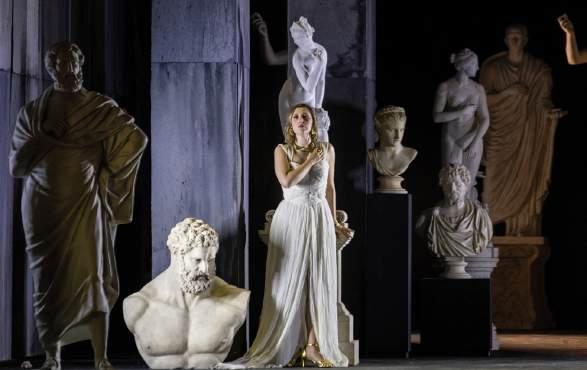
Sadly, the artistic director of the Early Opera Festival, Kenneth Zammit Tabona, announced that this would be the last edition of the festival, but he promised that early opera would still feature as part of the Valletta Baroque Festival, of which he is also the artistic director. In fact, the 2026 edition of this festival featured an opera by a Maltese composer that has not been performed since it its premier in Rome, in 1747. Girolamo Abos’ Pelopida is an opera about love, honour, freedom, and heroism. The stage director, Nicholas Brett Brown, set the opera within a sculpture gallery rather than the original
Thebes. He observed a parallel between the way tyrants have capitalised on the cultural monuments of their lands, or destroyed cultural legacies, with the character of Pelopida and his desperate control of the city of Thebes. ‘As opera is a living, breathing form,’ he said, ‘I was not interested in creating a “museum” piece or historical representation of how this opera mayhave been staged in 1747.’ In the museum ‘past and present collide and life and death struggle for supremacy’. In this way he suggested both the opera’s ‘history and its protection and future in one setting’.
Abos’ elegant score that includes strongly expressive arias for the two main characters, Pelopida and Clito, was performed by the Arianna Art Ensemble and a sextet of foreign singers under the baton of Giulio Prandi. The production will probably be remembered mostly for the fine singing of Vittoriana de Amicis, who sang the part of Clito, a male soprano part, and who brought the house down with her singing of a long and daringly difficult aria in Act I.
From its early beginnings as an aristocratic diversion introduced by the Order of St John, opera in Malta has mirrored the wider European evolution of the genre, absorbing stylistic shifts and responding to changing tastes. While nineteenth-century Romantic and verismo works long dominated the local operatic imagination, recent decades have seen a conscious and sustained effort to reclaim the island’s earlier operatic heritage. Through archival discoveries, historically informed performance, and imaginative stagings that bridge past and present, early opera has once again found a voice on the Maltese stage. Though festivals may change form and artistic leadership may pass on, the renewed commitment to rediscovering and reinterpreting these works suggests that early opera in Malta is certainly more than a historical footnote, but an integral part of a living and dynamic cultural tradition.
Treasures of Malta 95, Easter 2026
Ancient Thebes comes to life in a modern sculpture museum in Pelopida (Photo: Elisa von Brockdorff)
Calendar Highlights
A selection of upcoming events happening around Malta and Gozo over the next few months
Visual Arts
For Want of (not) Measuring
An eclectic exhibition that investigates the role of measurement in art and how we perceive the world around us. A collective exhibition curated by Vince Briffa.
Spazju Kreattiv, Valletta 6 March – 3 May 2026 www.spazjukreattiv.org
EXHIBITION PICK
Malta Biennale 2026
Around Malta and Gozo 11 March – 29 May 2026
Clean | Clear | Cut is the title of the second Malta Biennale. The thematic and conceptual framework of the Malta Biennale 2026 is conceived to evoke a sequence of thoughts and actions that call for an urgent transformation of the world we inhabit. Under the artistic direction of Rosa Martínez, more than 130 artists from over 40 different countries around the world are participating. Their creativity is being showcased in an international exhibition and across 27 national and thematic pavilions spread over 11 museums and historical sites managed by Heritage Malta in Valletta, Birgu, and Xag "ra and the Citadel in Gozo. www.maltabiennale.art
Four main themes—portraits (faces), spaces (places), form (matter), and the curious (mundane)—will provide an intimate snapshot of the artist’s work.
Valletta Contemporary, Valletta 8 May – 20 June 2026 www.vallettacontemporary.com
Reggie Burrows Hodges: Mela A major solo exhibition by African-American painter Reggie Burrows Hodges, marking the artist’s first exhibition in Europe. Mela brings together an entirely new body of work created during Hodges’ move to Malta in 2024, inspired by his experiences on the island and engaging with its culture and history.
MICAS, Floriana
9 May – 30 August 2026 www.micas.art
Biennale Arte 2026: The Malta Pavilion
In Minor Keys is the theme of the 61st edition of the International Venice Biennale Art Exhibition, curated by the late Koyo Kouoh. Malta will be represented by artists Adrian M. M. Abela, Charlie Cauchi, and Raphael Vella with their piece, No Need to Sparkle, curated by Margarita Pulè. The work transports audiences into layered fictions, shifting narratives, and melting storylines, provoking deeper reflection on truth, perception, and belief systems.
Arsenale, Venice 9 May – 22 November 2026 www.labiennale.org
Firmament
In this multidisciplinary body of work, comprising paintings, installations, and readings, Ryan Falzon deconstructs the idea of a stable, ordered firmament, drawing visual and conceptual inspiration from the wellknown sixteenth-century Flemish woodcut illustration, the Flammarion Engraving. A solo exhibition by Ryan Falzon.
Spazju Kreattiv, Valletta 14 May – 28 June 2026 www.spazjukreattiv.org
Characters in Search of an Author
An exhibition of oil paintings and etchings by Stuart Franklin, exploring analogy within themes of landscape, or figures in the landscape, and memory.
Just for Today
Just for Today is a year-long multidisciplinary project by Maltese artist Kim Sammut that marks the beginning of an evolving artistic exploration of grief, not as an event to overcome, but as a living, embodied experience shaped by love, memory, and transformation. Working across photography, painting, text, archival material, and material experimentation, Kim manipulates imagery and surface to reflect the fragility and persistence of remembrance. This is the second instalment of a three-part exhibition curated by Sarah Chircop.
Rosa Kwir, Balzan 3–17 June 2026 www.rosa-kwir.com
Music
JazzKlabb – Nadine Axisa Quartet Nadine Axisa on vocals, Joe Debono on piano, Oliver Degabriele on bass, and Manuel Pulis on drums.
Teatru Salesjan, Sliema 13 May 2026 www.tsmalta.com
Echoes of Light
Teatru Manoel, Valletta 5 June 2026 MUSIC PICK
The MPO presents a captivating programme of mystical atmospheres and neoclassical elegance, directed by !uentin Hindley. They will perform Camille Pépin’s Vajrayana; Benjamin Britten’s Serenade for Tenor, Horn and Strings, Op. 31; Francis Poulenc’s Sinfoniett, and Maurice Ravel’s Le Tombeau de Couperin www.maltaorchestra.com
Still Time:
A Retrospective by Joseph P. Smith
This ambitious project which will span Joseph P. Smith’s fifty-year artistic career.
· Treasures of Malta 95, Easter 2026
Malta Postal Hub Museum, Valletta 26 May – 30 June 2026 www.maltapostalmuseum.com
Opera in the Capital
Set against the stunning backdrop of Valletta’s historic architecture. Opera in the Capital celebrates both the art of music and the unique cultural heritage of Valletta.
Misra" San -or. , Valletta 27 June 2026 www.vca.org.mt
Bruckner 8
Sergey Smbatyan leads the MPO in this sublime musical journey. A moving experience that blends majestic grandeur with heartfelt intensity and symphonic mastery.
Mediterranean Conference Centre, Valletta 18 July 2026 www.mcc.com.mt
Performing Arts
Valletta Resounds:
The Caravaggio Experience
Valletta Resounds elegantly strings together Caravaggio masterpiece with theatrical storytelling and timeless classical music. Critically acclaimed Maltese musicians under the musical direction of Jacob Portelli are at the helm of the site-specific performance, bringing to life the works of Baroque Masters such as Handel and Bach along with the sound of sacred Maltese music by composer Francesco Azzopardi and more. This auditory delight is woven harmoniously with tales of the Oratory narrated by the ever-charming and regal character of Fra' Bartolomeo performed by Jeremy Grech.
Oratory of the Beheading of St John, Co-Cathedral of St John the Baptist, Valletta March – December 2026 (various dates) www.showshappening.com
Collision
Two characters coming from different worlds crash into each other one day. They speak different languages. Playfully and quite accidentally they discover each other and start to almost imperceptibly merge. With an original score by Albert Garzia, and performed by Paige Allerton and Matthias Camilleri.
Spazju Kreattiv, Valletta 2 May 2026 www.spazjukreattiv.org
Ċama Ċama
One of the scripts chosen for the scriptwriting competition by Studio Francis Ebejer in
2024, &ama &ama, is a celebration of the way minority languages can express immense ideas. It is set in summertime, during a village festa, with a parish priest about to ruffle many feathers. The performance will focus on the power of translation and the cultural exchange at the heart of European contemporary theatre.
Spazju Kreattiv, Valletta 8–17 May 2026 www.spazjukreattiv.org
DANCE PICK
Unfold
Teatru Manoel, Valletta 22–24 May 2026
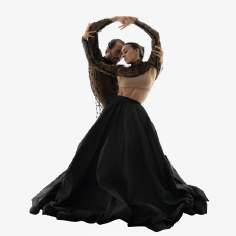
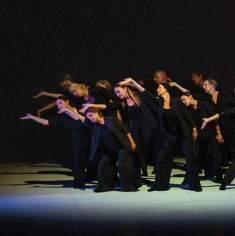
Two unique reflections on our world— Sway and Nation—by two visionary choreographers of the moment. A bold, visually captivating evening of dance by Malta’s national dance company. Sway is a new creation by renowned Italian choreographer Diego Tortelli, which explores our burning desire for deep immediate connection—an emotional journey of raw vulnerability, surrender and trust. Meanwhile, Nation—an artistic collaboration between /finMalta’s artistic director Matthew William Robinson and Azzopardi Studio—is set in a stark landscape wherein a collection of lost souls ferociously searches for what will come after the end.
www.teatrumanoel.mt
Turandot
Set in an opulent, mythologised vision of ancient China, Puccini’s Turandot invites its audience into a realm of allegory and splendour, where cruel riddles and impossible choices are met with music of incandescent brilliance.
Teatru Astra, Gozo 30 May 2026 www.teatruastra.org.mt
Hamlet
The ghost of the King of Denmark tells his son, Hamlet, to avenge his murder by killing the new king, Hamlet’s uncle. Hamlet feigns madness, contemplates life and death, and seeks revenge. His uncle, fearing for his life, also devises plots to kill Hamlet. One of William Shakespeare’s best known, longest, and highly regarded works will be MADC’s next Shakespeare ‘under the stars’. Directed by Michael Mangion.
Msida Bastion Historic Garden, Floriana 20–26 July 2026 www.madc.com.mt
On Screen
The Royal Opera: The Magic Flute
The Magic Flute is an opera in two acts by Wolfgang Amadeus Mozart to a German libretto by Emanuel Schikaneder. Directed by Marie Jacqot and key cast, Soloman Howard, Huw Montague Rendall, Julia Bullock, Amitai Pati, and Kathryn Lewek.
Eden Cinemas, St Julians 21 April 2026 www.edencinemas.com.mt
Spazju Kreattiv, Valletta 22 May, 10 June 2026 FILM PICK
Exhibition on Screen: Frida Kahlo
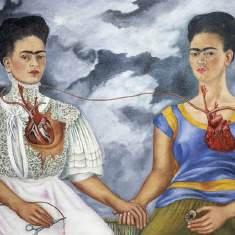
Exhibition on Screen’s award-winning film—first released during the Covid pandemic to a restricted audience—is back by popular demand with an exciting new addition from the curators of the blockbuster transatlantic exhibition from Tate Modern and MFA Houston Frida Kahlo: the Making of an Icon. www.spazjukreattiv.org
MET Live: El Ultimo Sueno de Frida y Diego
American composer Gabriela Lena Frank makes her MET debut with her first opera, a magical-realist portrait of Mexico’s painterly power couple Frida Kahlo and Diego Rivera, with libretto by Pulitzer Prize–winning playwright Nilo Cruz.
Spazju Kreattiv, Valletta 14 June 2026 www.spazjukreattiv.org
Festivals
Valletta Green Festival
Palace Square (Misra" San -or. ) in Valletta is transformed into a temporary garden, brimming with greenery, flowers, and unique installations. This event aims to raise awareness about the importance of sustainable living, promoting eco-conscious habits and, most importantly, passing these values on to the next generation.
Misra" San -or. , Valletta 30 April – 10 May 2026 www.vca.go!.mt
Festgħana
A festival that celebrates Maltese heritage, with a particular focus on local Għana
To be announced 21–24 May 2026 www.festivals.mt
Malta International Arts Festival
A programme of artistic excellence which takes place within unique heritage sites.
Around Malta 12–21 June 2026
www.festivals.mt
Malta Jazz Festival
A summer staple for all jazz lovers! Malta continues to impress with a week-long celebration of jazz performances and workshops from both local and international artists. Among this year’s artists are pianist Vincent Bourgeyx, Brazilian legend Toninho Horta, and the electrifying band Ghost-Note.
Around Valletta 6–11 July 2026
www.festivals.mt
FESTIVAL PICK
Dance Festival Malta
Around Floriana and Valletta 24–27 July 2026
Held over four days in July, the festival features an inspiring programme of workshops, masterclasses, and performances that celebrate the richness of global dance cultures, showcasing renowned international artists and choreographers. www.dfm.mt