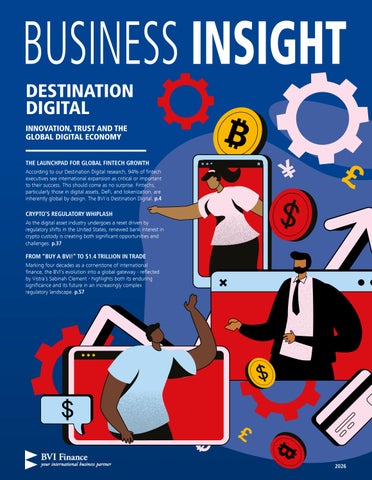
According to our Destination Digital research, 94% of fintech executives see international expansion as critical or important to their success. This should come as no surprise. Fintechs, particularly those in digital assets, DeFi, and tokenization, are inherently global by design. The BVI is Destination Digital. p.4
CRYPTO’S REGULATORY WHIPLASH
As the digital asset industry undergoes a reset driven by regulatory shifts in the United States, renewed bank interest in crypto custody is creating both significant opportunities and challenges. p.37
FROM “BUY A BVI!” TO $1.4 TRILLION IN TRADE
Marking four decades as a cornerstone of international finance, the BVI’s evolution into a global gateway - reflected by Vistra’s Sabinah Clement - highlights both its enduring significance and its future in an increasingly complex regulatory landscape. p.57
The global financial system is not simply evolving. It is being fundamentally reshaped by technology, innovation and the emergence of digital assets.
As markets transform and new financial models take shape, jurisdictions that bring together regulators, innovators and industry leaders have an important role to play in shaping the future of global business. For the British Virgin Islands, that role has long been grounded in legal certainty, regulatory integrity and close collaboration between government, regulators and industry.
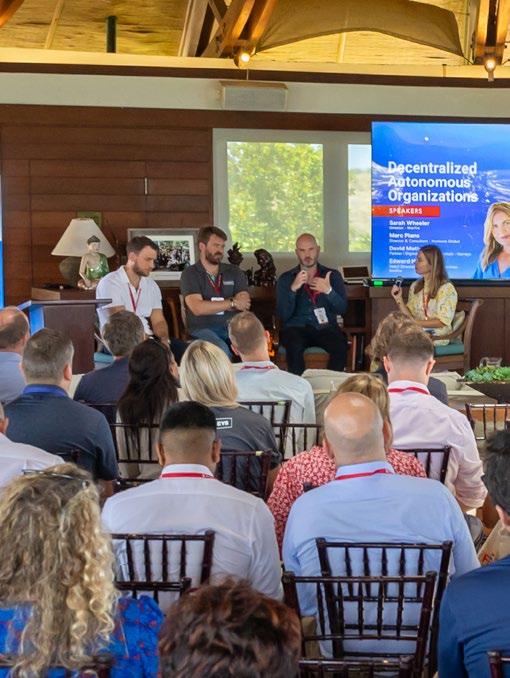
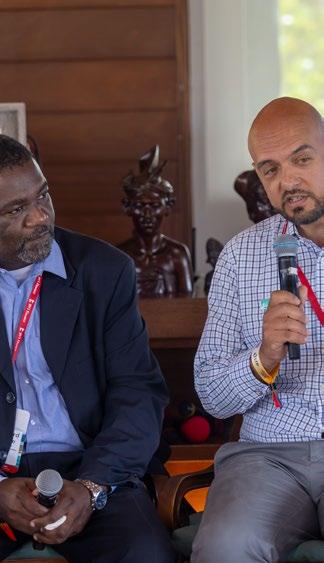
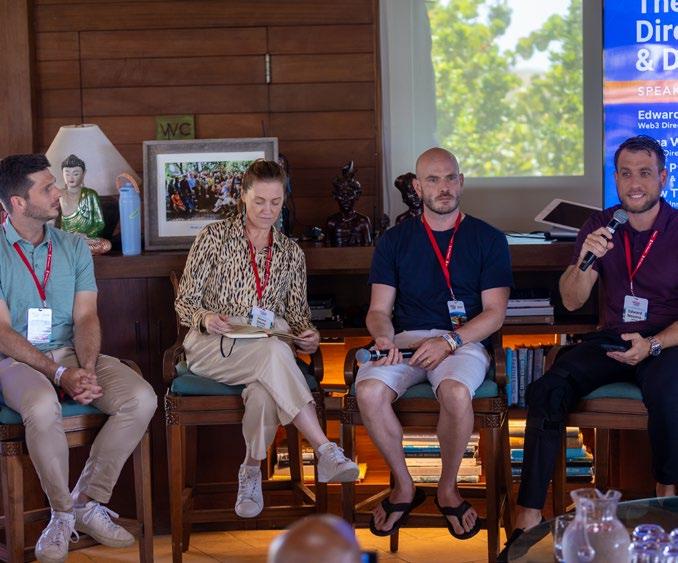
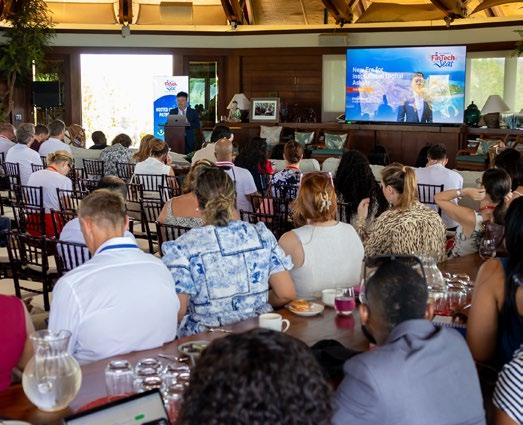
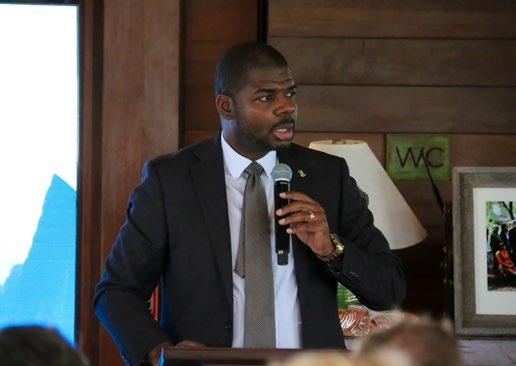
Many of the themes explored in this edition of Business Insight emerged from conversations at Fintech on the Seas, where global thought leaders gather in the British Virgin Islands to examine the opportunities and challenges shaping digital finance
This issue begins by examining the forces driving global fintech expansion. In The Launchpad for Global Fintech Growth, we explore how international finance centres such as the BVI continue to provide the legal frameworks and infrastructure that enable entrepreneurs and businesses to scale globally. As digital finance matures, the conversation is shifting from experimentation to practical application. Articles such as DeFi Has Grown Up, Structure Is the New Edge in Token Issuance, and The Tokenized Reality Check explore how decentralized finance, tokenization and digital asset structures are becoming increasingly sophisticated and integrated into the broader financial ecosystem.
Several contributors also reflect on the broader strategic implications of these developments. In Lead, Follow or Be Left Behind, the pace of innovation in digital finance is examined through the lens of global competition among jurisdictions. Meanwhile, In a Fragmented Crypto Landscape, the BVI Charts Its Own Course highlights how the jurisdiction continues to balance innovation with regulatory responsibility.
Innovation, however, cannot thrive without strong governance and trusted regulatory frameworks. Articles such as Crypto’s Regulatory Whiplash, and the Race for Stability and Beyond the Hype: Building a Trust-First Crypto Industry explore the importance of regulatory clarity and international cooperation as digital finance evolves. At the same time, Directors Are the First Line of Defence and The Moment AML Stops Being a Tick-Box underscore the critical role of governance, transparency and compliance in maintaining confidence in global markets.
This edition also highlights the entrepreneurial spirit and global connectivity that have long characterized the BVI financial services industry. In The Art of Running a DAO and Built to Last: The New Playbook for Blockchain Businesses, contributors explore how new governance models and technological innovation are reshaping how businesses are structured and managed. Meanwhile, From Courtrooms to Crypto: Amanda Wick on Innovation and Regulation offers a perspective on the intersection of technology, enforcement and financial crime prevention.
We also hear directly from practitioners whose careers have evolved alongside the industry itself. Raul Estripeaut reflects on the growth of OMC Group in Right Place. Right Time. Right Jurisdiction, while Dr. Ebrahim Asvat shares insights from more than four decades in offshore finance. Together, they highlight the enduring importance of trusted relationships, particularly in supporting BVI business with Latin America and facilitating crossborder investment and enterprise.
This edition also celebrates important milestones within the BVI financial services community. We recognise the 65th anniversary of Harneys, 20 years of Appleby in the British Virgin Islands, 40 years of Vistra incorporations, and 30 years of VP Bank in the BVI. These anniversaries reflect the depth of expertise that continues to underpin the jurisdiction’s success as an international finance centre.
Together, these stories reflect the resilience, adaptability and collaborative spirit that have long defined the British Virgin Islands as an international finance centre.
As the digital economy continues to expand, the BVI is not simply observing these changes. It is actively engaging with them, strengthening its regulatory framework, investing in talent and fostering dialogue with innovators around the world.
If the future of global business will be defined by innovation, trust and connectivity, the British Virgin Islands will remain firmly at the centre of that story.
ELISE DONOVAN Chief Executive Officer at BVI Finance
THE LAUNCHPAD FOR GLOBAL FINTECH GROWTH
BY ELISE DONOVAN, CEO, BVI FINANCE
We stand at a pivotal moment in the evolution of global finance. A new generation of financia businesses - digital-first, borderless, and fiercely innovative - is reshaping the way the world transacts, invests, and grows. Fintech leaders today face both extraordinary opportunity and extraordinary complexity. They must navigate an environment defined by technological acceleration, geopolitical volatility, and fragmented regulation, all while keeping pace with consumer and investor expectations that shift almost daily.
GLOBAL FINTECH BUSINESSES SAY CROSS-BORDER EXPANSION IS IMPORTANT OR CRITICAL TO GROWTH STRATEGY IN THE NEXT FIVE YEARS
The
BVI has long understood what it means to operate at the intersection of innovation and trust. For over 40 years, it has been a trusted partner to the world’s most dynamic businesses, providing a platform that enables them to build, scale, and thrive globally.
As fintech matures from disruptive scale-up to mainstream powerhouse, the BVI’s combination of regulatory clarity, legal sophistication, and business agility positions it as the jurisdiction of choice for those driving the next digital revolution.
GLOBAL EXPANSION: THE DEFINING PRIORITY
According to our Destination Digital research, 94% of fintech executives see international expansion as critical or important to their success. This should come as no surprise. Fintechs, particularly those in digital assets, DeFi, and tokenization, are inherently global by design. They rely on cross-border flows of capital, data, and talent, and they need jurisdictions that can support seamless, compliant expansion at speed. The priority of cross-border expansion rose to 96% specifically for African fintechs - it is clear that Africa’s fintech story
is no longer emerging, it is ascendant. Two-thirds of the leaders we surveyed are already operating through entities in International Finance Centers. The reason is simple: it offers more than incorporation. It allows for access to global markets, deep financial and legal expertise, and an environment that nurtures innovation without compromising governance or compliance.
REGULATION WITH CLARITY AND CONFIDENCE
If one word defines the biggest challenge for fintech leaders, it is uncertainty. Regulation around digital assets, DeFi, and emerging technologies varies significantly from one jurisdiction to another. From the U.S. to Europe, Asia and Africa, governments are oscillating between open innovation and tight control. This patchwork of rules risks slowing progress and creating unnecessary friction for firms whose very DNA is cross-border.
In this context, regulatory clarity is gold dust. The BVI’s Virtual Assets Service Providers Act (VASP) is a prime example of how smart regulation can provide confidence without constraining creativity. It gives digital asset businesses a clear framework for licensing, compliance, and growth - aligned with international standards and responsive to technological change.
The balance between flexibility and accountability is what fintech leaders need most. It is why the BVI continues to attract innovators seeking a home where they can scale responsibly, engage with regulators collaboratively, and future-proof their operations.
TECHNOLOGY AND TRUST: THE TWIN IMPERATIVES
The pace of technological integration across the fintech ecosystem is rapid. Almost half of the global leaders in our study said they are prioritising automation, AI, and blockchain adoption to improve efficiency and competitiveness. Yet technology without trust is a fragile foundation.
Cybersecurity, fraud prevention, and data integrity have become issues high up the agenda for digital businesses. 41% of fintech leaders rank cyber threats as their top concern. Here, too, the BVI’s legal and professional ecosystem stands out. The world-class service providers, deep technical expertise, and commitment to best-practice compliance give fintech firms the assurance they need to innovate with confidence.
The BVI is at the forefront of fostering responsible digital governance, helping firms develop robust Anti-Money Laundering (AML) and Know Your Customer (KYC) frameworks that are fit for decentralized models like DeFi and DAOs.
SPEED, SCALABILITY, AND STRATEGIC STABILITY
Fintech moves fast. So must the jurisdictions that serve it. In an industry where speed to market can determine survival, the BVI offers incorporation processes that are swift, efficient, and transparent. But speed alone is not enough. Businesses need stability: predictable laws, neutral geopolitics, and consistent policy.
Our research found that 76% of fintech leaders expect to complete incorporation within three weeks, while 33% cite access to international markets as a key factor in choosing where to locate. The BVI delivers on both counts. It offers the agility of a start-up ecosystem combined with the credibility of a mature international finance centre.
FEEDING, NOT STIFLING, INNOVATION
As decentralized finance and digital autonomous organizations redefine how capital and governance flow, the role of IFCs like the BVI becomes even more critical. Fintech founders no longer seek the lightest-touch regulation - they seek smart regulation: frameworks that validate their businesses in the eyes of investors, partners, and users.
The BVI’s approach reflects a simple truth: innovation flourishes where there is trust. Our courts are internationally respected, our corporate structures are flexible, and our regulatory posture is progressive but prudent. We understand that the future of finance will not be built by those who resist change, but by those who channel it responsibly.
WHY THE BVI IS THE DESTINATION OF CHOICE
The global fintech ecosystem is entering a new chapter - one defined not only by technology, but by trust, transparency, and transformation. Jurisdictions that can offer all three will lead the next decade of digital finance. The BVI is ready.
From early-stage start-ups to institutional platforms, fintech leaders find in the BVI a partner that understands their ambitions and equips them to achieve them. It provides a stable base for bold innovation.
PRIMARY REASONS FIRMS CHOOSE TO LOCATE IN A PARTICULAR JURISDICTION 32%
Clear fintech and virtual asset licensing framework 29%
Regulatory flexibility and business-friendly legal framework
She is the Chief Executive Officer of BVI Finance, the organisation that promotes the British Virgin Islands as a premier international finance centre (IFC). She leads global outreach for a jurisdiction that facilitates roughly US $1.4 trillion in crossborder trade and investment, working closely with industry practitioners and policymakers on emerging trends. Her career includes senior posts at the BVI Government, the BVI Financial Services Commission, and representative offices in London and Hong Kong—experience that gives her a broad perspective on policy, regulation and market development. Donovan’s work routinely takes her to major financial hubs in Asia, Europe, the Americas and Africa, where she strengthens relationships and advances dialogue on fintech, sustainable finance, global trade and evolving regulation.
Elise Donovan Chief Executive Officer at BVI Finance
DEFI HAS GROWN UP
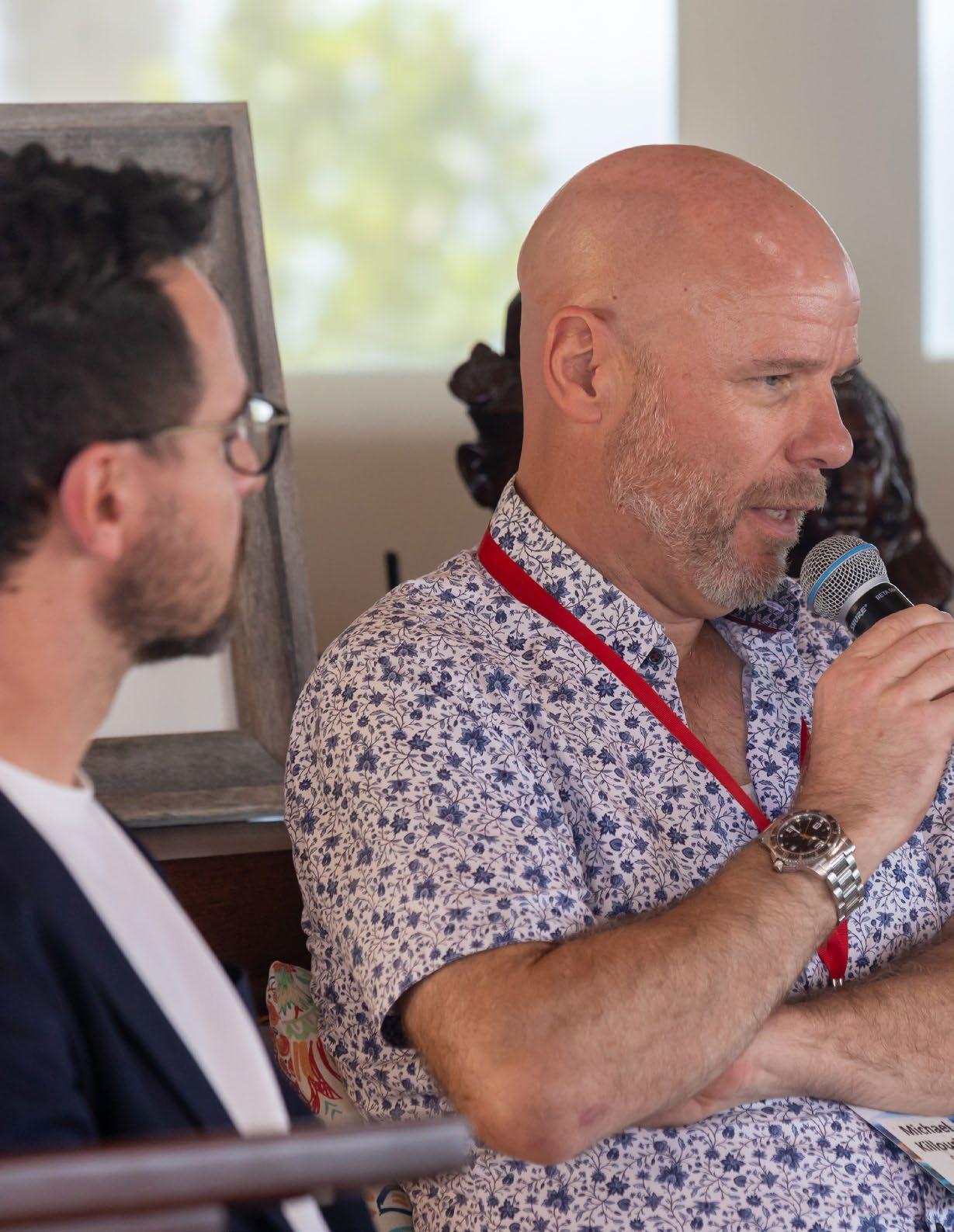
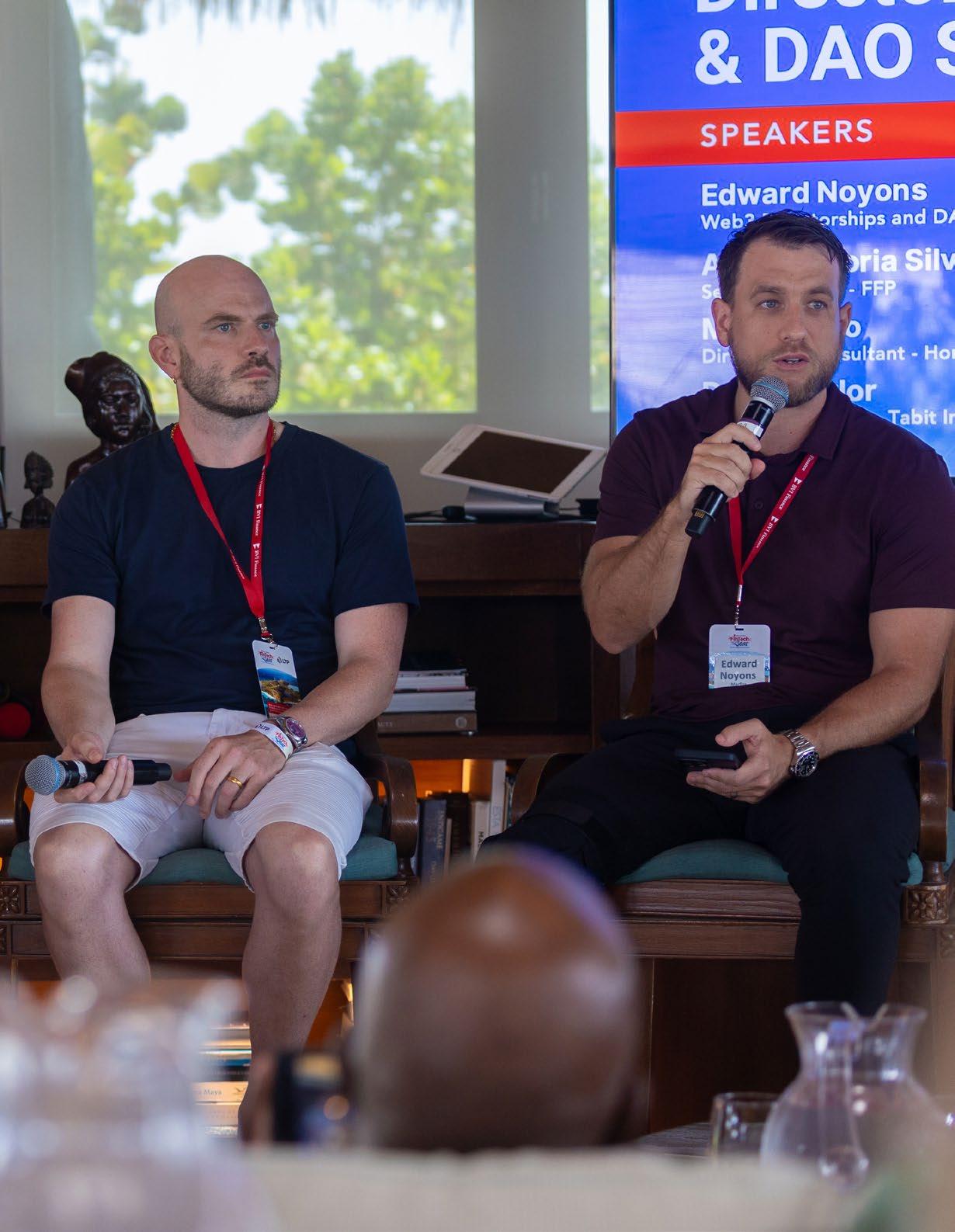
The global decentralized finance (DeFi) ecosystem has moved from experimentation to implementation, and the British Virgin Islands (BVI) is emerging as one of the jurisdictions shaping its future. That was the clear message from a panel of experts discussion featuring Cecile Mella, CFO at P00ls; Iona Wright, Partner (BVI Regulatory & Risk Advisory) at Walkers; and Lizzie Barahona, Associate Director At JTC Special Situations, moderated by Michael Killourhy, Partner at Ogier.
UNDERSTANDING DECENTRALIZED FINANCE (DEFI)
Opening the discussion, Michael Killourhy defined DeFi as, “a broad category of financial services that are built on blockchain technology, aiming to recreate and improve traditional financial systems like lending, borrowing, trading, and investing, but crucially without relying on centralized institutions like banks or brokers, but instead relying on smart contracts on the blockchain.” He notes the key features of DeFi: it “operates on the blockchain networks like Ethereum, using smart contracts instead of intermediaries, permissionless access.”
FROM A NICHE EXPERIMENT TO A FINANCIAL SECTOR
DeFi has evolved from a niche tech experiment to a serious part of global finance, with over $100 billion in total value locked. It has moved from experimentation to implementation - no longer the future, but very much part of the present financial landscape.
Cecile Mella described this evolution - “I’ve seen firsthand how decentralized finance evolved from a niche tech experiment to a financial sector that’s changing how global finance works.” She further emphasized that DeFi’s power lies not just in the underlying technology but in what it enables. “It removes traditional barriers. It gives users full control over their assets and it enables innovation through different protocols, efficiency and interoperability across platforms.”
Today, DeFi’s maturity is evident in the scale of activity. “In 2025, the landscape has matured drastically. The total value locked is over $117 billion, and half of that is locked in DeFi lending protocols. So it’s no longer just speculation - real-world use cases are driving growth, generating yield, tokenizing real-world assets, and integrating DeFi into apps that we’re using on a daily basis.”
That mainstream integration, she noted, can already be
seen in major financial institutions and exchanges. “Société Générale has issued their own stable coin … Coinbase is working on tokenizing US stocks … and with the IPO of Galaxy Digital or Circle that are going public, it just shows that crypto infrastructure is really entering traditional markets.”
Her conclusion was clear: “We’ve moved from experimentation to implementation. You don’t really need to build anything else anymore - all the tools and technology are here, and you just have to use it.”
CONVERGENCE, NOT COMPETITION
Rather than competing, DeFi and TradFi are beginning to converge, learning from each other’s strengths. The line between the two is becoming increasingly blurred as traditional institutions adopt blockchain solutions and DeFi platforms incorporate regulatory and compliance standards. Asked whether DeFi and traditional finance (TradFi) are on a collision course, Mella was optimistic: “I see it more as them merging together and DeFi learning from what the tools that TradFi already have … both of them will just help to make it better, and the line is just getting thinner and thinner and both will just be here as one.” As Michael Killourhy summed up, “We have the tools, and it’s a question of how we use them.”
REGULATION: BALANCING INNOVATION AND OVERSIGHT
The convergence of DeFi and TradFi raises regulatory questions. Smart, adaptive regulation is essential - not to stifle innovation, but to make DeFi safe, transparent, and sustainable. Regulators are not seeking to regulate the technology itself, but the people and entities who control or significantly influence DeFi protocols that carry out regulated financial activities.
Iona Wright tackled the issue head-on. “As a regulatory lawyer,” she said, “the FATF virtual assets guidelines and also IOSCO’s DeFi policy recommendations … essentially flag that we’re not looking to regulate the software itself. The underlying technology -that’s not the intent of the regulation here.”
However, Wright explained, regulation will focus on those who have influence or control over decentralized structures: “Where you have persons - whether they’re legal or individual, creators, owners, operators or other persons - that maintain control or sufficient influence of a DeFi arrangement
… those persons should fall within scope of regulation.” The real challenge, she continued, lies in identifying control in structures deliberately designed to avoid it. “These structures are set up to avoid the conclusion that anyone has control.”
Wright cautioned that while the BVI aims to remain a credible and responsive jurisdiction, it should be careful not to move too quickly. “It’s not wise to be a first mover in this area. I think we need to be cautious. We need to avoid overregulating … and make sure that we are looking at using guidelines - like tertiary legislation - rather than primary things that are flexible, commercial, and also that have collaboration from both the industry, the regulator, and the developers.”
She highlighted the “embedded supervision” model as an example of innovation: “It’s essentially building compliance into the technology and the smart contracts themselves. For instance, having a regulatory node within a smart contract which kind of has oversight and makes sure certain risk limits … are being met.”
MISCONCEPTIONS AND THE ROLE OF TRANSPARENCY
As with any growing sector, DeFi faces misconceptions. Lizzie Barahona emphasized that regulators should not view DeFi as inferior or adversarial to existing systems.
“For most regulators, DeFi operates in the same way as the traditional financial systems — just without intermediaries,” she explained. “But the truth is that there are no central parties or gatekeepers, that’s true, but often the governance of that DeFi protocol is distributed among token holders … and it’s on-chain. So, this leads to new models of activities that don’t always fit into the existing regulatory frameworks.”
Another misconception, she said, is that “DeFi is completely ungoverned and uncontrollable … but the truth is as well that DeFi industries [are] actively engaging with regulators across the world and there is a growing recognition that DeFi can build transparency and accountability on those decentralized interfaces and protocols.”
Barahona’s call to action was clear: “There are differences, but we shouldn’t diminish the adoption of the DeFi technology or blockchain technology to give solutions and alternatives to TradFi systems.”
Asked whether decentralized exchanges and other DeFi protocols would remain niche, Barahona didn’t
hesitate: “Absolutely … I can easily envision crypto open, permissionless blockchain DeFi interfaces making or facilitating traditional institutional banking.”
THE BVI’S OPPORTUNITY
Closing the session, Killourhy summarized the panel’s consensus: “DeFi is here and it’s here to stay, and it is going to harmonize with TradFi. It’s all going to be part of our lives. We have the technology we need to make it work. How are we gonna make it work? Education - BVI is going to play a big role in that and everybody here.”
The BVI’s combination of regulatory agility, professional expertise, and international connectivity positions it to lead responsibly. With its Virtual Assets Service Providers Act (VASP) and regulatory sandbox, the jurisdiction can serve as a testbed for responsible innovation. As Mella put it succinctly: “You don’t really need to build anything else anymore, all the tools and technology are here, and you just have to use it.”
Michael Killourhy Partner at Ogier
Michael advises on a broad range of corporate and corporate finance transactional matters, including mergers and acquisitions, equity and debt capital markets, financings and complex corporate restructuring. Michael is widely recognised as one of the BVI’s leading public company experts and its preeminent special purpose acquisition company expert. Michael’s expertise in this area has been recognised internationally with him being invited to take prominent speaker roles in the SPAC industry’s premier international convention, as well as being frequently published in leading capital markets journals.
CECILE MELLA CFO at P00LS
Cecile is a global CFO and business leader with extensive experience in tech and Web3 startups since 2017, serving as VP and CFO. Currently the CFO at P00LS, a SocialFi and gaming platform, she previously held key roles at LGO (an institutional crypto exchange platform) and at Bender Labs, a DeFi protocol.
Iona Wright Partner (BVI Regulatory & Risk Advisory) at Walkers
Iona has substantial expertise across a wide range of financial services regulatory matters, including licensing and regulatory perimeter analyses, financial promotion considerations, cross-border marketing of funds, fund management, banking and investment firm remuneration, senior management governance and controls, regulatory corporate transaction support and ESG investing.
Lizzie Barahona Associate Director at
JTC Group
Liz is a recognised expert in blockchain technology, AML International Standards for VASPs, and regulation of virtual services, with extensive experience in the British Virgin Islands (BVI) and internationally. She is an Associate Director at JTC Special Situations, leading the VASP and SIBA department, and has played a crucial role in shaping the VASP regulatory landscape in the region.
FROM COURTROOMS TO
CRYPTO: AMANDA WICK ON INNOVATION AND REGULATION
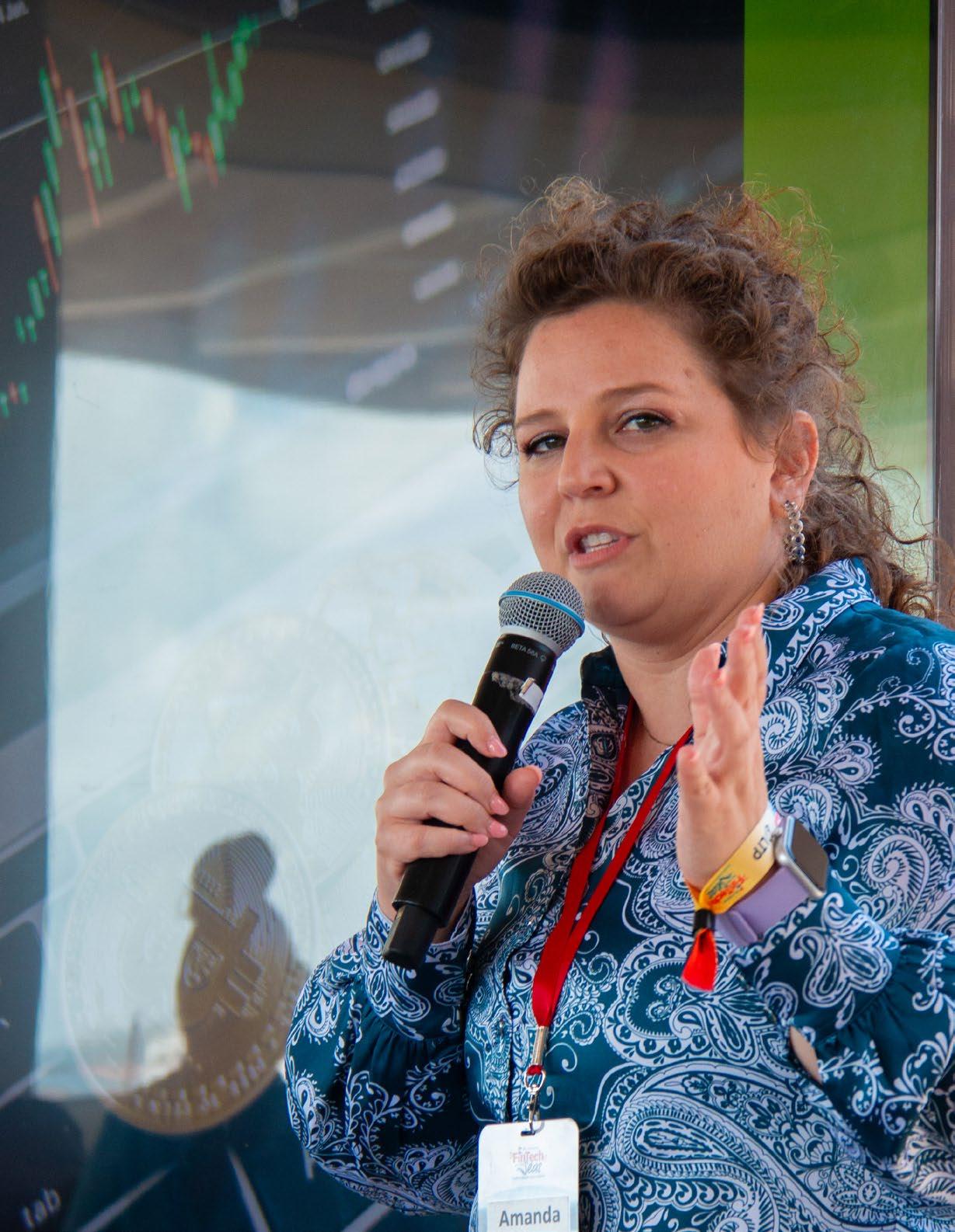
Amanda Wick is a distinguished legal expert with a wealth of experience in asset recovery and the prosecution of money laundering cases, particularly those involving cryptocurrency.
For nearly a decade, Amanda served as a federal prosecutor at the U.S. Department of Justice, working both as a Trial Attorney and Assistant U.S. Attorney across multiple offices. In 2020, Amanda transitioned to a Senior Policy Advisor role at the Financial Crimes Enforcement Network (FinCEN), where she worked on human trafficking and cryptocurrency issues.
Her career took a pivotal turn when she joined Chainalysis as Chief of Legal Affairs, contributing her expertise in blockchain analytics to a company that provides data, software, and investigative services to the public and private sectors. Amanda briefly returned to government service as Senior Investigative Counsel for the House Select Committee investigating the January 6th Capitol attack, focusing on the financial dimensions of the inquiry. Following this, she founded the Association for Women In Cryptocurrency, where she served as CEO. She is the Head of Americas for Verify VASP, a blockchain-native travel rule and compliance network. Amanda is the author of The Catalysts; The Accelerating Forces Forging the New World Order.
Speaking with BVI Finance, Amanda reflects on her commitment to advancing legal frameworks and inclusivity within the rapidly evolving digital finance landscape. Her experiences and insights offer a profound understanding of how cryptocurrencies are redefining traditional financial systems and the socio-political implications surrounding its adoption.
FROM SCEPTIC TO ADVOCATE
Amanda’s introduction to cryptocurrency was unexpected, stemming from her work in prosecuting money laundering cases in 2012. At the time, Bitcoin was relatively unknown, and its potential impact was largely underestimated.
However, an encounter with an agent investigating dark net activities opened Amanda’s eyes to the revolutionary nature of blockchain technology. She explains, “back in 2012, one of my agents came in and asked if I knew what Bitcoin was. In all honesty, I didn’t really think it was a thing. He said I should really learn about it because they had a new case involving an individual who was money laundering on the dark net .”
Despite initial scepticism, she embraced the challenge of understanding this new digital currency, armed with little
more than online resources and a keen investigative instinct“there was no training, we simply had YouTube University and Google back then”.
It was increasingly important to upskill. She recalls, “there was criminal usage back then. Criminals are always the first adopters of technology as they have the greatest incentive. Right? We wouldn’t have cars if it wasn’t for bank robbers who wanted to buy them to outrun horses.”
However, Amanda is keen to debunk the misconception of cryptocurrency as a vehicle for illicit activities. She discusses that blockchain offers significant advantages in transparency and traceability compared to traditional finance. Cryptocurrencies provide unparalleled visibility, making them powerful tools for anti-money laundering (AML) and counter-terrorism financing (CTF). This perspective challenges the conventional narrative, which frequently portrays digital currencies as inherently risky.
“Within my time at FiCen, it was clear the potential crypto offered in the AML and CTF space”
THE REGULATORY CHALLENGES AND OPPORTUNITIES
Amanda’s career has given her a comprehensive view of the crypto landscape. Her work has demonstrated that while
there are risks associated with cryptocurrency, there are also vast opportunities for innovation and positive change. She uses the example of Ripple, which facilitates cross-border payments without relying on traditional financial systems, to exemplify this potential. Such innovations challenge the dominance of established financial institutions and create new paradigms for financial inclusion.
“The jurisdictions that are going to survive and thrive will be those which are nimble, have an engaged regulator and are willing to have conversations with the industry.”
Amanda makes example of the United States specifically as a country with a regulatory environment which she argues has stifled innovation. She contends that the US governments have historically viewed technological advancements with suspicion. “It has to do with the nature of capitalism but historically governments have interpreted innovation to have the word predatory in front of it”. She notes that given innovation is often perceived as a threat rather than an opportunity, it has resulted in a regulatory framework that hinders the growth and adoption of new technologies, including cryptocurrency.
“It’s important to question where you feel that cryptocurrency or the digital asset space would be what it is today without social media or social engineering? The industry wouldn’t be alive without the hype.”
ATTRACTING THE INNOVATORS
Amanda remains optimistic about the future of digital currencies, particularly for countries willing to embrace them. She sees significant opportunities for forward-thinking
nations to leverage cryptocurrency to assert themselves in the global economy. She acknowledges this “creates a massive opportunity for foreign governments who want to attract innovators, who want to pass regulations, who want to get some of that pie that historically was very difficult to get.”
The evolving landscape of cryptocurrency is not just a technological phenomenon but also a cultural one. Amanda notes that “the reason the crypto community is so wonderfully inclusive is because most of us, on some level, likely experienced either the discrimination or the exclusion of banking and government”. This diversity drives a culture of innovation and resilience.
Amanda’s insights offer a compelling narrative of the evolving world of cryptocurrency, highlighting both the challenges and opportunities it presents. Her experiences underscore the importance of fostering a regulatory environment that embraces innovation while safeguarding against potential risks. As digital currencies continue to reshape the global financial landscape, Amanda’s perspectives provide valuable lessons for stakeholders looking to navigate this complex and dynamic field.
The future of cryptocurrency is bright, with potential benefits that extend beyond finance to include social and economic empowerment. By addressing regulatory challenges and fostering inclusive innovation, the crypto industry can continue to evolve and thrive, offering new opportunities for individuals and nations alike.
Amanda’s journey from sceptic to advocate serves as a powerful reminder of the transformative power of technology and the importance of embracing change in an increasingly digital world.
Amanda Wick, one of the world’s foremost experts on the intersection of cryptocurrencies, geopolitics, and digital finance, offers a distinctive perspective shaped by nearly a decade of service as a federal prosecutor at the US Department of Justice, where she specialized in money laundering and cryptocurrency enforcement. In her powerful debut book, The Catalysts, she examines the forces accelerating a seismic shift in global finance— from digital assets and decentralized tech to political fragmentation and rising tribalism. Wick’s keynote offers essential insight into the risks and opportunities of this evolving financial landscape—and what it means for policymakers, innovators, and global markets.
Amanda Wick Head of Americas for Verify VASP
WHERE STRATEGY MEETS INNOVATION
A CONVERSATION WITH KISHELLE BLAIZE-CAMERON, DEPUTY DIRECTOR OF THE SPECIALISED SUPERVISION UNIT AT THE BVI FINANCIAL SERVICES COMMISSION, AND AYANA HULL, FORMER HEAD OF PRIVATE WEALTH AND REGULATORY PRACTICE GROUPS AT HARNEYS
Jurisdictions are judged not only on their reputation but also on their ability to adapt, innovate, and provide a stable environment for businesses to grow. The British Virgin Islands (BVI) has long been recognized as a leading international financial centre, known for its robust legal framework, political stability, and business-friendly environment. Today, it is translating these strengths into the rapidly evolving virtual asset sector, carving out a niche that combines innovation, regulatory clarity, and strategic foresight.
To understand what sets the BVI apart in the global digital finance landscape, Business Insight gathers perspectives from Ayana Hull and Kishelle BlaizeCameron, two experts shaping the BVI’s international finance, fintech, and digital asset sectors. Their insights reveal why the BVI continues to attract businesses and investors seeking both security and innovation.
STRATEGIC ADVANTAGE THROUGH EARLY ADOPTION
The BVI’s success in virtual assets stems from foresight and early engagement with the sector, positioning the territory as a hub for fintech innovation. Hull notes, “The territory’s robust infrastructure, strategic location, and reputation as a leading financial center have long positioned the BVI as an attractive jurisdiction for global finance.” Recognizing the potential of virtual assets early, the BVI Financial Services Commission introduced the first virtual asset guidelines and a regulatory sandbox in 2020, allowing businesses to test and innovate safely. The VASP Act, 2022, established a comprehensive legal and supervisory framework.
Hull emphasizes the collaborative approach: “The framework was
designed in partnership with the people who are actually in the trenches…you, me, the industry practitioners.” Blaize-Cameron adds,
“From a regulatory perspective, our priority was to create rules that actually work for businesses while protecting the integrity of the sector.”
This early engagement has provided the BVI with a strong foundation, attracting businesses seeking clarity, agility, and long-term support in a fastevolving global market.
REGULATORY AGILITY AS A COMPETITIVE ADVANTAGE
Speed and adaptability are central to the BVI’s approach. In the fast-moving world of digital assets, the ability to act quickly can determine a businesses success. Hull describes this capability as “founders’ currency,” noting that the BVI leverages its size to move fast and decisively, implementing tailored regulatory frameworks that some G20 nations are still debating.
The practical benefits of this agility are tangible: companies can be incorporated on the same day, incubator-approved funds and managers operational within days, and private and professional funds established in just 14 days. VASPs, while complex, have received approvals in as little as nine months following the VASP Act’s transition period.
“This speed is not recklessness; it’s responsiveness. Businesses can scale without the real risk of regulatory whiplash,” Hull adds. Blaize-Cameron underscores the principle behind this approach: “Regulatory agility doesn’t mean cutting corners, it means understanding business realities and creating frameworks that allow innovation safely.”
POLITICAL AND STRATEGIC NEURALITY
While speed and flexibility matter, global investors also seek certainty and trust. The BVI’s stability and neutrality are core to its appeal.
“Investors and innovators are not just looking for regulatory clarity, they are looking for safe harbors,” Hull explains. “The BVI offers a politically stable, business-friendly environment. It has built a reputation as a jurisdiction that respects international standards and the rule of law while maintaining its autonomy in setting its own direction.”
For multinational firms, this combination of predictability and regulatory clarity is crucial. One asset management firm leveraged the BVI’s neutral environment to launch a fintech product targeting multiple international markets. The jurisdiction’s reputation for compliance reassured clients and facilitated cross-border operations, eliminating uncertainties that might have arisen elsewhere. Hull adds that this neutrality allows the BVI to serve as a trusted node in a multipolar financial ecosystem.
A FOCUSED NICHE IN FINTECH AND DIGITAL ASSETS
The BVI’s competitive edge is reinforced by its deliberate focus on fintech and digital assets, creating a
distinctive niche within global finance. “The BVI is carving out a new niche by focusing on fintech and digital assets. This is not accidental; it is actually strategic,” Hull notes. BlaizeCameron adds, “By concentrating on digital assets, we can tailor guidance, supervision, and support to the unique needs of these businesses. It allows innovation to thrive without compromising compliance or investor protection.”
This focus attracts forward-looking businesses, including tokenized funds, digital exchanges, custodians, and venture capitalists seeking clarity in a rapidly evolving market. Hull and Blaize-Cameron agree that these factors provide a competitive edge in fintech and digital assets, making the BVI indispensable to the businesses it serves.
BALANCING INNOVATION WITH COMPLIANCE
A thriving fintech sector requires not only innovation but also strong risk management. The BVI has built its regulatory framework to ensure growth is balanced with compliance. Beginning in 2018, the territory amended its AML/CFT legislation to align with Financial Action Task Force recommendations. The VASP Act of 2022 represented the culmination of years of consultation between government, regulators, and the private sector.
“Through open dialogue with the private sector, regulators have created a framework that supports growth while managing risk,” Blaize-Cameron says. The FSC has approved 25 VASPs as of March 2026, including centralized exchanges, custodians, and transfer agents. Regulatory vigilance ensures that only businesses with appropriate risk management, compliance frameworks, and customer protection mechanisms operate within the jurisdiction.
“It is never our intention to refuse or delay an application. But we cannot allow models that facilitate or fund nefarious activity,” Blaize-Cameron adds.
CAPACITY BUILDING AND STAKEHOLDER ENGAGEMENT
Regulatory effectiveness relies on continuous learning and engagement. The BVI’s consultative approach is key to its success. Close collaboration between regulators, government, and the private sector ensures that the framework evolves alongside technological advancements.
“Cross-border collaboration among regulators remains critical. Shared learnings, strategies, and information continue to
make us effective in combating financial crime associated with this transnational sector,” Blaize-Cameron emphasizes. The VASP Advisory Committee formalizes this engagement, giving regulators and industry participants a shared platform for consultation.
LOOKING AHEAD: THE BVI’S STRATEGIC EDGE
The BVI’s virtual asset journey reflects a careful balance between embracing innovation and safeguarding integrity. Hull outlines the territory’s guiding principles: adaptability as credibility, innovation guided by integrity, strategic leadership from the edge, and building where businesses are understood. She explains, “Build where you are understood. FinTech founders shouldn’t have to worry about whether their jurisdiction of choice will ban their product in six months or make life impossible with unclear rules. In the BVI, adaptability isn’t a buzzword, it’s policy.”
Blaize-Cameron adds, “The BVI’s competitive edge in the VASP space is driven by its regulatory agility, strategic neutrality, and commitment to fostering innovation while ensuring robust compliance standards.”
By combining foresight with operational efficiency and a collaborative approach, the BVI shows that small jurisdictions can have a significant impact on global finance. For companies seeking security, clarity, and growth, the BVI is not just a choice—it is a strategic advantage.
Ayana Hull
Former Head of the BVI Private Wealth and Regulatory Practice Groups at Harneys
Ayana Hull is the former head of the BVI Private Wealth and Regulatory practice groups at Harneys. She has over twenty years of experience practising BVI commercial law. When her regulatory hat is on, her clients include banks, corporate services providers, insurance companies, funds and fund managers, advising them on restructurings and the impact of BVI regulatory legislation on their investment vehicles. In 2026, Ayana joined the Maples Group as Partner and Head of the BVI’s Regulatory and Financial Services team.
Kishelle Blaize-Cameron
Deputy Director of the Specialised Supervision Unit of the BVI Financial Services Commission
Kishelle Blaize-Cameron is responsible for the oversight of high-risk licensees, and those of systemic importance in the jurisdiction. This includes all banks, systemically important TCSPs, Insurance Companies and all high-risk Investment Businesses and Virtual Asset Service Providers.
TWENTY YEARS IN AND JUST GETTING STARTED
BY JEFFREY KIRK, MANAGING PARTNER, APPLEBY (BVI)
2025 marked a 20 year milestone for Appleby in the British Virgin Islands (BVI). Jeffrey Kirk, Managing Partner, reflected on the firm’s long-standing commitment and the evolution of the jurisdiction as a global financial centre.
A STRONG LOCAL FOUNDATION
Appleby has been a key player in the British Virgin Islands’ legal and financial landscape for nearly two decades, providing a full suite of offshore services to international clients. What began in 2005 as a one-person operation under the name Appleby Spurling Hunter has grown into a 21-strong team and an Offshore “Magic Circle” law firm.
Starting out in Appleby’s Hong Kong office, Jeffrey noted that “Being in the Hong Kong office, it gives you a really good insights into the Asian market and the importance of the BVI to that market”. In order to provide a fully global offering, “it was important that Appleby opened up in the BVI,” he added.
“My view is that the BVI is the most global jurisdiction in terms of its product offering.”
Over the years, Appleby has expanded services organically, covering trusts, high-value property, and trademarks.
THE CREATION OF THE BVI COMMERCIAL COURT
The firm has witnessed key milestones in the jurisdiction, including the creation of the Commercial Court - a specialised forum for complex commercial disputes. Its establishment was a key moment in the BVI’s evolution as an international financial centre.
Jeffrey explained: “The development of the Commercial Court has taken off, and we see in the quality of litigation that is
being undertaken. Our litigation team… but also that of our competitors has been growing.”
While incorporations have long been central to the jurisdiction’s success, Jeffrey noted that the “growth of the commercial court, alongside backing from English common law, provides reassurance that if a dispute arises, there is a forum capable of handling it effectively.” The Commercial Court has not only enhanced litigation capabilities but also reinforced the BVI’s reputation as a jurisdiction responsive to sophisticated international business.
LEADING IN FINTECH AND DIGITAL ASSETS
Alongside litigation and regulatory developments, fintech and digital assets have been among the BVI’s most dynamic growth areas. Appleby has advised clients through the jurisdiction’s evolution from early crypto funds to tokenisation projects.
Jeffrey explained: “The first starting point was really the organic growth in crypto funds and then token issuers. We now have the VASP regime, which is in full effect, and we’re seeing bigger growth with DeFi and DAOs. One of the big growth areas is stablecoins and tokens that are being issued backed by real-world assets… all of these asset classes are now gaining traction, and theoretically this is limitless.”
The BVI’s flexibility makes it a natural home for token issuers. Jeffrey said: “Token issuers in the BVI, if they’re not providing financial services relative to those tokens, are in essence unregulated… That’s a real reason why the BVI token issuance regime is growing.” He added: “It builds confidence because of the track record and sophistication in the FinTech world… it could really take the BVI into a different strata in the future.”
OPPORTUNITIES ACROSS REGIONS AND SECTORS
Appleby’s growth in the BVI has mirrored the jurisdiction’s expanding global reach, with new opportunities emerging across regions and industries.
Jeffrey highlighted the increasing importance of Africa as a focus area: “Africa is a big focus. The continent is rich in natural resources and presents major opportunities for development. We’re doing a lot of work with clients in that region, particularly around investment structures and mobile banking.”
Beyond Africa, Appleby is also deepening its presence in Asia, Latin America, and the Middle East - regions that continue to drive demand for BVI structures. “We opened office in Shenzhen in October 2025, which broadens our China offering. We’re one of only two law firms with a full law licence to operate there,” Jeff said. “Dubai has become more and more important as a jurisdiction too, and there’s significant growth coming out of Latin America.”
He also noted how the jurisdiction is evolving to meet new investment trends: “ESG is becoming more and more important with ethical investing globally. The BVI funds market is growing, and approved managers have become more popular. The jurisdiction is maturing – people are gaining more comfort with it.”
RESILIENCE AND DISTINCTIVENESS
Appleby’s approach in the BVI is grounded in a strong local presence. Regulatory work benefits from close proximity to authorities, while litigation requires familiarity with the courts - elements that cannot be managed effectively from afar. By embedding a team in the BVI, Appleby ensures clients receive responsive, informed support. Jeffrey explained, “You’ve got to have people on the ground in the BVI to do this… particularly as an offshore lawyer of almost 20 years now…so much of our work is regulatory, and for that, it’s good to have people on the ground that know the regulators and can pick up a phone.”
Appleby and the BVI have weathered Hurricane Irma, COVID19, and regulatory transformations, emerging stronger each time. Jeffrey reflected: “BVI has gone through a turbulent period in the last couple of years. ” Beyond adversity, the firm has cultivated distinctiveness through innovation and thought leadership. Bold initiatives like Fintech on the Seas have brought clients together, educated the market, and highlighted the BVI’s capabilities. Jeffrey noted: “[It was a] massive success – clients wanting tickets and speaking slots–biggest success stories since being at the BVI.”
This blend of stability, local knowledge, and innovative thinking gives Appleby and the BVI their distinctive edge in the competitive offshore landscape.
LOOKING AHEAD
As Appleby celebrates its 20th anniversary, the firm is focusing on further growth and innovation. Future priorities include regional expansion, particularly in Africa, China, the Middle East, and the Americas, alongside the growth of fintech, digital assets, and asset-backed tokens. Jeffrey said, “The idea is to become the jurisdiction of choice for stablecoin issuers and real-world asset-backed token issuances.”
As the firm continues to guide clients through an evolving financial landscape, from traditional structures to digital assets, its journey mirrors the BVI itself – a jurisdiction that has grown from established roots to become a modern, globally connected financial centre.
Jeffrey Kirk is the managing partner of the Appleby BVI office and he leads the office’s Corporate Practice Group. He advises on public and private M&A, capital markets, banking & finance, FinTech including digital assets, investment funds & services, private equity, (re) insurance and other corporate matters. He is also the global head of the Appleby Islamic Finance Practice Group. Jeffrey has worked in the Appleby London, Bermuda, Hong Kong, Cayman Islands and BVI offices and has extensive experience advising on the laws of the BVI, Bermuda and the Cayman Islands. His preAppleby experience includes being in practice at leading London law firms; in-house counsel at Lloyd´s of London and his South African experience includes practicing in a leading regional South African law firm, being in-house counsel at an international asset management group and general counsel for a leading underwriting firm.
Jeffrey Kirk Managing Partner of the Appleby BVI Office
IN A FRAGMENTED CRYPTO LANDSCAPE, THE BVI CHARTS ITS OWN COURSE
In recent years, crypto regulation has developed to be more comprehensive. However, the global approach remains disjointed. The European Union has made strides with its Markets in Crypto-Assets (MiCA) regulation, while the United States has taken a more fragmented approach, with disputes between the Securities and Exchange Commission (SEC) and the Commodity Futures Trading Commission (CFTC). However, proposed acts, such as the Clarity Act and stablecoin bills, aim to create consistency. The United Kingdom is crafting its own post-Brexit rules, focusing on proportionality and market competitiveness.
Amongst this, jurisdictions like the BVI have positioned themselves as crypto hubs through a stable and flexible licensing regime.
To delve into the comparative insights of CASP (Crypto Asset Service Providers), VASP (Virtual Asset Service Providers), and MiCA (Markets in Crypto-Assets regulation), Business Insight connected with two key figures in regulation and financial services – Glenford Malone and Aki CorsoniHusain.
Glenford is the Deputy Managing
Director of Regulation in the BVI’s Financial Services Commission. He’s a seasoned regulator with over twenty years of experience across investment business, mutual funds, and regulatory strategy. Aki is the Global Head of Regulatory and Tax at Harneys, specializing in all aspects of contentious and non-contentious financial services sanctions, fintech AML, and tax information exchange law.
EARLY DEVELOPMENT OF CRYPTO REGULATION
Having been in the BVI for over 20 years, Aki has witnessed the evolution of its approach to digital assets. He notes he’s seen “development of the financial services industry in all manner of stages. This crypto stage is absolutely one of the most exciting”.
For him, it’s the high-quality of the BVI’s on-Island service providers that are the true stakeholders in the future of digital assets. He points to the work of the regulators, law firms, accountants and legislators as a core reason the BVI is always at the centre of the discussion when talking about digital assets.
In order to understand the BVI’s strong position, Aki traced the origins of crypto regulation back to Europe.
When Bitcoin appeared in 2009, the European Union inserted cryptorelated provisions to regulate crypto exchanges and wallet providers. The FATF followed, coining the term VASP instead of CASP. He argues that the BVI achieved not just “first mover” status, but “first successful mover.” Other jurisdictions launched regimes earlier, but they were complex and hard to use. The BVI, by contrast, implemented clear AML-based rules that could be understood internationally.
Within the conversation, it was a pertinent point for Glenford to provide the context around the approach of the BVI regulators. For him and his team, it was important to work with industry, “allow [it] to develop” and adopt a balanced approach as they layered in regulation. This therefore allows the digital asset regulation in BVI to balance caution without stifling innovation.
LICENSING PROGRESS
With regulation aligning closely with FATF standards, the clarity and international portability has made the BVI a leading jurisdiction for VASPs. Unlike some regions with complex or theoretical regimes, the BVI not only legislated but also granted licenses, giving the regime credibility. Aki praised the BVI’s decision not only to legislate but to really approve applications –“the BVI has moved to start issuing licenses and that’s also been a game changer”. While he highlighted it’s not sacrificing robustness for speed, if a business submits “a credible application that’s coherent, well-thought through and checking the boxes, you’ll get the license through.”
Glenford acknowledged the FSC has been working hard to grant licenses. In the initial stages of the licensing process it relied on applicants
themselves to explain, as an example, “blockchain concepts in layman’s terms.” Over time, the process has significantly improved, allowing regulators to proceed more quickly and grant licenses to credible firms.
In terms of progress, current regulation emphasizes custody, wallet providers, and exchanges, while the FSC continues to assess emerging areas such as stablecoins and decentralized exchanges (DEXs). This approach is not to halt innovation but to require firms to demonstrate how they meet Anti-Money Laundering (AML) and compliance obligations. Looking ahead, “the next phase will be refining regulation surrounding the issuance of stablecoins”, according to Aki.
THE NEXT FRONTIER: STABLECOINS
Stablecoins are crypto-assets designed to keep a steady price, usually pegged to a currency like the US dollar, by being backed by reserves (e.g., cash or government bonds) or other stabilising mechanisms. They aim to offer low-volatility, fast on-chain payments; regulators mainly care about the quality of reserves, the right to redeem at face value, and clear disclosures.
As the conversation turns to stablecoin regulation, Aki and Glenford both acknowledge this sector as the next frontier, given that they sit at the intersection of innovation, regulation, and traditional finance.
Aki explains “in Europe the issuance of stablecoins is one of the most heavily regulated parts of MiCA”, the EU treats stablecoin issuance as highly sensitive, citing concerns over monetary sovereignty and central bank authority. Europe requires strict reserve backing. The UK, however, is taking a more flexible “second mover” approach, learning from the EU’s experience and distinguishing between retail and institutional markets.
When looking at the BVI, Glenford added that the regulator is taking a measured approach in regards to regulating stablecoins. For them, it’s important to align with “the international standards, but adapt it to suit the unique needs of the BVI”. Aki supported this cautious alignment with global norms, pointing out that the BVI’s earlier success lay in following FATF standards closely. It’s clear we need to watch this space with stablecoins.
From the perspectives of Glenford Malone and Aki CorsoniHusain, the BVI has taken a pragmatic approach to digital asset regulation as it’s evolved as a fintech hub. By adopting clear, AML-focused rules in line with FATF standards, the BVI
has established itself as a leading and credible jurisdiction for VASPs. Looking forward, stablecoins are the next critical area. The BVI is working to align its framework with international standards while tailoring rules to local needs - ensuring competitiveness, proportionality, and continued industry growth.
Aki Corsoni-Husain
Global Head of Regulatory & Tax Teams at Harneys
Aki Corsoni-Husain is the global head of Regulatory & Tax teams at Harneys, specialising in all aspects of contentious and non-contentious financial services, sanctions, fintech, AML, and tax information exchange law. His practice covers the British Virgin Islands, Cyprus/ EU law, and other jurisdictions within our network. Aki works intensively with and mentors all of our regulatory and tax lawyers located across the globe. As relevant, he provides consultative professional advice to governmental and regulatory authorities on the regimes underpinning global regulatory initiatives and frequently presents at conferences on these topics. Aki works on a daily basis with the world’s top financial institutions and law firms.
Glenford Malone
Deputy Managing Director, Regulation
Mr Glenford Malone was appointed Deputy Managing Director, Regulation in January 2022 and is responsible for implementing the Commission’s overall regulatory strategy. Mr Malone has over two decades of experience within the regulatory environment, having served many roles, such as Senior Regulator, Deputy Director, Investment Business and prior to 2002, assistant Registrar of Mutual Funds with the former Financial Services Department, now BVI Financial Services Commission. Mr Malone is a Certified Anti-Money Laundering Specialist and is a trained Financial Examiner in the FATF Methodology of Assessing Compliance with the FATF 40 Recommendations.
STRUCTURE IS THE NEW EDGE IN TOKEN ISSUANCE
JAMES KITCHING, LEGAL COUNSEL AT HARNEYS; KATRINA LINDSAY, BVI COUNSEL AT CAREY OLSEN; MICHAEL KILLOURHY, PARTNER AT OGIER; AND PETRI BASSON, FOUNDER AT HASH DIRECTORS EXPLORE HOW BVI’S LEGAL STRUCTURES, REGULATORY CLARITY, AND COMPLIANCE PRACTICES SUPPORT TOKEN ISSUANCE AND THE EVOLVING DIGITAL ASSET ECOSYSTEM.
The global digital asset landscape
is evolving rapidly, and jurisdictions that embrace innovation while maintaining regulatory clarity are quickly establishing themselves as leaders.
The British Virgin Islands (BVI) has emerged as one such jurisdiction, providing a clear regulatory framework that supports token issuance, fintech development, and investor confidence, while balancing innovation with robust governance. Token issuance means making a project’s digital tokens and distributing them to users or investors in line with applicable laws.
While token issuance itself is often not directly regulated, the BVI Virtual Asset Service Providers (VASPs) Act establishes a structured, compliant environment for businesses and investors alike. This regulatory clarity has given the jurisdiction a significant competitive advantage over markets where regulatory uncertainty and complexity can slow projects down.
By combining regulatory clarity with operational guidance, BVI enables projects to move efficiently without compromising governance or investor protection. “[The] BVI has always been proactive in creating an environment where innovation can thrive without compromising investor protection,” says James Kitching at Harneys. “The clarity provided by the VASP regime has allowed projects to structure their token offerings with confidence.”
UNDERSTANDING THE TOKEN ISSUANCE LIFECYCLE
Launching a token is more than a technical exercise; it requires careful consideration of legal, regulatory, and financial factors. Companies raising funds through token offerings often rely on methods such as SAFEs (Simple Agreements for Future Tokens), token warrants, or node sales, each with implications for cap tables, investor rights, and future valuation.
When launching a token, legal compliance is paramount. Katrina Lindsay explains that “Token issuance is not a
loophole for bypassing regulation. Understanding and applying conventional legal standards is just as important as the innovative aspects of the project.”
Many firms rely on offshore flexibility to structure token offerings while maintaining global compliance requirements. For example, of the 441 interdependent token project filings in the EU, MiCa registers as of March 2026, 62% are based outside the EU. The largest number, 92, were in the BVI.
A common approach is to use a BVI entity to issue tokens, often held by a foundation company structure. This model supports investor engagement, operational utility, and governance flexibility, while remaining consistent with international regulatory expectations.
PRACTICAL STRUCTURES AND CONSIDERATIONS
Selecting the right structure is critical for both operational efficiency and regulatory compliance.
“You probably all know the classic structure for token issuance: a BVI token issuer held by a foundation company. The BVI framework ensures that the actual issuance of a token is not necessarily caught by the VASP regime, unlike other jurisdictions where licensing can take a long time,” says Michael Killourhy.
Yet Killourhy emphasizes that even with a flexible framework, structuring is far from a regulatory free-for-all. “You need to consider economic substance, fund flows, and whether the BVI company will hold intellectual property. Even if your token isn’t regulated directly, AML obligations and securities considerations still apply,” he says. This highlights that legal and regulatory planning must run in parallel with business operations.
Operational practicalities are equally important. Petri Basson points out that many clients underestimate day-to-day token management. “One of the things we’re always looking at is token allocation, what’s going to the foundation, the team, vesting schedules. Many clients haven’t thought about practical steps like paying monthly expenses or planning exchange listings. That’s where constant legal and compliance oversight comes in.” By integrating legal planning with operational strategy, issuers can avoid common pitfalls and ensure smooth execution.
COMPLIANCE IN ACTION
Compliance extends far beyond forming a company and issuing a token. Know-your-customer (KYC) and anti-money laundering (AML) checks are essential, and increasingly sophisticated on-chain compliance tools help issuers maintain regulatory alignment. Monitoring developments across multiple jurisdictions and updating processes accordingly is critical.
As Basson explains, “It’s an education process. Founders want to move fast, but you need to understand who your counterparties are and ensure KYC and AML checks are completed. Sometimes investor details aren’t disclosed to the foundation, but compliance verification still occurs.”
Michael Killourhy adds, “Even if your token isn’t regulated, that doesn’t mean you can ignore AML. Every token issuer should have robust monitoring in place.”
EMERGING TRENDS IN DIGITAL ASSETS
As the digital asset landscape continues to evolve, with growing interest in stablecoins, tokenized real-world assets (RWAs), and tokenized investment funds, investors are increasingly demanding transparency, governance, and structured risk management.
Katrina Lindsay highlights, “Buzzwords right now are stablecoins and RWAs. Even if token issuance itself doesn’t fall under the VASP regime, existing securities or investment legislation might apply, especially for yield-bearing stablecoins.”
Basson adds, “Stablecoins are exciting they could bring in a new generation of users. Tokenization is also a major trend, but United States regulatory changes mean clients need to understand implications before minting or distributing tokens.”
LOOKING AHEAD: BVI’S ROLE IN THE FUTURE OF DIGITAL ASSETS
As digital assets mature, the jurisdictions that will thrive are those that combine flexibility with credibility. The BVI’s continued focus on regulatory clarity, operational robustness, and investor protection positions the jurisdiction as a leader in the digital asset ecosystem. By leveraging the VASP Act, clear legal structures, and diligent compliance practices, businesses can issue tokens efficiently while mitigating risk.
For issuers, the message is clear: launching a token in the BVI is not simply about benefiting from speed and efficiency, it is about building on a foundation of trust. By aligning innovation with regulation, the BVI is positioning itself not only as a leading hub for today’s token economy but also as a trusted partner for the next wave of digital finance.
James Kitching Legal Counsel
James Kitching is a counsel in the Corporate practice group in Harney’s BVI office. He advises on all aspects of corporate and commercial law, often acting as a “trusted advisor” throughout a business’ lifecycle. He has particular experience with start-up/scale-up businesses, especially within the Digital Assets and Blockchain sector. James has significant knowledge of all types of Web3 projects and has advised on numerous token offerings, platform launches, trading operations, and other crypto projects. He has represented clients across the sector including major video game developers, exchanges, blockchains, and traditional and non-traditional DeFi ventures.
Katrina Lindsay BVI Counsel at Carey Olsen
Katrina Lindsay is a corporate and finance lawyer based in the British Virgin Islands and a key member of Carey Olsen’s virtual assets practice. She advises international clients on BVI corporate transactions, mergers and acquisitions, financing, restructuring and digital asset-related matters, and frequently acts as BVI counsel to publicly listed companies. Since joining the firm’s BVI office in 2016, Katrina has built a broad practice supporting clients navigating the Territory’s evolving regulatory landscape for virtual assets and cross-border transactions. Before relocating to the BVI, she worked in Carey Olsen’s Jersey office, where she advised on a range of high-profile matters, including the establishment of the largest real estate fund listed on the London Stock Exchange.Katrina qualified as a solicitor in Scotland in 2013 and was admitted to practise in the British Virgin Islands in 2017.
Petri Basson Founder at Hash Directors
Petri Basson is the founder of Hash Direct Ltd, a leading digital asset governance firm in the Cayman Islands and BVI. With a background as Director and technical lead at KPMG Cayman’s Digital Asset team, he brings deep expertise in blockchain auditing, DAO operations, and crypto compliance. A Chartered Accountant (CA(SA)) and certified in multiple IT and blockchain disciplines, Petri is also Chairman of the Blockchain Association of the Cayman Islands and the Crypto Currency Security Standard (CCSS). His blend of financial, technical, and startup experience makes him a trusted advisor to DAOs and digital asset foundations.
Michael Killourhy
Partner at Ogier
Michael advises on a broad range of corporate and corporate finance transactional matters, including mergers and acquisitions, equity and debt capital markets, financings and complex corporate restructuring. Michael is widely recognised as one of the BVI’s leading public company experts and its pre-eminent special purpose acquisition company expert. Michael’s expertise in this area has been recognised internationally with him being invited to take prominent speaker roles in the SPAC industry’s premier international convention, as well as being frequently published in leading capital markets journals.
LEAD, FOLLOW OR BE LEFT BEHIND
Ethan Wang, CEO of LTP Hong Kong, has spent more than 15 years working across traditional finance and digital assets, helping bridge two worlds that are rapidly converging. From trading infrastructure to regulatory engagement, his career has taken him from Hong Kong and Singapore to Europe, the Middle East, and now the British Virgin Islands (BVI).
Speaking at the BVI Finance FinTech on the Seas, Wang delivered a powerful message: the financial services industry is on the cusp of its most profound transformation in decades, and the BVI is well-positioned to help shape this new era.
Today, we are witnessing the most significant transformation in the financial markets since the advent of electronic trading.”
Bitcoin’s emergence in 2009 was dismissed by many, what began as a niche curiosity has now grown into a trillion-dollar ecosystem. Today, digital assets are impossible to ignore and institutional adoption is accelerating quickly. While only a small fraction of financial institutions currently offer cryptocurrency services, more than half are preparing to launch digital asset products within the next two years.
This momentum is being driven by client demand, particularly among younger investors, who see digital assets not as an exotic alternative but as a standard component of their portfolios. It is also underpinned by undeniable revenue potential. A significant majority of asset managers view digital assets as an important source of growth, while firms increasingly acknowledge that telling clients “we don’t do crypto” is no longer a viable option.
“This isn’t just about Bitcoin or the latest meme coin. It’s about the infrastructure being built beneath the surface, an infrastructure that will revolutionize how we issue, trade, and settle every financial asset on the planet.”
THE ROLE OF REGULATION
For years, regulatory uncertainty was the elephant in the room, discouraging institutions from making bold moves into digital assets. That is now changing. Jurisdictions across the globe are creating clear frameworks designed to encourage participation, attract investment, and set international standards.
“We are moving from a world of regulatory ambiguity to one of regulatory competition, where jurisdictions compete to attract companies and become global digital asset hubs.”
This is evident in the European Union with the introduction of its MiCA regulation. Similarly, the US is advancing its own digital asset frameworks, and hubs such as Hong Kong and Singapore are moving decisively. Locally, the BVI, has carved out a niche as a nimble and forward-thinking jurisdiction, offering licensing regimes that allow firms like LTP to operate with confidence and positioning it at the forefront of this global race.
TOKENIZATION: THE TRUE REVOLUTION
While much attention has been focused on Bitcoin and Ethereum, Wang believes the real revolution lies in the tokenization of traditional assets. He painted a vivid picture of a world where securities settle instantly rather than in days, where dividends are paid automatically through smart contracts, where shareholders vote directly without proxy complications, and where previously illiquid assets such as private company shares, real estate, or art can be traded with the ease of public equities.
“This is not science fiction, it’s being built right now.”
The implications of such a shift are profound. Traditional roles such as brokers, custodians, and transfer agents will evolve. Yet Wang stressed that this should be seen as an opportunity rather than a threat. New roles will emerge, including digital custodians, DeFi protocol managers, smart contract auditors, and tokenization specialists.
A PLAYBOOK FOR INSTITUTIONS
For institutions unsure of how to respond, Wang laid out a pragmatic playbook. The starting point, he explained, is education and experimentation. Institutions need to create digital asset task forces to test, learn and build understanding internally. From there, firms should look closely at what unique value they can offer in a tokenized world, focusing on services that technology can enhance rather than replace.
He stressed the importance of strategic partnerships, highlighting that the pace of change is too fast for any single institution to navigate alone. Digital-native firms can offer knowledge and acceleration, helping traditional players close the gap. Above all, firms must listen closely to their clients, who are already active in the digital asset space and expect their service providers to meet them there.
Finally, institutions should accept that for the foreseeable future, we will live in a hybrid world where traditional and digital assets coexist, and should therefore invest in infrastructure that can serve both seamlessly.
“You can’t strategize about what you don’t understand. Every institution should have a digital asset task force actively experimenting with this technology now.”
THE HUMAN ELEMENT
Despite his enthusiasm for technological change, Wang reminded the audience not to overlook the human dimension. Technology, he argued, will not replace human judgment, creativity, or relationships.
“The most successful institutions will combine cutting-edge technology with human judgment, creativity, and relationshipbuilding.”
Clients are not only looking for access to digital assets; they want trusted advisors to guide them through this complex and shifting landscape. The institutions that succeed will be those that can combine cutting-edge digital tools with deep expertise and trust-based relationships.
LOOKING AHEAD TO 2030
Wang’s outlook for the next decade is ambitious but rooted in the trajectory already underway.
By 2030, he predicts that “over 75% of securities will be issued and settled on blockchain infrastructure. This isn’t evolution, it is revolution, and it’s happening faster than most realize.”
Central Bank Digital Currencies will become the dominant medium of exchange for wholesale markets. DeFi protocols will handle trillions of dollars in daily trading volumes and, crucially, traditional and decentralized finance will merge into a single, global financial system that operates 24/7.
THE BVI ADVANTAGE
For the BVI, the opportunity is clear. With its forward-thinking regulatory framework and reputation for innovation, the jurisdiction is ideally placed to attract global firms seeking stability, clarity, and support.
As Wang concluded, the digital asset revolution is not a question of “if” but “how fast.” Institutions and jurisdictions must decide whether they intend to lead, follow, or risk being left behind.
“The question isn’t whether digital assets will transform finance, that’s already happening. The question is whether you will be a leader, a follower, or a casualty of this transformation.”
Wang CEO LTP, Hong Kong
Ethan is a seasoned financial services executive with 15 years of expertise, spanning both traditional finance and digital assets. He has led strategic initiatives across trading infrastructure, institutional partnerships, and regulatory engagement, effectively bridging established financial markets with the dynamic digital asset ecosystem. Throughout his career, Ethan has collaborated extensively with global regulators across Hong Kong, Singapore, UAE, BVI, and other key jurisdictions to advance market development, enhance digital asset liquidity, and shape progressive regulatory frameworks. As CEO of LTP’s Hong Kong office, he drives the firm’s Asia-Pacific expansion, architects institutional digital asset strategies, and conducts high-level policy dialogue with government officials and financial authorities, positioning LTP as a globally regulated leader in the institutional digital asset space.
Ethan
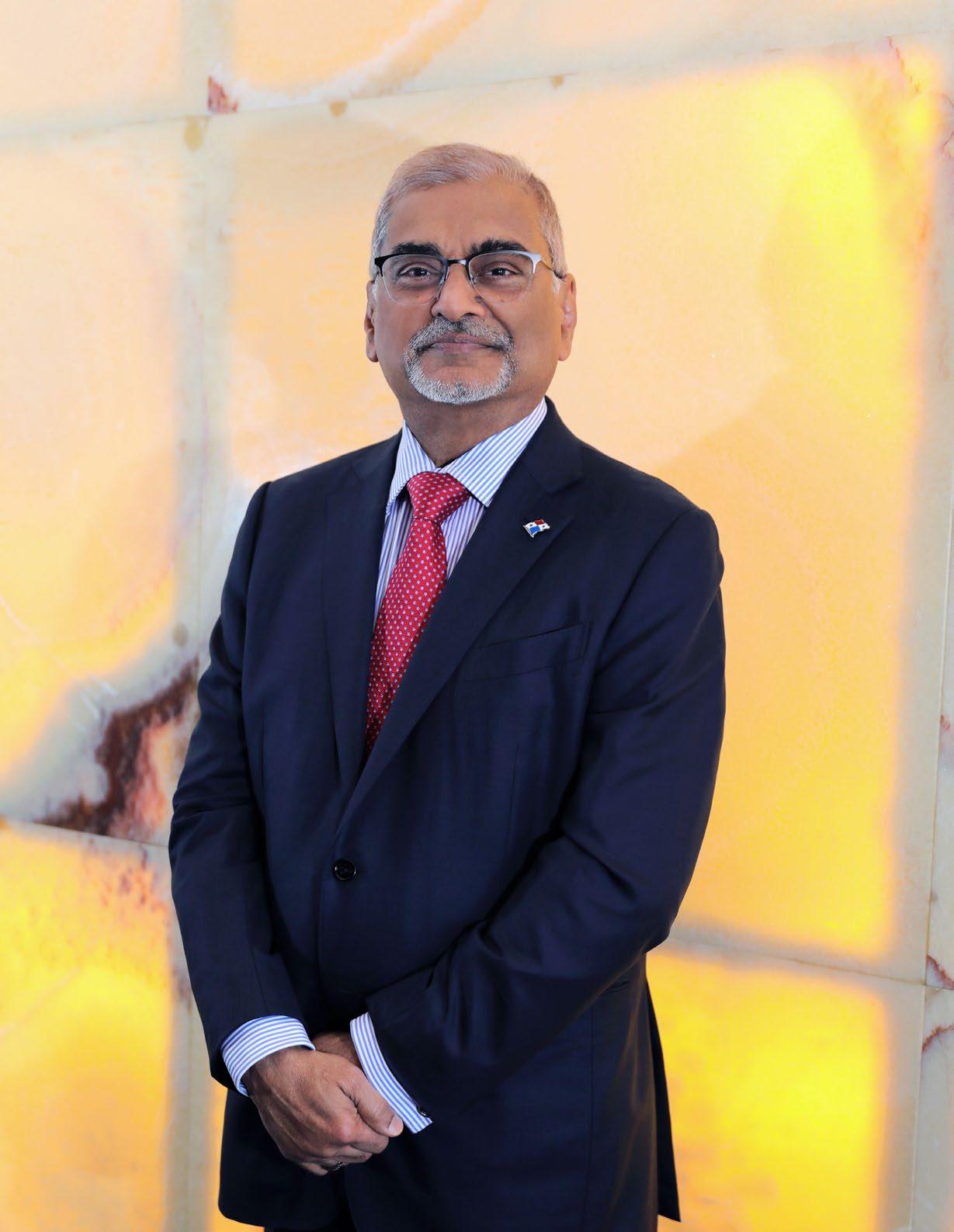
RAUL ESTRIPEAUT ON BUILDING OMC GROUP’S GLOBAL RISE AND WHY THE BRITISH VIRGIN ISLANDS PROVED TO BE THE RIGHT JURISDICTION AT THE RIGHT TIME.
Marking 70 years since its founding, OMC Group has had a remarkable journey from its origins in Panama to becoming a global provider of corporate services. We sat down with Mr Raul Estripeaut, who has been with the group for over 50 years, to reflect on the firm’s expansion into new jurisdictions, including the British Virgin Islands, its resilience through political and economic challenges, and the core values and client relationships that have sustained its success in an evolving regulatory environment.
2025 marked the 70th anniversary of OMC Group, a milestone that highlights the firm’s steady growth and adaptability. Mr. Estripeaut has witnessed the transformation of this global corporate services provider while helping shape it into a trusted partner for generations of clients.
“I wasn’t here from the beginning, but I was here very close to that,” he notes, acknowledging his long association with the company.
Founded in 1955, OMC Group was originally established to provide management services for US investors interested in Latin America. In those early years, Panama offered an attractive environment for cross-border corporate structures.
For Estripeaut, however, the relationship with OMC began almost incidentally. In the mid-1960s, while working in the plastics industry, he encountered OMC not as a partner but as a client. The company’s services, including office rentals, secretarial support and accounting, helped him streamline his own ventures.
He then decided to shift into corporate consulting by joining the OMC Group in 1980, coinciding with a crucial turning point for the company. OMC was evolving beyond secretarial and administrative support into comprehensive corporate services. “Panama was probably one of the most important offshore centres,” he says, emphasising the role the jurisdiction played in those formative decades.
RELATIONSHIP WITH THE BRITISH VIRGIN ISLANDS
But opportunity never comes without risk. By the late 1980s, political and economic instability in Panama threatened the reliability of its corporate environment. “We needed an alternative to Panama Companies. That’s where BVI came in,” he explains.
The move to the British Virgin Islands would prove pivotal. With its modern legislation and responsive regulators, the BVI offered a strong platform for expansion.
“[The] BVI was in the right place at the right time with the right product,” he reflects.
The jurisdiction became a cornerstone of OMC’s international strategy, enabling the firm to navigate Panama’s turbulence and strengthen its global reputation.
SURVIVING THROUGH ADAPTATION
He is frank about the challenges that have been faced along the way. Political upheavals, shifting regulations, and market scepticism could easily have derailed OMC’s ambitions. Instead, the company found strength in flexibility. “Somehow. We learned to survive. And we did,” he says. One of the tools that set OMC apart was a policy that might seem small but proved transformative: “We set off from day one, a 24-hour reply or answer policy.”
Over time, OMC’s ambitions grew well beyond Panama with offices opened in major financial centres across Europe, Asia and the Americas. Each move projected strength to clients while allowing OMC to better understand and respond to cultural nuances in business. He speaks with particular pride about the relationships cultivated over decades, noting that “some clients that I got 45 years ago are still with us.”
NAVIGATING A NEW REGULATORY LANDSCAPE
Perhaps no change has been more notable than the global push towards transparency. For decades, offshore jurisdictions were synonymous with discretion. When new rules mandated disclosure of beneficial ownership, many feared a mass exodus of clients.
“I was surprised that the clients complied,” he admits. The adjustment was not without friction, but ultimately, OMC’s focus on trust paid off. He emphasises the need for balance: regulation must promote accountability without compromising client security.
Throughout the conversation, the centrality of the British Virgin Islands to OMC’s success becomes clear. With robust laws, efficient processes and a collaborative regulatory environment, the BVI provided the scaffolding for OMC’s global reputation.
A LEGACY OF TRUST
Now, as he reflects on more than four decades with OMC, he is less concerned with numbers and more with values. “You try to pass on the values that are important, the ethical values, moral values, and that is priceless,” he says. The history of OMC Group is one of resilience in the face of political upheaval, foresight in embracing new jurisdictions, and an unwavering commitment to values carried across generations of professionals and clients.
As OMC looks ahead to the coming decades, the company does so on foundations carefully laid by Estripeaut and his colleagues, foundations built not only on legal frameworks and corporate structures, but also on trust, adaptability and service. For him, the future of OMC and of the offshore industry at large remains promising as it continues to balance innovation with ethical practice.
Mr. Estripeaut remains clear in his view of the British Virgin Islands’ enduring strength.
“I think the BVI has handled the pressures from outside well,” he said. “It has stayed the course, and that consistency is what gives people confidence.”
In a global environment defined by shifting standards and competing narratives, the BVI’s ability to remain steady, adapt with purpose and uphold its core principles continues to set it apart. For Mr. Estripeaut, that consistency is the foundation of the jurisdiction’s continued relevance.
Raul Estripeaut President, OMC Group
Raúl R. Estripeaut B. is a Panamanian executive and engineer with more than five decades of experience in industrial engineering, consulting, and corporate management. He has played a central role in the international growth and leadership of OMC Group. He joined OMC Group in 1981 and served as Chief Executive Officer and Senior Partner from 1990 for nearly three decades, overseeing the firm’s global operations across the Americas, Europe, and Asia. Since 2017, he has served as a Board Member and Advisor, providing strategic guidance at a senior level. Mr. Estripeaut holds degrees in Chemical Engineering and Industrial Engineering from the Georgia Institute of Technology and is licensed as a professional engineer and financial advisor. His career reflects long-term institutional leadership and a strong global business perspective.
BY DR. DAVID BYRD, GLOBAL AND AMERICAS DIGITAL ASSET ASSURANCE LEADER AT EY
Congratulations, you’ve made it.”
That’s how I like to start the conversation when a digital asset business is told it needs an audit. Few founders think of audits as a milestone to celebrate, but they should. If a regulator, a bank, or an investor is demanding an audit, it means the business has reached a level where credibility matters. You have moved from experiment to enterprise.
A decade ago, that framing would have sounded almost comical. I remember working on one of EY’s first-ever audit requests in crypto: a small Bitcoin fund. At the time, a digital asset audit was almost an oxymoron. Regulators hadn’t issued guidance, auditors hadn’t set precedents, and the industry itself was still figuring out wallets, private keys, and what counted as reliable data. We had to invent the playbook as we went, working out how to confirm ownership of a digital wallet or designate a market price for Bitcoin.
Fast forward to today, and the conversation has shifted. Stablecoins are pegged to dollars and euros, mining firms are going public, custodians safeguard billions, and DeFi platforms create new audit challenges overnight. What hasn’t changed is the central truth I tell founders: if you’ve been told you need an audit, it means you’ve made it.
WHAT
DIGITAL ASSET AUDITS SHOW
Audits are rarely anyone’s favorite topic. For most founders, they’re a regulatory hurdle, a compliance exercise, or an investor demand. But in digital assets, they are signals of maturity and credibility.
Investors view it as a prerequisite for deploying capital, banks as an anchor for risk management, regulators as a tool to enforce standards and protect consumers, and other businesses, from exchanges to funds and service providers, as proof that you are serious enough to be a partner.
That has not always been the case. In 2017, during the ICO (Initial Coin Offering) wave, funds poured into the space without a second thought about audits. Yet as the market grew, so did the realization that credible reporting mattered. By the time “DeFi summer” arrived a few years later, auditors were already wrestling with how to account for pools, staking arrangements, and yield strategies. I still remember a mining company that leapt into a DeFi protocol just a week before its yearend close while preparing to go public. That single move created a storm of accounting questions about valuation, risk, and disclosure.
Audits, in short, are what give businesses the ability to withstand scrutiny in moments like these. They transform activity into assurance, giving investors, regulators, and counterparties confidence that the numbers add up.
WHY COMPANIES CAN’T WAIT
Too many founders treat audits as something they’ll think about later, but too often than not, later can be too late. I’ve seen companies that ran for five or six years without an audit, only to discover they were effectively unauditable. Wallet histories were lost, policies were never documented, and vendors could not provide the evidence auditors required. At that point, retrofitting is costly, slow, and, in some cases, can impact growth plans.
“By the time you finally bring in an auditor, if it’s a little late, you can effectively be un-auditable.”
By contrast, businesses that prepare early are always in a stronger position. They can raise capital quickly, respond to acquisition interest without delay, or prepare for a listing without fear of what diligence will uncover.
Audit readiness signals to the market that a company is serious, disciplined, and built to last. In digital assets, where volatility and perception risks run high, credibility is invaluable.
A TYPICAL AUDIT JOURNEY
Every company’s audit journey looks different, but the themes are strikingly consistent. Exchanges, custodians, miners, and data providers all face different risks, yet they share the same core questions. What is your risk profile? How do you value assets? How do you secure custody? Do you have internal controls?
Firms that neglect these basics find themselves in audit readiness limbo. They need an audit to move forward, but lack the systems and records to get one. Advisory-style services, from gap analyses to process reviews, can help companies catch up, but there is no substitute for building readiness early.
REGULATION SHAPES THE BUILD
The lack of comprehensive accounting guidance has been one of the industry’s greatest challenges. Stablecoins, for example, are widely used in payment flows, yet whether they qualify as cash equivalents depends on the fine print. Token issuance raises questions of liability, revenue recognition, and valuation. Even seemingly simple issues, like designating a price source for Bitcoin, require policy choices auditors can test.
Slowly, frameworks are emerging. Regulators worldwide are introducing licensing regimes, defining service providers, and setting disclosure standards.
This is where International Financial Centres (IFCs) play a pivotal role. A clear regime gives founders certainty, investors comfort, and banks fewer reasons to decline. For auditors, it means there is a framework against which assurance can be delivered.
A PRACTICAL PLAYBOOK FOR LEADERS
The lesson for executives is straightforward. Audits should be seen not as a burden but as a milestone. If you are being asked for one, it means your business has reached a level of seriousness. Building readiness early, documenting policies, implementing controls, and choosing reliable vendors pays off when opportunities arise and selecting jurisdictions that balance innovation with supervision, like the BVI, lowers execution risk and unlocks growth.
CONCLUSION
Audits in digital assets are demanding. They require judgment where standards are incomplete, and rigor where systems are new. But they are also transformative. They turn questions into clarity, risks into responsibilities, and businesses into enterprises.
Left undone, they leave uncertainty; done well, they create the trust needed for markets to grow.
So the next time you hear, “You need an audit,” don’t groan. Remember instead: “Congratulations, you’ve made it.”
Dr. David Byrd EY Global and Americas Assurance Leader and Partner in Ernst & Young LLP’s Financial Services Office Audit
David is EY Global and Americas Assurance Leader and a partner in Ernst & Young LLP’s Financial Services Office Audit practice in San Francisco. He has deep knowledge in audit and compliance procedures as they relate to the digital asset industry.
David leads the Digital Asset Research Center, which is dedicated to supporting Assurance, Tax and Consulting engagements. The team leverages a technical understanding of distributed ledger technologies to service the blockchain and digital asset ecosysteminnovators, and global markets.
BUILT IN THE BVI, BUILT FOR THE WORLD
BY TANYA CASSIE-PARKER, PARTNER, HARNEY WESTWOOD & RIEGELS
Harney Westwood & Riegels’ (Harneys) story began in 1960 in the British Virgin Islands (BVI), where we became the jurisdiction’s first-ever legal practice. That moment marked the start of a journey. Sixty-five years later, we’ve grown from a single BVI office to an international law firm employing over 400 people and with 185 lawyers across 11 global locations, with plans for further expansion. At the centre of this, the BVI has remained at the heart of that evolution, shaping who we are and how we operate.
The BVI remains central to our global strategy. Its strong regulatory environment, English common law foundation and political and economic stability have allowed it to become a trusted hub for cross-border transactions spanning Asia, Europe, and the Americas. These strengths have supported the continuous expansion of both our transactional and our dispute resolution practices.
For me, the defining moments in Harneys’ development have been the ones where we helped shape the jurisdiction itself by advising on landmark legislative developments including the International Business Companies Act, the Limited Partnership Act, and the Economic Substance legislation. Equally important has been our commitment to talent development in the BVI, whether through our legal training
programme launched in 2000, the scholarship programme introduced in 2023, or longstanding community initiatives, such as adopting Francis Lettsome Primary School. More recent efforts, including our adopt-a-court programme and our financial services workshop for secondary school teachers, reflect our belief that the BVI’s future is built on investment in its people.
As we look ahead, the same spirit of innovation that has shaped the BVI’s legal and commercial landscape is now driving its rapid emergence in new sectors, particularly digital assets.
DIGITAL ASSETS AND INNOVATION
To provide the best insight on this topic, I turned to Phil Graham, our Global Head of Investment Funds and Digital Assets, as this is very much his area of expertise.
Phil notes that the BVI has established itself as a leading jurisdiction, “The BVI is a leading jurisdiction for digital assets, decentralized finance (DeFi), and Virtual Asset Service Provider (VASP) regulation.” The jurisdiction’s VASP Act requires registration with and supervision by the BVI Financial Services Commission, which also provides a regulatory sandbox for DeFi projects.
Since 2015, our global Digital Assets & Blockchain team has been at the forefront of providing legal advice and structuring investment funds in the digital asset space. Their work spans crisis management for offshore structures, governance for DAOs, crypto asset tracing, regulatory compliance, and token issuance.
We are very proud to have successfully obtained more VASP licenses for our clients than anyone else in the BVI, and also supported landmark developments, including helping launch a major L1 blockchain and one of the market-leading stablecoins from the BVI in the past year.
FUTURE FRONTIERS AND INVESTMENT
Looking ahead, we expect the next phase of BVI growth to be shaped by a combination of traditional structures and emerging opportunities. Demand for private credit, digital asset strategies, and emerging manager platforms continues to grow, supported by the BVI’s tax neutral environment and adaptable legal framework. At the same time, fintech, tokenisation, and VASP-related activity are opening new avenues for innovation.
The BVI is well-positioned to capture this growth, but the global environment is becoming more demanding. The jurisdiction must continue balancing transparency, economic substance, and AML/CTF expectations with the commercial agility that has long set it apart. Competition from other offshore and midshore centres continues to intensify, and maintaining speed, cost-effectiveness, and service quality will be essential.
Global trends, including ESG, governance expectations, and digital transformation, are shaping client behaviour. More businesses are embedding sustainability into their structures, and the BVI’s flexible framework allows them to do so efficiently. At the intersection of asset management and fintech, tokenised and hybrid fund platforms are also gaining traction. Meanwhile, the strengthening of courts and regulatory oversight is positioning the jurisdiction to meet rising global standards.
Across markets, client expectations vary: Asia values responsiveness and efficiency; the Americas prioritise innovation, agility, and cost effectiveness; and Europe focuses heavily on governance and regulatory insight. Despite regional differences, our fundamental commitment remains the same - to provide exceptional, commercially grounded advice that meets clients’ global needs.
HARNEYS’ DISTINCTIVENESS
Being rooted in the BVI gives us a deep understanding of the jurisdiction’s regulatory, legal, and business landscape. This foundation enables us to deliver advice that is both technically robust and globally relevant. Our physical presence, combined with offices across the Americas, Asia, and Europe, allows us to operate seamlessly across time zones and jurisdictions.
This year (2025) has been a milestone for us. We opened new offices in Jersey and Dubai, bringing our global footprint to 11 locations. We also celebrated our 65th anniversary through the “65 for 65” initiative, completing 65 community-focused activities that strengthened our connection with the BVI and showcased our values of excellence, innovation, and peoplefirst leadership.
These initiatives have not only allowed us to give back to the community but have also sparked new partnerships and highlighted areas where we can deepen our support in the years ahead.
VISION FOR THE FUTURE
Looking ahead, the BVI office will remain central to serving our global client base. With emerging legislation around digital assets and international regulatory standards, the jurisdiction is continually evolving, and we intend to remain closely involved in that evolution.
I am confident that the BVI will remain a leading offshore financial centre. Its legal and regulatory frameworks continue to evolve in ways that support global market needs, and we remain committed to advising on legislative advancements and promoting the jurisdiction worldwide.
In the years ahead, the BVI is poised to support new asset classes, ESG-driven investments, and cross-border digital developments, and Harneys will continue to champion the jurisdiction, contribute to its growth, and help shape its future.
Tanya
Cassie-Parker
Partner at Harney Westwood & Riegels
Tanya Cassie-Parker is the managing partner of the Harneys BVI office and a member of its Executive Committee.She joined the team in 1999 and specialises in aircraft finance and ship finance. Her client base primarily consists of leading financial institutions and law firms. Prior to relocating to the BVI, Tanya worked in the firm’s Hong Kong office. Today, she advises clients on various forms of corporate finance, including bilateral and syndicated loans, bond issues, project finance, property financing, lease finance and general aspects of banking and finance law. Tanya also serves as a notary public in the British Virgin Islands.
SEASIDE CHAT WITH JAMES KNOX
The digital asset industry is in the middle of a reset. With the repeal of SAB 121 and a political shift underway in Washington, United States (US) banks are once again signaling plans to step back into crypto custody. For offshore jurisdictions like the British Virgin Islands (BVI), this could have huge impacts but also present huge opportunities. To explore what this means for institutions, investors, and regulators, Business Insight sat down with James Knox, Managing Director and Regional Technology and Blockchain Practice Leader at Aon.
James has spent much of his career guiding digital asset firms through the ups and downs of US regulation. His take on the current moment highlights both the new opportunities opening up and the risks that remain as the industry enters its next chapter.
THE GLOBAL REGULATORY RESET
For James, understanding the US landscape is critical to grasping the bigger picture. SAB 121, introduced by the SEC, required banks holding crypto on behalf of clients to record those assets on their own balance sheets.
“SAB 121 was enacted to purposely de-bank crypto companies and prevent them from operating in the United States,” James explained. “If you’re a bank holding crypto for clients, suddenly you had to treat that as your own asset and pay taxes on it. It destroyed the economics of banking for crypto. That was the whole point of the rule.”
The consequences were major as under U.S. Securities and Exchange Commission former Chair Gary Gensler, the industry faced unprecedented scrutiny. “During his three and a half years, Gensler brought roughly 170 enforcement actions and fined crypto companies $6.5 billion. That’s more than four times the level under the previous administration,” James noted. “We saw companies like Gemini, Galaxy Digital, and BlockFi hit with massive penalties or even forced out of business.”
That era ended quickly. “Within three days of President Trump taking office in January 2025, he created a crypto task force. Four days later, SAB 121 was repealed,” James said. “That’s how quickly things changed. The handcuffs are off, and we’re going to see banks get more and more involved in the digital asset industry.”
OFFSHORE COMPETITIVENESS AMID US SHIFTS
The repeal of SAB 121 has raised questions about whether businesses that migrated offshore will now return to the United states. James believes the answer lies in economics as much as regulation. “I am picking up concern from some non-US jurisdictions that businesses might relocate back to the States under a more friendly environment. But jurisdictions like the BVI have very tax-friendly regimes, and that will continue to drive company decisions,” he said.
The bigger challenge, he argues, is political volatility. “Trump is in for four years.. A new administration could take a completely different stance. If companies relocate back to the States, hire staff, and build banking relationships, they may find the rules reversed overnight. That volatility makes jurisdictions like the BVI, which offer stability and strong tax regimes, very attractive for long-term growth.”
POLITICAL RISK AND THE NEED FOR STABILITY
James is clear that political dynamics cannot be ignored. “Digital asset companies have to carefully manage all their risks. Political risk is one of them, alongside counterparty and financial risk. The possibility of going back to a hostile administration is real. Companies have to think about whether they want to set up in a jurisdiction that could turn on them overnight.”
He also highlights the partisan nature of US crypto regulation. “I think it comes down to control,” James said. “For whatever reason, the previous administration saw crypto as a threat and tried to control it through aggressive enforcement. The current administration feels the opposite. They want to promote and advance it.”
For companies making strategic decisions about where to base operations, this unpredictability is a risk in itself. Offshore jurisdictions that provide consistency and clarity have a competitive advantage.
TOKENIZATION, STABLECOINS, AND THE CLASH WITH TRADITIONAL FINANCE
Looking ahead, James sees tokenization and stablecoins as the most powerful forces shaping the future of finance.
“Traditional finance and stablecoins are going to absolutely change our way of life,” he said.
“Credit cards in their current form are going to be history. Imagine being able to pay Walmart or Amazon directly with stablecoins, at a lower cost and with no intermediaries. That’s where we’re headed.”
Resistance, however, remains strong. James points to rules in the US and UK that prohibit paying yield on stablecoin deposits. “If I put stablecoins into a bank, they’re going to use it to lend out themselves and get interest on it , so why shouldn’t I get interest on it?” Despite the pushback, James believes the outcome is inevitable.
“It always comes down to economics. Stablecoins offer lower fees and lower costs. In the long run, they are going to win.”
BUILDING TRUST FOR MASS ADOPTION
For mass adoption to accelerate, James argues that regulatory clarity and institutional assurance are essential. “In the US, businesses have been stuck in a gray area for years, not knowing if digital asset derivatives are commodities or securities. That uncertainty prevented scaling,” he explained. “Now there’s a proposal for a Clarity Act to clearly divide responsibilities between the Commodity Futures Trading Commission (CFTC) and Securities and Exchange Commission (SEC).1 Offshore jurisdictions that can provide that kind of clarity and consistency will continue to thrive.”
He also emphasizes the role of support services. In Dubai, service providers handle everything from work permits to regulatory licenses, creating a one-stop shop for digital asset businesses. James suggests that the BVI could adopt a similar model. “Creating that kind of ecosystem would make it easier for companies to set up and grow, and it would reinforce the jurisdiction’s competitive edge.”
Insurance and audit firms, he adds, can also play a crucial role. “Involvement from assurance providers helps accelerate adoption. Businesses want certainty that the systems they rely on are backed by trusted institutions.”
WHAT THE FUTURE HOLDS
James’s assessment of the industry’s trajectory is blunt. The clash between traditional finance and decentralized finance will intensify, but he is convinced that stablecoins and tokenized assets will ultimately prevail.
“Adapt or die - that’s really the message,” he said. The companies and jurisdictions that can evolve with the industry will come out ahead.
The BVI, with its strong tax regime, growing reputation, and potential to offer regulatory clarity and support, has every opportunity to thrive no matter what happens in Washington.
James Knox
Managing Director at Aon Commercial Risk Solutions
Jim is the Regional Managing Director of Aon’s Blockchain and Technology Practice. Jim is responsible for the growth and development of Aon’s regional Technology and Digital Asset industries. Jim numbers many of the world’s leading Technology and Digital Asset companies as his personal clients. Jim has also assisted over 100 Technology and Blockchain companies with the insurances for their IPOs on US and international exchanges.
*BVI Finance also highlights the following members: CCS Trustees Limited, Crossroads Capital Trustee Limited Logos not available at this time.
To become a member, contact us at info@bvifinance.vg
BUILT TO LAST: THE NEW PLAYBOOK FOR BLOCKCHAIN BUSINESSES
Yevheniia Broshevan, Co-founder and CBDO at Hacken; Drew Taylor, Tabit Insurance; James Knox, Managing Director at Aon; Ronan Kuczaj, Founder & Chief Executive Officer for DLT Solutions and Nia Statham, Associate at Baker & Partners explore the challenges and solutions for running blockchain businesses, how businesses can manage these risks, and how the BVI is positioning itself as a hub not only for launching projects but also for sustaining them in an increasingly complex digital environment.
Over the past decade, blockchain businesses have surged in prominence, transforming from niche tech experiments into multi-billion-dollar industries. This rapid growth has brought new opportunities, and new challenges. The sector’s speed and innovation often outpace traditional regulation, leaving businesses exposed to operational, legal, and cybersecurity risks.
But as blockchain businesses scale, they face growing risks that can threaten their survival. From cybersecurity threats and insurance coverage gaps to litigation challenges and governance pitfalls, building a sustainable blockchain business requires more than innovation, it demands resilience.
CORE RISKS IN THE BLOCKCHAIN SPACE
The blockchain sector has matured rapidly, but so too have the risks. Counterparty failures, governance gaps, and technology vulnerabilities can bring businesses down overnight. As companies scale, they often operate across multiple jurisdictions, increasing the complexity of managing legal, regulatory, and operational risks.
“One of the biggest mistakes we see is companies focusing on growth while neglecting resilience,” said James Knox, Managing Director at Aon.
Without robust risk management frameworks, even innovative companies can find themselves exposed to events that quickly escalate into major financial or reputational damage.
The most significant risks now include cybersecurity threats such as hacks and phishing, limited insurance coverage across crime and cyber policies, and the challenges of litigation and asset recovery in a cross-border environment. Operational oversights, weak governance, and unclear accountability structures can further exacerbate these risks, making recovery and continuity more difficult in the event of an incident.
CYBERSECURITY PROTECTING ASSETS FROM DAY ZERO
The scale of blockchain hacks is striking. Industry data shows losses have grown from$1.7 billion in 2023, to approximately $2.8 billion in 2025.
“Security has to start from day zero,” said Yevheniia Broshevan, Co-Founder and CBDO of Hacken. “It’s not enough to audit before launch, you need ongoing monitoring and controls at every stage of the business.”
Common vulnerabilities include poor access controls, weak key management, phishing attacks, and smart contract bugs. Best practice now requires continuous monitoring, multifactor authentication, security audits, and detailed breach response planning.
“Awareness is half the battle. If staff and executives don’t understand the risks, all the technology in the world won’t protect the business,” added Broshevan.
INSURANCE PROTECTION AND SILENT REGULATION
Insurance is increasingly seen as both protection and a form of silent regulation in the blockchain sector. Crime, cyber, directors’ and officers’ (D&O), and professional liability policies are all relevant, but coverage can be patchy.
“Many losses fall between crime and cyber policies,” explained Drew Taylor of Tabit Insurance. “You need both, and you need to be clear about what each covers.”
Premiums remain high, reflecting ongoing uncertainty, but capacity is improving as new insurers and captives enter the market. Importantly, insurers are demanding higher governance and cybersecurity standards in exchange for cover.
“Insurance is shaping behavior in the industry,” Taylor added. “The stronger your controls, the better your terms. It’s regulation through pricing.”
LITIGATION AND RECOVERY ASSETS AS PROPERTY
The courts have also stepped in to address blockchain disputes. Landmark cases such as AA v Persons Unknown established that digital assets are property, unlocking new recovery tools. Injunctions, disclosure orders, and litigation funding are now being used to trace stolen assets and pursue wrongdoers across borders.
“Recovery actions today look a lot like insurance subrogation,” said Nia Statham, Associate at Baker and Partners. “Funders and third parties step in to back recovery efforts, just as insurers do when they’ve paid out on a claim.”
High-profile cases, including responses to the Wormhole hack, highlight how recovery is becoming global in scope, spanning jurisdictions such as the BVI, Cayman, UK, and US.
“The technology is evolving, but so are the tools we use in court,” Statham added.
BUILDING SUSTAINABLE BLOCKCHAIN BUSINESSES
Ultimately, resilience comes down to governance, compliance, and operational strength. Independent boards, conflict-free oversight, and transparent reporting are increasingly seen as markers of quality. Strong internal controls and clearly defined roles help ensure that risks are identified and mitigated before they escalate. Embedding a culture of accountability across all levels of the organization further reinforces long-term stability.
“Every blockchain business should have an incident response plan that doesn’t just involve lawyers, it should also involve regulators, exchanges, and in some cases, law enforcement,” said Broshevan.
Insurance, governance, cybersecurity, and compliance are not separate silos but interdependent layers of protection.
“A blockchain business that’s serious about long-term success will treat these as part of its DNA, not afterthoughts,” concluded James Knox. Proactive planning and continuous monitoring of these risk layers can mean the difference between a minor incident and a catastrophic failure. Ultimately, resilience is built not just through policies but through consistent practice and ongoing adaptation.
BVI’S EXPANDING BLOCKCHAIN ECOSYSTEM
As the market matures, jurisdictions that combine innovationfriendly environments with strong legal frameworks have become critical hubs for blockchain ventures seeking both agility and resilience. As such, the BVI has become a magnet for blockchain and Web3 companies.
The BVI’s appeal lies in its balance of speed, flexibility, and credibility. The jurisdiction’s pragmatic approach has attracted a growing number of blockchain ventures, supported by experienced legal and corporate services providers, offering an ecosystem where founders can move quickly while still accessing robust governance and regulatory expertise.
“The BVI offers an environment where companies can innovate with confidence,” said Kuczaj. “You get the speed
and flexibility founders want, but also the legal certainty and governance structures investors expect.”
This mix of agility and structure makes the BVI an increasingly popular choice for blockchain businesses navigating a global regulatory patchwork.
“The real advantage of the BVI is not just that you can launch quickly, it’s that you can build something that lasts,” he added.
Drew Taylor is the Head of Insurance for Tabit Insurance and is responsible for all insurance and reinsurance operations. Drew has spent the past decade in the insurance industry with experience on both the brokerage and re/insurer side of the insurance industry. He served as a VP of Brokerage for CRC Insurance Services in the US where he led the Digital Asset and Emerging Technology Practice Group. Prior to CRC, he was the VP of Financial and Professional Lines with Relm Insurance Ltd in Hamilton, Bermuda where he was responsible for oversight of both Insurance and Reinsurance capital deployment strategies.
James Knox Managing Director at Aon Commercial Risk Solutions
Jim is the Regional Managing Director of Aon’s Blockchain and Technology Practice. Jim is responsible for the growth and development of Aon’s regional Technology and Digital Asset industries. Jim numbers many of the world’s leading Technology and Digital Asset companies as his personal clients. Jim has also assisted over 100 Technology and Blockchain companies with the insurances for their IPOs on US and international exchanges.
Nia Statham
Associate at Baker & Partners (Cayman) Limited
Nia was admitted as an Attorney-at-Law in the Cayman Islands in May 2023. She was also admitted to practise as a solicitor in the British Virgin Islands (March 2021) and in England & Wales (November 2017).
Ronan Kuczaj
Founder & Chief Executive Officer of DLT Solutions
DLT Solutions was founded in 2022 by Ronan Kuczaj, a UK & Irish national resident in the BVI. Ronan has a BA in International Relations from Nottingham Trent University and an MA in South-East European Studies, from the School of Slavonic & East European Studies, UCL. He is a Chartered Director and also holds a Diploma in International Trust Management. Ronan is an experienced international financial services professional, with an open minded and broad international perspective on both traditional and innovative business.
Yevheniia Broshevan
Co-Founder & CBDO of Hacken
Yevheniia Broshevan, Co-Founder & CBDO of Hacken, is a cybersecurity and digital assets expert, opinion leader named in Forbes’ “30 Under 30” 2024, a Judge at “Killer Whales” Apple TV show, and has contributed to scientific papers like the EEA EthTrust Security Levels Specification v1. She advocates for a securityfirst approach in Blockchain, mentors, lectures, and coauthors industry standards. As a decisive leader in charge of business development, she’s played a pivotal role in Hacken’s success as a trusted blockchain security provider.
Drew Taylor Head of Insurance for Tabit Insurance
$4000 AND A FLIGHT TO THE BVI
Dr. Ebrahim Asvat reflects on four decades in offshore and how collaboration, legal certainty, and adaptability shaped the success of the British Virgin Islands.
Few practitioners have witnessed the evolution of offshore finance as closely as Ebrahim Asvat, Managing Partner at Patton, Moreno & Asvat.
With more than four decades of experience advising international families and businesses, his career spans the formative years of the industry through to today’s highly regulated, compliance-driven environment. His perspective offers a grounded view of how international financial centers have developed, adapted and endured, particularly the British Virgin Islands.
FROM CRISIS TO OPPORTUNITY: DISCOVERING THE BVI
Asvat’s introduction to the BVI came during a period of uncertainty in the late 1980s, when political instability and a banking crisis in Panama, then a leading incorporation jurisdiction, forced many practitioners to reassess their options. With banks closed and access to funds restricted, he took a pragmatic and decisive step.
Armed with just US$4,000 in cash, Asvat travelled to Miami and began exploring alternative jurisdictions that could support international business. Two options initially emerged: Turks and Caicos and the British Virgin Islands. On the advice of a partner based in London, he decided to visit the BVI first.
What he found was a small and developing jurisdiction with limited infrastructure, but also one with clear potential. Despite its modest size at the time, there was an openness to new ideas and a willingness to build something lasting.
During his early visits, Asvat met with Harney, Westwood & Riegels, now known as Harneys, a firm that would go on to play a foundational role in the BVI’s financial services industry and which is now celebrating its 65th anniversary. While the firm operated with only a small team at the time, there was already a shared vision for positioning the BVI as a credible international business centre.
Working alongside early legal practitioners, Asvat went on to help establish one of the jurisdiction’s first corporate service operations. It required learning a new legal framework and adapting to unfamiliar legislation, but those early efforts contributed to the foundations of what would become a globally recognized financial services ecosystem.
BUILDING A JURISDICTION THROUGH COLLABORATION
Reflecting on the BVI’s development, Asvat attributes much of its success to the collaborative way in which the industry evolved. Government authorities, regulators, lawyers and service providers worked closely together, listening to one another and responding to emerging challenges.
Unlike many competing jurisdictions, the BVI’s offshore sector developed through consultation rather than fragmentation. This allowed the legal and regulatory framework to become increasingly sophisticated while maintaining credibility and international confidence.
“I still believe that the BVI has the most sophisticated legal framework in the offshore world.”
Asvat says, pointing in particular to the strength of the judicial system. Rooted in English common law, the courts provide predictability and fairness, qualities that international investors value highly when structuring cross-border business.
THE LATIN AMERICAN PERSPECTIVE
Asvat’s practice has long focused on Latin American clients, and he has observed a significant shift in how the region approaches offshore structuring. Historically, language made Panama the natural choice for Spanish-speaking clients. Today, younger generations are more internationally educated and bilingual, and legal certainty has become a priority.
For many Latin American families and businesses, BVI companies serve as holding vehicles for international investments, particularly in the United States. Such structures can offer administrative efficiency and reduce exposure to state-level taxation. Asvat emphasizes that these arrangements are legal, declared and fully aligned with modern tax reporting obligations.
Confidence in the BVI’s courts and legal system remains a decisive factor. Investors want assurance that if a corporate dispute arises, it will be resolved fairly and independently.
COMPLIANCE: SUBSTANCE OVER FORMALITIES
One of the most significant changes Asvat has observed is the shift in how compliance is applied. Where earlier scrutiny focused heavily on formalities such as nominee directors and filings, the emphasis today is increasingly on substance.
“What is more important is to have the information, the financial information, and to know who actually runs the corporation,” he explains. In many cases, companies are controlled directly by shareholders rather than boards, making excessive focus on nominee directors of limited practical value.
He expects traditional nominee arrangements to continue fading, replaced by structures that are more transparent and directly managed by owners.
REGULATION AND THE DIRECTION OF TRAVEL
On the expanding body of international regulation, Asvat is pragmatic. Tax compliance, he says, is no longer optional and is not going away. The challenge lies in implementation, particularly when penalties are imposed at a stage where systems are still being refined.
He welcomes the direction in which the BVI is moving. Service providers are now collecting far more information than in the past, and while absolute accuracy may take time, steady progress towards transparency and robust systems is essential.
COMPETITION, INNOVATION AND REPUTATIONAL RISK
Asvat acknowledges growing competition from other jurisdictions, including those with more privately operated registries or lighter disclosure requirements. He views this as a transitional phase that will narrow as international standards continue to converge.
On newer areas such as virtual assets, his firm has taken a cautious approach. While client demand exists, reputational risk remains significant where legislation is still evolving. Until regulatory frameworks mature, particularly in major markets, restraint is a deliberate and protective strategy.
OFFSHORE FINANCIAL SERVICES IS EVOLVING, NOT ENDING
Despite periodic claims that offshore financial services is in decline, Asvat is clear that the industry is not disappearing. Instead, it is transforming.
Offshore structures, he argues, are not about secrecy or tax evasion, but about facilitating cross-border investment in a lawful and efficient manner. With FATCA, CRS and global information exchange firmly in place, transparency has become the norm. Jurisdictions that continue to adapt, update their legislation and align with international standards will remain relevant.
“We are living in a period of high uncertainty,” Asvat observes.
“But uncertainty creates opportunities.”
For the BVI, he believes, that opportunity lies in continuing to evolve while preserving the legal strength and credibility that have defined its success.
Dr. Ebrahim Asvat
Managing Partner at Patton, Moreno & Asvat
Founding partner of Patton, Moreno & Asvat. He obtained his Bachelor in Law and Political Science, Summa Cum Laude from Universidad Santa Maria La Antigua, plus a Magistri in Legibus at Harvard University, Faculty of Law. Mr. Asvat was Professor of Private International Law at Universidad Santa Maria La Antigua from 1980 -1993, he was also Legal Advisor of the Indian Society of Panama and President of the Islamic Foundation for Social Assistance in 1987. He served as Legal Counselor to the Vice-President of the Republic of Panama and Chief of the Panamanian Police Force from 1989 to 1991. He was President of Geo-Media, S.A., parent company of El Siglo and La Estrella de Panama, daily newspapers in Panama, from 2001 to 2011. Also, he was Secretary of Goals from 2004-2005 during the government of former President of Panama, Martin Torrijos.
BEYOND STABLE: THE STABLECOIN SURGE
RUSSELL CRUMPLER, SENIOR MANAGING DIRECTOR AT TENEO; GUY WILLIAMSON, PARTNER AT CAMPBELLS; AND JASON DOMINIQUE, CEO AT ONCHAINS LABS, EXPLORED THE CURRENT LANDSCAPE AND FUTURE POTENTIAL OF STABLECOINS, DELVING INTO THEIR ROLE WITHIN THE FINANCIAL ECOSYSTEM, REGULATORY CHALLENGES, AND POTENTIAL USE CASES.
Stablecoins and central bank digital currencies (CBDCs) are moving rapidly from the fringes into the financial mainstream. They are becoming central to conversations about the future of money, crossborder payments, and financial stability. For international financial centres like the British Virgin Islands (BVI), this shift represents both a challenge and a remarkable opportunity.
STABLECOINS: FROM NICHE TO TRILLIONS
Unlike volatile cryptocurrencies, stablecoins are blockchain-based tokens pegged to traditional currencies, typically the US dollar. Their design allows for fast, secure, and costeffective global payments, offering an alternative to conventional payment rails.
The market’s growth has been staggering. As of early 2026, the stablecoin market is worth over $300 billion. In 2023, transfer value reached $11 trillion, surpassing Visa’s annual volume. By 2025, this grew to $33 trillion — more than Visa and Mastercard combined.
Stablecoin advocates point to their
advantages over legacy infrastructure: faster transfers, lower costs, transparency, availability, and greater inclusion for those underserved by banks.
As Guy Williamson notes, “in a marketplace where all the other cryptocurrencies have huge volatility, stablecoins play the role of giving that stability.”
EVERYDAY USE CASES
The best way to understand stablecoins is to look at their practical real-world use. In Argentina and Venezuela, citizens regularly convert wages into US dollar–backed stablecoins to protect their savings from rapid devaluation. For them, stablecoins aren’t an investment product, they are financial lifelines.
Elsewhere, businesses are experimenting with stablecoins as a tool for internal efficiency. It’s being used to pay salaries, settle invoices, and move money faster than banks can.
Large corporations are also experimenting. JP Morgan has launched JPMD, a stablecoin-like token issued on Coinbase’s Base blockchain for institutional clients, while Uber has publicly confirmed it is studying stablecoins as a way to cut costs in global money transfers.
CHALLENGES IN BRIDGING TO TRADITIONAL FINANCE
Despite this progress, stablecoins still face limitations with most activity remaining within the digital asset ecosystem. Their real potential lies in integration with traditional finance (also known as TradFi), where they could transform settlement systems
and replace outdated infrastructure.
But trust remains a hurdle. The collapse of Terra Luna, once the fourth-largest stablecoin with a $18 billion market cap before wiping out an estimated $60 billion, underscored the dangers of unstable collateral and poor transparency. Without reliable proof of reserves, stablecoins risk losing public trust.
Jason Dominique said, “It’s moving like wildfire. Even for us (OnChains Labs) — we think we’re ahead of the curve in terms of knowledge — every single day is a learning day. We’re not familiar with everything, but we’re keeping an eye on these markets, and these are things you’re going to become aware of.”
REGULATORY CROSSROADS
The regulation of stablecoins has evolved rapidly over the past few years and governments and financial institutions have recognized their growing influence on global finance.
In 2023, the EU introduced its MiCA framework, the UK updated its Financial Services and Markets Act, and Asian jurisdictions, including Hong Kong, Japan, and Singapore, established licensing regimes. In June 2025, the US Senate passed the Guiding and Establishing National Innovation for U.S. Stablecoins (GENIUS) Act.
Approaches vary, creating both uncertainty and opportunity. The BVI, with its reputation as a flexible and respected financial centre, is wellpositioned to benefit. By offering principle-based regulation aligned with international standards, it could become a hub for issuers seeking clarity.
This is particularly important as regulatory arbitrage emerges. For instance, a stablecoin might be more competitive if issued in one jurisdiction with lighter reserve requirements, compared to another where redemption rights are stricter.
The BVI’s ability to balance innovation with compliance could make it the partner of choice.
Guy Williams said, “The BVI is well-placed because of its VASP background and how it could adapt that to stablecoins, but it needs to do so in a pragmatic way.”
BEYOND STABILITY: WHAT COMES NEXT
While today’s stablecoins aim only to mirror fiat currencies, tomorrow’s may do much more. For example, while market leaders like Tether ($USDT) and Circle ($USDC) continue to dominate in terms of circulation and liquidity, yield-bearing stablecoins have begun to capture their own portion of market share. Some issuers see yield as a revenue source, while others propose redistributing it to users or even funding social programmes such as universal basic income.
“Some of those stablecoins are looking at taking the yield that’s coming out, and if they’re successful at creating a widely used and adopted stablecoin, then the yield might be significant,” said Jason Dominique.
The number of stablecoins is expected to grow, with both public and private models coexisting. Liquidity, not just technology, will determine which succeed. Over time, they could underpin a new model of banking, one that is less reliant on traditional intermediaries and more on-chain, efficient, and consumer-driven.
THE BVI OPPORTUNITY
For the BVI, the emergence of stablecoins and CBDCs is more than just a trend. It is a strategic opportunity to cement its place in global finance. By combining its strong legal framework, adaptability, and reputation with forward-looking regulation, the jurisdiction can attract the next generation of issuers.
From Buenos Aires to London, New York to Singapore, stablecoins are reshaping financial behaviour. For the BVI, embracing this shift could ensure it remains at the forefront of innovation for decades to come.
As Guy Williamson said, the “BVI is well-positioned to watch what’s happening in those other jurisdictions and position itself.”
Guy Williamson Partner
at Campbells
Guy is a partner in our Corporate Department. He advises on a wide variety of corporate transactions including, cross-border mergers and acquisitions, joint ventures, group reorganisations, equity capital markets and corporate finance. Guy also advises on the structuring, formation and regulation of investment funds, fund managers and regulated entities across a wide array of asset classes including cryptocurrencies and other digital assets, real estate and debt. He regularly assists investment funds and emerging technology companies with their corporate structuring, licencing obligations, fund financing and ongoing regulatory obligations.
Jason Dominique Co-founder & CEO of ONCHAIN® Labs
At ONCHAIN® Labs, I’m focused on building the infrastructure for a new era of financial services. With ONCHAIN® Ramp as a starting point, my work is leading the charge to bring everyday finances on-chain through OPN, our proprietary ONCHAIN® Payment Network. By leveraging blockchain technology, we’re not just making transactions faster and more seamless; we’re giving you full ownership of your financial future. This is more than payments—it’s a movement to redefine financial access, ownership, and innovation for people everywhere.
Russell Crumpler
Senior Managing Director at Teneo
Russell Crumpler is a seasoned restructuring and insolvency specialist based in the British Virgin Islands (BVI), currently serving as a Senior Managing Director at Teneo, a global CEO advisory firm. He assumed this role following Teneo’s acquisition of KPMG’s BVI Restructuring business in January 2022 having run that business since 2011.
With over 25 years of experience in the BVI, UK, and Cayman Islands, Crumpler has focused on complex cross-border restructuring and insolvency matters. He is a Joint Insolvency Examination Board (JIEB) qualified Fellow Chartered Accountant (FCA) and a licensed insolvency practitioner in the BVI.
THE TOKENIZED REALITY CHECK
Tokenized funds and assets are capturing the imagination of investors and financial institutions alike. By digitizing ownership, tokenization promises to democratize investment, open access to new markets, and accelerate settlements. Yet separating hype from practical application is essential. Business Insight gathers perspectives from four industry leaders, Jeffrey Kirk, Managing Partner at Appleby BVI, Graham Stanton, Founding Partner at ID Theory, Arnab Naskar, Co-founder and Co-CEO of STOKR, and Karel Olivier, Co-Founder of Lemma, to explore the realities, opportunities, and challenges of this emerging frontier.
CUTTING THROUGH THE HYPE
Tokenization is often framed as revolutionary, but at its core, it is a method for digitizing asset ownership and making trading more flexible. Jeffrey Kirk emphasized that practical execution is as important as the technology itself.
Skepticism around market demand is real. Graham Stanton warned that creating a tokenized fund does not automatically attract investors. “Just because something can be created doesn’t mean there’s a willing market for it,” he said, pointing to liquidity challenges and the learning curve many investors face.
Operational readiness was also highlighted as essential. Karel Olivier explained that even well-structured tokens require market infrastructure, risk management, and regulatory compliance to function effectively. Tokenization, he noted, is a tool, not a guarantee; its success depends on alignment with real market needs.
STABLECOINS AND MARKET MECHANICS
Operational considerations quickly led to the role of stablecoins and settlement mechanisms. Without reliable settlement mechanisms, tokenized funds risk underperforming due to currency conversion losses or delays. Arnab Naskar
stressed the importance of understanding both what is being tokenized and why an investor would prefer it over traditional assets. “You need to really understand what you’re tokenizing and why somebody will buy a tokenized asset over traditional assets,” he said.
Adoption, however, depends on tangible benefits. Jeffrey pointed out that advantages such as fractional ownership and faster settlements are key drivers to attract investors. Regulatory clarity is equally critical: even the most innovative product will face adoption barriers if compliance is uncertain. Graham summarized it well: market demand must exist before products are created.
OPERATIONAL REALITIES AND INNOVATION
Tokenization unlocks operational opportunities, particularly in real estate. By enabling fractional ownership, smaller investors gain access to assets once limited to institutions. Jeffrey observed that this approach aligns with the broader trend toward democratization in finance.
Yet, regulatory complexity remains a critical hurdle. Arnab cited challenges faced by STOKR in Luxembourg, navigating MiCA regulations after Tether’s exit, and emphasized multijurisdictional strategies to maintain flexibility. Graham noted that operational and regulatory readiness are intertwined: a technically sound product cannot succeed if investors cannot access it or if compliance requirements are unclear.
Blockchain technology introduces possibilities that were previously out of reach. Composability, for instance, allows investors to manage diverse portfolios dynamically. Graham illustrated the concept. “The idea of being able to go short on Shoreditch real estate while going long on Notting Hill London real estate within a single interface is an exciting prospect,” he said.
Market volatility, particularly in assets like Bitcoin, creates opportunities for derivatives and structured products. Arnab highlighted that such products can attract traders and increase liquidity, but Karel emphasized that operational platforms must be well-designed to support these strategies. Jeffrey added that marrying technology with operational execution allows investors to pursue sophisticated strategies that were previously impractical.
REAL-WORLD ASSETS AND TRANSPARENCY
Tokenization is particularly compelling for real-world assets, including commercial real estate, private debt, and money
market funds. Arnab highlighted the potential to enhance borrowing and lending, improving capital efficiency and broadening access to investors.
Transparency was a recurring theme. On-chain records provide accountability in a way traditional markets cannot. Graham noted that “Tokenization offers a level of transparency that traditional capital markets can’t match, and this is crucial for regulators.” With that, Karel and Jeffrey cautioned that transparency alone does not guarantee market efficiency; operational clarity and regulatory compliance remain indispensable.
STRATEGIC OPPORTUNITIES FOR JURISDICTIONS
Beyond investors, tokenization presents opportunities for jurisdictions seeking to differentiate themselves. The British Virgin Islands, for example, could leverage digital assets to establish itself as a hub for global investment. Arnab suggested, “Imagine a sovereign wealth Bitcoin fund. It’s not just about keeping up with the trend; it’s about leading it.”
Jeffrey highlighted that such initiatives could attract international capital while signaling innovative governance. Karel then noted that operational readiness and regulatory frameworks must support any such strategies. Tokenization, the group concluded, offers jurisdictions a pathway to differentiate themselves and take a leadership role in digital finance.
BALANCING OPPORTUNITY WITH PRUDENCE
Across the discussion, one theme was clear: tokenization offers potential—but only when hype is balanced with operational execution and regulatory clarity. Investors benefit from fractional ownership, portfolio flexibility, and enhanced transparency. Markets benefit from new liquidity channels and access to previously inaccessible assets. Jurisdictions can signal innovation and attract capital.
Yet challenges remain. Success hinges on real demand, investor education, platform robustness, and cross-border compliance. Technical innovation alone cannot drive adoption; infrastructure, governance, and clarity are equally critical. As Karel put it, “Innovation without operational readiness is just an idea.”
FROM INNOVATION TO IMPACT
Tokenization represents a systemic shift in finance, promising
democratization, efficiency, and transparency. However, its real-world adoption depends on thoughtful planning and execution. When innovation, operational rigor, and regulatory compliance align, tokenized assets can broaden access, improve market integrity, and position forward-thinking jurisdictions like the BVI at the forefront of digital finance.
In short, the future of tokenized funds is not merely a story of technology, it is a story of disciplined opportunity.
Arnab Naskar Co-Founder and Co-CEO of STOKR
Arnab Naskar is the Co-Founder and Co-CEO of STOKR, a Luxembourg-based alternative investment platform enabling the tokenization of financial assets on Bitcoin’s Layer 2. STOKR recently surpassed a major milestone, crossing over $1 billion in tokenized assets. Arnab was instrumental in structuring the Blockstream Mining Note (BMN), a Bitcoin hashrate-backed security launched in 2021. With over $640 million in assets under management, BMN stands as one of the most successful institutional-grade Bitcoin products in the real-world asset space. Arnab also oversees a Bitcoinbacked lending fund and drives STOKR’s strategic growth initiatives.
Graham Stanton Founding Partner of ID Theory
Graham Stanton Is the Founding Partner of ID Theory, a hybrid Crypto Fund launched in 2019 and based here in the BVI. ID Theory is passionately focussed on 3 key verticals, Decentralised AI (DeAI), Decentralised Finance(DeFi) and Decentralised Science(DeSci). Prior to launching ID Theory Graham was Chief Commercial Officer of Fintech business World First, where he spent 10 years growing the company from a startup to eventual sale to Ant Financial.
Jeffrey Kirk Managing Partner of the Appleby BVI Office
Jeffrey Kirk is the managing partner of the Appleby BVI office and he leads the office’s Corporate Practice Group. He advises on public and private M&A, capital markets, banking & finance, FinTech including digital assets, investment funds & services, private equity, (re) insurance and other corporate matters. He is also the global head of the Appleby Islamic Finance Practice Group. Jeffrey has worked in the Appleby London, Bermuda, Hong Kong, Cayman Islands and BVI offices and has extensive experience advising on the laws of the BVI, Bermuda and the Cayman Islands. His pre-Appleby experience includes being in practice at leading London law firms; in-house counsel at Lloyd´s of London and his South African experience includes practicing in a leading regional South African law firm, being in-house counsel at an international asset management group and general counsel for a leading underwriting firm.
Karel Olivier Co-Founder of Lemma – DAO Services
A Cayman-based firm specializing in DAO and Foundation operations, Lemma helps global Web3 teams—from initial structuring to post-token launch— scale securely and compliantly. Since its founding in 2022, Lemma has supported some of the space’s most ambitious projects. A qualified South African Chartered Accountant (CA(SA)), Karel began his career at Deloitte South Africa, working with both public and private companies across mining, media, private equity, and insurance. He then gained international experience through roles at Deloitte USA and Deloitte Cayman Islands. His journey into crypto began in 2020 with a deep curiosity about Bitcoin, which evolved into a passion for decentralized governance, token design, and regulatory frameworks.
DIRECTORS ARE THE FIRST LINE OF DEFENCE
The British Virgin Islands (BVI) is increasingly recognized as a trusted jurisdiction for digital asset businesses. With Virtual Asset Service Providers (VASPs) and Decentralized Autonomous Organizations (DAOs) blooming, the role of directors has grown more complex and demanding. Four industry leaders, Marc Piano, Director at Horizons Global; Anna Victoria Silver, Senior Director at JTC; Drew Taylor, Head of Insurance at Tabit Insurance; and Edward Noyons, Managing Director at Marfire, explored what it really means to be a director in this fast-moving sector.
BALANCING GOVERNANCE WITH FIDUCIARY DUTIES
When discussing the responsibilities of directors, Marc Piano emphasized the intricate nature of fiduciary duties. “In addition to statutory and common law obligations, directors in regulated entities face a regulatory overlay,” he explained. “This includes reporting requirements and fit and proper standards, which add complexity to their role.”
Marc’s point highlights a key reality. Being a director today goes far beyond signing documents or attending meetings. In regulated entities like VASPs, directors are constantly navigating legal obligations while remaining accountable to the company and its investors. He added that this requires judgment. “Directors must balance their fiduciary duties to the company with requests from service providers or founding teams,” he said. The challenge lies in maintaining independence while addressing the practical needs of a fast-growing business. Directors can be pulled in multiple directions, but prioritizing the company’s interests is non-negotiable.
Anna Victoria Silver highlighted a complementary perspective. She noted that effective governance begins with a solid understanding of the business. “Directors need to grasp the fundamentals of the business to spot red flags early,” she said. For Anna, independence is not just about oversight, it is a safeguard that ensures governance decisions are made for the right reasons.
“An independent director provides oversight and acts as a check and balance, ensuring that both the company’s and investors’ interests are prioritized,” she explained.
Governance is proactive, not reactive; directors must anticipate problems rather than simply respond when they arise. .
INDEPENDENCE AND BOARD COMPOSITION ARE CRITICAL
Board composition emerged as a central theme in the discussion. Drew Taylor emphasized that independence is not optional; it is critical for credibility and investor confidence. “When I review a company, I want to make sure it’s being truthful to its investors and looking out for their best interests,” he said. Drew’s words remind us that directors are not just advisors; they are supervisors of accountability, ensuring transparency in a sector that is sometimes opaque.
Names and credentials matter less than the ability to govern effectively, ask hard questions, and challenge assumptions. Anna reinforced that point, describing independence as the mechanism that turns governance from theory into practice. Without such voices, boards risk becoming echo chambers for founders’ ideas or service providers’ pressures. By ensuring there is critical scrutiny at every level, independent directors safeguard both company integrity and investor trust.
UNDERSTANDING THE ECOSYSTEM AND MANAGING RISK
In the fast-evolving crypto space, understanding the ecosystem is essential. Marc explained that directors cannot make meaningful decisions without context. “Directors need to know how to govern and understand the agreements they are asked to sign,” he said. This ensures that the company’s actions align with its goals and fit appropriately into the broader ecosystem. Understanding agreements is not a technical exercise; it is a tool for ensuring that corporate actions serve long-term strategic purposes rather than short-term expediency.
Risk management is equally crucial. Anna emphasized the need to navigate multi-jurisdictional structures carefully.
“Directors need enough knowledge to identify and manage risks,” she said.
This does not require technical expertise but does require judgment. Directors must evaluate operational,
financial, and legal exposures in real time, often across multiple regulatory regimes, which adds layers of complexity to their oversight.
Edward Noyons shared how he stays ahead of developments in this fast-paced sector. “I spend the first hour of every day monitoring social media and community channels,” he said. “It keeps me connected to what my clients are doing and aware of potential issues before they escalate.” His approach highlights the unique demands of digital asset governance; directors must actively engage with the ecosystem rather than relying solely on formal reporting structures.
Edward also stressed the personal liability directors face. “Directors must be diligent to protect both the company and themselves,” he said. Oversight is not just about corporate governance; it is about safeguarding individual and institutional credibility.
Insurance plays a role in mitigating risk but only if approached strategically. Drew cautioned that policies cannot be taken at face value: “Directors should ensure coverage aligns with the company’s trajectory and that the policy actually provides protection.” Anna agreed, warning that directors must scrutinize coverage carefully. “Not all insurance policies are created equal,” she said. In complex, multi-jurisdictional businesses, the wrong policy can leave directors exposed despite their best efforts.
HOW DIRECTORS SHAPE THE JURISDICTION
Directors also influence the broader ecosystem. Anna emphasized that governance extends beyond individual companies. “We need to work together to build the BVI as a credible hub for this sector,” she said. “That means upholding high standards and mentoring the next generation.” Her point highlights the dual role directors play: protecting their companies while shaping the reputation and resilience of the jurisdiction.
Marc described directors as a first line of defense for the BVI. “We make decisions, enter contracts, and identify red flags,” he said. “Sharing knowledge and insights is critical to raising governance standards across the board.” In a sector that thrives on innovation but carries high risk, directors are often the first to notice structural or operational vulnerabilities and the first to act to mitigate them.
Disagreements with founders are inevitable. Edward explained his approach: “I rely on logic and fiduciary principles when assessing founder suggestions. The goal is to ensure decisions
serve the company and the wider community.” Marc added that clarity from the outset helps prevent conflict. “I set expectations at the outset, making it clear that directors have fiduciary duties to the company,” he said. “That understanding ensures everyone knows the director’s role is not just to agree but to safeguard the company’s interests.”
The discussion bore a clear message; directors must maintain high standards of governance, collaborate with legal advisors, and continuously educate themselves to navigate the evolving landscape of VASPs and DAOs. Independence, oversight, and proactive risk management are essential for protecting both companies and the reputation of the BVI as a jurisdiction that is friendly to blockchain and digital assets.
Anna Victoria Silver Senior Director at JTC Special Situations
Within her role, Anna is responsible for all operational matters and manages JTC’s Special Situations BVI office, guiding clients throughout the life-cycle of their business, from incorporation to liquidation of their interests and dissolution of the company or fund. Additionally, she has a supervisory role in respect of regulatory matters and compliance, as well as acting as the BVI office’s deputy MLRO, developing internal frameworks and standards.
Anna has extensive experience within the distressed sector as an insolvency practitioner. She has experience providing advisory, financial analysis and forecasting services to fiduciaries. Anna also contributes independent judgement to board discussions through her practical experience, by providing strategic guidance and direction, governance and oversight.
Drew Taylor Head of Insurance for
Tabit Insurance
Drew Taylor is the Head of Insurance for Tabit Insurance and is responsible for all insurance and reinsurance operations. Drew has spent the past decade in the insurance industry with experience on both the brokerage and re/insurer side of the insurance industry. He served as a VP of Brokerage for CRC Insurance Services in the US where he led the Digital Asset and Emerging Technology Practice Group. Prior to CRC, he was the VP of Financial and Professional Lines with Relm Insurance Ltd in Hamilton, Bermuda where he was responsible for oversight of both Insurance and Reinsurance capital deployment strategies.
Edward Noyons Head of Insurance for Tabit Insurance
Edward, known as Eddie to his clients, focuses on providing Directorship and DAO Services to web3 funds, DAOs / foundations and OpCo’s and is the Managing Director of Marfire.
Marc Piano
Director and Consultant at Horizons Global
Marc is a former Counsel at Harneys in the Cayman Islands where he was a key team member in the firm’s global Web3 practice. He is a recognized and recommended lawyer by Legal 500 and was noted as “Up and Coming” by Chambers in their 2024 guide.
FROM “BUY A BVI!” TO $1.4 TRILLION IN TRADE
BY SABINAH CLEMENT, HEAD OF INTERNATIONAL FINANCE CENTRES, GLOBAL INCORPORATIONS, VISTRA
For four decades the British Virgin Islands (BVI) has stood as a critical facilitator of international trade and finance. As we celebrate 40 years of our global incorporations business, Vistra’s Head of International Finance Centres, Sabinah Clement, explores the significance of the BVI as an international financial centre and its prospects in a rapidly changing regulatory landscape.
Stepping out of Central MTR train station back in the ‘90s, I remember the vibrant energy of Hong Kong and the sense of possibility in the air. Back then, “Buy a BVI!” flyers dotted the bustling streets, hinting at a new world of opportunity. For me, the BVI wasn’t just a distant island, it was my home. A territory fast becoming a vital global gateway and I had a front row seat to watch it all unfold.
A VISION THAT CHANGED AN INDUSTRY
The BVI started developing its offshore financial sector in the 1960s, but it wasn’t until the mid-eighties that things really started to take off. The 1984 International Business Companies Act opened the door for companies to be incorporated with minimal local taxation and regulation. It was the first step in BVI’s transformation from a largely overlooked agricultural outpost to a major international financial hub.
In 1988, Frank Mullens, an Australian accountant in Hong Kong, played an instrumental role in popularising the BVI as an offshore jurisdiction. He joined Ted Powell at Offshore Incorporations Limited (OIL) that year and understood the cultural significance of auspicious dates for Chinese businesses.
On August 8, 1988 – an extremely lucky date in Chinese culture - he orchestrated a mass incorporation of BVI companies, reportedly convincing the local registry to open on a public holiday in the BVI to accept and process the requests.
This proved to be a pivotal moment in the territory’s history. Local officials worked overtime incorporating hundreds of applications, putting the jurisdiction on the map for the Hong Kong and wider Chinese business community. This single event established BVI companies as trusted vehicles for cross-border deals and set a model for offshore structuring across Asia and beyond. Mullens’ insight and timing laid a foundation that would shape the industry for decades.
A GLOBAL HUB FOR CHINESE INVESTORS
The ripple effect was immediate. The BVI’s simple structures, legal certainty, confidentiality and reasonable cost made it the preferred choice for Chinese and Hong Kong businesses expanding abroad. For Chinese investors, the BVI structure became their bridge to global markets. The “BVI company” was seen as a mark of credibility and a practical tool for listings, M&A and outbound capital.
By 2000, 41% of all offshore companies worldwide were formed in the BVI. No longer a footnote, the territory had become the dominant player; Frank Mullens’ vision realised on a global scale.
MEETING THE CHALLENGE OF INCREASED REGULATION
Over the past four decades, the BVI has cemented its reputation as a premier jurisdiction for incorporations. Today, more than 350,000 active companies are registered there, helping to facilitate nearly $1.4 trillion in crossborder investment and trade. These capital flows are vital to emerging and developed economies and reflect the BVI’s status as an important hub for global trade and finance.
Its favorable environment and legal stability attract everyone from small startups to large multinationals. Grounded in English common law with a dedicated commercial court, the BVI gives investors confidence through predictable and enforceable legal standards, crucial for cross-border business.
In recent years the regulatory landscape has changed dramatically and so have the needs of our clients. Offshore jurisdictions have transformed under the microscope of international scrutiny. The resilience of the BVI has been tested by Financial Action Task Force (FATF) reviews, OECD BEPS standards and raised expectations on corporate transparency.
RAISING THE BAR ON TRANSPARENCY
The BVI has taken several concrete steps to address international regulatory concerns and bolster its reputation as a trusted financial centre:
• Beneficial Ownership: The BVI has long collected beneficial ownership information for entities incorporated in the jurisdiction. Initially this was done through KYC processes conducted by registered agents and other service providers. In 2017 the Beneficial Ownership Secure Search (BOSS)
was introduced to centralise this process through a secure electronic platform, designed to collect and store the beneficial ownership information and grant access on a confidential basis to regulators and competent international authorities. In January 2025 the boss system was replaced by a new regime that captures beneficial ownership data through the BVI Registry’s VIRRGIN online platform which is also used for all company filings and searches, enabling realtime regulatory access.
• Economic Substance Rules: Introduced in 2019 and updated in 2024, these rules require companies to demonstrate real business activity and genuine tax residency.
• Expanded Electronic Registry: VIRRGIN now serves as the central hub for all filings, streamlining compliance, creating direct audit trails and ensuring fast, secure access to company information.
Each reform has strengthened global confidence in the BVI, making company ownership more transparent, exposing misconduct and aligning the territory with the highest standards of corporate integrity. While regulation has increased complexity, it has also transformed the business environment, bolstering investor trust and driving stronger, more responsible practices.
DEEP RELATIONSHIPS THAT DELIVER
Increased regulation doesn’t have to be a barrier to growth. At Vistra we see it as an opportunity to build resilience into the DNA of your organisation. We help clients turn compliance into a competitive advantage by providing clear, practical guidance in a fast-changing environment.
Our real strengths are our long-standing relationships with regulators, governments and industry peers. We engage in ongoing dialogue, sharing challenges and working together to implement solutions. This rare level of partnership enables us to anticipate and adapt to regulatory changes with an efficiency that few can match.
Our roots in the BVI run deep. In 2011, Vistra acquired Offshore Incorporations Limited (OIL), and continued to build on the legacy of Frank Mullens and Ted Powell’s pioneering vision. Today, we manage over 120,000 entities across the BVI, Cayman, Samoa, and Seychelles, making us the global leader in registered office and agent services.
Reflecting on 40 years in business, we recognise that OIL’s legacy is not just one of scale, but the high standards of
service and innovation that Vistra has enshrined as industry best practice to this day.
LOOKING TO THE FUTURE
The next forty years will bring new expectations for transparency and compliance.
The most successful financial centres will be those that deliver robust compliance along with the efficiency and flexibility international businesses demand.
The BVI has consistently adapted, responding to every regulatory shift and change in global capital flows with resilience and innovation. Today, that adaptability matters more than ever.
Jurisdictions that combine strong governance with practical business solutions will thrive and the BVI is well-positioned to set the pace.
The BVI’s value isn’t just in tax advantages, but in its reputation as a well-governed, neutral hub where companies of any size can confidently structure their international operations. As the regulatory environment grows more complex, the BVI’s record of forward-thinking regulation, operational excellence, and strong partnerships will only grow in relevance.
Looking ahead, we expect the BVI not just to maintain but to strengthen its position as a leading international financial centre - adapting quickly, working closely with global businesses, and setting the benchmark for what a modern and resilient jurisdiction can achieve.
Sabinah Clement, Head of International Finance Centres, Global Incorporations, Vistra
Sabinah has over 25 years of experience in senior management roles within the trust and corporate services industry, along with specialised experience in corporate governance, asset and fund management, corporate finance, and risk management. She joined Vistra in 2023 as Managing Director of the BVI office from an international trust and corporate services company. Sabinah holds an LL.M. in Law & Corporate Governance from the University of Portsmouth, a Graduate Diploma in Law from the University of Law, and an MBA from the University of West Indies. She is also a Fellow of the Chartered Governance Institute UK & Ireland.
THE ART OF RUNNING A DAO
Decentralized Autonomous Organizations (DAOs) have become one of the most debated concepts in the Web3 space - hailed as the future of community-led decision-making but also criticized for governance challenges, legal uncertainty, and financial instability. Business Insight gathered a panel of leading experts to unpack these issues and share thoughtful insights from years of advising and working with DAOs.
Moderated by Sarah Wheeler, Director at Marfire, the discussion brought together Marc Piano, Director and Consultant at Horizons Global, David Mathews, Partner at Harneys, and Edward Noyons, Managing Director at Marfire - combining legal, regulatory, and operational expertise. Together, they traced how DAOs are moving beyond their radical origins to embrace governance, treasury discipline, and legal recognition. .
DEFINING DAOS AND THE ROLE OF LEGAL WRAPPERS
Opening the discussion, Edward described a DAO as “a group of individuals or an entity that hold tokens and use those tokens to vote to move an organization forward. This is typical legal structure and within the BVI, the token issuer has allowed for that to happen.”
“Decentralization is core to the model as there are groups of people involved all over the world, typically they’re not all based in one geography. He emphasized that DAOs lack the traditional hierarchy of a company — “there’s no CEO; governance happens collectively.”
David Mathews added that decentralization is “a spectrum and a process,” not an end state. “Most projects begin centralized - with a few founders steering things - and then gradually hand over decision-making to the community,” he explained.
While early DAOs resisted any formal legal structure, the panel agreed that most now recognize the need for legal
entities. Marc Piano pointed out that legal wrappers give DAOs legal personality and protect participants from liability. It’s “something that holds things in its own name but is still able to have interaction, take instructions or consult with the community of token holders who ostensibly own and have the financial interest in the protocol but aren’t themselves controllers of the entity”.
GOVERNANCE AND THE MYTH OF FULL DECENTRALIZATION
As the conversation progressed, Sarah raised one of the most common critiques of DAOs: how to manage governance. Edward was candid, “the key challenges stem from what DAOs may have originally wanted to be, where you could have this large group of people that could have a say on its operations. You get voter fatigue. As an example, more prominent DAOs have a lot of activity and are big in stature, they will have very robust governance infrastructures, but they have a lot of volume of proposal activity because their token holder base is so big. They’ve all got a different idea of what they’d like it to do and you’ve got so many voices now rather than a central board of directors that you see in a traditional company”.
Marc agreed, suggesting that DAOs often need to balance decentralization with oversight. “Independent directors play a key role, providing professional minds and management, while also bringing experience from across multiple foundations over many years.”
TREASURY MANAGEMENT: THE SILENT RISK
In discussing ‘treasury management’ , one of the most practical challenges facing DAOs.
Edward said that “it’s common for the offshore structure in a classic token model to receive roughly 50% of the token supply”, but in some cases, it isn’t managed properly. “I’m very glad to see that directors, administrators, and everybody involved are doing a big drive now towards treasury management and there’s very suddenly become a lot more products, a lot more service providers who are focusing purely on that.”
“Before, you didn’t have much opportunity other than just selling the token when you could-- hopefully at a good price and in a way that doesn’t impact the market, and then store cash to make it through a 90% drawdown. Today, we have very sophisticated option models where you don’t even need to sell your token.”
When probed on how to prepare companies for potential future turbulence, Edward recommended that every project aim for “at least two or three years of fiat runway” and look at “yield-generating products or other ways to create stability” rather than sitting entirely in native tokens.
IS A LEGAL WRAPPER ESSENTIAL?
To wrap up the conversation, the question was posed on whether DAOs could survive without a legal wrapper. The panel’s consensus was clear.
Marc responded: “Every single DAO-first project ended up wrapping because otherwise, the risk was too high.” David added a practical benefit: “a legal wrapper makes life a lot easier”. Edward agreed, highlighting the payment problem that forces many projects to incorporate. “If you don’t have a legal wrapper, you can’t even pay a service provider. You can’t open a bank account. You’re stuck.”. Sarah summed it up: “You need legal personality fundamentally.” In the BVI, a BVI Limited Liability Company (LLC) is often the vehicle of choice for a legal wrapper.
The panel’s message was clear: DAOs are maturing. The early ethos of pure decentralisation is giving way to models that combine community governance with legal personality, professional stewardship and prudent treasury planning. Legal frameworks are now essential to support DAO activity in realworld economies.
David Mathews Partner at Harneys
David Mathews is a partner in our Digital Assets & Blockchain practice based in the Cayman Islands. He has significant experience with all types of blockchainbased projects and has advised on a significant number of token offerings, DAO structures, platform launches, trading operations, and other crypto projects. He has represented clients across the Web3 sector, ranging from founder-led start-ups to large institutions, including clients from both the decentralised and traditional finance sectors.
Edward Noyons
Head of Insurance for Tabit Insurance
Edward, known as Eddie to his clients, focuses on providing Directorship and DAO Services to web3 funds, DAOs / foundations and OpCo’s and is the Managing Director of Marfire.
Marc Piano Director and Consultant at Horizons Global
Marc is a former Counsel at Harneys in the Cayman Islands where he was a key team member in the firm’s global Web3 practice. He is a recognized and recommended lawyer by Legal 500 and was noted as “Up and Coming” by Chambers in their 2024 guide.
Sarah Wheeler
Director
at Marfire
Sarah is a Director at Marfire. She provides independent directorship services to foundation companies, funds, and OpCos with a web3 strategy. Sarah is a passionate supporter of innovation and in the Web3 space and believes the Cayman Islands is the ideal location to support top tier, blockchain-driven business and DAOs.
THE MOMENT AML STOPS BEING A TICK-BOX
As the digital asset industry matures, questions of compliance, transparency, and regulation are moving from the margins to the center of global financial debate. At a recent panel in the BVI, leading experts in regulation, tax, and fintech gathered to unpack the future of anti-money laundering (AML) in the context of decentralized finance, virtual asset service providers (VASPs), and cross-border transactions.
Moderated by Ayana Hull, (formerly Harneys), the discussion featured Sarah Wheeler (Director at Marfire), Kayla Laidlaw (Tax Advisory Director at Deloitte’s BVI office), and Darragh Hayes (CEO at LEI Worldwide). Together, they examined whether AML should really be seen as a “pain point,” explored the looming impact of the Crypto-Asset Reporting Framework (CARF), and discussed how global standards like the Legal Entity Identifier (LEI) might transform compliance. What emerged was a picture of both tension and opportunity: between traditional, paper-based banking requirements and the rapid digitalization of finance; between national frameworks and the demand for global standards; and between regulatory caution and industry innovation.
RETHINKING THE “PAIN POINTS” OF COMPLIANCE
Opening the discussion, Ayana Hull invited the panel to identify the biggest AML compliance challenges affecting the fintech sector. Sarah Wheeler was quick to reframe the premise itself.
“I may well be a little bit of a nightmare panellist,” she admitted, “because I really want to start by saying, let’s just challenge the notion of compliance being a pain point.”
Drawing on her experience as an ex-regulator, Wheeler likened AML to drunk-driving legislation. “Every jurisdiction in the world has some level of drunk-driving legislation,” she said. “People don’t describe it as a pain point because they recognize that if people didn’t comply, they could cause harm to others and to themselves.
And that’s how we have to see AML compliance, it’s designed not to cause harm to others, to yourselves, to
practitioners or to service providers.” She noted that while critics often claim AML “just doesn’t work,” the data tells a different story. “When you’re talking about the blockchain, you can actually see it,” she said, referencing Chainalysis reports showing “a 30% reduction in the amount of illicit finance” detected in 2023, even as regulation expanded globally. “For me, the two are absolutely inherently linked.”
Wheeler emphasized that one of the greatest regional challenges remains “that intersection with traditional finance.” She pointed out that despite digital progress elsewhere, Caribbean financial systems often remain paperheavy. “For me, the biggest pain point is that transition from the old way of doing our KYC and compliance into the modern age and using effective tools and resources.”
STANDARDIZATION AND THE COST OF COMPLIANCE
Darragh Hayes followed with a practical view of the implementation burden. “When it comes to pain points in AML, one thing everybody thinks of is the implementation costs. Do we have the skills, do we have the technology?”
Hayes argued that standardization is key to managing both compliance costs and global consistency. “It allows these regulations to be implemented on what’s technically a global effort around digital assets.”
“One of the biggest pain points that I’m seeing globally, and the hot topic is really around digital identity transparency – who is doing what business, where it is, how we’re monitoring transactions across borders and how we are identifying participants in the market”. He pointed to the Legal Entity Identifier
(LEI) as an emerging solution: “The LEI was introduced to identify both counterparties to a transaction in a cross-border standardized way. It’s regulated in Europe heavily since 2018… and it’s now the most commonly used financial compliance instrument ever.”
TAX TRANSPARENCY MEETS AML
Bringing a tax lens to the discussion, Kayla Laidlaw observed that while tax transparency frameworks such as FATCA and CRS are not AML measures per se, they must operate in tandem. “We have a unique opportunity in the digital asset space because we have a clean slate, which we didn’t have with traditional finance.”
She introduced the Crypto Asset Reporting Framework (CARF) - a new OECD initiative that parallels the Common Reporting Standard but applies to digital assets. “CARF will require all digital asset businesses to report annually to their local tax authority information on customers that are resident in another CARF location,” Laidlaw explained.
Highlighting the complexity of transactional reporting, she cautioned that “the manual approach we saw many financial institutions take probably just won’t be sufficient. Proper systems need to be in place that can value proceeds in real time, export the data, and facilitate reporting.”
One of the most common pain points, she said, is “collection of tax residency information… It sounds simple, but anyone who has had any exposure to FATCA and CRS realizes it’s not that simple. If you wait until the customer is onboarded, you may never get that information.”
THE SHIFT TOWARD RISK-BASED REGULATION
Turning to whether regulators are shifting their approach to risk-based AML and tax compliance, Darragh Hayes pointed to recent developments. “The Financial Action Task Force updated their AML guidance… fully endorsing a risk-based, proportional approach,” he noted. “There are some things that are common to all legal entities and all VASPs, and standardization should be applied where it can be.”
He added, “Sometimes there are persons that feel the banks don’t take risks… risk-based doesn’t mean there’s no risk, but that you have to deal with your particular structure based on size, proportionality.”
Wheeler elaborated on this shift: “If we look at the entities that are not required to be regulated, most of our Web3 protocols or our AI or DeFi platforms, we have seen a paradigm shift in that there’s a much greater willingness to comply.”
She added that decentralized projects are “building compliance into their smart contracts” and developing “sophisticated ways to manage this that are really effective.” While regulators once saw DeFi as high risk, Wheeler said, “the more I learn about DeFi, the less concerns I have about its risks.”
Kayla Laidlaw agreed that tax authorities are undergoing a parallel transformation. “Tax requirements have definitely lagged other regulatory requirements,” she said. “But the paradigm shift… is that it’s a global initiative. The US originally was a big supporter of CARF, but it’s now uncertain whether the US will sign on - that’s a space to watch.”
CROSS-JURISDICTIONAL COLLABORATION
Discussing how to manage differing regulatory frameworks across jurisdictions such as the EU, U.S., and Asia, Hull emphasized the need for “regulators to collaborate and cooperate between these entities” since“virtual asset service providers are not one-dimensional.” but often operate across multiple jurisdictions. .”
When it comes to how entities or companies are preparing to address AML and KYC concerns for clients on an international level, Sarah Wheeler echoed the point. “BVI is incredibly well-placed to deal with this kind of challenge because it’s at the center of international global business. You have to do that risk assessment and gap analysis, and it won’t be any
different for VASPs. You’ve got legislation in one jurisdiction that doesn’t exist in another - that’s where it becomes challenging.”
Hayes added that interoperability would be crucial for success, highlighting the FATF’s endorsement of LEIs for the travel rule, which requires identifying both sender and beneficiary in transactions.
BALANCING TRADITION AND INNOVATION
The group also reflected on the tension between traditional compliance methods and the rapidly evolving decentralized future. Ayana Hull noted, “we have all had to look at AML from a traditional standpoint,” she said. “Now we are going to have to look at it non-traditionally… There is no central person, there will be no physical person.” The panel’s consensus was clear: the convergence of technology, regulation, and compliance is not only inevitable but essential.
Ayana Hull
Former Head of the BVI Private Wealth and Regulatory practice groups at Harneys
Ayana Hull is the former head of the BVI Private Wealth and Regulatory practice groups at Harneys. She has over twenty years of experience practising BVI commercial law. When her regulatory hat is on, her clients include banks, corporate services providers, insurance companies, funds and fund managers, advising them on restructurings and the impact of BVI regulatory legislation on their investment vehicles. In 2026, Ayana joined the Maples Group as a Partner and Head of the BVI’s Regulation & Financial Services team.
Darragh Hayes CEO of LEI Worldwide
Darragh is the CEO of LEI Worldwide, a leading provider of Legal Entity Identifier (LEI) services. With a strong background in business strategy and financial technology, Darragh drives LEI Worldwide’s mission to streamline compliance processes for global institutions and foster adoption of the LEI standard with the aim of standardising identification of legal entities engaging in cross border transactions globally.
Kayla Laidlaw
Tax Director at Deloitte BVI
Kayla Laidlaw is a Tax Director with Deloitte BVI and is Deloitte’s FATCA/CRS and Tax Policy Leader for the Caribbean region. Kayla has been with Deloitte for almost 14 years, and is focused on assisting clients across the Caribbean region with meeting their global tax transparency and information reporting obligations, including FATCA, CRS, BEPS, ES, CARF, and Pillar II. She has also assisted with the implementation of regulatory reporting portals and the related administration and oversight processes for various tax authorities in the region.
Sarah Wheeler
Director at Marfire
Sarah is a Director at Marfire. She provides independent directorship services to foundation companies, funds, and OpCos with a web3 strategy. Sarah is a passionate supporter of innovation and in the Web3 space and believes the Cayman Islands is the ideal location to support top tier, blockchain-driven business and DAOs.
30 YEARS OF DELIBERATE EVOLUTION
BY JOANNA VASS, CEO, VP BANK
Thirty years is a long time in financial services - long enough for markets to cycle, regulations to tighten, technologies to disrupt, and client expectations to transform entirely.
Yet for VP Bank, three decades in the British Virgin Islands (BVI) tell a story not of standing still, but of deliberate evolution. Since establishing our presence in the territory in 1995, we’ve evolved from a niche player into a cornerstone of the jurisdiction’s financial landscape, deepening our local roots while expanding our global reach.
STRATEGIC GATEWAY
VP Bank’s decision to build a base in the BVI was never accidental. At the time, the territory was beginning to assert itself as a hub for international business, combining political stability, a robust legal framework, and a commitment to global regulatory standards. VP Bank recognised the opportunity early: the BVI offered a strategic gateway to international markets, particularly for clients seeking sophisticated private banking solutions within a well-regulated environment. That foresight has proven pivotal.
What began as a regional outpost has matured into a cornerstone of VP Bank’s international footprint. Today, the BVI office plays a critical role in servicing global clients, offering
bespoke investment and financing solutions that are fully integrated with the wider Group. This integration is one of VP Bank’s enduring strengths. Clients benefit from access to European expertise and balance sheet strength, while still enjoying the agility, responsiveness, and personal relationships that define a local institution.
The numbers tell part of the story. In 2024, VP Bank BVI reached a major milestone: US$1 billion in assets under management. Beyond being a symbolic achievement, this represents a meaningful and sustainable stream of US dollar liquidity for the parent bank in Liechtenstein, reinforcing the Group’s financial resilience and growth trajectory. More importantly, it reflects long-term client trust - earned through consistency, transparency, and performance across multiple market cycles.
INNOVATION
Innovation has been another constant theme of VP Bank’s BVI journey. While private banking is often associated with tradition, VP Bank has demonstrated that innovation and prudence are not mutually exclusive. We’ve taken a measured, forward-looking approach to digital assets, focusing on areas where technology can deliver genuine value. Its involvement in the tokenisation of physical assets, such as art, real estate, and collectibles, illustrates this mindset, unlocking liquidity and transparency in sectors that have historically been opaque and illiquid.
At the same time, VP Bank has remained cautious where appropriate. Rather than operating an in-house crypto trading platform, we enable clients to gain exposure through regulated channels, including listed
ETFs in Bitcoin and Ethereum, as well as carefully selected third-party crypto funds. This balanced approach reflects an understanding of both opportunity and risk, aligning innovation with fiduciary responsibility.
Digital transformation extends well beyond digital assets. VP Bank’s e-banking platform provides clients with access to globally listed securities, supported by trading desks operating across major financial centres from Tokyo to New York. This global reach ensures competitive pricing and execution, even for high-volume transactions. Meanwhile, products such as VP Vida Go - a managed portfolio solution with a minimum investment of US$10,000 - demonstrate a commitment to broadening access to professional wealth management, without compromising on quality or governance.
A SUSTAINABLE FINANCIAL CENTRE
Crucially, VP Bank’s investment in the BVI has never been limited to balance sheets and platforms. Over the past 30 years, the Bank has embedded itself in the local community, recognising that a sustainable financial centre depends on people as much as policy. By employing and developing young local talent, investing in training and education, and upgrading infrastructure, VP Bank has contributed to building long-term capability within the jurisdiction.
Our involvement in initiatives such as Money Matters and the BVI Lit Fest reflects a broader commitment to financial literacy and community enrichment. These efforts are essential to fostering an informed, resilient society - and to ensuring that the benefits of international finance are shared more widely.
Looking ahead, VP Bank remains firmly focused on the future. The opportunities are significant.
The BVI continues to evolve as a centre for international structuring, succession planning, and asset protection, particularly for globally mobile families and entrepreneurs.
VP Bank sees growing demand from clients in Asia and Latin America, regions where cross-border expertise and trusted governance are increasingly valued. At the same time, challenges - from global regulatory change to the expectations of next-generation, digital-native clients - will require banks to rethink traditional service models.
TRADFI AND DEFI
VP Bank anticipates a gradual convergence between traditional banking and decentralised finance, driven by embedded finance, AI, and changing client behaviour. In this environment, data security, transparency, and ESG alignment will become even more critical. Banks that can combine technological sophistication with human judgement and ethical clarity will be best positioned to lead.
BVI’S PRIVATE BANK
As the only private bank operating in the BVI, VP Bank occupies a unique position. We combine the intimacy and agility of an institution that is on the ground and in the same time zone as our local market, with the sophistication of a global private bank. Clients benefit from the security of a long standing stable European Bank, listed on the Swiss Stock Exchange, they have direct access to decisionmakers alongside bespoke solutions for their investments and financing requirements. We combine investment and financing skills with a deep understanding of the jurisdiction’s legal and financial frameworks. After 30 years, the Bank’s presence in the territory stands as a testament to what can be achieved through strategic foresight, adaptability, and longterm commitment.
THE NEXT CHAPTER
Celebrating this milestone is not just about looking back. It is about reaffirming a belief in the BVI’s future, and in VP Bank’s role within it. We have come a long way in 30 years, from the wooden Caribbean building to the distinctive orange and blue structure on Main Street. In the last 10 years, we have more than doubled our AUM as well as developing a solid and high-end loan book. We continue to listen, innovate and offer exceptional service and products, helping to create a sustainable and rewarding future for our clients and VP Bank stakeholders alike. We are excited for the next 10 years and beyond!
The next chapter will undoubtedly bring new challenges and opportunities, but the principles that have guided the Bank for three decades remain unchanged: delivering top-tier solutions, personalised service, and enduring value for clients and communities alike.
Joanna Vass CEO of VP Bank BVI
Joanna began her finance career in 1995 at Morgan Stanley in London, working in Private Wealth Management on a Middle East desk managing about $1.3 billion in assets. In 2001, she joined Trafalgar Capital Management as a Portfolio Manager and Trader, focusing on global equities, fixed income, derivatives, and currencies. After relocating to the British Virgin Islands in 2006, she worked with Deloitte as a consultant and senior auditor, and later held roles as Financial Controller, Trust Accountant, and Fund Director at a boutique trust company. She joined VP Bank in 2015, serving as Client Advisor, Senior Client Advisor, and General Manager – Head of Client Business before becoming CEO of VP Bank BVI.
BEYOND THE HYPE: BUILDING A TRUST-FIRST
CRYPTO INDUSTRY
As the cryptocurrency industry matures, few voices have been as vocal about the importance of regulation, trust, and education as Kimberly Rosales, CEO of ChainMyne. Born in Costa Rica and now a pioneering entrepreneur in Canada’s fintech and blockchain ecosystem, Rosales has become known for championing a vision of crypto grounded in transparency and inclusion. In this conversation, Kimberly discusses how her journey through traditional finance shaped her leadership in the crypto world, and why she believes the future of digital assets depends on compliance and education.
BRIDGING TWO WORLDS: TRADITIONAL BANKING AND CRYPTO INNOVATION
Rosales’s professional path began in the structured world of Canadian banking, where she says she learned “the fundamental importance of regulation, compliance and trust.” When she transitioned into blockchain and founded ChainMyne - an over-the-counter (OTC) platform registered in Canada and the United States - she carried those lessons with her.
“[We’re currently at] the intersections of two worlds I deeply understand, which is traditional banking and cryptocurrency innovation,” she says. “My journey began in the structured halls of traditional finance in Canada, where I learned the fundamental importance of regulation, compliance and trust.”
That experience, Rosales explains, shaped her belief that the crypto industry should not see regulation as an enemy of innovation. “While some crypto pioneers viewed regulation as constraints to be avoided, I saw them as the very foundation upon which sustainable innovation can be built,” she says.
“Isn’t the point of crypto to break free from traditional systems? My answer has always been clear. The point of cryptocurrency is to improve financial systems, not to operate entirely outside of them.”
TRUST AS THE CURRENCY OF FINANCE
Rosales is quick to emphasize a core principle she’s carried across industries:
“Trust is everything in finance.”
In her view, this trust is cultivated through transparency, accountability, and education. “I’ve seen how transparent fee structures can build customer loyalty, and I observe how education transforms intimidating financial concepts into accessible tools for wealth creation,” she explains. “These principles aren’t at odds with cryptocurrency’s potential. They’re catalysts for it.”
At ChainMyne, Rosales says the company’s approach to compliance isn’t a burden - it’s a competitive edge.
“At ChainMyne, we adhere to regulation, not despite being a crypto company, but because we are one committed to broad adoption and creating a lasting, meaningful impact.”
BLUEPRINT FOR BALANCED REGULATION
Rosales believes Canada’s measured approach to regulation provides a model for emerging markets seeking to embrace digital finance responsibly. “Canada has emerged as a global leader in balanced crypto regulation, creating a framework that protects consumers while allowing innovation to flourish,” she explains. “This hasn’t happened by accident. It’s the result of thoughtful collaboration between industry leaders, regulatory bodies and financial institutions.” That model, she suggests, could be especially valuable in regions like Latin America and the Caribbean, areas with both great potential and notable regulatory hesitancy. “We’re not asking Latin American or Caribbean countries to copy Canada’s regulations,” she says. “We’re suggesting they can learn from Canada’s balanced approach to create frameworks that address their unique needs.”
Drawing on her Costa Rican roots, Rosales sees particular opportunity in her home region. “In a country with a strong tourism economy and growing international business presence, cryptocurrency offers solutions for frictionless cross
border transactions,” she notes. Yet she acknowledges that regulators’ caution is understandable. “By demonstrating how strict regulatory compliance can coexist with innovation, we provide a template that conservative regulators can adapt to their specific context.”
INCLUSION THROUGH COMPLIANCE
For Rosales, regulatory clarity is not just about legal safety, it’s a tool for expanding access. “When crypto companies commit to regulatory compliance, they transform from perceived threats to the financial system into potential partners in expanding financial access,” she says.
That access is especially critical in areas where traditional banks have failed to reach the unbanked. “For countries in Latin America and the Caribbean, where significant portions of the populations remain unbanked or underbanked, properly regulated crypto services offer a pathway to financial inclusion that traditional banking has struggled to provide.”
DIVERSITY AS AN ENGINE FOR INNOVATION
As a Latin American female entrepreneur in a maledominated field, Rosales has faced barriers, but she views her background as a source of strength.
“The tech industry historically has lacked diversity. The financial sector has long been male dominated, and cryptocurrency, at the intersection of both, has inherited these challenges,” she says. “But I’ve come to see my unique perspective not as a disadvantage, but as one of my greatest strengths.”
ways that transcend language barriers and technical jargon?’” Rosales also offers advice for others entering the space: “To any woman, particularly ethnic women entering this industry, your perspective is not just valuable, it’s essential.
The future of finance cannot be built without diverse voices at the table.”
THE POWER OF EDUCATION
Beyond compliance, Rosales highlights education as a non-negotiable pillar of ChainMyne’s mission. “If regulation builds the foundation for trust in cryptocurrency, education constructs the pathway for access,” she says. “At ChainMyne, we’ve recognized that education isn’t a secondary service. It’s essential to our mission to a broader adoption of cryptocurrency.”
Through education, she believes, crypto can move from being a niche investment vehicle to a truly inclusive financial tool, bridging the gap between the banked and unbanked, the tech-savvy and the newcomers.
BUILDING A FUTURE OF TRUST AND INCLUSION
As Rosales concludes, her message is clear: the future of cryptocurrency will be built through responsibility. “My goal today is not to inform, but hopefully to inspire a vision of crypto adoption that leaves no one behind, one that serves both the banked and the unbanked, the tech savvy and also the newcomers.”
In the evolving dialogue between innovation and regulation, Kimberly Rosales stands as a reminder that the strongest foundations for change are built on trust, transparency, and education.
That perspective helps her design more inclusive products and services. “When designing our platform and services, we constantly ask, ‘Will this be accessible for everyone, including those with limited technical knowledge? Are we addressing specific needs for diverse communities, including those in Latin America and the Caribbean? Are we communicating in
Kimberly Rosales is a pioneering Canadian entrepreneur born in Costa Rica. She has cultivated a fierce reputation as a visionary in the finance ecosystem, seamlessly integrating FinTech, blockchain, and cutting-edge global technologies into her diverse professional repertoire. Her passion and unwavering dedication have been the driving forces behind her impressive career.
WHEN THINGS GO WRONG: WHY DISPUTE READINESS WILL DEFINE THE NEXT ERA OF DIGITAL FINANCE
The global digital assets ecosystem has entered a new phase.
What began as a wave of experimentation has evolved into a complex, interconnected financial environment where billions of dollars move across protocols, jurisdictions and governance structures. As innovation accelerates, so too does the reality that failure is no longer theoretical. Hacks, governance breakdowns, liquidity crises and structural weaknesses are now part of the operating landscape.
The collapse of FTX marked a defining moment in this shift, exposing not only governance failures but also the scale of contagion that can ripple across markets. Alongside events such as the Multichain collapse, it underscored a hard truth: the digital asset ecosystem is now too interconnected, and too consequential, for failure to remain contained.
The question is no longer whether things will go wrong. It is what happens when they do.
Increasingly, that question is shaping where serious digital asset businesses choose to structure, operate and resolve disputes.
FROM INNOVATION TO INFRASTRUCTURE
Over the past decade, the British Virgin Islands has quietly become a significant jurisdiction for digital asset activity. What began around 2016 and 2017 as a steady stream of blockchain and token-based incorporations has evolved into a sophisticated ecosystem supporting token issuances, decentralized finance protocols and global liquidity structures.
Much of this activity remains under-recognized. Yet behind the scenes, the BVI has been supporting a growing share of the infrastructure that underpins the digital economy.
As the market matures, however, attention is shifting. Founders, investors and institutions are no longer focused solely on speed to market or regulatory clarity. They are asking more fundamental questions about resilience.
How are disputes handled? What happens when governance fails? Where can complex, cross-border issues be resolved effectively?
A NEW KIND OF FAILURE
Recent developments in the digital asset space highlight the unique challenges posed by decentralized structures.
In one notable matter, the restructuring of Hector DAO brought these issues into sharp focus. The project, which operated without a formal legal wrapper, suffered significant losses following the collapse of the Multichain bridge. As value declined, governance tokens were accumulated by opportunistic actors who voted to liquidate the remaining treasury.
Attempts to stabilize the situation introduced further complications. A bespoke smart contract designed to facilitate distribution of remaining funds was itself exploited, resulting in additional losses. At the same time, developers faced legal exposure in multiple jurisdictions, including the United States, while confidence within the community eroded.
What made the situation particularly complex was the absence of a traditional legal entity holding the assets. There was, in effect, nothing to wind up.
ADAPTING LAW TO INNOVATION
The resolution of this matter marked a significant moment in the evolution of digital asset disputes.
Rather than relying on conventional insolvency frameworks, the BVI court adopted a novel approach, appointing a receiver directly over the digital assets. This enabled control of the treasury and the establishment of a structured recovery and distribution process, despite the absence of a conventional corporate structure.
The proceedings later achieved recognition in the United States under Chapter 15, reinforcing the ability of BVI-led processes to operate effectively across borders and to engage with parallel proceedings, including those arising from the Multichain collapse.
This was not a theoretical exercise. It was a practical solution to an unprecedented problem, demonstrating that legal systems can evolve alongside innovation without sacrificing certainty or oversight.
MANAGING A DECENTRALIZED STAKEHOLDER BASE
If the legal structure presented one set of challenges, stakeholder management presented another.
With thousands of token holders, many of them pseudonymous and dispersed globally, traditional communication and verification mechanisms were insufficient. Yet the same characteristics that complicate governance in digital assets can also provide unexpected advantages.
Blockchain transparency enabled the identification of participants, while community platforms facilitated engagement at scale. An ad hoc committee of token holders emerged to support decision-making, providing a bridge between legal processes and decentralized governance.
A hybrid verification framework was implemented, combining traditional identity checks with cryptographic wallet verification. This ensured that distributions could be made securely while maintaining alignment with regulatory expectations.
The outcome was notable. Despite the complexity of the situation, a high level of stakeholder consensus was achieved, allowing the process to move forward with legitimacy and efficiency.
CROSS-BORDER REALITY
Digital asset disputes are inherently cross-border, often involving multiple jurisdictions, legal systems and regulatory frameworks.
The recognition of the Hector DAO proceedings in the United States, alongside parallel processes linked to the Multichain collapse and the wider fallout from FTX, underscores the importance of international coordination. It also highlights the growing role of jurisdictions capable of navigating these complexities with both legal precision and practical flexibility.
For market participants, this is a critical consideration. The ability to secure recognition and enforce outcomes internationally is no longer optional. It is a prerequisite for effective dispute resolution in digital finance.
LESSONS FOR A MATURING MARKET
As the digital asset sector continues to evolve, several lessons are becoming clear.
First, legal structure matters. The absence of a clear wrapper introduces significant uncertainty at precisely the moment when clarity is most needed. Foundations, companies and other recognized vehicles provide a framework for governance, accountability and recourse.
Second, failure planning must be embedded from the outset. Events such as FTX have demonstrated how quickly confidence can evaporate and how deeply interconnected risks can become. Hacks, governance attacks and liquidity shocks are not outliers. They are foreseeable risks that require deliberate mitigation strategies.
Third, stakeholder engagement is not a secondary consideration. In decentralized ecosystems, it is central to achieving viable outcomes. Transparency, communication and alignment can determine whether a project collapses into conflict or navigates a path to resolution.
Finally, the role of courts is evolving. In the most effective jurisdictions, courts are not merely venues for dispute resolution. They are part of the broader infrastructure that supports innovation, providing the certainty and adaptability
required to address complex, technology-driven challenges.
POSITIONING FOR THE FUTURE
The next phase of digital finance will not be defined solely by technological advancement. It will be defined by the systems that support it.
Jurisdictions that combine regulatory clarity with legal flexibility, technical understanding and cross-border credibility will be best positioned to support the industry’s continued growth.
The British Virgin Islands has demonstrated that it can operate effectively at this intersection. By adapting existing legal tools to new contexts and engaging constructively with emerging technologies, it has reinforced its role as a jurisdiction capable of supporting both innovation and resolution.
In a market where disruption is constant, that balance is increasingly valuable.
A DEFINING REALITY
The digital economy is no longer an experiment. It is an established, evolving system with real value, real participants and real risks. Disputes will arise, structures will be tested, and failures will occur. The jurisdictions that succeed will be those prepared not only to facilitate growth, but to respond effectively when things go wrong.
And increasingly, that is where the real test of credibility lies.
Christopher
Pease
Partner, Harneys (BVI)
Christopher is co-head of Litigation & Insolvency and Restructuring in the British Virgin Islands. He has experience in all the types of disputes work that frequently arises in the BVI including fraud and bribery claims, disputes relating to the ownership and management of companies, minority shareholder claims, and insolvency and restructuring cases. Christopher has a particular specialism for fraud and asset recovery cases. The majority of his work entails applying for and opposing applications for interim relief, particularly injunctive relief and third-party disclosure orders. He also advises on insolvency cases, often where insolvency practitioners seek to bring actions to recover assets that have been misappropriated by former management. In addition, Christopher has advised on a number of restructurings, including one of the first instances in the BVI involving the appointment of “light touch” provisional liquidators. Prior to joining Harneys, Christopher practised as a solicitor in London for 10 years. He initially trained and worked at a US firm specialising in fraud and asset recovery work before moving to Linklaters where he advised accounting firms, banks and private equity funds on a broad range of disputes and investigations.
Shan Greer, CEO BVI International Arbitration Centre
Shan Greer is an international arbitrator and mediator associated with ArbitraInternational in London and serves as the Chief Executive Officer of the BVI International Arbitration Centre. Since assuming this role in January 2023, she has leveraged over two decades of experience to promote excellence in arbitration and dispute resolution globally. Renowned for her pragmatic and commercially astute approach, Shan has advised and represented clients across a broad range of industries in diverse jurisdictions, including the Caribbean, Europe, and North America. Her ability to handlecomplex disputes with efficiency and fairness has positioned her as a trusted leader in the field. Shan holds a Master’s degree in Construction Law and Dispute Resolution from King’s College London and is dually qualified as a barrister and solicitor in England, with admissions to practice in Saint Lucia, Saint Vincent, and Belize. A sought-after arbitrator, adjudicator, and mediator, Shan’s practice includes ad hoc, institutional, international, and domestic arbitrations, seamlessly bridging civil and common law systems. Her dedication to equitable and effective dispute resolution has earned her widespread recognition and respect.
Ronan Kuczaj, Founder,
DLT Solutions
DLT Solutions was founded in 2022 by Ronan Kuczaj, a UK & Irish national resident in the BVI. Ronan has a BA in International Relations from Nottingham Trent University and an MA in South-East European Studies, from the School of Slavonic & East European Studies, UCL. He is a Chartered Director and also holds a Diploma in International Trust Management. Ronan is an experienced international financial services professional, with an open minded and broad international perspective on both traditional and innovative business. Ronan has an extensive network of contacts, partners and resources, both in the Caribbean and internationally and is well regarded by leading professionals in the region. His approach is frank and he is known for his ability to provide pragmatic guidance on navigating challenges.
James Drury, Managing Director, Interpath (BVI)
James has a broad range of experience, managing a number of high profile multi-jurisdictional engagements including complex insolvency, restructuring, and advisoryfocused engagements the UK, Cayman Islands and BVI. James has extensive expertise and experience advising clients relating to cryptocurrencies, NFTs, and blockchain technology and has assisted in the recovery of digital assets, often in circumstances where there has been fraud or hacking activity, or where assets are held by exchanges.
SHAPING THE DIGITAL FUTURE: THE BVI’S JOURNEY TO DESTINATION DIGITAL
Premier and Minister of Finance Dr. the Hon. Natalio D. Wheatley and Minister for Financial Services and Economic Development Hon. Lorna Smith, OBE highlight the Government’s strategy to position the British Virgin Islands as a global hub for fintech and digital assets.
Premier and Minister of Finance Dr. the Hon. Natalio D. Wheatley
Pictured:
As digital technologies transform the global financial system, governments around the world are confronting a fundamental question: how to harness innovation while maintaining trust, stability and regulatory integrity. For the British Virgin Islands, the answer lies in building on the strengths that have long defined the jurisdiction as a leading international finance centre.
According to Premier and Minister of Finance, Dr. the Hon. Natalio D. Wheatley, the BVI’s reputation for legal certainty, strong regulation and professional expertise provides a powerful platform for the next chapter of financial innovation.
“For decades, the British Virgin Islands has been among the most secure and best-regulated jurisdictions for international business,” he said. “That reputation has been built on legal certainty, regulatory integrity and a steadfast commitment to excellence.”
Today, those same foundations are supporting the BVI’s growing role in fintech and digital asset innovation. While the country is renowned worldwide for its natural beauty, the Premier has often emphasized that one of its greatest strengths is the adaptability and resilience of its financial services industry.
A GOVERNMENT STRATEGY FOR DIGITAL FINANCE
The Government of the British Virgin Islands has taken a deliberate and forward-looking approach to the digital transformation of financial services.
For Hon. Lorna Smith, OBE, Minister for Financial Services and Economic Development, the rapid growth of fintech and digital assets over the past decade represents one of the most significant shifts in the global financial system in a generation.
Technologies such as blockchain, tokenization, artificial intelligence and digital payments are reshaping how capital moves across borders and how businesses interact with financial markets.
Recognizing this shift early, the BVI introduced a Regulatory Sandbox in 2020, creating a framework that enables fintech innovators to test emerging business models in a carefully supervised regulatory environment.
The initiative signaled the country’s willingness to embrace innovation while maintaining the standards that underpin global confidence in the jurisdiction.
“The BVI Government has long championed a regulatory regime that is robust, yet flexible enough to foster innovation,” Minister Smith has noted.
This balance between strong governance and openness to new ideas has become a defining characteristic of the BVI’s financial services strategy.
INVESTING IN PEOPLE
Both the Premier and the Minister emphasized that the success of the digital economy will ultimately depend not only on technology but on people.
Building expertise, nurturing talent and supporting education are therefore central pillars of the Government’s vision for the future of financial services.
Through initiatives such as the Robert Mathavious Institute for Financial Services at the H. Lavity Stoutt Community College, the BVI is developing the next generation of professionals equipped to guide and support fintech businesses and digital asset enterprises.
Premier Wheatley has highlighted the importance of investing in human capital as the financial services industry continues to evolve.
“We must invest in our people,” he said. “By developing the next generation of financial services professionals, we ensure that the British Virgin Islands continues to compete globally and lead with distinction.”
Minister Smith similarly emphasizes that innovation ultimately depends on human ingenuity and collaboration.
“Technology alone cannot build a financial ecosystem,” she has said. “Judgment, creativity and the relationships that underpin trust and progress remain essential.”
INNOVATION WITH INTEGRITY
As the digital asset sector continues to expand globally, maintaining trust and credibility remains a central priority for policymakers in the BVI.
Emerging technologies are creating new opportunities across financial markets. At the same time, they introduce new risks and regulatory challenges that must be carefully managed.
For the Government, the objective is clear: to ensure that innovation develops within a framework of strong governance and regulatory integrity.
“This progress is the result of an intentional and collaborative approach,” Minister Smith has said. “It combines innovation with a steadfast commitment to integrity.”
The BVI’s experienced regulatory authorities, strong legal system and sophisticated professional services sector provide the foundation for this balanced approach.
A GLOBAL CONVERSATION
Leadership in digital finance requires more than strong regulation and infrastructure. It also requires dialogue, collaboration and the exchange of ideas across borders.
The British Virgin Islands has therefore sought to create opportunities for regulators, entrepreneurs and industry leaders to come together to explore the future of financial innovation.
Initiatives such as Fintech on the Seas reflect this commitment, bringing global thought leaders to the BVI to discuss emerging technologies, regulatory frameworks, and the evolution of digital finance.
For Premier Wheatley and Minister Smith, such engagement reflects the broader vision of the BVI as a jurisdiction that not only participates in global conversations about financial innovation but helps shape them.
A NATURAL EVOLUTION
For Government leaders, the expansion of fintech and digital assets in the BVI represents a natural progression of the country’s financial services industry.
The British Virgin Islands’ legal framework, regulatory credibility, and deep professional expertise provide a strong foundation for developing a secure, forward-looking digital financial ecosystem.
Minister Smith believes this evolution will allow the BVI to broaden and diversify its financial services while continuing to support global enterprise.
“We are expanding our well-established financial services sector to embrace a more diversified portfolio of digital and fintech offerings,” she has said.
From blockchain infrastructure and digital identity systems to new financial technologies that support global commerce, the opportunities for innovation continue to grow.
DESTINATION DIGITAL
Throughout this edition of Business Insight, the themes of innovation, trust and collaboration have emerged repeatedly. From decentralized finance and tokenization to the rise of stablecoins and new governance models, the architecture of global finance is evolving rapidly.
For the British Virgin Islands, the response has been clear. Under the leadership of Premier Wheatley and Minister Smith, the BVI is embracing technological change while remaining anchored in the principles that have long defined its success as an international finance centre.
By combining regulatory excellence, investment in talent, and a commitment to innovation, the country is building a secure and forward-looking digital financial ecosystem capable of supporting the next generation of global enterprise.
As the digital economy continues to expand, the BVI is not simply adapting to change. It is helping to shape it. And in doing so, the British Virgin Islands is charting a clear course toward what can only be described as Destination Digital.
Pictured: Minister for Financial Services and Economic Development Hon. Lorna Smith, OBE
SCENES FROM FINTECH ON THE SEAS
FINANCIAL SERVICES AWARDS WINNERS 2025
ACCOUNTING FIRM OF THE YEAR
BDO
ASSOCIATION OF THE YEAR
ASSOCIATION OF COMPLIANCE OFFICERS AND PRACTITIONERS
AUDITOR OF THE YEAR
DELOITTE
BANK OF THE YEAR REPUBLIC BANK
INSOLVENCY PRACTICE OF THE YEAR
TENEO
INSURANCE SERVICES PROVIDER NAGICO INSURANCES
INVESTMENT FIRM OF THE YEAR
PMI
BEST CORPORATE SOCIAL RESPONSIBILITY
TMF
LAW FIRM OF THE YEAR OGIER
COMPLIANCE OFFICER OF THE YEAR
SHANÉ RHYMER – HARNEYS FIDUCIARY
CORPORATE SERVICES PROVIDER OF THE YEAR
OGIER
FINTECH SERVICE FIRM OF THE YEAR
DLT SOLUTIONS
LAWYER OF THE YEAR ANTON GOLDSTEIN, CONYERS
REGULATORY BODY/COMPETENT AUTHORITY OF THE YEAR
BVI FINANCIAL INVESTIGATION AGENCY
RISING STAR AWARD
ALIKI SKELTON-LETTSOME, TBVI LEGAL SERVICES
TECH-SAVVY/INNOVATIVE FIRM OF THE YEAR
OGIER
B RITIS H
VI R GIN I S L AN D S
JU R ISDI C TIO N OF C HOI C E
oneer n , nno at e and lead n t e wa n lo al us ness solut ons, t e Br t s V r n Islands (BVI) s an nternat onall res e ted us ness and nan e entre w t a ro en o t ent to onne t ar ets, e ower l ents and a l tate n est ent, trade and a tal ow
W HY BVI ?
Cor orate a l t
Co et t e star t-u osts
Inno at e le slat on Internat onall renowned o er al our t o urren ontrols ual ed ro ess onal ool o ra t t oners tron ar tners etween u l and r ate se tors