
In Flight USA April 2026

Page 1


Calendar of Events

To list your group’s event on a space available basis, please send your event notice with date, time, place w/city and state, contact name, and phone number to: Calendar, In Flight USA, P.O. Box 5402, San Mateo, Calif. 94402, or email vickie@inflightusa.com.

Note: Calendar includes only information available by our press date. Confirm the status before attending.

APRIL

April 3-4: Wings Over North Georgia Rome, GA, U.S. Air Force Thunderbirds, GhostWriter Airshows, wingsovernorthgeorgia.com

3-5: Warbirds Over Wanaka, Wanaka, NZ

7-12: FIDAE Airshow 2026, Santiago, CL

10-11: US Aircraft Expo, Manassas, VA, usaircraftexpo.com

11-12: Gulf Coast Salute Air Show, Panama City Beach, FL, U.S. Air Force Thunderbirds, U.S. Army Parachute Team Golden Knights, USMC MV-22 Osprey,

11-12: Salute to America in Space 250, Cocoa Beach, FL, U.S. Navy Blue Angels, F-16 Viper Demo Team

14-19: SUN ‘n FUN Aerospace Expo FAA Safety Forum, Lakeland, FL, U.S. 14-19: SUN ‘n FUN Aerospace Expo, Lakeland, FL, U.S. Air Force Thunderbirds, F-22 Raptor Demonstration Team, www.flysnf.org

17-18: 2026 WASP Homecoming, WASP WWll Museum, Sweetwater, TX, waspmuseum.org

18: Thunder Over Louisville, Louisville, KY F-16 Viper Demo Team, Ace Maker Airshows, thunderoverlouisville. org

18-19: Wings Over South Texas Air Show, NAS Kingsville, TX U.S. Navy Blue Angels, www.wingsoversouthtexas. com

18-19: Holloman AFB: Legacy of Liberty, Holloman AFB, NM, F-35A Lightning I, Demonstration Team, U.S. Army Parachute Team Golden Knights, www. holloman.af.mil

24-26: Carolina Beach Airshow Carolina Beach, NC, Warbird Thunder Airshows

25-26: Wings Over Solano, Travis Air Force Base, CA, USAF Thunderbirds, www.WingsOverSolano.com

25-26: Vidalia Onion Festival Air Show, Vidalia, GA, U.S. Navy Blue Angels, Ace Maker Airshows, vidaliaonionfestival.com

26: 2026 Pacific Coast Dream Machines, Half Moon Bay, CA, WWII warbirds, vintage biplanes, ultralights & homebuilt planes, pacificcoastdreammachines.com

MAY

May 1-3: Red, White and Blue Airshow, Monroe, LA, F-35A Lightning I| Demonstration Team, Dacy Airshows, GhostWriter Airshows, Titan Aerobatic Team, Younkin Airshows, Inc.

2-3: JBSA’s “The Great Texas Air Show”, San Antonio (Randolph AFB), TX, U.S. Air Force Thunderbirds • F-22 Raptor Demonstration Team • U.S. Army Parachute Team Golden Knights • Ace Maker Airshows • Tora Tora Tora, jbsatoday.com/event/thegreat-texas-airshow/

2-3: Charleston Airshow “Heroes of Flight”, JB Charleston, SC, U.S. Navy Blue Angels, jbcharleston.com/airshow

8-9: Valdez May Day Fly-In and Air Show, Valdez, AK, Undaunted Airshows, valdezflyin.com

9-10: Air Dot Show Fort Lauderdale Fort Lauderdale, FL, U.S. Air Force Thunderbirds, F-22 Raptor Demonstration Team, fortlauderdaleairshow.com

9-10: MCAS Cherry Point Air Show MCAS Cherry Point, NC U.S. Navy Blue Angels, F-16 Viper Demo Team, USMC F-35B Lightning I, USMC MV22 Osprey, cherrypointairshow.com

15-16: US Aircraft Expo, Nashville, TN, usaircraftexpo.com

15-17: Vero Beach Air Show, Vero Beach, FL U.S. Navy Blue Angels, Franklin’s Flying Circus & Airshow, veroairshow.com

15-17: Oregon International Air Show, Hillsboro, OR, F-35A Lightning II Demonstration Team, USMC F-35B Lightning II, oregonairshow.com

15-17: 11th Annual TBM Avenger Reunion and Salute to Veterans, Peru, IL

16-17: Mountain Home AFB Airshow, Mountain Home AFB, ID U.S. Air Force Thunderbirds, Brad Wursten Airshows

17-18: Golden Isles Airshow, Brunswick, GA, US Navy Blue Angels, hgoldenislesairshow.com

20: U.S. Naval Academy Air Show/ Graduation Flyover Annapolis, MD

23-25: May Air Dot Show Central PA, Harrisburg (Middletown), PA, U.S. Navy Blue Angels

JUNE

June 5-6: US Aircraft Expo, Bozeman, MT, usaircraftexpo.com

FLY HIGH

Arcadia Jets Expands Owner-Flown Expertise with Addition of Blaze Grubbs

Arcadia Jets, a boutique aircraft sales and acquisitions firm, is proud to announce the addition of professional pilot Blaze Grubbs to its team — further strengthening the company’s expertise in the owner-flown aircraft category.

Arcadia Jets Launches in Phoenix, Arizona — Redefining Aircraft Brokerage with Purpose, Innovation, and Client-Centered Service

A new name is taking flight in the world of aircraft sales and acquisitions. Arcadia Jets, headquartered in Phoenix, Arizona, officially launched in January 2025 with a bold mission: to make an immediate, positive impact on the business aviation industry through a combination of integrity, innovation, and giving back.

As demand continues to grow among owner-operators seeking efficiency, flexibility, and control, Arcadia Jets remains committed to providing specialized guidance tailored to this segment of the market. Blaze’s real-world experience as both a pilot and aircraft owner brings a valuable, firsthand perspective to clients navigating aircraft ownership.

Founder Adam Hahn, with more than 20 years of experience in aircraft brokerage and acquisitions, Arcadia Jets was built on a simple but powerful philosophy — put the client first and do business differently.

Doing Things Differently

Blaze enters the role with nearly 2,000 hours of total flight time and a deep-rooted background in aviation that began at age 16. His ownership experience includes operating a Cirrus SR22T and a Diamond DA42, where he personally managed all aspects of air-

From day one, Arcadia Jets set out to stand apart from traditional brokerage firms. Every transaction is handled with transparency, data-driven market analysis, and a focus on long-term re-

craft ownership — from maintenance programs and insurance to operational costs and resale strategy.

lationships rather than one-time deals.

In addition to his ownership experience, Blaze has flown the Pilatus PC-12 professionally and has extensive experience in the Cirrus Vision Jet, giving

“We wanted to create a company that clients could truly trust,” said Hahn, CEO/Founder of Arcadia Jets. “Our goal is to combine expert market -

him a well-rounded understanding of the transition path many owner-pilots take as they move into more advanced aircraft.

client acquisition, sale, or off-market transaction, a donation will be made to Angel Flight West.

vice — ensuring that each client feels valued and confident through every

Whether handling an acquisition, -

ing an off-market opportunity, Arcadia Jets tailors its strategy to each client’s

Arcadia Jets believes that aviation

ness and in the community. To reflect that, the company pledged that for every aircraft sold, whether through a

“Owner-flown aircraft require a different level of insight and attention to detail, and Blaze brings exactly that,” said Adam Hahn, CEO/Founder at Arcadia Jets. “He understands the mission, the financial considerations, and the operational realities because he’s lived them. That perspective is invaluable to our clients.”

Angel Flight West is a nonprofit organization that arranges free, non-emergency air transportation for people facing medical and humanitarian needs throughout the western United States.

“We built philanthropy into our business model from the beginning,” Leslie Mogensen, Director of Business Development continued. “Our partnership with Angel Flight West ensures that every deal we complete also helps someone in need. It’s our way of giving back through the gift of flight.”

In his role at Arcadia Jets, Blaze will work closely with buyers and sellers in, helping clients evaluate aircraft options, understand total cost of ownership, and make informed acquisition and sales decisions with confidence.

Rapid Growth and Expansion

“I’m excited to join Arcadia Jets and deepen my understanding of the broader market while learning from the

Arcadia Jets is proud to bring to gether a team whose collective expertise spans every corner of the aviation market. Their newest members contrib-

Continued on Page 12

In its first year, Arcadia Jets has already begun expanding its team and capabilities. The company recently wel-

Continued on Page 9

Blaze Grubbs, pilot and aircraft acquisition specialist at Arcadia Jets, in the cockpit of a Cirrus SR22T. (Photo courtesy Arcadia Jets)
Blaze Grubbs at the controls during a flight. (Photo courtesy Arcadia Jets)

AirplanesUSA Aircraft Sales proudly presents this 2008 Tango II to market. The Tango II is a composite two place aircraft with performance comparable to the RV-8 and Glasair I model aircraft. The fuselage, wing and horizontal spars are factory built, resulting in ease of construction and reliable quality control. This beautiful Garmin equipped speedster is owned and operated by 2 test pilots and is now ready for a new home. Export and worldwide delivery are available.All trades considered..........................................................................$139,900

The Ups and Downs of Flight Training By Ed Downs

AirplanesUSA proudly presents this one-of-a-kind T-28B. This aircraft completed a frame-up restoration in 2021 by Draken International. Over $600,000 invested. Modern Garmin avionics complement this unbelievable warbird. This is a once-ina-lifetime opportunity to own a truly unique, historical aircraft. Export and Worldwide Delivery are Available. All trades considered.....................................................................$399,900

1976

1953 Beechcraft C-45H

AirplanesUSA proudly presents this better-than-new Cessna U206F. This is such a craft. Garmin Full Glass Panel Avionics, Low time TCM IO-520, new interior and like-new paint serve to separate this example from

Walking Distance to a Beer

How lucky can a kid get! At only six years old, this writer was already an “airplane nut” and, along with my twin brother, an avid model airplane builder. No, not the slick plastic kits you can buy today, but old stick and paper planes, small versions of real airplanes covered with a thin tissue paper that would shrink tight when moistened and painted. Powered by rubber bands, a semblance of powered flight was possible. And then the magic happened.

A group of Lockheed test pilots had designed a “Goodyear” class racing plane used for pylon racing, a hold-over from the 1930’s. This class of racing planes were “equalized” by being restricted to using only the Continental C-85 engine, typically hopped up to produce considerably more than the rated 85 hp. Able to reach speeds of 180 mph to 200 mph, the tight pylon course flown by these small planes was a thrill to watch. While the airplane designed by these guys did well, they thought they could get better performance with a few mods.

Now for the “lucky” part. These test pilots rented a garage at a house directly across the street from my Van Nuys home. This is how two kids met the Cosmic Wind racing planes and a leader of the group, Tony LeVier. Along with Tony were Herman “Fish” Salmon, Glen Fulderson, and Irving Culver. If not already familiar with these names, think P-38, P-80 (first operational American jet fighter), F-94, F-104, P-3, U-2, SR-71, and many others, some too secret to even mention. That garage became our regular “hang out, constantly bugging these guys for stories and knowledge. Amazingly, they seemed to enjoy our enthusiasm and would even climb up on the roof of the garage to give our models a really good glide test.

By the time I was seven years old, terms like “center of pressure,” “static and dynamic stability,” “angle of incidence” and many other principles of flight were ingrained for life. The vison and sounds of the first flight of these modified racing planes from the long gone Van Nuys Air Terminal (used in

the motion picture “Casa Blanca”) remain clear to this day. Tony became a family friend. Years later, my brother and I taught his two daughters how to fly. After a stint with TWA, I ended up working for Tony in Lockheed’s Flight Operations Division. All fun to remember, but what does this story have to do with you, the reader?

In listening to the tales-of-daring do, one common thread became evident. In every adventure the storyteller shared, it became apparent that he had left himself a “back door,” a way to get out of a problem he himself may have created. At one airshow, Tony was showing off the P-3’s ability to fly on only one engine (it has four!) A low pass was made, but the pull up was difficult due to a high-density altitude. But Tony had planned the flyby towards lower terrain, giving him the ability to keep the speed up while slightly descending which helped give Tony time to get another engine started.

I was privileged to fly with this team. During a lay-over from a testing program, one of the more experienced Lockheed pilots pulled this writer aside and offered the following advice, “Ed, always plan your flight so that if you have to put the airplane down, or bail out, you will end up within walking distance of a beer.” While sounding like the kind of cavalier comment one might get from an old test pilot… think it through. I was being told to always have a “back door” plan if you must execute an unplanned landing or bail out. Your plan should leave you uninjured and within walking distance of help (a beer).

This concept is so good that the FAA even picked up on it… really! Read this summary of FAR 91.103. “Each Pilot In Command shall, before beginning a flight, become familiar with all available information concerning that flight.” Specifically included under (a) of 91.103 is, Alternatives available if the flight cannot be completed.” Now take out the stilted lawyer style prose and what do you get? “Always have a back door and be able to walk to that

Cessna U206F
Tango II

Walking Distance to a Beer

Continued from Page 6

beer.” Do you always have an alternative available, or do you just fire up, turn the radio master switch on, and hit the “direct to” selection on your GPS?

Do you then see that the flight should take about an hour and half and your fuel gauges indicate you have at least that much fuel on board? Good to go? No, I am not making this up, many pilots now fly with such inadequate planning.

Let’s look at an example as to how our “walk to a beer” system works. Go to www.skyvector.com and look at the route from Arlington Municipal Airport (KAWO, North of Seattle, WA) to Boise Air Terminal/Gowen Field (KBOI, Boise ID), a route this writer has flown many times. No question, you can simply fly direct/to. But upon departing Arlington, you would head straight for the wilderness areas of the very rugged Cascade Mountains. You will need an altitude of up to 10,000 feet and there are no airports or villages along the way. A problem over these

volcanic mountains will mean sharing (or being) dinner with Big Foot. But slide about 20 miles to the south as you depart Arlington and pick up Route 20, which will take you through the Skykomish Pass over the Cascades Highway, passing seven small towns enroute and six small (one of them private) airports. You pop out of the East side of the Cascades at Wenatchee, greeted by the full service Pangborn Memorial Airport (KEAT), with an ICAO identifier correctly suggesting there is a great BBQ restaurant in the terminal building. From KEAT, you have a pretty straight shot into Boise over friendly terrain, plenty of towns and good airports.

But “shucks,” you say, look at all the time and fuel I wasted. For the typical GA plane this slight diversion will cost you only about ten minutes flying time but open up a raft of beers that are within walking distance. This writer’s conservatism in flight planning, staying relatively close to major highways and keeping track of available airports

Continued on Page 9

AOPA Chairman Reports Change Of Command

Wippler ‘right leader to guide AOPA’s next chapter’

As we look forward to the Sun ’n Fun Aerospace Expo in April and our annual meeting in May, I want to share some updates regarding AOPA’s operations and Board of Trustees leadership. These updates reflect AOPA’s relentless commitment to advocating for general aviation and to evolving our leadership for the future. Your board’s principal motivation is positioning AOPA to represent our membership effectively and ensure that the organization thrives for the next 85 years.

Operational updates

This year is off to a fast start on many fronts. In February, the AOPA team hosted a full array of activities at our AOPA Fly-In during the Buckeye Air Fair, just outside of Phoenix, for the more than 38,000 pilots and aviation enthusiasts who attended. These included a Pilot Town Hall, Foundation meetings, and our exclusive members-only AOPA Flightline Chalet.

Our Government Affairs team continues working with members of Congress on legislative responses to the tragic 2025 DCA midair collision that could affect GA operations. Proposed bills would mandate ADS-B In in airspace where ADS-B Out is already required. AOPA is advocating for the use of portable ADS-B In devices to reduce potential costs for GA pilots if a mandate becomes law. We are also supporting legislation to prohibit the use of ADS-B data for airport fee collection, and we are working with the FAA to improve

the designated pilot examiner (DPE) program, medical certification reform, ATC modernization, and airport protection.

As we share this update with our members, the AOPA team is preparing for Sun ’n Fun in Lakeland, Florida, from April 14 to 19. For those who attend, we look forward to engaging with you at our scheduled events and hospitality tent.

Governance update

As you know, AOPA has a long history of protecting GA and providing our members with essential benefits, such as Pilot Protection Services and the You Can Fly program. To safeguard this legacy, the board must continually innovate and integrate fresh perspectives. Achieving this goal requires periodic reviews of the entire organization, including our governance policies and procedures.

Your board began this review in 2024 and has recently received member feedback on AOPA governance. In response, we consulted experts in membership organizations, governance, and bylaw development. With their input and yours, the board is now in the advanced stages of recommending for member consideration several bylaw updates, including changes to the trustee nominating process, proxy requirements, board size, and the establishment of trustee qualifications and term limits. We will share more details ahead of the May 12 annual meeting and look forward to your feedback. This review is an important step in keeping

Continued on Page 12

Walking Distance to a Beer

Continued from Page 7

has paid off. While enroute to EAA AirVenture in an experimental show plane, a coolant line disconnected, something a liquid cooled engine does not like. Big emergency? Nope.

My turbo charged high altitude provided the option to glide to a full service airport some 27 miles away, where the issue was quickly resolved and the trip continued. And yes, they had a restaurant that served beer… so I was told!

How about you? Does a road map figure into your flight planning? Are you completely dependent upon the “nearest airport” button if something goes wrong, or did you plan your flight

with suitable airports in mind? Do you carry paper charts as back-up or depend upon the reliability of a tablet battery? Have you figured out how to use VOR navigation, knowing that the emerging VOR Minimum Operating Network (MON) is being implemented as a back up to GPS navigation? Do you follow the long held tradition of planning your cross-country flight at the “kitchen table” the night before the trip, or simply depend upon the radio master switch? Given the type of flying you do, your location, travel needs, and airplane you fly, can you always say, “I am within walking distance of a beer?”

Editorial By Ed Downs

“Déjà vu,” a French term which literally translates into “already seen.” We have all experienced a first time event, only to feel that at some point in our life we have experienced this before. The recent tragedy at LaGuardia Airport (KLGA) certainly brings a “déjà vu” moment to the mind of this writer. While many of the facts are emerging just now, it is frightening to remember that just more than a year ago, while late at night, flying into an airline airport that serves a major downtown city area, with low ceilings and reduced visibility, a series of events took place that resulted in a midair collision. A year of investigation has revealed that the DCA collision involved poor use of technology, questionable FAA procedures, minimal FAA staffing, and communication anomalies, all happening at the same time. Is this just a “déjà vu” moment of remembering events that may have happened before, or are we seeing a re-

Déjà vu

peat of history. At this moment in time, the media, politicians, NTSB, FAA, and most aware pilots are asking… “what the hell is going on!”

the U.S. is not the only country that has a virtually useless legislative branch of government!

more.

Let’s discuss ATC. The ground controller obviously goofed… right? After all, there is a recording of the controller saying, “I messed up.” It is certain that anyone reading this editorial has received ATC service of some kind at some point in time. Perhaps it was only a call to Flight Service, or maybe when operating from a local Class “D” airport. We all know how to use “ground control” and talk to the ATC specialist handling aircraft in the pattern or taking off and landing, known as “local control.” These specialists are “in the tower.” In all cases, a single controller is designated as the supervisor in charge, tasked with coordinating all activities. A tower can also issue IFR clearances through a dedicated clearance delivery frequency, but the voice you hear probably belongs to the ground controller,

Up front, this editorial is not going to try and play “NTSB,” and offer early conclusions. This editorial is not going to jump on the Air Traffic controllers that were involved or point fingers at needed technology. Politicians will soon begin to make speeches about proposed legislation that will “insure nothing like this ever happens again,” which has already begun. From the Canadian side of the border comes a report that members of the Canadian Parliament are demanding the CEO of Air Canada resign because his kind words of condolence to the families of the two pilots who were killed did not contain the correct proportion of French, as is required by Canadian law. To those Parliamentarians who may see this editorial, note the title is in French! Yes, Continued

Let’s focus on the factors involved and on what can be learned. Much is going to be reported on this event, often by media news that uses terms incorrectly or simply misunderstands the realities of operating in our complex National Airspace System. There is technology in play that many GA pilots are not familiar with, primarily because it is not included in typical Private, Commercial or IFR training and you may not have flown into major Class “B” airports. This writer is caused to wonder if pilots coming out of “fasttrack-to-an-airline-job” flight schools are covering some of the following subjects. Equally important, are ground personnel operating equipment at major airports properly trained and evaluated? Hopefully, the following will give the reader some insights and desire to learn

According to a survey conducted by Matt Farrell, The Flying Salesman, 43% of people say, My airplane hates soap and water. ”

Here at Jet Stream Aviation Products, we offer 5 great dry wash products, one of which is our Quick Turn that is excellent for use between flights when wet washing or waxing is not required.

All of our dry wash products are safe for aircraft and will keep your airplane clean while protecting the durability of your aircraft s paint.

Coast International Airport (KFPR), 3800 Saint Lucie Blvd., Fort Pierce, FL 34946 Phone: 772-464-3148 • Fax: 772-464-3197 • Se Habla Español tcavionics@gmail.com • www.treasurecoastavionics.com

Change Of Command

Continued from Page 9

AOPA strong, innovative, and positioned to serve our members and the broader GA community.

This evolution includes a commitment to renewing our leadership ranks. To that end, AOPA has added four independent trustees to our 11-person board during approximately the past two years. We continue to recruit and make way for fresh perspectives and the next generation of leadership. To support that effort, former Board Chair Bill Trimble and I have decided not to stand for reelection to the board at the May annual meeting. As pilots, aircraft owners, and long-term board members with decades of service between us, we are stepping down with mixed emotions, given our dedication and passion for AOPA’s mission. Still, we are confident that making way for the next generation of leaders is the right decision for AOPA.

I am pleased to announce that your board has elected Luke Wippler to assume the role of board chair. An AOPA mem-

ber since 2005 and trustee since 2015, Luke is a private pilot with multiengine and seaplane ratings. He brings to this role an abiding passion for aviation and nearly 25 years of executive experience in the financial services industry. Luke combines strong business acumen with a deep passion for aviation and represents the next generation of AOPA leadership. The board strongly believes he is the right leader to guide AOPA’s next chapter.

I have total confidence in AOPA’s future. Under the astute leadership of Luke and the excellent AOPA team, our organization is well-positioned to thrive, innovate, and meet the numerous difficult challenges facing GA. It has been an honor to serve AOPA and all of you. Thank you for your support and membership in this great organization!

Readers who wish to address the Board of Trustees can address comments to BoardofTrustees@AOPA.org. To learn more about AOPA and its Board of Trustees, visit the organization website at aopa.org.

Arcadia Jets Expands

Continued from Page 4

experience and insight of the team,” said Blaze Grubbs. “This opportunity allows me to continue building my own knowledge while contributing to a group that’s committed to delivering exceptional guidance to clients.”

Arcadia Jets continues to build a team of industry professionals with hands-on experience to better serve its clients nationwide. The addition of Blaze Grubbs underscores the company’s commitment to delivering expert, personalized service—particularly within the growing owner-flown market.

For more information about Arcadia Jets, which is based in Phoenix, Ariz., or to connect with the team, please contact: Leslie Mogensen by Email: leslie@arcadiajets.com; telephone 623/466-3153 or visit the company website: www.arcadiajets.com.

AOPA Chairman Jim Hauslein, left, announced March 20 that the board elected Luke Wippler to succeed him as chairman. (Photos courtesy AOPA)
Blaze Grubbs stands alongside a Diamond DA42. (Photo courtesy Arcadia Jets)

All Seven Air Race Classes Confirmed for NCAR at Roswell

It’s a full house: All seven classes will return for Roswell 2026! The Reno Air Racing Association announced last month that the Sport and Unlimited classes will participate this year. (Photo courtesy NCAR)

The 2026 National Championship Air Races (NCAR) will include both the Unlimited and Sport classes – they will make their debut in the skies of Roswell Sept. 1620, 2026. Either class participated in the inaugural event in Roswell last year following the race moving from Reno.

“Our September Family will be reunited for a historic event in Roswell alongside the USAF Thunderbirds, civilian performers, static aircraft displays and so much more,” announced officials from the National Championship Air Races on March 25. Both presidents of the sport class and unlimited class prepared short videos confirming their groups’ decision to participate in Roswell this September. (Both videos are available on YouTube: Sport Class: https:// www.youtube.com/watch?v=lOdMML9dLuM and Unlimited Class: https://www. youtube.com/watch?v=SwYaJ_ffB3c)

“We are really excited to come back and we have a strong showing for this year,” said Sport Class President Sean VanHatten.

“We are excited to be going,” said Unlimited Class President Dennis Sanders. “We’ll be there and we’ll have a couple of Sea Furies! Hope to see you there,” he added.

“We pride ourselves on being the only event in the world where fans can see seven classes of air racing. We can’t wait to show first-time attendees what a full field of air racing looks like,” said Reno Air Racing Association Chairman and CEO Fred Telling.

The 2026 Lineup

Prepare for an adrenaline-filled experience as these incredible machines return to the course:

• Unlimited Class: The heavy metal icons of air racing.

• Sport Class: High-performance, kitbuilt speedsters making their Roswell debut.

• Jet Class: The fastest racing on the planet.

• T-6 Class: The “Pilot’s Class” featuring classic WWII trainers.

• Formula 1: Pure racing DNA in a compact package.

• Biplane: Stunning aerobatic prowess and vintage charm.

• STOL Drag: The ultimate test of low-altitude power and braking.

More Than Just Racing

The action isn’t limited to the racecourse. This September, the USAF Thunderbirds will headline the show with their breathtaking performances on Friday, Saturday, and Sunday. Between races, you can explore a massive display of static aircraft or grab a Pit Pass to get up close and personal with the race planes from all seven classes.

Now that the race classes have been confirmed, tickets will go on sale next month.

• Early April: Pre-sale event for Air Race Insiders and season ticket holders.

• Mid to late April: General ticket sales open to the public.

“Among this good news, we’ve also been working diligently to make sure the Roswell racecourse and facilities are ready for an action-packed weekend in September,” said Telling.

Tickets will be sold online at the NCAR website, airrace.org. Options will include general admission, reserved seating, box seats or VIP seating. Details, including pricing, is expected to be available early in April.

RARA encourages guest to plan early. A page on the NCAR website offers lodging suggestions, fly-in information and other details. Visit the website (airrace.org) or go directly to https://airrace.org/attending-the-races/plan-your-trip/ .

Planes and Coffee

"Hump Pilot is as engaging a read as it is informed and informative. A first-class military aviation history!"

– Midwest Book Review

"Hump Pilot provides an entertaining window into what it was like to fly cargo over the world's most dangerous air route, in the worst flying conditions imaginable. A spirited account!"

– Aviation History

“Descriptions are vivid and engaging, adding a human face to the drama created by perilous missions over a vast mountainous wasteland. Well worth reading.”

– WWII History

"By telling this story in readable language anyone can appreciate, Nedda Thomas conveys how dangerous it was. You don't have to be a military veteran or an aviation buff to love this fantastic true account."

– Robert F. Dorr, Mission to Tokyo, etc.

"Thomas has written a dramatic history centered on her father (whose) brassy dedication and decency come across. However, the truly engrossing tale is the amazing Hump drama that ensures the book does a winner's barrel roll overall."

– Asia Sentinel

Rep. Sam Graves, Friend to General Aviation, Will Not Seek Re-Election

Rep. Sam Graves (R-Mo.), Chairman of the U.S. House Committee on Transportation and Infrastructure, announced on social media X (x.com) on March 27 that he will not seek reelection to the House of Representatives this fall after serving 13 terms in Congress.

Graves served for eight years in the Missouri House and Senate followed by his election in 2000 to Missouri’s Sixth District in Congress. “For 26 years, I have had the privilege of serving, culminating in becoming the Chairman of the House Transportation and Infrastructure Committee and passing some of the most significant legislation in our nation’s history. The responsibility entrusted to me is not something I have ever taken for granted. Not for a single day,” he stated in his message on X.

“After considerable reflection, 2026 will be my final year in Congress. This wasn’t an easy decision, but it’s the right one. I believe in making room for the next generation. It’s time to pass the torch and allow a new guard of conservative leaders to step forward and chart a path forward for Missourians,” Graves said.

“Words can’t express the significant role Sam Graves has played in Congress — this is certainly the end of an era. We are so proud of not only what he has done for our nation but for his passion to help keep general aviation strong across the country. And knowing Sam Graves, I am certain he wants to run through the tape and finish a highway bill and continue to add to his already distinguished legacy,” said AOPA Senior Vice President for Government Affairs and Advocacy Jim Coon. “There are too many accomplishments to mention here but from his work on several aviation bills, including developing the first ever General Aviation title in the FAA Reauthorization Act of 2024 to his current work on the ALERT Act, Congressman Graves has been a fierce advocate for general aviation — promoting good, common sense policies for not only pilots and aircraft owners but for all Americans.”

Graves consistently advanced policies that strengthened aviation safety, supported small businesses, and reinforced the importance of airport and air traffic control infrastructure. His leadership also helped ensure that general aviation remained an important part of the national transportation policy discussion, including in the development

Rep. Sam Graves (R-Mo.), Chairman of the U.S. House Committee on Transportation and Infrastructure, said he will not seek re-election after 13 terms. (Photo courtesy Rep. Sam Graves (graves.house.gov.)

of FAA reauthorization legislation and broader efforts to strengthen the aviation system. His work reflected a clear recognition of general aviation’s role in supporting local economies, connecting rural and small communities, enabling emergency response and essential services, training the next generation of pilots, and helping businesses of all sizes operate and grow.

“Chairman Graves has been a strong and effective advocate for general aviation throughout his time in Congress,” said Curt Castagna, President and CEO of NATA. “He understood this industry from personal experience as a pilot and from the standpoint of a small business owner. That gave him a practical perspective that showed up consistently in his leadership and in the policies he advanced.”

Castagna said Graves stood out not only for the positions he took, but for the way he approached the work.

“He brought a genuine interest in the issues and in the people affected by them,” Castagna said. “He valued hearing directly from stakeholders, welcomed collaboration, and took seriously the responsibility of making informed decisions. He was never interested in going it alone. He wanted to understand the issue from every angle and work with others to get it right.”

NATA has previously recognized Graves for his service to the industry, including in 2023 with the association’s Distinguished Public Service Award for his collaborative leadership in advancing the House FAA reauthorization bill and elevating the importance of general aviation within that effort. In 2014, he received NATA’s highest hon-

or, the William A. “Bill” Ong Memorial Award.

General Aviation Manufacturers Association (GAMA) president and CEO, James Viola, issued the following statement:

“Chairman Graves has been a passionate champion for general aviation since first coming to Congress. GAMA is truly grateful for his over two decades of leadership and advocacy for the general aviation industry, which has brought about the first ever general aviation title within an FAA reauthorization bill, the downpayment for a new air traffic system, funding for workforce development initiatives and the advancement of aviation safety, infrastructure and innovation. Chairman Graves made bipartisanship a priority for the committee’s work and has always had an incredible staff to help guide the direction of important aviation related legislation.

“On behalf of the entire GAMA membership, I would like to thank and commend Chairman Graves for his service, hard work, vision, passion, expertise and willingness to dive deep into aviation issues. We wish him and his family all the best – blue skies and tailwinds.”

Graves noted he is not planning on slowing down any time soon. “As I enter the 4th quarter of my life, I have more left in me. As many of you know, I don’t let grass grow under my feet. We’ve still got a lot of work to do.” He called his service, “the honor of a lifetime.”

To learn more about Graves and his decades-long career, visit his website at graves.house.gov.

Clear Lake Calls — Seaplanes Return to Northern California’s Hidden Gem

Whether you fly floats, dream of flying them, or simply love being around remarkable machines and the people who operate them, June 4–8, 2026 is a week worth putting on your calendar. The 2026 Clear Lake Splash In brings together seaplane pilots, aviation families, car enthusiasts, and Lake County neighbors for five days of flying, learning, and community — and there is a place in it for you. Seaplane pilots: capacity is limited to 20 aircraft, and seats at the ramp fill fast.

Register now at https://tinyurl.com/2nvshk4y before your spot is gone.

In 1937, Clear Lake earned a place in California aviation history: Pan American Airlines designated it as an alternate landing area for its Boeing 314 Clipper flying boats whenever San Francisco Bay was socked in. During World War II, Navy PBY Catalinas and Martin PBM Mariners trained on these waters. The Martin JRM Mars — the largest production flying boat ever built — operated from Clear Lake as well.

That heritage lives on in the 2026 Clear Lake Splash In — the West Coast’s premier seaplane gathering.

A Lake Worth Flying To Clear Lake is California’s largest natural freshwater lake, sitting in Lake County about 100 miles north of San Francisco. At only 1,320 feet elevation, it offers yearround flying conditions that coastal pilots can rarely count on, surrounded by hills, wineries, and small communities with a long and warm relationship with aviation. Clear Lake is also recognized as one of the premier largemouth bass fisheries in

Gibson Howell taxis his Lake LA4-200, N2611P up with Clear Lake Avenue ramp with his mother, Jane Dugan at the 2025 Clear Lake Splash In, Lakeport, California, a Taylocraft BC-12D on floats and Mt Konocti in the background. (Photo courtesy Herb Lingl)

the world, regularly hosting professional tournament circuits and drawing anglers from across the country — yet another reason this corner of Northern California rewards a visit from the air.

In June, the weather is reliably beautiful — long days with calm mornings ideal for flying, and warm evenings made for dining under the stars.

Seaplane operations are based at Skylark Shores Resort on the Lakeport lakefront. The resort offers both dock space and ground parking, but seaplane capacity is strictly limited to 20 aircraft on a first-come, first-served basis through advance registration. Seaplane pilots who register receive a special gift bag including a bottle of Lake County fine wine along with gifts and coupons from event supporters.

Land plane pilots are welcome too. Transient parking is available at nearby Lampson Field Airport (1O2), and transportation will be provided to the resort and to our traditional welcome dinner.

The week opens on Friday, June 5 with the traditional welcome dinner hosted at the beautiful Lakeport residence of Tom and Ruth Lincoln. It’s the kind of evening that sets the tone for everything that follows — pilots swapping stories, new friendships forming, and the easy camaraderie that defines the water-flying community at its best.

A Program That Goes Far Beyond the Ramp

The 2026 Clear Lake Splash In features one of the richest educational programs in the event’s history. Ray Hawkins, Director of the Colorado Seaplane Initiative, will present on his organization’s pioneering work to expand seaplane operations in Colorado. Additional sessions will cover aquatic invasive species — a topic every seaplane pilot operating on Clear Lake must understand, as a $20 inspection sticker is required — and a panel discussion about the best places to fly seaplanes in Oregon.

The program also includes videos and presentations on the leading edge of seaplane innovation: the electrification of aircraft and the expanding role of seaplanes in aerial firefighting. As wildfires reshape the landscape of the American West, water-based aircraft are drawing renewed attention from operators and policymakers alike. These sessions will give

Continued on Page 40

Sonex is Closing: Message from Owner Mark Schaible

Sonex LLC owner Mark Schaible has publicly announced that Sonex is closing its doors effective immediately. The announcement was made in a video message via YouTube on March 28. The video is available on the Son-

ex website (sonexaircraft.com) and on YouTube (YouTube.com “Sonex Announcement 032726). The message is transcribed here:

Hello everyone, I am Mark Schaible, owner of Sonex LLC. I am speak-

Trusted.

� Available in both Qref® Book, Card and new iPad editions

� Over 50 years of professional experience in every checklist

� Written by Master CFIs with workflow and ease of use in mind

� Professional design, rugged construction

Best-Selling Aircraft Checklists

Beechcraft Bonanza A36 285HP1968-1983

Beechcraft Bonanza C/D 35 1951-1953

Beechcraft Bonanza J/K/M 35 1958-1960

Beechcraft Bonanza N/P 35 1961-1963

Beechcraft Bonanza V35 A/B 1966-1982

Cessna 150 1959-1977

Cessna 152 1978-1986

Cessna 172 Universal Universal

Cessna 172M 1973-1976

Cessna 172N 1977-1980

Cessna 172P 1981-1986

Cessna 172R 1998-2006

Cessna 172RG 1980-1985

Cessna 172S 1998-2006

Cessna 172S G1000 2005+

Cessna 177RG 1971-1978

Cessna 182P 1972-1976

Cessna 182R 1981-1986

Cessna R182 Skylane RG 1978-1986

Cessna 182RG Turbo 1979-1986

Cessna 182T Analog Gauges 2001+

Cessna 182T/G1000 2004+

Avidyne Entegra

Cessna 210N Centurion 1979-1984

Cessna Turbo 182T 2001+

Cessna Turbo 182T/G1000 2006+

Cessna Turbo 206H 1998+

Cessna Turbo 210M Centurion1977-1978

Cirrus SR20 Analog Gauges 2000-2003

Cirrus SR20 G1-G2 2003-2007

Cirrus SR20 G3 2007+

Cirrus SR20 Perspective 2008+

Cirrus SR22 G1-G2 2003-2007

Cirrus SR22 G3 2007+

Cirrus SR22 Perspective 2008+

Cirrus SR22 G3 Turbo 2007+

Cirrus SR22 Turbo Perspective 2008+

Diamond DA20 C1 1998+

Diamond Star DA40 2001+

Piper Archer II PA-28-181 1976-1994

Piper Archer III PA-28-181 1995-2002

Piper Arrow 180 PA-28R-180 1967-1971

Piper Arrow II PA-28R-200 1969-1976

Piper Arrow III PA-28R-201 1977+

Piper Arrow III Turbo PA-28R-201T1977-1978

Garmin G1000 Non-WAAS

Garmin G1000

Garmin G1000 WAAS

Garmin G600/G500

Cirrus Perspective by Garmin

Bendix/King KLN 89

Bendix/King KLN 90B

Bendix/King KLN 94

Garmin GMX 200

Garmin GPS 400

Garmin GNS 430

ing to you today to convey some bad news: Sonex is closing its doors effective immediately.

This decision is necessitated by a severe drop-off in sales and our bank’s unwillingness to carry-forward our debts given some unprofitable years. We’ve had to make this decision very suddenly as a perfect storm of bank pressure, lack of sales, increasing costs, competition from our own aircraft in the used market, and cashflow realities are not allowing us to continue our work.

Piper Arrow IV PA-28RT-201 1979-1982

Piper Arrow IV Turbo PA-28RT-201T1979-1990

Piper Cherokee 140 PA-28-1401964-1977

Piper Cherokee 150 PA-28-1501961-1967

Piper Cherokee 160 PA-28-1601961-1967

Piper Cherokee 180 PA-28-1801963-1973

Piper Dakota PA-28-236 1979-1994

Piper Cherokee Lance PA-32R-3001976-1978

Piper Navajo PA-31-310 B/C 1972-1980

Piper Navajo Chieftain PA-31-3501973-1984

Piper Saratoga SP PA-32R-3011980-1992

Piper Saratoga SP Turbo PA-32R-301T1980-1987

Piper Tomahawk PA-38-112 1978-1982

Piper Warrior 151 PA-28-151 1973-1977

Piper Warrior II PA-28-161 1976-1986

MANY MORE MODELS COMING SOON!

Reference

Garmin GNS 480

Garmin GNS 530

Garmin GTN 750/650

Garmin GX Series

Garmin MX 20

Garmin 300XL/250XL

AnywhereMap ATC

AvMap EKP IV / IV Pro

AvMap EKP V (coming soon)

AvMap Geopilot II / II Plus

Bendix/King AV8OR

Bendix/King AV8OR Ace

Garmin GPSMAP 96

Garmin GPSMAP 195

Garmin GPSMAP 196

Garmin GPSMAP 295

Garmin GPSMAP 296

Garmin GPSMAP 396

Garmin GPSMAP 495

Garmin GPSMAP 496

Garmin GPSMAP 696/695

Garmin Aera Series

Lowrance Airmap 2000C/1000

Lowrance Airmap 500/600C

It’s very important to me to convey this message to you personally. That is why I am giving you this message in a video instead of simply publishing an impersonal statement. Please know that we have fought tooth-and-nail to make Sonex successful.

I have been involved in the Sonex Family since 2003 and have owned the company since 2022. It is incredibly painful for me to bring this news to you today, and my wife and I will be filing a personal bankruptcy in addition to the bankruptcy of the business. We are now unemployed and struggling. We have given everything we could have possibly given to this business, and for the second time since the passing our dear friend Jeremy Monnett, Sonex has broken my heart.

As most of you know, there has been another high-profile bankruptcy in our industry in recent years, but unfortunately, this one will be different. Barring an 11th hour investment or purchase allowing the operation to continue, this will not be a reorganization of our debts but will be much more severe.

While I know such an 11th hour miracle is unlikely, both John Monnett and myself are very interested in finding someone willing to step up and support the worldwide Sonex fleet in some capacity. That includes completion of the work required to ship Sonex Highwing kits. We are speaking with key vendors and other contacts about how that can possibly work, but again, it will take someone other than John or myself to make it happen. If you are watching or reading this announcement and have the interest and resources to take-on that role, please get in touch. I am unlikely to benefit financially from such an arrangement, but please know that I will support the efforts of anyone willing to step-up in good faith, to the best of my ability.

Many people are going to be negatively affected by this situation: Ven-

Sonex is Closing

from Page 18

dors, many of which we consider to be like family, our staff, and our customers. To all of you, I wish to express my most sincere apologies for this situation. I have enjoyed great relationships with so many of our customers and will sorely miss being able to talk to you and support your dreams of building and flying your own aircraft.

With respect to the Sonex staff, our current team are among the finest, most talented and dedicated people I have ever had the pleasure of working with. They weigh heavily in the hearts of Char and I, and we plan to check-in with them frequently. Our only consolation is knowing that with their talents and dedication, they will earn a lot more money elsewhere than they have with Sonex. If you meet any members of our staff on the street, at AirVenture, or online, I urge you all to treat them with dignity and respect, even if you’re angry.

I know that many of you will be angry, will be losing money, and will find this announcement difficult to accept or understand. I joined EAA Chapter 44 in Brockport, NY when I was 14 years old. My late father had to drive me to the meetings each month. Believe me when I say that this is not how I want my EAA story end.

Entities interested in supporting the Sonex fleet in any capacity are asked to make contact at info@sonexaircraft. com.

Lift the Ban on Seaplanes

Seaplane access should be allowed here in Colorado. We have made great strides by establishing two charted seaplane bases in Colorado (the first ever), planning and managing several splash-in events (the first ever), establishing an invasive species inspection and decontamination program for seaplanes (the first), and becoming the first ever pilot to receive all the training and obtaining certification totally within the State of Colorado (yep, you heard it right, the first).

Despite these successes, our battle rages on. The state is still adamantly opposed and so we are continuing the fight. There is no level of problem that imagination and creativity cannot overcome. And so, we must continue to be the first with solutions.

We must demonstrate by example the strength and resolve of an idea whose time has come!

Sonex LLC owner Mark Schaible has publicly announced that Sonex is closing its doors effective immediately. (Image courtesy Sonex Aircraft and YouTube)

Chandelle Aviation Estates Airpark (SC72)

In a way, it made no sense. No, it just plain made no sense at all. With the end of my flying career in sight, and having advertised the really sweet RV-9A for sale, why would anybody buy an insta360 camera to try to make in-cockpit videos? Well…

After the fire in the nearby hangar two years ago, the insurance company replaced all the steel parts that were corroded by hot gases. The Pitot tube (which has an opening at the front to measure ram air pressure, which is shown to the pilot as Indicated Air Speed) includes another hole for determining angle of attack. The Pitot tube was replaced, and away we go.

The first Pitot tube was calibrated for stall, easy enough, and worked just fine. Some months later, Garmin sent out additional instructions on how to calibrate it for when the AOA chevrons became visible on the glass cockpit display, “optimum” angle of attack for final approach, and maybe something else. Turns out that all of those other calibration points were already perfect, so nothing to change.

One interesting factoid was that when there were two of us on board, the AOA would give a quick beep right before touchdown – but not when I was solo. Thinking about this, I determined that I landed the RV-9A at a fixed deck angle (i.e., amount nose used), rather than holding the nose in the air as much as I could, like I used to do in Cessnas. Then again, doing that in the RV-9A meant that the cowling would hide the whole runway.

So anyhoo, with the new Pitot tube (named after the Frenchman Henri Pitot who invented it in 1732, hence the capitalization) installed, I was noticing that the familiar beeps on landing weren’t there when I had an instructor on board, and I only had an instructor on board after the

Always More to Learn

heart attack.

Hmm. From past experience, I knew that the raw AOA data was extremely noisy, and I wondered how the presumed filtering affected the delay in the stall warning. Time for flight test? Try to guesstimate the filtering algorithm?

At Oshkosh last summer, I had a great talk with a Cirrus representative who said that based upon customer flight data, they determined that on average, customers were landing their planes eight knots fast. And on the internet, there were similar indications that RVs were landing fast.

Not me, of course. But on my RV-9A, even with that big wing, a high sink rate will develop with full flaps and less than 60 knots of airspeed.

So after putting together a flight test card to check the stall warning system with all combinations of power and flaps, slow pull up into stall, quick pull ups, bank angle (for G load because bank angle does not per se affect stall speed), off we went. The results didn’t seem to make much sense, and the AOA indicated that 70 knots was the “optimum” final approach speed. I knew that was too high. And in full stalls, there were only beeps, not a continuous tone. Hmmm.

Then I looked at the digital flight data, and the AOA was showing 0.7 at the stall instead of 1.0, as it should when properly calibrated. Oops!

Along the way, the insta360 was showing the outside view nicely, but did a terrible job of showing the right side glass cockpit screen. The solution was to try the GoPro again, but now on the left side. The angle was poor, and in bright sunlight, cockpit reflections were hopelessly distracting. And the GoPro audio picked up noise from the cigarette

lighter USB power plugs, too, although the insta360 was immune.

I found non-glare coatings for the Garmin G3X Touch screens, and they fit perfectly. I was so glad that I hadn’t tried to cut one to size. The screens are advertised as reducing glare and fingerprints, but even in the hangar, I could tell that they would not eliminate reflections, only reduce.

So after several more flights were canceled due to weather, off we went. Stall speeds were about 52 knots, and the calibration process was painless. Using the book value of 1.3 Vso, the “book” says that the “optimum” speed for final approach is just under 60 knots, right on the border of the high sink rate, especially with the constant speed prop adding drag in the flare. So, next flight, I reset the final approach AOA to correspond to 65 knots with full flaps.

And now, after all the screwing around, I need to recheck four stall speeds: full flaps/clean, and power on/off. Just to double-check when there are no other distractions.

But the GoPro is being too helpful. I know there’s a way to tell it to ignore level flight attitude, so that when the airplane banks, the GoPro image will stay with the airplane. But the GoPro documentation is about as clear as some of the FARs, and the user interface on the camera itself…

I still don’t have good video of the instrument panel, and it takes forever and a day to download the insta360 video files. But my instructor is getting to see all kinds of new things, and it’s fun sharing them with her.

And I’m learning, too. * * * * * * *

Given my proclivity for trying things within the normal cat -

egory envelope, we played with chandelles. The RV-9A has a ton of thrust, relatively speaking, so I came up with a new idea: fixed power setting chandelles with low entry speeds. This is hardly radical, it’s more like imitating the handling and performance of a lower powered airplane.

They went well. Rather than following the ACS formula, this gave us the opportunity to get more of a feel for the airplane, to see what worked and what didn’t. Fun, too. * * * * * * *

My CFII had no experience with the Garmin autopilot, which is almost the same as the G500, so on the LPV approach, I had her punch the buttons on the autopilot control panel and on the GTN650 IFR navigator. Approach wanted maximum speed till the five-mile fix, so I talked her through that.

That’s when we were handed off to tower, who asked us to reduce to approach speed. Not a big deal ¬– the most interesting approach a few years back was maximum speed, minimum speed, then maximum speed again. Really not hard at all, regardless of what the stable approach alarmists think.

There was another plane two miles behind us going ten knots faster (thanks, ADS-B), so I took the controls and did some more speed games to get us down and out of the way.

But on my last two landings, I could feel the bump of touchdown.

(At Oshkosh one year in the Garmin booth, I asked the rep what the difference was between the G3X autopilot and the G500. I was told to ask my CFII. I told them I was the CFII. Crickets.)

Always More to Learn.

Navigating the Skies: A Conversation with Pilot Medical Solutions

Every year, thousands of pilots face health challenges that force them to ask the question, “Will this affect my ability to continue flying?” Cardiac issues are a big one, and In Flight USA has covered those issues in previous interviews with Left Seat, but this month, we are focusing on mental health issues that affect all of us. How do these issues affect pilots’ ability to fly and continue to renew their medical certifications? In this interview with David Hale of Left Seat Pilot Medical Solutions, we delve into these issues, which provide insights for all pilots.

Lea Buonocore, In Flight USA: Who do you typically consult with at Pilot Medical Solutions?

David Hale: We work with a wide range of clients, including pilots, air traffic controllers and civilian astronaut candidates seeking medical certification and flight fitness evaluations.

IFUSA: Fascinating — are these civilian astronaut candidates already astronauts, or are they aspiring to become one?

DH: They are aspiring astronauts — individuals who want to experience commercial spaceflight and see the world from an entirely different perspective.

IFUSA: Mental health conditions such as anxiety and depression are becoming increasingly common. How do you advise pilots who are dealing with these challenges? Can someone with anxiety or depression still become a pilot?

DH: Absolutely. The first and most important message we want pilots to hear is this: seeking proper care for anxiety or depression will not automatically disqualify you from flying. We all experience anxiety, depression, and other behavioral health concerns at various points in our lives, and in the vast majority of cases — I would say 99.9 percent of the time — these issues are not permanently grounding. In many cases, we are able to assure pilots that their certificates remain valid and that they can continue to exercise the privileges associated with them. In other situations, some paperwork and additional evaluations may be required before a pilot returns to the flight deck. While that can sound daunting, these cases are typ -

ically temporary setbacks rather than career-ending ones. In fact, our services can save pilots several months — and sometimes years — in the certification process. The real risk lies in not addressing these conditions properly, which is what can lead to prolonged time away from flying. When handled correctly, we are consistently able to help pilots return to the skies and their careers efficiently.

IFUSA: That is really important to know. Which medications require further review by the FAA, and how do you assist pilots through that process?

DH: There are quite a few, and we have built a comprehensive database on our website, leftseat.com, based on decades of experience working with the FAA. There, you will find a list of potentially disqualifying medications, as well as an extensive list of drugs that are evaluated on a caseby-case basis and may be acceptable to the FAA — often simply requiring supporting documentation about the condition being treated rather than the medication itself.

To give a relevant example: there are several antidepressants that the FAA has approved. Again, approval is not automatic — every case is individual, because no two pilots have the same medical history — but in the overwhelming majority of cases, we are able to return pilots to flying without an unreasonable amount of delay.

IFUSA: Do you make referrals to FAA-approved mental health professionals?

DH: Yes, we do. We collaborate

with a broad network of behavioral health providers, and we take great care to refer pilots to practitioners who have extensive experience working with aviators and navigating FAA documentation requirements. It is important to us that the referral results in a productive, supportive experience — not a negative one — and that the professional is fully equipped to complete the supporting documentation the FAA will require.

IFUSA: How do you help pilots submit their documentation to the FAA?

DH: We have been collaborating with the FAA for over 30 years. Our team includes former FAA physicians and healthcare professionals who worked within the agency before joining us, which means we know the process intimately from the inside. When we manage a case, we work in close coordination with active FAA personnel in various offices — including regional flight surgeons’ offices — as well as with other professionals in air traffic roles. That long-standing relationship with the FAA is one of our greatest assets in moving cases forward efficiently.

IFUSA: How do you assist pilots if their documentation is rejected?

DH: As the saying goes, “if you’ve seen 100 cases, you’ve still only seen one pilot” — because while the general process may be consistent, each individual’s medical history creates entirely unique circumstances that require tailored pathways. There is no one-size-fits-all approach. We work

closely with both the FAA and the individual pilot on the specific details of their case, and we handle each situation as carefully and strategically as possible to achieve the best outcome.

IFUSA: What kinds of clients are you looking to work with? Who should reach out to you?

DH: Anyone who requires FAA medical acceptance is a potential client. That said, we genuinely try to help people before they even become clients. If someone simply wants to know whether they can continue taking a particular medication or flying with a certain condition, we answer many of those questions for free — both on our website and through our hotline. However, if someone has been told they cannot fly, has been prescribed a medication in question, or has been deferred by their Aviation Medical Examiner (AME), then we can step in to accelerate the process toward a favorable reconsideration. In most cases, we can provide that assurance — though we will always be transparent if a particular situation presents a more difficult path to approval.

IFUSA: Is there anything else you would like readers to know about what you do?

DH: The most important advice I can offer any pilot is this: never go into a flight physical unless you are confident you have no new medical conditions — or any existing conditions — that could be problematic without prior documentation in place. If you have a reportable condition and walk into an exam without the proper paperwork, your AME may have no choice but to defer you on the spot. However, if that same documentation is reviewed and approved beforehand, you can often walk into that exam with confidence and receive your clearance without issue.

Pilots should take the time to understand their own health situation and any new developments before scheduling their medical exam. A little preparation can make an enormous difference in the outcome.

IFUSA: Thank you so much for your time and insights.

DH: It was my pleasure. We are always happy to help spread awareness about what pilots can do to protect both their health and their careers. For more information, visit leftseat.com.

Pilot Medical Solutions, Inc. works with a wide range of clients, including pilots, air traffic controllers and civilian astronaut candidates seeking medical certification and flight fitness evaluations. (Image courtesy Pilot Medical Solutions)

One of the truly great things about being an aviation buff is the number of “Goodies and Gadgets” available to play with. Here In Flight USA has collected a few new ones worthy of your consideration.

Aircraft Spruce & Specialty Co. has been the supplier that aircraft builders, owners, pilots, and aviation businesses have depended on since 1965. They carry a wide selection of aircraft parts, building materials, avionics, and pilot supplies, all of which are offered on their website (www.aircraftspruce.com) and in the famous Aircraft Spruce catalog, now over 1,000-pages available for download or for free in print. You can depend on Aircraft Spruce for prompt shipping and competitive pricing on all orders.

It is with immense pride and gratitude that Aircraft Spruce has announced their official partnership with Dream Flights. Dream Flights takes to the skies with a fleet of beautifully restored Boeing Stearman biplanes, transporting veterans back to an era of daring and dedication, allowing them to relive cherished memories or experience the thrill of open-cockpit flight for the very first time. Maintaining a fleet of vintage aircraft is a complex endeavor. Aircraft Spruce steps in with expertise in sourcing and supplying everything from engine components to airframe materials. Together, Aircraft Spruce and Dream Flights are making dreams come true, especially for veterans who courageously served our country from the skies. Along with the thousands of aviation-related products keeping planes healthy, this partnership speaks to the heart of the team at Aircraft Spruce!

BOSE A30® ANR Aviation Headset Spring promotion applicable through May 4, 2026. Purchase an A30 or ProFlight Series 2 aviation headset and get a free Bose SoundLink Micro Bluetooth Speaker series 2, a $129 USD value. Plus, 10 percent off each additional headset purchased on the same transaction. Limit one free gift per transaction. Valid through May 4, 2026.

Features of the A30 include:

• Lightweight design with low clamping force for unparalleled comfort. A full-sized around-ear headset with 20 percent less clamping force than the A20.

• Unmatched audio clarity with active equalization. Incoming signals are shaped and equalized for enhanced clarity and intelligibility.

• Industry-leading active noise reduction with three user selectable modes. Adjustable noise cancellation modes to accommodate different use cases or personal preference.

• Precision-focused noise canceling microphone. The noise canceling microphone is engineered for aircraft with “hot mic” or PTT systems to in-

Keeping the Dream Alive

crease clarity and reduce background noise during transmission. Mic winglets also allow for precise mic and boom adjustments.

• Robust, durable design that is FAA TSO and EASA E/TSO-C139a certified. The headset is FAA/EASA TSO certified and has passed 145 separate tests by the Bose engineering and quality assurance team to ensure endurance in challenging operating environments.

• Removable/Side swappable down cable and mic, no tools required Boom mic and cable can be mounted on either side of the headset without using any tools.

• Five-year limited warranty with acclaimed service. Worldwide coverage (excludes wear items like ear cushions, mic covers and headbands).

• Carrying case. Includes a strap and an internal zippered storage compartment and enhanced padding for safe and secure storage.

Purchase options include version A30 with Bluetooth or without, plug/cord selection of Dual GA(straight), 6-Pin Lemo (straight), 6-Pin Lemo (coiled), U-174 Heli (straight), U-174 Heli (coiled) or 5-Pin XLR (straight). Prices start at $1,299. Check with Aircraft Spruce for pricing details (aircraftspruce.com).

Ez Creeper – Hydraulic Creeper

The Ez Creeper Model H is a hand-powered hydraulic aviation creeper that combines durability, precision, and ergonomics, allowing technicians to work safely under aircraft with minimal strain.

The Model H Hydraulic Aviation Creeper is designed for aviation technicians who demand comfort, efficiency, and portability. Unlike other creepers, it features a hand-powered hydraulic pump, allowing smooth, light-touch adjustments without relying on electricity or batteries. Constructed from lightweight aluminum, it’s easy to transport between work areas while remaining durable enough for frequent use.

Its ergonomic, low-profile design improves maneuverability in tight spaces, while cushioned support and optimized leverage reduce strain during long main-

tenance tasks. The Model H enhances workflow, safety, and comfort in any aviation workshop.

Upgrade your aviation workshop with the Model H Hydraulic Aviation Creeper – lightweight, hand-powered, and designed for professional technicians. Options include the 3-inch TPR Casters, 4-inch TPR Casters, 5-inch TPR Casters, 2-inch TPR Casters, 3-inch TPU Casters or 4-inch TPU Casters. Pricing starts at $1,349.99 each. Contact Aircraft Spruce for details (aircraftspruce.com).

Aircraft Spruce & Dream Flights: A Partnership Honoring Our Heroes

At Aircraft Spruce ® & Specialty Co., our legacy is built on a deep passion for aviation. For decades, we’ve supplied the parts that empower builders, maintainers, and pilots to achieve their dreams in the sky. But beyond the components and catalogs, our heart has always been with the people who make aviation extraordinary – especially those who have used their skills and courage in service to our nation. It is with immense pride and gratitude that we announce our official partnership with Dream Flights, a truly remarkable organization dedicated to honoring military veterans and seniors through the unparalleled gift of flight.

A Shared Mission, Rooted in Aviation

This collaboration is more than just a partnership; it’s a natural alignment of shared values and a commitment to giving back. Dream Flights takes to the skies with a fleet of beautifully restored Boeing Stearman biplanes, iconic trainers from the Golden Age of aviation, and particularly, World War II. These magnificent aircraft become time machines, transporting veterans back to an era of daring and dedication, allowing them to relive cherished memories or experience the thrill of open-cockpit flight for the very first time.

For many veterans, especially those who served in aviation roles, the experience of soaring in a Stearman is profoundly moving. It’s a moment of pure joy, recognition, and often, a powerful catalyst for sharing stories that might

otherwise remain untold. It’s a tangible “thank you” for their sacrifice and service, delivered with the roar of an engine and the wind in their hair.

Keeping History Alive, One Flight at a Time

Maintaining a fleet of vintage aircraft like the Boeing Stearman is a complex and continuous endeavor. It requires meticulous attention to detail, skilled maintenance, and access to the highest quality parts. This is where Aircraft Spruce steps in. Our expertise in sourcing and supplying everything from engine components to airframe materials becomes a vital asset for Dream Flights. By ensuring they have the best possible support for their aircraft, we help keep these historical treasures flying safely and reliably. This allows Dream Flights to focus their energy on what they do best: creating those unforgettable “magic moments” for our heroes.

“Aircraft Spruce has always been deeply ingrained in the fabric of the aviation community, and we hold immense respect for the men and women who have served our country,” says Jim Irwin, President of Aircraft Spruce. “Dream Flights offers a unique and incredibly impactful way to honor our veterans. We are not just supplying parts; we are supporting a profound mission that connects the past with the present, celebrates freedom, and expresses gratitude in the most exhilarating way possible. We are truly honored to be official partners in this endeavor.”

Aircraft Spruce will continue to support Dream Flights not only through essential supplies but also through advocacy and community engagement within the general aviation world.

Learn more about Dream Flights at www.dreamflights.org.

Aircraft Spruce on the Go Look for Aircraft Spruce at upcoming airshows and events around the country.

April 14-19: Sun ‘n Fun, Lakeland, FL, Hangar B, booths 1-9.

April 21-23: Aviation Week MRO Americas, Orlando, FL, booth 2159. April 22-25: AERO Friedrichshafen, Friedrichshafen, Germany, booth in hall A4, #102.

May 2-3: Great Alaska Aviation Gathering, Palmer, AK, Raven Hall, booths 412-413.

July 20-26: EAA AirVenture, Oshkosh, WI, Hangar A, booth 1022.

Grounded Aspirations: The Crisis in Flight Instruction

An Interview with Career Flight Instructor: Cameron Rolfe

The aviation industry is facing a paradox. At a time when air travel is integral to the global economy and piloting remains a lucrative and respected profession, the pipeline of new talent is drying up. To understand the shifting dynamics of flight instruction, pilot shortages, and the future of aviation, I sat down with Cameron Rolfe who has given thousands of hours of basic flight instruction to hopeful pilots, to discuss the biggest influences on flight instruction today.

The Vanishing Pilot

Rosalyn Kahn: What is the biggest influence on flight instruction today?

Cameron Rolfe: The most significant challenge we face today is simply a lack of interest. There are fewer pilots interested in the field of flying than ever before. If you look back to 1980 and the 1990’s, flight schools were backed up with students waiting for training. Now, there are hardly any people who want to fly at all. Secondly, when presented with the time/cost of completion to becoming even a Private Pilot many are disillusioned.

It is a confusing situation because no

one knows exactly why. Aviation is highly respected, and pilots make good money, yet the interest just isn’t there. We see the same trend in many hard-trade and high paying fields like carpentry, electrical and plumbing. Current research from Deloitte Touche projects a decline of 14 to 26 percent between 2024 and 2036. That is a massive drop-off.

Reliability is another major issue. Today, we struggle to find people who show up on time. Even when bonuses are offered, attendance remains poor. Part of this stems from a cultural shift where children were often rewarded simply for participation, which has unfortunately created a sense of entitlement in the workforce.

A Legacy of Lost Programs

Rolfe notes that this decline isn’t for a lack of successful models in the past. He highlights the College of San Mateo (on the San Francisco peninsula) as a prime example of what aviation education used to look like.

CR: CSM had very successful crafts programs,” Rolfe recalls. “They graduated students with associate degrees who went on to secure high-end jobs. They had a comprehensive ecosystem: an aviation pro-

gram, an aviation maintenance program, a dental hygiene program, law enforcement, welding, electronics and even a broadcast television station. They were all incredibly successful—yet, eventually, the college canceled all of them.

The Rising Cost of Experience

RK: How have training requirements

changed from the past to now?

CR: The path used to be more streamlined. In the past, a person started flying between the ages of 18 and 21. They would become a private pilot, then they would add an instrument rating and then commercial pilot, adding a multi-engine class, then,

Continued on Page 43

Rob Reider Is Now at AvBrief.com

If you fly general aviation, you know what it is to be faced with a change of plans. Whether it’s extending a downwind for traffic, delaying your departure for weather, or copying a new clearance right after you’ve programmed the box, pilots have lots of experience making adjustments while staying focused on what matters — reaching the destination safely.

As many of you already know, we’re undergoing a significant change at AOPA. Darren Pleasance is no longer the president and CEO, and the search for a new leader has begun. Although the news of this change was sudden and surprising to AOPA members, I want to assure you that your association is staying focused on what matters — delivering the advocacy, tools, and services you depend on.

While we seek the right person to lead AOPA into the next chapter, AOPA Chief Financial Officer Jill Baker and I are serving as acting co-presidents.

I’m the senior vice president of membership strategy and growth at AOPA, but my aviation journey began while I was still in high school. I didn’t come from an aviation family, but I was hooked when I had the chance to fly to Japan for a 4-H trip. When I saw the Boeing 747 waiting to carry me to the other side of the Earth, I instantly knew I wanted to be at the controls. I attended Embry-Riddle Aeronautical University, Prescott, and when I was 21, I started flying for a regional carrier. Unfortunately, my dream came true just a few months before 9/11, and like many others, my airline went out of business about four years later.

I pivoted to work in GA — first for the General Aviation Manufacturers Association and then for AOPA. Since 2012, I have held a variety of roles here and led communications and marketing, in addition to starting the You Can Fly program.

I bought my 1956 Cessna Skywagon in 2014, and it’s been my companion

AOPA’s Mission Continues

ever since. I love backcountry flying and the kind of work that airplane was built for — hauling into short strips, slipping over fences, and touching down on the runway my dad and I built together on our family’s cattle ranch in Montana.

Prior to joining AOPA, Jill worked for IMARK, an international distributor cooperative group, as group chief financial officer. During 11 years there, she served as the strategic advisor to the board of directors and the key contact for more than 2,000 member corporations. Jill’s experience at IMARK provided a strong foundation for the responsibilities she would take on at AOPA beginning in 2024, overseeing parts of the organization such as AOPA’s Aviation Finance group, enterprise risk management, technology infrastructure, accounting, finance, and other functions. She also leads the Pilot Information Center, member services, and Medical Certification Services team — who answer members’ calls, emails, and chats more than 100,000 times per year. Since joining AOPA, Jill also has begun learning to fly.

Jill and I are privileged to work with

a staff of consummate professionals — experts in federal and state advocacy, aviation medicine and law, safety, education, and so much more. Together, we are committed to delivering the service and results you expect.

This is a period of transition for AOPA. Transitions, especially unexpected ones, can bring questions. But rest assured that our commitment to serving our members — and all GA pilots — will never change. As for the path forward, it’s all about our members and our mission — work that is more critical than ever.

In Washington, we are leading the charge to push Congress to pass the Pilot and Aircraft Privacy Act, which would prohibit the use of ADS-B to charge fees to pilots. We’re also working closely with the FAA and industry partners on the implementation of the ongoing ATC modernization efforts, MOSAIC, the transition to unleaded fuel, and aeromedical certification reform. Across the country, we continue to work to keep airports open — like Burke Lakefront Airport (BKL) in Cleveland. And we will continue to deliver the most thoughtful, highest qual-

ity safety materials, magazines, videos, educational programs, medical advice, and more.

I recently returned from the AOPA Fly-In at the Buckeye Air Fair in Arizona, where I hosted the Pilot Town Hall. Two AOPA board members, Charlie Lynch and Dale Klapmeier, joined me on stage and answered tough questions. I was encouraged by something I heard again and again from our members — you believe in the work AOPA does for GA, and you want to see it continue.

Everyone on the AOPA staff feels the same way. The mission is paramount, and you make it possible.

Jill and I look forward to sharing more about the exciting things AOPA is doing to support your flying and protect your freedoms, and to meeting many of you at events, including Sun ’n Fun and EAA AirVenture in Oshkosh. In the meantime, we value your feedback, so keep it coming. You can reach us at president@aopa.org.

Editor’s Note: Katie Pribyl is an airline transport pilot and CFII who flies a 1956 Cessna Skywagon.

Continued from Page 10

serving a double duty.

Many IFR rated readers have probably landed in weather conditions quite similar to those faced by the pilots of this fatal flight, below VFR but above ILS/GPS minimums. I do not believe

it is presumptuous to say that our readers’ experiences with ATC have been predominately positive. This writer has always had a great relationship with the ATC world, dating back to soloing student pilots while watching the event from the cab of Van Nuys Tower. Yup, we did that back in the “old days.” They

were friends and, in many cases, pilots. I have had ATC controllers in my pilot classes. I worked closely with ATC management when representing the airline industry as a lobbyist in Washington DC. Upon hearing the “I messed up” words of the LGA controller, this writer’s mind flashed back to having

said those exact same words when my business experienced a catastrophic event, causing millions of dollars in damages. I did not have adequate insurance or hire the right lawyers… “I messed up.” I did not cause the event and could do nothing to stop it, but in the end, “I messed up.”

One must now assess if the controller involved was “set up” for the tragedy by being required to work understaffed, tasked with other urgent, simultaneous, communication requirements (as was the case at LGA), and dependent upon technology for back-up that early reports indicate did not work correctly. What other events were taking place in the cab that served to distract the controller? What training and testing policies are in place for ramp personnel and emergency responders? Did having three ground control frequencies, plus a tower frequency, and attempted conversation with airline ramp controller (dealing with another emergency) cause communication confusion? Think back to the DCA collision, fueled by inadequate equipment and management decisions that created procedures having practically no safety margin. No, let’s not jump on the controller.

By now, the reader has probably heard that the ground controller was responsible to manage all aircraft and vehicular traffic in the “Movement Area.”

The Movement Area is specifically marked with ground markings, a single solid line painted on the ground (as you approach the Movement Area) and a painted dashed line on the other side of the solid line. Typically painted across ramps and taxiways, this marking sends the message to “STOP” and call ground control before going any further, be it an airplane or vehicle. The “solid line” side of this marking is referred to as the “Non- Movement Aera,” where ATC ground control does not have jurisdiction. People, airplanes, and vehicles may roam freely.

Do “fender benders” occur in the Non-Movement Area… yes, with great regularity! Just ask any airline pilot performing a “walk around” as they duck and dodge moving hazards. Emergency vehicles, fuel trucks, baggage cart trains, crew buses, catering trucks, and a host of other wheeled challenges abound! At large airports these very active “Non-Movement” areas often have a privately operated “Ramp Control” with its own non-ATC frequency. The

Continued on Page 36

Continued from Page 35

NBAA-BACE Keynote Showcases Industry’s Vital Role in Driving Safety, Supporting Business, Fostering Inspiration

emergency vehicles in the LGA tragedy were coming from the Non-Movement side of the ramp. Were proper procedures followed? Were the vehicles properly equipped with transponders that refined their location on the tower’s ASDE-X display? Were the installed technologies that should have helped prevent the LGA tragedy hampered by management or bureaucratic jurisdictional issues? Keep reading, you are about to be regaled with airport systems you may never have heard of, even though you may be IFR (even ATP) rated?

NBAA President and CEO Ed Bolen took the keynote stage on opening day of the 2025 NBAA Business Aviation Convention & Exhibition (NBAABACE) for “an absolute celebration of business aviation” and its role not only in driving economic growth and technological innovation, but also in inspiring future generations to aim higher.

“We’re a vital link in the global transportation system,” Bolen said. “We create jobs. We help companies be efficient and productive in an intensely competitive global marketplace. We provide humanitarian assistance to those in need, and we are on a mission to net-zero. It is great to be part of a great industry.”

Bolen emphasized that safety also remains of paramount importance not only in the business aviation community but throughout all other industry sectors following a series of high profile, fatal accidents earlier this year.

“We saw the entire aviation community coming together on the plan to build

How about the Airport Surface Detection Equipment, Model X (ASDE-X) Here is a description direct from the source at Airport Surface Detection Equipment, Model X (ASDE-X) | Federal Aviation Administration. The Airport Surface Detection System- Model X (ASDE-X) is a surveillance system using radar, multilateration and satellite technology that allows air traffic con-

trollers to track surface movement of aircraft and vehicles. It was developed to help reduce critical Category A (actual collisions) and B (impending collisions) runway incursions. The ASDE-X alerts air traffic controllers of potential runway conflicts by providing detailed coverage of movement on runways and taxiways. By collecting data from a variety of sensors, ASDE-X is able to track non-transponder equipped (with reduced resolution) and transponder equipped vehicles and aircraft on the airport movement area. The data that ASDE-X uses comes from the following sources:

— Broadcast (ADS-B) sensors.

a brand-new air traffic control system,” Bolen said. “Airlines, airports, labor, all of general aviation [and] alignment between the president, the secretary of transportation, both houses of Congress and a public demanding that we build a new ATC system.”

Bolen also recognized in the audience the two most recent enshrinees to the National Aviation Hall of Fame, aviation safety consultant and former NTSB member John Goglia and NBAA Chair Emeritus Gen. Lloyd “Fig” Newton. “We’ve gotten to our point today by standing on the shoulders of giants,” he said.

5. Terminal automation system to obtain flight plan data.

for Walmart, Walton is the co-founder and chairman of Game Aerospace and a prominent leader in fostering the development of advanced air mobility (AAM) aircraft. He also restores and flies a variety of vintage aircraft, some of which are on display during NBAABACE at the NBAA Aircraft Connection at Henderson Executive Airport (HND).

arriving flight and vehicle drivers that night.

1. Surface surveillance radar located on top of the air traffic control tower and/or surface surveillance radar located on a remote tower.

Steuart Walton: Aviation is a Tool to ‘Connect, Meet and See What’s Going On’

2. Multilateration (multiple ADS-B receivers measure signal times to different locations, resulting in a form of triangulation) sensors located around the airport.

Aviator, entrepreneur and business leader Steuart Walton then joined Bolen to receive NBAA’s Meritorious Service to Aviation Award, the association’s highest honor.

In addition to serving as a director

3. Airport Surveillance Radars such as the Mode S.

4. Automatic Dependent Surveillance

Those aircraft, along with Walton’s work to make Thaden Field (VBT) in Bentonville, AR, a hub of community activities both related to aviation and not, serve an important purpose in his life.

“Aviation is just an absolutely unparalleled platform for inspiration to young folks, or people looking for the opportunity to find a new career,” said Walton. “The more you can tell that story about what aviation is and what it can be, you open people’s eyes to it. And the more people that come into it, the stronger it gets.”

Business aviation has also played a

By fusing the data from these sources, ASDE-X is able to determine the position and identification of aircraft and vehicles on the airport movement area, as well as aircraft flying on final approach to the airport. Controllers in the tower are presented this information on a color display depicting aircraft and vehicle positions as an icon overlaid on a map of the airport’s runways/taxiways and airport approach corridors. The system continuously updates the map of the airport movement area that controllers can use to enhance their situational awareness. It’s particularly beneficial at night or during inclement weather when visibility is poor. The ASDE-X system is also equipped with visual and aural alarms that will alert controllers of possible runway incursions or incidents. Sounds like just the ticket for LGA… right? Runway 4 at LGA is so equipped, as are 35 other airports. Initial reports indicate this backup system failed the two controllers, the

Status Lights? Learn more at this FAA link. Runway Status Lights | Feder al Aviation Administration. This link will provide details that far exceed the room allocated for this editorial, but it is certainly worth a read. Runway Sta tus Lights are an essential FAA system embedded in the pavement of runways and taxiways, designed to automatical ly signal pilots and vehicle operators when it is unsafe to enter, cross, or be gin takeoff. No input is required from an ATC controller. These lights, which are operational at 20 airports (Including Runway 4 at LGA) across the U.S., turn red in response to traffic, providing direct, immediate alerts without the need for input from controllers. The system uses complex software algorithms and adjustable parameters to process the Airport Surface Surveillance data and control the airfield lights in accordance with Air Traffic operations, including

NBAA President and CEO Ed Bolen. (Photo courtesy NBAA)

vital part in Walmart’s growth, from the early days when Steuart’s grandfather, Sam Walton, flew a two-seat Ercoupe to visit stores, to now operating one of the largest business aircraft fleets in the world.

Continued on Page 38

Continued on Page 40

AOPA Honors Aviation’s Finest at 2026 Hoover Awards

The Aircraft Owners and Pilots Association (AOPA) honored six aviation leaders on March 17 at the annual Hoover Awards ceremony at the National Air and Space Museum in Washington, D.C. The awards, named for legendary aviator R.A. “Bob” Hoover, recognize individuals whose contributions to general aviation carry on Hoover’s legacy.

“This year’s honorees have helped shape every corner of general aviation—in the flight deck, the classroom, the hangar, and the halls of Congress. Their work, and the people they continue to inspire, are a reminder that this community is strong, and that there is a place for everyone in it,” said AOPA Acting Co-President Katie Pribyl.

“There is no more fitting place to honor people who have given so much to general aviation than the National Air and Space Museum. It serves as a reminder that aviation’s story is still being written, and that our best chapters are ahead,” said AOPA Acting Co-President Jill Baker.

R.A. “Bob” Hoover Award: Barry Schiff

Barry Schiff, a longtime contributor to AOPA Pilot magazine and one of the most decorated aviators in general aviation history, is this year’s recipient of the

R.A. “Bob” Hoover Award. During his 34-year career at Trans World Airlines and in the years since, he has authored nearly 2,000 articles published in more than 100 aviation publications, driven by a lifelong passion for teaching. He has been inducted as a Living Legend of Aviation and received AOPA’s own L.P. Sharples Perpetual Award, among dozens of others. The Hoover A ard honors pilots who exemplify Hoover’s airmanship, leadership, mentorship, and passion for flight.

Brigadier General Charles McGee Aviation Inspiration Award: Glendon Fraser

Glendon Fraser, founder of the Red Tail Flight Academy, has spent decades opening doors for underrepresented communities. A U.S. Air Force veteran and former United Airlines check airman, Fraser established the Lt. Lee Archer Jr. Youth Flying Program for middle and high school students and led the Trowell-Harris Chapter of the Tuskegee Airmen organization for 25 years. Over the past 27 years, his scholarship program has distributed more than $300,000 to college-bound students.

Richard G. McSpadden General Aviation Safety Award: Mike Busch

Mike Busch, co-founder of AVweb and author of the monthly “Savvy Maintenance” column in AOPA Pilot, is wide-

ly regarded as one of general aviation’s leading maintenance educators. As a licensed A&P/IA and aircraft owner for more than five decades, Busch hosts AOPA’s Ask the A&Ps podcast and has authored four books and hundreds of articles on maintenance topics. He is credited with introducing pulse oximeters and carbon monoxide detectors into GA cockpits in the 1990s.

AOPA Foundation Future of Flight Award: Randolph Mahoney Randolph Mahoney, a retired American Airlines captain and former U.S. Navy pilot, has dedicated his post-airline career to advancing aviation safety and education. In 2020, he established the Hall-Halliburton Air Safety Endowment, which provides ongoing support to the AOPA Air Safety Institute and funds the annual presentation of the Richard G. McSpadden General Aviation Safety Award.

Joseph B. “Doc” Hartranft Award: Sen. Dan Sullivan (R-Alaska)

Sen. Dan Sullivan (R-Alaska) received the Hartranft Award, which is presented to Congressional leaders who advocate on behalf of general aviation. Since his election to the Senate in 2014, Sullivan has strongly supported GA pilots. Sullivan is an original co-sponsor

of the Pilot and Aircraft Privacy Act (S. 2175), which would prohibit the use of ADS-B for commercial purposes and protect pilots’ data from misuse.

Laurence P. Sharples Perpetual Award: Douglas Rice

Douglas Rice received the Laurence P. Sharples Perpetual Award for his outstanding contributions to general aviation as an advocate, community leader, and model for the next generation of pilots.

To learn more, visit www.aopa.org.

Barry Schiff, a longtime contributor to AOPA Pilot magazine and one of the most decorated aviators in general aviation history, is this year’s recipient of the R.A. “Bob” Hoover Award. (Photo courtesy AOPA)

anticipated separation.

The Runway Status Lights system integrates airport lighting equipment with approach and surface surveillance systems to offer visual signals to aircraft and vehicles on the ground to indicate safety hazards on runways. It includes Runway Entrance Lights (RELs), which signal to aircraft and vehicles crossing or entering the runway from intersecting taxiways to stop if a conflict is detected, and Takeoff Hold Lights (THLs), which signal to aircraft in position for takeoff to hold position until the incursion is resolved. This protective system is fully automatic, serving as a back-up for a ground controller. Once again, seems like LGA should have had such a system… it does. The overall lighting and automation technology for Runway 4 at LGA is top notch. But were the management and support systems needed to allow this technology to work in place? In addition to the protective systems described, LGA Runway 4 also has High Intensity Runway Lights (HIRL edge lighting), a 1400 foot Medium Intensity Lighting System with Runway Alignment Indicator lights (MALSR) approach light system, Precision Approach Path Indicator (PAPI), Touch Down Zone Lighting (TDZL), and a Center

Line Lighting System (CLS).

The final piece of the incursion puzzle is the designation of Hot Spots. A Hot Spot is identified on an airport diagram with the letters “HS” located in a box or oval with a line pointing to a sensitive area known for creating confusion, either by pilots or ATC. This can include taxiway intersections and/ or taxiway/runway intersections. If an airport has several such areas (and many do), the HS will simply gain a number, such as “HS-1, HS-2,” and so on as required. LGA has two such locations. While you can dig through the FAA website to locate Hot Spots, the FAA Chart Supplement diagrams are easy to locate in your tablet, purchase the “little green book” or simply visit www. skyvector.com on your computer or cell phone. Just to satisfy this writer’s curiosity, when a news story hits the media about runway incursion or, even more often, two airliners exchanging wig tip “winglets” while on a taxiway, I check out the airport for Hot Spots. A Hot Spot has been involved In the majority of incidents I have reviewed. Having just plowed through a bunch of technical stuff, readers may be wondering just how long it took this writer to come up with this info about LGA. Surprisingly, it took less than ten min-

Clear Lake Calls

Continued from Page 16

attendees a look at where the technology and the mission are heading.

Multiple seminars qualify for FAA WINGS Pilot Proficiency Program credit.

A Journey Across America — In Photographs

The 2026 Clear Lake Splash In will also feature an exhibit of photographs documenting an extraordinary cross-country adventure: a ferry flight of a 1946 Taylorcraft BC-12D on Edo 1320 straight floats from Rising Sun Seaplane Base in Indiana to Clear Lake. That journey — threading rivers, reservoirs, and lakes across the American interior — is the subject of the forthcoming book The Horizons Calls: A Journey Across America by Seaplane. The photographs bring the trip to life and offer a rare window into the experience of flying light floatplanes across a continent.

A Cornerstone Commitment to Young Aviators

If there is one dimension of the 2026 Clear Lake Splash In I am most proud of,

utes. All of this information is readily available on the airport image of the ILS/GPS Approach charts for LGA, and the airport diagram of LGA in the FAA Chart Supplement (Airport Facility Directory in some tablet systems). Of course, you IFR pilots check all this stuff out before flying IFR into an unfamiliar airport… right? To be fair, the details in this editorial are not taught in a typical ground school environment, as there is little or nothing about these systems in the written exams, which are up to 20 years behind the times. Runway incursion info is most certainly covered in Flight Instructor Refresher Clinics (FIRC’s), with the expectation that your CFII will pass it on to you. How is that working out?

What conclusion might be derived from the preceding? The collision at LGA occurred in spite of technology and training. It will very likely be concluded that this tragedy took place because an entire system failed, not just a single individual. In this writer’s mind, local control (the tower) staffing should never be less than three individuals. One might remember that large airliners used to have a three-pilot cockpit crew… PIC, co-pilot, and Flight Engineer. With automation, the Flight Engineer became a “thing of the past.” We

now have so called “experts” claiming AI and resulting technology can reduce airline flight crew needs to a single pilot.

I am reminded of a student I flew with years ago who would often have one of her kids in the back seat of the plane (loved flying and never got airsick!) during a lesson. I expressed some concern over the possibility of distractions caused by the child. I was assured by my student that she could manage anything. On the next lesson, I intentionally loaded the student up with multiple tasks while operating in an extremely busy traffic pattern, involving significant air/ground communication. Upon calling a “go around” on short final, the student showed significant stress and I quickly asked, “what is the name of your child in the back seat?” … she could not answer! This writer hopes that the LGA investigation will look at the entire system, from the decision-making process at ATC management with respect to staffing considerations, to the effectiveness of a system that has become so complex with multiple task-management challenges and complex automated backup system that one begins to not see what later proves to be obvious hazards. Worth thinking about… eh?

it is our youth aviation program. Under the leadership of Jill Rothstein, Director of the 2026 Clear Lake Splash In Youth Program, we are creating experiences designed to show Lake County young people what aviation careers actually look like — not through brochures or videos, but through real interaction with seaplane pilots and their aircraft.

Rothstein frames the mission simply: “What we’re trying to do is close the distance between a young person looking up at an airplane and imagining themselves in it.”

And she believes the seaplane setting gives that mission a particular advantage.

“Seaplanes are magical to young people in a way that even regular airplanes aren’t,” she says. “There’s water involved — it’s unexpected, it’s exciting. That sense of wonder is a powerful thing to build on.”

Activities include a flight simulator, model airplane displays by the Clear Lake Modelers club, and meet-the-pilots sessions at the aircraft ramp where kids can climb into cockpits and begin to imagine

themselves in the seat.

The academic foundation is the AOPA High School STEM Aviation Curriculum, implemented at Lakeport Unified School District and supported by the Clear Lake Flying Club. Our event is designed to make that classroom pathway tangible.

Community Woven Into Every Detail

The Clear Lake Splash In has always been as much a community event as an aviation event. The awards dinner on June 6 will be prepared and served by the Lakeport Lions Club and the Kiwanis Club of Lakeport. Members of the Rolls Royce Owners Club Northern California Chapter will display Rolls Royce and Bentley vehicles at the resort.

The 2026 Clear Lake Splash In has something specific to offer you — whoever you are.

Seaplane pilots: Twenty spots. First registered, first on the water. Go to https:// tinyurl.com/2nvshk4y today.

Parents and educators: Bring a young

person who has ever looked up at an airplane and wondered. Our youth program is designed for exactly that moment. Contact herb@aerialarchives.com to learn how to get your student involved.

Car enthusiasts: The Rolls Royce Owners Club Northern California Chapter will be on the grounds. Come for the Bentleys, stay for the flying boats — you may find the two communities have more in common than you’d expect.

Lake County neighbors: The awards dinner on June 6 is a community event, prepared and served by the Lakeport Lions Club and the Kiwanis Club of Lakeport. This is your event too.

Full details at clearlakesplashin.com.

About the Author: Herb Lingl is the Coordinator of the Clear Lake Splash In and the Education Director of the Clear Lake Flying Club, Inc., a California nonprofit, which produces the event in partnership with Skylark Shores Resort in Lakeport. He is the author of the forthcoming book The Horizons Calls: A Journey Across America by Seaplane (horizonscalls.com).

Flight School Association of North America (FSANA)

FSANA’s 17th annual international flight school operators’ conference and trade show just wrapped up in beautiful Coronado (San Diego), Calif. For three days, from Feb. 25-27, 325 registered attendees had the opportunity to rub elbows with experts in the specialized field of flight school operations. I had the privilege of learning from many veterans of the field who were incredibly generous with their time and expertise, delving deeply into the following areas that are of concern to flight school owners and operators. Some of these included: making flight training more affordable, including how to set up financing for your flight students; maintenance issues, including compliance, documentation, and supply chain issues; marketing, including more effective ways to build and maintain websites; mental health concerns; and ways to determine if your CFIs are really good at teaching their aspiring pilots. Here are some of the takeaways I gleaned (like me, you might want to trust and verify):

Making flight training more affordable: for owners and operators of flight school, I learned that many schools do not actually rent their aircraft to “outsiders,” meaning, only registered students are allowed to fly their equipment. The rationale behind this requirement is to keep insurance costs down. Likewise, many flight schools are beginning to finance their students’ flight training costs, working in tandem with financial institutions that cater directly to flight schools. One gentleman who spoke operates out of Great Britain and the United States and partners with major airlines. They’ve been in business for quite a few years, which gives them a leg up on being able to more effectively accommodate the needs of all involved.

Challenges in flight training were addressed, and one general theme that kept emerging was to not waste students’ money, particularly if you as a school or club plan on helping to finance their training. Poor planning, unrealistic expectations, and school efficiency were all noted financial barriers to onboarding and continuing students. Signs of an effective and well-run flight

school included clear training, monitored progress of all students, early identification of support for beginning pilots, and avoiding finance protection schemes. The goal is to have a united front of expected commitment from both the school and the student, with a high incentive to make each student successful. Many schools mentioned they offered a 100 percent money back guarantee for pilots who didn’t complete the program, and one speaker talked about 529 education savings plans now extended to flight training, something you might want to look into more carefully.

Maintenance issues are always of concern to responsible pilots; especially so flight schools. If a school provides both the plane and the instructor, a 100-hour inspection is mandatory in addition to the annual and other inspections (think: AVIATES). For smaller schools and clubs, the general consensus seemed to be stay on top of the maintenance, particularly catching up to and staying ahead of previously ignored deferred maintenance. The cost of bringing newly acquired equipment up to high standards of operation can be a bit daunting. One expert spent a great deal of time on this, even stating if any aircraft costs more to operate than it makes in monthly revenue, the school should seriously consider dumping the craft. I wonder about the tipping point for this, however. How much is too much if the school’s owner/operator and mechanic(s) are convinced the standard of excellence sought will be very soon? Each individual school and club needs to do their own analysis to make an informed decision. Now postCOVID, supply chain issues do not seem to be as dire as they were a few years ago, which is great news. Trying to plan ahead for future needs seemed to be the most resounding suggestion made.

Compliance and documentation kind of go hand-in-hand. It is relatively easy to be in the know regarding compliance by going to the FAA web site and literally clicking on the ADs and ACs you want/need to know about. This is also where your mechanic(s)

are worth the money they charge. Although it is the owner/operator name on the line when it comes to compliance, it is the reputation of the mechanic that keeps schools and clubs interested in working with them. The experts at the conference stressed do your own due diligence.

Marketing was a hot topic at the conference, with heavy emphasis on building and maintaining flight school websites. There were several speakers who gave helpful, relatively inexpensive tips on what to add to a website in order to get the “biggest bang for your buck” (or time, should you decide to design and maintain your own online presence). One oft-repeated suggestion by many of the speakers was to use conversion rate optimization (CRO) to test each section of your website to determine what items are catching and keeping the attention of your site visitors. A couple of speakers urged the use of FAQs and to include multi-faceted check boxes that include verbatim questions you anticipate a site viewer to ask. They also suggested adding verbiage that met the preferences of different types of individuals: meaning, provide answers to questions as both an analytic and expressive response.

A very important theme emerged regarding the use of marketing to forward your school, which can be summed up in three Ms:

• Understand the Market audience (i.e. advanced time building)

• Know your Message (be consistent in branding your business)

• Use Media wisely (there is no magic bullet)

Many of the speakers suggested marketing aviation as a viable career and suggested adding maps and plenty of photos that show off your fleet and location.

The last overall takeaway I got from attending the FSANA conference was the focus on pilots’ mental health. I think we all know this is an important topic these days in general, and in aviation in particular. The most interesting thing I learned was an addition to the acronym I’M SAFE(R), which all of us who have earned at least our

Student Pilot certificate know is the personal checklist to determine if we are safe to fly means:

• ILLNESS (Am I feeling well?)

• MEDICINES (Am I taking meds that compromise my performance?)

• STRESS (i.e., Am I under a lot of stress right now; has a loved one recently died, or have I just lost my job?)

• FATIGUE (Am I too tired to fly safely?)

• EMOTION/ENERGY (Since I personally think emotions go along with stress, I consider this to mean energy: Have I eaten recently? Was my meal/snack nutritious enough to get me through an entire flight?)

• RESOURCES (Am I using every resource available to me as I fly? i.e., Do I remember how to use the GPS to find the nearest airport? Do I remember to check my gages while flying to ensure all my equipment is working optimally?). This last bit seems like redundancy, yet doesn’t much of our training incorporate multiple checks on potential systems failures? A prime example of this might be dutifully briefing weather along an intended route and then, as a VFR pilot, meeting a bunch of clouds five miles away from your destination airport. An important resource in this instance would be to contact ATC and let them know so they can vector you around to safer skies.

I thoroughly enjoyed the FSANA Flight School Association of North America conference and recommend you attend if you are in any way connected with a flight school or club, or even if you have aspirations to do something like this in the future. Their information was timely, well stated, and relevant; and their speakers were knowledgeable, professional, and kind, making themselves easily available and accessible to attendees. Learn more at the FSANA website, fsana. com.

Grounded Aspirations

Continued from Page 30

eventually moving on to the airlines.

Historically, a pilot with those certificates and maybe 500 to 600 flight hours were an excellent airline candidate, unfortunately the minimums have changed drastically.

RK: What makes becoming a pilot so much more difficult today?

CR: Today, we are staring at a vacancy of over 30,000 pilots. These jobs are unfilled, and the current workforce is aging out with no one stepping in behind them. The regulatory environment has also become much stricter. Whenever there is an accident, regulatory bureaus review the situation and often add new rules, making the path even more difficult.

The Colgan Air flight 3407 crash in Buffalo New York is legendary among pilots where as Congress and NOT the FAA issued edicts in 2013 that made abstaining the ‘Captains’ Certificate almost impossible. The FAA has been outstanding in attempts to remove the sharp edges of these regulatory requirements, and I complement them for it, but these newly imposed standards are draconian, and I might add that I believe no other country has parallel these flight requirements on their pilot training.

Impact on the Traveler

RK: How will these shortages and regulations impact the consumer?

CR: The consequences for everyday passengers are already becoming visible: fewer flights out of small airports and fewer flights overall. Congress voted on these changes, yet few of the decision-makers are pilots themselves, so they don’t always understand the operational realities of the field. We will see reduced service to lower tiered airports as a direct result.

Sparks of Inspiration

Despite the grim statistics, the human element of aviation remains powerful. When I asked Rolfe if he had ever personally influenced someone to join the field, he shared touching stories.

CR: A young boy used to stand outside the gate watching planes take off and land. One day, I invited him inside the fence to sit in the plane. I told him that if he really wanted to fly, he should bring his parents and a small amount of money. He returned with his parents, and what was supposed to be a one-hour intro flight turned into 2 flights, because the boy was so skilled and excited, I’m not sure but I think his back seat Father was even more thrilled and excited!”

Rolfe eventually lost track of the student after outlining the regulations and steps needed to become a pilot. However, the story didn’t end there.

CR: About 15 years later, I was in a Mexican restaurant when a young man approached me. He said, ‘You don’t know me, but I was the kid who brought my dad flying.’ He said that he had become a commer-

Cameron Rolfe is an aviation expert based in the San Francisco Bay Area. (Photo courtesy Cameron Rolfe)

cial pilot and was about to be interviewed by the airlines. He told me that I inspired his decision. I just sat there for two or three minutes, letting the impact of that sink in.

A police officer approached me saying, that he wanted to fly for the Sheriff’s Office. After providing him with basic flight instruction he transferred to a more accelerated facility. Not only now is he now flying Law Enforcement but has a full time job flying extremely sophisticated helicopter ambulances, he has no idea how very proud of him I am.

I also had a female client who transitioned from a career in education to aviation. After earning her private pilot license and instrument rating, she realized there was a gap in the high performance aircraft rental market. She purchased a high performance aircraft for her personal use… so many pilots wanted to fly her aircraft that she purchased a second plane and started a successful business renting aircraft to experienced pilots who needed planes for long-distance travel and performance.

Looking Ahead

The aviation industry stands at a crossroads. It is a tough situation to train pilots and mechanics to maintain the safety and efficiency of our airspace. Despite the high salary and prestige, the allure of being a pilot or aviation mechanic seems to have faded for the younger generation, while the existing workforce ages out.

While safety remains paramount — maintained by dedicated professionals and enforced through rigorous investigation — the path to entry has become a bottleneck. Yet, stories like the young boy at the fence, the police officer or the educator-turned-entrepreneur remind us that the passion for flight is not extinct; it just needs to be nurtured carefully in a changing world.

Interviewed and written by Rosalyn Kahn, Freelance Journalist for In Flight USA Magazine.

AIRCRAFT FOR SALE

American Aircraft Sales, Livermore Airport, CA, americanaircraft.net, cell (510) 783-2711, (925) 449-5151. 3/13

From Trade-ins to Aircraft Management, financing and appraisals. T.J. Aircraft Sales, Novato, CA, (415) 898-5151, tjair.com. 3/13

AirplanesUSA Aircraft Sales, San Carlos, CA, Airport, (650) 394-7610, airplanesusa.com. 1/16

Quality aircraft since 1948. Volare Air, a TECNAM dealership, (940) 800-8020, volareair.aero. 1/23

Historically significant 1950s-era aircraft for sale or trade. All in restorable condition with minimum corrosion. Inventory includes a Piasecki XHJP-1 and a Sikorsky S-55. American Helicopter Museum, West Chester, PA. Contact info@ americanhelicopter.museum for more information. 231000.TFN

1968 Nanchang CJ-6 Chinese warbird. Reliable Day/VFR, light weight. Apollo GX-65 nav/com, Digital Xpndr., intercom, Delco alternator. New seat cushions and canopy glass. Includes all support equipment, wing jacks, manu- als, spare parts. Much more! $70,000. Located N. Calif., text/cell (530) 957-9760, dennis@nickson.biz. 24900:11

1966 Piper PA30 Twin Camanche for sale near Oceanside, CA. Call for pricing. Andrew Wignot, (760) 717-0640. 241100:12

JETS

Small Manned Aerial Radar Target, Model 1. Tiny jet aircraft, long-range tank. SMART-1, Tucson, AZ, (202) 2132400, smart-1.us. 5/21

SPORT/ULTRALIGHTS

RV12i5. Total performance perfected. Easy to build, fly and own. Van’s Aircraft www.vansaircraft.com. 11/18 Bristell LSA 915 Turbo, 180 mph @18,000. Bristell Aircraft, (516) 658-1847. bristellaircraft.com. 2/24

STOL

The STOL Super Breezy with fully covered fuselage. Yakima Aerosport, (509) 453-3412, superbreezy.com. 5/23

AIRCRAFT SALES AIDS

Aviation Sales & Marketing by ABCI. Ideal for a startup or side hustle in the aviation industry. (702) 987-1679 or aviationsalestraining.com/startup. 1/21

FLIGHT INSTRUCTION

Sunshine Flyers. Flight & tailwheel instruction, rentals, mountain flying, and aerobatics., Auburn, CA, (530) 820-3442, sunshineflyersaviation@gmail.com. 3/20

Arizona Type Ratings

CE-500/CE-525 type ratings or recurrent. Insurance approved, staff examiner. arizonatyperatings.com, (602) 614-7994. 9309:TFN

Recurrent pilot training and services. L/D Aerospace, Grace Passmore, (916) 790-0501, ldaerospace.com. 1/22

Fly for fun or career. Discovery flights, pilot training, AOPA Distinguished Flight School & Cessna Pilot Center. Smith Aviation, Napa County Airport, (707) 3456526, mikesmithaviation.com. 4/22

Come fly with us! CFIs encouraged to apply. For more information, call Sue Clark/RV to the Rescue at 925-997-4778

IN FLIGHT USA CLASSIFIEDS

MAINTENANCE/INSPECTIONS

XL Aviation - Aircraft Maintenance.

Custom-tailored programs for all aircraft. Livermore, CA, (925) 961-6135, xlaviationtailwheel.com. 8/20

RESTORATIONS

Iconic Aircraft Restoration. Repairs, refurbishments, parts fabricated, consulting at reasonable rates. The Wright Experience, (540) 379-9092. 8/21

Custom aircraft & high-quality composite parts. Aviation Composites, Sandersville, GA, (937) 243-7303. 1/22

FBOS

Serving the GA Community since 1981. Wisconsin Aviation, Watertown Municipal Airport, WI, (920) 261-4567, WisconsinAviation.com. 3/13

World’s largest network of FBOs with over 200 locations offering consistent, exceptional service. Signature Flight Support, signatureflight.com. 4/23

Full-service center. Vista Aviation, Whiteman Airport, Pacoima, CA, (818) 896-5224, vistaair.com 9/23

AVIONICS

Avionics for Every Mission. All major brands. Airtronics, Calaveras County Airport, CA, airtronicsavionics.com, (209) 736-9400. 11/14

Basic installs to complete panel and glass retrofits. Pacific Coast Avionics, (800) 353-0370, PCA.aero. 7/15

Update your avionics. FAA-Certified repair station. Treasure Coast Avionics, Ft. Pierce, FL, (772) 464-3148, treasurecoastavionics.com. 2/23

AIRCRAFT PARTS

Keeping “classic” aircraft flying since 1946. Univair Aircraft Corp., Aurora, CO, (888) 433-5433, univair.com. 3/21

Iconic Aircraft Restoration for all the classics. Reasonable rates. The Wright Experience, (540) 347-1909. 2/23

SAVAGE Magneto Service since 1946. Hayward, CA, (510) 782-7081, 2/23

Wingtips with total lighting solutions, aveoengineering.com. 9/23

PROPELLERS

Aviation wood, composite or metal propellers. Sensenich, (813) 752-3711, (717) 569-0435 or sensenich.com. 4/21

OXYGEN SUPPLIES

Cannula or Mask? For aircraft service ceil- ings to FL180 & FL250. Ask “The Oxygen Lady,” info@aviationoxygen.com 4720:TFN 2/23

Innovative aviation safety solutions and Parachute Recovery Systems for a variety of aircraft, including for sport, UAVs, more. AviationSafetyResources.com. 2/22

Get ahead of your daily in-flight risks with SAFETYLINQ flight risk assessment. argus.aero/safetylinq. 1/22

AIRCRAFT FINANCING

Get Top Retail Value for Your Aircraft! Sell now! Find your dream aircraft! Shop now! Become an area broker with one of the largest networks in the U.S.! Visit our USA Aircraft Brokers page on Facebook or visit usaaircraft.com. 9/23

INSURANCE

Specializing in personal, business and charter aircraft. Best price, cover- age & customer service. Zanette Aircraft Insurance Center, (650) 593-3030, (888) 7233358. 10/06

Insurance solutions for all aviation-related services. Business Aviation Insurance, bizavins.com, (925) 825-1900. 7/20

AVIATION CONSULTANTS

Informed, accurate aircraft appraisals. jetvaluesjeremy.com, (636) 751-3987. 7/20

Complete Aviation Sales & Marketing Services. Use Promo Code “INFLIGHT” to save 10%. AviationBusinessConsultants.com/Lab, (702) 987-1679. 4/23

PILOT SUPPLIES

No cheap imitation watches at HME! Special pricing on ATP series multi- functional watches with Altimeter. To order or for information, (323) 464-6660 or hmewatch.com. 11/16

Aircraft Spruce & Specialty. Free 700page catalog, Corona, CA, & Peachtree City, GA, aircraftspruce.com. 10/06

Protective covers for every make and model. Bruce’s Custom Covers, Morgan Hill, CA, (800) 777-6405, (408) 738-3959, aircraftcovers.com.10/19

Apparel as unique as your journey. Discounts to members. AOPA Pilot Gear, aopapilotgear.com. 9/21

Mountain Bike, Full-size, pilot-friendly, rugged. FLATBIKE, flatbike.com. 10/18

AVIATION RESOURCES

Emergency services, group trips, consulting services. BizAvJets, Inc., Business Aviation Services, bizavjets.com, (702) 465-2027. 10/20

Wherever business takes you. Navigate It. (575) 615-2091, vatit.com. 10/21

Scheduling Software that connects to your flight department. Simple, affordable. airplanemanager.com. 9/22

PROFESSIONAL SERVICES

Aero & Marine Tax Pros

Legally avoid sales tax on your aircraft purchase. In El Grove, CA, (916) 691-9192, aeromarinetaxpros.com. 18500:TFN

Left Seat Pilot Medical Solutions. A confidential solution for pilot medical certification. Free FAA medical consultations. Left Seat, (800) 699-4457. 1/21 Global Aircraft Group. USPAP bank values for all aircraft, aircraft management, insurance claims & certified aircraft appraisals. Mark Parry, (855) 6GBL- AIR, (413) 335-7507. 4/22

At Thirty1 Hybrid, we help aviation companies, including flight schools, manufacturers, mechanics, brokers, and more, build a cohesive website that positively impacts their bottomline. And it’s not just a website — it’s an Experience. We’ll take your prospects on a journey they’ll love (and you’ll love, too — because the final destination is a new client and more money in your pocket). It’s a win-win for everyone! Contact us today at hello@thirty1hybrid. com or by visiting thirty1hybrid.com. 24500:6

HANGARS/TIEDOWNS

One-piece doors. Hydraulic or bifold. Schweissdoors.com,(800)746-8273. 1/15

Aviation Building Systems, custom designed hangars. R&M Steel Co., Caldwell, ID, (208) 454-1800, aviationbuildingsystem.com, (866) 454-1800 51217:TFN

HOMES/AIRPARKS

New Runway & Taxiway Homesites Available in amentity-rich community, Granbury, TX. From $179,900. Pecan Plantation, AviationHomesites. com, (833) 273-2159. 2/24

BUSINESS OPPORTUNITIES

Become an Aircraft Broker — #1 Largest USA Network of Aircraft Start with USA’s proved system for listing and selling everything from high-performance single-engine airplanes, cabin class through jets, and helicopters & jet fractional shares. Includes multi-million-dollar inventory to start. Complete turnkey proved system. No experience necessary. Will train. Licensed USA Aircraft brokerage. Call (504) 723-5566 or visit Business Opportunity Section at usaaircraft.com. 4208:TFN

Free avgas 100LL and free tie-down parking in exchange for help with projects for an airport in Southern California. Email: wignot@hotmail.com. 23600:TFN

ART/VIDEOS/GIFTS

Specializing in aviation photography. horizontalrain.com. 1/15

Need a gift? Give a ride in an open cockpit biplane. WACO Air Museum, Troy, Ohio, wacoairmuseum.org, (937) 3359226. 20601:TFN

Fly By Wire Air, a one-stop site for aviators.flybywireair.com. 4/21

Aces High Aviation & Military Art. (800) 528-0887, aceshighgallery.com. 10/21

Shirts Made to Fly. Unique, original fabrics embedded with your sectional chart. Save 20% with “INFLIGHT20” code. PilotQuarters.com. 2/24

PUBLICATIONS

Avionics Checklists & Quick Reference guides. Available in book, card & new iPad editions. qref.com. 8/14

SEAK, Expert Witness Directory, by Bert Botta for aviation accidents and incidents. (415) 320-9811, bert@bertbotta. com, bertbotta.com. 4/22

“Ghosts,” Phil Makanna’s legendary warbird calendars are back! Visit ghosts. com, (800) 331-8231. 2/23

New Pocket guide to avoid pain & stiffness during travel by a leading pain expert. “Pain-Free Vacation/Travel,” (980) 785-8128, goptfirst@gmail.com. 2/4

PILOT POSITION WANTED

SoCal pilot desires Turbine/Jet SIC time. Comm/Instru/Multi-Eng with SIC for Gulfstream G-IV and scores of hours in the Citation V560. Many years of aircraft design/ flight test/aerospace industry experience. Willing to travel as needed (and for repositioning). Contact Paul at (562) 714-6686 or ptglessner@ aol.com. 23700:TFN

IN FLIGHT USA, the leading source of general aviation news, seeks writers and photographers to cover all aspects of aviation. Send an SASE for writer’s guidelines to: In Flight USA, P.O. Box 5402, San Mateo, CA 94402. TFN

Oakland Aviation Museum recruiting volunteers. Oakland, CA, (510) 638-7100, oaklandaviationmuseum.org. 12/23

MUSEUMS

Unlike FAA Medical Examiners or other pilot groups, Pilot Medical Solutions activates our exceptional team of experts to confidentially support and resolve your FAA Medical certifications challenges.

Pilot Medical Solutions is the only service which collaborates with private physicians to produce documentation required by the FAA. Other services typically only list FAA requirements, Pilot Medical Solutions helps you comply with them.

"The professionals at Pilot Medical Solutions provide superior, pilot-focused services and help during your time of need. I would, without hesitation, recommend their services to an airman in need."

– Anthony Ison, Aviation Attorney

"Because they assist you in getting your records properly prepared and walking the information through the FAA, they can often accomplish in days what may take months for other sources, including your AME, to do."

– Erwin L. Samuelson, M.D

"I can strongly recommend Pilot Medical Solutions for consideration because they are sympathetic to pilots with medical certification problems. Pilot Medical Solutions also organizes the records which supports the FAA’s requirements."

– Bob Hoover

“They do

They are

F l i g h t s d e p a r t f r o m o u r C h i n o A i r p o r t

l o c a t i o n f o r a 2 0 - m i n u t e f l i g h t t h a t y o u ’ l l

r e m e m b e r f o r y e a r s t o c o m e . F o r c o m p l e t e i n f o r m a t i o n v i s i t o u r w e b s i t e t o d a y .

Turn static files into dynamic content formats.
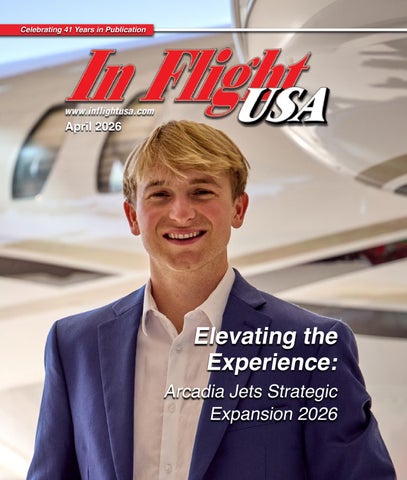
Create a flipbook
In Flight USA April 2026 by In Flight USA - Issuu