Solutions for EVERY OPERATION.
Equipment financing made easy.
AgDirect ® is here to help producers buy, lease or refinance the equipment their operation needs. Our wide range of flexible financing options also makes AgDirect the go-to solution for any budget. No delays. No runarounds. Just equipment financing you can count on.
For more info call 888-525-9805 or visit agdirect.com
Simple 10-minute application
Fast credit decisions
As low as $0 down*
Ag-friendly terms and competitive rates
EXECUTIVE INSIGHT
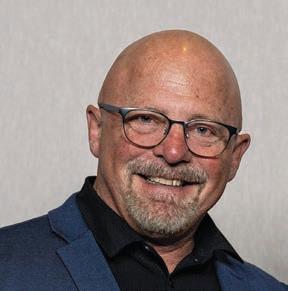
INEDA CEO, Mark Hennessey, shares his perspective on the economic, workforce, and industry challenges shaping the construction equipment sector in 2026. 3

IOWA LEGISLATIVE UPDATE
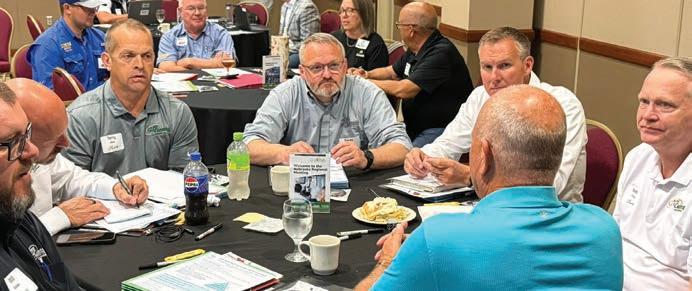
Explore the leadership and risk management insights shared during this year’s Regional Meetings. 6 4
REGIONAL MEETINGS
The 2026 Iowa Legislative Session has concluded. Read on for a recap of key developments and a look ahead at the issues likely to shape the legislative agenda in 2027 and beyond.

CONSTRUCTION EQUIPMENT OUTLOOK
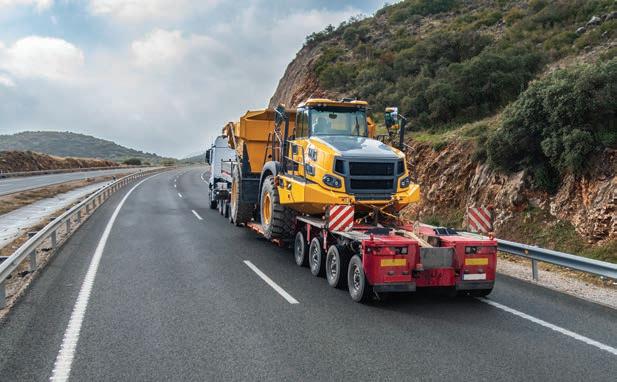
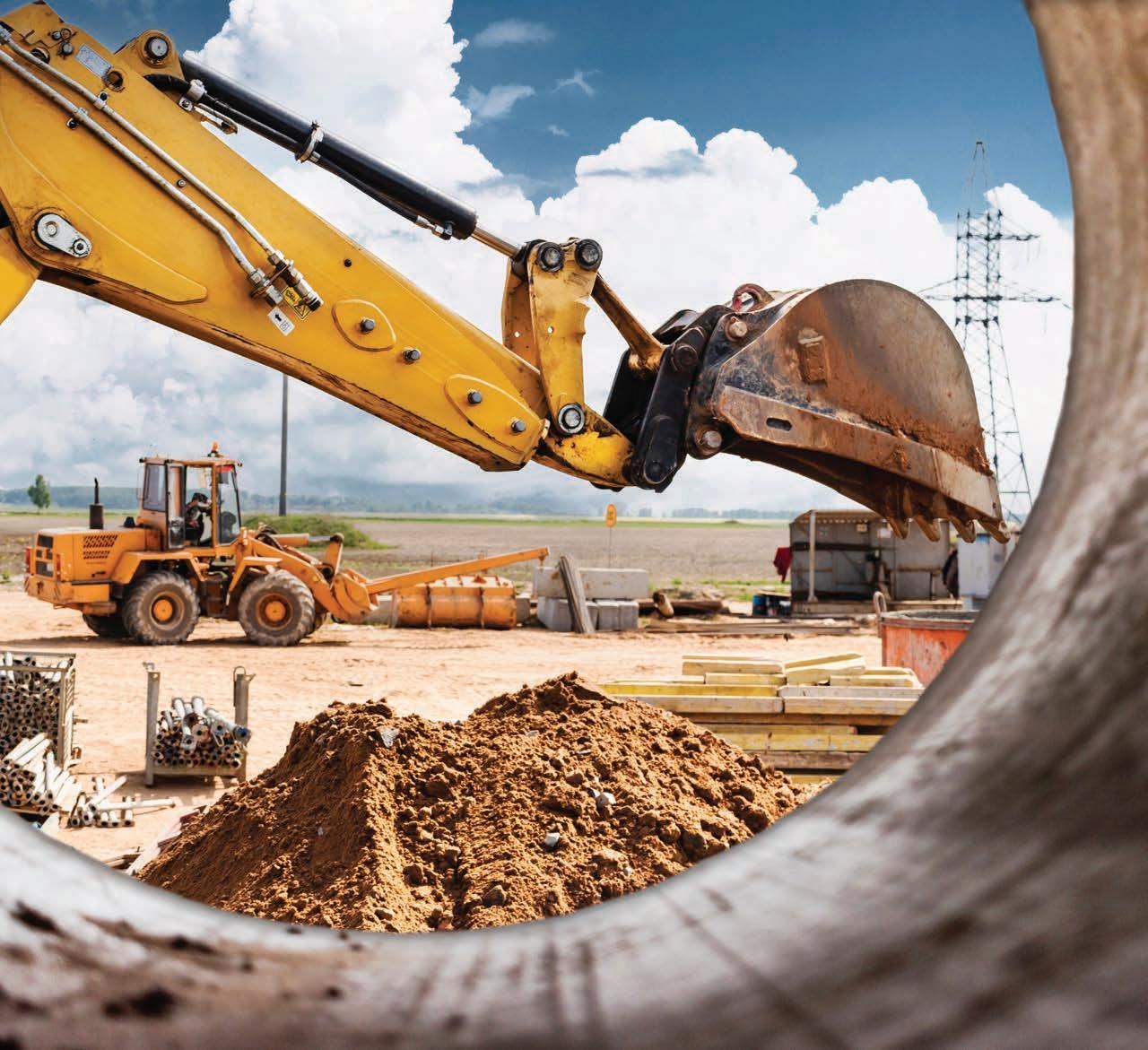
The construction equipment industry is entering a period where technology, workforce realities and operational efficiency will have as much influence as machine size and horsepower. Take a look into what the future holds for dealers.
SURFACE TRANSPORTATION REAUTHORIZATION
Read on to see how the surface transportation reauthorization would impact the construction equipment industry. 20
OFFICERS:
Kevin Clark Chairman, Lincoln, NE
Dave McCarthy Vice Chairman, Waterloo, NE
DEALER LEGACY
For more than eight decades, Wells Implement has quietly served southeast Nebraska farmers, adapting to changing times while remaining grounded in family values and a simple promise: put customers first.
DISCOVERING INNOVATIONS
From autonomous carriers and heavy-lift drones to next-generation fiber installation technology, these emerging innovations may offer equipment dealers new opportunities in agriculture, construction, utility, and infrastructure markets.
Jay Funke Past Chairman, Edgewood, IA
DIRECTORS:
Bruce Bowman Ankeny, IA
Keith Kreps Scottsbluff, NE
Mark Placek Alliance, NE
Paula Radke Alta, IA
Rob Hinton Bancroft, IA
STAFF:
David Adelman IA Legislative Director
Phil Erdman Dir. of Dealer & Gov’t Rel.
Cindy Feldman Marketing Director
Mark Hennessey President/CEO
Tom Junge Sr. Expo Director
Andy Tank Expo Director
Tim Keigher NE Legislative Director
Cara Jicinsky Administrative Assistant
Jamie Mertz Dir. of Dealer & Gov’t Rel.
Gwen Parks Finance Director
Maria Schussler Ag Expo Coordinator
8330 NW 54th Ave. Johnston, IA | 50131-2841 E: info@ineda.com | W: www.ineda.com P: 515.223.5119 | F: 515.223.7832 TF: 800.622.0016.
Individual subscriptions are available without charge to Association members. One-year subscriptions are available to all others for $30.00 (4 issues). Contact INEDA for additional information. This publication is designed to provide accurate and authoritative information in regard to the subject matter covered. It is furnished with the understanding that the Iowa-Nebraska Equipment Dealers Association, the publisher, is not engaged in rendering legal, accounting, or other professional services. Changes in the law may render the information contained in this publication invalid. Legal advice or other expert assistance should be obtained from a competent professional.
Navigating Change: Key Challenges Facing Construction Equipment Dealers in 2026
Construction equipment dealers are no strangers to change, but 2026 is testing our industry’s ability to adapt on multiple fronts. Across Iowa and Nebraska, our members are navigating economic uncertainty, labor shortages, rising costs, and rapidly evolving technology—all while continuing to meet the needs of their customers and communities. While these challenges are real, so are the opportunities. In this Executive Insight, I share my perspective on the issues shaping our construction equipment sector and what dealers can do to remain resilient, competitive, and positioned for long-term success.
Key Challenges
• Economic Uncertainty and Financing Constraints – High interest rates and broader economic caution have led contractors to delay capital investments. New equipment sales remain cautious, with many customers shifting toward used machinery and rentals. Dealers project modest growth in used equipment sales, though pricing volatility and depreciation pressures are squeezing profitability.
• Tariffs, Supply Chain Disruptions, and Cost Volatility – Ongoing tariffs on steel, aluminum, and imported components are driving higher equipment and parts prices while extending lead times. Combined with material cost fluctuations, these factors create pricing uncertainty for both dealers and their customers. The cross-pressure from a challenging agricultural equipment sector further complicates inventory and cash flow management for dual-line dealers.
executive insight

Chief Executive Officer
• Persistent Labor Shortages – Skilled technician and service personnel shortages remain a top concern. An aging workforce, retirements, and limited entry of younger talent into trades have created service backlogs, hurting aftermarket revenue and customer satisfaction. This mirrors broader construction labor challenges that dampen overall equipment demand.
• Regulatory and Technology Demands – Dealers must navigate evolving emissions standards, potential right-to-repair issues, and the costly transition to electric and autonomous equipment. Investments in telematics, predictive maintenance, and digital tools are increasingly essential for competitiveness.
Outlook and Strategic Implications
Infrastructure investments, data centers, and select energy projects continue to create opportunities across Iowa and Nebraska, providing reasons for cautious optimism. At the same time, tariff uncertainty, financing challenges, workforce shortages, and rising operating costs will continue to test dealerships’ resilience. The dealers who are best positioned for success will be those that remain adaptable, invest in their people, strengthen their service operations, and embrace technologies that improve efficiency and customer support. While the road ahead may present challenges, our industry has consistently demonstrated its ability to innovate and persevere. By staying focused on long-term value and customer relationships, Iowa and Nebraska dealers can continue to thrive in an evolving marketplace.


GOVERNMENT AFFAIRS
JAMIE MERTZ Director of Dealer and Government Relations jamiem@ineda.com]
The 2026 Iowa legislative session became one of the most consequential sessions for Iowa equipment dealers in nearly a decade. Several proposals threatened to significantly impact dealership operations, requiring an unprecedented level of advocacy by dealers, manufacturers and INEDA. While one proposal advanced farther than expected, the industry’s coordinated efforts ultimately prevented the most significant measures from becoming law.
As covered in the previous issue of The Retailer, INEDA was actively engaged throughout the legislative session. This update focuses on the final three weeks of session, the outcome of HF2763 (Right to Repair on Agricultural Equipment), and what dealers can expect next year—and likely for years to come—as House leadership continues to prioritize these issues.
With three weeks remaining in the session, INEDA continued lobbying HF2763 on the House side. The bill appeared on the House debate calendar for both Wednesday and Thursday during the week of April 13–17. Throughout the week, dealers continued contacting their representatives by phone and email, while INEDA, Cornerstone Government Affairs and Stacy Pellet, John Deere’s lobbyist, continued meeting with House members at the State Capitol to communicate the bill’s potential impact on Iowa equipment dealers.
On Wednesday, the House caucused on 17 bills scheduled for debate, including HF2763. Following caucus discussions, House leadership determined it did not have the votes needed to pass the bill, so HF2763 was not brought to the House floor for debate.
Lobbying efforts continued at the State Capitol
on Thursday as House members again caucused on HF2763. Once again, leadership determined there was insufficient support to bring the bill forward for a floor vote. By the end of the week, it appeared the bill might stall in the House due to a lack of votes.
The following week (April 20–24), the process repeated itself as HF2763 once again appeared on the House debate calendar. Right to Repair remained a priority for House leadership, and efforts continued to advance the bill to the Senate.
Dealers remained actively engaged by contacting their representatives in opposition to the legislation, while INEDA, Cornerstone Government Affairs and Stacy Pellet continued meeting with legislators at the State Capitol. As the week progressed, our conversations with legislators indicated opposition to the bill was growing. Despite House leadership’s continued
efforts, HF2763 was once again caucused but never brought to the House floor because the votes simply were not there.
On Monday, April 27, the House went into caucus, with HF2763 the first bill discussed. During caucus, Republican Lt. Gov. candidate Wulf introduced an amendment adding agricultural data privacy language to the legislation.
When the House returned to the floor later that afternoon, debate began almost immediately.
The 12-page amendment (H8407) had been introduced at the last minute, leaving legislators little time to review its contents. Likewise, there was virtually no opportunity for INEDA and other stakeholders to educate legislators on the potential impact of the amended language before debate began.
During floor debate, Rep. Wulf described HF2763 as a «Freedom for Farmers» bill, arguing it would allow farmers to repair their own equipment.
Rep. J.D. Scholten focused on the newly added agricultural data privacy provisions, arguing that farmers should own and control their data while criticizing the role large corporations play in collecting and using agricultural data.
Rep. Scholten also compared the amendment to Nebraska’s recently passed agricultural data privacy law. In INEDA’s view, however, the amendment went well beyond the Nebraska legislation by creating significant new requirements for equipment dealers. Among other provisions, it would have required dealers to obtain customer authorization before accessing certain equipment data, increased dealer liability related to data use, and required compensation to farmers when their data was used.
Rep. Scholten also expressed his belief that Iowa should follow Nebraska’s approach to agricultural data privacy, comparing the amendment to legislation passed earlier this year
in Nebraska. From INEDA’s perspective, however, the amendment went well beyond the Nebraska law by creating significant new requirements and potential liabilities for equipment dealers. Among other provisions, it would have required dealers to obtain customer authorization before accessing equipment data during service, increased dealer liability related to the use of customer data, and required farmers to be compensated whenever their data was used.
The amended bill passed the House and was sent to the Senate.
Following House passage, we immediately met with Senate leadership to discuss the legislation. Throughout the session, Senate leaders had consistently indicated they would serve as the backstop on HF2763, and that position remained unchanged. Although House leadership continued exploring ways to advance the bill before adjournment—including attempting to attach it to other legislation—the Senate ultimately declined to move the bill forward.
The fight against DEF deletion, Right to Repair and Ag Data Privacy is not going away any time soon. While those efforts were defeated this year, House Agriculture Committee Chair Rep. Wulf will continue leading the committee next session, House leadership remains unchanged, and these issues continue to be priorities. This session made it clear they will likely return in the years ahead.
Dealer outreach to Representatives and Senators, combined with coordinated advocacy by INEDA, Cornerstone Government Affairs, manufacturers and dealers, played a critical role throughout the session. We will continue working to oppose legislation that could have a detrimental impact on your business while educating legislators on the realities of today’s equipment industry.
Building relationships and educating elected officials on the realities of our industry will be critical in the years ahead. “ ”
This summer, INEDA will coordinate meetings at member dealerships across Iowa, where legislators will have the opportunity to receive PAC contributions, tour dealership facilities and see firsthand the value equipment dealers bring to their local communities and the farmers they serve. Building strong relationships with elected officials and continuing to educate them on the realities of our industry will be essential in the years ahead.
If you are interested in contributing to the INEDA PAC, please contact me at jamiem@ineda.com or Gwen Parks at gwenp@ineda.com. Contributions in Iowa may be made through personal donations or LLCs.

PHIL ERDMAN & JAMIE MERTZ Directors of Dealer and Government Relations phile@ineda.com / jamiem@ineda.com] RISK MANAGEMENT
This year’s regional meetings focused on cultivating home-grown leaders and managing risk with confident with solid attendance in both Iowa (11 dealer groups, 18 dealer attendees) and Nebraska (16 dealer groups, 25 dealer attendees).
Cultivating the Home-Grown Leader
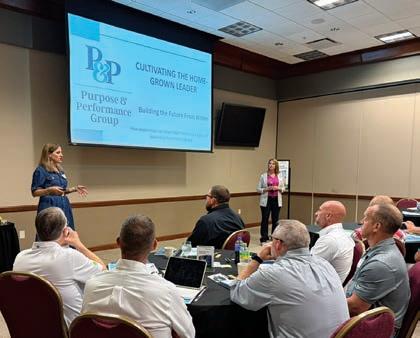
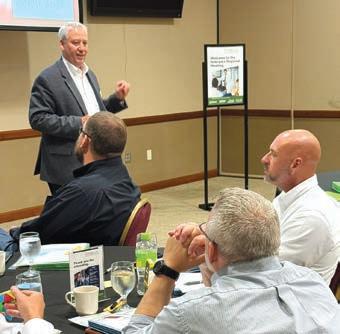
The first presentation, “Cultivating the Home-Grown Leader” by Teresa King and Rebecca Gebhart of Purpose & Performance Group. Teresa King has 18 years working in Human Resources and Operations at a 13-store agriculture dealership and is certified in Genos Emotional Intelligence, COO Certificate through MIT. Rebecca has 4 years of sales leadership and leadership development as an outside consultant for dealers, 2x author, certified in Kolbe and Leadership Circle Profile, and has been consulting since 2018.
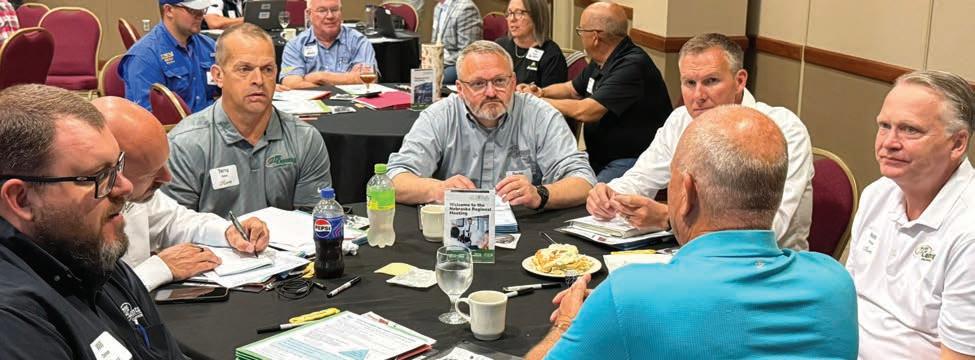
There were 4 segments of the presentation covered by Teresa and Rebecca. With each topic, attendees were broken into groups to discuss what they are seeing, things they are implementing to deal with the challenges they are seeing, and other ways to approach or work through the issues facing equipment dealers today. Below are the topics covered and some statistics that were shared with the group.
Current Talent Landscape
The talent landscape is tightening. Dealerships are facing severe and accelerated workforce shortage.
• Up to 73,500 technicians needed in the next five years
• 95% of dealers report a skill gap
• $2.2B in annual economic impact from shortages
• Nebraska ranks #5 in outbound migration, tightening the labor pool further
• Iowa ranks #7 in outbound migration
• Only 21% of employees are engaged at work globally
Future workforce expectations are changing. Millennials and Gen Z will make up 74% of the workforce by 2030, and they bring different expectations.
• They prioritize learning, development, and purpose.
• 70% of Gen Z actively work on self-development weekly
• 90% say purpose matters in choosing an employer
• Only 6% aspire to senior leadership as the primary goal – meaning leadership pathways must be intentional, not assumed
• 90% of executives believe they support development, only 68% of Gen Z agrees
The Home-Grown Edge
Why home-grown leaders are the competitive advantage? Turnover is expensive and growing leaders internally protects profitability, culture, and long-term stability. Below are a few stats they shared with the group.
• Replacing an employee costs 50-200% of annual compensation
• A technician can generate $140-210 plus per labor hour, making retention critical
• A new technician may take up to 5 years to fully train
• Sales rep turnover can cost $75-300K
Framework over Guesswork: The Triple Play
1. Dealership Needs – growth, profitability, reputation, team alignment
2. Customer Needs – consistency, communication, reliability
3. Leader Needs – trust, clarity, coaching, feeling valued beyond numbers
Managing Risk with Confidence
The Triple Play helps identify both current and future leadership roles to be developed.
Five Practical Actions Dealers Can Implement Today
• Shadow-a-Leader Program – real-time exposure to decision making
• Focused Book Club – shared learning that builds leadership engagement
• Leader for a Day – hands-on experience with responsibility and judgement
• Leadership Stretch Assignments – safe opportunities to grow capability
• Future Leader Roundtables – peer learning and cross-store collaboration
There are leadership readiness assessments that can help identify who is prepared for the next step into a possible leadership role.
Cultivating home grown leaders isn’t just a retention strategy — it becomes a dealership’s legacy, competitive advantage, and the most reliable way to build the future from within.
The second presentation was on “Risk Management” by Federated Insurance. In Iowa the presenters were, Jerry Leemkuil, Equipment Dealer Specialist, Association Risk Management Services at Federated Insurance, Dean Rhoades, Vice President and Director of Field Services, Adam Ries, Risk Consultant. The Nebraska event the presenters for Federated were Jerry Leemkuil, Dean Rhoades, and Ryan Schippers.
Strengthening the Dealership: What 2026 Risk Trends tell us about the year ahead
The message for dealers during this portion of the event was clear. The risk landscape for equipment dealers is shifting fast, from fires to auto liability to equipment theft, the industry is seeing both higher claim severity and new patterns that require a more disciplined, everyday approach to risk management. Below are some of the talking points of the presentation and some examples of the risk and cost of a claim.
The Cost of a Claim Is Bigger Than the Claim Itself
Dealers are feeling the financial weight of losses more acutely than ever. A single theft of $35,000 unit doesn’t just trigger a deductible result, it triggers hidden costs: time spent reporting, working with authorities, lost sales, and potential premium increases. At a 3% margin, replacing a $10,000 deductible requires $333,000 in additional sales, and a $25,000 deductible on a theft claim requires over $833,000 in revenue just to break even.
Fire Losses Are Surging — and Inflation Is Making It Worse
Fire related losses have increased 465% since 2020, driven by equipment fires, electrical failures, lithium batteries, and the rising cost of commercial construction. Even a single fire can result in massive payouts, especially when leased buildings or tenant equipment are involved. Battery fires have been some of the main culprits of claims over the past few years caused by damaged batteries, they look normal and charge but at some point, were dropped of damaged internally and catch on fire while charging. Some dealers are storing batteries in a fire cabinet.
Auto Liability: Fewer Incidents, Higher Severity
While the frequency of auto related losses has dropped sharply — down 58% from 2023 to 2024 and 77% from 2023 to 2025 — the dollars paid out have increased 174%. Telematics data shows the behaviors driving risk: speeding, hard braking, fast acceleration, hard cornering, and cell phone use.
Theft Remains a Persistent, High Impact Threat
Theft continues to be a major loss category, and the financial impact is steep.
Federated emphasizes utilizing the 6 “D’s” to prevent theft:
• Deter – Good Lighting and Signage
• Detect – Utilize monitored sensors, alarms, and cameras
• Deny – Tether and lock smaller equipment together
• Delay – Install fencing, gates, and locks
• Device Tracking – Installation of tracking devices like air tags, etc.
• Defend – Involve law enforcement
General Liability Losses Highlight Customer Proximity Risks
View the Recording of the Regional Meeting at INEDA.com located near the bottom of the “Education and Training” page.
Some of the most severe claim’s stem from everyday interactions: forklift incidents, slips and falls, loading dock accidents, and service work performed at a customer’s property. The core principle repeated throughout the session: “Where is the customer?” — in the shop, in the field, at the farm, or on the dock.
Rental, Leasing, and Demo Units Carry Outsized Liability
Claims involving rented or demo equipment have resulted in multi million dollar losses, including falls from lifts, fires, and operator injuries. Dealers were encouraged to strengthen documentation, use checklists, provide operator manuals, and ensure proper training and rental agreements with hold harmless clauses.
Transporting Equipment: High Risk on the Road
Transport related claims — from bridge strikes to equipment falling off trailers — continue to be costly. Best practices include trained loaders, securement checks, defensive driving, and strict adherence to DOT regulations. When using third party carriers, dealers should verify certificates, additional insured endorsements, cargo liability, and contract terms.
The Bottom Line
The industry is cyclical, but risk doesn’t take a cycle off. Whether the market is up or down, dealers who build a consistent, proactive risk management culture — not just policies, but daily habits — are being proactive in protecting their people, their customers, and their profitability.
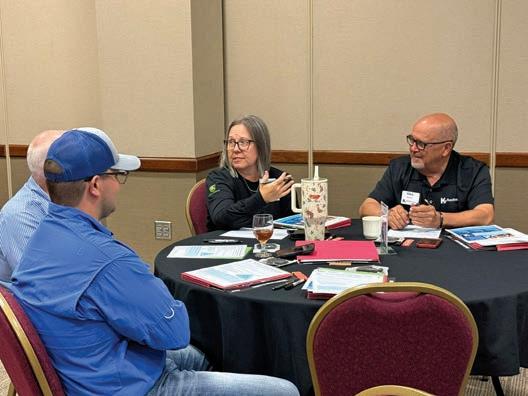
Scott Benes and Mark Roberts (Benes Service) discuss issues facing dealerships with Teri Clausen (AKRS Equipment) and Mike Brown (KanEquip)
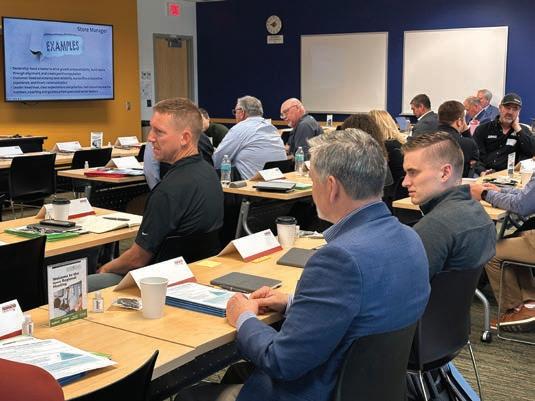
Iowa dealers break-out into small groups to discuss “Framework Over Guesswork — The Triple Play” to use in their dealership.





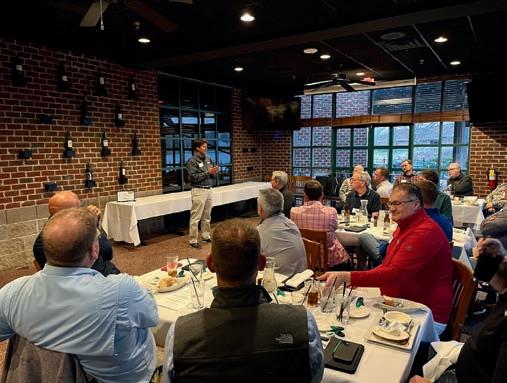
District meetings are designed for you and members of your dealership team to network with other equipment dealers and discuss current issues affecting our industry.
Each event will start at 6:00 pm (local time) with a hosted social hour followed by dinner and updates. We plan to adjourn around 8:30 pm. Please pick the location most convenient for you and register to attend. Meetings are free to members. Register at INEDA.com or scan the QR codes below.


Construction Equipment Outlook
Eight Trends Shaping the Equipment Industry
The construction equipment industry continues to evolve at a rapid pace. While market conditions remain mixed, several long-term trends are reshaping how equipment is manufactured, sold, serviced, financed and supported. For equipment dealers, these shifts present both challenges and opportunities.
For decades, construction equipment discussions centered on size, horsepower and productivity. Those factors still matter, but the industry is now being shaped just as much by data, efficiency, uptime, emissions requirements, workforce limitations and capital flexibility. Contractors are asking harder questions about total cost of ownership, equipment utilization, machine health and long-term support.
That means dealers are being asked to play a larger advisory role. Customers still need iron, but they also need help choosing the right technology, managing fleet costs, keeping machines running and making sense of an increasingly complex equipment marketplace.
1. Data Is Becoming a Competitive Advantage
Modern construction equipment is no longer just a mechanical asset. It is a connected machine that generates valuable information every day. Telematics systems can now provide real-time visibility into machine location, hours, idle time, fuel use, fault codes, maintenance intervals and overall utilization.
For dealers, this creates a meaningful opportunity to move from reactive service to proactive support. Rather than waiting for a customer to call after a machine goes down, a dealership can help monitor machine health, identify maintenance needs earlier and reduce costly downtime. Predictive maintenance programs, fleet reports and customer dashboards can all strengthen the dealercustomer relationship.
This is especially important for mixed fleets. Many contractors operate equipment from several manufacturers, which can make data
Dealers who position themselves as trusted business partners —not simply equipment suppliers— will be best positioned to thrive in the years ahead.
Outlook 2026
management difficult. As telematics platforms become more integrated, customers will increasingly expect a clearer view of their entire fleet, not just one brand. Dealers who can help customers interpret data and turn it into action will have a competitive advantage.
2. Labor Shortages Continue to Drive Technology Adoption
Workforce shortages remain one of the construction industry’s most pressing concerns. Experienced operators and technicians are retiring, while many younger workers are less familiar with traditional equipment operation and repair. This creates pressure on contractors to do more with fewer people and to bring new workers up to speed faster.
Manufacturers are responding with equipment designed to be easier and more comfortable to operate. Modern cabs, improved visibility, joysticks, touchscreens, climate control and better ergonomics are no longer just “nice to have” features. They are becoming recruitment and retention tools.
At the same time, machine control and operatorassist technologies are reducing the learning curve for less experienced operators. Grade control, automated digging functions and machine guidance can help newer operators perform more consistently and reduce costly
rework. For dealers, this creates an important training opportunity. The sale increasingly includes not just the machine, but the education needed to help customers use it well.
Automation is no longer a premium feature. For many contractors, it is becoming a practical solution to labor shortages and productivity challenges.
3. Automation Is Moving Into the Mainstream
Fully autonomous construction sites are still limited mostly to controlled environments such as mines, quarries and large repetitive operations. Most jobsites remain too complex and unpredictable for fully autonomous machines to replace human operators in the near term.
However, semi-autonomous technology is already becoming mainstream. Grade control, payload weighing, automated blade functions, machine guidance and advanced operator assistance systems are helping contractors improve productivity, safety and accuracy. These
tools do not replace the operator; they help the operator do better work with fewer mistakes.
For dealers, automation is becoming less of a futuristic concept and more of a practical sales conversation. Contractors are looking for ways to address labor shortages, reduce rework, improve fuel efficiency and document productivity. Dealers who understand these technologies and can explain the return on investment will be better positioned to support both construction and ag customers as equipment platforms become more sophisticated.
4. Electrification Will Expand— But Gradually
Electrification continues to receive attention across the equipment industry, but adoption will vary by machine size, application and infrastructure. Battery-electric equipment is gaining the most traction in compact machines, including mini excavators, compact wheel loaders and smaller jobsite equipment. These machines often operate in shorter duty cycles and can be charged overnight or between shifts.
For heavy earthmoving equipment, the path is more complicated. Larger machines require significant energy density, and many jobsites do not have the electrical infrastructure needed to support fast or consistent charging. In rural highway work, mining, site development and
Used equipment, remanufactured components, and flexible ownership models are creating new opportunities for both dealers and contractors.
remote construction, diesel power remains highly practical and dependable.
In the near term, hybrid systems and alternative fuels may provide a more realistic bridge. Hybrid machines can reduce fuel consumption in certain duty cycles, while fuels such as Hydrotreated Vegetable Oil, or HVO, may allow some fleets to reduce carbon intensity without replacing existing equipment. Dealers should expect customers to evaluate these options through the lens of total cost of ownership, machine availability, charging or fueling logistics and contract requirements.
5. Used Equipment Remains a Strong Market
High equipment prices, interest rates, long lead times and economic uncertainty continue to support demand for quality used equipment. Contractors often need equipment when the job starts, not months later. A well-maintained used machine can provide immediate availability and a lower upfront cost.
This does not mean every used machine is a good investment. Condition, service history, hours, emissions systems, parts availability and technology compatibility all matter. As machines become more digital, buyers will place greater value on inspection records, maintenance documentation and confidence in the selling dealer.
This creates opportunity for dealerships. Certified used programs, detailed inspections, rebuild services, remanufactured components and strong parts support can all help dealers capture value beyond the new equipment sale. Remanufacturing is also gaining momentum as customers look for ways to extend equipment life while controlling costs. For dealers, the used and reman market is not a secondary business; it is increasingly central to customer retention and fleet strategy.
6. Sustainability Is Influencing Purchasing Decisions
Sustainability is no longer limited to public relations or corporate reporting. Emissions standards, government project requirements, municipal contracts and customer expectations are all influencing equipment decisions. Contractors bidding on certain jobs may need to document fleet emissions or demonstrate a plan for cleaner operations.
In the United States, Tier 4 Final remains a key emissions benchmark. In some markets, state and local requirements are pushing fleets even further. This can affect purchasing decisions, resale values and where certain machines can be used or remarketed.
For dealers, sustainability conversations should be practical and business-focused. Customers need help understanding emissions compliance, alternative fuels, idle-time reduction, machine utilization and lifecycle value. Remanufacturing, recycling, efficient maintenance practices and cleaner fuel options can all be part of the conversation. The dealer’s role is to help customers connect environmental requirements with operational and financial realities.
7. Flexible Ownership Models Are Growing
The traditional purchase model remains important, but it is no longer the only path to equipment access. Rental, leasing, rent-to-own, subscription-style programs and equipment-asa-service concepts are all gaining attention as contractors look for more flexibility.
Uncertain project pipelines make some customers cautious about tying up capital in equipment they may not use consistently. Others may prefer to own core machines while renting specialized equipment for short-term needs. The result is a more blended approach to fleet management.
This shift has major implications for dealers. Rental fleets, flexible financing, service agreements and utilization-based support programs can create recurring revenue and deepen customer relationships. Dealers that help customers decide when to buy, rent or lease can become more valuable advisors. The question is no longer simply, “What machine do you need?” It is also, “What is the smartest way for you to access that machine?”
First-year depreciation on new equipment commonly ranges from 15–25%
Equipment utilization above 60% often favors ownership over rental
8. Supply Chains Are Improving—But
Resilience Still Matters
Supply chains have improved from the most difficult periods of disruption, but the lessons remain. Manufacturers and dealers are placing greater emphasis on parts availability, regional sourcing, inventory planning and supply chain visibility.
The future of construction equipment will be defined as much by data, efficiency, and technology as by horsepower and iron.
For customers, equipment availability and uptime are often as important as price. A machine sitting idle because of a backordered component can quickly become more expensive than a higherpriced machine with better dealer support. This is why service capacity, technician availability and parts inventory continue to be major differentiators.
For dealers, resilience means more than having machines on the lot. It includes strong supplier relationships, smart inventory planning, clear communication with customers and the ability to respond quickly when a machine goes down. In a more complex market, dependability may be one of the strongest competitive advantages a dealership can offer.

Custom Retirement Planning driven by your needs
At Tax Favored Benefits, we serve as a partner in helping individuals, families and businesses achieve financial success.
Our experienced professionals are supported by world-class resources, providing a full suite of financial, investment, and retirement planning services to clients nationwide.
We focus, first and foremost, on helping you achieve your personal financial goals. As fiduciary professionals, we put your best interest first, at all times and in all situations. We succeed when you succeed.
Interested in learning more about how we can help you achieve your financial goals? Contact us to get started.
S. WENTZ,


Looking Ahead
The construction equipment industry is entering a period where technology, workforce realities and operational efficiency will have as much influence as machine size and horsepower. Dealers will be asked to help customers navigate data, automation, ownership choices, emissions requirements and service expectations.
That shift creates pressure, but it also creates opportunity. The dealerships best positioned for 2026 and beyond will be those that combine equipment expertise with consultative support. Customers will continue to need machines, but they will increasingly value partners who can help them improve productivity, manage risk, control costs and keep equipment running.
In the years ahead, success will belong to dealers who position themselves not simply as equipment suppliers, but as long-term business partners.
Sources:
• Association of Equipment Manufacturers (AEM Industry Reports and Market Data)
• Construction Financial Management Association Financial Benchmarker Reports
• Information Technology and Innovation Foundation Labor and Workforce Studies
• Organization for Economic Co-operation and Development Economic Outlook Reports
• World Bank Global Economic Outlook
• World Economic Forum Circular Economy and Sustainability Reports
• United Nations Conference on Trade and Development Global Trade Reports
• OEM reports from Caterpillar, John Deere, Komatsu, and Hitachi Construction Machinery
WHAT THIS MEANS FOR DEALERS SELLING CONSTRUCTION EQUIPMENT
Expand service offerings around telematics, predictive maintenance, and fleet management.
Invest in operator training and technology education to help customers maximize machine productivity.
Prepare for growing demand in used equipment, certified inspections, rebuilds, and remanufactured components.
Evaluate rental, leasing, and subscription-based programs as recurring revenue opportunities.
Position sustainability and emissions compliance as business solutions—not just regulatory requirements.
Strengthen parts inventory and service responsiveness to differentiate your dealership from competitors.
Ever wonder what your contractor customers are wanting to buy? Equipment World released their 2026 Tech & Spec Survey which details their planned purchase. The survey also looks at their preferred purchase options of cash, finance or rent, and equipment disposal methods of trade-in, private-party sales or auction. Take a look!
The survey reveals that 83% of respondents plan to buy at least one piece of construction equipment this year.
The largest category was 38% planning to buy one to two machines.
Taking out a loan is the top form of purchase, with 42% listing financing as their No. 1 purchase option.
Cash was close behind at 37%.
Lease to purchase and rent to purchase came in at a combined 17%.
Of the more than 25 equipment brands contractors were asked to choose from on the survey as being part of their fleets, these were the top five:
• Caterpillar — 60%
• John Deere — 45%
• Bobcat — 41%
• Case CE — 34%
• Kubota — 35%
When and How They Replace Their Equipment
When it comes time to say goodbye to an old machine, the largest percentage prefer to sell it, either to another contractor (29%) or at auction (19%).
Of the other respondents, 39% prefer to trade in at their dealers.
The hours respondents put on their equipment before replacement varied by type of machine. On the compact end, the largest percentage of respondents (50%) replaced skid steers and compact track loaders at 2,000 to 6,000 hours.
Here are the highest-percentage hour ranges for replacement of larger machines:
• Excavator — 8,000-10,000 hours.
• Wheel loader — 10,000-12,000 hours.
• Dozers — 8,000-10,000 hours.
• Backhoes — 8,000-10,000 hours.
• Ar ticulated dump trucks — 12,000-14,000 hours.
And when it comes to keeping their machines running, 83% perform at least small repairs and preventive maintenance in-house.
Source: Equipment World 2026 Tech & Spec Survey: A Deep Dive into Contractors’ Equipment Purchase Plans for 2026
Global to see the big picture.
Local to understand it.

Providing clarity. Building confidence.
Brand selection remains one of the most important decisions contractors, fleet managers, and equipment owners make. While machine performance matters, today’s buyers are also evaluating dealer support, parts availability, technology integration, operating costs, and resale value. This overview highlights ten of the world’s most recognized heavy equipment manufacturers and the factors that continue to shape purchasing decisions across construction, infrastructure, and mining markets.
Rather than ranking brands solely by annual sales, this overview considers global reach, product breadth, dealer support, technology investments, market presence, and long-term contractor relevance.
Top Brands at a Glance
1. Caterpillar (USA) – Broad product portfolio, strong dealer network, high resale values.
Top Heavy Equipment Brands: A Dealer Perspective WHAT
THIS MEANS FOR DEALERS
Heavy equipment purchasing decisions are increasingly influenced by more than machine specifications alone.
For dealerships, understanding how these factors align with customer priorities can be as important as understanding machine performance itself.
2. Komatsu (Japan) – Technology leadership, automation, mining expertise.
3. Volvo Construction Equipment (Sweden) – Safety, operator comfort, sustainability initiatives.
4. Hitachi Construction Machinery (Japan) –Excavator expertise and mining equipment.
5. Liebherr (Germany/Switzerland) – Global leader in cranes and specialized heavy equipment.
6. John Deere (USA) – Strong North American presence and fleet management tools.
7. SANY (China) – Rapid global growth and competitive value proposition.
8. JCB (United Kingdom) – Versatile equipment for small and mid-sized contractors.
9. Doosan/DEVELON (South Korea) – Valuefocused earthmoving and construction equipment.
10. CASE Construction Equipment (USA/Italy) –Broad lineup with strong contractor familiarity.
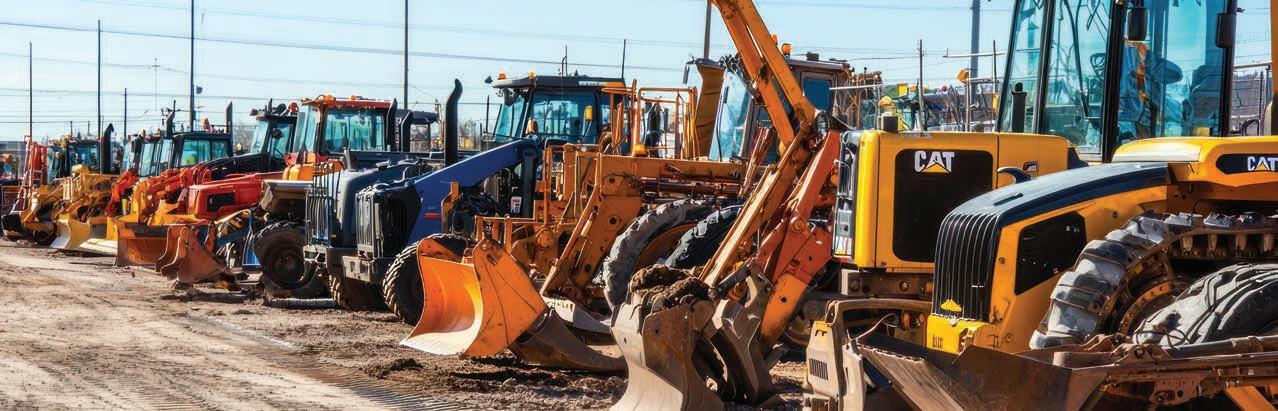
TODAYS BUYERS OFTEN EVALUATE:
• Dealer service capabilities
• Parts availability
• Telematics and fleet management tools
• Financing options
• Resale value
• Operator comfort and safety
• Technology integration
Caterpillar remains one of the most recognized names in heavy equipment, serving construction, mining, aggregates, and infrastructure markets worldwide.
Hitachi has established a strong reputation in excavators and mining equipment, supported by a global service network.
Komatsu has built a reputation around technology, automation, and mining applications while maintaining a strong global construction equipment presence.

Liebherr is highly regarded in crane, lifting, and specialized heavy equipment markets while continuing to expand its earthmoving portfolio.
JCB remains popular among contractors seeking versatile equipment solutions, particularly in compact and utility-focused segments.
What This Means for Dealers
Volvo CE is known for operator-focused design, safety innovations, fuel efficiency, and investments in electrification.
John Deere leverages a broad North American dealer network and integrated fleetmanagement technologies. SANY has become a major global competitor by combining a broad equipment lineup with aggressive expansion into international markets.
Doosan, now operating globally under the DEVELON brand in many markets, continues to compete through value and reliability.
Today‘s buyers often evaluate much more than horsepower and specifications. Dealer service capabilities, parts availability, telematics systems, financing options, operator comfort, safety features, and long-term ownership costs frequently influence purchasing decisions. Dealers who understand these priorities are better positioned to build lasting customer relationships.
Emerging Market Trends
While established global brands continue to dominate many equipment categories, manufacturers such as Bobcat, Kubota Construction Equipment, Takeuchi, LiuGong, and XCMG continue to gain market share in specific segments and regions. Increased automation, telematics adoption, alternative fuels, and electrification are expected to remain major industry trends.
Buying Considerations
Key considerations include dealer support, total cost of ownership, technology integration, emissions compliance, resale value, and
CASE maintains a strong presence in construction equipment fleets through practical machine designs and widespread dealer support.
application fit. The best machine is not always the most expensive or most recognized—it is the one that best matches the customer’s operational needs.
Evaluating Used Equipment
Review service records, inspect undercarriage wear, evaluate hydraulic performance, check electronics and controls, verify engine health, and consider an independent inspection before purchase.
Conclusion
No single manufacturer is the right fit for every customer or application. Each brand brings unique strengths in technology, support, product breadth, specialized equipment categories, sustainability initiatives, and ownership costs. For dealers and sales professionals, understanding these distinctions is critical to helping customers make informed equipment investments.
Sources: Association of Equipment Manufacturers (AEM); Equipment World; Off-Highway Research; KHL Group; International Construction; Construction Equipment Guide; manufacturer websites.
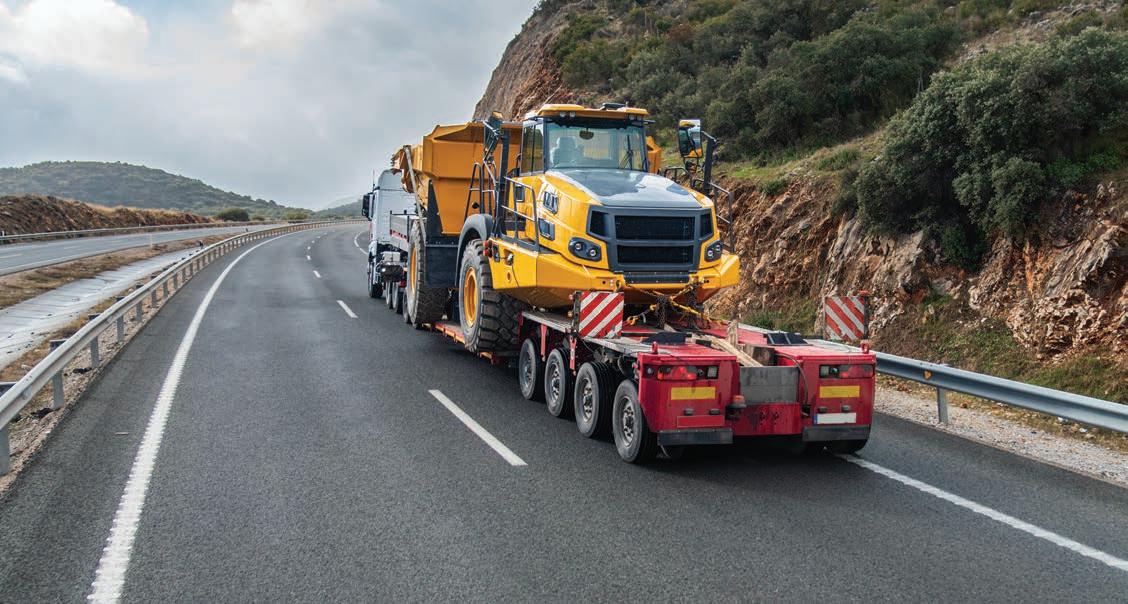
Surface Transportation Reauthorization and its Implications f or the Equipment Industry
NATHAN RIGGINS Director of Government Affairs
Associated Equipment Distributors
Amid a number of hot topics coming before the U.S. House and Senate in 2026, Congress faces a critical deadline for ensuring the future of American transportation infrastructure. With currently authorized highway funding set to expire on September 30, 2026, Congress must now act expeditiously to complete the surface transportation reauthorization process. Equipment dealers across the country have worked together and spoken up loud and clear: passing a surface transportation reauthorization (aka, highway bill) on time means jobs, money, and future prosperity for American businesses as well as for our nation’s infrastructure and must be a top priority.
At Associated Equipment Distributors (AED), we remain deeply committed to ensuring that America continues to build, and that our members and partners are at the front lines of all new federal infrastructure investment. AED is the international trade association representing companies that sell, rent, service, and manufacture equipment used in construction, agriculture, mining, forestry, and municipal applications. Our nearly 700 dealer members operate more than 6,400 locations across the United States, employing 112,000 workers and generating over $87 billion in annual revenue.
AED also has more than 350 non-dealer members such as manufacturers and service providers. AED members supply and service the equipment and machinery that is essential to build and maintain roads, bridges, and other critical infrastructure, which is why our team has been deeply involved in the surface transportation reauthorization process. The surface transportation reauthorization is a multi-year federal legislative package that sets national funding levels, policies, and priorities for highways, roads, bridges, mass transit, and freight. This legislation directs hundreds of billions of dollars towards transportation infrastructure and decides how that money is divided between bridge maintenance and public transit expansion. Typically, this legislation has been passed on a five-year schedule, with the Infrastructure Investment and Jobs Act (IIJA) of 2021 being the most recent example. This bill, also known as the Bipartisan Infrastructure Law, was the $1.2 trillion federal statute signed into law that historic, multi-year funding to rebuild roads, bridges, and transit, while also expanding access to clean water, the power grid, and highspeed internet. Not only is the highway bill critical for public infrastructure, the new construction it sets out is also a massive opportunity for
equipment dealers to sell, rent, and service equipment on projects all over the country.
Building off of this legislation, Chairman Sam Graves (R-MO) and Ranking Member Rick Larsen (D-WA) began negotiations last year on what the next iteration of highway spending would look like. This process culminated in the introduction of the BUILD America 250 Act – Building Unrivaled Infrastructure and Long-term Development for America’s 250th. This landmark legislation provides the largest ever investment in America’s bridges, focuses on proven surface transportation infrastructure programs, cuts red tape in the infrastructure project process, allows states the flexibility to prioritize their most critical needs, encourages innovation, and improves highway, motor carrier, and rail safety. In addition to this, the bill also contains a number of provisions that were championed by AED, INEDA, and equipment dealers across the country. The BUILD America 250 Act, with its $580 billion topline price tag, means that America is ready to build. The equipment industry is ready to help make that happen.
Importantly, the Build America 250 Act will also establish the first new revenue stream for the Highway Trust Fund in decades by ensuring electric vehicles support building and maintaining the highway system. While traditional gasolinepowered vehicles pay into the Highway Trust Fund via their state and federal gas tax, electric vehicles have largely escaped contributing to the key source of highway funding. The provision included in the legislation installs a new $130 fee on electric vehicles and a $35 fee on plug-in hybrids, which will ensure parity between EVs and gas-powered vehicles, and ensure that there is robust funding for highway construction and maintenance for years to come.
AED and equipment dealers everywhere are also deeply invested in ensuring that our transportation system serves the agricultural industry and rural America. The BUILD America 250 Act includes specific provisions for rural infrastructure development, including targeted funding set aside for surface transportation projects in rural areas. These provisions will help stabilize and grow America’s agricultural industry and rural communities through enhanced efficiencies, reduced costs, and improved connectivity between the farm and market.
Lastly, the bill would provide modest corrections to the cumbersome federal permitting process
for infrastructure projects. Inefficient federal environmental reviews regularly delay public infrastructure projects for months, if not years, while they are otherwise shovel ready. For America to remain competitive in maintaining and expanding infrastructure, it is essential that the federal permitting process is made to be more efficient so projects can be completed on time.
Passing a large, growth-focused surface transportation bill should be a priority for equipment dealers everywhere. The critical infrastructure projects funded by the Build America 250 Act will create and sustain millions of jobs, whether on job sites, servicing and repairing heavy equipment or in nearly every economic sector that stands to benefit from these historic investments.
A past study commissioned by AED has found that each dollar in government highway spending creates an average of 6.4 cents in equipment market opportunity (EMO) (i.e., sales, lease, rent, and product support). In turn, each dollar spent on equipment generates $3.19 in direct and indirect economic activity. That data shows how strong federal infrastructure investment can truly provide an exponential impact for communities across the country and the businesses that help to sustain them. Not only that, but it also shows how critical equipment dealers are to connecting that highway funding to the actual projects on the ground. Congress’ failure to maintain highway funding could cost the construction equipment industry and our dealers in terms of lost market opportunity, so now is the time to act.
It is imperative that Congress pass the BUILD America 250 Act to ensure that funding for highway projects continues, and that new projects can be authorized where they are so badly needed. Additionally, Congress should develop a long-term, robust, and comprehensive plan to provide funding for broadband, pipes, ports, rail, airports, and other physical infrastructure projects. While the House has taken up their bill in the Transportation & Infrastructure Committee, it has yet to see a vote in the full House, and there is not yet have companion legislation introduced by the U.S. Senate. Passing a surface transportation reauthorization bill by September 30 should be a priority for both chambers. Passing this legislation is essential to America’s economic security, stability, and future prosperity.
Discovering Innovation for Dealers:
From autonomous carriers and heavy-lift drones to nextgeneration fiber installation technology, these emerging innovations may offer equipment dealers new opportunities in agriculture, construction, utility, and infrastructure markets.
TOM JUNGE Sr. Expo Director tomj@ineda.com
ANDY TANK Expo Director andyt@ineda.com
One of the benefits of scouting new technologies for the Innovation Hubs at the Iowa Ag Expo and Nebraska Ag Expo is discovering products and companies that may have potential applications for equipment dealers. While some innovations are developed specifically for agriculture, others are finding opportunities across construction, industrial, utility, and infrastructure markets as well. Here are a few technologies that recently caught our attention.
TRAXYL: RETHINKING FIBER INSTALLATION
At a recent Gener8tor startup accelerator event, Expo staff were introduced to TRAXyL, Inc., a company that has developed a unique approach to installing fiber optic and communications infrastructure. Using proprietary equipment, TRAXyL embeds fiber optic cable directly into pavement, allowing installation speeds approaching 1,000 feet per hour while significantly reducing labor requirements and avoiding many of the underground obstacles associated with traditional trenching methods. The process involves precision-cutting narrow grooves in pavement and embedding micro-armored cable systems within the surface.
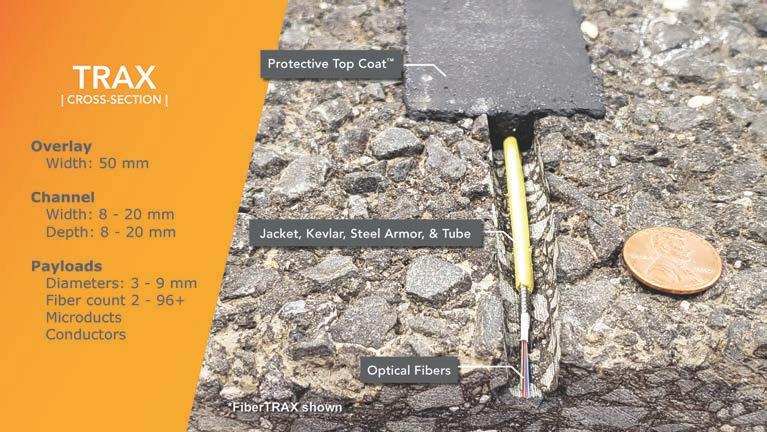
The technology has already been utilized by the U.S. Department of Defense, internet service providers, contractors, municipalities, and other government agencies.
As broadband expansion continues across rural America, innovations like this could create new opportunities for contractors and utility-focused equipment providers.
Learn more at www.traxyl.com.
BURRO: PRACTICAL AUTONOMY AT WORK
Of the many autonomous technologies showcased at recent industry events, Burro remains one of the most practical and commercially ready solutions we’ve encountered.
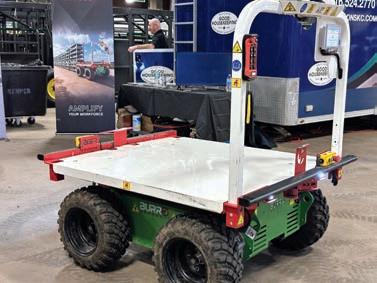
Originally designed as an autonomous carrier platform, Burro can follow a worker through a jobsite, transport materials, and then navigate independently to designated loading or unloading locations. The platform has found applications in agriculture, greenhouses, landscaping, and even construction operations.
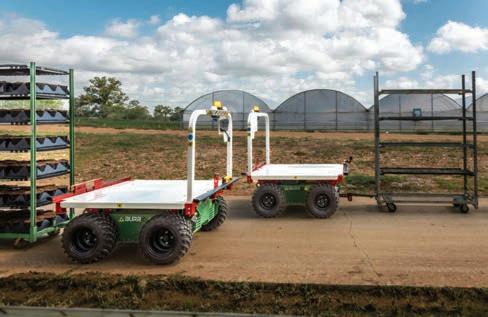
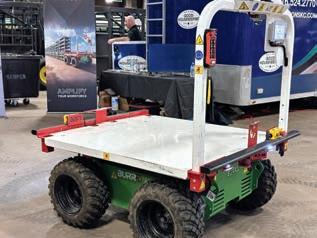
The newest model, Burro Grande, can carry up to 1,000 pounds and tow loads up to 5,000 pounds. The company has also expanded its capabilities with attachments including the Cortador mower deck and Sprayito precision sprayer. Sprayito can be equipped with WEED-IT technology, enabling targeted “green-on-brown” weed detection and spraying. As labor challenges persist across multiple industries, autonomous support equipment may become an increasingly valuable tool for improving productivity and efficiency. Learn more at www.burro.ai.
LOOKING AHEAD
CERES AIR: HEAVY-LIFT DRONES GAIN MOMENTUM
Drone technology continues to advance rapidly, and heavy-lift capabilities are opening doors well beyond traditional aerial imaging applications.
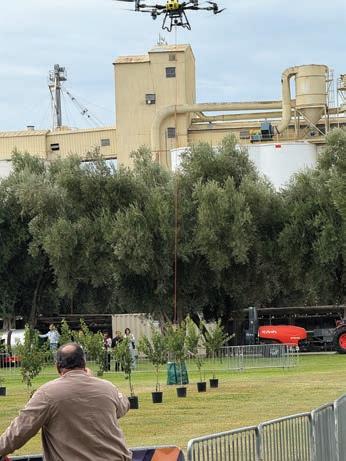
The Ag Expos have featured as many as seven drone manufacturers in recent years. During a demonstration at FIRA USA, Ceres Air showcased the lifting power of its C31 drone, known as “Black Betty.” The aircraft maintained a stable hover for more than four minutes while carrying a full payload of nearly 400 pounds.
Heavy-lift drones are being evaluated for a growing range of applications, including agriculture, construction, infrastructure inspection, logistics, and emergency response.
Another notable aspect of the C31 is its domestic manufacturing. The aircraft is produced in North Springfield, Vermont, at a time when many buyers are evaluating alternatives to drone systems manufactured overseas.
Learn more at www.ceresair.com.
The Nebraska Ag Expo has seen growing participation from construction, infrastructure, and light industrial equipment companies over the past several years. As equipment technologies continue to evolve and overlap across industries, Expo staff are actively exploring new innovations that may create opportunities for dealers and their customers.
To identify emerging trends and technologies, staff will attend Equip Exposition in Louisville, Kentucky, this October.
Editor’s Note: Products and technologies referenced in this article are presented for informational purposes only and do not constitute an endorsement by the Iowa-Nebraska Equipment Dealers Association.
WELLS IMPLEMENT: BUILT ON SERVICE, SUSTAINED BY FAMILY

For more than eight decades, Wells Implement has quietly served southeast Nebraska farmers, adapting to changing times while remaining grounded in family values and a simple promise: put customers first.
More than 85 years ago, Arthur B. “A.B.” Wells answered a simple request from area farmers. At the time, he was working with his brother-in-law at an Allis-Chalmers dealership in Fairbury, Nebraska, when customers from the Plymouth area encouraged him to relocate. They believed their community needed a local equipment dealer, and A.B. agreed.
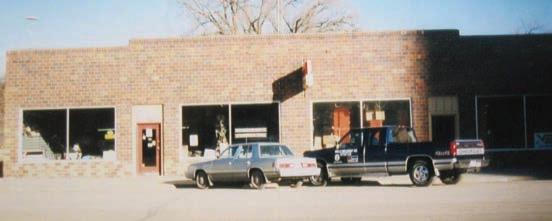
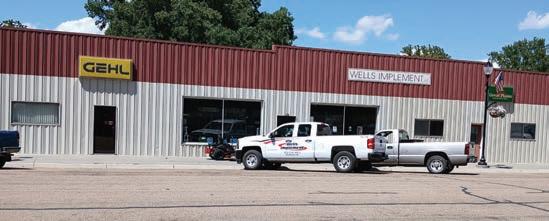
He purchased a building that had previously housed a hardware store and an International dealership and established what would become one of southeast Nebraska’s enduring agricultural businesses. The original wooden structure was eventually replaced with the brick building that still anchors downtown Plymouth today. Family stories remain part of the dealership’s history, including memories of brick purchased from the Endicott brickyard and lumber from the original building reportedly finding new life in homes elsewhere in Nebraska.
Agriculture looked much different in 1940. Trains stopped in Plymouth daily, making it possible to order parts from Omaha in the morning and receive them by evening. Farmers frequently traded horses and mules toward the purchase of tractors. A.B. entered the business during a period of tremendous change as mechanization transformed farming practices. According to family recollections, train carloads of equipment arrived regularly and often sold quickly as producers embraced new labor-saving technologies.
When A.B. retired in 1965, ownership passed to his son Arthur P. Wells, known throughout the community as Junior, and his wife Alverta. In 1995, the third generation assumed leadership as siblings Pam Hoge, Greg Wells, and Mark Wells took ownership. Today, the family connection continues through a fifth generation working within the dealership.
For Pam Hoge and her brothers, the dealership was more than a workplace. It was part playground, part classroom, and part family gathering place. Their parents’ home sat next to the equipment display lot, providing endless opportunities for adventure. Tractors, combines, and balers became jungle gyms for a generation of dealer kids who rarely separated family life from the business
Those childhood years also brought lessons about hard work. Pam remembers helping install gates in irrigation pipe because her hands were small enough to fit inside. Like many children raised in dealership families, she learned how to stock parts shelves and help wherever needed. Wednesday and Saturday evenings were especially memorable. Businesses in Plymouth reopened after supper so farmers could finish chores and come to town. The dealership became part of the rhythm of rural life.
Perhaps the most important lessons came from watching their parents interact with customers. It was not unusual for someone to knock on the family’s door during supper or on a weekend. Junior Wells answered those calls. Whether a customer needed parts, service, or equipment, he did what he could to help. That example shaped the philosophy that still guides the dealership today.
The company motto, “Farming Is Your Life; Supporting You Is Ours,” reflects a culture that has been passed from one generation to the next. For the Wells family, customer service has never been a marketing slogan. It has simply been the way business is done.
Few industries have experienced as much change as agriculture, and Greg Wells has witnessed much of it firsthand. Farms have become larger, equipment has grown more sophisticated, and technology has reshaped nearly
“Farming Is Your Life; Supporting You Is Ours.”
DEALER FEATURE
every aspect of production agriculture. Greg points out that a 40-horsepower tractor once handled tasks that today might require a machine with nearly four times that power. Fewer farmers now operate far more acres, supported by larger implements and advanced technology.
The introduction of herbicides, minimum tillage, precision agriculture, GPS guidance, and digital diagnostics transformed farming. Yet some things remain remarkably familiar. Farmers still want honest answers, fair pricing, dependable service, and people they trust. While customers can now purchase equipment from online auctions or dealers hundreds of miles away, they continue to depend on local dealerships for service, parts, and support.
The dealership has also weathered difficult periods in agriculture. The farm economy of the 1980s tested
businesses throughout rural America. More recently, the COVID-19 pandemic presented a new set of challenges. Through each cycle, Wells Implement relied on the same qualities that carried previous generations forward: patience, adaptability, and strong relationships.
Ask the Wells family about the dealership’s success and they quickly redirect attention to employees and customers. Several team members have spent decades building relationships with customers and helping solve problems. Sales Manager Greg Meints and Service Technician Kevin Wolfe both joined the dealership in 1981 and remain valued members of the team. Employee tenure averages nearly three decades.
The dealership’s customer relationships are equally remarkable. Many farming families served by Wells Implement are now represented by a fourth generation.
Then Now
Parts arrived by train from Omaha the same day.
40-hp tractors raked hay. Farmers bought locally.
Complex supply chains.
150-hp tractors doing same work.
Customers shop states away.
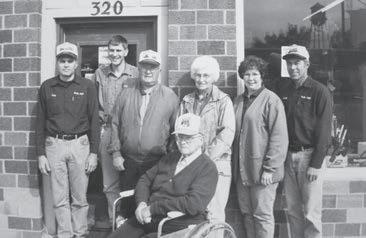
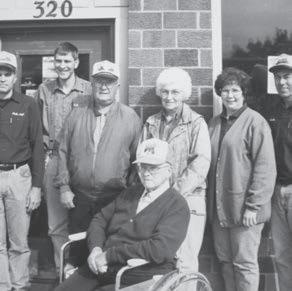
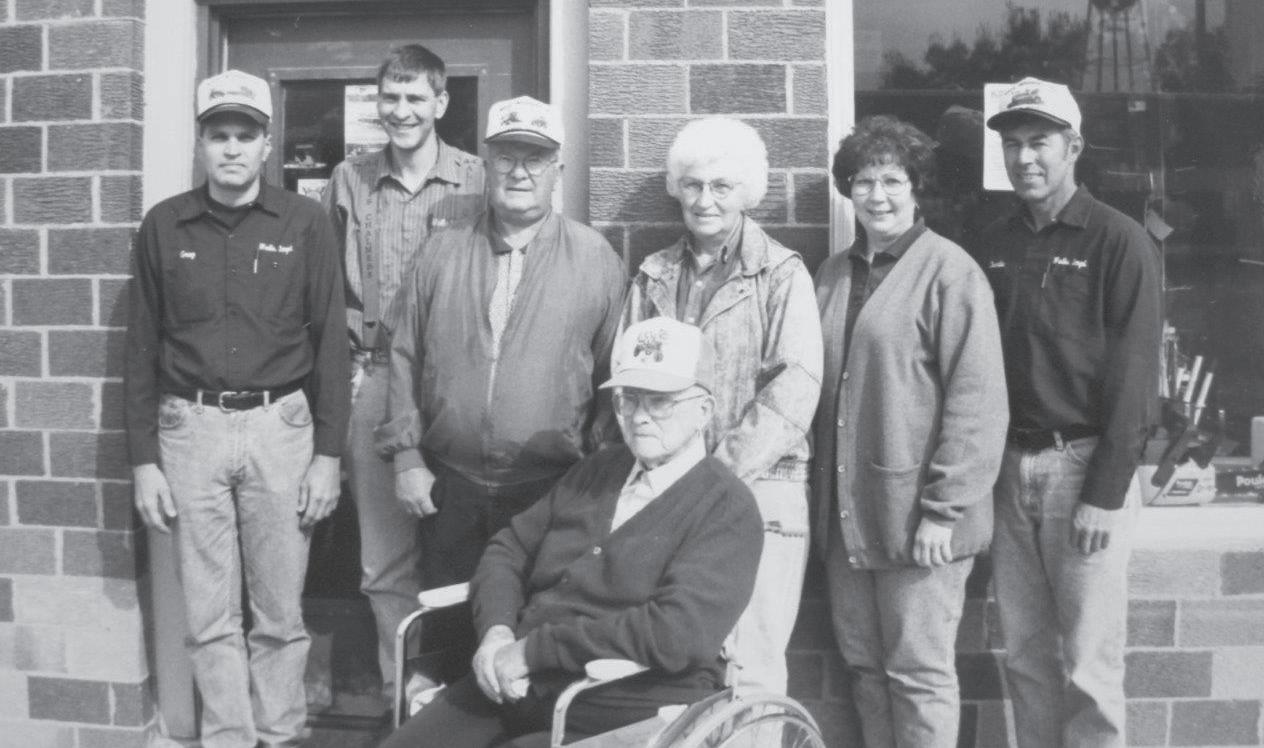
Three generations of the Wells family stand together outside the dealership that has served Plymouth and the surrounding region for decades. Pictured are Greg Wells, Mark Wells, Junior Arthur P. Wells and Alberta Wells, Pam Wells, and Charlie Hoge. Seated in front is the dealership’s original owner, Arthur B. (A.B.) Wells, whose vision and values continue to guide the business today.
One story captures that trust. A customer was asked by his son how long the family planned to continue operating Gleaner combines. His answer was simple: “As long as Wells Implement is in business.”
Another customer told a Wells Implement salesperson that no previous dealer had ever started a piece of equipment in the field with them before. The same customer-first mindset was evident when the dealership helped a dairy farmer whose feeding equipment failed on New Year’s Day. Stories like these rarely make headlines, but they are remembered by customers for years.
The Wells family remains deeply connected to Plymouth and the surrounding agricultural community. The dealership has supported local FFA chapters, county fairs, and activities that strengthen rural Nebraska. Pam believes rural communities offer something increasingly valuable:
close relationships, strong values, and a genuine concern for neighbors.
Looking ahead, the Wells family knows agriculture will continue to evolve. New technologies, changing customer expectations, and workforce challenges will shape the next chapter of the industry. Yet when asked what she hopes people remember about Wells Implement, Pam’s answer is simple. She hopes the dealership is remembered as a place where customers were treated honestly and fairly.
For Pam, the idea of legacy is rooted in gratitude. “It means thank you to our grandpa, Arthur B. Wells, for pioneering our business,” she says. “He is the real hero. He started the legacy.”
More than eight decades after A.B. Wells answered a community’s call for a local equipment dealer, the family he started is still answering that call—one customer at a time.
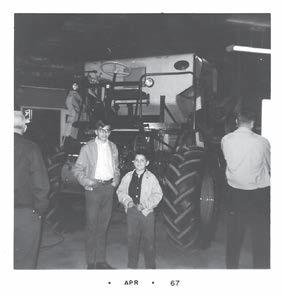
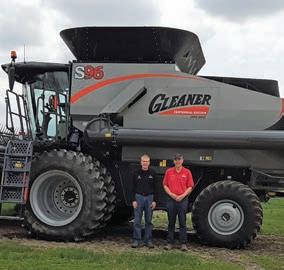
More than five decades separate these two photographs of brothers Greg and Mark Wells. The 1967 image was taken at an open house featuring a new Allis-Chalmers combine, while the 2023 photo shows the brothers standing beside a Gleaner S96 Centennial Edition combine. Though the technology has changed dramatically, Wells Implement’s commitment to serving customers has remained constant across generations.
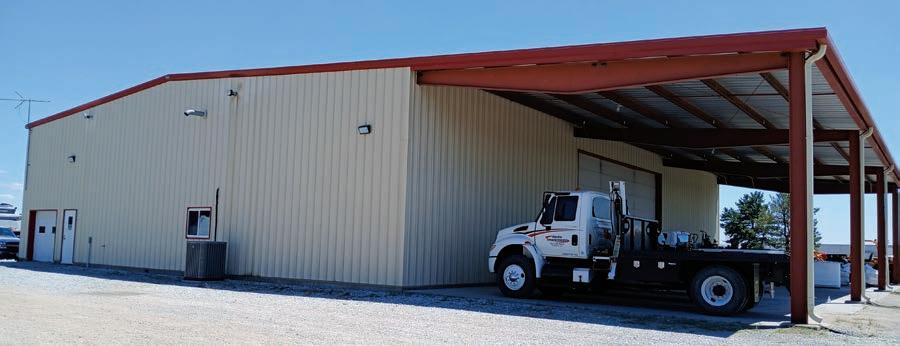
As Wells Implement grew, so did its facilities. The company’s combine and setup shop—located on the edge of Plymouth—provides dedicated space for equipment preparation, helping ensure customers are ready for the field when it matters most.
From humble beginnings to a modern main street presence, Wells Implement has evolved with the times while remaining committed to the customers and community that built its legacy.

WORKFORCE DEVELOPMENT
Andrew Goodman Scholarship Program Surpasses $1 Million in Scholarships
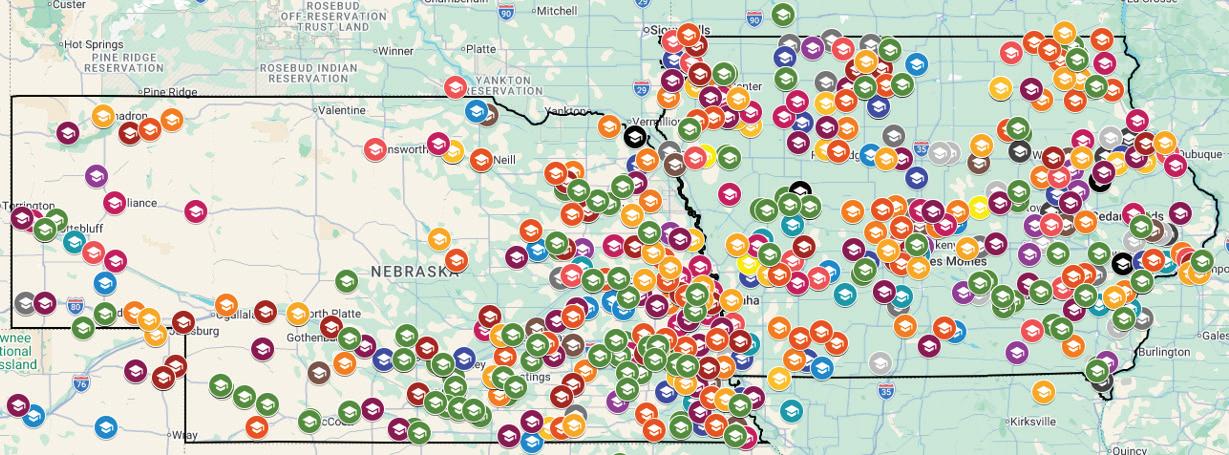
The Iowa-Nebraska Equipment Dealers Association (INEDA) is pleased to share that it has awarded $100,000 in matching scholarships for the 2026-2027 academic year to 85 students pursuing careers with Iowa and Nebraska equipment dealerships.
“The Andrew Goodman Scholarship is a valuable partnership that supports K.C. Nielsen team members pursuing a technical education,” said Jamie Wubben, HR Manager of K.C. Nielsen LTD. “It plays a key role in their growth and development by helping them gain essential mechanical and hands-on skills for future careers as service technicians. This scholarship also demonstrates our strong commitment to education and the long-term success of our future leaders.”
The Andrew Goodman Scholarship program, created in 2008, helps address the technician and employee shortages and helps dealers attract and nurture homegrown talent. Since 2008, INEDA has awarded more than $1,034,129 to 895 students through the program.
“Technical education lays a strong foundation for numerous career paths, and an equipment
dealership is the ideal place for those dreams to take shape,” INEDA President and CEO Mark Hennessey. “The investment of our dealer members to recruit, equip, and educate a highly talented and qualified workforce is a testament to their commitment to their business and their customers. We are honored to partner with them in this vital endeavor.”
The Andrew Goodman Scholarship is an annual matching scholarship program available to all employees/potential employees of members of INEDA in good standing. INEDA matches scholarship amounts awarded by dealers to eligible applicants up to $1500 per applicant per year. Applications are due annually by April 15.
This year, the following dealers provided matching awards: 21st Century Equipment LLC, AKRS Equipment, Belzer Equipment, Inc, Bodensteiner Implement Company, Butler Machinery Co, Deitering Bros., Inc, Haley Equipment, K.C. Nielsen, LTD, LandMark Implement, O’Brien County Implement, Inc., Platte Valley Equipment, Sinclair Tractor, Titan Machinery, True Ag And Turf, Van Wall Equipment, and West Point Implement.
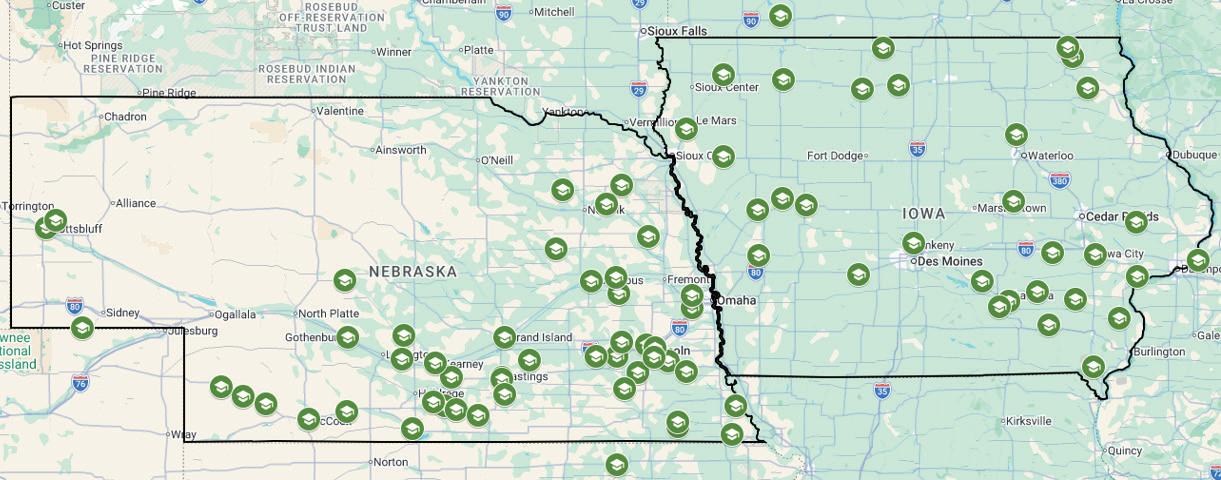
Congratulations to the 85 students who were awarded a scholarship for 2026-2027:
Aidyn Schemper - Sheldon, IA O’Brien County Implement, Inc.Jaxson Henningsen - Westside, IA Van Wall Equipment
Alexander Blair - Muscatine, IA
Sinclair TractorJohnathon Lamphear - Arnold, NE AKRS Equipment
Allan Brenner - Wayne, NE Platte Valley Equipment, LLCJordan Cole - Minden, NE Butler Machinery Co
Alyvia Streeter - Gothenburg, NE LandMark ImplementJose Gonzalez - Overton, NE Titan Machinery
Andre Perez - Lamar, CO 21st Century Equipment LLCKarson Hubl - McCook, NE AKRS Equipment
Ascar Portillo Deras - Grand Island, NE
Beau Wiseman - Glenvil, NE
Benton Parrott - Carroll, IA
Bergen Henning - Waverly, IA
Brandon Gengler - Merrill, IA
Brock Metz - Fairfield, IA
Brody Cooper - Buffalo Center, IA
Titan MachineryKorbin Wilson - Donnellson, IA Sinclair Tractor
Titan MachineryLevi Parker - Lincoln, NE LandMark Implement
Haley EquipmentLiam Wheeler - Lincoln, NE AKRS Equipment
Titan MachineryLogan Frye - Decorah, IA Bodensteiner Implement Company
Titan MachineryLogan Schmidt - Williamsburg, IA Sinclair Tractor
Sinclair TractorLucas Karpisek - Wilber, NE LandMark Implement
K.C. Nielsen, LTDLuke Schiebel - Washington, IA Sinclair Tractor
Camron Reichmuth - Newman Grove, NE AKRS EquipmentMason Hosek - Traer, IA Titan Machinery
Cody Gilpin - Iowa City, IA
Titan MachineryMichael Loomis - Omaha, NE Butler Machinery Co
Collin Bley - Wauneta, NE 21st Century Equipment LLCMitchell Beck - Hildreth, NE LandMark Implement
Colton Kurtz - Correctionville, IA
Conner Jensen - Clarence, IA
Titan MachineryNate Peterson - Pella, IA Belzer Equipment, Inc
Sinclair TractorNolan Westadt - Cambridge, NE LandMark Implement
Dalton Mortinson - Lakefield, MN Deitering Bros., IncNorman McHenry - Burchard, NE AKRS Equipment
Dawson Barrett - Scottsbluff, NE21st Century Equipment LLCOctavien Cardenas - Washington, KSLandMark Implement
Dawson Wilkinson - Burchard, NE
Dayton Peters - Spencer, IA
AKRS EquipmentOmar Garcia Torres - West Point, NEWest Point Implement
Titan MachineryOwen Doocy - Algona, IA Deitering Bros., Inc
Derek Helmick - Salem, NE True Ag And TurfPayton Boden - Nemaha, NE AKRS Equipment
Derek Tieskoetter - Decorah, IA Bodensteiner Implement CompanyPrestyn Bahr - Postville, IA Bodensteiner Implement Company
Devin Wall - Aurora, NE
Donald Cote Jr. - Harlan, IA
Dustin Siebrandt - Hoskins, NE
Dylan Andel - Bruno, NE
Dylan Hochstein - Seward, NE
Eldon Haack - Upland, NE
Ethan King - Britt, IA
Gannon Roth - Kansas City, KS
Grant Frey - Palmyra, NE
Gravert Sawyer - LeClaire, IA
Titan MachineryRaymond Zastera - Schuyler, NEPlatte Valley Equipment, LLC
Titan MachineryRenton Spehar - Scottsbluff, NE Titan Machinery
AKRS EquipmentSamantha Helling - Omaha, NE West Point Implement
AKRS EquipmentShaedyn Schreiner - Sumner, NE AKRS Equipment
AKRS EquipmentSven Rauch - Palisade, NE 21st Century Equipment LLC
Titan MachineryTaidyn Johnson - Hastings, NE Titan Machinery
Titan MachineryTaylor Rohlfs - Unadilla, NE AKRS Equipment
Titan MachineryTrace Hol - Oskaloosa, IA Titan Machinery
AKRS EquipmentTrevor Kral - Campbell, NE
Titan Machinery
Sinclair TractorTyler Abbott - Dexter, IA Van Wall Equipment
Haxden Mills - Stratton, CO 21st Century Equipment LLCTyler Cooley - Morning Sun, IA
Hunter Davis - Wilcox, NE
Hunter Smith - Oskaloosa, IA
Jack McNally - Crete, NE
Jackson Svatora - Columbus, NE
Sinclair Tractor
LandMark ImplementTyler Sears - Lincoln, NE AKRS Equipment
Van Wall EquipmentUriel Chavez - Imperial, NE
Titan Machinery
AKRS EquipmentWells Clark - Sigourney, IA Sinclair Tractor
AKRS EquipmentWeston Stemick - Pierce, NE
Titan Machinery
Jacob Hawking - Sidney, NE 21st Century Equipment LLCWilliam Cockroft - Milford, NE21st Century Equipment LLC
James Colwell - Hastings, NE
James Lemon - Denison, IA
Jase Lynch - Ankeny, IA
Titan MachineryWinston Craig - Kearney, NE
Titan Machinery
Van Wall EquipmentWyatt Boyer - Beaver Crossing, NE AKRS Equipment
Titan MachineryWyatt Isaacson - Alma, NE LandMark Implement
Jaxson Davis - Aurora, CO 21st Century Equipment LLC
MARKETING VIEW

CINDY FELDMAN, Marketing Director [cindyf@ineda.com]
Construction Equipment
What’s Driving Buyer Decisions in 2026?
While construction equipment sales remain closely tied to the broader economy, one thing is becoming increasingly clear: contractors are changing how they buy, rent, and evaluate equipment.
Across Iowa, Nebraska, and much of the Midwest, demand remains strong for earthmoving equipment such as excavators, loaders, compact track loaders, and other machines supporting infrastructure, utility, and site development projects. Federal infrastructure investments, energy projects, and ongoing road construction continue to create opportunities for equipment dealers throughout the region.
However, the conversation with customers is evolving.
Rental Is No Longer a Temporary Solution
Higher equipment prices and elevated interest rates have led many contractors to rethink traditional ownership models. More customers are exploring rental, lease, and rent-to-own programs as a way to preserve cash flow and remain flexible in uncertain market conditions.
For dealers, this presents an opportunity to position rental programs not as an alternative to ownership, but as part of a long-term equipment strategy. Contractors increasingly value flexibility as much as horsepower.
Technology Is Becoming a Selling Point
Today’s equipment buyers are asking different questions than they did five years ago.
Beyond machine specifications, contractors want to understand fuel efficiency, telematics capabilities, machine utilization, preventative maintenance tools, and overall total cost of ownership. OEM investments in automation, connectivity, and fleet management technology are creating new talking points for sales teams and new opportunities for dealers to differentiate themselves.
The equipment itself still matters—but so does the data behind it.
The most successful dealers aren’t simply selling equipment—they’re helping customers improve productivity, reduce downtime, and make smarter business decisions. “ ”
Focus on Solutions, Not Just Machines
Whether you’re selling, renting, or servicing equipment, customers are increasingly looking for partners who can help them improve productivity, reduce downtime, and maximize return on investment.
The most effective marketing today doesn’t simply showcase equipment features. It demonstrates outcomes:
• How much fuel can be saved?
• How can telematics reduce downtime?
• What productivity gains can customers expect?
• How does a machine impact long-term operating costs?
These are the questions shaping buying decisions.
Looking Ahead
The outlook for construction equipment across the Midwest remains positive. Strong infrastructure spending, ongoing development projects, and continued investment in transportation and energy systems are expected to support equipment demand in the years ahead.
For dealers, success will come from understanding how customer priorities are shifting. Flexibility, technology, and value-driven solutions are becoming just as important as machine performance.
As contractors face increasing pressure to do more with less, dealers who help customers solve business challenges—not just equipment needs— will be positioned to win.

Iowa Snapshot:
• 11x Stronger: Iowa has 11 times the national concentration of agricultural and construction equipment manufacturing employees.
• 26 Manufacturers: Iowa is home to 26 heavy construction machinery manufacturing businesses.
• 9,790 Workers: Iowa’s heavy construction machinery manufacturing industry employs nearly 10,000 people.
• Top Sellers: Excavators, loaders, and compact track loaders continue to drive the majority of equipment demand across the Midwest
• Infrastructure Momentum: Federal infrastructure investments continue to fuel demand for roadbuilding, utility, and site-development equipment.
Nebraska Snapshot:
• Heavy Civil Construction Strength: Nebraska maintains a strong base of heavy civil engineering firms, contractors, and infrastructure projects that support equipment demand statewide.
• Agriculture Meets Construction: Equipment sales are heavily influenced by agricultural infrastructure projects, grain handling facilities, irrigation systems, and transportation improvements.
• Energy Projects Drive Growth: Wind energy, solar development, and utility expansion projects continue to create opportunities for earthmoving and material-handling equipment.
• Earthmoving Leads the Way: Excavators, compact track loaders, skid steers, and wheel loaders account for much of the state’s construction equipment activity.
• Major OEM Presence: Nebraska contractors continue to rely heavily on equipment from brands such as John Deere, Caterpillar, and CASE Construction Equipment.

Trump Administration Announces Summer E15 Waiver
Earlier today, Environmental Protection Agency (EPA) Administrator Lee Zeldin announced that the Trump administration is issuing a waiver allowing the sale of higher-ethanol E15 gasoline this summer. The welcomed announcement came as AED and dealers from the Pioneer Equipment Dealers Association and the Iowa-Nebraska Equipment Dealers Association met with senior advisers to Agriculture Secretary Brooke Rollins and on Capitol Hill about boosting demand for crops, such as expanding the use of biofuels, and other issues important to the nation’s agriculture sector.
Following Zeldin’s declaration, AED’s President & CEO Brian P. McGuire issued the following statement: “AED commends President Trump and Administrator Zeldin for granting the E15 waiver for the summer and the administration’s continued support for its year-round use,” said McGuire. “E15 is an essential tool, along with other biofuels, to increase markets for crops, and its well-past time for Congress to pass legislation authorizing year-round E15. Further delay in enacting this commonsense policy is unacceptable as the nation’s farmers continue to struggle to survive.”
AED continues to make expanding the use of agriculture-based biofuels a top priority along with other initiatives that will assist the agriculture sector such as passing a farm bill and opening new international markets to strengthen export opportunities for American farmers, ranchers, and producers.
Questions?
If you have questions or concerns, please contact INEDA using the information below: Mark Hennessey – Ph: 515.231.7655
Or contact your local Director of Dealer and Government Relations: Jamie Mertz, IA – Ph: 515.320.3314 Phil Erdman, NE – Ph: 402.429.5726

RISK MANAGEMENT SOLUTION FOR EQUIPMENT DEALERS
Used Sales and Rental Equipment
The responsibility of equipment dealers in ensuring product and user safety varies across situations, states, and courtrooms, but judgments levied against dealers can result in multi-million dollar claims. While accidents occur, safeguarding customers and your business is crucial. Dealers can be targets of accusations regarding negligence.
This publication is intended to provide general information and recommendations for risk prevention only. The recommendations herein may help reduce the risk of loss but is not a guarantee of the elimination of any risk of loss. This is not provided as a substitute for any regulatory standards that may apply, nor should it be considered legal or other expert advice regarding your unique needs. Qualified counsel should be sought regarding questions specific to your circumstances.
When Selling Used Equipment:
■ Review manufacturers’ safety recommendations.
■ Perform only manufacturer-approved modifications to equipment.
■ Install and inspect safety equipment prior to releasing equipment to customers.
■ Inspect and use an equipment safety checklist upon intake of any used piece of equipment.
■ Provide training on use of equipment.
■ Include a copy of the operators’ manual for each piece of equipment.
When Renting Equipment:
■ Document and maintain detailed service records for each piece of rental equipment.
■ Before equipment leaves your possession, inspect it and use an equipment safety checklist.
■ Include a copy of the operator manual for each piece of equipment.
■ When equipment is returned, inspect it and use an equipment safety checklist.
■ To ensure renters’ safety, provide training on equipment usage and recommend suitable personal protective gear.
■ Use equipment rental agreement forms that include hold harmless clauses and insurance requirements.
Federated is committed to helping clients develop loss prevention strategies, prepare training sessions, and support your organization’s risk management efforts. For assistance or more information, contact the Risk Management Resource Center at 1-888-333-4949.