REPRESENTING AG, CONSTRUCTION AND OUTDOOR POWER EQUIPMENT DEALERS ACROSS IOWA AND NEBRASKA


REPRESENTING AG, CONSTRUCTION AND OUTDOOR POWER EQUIPMENT DEALERS ACROSS IOWA AND NEBRASKA
Equipment financing made easy.
AgDirect ® is here to help producers buy, lease or refinance the equipment their operation needs. Our wide range of flexible financing options also makes AgDirect the go-to solution for any budget. No delays. No runarounds. Just equipment financing you can count on.
For more info call 888-525-9805 or visit agdirect.com Simple 10-minute application Fast credit decisions As low as $0 down* Ag-friendly terms and competitive rates
2026 outlook predicts risks and headwinds many dealers will need to adapt for. 3
Recap on the expo highlights and record number of exhibitors in 2025. 8
Take a peek at our exclusive Innovation After Hours event for its fourth annual event at Nebraska’s Innovation Campus.

As the industry looks toward 2026, equipment financing and inventory strategy are top of mind. At the farm level, economists see the U.S. agricultural economy holding its ground rather than rebounding.

18
Economists are predicting steady but unexceptional global growth, but inflation and policy uncertainty brings its own challenges.
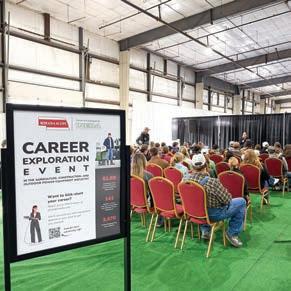
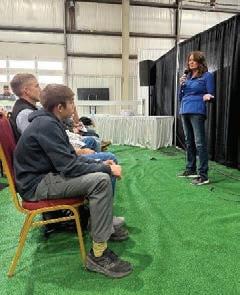
An event at the Nebraska Ag Expo introduces middle and high school students to career opportunities in agriculture and the equipment industry.

Director of Marketing, Cindy Feldman, covers the dos and don’ts of marketing during an economic downturn.
Kevin Clark Chairman, Lincoln, NE
Dave McCarthy Vice Chairman, Waterloo, NE
Jay Funke Past Chairman, Edgewood, IA
Bruce Bowman Ankeny, IA
Kent Grosshans Central City, NE
Keith Kreps Scottsbluff, NE
Mark Placek Alliance, NE
David Adelman IA Legislative Director
Phil Erdman Dir. of Dealer & Gov’t Rel.
Cindy Feldman Marketing Director
Laurie Haeder Ag Expo Coordinator
Mark Hennessey President/CEO
Tom Junge Sr. Expo Director
Andy Tank Expo Director
Tim Keigher NE Legislative Director
Cara Jicinsky Administrative Assistant
Jamie Mertz Dir. of Dealer & Gov’t Rel.
Gwen Parks Finance Director
Individual subscriptions are available without charge to Association members. One-year subscriptions are available to all others for $30.00 (4 issues). Contact INEDA for additional information. This publication is designed to provide accurate and authoritative information in regard to the subject matter covered. It is furnished with the understanding that the Iowa-Nebraska Equipment Dealers Association, the publisher, is not engaged in rendering legal, accounting, or other professional services. Changes in the law may render the information contained in this publication invalid. Legal advice or other expert assistance should be obtained from a competent professional.
2026 Outlook:
Ag Economy & Equipment Market in Iowa & Nebraska
Farm-Sector Trends — A Mixed but Cautious Picture. For Nebraska, 2025 saw a large increase in net farm income driven by strong livestock receipts and one-time government support; but projections for 2026 anticipate a decline in net income as support payments return to normal levels.
According to lead economists, crop producers in Nebraska and Iowa face pressure from falling commodity prices, rising input and land-cost expenses, and increased interest rates — all of which are expected to tighten margins and limit capital budgets for major equipment investments. While livestock and diversified operations may remain relatively stronger, the overall agricultural economy in the Midwest is likely to remain cautious — with many farmers postponing large-ticket purchases or deferring upgrades.
Implication for Ag Equipment Dealers — Demand Soft, Strategy Needs to Adapt
Demand for new large-scale machinery (tractors, combines, heavy farm equipment) is likely to remain soft through 2026, as crop farmers scale back capital expenditures. Dealers should expect a continuing shift toward used equipment, rentals, leasing, and repair & maintenance services as growers seek lower-cost alternatives with constrained budgets.
Inventory management will be critical: oversupply risks remain if dealers overstock expecting a quick recovery. Conservative restocking and strong used-equipment turnover will be key. Service, spare-parts, maintenance plans — previously “nice-tohaves” — may become a primary revenue stream as farmers hold onto equipment longer and delay replacements.
Risks & Headwinds to Watch

Chief Executive Officer
Reduced government support or shifts in farm policy could further tighten farm liquidity and reduce equipment demand. Rising costs for inputs, land rents, insurance, and interest may continue to erode profitability for crop operations. Volatility in commodity prices and weather risks remain — making demand for new equipment unpredictable and sporadic.
Bottom Line
For 2026, Iowa and Nebraska’s ag economy faces headwinds: tighter margins, uncertain crop returns, and subdued investment intent among many producers. For ag‐equipment dealers, this likely means a sustained downturn in new-machine demand. However, dealers who pivot toward value — used gear, services, flexible financing, and niche segments — have the opportunity to maintain stability and position themselves for growth when the next up-cycle begins.
While I wish the outlook were more positive, many of our equipment dealers have echoed these concerns throughout 2025 and believe this 2026 forecast is realistic. I sincerely hope conditions prove stronger than expected. What I do know is that our dealers have weathered economic challenges before, and they will take the necessary steps to navigate this environment once again.


GOVERNMENT AFFAIRS
The 109th Legislature, Second Session, will convene on Wednesday, January 7, 2026, as required by law (the first Wednesday after the first Tuesday in January).
The 2026 session is a 60-day “short session.” Under the official Legislative Calendar, the Legislature is scheduled to adjourn sine die on April 17, 2026.
As widely reported, four conservative senators, Bob Andersen, Tanya Storer, Jared Storm, and Paul Strommen—have publicly pledged not to increase taxes. Their commitment includes a dollar-for-dollar offset requirement, meaning any increase in a tax or fee must be matched by an equal or greater reduction elsewhere. The pledge was made in advance of the 2026 session amid continuing debates over property tax relief and budget pressures, particularly following last session’s deliberations.
Key elements of the pledge include:
• No increase in the overall tax burden on Nebraskans
• Dollar-for-dollar tax or fee offsets
• A focus on property tax relief amid budget constraints
TIM KEIGHER, KEIGHER AND ASSOCIATES
Republicans will retain a supermajority, with 33 Republicans, 16 Democrats, and one Independent. However, as demonstrated during the 2025 session, party affiliation does not always dictate voting behavior on business or fiscal issues with certain Senators supporting positions contrary to those generally in their own party.
Lawmakers will return to Lincoln facing a projected $471.5 million budget deficit. These challenges are further complicated by the fact that:
• 14 senators are up for reelection in 2026
• The Governor is also up for reelection
• 10 senators are term-limited and not seeking reelection
Robert Clements (2), John Arch (14), Ben Hansen (16), Machaela Cavanaugh (6), Wendy DeBoer (10), Mike Moser (22), Myron Dorn (30), Tom Brandt (32), Dave Murman (38), Megan Hunt (8)
Additionally, Senators Christy Armendariz (18) and Jane Raybould (28) have announced their retirement.
The Governor has indicated continued pursuit of additional property tax relief, with speculation suggesting a target of approximately $1.25 billion.
To address the budget shortfall, agencies have reportedly been asked to:
• Implement an additional 10% budget reduction, and
• Identify opportunities to generate “new revenue,” including review and potential elimination of exemptions
In practice, some of this “new revenue” has taken the form of increased fees, often driven by agencies’ need to maintain operations after years of budget reductions.
Governor Pillen has also expressed interest in revisiting the TEEOSA school aid formula, citing what he describes as inconsistencies in its application. There is also talk of increasing the state sales tax rate to provide further property tax relief.
Beyond fiscal matters, lawmakers can expect continued debate on:
• “Culture war” legislation, particularly Senator Kauth’s efforts related to transgender participation in school sports and facilities
• Medical marijuana proposals and related enforcement actions
• Ongoing scrutiny of hemp-derived THC products by the Attorney General
Additionally, the Legislature will likely devote significant floor time to the situation involving the qualifications of elected officials to continue to serve in their positions.
Senator Dan McKeon, following his misdemeanor public indecency charge in late October and his refusal to resign. On December 13, 2025, the Executive Committee formally recommended his expulsion, but the full Legislature will have to debate and decide this matter.
Nebraska University Regent Elizabeth O’Connor of Omaha, 34, a former Douglas County deputy county attorney serving in her seventh year as a regent, is accused of a felony DUI causing serious bodily injury from the night of May 21. (Felons are barred from holding public office unless the person’s civil rights are restored by the Nebraska Board of Pardons.)
Senators have been briefed on the impeachment process which Senator Kauth has been working bringing once the Legislature convenes. A majority vote of Senators would be needed to impeach an official, but the Nebraska Supreme Court would ultimately decide if officials should be removed from office.
Each Monday, INEDA members in Nebraska can receive a weekly update of key issues and developments from the Nebraska Legislature. If you are not receiving those updates or would like to confirm you are on the distribution list, please contact Phil Erdman, Director of Dealer and Government Relations for Nebraska (phile@ineda.com)
Legislative Breakfast (Register Today at INEDA.com)
• Januar y 16, 2026 – 7:15 am – Cornhusker Hotel (Lincoln, NE)
Federal Fly-In
• March 24-26, 2026 – Washington, DC
Legislative Meeting and Golf Outing (Register Today at INEDA.com)
• June 16, 2026 – 9:00 am – York Country Club (York, NE)



JAMIE MERTZ Director of Dealer and Government Relations [jamiem@ineda.com]
Issues surrounding unpaid equipment repairs are common in our industry and affect nearly every dealership at some point. Many dealers have experienced the frustration of completing repair work only to struggle with collecting payment afterward.
Too often, these situations end with the dealer absorbing the loss and writing off bad debt at year’s end— despite having provided valuable services. Understanding how artisan lien laws work can help dealers protect themselves and improve their ability to secure payment for completed repairs.
Iowa — §577.1 (Artisan’s lien — nature of lien)
Any person who renders services or furnishes material in making, repairing, improving, or enhancing the value of inanimate personal property (with the owner’s assent, express or implied) has an artisan’s lien on that property for the agreed or reasonable compensation while the property is lawfully in the person’s possession. The lienholder may retain possession until compensation is paid. The statutory text also addresses priority relative to prior liens of record (the artisan’s lien is subject to prior recorded liens unless notice/consents are given so the lien may in some cases take priority). The statute also contains provisions specific to aircraft and equipment and references enforcement procedures in the following section. (Iowa Legislature)
Nebraska — §52-201 (Creation of lien; retention of property authorized)
A person who makes, alters, repairs, or otherwise enhances the value of a vehicle, automobile, machinery, farm implement, tool, or shoes a horse/ mule at the request or with consent of the owner has a lien on that property while it is in the person’s possession for reasonable or agreed charges. The repairer has the right to retain the property until charges are paid. If the repairer exercises the right to retain, they may not assess additional fees beyond the agreed/reasonable charges unless they first send a certified-mail notice of possession/intent to assess additional fees (and copy any lienholder shown on the certificate of title, if applicable). (Nebraska Legislature)
• Both statutes create a possessory artisan/repairer’s lien allowing a repairer to hold (retain) property until reasonable or agreed charges are paid. (Iowa Legislature)
• Iowa’s §577.1 is broader (covers inanimate personal property generally and has aircraft/equipment references) and treats priority against recorded liens (subject to notice/consent rules). (Iowa Legislature)
• Nebraska’s §52-201 is more explicit about the kinds of property (vehicles, machinery, farm implements, tools, horses) and adds a clear certified-mail notice requirement before charging extra fees when exercising retention. It points to neighboring sections for perfection and enforcement mechanics. (Nebraska Legislature)
Type of lien recognized
Trigger (when lien arises)
Possession requirement
Scope / property types
Priority vs. other liens
Limits on extra fees / notice requirements
Remedies/ enforcement
Common practical differences (summary)
Iowa §577.1
Artisan’s/possessory lien for services/materials on inanimate personal property (broad category; includes special reference to aircraft/equipment). (Iowa Legislature)
When a person renders service or furnishes material in making/repairing/improving/enhancing value with owner’s assent (express or implied). (Iowa Legislature)
Yes — lien exists while property is lawfully in the person’s possession; lienholder may retain possession until paid. (Iowa Legislature)
Broad “inanimate personal property”; includes explicit mention of aircraft and certain equipment (statute addresses aircraft/equipment). Good for a wide range of goods. (Iowa Legislature)
Lien is generally subject to prior liens of record. Exception: if lienholder gives notice to prior lienholders and obtains written consent from all recorded lienholders before doing the work, then the artisan’s lien can be given priority over recorded liens. (CaseMine)
Iowa statute text does not contain an express “must send certified-mail notice to owner before charging extra fees” clause in §577.1 itself (statute focused on lien creation and priority rules); enforcement procedure is in §577.2. Case law and related sections govern enforcement and sale. (Iowa Legislature)
Enforcement and sale procedures are set out in following sections (e.g., §577.2) and related code (and affected by priority rules and case law). Courts have considered §577.1 in replevin, bankruptcy, aviation contexts, etc. (Iowa Courts)
Broader statute (inanimate personal property) used across many contexts (autos, equipment, aircraft). Priority over recorded liens requires prior notice/ consent; enforcement guided by subsequent sections and case law. (Iowa Legislature)
Nebraska §52-201
Possessory lien for work/materials on vehicles, machinery, farm implements, tools, or horses/mules (lists types explicitly). (Nebraska Legislature)
When person makes/repairs/enhances at request of or with consent of owner. (Similar trigger — owner request/consent required.) (Nebraska Legislature)
Yes — lien exists while property is in the person’s possession; right to retain until payment. (Nebraska Legislature)
More specific: vehicles, automobiles, machinery, farm implements, tools, and horses/mules. Focused on transport/agriculture/repair contexts. (Nebraska Legislature)
Statute creates lien and retention right; perfection/priority/ perfection mechanics are handled in adjacent statutes (e.g., §52-202 and following). Nebraska annotations/case law address limits where certificate-of-title lienholders take precedence in some situations. Nebraska requires copies of certain notices to lienholder on the certificate of title when assessing additional fees. (Nebraska Legislature)
Nebraska §52-201 expressly forbids assessing additional fees beyond reasonable/agreed charges unless the repairer first sends certified-mail notice of possession and intent to assess the additional fee to the owner and a copy to any lienholder shown on the title. (Express notice rule for added fees). (Nebraska Legislature)
Nebraska provides the lien/retention right in §52-201; perfection, priority, filing, and enforcement details are in §52202 and §52-203 (and case law/annotations). §52-201 also contains the certified-mail notice requirement when adding fees. (Nebraska Legislature)
More prescriptive for vehicle/implement/horse repairs; explicitly limits additional fees without certified-mail notice and requires copying title lienholders when applicable; points to adjacent provisions for perfection/priority. (Nebraska Legislature)
If you have questions about Artisan Liens in either Nebraska or Iowa, please reach out to either Phil Erdman (phile@ineda. com) or Jamie Mertz (jamiem@ineda.com).
TOM JUNGE Sr. Expo Director [tomj@ineda.com]
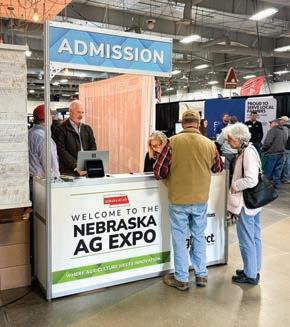
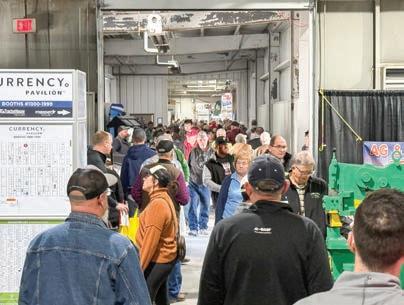
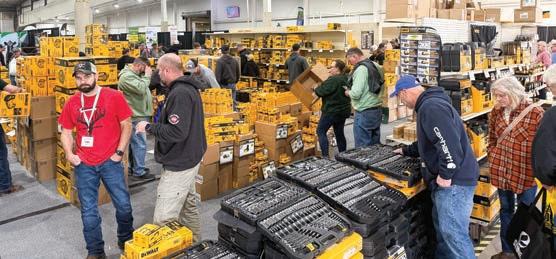
The 2025 Nebraska Ag Expo is in the books. The Expo was once again sold out with 606 contracted companies representing 865 brands.
Attendance increased again and exceeded prior years’ attendance. Many exhibitors commented that Wednesday was one of the strongest days they have seen, which was very positive given the current ag economy. Exhibitors also mentioned that the age of the attendee is much lower than other farm shows.
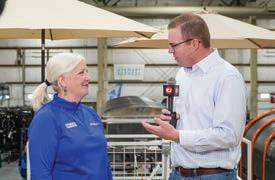
The Expo has garnered increased media attention from outlets from Nebraska, South Dakota, Iowa, and Kansas. Kansas has been especially hit hard regarding farm shows with the recent closures in Dodge City, Hutchinson and Wichita.
The Expo had a record number of new exhibitors this year. 137 in total, in which 45 were in the Innovation Hub which typically has higher turnover due to the nature of ag start-ups. 60 traditional companies remain on the 2026 waitlist.
The highlight of the Expo continues to be the Innovation Hub. 72 companies participated in the 4th edition of the Hub. Drones were very prominent this year. Ceres Air, DJI, EAVision, Hylio, Revolution, Talos and XAG were the copter-type drones on display while Farm Eagle and WingXpand offered fixed-wing versions for multispectral imaging.
With the very recent announcement regarding the ban of Chinese drones it was good that farmers and agribusinesses were able to see
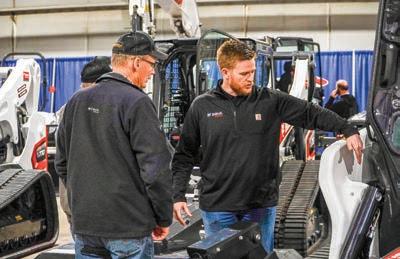

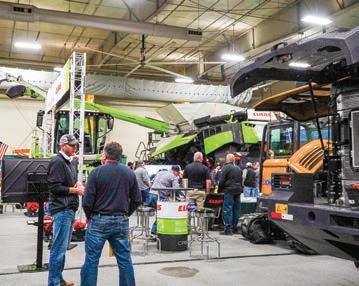
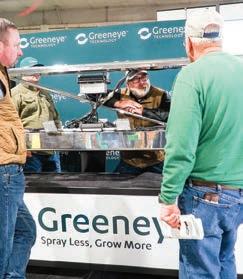
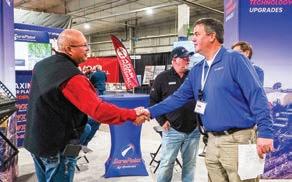
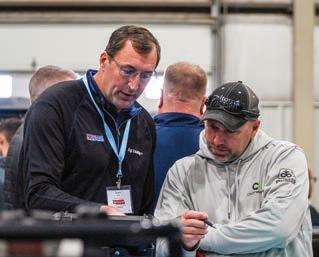
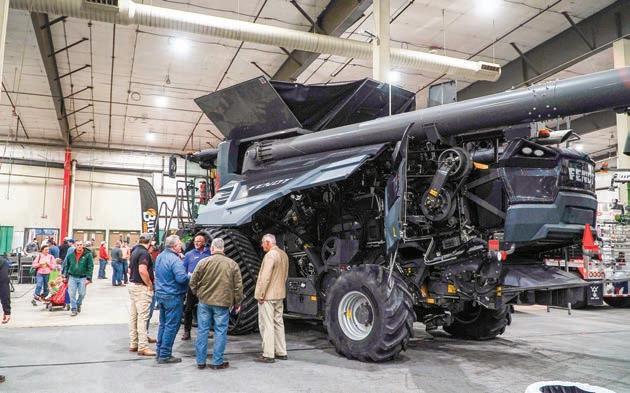
U.S. made Hylio and Ceres Air drones. The two fixed wing planes are also U.S. built. The Revolution drone is manufactured in Brazil.
Greenfield Robotics was a featured exhibitor with their individual-row robots. Based near Wichita, Kansas, the robot is designed to weed and fertilizer crops. Elemental Agronomy was also present with their concept of a small robot to spray farrow ground. They are currently testing their robot near Dodge City, Kansas.
Time saving tools to determine nutrient deficiencies and pathogens in crops were also present. Senseen’s Nutriscope™ is a handheld plant health scanner, bringing lab-grade insights directly to the field. Scanit Technology and Innerplant offer advanced airborne pathogen detection.
The Innovation Hub and Innovation After Hours Event provides ag start-ups an opportunity to network with fellow start-ups, venture capitalist, and farmers that are willing to test new technology.
Here are a few testimonials from the Innovation Hub exhibitors:
“Many thanks for the booth and other invites at the show. As I said yesterday, lots of leads came out of it, including media, distributors, potential hires, and even one potential investor. Thanks again. — Bart Peintner, CEO, Elemental Agronomy
This is the greatest ROI for growing companies; it provides the best space to highlight emerging tech while networking with companies and individuals with similar backgrounds. It makes “new tech” less intimidating to the average Ag Expo attendee or farmer, when surrounded by it in a familiar space. — Brad Moffitt, WingXpand
“I want to extend my sincere appreciation for the opportunity to showcase my product at this year’s Nebraska Ag Expo. Being able to present at such a respected event meant a great deal to me and to the growth of my business, TJKrank. Your team created an environment that truly supports innovation, connects growers and industry partners, and gives small businesses like mine a real chance to be seen. The exposure, conversations, and connections I gained during the expo were invaluable, and I’m grateful for the professionalism and hospitality shown throughout the entire event. Thank you again for believing in new ideas and for providing a platform where companies like mine can continue to grow. — Taten Uden
These comments illustrate the past and current purpose of the farm show to introduce new technologies and products to dealers and farmers. As other farm shows struggle to retain exhibitors since Covid, the Nebraska Ag Expo has prospered due to its reputation and new focus on innovation. Success is also contributed to the great support of INEDA members and staff members devotion to customer service. Next up is the Iowa Ag Expo, Feb. 3-5.
See you there!
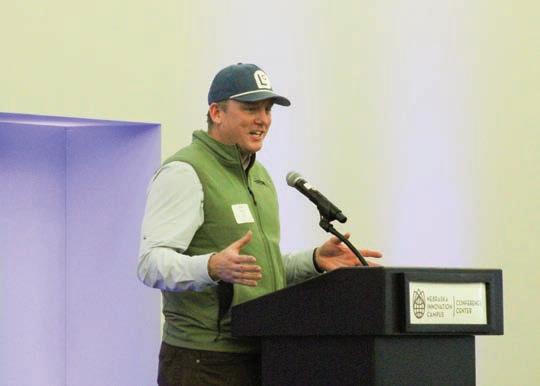
The Nebraska Ag Expo, a trailblazer in advancing agricultural innovation and host of Innovation Hub – a dynamic center for groundbreaking technologies and forward-thinking ag solutions – continued our exclusive Innovation After Hours event for its fourth annual event at Nebraska’s Innovation Campus.
Roughly 150 attendees were able to connect with start-ups, investors, and executives from innovative ag companies from across the country and beyond - including representatives from 9 INEDA dealer members in Nebraska.
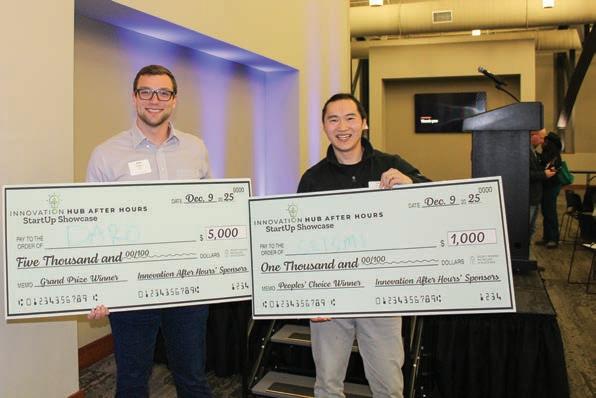
As part of Innovation After Hours, six companies were invited to compete for cash prizes during the Startup Showcase.
• Agriwater (Tennessee) – Agriwater transforms livestock, dairy, hog, and feedlot manure into profit with a patent-pending mobile water treatment system. (www.agriwater.tech)
• DARO (Nebraska) – DARO provides whole-herd, non-invasive molecular pathogen and genomic strain surveillance, enabling early disease detection and outbreak prevention in livestock. (www. usedaro.com)
• Landoption (Nebraska) – Landoption makes land recruitment more efficient for conservation, renewable energy, and agricultural programs by leveraging trusted networks, reducing costs and time, and ultimately enabling more competitive offers to landowners. (www.landoption.com)
• Oaken (Indiana) – Oaken is a cloud-based software platform that streamlines farmland lease management and landowner relationships for agribusinesses. (www.oaken.ag)
• Seismi (New Jersey) – Seismi provides veterinary devices that monitor heart rate, respiration, and activity of companion and production animals. (www.seismi.co)
• Senseen (California) – Senseen builds real-time, in-field diagnostic tools to help farmers make better decisions. (www.senseen.us)
DARO was the winner of the Startup Showcase and received a $5000 cash award.
Seismi was the winner of the “People’s Choice Award” and received a $1000 cash award.
Nebraska Innovation After Hours is presented by Farm Credit Services of America, Iowa Nebraska Equipment Dealers Association, Grit Road Partners, Invest Nebraska, The Combine, and Nebraska Innovation Campus.

Global to see the big picture. Local to understand it. Providing clarity. Building confidence.
forvismazars.us
As the industry looks toward 2026, equipment financing and inventory strategy are top of mind for dealers and producers navigating tight margins and disciplined buying behavior. While demand remains cautious, stabilizing interest rates and increased activity in late-model used equipment, auctions, and refinancing are creating pockets of opportunity for those prepared to act strategically.
Beyond the equipment lot, broader economic signals point to a mixed but steady environment. Financial markets posted solid gains in 2025, while the Federal Reserve resumed rate cuts amid a slowing labor market and lingering inflation pressures. Tariffs, input costs, and policy uncertainty continue to shape the outlook, but rate stability and continued capital investment are helping support economic momentum heading into 2026.
At the farm level, economists see the U.S. agricultural economy holding its ground rather than rebounding. Sentiment has improved modestly, yet structural pressures—especially high input costs and unresolved trade issues—remain significant. For dealers, this reinforces the importance of aligning financing options, inventory management, and customer support with an environment defined by caution, resilience, and long-term planning.
We start with equipment financing—where disciplined strategy, flexibility, and timing may create opportunity in 2026.


BRIAN LEGRIED Senior Vice President, AgDirect
U.S. producers enter 2026 under continued tight margins and weak commodity prices, prompting shifts in equipment financing strategies. Based on the AgDirect team’s analysis of 2025 trends and early indicators for 2026, producers and dealers can prepare for another year where cash flow management and inventory decisions take center stage.
Macro-economic signals to watch
The Federal Reserve lowered the federal funds rate three times in 2025, with cautious optimism for further easing or stabilization in 2026— which would result in a positive backdrop for financing.
Softer commodity prices and persistent input costs keep cash flow central, shaping capital strategies and delaying major upgrades.
Dealer sentiment heading into 2026
Dealers report heightened focus on moving late-model, high-dollar used units, weighing whether to hold inventory or liquidate through auctions. This increase in dealer auctions, combined with stabilizing interest rates, could create more buying opportunities with increased inventory for sale through the auction channels. In other words, 2026 could be a good time to upgrade with late model equipment.
Buyer sentiment and trends
Producer sentiment is disciplined—not pessimistic—leaning on refinancing, leasing, and liquidation auctions to preserve cash and align payments with revenue cycles. Seasonal activity may soften, but early-year auctions and aggressive dealer pricing could spur movement.
Auctions and private sales
Continuing concerns over reduced income and cash flow cause producers to be more cautious about large capital purchases. Auctions and private sales offer cost-effective alternatives to new equipment, requiring fast, flexible financing. Refinancing remains a key tool for easing cash flow and lowering interest expenses, while leasing continues to gain traction for predictable costs and lower upfront payments.
Equipment demand outlook
OEMs have scaled back new production as dealers work through substantial used inventory—a process that may take another year. Demand will favor late-model used machines, with auctions and private channels vital for buyers seeking value.
Elevated inventories—particularly one- to two-yearold high-dollar units —will pressure pricing, while financing structures like leases and refinances help match buyers to supply.
Large ag equipment, such as tractors and combines, will stay sensitive to pricing and residual value expectations, while midsize equipment may see valuations remain steady.
Risks and opportunities for 2026
Opportunities
• Improving rate stability: Easing or steady rates can increase buyer comfort with financing and refinancing decisions.
• Efficiency-focused upgrades: Strategic purchases (including leasing) improve cost predictability and operational efficiency.
• Resilient used-equipment channels: Auctions and private-party markets remain active and well-matched to cash-conscious buyers.
Risks
• Cost pressures and policy uncertainty: Persistent input costs and potential policy changes can weigh on margins and timing.
• Commodity volatility: Price swings may impact cash flow and delay large purchases.
• Inventory overhang could affect pricing and dealer margins into mid-2026.
What financing partners should focus on
Stay responsive to shifting buyer behavior, especially toward auctions, refinancing, and leasing, and offer solutions that prioritize cash flow management.
My closing thought
By embracing flexibility and anticipating market trends, both producers and dealers can emerge stronger as the industry transitions toward renewed stability.
About the author
Brian Legried, AgDirect. Brian Legried is senior vice president of AgDirect, where he leads strategic initiatives that help producers and dealers navigate a dynamic equipment finance market. His focus on flexibility and innovation ensures AgDirect delivers financing programs that support the success of customers’ operations and long-term relationships across the agricultural industry.

University of Illinois’ FarmDoc project
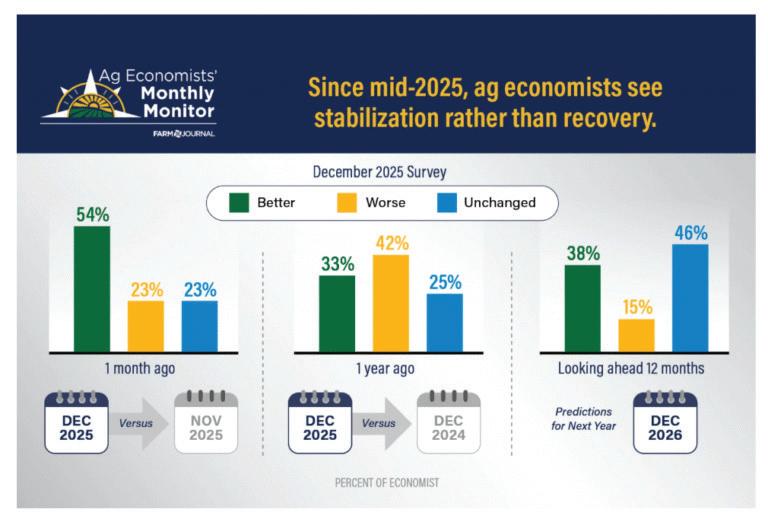
AgWeb’s Tyne Morgan reported that “as 2026 ushers in a fresh start, agricultural economists say the U.S. farm economy has stopped sliding, but it’s far from fully healed. The December Ag Economists’ Monthly Monitor shows month-to-month sentiment is improving, but deep structural strain remains -- especially in row crops. Meanwhile, livestock markets continue to provide strength. Crop producers face another year of tight margins driven by high input costs, weak prices and unresolved trade and policy uncertainty.”
“’There’s cautious optimism,’ the economists say,” according to Morgan’s reporting, “’but very little
belief that 2026 will bring a meaningful rebound without cost relief or stronger demand.’”
“Economists see the ag economy holding its ground -- but not gaining strength,” Morgan reported. “54% say the ag economy is somewhat better than one month ago. Compared with a year ago: 42% say conditions are worse (and) 33% say they are better. Looking ahead 12 months: 46% expect conditions unchanged, 38% expect improvement (and) 15% expect conditions to worsen.”
“’Momentum has improved since mid-2025,’ (Seth) Meyer (director of the Food and Agricultural Policy


Research Institute (FAPRI) at the University of Missouri) notes, ‘but tight margins have been with us for a long time. Turning that around requires demand growth, not just price stabilization,’” Morgan reported.
“Grant Gardner, assistant Extension professor at the University of Kentucky, tells AgriTalk’s Chip Flory: “I think as we move into kind of this next marketing year, you’re looking at what looks like a breakeven and not a loss, but breakeven still doesn’t look great after three years of breakeven or losses,’” Morgan reported. “He says even with the $11 billion in Farmer Bridge Program payments, it won’t drastically change the outlook for the farm economy.”
Input Costs, Trade Remain Top 2026 Ag Economy Concerns
AgWeb’s Morgan reported that “looking to 2026, economists overwhelmingly point to input costs, not interest rates, as the biggest barrier to profitability. Nearly 70% cited input prices as the largest challenge as well, far ahead of trade concerns or capital availability.”
“’We have too much supply and not enough demand for row crops,’ one economist wrote,” according to Morgan’s reporting. “Another said: ‘Input costs are still too high.’”
“Trade remains a central wild card, especially relationships with China and uncertainty around global supply. Several respondents cited trade disputes and agreements as critical factors, along with questions about the size of South American crops and how that could shape global competi-
tion in the months ahead,” Morgan reported. “Policy uncertainty was also featured prominently, with economists pointing to domestic biofuels policy, government payments and broader market signals as factors influencing both short-term cash flow and longer-term demand growth.”
CoBank’s Thomas Halverson wrote that “federal policy uncertainty remains a key issue for rural industries. The Farm Bill is the single most important policy platform for rural America and American agriculture, serving as a vital safety net for an industry that feeds the world and that undergirds our national security. The current version of the Farm Bill dates to 2018. Though it has been extended through September 2026, it would be far better for Congress to reauthorize a new five-year Farm Bill that incorporates current marketplace conditions for agriculture, which have changed a great deal over the past several years. It is impossible to overstate the importance of this legislation to the well-being of farmers and rural communities.”
Farmer Expectations of Financial Performance in 2026 Largely Unchanged from 2025
FarmWeekNow reported that “farmer sentiment dipped slightly in December as trade uncertainty hangs over the agriculture industry, according to the Purdue University/CME Group Ag Economy Barometer. The barometer dropped 3 points to 136, with the decline attributable to a softening in farmers’ long-term outlook.”
“Farmers’ expectations for their farms’ financial performance remained mostly unchanged in December. The Farm Financial Performance Index inched up 2 points to 94, reflecting more producers

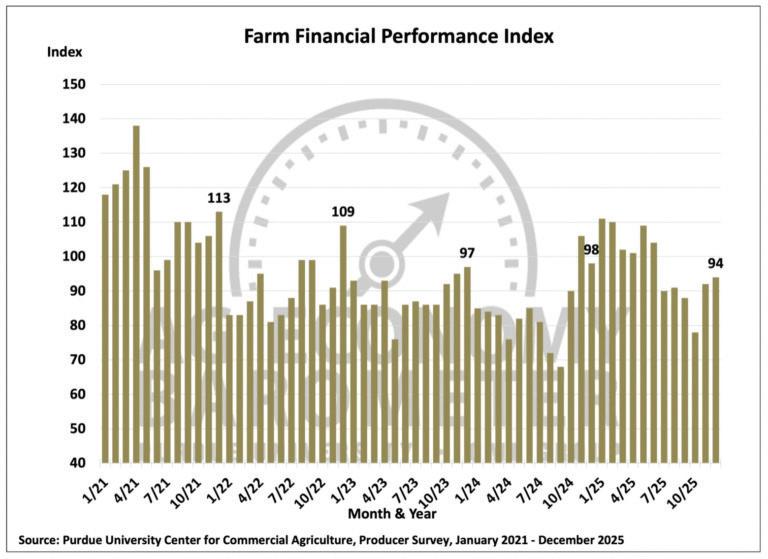
expecting this year’s farm financial performance to be similar to last year’s,” FarmWeekNow reported.
“The Farm Capital Investment Index also rose 2 points to 58. Despite this increase, most producers (60%) still see December as a bad time to make large farm investments.”
Agri-Pulse’s Philip Brasher reported that “’producers were more optimistic than they had been in their broad outlook toward exports, with only 5% of those surveyed saying they expect exports to decline this year. However, when asked to focus
more specifically on soybeans, a key agricultural export, their outlook was notably less sanguine. In December, 13% of corn and soybean growers said they expect soybean exports to decline over the upcoming five years, up from 8% of growers who felt that way in November,’ according to a summary of the report.”
“’Similarly, the percentage of growers who expect soybean exports to increase in the next five years fell from 47% in November to 39% in December,’” Brasher reported.

As 2026 approaches, economists are painting a picture of steady but unexceptional global growth, with the United States positioned as a key driver but facing headwinds from inflation and policy uncertainty.
Global Economic Forecast
Global GDP growth is projected to moderate to 3% in 2025 and reach 3.2% in 2026 (Morgan Stanley). This represents stable but unremarkable expansion, with steady growth driven by resilient consumption and capital spending (Oxford Economics).
The outlook varies significantly by region. China’s real GDP is forecast to expand 5% in 2026, supported by front-loaded government policy support, while the euro area is expected to grow at a more moderate 1.1% (Morgan Stanley). Meanwhile, Canada’s economy faces constraints from trade tensions, with growth limited to 1.4%, and the UK is projected to see just 0.8% growth due to large fiscal contraction and weak consumer confidence (RSM US).
The United States is expected to outperform many developed economies, though projections vary. RSM US forecasts growth of 2.2% in 2026, driven by expansionary fiscal policies and interest rate cuts, while Morgan Stanley projects 1.8% real GDP growth.
Several factors are supporting the U.S. economy:
AI Investment Boom: AI-related investment for 2025 has already surpassed $405 billion, exceeding original estimates of $250 billion, with further increases expected in 2026 (UCLA Anderson Forecast). This technology-driven capital spending is proving to be a significant growth engine.
Consumer Resilience: Strong spending by retiring baby boomers is providing an economic boost, helped by Social Security cost-of-living adjustments that have surpassed wage growth recently (Bank of America/Merrill). However, this strength is concentrated among high-income households, with the top 10% of income earners responsible for nearly half of consumer spending (RBC Economics).
Fiscal Support: The passage of significant fiscal legislation is expected to provide additional stimulus through capital depreciation benefits and tax policies.
The Inflation Challenge
A major concern for 2026 is persistent inflation. Core inflation is forecast to remain stubbornly above 3% year-over-year for most of 2026 (RBC Economics). This represents a “stagflation lite” scenario—growth below the typical 2% trend combined with uncomfortably high inflation.

Multiple factors are contributing to sticky inflation:
• Tariff impacts: Tariffs implemented throughout 2025 are expected to weigh on the labor market while putting upward pressure on inflation (RBC Economics)
• Housing costs: Owners’ equivalent rent continues to be a significant inflation driver
• Ser vices inflation: Core services excluding housing has never been negative on an annual basis in the last 40 years, limiting disinflationary pressure (RBC Economics)
Inflation is projected to peak at a seasonally adjusted annual rate of 3.5% in early 2026, driven largely by tariff pass-throughs, before gradually declining but remaining above the Federal Reserve’s 2% target (UCLA Anderson Forecast).
The labor market outlook is mixed. Hiring is expected to slow to approximately 50,000 new jobs per month, with unemployment rising to 4.5% (RSM US). This represents a gradual cooling from current levels, with unemployment anchored in the 4.3% to 4.5% range for Australia and similar patterns expected in the U.S. (RSM US).
Policy-driven uncertainty, including anticipated Supreme Court decisions on tariff authority, is making long-term planning difficult for firms and has contributed to a cautious hiring environment (UCLA Anderson Forecast).

Central banks are expected to continue easing, albeit cautiously. The Federal Reserve is likely to reduce rates through April 2026, assuming job growth remains slow and any rise in core inflation is modest (Morgan Stanley). The Fed is anticipated to cut its policy rate to 3% over the coming year (RSM US).
In Europe, the European Central Bank is forecast to implement two rate cuts in 2026, bringing their policy rate down to 1.5% by midyear, while the Bank of England is expected to bring rates down to 2.75% before pausing (Morgan Stanley).
Despite market concentration, relatively high valuations, and rising fears about a potential AI bubble, positive economic momentum, robust earnings support, and structural investment in new technologies may underpin global markets (Schroders). However, the economy faces a tale of opposing forces, with AI infrastructure investment and high-wealth household income driving growth on one side, while tariff-induced inflation, policy uncertainty, and a gradually weakening labor market indicate sectoral weakness on the other (UCLA Anderson Forecast).
The consensus points to 2026 being a year of modest, uneven growth—neither recessionary nor particularly robust—with inflation remaining above central bank targets and requiring careful navigation by policymakers and businesses alike.
Sources:
• Morgan Stanley Global Economic Outlook 2026
• RBC Economics: Five Themes for the US Economy in 2026
• RSM US Economic Outlook for 2026
• Bank of America/Merrill: 2026 Economic & Market Outlook
• Oxford Economics: Three Key Trends in the Global Economy in 2026
• Schroders: 2026 Outlook
• UCLA Anderson Forecast via Staffing Industry Analysts
CONTENT IS CREATED IN FULL OR PART BY CLAUDE AT THE REQUEST OF DAVID B. WENTZ, J.D., LUTCF DAVID B. WENTZ OFFERS PRODUCTS AND SERVICES USING THE FOLLOWING BUSINESS NAMES: TAX FAVORED BENEFITS, INC. – INSURANCE AND FINANCIAL SERVICES | AMERITAS INVESTMENT COMPANY, LLC (AIC), MEMBER FINRA/SIPC – SECURITIES AND INVESTMENTS | TFB ADVISORS, LLC OR AMERITAS ADVISORY SERVICES (AAS) – INVESTMENT ADVISORY SERVICES. AIC AND AAS ARE NOT AFFILIATED WITH TAX FAVORED BENEFITS, INC. OR TFB ADVISORS, LLC
The first half of 2025 has proven to be a compelling testament to the enduring strength of 401(k) retirement plans, as these employer-sponsored accounts demonstrated remarkable resilience in the face of persistent inflationary pressures and economic uncertainty. Despite initial market volatility and ongoing concerns about rising prices, 401(k) participants have witnessed their retirement savings not only recover but reach unprecedented heights.
The year began with challenges that tested investor resolve. First-quarter market volatility caused average 401(k) balances to decline 3%, dropping to $127,100 as uncertainty about inflation and economic policy weighed on financial markets. This initial setback prompted concerns about the impact of sustained inflation on long-term retirement savings, with many participants questioning whether their retirement accounts could weather the economic storm.
However, the second quarter told a dramatically different story. Average 401(k) balances staged an impressive comeback, surging 8.4% to reach a record high of $137,800 by the end of June. This turnaround not only erased the first-quarter losses but pushed account values to levels never before seen, demonstrating the inherent resilience of diversified retirement portfolios over time.
Throughout this period, inflation remained a persistent concern for American consumers and investors. The annual inflation rate held steady at 2.7% for the 12-month period ending in July, with housing costs maintaining a significant year-over-year increase of 3.8% and energy prices experiencing continued volatility. Despite these inflationary pressures, which many economists had predicted would severely impact retirement savings, 401(k) accounts proved surprisingly resilient.
The Philadelphia Fed’s Survey of Professional Fore-
casters indicated that experts expected headline CPI inflation to average 3.1% at an annual rate for the current quarter, yet this forecast failed to dampen the strong performance of retirement accounts. The disconnect between inflation concerns and 401(k) performance highlights the importance of maintaining a diversified investment approach and long-term perspective.
Perhaps the most striking indicator of 401(k) resilience was the record number of retirement millionaires, which reached 595,000 individuals by the end of the second quarter. This milestone represents an all-time high and underscores how consistent contributions combined with market growth has the potential to build wealth even during challenging economic periods.
The success extended beyond traditional 401(k) plans, with 403(b) accounts also demonstrating strong performance, increasing 8.7% to reach an average balance of $125,400. This broad-based recovery across different types of retirement accounts suggests that the resilience was not limited to any single plan type or investment strategy.
Interestingly, the challenging environment led to increased prudence among participants. Approximately 23% of 401(k) investors adjusted their portfolios during this period, with 79% of those making changes shifting toward more conservative allocations. This cautious approach, rather than undermining performance, may have actually contributed to the stability and recovery of account values.
The period also saw a significant increase in professional financial guidance utilization, with 83% of survey respondents reporting they were receiving financial advice. This trend suggests that investors recognized the complexity of navigating inflationary pressures while maintaining effective long-term retirement strategies.
The broader economic environment provided crucial support for 401(k) performance. The U.S. economy demonstrated resilience with GDP growing at a 3% annual rate in the second quarter, exceeding expectations despite ongoing policy uncertainties. Additionally, job creation remained positive, with 671,000 payroll jobs added during the first five months of 2025, providing a stable foundation for continued retirement contributions.
The first-half performance of 401(k) plans in 2025 offers important lessons for retirement savers. The experience demonstrates that well-diversified retirement accounts can serve as effective hedges against inflation over time, validating the long-term
investment approach that forms the foundation of retirement planning.
For participants, the message is clear: maintaining consistent contributions, staying invested through volatile periods, and seeking professional guidance when needed remain the most effective strategies for building retirement wealth, even amid challenging economic conditions. The remarkable resilience displayed by 401(k) plans in early 2025 reinforces their continued importance as the cornerstone of American retirement security.
If you have questions regarding your 401(k) or need help planning for your individual retirement, please reach out to me, David Wentz and our team at Tax Favored Benefits, Inc. 913-648-5526. We are happy to assist.
Content is double checked by Claude AI at the request of David B. Wentz, J.D., LUTCF
David B. Wentz offers products and services using the following business names: Tax Favored Benefits, Inc. – insurance and financial services | Ameritas Investment Company, LLC (AIC), Member FINRA/SIPC – securities and investments | TFB Advisors, LLC – investment advisory services. AIC and AAS are not affiliated with Tax Favored Benefits, Inc. or TFB Advisors, LLC
Sources
1. NAPA Net - “401(k) and 403(b) Balances Reach New Highs, Rebounding from Q1 Dip” (September 2025)
2. CNBC - “Average 401(k) balances drop 3% due to market volatility, Fidelity says” (June 2025)
3. CNBC - “Record numbers of retirement savers are now 401(k) or IRA millionaires” (September 2025)
4. ASPPA - “Despite Lingering Concern Over Inflation, 401(k)s Still a ‘Must Have’” (August 2025)
5. U.S. Inflation Calculator - “Current US Inflation Rates: 2000-2025” (August 2025)
6. Philadelphia Fed - “Second Quarter 2025 Survey of Professional Forecasters”
7. CNBC - “U.S. economy grew at a 3% rate in Q2” (July 2025)
8. U.S. Department of Treasury - “Economy Statement for the Treasury Borrowing Advisory Committee” (July 2025)

December strong International 25%. contribution to resulting in exports second the results economists tariffs through May, the full spending to monitor technology decline
Meanwhile, the two components of the Fed’s “dual mandate” are currently in tension. Several labor market indicators have weakened, which would normally steer the Fed toward further rate cuts. But recent inflation readings of nearly 3% are well above the Fed’s target of 2%, arguing for the Fed to hold rates steady. Ultimately, the Fed would like to lower short term rates toward the “equilibrium” level of 3% . But the pacing of further cuts will largely depend on the near-term trends in labor markets and inflation
The Federal Reserve cut interest rates for the first time since December in response to labor market weakness. U.S. stocks posted another strong quarter of gains, with the S&P 500 reaching record highs. International stocks also continued to rally, posting year-to-date returns above 25%. Bonds and alternative investments also made a positive contribution to portfolio returns during the period.
The first quarter surge in imports reversed during the second, resulting in a 3.8% rebound in economic growth. In the calculation of GDP, exports are an addition and imports are a subtraction. The strength in second quarter GDP wasn’t caused by a flood of exports, but instead was the result of a big drop in imports as tariffs took hold. Averaging the results from the first two quarters of 2025 leads to a first half gain of 1.6%, significantly lower than the pace of the prior two years.
Consumer spending softened, but not as much as some economists expected. That said, the higher costs associated with new baseline tariffs of 15% announced in mid-August are just now starting to work through the system. Inflation rose to 2.9% in August from a low of 2.4% in May, and consumer prices are likely to rise further in coming months as the full tariff impact flows through. Given the importance of consumer spending to the U.S. economy, the impact of rising prices will be important to monitor.
The Federal Reserve cut interest rates for the first time since December in response to labor market weakness. U.S. stocks posted another strong quarter of gains, with the S&P 500 reaching record highs. International stocks also continued to rally, posting year-to-date returns above 25%. Bonds and alternative investments also made a positive contribution to portfolio returns during the period.
The rebound in stock prices continued during the third quarter, with most major indices climbing to all-time highs. U.S. stock returns were driven by better-than-expected profits, the extension of favorable tax rates for businesses and individuals, and continued investor enthusiasm around AI More than 80% of S&P 500 companies exceeded revenue and earnings expectations for the second quarter.
A surge in capital investment toward artificial intelligence (AI) technology and data centers provided support for the economy, offsetting the decline in consumer confidence that has developed this year. This capital investment is a key factor behind strong third quarter GDP growth expectations of around 3%.
Meanwhile, the two components of the Fed’s “dual mandate” are currently in tension. Several labor mar-
The first quarter surge in imports reversed during the second, resulting in a 3.8% rebound in economic growth. In the calculation of GDP, exports are an addition and imports are a subtraction. The strength in second quarter GDP wasn’t caused by a flood of exports, but instead was the result of a big drop in imports as tariffs took hold. Averaging the results from the first two quarters of 2025 leads to a first half gain of 1.6%, significantly lower than the pace of the prior two years.
Consumer spending softened, but not as much as some economists expected. That said, the higher costs associated with new baseline tariffs of 15% announced in mid-August are just now starting to work through the system. Inflation rose to 2.9% in August from a low of 2.4% in May, and consumer prices are likely to rise further in coming months as the full tariff impact flows through. Given the importance of consumer spending to the U.S. economy, the impact of rising prices will be important to monitor.
A surge in capital investment toward artificial intelligence (AI) technology and data centers provided support for the economy, offsetting the decline in consumer confidence that has developed this year. This capital investment is a key factor behind strong third quarter GDP growth
ket indicators have weakened, which would normally steer the Fed toward further rate cuts. But recent inflation readings of nearly 3% are well above the Fed’s target of 2%, arguing for the Fed to hold rates steady. Ultimately, the Fed would like to lower short term rates toward the “equilibrium” level of 3%. But the pacing of further cuts will largely depend on the near-term trends in labor markets and inflation.
Stocks Rally to New Highs
months ending in April when the monthly average was 127,000 new jobs, this suggests a significant slowdown in the labor market.
Meanwhile, the two components of the Fed’s “dual mandate” are currently in tension. Several labor market indicators have weakened, which would normally steer the Fed toward further rate cuts. But recent inflation readings of nearly 3% are well above the Fed’s target of 2%, arguing for the Fed to hold rates steady. Ultimately, the Fed would like to lower short term rates toward the “equilibrium” level of 3% . But the pacing of further cuts will largely depend on the near-term trends in labor markets and inflation.
The rebound in stock prices continued during the third quarter, with most major indices climbing to all-time highs. U.S. stock returns were driven by better-than-expected profits, the extension of favorable tax rates for businesses and individuals, and continued investor enthusiasm around AI. More than 80% of S&P 500 companies exceeded revenue and earnings expectations for the second quarter.
International stocks also extended their gains, posting year-to-date returns nearly double those of U.S. stocks. While foreign local market returns are similar to those in the U.S., the weakening dollar provided a significant return boost for U.S. owners of international assets.
Historically a decline of this magnitude signals an increased chance of recession and is often corroborated by other labor market data. But the current situation is unusual as there are no significant signs of distress elsewhere. The unemployment rate, while off the post-pandemic bottom, remains low at 4.3%. Initial jobless claims also remain low, meaning that companies are not laying off workers to any major extent. Meanwhile, wage growth has been stable at about 4%.
This may indicate the economy has entered a “jobless expansion” phase. Current workforce levels coupled with rising productivity are sufficient to sustain current economic growth, without much need for new workers. Immigration reform has simultaneously reduced the supply of labor, keeping the market in balance at the current level of 4% wage growth. Job creation at such low levels is uncomfortable, but the economy could remain in this state for the foreseeable future.
The rebound in stock prices continued during the third quarter, with most major indices climbing to all-time highs. U.S. stock returns were driven by better-than-expected profits, the extension of favorable tax rates for businesses and individuals, and continued investor enthusiasm around AI. More than 80% of S&P 500 companies exceeded revenue and earnings expectations for the second quarter.
As with economic activity, the full impact of tariffs on profit margins will be revealed in coming months. Most companies have indicated an intention to “absorb” a portion of tariff costs, passing the rest on to consumers in the form of higher prices. All other things equal, this will reduce profit margins and earnings. This will be an important risk factor to monitor over the next few quarters, with potential impact to the future path of stock prices.
One of the more startling developments over the summer was the sharp deceleration in job creation. July’s report showed 73,000 jobs gained, which was moderately below expectations. However, the report also contained a combined 258,000 downward revision for May and June. Subsequent releases indicated that only 29,000 jobs were created per month from June through August. Compared with the three
The significant slowdown in job growth is the reason the Fed resumed rate cuts in September. Prior to that, the Fed’s last rate reduction was in December 2024. At that time inflation was trending downward, and the economy was expected to show decent growth of 2.1% in 2025. Therefore, the Fed decided to pause after cutting rates by 1.0% in late 2024. Since then, trade policy has stunted economic growth and caused a renewed rise in inflation. But the Fed expects this inflationary bump to be temporary. And according to Fed forecasts, economic growth should revert to trend in 2026, with an expected gain of 1.8%.
Fed Chairman Jerome Powell and other Fed officials continue to express concern about the full employment component of its dual mandate, as further weakening could threaten a recession. The Fed is
The Federal Reserve cut interest rates for the first time since December in response to labor market weakness U.S. stocks posted another strong quarter of gains, with the S&P 500 reaching record highs. International stocks also continued to rally, posting year-to-date returns above 25%. Bonds and alternative investments also made a positive contribution to portfolio returns during the period.
prepared to offer additional rate cuts to support the economy, assuming the recent rise in inflation remains contained. Powell characterized the September reduction as a “risk management cut.” The likelihood is that the Fed will provide a moderate amount of additional easing to ensure the economic expansion continues, with a current expectation of two more 0.25% cuts this year.
year-end, the odds are favorable for recent market momentum to continue in the near term.
The Federal Reserve cut interest rates for the first time since December in response to labor market weakness U.S. stocks posted another strong quarter of gains, with the S&P 500 reaching record highs. International stocks also continued to rally, posting year-to-date returns above 25%. Bonds and alternative investments also made a positive contribution to portfolio returns during the period.
The first quarter surge in imports reversed during the second, resulting in a 3.8% rebound in economic growth. In the calculation of GDP, exports are an addition and imports are a subtraction. The strength in second quarter GDP wasn’t caused by a flood of exports, but instead was the result of a big drop in imports as tariffs took hold Averaging the results from the first two quarters of 2025 leads to a first half gain of 1.6%, significantly lower than the pace of the prior two years.
The first quarter surge in imports reversed during the second, resulting in a 3.8% rebound in economic growth. In the calculation of GDP, exports are an addition and imports are a subtraction. The strength in second quarter GDP wasn’t caused by a flood of exports, but instead was the result of a big drop in imports as tariffs took hold Averaging the results from the first two quarters of 2025 leads to a first half gain of 1.6%, significantly lower than the pace of the prior two years.
Consumer spending softened, but not as much as some economists expected. That said, the higher costs associated with new baseline tariffs of 15% announced in mid-August are just now starting to work through the system Inflation rose to 2.9% in August from a low of 2.4% in May, and consumer prices are likely to rise further in coming months as the full tariff impact flows through Given the importance of consumer spending to the U.S. economy, the impact of rising prices will be important to monitor
2025 may be immortalized as the Year of Tariffs in financial markets. Rarely has a single policy had such a major influence on both economic and market activity. The uncertainty around tariffs continued in the third quarter, with final terms yet to be completely set and stable. After the initial April 2 levies (which averaged about 30%) were recalled by the administration, a baseline tariff rate of 10% was put in place for most of the summer. In August a higher baseline rate of 15% was announced. Combining the new baseline rate with other product-specific and country-specific tariffs, the average tariff rate rose to 19% at the end of September. For perspective, the average tariff in 2024 was less than 3%.
Consumer spending softened, but not as much as some economists expected. That said, the higher costs associated with new baseline tariffs of 15% announced in mid-August are just now starting to work through the system Inflation rose to 2.9% in August from a low of 2.4% in May, and consumer prices are likely to rise further in coming months as the full tariff impact flows through Given the importance of consumer spending to the U.S. economy, the impact of rising prices will be important to monitor
A surge in capital investment toward artificial intelligence (AI) technology and data centers provided support for the economy, offsetting the decline in consumer confidence that has developed this year This capital investment is a key factor behind strong third quarter GDP growth expectations of around 3%.
A surge in capital investment toward artificial intelligence (AI) technology and data centers provided support for the economy, offsetting the decline in consumer confidence that has developed this year This capital investment is a key factor behind strong third quarter GDP growth expectations of around 3%.
Source: Morningstar Inc, September 30, 2025.
Source: Morningstar Inc, September 30, 2025.
Forvis Mazars Private Client
Forvis Mazars Private Client
Meanwhile, the two components of the Fed’s “dual mandate” are currently in tension. Several labor market indicators have weakened, which would normally steer the Fed toward further rate cuts But recent inflation readings of nearly 3% are well above the Fed’s target of 2%, arguing for the Fed to hold rates steady. Ultimately, the Fed would like to lower short term rates toward the “equilibrium” level of 3% But the pacing of further cuts will largely depend on the near-term trends in labor markets and inflation
Meanwhile, the two components of the Fed’s “dual mandate” are currently in tension. Several labor market indicators have weakened, which would normally steer the Fed toward further rate cuts But recent inflation readings of nearly 3% are well above the Fed’s target of 2%, arguing for the Fed to hold rates steady. Ultimately, the Fed would like to lower short term rates toward the “equilibrium” level of 3% But the pacing of further cuts will largely depend on the near-term trends in labor markets and inflation
As year-end approaches, we are monitoring several risk factors, including the potential for a resurgence in inflation, the risk of margin compression from tariffs, and generally high asset valuations. The government shutdown could become a more significant risk factor if not resolved soon.
While economic growth is slowing, the chance of recession still seems low, particularly given the expected accommodation from Fed rate cuts.
The rebound in stock prices continued during the third quarter, with most major indices climbing to all-time highs. U.S. stock returns were driven by better-than-expected profits, the extension of favorable tax rates for businesses and individuals, and continued investor enthusiasm around AI More than 80% of S&P 500 companies exceeded revenue and earnings expectations for the second quarter
The rebound in stock prices continued during the third quarter, with most major indices climbing to all-time highs. U.S. stock returns were driven by better-than-expected profits, the extension of favorable tax rates for businesses and individuals, and continued investor enthusiasm around AI More than 80% of S&P 500 companies exceeded revenue and earnings expectations for the second quarter
Bloomberg Aggregate Bond (U.S. taxable bonds)
Bloomberg Aggregate Bond (U.S. taxable bonds)
Bloomberg Municipal Bond (U.S. tax-free bonds) 3.00%
Bloomberg Municipal Bond (U.S. tax-free bonds)
Wilshire Liquid Alternative (Alternative investments)
Wilshire Liquid Alternative (Alternative investments)
Designing resilient portfolios that can withstand periods of market and economic volatility continues to be our priority. Staying disciplined and engaged through these periods is so important to investment success. Our diversification approach was effective in mitigating losses during the significant April downturn. As importantly, all four major asset classes have made a meaningful contribution to gains during the recovery phase that has occurred since then. Despite the challenges in the first half of the year, investment returns are now above normal across most asset classes year-to-date, setting the stage for a positive 2025 outcome!
On behalf of the entire Forvis Mazars Private Client team, thank you for your continued trust and confidence!
Services may include investment advisory services provided by Forvis Mazars Wealth Advisors, LLC, an SEC-registered investment adviser, and/or accounting, tax, and related solutions provided by Forvis Mazars, LLP.
Services may include investment advisory services provided by Forvis Mazars Wealth Advisors, LLC, an SEC-registered investment adviser, and/or accounting, tax, and related solutions provided by Forvis Mazars, LLP.
Importantly, the impact of these higher tariff rates is only now beginning to reflect in economic data. Tariffs are a tax on imports—this tax will primarily be paid by the U.S. companies importing goods and/or passed on to consumers in the form of higher prices. All other things equal, this will reduce profit margins and increase inflation. The extent of each of these impacts will start to become clearer over the next several quarters.
While tariff concerns have been the dominant theme for a while now, there were some positive developments in other areas during the third quarter. Current tax legislation was extended with the passage of the One Big Beautiful Bill Act in July. This removed an element of uncertainty for both companies and individuals and reduced the possibility of additional tax drag for the foreseeable future.
The Fed also resumed short-term rate cuts in September. Historically, “Don’t fight the Fed” has been one of the more dependable investment adages. Outside of recession, financial assets have tended to perform well when the Fed is lowering interest rates. With two additional cuts expected between now and
Source: Morningstar Inc, September 30, 2025.
Forvis Mazars Private Client
Jeff Layman & Andrew Douglas
Forvis Mazars Private Client services may include investment advisory services provided by Forvis Mazars Wealth Advisors, LLC, an SEC-registered investment adviser, and/or accounting, tax, and related solutions provided by Forvis Mazars, LLP. The information in this commentary should not be considered investment advice to you, nor an offer to buy or sell any securities or financial instruments. The services, or investment strategies mentioned in this commentary may not be available to, or suitable, for you. Consult a financial advisor or tax professional before implementing any investment, tax or other strategy mentioned herein. The information herein is believed to be accurate as of the time it is presented and it may become inaccurate or outdated with the passage of time. Past performance does not guarantee future performance. All investments may lose money.
Services may include investment advisory services provided by Forvis Mazars Wealth Advisors, LLC, an SEC-registered investment adviser, and/or accounting, tax, and related solutions provided by Forvis Mazars, LLP.
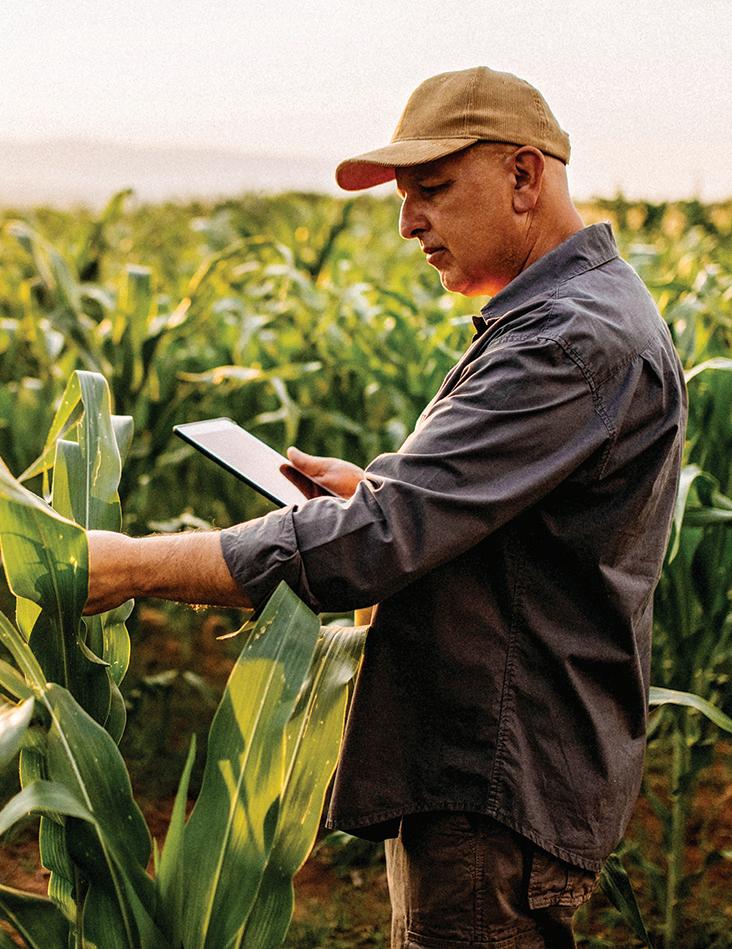
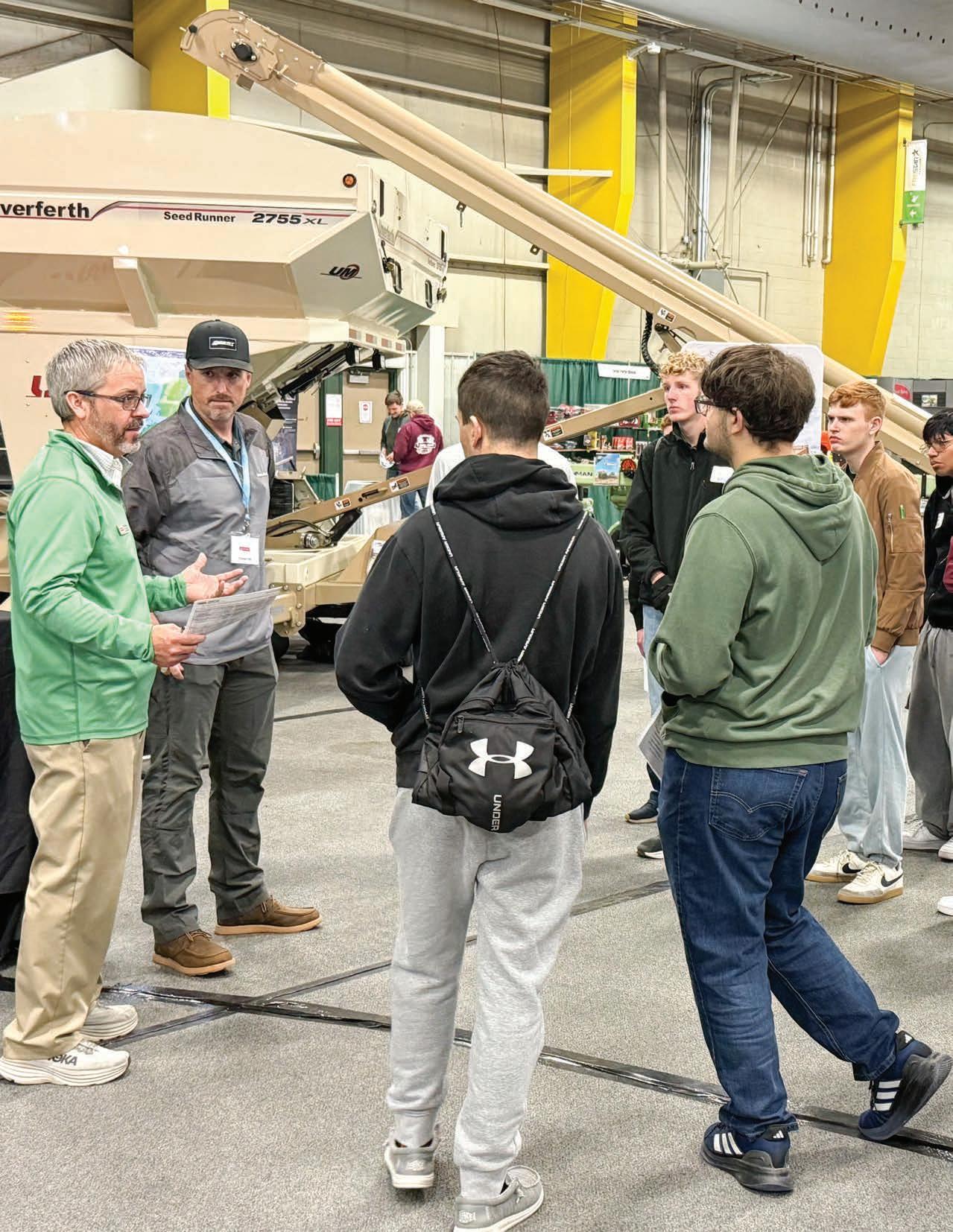

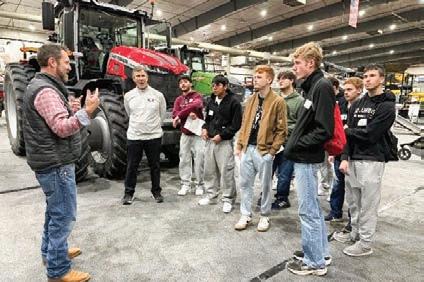

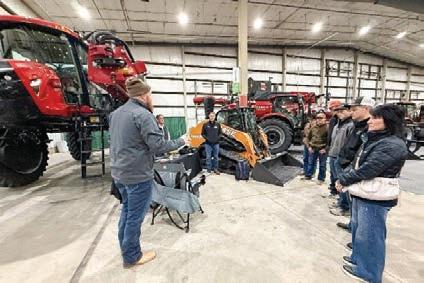
The 5th annual Career Exploration Event was held during the Nebraska Ag Expo at the Sandhills Global Event Center, December 9-11, 2025.
Over 500 students from 27 schools registered to attend. Schools from Arthur, NE to Craig, MO to Lincoln Northeast, Lincoln, NE participated in this event which included public, private, and home school students.
The Nebraska Ag Expo has been a great way to introduce middle and high school students to career opportunities in agriculture and the equipment industry.
Students participated in a guided tour of the Nebraska Ag Expo with 22 representatives of 17 INEDA equipment dealerships in Nebraska. Students were matched up with members from their area and were also able to visit dealer members
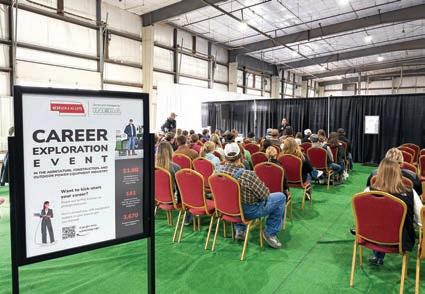
who were exhibiting at the Expo.
Additionally, students were introduced to manufacturers and innovators showcasing cutting-edge agriculture technology, discovered the value of a two-year education at Nebraska’s community colleges (plus tuition reimbursement), and learned how dealers can help them receive support towards their training and education including the Andrew Goodman Scholarship Program from INEDA.
Every INEDA member was invited to participate in the tours and stops of the Career Exploration Event. Students who participated are being surveyed to share their career interests. That information will be shared with the dealers who participated in the Career Exploration Event.
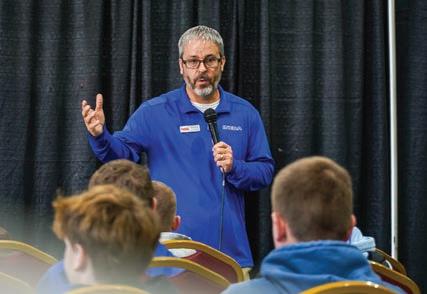

CINDY FELDMAN, Marketing Director [cindyf@ineda.com]
Economic downturns challenge equipment dealerships in unique ways. Customers become more cautious, analyzing every purchase more closely and prioritizing return on investment over expansion. The dealerships that maintain discipline, visibility, and strong relationships during slower cycles often emerge stronger when the market rebounds.
• Stay visible — maintain consistent communication through email, social media, inventory updates, and service promotions.
• Shift messaging to value — focus on ROI, fuel efficiency, reduced downtime, warranties, and total cost of ownership.
• Promote parts and service aggressively — inspections, preventative maintenance, and service specials keep revenue steady.
• Lean into relationships — personalized outreach and customer appreciation build loyalty during uncertain times.
• Use data to guide decisions — track email performance, web traffic, ad results, and service trends to optimize marketing efforts.
• Don’t go silent — disappearing from communication channels signals instability.
• Don’t slash marketing without strategy — cut low-performing channels first and prioritize high-ROI tactics.
• Don’t compete on price alone — heavy discounting erodes margins and trains customers to wait.
• Don’t ignore existing customers — retention is more cost-effective than acquisition.
• Don’t overpromise — be transparent about inventory, timelines, and availability to maintain trust.
Serving equipment dealers at INEDA, I’ve seen firsthand that downturns reward clarity, consistency, and confidence. Marketing isn’t always about spending more in uncertain times — it’s about communicating smarter and reinforcing trust. The dealerships that stay visible and lead with value today are the ones that gain market share tomorrow.




8330 NW 54th Ave.
Johnston, IA 50131-2841
by

investment, and nationwide. you achieve your personal we put your best interest succeed when you succeed.
Favored Benefits, we serve as a partner in helping individuals, families and businesses achieve financial success.
Our experienced professionals are supported by world-class resources, providing a full suite of financial, investment, and retirement planning services to clients nationwide.
We focus, first and foremost, on helping you achieve your personal financial goals. As fiduciary profession first, at all times and in all situations. We succeed when you succeed.

Interested in learning more about how we help you achieve your financial goals? Contact us to get started.
David B. Wentz,

J.D., LUTCF | CEO