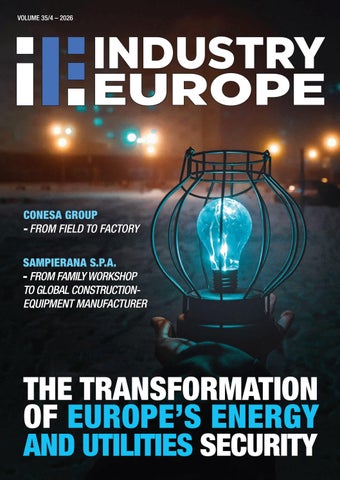
CONESA
GROUP - FROM FIELD TO FACTORY

SAMPIERANA S.P.A. - FROM FAMILY WORKSHOP TO GLOBAL CONSTRUCTIONEQUIPMENT MANUFACTURER
![]()
GROUP - FROM FIELD TO FACTORY

SAMPIERANA S.P.A. - FROM FAMILY WORKSHOP TO GLOBAL CONSTRUCTIONEQUIPMENT MANUFACTURER


For two decades, the European Union has lived with a paradox. It is one of the world’s largest economies, a regulatory superpower, and a political union of democracies representing nearly 450 million citizens — yet it often behaves like a middle power. Meanwhile, the international system has hardened into strategic rivalry, increasingly defined by two giants: the United States and China. In such a world, fragmentation is not neutrality; it is vulnerability. If Europe wishes to preserve prosperity, democratic values, and geopolitical relevance, it will need not less integration but decisively more. In short, the EU needs “more Europe.”
The global balance of power has shifted. The United States retains military dominance, technological leadership, and financial centrality through the dollar system. China has built industrial scale, state-directed innovation, and supply-chain leverage unmatched by any individual European state. Europe’s strengths — human capital, industrial sophistication, and regulatory influence — are undermined by political and economic fragmentation. Twenty-seven fiscal policies, energy strategies, procurement systems, and defense structures cannot compete with continental-scale actors that mobilize resources coherently.
Europe’s problem is not weakness; it is division.
The EU’s single market is its greatest achievement, but it remains unfinished. Goods move relatively freely, yet services, capital, and digital business still encounter national barriers. A tech startup in one EU country still faces complicated expansion across borders. This matters because economic competition in the 21st century is about scale.
American companies operate across a unified domestic market; Chinese firms benefit from coordinated national policy. European firms, by contrast, navigate regulatory patchworks and fragmented capital markets. Europe produces excellent companies but struggles to turn them into global champions.
A genuine capital markets union — allowing savings in one member state to finance innova-
tion in another — would transform Europe’s economy. The EU has large savings but insufficient mechanisms to fund high-growth sectors such as artificial intelligence, semiconductors, and biotechnology. Without integration, innovation will continue to migrate abroad.
The technological contest between Washington and Beijing is defining global influence. Artificial intelligence, advanced chips, and green technologies will determine economic leadership for decades. Europe risks dependence on foreign platforms and hardware.
No single European country can independently build semiconductor ecosystems comparable to the U.S. or China. Collectively, however, the EU could. Coordinated industrial policy, shared research funding, and joint procurement would allow Europe to pool its scientific talent and financial resources.
Energy is geopolitics. Dependence on authoritarian suppliers constrains foreign policy. A unified European energy strategy would enhance both security and climate leadership.
The Airbus project demonstrated this possibility. Individually, European states could not compete with Boeing; together they created a global aerospace competitor. Strategic sectors today require similar continental organization, including shared computing infrastructure and coordinated innovation policy.
The Russian invasion of Ukraine revealed both Europe’s unity and its dependency. European support was substantial, yet military capability still relied heavily on the United States. NATO remains essential, but permanent reliance on Washington carries risk as U.S. strategic priorities shift toward Asia.
Europe spends significant sums on defense but inefficiently. Multiple weapons systems and fragmented procurement reduce readiness. A more
integrated defense framework and joint procurement would strengthen Europe’s capabilities and create a stronger European pillar within NATO.
Strategic autonomy does not mean opposing the United States; it means partnership between equals.
The energy crisis exposed national responses to continental challenges. When states compete for energy contracts or subsidies, they undermine the single market. Joint purchasing, integrated grids, and coordinated investment in renewables would reduce vulnerability and accelerate the green transition.
Energy is geopolitics. Dependence on authoritarian suppliers constrains foreign policy. A unified European energy strategy would enhance both security and climate leadership.
The pandemic recovery fund showed how collective borrowing can stabilize economies and finance recovery. To compete with large American and Chinese industrial subsidies, Europe needs a limited but permanent fiscal capacity focused on strategic investment. Otherwise, wealthier states will support their industries more heavily, fragmenting the single market.
Decision-making reform is also necessary. Rules requiring unanimity allow single governments to block common action. Expanding qualified majority voting in areas like foreign policy would make Europe capable of acting while preserving national representation.
The alternative to integration is not preserved sovereignty but diminished influence. Individually, European states will negotiate trade, technology standards, and security arrangements from weaker positions. Fragmented, Europe risks becoming an arena where others compete rather than a player shaping outcomes.
In the 20th century, European integration was about preventing war within Europe. In the 21st, it is about relevance beyond Europe. Either Europe organizes itself at continental scale, or decisions affecting its prosperity and security will increasingly be made in Washington and Beijing. More Europe is no longer merely an ideal; it is a strategic necessity in a world of giants. n
110 Boundary Road, Norwich
NR6 5JE, United Kingdom
Tel: +44 1133 281 173
Email: studio@industryeurope.net
Web: www.industryeurope.com
LinkedIn: www.linkedin.com/company/industry-europe


Across Europe, cities are changing in ways that would have seemed futuristic only a generation ago. Streetlights adjust automatically to pedestrian movement, buses communicate with traffic systems, buildings regulate their own energy use, and local authorities use realtime data to manage transport, waste and air pollution. These developments are part of the broader concept of the smart city.
A smart city is generally defined as an urban area where traditional services and infrastructure are improved through digital technologies for the benefit of residents and businesses . It integrates physical, digital and human systems—energy, transport, administration, buildings and communication networks—to use resources more efficiently and improve quality of life . Europe has become one of the global leaders in this transformation, largely because of strong public policy, environmental goals and long-term investment programmes.
Unlike some regions where smart cities are driven mainly by private technology companies, European smart urban development is shaped strongly by public policy. The European Union promotes urban digitalisation as part of its environmental and social agenda, especially the European Green Deal, which aims to reduce emissions and create climate-neutral economies.
Smart city policies seek to:
• improve services for citizens
• manage energy and water efficiently
• reduce traffic congestion and pollution
• create safer public spaces
• support ageing populations and accessibility
The EU has invested heavily in research and innovation. Through programmes such as Horizon Europe, tens of billions of euros have been directed toward projects including intelligent infrastructure, zero-emission districts and digital public services . One flagship initiative, “ClimateNeutral and Smart Cities by 2030,” targets over 100 European cities as demonstration hubs to inspire the rest of the continent .
European smart cities rely on multiple technologies working together rather than a single system.
Sensors placed in streets, vehicles, bins and buildings collect real-time information about traffic flow, pollution and energy use. Cities use this data to improve decision-making. For example, smart waste systems can optimise collection routes and reduce costs.
Smart grids and energy-efficient buildings are central to Europe’s approach. Buildings equipped with automation systems can reduce heating and lighting energy, helping cities cut emissions.
Smart transport networks coordinate buses, trams, cycling routes and traffic lights. Real-time monitoring helps manage congestion and improve safety . Some projects also include electric buses and autonomous delivery vehicles supported by 5G connectivity, which enables real-time communication between vehicles and infrastructure.

One of the newest developments is the digital twin—a virtual 3D model of a city. Cities such as Aachen in Germany use digital twins to simulate transport patterns and plan infrastructure improvements before construction . AI systems can analyse data from sensors to predict traffic, energy demand or environmental risks.
Barcelona, Spain
Barcelona is often cited as a model smart city. Its “superblock” design reduces traffic in residential areas and increases green space, while smart lighting and waste sensors have significantly reduced energy use and collection costs . The city also hosts the Smart City Expo World Congress, an international gathering focused on urban innovation.
Paris promotes the “15-minute city” idea, where essential services— schools, shops and healthcare—are accessible within a short walk or cycle. This reduces car dependency and emissions .
Amsterdam, Netherlands
Amsterdam pioneered open urban data platforms and smart mobility, although it has also faced privacy concerns. Plans for intelligent traffic lights were halted after worries about large-scale data tracking . This shows that social acceptance is as important as technology.
Tallinn focuses on digital government services and online administration, illustrating how smart cities are not only about infrastructure but also governance and public participation.
Smart cities aim to improve both sustainability and everyday life.
Environmental benefits
• reduced carbon emissions
• efficient energy use
• improved air quality
Smart lighting and buildings lower energy consumption, while better transport reduces traffic pollution .
Economic benefits
• innovation hubs attract businesses and startups
• new jobs in technology and green industries
• efficient services reduce municipal costs
Social benefits
• safer streets through monitoring and lighting
• accessibility for elderly and disabled residents
• citizen participation in decision-making.
Despite their advantages, smart cities face serious challenges.
Privacy and surveillance
The collection of urban data raises fears about surveillance. The Amsterdam traffic-light controversy shows concerns over tracking citizens’ movements.
Digital divide
Not all residents have equal access to technology. Without careful planning, smart cities may benefit wealthy or technologically literate groups more than others.
Connected infrastructure—transport systems, utilities and services—can be vulnerable to hacking. A cyberattack on a smart power grid or transport network could disrupt entire cities.
Governance and ethics
Smart cities require clear rules on data ownership and accountability. European policy therefore emphasizes citizen engagement and transparency .
European smart cities are evolving beyond simple automation toward climate-neutral, human-centred urban environments.
Climate neutrality
Many European cities aim to reach net-zero emissions by 2050. Smart grids, renewable energy and electrified transport will be central to this transition.
AI-driven planning
Digital twins and predictive AI will allow governments to test policies before implementing them, such as modelling new transport routes or flood risks.
Connected mobility
5G networks will support autonomous vehicles, smart logistics and integrated public transport systems .
Citizen-centric governance
Future smart cities are expected to emphasise participation, where residents contribute data and feedback and help design policies .
Urban lifestyle transformation
Concepts like walkable neighbourhoods, remote work infrastructure and shared mobility may change how people live and commute.
Smart cities represent one of the most important urban transformations in modern Europe. They combine digital technology, environmental policy and social planning to create more efficient, sustainable and liveable urban spaces. Through strong public investment and climate goals, Europe has positioned itself as a global pioneer in this field.
However, the future of smart cities will not depend solely on technology. Issues such as privacy, equity and public trust will determine whether citizens accept these systems. The next phase of development is likely to move away from purely technological innovation toward human-focused urban design—cities that are not just intelligent, but fair, green and democratic.
Ultimately, the European vision is not simply a city filled with sensors and algorithms. It is a city where technology quietly supports daily life—cleaner air, easier transport, efficient services and active communities. If implemented carefully, smart cities could become a central solution to Europe’s biggest urban challenges: climate change, ageing populations and sustainable economic growth.

Europe’s energy system is undergoing the most profound transformation in its modern history. For decades, European utilities focused on three objectives: keeping electricity affordable, keeping supplies stable, and gradually lowering emissions. After 2022, a fourth and more urgent objective emerged — geopolitical survival. The war in Ukraine exposed a structural vulnerability: Europe was wealthy, technologically advanced, but deeply dependent on imported energy. In response, the continent has begun redesigning its energy and utilities sector at speed. The future of European energy security will therefore not be defined by a single fuel or technology. Instead, it will be shaped by diversification, electrification, infrastructure resilience, and the restructuring of utilities into system operators rather than mere power suppliers.
Before the crisis, the European Union imported the majority of its energy. Around 60% of energy was imported, including 90% of natural gas and 97% of oil.
Russia alone supplied over 40% of EU gas before 2022.
This dependence was not just economic — it was strategic. Energy imports could be weaponised. When supplies tightened after the invasion of Ukraine, prices surged, industries struggled, and governments intervened massively to prevent social unrest. The crisis proved that energy policy is not merely climate policy; it is national security policy. Analysts now increasingly treat clean energy infrastructure as a form of defence capability because, unlike fossil fuels, renewable sources cannot be blockaded or politically manipulated.
The European response has been decisive. Russian gas imports have already fallen dramatically, from over 40% of imports in 2021 to under 19% in 2024, with a complete phase-out planned by 2027.
Europe’s long-term answer is the REPowerEU strategy, which aims to make the EU independent of Russian fossil fuels well before 2030.
Its approach combines four pillars:
1. Diversify imports
2. Expand renewable energy
3. Reduce consumption
4. Electrify the economy
The EU has already demonstrated emergency capability. Gas storage facilities reached over 90% capacity ahead of winter, and demand fell by 18% between 2022 and 2024.
However, the real change lies in structural redesign. Europe is not merely finding new suppliers — it is attempting to eliminate the concept of dependence altogether by producing energy domestically from wind, solar, nuclear and hydrogen.
Renewables now sit at the centre of energy security strategy. The EU targets 42.5% renewable energy in the mix by 2030.
In 2023, wind and solar together generated more electricity than fossil fuels in the EU for the first time.
The security logic is simple: fossil fuels require continuous imports; renewables require infrastructure but not ongoing geopolitical exposure. Wind, sunlight and water are domestic resources.
This shift will fundamentally transform utilities. Historically, utilities purchased fuel, generated electricity centrally, and sold it to consumers. In the future, energy generation will be distributed — rooftop solar, offshore wind, battery storage, and local grids. Utilities will increasingly act as grid managers and balancing operators, coordinating millions of small energy producers rather than controlling a few large power stations.
Ironically, Europe’s greatest future energy security threat may not be fuel — but infrastructure.

Future utilities will spend less on power stations and more on transmission systems, digital control, cybersecurity and energy storage.
Electricity alone cannot power everything. Heavy industry, shipping, aviation and steel production require high-temperature fuels. Europe’s solution is hydrogen.
The EU plans to produce 10 million tonnes of renewable hydrogen and import another 10 million tonnes by 2030.
Hydrogen could supply around 10% of Europe’s energy needs by 2050.
This will create a new type of energy network — pipelines, storage caverns, and import terminals similar to natural gas systems today. Offshore wind in the UK and Ireland may become a major hydrogen export source for continental Europe, reshaping energy trade patterns across the continent.
Utilities in the future will therefore operate multi-energy systems: electricity grids, hydrogen networks and storage facilities rather than only power plants.
Even with massive renewable expansion, Europe still needs reliable “firm” energy — power available at any moment regardless of weather.
Different countries are choosing different paths:
• France is expanding nuclear reactors to reduce fossil fuel use.
• Germany plans gas power plants designed to run on hydrogen later.
Natural gas will not disappear quickly. Instead, it will transition into a backup fuel rather than a primary energy source. Power plants will increasingly act as emergency stabilisers for renewable grids rather than baseload generators.
The future system is safer from oil and gas embargoes — but introduces new vulnerabilities.

Renewables rely on lithium, cobalt, copper and rare earth metals. Instead of depending on Russia for gas, Europe risks depending on foreign mining supply chains, especially in Africa and Asia.
Energy security will increasingly rely on cooperation. European countries must share power across borders, coordinate storage, and operate common emergency systems. The EU emphasises solidarity because unilateral action could destabilise the entire grid.
The traditional utility — a national monopoly selling electricity generated from fossil fuels — is disappearing. The future European utility will look more like a technology and infrastructure platform. It will:
• Manage distributed generation
• Balance intermittent renewables
• Operate energy storage
• Run hydrogen networks
• Provide demand-response services
• Protect against cyberattacks
In short, utilities are becoming system integrators.
Europe’s future energy security will not depend on discovering new fuel reserves. It will depend on redesigning the energy system itself. The continent is moving from an import-based model (oil and gas) to an infrastructure-based model (grids, renewables and hydrogen). The strategy seeks to replace geopolitical dependence with technological resilience.
By 2030–2050, the European energy system will likely be characterised by electrified transport, renewable-dominated generation, hydrogen-powered industry, and interconnected continental grids. The risks will shift from pipelines and tankers to cyber networks and infrastructure maintenance.
Ultimately, Europe is attempting something unprecedented: achieving climate neutrality and energy independence simultaneously. If successful, its utilities sector will not merely supply electricity — it will underpin economic stability, national security, and geopolitical autonomy across the continent. n
Researchers at LZH are developing a robust laser system for monitoring greenhouse gases from space using a hybrid approach as part of the EU project HALLOA. The goal is to provide precise data to improve our understanding of the climate, while also strengthening Europe's technological independence.
Together with five partners from two additional countries, LZH scientists are developing a robust laser system for space-based measurements. LiDAR (Light Detection and Ranging) systems use laser pulses to capture distances and velocities, but can also measure trace gases and aerosols. The laser system should be used to monitor the greenhouse gas carbon dioxide from space in the future. This data on concentrations and distributions can help to improve our understanding of humaninduced climate change and track the impact of potential countermeasures.
Within the EU-project HALLOA, scientists at LZH test laser faser amplifiers and other components to ensure their space qualifications.
The new laser is based on a hybrid architecture. It combines the advantages of fibre-optic systems, which are compact, versatile, and lowmaintenance, with those of free-space designs, which offer high potential for power scaling. To achieve this, the partners work with both fibre and solid-state amplifiers. This combined solution has lower complexity than conventional systems and will therefore significantly accelerate the development of the space LiDAR system.
As part of the project, the partners are improving the design of a pulsed thulium fibre amplifier for the near-infrared range at a wavelength of 2.05 µm. The objective is to build a fibre amplifier prototype with Technology Readiness Level (TRL) 6 using exclusively European components. To optimize
the entire laser system for operation under space conditions, the partners first develop a potential concept for a future space mission. Building on this foundation, they develop the requirements for the associated LiDAR system, the optomechanical design of the laser system, and specially adapted high-power laser diodes that emit at a wavelength of 790 nm, which are required for operating the fibre amplifiers. This culminates in the demonstration of a robust fibre amplifier built with European components. Finally, this is integrated into a hybrid overall laser system.
The LZH scientists are responsible for space qualification testing within the project. They will subject individual components as well as the developed fibre amplifier to vibration and shock, thermal cycling, and radiation testing. The fibre amplifier is scheduled to advance from the existing Technology Readiness Level (TRL) 4 to 6 within three years.
AirbusDefence and Space has selected Skynopy, a French NewSpace company specialising in satellite ground station services, to support the enhancement of the ground segment for its very high-resolution optical imagery services based on its Pléiades Neo constellation.
Through this collaboration, Airbus Defence and Space strengthens the performance and responsiveness of its Earth observation services by leveraging Skynopy’s next-generation, fully virtualised ground station systems. The service is designed to improve Airbus’ Pléiades Neo reactivity and reduce data latency over several regions in the world, meeting the growing demand from institutional and commercial customers for faster access to very high-resolution imagery.
Pléiades Neo satellites are part of Airbus’ high-resolution optical constellation, delivering native 30cm resolution imagery with high reactivity for a wide range of applications, including defence, security, disaster management, civil engineering, environmental monitoring and commercial services.
By integrating Skynopy’s ground station services into its operations, Airbus Defence and Space is able to further optimise data acquisition and downlink performance, reducing the time between image acquisition and data availability through the OneAtlas platform. This enhanced responsiveness represents a key differentiator for demanding customers requiring faster access to critical Earth observation data.
Skynopy brings a fully software-defined ground segment, combining centralised orchestration and virtualised modem technologies to enable rapid deployment of new ground stations and flexible resource allocation.
An initial operational test conducted earlier this year demonstrated record integration timelines, with new capabilities deployed within weeks and transitioned to operational service within months, while supporting realtime data downlink with high quality of service.
“This collaboration with Airbus Defence and Space illustrates how a fully software-defined and virtualised ground segment can bring tangible performance gains for very high-resolution Earth observation services,” said Antonin Hirsch, CTO and co-founder of Skynopy. “Our objective is to enable satellite operators to deploy and operate ground infrastructure faster, with greater flexibility, while delivering the levels of responsiveness and data availability expected by today’s most demanding users.”
Illustrating agile collaboration between a major industrial player and a NewSpace company
“This collaboration highlights Airbus’ ability to work with innovative European startups to continuously enhance its services and remain at the forefront of Earth observation capabilities,” said Eric Even, Head of Space Digital at Airbus Defence and Space.
It also reflects the growing role of agile, software-driven ground segment solutions in supporting next-generation satellite systems.
Skynopy’s model, based on a hybrid network of shared and proprietary ground infrastructure, contributes to strengthening the European space ecosystem and supporting sovereign capabilities, in line with Airbus’ longstanding commitment to innovation, industrial excellence and reliability.
MEGATRON’s MP1612 Hall-effect rotary encoder features a compact design and wear-free sensing. This makes it a great alternative to potentiometers. The encoder electronics remain completely reliable even under large temperature fluctuations.
The MP1612 single-turn Hall effect encoder from MEGATRON is particularly well suited for mobile applications
The MP1612 uses the Hall effect for signal acquisition and is equipped with a high-quality sleeve bearing, enabling it to exceed 100 million revolutions with ease. The electronics are housed in a rugged metal enclosure that meets IP65 protection requirements. This makes the encoder well suited to use in mobile machinery
and vehicles, where shocks, dust and moisture are part of everyday operation.
The MP1612 provides a voltage output of 0.5–4.5 V with 12-bit resolution and operates within a wide temperature range of –40 °C to +105 °C. With a housing depth of just 11.5 mm and a diameter of only 12 mm, this single-turn encoder can easily be fitted in even the most confined spaces, such as control panels, joysticks and the compact control housings of AGVs, industrial trucks and agricultural machinery.

MEGATRON can also supply the rotary encoder on request with redundant electronics or a SIN/COS output. Mechanical mounting can be achieved either via a metric bushing
Exxelia has developed a new Smart Integrated Magnetics solution designed for advanced power conditioning and distribution units (PCDUs) operating in constrained and demanding environments such as space systems.
This solution is not a standard catalog product; it is the result of a custom development. It has been engineered to meet specific electrical, thermal and mechanical requirements defined at system level and can be adapted to meet any set of customer specifications.
Exxelia new Smart Integrated Magnetics solution combines the transformer and the inductor of a Dual Active Bridge (DAB) within a single, compact magnetic assembly. This integrated approach aims to reduce volume, mass and interconnection complexity while maintaining electrical performance at high switching frequencies. The targeted application is isolated DC-DC power conversion in space-grade PCDUs, where efficiency, reliability, and mechanical robustness are key design drivers.
From a technical standpoint, this Smart Integrated Magnetic is designed for a power level of 1 to 2kW at a switching frequency of 100 to 200kHz (example). The associated inductor provides an inductance of few µH. The overall assembly reaches an efficiency level close to 99% under nominal operating conditions, reflecting careful optimization of core materials, winding architecture and magnetic coupling. Particular attention has been paid to losses and thermal behavior, which are critical in low-convection environments.
Mechanical integration was a central aspect of the development. The complete magnetic solution fits into a low-profile / planar package measuring approximately 75 × 65 × 20 mm, with a total mass
thread with a mounting nut and toothed lock washer or by means of a flange. This enables the encoder to be quickly and securely integrated into the application, even where space is extremely limited.
of around 250 g. This compact form factor is intended to facilitate integration into densely populated power electronics modules, while also supporting resistance to mechanical stresses typically encountered during launch and operation.
The design was carried out to address severe environmental constraints, including thermal cycling and mechanical loads, which are characteristic of space applications. Material selection, impregnation processes and structural design were adapted accordingly to ensure long-term stability and compatibility with qualification requirements.
This Smart Integrated Magnetics solution illustrates Exxelia’s capability to deliver fully customised magnetic components, developed in close interaction with system architects and power electronics engineers. While the solution presented here is specific to a given program and set of constraints, it reflects a broader approach that can be adapted to other high-reliability applications requiring compact, efficient and integrated magnetic designs.

BASF is launching AdBlue® GE (Green Electricity) by BASF, a new product that is produced entirely with electricity from renewable sources. This reduces CO² emissions in the manufacturing process compared to conventionally produced AdBlue and improves the CO² footprint.
The prill tower in Ludwigshafen supplies urea for the production of AdBlue® by BASF
For production, 100 percent of the electricity required along the value chain will be replaced by green electricity from the Hollandse Kust Zuid offshore wind farm. The attribution is made according to a mass balance approach.
AdBlue GE by BASF is completely equivalent to conventional AdBlue products in terms of
quality and performance. Users therefore ben efit from high purity, constant engine perfor mance and an effective reduction of nitrogen oxides (NOx) as well as less soot formation.
“With AdBlue GE by BASF, we offer our customers a new product that can directly be used as drop-in solution without any further adjustments. The use of green electricity is the next important step in the expansion of our product portfolio,” said Frederik Keilen, Business Manager AdBlue by BASF.

BASF is introducing AdBlue GE by BASF in Switzerland together with its longstanding brand distribution partner Thommen Furler. “BASF shows that it is possible to produce
BASF’s Intermediates division is taking decisive steps to further strengthen supply security for its European customers in the 1,4-butanediol (BDO) value chain. By gradually increasing production output at its BDO plant in Ludwigshafen, Germany, BASF aims to support customers with stable and reliable supply across Europe as they navigate the implications of recent BDO anti-dumping proceedings.1
Thanks to its highly integrated Verbund structure encompassing the entire acetylene value chain, the company’s increased BDO output reinforces the availability of key derivative products such as tetrahydrofuran (THF), polytetrahydrofuran (PolyTHF®) and N-methylpyrrolidone (NMP) from BASF. This integrated setup supports critical downstream markets, including polymers, solvents, elastomers and high-performance materials, while enabling stable production planning. The focus on production in Ludwigshafen is part of BASF’s strategic commitment to the European BDO and downstream market and aims to strengthen the long-term perspective for both BASF and its customers.
“In an environment of shifting global markets and growing regionalization, robust and reliable regional production capabilities are becoming increasingly critical for our downstream industries,” explains Verena Siegel, Vice President Global Business Management for Butanediol and Derivatives in BASF’s Intermediates division.
In line with its sustainability strategy, BASF continues to expand its portfolio of more sustainable products, which includes, for instance, biomass balanced (BMB) versions of BDO, THF and PolyTHF® that save
AdBlue more sustainably. In addition, thanks to delivery by rail, CO² emissions are reduced along the entire supply chain. We are very proud to be the partner for AdBlue GE by BASF,” said Thierry Zuber, COO Thommen Furler Group, Mobility Division. A gradual market expansion to other European countries is already in preparation.
fossil resources and reduce Product Carbon Footprints (PCFs).2 “Producing more BDO in Ludwigshafen allows us to minimize transport needs and draw on the efficiencies of our integrated Verbund, resulting in a reduced PCF,” explains Sebastian Spicher, Senior Product Manager for Acetylene and Butanediol. “At the same time, we are advancing new solutions that make use of renewable electricity and renewable raw materials.” These measures help improve lifecycle performance across BDO derivatives and underline BASF’s commitment to driving more sustainable value chains.
BDO is a key intermediate used across numerous downstream markets, including polymers, textiles, automotive engineering, pharmaceuticals and consumer goods. BASF is one of the global leaders in BDO and its derivatives, operating two BDO production plants in Ludwigshafen, Germany, and Geismar, Louisiana.
1 According to the European Commission’s pre-disclosure (January 8, 2026), imports of BDO from China, Saudi Arabia and the United States will be subject to provisional anti-dumping duties following significant dumping and injury margins observed.
2 Learn more about BASF’s BMB approach on the Biomass Balanced (BMBcert®) Intermediates website and about BMB products from BASF in the news release: BASF expands its biomass balance portfolio for selected

Adry vacuum offers many advantages to users from a wide range of sectors. These include longer running performance and ultimately greater efficiency in the processes. As one of the leading suppliers of speciality gases, welding accessories and automation solutions, OE Meyer from the US state of Ohio has been relying on dry vacuum technology since January of 2023. By switching to the DRY screw vacuum pumps and the oxygen resistant VARODRY HD/O2 from Leybold, the company from the Midwest of the USA has achieved significant process improvements.
The dry DRYVAC 650 from Leybold ensures betterperformance and a longer service life.
OE Meyer has seven different locations throughout the state and is 100 percent owned by its 130 employees. The company has been providing the highest quality products and services since 1918. This credo has also helped the specialists maintain their legacy for a century. OE Meyer supplies its customers with industrial and speciality gases as well as welding and production systems. Customised solutions are aimed at industry, agriculture, the healthcare system and the gastronomy. The focus is on both young start-ups and established large companies. The Americans
Constructed at China Merchants Jinling Shipyard (Jiangsu) co. ltd., MV Ocean Legacy measures approximately 199.90 meters in length and 37.7 meters in breadth, with a car-carrying capacity of 7,400 units distributed across 13 cargo decks. The vessel is equipped with LNG storage capacity ranging between 36 and 37.8 tons, ensuring extended endurance and reduced emissions during long-haul voyages.
With sustainability at its core, the vessel integrates contemporary LNG dual-fuel propulsion and energy-efficient design solutions that go well beyond regulatory requirements. These technologies enable a significant reduction in greenhouse gas emissions and other air pollutants, while enhancing operational reliability and fuel flexibility.
concentrate on general and medical gas and industrial gas filling as well as cylinder, oxygen and inert gas filling.
When using the previous vacuum pumps, there was a serious problem with oil leaks.
‘The oil leaks caused considerable costs on the one hand and safety risks due to slipping hazards and environmental damage on the other. The oil changes also cost around 1,600 dollars each,’ says Mitch Robinson from OE Meyer, looking back. In order to keep pace with modern operational safety and environmental standards and reduce costs at the same time, it was therefore only logical to replace the existing vacuum technology. ‘This step was a good opportunity to offer the customer OE Meyer a sustainable alternative with the dry VARODRY HD/O2 vacuum pumps,’ recalls Josh Miller from Leybold. The introduction of the dry-running DRY vacuum pumps also confirmed the change.
‘The investments were right across the board, and the new pumps proved to be clean, ergonomic and efficient in use,’ summarises Mitch Robinson from OE Meyer. The dry technology now eliminates oil contamination and backflow, ensuring a safe working environment. Just as importantly, the oxygen-tolerant VARODRY HD/O2 fits seamlessly into current processes and has led to greater
operational efficiency and savings, for example in the filling process with medical oxygen. What's more, certification for operation with oxygen-rich processes gives employees confidence in handling dry vacuum technology.
The dry DRYVAC from Leybold also ensures better performance and a longer service life: it combines a higher production yield with minimised contamination risks, especially in demanding processes. In addition, the switch to DRY vacuum pumps has resulted in savings of approximately $10,000 per year in PFPE oil consumption alone. In addition, the elimination of maintenance issues during oil changes means savings of $10,000. So, despite initial concerns, operational efficiency has improved, making the entire operation cleaner and more profitable.
‘We have also had nothing but good experiences with Leybold's services so far. The customer support provided by the maintenance staff was punctual and uncomplicated,’ says Mitch Robinson from OE Meyer, describing the interaction. The employees have not only received effective solutions for their specific problems, but also insights and tips on how to improve their skills and carry out maintenance work themselves. For example, it only takes 15 minutes to change a belt on the VARODRY.
‘The bottom line is that our overall satisfaction with Leybold's products and services is high,’ says Mitch Robinson, summarizing the overall benefits.
By adopting these advanced systems, Sallaum Lines positions itself at the forefront of turning environmental ambition into measurable action, reinforcing its role in supporting the maritime industry’s transition toward lowercarbon, future-ready RoRo transportation.
“The addition of MV Ocean Legacy marks a practical step in strengthening our fleet and improving its environmental performance,” said Mr. Sami Sallaum, Chairman of Sallaum Lines. “This delivery reflects our ongoing investment in modern vessels designed to reduce emissions and improve operational efficiency. It also supports our objective of providing dependable shipping services while adapting to evolving regulatory and industry requirements.”
Together with MV Ocean Breeze & Ocean Explorer, the Ocean Legacy embodies the next generation of eco-efficient PCTCs, integrating optimized hull forms, advanced automation, and flexible cargo configurations to enhance turnaround efficiency and operational performance.


Sampierana S.p.A. is an Italian engineering and manufacturing company operating in the constructionequipment sector, best known for compact excavators, undercarriages and heavy-duty spare parts. Headquartered in San Piero in Bagno, in the Emilia-Romagna region of northern Italy, the business has evolved from a small family workshop into an internationally integrated manufacturer within the CNH Industrial group, one of the world’s major capital-goods companies.
The company’s history stretches back to the 1950s, when founder Aleardo Para established a modest iron-working and tractor repair workshop in the town where the firm is still based today.
Over the following decades, Sampierana gradually expanded its technical capabilities. By the mid-1970s the founder’s sons had joined the business, and in 1976 the company became an authorised dealer of Berco, a well-known manufacturer of undercarriage components for tracked machinery.
The company’s technical focus increasingly shifted toward crawler undercarriages—an essential component for tracked construction equipment. Production of its own undercarriage systems began in the 1980s, laying the groundwork for future expansion into complete machines.
A major turning point came in 1993. Sampierana acquired an Italian manufacturer of small backhoe loaders and launched the Eurocomach
brand, marking its entry into full machine production.
Since then, the company has produced a range of compact construction equipment including mini-excavators, skid loaders and articulated backhoe loaders designed for a wide variety of applications such as construction, demolition, forestry and recycling.
Alongside machine manufacturing, the firm also developed attachments and accessories—quick couplers, buckets, hydraulic actuators and loading ramps—creating a complete ecosystem around its equipment.
By the early 2000s the business had become a limited company (S.p.A.) and expanded internationally. In 2007 it introduced its own branded line of undercarriage spare parts, including chains, rollers, and rubber or steel tracks designed for heavy-duty use in earthmoving and related industries.


Today Sampierana operates across three main product areas:
• Compact construction machinery (Eurocomach brand) – mini and midi excavators and loaders aimed at contractors and specialist operators.
• Undercarriage systems – custom tracked undercarriages used on heavy machinery and specialised vehicles.
• Spare parts and attachments – components such as tracks, rollers and hydraulic equipment for construction and industrial applications.
The company emphasises customisation and engineering flexibility, describing its operations as a “technological tailor shop” where equipment is developed in cooperation with customers to meet specific operational needs.

In recent years, Sampierana has also invested in electrification. It has produced electric mini-excavators and expanded an electric equipment range designed to reduce emissions and improve efficiency on urban or indoor job sites.
Sampierana’s main engineering and assembly headquarters remains in San Piero in Bagno, where design, administration and research activities are concentrated.
The company has expanded its physical footprint with additional facilities:
• Modena (opened 2017): a large warehouse and logistics hub supplying undercarriage spare parts across Europe and beyond.
• Cesena plant (opened 2023): a production site dedicated to compact construction equipment, including electric machines.


• Together these locations support a workforce of several hundred employees and provide global distribution of its products.
The most significant recent development occurred in 2021, when CNH Industrial—parent company of brands such as Case Construction Equipment and New Holland Construction—acquired 90% of Sampierana, with plans to obtain full control over time.
The acquisition was strategic. CNH Industrial sought to strengthen its position in the fast-growing compact excavator market and gain in-house expertise in undercarriages and specialised construction equipment.
As part of the deal, Eurocomach machines and Sampierana components were integrated into CNH’s broader product portfolio and distribution network, allowing the Italian manufacturer’s products to reach wider international markets.
The investment also led to further industrial development, including the new Cesena manufacturing site designed to increase production of compact and electric construction equipment.
Sampierana is now recognised in the construction sector for reliability, engineering quality and customisation capability, particularly in compact excavators and specialised tracked systems.
Its evolution reflects a broader pattern common to many successful European industrial firms: a family-run mechanical workshop developing niche expertise, gradually scaling into a global manufacturer and ultimately joining a multinational industrial group.
From its origins as a local metalworking workshop in the 1950s to its modern role within CNH Industrial, Sampierana S.p.A. represents more than just a machinery manufacturer. The company
combines traditional mechanical engineering skills with modern industrial production and international distribution.
Its strengths lie in compact construction equipment, custom undercarriage engineering and specialist spare parts, supported by continuous innovation—especially in electric machinery. Today, integrated into a global capital-goods corporation yet still rooted in its Italian manufacturing heritage, Sampierana stands as an example of how a regional family business can grow into a globally relevant engineering enterprise. n

Konecranes has successfully completed the delivery and installation of a range of material handling equipment for INASUS, a leading European manufacturer of special facades for buildings. The order, booked in February 2025, included six console cranes and 12 KBK workstation lifting systems equipped with 18 Konecranes D-Series electric chain hoists. All equipment was delivered and installed at the customer’s production facility in Lalín, Spain, in August 2025.
The cranes enable INASUS to efficiently handle, move and position glass panels throughout the production and installation process. The modular design of the KBK workstation lifting system provides flexibility, allowing the cranes to be positioned precisely where needed along the production lines and adapt seamlessly to INASUS’ workflow requirements.
“We sincerely appreciate the outstanding work delivered during the sale and installation of the
overhead cranes at our facilities. The team’s professionalism, adherence to deadlines, and the quality of both the products and the installation work have all contributed to an excellent result. It has been a pleasure working with a company that demonstrates such commitment and professionalism, while adapting seamlessly to the requirements of a customer as demanding as INASUS,” said Alberto Cuiña, CEO of INASUS.
“The D-series electric chain hoists deliver the precise lifting and positioning capabilities essential for safe handling of glass panels, helping INASUS maintain the highest product quality standards. Combined with the Konecranes KBK workstation lifting systems, this solution streamlines operations, significantly reduces manual handling risks and ensures the production process remains both efficient and safe,” said Jorge Monteiro, Sales Director, Industrial Services and Equipment, Konecranes Spain and Portugal.

MSA Safety, Inc., a global leader in the manufacture and distribution of PPE and safety systems, welcomes this week's harmonisation of EN 17235, a European test standard for permanently installed anchor devices used in horizontal construction applications.
EN 17235 sets out a comprehensive testing methodology for anchor devices that are permanently fixed to a structure, assessing not only the device itself, but also its fixings and the base material to which it is attached. The standard
was harmonised on 9 February, 2026, with an 18-month transition period. After the transition period, manufacturers across the UK and Europe will be required to test products to EN 17235 in order to produce a Declaration of Performance and apply CE marking.
The harmonisation of EN 17235 is expected to significantly improve safety levels industry wide by requiring consistent, robust testing across the built environment, and by preventing the use of inadequately tested products on construction projects.
MSA Safety has long been an advocate for rigorous, up-to-date testing of all safety devices and welcomes the move to make compliance mandatory.
Tim Bissett, technical expert at MSA Safety, is part of the working group that developed this standard. He comments: “This harmonisation of EN 17235 is a major step forward for safety in the construction sector. By making robust testing a legal requirement, the standard helps to level the playing field and helps make sure that anchor devices are

A strong focus on customers and commitment to business growth and continuous improvement make Konecranes a material handling industry leader. This is underpinned by investments in digitalization and technology, plus our work to make material flows more efficient with solutions that support the decarbonization of the economy and advance circularity and safety.
For a concise overview of Konecranes’ business, please click here. Konecranes’ leading solutions for general manufacturing can be found here. More information on Konecranes' service programs is here.
properly assessed as complete systems, not just as individual components.”
MSA’s development approach already reflects many of the principles now set out in EN 17235. For instance, its Constant Force Post range has long been tested as a complete system, looking not just at the anchor device itself, but also its fixings and the substrate it’s installed into. That mirrors the standard’s focus on assessing products in realistic installation conditions, helping give a clearer picture of how they’ll perform in practice.
The company is now progressing a programme to test both new and existing products directly to EN 17235, with its next-generation Constant Force Post among the first scheduled. MSA has historically carried out equivalent testing through the German DIBt approval process, whose methodology aligns closely with EN 17235 requirements, meaning many of its established testing practices are already consistent with the new framework.
“Testing to the latest standards has always been fundamental to how MSA designs and validates its safety solutions,” Bissett added. “EN 17235 formalises best practice and provides greater confidence for specifiers, installers and end users alike. Our mission is to send workers home safely to their families at the end of each day, and this helps us to do it.”
Increasing demands on process stability, energy efficiency, and noise reduction require a new approach to the design of conveyor and transfer systems. Automation specialist Kendrion has the optimal solution for this challenge with its electromagnetic stoppers. The stoppers enable fast, highly accurate, and low-noise implementation of central stopping and positioning functions. Since no compressed air infrastructure is required, operating and energy costs are also low.
Kendrion electromagnetic stoppers replace pneumatic solutions, thereby reducing operating costs
Stoppers play a key role in conveyor and transfer lines: they separate pallets and
workpiece carriers, position them precisely at processing stations, and must also work reproducibly at high cycle rates. Kendrion's electromagnetic stoppers are controlled directly via 24 V DC and can be integrated into common PLC and IO architectures without valve technology or pneumatic peripherals.
"With our electromagnetic stopper, we are replacing pneumatics with a purely electrical solution that lowers operating costs, reduces noise, and significantly simplifies system concepts," says Peter Deckel, Product Manager at Kendrion. Kendrion's electromagnetic stoppers are available in both damped and undamped versions. The undamped version is designed for high loads and fast cycles. It is designed
Atthis year’s LogiMAT, March 24-26, in the Stuttgart Trade Fair Centre in Germany, Dematic is planning to show how turning warehouse data into operational insight is critical to designing, operating and continuously improving end-to-end automation solutions. The company is also getting ready to launch new solutions that strengthen integration across automated facilities.
At its stand in Hall 1/H61, Dematic, a leading provider of intelligent automation technology, takes visitors on an entire warehouse journey filled with live technology demonstrations, expert discussion and customer service trainings
To show how connected intelligence improves decision-making across the entire supply chain. Technology partners are also available Technology partners are also going to be on hand to discuss how seamless integration helps customers achieve their long-term automation and performance goals.
Also making its European debut at LogiMAT 2026 is Dematic’s latest high-performance, railfree AS/RS solution.
“Innovation doesn’t come from isolated technologies but rather from understand -
ing how operations are actually performing,” says René Sickler, the Managing Director of Dematic in Germany, Austria and Switzerland (DACH). “When we combine operational data, on-site observations, analytics and customer experience, we gain insight. That insight leads to better-designed solutions, higher efficiency, and facilities that perform better for longer.”
A central highlight of Dematic’s solution showcases at Europe’s largest supply chain event is the European launch of the company's next-generation operational intelligence solution. Acting as a centralised intelligence layer, the solution connects warehouse operations across diverse automation technologies transforming data into actionable insights. Many facilities still rely on separate systems to monitor equipment, labour and workflows, creating blind spots that slow response times and complicate root-cause analysis. Dematic’s new solution eliminates these silos by unifying real-time monitoring, AI-enhanced decision-support and operational analytics in a single interface helping operators to better understand not only what is happening, but why performance is changing.
for loads of up to 25 kg at conveyor speeds of up to 20 m/min, as proven in endurance testing. This makes the undamped stoppers particularly suitable for robust applications with high throughput.
A damped version is available for applications with increased requirements for positioning accuracy and material protection: it enables gentle, controlled braking of workpiece carriers weighing up to 15 kg. This reduces the mechanical loads in the system. The very short switching times of these stoppers support precise, repeatable positioning processes even at high belt speeds.
The slim design of the electromagnetic stoppers facilitates their integration into existing conveyor and transfer lines. Optionally available condition monitoring increases system availability.
At LogiMAT in Stuttgart from March 24 to 26, 2026, visitors can observe the functionality of the stoppers live at the exhibit in Hall 1, Booth GA35.
“Warehouse operations today aren’t limited by automation but rather by fragmented understanding,” explains Brett Webster, the Director of Product Management at Dematic. “At LogiMAT, we plan to show how unified operational intelligence gives customers a comprehensive view of their operations and the confidence to make faster, better decisions.”
Complementing the AS/RS system is an interactive piece-picking robotic arm, which will engage with visitors live during the show. The robot is part of Dematic’s highspeed tote-handling AS/RS solution, featuring variable-depth storage and flexible load handling. The system will also demonstrate interaction with Dematic’s D30 AMR, offering best-in-class speed, reach and tote-handling performance.
Rounding out the solution offerings are demonstrations by Dematic’s Lifecycle Solutions & Services teams, focusing on how continuous evaluation, upgrades and expansion planning help warehouses adapt to tomorrow’s supply chain demands.
Experts from across Europe will be on hand throughout the 3-day event to discuss how insight-driven automation helps companies to align operational performance with strategic business goals.


Conesa Group is one of the world’s most important industrial tomato processing companies and a major European agrifood manufacturer. Headquartered in Villafranco del Guadiana in Badajoz, Spain, the company has grown from a small regional factory into a multinational food ingredient supplier serving customers across dozens of countries. Its story reflects the broader transformation of European agriculture over the past half-century — moving from traditional farming toward highly specialized, technologically advanced food production.

Conesa Group traces its roots to 1976, when entrepreneur Manuel Vázquez Gimón founded the company under the name Conservas Vegetales de Extremadura. The business began as a modest tomato-processing operation located in the same Spanish region where its main facility still stands today.
At the beginning, production capacity was limited. The company originally processed only a few thousand tonnes of tomatoes per season. Over time, however, sustained investment, improved farming partnerships, and the modernization of processing technologies allowed the business to expand rapidly. Today, Conesa processes approximately 1.4 million tonnes of fresh tomatoes per campaign, a scale that places it among the largest processors in the world.
The company has also retained a distinctive ownership structure. It remains 100% family-owned, now managed by the founder’s second generation, and continues to emphasize long-term strategy rather than short-term shareholder returns.
Over nearly five decades, Conesa has transformed into a multinational organization. What began as a single factory has expanded into 11 factories located across three continents, supplying customers in about 70 countries and exporting roughly 80% of its production.
Its manufacturing footprint includes facilities in Spain and Portugal, as well as operations in the United States and other international locations. This geographic diversification allows the

company to process tomatoes grown in different climates and harvest seasons, ensuring year-round availability of products for global food manufacturers.
The company’s expansion strategy has focused on vertical integration — controlling the production chain from agricultural cultivation through industrial processing and distribution. This enables Conesa to manage quality standards and maintain supply reliability for large customers in the food industry.
Conesa does not primarily sell branded consumer food in supermarkets. Instead, it operates largely in the business-to-business (B2B) sector, producing tomato-based ingredients used by food manufacturers, restaurant suppliers, and prepared-meal companies.
Its portfolio is extensive and includes:
• Tomato paste and concentrates
• Tomato powder
• Sauces and customized formulations
• Diced and crushed tomato products
• Organic tomato products
The company also produces tailor-made tomato sauces designed to meet specific industrial customer requirements, offering multiple formats and packaging solutions.


One particularly notable achievement is its leadership in a niche but important ingredient: Conesa is regarded as the world leader in tomato powder production, a product widely used in soups, snacks, ready meals, and seasoning blends.
Innovation is central to the company’s philosophy. From its early years, management emphasized differentiation, summarised in the internal guiding principle that the company should do “what our competition does not.”
Conesa maintains a dedicated research and development department that collaborates with other business units to improve quality, develop new products, and meet evolving food-industry requirements.
The company’s innovation work includes:
• customized recipes for food manufacturers
• improvements in processing efficiency
• product stability and shelf-life research
• advanced dehydration and concentration techniques
These activities allow it to serve a wide range of clients, from multinational food brands to food-service providers.
Because its operations depend directly on agriculture, environmental management is a major strategic concern. Conesa works closely with farmers and customers to improve agricultural sustainability. The company supports projects designed to:
• reduce water consumption
• lower CO² emissions
• improve soil regeneration
• introduce new farming techniques
This cooperative model is important in tomato processing, where raw material quality determines the final product. By assisting growers and modernizing irrigation and cultivation methods, the company protects both supply and environmental resources.
Conesa emphasizes a full-service approach rather than simply manufacturing ingredients. The company provides logistical support,
technical assistance, and ongoing customer collaboration before, during, and after delivery.
Its operating philosophy covers the entire production chain — “from the seed to the delivered product” — reflecting a commitment to traceability and quality control.
This integrated model has helped the firm become the leading tomato processing company in Europe and one of the five largest globally.
Conesa Group represents a modern agricultural-industrial success story. From a regional Spanish canning operation, it has evolved into a major global supplier of tomato-based ingredients used throughout the food industry. Its growth has been driven by family ownership, investment in innovation, and close collaboration with farmers and customers.
In a sector where scale, efficiency, and consistent quality are crucial, Conesa has combined traditional agricultural roots with advanced processing technology. As food manufacturers increasingly rely on specialized ingredient suppliers, companies like Conesa play a vital role behind the scenes — producing the tomato products that form the foundation of sauces, ready meals, snacks, and packaged foods consumed worldwide. n

Point S announces the creation of Point S Nordic, a new regional headquarters for Scandinavia
Point S Europe, together with Point S Sweden and Point S Norway, has announced the creation of Point S Nordic, a new regional headquarters established to strengthen synergies across the four Scandinavian markets where the Point S brand operates: Sweden, Norway, Finland, and Denmark.
The regional network belongs to the global Point S independent network of tyre dealers and vehicle maintenance businesses. Across the Nordics, Point S has more than 300 retail outlets, with an estimated market share of nearly 10% in passenger car tyres and 15% in the truck and commercial vehicle segment.
Point S Nordic will coordinate supplier and fleet policies while supporting development of the Point S network across Scandinavia. The Group aims to recruit approximately 100 new members across the region over the next three years.
The creation of Point S Nordic has been formally announced at the Point S Sweden annual conference on February 7th in Göteborg.
From left to right: Frederik Hansson Chairman of the board Däckteam Sweden / Martin Tillsen – CEO PS Sweden / Fabien – CEO PS International / Bård
Dalen – CEO PS Norway / Marius Undersrud – Network manager PS Norway
Fabien Bouquet, Global CEO of Point S, commented:
"The creation of Point S Nordic is driven by our ambition to further strengthen our already significant footprint in Scandinavia and to enhance the profitability of our members. This will be achieved by consolidating our purchasing and commercial policies across Nordic markets, in alignment with our international strategy, while fully respecting regional characteristics. We believe in thinking globally while acting locally.
Martin Tillsten, CEO of Point S Sweden (Däckteam) added:
“The launch of Point S Nordic formalizes the close cooperation we already maintain on a daily basis with our Point S colleagues across other Scandinavian markets. It will enable us to accelerate existing synergies and generate additional value for our members.”
Bård Dalen, CEO of Point S Norway (Fagdekk) stated:
“For several years, our Norwegian members have delivered the highest profitability in our sector. The mission of Point S Nordic will be to help sustain this level of performance in the years to come. We share a core mission with all our Scandinavian and international Point S colleagues: to support our members, who are, first and foremost, independent entrepreneurs.”
Packaging Materials today announced that its Shirwal facility has been named a global Lighthouse and welcomed into the World Economic Forum’s (WEF) Lighthouse Network (GLN). This marks ACG’s second Lighthouse recognition, following its first in 2023 for the Pithampur capsules manufacturing facility. The distinction underscores ACG's leadership in leveraging smart manufacturing to make medicines safer, sustainable, and more affordable globally.
Commenting on the recognition, Karan Singh, Managing Director, ACG said: “ACG has always believed that true leadership in the packaging sector comes from building smarter – not competing harder. Our Shirwal facility is now our second site to be recognised by the World Economic Forum’s Global Lighthouse Network, making ACG the world’s first pharmaceutical packaging company to receive this honour.”
He further added: “This achievement reflects the structures and frameworks we are putting in place across the Group. All ACG business entities are
converging to optimise packaging so that medicines are safer, more sustainable, and more affordable. Repetition is the test of proof – in line with our ‘Make it Better’ commitment, we are replicating this Lighthouse excellence across our facilities and pioneering Sustainability Lighthouses for responsible, resilient manufacturing from India.”
At Shirwal, the transformation programme spans end-to-end manufacturing operations and is enabled by generative AI, machine learning, deep learning, the Industrial Internet of Things (IIoT) and digital twin technologies. Operating in a highly competitive and increasingly commoditised pharmaceutical packaging market, the facility undertook a comprehensive digital transformation journey to boost productivity, agility and quality-while also reducing energy consumption and associated greenhouse gas emissions, and supporting a safer, more empowered workplace.
The programme has strengthened day-to-day decision-making by bringing greater visibility to operations and enabling faster, more consistent
responses to variation across key manufacturing processes. These initiatives have delivered measurable improvements, including:
• 40% reduction in lead times
• 71% reduction in defects
• 31% reduction in energy consumption
• 34% improvement in on-time delivery in full
For customers, this translates into shorter lead times, fewer defects and more dependable delivery performance at scale.
S R Shivshankar, CEO, ACG Packaging Materials, said: “This recognition reflects the commitment of our teams at Shirwal and their ability to integrate advanced digital technologies into everyday manufacturing operations. It strengthens our focus on delivering consistent quality, productivity and sustainability for customers worldwide.”
Balajikasiram Sundararajan, Chief Digital Officer, ACG Group, said: “Through our Build the Future programme, ACG is driving technology-led transformation across the manufacturing value chain, enabling smart manufacturing, connected products and services, and new business models. This prestigious Global Lighthouse recognition inspires us to continue scaling innovation across our businesses.”
Continue reading at: www.industryeurope.net
Before the cult brand PEZ hits store shelves, LEIBINGER printers ensure perfectly marked packaging.
At the company’s U.S. facility in Orange, Connecticut, more than 1.5 million tablets are produced every hour, with packaging lines reaching speeds of 350 rolls per minute. The plant includes both traversing and linear lines, all operating in a sugardusted environment where fine particles hang in the air—conditions that can be tough on coding equipment over time.
Looking to reduce downtime caused by cleaning, maintenance, and start-up, as well as improve print consistency across its lines, PEZ turned to LEIBINGER for a more reliable solution.
“Ever since we switched over to the LEIBINGER printers, the process is simple: turn them on, print, done,” said Gerry Figueroa, PEZ’s Maintenance Lead. “Our downtime has been drastically reduced.”
Unlike traditional CIJ printers that often require daily cleaning or suffer from clogging, LEIBINGER systems are designed to stay ready. A fully automatic nozzle sealing system keeps the nozzle airtight during downtime, while continuous ink circulation throughout the system prevents clogs and maintains stable viscosity. Together, these features allow for clean, reliable startups — even after extended production pauses. With programmable auto-start, the printers are up and running before the first operator walks in the door.
The LEIBINGER system also brings added simplicity to daily operations. With VNC (Virtual Network Connectivity), operators can monitor and adjust printers remotely, minimizing interruptions on the floor. A single ink formulation is used across all coding processes, streamlining both consumables management and handling.
Already introduced in Ireland with bespoke childrens’ meal packaging and in France with the Gastronorme range, Sabert Corporation Europe is now launching its latest innovation, PULPUltra™, across Europe and the UK & Ireland.
PULPUltra™, from Sabert Corporation Europe is a game changing nextgeneration, no-intentionally-added-PFAS foodservice packaging solution.
“Over a decade ago, Sabert was the first to bring quality, functional bagasse pulp packaging solutions to the European market,” says Alex Noake, Senior Vice President and Managing Director for Sabert Europe. “Now, we are pioneering PULPUltra™, a game changing next-generation, no-intentionally-added-PFAS formulation that meets both legislative standards and customers’ expectations for superior strength and heat resistance.”
PULPUltra™ combines performance and versatility and is an ideal packaging solution for fresh, ready-to-eat dishes and hot foods. Made from over 95% bagasse fibres and treated with a barrier spray coating of <5%, PULPUltra™ delivers outstanding Oil and Grease Resistance (OGR) permeation in direct contact, hot food applications. It outperforms existing market alternatives, including laminated products, and is fully compliant with legislation.
PULPUltra™ is freezer-safe and able to retain frozen goods integrity, perishable goods freshness, and keep factory conditioned items intact. It is safe for use in microwaves, conventional ovens, and MerryChef
The automatic nozzle seal also ensures that no solvent evaporates during print pauses, significantly reducing consumption.
“It’s more in the background. It’s no longer in the forefront – and that’s exactly what I want from a printer.” - Tony Cangiano, PEZ’s Maintenance Manager.
For a brand like PEZ, known for decades of dependable sweetness, consistency is part of the promise. With LEIBINGER, that promise holds strong—supporting efficient production, high-quality output, and the operational reliability needed to meet demand every single day.

applications, and is suitable for single PET sealing or multi-welding. In terms of sustainability, it is recyclable (green in the UK’s Recycling Assessment Methodology (RAM), compliant with the European Packaging and Packaging Waste Regulation (PPWR) and certified as Compostable TÜV OK Compost Industrial. Home compostable certification will also soon be announced.
“Every product we make is rigorously tested to comply with food safety standards,” says Sabert Quality Environment, Health & Safety Manager Isabelle Ernotte.
“From 12 August 2026, Regulation (EU) No 40/2025 on PPWR introduces new measures, including Article 5(5) paragraph 5, of Regulation (EU) No 40/2025 which restricts and introduces limits on the presence of perand polyfluoroalkyl substances (PFAS), often referred to as ‘forever chemicals’ due to their persistence in the environment and the human body.
“Sabert’s PULPUltra™ will help customers to stay ahead of these changes with products that already meet the next generation of sustainability standards.”
At launch, PULPUltra™ won the Green Apple Awards’ National Silver in the Paper & Packaging category, from The Green Organisation.
“This award recognises our commitment to innovation and compliance with evolving European standards,” concludes Alex Noake. “To align with new regulatory requirements, Sabert has evolved its entire pulp portfolio into the HC (home compostable) range, and we are proud to be launching PULPUltra across Europe.
“The launch of PULPUltra™ is proof that Sabert continues to reinvent food packaging to nourish and protect our world, and always makes food look great!”
The demands placed on water treatment are increasing – in cities, municipalities and industry. To provide clean water on a permanent basis, precise metering, reliable technology and digital integration are required. With the magnetic diaphragm metering pumps gamma/X and the motor-driven diaphragm metering pumps sigma, ProMinent offers two systems that have proven themselves worldwide. Around 1.6 million ProMinent pumps are in continuous use worldwide – in municipal facilities as well as in industrial processes.
"Clean water is one of the most valuable resources of our time. Our technology helps to secure this resource worldwide – through precision, digital networking and solutions that are
already shaping the future of water treatment today," says Andreas Zühlcke, Vice President Product Management & Marketing at ProMinent.
The gamma/ X meters disinfectants such as sodium hypochlorite or pH correction agents accurately and consistently. Its digital control automatically adjusts the metering quantity to the respective flow rate. Integrated pressure and air detection supports stable operation. The pump can be integrated into existing systems and monitored centrally via interfaces such as Profibus, Profinet or Modbus.
The sigma is used where high flow rates and robust construction are required – for example, when adding flocculants, biocides or pH correction agents. Chemical-resistant materials
and the patented multi-layer safety diaphragm enable reliable and low-maintenance operation. This makes the sigma particularly suitable for demanding applications in industrial and municipal water treatment.
From drinking water plants in Europe to industrial facilities in Asia and sewage treatment plants in South America – ProMinent pumps gamma/ X and sigma are in use worldwide. Their digital networking allows continuous monitoring and adjustment of processes, making operation safer and more efficient.

Electricalprotection specialist Mersen will be presenting pioneering solutions for lowvoltage networks in commercial and industrial buildings at Light + Building 2026. As a recognized leader in overcurrent and overvoltage protection with high-performance solutions, Mersen will showcase at its exhibition stand the new generation of powerful ProGrid NH fuse-switch disconnectors alongside the Surge-Trap® K surge protection system.
The ProGrid fuse switch disconnector and NH fuses are entirely designed and manufactured internally by MERSEN
ProGrid fuse switch disconnectors represent Mersen’s new generation of FSDs, integrating innovative and patented functionalities. They offer reliable protection against overcurrent for industrial networks and smart grids, thus ensuring the availability of the low-voltage network. Equipped with a smart option, ProGrid enables monitoring, event detection and reporting across low voltage networks. It provides reliable overcurrent protection for industrial installations and smart grids, ensuring network availability while delivering a key step toward the digitalisation of grid infrastructure.
The switching mechanism of NH fuse switch disconnectors is unique and patented: their NH fuse blades are first released by the fuse contacts on both sides in parallel translation. This enables the switch to achieve optimum arc interruption. The complete movement is safer than other solutions as it guarantees IP20 contact protection for the user when opening the fuse covers. Parking positions for maintenance work and padlocks in the open, closed and park positions make this fuse switch disconnector the safest on the market. The complete device has beed recognized with both German Innovation and German design award.
Mersens ProGrid fuse switch disconnectors are available in both standard and smart versions. In addition to the standard functions, the smart version allows the energy flow in low-voltage networks to be monitored and controlled in real time. Standard ProGrid fuse-switch disconnectors can be upgraded to the Smart version without redesign or extra space. The integrated smart-monitoring module enables effortless retrofit, making ProGrid the most compact smart FSD solution on the market. ProGrid is quick and easy
to install thanks to direct and secure attachment to live busbars. In addition, the fuse switch disconnector can be mounted on unscrewed busbars using hook clamps – even with current transformers.
Another innovation from Mersen at Light + Building will be the Surge-Trap® K surge protection system, designed and manufactured in Europe. The type 1+2 / class I+II devices protect electrical installations against lightning strikes (10/350 μs) and induced surges (8/20 μs). They offer multi-certified protection for main distribution boards and, thanks to their compact dimensions, fit perfectly into them. Featuring a patented plug mechanism, the system delivers ergonomic, tool-free extraction and remains vibration-proof even under the highest IEC 60721-rated stress levels (2M3 for transport and 3M8 in operation). Designed for easy installation, the system features a double PE for distributed grounding and equipotential bonding, while its mechanical coding – covering both voltage and line/ neutral – prevents cartridge insertion errors and ensures safe, foolproof operation.
The Surge-Trap® K is suitable for use in buildings as well as at charging stations for electric vehicles or in industrial facilities.

Swiss-based energy company MET Group has successfully commissioned its Caltignaga solar power plant in Italy. The start of commercial operation marks a significant milestone in MET’s renewable energy expansion strategy in the country.
The Agri-PV solar project has an installed capacity of 10 MWp and an expected annual generation of 15 GWh, producing enough electricity to power around 6,000 Italian households each year. The construction of the solar park started in July 2024, around 15 thousand solar panels
were installed, procurement and construction (EPC) was done by CMC Europe Italy SRL.
The Caltignaga plant is MET Group’s second operating solar project in Italy, after the 10 MWp Ferrera Erbognone project was commissioned in October 2025. The offtaker of the electricity generated by both solar parks is a mix between Corporate PPAs, GSE, and MET Energia Italia.
MET Group’s Green Assets Division is investing in solar, wind and battery energy storage systems (BESS), with 445 MW of solar and onshore wind projects already in operation across Europe, and a significant portfolio of projects under development in Italy.
The Caltignaga and Ferrera Erbognone Agri-PV systems generate renewable energy whilst allowing for a sustainable agricultural use of the land – providing both economic and environmental benefits to the local communities. The two power plants are owned by Keppel MET Renewables (KMR), a 50-50 joint venture between Singapore-based Keppel’s Infrastructure Division and MET Group.
Clive Turton, Executive Chairman of MET Group’s Green Assets Division commented: “The commissioning of the Caltignaga solar park is an important milestone in strengthening our presence in Italy, and a key step in our strategy to grow in Western Europe. We aim to become a major player in the European renewables industry and significantly contribute to the success of the energy transition.”
Immensa, a global specialist in digital inventory solutions and on-demand manufacturing has joined Shell’s Energy Transition Campus Amsterdam. The move expands Immensa’s footprint in the region and contributes to a strong innovative ecosystem at the ETCA.
The Energy Transition Campus Amsterdam (ETCA) is Shell’s open innovation campus, bringing together industry, technology, and research to accelerate the energy transition through collaboration and advanced industrial facilities.
Through the partnership, Immensa will establish its European Center of Excellence for Advanced Manufacturing at ETCA, operating a Factory-asa-Service model to deliver its Digital Supply Chain offering across Europe. Immensa will partner with Shell’s Additive Manufacturing team to jointly operate ETCA’s 3D printing Centre of Excellence and will work with ETCA on spare parts digitization and on demand manufacturing.
ETCA provides a purpose-built environment for industrial advanced manufacturing. From Amsterdam, Immensa will support customers in reducing physical inventory, shortening lead times, and improving supplychain resilience through localized, digital production.
“As an open innovation hub, we enable acceleration of technology solutions through collaboration,” Director of ETCA Sarah Street said. “We welcome partners who bring expertise and quality to help us accelerate the energy transition towards cleaner solutions.”
“ETCA provides the right ecosystem for our next phase of European growth,” said Immensa’s Chief Operating Officer, Julian Callanan. “The
campus enables us to deliver advanced manufacturing solutions closer to our customers while maintaining the high standards required in regulated industries.”
Initial focus areas are expected to include long-lead spare parts for pumps, compressors, and valves, helping industrial operators reduce downtime and improve parts availability.

Witha strong customer focus and reliable delivery – whether on the requested date or just in time – MedHub is the go-to solution for medical facilities and suppliers needing standard pouches quickly and with minimal effort for efficient, secure product packaging. At its newly extended facility operated in ISO 7 in Coulmer, France, SÜDPACK Medica has streamlined its operations to enable prompt order handling and fast shipment of stocked products.
The pre-made pouches can be used at various stages of the pharmaceutical value chain – for example, to package products such as stoppers, filters, or connectors. They are also frequently used as simple transfer packaging for items such as glass vials, ampoules, or syringes, which are essential for administering liquid parenterals like infusions – and must therefore remain completely sterile prior to filling.
In addition to Tyvek roll stock, the current portfolio focuses on three-side seal pouches
made from film and Tyvek – sterilizable, puncture-resistant, and highly resistant to moisture. These pouches provide excellent barrier properties for maximum product protection and allow fast, clean opening, even in high-pressure environments, thanks to the material’s superior peelability. For heavier products, SÜDPACK also offers three-side seal pouches made of PA/PE in various sizes. These pouches provide a dependable microbial barrier and are also suitable for gamma sterilization.
The pouches, manufactured under cleanroom conditions, are permanently in stock and can be ordered online at any time. To ensure maximum quality, safety, and regulatory compliance, SÜDPACK Medica provides all relevant certifications. More information about MedHub is available at SÜDPACK: MedHub.
The new service is targeted at customers who require an ongoing supply of standard products for their daily packaging needs – and who value
convenient ordering and short delivery times. Of course, SÜDPACK Medica also continues to provide fully customizable pouch solutions, offering a free choice of formats, material combinations, and opening systems – with both printed and unprinted options available.
If you would like to find out more about the MedHub service, you can visit SÜDPACK Medica at stand 4F12 at PharmaPack in Paris on January 21 and 22.

GlaxoSmithKline Biologicals (GSK), one of the world’s largest healthcare companies, has taken a bold step toward its net-zero goals by partnering with ABB to upgrade legacy motors at its vaccine manufacturing facility in Tuas South, Singapore. Through this strategic move, GSK is projected to save up to 615 MWh of electricity annually, reduce CO² emissions by 246 tons, and lower energy costs by up to USD 130,000, exceeding the factory’s decarbonization target by 25 percent. The initiative supports GSK’s global ambition to reduce greenhouse gas emissions by 80 percent by 2030 and reinforces Singapore’s role as a hub for sustainable pharmaceutical innovation.
Delivered in two phases between September and December 20254 and rooted in a comprehensive fleet-level energy appraisal, the project is seeing ABB deploy 65 IE5 ultra-premium efficiency synchronous reluctance motors (SynRM) combined with ACH580-01 heating, ventilation and air-conditioning (HVAC) drives, leading to the first-ever installation of ABB VSDs at GSK Tuas South. A VSD adjusts motor speed to the actual demand of the system — like easing a car’s accelerator to control speed. This prevents the motor from running harder than necessary and significantly improves energy efficiency, typically saving 25 percent energy and more. If just a fraction of the world’s motors were upgraded to more efficient models and paired with VSDs, we could unlock massive energy savings — without generating a single extra megawatt. Magnet- and rare earth-free IE5 SynRM motors are part of the ABB EcoSolutions™ portfolio, that empowers industrial players to make informed and responsible choices through increased transpar-
ency about each product’s circularity credentials and environmental impact. This holistic upgrade boosts the long-term reliability of motors and drives and provides actionable insights into energy performance. It maximizes ROI, with an average payback period across both phases estimated at 2.5 years.
“This upgrade was a strategic step in our decarbonization roadmap,” said William Tan, Sustainability Manager at GSK Tuas Singapore. “ABB’s solution helped us go beyond our original emissions reduction target at Tuas South – delivering financial savings and reliability improvements while cutting 246 tons of CO² emissions annually. It is a tangible example of how we are translating our 2045 net-zero ambition into action.”
Across the globe, GSK aims to achieve an 80 percent absolute reduction in greenhouse gas emissions (Scopes 1–3) from a 2020 baseline by 2030, transitioning to full value chain net-zero by 2045. To meet this target, the Tuas South facility has embarked on a series of energy-saving upgrades, with a major focus on HVAC system optimization. By leveraging ABB’s SynRM and VSD technologies, advanced energy reporting, and deep domain expertise, GSK is now able to validate measurable progress toward its sustainability goals.
“Working with GSK challenged us to deliver more than just equipment,” added Mayly May, Energy Efficiency Market Development Manager, ABB Motion Services. “We are proud to help them unlock significant savings and environmental gains via a thorough energy efficiency strategy, laying the foundation for deeper collaboration in sustainable pharmaceutical manufacturing.”
Rhenus Logistics is deepening its long-standing partnership with Testo Saveris, provider of innovative measurement technology solutions, to ensure precise and reliable storage conditions for pharmaceutical products shipped worldwide.
What began over a decade ago with the installation of temperature and humidity monitoring equipment has evolved into a comprehensive collaboration. Today, Testo provides Rhenus with advanced data storage, monitoring and analysis services, operating more than 250 measuring points across 150 devices at its Strasbourg site alone.
For Patrice Kaps, a licensed pharmacist and Head of Quality Assurance at Rhenus, safeguarding pharmaceutical products is a top priority. This means ensuring that all sensitive pharmaceutical goods are stored and transported under precisely controlled conditions. “We need to maintain our products permanently at the right temperature, in storage as well as during transports,” he explains.
The decision to partner with Testo was driven by the reliability, stability and robustness of its systems. Beyond hardware, Testo delivers a digital quality assurance system that enables tailored data analysis for Rhenus’s diverse healthcare clientele. “Not every quality assurance department is looking for the same data. Thanks to Testo’s innovative software, we can adapt the system to meet each customer’s specific needs,” explains Kaps.
Rhenus has implemented two generations of the testo Saveris 1 system, benefiting from continuous improvements in hardware, software, and services. This adaptability has allowed the system to scale alongside the growing infrastructure at Rhenus.
“Analysing an increasing amount of data for a growing number of customers with rising complexity will remain a challenge,” says Kaps. “Testo is the partner that helps us meet these expectations and ensure the safe storage of pharmaceutical products.
“Testo is ‘Made in Germany’ in the best sense,” Kaps concludes. “The equipment is reliable and of high quality, and so is the data provided by the testo Saveris 1 system. The team is responsive and understands our needs. Over the years, we’ve built a close collaboration and lasting partnership that enables us to meet the evolving demands of our customers.”

ParkerHannifin, a global leader in motion and control technologies, will unveil its medical and healthcare innovations at COMPAMED 2025, Europe’s premier trade fair for medical technology suppliers.
From November 17–20, visitors can find Parker at Hall 8a, Stand C31, where will showcase its full range of medical and healthcare capabilities. The stand is designed for hands-on demonstrations covering everything from early-stage design support to precision components and complete fluidic systems, highlighting the company’s role as an engineering partner for medical devices, diagnostics, sterilization, surgical and life sciences applications.
“At Parker, we work side by side with our customers to turn their ideas into breakthrough

medical technologies,” said Mario Müller, Market Sales Leader - Medical & Diagnostic EMEA at Parker Hannifin.
“COMPAMED gives us the opportunity to demonstrate the full breadth of our engineering expertise, from early design and prototyping to
integrated systems that help reduce time-tomarket and improve patient outcomes.”
Building on this broad portfolio, Parker will showcase specific innovations such as its Helix High-Pressure Pump, compact yet powerful for point-of-care and diagnostic systems, and the Ultra Low Carryover Valve, designed to reduce fluid waste and boost throughput. The company will also feature its miniature valves, regulators, motion control technologies, a wide range of connectors, sealing-/shielding solutions and fully integrated fluidic subsystems that accelerate product development, improve system performance and simplify sourcing across health care markets.
COMPAMED 2025 features a broad range of exhibitors and expert forums offering presentations by industry leaders and opportunities for networking and exchange. Parker invites attendees to schedule meetings with its experts to discuss how its collaborative engineering support and high-performance solutions can help design smarter and move faster.
WallColmonoy Limited (UK) has been shortlisted for Manufacturer of the Year and Innovative Business of the Year for the Swansea Bay Business Awards 2026. The double nomination recognises the company’s leadership in advanced materials engineering, its long-standing commitment to Welsh manufacturing, and its pioneering innovations shaping future industries.
Wall Colmonoy Limited, established in Pontadawe, Wales in 1969, has become one of UK and Europe’s most innovative alloyand casting specialists.
For more than 55 years, Wall Colmonoy has been part of the Swansea Valley’s industrial community, evolving into one of UK and Europe’s most innovative alloy and casting specialists. From its UK headquarters in Pontardawe, the company engineers proprietary advanced alloys, joining solutions and precision components that deliver better performance, longer service life and lower total lifecycle cost. Serving global aerospace, automotive, defence, energy and oil & gas markets, more than 90% of its products are exported

from DASA, Innovate UK and DTEP. Partnerships, including a collaboration with Switch Net Zero Wales, to research and test new casting methods, while new solutions for offshore wind and defence demonstrate the company’s ability to solve complex industry challenges.
Wall Colmonoy’s nomination for Manufacturer of the Year reflects major investment in its Pontardawe facility, including £4.5 million to develop new powders for advanced applications such as high-speed laser cladding and additive manufacturing, alongside a state-of-the-art metallurgical laboratory to expand capacity, enhance capability, and support the next generation of engineered materials and components.
Its nomination for Innovative Business of the Year recognises technological advances such as AI-driven casting simulation, wide-gap brazing solutions, and the commissioning of one of Europe’s largest and advanced Vacuum Precision Investment Casting foundries with support
Rob Davies, Managing Director of Wall Colmonoy Limited, states, “These nominations are a testament to our workforce. With nearly 45% of our team having more than a decade of service, their dedication, consistency, and technical depth underpin the quality of our products and drive our innovation. We are proud to celebrate their achievements, and the contribution Wall Colmonoy continues to make to the Swansea Valley.”
The Swansea Bay Business Awards celebrate the region’s most innovative, inspiring and high-achieving organisations across all major sectors. This year’s ceremony will take place on 30th January 2026 at Brangwyn Hall, bringing together leading businesses, industry partners and community representatives to recognise excellence across the Swansea Bay region
Metso signs landmark order for a major copper smelter delivery in Asia
Metso has won a major order for the delivery of engineering and key process equipment for a new primary copper smelter investment in Asia. The contract value of approximately EUR 180 million is booked in the Minerals segment’s 2025 fourth-quarter intake with options to extend the scope.
The planned production capacity of the copper smelter complex is 300,000 tpa of copper cathodes and 1.1 million tpa of sulfuric acid.
The new copper smelting line is based on the licensed, well-proven Metso’s Outotec® Flash Smelting, PS Converting and Lurec® technologies. It includes the design and supply of key process equipment for the main areas of the smelter complex, and the gas cleaning and sulfuric acid plant, copper electrolytic refinery, and precious metals refinery. The delivery also comprises site services and spares.
“We are very pleased about this order. The Outotec® Copper Flash Smelting method, which is part of the Metso Plus portfolio, is the world’s most widely applied technology for large-scale copper smelting plants,” says Piia Karhu, President, Minerals at Metso.
Metso is a leading technology supplier to the copper processing industry, offering comprehensive solutions that span the entire production chain, from concentrate processing to refined copper. The Metso Plus solutions enable significant reductions in CO² emissions, and
improve energy- and water-efficiency, at the same time ensuring high metal recovery even from challenging raw materials.
Metso’s portfolio for copper smelting includes, for example, the industry-leading Outotec® Flash Smelting and Ausmelt® processes, complemented by Lurec® technology for optimized gas cleaning and sulfuric acid recovery. In addition, Metso offers advanced e-Scrap smelting technologies for the recycling of electronic waste and a comprehensive scope of lifecycle services. Since the 1950s, Metso has delivered more than 50 copper smelters to major customers around the world.

The European Union's commitment to social dialogue remains strong. At least on paper. The March 2025 Pact for European Social Dialogue further formalized the role of trade unions and employers in shaping labour policy by manifesting dialogue and reporting mechanisms as a way to communicate stakeholder concerns.[i] But in domains where mobility and labour rights collide, mainly EU labour mobility within low-wage service sectors, social dialogue so far remains a procedural mechanism largely disconnected from policy outcomes. This disconnection becomes particularly acute in crossborder care work, where structural mobility challenges persist despite plenty stakeholder consultation, as documented in the preliminary outcomes of the 2024-2026 MOBILECARE project.
The 2025 Social Dialogue Pact represents procedural strengthening. Commission consultations on work programmes, funding for social partners and a formal mechanism for receiving joint social partner reports on dialogue implementation all mark institutional progress. Implementation dialogues convened in September 2025 by EC Vice-President Roxana Mînzatu specifically addressed labour mobility in free workers movement, posting, and social security coordination domains.[ii] Yet some might contemplate that the improved institutional visibility veils an asymmetry: consultation and implementation are drifting apart. Social partners
negotiate, the Commission listens and reads reports, but following enforcement architectures remains sparse.
Consider the Adequate Minimum Wage Directive (2022/2041)[iii]. Secured through tripartite negotiation some regard it as a cornerstone of the European Pillar of Social Rights Principle 8 on worker involvement. It binds Member States to promote collective bargaining and ensure adequate wages. Member States remain free to define "adequacy", ranging from 46 to 60 percent of average wages. Yet its implementation has been uneven. In November 2025, the UNI Global Union remarks that only Ireland, Latvia, and Lithuania published national action plans promoting collective bargaining[iv]. On the contrary, Denmark challenged the Directive's legal basis[v], arguing it infringes pay sovereignty of Member States. While the European Court of Justice upheld the Directive's validity[vi], the message is clear: social dialogue can produce consensus in talks, it does not ensure implementation.
The MobileCare project, funded by the European Commission and grounded in multi-country expert dialogue, identified a critical paradox[vii]. Member States exhibit widely divergent social dialogue practices on live-in care mobility. Where national social dialogue on a topic is weak, as in parts of Germany and Southern Europe on live-in caregiving, EU-level consultation produces minimal traction on national

level. Where dialogue is stronger, such as Austria and parts of Scandinavia, national-level outcomes can emerge. However, these remain localized and do not scale to EU-wide mobility standards. The project's evidence, informed by Delphi expert panels and stakeholder workshops across seven countries, demonstrates that national labour market institutions shape mobility outcomes far more than the EU-level does.
In this project Germany provides one of several examples of lacking enforcement. EU law permits posting of third-country nationals (TCNs) lawfully employed in one Member State to another without duplicate work permits, as established in Vander Elst (C-43/93) ruling[viii]. Despite Social Dialogue recommendations to align practice with EU law, Germany continues to require separate work authorization for posted TCN caregivers, de facto blocking this mobility pathway. Actors organised within the social dialogue partners of Postcare and Mobilecare that are experimenting with posted TCN placements as late as 2025 reportedly abandoned the model following German enforcement actions and legal advice. All of that despite an EU court ruling that made clear mobility is not to be constrained[ix]. This is not a social dialogue failure; this is a dialogue implementation failure. The rules exist. The dialogue confirmed them.
Feeding Solutions at Metso. “The feeders are a critical component of the dry comminution process, ensuring precise connectivity and protection across the circuit. Our large belt feeders feature the Metso Trellex® EP2500 Feeder Plus design, delivering superior strength and extended belt life compared to competing solutions.”
Feeders are used in mining operations to transfer materials from one process step to the next or to extract materials from storage stockpiles. Feeders ensure that bulky materials are correctly dozed, delivering a uniform flow of dry or moist fraction of rock or minerals.
Minerals 2025 fourth-quarter order intake. The value is not disclosed.
“The delivery includes a complete range of feeders – apron, belt, and vibrating – designed to integrate seamlessly with Metso’s process equipment previously ordered for the project,” said Leif Berndt, Director,
Metso’s comprehensive range of feeders consists of apron feeders, belt feeders, grizzly feeders, pan feeders, and wobbler feeders that are available as standard or customized versions. They offer reliable performance even in the most challenging conditions. Designed for versatility and safety, they help increase production capacity and lower operating costs.
Senkron Digital, a provider of digital solutions, AI models and cybersecurity services to the energy and critical infrastructure industries, has announced the launch of a new intelligent energy trading platform, OnePact Monetize. Designed for energy traders, asset managers, and independent power producers, the platform will automate and optimize participation in electricity markets for flexible assets such as batteries, hybrid plants, and renewables, helping to manage trading risk and execution reliability in increasingly volatile markets.
The move responds to the growing complexity of electricity market participation across Southern and Eastern Europe. Asset operators and owners are under increasing pressure to optimize participation in national wholesale and balancing markets, as well as cross-European platforms such as MARI, PICASSO, and TERRE. With most countries in Europe now bringing markets closer to real time through 15-minute settlement periods, operators are under pressure to bid and dispatch more quickly, often with lean teams and legacy, manual workflows. With heightened market volatility and fragmented rules, it is becoming increasingly difficult for market participants to develop trading strategies, manually process bids, and execute them while remaining compliant with ever-changing market regulations. Manual processes also increase operational risk, from data errors to delayed reactions to price movements. By combining automation, validation layers and real-time market connectivity, OnePact Monetize is designed to reduce these risks, support portfolio-scale optimization and help clients with multi-asset structures to capture value more consistently across markets while maintaining human oversight where required.
Remi Ramcharan, Vice President at Senkron Digital added: “Energy markets are becoming faster, more fragmented and less forgiving, with more assets to manage and less time to make decisions. OnePact Monetize introduces automation, AI and built-in validation to support more reliable participation, reducing manual errors and helping teams respond confidently to market volatility. The platform provides real-time visibility, clear controls and human-in-the-loop oversight so traders can capture value at speed while maintaining strong risk management.”
OnePact Monetize consists of a unified dashboard to prepare, simulate and submit bids, operation bots and market integration APIs to streamline and accelerate market participation alongside direct connectivity with Market Operators and Transmission System Operators (TSOs) for real-time data and automated dispatch. The AI-powered, customizable trading bot learns from market patterns and reacts instantly, making it highly effective at capturing short-lived opportunities to improve profitability. The platform also benefits from centralized portfolio management, advanced reporting intelligence providing live trade reports, portfolio breakdowns and exportable analytics, and holistic, real-time visibility of assets supporting coordinated trading strategies.
Together, these features deliver faster, more accurate bids and reduced compliance risk, with seamless execution and holistic visibility of all assets. The design balances customization and scalability with fast onboarding and simplicity in operation, allowing lean teams to trade as effectively as major players without increasing operational risk.
Continue reading at: www.industryeurope.net
Ata time when UK manufacturers continue to face global supply disruptions, rising costs and material shortages, Rosie visited In2tec to see how its patented ReUSE® and ReCYCLE™ technologies could play a role in strengthening domestic supply chains while accelerating the transition to more sustainable electronics.
During a guided tour of the facility, Rosie met with the In2tec team and saw first-hand how the company’s technology allows electronic components to be safely recovered, reused and recycled at end of life. By designing electronics with disassembly and recovery built in from the outset, In2tec is challenging the traditional “make, use, dispose” model that has long dominated the industry.
Rosie Wrighting MP said the visit underlined how sustainability and economic resilience are increasingly intertwined.
“It was fascinating to see In2tec’s ReUSE® and ReCYCLE™ technology in action. The ability
to recover and reuse electronic components has huge potential – not only to reduce waste and carbon impact, but to strengthen supply chains at a time when resilience really matters. In2tec shows how local innovation can help address global challenges, and I’m proud to see this kind of forward-thinking manufacturing happening here in our area.”
She noted that component reuse is becoming an important strategic issue for UK manufacturing, offering a way to reduce reliance on volatile international supply chains while supporting high-quality, skilled jobs closer to home.
Rosie’s visit reflects her ongoing focus on sustainability, green innovation and economic growth and highlights the role that policy and industry collaboration can play in scaling new approaches.
In2tec’s Sustainable Electronics Ambassador Emma Armstrong of In2tec, who hosted Rosie’s visit, commented: “We were delighted
to welcome Rosie to In2tec and to demonstrate how our ReUSE® and ReCYCLE™ technology works in practice. Designing electronics so components can be harvested and reused is critical if the industry is serious about reducing waste and carbon emissions – but it also has clear benefits for cost control, supply chain security and manufacturing yields. Having policymakers engage with this technology is vital, and we were encouraged by Rosie’s understanding of its wider economic and strategic importance.”
Founded with sustainability at its core, In2tec is recognised as a leader in environmentally responsible electronics manufacturing. Its patented processes enable components to be separated and recovered without damage, supporting a genuinely circular approach to electronics design and production.
The visit reinforces growing recognition that innovative, locally based manufacturers like In2tec have a critical role to play in building a more sustainable, resilient and competitive future for electronics, not just in the UK but on a global stage.
for a

The project "Promoting Social Dialogue in the European Energy Sector" (PEESD) has been initiated as a comprehensive, international endeavor in response to the growing difficulties facing Europe's energy system. Designed to run for 24 months, PEESD brings together trade unions, employer organizations, and research partners from across Europe with a shared mis-
sion: to reinforce social dialogue and create a stronger, more inclusive energy sector.
PEESD is led by FNSM (Bulgaria) and involves a diverse consortium of partners:
Poland: Malopolski Związek Pracodawców Lewiatan (MZPL), Rada OPZZ Województwa Dolnośląskiego (RADA OPZZ)
North Macedonia: SSERI – Samostoen Sindikat na rabotnici od energetika, rudarstvo i industrija na R. Makedonija Spain: CEA – Confederación de Empresarios
Montenegro: MEF – Unija poslodavaca Crne Gore Udruženje
• Portugal: FIEQUIMETAL – Federação Intersindical das Indústrias Metalúrgicas, Químicas, Energéticas.
• Associate partners: IndustriAll European Trade Union (Belgium), CCOO Industria (Spain)
This structure ensures that perspectives from both EU and non-EU countries are
reflected, supporting mutual learning and cross-sector cooperation.
The first fundamental component of the PEESD project is a comprehensive analysis of the situation of social dialogue in the energy sectors of participating nations. The objective is to produce evidence-based proposals that will enable social partners to negotiate in a fast-changing energy sector and engage in European Social Dialogue frameworks more successfully. The initiative believes that social discourse can only be effective if stakeholders possess the information, skills, and institutional support needed to engage. For this reason, PEESD places significant emphasis on: Training seminars for trade unions and employer representatives; Workshops on European labor legislation; Skills development related to negotiation, collective bargaining, and policy advocacy; Support in addressing sector-specific challenges such as decarbonization, digitalization, and workforce restructuring; By strengthening competencies, PEESD empowers social partners to influence decisions at both national and European levels.
Continue reading at: www.industryeurope.net
U.S. courts oil companies to revive Venezuela output after Maduro ouster
Theadministration of President Donald Trump plans to hold talks later this week with senior executives from U.S. oil companies about expanding oil production in Venezuela following the removal of President Nicolas Maduro by U.S. forces, according to a source familiar with the plans.
The discussions are seen as central to the administration’s ambition to encourage major U.S. oil producers to return to Venezuela, where the government took control of U.S.-led oil operations nearly 20 years ago. However, the three largest U.S. oil companies—Exxon Mobil (XOM.N), opens new tab, ConocoPhillips (COP.N), opens new tab, and Chevron (CVX.N), opens new tab—have not held any talks with the administration regarding Maduro’s removal, according to four oil industry executives with knowledge of the matter. That account contradicts Trump’s weekend comments claiming he had already met with “all” U.S. oil companies both before and after Maduro was captured.
"Nobody in those three companies has had conversations with the White House about operating in Venezuela, pre-removal or post-removal to this point," one source said Monday.
The forthcoming meetings are expected to play a key role in the administration’s goal of increasing Venezuelan crude output and exports. Venezuela is a member of OPEC, holds the world’s largest oil reserves, and produces crude that can be processed by specialized U.S. refineries. Analysts say realizing those ambitions would take years and require billions of dollars in investment. It remains unclear which
executives will attend the meetings and whether companies will meet individually or as a group.
While the White House declined to comment directly on the planned meetings, it said it believed U.S. oil companies were prepared to enter Venezuela.
"All of our oil companies are ready and willing to make big investments in Venezuela that will rebuild their oil infrastructure, which was destroyed by the illegitimate Maduro regime," said White House spokesperson Taylor Rogers.
Exxon, Chevron and ConocoPhillips did not immediately respond to requests for comment.
Trump told NBC News the U.S. government could subsidize oil companies to help them rebuild Venezuela’s energy infrastructure.
When asked whether oil companies had been briefed ahead of the military operation, Trump said, "No. But we’ve been talking to the concept of, 'what if we did it?'"
"The oil companies were absolutely aware that we were thinking about doing something," Trump told NBC News. "But we didn’t tell them we were going to do it."
He added that it was "too soon" to determine whether he had personally spoken with senior executives at the three companies.
Continue reading at: www.industryeurope.net
Orkel, a leading global supplier of agricultural and industrial high-density balers for bulk materials, has selected Partful to transform its aftersales customer service operation.
The Partful platform will provide Orkel’s customers with a digital portal that contains interactive 3D product replicas to support quick and easy parts identification and ordering.
Viewable on any device, these product replicas can be rotated to match the customer’s view of the machinery in front of them. Customers can also pull the 3D models apart to isolate individual parts.
Norwegian agricultural machinery manufacturer Orkel has selected Partful to replace its traditional 2D parts catalogues with interactive 3D models generated directly from CAD and BOM data
‘‘Partful will vastly improve our customer and aftersales experience, ” said Lars Kåre Gjønnes,
technician and product manager at Orkel. “In contrast to traditional product catalogues, this new aftersales platform is very easy to use, and aesthetically pleasing. It’s an intuitive self-serve hub that will help eliminate ordering errors and reduce the need to seek additional support via manual channels such as phone or email. Our customers will love it.”
With 5 models and up to 10,000 parts per model, producing aftersales resources for Orkel using traditional practices has been an extremely time consuming process previously. Partful can automate the creation of 3D product replicas using CAD files or Bill of Materials, however, and this is dramatically reducing the time it takes to produce customer resources.
“Our platform is enabling Orkel to rapidly create and share digital twins of their product on a customer service platform that can be updated instantly - anytime, anywhere,” said

Schneider Electric, the global leader in digital transformation of energy management and automation, has unveiled the new range of Harmony Tower Lights, replacing legacy signalling products with a modular and future-ready portfolio.
The Harmony range represents a completely new line up of Tower Lights, with four core options. The optimum 70mm XVB7 is a modular tower light that comes in premium materials and design. The modular 60mm XV6 and 40mm XV4 offer a cost effective and modern solution, and the fully customisable smart XVTS features new light and audio configurations for advanced signalling.
Sam Burgess, CEO at Partful. “Traditional aftersales experiences have never been great; they typically involve engineers trying to decipher complex 2D images published in chunky documentation that can often be out of date, but Orkel’s customers have now got a platform that is super easy to use.”

The new range delivers value across several applications including water wastewater, mining, metals, food & beverage, automotive, healthcare, pharmaceuticals, retail, logistics, and manufacturing. The modular XVB7, XV6 and XV4 help standardise signalling, simplify maintenance and reduce spare parts complexity. For more advanced requirements, the XVTS extends the range with programmable visual and audible signalling and connected options to help teams respond quickly to changing conditions. These solutions will help OEMs, panel builders, distributors, and end users improve safety, minimise downtime in high-throughput systems, and lower warehousing costs.
“Unplanned downtime is a major productivity drain for any sector. According to the 2025 State of Industrial Maintenance Report only 20% of facilities saw downtime costs fall in the last year and 31% saw them rise. Underlying causes of this downtime such as equipment or process malfunctions can be addressed through better real-time visibility. The new Harmony range enables instant, customisable alerts allowing operators and maintenance teams to act in real-time before failures impact production. Ultimately, we
want tower lights to make industrial environments more resilient, connected, and efficient, for all members of the supply chain whether it is one line at a time, or entire facilities.”
A new tower light has been introduced at the top of the new range to enhance asset monitoring and safety. The Harmony XVTS is a smart programmable unit that extends tower light functionality to provide time-based and volumelevel visual indications as well as simple alerts. It offers 9 or 15 individual light segments that can be fully customised within the full RGB spectrum and specific light patterns (steady, blinking, flashing, double and triple flashing and rotating).
The XVTS is certified to IP69K rating, the highest level of Ingress Protection (IP) available. This means it is the perfect solution for outdoor or extreme applications and has excellent resistance to shock and vibration.
Trusted for over two decades, Harmony Tower Lights are designed to help OEMs, panel builders, distributors, and end users unlock instant visualisation in a wide range of settings. Fully customisable smart tower lights, that even come with their own software, can fit any missioncritical purpose. Modular solutions deliver easeof-use and seamless integration and mounting to drive down unplanned downtime in any industrial environment.
OMRON’s S8AS2 smart power supply integrates power, protection, and diagnostics in one unit
OMRONhas announced the launch of the S8AS2 smart power supply, an innovative and compact solution that combines DC power supply, electronic circuit protection, and real-time monitoring in a single, panel-mountable unit. The S8AS2 is designed for factory automation and industrial control panels, helping reduce panel space requirements, wiring complexity, and downtime.
The S8AS2 integrates functions that are typically implemented using multiple components, including a power supply, circuit protectors, monitoring devices, and terminal blocks. By consolidating these elements into one unit, the system reduces the number of components required in the control cabinet and simplifies panel design and wiring.
Each output channel of the S8AS2 is equipped with independent electronic circuit protection. In the event of an overload or short circuit, only the affected channel is shut down, allowing other circuits to continue operating. The outputs are UL Class 2 compliant, supporting safer system design and easier compliance with applicable standards.
In addition to power delivery, the S8AS2 provides continuous monitoring of output voltage, current, temperature, and channel status. Operating data is available via an integrated digital display, enabling faster troubleshooting and easier verification during commissioning and maintenance. This built-in monitoring also supports predictive maintenance by allowing early detection of abnormal operating conditions.
By combining multiple functions in one unit, the S8AS2 reduces panel space and wiring. It can be used across a range of industries, including automotive manufacturing, where it has been validated under harsh conditions.
The S8AS2 smart power supply is designed for automation engineers, panel builders, system integrators, and maintenance teams seeking a practical hardware solution for smarter power distribution in industrial automation systems.


With its latest IE5+ motor generation, system provider NORD DRIVESYSTEMS offers high-efficiency solutions to reduce energy and resource consumption in industry. The company has now extended the power of its compact permanent magnet synchronous motors to 11 kW.
IE5+ synchronous motors from NORD are particularly sustainable thanks to their efficiency in terms of energy and material
NORD’s high-efficiency IE5+ permanent magnet synchronous motors (PMSM) are characterised by a constantly high efficiency of up to 95% over a wide torque range. They therefore achieve an optimum energy consumption performance
in partial load and speed ranges. The motors are now available in three sizes and cover a wide range of applications with their extended power range from 0.35 kW to 11 kW and continuous torque from 1.6 Nm to 43.9 Nm.
The high overload capacity, the large adjustment range and the constant torque of the IE5+ motors over a wide speed range of up to 2.400 rpm enable variant reduction in the respective application, significantly streamlining administrative effort as well as manufacturing, logistics, storage and service processes. “Particularly in spacious intralogistics systems with many drives and long operating times, this provides significant advantages”, highlights Jörg Niermann, Head of Marketing at NORD.
“The efficiencies of our IE5+ motors significantly exceed the highest defined energy efficiency class, which considerably reduces their energy consumption and CO2e emissions”, Niermann adds. “In addition, the holistic concept of our new motor technology combines energy and material efficiency, thus scoring twice in
terms of sustainability”. The permanent magnet synchronous motors feature 8 poles in an innovative IPM design. This allowed a reduction in the size of active motor parts, resulting in material savings in the sheet metal package and with regard to the magnets. The stator can also be manufactured with the so-called single-tooth winding, which reduces the use of copper in the winding head.
Drive solutions from NORD are tailored to the respective customer requirements and are suitable for worldwide use. For example, IE5+ motors are available with a motor-integrated encoder, an integrated mechanical brake and various flange mountings for direct attachment to a gear unit. Furthermore, the manufacturer enables the assembly of optimally matched drive systems, including electric motor, gear unit and frequency inverter from its extensive modular system – such as IE5+ motors in combination with NORDAC ON or a UNICASE helical bevel gear unit. In any case, the user benefits from increased operational efficiency, reduced total cost of ownership (TCO) and fast return on investment (ROI).
UnilodeAviation Solutions, the world’s largest provider and manager of aviation Unit Load Devices (ULDs), has selected XPO Logistics, a leading provider of innovative and sustainable end-to-end logistics solutions across Europe, as its strategic global logistics partner.
Under this partnership, XPO Logistics will manage Unilode’s worldwide flows of shortlease equipment, digital tracking technology, critical spare parts and capital equipment delivered directly into airline networks across the globe.
This partnership marks a significant expansion for XPO Logistics into the global aviation and aerospace sector, positioning the company as Unilode’s lead logistics partner for time-critical and highly complex international operations.
Through its Global Connect control tower, XPO Logistics will coordinate all global flows using integrated critical path planning, enabling Unilode to optimise stock positioning, reduce inventory levels, and ensure equipment reaches the right location at the right time. The control tower provides round-the-clock visibility and coordination across multiple time zones, allowing Unilode to proactively manage
demand surges, reposition assets quickly and prevent operational disruption.
XPO Logistics will provide Unilode with:
• Critical path planning to optimise equipment availability and reduce inventory
• Realtime visibility across all operational touchpoints
• Digital tracking and IoT-enabled logistics for enhanced control and traceability
• Sustainable logistics solutions aligned with global aviation decarbonisation goals
• Dedicated global forwarding services, backed by XPO’s sector specialist aviation team
As one of the world’s leading freight forwarders, XPO Logistics combines deep operational expertise, advanced digital capabilities, and a high touch service model to deliver resilient, responsive and sustainable global logistics for the aviation industry.
Janis Balkens, Chief Operations Officer, said: “Our partnership with XPO Logistics highlights the power of collaboration at scale.
By combining Unilode’s expertise in ULD management with XPO’s global logistics expertise and operational excellence, we are streamlining operations worldwide while making measurable progress toward reducing CO²e emissions, supporting our carbon reduction ambitions, and adopting world-class technology to support our global network operations. XPO’s professionalism and consistency worldwide make them a trusted partner in delivering smarter, more efficient, and more sustainable solutions for our customers, suppliers, and partners.”
Christophe Verot, Senior Vice President, Forwarding – Europe, XPO Logistics, said: “We’re delighted to be partnering with Unilode to help streamline its services. Global Forwarding is a core pillar of our business and a space where we truly excel. Combining this with our proven expertise in reducing CO²e emissions, our proprietary technology that enhances visibility and efficiency across global operations, and Unilode’s shared ethos means this partnership has exceptional potential for continued growth.” XPO’s services extend beyond global forwarding. As your end-to-end logistics provider, we offer a wide range of services. These include multimodal solutions, 4PL, Control Towers, logistics services, and more.
Volvo is The Volvo VNR was first unveiled in March 2025 with order books opening six months later. The first units have now rolled off the assembly line. Built on a completely new platform – 90 percent new compared with the legacy model – the Volvo VNR is purpose-built for navigating congested city streets, distribution centres, and urban routes where visibility, precision, and agility are critical.
“Driving a truck in a busy city environment can be really challenging. The new VNR is engineered to address real-world operating challenges and improve safety both for the truck driver and other road users. We are excited to begin production and get these trucks into the hands of our customers,” said Peter Voorhoeve, president, Volvo Trucks North America.
The all-new Volvo VNR is assembled at Volvo Trucks’ New River Valley Plant, where all Volvo trucks for the North American market are built. The Virginia facility is the company’s largest manufacturing site globally and plays a central role in its U.S. operations. Volvo has recently invested $400 million in major upgrades at the plant including the addition of a new 350,000-square-foot facility for cab welding along with upgraded paint and material flow systems.
“Volvo has built trucks for the U.S. and Canadian markets in Virginia for more than 40 years. The expansion supports the company’s growth plans
in North America and its long-standing commitment to U.S. manufacturing and a skilled workforce,” said Voorhoeve.
The new VNR delivers up to a 7.5 percent improvement in fuel economy compared with the legacy model, driven by enhanced aerodynamics, advanced powertrain features, and idle-shutdown systems.
The truck incorporates a comprehensive Volvo safety package, with advanced onboard technologies designed to support operation in dense urban traffic and pedestrian-heavy environments. The truck offers better forward visibility than the previous model, enabled by a sloped hood design and a larger panoramic windshield. It also incorporates industryfirst safety innovations including integrated side curtain airbags, making it the safest regional truck ever produced by Volvo Trucks North America.
The start of production of the Volvo VNR follows the launch of Volvo Trucks’ all-new long-haul Volvo VNL. Together, the VNL and VNR reflect the company’s focus on application-specific trucks designed to improve efficiency, safety, and uptime across a range of fleet operations.
Kendrion in the industrial truck market – Holding brakes for electric counterbalance forklifts
Intralogistics places high demands on safety, installation space and energy efficiency. With its BFK552-12 and BFK457-14 spring-applied brakes, Kendrion provides its customers with precisely tailored solutions for electric counterbalance forklifts.
The holding brake is a key component for the operation of counterbalance forklifts: it secures the vehicle when stationary on ramps, is mechanically designed for a high number of load changes, and closes reliably in the event of a fault. The fail-safe principle has proven itself here – spring-operated, electrically released, and closed when de-energized.
With the BFK552-12 and BFK457-14 springapplied brakes, Kendrion provides its customers with precision solutions for electric counterbalance forklifts. The brake specialists have been developing components for the industrial truck market for decades and support manufacturers and system partners with application-oriented design and series-production-ready imple-
mentation. The portfolio ranges from standard brakes to application-specific variants – tailored to motor/gearbox integration, installation position, and protection type requirements.
The BFK552-12 from Kendrion is a flat spring-applied brake with a height of only 43.7 mm and a braking torque of 60 Nm –designed for counterbalance drives, including in back-to-back arrangements. With protection class IP66, the brake is ideal for use in climatically demanding environments. Overexcitation and holding current reduction reduce power loss and heat generation, which in turn has a positive effect on the efficiency and longevity of the forklifts. As a ready-to-install unit, the brake reduces installation and adjustment effort and minimizes typical installation errors. In addition, customers benefit from the global availability of brakes developed and produced in Germany.
The BFK457-14 is available as a design-in platform for new developments with higher
OMRON Electronic Components Europe has introduced G9EK-1-EX DC power relays with 250A/500VDC switching rating for safety isolation in electric-vehicle charging infrastructure, renewable energy, and e-mobility applications.
Extending the G9EK screw-terminal series, the normally-open relays leverage an optimized internal structure that has contact resistance of only 15mΩ when closed and coil consumption of just 4W. By combining low power consumption and dissipation with greater switching current, in the 47.7mm x 86mm x 64.2mm high outline of other G9EK-1 relays, the G9EK-1-EX provides an efficient and space-saving alternative to highcurrent contactors. With its 250A/500VDC switching rating, the G9EK-1-EX expands the application reach and enhances safety margin compared to the G9EK-1-E, which is rated for 200A/500VDC.
The G9EK-1-EX contact mechanism provides enhanced tolerance to shock and vibration, withstanding shocks up to 100g for superior safety and reliability in e-mobility applications including industrial autonomous guided vehicles (AGVs). In addition, the G9EK-1-EX terminal structure minimizes magnetic repulsive forces generated by
performance requirements: With a braking torque of more than 90 Nm and designed for high emergency stopping energies, the brake has proven itself in practice even at high travel speeds. Compact versions with a particularly space-saving design facilitate integration into dense drive compartments and enable application-specific adaptations.
When developing brakes, Kendrion combines application experience with vertical integration, relying for decades on its German development site, well-coordinated project management, a high level of service, and its in-house rotor production.

large currents during conditions such as short circuits, ensuring longer lifetime and greater reliability.
Targeting applications that demand outstanding electrical and mechanical robustness, OMRON’s G9EK-1-EX relays handle interruption current up to 1000A at 400V and withstand voltage pulses up to 4000V. While the relays can handle superior current and voltage, their gasless design ensures safe operation and a simplified internal architecture with carbon-neutral credentials.
The G9EK-1-EX also ensures fast switching responses, with 50ms operating time and 30ms release time, as well as assured mechanical longevity