OTC 2026 ribbon cutting ceremony with HE President Mohammed Irfaan Ali, Dan McConnell, Chairman OTC; Hon. Lutfi S. Hassan and Harris County Commissioner Hon. Rodney Ellis.
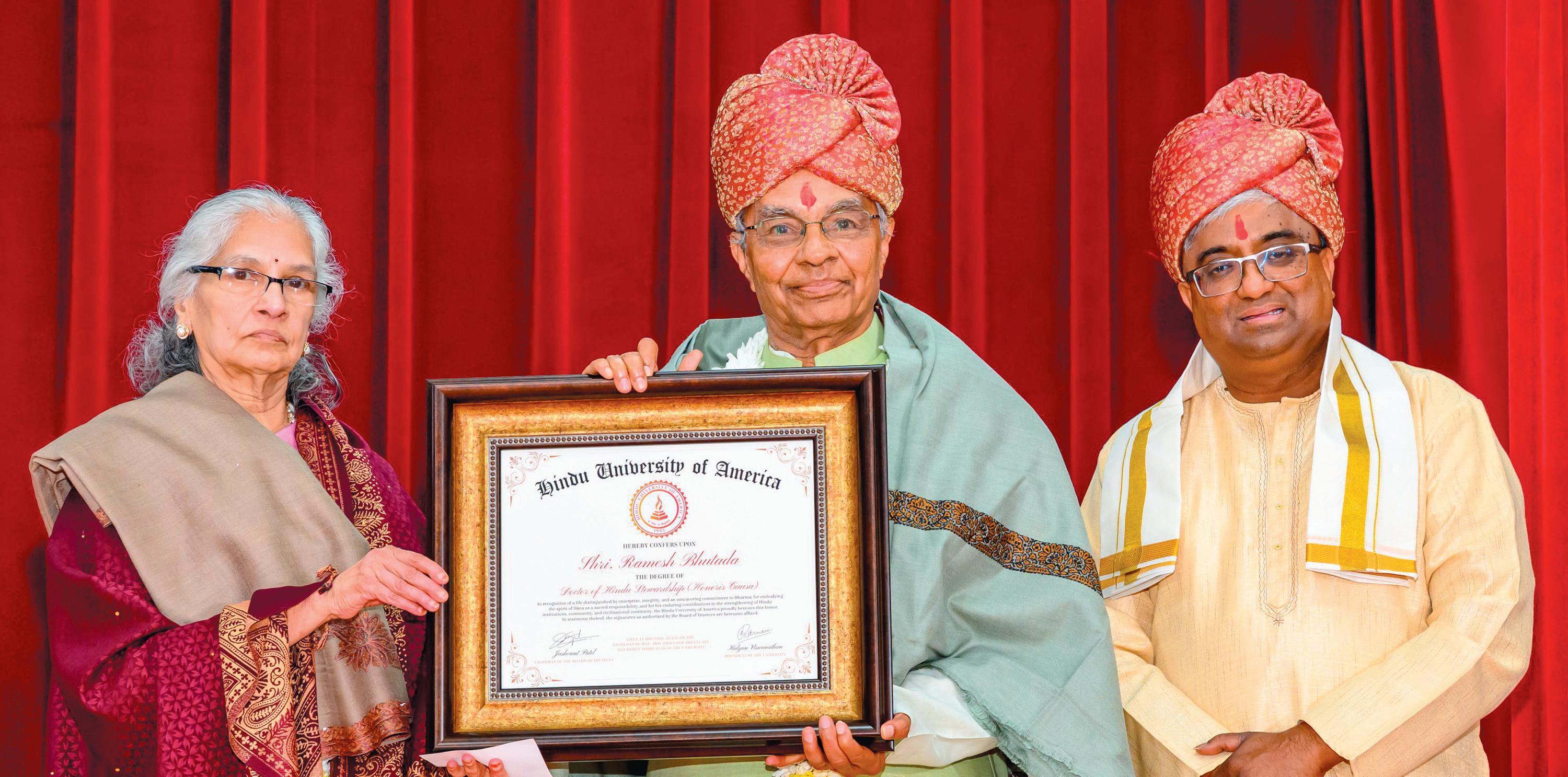
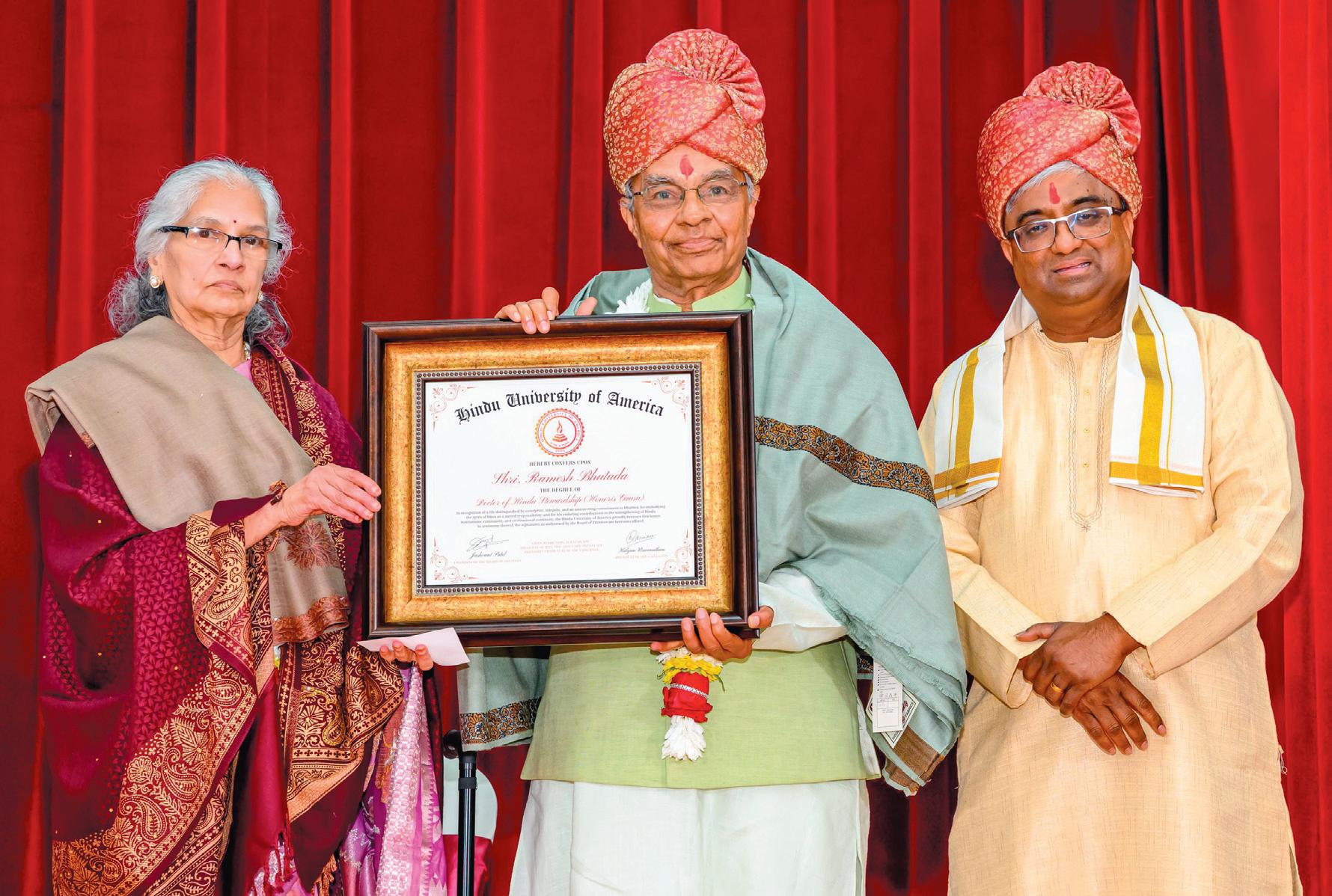
Kiran Bhutada (left), Ramesh Bhutada and Kalyan Vishwanathan with the Honorary Doctorate from Hindu University of America.
Chithirai Mahotsavam Observed with Devotion at Sri MTS
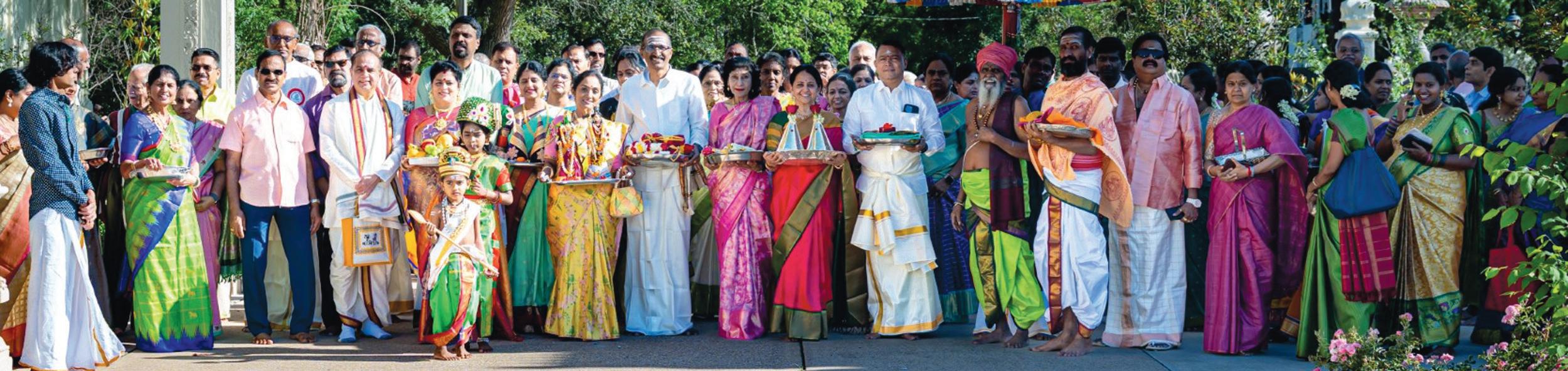
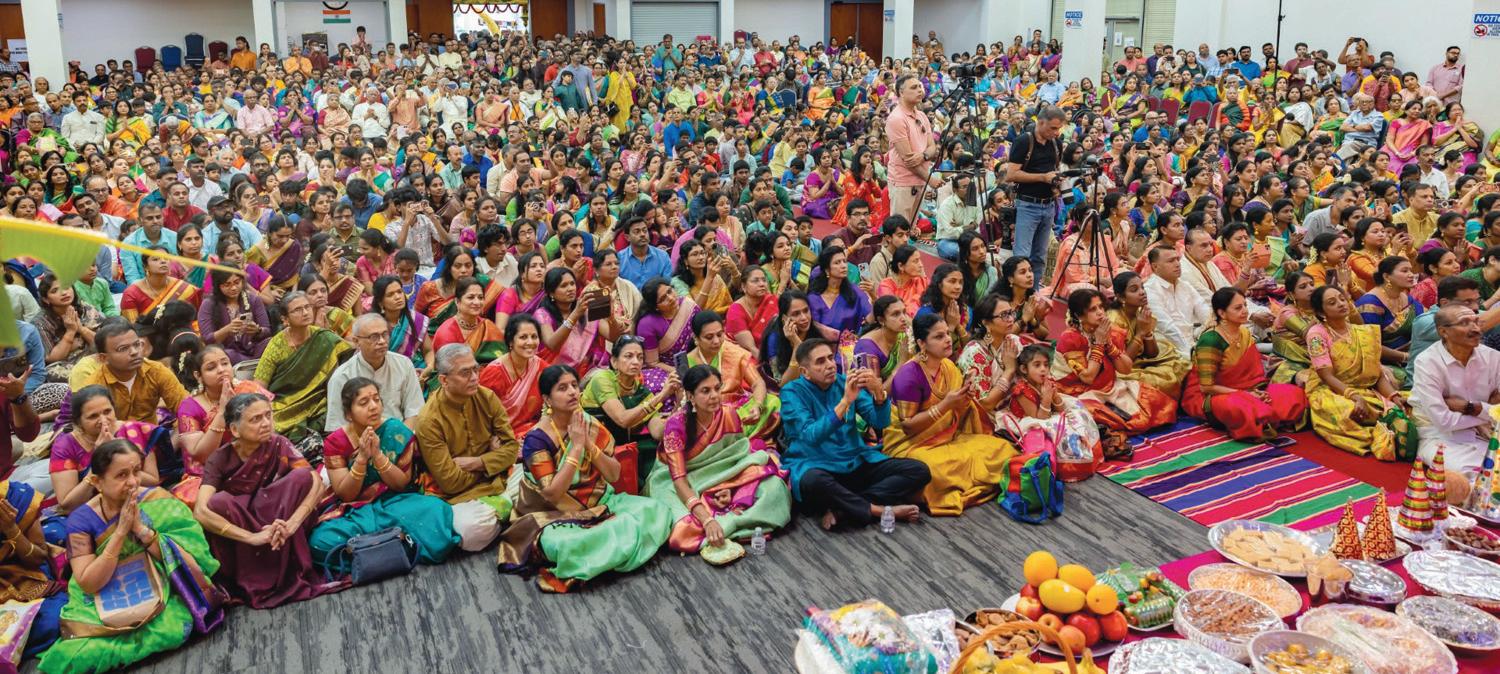
Pearland: The annual Chithirai Mahotsavam, one of the most significant celebrations in the Tamil Hindu calendar, was observed with great devotion and grandeur at the Sri Meenakshi Temple, drawing devotees from the Greater Houston area and across Texas.
From the sacred Dwajarohanam (flag hoisting) on Friday, April 24th, to her grand Pattabhishekam on the 25th, where she was crowned the sovereign Queen of Madurai, to the celebrations that culminated in the divine celestial wedding and sacred union with Lord Sundareswarar on Sunday, May 3rd- an eternal symbol of love, bhakti, and cosmic balance, each moment unfolded with devotion and splendor. For all ten days, the Sri Meenakshi Temple resonated with bhakti, tradition, and spiritual joy, as devotees gathered to witness and celebrate the magnificence of this year’s Chithirai Mahotsavam, a festival that brought heaven to earth and hearts closer to the divine.
Each day featured elaborate rituals, including specialized yaga sala pujas and vibrant processions of the deities on various vahanas (divine vehicles), allowing devotees to participate closely in the spiritual festivities.
Following the same traditions observed at the famed Meenakshi Amman Temple, in Madurai, the rituals were carried out with precision and reverence. As part of the proceedings, the Executive Board of Trustees at the Sri Meenakshi Temple, were ceremoniously presented with the Parivattam, and Chairman, Mr. Kumar Bashyam, was presented the divine Golden Scepter by the temple priests, an honor historically bestowed upon King Thirumalai Nayakar.
The sacred scepter was then
taken into procession around the sanctum sanctorum before being reverentially offered to the Goddess. This powerful ritual signifies the formal acknowledgment of Goddess Meenakshi as the sovereign ruler, bestowing upon her the revered title of “Queen.” In the traditions of Madurai, this moment symbolizes the transfer of divine authority from Lord Sundareswarar to Goddess Meenakshi herself.
The grand festival marked by Meenakshi Pattabhishekam, the ceremonial coronation of Goddess Meenakshi as the queen of Madurai, culminated with the much-anticipated Meenakshi Thirukalyanam, a grand reenactment of the celestial wedding between Goddess Meenakshi and Lord Sundareswarar, symbolizing divine union and harmony.
An unforgettable highlight of the celebrations was the resplendent procession of Goddess Meenakshi on her Poo Pallakku, following her Pattabhishekam. The palanquin itself stood as a breathtaking work of art, meticulously crafted by skilled silpis and brought to life with the dedication of numerous volunteers, using thousands of fresh flowers arranged in intricate,
vibrant patterns.
Inspired by the Lalitha Sahasranamavali, both the Poo Pallakku and the Pattabhishekam ceremonies were widely appreciated by all who witnessed them. As the beautifully adorned Pallakku made its ceremonial rounds, the atmosphere came alive with the captivating strains of live Nadaswaram and Thavil music. These talented and devoted musicians are now a permanent, a new addition to Meenakshi Temple. The powerful combination of music, movement, and devotion left the devotees deeply immersed in the spiritual grandeur of the moment, an experience that truly had to be witnessed in person to be fully appreciated.
The evenings came alive with a rich tapestry of cultural programs, featuring instrumental and vocal music, classical dance performances, devotional bhajans, and engaging Harikatha storytelling discourses. As these artistic expressions unfolded, the chanting of sacred mantras resonated and reverberated throughout the temple grounds, creating an atmosphere that was both spiritually elevating and deeply immersive for all in at-
tendance.
The temple’s esteemed priests conducted the Abhishekams, Alankarams, Pujas, and Yaga Sala rituals with utmost devotion and precision. The visual and spiritual splendor of the Mahotsavam was elevated by the extraordinary work of the silpis, whose creativity and devotion transformed the temple through magnificent stage decorations, Yaga Sala arrangements, and intricate floral designs.
On the sacred day of Meenakshi Thirukalyanam, the Sri Meenakshi Temple witnessed an unprecedented outpouring of devotion, with nearly 3,000 devotees gathering to receive the divine blessings of Sri Meenakshi and Sri Sundareswarar. In the true spirit of annadanam, every devotee was served a traditional banana-leaf lunch, ensuring that all who came were warmly welcomed, honored, and nourished. The day stood as a beautiful confluence of devotion, music, culture, and community, a heartfelt recreation of Madurai’s celestial wedding, brought to life with deep bhakti.
As is tradition in Madurai, the Mahotsavam also includes the beloved episode of Kallazhagar’s
journey to Madurai, an integral addendum to the Chithirai festival. This event commemorates Lord Kallazhagar, an incarnation of Lord Vishnu who sets out from Alagar Kovil to attend the wedding of his sister, Goddess Meenakshi. According to tradition, he arrives too late for the celestial wedding and instead proceeds to the banks of the Vaigai River to offer his gifts before returning.
The Kallazhagar festival, a major highlight of the annual Chithirai Thiruvizha in Madurai, draws millions of devotees each year. One of its most iconic moments is the sight of the Lord entering the Vaigai River on a golden horse, symbolizing his divine journey and deep familial bond with Goddess Meenakshi. This powerful tradition beautifully reflects the confluence of Shaivite and Vaishnavite traditions and remains one of the most cherished aspects of the festival.
An event of this magnitude requires nothing short of an army of volunteers, whose selfless dedication and tireless efforts ensured that the 10-day festival unfolded seamlessly.
Orchestrating the logistics, the executive board members and numerous volunteers worked both behind the scenes and on the front lines. They gave generously of their time and energy, making it possible for every aspect of the Mahotsavam to run smoothly and without interruption. It truly took the collective strength and spirit of the entire community to bring this celebration to life and to experience its grandeur. It would be no exaggeration to say that the Mahotsavam brought devotees together in a deeply meaningful way, offering a glimpse of what it feels like to witness these sacred traditions back home.
Houston: The Indian American Public Affairs Council (IAPAC) successfully hosted another impactful edition of its Conversations Over Coffee community engagement series, featuring Harris County Tax Assessor-Collector Annette Ramirez. The event brought together community members, civic leaders, and residents for an informative discussion on property taxes, exemptions, voter registration, vehicle registrations, and modernization initiatives impacting Harris County residents.
Held at Winfield’s Chocolate Bar in Houston, the forum provided attendees with direct access to one of the key public officials serving the third-largest county in the United States and encouraged open dialogue around navigating complex tax systems, understanding taxpayer rights, and improving civic participation.
The event was opened by Barath Menon, who welcomed attendees and emphasized the importance of civic awareness and community engagement. The discussion was moderated by Sindhu Menon, Executive Director & Chief Information Officer of Harris County, who guided the conversation across several topics relevant to homeowners, business owners, and voters throughout Harris County.
During the conversation, Ramirez highlighted several modernization efforts undertaken by the Harris County Tax AssessorCollector’s Office to improve accessibility and customer experience for residents. Discussing the launch of MyHarrisCountyTax. com, an online platform designed to simplify property tax payments and account management, Ramirez explained that the goal was to make the system “easier, more efficient, and more accessible” for taxpayers.
A significant portion of the discussion focused on property tax exemptions and ways residents can reduce their tax burden. Ramirez emphasized the importance of homestead exemptions, over-65 exemptions, disability exemptions, business personal property exemptions, and property tax protests.
She encouraged homeowners to verify that all eligible exemptions are properly filed with the Harris Central Appraisal District (HCAD), explaining that exemptions can substantially lower annual property tax obligations.
Ramirez discussed ongoing outreach initiatives, including neighborhood blockwalking campaigns aimed at educating homeowners about available exemptions and
protest processes. She noted that many residents are unfamiliar with the property tax system or do not realize they may qualify for exemptions, emphasizing that “education and outreach are critical to ensuring residents can fully benefit from the programs available to them.”
The conversation also detailed logistical improvements to automobile and trailer registration. Previously, technical limitations restricted certain transactions to specific windows at branch offices. By installing new network hardware at every service desk, the office ensured that any transaction can now be handled at any window, significantly reducing wait times.
Finally, the leaders discussed the future of voter registration. The office has launched a project to replace 2003-era software with a modern system featuring GIS mapping capabilities. This upgrade will help ensure that redistricting and voter placement are handled with greater precision and efficiency, significantly reducing the need for manual audits.
Ramirez also discussed voter registration procedures, important registration deadlines, and the various ways residents can register to vote, including the documentation required. She reiterated the importance of maintaining the integrity and authenticity of voter registration records and explained the multiple safeguards and verification processes built into the system to address concerns related to voter fraud and ensure election integrity.
Naveen Kochoth, President of IAPAC, shared the vision behind the Conversations Over Coffee series, explaining that these informal neighborhood gatherings are designed to bring communities together in local businesses and coffee shops to encourage civic dialogue and public engagement. He noted that the initiative, which began in the Greater Houston area, has now expanded to Dallas and San Antonio.
The forum concluded with a Vote of Thanks by Indrani Sirkar, Secretary of IAPAC, who expressed appreciation to Annette Ramirez for providing valuable and insightful information and thanked community members for their active participation in making the event a success.
A special acknowledgment was also extended to Jo Sauter, General Manager of Winfield’s Chocolate Bar, for graciously providing complimentary coffee for attendees.
Community feedback highlighted that the session addressed a highly relevant topic
and offered practical, timely guidance that residents found both valuable and informative.
About IAPAC
The Indian American Public Affairs Council (IAPAC) is a nonpartisan 501(c)(3) nonprofit organization dedicated to promoting civic en-
gagement, leadership, and public service. Through initiatives such as Conversations Over Coffee, IAPAC connects community members with public leaders to encourage informed civic participation and community awareness.
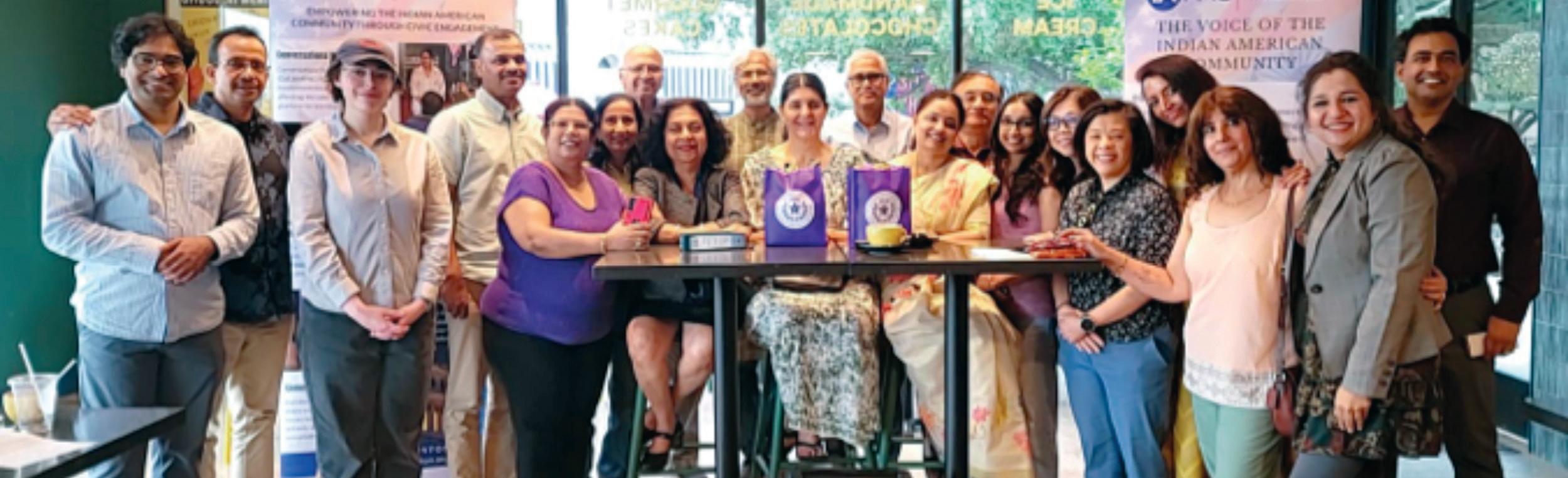
In the center: Annette Ramirez - Harris County Tax Assessor-Collector with Roopa Gir (left) and Sindhu Menon (right) along with community members at IAPAC’s Conversations Over Coffee forum. 5.10.26
EDUCATION
HUA Confers Historic Honorary Doctorate to Ramesh Bhutada
Houston: Hindu University of America (HUA) has conferred an Honorary Doctorate in Hindu Stewardship (Honoris Causa) to Shri Ramesh Bhutada at a special ceremony held in Houston on May 9, 2026, at VPSS Haveli, Houston. The Honorary Doctorate in Hindu Stewardship is believed to be the first degree of its kind in the world. Instituted by Hindu University of America, the degree represents an original and pioneering academic recognition rooted in Hindu civilizational thought and values. It brings into modern academic form enduring Dharmic concepts such as Dharma, Dāna (sacred giving), Sevā (selfless service), Niṣkāma Karma (action without attachment to results), and Lokasaṃgraha (the welfare and cohesion of the world).
This Honorary Doctorate in Hindu Stewardship recognizes individuals whose lives embody responsibility, custodianship, and civilizational care. The degree honors those who serve not merely as donors, but as protectors and nurturers of Dharma, Hindu culture, institutions, knowledge transmission, and social well-being. The philosophical foundation of stewardship in Hindu thought is deeply connected to the Bhagavad Gītā’s teaching of Lokasaṃgraha, particularly in Chapter 3, where Śrī Kṛṣṇa emphasizes the responsibility of individuals to act in ways that uphold societal and cosmic balance. Stewardship, in this understanding, is not a singular act of generosity, but a sustained orientation of life aligned with Dharma.
“At its heart, the Honorary Doctorate in Hindu Stewardship reflects a simple yet profound principle,” said Kalyan Viswanathan, President of Hindu University of America. “The world is not ours merely to consume; it is ours to care for, uphold, and transmit to future generations.” He emphasized that “the degree is not merely an acknowledgment of charitable giving – rather, it recognizes lives dedicated to sustaining that which supports human flourishing and civilizational continuity. It honors those who uphold, protect, nurture, and transmit the values, institutions, and traditions that sustain society across generations.”
The event was also made especially meaningful through the support of Hindus of Greater Houston, whose leadership and outreach efforts played an important role in bringing together members of the Houston Hindu community for an evening of shared reflection, celebration, and civilizational purpose. Their longstanding commitment to community-building helped create an atmosphere of warmth, participation, and collective pride, reflecting the spirit of unity and cooperation that lies at the heart of Hindu Dharma.
Ramesh Bhutada, who celebrat-
ed his eightieth year in 2026, was the inaugural recipient of the Honorary Doctorate in Hindu Stewardship (Honoris Causa). The formal citation accompanying the award recognized a life distinguished by entrepreneurship, integrity, and an unwavering commitment to Dharma; by the embodiment of Dāna as a sacred responsibility; and by enduring contributions toward the strengthening of Hindu
institutions, community life, and civilizational continuity. The conferral of the honorary degree took place during a special gathering titled HUASamvada -- 2026, a 15min. commemorative film tracing Bhutada’s journey from India to the United States, highlighting his lifelong dedication to Hindu Dharma and Hindu civilization.
The presentation featured his founding of Star-Pipe Products,
emphasized that he was merely doing his duty, which translates as Dharma in Sanskrit. He called on the audience of over five hundred attendees to “foster Hindu Unity, and take up the responsibility of nurturing the institutions, that will build up and strengthen the Hindu ecosystem, that can serve our communities for generations to come.” As an institution builder, who built up Start Pipe Products over several decades, Ramesh Bhutada has been keenly interested in prioritizing giving to such institutions as he believes will sustain Hindu Dharma over time. He emphasized that he “believed that Hindu University of America is one such institution, that must be at the forefront of every Hindu’s mindshare, who wishes to nurture and support Sanatana Dharma.”
Dr. Jashvant Patel, the Chairman of the Board of Trustees of HUA, spearheaded the award of this doctoral degree within the Board, affirming that “no one is more deserving of this award than Ramesh Bhutada.” Narsimha Reddy Koppula, Board member and Chair of the Fundraising Committee of the Board, said that “It is my honor to affirm this award, as Ramesh Ji has been a guiding light for many Hindus in America and all over the world by his immense contributions towards Hindu Dharma.”
Sajjan Agarwal, member of the Board of Trustees, and Chair of the Finance Committee of HUA, said that “there is no better way to inaugurate HUA’s Doctor of Hindu Stewardship Degree than by awarding Shri Ramesh ji Bhutada. He has been a stalwart of Hindu stewardship in the last 4-5 decades in America and even in India.”
the company that he had nurtured from one employee in the early 80s, to over 3,000 employees today. It also reflected on his involvement in significant moments that shaped India’s democratic journey, as well as his extensive support for numerous Hindu organizations, institutions, and community initiatives across the United States.
Speaking at the event, on receiving his award, Ramesh Bhutada
Through this initiative, the Hindu University of America seeks to contribute a distinctly Dharmic perspective to contemporary conversations on leadership, responsibility, philanthropy, and civilizational continuity, while reaffirming the enduring relevance of Hindu knowledge systems in the modern world. Above all, HUA affirms a deeply important truth: one can be proudly Hindu while also being fully modern, secular, democratic, and intellectually open. Hindu Dharma does not stand in opposition to pluralism. HUA seeks to nurture a generation that no longer feels compelled to choose between heritage and modernity, but is confident in embracing both with dignity and harmony. About Hindu University of America
Hindu University of America is a graduate-level institution dedicated to the academic study and lived traditions of Hindu thought, practice, culture, and civilization. The University seeks to advance Hindu knowledge systems through education, scholarship, and community engagement rooted in Dharmic perspectives. You can see more at www.hua.edu.
Kiran Bhutada (left), Ramesh Bhutada and Kalyan Vishwanathan with the Honorary Doctorate from Hindu University of America.
Hindus of Greater Houston (HGH) Directors and Board of Advisors. Standing in the Back: Vijay Pallod, Kalyan Viswanathan, Girish Naik, Somansh Agarwal, Bhagwan Bhuta, Hemant Jadav, Shital Rathi, Rachana Shah, Kalpavalli Patel, Bharat Patel, Gopal Aggarwal, Bijay Dixit. Sitting in frontL
Subhash Gupta, Tupil Narasi,an, GN Prasad, Rasesh Dalal, Ramesh Bhutada, Dev Mahajan, Dr. Randeep Suneja, Sharad Amin.
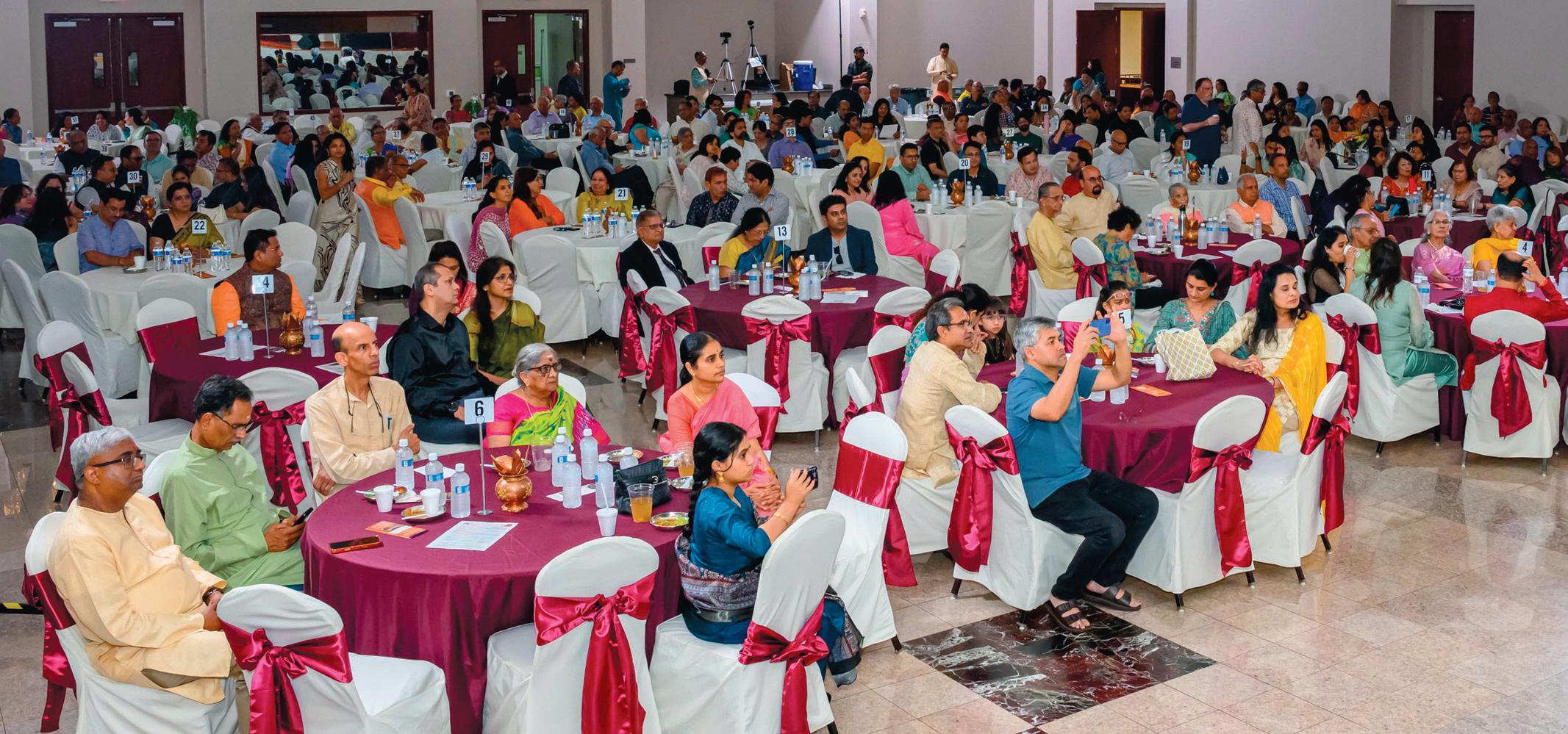
Audience at the confirmatin at VPSS Haveli.
Hon. CG Lutfi Hassan Hosts OTC 2026 Visit by President of Guyana
Houston: During this year’s Offshore Technology Conference (OTC 2026) in Houston, the Cooperative Republic of Guyana took center stage as one of the world’s fastestgrowing energy economies, led by the presence of His Excellency Dr. Mohamed Irfaan Ali, President of the Cooperative Republic of Guyana, who participated in a series of high-level engagements surrounding the conference.
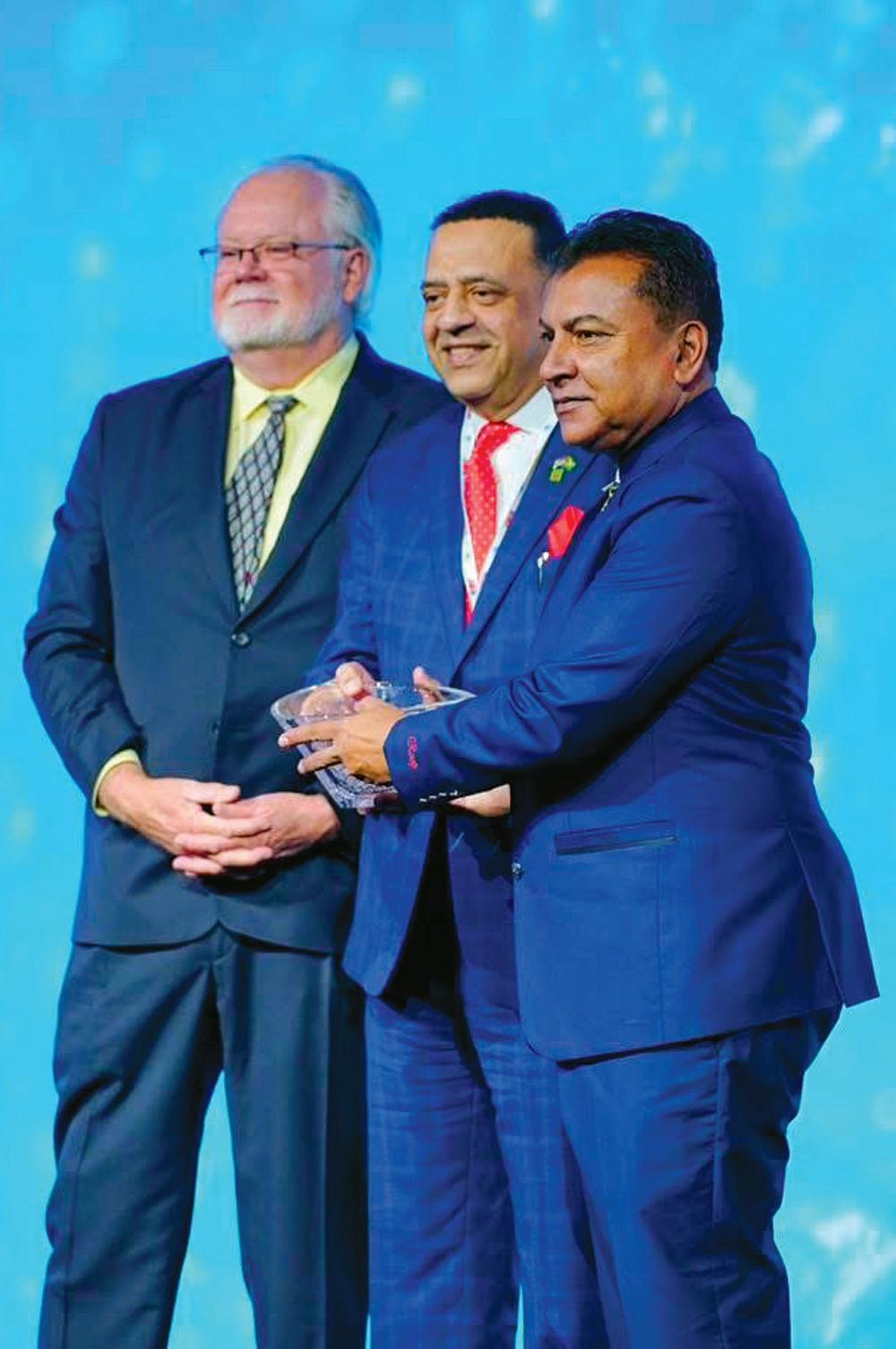
As part of OTC 2026, the Consulate General of Guyana in Houston, in cooperation with GO-Invest, was presented with an Award of Excellence recognizing its efforts in advancing Guyana’s global investment outreach, international partnerships, and economic development initiatives.
Honorary Consul General of Guyana to the Southwest United States, Lutfi S. Hassan, and representatives of GOInvest were humbly honored to receive the distinguished recognition on behalf of the Government of Guyana from one of the world’s leading global energy institutions during OTC 2026.
The recognition highlighted Guyana’s emergence as a major global energy and investment destination, while underscoring the collaborative efforts between the Government of Guyana, the Consulate General in Houston, and GO-Invest to strengthen international engagement across energy, infrastructure, trade, and private sector development.
The award presentation took place during OTC week in Houston, where senior government officials, international business leaders, energy executives, and members of the diplomatic community gathered to discuss Guyana’s remarkable transformation and strategic importance in the global energy sector.
Under the leadership of President Mohamed Irfaan Ali, Guyana has experienced unprecedented economic growth and has become one of the most closely watched emerging economies in the world. Amid ongoing global energy supply concerns and geopolitical uncertainty, Guyana continues to play an increasingly important role in helping meet global energy demands while simultaneously investing in national development, infrastructure, healthcare, education, and regional prosperity.
The event also celebrated the strong and growing relationship between Guyana and Houston’s international business and energy community, reinforcing the country’s position
CG Hon. Lutfi Syed Hassan welcomed HE President Irfaan Ali of Guyana to Houston for the OTC 2026 participation at the chief guest
as a premier destination for longterm investment and strategic partnership.
“This recognition reflects not only the work of the Consulate and GO-Invest, but the extraordinary progress of Guyana itself and the strength of the relationships being built between Guyana and partners around the world,” said Consul General Hassan.
OTC 2026 marked another milestone in Guyana’s growing international presence and underscored the country’s continued rise as a global leader in energy, economic development, and investment opportunity.
Consul General of Guyana to the U.S. Lutfi Hassan was honored, along with the Guyana President’s Office of Investments, Dr. Peter Ramsaroop with the OTC 2026 exemplary Award of Excellence by OTC 2026 Chairman Dan McConnell.
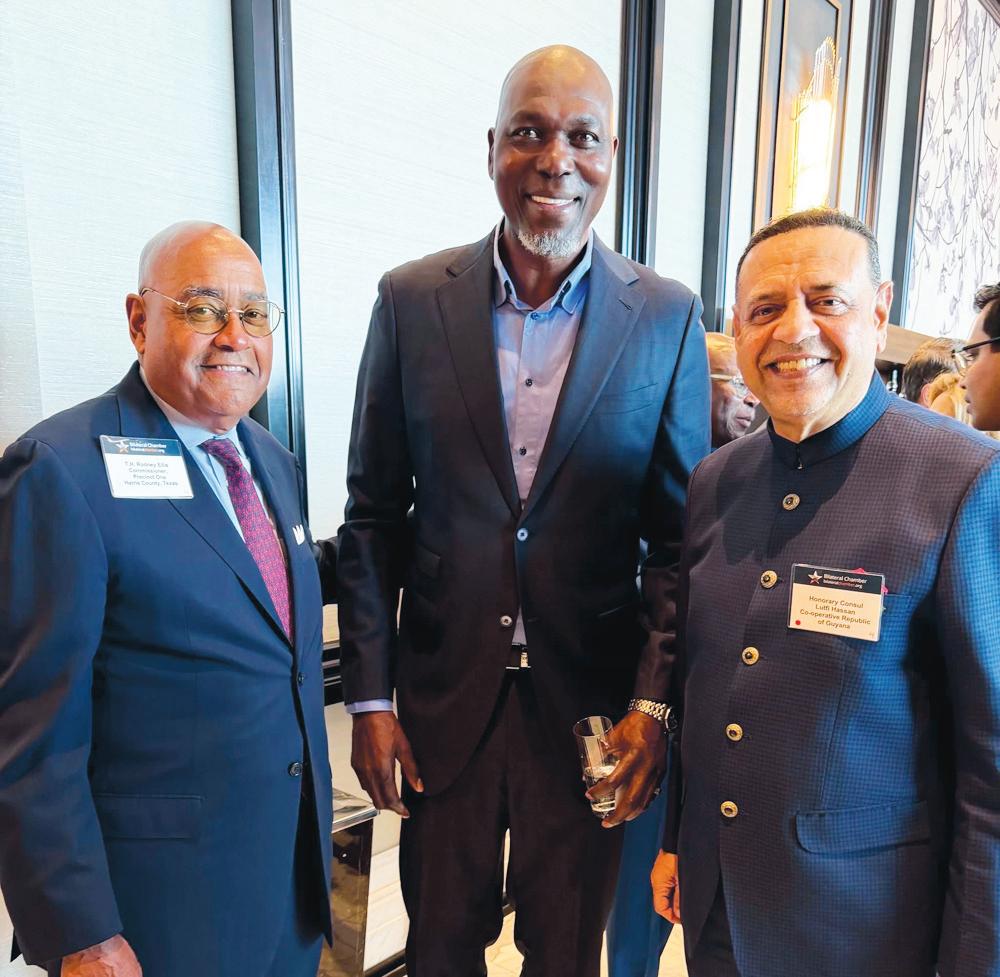
NBA Houston Rockets basketball Hall of Famer Hakeem Olajuwon (center) with Harris County Commissioner Rodney Ellis (left) joined Hon. Lutfi Hassan at the Guyana Night reception along with other elites of Houston.
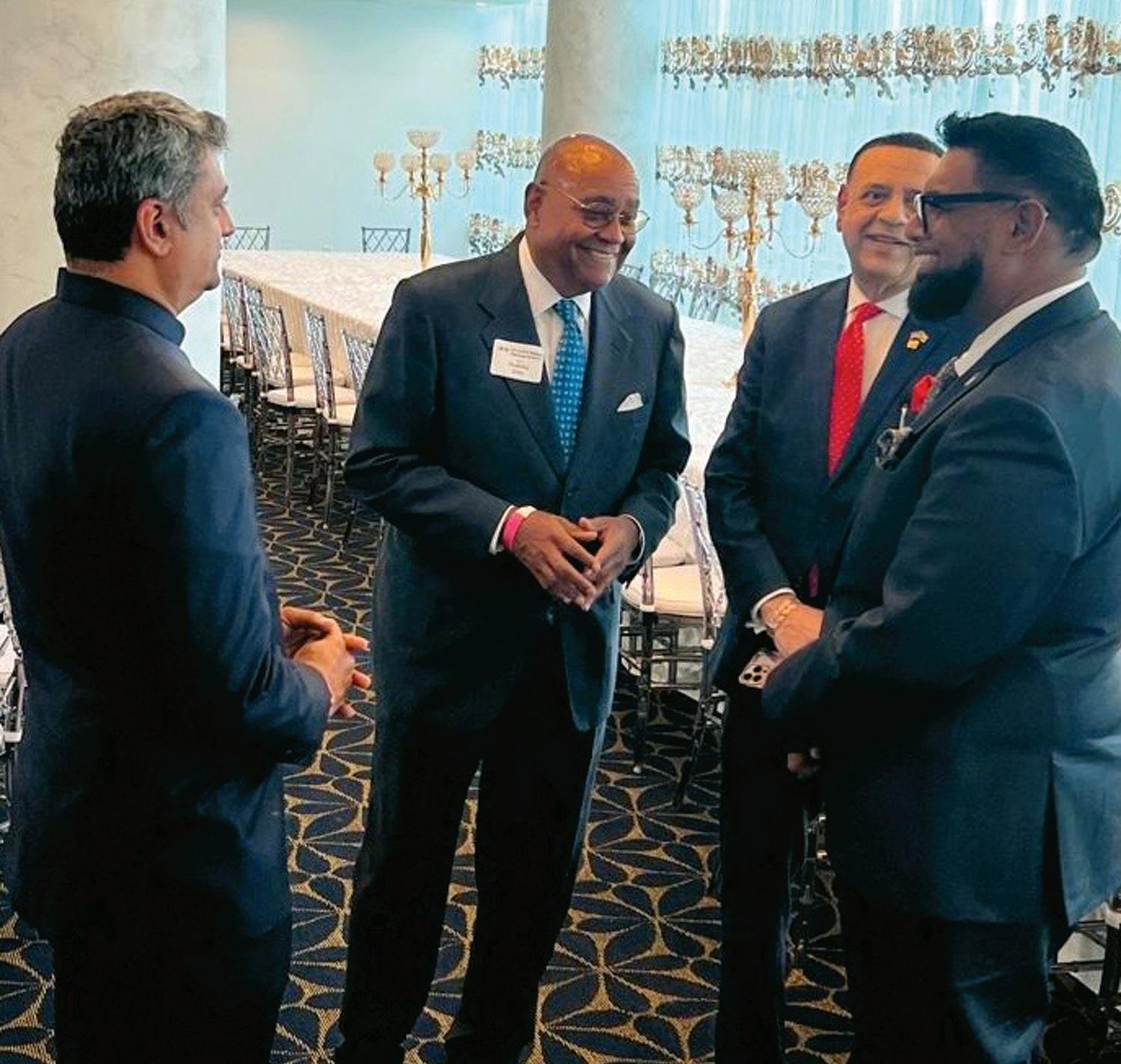
India’s Consul General DC Manjunath (left) joined the VIP reception to welcome Guyana’s HE President Mohammed Irfaan Ali (far right) with Commissioner Ellis and Hon. CG Hassan.
PM Modi’s Austerity Appeal to Protect India from War’s Fallout
new delHi: Prime minister Narendra Modi has made an unusual austerity appeal to India’s citizens in a bid to protect the economy from the impact of the ongoing US-Israel war on Iran.
Speaking at a function in the southern city of Hyderabad over the weekend, the prime minister urged citizens to refrain from buying gold for a year as the war puts pressure on foreign exchange reserves of the country.
Modi’s remarks about gold came along with a range of other measures he urged, ?including fuel conservation, increasing working from home and limits on travel and imports.
“It is time for us to use petrol, diesel and gas with great care,” Modi said. “We must make efforts to use only as much as is needed to save foreign currency and reduce the adverse effects of war crises.”
Indians’ affinity for gold is no secret. It’s used in weddings where gold jewellery is seen as a crucial part of a bride’s attire and is a popular gift from family and friends. India is the world’s second-largest consumer ?of gold, ?next to China and imports 700-800 tonnes of the yellow metal annually to meet its 90 per cent of demand, adding to its import bills.
In 2025-26, the import jumped
by 24 per cent to nearly $72bn, while they stood at $58bn in 202425 and $45.45bn in 2023-22.
Behind Modi’s gold appeal lies a larger economic concern: the pressure on India’s foreign exchange reserves and the weakening of the rupee – India’s currency – from the energy crisis.
Modi’s appeal comes as the more than two-month-old war in
the Middle East disrupts supply chains across the world, and upends the markets, exacerbated by the closure of the world’s most critical oil shipping route – the Strait of Hormuz.
Since Modi’s appeal, Indian shares fell and the rupee endured two successive days of drop to end at it weakest closing level of Rs95.63 against the dollar on Tuesday.
As the war on Iran shows no signs of resolution and has farreaching consequences across the world, the higher oil prices have emerged as a major risk for net energy importer India. It threatens to widen the country’s current account deficit, slow growth, and stoke inflation, say experts. Gold and crude oil are primarily paid in US dollars, with India
importing nearly 85 per cent of the crude oil needs.
Unlike oil, gold purchase is not considered essential expense and if cumulatively, households buy more gold during a global crisis, more dollars flow out putting a pressure on the Indian rupee.
This can widen the country’s current account deficit, which measures the gap between imports and exports. A weaker rupee also makes imports more expensive, creating a cycle where oil, gold and other imported goods cost more, domestically.
“PM Modi’s appeal to the nation to curb the consumption of petrol/diesel, gold, chemical fertilisers and edible oil and refrain from avoidable foreign travel is a crisis management response to the current account deficit problem caused by high crude prices,” Dr VK Vijayakumar, chief investment strategist of retail financial services company, Geojit Investments, told the Mint newspaper. However, he cautioned that “this call for austerity has a slightly negative implication for economic growth in FY27”.
The foreign exchange reserves are diminished by large volumes of Indian spending abroad, and the expense on imports of gold, oil, and fertilisers. -- The Independent
Ali Bhatt Begins Her Cannes 2026 Fashion Run as Modern Princess
Cannes: Alia Bhatt has officially begun her Cannes 2026 fashion run - and her first appearance in the French Riviera already has the internet talking. While fans were waiting to see what direction she
would take with her style this year, the actor surprised everyone by stepping into full-blown modern
and
And
princess mode.Spotted outside the iconic Hotel Martinez, Alia served a dreamy fairytale-inspired look
that felt soft, elegant,
refreshingly different.
honestly, it worked perfectly for her. Elle.
Indus Water Treaty
Asymmetric Obligations, Unequal Concessions and Pakistan’s Weaponization
By dr. PradeeP K. saxena
Part II: Obstruction, Exploitation and the Long-Overdue Reckoning
1. Pakistan’s Weaponisation of the Treaty
1.1 Systematic Obstruction of Indian Development
Since the Treaty’s signing, Pakistan has consistently used its dispute resolution provisions as a strategictool to delay and effectively obstruct development rather than genuine dispute resolution. Virtually every significant hydropower project India has proposed on the Western rivers—even those explicitly permitted under the Treaty’s terms—has faced formal Pakistani objection, technical challenge, or referral to arbitration.
Projects including Baglihar, Kishenganga, Pakal Dul, and Tulbul have all been subjected to prolonged Pakistani challenges. In several cases, Pakistan has acknowledged the potential benefits of Indian projects for regulated water flow—including flood moderation—while simultaneously opposing them.
This pattern reveals that Pakistani objections are not genuinely about Treaty compliance; they are about preventing Indian development in Jammu and Kashmir, regardless of the legal merits.
1.2 The “Water War” Narrative and Its Deployment Pakistan has simultaneously ex-
ploited India’s consistent compliance with the Treaty to construct and disseminate an international narrative portraying India as a potential “water aggressor”. Pakistani officials, academics, and diplomatic channels have repeatedly raised the spectre of “India weaponising water” against Pakistan— citing the very Treaty that India has scrupulously honoured.
This narrative—posing the upper riparian as a threat—has proven remarkably effective with international audiences unfamiliar with the Treaty’s history. Pakistan has used it to generate diplomatic pressure, attract multilateral sympathy, and constrain India’s ability to assert its legitimate Treaty rights.
The singular irony of this strategy is that India has not committed a single violation of the Treaty— not during the 1965 war, not during the 1971 war, not during the 1999 Kargil conflict, and not at any other point in the sixty-five years of the Treaty’s operation. India has maintained compliance even as Pakistan has used its territory to conduct state-sponsored terrorism against India.
2. The Consequences for India
2.1 Unrealised Development Potential
The Treaty’s constraints have had measurable, lasting consequences for India’s development in the Indus Basin. Vast areas of Rajasthan and parts of Punjab that could have been irrigated remain arid or dependent on alternative,
more expensive water sources. The agricultural productivity foregone over six decades represents an incalculable economic loss.
2.2 Jammu and Kashmir’s Suppressed Hydropower Potential
The impact on Jammu and Kashmir has been particularly acute. The Union Territory sits astride the Western rivers and possesses enormous, largely untapped hydropower potential. Development of that potential is constrained at every turn by the Treaty's design restrictions, Pakistan's systematic objections, and the perpetual risk of multi-tiered long drawn dispute resolution mechanism. Local populations have increasingly come to view the Treaty not as a framework for shared benefit but as an instrument of their own economic marginalisation—an external imposition that prevents them from developing the natural resources flowing through their own territory.
2.3 Energy Security Implications
India’s inability to optimally develop the hydropower potential of the Western rivers has direct implications for national energy security. The Treaty’s restrictions mean that potential capacity—as a clean, renewable, and economically efficient energy source—has been sacrificed purely because of Pakistan’s strategic obstruction of even the limited rights India possesses in this asymmetric agree-
ment.
3. India’s Case
The Treaty was intended achieve the “most complete and satisfactory utilisation of the waters of the Indus system of rivers” in a “spirit of goodwill and friendship”—a context that no longer exists.
The treaties derive their legitimacy not merely from the force of law but from the good faith implementation of their terms by all signatories. Pakistan’s documented and persistent use of statesponsored terrorism as an instrument of foreign policy against India—culminating in atrocities, including the 2001 Parliament attack, the 2008 Mumbai attacks, and most recently the Pahalgam attack of April 2025—fundamentally challenges the premise upon which India’s continued compliance with the IWT rests. Bilateral agreements cannot be selectively honoured: a state cannot simultaneously breach the foundational norms of inter-state conduct while demanding that its negotiating partner fulfill treaty obligations that disproportionately benefit the norm-breaker. The Treaty cannot be an island of Indian compliance within a sea of Pakistani bad faith. India’s step represents an assertion long overdue— that international agreements are a two-way street.
4. Conclusion
The Indus Waters Treaty has long been celebrated as a triumph of international diplomacy. This paper has argued that such a char-
acterization fundamentally misrepresents what actually occurred: a negotiation process in which Pakistani intransigence was rewarded with concessions, and Indian goodwill was systematically exploited to produce an agreement that was inequitable from its inception.
Nevertheless, India surrendered 80 percent of the water, paid £62 million (approximately $2.5 billion in present value) to facilitate that surrender, accepted one-sided operational restrictions on its own territory, and has maintained scrupulous compliance for sixtyfive years—including through Pakistan inflicted multiple wars and sustained sponsoring of cross border terrorism. In return, India has received a Treaty agreed to in good faith that Pakistan uses as a tool of developmental obstruction, a “water war” narrative it deploys internationally with no factual basis, and the permanent underdevelopment of vast tracts of Indian territory.
India’s step is to protect its legitimate interests in the Indus Basin. This is not aggression; it is the long-overdue correction of an asymmetric arrangement premised on a goodwill that was never reciprocated.
To those who ask why hold the Treaty in abeyance now, it would be useful to remember that there is no wrong time for a right decision.
Dr. Saxena is the former Indian Commissioner for Indus Waters.
Pakistan Confers ‘Sitara-e-Khidmat’Award to Muhammad Saeed Sheikh
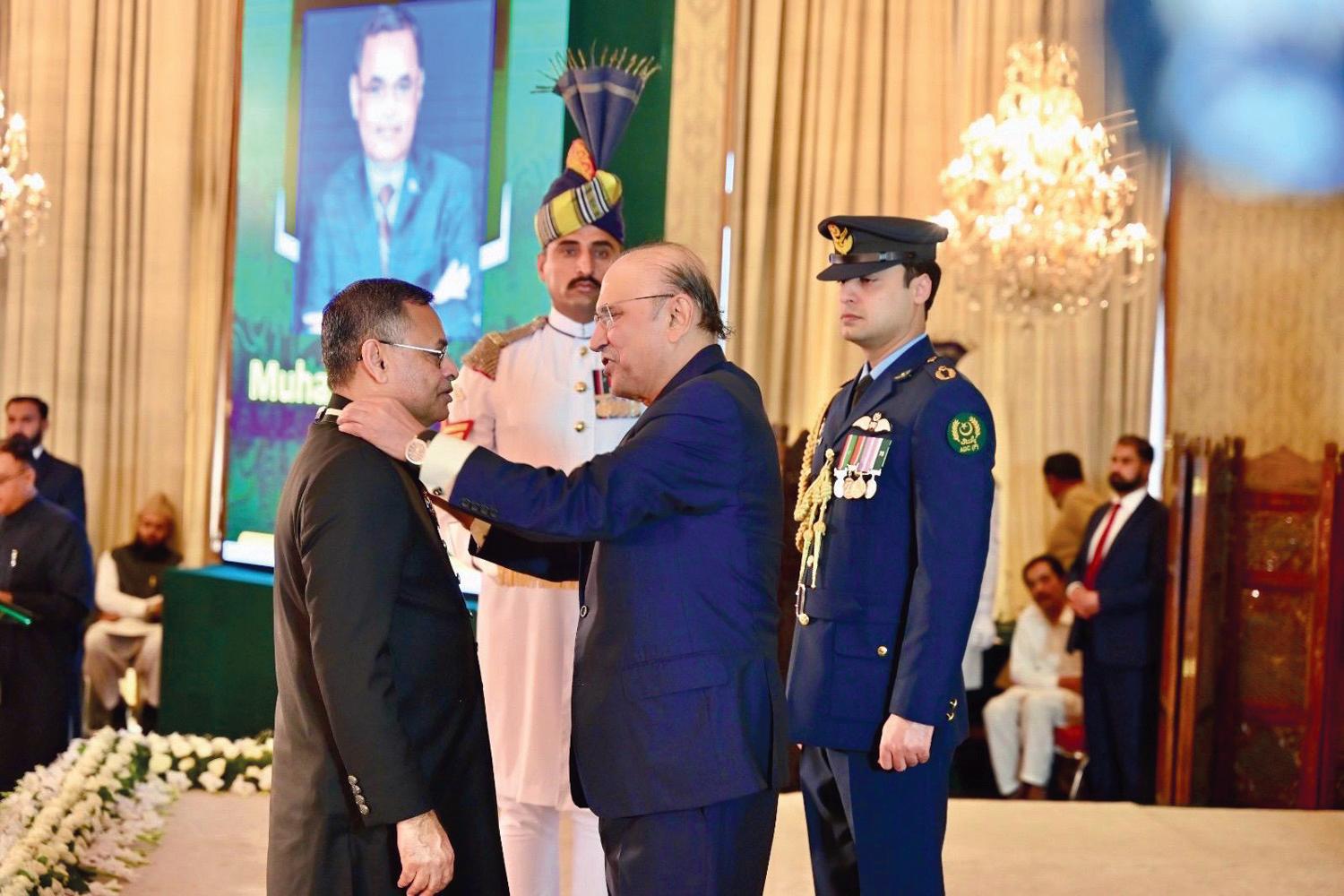
islaMaBad: Pakistani-American community leader and humanitarian Muhammad Saeed Sheikh was conferred the prestigious civil award Sitara-e-Khidmat by the President of Pakistan, Asif Ali Zardari, during an official investiture ceremony held at Aiwan-eSadr on May 13, 2026.
The award was presented in recognition of his 45 years of humanitarian service, civic leadership, and contributions toward strengthening Pakistan–United States relations.
Expressing gratitude after receiving the honor, Muhammad Saeed Sheikh said the recognition belonged to all individuals, volunteers, organizations, and supporters who worked alongside him in serving humanity and promoting goodwill between communities.
Sheikh began his community service journey in Hyderabad through Junior Chamber International (JCI) and later expanded his humanitarian efforts interna-
Cricket, Anyone?
Join Wednesday afternoons at Stafford Park for low-stress practice sessions. Recently retired players are welcome. Contact Andy at (281) 8519602 or andyb@infodatinc.com for more information.
tionally after moving to Houston, Texas.
As President of the Houston–Karachi Sister City Association, he has led numerous humanitarian and development initiatives in Pakistan, including clean drinking water projects, medical assistance programs, educational initiatives, disaster relief efforts, and youth development programs.
He is also recognized for organizing one of the largest interfaith Houston Iftar gatherings in the United States, promoting unity and interfaith harmony.
During his remarks, Saeed Sheikh paid tribute to late business leader Ashfaq Seth and expressed special appreciation to philanthropist Syed Javaid Anwar for his continued support toward humanitarian and educational initiatives.
Muhammad Saeed Sheikh reaffirmed his commitment to continue serving humanity and strengthening relations between Pakistan and the United States.
Indo American News
Founder: dr. K.l. sindwani
PuBlisHer: JawaHar MalHotra
editor: PraMod KulKarni
CorresPondent: sanCHali Basu
Houstonian Mohammad Saeed Sheikh receives the Sitara-e-Khidmat from Pakistan President Aif Ali Zardari.
ENTERTAINMENT
‘Daadi Ki Shadi’: Flawed but Warm Drama
By arCHiKa KHurana
Story: When the elderly matriarch announces her decision to remarry, her stunned family is forced to confront generational biases, emotional insecurities, and changing relationships as chaos, humour, and self-discovery unfold together. Review: In Hindi cinema, stories centred on elderly characters often fall into familiar traps — either reducing them to comic relief or glorifying them as self-sacrificing figures. Daadi Ki Shaadi tries to move beyond these stereotypes by exploring loneliness, companionship, and emotional neglect in old age through the framework of a family dramedy. The premise is both refreshing and socially relevant, offering fertile ground for humour, emotional conflict, and commentary on changing family dynamics. While the film begins on a promising note with warmth and sincerity, it eventually loses momentum because of an overstretched screenplay and uneven writing, resulting in a film that remains mildly engaging rather than truly memorable. Set against the serene backdrop of Shimla, the film revolves around Vimla Ahuja (Neetu Kapoor), a widowed matriarch who shocks her family after an accidental social media announcement about her upcoming marriage goes viral. The revelation creates panic within the household and threatens the wedding plans of her granddaughter Kanika, aka Kannu (Sadia Khateeb). As confusion, embarrassment, and emotional confrontations take over the Ahuja family, Kannu’s fiancé Tony Kalra (Kapil Sharma) becomes the unlikely mediator trying to reunite the fractured family while supporting Vimla’s decision. Director Ashish R. Mohan deserves credit for treating the subject with sensitivity instead of turning it into outright mockery. At its core, the film is less about remarriage and
more about the emotional invisibility elderly parents often experience once children become consumed by their own routines and responsibilities. The idea that companionship and emotional support remain equally important in old age gives the narrative its strongest emotional moments. The first half works well because of its lively humour and relatable family dynamics. The chaos surrounding Vimla’s remarriage announcement creates several entertaining moments, especially during the clashes between the Ahuja and Kalra families. However, the second half loses momentum under repetitive emotional conflicts and excessive detours. At nearly 150 minutes, the film feels overstretched, with several scenes repeating the same emotional beats without adding depth. The writing also weakens the film’s impact. Despite a strong central idea, the dialogues rarely leave a lasting impression. Emotional scenes often feel underwritten, while certain comic moments fail to land effectively. The film constantly shifts between humour and sentiment, but these transitions are not always smooth. Technically, too, the film feels inconsistent, with shaky camerawork
and excessive close-ups becoming distracting rather than immersive. Despite its flaws, the film stays afloat largely because of its performances. Neetu Kapoor is the emotional anchor, bringing warmth, grace, and quiet vulnerability to Vimla. Her performance beautifully captures the quiet loneliness hidden beneath a cheerful exterior. Kapil Sharma contributes significantly with his natural comic timing and easy screen presence. His character Tony brings energy to the narrative, and his one-liners genuinely work. Sadia Khateeb performs confidently, though her character remains confined to a predictable arc that leaves little room for surprise.R. Sarath Kumar lends quiet dignity to Col. Theeran Devrajan, while Yograj Singh adds flavour as Tony’s outspoken father. Riddhima Kapoor makes a confident screen debut as Vimla’s daughter, bringing natural ease and understated warmth to her role, while Deepak Dutta and Jitender Hooda convincingly portray sons struggling to accept their mother’s unconventional decision. Visually, the film benefits greatly from Shimla’s scenic backdrop. The snow-covered mountains, narrow lanes, and cosy homes complement the film’s soft emotional tone beautifully. Unfortunately, the music leaves little impact apart from the novelty of watching Neetu Kapoor dance onscreen again. Daadi Ki Shaadi carries an important message about acceptance, companionship, and the emotional neglect of the elderly. It has sincerity, warmth, and a few genuinely touching moments. But despite its progressive premise and strong performances, the film never fully realises its potential because of its sluggish pacing and inconsistent writing. What could have been a sharp, memorable family dramedy settles instead for being an average family entertainer...-- ToI
Place a number in the empty boxes in such a way that each row across, each column down and each 9-box square contains all of the numbers from one to nine.
Send us the correct answer before May 19, 2026. Email us at indoamericannews@yahoo.com. Please send us your solved Sudoku for your name to be published.