







February 20, 2026

February 20, 2026
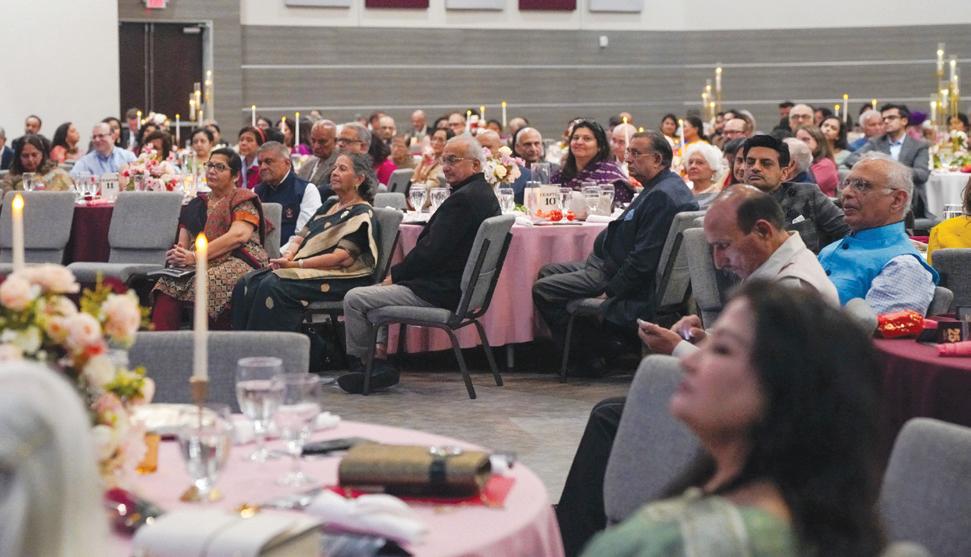
Houston: On Saturday, February 14, DAV Montessori & Elementary School (DAVMES) marked its Silver Jubilee with a grand celebration at the GSH Event Center, bringing together parents, alumni, staff, and community leaders. To mark the occasion, every family was pleasantly surprised with a silver gift in a red clasped box.
The evening opened with prayers and a soulful English rendition of the Gayatri Mantra. One of the founders, Dev Mahajan, reflected on the school’s humble beginnings, with just four students under the guidance of Arya Samaj Greater Houston. He shared the initial plans for expanding into a middle school, an idea first envisioned by fellow founder Shekhar Agrawal.
Today, the Arya Samaj complex has 27,000 sf of facilities in addition to the school playground, basketball court and a playing field, all nestled next to the man-made lake off Schiller Drive in west Houston.
School Director Arti Khanna described the school’s mission of nurturing academic excellence and strong character rooted in Indian values. By blending Indian and American educational traditions, DAVMES has promoted honesty, empathy, responsibility, and service. Students have earned recognition in academics, arts, and STEM, including achievements in PSIA (Private Schools Interscholastic Association) competitions, the Houston Rodeo Art Contest, and community service with
Houston Food Bank and St. Jude Children’s Research Hospital.
Vikas Jhingran, an alumni parent and a World Champion of Public Speaking, appreciated the vital role of DAV teachers, sharing that both his children reflect the values of DAVMES.
A major highlight was the keynote address by acclaimed author Chitra Banerjee Divakaruni, who praised DAVMES for shaping responsible global citizens through heritage, storytelling and learning.
From the very beginning, the school has flourished through a close partnership between parents and management. With the dedication of highly qualified teachers, guidance from respected Acharya ji, and support from volunteer parents, the school has grown into not just a top-quality institution but also a warm, caring family environment.
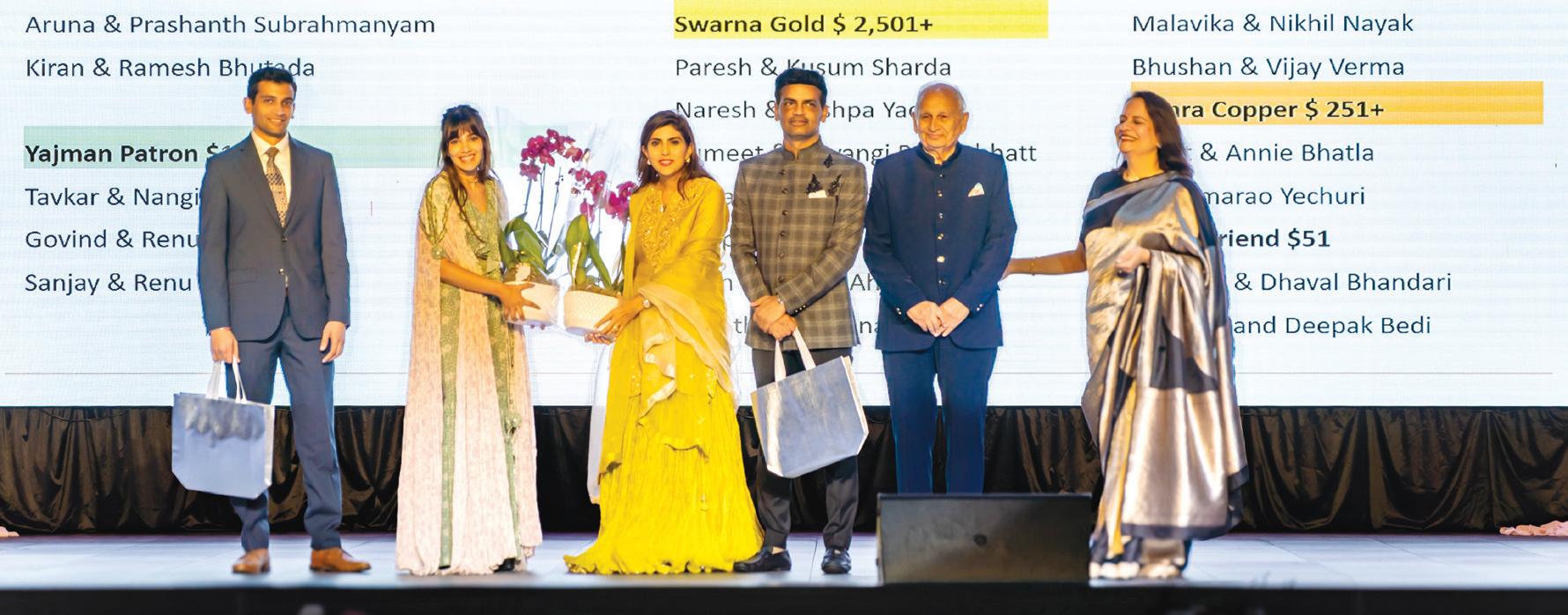
The school also unveiled its Strategic Growth Plan, including Cognia accreditation and the launch of a middle school by 2027–28, featuring state-of-theart STEM labs and project-based learning. This vision was further strengthened by four families, each contributing $100,000 or more: the founders, along with young parents Bharat and Sheeba Pallod, and Pankaj and Avnie Malani.
The evening concluded with vibrant student performances and expressions of gratitude. Wellwishers are invited to support and offer their Ahutis in this “Jnaana Yajna” by visiting www.davhouston.org.




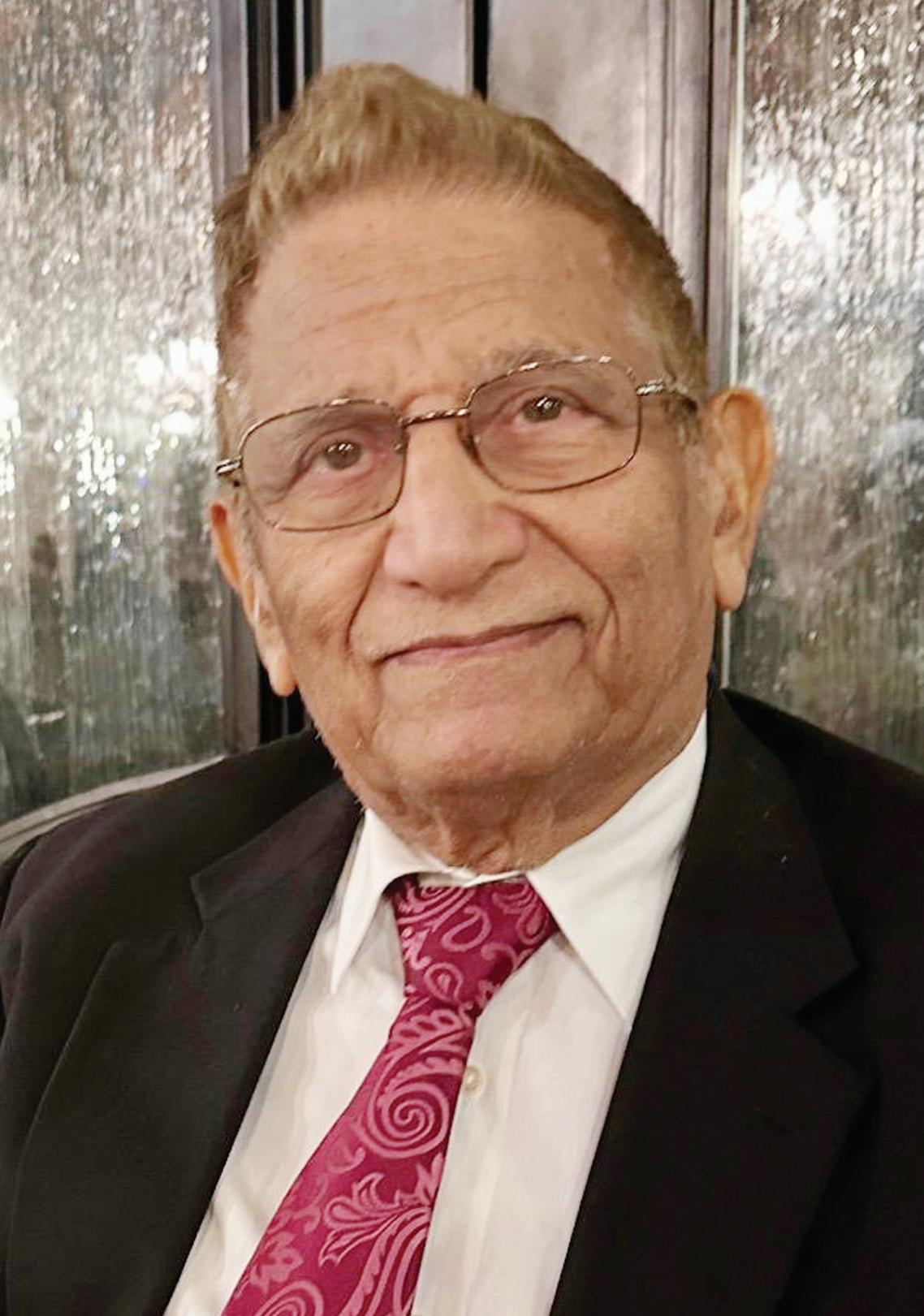
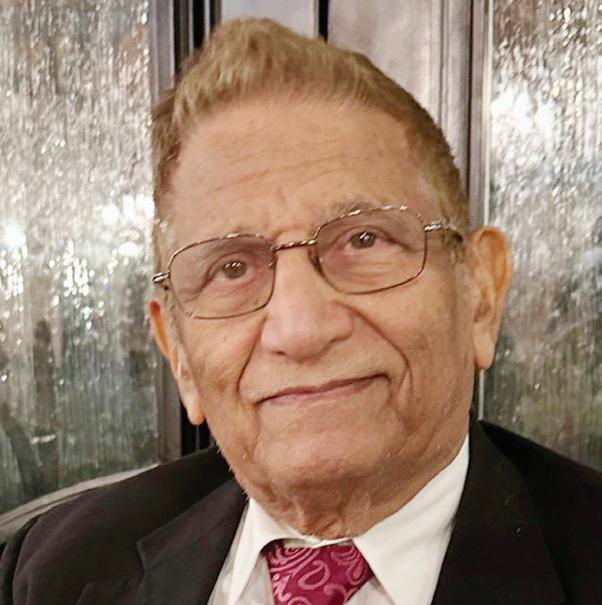
Houston: Syed Zafar Hasnain Taqvi was born in Lucknow, India, in 1941 and completed his Bachelor’s and Master’s degrees from Allahabad University in India. He then moved to Houston in 1967 where he received his Ph.D. in Electrical Engineering from the University of Houston.
An unassuming and humble man, Zafar Taqvi, as most of his friends knew him, lived a life rooted in faith, learning and community service. He passed away after a brief illness at the age of 84 on Friday, February 6, 2026, in
Houston.
Taqvi carried with him a lifelong belief in excellence, often reminding others, “If anyone can do it, you can do it better.” For more than 50 years, he was an active and well-respected member of engineering organizations such as IEEE and AIAA, building professional relationships and contributing to the field alongside colleagues from around the world.
For nearly 60 years in Houston, he became a pillar of the community. Alongside his wife, he taught generations of children in Sunday school to read Arabic and Urdu and established some of Houston’s first South Asian radio talk shows, like “Sangeet Bahaar” and “Jhankaar,” and programs like the first Bazme-Adab mushairas in the city, which began in his home.
For more than two decades, he mentored students through the Future City Engineering Competition, nurturing curiosity and ambition — all reflecting his deep love for culture, education and community.
A gifted speaker and avid Urdu poet who authored several books, Taqvi brought knowledge, wit and presence into every room. Above all, he took sincere interest in people—remembering their stories, encouraging their growth and engaging in thoughtful conversation as a true lifelong student.
He is survived by his wife, Nasim, as well as his three children, Sabia, Nazer and Sarah. He leaves behind a legacy of faith, education, professional excellence and connection, and countless lives touched by his guidance and generosity.


By Rugwed damle special coRRespondent
Rugwed “Ved” Damle, an avid cricket enthusiast, flew down to Mumbai for a first hand experience of the T20 match and filed this report.
mumBai: The lights rose, the drums rolled, and history leaned forward. As the opening ceremony faded into a roar, India walked out with legacy stitched into every step, while the United States arrived with belief, ambition, and nothing to lose.
Before the first ball was bowled, the night belonged to Badshah who had turned the stadium into a wave of bass and bravado, his beats echoing through the stands setting the rhythm for the contest ahead. Soon after, Nora Fatehi lit up the stage with a performance full of glamour, precision, and undeniable star power.
India’s batting start against the USA was pure chaos before it found calm. Put under pressure early, India were rocked hard at the top. With the new ball, wickets tumbled, and for a stretch it felt like every delivery carried drama.
The USA bowlers smelled history and kept forcing India into survival mode far earlier than expected.
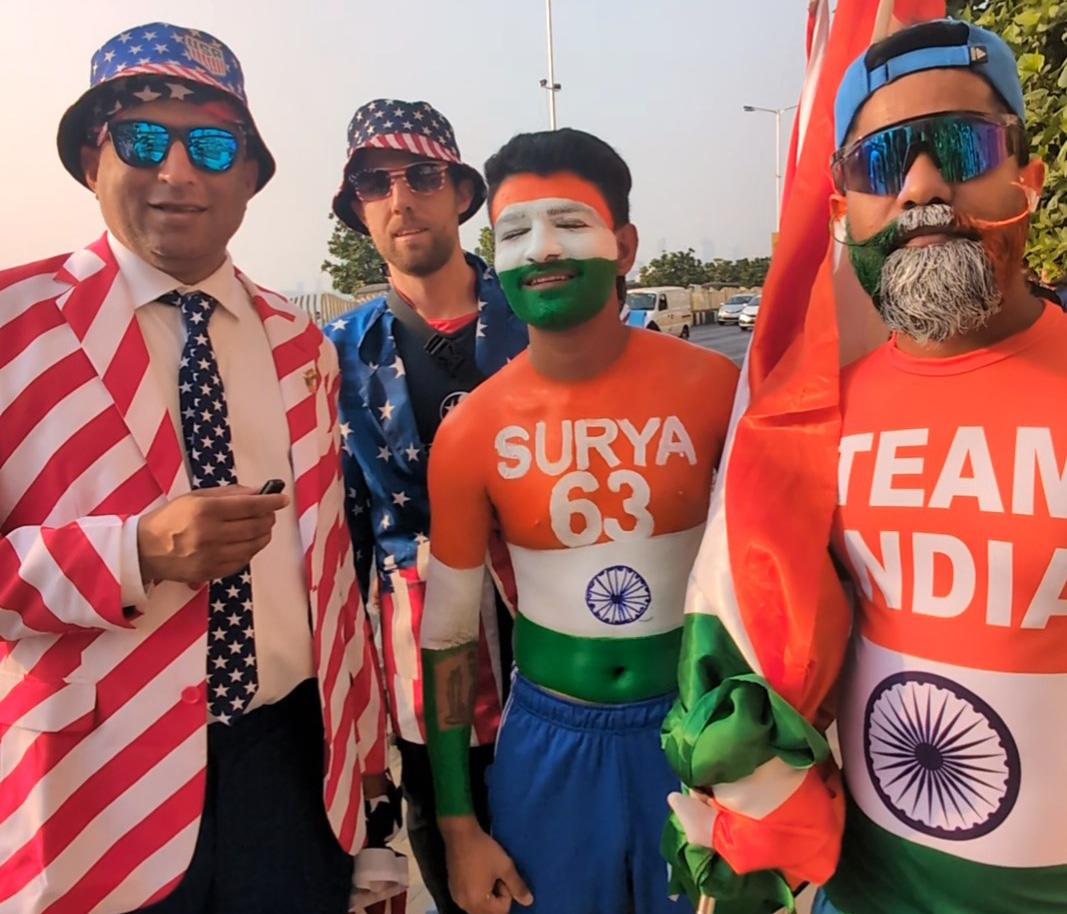
Then came the resistance. The middle overs belonged to Surya-

kumar Yadav, who absorbed the pressure, counter-punched when needed, and stitched together an innings that was more about control than flair. It wasn’t effortless dominance—it was grit, game awareness, and timing the acceleration just enough to keep India alive.
It wasn’t vintage India. It was
messy, tense, and uncomfortable—but it was also a reminder that even on bad days, they know how to stay in the fight. The break was all about Surya’s dominance in the end.
The United States innings began with all the swagger of an underdog unafraid of its own ambition. After winning the toss, they strode
out smashing the ball with intent — fearless hitting, sharp running between the wickets, and boundary after boundary that had the stadium buzzing. For a good chunk of the chase, it looked like the USA were in control, pacing themselves well and keeping India’s bowlers on their heels. The target seemed within sight, and with big hits
raining in, momentum was firmly theirs.
But cricket has a way of turning tables in a heartbeat. As the innings approached the business end, pressure started to build — dot balls crept in, fielders found their marks, and India’s bowlers
Continued on Page 6

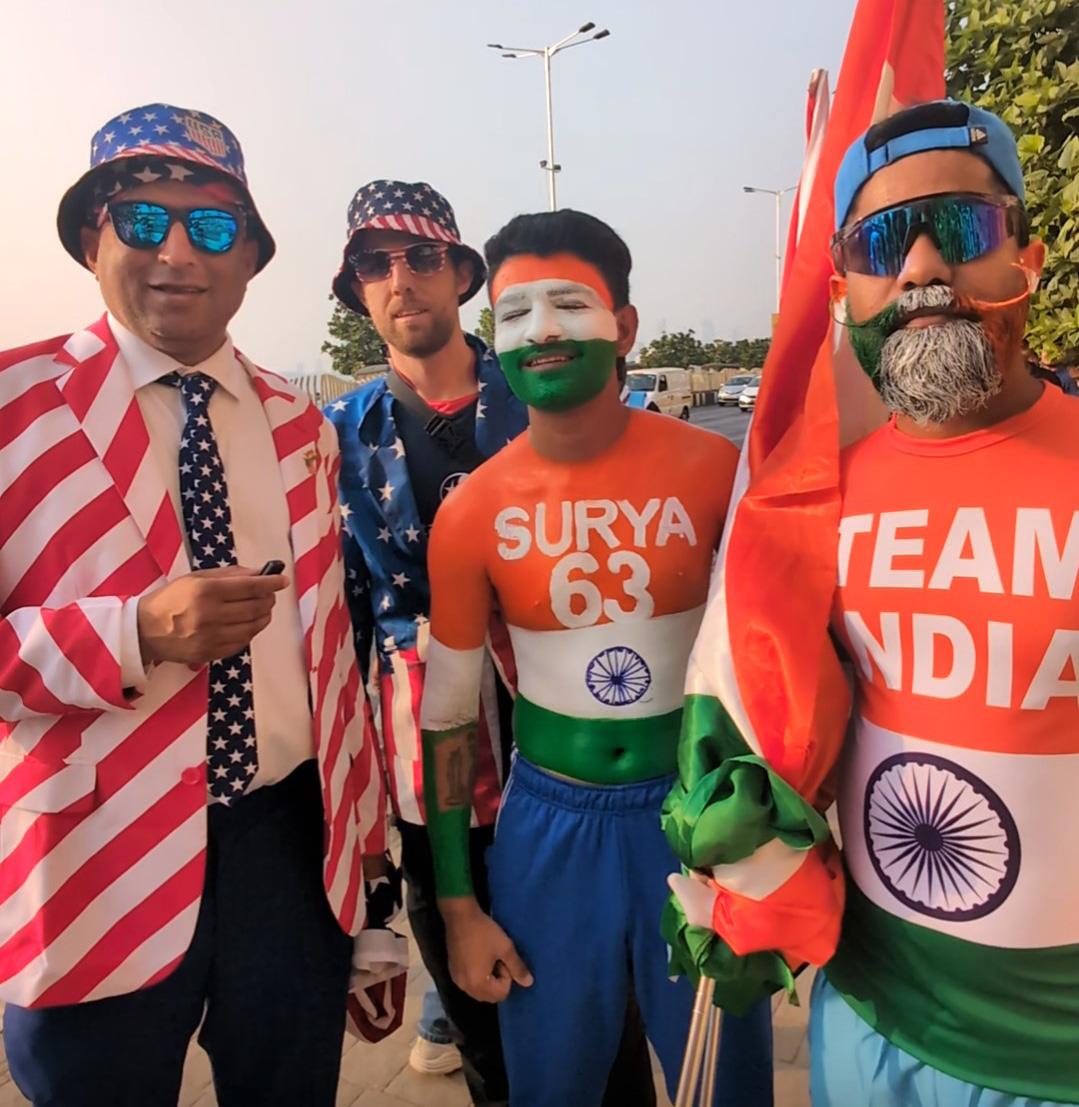
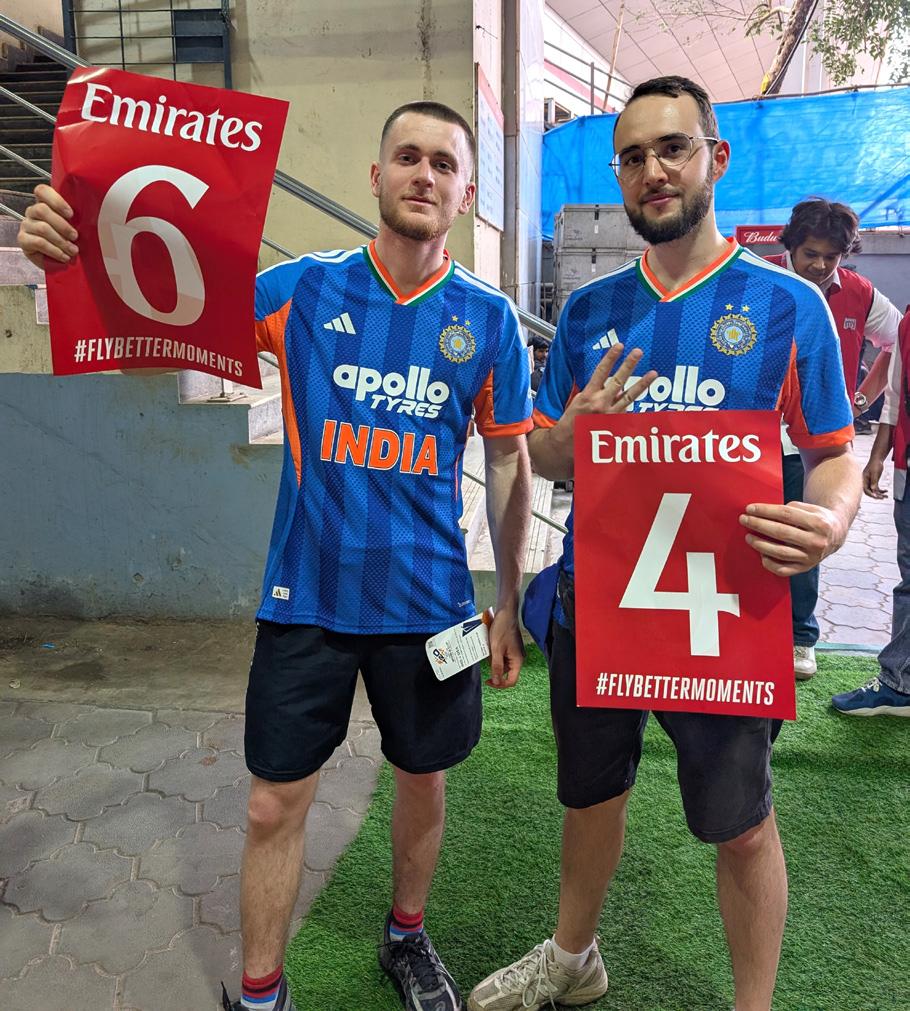
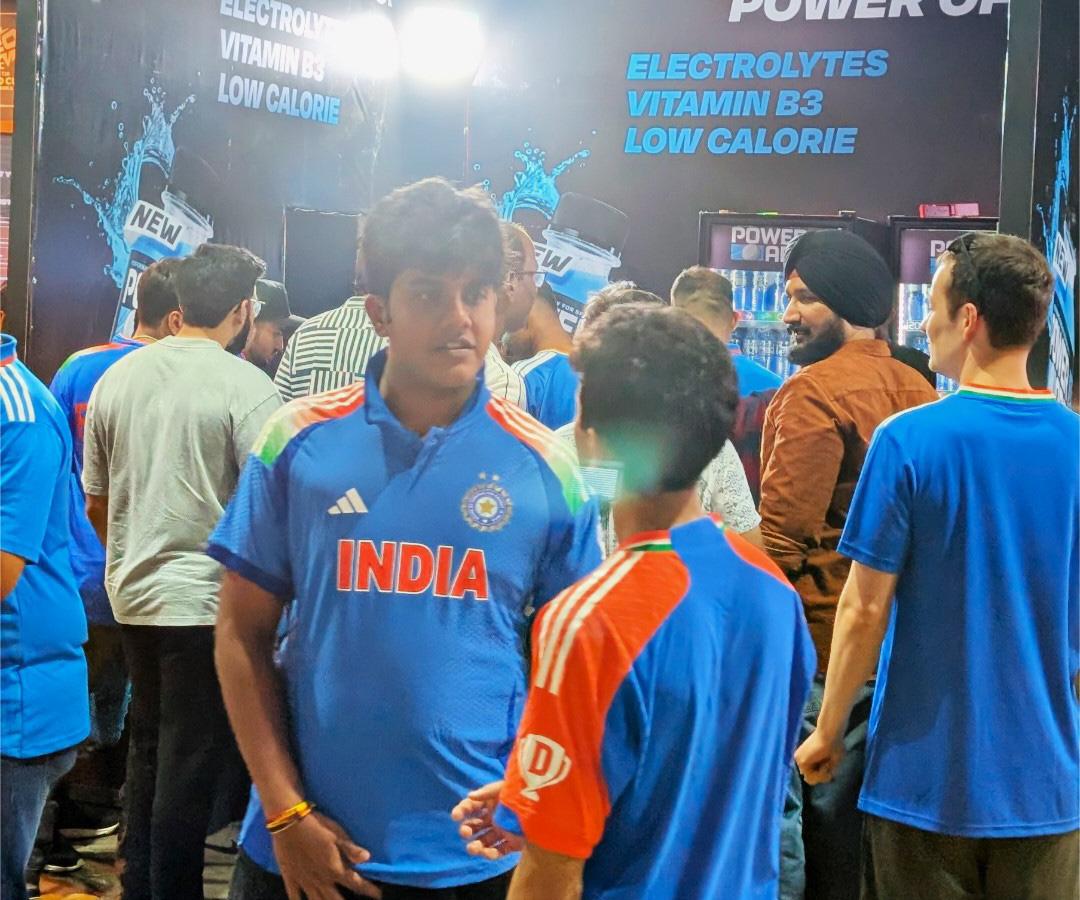
Right: Fans from Switzerland came all the way to watch India play USA. Far rigrht: Break was all about Surya’s innings of dominance
Continued from Page 5
began to sniff a chance. What followed was a dramatic collapse: panic crept into the Americans’ shot selection, risks that once looked brave began to look desperate, and wickets tumbled in quick succession.
In the end the confident cadence of the chase evaporated, leaving behind frantic swings and nervous looks from the dugout.
In the post-match, Surya revealed the Indian coach Gautam Gambhir’s advice that came handy “Gauti bhai told me during the break after the 14 overs. Just try and bat till the end, you can cover it any time.”
On the other hand, USA captain Monank Patel was open to admit - “The top three couldn’t perform, and I thought the intent was missing. We will come back stronger”.
From control to crunch time, the USA innings became a thriller — and that late collapse ensured this contest would be remembered not just for its fireworks, but for the tension and drama that went down. In the end, even though the USA lost against India, they managed to mess up the World Champions party even though for a little while.

It went down the expected route. Ishan Kishan was superb followed by error-free bowling from all the bowlers.
A sensational 77 off 40 from Ishan Kishan on a slow, spin-friendly pitch helped India make it 8-1 against Pakistan in T20 World Cups. The surface was so tacky that Pakistan bowled 18 overs of spin after sticking India in, but Kishan rose above the surface to take India to what looked like 30 above par. With three wickets in the first two overs, Hardik Pandya and Jasprit Bumrah vindicated that feeling as India registered their biggest win against Pakistan.
The impact of Kishan’s innings - after Salman Agha opened the bowling to get Abhishek Sharma for a duck - was clear from plain numbers. The rest of the India innings, including extras, managed just 98 off 80 balls. As was Pakistan’s innings, which went at over a run a ball only thanks to Usman Khan’s 44 off 34

By saRaH taqvi
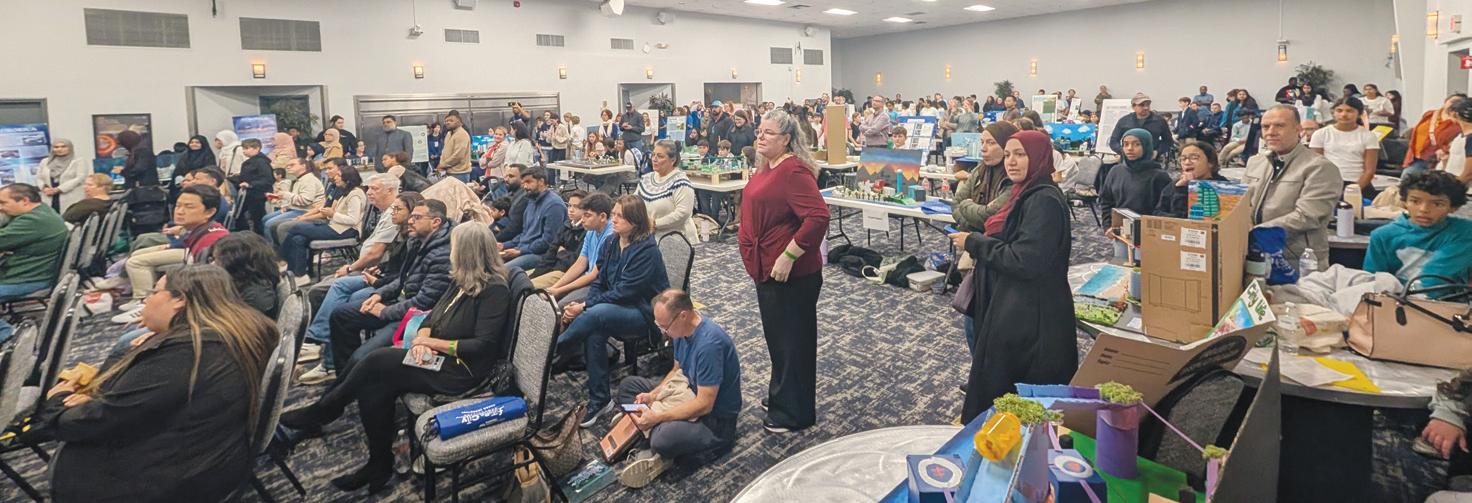
Houston: The Houston Regional Future City Competition returned on Saturday, January 17, marking a milestone year with the largest number of participating schools in the region’s history and the first-ever use of electronic judging.
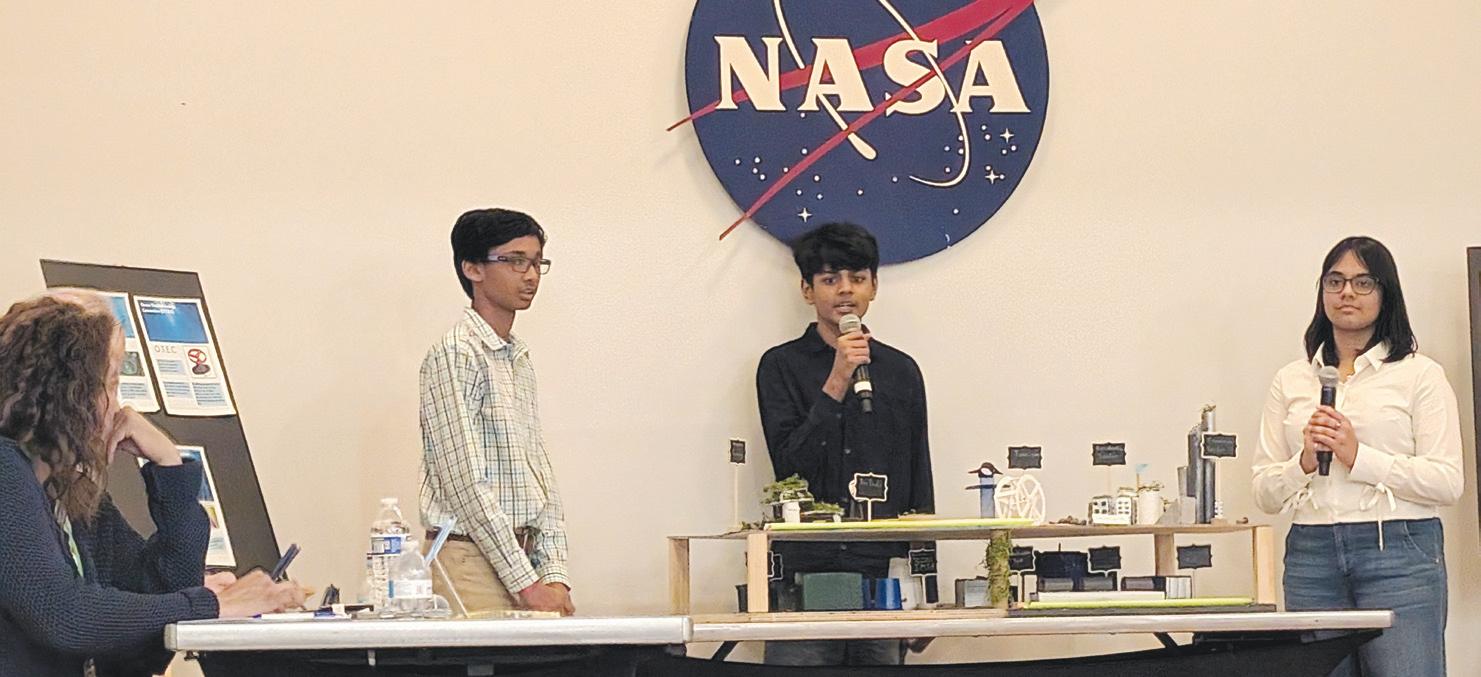
Middle school student teams from across the greater Houston area gathered to present their visions for cities of the future, showcasing innovative solutions to real-world engineering, sustainability and infrastructure challenges. The competition challenges students to imagine, research and design a future city using science, technology, engineering and math (STEM) principles.
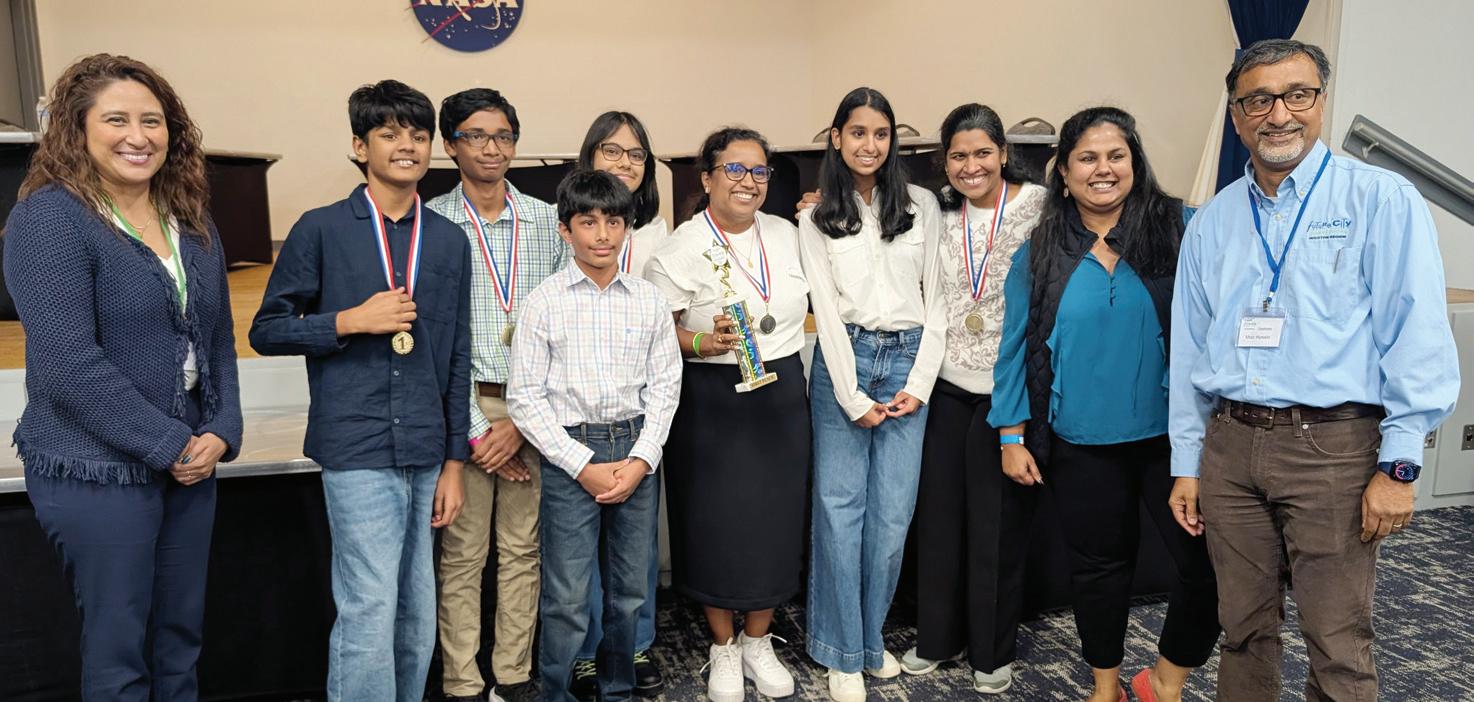
The 2026 Houston Regional Future City Competition Winners are 1st Place (Regional Winner): Team Fen Faru of Leap4Forward; 2nd Place: Team Aurorica, Al-Hadi; 3rd Place: Team Silvanus Spire, Kitty Hawk; 4th Place: Team Madaterra, Meillo Middle; 5th
Place: Team Floraterra, Fort Settlement School.
The first-place team, Team Fen Faru of Leap4Forward, will represent the Houston region at the Future City National Finals in Washington, DC, where they will compete against top student teams from across the country.
The Houston Regional Future City Competition continues to grow each year, inspiring students to think critically about the cities they will one day lead, design, and inhabit.
For more information about the Houston Regional Future City Competition or to request photos, interviews, or student project details, contact Moiz Husain, Coordinator at houstonfccoordinator@ gmail.com or Sarah Taqvi, PR sarahzt@ gmail.com.



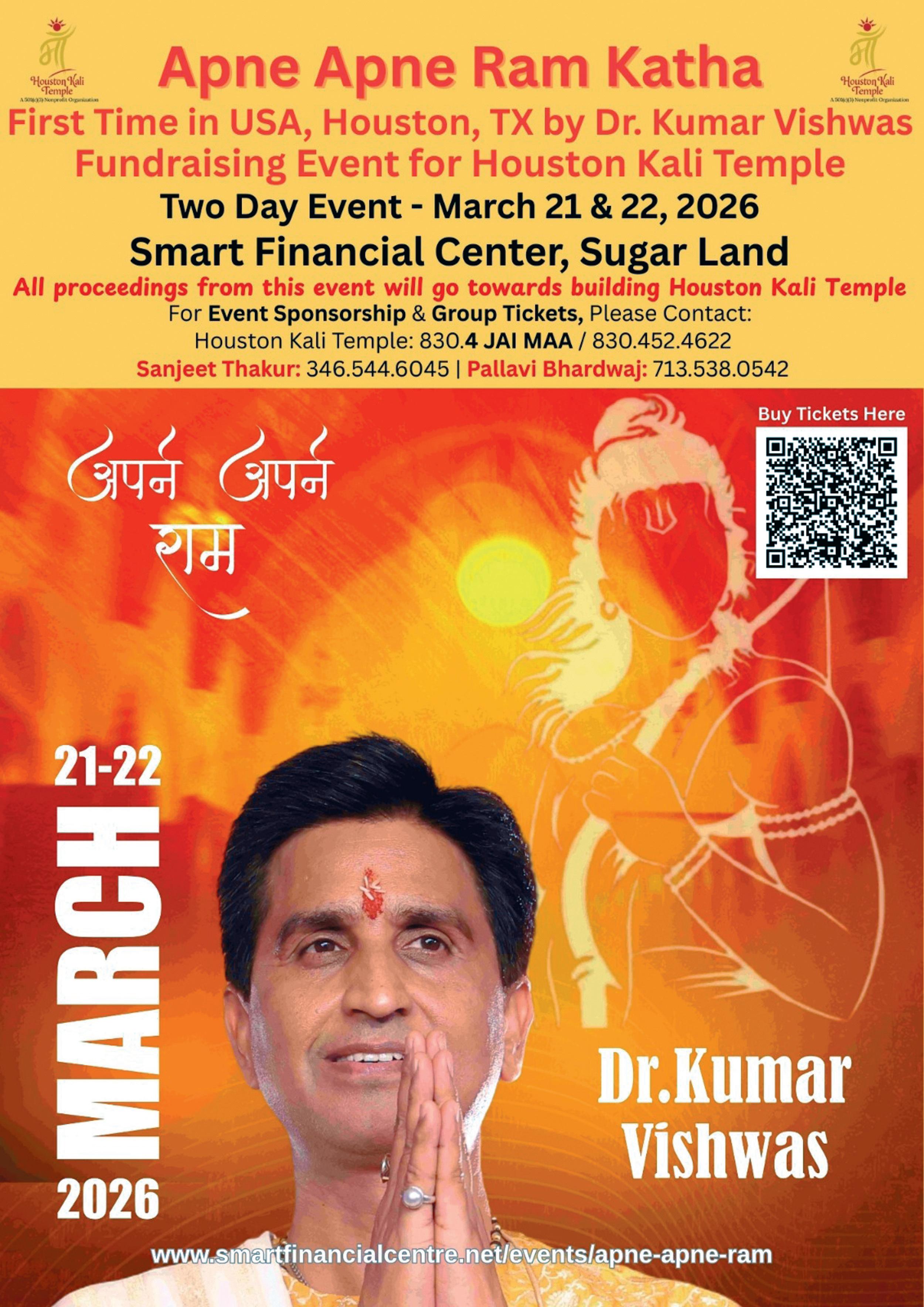





Voting Runs Feb. 17 to Feb 27

Indian-origin climate scientist Meha Jain, an associate professor at the University of Michigan School for Environment and Sustainability, has been awarded the Arizona State University–Science Prize for Transformational Impact, a global recognition given to early-career researchers whose work shows measurable social benefit.
The award committee cited Jain’s pioneering use of satellite imagery and artificial intelligence to track how smallholder farmers respond to climate stress. Her research moves beyond crop yield estimates, offering a rare, data-driven view of how farmers alter irrigation practices, planting schedules, and land use when rainfall becomes unreliable or temperatures rise.
At the same time, her work flags hidden environmental costs, most notably, the steady depletion of groundwater in intensively farmed regions.
The prize marks the inaugural edition of the ASU–Science
honour, positioning Jain among a small group of scientists whose work sits at the intersection of cutting-edge research and real-world decision-making.
Jain’s academic path runs through Princeton University and Columbia University, where she completed her PhD in ecology and environmental biology, followed by postdoctoral research at Stanford University.
But colleagues note that her intellectual compass was shaped less in classrooms and more in the fields of rural India, where she spent years working alongside farmers.
That experience informs her central argument: that many farmers are not reckless users of water or land, but people operating under tight economic and climatic constraints.
By combining remote sensing, machine learning, and on-ground surveys, Jain maps cropping patterns and irrigation use across vast regions where official data
is scarce or outdated. Her findings challenge policy narratives that frame resource overuse as a knowledge failure rather than a survival response.
Beyond academic journals such as Science and Nature Sustainability, Jain is translating research into practice.
She is developing smartphonebased tools that provide farmers with guidance on irrigation timing, crop choices, and climate risk, bringing elements of precision agriculture to regions often excluded from digital innovation.
As climate change tightens its grip on global food systems, the significance of Jain’s work lies in its balance. It shows how technology can help farmers adapt and improve yields, while also warning policymakers about long-term ecological limits.
The ASU–Science Prize recognises not just scientific excellence, but a model of research that listens to farmers, respects constraints, and turns data into decisions.



FoundeR: dR. K.l. sindwani puBlisHeR: JawaHaR malHotRa editoR: pRamod KulKaRni coRRespondent: sancHali Basu
®All rights reserved. No material herein or portions thereof may be published without the written consent of the publisher. Deadline for advertising and articles is 4 pm on Monday of each week. Please include self-addressed, stamped envelope for return of all unsolicited material. Published at 2470 S. Dairy Ashford #175, Houston, Texas 77077. Tel:713-789-6397, email: indoamericannews@yahoo.com, website: www.indoamerican-news.com

Arijit Singh’s recent retirement announcement on Jan. 27, 2026 from playback singing left the entire nation in shock. It also stirred a controversy about creative exhaustion and the future of musicians in the Bollywood industry. While some peers supported his decision, calling it a new phase, the singer’s fans were disappointed with the move. Filmmaker Anurag Kashyap reacted to Arijit’s retirement announcement, reasoning less ‘freedom’ for musicians
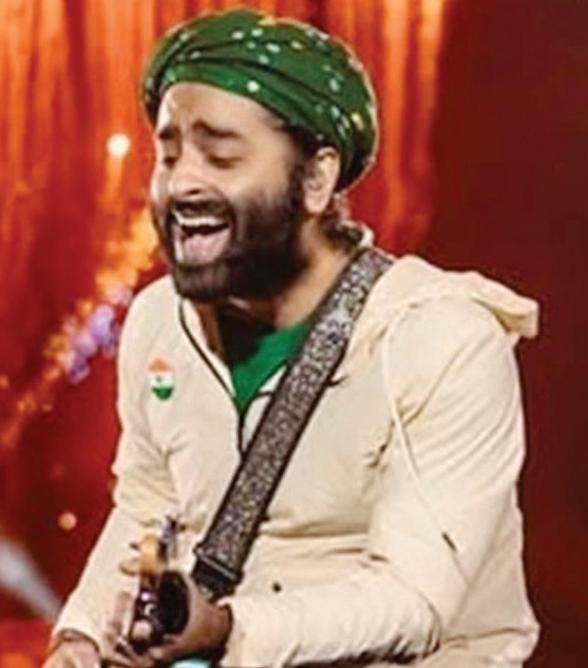
within the industry.
The filmmaker praised Arijit Singh, saying there’s much more to him than just heartbreak tracks.
“It’s a heartbreak. The man is so talented. He has done music for the Sanya Malhotra film, Pagglait. He is also a filmmaker, and takes care of his entire town. He doesn’t want to keep singing the same kind of songs. There is more to Arijit Singh than just heartbreak songs. He wants to do a lot more,” he added.
The climax of O’Romeo delivers a violent yet emotionally charged resolution. Ustara survives being shot and thrown off a train, eventually reuniting with Afsha in Spain in the final bullfight-style showdown.
The explosive climax of O’Romeo leaves audiences with lingering questions about loyalty, revenge and survival. Directed by Vishal Bhardwaj and headlined by Shahid Kapoor, the romantic action thriller builds toward a bloodsoaked finale that blurs the lines between justice and vengeance. Does Ustara die after being shot and thrown from a train? Does Jalal succeed in his brutal game of betrayal? And what is the truth behind Rabia’s shocking twist?

Midway through the film, Ustara appears to meet a fatal end. After a brutal fight aboard a moving train, Inspector Pathare shoots him in the throat and pushes him off. The sequence is staged to convince both the audience and Afsha that Ustara is dead. Ustara survives the near-fatal
injury and spends months recovering in secrecy. His survival reinforces his character arc — a man who refuses to die before settling unfinished business. Once healed, he tracks Afsha to Spain, setting the stage for the final confrontation with Jalal.
By film’s end, Ustara is alive.
The courtroom drama in Assi follows a teacher, Parima (Kani Kusruti), who is brutally gang raped while returning home, and her lawyer Raavi’s (Taapsee Pannu) fight for justice. It explores themes such as vigilantism, patriarchy, systemic corruption, and societal apathy that normalises sexual assault and crimes against women.
Director Anubhav Sinha’s title denotes the approximate number of rapes that take place each day in India — around 80. Every 20 minutes, a reminder flashes on screen that another assault has occurred somewhere in the country during the film’s runtime.

Alongside the alarming figure, the legal drama unsettles with its unflinching portrayal of how cruel society can be toward survivors.
After Parima is violated, her male students joke about it in WhatsApp groups, while her husband Vinay (Zeeshan Ayyub) is pressured by his family to drop the case to “save honour.” Police corruption sabotages the investigation, victim-blaming becomes routine, and the accused display chilling apathy.
The story examines vigilantism through the rise of a ‘Chhatri Man,’ who begins targeting these rapists when the system fails. One of its most powerful moments sees Raavi’s face smeared with black ink by an irate supporter after she publicly speaks against vigilante justice.


Place a number in the empty boxes in such a way that each row across, each column down and each 9-box square contains all of the numbers from one to nine.