
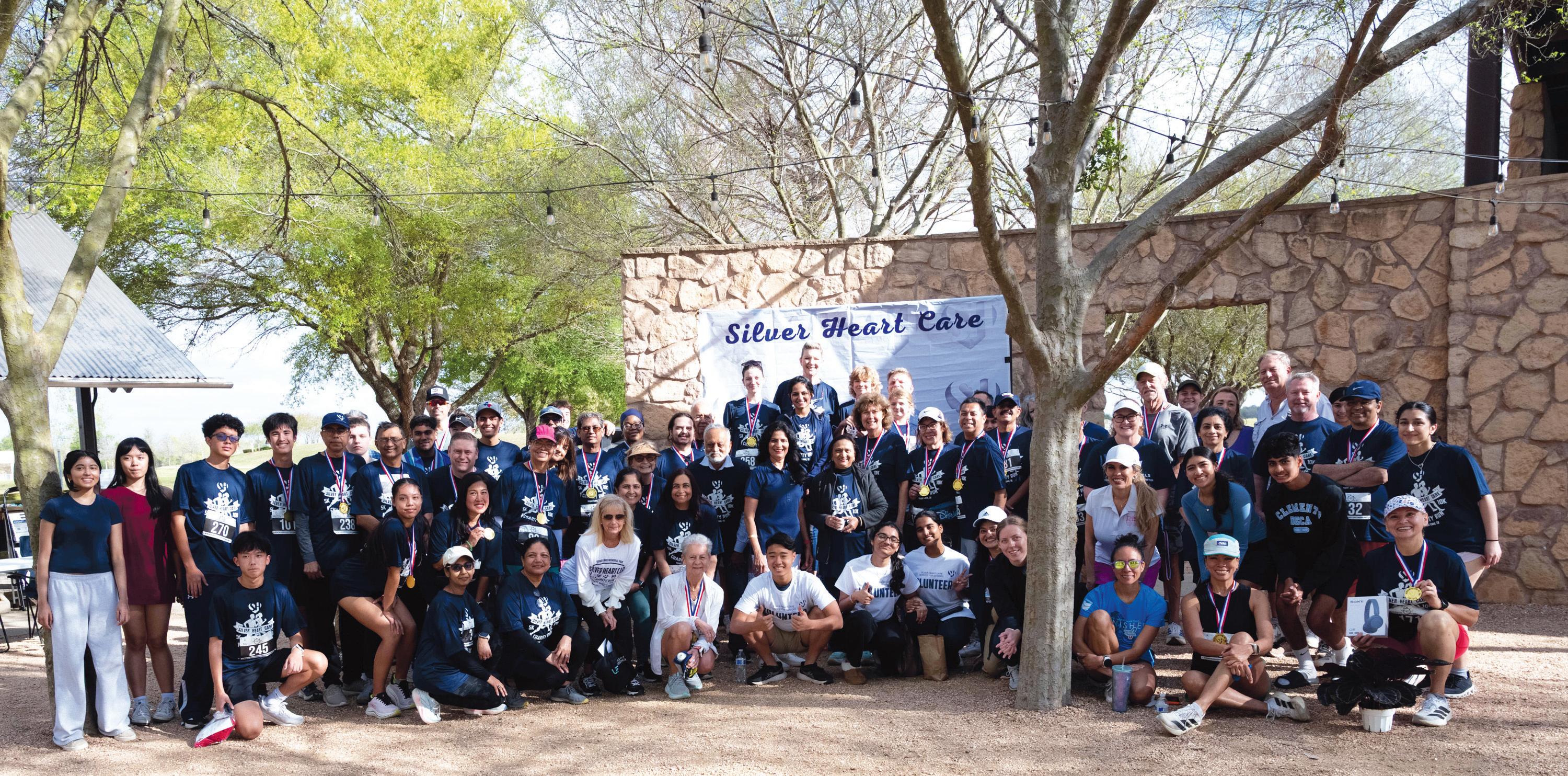



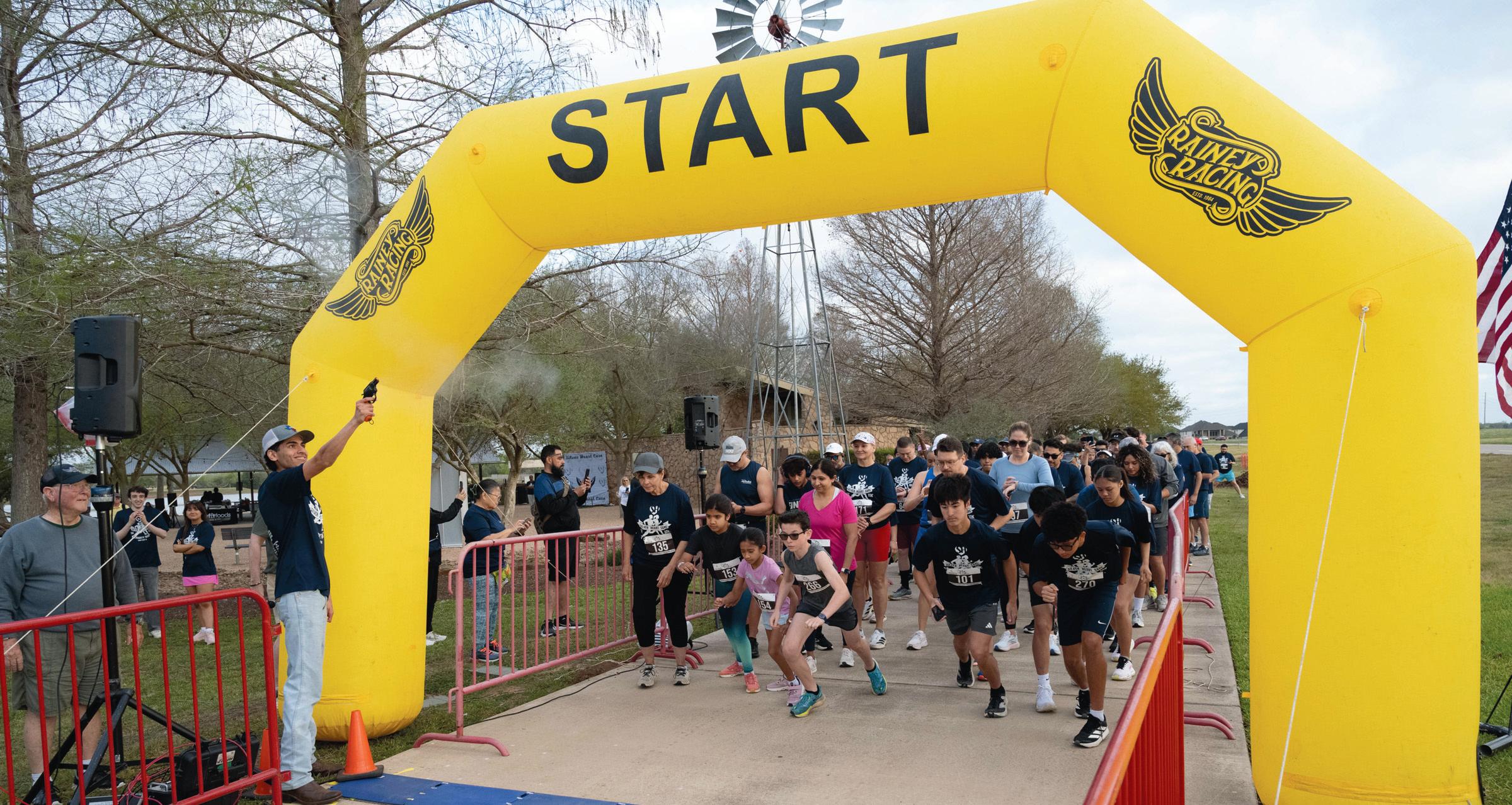
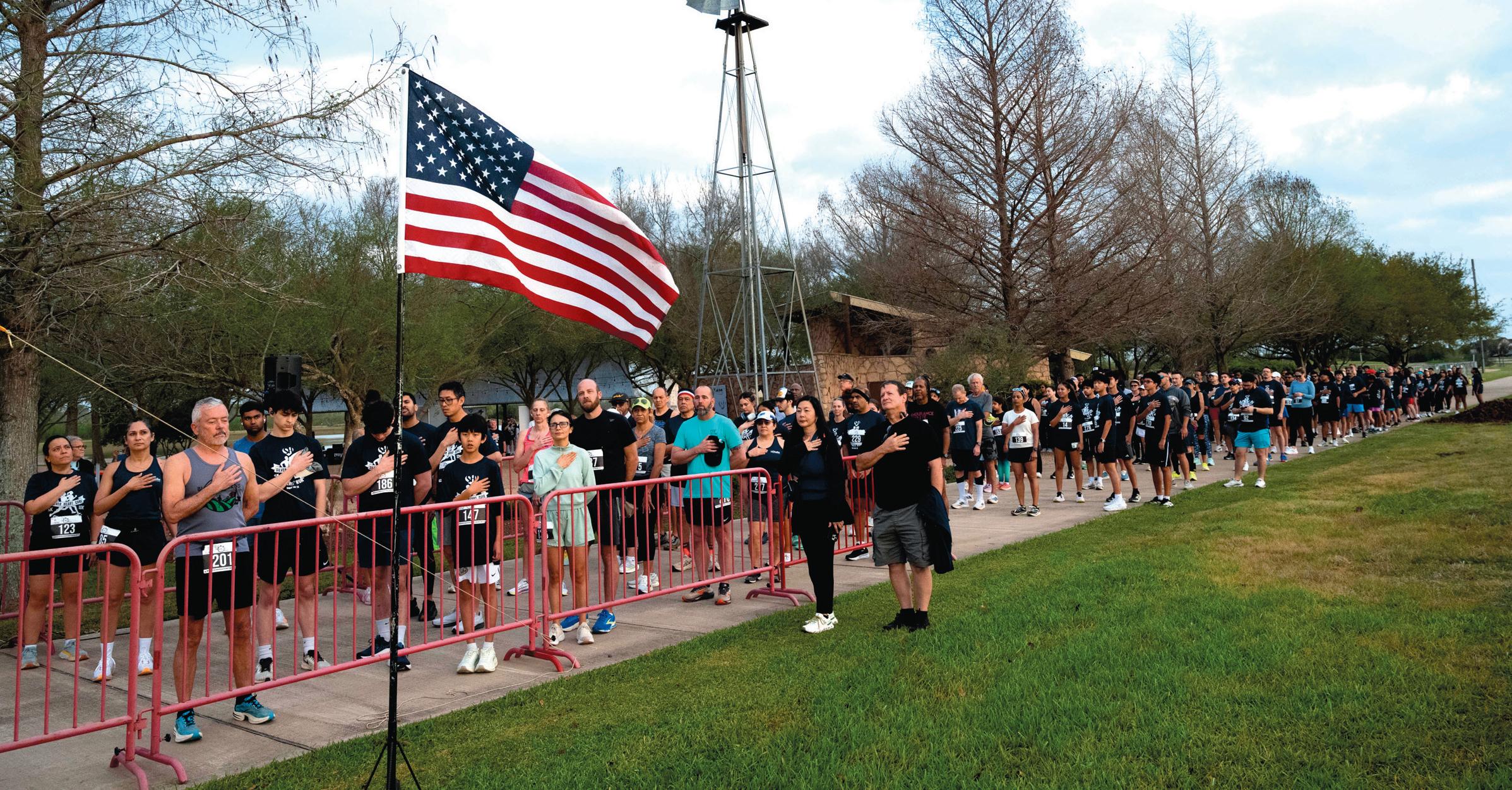
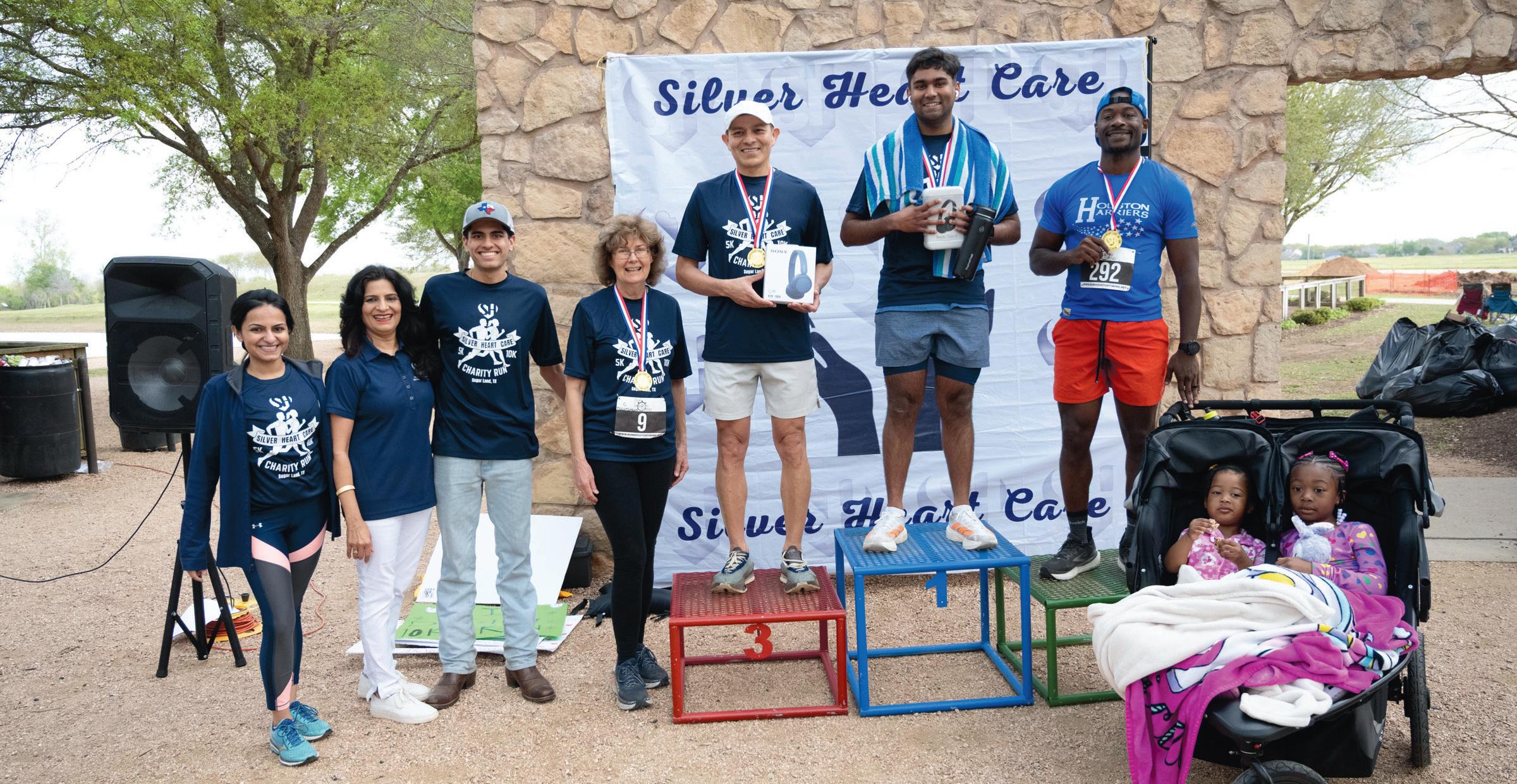
Houston: On March 22, the trails of Sugar Land Memorial Park were once again filled with energy, excitement, and purpose as Silver Heart Care (SHC) hosted its annual 5K/10K Charity Run. Building on the success of previous years, this year’s event brought together the Houston–Sugar Land community to support a meaningful cause— raising funds for SHC’s Wheels of Wellness program, which provides senior citizens with free transportation to essential appointments such as doctor visits and pharmacy pickups.
From early Sunday morning, the park buzzed with activity as runners, walkers, volunteers, and supporters gathered at the starting line, united by a shared commitment to giving back. This year’s event saw 303 registrations, with approximately 250 attendees and the support of 60 dedicated volunteers who helped ensure a smooth and welcoming experience for all.
The event was honored by the presence of several local leaders, including Mayor Carol McCutcheon and three members of city council. Their attendance highlighted the importance of community-driven initiatives and the impact of organizations like SHC in serving local seniors.
Participants ranged from seasoned runners to first-time walkers, all taking part in either the 5K or 10K routes. Along the course, volunteers provided hydration stations, encouragement, and enthusiasm that kept spirits high from start to finish. Many participants shared personal motivations for joining—running in honor of loved ones or to support a cause that directly impacts vulnerable members of the community.
Silver Heart Care, Inc., a Sugar Land-based 501(c)(3) nonprofit founded in 2020, continues to grow its mission of bridging generations through service. Through programs like Wheels of Wellness, as well as community support initiatives such as food drives and disaster relief, SHC remains committed to improving the lives of seniors across the region.
This year’s Charity Run would not have been possible without the incredible support of volunteers, sponsors, donors, and participants. While the race itself may be over, the impact will continue—helping seniors access the care and resources they need.
As SHC looks ahead to next year’s event, the organization invites the community to stay involved and continue making a difference. Together, we are building a stronger, more compassionate community—one step at a time.
To request services for seniors, please reach out at (281) 5365498, or visit the Silver Heart Care website at www.silverheartcare. org, where you can also view more photos from this event.
By sHaran GaHunia
Houston: An immigrant is someone who leaves behind everything familiar — their home, their culture, their community — to start over in a new country. It’s not just about moving to a new place; it’s about building an entirely new life in search of opportunity, safety, and freedom.
So why do immigrants come to America?
The simple answer — and the most powerful one — is family. They come so their children can have a better life than they did.
My own family’s story spans continents — from Africa to India, to London, and finally, to America. My parents once had a successful business in the United Kingdom, but racism was rampant in the late 60s and 70s. My father realized that if he wanted his family to be able to migrate to America- and truly thrive, he’d have to find a place where we could build a future with fewer barriers. So he left everything he knew — his education, his friends, and the life he’d built — and took a leap of faith toward America.
He arrived here with just two dollars in his pocket and an unshakable spirit. Thankfully, the Punjabi community, known for its warmth and solidarity, welcomed him with open arms. One local Saini family offered him a place to stay while he got settled. And as anyone can imagine, living in someone else’s home — even for a short time — takes humility and
sacrifice. But that’s what being an immigrant is all about: enduring the uncomfortable in pursuit of something greater.
My father was always larger than life — a true social being with a personality as big as Texas. He made friends easily, created community wherever he went, and carried a natural leadership that people gravitated toward. Though he faced hardship, he turned every challenge into connection and every stranger into family.
The beginning wasn’t easy — in fact, it was incredibly difficult.
Those first few years, all five of us lived in a small one-bedroom apartment. We sacrificed birthdays, presents, and even some Christmases while my parents worked tirelessly toward their version of the American Dream.
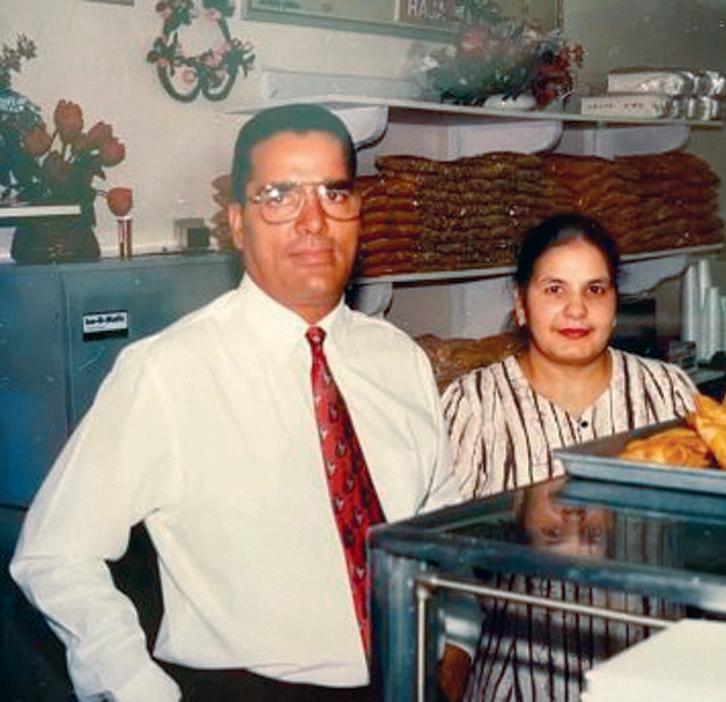
My dad worked long day shifts at Burger King while studying real estate on the side, determined to create something better for us. My mom, meanwhile, worked night shifts at Dunkin’ Donuts, all while caring for three children — one of whom had special needs.
But even through the chaos, there was love — complicated, imperfect love — and a relentless desire from my parents to give us more than they ever had.
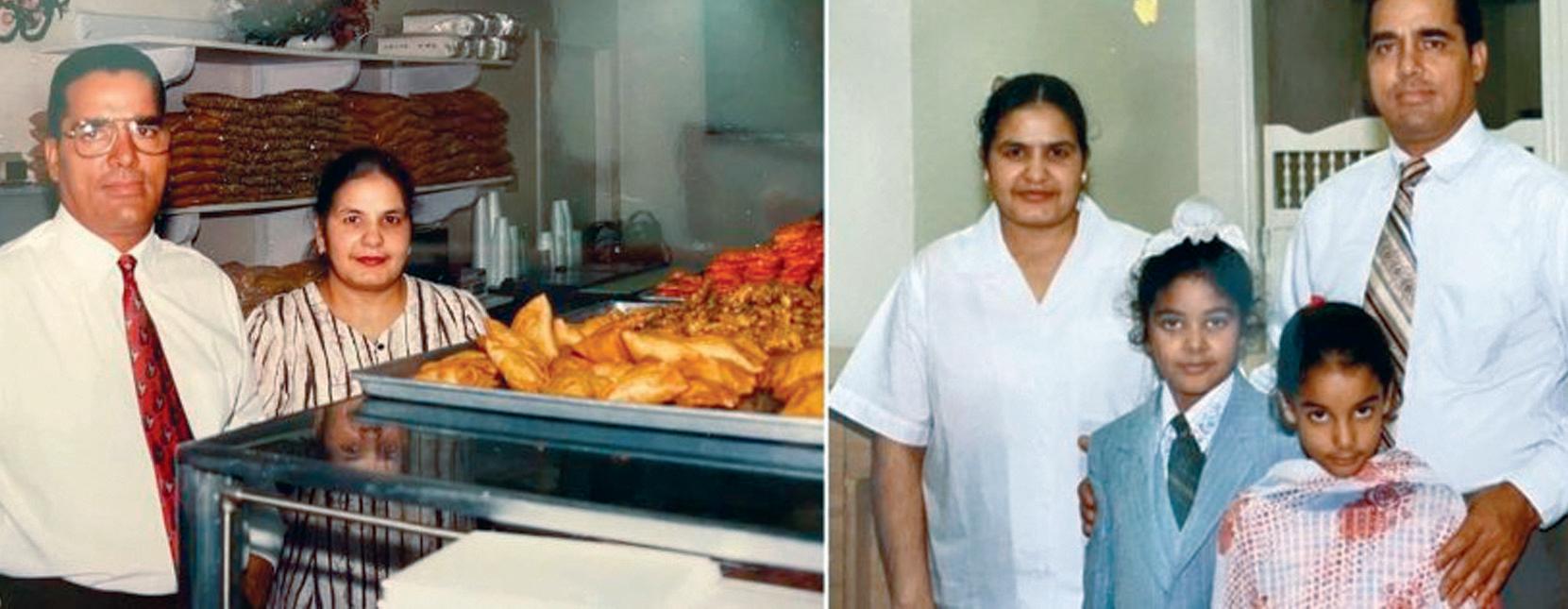
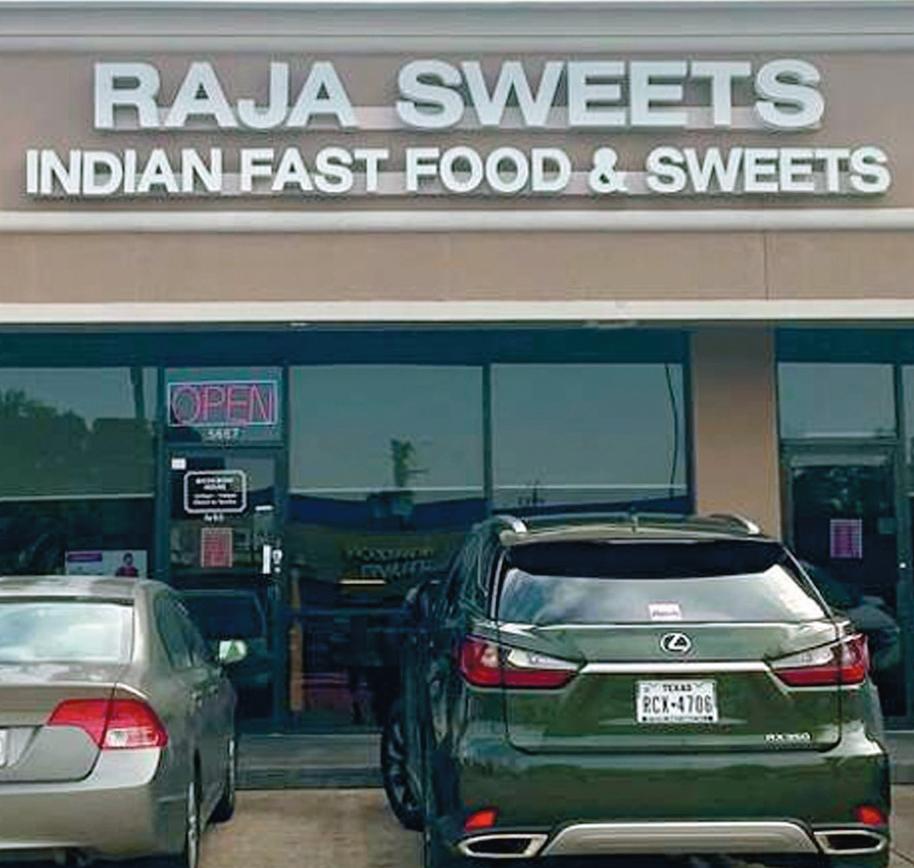
In 1986, my parents opened Raja Sweets. Before opening, they held a small religious ceremony to bless the space and prayed for the wellbeing of the business. They wanted to bring something authentic to Houston — sweets made fresh from scratch, just like back home. The response was overwhelming. The demand was there, and my
father seized the moment. Today, Raja Sweets stands proudly as one of the most beloved Indian sweet shops in the state of Texas.
After years of carrying so many burdens — financial, emotional, and familial — he became sick. He was diagnosed with pancreatic cancer at 57 and passed away just a year later, in 2002, at the age of
58. His passing shattered us. My mother, who had never driven a car because my father had always kept her sheltered, suddenly had to figure out how to navigate life alone — as a widow and a single mother of three.
I realized how much my dad had carried — not just for us, but for an entire generation. Immigrants like him don’t come here for themselves — they come carrying the weight of an entire village, an entire lineage, on their backs. He paid for his siblings’ weddings, his parents’ medical bills, and the futures of dozens of others — all while trying to build his own dream in a foreign land.
My parents were in constant survival mode. But because of them — because of their strength, their sacrifices, and their endless resilience — I stand here today. Their story is not just the story of my family. It’s the story of so many immigrant families — people who came here with nothing but faith, grit, and a dream for their children.
Founder: dr. K.L. sindwani
PuBLisHer: JawaHar MaLHotra
editor: PraMod KuLKarni
CorresPondent: sanCHaLi Basu


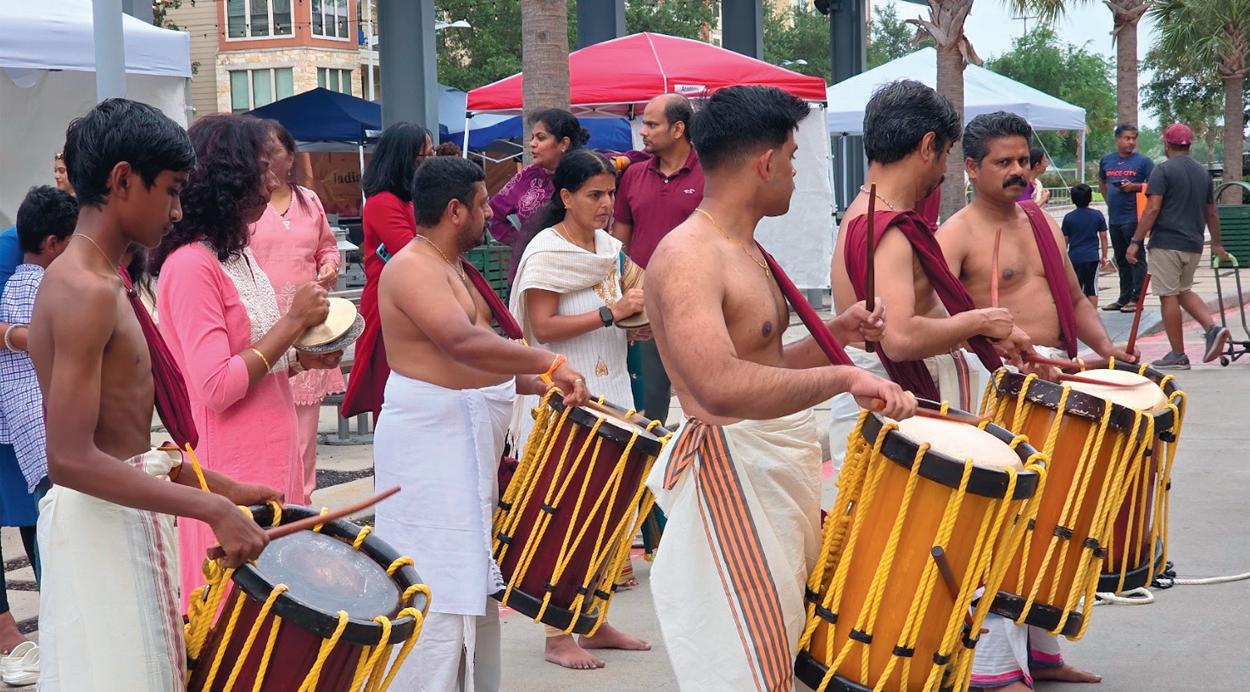
Houston: The free, 8th annual Puranava India Art & Culture Fest organized annually by Global Organization for Divinity and supported by Visit Pearland, will be held at Pearland Town Center Pavilion, on Saturday April 18 from 10 am through 6 pm. The colorful event aims to provide an experience of India’s vibrant, diverse, age-old culture which is still a living, integral part of modern India.
The art and culture fest will showcase classical and folk dances and music from India’s diverse regional cultures from the north, south, east, and west, through both stage and street performances. Kids can have fun and learn at our
exclusive “Kids Zone” where they can make and take special artwork and crafts, watch an Indian string puppet show, play several traditional Indian games, take home goodies, etc. Visitors can also shop for ethnic Indian wear, jewelry, crafts at the bazaar; taste delicious, exotic Indian food and beverages from the entirely volunteer-run “Kicha’s Kitchen”; try henna art; take photos in the photo booth, and more.
A highlight of this festival is a Chariot Fest - scheduled to begin at approximately 4:30 pm –similar to what is celebrated even today in temples in India. Here everyone can pull a divine chariot,
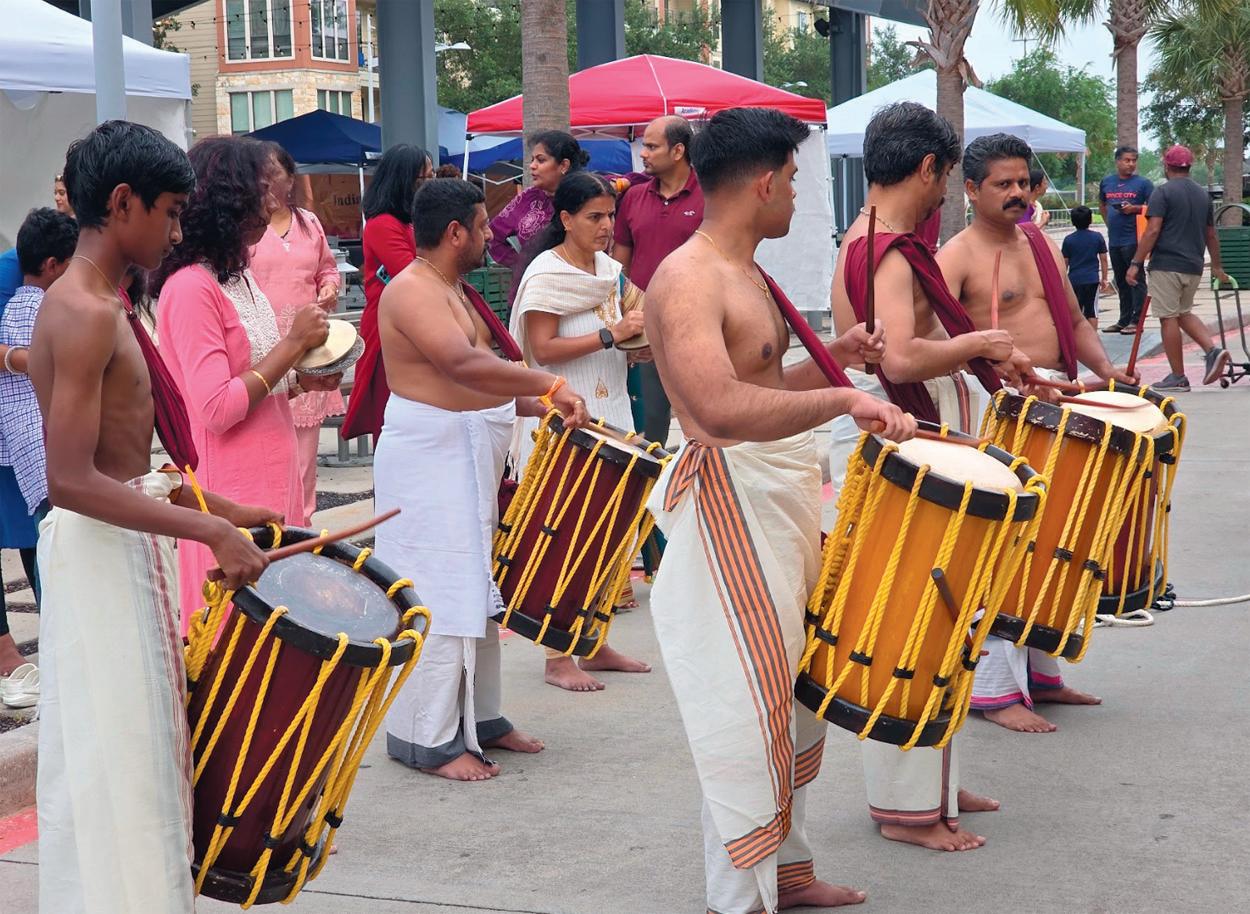
join in kirtan and chants, and watch special colorful, folk percussion performances.
Youth and kids’ competitions in Chess, Art, Indian Classical Dance, Indian Classical Music, Ethnic Indian Costumes and a written Quiz will be held during the day (10 am to 3 pm). Advance registration for these needs to be done at www.puranava-usa. org/houston Kids and youth of all ages and cultural backgrounds are welcome to participate in the competitions.
The nonprofit event is supported by a cultural arts grant from the City of Pearland through Visit Pearland. The mayors of the cities of Pearland and Manvel, county commissioners, and other dignitaries from the Greater Houston area are also expected to attend the event.
As part of sister organization, Love to Share Foundation America’s annual giving program, free health screenings will be conducted at the event, and drives are also being held to support
Waiting Under the Willow Foundation, a dog rescue and adoption organization, and Kidz Harbor, which gives refuge to abused, abandoned and at-risk children in Texas. Representatives from both organizations will receive donations collected, during the Puranava 2026 event on April 18. To support these organizations through our drives, please reach out to 281-923-4861.
“Pura” means ancient and “Nava” means new or modern. Puranava is presented in various formats by Global Organization for Divinity in several cities and countries across the USA and the world. True to its name, it endeav-
ors to do its part in bringing India’s exquisite indigenous arts to the forefront and presenting to local communities here in the USA the beauty of these traditions, many of which are still being actively practiced not only in India itself but also by people of Indian origin around the world.
More information about this year’s event, registration for the competitions, vendor registration, etc. can be found at www.puranava-usa.org/houston. For real-time info about Puranava, visit our social media pages - Facebook Event page and Instagram page @ puranava_htx. For more information about Global Organization for Divinity Houston and its activities, please visit our Facebook page GOD Namadwaar Houston and Instagram @god_houston.
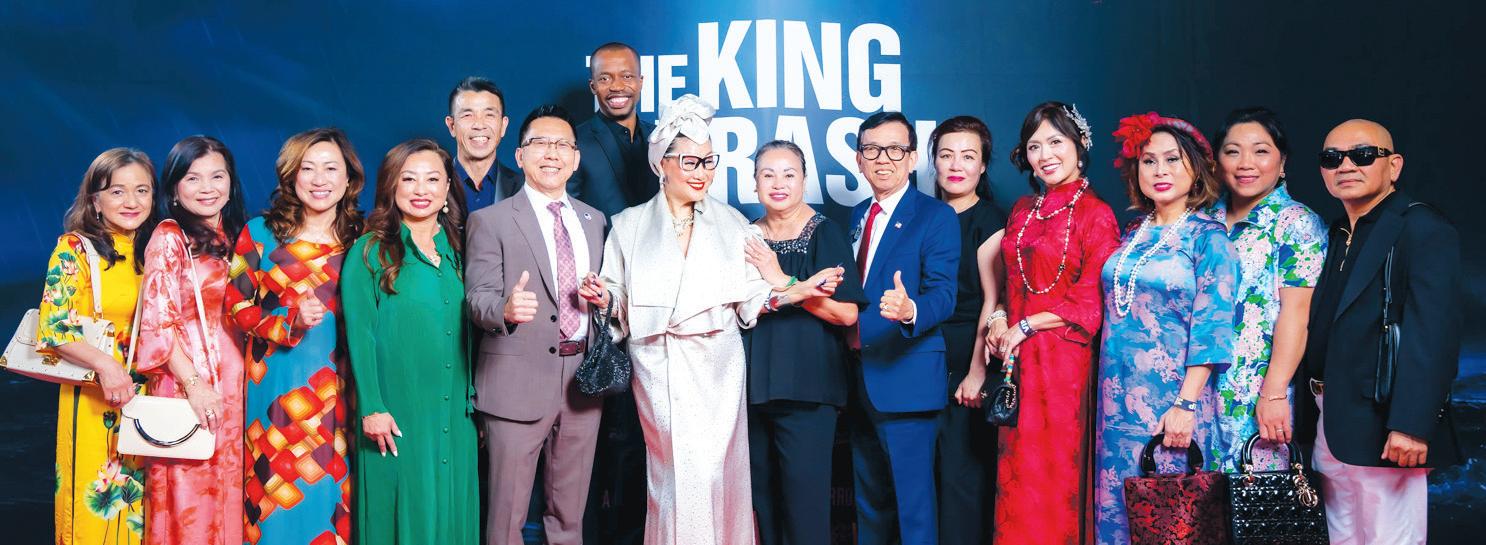
Houston: A private pre-screening of the documentary King of Trash was held on March 21, 2026 in Houston at the Regal Edwards Marq’E theater. It is directed by Oscar-winning cinematographer Errol Webber. Premiering in California in late 2025, The King of Trash highlights both the triumphs and personal sacrifices of David Duong and his family—Vietnamese refugees who fled their homeland after the fall of Saigon and went on to build a recycling empire in the United States. The documentary features David Duong and his siblings, Victor and Kristina.
The story begins during the fall of Saigon in 1975, when the Duong family loses everything— their home, business, and sense of security. David’s father, Duong Tai Thu, was a successful paper mill owner and recycling entrepreneur in South Vietnam. When the new regime takes power, the
family’s assets are seized. Facing persecution, 23 family members flee on a small boat, embarking on a dangerous journey across open waters.They endure storms, hunger, and extreme uncertainty—and are even intercepted by a Soviet ship—before eventually reaching a refugee camp in the Philippines. From there, they are granted entry into the United States.
Arriving in San Francisco in the
late 1970s, the family begins again with nothing. They speak little to no English and live in crowded conditions. To survive, they collect cardboard, bottles, and scrap materials from the streets of San Francisco and Oakland. This chapter reflects the broader refugee experience—marked by hardship, resilience, and the determination to rebuild from zero despite systemic challenges and discrimination.
What begins as a means of survival gradually becomes an opportunity. Drawing on his father’s experience, David Duong expands the family’s recycling work. He eventually founds California Waste Solutions (CWS), which grows into a major waste management company serving cities like Oakland and San Jose.
The nickname “King of Trash,” originally associated with his fa-
ther, becomes a symbol of pride— representing the family’s ability to transform discarded materials into lasting value. Later in life, David brings the journey full circle. He establishes Vietnam Waste Solutions (VWS) to help modernize waste management in Vietnam. This return is deeply symbolic—coming back not as refugees, but as contributors to the country they once fled.
The sold-out event in Houston featured a red carpet reception and drew community leaders, media professionals, and filmmakers underscoring the film’s cultural significance and strong community support. Among the attendees were the Duong siblings, Errol Webber and prominent figures from the local Vietnamese American community - Johnny Dang (“King of Bling”), Olivia Tutram (“Mama Mai”), Washington Ho (The House of Ho), and Chef Trong Nguyen (Crawfish & Noodles).


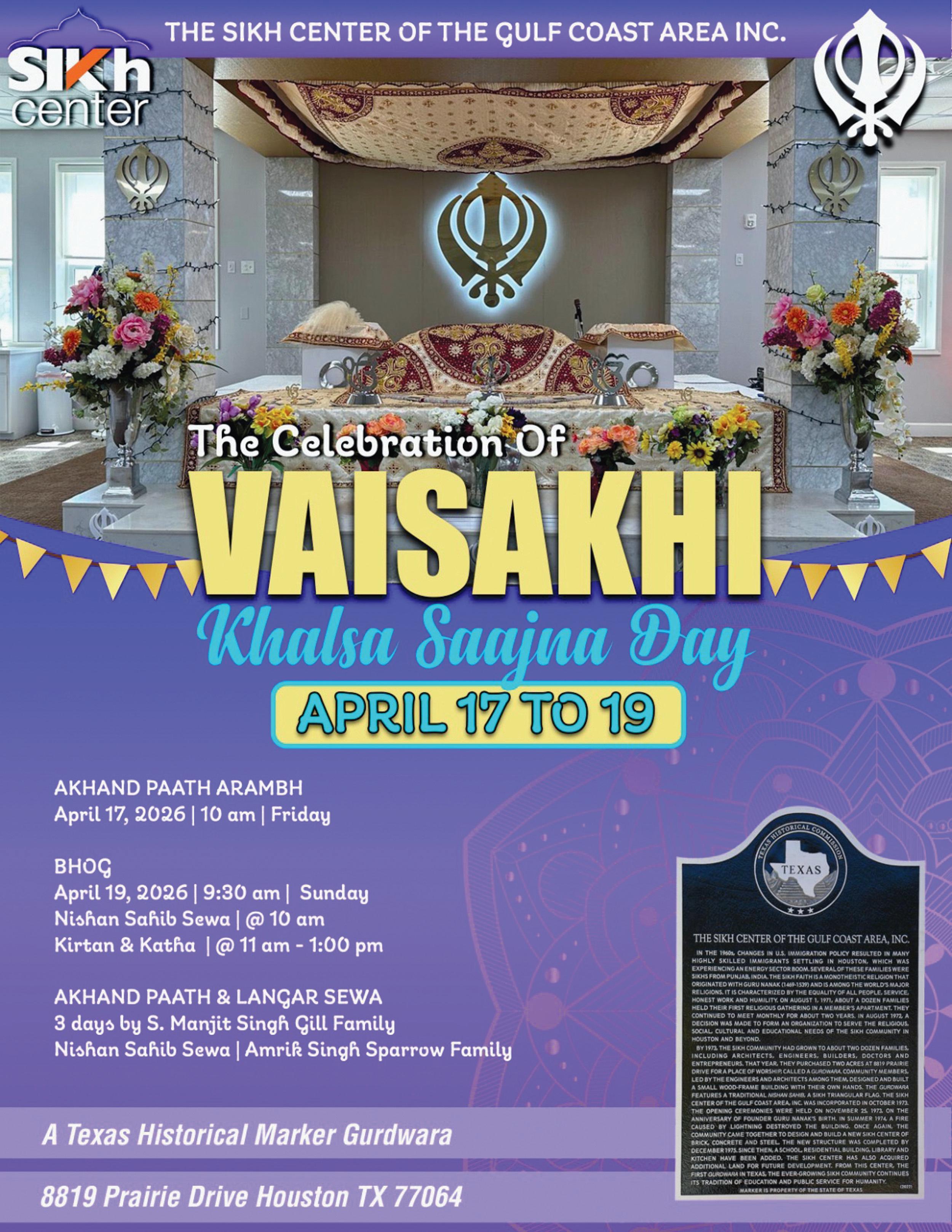
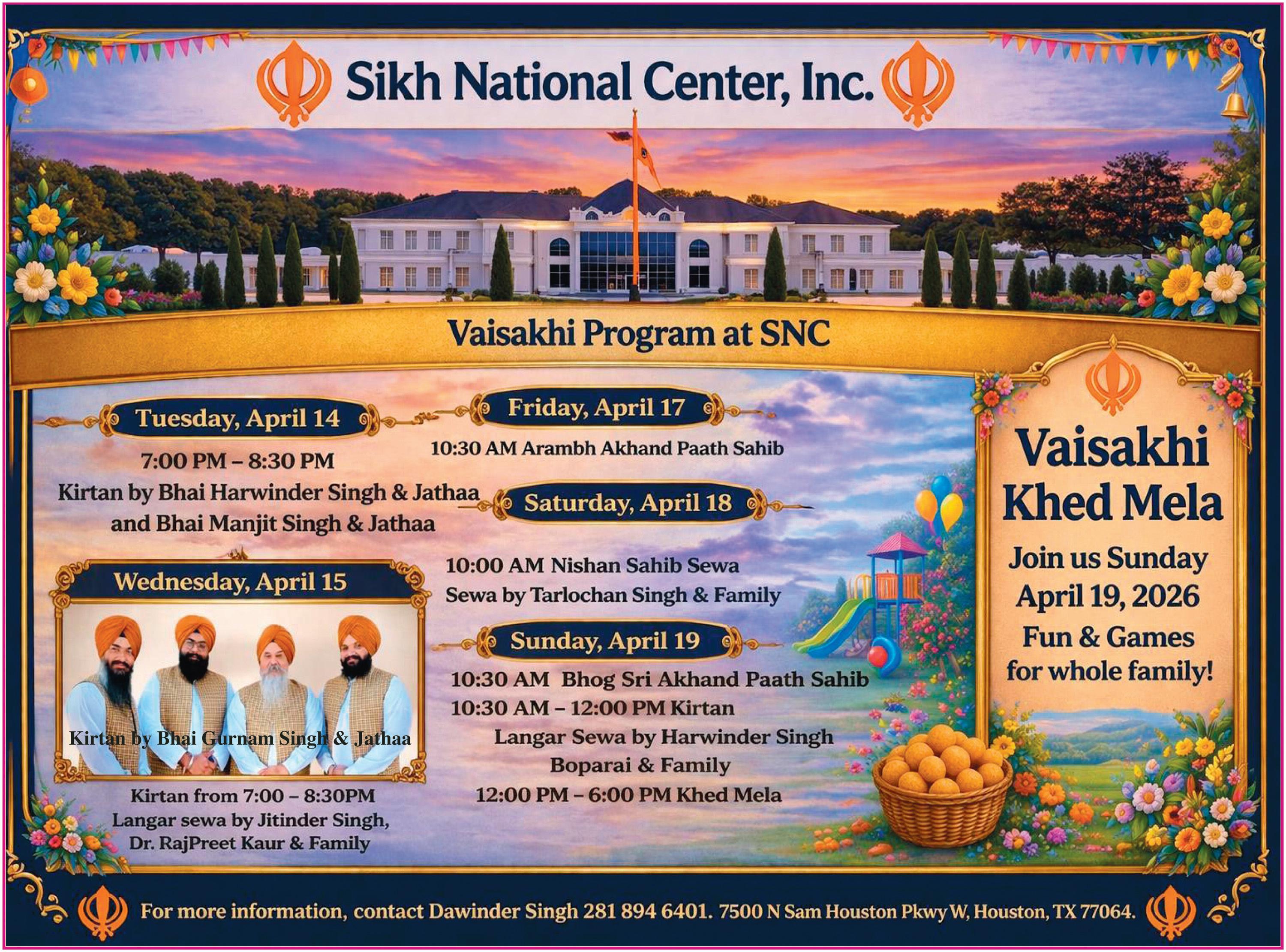
Vaisakhi is a major religious and cultural festival celebrated annually on April 13 or 14. Originally, Vaisakhi was an ancient spring harvest festival celebrated by Hindus in the Punjab region, where farmers gave thanks for a plentiful crops. For Sikhs, it is the most important date on their calendar, marking the birth of the Khalsa.
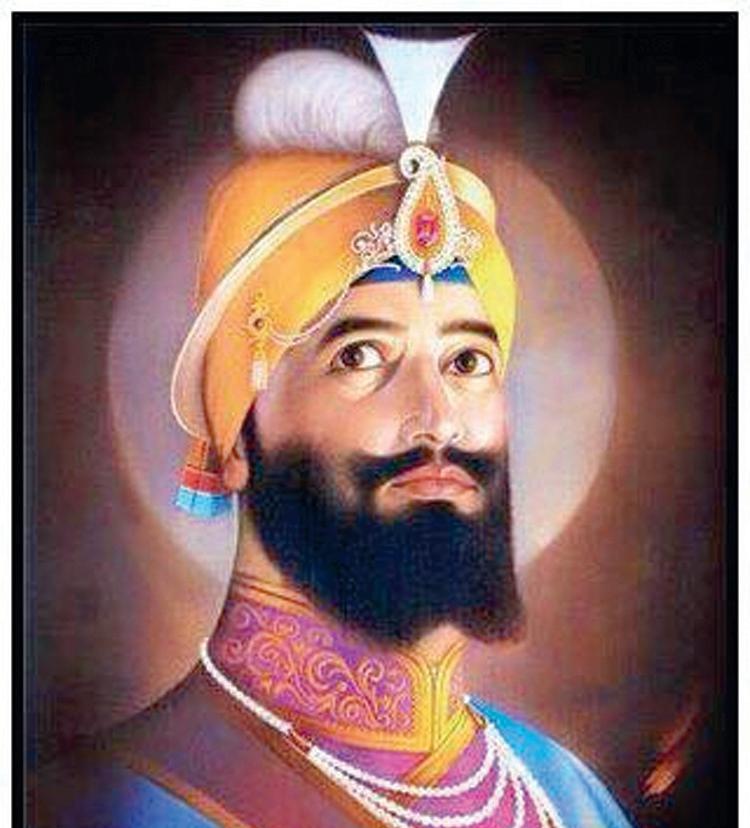
The festival gained profound religious meaning for Sikhs in 1699. Following the execution of the ninth Guru, Guru Tegh Bahadur, by the Mughal Emperor Aurangzeb for refusing to convert to Islam, his son, Guru Gobind Singh, founded the Khalsa (Order of the Brotherhood).
During a large gathering at Anandpur Sahib, Guru Gobind Singh asked for volunteers willing to sacrifice their lives for their faith. Five men from different castes and regions stepped forward. They were initiated into the Khalsa through an Amrit Sanchar (baptism) ceremony and became known as the Panj Piare (“Five Beloved Ones”).
Afterwards, Guru Gobind Singh unveiled the tenets of the Sikh faith, which have been universally adopted. These are: wearing the 5 Ks or physical symbols of the faith: Kesh (uncut hair), Kanga (wooden comb), Kara (steel bracelet), Kachera (cotton undershorts), and Kirpan (sword); equality in names to eliminate caste distinctions, with all men taking the last name Singh (“Lion”) and all women taking the last name Kaur (“Princess”).
With these rites, the Sikh Identity was visibly formalized and solidified Sikhism as a collective, unified faith. The creation of the Khalsa aimed to form a “saint-soldier” community that rejected the caste system and fought against oppression. While some calendars place the New Year a month earli-
er, Vaisakhi is widely celebrated as the start of the Sikh religious and solar year.
In 1801, Ranjit Singh was proclaimed Maharaja of the Sikh Empire to coincide with Vaisakhi, creating a unified political state.
In modern celebrations of Vaisakhi, Sikhs visit the Gurdwara to worship, listen to kirtan, and join community prayers. A Nagar Kirtan is held with colorful street processions led by five people representing the Panj Piare, featuring singing, scripture, and sometimes Gatka (Sikh martial arts). A free community meal is served to all people regardless of their background, reflecting the core value of selfless service (Seva).
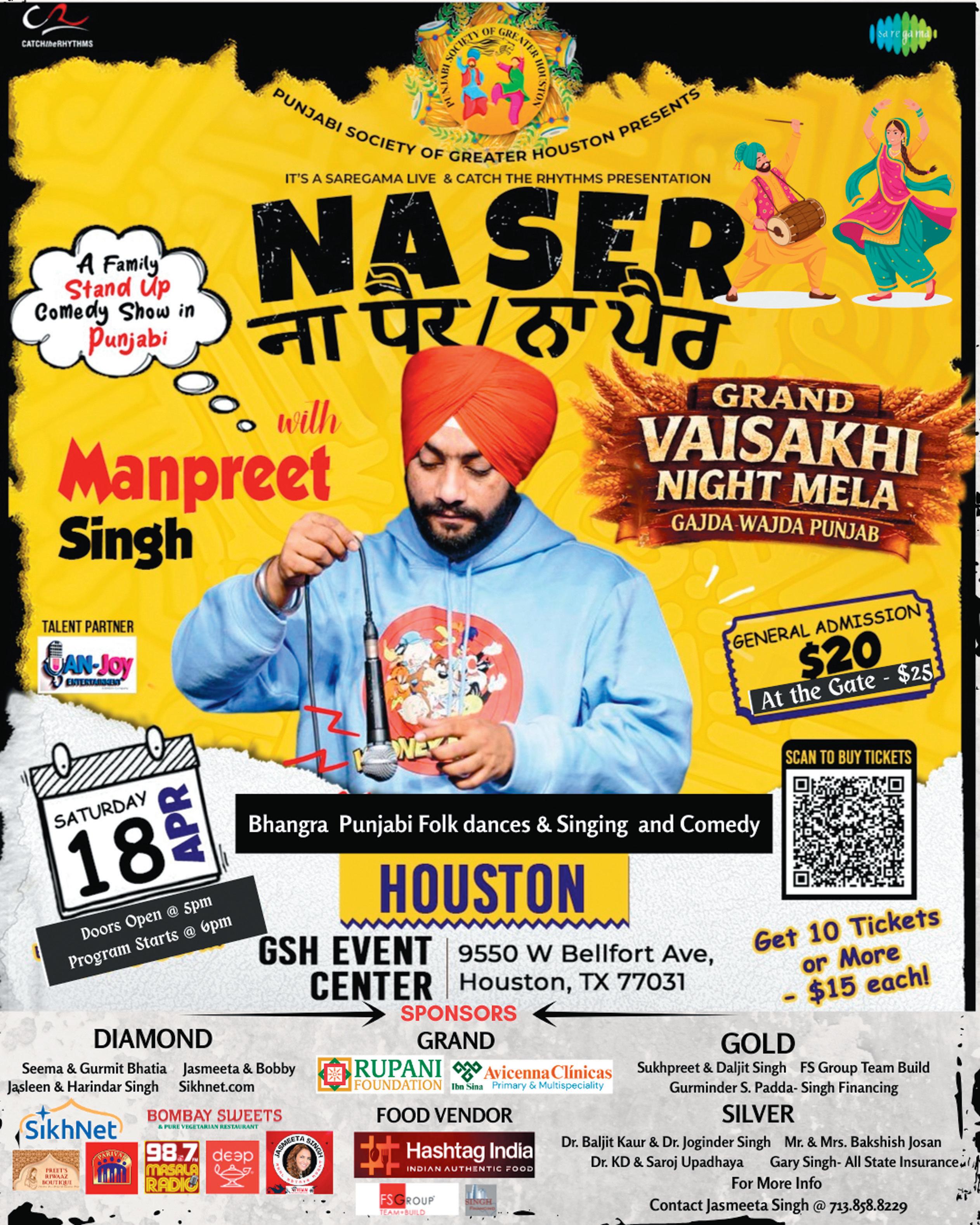
Energetic traditional folk dances like Bhangra and Giddha are performed to celebrate the joy of the harvest. Just as importantly, yellow and orange colors, representing the ripe wheat fields and the spirit of sacrifice, are prominently worn during festivities







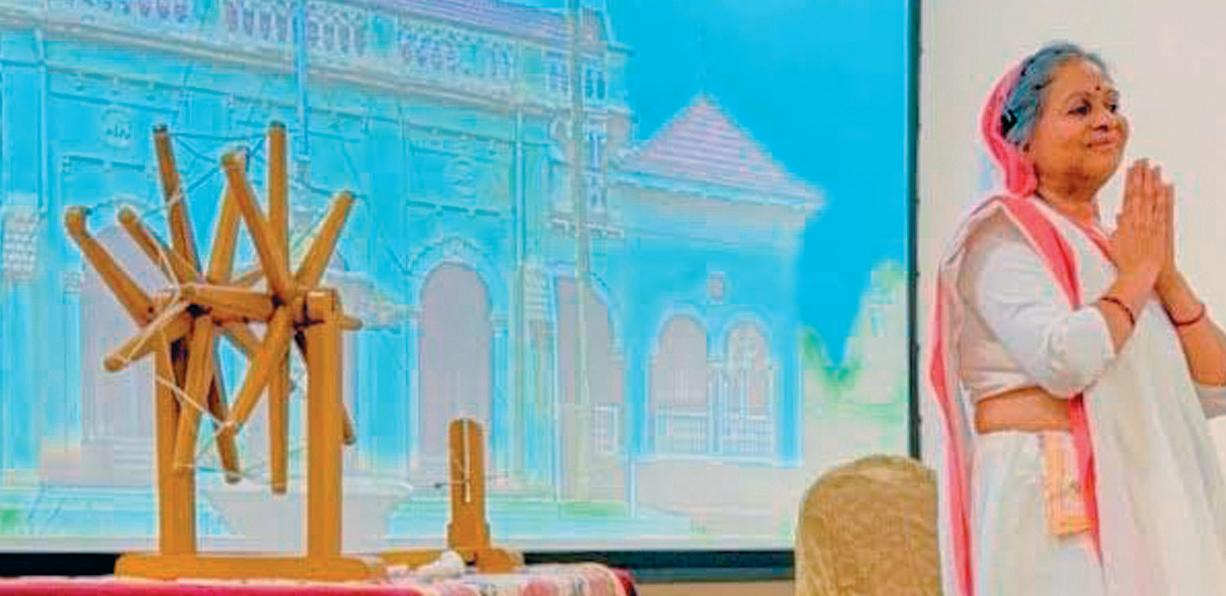
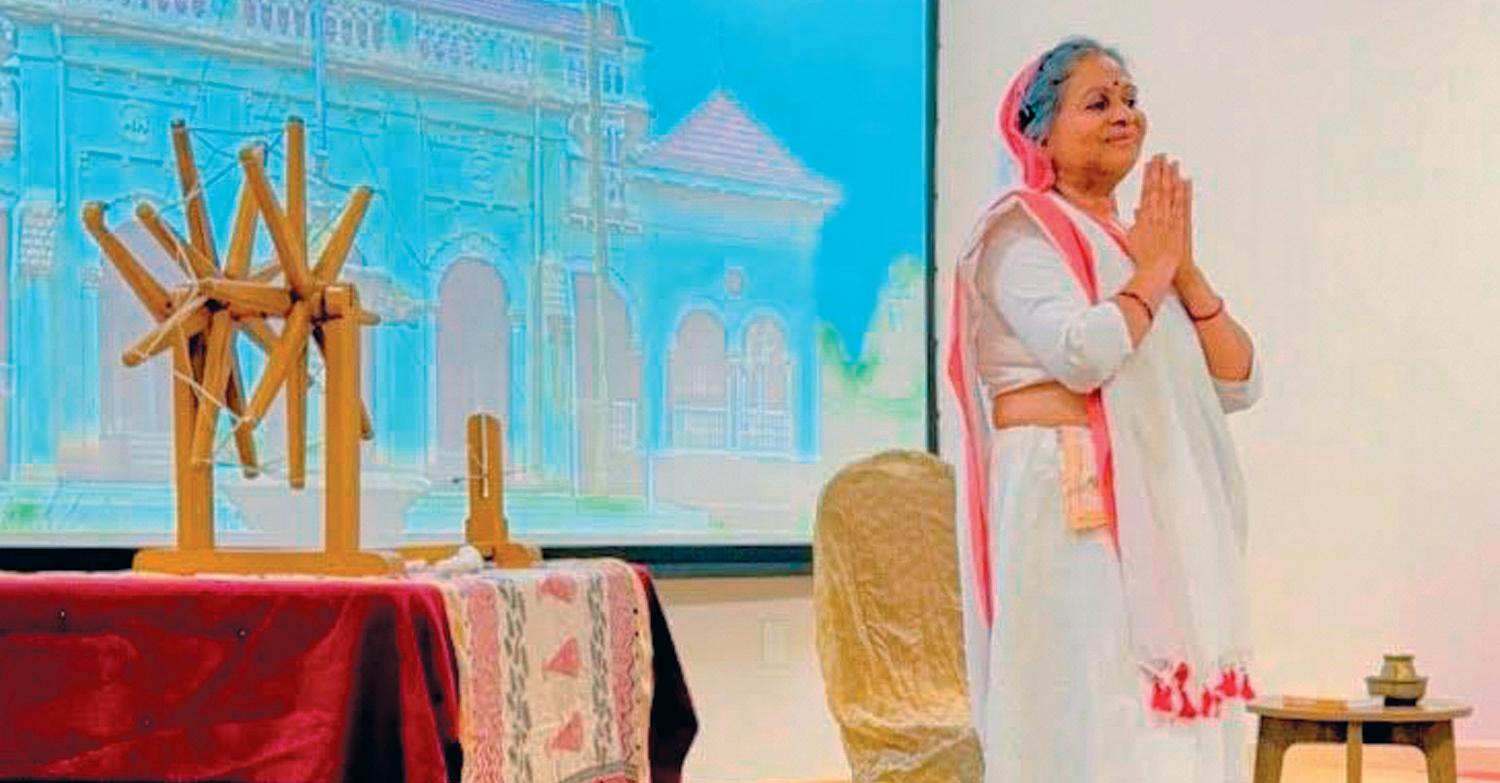
Houston — The Eternal Gandhi Museum Houston welcomed a standing-roomonly audience on Saturday March 29, 2026 for Kasturba Gandhi – A Chautauqua Portrayal, presented by Roopa Mohan.
In this compelling one-woman performance, Mohan brought to life the voice of Kasturba Gandhi—her courage, compassion, and quiet strength amid the turbulence of India’s independence movement independence movement. Through evocative storytelling and reflection, the program offered a rare and intimate glimpse into the woman beside Mahatma Gandhi and the moral force she embodied in her own right.
“Kasturba is so often invisible in the historical narrative — standing quietly in the background of her husband’s story. But she was
former professor at the City University of New York whose work explores Gandhian thought, women’s issues, and nonviolent resistance and Kasturba’s biography.
The overwhelming turnout underscores a strong community interest in programs that elevate vital voices within history and reflects the museum’s ongoing commitment to presenting meaningful and thought-provoking cultural programming.
Admission to the event was free and open to the public. The Eternal Gandhi Museum Houston is dedicated to teaching the philosophy of nonviolence as practiced by Mahatma Gandhi and highlights changemakers who use these principles to create large-scale social change.

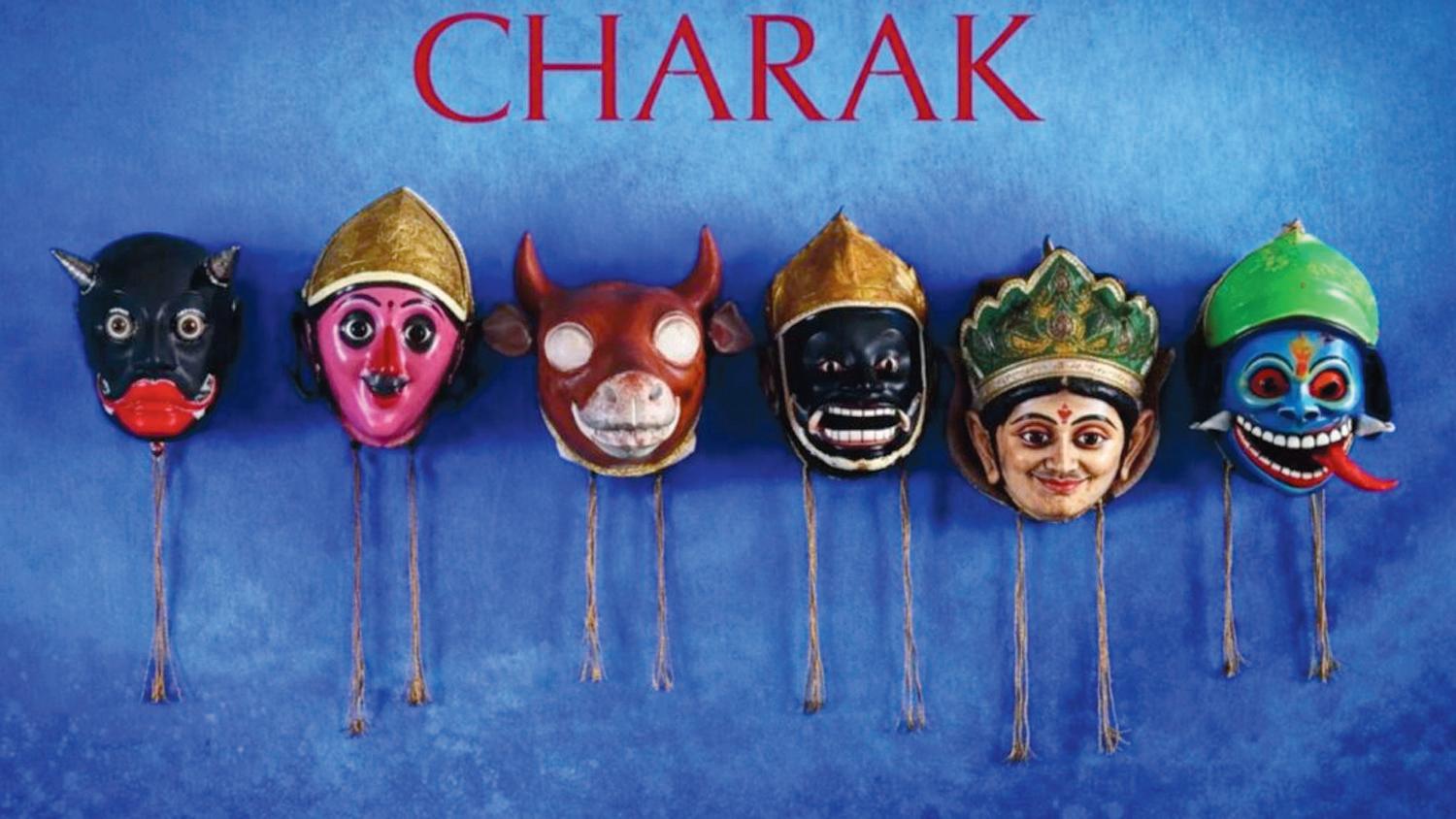
By dHavaL roy
Story: Based on Sanjay Halder’s short story of the same name, the film chronicles the two weeks leading up to the religious Charak fair in Chaandpur. The narrative follows parallel stories of childless couples while examining the superstitious beliefs carried out in the name of faith.
Review: There’s faith, and on its flip side, there’s blind faith. Both rest on belief, but rationale is what separates one from the other. Director Shieladitya Moulik’s social thriller explores this idea through the unsettling story of a young boy, Kaanu (Shoumal Shyamal), murdered just before the Charak mela (celebrated to appease Kali and Shiva).
At the core of the tale is a chilling superstition that childless devotees can become parents if they carry out a human sacrifice of a child through aghoris. Does Kaanu die because of this superstition, or is something else at play?
The film’s visuals are spectacular, the emotions are evocative, and the realism is compelling. Manas Bhattacharya and Prasantanu Mohapatra’s cinematography creates a hauntingly beautiful yet tense atmosphere from the start. The pristine landscapes and rocky hills are
captured with an almost deceptive calm, even as the austerity and intensity of devotion builds steadily.
Tantrics and aghoris drinking water from skulls and praying can leave viewers unnerved, as do scenes of devotees piercing their bodies with iron rods and suspending mid-air.
Scenes of the aghoris and the mela itself have a documentary-like quality, which is perfectly set off by the murder-mystery narrative and effective plot twists.
The film’s parallel tracks are led by two contrasting worlds: Kaanu’s friend Birsha’s (Shankhadeep) neighbour Sukumar (Shashi Bhushan), a tribal villager desperate for a child who turns to being the head priest at the mela and suspending himself by iron hooks, and police officer Subhash Sharma (Sahidur Rahaman) with his writer wife Shefali (Anjali Patil), who have been trying to have a baby for more than a decade. Despite their education, they take jadi booti, coerced by Subhash’s mother, showing that even the affluent and educated aren’t beyond a set of beliefs.
Bishakh Jyoti’s music (Ghor Aghor and Yagya Kund) and background score capture the foreboding doom and visceral timbre. It complements the narrative perfectly with its folk, classical, and
traditional sounds.
The performances further the film’s realism. Subrat Dutta as Birsha’s drunk, gambling father, Manoranjan, and Manosree Biswas as his mother feel completely lived-in. Shashi Bhushan as the neighbouring uncle, Sukumar, and Sreya Bhattacharya as his wife also embody their roles convincingly.
Anjali Patil and Sahidur Rahaman deliver strong performances, as do the young boys Shankhadeep and Shoumal Shyamal.The compelling story, backed by effective twists, keeps the tension alive till the end. Its haunting, realistic milieu makes this a must-watch.
-- ToI

Place a number in the empty boxes in such a way that each row across, each column down and each 9-box square contains all of the numbers from one to nine.
Send us the correct answer before April 7, 2026. Email us at indoamericannews@yahoo.com. Please send us your solved Sudoku for your name to be published.



Sanchali Basu, Kumud Athavale, Krishna R. Vuddagiri, Prabha Barvalia, Jawahar Khandheria, Mohit Mittal, Prabha Narumanchi, Arup Gupta, Yudhveer Bagga, Naveen Garg, Bhumija Mittal, Taranjit Singh, Debomitra Bose, Nihira Ghanta, Srikanth Madhavan, Harsh Malkan, Soumya Srikanth, Rajesh Pradbhu