
Sudanese army sends negotiators to Saudi Arabia to discuss humanitarian truce
Honiara, May 5 (MCNA
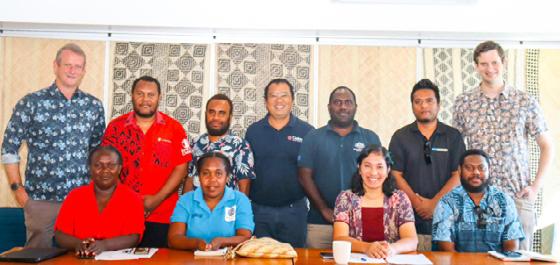
Australia’s High Commissioner to Solomon Islands (SI) Rod Hilton met with NGOs from the Australian Humanitarian Partnership (AHP), to hear about the inclusive community-level disaster resilience work Australia is supporting in
99 communities across eight provinces in Solomon Islands under the Disaster READY program. The program is part of the broader Australia’s partnership with Solomon Islands on disaster resilience, which supports the Solomon Islands Government to prepare for, respond to, and
continued on pg. 9
Likelihood of El Nino developing later this year rising: WMO

Khartoum, May 6 (IANS) The Sudanese Army said that it has sent negotiators to the Saudi port city of Jeddah to discuss the humanitarian truce as part of a Saudi-American initiative to end the conflict in the African country. As part of the Saudi-American initiative, a delegation of the Sudanese Armed Forces left for Jeddah to discuss the details relating to the truce, Xinhua news agency reported, citing a statement issued on Friday by the Sudanese army. “This tends to secure and prepare the suitable circumstances to deal with the humanitarian aspects for our citizens under the current conditions,” the statement added.
Earlier this week, both the Sudanese army and the paramilitary Rapid Support Forces (RSF) agreed to extend the truce for seven days. The RSF has not officially confirmed that it had sent negotiators to Jeddah, though local media reports said so. Sudan has been witnessing deadly armed clashes between the Sudanese army and the RSF in the capital city of Khartoum and other areas since April 15, with the two sides accusing each other of initiating the conflict. According to UN statistics, thousands of Sudanese citizens have been displaced or forced to seek refuge in safe areas in Sudan and neighboring countries, including Egypt, Ethiopia and Chad.
So far, the deadly clashes have left 550 people dead and 4,926 others wounded, according to the Sudanese health ministry.

During Raisi’s landmark visit, Syria & Iran sign MOUs for long-term cooperation
Damascus, May 4 (IANS) Syrian President Bashar al-Assad and his visiting Iranian counterpart Ebrahim Raisi have signed a number of memorandums of understanding (MOUs) for “long-term and comprehensive cooperation” in various fields, state media reported.

Raisi has become the first Iranian President to visit Syria after the outbreak of the civil war in 2011.
Geneva, May 4 (IANS) The likelihood of El Nino developing later this year is increasing, the World Meteorological Organization (WMO) said.
This would have the opposite impacts on weather and climate patterns in many regions of the world to the long-running La Nina and would likely raise global temperatures, according to the WMO’s El Nino /La Nina Update,
which is based on input from WMO Global Producing Centres of Long-Range Forecasts and expert assessment.
The unusually stubborn La Nina has now ended after a three-year run and the tropical Pacific is currently in an ENSO-neutral state (neither El Nino nor La Nina), reports Xinhua news agency.
continued on pg. 19
Commonwealth nations face 63% hit to GDP due to climate change
of these countries are still expected to be higher than they are today. It highlights the amount of damage caused to their GDP by climate change, compared to a scenario where climate change didn’t take place.
The MOUs cover cooperation in the fields of oil, communications, civil aviation, railways, and agriculture, among others, reports Xinhua news agency. Following the signing of the MOUs, Assad was quoted as saying that the talks with Raisi had centres largely on economic issues.
He noted that the projects under discussion would give the
bilateral relations a strong boost by setting up mechanisms for trade exchange and investment to mitigate the impact of the Western sanctions. He pointed out that both countries would “benefit from the change in the economic map of the world and the gradual shift of balance towards the East, which would liberate international economies from
the domination of the West and, as a result, the blockade (Western nations’ economic sanctions) would gradually lose its effects”. On his part, Raisi said he and Assad discussed the development of bilateral relations in all domains, stressing that “we are determined to develop the relations with all regional countries”.
continued on pg. 9
no longer a public health emergency: WHO

New Delhi, May 4 (IANS) A study published by international development charity Christian Aid on Thursday highlighted the devastating economic impact climate change will inflict on Commonwealth countries.
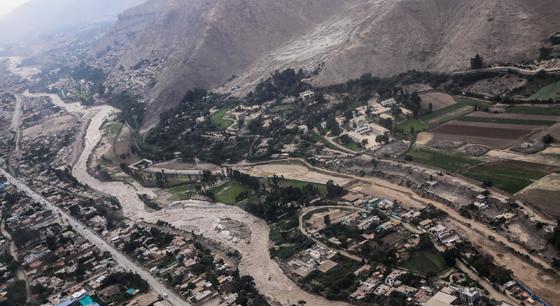
The study, ‘The climate cost to the Commonwealth’, was led by Marina Andrijevic, an economist at the International Institute for Applied Systems Analysis in Vienna.
By 2050 and 2100, the economies
Estimates based on peer-reviewed methodology by Burke et al show that on current climate policies, where global temperature rise reaches around 2.7 C by the end of the century, Commonwealth countries can expect to suffer an average GDP hit of minus 19 per cent by 2050 and of minus 63 per cent by 2100.
Even if countries keep global temperature rise to 1.5C as set out in the Paris Agreement, Commonwealth nations face a mean GDP reduction of minus 13 per cent by 2050 and minus 32 per cent by 2100.
According to Christian Aid, this
continued on pg. 9
New Delhi, May 5 (IANS) After three long gruelling years of Covid-19, the World Health Organisation (WHO) on Friday declared that the pandemic is no longer a public health emergency. Covid-19 was declared a public health emergency of international concern (PHEIC) in January 2020. About six weeks later, it was characterised as a pandemic. The deadly disease has to date infected over 763 million and claimed more than 6.9 million lives globally. Based on a decreasing trend in Covid-19 deaths, related hospitalisations and intensive care unit admissions, and the high levels of population immunity to SARS-CoV-2, WHO Director-General Tedros Adhanom Ghebreyesus on Thursday recommended to end the health emergency at the 15th meeting of the International Health Regulations (2005) (IHR)
Emergency Committee.
The Committee’s position has been evolving over the last several months. While acknowledging the remaining uncertainties posted by potential evolution of SARS-CoV-2, they advised that it is time to transition to long-term management of the Covid-19 pandemic.
“For more than a year the pandemic has been on a downward trend,” Ghebreyesus said at a news conference on Friday.
“This trend has allowed most countries to return to life as we knew it before Covid-19.
“Yesterday, the emergency committee met for the 15th time and recommended to me that I declare an end to the public health emergency of international concern. I have accepted that advice,” he said.
The SARS-CoV-2 virus will, however, continue to have pandemic status like HIV. Although there has been a fresh

www.mcna.org 1 MULTICULTURAL NEWS AUSTRALIA MONTHLY PUBLICATION May 2023 - Vol 1, Issue 9 Email: info@mcna.org.au Phone: 1300 859 066 Fb: /facebook.com/mcna Website: mcna.org.au continued on pg. 19
Covid-19
Newsdesk)
Publisher
Dr. Ram Mohan
Editor
Harpreet Bhagrath
Associate Editor
Deepika Banerjee
Contributors
Sameer Bhalla
Mohita Sexena
Sharon Bath
Website Design & Updates

Cosmos Media
Designing
Cosmos Media
Editorial editorial@mcna.org.au
Advertising adverts@mcna.org.au
Multicultural News Australia
Unit 49, 391, WICKHAM TERRACE, Ground Floor, Spring Hill, Brisbane, QLD – 4000


www.mcna.org 2
July 2022 - Vol 1, Issue 1 MULTICULTURAL NEWS AUSTRALIA COMMUNITY NEWS May 2023 - Vol 1, Issue 9 MULTICULTURAL NEWS AUSTRALIA
Challenges of food systems & their solutions discussed
Coronation Day of Thai King organized

Hanoi, April 26 (MCNA Newsdesk)
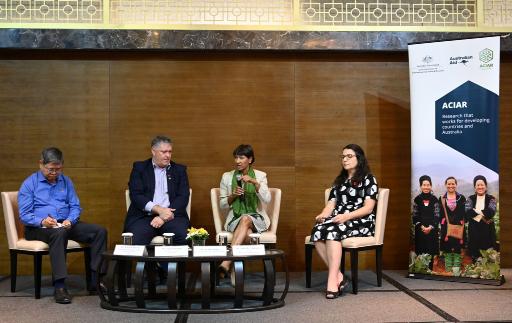
Abig group of Vietnamese Australian Centre for International Agricultural Research (ACIAR) and Australia Awards alumni met this week to experience some of the most pressing challenges of the food systems through a 2-day field visit in the Northwest of Vietnam, then gathered to ‘pitch’ their ideas on how to address these challenges to an expert group in Hanoi.
This innovation pitching is a part of the ACIAR Vietnam alumni group’s annual meeting 2023. This is one among a series of events to celebrate 30 years of ACIAR in Vietnam and 50 years of the Australia – Vietnam diplomatic relations. During this event, the group also celebrated career breakthroughs over the past year and discussed their plan to engage in the ACIAR-Vietnam research partnership in the next three years.

People-to-People Australia & Thailand ties discussed
Canberra, May 3 (MCNA Newsdesk)
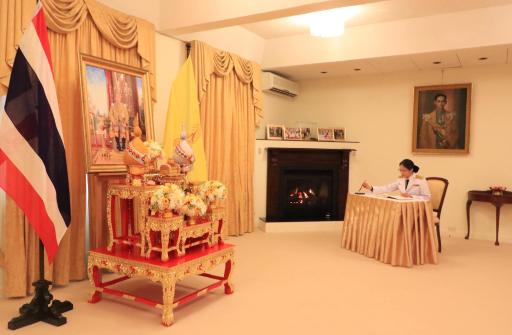
The Royal Thai Embassy in Canberra organised a ceremony to celebrate the occasion of the Coronation Day of King Maha Vajiralongkorn Phra Vajiraklaochaoyuhua, 4 May 2023. The ceremony was held at the Ambassador’s residence and presided over by Arjaree Sriratanaban, Ambassador of Thailand to Australia. Heads of Team Thailand agencies represented in Canberra, officials and spouses.


ANZAC day observed at Australian embassy in Iraq

Baghdad, April 27 (MCNA Newsdesk)
ANZAC day is a time to honour the sacrifices of those who have served the nation.
Australian Ambassador to Iraq Paula Ganly, and the Defence Attaché, Col. Nicholas Surtees, hosted a commemorative service at the Australian embassy in Baghdad. The service was attended by members of the diplomatic community who laid wreaths in honour of the fallen. The prayers were said thus:”For the Fallen. They shall grow not old, as we that areleft grow old; age shall not weary them, nor the years condemn. At the going down of the Sun and in the morning. We will remember them. Lest we forget”
Australia’s Ambassador visits Israel’s mental health association
Tel Aviv, April 20 (MCNA Newsdesk)
Canberra, May 3 (MCNA Newsdesk)
On 2 May 2023, Ambassador of Thailand to Australia
Arjaree Sriratanaban welcomed Professor (Dr) Tippawan Lorsuwannarat, president of National Institute of Development Administration (NIDA), and delegation from NIDA at the Royal Thai Embassy,

during the latter’s visit to meet and build network with universities in Australia. Both sides exchanged views on people-to-people ties between Thailand and Australia and cooperation in education and research between Thailand and Australian academic institutions, including possible avenues to enhance such cooperation.
Australia’s Ambassador to Israel Ralph King visited the amazing people at Enosh - The Israeli Mental Health Association at their facility in Bat Yam recently, continuing Australia’s longstanding support for the work they do. During the visit, the Ambassador had the opportunity to meet with Enosh’s dedicated team and learn more about their advocacy and vital work in the community.
These past collaborations have included the implementation of Headspace Israel, an early-intervention mental health treatment program based on the Australian model, and


www.mcna.org 3 COMMUNITY NEWS May 2023 - Vol 1, Issue 9 MULTICULTURAL NEWS AUSTRALIA
the importation of R U OK Day , making Israel the first country outside of Australia to mark the day.
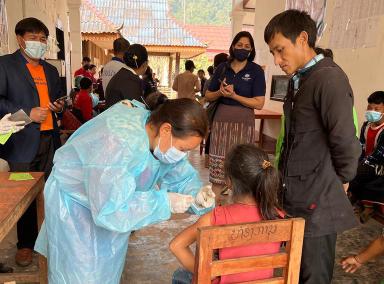
Australian government supporting vaccination drive in Laos

An educator’s bid to improve basic literacy skills of students
Jakarta, May 2 (MCNA Newsdesk)
The Australian
is
everyone in Laos has access to vaccination to help prevent diseases that can be prevented with vaccine or immunization.

Australia has extended its
cooperation with the Ministry of Public Health of Lao PDR in encouraging Lao people to have access to vaccines for measles, polio and other preventable diseases. Australia has supported Kavi, the international organization for vaccines, in assisting regular vaccinations, including its program to reach more than 86 million girls before 2025. Australia, through its regional vaccine access plan, has contributed more than 1.5 million doses of COVID vaccines to Lao PDR and continues to provide academic assistance through World Cleanliness, UNICEF, Oxfam and Catholic Aid Organisation to help his government increase coverage of Covid vaccine and regular vaccinations in remote and disadvantaged communities in the country.
Australia supports Lao team to join energy transition forum


The spirit of National Education Day was celebrated recently by sharing a story about an inspirational educator from Southwest Northwest. Meet Vivien Febrianti , Head of Elementary School Koda Permai, who initiated collaboration with parents of students in creating a library under a tree to improve students’ basic literacy skills.

Australia-Indonesia partnership
Inovasi untuk Anak Sekolah Indonesia supports the library by donating 122 storybooks written for various levels of student literacy ability.
Vivien also worked on the Samaras program or Saturday Telling, which has significantly
increased the motivation and interest of reading students, as well as played a role in strengthening character, resulting in increased confidence, mutual respect, mutual assistance, and improved education and overall reading skills.
Australia helping Laos in eliminating malaria

the public and private sectors from Australia, Thailand and Laos. Delegates from Laos’ Ministry of Energy and Mines, EDL LAOS and EDL-Generation Public Company had the opportunity to hear first-hand about new Australian technologies in renewable energy.

A special briefing focused on the Lao energy market was organised by Partnerships for Infrastructure (P4I), Austrade and Austcham Lao PDR. The session explored opportunities in the Lao energy industry and the potential for cooperation under the Australian government’s promotion of renewable energy in Southeast Asia.
Vientiane, April 25 (MCNA Newsdesk)
Australia is partnering with the Global Fund to eliminate malaria in Laos. The Australian government is a key partner in the campaign to eradicate malaria from Laos’ society, including being a major contributor to the Global Fund to support sustainable funding for
malaria control and elimination work in the region. As Laos moves closer to eliminating malaria, Australia is pleased to be part of the Lao government’s efforts. The number of malaria cases in Lao PDR has decreased from approximately 462,000 in 1997 to 2305 in 2022.
ANU students meet Philippine Ambassador

Canberra, 4 May (MCNA Newsdesk)
Students of international relations at the Australian National University (ANU) visited the Embassy of the Philippines on 3 May and engaged Philippine Ambassador to Australia Ma. Hellen B. De La Vega on issues related to the bilateral relations of the Philippines and Australia and the current regional security landscape. The students represented various degree programs in ANU.
The ANU International Relations Society is one of the biggest student-run organizations in the university with undergraduate
and post-graduate student members. The visit coincides with the observance of Philippines-Australia Friendship Day celebrated on 22 May of every year by virtue of a Presidential Proclamation. The Ambassador provided an overview on the history and progress of the partnership of the Philippines and Australia, and the commitment of both sides to elevate the relations to a Strategic Partnership. The Ambassador referred to the recent visits to Manila of Deputy Prime Minister and Minister for Defence Richard Marles MP, and Minister for Trade and Tourism Senator Don Farrell.
www.mcna.org 4 COMMUNITY NEWS May 2023 - Vol 1, Issue 9 MULTICULTURAL NEWS AUSTRALIA
Vientiane, April 19 (MCNA Newsdesk)
Australia supported a Lao delegation to join an energy transition forum
hosted by the Australian Trade and Investment Commission (Austrade) in Bangkok recently. The forum brought together more than 150 participants from
Vientiane, April 24 (MCNA Newsdesk)
government
supporting the vaccination drive to ensure
Indocare NSW hosts a halalbihalal event



Interactive session with Indian students organized

Sydney, May 2 (MCNA Newsdesk)
Indocare NSW hosted a halalbihalal event at 104 Erskineville Rd. on May 1. The Halalbihalal event was attended by about 50 invited guests, including the Consulate of Information, Social and Culture of KJRI Sydney representing the Consulate General of RI Sydney. Also present were Indocare partners, Chairman of Ethnic Community Services Cooperative (ECSC), Dina Petrakis and Jon Soemarjono, Chairman of the Indonesian Assembly
(PI NSW), Julie Rondonuwu Chairman of the Foreign Election Committee (PPLN PPLN Elections) 2024.
In his reception, KJRI Sydney’s Enlightenment, Social, and Culture Consul Abdul Nazar expressed his appreciation and gratitude to Indocare which has arranged a gathering in the framework of the 1444H Eid celebration. The various activities done by the Indocare community make a real contribution in strengthening people-to-people connections.
Penny Wong meets Morocco’s Ambassador
Perth, April 19 (MCNA Newsdesk)
Consul General (CG), Perth, Amarjeet Singh Takhi held an interactive meeting with the Indian students at the University of Western Australia (UWA) in an event organized in association


with Sanskriti - Association for Indian Culture and Student Support at UWA. Indian-origin academicians at UWA, Director, ICRAR Dr Renu Sharma, and Associate Prof Dr. Parwinder Kaur joined the event, together with Karthik Srinivasan of Ziksu
and Vishwanathan and Ritika Chopra, Yoga teachers from The Art of Living. Students appreciated the opportunity to interact and register with the Consulate and enthusiastically offered to support outreach activities.

Ambassador delivers lecture on Mongolia-Australia relations
Canberra, May 3 (MCNA Newsdesk)
Morocco’s Ambassador to Australia Wassane Zailachi had a wonderful interaction with Australia’s Foreign Affairs Minister, Penny Wong at the Parliament House recently. It was also a great

opportunity to catch up after the holy month of Ramadan with the First Assistant Secretary, Middle East, Africa and Afghanistan Division, Ridwaan Jadwat, the Ambassador for First Nations People, Justin Mohamed, as well as other members of the diplomatic community.
Canberra, May 3 (MCNA Newsdesk)
Ambassador of Mongolia to Australia D Davaasuren gave a lecture on “Mongolia’s foreign policy,
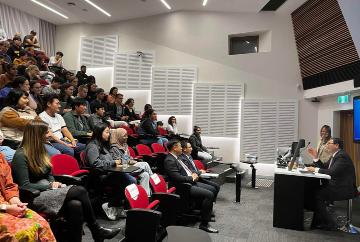
Mongolia-Australian relations and cooperation” to students of Australia’s Macquarie University on May 3. He introduced Mongolian history, policy of two and third neighbour, multilateral


cooperation, bilateral political relations, cooperation in sectors such as education, mining and agriculture, and answered questions of the students.

www.mcna.org 5 COMMUNITY NEWS May 2023 - Vol 1, Issue 9 MULTICULTURAL NEWS AUSTRALIA
TVET Community of Practice networking event hosted
Bangladesh’s Australia Awards winners join SA scholars
Dhaka, April 18 (MCNA Newsdesk)
As many as 36 Australia Awards alumni returned to Bangladesh after
successfully completing short courses on ‘TVET-Competency
Based Training Design and Assessment’ delivered by Griffith University and
‘Strengthening Leadership and Management of TVET Sector’ delivered by Queensland University of Technology. These courses provided participants with in-depth knowledge of the TVET (Technical and Vocational Education and Training) system in Australia. They returned to Bangladesh with an increased understanding of quality assurance systems, partnerships and industry engagement mechanisms, inclusion initiatives and sector-wide strategies.
To mark their return, the Australian High Commission hosted a TVET Community of Practice networking event, where TVET alumni shared their experiences on the policies and practices of the TVET sector in Bangladesh. We look forward to seeing alumni supporting each other by developing digital skills, digitalising the TVET system and sharing their success stories.
Ambassador Davasuren meets Dy Director of ATIC
Canberra, April 19 (MCNA Newsdesk)
On 12-13 April, eight Australia Awards scholars from Bangladesh joined over 40 scholars from South Asia (SA) and Mongolia at the 2023 Scholars Forum in


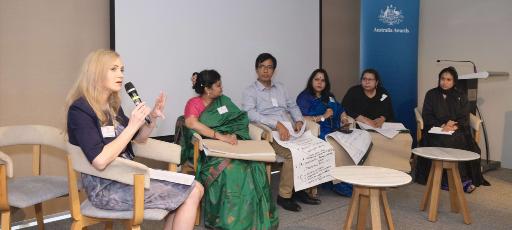
Canberra. The scholars came from across Australia to hear from Australian Government Department of Foreign Affairs and Trade officials and development experts on the benefits of building networks to be more effective leaders for change.
Australian community assisting in Israel’s Save A Child’s Heart initiative

Canberra, May 4 (MCNA Newsdesk)
A mbassador of Mongolia to Australia D Davasuren met Deputy Director of Australian

Trade and Investment Committee (ATIC) Philipa King on 3 May, to deepen ties between the two countries on trade, economy, mining,
agriculture, tourism, education, energy, health and climate change, in particular sustainable growth of cooperation. Opinions were exchanged on the possibility of establishing a mechanism. In this context, the parties have agreed to hold a virtual meeting between the Mongolian Ministry of Foreign Affairs and the Australian Trade and Investment Committee in the near future, and underscored their cooperation by supporting Australian Trade and Investment Commission representatives in Mongolia.
Briefing for Australia Awards course aspirants
Tel Aviv, May 4 (MCNA Newsdesk)
Australia’s Ambassador to Israel Ralph King visited the Sylvan Adams Children’s Hospital and the Save A Child’s Heart Children’s Home recently. During the tour, he had the opportunity to learn about the inspiring lifesaving work being done to help children in need. Save A Child’s Heart is an international non-profit organization that provides life-saving cardiac care for children from
developing countries. The organization is based in Israel, and it works to train medical professionals from developing countries provide better care for children back home.
In this regard the Australian community has played a key role in supporting this important organization. Through donations, volunteering, and other forms of assistance, Australians have made a significant contribution towards helping Save A Child’s Heart carry out their life-saving work.
Australia helping Cambodia in addressing loss of food woes
Dhaka, May 2 (MCNA Newsdesk)
Australian High Commission in Bangladesh hosted a pre-departure briefing for six

government officials who will undertake the Australia Awards Regional Short Course on ‘Integrating Climate Change Adaptation and Disaster
Risk Management
to
Reduce Vulnerability’ at Griffith University. The course will provide participants with an in-depth understanding of inclusive governance and institutional capability to coordinate responses to disaster and climate risks. It will help foster innovative, nature-based and forward-thinking solutions. Australia Awards short courses aim to develop participants’ skills and knowledge and help them build networks to drive change and contribute to development in their home countries and regions.
Phnom Penh, May 2 (MCNA Newsdesk)
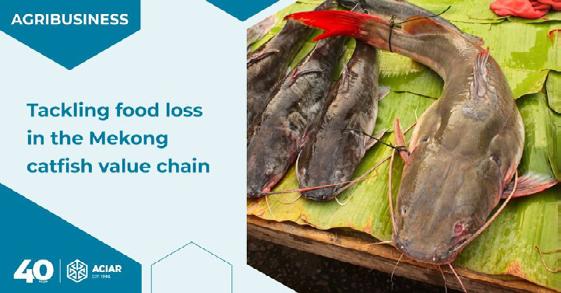
Australia has been assisting Cambodia solve the problem of losing the volume of sea bass production in the Mekong River price chain.
A new project, jointly funded by the Australian Centre for International Agricultural Research (ACIAR) and Canada’s Centre for International Research and Development
(IDRC) will seek solutions to reduce food loss, said to be the loss of production volume in Cambodia’s fish production price chain.
Under ACIAR-IDRC’s Food Loss Research Program, this partnership will help Cambodia, cooperate with Laos and Vietnam, to address food loss through innovative and feasible solutions in the country.
www.mcna.org 6 COMMUNITY NEWS May 2023 - Vol 1, Issue 9 MULTICULTURAL NEWS AUSTRALIA
ANZAC Day service organized
High-level Philippines team observes ANZAC Day in Canberra

Dhaka, May 1(MCNA Newsdesk)
The Australian High Commission organized ANZAC Day service


to commemorate the 108th anniversary of the landings by troops from the Australian and New Zealand Army Corps
(ANZAC) at Gallipoli and the 50th anniversary of the end of Australia’s involvement in the Vietnam War.
ANZAC Day is one of Australia’s most important national days—a time for Australians to remember the fallen. ANZAC Day is a time of personal reflection where we demonstrate our solemn respect for those who have served and those who continue to serve our nation. Courage, mateship and sacrifice are part of Australia’s national identity and reflect the spirit of the ANZACs.
Sewa International Australia’s Silver Jubilee celebrated

Sydney, April 17 (MCNA Newsdesk)
Sewa International Australia’s silver jubilee celebration was organized recently.
It was a vibrant cultural evening showcasing India’s rich cultural heritage. Consul General Manish Gupta addressed the event on this occasion.

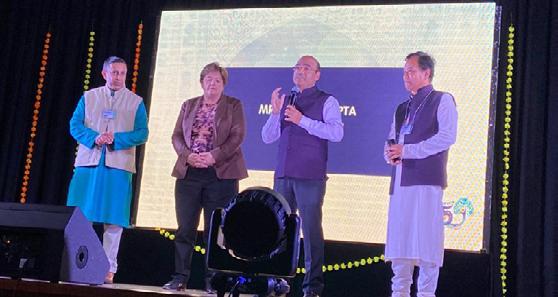
Sewa International Australia’s journey began in 1996 with a group of 6 families which has now grown to thousands of karyakartas, patrons, donors, national office bearers, core committee members, friends and well wishers across Australia united by a common spirit of service as the greatest dharma.
Japan’s National Rugby player Natsuki Kashiwagi meets CG
Canberra, April 26 (MCNA Newsdesk)
Ahigh-level delegation from the Philippines led by Presidential Adviser on Legislative Affairs Secretary Mark Llandro Mendoza, Transportation Undersecretary Elmer Sarmiento, and the Commandant of the Philippine Coast Guard Admiral Artemio Abu joined Ambassador of the Philippines to Australia Ma.

Hellen B. De La Vega in observing ANZAC Day in Canberra on 25 April at the Australian War Memorial. The delegation was visiting Canberra to pursue engagements on civil maritime
security.
The Philippines and Australia have a long history of cooperation on defense and security dating back to the Second World War. Australia is a top defense partner of the Philippines and one of only two statuses of forces agreement partners of the country.
As maritime nations, the Philippines and Australia continue to work together to promote and uphold the UN Convention on the Law of the Sea and ensure that the waters surrounding our countries remain peaceful and stable and our marine resources protected.
Philippines embassy organizes gender & development workshop
Perth, April 28 (MCNA Newsdesk)

Natsuki Kashiwagi from the Western Force W and Yosuke Kotani, the team’s strength and conditioning coach visited the Consulate-General
(CG), Perth Naito recently. Natsuki is finishing her successful participation in the Western Force W for this season.

When discussing the team’s great performance and impressive win against South Australia
during the pre-season match on March 11, twelve years since the Great Eastern Japan Earthquake and Tsunami, Consul-General Naito learned that Natsuki is from Kamaishi City in Iwate Prefecture and was directly impacted by the disaster. She was six years old when the disaster occurred and she thought she would have to abandon rugby. But with support from those around her, she was able to continue rugby and later joined Japan’s National Team. She said it has been her sincere wish to inspire and encourage people through rugby.
Canberra, April 18 (MCNA Newsdesk)
The Embassy of the Philippines in Canberra organized a gender and development workshop for select Filipina youth in Canberra on 15 April 2023 entitled “Leading an Empowered Life: A Workshop on Women’s Success”. In her remarks, the Philippine Ambassador to Australia Ma.
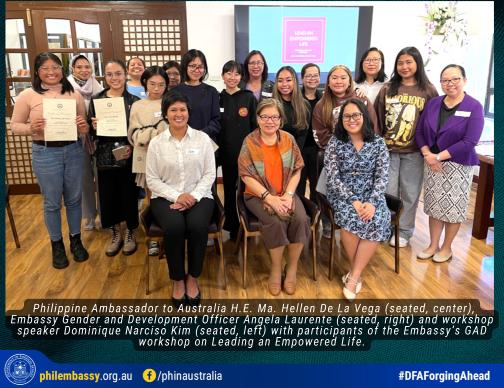
Hellen De La Vega encouraged the youth to take action towards promoting gender equality in their communities and beyond. The workshop aimed to foster a sense of camaraderie and solidarity among participants
and allowed them to examine definitions of success as a Filipina. The participants were inspired to seek an environment that would allow them to learn and thrive and to invest in self-education and self-discovery.
The workshop, which was delivered by a certified high performance coach Dominique Narciso Kim provided participants with tools and resources to improve their skills for professional and personal development in order to take on leadership roles, opportunities, and benefits towards maximizing their full potential.
www.mcna.org 7 COMMUNITY NEWS May 2023 - Vol 1, Issue 9 MULTICULTURAL NEWS AUSTRALIA
SL & Maldives Australia Awards scholars join others
Agricultural scientists for launching Millet initiative
Canberra, April 28 (MCNA Newsdesk)

Australia Awards scholars from Sri Lanka (SL) and Maldives joined others from South Asia and Mongolia

in Canberra for the Scholars Forum.
Scholars built their networks by engaging with Australian Government Department of Foreign Affairs and Trade and


other officials, and visited Parliament House and the First Australians gallery at the National Museum of Australia.
Australian High Commissioner meets Bangladeshi journalists
Varanasi, April 25 (MCNA Newsdesk)
India’s holy city of Varanasi organized the 100th G20India meeting - the Meeting of Agricultural Chief Scientists (MACS) recently. The meeting concluded with the unanimous


support to launch a Millet Initiative – MAHARISHI. The Australian delegates enjoyed a cruise ride on the holy Ganges and also experienced Uttar Pradesh’s rich cultural heritage and local cuisine.
Vaisakhi celebrated
Dhaka, April 19 (MCNA Newsdesk)
Australian High Commissioner Jeremy Bruer met ten Bangladeshi journalists recently who had visited Australia under the Australia Awards Australian Professional Opportunity (APO) program. The journalists shared their


experiences of visiting Australia and exchanging perspectives with leading Australian journalists and experts. Highlights of their trip included learning about Indigenous Australian cultures, experiencing Australia’s multicultural society, and learning about Australia’s advanced capabilities in hydrogen and renewable energy.
The High Commissioner expressed Australia’s support for the development of a strong, professional and sustainable media sector in Bangladesh. Developing mass media’s capability to counter misinformation and disinformation and improving investigative journalism standards are crucial to the maintenance of democracy.
Perth, April 16 (MCNA Newsdesk)
Vaisakhi celebrations were organized at the Canningvale Sikh Gurdwara Sahib recently. Consul General Amarjeet Singh Takhi


participated in the celebrations and sought blessings of the Guru sahiban. He interacted with the sangat and wished them a happy Vaisakhi.

www.mcna.org 8 COMMUNITY NEWS May 2023 - Vol 1, Issue 9 MULTICULTURAL NEWS AUSTRALIA
continued from pg. 1
Australia’s initiative to boost disaster preparedness in Solomon Islands
Commonwealth nations face 63% hit to GDP due to climate change
recover from disasters.
During the meeting, partners shared success stories from the past 5 years of the Disaster READY program. Like the story from World Vision about the first ever female chairperson of a village disaster committee in Makira. The High Commissioner

thanked the AHP NGOs, and their 17 local NGO partners, for their life saving work.
The Australian government is partnering with the Australian NGOs Save the Children, Oxfam, World Vision, Care Live & Learn, CAN DO, Plan International and their 17 local partners, including
civil society organizations and provincial governments, to strengthen disaster preparedness and community resilience in the Solomon Islands under the Disaster READY Partnership 2017 - 2027. The focus of the initiative is on the most vulnerable – including women, youth, children, and people with disabilities – to be better prepared and more resilient for disasters and climate change. The meeting was attended by representatives from Save the Children Solomon Islands World Vision Solomon Islands Oxfam Solomon Islands Live and Learn Solomon Islands Anglican Church of Melanesia Caritas Australia People with Disability Solomon Islands
underlines the need to get the new Loss and Damage Fund up and running urgently with rich countries providing their fair share of finance, based on the polluter pays principle, even if countries succeed in keeping global heating under 1.5C.
The country facing the worst projected GDP hit is Nigeria, which last year was struck by flooding in West Africa which killed more than 600 people and displaced 1.3 million.
The study estimates the economic damage caused by climate change on GDP for 40 of the 56 Commonwealth countries where data is available. The methodology used here doesn’t factor in adaptation measures, so greater investment in adaptation could potentially alleviate some of the damage.
On Wednesday, an official reception ceremony was held upon the arrival of Raisi and his ministerial delegation at the al-Sha’ab presidential palace in
Damascus.
Raisi lauded Syria’s victory in emerging from a 12-year conflict.
“Syria’s government and people have gone through tremendous
hardships, and today we can say that you have weathered and overcome all these problems and achieved victory despite the threats and sanctions imposed against you,” Raisi told Assad at the palace.
During the two-day official visit, the Iranian President will hold extensive political and economic talks with Assad.
Raisi is being accompanied by a delegation which includes Foreign Minister Hossein AmirAbdollahian, Defence Minister Mohammad Reza Ashtiani and other senior officials.
Iran has supported al-Assad during the Syrian war.
Christian Aid’s study shows that under current climate policies Nigeria faces a GDP reduction of minus 26 per cent by 2050 and minus 75 per cent by 2100 compared to if there was no climate change.
Even in a 1.5C scenario, Nigeria can expect a GDP blow of minus 18 per cent by 2050 and minus 43 per cent by 2100.
Per person the UK emits 64 times more carbon than fellow Commonwealth nation Malawi. Canada emits more than 179 times more and Australia, 188 times.
In fact, the per capita emissions of the Commonwealth’s richest four countries (the UK, Australia, Canada and New Zealand), is 41.1 tons of C02, which is 23 times larger than the 10 least emitting per capita Commonwealth countries combined (1.78 tons).
The derisory amounts that richer governments are committing to adaptation support for the poorest is one of the issues that climate campaigners are demanding is addressed at COP28 in Dubai.
The countries most affected are also the ones with very low capacities to adapt, as outlined the ND GAIN index of vulnerability and adaptive capacity so it is unreasonable to expect that they will be able to reduce these damages very substantially.
In her foreword to the report, Vanessa Nakate, Ugandan climate activist, said: aceThe Commonwealth, as a group of nations, captures the severe inequality of climate change. Within its ranks are some of the world’s biggest polluters per capita -- Australia with its coal industry, Canada with its tar sands. The average citizen of those countries is responsible for as much carbon as 100 people from my country, Uganda.”
Ambassador of Jordan & other accredited ambassadors honoured

Canberra, May 5 (MCNA Newsdesk)

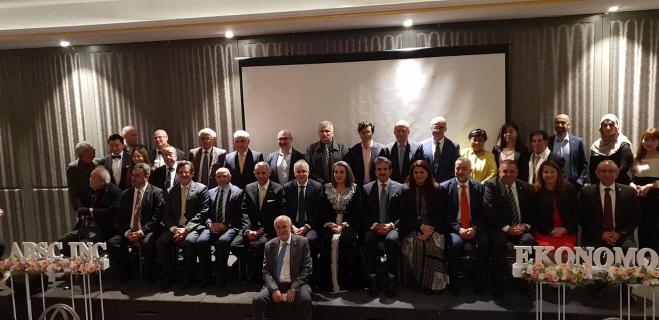
Ambassador of the Hashemite Kingdom of Jordan to Australia Dr Ali Kraishan, Dean of the Diplomatic Wire, and other accredited
ambassadors in Australia were honoured recently for their efforts to strengthen economic and trade relations between their countries and Australia.
It was on the occasion of the official celebration of the launch
of the fourth edition of the Council’s Economics magazine.
The top Australian Business Council also published an article by Ambassador Ali Kraishan in the fourth edition of EKONOMOS magazine on the investment and
business opportunities available in Jordan under the title (JordanAustralia Cooperation Horizons).
The Australian Business Summit Council recognized the efforts of Ali Kraishan and other accredited Ambassadors in promoting
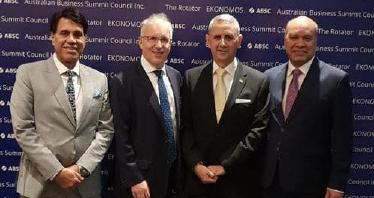
bilateral relations with Australia during the launch of the 4th Issue of the EKONOMOS.

www.mcna.org 9 COMMUNITY NEWS May 2023 - Vol 1, Issue 9 MULTICULTURAL NEWS AUSTRALIA
During Raisi’s landmark visit, Syria & Iran sign MOUs for long-term cooperation
Multicultural Australia celebrates Iftar


Australia Awards scholarships benefiting people in PNG
Australia-funded rural training centre for Solomon Islands


Port Moresby, May 5 (MCNA Newsdesk)
Australia Awards scholarships are impacting education and skill development in Papua New Guinea (PNG). One of the instances of its benefits is Elsie Meiki, who works at the Sehulea Clinic Centre in Esa’ala District, Milne Bay Province. Her journey began with a diploma in nursing at St Barnabas School of Nursing after which she served as a general nurse at the Sehulea Health Centre’s labour ward for six years.
She applied for a Bachelor in Midwifery through the Australia Awards and studied at Pacific Adventist University. Today, she is serving her community as a midwife.
“I now see a lot of value in myself and in what I do. I have a lot of memorable experiences, but one is coming back home to Sehulea and knowing I will contribute to my people through my new profession.”
Applications for Australia Awards scholarships to study in PNG are now open.
Australia helping PNG meet electrification targets
Port Moresby, May 4 (MCNA Newsdesk)
Honiara, May 3 (MCNA Newsdesk)
For his final day in Malaita, High Commissioner Hilton handed over a classroom at the Ngaligaragara Rural Training Centre funded by Australia.


This new workshop will mean more training for skills with more areas for practical training in carpentry, electoral and mechanical. More skills means more local jobs. High Commissioner Hilton thanked the community at
Ngaligaragara and the local builders for doing a great job in completing the project. High Commissioner Hilton also took time for a visit around the school and local church.
SI’s National E-Commerce Strategy launched
As part of Australia’s commitment to help Papua New Guinea (PNG) meet its electrification targets, we supported PNG Power Ltd (PPL) to repair a generator unit at the Rouna 2 Hydropower Station in Sogeri, Central Province, which supplies power to the Port Moresby power grid.
Rouna 2 is an underground hydropower station with peak capacity of 24 megawatts. Generator Unit 2 had been offline since May 2022, withholding a vital 6 megawatts of power from Port Moresby.

The new circuit breaker will ensure that Unit 2 gets back to full service, adding much-needed renewable energy to the Port Moresby grid. Upgrades like these support the use of sustainable and clean power generation like hydropower, which is much better for the environment than diesel fuel.
Urgent repairs to the Rouna 2 hydropower station and Port Moresby grid form just part of Australia’s commitment under the Papua New Guinea Electrification Partnership - PEP to support PPL to provide reliable power across PNG.
Honiara, May 3 (MCNA Newsdesk)

The first Solomon Islands (SI) National E-Commerce Strategy 2022-2027 was launched recently, which is a clear and practical roadmap for creating jobs, providing opportunities to buy and sell

goods online, reduce inequality and increase financial inclusion right across the country.
Australia has been funding the strategy’s development, in partnership with the Ministry of Commerce, Industry, Labour and Immigration and the Ministry of Communications
and Aviation. Australia’s support was delivered through the UN Capital Development Fund. This support builds on Australia’s long term support for Solomon Islands digital economic development, including delivering the Coral Sea Cable, in partnership with Solomon Islands’ government; building six telecommunication towers on the western border, in partnership with Telekom and the Solomon Islands’ government; supporting private businesses to create online shops through our development programs; and funding the development of SINPF and Our Telekom mobile saving and payment applications to transform lives.
Multilingual glossary of schoolbased terminology created
Brisbane, May 4 (MCNA Newsdesk)
Multicultural Australia has partnered with Queensland University of Technology, Central Queensland University and the Queensland Government to develop a

Multilingual Glossary of SchoolBased Terminology.
Translated into Arabic, Kurdish Kurmanji, Portuguese and Swahili, this resource will improve access to the Australian school system for more families from diverse backgrounds.
www.mcna.org 10 COMMUNITY NEWS May 2023 - Vol 1, Issue 9 MULTICULTURAL NEWS AUSTRALIA
Brisbane, April 20 (MCNA Newsdesk)
Multicultural Australia joined
Governor of Queensland Dr Jeanette Young, at Iftar hosted by Queensland Muslims Inc.
Iftar is the fast-breaking evening meal for Muslims during Ramadan.
Afghanistan’s Ambassador meets university students
Anzac Day 2023 Dawn Service organized
Canberra, April 25 (MCNA Newsdesk)
The Embassy of the Islamic Republic of Afghanistan in Canberra hosted a session between Ambassador Wahidullah Waissi and students from Macquarie University’s Global Leadership Program during their annual symposium.


Participants from the Sydneybased University engaged in a
thought-provoking discussion with Ambassador, eager to learn about Afghanistan, its current affairs, and the nation’s future amidst various challenges. The Ambassador shared his expertise on Afghanistan, diplomacy and global affairs, imparting valuable knowledge to these future leaders.
Afghanistan’s Ambassador meets Australian FM

Canberra, April 25 (MCNA Newsdesk)
New Zealand High Commissioner Dame
Annette King laid a wreath alongside Governor-General of Australia General David Hurley AC DSC (Retd), at Anzac Day 2023 Dawn Service recently, at the Australian War Memorial in Canberra.

Dame Annette was joined at the
service by her husband Ray Lind and members of the NZ Defence Force. New Zealand had official representation through Sydney Consul-General Bill Dobbie and Melbourne Consul-General Bella Katz in New South Wales and Victoria as well a strong contingent of New Zealand Defence Force personnel and veterans at Dawn Services, ceremonies and marches across Australia.
New Zealand Defence Force veterans who were part of operations in Somalia 30 years ago attended the Anzac Day Dawn Service in Canberra. They marched in the Veterans March to commemorate the 30th anniversary reunion of the United Nations Operations in Somalia.


Australia to build new port & tuna processing plant in
SI
Canberra, May 3 (MCNA Newsdesk)
Ambassador of the Islamic Republic of Afghanistan to Australia, Wahidullah Waissi met Australian Foreign Minister (FM), Senator Penny Wong, at the Australian Parliament along with OIC member Heads of Missions in Canberra for an Eid al-Fitr gathering recently. During their conversation, Ambassador Waissi discussed the current affairs and pressing issues in Afghanistan, including the dire situation of
poverty-stricken Afghan people, the uncertain status of girls and women confined to their homes, increasing threats of extremism, and the Doha meetings with special envoys.
Ambassador Waissi also expressed his gratitude for the Foreign Minister’s support and solidarity with the people of Afghanistan. The event, organized by the Department of Foreign Affairs and Trade displayed an exceptional demonstration of solidarity and understanding.

Honiara, May 2 (MCNA Newsdesk)
Australia’s High Commissioner to Solomon Islands (SI) Hilton visited Malaita recently travelling to Bina, the proposed site for a new port and tuna processing plant. He enjoyed a tok stori with landowners, community representatives and the Ministry of Fisheries in Bina village.


Australia has funded hydrological studies and a water and sanitation feasibility study for the proposed Bina Harbour site. High Commissioner Hilton also visited the justice precinct in Auki, meeting with officers from the Magistrates Court, Public Solicitor’s Office and the Director of Public Prosecutions. Australia has been Solomon Islands’ nambawan partner in

strengthening the justice system since before RAMSI and it was great to see this hard work continue.
The delegation was deeply moved after hearing from Sister Doreen about the work of the Malaita Christian Care Centre, who provides a safe house for women, young people and children affected by domestic violence.

Multicultural Australia’s initiative provides jobs to the needy
Brisbane, April 14 (MCNA Newsdesk)
Abadi Amare Tesfazghi who was born in Eritrea in 1998, was always interested in travel. After completing a degree in anthropology and archaeology years, he began working for Eritrea’s Ministry of Tourism.

Since fleeing his home country and taking refuge in Sudan for ten years, Abadi recently
arrived in Australia and landed a customer service role with Queensland Rail through Multicultural Australia’s Work and Welcome program. “I am excited to work for Queensland Rail. I’ve observed that they are serving the people and informing people. I like to be helpful,” Abadi Amare Tesfazghi said. There are many like him who have benefited from Multicultural Australia’s Work
www.mcna.org 11 COMMUNITY NEWS May 2023 - Vol 1, Issue 9 MULTICULTURAL NEWS AUSTRALIA
Australia supporting immunization of PNG children

Tributes paid to martyrs of Korean War
Port Moresby, May 4 (MCNA Newdesk)
Australia’s support for the immunization of children in Papua New Guinea (PNG) helps give them a better start to a healthy life.
Since 2020, 214,676 childhood vaccinations have been administered in Morobe by the Accelerated Immunisation and Health Systems Strengthening (AIHSS) program. The program is funded by Australia, New Zealand and Gavi, the Vaccine Alliance and implemented by World
Vision PNG and Morobe PHA.
The AIHSS program funds mobile health patrol teams such as the team from the Butibam Health Centre in Morobe Province. The mobile outreach teams bring essential services including immunisation to communities.
Sister-in-charge of Maternal and Child Health at Butibum, Miri Chris says that her team of health workers now can provide immunisations and other services to all 10 catchment areas with mobile outreach programs.
Dance group Bolivia Marka to perform on June 9
Seoul, May 2 (MCNA Newsdesk)
On April 26, people gathered at the AustralianNew Zealand Memorial in Gapyeong to pay tribute to the soldiers who fought in the Battle of Kapyong (Gapyeong) during the Korean War. The Battle of Kapyong (Gapyeong) was a significant


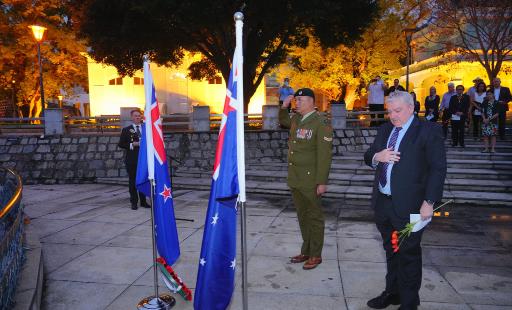
moment in Australia’s military history, where soldiers bravely fought alongside their allies to defend their values and friendship. The ceremony was attended by veterans and their families, as well as government officials, and representatives from Australia, Canada, New Zealand and UK.
Wreaths were laid, prayers were offered, and a minute of silence was observed to honour those who had lost their lives. At the service, the bravery, selflessness, and dedication of those who served in the Korean War were recognized.
Taiwan’s famous Chun Yang tea store opens in Sydney


Brisbane, April 30 (MCNA Newsdesk)
Bolivia Marka returns to the Luminous World Music stage on 9 June, transporting Multicultural Australia’s audience to the spirit of the Oruro Carnival of Bolivia. Considered one of the most

authentic traditional Bolivian dance groups outside of Latin America, the group showcases the vibrant colours and sounds of Bolivia with their elaborate, and often audible, traditional costumes – with beading details representing the unique flora and fauna of their homeland.
Multilingual video resources to explain domestic violence laws
Sydney, May 4 (MCNA Newsdesk)
Taiwan’s famous Chun Yang tea event opened in downtown Sydney recently. Director Fan says she feels honored to be invited to serve as the guest of cutting the pot. A cup of hand shake brings together Taiwan’s finest tea varieties and rich fruits, also symbolizes Taiwanese hospitality and enthusiasm. It showcases Taiwan’s soft power. The fusion of hand-shaking ice cubes and tea soup creates a delicate bubble, adapting to the taste of customers, and it beckons the Sydney public to spend the heat and cold winter.
Director Fan invited Australian people, who love authentic Taiwanese tea to make the most of the opportunity to visit Taiwan and have a taste of genuine
Taiwanese tea, which will also give a glimpse of how Taiwanese people feel, the tenderness of their heart will be apparent in every sip of the tea they brew. A renowned beverage chain, Chun Yang, has just opened their flagship store in Sydney.

More than 28,000 shops brewing tea drinks in Taiwan. If one loves the flavour of Taiwanese tea drinks, one must take a trip to Taiwan for the genuine experience of its culture, hospitality, and much more.
Anzac Day commemorated in Macau
Hong Kong, April 26 (MCNA Newsdesk)
Brisbane, May 5 (MCNA Newsdesk)
In support of Domestic and Family Violence Prevention month, Multicultural Australia and the Domestic Violence Action Centre have created video resources in Kurdish Kurmanji and Arabic, to help members of the Yazidi community understand domestic violence laws and

matters in Australia.
Launched at Multicultural Australia’s Toowoomba office recently with Cr Melissa Taylor, these in-language resources will raise awareness amongst the Yazidi community in the Garden City and beyond, and bring Multicultural Australia closer to becoming a society that creates access for all.
Anzac Day has been one of the most important dates Australians and New Zealanders commemorate around the world for over 100 years. In Macau , Deputy ConsulGeneral Alistair McEachern joined Australians and New Zealanders in a commemoration led by AustCham Macau at dawn recently at the Old Taipa Houses Amphitheater
www.mcna.org 12 COMMUNITY NEWS May 2023 - Vol 1, Issue 9 MULTICULTURAL NEWS AUSTRALIA
Australia’s initiative provides clean & safe water supply to villagers
New look Qantas Hong Kong International Lounge reopened
Port Moresby, May 5 (MCNA Newsdesk)
About 300 people of Murr
village, along the Oriomo River in Western’s South Fly district will now have access to a clean and safe water supply after the installation of rainwater harvesting units funded by the Australian government.
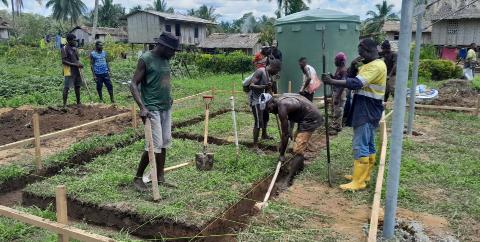

Murr village was among 27 inland and coastal communities that underwent assessment in 2022 and was selected to receive two rainwater harvesting units — one for the community and one for their local primary school.

Communities in the South Fly, both along the coast and inland often experience long dry seasons, resulting in critical water shortages that result in communities accessing water from unsafe sources, which can result in disease outbreaks. This negatively impact livelihoods, health, food, and water security. Access to clean and safe water is vital and Australia and New Papua Guinea work in partnership to build and strengthen resilience to water-related disasters in the South Fly.
Multicultural Australia’s initiative helping job seekers
Hong Kong, May 4 (MCNA Newsdesk)
After Qantas started operating daily direct flights from Hong Kong to Australia, CG Elizabeth Ward reopened the new look Qantas Hong Kong International Lounge at Hong Kong International Airport with Australian celebrity chef Neil Perry.


Travelers to Australia on the flying kangaroo once again have the opportunity to experience Australia’s world class hospitality, food and beverage offerings

before they set foot in Australia.
CG Naito attends ANZAC Day Dawn Service


Brisbane, April 12 (MCNA Newsdesk)
Just over a month since arriving in Brisbane, Farhad
Adilyar is already preparing to start a new job working at the Anglican Church Grammar School.

Though his journey to Queensland was not easy, having lived in Indonesia for nine years, his experience in human
resources in his home country of Afghanistan and the support he received through Multicultural Work and Welcome program helped him develop the skills to build strong relationships and communicate effectively.
“I love working with children and it’s a really good opportunity for me to get a job at a school. I am so excited,” Farhad said
Bonsai exhibition on May 21-22

Perth, April 26 (MCNA Newsdesk)
Consul-General (CG) Naito attended the ANZAC Day Dawn


Service at Kings Park recently, laying a wreath on behalf of the Government of Japan.
In observing the parade, he paid
respect to the dedicated men and women who serve in the defence forces and maintain peace and freedom today.
CG visits Yanchep Beach Joint Venture &Yanchep Sun City
Perth, May 4 (MCNA Newsdesk)
The Bonsai Society of Western Australia will be exhibiting a stunning collection of bonsai and suiseki (viewing stones) on May 20-21 at
the Crown Perth, with a unique range of WA natives and traditional bonsai trees on display. The exhibition is also running concurrently with the 35th AABC National Bonsai Convention.
Perth, April 24 (MCNA Newsdesk)
On April 18, Consul-General (CG) Naito and his team visited the Yanchep Beach Joint Venture and Yanchep Sun City development site. The clean, green and sustainable city project in Yanchep and Two Rocks is now approaching a milestone as the Yanchep rail extension nears completion.
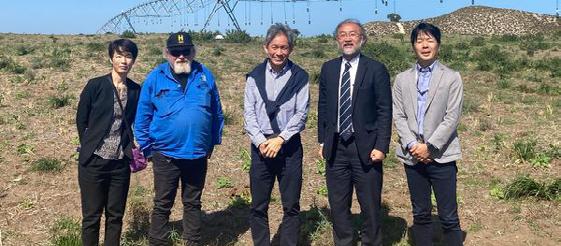

Part of the project is the increasingly renewably powered Yanchep farm which provides quality Angus beef products
locally.
Next year the project founder, Tokyu Group, along with partners New Orion Investment and Capricorn Investment Group
will celebrate 50 years since the start of the project that has been supported by both state and federal governments.
www.mcna.org 13 COMMUNITY NEWS May 2023 - Vol 1, Issue 9 MULTICULTURAL NEWS AUSTRALIA
Islamic Council of Qld organises Eid Ul Fitr
The Islamic Council of Qld Inc (ICQ) organised the Eid Ul Fitr festival at the Rocklea Showground on May


7. It was an inclusive multicultural event and various cultural performances were presented.
4th Annual AfriQueensland Awards Night hosted

The Queensland African Communities Council held its 4th Annual AfriQueensland Awards Night on Saturday 6th May at Grace House in Slacks Creek.

“It was another remarkable moment of reflection and celebration of those who go above and beyond in the service to other people. We thank all of
our community associations, individuals and organisations that have made enormous contributions to the development of our community over the past 12 years. We look forward to staging more celebrations at the Africa Day Festival on 27 May 2023 at Spanish Club, Acacia Ridge,” the council said in a statement.

www.mcna.org 14 COMMUNITY NEWS May 2023 - Vol 1, Issue 9 MULTICULTURAL NEWS AUSTRALIA

www.mcna.org 15 COMMUNITY NEWS May 2023 - Vol 1, Issue 9 MULTICULTURAL NEWS AUSTRALIA
Greater Springfield Community Festival 2023 a resounding success

Varnam Cultural Society organised Greater Springfield Community Festival 2023 in Springfield on May 6.


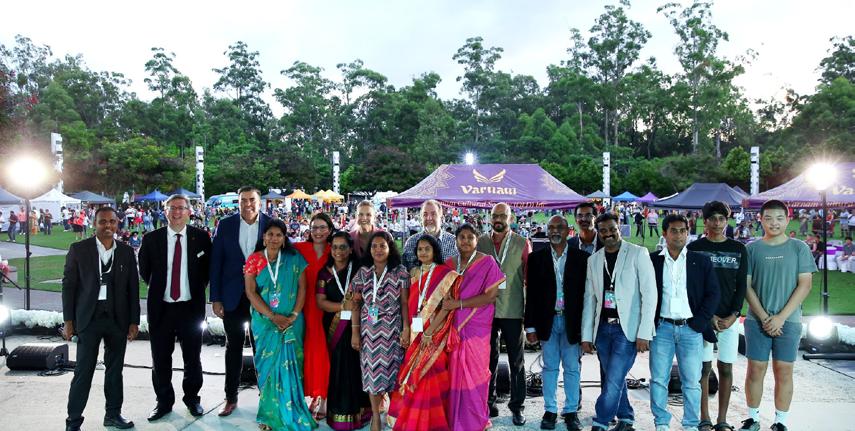



Over 18 language performances, close to 300 participants, estimated over 13K attendees, multicultural performers, stall holders, Varnam Cultural


Society team and the volunteers made this festival a resounding success. Here are the chosen moments from the event.

www.mcna.org 16 COMMUNITY NEWS May 2023 - Vol 1, Issue 9 MULTICULTURAL NEWS AUSTRALIA
continued
pg. 17
on













www.mcna.org 17 COMMUNITY NEWS May 2023 - Vol 1, Issue 9 MULTICULTURAL NEWS AUSTRALIA continued from pg. 16
Australians in disaster zones to receive instant phone warnings
to instantly send emergency warning notifications to mobile phones in a defined area in multiple languages.
It will replace the current SMS-based system, which was often overwhelmed during emergencies such as bushfires, delaying messages.
quickly as possible to emergency service operators responding to an event -- is critical in ensuring that there is minimal disruption to communities and individuals.”

Marriages bouncing back in New Zealand after Covid

Canberra, May 2 (IANS)
Australians in disaster zones will receive instant phone warnings from a new National Messaging System (NMS).
Murray Watt, Minister for Emergency Management, and Communications Minister
Michelle Rowland announced the rollout of the NMS on Tuesday, saying it could save lives, reports Xinhua news agency.
The new system will allow state and territory governments
“Drawing on technology currently used overseas, the speed and effectiveness of the NMS will substantially improve Australia’s ability to send prioritized warnings from trusted sources, to prevent the loss of life, injury, damage to property, and mitigate the spread of misinformation during disasters,” the Ministers said in a statement.
“Being able to communicate effectively -- from communities receiving emergency messages as
The landmark royal commission into Australia’s natural disaster responses, which was held in the wake of the devastating 2019-20 Black Summer bushfires, warned that safety messaging around disasters needed to be improved. It found that the inconsistent approach of each state and territory having its own messaging warning system led to the public questioning the reliability of messages.
The new system will be designed and tested over the next 18 months before being implemented nationwide in time for the 2024-25 bushfire season.
Australia failing to monitor agricultural chemical effect on humans: Report
livestock and domestic animals from weeds and pests but can be consumed by humans in the form of residues in agricultural produce.
Wellington, May 3 (IANS) The number of marriages solemnised in New Zealand increased in 2022 following lower numbers in the previous two years, according to annual figures released by the statistics department on Wednesday.
the end of the year, which may have included couples marrying that had delayed earlier plans, MacAskill said.
Canberra, May 3 (IANS) Australia is failing to properly monitor the effect of chemicals used in the agriculture industry on humans, a government report revealed on Wednesday.
According to the report, which was released by the Department of Agriculture, the federal government currently has no adequate data source to measure the effect of agricultural and veterinary (agvet) chemicals on the environment and human health, reports Xinhua news agency.
The chemicals are used to protect crops, the environment,
Despite the Australian Pesticides and Veterinary Medicines Authority (APVMA) setting acceptable daily intakes for agvet chemicals, the new report showed no studies have been conducted on human bio-monitoring since 2005.
The researchers also found that there are no national sources of data on pesticides in drinking water, groundwater, urban stormwater, soil or in wildlife.
“Work health and safety (WHS) regulators were not able to provide useful information about workers exposure to agvet chemicals,” the report said.
“Similarly, those public health authorities who responded to enquiries did not hold useful information about human exposure to agvet chemicals.”
They found that the only long-running monitoring scheme for pesticides in the environment was as part of the protection of the Great Barrier Reef.
It found that monitoring of pesticides in food was better due to the National Residue Survey for exported meats. Markets and supermarket chains also monitor domestically sold fruit and vegetables but the findings are kept confidential.
Matt Landos, a member of the National Toxics Network, said without more data on pesticide use the APVMA was not properly informed when approving products.
“The existence and quality of that data is paramount. The report shows there is no human data monitored and only scant measurement of food and the environment,” he was quoted by the Guardian Australia as saying on Wednesday.
Rescue mission evacuates 36 Australians from Sudan
was taken from Sudan to Cyprus in the early hours of the morning on board a plane from the Australian Defense Force (ADF), reports Xinhua news agency.
“Unfortunately, we still have Australians on the ground, and we’ll continue to engage through our consular team with the Australians who are on the ground, and I urge people to make sure they are registered,” Wong told the local media.
“worsening” security situation in the African country.
“The security situation in Sudan is very dangerous, and it is volatile, and as you know we have been doing all we can to assist Australians with the support of our partners, bearing in mind we don’t have people on the ground in an embassy in Sudan,” said Wong.
In 2022, 18,858 marriages and civil unions were registered by New Zealand couples, up from 15,657 in 2021, Xinhua news agency quoted Stats NZ as saying. However, the number remains lower than in the period before Covid-19 impacted the country, as there were, on average, around 20,200 marriages and civil unions registered each year between 2017 and 2019, it added.
“Rules around gatherings in response to the Covid-19 pandemic resulted in a large drop in the number of marriages celebrated, especially in the warmer months when it’s more popular to tie the knot,” Stats NZ population estimates and projections manager Michael MacAskill said.

In 2022, the number of marriages registered each month began returning to pre-Covid numbers as restrictions were lifted. In fact, registrations were higher than pre-Covid levels towards
The number of overseas couples marrying in New Zealand also increased. In 2022, 1,317 couples were from overseas that came to New Zealand to marry or form a civil union.
This was higher than the previous two years, although still lower than pre-Covid numbers, he said.
Nearly two in every three couples who came to New Zealand to marry were from Australia. A further 9 per cent came from Britain, and 7 per cent from the US, he added.
Of the 1,317 couples from overseas who married or formed a civil union in New Zealand in 2022, 7 per cent were same-sex couples, MacAskill said.
Figures on divorces released by Stats NZ show that in 2022, 7,593 divorces were granted, which were higher than in 2021, but lower than most years before that, following a general decline in the number each year.
Just over one-third of marriages end in divorce by a couple’s 25th wedding anniversary, he said.
Australia to ban recreational vaping

Canberra, May 2 (IANS) As part of a major crackdown, the Australian government has decided to ban recreational vaping and introduce minimum quality standards, while restricting the sale of vapes only to pharmacies, the media reported on Tuesday. Nicotine vapes already require a prescription in Australia, but the industry is poorly regulated and a black market is thriving, the BBC reported.
in shiny packaging and added flavours to create a new generation of nicotine addicts,” he will say in a speech unveiling the reform on Tuesday. Research suggests one in six Australians aged 14-17 years old has vaped, and one in four people aged 18-24.
“By contrast, only 1 in 70 people my age has vaped,” Butler, who is 52, will say.
Canberra, May 3 (IANS) An air force mission has successfully evacuated 36 Australians and their families from conflict-ravaged Sudan, Foreign Affairs
Minister Penny Wong said on Wednesday.
Wong confirmed that the group
“This brings to, I think 191 Australians that we’ve assisted or have been able to secure passage out of the country since the crisis began.”
She said that the government was hopeful of launching further evacuation flights but nothing could be guaranteed amid a
New Zealand’s cost
of
A growing number of countries have evacuated citizens from Sudan since fierce clashes broke out between the Sudanese army and the paramilitary Rapid Support Forces on April 15. The deadly clashes have so far killed 550 people and injured 4,926 others, according to the latest figures released by Sudan’s Ministry of Health.
According to Health Minister Mark Butler, the products are creating a new generation of nicotine addicts. Also known as e-cigarettes, vapes heat a liquid -- usually containing nicotine -- turning it into a vapour that users inhale. They are widely seen as a product to help smokers quit.
But in Australia, vapes have become a recreational product targeted at kids and “sold alongside lollies and chocolate bars” in retail stores, the BBC quoted Butler as saying.
“Just like they did with smoking, ‘Big Tobacco’ has taken another addictive product, wrapped it
The new measures he will announce include a ban on all disposable vapes and on the import of non-prescription products.
Prescriptions will be necessary for the vaping products that remain legal, and they will be required to have pharmaceutical-like packaging.
Restrictions on flavours, colours, nicotine concentrations and other ingredients will also be introduced.
A handful of other countries, like Singapore and Thailand, have also banned vaping and Australia’s medicines regulator -- the Therapeutic Goods Administration -- has been recommending reform.
living remains high for all household groups: Statistics
Wellington, May 1 (IANS) Food and housing costs were the main drivers of inflation for all household groups in New Zealand, according to figures released by the statistics department Stats NZ on Monday.
The cost of living for the average household increased by 7.7 per cent in the 12 months to March 2023, which follows an 8.2 per
cent increase in the 12 months to December 2022, Xinhua news agency quoted Stats NZ as saying. “Food prices increased by 12 per cent for the average household, which was the main contributor for most household groups,” Stats NZ consumer prices manager James Mitchell said. Higher prices for interest payments, grocery food, rent,
and fruit and vegetables were the main contributors to this increase, he said.
Each quarter, the household living-costs price indexes measure how inflation affects 13 different household groups in New Zealand, whereas the consumer price index measures how inflation affects New Zealand as a whole, Mitchell said.
www.mcna.org 18 OCEANIA May 2023 - Vol 1, Issue 9 MULTICULTURAL NEWS AUSTRALIA
Likelihood of El Nino developing later this year rising: WMO
There is a 60 per cent chance for a transition from ENSO-neutral to El Nino during May-July 2023, and this will increase to about 70 per cent in June-August and 80 percent between July and September, according to the WMO update.
“We just had the eighth warmest year on record, even though we had a cooling La Nina for the past three years and this acted as a temporary brake on global temperature increase,” WMO Secretary General Petteri Taalas said.
“The development of an El Nino will most likely lead to a new
spike in global heating and increase the chance of breaking temperature records,” Taalas added.

According to the WMO’s State of the Global Climate reports, 2016 was the warmest year on record because of a very powerful El Nino event and human-induced warming from greenhouse gases. The effect on global temperatures usually plays out in the year after its development and so will likely be most apparent in 2024. El Nino occurs every two to seven years on average, and the episodes usually last nine to 12 months.
Covid-19 no longer a public health emergency: WHO
surge in Covid cases, due to Omicron sub-variants XBB.1.15 and XBB.1.15, both infections and deaths have been the lowest in the three years.
Yet, more than 3,500 people died in the last week of April and billions remain unvaccinated.
The WHO chief also expressed concern that surveillance reporting to WHO has declined
significantly, and that there continues to be inequitable access to life-saving interventions, and that pandemic fatigue continues to grow.
Meanwhile, many countries have also ended their states of emergency for Covid. The US also aims to lift its Covid emergency on May 11.

www.mcna.org 19 continued from pg. 1 May 2023 - Vol 1, Issue 9 MULTICULTURAL NEWS AUSTRALIA
www.mcna.org 20 ADVERTISEMENT May 2023 - Vol 1, Issue 9 MULTICULTURAL NEWS AUSTRALIA
UN chief urges Sudan’s warring parties to pursue peace, reconciliation

prosperity, and a return to civilian rule.”
Guterres is expected to discuss the situation in Sudan with Kenyan officials during his official trip to the East African nation besides chairing this year’s first session of the UN System Chief Executive Board for Coordination.
according to Sudan’s Ministry of Health.
Nairobi, May 3 (IANS) United Nations Secretary-General Antonio Guterres on Wednesday called upon Sudan’s warring parties to pursue the path of peace and reconciliation in order to avert a humanitarian crisis that could engulf the greater Horn of Africa region.
Guterres, who spoke at a media briefing in Nairobi, the Kenyan capital, said the conflict that broke out in Sudan in mid-April remains of grave concern, adding that laying down of arms among combatants is urgent, Xinhua news agency reported. “The fighting needs to stop now before more people die and this conflict explodes into an all-out war that could affect the region for years to come,” Guterres said, adding, “All parties must put the interests of the Sudanese people first -- that means peace,
The board, which meets twice every year, brings together the leaders of the UN agencies, funds, and programs, and happens to be the highest-level coordination forum of the UN system.
While acknowledging that Sudan’s crisis is taking a toll on civilians amid a lack of access to food, clean drinking water, and essential medicine, Guterres urged fighters loyal to Abdel Fattah al-Burhan, the head of the Sudanese Armed Forces (SAF), and Mohamed Hamdan Dagalo, the head of the paramilitary Rapid Support Forces (RSF), to adhere to the latest seven-day ceasefire and commence peace talks.
The fighting between the SAF and the RSF that broke on April 15 in Khartoum, the capital of Sudan, has so far claimed the lives of more than 500 people and left over 4,000 more injured,
Now in its third week, the fighting, which has disrupted a transition to civilian rule in Sudan, has displaced civilians with an estimated 100,000 people having fled to neighboring countries, according to the United Nations High Commissioner for Refugees.
On Tuesday, the two rival factions agreed on a seven-day ceasefire mediated by neighboring South Sudan.
Guterres warned that an escalation of the Sudan crisis could displace 800,000 civilians in the near future, adding that the UN had rallied behind regional mediation efforts to end fighting in the northeastern African nation.
The UN chief appealed to the international community to scale up humanitarian assistance for Sudan alongside the quest for peace and a return to civilian rule.
In addition, Guterres urged combatants in Sudan to protect critical infrastructure and amenities, and provide a safe corridor for seamless passage of humanitarian aid meant for civilians trapped in the latest conflict.
Child dies of Marburg virus disease in Tanzania, takes death toll to 6

It was announced in a statement by Health Minister Ummy Mwalimu when she released an update on the disease.
The Minister said the child belonged to a woman who had been diagnosed with the disease and was undergoing treatment in an isolation centre, Xinhua news agency reported.
Addis Ababa, April 29 (IANS)
The Trilateral Mechanism on Sudan, which brings together the African Union, the Intergovernmental Authority on Development, and the UN, have called for the full implementation of the ceasefire in Sudan.
Members of the Trilateral Mechanism made the call in a joint statement along with the Quad on Sudan that brings together Saudi Arabia, the United Arab Emirates, the UK and the US, according to a joint statement issued on Friday.
“Members of the Trilateral Mechanism and the Quad welcome the announcement by the Sudanese Armed Forces and the Rapid Support Forces (RSF) to extend the current ceasefire for an additional 72 hours and call for its full implementation,” the statement said.
dialogue toward establishing a more durable cessation of hostilities and ensuring unimpeded humanitarian access, Xinhua news agency reported. This initial phase of diplomacy to establish a process to achieve a permanent cessation of hostilities and humanitarian arrangements will contribute to action on the development of a de-escalation plan as outlined in the April 20 African Union release, the statement says. Since mid-April, Sudan has been mired in military clashes between the Sudanese Army and the RSF following days of tension between the once-allied leaders of both sides.
Dar Es Salaam, April 30 (IANS)
Tanzanian health authorities have said that an 18-month-old child has died of Marburg virus disease (MVD) in the northwestern region of Kagera.
The death of the child brought to six the number of patients killed by the disease since its outbreak in the region on March 21, 2023.
Mwalimu added that since the disease outbreak on March 21, nine cases have been reported, of which three patients recovered and six, including the child and a health worker, died.
She said 211 of the 212 people who were put under isolation were released after being monitored for 21 days and found not to be affected by the disease.
She added that the government was observing guidelines by the WHO on monitoring epidemics, including the MVD.
She said the government will announce total control of the disease after 42 days since the last suspected patient tested negative as per WHO guidelines, adding that the date will be May 31, 2023.

Mwalimu thanked people who were involved in controlling the MVD outbreak, including health workers, case management teams, contact tracing teams, and dignified burial teams. She urged health workers across the East African nation to observe infection prevention and control guidelines.
Commodity prices in Sudan soar, medical supplies dwindle: UN
bottled water, the price of basic commodities has risen by 40-60 per cent or more in some areas, the WHO said.
Meanwhile, the World Food Programme reported that approximately one-third of the population of more than 46 million people faced hunger before the conflict erupted, noting that the violence could potentially plunge millions more people into hunger.
They also welcomed the readiness of the two Sudanese warring factions to engage in
The country has been suffering a political crisis since the Sudanese army commander Abdel Fattah Al-Burhan declared a state of emergency in October 2021 and dissolved the Sovereign Council as well as the government.

Khartoum, May 3 (IANS) The violent clashes in Sudan have led to skyrocketing commodity prices, critically shrinking medical stockpiles and forcing hundreds of thousands of people to flee their home, the UN said. In a statement, the World Health Organization (WHO) warned that many people will die due to a lack of essential services and disease outbreaks, reports Xinhua news agency. Medical stockpiles are running critically low in areas ravaged by the fighting, including in the capital, Khartoum, and West and Central Darfur.
From fuel to food staples and
The International Organization for Migration estimates that more than 334,000 people have been displaced inside Sudan since the conflict erupted more than two weeks ago.

The UN Refugee Agency (UNHCR) and partners are scaling up relief efforts as border crossings from Sudan increase.
It estimates that more than 100,000 refugees have fled to neighbouring countries.
Most are Sudanese refugees arriving in Chad and Egypt and refugees from South Sudan returning to their homes, UNHCR said. The refugees are mainly women and children.
The Unicef said it provides critical water, sanitation and
hygiene support to six Khartoum hospitals and trucks water to a hospital in North Darfur. The agency also directed health and nutrition kits to health centres in the state capital, El Fasher.
The UN Office for the Coordination of Humanitarian Affairs (OCHA) said that in neighbouring Chad, aid agencies are bringing in roughly 70,000 core relief items from global stockpiles.
In Egypt, UNHCR and other UN agencies are assessing the needs of people from Sudan, OCHA said.
The UN and the Egyptian Red Crescent deliver water, food, wheelchairs, and hygiene and sanitary kits to new arrivals. Humanitarians plan to launch an interagency regional refugee response plan appeal to address urgent financial needs as soon as possible.
The deadly clashes that erupted on April 15 have so far killed 550 people and injured 4,926 others, according to the latest figures released by Sudan’s Ministry of Health.
Nairobi, May 3 (IANS) The UN Children’s Fund, UNICEF, said on Wednesday that it has appealed for $759 million to provide life-saving support to 16.6 million people, including 12.2 million children, in Ethiopia, Kenya and Somalia in 2023. Of that, $137.5 million is needed for Kenya. An additional $690 million is required to provide climate-sensitive resilience support to communities across the affected areas in 2023 and 2024, the UNICEF said in a statement issued in Nairobi, the capital of Kenya, Xinhua news agency reported.
The statement follows a visit to northeastern Kenya by UNICEF Executive Director Catherine Russell who on Tuesday met families and refugees struggling to recover from the worst climate-induced drought to hit the region in 40 years.
Russell visited drought-affected Garissa County and the Dadaab refugee camp, a semi-arid town in the county, said even with the onset of rains, it will take time and commitment by the international community for these communities to begin to recover.
“Rain has finally started to come, giving people hope, but it is a long road to recovery. Children are still hungry, they are at risk of cholera, they need to be in school, and many have no prospects for going home,” she said.
According to the UNICEF, after five poor or failed rainy seasons in the last three years in the Horn of Africa, many families lost their cattle, crops, and entire
livelihoods, putting the lives of more than 1.5 million children at risk due to severe acute malnutrition.
She said even after recent rainfall, the parched ground is unable to absorb all the water, leading to flooding and further devastation.
According to the UN, drought in the Horn of Africa has been compounded by years of conflict and insecurity, the socioeconomic impacts of COVID-19, and rising food and fuel prices, partly due to the conflict in Ukraine.
It said the cost of cooking oil, bread, and wheat flour across the region remains high in local markets and many families cannot afford the basic necessities to survive.
More than 2.5 million people in Ethiopia, Kenya and Somalia have been displaced due to drought, according to the UN. “As families are driven to the brink, children are going hungry, missing school, forced into child labor or early marriage and becoming sick, including from cholera outbreaks,” it said.
www.mcna.org 21 AFRICA May 2023 - Vol 1, Issue 9 MULTICULTURAL NEWS AUSTRALIA
Int’l community calls for Sudanese warring factions to respect ceasefire
UNICEF seeks 759 mln USD to provide support to 16 mln people in East Africa
N.Korean youth rally against S.Korea-US deterrence deal

burned an effigy depicting the “invaders and provocateurs”, apparently referring to South Korean President Yoon Suk Yeol and his US counterpart Joe Biden.
Seoul, May 3 (IANS) North Korean youth and students staged a rally to denounce a recent agreement reached by the leaders of South Korea and the US on strengthening Washington’s extended deterrence, Pyongyang’s state media said on Wednesday.
The official Korean Central News
Agency (KCNA) reported that the protest was held in South Hwanghae province on Tuesday to “sternly punish” the US and South Korea, or what it called a “gangster” and “puppet” state, respectively, reports Yonhap News Agency.
The KCNA said the participants, full of determination for revenge,
The protesters also slammed Yoon’s state visit to Washington as the “most hostile, aggressive and humiliating act of subjugating to the US” and a move to stage a “nuclear war” against the North, it added. Yoon and Biden held a summit in Washington last week and announced the adoption of the Washington Declaration on strengthening US extended deterrence against the North’s threats. Extended deterrence refers to the U. commitment to mobilising all of its military capabilities, including nuclear, to defend its ally.
Japanese atomic blasts survivors pessimistic about nuke disarmament progress at G7 summit: Survey
Tokyo, April 29 (IANS) Some two-thirds of atomic blasts survivors in Japan do not think the upcoming G7 summit in Hiroshima will reap any tangible progress in nuclear disarmament, according to a new survey. As Japanese Prime Minister Fumio Kishida has made a world without nuclear arms a key theme of the rich club’s annual
meeting, 67.4 per cent of the 521 respondents expressed their low expectations, Xinhua news agency reported on Saturday citing the Kyodo News survey. The poll was sent to around 1,400 people who had suffered and survived nuclear bombings in which the US dropped the world’s first atomic weapons on Hiroshima and Nagasaki in 1945.
Altogether 22.2 per cent of the surveyed pointed out that all the participants either possess nuclear weapons or are protected under nuclear agreements. In a blow to Kishida’s aim to serve as a bridge between nuclear and non-nuclear states, only 2.1 per cent of respondents said Japan has been able to fulfil the role. Behind the lack of confidence is the Japanese government’s refusal to participate in the Treaty on the Prohibition of Nuclear Weapons, Kyodo News said. When asked what they most want to see from the government, 47.4 per cent of respondents answered with Japan’s speedy participation in the treaty. According to Japan’s Ministry of Health, as of the end of March 2022, there were 118,935 officially confirmed atomic bomb survivors with their average age at 84.53.
China wants to send record unemployed youth to villages to find work: Report
for jobs there.
The announcement followed
President Xi Jinping’s call last December for urban youth to seek jobs in rural areas in an effort to “revitalise the rural economy”, in an echo of a previous campaign launched decades ago by former leader Mao Zedong in which tens of millions of urban youth were effectively exiled to remote areas of China.
reveal anything, it’s that large numbers of angry, well-educated youth in China’s cities could present big problems for the ruling Chinese Communist Party,” CNN quoted Alex Capri, a research fellow at the Hinrich Foundation, as saying while referring to demonstrations in November 2022.
Hong Kong, May 1 (IANS) As the jobless rate among Chinas youth soars, Guangdong, the countrys richest province, has offered a highly controversial solution to send 300,000 unemployed young people to the countryside for two to three years to find work, a media report said.
Guangdong, the manufacturing powerhouse, said last month it will help college graduates and young entrepreneurs to find work in villages, according to the CNN report
It also encouraged rural youth to return to the countryside to look
Guangdong’s plan, which was widely panned on social media, coincided with the rate of urban unemployment among 16- to 24-year-olds surging to 19.6 per cent, the second highest level on record.
That translates to about 11 million jobless youth in China’s cities and towns, according to CNN.
The youth unemployment rate could increase further, as a record number of 11.6 million college students are set to graduate this year and seek jobs in an already crowded market.
“If the earlier Covid-19 protests
“Dispersing them to smaller villages in the country side could mitigate this risk and, possibly, help diminish income disparities between China’s tier 1 and tier 2 cities and the poorer areas of the country.”
China’s youth are the most educated in decades, with record numbers of graduates from colleges and vocational schools. But they also face a growing mismatch between their expectations and opportunities as the economy slows significantly. Frustrated by mounting uncertainties and a lack of social mobility, young people are increasingly losing hope that a college degree can bring the same returns it once did, CNN reported.
S.Korea
to resume Finance Ministers’ meeting with Japan
Seoul, May 2 (IANS) South Korea and Japan agreed to resume their long-stalled Finance Ministers’ meeting “at an appropriate time this year” as the two countries gear up to normalise economic ties after several years of trade tensions.
Officials from Japan will visit South Korea next month to work out details of the meeting, Yonhap News Agency reported on Tuesday citing the Ministry of Economy and Finance. The agreement was reached during a meeting between South Korean Finance Minister Choo Kyung-ho and his Japanese counterpart, Shunichi Suzuki, on the sidelines of the 56th Annual Meeting of the Board of Governors of the Asian Development Bank (ADB) in Incheon.
“Japan and South Korea share common values, such as freedom and human rights,” Choo said ahead of the meeting.
“(As the two countries) consider the free trade and market system to be the key of their economic management, there are many areas in which the two governments and the private sectors can join forces.”
The Finance Minister said it is significant that South Korea and Japan have resumed shuttle diplomacy, or regular visits to each other’s countries by their leaders.
President Yoon Suk Yeol was the first South Korean president in
12 years to make a bilateral visit to Japan in March.
Japanese Prime Minister Fumio Kishida will make a two-day visit to South Korea on May 7, according to Japanese media reports.
Seoul and Tokyo also agreed to make joint efforts to address international and regional issues, and vowed to expand cooperation in global platforms, such as the Group of 20 and the ASEAN+3.

South Korea and Japan recently have been making efforts to revitalize their bilateral exchanges, after the two countries agreed to reinstate each other to their respective “white list” of trusted trading partners.
In 2019, South Korea took Japan off its white list following Tokyo’s removal of Seoul from its own list in apparent retaliation against the South Korean Supreme Court rulings the previous year that ordered two Japanese companies to pay compensation to Korean forced labour victims during Japan’s 1910-45 colonial rule of the Korean Peninsula.

In yet another sign of a slow thaw in bilateral ties, Japan invited South Korea to take part in the upcoming G7 ministerial meeting that will kick off in Tokyo on May 11.
It marked South Korea’s first invitation to the G7 Finance Ministers and Central Bank Governors’ Meeting since 2008.
China fashion giant faces calls for Wall Street probe over Uyghur forced labour
Washington, May 2 (IANS) A group of US lawmakers has called for Chinese fast fashion brand Shein to be investigated over claims that Uyghur forced labour is used to make some of the clothes it sells, the media reported.
The letter to the Wall Street watchdog comes amid expectations the firm may sell its shares in the US, reports the BBC.
“We have zero tolerance for forced labour,” Shein told the BBC.
The company also said that it currently has no plans for a listing on Wall Street.
The letter, which was signed by two dozen Republican and Democrat lawmakers, cited “credible allegations of utilising underpaid and forced labour”.
It also called on the Securities
and Exchange Commission (SEC) to force Shein to independently audit and verify “that the company does not use Uyghur forced labour”, before it was allowed to sell shares in the US.
In response to the letter, Shein told the BBC: “We are committed to respecting human rights and adhering to local laws and regulations in each market we operate in.
“Our suppliers must adhere to a strict code of conduct that is aligned to the International Labour Organization’s core conventions.”

Human rights groups and Western governments, including the US and UK, have accused China of forced labour and internment of Uyghurs, a mainly Muslim ethnic minority.
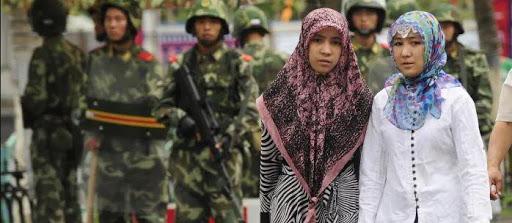
www.mcna.org 22 EAST ASIA May 2023 - Vol 1, Issue 9 MULTICULTURAL NEWS AUSTRALIA
Taliban using campaign against IS to boost legitimacy
The international community, particularly Afghanistan’s neighbours, considers IS-K a significant security threat because of the group’s global ambitions.
Pak saw slight increase in terror attacks in April
New Delhi, April 29 (IANS) The Taliban regime in Afghanistan has intensified its war with the rival Islamic State-Khorasan (IS-K) terror group, killing several senior leaders and commanders in recent months, the media reported.

Among them, according to the US, was the alleged mastermind of a suicide bombing outside Kabul airport in 2021 that killed some 170 Afghans and 13 American soldiers, RFE/RL reported..

The White House on April 26 announced that the alleged mastermind, whose identity has not been revealed, was killed in a recent Taliban operation. But it did not say when or where
he was killed, RFE/RL reported.
The Taliban has waged a brutal war to eliminate IS-K, the biggest threat to its rule in Afghanistan.
The regime appears to have weakened the group, whose attacks have waned in recent months.
But the Taliban also appears to be trying to use its campaign against IS-K to burnish its counterterrorism credentials and boost its legitimacy in the eyes of the international community, RFE/RL reported. Under the US-Taliban deal signed in 2020, the militants pledged to prevent any group from using Afghan soil to attack other countries.
Despite its efforts to eliminate IS-K, the Taliban is believed to be sheltering members of Al Qaeda and the Tehrik-e Taliban Pakistan (TTP) terror groups. That is likely to temper hopes that the Taliban can be a reliable counterterrorism partner, RFE/ RL reported.
On April 14, the Foreign Ministers of China, Russia, Iran, Pakistan, Tajikistan, Turkmenistan, and Uzbekistan said the Taliban has links with some extremist groups based in Afghanistan that “pose a serious threat to regional and global security”.
They include the Eastern Turkistan Islamic Movement, the Baloch Liberation Army, Jundallah, Jaish al-Adl, Jamaat Ansarullah, and the Islamic Movement of Uzbekistan, RFE/ RL reported.
World Bank approves $1.25 bn financing for Bangladesh

Nutrition, Entrepreneurship, and Resilience (PARTNER). Another $500 million will come as First Green and Climate Resilient Development Credit which will help the country’s transition to green and climate-resilient development, the lender said in a statement.
Islamabad, May 3 (IANS)
said.
Dhaka, April 29 (IANS) The World Bank has discussed a new Country Partnership Framework (CPF) for Bangladesh, spanning from 2023 to 2027, and approved $1.25 billion financing in three new projects, the lender said. Of the projects, the bank said on Friday that it will provide $500 million for a project termed Program on Agricultural and Rural Transformation for
It approved $250 million for a project on microenterprise to help transform the micro-enterprise sector into a more dynamic, less-polluting, resource-efficient, and climate-resilient growth sector, Xinhua news agency reported.
“This Country Partnership Framework builds on five decades of strong partnership between the World Bank Group and Bangladesh,” said Abdoulaye Seck, World Bank
country director for Bangladesh and Bhutan.
“As Bangladesh aims to be more prosperous, it will need stronger institutions and policies to serve the needs of an upper-middle-income country. This CPF will support the government’s reform programmes to deliver jobs and support inclusion and resilience,” Seck added.
“Bangladesh has been one of the world’s outstanding development growth stories. Additional reforms to spur the development of a more diversified and competitive private sector will grow exports and create quality jobs,” said Martin Holtmann, country manager of International Finance Corporation for Bangladesh, Nepal and Bhutan.
Sri Lanka to introduce new laws to achieve green economy: President
Sri Lankan President Ranil Wickremesinghe has said that his government would introduce new laws to establish the country as a green economy, according to a statement from the Presidential Media Division.
Addressing the Presidential Environment Awards 2021-2022 ceremony in Colombo on Friday, Wickremesinghe highlighted that it is not solely the responsibility of developing countries such as Sri Lanka to mitigate climate

Colombo, April 29 (IANS)
change, Xinhua news agency reported.
The President emphasised that developed countries should also contribute to the cause.
The President noted that Sri Lanka will take the lead in ensuring that the developing economies receive the resources to mitigate climate change. It intends to play a role in the global campaign for climate change mitigation.
Afghanistan’s central bank sells $14 mn to keep local currency stable
Afghanistan’s central bank Da Afghanistan Bank (DAB) sold $14 million by auction on Sunday to stabilise the exchange rate of the national currency afghani, the bank said in a statement released here on Sunday.

Pakistan witnessed a slight increase in the number of terror attacks in April with a total of 48 incidents, which led to 68 deaths and 55 injuries, according to a new report. In its report released on Tuesday, the Pakistan Institute for Conflict and Security Studies said the new figures were higher than the 39 militant attacks recorded in March, resulting in 58 deaths and 73 injuries, reports Xinhua news agency. The data showed a 23 per cent increase in militant attacks, a 17 per cent spike in deaths, and a 25 per cent decrease in the number of injured people, the Islamabad-based think tank
Fatalities among security forces also increased 35 per cent in April, it added. Pakistani security have increased their operations against terror groups, the report said, adding that they killed at least 41 militants and arrested 40 in April.
Khyber Pakhtunkhwa remained the most affected province, with 49 per cent of the total attacks reported last month, according to the report.
Last week, the military’s media wing Inter-Services Public Relations (ISPR) had announced that total of 293 people were killed and 521 others injured in 436 terrorist attacks in Pakistan since January this year.
Pakistan general elections likely in August

Kabul, April 30 (IANS)
The local currency afghani has been tumbling against foreign currencies, especially the US dollar, over the past couple of months. The exchange rate of 1 US dollar increased from last week’s 86 afghani to 87.15 afghani on Sunday, Xinhua news
agency reported.
Afghanistan’s central bank has injected millions of US dollars into the country’s money-exchange market over the past month to prevent the fall of the afghani against foreign currencies.
Afghanistan has received more than 2 billion dollars in cash over the past 18 months as part of the international community’s humanitarian aid to prevent the economic collapse of the cash-strapped country.
Islamabad, May 3 (IANS) The Imran Khan-led Pakista n Tehreek-e-Insaf (PTI) has agreed to delaying polls till August during the third round of dialogue with a government team, the media reported. Notably, the Supreme Court (SC) had ordered the Election Commission of Pakistan (ECP) to hold the elections in Punjab province on May 14, Samaa TV reported. However, the government refused to disburse funds.
As the negotiating teams of the ruling Pakistan Democratic Movement (PDM) and the opposition PTI prepare to engage in talks to resolve a stalemate over the timing of the general elections, both sides appear to be moving towards a compromise.
A three-member delegation from PTI, led by senior party leaders Shah Mehmood Qureshi, Fawad Chaudhary as well as Senator Ali Zafar engaged in discussions with the government’s team.
The government’s team included former Prime Minister Yousaf Raza Gilani, Finance Minister Ishaq Dar, Law Minister Azam Nazir Tarar, Minister for Railways Khawaja Saad Rafique, Minister for Commerce Naveed Qamar,
Minister for National Food Security and Research Tariq Bashir Cheema, and Muttahida Qaumi Movement-Pakistan (MQM-P) representative Kishwar Zahra.
The PTI team handed over an eight-point recommendation draft to the PDM team. It will also send this draft to the Supreme Court through its lawyers.
Sources have revealed that the opposition party has agreed to organisation of polls in the second or third week of August, after the budget, Samaa TV reported.
During a press conference held after the negotiation round, Finance Minister Dar confirmed that both the government and opposition parties have demonstrated flexibility in their stances.
He further added that both negotiation teams will be reporting back to their respective party leaderships. However, Dar stated that a mutually agreeable date for holding same-day elections throughout the country has not been reached, Samaa TV reported.
The Minister reiterated that the elections should be held on the same day across the country under the caretaker setup.
www.mcna.org 23 SOUTH ASIA May 2023 - Vol 1, Issue 9 MULTICULTURAL NEWS AUSTRALIA
Norway to increase defence spending to reach NATO guidelines by 2026: PM
Ukraine, EU agree to extend preferential trade regime for one year
Copenhagen, May 4 (IANS)
Norwegian government decided to increase military spending to at least 2 per cent of gross domestic product (GDP) by 2026 in accordance with North Atlantic Treaty Organization

(NATO) guidelines, Prime Minister Jonas Gahr Store said at a press conference.
“We will increase our defence spending to at least 2 percent of Norway’s gross domestic product by 2026. We will draw up a plan
setting out how we will achieve this,” said the Prime Minister in a statement. His announcement follows an agreement in 2014 by all NATO member countries to meet a 2 per cent of GDP defence investment guideline by 2024, Xinhua news agency reported. Even though Norway already has good operational national defence forces, there is a “need to enhance our own defence capability in light of the growing instability, tension and polarisation in the world today”, said Store.
According to the Prime Minister, Norway’s national defence is built on three pillars: military forces, bilateral agreements with other countries and NATO membership.
UK hit by fresh round of strikes by health workers
day.
Ambulance workers also went on strike in areas including London, Yorkshire, Lancashire and Birmingham, represented by the trade union Unite.
In mid-March, the UK government offered health workers a 5 per cent pay rise for 2023-24, and a one-off bonus to top up last year’s salary.
Kiev, May 4 (IANS) Ukraine and the European Union (EU) have agreed to extend for one year their preferential trade regime, which is due to expire on June 5, Ukrainian Prime Minister Denys Shmyhal said. Ukraine and the EU reached agreements on extending the “economic visa-free regime” for another year. Ukrainian businesses will be able to continue selling their goods to the EU without any quotas, duties, or tariffs, Shmyhal wrote in a post on Telegram. The extension of the preferential
trade rules will contribute to the revival of the Ukrainian economy, Shmyhal was quoted as saying by Xinhua news agency.
He noted that the access of Ukrainian agricultural products to the European market has been partially restored after a ban by five neighboring countries.
The European Commission developed a compromise mechanism, which temporarily restricts Ukraine from exporting four types of agricultural products to its neighbors, Shmyhal said.
Turkey to produce 5th-generation warplanes: Erdogan
Ankara, May 2 (IANS) Turkey will be one of the five countries to produce the 5th-generation warplanes, President Recep Tayyip Erdogan has announced after the combat aircraft made its debut.
Named KAAN, a historic title used by the rulers of Turkic and Mongolian states, the warplane is “one of the great achievements of the defence industry”, Erdogan was quoted by Xinhua news agency as saying on Monday.
According to Erdogan, Turkey will complete all the tests and deliver KAAN to air forces within a couple of years
forces, and “partially replace” Turkey’s F-16s warplanes, the President said.

London, May 2 (IANS) Health workers in the UK staged fresh walkouts over pay and conditions, after unions rejected the government’s pay offer last month.

Members of the Royal College of Nursing (RCN) began the strike at 8 p.m. on Sunday, which continue until Monday midnight, reports Xinhua news agency. It is the third round of strikes by RCN nurses this year, amid the UK’s raging cost-of-living crisis. However, this is the first strike with no national derogations,
meaning that “nursing staff working in emergency departments, intensive care units, cancer care and other services that were previously exempt”, are taking part, according to the RCN.
Nevertheless, the RCN agreed on Sunday to accept some exemptions, to maintain essential services in the National Health Service (NHS). The strike action was originally planned to last until Tuesday evening, but under a High Court decision it was cut short by one
However, both RCN and Unite members voted to reject the offer in April, and decided to continue their industrial action.
Sharon Graham, general secretary of Unite, said the pay offer was not enough considering that the inflation rate in the UK remains in double-digits.
RCN General Secretary and Chief Executive Pat Cullen urged ministers to reopen formal discussions as “nursing staff are looking for a fair settlement that shows the government values and understands their profession”.
King’s Coronation to welcome three India-born charity champions
The Prince’s Foundation School of Traditional Arts.
He was part of the cohort of students who completed the “live build” of the summerhouse at the heart of Hillsborough Castle’s walled garden in 2018-19.
The national combat aircraft will make its maiden flight in 2025, he said. Hurjet, a trainer and light combat aircraft developed by Turkish Aerospace Industries, will also join the inventory of Turkish air
He noted that Turkey will soon sell the first aircraft of Hurjet to Niger and Chad.
The Turkish Anka-3 reactive strike unmanned aerial vehicle will also make its maiden flight in the upcoming days, Erdogan said.
Ukraine implements 18% of NATO standards: Defence Minister
Kiev, May 3 (IANS) Ukrainian Defence Minister Oleksii Reznikov has said that his country had implemented 18 per cent of the standards of the North Atlantic Treaty Organization (NATO).
London, May 2 (IANS) Three India-born community workers, who have been associated with King Charles’ charity initiatives, will be a part of the congregation attending the coronation service of Their Majesties at Westminster Abbey on May 6.
More than 2,200 people, including Members of the Royal Family, as well as international representatives from 203 countries, including approximately 100 Heads of State, alongside community and charity champions, will attend the ceremony, Buckingham Palace announced. Indians Sourabh Phadke, Gulfsha and Jay Patel will mark their presence alongside Heads of State and Government.

Phadke, 37, Pune-born architect and teacher, is a graduate of both The Prince’s Foundation’s Building Craft Programme and
“Before arriving to study at Dumfries House, Sourabh led a nomadic existence, moving from one community to another to lead education in science and social studies and using his architecture degree and skills in earth building to help communities plan and build housing and school facilities,” a statement from the Buckingham Palace read.
Gulfsha was awarded The Prince’s Trust Global Award in 2022 in recognition of her exceptional determination and achievements demonstrated through her participation in the Get Into programme in India.
Delivered by The Prince’s Trust International partner Magic Bus India Foundation, Gulfsha completed the Get Into programme she had heard about at college.
“Learning via an online environment, Gulfsha honed a range of workplace skills and successfully interviewed for her first ever job.
She now works for a consultancy firm, providing price estimates for construction projects,” the
Palace said.
Indo-Canadian Jay Patel, who completed the Prince’s Trust Canada’s Youth Employment programme in May 2022, is also among the invitees to the coronation ceremony. The Palace describes him as “a resilient individual who overcame isolation and low confidence after moving from India to Canada in 2021”.
The Prince’s Trust Canada’s Youth Employment programme in May 2022, and secured a job as a cook at Toronto’s iconic CN Tower -- one of the city’s most famous landmarks.
“Now on his way to becoming a Chef, Jay is passionate about inspiring others to find the same kind of support network that helped him achieve success,” the statement read.
The May 6 ceremony, attended by Vice President Jagdeep Dhankhar, will mark almost seven decades since the last coronation of Queen Elizabeth II in 1953 when Prime Minister Jawaharlal Nehru represented India.
The invitation for the coronation is designed by Andrew Jamieson, and features the Green Man motif, an ancient figure from British folklore symbolising spring and rebirth to mark the new reign.
By the end of this year, Ukraine aims to perform between 30 per cent and 35 per cent of the alliance’s standards, Reznikov was quoted by the InterfaxUkraine news agency as saying, Xinhua news agency reported. Ukraine does not need to implement 100 per cent of the standards to become a member of the organization, he noted. According to Reznikov, none of the NATO members
implemented all of the more than 1,200 standards of the alliance.
Last month, the Ukrainian parliament called on NATO to speed up Ukraine’s accession to the alliance.
Ukraine approves strategy for energy development by 2050

Kiev, May 2 (IANS) The Ukrainian government has approved the country’s new strategy for energy development by 2050, the Energy Ministry has said.
The document reflects the objectives of the European Green Deal and envisages Ukraine achieving carbon neutrality in the energy sector by 2050, the Ministry said in a statement on Monday. Based on the principles of a comprehensive approach to the energy policy, the strategy is creating conditions for the sustainable development of the Ukrainian economy, Xinhua news agency quoted the statement as saying. The document takes into account the consequences of the ongoing Russia-Ukraine war,
the results of Kiev joining the European network of electricity transmission system operators, and the presence of the latest technologies in the energy sector, it added.
In March, Energy Minister Herman Galushchenko said that Ukraine aims to increase the share of renewable energy in its power generation to 50 per cent to boost energy security.

www.mcna.org 24 COMMUNITY NEWS July 2022 - Vol 1, Issue 1 MULTICULTURAL NEWS AUSTRALIA
EUROPE May 2023 - Vol 1, Issue 9 MULTICULTURAL NEWS AUSTRALIA
IAEA warns of intensified military activity near Zaporizhzhia nuclear plant

statement that the situation at the Zaporizhzhia plant “underlines the importance and urgency of agreeing on the protection of the plant”.
In recent months, Grossi has been consulting with Ukraine and Russia on creating a safety zone at the Zaporizhzhia plant, Xinhua news agency reported.
Turkey neutralises IS leader in Syria: Erdogan
Ankara, May 1 (IANS) Turkey has neutralised Abu Hussein al-Qurayshi, leader of the Islamic State (IS) terror group, during an intelligence operation in Syria, President Recep Tayyip Erdogan has announced.

Vienna, April 29 (IANS) The
IAEA has sounded the alarm over “increased military presence and activity” near the
Zaporizhzhia nuclear power plant in Ukraine.
IAEA Director General Rafael Grossi said on Friday in a
The IAEA Director General added that the IAEA experts had completed a rotation at the Zaporizhzhia plant on Thursday to continue the agency’s assessment of the facility’s security situation.
UN chief, Turkish president discuss grain deal over phone
“The National Intelligence Organization (MIT) had been following the so-called leader of IS, code-named Abu Hussein al-Qurayshi, for a long time,” state-run Anadolu News Agency quoted Erdogan as saying during a live interview on Turkish broadcaster TRT Turk on Sunday
and abroad to prevent further attacks.
United Nations, April 29 (IANS)
UN Secretary-General Antonio Guterres and Turkish President Recep Tayyip Erdogan have discussed the Black Sea grain export deal over the phone. “They exchanged views on how to guarantee the improvement, expansion and extension of

the Black Sea Initiative,” said a readout issued by the UN chief’s press office on Friday. The two also talked about the improvement of the implementation of the Memorandum of Understanding between Russia and the Secretariat of the UN on promoting Russian food
products and fertilisers to the world markets, the readout said. In July 2022, Russia and Ukraine separately signed a document in Istanbul with Turkey and the UN on grain and fertiliser exports from Ukraine and Russia to ensure supplies to global markets amid the Ukraine crisis, Xinhua news agency reported. The initial 120-day agreement was extended by another 120 days in November 2022 and again on March 18. Circumstances are not yet in favour of extending the Black Sea grain export deal, the Kremlin said on Tuesday after Guterres sent a letter to Russian President Vladimir Putin, outlining a proposed way forward aimed at the improvement, extension and expansion of the deal.
“This is the first time I am telling this here. This person was neutralised in an operation carried out by the MIT yesterday (Saturday). We will continue our struggle with terrorist organisations without any discrimination,” the President added.
In November 2022, the terror group had announced the death of its previous leader, Abu Hasan al-Hashimi al-al-Qurayshi, replacing him with Abu Hussein al-Qurayshi.
In 2013, Turkey became one of the first countries to declare IS a terrorist organisation. The country has since been attacked by the terror group multiple times, with over 300 people killed and hundreds more injured in at least 10 suicide bombings, seven bomb attacks, and four armed assaults. In response, Turkey launched anti-terror operations at home
The terror group once held 88,000 sq.km of territory stretching from north-eastern Syria across northern Iraq and imposed its brutal rule on almost eight million people, reports the BBC.
The group was driven from its last piece of territory in 2019, but the UN warned in July last year that it remained a persistent threat.
It is estimated to have between 6,000 and 10,000 fighters in Syria and Iraq, who are based mostly in rural areas and continue to carry out hit-and-run attacks, ambushes and roadside bombings.
IS regional affiliates also pose threats in other conflict zones across the world.
The UN said the most vigorous and well-established networks were based in Afghanistan, Somalia and the Lake Chad basin.
Over 780,000 people take part in French May Day protests
this year’s International Workers’ Day protests across France, the country’s Interior Ministry said.

The protests took place amid social tensions over controversial pension reform bill; last year, only 116,500 people took to the streets on May 1.
Like recent nationwide mobilisations against the pension reforms, Monday’s protests turned violent in major cities including Paris, Lyon, and Marseille, Xinhua news agency reported.
According to French interior minister Gerald Darmanin, at least 108 police and gendarmes were injured during the protests. One police officer suffered burns to the face and arms when a Molotov cocktail was launched by a protestor in Paris.
French Prime Minister Elisabeth Borne condemned the violence against security forces. “The scenes of violence on the sidelines of the marches are unacceptable,” she said on social media.
On April 14, France’s Constitutional Council ruled that the legal retirement age would be gradually raised from 62 to 64 by 2030.
Borne had first presented details of the pension reform plan in January. Along with raising the retirement age, the reform also introduces a guaranteed minimum pension, and from 2027 onwards at least 43 years of work would be required to be eligible for a full pension.
Turkey’s massive quake rubbles raise environmental concerns
Urbanisation and Climate Change.
Turkish President Recep Tayyip Erdogan has promised to rebuild new homes for the millions of people affected by the disaster within a year.
raised concerns about pollution from different chemicals such as asbestos, a cancer-causing fiber used in the past as insulation material, but now banned in most countries, including Turkey, said Sezgin.
Turkey is facing has also been highlighted by the United Nations. The scope of the challenge is almost beyond comprehension, United Nations Development Program (UNDP)
Ankara, May 2 (IANS) Hit by devastating earthquakes in early February, Turkey now faces environmental challenges on the disposal of the waste and rubbles left over from the destroyed buildings and roads.
Two massive earthquakes destroyed cities on large swaths of land in southern Turkey on February 6, killing nearly 51,000 people, Xinhua news agency reported.
Referred to as “the disaster of the century” by the Turkish government, the catastrophe caused some 227,000 buildings to collapse or sustain heavy damage, according to data from the Ministry of Environment,

In the cities ravaged by the tremors, where reconstruction are currently underway, workers had started to clear a staggering amount of rubbles about two weeks after the disaster.
“In my city Kahramanmaras, there are literally mountains of rubbles in the open, and it’s causing a serious problem,” said Durmus Sezgin, a resident and civil engineer from Kahramanmaras, one of the places hit hardest by the February earthquakes.
He said that hundreds of excavators are working round the clock, kicking up plumes of dust while sifting through the wreckage, demolishing any remaining building that local authorities considered unfit for habitation.
The rubbles that have been stored in temporary dumps have
“People have been breathing dust from the rubbles in the dumps continuously, and they are worried about being exposed to hazardous chemicals, lead, and microplastics,” said Selim, a doctor from quake-hit city of Hatay who wishes to be identified by his given name. Responding to criticism, Deputy Minister of Environment, Urbanisation and Climate Change Mehmet Emin Birpinar tweeted on April 27 that dust suppression systems were being used to stop the spread of potentially hazardous materials like asbestos.
However, Selim said that measures taken by authorities may not have been enough and that “in a couple of years we might see the negative health effects”.
The colossal challenge that
Resident Representative Louisa Vinton said in a statement on February 24.
The UNDP said the February tremors produced at least 10 times as much rubbles as the big Turkish earthquake that struck the country’s industrial northwestern region in 1999.
Early in April, Yasin Ilmen, a scientist and scholar from the western Mugla Sitki Kocman University, warned in a tweet that uncontrolled waste dumping could have dangerous consequences for both human beings and wildlife.
The voice of Ilmen and other environmental activists were heard in Hatay, where local authorities eventually removed debris dumped in a local bird sanctuary, bird watcher and wildlife expert Emin Yogurtcuoglu told the news agency.
“I tweeted about this problem in April, and I rapidly got feedback from the authorities who removed the rubbles in the Milleyha Bird Sanctuary,” he said, calling on authorities to be vigilant for uncontrolled rubble dumping.
Scientists are still concerned, though, because Turkey cannot handle a problem of this magnitude on its own, said Sedat Gundogdu, a plastic pollution specialist at Cukurova University in the southern province of Adana.
Because the earthquakes affected a very big zone, and the debris was handled and stored in a rush, such practice has to be rectified for public health safety reasons, Gundogdu told online news site Diken on April 10.
“Unfortunately, if rubble management is not controlled in 10-15 years, we will face an increasing number of deadly lung diseases and cancer cases,” Gundogdu added.
www.mcna.org 25
EUROPE May 2023 - Vol 1, Issue 9 MULTICULTURAL NEWS AUSTRALIA
Paris, May 2 (IANS) Some
782,000 people participated in
Philippines raises El Nino alert as dry spell starts in June
may emerge in the coming season (June-August) at 80 percent probability and may persist until the first quarter of 2024,” the Philippine Atmospheric, Geophysical and Astronomical Services Administration (PAGASA) said.
With this development, an El Nino alert is officially issued, Xinhua news agency reported citing the bureau as saying.
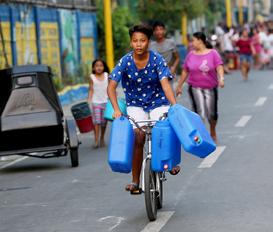
Manila, May 2 (IANS) The Philippine state weather bureau on Tuesday raised the El Nino alert, saying the dry season may occur from June to August this year and persist until the first quarter of 2024.
“Recent conditions and model forecasts indicate the El Nino
El Nino is characterised by unusually warmer-than-average sea surface temperatures at the central and eastern equatorial Pacific.
The bureau said El Nino increases the likelihood of below-normal rainfall conditions, which
could have negative impacts such as dry spells and droughts in some areas of the Southeast Asian country. However, it added that “above-normal rainfall conditions during the southwest monsoon season may also be expected over the western part of the country”.
PAGASA said it will closely monitor the phenomenon’s development.
“All concerned government agencies and the general public are encouraged to keep monitoring and take precautionary measures against the impending impacts of El Nino,” the bureau said.
Philippines: Military raid kills seven rebels

on Sunday killed in a raid by the military in the Philippines.
Army Captain Jefferson Mariano said the troops assaulted a New People’s Army (NPA) hideout in Northern Samar province after villagers reported the rebels’ presence there, Xinhua news agency reported.
Vietnam seeks to address surging school violence
Manila, April 30 (IANS) Seven suspected left-wing rebels were
Mariano said the military used air and artillery to penetrate the lair heavily fortified with anti-personnel mines, resulting in 30-minute fighting.
After the clash, Mariano
said troops recovered seven bodies and several guns and ammunition.
NPA rebels have been fighting the government since 1969. They concentrate their attacks on rural areas and have skirmishes with the military.
Military data showed that the NPA is estimated to have 2,000 members, significantly lower than its peak strength in the 1980s.
Military construction on Myanmar island suspected to be Chinese intel gathering facility
block, and a new causeway linking to a smaller island. At the tip of the island is evidence of land clearing efforts, suggesting further construction work is to come.

Hanoi, April 29 (IANS) School violence and bullying have emerged as a prevalent problem in Vietnam as teachers report increased levels of aggression and disobedience in the classroom, state media reported. Nearly 1,600 violent incidents, mainly fights, are reported to occur in school premises or outside school gates each year, and one out of 11,000 students is expelled annually for getting involved in fights, according to the Ministry of Education and Training as quoted by the Vietnam News report on Friday. Recent data by the Ministry of Public Security showed that more than 1,000 teenagers commit crimes monthly, and nearly 75 per cent of violent cases are linked to students, Xinhua news agency reported.
Le Thi Thanh Thuy, deputy head of the Faculty of Social Work under the Vietnam Youth Academy, associated the puberty stage with higher rates of violent behaviour. Teens deal with a lot of stress and anger, which manifests in violence when they go through puberty, the expert said. The problem is also

connected to parental pressure, said Nguyen Tung Lam, vice-president of the Vietnam Psycho-Pedagogical Association, adding that parental pressure could make children act out violence, disrespect, lack of love and compassion, and even insensitivity.
Schools should have accessible reporting systems for early intervention and counsellors available to provide immediate support for students who are threatened or have experienced abuse, said Thanh Thuy. Lawmakers should step up efforts to ensure students’ safety at school by pushing through laws on school violence prevention and control, said Dinh Cong Sy, deputy chairman of the National Assembly’s Committee on Culture and Education.
Cambodia reported 1,400 HIV cases last yr: Report
New Delhi, May 1 (IANS) With developments in Myanmar’s remote Coco island located in the Bay of Bengal, India may soon face a new airbase close by in a country increasingly tied to Beijing, said a report, which analysed satellite images released by Maxar Technologies. Myanmar’s Great Coco, which lies 55 km from India’s Andaman and Nicobar Islands, has been at the centre of intrigue. Rumour had it that the island was home to a Chinese intelligence facility, a claim lacking hard evidence. Now concerns over the island, and its uses, have re-emerged. Satellite images taken in January 2023 show telltale signs of military modernisation, according to the report by the thinktank Chatham House.
There’s a newly lengthened 2,300-metre runway and radar station, two new hangars, what appears to be an accommodation
Great Coco is small at 11 km in length, but its location is strategically important. It is not only close to the Strait of Malacca, one of the world’s busiest shipping lanes, The Guardian reported. Signs of construction have provoked concern that China -- which Myanmar has grown increasingly dependent on after the February 2021 coup -- could stand to gain from intelligence gathered there, either through espionage or intelligence sharing.
Delhi has reportedly been monitoring developments closely. It recently confronted Myanmar with intelligence showing that Beijing was providing assistance in building a surveillance post on the island, according to Bloomberg.
China dismissed the claims.
Authors of the Chatham House report said the Maxar images did not show any specific evidence of Chinese activity on Great Coco. However, since the coup, Myanmar’s military has sought closer ties with Beijing, backing its claim to Taiwan and announcing its support for China’s “global security initiative”.
“Myanmar is desperate, it’s cash-strapped,” said Htwe Htwe Thein, associate professor at
Curtin University, “Investment from Beijing is economically helpful -- and also on the world stage (Myanmar can flaunt) that such an economic giant and neighbour is still their friend.”

“With Myanmar reliant on China for international support and economic development, it is extremely likely that the army would share intelligence with Beijing, and support China’s strategic initiatives,” said Jason Tower, Myanmar country director at the United States Institute of Peace.
The construction on Great Coco was provocative, he said, adding that it “presents a significant challenge to regional security, and will likely generate significant tensions between China and India in the Bay of Bengal”, the Guardian reported.
Analysts believe Myanmar’s military is likely seeking to play India and China off against one another in return for greater economic and diplomatic support.
Great Coco could be used as leverage in negotiations with Delhi, said Damien Symon of the Intel Lab, who co-authored the Chatham House report, adding that the Myanmar military was “well aware of Indian fears relating to Chinese surveillance of the Andaman and Nicobar Islands”.
Phnom Penh, May 1 (IANS) Cambodia reported 1,400 new HIV cases last year, according to a National AIDS Authority’s report on Monday.

“About four people become infected with HIV every day,” the report said. It said new HIV infections had dropped by 91 per cent since the peak of the HIV epidemic in 1996, but the pace of decline had slowed down to only 33 per cent since 2010, reports Xinhua news agency.
“Cambodia has made strong progress toward ending the AIDS epidemic,” Ieng Mouly, chairman of the National AIDS Authority, said in a statement.
According to the report, by the end of 2022, there were some 76,000 people living with HIV (PLHIV) and 86 per cent of them were aware of their HIV status, while around 11,000 people did not know that they were living with HIV.
“About 64,931 PLHIV were accessing antiretroviral therapy and it translated that 99 per cent of PLHIV who knew their status were accessing treatment,” the report said.
In Cambodia, the first HIV infections were detected and diagnosed in 1991 and the first AIDS case was found in 1993. Cambodia’s HIV infection rate is the highest in Asia.
www.mcna.org 26
SOUTHEAST ASIA May 2023 - Vol 1, Issue 9 MULTICULTURAL NEWS AUSTRALIA
Biden picks Indian-American Neera Tanden as new domestic policy adviser

Tanden, who currently serves as Senior Advisor to President Biden and Staff Secretary, will be the first Asian-American to lead any of the three major White House policy councils in history.
Gaps in reporting industrial waste in Canada, US
and Clinton administrations, as well as presidential campaigns and think tanks.
Washington, May 6 (IANS)
US President Joe Biden has picked Indian-American Neera Tanden to serve as Assistant to the President and Domestic Policy Advisor, following former Ambassador Susan Rice’s exit from that role.
“I am pleased to announce that Neera Tanden will continue to drive the formulation and implementation of my domestic policy, from economic mobility and racial equity to health care, immigration and education,” Biden said.
Tanden was initially nominated by Biden to head the Office of Management and Budget but her nomination was withdrawn earlier this year.
She served in both the Obama
Most recently, Tanden was the President and CEO of the Center for American Progress and the Center for American Progress Action Fund.
“As Senior Advisor and Staff Secretary, Neera oversaw decision-making processes across my domestic, economic and national security teams. She has 25 years of experience in public policy, has served three Presidents, and led one of the largest think tanks in the country for nearly a decade,” Biden said in a statement released by the White House.
Canadian farmers to plant more grains, oilseeds in 2023
Given the intention of farmers to plant a greater area of wheat, canola, corn for grain and soybeans, there is an expected increase in seeded area for grains and oilseeds, while pulse and special crops are anticipated to decrease, said Statistics Canada.
in more than two decades. An anticipated increase in area for wheat is possibly attributable to favourable prices and strong demand, the agency said.
Ottawa, April 27 (IANS) Canadian farmers are expect to plant more wheat, canola, corn for grain, barley and soybeans in 2023, while area seeded to oats, lentils and dry peas is anticipated to decrease compared with the previous year, according to the national statistical agency.
With seeding intentions from about 9,500 farmers nationwide, the national statistical agency said farmers anticipate planting 27 million acres of wheat in 2023, up 6.2 per cent from the previous year.

If realised, national wheat area would be the highest it has been
According to the agency, canola area is expected to edge up 0.9 percent to 21.6 million acres in 2023, roughly in line with the five-year average while farmers anticipate planting 5.5 million acres of soybeans, up 4.5 per cent from 2022.
Barley acreage is expected to increase 0.6 per cent to 7.1 million acres and corn for grain up 2.8 per cent to 3.7 million acres in 2023.
Trump’s nowhere near Republican coronation as donors show strong reservations
by Trump like he did with his former deputy Mike Pence, for not reversing the 2020 verdict, but they actually represent a sizable section of the Republican Party seeking to resist Trump’s stranglehold over the party.
New Hampshire Governor Chris Sununu is also refusing to toe Trump’s line and so does former Pence.
New Delhi, May 2 (IANS) The North American Commission for Environmental Cooperation (CEC) on Tuesday released a new report compiling and analyzing data reported by approximately 24,000 industrial facilities in Canada, Mexico and the US to their respective national pollutant release and transfer registers. The report reveals important gaps in the reporting and tracking of transfers to disposal across the region due to differing reporting requirements, shared responsibilities across agencies and jurisdictions, and the lack of information about the fate of waste pollutants when they are transferred to third parties (such as waste management service providers) or across national borders. The report also provides insights about the challenges facing facilities relative to implementing pollution prevention and sustainable production practices and offers examples of alternatives to the generation and disposal of industrial waste.
Since 1995, the CEC has worked with governments, industry, civil society and academia through the North American Pollutant Release and Transfer Register (PRTR) Initiative to promote and enhance access to comparable and complete PRTR data for the region to support decisions about pollution prevention and sustainability.

In parallel with the release of the 16th edition of Taking Stock, the CEC has launched the enhanced Taking Stock Online web portal featuring a searchable database and tools that allow
researchers, decision-makers and the general public to explore the latest integrated North American PRTR data.
“In the spirit of the public’s right-to-know, Taking Stock presents and analyses data on industrial pollutant releases and transfers to inform decisions about preventing pollution and advancing environmental justice by reducing the risk of exposure to contaminants of vulnerable communities,” said Jorge Daniel Taillant, CEC Executive Director.
“This report sheds light on important data gaps across North America that stem from differing national reporting requirements and from the transfer of responsibility for waste pollutants after they leave the source facility.
“These gaps in information about the quantities and management of substances can, for example, constrain our ability to respond to extreme events and disasters, such as floods, that risk re-mobilizing pollutants from disposal sites and contaminated soils. In the context of climate change, we must re-evaluate the abusiness as usual’ approach to the use of pollutants and the generation of hazardous waste.”
Washington, May 2 (IANS) Major Republican donors gathered in Nashville to pick and fund a candidate worthy of competing with incumbent President Joe Biden who is also seeking a second term in office. Although former President Donald Trump got top billing, he was nowhere near the dream of achieving the Republican coronation.
Just 24 hours before the Nashville event on Saturday, the Republican National Committee (RNC), which releases funds for the party candidate, gave an opportunity for the loudest of Trump’s critics to have their say, media reports said.
Georgia Governor Brian Kemp, who refused to swing with Trump during his interference in the state elections to declare it null and void in 2020, told the donors: “Not months and months of debate over whether the 2020 election was stolen.”
Without mentioning Trump’s name, Kemp pinned blame on the former President’s election loss grievances and warned that “not a single swing voter” will vote for a Republican nominee making such claims, calling 2020 “ancient history”.
Kemp was singled out for ire
While Trump held his own private meetings out of sight- all three were given prime speaking slots, media outlet Politico reported.
It’s interesting to note that while the party recognises the former President as a frontrunner against Biden in 2024, it still invited Trump dissenters and even prospective rivals for next year’s race.
This trend evidences the feelings of the party about Trump, still a heavy weight within the Republicans, has first place in the polls, but still many months of fighting are still ahead of him. His potential nomination is unlikely to come as a coronation, political strategists from across the aisle on both sides feel as Trump carries a whole lot of legal baggage though most Republicans support him against the odds.
However, the scenario is quite different with the potential -- the party’s donors as they are still weighing their options on if there is a more powerful alternative to Trump capable of defeating Biden at the polls. There is still no consensus emerging on Trump or a powerful alternative (Florida Governor Ron DeSantis), reports said.
Governor Sununu talking in the
foyer of the Four Seasons Hotel in Nashville said of Trump: “I don’t think he can win in 2024. You don’t have to be angry about it. You don’t have to be negative about it. I think you just have to be willing to talk about it and bring real solutions to the table.”
Meanwhile Trump spokesman Steven Cheung referenced a POLITICO report of Trump’s robust first-quarter fundraising and said, “Poll after poll (shows) former President Trump crushing the competition, there is no doubt whoever stands in his way will get eviscerated”.

Governor Kemp told the donors the Republican nominee “must” be able to win Georgia’s 16 electoral college votes in order to win the White House. Kemp said the party has to win a general election. He referenced not just to Trump and his legal baggage but also to defeat this fall of Trump-backed and scandal-plagued candidates like Herschel Walker, who lost his race, even as Kemp defeated a well-funded Democratic challenger by nearly 8 points. Most Republican donors and supporters felt that the solution to stopping Trump has proved elusive to donors and operatives who have claimed for years they were trying to do just that, reports said. Other likely primary opponents of Trump, including DeSantis, former UN ambassador Nikki Haley and South Carolina Senator Tim Scott, were also invited to the RNC gathering, but they declined due to prior commitments.
Biden may limit investment in China by American businesses
New Delhi, May 1 (IANS) The Joe Biden administration in the US is reportedly about to announce new restrictions on US companies investments in China, noted analyst Christopher Wood of Jefferies said in a research note.

“The word is that Biden aims to sign an executive order in coming weeks that will limit investment in China by American businesses. The executive order will reportedly cover semiconductors, artificial intelligence and quantum computing,” Wood wrote.
Some types of new investment in critical sectors will be prohibited while others will require companies to notify the US government. The US hopes to get an endorsement from its G7 partners on such investment curbs at the G7 summit in Japan which begins May 19, Wood said. The cumulative direct investment in China by US business totalled $118 billion at the end of 2021, with $57 billion or 48 per cent going into the manufacturing sector.
An April 20 speech by US Treasury Secretary Janet Yellen was clearly an attempt to extend an olive branch. In particular, Yellen stated that US national security concerns “are not designed for us to gain a competitive economic advantage, or stifle China’s economic and technological modernisation”.
It was clearly a reference to the stated policy of the US Department of Commerce to
block the supply of advanced semiconductors to China. Wood said it also seems from a Beijing point of view as a targeted effort by Washington’s national security lobby to stop China from upgrading its economy, which results in the risk that it is stuck in the dreaded middle-income trap given China’s deteriorating demographics.
So Yellen’s tone should be welcomed as an effort to soften the rhetoric of late coming from the likes of National Security Advisor Jake Sullivan or Secretary of State Antony Blinken, who appear at times to be out to pick a fight with China,. Yellen’s speech represents mixed messages at best. Indeed, China’s Foreign Ministry spokesman Wang Wenbin stated last Friday that Washington’s “true intention is to deprive China of its development rights”. It is pure economic coercion, Wood added.
www.mcna.org 27 NORTH AMERICA May 2023 - Vol 1, Issue 9 MULTICULTURAL NEWS AUSTRALIA
Egyptian Prez announces establishment of emergency fund for irregular workers

provides a one-time subsidy of 1,000 Egyptian pounds ($32.36) for irregular workers.
In a televised speech on Labour Day, Sisi said that several other support programmes would be launched to help irregular workers, who are among the worst impacted by economic crisis, Xinhua news agency reported.
Iranian, Iraqi leaders pledge to strengthen ties, cooperation
Cairo, May 2 (IANS) Egyptian President Abdel-Fattah al-Sisi announced the establishment of an emergency relief fund that
“The emergency fund would be launched in the coming weeks and seasonal workers would receive financial support in emergencies,” he said.
Social and health accounts dues
will be transferred to the fund, thus they would be invested and used in emergencies and crises for irregular workers in a sustainable manner, he added. Sisi also instructed the Egyptian government to issue a new “Aman” certificate to cover life insurance and work injuries for irregular workers. According to a statement released by the Ministry of Manpower in December, there are 11 million irregular workers in Egypt.
Iranian diplomatic missions resume operations in Saudi Arabia
agency reported, citing a report by Mehr news agency.
The three diplomatic missions are Iran’s embassy in Riyadh, a consulate general in Jeddah and a representative office to the Organization of Islamic Cooperation in Jeddah, Kanaani was quoted as saying.
Tehran, April 30 (IANS) Iranian Supreme Leader Ali Khamenei has said the expansion of cooperation between Iran and Iraq and the implementation of previously signed bilateral agreements serve the common interests of both sides, according to state media.

He made the remarks in a meeting with visiting Iraqi President Abdul Latif Rashid, also attended by Iranian President Ebrahim Raisi, in Tehran, said official news agency IRNA on Saturday.
The top leader stressed that Iraq’s progress and prosperity are very important to Iran, adding that Iran will stand by Iraq and wish to see it make further progress, Xinhua news agency reported.
nationals from Sudan and their transfer to Iran via the Saudi port city of Jeddah was a positive development.
relations between Tehran and Baghdad are “strategic,” noting that the two countries can further increase their current more than $10 billion dollar annual trade volume.

Tehran, May 2 (IANS) The Iranian Foreign Ministry spokesman has said that three Iranian diplomatic missions in Saudi Arabia have resumed operations.
Nasser Kanaani made the remarks on Monday at a weekly press conference when asked to comment on the progress by Iran and Saudi Arabia to reopen their diplomatic missions following an agreement that was reached between the two countries in March on the normalisation of their bilateral ties, Xinhua news
Kanaani stressed that the two countries are in the early stages of resuming their bilateral relations and reopening their embassies, adding that Iran’s technical team is currently based in Saudi Arabia and laying the groundwork.
He said he is optimistic that the two countries’ embassies will start their full operations as planned in accordance with their agreement.
The two countries had carried out good coordination in a humanitarian issue in their first steps toward the resumption of the bilateral diplomatic activities, said Kanaani, adding that the evacuation of 65 Iranian
Regarding an upcoming visit by Iranian President Ebrahim Raisi to Saudi Arabia, Kanaani said Tehran has received an official invitation from Saudi King Salman bin Abdulaziz Al Saud and has responded to it officially. At a press conference held in the Lebanese capital of Beirut on Friday, Iranian foreign minister Hossein Amir-Abdollahian confirmed that he and his Saudi counterpart Prince Faisal bin Farhan Al Saud have also invited each other for official visits.
Saudi Arabia and Iran reached a deal in March to resume diplomatic relations and reopen embassies and missions in the two countries within two months.
On April 6, the two countries announced the resumption of diplomatic relations with immediate effect.
Iran says probe shows no toxic substance in student poisoning incidents
dissatisfaction among students’ parents, Xinhua news agency reported.
The Ministry noted these networks are either being or will be sued, claiming Iran’s enemy has played an evident and undeniable role in provoking turmoil.
He added that the “unity” between the two countries cannot be affected by external political factors, calling for joint efforts to protect and further the bilateral ties.
The Iraqi President, for his part, said the relations between Tehran and Baghdad are continuous and strong and the bilateral cooperations are carried out in diversified dimensions and different sectors.
Earlier in the day, Raisi said at a joint press conference that Tehran and Baghdad are determined to further develop the bilateral relations after meeting with Iraqi high-ranking delegations led by Rashid.
The Iranian President said
He confirmed that the bilateral cooperation in sectors of infrastructure, water, electricity, gas, and energy will be strengthened. Raisi slammed that the presence of foreign troops, particularly Americans in Iraq, only compromises regional security, adding the US seeks solely its own interests.
The Iranian President expressed hope that Rashid’s visit would be a turning point in efforts to further develop bilateral ties. For his part, the Iraqi President called for greater cooperation with Iran in the field of fighting narcotics trade.
Rashid also congratulated Iran on the rapprochement between Tehran and Riyadh, noting that the step will contribute to improving regional security.
Israel hands over bodies of 3 Palestinians killed in March
Ramallah, May 6 (IANS) The Israeli army has handed over the bodies of three Palestinians who were killed by Israeli soldiers more than 50 days ago to the Palestinian side, the Palestinian Red Crescent Society said in a statement.
Tehran, April 29 (IANS) Iran’s Intelligence Ministry has said its probe found no actual poisoning in the mass reports of students being poisoned at schools across the country.
The Ministry said on Friday in a statement published on its website that no toxic substance was found disseminated at schools

after months of investigations into the incidents, during which suspects were either questioned or arrested and transferred to judicial authorities.
It added that the probe found no criminal groups were behind the poisoning cases, but dubious networks on social media which spread rumours to fuel fears and
During the past months, hundreds of students at dozens of schools across Iran were referred to medical centres with symptoms similar to those of poisoning. Most of the students said they had smelled either an unpleasant or a weird odour before the emergence of the symptoms. The first case was reported in Qom province on November 30, according to reports by Iranian media.

In coordination with the Palestinian liaison office of security coordination with Israel, the Israeli army on Friday handed the bodies over to the Palestinian side at an Israeli army checkpoint near the northern West Bank city of Nablus, Xinhua news agency reported, citing the statement. The Palestinian WAFA news agency identified the victims as Odai Shami, Jihad Shami, and Mohammad Dabik, who were killed by Israeli soldiers on March 12 while they were in a car close to the Israeli military checkpoint of Sarra near Nablus. Their bodies were taken away by the Israeli soldiers ever since. According to statistics released by the Palestinian Authority
in November last year, Israel is withholding the bodies of more than 110 Palestinians killed by Israeli soldiers since 2015, including 10 minors, eight prisoners, and three women. The Palestinian Authority also said 256 Palestinians who have been killed in the conflicts with Israel since 1967 were buried at a cemetery in northern Israel. In the past few months, the Israeli army has carried out daily raids on Palestinian towns, villages, and refugee camps, mainly in the northern West Bank. Israelis claim that they want to arrest Palestinian militants wanted by Israeli security forces.
According to official Palestinian figures, the tension between Israelis and the Palestinians has killed more than 100 Palestinians since January. Meanwhile, Israeli sources said that 19 Israelis were killed in attacks carried out by Palestinians in Israel and the West Bank.
www.mcna.org 28
MIDDLE EAST AND NORTH AFRICA May 2023 - Vol 1, Issue 9 MULTICULTURAL NEWS AUSTRALIA
Iran to help Syria build communications satellites: Minister
satellites, state media reported.
The minister made the remarks on the sidelines of a meeting during his two-day visit to the Syrian capital Damascus, official news agency IRNA reported on Friday.
Zarepour added that during the visit, he signed a memorandum of understanding with the Syrian side and attended a meeting with Syrian Minister of Communications and Technology Iyad Mohammad al-Khatib and his deputies, Xinhua news agency reported.
Tehran, May 6 (IANS) Iranian
Minister of Information and Communications Technology, Isa Zarepour, has said Iran will help Syria build communications

Several agreements were reached on boosting the export of Iranian communications products to Syria, he said,
adding that the two sides held discussions about private Iranian companies’ participation in developing necessary Syrian infrastructure, among other bilateral issues.
He said Iran is among the world’s 10 countries capable of building and launching satellites into low Earth orbits.
Zarepour was a member of the high-level delegation accompanying Iranian President Ebrahim Raisi on his two-day visit to Syria. Raisi visited Syria from Wednesday to Thursday for extensive political and economic talks with his Syrian counterpart Bashar al-Assad.
Tunisia foils 12 illegal immigration attempts
has foiled 12 illegal immigration attempts to cross the Mediterranean Sea to the Italian coast, National Guard Spokesman Houcemeddine Jbabli said.
Tunisia’s maritime guard thwarted these illegal immigration attempts late Friday and early Saturday off the country’s southern, northern and central-eastern coasts, Jbabli added on Sunday in a statement.

According to the spokesman,
Israel launches renewable energy plan in region bordering Gaza
Jerusalem, May 1 (IANS) Israel has launched a sustainable energy transition plan in the Gaza envelope area seven km from the Gazan border in southwestern Israel, the country’s Ministry of Energy and Infrastructure said. The plan is part of the government’s efforts to strengthen civil resilience in the region, which has for many years suffered from rocket and missile attacks, Xinhua news agency reported. With an investment of five million shekels ($1.38 million), the plan will promote projects of energy efficiency, energy management, storage, and transportation, and accelerate the transition to sustainable energy in household and
business sectors in the region. Facilities will also be planned for optimising solar power generation in agricultural areas in the border towns. In addition, the electricity network in the region will be upgraded with the establishment of new electricity facilities.
Israeli missiles hit airport, military sites in Syria
Arab FMs meet to address Syrian crisis
Amman, May 2 (IANS) Foreign ministers of Jordan, Saudi Arabia, Iraq, Egypt and Syria met to discuss a political solution to Syria’s humanitarian, security and political crises. After a consultative meeting in Jordan’s capital Amman, the Ministers stressed the priority of ending the Syrian crisis through a political solution that preserves Syria’s unity, cohesion and sovereignty, reports Xinhua news agency.
The political solution, they said, should contribute to the voluntary and safe return of refugees, the departure of illegal foreign forces from Syria, and the restoration of the country’s security and stability, according to a statement issued by Jordan’s Foreign Ministry.
A series of meetings will be held to follow up on talks aimed at resolving the Syrian crisis, in line with the UN Security Council Resolution 2254, the Ministry

the guard rescued 238 illegal immigrants from sinking boats during these operations, Xinhua news agency reported. Located in the central Mediterranean, Tunisia is one of the most popular transit points for illegal immigration to Europe. Although Tunisian authorities have adopted rigorous measures to tackle the problem, the number of illegal immigrants from Tunisia to Italy has been on the rise. said.
The top diplomats also agreed to intensify work with the international community and the UN to accelerate the implementation of early-recovery projects, including providing improved infrastructure and decent living conditions to refugees who expect to return.
They also agreed to support Syria in its legitimate control over territories, imposing the rule of law, ending the presence of armed and terrorist groups, and stopping foreign interventions in the country’s internal affairs.
Since the conflict erupted in March 2011, Syria has witnessed unprecedented devastation and displacement.
More than 6 million Syrians have fled the country and 6.7 million are internally displaced, according to the UN. With more than 14 million people continuing to be in need of assistance, the conflict has caused untold suffering for Syrian men, women and children.
Iranian President in Syria on landmark visit
presidency at the Damascus International Airport, reports Xinhua news agency.
A welcome ceremony was organised for Raisi at the Qasr al-Sha’ab presidential palace after which he met President Bashar al-Assad.
According to Iranian state media, the two leaders are expected to hold extensive political and economic talks, followed by the signing of a number of agreements.
Damascus, May 2 (IANS) Israeli missiles hit the international airport and several military sites in the Syrian province of Aleppo, killing one soldier and injuring seven others, the army said in a statement on Tuesday. The attack was carried out just before midnight, hitting the airport and a number of military positions in the countryside of Aleppo, it said, adding that two civilians were among the wounded, reports Xinhua news agency. The international airport of Aleppo as well as that of the capital Damascus had been attacked earlier by Israel and went out of service for days. Meanwhile, the Syrian Observatory for Human Rights reported a number of explosions in the area of the Aleppo international airport and the al-Nayrab
air base.
The Britain-based watchdog stopped short of giving more details but said the attack is the 16th of its kind since the beginning of 2023.
In March, Israel struck Aleppo’s airport on two different occasions and put it out of commission for several days.
Israel unlikely to meet 2030 climate goals: Report
Jerusalem, May 2 (IANS) Israel is unlikely to meet its 2030 climate goals set by the government, said an annual report issued by the country’s Ministry of Environmental Protection . The report stated that the current pace to reduce greenhouse gases would result in a reduction of only about 12 per cent in emissions by 2030 compared to the levels in 2015, much below the 27 per cent target, reports Xinhua news agency. Failure to meet the climate goals will result in significant damage to the economy, health, energy security, the environment, and Israel’s position in the world, it warned.
The reasons for the slow pace are significant delays in the reduction plans, and the severe
lack of budgets for their implementation, it explained.
The report called on the government to immediately start a nationwide action to quickly close the gaps in order to meet the goals, especially the completion of climate legislation and the imposition of a carbon tax.

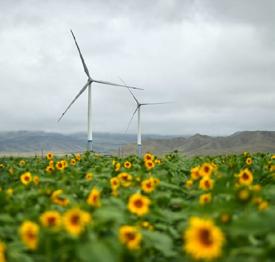
27,400 explosives removed from Libyan cities in 2022: UN
Damascus, May 3 (IANS) Iranian President Ebrahim Raisi arrived in Syria on Wednesday, marking the first visit by an Iranian leader since the beginning of
the conflict in the Arab nation in 2011.
Raisi was received by Syrian Foreign Ministry officials and representatives from the
The delegation accompanying Raisi includes Foreign Minister Hossein Amir-Abdollahian, Defence Minister Mohammad Reza Ashtiani and other senior officials.
Iran has supported al-Assad during the Syrian war.

Tripoli, May 2 (IANS) The UN Support Mission in Libya (UNSMIL) said that 27,400 explosive remnants of war (ERW) were removed from the cities of Tripoli, Misurata, Benghazi and Sirte in 2022.

According to the UNSMIL, more than 1 million ERW, which includes 82 per cent of projectiles and 4 per cent of small arms ammunition, have been removed in the country since 2011, reports Xinhua news agency. However, despite strong efforts
from mine action partners over the past decade, more than 15 million square metres are still contaminated with explosive ordnances across Libya, UNSMIL said.
In 2022, 19 people, including 14 children, were killed by ERW in Libya, according to the UN agency.
More than 1 million ERW)and approximately 54 tonnes of small arms ammunition have been cleared in Libya since 2011.
www.mcna.org 29
Tunis, May 1 (IANS) Tunisia
MIDDLE EAST AND NORTH AFRICA May 2023 - Vol 1, Issue 9 MULTICULTURAL NEWS AUSTRALIA
Likelihood of El Nino developing later this year increasing: WMO
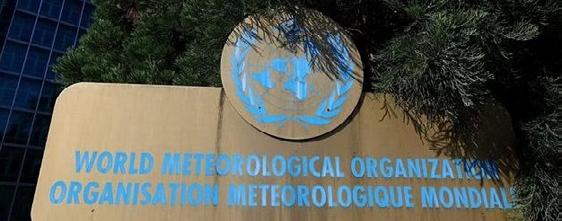
Geneva, May 3 (IANS) The likelihood of El Nino developing later this year is increasing, a new update from the World Meteorological Organization (WMO) said on Wednesday. This would have the opposite impacts on weather and climate patterns in many regions of the world to the long-running La Nina and would likely fuel higher global temperatures.
The unusually stubborn La Nina has now ended after a three-year run and the tropical Pacific is currently in an ENSO-neutral state (neither El Nino nor La Nina). There is a 60 per cent chance for a transition from ENSO-neutral to El Nino during May-July 2023, and this will increase to about 70 per cent in June-August and 80 per cent between July and September, according to the update, which is based on input from WMO Global Producing Centres of Long-Range Forecasts and expert assessment. At this stage there is no
indication of the strength or duration of El Nino.
“We just had the eight warmest years on record, even though we had a cooling La Nina for the past three years and this acted as a temporary brake on global temperature increase. The development of an El Nino will most likely lead to a new spike in global heating and increase the chance of breaking temperature records,” said WMO SecretaryGeneral Prof. Petteri Taalas.
According to WMO’s State of the Global Climate reports, 2016 is the warmest year on record because of the “double whammy” of a very powerful El NiAo event and human-induced warming from greenhouse gases.
The effect on global temperatures usually plays out in the year after its development and so will likely be most apparent in 2024.
“The world should prepare for the development of El NiAo, which is often associated with increased heat, drought or rainfall in different parts of the
world. It might bring respite from the drought in the Horn of Africa and other La Nina-related impacts but could also trigger more extreme weather and climate events. This highlights the need for the UN Early Warnings for All initiative to keep people safe,” said Prof Taalas. No two El Nino events are the same and the effects depend partly on the time of year. WMO and National Meteorological Hydrological Services will therefore be closely monitoring developments.
El Nino is a naturally occurring climate pattern associated with warming of the ocean surface temperatures in the central and eastern tropical Pacific Ocean. It occurs on average every two to seven years, and episodes usually last nine to 12 months.
El Nino events are typically associated with increased rainfall in parts of southern South America, the southern US, the Horn of Africa and central Asia. In contrast, El Nino can also cause severe droughts over Australia, Indonesia, and parts of southern Asia.
During the Boreal summer, El Nino’s warm water can fuel hurricanes in the central/eastern Pacific Ocean, while it hinders hurricane formation in the Atlantic Basin.
Achieving net zero target by 2070 would need reduction in energy intensity: RBI report

New Delhi, May 3 (IANS) India’s goal of achieving the net zero target by 2070 would require an accelerated reduction in the energy intensity of GDP by around 5 per cent annually and a significant improvement in its energy-mix in favour of renewables to around 80 per cent by 2070-71, a report released by the Reserve Bank of India (RBI) on Wednesday said.
It further said that India’s green financing requirement is estimated to be at least 2.5 per cent of GDP annually till 2030, adding that a balanced policy intervention with progress ensured across all policy levers, will enable India to achieve its green transition targets by 2030, thus making the net zero goal by
2070 attainable.
The report on currency and finance (RCF) for 2022-23 titled “Towards a Greener Cleaner India” contains a series of articles by various experts. It covers four major dimensions of climate change to assess future challenges to sustainable high growth in India, namely, the unprecedented scale and pace of climate change; its macroeconomic effects; implications for financial stability; and policy options to mitigate climate risks. India has embarked on a targeted and time-bound climate action plan to reduce carbon emissions and currently ranks the best amongst G-20 countries, as per the Climate Change Performance Index, 2023, the report added.
S.Korea: Nationwide rainfall subsides but disrupts travel, causes damage
on Saturday, officials said, although travel disruptions and damages continued in some parts of the country.
As of Saturday afternoon, most weather warnings over the heavy rainfall had been lifted, and lighter downpours are now prevailing throughout the country.

and soil erosion, according to municipal authorities, Yonhap news agency reported. However, Jeju International Airport has returned to normal operations aside from a few delays, with a total of 512 flights scheduled to operate.
nine metre per second.
Seoul, May 6 (IANS) Heavy downpours that pounded South Korea earlier this week subsided
Jeju, the southern island that had seen more than 1,000 millimetre of rain since Wednesday, reported 35 cases of flooding
In Incheon, west of Seoul, the worsening weather in the Yellow Sea has forced the closure of four of the 14 passenger ship routes to nearby islands, with wind speeds in the area having reached up to
In Busan, 320 kilometre southeast of Seoul, a strong wind warning remained in effect, with the maximum instantaneous wind speed in the area reaching 5-10 metre per second. The strong winds have caused a number of accidents in the port city, such as a bus colliding with a truck at 6:23 a.m., injuring 11 people. There were also 79 safety-related reports across Busan about such cases as
signboards and outer walls about to fall.
In Gwangju, 268 km south of Seoul, a gas pipe in the northern ward of Buk became flooded at around 4:30 a.m., cutting off gas to 280 households.
In the surrounding South Jeolla Province region, nearly 700 hectare of farmland was estimated to be flooded after four consecutive days of downpours.
Severe heatwave may trigger, worsen asthma, says experts
chronic respiratory disease affecting millions worldwide.
According to the World Health Organization, approximately 339 million people suffer from asthma globally, and the number is expected to rise to 400 million by 2025.
coughing, and chest tightness,” he added.
New Delhi, May 2 (IANS) Even as climate models have indicated an increasing heatwave this summer for India, people suffering from asthma, a respiratory disease, may be at significant risk, said experts here on World Asthma Day.
World Asthma Day is an annual event observed on the first Tuesday of May, aimed at raising awareness about asthma, a


“Heatwaves can be a challenging time for individuals with asthma, as extreme heat can worsen symptoms and trigger an asthma attack,” Dr Nikhil Modi, Senior Consultant, Respiratory and Critical Care Medicine, Indraprastha Apollo Hospitals, told IANS.
“The high temperatures and increased humidity can cause airways to become inflamed and constricted, making it difficult to breathe. This can lead to shortness of breath, wheezing,
Moreover, hot weather also increases the levels of air pollutants, such as ozone, which can further aggravate asthma symptoms. The global climate crisis is fuelling heat waves to become more frequent, intense and lethal in India.
In 2022, India experienced its hottest April in 122 years and its hottest March on record. And it experienced extreme weather on 242 out of 273 days between January and October 2022, revealed a recent study by Cambridge University.
The study also showed that about 90 per cent of India is in the “extremely cautious” or “danger” zone from heat wave impact and
almost all of Delhi is particularly vulnerable to severe heat wave impacts.
Meanwhile, the India Meteorological Department (IMD), last week, predicted above-average temperatures and heat waves until the end of May in the country. It said for states like Bihar, Jharkhand, Odisha, Gangetic West Bengal, East Uttar Pradesh, coastal Andhra Pradesh, Chhattisgarh, Madhya Pradesh, Telangana, and coastal Gujarat, heatwave days “will be more than usual”.
To combat the effects of heatwaves on asthma, it is essential to take precautionary measures to minimise exposure to triggers.
Health experts suggested people with asthma to stay indoors during the hottest parts of the
day, typically from 11 a.m. to 3 p.m., and avoid strenuous outdoor activities.
“To stay protected, people with asthma should avoid exposure to extreme heat and humidity, stay hydrated, and keep your rescue inhaler with you at all times. Additionally, be sure to stay on top of your asthma management plan and regularly check in with your healthcare provider,” Ambarish Joshi, Senior Consultant, Pulmonary and Sleep Medicine, Primus Super Speciality Hospital, told IANS. When outside, individuals with asthma should wear a mask or scarf over their mouth and nose to reduce exposure to pollutants and warm, moist air. Avoid caffeinated and alcoholic beverages, the expert suggested.
www.mcna.org 30 ENVIRONMENT May 2023 - Vol 1, Issue 9 MULTICULTURAL NEWS AUSTRALIA
OUR TAKE
Economic reforms & normalizing trade relations imperative for Pakistan

Genesis of Ukraine war and why it rages on
 By Dr Jayanta Mukherjee
The recent reports suggest that Pakistan is fast entering the zone in terms of its dismal economic performance that will make it difficult for the country to stage an economic recovery. If the extent of inflation is of any real consequence, then it is worth noting that inflation in Pakistan has reached an unprecedented 36.4% this year till April, pushed mainly by food prices. This rate of inflation is the highest in South Asia, and is up from being 35.4% in March, the statistics bureau said recently. Pakistan’s rural areas have had to bear the brunt of the inflation which has recorded food inflation of 40.2%, according to what the bureau told Reuters. In fact food inflation for both rural and urban areas has reached 48.1%, the highest so far since the bureau started recording the categories separately. What is happening with Pakistan’s economy is somewhat akin to what happened in Sri Lanka a year back. While Sri Lanka is still far from seeing an economic return to its former robust self, the country has done well to tide over the crisis. Now the government in Sri Lanka is trying to take prudent steps,
and they are keeping the public well informed of their policy decisions so as to win public support. To a great extent Sri Lanka’s government has succeeded in winning back some of the lost confidence of its people, and they are now taking steps to tread the path of economic reforms in Sri Lanka. Nothing of the sort is still visible in Pakistan. Despite the economic crisis brewing in the country, the political parties are continuing their political bickering and rivalry. Prime Minister Shehbaz Sharif has succeeded in doing mighty little so far, politically and economically, to win the confidence of the international community, so as to win favour from them in terms of financial assistance.
Pakistan’s finance ministry has said that inflation was expected to remain at high levels in the months to come, despite relentless endeavours of the central bank. Pakistan’s economic turmoil has been going on for months with an acute balance of payments crisis. In the absence of international financial assistance, Pakistan’s economy is already geared backwards. While most of the talk regarding Pakistan’s economic crisis is at the macro level, its ramifications at the micro level are not much talked about except on social media. That a common man in Pakistan is now finding it extremely difficult to fulfil even their basic needs given the rate of inflation which is going through the roof.
Africa- a continent ripped apart by war

The Ukraine has shown no signs of abating. Both sides are relentlessly pursuing a conflict that could at best be termed as a war of attrition. There have already been heavy casualties on both sides, media reports suggest. While civilian lives in Ukraine are being lost in large numbers, and the country is being reduced to piles of rubble, the international community continues to be much preoccupied at this juncture with its own geopolitical aspirations. This has been the story of Ukraine war in a nutshell. The Russia-Ukraine war can be interpreted from various perspectives. It should not be misinterpreted as Russia’s mere attempt to annex Ukraine and be contented with it. In fact, the whole Ukraine war has wider connotations than that. Ukraine is the backdrop of a comprehensive attempt by powerful nations of the world to seize the opportunity to test their military preparedness through what has been a proxy war for many nations. That Russia aspires to regain its lost glory since the disintegration of the Soviet Union is not a surprise any more. But it goes far beyond that also. Cold War lingered on In fact, in many ways the Cold War never ended. The disintegration of the Soviet Union in the 1990’s was seen by many experts as the end of the Cold War era; but it was just the opposite. Old rivalries do not end overnight, and the Cold War was borne out of a conflict that would have taken on a newer hue, as it did, and is now becoming apparent. If Soviet Union disintegrated, the power wielders in its successor Russia, did not just vanish with the dismantling of a powerful
regime. The independent states that came into existence after the USSR’s disintegration, would not have been nations with a great deal of confidence given the fact that during the times of the USSR, these now-independent nations were the constituent republics of the USSR, and it was Russia, being one of the republics, that dominated over other republics and wielded maximum power. So when these republics became independent states after the disintegration of the USSR, they could not readily decide on the future course action in the domestic and international arenas. Moreover, these states, Ukraine included, have had to live under the overarching shadow of Russia and its regime. To pursue an independent foreign policy in a highly complex international political environment which has consequences domestically as well, made these states tentative politically and economically. The ambiguity in international politics that prevailed after the Cold War and disintegration of the USSR made it an uphill task for the newly independent republics of erstwhile USSR to frame a definitive foreign policy and undertake diplomatic initiatives to keep the Russian belligerence at bay.
NATO’s influence vis-à-vis Russia’s belligerence
It is an erroneous assumption that the communist ideology is no longer strong enough to influence the government machinery. The ideology of the Russian government is essential a communist one, albeit in a new avatar that allows for the rich to thrive and hold private property. But the ideological divide between the West and Russia still continues. The communists
have a different notion of what is true democracy. Unlike the liberal democracy of the West, Russia continues to adhere to the socialist ideology. And this is precisely where NATO’s role after the disintegration of the Soviet Union assumes significance. After the demise of the Soviet Union in 1991, the US-led NATO began to entertain thoughts of its expansion with utmost urgency. The idea was to cement the US influence in Europe, including over the newly emerging countries from the Soviet bloc such as Poland, Hungary, and the Czech Republic. Experts believe countries emerging from the Soviet bloc, who had tasted the dominance of the USSR, began to look upon the US for protection in the event of any Russian invasion. These countries also expected that the US would provide them financial support, along with diplomatic endeavours from NATO that would be enough to act as a deterrent against Russia’s expansionist aspirations. On the other hand, right from the beginning, Russia was against NATO’s attempt to bring its influence closer to Russia’s territory. For instance, in 1997, the then Russian President Boris Yeltsin had tried to secure a guarantee from the then US President Bill Clinton that NATO would not take into its fold any former Soviet republics. Clinton, however, did not agree.
NATO’s expansion
By Asad MirzaFinland formally became a member of NATO on April 4 during a scheduled summit, finalising the fastest accession process in the treaty’s history.
The recent reports coming from Khartoum and several other areas in Sudan have revealed continued violent clashes between the army and the paramilitary Rapid Support Forces (RSF) even though a seven-day truce was agreed by the two warring factions. The violent clashes between the Sudanese Armed Forces and the RSF began on April 15, leaving more than 550 people dead and 4,926 others wounded, while thousands of citizens have been forced to seek refuge in safe areas or neighbouring countries, including Egypt, Ethiopia and Chad, report media sources. And Sudan is not the only country which is being torn apart by civil war. Ethiopia has also been ravaged by a civil war and now the first round of peace talks between the Ethiopian government and the Oromo Liberation Army rebel group has concluded without an agreement, media sources quoted officials as saying. In a statement, the Ethiopia Government Communication Service said, “While the talks have been largely constructive, unfortunately, it wasn’t possible to reach an agreement on some issues during this round of peace talks,” the statement said. Both
parties have expressed the need to continue these talks so as to resolve the conflict permanently and peacefully. The situation is not very different in the case of Somalia, though Somali authorities said that sustained military operations by government forces against the al-Shabab terror group have succeeded in reducing militant attacks across the country by 70 per cent. This implies that some progress is being made towards restoring peace and stability in Somalia, though such attempts do not always get the desired results. The story of Africa in recent times has been one of war and turmoil, with little chance for peace and prosperity. That the people of a country are fighting against each other in an apparent attempt to seize power and ascendency over the other party does not augur well for a continent bestowed with the choicest of natural resources. That Africa’s ancient history suggests it was a land of peace-loving people, now comes as something difficult to believe. But the official version and popular belief regarding the causes of civil wars in Africa are far-removed from the real story.
Last week, the blue-and-white flag of Finland was raised alongside those of its western partners outside NATO’s headquarters in Brussels after the Nordic country formally became the 31st member of the transatlantic defensive alliance.

Guests at the ceremony, including the US Secretary of State, Antony Blinken, and the Finnish President, Foreign and Defence Ministers applauded and shouted “bravo” at the ceremony, which marked a historic realignment of Europe’s security landscape.
US President Joe Biden warmly welcomed the completion of Finland’s accelerated accession process, saying NATO had shown itself more united than ever after Russia’s invasion of Ukraine.
The two Nordic countries, Finland and Sweden’s inclusion in NATO was being watched as the war of nerves between the West, represented by the US and its allies and the CommunistSocialist bloc led by Russia. Though initially Russia showed less apprehension about the inclusion of these two Scandinavian countries in NATO, however, after Finland becoming the latest member to join the
alliance, Kremlin’s spokesperson, Dmitry Peskov, said that NATO’s embrace of Finland was an “encroachment on our security and on Russia’s national interests”, adding that Moscow would watch closely for any NATO military deployments there.
The Ministry added that the development marked “a fundamental change in the situation in northern Europe, which had previously been one of the most stable regions in the world”. Russia said on Monday it would bolster its military capacity in its western and north-western regions in response to Finland’s accession.
Sweden and Finland together share a 1,340 km-long border with Russia, and both submitted simultaneous membership applications last May, abandoning decades of military non-alignment to seek security as NATO members after the Russian invasion.
The Guardian has commented that joining NATO means Finland falls under the alliance’s Article 5, a collective defence pledge that stipulates that an attack on one NATO member “shall be considered an attack against them all”.
Finland is one of the few European countries to have retained a conscription army through decades of peace, wary of its eastern neighbour Russia
after the former Soviet Union tried to invade the country during WW II.
Finland’s ground, naval and air forces are all trained and equipped with one primary aimto repel any Russian invasion. Finland has what it calls “Western Europe’s strongest artillery” that includes some 1,500 weapons: about 700 howitzers and cannon, 700 mortars and about 100 heavy and light rocket launchers. By joining the NATO now it can purchase more arms from diverse sources such as Israel. NATO has an open-door policy, meaning that any country can be invited to join if it expresses an interest, as long as it is able and willing to uphold the principles of the bloc’s founding treaty. However, under the accession rules, any member state can veto a new country from joining. Turkey and Hungary, presumably at the behest of Russia tried to stall this process for the last one year.
www.mcna.org 31 OPINION May 2023 - Vol 1, Issue 9 MULTICULTURAL NEWS AUSTRALIA
India overtake Australia to become No. 1 Test side ahead of WTC final
Australia’s reign at the top of the Men’s Test Rankings comes to an end after 15 months with India going past the Aussies ahead of next month’s ICC World Test Championship Final.
India currently sits at the top of the ladder with 121 points, with Australia in the second spot with 116 points.
Dubai, May 2 (IANS) India pipped Australia to become the No.1 team in Men’s Test Rankings following the annual update, that drops results from the 2019-20
season and reflects all series completed since May 2020, released by the International Cricket Council (ICC) on Tuesday.
Prior to the annual rankings update, Australia were at the top with 122 points with India trailing them by three points (119). England remain in third position but the gap between them and the second placed side is reduced from 13 to two rating
points owing to some consistent performances in recent months as well as reduced weightage of their 4-0 Ashes defeat and a 1-0 defeat in the West Indies. The annual rankings consider all series completed since May 2020, with series completed before May 2022 weighted at 50 percent and all subsequent series weighted at 100 percent, according to the ICC release. India’s rating points have moved up from 119 to 121 as their 2-0 defeat to New Zealand in March 2020 no longer figures in the rankings, which assesses series completed prior to May 2022
at 50 per cent and subsequent series at 100 per cent.
Australia’s home series wins over Pakistan (2-0) and New Zealand (3-0) in 2019/20 were no longer in consideration, while their 4-0 win over England in 2021/22 has its weighting halved. Consequently, Australia’s ratings dropped from 121 to 116.
Australia, who take on India in the final of the ICC World Test Championship 2023 at The Oval from 7 June, were the top-ranked Test side since January 2022 while India were last at the top for a month in December 2021.
In
a one-off, you need your most-experienced
players, says Shastri on Rahane’s inclusion in India’s WTC final squad

to have its most experienced players in a one-off big game.
On Tuesday, Rahane earned a recall into India’s Test squad by being named in the squad for the WTC final, to be held from June 7-11 at The Oval in London. He was last seen playing a Test match for India against in January 2022 and was left out since then due to a dip in form, despite leading the side to an unforgettable 2-1 BorderGavaskar Trophy triumph in Australia.
New Delhi, April 28 (IANS)
Former India head coach Ravi Shastri believes having an experienced campaigner like veteran batter Ajinkya Rahane in the squad for the World Test Championship (WTC) final against Australia should come in handy, citing the need for a team
“Absolutely, it’s a one-off big game, like the Super Bowl, and you need your experienced player. Don’t forget just twoand-a-half years ago, the man won a Test series in Australia. He was the captain when Virat (Kohli) went (on paternity leave)
India batter Cheteshwar Pujara will continue his build-up to June’s ICC World Test Championship final when he plays alongside Australia counterpart Steve Smith for English county side Sussex and veteran said that the star Australian cricketer is a great influence to have in the team and players are looking forward to learn from him.
Pujara has been in scintillating touch for Sussex already this season, with the prolific righthander already notching two centuries from three matches to be the leading run-scorer in the second tier of England’s County


and did a sterling job.”
“People forget that hundred at the MCG, the way he played, and the fact that he’s gone back to the grind. You saw what it did with Pujara, he went back to the grind playing domestic cricket, playing county cricket, just got the number of runs under his belt, then came back into Test cricket and performed. It’s the same thing with Rahane, let’s hope that experience comes in handy,” Shastri was quoted as saying by ESPNCricinfo on the Ravi & Raunak Show.
Rahane had to recover from a hamstring injury sustained during IPL 2022 and then go back to the grind of domestic cricket to earn his spot back in the Test team. Starting with the Duleep Trophy in September 2022,
Championship.
Sussex now have the luxury of Smith joining the side for three matches ahead of June’s World Test Championship final and the Indian plans to pick the brains of the experienced Australian in his role as captain.
“He (Smith) is a great influence to have in the team and the guys will be looking forward to having him in the dressing room and will try and have a chat to him and learn from him, just to see how he prepares as he has a lot of experience,” Pujara told Sussex Cricket.
“We are all looking forward to having him here and sharing
Rahane made 250 runs in five innings, including an unbeaten 207 for West Zone.
In the 2022/23 Ranji Trophy, Rahane was Mumbai’s leading run-scorer with 634 runs from seven matches at an average of 57.64, including smashing a double-century against Hyderabad, and 191 against Assam.
In IPL 2023, Rahane has been in stupendous form for the Chennai Super Kings, aggregating 224 runs in six innings, while averaging 44.8 and at a jaw-dropping strike rate of 189.’3, where he’s looked in great touch with his timing and placement of shots. Shastri also felt that with Shreyas Iyer not available due to a back surgery, the selection committee had to bring in Rahane to fill the middle-order spot, while
his experience as he has a lot of knowledge about the game and it will be nice to have his input,” he added.
The 35-year old Pujara revealed he had never played in the same team as Smith, but that will all change when Sussex travel to Worcestershire for the four-day clash that commences on Thursday. “We have spoken, but most of the time we have played against each other. It is never for the same team, so it will be exciting and I will try and get his thoughts, try and get to know him a little better,” he said.
“We will be playing in the WTC
fighting back claims that the right-hander’s form in IPL 2023 has played a hand in return to the Test team.
“Oh, a lot, because the memory is fresh. Domestic cricket was over two months ago. People might tend to forget it, even the selectors. Suddenly you come in and play that kind of innings where you look at ease, the timing is good, the footwork is good, the confidence is good, it would’ve definitely helped.” “I’m so glad he’s made it to the side. He batted beautifully in these two-three games he’s played in the IPL, and has looked in great touch. And let’s not forget the experience he has. The moment Shreyas Iyer was injured, you had to look in that direction.”
final (against each other), so it will be a mixed feeling. On the field we always have good battles, but off the field we are good friends,” he added.
Pujara managed scores of just 8 and 15 during India’s loss to New Zealand at the inaugural World Test Championship final in 2021 and he will be keen to improve on those efforts in the one-off Test against Australia at The Oval from June 7.
The India No.3 feels like he is currently in good touch and his most recent century - a patient knock of 151 against Gloucestershire - was his best of the County season thus far.
South Africa pacer Shabnim Ismail retires from international cricket with immediate effect
said she is retiring from international cricket in order to focus on her family and playing T20 domestic cricket around the world.
The 34-year old Shabnim retires after appearing in 241 matches for South Africa across all formats, taking 317 wickets. Her last international appearance came in South Africa’s historic ICC Women’s T20 World Cup final appearance against the eventual champions, Australia, on home soil in February this year.
statement.
“They have always been my biggest support and I want to be able to be there for them in the way they have been there for me over the past 16 years. I really believe that reducing the amount of cricket I play will enable me to do this, and playing in global leagues is the only way I see to be able to fit in both family and cricket.
an economy rate of 3.70 and best figures of 6/10 against Netherlands in 2011.
Johannesburg, May 3 (IANS)
South Africa fast bowler Shabnim Ismail, considered as one of the quickest bowlers in the women’s cricket circuit, on Wednesday announced her retirement from all forms of international cricket with immediate effect.

In an official statement, Shabnim
“After 16 years proudly representing my country, I have come to the difficult decision to retire from international cricket and move on to the next chapter of my life. As any athlete knows, training and competing at your best requires much sacrifice and dedication, and I now find myself wanting to spend more time with my family, particularly my siblings and parents as they get older,” said Shabnim in her
As I look back on my international career, I am so grateful for all the opportunities and experiences I have had. I have loved being able to compete at the highest level and I am so proud of being able to be part of a wonderful group of players who have led the way for women in cricket. The memories I have will stay with me forever,” she added.
Shabnim made her international cricket debut in an ODI against Pakistan on January 20, 2007 in Pretoria. In 127 ODIs, she picked 191 wickets in 127 matches at
She ends her ODI career as the second highest wicket-taker, only bettered by India’s legendary pacer Jhulan Goswami, who picked 255 wickets. Shabnim also finishes her ODI career with the most wickets taken at a single ground in women’s cricket, through 24 wickets in 17 matches at the JB Marks Oval in Potchefstroom.
Shabnim also grabbed the jointmost Women’s ODI wickets taken in a single calendar year, with 37 scalps in 2022, including 14 at the 2022 ICC Women’s Cricket World Cup in New Zealand.
“I want to thank Cricket South Africa, my teammates, coaches, and medical support staff for all their input and support over the years. What a journey it has been, and one that would not have been as meaningful if you had not been a part of it. To my fans - thank you for your unwavering
support and encouragement. Your messages and cheers have lifted me up and kept me going when times were tough. I truly appreciate every one of you,” the pacer further said.
“As I step into this new stage of life, I am excited to explore new opportunities and spend more time with those I love. However, cricket will always hold a special place in my heart, and I will continue to be a proud ambassador for the sport in South Africa.
I look forward to continuing to perform at the highest level over the next few years across various T20 competitions across the globe. Thank you for everything,” she concluded.
In T20Is, Shabnim picked 123 wickets (fourth on all-time list) in 113 matches at a strike rate of 19.30 with career-best figures of 5/12 against Pakistan in 2021. She has also taken the most T20I wickets where the batter was bowled, with 42 deliveries dismantling the stumps.
www.mcna.org 32
SPORTS May 2023 - Vol 1, Issue 9 MULTICULTURAL NEWS AUSTRALIA
1
He is a great influence to have in the team: Pujara on playing with Smith at Sussex
London, May
(IANS) Season
after altercation with Gambhir
(LSG) and Royal Challengers Bangalore (RCB) on Monday. Kohli and Gambhir had a heated exchange of words after the match and players of both teams had to intervene and separate the two to control things before it went out of hand.
Roma eye move for Brazilian forward Leonardo
New Delhi, May 2 (IANS) Virat
Kohli once again has been at the center of attention, particularly due to his contentious interaction with Gautam Gambhir following the IPL 2023 game between Lucknow Super Giants
The incident took place after RCB beat LSG by 18 runs in a low scoring thriller. Gambhir and Kohli were then seen exchanging words and players of both teams had to intervene. Gambhir initially pulled away an LSG player who was talking to Kohli. Videos have surfaced on social media that show Kohli and Gambhir exchanging words and an animated LSF mentor, expressing his resentment at something said or done by Kohli, being stopped by LSG players from charging at his former India teammate.
Kohli, in the meantime, dropped a cryptic post on his social media handle. The quote he used was from the former Roman Emperor, Marcus Aurelius, who ruled from 161 to 180 AD and was a philosopher as well. In his Instagram story, the former skipper posted; “Everything we hear is an opinion, not a fact. Everything we see is a perspective, not the truth.” Earlier, Kohli also got involved in a verbal spat with LSG fast bowler Naveen-ul-Haq during the customary handshake after the game.

Both Kohli and Gambhir, however, have been fined 100 per cent of his match fee for breaching the IPL Code of Conduct while LSG bowler Naveen has been fined 50 per cent of his match fees.
Cricket West Indies announces fixtures for England’s white-ball tour in December 2023
Richards Stadium, Antigua on December 3 and 6, Cricket West Indies informed in a release on Tuesday.
The third ODI will be played at Kensington Oval, Barbados on December 9, which will be followed by the first of five T20Is on December 12.
Grenada will host the next two T20Is on December 14 and 16 and the tour will conclude in the week before Christmas with the fourth and fifth T20Is at the Brian Lara Cricket Academy in Trinidad which will be hosting a West Indies vs England men’s fixture for the first time on December 19 and 21, the release informed.

CWI’s Chief Executive Officer, Johnny Grave said: “We are delighted to be able to confirm the England match schedule and to welcome once again their many travelling fans to the region for a pre-Christmas white-ball tour.”
Rio de Janeiro, May 3 (IANS) Roma have joined the race to sign highly rated Santos and Brazil under-20 striker Marcos Leonardo, according to media reports in Brazil.

The Italian club has held talks with Leonardo’s representatives and Santos officials with a view to completing a deal in the European summer transfer window, the UOL news portal said on Tuesday.
It added that the Brazilian Serie A club has set a price tag of 20 million euros (around 22 million U.S. dollars) for the center-forward.
Leonardo has also reportedly attracted the interest of Manchester United, Arsenal and Tottenham, among other clubs, a Xinhua report said.
The 20-year-old has scored eight goals and provided two assists in 20 games for Santos across all
competitions this season. His record for Brazil’s under-20 team is even more impressive as he has netted 10 times in eight appearances.
St. John’s (Antigua), May 2 (IANS) Cricket West Indies (CWI) on Tuesday announced the full schedule for the West Indies men’s team’s post-World Cup white-ball home series against England to be played in December 2023.
The reigning world champions will visit the Caribbean in
December after the 2023 edition of the 50-over competition in India in October-November and will play a three-match One-Day International (ODI) Series followed by five-match T20 International (T20I) Series. England will arrive in Antigua to start the tour with the first two ODIs scheduled at the Sir Vivian
“This tour will be a major economic boost to the host countries, as well as providing our fans with the chance to see some of their favourite players in action against one of our biggest rivals. The tour will also help with our ongoing venue preparation and event planning for one of the biggest events ever to be staged in the region, the ICC Men’s T20 World Cup, which takes place in June next year,” he added.
Hangzhou (China), May 1 (IANS)
China’s rising star Pan Zhanle broke the men’s 100m freestyle Asian record in the swimming national championships here on Monday.
Pan, 18, led all the way to win the 100m free in 47.22 seconds, 0.34 seconds faster than the old Asian record. Wang Haoyu was second in 48.15, while Chen Juner came third in 48.94.
“It is beyond my expectation,” said Pan. “My time was always around 47.50 in training.”
Pan’s result ranked first in the event’s world rankings this year, beating World Champion David Popovici’s year best of 47.61 made at the Romanian national championships in April, reports Xinhua.
“I hope I can be one of the world’s best swimmers and compete with David Popovici one day,” he added.
Pan had broken the short-course 100m free Asian record at the short-course swimming worlds in Melbourne last year.
In the women’s 200m butterfly,
Olympic champion Zhang Yufei grabbed the gold in 2:07.99, which was far behind her training time. Yu Liyan came second in 2:08.33, while Zhang Yipan was third in 2:09.79. “My coach and I had expected a time around 2:05.00,” said Zhang, who won the women’s 200m butterfly and 4x200m freestyle relay Olympic golds at Tokyo 2020.
In the men’s 200m medley, Tokyo Olympic champion Wang Shun led all the way to the gold in 1:55.55. Qin Haiyang finished second in 1:57.79.
Two-time men’s 100m backstroke world champion Xu Jiayu also showed his strength in his signature event as he timed 52.47 to win the 100m back. Li Bingjie claimed the women’s 1,500m freestyle in 15:51.21.
The national championships, running from May 1 to 6, also serves as a qualifier for the swimming worlds in Fukuoka, Japan in July and the Hangzhou Asian Games in September.

Always good to get a series win, so the spirits are high, says South Africa coach Rob Walte
London, May 2 (IANS) The England & Wales Cricket (ECB) on Tuesday announced the change in dates and venues for their women’s team’s threematch T20I and three-match ODI series against Sri Lanka, starting on August 31.

The change has been made after a request from Sri Lanka Cricket due to the confirmation of women’s cricket being a part of the Asian Games 2023.
“Following a request from Sri Lanka Cricket due to the
confirmation of the women’s cricket tournament at the 2023 Asian Games, the England & Wales Cricket Board have mutually agreed to a schedule change to the England Women’s white-ball home series against Sri Lanka planned for September,” the ECB said in a statement.
Sri Lanka’s white-ball tour of England will now begin on August 31, with the commencement of the three-match T20I series. The three matches will be
played in Hove, Chelmsford, and Derby. This will be followed by a three-match ODI series between September 9-14 in Chesterle-Street, Northampton, and Leicester.
The Hove which was originally scheduled to host an ODI will now host the T20I series opener. Canterbury, which was originally set to host an ODI, will no longer host a match during the series. The series will be key for Sri Lanka in their bid to prepare
for the Asian Games, which is scheduled in Hangzhou, China from September 23 to October 8.
Schedule:
• 1st T20I - August 31, Hove
• 2nd T20I - September 2, Chelmsford
• 3rd T20I - September 6, Derby
• 1st ODI - September 9, Chester-le-Street
• 2nd ODI - September 12, Northampton
• 3rd ODI - September 14, Leicester
www.mcna.org 33 SPORTS May 2023 - Vol 1, Issue 9 MULTICULTURAL NEWS AUSTRALIA
Swimming: China’s teenager Pan breaks men’s 100m freestyle Asian record
‘Everything we see is a perspective..’: Kohli’s drops cryptic post
Mila Kunis reportedly in talks for gender-flipped role in ‘Fantastic Four’ reboot
insider who goes under the name @MyTimeToShineH on Twitter. The insider, who has been credited with getting scoops before trade publications, tweeted on April 28: “They are looking at Jewish actors, both male AND female for The Thing in Fantastic Four. Mila Kunis is one of them.”
Kunis has been indeed rumoured to be circling a role in the upcoming ‘Fantastic Four’ movie, which will exist within the Marvel Cinematic Universe, reports aceshowbiz.com. She was rumoured to play Susan Storm after she was spotted going to a deli with Matt Shakman, who has been attached to direct the new movie.

Appearing in a Wednesday, April 26 episode of ‘The Late Late Show with James Corden’, Kunis addressed the rumours.
day I was somehow in ‘Fantastic Four’.”
While she will not be starring in the movie, the ‘Bad Moms’ star said that she does “know who is.” She, however, refused to share any more details, because “I don’t want to get in trouble with The Mouse (Disney executives), so none of you will find out.”
Following the 39-yearold’s apparent denial, @ MyTimeToShineH claimed, “Mila Kunis is NOT in talks for Sue Strom. She’s in talks for a different role.”
Meanwhile, the reports that The Thing may be played by a female star have been met with strong opposition from fans.
fourth echoed the sentiment, “Wait female Thing? Please don’t,” while someone else said, “I am all for gender equality, but I don’t think gender swapping Ben Grimm would be a good idea.”
deemed fit for her.
In a surprising twist, the ‘Black
considered to play The Thing. Spilling the beans was a movie
“Apparently, if you go to lunch with somebody that is also in the industry, you then start working together, according to the internet,” she said, “the next
Austin Butler’s shocking transformation unveiled in ‘Dune: Part Two’ first trailer teaser
“Rabban wants to please,” he latter added about the differences between the two Harkonnen nephews.

“Listen, I love marvel. Sometimes gender swapping characters is for the better. However, if this does happen, I will not be watching,” one person reacted to the news.
“Oh hell no,” another exclaimed. A shocked user wrote on Twitter, “This has to be a joke...right @ MarvelStudios ???!?!?!.?!?!?” A
Ben Grimm becomes The Thing, a superhero with a giant orange rock figure, after exposure to cosmic rays during a scientific mission to outer space. He fights crime alongside Mr. Fantastic, Invisible Woman and the Human Torch. The character was portrayed by Michael Bailey Smith in 1994’s ‘The Fantastic Four’, Michael Chiklis in ‘Fantastic Four’ (2005) and its sequel ‘Fantastic Four: Rise of the Silver Surfer’ (2007), and Jamie Bell in the 2015 tanked reboot, ‘The Fantastic Four’. No official cast member is announced for the new movie, but Adam Driver was recently reported to be in final talks to take the lead role of Reed Richards a.k.a. Mr. Fantastic.
Los Angeles, May 3 (IANS) The makers of ‘Dune: Part Two’ have released the first footage online ahead of the release of the first official trailer.
Making its way out via the studio’s social media accounts, the sneak-peek sees someone planting a device on the sand, possibly to call the worm, reports aceshowbiz.com.
The actual footage from the film then subsides to show snapshots of Timothee Chalamet’s Paul Atreides and Zendaya Coleman’s Chani.
Their trailer preview also includes a first look at Austin Butler as the villainous FeydRauth, unveiling his shocking
transformation with a completely bald head. There are also glimpses of Florence Pugh as Princess Irulan, Javier Bardem as Stilgar and Josh Brolin as Gurney Halleck.
Feyd-Rauth is the evil nephew of Baron Harkonnen (Stellan Skarsgard) and the brother of the sadistic Glossu Rabban, played by Dave Bautista. Sting previously portrayed FeydRautha in David Lynch’s 1984 film adaptation.
“He’s someone Machiavellian, much more cruel, much more strategic and is more narcissistic,” director Denis Villeneuve told Vanity Fair about Butler’s Feyd-Rautha.
“He wants to please the baron. He wants to shine in front of his uncle, but there’s something touching about Rabban because he’s a bad strategist. He’s not very intelligent. Rabban finds himself, at the end of part one, in the position where he doesn’t have the brain to be able to manage and control all these operations. Feyd-Rautha Harkonnen is a very clever, very charismatic figure, and much more brilliant.”
The two brothers are in competition to become the Harkonnen family’s successor on the planet Arrakis.
The official synopsis for ‘Dune: Part Two’ has not been released, but it is expected to see the rise of Paul Atreides as a great leader among the Fremen. Villeneuve teased at the CinemaCon in Las Vegas in late April that “’Part Two’ is an epic war movie, much more dense.”
Warner CEO roasted on his own media outlet
CNN
by striking writer-comedian
million in 2022, a 32 per cent increase from the previous year, ‘Variety’ adds.
“When the writers who are making their shows, some of them are not able to pay their rent or mortgages -- I know writers who have to go on assistance,” Conover continued.
“If you look at these companies, they’re making more money than ever. The people who make the shows for them are making less.”
Los Angeles, May 3 (IANS)
Actress Emma Watson is opening up about the reasons why she is taking an acting break.

Watson, who rose to fame starring in the Harry Potter franchise as Hermione Granger, said that she “wasn’t very happy,” reports ‘Deadline’.
“I think I felt a bit caged,” Watson told Financial Times in a recent interview.
among others.
Over the years, Watson starred in films like The Circle, Beauty and the Beast and The Bling Ring. The star mentioned that she felt like she “didn’t have a voice” which made her feel have a sense of frustration.
Los Angeles, May 3 (IANS) Writer and comedian Adam Conover blasted David Zaslav, Warner Bros Discovery CEO, during an interview with CNN, a company that Zaslav also oversees, reports ‘Variety’.

“David Zaslav, the CEO of Warner Bros. Discovery, the parent company of the network I’m talking to you on right now, was paid $250 million last year, a quarter of a billion dollars,” Conover said during his interview with CNN’s star reporter and anchor Sara Sidner, according to ‘Variety’.
“That’s about the same level as
what 10,000 writers are asking him to pay all of us collectively, alright. I would say if you’re being paid $250 million -- these companies are making enormous amounts of money. Their profits are going up. It’s ridiculous for them to plead poverty,” Conover said, tweeting later: “Went on CNN to explain why writers are striking, ended up roasting their bosses’ salary.” Conover, a Writers Guild of America member and creator of truTV’s ‘Adam Ruins Everything’, also called out Netflix co-CEO Ted Sarandos, who made $50.3
On Tuesday, according to ‘Variety’, WGA members started picketing in New York City and Los Angeles. They gathered outside of the Peacock NewFronts on Fifth Avenue in New York and studios in L.A., including Fox, Sony Pictures Entertainment, Amazon, Apple, Netflix, Paramount Global, NBCUniversal and Warner Bros. Closing the interview, Sidner jokingly said: “Thank you so much for coming on because you ruin everything. You may have just ruined my career, but I don’t mind.”
“The thing I found really hard was that I had to go out and sell something that I really didn’t have very much control over. To stand in front of a film and have every journalist be able to say, ‘How does this align with your viewpoint?’ It was very difficult to have to be the face and the spokesperson for things where I didn’t get to be involved in the process.”
Watson’s last film was Greta Gerwig’s Little Women which was released in 2019 and co-starred alongside Saoirse Ronan, Florence Pugh, Eliza Scanlen, Laura Dern, Timoth�e Chalamet, Bob Odenkirk and Meryl Streep,
“I didn’t have a say. And I started to realize that I only wanted to stand in front of things where if someone was going to give me flak about it, I could say, in a way that didn’t make me hate myself, ‘Yes, I screwed up, it was my decision, I should have done better,’” Watson added.
For now, Watson will continue to her break from acting but assures that she will come back sometime in the future.
“I’m happy to sit and wait for the next right thing,” she said. “I love what I do. It’s finding a way to do it where I don’t have to fracture myself into different faces and people. And I just don’t want to switch into robot mode anymore. Does that make sense?”
www.mcna.org 34 ENTERTAINMENT May 2023 - Vol 1, Issue 9 MULTICULTURAL NEWS AUSTRALIA
Los Angeles, May 1 (IANS)
Actress Mila Kunis is reportedly in talks to star in a ‘Fantastic Four’ reboot, but not as a character that many have seemingly
Swan’ actress is reportedly
Emma Watson on taking acting break: ‘I felt a bit caged’
-
-
Kendall Jenner bares butt, Lil Nas X only wears thong at Met Gala 2023

boots as she wore her hair in a sleek ponytail, reports aceshowbiz.com.
Kendall’s rumoured boyfriend Bad Bunny was also among the guests at the highly anticipated event, but the ‘Titi Me Pregunto’ rapper arrived at the star-studded event solo. He hit the red carpet while rocking an all-white tweed suit by Jacquemus and matching platform leather derby shoes for the evening.
In addition to Kendall, rapper Lil Nas X brought sultry fashion to this year’s Met Gala, which theme was ‘Karl Lagerfeld: A Line of Beauty’. The Grammy-winning musician strutted his stuff as he wore nothing but a metallic thong and platform booties.

The ‘Industry Baby’ hitmaker was covered in silver body paint and sparkly rhinestones all over his body and face. Over his thong, the ‘Old Town Road’ rapper donned a belt made out of pearls. The 24-year-old additionally looked unrecognisable as he rocked a matching bejewelled eye mask and manicure for her jaw-dropping look, designed by legendary makeup artiste Pat McGrath in collaboration with Dior Men. Nicola Formichetti served as creative director and Temeka Jackson did the star’s long silver nails.
Lil Nas X wasn’t a stranger to taking a Met Gala theme to another level. Back in 2021, he wore a three-part Atelier Versace outfit that required him to strip down on the red carpet at the event.
He first appeared on the steps engulfed in a dramatic regal cape. The artist later shed the outerwear to reveal a glistening golden suit of armour. Not stopping there, Lil Nas X wore a clingy bodysuit completely bedazzled with sparkling gold sequins underneath the armor.
Hugh Grant feels negative character are more fun, delicious

Directed by the legendary Guy Ritchie, the film seamlessly integrates comedy into its riveting storyline. It follows the story of the character Orsen Fortune, who learns about a deadly weapons deal by a billionaire arms broker, he puts together his best team of operatives to track it down.
Talking about his character, Hugh Grant said, “He’s motivated by money. Greg Simmonds loves money! But he’s also one of those billionaires who has come to regard himself as a good man, even though he sells arms all over the world. He even has a charity for war orphans, in a delicious irony.”
He further mentioned, “Greg thinks he has values, and he loves life, people, and his team. I think it’s important to enjoy the character you’re playing, and I quite enjoyed being Greg. Almost every actor prefers being a bad guy. They’re more fun, and more delicious.”
The film, which also stars Aubrey Plaza, Jason Statham and Bugzy Malone, will drop on Lionsgate Play in India on May 5.
Los Angeles, May 3 (IANS)
Reality TV star and makeup mogul Kylie Jenner was all ready to join other stars at the Met Gala after-party in New York City. She arrived in a stunning black-and-white dress in the wee hours on Tuesday, May 2, but unfortunately, she couldn’t enter the bash, which was hosted by Richie Akiva, Doja Cat and Sean ‘P. Diddy’ Combs.
“They wouldn’t let her in,” said a witness to Page Six, reports aceshowbiz.com.
“They shut the door down because it was over capacity.” Another source claims that ‘The Kardashians’ star arrived after midnight to meet up with her sister Kendall Jenner and Bad Bunny who were already inside. However, things were “chaotic” as there were over 100 people clamouring to get to the door. While Kylie was a welcome VIP and could just wait to be escorted into the bash through a side door, the cosmetics mogul got out of her car before organisers were ready for her arrival.
“She prematurely got out of her car,” explained the source.
“Then she decided to go home because she didn’t want to be at a crowded party. She rarely goes
to clubs.”
Apparently, Kylie wasn’t the only celebrity who was denied entry that night. Janelle Monae, who had performed on top of the bar during a posh party at the Boom Boom Room earlier, and ‘Gossip Girl’ star Evan Mock were turned away because the door was closed due to capacity.
“The door was rushed by crowds many times,” a source claimed, adding that around 200 people couldn’t enter the party.
It was also said that police arrived at the scene to help manage the crowds and keep the street clear.
The source continued, “At 6 a.m., a line of limos and SUVs were down the street.”
Among those who got lucky to be able to go inside were Gisele Bundchen, Emily Ratajkowski, Mary J. Blige, Lil Nas X, Paris Hilton, Robert Pattinson, Suki Waterhouse, FKA Twigs and Anna Wintour’s daughter, Bee Carrozzini. Chris Rock allegedly had some fun on the dance floor, while Teyana Taylor offered a surprise performance.
At the bash, where the waitresses were dressed like Karl Lagerfeld, Diddy also got on the mic for 20 minutes.
www.mcna.org 35 ENTERTAINMENT May 2023 - Vol 1, Issue 9 MULTICULTURAL NEWS AUSTRALIA
New York, May 2 (IANS)
Supermodel Kendall Jenner opted for a daring look for the 2023 Met Gala as she bared her derriere while attending the biggest fashion event of the year in New York City.
Mumbai, May 2 (IANS) Actor Hugh Grant, who is gearing up for his upcoming spy-thriller ‘Operation Fortune: Ruse De
The 27-year-old beauty graced the red carpet at the Met museum in a black sequined bodysuit with floor-length sleeves and sparkly silver collar from Marc Jacobs. Kendall completed her sparkly look with black platform
Guerre’, has shared that all actors secretly want to dig their claws into negative parts as it’s creatively fulfilling for them.
Kylie Jenner denied entry at Met Gala after-party, here’s why

www.mcna.org 36