Mumbai, April 12 (Australia India News Newsdesk/IANS)
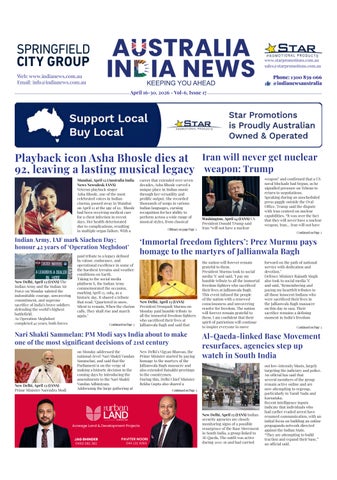
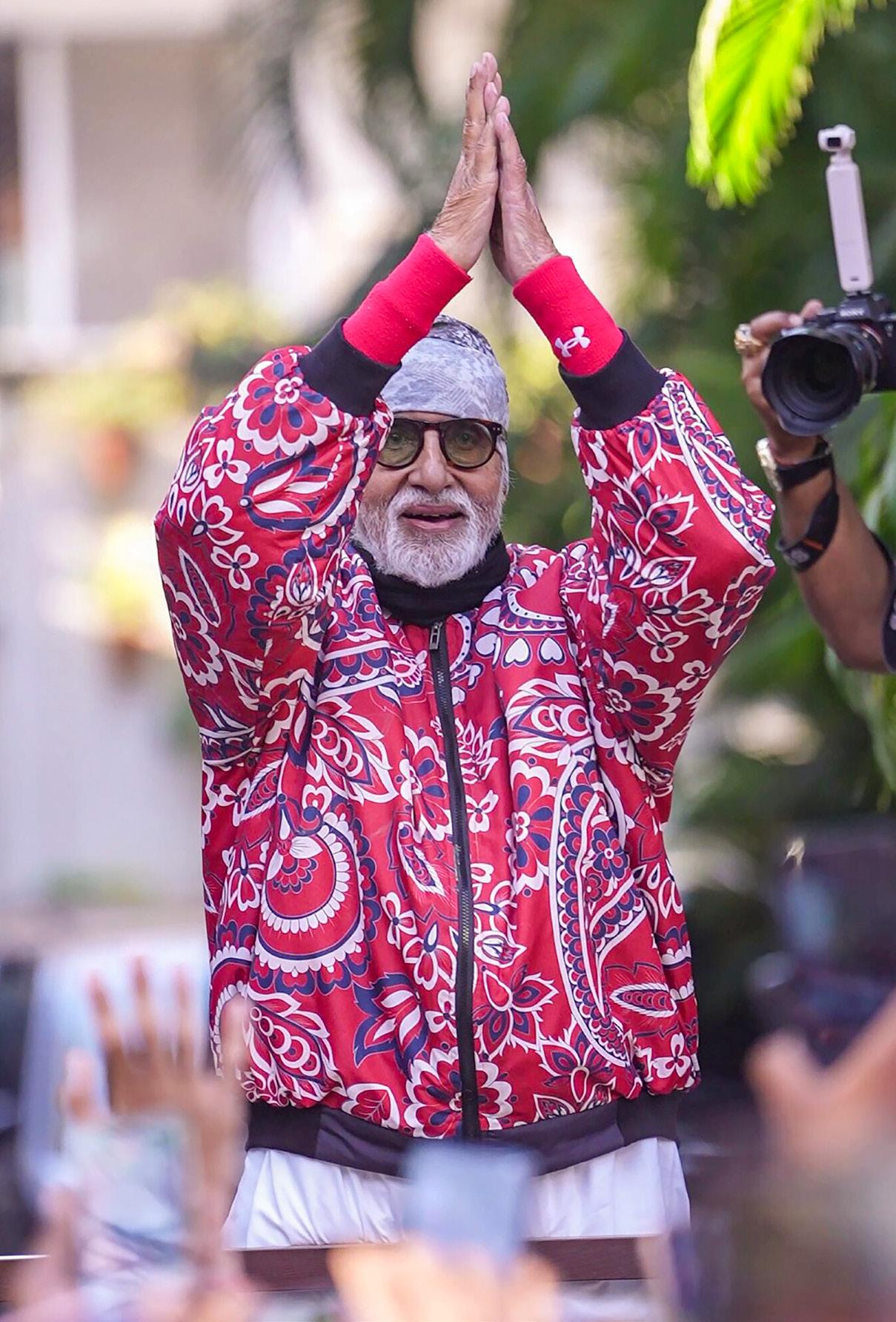
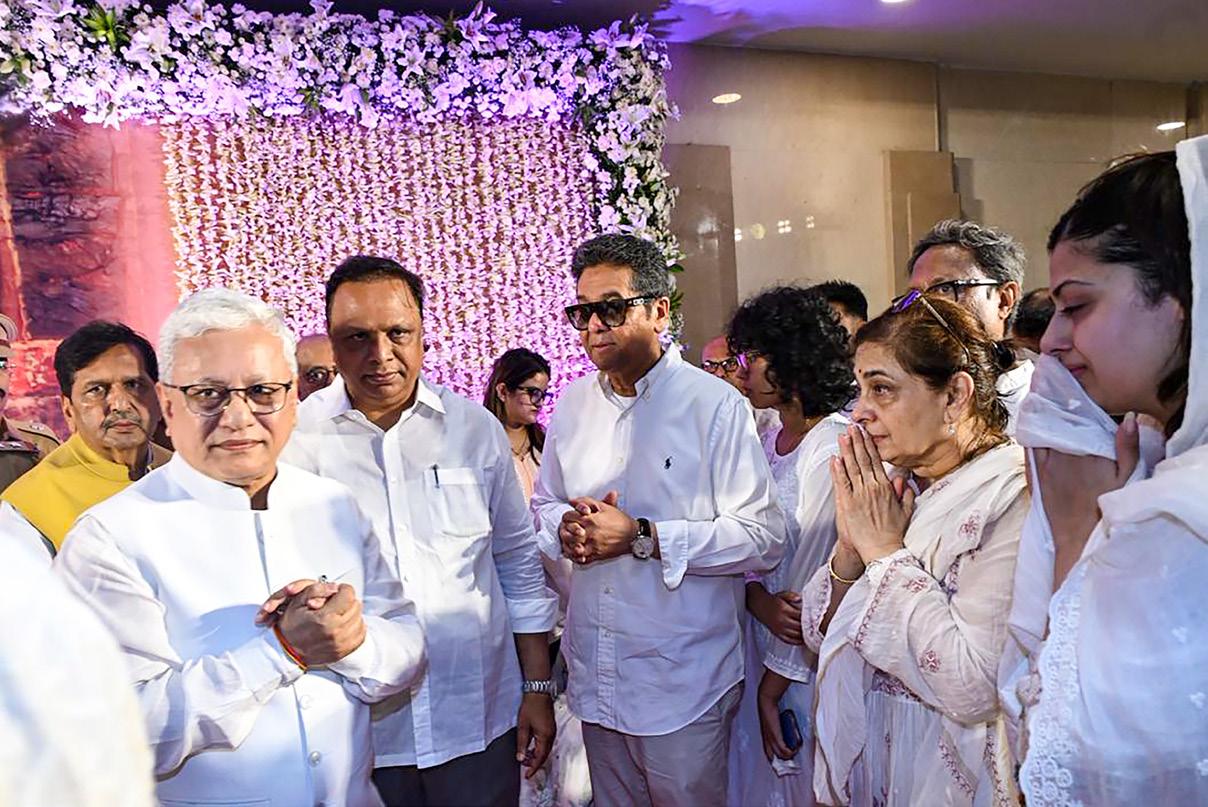
Veteran playback singer
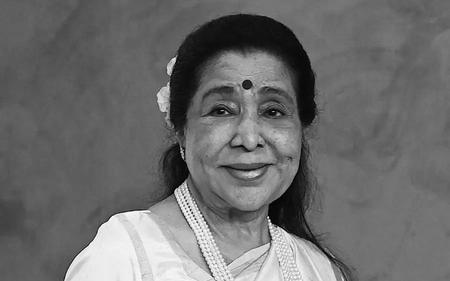
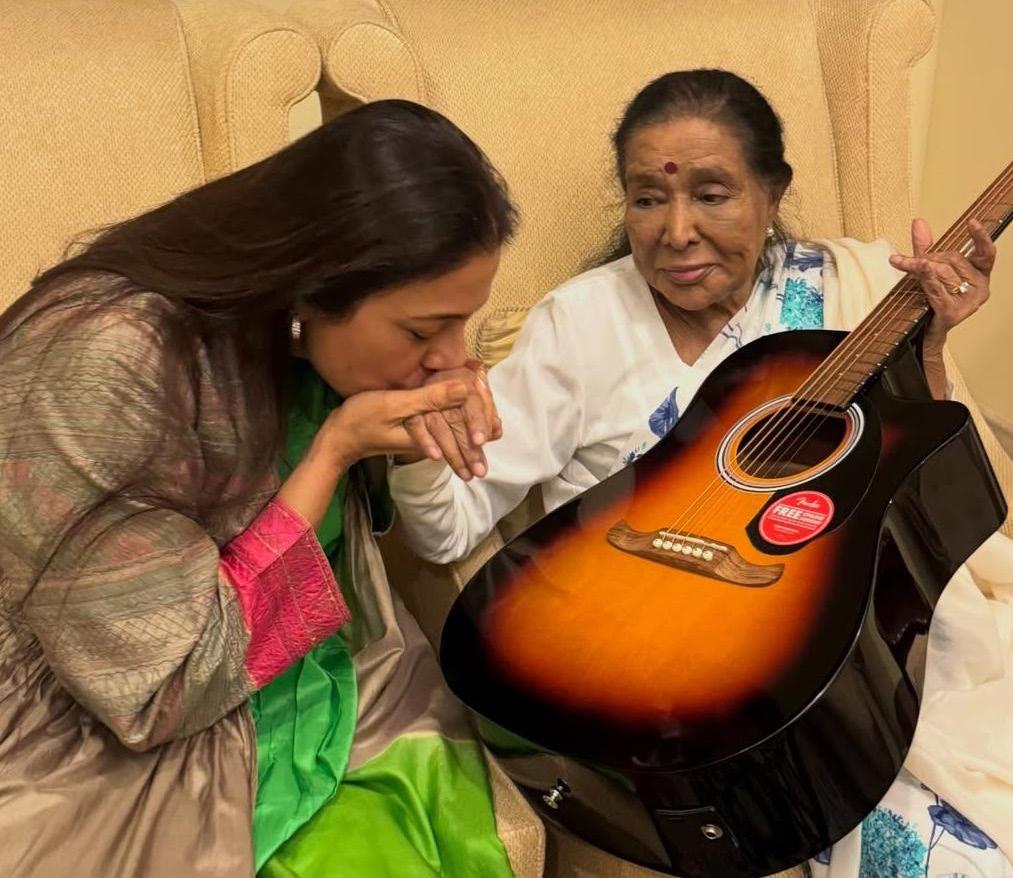
Asha Bhosle, one of the most celebrated voices in Indian cinema, passed away in Mumbai on April 12 at the age of 92. Bhosle had been receiving medical care for a chest infection in recent days. Her health deteriorated due to complications, resulting in multiple organ failure. With a
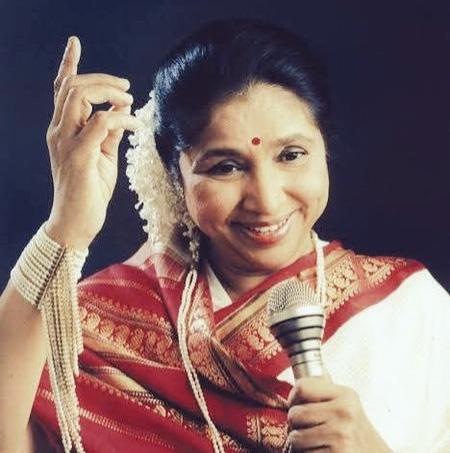
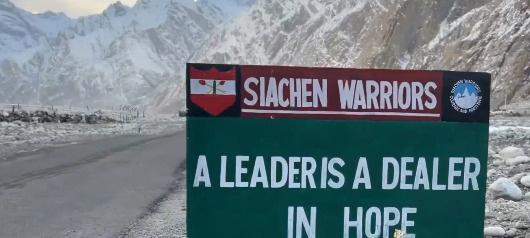
Indian Army, IAF mark Siachen Day; honour 42 years of ‘Operation Meghdoot’
New Delhi, April 13 (IANS) The Indian Army and the Indian Air Force on Monday saluted the indomitable courage, unwavering commitment, and supreme sacrifice of India’s brave soldiers defending the world’s highest battlefield.
As Operation Meghdoot completed 42 years, both forces
paid tribute to a legacy defined by valour, endurance, and operational excellence in some of the harshest terrains and weather conditions on Earth. Taking to the social media platform X, the Indian Army commemorated the occasion, marking April 13, 1984, as a historic day. It shared a tribute that read: "Quartered in snow, Silent to remain, When the clarion calls, They shall rise and march again."
career that extended over seven decades, Asha Bhosle carved a unique place in Indian music through her versatility and prolific output. She recorded thousands of songs in various Indian languages, earning recognition for her ability to perform across a wide range of musical styles, from classical
on page Page 3
‘Immortal
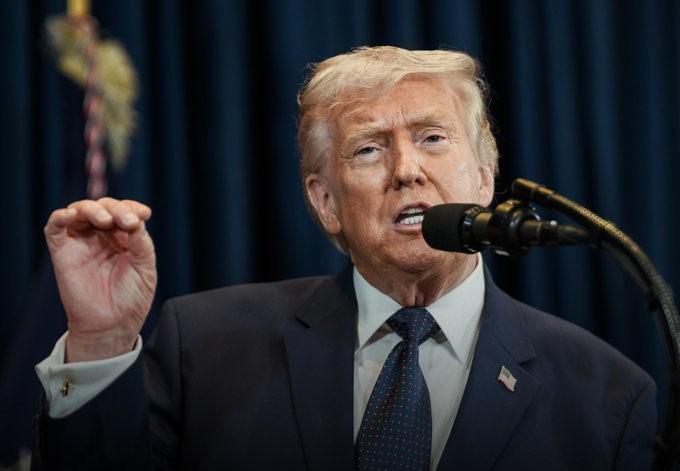
Washington, April 14 (IANS) US
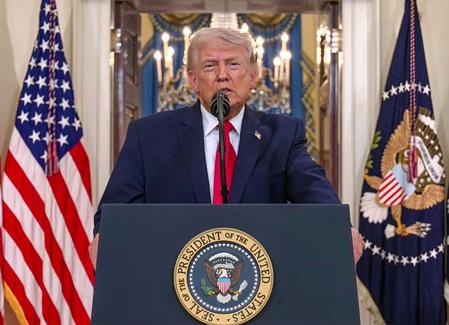
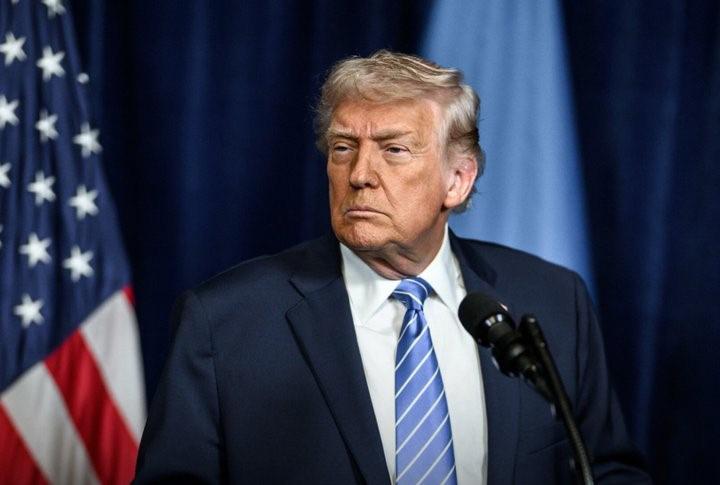
President Donald Trump said Iran “will not have a nuclear
freedom
New Delhi, April 13 (IANS)
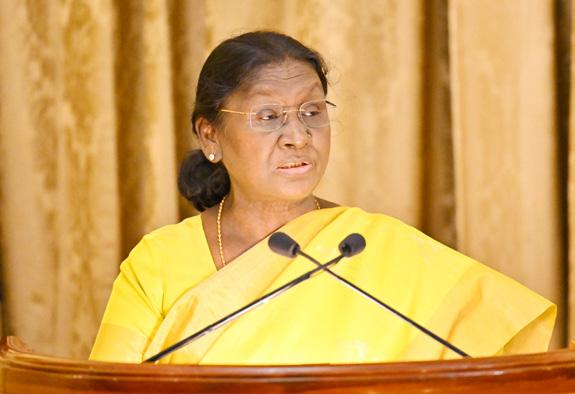
President Droupadi Murmu on Monday paid humble tribute to all the immortal freedom fighters who sacrificed their lives at Jallianwala Bagh and said that
Nari Shakti Sammelan: PM Modi says India about to make one of the most significant decisions of 21st century
New Delhi, April 13 (IANS)
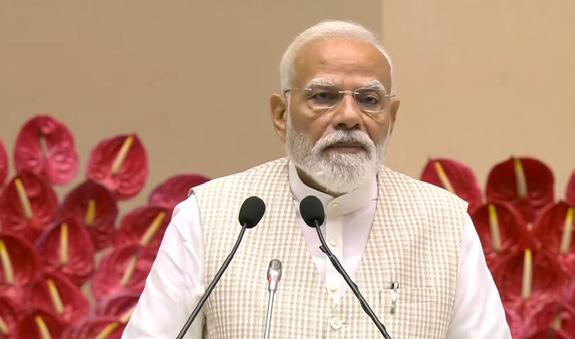
Prime Minister Narendra Modi
weapon” and confirmed that a US naval blockade had begun, as he signalled pressure on Tehran to return to negotiations.
Speaking during an unscheduled press gaggle outside the Oval Office, Trump said the dispute with Iran centred on nuclear capabilities. “It was over the fact that they will never have a nuclear weapon, Iran… Iran will not have
fighters’: Prez Murmu
pays
homage to the martyrs of Jallianwala Bagh
the nation will forever remain grateful to them.
President Murmu took to social media 'X' and said, "I pay my humble tribute to all the immortal freedom fighters who sacrificed their lives at Jallianwala Bagh.
This event infused the people of the nation with a renewed consciousness and unwavering resolve for freedom. The nation will forever remain grateful to them. I am confident that their spirit of patriotism will continue to inspire everyone to move
forward on the path of national service with dedication and devotion."
Defence Minister Rajnath Singh also took to social media 'X' and said, "Remembering and paying my heartfelt tributes to all those innocent Indians who were sacrificed their lives in the Jallianwala Bagh massacre on this day in 1919. Their sacrifice remains a defining moment in India’s freedom
Al-Qaeda-linked Base Movement resurfaces, agencies step up watch in South India Playback icon Asha Bhosle dies at 92, leaving a lasting musical legacy
on Monday addressed the national-level 'Nari Shakti Vandan Sammelan', and said that the Parliament is on the verge of making a historic decision in the coming days by introducing the amendments to the Nari Shakti Vandan Adhiniyam.
Addressing the large gathering at
New Delhi's Vigyan Bhawan, the Prime Minister started by paying homage to the martyrs of the Jallianwala Bagh massacre and also extended Baisakhi greetings to the countrymen.
During this, Delhi Chief Minister Rekha Gupta also shared a
New Delhi, April 13 (IANS) Indian security agencies are closely monitoring signs of a possible resurgence of the Base Movement in South India, a group linked to Al-Qaeda. The outfit was active during 2015–16 and had carried
out low-intensity blasts, largely targeting the judiciary and police. An official has said that several members of the group remain active online and are now attempting to regroup, particularly in Tamil Nadu and Karnataka.
Recent intelligence inputs indicate that individuals who had earlier evaded arrest have resumed communication, with an initial focus on building an online propaganda network directed against the Indian State.
“They are attempting to build traction and expand their base,” an official said.
EDITORIAL TEAM
Dr Ram Mohan, Chairman
Dr Ashutosh Misra, Editor-in-Chief
EDITORIAL BOARD
Amrita Deshpande, Community News Editor
Paras Sharma, Assistant Editor
Dr Uttam Kumar Sinha, Senior Fellow, Nehru Memorial Museum & Library, India
Mr Shaun Star, Director, Centre for Australia India Studies, Jindal Global University, India
Alia Bhatt roots for sister-in-law Riddhima Kapoor ahead of ‘Daadi Ki Shaadi’ release
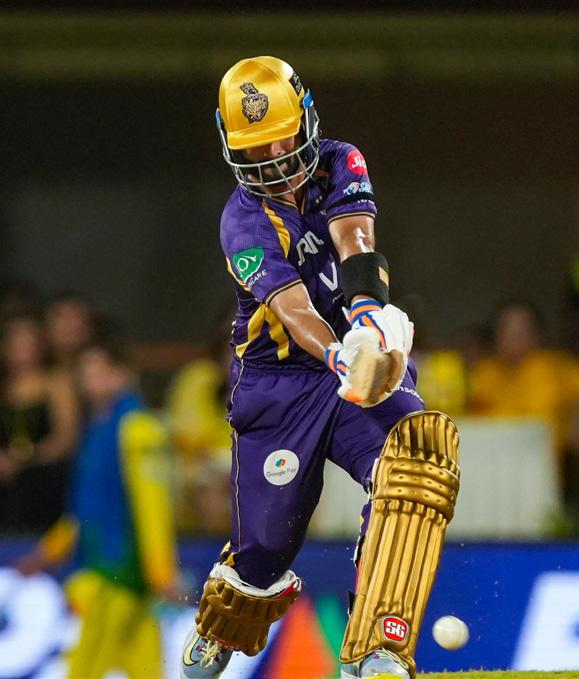
Two dead, eight hospitalised following separate collisions in Australia’s Queensland IPL 2026: Captain Rahane fined Rs 12 lakh as KKR maintain
Playback icon Asha Bhosle dies at 92, leaving a lasting musical legacy
Obituary from Page 1 compositions and ghazals to film songs and modern genres. She rose to prominence in the mid-20th century and worked with renowned composers such as O.P. Nayyar and R.D. Burman. Her memorable songs featured in films like Umrao Jaan, Teesri Manzil, and Rangeela, which remain popular among audiences.
Bhosle was honoured with several prestigious awards, including the Dadasaheb Phalke Award and multiple National Film Awards, in recognition of her outstanding contribution to Indian music.
Following the announcement of her passing, tributes were shared widely by artists, public figures, and admirers across the country and internationally. Many paid homage to her enduring influence and described her voice as one that shaped generations of film music.'Touched countless hearts':
PM Modi expressed grief over the passing away of Asha Bhosle.
"Deeply saddened by the passing of Asha Bhosle Ji, one of the most iconic and versatile voices India has ever known," PM Modi said in a post on X. Praising the singer's journey, he said: "Her extraordinary musical journey, spanning decades, enriched our cultural heritage and touched countless hearts across the world. Be it her soulful melodies or vibrant compositions, her voice carried timeless brilliance."
In a post on X, President Murmu said, "The passing of Asha Bhosle Ji has created a huge void in the world of music. Her legendary career as an iconic singer has defined an era of music in India.
I have fond memories of having interacted with her personally."
"She led her life on her own terms as an artist and as an individual. With her melodious and timeless
Obituary
voice, she enriched Indian music for decades. Her music will live forever. Her demise is an irreparable loss to music lovers. I convey my heartfelt condolences to her family and countless admirers," she added.
Vice President C.P. Radhakrishnan also took to social media and offered condolences over the passing of the legendary singer.
"Deeply saddened by the passing of the legendary singer Asha Bhosle ji. My heartfelt condolences to her family, admirers, and music lovers," the Vice President said in a post on X. Asha Bhosle’s death marks the loss of a towering figure in Indian cultural history, whose work continues to resonate with listeners across the world.
A voice that lives on: Remembering Asha Bhosle
There are some voices that do not fade with time; they settle into memory and become part of how we experience life itself. Asha Bhosle was one such voice. Her passing marks not just the loss of a legendary singer, but the quiet closing of an era that shaped the sound of modern India.
Her journey was never defined by ease. Born into a family deeply rooted in music, she entered an industry already filled with established names. Yet, rather than following familiar paths, she chose to create her own. What distinguished her from the very beginning was not just talent, but a willingness to explore. She approached music not as a fixed form, but as something that could evolve with each song.
Versatility became her defining strength. She moved effortlessly between styles — from playful, rhythm-driven compositions to deeply expressive and nuanced melodies. Her voice could
carry lightness and intensity with equal ease, adapting to the demands of each composition without losing its identity. This ability to transform made her not just a singer, but an interpreter of music.
Her collaborations played a significant role in shaping her legacy. With O. P. Nayyar, she was instrumental in bringing a new sense of rhythm and movement into playback singing.
With R. D. Burman, she explored innovation, engaging with sounds that expanded the boundaries of film music. These partnerships were not merely professional; they reflected a shared spirit of experimentation.
Yet, beyond innovation, there was depth. Asha Bhosle had the rare ability to understand the emotional core of a song. She could hold back when needed, allowing silence and subtlety to carry meaning. In other moments, she could infuse a composition with energy and character. This balance between restraint and expression is what gave her music its enduring appeal.
Her songs became part of everyday life. They accompanied journeys, celebrations, and quiet reflections. For many, they are tied to personal memories — moments that return with a familiar melody or a remembered
line. This connection is what transformed her music from performance into experience. There is also a larger cultural significance to her work. In a country defined by diversity, her voice travelled across languages and regions, creating a shared musical space. She contributed to a collective memory that continues to resonate across generations. What made her journey remarkable was not just longevity, but continuity. She remained relevant not by repeating herself, but by evolving. Even as musical trends changed, she adapted without losing her essence. This ability to grow while remaining grounded reflects a deep commitment to her art.
As we remember Asha Bhosle, what remains is not only a catalogue of songs, but a way of approaching music — with openness, curiosity, and sincerity. Her voice may no longer create new melodies, but it continues to exist in the countless moments it has already shaped.
And in that enduring presence, she remains — not only as a singer who defined an era, but as an artist whose music continues to live quietly within us.
‘Immortal freedom fighters’: Prez Murmu pays homage to the martyrs of Jallianwala Bagh
Continued from Page 1 struggle, awakening the nation’s collective conscience. Their courage continues to inspire generations to stand for justice, dignity and self-respect." April 13, 2026,signifies the 107th anniversary of the Jallianwala Bagh Massacre, a dark and pivotal moment in the history of India's fight for sovereignty. More than a century ago, on this date in 1919, the merciless actions of British colonial authorities left
Iran will never get nuclear weapon: Trump
Continued from Page 1
a permanent scar on the Indian independence movement. This tragedy served as a massive wakeup call for the public, highlighting the true brutality of foreign rule and shifting the momentum of the freedom struggle forever.
He added that Tehran had not agreed to that condition during talks. “We agreed to a lot of things, but they didn't agree to that and I think they will agree to it. I'm almost sure of it. In fact, I am sure of it. If they don't agree, there's no deal,” Trump said.
The President indicated that Iran had reached out to resume negotiations. “We've been called by the other side. They'd like to make a deal very badly, very badly,” he said.
On the military front, Trump confirmed that a blockade was underway. “Yeah, it started, 10:00,” he said when asked whether the naval blockade had begun.
He described the move as part of broader efforts to counter Tehran’s actions. “We can't let a country blackmail or extort the
world because that's what they're doing. They're really blackmailing the world. We're not going to let that happen,” Trump said. Trump suggested the blockade could serve multiple purposes, including forcing Iran back to the negotiating table and stabilising global energy markets. “Maybe everything. I mean, both of those things, certainly, and more,” he said. He emphasised that the United States did not depend on the Strait of Hormuz for its energy needs. “We don't use the strait. We don't need the strait. We have our own oil and gas, much more than we need,” Trump said, adding that the US produces “substantially more” oil than Saudi Arabia and Russia. At the same time, he underscored the global importance of the waterway. “So, we don't need it but the world needs it,” he said.
Indian Army, IAF mark Siachen Day; honour 42 years of ‘Operation Meghdoot’
Continued from Page 1 a nuclear weapon,” he said.
The Army also shared a video highlighting the significance of the operation, describing the extreme conditions under which soldiers continue to serve. It noted that at altitudes exceeding 20,000 feet, where survival itself is a constant challenge, Indian troops secured the highest battlefield on Earth on April 13, 1984, through Operation Meghdoot.
The visuals emphasised the soldiers’ “altitude of courage” and “steel spirit”, underscoring how every inch of territory is defended with determination and bravery. Indian Air Force also took to social media 'X' and said, "On
this Siachen Day, IAF salutes the indomitable courage, unwavering commitment and supreme sacrifice of our brave warriors defending the world’s highest battlefield."
"As Operation Meghdoot completes 42 years, we honour the legacy of valour, endurance and operational excellence in the harshest of terrains and weather conditions," the Indian Air Force added.
"From strategic airlift and logistics support, to casualty evacuation in extreme highaltitude conditions, the IAF continues to sustain operational readiness in the Siachen sector," the Indian Air Force added.
Nari Shakti Sammelan: PM Modi says India about to make one of the most significant decisions of 21st century
Continued from Page 1 toll-free number -- 9667173333 -- which people can give a missed call to support the Modi government's Nari Shakti Vandan Adhiniyam Bills.
Speaking about the Nari Shakti Vandan Adhiniyam, PM Modi said, "India is about to make one of the most significant decisions of the 21st century; I say this with a strong sense of responsibility. This decision is dedicated to the Nari Shakti and Nari Shakti Vandan."
"Our Parliament is going to make a historic decision, which will give concrete form to the concepts of the past and fulfil the resolutions of the future. A resolve rooted in equality, where social justice is not merely a slogan, but an integral part of our work culture and decision-making process," he said.
"From the State Assemblies to the Parliament, the end of decades of
waiting is 16, 17 and 18 (referring to April 16-18)," he said.
The Prime Minister recalled that in 2023, in the new Parliament building, the first step was taken towards the Nari Shakti Adhiniyam.
"For it to be implemented on time, women's participation gives strength to our democracy. We have called a special session of the Parliament," he added.
The Sammellan saw participation from prominent personalities and women achievers across diverse sectors, including government, academia, science, sports, entrepreneurship, media, social work and culture.
The event brought together a wide spectrum of stakeholders to deliberate on the role of women in India's development journey. Addressing the gathering, PM Modi said, "Through this event, we are receiving the blessings of mothers and sisters from across the nation.
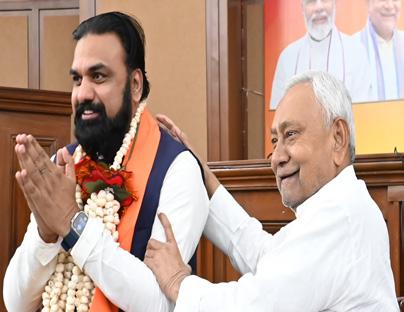
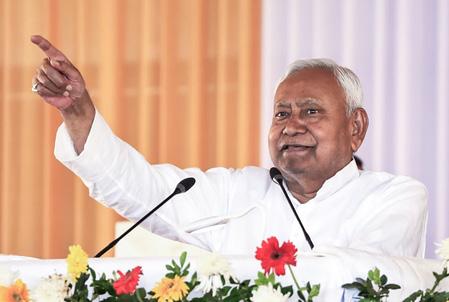
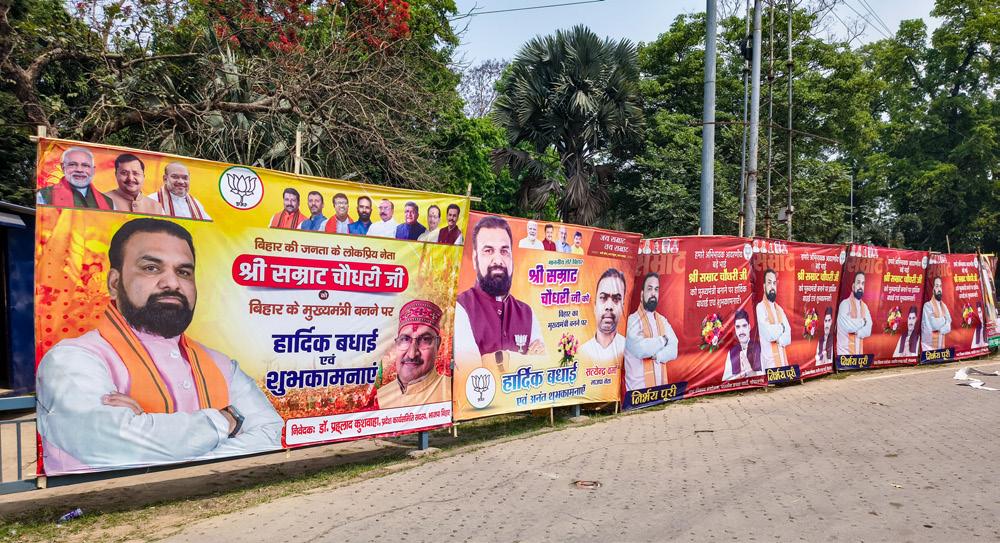
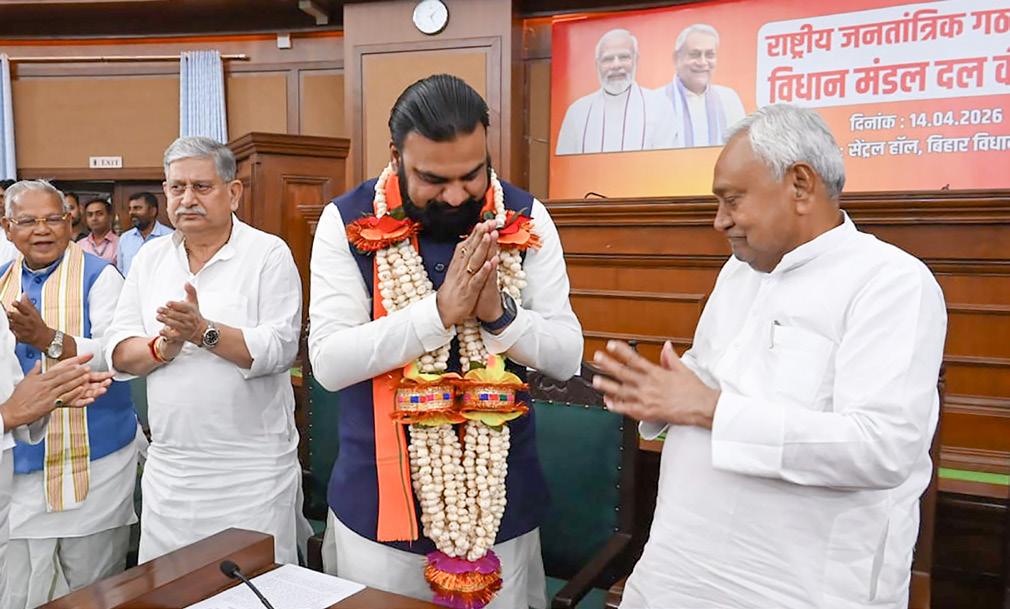
Samrat Choudhary to take oath as Bihar’s new CM today
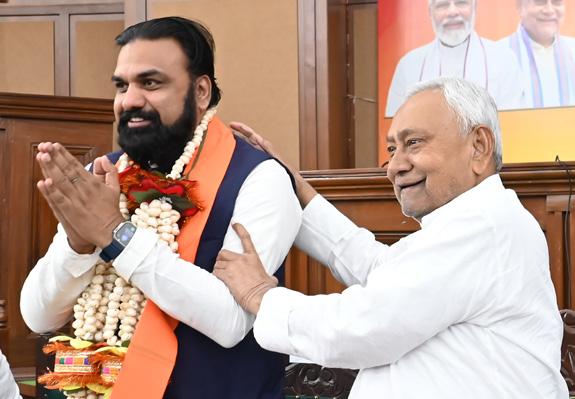
Patna, April 15 (IANS) Samrat Choudhary is set to be sworn in as the new Chief Minister of Bihar on Wednesday, marking a historic political transition in the state. The swearing-in ceremony is scheduled for 10.50 a.m. at the Raj Bhavan (Lok Bhawan) in Patna. For the first time, a leader from the Bharatiya Janata Party (BJP) will assume the office of Chief Minister in Bihar.
Samrat Choudhary, who recently served as Deputy Chief Minister under Nitish Kumar, was elected as the leader of the BJP Legislative Party and NDA following Nitish
Kumar’s resignation on Tuesday.
Nitish Kumar stepped down after a long tenure of more than two decades to move to the Rajya Sabha.
The oath of office will be administered by Governor Syed Ata Hasnain.
Along with Samrat Choudhary, two Deputy Chief Ministers from the Janata Dal (United) quota -- Vijay Kumar Choudhary and Bijendra Prasad Yadav -- are also expected to take oath.
Senior leaders, including the outgoing Chief Minister Nitish Kumar, Union Minister Jagat Prakash Nadda and BJP National President Nitin Nabin, BJP senior leader B.L. Santhosh and many other leaders from other states, are likely to be present at the ceremony.
On Tuesday evening, Samrat
Choudhary met Governor Syed Ata Hasnain at the Raj Bhavan and formally staked his claim to form the government.The BJP expressed confidence that under his leadership, Bihar will enter a new phase of development, good governance, and prosperity.
Samrat Choudhary began his political career in 1990 and first became a minister in 1999 in the government led by Rabri Devi. Over the years, he has held several key portfolios, including Urban Development, Housing, and Panchayati Raj, before rising to the position of Deputy Chief Minister in 2024. With Nitish Kumar stepping down after 20 years in power, Bihar is witnessing a major leadership transition. Samrat Choudhary’s swearing-in is expected to formally usher in a new political chapter in the state.
Kiren Rijiju says ‘nothing controversial’ in Women’s Reservation Bill, urges parties to rise above politics
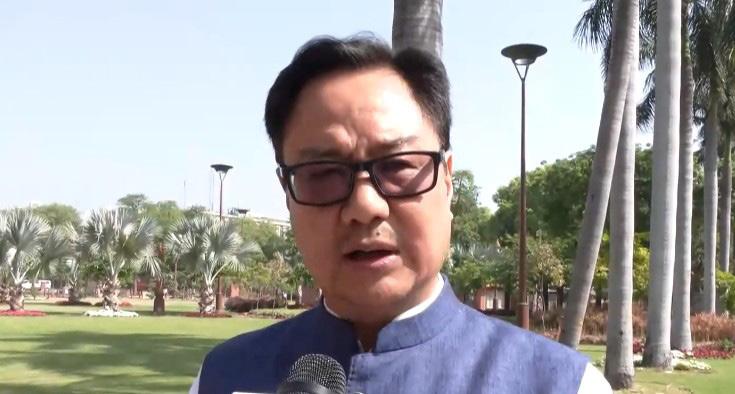
New Delhi, April 14 (IANS) Union Parliamentary Affairs Minister Kiren Rijiju on Tuesday asserted that there is "nothing controversial" in the proposed amendment to the Women's Reservation Bill and appealed to all political parties to support it without politicising the issue. The Centre is seeking consensus across parties for the amendment to the Women's Reservation Bill, also known as the Nari Shakti Vandan Adhiniyam, which provides for one-third reservation for women in legislative bodies. The legislation was passed unanimously in Parliament in 2023. The proposed amendment aims to delink its implementation from the 2027
Census and instead base it on the 2011 Census, enabling its rollout before the 2029 general elections.
A special session of Parliament has been convened on April 16 to take up the matter.
Speaking to IANS, Rijiju said, "The issue of women's reservation cannot be made a political matter in any form. If we give it a political angle, it would be an injustice to women. The Prime Minister has made a very simple and clear appeal to rise above party politics.
The Nari Shakti Adhiniyam (Women's Reservation Act) is a law that all parties supported and passed unanimously. Now, we have called for a special session to make a constitutional amendment to implement it."
He further said that the government has reached out to Opposition leaders, including Congress National President Mallikarjun Kharge, urging them to support the bill.
"We have also urged Mallikarjun Kharge not to give it a political angle. We want all parties and parliamentarians to support this; it will become a great inspiration for everyone and give a strong message to the world," he said. Responding to concerns raised by Congress Parliamentary Party Chairperson Sonia Gandhi in her recent opinion article on the Women's Reservation Bill, Rijiju said the government will soon make the full text of the amendment public.
"We are about to upload the entire bill, and everyone will be able to read it. In this amendment bill related to the Nari Shakti Vandan Adhiniyam, there is not a single point that can be considered controversial. Whether it is delimitation, an increase in the number of seats, or any other provision, you will find that there is no provision that can raise any objection or question.
Delhi court sends I-PAC co-founder Vinesh Chandel to 10-day ED custody
connection with a money laundering probe linked to the alleged coal pilferage case.
Additional Sessions Judge Shefali Barnala Tandon of Patiala House Courts allowed the ED’s plea for custodial interrogation till April 23 after Chandel was produced before the court late on Monday night, with proceedings continuing into the early hours of Tuesday.
The ED had sought Chandel’s custody in a money laundering investigation arising out of an ECIR registered on March 28 on the basis of an FIR lodged
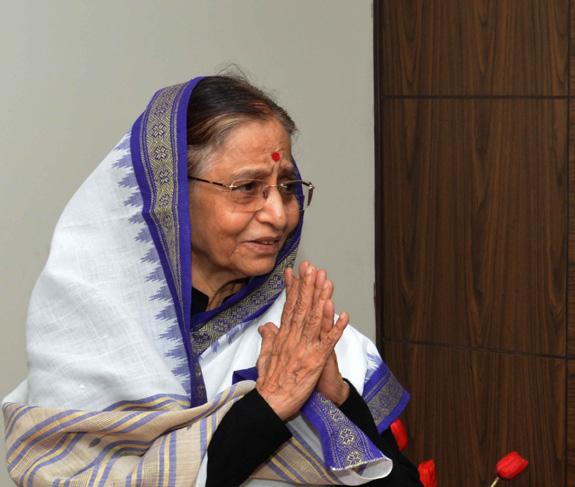
Ex-Prez Pratibha Patil hails women’s quota bill, writes to PM Modi expressing support
New Delhi, April 15 (IANS)
Pratibha Devisingh Patil, who served as the first woman President of the country, has written to Prime Minister Narendra Modi, expressing her support and appreciation for the implementation of Nari Shakti Vandan Adhiniyam, calling it a "transformative step in strengthening India's democratic framework".
Pratibha Devisingh Patil is a veteran Congress leader who served as the 12th President of India from 2007 to 2012. She became the first woman to hold the post.
Her remarks come ahead of a Special Session of Parliament scheduled to begin on April 16, during which the amendments to the Nari Shakti Vandan Adhiniyam, 2023, and a proposed delimitation bill are expected to be discussed to facilitate onethird reservation for women in Parliament. Her support also came at a time when Congress Parliamentary Party Chairperson and Rajya Sabha member Sonia Gandhi made a scathing critique of the timing of the Bill, calling it "underhand tactic."
In her letter to the Prime Minister, Patil said, "I extend my heartfelt
appreciation for the initiative for historic implementation of the Nari Shakti Vandan Adhiniyam. This landmark constitutional amendment represents a transformative step in strengthening India's democratic framework by ensuring greater representation and participation of women in legislative bodies."
As the first female President of India, Patil emphasised that true women's empowerment can only be realised by granting them equal opportunities to influence decisions that impact the nation.
"This amendment is far more than a legal provision; it is a powerful affirmation of our collective resolve to advance gender equality, foster inclusive governance, and build a stronger, more progressive India," she said.
The former President emphasised that having more women in Parliament and State Legislatures will "undoubtedly enrich legislative debates with diverse perspectives, lead to more balanced and empathetic policy outcomes, and serve as a beacon of inspiration for future generations of women to actively participate in public life".
"India has consistently witnessed the extraordinary contributions of women across every sphere of national development, often surmounting formidable social and structural barriers," Patil said, adding that this legislation "formally recognises their immense potential and institutionalises pathways for their leadership at the highest levels of governance".
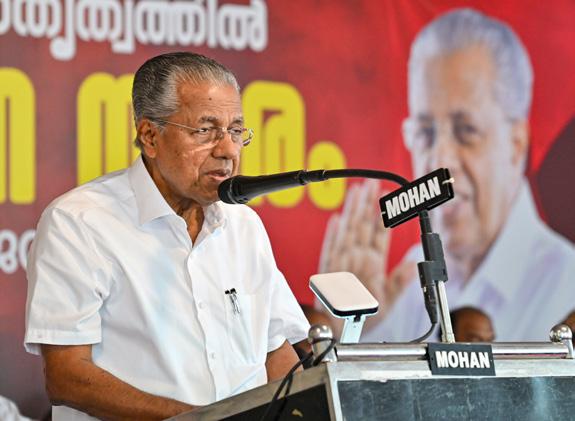
On Ambedkar Jayanti, CM Vijayan calls for vigilance against caste bias
by the Economic Offences Wing (EOW), alleging criminal conspiracy, cheating, falsification of accounts and handling of unaccounted funds by M/s Indian PAC Consulting Pvt Ltd and its directors.
In its remand application, the ED alleged that Chandel, a founding director of the company, was “actively involved in the process and activity connected with proceeds of crime” and played a central role in devising a mechanism for “generation, concealment and laundering” of illicit funds.
Thiruvananthapuram, April 14 (IANS) Marking the birth anniversary of B.R. Ambedkar, Chief Minister Pinarayi Vijayan on Tuesday issued a strong call to uphold the values of equality and social justice, even as Kerala grapples with troubling allegations of caste discrimination in higher education.
In a message on Ambedkar Jayanti, the Chief Minister took to his social media to pay tributes to Ambedkar.
He described Ambedkar as a towering figure who dedicated his life to building a society free from caste divisions.
The CM noted that Ambedkar’s relentless fight against social inequality and his enduring contributions continue to guide the nation.
However, Vijayan expressed
deep concern over recent developments, particularly the tragic death of a first-year BDS student at a private medical college in Ancharakandi, Kannur.
The student, Nithin Raj from Thiruvananthapuram, is alleged to have faced caste-based harassment, sparking widespread outrage.
Calling the incident deeply painful, the Chief Minister said that any act that drives a promising student to such a fate is unforgivable.
He cautioned that the emergence of caste-based discrimination, even within campuses, raises serious questions about whether Kerala’s hard-earned progressive values are eroding.
“This is a time for introspection as a society,” he said, urging collective responsibility in addressing such issues.
Vijayan also flagged the Centre’s inaction on the long-pending demand for a dedicated law to curb caste discrimination in educational institutions, often referred to as the Rohith Vemula Act.
New Delhi, April 14 (IANS) A Delhi court on Tuesday sent Indian Political Action Committee (I-PAC) co-founder Vinesh Kumar Chandel to 10 days’ Enforcement Directorate (ED) custody in
PM Modi extends greetings on Tamil New Year, meets Vice President Radhakrishnan
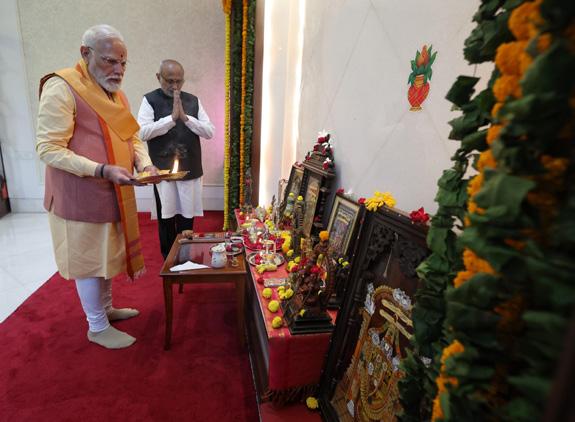
New Delhi, April 14 (IANS) Prime Minister Narendra Modi on Tuesday extended warm greetings on the occasion of Tamil New Year Puthandu, wishing citizens happiness, success, and good health while highlighting the richness of Tamil culture. The Prime Minister also met Vice President C.P. Radhakrishnan and personally conveyed his greetings on the auspicious occasion.
In a post on X, the Prime Minister said, “Warm greetings on the auspicious occasion of Puthandu! I pray for a year filled with happiness, success and good health. This special day celebrates renewal, hope and new beginnings. It is an occasion to honour the greatness of Tamil culture. Its rich heritage of literature, music, art, philosophy and devotion continues to inspire people across the world. May this special day further the spirit of togetherness in our society. Inspired by the great Tamil culture, may we attain new heights of success and also deepen our connect with nature.”
The meeting between the Prime Minister and the Vice President was seen as a gesture of festive goodwill, where both leaders were seen performing aarti and taking part in traditional rituals. They also exchanged greetings on the occasion of the Tamil New Year.
Vice President C.P. Radhakrishnan also shared his greetings on X, extending wishes to citizens across multiple regions celebrating the New Year festivals. He said, “Greetings to all on the auspicious occasions of Tamil Puthandu, Baisakhi, Rongali Bihu, Maha Bishuba Pana Sankranti, Poila Boishakh and Vishu. These vibrant festivals reflect the spirit of Ek Bharat Shreshtha Bharat and celebrate the rich cultural diversity of our nation. They mark new beginnings, the joy of harvest, and the enduring bond between people, nature, and tradition. May these occasions inspire harmony, prosperity and renewed hope to everyone’s lives.”
Union Home Minister Amit Shah also extended greetings on Tamil Puthandu. In his message on X, he said, “Heartfelt greetings to our sisters and brothers of Tamil Nadu on the auspicious occasion of Tamil Puthandu. May the zestful festivities of welcoming the new year deepen our bond with culture, strengthen social unity, and bless everyone with well-being, abundance, and joy.”
PM Modi receives rousing welcome at roadshow in UP’s Saharanpur
Saharanpur, April 14 (IANS)
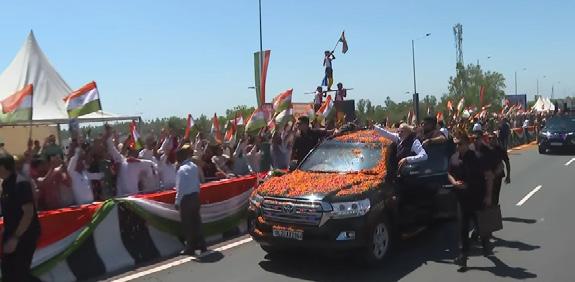
Prime Minister Narendra Modi held a roadshow along the Wildlife Corridor in Uttar Pradesh's Saharanpur district on Tuesday, just before inaugurating the Delhi-Dehradun Economic Corridor.
A large crowd gathered along the road to catch a glimpse of the Prime Minister as he waved back at them.
Participants showered flowers at PM Modi while holding the Tricolour in their hands and chanting slogans such as "Modi, Modi," "Bharat Mata Ki Jai," and "Jai Shri Ram."
Many attendees wore costumes and performed traditional folk dances to welcome the Prime Minister.
Later in the day, PM Modi will perform Darshan and Pooja at Jai Maa Daat Kali Temple near Dehradun. Thereafter, he will inaugurate the Delhi-Dehradun Economic Corridor at a public function in Dehradun and address the gathering on the occasion.
How India navigated the War in West Asia, deepening Gulf ties while keeping Iran channel open: Report
New Delhi, April 12 (IANS) India has adopted a nuanced and carefully calibrated approach in West Asia, strengthening its partnerships with Gulf nations while maintaining limited but significant engagement with Iran amid the ongoing regional conflict, according to an article. New Delhi’s response to the current US-Israel-Iran tensions reflects its broader doctrine of "multi-alignment", aimed at protecting core national interests without becoming entangled in regional rivalries, the article by Bashir Ali Abbas published in South Asian Voices said. It noted that India's growing strategic embrace of the Gulf, particularly countries such as Saudi Arabia and the United Arab Emirates, has been driven by a combination of economic, energy, and diaspora-related imperatives. The Gulf region accounts for a major share of India’s crude oil imports, while millions of Indian expatriates living there contribute significantly through
remittances. In recent years, ties have expanded beyond traditional sectors to include defence cooperation, technology, and infrastructure investments. At the same time, the article underscored that India has avoided a complete diplomatic shift away from Iran. Despite constraints posed by US sanctions and geopolitical pressures, New Delhi continues to view Tehran as a key partner for regional connectivity, particularly through projects like the Chabahar Port, which provides India access to Afghanistan and Central Asia while bypassing Pakistan. According to the report, India’s cautious engagement with Iran is also reflected in its diplomatic messaging. Rather than taking overtly partisan positions in the conflict, New Delhi has consistently called for de-escalation, dialogue, and respect for international law. This measured stance allows India to maintain working relationships with all sides, including Israel, Iran, and the Arab Gulf states. It further highlighted that India’s balancing act has become more complex in the current crisis, as open hostilities and heightened tensions risk disrupting energy supplies and trade routes. This has reinforced the need for India
to diversify its partnerships while ensuring that no single geopolitical shift undermines its strategic autonomy.
Abbas pointed out that India’s West Asia policy is increasingly shaped by long-term geopolitical calculations rather than shortterm alignments. While closer integration with Gulf economies offers immediate economic benefits and political leverage, sustained engagement with Iran remains essential for India’s continental connectivity ambitions and its role in regional diplomacy.
The report also suggests that India’s approach reflects a broader transformation in its foreign policy—from nonalignment to multi-alignment— where it simultaneously engages with competing powers such as the United States, Russia, and regional actors in West Asia. This flexibility, the article argues, has enabled India to navigate crises without being forced into binary choices. However, the report cautions that maintaining this balance will become increasingly challenging if the conflict escalates further. Any prolonged instability in the region could impact India’s energy security, disrupt shipping lanes, and affect the safety of its diaspora.
AI hologram campaigns take TN polls by storm as Vijay’s virtual avatar draws crowds
The 213 km long six-lane accesscontrolled Delhi-Dehradun Economic Corridor has been developed at a cost of over Rs 12,000 crore.
The corridor traverses through the states of Delhi, Uttar Pradesh and Uttarakhand, and will reduce travel time between Delhi and Dehradun from over six hours at present to around two and a half hours. The implementation of the project also includes the construction of 10 interchanges, three Railway Over Bridges (ROBs), four major bridges and 12 wayside amenities to enable seamless high-speed connectivity. The corridor is equipped with an Advanced Traffic Management System (ATMS) to provide a safer and more efficient travel experience for commuters. Keeping in view the ecological sensitivity, rich biodiversity and wildlife in the region, the corridor has been designed with several features aimed at significantly reducing man-animal conflict. To ensure the free movement of wild animals, the project incorporates several dedicated wildlife protection features. These include a 12 km-long wildlife elevated corridor, which is one of the longest in Asia.
Chennai, April 14 (IANS)
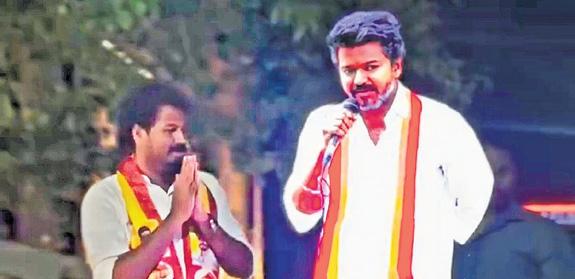
Technology is rapidly reshaping the political campaign landscape in Tamil Nadu, with artificial intelligence-powered holograms emerging as a striking new tool ahead of the Assembly elections.
A recent campaign in Kumbakonam has demonstrated how digital innovation is being deployed to bridge the physical absence of star campaigners and capture voter attention.
At the centre of this trend is a holographic projection of actor and Tamilaga Vettri Kazhagam (TVK) President Vijay, which has gone viral on social media.
The projection, mounted on a moving vehicle, delivered a highly realistic visual of Vijay addressing voters, complete with synchronised speech and gestures, leaving many in the crowd briefly believing he was physically present.
The initiative has sparked significant interest across political circles. According to the company behind the technology, there has been a sharp rise in enquiries from candidates across
parties, as well as requests to recreate holographic avatars of late political icons such as M. Karunanidhi and J. Jayalalithaa, reflecting the emotional and symbolic appeal such technology can generate among voters.
The growing demand also points to a wider shift in campaign strategies, where digital engagement is increasingly complementing traditional methods. Even in regions not currently facing elections, such as Andhra Pradesh and Karnataka, political actors are exploring the potential of AI-driven outreach tools to enhance visibility and connect with the electorate.
ISI’s CCTV spy web extended to toll plazas, aimed at tracking India’s lifelines
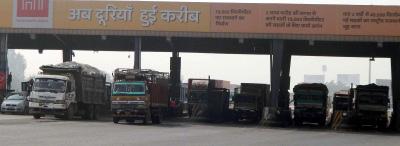
New Delhi, April 14 (IANS) The ongoing investigations into the ISI’s CCTV camera espionage case have revealed that apart from railway stations and military installations, the accused persons were also told to keep a close watch on toll plazas. This shows the extent of data that the ISI sought to mine across the country. The intention was
to gather traffic and security data at toll plazas for various reasons. A terror attack at a toll plaza can wreak havoc and disrupt movement. The ISI could have been planning to strike containers and other essential goods vehicles that pass by toll plazas, officials say.
Further data from a toll plaza is crucial for operations by terrorists. Data relating to security arrangements and vehicle movements at a toll plaza, and that too at real time,
helps terror groups and narcotic smugglers to move arms and ammunition as well as drugs, another official said.
Toll plaza data also helps in planning ambushes, whereby vehicles are targeted. Further, the data could also help plan a car bomb explosion, which can disrupt movement and cause loss of lives, an official added. There has been a clamour among terror groups to carry out car bomb explosions.
1,874 railway stations in India get AI-enabled video cover for passenger safety
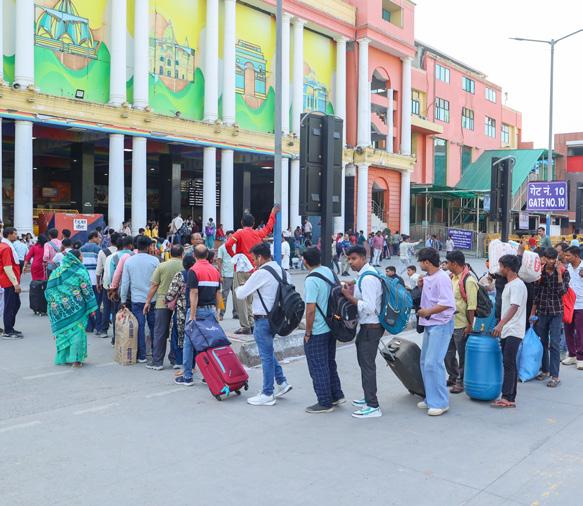
New Delhi, April 7 (IANS) Indian Railways has installed AI-enabled video surveillance for passenger safety and security across 1,874 stations for automated detection of events such as intrusion and loitering, along with facial recognition software for real-time identification and monitoring as part of the innovative measures taken during 2025-26, according to an official statement issued on Tuesday.
Highlighting the importance of this technological advancement, Railway Minister Ashwini Vaishnaw, who had earlier stated that “the cameras will be the eyes of the system, and AI will be its brain,” emphasised the
transformative role of artificial intelligence in strengthening railway security. Passenger information systems have also witnessed major upgrades with the expansion of the Integrated Passenger Information System (IPIS). Equipped with Electronic Train Indicator Boards, Coach Guidance Systems, and Public Address Systems, IPIS ensures the timely dissemination of train-related information. The integration of IPIS with the National Train Enquiry System (NTES) enables automatic, real-time announcements at stations. To date, this integration has been achieved at 1,405 stations across Indian Railways. Further enhancing communication capabilities, the provision of Tunnel Communication Systems has been undertaken across various railway zones, including the strategically significant Udhampur-Srinagar-Baramulla Rail Link (USBRL) project. This system ensures uninterrupted
radio communication between personnel inside tunnels to headquarters and operation control centres, thereby improving safety and coordination in challenging terrains, the statement explained. A major achievement has also been the enhancement of the Unified Telecom Backbone Infrastructure through Internet Protocol Multi-Protocol Label Switching (IP MPLS) technology. This high-capacity network is being developed to meet present and future bandwidth requirements of missioncritical railway applications. The system enables centralised accessibility of video surveillance and will support core railway systems such as Mobile Train Radio Communication (MTRC), Passenger Reservation System (PRS), Unreserved Ticketing System (UTS), Freight Operations Information System (FOIS), Supervisory Control and Data Acquisition (SCADA), video conferencing, and other operational applications.
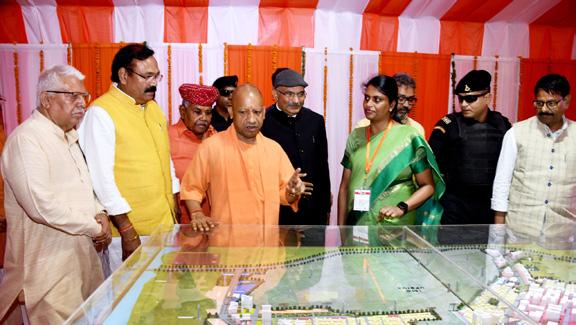
Greater Agra to emerge as ‘Second Noida’, says CM Yogi Adityanath; unveils Rs 6,466 crore projects for Taj City
Agra, April 7 (IANS) In a landmark event that promises to reshape the future of the historic city of the Taj Mahal, Uttar Pradesh Chief Minister Yogi Adityanath on Tuesday presented a massive development boost to Agra by inaugurating and laying the foundation stones for 325 projects worth a total of Rs 6,466.37 crore.
The highlight of the grand ceremony, held at Rahan Kalan near the Agra Inner Ring Road, was the Bhoomi Pujan for the ambitious 'Greater Agra' township
— a project designed to transform Agra from a primarily touristcentric destination into a modern, secure, cultural, and economic powerhouse.
Addressing the gathering, CM Yogi Adityanath declared that Greater Agra would soon become the 'Second Noida', attracting major companies and opening new avenues of employment for the youth. The township is being developed by the Agra Development Authority (ADA) under the Uttar Pradesh government's 'New City Promotion Scheme' (also referred to as Chief Minister Urban Expansion/New City Encouragement Scheme). It will span 449.65 hectares of land in the Raipur and Rahan Kalan areas at an estimated cost of
approximately Rs 5,142 crore. The project has already received approval from the Real Estate Regulatory Authority (RERA).
A unique feature of the Greater Agra township is that its 10 sectors (small townships) will be named after sacred Indian rivers, including Ganga, Yamuna, Saraswati, Godavari, and others such as Sindhu, Gomti, and Kaveri. This spiritual naming reflects a harmonious blend of India's cultural heritage with contemporary urban planning. The development will include multi-story flats, group housing societies, residential plots, wide modern roadways, state-of-theart sewage and drainage systems, extensive green spaces, parks, uninterrupted power supply, and other essential civic amenities.
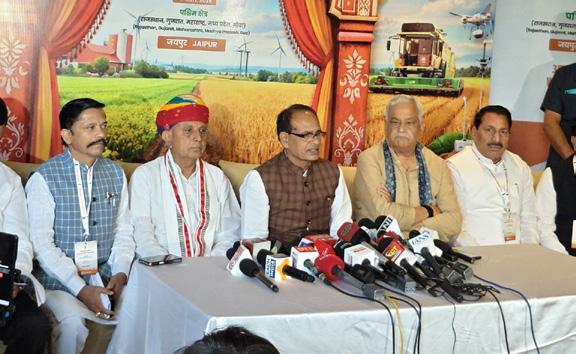
Govt aims to raise farmers’ incomes and ensure India’s
food, nutrition security: Chouhan
Jaipur, April 7 (IANS) Union Agriculture and Farmers’ Welfare Minister Shivraj Singh Chouhan on Tuesday said that the three primary goals for Indian agriculture were to enhance farmers’ incomes and ensure the country’s food and nutrition security. Addressing the Western Regional
Agricultural Conference organised here, Chouhan stated that formal one-day rabi-kharif meetings are now being replaced by themebased regional conferences for different agro-climatic zones. He described the initiation of this new conference series in the presence of agriculture ministers, senior officials, scientists, and progressive farmers from Rajasthan, Gujarat, Maharashtra, Madhya Pradesh, and Goa gathered on one platform. Chouhan said that India’s wheat and rice stocks are so abundant that even storage space poses a
Adani tells US judge to dismiss SEC fraud suit against him as case ‘legally flawed’
New York, April 7 (IANS) In a key development, Gautam Adani, the Adani Group Chairman, and his nephew Sagar Adani have asked a court in the US to dismiss a lawsuit brought by the Securities and Exchange Commission (SEC) against them. They argued though their lawyers that the case falls outside the US jurisdiction and fails to establish any wrongdoing.
The defendants are seeking dismissal of the case in full and said they are prepared to appear for a pre-motion conference if required.
Adanis said in a pre-motion letter that the SEC's claims over a 2021 bond sale by the group's renewable energy arm, Adani Green Energy Ltd (AGEL), are "legally flawed" on multiple grounds.
They argued that the court lacks personal jurisdiction, saying neither had sufficient contacts with the US or direct involvement in the bond offering.
The filing contended that the SEC's case is impermissibly extraterritorial, noting the securities were not listed in the US, the issuer is Indian, and the alleged misconduct occurred entirely in India.
In September 2021, AGEL conducted a $750 million bond offering pursuant to SEC Rule
144A and SEC Regulation S, which are registration exemptions for private resales to qualified institutional buyers (QIBs) and non-US sales.
AGEL sold these bonds outside the US through an agreement to non-US underwriters, who then resold the Notes to QIBs. A fraction of those resales is alleged to have been made to “investors in the United States”.
AGEL was not a party to these transactions, the lawyers said in a letter.
The grounds for dismissal also include the SEC’s failure to state a claim on the basis that the defendants are neither based in the US nor conduct activities there that would grant the court jurisdiction and the alleged actions involve non-US entities outside the scope of US law. Even if the claims are accepted at face value, the complaint fails to establish any actionable legal violation or meet the threshold required to proceed. The cited statements are neither materially false nor misleading and with no direct involvement in the offering, the defendants cannot be held liable, according to the letter. Lawyers also stated the SEC complaint does not allege that Gautam Adani approved the issuance, attended key meetings, or directed any activity at US investors.
Citing US Supreme Court precedent, the defendants said the SEC failed to show any "domestic transaction", a requirement for applying US securities laws.
First-time voters surge by 33 pc in TN ahead of Assembly polls
challenge, but self-reliance in pulses and oilseeds still needs to be achieved so that food security can be entirely based on the nation’s own production capacity and dependence on imports can be eliminated. He said that agriculture is the backbone of the Indian economy and farmers its soul, therefore, enhancing farmers’ income, improving their standard of living, and making farming easier remains the government’s top priority, while also emphasising nutrition security as an essential component of policy to provide nutritious food to the public.
Chennai, April 8 (IANS) Tamil Nadu has witnessed a significant rise in first-time voters ahead of the upcoming Assembly elections, with the number of electors in the 18-19 age group increasing by nearly 33.6 per cent, according to data released by the Chief Electoral Officer’s office on Wednesday.
The number of young voters has climbed from 10.9 lakh during the 2024 Lok Sabha elections to 14.6 lakh at present, reflecting a notable shift in the state’s electoral demographics. The overall electorate has also registered a marginal increase. After dropping to 5.67 crore following the Special Intensive Revision (SIR) of electoral rolls, the total number of voters has now risen by 6.36 lakh to 5.73 crore as of April 6, the final day for
filing nominations.
This increase comes after the inclusion of new applicants who submitted Form 6 following the publication of the final SIR rolls on February 13. These newly enrolled voters will be eligible to participate in the Assembly elections.
The growth in first-time voters is particularly significant as their share in the total electorate has increased. During the 2024 Lok Sabha polls, voters aged 18-19 accounted for just 1.8 per cent of the electorate, which then stood at 6.23 crore.
Despite the overall electorate shrinking to 5.73 crore after the SIR process, the proportion of first-time voters has now risen to 2.5 per cent. Election officials noted that this increase was expected, as the SIR exercise led to deletions across most age groups, thereby raising the relative share of younger voters. However, the sharp rise in absolute numbers indicates strong youth enrolment in recent weeks.
Europe eyes NATO fallback plan amid US doubts
Washington, April 15 (IANS)
Amidst growing concerns over Donald Trump’s stance on the alliance and tensions linked to the Iran war, Europe is drawing up a contingency plan to defend the continent using NATO’s existing military structures if the United States reduces its role, a media report said.
Officials are working on proposals some have referred to as a “European NATO”, seeking to place more Europeans in the alliance’s command-and-control roles and supplement US military assets with their own, according to a report by The Wall Street Journal.
The discussions are advancing informally within NATO circles. Participants say the effort is not meant to replace the alliance. Instead, it is aimed at
preserving deterrence against Russia, maintaining operational continuity and sustaining nuclear credibility if Washington pulls back forces or support.
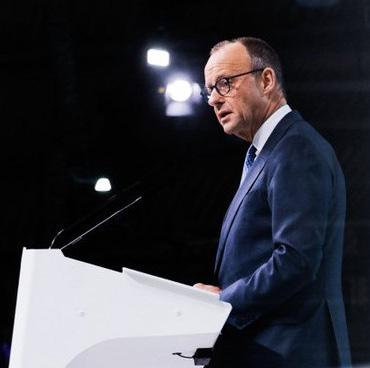
The plan has gained traction after securing backing from Germany, long a sceptic of a Europe-led defence model. A shift in Berlin under Chancellor Friedrich Merz reflects growing concern about US dependability.
The push comes amid mounting unease over Trump’s rhetoric on NATO. He has criticised European allies, calling them “cowards” and describing the alliance as a “paper tiger”. He has also threatened to withdraw support if allies do not align with US priorities, including on Iran.
European leaders say any transition must be gradual.
Finland’s President Alexander Stubb said a “burden shifting from the US toward Europe is ongoing and it will continue”, stressing it should happen in a “managed and controllable” way rather than through a sudden US exit.
“The basic message to our American friends is that after all these decades it’s time for Europe to take more responsibility for its own security and defence,” Stubb said.
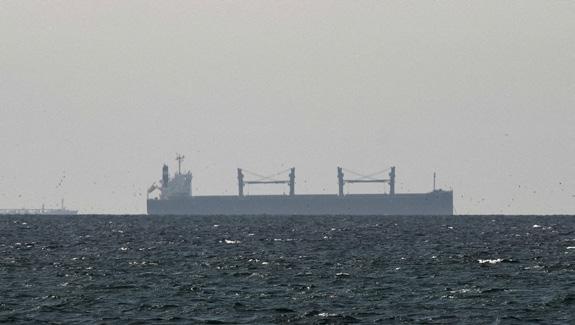
South Korea shared information with Iran on Korean ships stranded in Strait of Hormuz: Report
Seoul, April 14 (IANS) South Korea has shared information with Iran on Korea-related ships stranded in the Strait of Hormuz, sources familiar with the matter said Tuesday, in a possible sign that Seoul may seek to negotiate their passage amid the US-Iran war.
Chung Byung-ha, special envoy to Iran, reportedly shared the details during his consultations with Iranian officials, including efforts to ensure the safety of the vessels and crew members.
Chung is in Tehran this week as the foreign minister's envoy to discuss with Iran the stranded ships and other bilateral matters related to the conflict, Yonhap news agency reported.
Seoul's move appears to factor in the two-week ceasefire between Washington and Tehran, in a possible shift from its previous stance of ruling out any bilateral negotiations with Iran to secure their transit.
According to the oceans ministry, 173 seafarers remain aboard 26 vessels in the Strait of Hormuz. The foreign ministry declined
India opposes two-tier UNSC permanent membership, agrees with G4 proposal for 15-year deferral
United Nations, April 15 (IANS)
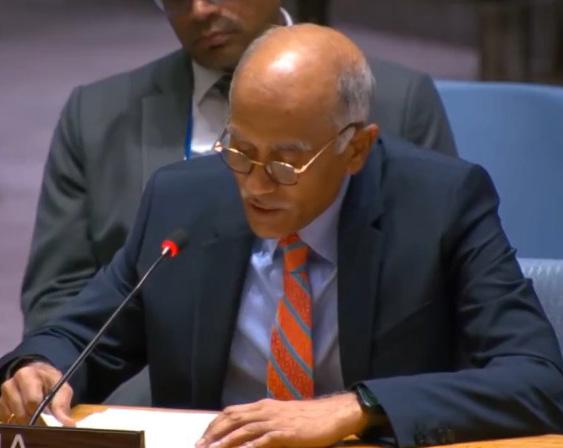
While opposing a discriminatory, two-tier permanent membership level in the Security Council, India has agreed to a G4 proposal that would defer veto powers for 15 years in a reformed body.
"Expanding the permanent category with veto is critical to real reform of the Security Council", India's Permanent Representative P. Harish said on Tuesday.
“A new category under the framework of UNSC (Security Council) reform with or without
veto would complicate an already existing discussion that involves wide-ranging views", he said at a meeting of the Intergovernmental Negotiations (IGN) for Council reforms.
But he also said that India was in agreement with the position of the G4 put forward on its behalf by Brazil’s Deputy Permanent Representative Norberto Moretti for a 15-year delay before new permanent members added to the Council in a reform use their veto.
India is a member, along with Brazil, Germany and Japan, of the group known as G4 that jointly advocates for Council reform and mutually support each other for permanent seats on a reformed Council.
Moretti said, “In order to show openness and flexibility on this issue (of permanent membership), so as to foster constructive negotiations, the G4 proposes that new permanent members
would not exercise the veto until a decision on the matter is reached during a 15-year review”. Explaining the group’s offer, he said the veto issues and their impact "on the Council's ability to act must not serve as a pretext to perpetuate its obsolete composition and to suggest proposals that would further entrench existing inequities favouring the (current) permanent members”, he said. In their campaign against adding permanent members, some countries, notably Italy and Pakistan, have claimed that more countries wielding veto powers would further incapacitate the Council.
Increasing the number of permanent members, Moretti said, would alter the power dynamics in the Council, making it more democratic, even if the veto rights are deferred till a review after 15 years.
Rights body alleges extrajudicial killing of two more Baloch youths in Balochistan
to confirm the details of the consultations with Tehran.
"We are communicating with relevant countries on the safety and passage of the vessels in the Strait of Hormuz," the ministry said.
It remains to be seen whether engagement with Tehran will lead to progress allowing the ships to pass, as the peace talks between the US and Iran, brokered by Pakistan, failed to reach a deal.
The US announcement of its Navy-led blockade of the shipping route is also seen as adding to the complexity of the issue.
The ministry added that it is reviewing humanitarian assistance to the conflict-hit regions in line with calls from the international community.
The United States began a naval blockade of Iranian ports on Monday, ratcheting up pressure on the Islamic Republic after Washington and Tehran failed to reach an agreement during their peace talks in Pakistan over the weekend.
US President Donald Trump confirmed during a press availability that the blockade was in progress, noting that Iran hopes to make a deal with the US "very badly", a remark that raised hopes for diplomatic efforts to end the US-Israeli war against Iran.
Quetta, April 14 (IANS) A leading human rights organisation has alleged that two more Baloch youths were extrajudicially killed in Balochistan by Pakistani security forces, adding to concerns over continuing human rights violations in the region. Human rights body Baloch Yakjehti Committee (BYC) alleged that 18-year-old Muhammad Khalid was brutally killed by
Pakistan’s Eagle Squad personnel on April 10 while travelling to the provincial capital Quetta with two friends to sell their motorbike and purchase furniture.
According to the rights body, the Eagle Squad personnel opened fire without any warning, throwing Khalid’s friends off the motorcycle. Khalid was reportedly isolated, beaten, and shot at close range.
Instead of receiving medical assistance, the BYC stated that Khalid was taken to an unknown location where he was subjected to further violence.
He was later taken to Civil Hospital Quetta in critical condition, where he was allegedly physically abused and tortured
before succumbing to his injuries.
“The systematic pattern of killing is deeply concerning, where excessive use of force and mistreatment of victims and their families are escalating. The current situation in Balochistan is suffocating, where no one is safe. Women, children, and youth are all in constant fear, not knowing when or where they will be unjustly killed,” the BYC stated.
“Law and order have failed in Balochistan. No court or institution can provide security, as they themselves are complicit in the atrocities being committed in Balochistan. The international media's silence over the Balochistan genocide is another grave concern,” it added.
North Korea’s Kim observes test-firing of cruise, anti-warship missiles from key destroyer
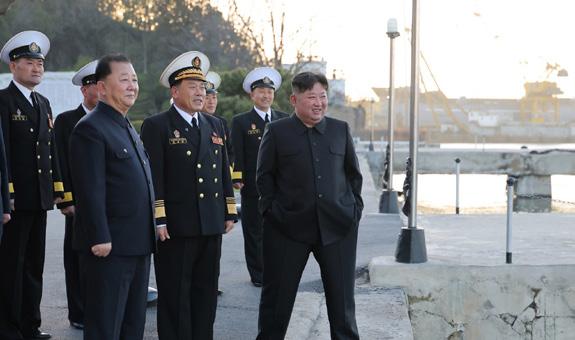
Seoul, April 14 (IANS) North Korean leader Kim Jong-un has overseen a test-firing of strategic cruise and anti-warship missiles from the destroyer Choe Hyon, stressing the country's top priority is to bolster a nuclear war deterrent 'without limit,' state media reported Tuesday.
North Korea conducted the launches of two strategic cruise missiles and three anti-warship missiles from the naval destroyer Sunday in its "operational efficiency test," according to the
Korean Central News Agency (KCNA).
In March, North Korea conducted similar strategic cruise missile tests from the 5,000-tonne warship on two occasions ahead of its commissioning, also observed by Kim. Pyongyang's reference to "strategic" weapons suggests that they could have nuclear capabilities.
During the latest test, Kim said, "The preparedness of our army's strategic action has been strengthened in a qualitative way with various achievements recently made in the field of defense science," according to the KCNA.
He also called for "bolstering up the powerful and reliable nuclear war deterrent steadily and without limit" as the nation's
"most important priority task." Photos published by state media showed Kim overseeing the test from a pier in an unspecified location with key military officials. The cruise missiles flew for 7,869-7,920 seconds and the antiwarship missiles for 1,960-1,973 seconds along the preset flight orbits above the Yellow Sea and hit targets with "ultra-precision hit accuracy," according to the KCNA.
The latest test-firing was aimed at checking the launching control line of the warship's integrated weapon command system and confirming the "accuracy and the rate of hits of the improved active anti-jamming navigation system," it said.
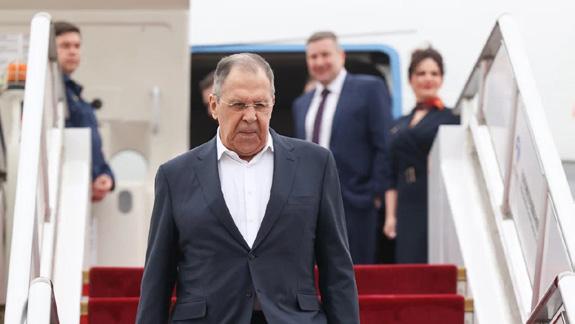
Russian FM Lavrov arrives in China for two-day visit amid West Asia conflict
Beijing, April 14 (IANS) Russian Foreign Minister Sergei Lavrov arrived in China on Tuesday for a two-day official visit to discuss the bilateral cooperation across key sectors, as well as the ongoing conflicts in Ukraine and West Asia.
Earlier on Monday, the Russian Foreign Ministry announced that during his visit to China from April 14-15, the Foreign Minister will hold talks with his Chinese counterpart, Wang Yi.
"The two countries' foreign ministers will discuss a wide range of bilateral cooperation issues, prospects for contacts at various levels, and international collaboration, with a focus on joint work within the UN, BRICS,
SCO, G20, APEC, and other multilateral mechanisms and forums. A detailed exchange of views is expected on a number of hot topics and regional issues, including the Ukrainian crisis and the situation in the Middle East," it added.
Meanwhile, Chinese Foreign Ministry Spokesperson Guo Jiakun said at a regular press briefing that during this visit, the foreign ministers of the two countries will exchange views and coordinate positions on the development of bilateral ties, cooperation in various fields, and international and regional issues of mutual concern, according to Xinhua news agency.
This also came as Russian presidential spokesperson Dmitry Peskov on Monday admitted that the US blockade of the Strait of Hormuz is likely to impact international markets negatively.
"Most likely, such actions will continue to negatively impact
international markets; this can be assumed with a high degree of certainty," the Kremlin spokesman was quoted as saying by Russia's leading Tass news agency during a regular media briefing in Moscow.
Responding to another question, he asserted that details on the US blocking of the Strait of Hormuz remain unclear."Many details here remain unclear and incomprehensible, so I would refrain from any substantive comments at this time," Peskov commented on the US threat of blocking the strait.
On Sunday, the United States made it clear that it will begin enforcing a sweeping maritime blockade of vessels entering or exiting Iranian ports from April 13, escalating tensions after high-stakes talks between Washington and Tehran failed to yield agreement on key issues, including Iran's nuclear programme.
US announces release of American journalist kidnapped in Baghdad
Washington, April 8 (IANS)
US Secretary of State Marco Rubio announced the release of American journalist Shelly Kittleson, who had been kidnapped a week earlier by the Iran-backed Kata'ib Hizballah militia in Baghdad.
In a statement issued on Tuesday (local time), Rubio said, "I am pleased to announce the release
of American journalist Shelly Kittleson, who was recently kidnapped by members of the foreign terrorist organisation Kata'ib Hizballah near Baghdad, Iraq."
He credited coordinated efforts by US agencies, including the Federal Bureau of Investigation, along with Iraqi authorities, for securing her release. He further stated that the arrangement included conditions that ensured her immediate departure from Iraq following her release.
"The US Department of State extends its appreciation to the Federal Bureau of Investigation, the Department of War, US personnel across multiple
agencies, and the Iraqi Supreme Judicial Council and our Iraqi partners, for their assistance in securing her release," Rubio said. He added that the development underscores the US Department of State's commitment to protecting American citizens worldwide.
Rubio said the resolution reflects the Trump administration's "steadfast commitment" to the safety and security of US nationals, regardless of where they are located.
Under President Donald Trump, he said the "wrongful detention or kidnapping of US nationals will not be tolerated".
China set to interfere in November elections: Taiwan’s National Security Bureau
Taipei, April 7 (IANS) China is prepared to intervene in Taiwan's 'nine-in-one' local elections set to be held in November by launching attacks on the Taiwanese Government Service Network (GSN), local media reported on Tuesday citing a recent report released by the National Security Bureau.
The report was submitted to the Legislative Yuan before the bureau’s scheduled briefing at the Foreign Affairs and National Defence Committee last week, Taiwan's leading daily Taipei Times reported.
Mentioning details regarding China's cognitive warfare against Taiwan, the bureau said that the national security team has found about 13,000 suspicious internet accounts and 860,000 disputed messages.
In the report, the bureau said that the disputed messages focus on major foreign affairs, national defence and economic issues, which were made using Artificial Intelligence (AI) and shared through Chinese state
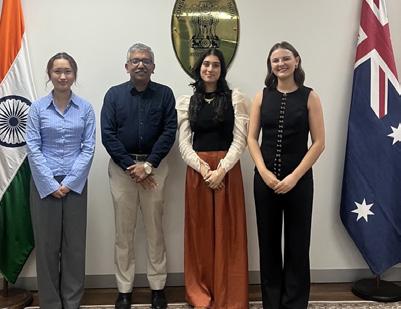
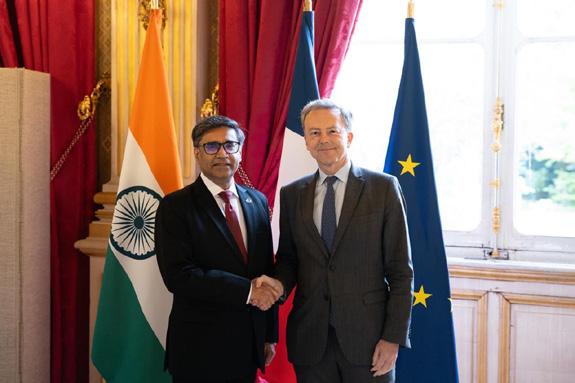
India and France hold Foreign Office Consultations in Paris, focus on expanding ties across sectors
Paris, April 13 (IANS) Foreign Secretary Vikram Misri cochaired the India–France Foreign Office Consultations with Secretary General of the French Ministry of Foreign Affairs Martin Briens in Paris on Monday. According to the Ministry of External Affairs (MEA), the discussions covered a wide range of topics, including defence, civil nuclear energy, space, cooperation in cyber and digital domains, AI, innovation, as well as initiatives aimed at strengthening human and cultural ties, in connection with the latest global and regional developments.
"Foreign Secretary Shri Vikram Misri co-chaired the India–France Foreign Office Consultations with Secretary General of the French Ministry of Foreign Affairs Martin Briens, holding discussions on a wide range of issues including civil nuclear energy, defence and space, cyber and digital cooperation, AI and innovation and people-to-people and cultural ties, along with global and regional developments," MEA spokesperson Randhir Jaiswal posted on X after the meeting. Earlier, the Indian Foreign
Secretary also called on French Minister for Europe and Foreign Affairs, Jean-Noel Barrot, discussing bilateral cooperation and ongoing global challenges, including the situation in the Middle East.
In a post on X, the Indian Embassy in France stated: "Foreign Secretary Vikram Misri called on the French Minister for Europe and Foreign Affairs H.E. Jean-Noel Barrot. Discussions covered key areas of bilateral cooperation, ongoing global challenges including the situation in the Middle East."
The meeting between Misri and Barrot took place amid the ongoing tense security situation in the Middle East after negotiations between the US and Iranian officials failed to produce an agreement. According to the French Foreign Ministry, the Barrot and the Misri emphasised the importance of abiding by the ceasefire agreement reached by Iran and the United States, and of finding a swift and lasting end to the war through diplomatic means. "They also discussed the ways and means of restoring freedom of navigation in the Strait of Hormuz. As India is working closely with the French G7 Presidency, they discussed the responses that our two countries could develop to tackle major macroeconomic imbalances and promote a more inclusive form of multilateralism," read a statement issued by the ministry.
British households face income squeeze as energy prices surge amid Mideast tensions
media, Internet trolls, suspicious accounts and content farms.
The bureau said the GSN was attacked over 173.28 million times during the first quarter of 2026, adding that the actions could be part of Chinese interference in the 'nine-in-one' elections. It said they were created for intelligence-gathering, surveillance and data theft purposes.
"For the elections at the end of this year, China is expected to intervene by adopting a hybrid approach, including spreading disputed content using AIpowered deep-fake technology, publishing false public opinion surveys and setting up illegal betting rings," the bureau said.
London, April 13 (IANS) Surging energy prices triggered by escalating tensions in the Middle East are set to weigh on British households, with new analysis pointing to a deterioration in living standards as global oil markets remain volatile.
According to a report released Monday by the Resolution Foundation, the median workingage households in Britain are projected to be about 480 pounds (about 650 US dollars) worse off over the current financial year than previously expected, as higher energy costs push up inflation and erode real incomes. The think tank said typical household income, once forecast to grow by 0.9 per cent, is now expected to decline by 0.6 per
cent, underscoring the broad impact of higher energy costs, Xinhua news agency reported. Global energy markets have been jolted by renewed geopolitical tensions. Brent crude futures surged 7 per cent to around 101 US dollars per barrel on Monday after US President Donald Trump announced a blockade of the Strait of Hormuz following failed negotiations with Iran.
The strategic waterway, a key chokepoint for global oil shipments, has effectively remained closed since the conflict began, driving sharp gains in oil and gas prices and heightening concerns over inflation and global growth.
"Despite hopes for a sustained peace, the path of this conflict remains uncertain and energy prices remain well above pre-war levels, meaning many households face a decline in their purchasing power this year," said James Smith, the foundation's chief economist.
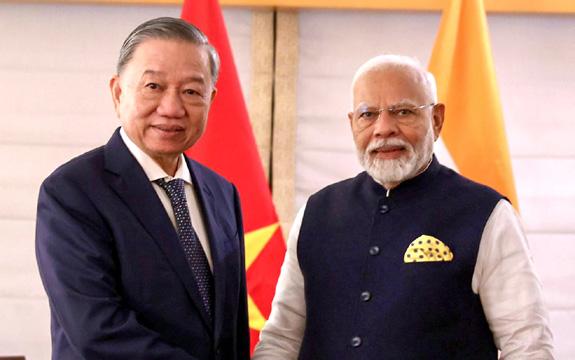
PM Modi congratulates To Lam on his election as Vietnam’s President
New Delhi, April 7 (IANS)
Prime Minister Narendra Modi on Tuesday congratulated To Lam on his election as Vietnam's President and expressed readiness to work with him to further deepen the Comprehensive Strategic Partnership between the two nations. He expressed confidence that the time-tested friendship between the two nations will continue to grow under To Lam's leadership. "Heartiest congratulations to Mr To Lam on his election as President of the Socialist Republic of Vietnam. I am confident that under his leadership, the time-tested friendship between our two countries will continue to grow from strength to strength. I look forward to working closely together to further deepen our Comprehensive Strategic Partnership for the progress and prosperity of our people and the region," PM Modi posted on X. PM Modi's congratulatory message came after Vietnam's
National Assembly on Tuesday confirmed Communist Party of Vietnam Central Committee (CPVCC) General Secretary To Lam as the country's president for the 2026-2031 tenure.
All 495 deputies present voted in support of the draft resolution of the election of Lam. Lam has previously served as Vietnam's President from May 2024 to October 2024. He was elected general secretary of the 13th CPVCC in 2024 and was reelected to the post for the 2026-2031 tenure at the first meeting of the 14th CPVCC on January 23, 2026, reports Xinhua news agency. India and Vietnam share close and warm bilateral relations that are denominated as a comprehensive strategic partnership. India-Vietnam relations were elevated to ‘Comprehensive Strategic Partnership’ during PM Modi's visit to Vietnam in 2016, according to the Indian Embassy in Vietnam statement. The development of India-Vietnam relations is guided by a “Joint Vision for Peace, Prosperity and People” adopted by PM Modi and the then-Vietnam Prime Minister Nguyen Xuan Phuc during the Virtual Summit held on December 21, 2020.
US sees stable China trade, flags WTO crisis
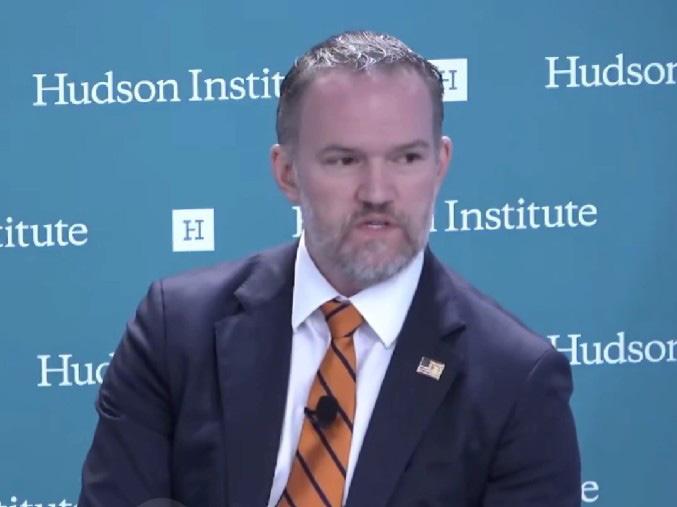
Washington, April 8 (IANS) The United States has described its trade relationship with China as “stable” while warning that the global trading system risks becoming “less relevant” if reforms are not undertaken, US Trade Representative Jamieson Greer said.
Speaking at the Hudson Institute on Tuesday (local time), Greer said Washington is maintaining a cautious balance with Beijing, avoiding escalation while protecting economic and national security interests.
“Right now, the United States and China, I would characterise our economic and trade relationship as stable,” he said. “What we are not looking for is massive confrontation.”
At the same time, he underlined that the US continues to impose “substantial tariffs on Chinese goods,” particularly in advanced manufacturing sectors, as part of efforts to address a “huge trade deficit that's exploded.”
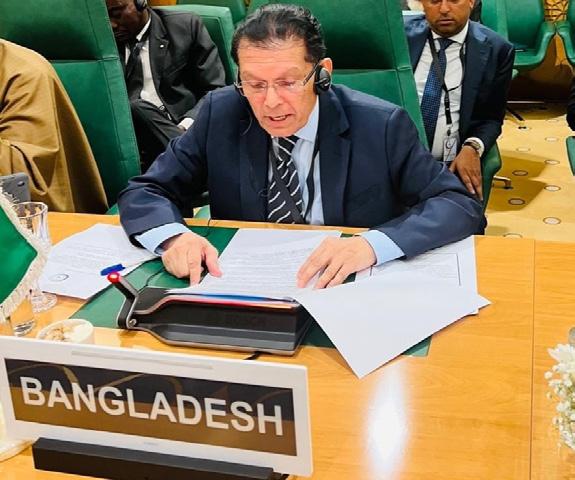
FM Rahman’s ‘goodwill visit’ to India will lay ‘important foundation’ for elevating ties: Dhaka
Dhaka, April 7 (IANS) The Bangladesh Foreign Ministry on Tuesday said that Foreign Minister Khalilur Rahman's "goodwill visit" to India starting later in the day is expected to lay an "important foundation" for elevating the areas of cooperation between both countries to more productive and sustainable levels in the future.
Rahman, said the ministry, will participate in the Indian Ocean Conference scheduled to be held in Mauritius on April 10-12, 2026 and, en route, make a stopover in
New Delhi. "There, he is scheduled to take part in courtesy meetings with India's Foreign Minister, National Security Advisor, and Minister of Petroleum and Natural Gas. These meetings will emphasise the stability and sustained development of bilateral relations based on mutual respect, trust, and shared interests," read a statement issued by the Bangladesh Foreign Ministry on Tuesday afternoon ahead of the minister's departure from Dhaka. "This visit is expected to lay an important foundation for elevating the areas of cooperation between Bangladesh and India to more productive and sustainable levels in the future.
It is noteworthy that Humayun Kabir, Advisor to the Hon'ble Prime Minister on Foreign Affairs, will accompany the Hon'ble Foreign Minister on the Mauritius
conference and India visit," it added.
The trip assumes significance as it is the first visit to India by a Bangladeshi minister since the BNP-led government assumed office in February, indicating a shift in the recalibration of India and Bangladesh ties, which had strained during the 18-month tenure of the interim government led by Muhammad Yunus amid escalating attacks on Hindu minorities and anti-India rhetoric.
The key issues likely to dominate discussions during Rahman's New Delhi visit include the resumption of visa services for Bangladeshi citizens, enhancing energy cooperation, strengthening border management mechanisms, resolving pending matters related to river water-sharing, and boosting trade facilitation measures.
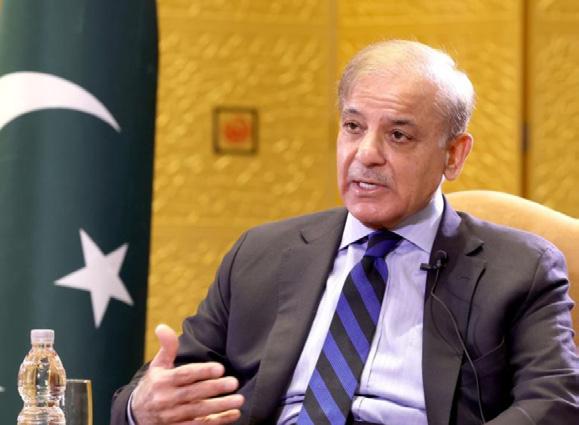
‘Draft - Pakistan’s PM Message on X’: Shehbaz Sharif’s post sparks controversy
Greer noted that the US goods trade deficit with China fell by $130 billion last year, a 30 per cent decline, calling it evidence of “real change.” He added that Washington is also seeking to secure supply chains, including access to rare earth materials, which remain central to ongoing discussions with Beijing.
“We almost always talk about rare earth with the Chinese,” he said, adding that the US is also pursuing domestic selfsufficiency and partnerships to reduce dependence.
In response to a question, Greer also flagged supply chain vulnerabilities in pharmaceuticals, noting that while India remains a major supplier of active pharmaceutical ingredients, critical raw materials often originate in China.
“People will say, well, we get a lot of our APIs from India. That may be true, but the key starting materials, they're getting from China,” he said, adding, “I've had a lot of conversations with the Indians about how to square this circle.”
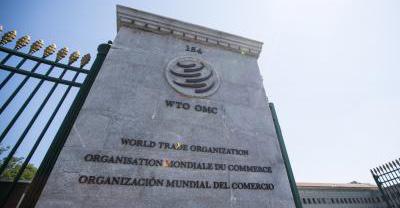
On the broader global trade architecture, Greer delivered a sharp critique of the World Trade Organization (WTO), warning that its inability to adapt could marginalise it further.
Washington, April 8 (IANS) A social media post by Pakistan’s Prime Minister Shehbaz Sharif urging US President Donald Trump to delay military action against Iran triggered a storm of controversy after users spotted what appeared to be a drafting error suggesting external authorship.
The controversy centres on Sharif’s post on X, where he appealed for a two-week
extension to allow diplomacy in the West Asia conflict. Shortly after it was published, users circulated screenshots of the post’s edit history showing it initially carried the line: “DraftPakistan’s PM Message on X.”
According to a report by The Daily Beast, the draft label appeared to have been inadvertently included in the original post before being removed in a subsequent edit.
The outlet reported that the episode “exposes” that the Pakistani prime minister appeared to “cut and paste” the message, fuelling speculation about who authored the text.
The issue gained traction online after journalists and commentators pointed to the phrasing of the draft. Ryan
Grim of Drop Site suggested the message was “likely not written by Sharif,” noting that his own staff would not refer to him as “Pakistan’s PM.”
Social media users also highlighted that the post tagged multiple senior US officials, including Trump, Vice President J.D. Vance, and Secretary of State Marco Rubio, adding to speculation about coordination.
A report by Forbes said the message faced “extra scrutiny” after “an early draft of his plea appeared written by an entity outside of Pakistan.”
The controversy comes at a sensitive moment. Trump cited Sharif’s request as part of his justification for pausing planned strikes on Iran for two weeks.
South Africa sees upcoming summit as platform to bolster economic ties with
New Delhi, April 7 (IANS) South Africa’s High Commissioner to India, Professor Anil Sooklal, sees the upcoming India-Africa Forum Summit (IAFS) as an opportunity to strengthen his country’s economic ties with India across the pharmaceutical, green energy, IT, and agricultural sectors. "The summit aims to see how relations between the African continent and India can be intensified, expanded and maximised," Sooklal said
in an interview published in Independent Online (IOL) news portal.
He pointed out that India is a pharmaceutical hub of the world, with many of its companies operating extensively across the African continent, including South Africa.
"I believe the decision by the African Union to have South Africa as the pharmaceutical hub of the African continent provides us with an opportunity to partner with India in this sector," he observed. He said that green energy was another potential area for cooperation, as India, along with France, founded the International Solar Alliance. The country has taken major strides in solar, wind, and hydrogen as part
India
of its green energy campaign, and these were areas on which South Africa and the African continent are also focusing."They (India) are also on a massive green energy drive. India, with France, founded the International Solar Alliance. High focus on solar energy, wind energy, and green hydrogen," Sooklal said.“We are already partnering with India on the energy front, but I believe we can do much more, especially on green energy,” he remarked. On the industrial front, Sooklal noted that India’s Mahindra& Mahindra has an assembly plant in South Africa, but his government is keen that the Indian tractor maker sets up a manufacturing plant in the country.
conflict. Each of these roles is interconnected. Each contributes to the overall outcome. Why dialogue must take precedence
that actions in one domain inevitably affect others. China and Russia have a role to play in encouraging Iran toward restraint and dialogue.
Why China and Russia need to act, wars must pause, and economic stability must prevail
By Anita Mukherjee
The current global moment is defined less by a single conflict and more by a convergence of crises. Tensions in West Asia, the prolonged war in Eastern Europe, and rising economic uncertainty driven by protectionist policies are all unfolding simultaneously. These developments are not isolated. They intersect, reinforce one another, and together create a fragile international environment where miscalculation can have far-reaching consequences.
Iran’s 10-point proposal in negotiations with US Dialogue over division
At the centre of this complex landscape lies an urgent need for restraint, dialogue, and coordinated global responsibility. In particular, there is a compelling case for China and Russia to step up diplomatic engagement with Iran to prevent further escalation in West Asia. At the same time, all parties involved in ongoing conflicts must recognise the necessity of halting hostilities. Without a pause in confrontation, diplomacy cannot take root.
Parallel to these geopolitical tensions is a broader concern about economic instability, including the disruptive effects of tariff-based policies associated with figures such as Donald Trump. Taken together, these issues point to a single conclusion: the world cannot afford simultaneous escalation across political, military, and economic fronts.
China and Russia: Strategic influence and diplomatic responsibility China and Russia occupy a unique position in the current geopolitical order. Both maintain strategic relationships with Iran, and both possess the diplomatic leverage necessary to influence its decision-making. This places upon them not only an opportunity but a responsibility.
For China, stability in West Asia is directly linked to its economic interests. The region is critical to its energy security and trade routes. Escalation threatens not only supply chains but also broader initiatives that depend on regional connectivity and cooperation. China’s longstanding emphasis on noninterference and dialogue positions it as a potential mediator capable of encouraging restraint.
Russia, on the other hand, has longstanding ties with Iran rooted in both political and strategic considerations. While
Russia’s own involvement in conflicts elsewhere complicates its position, it nonetheless retains influence that can be used constructively. Encouraging Iran to engage in sustained dialogue and avoid escalation would not only serve regional stability but also reinforce Russia’s role as a key diplomatic actor. The expectation is not that China and Russia will dictate outcomes. Rather, it is that they will facilitate conditions under which dialogue can continue.
The necessity of halting hostilities
Diplomacy cannot function in an environment of continuous confrontation. The first requirement for meaningful dialogue is the reduction—if not complete cessation—of hostilities.
In West Asia, tensions involving Iran have the potential to escalate rapidly, drawing in multiple actors and expanding beyond immediate borders. The region’s history demonstrates how quickly localised tensions can transform into wider conflicts.
At the same time, the ongoing war involving Russia and Ukraine continues to exert pressure on global systems. Military engagement, regardless of its justification, carries costs that extend far beyond the battlefield. It disrupts trade, affects energy markets, and contributes to humanitarian crises. A pause in hostilities is not a sign of weakness. It is a precondition for negotiation. Without it, talks become symbolic rather than substantive. Positions harden, mistrust deepens, and the possibility of compromise diminishes.
The role of external support in ongoing conflict
One of the defining features of modern conflicts is the involvement of external actors.
In the case of Ukraine, support from NATO countries has played a significant role in shaping the trajectory of the conflict. While such support is often framed in terms of defence and strategic alignment, it also has the effect of prolonging the conflict. Continued military assistance can reduce incentives for immediate negotiation, as parties may perceive that they can improve their position through sustained engagement. This creates a difficult but necessary conversation.
If the objective is long-term stability, then all actors must consider whether their actions are contributing to resolution or extension of conflict. Encouraging dialogue, rather than reinforcing confrontation, should become the guiding principle. This does not imply abandoning commitments. It implies recalibrating them towards peace.
Economic pressures and the impact of tariff policies
Beyond military tensions, economic policies are also contributing to global instability. Tariff regimes, particularly those associated with protectionist strategies, have introduced uncertainty into international trade.
Policies linked to Donald Trump, including aggressive tariff measures, have had ripple effects across global markets. While such policies are often justified in terms of domestic economic protection, their broader impact can be disruptive.
Tariffs affect supply chains, increase costs for businesses, and create friction between trading partners. In an interconnected global economy, these effects are rarely contained within national borders. They contribute to inflationary pressures, reduce efficiency, and complicate economic recovery. At a time when the global economy is already under strain from geopolitical tensions, additional economic disruptions can amplify instability. This is why restraint is necessary not only in military matters but also in economic policy.
The interconnection of conflicts and economic stability
What makes the current moment particularly challenging is the interconnection between geopolitical conflicts and economic systems. Instability in West Asia affects energy markets. Conflict in Eastern Europe disrupts supply chains.
Protectionist policies alter trade dynamics.
Each of these factors influences the others, creating a cycle of uncertainty. This interconnectedness means that solutions must also be interconnected.
Diplomatic engagement in one region cannot be separated from economic stability in another.
Efforts to reduce conflict must be accompanied by policies that support global cooperation rather than fragmentation.
A case for coordinated global responsibility
The responsibility for addressing these challenges does not lie with any single country or group of countries. It is a collective responsibility that requires coordination across multiple actors.
China and Russia must use their influence to encourage Iran toward dialogue.
Iran must recognise the broader consequences of escalation and remain engaged in diplomatic processes. The United States must approach both geopolitical and economic policy with an awareness of global impact.
NATO countries must consider how their actions influence the duration and intensity of
At its core, the argument for continued dialogue is not idealistic—it is practical.
Conflicts, once escalated, are difficult to contain. Economic disruptions, once triggered, are difficult to reverse.
Diplomacy, by contrast, offers a pathway that, while often slow and complex, remains the only sustainable route to stability. Dialogue does not guarantee agreement.
But it preserves the possibility of agreement. And in a world facing multiple simultaneous pressures, that possibility is invaluable. A moment that demands restraint and leadership
The current global landscape demands a shift in approach. Escalation, whether military or economic, carries costs that extend far beyond immediate objectives. The interconnected nature of modern systems means
Tehran, April 8 (IANS) Iran's Supreme National Security Council said on Wednesday that the two-week ceasefire with the United States does not signal an end to the war, pending negotiations over the details of its 10-point plan.
According to Iran's semi-official Mehr News Agency, the 10 points are -- US commitment to ensure no further acts of aggression; continued Iranian control of the Strait of Hormuz; acceptance of Iran's nuclear enrichment rights; lifting of all primary sanctions; lifting of all secondary sanctions; termination of all United Nations Security Council resolutions against Iran; termination of all International Atomic Energy Agency Board of Governors resolutions against Iran.
Additionally, the demands also include payment of damages to Iran for loss in the war; withdrawal of US combat forces from the region; cessation of hostilities on all fronts, including Lebanon, reports Xinhua, quoting Mehr News Agency.
The Council also released a statement confirming a twoweek ceasefire announced by US President Donald Trump. Key points of the statement mention that Iran has achieved a "great victory" and "forced" the United States to accept its 10-point plan, which includes
At the same time, all parties involved in ongoing conflicts must recognise the necessity of reducing hostilities. Economic policies must also be approached with caution, ensuring that efforts to protect national interests do not undermine global stability. This is not a moment for unilateral action. It is a moment for coordinated leadership. The path forward is not without challenges. Differences will remain. Interests will diverge. But the alternative—continued escalation across multiple fronts—is far more costly. Stability will not be achieved through dominance or isolation. It will be achieved through dialogue, restraint, and a shared commitment to peace.
(The writer is a political scientist. The views expressed are her own.)
controlled passage through the Strait of Hormuz and the necessity of ending the war against all elements of the "axis of resistance."
According to Iran, the United States has accepted Iran's 10-point plan as the basis for negotiations.
The statement further mentioned that under the leadership of Supreme Leader Mojtaba Khamenei and the approval of the Supreme National Security Council, Iran will hold negotiations with the United States in Islamabad to finalise the details of the truce.
The negotiations, with "complete distrust of the American side", will begin on Friday, April 10, in Islamabad, and Iran will allocate two weeks for these negotiations. This period can be extended by mutual agreement, the statement read.
Iran also demanded a binding UN Security Council resolution that would turn all agreements with the United States into binding international law.
It also said that the ceasefire does not mean an end to the war or pending negotiations over details of the 10-point plan.
The statement further called on the Iranians to trust and support the negotiation process with the United States, which is under the supervision of the supreme leader and the "highest levels of the system."
Many Iranians took to the streets to celebrate the announcement of a two-week ceasefire, local media reported.
In Tehran, crowds gathered outside their homes with national flags to celebrate the ceasefire, according to reports from PressTV.
Two dead, eight hospitalised following separate collisions in Australia’s Queensland
Sydney, April 13 (IANS) Two people have died, and eight more have been hospitalised, including five with life-threatening injuries, after three major traffic collisions within 24 hours in the Australian state of Queensland.
The Queensland Police Service (QPS) said in a statement that two people, who have not been identified, were killed when a vehicle lost control and crashed on a highway near the small town of Cryna, 60 km south of Brisbane, around 5:40 p.m. local time on Sunday.
Earlier, emergency services were called to a collision involving two cars and a motorcycle at Mount
Tamborine, 20 km east of Cryna, shortly after 10:30 a.m. local time on Sunday.
The drivers of both cars, along with three passengers and the motorcyclist, were all taken to the hospital, the QPS said.
Local media reported that the motorcyclist, a man aged in his 50s, was airlifted to the hospital in a life-threatening condition.
A man and woman in their 70s and another man in his 20s also suffered life-threatening injuries.
In a third incident, police said that a truck flipped onto its side after colliding with a sedan at Surfers Paradise on the Gold Coast, 70 km southeast of Brisbane, around 4:20 a.m. local time on Monday.
The female driver of the sedan was trapped in the vehicle before being extricated and taken to the hospital with life-threatening
head injuries. The male truck driver was hospitalised in stable condition, Xinhua news agency reported.
The QPS has commenced investigations into all three incidents.
According to official data, as of Sunday, there had been 86 deaths on Queensland roads so far in 2026, up from 73 at the same time in 2025.
Earlier on February 27, two people had died and three more were hospitalised following separate traffic collisions in the Australian state of Queensland.
The Queensland Police Service (QPS) had said that a 28-yearold male driver was killed and his 26-year-old male passenger hospitalised with serious injuries after a car collided with a power pole in the northern suburbs of Brisbane.
India, Australia launch ‘AgriMaitri’ talks to co-design agribusiness solutions: Report
New Delhi, April 3 (IANS) Western Sydney University recently organised a 'AgriMaitri' roundtable initiative to codevelop solutions aimed at strengthening agribusiness ties between India and Australia, with the inaugural meeting held in the national capital, a report has said. According to the report in The Australia Today, the institute hosted the first 'AgriMaitri India Roundtable' at the Australian High Commission, marking a step towards enhancing bilateral collaboration in the agribusiness sector. The initiative seeks to bring together stakeholders from
both countries to jointly design practical and scalable solutions.
Dr Vanita Yadav, who is leading the project, was quoted as saying that the roundtable marked an important beginning in fostering collaboration across diverse groups to address sectoral challenges. The event saw participation from 58 delegates spanning government bodies, industry players, AgTech firms, research institutions, academia, and trade organisations, creating a platform for exchange between Indian and Australian stakeholders. AgriMaitri is being driven by a multidisciplinary team of experts from both countries, supported by partner institutions across India and Australia. It is backed by the Maitri Research Grants under the Centre for Australia-India Relations, which
operates under the Australian Department of Foreign Affairs and Trade. Highlighting the spirit behind the initiative, Yadav said the term 'Maitri', meaning friendship in Sanskrit, underpins the collaborative approach of the programme. The initiative aims to bridge gaps between the complementary strengths of India and Australia in agribusiness by fostering collaboration among policymakers, industry leaders, farmers, and researchers to identify opportunities and address challenges.
Professor Basant Maheshwari said the effort goes beyond discussions and is focused on translating ideas into actionable projects that can generate economic and social benefits for both countries.
Australia welcomes US-Iran ceasefire, calls on parties to uphold humanitarian law, protect civilian life
Canberra, April 8 (IANS)
Australia on Wednesday welcomed the ceasefire announcement involving the United States, Iran and Israel, expressing hope that the agreement will be upheld and lead to a broader resolution of the ongoing conflict in West Asia.
US President Donald Trump has stepped back from the brink of a major military escalation with Iran, announcing a conditional two-week pause in planned
attacks tied to reopening the Strait of Hormuz, a development that came as a big relief to people across the world.
The decision came 90 minutes before the self-imposed 8 p.m.
EST deadline set by Trump for Iran to reach a deal, after backchannel diplomacy involving Pakistan.
Iran signalled tentative acceptance. Foreign Minister Seyed Abbas Araghchi said Tehran would halt operations if attacks stop.
“If attacks against Iran are halted, our Powerful Armed Forces will cease their defensive operations,” he said.
“For a period of two weeks, safe passage through the Strait of Hormuz will be possible via coordination with Iran’s
Tropical Cyclone Maila kills at least 11 in PNG’s Bougainville
Melbourne, April 13 (IANS)
At least 11 people have died, including eight in a landslide, after Tropical Cyclone Maila hit the autonomous Bougainville region of Papua New Guinea (PNG).
PNG media reported on Monday that 11 people were killed in Bougainville, located over 950 km northeast of Port Moresby in the Solomon Sea, amid widespread destruction caused by the cyclone.
According to the National Broadcasting Corporation of PNG, at least eight people were killed by a landslide that destroyed homes in Asiko Village in Central Bougainville.
Two more women died after being hit by fallen trees, the NBC reported, and around 12 other people have been hospitalised with various injuries.
Tropical Cyclone Maila reached Category 5 strength in the Solomon Sea and caused major flooding and destruction across eastern PNG and the Solomon Islands.
In a statement issued on Sunday, PNG Prime Minister James Marape said that the government has begun mobilising essential relief supplies, including food rations, clean water, medical supplies and temporary shelters. "We will make sure we reach every place, every island, and every community that has been affected," he said.
Tropical Cyclone Maila was initially forecast to hit the southeastern tip of the island of New Guinea as a Category 2 or 3 storm, but has since been downgraded to a tropical low, Xinhua news agency reported. The system has been a destructive force through the Pacific region, destroying buildings, creating huge waves, storm surges and landslides.
Earlier on April 8, three people had been reported missing in the Solomon Islands as emergency warnings remain in place in eastern Papua New Guinea (PNG) after Tropical Cyclone Maila reached Category 5 strength in the Solomon Sea.
Australia's Bureau of Meteorology had said that Tropical Cyclone Maila was a Category 5 storm in the Solomon Sea around 425 km west of Honiara and 980 km east of Port Moresby.
Australia’s fuel supply remains strong: Energy minister
April 4 (IANS) Australian Energy Minister Chris Bowen said on Saturday that Australia's fuel supply "remains strong" and more petrol is getting to service stations across the country.
Providing a weekly update on fuel supply, Bowen told reporters in Sydney that Australia had about 39 days' worth of petrol, 29 days of diesel, and 30 days of jet fuel in reserve.
Armed Forces and with due consideration of technical limitations,” he added.
In an official statement, Australian Prime Minister Anthony Albanese said, "Australia welcomes the agreement by the United States, Israel and Iran to a two-week ceasefire to negotiate a resolution to the conflict in the Middle East."
He reiterated Canberra’s consistent position on the issue, stating, "The Australian Government has been calling for de-escalation and an end to the conflict for some time now." Albanese also highlighted the wider economic and strategic implications of the conflict, particularly in relation to disruptions in critical maritime routes.
"The fact these figures are effectively flat means fuel is going out the door to service stations and farmers, and fuel is going in the door at Australia's import terminals and refineries," said Bowen.
He said the number of petrol stations experiencing fuel shortages was declining, and efforts to replenish supplies were ongoing, with 50 shipments on their way to Australia.
"Australia's fuel supply remains strong, still more than 50 ships on their way to Australia," Bowen said, adding there had been six cancelled orders but they had been replaced by new orders.
The total number of service stations without diesel in Australia, which is where the main pressure has been, is 312
out of the around 8,000 service stations, he told reporters, Xinhua news agency reported.
He reiterated the Australian government's call for people to stick to their Easter holiday plans, but to buy no more fuel than they needed and to buy it in the city to help keep fuel supplies up in the country.
Earlier this week, the leader of Australia's most populous state said that the country must have more control over its energy to reduce exposure to future oil price shocks.
Chris Minns, the Premier of New South Wales (NSW), said that Australia must consider how it can reduce its reliance on oil from the Middle East amid the ongoing supply crisis caused by the conflict in the region.
"We need more sovereignty and control over our energy, and we need to be able to drive our economy independent of what happens in the Middle East," he said on Tuesday.
He said that policymakers in Australia must start making decisions now so that the country is not continually affected by conflicts in the Middle East. Minns said that his government would use the upcoming state budget for the 2026-27 financial year and the campaign for the 2027 state election to announce long-term measures to electrify NSW's economy.
Sydney,
From the editor’s desk
A conflict without closure Driving change
Australia’s fuel efficiency campaign is a timely and necessary step
There are moments in governance when the most effective policy interventions are not those that demand sweeping structural change, but those that engage directly with everyday behaviour.
The Federal Government’s decision to launch a $20 million nationwide campaign encouraging motorists to reduce fuel consumption through more efficient driving practices reflects precisely such an approach. It is timely, necessary, and grounded in practical realities.
At the heart of this initiative lies a simple but powerful recognition: fuel consumption is not determined solely by infrastructure or technology, but also by human behaviour. While long-term solutions such as electric vehicles and alternative energy sources remain essential, they require time, investment, and systemic transformation. In contrast, driving habits can be adjusted immediately. This makes behavioural change one of the most accessible and effective tools available to policymakers. The need for such a campaign is evident in the current economic environment.
Rising fuel costs have placed increasing pressure on household budgets, particularly for those who rely heavily on private transport. For many families, fuel expenditure is not a discretionary expense but a necessity tied to work, education, and daily life. In this context, even small reductions in fuel consumption can provide meaningful financial relief.
What makes the campaign particularly significant is its focus on achievable actions. Encouraging smoother acceleration, maintaining steady speeds, reducing unnecessary idling, and ensuring regular vehicle maintenance are not complex or costly measures. They are practical adjustments that can be adopted without disruption. This accessibility increases the likelihood of widespread participation, which is essential for the campaign’s success. Beyond individual savings, the broader economic implications are equally important. Reduced fuel consumption at a national level can contribute to greater energy efficiency and resilience. In a global environment marked by uncertainty in energy markets, lowering demand becomes a strategic advantage. It reduces vulnerability to
The Iran crisis continues to weigh on the international community
By Arun Sabharwal
Texternal shocks and enhances the country’s ability to manage fluctuations in supply and price. The environmental dimension of the campaign further reinforces its importance. Road transport remains a significant contributor to emissions, and addressing this sector is critical to achieving sustainability goals. By promoting more efficient driving practices, the campaign integrates environmental responsibility into everyday behaviour. It demonstrates that meaningful contributions to sustainability do not always require large-scale changes; they can begin with individual actions.
However, the true strength of the campaign lies in its emphasis on awareness. Many drivers are unaware of how their habits influence fuel consumption. Actions such as rapid acceleration or prolonged idling are often performed without consideration of their cumulative impact. By bringing these patterns into focus, the campaign encourages a shift from unconscious behaviour to informed decision-making. Awareness, in this context, is not merely about information; it is about transformation. When individuals understand the consequences of their actions, they are more likely to adjust them. This creates a ripple effect, where small changes at the individual level contribute to larger collective outcomes. The campaign also has the potential to shape social norms.
As efficient driving practices become more widely recognised and adopted, they can evolve into shared standards of behaviour. This shift from individual choice to collective expectation reinforces the impact of the initiative, making it more sustainable over time. Importantly, the campaign reflects a balanced approach to policy. It does not rely on enforcement or restriction but on engagement and encouragement. This approach respects individual autonomy while guiding behaviour in a direction that benefits both society and the environment. It recognises that lasting change is more likely to occur when individuals are active participants rather than passive recipients of policy. There is also an educational dimension to consider. By integrating its message across multiple platforms and community outreach efforts, the campaign extends beyond immediate impact.
here are conflicts that erupt suddenly and fade with time, and there are those that linger — shaping global anxieties long after the first exchange has taken place. The ongoing tensions involving Iran on one side and the United States and its allies on the other fall into the latter category. What makes this crisis particularly unsettling is not only its persistence, but the repeated failure of diplomatic efforts to produce meaningful progress. The recent breakdown of talks, reportedly facilitated by Pakistan between a delegation led by JD Vance and Iranian representatives, has once again underscored the fragility of the situation.
At one level, the failure of these talks is disappointing. In a world already burdened by multiple conflicts and economic uncertainties, any attempt at dialogue is seen as a step towards de-escalation. Yet, a closer examination suggests that the outcome may not have been entirely unexpected. The structural realities surrounding the negotiations — including the role of intermediaries, the rigidity of positions, and the broader geopolitical context — made a breakthrough unlikely from the outset.
A key issue lies in the question of mediation. Pakistan’s involvement, while perhaps well-intentioned, raises concerns about diplomatic legitimacy and effectiveness. In high-stakes negotiations of this nature, the credibility of the intermediary plays a crucial role. Mediation is not merely about facilitating dialogue; it requires trust from all parties, strategic leverage, and the ability to influence outcomes. Without a clear locus standii, any intermediary risks being perceived as peripheral rather than central to the process. This lack of positioning can weaken the very foundation of negotiations. When parties do not view the mediator as a decisive actor, the process tends to become procedural rather than substantive. Discussions may continue for hours — as seen in the reported 21-hour engagement — but without movement towards compromise. Time, in such cases, becomes a measure of endurance rather than progress. Equally significant are the positions adopted by the primary actors. Iran’s stance, characterised by firm and nonnegotiable demands, reflects a strategic calculation. From its perspective, concessions may be interpreted as weakness, particularly in a context where external pressure is perceived as coercive. Maintaining a rigid position allows it to project resilience, both domestically and internationally. On the other side, the United
States faces its own constraints. Diplomatic flexibility is often limited by political considerations, strategic commitments, and alliance dynamics. Even when there is a willingness to engage, the scope for compromise may be narrow. Responding favourably to demands that are seen as excessive or one-sided carries its own risks, both in terms of credibility and long-term strategy. A critical omission in the recent round of talks further weakened their credibility — the absence of Israel from the negotiating framework. Given that Israel remains one of the principal stakeholders in the regional security architecture, its exclusion meant that a central dimension of the conflict was left unaddressed. Israel’s longstanding concerns regarding Iran’s strategic posture, particularly in relation to regional security and perceived threats, were neither directly represented nor substantively engaged. This exclusion carries significant implications. Negotiations that do not incorporate all key stakeholders often struggle to produce durable outcomes. Even if agreements are reached, their sustainability remains uncertain when critical actors feel sidelined. In this case, Israel’s fears remained unassuaged, and its absence from the process diminished the possibility of a comprehensive settlement. Diplomatic processes, particularly in conflict zones, require inclusivity to be effective. The omission of a key regional actor not only weakens trust but also signals a fragmented approach to conflict resolution. It reinforces the perception that the talks were limited in scope and unlikely to address the full spectrum of concerns. The broader geopolitical environment further complicates matters. The warning issued by the United States to China against assisting Iran introduces an additional layer of tension. It signals that the conflict is no longer confined to bilateral or regional dimensions but is increasingly entangled in global power dynamics. When major powers become involved, even indirectly, the space for compromise narrows. Such developments reinforce the perception that the talks were unlikely to succeed. Negotiations conducted under conditions of strategic rivalry often struggle to produce outcomes, as each move is interpreted not only in diplomatic terms but also through the lens of power competition. The consequences of this deadlock extend far beyond the negotiating table. One of the most immediate impacts is on global energy markets. The instability associated with the conflict has disrupted supply expectations, contributing to volatility in oil
prices. For countries dependent on energy imports, this translates into economic strain — higher fuel costs, increased inflationary pressures, and broader uncertainty.
The international community, therefore, finds itself caught in a situation where a regional conflict generates global repercussions. Energy security, which underpins economic stability, becomes vulnerable to geopolitical developments. The ripple effects are felt across sectors, from transportation to manufacturing, affecting both developed and developing economies.
It is in this context that the response of global leaders becomes significant. Penny Wong’s expression of disappointment at the failure of the talks, coupled with her call for the resumption of negotiations and the continuation of ceasefire efforts, reflects a measured and constructive approach. Rather than escalating rhetoric, it emphasises the importance of dialogue, even in the face of setbacks. This approach is important for several reasons. First, it acknowledges that diplomatic processes are rarely linear. Setbacks are part of negotiation, particularly in complex conflicts. Maintaining a commitment to dialogue ensures that channels of communication remain open, which is essential for any future progress.
Second, it reinforces the principle that conflict resolution requires persistence. Abandoning negotiations after a single failure risks entrenching positions further. By advocating for continued engagement, such positions contribute to keeping the possibility of resolution alive. However, it is equally important to recognise that not all negotiations are equally viable. The effectiveness of future talks will depend on addressing the structural issues that undermined the recent attempt. This includes identifying credible intermediaries, creating conditions conducive to compromise, and ensuring that all relevant stakeholders are meaningfully included.
The international community also has a role to play in shaping these conditions. Multilateral institutions, regional organisations, and key global actors can contribute by facilitating dialogue, building trust, and encouraging restraint. Collective engagement, when coordinated effectively, can create an environment where negotiations have a greater chance of success.
At a deeper level, the persistence of this conflict highlights the limitations of reactive diplomacy. Waiting for crises to emerge before initiating dialogue often reduces the scope for resolution.
Politicisation of identity, migration, and language in Assam, West Bengal dominate; override addressal
New Delhi, April 9 (IANS) As Assam voted on Thursday, and West Bengal will on April 23 and 29, one contentious issue that dominates all is that of infiltration – especially of Bengali-speaking Muslim migrants – from Bangladesh.
Issues of identity, migration, and language in West Bengal and Assam are not recent, but have been there for a long time, and have even led to clashes in the past.
Immigration has significantly dominated politics, particularly in the run-up to elections.
Subsequent governments have been accused of ignoring the "demographic threat" for electoral purposes, especially in West Bengal.
With the intense polarisation of electors on religious and regional lines lately, the issue has snowballed into a major political debate.
Reports like the 2018 Brahma Committee warned of risks to indigenous Assamese communities from Bangladeshi immigration, particularly in terms of land rights and encroachment.
Assam Chief Minister Himanta Biswa Sarma has warned that Assamese Hindus risk becoming
a minority in their own land due to decades of unchecked immigration. This echoes the long history of agitation in Assam, beginning with the student-led movement of 1979, which culminated in the Assam Accord of 1985.
That agreement laid the groundwork for the National Register of Citizens (NRC), a process that remains contentious.
Census data highlights shifting linguistic balances. Between 2001 and 2011, Assamese speakers grew by 16 per cent, but their share of the population fell slightly.
Bengali speakers grew by 23 per cent, increasing their share by over one percentage point. These figures fuel anxieties about demographic change.
Yet, census records from as early as 1911 reveal the difficulty of categorising language and identity in Assam, where bilingualism and colonial administrative practices blurred distinctions. This complexity makes it hard to definitively identify "illegal immigrants".
Meanwhile, West Bengal’s ruling Trinamool Congress has consistently opposed the NRC, alleging it is designed to expel Bengali speakers.
Now, the Election Commission’s Special Intensive Revision (SIR) has also been in the spotlight on the same lines. Citing stories that Bengali speakers were reportedly being harassed, Trinamool chairperson and West Bengal Chief Minister Mamata Banerjee even urged her party cadres to
continue protests against such incidents. She has framed this as a defence of Bengali pride, hoping to mobilise sentiment ahead of elections.
Her aide-turned-rival, Suvendu Adhikari of the BJP, counters that these protests are a diversion from corruption scandals and governance failures. He has accused the Trinamool of sheltering Rohingya migrants to expand its vote bank.
Thus, the debate over migrant rights doubles as a proxy battle over credibility and nationalism. Banerjee seeks to rally Bengali pride in her state against perceived outsider hostility. In Assam, the BJP emphasises the protection of indigenous identity against demographic dilution. The clash reflects deeper tensions between regional pride and national integration, between cultural identity and political expediency. Migration into Assam and Bengal has deep roots. During colonial times, both regions were part of the Bengal Presidency, which facilitated the settlement of Bengali-speaking Hindus and Muslims.
Later, the partition of India in 1947 and the creation of Bangladesh in 1971 triggered subsequent waves of refugees.
Even today, porous borders allow undocumented migrants to slip in, often allegedly aided by touts who help them acquire identity papers. However, there are linguistic differences between Bengali spoken in India and Bangladesh.
Revamped, digitally equipped bus stations in UP will enhance passenger safety: Minister
Lucknow, April 12 (IANS) Uttar Pradesh Transport Minister Dayashankar Singh said on Sunday that revamped and digitally equipped bus stations in the state will enhance passenger safety.
His reaction followed after the State Cabinet approved a project of the Uttar Pradesh State Road Transport Corporation (UPSRTC) to redevelop 49 major bus stations.
The decision is viewed as a significant step towards modernising and strengthening the state's transport system. The project that will be developed under the second phase of the UPSRTC is based on the publicprivate partnership (PPP) mode
and DBFOT (Design, Build, Finance, Operate and Transfer) framework model.
Under this initiative, 49 major bus stations across the state will be redeveloped to match world-class standards.
Minister Dayashankar Singh said, "The bus stations developed under the PPP model will feature enhanced arrangements for cleanliness, safety, and digital information systems. In addition, organised parking, commercial complexes, and allied services will be included to develop smart and sustainable infrastructure."
He also told that the project will be implemented under the DBFOT model in order to ensure that there is no direct capital expenditure from the state government.
The development will be carried out through private investment, while the ownership of the land will remain with the corporation.
The Transport Minister added, "This initiative by Chief Minister Yogi Adityanath-led Uttar Pradesh government will create new employment opportunities in the state, boost economic
JD-U supporters hold posters, urge Nitish Kumar to reconsider RS decision
Patna, April 4 (IANS) Political activity in Bihar has intensified as supporters of Chief Minister Nitish Kumar, on Saturday, publicly urged him to reconsider his move to the Rajya Sabha.
Across key intersections in Patna, newly installed posters by Janata Dal-United (JD-U) workers have added a fresh layer to the unfolding political narrative.
These posters carry emotional appeals, urging Nitish Kumar not to step down from the Chief Minister's post.
The messaging reflects a deep sense of concern among JD-U workers and supporters, who fear a leadership vacuum if he exits the state's political centre stage.
At the same time, the posters project Nitish Kumar's son Nishant Kumar as the "Future Chief Minister of Bihar".
This dual messaging -requesting Nitish Kumar to stay while simultaneously promoting Nishant Kumar -- has sparked intense speculation within political circles.
Notably, this is not the first instance where Nishant Kumar has been brought into the
spotlight.
Earlier, too, JD-U workers had floated posters demanding Nishant Kumar's entry into active politics.
However, projecting him directly as a future Bihar Chief Minister marks a significant escalation.
The development also hints at possible differences in political expectations within the JD-U. While some reports suggest that if Nitish Kumar steps down, the Chief Minister's post could go to a Bharatiya Janata Party (BJP) leader as part of alliance dynamics, JD-U workers appear keen on retaining leadership within their own fold -- potentially through Nishant Kumar.
Overall, these posters have not only stirred public debate but also underscored the uncertainty and internal churn within Bihar's political landscape.
The political atmosphere in Bihar is growing increasingly fluid as speculation intensifies around the next big transition.
According to sources, Chief Minister Nitish Kumar is likely to take oath as a Rajya Sabha member on April 10 -- an event widely expected to be followed by his resignation from the Chief Minister's post.
With this anticipated move, conversations around the formation of a new government in Bihar have gained significant traction.
Satheesan-Vijayan development debate challenge takes centre stage in poll-bound Kerala
activities, and accelerate urban development. At the same time, passengers will benefit from safe, convenient, and high-quality transport services."
Dayashankar Singh described the project as a significant step towards building modern transport infrastructure in Uttar Pradesh.
According to the official information, the bus stations will be transformed into modern, world-class, and multi-purpose bus terminals, offering advanced facilities to passengers.
The tender process for selecting developers under the project will begin soon and will be conducted in a transparent and competitive manner.
Moreover, Minister Singh had said that the state Cabinet has approved three proposals submitted by the transport corporation.
The other two proposals were about providing land free of cost for construction of bus stations at Narora area in Bulandshahr district, and also Tulsipur and Sikandrarao tehsils in Balrampur and Hathras, respectively.
Thiruvananthapuram, March 30 (IANS) With the Assembly election campaign entering its final and most intense phase, Kerala’s political discourse is being shaped by a high stakes challenge, an open debate between Chief Minister Pinarayi Vijayan and Leader of the Opposition, V.D. Satheesan.
What began as a political dare has quickly evolved into a potential centrepiece of the campaign narrative.
Satheesan’s call for a public debate on development has been met with a guarded but clear willingness from Vijayan, setting the stage for a direct face-off between the two principal rivals. Responding to the challenge, the Chief Minister said the LDF government’s performance, its “report card” could form the basis of such a debate.
Listing out what he described as the government’s “A plus” achievements, Vijayan questioned whether the Opposition was prepared to engage on those issues.
Satheesan, however, upped the
ante, making it clear that the Chief Minister could decide the venue and timing.
“I will be there wherever and whenever it is fixed. Let the people decide,” he said, positioning the debate as a test of credibility before voters.
The Leader of the Opposition also mounted a sharp critique of the government’s claims, arguing that even after ten years in power, the LDF had not matched the housing output achieved during the tenure of the previous Oommen Chandyled Congress government.
He maintained that these figures were drawn from official replies given by ministers in the Assembly.
Vijayan, on his part, insisted that the Assembly remains the most appropriate forum for such discussions and accused the Opposition of failing to engage meaningfully there.
He questioned the Opposition’s contribution to Kerala’s development and its response when the State allegedly faced neglect from the Centre, adding that he was ready for a debate if these questions were addressed. The exchange has further intensified with sharp political rhetoric, with both sides seeking to frame the debate as a referendum on governance, performance, and credibility.
India remains open, attractive destination for global capital: SEBI chief
New Delhi, April 11 (IANS) The Securities and Exchange Board of India (SEBI) Chairman Tuhin Kanta Pandey has said that India continues to remain an open and compelling destination for global capital, supported by strong macroeconomic fundamentals, a rapidly expanding investor base, and a reform-oriented policy environment.
The SEBI chief was speaking at
an interactive session -- jointly organised by the Confederation of Indian Industry (CII) and the Consulate General of India (CGI) -- with global investors and venture capital leaders in San Francisco in the US.
The event brought together industry leaders and members of the Silicon Valley venture capital ecosystem to deliberate on investment opportunities and the evolving India-US economic partnership.
Addressing investors, Pandey reaffirmed SEBI’s commitment to a transparent, consultative and technology-driven regulatory framework, while underscoring India’s resilience amid global
volatility.
"India remains open and welcoming to global capital. SEBI’s approach is risk-based and facilitative, with a strong focus on simplifying access for foreign investors, strengthening market integrity, and ensuring long-term stability of our capital markets," he said.
He highlighted recent measures to simplify Foreign Portfolio Investor (FPI) registration and re-KYC processes, increased use of digital platforms, growth in initial public offerings (IPOs) and alternative investment funds, and the rising role of domestic investors in providing market depth and resilience.
Piyush Goyal discusses bilateral ties and trade with world leaders
New Delhi, April 8 (IANS) Commerce and Industry Minister Piyush Goyal on Wednesday said he had meaningful virtual interactions with several world leaders to further strengthen bilateral ties and trade.
Goyal has a “constructive virtual interaction” with Dr. Thani bin Ahmed Al Zeyoudi, Minister of Foreign Trade, the UAE.
“We discussed opportunities to further strengthen India–UAE trade ties and expand avenues for deeper bilateral cooperation. Look forward to advancing our
strategic partnership to new heights,” the minister said on social media platform X.
Goyal also interacted with Francisco Perez Mackenna, Minister of Foreign Affairs, Republic of Chile.
“Discussed advancing our FTA negotiations and explored avenues to further strengthen bilateral ties and trade. Look forward to deepening our collaboration and concluding a mutually beneficial agreement soon,” he informed.
He also had a productive virtual interaction with Jasem Mohamed AlBudaiwi, Secretary General of the Gulf Cooperation Council (GCC). “We discussed strengthening India-GCC cooperation across various
sectors and reaffirmed our shared commitment to enhancing economic and strategic ties,” said Goyal.
He also had a fruitful virtual meeting with Osama Khaled Boodai, Minister of Commerce and Industry of Kuwait.
“Exchanged views on expanding bilateral trade relations and deepening collaboration across key sectors,” said Goyal. He also virtually addressed the launch of the India-USA Trade Facilitation Portal.“It is a forward-looking initiative that will enable direct engagement between Indian exporters & US importers, providing greater opportunities to further deepen our bilateral trade partnership,” said Commerce Minister.
India opens digital portal for US business towards $500 billion bilateral trade target
New York, April 9 (IANS) The doors to India-US trade have been opened wider with the launch of a digital portal to bring businesses from the two countries together in the march to $500 billion annual trade between the two great democracies, according to
Commerce Minister Piyush Goyal.
“Forged on shared democratic values, fueled by entrepreneurial spirit and driven by unrelenting pursuit of innovation, our partnership is special”, Goyal said on Wednesday at the launch of the India-US Trade Facilitation Portal at India's consulate-general here.
In his video message from New Delhi, he said, “Bilateral trade is growing rapidly towards the $500 billion ambition set by both sides, and this goal must also benefit MSMEs (Micro, Small, and Medium Enterprises), our farmers, and our fishermen to become more inclusive”, he said.
“We must focus in this era of digital transformation and resilient supply chain on becoming more self-reliant”, he added.
Foreign Secretary Vikram Misri, who inaugurated the portal
India’s forex reserves jump
$9.06 billion to $697.12 billion
Mumbai, April 10 (IANS) India’s foreign exchange reserves rebounded sharply in the first week of April, reversing the previous week’s decline, as the country’s forex reserves rose by $9.063 billion, according to data released by the Reserve Bank of India (RBI) on Friday.
The country’s forex jumped to $697.121 billion for the week ended April 3. This comes after a significant drop of $10.288 billion in the preceding week ended March 27, when reserves had slipped to $688.058 billion.
The latest increase was driven by gains across key components of the reserve basket. Gold reserves recorded a sharp rise of $7.221 billion, taking their total value to $120.742 billion.
Foreign currency assets (FCA), the largest component of the reserves, also increased by $1.784 billion to $552.856 billion, according to the central bank’s data.
FCA includes assets denominated in major global currencies such
as the US dollar, euro, yen and pound, with values expressed in dollar terms.
Additionally, special drawing rights (SDRs) saw a marginal increase of $58 million to $18.707 billion during the week.
India’s reserve position with the International Monetary Fund remained unchanged at $4.816 billion.
Despite the recent volatility, India’s forex reserves remain below their all-time high of $728.494 billion, which was recorded in the week ended February 27, before the onset of the West Asia crisis that triggered a phase of depletion.
Foreign exchange reserves play a crucial role in maintaining economic stability, helping the central bank manage currency fluctuations and ensuring smooth external trade.
A robust reserve position allows the RBI to intervene in the currency market to support the rupee during periods of volatility, while also reflecting sustained inflows of foreign currency into the economy.
Meanwhile, in the week ended February 27, India's foreign exchange reserves surged by $4.885 billion to an all-time high of $728.494 billion, according to RBI earlier data.
WTO reform stalls, US pushes own trade path
Washington, April 8 (IANS)
remotely from Washington, said global developments, from the Covid pandemic to the evolving global geopolitcal shifts, have highlighted the importance of diversified, resilient and reliable supply chains.
“The disruptions that all of you have been witnessing over the last several years have exposed vulnerabilities in the global economic and especially the trading makeup”, he said.
“But just where there are vulnerabilities, there are also opportunities”, he said. There is much greater emphasis on the need for trusted partnerships, for dependable geographies, and for partners, “and it is in this context that the idea of a dedicated digital platform for facilitating trade has emerged”, he said.
The United States has sharply criticised the functioning of the World Trade Organization (WTO), with US Trade Representative Jamieson Greer calling it “ineffective and dysfunctional” after the 14th Ministerial Conference failed to deliver meaningful reform, particularly on digital trade rules.
In an op-ed published in The Wall Street Journal on Wednesday, following the conference in Yaoundé, Cameroon, Greer said the WTO is no longer a “serious forum” and warned that its inability to act is undermining global trade stability.
“I arrived a skeptic of the WTO and left even more so,” Greer wrote, describing a meeting marked by low participation from senior ministers and limited progress on key issues.
At the centre of the dispute was the long-running moratorium on tariffs for digital goods such as software and music — a policy in place since 1998. The United States, along with 24 co-sponsors,
had proposed making the moratorium permanent to bring certainty to digital trade.
“That would prevent future ministerial conferences from wasting time on a non-issue while demonstrating that the WTO could have a role in future trade negotiations,” Greer wrote. Despite broad backing, the proposal failed due to the WTO’s consensus-based decisionmaking system, which requires agreement from all 166 member countries. Some nations pushed for a limited extension, while others tied support to unrelated demands. “Despite broad support, the need for consensus among all WTO member countries prevented passage,” Greer said. Efforts to reach a compromise also collapsed. While 164 members were prepared to extend the moratorium for about four years, Greer noted that “delegations from Brazil and Turkey insisted on maintaining the two-year renewal cycle,” blocking progress. The breakdown highlights deeper structural issues within the WTO, according to the U.S. assessment. Greer argued that divergent priorities among member states and the ability of countries to hold decisions hostage make meaningful reform nearly impossible.
Trump claims Iran ‘has no cards’ in ongoing negotiations
Washington, April 13 (IANS)
US President Donald Trump has asserted that Iran’s military capability has been severely degraded and claimed Tehran has “no cards” left in ongoing negotiations.
In an interview to Fox News, Trump repeatedly cited Iran’s past rhetoric against the United States, saying: “For years, I’ve had to listen to them say, death to America, right? They say, death to America, death to Israel… we will destroy America.”
He questioned the lack of international pushback against such statements. “Now, does anybody ever complain to you when they say that? I think that’s a big step worse. Death to America,” he said.
Trump argued that recent US actions had fundamentally altered the strategic balance. “When I talk about civilisation, it’ll be much different because their military will be totally gone,” he said,
adding that Iran’s armed forces were “pretty much gone now.”
He also pointed to what he described as changes in Iran’s leadership dynamics. “We have had regime change because the people we dealt with yesterday were, frankly, very smart, very sharp,” he said, contrasting them with earlier leadership under Ayatollah Khomeini.
The President claimed that Tehran had spent vast sums on military capabilities. “They spent all their money on weapons.
We’ve destroyed most of those weapons,” he said.
Trump framed his own rhetoric as instrumental in bringing Iran to negotiations. “That statement got them to the bargaining table and they haven’t left,” he said, predicting a favourable outcome for Washington. “I predict they come back and they give us everything we want.”
He underscored his negotiating position, saying: “I told my people I want everything. I don’t want 90 per cent. I don’t want 95 per cent. I told them I want everything.”
Describing Iran’s current position, Trump said: “They have no cards… Their Navy is gone. Their Air Force is gone. Totally gone. They have nothing.”
Trump weighs NATO exit after meeting with Mark Rutte
Washington, April 9 (IANS)
US President Donald Trump discussed the possibility of the United States stepping back from NATO, as he met with Secretary General Mark Rutte, amidst widened differences over the alliance’s response to the Iran conflict.
The White House said Trump has been considering withdrawing from NATO, with Press Secretary Karoline Leavitt quoting the President as saying the alliance had fallen short.
“They were tested and they failed,” she told reporters at a White House news conference.
Leavitt added that leaving NATO remains under discussion.
“It’s something the President has discussed, and I think it’s something the President will be discussing,” she said.
The meeting came amid Trump’s growing frustration with European allies for not
US to blockade ships entering or exiting Iranian ports after talks fail
Washington, April 13 (IANS) The United States will begin enforcing a sweeping maritime blockade of vessels entering or exiting Iranian ports from April 13, escalating tensions after high-stakes talks between Washington and Tehran failed to yield agreement on key issues, including Iran’s nuclear programme.
The move, announced by US Central Command (CENTCOM), follows a presidential directive and will target “all maritime traffic entering and exiting
Iranian ports”, including those along the Arabian Gulf and Gulf of Oman.
“The blockade will be enforced impartially against vessels of all nations,” CENTCOM said, adding that US forces would not impede ships transiting the Strait of Hormuz to and from non-Iranian ports. The blockade would begin at 7.30 pm IST on Monday, as per a CENTCOM release.
Commercial mariners have been advised to monitor official navigation warnings and remain in contact with US naval forces while operating in the region.
The announcement came hours after US President Donald Trump declared that negotiations with Iran had stalled over its nuclear ambitions, despite progress on other fronts.
“Most points were agreed to, but the only point that really mattered, NUCLEAR, was not,” Trump said, announcing that the
US Navy would begin “the process of BLOCKADING any and all Ships trying to enter, or leave” the Strait of Hormuz.
He accused Iran of “WORLD EXTORTION” by leveraging threats of naval mines in the strait, a critical global energy corridor. “No one who pays an illegal toll will have safe passage on the high seas,” he said, adding that US forces would also “begin destroying the mines the Iranians laid in the Straits.”
Iran, however, pushed back sharply, suggesting the blockade derailed near-final negotiations. Iranian Foreign Minister Seyed Abbas Araghchi said Tehran had engaged “in good faith to end war” and was “just inches away” from an agreement before encountering “maximalism, shifting goalposts, and blockade.” “Good will begets good will. Enmity begets enmity,” he said.
White House forced Pakistan to reach Iran: Report
Washington, April 9 (IANS)
fully backing US military actions against Iran.
Rutte acknowledged the tensions but said most allies had supported Washington. “He is clearly disappointed… but the large majority of European nations has been helpful,” he told CNN after the meeting.
He described the talks as “very frank, very open.”
Rutte said European countries had provided “basing, logistics, overflights” and other support during the conflict.
At the same time, he conceded that not all allies met expectations. “Some of them yes,” he said when asked if certain NATO countries had failed.
The talks also covered broader coordination, including efforts to secure shipping routes through the Strait of Hormuz and diplomatic moves to end the Russia-Ukraine war.
In a separate engagement, Secretary of State Marco Rubio met Rutte and discussed “increasing coordination and burden shifting with NATO Allies,” according to the State Department.
Republican congressional leaders stressed the alliance’s continued importance. “A strong NATO remains firmly in the US interest,” Senate Armed Services Committee Chairman Roger Wicker and House Armed Services Committee Chairman Mike Rogers said in a joint statement.
The White House used Pakistan as a primary channel to reach Iran on a temporary ceasefire, underscoring Islamabad’s pivotal yet contested role in sensitive back-channel diplomacy, the Financial Times, London, reported.
For weeks, the Trump administration leaned on Islamabad to persuade Tehran to accept a pause in fighting tied to reopening the Strait of Hormuz. Pakistan’s positioning as a Muslim-majority neighbour was seen as key to making the USbacked proposal more acceptable to Iran.
The effort was led by Pakistan’s
Washington, April 9 (IANS) An Indian-American Congressman has warned President Donald Trump that any move to withdraw the United States from NATO without congressional approval would be illegal and would weaken national security.
In a letter sent after Trump’s White House meeting with NATO Secretary General Mark Rutte, Congressman Raja
army chief Field Marshal Asim Munir, who coordinated closely with senior US officials. As the deadline approached, Munir held calls with President Donald Trump, Vice-President JD Vance and special envoy Steve Witkoff, while Pakistani officials shuttled proposals between Washington and Tehran.
Islamabad transmitted a USdrafted 15-point plan and conveyed Iran’s responses, including five- and 10-point counter-proposals. Diplomats said Iran gradually became more open to limiting aspects of its nuclear programme, but only after sustained back-channel engagement.
The diplomacy culminated in a two-week ceasefire announced by the US, Iran and Israel, even as Trump publicly escalated rhetoric, warning he could destroy Iran’s “whole civilisation” if his terms were not met.
Krishnamoorthi raised “deep concern” over the President’s recent remarks about leaving the alliance.
“Any unilateral US exit from NATO would be both strategically reckless and blatantly illegal under current law. Moreover, your rhetoric on this issue risks strengthening our adversaries at the expense of our own security,” he wrote.
Krishnamoorthi cited Trump’s recent comments that he was “absolutely” considering withdrawal, had expressed “disgust with NATO,” and suggested “we don’t need them.”
He also flagged Trump’s claim that “I don’t need Congress for that decision.”
In a different report, The New York Times said that Pakistan’s public messaging was closely aligned with Washington’s position.
Pakistan Prime Minister Shehbaz Sharif’s social media appeal seeking an extension of Trump’s deadline was seen and cleared by the White House before it was posted, suggesting deeper coordination than publicly acknowledged, the daily said. The report said the post, which framed diplomacy as “progressing steadily, strongly and powerfully”, came as Trump’s deadline approached and Islamabad sought to create an off-ramp for both sides. The White House’s prior approval of the message pointed to active diplomatic engagement behind the scenes, even as public rhetoric remained confrontational, the New York Times said.
The Congressman said such statements raise concerns about the administration’s commitment to US law and longstanding alliances.
He pointed to a provision in the National Defense Authorization Act for Fiscal Year 2024 that bars any president from exiting NATO unilaterally.
Under the law, the President may not “suspend, terminate, denounce, or withdraw” from NATO without the consent of twothirds of the Senate or an act of Congress.
Krishnamoorthi said the provision reflects Congress’s constitutional role in treaty matters and has strong bipartisan backing.
Melbourne Tamil Market to bring together businesses and community
Free-entry event to celebrate entrepreneurship, culture, and cuisine
April 12, Melbourne (Australia India News Newsdesk)
The upcoming Melbourne Tamil Market is set to provide a platform for Tamil businesses and community engagement, with a two-day event scheduled to take place in Dandenong later this month.
Organised by the Australian Tamil Chamber of Commerce, Victoria, the market will be held at the Victoria Tamil Community Centre on April 24 and 25, with free entry for the public. The opening ceremony is planned for the evening of April 24.
The event will feature a wide variety of stalls offering products such as sarees, ethnic and casual wear, jewellery, skincare
items, and wellness products, showcasing the diversity of Tamil and multicultural enterprises.
A range of food options will also be available, including South Indian cuisine, biryani, dosa, pani puri, Malaysian street food, and other traditional and contemporary dishes.
Visitors will have the opportunity to engage in cultural activities such as henna and face painting, while also exploring services related to finance, real estate, education, and technology.
Organisers stated that the market aims to highlight Tamil entrepreneurship while fostering community connections through a shared celebration of culture, business, and food.
Australia India Institute CEO highlights role of middle powers in climate diplomacy
Australia–India partnership key to shaping climate governance in Indo-Pacific
Melbourne, April 10 (Australia India News Newsdesk)
Australia
India Institute CEO Lisa Singh delivered a talk at an event hosted by the Australian Institute of International Affairs (AIIA) Tasmania, focusing on the theme “The Rise of Middle Power Climate Diplomacy: An Australia–India Partnership.”
The session examined how middle powers are increasingly collaborating to address global challenges, particularly in the area of climate change. It emphasised the potential for Australia and India to work together in driving effective climate governance across the Indo-Pacific region.
The discussion highlighted the growing importance of strategic partnerships in tackling environmental issues and creating sustainable solutions at a regional and global level.
The Australia India Institute acknowledged AIIA Tasmania for hosting the event, underlining the value of such platforms in encouraging dialogue and strengthening cooperation between the two countries.
Australia India Institute facilitates dialogue with Indian leader in Sydney
Discussions focus on diaspora identity and strengthening bilateral ties
Sydney, April 2 (Australia India News
Newsdesk)
Australia
India Institute CEO
Lisa Singh met with Dr Guru Prakash Paswan, a rising political leader from Bihar, during his recent visit to Sydney under the Department of Foreign Affairs and Trade’s (DFAT) Special Visitor’s Program.
The meeting featured an exchange of perspectives on political developments and the role of the Indian diaspora, along with reflections on identity and belonging across different regions. Lisa Singh also spoke about her girmitiya heritage, adding a personal dimension to the discussion.
Dr Paswan’s visit is part of efforts to deepen engagement and promote greater understanding between Australia and India.
The interaction underscored the significance of such exchanges in strengthening bilateral relations and fostering closer people-to-
people connections.
Girls Run The World’ program participants engage with Australia India Institute
Exposure to diplomacy and international affairs highlights Victoria–India connections
Melbourne, April 10 (Australia India News Newsdesk)
The Australia India Institute welcomed Joan Lim and Priya Virdee-Hero this week as part of the “Girls Run The World”
Takeover Program, an initiative designed to expand participants’ perspectives on careers in diplomacy, leadership, and international relations. Throughout the program, the
participants took part in a range of the Institute’s activities, including contributing to written work and engaging with key stakeholders in the Indo-Pacific region.
AIIA Fellowship conferred on CEO Lisa Singh at Australia–India dialogue
Panel with Prof Amitabh Mattoo explores bilateral ties amid global shifts
Melbourne, April 1(Australia India News Newsdesk)
Australia India Institute (AII)
CEO Lisa Singh was awarded a fellowship by the Australian Institute of International Affairs (AIIA) during a panel discussion on “The Australia–India Relationship in a Changing World Order.”
The session brought together Lisa Singh and Distinguished Fellow Prof Amitabh Mattoo, who discussed the present dynamics of Australia–India relations and assessed the opportunities and challenges emerging in a rapidly evolving global environment. The conversation highlighted the impact of changing geopolitical conditions on bilateral cooperation and underscored the need for continued engagement between the two nations. The event was moderated by Dr Mike Moignard, with organisers describing it as a timely discussion on the future of Australia–India relations in a shifting world order.
Their schedule included interactions with organisations such as Asia Society Australia and the La Trobe Centre for Global Security. They also met Consul General of India Anish Rajan, gaining insights into the Victoria–India relationship as well as the responsibilities involved in diplomatic roles.
The program provided hands-on experience and valuable exposure to global policy environments, helping participants better understand the scope and impact of careers in international affairs.
IAASA to host Vaisakhi celebrations in Adelaide on April 19
Community will gather for prayers, kirtan and langar to mark Khalsa Sajna Diwas
Adelaide, April 13(Australia India News Newsdesk)
The Indian Australian Association of South Australia (IAASA) is organising a Vaisakhi celebration at its Community Centre in Broadview, marking Khalsa Sajna Diwas 2026 on April 19 with participation from the local community.
The programme includes the recitation of Shri Sukhmani Sahib, followed by kirtan and langar, reflecting the spiritual essence of the festival.
The event will be held from 11:30 AM to 1:30 PM.
Vaisakhi, a significant occasion in the Sikh tradition, commemorates the formation of the Khalsa and is observed through prayer, service, and communal gatherings. The event underscores the importance of communityled initiatives in preserving cultural heritage while fostering inclusiveness in South Australia’s multicultural environment.
Consular Camp on Gold Coast serves Indian community
CGI Brisbane initiative provides key passport, OCI and visa services
Brisbane, April 12 (Australia India News Newsdesk)
The Consulate General of India in Brisbane recently conducted a Consular Camp on the Gold Coast in collaboration with the Indian Community of Gold Coast , extending vital services to members of the Indian diaspora. Approximately 60 people attended the camp, making use of a range of consular facilities, including passport services, Overseas Citizen of India (OCI) assistance, and visa-related support. The services were
provided by consular officials from CGI Brisbane.
The camp was organised to improve access to consular assistance for residents in the region, allowing them to complete essential documentation processes locally without the need to travel.
The outreach effort reflects ongoing initiatives by the Consulate to engage with the Indian community and address their service-related needs efficiently.
Painting competition in Brisbane celebrates ICCR’s 77th Foundation Day
CGI Brisbane event showcases India’s heritage and highlights importance of IPR awareness
Brisbane, April 10 (Australia India News Newsdesk)
The Consulate General of India in Brisbane hosted a painting competition on April 9, 2026, as part of celebrations marking the 77th Foundation Day of the Indian Council for Cultural Relations (ICCR).
Held under the theme “Cultural Heritage and Touristic Destinations of India,” the competition encouraged participants to artistically portray India’s traditions, famous landmarks, and diverse cultural landscapes. The event saw impressive creativity, with
participants presenting visually rich interpretations of India’s heritage.
In addition to the competition, an Intellectual Property Rights (IPR) workshop was conducted on the sidelines. The session focused on the need to protect Indian art and cultural expressions, while also educating participants about artists’ rights in today’s digital and globalised world.
The initiative brought together cultural appreciation and awareness, highlighting the importance of both creative expression and the protection of artistic work.
CGI Brisbane hosts talk on resilience and positive living
Brahma Kumaris speaker highlights inner strength and spiritual awareness
Brisbane, April 4 (Australia India News Newsdesk)
The Consulate General of India (CGI) in Brisbane organised a spiritual talk in collaboration with Brahma Kumaris Australia, featuring visiting speaker Sister Anita Ladva.
Addressing the audience, Sister Anita Ladva spoke on the theme “Resilience, Strength and Change,” focusing on the role of inner stability, positive thinking, and spiritual awareness in overcoming life’s challenges.
The session emphasised the importance of maintaining mental balance and cultivating a positive mindset in navigating personal and professional pressures. Attendees were encouraged to reflect on the value of inner strength in achieving emotional well-being.
The programme was part of the Consulate’s broader initiatives to engage with the community through discussions that promote holistic well-being and personal growth.
20th anniversary of Canberra Hindi School celebrated
Acting High Commissioner attends milestone event highlighting cultural and linguistic ties
Canberra, April 6 (Australia India News Newsdesk)
The Acting High Commissioner of India took part in the 20th anniversary celebrations of the Canberra Hindi School, marking a significant milestone for the
community-driven institution.
As noted by the High Commission of India in Canberra, the school has been instrumental in promoting Hindi language and cultural awareness, thereby contributing to stronger
Australia-India ties. Established as a community-led initiative, it continues to play an important role in connecting younger generations with their linguistic and cultural roots.
The event saw the presence of
several distinguished guests, including Minister of Finance Senator Katy Gallagher, Federal MP David Smith, the Ambassador of Nepal, and ACT Shadow Minister for Multicultural Affairs Chiaka Barry. Members of
the Indian diaspora and other dignitaries also attended the celebrations.
The occasion highlighted the value of community initiatives in fostering cultural exchange and strengthening bonds between diverse communities in Australia.
Melbourne marks 85th anniversary of Tobruk Siege with diplomatic presence
Consul General Anish Rajan joins Governor-General and dignitaries at commemorative event
Melbourne, April 12 (Australia India News Newsdesk)
Consul General of India in
Melbourne Anish Rajan participated in a commemorative event marking the 85th anniversary of the Siege of Tobruk, alongside Her Excellency the Honourable Sam Mostyn, Governor-General of Australia, and other dignitaries.
The ceremony brought together members of the Consular Corps in Melbourne and representatives of the Rats of Tobruk Association
to honour those who served during the World War II campaign.
The event paid tribute to the bravery and endurance displayed during the siege, recognising its historical significance and the sacrifices made by those involved. The participation of diplomatic representatives highlighted the importance of collective remembrance and reinforced the value of shared history in fostering international goodwill.
Consul Naresh Kumar attends Perth’s first Caribbean Festival
Perth Caribbean Association hosts vibrant cultural celebration
Perth, April 1(Australia India News Newsdesk)
Consul Naresh Kumar attended the first-ever Caribbean Festival in Perth, organised by the Perth Caribbean Association, marking a significant cultural event for the local community.
According to information shared by the Consulate General of India in Perth, the festival was a vibrant celebration showcasing Caribbean culture, connection, and community spirit. The event brought together members of the Caribbean community and other attendees to experience
and appreciate the region’s rich cultural traditions.
The festival highlighted the importance of cultural exchange and community engagement, reflecting the diverse and inclusive nature of Australian society. Organised as an inaugural event, it set the stage for future celebrations aimed at promoting Caribbean heritage in Perth.
The Consulate noted that Consul Kumar was delighted to attend the occasion, underscoring the role of such events in strengthening community ties and fostering mutual understanding among different cultural groups.
Community gathers for nostalgic celebration of Telugu music
Melbourne, April 11(Australia India News Newsdesk)
The Telugu Association of Australia Inc. (TAAI) organised a musical event titled “Timeless Telugu Hits – Live in Melbourne,” drawing members of the community for an evening of classic entertainment.
The event took place at the Banksia Performing Arts Centre, Keysborough Secondary College, where local artists performed popular Telugu film songs accompanied by a live orchestra.
The evening offered a nostalgic experience, celebrating the richness of Telugu music while
providing a platform for local talent. Families and community members attended in large numbers, creating a warm and engaging atmosphere.
The programme also served as an opportunity for the Telugu community in Melbourne to come together, strengthening social connections through shared cultural experiences.
The event concluded with positive feedback from attendees, reflecting the continued importance of such initiatives in promoting cultural engagement and community bonding.
Strong turnout and rising women’s participation highlight community spirit
Melbourne, April 12 (Australia India News Newsdesk)
The Telugu Association of Australia Inc. (TAAI) concluded its Table Tennis Tournament 2025–26 in Melbourne, drawing enthusiastic participation and showcasing a strong spirit of sportsmanship within the community. The tournament featured competitive matches across multiple categories, with participants, volunteers, and umpires contributing to the smooth and successful conduct of the event. Organisers noted the growing interest in sporting
activities among community members.
A key highlight of this year’s tournament was the increased participation of women, with seven players competing, reflecting a positive trend towards inclusivity and greater engagement in sports initiatives.
Special appreciation was extended to Sahitya Pidaparthi for her leadership in organising the event, along with community members and partners who supported the logistics and execution.
In the juniors category, Charith
Yandrapally secured first place, followed by Daeshim Siddharth as runner-up. In the women’s category, Sahitya Pidaparthi emerged as the winner, with Shashikala Avula finishing second. In the men’s category, Maruthi Siva Prasad VM claimed the title, while Charith Yandrapally was the runner-up. Roohika Pothana was recognised as the special winner in the girls category.
The event underscored the role of community-driven sports programmes in promoting healthy competition, inclusivity, and stronger social connections.
TAAI ‘s Maitreya session focuses on health, diet and well-being
Expert talk links lifestyle habits with practical health insights
Melbourne, April 12(Australia India News Newsdesk)
The Telugu Association of Australia Inc. (TAAI) conducted a Maitreya session featuring Dr Mahesh Bandarupalli, delivering an informative and interactive discussion on health and lifestyle. The session explored the connection between health principles and Indian/Telugu dietary habits, offering practical guidance to participants. Dr Bandarupalli addressed common myths and provided useful, actionable insights that were well received by the audience.
Nirmala Gangireddy also shared her personal journey, adding a meaningful real-life perspective to the discussion and enriching
the overall experience for attendees.
The organisers acknowledged the efforts of community members who contributed to the successful conduct of the session, including coordination, arrangements, and participant engagement.
The event concluded with an interactive segment that reinforced key takeaways, while also highlighting the importance of stress management and the role of community platforms in supporting overall well-being.
The session reflected the growing importance of communityled initiatives in promoting awareness around healthy living and fostering stronger community connections.
Australia India Institute facilitates dialogue with Indian leader in Sydney
TAAI-led felicitation recognises contributions to literature, spirituality and environment
Melbourne, April 4 (Australia India News Newsdesk)
The Telugu Association of Australia Inc. (TAAI), along with the ATCCC Board, organised a felicitation ceremony in Melbourne to honour Brahma Sri Dr Samavedam Shanmukha Sharma for his contributions to Telugu literature, Sanatana Dharma, and environmental
awareness.
The event brought together members of the community in a moment of pride and reflection, with attendees expressing appreciation for the opportunity to receive his blessings and engage with his work.
The programme was supported by organisations, including the Vishwa Hindu Parishad of
Australia, as well as volunteers and organisers who ensured its smooth execution.
Special acknowledgement was given to individuals and teams involved in coordinating the event, highlighting their efforts in making the occasion successful.
The evening was further enriched by classical music and dance performances, adding a cultural dimension to the celebration.
The felicitation underscored the community’s dedication to recognising scholarly contributions while promoting cultural and spiritual values.
TAQ’s Femisphere event focuses on women in leadership
Panel discussions explore challenges, resilience, and pathways to empowerment
Brisbane, April 12 (Australia India News Newsdesk)
The Tamil Association Queensland (TAQ) successfully concluded its Femisphere event centred on the theme “Women in Leadership and the Challenges They Navigate,” bringing together a diverse panel for an engaging exchange of ideas and experiences.
The session featured speakers who shared personal stories, practical insights, and reflections on their leadership journeys.
Discussions highlighted key themes such as overcoming barriers, building resilience, and navigating real-world challenges, encouraging meaningful engagement among attendees.
The event stood out for its open and authentic conversations, offering varied perspectives on leadership pathways. Participants benefited from a supportive environment that promoted dialogue, connection, and mutual learning.
Organisers acknowledged the
valuable contributions of the panelists, whose experiences and insights resonated strongly with the audience. They also thanked community members and attendees for their active participation in creating a positive and enriching space. Reaffirming its commitment to empowering women, TAQ noted that such initiatives play an important role in fostering leadership and strengthening community networks.
Australia tightens student visa rules, 40% of Indian applications rejected
Policy changes and risk reclassification impact Indian students in 2026
Canberra, April 12 (Australia India News Newsdesk)
Australia has introduced stricter student visa measures in 2026, resulting in the rejection of nearly 40 per cent of applications from Indian students, according to recent reports and official data. The sharp rise in refusal rates signals a significant shift in the country’s immigration and international education policies.
Data from early 2026 indicates that Indian applicants are among the most affected, alongside students from countries such as Nepal and Bangladesh. The increase in rejections follows Australia’s decision to place
India in a higher-risk category under its Simplified Student Visa Framework, leading to more rigorous assessment processes.
Under the updated system, applicants are required to submit more comprehensive financial records, academic documentation, and evidence demonstrating genuine intent to study. Authorities have stated that these steps are designed to safeguard the integrity of Australia’s education sector and prevent misuse of visa pathways.
The tightening of rules has coincided with a broader rise in student visa refusals globally, with approximately one in three applications being rejected in
February 2026—marking the highest level in over 20 years.
The impact has been particularly pronounced for South Asian applicants, while students from countries such as China continue to experience comparatively lower rejection rates.
Reports suggest that the policy changes are part of wider efforts by the Australian government to manage migration levels and respond to domestic pressures, including housing constraints and concerns over the quality of international student intake. However, the move has prompted concern among universities and education stakeholders, who warn it could affect enrolments and academic collaboration between India and Australia.
India remains a major source of international students for Australia, making the policy shift significant for bilateral education ties. Experts indicate that the stricter visa environment may encourage students to consider alternative destinations such as Canada, the United Kingdom, and Europe.
The development reflects evolving trends in global student mobility, as Australia adopts a more cautious approach while balancing migration control with its position as a leading destination for international education.
Ugadi celebrations unite Brisbane’s Kannada community
‘Ugadi
Sambhrama’ showcases culture, tradition and community bonding
Brisbane, April 11(Australia India News Newsdesk)
Brisbane’s Kannada community marked the festival of Ugadi with “Ugadi Sambhrama –Cultures in Harmony,” a cultural event held at the Star Theatre, Wynnum State High School.
Organised by the Kannada Sangha of Queensland, the programme brought together community members for an evening celebrating the traditional New Year through cultural expression and shared festivities.
The event, held between 5:00 PM and 8:30 PM, featured
performances and activities reflecting Indian traditions, creating a lively and inclusive atmosphere for attendees.
The celebration provided a platform for families and community members to come together, strengthening cultural connections while promoting unity within Brisbane’s diverse multicultural landscape.
Such initiatives continue to highlight the importance of community-led events in preserving cultural heritage and fostering social cohesion.
CGI Melbourne Pays Tribute to Dr B.R. Ambedkar on Birth Anniversary
Homage marks Ambedkar Jayanti observance in Australia
Melbourne, April 14(Australia India News Newsdesk)
The Consulate General of India (CGI) in Melbourne paid homage to Dr B.R. Ambedkar on the occasion of his birth anniversary, marking Ambedkar Jayanti with a commemorative tribute.
The observance recognised the enduring legacy of Dr Ambedkar as a key architect of the Indian Constitution and a champion of social justice, equality, and human rights.
The tribute reflected the continued respect for his contributions and the relevance of his ideas among the Indian diaspora in Australia.
The occasion also highlighted the importance of remembering national leaders whose vision and work continue to influence contemporary society.
Saraswati Community school principal Divya Pandey earns state award finalist spot
Honour recognises dedication to Hindi language and cultural preservation in South Australia
Adelaide, April 10 (Australia India News Newsdesk)
Divya Pandey, Principal of Saraswati Community School, has been selected as a finalist for the Senior Volunteer Award at the Governor’s Multicultural Awards 2025, in recognition of her longstanding service to the community.
The Vishwa Hindu Parishad of Australia’s South Australia chapter shared the achievement, noting that the honour reflects her commitment to promoting
the Hindi language, Indian culture, and heritage across the state.
Under her guidance, Saraswati Community School has developed into a key institution for cultural education, supporting young learners in maintaining a strong connection to their linguistic and cultural roots.
Her contributions have played a significant role in strengthening the Indian community while also enriching South Australia’s diverse multicultural environment.
Canberra marks Vishu 2026 with cultural events
Acting High Commissioner joins community for Malayalam New Year event
Canberra, April 14(Australia India News Newsdesk)
Vishu 2026, marking the Malayalam New Year, was celebrated in Canberra with participation from the Acting High Commissioner of India and members of the local community.
The event, organised by the Canberra Ayyappa Samajam, was attended by ACT Minister Suzanne Orr MLA as well as representatives from the Hindu
Council of Australia and the Canberra Malayalees Association.
The programme included cultural performances and a traditional Vishu Sadhya, creating a festive setting for attendees to come together and celebrate the occasion.
The celebration reflected the continued importance of cultural events in strengthening community bonds and preserving traditions within Australia’s diverse multicultural landscape.
AAQ Ugadi celebrated with grandeur in Brisbane
Over 500 attendees join vibrant cultural evening and community awards ceremony
Brisbane, April 10 (Australia India News Newsdesk)
The Andhra Association of Queensland (AAQ) marked Ugadi 2025–2026 with a grand and culturally vibrant celebration in Brisbane, drawing more than 500 members of the Telugu community for an evening of tradition, recognition, and unity. The event commenced with the ceremonial lighting of the lamp by Sudha Sankar, who also served as the Master of Ceremonies for the prestigious Ugadi Awards segment. The programme was hosted by MCs
Aswini and Sainath, who kept the audience engaged throughout the evening. Cultural performances, coordinated by Janakiram Manava and Suneetha Jakkampudi, showcased a rich tapestry of Telugu heritage and talent. AAQ acknowledged the generous support of its key sponsors, including Priyanka Sripathi of Mortgage Winner, Praveen Shah of Harcourts, Kam from Kamesh Painting, Remix Rise Springfield, and Property Visionaries Buyers Agent.
The awards’ shields and medals were sponsored by Brinda
Kuppili, while Omkar, Lakshmi Prasad, and Ravi Sankar were also recognised for their valuable contributions.
A major highlight of the evening was the AAQ Prestigious Awards 2025–2026, which honoured individuals and groups for their exceptional contributions to the community. Among the awardees, Krishna Mohan Kanduri (BSK) was recognised for Community Service Excellence, Padma Priya Nori (Palaka Balam Telugu Badi) for Cultural and Language contributions, and Akash Racha (University Student) as Youth
Change Maker. Vimala Punugu was named Volunteer of the Year, while Telugu Lahari (Telugu Radio) received the Group and Community Contribution award. Further recognitions included Geetha Grandhi (SKED) as Rising Star of the Year, Saathvika Muturu for Excellence in Studies, and Hema Latha Gaddireddi, who received the Community Star Award for her outstanding service, including organising blood donation drives and supporting the homeless through AAQ initiatives. The Junior Rising Star award was presented to
seven-year-old Nissi Anvika Vadlamudi for her fundraising efforts.
The celebrations were complemented by a wide array of food offerings sponsored by Hyderabad Flavors, Dosa Hut Gold Coast, Siri Food Paradise, Spice Venue Gold Coast, and Cafe Hyderabad (Taigum), adding to the festive spirit of the evening. The AAQ Ugadi celebrations once again highlighted the strength, unity, and cultural richness of the Telugu community in Queensland, leaving attendees with a memorable and enriching experience.
FICQ vice president attends Eid celebration in Brisbane
Multicultural event promotes community unity and shared festivities
Brisbane, April 14(Australia India News Newsdesk)
FICQ vice president Pradip Gorasia participated in a multicultural Eid Mubarak celebration in Brisbane, representing the Federation of Indian Communities of Queensland.
The event, organised by Crescent AusIndia – Friends of Indian Muslims, brought together people from diverse backgrounds to celebrate the festival of Eid in a spirit of inclusivity.
The occasion highlighted the importance of cultural exchange and community engagement,
with attendees coming together to share in the festivities and strengthen social bonds.
FICQ’s participation reflected its ongoing efforts to support multicultural initiatives and promote harmony within Queensland’s diverse communities.
New Indian High Commissioner receives warm welcome in Sydney
Consul General Dr Janakiraman greets Nagesh Singh on arrival
Sydney, April 15 (Australia India News Newsdesk)
The Consul General of India in Sydney, Dr Janakiraman, welcomed the newly appointed High Commissioner of India to Australia, Nagesh Singh, upon his arrival at Sydney Airport.
The meeting marked the beginning of Singh’s diplomatic tenure in Australia, with officials describing the occasion as a positive step forward in
strengthening bilateral ties.
The reception reflected the importance of continued engagement between India and Australia, with both sides looking to build on existing cooperation across multiple sectors.
The visit signals the start of a new phase in Australia–India relations, with expectations of deeper collaboration and enhanced diplomatic engagement in the months ahead.
Sydney Consulate marks ICCR Foundation Day with cultural performances
Community gathering showcases India’s classical and folk traditions
Sydney, April 14 (Australia India News Newsdesk)
The Consulate General of India in Sydney commemorated the Foundation Day of the Indian Council for Cultural Relations (ICCR) with a cultural programme that brought together the Indian diaspora and well-wishers of India.
Addressing the gathering, Consul General Dr Janakiraman highlighted the importance of cultural engagement in strengthening people-to-people
connections and international goodwill.
The event featured a variety of performances, including classical Bharatanatyam dance as well as lively folk and Bhangra presentations, reflecting the diversity of India’s artistic traditions.
The celebration underscored ICCR’s ongoing role in promoting Indian culture abroad and fostering meaningful cultural exchanges that strengthen bonds between communities.
Jasmine Bhasin says ‘samundar mein naha ke bhayankar tan ho gayi hoon’
Television actress Jasmin Bhasin, who is currently holidaying in the Maldives, left everyone amused with her candid beachside update, saying she has gotten a “bhayankar tan” after taking a dip in the sea and asked for “jugaads.”
Jasmin took to her Instagram Stories to share sun-soaked glimpses from her Maldivian getaway, and later posted a playful boomerang of herself
flaunting her beach tan. “Samundar mein naha ke namkeen ke saath saath bhayankar tan bhi ho gayi hoon (Plz dm if any instant tan removal jugaads),” she wrote, asking for tips to remove the tan.
The actress gave a quirky spin to the iconic track “Samundar Mein Nahake,” picturised on Amitabh Bachchan and Zeenat Aman from the 1983 film “Pukar”.
Pukar, is an action film directed by Ramesh Behl, starring Amitabh Bachchan, Randhir Kapoor, Zeenat Aman and Tina Munim. It is a film about freedom fighters trying to liberate Goa from the Portuguese.
Jasmin made her acting debut in 2011 with Tamil film Vaanam. She is best known for playing Twinkle Taneja in Tashan-e-Ishq and Teni Bhanushali in Dil Se Dil Tak. She also participated in reality shows like Khatron Ke Khiladi 9, Fear Factor: Khatron Ke Khiladi –Made in India and Bigg Boss 14. She met Aly during Fear Factor: Khatron Ke Khiladi 9 in 2018. In 2021, the two began dating each other after appearing in Bigg Boss 14. Her other notable works include Dil Toh Happy Hai Ji and Naagin 4: Bhagya Ka Zehreela Khel. Jasmine made her Punjabi film debut with Honeymoon in 2022.
The 35-year-old actress’ latest work includes Carry On Jattiye with Jaswinder Bhalla and Gippy Grewal.
She was last seen in the show The Traitors, based on the Dutch series De Verraders. The show was hosted by Karan Johar.
Munmun Dutta begins her workday with cuddles from a ‘curious’ rescue kitten
Television actress and ardent animal lover Munmun Dutta shared an adorable glimpse of her morning routine as she introduced her newest rescue kitten, which seemed eager to be cuddled while she got ready for work.
Taking to her Instagram stories section, the ‘Taarak Mehta Ka Ooltah Chashmah’ actress posted a clip showing the tiny kitten sitting on her lap as she began her make-up routine. The curious little kitty kept looking around
and observing every move. In the video, the actress is heard talking to the kitten. She is heard saying: “Yes betu, are you curious about what bachcha… Lets start our makeup… This is our new rescue…. Apane khaana abhi… You gonna do makeup… Curious cat…”
The actress, who frequently uses her platform to highlight animal welfare and the importance of caring for strays, captioned the clip: “New rescue littlest cutie kitty. Wants to be cuddled while I
Priyanka Chopra says ‘beautiful day for a sheet mask’ as she shares her morning routine
Globalstar Priyanka Chopra Jonas gave a peek into her morning routine as she headed to work in Hyderabad.
start my day at work.”
Munmun is best known for her portrayal of Babita Iyer in the Hindi sitcom Taarak Mehta Ka Ooltah Chashmah.
She started her journey with Hum Sab Baraati in 2004. The comedy series’ theme focuses on a family that specialises in arranging weddings, from selecting the venue to entertaining the guests.
The actress was seen in a small role in the film Holiday directed by Pooja Bhatt. Starring Dino Morea, Gulshan Grover and Onjolee Nair, the film is a remake of the 1987 American film Dirty Dancing.
She is currently seen in Taarak Mehta Ka Ooltah Chashmah based on the weekly column Duniya Ne Undha Chasma by Tarak Mehta for the magazine Chitralekha. It is one of the longest-running television series in India.
The series is set in Mumbai and follows the lives of the residents of Gokuldham Co-operative Housing Society, a diverse community with people from different cultural and regional backgrounds. Most storylines focus on an individual, a family, or sometimes the entire society as they encounter and resolve various problems.
A recurring theme centers on Jethalal Champaklal Gada, who often finds himself in comical situations and troubles, with brief moments of relief before new challenges arise.
Priyanka took to Instagram stories, where she shared a video of herself where she is seen prepping her skin with a hydrating face mask and a wand. The actress was heard saying in the clip: “Goodmorning. On my way to work. Skin prep. Its a beautiful day for a beautiful sheet mask. What’s your morning routine. #Morningroutine #Hyderabad.”
Priyanka is in Hyderabad to shoot for Varanasi. Directed by S.S. Rajamouli Varanasi, the film also stars Mahesh Babu, and Prithviraj Sukumaran.
The plot follows the adventures of Rudhra as the city of Varanasi in India faces the impending arrival of an asteroid. The narrative spans across several timelines and continents. Rajamouli reportedly conceived the film as a globetrotting adventure rooted in Indian cultural themes, drawing inspiration from the structure and emotional tone of classic adventure cinema.
Sai Pallavi says ‘just coz I love what I wore’ as she shares new pictures
Actress Sai Pallavi shared a few glimpses of her latest look, saying “just coz I love what I wore,” as she posted a set of pictures celebrating the outfit she donned.
The actress took to Instagram, where she appeared delighted with her look, giving a candid peek into her personal style. Keeping it simple, the actress looked every inch gorgeous in sarees and salwar kameez.
“Just coz I love what i wore,” Pallavi wrote as the caption. Pallavi's acting journey began
with uncredited roles and appearances on dance shows, but her breakthrough came as Malar in the 2015 Malayalam film Premam. In 2017, she ventured into Telugu cinema with Fidaa. Pallavi has starred in the films Kali, Middle Class Abbayi, Maari 2, Paava Kadhaigal, Love Story, Shyam Singha Roy, Gargi, Amaran and Thandel.
Her song “Rowdy Baby” is the first South Indian video song to reach one billion views on YouTube. She will next be seen playing Sita in Nitesh Tiwary’s ‘Ramayana’. The upcoming film features a galaxy of stars with Ranbir in the role of Lord Ram and Yash essaying Raavan.
Sunny Deol will portray Lord Hanuman, Amitabh Bachchan will play Jatayu, and Lara Dutt will be seen as Kaikeyi. Two music titans, Hans Zimmer and A. R. Rahman are joining forces for the film. ‘Ramayana’ is a two-part liveaction cinematic universe being reimagined on the scale of the biggest tentpoles produced to date.
Alluring India fashion showcase to mark 80 years of India’s Independence & AIBC milestone
Brisbane, April 12(Australia India News Newsdesk)
Brisbane will host a major cultural and fashion event celebrating India’s global influence and Indo-Australian partnership, as Alluring India: An Indian Fashion and Lifestyle Show is set to take centre stage later this year.
The showcase, to be held at The Star Brisbane, will commemorate two significant milestones — the 80th anniversary of India’s independence and 40 years of the Australia India Business Council (AIBC).
Organisers said the event will bring together leading designers, artists, business leaders, and dignitaries in a celebration designed to strengthen cultural and commercial ties between India and Australia.
Presented by the Consulate General of India in Brisbane (CGI Brisbane), Gait Grace, and Multicultural Communities
Council Gold Coast (MCCQ), in collaboration with AIBC and other institutional partners, the event aims to highlight India’s journey since independence in 1947. It will reflect the country’s transformation into the world’s largest democracy and a major global force in culture, innovation, and economic growth.
The programme will feature curated fashion collections by Indian designers including Adaara Couture and Mayyur Girotra. Their work will be presented by leading Indian models, showcasing a blend of traditional craftsmanship and contemporary design. Organisers said the collections will emphasise Indian textiles, intricate handwork, and modern luxury fashion on an international platform.
In addition to the runway presentations, the event will include cultural performances reflecting India’s diversity, textile and handicraft exhibitions,
and exclusive networking opportunities for business leaders and investors.
Event spokesperson Dr Ram Mohan said Brisbane offers an ideal setting for the showcase due to its multicultural community and growing international profile. “Brisbane provides the perfect setting for this global celebration… the city offers an ideal platform to showcase India’s cultural excellence while strengthening economic and diplomatic ties,” he said. Set against the modern architectural backdrop of The Star Brisbane, the event is expected to deliver an immersive experience combining fashion, culture, and business engagement.
Organisers described Alluring India as more than a fashion event, positioning it as a platform to promote Indian heritage and creativity globally while fostering deeper bilateral connections.
Kathak: Where time turns, stories speak, and rhythm finds a voice
By Kritika Pahuja
It often begins with a single sound — the soft yet deliberate strike of a foot against the stage, followed by another, and then a cascade of rhythm that seems to gather energy with every beat.
The faint shimmer of ghungroos fills the space, and before one realises it, the dancer is no longer merely performing; she is conversing — with the music, with the space, and with the audience. In that moment, Kathak reveals itself not just as a dance form, but as an experience — one that draws the viewer into a world where time slows down, stories unfold, and movement becomes meaning.
From wandering storytellers to classical form
The origins of Kathak lie in the lived traditions of storytelling. Long before it found a place on formal stages, it belonged to the itinerant kathakars — storytellers who travelled from village to village, narrating tales from the Ramayana and the Mahabharata. Their art was simple in form but profound in effect. With gestures, expressions, and rhythmic movement, they translated words into experience, allowing audiences not just to hear stories, but to feel them. In those early performances, Kathak was not bound by rigid structure. It was fluid, responsive, and deeply connected to its audience. The dancer was not separate from the storyteller; the two were one. Over time, as the form evolved, this core remained intact — the idea that dance is not merely movement, but narrative. Courts, cultures, and the making of a composite tradition
The journey of Kathak took a significant turn when it entered the royal courts of North India. Under the patronage of rulers, particularly during the Mughal period, the dance began to acquire a new dimension. It absorbed influences from Persian aesthetics, refined its presentation, and developed a heightened focus on rhythm and form.
This was not a loss of identity, but an expansion of it. Kathak became a meeting point of cultures — where devotional
storytelling coexisted with courtly sophistication. The costumes grew more elaborate, the movements more nuanced, and the performances more structured. Yet, beneath this refinement, the essence of storytelling continued to pulse. What emerged was a form that mirrored the larger cultural landscape of India — layered, adaptive, and inclusive.
The sound of movement: Footwork as language
To understand Kathak, one must listen as much as one watches. The intricate footwork, known as tatkar, forms the backbone of the dance. Each step is a syllable, each sequence a sentence. The dancer’s feet articulate rhythm with a clarity that transforms the stage into a percussive surface.
The ghungroos — rows of small bells tied around the ankles — amplify this dialogue. With every movement, they produce a sound that is both precise and expressive. The interplay between the dancer’s footwork and the tabla creates a conversation that is at once mathematical and musical. What appears effortless is, in truth, the result of rigorous discipline. Precision, speed, and control must align perfectly. Yet, when performed with mastery, the technique dissolves into art, leaving behind only the experience of rhythm.
The grace of motion: Spins that transcend time
If rhythm anchors Kathak, movement gives it flight. The chakkars, or spins, are among its most recognisable elements. Swift and controlled, they create a visual rhythm that complements the auditory one. There is something almost meditative about these turns. As the dancer spins, the boundaries between motion and stillness begin to blur. The body moves, yet the expression remains composed. The world seems to recede, and what remains is a sense of continuity — as though the movement could go on indefinitely.
In these moments, Kathak transcends technique. It becomes an exploration of balance — not just physical, but internal. Expression as narrative: The language of the face
Despite its technical brilliance, Kathak never loses sight of its emotional core. Abhinaya, or expression, brings the stories to life. Through subtle changes in the eyes, the tilt of the head, or the curve of a smile, the dancer conveys entire narratives. A glance can suggest longing, a gesture can evoke devotion, and a pause can speak as loudly as movement. The themes may be drawn from mythology, poetry, or lived experience, but the emotions remain universal. It is this ability to shift seamlessly between pure dance and expressive storytelling that gives Kathak its depth. It engages both the mind and the heart, inviting the audience to interpret as much as to observe.
Improvisation: When dance becomes conversation
One of the most compelling aspects of Kathak is its openness to improvisation. While grounded in structure, it allows space for spontaneity. The dancer and the musician engage in a dialogue — responding to each other’s cues, building patterns, and exploring variations in real time. These moments of interaction bring a sense of immediacy to the performance. They remind us that art is not always pre-determined; it can emerge in the moment, shaped by intuition and presence. In this exchange, Kathak becomes more than a performance. It becomes a shared experience — a collaboration between rhythm and imagination.
Gharanas: Many voices, one tradition Kathak’s richness is reflected in its gharanas, or stylistic schools. Each brings its own emphasis while remaining connected to the larger tradition. The Lucknow gharana is known for its grace and expressive subtlety, focusing on the delicate aspects of movement and emotion.
The Jaipur gharana emphasises powerful footwork and complex rhythmic patterns, highlighting the dance’s technical strength.
The Banaras gharana offers a blend of both, with distinctive spins and compositions that add to the form’s diversity. Together, these styles demonstrate that tradition is not uniform. It accommodates variation, allowing the form to evolve while retaining its identity. Music, costume, and the complete experience Kathak exists within a larger aesthetic framework. Its music, rooted in the Hindustani classical tradition, provides both structure and inspiration. Instruments such as the tabla, sarangi, harmonium, and sitar create a soundscape within which the dancer operates. The concept of taal, or rhythmic cycle, guides the performance, while compositions often culminate in precise endings known as tihai.
Madhubani painting: Where colour becomes memory and every line tells a story
By Kritika Pahuja
Itoften begins in a courtyard — the earth still warm, the walls freshly coated, and a quiet anticipation in the air. A woman sits with a brush fashioned from a twig or a piece of cloth, dipping it into natural colour. There is no hesitation. Lines begin to appear — bold, deliberate, enclosing forms that soon fill with colour. Figures emerge, patterns grow, and before long, the surface is no longer empty. It is alive — with gods, with symbols, with fragments of everyday life. This is Madhubani painting, not as an object of display, but as an act of continuity, where art becomes a way of remembering, celebrating, and belonging.
An art rooted in life and ritual Madhubani painting, also known as Mithila art, originates from the Mithila region of Bihar and parts of Nepal. For generations, it existed within homes rather than galleries. It was not created for an audience in the conventional sense, but for occasions — weddings, festivals, rituals — where life itself demanded expression. Traditionally practiced by women, this art form was passed down through observation and participation. There were no formal schools, no written manuals. A daughter learned by watching, by helping, by gradually understanding the language of lines and colours. In this process, art became inheritance — not just of technique, but of memory and belief. Each household developed its own variations, its own motifs and patterns, making Madhubani both deeply personal and collectively shared. It was not a static tradition, but a living one, shaped by the rhythms of daily life.
Colour as language: The visual identity of Madhubani One of the most striking aspects of Madhubani painting is its use of colour. Reds, yellows, greens, blues, and blacks appear in bold, flat tones, creating a visual intensity that is immediately recognisable. These colours, traditionally derived from natural sources — plants, minerals, and organic materials — carry with them a connection to the environment. The outlines are strong, almost assertive, holding the composition together. Within these boundaries, patterns unfold — intricate, repetitive, and rhythmic. What is perhaps most distinctive is the absence
of empty space. Every inch of the surface is filled, whether with geometric designs, floral motifs, or symbolic elements. This density is not merely decorative. It reflects a worldview where emptiness is rare, where life is abundant, layered, and interconnected. The painting does not leave space unclaimed; it celebrates fullness.
Stories in form: Myth, nature and everyday life
Madhubani painting is as much about storytelling as it is about design. Its themes draw from mythology, religion, and the lived experiences of the community. Deities such as Krishna, Rama, Shiva, and Durga appear frequently, often surrounded by symbolic elements that extend their meaning. Scenes from epics like the Ramayana are rendered in stylised forms, allowing viewers to recognise familiar narratives while engaging with them anew. Yet, the art does not remain confined to the divine. It moves easily into the everyday — depicting marriage rituals, festivals, and moments of domestic life. Nature, too, finds a central place. Trees, birds, animals, and celestial bodies appear repeatedly, symbolising fertility, prosperity, and harmony. These elements are not separate from human life; they are part of it, reinforcing a sense of balance between the natural and the social.
Styles within tradition: A diversity of expression
Madhubani painting is not a singular style but a collection of approaches that reflect different communities and practices. Styles such as Bharni, with its vibrant use of colour, and Kachni, known for its fine line work and shading, offer variations in technique. Tantrik paintings focus on spiritual and symbolic themes, while Godna draws inspiration from tattoo patterns. These variations demonstrate the adaptability of the art form. While the core language remains consistent, its expressions shift, allowing artists to explore different ideas while staying rooted in tradition.
Women, expression, and the power of continuity
At its heart, Madhubani painting is a women-led tradition. For centuries, it has served as a medium through which women expressed their experiences, beliefs, and identities. In societies where formal avenues of expression were limited, this art became a voice — quiet yet powerful. The transition of Madhubani painting from domestic walls to wider platforms has brought significant change. Many women artists have gained recognition and financial independence, transforming the art into a source of livelihood.
Manipur: Where water holds memory and landscapes speak in quiet continuity
By Parveen Sahni
It does not arrive all at once.
Manipur reveals itself slowly — in the stillness of a lake at dawn, in the measured rhythm of a market, in the soft movement of a dance that seems to flow rather than perform. For a traveller, the first impression is often one of quiet — a landscape that does not compete for attention, a pace that resists urgency. But stay longer, and that quiet begins to deepen. It becomes layered, textured, carrying within it stories of land, people, and traditions that have endured through time.
A valley encircled by memory At the heart of Manipur lies a valley — fertile, expansive, and encircled by hills that seem to hold it in a protective embrace. This valley is not merely geographical; it is cultural. It is here that the Meitei community has shaped a distinct identity, one that finds expression in language, ritual, and art. Beyond the valley, the hills unfold into a different yet connected world. Tribal communities inhabit these regions, each with their own traditions, practices, and ways of life. Together, they create a landscape that is not singular but plural — a coexistence of identities that share space without losing individuality. This interplay between valleys and hills defines Manipur. It is not a contrast, but a continuum.
Imphal: A city that moves gently The journey into Manipur often begins in Imphal. Unlike the urgency of larger cities, Imphal carries a different rhythm — one that allows space for pause. Its streets are active but not overwhelming, its markets vibrant yet grounded. Within this seemingly quiet setting lies a depth of history. The Kangla Fort, once the seat of the ancient Manipuri kingdom, stands as a reminder of the region’s political and spiritual past. Walking through its grounds, one does not encounter history as a distant narrative, but as something present — embedded in structures, in stories, in memory. Nearby, the Ima Keithel market unfolds with a different kind of energy. Run entirely by women, it is not just a marketplace but a living institution. Generations
of women have shaped its character, turning it into a space where commerce and community intersect. Here, trade is not merely transactional; it is relational, sustained through continuity and shared experience.
Loktak lake: Where water becomes landscape
Beyond the city, Manipur’s landscape opens into one of its most defining features — Loktak Lake. At first glance, it appears vast and tranquil. But look closer, and its uniqueness begins to emerge. Floating across its surface are phumdis — masses of vegetation and organic matter that form shifting islands. They move subtly with the currents, altering the shape of the lake in ways that are both visible and gradual. The lake is never static; it is always in motion, even in stillness. Within this fluid landscape lies Keibul Lamjao National Park, the world’s only floating national park. It is here that the Sangai, often called the “dancing deer,” finds its home. Its delicate steps across the floating biomass mirror the balance required to exist within such an environment. The relationship between people and this landscape is equally intimate. Fishing communities build their lives around the lake, adapting to its rhythms. Homes rise near or upon the water, reflecting a way of living that is not imposed on nature, but shaped by it.
Dance as devotion, movement as meaning
Manipur’s cultural identity finds one of its most refined expressions in its classical dance tradition. Manipuri dance does not seek to captivate through dramatic gestures. Instead, it draws the viewer inward. Rooted in Vaishnavite devotion, its movements are fluid, continuous, almost circular. The stories it tells — often drawn from the life of Krishna — unfold with a sense of quiet grace. There is restraint in expression, a deliberate softness that distinguishes it from more assertive forms. Watching a Manipuri performance is less about spectacle and more about immersion. The dance does not demand attention; it invites contemplation. Festivals and the rhythm of community
In Manipur, festivals are not isolated events; they are extensions of daily life. Yaoshang, celebrated around the time of Holi, transforms public spaces into sites of collective participation. Over several days, rituals, sports, music, and social gatherings blend seamlessly. These moments of celebration reveal something fundamental about the region — the importance of community. Participation is not limited; it is shared. The festival becomes a space where boundaries soften, and collective identity is reaffirmed. Even traditional sports, such as Sagol Kangjei — the early form of polo — carry this sense of continuity. What is now an international sport finds its roots here, linking the present to a deeper historical practice.
Weaving identity: Textiles and craft
The handloom traditions of Manipur offer another lens into its cultural fabric. Textiles here are not just functional; they are expressive. Patterns, colours, and motifs carry meaning — reflecting identity, status, and occasion. Weaving is often a generational practice, passed down with care and continuity. Each piece becomes more than an object; it becomes a narrative, a reflection of the community from which it emerges.
The Hills: A different yet connected world
Moving beyond the valley into districts such as Ukhrul and Churachandpur, the landscape shifts. The hills introduce new rhythms, new practices, new ways of living. Yet, these differences do not fragment the region; they enrich it. Each community contributes to the larger identity of Manipur, creating a mosaic that is complex yet cohesive. It is this diversity within proximity that defines the state’s character. History, complexity, and the layers beneath
To understand Manipur fully, one must also acknowledge its complexities. The region has experienced periods of political unrest and social tension, shaping its present in ways that are not always immediately visible. These layers of history do not overshadow its beauty, but they deepen it. They remind the traveller that landscapes are not neutral; they carry memory, experience, and resilience.
Engaging with Manipur, therefore, requires sensitivity — an awareness that what is seen is only part of what exists.
A landscape that changes with time Seasonal shifts add another dimension to Manipur’s identity. The monsoon transforms the land, particularly around Loktak Lake, where water levels rise and vegetation shifts. The landscape is not fixed; it evolves.
Mumbai: A city that moves between dreams and reality
By Parveen K Sahni
It often begins with a moment of disorientation. You step out into Mumbai, and everything seems to be happening at once — the sound of traffic weaving through narrow gaps, voices rising and falling in conversation, the sheer movement of people flowing in every direction. At first, it feels overwhelming, almost chaotic. But stay a little longer, and something shifts. The noise begins to find rhythm, the movement reveals pattern, and what once felt like disorder starts to resemble a city deeply in sync with itself. Mumbai does not slow down for you; it invites you to understand its pace.
A city shaped by land and memory Mumbai’s story begins with water. What we now see as a vast, continuous city was once a collection of seven islands along the Arabian Sea. Over time, through engineering and reclamation, these fragments were brought together, forming the foundation of modern Mumbai. This act of merging land is symbolic of the city itself — constantly absorbing, adapting, and reshaping. As the capital of Maharashtra and India’s financial centre, Mumbai carries layers of history within its streets. It has been a colonial port, a trading hub, and now a global metropolis. Yet, despite these transitions, the city has retained something essential — a capacity to hold multiple identities at once. Landmarks that tell stories
At the southern tip of the city stands the Gateway of India, an arch that has witnessed moments of arrival and departure, of power and transition. Facing it is the Taj Mahal Palace Hotel, its presence both architectural and historical. Together, they form more than a visual pairing; they represent Mumbai’s layered past — colonial, commercial, and contemporary.
But Mumbai is not a city that reveals itself only through monuments. Its character is found equally in its streets, where old buildings coexist with modern establishments, and where commerce unfolds not as an event, but as a constant.
The sea and the pause within movement
There are few places in Mumbai
where the city seems to pause, and Marine Drive is one of them. Curving along the coastline, it offers a rare openness — a stretch where the horizon becomes visible, and the rhythm of the waves replaces the rhythm of traffic. In the evenings, people gather along the promenade. Some come to reflect, others simply to sit. The lights that line the road form what is often called the “Queen’s Necklace,” but beyond its visual appeal lies something more subtle — a momentary stillness in a city defined by motion.
Nearby, Chowpatty Beach offers a different kind of experience. It is not quiet, nor is it pristine. Instead, it is alive with activity — families, vendors, children, conversations. It captures Mumbai in its most collective form, where public space becomes a shared experience. The lifeline that connects millions
To understand Mumbai fully, one must step into its local trains. They are not just a mode of transport; they are the city’s pulse. Every day, millions of people move through this network, connecting distant suburbs to the heart of the city. During peak hours, the experience can feel intense — crowded compartments, quick transitions, a constant awareness of time. Yet, within this intensity lies a system that functions with remarkable consistency. The trains reveal Mumbai in its most unfiltered form — diverse, disciplined, and driven by necessity.
In these compartments, different lives intersect briefly. Office workers, students, vendors — each carrying their own story, yet sharing the same journey. Markets: Where commerce becomes culture Mumbai’s markets are not just places of transaction; they are spaces of interaction. Crawford Market, with its colonial architecture, houses a vibrant mix of goods — fruits, spices, everyday essentials. The air is filled with negotiation, movement, and familiarity. Colaba Causeway offers a different atmosphere — one of street shopping, where bargaining becomes part of the experience. Here, commerce feels conversational, almost personal.
IPL 2026: Captain Rahane fined Rs 12 lakh as KKR maintain poor over rate
Chennai, April 15 (IANS) Kolkata
Knight Riders captain Ajinkya Rahane has been fined Rs 12 lakh after his team maintained a slow over-rate during their match against Chennai Super Kings in the Indian Premier League (IPL) 2026 at the MA Chidambaram Stadium in Chennai on Tuesday.
"Kolkata Knight Riders Captain Ajinkya Rahane has been fined after his team maintained a slow over-rate during Match No. 22 of the TATA Indian Premier League (IPL) 2026 against Chennai Super Kings at MA Chidambaram Stadium, Chennai," the IPL informed in a release on Tuesday night.
"As this was his team’s first offence of the season under Article 2.22 of the IPL’s Code of Conduct, which pertains to minimum over-rate offences, Rahane was fined INR 12 lakh," the release informed.
Noor Ahmad (3-21) and Anshul
Kamboj (2-32) shared five wickets between them as Chennai Super Kings won their second match in the Indian Premier League (IPL), moving up to four points from five games and moving to eighth spot in the 10-team standings. Defending a competitive total of 192/5, CSK struck early and maintained control throughout, restricting KKR to 160/7 in 20 overs despite late resistance from Ramandeep Singh, who topscored for them with 35, and Rovman Powell, who contributed an unbeaten 31.
KKR changed their opening pair for this match, with Sunil Narine joining Finn Allen instead of skipper Rahane. While Narine showed early intent with a couple of sixes, Allen fell cheaply as Kamboj struck in the second over to provide CSK an early breakthrough. Narine failed to build on his start and fell to pacer Khaleel Ahmed during the Power-play, leaving the three-time champions struggling at 36/2 for their lowest total after the powerplay score since 2024. Rahane and Angkrish Raghuvanshi attempted to rebuild the innings, briefly lifting the scoring rate with a mix of boundaries and sixes.
Ramandeep Singh, with 35 runs, ended as the highest scorer, and Rovman Powell, with 31 not out, helped the team's hopes for some time, but in the end, that was not enough.
Samson, Bumrah and Esterhuizen nominated for ICC Men’s Player of the Month honour
New Delhi, April 6 (IANS) India
wicketkeeper-batter Sanju Samson, ace fast bowler Jasprit Bumrah and South Africa batter Connor Esterhuizen have been nominated for the ICC Men’s Player of the Month award for March 2026.
Samson, who began the 2026 Men’s T20 World Cup watching from the sidelines, wrote one of the tournament's most dramatic personal arcs once handed an opportunity to be in the team since the Super Eights clash against Zimbabwe in Chennai. He struck an unforgettable 97 not out against the West Indies in a must-win Super Eights fixture in Kolkata before hitting scores of 89 each in the semi-final against England in Mumbai and in the final against New Zealand in Ahmedabad. His efforts helped India retain the title on home soil, as Samson clinched the Player of the Tournament award.
Defending champion Gauff, world No. 1 Sabalenka headline Roland Garros entry list
New Delhi, April 14 (IANS) The main-draw entry list for this year’s French Open has been unveiled, featuring an almost complete field of the world’s top-ranked players, with 100 of the top 101 in the WTA rankings confirming participation in the clay-court major.
Defending champion Coco Gauff returns to Paris after securing her second Grand Slam title at the venue last year. She is joined by former champions Jelena Ostapenko, Iga Swiatek, and
Barbora Krejcikova, making it a strong line-up of past winners. Swiatek, a four-time champion in Paris, will be aiming to further cement her legacy by targeting a fifth title — a feat achieved in the Open Era only by legends Chris Evert and Stefanie Graf.
Several Grand Slam winners are also in contention for their maiden Roland Garros crown, including World No. 1 Aryna Sabalenka, reigning Australian Open champion Elena Rybakina, along with Naomi Osaka, Madison Keys, Emma Raducanu, Marketa Vondrousova, and Sofia Kenin. Among them, Sabalenka, Vondrousova, and Kenin have previously reached the final in Paris.
Also in the mix are recent finalists such as Karolina Muchova and
Jasmine Paolini, who will be aiming to go one step further this year. They are joined by other Grand Slam finalists, including Jessica Pegula, Amanda Anisimova, Leylah Fernandez, and Zheng Qinwen. The depth of the field is further highlighted by the presence of top contenders such as Elina Svitolina, Mirra Andreeva, Belinda Bencic, and Elise Mertens among the top-ranked entrants. Among the younger names, 18-year-old Austrian Lilli Tagger headlines the teenage entrants, earning direct entry into the main draw after her recent rise into the top 100. Her inclusion marks a notable milestone, becoming the first girls’ singles champion at Roland Garros to receive a direct main-draw entry the following year since Fernandez.
Indian women’s hockey team set for Argentina tour; envoy Caucino wishes squad a ‘fruitful trip’
Bumrah, meanwhile, was central to every knockout victory India got on their way to win the title.
In a semifinal where most bowlers conceded more than 9.50 runs per over against England, Bumrah was at his best to pick 1-31 - with his tight 16th and 18th overs proving decisive as England fell seven runs short in the chase.
He then produced a four-wicket haul, conceding just 15 runs in four overs in the final against New Zealand to earn the Player of the Match award at his home ground.
In all, Bumrah picked seven wickets at an average of 12 and an economy rate of 7 in India’s last three games of the competition.
After the T20 World Cup was over, Esterhuizen shone by scoring 200 runs across five matches for South Africa against New Zealand, registering his first T20I fifty in the fourth game before hammering an unbeaten 75 off 33 deliveries in the decisive fifth game to seal a 3-2 series win. He collected two Player of the Match awards and reached 39th position in the men’s T20I batting rankings with 551 rating points to go, the fourth-best by any South African batter after five matches.
New Delhi, April 6 (IANS) As the Indian women’s hockey team gears up for a crucial overseas assignment, Argentina’s Ambassador to India, Mariano Caucino, extended his wishes to the visiting squad, highlighting the growing sporting ties between
the two nations.
With preparations underway for a busy international calendar, members of the Indian squad recently visited the Argentine Consular Section in New Delhi to complete visa formalities ahead of their departure for a four-match bilateral series against Argentina. Sharing the update, Caucino took to social media to underline the significance of the tour and the spirit of collaboration between the two teams.
“Part of the Indian Women’s Hockey Team came to our Consular Section today for their Visa process. The whole team will travel to Argentina at the end of this week for matches with our National Women’s Hockey Team!
We hope they have a fruitful trip as both teams continue to strengthen their collaboration!” he wrote on X while sharing a
picture with members of the squad.
The tour comes on the back of a strong showing by India at the recent FIH Hockey Women’s World Cup Qualifiers in Hyderabad, where the team secured a silver medal, booking their place in the upcoming global showpiece in Belgium and the Netherlands.
The Argentina series will also provide a chance to test bench strength, with a 24-member squad that includes several players who missed the qualifiers, giving them valuable international experience against higher-ranked teams.
India, currently eighth globally, will compete against Argentina, which is three positions higher. This series serves as an important prep ahead of major tournaments this year.
Former captain Harry Maguire signs new short-term contract with Manchester United
Manchester, April 7 (IANS)
Former captain Harry Maguire has extended his stay at Old Trafford as the 33-year-old central defender has signed a new contract with English club Manchester United on Tuesday. The new contract will extend his stay at the club for one year, with the option to extend for a further year. The development came at a time when Maguire's contract was due to expire at the end of the season.
Maguire joined Manchester United in 2019 from Leicester City with a world record transfer fee of
80 million Euros for a defender.
Since his inception, he has made 266 appearances for the club and also won the Carabao Cup and the Emirates FA Cup with the team.
“Representing Manchester United is the ultimate honour. It is a responsibility that makes myself and my family proud every single day. I am delighted to extend my journey at this incredible club to at least eight seasons and continue to play in front of our special supporters to create more amazing moments together," Maguire said in a statement released by Manchester United on Tuesday.
“You can feel the ambition and potential of this exciting squad. The determination throughout the whole club to fight for major trophies is clear for everyone to see, and I am confident that our
best moments together remain ahead of us.”
Manchester United's director of football, Jason Wilcox, explained the reason behind extending Maguire's stay at Old Trafford.
“Harry represents the mentality and resilience required to perform for Manchester United. He is the ultimate professional who brings invaluable experience and leadership to our young, ambitious squad," he said in a statement. “Harry, like everyone at the club, is completely determined to help Manchester United to achieve regular and sustained success,” he added.
Meanwhile, Manchester United, who are placed in third position in the Premier League's points table with 55 points, will face Leeds in their next match to be played at Old Trafford on April 14.
IAEA Director General praises India’s major nuclear milestone at Kalpakkam
New Delhi, April 9 (IANS) Rafael Mariano Grossi, the International Atomic Energy Agency (IAEA) Director General, has warmly appreciated India's achievement in attaining criticality of the Prototype Fast Breeder Reactor at Kalpakkam in Tamil Nadu. The landmark step marks a significant advancement in the country's indigenous nuclear programme and its pursuit of long-term energy sustainability.
In a post on his official X account on Wednesday, Grossi described the development as "impressive progress by India in achieving criticality of the Prototype Fast Breeder Reactor at Tamil Nadu's
Kalpakkam, a key step forward in fuel sustainability and the future of nuclear energy".
He reaffirmed the IAEA's commitment to India, saying that the organisation "will continue supporting the safe and secure development of India's nuclear programme".
Grossi concluded his message on X extending congratulations to Prime Minister Narendra Modi. Criticality in a fast breeder reactor is a crucial technical milestone where the nuclear chain reaction becomes selfsustaining, enabling the reactor to produce more fuel than it consumes.
The Kalpakkam facility is a cornerstone of India's threestage nuclear power strategy, designed to harness the country's abundant thorium reserves and achieve greater fuel efficiency while reducing dependence on imported uranium.
This international recognition from the head of the global nuclear watchdog highlights
India's growing expertise in advanced reactor technology and its strong emphasis on safety and security standards.
The achievement is expected to strengthen India's position in the global nuclear energy sector and open new avenues for collaboration with the IAEA on research, training and technology development.
Experts view the Prototype Fast Breeder Reactor as a vital bridge toward commercial fast breeder operations, which will play a pivotal role in meeting India's rising energy demands through clean, reliable and sustainable sources.
The development aligns with the Union government's broader vision of expanding nuclear capacity to support economic growth and environmental goals. Grossi's message has been received positively across scientific and policy circles in India, boosting morale among nuclear scientists and engineers, who have worked tirelessly on this indigenous project.
Three uncrewed missions before Gaganyaan, says ISRO Chairman Narayanan
Bengaluru, April 8 (IANS) Indian Space Research Organisation (ISRO) Chairman V. Narayanan on Wednesday said that three uncrewed missions are scheduled before the Gaganyaan mission,
India's first human space venture
Talking to reporters after the inaugural session of the International Conference on Spacecraft Mission Operations, Narayanan said: "Based on the guidelines, direction and the announcement made by Prime Minister Narendra Modi, we are working on the Gaganyaan programme."
"Before going for the crewed mission, three uncrewed missions are targeted. So right now we are
working on the first uncrewed mission. All activities are going on well," he added.
The space agency chief further said that the time frame and everything else about the missions will be announced at an appropriate time.
Underlining the importance of Spacecraft Mission Operations, Narayanan said, "Mission operation is an important activity in any space mission.
Attainment of criticality at Prototype Fast Breeder Reactor reflects India’s indigenous strength
New Delhi, April 7 (IANS) The attainment of criticality at the Prototype Fast Breeder Reactor (PFBR) marks more than a technological milestone; it reflects the maturity of India’s long standing nuclear vision and the strength of its indigenous capabilities, an official statement said on Tuesday.
The indigenously designed and built Prototype Fast Breeder Reactor (PFBR) at Kalpakkam in Tamil Nadu successfully attained its first criticality on
April 6, marking the initiation of a sustained nuclear chain reaction.
This PFBR is a 500 MWe (Megawatt electrical) reactor built by Bharatiya Nabhikiya Vidyut Nigam Limited (BHAVINI) at the Kalpakkam Nuclear Complex.
“The progress at Kalpakkam Nuclear Complex signals confidence in advanced reactor technologies and reinforces the role of institutions such as Department of Atomic Energy in driving this transformation. As capacity expands and new technologies take shape, nuclear energy is set to play a far more central role in India’s energy mix,” said the official fact-sheet. India holds limited uranium reserves but one of the largest thorium reserves in the world. To make the most of these resources, the Department of Atomic Energy designed a three-stage nuclear power programme built on a
Adani Electricity reinforces ‘Zero Harm’ commitment during National Safety Month
Mumbai, April 8 (IANS) In a commitment to operational excellence, Adani Electricity observed National Safety Month across its various divisions in the month of March.
Aligning with the national theme, titled “Engage, Educate & Empower People to Enhance Safety," the company organised specialised training sessions, safety drills, and awareness workshops for its staff and field teams.
The initiative underscores Adani Electricity’s "Zero Harm" policy and its dedication to ensuring the safety of both its workforce and the consumers it serves
Recently, Adani Electricity Mumbai Limited (Adani Electricity), part of the diversified Adani Group, has retained its position as India’s top-ranked distribution utility for the second consecutive year with a score of 92.5, reflecting consistent performance across key parameters.
Adani Electricity received an A+ rating among 66 electricity distribution utilities assessed
nationwide, driven by supply reliability, billing accuracy and effective grievance redressal — indicating that execution remains central to customer outcomes, according to a company statement.
“Retaining the No. 1 position for the second consecutive year reflects the consistency and discipline with which our teams operate every day. This recognition goes beyond performance metrics,” said Kandarp Patel, Managing Director and Chief Executive Officer, Adani Electricity.
“It reflects the trust placed in us by the city we serve and strengthens our commitment to delivering reliable, efficient and resilient power that keeps our operations in Mumbai moving without interruption,” Patel had mentioned.
India’s power distribution sector is transitioning towards a performance-led model with improvements seen in operational efficiency, financial discipline and consumer service. The shift is reflected in the latest Distribution Utilities Ranking (DUR) and Consumer Service Rating of DISCOMs (CSRD), released by the Union Ministry of Power in association with REC Limited.
closed nuclear fuel cycle. The goal is to progressively multiply domestic fissile resources and secure long-term energy independence.
India's current nuclear capacity is 8.78 Gigawatt (GW). In 2024–25, nuclear power plants generated 56,681 million units of electricity across the country.
Nuclear power has consistently accounted for around 3 per cent of India's total electricity generation. In 2024–25, its share stood at 3.1 per cent.
“India's nuclear capacity is set to grow nearly 3x in the coming years. With indigenous 700 Megawatt (MW) reactors and 1,000 MW reactors being developed through international cooperation, the installed capacity is projected to reach 22.38 GW by 2031–32,” said the statement.
Mumbai, April 7 (IANS) In a bid to modernise governance and strengthen disaster management, the Maharashtra Cabinet chaired by Chief Minister Devendra Fadnavis on Tuesday approved two major initiatives: the establishment of the Maharashtra Geotechnology Application Centre (MahaGeoTech) and the implementation of the Maharashtra Resilience Development Programme. To accelerate administrative efficiency using cutting-edge technology, the government has cleared the deck for the formation of MahaGeoTech.
This dedicated entity will serve as a hub for geospatial innovation and data-driven decisionmaking. It will consist of four primary divisions comprising modern technology, research and training, geospatial innovation and entrepreneurship, and administration and accounts. The modern technology division will focus on Artificial Intelligence, Machine Learning, Internet of Things, Image Processing, and Photogrammetry. It will oversee data quality, integrity, and security protocols.
It will also be responsible for building and maintaining geospatial portals, designing software applications, and integrating diverse datasets to solve complex administrative problems.
The Research and Training Division is tasked with research and development in geospatial technology and conducting academic programmes for students and professionals.
Headquartered in Mumbai, the institute will receive an initial grant of Rs 25 crore. It aims to streamline government workflows by providing precise spatial analytics and fostering a culture of technical innovation within state departments.
Further, the state cabinet also approved the Maharashtra Resilience Financing Programme, a new concept utilising capital and global funding to mitigate disaster impacts.
The programme will utilise a Rs 165 crore fund from the World Bank. Relief will be extended to disaster-affected citizens through home loan concessions.
Furthermore, Micro, Small, and Medium Enterprises, unorganised sector workers, women entrepreneurs, and small construction businesses will receive specialised credit facilities and insurance security.
Govt mulls cough syrups ban for kids under 2 amid safety concerns: Report
New Delhi, April 11 (IANS) Health Ministry is reportedly considering banning prescriptions of paediatric cough syrups for children under two years and discouraging their use for those under five.
Reports said that the move under a draft of the National Formulary of India (NFI) 2026, released by the Indian Pharmacopoeia Commission, marks a notable shift in prescribing norms after a series of contamination-linked deaths last year.
There was, however, no official word from Health Ministry on the reports. The draft NFI, which acts as a guide for doctors and pharmacists by standardising drug information on dosage, indications, contraindications and side-effects, explicitly states that “cough and cold medications should not be prescribed or dispensed to children under two years”. Further, it added that such medications are generally not recommended for those below five without careful clinical
evaluation and close supervision.
The draft also placed the onus of independently testing inputs and final products on pharmaceutical firms to ensure accountability across the supply chain. Industry bodies, including the Indian Drugs Manufacturers Association, are currently reviewing the draft for feedback.
The move follows contamination-linked deaths in 2025 linked to toxic industrial solvents such as diethylene glycol (DEG) and ethylene glycol (EG) found in liquid oral formulations.
The Indian Pharmacopoeia Commission (IPC) updated standards for high-risk excipients including glycerin, propylene glycol, sorbitol solution and liquid maltitol, to tackle the contamination issue as these ingredients may carry DEG impurities. Manufacturers are mandated to use pharmacopoeial-grade solvents and conduct rigorous batchwise testing of key inputs and finished products in approved laboratories, with detailed records maintenance.
Public health experts and doctors welcomed the move, saying cough syrups offer only limited therapeutic benefit for infants with disproportionate risks.
National Mental Health Programme to boost services: Minister
New Delhi, April 1 (IANS) In a bid to strengthen mental health services, the government has implemented National Mental Health Programme (NMHP), which includes postpartum mothers, the Parliament was informed on Wednesday.
The District Mental Health Programme (DMHP) component of the NMHP has been sanctioned for implementation in 767 districts for which support is provided to States/UTs through the National Health Mission, said Minister of State for Women and Child Development, Savitri Thakur, in Rajya Sabha in reply to a question.
Facilities made available under DMHP at the Community Health Centre (CHC) and Primary Health Centre (PHC) levels, inter-alia, include outpatient services, assessment, counselling/psychosocial interventions, continuing care and support to persons with severe mental disorders, drugs, outreach services, ambulance services etc.
In addition to above services, there is a provision of 10 bedded in-patient facility at the district level, the minister informed. The government has upgraded more than 1.83 lakh Sub Health
People with OSA have 71 pc higher risk of cardiovascular events, all-cause mortality: Study
New Delhi, April 3 (IANS)
Scientists have found that those living with obstructive sleep apnea (OSA) have a 71 per cent higher risk of cardiovascular events (CVEs) or death from any cause (all-cause mortality) compared with those not living with OSA.
New research, to be presented at the European Congress on Obesity (ECO 2026, Istanbul, Turkey, May 12-15), is a collaboration between Imperial College Health Partners; Imperial College Healthcare NHS Trust, London, UK; and Eli Lilly and Company (Lilly).
“In adults, obstructive sleep
apnea is linked to higher risk of cardiovascular events or all-cause mortality, especially among those with obesity, even after adjusting for confounders,” said study coauthor Heather Fitzke of Imperial College Health Partners, London. OSA is characterised by recurrent upper airway obstruction during sleep and is associated with reduced quality of sleep and life and increased cardiovascular risk. The prevalence of obesity and overweight among people with OSA is between 40-70 per cent, and people living with obesity are more likely to experience more severe OSA than those without the condition.
In this new study, the primary objective was to assess the increased risk of the combined endpoint of CVEs or death among adults with a diagnosis of OSA compared to adults without OSA.
The study used electronic health records from 2.9 million residents.
In the analysis, 20,300 people diagnosed with OSA were matched with 97,412 comparators; 57.2 per cent (11,613) of those participants with OSA were living with obesity compared to 56.7 per cent (55,264) of the matched participants without OSA. The authors found the risk of CVEs or all-cause mortality among people with OSA was 71 per cent higher than in the matched controls without OSA. These findings underscore the need for effective obesity management and highlight the importance of early screening and timely diagnosis. To our knowledge, this is the largest matched case-control study of obstructive sleep apnea outside the US to date, Fitzke added.
Manipur doctor saves young woman passenger on Air India’s Tokyo-Delhi flight
Centres (SHCs) and Primary Health Centres (PHCs) to Ayushman Arogya Mandirs. Mental health services have been added in the packages of services under Comprehensive Primary Health Care provided at these Ayushman Arogya Mandirs, said Thakur.
Operational guidelines and training manuals for various cadres on Mental, Neurological, and substance use disorders (MNS) at Ayushman Arogya Mandirs have been released under the ambit of Ayushman Bharat.
Under the tertiary care component of NMHP, 25 Centres of Excellence have been sanctioned to increase the intake of students in PG departments in mental health specialties as well as to provide tertiary level treatment facilities.
Further, the Government has also supported 19 government medical colleges/institutions to strengthen 47 PG Departments in mental health specialties. There are 47 government run mental hospitals in the country, including three Central Mental Health Institutions -- National Institute of Mental Health and Neuro Sciences, Bengaluru, Lokopriya Gopinath Bordoloi Regional Institute of Mental Health, Tezpur, Assam and Central Institute of Psychiatry, Ranchi. Mental Health Services are also provisioned in all AIIMS.
Imphal, April 3 (IANS) A doctor from Manipur’s Senapati district saved the life of a 21-year-old passenger during a mid-air medical emergency on an Air India flight from Tokyo to New Delhi.
Dr Loni Lirina, a critical care specialist at the American Oncology Institute, Babina Specialty Hospital in Imphal, was on board the flight when a young woman began experiencing severe breathing difficulties.
Following an announcement by the flight crew requesting medical assistance, Dr Lirina promptly attended to the passenger. Upon examination, she
immediately recommended oxygen support, nebulisation, and essential medications to stabilise the patient’s condition.
Thanks to her swift and decisive intervention, the woman’s condition improved significantly within 30 minutes, eliminating the need for an emergency landing.
The flight subsequently landed safely in New Delhi, with the passenger reported to be in stable condition.
According to Dr Lirina, the passenger had a history of childhood asthma but had not been on medication for several years.
"Upon examination, the patient was in severe respiratory distress, with a heart rate exceeding 160 beats per minute, low blood pressure, and oxygen saturation at 80 per cent of room air. By the grace of God, after administering the medicine, the young woman stabilised," she said in a video message.
Manipur Chief Minister Yumnam Khemchand Singh praised Dr Lirina for her timely and lifesaving intervention. Taking to X, the Chief Minister wrote: "A life saved is a testament to both skill and compassion."
"I extend my heartfelt appreciation to Dr Loni Lirina of Senapati District, Manipur, a Critical Care Physician at the American Oncology Institute, Babina Specialty Hospital, for her exemplary courage and timely medical intervention in saving the life of a 21-year-old passenger who experienced severe chest pain and breathlessness onboard an Air India flight from Tokyo to Delhi. Her swift response, clinical excellence, and unwavering commitment to the noble profession reflect the highest ideals of medical service," he said. The Chief Minister further added that such acts of humanity and professionalism bring immense pride to Manipur and serve as an inspiration to all.
People suffering from long COVID at increased cardiovascular disease risk: Study
New Delhi, April 2 (IANS) A team of researchers has shown that people with long COVID are likely to be at an increased risk of developing cardiovascular disease.
The research from Karolinska Institutet in Sweden, published
in the journal eClinicalMedicine, found that the risk of conditions such as cardiac arrhythmias and coronary artery disease is higher even among those who were not hospitalised during the acute infection.
“We found that cardiac arrhythmias and coronary artery disease were more common among both women and men with long COVID. In women, there was also an increased risk of heart failure and peripheral vascular disease,” said Pia Lindberg from the Department of Medicine, Solna, Karolinska Institutet.
However, no clear association was found between long COVID and stroke.
According to the study, long COVID has become an increasingly significant health problem worldwide, and a growing number of studies suggest that the condition can lead to secondary cardiovascular diseases.
In the current study, the researchers investigated how often major cardiovascular events occur in these individuals compared with those without the diagnosis.
New Delhi: US Ambassador to India Sergio Gor poses for a group photograph with dignitaries during the launch of the #Freedom250 campaign in New Delhi on Tuesday, April 14, 2026.
Washington DC: Foreign Secretary Vikram Misri during a meeting with U.S. Secretary of State Marco Rubio and U.S. Ambassador to India Sergio Gor in Washington DC on Thursday, April 09, 2026.
Patna: Posters put up to congratulate Samrat Choudhary on becoming Bihar Chief Minister in Patna on Wednesday, April 15, 2026.
Patna: JD(U) national president Nitish Kumar being greeted by Bihar Deputy Chief Minister Samrat Choudhary during the National Democratic Alliance (NDA) legislators’ meeting in Patna on Tuesday, April 14, 2026.
New Delhi: Governor of Telangana Shiv Pratap Shukla meets Prime Minister Narendra Modi in New Delhi on Friday, April 10, 2026.
Lucknow: Uttar Pradesh Chief Minister Yogi Adityanath and Tata Group Chairperson N. Chandrasekaran during the 10 lakh vehicle flag-off ceremony at the Dewa Road Industrial Area near Lucknow on Wednesday, April 15, 2026.
Jammu: Priests perform evening aarti during Tawi Mahotsav 2026 on the banks of the River Tawi in Jammu on Tuesday, April 14, 2026.
Lucknow: Uttar Pradesh Chief Minister Yogi Adityanath being felicitated during the NIC-2026 programme organised by the Cardiological Society of India at Atal Bihari Vajpayee Medical University in Lucknow on Friday, April 10, 2026.
Bengaluru: Prime Minister Narendra Modi is received by Karnataka Chief Minister Siddaramaiah on his arrival in Bengaluru, in Bengaluru district of Karnataka on Wednesday, April 15, 2026.
Dibrugarh: BJP Assam president Dilip Saikia campaigns in support of party candidate Ramesh Teli in Duliajan ahead of the Assam Assembly elections in the Dibrugarh district on Tuesday, March 31, 2026.
Mumbai: Maharashtra Chief Minister Devendra Fadnavis along with family members of former cricketer Dilip Sardesai unveils the Dilip Sardesai Gate at Wankhede Stadium
In this photo provided by BigHit Music, K-pop supergroup BTS performs on the second day of its three-night concert series at Goyang Stadium, just northwest of Seoul, as part of its “Arirang” world tour on April 11, 2026.
Male: Indian High Commissioner to the Maldives G. Balasubramanian with the international crew aboard Indian Navy vessel INS Sunayna during the ship’s port call in Maldives as part of the IOS SAGAR 2026
PRODUCER: Aditya Chopra DIRECTOR: Shiv Rawail CAST: Alia Bhatt, Sharvari
ALPHA
Mumbai: Actors Baseer Ali, Kashish Kapoor, Akanksha Puri, Chahat Pandey, and Natalia Dyer at the Universal India Awards 2026 in Mumbai on Monday,
Mumbai: Actor Disha Patani at the Pinkvilla Screen & Style Icons Awards 2026 in Mumbai on Wednesday,
Mumbai: Actress Amyra Dastur arrives at the airport in Mumbai on Wednesday, April 15, 2026.
Twinkle Khanna was spotted in the Juhu area of Mumbai on Sunday, April 12, 2026.
Mumbai: Actor Hansika Motwani spotted in Andheri, Mumbai, on Tuesday, April 14, 2026.
Mumbai: Actor Mrunal Thakur during the trailer launch of their upcoming film ‘Dacoit’ in Mumbai on Saturday, April 04, 2026.
Mumbai: Actress Medha Shankr poses for photos during the trailer launch of the upcoming film Ginny Weds Sunny 2 in Mumbai, on Thursday, April 09, 2026.
Mumbai: Actress Anita Hassanandani and her husband, entrepreneur Rohit Reddy, during her birthday celebration in Mumbai on Tuesday, April 14, 2026.
Mumbai: Maharashtra Governor Jishnu Dev Varma offers his condolences to family members of singer Asha Bhosle at her residence in Mumbai on Monday, April 13, 2026. Maharashtra minister Ashish Shelar is also seen.
Mumbai: Former international cricketer Sachin Tendulkar with his wife, Anjali Tendulkar, daughter, Sara Tendulkar, and daughter-in-law, Saaniya Chandhok, at the Nita Mukesh Ambani Cultural Centre’s 3rd Year Anniversary Celebration in Mumbai on Friday, April 3, 2026.
Mumbai: Actors Vijay Varma, Sai Tamhankar, Kritika Kamra, Gulshan Grover, Siddharth Jadhav, and others at the trailer launch event of Matka King in Mumbai on Tuesday, April 7, 2026.
Mumbai: Actor Amitabh Bachchan greets fans outside his residence in Juhu, Mumbai, on Sunday, April 12, 2026.
Kubbra Sait on the films versus OTT debate: The audience has the freedom to choose
Aemotionally invest in a story and its characters. She was asked, "There’s an ongoing debate about films versus OTT. How do you see it?"
Kubbra responded to this by saying that she does not think there is a winner or loser here.
"These are simply different mediums—one long format, one limited format," she said.
The 'Farzi' actress went on to add, "Today, the audience has the freedom to choose. If a story connects, it doesn’t matter whether it’s on a big screen or a phone. Ultimately, it’s about your emotional investment in the story and the characters."
During the conversation, Kubbra also shared her views about the unrealistic body standards in the age of social media.
Tabu shares how Asha Bhosle surprised her with a guitar at her doorstep
The 'Sacred Games' actress said during an exclusive conversation with IANS that now the viewers have the freedom to choose. She added that if people are able to connect with the story, the medium on which it is shown takes a backseat.
When asked, "Social media has created immense pressure on actors, especially regarding body standards. Do you think this pressure is becoming dangerous?", Kubbra said that she thinks we often blame the medium for our insecurities, whereas the real question is—why are we insecure in the first place?
Kubbra said it all comes down to how much the audience is able to
"If you believe in yourself, no platform can make you feel insecure.
Karan Mehra, Rohan Mehra, Ashnoor Kaur meet, mark Yeh Rishta Kya Kehlata Hai reunion
account and penned a birthday post for Rohan.
He wrote, “Happy Birthday chote @rohanmehraa
Wishing you a year filled with joy, love and all the success in the world. May this year bring you countless blessings & wonderful adventures! God Bless.”
He added, “Lovely seeing you always @ashnoorkaur & pleasure meeting you @ humarabajaj24.”
The actor was also seen clicking a pictorial with his on-screen daughter Ashnoor Kaur’s BFF and actor Abhishek Bajaj.
Talking about Karan, Rohan and Ashnoor in Yeh Rishta Kya Kehlata Hai, the actors essayed the roles of Naitik, Naksh and Naira respectively.
Karan Mehra was a part of the superhit show for 8 long years. From 2009 to 2017, Karan essayed the role of Naitik Singhania.
Rohan as Naksh and Ashnoor as Naira were a part of the show for almost 2 years and joined in after a big keao of 15 years in the show, after which the plot had shifted to Australia from India.
The show also starred actress Hina Khan as the lead, and in the character of Akshara.
She was paired opposite Karan Mehra and together they ruled the roost as the most favourite on-screen couple of television industry.
Bollywood actress Tabu on Tuesday afternoon, recalled one of the best moments of her life, when legendary singer Asha Bhosle gifted her a guitar on her birthday.
Calling it as the most memorable day of her life, Tabu shared a few pictures of herself with Asha Bhosle, on her social media account.
The actress in the pictures is seen kissing Asha Bhosal’s hand out of affection and warmth.
In another picture, she is seen hugging the legendary singer and in the other picture, Asha Bhosle is seen holding the guitar that she gifted to the talented actress.
Tabu, recalling her emotional experience, wrote on her social media account, “Tell me of your most memorable days..
Tell me of the moments you will never forget.
Ravi
Tell me what moves you the most.. Tell me of your most prized possessions. It was my birthday in November and there it was,through my door..this beauty ..this guitar.. Ashaji’s gift to me.”
She added, “Words could never hold the gratitude I feel.. I love and admire you more than I can say,Ashaji.. Through your songs we felt love and longing..pain and passion.. I will hold on to this for life and Someday soon I hope I can play your songs to you on this. @asha.bhosle.”
Talking about the stalwart singer Asha Bhosle, she has been a part of the music industry for over 7 decades, and has delivered thousands of songs, with multiple languages out together.
Talking about Tabu, the actress with each project, has proven her acting prowess.
Babu’s ‘Razor’ to hit screens on May 8
Themakers of actor-director Ravi Babu's upcoming grim, action drama 'Razor' have now announced that the film will hit screens worldwide on May 8 this year.
The makers of the film have
disclosed that they chose May 8 as the release date as it coincides with the birth anniversary of Ravi Babu’s father, the late Chalapathi Rao.
The film, which is being presented by Suresh Babu under Suresh Productions, has been produced by Flying Frogs. It may be recalled that the film's makers had only recently announced the wrapping up of the film's shooting. To announce the wrapping up of filming, the makers had unveiled a poster along with a special glimpse video.
In the video that was released, Ravi Babu appears in a brutal, violent avatar, killing a villain with a car engine valve coverestablishing the film’s raw and savage tone. The teaser features some really violent scenes that include decapitation. The film has a tagline that reads "Justice will be brutal."
ctress Kubbra Sait pitched in on the ongoing films versus OTT debate.
Actor Karan Mehra reunited with his on-screen children Naksh and Naira from his superhit show Yeh Rishta Kya Kehlata Hai. On account of Rohan's birthday,
the reel father and children trio reunited at the latter's lavish birthday party on Monday. Sharing pictures of their reunion, Karan took to his social media
Alia Bhatt roots for sister-inlaw Riddhima Kapoor ahead of ‘Daadi Ki Shaadi’ release
As Bollywood actor Ranbir Kapoor's sister Riddhima Kapoor is all set to make her Bollywood debut with "Daadi Ki Shaadi", Alia Bhatt has turned cheerleader for her sister-inlaw. Resharing the recently unveiled title and release date announcement poster of the movie on the Stories section of her official Instagram handle, Alia wrote, "Wohooo @neetu54 @riddhimkapoorsahaniofficial", followed by Dizzy and rainbow emoticons.
Billed as a wholesome family entertainer, the project will be reaching the theatres on May 8th this year.
Sharing the release date on social media, the makers wrote, "Daadi is breaking the internet — and
the rules! Is the family with her or against her? Find out in Daadi Ki Shaadi, releasing on 8th May. Gen D to Gen Z — all are invited."
Penned and helmed by Ashish R. Mohan, "Daadi Ki Shaadi" has been produced by Rtake Studios, BeingU Studios, and Shimla Talkies Production.
In May last year, Riddhima completed the shooting for her Bollywood debut. Marking the occasion, she compiled a heartfelt note revealing what it was like being on the set of her first Hindi movie.
She shared, "Firsts are always special, Because it's those very 'firsts' that form the blueprint of learnings we will carry for the rest of our lives."
Rohan Gandotra on Sunny Leone-starrer ‘Nasha’: There were moments when my body was giving up
Actor Rohan Gandotra, who will be seen in Vikram Bhatt’s vertical project “Nasha” starring Sunny Leone”, has taked about how his body was giving up as scenes were mentally and emotionally draining.
Nasha is a love triangle that revolves deep into betrayal, heartbreak, and emotional turmoil. It showcases a complex relationship where love takes a dark turn.
Talking about working on the project, Rohan said in a statement: “It was one of the most physically and emotionally draining scenes I’ve ever done. There were moments when my body was giving up, but as an actor, you have to stay true to the emotion.”
The actor said that the project made him push his limits.
“I wanted the audience to feel the pain, not just see it. That required pushing my own limits, and I gave it everything I had,” he added.
The scene in question had Rohan to smoke continuously in a single take while performing a physically taxing act involving self-inflicted burning. It took multiple retakes to get everything just right.
Palash
Sen unveils new song:
‘In this era of
fast-paced short-format content
Afive-minute clip, believed to be from actor Vijay's eagerly awaited last film 'Jana Nayagan', has now been allegedly leaked and is doing the rounds on social media, much to the disdain of its makers.
The leaked clip, which contains Vijay's introductory scene and a portion of a song, triggered concern and anger in the film industry, with several producers and directors expressing solidarity with the makers of 'Jana Nayagan'. Director Arvindh Srinivasan was among the first to condemn the leak from the film. He took to his social media timelines to express concern and to express solidarity
with the makers.
He wrote, "The leak of the #Jananayagan edit reference watermarked footage is deeply concerning and unacceptable. As a filmmaker, I strongly condemn this incident. A lot of hard work, trust, and creative effort goes into every stage of filmmaking, and such actions undermine the integrity of the entire process."
Arvindh Srinivasan further said, "I stand with the #Jananayagan team during this time. At the same time, it is important that the concerned edit/technical team takes responsibility to thoroughly investigate and identify the source of this breach."
Urging people not to share the leaked footage, he said, "I urge
consumption
Singer Palash Sen has come out with a new song and talked about how in a fast-paced short format content consumption, he has come up with something with a lot of “sabr” (patience).
Palash took to Instagram, where he shared a glimpse from his new music video and said that the Euphoria audience would enjoy it more than “shallow content watchers”.
“It's story time.. There's a brand new tale of the desert that you can watch now.. In this era of fast paced short format content consumption, we've tried something to make something with a lot of Sabr..” he wrote.
everyone: Do NOT share or circulate the leaked footage, Ignore such content wherever you see it, Report it immediately. Let’s support ethical practices and respect the people who bring stories to life. #RespectCreators #StopPiracy #StandWithCinema #TamilCinema #Jananayakan #Vijay."
It ay be recalled that the release of the film, which was originally scheduled to hit screens for Pongal in January this year, had to be postponed after the film, which was sent to the Censor Board for clearance, was referred to a Revising Committee under Rule 24 of the Cinematograph (Certification) Rules.