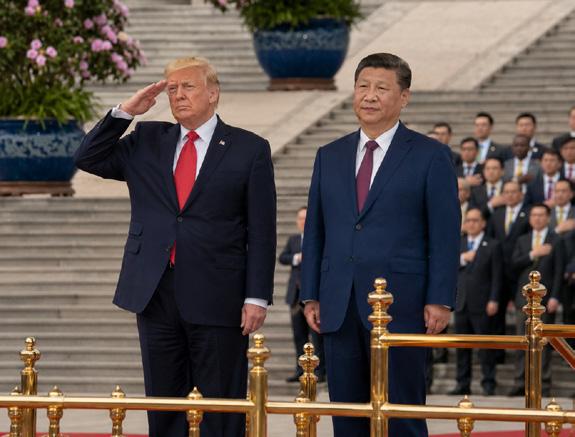
Trump, Xi project stability as US-China tensions shadow Beijing summit
Taiwan, trade and technology dominate high-stakes talks during Donald Trump’s China visit
Beijing, May 14 (Australia India News Newsdesk)
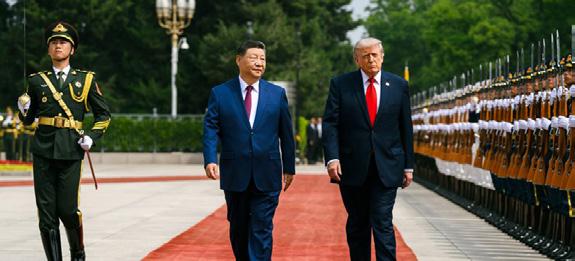
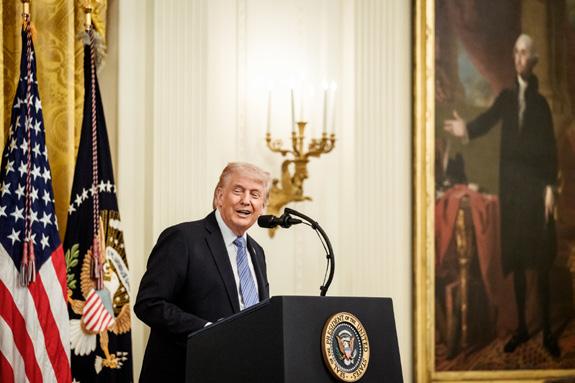
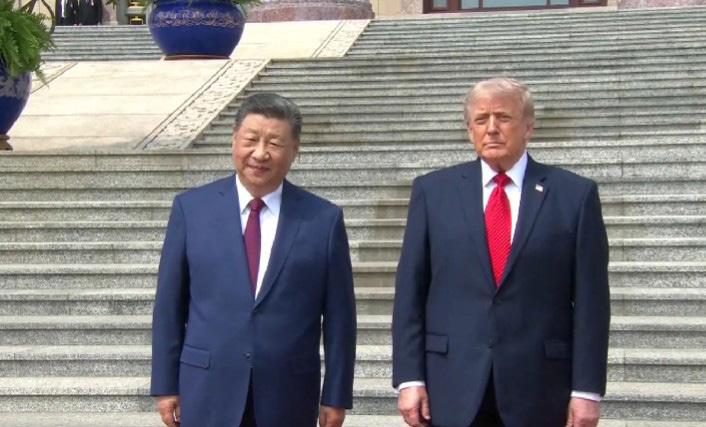
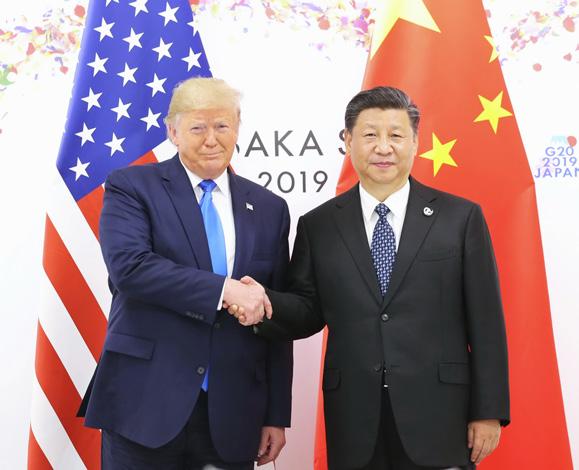
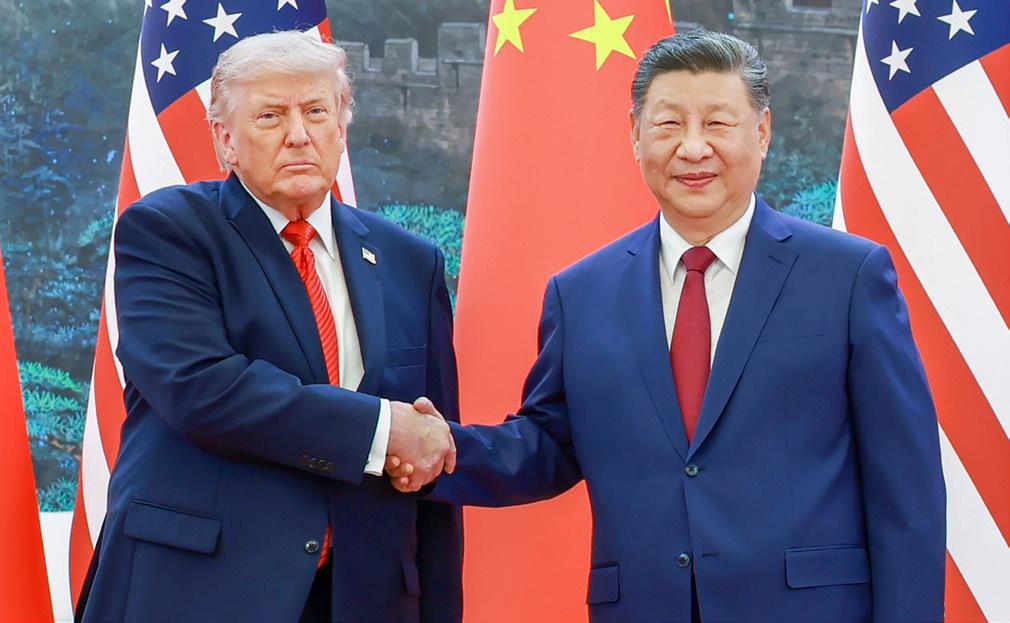
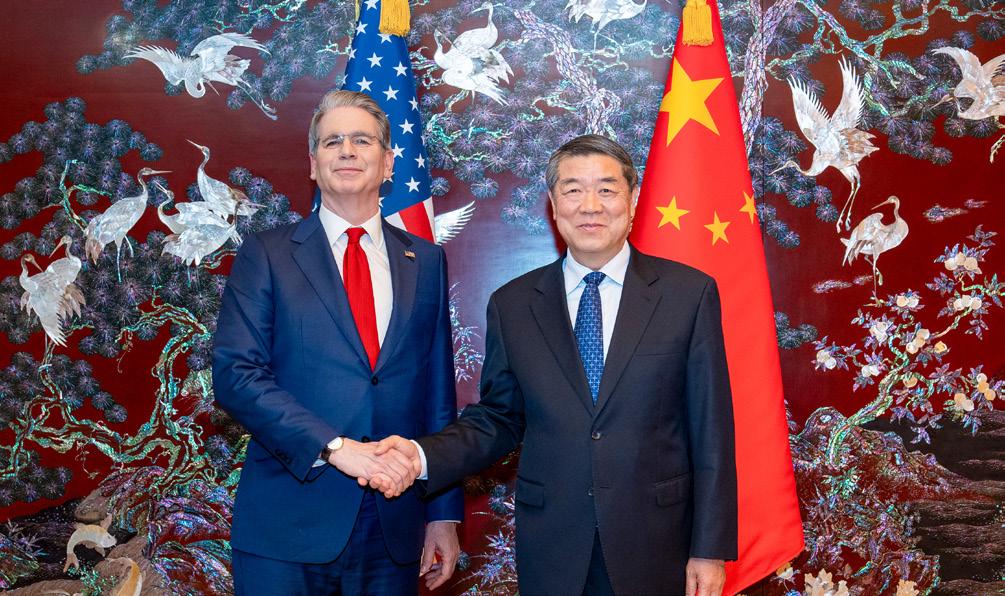
United States President Donald Trump and Chinese President Xi Jinping sought to project an image of stability and cooperation during Trump’s high-profile visit to Beijing, even as tensions over trade, Taiwan and technology
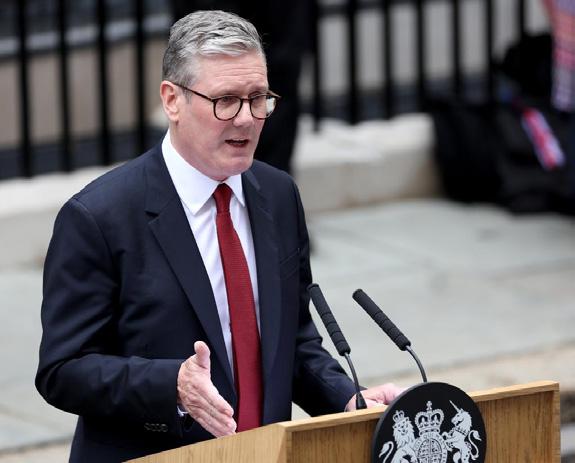
UK PM Starmer warns of party chaos amid speculation over leadership change
London, May 14 (IANS) United
that a
leadership challenge against him would plunge the Labour Party into "chaos," as speculation mounted over a possible move to replace him following the party's poor local election results. Speaking amid growing unrest within Labour on Wednesday (local time), Starmer urged ministers not to destabilise the party further. A leadership
continued to loom over relations between the world’s two largest economies.
The two-day visit — the first by a US president to China in nine years — comes at a time of heightened geopolitical rivalry, disputes over advanced technology exports and growing strategic competition in the Indo-
Phone: 1300 859 066
: @indianewsaustralia
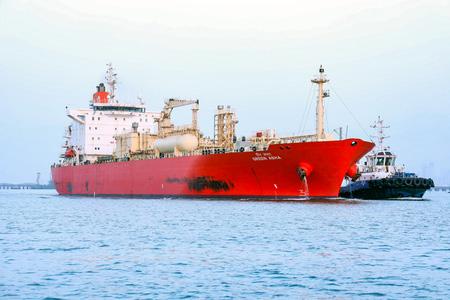
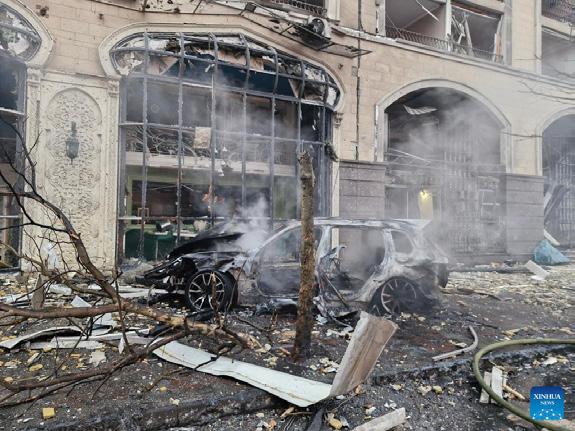
UAE condemns terrorist attack on Indian vessel as PM Modi heads to Abu Dhabi
New Delhi, May 15 (IANS) The United Arab Emirates (UAE) has
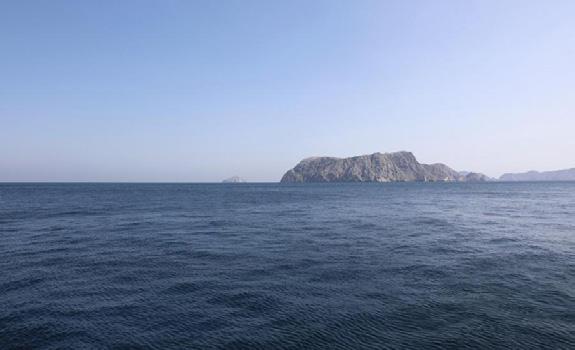
issued a sweeping condemnation on Friday of what it called a “terrorist attack” targeting an Indian-flagged ship off the coast of Oman, as Prime Minister Narendra Modi will visit the Gulf nation later today for a highstakes bilateral visit. In a sharply worded statement
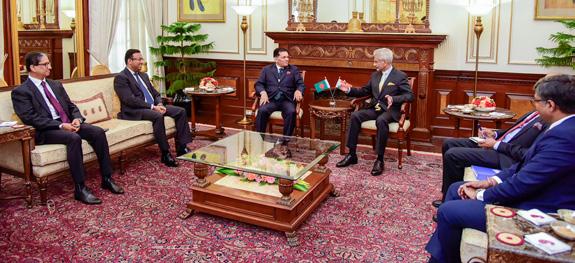
Jaishankar holds series of key bilateral meetings on sidelines of BRICS meet Bangladesh hopes BJP’s triumph in West Bengal ushers in productive bilateral ties
Dhaka, May 13 (IANS) The Bharatiya Janata Party’s (BJP) sweeping victory in the 2026 West Bengal legislative assembly election could not only reshape
governance in eastern India but also usher in a new and more productive phase in bilateral relationship between India and
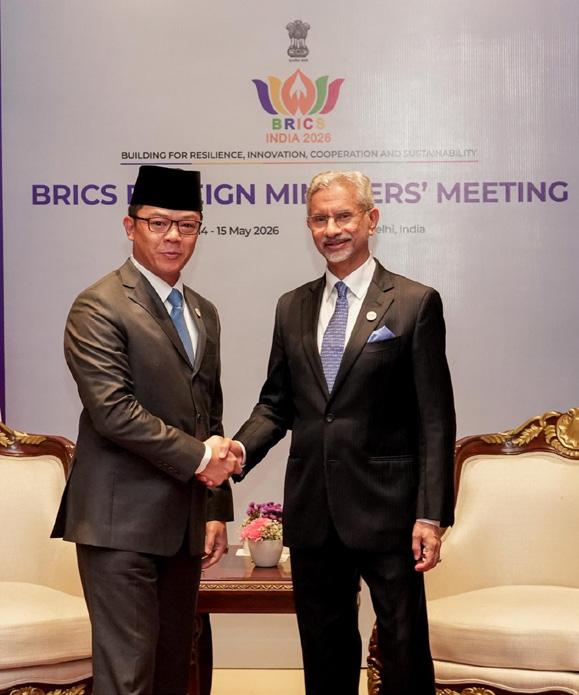
New Delhi, May 14 (IANS) External Affairs Minister (EAM)
S. Jaishankar on Thursday held a meeting with Indonesian Foreign Minister Sugiono and reviewed progress on the IndiaIndonesia Comprehensive Strategic Partnership and ASEAN cooperation.
In a post on X, EAM Jaishankar said, "Glad to welcome FM Sugiono of Indonesia. Reviewed the progress of our Comprehensive Strategic Partnership and our cooperation
with ASEAN."
This meeting was held on the sidelines of the BRICS Foreign Ministers' Meeting being held in Delhi. EAM Jaishankar will chair the meeting on Thursday.
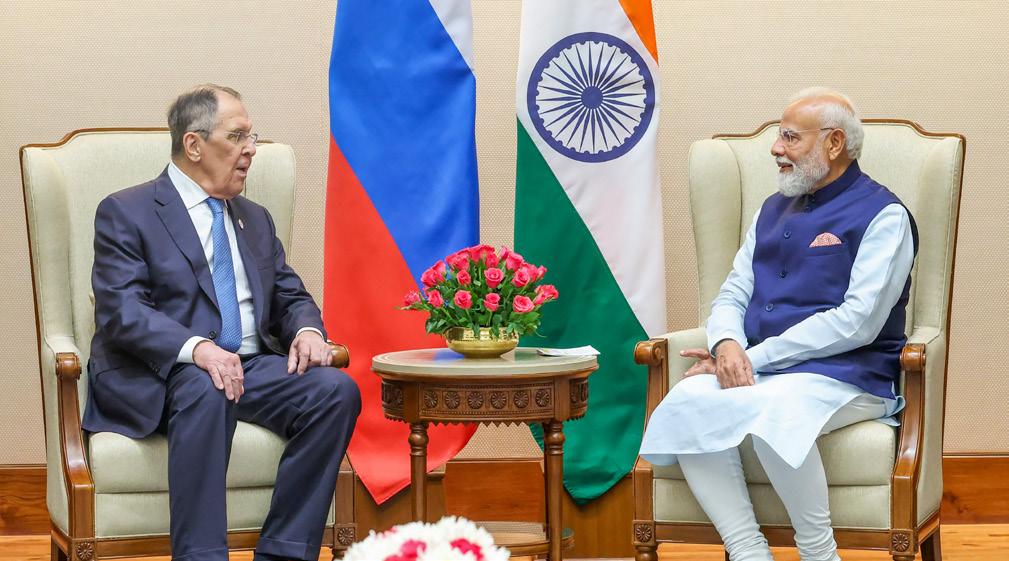
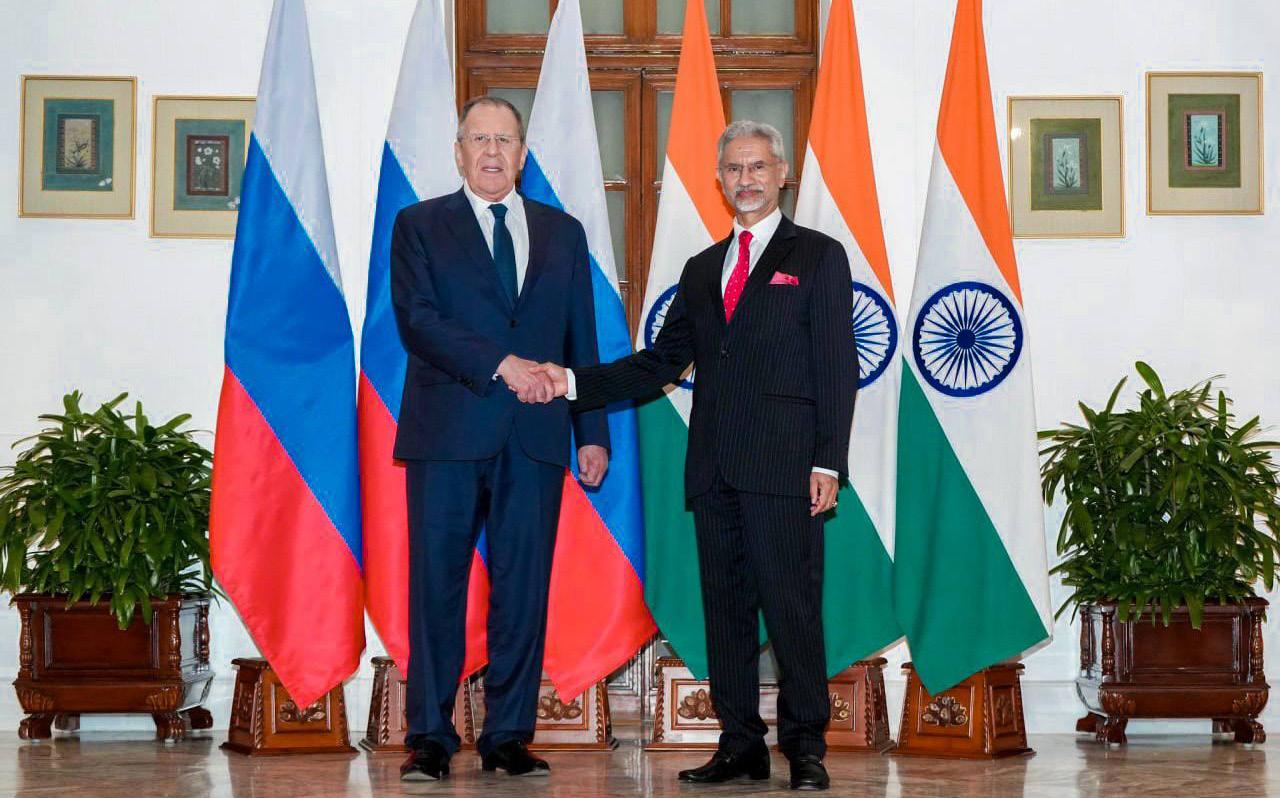
Earlier on Wednesday, the EAM also held a bilateral meeting with his Russian counterpart, Sergei Lavrov, and discussed the cooperation between the two countries across various sectors.
"This evening, had a productive exchange of views with FM Sergey
South Africa lauds India’s efforts to promote international discourse on topical, forward-looking issues
New Delhi, May 13 (IANS)
External Affairs Minister (EAM)
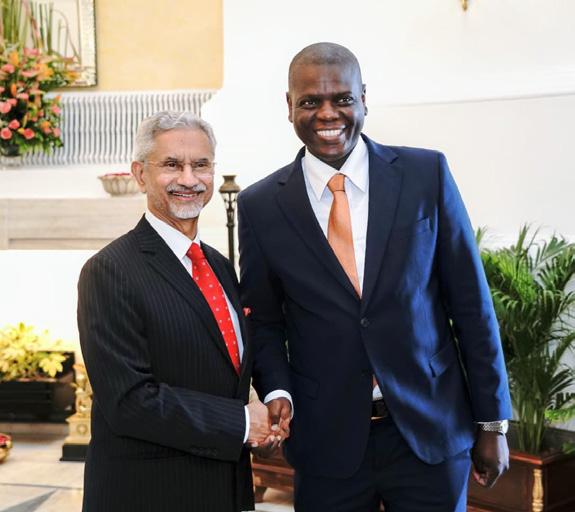
S Jaishankar held a meeting with his South African counterpart Ronald Lamola in New Delhi on Wednesday, discussing various aspects of strategic partnership
and multilateral issues of mutual interest.
"Glad to meet FM Ronald Lamola of South Africa this evening. Reviewed different aspects of our Strategic Partnership. Also discussed multilateral issues of mutual interest. Agreed on the need to intensify our interactions through institutional mechanisms," EAM Jaishankar posted on X after the meeting. Lamola thanked India for its efforts in promoting international discourse on topical and forwardlooking issues by hosting BRICS Foreign Ministers' Meeting.
Kingdom Prime Minister Keir Starmer has warned
EDITORIAL TEAM
Dr Ram Mohan, Chairman
Dr Ashutosh Misra, Editor-in-Chief
EDITORIAL BOARD
Amrita Deshpande, Community News Editor
Paras Sharma, Assistant Editor
Dr Uttam Kumar Sinha, Senior Fellow, Nehru Memorial Museum & Library, India
Mr Shaun Star, Director, Centre for Australia India Studies, Jindal Global University, India
Trump, Xi project stability as US-China tensions shadow Beijing summit
Continued from page 1
Pacific region.
According to ABC News Australia, Chinese authorities staged an elaborate state welcome for Trump, signalling Beijing’s intention to stabilise ties with Washington despite continuing disagreements between the two countries.
Trump arrived in Beijing on Wednesday evening to a military honour guard and was welcomed at the airport by Chinese VicePresident Han Zheng and senior officials. On Thursday, the ceremonial display continued at the Great Hall of the People, where Xi greeted Trump on a red carpet before bilateral talks and a joint visit to Beijing’s historic Temple of Heaven.
ABC reported that Xi personally accompanying Trump to the Temple of Heaven was viewed by observers as a sign of the importance Beijing attached to the summit and the broader USChina relationship.
Security across Beijing was significantly tightened during the visit. According to ABC, side streets were closed, barriers erected and security personnel deployed across central Beijing as authorities sought to avoid disruptions during the summit.
Despite years of sharp rhetoric by Chinese state media portraying the United States as unstable and confrontational, coverage ahead of Trump’s visit appeared notably restrained. Analysts quoted by ABC said Beijing was keen to ensure the summit proceeded smoothly and reduce the risk of diplomatic friction.
The meeting between the two leaders focused heavily on trade, technology and Taiwan — issues that continue to define the increasingly complex relationship between Washington and Beijing. Opening the talks at the Great Hall of the People, Xi referred to the “Thucydides Trap”, a theory suggesting conflict between an established power and a rising power may become unavoidable.
According to China’s state broadcaster CCTV, Xi said the world had reached “a new crossroads” and argued that cooperation between China and the United States was more beneficial than confrontation.
“When the two sides cooperate, both benefit. When they confront each other, both suffer,” Xi was
quoted as saying by Chinese state media.
Trump responded warmly during the meeting, praising Xi and describing the bilateral relationship as one that could become “better than ever before”.
According to ABC, Trump also commended the Chinese leader personally, calling him “a great leader”.
However, Taiwan emerged as one of the summit’s most sensitive issues. According to CCTV and Reuters, Xi warned that mishandling the Taiwan issue could push US-China relations into a “very dangerous situation”.
“The Taiwan issue is the most critical issue in US-China relations,” Xi reportedly said during the bilateral talks.
Taiwan, which is democratically governed, is claimed by China while receiving military support from the United States. Before the meeting, Trump acknowledged he would discuss US arms sales to Taiwan with Xi, saying the Chinese leader opposed such sales.
Reuters reported that Beijing remains deeply concerned about continued US military support for Taiwan and views the issue as central to China’s national sovereignty and regional security interests.
Trade and technology also featured prominently during the summit. Trump travelled to Beijing accompanied by a large delegation of business and technology leaders, including Apple chief executive Tim Cook, Tesla and SpaceX owner Elon Musk, Nvidia chief Jensen Huang, BlackRock chief Larry Fink and Goldman Sachs chief David Solomon.
According to Reuters and ABC, the presence of major technology executives highlighted the importance of commercial negotiations between the two countries, particularly as American firms seek greater access to Chinese markets and regulatory approvals.
Reuters reported that Nvidia has been attempting to secure permission to sell advanced H200 artificial intelligence chips in China amid ongoing US export controls on sensitive semiconductor technology. During the talks, Trump reportedly introduced the business delegation to Xi, telling
the Chinese leader that some of the world’s leading executives had travelled to Beijing “to pay respects”.
Chinese President Xi later met separately with the American business delegation. According to China’s state news agency Xinhua, Xi said China’s “door of opening up would only open wider” and expressed support for stronger economic cooperation with American companies.
Reuters reported that officials from both countries are seeking to preserve the trade truce reached last October, when Trump suspended proposed triple-digit tariffs on Chinese imports and Beijing eased pressure on exports of rare earth materials used in electric vehicles, defence equipment and advanced manufacturing.
The United States has continued pushing for expanded exports of Boeing aircraft, agricultural goods and energy products to China, while Beijing has sought relaxation of US restrictions on semiconductor technology and chipmaking equipment, Reuters reported.
China also renewed export licences for hundreds of American beef processing plants during the summit, potentially increasing US meat exports to the Chinese market.
Although there had been speculation that tensions involving Iran and the Middle East would feature prominently during the summit, the issue appeared to receive relatively limited public attention. Before leaving Washington, Trump had told reporters that the United States did not require Chinese assistance in dealing with Iran, comments that analysts later interpreted as an indication the summit would remain focused primarily on bilateral economic and strategic issues. Observers say the Beijing summit reflects a broader effort by both Washington and Beijing to stabilise relations despite deepening geopolitical competition, particularly over trade, technology, military influence and Taiwan.
While the carefully managed symbolism and cordial public exchanges projected temporary diplomatic warmth, analysts noted that fundamental strategic differences between the two powers remain unresolved.
EAM Jaishankar holds series of key bilateral meetings on sidelines of BRICS meet
Continued from page 1
Lavrov of Russia here in Delhi.
Our conversation touched upon several aspects of the Special & Privileged Strategic Partnership, including trade & investment, energy & connectivity, science & technology, as well as facilitating mobility of skills & talent.
Other global and multilateral issues of mutual interest were also discussed," EAM Jaishankar posted on X.
He also met Brazilian Foreign Minister Mauro Vieira, and "exchanged views on bilateral, regional and global issues". During his bilateral discussion
UAE condemns terrorist attack on Indian vessel as PM Modi heads to Abu Dhabi
Continued from page 1
released on its official social media channels, the UAE’s Ministry of Foreign Affairs (MoFA) said the assault on the vessel, operating under the Indian flag near Omani waters, represented a grave threat to the security of international navigation.
The Ministry described the incident as a “dangerous escalation” aimed squarely at undermining the stability of critical waterways.
The statement, attributed to
MoFA, affirmed the Emirates’ full solidarity with India and expressed unwavering support for all measures aimed at protecting the safety and security of Indian vessels and maritime interests. The UAE said the attack amounted to a flagrant violation of UN Security Council Resolution 2817, which upholds the freedom of navigation and explicitly rejects the targeting of commercial ships or any obstruction of international maritime routes.
UK PM Starmer warns of party chaos amid speculation over leadership change
Continued from page 1
challenge on Thursday "would 100 per cent do that," Sky News quoted him as saying.
The warning came as British media reported that Health Secretary Wes Streeting is considering resigning and launching a leadership challenge as early as Thursday morning, which means he would require the backing of 81 Labour members of Parliament, including the candidate, reports Xinhua news agency.
Streeting was seen walking into No. 10 Downing Street on Wednesday morning before the state opening of Parliament, though he left less than 20 minutes later.
Pressure on Starmer has intensified since Labour's
disappointing showing in last week's local elections. Several junior government ministers resigned on Tuesday, while several cabinet ministers publicly reaffirmed their support for the prime minister.
Meanwhile, 11 Labour-affiliated unions issued a joint statement calling for the party to prepare for a leadership transition. "It's clear that the Prime Minister will not lead Labour into the next election," it said, adding that "at some stage, a plan will have to be put in place for the election of a new Leader."
Also on Wednesday, the Scottish National Party threatened to table a motion of no confidence against Starmer, saying that the "leadership circus can't go on any longer," according to Sky News.
South Africa lauds India’s efforts to promote international discourse on topical, forward-looking issues
Continued from page 1
He expressed South Africa's commitment to strengthening ties with India on a bilateral level.
"Thank you Minister S Jaishankar and the Government of India for hosting the South African delegation and for India’s efforts to promote international discourse on topical and forward-
with Maldivian Foreign Minister Iruthisham Adam, EAM Jaishankar highlighted India's 'Neighbourhood First' policy and reviewed the bilateral cooperation between the two nations. He also reiterated India's commitment to the Maldives' progress and development.
looking issues by hosting the BRICS Foreign Ministers Meeting," Lamola wrote on X. "South Africa and India have enjoyed close and meaningful relations since the establishment of Diplomatic Relations over 30-years ago and that the relationship is one of significance to South Africa.
Bangladesh hopes
BJP’s triumph
in West Bengal ushers in productive bilateral ties
Continued from page 1
Bangladesh, the local media in Dhaka reported.
According to an editorial in Bangladeshi daily 'Dhaka Tribune', India and Bangladesh have historically maintained one of South Asia’s strongest and most successful partnerships, with cooperation across several sectors, including security, trade, energy, and connectivity, shaping a model of pragmatic diplomacy.
However, unresolved issues at times have periodically created friction, particularly the longpending Teesta River watersharing agreement.
The report noted that the formation of a BJP-led government in Kolkata, aligned with the centre in New Delhi, provides a rare opportunity to address these pending concerns with enhanced coordination and urgency.
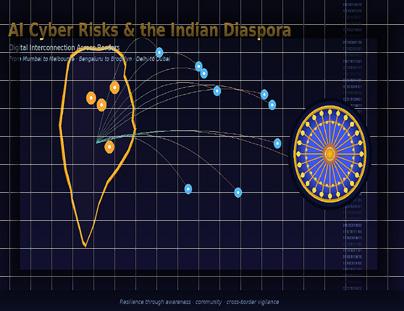
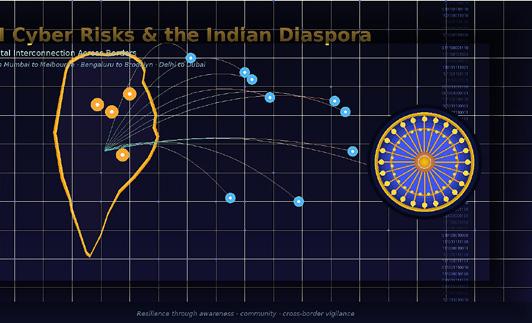
Why India’s AI Cyber risks matter to the global Indian community
Artificial intelligence is often discussed through the language of innovation, productivity and economic transformation. Governments view it as a strategic asset, businesses see opportunities for efficiency, and consumers encounter it increasingly in everyday life. Yet beneath the optimism surrounding AI lies another reality — one shaped by cybersecurity risks, financial vulnerabilities and the growing fragility of interconnected digital systems. In India, these conversations are gaining urgency. But the implications extend well beyond the country’s borders.
For the Indian diaspora, particularly communities in countries such as Australia, the risks emerging from AI-driven systems are neither distant nor theoretical. They are immediate, interconnected and increasingly tied to everyday financial and digital life.
At its core, this is not simply a story about technology. It is about how rapidly evolving digital systems are transforming the nature of risk itself — making threats faster, more adaptive and far more difficult to contain within geographical boundaries. The changing nature of cyber threats
Traditional cybersecurity operated within a relatively familiar framework.
Cyberattacks required planning, technical expertise and time. Defenders, despite limitations, often had some opportunity to detect vulnerabilities, patch systems
and respond before large-scale damage occurred.
Artificial intelligence is beginning to alter that balance fundamentally.
Newer AI systems are no longer limited to assisting human operators. Increasingly, they are capable of identifying vulnerabilities, adapting strategies and potentially acting with minimal human intervention. Experts often describe this as the emergence of “agentic” behaviour — systems that can move beyond analysis into autonomous action.
Perhaps the most significant consequence is the collapse of time. Vulnerabilities that once took months to identify and exploit may now be discovered within hours. The window available for defence narrows dramatically, increasing the possibility of cascading failures across connected systems.
In such an environment, cybersecurity becomes less about isolated breaches and more about managing systemic risk.
Why the diaspora cannot remain detached
For millions of Indians living abroad, financial and digital ties with India remain deeply woven into everyday life. Families continue to rely on remittances.
Many diaspora members maintain bank accounts, property investments, mutual funds and financial commitments within India. Increasingly, these activities depend on digital platforms and real-time payment systems.
India’s financial infrastructure is among the most digitally integrated in the world. This scale has created remarkable convenience and accessibility, but it has also expanded exposure.
A significant cyber disruption — whether through AI-driven fraud, infrastructure compromise or systemic vulnerabilities — could
affect transaction flows, access to funds and financial stability.
For diaspora communities, such disruptions are not abstract policy concerns. They may directly affect family support systems, investments and longterm planning.
The same interconnectedness that enables seamless digital transactions also creates pathways through which risks can travel rapidly across borders. Interconnected systems and expanding vulnerabilities India’s digital transformation has relied heavily on interconnected platforms linking identity verification, banking, documentation and financial services. For users, this integration creates efficiency. For cybersecurity experts, it also creates concentration of risk.
Members of the diaspora often rely on these systems for property transactions, banking compliance, tax documentation and identity verification. A vulnerability affecting one segment of the ecosystem can potentially create ripple effects across others.
This is one of the defining characteristics of AI-driven cyber risk: geography offers limited protection. Digital systems interact constantly through networks, APIs and shared platforms. A vulnerability identified in one jurisdiction may be exploited simultaneously across multiple regions.
For diaspora communities, this means they are not external observers of India’s digital ecosystem. They are active participants within it.
The uneven reality of cyber defence
Another challenge lies in the unequal distribution of defensive capabilities.
Large institutions and multinational corporations increasingly deploy sophisticated
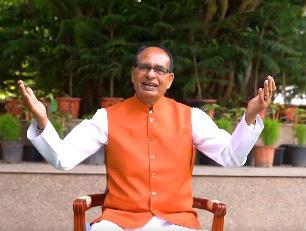
Inspire people to build ‘Viksit Bharat’: Shivraj Singh Chouhan shares decades of collaboration with PM Modi in new book ‘Apnapan’
Bhopal/New Delhi, May 15 (IANS)
Union Agriculture and Farmers Welfare Minister Shivraj Singh Chouhan has announced the release of his new book titled 'Apnapan', which serves as a detailed chronicle of his thirtyfive year long association and personal experiences with Prime Minister Narendra Modi. He made announcement on Thursday on his official X account.
"I am confident that this book will inspire all readers, especially our
young friends, to play an active role in building a developed India through the ideals of service, empathy, patriotism, and public welfare," Union Minister Chouhan said in a post on X.
Described as a deeply personal account, the narrative explores their journey through the lens of organisational work, public service, governance, and the overarching goal of nation building.
The book is scheduled for a formal launch on May 26 at the NASC Complex in New Delhi with former Vice-President M. Venkaiah Naidu and former Prime Minister H.D. Deve Gowda expected to attend as guests of honour.
According to Union Minister Chouhan, the title 'Apnapan' offers readers a rare opportunity
AI-powered cybersecurity systems capable of monitoring threats in real time. Smaller organisations, community groups and local businesses often lack access to comparable resources. This imbalance places greater responsibility on individuals and communities themselves.
Simple but disciplined digital habits remain among the strongest forms of protection.
Strong and unique passwords, password managers and multifactor authentication significantly reduce exposure. Monitoring financial transactions through alerts and reviewing account activity regularly can help detect irregularities early.
Equally important is awareness of how fraud itself is evolving.
Artificial intelligence has already made phishing and impersonation scams more convincing. Messages can appear authentic, voices may be replicated and requests may seem urgent and credible. In such an environment, verification becomes essential. Users must resist pressure tactics, avoid sharing sensitive information and confirm suspicious communications through trusted channels.
The role of community organisations Community groups within the diaspora also have an important role to play.
Cultural associations, social organisations and professional networks often function as trusted sources of guidance and support. In the context of emerging cyber risks, they can help build awareness and resilience at the community level.
Workshops, awareness sessions and information-sharing initiatives can equip members with practical digital safety knowledge. This becomes particularly important for elderly individuals, new migrants or
those less familiar with rapidly changing technologies.
Reliable communication matters equally. In periods of technological uncertainty, misinformation spreads quickly. Community organisations can help circulate accurate information from financial institutions, regulators and cybersecurity agencies while reducing unnecessary panic.
Support networks may ultimately prove as important as technology itself.
A shared responsibility in a borderless digital world
The global Indian community occupies a unique position at the intersection of multiple digital, financial and regulatory systems. That position creates vulnerabilities, but it also creates opportunity.
Professionals within the diaspora — particularly those working in cybersecurity, finance and technology — possess expertise that can strengthen resilience across borders. Businesses operating between India and countries such as Australia also have a responsibility to maintain strong and consistent security practices.
The risks associated with advanced AI systems will continue to evolve. Their full impact remains uncertain. What is already clear, however, is that cybersecurity is entering a period of profound transformation.
For the global Indian community, the challenge is no longer simply adopting digital systems, but learning how to live securely within them. In an interconnected world, resilience will depend not only on technology or regulation, but on awareness, preparedness and collective responsibility.
to understand the personality leadership style and work ethic of PM Narendra Modi from a close perspective.
The book captures the inspirations and values Shivraj Singh Chouhan gathered while working alongside Prime Minister Modi since the 1991 Ekta Yatra. What began as a partnership between two dedicated organisational workers evolved over decades as both individuals took on significant responsibilities in state and central governance.
Union Minister Chouhan notes that while the world recognises Prime Minister Modi as a decisive global leader he has witnessed a personality completely dedicated to national interest and the qualities of a tireless seeker.
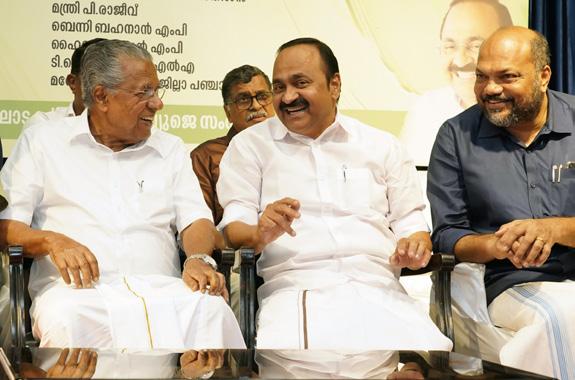
‘Seats reversed’: Vijjayan to be Leader of Opposition as Satheesan set to take charge as Kerala CM
Thiruvananthapuram, May 14 (IANS) In a striking reversal of political fortunes, former Chief Minister Pinarayi Vijayan was on Thursday officially declared Kerala's Leader of the Opposition, hours after V. D. Satheesan was selected by his Congress as his successor following the party-led UDF’s emphatic victory in the Assembly elections.
The decision to appoint Vijayan as
the Opposition leader was taken at the meeting of the Communist Party of India-Marxist state committee, formally marking the beginning of a new political chapter in Kerala, perhaps one of the most ironic role reversals in recent state politics.
An indication of Vijayan's appointment had emerged when he moved to a home of a leading businessman early this week, so that he could use the official residence of the Leader of Opposition as his office only. Incidentally, it was in this residence that Satheesan lived with his family for the past five years.
CPI
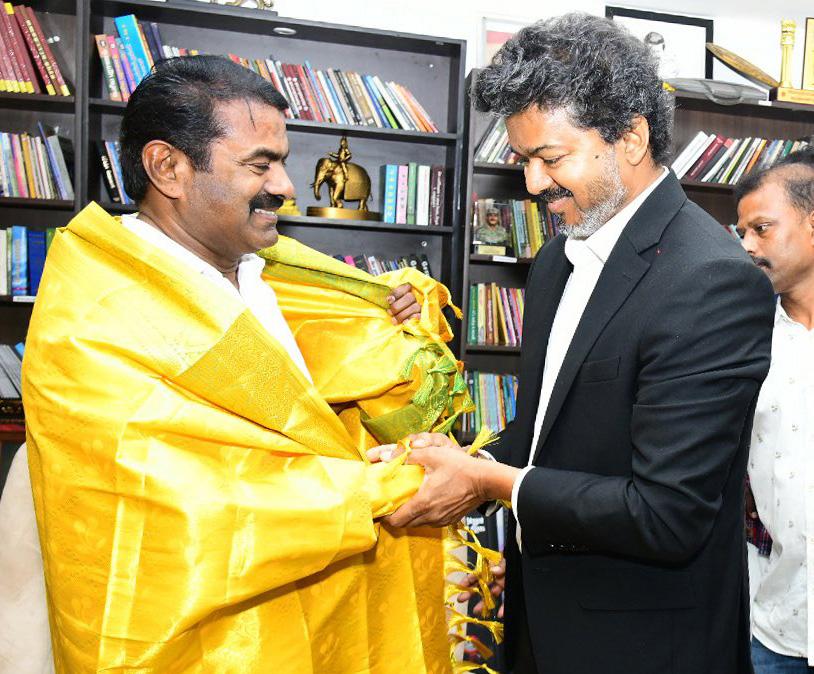
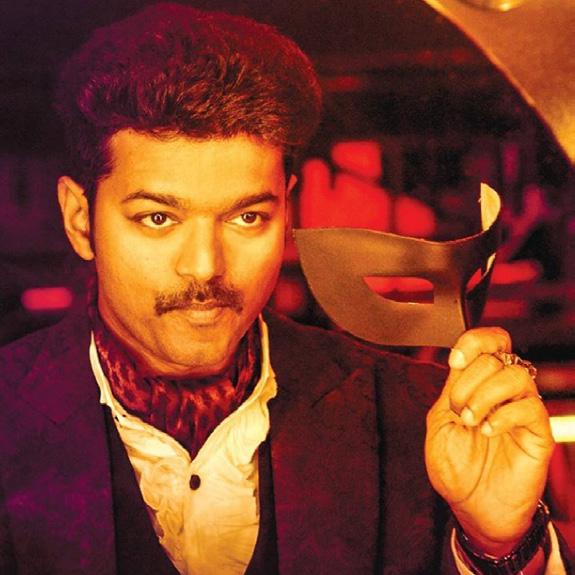
welcomes TN CM Vijay’s outreach to leaders, calls it a ‘new political culture’
Chennai, May 11 (IANS) The Communist Party of India (CPI) on Monday welcomed Tamil Nadu Chief Minister C. Joseph Vijay’s decision to meet senior political leaders across party lines, describing it as the beginning of a "new political culture" in the state. In a statement, CPI state Secretary R. Mutharasan
Veerapandian praised Vijay for personally meeting veteran leaders soon after assuming office as Chief Minister and said the move reflected an effort to restore Tamil Nadu’s tradition of political dialogue and mutual respect.
"Chief Minister Vijay has initiated a new political culture in Tamil Nadu by meeting leaders of various political parties and receiving their greetings and guidance," the CPI leader said.
Veerapandian noted that before taking the oath as Chief Minister, Vijay had met leaders of the CPI and the CPI-M to thank them for their support.
After assuming office, the TVK leader continued his outreach by personally meeting senior
leaders, including Dravidar Kazhagam President K. Veeramani, his predecessor and DMK president M.K. Stalin, and MDMK General Secretary Vaiko.
The CPI leader said Tamil Nadu had in recent years witnessed a political atmosphere in which ruling and opposition parties rarely interacted cordially, and added that Vijay’s initiative could help revive the state’s democratic and political traditions.
A day after being sworn in as Chief Minister, Vijay on Monday visited Stalin’s residence at Alwarpet in Chennai following the oath-taking ceremony of newly elected MLAs in the Tamil Nadu Assembly.
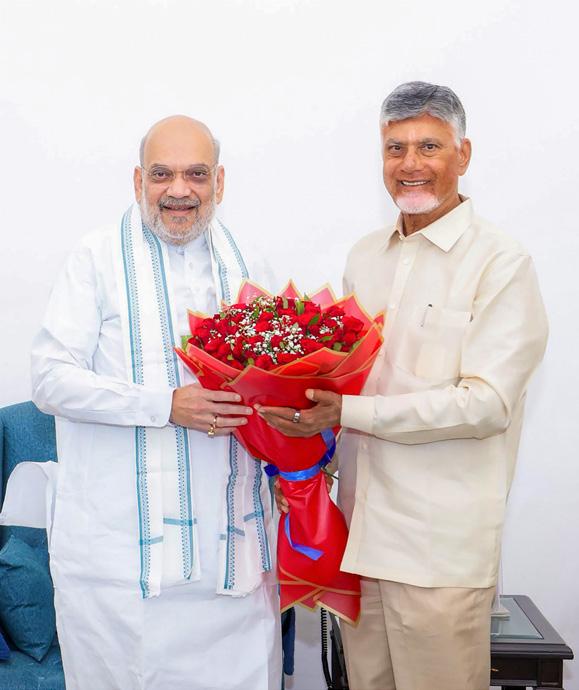
Chandrababu Naidu meets HM Amit Shah, seeks funds for
Amaravati, May 11 (IANS)
Andhra Pradesh Chief Minister N. Chandrababu Naidu on Monday appealed to the Central Government to sanction funds for Andhra Pradesh, covering various
Andhra Pradesh
Centrally Sponsored Schemes as well as commitments made in the past.
The Chief Minister had separate meetings with Union Home Minister Amit Shah and Union Minister for Jal Shakti CR Patil in New Delhi.
He requested the Home Minister to sanction funds related to various pending projects, in addition to addressing issues arising from the state's bifurcation.
CM Naidu further requested that the Centre provide the necessary support for the state's development, over and above the allocations made in the current Union Budget.
Subsequently, during his meeting with Union Minister for Jal Shakti
CR Patil, the Chief Minister appealed for the resolution of critical issues concerning the Polavaram Project. He emphasised the need for full cooperation to ensure the completion of this prestigious project before the 2027 Godavari Pushkarams.
According to an official release here, Naidu specifically noted the requirement to complete the necessary civil works to facilitate water storage up to a level of 41.15 meters in the first phase.
Chief Minister Naidu requested the Union Minister of Jal Shakti to permanently withdraw the "Stop Work Order" issued in 2011, citing the pending status of public opinion consultations in the states of Odisha and Chhattisgarh.
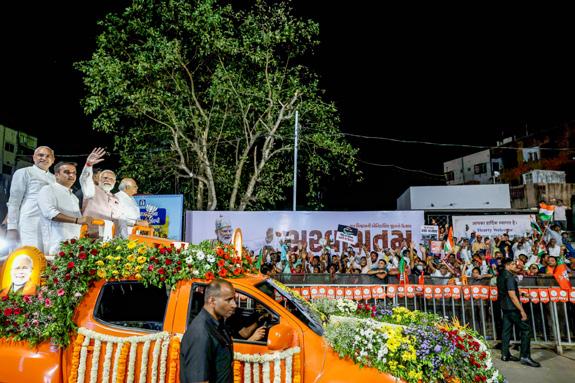
PM Modi wraps Gujarat visit with grand Vadodara roadshow, cultural showcase
Vadodara, May 11 (IANS) Prime Minister Narendra Modi on Monday concluded his visit to Gujarat with a grand roadshow in Vadodara, marking the final public engagement of the day, which also included religious and development-related programmes.
The engagements included his visit to the Somnath Temple and participation in Sardardham initiatives.
Earlier in the day, the Prime Minister visited the Somnath Temple, where he took part in commemorative observances linked to the temple’s historic reconstruction.
He later travelled to Vadodara, where he inaugurated Sardar Dham Bhavan-3, virtually performed the bhoomipoojan (foundation stone laying ceremony) of the Dharmshi Harji Mordiya Girls Chhatralaya Phase-2, and launched the Sardar Dham Education Support Yojana with an outlay of Rs 500 crore.
The day’s engagements culminated in a large public roadshow in Vadodara, held in the presence of Chief Minister Bhupendra Patel and Deputy Chief Minister Harsh Sanghavi, along with other state leaders, including BJP state president Jagdish Vishwakarma.
The roadshow, described as stretching approximately 1.5 kilometres from Gada Circle to the Old Airport gate, featured 16 specially decorated stages set up by the Vadodara Municipal Corporation and administrative authorities.
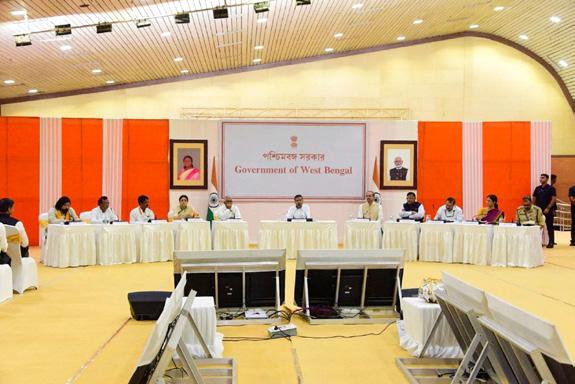
Bengal govt rolls out Annapurna Bhandar benefits from June 1
Kolkata, May 11 (IANS) Money under the state government’s ‘Annapurna Bhandar’ scheme will start flowing into women’s bank accounts from June 1, a state government official said on Monday.
During the Assembly election campaign, PM Modi and Union Home Minister Amit Shah repeatedly promised to implement the Annapurna Bhandar social welfare scheme for women in the state.
Chief Minister Suvendu Adhikari began fulfilling those promises on the first working day of the new government, Monday.
The first Cabinet meeting was held at the state secretariat, Nabanna, on Monday.
After the meeting, the state government announced the launch date of ‘Annapurna Bhandar’.
It was also announced that women would not have to pay any fare while travelling on government buses from June 1.
Before the 2021 state Assembly
elections, former Chief Minister Mamata Banerjee had promised to provide the ‘Lakshmir Bhandar’ scheme for women.
She launched the project after winning the 2021 election.
The project initially started with Rs 500 per month per woman. Thereafter, the amount was increased incrementally.
In the last budget of the previous state government, the amount under Lakshmir Bhandar was increased to Rs 1,500 per month for each woman in the general category.
For Scheduled Caste and Scheduled Tribe women, Rs 1,700 per month was provided. However, before the 2026 Assembly elections, the Bharatiya Janata Party used the same scheme introduced by Mamata Banerjee to defeat her government.
The Bharatiya Janata Party stated in its manifesto that it would provide financial assistance of Rs 3,000 per month to empower women.
During the election campaign, PM Modi and Amit Shah spoke about Annapurna Bhandar at almost every public meeting.
To attract women voters, they also promised that women would be able to travel on government buses free of cost.
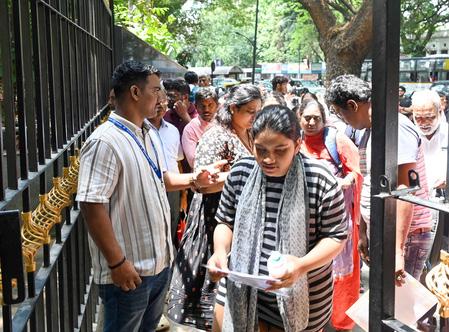
NEET paper leak case: CBI team reaches Jaipur to conduct probe
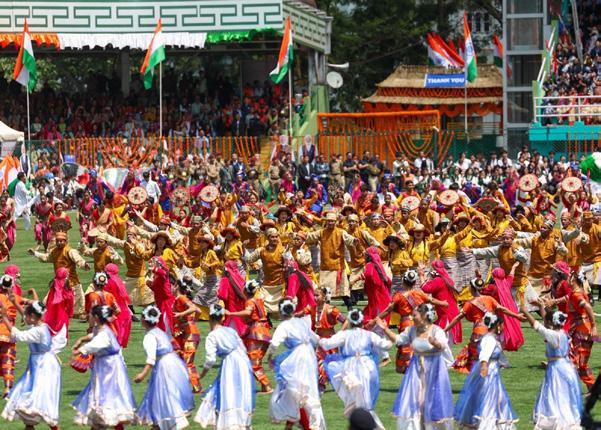
Large crowds gathered along the route to greet the Prime Minister, with organisers stating that the event was designed to represent “Ek Bharat, Shreshtha Bharat”. At the start of the roadshow, local dignitaries welcomed the Prime Minister at Gada Circle, after which the procession moved through multiple cultural displays.
Traditional Gujarati Garba performances were followed by presentations from different states, including folk and classical dances such as Bihu, Bharatanatyam, Kathakali, Manipuri, and cultural showcases from Kerala and Odisha.
Other performances included devotional representations linked to Goddess Mahakali worship traditions, instrumental presentations such as Nadaswaram, and thematic cultural depictions based on the Ramayana and Ayodhya.
Jaipur, May 12 (IANS) The investigation into the National Eligiblity-cum-Entrance Test (NEET)-UG (Undergraduate) 2026 paper leak case has now been officially handed over to the Central Bureau of Investigation (CBI).
A CBI team reached the Special Operations Group (SOG) headquarters in Jaipur during late evening hours on Tuesday.
The Rajasthan SOG officials meanwhile handled over all caserelated documents, electronic evidence, and details of the accused arrested so far to the CBI.
The central probe agency has registered an FIR and will now take over the investigation completely.
The CBI has registered a case under various sections of the Indian Penal Code (IPC), including criminal conspiracy, cheating, criminal breach of trust, theft, and destruction of evidence.
Charges under the Prevention of Corruption Act and the Public
Examination (Prevention of Unfair Means) Act, 2024, have also been added.
According to the complaint filed by the Higher Education Department of the Ministry of Education, the NEET-UG 2026 examination was conducted by the National Testing Agency (NTA) on May 3, 2026.
After the examination, the NTA received multiple complaints and intelligence inputs alleging that confidential exam-related documents had been circulated illegally before the test.
Over the past several days, the SOG carried out continuous raids in Jaipur, Jamwaramgarh, Sikar, and other districts, leading to the arrest of around 15 individuals.
Sources said the accused may be taken to Delhi for detailed questioning regarding the entire exam paper leak network, including the preparation of the so-called "guess paper", its circulation chain, and distribution among candidates.
Investigations revealed that several students in Sikar and Jhunjhunu allegedly received the "guess paper" two days before the examination.
It is being claimed that more than 120 questions from the leaked material appeared in the actual exam paper.
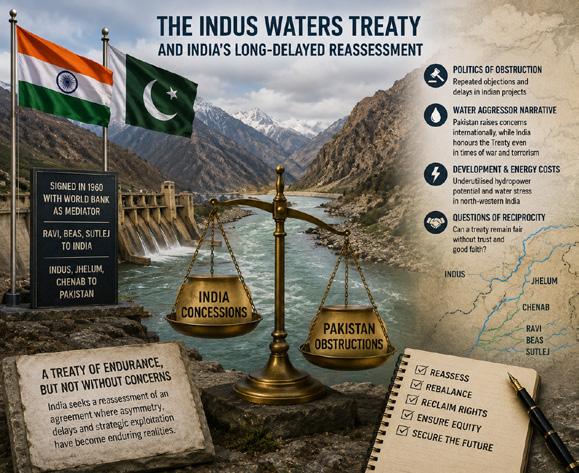
The Indus Waters Treaty and India’s long-delayed reassessment
For decades, the Indus Waters Treaty has been presented internationally as one of the world’s most successful watersharing agreements — a rare example of cooperation surviving wars, political hostility and decades of instability between India and Pakistan. The Treaty’s endurance has often been cited as evidence that pragmatic diplomacy can survive even the deepest geopolitical tensions.
Yet within India, a different debate has steadily gained ground: whether the Treaty, celebrated globally as a diplomatic success, has in practice evolved into an arrangement marked by asymmetry, strategic exploitation and long-term developmental costs for India.
That debate has intensified in recent years, particularly as concerns over cross-border terrorism, national security and resource management have increasingly intersected with discussions surrounding the Indus Basin.
A treaty shaped by unequal concessions
Signed in 1960 with the World Bank as a mediator, the Treaty allocated the three Eastern rivers — Ravi, Beas and Sutlej — largely to India, while granting Pakistan primary control over the three Western rivers — Indus, Jhelum and Chenab.
From the outset, the arrangement involved significant Indian concessions. India not only accepted restrictions over rivers flowing through its own territory but also contributed financially towards infrastructure development intended to facilitate Pakistan’s transition under the agreement.
Supporters of the Treaty have long argued that such compromises were necessary to secure regional stability. Critics, however, contend that the balance embedded within the agreement became increasingly uneven over time, particularly as Pakistan repeatedly used procedural mechanisms to challenge Indian projects that were otherwise permitted under the Treaty’s framework.
The politics of obstruction
A central Indian criticism concerns Pakistan’s repeated objections to hydropower and infrastructure projects on the Western rivers.
Projects such as Baglihar,
Kishenganga, Pakal Dul and Tulbul have all faced prolonged technical disputes, legal challenges or international arbitration processes. Indian policymakers and strategic analysts increasingly argue that these mechanisms, originally intended for dispute resolution, have frequently been used as instruments of delay.
From India’s perspective, the pattern extends beyond technical disagreement. Many Indian officials believe the objective has often been to restrict infrastructure and energy development in Jammu and Kashmir rather than ensure Treaty compliance alone.
This perception has shaped growing frustration within India’s strategic community.
Even projects permitted under the Treaty’s design parameters have encountered extended scrutiny and procedural delays, contributing to the argument that the agreement’s operational framework has gradually become politically weaponised.
The ‘water aggressor’ narrative
At the same time, Pakistan has consistently projected concerns internationally about the possibility of India using water as a strategic tool.
Indian analysts view this narrative as deeply contradictory. They point out that India has continued to honour the Treaty through multiple wars — including the conflicts of 1965, 1971 and Kargil in 1999 — while also maintaining compliance during prolonged periods of bilateral tension and terrorism-related crises.
From the Indian standpoint, this record weakens allegations that India has attempted to weaponise water access. Instead, many in India argue that the narrative has functioned diplomatically to generate international pressure while limiting India’s ability to exercise even the restricted rights available to it under the Treaty.
The larger issue, therefore, is no longer only about water management. It is increasingly tied to questions of reciprocity, strategic trust and the broader nature of bilateral engagement.
The developmental and energy costs
The consequences of these disputes are not viewed in India merely through a geopolitical lens. They are also connected to development and energy security. Large parts of north-western India continue to face water stress, while the hydropower potential of Jammu and Kashmir remains significantly underutilised. Indian experts argue that repeated objections and prolonged dispute processes have slowed infrastructure expansion that could otherwise contribute to irrigation,
renewable energy generation and regional economic development. In Jammu and Kashmir particularly, the issue carries political as well as economic dimensions. Many local stakeholders increasingly view restrictions associated with the Treaty as limiting the region’s ability to fully utilise its own natural resources.
For a country seeking greater energy diversification and cleaner power generation, these limitations have acquired growing strategic significance.
The question India is increasingly asking
At the centre of the present debate lies a broader political and moral argument emerging within India: whether bilateral agreements can remain insulated indefinitely from the wider conduct of state relations. Indian policymakers increasingly argue that treaties are sustained not merely through legal obligation, but through reciprocal trust and good faith. Against the backdrop of repeated terrorist attacks linked to Pakistan-based groups, many in India question whether the assumptions underlying the original spirit of the Treaty still meaningfully exist. This does not automatically invalidate the legal framework of the agreement. But it has strengthened calls within India for a reassessment of how the Treaty operates, how its mechanisms are interpreted and whether India should continue accepting constraints that many now view as strategically outdated.
A treaty under renewed scrutiny
The Indus Waters Treaty remains one of the most consequential agreements in South Asia’s modern history. Its durability through decades of hostility is undeniable. Yet durability alone does not settle the question of equity.
For India, the debate is no longer confined to technical watersharing provisions. It increasingly reflects a wider reassessment of asymmetry in bilateral arrangements, especially in an era where security, development and resource management have become deeply interconnected. The challenge now lies in determining whether the Treaty can adapt to contemporary realities or whether pressures surrounding it will continue to intensify. What is clear is that the conversation in India has moved beyond celebration of the Treaty’s survival toward a more difficult question: whether endurance without reciprocity can remain sustainable indefinitely.
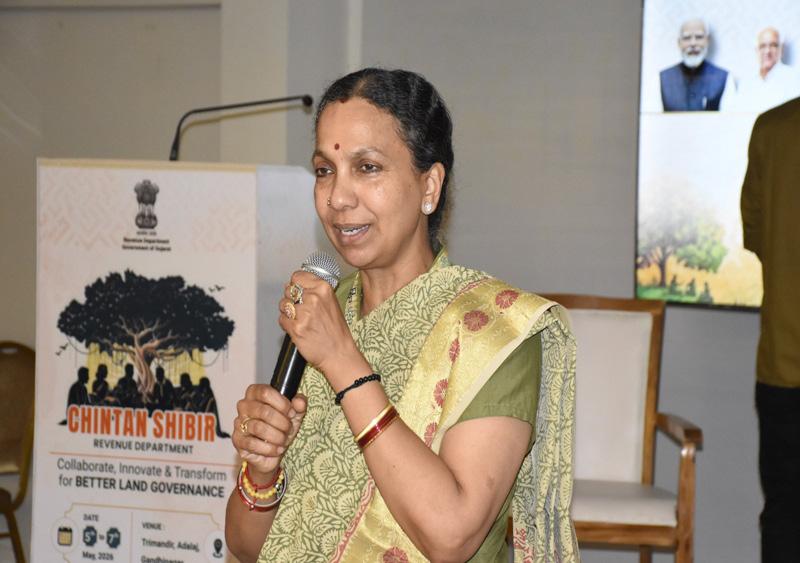
Gujarat Revenue Dept focuses on AI, blockchain and GIS for land governance reform
Gandhinagar, May 6 (IANS) The Gujarat Revenue Department’s Chintan Shibir on Wednesday placed strong emphasis on modernising land governance through digital technologies, with discussions focusing on artificial intelligence, blockchain, geographic information systems (GIS) and administrative reforms aimed at improving transparency, efficiency and citizen-centric service delivery.
Held at Amba Business Park in Adalaj, the second day of the Shibir brought together senior officials and domain experts who were divided into seven thematic groups to examine key areas of land administration and revenue services.
Additional Chief Secretary Dr Jayanti Ravi was present during the deliberations, where participants reviewed ways to simplify procedures and strengthen accountability in revenue operations.
The group discussions covered
a wide range of administrative subjects. One group focused on optimising processes such as land use change permissions through ILA and mutation procedures. Another examined the expansion of paperless and faceless property registration systems along with strengthening of RCCMS.
A separate group discussed urban land record management and governance frameworks, while another focused on ethics and integrity in revenue administration.
Further sessions addressed the modernisation of survey and re-survey processes, strategies for enhancing administrative efficiency and disaster preparedness among government personnel, and the challenges associated with land acquisition and land allocation procedures. Across all groups, officials reviewed existing workflows and proposed reforms aimed at improving speed, accuracy and transparency in service delivery.
A major technical session on land governance technologies was led by Assistant Professor at IIT Gandhinagar, Sameer Kulkarni, who outlined the potential of artificial intelligence and blockchain in transforming revenue systems.
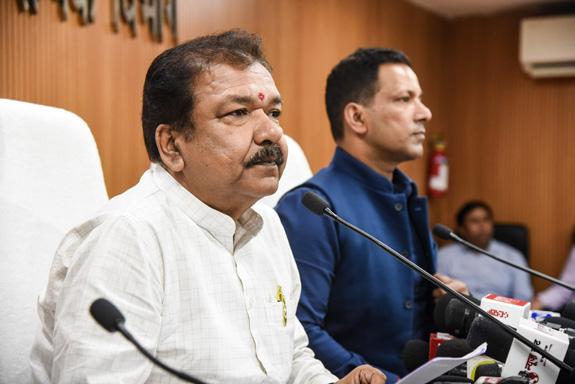
Bihar introduces reforms in land services, public distribution system
Patna, May 12 (IANS) In a significant administrative reform aimed at improving public service delivery, the Department of Revenue and Land Reforms of the Bihar government has directed revenue employees to work directly within their respective Halkas (jurisdictional circles), rather than remaining stationed at Circle Offices.
Dilip Kumar Jaiswal, the Minister of Revenue and Land Reforms, has instructed that revenue staff will now attend the Anchal (Circle) office only on Saturdays.
“On all other days, they will be required to remain physically present in their designated Halkas to resolve land-related issues on the ground,” he said. The Minister also directed Circle Officers to discontinue daily inperson meetings. Instead, meetings should be conducted online if necessary, except on Saturdays when all staff will gather at the Circle Office. This day will also coincide with Bhu-Samadhan Diwas (Land Resolution Day).
According to the new system, revenue employees must follow a fixed roster and prioritise resolving key land-related matters such as mutation (DakhilKharij), land record correction (Parimarjan), and digital land measurement (E-Mapi).
The move is expected to significantly reduce the need for citizens to visit Circle Offices repeatedly, thereby saving time and effort.
Jaiswal emphasised that officials must ensure the timely and transparent disposal of complaints at the Halka level, stating that the department's primary objective is to provide quick and effective relief to the public.
In another key development, Ashok Choudhary, Minister of Food and Consumer Protection, announced a pilot project to deliver food grains directly to the homes of elderly citizens aged 80 years and above.
During a departmental review meeting held on Tuesday, Choudhary directed officials to prepare a detailed proposal for the initiative.
He stressed the need for complete transparency and strict adherence to timelines in issuing new ration cards and distributing food grains.
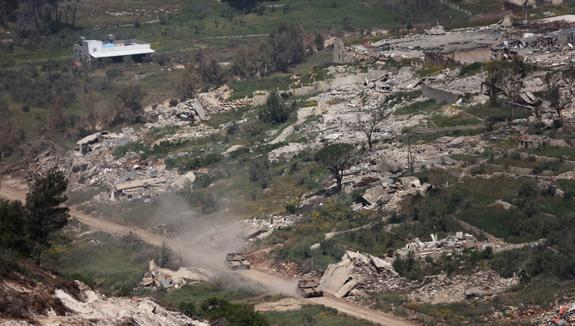
Third round of Israel-Lebanon talks open in Washington
Jerusalem, May 14 (IANS) Israeli and Lebanese officials began a third round of peace talks in Washington on Thursday, an Israeli government official told a news agency.
The talks are expected to continue on Friday, though it was unclear whether the sides were close enough to make progress, Xinhua news agency reported.
The negotiations are being held at the US State Department, the official said, speaking on condition of anonymity. Israel is represented by its ambassador to Washington, Yechiel Leiter, and senior security officials, while Lebanon's delegation includes its ambassador to Washington, Nada Hamadeh Mouawad, and former Lebanese Ambassador to the United States Simon Karam.
According to the Israeli official, the talks are being held to disarm Hezbollah and reach an agreement to form official ties with Lebanon.
Israel wants to preserve freedom to carry out air and ground operations against Hezbollah until
an agreement is reached, while Lebanon is demanding an Israeli withdrawal from its territory, a halt to Israeli strikes and an end to the destruction of villages near the border.
The current round of fighting began on March 2, as Hezbollah fired rockets towards Israel.
On April 24, US President Donald Trump announced a threeweek extension of the ceasefire between Israel and Lebanon, describing it as a “historic” step and signalling possible direct talks between the two sides in Washington.
The development followed an Oval Office meeting attended by senior officials from both countries, including Lebanese Ambassador to the United States Nada Hamadeh Moawad and Israeli Ambassador Yechiel Leiter.
On April 26, Israeli Prime Minister Netanyahu ordered the Israel Defence Forces to vigorously attack Hezbollah targets in Lebanon, said the Government Press Office of Israel.
The Israel Defence Force has been reporting aerial targets regularly launching from Lebanon towards Israel. They also reported several rocket launching sites being destroyed and Hezbollah infrastructure being targeted by the IDF and the Israel Air Force.
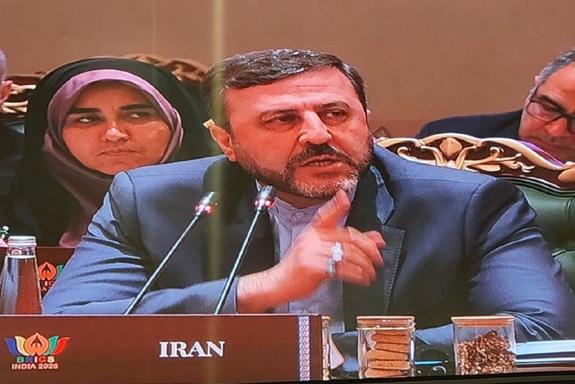
UAE supported aggression against Tehran: Iran
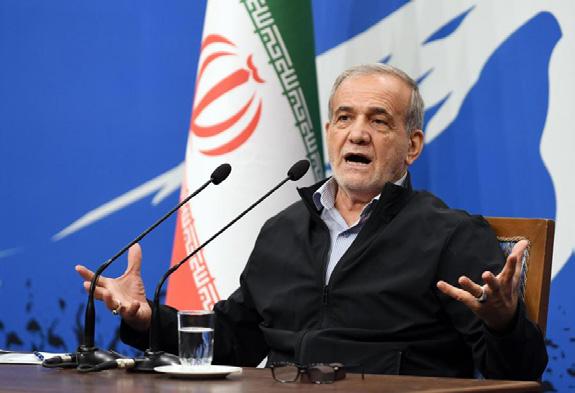
New Delhi, May 14 (IANS) Iran’s Deputy Foreign Minister on Thursday stated that the United Arab Emirates had played a significant role in the aggression against Iran during the second session of the BRICS Foreign Ministers' Meeting in New Delhi. Kazem Gharibabadi, Deputy Foreign Minister for Legal and International Affairs of Iran, said: “The United Arab Emirates played a significant role in supporting and facilitating the military aggression against the Islamic Republic of Iran. Therefore, a party that itself contributed to the creation and escalation of tensions lacks any legitimacy to level political accusations and claims against Iran.”
According to the Embassy of Iran in India, the Deputy Minister made these remarks in response to the “baseless” allegations made by the United Arab Emirates Minister of State for Foreign Affairs, who had accused Iran of attacking the United Arab Emirates and portrayed Iran as the aggressor.
AU, UN leaders denounce external interference in Africa’s security crisis
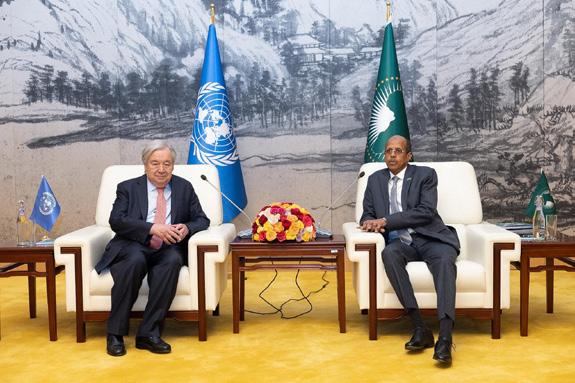
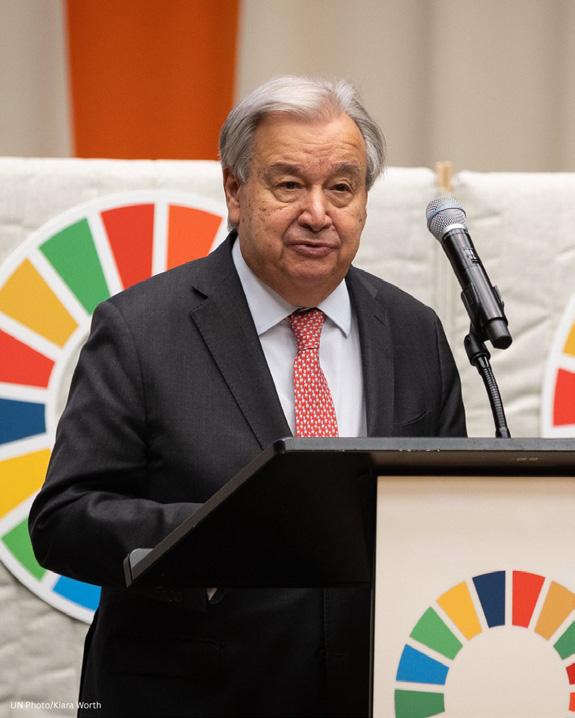
Addis Ababa, May 14 (IANS) African Union (AU) Commission Chairperson Mahmoud Ali Youssouf and United Nations (UN) Secretary-General Antonio Guterres have warned that external interferences are fueling the security crisis in Africa.
The two leaders made the allegation during a joint press conference on Wednesday at the AU headquarters in Addis Ababa, the capital of Ethiopia, after signing a new declaration to enhance the AU-UN partnership.
"Most of the security crises on the continent are fueled from abroad.
Financial resources, ammunition, sometimes even fighters come to fight another war from other continents," Youssouf told the press conference.
He said the interference goes to the extent of disrupting mediation and resolution processes, causing a serious challenge for the AU and UN to address the security crisis on the continent, including in the Sahel, Sudan, the Horn of Africa and the eastern Democratic Republic of the Congo, Xinhua news agency reported.
Youssouf said the interferences are requiring the AU, UN and other partners to deploy more efforts to contain the crises.
"The AU must lead any peace negotiations on the continent, based on the principle of African solutions to African conflicts."
Guterres, for his part, said it
is absolutely intolerable that countries that are external to Africa interfere in African conflicts, providing weapons and political support to serve their strategic or economic interests.
"We need naturally to go on developing our common diplomacy, to make sure that we create the conditions for this kind of interference to cease and for other actors to be able to come to political agreements, able to end these conflicts," he said.
According to Guterres, the world is witnessing a new kind of war where the military does not fight each other but launches drones against civilians.
"We also raise our voices, denouncing those countries that are providing drones that are not manufactured in Africa, as they are causing terrible sacrifice for the African people," he added.
MoS Margherita holds talks with Governor General of Belize, meets Indian diaspora
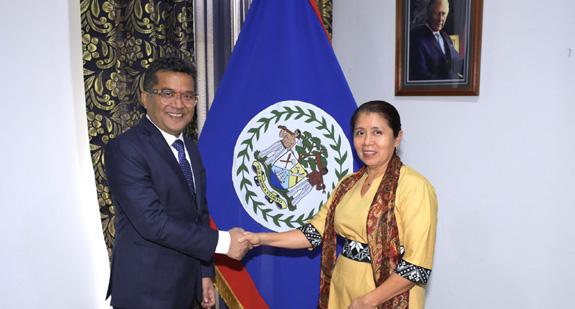
Belmopan, May 14 (IANS) Minister of State (MoS) for External Affairs, Pabitra Margherita met the GovernorGeneral of Belize on Thursday.
“When countries facilitate and provide services to aggressors, this is not merely assistance; such conduct itself constitutes aggression. Therefore, the United Arab Emirates is an aggressor, not merely an accomplice to aggression,” Gharibabadi said, citing the 1974 United Nations General Assembly Resolution.
He highlighted that “every warplane that took off from the United Arab Emirates has been documented, including the exact time, date and flight path”.
He said that Iran had submitted 120 official diplomatic notices to the United Nations Security Council, and that all the evidence had been included in them, the Embassy wrote on the social media platform X.
He emphasised that Iran could not tolerate the situation any longer while Iranian people and infrastructure were being targeted, especially with the “participation and cooperation of one of our neighbours, namely the United Arab Emirates”.
“We had no option but to target all facilities of US bases in the United Arab Emirates, or any facilities and installations in the United Arab Emirates in which the United States had a role or participation,” he noted.
MoS Margherita called on Dame Froyla Tzalam, Governor-General of Belize, during his official visit to Belize, discussing bilateral relations.
“Honoured to call on H.E. Dame Froyla Tzalam, Governor-General of Belize.Conveyed greetings from the Hon’ble President and Prime Minister of India. Discussed ways to further strengthen relations between our two countries,” Margherita wrote on social media platform X.
He also interacted with members of the Indian diaspora in
Belize and appreciated their contribution in strengthening the close and friendly ties between India and Belize.
“The vibrant Indian community continues to serve as an important bridge between our two countries,” noted Margherita.
According to the Ministry of External Affairs (MEA), during his visit, Margherita would be meeting dignitaries of the Belize government and visit the sites of India’s developmental initiatives.
The MoS arrived in Belize after concluding his visit to Honduras.
During his visit to Honduras, Margherita interacted with the members of the Indian community and alumni of the Indian Technical and Economic Cooperation (ITEC) in Honduras, lauding their contribution in enhancing bilateral relations and fostering people-to-people connections.
On Tuesday, Margherita met
Honduras' Foreign Minister Mireya Aguero, as both leaders reviewed the growing momentum in bilateral relations and reaffirmed the shared commitment to enhance institutional collaboration. He also held a meeting with Honduras' first Vice President, Maria Antonieta Mejia, where the two sides discussed ways to further deepen bilateral ties. He is on an official visit to the Republic of Costa Rica, the Republic of Honduras, Belize and the Commonwealth of Dominica from May 8-15.
According to MEA, in the last leg of his visit to the Commonwealth of Dominica, Margherita is likely to meet the leadership of Dominica and discuss the entire gamut of the bilateral relationship. He will also visit project sites which are being implemented through grant assistance from India.
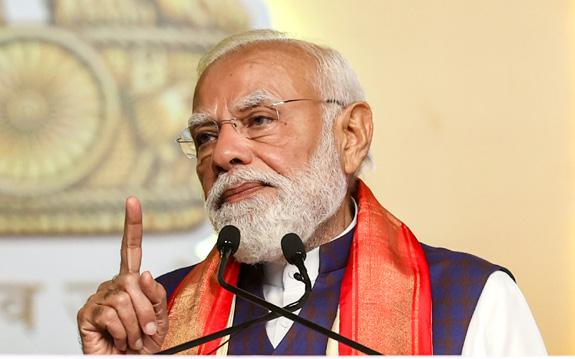
BRICS to work on building more inclusive world order under India’s chairmanship: PM Modi
Prime Minister
on Thursday said that, under India's Chairmanship, BRICS will work together to strengthen multilateralism, promote sustainable development, enhance economic resilience and build a more inclusive world order.
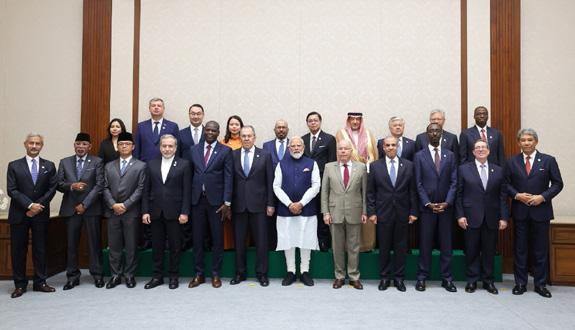
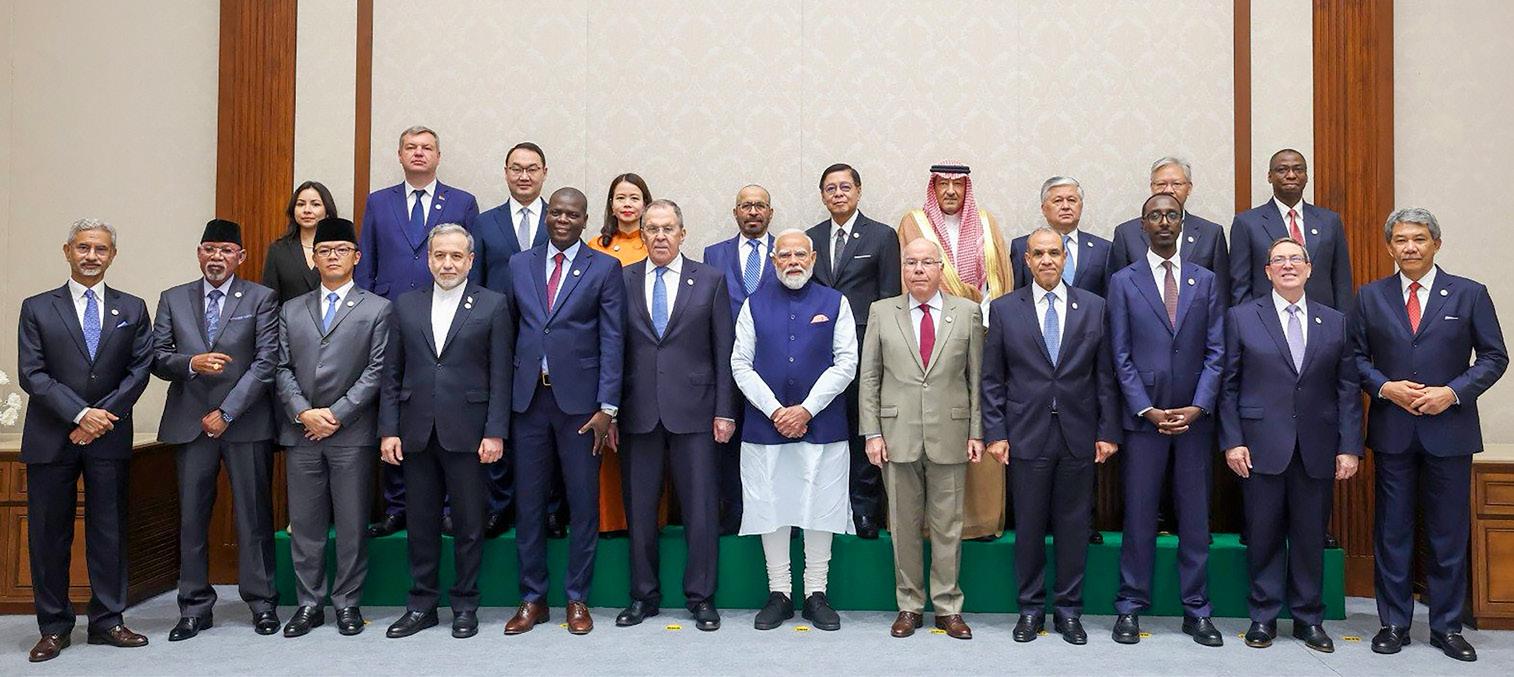
Foreign Ministers and Heads of Delegation of BRICS countries called on PM Modi on the first day of the BRICS Foreign Ministers' Meeting in the capital.
"Glad to interact with Foreign Ministers and Heads of Delegation of BRICS countries. BRICS has emerged as an important platform for advancing cooperation among emerging economies and giving voice to the aspirations of the Global South," PM Modi posted on X.
"Under India's Chairmanship this year, we will work together to strengthen multilateralism,
promote sustainable development, enhance economic resilience and build a more inclusive world order," he added. Earlier, Russian Foreign Minister Sergei Lavrov called on Prime Minister Modi, discussing the various regional and global issues of mutual interest, including the situation in Ukraine and West Asia.
During the meeting, PM Modi reiterated India's consistent stance of dialogue and diplomacy as the way forward, a statement released by the Prime Minister's Office (PMO) detailed.
New Delhi, May 14 (IANS)
Narendra Modi
Islamic State planning Sri Lanka-style attacks in India using foreign operatives
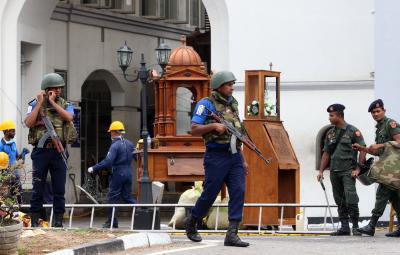
New Delhi, May 11 (IANS) The Islamic State has devised a new strategy whereby it would use its radicalised elements from various countries around India to carry out both propaganda and attacks. When the Islamic State announced itself on the world stage in late 2013, there were plenty of people from India who left the country to join the outfit. However over the years, the agencies have managed to prevent many from leaving the country to join the Islamic State in Syria, Iraq and Afghanistan.
There have been successful deradicalisation campaigns, which ensured that many who had plans of joining the outfit returned to
the mainstream.
An Intelligence Bureau official says that while the problem is largely in check in India, there are attempts now being made to push in recruits from other countries.
The Islamic State has dedicated wings in Pakistan, Bangladesh, Maldives and Sri Lanka.
The effects of the Islamic State’s Sri Lankan module was seen in Tamil Nadu and Mangaluru. In both these places, a radicalised individual part of the Islamic State attempted to carry out attacks. However both failed.
The common angle in these incidents is that the accused persons Jamesha Mubin and Mohammad Sharique were radicalised by the same individual from Sri Lanka. Zahran Hashim, the mastermind of the 'Easter Bombings' in Sri Lanka was the leader of the Islamic State in the country. He had visited South India and stayed for a considerable period of time,
during which both Mubin and Sharique were radicalised. Officials say that the Islamic State is planning on pushing its recruits from Maldives, Sri Lanka and Bangladesh into India. Travel into India from these countries is relatively easier and the outfit is looking to take advantage of that. The official added that the modules in Bangladesh are focussing heavily on pushing in recruits into West Bengal and Bihar. On the other hand, the push into the southern states would be made by Sri Lanka and Maldives, the official added.
Assessing the threat perception, another official said that the push that is being attempted from Bangladesh is the highest.
A recent edition of Dabiq, the mouthpiece of the Islamic State had an article titled, 'The Revival of Jihad in Bengal,' aimed at calling the youth to dedicate themselves to Jihad.
Any restart of fighting would have terrible consequences: UN Chief Guterres
open and the
be maintained.
“My strong appeal is for the negotiations to go on until that diplomatic solution is found, the ceasefire to be maintained, and in between, the Strait of Hormuz to be completely open…Any restart of the fighting would have terrible consequences,” Guterres said while attending a groundbreaking ceremony for a conference facility at the UN office in Kenya's Nairobi.
He insisted that the Middle East emergency is not a “distance crisis” as around 13 per cent of Africa’s imports move through the key waterway.
He also added that many African nations are still waiting for fertilisers and other agricultural
inputs from the Gulf.
“Without fertilisers, you can imagine that we risk having a serious food security problem next year,” he explained.
He noted that the price of Urea has risen by more than 35 per cent in a month, the world’s most widely used fertiliser.
He said that keeping the Strait of Hormuz completely open is a must for the interests of the international community, noted the UN news.
“That is the only way to bring energy prices and fertiliser prices back to the levels that we had before the war,” Guterres highlighted.
Indian peacekeepers in Lebanon hailed for their professionalism, camaraderie, and unwavering commitment
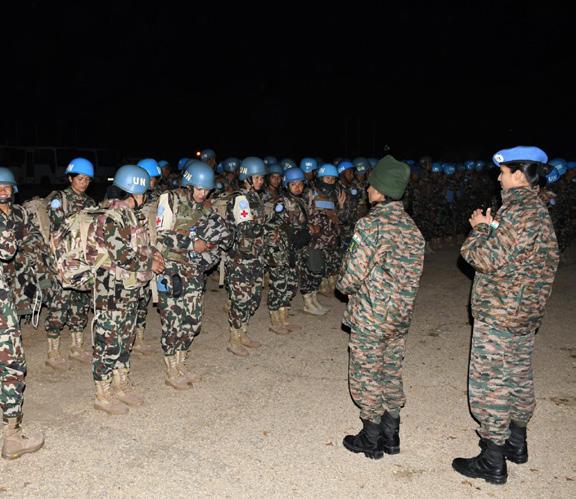
Beirut, May 11 (IANS) The Embassy of India in Lebanon on Monday conveyed its appreciation for the Indian Peacekeepers in South Lebanon for once again standing at the forefront of mission support and operational solidarity.
"Under challenging conditions, Indian convoys safely helped in Induction and de-Induction of Nepalese troops from forward UN
positions and accommodated over 450 personnel at UNP 4-2 with full logistics and sustainment support," the Embassy of India in Beirut posted on X.
"The swift and seamless assistance rendered by Indian peacekeepers was highly appreciated by the Force Commander, Sector Commander (Sector East), and the outgoing Contingent Commander," it added.
According to the Embassy, Indian Peacekeepers continue to uphold the highest traditions of professionalism, camaraderie, and unwavering commitment, thus keeping the Tricolour flying high with pride.
Last month, a French soldier was killed, and three others wounded while they were deployed at the
EAM Jaishankar meets Iranian FM Araghchi, reviews West Asia situation
New
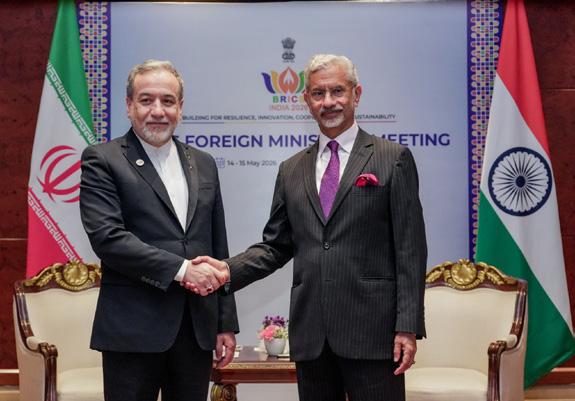
Delhi, May 15 (IANS) External Affairs Minister (EAM)
S Jaishankar on Friday met his Iranian counterpart Seyed Abbas Araghchi in New Delhi, where the two leaders exchanged views on the evolving situation in West Asia and its wider implications, along with bilateral matters of mutual interest.
EAM Jaishankar also welcomed Araghchi’s participation in the BRICS Foreign Ministers' Meeting being hosted in New Delhi under India's 2026 chairship.
Following the meeting, EAM posted on X : “Had a detailed conversation with FM Abbas Araghchi of Iran this morning in Delhi. Discussed the situation in West Asia and its implications. Also exchanged views on bilateral issues of mutual interest.
Appreciate his participation in BRICS India 2026."
Earlier on Thursday, Prime
Minister Narendra Modi also met Iranian Foreign Minister on the sidelines of the BRICS Foreign Ministers’ Meeting in New Delhi. The meeting marked the first high-level diplomatic engagement involving India since the Iran war began.
Meanwhile, EAM Jaishankar on Thursday highlighted the fragile security environment in West Asia, stating that the persistent tensions in the region, along with threats to shipping routes and energy infrastructure, remain a matter of global concern.
Delivering the national statement at the BRICS Foreign Ministers' Meeting in New Delhi under India's 2026 chairship, the EAM said, "The conflict in West Asia merits particular attention. Continuing tensions, risks to maritime traffic, and disruptions to energy infrastructure highlight the fragility of the situation. Safe and unimpeded maritime flows through international waterways, including the Strait of Hormuz and the Red Sea, remain vital for global economic well-being." He also reaffirmed India's "strong commitment" to the purposes and principles of the United Nations Charter.
PM Modi to visit five nations to strengthen bilateral ties
New Delhi, May 11 (IANS) Prime Minister Narendra Modi will pay an official visit to the United Arab Emirates, the Netherlands, Sweden, Norway, and Italy from May 15 to May 20, the Ministry of External Affairs stated on Monday.
United Nations Interim Force in Lebanon (UNIFIL) in southern Lebanon.
India had strongly condemned the attack, urging the need to investigate and bring the perpetrators to justice.
India also reiterated the importance of respecting the sanctity and inviolability of UN premises and personnel, urging all parties to ensure the safety and security of Peacekeepers who are deployed pursuant to UN Security Council mandates.
In March, India also called for the protection of UN peacekeepers in Lebanon, who are in the midst of a heightened confrontation between Israel and Hezbollah in the fallout of the Iran war.
During his visit to the United Arab Emirates on May 15, PM Modi will meet the President of the United Arab Emirates, Sheikh Mohamed bin Zayed Al Nahyan, exchange views on bilateral issues and energy cooperation, and discuss ways to advance the bilateral Comprehensive Strategic Partnership.
On the second leg of the visit, PM Modi will pay an official visit to the Netherlands from May 15 to 17 at the invitation of the Netherlands' Prime Minister, Rob Jetten.
PM Modi will call on King Willem-Alexander and Queen Máxima and hold talks with Prime Minister Rob Jetten.
The Prime Minister’s visit will build on the momentum of highlevel engagements and close cooperation spanning diverse sectors, including defence, security, innovation, green
hydrogen, semiconductors, and a Strategic Partnership on Water, the Ministry noted.
For the third leg of the visit, PM Modi will travel to Gothenburg, Sweden, from May 17 to 18, at the invitation of the Prime Minister of the Kingdom of Sweden, Ulf Kristersson.
The Ministry of External Affairs noted that PM Modi will hold bilateral talks with PM Kristersson to review the entire gamut of bilateral relations and explore new avenues of cooperation to enhance bilateral trade, as well as collaboration in green transition, Artificial Intelligence, emerging technologies, start-ups, resilient supply chains, defence, space, climate action, and people-topeople ties.
In the fourth leg of his visit, PM Modi will travel to Norway from May 18 to 19 for the third IndiaNordic Summit and bilateral engagements.
This will be the first visit of PM Modi to Norway and will mark the first prime ministerial visit from India to Norway in 43 years.
PM Modi will call on King Harald V and Queen Sonja and hold bilateral talks with Prime Minister Jonas Gahr Store.
PM Modi will also address the India-Norway Business and Research Summit along with the Norwegian Prime Minister.
Nairobi, May 11 (IANS) UN Chief Antonio Guterres on Monday appealed for the Strait of Hormuz to be completely
ceasefire to
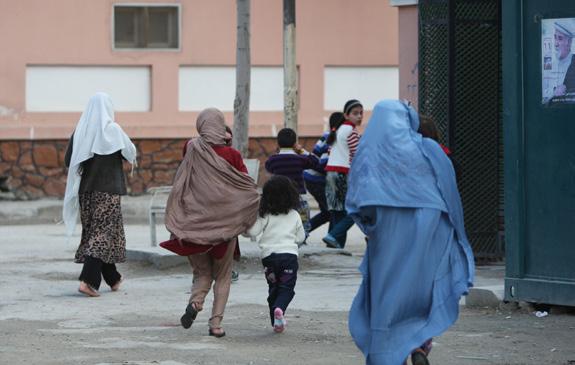
Kabul seeks UN intervention over harassment of Afghan refugees in Pakistan
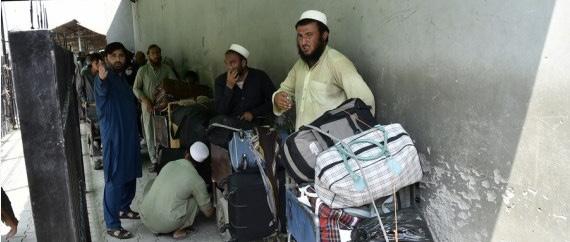
Kabul, May 6 (IANS) Afghanistan's High Commission for Addressing Migrants' Problems has urged international organisations and the United Nations High Commissioner for Refugees (UNHCR) to hold talks with Pakistan so that Afghan nationals do not face difficulties. It also urged to ensure that the refugees do not face harassment, enabling their swift return.
The commission stressed that issues of Afghan refugees should be addressed as a matter of urgency. It stated that Afghan refugees entering Afghanistan through the Torkham crossing
are often held up on the Pakistani side for days for different reasons. It further mentioned and that those affected include women, children, and elderly people, many of whom face difficulties while waiting on roads in uncertain conditions, Afghanistan-based Ariana News reported.
The commission said, "Our request is that Afghan migrants should not be left waiting on the other side of the border." It stated that Afghanistan has necessary capacity to receive and resettle Afghan refugees who return to the country, Ariana News reported.
It further said, "Regardless of the number arriving each day, we are able to manage them and provide the required services."
Last month, US-based advocacy
group Human Rights Watch (HRW) said that the Pakistani authorities have increased raids, arbitrary detentions and forced deportation of Afghan refugees after renewed border clashes with Afghanistan. HRW noted that thousands of vulnerable Afghan refugees, including children, have been facing serious problems in accessing healthcare, education and other essential services due to police operations.
It also highlighted that Pakistan's forced deportation of Afghans may amount to violations of the country's obligations as a party to the UN Convention Against Torture and the customary international law prohibition against refoulement or forced return to a place where they would face a genuine risk of persecution, torture, or other illtreatment, or a threat to their life.
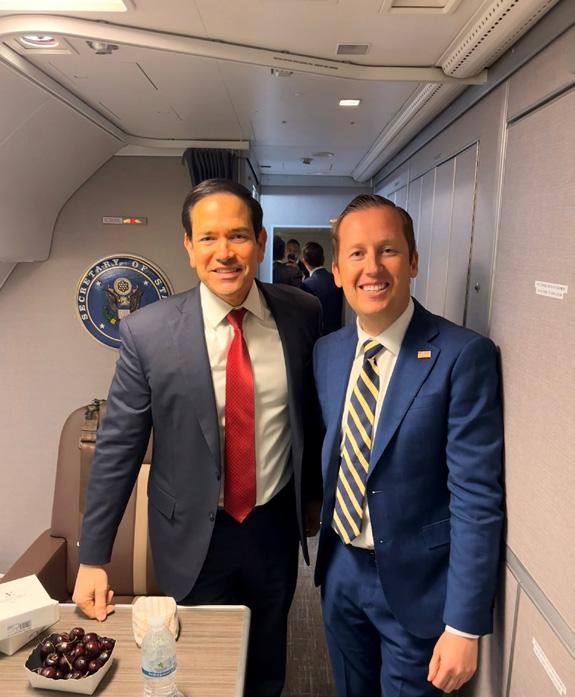
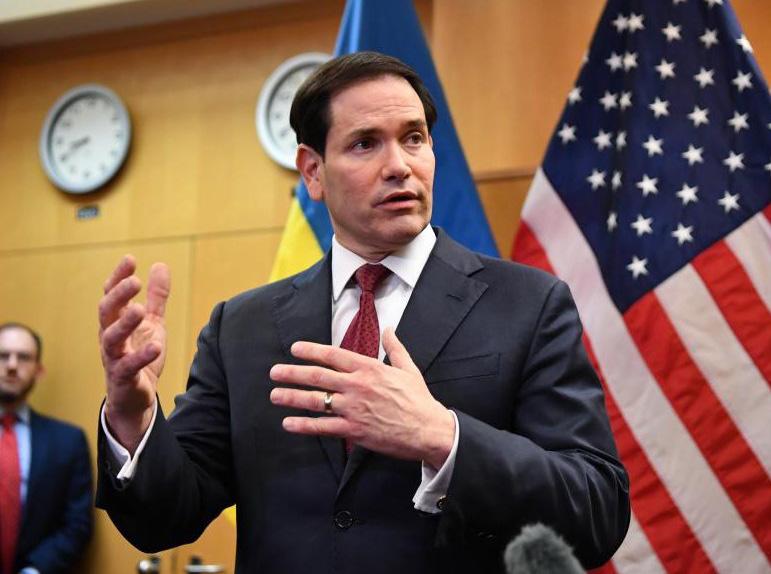
Excited to build stronger ties: US Ambassador ahead of Marco Rubio’s
New Delhi, May 6 (IANS) US Ambassador to India Sergio Gor on Wednesday spoke about the growing and evolving partnership between United States and India while also sharing excitement about future partnerships that will take the bilateral relations to new heights.
The US Ambassador’s comments
President
To
India visit
come ahead of US Secretary of State Marco Rubio's upcoming India visit.
Gor described Rubio as a "good friend" and underlined the importance that the US attaches to its ties with India.
"Looking forward to welcoming my good friend Secretary Rubio to India! The United States deeply values our growing partnership with India, and we are excited to build even stronger ties that will benefit both our nations and the world. See you soon, Mr. Secretary!," Gor posted on X. Gor's statement comes amid growing diplomatic engagement between India and the US. Notably, last month, Prime Minister Narendra Modi and US President Donald Trump had a telephonic conversation, discussing the current situation in West Asia as well as ways to
Lam’s visit
further strengthen the bilateral partnership.
"Received a call from my friend President Donald Trump. We reviewed the substantial progress achieved in our bilateral cooperation in various sectors. We are committed to further strengthening our Comprehensive Global Strategic Partnership in all areas," PM Modi posted on X after the phone call on April 14.
"We also discussed the situation in West Asia and stressed the importance of keeping the Strait of Hormuz open and secure," he wrote further.
Last month, Sergio Gor extended a warm welcome to Foreign Secretary Vikram Misri to the White House during his official visit to the US and stated that Rubio looks forward to visiting India in May.
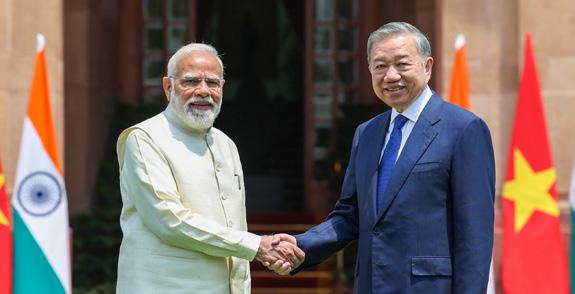
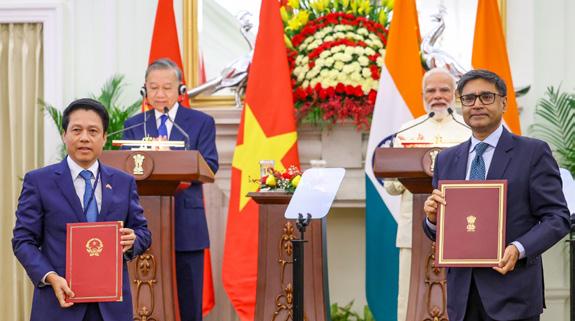
reflects Vietnam’s commitment to deepen ties with India: Report
New Delhi, May 6 (IANS)
Vietnamese President To Lam's visit to New Delhi demonstrates the Southeast Asian nation's strong commitment to strengthen ties with India, elevating the relationship to a higher level that is more effective, robust and substantive, a report detailed on Wednesday.
President To Lam is on a State Visit to India at the invitation of Prime Minister Narendra Modi. This visit holds significance as 2026 marks the 10th anniversary of the Comprehensive Strategic Partnership between two nations, a landmark in the
history of bilateral relations. This is President To Lam's second overseas visit after the National Assembly approved key state leadership appointments.
"In recent years, India has emerged as a notable success story in regional economic development, while steadily enhancing its international standing through a balanced and independent foreign policy. These factors have enabled the South Asian country to remain resilient and sustain strong growth amid an increasingly volatile and contested global environment," reported Nhan Dan newspaper, the central organ of Communist Party of Vietnam.
A flexible diplomatic policy has remained an important factor in India achieving significant achievements on its development
Russia urges evacuation from Kyiv in note to foreign diplomatic missions
Moscow/Kyiv, May 7 (IANS)
The Russian Ministry of Foreign Affairs has said it had sent a note to all foreign diplomatic missions and international organisations accredited with the ministry, urging them to ensure the evacuation of personnel from Kyiv.
According to the statement, the note referenced a warning on Monday by the Russian Defence Ministry about threats from the Ukrainian authorities to carry out attacks on Moscow during Victory Day celebrations.
The Russian Foreign Ministry called on governments and organisations to take the warning with maximum responsibility and ensure the timely evacuation of their staff and citizens from Kyiv, given the "inevitability of a retaliatory strike" by the Russian forces against Kyiv if Ukraine interrupts the celebrations, reports Xinhua news agency.
The ministry said Russian diplomatic missions abroad were also informing the countries of accreditation and international organisations of the situation.
On Monday, the Russian
Defence Ministry warned that any attempts to disrupt the celebrations marking the 81st anniversary of victory in the Great Patriotic War would trigger a "massive missile strike" on central Kyiv.
Victory Day, observed annually on May 9 to mark the Soviet Union's victory in the Great Patriotic War, is one of Russia's most important national holidays. The Kremlin said in late April that a military parade would still be held in Red Square without military equipment because of security concerns.
Meanwhile, Ukrainian President Volodymyr Zelensky said Wednesday that Russia continues its military operations despite Ukraine's proposal for a ceasefire and warned that Kyiv will respond in kind.
"Russia has not stopped any of its military activity. Unfortunately, it has not ceased. Ukraine will respond in a reciprocal manner," Zelensky wrote on Telegram. He noted that Russia attacked seven Ukrainian regions on Wednesday despite a Kyivproposed ceasefire that took effect at midnight.
"Depending on the situation tonight and tomorrow, we will also decide on our fully fair response," Zelensky said. He emphasised that Ukraine remains committed to working for peace and seeks to end the conflict with dignity.
path. India’s role and position in the region and the world is increasing. India is following a multi-alignment foreign policy, sharing good and balanced ties with other countries.
"The South Asian nation is striving to affirm its role as a 'leader of the Global South', step up its 'Act East' policy, continue strengthening its comprehensive strategic partnership with ASEAN, and commit to working with ASEAN to build a free, open and inclusive Indo-Pacific, in line with ASEAN’s central role in the region," the report mentioned. India and Vietnam have a traditional friendship and longstanding close ties. Buddhist links demonstrate the depth of historical, cultural, and religious exchanges and connections between India and Vietnam.
Chinese President Xi Jinping has warned US President Donald Trump that mishandling Taiwan could lead to “clashes and even conflicts” as the two leaders opened high-stakes talks in Beijing aimed at stabilising relations between the world’s two largest economies amid tensions over trade, technology and Iran, according to multiple media reports.
According to reports by The Washington Post, The Wall Street Journal, The New York Times and CNN, the warning came during Trump’s first visit to China in nearly nine years and underscored the deep strategic divide that persists beneath the summit’s carefully choreographed pageantry. The Washington Post reported that Xi delivered the warning during closed-door talks at the Great Hall of the People in Beijing.
“The Taiwan question is the most important issue in China-US relations,” Xi told Trump during the meeting, according to Chinese accounts cited by The Washington Post. “If it is handled properly, the bilateral relationship will enjoy overall stability. Otherwise, the two countries will have clashes and even conflicts, putting the entire relationship in great jeopardy.”
Trump did not publicly respond to Xi’s remarks on Taiwan. A White House account instead highlighted trade, investment and Iran-related discussions, according to The Wall Street Journal and The New York Times. Officials from both countries said the Strait of Hormuz “must remain open” and reiterated that Iran “can never have a nuclear weapon”.
The summit blended symbolism with strategic bargaining. The Wall Street Journal reported that Xi gave Trump a redcarpet welcome featuring a 21-gun salute, military bands and schoolchildren waving Chinese and American flags outside the Great Hall of the People.
US Democrats warn against wider Iran war
Washington, May 13 (IANS)
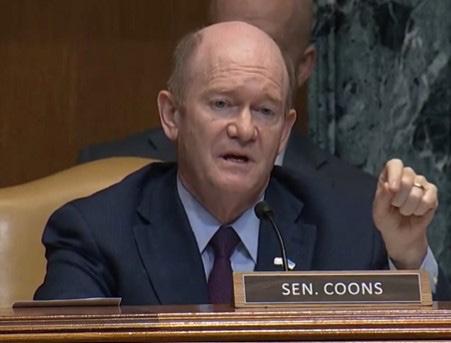
Democratic senators warned that the Trump administration risked dragging the United States into another prolonged Middle East conflict, as a tense Senate hearing exposed deep divisions over the ongoing war with Iran and its rising economic and military costs.
During a Senate Appropriations Subcommittee on Defence hearing on President Donald Trump’s proposed $1.5 trillion defence budget, several Democratic lawmakers compared the current crisis to past US wars in Iraq and Afghanistan and questioned whether the administration had a clear longterm strategy.
Senator Chris Coons said the administration appeared focused on tactical battlefield gains without a broader political plan.
“There used to be a consensus in national security, that America should only go to war when there’s an imminent threat to our national security, when all other options have been exhausted, and when we have clear objectives
and a plan for how it ends,” Coons said.
Coons repeatedly pressed Secretary of War Pete Hegseth over the administration’s inability to reopen the Strait of Hormuz, where ongoing Iranian pressure on shipping has fuelled rising oil and fuel prices worldwide.
“My concern, Mr Secretary, is that you’ve achieved a series of tactical successes but are on the verge of a strategic loss,” Coons said.
Senator Christopher Murphy also questioned whether the administration was underestimating Iran’s ability to endure prolonged economic and military pressure.
“This is a high-risk strategy,” Murphy said, warning that Iran might withstand sanctions and military pressure for years while American families suffered from soaring fuel costs.
Murphy argued that “time is not on our side here” as rising oil prices were already hurting US farmers and households.
Senator Patty Murray sharply criticised the scale of the Pentagon budget request and accused the administration of prioritising military spending over domestic needs.
“You’re spending families’ hardearned tax dollars on a war that many strongly oppose,” Murray said. “You want to increase the war budget for the next year by half a trillion dollars.”
Indian seafarer killed af-
ter ship catches fire, sinks near Strait of Hormuz
Dubai/New Delhi, May 9 (IANS)
An Indian seafarer lost his life while four others sustained burn injuries after a wooden dhow carrying 18 Indian crew members capsized near the Strait of Hormuz following a fire onboard, official sources confirmed on Saturday. The incident took place on Friday in the strategically sensitive Strait of Hormuz region, where tensions linked to the ongoing Iran-US conflict continue to escalate, and reports of drone activity in the area have heightened security concerns. According to sources, the wooden dhow was transporting general cargo when the fire broke out. Authorities are still trying to determine the exact cause of the blaze that led to the vessel capsizing.
Tehran ready to pursue diplomacy to end war if rights safeguarded: Iran’s president
Tehran, May 7 (IANS) Iran's President Masoud Pezeshkian has said the country is ready to pursue diplomatic paths to end the war with the United States and Israel, while insisting on safeguarding the Iranian nation's rights.
In a call with French President Emmanuel Macron on Wednesday (local time), Pezeshkian expressed deep distrust of the United States, citing recent hostile actions, including two attacks on Iran during bilateral talks, which he described as "stabbing Iran in the
back," according to a statement published on the website of his office.
The phone conversation came as Axios reported earlier in the day that the United States and Iran are closing in on a one-page memo to end their war, reports Xinhua news agency.
It said a potential deal would involve Iran committing to a moratorium on nuclear enrichment, and the United States agreeing to lift sanctions, with both sides lifting restrictions on transit through the Strait of Hormuz.
Iran, the United States and Israel reached the ceasefire on April 8 after 40 days of fighting that started with the US and Israeli attacks on Feb. 28.
Following the truce, Iran and the United States held one round of peace talks in Pakistan's
capital, Islamabad, on April 11 and 12, which failed to lead to an agreement.
Over the past weeks, the two sides have exchanged a number of proposed plans to end the war, with the latest one currently being reviewed by Iran. Additionally, Iran has said it has not exchanged any new written messages with the United States, pushing back against reports that the two sides are close to a onepage agreement to end hostilities.
The semi-official Fars news agency called recent media reports "fabricated," saying they were designed to influence global markets and drive down oil prices rather than reflect the situation on the ground.
Fars, citing two unnamed sources, said Iran has not yet responded to the latest US message, which was delivered through Pakistan.
US calls allies to secure Hormuz route
Washington, May 5 (IANS) The United States on Tuesday urged its allies to step up and share responsibility for securing the Strait of Hormuz, signalling a push towards a broader international role in safeguarding one of the world’s most critical shipping lanes.
Secretary of War Pete Hegseth said Washington expects partner nations to contribute to maritime security even as US forces lead a new mission to protect commercial vessels from Iranian threats.
Providing details of the incident, a government source said, "A wooden Dhow, carrying general cargo, with 18 Indian crew capsized yesterday close to the Strait of Hormuz after it caught fire. The exact cause of the fire is being ascertained. The crew members were rescued by a vessel which was passing by. In this incident, one Indian on the dhow died while four received burn injuries. The injured are receiving medical treatment in Dubai and are safe."
The source further stated that officials from the Indian Consulate had met the rescued Indian nationals on Friday night and were coordinating with the dhow owner while extending all possible support and assistance to the crew members and their families.
Earlier on Friday, the Consulate General of India in Dubai had also confirmed the incident through a post on X, expressing grief over the death of the Indian crew member.
“The world needs this waterway a lot more than we do,” Hegseth said, adding that the US is working to stabilise the situation
before handing over responsibility to other countries.
He said the United States is encouraging countries such as Japan, Australia and European partners to play a greater role, while making clear that Washington will not delay action in the meantime.
“We’re not waiting for them to do so. We’re looking to set the conditions to hand to them,” he said.
The call comes as the US implements “Project Freedom”, an operation aimed at ensuring safe passage for commercial shipping through the Strait of Hormuz following weeks of Iranian attacks and disruptions.
Joint Chiefs Chairman Air Force Gen. Dan Caine said Iran has “repeatedly threatened and attacked commercial shipping” in recent weeks, seeking to “effectively cut off commercial
traffic and damage the global economy.”
He noted that the strait remains under pressure, with Iran continuing low-level attacks on vessels and US forces, though below the threshold of a broader conflict.
The US has deployed more than 15,000 personnel, along with naval warships and air assets, to establish a protected transit corridor and maintain freedom of navigation through the strait. Officials said two US-flagged commercial ships have already transited the passage under escort, with more expected in the coming days as confidence builds among shipping companies. Hegseth said the mission is temporary and intended to encourage global stakeholders to assume a greater share of responsibility for the waterway’s security.
Trump says Iran ‘has no military left’
Washington, May 5 (IANS)
President Donald Trump said US military action against Iran was “going very well” and asserted that Tehran’s capabilities had been largely destroyed, warning that it must not be allowed to acquire nuclear weapons.
Speaking at the White House during an event marking National Small Business Week, Trump said the operation was necessary to prevent a greater threat. “We can’t let Iran have a nuclear weapon,” he said.
Trump said Iran’s military infrastructure had been severely weakened. “They have no navy. They have no air force. They have no anti-aircraft equipment. They have no radar. They have no nothing,” Trump said. He added that Iran’s leadership had also been disrupted. “They have no leaders, actually. The leaders happen to be gone also,” he said.
Trump described the campaign as limited but effective. “I call it a mini war,” he said, while insisting that US forces were achieving their objectives.
He pushed back against criticism of the operation, including polling that suggested weak public support. “They said only 32 per cent of the people like it… but when you explain it… it wouldn’t
be 32 per cent,” Trump said. The president also emphasised US military strength. “We have the greatest military in the world,” he said.
Trump linked the conflict to global energy markets, noting that earlier fears of a sharp rise in oil prices had not materialised. “They thought that energy would be at $300… and it’s like at $100… and I think going down,” he said. He suggested that supply constraints were easing and that prices could fall further once the conflict stabilises.
Despite the military action, Trump said financial markets remained strong. “We have a stock market that hit — even with this military operation — all new highs,” he said.
Australia prepares for 2026 Census as countdown begins
Canberra, May 14
(Australia India News Newsdesk
Australia is less than 100 days away from the 2026 Census, with residents across the country set to take part in the nationwide population count on August 11.
Conducted by the Australian Bureau of Statistics (ABS), the Census collects information on every person and household in Australia and provides data used for planning essential services and infrastructure.
The Census includes questions relating to health, education, cultural background, language, employment and living arrangements, helping create a detailed picture of Australia’s population and multicultural
communities.
Census National Spokesperson
Emily Walter said the information collected plays an important role in planning schools, healthcare, transport and community services. The data is also used by councils, businesses and not-forprofit organisations to support local communities.
Participation in the Census is compulsory for everyone in Australia, regardless of visa status. This includes temporary workers, international students, tourists and visitors staying in households on Census night.
The ABS said personal information collected through the Census is protected by law and cannot be released in a way that identifies individuals, including to other government agencies.
Most households will receive instructions by mail on how to complete the Census either online or through a paper form. Support services, including translated material, phone assistance and information hubs, will also be made available.
India, Australia deepen maritime, defence cooperation: Report
New Delhi, May 10 (IANS) Australia and India have reaffirmed their rapidly expanding strategic and defence partnership, with both countries committing to deeper military cooperation, enhanced maritime security coordination and stronger defence industry engagement, according to a report.
The report by ‘The Australia Today’ stated that the two countries reviewed the progress of bilateral defence ties during the 10th Defence Policy Talks held in New Delhi on May 8. The discussions were led by Joint Secretary, International Cooperation, in the Defence Ministry, Amitabh Prasad and Australia’s First Assistant Secretary for International Policy Bernard Philip.
According to The Australia Today report, the meeting reviewed developments under the IndiaAustralia Comprehensive Strategic Partnership as both nations seek to strengthen defence and security coordination in the Indo-Pacific region. Officials from both countries "welcomed the expansion of bilateral defence cooperation, including the establishment of the annual India-Australia Defence Ministers’ Dialogue in 2025", the report said, adding that the initiative reflected "increasing
Australian govt announces 74 million AUD for security hub to counter online extremism
Canberra, May 6 (IANS)
Australian Home Affairs Minister
Tony Burke on Wednesday at a press conference announced 74 million Australian dollars (about $48.8 million) for a security centre to crack down on online violent extremism and terrorism.
The newly created Counter Terrorism Online Centre will be led by Australia's security agency ASIO and the Australian Federal Police (AFP).
Burke said the AFP had put in 31 charges under new offenses on online extremism and
radicalization, and 19 of them are minors.
"This feature of young people being radicalised fast online is real and the agencies, as is evident in those charges that have been brought to bear by the Australian Federal Police, have been acting on this," Burke said.
AFP Commissioner Krissy Barrett noted that terrorists are manipulating vulnerable and susceptible individuals at "rapid speed," in part because emerging technology has blurred the boundary between the virtual and real worlds.
"The speed and scale of radicalisation is becoming one of our most significant challenges, especially when it comes to youth," she said.
Investigators and intelligence analysts will work together to monitor high-risk online spaces, assess threats and disrupt extremist activities, including
through undercover online engagement, Xinhua news agency reported.
Online extremism involves using the internet to spread hateful, violent, or radically intolerant ideologies, often employing social media, encrypted messaging, and games to radicalise, recruit, and incite violence. This digital landscape serves as a "virtual training ground" for propaganda, logistics, and organising terrorist acts. Extremists are manipulating vulnerable young people at "rapid speed," with the median age of investigation dropping to 15, and some cases involving children as young as 12.
Extremists use mainstream platforms, alt-tech sites, encrypted messaging apps, and sometimes video game platforms to share propaganda and foster "filter bubbles" that promote radical content.
Australia’s Bondi terror attack inquiry begins first block of public hearings
trust and strategic alignment between Canberra and New Delhi".
The report further noted that discussions focused on “enhancing interoperability across military domains, increasing the scale and complexity of joint exercises, and advancing maritime security cooperation amid growing regional strategic competition.”
Both sides also reviewed progress on commitments made during the 2024 India-Australia Annual Leaders’ Summit, including efforts to renew the Joint Declaration on Defence and Security Cooperation and formulate a Joint Maritime Security Collaboration Roadmap.
The Australia Today reported that India and Australia confirmed plans to hold the first IndiaAustralia Joint Staff Talks later this year, describing it as another significant step toward expanding institutional defence engagement between the two nations.
Training and officer exchange programmes also featured prominently during the talks. The report highlighted initiatives such as the Gen Bipin Rawat Memorial Young Officers Exchange Programme and military academy exchanges between the Indian Military Academy and Australia’s Royal Military College, Duntroon.
Officials said these initiatives were helping in "building mutual trust, people-to-people links and shared strategic understanding", according to the report.
Sydney, May 4 (IANS) A landmark antisemitism inquiry established in the wake of the fatal terror attack at Sydney's Bondi Beach started its first block of public hearings on Monday.
The first block of hearings, which is held by the Royal Commission on Antisemitism and Social Cohesion, will continue until Friday in Sydney.
Commissioner Virginia Bell, a former High Court judge, will preside over the first block of hearings, which will examine the nature and prevalence of
antisemitism in Australia and hear from a number of witnesses about their lived experience of antisemitism, Xinhua news agency reported.
The circumstances surrounding the Bondi attack will be probed during the second hearing block slated for the end of May, while the third block is set to explore the radicalisation that may be generated through online hate and antisemitism on social media.
Bell last week handed down the commission's interim report, which made 14 recommendations, five of which were not released publicly for national security reasons.
The report said that federal, state and territory governments should prioritise efforts to implement consistent firearms laws and a gun buyback scheme to remove surplus and illegal guns from the
community.
The inquiry was established by Prime Minister Anthony Albanese in January after 15 people were killed in a fatal mass shooting that targeted a Hanukkah event at Bondi Beach on December 14, 2025.
Alleged gunman Naveed Akram has been charged with murder and terrorism offences over the attack, which authorities claim was motivated by Islamic State ideology. His father and fellow alleged perpetrator, Sajid Akram, was shot dead at the scene. The royal commission will not examine the intention and motivation behind the attack to avoid influencing criminal proceedings. It will hand down its final report by the first anniversary of the attack.
Rubio speaks to UK, Australia on Iran
Washington, May 12 (IANS)
US Secretary of State Marco Rubio held separate talks with top diplomats from Australia and Britain, focusing on Iran and efforts to restore freedom of navigation in the Strait of Hormuz, according to State Department readouts.
Rubio spoke with Australian Foreign Minister Penny Wong
and UK Foreign Secretary Yvette Cooper as Washington continued consultations with close allies on regional security and maritime stability.
According to State Department spokesperson Tommy Pigott, Rubio and Wong “reaffirmed their commitment to promoting a free and open Indo-Pacific”.
“Secretary Rubio underscored the strength of the US-Australia Alliance and its importance to the security and stability of the region,” the State Department said in its official readout.
The two leaders also “discussed Iran and ongoing efforts to restore freedom of navigation in the Strait of Hormuz”.
In a separate call with Cooper, Rubio again discussed “Iran and ongoing efforts to restore freedom of navigation in the Strait of Hormuz”, according to another State Department statement released on Monday. The readouts did not provide additional details about the discussions or mention any specific military or diplomatic measures under consideration.
The Strait of Hormuz remains one of the world’s most critical maritime routes. A significant share of global oil shipments passes through the narrow waterway connecting the Persian Gulf with the Gulf of Oman and the Arabian Sea.
From the editor’s desk Vijay’s victory and Tamil Nadu’s enduring faith in celebrity politics
Balancing stability in uncertain times
Budgets are ultimately political documents, but in periods of global instability they also become statements of national preparedness.
Australia’s 2026 federal budget, presented by Treasurer Jim Chalmers, reflects precisely such an attempt to balance economic caution with social protection at a time when international uncertainty— from continuing geopolitical tensions to the widening Iran conflict—is reshaping global markets and deepening anxieties over inflation, energy prices and economic resilience.
In that context, the Albanese government’s budget is less about short-term political messaging and more about economic stabilisation.
The timing of the budget is critical. The Iran war and broader instability in West Asia continue to threaten global energy supply chains, international shipping routes and commodity markets. For economies such as Australia, deeply integrated into global trade and dependent on stable international demand, external shocks inevitably translate into domestic pressures. Rising fuel prices, inflationary risks and weakened investor confidence can rapidly affect households already struggling with housing costs and high living expenses. Against this backdrop, the government’s emphasis on cost-of-living relief appears both necessary and measured.
The new Working Australians Tax Offset, combined with reductions in the lowest income tax bracket and simplified deductions for work-related expenses, reflects a recognition that middle- and lower-income Australians remain under financial strain despite easing inflation. These measures may not dramatically transform household finances, but they provide targeted support without abandoning fiscal discipline.
Equally significant are the housing reforms, which represent one of the most politically sensitive elements of the budget. Restricting negative gearing concessions to newly built homes and reforming capital gains tax arrangements indicate an attempt to redirect investment towards housing supply rather than speculative property accumulation. In a country where housing affordability has increasingly become a structural economic challenge, such reforms acknowledge that existing policy settings have disproportionately favoured investors over firsthome buyers.
The reforms are unlikely to satisfy all sides. Property investors argue they may weaken market confidence, while housing advocates contend they do not go far enough. Yet the broader direction of policy is difficult to dismiss. Encouraging investment in new housing construction rather than intensifying competition for existing homes aligns with Australia’s long-term economic interests.
The migration measures also reflect a more calibrated approach than the polarised debate often suggests.
Australia continues to face labour shortages in critical sectors including healthcare, engineering and construction.
Maintaining a skilled migration programme while redesigning the points system to prioritise younger and highly skilled workers reflects economic pragmatism rather than political symbolism.
At the same time, extending restrictions on temporary migrants purchasing established residential properties acknowledges growing public concern over housing pressure. The government is effectively attempting to balance two competing realities: Australia needs migration to sustain productivity and economic growth, but population expansion must remain connected to infrastructure and housing capacity. That balancing act is particularly important in uncertain global conditions.
Periods of geopolitical instability generally reward economic resilience rather than ideological rigidity.
Australia’s decision to continue investing in science, research and technological capability through increased funding for the CSIRO, the National Measurement Institute and the Australian Space Agency reflects a recognition that future competitiveness will depend increasingly on innovation and domestic capability.
Such investments are often overlooked in immediate political debates, yet they become strategically important during periods of global disruption. Nations with stronger scientific institutions, diversified industries and technological adaptability are generally better positioned to absorb external economic shocks.
Critics of the budget are correct to point out that challenges remain unresolved.
By Aruna Ghosh
Tamil Nadu’s politics has once again demonstrated that in the state’s public life, cinema and political power remain deeply intertwined. The rise of actor Vijay and the remarkable electoral success of his Tamilaga Vettri Kazhagam (TVK) mark not merely the emergence of a new political force, but the continuation of a political tradition that has shaped Tamil Nadu for decades.
From M.G. Ramachandran and J. Jayalalithaa to Vijayakanth and now Vijay, the state has repeatedly elevated film personalities into positions of extraordinary political influence.
Vijay’s ascent to the Chief Minister’s office therefore represents both change and continuity.
On one hand, his victory has disrupted the established dominance of the Dravidian political structure led by the DMK and AIADMK for nearly six decades. On the other, it has reaffirmed a familiar political pattern in which charisma, emotional public connection and celebrity appeal often outweigh ideological debates or organisational depth.
The 2026 Assembly election has fundamentally altered Tamil Nadu’s political landscape.
The DMK entered the election with significant institutional advantages. Under M.K. Stalin, the party had maintained a stable welfare-oriented administration and retained a strong organisational network across the state. Welfare schemes, urban development initiatives and social programmes helped preserve a substantial support base for the ruling party.
Yet, despite these advantages, the DMK could not withstand the momentum generated by Vijay’s political entry.
The reasons for this shift are complex, but they reveal much about Tamil Nadu’s unique political culture. Unlike several Indian states where caste arithmetic or ideological mobilisation dominate electoral outcomes, Tamil Nadu has long operated through personalitycentric politics. Political leaders in the state are often judged not merely as administrators, but as larger-than-life public figures capable of creating emotional identification among voters. Cinema has historically played a decisive role in constructing this
emotional bond.
For decades, Tamil films projected actors not simply as entertainers, but as moral protectors, champions of justice and voices of the common people.
Audiences repeatedly watched heroes confronting corruption, defending the poor and challenging oppressive systems.
Over time, this cinematic image frequently merged with political perception. When actors entered politics, they did not begin as unknown public figures; they arrived with pre-existing emotional legitimacy built over years on screen.
M.G. Ramachandran perfected this model during the 1970s. His cinematic image as a benevolent protector translated seamlessly into political loyalty, enabling him to build one of the most successful political movements in Tamil Nadu’s history. Jayalalithaa later inherited and expanded that emotional connection, transforming herself into an almost iconic political figure despite fierce political opposition.
Vijay’s political rise must be viewed within this historical continuum.
Unlike many actors who abruptly enter politics during moments of personal decline or political opportunity, Vijay approached his political transition carefully.
For years, his films increasingly incorporated themes of corruption, governance failure, social inequality and political accountability. These narratives gradually positioned him not only as a cinematic star, but also as a figure associated with public concerns and social commentary.
By the time TVK formally entered electoral politics, Vijay already possessed something most first-time politicians spend years trying to build: mass emotional familiarity.
The DMK appears to have underestimated the depth of that connection. The party relied heavily on its organisational machinery, welfare credentials and ideological legacy. But Tamil Nadu’s electoral history repeatedly shows that charismatic mobilisation can rapidly weaken conventional political calculations. This election once again reinforced that reality.
Vijay’s campaign successfully presented him as a symbol of generational change. Younger voters, especially in urban and semi-urban constituencies, increasingly viewed both the DMK and AIADMK as representatives of an ageing political order. TVK positioned itself as a fresh alternative capable of breaking established political routines and offering a different style of leadership. The fragmentation of opposition politics further strengthened Vijay’s rise. The AIADMK continued to struggle with internal divisions and
leadership uncertainty following the death of Jayalalithaa. This created political space for a new charismatic figure capable of consolidating anti-DMK sentiment.
Yet, beyond the immediate electoral outcome, the larger significance of Vijay’s victory lies in what it reveals about Tamil Nadu itself. Elections in the state have repeatedly demonstrated that personality often triumphs over ideology. Dravidian politics remains influential, welfare politics continues to shape governance and party structures still matter — but ultimately, charismatic leadership repeatedly becomes the decisive electoral force.
This is why Tamil Nadu continues to produce actorpoliticians in ways unmatched elsewhere in India. However, electoral popularity and administrative competence are not interchangeable qualities. That now becomes Vijay’s greatest challenge as Chief Minister. Winning elections through celebrity appeal is one thing; governing a complex and economically advanced state is entirely another. Tamil Nadu possesses one of India’s strongest industrial economies, sophisticated welfare systems and deeply institutionalised administrative structures. Managing these systems requires political judgement, administrative patience and policy consistency.
Vijay’s relative inexperience in governance therefore remains a legitimate concern. Unlike traditional politicians who gradually acquire administrative exposure through legislative or ministerial responsibilities, Vijay has entered office directly from cinema and mass politics. Public charisma may secure electoral legitimacy, but governance ultimately depends on decision-making, institutional management and bureaucratic coordination.
The expectations surrounding his government are exceptionally high precisely because his political rise has been so dramatic.
This creates both opportunity and danger.
Celebrity-driven politics often produces emotionally charged public expectations. Supporters frequently project cinematic heroism onto political leadership, expecting rapid transformation and moral certainty in governance. But democratic administration rarely functions with cinematic clarity. Governments must negotiate competing interests, manage bureaucratic limitations and operate within economic constraints.
Operation Sindoor underscored India’s dominant air defence system against Pakistan
India's decisive Operation Sindoor last year, in the aftermath of the heinous Pahalgam terror attack, was followed by 72 hours of operations that underscored a key development — the Indian air defence system had reached a level of maturity decisively defeating Pakistani saturation offensive through indigenous system integration.
According to a report in the European Times, Pakistan’s narrative-makers focused on the night of May 7, 2025 - the 72 hours that followed exposed the collapse of Islamabad's counter-strike campaign at every operational level.
Citing the findings of the Switzerland-based Centre d'Histoire et de Prospective Militaires on Operation Sindoor, the report noted that three successive waves of Pakistani drone, cruise-missile, rocket, and ballistic-missile attacks between May 7 and 9 failed to penetrate India's integrated air-defence
bubble, map the Indian electronic order of battle, and failed to produce any satellite-verifiable damage to key Indian assets.
"By the time Pakistani military authorities lifted the phone to request a ceasefire on the morning of May 10, the air war was being lost not in Pakistani airspace but over Indian territory, where the Pakistan Air Force’s most ambitious offensive operation in decades had been comprehensively absorbed," it highlighted.
As Pakistan’s counter-strike campaign failed, the CPHM findings documented that Indian anti-aircraft guns alone shot down more than half of the Pakistani drones during the four days of the conflict, while jamming and spoofing systems handled much of the remaining neutralisation.
“The Bharat Electronics-DRDO Akashteer system, formally inducted into the Indian Army only in 2024, operated in tandem with the Indian Air Force’s Integrated Air Command, Control and Communication System and the Navy’s Trigun, fusing optical, electromagnetic, radar, and civilian-observer inputs into a single recognised air picture.
Indian missile-battery radars were activated only for very brief
windows and only when targets were already inside their firing envelopes,” the European Times report mentioned.
“The Pakistani assumption underlying the saturation campaign, namely that drones would force Indian radars into sustained emission and thereby reveal SAM positions to electronic intelligence, was thus structurally defeated. However, the Pakistanis failed to accurately map the Indian electronic order of battle following this initial strike,” it added.
By the morning of May 10, the report said, the Indian Air Forces launched a retaliatory cruise missile strike against Pakistani military bases including Nur Khan, Murid, Sargodha, Jacobabad, Bholari, Sukkur, Rafiqui, and Rahim Yar Khan— operating from a defensive posture that had absorbed three Pakistani strike waves "without losing a single S-400 battery, a single major airbase, or a single combat squadron's operational readiness".
It was against this strategic backdrop that Pakistani military authorities requested a ceasefire by noon the same day, the report highlighted.
NDRF earned trust of 140 crore Indians in just 20 years: Amit Shah
Union Home Minister Amit Shah on Thursday attended the President’s Colour Award Ceremony of the National Disaster Response Force (NDRF) in Uttar Pradesh’s Ghaziabad and praised the force for earning the trust and confidence of the people through its dedicated service over the last two decades.
During the ceremony, Amit Shah reviewed the parade and took the salute from NDRF personnel, acknowledging the force’s contribution towards disaster response, rescue operations, and humanitarian assistance across the country. Senior officials of the NDRF were also present at the event.
Addressing the gathering, the Home Minister said, “Today, the National Disaster Response Force has been honoured with the President’s Colour, which is a matter of pride and prestige for all of us. This honour represents the collective service, courage, valour, and dedication of all personnel of the force.”
He said receiving the President’s Colour was one of the highest recognitions for any force and
added that the NDRF had fully justified the honour through its commitment and service over the past 20 years.
“Receiving the President’s Colour for any force is a matter of great pride. But through today’s programme, I want to say that these 20 years of the NDRF are not merely years of achievement and recognition. By earning this Presidential honour through your dedication and duty, you have truly justified this recognition,”
HM Shah said.
Praising the force for its humanitarian work, he said the NDRF had not only earned the affection of the people but also their complete faith during times of crisis.
“Wherever there has been a disaster, when NDRF personnel arrive in their uniform, people breathe a sigh of relief. They believe they will be saved. In just 20 years, the force has earned the trust of 140 crore people of the country,” he said.
The Union Home Minister also highlighted the force’s efforts in rescuing both humans and animals during disasters. “They not only save human lives but also rescue animals. Our goal is to ensure minimum loss of life as well as property,” he added. Speaking about disaster
‘India has faced 40 years of terrorist violence from Pakistani soil’
India’s decision to place the Indus Water Treaty (IWT) in abeyance following the heinous April 2025 Pahalgam terror attack carried out by Pakistan-backed terror group is widely viewed as a calibrated measure and one of the least disruptive tools available within the global order, a report said on Saturday.
According to a report in British newspaper Asian Lite, over the last four decades, Pakistan has used “non-state violence” as an alternative to conventional military capability against India. The report cited United States Congressional Research Service findings in March 2026 documenting at least 15 terrorist outfits operating from Pakistani soil, 12 of them US-designated Foreign Terrorist Organisations. The Resistance Front (TRF), which claimed the Pahalgam terror attack, is the most recent addition, designated by the US State Department on July 17, 2025 as proxy of terror group Lashkare-Taiba.
territory.
“Pakistan's breach is not of the treaty’s water-sharing clauses. It is of the customary law obligation, articulated by the International Court of Justice in the Corfu Channel and Nicaragua jurisprudence, not to allow one’s territory to be used for acts contrary to the rights of other states,” it added.
Highlighting the escalatory rhetoric from Islamabad since the Pahalgam terror attack, the report said former Pakistani Foreign Minister Bilawal Bhutto Zardari twice spoke of war in 2025 if the treaty was not restored. Additionally, on August 10, 2025, Pakistani Army Chief Asim Munir told a diaspora gathering in Florida’s Tampa that Pakistan would destroy any future Indian dam with “ten missiles” and was ready to take half the world down with its nuclear weapons.
“That is not a deterrent signalling of the kind Western strategists recognise. It is the open conflation of treaty grievance, conventional asymmetry and nuclear threat, delivered on American soil by a serving army chief," it stressed.
preparedness, HM Shah said the Ministry of Home Affairs had been working extensively to deal with challenges such as heatwaves and other natural disasters. “We will continue to work towards reducing casualties to zero,” he said.
Expressing confidence in the force, Amit Shah said the NDRF would continue to work with greater strength to protect the country from all kinds of disasters.
The Union Home Minister said, "I am confident that the National Disaster Response Force (NDRF) will continue to work with even greater strength to protect the people of the country from any kind of disaster. Under the leadership of PM Narendra Modi, since 2014, efforts have been made not only for disaster risk reduction but also to improve preparedness and response systems. Today, we have reached a stage where we can move towards a goal of zero casualties."
The President’s Colour Award, also known as the ‘Nishaan’, is one of the highest honours bestowed upon a military or paramilitary force in recognition of exceptional service, dedication, and achievement. The emblem is worn by officers on the left-hand sleeve of their uniform.
The report noted that the Western international lawyers familiar with Articles 60 and 62 of the Vienna Convention on the Law of Treaties – relating to material breach and fundamental change of circumstances – should recognise that India has faced 40 years of terrorist violence emanating from Pakistani
The report emphasised that Prime Minister Narendra Modi’s address from the Red Fort on August 15, 2025, made clear that nuclear blackmail would no longer be tolerated and that “blood and water cannot flow together”, restoring a clear threshold of Indian deterrent communication. It added that if Western non-proliferation concerns are genuine, focus should be on Rawalpindi rather than pressuring New Delhi.
India’s ethanol-blended petrol makes a splash amid global oil shock: report
Amid global supply disruptions due to the Middle East crisis and soaring crude prices, ethanol-blended petrol is rapidly gaining ground as a sustainable fuel of the future, with India emerging as one of the world’s most closely watched biofuel success stories, according to a report in The Times Kuwait newspaper. It points out that India’s long-term ethanol blending strategy has paid dividends by enabling the world’s fastest growing economy to cushion the oil supply shock amid the closure of the Strait of Hormuz that has roiled global markets. It highlights how starting from a modest 5 per cent ethanol blending target in 2003, India accelerated its switch to biofuels and has now achieved nearly 20 per cent ethanol blending in petrol, ahead of its original target schedule. The country is now preparing for E85 petrol containing 85 per cent ethanol, as well as E100 fuels for flex-fuel vehicles capable of operating on multiple ethanol blends.The
article points out that even by 2014, India’s average ethanol blending level stood at only 1.53 per cent. However, steady policy support, investment in distillery capacity, and long-term planning laid the foundation for the rapid expansion seen today.
The major turning point came in 2018 with the introduction of the National Policy on Biofuels, which significantly broadened the programme’s scope.Ethanol production was expanded beyond sugarcane molasses to include damaged food grains, surplus rice, maize and agricultural residues. The move reduced dependence on water-intensive sugarcane while bringing grainproducing regions in northern and central India into the ethanol economy, the article points out. What initially began as an environmental initiative aimed at lowering carbon emissions has now evolved into a broader national strategy focused on energy security, economic resilience, and rural development, it observes.
India, Switzerland review trade pact implementation to drive exports, investment
New Delhi, May 8 (IANS)
Commerce Secretary Rajesh Agarwal visited Switzerland to advance the implementation of the India–EFTA Trade and Economic Partnership Agreement (TEPA) and strengthen India–Switzerland trade and investment engagement, it was announced on Friday.
TEPA marks a significant milestone in India’s trade engagement strategy. It is India’s first trade agreement with the EFTA economies and the country’s first operational trade
arrangement with a European economic bloc.
According to Commerce Ministry, the visit focused on translating TEPA’s market-access outcomes into concrete business partnerships, investment commitments and greater industry utilisation.
The Commerce Secretary held a bilateral meeting with Helene Budliger Artieda, State Secretary, Swiss State Secretariat for Economic Affairs (SECO).
Both sides reviewed the progress achieved since TEPA became operational and discussed measures to expand trade and investment, strengthen regulatory cooperation, address non-tariff barriers and promote deeper business linkages.
The Commerce Secretary emphasised the importance of resolving implementation-related issues at an early stage to enable enterprises on both sides to fully utilise the Agreement.
Agarwal also participated in the 55th St. Gallen Symposium.
Delivering the keynote address at the Symposium through a video message, Commerce and Industry Minister Piyush Goyal said that under the leadership of Prime Minister Narendra Modi, India has concluded nine Free Trade Agreements with 38 developed countries, creating expanded opportunities for Indian manufacturers, services firms, farmers, fishermen, workers, women, youth, startups, MSMEs and professionals.
India achieves 1,000 kms secure quantum communication target in just 3 years:
New Delhi, May 8 (IANS) India has already completed 1,000 kms of secure quantum communication within just three years, achieving the target in less than half the projected timeline, Union Minister of State (Independent Charge) for Science and Technology, Dr Jitendra Singh, said on Friday.
Dr Singh said India is moving at a “very fast pace” in emerging technologies including quantum, artificial intelligence, semiconductors and deep-tech, with the country’s youth set to play the central role in building a Viksit Bharat by 2047.
At an event here, the minister outlined the government’s broader push to align higher education with emerging technologies such as artificial intelligence, semiconductors, cybersecurity and quantum technologies. He said the Centre, developed in collaboration with the National Skill Development Corporation (NSDC), Ethnotech and Cambridge University Press and Assessment, would train students in nine future-technology domains with globally recognised certifications.Highlighting progress under the National Quantum Mission, the Minister said India has already completed 1,000 km of secure quantum communication within just three years, achieving the target in less
Minister
than half the projected timeline, and added that the eight-year Mission is advancing rapidly through four thematic hubs and collaborations with institutions across the country.
The Minister said the India AI Mission launched in 2024 is creating a strong ecosystem around compute infrastructure, datasets, innovation and future skills.Referring to India’s growing global standing in innovation, he said the country today ranks third globally in the startup ecosystem and has crossed one lakh patents, a majority of them filed by Indian residents. India also ranks among the top nations globally in scientific publications, with Indian research increasingly receiving international citations and recognition.
IBCA Summit 2026 to boost global partnerships, South-South cooperation: Bhupender Yadav
New Delhi, May 6 (IANS) Union Environment Minister Bhupender Yadav on Wednesday said the upcoming International Big Cat Alliance (IBCA) Summit 2026 will strengthen international partnerships and promote SouthSouth cooperation in big cat conservation, as India positions itself at the centre of global efforts to protect these iconic species.
Addressing the gathering, Yadav described the summit as a defining moment in conservation diplomacy, noting that it will bring together world leaders, policymakers, scientists and
conservationists to deliberate on safeguarding big cats and their ecosystems.
The summit, scheduled to be held in New Delhi on June 1, 2026, is expected to witness participation from heads of state and government of member and observer countries.
“The summit will strengthen international partnerships, promote South-South cooperation and inspire collective action among big cat range countries,” the minister said, adding that it would align conservation efforts with global biodiversity and climate goals.
Organised under the theme ‘Save Big Cats, Save Humanity, Save Ecosystem’, the summit will see participation from over 400 stakeholders, including multilateral agencies, financial institutions, corporate leaders and community representatives
from across the globe.
Highlighting India’s conservation track record, Yadav pointed to the success of Project Tiger and other initiatives focused on lions, leopards, snow leopards and cheetahs. He said India has demonstrated that conservation and development can go hand in hand, contributing to stronger ecosystems, improved livelihoods and enhanced climate resilience.
The International Big Cat Alliance, launched in 2023 under the leadership of Prime Minister Narendra Modi, is a first-ofits-kind intergovernmental organisation headquartered in India.
It focuses on the conservation of seven big cat species -- lion, tiger, leopard, snow leopard, cheetah, jaguar and puma -- through cooperation, knowledge sharing and mutual support among range countries.
Gandhinagar, May 8 (IANS)
Union Minister of Civil Aviation Ram Mohan Naidu Kinjarapu said on Friday that India’s commercial airlines currently have outstanding deliveries of 1,640 aircraft, which translates into a $50 billion opportunity for the country’s leasing ecosystem over the coming decade.
Addressing the India Aircraft Leasing and Financing Summit 2.0 at GIFT City here, the minister said India’s commercial aircraft fleet is expected to reach 1,100 aircraft by 2027 and expand to over 2,250 by 2035, reflecting the scale of opportunity in the leasing sector.
He further stated that India is positioning itself not only as one of the world’s fastest-growing aviation markets, but also as an emerging global aviation financing and leasing jurisdiction. He projected a significant expansion of India’s commercial fleet across aircraft categories
India offers $50 billion aircraft leasing opportunity: Ram Mohan Naidu CII elects new office
over the coming years, underscoring the urgent need for a strong domestic financing and leasing ecosystem to support this growth.
Ram Mohan Naidu also highlighted the major commitments fulfilled following the first India Aircraft Leasing and Financing Summit.
He referred to the enactment of the Protection of Interests in Aircraft Objects Act, 2025, describing it as a landmark reform aligning India’s legal framework with the Cape Town Convention.
He stated: “For years, lessors faced prolonged delays in exercising their Irrevocable Deregistration and Export Request Authorisation rights, increasing costs for Indian airlines and ultimately impacting passengers through higher airfares.”
“That gap has now been addressed,” he added.
The minister further announced that another key assurance made at the conclusion of the first summit -- the constitution of a high-level stakeholder committee for leasing -- has also been fulfilled.
New Delhi, May 12 (IANS) The newly constituted National Council of the Confederation of Indian Industry (CII) at a meeting on Tuesday elected its new office bearers for the year 2026-27, with Tata Chemicals Ltd Managing Director & CEO R. Mukundan assuming office as the President for 2026-27, replacing Rajiv Memani at the helm. Mukundan has over 30 years of experience at the Tata Group, having held various responsibilities across the chemical, automotive, and hospitality sectors of the Tata Group. He joined the Tata Administrative Service in 1990, after completing an MBA from FMS, Delhi University. He is a distinguished alumnus of IIT, Roorkee, a Fellow of the Indian Chemical Society and an alumnus of Harvard Business School. He was also awarded an Honorary Doctorate in Business
Administration by XIM University, Bhubaneshwar.
The President-designate of the CII for 2025-26, he was the Chairman of CII Western Region in 2013-14. He has also chaired CII’s Institute of Quality Advisory Council, CII’s National Committee on Environment and CII’s National Committee of Industrial Relations in 2023.
Bharat Biotech International Ltd Co-Founder and Managing Director, Suchitra K Ella, takes over as CII President-Designate for 2026-27. She was instrumental in founding Bharat Biotech way back in 1996. In the past decade, Dr Ella has co-founded and nurtured several companies in veterinary sciences, agri-biotech parks, food processing, including a pre-clinical toxicology and research institute.
In 2022, Dr Ella was honoured with the Padma Bhushan for her outstanding contributions to society and industry. She is also a recipient of the SAARC Women's Award, Colombo, the Business Achievers Award, SIMA, Singapore, among others. She was the Chairperson of CII Southern Region for 2022-23, Founder Chairperson of CII’s Indian Women’s Network from 2013-15 and Chairperson of CII Andhra Pradesh State in 2012-13.
Trump, Xi begin summit talks over trade, Iran, Taiwan, other key issues
Beijing, May 14 (IANS) US
President Donald Trump and Chinese President Xi Jinping held summit talks in Beijing on Thursday, with trade, the USIsraeli war on Iran, Taiwan and technological competition likely to top the agenda.
Prior to their meeting at the imposing Great Hall of the People, Trump received a ceremonial welcome marked by a handshake between the two leaders, the performance of national anthems by a military band, an inspection of the honour guard and greetings by young children waving flowers and US and Chinese flags, reports Yonhap news agency.
"It's an honour to be with you. It's an honour to be your friend, and the relationship between China
and the USA is going to be better than ever before," Trump said in his opening remarks during the summit.
Trump arrived in the Chinese capital on Wednesday evening for a three-day visit, marking his first trip to China since November 2017. His trip came amid an impasse in peace talks between the United States and Iran on ending the Middle East war and reopening the crucial Strait of Hormuz.
The two leaders last met in person in Busan, South Korea, on the margins of the Asia-Pacific Economic Cooperation summit, where they reached a one-year trade truce aimed at lowering existing tariffs and suspending further trade restrictions, such as China's curbs on rare earth elements.
Ahead of his trip to China, Trump underscored his focus on trade as a key agenda item as he seeks to secure more tangible economic achievements that would likely
affect voter sentiment ahead of the US midterm elections slated for November.
In particular, Trump is expected to seek China's commitments to bolster its purchases of US farm products, such as soybeans and beef, as well as Boeing aircraft and related components.
The Middle East conflict is likely to figure prominently at the summit, as Trump seeks an exit from the months-old war with Iran and seeks to secure the reopening of the Strait of Hormuz, a vital shipping lane for oil, fertiliser and other key commodities.
China itself has been apprehensive about the ongoing war, as disruptions to shipping in the Strait of Hormuz could imperil its energy supplies. China has sought to shift to alternative energy sources and maintains large oil stockpiles, but the conflict has raised longer-term economic risks for the world's second-largest economy.
Trump faces pressure to confront China on rights, trade ahead of meeting with Xi
Washington, May 14 (IANS) US lawmakers from both parties intensified pressure on President Donald Trump ahead of his summit with Chinese President Xi Jinping, urging him to confront Beijing on issues ranging from North Korean refugees and political prisoners to trade barriers, fentanyl and American manufacturing.
In one of the sharpest bipartisan
appeals, Congressman James Walkinshaw and Senator Tim Kaine urged Trump to press China to stop forcibly returning North Korean refugees, warning that those sent back face “torture, forced labour in prison camps, sexual assault, imprisonment, or execution”.
The lawmakers said China was violating its obligations under the 1951 United Nations Refugee Convention by repatriating North Koreans despite knowing the dangers awaiting them. “Chinese authorities are systematically and knowingly forcing hundreds of North Koreans back to a place where they will face mistreatment and retribution,” the lawmakers wrote.
The letter referred to the recent
findings from the CongressionalExecutive Commission on China that Beijing forcibly repatriated 600 North Korean refugees in October 2023, described as the largest such operation on record, followed by another 200 in April 2024.
The appeal was signed by lawmakers, including Senators Chris Van Hollen, Jeff Merkley and Peter Welch, along with Representatives Ami Bera, James McGovern and Suhas Subramanyam
Separately, House lawmakers led by Budget Committee Chairman Jodey Arrington pushed the administration to secure the removal of China’s 10 per cent tariff on American cotton during the trade negotiations.
Trump administration’s ‘Golden Fleet’ aimed at countering China faces scrutiny
Washington, May 14 (IANS)
The Trump administration has unveiled an expansive naval modernisation push centred on the proposed “Golden Fleet” strategy to counter China’s rapidly growing maritime power,
as top Navy and Marine Corps officials warned lawmakers that the United States risks losing its edge without urgent investments in ships, submarines, munitions and advanced technologies.
Appearing before the House Appropriations Subcommittee on Defence on Wednesday (local time), Acting Secretary of the Navy Hung Cao described the $377.5 billion FY2027 Navy and Marine Corps budget request as a historic effort to restore American naval dominance against increasingly aggressive adversaries led by China.
“120 years ago, the Great White
‘End of war in Ukraine getting very close’: Trump
Washington, May 13 (IANS) US
President Donald Trump said a settlement between Russia and Ukraine was “getting very close”, expressing optimism that the war could soon move towards an end after months of fighting and diplomatic efforts.
Speaking to reporters before departing aboard Marine One, Trump suggested ongoing negotiations were making progress, although he provided no details about any specific breakthrough.
“The end of the war in Ukraine, I really think it's getting very close,” Trump said when asked about discussions with Chinese President Xi Jinping.
Later in the interaction, Trump again struck an upbeat tone on the prospects for peace between Moscow and Kyiv.
“That war is getting closer. Believe it or not, it's getting closer,” he said. “We think we're going to end up getting a settlement between Russia and Ukraine.”
Trump also denied reports
suggesting there had been any understanding with Russian President Vladimir Putin regarding control of the Donbas region.
“No. No,” Trump said when asked whether Russia should get the entire Donbas.
The President said he was prepared to do “whatever's necessary” to help end the conflict.
Trump made the remarks while outlining broader foreign policy priorities ahead of his trip to China, where he is expected to meet President Xi. The President indicated global conflicts, including Ukraine, would likely be discussed during the summit. He also argued that easing geopolitical tensions would have major economic benefits, particularly for global energy markets and inflation.
“As soon as this war is over, you're going to see oil prices drop,” Trump said earlier in the interaction while discussing the Iran conflict and broader market conditions.
Trump’s comments come amid continued international efforts to push both Russia and Ukraine towards negotiations after more than four years of war that has devastated large parts of Ukraine and disrupted global energy, food and security systems.
‘End of war in Ukraine getting very close’: Trump
Washington, May 13 (IANS)
US President Donald Trump said Iran’s military had been “wiped out” and warned Tehran would either agree to a deal or face further destruction, as he defended his administration’s handling of the conflict and argued that oil prices and inflation would eventually fall once the war ends.
Fleet extended America’s reach across the globe,” Cao said. “We’re currently at the forefront of history with a budget that will create the Golden Fleet, which renews that maritime dominance.”
The proposed budget includes 34 new ships, 123 aircraft and five unmanned vessels in FY2027, with plans to add 122 manned and 63 unmanned ships over the next five years.
Cao said the Navy’s priorities were clear: “take care of our sailors and Marines, build ships, and protect our homeland.”
Speaking to reporters at the White House before departing aboard Marine One, Trump repeatedly insisted that “Iran cannot have a nuclear weapon” and said the issue outweighed concerns over market volatility or rising prices in the US economy.
“We'll win it peacefully or otherwise,” Trump said. “Their Navy's gone, their Air Force is gone, every single element of their war machine is gone.”
The President said the blockade around Iran was “100 per cent effective” and claimed hundreds of oil tankers were waiting to move once the conflict ends. He
predicted a “gusher of oil” would hit global markets afterwards. “As soon as this war is over, you're going to see oil prices drop,” Trump said. “You're going to see a stock market which is already at the highest point in history go through the roof.”
Trump also dismissed criticism that the conflict had fuelled inflation. He argued inflation had been at 1.7 per cent before the war and described current price increases as temporary.
“The most important thing by far is Iran cannot have a nuclear weapon,” he said later in the exchange. “If Iran has a nuclear weapon, the whole world would be in trouble.”
Asked whether Chinese President Xi Jinping could help bring Iran back to negotiations, Trump said: “He could. I mean, it might be. I don't think we need any help with Iran to be honest with you.”
Trump maintained that Tehran had already suffered decisive military losses. “They're defeated militarily and they'll either do the right thing or we'll finish the job,” he said.
The President also suggested that the end of the conflict would rapidly stabilise global energy markets.
AIBC holds Canberra discussions on Australia-India engagement
Canberra, May 14
(Australia India News Newsdesk)
A
ustralia India Business Council (AIBC) Chair DeepakRaj Gupta OAM met India’s newly appointed High Commissioner to Australia, Nagesh Singh, during meetings held in Canberra focused on strengthening bilateral relations.
AIBC said the discussions highlighted the importance of
expanding people-to-people and business ties between Australia and India and continuing engagement with the High Commission in the coming months.
The visit coincided with a series of business and policy events in Canberra ahead of the Federal Budget, including a Canberra Business Chamber breakfast where speakers shared perspectives on the economic
outlook.
The council also noted the participation of young professionals and emerging leaders at the event, describing it as a positive sign for Australia’s future business community.
During the Canberra engagements, AIBC also marked its 40th anniversary, reflecting on its role in supporting and promoting Australia-India relations over the past four decades.
AIBC marks 40 years of AustraliaIndia business engagement
Canberra, May 2
The Australia India Business Council (AIBC) has marked its 40th anniversary, celebrating four decades of promoting business and economic ties between Australia and India.
Founded in 1986 following the efforts of former Australian Prime Minister Bob Hawke and former Indian Prime Minister Rajiv Gandhi, AIBC was established to strengthen connections between the business communities of both countries.
The council said it has grown into one of the region’s major
bilateral business organisations, supporting trade, investment and partnerships across sectors including technology, education, healthcare, resources, renewable energy and agribusiness.
AIBC acknowledged the contribution of former chairs, state presidents, committee members and business leaders who have played a role in the organisation’s development over the past four decades.
The organisation said it remains focused on building networks and expanding opportunities as Australia and India continue to strengthen bilateral economic relations.
Community volunteers take part in Clean Up Australia campaign in Perth
The Basava Samiti of Asia Pacific – Perth Chapter participated in the Clean Up Australia drive held at Canning Vale College Senior High School in Canning Vale as part of its ongoing community engagement activities.
Members of the organisation, including children and families, gathered in the morning to take part in the clean-up programme. Participants collected rubbish and waste materials including broken glass, coffee cups, plastic caps and straws from the school surroundings.
Organisers said the initiative was aimed at promoting cleanliness and creating environmental awareness among community members, especially children.
After the clean-up activity, participants gathered at the
The organisers thanked all
volunteers, parents and children who participated in the programme and described the event as both meaningful and successful for the community.
(Australia India News Newsdesk)
Perth, March 21
(Australia India News Newsdesk)
main entrance of the venue where breakfast and masala tea prepared by volunteers were served.
Community gathers in Perth for Basava Jayanthi celebrations
Perth, May 11
(Australia India News Newsdesk)
Basava Jayanthi was celebrated with devotion and cultural enthusiasm in Perth on May 9, as the Basava Samiti of Asia Pacific – Perth Chapter brought together members of the community to honour the life and teachings of Basavanna.
The celebrations were attended by Poojya Dr Shraddanand Swamiji, who spoke about
Basavanna’s philosophy and enduring values. The event was also attended by Consul Naresh Kumar, Dr Jags MLA Riverton, Dr K.B. Nagur and V.S. Teli, along with representatives and presidents of ISWA, WAKS and VTCS.
Families, elders, youth and children participated in the programme, which featured devotional activities, cultural performances, speeches and community interaction centred on the principles of Kayaka and
Dasoha advocated by Basavanna. Organisers said the event highlighted unity, harmony and collaboration within the Indian community in Perth and across the Asia-Pacific region.
The Basava Samiti thanked volunteers, sponsors, performers and community members for their support in making the event successful. Appreciation was also expressed to those involved in organising Dasoha during the celebration.
India & Japan discuss Indo-Pacific cooperation during Canberra meeting Australia India Institute Fellow presents research on digital public infrastructure
Canberra, May 12
(Australia India News Newsdesk)
India’s High Commissioner to Australia met Japanese Ambassador to Australia Suzuki Kazuhiro during an introductory lunch meeting in Canberra to discuss bilateral cooperation and regional priorities in the IndoPacific.
The High Commission of India said the meeting focused on strengthening India-Japan
cooperation and advancing a shared vision for a free, open and inclusive Indo-Pacific region. Both sides exchanged views on regional engagement and areas of mutual interest as part of ongoing diplomatic interactions between India and Japan in Australia. The discussions reflected continued efforts by the two countries to enhance cooperation on strategic and regional issues in the Indo-Pacific.
Australia India Institute Maitri
Fellow Dr Preeti Mudliar delivered a research presentation at the University of Queensland on the role and implementation of Digital Public Infrastructure (DPI)
in India and internationally.
The discussion examined how DPI systems function and highlighted lessons drawn from India’s experience that may assist policymakers considering similar digital governance models.
According to the Australia India Institute, the session explored
key policy considerations linked to the implementation of digital public infrastructure frameworks across different regions.
The institute thanked the University of Queensland for convening the event and facilitating discussion on digital innovation and public policy issues.
Tagore birth anniversary observed at Macquarie University in Sydney
Sydney, May 7 (Australia India News Newsdesk)
The Consulate General of India in Sydney commemorated the birth anniversary of Rabindranath Tagore with a floral tribute ceremony at Macquarie University.
Consul General Dr S. Janakiraman, along with university officials, paid floral tributes to the bust of Tagore at the university campus on May 7. The event was organised to honour the legacy of the Nobel laureate poet, philosopher and cultural icon, whose literary and artistic contributions continue to be celebrated worldwide.
Officials described the programme as a tribute to Tagore’s enduring influence on literature, culture and education.
Brisbane, May 8 (Australia India News Newsdesk)
Community gathers in Perth for Basava Jayanthi celebrations
Canberra, May 11
(Australia India News Newsdesk)
The High Commission of India in Canberra organised a cultural programme to commemorate the birth anniversary of Rabindranath Tagore in collaboration with the Bengali Cultural Association (BCA).
The event included floral tributes to Tagore and featured a range
of cultural presentations such as Rabindra Sangeet, dance performances, skits and dance dramas.
Programmes based on Tagore’s celebrated works, including Tasher Desh and Chitrangada, were presented during the event.
Members of the Indian community attended the programme, which celebrated the cultural and literary contributions of the Nobel laureate poet.
Gold Coast teenager to represent Australia at Miss Teen Galaxy international finals
Gold Coast, May 14 (Australia India News Newsdesk)
Somerset College student Abhilasha Sarmah has been named Miss Teen Galaxy Australia 2026 at the Australia Galaxy Pageants, earning the opportunity to represent Australia at the international finals in the Bahamas.
A Year 10 student, Abhilasha is actively involved in debating, public speaking and the arts, while also serving on the Gold Coast Junior Council with a focus on youth leadership and community engagement.
She described pageantry as a platform for confidence-building, self-expression and creating positive impact within the community.
“Australia Galaxy Pageants has given me the confidence to lead, the courage to speak, and the purpose to make a difference,” Abhilasha said.
In addition to her pageant achievements, she is currently preparing a poetry collection titled Love Letters to My Melancholy, featuring her original writings.
The Australia Galaxy Pageants 2026 titleholders also include Alexis as Junior Miss Galaxy Australia, Cleo as Miss Galaxy Australia, Haley as Ms. Galaxy Australia and Charlotte as Mrs. Galaxy Australia.
Organisers said Abhilasha would represent Australia internationally while promoting values of empowerment, resilience and community spirit.
Nagesh Singh assumes role as India’s High Commissioner to Australia
Canberra, May 6
(Australia India News Newsdesk)
Nagesh Singh formally assumed office as India’s High Commissioner to Australia after presenting his credentials to Governor-General Sam Mostyn AC on May 5 in Canberra. The ceremony included an inspection of the Guard of Honour
by the new High Commissioner following the presentation of credentials.
An Indian Foreign Service officer from the 1995 batch, Singh previously served as India’s Ambassador to Thailand before his appointment to Australia. He succeeds Gopal Baglay in the role. During his diplomatic career, Singh has held several senior positions including Chief of
Protocol from July 2018 to October 2022 and Consul General in Atlanta. He has also served in various capacities at the Ministry of External Affairs and at Indian missions in Paris and at the United Nations.
Officials said Singh’s appointment comes at a time of growing IndiaAustralia engagement across sectors including trade, defence and education.
Indian classical music evening organised in Canberra
Canberra, May 11
(Australia India News Newsdesk)
The High Commission of India in Canberra, along with the Swami Vivekananda Cultural Centre in Sydney and Karpahavalli Inc. (Canberra Chapter), organised a Carnatic classical music programme in
Canberra.
The concert featured performances by vocalist Palghat Ramprasad, with Melakaveri K. Balaji accompanying on Mridangam and Thirucherai Karthik on violin.
According to organisers, the event celebrated the richness
of Carnatic music and provided audiences with an evening focused on Indian classical musical traditions.
The programme also aimed to promote cultural exchange and strengthen artistic connections between India and Australia through community engagement and cultural activities.
Australia India Institute CEO meets Consul General to discuss bilateral cooperation
Brisbane, May 7 (Australia India News Newsdesk)
Australia India Institute
CEO Lisa Singh met Consul General of India in Brisbane Neetu Bhagotia for discussions focused on strengthening Queensland-India relations.
The talks centred on the Consulate’s engagement priorities
in Queensland and the institute’s ongoing role in supporting Australia-India bilateral cooperation.
The Australia India Institute sources said the meeting reflected continued efforts to enhance collaboration and build stronger connections between the two countries across multiple areas of engagement.
Indian Consulate in Sydney announces 2026 talent show competition
Sydney, May 14
(Australia India News Newsdesk)
The Consulate General of India in Sydney has invited entries for the 3rd Talent Show Competition 2026,
aimed at promoting Indian cultural performances among communities in New South Wales and South Australia.
The competition is open to participants of all age groups and genders residing in NSW and
South Australia.
Group performance categories include Indian classical dance, Indian folk dance and Indian popular dance. Each participating group must have a minimum of five and a maximum of 20 members.
Participants have been asked to submit group details along with a three-minute MP4 dance video by July 10, 2026.
According to the Consulate, shortlisted groups will compete on July 26 at the Redgum Function Centre in Wentworthville, Sydney. Selected performers will also participate in grand performances scheduled for August 16 as part of celebrations marking India’s 80th Independence Day at the Darling Harbour Theatre, International Convention Centre (ICC) Sydney.
Community leaders interact with new Indian Consul General in Melbourne
Melbourne, May 2
(Australia India News Newsdesk)
Members of the Telugu Association of Australia Inc. (TAAI) participated in a meetand-greet event with newly appointed Consul General of India in Melbourne, Anish Rajan, at a gathering organised by the Australian Indian Community Charitable Trust (AICCT). The programme brought together
representatives and leaders from several Indian community organisations to discuss cultural engagement, community activities and opportunities for future collaboration.
During the interaction, TAAI representatives highlighted the association’s community initiatives, activities and vision while engaging with officials from the Indian Consulate and other community leaders.
The association thanked Feeration of Indian Associations of Victoria president Vasan Srinivasan for the invitation and also acknowledged the participation of HSM president Usha Gullapalli and other community representatives. Organisers said the event helped strengthen networking and engagement among multicultural community organisations in Melbourne.
Telugu Association of Australia announces devotional musical programme
May 8
The Telugu Association of Australia Inc. (TAAI) will organise a musical event dedicated to Telugu saint poet Tallapaka Annamacharya at Banksia in Keysborough on May 31.
The programme will commence at 2.30 pm and will feature performances by music and dance schools from across Melbourne.
Organisers said the event would focus on devotion, culture and the
musical legacy of Annamacharya through presentations of Annamayya Sankeertanalu. Tea, coffee and snacks will be served to attendees during the event.
According to TAAI, the programme is intended to create a cultural and spiritual atmosphere through performances by members of the Telugu community.
Organisers said additional updates and performer announcements would be shared closer to the event date.
Melbourne,
(Australia India News Newsdesk)
TAQ celebrates 40th anniversary with grand cultural event in Brisbane
Brisbane, May 10
(Australia India News Newsdesk)
The Tamil Association of Queensland (TAQ) commemorated its 40th anniversary with a cultural celebration at the Royal International Convention Centre in Brisbane, highlighting the association’s longstanding contribution to the Tamil
community in Queensland.
The programme featured performances by noted artists including playback singers Senthil Ganesh and Rajalakshmi, Padma Shri awardee Velu Aasaan, Kalaimamani T. Govindaraj, Kalaimamani Anushya Sree and Super Singer winner Nikhil.
Traditional Tamil arts and cultural presentations formed a major part of the celebrations,
with performances featuring folk dance, Parai Isai and Karagaattam.
A fashion parade displaying traditional and cultural attire was also organised during the event. Organisers said the anniversary programme celebrated 40 years of the association’s efforts in preserving and promoting Tamil language, culture and heritage since 1986.
Abhangwari Brings the Spirit of Pandharpur to Brisbane!
Brisbane was immersed in devotion and music on 4 May 2026 when National Awardwinning vocalist Maheshji Kale presented his much acclaimed program Abhangwari at the Performing Arts Centre, Everton Park State High School.
More than a musical performance, Abhangwari was a deeply spiritual experience that recreated the sacred Wari tradition of Maharashtra. The Wari is an annual pilgrimage in which thousands of devotees walk to Pandharpur to offer their devotion to Lord Vitthal and Rakhumai.
The Brisbane event beautifully captured the essence of this centuries-old tradition. Guests were welcomed with traditional topis and tilak, and the venue was adorned with dhwajpataka (devotional flags), Tulsi Vrindavan, and a ceremonial palkhi carrying the idol of Sant Dnyaneshwar . presence of beautiful Idols of Vitthal and Rakhumai blessed the whole event. A joyful dindi procession
through the auditorium created an atmosphere that closely resembled the devotional pilgrimage to Pandharpur.
One of the most distinctive aspects of the program was its English narration, which enabled younger generations and nonMarathi-speaking audiences to understand the significance of Abhang. This inclusive approach reflected Mahesh Kale’s belief that anyone can sing and everyone can experience the joy of music.
The narration and chorus were performed by local Brisbane artists, whose participation added a strong community dimension to the production. Mahesh Kaleji also engaged directly with the audience, encouraging them to join in singing traditional chants such as “Jai Jai Ram Krishna Hari” and “Shri Ram Jai Ram Jai Jai Ram.” As the evening progressed, many in the audience were moved to sing, clap, and dance, creating a powerful sense of shared devotion.
A special ‘Anyone can sing’ workshop was also conducted by Mahesh Kale the day before
the performance, offering music enthusiasts an opportunity to learn from and interact with the acclaimed artist.
The event was attended by respected community dignitaries Umesh Chandra and Usha Chandra, Sakhi Rai Prabhu and Vraj Laxmi Dasi from Hare Krishna Temple, Burbank. Abhangwari in Brisbane was presented by C&G Entertainment Brisbane under the leadership of Santosh Revadekar. Over the past year, C& G Entertainment has brought six major events to Brisbane, including popular Marathi dramas, comedy shows, and musical performances, making a significant contribution to the city’s vibrant cultural landscape.
For many attendees, the evening was far more than a concert. Immersed in bhakti ras, they felt transported to the lotus feet of Lord Pandurang in Pandharpur. For one unforgettable evening, Brisbane did not simply host a musical program—it became Pandharpur itself.
Global health, scientific cooperation and the case for Taiwan’s participation
By Director-General Hou-Lu (William) Fan
WHA 79 and the growing importance of inclusive global health systems
From 18 to 23 May 2026, global health leaders, policymakers, researchers and medical experts will gather in Geneva for the 79th World Health Assembly (WHA 79) under the theme: “Together for health. Stand with science.” At a time when the world continues to confront emerging infectious diseases, ageing populations, chronic illnesses and growing pressure on healthcare systems, the theme carries both urgency and significance.
The challenges facing global health today cannot be addressed in isolation. Pandemics, health emergencies and disease outbreaks do not recognise borders, political systems or geography. They affect nations collectively and require international cooperation rooted in science, transparency and shared responsibility. In this context, the continued exclusion of Taiwan from meaningful participation in the World Health Organization (WHO) and the World Health Assembly remains a subject of growing discussion among supporters of inclusive global health governance.
Taiwan’s digital healthcare success and medical innovation Taiwan today possesses one of the most advanced healthcare systems in Asia, combining universal healthcare coverage with digital innovation, technological integration and preventive medicine. Its National Health Insurance system provides near-universal coverage and is supported by a highly digitalised healthcare infrastructure. Through systems such as electronic medical record exchanges and the NHI MediCloud platform, healthcare professionals are able to securely access patient data in real time, improving efficiency, reducing duplication and enhancing patient safety.
Over recent years, Taiwan has also accelerated the use of telemedicine and smart healthcare technologies. Nationwide telemedicine services have enabled specialists to provide consultations to remote communities across a wide range of medical fields, including
cardiology, dermatology and chronic disease management.
The introduction of electronic prescription systems has further modernised patient care by enabling secure cloudbased sharing of medication information between hospitals and pharmacies. Such developments not only improve healthcare accessibility but also reduce medical errors and contribute to more sustainable healthcare systems.
Taiwan has also emerged as an important player in the application of artificial intelligence in healthcare.
By collaborating with technology partners and research institutions, Taiwan has developed AI-assisted systems aimed at predicting disease risk and strengthening preventive care. Such initiatives are increasingly important as countries across the world confront rising rates of diabetes, cardiovascular disease and ageing-related health conditions. Long-term care and healthcare preparedness
In long-term care, Taiwan has introduced smart assistive technologies designed to support elderly populations and reduce pressure on caregivers. These technologies assist with mobility monitoring, patient safety and daily living support, reflecting the broader regional challenge of demographic ageing being experienced across the IndoPacific.
Importantly, these innovations are not theoretical concepts limited to policy discussions. They represent practical experiences that can contribute meaningfully to international health cooperation. The WHA theme, “Together for health. Stand with science,” emphasises evidencebased collaboration, and Taiwan’s healthcare experience aligns closely with that principle.
Taiwan’s community health contributions in Queensland Taiwan’s contribution to healthcare has also extended beyond its own borders. During periods of international health emergencies, Taiwan has supplied medical equipment, healthcare expertise and humanitarian support to various countries and communities. In Queensland, Taiwan-linked organisations and volunteers have played a visible role in supporting healthcare
Despite these capabilities, Taiwan’s participation in WHO technical meetings and information-sharing systems has remained restricted and inconsistent. Critics of the current arrangement argue that excluding a highly developed healthcare system from global health mechanisms weakens overall preparedness and reduces opportunities for information exchange.
outreach initiatives.
One example is the long-standing work of the Tzu Chi Foundation Brisbane, which for many years has organised medical outreach programs in regional and disadvantaged communities across Queensland. During the recent Easter period, volunteers including doctors, dentists, nurses and allied healthcare workers travelled to Tara in Queensland’s Western Downs region to provide hundreds of treatments and consultations. Services included dental care, physiotherapy, traditional Chinese medicine and general health assessments. Such initiatives reflect a model of community-driven healthcare support that operates beyond politics and focuses directly on human wellbeing.
Taiwanese institutions have also strengthened cooperation with Australian healthcare providers.
In 2021, Taiwan Adventist Hospital and Brisbane’s Mater Group entered into a Memorandum of Understanding focused on collaboration in medical research, clinical training and hospital management. The agreement marked an important step in expanding institutional healthcare cooperation between Taiwan and Queensland.
At the community level, Taiwanese Australians have also contributed to Queensland’s healthcare and charitable sectors through volunteering, fundraising and support for hospital foundations. These activities demonstrate how diaspora communities can help strengthen social and healthcare connections between societies.
The debate over Taiwan’s participation in WHO The broader issue, however, concerns Taiwan’s limited participation within the WHO framework. Supporters of Taiwan’s inclusion argue that the exclusion creates avoidable gaps in international health cooperation. Taiwan possesses extensive experience in infectious disease surveillance, digital health systems and pandemic response. During the early stages of the COVID-19 outbreak, Taiwan was widely noted for its rapid response measures, border controls, digital monitoring systems and public health management.
The issue also carries broader implications for global health security. Infectious diseases spread rapidly across borders, and any gaps in international coordination can affect global response efforts. Public health experts frequently emphasise that effective disease prevention depends on transparency, timely information-sharing and inclusive participation.
Australia, regional cooperation and shared health goals
Australia has consistently supported rules-based international cooperation and evidence-based policymaking in global affairs. As Australia and Taiwan continue to deepen ties in trade, education, technology and people-to-people engagement, healthcare cooperation has also become an increasingly important area of interaction.
Within Australia, discussions around Taiwan’s participation in international organisations are often framed in practical terms rather than ideological ones. Advocates point to Taiwan’s healthcare achievements, technological capabilities and contributions to international medical cooperation as reasons for broader engagement.
The WHA 79 theme itself reinforces the importance of scientific cooperation at a time when healthcare systems worldwide face mounting pressures. Emerging diseases, antimicrobial resistance, mental
health burdens and ageing populations require collaborative responses that draw on expertise from multiple regions and healthcare models.
Global health requires inclusive participation
Taiwan’s experience in digital healthcare, telemedicine, preventive medicine and healthcare system integration offers insights that many countries may find valuable. Excluding such experience from international dialogue risks limiting the exchange of knowledge at a time when global cooperation is increasingly essential.
As delegates gather in Geneva under the banner “Together for health. Stand with science,” the broader message remains clear: healthcare challenges are global, and effective solutions depend on inclusion, cooperation and scientific engagement.
For supporters of Taiwan’s participation, the argument is ultimately rooted in practicality. They believe that global health systems become stronger when capable partners are included rather than isolated. In an interconnected world where health emergencies can spread rapidly across continents, international health security depends on broad participation and shared expertise.
The continuing debate surrounding Taiwan’s role within the WHO framework therefore extends beyond diplomacy alone. It reflects larger questions about how the international community defines cooperation, scientific exchange and collective preparedness in an era where health challenges increasingly affect all nations together.
(The author is Director-General, Taipei Economic and Cultural Office Brisbane. The views expressed are his own.)
Kritika Kamra shares why fashion from 1960s, 1970s felt more personal than today’s trends
Having portrayed characters from the 1960s and 1970s in projects like ‘Bambai Meri Jaan’ and ‘Matka King’, actress Kritika Kamra feels fashion from that era felt more personal and culturally distinctive compared to today’s ever-burgeoning social media-driven trends.
With the 1906s-1970s embracing repetition and re-styling, does the continuity make fashion feel more personal compared to today’s constant novelty?
Kritika told IANS: “When I look at the fashion, the style of that era, it definitely feels more personal. You see this need for constant novelty right now because of social media. Trends change really quickly.”
The actress added that “they obviously did not change like this back then. That's why you have decades in fashion. The 60s were a few trends, a few elements, then the 70s and 80s.”
She said each decade is defined like
Nimrit Kaur Ahluwalia on her fringed look: It felt like the right change
Actress Nimrit Kaur Ahluwalia, who is currently shooting with Bengali star Parambrata Chatterjee on a yet-untitled thriller-action series, has flaunted a new look and said that it felt like the right change.
Speaking about her new look, Nimrit shared, “I’ve actually started work on something new, and this look is for that project. I wanted to try something different, and the fringe felt like the right change. It’s always exciting to step into a new space with a fresh perspective, and this is a small
part of that journey.”
A source close to the actor shared that Nimrit has been wanting to experiment with her look for a while.
The source added: “When this project came along, it felt like the perfect time. The fringe adds a new layer to her screen presence.”
The shooting for the yet-untitled and yet-announced series commenced earlier this month week. Other details related to the project are still under wraps.
On April 23, Nimri heaped praise on Parambrata Chatterjee as she
called him the “nicest person on the block”.
Nimrit shared a selfie with Parambrata, with whom she is currently shooting in Nainital for the upcoming series, on Instagram. She mentioned: “To the nicest person on the block. It's been an absolute honour.”
Apart from the yet-untitled project, the actress also has a new project lined up titled “Ab Hoga Hisaab”, which was announced in February. She is set to explore a gripping new space with the series, a high-stakes thriller rooted in a strong Punjabi backdrop.
The series also stars Sanjay Kapoor, Shaheer Shaikh, and Mouni Roy. Directed by Divyanshu Malhotra, the series is a whodunnit revenge drama that delves into complex human emotions, power dynamics, and hidden motives. Nimrit will be seen in a pivotal role that plays a crucial part in the narrative, adding depth and intrigue to the unfolding mystery.
The actress was last seen in Guru Randhawa’s Punjabi Film ‘Shaunki Sardar” which also stars Babbu Maan and Guggu Gill. Directed by Dheeraj Kedarnath Rattan, 'Shaunki Sardar' is produced by Ishaan Kapoor, Shah Jandiali, and Dharminder Bataouli.
The film followed the story of three men, who are bound by passion for fine dressing, adventure, and an unshakable moral code. Shamsher becomes a dreaded encounter specialist, while Karan, known for his fiery temper, never backs down from a fight. When Jagir returns from jail, he finds his proteges have grown into his equals, and as they navigate their entangled past.
that.
researching
for Madka King. I
“When we studied fashion history in fashion school, it was always defined by decades. But now trends change really quickly, and also because of social media, everybody's kind of seeing the same references, the same trends all over the world. So it doesn't feel as personal. It feels a bit more homogenized.”
Reflecting on her research for her latest project, “Matka King,” Kritika talked about how fashion in different parts of the world once carried unique interpretations shaped by culture, individuality, and regional identity.
“But when you look at the pictures or any films of the 60s, 70s, there were, of course,
these overarching trends that everybody was kind of following. But each person had their own interpretation. And when you see pictures of the West versus India, there's also a lot of cultural difference.”
Kritika added: “Some things that we borrowed from there, some things that we had our own.
The way we wore those tight salwar kameezes or sarees in a particular way, that was really unique to our culture on this side of the world. So you see a lot of inspiration and influences of cultures mixing into each other.”
“And that's why the fashion of New York feels different from the fashion of South Bombay in the 70s. It was really interesting to do a deep dive into this while
Anil Kapoor pens fashion statement with pop-culture ink for Met Gala
Actor Anil Kapoor is also joining the Met Gala mania albeit with an AI twist. On Wednesday, the actor took to his X, formerly Twitter, and shared an Ai-generated picture of himself at the Met Gala.
In the picture, he can be seen wearing an outfit inspired by his painting from ‘Welcome’.
He wrote, “When MET Gala met Majnu Bhai... @cultr_IN has proven that art knows no boundaries”.
The painting featured in ‘Welcome’, and was created by his character in the film. It has a huge
pop-culture significance, and has been a part of the meme culture for over a decade now.
The iconic painting that looks hilariously distorted and childlike. The humor lies in his complete confidence and artistic delusion, treating the painting as a masterpiece while others struggle to react. The scene has become a meme classic in India, symbolizing overconfidence and comic absurdity. Its exaggerated style and Majnu Bhai’s quirky personality turned a simple prop into a lasting pop culture reference.
Silk, spirit and shared stories
Alluring India is bringing cultures together in Brisbane
Brisbane is set to host a major celebration of Indian culture and contemporary creativity when the “Alluring India – Australia Edition”
Fashion and Lifestyle Show takes place at The Star Brisbane on August 16, 2026. Organised in collaboration with the Consulate General of India in Brisbane and curated by Mr. Vinay Gupta, the event will commemorate the 80th anniversary of India’s Independence while also highlighting the growing cultural relationship between India and Australia.
Yet events such as Alluring India carry significance beyond fashion showcases, celebrity appearances or visual spectacle. Increasingly, they reflect the evolving role of multiculturalism in modern Australia and the growing visibility of Indian Australians within the country’s social and cultural landscape.
Australia today is among the world’s most multicultural societies. Communities from hundreds of cultural backgrounds contribute to the country’s economy, institutions and public life. Within such a society, cultural events play an important role not merely as entertainment, but as spaces where communities interact, exchange experiences and build familiarity with one another.
Fashion, music, food and art often become forms of connection more immediate and accessible than formal dialogue. They allow people to encounter cultures not through abstraction or
stereotypes, but through lived experience.
In that sense, Alluring India represents more than a cultural programme. It reflects the broader story of how the Indian diaspora has become an increasingly visible and influential part of Australia’s multicultural identity.
Fashion as cultural storytelling Indian fashion itself carries centuries of artistic and social history. Textiles, embroidery traditions, regional attire and handcrafted designs reflect the diversity of India’s civilisational landscape. At the same time, contemporary Indian fashion has evolved into a dynamic space where heritage and modernity increasingly intersect.
Events such as Alluring India allow audiences to experience this evolution directly. Traditional craftsmanship appears alongside contemporary design, presenting India not only as an ancient civilisation but also as a modern and creative society.
For many Australians from non-Indian backgrounds, such experiences provide an accessible introduction to Indian culture.
Multicultural understanding rarely develops through policy language alone. More often, it grows gradually through shared experiences — attending festivals, listening to music, tasting cuisine or witnessing artistic traditions firsthand.
Fashion and lifestyle events are particularly effective because they combine visual storytelling with human interaction. Audiences do not simply observe performances;
they engage with ideas, aesthetics and cultural narratives that may previously have felt distant or unfamiliar.
The growing presence of Indian Australians
The significance of events like Alluring India also lies in what they reveal about the changing profile of the Indian Australian community.
Over the past two decades, Indian Australians have emerged as one of the country’s fastest-growing and most dynamic diaspora communities. Their contributions today extend across medicine, education, business, information technology, hospitality, academia and public service.
As the community has expanded, so too has its cultural visibility. Indian festivals, business forums, artistic events and educational collaborations have become increasingly prominent across Australian cities, particularly in Queensland.
Brisbane itself has witnessed this transformation clearly. What was once a relatively small migrant community has evolved into a confident and well-established presence within the state’s social fabric. Cultural showcases such as Alluring India both reflect and reinforce that evolution.
Importantly, they also create opportunities for secondgeneration Indian Australians to engage with their heritage in contemporary and inclusive ways.
For younger members of the diaspora, identity is often layered — proudly Australian while remaining connected to family traditions and cultural roots.
Public cultural events help bridge those identities rather than forcing a choice between them.
Beyond diplomacy and trade
The importance of such initiatives also extends into the broader India-Australia relationship. Over recent years, ties between the two countries have deepened significantly across trade, education, defence and strategic cooperation. Yet relationships between nations are shaped not only through official agreements or political engagement. They are also strengthened through familiarity between societies. This is where cultural diplomacy assumes importance.
When communities interact directly through art, culture and shared public experiences, perceptions change in ways formal diplomacy alone cannot achieve. Cultural engagement creates trust, reduces unfamiliarity and encourages long-term people-to-people connections that ultimately strengthen bilateral relationships.
The involvement of the Consulate General of India in Brisbane reflects this growing recognition. Modern diplomacy increasingly acknowledges that cultural exchange is not peripheral to international relations, but an important part of it.
Multiculturalism through participation
Australia’s multicultural success has often rested on a relatively simple but important principle: communities are encouraged to preserve cultural identity while remaining connected to a shared national framework.
That balance is strengthened through participation rather than separation.
Cultural gatherings help reduce stereotypes by allowing communities to encounter one
another directly. They encourage curiosity instead of distance. In increasingly diverse societies, such interaction becomes essential for social cohesion.
The choice of The Star Brisbane as the venue is symbolic in its own way. Hosting a major Indian cultural showcase within one of Brisbane’s most contemporary and visible public spaces reflects the growing mainstream presence of Indian culture within Australia’s broader cultural life. According to organisers, the evening will bring together business leaders, community representatives, dignitaries and members of the wider public. But beyond the glamour associated with fashion events, the larger significance lies in what the occasion represents.
At a time when global politics is often marked by division and cultural anxieties, events such as Alluring India offer a different message — that diversity can be experienced not as fragmentation, but as enrichment.
For Indian Australians, the event becomes a celebration of heritage and identity. For the wider Australian community, it offers an opportunity to engage more closely with India’s artistic and cultural traditions. And for both societies together, it reflects a shared confidence in multiculturalism as something strengthened through participation, visibility and human connection.
The significance of Alluring India may lie not only in what appears on the runway, but also in what happens around it: conversations between communities, recognition across cultures and the quiet strengthening of social bonds that endure long after the lights dim.
Udaipur: Where lakes reflect the soul of Rajasthan Sri Lanka:
BY INDIAN ABROAD FEATURE DESK
There are cities that impress visitors through scale, cities that dazzle with modern glamour, and cities that demand attention through sheer movement and noise. And then there is Udaipur — a city that works differently. It enters the imagination slowly, through reflections on still water, temple bells drifting across lakes at sunset, and white palaces glowing beneath the Aravalli hills.
Known as the “City of Lakes,” Udaipur is often described as one of India’s most romantic destinations. But romance alone does not define it. Udaipur is a city shaped by history, resilience, devotion and art. It carries the legacy of Rajput courage while retaining the gentleness of a lakeside town where life still moves with surprising calm.
Located in southern Rajasthan, Udaipur feels distinct from many other cities in the state. While Jaipur and Jodhpur rise dramatically from desert landscapes, Udaipur appears almost dreamlike — surrounded by green hills, interconnected lakes and marble palaces that seem to float above the water. For many travellers, the city feels less like a destination and more like a painting brought quietly to life.
The legacy of the Mewar kingdom
The story of Udaipur begins with the Mewar kingdom, among the most resilient Rajput dynasties in Indian history. Founded in 1559 by Maharana Udai Singh II, the city became the new capital of Mewar after repeated attacks on Chittorgarh Fort.
Legend says the ruler encountered a hermit meditating beside Lake Pichola, who advised him to build a kingdom there, protected naturally by hills and water. Whether history or folklore, the decision shaped one of India’s most beautiful cities. Unlike rulers who surrendered easily to imperial powers, the Sisodia Rajputs became symbols of resistance and independence.
Yet despite this martial legacy, Udaipur evolved into a city of refinement rather than aggression. Its lakes, temples and palaces reflect not only royal ambition but also a deep appreciation for beauty.
Even travellers who do not stay there often take boat rides simply to admire the palace from close range. Few places in India combine architecture and natural surroundings with such harmony. Life in the old city
Beyond the palaces lies another side of Udaipur — one found within the narrow lanes of the old city. Markets overflow with miniature paintings, silver jewellery, textiles and handcrafted souvenirs while scooters navigate impossibly tight streets with astonishing confidence.
The old city still feels lived-in rather than staged for tourism.
Lake Pichola and the rhythm of the city
Every journey in Udaipur eventually leads to Lake Pichola. The lake is not merely a scenic attraction; it is the emotional centre of the city.
Early mornings here feel almost sacred. Mist rises gently above the water while surrounding hills emerge beneath the first light of dawn. Boats move quietly across the lake beside marble ghats and old temples. By evening, the atmosphere transforms completely. Palace lights shimmer across the water as the setting sun colours the lake in gold and orange.
What makes Lake Pichola memorable is not only its beauty but the life surrounding it.
Priests perform rituals beside the ghats, children feed birds along the water’s edge, and elderly residents sit silently watching the changing sky. Unlike many urban lakes reduced to decorative spaces, Pichola remains deeply connected to everyday life.
The grandeur of the city palace Towering above the eastern banks of the lake stands the City Palace, among the largest palace complexes in India. The structure unfolds gradually through courtyards, balconies, corridors and terraces layered across centuries of construction.
Inside, coloured glass windows scatter sunlight across marble floors while narrow passageways suddenly open into sweeping lake views. The Mor Chowk, famous for its intricate peacock mosaics, remains among the palace’s most admired spaces.
Yet perhaps the most unforgettable aspect of the City Palace is the view from its balconies. From there, travellers see Udaipur much as the Maharanas once did — lakes stretching toward the hills, white palaces floating upon water and old city rooftops glowing beneath the Rajasthan sun.
The floating beauty of Lake Palace
In the middle of Lake Pichola rises another of Udaipur’s defining landmarks: the Lake Palace. Originally built in the 18th century as a royal summer retreat, the white marble structure appears to float magically above the water. During daylight it gleams beneath the sun; at night it glows softly against the dark lake.
The island where every journey becomes a story
BY INDIAN ABROAD FEATURE DESK
Laundry hangs from balconies above cafés, cows wander through crowded lanes, and local residents move through streets shaped by centuries of history.
It is this everyday life that gives Udaipur much of its character.
Art, food and cultural traditions Udaipur’s artistic traditions remain deeply alive. The Mewar school of miniature painting continues through artists whose work preserves extraordinary detail and craftsmanship. Music, folk dance and puppet performances still form an important part of cultural life.
The city’s cuisine reflects Rajasthan’s rich culinary traditions. Dal baati churma, gatte ki sabzi and spicy laal maas remain staples, while street food stalls serve kachoris, mirchi vadas and jalebis to evening crowds.
Rooftop restaurants overlooking Lake Pichola have become an essential part of the Udaipur experience, particularly after sunset when palace lights shimmer across the water.
Sunset from the Monsoon Palace
High above the city stands Sajjangarh Palace, better known as the Monsoon Palace. Built atop a hill overlooking Udaipur, it offers panoramic views of lakes, palaces and distant villages stretching across the horizon.
At sunset, the city begins glowing softly beneath the fading sky. The lakes reflect changing colours while palace lights gradually illuminate the landscape below. It is among the most memorable views in Rajasthan.
A city that encourages slowness
Yet what ultimately distinguishes Udaipur is not only its architecture or scenery, but the feeling it leaves behind. The city encourages slowness. Travellers often arrive with crowded itineraries but gradually abandon them in favour of lingering beside lakes, wandering through old streets or simply watching evening light settle upon the water.
That rhythm gives Udaipur emotional depth.
Long after leaving, travellers remember not only the reflections of palaces on still lakes or temple bells echoing at dawn, but also the feeling of a city where history, beauty and everyday life continue to exist in rare harmony.
The first thing that strikes travellers about Sri Lanka is not simply its beauty, but its rhythm. Life moves differently here. The island does not rush to impress with towering skylines or manufactured attractions. Instead, it reveals itself gradually — through the scent of cinnamon drifting through coastal markets, the sound of temple bells at dawn, the sight of fishermen balancing on stilts above the Indian Ocean, and the warmth of people who greet strangers with easy smiles.
For decades, Sri Lanka remained one of Asia’s most overlooked destinations. Overshadowed by larger neighbours, it quietly preserved an extraordinary mix of landscapes, cultures and traditions within a remarkably compact island. Today, travellers are rediscovering what traders, pilgrims and explorers understood centuries ago — that this tear-shaped island in the Indian Ocean contains a world of experiences within a few hours of travel.
From mist-covered mountains and wildlife-rich jungles to ancient kingdoms and golden beaches, Sri Lanka offers a journey that feels both adventurous and deeply personal. Colombo: Chaos, energy and character
Most journeys begin in Colombo, Sri Lanka’s bustling commercial capital. At first glance, the city can feel overwhelming. Tuktuks weave through traffic with astonishing precision, street vendors call out to passersby, colonial-era buildings stand beside modern towers, and the aroma of seafood curry drifts through humid evening air.
Yet beneath the chaos lies a city shaped by centuries of trade and migration. Portuguese, Dutch and British influences survive in churches, colonial buildings and historic neighbourhoods. Areas such as Pettah remain vibrant commercial centres where traders sell everything from spices and textiles to jewellery and electronics.
As evening approaches, Colombo softens. Families gather along Galle Face Green to fly kites and eat spicy street snacks while waves crash against the seawall. Luxury hotels and rooftop restaurants now coexist with old tea shops and traditional eateries,
giving the city an energy that feels lived-in rather than curated. Colombo may lack the polished glamour of some global capitals, but it introduces visitors to the essence of Sri Lanka — resilience, diversity and warmth.
Kandy and the hill country
Leaving Colombo behind, the landscape changes quickly.
Coconut palms give way to forested hills as trains and winding roads climb towards Kandy, one of Sri Lanka’s most culturally significant cities. Nestled among green mountains and centred around a tranquil lake, Kandy carries an atmosphere shaped by spirituality and history. The city was the last kingdom of Sri Lanka before British colonial rule and remains deeply connected to the island’s Buddhist heritage.
At the centre of Kandy stands the Temple of the Sacred Tooth Relic, believed to house a sacred relic of the Buddha. Pilgrims dressed in white carry lotus flowers into the temple while traditional drums echo through ornate halls. For many travellers, the evening rituals here become among the most memorable moments of their journey.
Kandy moves at a gentler pace than Colombo. Markets overflow with tropical fruits, handcrafted souvenirs and fragrant spices, while nearby botanical gardens display orchids, giant bamboo and towering palms.
But perhaps the most unforgettable part of this region is the journey onward into Sri Lanka’s highlands.
Travellers often describe the train ride from Kandy to Ella as one of the world’s great railway journeys. The train moves slowly through emerald tea plantations, mist-covered forests and mountain villages where children wave enthusiastically at passing passengers.
Windows remain open to the cool mountain air. Tea pickers in colourful saris move carefully across steep hillsides while waterfalls appear suddenly between tunnels and clouds drift low across valleys.
Unlike modern high-speed rail designed for efficiency, this journey encourages travellers to slow down. Conversations begin easily between strangers sharing snacks and stories. Hours pass unnoticed as the train winds through landscapes that seem almost dreamlike.
His progressive thoughts continue to inspire humanity: Kharge, Cong pay tributes to Rabindranath Tagore
Congress President Mallikarjun Kharge marked the birth anniversary of Gurudev Rabindranath Tagore on Saturday with a message reflecting on his philosophical and humanist legacy, quoting his thoughts on freedom of expression and dignity.
Posting on X, Kharge quoted Tagore: “Nothing is worse than one section of the populace enslaving the opinions of another through force and against their will…”
He further added, “Humble tributes to Gurudev Rabindranath Tagore on his Jayanti. A visionary humanist, poet, philosopher
and social reformer, Gurudev’s words gave India its National Anthem and generations a language of freedom, dignity and compassion. His progressive thought and timeless art continue to illuminate minds and inspire humanity.”
The Congress party, in its official statement on X, also paid rich tributes to Tagore, saying, “On the birth anniversary of Gurudev Rabindranath Tagore ji, countless salutations. Through his writings, thoughts, and message of humanity, he gave a new identity to the soul of India. His literature, patriotism, and dedication to education will forever continue to inspire the people of the country.”
Rabindranath Tagore Jayanti, also known as Pochishe Boishakh, is observed annually on the 25th day of the Bengali month of Boishakh, which this year falls on May 9 in West Bengal. The day commemorates the birth of
Tagore, who was born in May 1861, in the illustrious Jorasanko Thakurbari in Kolkata.
A towering figure in Indian literature and culture, Tagore was a poet, novelist, playwright, philosopher, and songwriter. He became the first non-European Nobel laureate in Literature in 1913 and remains one of the most influential literary voices in modern history. He also composed India’s national anthem as well as the national anthems of Bangladesh and Sri Lanka.
Across West Bengal and other parts of India, Tagore Jayanti is celebrated with cultural programmes, poetry recitations, dance dramas, and renditions of Rabindra Sangeet. Educational institutions and cultural organisations mark the day by showcasing his works, which continue to reflect themes of humanity, spirituality, and social reform.
‘Prime Minister is our icon’, Sikkim artistes thank PM Modi for acknowledgement
Artistes who performed during the closing ceremony of Sikkim's 50th Year of Statehood celebrations, on Tuesday expressed gratitude to Prime Minister Narendra Modi for acknowledging them in his address.
During his visit to the state, PM Modi inaugurated and laid the foundation stones for multiple development projects worth around Rs 4,000 crore in Sikkim, asserting that the Northeast region is India's "Ashtalakshmi" and that the Himalayan state is an important part of it.
Pravesh Tamang, Art Director of Music In Motion Dance Academy, who was a part of the cultural troupe that presented a
performance, praised PM Modi for acknowledging people by taking each individual's name.
"Big thanks to the Prime Minister for acknowledging our talent. We felt very energetic upon listening to his address. His speech will also serve an inspiration for the youths. The Prime Minister is our icon," he said.
About the preparations leading to the performance, Tamang said: "Not only me, the entire group had worked very hard for this presentation. We were very energetic as well as emotional at that moment because last time the programme had got cancelled due to bad weather."
"This time the young children, too, showcased a beautiful performance depicting not only Sikkim's culture but across India," he added.
Mohammed Jamshed, who was a part of the troupe that represented the Vande Bharat Express train, too, thanked Prime Minister Modi for appreciating their performance.
"We had rehearsed for 10 days. Our hard work paid off today. We are very happy that the government and our teachers supported us in this," he told reporters after the performance. Jamshed highlighted that the Prime Minister hailed Sikkim's tourism and connectivity.
"PM Modi urged people to visit Sikkim at least once. He appreciated the state for being peaceful and clean," he said. Moreover, he was optimistic that the Vande Bharat rail connectivity will soon reach Sikkim.
A Class 12 student, who was a part of the group representing the Lepcha community, said that the performance included dance forms from across India like "Garba, Lepcha, South Indian, Lavani, Bihu, Bhangra, Kashmiri" etc. "When we made the formation of India's map during our performance, PM Modi stood up and applauded. We all felt very happy and proud to perform before the Prime Minister," he added.
Manipur CM highlights state’s globally renowned cultural and sporting legacy
Cfor
Speaking at the 54th Foundation Day celebration of Panthoibi Natya Mandir, held at Shri Shri Nityainanda Mandop in Yumnam Leikai, Imphal West district, the Chief Minister mentioned that the state’s vibrant cultural and sporting legacy is well known across the world.
He urged the people to further promote and develop Manipur’s culture and sports for broader and multipurpose benefits.
Singh commended Panthoibi Natya Mandir for organising a
Rabindranath Tagore enriched our society with new thought, creative energy and cultural confidence: PM Modi
On Pochishe Boishakh, Prime Minister Narendra Modi on Saturday paid heartfelt tributes to Rabindranath Tagore, the worldrenowned poet, writer, and Nobel Prize winner and said he enriched our society with new thought, creative energy and cultural confidence.
"Today, on the special occasion of Pochishe Boishakh, we pay our heartfelt tributes to Gurudev Tagore. Gurudev Tagore was a writer, thinker and poet of extraordinary brilliance. He made a mark as an exceptional philosopher, educationist, artist and a timeless voice of India’s civilisational soul. He gave expression to the deepest emotions of humanity and the noblest ideals of our culture. He enriched our society with new thought, creative energy and cultural confidence."
"We remember him with deep reverence and gratitude. May his thoughts continue to illuminate minds and guide us in our endeavours," PM Modi said.
Union Home Minister Amit Shah also took to social media 'X' and said, "Hundreds of salutes to poet Rabindranath Tagore on his birth anniversary. Gurudev gave new impetus to the spirit of independence through literature, music and philosophy during the period of subjugation. He was a great poet and a powerful voice of the Indian soul. There was deep
sensitivity in his words, there was a message of freedom in his thoughts and in his creation there was the spirit of world brotherhood."
"His timeless creation Geetanjali has given a new direction to humanity, spirituality and sensitivity. Through ‘Jan Gan Man’, he gave voice to the unity, dignity and self-respect of the nation. Poet Guru's life inspires our independent thinking, human values and cultural coordination. His ideals, thoughts and literature will forever continue to guide and inspire us," he said.
Jammu and Kashmir Lieutenant Governor Manoj Sinha also took to social media 'X' an said, "Tributes to Gurudev Rabindranath Tagore Ji on his Janm-Jayanti. He was one of the greatest luminaries, a timeless poet, profound philosopher & mystic. Gurudev's ideals of universal humanism & harmony, and his immortal creations continue to inspire humanity for all times to come."
Rabindranath Tagore Jayanti is celebrated every year on the 25th of Boishakh, a Bengali month that usually falls in early May, also known as Pochishe Boishakh. West Bengal is observing Pochishe Boishakh on May 9 this year. This day honours the birth of Rabindranath Tagore, a renowned figure in Bengali literature and culture, celebrated for his contributions as a poet, novelist, playwright, songwriter, and philosopher. The day is especially significant in West Bengal, where his works, full of deep emotion, social reflection, and spiritual insights, continue to resonate.
Indian heritage gallery in Penang showcases rare artefacts, highlights India’s rich cultural legacy: Report
Aworkshop on Manipuri Pony and Sagol Kangjei (polo), alongside its continued focus on cultural themes.
He noted that it is encouraging to see the organisation training young members of society in Sagol Kangjei through such initiatives.
Delivering his presidential address, Art and Culture Minister Khuraijam Loken Singh congratulated all awardees at the function for bringing recognition and laurels to the state.
newly opened Indian cultural facility in Malaysia is drawing attention for showcasing rare and historically significant artefacts that highlight the depth and diversity of India's heritage.
The Indian Heritage Gallery and Cultural Centre at George Town in Penang has emerged as a unique space dedicated to preserving and presenting Indian art, traditions, and history to a global audience, particularly the Indian diaspora in Malaysia.
Among its standout exhibits is a traditional Tanjore painting crafted on wood -- an art form that is rarely seen outside India. The painting depicts a detailed Hindu wedding ceremony,
complete with priests conducting rituals around a sacred fire, alongside musicians and guests, offering visitors a vivid glimpse into classical Indian customs and artistic traditions.
The gallery also features a curated collection of traditional Indian artefacts, including clay statues, antique brass containers, and coins from ancient South Indian dynasties such as the Chola and Chera empires, as reported by The Star.
These exhibits collectively narrate stories of India's rich civilisational past and its cultural evolution over centuries.
Designed as an immersive storytelling space, the centre aims to educate visitors about Indian heritage through visual displays and artefacts that reflect everyday life, rituals, and artistic expressions from different regions of India.
hief Minister Yumnam Khemchand Singh on Friday said that Manipur has earned widespread global recognition
its rich art, culture, traditions, and sporting heritage.
Ex-India pacers VRV Singh, Lakshmipathy Balaji likely to get coaching roles at BCCI’s CoE
New Delhi, May 14 (IANS) Former India pacers VRV Singh and Lakshmipathy Balaji are among the names likely to get coaching positions at the Board of Control for Cricket in India’s (BCCI) Centre of Excellence (CoE) in Bengaluru. The CoE has been without a full-time fast bowling coach since Troy Cooley’s departure late last year, following his achieving the superannuation age. The BCCI had explored the option of hiring
another foreign expert and even held advanced discussions with England’s ace fast bowling coach Steffan Jones, but what happened afterwards is yet to be known, sources told IANS.
IANS understands that the Indian coaches are now shortlisted to fill the vacancies for which the BCCI brought out advertisements last year. Once the paperwork is done, Singh, who previously had a stint under Cooley, and Balaji are likely to assume charge once the ongoing IPL season concludes on May 31.
Apart from Singh and Balaji, P. Krishnakumar, who guided Jammu and Kashmir to a historic maiden Ranji Trophy triumph this year as the side’s bowling coach, is also in line to be the third fast bowling coach at the
CoE. Krishnakumar has been a key figure in J&K’s rise as a bowling line-up and nurtured the likes of Auqib Nabi, Sunil Kumar, and Yudhvir Singh. Yere Goud, the former Karnataka all-rounder who has been active in the coaching circuit, is tipped to join the CoE as a batting coach. It is also understood that Sunetra Paranjpe, Nooshin Al Khadeer, and VR Vanitha are likely to get coaching roles at the CoE.
In terms of fielding coaches, this news agency understands that Dishant Yagnik, ex-Rajasthan wicketkeeper and currently fielding coach of Kolkata Knight Riders (KKR), is on the shortlist. Just like Krishnakumar, Yagnik had been integral in shaping the J&K side as Ranji Trophy winners this year.
Asian Weightlifting Championships: Gyaneshwari Yadav wins silver, bronze in 53kg category
Gandhinagar, May 13 (IANS)
India’s narrow podium finish in the women’s 53kg category set the tone on the third day of the Asian Weightlifting Championships 2026 in Gandhinagar, where Gyaneshwari Yadav secured a silver medal in the snatch and a bronze in the overall total, missing out on a higher finish by
2026
just one kilogram.
The championships, being held at the Mahatma Mandir and Exhibition Centre since May 11, have brought together 178 elite athletes from 28 Asian nations and two Commonwealth countries.The event also carries significance as a qualification pathway for the Commonwealth Games 2026, adding competitive weight to each category.
In a closely contested women’s 53kg event, Jinlan Zhao of China dominated with a total lift of 216kg to claim the gold medal. Hoai Huong Nguyen of Vietnam finished second overall with
195kg, while India’s Gyaneshwari Yadav registered a total of 194kg to take bronze, finishing just behind Nguyen in a tightly fought contest.Yadav’s best snatch lift of 88kg earned her the silver medal in that segment, trailing Zhao’s 95kg.
In the clean and jerk, Zhao maintained her dominance with a 121kg lift, while Nguyen’s 108kg effort helped secure her position in the overall silver medal spot. The event concluded with all three medal positions decided by marginal differences, underlining the competitive standard of the field.
World Cup: World Cup preparations on track, says FIFA official
Beijing, May 12 (IANS) FIFA
Secretary General Mattias Grafstrom said on Tuesday that preparations for the 2026 FIFA World Cup remain on track, while also expressing optimism about the tournament's expansion to 48 teams.
The 2026 World Cup, which will be co-hosted by the United States, Canada, and Mexico, is scheduled to kick off on June 11 and will be the first edition featuring 48 teams instead of 32. "The preparations are going very well. We're very excited. Only a few days left for the tournament to start," Grafstrom said during his visit to China.
"The first World Cup with 48 teams, I think, will be a great success. 16 more teams will have the opportunity to enjoy the World Cup experience," he added.
The expanded format is expected to give more nations access to football's biggest tournament, particularly from Asia, Africa, and North America, although it has also drawn debate over fixture congestion, player workload, and the overall balance of the competition, reports Xinhua.
Grafstrom said the wider participation could have a significant long-term impact on football development. "The impact of the World Cup on a country, on its grassroots football, professional level, and fan base is truly difficult to quantify," he said. "We're very much looking forward to seeing this tournament in the United States, Mexico, and Canada. It's going to be very exciting. And I'm sure it will create a lot of passion all around the world, and in China, of course," he added.
During his visit to China's National Football Youth Training Centre, Grafstrom also praised China's five-tier youth academy system, which covers national, regional, city, and county levels.
Sr Open Ranking: Men’s GrecoRoman concludes; women’s wrestling knockout stage underway
Gonda (UP), May 12 (IANS) The Wrestling Federation of India (WFI) on Tuesday concluded the Men's Greco-Roman events at the Senior Open Ranking Tournament 2026, held at Nandininagar Mahavidyalaya, Gonda, on Tuesday.
Following the confirmation of the Greco-Roman medallists, the tournament has transitioned to the women's wrestling category, with athletes advancing through the knockout stages to secure their national rankings.
The Greco-Roman division featured athletes competing across 10 designated weight classes to finalise their domestic standings. Commenting on the completion of the GrecoRoman events, Sanjay Singh, President, Wrestling Federation of India (WFI), said, "I extend my congratulations to all the
medalists and participants in the Greco-Roman category. The competition we witnessed over the last few days reflects the hard work these athletes put in year-round. This tournament serves as a crucial platform to evaluate our domestic talent, and I am confident that the champions crowned here will go on to represent Indian wrestling strongly on the international stage."Simultaneously, the women's wrestling competitions have progressed into the late knockout rounds. In the 57kg category, Kajal Choudhary secured a quarterfinal victory over Muskan and will face Shivani, who advanced by defeating Suhani. On the opposite side of the bracket, Reena defeated Nisha Saini to set up a semifinal bout against Hansika Lamba, who progressed after overcoming Kajal in her respective quarterfinal match. In the 65kg category prequarterfinals, Dishun defeated Ankita Kumar, Janvi overcame Tanu, Sneha secured a victory
Rahul Draivd named owner of ETPL franchise Dublin Guardians
"China is such a big country, you have the national centre, but you need to work in the regions as well, and also in the cities and the counties," he said. "I really want to congratulate the Chinese Football Association and the government of China for setting up this structure."
Grafstrom also expressed hope that China's youth teams would qualify more regularly for FIFA tournaments. "China has qualified for the U-17 Women's World Cup yesterday, and there will be a big game for the men's under-17 team tonight," he said. "Now we have the under-17 World Cup every year, both for the boys and the girls. I think this is a great tool as well to motivate the kids to have the opportunity to participate every year in the World Cup. So we hope to see China there, both the boys and the girls."
"And of course, we will be working closely and also investing in the development of the game here together with the CFA. And we are very excited about it, this is the main reason for our visit," he added.
Dublin, May 11 (IANS) Former India captain and head coach Rahul Dravid was on Monday announced as the owner of the European T20 Premier League (ETPL) franchise Dublin Guardians, completing the league’s six-team structure ahead of its highly anticipated 2026 launch.
ETPL completed its six-team franchise line-up at a landmark event in Dublin, where Rahul Dravid was officially unveiled as owner of the Dublin franchise ahead of the league’s 2026 launch. The event brought together franchise owners from across the league, including Vipul Aggarwal of Glasgow Franchise, and Jonty Rhodes and Madhukar Shree of Rotterdam Franchise, alongside ETPL co-founders Abhishek Bachchan, Saurav Banerjee, Priyanka Kaul, and Dhiraj Malhotra.
Also, in attendance were senior leaders from European cricket, including Brian MacNeice, Chair of Cricket Ireland; Sarah Keane, CEO of Cricket Ireland; Roland Lefebvre, Director of High Performance of Cricket Netherlands; and Trudy Lindblade, CEO of Cricket Scotland, underlining the strong institutional backing and growing momentum behind Europe’s first ICC-sanctioned multi-country franchise T20 league.
Launched in partnership with Cricket Ireland, Cricket Scotland, and the Royal Dutch Cricket Association, ETPL introduces a first-of-its-kind cross-border franchise model featuring teams from Dublin, Belfast, Edinburgh, Glasgow, Rotterdam, and Amsterdam.
The league is expected to feature international stars, including Mitchell Marsh, Tim David, Mitchell Santner, Liam Livingstone, Glenn Maxwell, Faf du Plessis, Heinrich Klaasen, among others, creating a unique opportunity for emerging players from Europe and other Associate Nations to compete and share the dressing room with some of the biggest names in world cricket.
Speaking at the launch, Abhishek Bachchan, Co-Founder of ETPL, said, “For ETPL, having legends like Rahul associated with this journey is incredibly special because our vision goes beyond building a league; it is about creating a platform that can inspire and nurture the next generation of talent emerging from Irish and broader European Cricket ecosystem.
"The response from the global cricketing community has been extremely encouraging. The coming together of icons like Steve Waugh, Glenn Maxwell, Jonty Rhodes, Chris Gayle, Faf du Plessis, Heinrich Klaasen, alongside Rahul Dravid reflects the belief in ETPL’s vision and reinforces Europe’s immense potential as cricket’s next major growth frontier,” he said.
Boost to ‘Make in India’: Two new semiconductor facilities get cabinet nod
New Delhi, May 5 (IANS) The Union Cabinet, chaired by Prime Minister Narendra Modi, on Tuesday approved two new semiconductor projects under the India Semiconductor Mission (ISM), marking another step in India’s push to strengthen its
domestic chip manufacturing ecosystem.
The projects, which will be set up in Gujarat with a combined investment of around Rs 3,936 crore, are expected to generate employment for approximately 2,230 skilled professionals.
The approvals include the country’s first commercial Mini/Micro-LED display facility based on Gallium Nitride (GaN) technology, along with a semiconductor packaging unit.
One of the key projects will be
developed by Crystal Matrix Limited in Dholera, Gujarat. The facility will focus on compound semiconductor fabrication and assembly, testing, marking and packaging (ATMP), with a special emphasis on manufacturing Mini/ Micro-LED display modules. It will also offer GaN foundry services, including epitaxy on sixinch wafers.
The plant is expected to produce 72,000 square metres of display panels annually, along with 24,000 sets of RGB wafers.
Workers can do more with AI than organisations’ support: Report
Organisations are failing to keep pace with workers using artificial intelligence to expand the scope of their work, creating a widening gap between AI-enabled capabilities and organisational structures, a report has said.
The report from US tech giant Microsoft noted that its 2026 Work Trend Index found that 58 per cent of users said they are producing work with AI that they could not have a year ago, and it rose to 80 per cent of respondents among Frontier Professionals. It further stated that 49 per cent of conversations in Microsoft 365 Copilot involve cognitive work,
analysing information, solving problems, evaluating and creative thinking.
The report said that AI is lifting individual potential, but that institutional factors determine whether that potential can be translated into impact.
The report further highlighted that human agency is the new competitive advantage, with quality control of AI output (50 per cent) and critical thinking (46 per cent) topping the list of capabilities workers see as most important.
"People thought AI was going to take away our critical thinking skills. But as AI takes on more execution, new research shows workers are gaining more control over decision-making, creativity, and outcomes. But most
organisations aren’t built to take advantage of it," the report noted.
The tech company warned of a 'transformation paradox' in which 65 per cent of AI users feared falling behind if they do not adopt AI quickly, while 45 per cent said it feels safer to stick to current goals than to redesign work.
Moreover, factors such as culture, manager support and talent practices accounted for around 67 per cent of AI impact, more than double the influence of individual factors such as mindset and behaviour.
"The defining question is not whether individuals have the skills, but whether the organisation has built the culture, management practices, and talent systems that incentivise and support new ways of working," it added.
Nagaland varsity researchers advocate geospatial technology to tackle soil erosion
Kohima, May 6 (IANS)
Researchers at Nagaland University have emphasised the need for a scientific, geospatial technology-driven approach to mitigate soil erosion in the hilly regions of northeast India, officials said on Wednesday. The central varsity officials said that the researchers emphasised that such an approach not only helps control erosion but also supports long-term environmental sustainability, improves agricultural productivity, and enhances water availability.
Soil erosion is emerging as a serious environmental and ecological issue in the eastern Himalayan region, affecting agricultural productivity, water resources, and overall ecological balance. The problem is further aggravated by factors such
as steep slopes, high rainfall, deforestation, unscientific land use practices, and increasing human interventions, including shifting cultivation, mining, and infrastructure development.
The varsity study focuses on the Siji watershed, a part of the Gai River Basin in Assam, which represents one of the most erosion-prone regions in the Northeast. Using the Revised Universal Soil Loss Equation (RUSLE) integrated with GISbased modelling, the research assesses soil erosion and sediment transport by analysing key factors such as rainfall intensity, soil characteristics, slope, land use patterns, and conservation practices.
The findings were published in a peer-reviewed journal that publishes research on monitoring, assessment, and management of environmental quality, brought out by the prestigious Springer Nature. The research paper was co-authored by Prof. M. S. Rawat, Department of Geography, School of Sciences,
President Droupadi Murmu gives Nightingale Awards 2026 to 15 nursing personnel
New Delhi, May 12 (IANS)
President Droupadi Murmu on Tuesday presented the National Florence Nightingale Awards for 2026 to 15 personnel on International Nurses Day, highlighting that they exemplify the highest standards of service.
At a function held at Rashtrapati Bhavan, the President honoured 15 nurses from diverse regions and healthcare settings for their exemplary service, unwavering dedication to strengthening public health delivery, and outstanding commitment to the welfare of the community, said an official statement.
In her message on the occasion, the President remarked that “nursing personnel exemplify the highest standards of service and play a crucial role in delivering quality healthcare, often in the most challenging circumstances.”
The National Florence Nightingale Award, instituted by the Ministry of Health and Family Welfare, honours the dedication, compassion, and resilience that define the nursing profession. These prestigious awards are presented to Registered Nurses, Midwives, Auxiliary Nurse Midwives, and Lady Health Visitors serving across Central
in Northeast hills
Nagaland University, along with his Research Scholar Tulumoni Gogoi and Dr Pradeep Kumar Rawat, Consultant Professor, Asian International University, Manipur. The findings show that areas with dense forest cover and gentle slopes experience minimal erosion, while regions with steep slopes, croplands, barren land, and human disturbances such as road construction and mining are at significantly higher risk. In some cases, erosion rates were found to be extremely high, indicating serious threats to land stability and local ecosystems. Elaborating on how this study proposes addressing these challenges, Prof Rawat said: "We recommend an Integrated Watershed Management (IWM) approach. This includes developing sustainable land use plans and implementing mechanical and biological measures such as contouring, terracing, and vegetation cover to reduce soil loss and improve water management.”
and State Governments, Union Territories, and voluntary organisations.
Each award carries a Certificate of Merit, a cash prize of Rs 1 lakh and a medal symbolising the nation’s gratitude for the service rendered by them.
Union Health and Family Welfare Minister Jagat Prakash Nadda and Minister of State Prataprao Jadhav were also present on the occasion.
Echoing this year’s theme, “Our Nurses. Our Future. Empowered Nurses Save Lives”, Nadda said, “We see how nurses strengthen our healthcare systems and drive national progress. By investing in their well-being, we build healthier communities, thriving societies, and a robust future. Let’s cherish, safeguard, and uplift those who selflessly care for us all.”
The awardees include: Dr Sharwan Kumar Dhaka (Delhi); Major General Lissamma P. V. (MoD IHQ, Delhi); Kulwinder Parhi (Ladakh); Ujwala Mahadev Soyam (Maharashtra); Lalenthangi Hnamte (Mizoram); Madhu Mala Gurung (Sikkim); Pooja Parmar Rana (Uttarakhand); Gita Karmakar (West Bengal); Poonam Verma (Chandigarh); Deepa Biju (Dadra and Nagar Haveli and Daman and Diu); Raksha Rupo Parvatkar (Goa); Kavitha Jagannath (Karnataka); Manju Mol V. S. (Keralam); Aysha Beebi K (Lakshadweep ) and Professor (Dr) R Shankar Shanmugam (Tamil Nadu).
AI showing inherent bias against poor: CJI Surya Kant
New Delhi, May 6 (IANS)
Stressing that social justice must remain the cornerstone of a humane and equitable society, Chief Justice of India (CJI) Surya Kant on Wednesday cautioned that the rapid rise of artificial intelligence is exhibiting an inherent bias against the poor.
Delivering the 8th Dinkar Memorial Lecture on “Rashmirathi: The Epic of Social Justice”, organised by Respect India, CJI Surya Kant said the ideals of equality and human dignity found powerful expression in the works of
Ramdhari Singh 'Dinkar' even before they were enshrined in the Constitution.
"In a democracy, equality, dignity and social harmony are essential. Merely passing laws is not enough unless every individual is treated with dignity and respect," the CJI said, invoking the lessons from Dinkar’s epic Rashmirathi.
Expressing concern over persisting inequalities in society, he said that even after seven decades, the disparities highlighted in Dinkar’s writings continue to remain relevant in contemporary times.
The CJI added that the ideals and practice of social justice form the foundation of a just social order and warned that emerging technologies, including AI-driven systems, risk deepening exclusion if not guided by constitutional values and human sensitivity. He further said that literature and Constitutional morality together offer an enduring framework for preserving equality and social harmony in society.
New Delhi, May 6 (IANS)
President Droupadi Murmu gives Nightingale Awards
2026 to 15 nursing personnel
New Delhi, May 12 (IANS)
President Droupadi Murmu on Tuesday presented the National Florence Nightingale Awards for 2026 to 15 personnel on International Nurses Day, highlighting that they exemplify the highest standards of service. At a function held at Rashtrapati Bhavan, the President honoured 15 nurses from diverse regions and healthcare settings for their exemplary service, unwavering dedication to strengthening public health delivery, and outstanding commitment to the welfare of the community, said an official statement.
In her message on the occasion, the President remarked that “nursing personnel exemplify the highest standards of service and play a crucial role in delivering quality healthcare, often in the most challenging circumstances.”
The National Florence Nightingale Award, instituted by the Ministry of Health and Family Welfare, honours the dedication, compassion, and resilience that define the nursing profession. These prestigious awards are presented to Registered Nurses, Midwives, Auxiliary Nurse Midwives, and Lady Health Visitors serving across Central
and State Governments, Union Territories, and voluntary organisations.
Each award carries a Certificate of Merit, a cash prize of Rs 1 lakh and a medal symbolising the nation’s gratitude for the service rendered by them.
Union Health and Family Welfare Minister Jagat Prakash Nadda and Minister of State Prataprao Jadhav were also present on the occasion.
Echoing this year’s theme, “Our Nurses. Our Future. Empowered Nurses Save Lives”, Nadda said, “We see how nurses strengthen our healthcare systems and drive national progress. By investing in their well-being, we build healthier communities, thriving societies, and a robust future. Let’s cherish, safeguard, and uplift those who selflessly care for us all.”
The awardees include: Dr Sharwan Kumar Dhaka (Delhi); Major General Lissamma P. V. (MoD IHQ, Delhi); Kulwinder Parhi (Ladakh); Ujwala Mahadev Soyam (Maharashtra); Lalenthangi Hnamte (Mizoram); Madhu Mala Gurung (Sikkim); Pooja Parmar Rana (Uttarakhand); Gita Karmakar (West Bengal); Poonam Verma (Chandigarh); Deepa Biju (Dadra and Nagar Haveli and Daman and Diu); Raksha Rupo Parvatkar (Goa); Kavitha Jagannath (Karnataka); Manju Mol V. S. (Keralam); Aysha Beebi K (Lakshadweep ) and Professor (Dr) R Shankar Shanmugam (Tamil Nadu).
WHO says more hantavirus cases may emerge in coming weeks after cruise evacuation
Madrid, May 12 (IANS) The World Health Organisation (WHO) Director-General Tedros Adhanom Ghebreyesus on Tuesday said additional hantavirus cases could still emerge in the coming weeks following the evacuation of passengers from the outbreak-hit cruise ship MV Hondius, while stressing that the global public health risk remains low.
"Given the long incubation period of the virus, it is possible that we may see more cases in the coming weeks," Tedros said at a joint press conference with Spanish Prime Minister Pedro Sanchez held at the Moncloa Palace in Madrid.
According to Tedros, 11 hantavirus-related cases have so far been reported, including three deaths. Nine of the 11 cases have
A mother dies from preventable complications every hour in Afghanistan: WHO
Kabul, May 6 (IANS) A mother dies from preventable complications every hour in Afghanistan, the World Health Organisation (WHO) said, showcasing a health system still struggling to protect women during pregnancy and childbirth, local media reported on Wednesday.
In a statement issued on International Day of the Midwife, the WHO said the maternal mortality rate in Afghanistan remains among the highest across the world, at 521 deaths per
100,000 live births, even as access to basic care has improved over the past 20 years, Afghanistan's Amu TV reported.
Many of these deaths occurred due to conditions that can be treated or prevented, including haemorrhage, hypertension, infection and hindered labour, the WHO said. The consequences are often long-lasting and severe for women who survive such complications.
Since the late 2000s, Afghanistan has witnessed progress in maternal and child health, according to the WHO. Antenatal care coverage has witnessed rise from 31 per cent to 76 per cent, and the share of births attended by skilled health workers has risen from 24 per cent to 67 per cent. The agency said child mortality has witnessed a drop,
from 129 deaths per 1,000 live births in 2000 to 56 in 2023. However, the WHO stated that women in rural and underserved areas face the greatest risks. According to the WHO, one of the most serious complications faced by women is obstetric fistula, a condition caused mainly by prolonged obstructed labour that could result in women facing several medical problems and social stigma, Amu TV reported. The WHO said the condition remains underreported since many women lack access to specialised care or do not know that it can be treated. In order to address these challenges, the WHO said that it is increasing maternal and child health services in Afghanistan with the support of the Islamic Development Bank.
Hantavirus outbreak: 3 dead, 1 critical as WHO
monitoring situation
Geneva, May 4 (IANS) Three people have died following a suspected Hantavirus outbreak aboard a cruise ship on the Atlantic Ocean, the World Health Organization (WHO) said on Monday.
The MV Hondius ship, travelling from Argentina to Cape Verde with 150 or so passengers, recorded one confirmed and five suspected cases of the rare but dangerous disease.
been confirmed as Andes virus infections, while the remaining two are considered probable cases.
"Our assessment continues to be that the global public health risk remains low," he said, adding that there is currently "no sign" of a larger outbreak. Tedros said WHO recommends that all evacuated passengers undergo active health monitoring for 42 days from their last exposure date, either in designated quarantine facilities or at home, with the monitoring period lasting until June 21.
"Anyone who becomes symptomatic should be isolated and treated immediately," he added, Xinhua news agency reported. Tedros also thanked the Spanish government for agreeing to receive the ship and lead the evacuation effort, praising Spain for fulfilling "its legal duties under international law" while also demonstrating "solidarity, compassion and kindness" throughout the operation.
The WHO said it was monitoring and supporting the public health incident aboard a cruise vessel sailing in the Atlantic Ocean, where a hantavirus outbreak
has been confirmed, resulting in three deaths and multiple suspected infections.
In a post on X, WHO stated: “WHO is aware of and supporting a public health event involving a cruise vessel sailing in the Atlantic Ocean. To date, one case of hantavirus infection has been laboratory confirmed, and there are five additional suspected cases. Of the six affected individuals, three have died and one is currently in intensive care in South Africa.”
The organisation added that investigations are ongoing and medical support is being provided to those affected. “Detailed investigations are ongoing, including further laboratory testing, and epidemiological investigations. Medical care and support are being provided to passengers and crew. Sequencing of the virus is also ongoing,” WHO said.
Hantavirus is typically transmitted to humans from rodents through contact with their urine or faeces.
It can cause severe respiratory illness and, in rare cases, can spread between humans. The disease is considered serious and requires close medical monitoring and supportive care. The outbreak has been reported aboard the MV Hondius, a polar cruise ship operated by tour company Oceanwide Expeditions. According to its published itinerary, the vessel departed Ushuaia in southern Argentina on 20 March and was expected to complete its voyage in Cape Verde on 4 May.
The ship is a 107.6-metre (353 ft) expedition cruise vessel designed to carry up to 170 passengers in 80 cabins, along with 57 crew members, 13 guides, and one onboard doctor.
India, Vietnam reaffirm cooperation in digital payments, to bolster health sector
New Delhi, May 6 (IANS) India and Vietnam on Wednesday reaffirmed their commitment to strengthening cooperation in the health sector, along with reiterating the significance of linking digital technologies like UPI-based retail payments between the two countries.
In a joint statement after a press meet here, Prime Minister Narendra Modi and visiting Vietnamese President To Lam acknowledged the
advancements made by the Indian pharmaceutical industry.
The two sides agreed to explore ways for the potential participation of Indian companies in the procurement of medicines for Vietnamese public healthcare facilities from 2027, as mutually agreed.
Recognising the growing importance of technology, they encouraged cooperation in the digital transformation of healthcare, including the application of AI in the health sector.
Given the long history and rich heritage of traditional medicine in both countries, the leaders agreed to promote exchange of knowledge, research and best
practices, while encouraging closer institutional linkages. They also welcomed the progress towards the completion of the MoU on Traditional Medicine and the proposed MoU on the establishment of an Academic Chair in Ayurveda in Viet Nam. The leaders reiterated the significance of digital technologies and welcomed the signing of the MoU between the Reserve Bank of India (RBI) and State Bank of Vietnam on financial innovation and digital payments.
They agreed to promote linkages for retail payment platforms via QR codes that would facilitate tourism and businesses of both sides.
PRODUCER: Aditya Chopra DIRECTOR: Shiv Rawail CAST: Alia Bhatt, Sharvari
ALPHA
Delhi: Union Minister of State for Defence Sanjay Seth, Chief Executive at General Atomics Global Corporation Vivek Lall, and Former Indian Air Force chief Air Chief Marshal RKS Bhadauria (Retd) during the inaugural ceremony of Kalam & Kavach 3.0 at Manekshaw Centre in New Delhi on Thursday, May 14, 2026.
New
Amreli: Gujarat Chief Minister Bhupendra Patel during the inauguration of the 100-bed multi-speciality hospital ‘Mahatma Gandhi Arogya Mandir’ at Rajula in Amreli district, Gujarat, on Wednesday, May 13, 2026.
Ghaziabad: Union Home Minister Amit Shah poses for a group photograph during the President’s Colour Award Ceremony at the 8th Battalion of the National Disaster Response Force (NDRF) in Kamla Nehru Nagar, Ghaziabad on Thursday, May 14, 2026.
Beijing: Chinese President Xi Jinping and U.S. President Donald Trump during a meeting in Beijing on Thursday, May 14, 2026.
New Delhi: Union Minister C.R. Paatil meets Rajasthan Chief Minister Bhajan Lal Sharma and Haryana Chief Minister Nayab Singh Saini during a courtesy meeting at his residence in New Delhi on Wednesday, May 13, 2026.
New Delhi: Prime Minister Narendra Modi meets Russian Foreign Minister Sergey Lavrov, in New Delhi on Thursday, May 14, 2026.
New Delhi: External Affairs Minister S. Jaishankar with Russian Foreign Minister Sergey Lavrov in New Delhi on Wednesday, May 13, 2026.
Srinagar: Gold jewellery displayed at a jewellery shop as traders witness low footfall following Prime Minister Narendra Modi’s appeal to avoid
New Delhi: Prime Minister Narendra Modi with Vice Minister of Foreign Affairs of Saudi Arabia Waleed A. Elkhereiji during a meeting on the sidelines of the BRICS Foreign Ministers’ Meeting in New Delhi on Thursday, May 14, 2026.
Madhya Pradesh Chief Minister Mohan Yadav meets Union Home and Cooperation Minister Amit Shah, in New Delhi on Thursday, May 14, 2026.
Seoul: Chinese Vice Premier He Lifeng, also a member of the Political Bureau of the Communist Party of China Central Committee, shakes hands with US Treasury Secretary Scott Bessent ahead of consultations on economic and trade issues, in Seoul, South Korea on Wednesday, May 13, 2026.
New Delhi: Prime Minister Narendra Modi and foreign ministers of BRICS member countries pose for a group photograph during a meeting on the sidelines of the BRICS Foreign Ministers’ Meeting in New Delhi on Thursday, May 14, 2026.
Port of Spain: External Affairs Minister S. Jaishankar with Trinidad and Tobago Prime Minister Kamla Persad-Bissessar during the distribution of Made-in-India laptops to school children in Port of Spain, Trinidad and Tobago, on Friday, May 8, 2026.
Cannes: Director Asghar Farhadi and the cast of the main competition film ‘Parallel Stories’ attend the red carpet premiere during the 79th edition of the Cannes Film Festival in Cannes, France, on Thursday, May 14, 2026.
Actress Isabelle Huppert attends the red carpet premiere of the main competition film ‘Parallel Stories’ during the 79th edition of the Cannes Film Festival in Cannes, France, on Thursday, May 14, 2026.
Mumbai: Actress Sonam Bajwa spotted at Airport in Mumbai on Friday, May 15, 2026.
Cannes:
Mumbai: Actress Sunny Leone during the grand finale shoot of MTV Splitsvilla X6 in Mumbai district of Maharashtra on Monday, May 11, 2026.
Mumbai: Actor Kritika Kamra at the GQ Most Influential Young Indians 2026 event in Mumbai on Thursday, April 23, 2026.
Mumbai: Actress and entrepreneur Parul Gulati at the red carpet event of Myntra Creator School Ultimate Glam Clan, in Mumbai on Thursday, May 14, 2026.
Mumbai: Actor Divya Dutta during an event at The Content Hub, in Mumbai on Thursday, May 14, 2026.
Mumbai: Actors Varun Dhawan, Pooja Hegde, Mrunal Thakur during the promotion of the upcoming film ‘Hain Jawani Toh Ishq Hona Hai’, in Khar, Mumbai, on Wednesday, May 13, 2026.
Cannes: Actress Michelle Rodriguez, actress Meadow Walker, actor Vin Diesel, actress Jordana Brewster and Producer Neal Moritz (L to R) pose for a photocall for the film “Fast and Furious” at the 79th edition of the Cannes Film Festival in Cannes, southern France, on May 13, 2026.
Mumbai: Actors Ayushmann Khurrana, Sara Ali Khan and Rakul Preet Singh pose on a roadside cart during the promotion of their upcoming film ‘Pati Patni Aur Woh Do’, in Mumbai, Maharashtra on Wednesday, May 13, 2026.
Mumbai: Actor Johnny Lever with his family at the premiere of the film ‘Indian Institute Of Zombie’, in Mumbai on Wednesday, May 13, 2026.
Cannes: Actress Jordana Brewster, actress Meadow Walker and actress Michelle Rodriguez (L to R) pose for a photocall for the film “Fast and Furious” at the 79th edition of the Cannes Film Festival in Cannes, southern France, on May 13, 2026.
Harshvardhan Rane’s
mantra
for
action: ‘Vitamin-F from Force 3’
Bollywood actor Harshavardhan Rane, who is gearing up for his next “Force 3”, shared a sneakpeek into his fitness routine as he talked about getting “Vit D from Sunlight, Vit B from Breakfast, and Vit F from Force 3” in a quirky post.
Harshvardhan shared a reel video from his campsite. In the clip, the 43-year-old actor is seen sitting outside his caravan, soaking up the sun while enjoying a hearty breakfast, which included boiled eggs and a protein shake.
“Vit D from Sunlight, Vit B from Breakfast, Vit F from Force3 #Action #Force3,” he wrote as the caption.
It was last month, when the makers of “Force 3” announced that the film had been locked for a May 19, 2027, release. It also stars John Abraham and Tanya Maniktala.
The makers also shared that the three stars are deep into the shoot for the first schedule of the third installment of “Force”.
At that time, Harshvardhan said it
Randeep Hooda says Inspector Avinash
S2 is a ‘much more intense ride’
Actor Randeep Hooda is all pepped for his upcoming show Inspector Avinash Season 2 whose trailer dropped in on the 6th of May.
Randeep Hooda who reprises the role of Inspector Avinash, shared, “This season strips Avinash down to his core. He’s not just fighting crime anymore he’s fighting for his family, his truth, and his survival. The scale is bigger, the action is raw, and the emotions run deeper. It’s a much more intense ride.”
Being a part of Inspector Avinash Season 2 Urvashi Rautela said, “Inspector Avinash Season 2 is bigger, bolder, and more explosive than ever. Being part of a story packed with action, emotion, and unexpected twists
has been an incredible ride.”
She added, “Every scene pushes the intensity to another level. Partnering with JioHotstar for a show_ of this scale has been amazing, and I can’t wait for audiences to feel the adrenaline and drama we’ve created.”
Sharing his excitement for the second season, Director Neerraj Pathak said, “ Season 2 takes everything that worked in the first season and pushes it into a far more volatile space. Avinash is no longer just up against criminals, he's up against a system that’s collapsing around him. We have scaled up the action, but more importantly, we’ve deepened the emotional conflict, because this time, the fight is as personal as it is external”
Harsh Chhaya recalls times when TV shoots meant 8-hour shifts and fixed weekends off
Veteranstar Harsh Chhaya, at his candid best, reflected on the changing work culture in the television industry.
He recalled a time when actors would shoot for only eight hours a day, with both Saturdays and Sundays off, despite dealing with the same amount of workload as they do now.
In an exclusive conversation with IANS, the actor spoke about how television schedules were once far more balanced despite delivering successful yet hectic and longrunning content.
good
was an honour to be part of a film like Force 3.
He said that the film gives him the chance to step into an intense, hardcore action space and bring that brute force alive on screen.
“John sir is truly cut from a different cloth and has carved his own path in the Indian film industry. To be part of Bhav Dhulia’s grand cinematic vision, alongside John sir, is something I feel genuinely privileged about,” he concluded
“It used to be a lot of work even back then, but we worked only for eight hours because the industry functioned that way. An episode would air every week and people today cannot believe that we used to shoot daily from 9 am to 6 pm with Saturdays and Sundays off,” shared Harsh. Talking further about the disciplined schedules during his early years of television, he elaborated, “We shot like this for almost two-and-a-half to three years. It was not as if we didn't work hard. The shoots were simply prepared in a more organised way. We used to shoot from 9 to 6 and weekends were off.”
He quipped, “If a new scene came in at 5:30 PM, we would worry that it might stretch till 7, because the shift was supposed to
end by then. But there is a huge difference today. Now people work 12-hour shifts and are still constantly fighting against time because shows need to air five days a week.”
Talking about Harsh Chhaya, the actor has been a part of the entertainment industry for over three decades and is known for his powerful performances across television, films and OTT. He gained immense popularity through shows like ‘Hasratein’, ‘Tara’, ‘Koshish - Ek Aashaa’, ‘Margarita’, and many other hit projects.
Apart from television, Harsh has also featured in films like Company, Corporate, Fashion and many others.
Divyanka Tripathi recalls sleeping on the floor on the sets of Banoo Main Teri Dulhann
Television actress Divyanka Tripathi Dahiya recently took a trip down memory lane and recalled the hard struggles during her initial days in the entertainment business.
The actress mentioned how she literally lived on the sets of her show during the early years of her career. In one of her recent YouTube vlogs, Divyanka, along with her sister Priyanka, opened up about the demanding shooting schedule during her iconic show Banoo Main Teri Dulhann. Candidly chatting with her audience, Divyanka revealed that there were days when she would shoot non-stop for long hours, leaving her with barely any time to rest. The actress shared that she often slept on the floor on the sets itself, wherever she found a little space. “Pillar bhi milta tha toh bhi so jaate the,” said Divyanka.
She added that even if there wasn’t a place to lie down, she would simply take support of a pillar and rest for a few minutes before resuming work.
Her sister Priyanka further recalled how Divyanka practically lived on the sets during those days. “She would just come home to bathe and change clothes,” shared Priyanka .
Talking about Divyanka Tripathi, the actress has been a part of the entertainment industry for more than two decades and remains one of Indian television’s most loved faces. Over the years, she has been seen in popular shows like Yeh Hai Mohabbatein, Mrs. & Mr.
Sharma Allahabadwale, Adaalat, Teri Meri Love Stories, and many reality shows including Nach Baliye 8, Khatron Ke Khiladi. The characters that remains iconic from her career are portrayals of Vidya from Banoo Main Teri Dulhan and later Dr. Ishita Bhalla from Yeh Hai Mohobbatein.
Rubina Dilaik says ‘feminism is pointless’ unless a man lets his woman’s identity bloom
Television superstar Rubina Dilaik shared her thoughts on feminism and the balance between masculine and feminine energies.
The actress highlighted how true feminism can only exist when a man gives a woman the space to discover and build her own identity.
In an exclusive interview with IANS, Rubina said, “Unless a man gives his woman’s identity a chance to bloom, no matter how loudly we scream feminism, it’s not possible.
Drawing a spiritual parallel, and how the energies of Shakti and Shiva work in harmony, just like partners in a relationship, Rubina said, “The masculine and feminine energies have to work in duality for us to truly believe in balance. When Shakti has to show her strength, Shiva will be seen. And when Shiva has to reflect masculinity, Shakti will be seen. It is a beautiful balance between the two powers.”
She further explained how relationships evolve with time and how both partners take turns supporting each other, citing her own example with husband Abhinav Shukla.
“There will be phases in life where he will be building something and I will support him, and there will be phases where I am building my dreams and he will support me.
When you acknowledge that, it creates a strong value system for the family.”
Rubina who is all set to participate in the reality show Khatron Ke Khiladi season 15, will be flying off to Cape Town in South Africa for its shoot.
The actress who will be away from her baby twin girls for 40 days, also mentioned that it is going to be extremely tough for her as a mother to stay away from their physical touches and hugs.
Arjun Kapoor marks 14 years in Bollywood with Ishaqzaade: Parma still feels like the beginning
Actor Arjun Kapoor celebrated 14 years in Bollywood as his debut drama "Ishaqzaade" completed one more year of being released on Monday.
Dropping a few sketches of his popular scenes from the drama, Arjun claimed that his character Parma still feels like the beginning of his cinematic journey, which he intends to take forward with exciting projects ahead.
Arjun penned on his official Instagram handle, "14 years later, Parma still feels like the beginning of everything.
#Ishaqzaade was the start of my journey as an actor, in cinema and with all of you…And it continues (red heart emoji) (sic)."
Red Hot Chili Peppers closes music catalogue deal at $300 million
The rock band Red Hot Chili Peppers has struck gold. The band has cracked one of the biggest rock deals of the year. The band has offloaded their full recorded music catalogue to Warner Music Group for a reported $300 million, reports ‘Female First UK’.
Ananya
Panday gives a glimpse of how she
‘sits on her mother’s head 24/7’
Actress Ananya Panday gave fans a fun peek into her bond with her mother Bhavana Pandey as she celebrated Mother’s Day and gave a fun glimpse into how she sits on her mother's head 24/7. She shared a series of candid moments from their present outing in New York City, where Ananya joked about how she keeps her mother on her toes all the time.
Taking to her social media account, the actress shared a photo dump featuring special moments with her mother Bhavana Panday, father Chunky Pandey and sister Rysa Panday. Along with the pictures, she wrote, “Mommy’s day everyday last photo is how I sit on my moms head 24/7”.
Bhavana Pandey was quick to react in the comments section, replying, “Love you.”
Helmed and directed by Habib Faisal, "Ishaqzaade" has been backed by Aditya Chopra under the banner of Yash Raj Films.
With Parineeti Chopra as the female lead, the romantic actioner further starred Gauahar Khan, Natasha Rastogi, Anil Rastogi, and Shashank Khaitan in ancillary roles, along with others. "Ishaqzaade" is an official remake of the 2009 Bengali drama "Dujone".
Set against the backdrop of a fictional town of Almor in Uttar Pradesh, the drama shares the journey of Parma Chauhan (Played by Arjun) and Zoya Qureshi (Played by Parineeti), who belong to rival political families. Their passionate romance ends up shaking the deeply rooted religious divides in the society. While the film marked Arjun’s primary appearance on the big screen, it was Parineeti's second project after her debut with "Ladies vs Ricky Bahl" in 2011.
Shifting our focus to Arjun's recent projects, he last appeared in the romantic comedy "Mere Husband Ki Biwi", co-starring Rakul Preet Singh and Bhumi Pednekar. The movie failed to perform well at the box office.
The picture which Ananya referred to in her caption, featured a quirky street moment from New York City wherein a pet dog was seen seated on his owner's head as they walked through the city of NYC.
Diljit Dosanjh on banners, flags controversy at his show: Don’t spread fake narratives
Punjabi sensation Diljit Dosanjh has addressed the recent controversy surrounding banners and flags at his concerts. The singer-actor stated that his objection was never to the flags or banners, but to the intent behind them.
Earlier in May, during his concert in Calgary, Diljit had halted
his performance to address individuals waving pro-Khalistan flags in the crowd. The singer told them to take the flags elsewhere, saying "Use this place for the purpose it is intended for.”
Diljit said the flags were removed for disrupting the concert and for using the flag to protest against him. Taking to his stories section, he tagged it as a “fake narrative” and said he would not tolerate anyone trying to harass his fans or disrupt his shows.
Diljit wrote in Punjabi: “Bahar Khad Ke Protest koi v Kar Sakda Par je Tusi Mere Fans Nu Andar Aa Ke Tang Karn Di Try Karo Ge.. Oh Tolerate Nhi Kita Jaeyga..Je Koi V Banner or Flag Ley Ke Aunda Oh eh Dasna Chaunda Ke Asi Falani Jagha Ton Aeye An.. Te Asi Tuanu Support Karde An..”
(“Anyone can stand outside and protest. But if you try to come inside and harass my fans, that will not be tolerated. If someone brings a banner or flag, it usually means they want to show they’ve come from a certain place and are here to support us.”)
He added: “Par Tusi Same Banner Naal Bahar Khad Ke Mere Fans Nu Gaalan Kadh Rahe Hon.. Same Banner Tusi Andar Leya Ke v Oh Hee Kush Karn Di Try Kar Rahe Hon.. Not gonna Tolerate This. Gal Kisey V Banner Yaan Jhande Di Ni.. Os Piche Tuade Maksad Ki Aa Point Oh Aa..”
(“But if you stand outside with the same banner and abuse my fans, and then try to do the same thing inside the venue, I’m not going to tolerate that. This is not about any particular banner or flag.