Youth drifting away from politics, leaving Kerala worrying trends: A.K. Antony
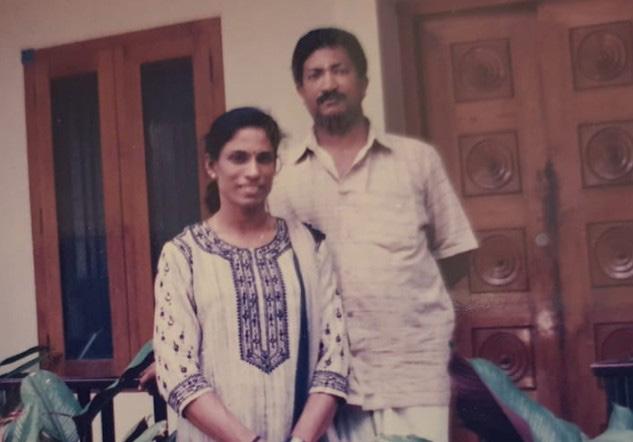
Kozhikode, Jan 30 (IANS) V. Srinivasan, husband of Rajya Sabha member and Indian
Olympic Association President P.T. Usha, passed away in the early hours of Friday.
Srinivasan collapsed at his residence in Payyoli in Kerala's Kozhikode district and was immediately rushed to a nearby private hospital. However, doctors declared him brought dead, family sources said, adding that he felt uneasy around midnight,
Manipur officials call for responsible digital journalism at state’s first media conclave
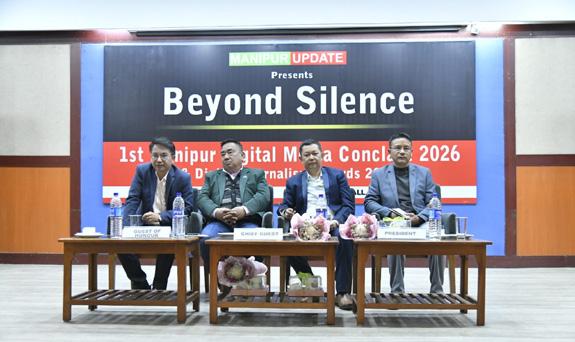
Imphal, Jan 30 (IANS) Senior Manipur government officials have urged the media to refrain
from publishing unverified news that could adversely impact society, stressing the need for responsible and fact-based journalism in the digital era.
Addressing the first Manipur Digital Media Conclave 2026 on Thursday, state's Directorate of Information and Public Relations
and despite being taken to the nearby hospital, he breathed his last.
The sudden demise has sent shockwaves through sporting and political circles across the country.
Usha was in New Delhi at the time of the incident to attend the ongoing Parliament session. She
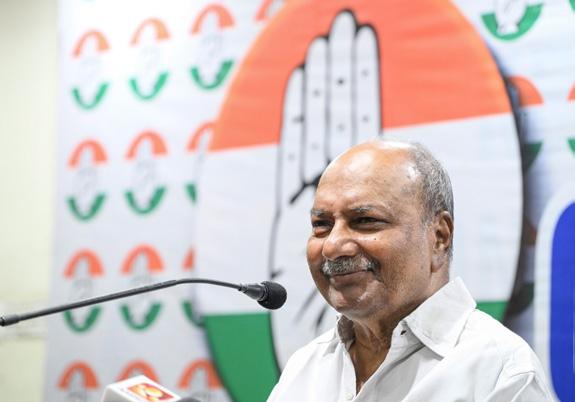
Thiruvananthapuram, Jan 29 (IANS) Congress Working Committee member and former Defence Minister A.K. Antony
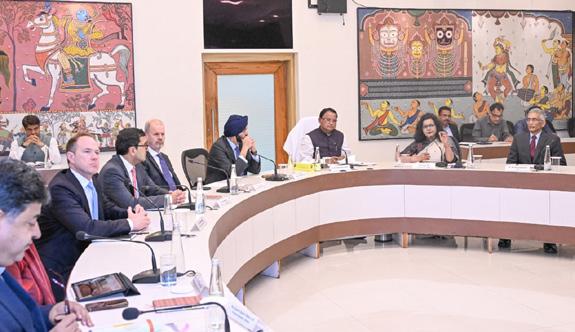
Odisha CM holds talk with World Bank President on enhanced cooperation in key development sectors
Bhubaneswar, Jan 29 (IANS)
Odisha
on measures to strengthen cooperation between the State and the international financial institution across key development sectors and to advance the State’s long-term growth and reform agenda.
Senior officials of the State Government, including Chief Secretary of Odisha Anu Grag, Development Commissioner D K Singh, and the representatives
of the World Bank, attended the meeting held at the Lokaseva Bhavan here.
According to an official statement by the Chief Minister’s Office, the discussions focused on accelerating inclusive and sustainable development, skilling India’s youth for private sector jobs, enhancing infrastructure, improving social sector outcomes,
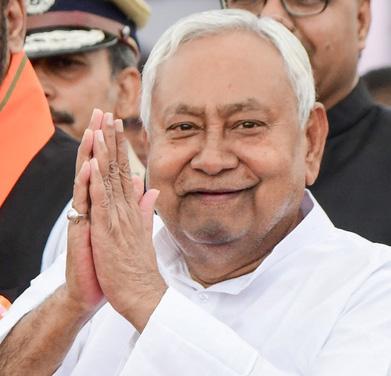
Patna, Jan 29 (IANS) Bihar Chief Minister Nitish Kumar on Thursday reiterated that his 2025 Assembly election promise of providing financial assistance of up to Rs 2 lakh to women entrepreneurs under the Mukhyamantri Mahila Rojgar Yojana will be implemented soon.
In a post on his official X handle, the Chief Minister said the scheme was launched to empower
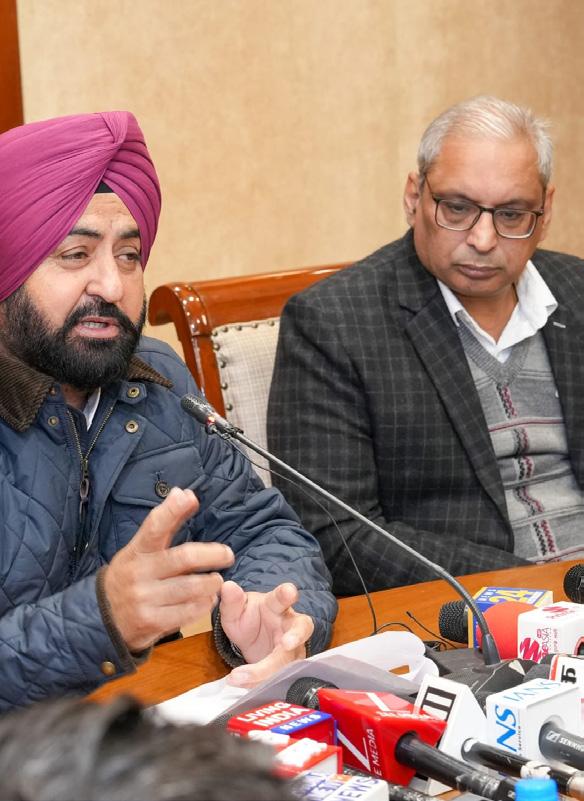
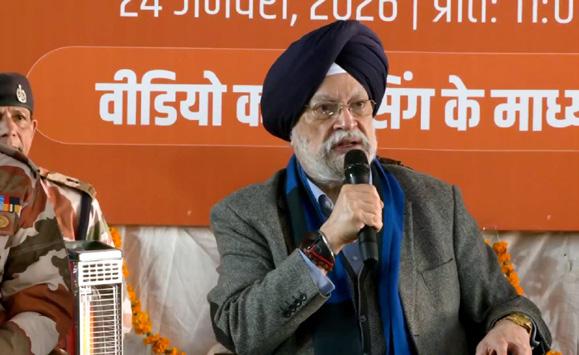
on Thursday expressed serious concern over the growing disinterest of young people in politics and an increasing reluctance among educated youth to remain in Kerala, often described as "God’s Own Country".
In his remarks at a function here, Antony said the trend was alarming and called for urgent introspection.
women and make them selfreliant.
“As you all know, we have launched the ‘Chief Minister’s Women’s Employment Scheme’ to empower and make the women of the state self-reliant. The main objective of this scheme is to provide financial assistance to women for self-employment,
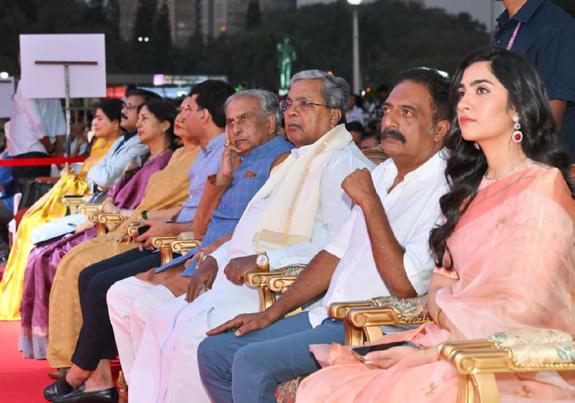
Karnataka CM inaugurates 17th Bengaluru International Film Festival
Bengaluru, Jan 30 (IANS)
Karnataka Chief Minister Siddaramaiah inaugurated the 17th Bengaluru International Film Festival on the grand steps of the Vidhana Soudha in Bengaluru on Thursday.
He stated that the government is always ready to support socially relevant cinema.
Addressing the gathering, Siddaramaiah said that films should not be limited to entertainment alone but should also work towards correcting
social inequalities and addressing the shortcomings of society.
The Chief Minister said cinema should serve as a medium not only for entertainment but also for social transformation. He pointed out that society continues to face inequality and that women, backward communities, farmers and Dalit communities are among those affected. When cinema works to instil confidence and contribute to the growth and transformation of these communities, the true purpose of the medium is fulfilled, he said. Recalling Kannada cinema legend Dr Rajkumar, Siddaramaiah noted that this sense of social responsibility was clearly reflected in his films.
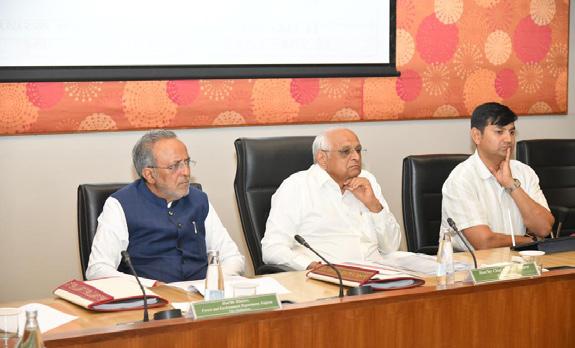
Chief Minister Mohan Charan Majhi on Thursday held crucial discussions with World Bank President Ajay Banga
EDITORIAL TEAM
Dr Ram Mohan, Chairman
Dr Ashutosh Misra, Editor-in-Chief
EDITORIAL BOARD
Amrita Deshpande, Community News Editor
Paras Sharma, Assistant Editor
Dr Uttam Kumar Sinha, Senior Fellow, Nehru Memorial Museum & Library, India
Mr Shaun Star, Director, Centre for Australia India Studies, Jindal Global University, India
is returning to her hometown and is expected to arrive shortly.
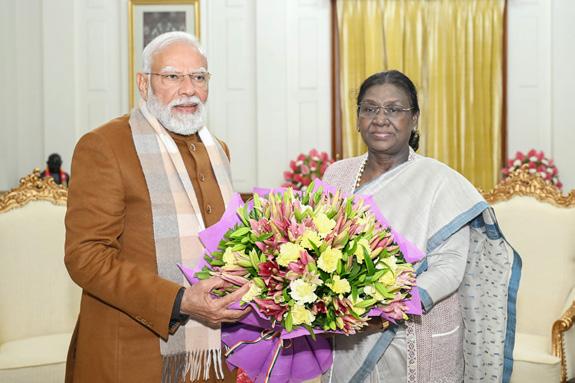
Prime Minister Narendra Modi spoke to Usha over the phone and expressed his condolences on the passing away of her husband.
The Prime Minister conveyed his sympathies to the bereaved family and prayed for strength for Usha to bear the irreparable loss.
Srinivasan was a native of Ponnani in Malappuram district and had a strong association with sports from an early age. The two tied the knot in 1991.
A former kabaddi player, he later
joined the Central Industrial Security Force (CISF), where he served as an officer.
Despite his sporting background and professional career, Srinivasan maintained a low public profile throughout his life.
He was widely regarded as a pillar of support to Usha during her illustrious athletics career and later during her transition into public life and sports administration.
After she was appointed president of the Indian Olympic Association and became a Rajya Sabha member, Srinivasan continued to stay away from the public glare,
Manipur officials call for responsible digital journalism at state’s first media conclave
Continued from Page 1
(DIPR) Director Ahanthem
Subhash Singh highlighted the harmful effects of unverified reporting, saying that such news can tarnish an individual's image and cause mental distress.
He noted that journalism today is no longer confined to print media, adding that digital journalism has enabled news to be disseminated globally with ease.
However, he said that producing fast, factual and responsible content has become a major challenge in the digital age, as digital platforms hold significant influence in shaping public perception.
The DIPR Director also raised concerns over whether some individuals identifying as digital journalists are functioning primarily as content creators for monetisation.
"Digital journalists should use the power available to them to produce genuine reporting and disseminate fact-based news, rather than working solely for likes or views on social media platforms," he said.
Singh emphasised that independent journalism is crucial, particularly at a time when paid news is increasingly being circulated.
He said that journalists have a vital role in countering such content and safeguarding the credibility of the profession. Sharing his personal experiences, Singh mentioned that positive news and government achievements sometimes go unpublished.
Suggesting the introduction of a Journalism Award for coverage of useful government schemes that benefit the public, he said such reporting would help raise awareness about existing schemes.
He also expressed his willingness to sponsor the proposed award.
Former DIPR Director and incumbent Joint Secretary of Manipur's Tribal Affairs and Hills Department, Ngangom Uttam Singh, said that social media has become highly influential, with a large section of the public relying on it for information.
He cautioned against irresponsible or unethical reporting, saying that unverified news can cause harm to individuals, society, government departments and even the administration as a whole.
He added that while journalism has the potential to create a significant positive impact, mistakes and misinformation can lead to serious consequences.
During the conclave, awards were presented in various categories.
The Digital Journalist of the Year Award was conferred on Vangamla Salle of East Mojo; the Promising Digital Journalist Award went to Naorem Tanoranjan of Echel News Network; the Distinguished Service in Digital Journalism Award was presented to Sobhapati Samom; the Best Credible Digital Media Page/ Channel Award was awarded to Wari Singbul; and the Jury's Choice Digital Journalism Award was conferred on Rebika Moirangthem of HY News.
focusing on family and personal commitments.
Close associates describe him as disciplined, soft-spoken and deeply committed to the values of sport and public service.
The couple is survived by their son, Dr Ujjwal Vighnesh.
Condolences have been pouring in from political leaders, sportspersons and sports administrators across the country.
Several sporting bodies expressed deep grief, noting that Srinivasan played a quiet yet significant role in supporting one of India’s most iconic athletes.
Youth drifting away from politics, leaving Kerala worrying trends:
Continued from Page 1
He said that when the United Democratic Front (UDF) returns to power, it should undertake a comprehensive study into why educated young people are migrating out of the state in large numbers and evolve immediate corrective measures to arrest the outflow of talent.
Antony said the Congress in Kerala had been enriched by two “precious gems” — senior leaders K.A. Chandran and V.C. Kabeer. He said the public life of Chandran, marked by Gandhian values and absolute integrity, should be upheld as a role model for the younger generation. Chandran, Antony noted, had
A.K. Antony
lived a life of simplicity without accepting even a small personal benefit from public life.
Both Chandran and Kabeer, into their early eighties now, are former legislators, and the latter was a minister in the state too. Antony was speaking after presenting the 11th Gandhi Darshan Award, instituted by the KPCC Gandhi Darshan Samithi, to Chandran.
The function was presided over by Kabeer Master, State President of the Gandhi Darshan Samithi. The inaugural session of the Secular Protection Convention, held in connection with the event, was opened by state Congress President Sunny Joseph.
Will implement Rs 2 lakh support for women entrepreneurs: Nitish Kumar
Continued from Page 1
so that at least one woman from every family can establish herself as an entrepreneur,” Kumar said. He said that in the first phase of the scheme, an amount of Rs 10,000 was provided to one woman from each family. So far, Rs 10,000 has been transferred via DBT to 1.56 crore beneficiaries.
“The remaining eligible applicants in both rural and urban areas will also receive the amount in their bank accounts through Direct Benefit Transfer as per the rules,” he added.
The Chief Minister further stated that the scheme includes a provision for additional financial
assistance of up to Rs 2 lakh, to be granted after an assessment conducted six months after the beneficiary starts her business.
“I am pleased to announce that action has been initiated to provide additional financial assistance of up to Rs 2 lakh to the beneficiaries selected under the Chief Minister’s Women’s Employment Scheme,” Kumar said.
He clarified that the amount will be disbursed in instalments, subject to verification that the previously released funds were properly utilised for employment purposes.
“In cases where the business is performing well, and the need arises, a lump sum amount may
also be provided,” he said. Nitish Kumar also directed the concerned departments to ensure marketing support for products manufactured by the beneficiaries. He said these women entrepreneurs will be linked with various government initiatives, including garment manufacturing units, Sudha milk outlets, and Didi Ki Rasoi (community kitchens).
“The implementation of this scheme will further strengthen the position of women and generate employment opportunities within the state, reducing the need for migration,” the Chief Minister added.
Odisha CM holds talk with World Bank President on enhanced cooperation in key development sectors
Continued from Page 1
and promoting resilient and technology-driven growth. During the meeting, CM Majhi highlighted the state government’s flagship initiatives and reform measures aimed at improving growth, such as by enhancing investment in infrastructure, micro, small and medium enterprises, agriculture and allied sectors and tourism, thereby creating employment opportunities especially for youth and women.
Odisha has reformed acts and rules to make it business-friendly and therefore has attracted huge investments. It has ranked second only to Andhra Pradesh with Rs 2.5 lakh crore investment as per
December 2025 figures published by CMIE.
The President of the World Bank appreciated the State’s development efforts and reform orientation. Banga also congratulated the state for its focus on skill building to create more private sector jobs for the state’s youth.
A new World Bank GroupIndia strategic plan will build on examples like the Central Tool Room and Training Centre (CTTC), Bhubaneshwar, by contributing to India’s $4 billion national initiative to upgrade Industrial Training Institutes (ITIs).
He reaffirmed the World Bank’s commitment to supporting the State through technical
assistance, policy advisory services, and financial cooperation. The World Bank President also emphasised the importance of strengthening institutional capacity and fostering public-private partnerships.
Both sides exchanged views on global and regional economic challenges and the need for collaborative approaches to address issues such as building infrastructure, managing urbanisation and sustainable resource management. They agreed to explore new areas of cooperation aligned with the State’s development priorities and the World Bank’s strategic objectives.
Karnataka CM inaugurates 17th Bengaluru International Film Festival
Continued from Page 1
International film festivals help people understand the lives, cultures and values of societies across the world, promote equality and bring about social change, he said.
“We are humans first and last. By treating everyone with love and respect, we must strive to build an equal society. Cinema should play a key role in this process,” the Chief Minister said, adding that such festivals help people understand humane relationships and progressive social practices followed in other countries. Stating that the government is fully committed to the development of the film industry, Siddaramaiah said the state government is always ready to support filmmakers who make socially relevant cinema and would extend all necessary assistance.
Referring to actor and festival ambassador Prakash Raj, the Chief Minister said he is not limited to cinema alone but is at the forefront of social struggles. He lauded Prakash Raj’s commitment to the causes of the oppressed, farmers, Dalits, backward communities and the ideals of the Constitution, calling his social dedication commendable.
Operation Sindoor, AR Rehman’s ‘Jai Ho’ spice up Beating Retreat experience
New Delhi, Jan 29 (IANS)
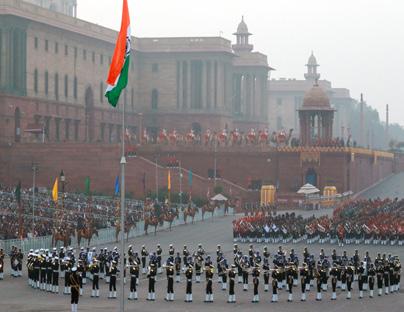
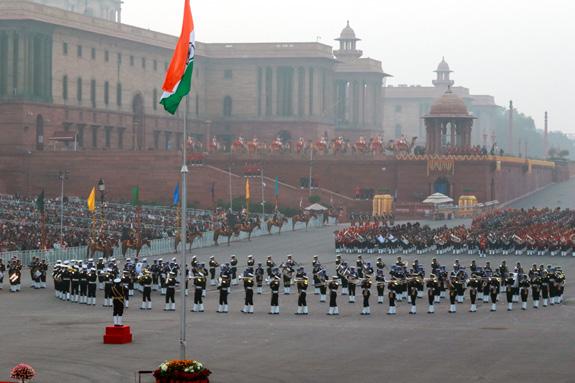
Operation Sindoor took centrestage as massed bands of the Indian Army, Navy, Air Force, and paramilitary forces performed patriotic tunes, including Vande Mataram and A.R. Rehman’s ‘Jai Ho’, during Beating Retreat 2026 on Thursday, leaving the audience yearning for more.
Illuminated attire of performers and digital, coloured LED panels on drums and instruments and special formations by the band members at the Vijay Chowk – including those depicting Operation Sindoor and the decommissioned MiG-21 fighters – enthralled the spectators who were led by President Droupadi Murmu.
Prime Minister Narendra Modi, Vice President C.P. Radhakrishnan, Lok Sabha
Speaker Om Birla, Chief Justice of India (CJI) Surya Kant and Defence Minister Rajnath Singh were also present. The chiefs of the three armed forces and the Chief of Defence Staff were also present.
Enhanced
At the end of the ceremony, the national flag was lowered, and the National Anthem was played, signalling the formal close of the 77th Republic Day’s celebrations.
The day’s performance was followed by a spell-binding illumination of the Rashtrapati Bhavan, North Block, South Block and Parliament.
“A Majestic Ceremony, An Extraordinary Occasion, A Musical Atmosphere. Experience the mesmerising and spellbinding martial tunes played by the Military Bands during Beating Retreat 2026,” said a message posted by the Indian Army on social media during the ceremony.
A special feature of this year's Beating Retreat ceremony was that all the spectator seating areas at Vijay Chowk were named after Indian musical instruments. These names were for musical instruments such as the flute, tabla, sitar, veena, shehnai, mridangam, sarod, and santoor.
President Draupadi Murmu arrived at Vijay Chowk for the Beating Retreat ceremony, where she was welcomed by Prime Minister Narendra Modi.
The programme began with the Massed Band's famous tune "Kadam Kadam Badhaye Ja." The
tourism outlay to accelerate infrastructure, destination projects: Kerala Minister Riyas
Thiruvananthapuram, Jan 29
(IANS) Kerala Tourism Minister
P.A. Mohamed Riyas on Thursday said the enhanced budgetary allocation for the tourism sector would impart strong momentum to both ongoing and proposed projects, particularly in infrastructure creation and destination development.
The state Budget for 2026–27, presented by Finance Minister K.N. Balagopal in the Assembly, increased the allocation for tourism to Rs 413.52 crore from Rs 385.02 crore in the previous financial year, underlining the government’s intent to drive growth through destinationbased development, heritage conservation and marketing-led expansion.
The Budget accorded priority to tourism infrastructure development, Destination Challenge projects, implementation of the Design Policy, development of tourism hubs, heritage and cultural tourism, Responsible Tourism initiatives and scaled-up
Pipes and Drums band then played tunes like "Atulya Bharat, Veer Sainik, Mili-Juli, Nritya Sarita, Maruni, and Jhelum."
These tunes played by the military bands captivated the audience.
The bands of the Central Armed Police Forces also impressed the audience with their performances. Their bands filled the atmosphere with songs like "Vijay Bharat, Hathrohi, Jai Ho, and Veer Sipahi."
A major highlight of the programme was the Indian Air Force band. The Air Force band played tunes like "Brave Warrior, Twilight, Alert and Flying Star."
The Navy band imbued the event with patriotic fervour. The Navy band performed patriotic songs like "Namaste, Sagar Pawan, Matrubhoomi, Tejasvi and Jai Bharati."
The Indian Army Band enthralled the audience with inspiring tunes like "Vijayi Bharat, Aarambh Hai Prachand Hai, Ae Watan, Ae Watan, Anand Math, Sugamya Bharat and Sitare Hind."
Finally, the Massed Band performed "Bharat Ki Shaan, Vande Mataram, and "Drummer's Call."
The ceremony concluded, as always, with the ever-popular tune "Saare Jahan Se Achha," played by the buglers.
Indian diaspora celebrates UP Diwas in New Jersey
Washington, Jan 29, (IANS) The Uttar Pradesh Federation of North America celebrated UP Diwas in New Jersey over the weekend. The event on January 24 was held amid a state-level emergency and extreme cold conditions, with temperatures dropping to minus 14 degrees Celsius. Despite the weather, members of the Uttar Pradesh community gathered in large numbers to observe the day, manifesting strong cultural attachment and community togetherness.
In a press release, the organisers said the celebration was held with the blessings and goodwill of Uttar Pradesh Chief Minister Yogi Adityanath, whose address to the Pravasi Uttar Pradesh community was shared during the programme.
Congratulatory messages and letters were received from several dignitaries, including Union Minister Jitan Ram Manjhi, Jammu and Kashmir Lieutenant Governor Manoj Sinha, Bihar Governor Arif Mohammad Khan, and multiple ministers from Uttar Pradesh and Haryana. Messages were also received from Padma
awardees, cultural figures, and spiritual leaders.
The chief guests for the programme included Piyush Singh from the Consulate General of India’s Media and Culture Department and Linden Mayor Derek Armstead. The event also drew support from several community organisations and leaders, including the Federation of Indian Associations, VHP America–New Jersey, BAJANA, and UPAGP.
The programme was coordinated by Prashant K S Dikshit, founder and trustee of UPFNA, and conducted by Neeta Tyagi. A vote of thanks was delivered by UPFNA President Amit Gupta in the presence of trustees and office bearers.
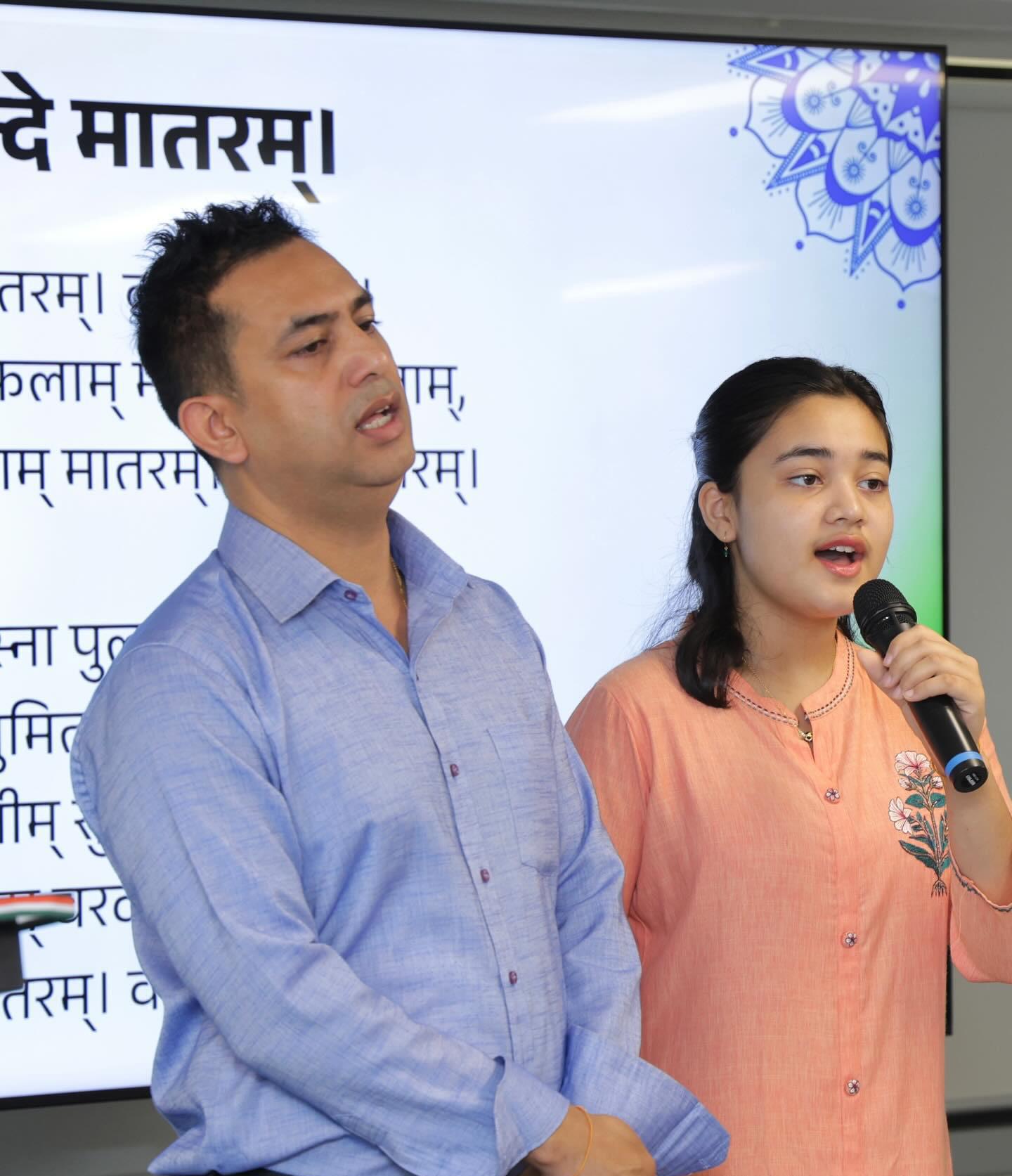
A special highlight was the collective rendition of 'Vande Mataram' to mark its 150th anniversary. Sacred Prasad from the Shri Ram Lalla Temple in Ayodhya was also distributed during the event.
Uttar Pradesh Diwas is observed annually on January 24 to mark the formation of the state in 1950. The event in New Jersey underscored the role of diaspora organisations in sustaining cultural ties and celebrating regional identity beyond India’s borders.
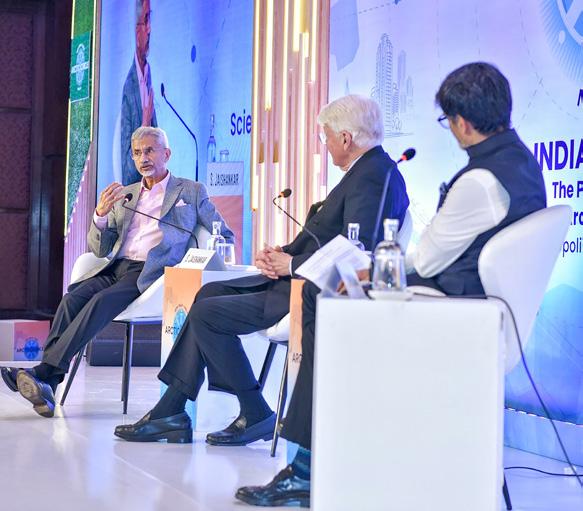
India emerges as stabilising, normreinforcing actor in Arctic: Report
marketing campaigns.
As part of strengthening tourism circuits, the government announced the launch of a ‘Blue Green Integrated Tourism Circuit’, with the first phase proposed at Dharmadam in Kannur at a cost of Rs 2 crore.
The project will integrate the Dharmadam river cruise circuit, Dharmadam Island Bio Reserve, a walking museum, and a mangrove information centre.
Work on the Kollam Biodiversity Circuit and the Malabar Literary Circuit is already underway.
Marketing allocations have been stepped up to Rs 85 crore, while Rs 20 crore has been earmarked to support the activities of the Responsible Tourism (RT) Mission Society, reinforcing the state’s focus on community-linked and sustainable tourism models.
A significant portion of the outlay -- Rs 159 crore -- has been allocated for renovation, development of basic infrastructure and visitor amenities at tourism centres.
Beypore ‘Uru’ Tourism and Kochi Heritage will receive Rs 5 crore each. The Kerala Tourism Development Corporation (KTDC) has been allotted Rs 14.10 crore for implementing various projects.
Delhi, Jan 29 (IANS) India’s most credible role in the Arctic lies in being a stabilising, normreinforcing force, promoting openness, sustainability, and multilateralism without pretence amid the great-power rivalry in the region.
Although India’s position is often ignored in the evolving landscape, its significance in the region becomes clear when the Arctic is viewed not as a remote polar enclave, but an interconnected system linking climate, oceans, trade, and governance across latitudes, a report said on Thursday “India’s Arctic engagement has been grounded in science, norms, and diplomacy rather than power or commerce. Since 2008, the Himadri research station in Svalbard has anchored India’s polar presence, enabling sustained contributions to the study of cryosphere dynamics,
atmospheric circulation, and Arctic–monsoon linkages. This work is far from academic. Arctic warming alters jet streams, intensifies weather volatility, and affects monsoonal behaviour across South Asia. For India, the Arctic is upstream of food security, disaster resilience, and economic stability,” Sanjay Kumar Verma, a former Indian diplomat, wrote in 'India Narrative'.
“This scientific credibility has translated into diplomatic acceptance. As an observer at the Arctic Council, India has acted with discipline and restraint, respecting the primacy of Arctic states and indigenous communities. It has avoided rhetorical shortcuts and resisted the temptation to invent geopolitical identities to justify its presence. In a region where legitimacy is earned slowly and guarded carefully, this approach has generated goodwill,” he added.
Verma argues that India does not require “icebreakers, bases, or symbolic” displays of presence in the Arctic.
Rather, he said, it needs coherence -- a clearer articulation of why the region matters to India beyond climate research, a deeper connection between Arctic science and its
wider diplomatic toolkit, and readiness to work alongside other middle powers to shape shared norms.
According to the report, the Arctic’s growing significance cannot be viewed separately from the broader Indo-Pacific framework.
“As Arctic sea routes alter Asia–Europe connectivity, as polar climate dynamics reshape weather patterns across the Indian Ocean basin, and as governance norms forged in the Arctic begin to influence other global commons, the Arctic and the Indo-Pacific are quietly converging into a single strategic ecosystem. China has already internalised this linkage, treating the Polar Silk Road as a northern extension of its broader connectivity strategy. Russia, too, sees its Arctic posture as inseparable from its Eurasian and Pacific orientation,” it detailed.
“For countries like India, whose strategic outlook is shaped by maritime openness, climate vulnerability, and rule-based order, the Arctic is no longer a peripheral concern; it is a distant but consequential front in a connected geopolitical system,” it further noted.
New
India’s vision of the Indo-Pacific
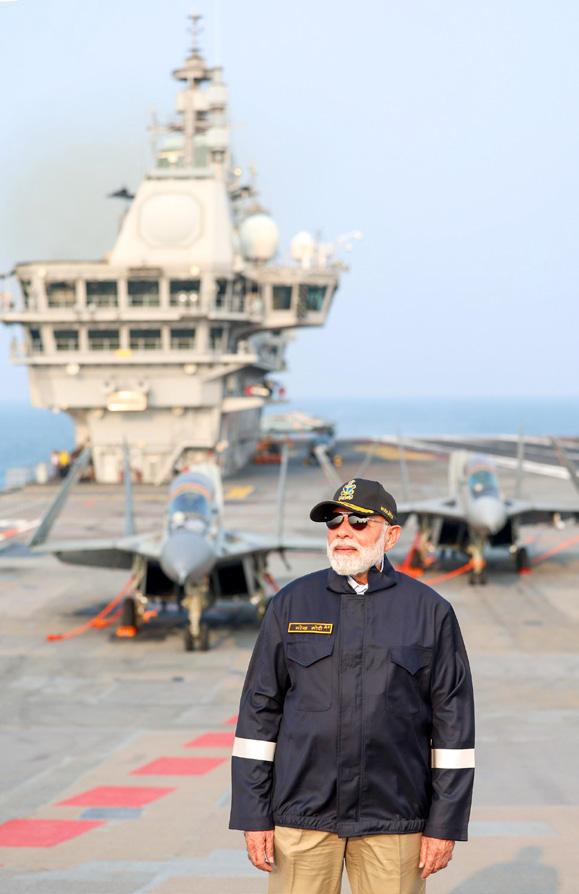
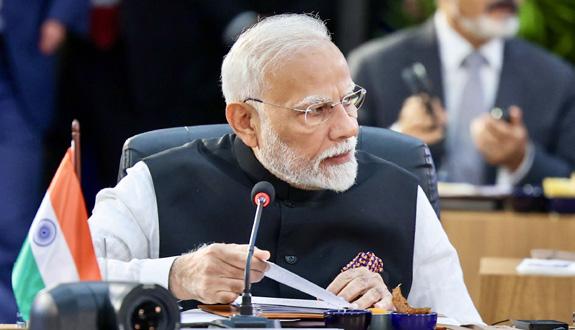
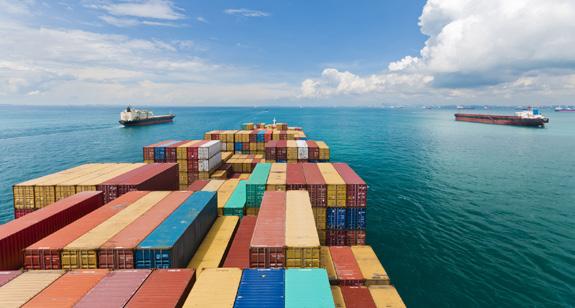
On 20 October 2025, on the occasion of Deepavali, the great Indian festival of lights, Prime Minister Narendra Modi, speaking from aboard India’s first indigenously built aircraft carrier INS Vikrant, drew attention to the centrality of the Indian Ocean in India’s strategic calculus. He recalled that 66% of the world’s oil supply and 50% of global container shipments pass through the Indian Ocean. “And in securing these routes”, he said “the Indian Navy stands guard like the sentinel of the Indian Ocean”. The perception of the Indian and the Pacific Oceans as one strategic space gained traction in the mid-2000s, particularly in India after the Japanese PM Shinzo Abe in a speech to the Indian parliament in August 2007, referred to the Confluence of the Two Seas. In a decade, ‘Indo-Pacific’ became a globally accepted term after US President Trump in his address to APEC summit in Vietnam in 2017 called for a free and open Indo-Pacific. India’s Indo-Pacific vision was articulated by PM Modi at the Shangri La Dialogue in June 2018. He said that the Indo-Pacific region, inter alia, “stands for a free, open, inclusive region which embraces us in a common pursuit of progress and prosperity. It includes all nations in this geography as also others beyond who have a stake in it”. In a sense, this was an organic evolution of India’s foreign and security policy, whose reorientation had begun in the 1970s and accelerated since the end of the Cold War in 1991. From a predominantly continental orientation, India began to focus on its maritime advantages, particularly its dominant position in the Indian Ocean. The Indian navy was in the forefront of this reorientation. From a coastal force, it became a balancing force in the 1970s and a blue water navy by the 1980s, dominating the northern and central Indian Ocean from the 1990s. India’s economic liberalization also made it view countries to its east, particularly the Tiger economies and the Association of South East Asian Nations (ASEAN), as attractive partners for economic growth and shared prosperity. Thus, in 1992 India’s Look East Policy (LEP) was launched and institutional dialogue commenced with ASEAN. In 2012 India and ASEAN became strategic partners; the relationship was elevated
to a comprehensive strategic partnership in 2022. Over the years, India also established with other partners plurilateral groupings including BIMSTEC focusing on the Bay of Bengal region and the Mekong Ganga Cooperation (MGC) mechanism. In 2014, India elevated its LEP to Act East policy, significantly adding substance to its engagement.
India’s Indo-Pacific vision has many building blocks. In 2015, PM Modi launched its policy for the Indian Ocean Region (IOR) – Security and Growth for All in the Region (SAGAR). The SAGAR policy has five components: safety and security of the Indian mainland and island territories and ensuring a safe, secure and stable IOR; deepen economic and security cooperation with friends in the IOR through capacity building; collective action and cooperation; work towards sustainable development of all; increased maritime engagement as the primary responsibility for the stability and prosperity of the region lay with those in the region. India is also a founder member of the Indian Ocean Rim Association (IORA), a 23-member body established in 1997 that promotes economic cooperation, maritime security and sustainable development. India’s Act East policy is the umbrella policy that upholds ASEAN centrality and ASEAN’s various mechanisms including the East Asia summit as apex platforms for dialogue. The 2004 Tsunami established India’s credentials in disaster relief operations as well as rehabilitation. From the eastern shores of Africa to the Pacific islands, India has extended humanitarian assistance in times of disaster and crisis. India’s speedy assistance to Myanmar in the aftermath of Cyclone Nargis in 2008; when neighbouring Maldives faced a freshwater crisis in 2014 India was the first country to deliver drinking water under Operation Neer; in 2018, India stood shoulder to shoulder in relief and rescue efforts in Tsunami- struck Indonesia; in 2019, India was the first responder when two tropical cyclones devastated Mozambique; in early 2025 when a massive earthquake
affected Myanmar India launched Operation Brahma, an extensive tri-service operation; in end 2025, it extended timely assistance to cyclone-ravaged Sri Lanka. On 19 January, India extended 30 tonnes of HADR to Philippines that had recently been struck by a Super Typhoon.
Development partnership is an intrinsic part of our Indo-Pacific vision. The Indian model of development cooperation involves grants-in-aid, concessional lines of credit, capacity building and technical assistance. Significantly, it is unconditional, transparent, sustainable, financially viable and undertaken at the request of the partner state in keeping with the latter’s priorities. India’s vaccine outreach during the Covid-19 pandemic to both developed and developing states is perhaps unprecedented. In 2023, during its presidency of G-20, India succeeded in amplifying the voice of the global south and championed development cooperation. In 2025, PM Modi announced MAHASAGAR, an updated version of the SAGAR doctrine, that marked an evolution from a regional focus to a global maritime vision with emphasis on the global south. As a preferred maritime security partner in the Indo-Pacific, India’s engagement has included joint exercises at the bilateral and plurilateral level, naval symposia, capacity building as well as exports of defence equipment either as a grant or under a defence line of credit at the request of the partner state. A crucial aspect of maritime security is enhanced maritime domain awareness. Thus, India has been pursuing white shipping agreements with several countries and has established a state-of-the-art Information Fusion Centre (IFC – IOR) that facilitates sharing of real time information with member countries.
Freedom of navigation and unimpeded commerce is one of the main aspects of our Indo-Pacific vision. In 2024, under Operation Sankalp, the Indian Navy deployed over ten warships including guided missile destroyers and frigates in the Gulf of Aden and the Arabian Sea to protect commercial shipping in the wake of Houthi-led attacks. This was the largest deployment by any country.
At a time of global churn and unpredictability, India continues to uphold its role as a responsible member of the international community that contributes to the stability, prosperity and a rules-based order in the IndoPacific region.
By Ambassador (Retd) Suchitra Durai
Former Ambassador of India to Thailand
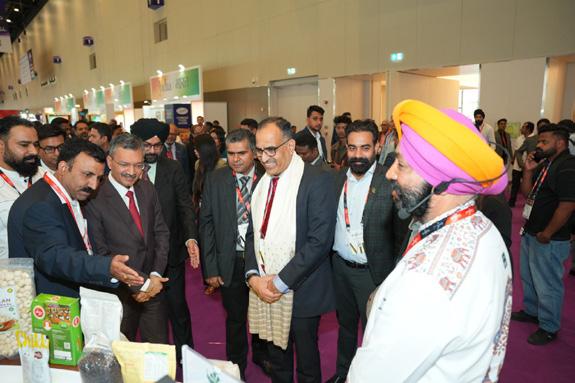
India displays leadership in global agri-food sector at ‘Gulfood 2026’
New Delhi, Jan 26 (IANS) The government on Monday said that India marked a strong presence at ‘Gulfood 2026’, the world’s largest annual food and beverage trade exhibition in Dubai, underscoring its growing leadership in the global agri-food and processed food sector.
The 2026 edition marks India’s largest-ever participation, with more than 600 Indian companies exhibiting across a wide spectrum of categories including staples, fresh produce, processed foods, beverages, agri-tech, and food processing.
As Country Partner, India has been accorded prominent branding across exhibition venues under a unified design theme, along with dedicated conference sessions and enhanced B2B engagement opportunities. Key products being showcased
by India at Gulfood 2026 include Basmati rice, more than 10 Indian GI-tagged rice varieties, processed food products, millets, groundnuts, tea, spices, turmeric, organic products, and fresh fruits and vegetables, according to Commerce Ministry.
The Indian Pavilion was inaugurated at the APEDA Pavilion, Dubai Expo City by Secretary, Ministry of Food Processing Industries, AP Das Joshi, in the presence of Ambassador of India to the UAE, Dr Deepak Mittal.
“The UAE is the largest market for APEDA’s scheduled products and serves as a gateway to the Gulf region, which is the largest destination for India’s agricultural exports. The India–UAE Comprehensive Economic Partnership Agreement has had a significant impact on bilateral trade, particularly in the food processing industry and agricultural exports,” said the ministry.
In addition, more than 500 Indian companies, largely institutional and large players, are participating independently across both exhibition venues.
Congress questions govt’s ‘intent’ on caste enumeration in Census 2027
New Delhi, (IANS) Congress on Monday raised serious concerns over the central government’s approach to caste enumeration in Census 2027. It alleged a lack of clarity and intent.
The party also demanded immediate consultations with political parties, state governments, and civil society organisations before finalising the exercise.
Congress General Secretary (Communications) and Rajya Sabha MP Jairam Ramesh said that Phase-1 of the muchdelayed Census 2027 — the Houselisting and Housing Census — is scheduled to be conducted between April and September 2026, while Phase-2, the Population Enumeration, will take place in September 2026 in Himachal Pradesh, Uttarakhand, Ladakh, and the snowbound areas of Jammu and Kashmir. In the rest of the country, population enumeration is slated for February 2027.
Highlighting what he termed a “complete U-turn” by the Centre, Ramesh said the Modi government had suddenly announced on April 30, 2025, that caste enumeration would be included in Census 2027, despite consistently opposing the idea in the past.
“The Modi government had all along rejected the idea of a caste census,” Ramesh said, recalling that the Centre had reiterated its opposition in a reply in the Lok Sabha on July 20, 2021, as well as in an affidavit filed before the Supreme Court on September 21, 2021.
He further pointed out that as recently as April 28, 2024, Prime Minister Narendra Modi, in a television interview, had accused those demanding a caste census of having an “urban naxal mindset”.
“But clearly the Prime Minister was forced to capitulate and agree to the widespread demand for a caste census that had been articulated by the Indian National Congress led by Mallikarjun Kharge and Rahul Gandhi,” Ramesh said.
The Congress leader also flagged concerns over the recently notified list of subjects to be covered in the Houselisting and Housing Census Schedule. He noted that Question 12 merely asks whether the head of the household belongs to the Scheduled Caste, Scheduled Tribe, or ‘Other’ categories, instead of explicitly including OBC and General categories.
“Since caste enumeration is to be part of Census 2027, the formulation of Question 12 raises serious questions about the Modi government’s true intentions and its commitment to a comprehensive, fair, nationwide caste census,” he said.
NCW’s Shakti Samvaad calls grassroots push for women’s power, child marriage-free India
New Delhi, Jan 29 (IANS)
The National Commission for Women on Thursday organised its flagship national consultation “Shakti Samvaad”, bringing together members and representatives of State Women Commissions from across the country to discuss critical issues concerning safety, empowerment and rights of women and children.
The day-long programme focused on strengthening coordination between the NCW and state bodies for more effective grassroots intervention and faster grievance redressal.
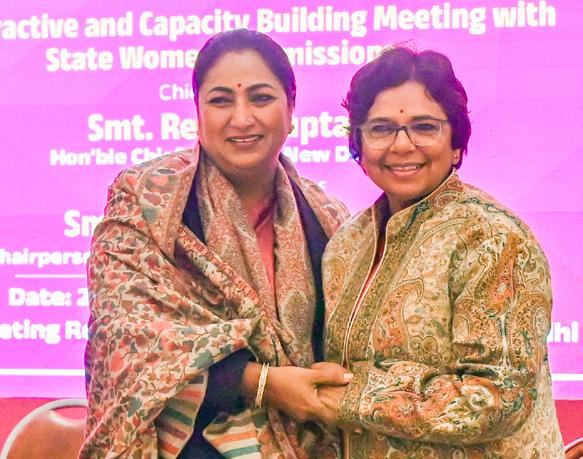
Delhi Chief Minister, Rekha Gupta, who inaugurated the event, stressed the urgent need to sensitise boys and men to build a truly equitable society.
Addressing the gathering, the Chief Minister said educating sons has become even more important than educating daughters because only when boys are taught respect, equality and responsibility from an early age can women feel safe, valued and empowered in society. She called for collective
responsibility in creating communities where every woman enjoys dignity and security.
During the programme, the Chief Minister felicitated winners of a poster-making competition organised by NCW and launched “Safarnama”, a publication that chronicles the Commission’s journey and key interventions since its inception.
The consultation featured detailed deliberations on achieving the national target of “Bal Vivah Mukt Bharat”.
Participants discussed community-based strategies, awareness campaigns and coordinated action with State Commissions to eradicate child marriage completely.
Uttar Pradesh has emerged from sick state into growth engine of India’s development: CM Yogi Adityanath on UP Day
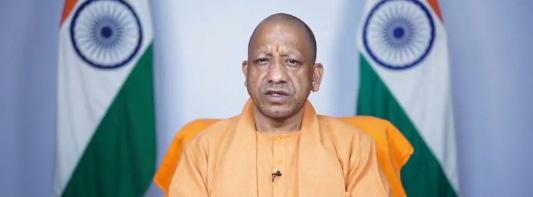
New Delhi, Jan 24 (IANS) Chief Minister Yogi Adityanath on Saturday extended heartfelt congratulations to the people of the state on the occasion of Uttar Pradesh Day, asserting that the state of infinite possibilities has broken the shackles of struggle and policy apathy to emerge as the growth engine of India’s development.
The Chief Minister shared a video message on social media platform X, addressing the people of the state and highlighting the transformation Uttar Pradesh has witnessed in recent years.
“Hello, my sisters and brothers of Uttar Pradesh. Heartiest congratulations to all of you on Uttar Pradesh Day. Our
state of infinite possibilities has today broken the shackles of struggle and policy apathy and transformed from a sick state into the growth engine of India’s development,” he said. In the video, CM Yogi underlined the rich cultural and spiritual heritage of the state, saying Uttar Pradesh has always been the centre of culture, literature, music, art and spiritual consciousness. “The dignity of Ayodhya, the eternal consciousness of Kashi and the devotion of Braj Dham have given a new direction to India’s cultural awakening,” he said, adding that the state continues to guide the nation’s cultural consciousness. Highlighting governance reforms, the Chief Minister said that strict determination and effective administration have helped establish law and order
in the state. He pointed out that initiatives such as MSME promotion, labour reforms, deregulation, skill development, startups and the One District One Product (ODOP) scheme have taken Uttar Pradesh from the local to the global stage while significantly boosting employment opportunities. Referring to women empowerment initiatives, CM Yogi said women’s participation in the workforce has increased substantially. He also noted that the expansion of medical infrastructure, health services and technology has made healthcare more accessible to the common people. “The incredible connectivity of jal, thal and nabh (waterways, roadways and airways) has opened new avenues for business opportunities,” he said.
Uttar Pradesh Diwas 2026 being celebrated with theme ‘Viksit Bharat–Viksit Uttar Pradesh’
New Delhi, Jan 24 (IANS) Uttar Pradesh Diwas 2026 is being celebrated on Saturday with the theme ‘Viksit Bharat–Viksit Uttar Pradesh’, reflecting the state’s cultural richness and developmental journey. The celebrations include the launch of the ‘One District–One Cuisine’ initiative, aimed at showcasing traditional dishes from every district of the state. Union Home Minister Amit Shah is scheduled to inaugurate the main event in Lucknow. The celebrations will begin on Saturday at the newlyconstructed Rashtra Prerna Sthal premises in Lucknow, marking a festive start to Uttar Pradesh Diwas 2026. The event seeks to capture the spirit of growth, pride
and cultural diversity under the central theme of a developed India and a developed Uttar Pradesh.
To be inaugurated by Union Home Minister Amit Shah, the event is expected to emerge as a grand public celebration. Uttar Pradesh
Chief Minister Yogi Adityanath has encouraged people across the state to participate actively, highlighting the state’s diverse cultural heritage and key developmental milestones achieved in recent years.
A major highlight of this year’s celebration is the ‘One District–One Cuisine’ (ODOC) scheme, which will feature traditional foods from all districts. In addition, exhibitions will showcase artisan products under the ‘One District–One Product’ initiative and GI-tagged items.
The event will also honour five distinguished individuals
President Murmu, PM Modi extend greetings to people of UP on foundation day
New Delhi, Jan 24 (IANS)
President of India Droupadi Murmu and Prime Minister Narendra Modi on Saturday extended warm greetings to the people of Uttar Pradesh on the occasion of the state’s foundation day.
President Droupadi Murmu took to social media platform X to convey her wishes, highlighting the historical and cultural significance of the state. She wrote, “My best wishes to the people of Uttar Pradesh on the occasion of Uttar Pradesh Day. This land, with its glorious history and rich culture, has been a strong pillar in India's journey of development. I am confident that Uttar Pradesh will continue to progress on the path of development. I wish a bright future for the hardworking and talented people of this state" Prime Minister Narendra Modi also shared his message on X, congratulating the people of Uttar Pradesh for their contributions to the nation.
He said, “Heartiest congratulations to all my family members in Uttar Pradesh who have made invaluable contributions to the prosperity of Indian culture and heritage on the state's foundation day. With the participation of our doubleengine government and its people dedicated to development, our state has transformed from a sick state to an exceptional one in the last nine years. I firmly believe that Uttar Pradesh's potential will be crucial in keeping the country's progress moving forward."
Union Home Minister Amit Shah also extended his greetings on the occasion.
Taking to X, he said, “Heartfelt greetings to all my brothers and sisters in Uttar Pradesh on the state's foundation day. Uttar Pradesh, nurtured by the invaluable heritage of Sanatan culture and blessed by the sacred and fertile lands of the Ganga and Yamuna rivers, is the land that has always guided the nation on the path of culture, spirituality, strength, and resolve. Today, under the double-engine government, Uttar Pradesh is setting new benchmarks in development and worldclass infrastructure. I wish the state continued progress and prosperity."
Kharge, Rahul meet Bihar Congress leaders amid split buzz
and recognise top-performing districts for their achievements in youth entrepreneurship.
The history of Uttar Pradesh is very ancient and interesting. It is recognised in the later Vedic Age as Brahmarshi Desha or Madhya Desha. Many great sages of the Vedic times like Bhardwaja, Gautam, Vashishtha, Vishwamitra and Valmiki flourished in this state. Several sacred books of the Aryans were also composed here. Two great epics of India, Ramayana and Mahabharata, appear to have been inspired by Uttar Pradesh.
In the sixth century B.C., Uttar Pradesh was associated with two new religions - Jainism and Buddhism. It was at Sarnath that Buddha preached his first sermon and laid the foundations of his order, and it was in Kushinagar in Uttar Pradesh, where Buddha breathed his last.
Patna, Jan 23 (IANS) Amid intense speculation over a possible split within the Bihar Congress and fears of defections following the 2025 Bihar Assembly election results, the party’s top leadership held a crucial meeting in Delhi on Friday to address internal challenges.
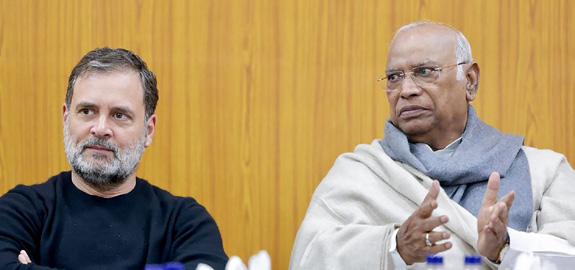
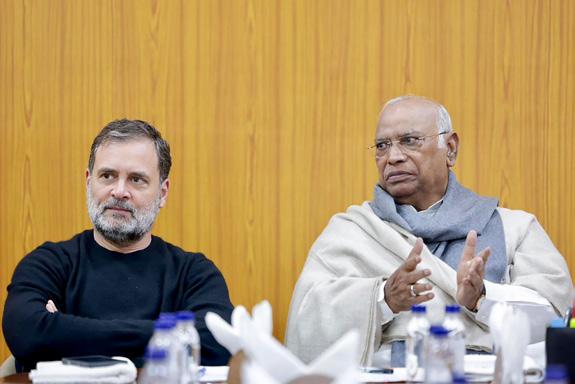
The meeting was chaired by Congress President Mallikarjun Kharge and Leader of the Opposition in the Lok Sabha Rahul Gandhi, and focused on organisational weakness and growing dissent within the Bihar unit of the party.
According to sources, Rahul Gandhi made it clear that Bihar Congress leaders must recognise their responsibilities and work seriously at the grassroots level.
He reportedly said that while he is ready to support leaders whenever required, his efforts alone cannot revive the party.
He stressed that strengthening the Congress in Bihar
would require collective effort, discipline, and active participation from all leaders.
During the meeting, Congress MP Tariq Anwar emphasised that merely assigning responsibilities was not enough and that accountability must be fixed within the organisation.
Rajya Sabha MP Ranjeet Ranjan echoed similar concerns, stating that those responsible for managing the party’s organisation in Bihar must be held answerable for its current fragile state. Several senior leaders expressed serious concern over the lack of a strong organisational structure. Suggestions were made to constitute a state committee immediately and ensure that the experience of senior leaders is effectively utilised.
The leadership of the Congress legislative party in Bihar was also discussed.
In the 2025 Bihar Assembly elections, the Congress contested 62 seats but managed to win only six.
Following the elections, all six MLAs had reportedly stayed away from party meetings and activities in Bihar, fuelling speculation that they could break away from the party.
UN Human Rights, legal organisations slam sentencing of lawyers in Pakistan under PECA
Geneva, Jan 30 (IANS) The United Nations Human Rights Office, along with several other human rights and legal organisations, strongly condemned the conviction and sentencing of Pakistani human rights lawyers Imaan Zainab Mazari-Hazir and Hadi Ali Chatta, citing concerns over the misuse of laws under Pakistan’s Prevention of Electronic Crimes Act (PECA) to suppress dissent across the country.
The remarks came after a Pakistani court last week reportedly sentenced Imaan and her husband, Hadi, to a combined
17 years in prison and fined each of them 36 million Pakistani rupees on multiple charges in a case linked to social media posts.
The Office of the United Nations High Commissioner for Human Rights described the conviction and sentencing of Imaan and Hadi under PECA, following concerns over fair trial, as "deeply disturbing".
“This case highlights the danger of this law being used to suppress dissent. We urge the Government to protect and uphold freedom of expression and the right to peaceful assembly in line with Pakistan’s international human rights obligations,” the UN Human Rights office posted on X.
Condemning the judicial persecution, several international legal and human rights organisations said the “arbitrary” arrest and conviction of both the lawyers constituted “the latest escalation in a pattern of continued harassment against the couple in retaliation for the legitimate exercise of their human rights and professional functions”.
“The arrest and sentencing of Imaan Mazari and Hadi Ali Chattha are emblematic of a broader trend of judicial persecution aimed at exhausting the lawyers’ time and resources, discrediting their work, and obstructing their ability to represent alleged victims of violent abuses perpetrated by state agents. The couple have faced multiple parallel criminal proceedings under anti-terrorism and blasphemy laws, repeated cancellations of bail, and the continued threat of arrest, all compounded by persistent concerns regarding due process violations,” read the joint statement.
“Repeated summonses in cases on baseless allegations have severely disrupted their legal practice and violated their human rights, forcing them to appear before multiple courts across the country, reportedly with the intent of diverting their attention from defending vulnerable clients,” it added.
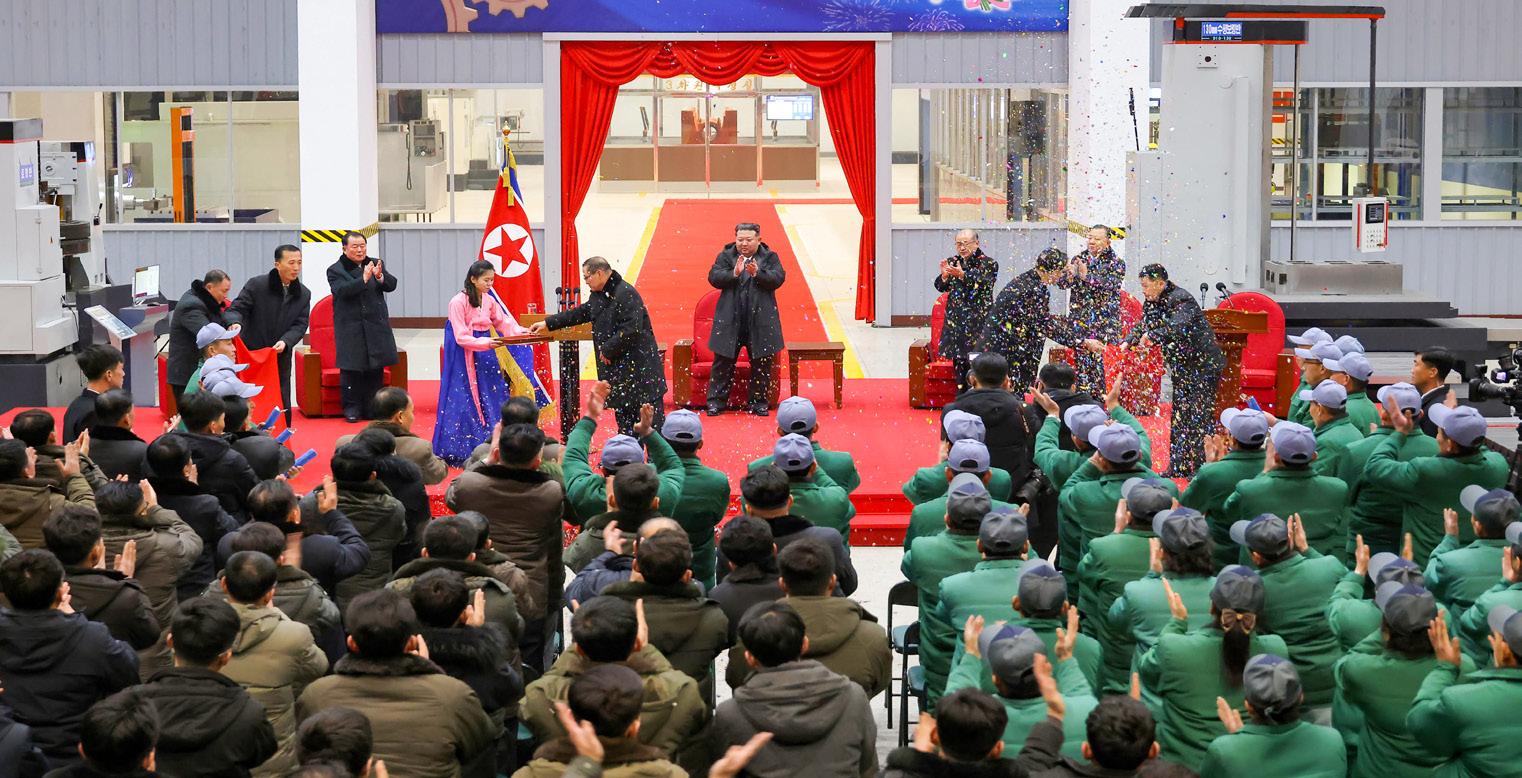
North Korea’s Kim attends ceremony for this year’s first
regional development project
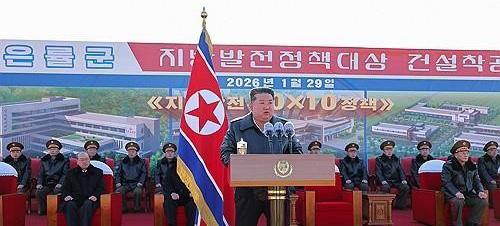
Seoul, Jan 30 (IANS) North Korean leader Kim Jong-un has attended the groundbreaking ceremony for a construction project, the first this year under his regional development drive, saying his policy will transform one-third of the country, state media said on Friday. Kim attended the ceremony the previous day to mark the start of a regional development construction project in Unnyul County in South Hwanghae Province, and dug the first
spadeful of earth, the Korean Central News Agency (KCNA) said, announcing the first regional construction campaign for 2026. Kim began his signature regional development policy in 2024, pledging to build modern factories in 20 cities and counties across the country every year for a 10-year period, in a bid to improve living standards for the people.
"This is the third year for implementing the regional development policy, and public health facilities and leisure complexes, together with regional-industry factories, will be built in 20 regions of the country including this Unnyul
County," the KCNA quoted Kim as saying at the ceremony.
"This means that nearly onethird of the cities and counties across the country will have been transformed," he said.
The leader said the policy is a "testimony to our firm will to transform and improve the people's living fundamentally and simultaneously throughout the country," adding that it also demonstrates the country's development potential, Yonhap news agency reported.
Kim also extended thanks to soldiers mobilised at construction sites under the policy, calling them "creators of the people's wellbeing."
Global engagement emboldens Pak military to intensify repression: Report
Jan 29 (IANS) Pakistan's military establishment has been emboldened by US and Arab engagement, enabling it to escalate repression against ethnic groups such as Baloch and Pashtun as well as Hindu minorities across the country. The resurgence of the Pakistani military on the global stage has given it confidence to stifle the autonomy of the country's
democratic institutions and rule civilians with an iron fist, a report said on Thursday.
“Recent engagement by President Trump and key Arab leaders has reshaped Pakistan’s strategic environment, easing the economic and geopolitical isolation that had constrained its military establishment.
Their outreach has expanded Pakistan’s diplomatic space, opened new financial channels, and strengthened security cooperation with many countries of significance, collectively giving the military renewed leverage at home and abroad,” a report in 'International Centre for Peace Studies 'detailed.
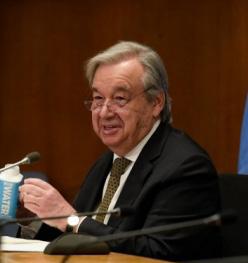
UN very active in mediating conflicts, says Guterres
United
Nations, Jan 30 (IANS)
The United Nations is very active in mediating conflicts across the world, UN Secretary-General Antonio Guterres said.
At a press conference on Thursday, outlining his priorities for 2026, Guterres said in some cases, some warring parties do not want the United Nations to mediate in their conflicts, and the world body is very active in "several scenarios," such as in Libya, Sudan, South Sudan, and the Democratic Republic of the Congo (DRC).
"No," the UN chief replied when asked by Xinhua whether he was concerned about the future role of the United Nations in maintaining world peace and
security.
"There are areas where we are not mediators, because at least one of the parties (to a conflict) does not want us to mediate," the UN chief said.
"Israel never accepted the UN to be mediator, probably because we would mediate based on our values, the values of the (UN) Charter ... those that violate the Charter probably are not interested in the mediation by an entity that is, in itself, the entity that represents the Charter," he said.
Guterres said the United Nations has been "extremely active" in trying to avoid the worst scenario in the situation of South Sudan, in the DRC and Myanmar, and "very active" in negotiations related to Western Sahara, Xinhua news agency reported.
"And I could go on and on and on with the number of situations in which we are extremely active with efforts of mediation, efforts of conciliation of positions, peace processes," he said.
"There is only one thing we do not have, (which) is the instruments of power to force parties to come to the negotiation," said the secretary-general.
Sweden launches new program to curb violence against women
“History reveals that when US governments look at militaries in other countries as beneficial allies, their leaders often overlook crimes by these militaries against their own citizens,” it added.
According to the report, the Pakistani military has persecuted innocent civilians across Balochistan for decades with impunity under the guise of upholding law and order and protecting national interests.
“Many of these Baloch are peacefully protesting Pakistan's cruel occupation and demanding freedom. Prominent female activists such as Mahrang Baloch, Bebarg Zehri, Beebow Baloch, and Gulzadi Baloch, who were detained for opposing state-led enforced disappearances, are in jail,” it mentioned
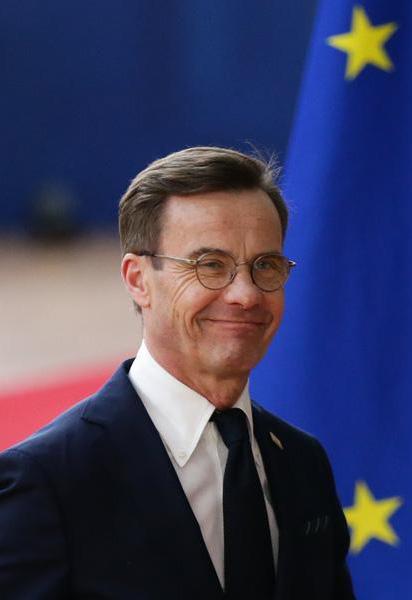
Helsinki, Jan 29 (IANS) Sweden has launched a new program to combat what Prime Minister Ulf Kristersson called "one of the largest and most frightening social problems" facing the nation: men's violence against women.
Speaking at a press conference in Stockholm on Wednesday (local time), Kristersson said he will chair a new ministerial council on kvinnofrid ("women's peace"), aimed at strengthening coordination across government agencies. Kristersson said the new effort will address violence linked to severe mental-health problems, domestic abuse, and so-called honour-related violence, in which women are targeted by family members. He added that the cabinet has already decided
to tighten parole rules and strengthen how repeat offending is assessed.
Women's safety returned to the centre of public debate in late December 2025 after two widely followed cases -- one in Ronninge, a district south of Stockholm, and another in Boden, a town in northern Sweden. The incidents renewed scrutiny of how authorities assess risk and handle repeat violent offenders, reports Xinhua news agency.
In Ronninge, police launched a large search after a 25-year-old woman was reported missing during the night into December 26 last year. She was found dead on December 27, and the investigation was reclassified as murder. In Boden, police responded to a call at a residence on December 25, 2025 and later confirmed that a woman had died after being subjected to extensive violence.
Justice Minister Gunnar Strommer said it "should not be life-threatening to be a woman in Sweden," adding that "dangerous men should be locked up" so women can feel safe in public. The term kvinnofrid has deep roots in Swedish legal tradition. Historical accounts often link it to 13th-century "peace laws" intended to curb assaults and abductions of women, though original texts are not preserved.
Islamabad,
India reaffirms commitment to build bright, prosperous future with Fiji
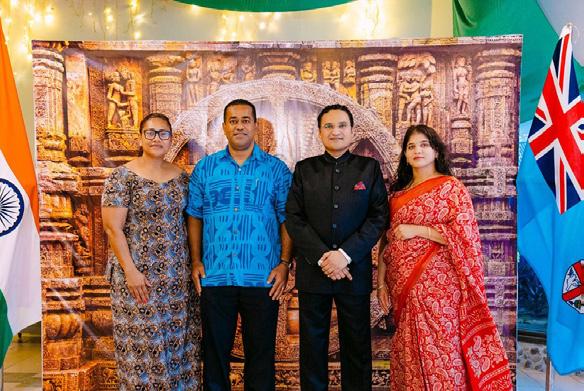
Suva (Fiji), Jan 24 (IANS) India has reaffirmed its long-term commitment to Fiji and the wider Pacific, highlighting that the bilateral relationship of the two nations is entering a new phase of cooperation built on trust, shared values and people-to-people ties, according to Fijian media.
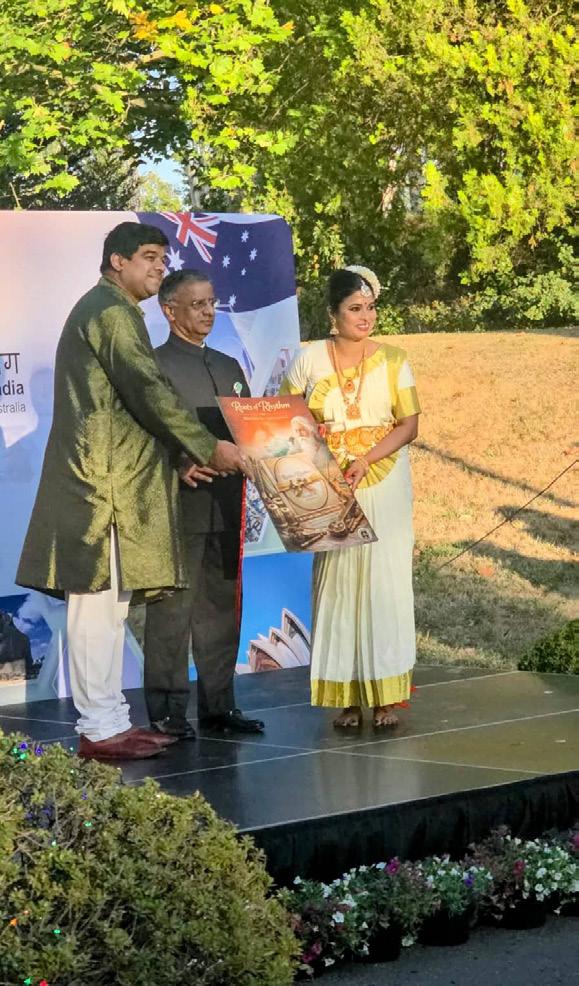
Speaking during India's Republic Day reception held at Fiji's Novotel Lami on Friday night (local time), Indian High Commissioner to Fiji Suneet Mehta said India and Fiji were working together to shape a future that delivers tangible benefits for their citizens, reports local media outlet, The Fiji Times. "Together, we will build a future
‘India
that is brighter, more prosperous, and more inclusive for our peoples," Mehta said.
He acknowledged the deep historical links between the two nations, highlighting the enduring contribution of the Girmitiya community to Fiji's social, cultural and economic development.
"The Indian diaspora in Fiji has been a cornerstone of our relationship since the 19th century, and today continues to play an integral role across agriculture, trade, education and public service," he said.
According to the Indian High Commission in Suva, Mehta highlighted the significance of further strengthening the robust and multifaceted India-Fiji ties for the benefit of both people, the region and beyond.
The event further strengthened the bonds of friendship, cooperation, and shared values, the Indian mission said.
During this, Mehta also described
2025 as a "milestone year" for bilateral relations, marked by "sustained high-level political engagement".
He noted that the visits by Fijian President Naiqama Lalabalavu (last November) and Prime Minister Sitiveni Rabuka (August 2025) to India resulted in key agreements and a joint statement "reaffirming Veilomani Dosti -friendship grounded in mutual respect", The Fiji Times reported. Mehta also called health cooperation a "major highlight of the partnership", adding that India is committed to building a 100-bed Super Speciality Hospital in Suva. This facility will serve as a regional hub for advanced medical services in the island nation.
He further stated that this project reflects India's commitment to strengthening healthcare resilience in Fiji and the Pacific, while adding that the tender process is underway and construction would begin soon.
vital balancing force in times of unprecedented geopolitical instability’
Tel Aviv, Jan 23 (IANS) With Tel Aviv's position in the West weakening and currents within American public discourse growing more hostile, Israel believes that India's leadership of BRICS carries immense significance for it on several fronts, a report highlighted on Friday. "India remains the organization’s 'responsible adult'. New Delhi places importance on preventing BRICS from becoming an overtly anti-Israel forum or a space dominated exclusively by the Chinese axis and elements hostile to Israel. India's presidency ensures that the organisation will continue to focus on economic
and infrastructure issues, thereby providing Jerusalem with an essential diplomatic safeguard.
Israel must capitalize on India's strategic autonomy to ensure that its interests are preserved on the international stage, even as global blocs are reshaped," Oshrit Birvadker wrote for the Jerusalem Institute for Strategy and Security (JISS).
Birvadker, an expert in IndiaIsrael, India-Gulf, and IndoPacific relations, highlighted that India's BRICS presidency could serve as a vital buffer for Israel against the organisation’s increasing politicization.
"Marking the dawn of 2026, India has officially taken charge of the BRICS (Brazil, Russia, India, China, and South Africa) presidency, assuming leadership of the expanded bloc at a critical and sensitive geopolitical juncture. The unveiling of the official logo
and website on January 6 by External Affairs Minister Dr. S. Jaishankar marks the beginning of a complex undertaking: an effort to prioritise the interests of the ‘Global South’ amid clashing internal agendas and mounting diplomatic pressure from Washington," the JISS report stated.
Birvadker detailed that India's presidency is being shaped by two dramatic variables that are redefining the international arena: the transactional, America-centric approach that defines US foreign policy, and the intensifying contest over the meaning and boundaries of ‘multipolarity'.
According to the report, for Israel, a nation historically aligned with the West and situated at the core of the East, India’s 2026 BRICS leadership represents both an "opportunity and a strategic challenge".
New Indian Consular Centre opens in Seattle
Washington, Jan 28, (IANS)
Indian authorities have announced the opening of a new Indian Consular Application Centre in Seattle to improve access to consular services for the Indian diaspora in the Pacific Northwest.
The centre at 1015 2nd Avenue, Suite 804, Seattle, WA 98104 is now co-located with the Indian Consulate in Seattle, an official release said Tuesday (local time). Officials stated the move is aimed at making services easier to access for Indian nationals and other applicants in the region.
The visa application centre was inaugurated in the presence of government and non-government dignitaries. More than 300 members of the Indian American community from Seattle and nearby states attended the event. The Seattle centre will operate as a single location for a wide range of services. These include applications for Indian visas, passports, Overseas Citizenship of India (OCI), renunciation of Indian citizenship, Police Clearance Certificates, the Global Entry Programme (GEP), and Miscellaneous and Attestation
US
immigration policy at breaking point, says Congressman
Washington, Jan 24 (IANS)
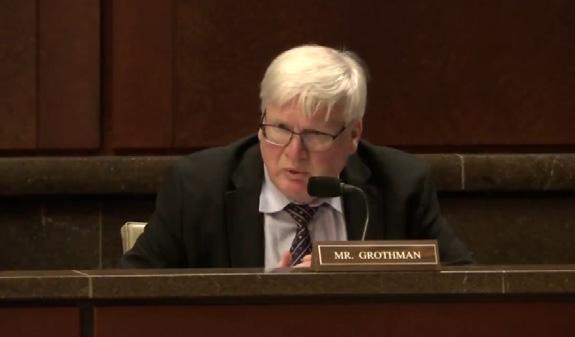
An influential Republican Congressman has told the House that US immigration policy has reached a breaking point and warned that failure to act could permanently alter the country's character.
Congressman Glenn Grothman from Wisconsin called immigration the single most important issue facing Congress and the White House. How it is handled, he said, will determine whether "America fundamentally changes or not."
Grothman said the scale of immigration, legal and illegal, is far larger than most Americans realise. "Right now in America, every year about 800,000 people are naturalised," he said. "We don't talk about that enough."
He said the national debate focuses almost entirely on illegal border crossings while overlooking other major pathways into the country. In addition to naturalisations, Grothman said about 500,000 people enter each year on work visas and another 500,000 on student visas. Many, he said, remain in the United
States after their visas expire. Grothman also criticised the way birthright citizenship is applied. He said the Constitution is being misinterpreted when children born to foreign visitors automatically become US citizens. "If a woman from China flies into San Diego, has a child, and comes back, the way we are interpreting the law right now… is that child becomes a US citizen," he said.
Taken together, he said, these policies have pushed immigration to historic levels. More than 15 per cent of people living in the United States were born abroad, which he described as an all-time high. Grothman said the number of people being naturalised each year is about four times higher than when he was a child in the 1960s. He argued that the United States has "nobody to apologise to" for seeking limits.
On illegal immigration, he blamed the Biden administration for what he described as a massive surge at the southern border. While acknowledging that exact figures are unclear, he said an estimated 8 to 10 million people entered the country unlawfully during that period.
"In addition to all of these other people, 8 to 10 million people were being allowed into the country," he said.
Grothman said the issue goes beyond numbers.
US Rep Lofgren backs bill to curb anti-Sikh hate
Washington, Jan 24 (IANS)
Legislation to strengthen the federal response to anti-Sikh discrimination and hate crimes is gaining bipartisan momentum in the US House of Representatives, as Congresswoman Zoe Lofgren joins as a co-sponsor.
services. The Indian Consulate in Seattle said the newly co-located offices of the Indian Consular Application Centre with the Consulate in the Federal Reserve Building are "expected to enhance operational efficiency and provide consular applicants with a one-stop facility for submitting applications and resolving queries." VFS Global, which provides outsourced consular services for India in the United States, said the new centre is part of a broader effort to streamline the application process and improve service delivery.
The Sikh American AntiDiscrimination Act of 2025, known as H.R. 7100, now carries the support of Lofgren, a Democrat from California and vice chair of the American Sikh Congressional Caucus. Congressman Josh Gottheimer of New Jersey introduced the bill earlier this month.
“No religious community should ever feel afraid to worship in America,” Lofgren said.
“Sikh Americans have faced increased discrimination and hate crimes, and it’s necessary for the Department of Justice to elevate its attention to this
issue. I’m proud to represent a large Sikh community in San Jose, and I will do everything in my power to ensure the federal government combats anti-Sikh discrimination.”
Gottheimer said the legislation reflects concerns raised directly by Sikh families and community leaders. “After listening directly to Sikh families and community leaders in North Jersey, it is clear that Congress has to take decisive action,” he said. “The bipartisan Sikh American AntiDiscrimination Act will turn those conversations into action — strengthening how our federal government defines, tracks, and prevents anti-Sikh hate crimes so that every American can practice their faith freely and safely.” If enacted, the proposed law would direct the Department of Justice to establish a Task Force on Anti-Sikh Discrimination, charged with creating a formal federal definition of anti-Sikh hate. This task force would also develop educational programs for schools, law enforcement agencies, and higher education institutions, while providing Congress with an annual report on hate crimes and discrimination targeting Sikh Americans.
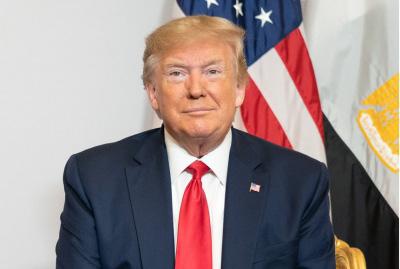
Trump, Bill Gates, US Governors, lawmakers
salute India’s Republic Day
Washington, Jan 26 (IANS) US President Donald Trump, state governors, members of Congress, and philanthropist Bill Gates marked India’s 77th Republic Day with messages that showcased shared democratic beliefs, close people-to-people ties, and expanding cooperation between the two countries.
In a message released by the U.S. Embassy in India, President Trump congratulated the government and people of India on the occasion. He said the two countries share “a historic bond as the world’s oldest and largest democracies,” stressing the importance Washington places on the bilateral relationship.
Congressman Greg Landsman praised India’s democratic record and its growing global role. He described India as “the world’s largest democracy and a close friend of the United States,” and said the country is “a critical bulwark against global authoritarianism.” Landsman said cooperation through frameworks such as the Quad and I2U2 remains important to maintaining a rules-based international order.
Congresswoman Kim Schrier
said Republic Day marks the adoption of the Constitution of the world’s largest democracy and the values it represents. She said Washington state “deeply appreciates the contributions of the Indian and Indian American community to our state's cultural, educational, and economic life,” adding that their pledge to innovation, learning, and society benefits the wider society.
South Dakota Governor Larry Rhoden congratulated India on 77 years as a Republic and pointed to growing cooperation between the two countries. He said recent discussions with Indian officials focussed on agriculture, trade, and tourism, and voiced confidence that the United States and India would continue building a stronger relationship.
Montana Governor Greg Gianforte noted the contributions of Indian and Indian American communities to his state’s cultural, educational, and economic life. He praised their commitment towards innovation and learning and wished India a healthy and prosperous year ahead as it marked the Republic Day milestone.
Nebraska Governor Jim Pillen called Republic Day an extraordinary milestone and a moment for reflecting on shared values. He said Nebraska values its partnership with India and pointed to cooperation through trade, technology, agriculture, and cultural collaborations.
US, India launch joint drug policy working group
Washington, Jan 27 (IANS) The United States and India have launched a new joint mechanism to strengthen cooperation against drug trafficking and narcoterrorism, officials said.
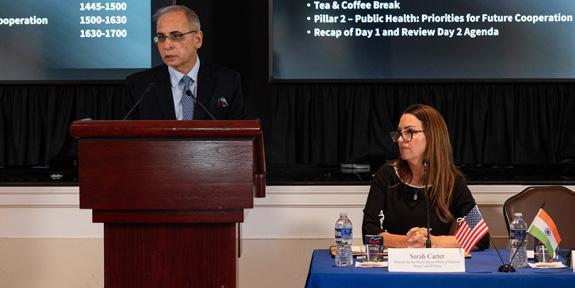
The inaugural meeting of the US-India Drug Policy Executive Working Group was held in Washington from January 20 to 21, according to a White House statement issued Monday.
Sara Carter, Director of the Office of National Drug Control Policy, opened the meeting. She said President Donald Trump and Prime Minister Narendra Modi share a commitment to stronger security cooperation and the eradication of narco-terrorism.
“The drug crisis is now a core national security priority,” Carter said. “This Executive Working Group leverages the bilateral partnership to protect families while also supporting legitimate industries.”
India’s Ambassador to the United States, Vinay Kwatra, said India gives the highest priority to addressing the threat from narcotics trafficking. He said this includes tackling the diversion of precursor chemicals used to produce illicit drugs.
Kwatra said India is working to balance strong enforcement with the facilitation of legitimate trade, including lawful pharmaceutical activity.
The working group is led by Acting ONDCP Deputy Director Debbie Seguin on the US side and Monika Ashish Batra, Deputy Director General of India’s Narcotics Control Bureau, on the Indian side. Officials from both countries said the group is focused on delivering tangible and measurable outcomes to advance counter-narcotics cooperation. Both sides agreed to strengthen bilateral efforts to dismantle the illegal production and trafficking of illicit drugs and their precursor chemicals. They said these activities threaten communities in both countries.
Trump touts Gaza hostages return, peace push
Washington, Jan 27 (IANS) The White House highlighted what it described as a major foreign policy achievement in the Middle East, citing the return of Israeli hostages from Gaza and the creation of a new international mechanism to support post-war reconstruction.
Speaking at a White House briefing, Press Secretary Karoline Leavitt said the president had helped secure the return of “the last remaining body of the hostages” from Gaza, calling it “a huge foreign policy feat for the president of the United States.”
Leavitt said the development was significant not only for Israel but also for broader regional stability.
“This is a great news for the president, for the United States, for our allies and also for peace in the Middle East,” she told reporters.
She further said that more than 20 additional countries had signed on to a newly established “Board of Peace” focused on the rebuilding of Gaza. According to Leavitt, the initiative constitutes a coordinated international effort to support reconstruction following months of intense conflict.
The press secretary described the creation of the Board of Peace as “another historic accomplishment” of the Trump administration, emphasizing that the president had made what she called “the impossible possible” through sustained diplomatic engagement.
Leavitt said President Trump remains personally invested in Middle East peace efforts and continues to engage with regional and global partners to stabilize Gaza and prevent a resurgence of violence.
The Gaza conflict has been one of the most volatile and closely watched crises in the Middle East, with humanitarian matters, regional security risks, and global diplomacy intersecting in complex ways. Efforts to secure hostages and initiate reconstruction have been central to post-conflict discussions. For India and other countries monitoring developments in West Asia, the evolving US role in Gaza’s reconstruction and regional diplomacy is seen as critical to broader Middle East stability and future peace initiatives.
Bangladesh must reset ties with India amid growing complexities: Report
Dhaka, Jan 29 (IANS) Bangladesh must pursue calibrated and interest-based bilateralism to maintain a “dignified, equitable, and mutually beneficial” bilateral relationship with India and other South Asian neighbours, guided by the respect for sovereignty, territorial integrity, noninterference in internal affairs, and the principle of a “no-harmto-each-other-or-to-a-thirdparty”, a report said on Thursday.
Writing for Bangladesh’s leading newspaper, The Daily Star, Humayun Kabir, President of the Bangladesh Enterprise Institute (BEI) and a former Bangladeshi diplomat, said that given the growing complexities in South Asia, it is imperative for Bangladesh to assess the
value of its relationships with both immediate and extended neighbours, aligning them with national interest as well as shared needs and common priorities.
“In the post-July 2024 situation, Bangladesh has been facing several new strategic realities. At the domestic level, a generational shift has been redefining the political landscape and articulating the urge for justice as well as an equitable economic order. The graduation of Bangladesh in 2026 will again frame and reset our external relations with practically all partners. Such a reset will obviously demand corresponding reforms in many areas of our domestic policy and practices. Old mindsets and behaviours may have little relevance in the evolving actualities,” Kabir detailed.
“At the same time, several layers of geopolitical challenges are also greeting Bangladesh on the external front. The growing
interest of global and regional powers in domestic issues and their tendency to view them through a geopolitical lens, have added a new dimension of complexity. There is already strain between Bangladesh and India, and this tension is beginning to affect the broader geopolitical landscape,” he added. According to the report, against the backdrop of the recent changes in Bangladesh, the need for global reputation management has assumed renewed significance.
“While it is easy to blame others for many of our problems, it is important to pay attention to how we define ourselves, what priorities we set for ourselves as a nation, how we pursue them, and what kind of company we keep. In the world of statecraft and diplomacy, signals, narratives, gestures, and initiatives can frame perception, which in many cases may shape reality as well,” it noted
BNM Chairperson write to global community over ‘unlawful’ arrest of human rights lawyers in Pakistan
Quetta, Jan 30 (IANS) Baloch National Movement (BNM) Chairman Naseem Baloch has written an open letter to the global community over the recent “unlawful” arrest of Pakistani human rights lawyers Imaan Zainab Mazari-Hazir and Hadi Ali Chatta, describing it as an attack on truth, the legal profession, and all those who dare to speak against state crimes in Pakistan. This came after a Pakistani court last week reportedly sentenced Imaan and her husband, Hadi, to a combined 17 years in prison on multiple charges in a case linked to social media posts.
In his letter, Naseem wrote,
“Pakistan remains a coloniser and occupier of Balochistan, where enforced disappearances, extrajudicial killings, arbitrary detentions, and torture have become a normalised routine. Thousands of Baloch men, women and children have been abducted by Pakistani security forces, many never to return, others found dumped as mutilated bodies. In this landscape of fear, silence is enforced through violence." Naseem said the human rights lawyer Imaan chose not to be silent and became one of the few voices who consistently spoke for the victims of enforced disappearances—particularly
among the oppressed ethnic groups in Pakistan, including Baloch and Pashtun. “She challenged the impunity of Pakistan’s military and intelligence agencies, questioned unlawful detentions, and stood beside families who have waited years, sometimes decades, for answers about their disappeared loved ones. For this, she is now being punished,” he stated Similarly, the BNM Chairperson said Hadi’s only “crime” was standing by the law and speaking against the crimes by Pakistani authorities.
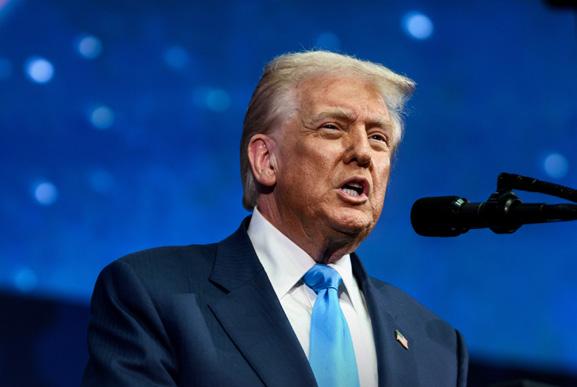
Trump launches Great American Recovery plan
Washington, Jan 30 (IANS)
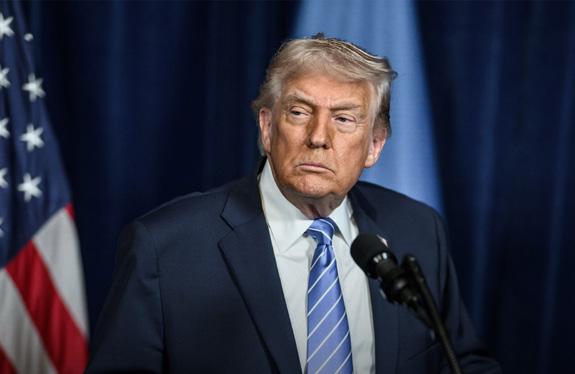
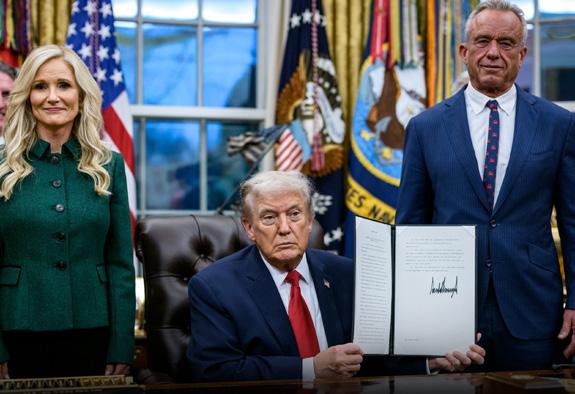
US President Donald Trump signed a sweeping executive order launching what he called the Great American Recovery Initiative, a national effort aimed at combating addiction and substance abuse by coordinating federal, state, local, and privatesector resources.
Calling addiction “a big deal in this country and probably in every country,” Trump said the initiative was designed to help Americans “get the help and the support that they need to free themselves from the horrible burden of dependency.”
The President said an estimated 300,000 people die each year in the United States from drug and alcohol abuse, adding that the real number was likely higher. He said drug overdose deaths had dropped by 21 per cent over the past year.
Trump credited border enforcement and drug seizures for the decline, saying authorities had seized more than 47 million fentanyl pills and 10,000 pounds
of fentanyl powder. He also said drugs entering the country by sea were down 97 per cent following enforcement actions in what he referred to as the “Gulf of America.”
“We’re taking a bold action to help Americans struggling with all forms of addiction,” Trump said.
“The Great American Recovery Initiative will bring together federal, state, local, and private sector resources to support addiction, recovery, treatment, and prevention.”
Health and Human Services
Secretary Robert F. Kennedy Jr., who will serve as a co-chair of the initiative, said the executive order marked a fundamental shift in how the federal government addresses addiction.
“Addiction is not a moral failure. It is a disease. It’s chronic. It’s treatable,” Kennedy said, adding that the country had relied too long on “fragmentation, stigmatization and silence instead of science, compassion and coordination.”
Kennedy said nearly 50 million Americans suffer from substance use disorder, and many never receive treatment. The initiative would align federal programs, expand evidence-based care, focus on early intervention, and support long-term recovery, he added.
Trump revives ‘clean coal’ pitch, targets wind energy
Washington, Jan 30 (IANS)
President Donald Trump and Energy Secretary Chris Wright said coal, natural gas, and nuclear power protected the US electricity grid during a severe cold snap, while criticising wind and solar generation.
Wright told a Cabinet meeting, “Your energy dominance agenda is firing on all cylinders.” He said, “The United States oil production today is greater than Saudi Arabia and Russia combined.”
Wright said coal played a critical role during peak demand. “This beautiful, clean coal was the MVP of the huge cold snap we’re in right now,” he said. “Coal over the last few days… has delivered 20 times more electricity than solar and batteries.”
Trump echoed the criticism of renewables. “The windmills, by the way, are all frozen, you know that, right?” he said. “They don’t turn.”
Wright said renewable output was minimal when demand surged. “In New England with somewhat
Trump says Putin agreed to pause Kyiv strikes
Washington, Jan 30 (IANS) US President Donald Trump said that Russia agreed not to fire on Kyiv and other Ukrainian cities for a week during extreme cold, as his envoy described what he called new momentum in talks since Geneva.
Trump asked special envoy Steve Witkoff to brief his Cabinet colleagues on the diplomatic track. Witkoff said, “The Ukrainians actually said that we’ve made more progress in the last -- since Geneva than they’ve seen in the last four years of that conflict.”
Witkoff said US officials recently met Russian counterparts. “We had five Russian generals last Sunday in Abu Dhabi with Jared, I, and Dan Driscoll,” he said. “And we think we made a lot of
progress.”
He said discussions would continue. “The talks will continue in about a week,” Witkoff said.
Witkoff described draft frameworks already taking shape.
“We have a security protocol agreement that’s largely finished, a prosperity agreement that’s largely finished,” he said. He added, “I think the people of Ukraine are now hopeful and expectant that we’re going to deliver a peace deal sometime soon.”
Trump then described a direct appeal to Russian President Vladimir Putin. “Because of the cold, extreme cold… I personally asked President Putin not to fire on Kiev and the cities and towns for a week during this,” Trump said.
“And he agreed to do that,” Trump added.
Trump said advisers had warned him against making the call. “A lot of people said don’t waste the call, you’re not going to get that,” he said. “And he did it.”
Trump said the pause mattered on humanitarian grounds.
“Ukraine was -- they’re
struggling,” he said. “They are struggling badly.”
He said missile strikes during severe cold would worsen conditions. “That’s not what they need is missiles coming into their towns and cities,” Trump said.
Witkoff credited Trump’s negotiating posture. “I think it shows, Mr. President… how you… provide an overarching… presence in these negotiations,” he said. “The Ukrainians never thought it could happen.”
Trump said the cold was “record setting” and comparable to conditions in the United States.
He said he raised the issue directly because of the strain on civilians.
The administration has framed its approach as “peace through strength,” while continuing parallel diplomatic tracks involving US, Russian and Ukrainian representatives.
The war in Ukraine has entered its fourth year, marked by heavy casualties, infrastructure damage and repeated efforts at mediation that have yet to produce a comprehensive ceasefire.
Trump moves to reopen Venezuela airspace
Washington, Jan 30 (IANS)
European energy policies… wind, solar and batteries… delivered less than 3 per cent of the electricity needed at peak demand time,” he said. He warned of consequences. “If electricity goes out when it’s very cold, people die,” Wright said. He compared the current storm with a previous one. “Over 200 people died in a smaller cold snap during the Biden administration,” he said.
Wright said coal output surged to meet needs. “Coal just stepped up here to 25 per cent of our electricity during this high demand time,” he said.
He said the administration halted plant closures. “17 gigawatts of coal generation plants were slated to close last year that were stopped from being closured by this administration,” Wright said.
Trump said those plants were essential. He said without them, “we would be really tight on energy.”
Trump also described changes in how large projects are powered.
He said some facilities are so large “the grid would never be able to hold it.” He said developers can now build their own generation using “nuclear… oil and gas… coal… whatever they want.”
President Donald Trump said the United States will reopen commercial airspace over Venezuela and described a new phase of engagement that includes US oil companies scouting opportunities in the country.
Trump told a Cabinet meeting he had spoken with Venezuela’s interim president and ordered immediate steps to restore travel.
“I just spoke to the president of Venezuela and informed her that we’re going to be opening up all commercial airspace over Venezuela,” he said. “American citizens will be very shortly able to go to Venezuela.”
He said travelers would be safe.
“They’ll be safe there,” Trump said. “It’s under very strong control.”
Trump said Venezuelans in the United States were closely watching the move. “The people in our country, like in the Doral section of Miami, which is considered Little Venezuela, they’re thrilled,” he said.
He linked the shift to what he described as a successful security operation and improving ties. “As you know, we’ve had a
situation take place with respect to Venezuela,” Trump said. “I want to just thank, uh, General Caine and his staff for the job that they’ve done.”
Trump added, “We’re getting along really well with them. The relationships have been very strong, very good.”
On energy, Trump said US companies were already moving.
“We have the major oil companies going to Venezuela now, scouting it out and picking their locations,” he said.
He said the effort would benefit both sides. “They’ll be bringing back tremendous wealth for Venezuela and for the United States,” Trump said. “And the oil companies will do fine, too.”
Trump threatens aircraft tariffs on Canada
Washington, Jan 30 (IANS)
US President Donald Trump threatened sweeping trade penalties against Canada, accusing Ottawa of blocking US-made aircraft and warning of steep tariffs if the dispute is not resolved immediately.
In a post on Truth Social, Trump said Canada had “wrongfully, illegally, and steadfastly refused to certify the Gulfstream 500, 600, 700, and 800 Jets,” describing them as “one of the greatest, most technologically advanced airplanes ever made.”
He said the United States
would respond by decertifying Canadian aircraft. “We are hereby decertifying their Bombardier Global Expresses, and all Aircraft made in Canada, until such time as Gulfstream, a Great American Company, is fully certified, as it should have been many years ago,” Trump wrote.
The president also accused Canada of blocking US sales through regulatory means.
“Further, Canada is effectively prohibiting the sale of Gulfstream products in Canada through this very same certification process,” he said.
Trump warned that tariffs would follow if the issue is not fixed. “If, for any reason, this situation is not immediately corrected, I am going to charge Canada a 50 per cent Tariff on any and all Aircraft sold into the United States of America,” he added.
The comments triggered immediate criticism from Democrats, including Senator Kirsten Gillibrand of New York, who has accused the president of recklessly using tariffs against close allies.
Gillibrand demanded that Trump halt what she described as illegal tariff threats. She said the president had recently threatened to impose “100 per cent tariffs on Canadian goods,” along with a 25 per cent tariff on South Korean goods. She also cited an earlier warning by Trump of a 10 per cent tariff on NATO countries unless the United States was given Greenland.
“As the president continues to recklessly and haphazardly threaten countries with tariffs, working New Yorkers and small businesses are paying the price,” Gillibrand said.
Australia closely monitoring outbreak of Nipah virus: Health minister
Canberra, Jan 30 (IANS)
Australia's health minister said on Friday that the government is closely monitoring the outbreak of the Nipah virus in Asia.
Mark Butler told Nine Network television that the Nipah virus has never been detected in Australia, but that authorities were taking the threat posed by an outbreak that began in India in December very seriously.
"The Indian authorities tell us they've got that outbreak under control, but nonetheless, we're monitoring it very, very closely, because this is a very serious virus," he said.
Authorities in Indonesia on Thursday implemented stricter
monitoring for passengers arriving from overseas at the I Gusti Ngurah Rai International Airport in Bali, which is the most popular overseas destination for Australian travelers, Xinhua news agency reported.
Butler said on Friday that Australia has clear protocols in place for sick travelers arriving from overseas and that the government has not received any advice to change those protocols.
Nipah virus is a zoonotic disease transmitted between animals and humans and, in some instances, through human-tohuman contact. It is classified as a priority pathogen by the World Health Organization due to its epidemic potential and the severity of illness it can cause.
Nipah virus was first identified in 1998 during an outbreak among pig farmers in Malaysia. In 1999, an outbreak was reported in Singapore following the importation of sick pigs from
Malaysia. No new outbreaks have been reported from Malaysia or Singapore since 1999. In 2001, Nipah virus infection outbreaks were detected in India and Bangladesh. In Bangladesh, outbreaks have been reported almost every year since. In India, outbreaks are periodically reported in several parts of the country, including the latest one in 2026.
Nipah virus can also spread between people. It has been reported in health-care settings and among family and caregivers of sick people through close contact. In health facilities, the risk of spread can increase in overcrowded, poorly ventilated hospital environments with inadequate implementation of infection prevention and control measures (such as the use of personal protective equipment, cleaning and disinfection, and hand hygiene).
Australia announces humanitarian aid for Afghanistan, condemns Taliban’s oppression
Canberra, Jan 29 (IANS)
Australian Foreign Minister Penny Wong has announced 50 million Australian dollars in support for Afghanistan to address the deteriorating situation. She condemned Taliban's oppression of women and girls and stated that Australia is continuing legal action against Afghanistan for violations of Convention on the Elimination of All Forms of Discrimination Against Women (CEDAW).
In a statement shared on X, Wong stated, "The people of Afghanistan are enduring one of the world’s
worst protracted humanitarian crises, exacerbated by the Taliban’s failure to meet basic needs. In response, the Australian Government will provide a further $50 million in support through established UN partners."
"We condemn the Taliban’s continued campaign of sustained oppression, particularly against women and girls. Australia is continuing legal action with international partners against Afghanistan for violations of CEDAW under the Taliban," she added.
She noted that people of Afghanistan are facing one of the world's largest protracted humanitarian crises, exacerbated by the Taliban's failure to meet basic needs. Almost 22 million people require humanitarian support in Afghanistan.
In a statement, Penny Wong
of
women
and Australia's International Development Minister Anne Aly stated, "The Taliban's oppression of women and girls, including limiting access to employment, medical services, education and public life, mean they are disproportionately impacted. Australia's humanitarian assistance is focused on supporting women and girls, prioritising food security, health services, and protecting dignity, safety and rights."
According to the statement, Australia is working with United Nations partners to ensure Canberra's support for those who are in need. The humanitarian assistance will be delivered by agencies like the World Food Programme (WFP) and the UN Office for the Coordination of Humanitarian Affairs' Afghanistan Humanitarian Fund.
Construction of Chinese Embassy in London: Report cites deep concern, strategic vulnerability
Jan
United Kingdom's decision to permit the construction of a Chinese Embassy in London is not merely a "planning approval" but a warning about how economic fragility can translate into strategic vulnerability — a lesson Australia must take seriously. The proposed Embassy, critics said, could serve as a hub for interference in Britain and as
a platform to suppress China's critics in the European country, a report highlighted on Thursday.
"In approving construction of an enormous Chinese Embassy in London, Britain is trading long-term security resilience for short-term economic advantage.
For Australia, the 20 January decision should raise concerns about strategic signalling, alliance coherence and the risks of greater economic dependence on China— at a time when all AUKUS partners are attempting to strengthen the pact against that country, the United States’ peer competitor," a report in Australia-based ‘The
Australia observes national day of mourning for victims of Bondi attack
Canberra, Jan 22 (IANS)
Australians have been asked to light a candle and observe a minute of silence on Thursday night to commemorate the victims of the Bondi Beach shooting attack, which occurred on December 14, targeting people celebrating the Jewish festival of Hanukkah at the iconic beach in Sydney's eastern suburbs.
Thursday marks a national day of mourning declared by Prime Minister Anthony Albanese for the 15 fatal victims.
It is the first time that Australia has observed a national day of mourning since the death of Queen Elizabeth II in 2022.
In a statement, the Department of Prime Minister and Cabinet said that Australian flags should be flown at half-mast at all government buildings in Australia and overseas and that governments and organisations are encouraged to light up buildings, Xinhua news agency reported.
Australians are invited to observe a minute of silence at 7:01 p.m. local time (0801 GMT) to coincide with the start of the national memorial service at the Sydney
Opera House and to leave a candle on their doorstep or window, the statement added.
"Today is an opportunity for us to remember and pay respect to the 15 lives," Albanese told reporters in Canberra on Thursday morning.
"It's an opportunity for us as a nation to wrap our arms around the Jewish community because people were targeted because they were Jewish Australians."
Earlier on Wednesday, Prime Minister Anthony Albanese had said that hate speech laws passed by the federal parliament in response to the Bondi Beach terror attack will make Australians safer.
Albanese told reporters that the hate speech laws, which were passed by the parliament on Tuesday night, are the strongest that have ever been in place in Australia.
"We have prioritised national unity and national healing," he had said.
"We want to make sure that light triumphs over darkness."
The laws that were proposed in the wake of the attack at Bondi Beach on December 14 give the federal government additional powers to ban groups deemed to spread hate, increase penalties for preachers who advocate or threaten violence and expand powers to deny or revoke visas for people with extremist views.
Australian Envoy meets Gujarat CM, explores collaboration on Olympics and renewable energy
Gandhinagar, Jan 21 (IANS)
Philip Green, High Commissioner (HC) of Australia to India, paid a courtesy visit to Bhupendra Patel in Gandhinagar, with discussions focusing on sports infrastructure, Olympic preparedness, higher education and renewable energy cooperation.
Strategist’, detailed.
"The 55,000 square metre Embassy will be the largest diplomatic mission in Europe, bigger than even the US embassy in London. It will be beside the Tower of London and within metres of sensitive communications cables linking financial data from the city to Canary Wharf," it added.
According to the report, during construction, security concerns have been raised about potential surveillance, with Chinese officials positioned just one metre from cables running beneath the pavement.
During the meeting, the Chief Minister highlighted Gujarat’s readiness to leverage Australia’s experience in the sustainable, long-term use of Olympic infrastructure, including housing and sports facilities.
Referring to preparations for the 2032 Brisbane Olympic Games, the two sides discussed Australia’s approach to infrastructure planning and postGames utilisation.
High Commissioner Green explained how facilities developed for the Brisbane Olympics are planned to be repurposed after the event, including conversion into public housing and student accommodation, while sports venues would be used for multiple events and community activities.
He invited a high-level delegation
from Gujarat to visit Brisbane to review Olympic preparations firsthand and expressed Australia’s interest in partnering with Gujarat on advanced sports training, particularly in swimming, para-athletics and high-performance centres.
The Chief Minister welcomed the proposal and said collaboration with Australia would help Gujarat’s athletes access world-class training systems, strengthening their performance prospects ahead of the 2036 Olympic Games.
The High Commissioner also briefed the Chief Minister on plans to establish a comprehensive sports ecosystem through Deakin University at GIFT City. The proposed initiative aims to go beyond a conventional centre of excellence by integrating sports science, sports research and sports business programmes.
He also invited the Chief Minister to attend Deakin University’s first convocation ceremony, scheduled for March 2026.
The Chief Minister noted that under the leadership of Prime Minister Narendra Modi, India-Australia relations have strengthened steadily, with Australia’s participation in the Vibrant Gujarat Summit contributing to Gujarat’s growth
Canberra,
22 (IANS) The
From the editor’s desk
January 26: Two nations, one democratic spirit
January 26th has a special significance for two very different countries, linked through history, migration, and democratic values. It is the same day that India celebrates Republic Day, commemorating the adoption of its Constitution, and Australia marks Australia Day, reflecting on the meaning of nationhood, citizenship, and shared values. While the histories of the two countries could not have been more different, January 26th has come to represent a bridge of sorts between the constitutional ideals of India and the civic engagement and multicultural belonging of Australia.
This common date takes on a richer significance in 2026 with the induction of thirteen Australians of Indian origin into the Australia Day Honours. Their contributions to academia, medicine, science, public administration, architecture, and community service are a testament not only to their individual accomplishments but also to the shared ideals of inclusivity, service, equality, and democratic engagement that both countries stand for. In this respect, these award winners represent the best expression of the living legacy of the Indian Constitution and the multicultural experience of Australia.
The Republic Day of India celebrates the adoption of the Constitution of India on January 26, 1950, which converted a newly liberated country into a republic. Every year, the Republic Day parade on Kartavya Path celebrates the military prowess, cultural diversity, and resilience of India. More significantly, it celebrates the ideals of justice, liberty, equality, and fraternity that the Republic of India stands for.
The Republic Day of India is a reminder that the unity of India lies not in its sameness but in its respect for diversity and the rule of law.
Australia Day, celebrated on the same day, symbolizes a different but no less democratic reflection. It is celebrated with citizenship ceremonies, community events, and the celebration of outstanding service through national honors. At the same time, it is also a day of discussion and reflection, especially on Indigenous history and reconciliation. This juxtaposition of celebration and dissent is a testament to the maturity of the Australian democracy and its readiness
A different kind of power
Why India’s EU trade pact is being hailed in a world tired of tariffs and tension
to take on complex national conversations.
In this backdrop, the inclusion of Australians of Indian origin in the 2026 honours list is particularly noteworthy.
Announced by GovernorGeneral Sam Mostyn, the list comprises 949 Australians, with thirteen Australians of Indian origin being honored in various categories. Their achievements vary from scientific research and healthcare provision to education, architecture, and community service. Taken together, they illustrate how migration strengthens democratic societies by injecting new talent, new ideas, and a robust service ethic.
The five Members of the Order of Australia represent contributions that have shaped the nation over decades. From Dr Ravinder Raj Anand’s work in earth sciences and mineral resources to Dr Kunwarjit Singh Sangla’s sustained commitment to healthcare in rural and Indigenous communities in Queensland, their efforts have strengthened institutions that serve Australians across regions and backgrounds. Farah Madon’s leadership in disabilityinclusive architecture, alongside Emeritus Professor Prem Ramburuth’s work in building global partnerships in higher education, shows how professional excellence can widen access, deepen inclusion and foster meaningful international collaboration.
Just as vital are the seven recipients of the Medal of the Order of Australia, whose service is embedded in everyday community life. Doctors, educators, social workers and cultural leaders such as Satwant Singh Calais, Shyam Ratan Das and Palanichamy Thevar have worked patiently and often without public recognition— helping migrants settle, bringing cultures closer together, and reinforcing the bonds that hold communities together. Their contributions are a reminder that democracy is not only upheld through institutions, but lived daily at the local level.
At the same time, the honours list points to work that remains unfinished. Of the thirteen recipients of Indian origin, only three are women—a figure that reflects the wider gender imbalance seen across the national list.
The global response to India’s free trade agreement with the European Union has been unusually warm, and that warmth has little to do with tariff schedules or market projections alone. It has more to do with timing, tone and intent. In a world once again unsettled by talk of tariffs, trade wars and economic retaliation—memories sharpened by the Trump years—India’s pact with the EU feels like a breath of strategic calm. It signals that cooperation is still possible, that economic engagement need not be adversarial, and that the future of global order lies not in dominance but in balance.
For many countries, the Trumpera tariffs were a wake-up call. They demonstrated how quickly trade could be weaponised, even among allies. Steel, aluminium, automobiles and entire industrial supply chains became bargaining chips in political contests. The damage was not limited to the targeted nations; global markets absorbed the shock. Businesses delayed investments, consumers paid higher prices, and uncertainty became the new normal. Trust—an invisible but essential component of trade— was eroded.
Against that backdrop, India’s agreement with the European Union arrives as a deliberate counterpoint. It is the result of long negotiations, difficult compromises and mutual respect for differences. It was not forced by pressure or fear, nor rushed to score political points. Instead, it reflects a shared understanding that the world has moved beyond the logic of “my gain must be your loss.” That, more than anything else, explains why the deal is being hailed internationally. The applause is also rooted in what the agreement represents symbolically. The EU is one of the most demanding trade partners in the world, with rigorous standards on labour, environment, data and sustainability. India, a developing economy with vast internal diversity and competing priorities, did not approach the EU as a subordinate seeking concessions. It negotiated as a confident partner, insisting on phased transitions, policy space and recognition of developmental realities. The outcome demonstrates that fairness in trade is not incompatible with ambition. This matters because the global system is in transition. The
unipolar moment that followed the end of the Cold War is fading. Economic power is more dispersed, political legitimacy more contested. Attempts to cling to old hierarchies through tariffs or sanctions only accelerate fragmentation. India’s EU agreement reflects a different worldview—one where influence comes from engagement, not intimidation.
To many observers, this is also a subtle message to the United States. Not a hostile one, but a clear-eyed one. The world is no longer structured around a single economic centre. Countries today have choices. They can diversify partnerships, build regional and cross-regional alliances, and refuse to be locked into zero-sum rivalries. India’s trade diplomacy shows that strategic autonomy is not isolationism; it is the freedom to engage on one’s own terms. India’s position is especially compelling because it does not reject the US or any other power. New Delhi continues to engage Washington on trade, technology, defence and innovation. It also works closely with Europe, maintains ties with Russia, strengthens links with Africa and the Global South, and plays an active role in the Indo-Pacific. This multi-alignment is not confusion; it is clarity. India understands that in a multipolar world, resilience comes from relationships, not rigid blocs. What the EU agreement underscores is India’s refusal to be boxed in or bowed down. It engages, but it does not submit. It cooperates, but it does not conform blindly. This posture resonates globally, especially among countries that have long felt pressured to choose sides in geopolitical contests that do not serve their interests.
Another reason the agreement has been welcomed is that it pushes back against the revival of Cold War–style thinking. The old logic of divided camps—friends and foes, insiders and outsiders— has little relevance in today’s interconnected economy. Climate change, pandemics, digital disruption and energy transitions do not respect ideological boundaries. Trade wars cannot solve these challenges; cooperation can.
India’s approach reflects this reality. It does not treat any country as a permanent adversary or a pariah. Even when political differences exist, India keeps channels open. The EU trade pact fits neatly into this philosophy. It is not about aligning against someone else; it is about aligning for shared progress.
The human dimension of this strategy is often overlooked. Trade agreements shape livelihoods. They affect farmers, factory workers, engineers, entrepreneurs and consumers.
When tariffs rise suddenly, it is ordinary people who bear the cost. When trade flows smoothly, opportunities expand quietly but steadily. India’s insistence on negotiated, predictable frameworks is therefore not just diplomatic prudence; it is social responsibility. The Trump-era trade wars showed how quickly economic nationalism can spill into social anxiety. Job losses, price hikes and supply shortages breed resentment and instability. In contrast, India’s EU agreement is built on gradualism. It allows industries time to adapt, encourages skill development and emphasises cooperation on standards rather than punishment for non-compliance. This approach is more humane and, ultimately, more sustainable. Globally, there is growing recognition that threats and tariffs are blunt instruments in a complex world. They may deliver short-term leverage, but they undermine longterm trust. The world today is ready to engage, to negotiate, to find common ground—even amid disagreements. India’s trade diplomacy taps into that readiness.
At a deeper level, India’s stance reflects its civilisational ethos. The idea that the world is interconnected—that progress cannot be hoarded—runs through its philosophical traditions. In modern policy terms, this translates into an emphasis on dialogue over diktat, service over supremacy. The EU trade agreement gives practical shape to these values.
Critically, India is not naive. It protects its interests firmly. It negotiates hard. It resists pressure when necessary. But it does so without aggression. That balance is what many in the world are responding to. In an era of shouting matches and sanction lists, India’s calm assertiveness feels refreshing.
The global applause for the India–EU pact is therefore about more than trade. It is about the kind of world people want to live in. A world where power is shared, not imposed. Where cooperation replaces coercion. Where no single nation claims the right to dictate terms to all others. India’s message is unmistakable. It will engage with everyone in pursuit of its interests, but it will not be intimidated. It believes that the future lies in multipolar cooperation, not unipolar dominance. And in choosing trade over tariffs, partnership over pressure, India is showing that strength today is measured not by how loudly a nation threatens, but by how confidently it brings others together.
Airbus projects India’s aircraft fleet to triple by 2035
Hyderabad, Jan 29 (IANS) Global aerospace giant Airbus has projected India’s commercial aircraft fleet to triple in size to 2,250 aircraft over the next decade, as the country grows to become the third-largest civil aviation market in the world by 2035. This fleet expansion is driven both by the Indian aviation
market boom and the Indian airlines’ ambition to expand on international routes, a top Airbus executive said on the sidelines of Wings India 2026, the aviation exhibition and summit, here on Thursday.
Airbus India and South Asia President and Managing Director Jurgen Westermeier told media that this three-fold increase in aircraft over 100 seats from the 2025 fleet levels marks one of the most aggressive expansions in global aviation history.
The requirement for aircraft will be driven by a unique blend of the fastest economic growth among G20 nations, deeper government spending on infrastructure and
a fundamental shift in Indian consumer behaviour, with per capita air travel rising from 0.13 to 0.29 over the next decade.
As a result, passenger traffic in India will grow at 8.9 per cent per annum by 2035, the fastest among the major economies and well above the long-term global average.
To keep this scaled-up fleet airborne, the requirement of pilots is set to surge to 35,000 by 2035, up from the current 12,000, while the technical workforce must grow to 34,000, tripling the current strength of 11,000, Westermeier said "We are witnessing the centre of global aviation shift toward
Chandigarh, Jan 29 (IANS) In a significant step to upgrade urban road infrastructure, the Punjab government has launched the "Next Generation Road Renovation Programme".
The initiative focuses on the rapid upgradation of major roads and key junctions in the state’s largest urban centre to improve connectivity and ease of movement for commuters.
The project will be executed on the NHAI pattern under the hybrid annuity model to ensure durable roads along with a 10-
year maintenance framework.
Elaborating on the project, Housing and Urban Development
Minister Hardeep Singh Mundian on Thursday said the government is making focused efforts to strengthen road infrastructure across the state to ensure better connectivity and smooth transportation facilities for the people.
While major state highways and rural roads are already being upgraded on priority, the government has now initiated comprehensive road renovation works in Mohali, the state’s largest urban centre.
He said the government has undertaken large-scale development initiatives to transform SAS Nagar (Mohali) into a world-class city. In line with the city’s master plan, the dedicated "Next Generation Road Renovation Programme” has been formulated to further strengthen and modernise the city’s core infrastructure.
The minister said under this programme, major roads and junctions falling under the jurisdiction of the GMADA and the Municipal Corporation will be
upgraded and improved on a war footing. The project includes the upgradation and strengthening of key arterial roads to ensure smooth traffic movement and to effectively address congestionrelated issues.
Damaged roads will also be repaired and resurfaced to provide safe and comfortable commuting facilities to residents and visitors. Mundian said special emphasis will be laid on the beautification of roads and important junctions. The beautification works will include landscaping, installation of modern lighting systems and enhancement of green cover, aimed at improving the overall urban aesthetics and environmental quality of the city. He added that all development works under the project will be executed on the pattern of the National Highways Authority of India (NHAI) through the hybrid annuity model. Under the model, the contractor awarded the project will be responsible not only for the execution of the works but also for the maintenance of the roads for a period of 10 years.
the east. India’s fleet expansion will not only enhance domestic mobility but will also position the country as a dominant hub for international transit. Therefore, the next chapter of Indian aviation must ensure its operating models evolve at the same pace as the expansion in its fleet and network," he said.
"Airbus is uniquely placed to support this growth with the A320 Family for domestic expansion and the A321XLR and A350 to lead India’s medium-to-long-haul international ambitions."
As the fleet triples, India will rapidly pivot to become a hub for Maintenance, Repair, and Overhaul (MRO). The market
for airframes, engines and components is set to triple to $9.5 billion by 2035. Indian airlines are also expected to spend up to $1 billion by 2035 on digitalisation of flight, ground and technical operations as well as cyber security and aircraft connectivity, he said.
The fleet growth will be met with an equally ambitious infrastructure roadmap where the government will increase the number of operational airports by 50, bringing the national total to approximately 200 by 2035. The additional infrastructure spend will help sustain high-frequency operations, he added.
India’s internet user base crosses 950 million in 2025
New Delhi, Jan 29 (IANS) India’s internet user base crossed the 950 million mark in 2025, driven mainly by rapid growth in rural connectivity, rising consumption of short videos and increasing use of artificial intelligence, according to a report released by the Internet and Mobile Association of India (IAMAI) on Thursday.
The ‘Internet in India Report 2025’, prepared jointly by IAMAI and Kantar, said India now has around 958 million active internet users -- reflecting a year-on-year growth of about 8 per cent.
With this, India continues to remain one of the world’s largest and fastest-growing digital markets.
The report was released at the India Digital Summit in the presence of Manjula N, Secretary to the Government, Department of Electronics, IT/BT and Science & Technology, Government of Karnataka.
A key highlight of the report is the strong role played by rural India
in driving internet growth. Rural regions now account for nearly 57 per cent of India’s active internet users, translating to around 548 million people.
The report noted that internet adoption in rural India is growing almost four times faster than in urban areas, pointing to a major shift in how and where digital usage is expanding in the country.
The study also showed that artificial intelligence has entered the mainstream in India.
Around 44 per cent of internet users have used AI-enabled features such as voice search, image-based search, chatbots and AI filters. AI usage is particularly high among younger users, with 57 per cent of those aged 15 to 24 years and 52 per cent of users in the 25 to 44 age group reporting use of AI features in the past year. Short-video content has emerged as another major driver of internet usage. In 2025, about 588 million internet users, or 61 per cent of the total user base, consumed short videos.
Rural users slightly outnumbered urban users in short-video consumption, with adoption strongest among younger audiences, as per the report.
India’s manufacturing sector touches record high in Q3 FY26; sentiments up 4 pc
New
is seeing sustained growth and "increasing optimism" across scale as the industry's performance index touched an all-time high in the third quarter of FY26, a report has said.
The Federation of Indian Chambers of Commerce and Industry’s (FICCI) latest Quarterly Survey on Manufacturing (QSM) saw 91 per cent of respondents reporting higher or stable production levels, up 4 per cent from the 87 per cent recorded in the previous quarter.
Industrial confidence soared with "86 per cent of respondents anticipating higher or same orders in Q3 FY 2026 compared to
the previous quarter and more so after the latest GST rate cuts were announced," the report noted. The survey records responses from units with a combined annual turnover exceeding Rs 3 lakh crore.
Financial stability also drove the growth as the average interest rate for manufacturers stood at 8.9 per cent. Almost 87 per cent of respondents reported “sufficient availability of funds from banks for working capital or long-term capital."
Electronics and electricals and miscellaneous sectors are expected to see strong growth with auto components, capital
goods, and textiles maintaining a steady, moderate growth trajectory. Countering global headwinds, 38 per cent of manufacturers cited plans to hire additional workers in the next three months, up from 35 per cent seen in the prior year.
The average capacity utilisation already hovered near 75 per cent, an indication of sustained economic activity in the sector.
Around 57 per cent of survey participants noted high production costs or an increase in costs as a percentage of sales. The survey attributed this pressure to "higher raw material costs, currency depreciation, and
increased logistics, power, and utility costs."
Around 80 per cent of the industry reported sufficient labour supply, but 20 per cent of respondents mentioned the "lack of skilled workforce," calling for intensified skilling efforts from both the government and private industry.
Another recent report said that India is poised to become a global industrial powerhouse by 2047, with manufacturing’s share of gross domestic product (GDP) estimated to rise from about 17 per cent to roughly 25 per cent.
Delhi, Jan 21 (IANS) The Indian manufacturing sector
India–EU
trade pact opens golden export window for textiles, chemicals: Industry leader
New Delhi, Jan 28 (IANS) An industry leader on Wednesday welcomed the India–European Union trade agreement, calling it a transformative opportunity for the textile, chemical and pharma-linked industries, with Prime Minister Narendra Modi’s leadership seen as central to unlocking long-term growth and global competitiveness.
Speaking to IANS, Bhadresh Dodhia, Director of Dodhia Synthetics Limited, said the agreement marks one of the most significant moments for the Indian textile sector, as it offers access to a large, mature
and high-value European market through a formal free trade framework.
“From the perspective of Indian textiles, such opportunities rarely come, and the FTA can emerge as a game-changer by providing scale, stability and visibility to Indian exporters,” he said.
“For companies, which operates in plastic recycling and textile raw material production, the agreement is expected to open new doors in Europe and accelerate export momentum,”
Dodhia told IANS.
He noted that Europe already accounts for around 20 per cent of the company’s export potential, and the trade pact will help Indian players compete more effectively with markets such as Turkey and China, which either benefit from lower costs or duty-free access.
“With reduced trade barriers,
Indian manufacturers will be able to enhance their product portfolios and strengthen longterm relationships with European customers,” he stated.
Highlighting Europe’s global leadership in circularity and recycling, Dodhia said the region sets the benchmark for sustainable manufacturing.
Dodhia also said the trade pact aligns strongly with Prime Minister Modi’s Make in India and Atmanirbhar Bharat vision.
He stressed that while the agreement will elevate Indian industry, there is also a need for continuous upgradation, particularly for MSMEs.
“Government support under Atmanirbhar schemes can help smaller units modernise and qualify as EU exporters, laying a strong foundation for sustainable future growth,” he told IANS.
India’s office market likely to outpace Asia-Pacific peers with 7-10 pc rental growth
New Delhi, Jan 24 (IANS) India’s office market is set to outperform the Asia-Pacific region in 2026, with prime office rents forecast to grow 7-10 per cent, a report has said.
The report from real estate services firm Knight Frank stated that India has emerged as the region’s growth engine, showing early signs of stabilisation after two years of rental declines. The growth is supported by strong leasing momentum, the expansion of Global Capability Centres (GCC), and rising demand for high-quality and future-ready office space.
India’s three largest office markets -- Bengaluru, Mumbai, and Delhi-NCR -- collectively recorded about 50 million sq ft of leasing in 2025, up 21 per cent year-on-year, with the highest annual absorption on record across these markets, the report said.
Bengaluru led regional performance with 13.8 per cent annual prime rental growth and a 7.4 per cent quarter-on-quarter rise in Q4 2025, with CY2025 marked as the city’s most prolific year on record in terms of area leased.
Total leasing commitments across these three markets reached a record 50 million sq ft in 2025, driven by GCCs, flex operators, and IT outsourcing firms, and rents rose 5.8 per cent YoY, the report said.
Mumbai and Delhi-NCR also saw steady rental appreciation in prime micro-markets and rising
interest from financial services, flex operators, and global corporates consolidating into higher-quality locations. Across Asia-Pacific, over 100 million sq ft of new office space is expected in 2026, likely pushing regional vacancy and muting rental growth, while India’s fundamentals should absorb over 43 million sq ft of completions in 2026 without materially weakening rental momentum, the firm forecasted.
Shishir Baijal, International Partner, Chairman and Managing Director, Knight Frank India, said occupier demand is expected to remain strong in 2026 with higher supply volumes supporting market traction during the year.
"Global Capability Centres, third-party IT businesses and financial services firms are not only expanding but also committing early to high-quality developments," said Baijal.
Gold, silver continue to touch new highs as US dollar weakens
Reserve.
MCX gold February futures rose 1.48 per cent to Rs 1,58,343 per 10 grams. Meanwhile, MCX silver March futures rose 6.56 per cent to Rs 3,56,670 per kg.
Earlier in the day, gold had peaked to Rs 1,59,820 per 10 grams, up 2.4 per cent, before profit-booking eased the price level.
International markets also saw gold and silver touching record highs, as geopolitical risks drove investors to safe-haven assets. Renewed fears of a government shutdown in the US and President Donald Trump's new threats of 25 per cent tariffs on South Korean automobiles, lumber, and pharmaceutical imports added fuel to trade tensions. Trump also warned Canada of a 100 per cent tariff if it makes a deal with China.
US gold futures April contracts rose around 1 per cent to $5,113.70
New skill accelerator in India to boost global network: World Economic Forum
New Delhi, Jan 24 (IANS)
The launch of a new skills accelerator in India strengthens a global network of 45 national accelerators that have collectively supported 14.8 million people, the World Economic Forum (WEF) has said.
Announcing major global commitments to invest in skills development for workers, the WEF said these accelerators bring together government, business and civil society to translate global insights into countryspecific action on employment, skills development and inclusive economic growth.
“The India Accelerator will focus on addressing barriers to equitable skilling,” the Forum said as its 56th annual meeting in Davos-Klosters, Switzerland, concluded on a positive note.
“Across the network, national efforts focus on developing skills for the new economy in areas such as human-centric capabilities, AI and digital technologies, sustainability, trade and vocational pathways and business fundamentals,” the WEF mentioned.
It said that the Reskilling
Revolution initiative is on track to reach more than 850 million people worldwide, nearing its target of equipping 1 billion people with better access to skills, education and economic opportunities.
Among the Reskilling Revolution commitments, more than 25 technology companies have pledged to support 120 million workers with AI access, skills training and job pathways.
In parallel, India launched a new national skills Accelerator, aiming to rapidly scale industryaligned training and improve employability for millions of workers.
As artificial intelligence, geoeconomic shifts and the energy transition rapidly reshape global labour markets, preparing workers for the economy of tomorrow is an urgent global priority.
The new commitments span corporate pledges, universityemployer partnerships and national skills accelerators focused on redesigning how people enter the workforce, transition between jobs and remain employable in an economy increasingly shaped by AI, the Forum stated.
"The global economy is undergoing its most significant transformation in decades. But the future of work is not fixed. How it unfolds for workers depends on opportunities for learning, support for job transitions and backing for entrepreneurship,” said Saadia Zahidi, Managing Director, World Economic Forum.
India a stable, reliable partner for Europe: Ahead Company CEO
per troy ounce as the dollar index eased by 0.1 per cent, making bullion cheaper in overseas currencies.
Persistent safe-haven demand, steady central-bank accumulation, and expectations of accommodative global monetary conditions continue to underpin prices.
COMEX Silver has surged beyond the $99 mark, registering fresh lifetime highs. Meanwhile, the two-day Federal Open Market Committee (FOMC) in the US this week is expected to hold interest rates steady but traders expect at least two rate cuts later in the year.
Davos, Jan 21 (IANS) India has emerged as a stable and reliable long-term partner for Europe, attracting growing interest and investment from the region, Lucia de Luca, CEO of Ahead Company, said on Wednesday.
Speaking about India’s strong presence at the global gathering, on the sidelines of the World Economic Forum (WEF) annual meeting here, de Luea said she was particularly pleased to see India’s central positioning along the Davos promenade.
A regular attendee at the forum, she noted that India has taken a much stronger and more visible stance this year, which she described as crucial for a country that is drawing significant global attention and investment.
“I'm a regular Davos attendant, and I see that, this year you are really taking a very strong positioning, and this is crucial for a country like India, which is actually, it's certainly attracting a
lot of, lots of attention and lots of investment,” she told IANS. She added that Europe increasingly views India as a trusted and dependable partner, a sentiment reflected in the rising number of visits by European presidents and leaders to India in recent years.
“Europe increasingly views India as a trusted long-term collaborator, which is reflected in the growing number of visits by European presidents and leaders to India,” de Luea added.
India is set to make a strong impression at the annual meeting of the World Economic Forum in Davos, with Union Ministers, Chief Ministers from several states and over 100 CEOs of leading Indian companies participating in the event being held from January 19 to 23.
The Indian delegation is expected to pitch the country as an attractive investment destination at a time when global economic uncertainty remains high.
India’s political and business leadership is highlighting the country’s position as the fastestgrowing major economy in the world.
Mumbai, Jan 27 (IANS) Gold and silver prices surged to record highs on Tuesday, amid persistent weakness in the US dollar and expectations of rate cuts by the US Federal
‘Milestone in India-EU Strategic Partnership’: PM Modi, EU leadership hail historic FTA deal
New Delhi, Jan 27 (IANS) Prime Minister Narendra Modi, along with European Council President Antonio Costa and European Commission President Ursula von der Leyen, on Tuesday hailed the successful conclusion of negotiations of the landmark India–EU Free Trade Agreement (FTA).
"This historic deal is a milestone in the India–EU Strategic Partnership that will significantly enhance bilateral trade and investment ties, drive shared prosperity, strengthen resilient and diversified supply chains, and support sustainable and inclusive growth," a joint statement issued after the 16th India–EU Summit co-chaired by the three leaders said.
The leaders emphasised the central role of the World Trade Organisation (WTO) in the multilateral trading system and global trade governance and underlined that meaningful, necessary, and comprehensive reform of the WTO is essential to improve its functions so that it is better suited to advance all members’ objectives.
In the context of global uncertainty and disruptions, closer economic ties between India and the EU are more important than ever to drive growth, job creation, green transition, industrial development, and more resilient, sustainable and trustworthy supply chains, the statement said. The leaders of India and the EU are committed to ensuring the full implementation of the FTA. Additionally, they tasked their respective teams to complete negotiations, at the earliest opportunity, on an Investment Protection Agreement (IPA) and on an Agreement on Geographical
Indications (GIs). They committed to work on scaling up bilateral investments and engage in discussions on Blue Valleys to accelerate private sector engagement in strengthening select value chains, the joint statement said. Noting that India and the EU have complementary strengths in the technology domain, it said that both sides will increase collaboration across the entire value chain, linking enhanced research and innovation to business engagement and market operationalisation. In the current geopolitical environment and amidst global disruptions, they reaffirmed the India-EU Trade and Technology Council (TTC), a high-level coordination platform to address key trade, technology and economic security issues, as the cornerstone of their technology partnership and aim to further enhance its work. The two sides will continue to advance together on promoting Digital Public Infrastructure.
EU, India have concluded mother of all deals, created free trade zone of two billion people: Ursula von der Leyen
New Delhi, Jan 27 (IANS)
European Commission President Ursula von der Leyen announced on Tuesday the successful conclusion of the India-EU free trade agreement, referring to the pact “as the mother of all deals”.
“Europe and India are making history today. We have concluded the mother of all deals. We have created a free trade zone of two billion people, with both sides set to benefit,” the EC President wrote on X.
“This is only the beginning.
We will grow our strategic relationship to be even stronger,” she remarked.
By removing tariffs on 97 per cent of India’s exports, the deal will provide a huge boost to Indian manufacturing -- especially in textiles, gems, and leather -while opening India’s market to European cars and machinery.
European Council President Antonio Costa also stated that he was looking forward to “a stronger partnership between the European Union and India, based on shared values and heightened ambition”.
“Today is about delivering tangible benefits for our citizens.
Working together towards our shared prosperity and security and showing leadership on global issues to shape a resilient
multipolar global order,” he added.
The summit at Hyderabad House marks the end of an 18-year journey, as India and the European Union officially finalised their Free Trade Agreement. Prime Minister Narendra Modi hosted European Commission President Ursula von der Leyen and Council President Antonio Costa, and hailed the pact as a "perfect example of partnership" between two global giants.
PM Modi hosted the 16th European Union-India Summit in New Delhi with President of the European Commission Ursula von der Leyen and visiting President of the European Council, Antonio Costa, to announce the 'mother of all trade deals'.
Over 99 pc of Indian goods gain preferential entry into EU, $75 billion worth exports to take off
New Delhi, Jan 27 (IANS) With the India-EU trade deal, the country has secured unprecedented market access for more than 99 per cent of Indian exports by trade value to the EU that also bolsters the ‘Make in India’ initiative, the Commerce Ministry said on Tuesday, adding that along with India’s FTA with the UK and the European Free Trade Association (EFTA), the latest EU deal effectively opens up
the entire European market for Indian businesses, exporters, and entrepreneurs.
With this historic deal, which is touted as the biggest in India's history, Rs 6.41 lakh crore ($75 billion) worth of exports are poised for take-off, with $33 billion of exports in labourintensive sectors like textiles, leather, marine products, gems and jewellery are set to gain immensely from preferential access under the FTA.
Union Minister for Commerce and Industry Piyush Goyal said the conclusion of the India–EU FTA represents a defining achievement in India’s economic
EU trade deal biggest in India’s history, to create huge opportunities: PM Modi
New Delhi, Jan 27 (IANS) Prime Minister Narendra Modi on Tuesday announced the signing of a free trade agreement (FTA) between India and the European Union, stressing that the landmark partnership between two major economies will create new opportunities for businesses, consumers, and the skilled workforce.
Addressing a joint press conference at Hyderabad House here with European Commission President Ursula von der Leyen, PM Modi underlined that the agreement – biggest in India’s history -- reflects growing trust, shared values, and a common commitment to peace, stability, and cooperation in an increasingly uncertain global environment.
Under the agreement, tariffs on over 90 per cent of EU goods exports to India will be eliminated or reduced, including steep duties of up to 44 per cent on machinery, 22 per cent on chemicals, and 11 per cent on pharmaceuticals, which will be mostly phased out. Tariffs on EU beer will be cut to 50 per cent, while duties on chemicals, aircraft, and spacecraft will be eliminated for
almost all products.
The EU estimates the deal could double EU exports to India by 2032 and generate annual duty savings of up to 4 billion euros on European products.
The bloc accounts for nearly 17 per cent of India’s total exports, giving Indian businesses a huge market to tap into with easier access under the FTA.
The trade pact also includes 500 million euros in EU support over the next two years to help India cut greenhouse gas emissions and accelerate the green transition. EU exports to India already support around 800,000 European jobs, and the deal is expected to create many more.
The EU said the deal will sharply boost exports to the Indian market and deepen economic ties under a turbulent global trade order. The pact covers economies with a combined population of around 2 billion.
India and the European Union also signed a mobility pact aimed at easing the movement of Indian students, workers, and professionals across EU countries. Von der Leyen said the successful conclusion of the India-EU free trade agreement, referring to the pact "as the mother of all deals". "This is only the beginning. We will grow our strategic relationship to be even stronger," she remarked. Separately, the Summit between the two sides also launched an EU-India Security and Defence Partnership.
India and EU to expand trilateral projects from Indo-Pacific to Caribbean: PM Modi
engagement and global outlook. "This supports India’s approach to secure trusted, mutually beneficial and balanced partnerships. Beyond a conventional trade deal, it represents a comprehensive partnership with strategic dimensions and is one of the most consequential FTAs," he said. India, powered by a young and dynamic workforce and one of the fastest-growing major economies, stands poised to leverage this FTA to create jobs, spur innovation, unlock opportunities across sectors, and enhance its competitiveness on the global stage, said the minister.
New Delhi, Jan 27 (IANS) Hailing the cooperation between India and the European Union, Prime Minister Narendra Modi said on Tuesday that the partnership between two sides is for global good. He announced that India and European Union will expand trilateral projects from the IndoPacific to the Caribbean. While addressing a joint press meet with European Commission President Ursula von der Leyen and European Council President Antonio Costa following their talks in New Delhi on Tuesday, PM Modi said, "India and the European Union's cooperation is a partnership for global good. We will expand trilateral projects from the Indo-Pacific to the Caribbean. This will support sustainable agriculture, clean energy, and women's empowerment. We will work together to make IMEC corridor a key link of global trade, connectivity." He noted that ties between India and EU have seen a remarkable
progress in the past few years. Lauding the contribution of Indian community living in European nations, he stated that over 800,000 Indians living in several parts of Europe are actively contributing there. PM Modi said, "Yesterday was a historic moment when, for the first time, leaders of the European Union attended India's Republic Day celebrations as chief guests. Today marks another historic occasion as the world's two largest democratic powers mark a decisive chapter in their relationship."
"In the past few years, the relations between India and the European Union has seen a remarkable progress. Driven by shared democratic values, economic synergy, and strong people-to-people connections, our relationship is reaching new heights. Currently, bilateral trade between India and the EU stands at 180 billion euros, and more than 800,000 Indians now reside in various European countries and are giving active contribution," he added. He announced that India and EU will deepen collaboration in counter-terrorism, maritime, and cyber security.
Brisbane hosts vibrant celebrations for India’s 77th Republic Day
Brisbane, January 26 (Australia India News Newsdesk)
The Consulate General of India in Brisbane celebrated the 77th Republic Day of India with patriotic spirit and enthusiasm, as members of the Indian community and friends of India gathered to mark the historic occasion.
The celebrations began with the unfurling of the Tricolour, followed by the reading of the President of India’s address to the nation, reaffirming the core values of the Indian Constitution and the country’s democratic foundations.
A strong turnout from the Indian diaspora in Queensland lent colour and warmth to the event, reflecting the unity and diversity of the community. Several
Australian friends of India also attended, underscoring the deeprooted cultural and people-topeople links between India and Australia.
One of the highlights of the programme was a soulful rendition of Vande Mataram, organised to mark the 150th anniversary of the revered national song. The performance struck an emotional chord with the audience, recalling the spirit of India’s freedom movement and the enduring ideals of national unity.
The event concluded in an atmosphere of pride and celebration, with participants reaffirming their connection to India and their commitment to contributing positively to Australia’s multicultural landscape.
Canberra celebrates India’s 77th Republic Day with patriotic spirit
Canberra, January 26 (Australia India News Newsdesk)
The High Commission of India in Canberra marked the 77th Republic Day of India with a dignified ceremony that underscored the country’s democratic ethos, unity and constitutional values.
The celebrations began with the High Commissioner unfurling the Tiranga, followed by the reading of the President of India’s address to the nation. The address reaffirmed the principles of democracy and the constitutional spirit that continue to guide the Republic.
Patriotic cultural performances added colour and emotion to the event, reflecting India’s rich
heritage and shared sense of national pride. A rendition of Vande Mataram stood out as a moving tribute to the nation and its freedom struggle.
A special moment during the programme was the launch of an instrumental music video by Roots of Rhythm titled “Ekla Chalo Re”. The powerful composition, known for its message of courage, resilience and conviction, struck a chord with the audience.
The celebrations concluded in an atmosphere of pride and reflection, highlighting the enduring bond of the Indian diaspora in Australia with their homeland and their commitment to India’s democratic ideals.
Pacific Regional Hindi Conference organised
Canberra, January 18 (Australia India News Newsdesk)
The inaugural Pacific Regional Hindi Conference was held in Brisbane on January 16. The conference was jointly organised by the High Commission of India,Canberra, and the Consulate General of India Brisbane. It marked a milestone in efforts to promote the Hindi language across the Pacific region. The conference was attended
by the Secretary (South) and the High Commissioner of India, reflecting the importance placed on the preservation and international outreach of Hindi.
Four panel discussions formed the core of the programme, addressing a range of issues connected to the protection, promotion and global spread of the language.
Participants included scholars, academics and community representatives from Australia,
Fiji and New Zealand, whose contributions enriched the discussions and highlighted the transnational relevance of Hindi. The conference was widely seen as a meaningful initiative to strengthen Hindi’s presence on the global platform and to encourage collaboration among Hindi language stakeholders in the Pacific.
Pacific Regional Hindi Conference Gala Dinner, was also hosted by High Commission India, and Consul General India, Brisbane.
Melbourne Consulate R-Day celebrations see strong community turnout
Melbourne, January 26 (Australia India News Newsdesk)
The Consulate General of India in Melbourne marked the 77th Republic Day of India with a vibrant ceremony, led by Consul General Anish Rajan, who unfurled the Tiranga at the Consulate.
The occasion included the reading of the President of India’s address to the nation by the Consul General, reaffirming the democratic ideals and constitutional values that guide
the Republic.
Over 350 members of the Indian community joined the celebrations, making it a lively and inclusive event. The programme featured patriotic songs, cultural performances and energetic dhol beats, highlighting India’s rich and diverse cultural traditions.
The celebrations reflected the spirit of unity in diversity and the strong sense of community among Indians in Melbourne, bringing the Republic Day observance to a memorable close.
Indian community in Perth comes together for 77th Republic Day observance
Perth, January 26 (Australia India News Newsdesk)
The Consulate of India in Perth marked the 77th Republic Day of India with a ceremony that highlighted the country’s constitutional principles and cultural diversity, drawing enthusiastic participation from members of the Indian community and friends of India. The event commenced with the Consul General unfurling the Tiranga, followed by the reading of the President of India’s address to the nation. The address reiterated the foundational ideals of justice, liberty, equality, fraternity, democracy and unity that define the Indian
Constitution. Ex-servicemen of the Indian Armed Forces were accorded special recognition by joining the Consul General during the flag unfurling.
Students from the Western Australia Kannada Shaale added a special touch to the programme by singing the Indian National Anthem. Sharvi, Ruta, Saadhan, Shaurya, Prashi, Suha and Adhya delivered a confident and heartfelt rendition that was warmly received by the audience.
Cultural performances were a central feature of the celebrations, with a rendition of the Rashtriya Geet Vande Mataram forming a highlight of the programme. Vocalists
Usha, Sukhwinder, Dev and Ananthu were accompanied by instrumental performances from Bharat Shenoy on flute, Rhiddha on keyboard, Manasa on violin and Nishanth on electric guitar. The sound and technical arrangements were coordinated by Sundeep Kale of Shamira Entertainment. The programme was further enriched by a self-composed poem on the Rashtriya Geet presented by Balika, Niheera, Yuvak and Trijal. The event concluded with active and enthusiastic participation from community members and friends of India, reflecting a strong spirit of unity and cultural connection.
Indian-origin Australians feature prominently in Australia Day Honours 2026
Canberra, January 26 (Australia India News Newsdesk)
Thirteen Australians of Indian origin have been recognised in the Australia Day Honours 2026, reflecting the community’s growing contribution to Australia’s academic, medical, public service and civic life.
The honours list, announced by Governor-General Sam Mostyn, recognises 949 Australians this year — more than 200 higher than in 2025. Among them, Australians of Indian origin have been awarded across three categories: five Members of the Order of Australia (AM), seven Medals of the Order of Australia (OAM) and one Public Service Medal (PSM). Despite the strong representation, gender imbalance remains apparent. Only three of the thirteen honourees are women — Emeritus Professor Prem Ramburuth AM, Farah Madon AM and Professor Annamarie Rustom Jagose OAM. The issue reflects a broader trend in this year’s honours, with women accounting for 184 of the 680 recipients in the General Division of the Order of Australia. The Council of the Order of Australia described the figures as concerning and
reiterated calls for more women to be nominated in future rounds. Recognition at member level
Five Australians of Indian origin were appointed Members of the Order of Australia for significant national and community contributions.
Western Australia–based Dr Ravinder Raj Anand AM was honoured for service to earth science and mineral resources.
Over a long career with the Commonwealth Scientific and Industrial Research Organisation (CSIRO), his research into regolith and landscape evolution has supported discoveries of gold, rare earths and critical minerals, improving efficiency and sustainability in the mining sector.
Dr Kunwarjit Singh Sangla AM, from Townsville, received recognition for service to endocrinology and for expanding access to specialist healthcare in rural and Indigenous communities across Queensland. His work through regional hospitals and outreach programs has delivered face-to-face care to some of the state’s most remote areas.
Sydney architect Farah Madon
Indian High Commissioner & community leaders participate in Australia Day event
Canberra, January 28 (Australia India News Newsdesk)
The High Commissioner of India to Australia, Gopal Baglay, attended the Australia Day celebrations organised by the Federation of Indian Associations of the ACT (FINACT) in collaboration with the Yerrabi District Cricket Club on January 26, 2026, in Canberra. The event drew a wide crosssection of the community and was marked by the presence of senior Australian political representatives, including David Smith MP, Suzanne Orr MLA, Michael Pettersson MLA, Marisa Paterson MLA, Andrew Braddock MLA and Peter Cain MLA. Their participation underlined the
AM was recognised for service to architecture and disability inclusion. Her contribution includes shaping national standards for Specialist Disability Accommodation under the NDIS and sustained advocacy for accessible design through local government committees.
Melbourne pharmacist Dipak Sanghvi AM was honoured for service to community health, reflecting decades of leadership in healthcare governance, pharmacy practice and community organisations.
Emeritus Professor Prem Ramburuth AM, based in Sydney, received her award for service to tertiary education, particularly through international collaboration. Her leadership roles at the University of New South Wales and involvement in global academic partnerships have strengthened governance and institutional capacity across multiple regions.
Community service recognised Seven Australians of Indian origin were awarded the Medal of the Order of Australia for service at community and professional levels.
Melbourne neurosurgeon
Dr Rondhir Jithoo OAM was recognised for service to neurosurgery in Australia and the Pacific, as well as for his role as a medical officer with the Australian Defence Force, including overseas deployments.
Dr Ravin Sadhai OAM was honoured for service to medicine in Victoria’s Bacchus Marsh region, including communitybased health initiatives such as the ‘Pub Clinic’ and the ‘Ladies Lounge’, aimed at improving engagement with men’s and women’s health.
Sydney academic Professor Annamarie Rustom Jagose OAM received recognition for service to tertiary education and scholarship.
Satwant Singh Calais OAM, of New South Wales, was recognised for service to the Sikh community through his long-standing leadership with Sikh Youth Australia, supporting settlement, identity and leadership development among young Sikhs.
Queensland recipients include Shyam Ratan Das OAM, honoured for decades of work strengthening multicultural and community networks; Palanichamy Thevar OAM,
recognised for service to the Tamil and Indian communities; and Tausif Khan OAM, awarded for his contribution to Indian and multicultural organisations and community media in Brisbane. Public service honour
The Public Service Medal was awarded to Mukund Narayanamurti PSM, of Melbourne, for his role in advancing Australia’s trade and investment engagement with Southeast Asia. Through senior positions with the Australian Trade and Investment Commission, he played a central role in developing Invested: Australia’s Southeast Asia Economic Strategy to 2040. Investiture ceremonies for the 2026 Australia Day Honours will be held in the coming months, either at Government House in Canberra or by state governors and the Northern Territory Administrator.
The recognition of Australians of Indian origin in this year’s honours underscores the breadth of contribution made by migrant communities, spanning science, healthcare, education, public policy and community leadership.
Brisbane hosts ‘Namaste India’ event celebrating Indian traditions
importance of multicultural engagement and community partnerships in the ACT.
Members and representatives of various Indian diaspora organisations also joined the celebrations, highlighting the diversity and unity of the Indian community in the region. The gathering reflected the strong and evolving people-to-people ties that continue to strengthen relations between India and Australia.
The Australia Day celebrations provided an opportunity for community interaction and cultural exchange, reinforcing the shared commitment of both countries to inclusivity, friendship and mutual respect.
Brisbane, January 28 (Australia India News Newsdesk)
The Consulate General of India in Brisbane recently hosted the Namaste India programme, an event dedicated to showcasing India’s enduring wisdom, cultural practices and vibrant heritage. As part of the initiative, four
workshops were conducted on Yoga, Ayurveda, Madhubani Art and Saree Draping, giving participants a hands-on introduction to traditional Indian disciplines and art forms.
The sessions attracted enthusiastic participation from members of the Indian
community and friends of India across different age groups, reflecting widespread interest in India’s cultural legacy.
The event fostered cultural exchange and community engagement, highlighting the continuing appeal of India’s traditions and strengthening people-to-people ties in Brisbane.
India–Australia Day event celebrates community bond and cultural exchange
Brisbane, January 29 (Australia India News Newsdesk)
The Federation of Indian Communities of Queensland (FICQ) organised an India–Australia Day celebration in Brisbane, bringing together members of the Indian diaspora, community organisations and friends of India to celebrate the enduring relationship between the two countries.
The event highlighted the values of diversity, inclusiveness and community spirit, with cultural performances adding vibrancy to the programme. Artists and
performers showcased a range of creative expressions, reflecting the cultural richness of the Indian community in Queensland.
The celebration was attended by distinguished guests and representatives of various community organisations. FICQ expressed its appreciation to sponsors whose support contributed to the success of the event, as well as to the performers who added colour and energy to the celebrations.
Volunteers played a key role in ensuring the smooth organisation of the programme, with their
efforts acknowledged by the organisers. Representatives of FICQ’s member bodies also participated, reaffirming their commitment to ongoing cooperation and community development.
The India–Australia Day celebration underscored the strong people-to-people ties between the two nations and served as a reminder of the important role community organisations play in promoting multicultural harmony in Australia.
Indian community in Melbourne pays warm tribute to High Commissioner Gopal Baglay
Melbourne, January 24 (Australia India News Newsdesk)
Members of the Indian community came together in Melbourne to bid a warm farewell to High Commissioner Gopal Baglay, at an event organised by the Indian Australian Diaspora Foundation (IADF). The gathering reflected the strong connect Baglay built with the diaspora during his tenure, with community leaders highlighting his accessibility and emphasis on people-to-people ties.
The farewell was convened by the IADF under the leadership of its director, Jay Shah, continuing the foundation’s efforts to
create platforms that bring diaspora communities into closer interaction with diplomatic, political and civic leadership. Organisers said such initiatives have strengthened dialogue and cooperation at the grassroots level.
The event also welcomed Anish Rajan, the newly appointed Consul General of India in Melbourne, who attended as a special guest. In his address, Rajan reflected on his earlier professional association with Baglay, describing him as a mentor whose guidance during the formative years of his diplomatic career helped shape
his approach to public service.
Reflecting on his time in Australia, Baglay, who assumed office in January 2024, described his posting as personally fulfilling.
He noted that while India–Australia relations had advanced significantly, there remained further scope for growth. He emphasised that bilateral ties are increasingly driven not only by government-to-government engagement but also by everyday connections between communities, universities, businesses and families across both countries.
The farewell address included a Hindi poem by noted poet Dr Harivansh Rai Bachchan, which added a reflective tone to the evening, touching on themes of purpose, perseverance and direction in public life.
In a vote of thanks, organisers expressed appreciation for Baglay’s calm and direct
engagement with the Indian diaspora and his consistent support for community initiatives.
The remarks also acknowledged Jay Shah’s role in convening the event, recognised businessperson Jaideep Sharma for assistance behind the scenes, and thanked the Hindu Council of Australia, along with Vijay Dhiman and Harshad Kale, for their support.
The farewell coincided with Baglay’s ongoing official engagements in Canberra, including a formal call on Governor-General Sam Mostyn at Government House, as noted in the Governor-General’s official programme.
The High Commissioner held a warm farewell meeting with Special Envoy for Indian Ocean Affairs Tim Watts, extending heartfelt appreciation for his guidance and support both in his current role, and his previous role as the Assistant Minister for
Foreign Affairs.
The High Commissioner also called on Minister for Skills and Training Andrew for a warm farewell meeting. The High Commissioner thanked the Minister for his continued support to the vibrant Indian community in Australia and his efforts in deepening IndiaAustralia skilling cooperation. The Minister appreciated the High Commissioner’s active efforts in strengthening bilateral relations and extended best wishes for his future endeavours.
Community leaders observed that while farewells are a routine part of diplomatic service, the gathering highlighted the growing role of diaspora organisations as informal bridges in the India–Australia relationship, fostering networks, dialogue and cultural connections across the country.
Arjun Bijlani’s journey in Indian television has been marked by longevity, adaptability, and steady public appeal. Known for his work across fiction shows, reality television, and hosting assignments, Bijlani has cultivated a recognisable onscreen presence. Parallel to this professional consistency runs a fashion style that mirrors similar values—practicality, balance, and restraint.
Unlike celebrities whose wardrobes are shaped by rapid trend cycles, Bijlani’s fashion choices reflect a measured evolution. His style has remained rooted in comfort and functionality while adapting subtly to changing contexts, making it particularly relevant for everyday menswear discussions on newspaper fashion pages. Everyday dressing: Practical and accessible
In casual settings, Arjun Bijlani’s fashion leans towards clothing that is functional and easy to wear. He is frequently seen in jeans paired with fitted T-shirts, polo shirts, or casual shirts. These combinations are staples of his off-duty wardrobe and are consistently observed during travel, informal outings, and behind-the-scenes moments. Denim occupies a central place in his everyday style. Slim-fit and straight-cut jeans in classic shades—blue, black, and grey— appear repeatedly, suggesting a preference for versatility. These are often paired with neutral or solid-coloured tops, avoiding loud prints or overly graphic designs. Layering is minimal but purposeful. Lightweight jackets, hoodies, or casual blazers are used primarily for comfort and practicality rather than visual impact. Footwear typically includes sneakers or casual shoes, reinforcing the wearable nature of his daily style.
Public appearances and industry events
Fitness plays a visible role in Arjun Bijlani’s lifestyle, and this is reflected in his fashion choices. His clothing often features tailored fits that accommodate movement while highlighting structure. However, his public appearances rarely involve overt athletic wear unless the context demands it. Instead, fitness influences fabric choice and fit—stretchable materials, breathable fabrics, and garments that balance ease with structure. This practical approach ensures that his outfits remain adaptable across long working hours and varied environments. Grooming and personal presentation
Chitrangda Singh’s fashion regimen: Elegance shaped by simplicity and structure
For award functions, television promotions, and industry gatherings, Bijlani adopts a more structured approach. Suits, tailored blazers, and formal jackets form the foundation of his event wardrobe. These garments usually follow classic tailoring principles, avoiding exaggerated cuts or experimental silhouettes.
Single-breasted suits, crisp shirts, and well-fitted trousers are common choices. Colour selections remain conservative, with black, navy, charcoal, and muted blues featuring prominently. These tones align well with the formal requirements of television appearances while maintaining visual simplicity. His styling at such events is restrained. Accessories are minimal, often limited to a watch or subtle footwear choices. This approach ensures that the outfit supports the occasion without becoming the focal point itself.
Ethnic wear: Traditional and occasion-specific
Arjun Bijlani’s approach to ethnic wear reflects respect for tradition and occasion. During festivals, weddings, and cultural celebrations, he is frequently seen in kurtas, sherwanis, and ethnic jackets. These outfits are typically well-fitted but uncomplicated, prioritising comfort over elaborate design.
Solid colours and soft pastels dominate his ethnic wardrobe, along with deeper tones such as maroon and ivory. Embroidery, when present, is subtle and confined to borders or panels. He avoids heavy ornamentation, keeping the focus on silhouette and fabric.
Footwear choices for ethnic occasions remain traditional, including mojris or formal shoes, and accessories are kept minimal. This restraint allows the attire to remain appropriate for ceremonial settings without appearing excessive.
Fitness and its influence on style
An integral part of Bijlani’s fashion identity is consistent grooming. Over the years, he has maintained a largely uniform hairstyle, making minor adjustments without drastic changes. Facial hair, when worn, is neatly trimmed and understated.
This consistency supports his broader style philosophy. Grooming complements clothing rather than redefining it, reinforcing a recognisable and professional public image. For a television personality, this continuity helps maintain viewer familiarity and trust.
Designer wear and selective styling
While Arjun Bijlani has worn designer outfits for specific events, his overall fashion profile suggests selective rather than frequent reliance on high-end labels. His clothing choices appear guided by fit and comfort rather than brand prominence. This selective engagement with designers allows him to maintain authenticity. His style does not fluctuate dramatically based on trends, indicating personal involvement in styling decisions rather than dependence on external direction.
Fashion without performance
What distinguishes Bijlani’s fashion style is its refusal to perform for attention. In an industry where visibility often dictates clothing choices, his wardrobe remains grounded. The emphasis stays on reliability, neat presentation, and contextappropriate dressing. His fashion does not aim to redefine menswear but to normalise it. This makes his style relatable to a broad readership, particularly those seeking realistic fashion cues rather than aspirational extremes.
A style shaped by continuity
Arjun Bijlani’s fashion style has evolved quietly alongside his career. It reflects an understanding that clothing, like professional identity, benefits from continuity and clarity.
His wardrobe choices suggest awareness of role, audience, and occasion—qualities that resonate beyond celebrity culture.
Bollywoodactor Chitrangda Singh has, over the years, developed a fashion identity that is both recognisable and restrained. Known for her selective filmography and measured public presence, Singh’s sartorial choices reflect a preference for clean silhouettes, classic fabrics, and understated styling. Her fashion regimen, observed across public appearances, film promotions, and cultural events, reveals a consistent approach rooted in personal comfort, tailoring, and balance rather than fleeting trends.
Unlike many of her contemporaries, Singh does not frequently experiment with dramatic transformations. Instead, her style has evolved steadily, maintaining continuity while adapting to context. This consistency has positioned her as a regular feature on best-dressed lists, particularly for her handling of both Indian and Western ensembles.
Preference for Indian silhouettes Chitrangda Singh is frequently seen in Indian wear at formal and cultural events, with sarees forming a significant part of her wardrobe. Her saree choices typically involve fabrics such as silk, chiffon, and organza, often in solid colours or minimal prints. The drapes are usually traditional, with emphasis on neat pleating and structured pallus. She tends to favour subdued colour palettes—ivory, beige, black, deep red, and jewel tones— over bright or heavily patterned designs. Embellishments, when present, are restrained, with focus placed on fabric quality and fall rather than ornate detailing. Jewellery is minimal, often limited to earrings or a single statement piece, allowing the garment to remain central.
In addition to sarees, Singh has been seen in anarkalis, long kurtas, and contemporary Indian
ensembles, especially during film promotions and public engagements. These outfits generally feature clean lines and comfortable tailoring, reinforcing her preference for functionality alongside aesthetics.
Western wear and structured tailoring
For red carpet events and industry functions, Singh often opts for Western wear marked by structured tailoring. She is regularly seen in fitted dresses, gowns, and tailored separates that emphasise proportion and balance. Necklines and cuts are bold but measured, avoiding excess while retaining visual impact.
Her colour choices in Western attire often remain within a controlled spectrum, with black, white, grey, navy, and deep shades forming the core of her wardrobe. These selections are typically paired with minimal accessories and neutral footwear, keeping the overall look cohesive. Singh’s Western outfits often highlight clean construction and fit, underscoring her reliance on tailoring rather than embellishment to make a statement.
Styling, grooming, and consistency
A notable aspect of Chitrangda Singh’s fashion regimen is her consistent approach to grooming. Her hairstyles frequently feature soft waves or straight, open hair, rarely shifting into experimental cuts or colours. Makeup remains understated, usually focusing on even skin tones, defined eyes, and neutral lips.
This uniformity in grooming complements her clothing choices and contributes to a recognisable public image. By avoiding drastic changes, Singh maintains continuity across appearances, a quality often associated with timeless style rather than trenddriven fashion.
Padma Shri award an encouragement to work with more dedication: Santoor maestro Pt Tarun Bhattacharya
Kolkata, Jan 26 (IANS) Renowned Santoor maestro Pandit Tarun Bhattacharya, who has been honoured with the Padma Shri this year, on Monday thanked the Central government for recognising his contribution to Indian classical music and said that the prestigious award would inspire him to work with greater dedication.
Speaking to IANS, Bhattacharya reflected on his musical journey and personal life, and shared that he started learning the santoor at the age of four. He said that music remains the only force capable of bringing peace and harmony to the world.
Reacting after hearing his name on the awardees' list, Tarun said: "Receiving an award is a source of
Odisha
encouragement. It motivates me to work even better and devote myself more deeply to music."
Pandit Tarun Bhattacharya is regarded as a legendary santoor maestro and musical innovator. Over the years, he has created new ragas and playing styles and has also invented mankas (fine tuners) for the santoor, which help achieve a very high degree of tuning accuracy.
He was born in Nidhiram Majhi Lane in Howrah district. His father was a sitar player and played a key role in shaping his early musical training.
When he was in the fourth grade, his family shifted to Chowdhury Para Lane in Howrah, where the ‘Santragachi Music Academy’ was established at their residence and regular music practice sessions were organised.
Currently based in Kolkata, Bhattacharya runs an academy named Santoor Ashram. He frequently visits his ancestral home in Howrah and remains closely connected to his roots. Reflecting further on the honour,
he said: "The world of music is like an ocean. There is no end to learning. This award shows that my work is reaching people’s hearts. It strengthens my desire to work even harder and perform better."
His younger brother, Arun Bhattacharya, recalled his early passion for music and dedication to practice.
"From a young age, my brother showed a strong fondness for the tabla, sarod, and santoor. Later, he chose the santoor and practised day and night. This recognition was truly deserved," he said. The Central government announced the names of this year's Padma awardees on the eve of Republic Day (January 25).
A total of 131 people have been selected this year for the Padma Vibhushan, Padma Bhushan, and Padma Shri awards. Among them, eleven are from West Bengal, all of whom are receiving the Padma Shri. No recipient from the state has been included in the Padma Vibhushan and Padma Bhushan categories this year.
Padma Awardees thank Union and state govts for nominations
Bhubaneswar, Jan 26 (IANS)
Renowned Ikat weaver and innovator Sarat Kumar Patra on Monday expressed his gratitude to the Union and state governments for nominating him for the prestigious Padma Shri award.
Speaking to IANS, Patra said, “This is very good news for me. First, I want to pay my obeisance to Lord Jagannath. As the government has recognised the Ikat tradition and selected me for the Padma Shri award, I express my gratitude to the Odisha government, the Union
government, and our MP, Bhartruhari Mahtab.”
Following the announcement made last evening, congratulatory messages and warm wishes have been pouring in from all quarters for Patra, who has brought pride to the state.
A distinguished Bandha Kala artisan from the Tigiria area of Cuttack district, Patra has created a unique identity through his exceptional handloom craftsmanship.
He is widely known for producing a variety of handwoven products, including sarees, garments, dhotis, and scarves, earning recognition across different sections of society.
Born into a traditional handloom weavers’ family, Patra’s singular contribution to the art form, being honoured with the Padma Shri Award, is a matter of pride for the entire state. The
announcement of his name for this prestigious award has taken Maniabandha handloom art to greater heights. Among his many remarkable creations, his finest masterpiece is the depiction of the entire Geeta Govinda on a 52-metrelong fabric using the Bandha Kala technique.
The extraordinary work took seven years to complete and was created using natural colours prepared from roots and herbs. This masterpiece is currently housed at the Indira Gandhi National Centre for the Arts, New Delhi.
Meanwhile, noted folk theatre and Prahlad Natak guru Simanchal Patro from Ganjam district has been selected for the prestigious Padma Shri Award for his outstanding contribution to the field of art and culture.
Guwahati Asian Film Festival continues to surge with crowd-pulling screenings
Guwahati, Jan 23 (IANS) The second day of the 2026 edition of the Guwahati Asian Film Festival (GAFF) at Jyoti Chitraban built on the momentum of its opening day, witnessing houseful screenings and strong audience engagement, officials said on Friday. According to an official statement, five films from Assam, Manipur and Vietnam were screened during the day, drawing
enthusiastic footfall across categories. The festival celebrates the richness of Asian and Indian cinema through a curated lineup of 26 films screened over four days. The festival is organised by Trending Now Media with support from the National Film Development Corporation (NFDC) and the Ministry of Information and Broadcasting, Government of India. Meanwhile, on January 24 (Saturday), the third day of the festival will feature Assamese film ‘River Tales’ (Noi Kotha) by
More than an actor: Padma Shri awardee Anil Rastogi on his journey beyond the spotlight
Lucknow, Jan 26 (IANS) Senior theatre artist and film actor Anil Rastogi, who has been actively involved in films, web series, and theatre, has been selected for the prestigious Padma Shri award. He has received this honour for his decades-long outstanding contribution to the fields of acting and theatre. In an exclusive conversation with IANS, the actor shared that, along with films and theatre, he has also been deeply engaged in social service. Expressing his happiness at being honoured with the Padma Shri 2026, Anil Rastogi said, “This is a matter of great pride for me, and I have received several other awards as well. I have been honoured by the governments of Madhya Pradesh and Uttar Pradesh, but I sincerely thank the government from the bottom of my heart for honouring me
with the Padma Shri, as they have recognised my work and appreciated my hard work.”
The actor added, “I come from a science background and have also served as a scientist at the Central Drug Research Institute. I don’t think many people have worked in the field of art for as long as I have. I have just completed my 100th play and have been working in the arts for 64 years. There are four media of art - radio, theatre, television, and film. I believe I am one of those artists who has worked across all four. I have worked in crime shows as well as daily soaps. I have completed 500 episodes of crime shows and have also worked in films and on OTT platforms.”
Rastogi is not only a hero on stage and screen but also in real life. Along with his brother, he runs the Hari Om Seva Kendra, through which he helps the poor and needy with medical treatment. He shared that he has been running this service centre for the past 27 years. Through the organisation, they arrange expensive injections, blood, ambulance services, and dialysis kits for those in need.
90-year-old folk artist from Bihar gets Padma Shri Award for contribution
to traditional music
Bhojpur, Jan 26 (IANS) Bharat Singh Bharti, a 90-year-old folk artist from Bihar’s Bhojpur region, will be conferred with the Padma Shri Award 2026 in recognition of his outstanding contribution to traditional music. Expressing happiness after being named for the prestigious honour, Bharat Singh Bharti told IANS, “I am feeling very happy. The process adopted by the government is very good, and it will provide artists with greater opportunities to move forward.”
Dr Pankaj Borah, Marathi feature ‘Blossoming Almond’ by Nehal Ghodke, Malayalam film ‘Victoria’ by Sivaranjini, Tulu film ‘Imbu’ by Shivdhwaj Shetty, Bengali film ‘Parobasi’ (Ethnic Migration) by Monet Roy Saha, ‘Let’s Have a Cup of Doodh Patti Chai’ by Brian Hung (Hong Kong), ‘If Only I Could Hibernate’ by Zoljargal Purevdash (Mongolia), ‘A Poet of the River’ by Jungkook Han (South Korea), and Assamese film ‘Kok Kok Kokook’ by Maharshi Tuhin Kashyap.
He further said that the responsibilities entrusted by the government are being carried out with dedication.
“The responsibilities assigned by the government are being fulfilled very well by artists according to their abilities and reputation. Everyone is working with great sincerity,” he added.
Praising Prime Minister Narendra Modi, the veteran folk artist said, “The vision of Prime Minister Narendra Modi is very progressive and beneficial for society. It is a
positive and dignified approach to strengthening society. Through this vision, our society will improve and move forward with multidimensional development. I greatly appreciate this approach and hope that the Prime Minister’s dream is realised.”
The list of Padma Awards recipients for 2026 was announced on Sunday as the country prepares to celebrate Republic Day 2026. This year, the President has approved the conferment of 131 Padma Awards, including five Padma Vibhushan, 13 Padma Bhushan and 113 Padma Shri Awards.
Maharashtra has the highest number of awardees this year with 15 recipients, followed by Tamil Nadu with 13, Uttar Pradesh and West Bengal with 11 each, and Kerala with eight awardees.
The Padma Shri list for 2026 includes a diverse mix of nationally recognised personalities and grassroots contributors from across the country. The awardees represent various fields such as sports, arts, science, medicine and social work.
Indian cricket captain Rohit Sharma has been awarded the Padma Shri, along with women’s hockey player Savita Punia and women’s national cricket team captain Harmanpreet Kaur Bhullar.
Goa: Where time slows down and stories drift with the sea
Goa is often introduced with shortcuts — beaches, parties, sunsets. But those who spend more than a fleeting weekend here quickly realise that Goa is not a checklist destination. It is a feeling that unfolds gradually, shaped by salt in the air, halfremembered histories, and a way of life that refuses to hurry. Goa does not rush to impress you. It waits for you to meet it on its own terms. Located on India’s western coast along the Arabian Sea, Goa is India’s smallest state by area, yet one of its richest in character. Its compact size hides an astonishing diversity — lively beach towns and sleepy villages, grand churches and forested hills, seafood shacks and ancestral homes. To understand Goa, you must look beyond its postcards and allow yourself to linger. A landscape that encourages ease Goa’s geography plays a quiet but decisive role in shaping its mood. The coastline stretches for just over 100 kilometres, dotted with sandy beaches, rocky
than deadlines, tides rather than timetables.
Beaches: More than just sand and Sun
Goa’s beaches are often its loudest calling card, but they are far from uniform. Each stretch of sand has its own personality, shaped by history, community, and rhythm. In North Goa, beaches like Baga, Calangute, and Anjuna buzz with energy. Music spills from cafés, conversations overlap in multiple languages, and nights stretch late. These beaches attract travellers looking for movement, connection, and celebration. Move slightly away from the crowds, and North Goa reveals quieter faces — Vagator’s dramatic cliffs, Ashvem’s soft sands, and Mandrem’s earlymorning stillness. Here, yoga mats replace loudspeakers, and sunsets are watched in silence. South Goa feels slower, almost protective of its space. Beaches such as Colva, Benaulim, and Palolem invite long walks rather than packed itineraries. Fishing
headlands, and river mouths. Inland, the land rises gently into the Western Ghats, where forests grow thick and rivers are born. Unlike destinations dominated by dramatic extremes, Goa feels balanced. The sea is never too far, yet it does not overpower life inland. Rivers like the Mandovi and Zuari are not merely scenic; they are part of daily movement, trade, and memory. Villages sit comfortably between water and land, shaded by coconut palms and mango trees. This gentle geography has fostered a culture of adaptability and calm. Life here flows around seasons rather
was a global trading centre. Their white façades and quiet interiors reflect a blend of European design and local craftsmanship. In Panaji’s Fontainhas neighbourhood, narrow streets wind past colourful houses with tiled roofs, wrought-iron balconies, and old nameplates that hint at generations gone by. These homes are not preserved for tourists; they are lived in, repaired, and loved. Goa’s past does not overshadow its present. Instead, it coexists — sometimes comfortably, sometimes in tension — with modern life.
Villages: Where life slows naturally
To truly understand Goa, one must step away from the coast and into its villages. Here, the rhythm changes almost imperceptibly. Mornings begin early, marked by temple bells or church chimes. Afternoons fall silent as heat settles in. Evenings bring neighbours together on verandas and roadside benches. Villages like Saligao, Siolim, and Chandor carry stories layered over centuries. Ancestral homes stand beside new constructions, and traditions adapt quietly rather than disappear. Local markets sell seasonal produce, fresh fish, and spices, turning everyday shopping into a social exchange. In these spaces, Goa reveals its most human side — unpolished, generous, and rooted. Food as memory and identity Goan cuisine is a reflection of its land and history. Coconut, rice, seafood, vinegar, and spices form the backbone of meals that are both bold and balanced. Fish curry and rice, Goa’s everyday staple, is not a tourist dish but a declaration of identity. Prawns, mackerel, pomfret, and squid appear in countless preparations, shaped by family recipes passed down through generations.
occasions are less about spectacle and more about belonging — about reaffirming ties to place and people.
Forests, rivers, and quiet wilderness
Beyond beaches and villages, Goa holds pockets of surprising wilderness. The eastern parts of the state rise into forested hills that form part of the Western Ghats, a biodiversity hotspot. Bhagwan Mahavir Wildlife Sanctuary and Mollem National Park protect dense forests, waterfalls, and rare species. During the monsoon, these landscapes transform
spaces, support local businesses, and look beyond surface experiences. Goa, after all, is not a theme park. It is a living place, with real concerns and evolving aspirations. Travellers who approach Goa with curiosity rather than consumption often leave with deeper understanding — and are welcomed back. When to visit and how to be there
The months from November to February offer pleasant weather and lively energy. The monsoon season, from June to September, reveals a quieter, greener Goa, best suited for those who appreciate solitude and rain-
boats rest on the shore, and the sea sets the pace for the day. The difference is not about better or worse; it is about choice — Goa offers room for every kind of traveller.
A past that still breathes Goa’s history is not confined to textbooks or monuments. It lives on in architecture, language, food, and family names. For over 450 years, Goa was under Portuguese rule, leaving behind a cultural imprint unlike anywhere else in India. Old Goa’s churches — including the Basilica of Bom Jesus and Sé Cathedral — stand as reminders of a time when Goa
Dishes like vindaloo and xacuti carry Portuguese influences, adapted to local ingredients and tastes. Bebinca and dodol mark celebrations and festivals, linking food to memory and ritual. What makes Goan food special is not complexity, but honesty. Meals are meant to be shared, not staged. Even beach shacks, often casual in appearance, take pride in freshness and flavour. Music, faith, and festivals Music flows easily through Goan life. From church choirs to local bands, from traditional mando songs to contemporary fusion, sound is woven into daily experience. Many Goan families grow up with instruments in the house, treating music as expression rather than performance. Religion, too, shapes social life without dominating it. Temples, churches, and mosques often stand within walking distance of one another. Festivals such as Carnival, Christmas, Shigmo, and Ganesh Chaturthi are celebrated with openness, drawing participation across communities. These
dramatically, fed by rain and mist. Rivers become fuller, fields greener, and the state seems to exhale. For many Goans, the monsoon is not an inconvenience but a cherished season of renewal.
Tourism and the question of balance
Goa’s popularity has brought opportunity and challenge in equal measure. Tourism supports livelihoods, fuels creativity, and connects Goa to the world. At the same time, it raises questions about sustainability, overcrowding, and identity. Increasingly, local voices advocate for responsible travel — encouraging visitors to respect
washed landscapes. More than timing, mindset matters. Goa rewards those who slow down, listen, and allow days to unfold naturally. Rushing through it only skims the surface.
What Goa leaves with you Goa does not cling to you loudly. It stays in small ways — in the memory of a late afternoon breeze, in the taste of fish curry, in the sound of waves against a river mouth. It teaches, gently, that life does not always need urgency to feel full. For many, Goa becomes more than a destination. It becomes a reference point — a reminder of how life can feel when it is lived with space, warmth, and quiet confidence.
Amanjot, Pratika earn maiden Test call for Aus tour, Radha Yadav to lead India A in Rising Stars Asia Cup
Mumbai, Jan 24 (IANS) The Board of Control for Cricket in India (BCCI) announced the women’s squad for the one-off Test against Australia, with several new faces joining the Indian red-ball setup, as well as the India A squad for the upcoming ACC Rising Stars Asia Cup.
There are plenty of new inclusions in the Test squad as compared to the side that last faced Australia almost two years ago in Mumbai, in December 2023. All-rounder Amanjot Kaur and ODI opener Pratika Rawal have earned a maiden call-up among the batters, while Kranti Gaud, Vaishnavi Sharma, and Sayali Satghare are the latest entrants among bowlers in the Test setup.
“The Women's Selection Committee has picked India's squad for the Perth Test against Australia Women to be played after the white-ball series. The Test will take place at the WACA from 6th to 9th March, 2026,” the BCCI said in a statement. The board also announced that wicketkeeper-batter G Kamalini will be unavailable for India's white-ball squads during the
Australia tour owing to an injury concern. Uma Chetry has been named as her replacement for the T20Is and ODIs. Notably, Kamalini was recently ruled out of the Mumbai Indians’ Women’s Premier League (WPL) campaign, with Vaishnavi replacing her and also making her debut thereon. The selection committee has also chosen a strong India 'A' squad for the Rising Star Women's Asia Cup, to be played in Thailand in a T20 format. While Radha Yadav will lead the side in the tournament, Deeya Yadav and wicketkeeper Mamta M’s participation will be subject to fitness clearance from the BCCI Center of Excellence (CoE).
India A squad for ACC Rising Star Asia Cup Team: Humairaa Kaazi, Vrinda Dinesh, Anushka Sharma, Deeya Yadav*, Tejal Hasabnis, Nandani Kashyap (wk), Mamta M (wk)*, Radha Yadav (c), Sonia Mendhiya, Minnu Mani, Tanuja Kanwer, Prema Rawat, Saima Thakor, Jintamani Kalita, Nandani Sharma.
ECB appoint Troy Cooley as England men’s elite pace bowling lead coach
London, Jan 21 (IANS) The England and Wales Cricket Board (ECB) has appointed Troy Cooley as the men’s elite national pace bowling lead coach, where the Australian will oversee the development of fast bowlers across England’s senior men’s and pathway teams.
Cooley will be responsible for coaching pace bowlers in the England men’s side as well as the England Lions and Young Lions squads. Cooley, 60, returns to a role he previously held between 2003 and 2006, a period that included England’s Ashes victory at home in 2005. He had been England’s pace bowling coach in Australia for the Ashes and Lions squads in 2021.
Cooley also spent 15 years with Cricket Australia’s National Performance Programme in Brisbane, before recently
FIFA to award record prize money to Women’s Champions Cup participants
Geneva, Jan 24 (IANS) A recordbreaking prize money will be awarded to the inaugural FIFA Women's Champions Cup winner, the world football governing body announced on Saturday.
The final champion of the Women's Champions Cup will receive 2.3 million U.S. dollars while the runner-up will earn one million, FIFA said.
The champions from every confederation will compete for
the intercontinental club title.
The two semifinals are scheduled at Brentford Stadium (Gtech Community Stadium) in London, Britain, on January 28. The final will be played at Arsenal Stadium (Emirates Stadium) on February 1.
The losing semi-finalists will each get a cash award of USD 200,000, whereas Auckland United FC (NZ) and Wuhan Chegu Jiangda WFC (China) who were eliminated in earlier rounds, will each receive a cash award of USD 100,000.
Gotham FC of the United States, the CONCACAF champion, will face SC Corinthians of Brazil, the CONMEBOL champion, in the first semifinal, while European champion Arsenal of England will take on CAF champion ASFAR of Morocco in the other.
In addition to the prize money awarded to the finalists, the other two losing teams will also receive
200,000 U.S. dollars each. The two teams eliminated in Round 1 and Round 2 - OFC representative Auckland United of New Zealand and AFC representative Wuhan Jiangda of China - will receive 100,000 dollars each.
FIFA Secretary General Mattias Grafström said the prize structure shows the organization’s belief in the fast growth of women’s club soccer. It also shows their commitment to making longterm investments that improve competitions around the world. "A total payout of close to USD 4 million distributed among the six participants based on their performance is a clear statement of the belief in women's club football and the players, teams and competitions driving its continued rise," said FIFA Secretary General Mattias Grafstrom.
T20 WC 2026: ICC announces 24 match officials for group stage
Dubai, Jan 30 (IANS) The International Cricket Council (ICC) on Friday announced the match officials for the group stage of the Men’s T20 World Cup 2026, beginning February 7.
In total, 24 officials will serve as on-field umpires, and six will be match referees during the group stage of the ICC Men's T20 World Cup 2026.
finishing a stint as the fastbowling coach at the Board of Control for Cricket in India’s (BCCI) Centre of Excellence (COE) in Bengaluru, where he began work in 2021.
Cooley also served as the bowling coach for the Indian women's team during the T20 World Cup held in South Africa in February 2023 and played a similar role for the India men's A team during their England tour in May-June 2025.
“I am proud of the foundation built in recent years and grateful to the BCCI team, led by VVS Laxman, for their support. Joining the ECB is an exciting opportunity to help shape the next phase of England’s pace-bowling future - bringing together the art of performance and the science of long-term development.
“England’s pace-bowling talent and identity are world-class. My focus is to continue strengthening pathway alignment - technical standards, coaching language, performance expectations – by blending practical coaching with evidence-based development so bowlers and coaches can progress with clarity and confidence," said Cooley.
The officials for the Super Eight and knockout stages will be announced later.
Kumar Dharmasena and Wayne Knights will be the on-field umpires for the opening match between Pakistan and the
Netherlands at the Sinhalese Sports Club ground in Colombo. This match will mark Knights’ first appearance at an ICC Men’s T20 World Cup, while Dharmasena continues to add to his extensive tournament experience.
Dharmasena was part of Sri Lanka’s ICC Men’s Cricket World Cup-winning team in 1996. He has officiated in 37 matches at the ICC Men’s T20 World Cup, including the finals in 2016 and 2022. This achievement places him fourth on the all-time list for matches officiated in the competition.
Knights will also reach a significant milestone during the Group A match as he officiates his 50th T20 International as an onfield umpire. On the opening day in Kolkata, Nitin Menon and Sam Nogajski will take charge of the
Group C match between Scotland and the West Indies.
Menon was part of the on-field umpire team for the first semifinal of the 2024 Men’s T20 World Cup between Afghanistan and South Africa. Nogajski officiated four group matches at the previous edition, including India’s match against the USA. India and the USA will meet later on 7 February in Mumbai, with Paul Reiffel and Rod Tucker appointed as the on-field umpires. Tucker holds the record among officials for most matches officiated at the ICC Men’s T20 World Cup, with 46 appearances so far. He is set to reach his 50th match during the tournament. The Australian will also officiate matches such as England versus Nepal, India against Namibia, and South Africa versus the United Arab Emirates.
It’s now for RCB to come back to us, ball is in their court now, says KSCA head Prasad
Bengaluru, Jan 21 (IANS) Karnataka State Cricket Association (KSCA) President Venkatesh Prasad said the decision of IPL 2026 games returning to the M Chinnaswamy Stadium now rests with the Royal Challengers Bengaluru, adding that ‘the ball is in their court.’ The stadium has not hosted any competitive cricket since June 4, when 11 fans died in a stampede during Royal Challengers Bengaluru’s IPL 2025 victory celebrations outside the M Chinnaswamy Stadium. The
conditional clearance comes amid discussions over RCB potentially shifting home matches to Navi Mumbai, or Raipur.
“First to think, we are aiming to get back IPL games and all upto RCB. It’s left to them – they have to come back and be in sync with KSCA and the government of Karnataka. The ball is in their court now. There’s nothing concrete that has come up and we have been talking. So its now for them to come back to us,” Prasad told IANS on Wednesday. He also expressed gratitude to various stakeholders for giving the conditional clearance of hosting games once again. "There is still a lot of work to be done. The job is half done, I should say. We have got the conditional letter, for which I am extremely thankful to the government of Karnataka,
including the Chief Minister, Deputy Chief Minister, and the Home Minister especially been very supportive, as he himself is a very keen sports enthusiast.
“We had a couple of meetings and phone calls with the Honourable home minister. I think he’s been amazing and constituted a committee that visited to see the progress and what is it that we need to be doing. Everything is now in place for sure," added Prasad, the former India pacer. He also spoke about the other infrastructural work which needs to be done and expressed hope over getting it all done by the end of February. "Yes, it about the entrances and exits, spectators holding areas, and services like the fire department, BESCOM, and others has been mostly completed.
97 pc firms in India upgrade privacy frameworks to support responsible AI use: Report
New Delhi, Jan 26 (IANS) As artificial intelligence rapidly becomes part of everyday business, 97 per cent of companies have already expanded their privacy programmes, a new report said on Monday.
Data compiled by Cisco showed that nearly 96 per cent organisations plan to invest even more -- underlining how critical data protection has become in the AI era.
The study, which surveyed over 5,200 IT, technology, and security professionals across 12 countries, highlights that AI is the main force behind this transformation. In India, nearly all organisations reported expanding their privacy programmes to keep up with the growing complexity of AI systems. Globally too, spending on privacy initiatives has increased sharply,
New Delhi, Jan 26 (IANS)
Under the leadership of Prime Minister Narendra Modi, India is witnessing a major transformation in its energy sector, with strong focus on bio-energy, ethanol blending and circular economy solutions, Union Petroleum and Natural Gas Minister Hardeep Singh Puri said on Monday.
This vision is being prominently showcased at the India Energy Week (IEW) 2026, Puri added.
with many companies now investing millions of dollars annually to strengthen data protection frameworks.
The report showed that businesses clearly see the link between strong privacy practices and successful AI use.
A large majority believe that robust privacy frameworks help them innovate faster and build trust in AI-powered services.
In India, every organization surveyed said they experienced at least one business benefit from their privacy efforts, such as improved agility, better innovation, or stronger customer loyalty.
Many also pointed out that being transparent about how data is collected and used plays a major role in gaining customer confidence.
However, while privacy investments are rising, data governance is still evolving. Many companies are struggling with managing and accessing highquality data needed to run AI systems effectively.
Around 70 per cent of organisations in India said they
face challenges in efficiently using relevant and reliable data.
Although several companies have set up AI governance bodies, only a small number feel these structures are fully mature.
Cisco leaders emphasised that AI requires a more holistic approach to managing all types of data, not just personal information.
They noted that organizations must clearly understand and structure their data so that AIdriven decisions can be explained and trusted, making governance a critical part of scaling AI responsibly.
The report also highlights growing concerns around cross-border data flows. While there is increasing demand for data localisation in India, many organisations feel these requirements add cost and complexity and make it harder to deliver seamless services across countries.
A large number of companies support the idea of harmonised international data transfer rules to ensure secure and efficient global operations, as per the report.
Adoption of electric vehicles tied to real-world reductions in air pollution: Report
New Delhi, Jan 26 (IANS) The growing use of electric vehicles is already improving air quality in California neighborhoods, a new report said on Monday.
Using high-resolution satellite data, the team reported the first statistically significant drop in nitrogen dioxide pollution linked directly to zero-emissions vehicles, showing that cleaner transportation is delivering real benefits today, according to the study by researchers at the Keck School of Medicine of USC. The study, published in The Lancet Planetary Health, analysed changes in air pollution levels between 2019 and 2023 as more Californians switched to zeroemissions vehicles, including fully electric and plug-in hybrid cars.
pollutant produced mainly by burning fossil fuels and is known to trigger asthma, bronchitis, heart disease and strokes.
While electric vehicles are often promoted as a way to fight climate change in the long run, this research shows they are also making the air cleaner in the short term.
Earlier studies using groundbased air monitors suggested a link between electric vehicle adoption and lower pollution, but limited coverage made the results uncertain.
By using satellite data from NASA’s TROPOMI instrument, which measures air pollutants across large areas daily, the USC team was able to track changes in nearly every neighborhood in California.
The researchers divided the state into 1,692 neighborhood-sized areas and compared electric vehicle registration data from the California Department of Motor Vehicles with annual nitrogen dioxide levels.
Speaking on the sidelines of IEW 2026, Puri highlighted that India has made remarkable progress in bio-fuels and waste-to-energy initiatives over the past few years.
"Under the leadership of PM Narendra Modi, IEW 2026 highlights higher bio-fuel blending, stronger CBG-CGD integration and circular energy growth," Puri stated.
He said the event reflects the government’s commitment to cleaner, greener and more sustainable energy pathways, while also strengthening energy security.
"The Bio-Energy, Ethanol and CBG Zone hosted by Indian Oil Corporation has emerged as a major attraction at the event," he mentioned.
New Delhi, Jan 22 (IANS) Amid falling marriages and birth rates, and many living an isolated life in China, a new app is seeking to fight loneliness, according to a media report.
The Are You Dead? app developed by a company called Moonscape Technologies enables individuals living alone or single to be in touch with a designated emergency contact, the Guardian reported. The company, which describes it as “a lightweight safety tool
crafted for solo dwellers”, allows users to check in once a day by clicking a large green button. If the user misses two consecutive days of check-ins, the app will send an automated alert to a designated emergency contact. The app comes as more people in their 20s and 30s are living alone in China. The report noted that in 2024, a record low of 6.1 million couples got married in the country, while 2.6 million couples filed for divorce.
In addition, the country is witnessing a significant decline in birthrate, creating demographic challenges as the population shrinks each year. By 2030, there could be as many as 200 million
"Waste-to-energy solutions have taken centre stage, demonstrating how agricultural residue, organic waste and other by-products are being converted into useful energy resources," he said.
Puri noted that ethanol blending in petrol has increased significantly from just 1.53 per cent earlier to 20 per cent now, marking a major milestone for India.
This shift has not only reduced dependence on fossil fuel imports but has also provided additional income opportunities for farmers and boosted the rural economy. He further pointed out that the country now has 133 Compressed Bio-Gas (CBG) plants, producing around 926 tonnes of CBG per day.
IEW 2026 showcases strong growth in ethanol blending and CBG under PM Modi’s vision: Hardeep Puri New Chinese app looks to tackle global loneliness crisis
single-person households, according to Chinese state media. In such a scenario, the Are You Dead? app has tapped into people’s anxiety of dying alone, with no one even to bury them. “This app makes people feel alive. It is an interesting phenomenon that reflects and combats the loneliness of young people today,” the report quoted a user on RedNote, a social media platform that is predominantly used by women, as saying.
According to Ian Lü, one of the co-founders of Moonscape Technologies, the idea for Are You Dead? came to him while browsing on Chinese social media.
Researchers found that for every 200 electric vehicles added in a neighborhood, nitrogen dioxide levels fell by about 1.1 per cent. Nitrogen dioxide is a harmful
Over the five-year period, a typical neighborhood added around 272 zero-emissions
India’s life sciences leaders scaling AI, digital transformation: Report
New Delhi, Jan 23 (IANS) Life sciences leaders in India are scaling artificial intelligence (AI) and digital transformation, said a report on Friday.
The report by KPMG, which surveyed 110 global Life Sciences leaders, noted that life sciences CEOs in India are also investing in enhancing workforce skills, and the country is on track for sustainable growth in the sector.
“India’s life sciences sector is moving from aspiration to execution. CEOs are scaling AI and digital transformation, pursuing M&A with strategic clarity, and investing in workforce skills,” said Vijay Chawla, Partner and Head – Life Sciences, KPMG in India.
“By combining innovation with efficiency and leveraging India’s talent base, the industry is positioning itself for sustainable growth and global leadership in a rapidly evolving healthcare and Life Sciences ecosystem,” he added.
Globally, over 80 pc global life sciences CEOs believe AI is crucial for growth, reducing emissions, and improving energy efficiency.
The report showed that leaders are decisively shifting from experimentation to execution, focusing on integrating AI, strategically transforming their businesses through M&A, and reshaping their workforce to unlock a new era of innovation and efficiency.
While 86 per cent of CEOs reported a moderate-tohigh appetite for M&A over the next three years, signaling a continued drive for transformation, 80 per cent noted adjusting their growth strategies to navigate interrelated market challenges.
Notably, 73 per cent of global leaders reported plans to allocate between 10 per cent and 20 per cent of their technology budgets specifically to AI initiatives. 65 per cent of CEOs anticipate measurable returns on these investments within the next three years.
However, as AI adoption accelerates, cybersecurity remains a critical concern for 84 per cent of CEOs.
Further, the report said CEOs are making talent development a central focus, acknowledging that 85 per cent believe workforce readiness for AI is crucial to achieving their goals.
For life sciences CEOs, executing ESG initiatives also ranks as the second-most important operational focus over the next three years.
Ayush’s Republic Day tableau to showcase India’s holistic approach to health
New Delhi, Jan 23 (IANS) The Ayush tableau at the Republic Day Parade 2026 is expected to highlight the National Ayush Mission’s (NAM) role in strengthening traditional systems of medicine and embedding them within the national health framework, the Ministry of Ayush said.
The tableau, under the theme “Ayush ka Tantra, Swasthya ka Mantra”, will symbolise India’s journey of nation-building through health, self-reliance, and civilisational knowledge.
“It underscores health as a foundational pillar of national strength, celebrating India’s enduring commitment to nurturing a resilient, inclusive, and self-reliant society rooted in its heritage while addressing modern healthcare needs,” the Ayush Ministry said. The presentation will include a symbolic confluence of traditional knowledge and nature, depicted through a tri-sculptural representation of Acharya Charak, Acharya Patanjali, and Acharya Agastya, seated around a verdant mound of medicinal plants.
The powerful imagery aims to reflect the foundational philosophy of Ayush emerging from harmony between human life and the natural world.
“Ayush represents India’s holistic approach to health -- one that nurtures balance, prevention, and well-being. The Republic Day tableau showcases how our traditional systems, guided by the vision of Aatmanirbhar Bharat, are empowering communities, strengthening public healthcare, and offering credible solutions to modern lifestyle challenges,” said Prataprao Jadhav, Union Minister of State (IC), Ministry of Ayush.
“Ayush today stands as a symbol of India’s confidence in its heritage and its leadership in shaping a healthier future for the world. The tableau symbolises India’s commitment to evidencebased, people-centric and preventive healthcare, positioning Ayush as a vital pillar of national wellness,” he added.
The narrative will progress to India’s emergence as a digitally empowered wellness leader, with visual elements highlighting NAM’s technology-driven platforms that expand access, transparency, and outreach.
The tableau will also celebrate India’s diverse therapeutic traditions with three-dimensional murals of marma, shirodhara, and cupping, alongside tributes to pioneers of major Ayush systems across the world.
Childhood vaccines do not raise risk of epilepsy: Study
New Delhi, Jan 24 (IANS) Routine childhood vaccinations are not associated with an increased risk of epilepsy in young children, according to a new study led by the US Centers for Disease Control and Prevention.
The study, published in The Journal of Pediatrics, showed that the aluminum used as vaccine adjuvants also does not increase the risk of the neurological condition.
“Incident epilepsy was not associated with up-to-date vaccination status or cumulative vaccine aluminum exposure among children less than 4 years of age,” said the team, including those from the Marshfield Clinic Research Institute in Marshfield, US. The study included 2,089 children diagnosed as having epilepsy from age 1 year to less than 4 years. These were compared with 20,139 children without epilepsy based on age,
New noninvasive imaging tech to scan skin, signal risk of heart disease
New Delhi, Jan 23 (IANS) A team of German researchers has developed a new imaging technology that can noninvasively scan your skin and also reveal early signs of cardiovascular risk. Fast-RSOM skin scan can detect tiny changes in blood vessels, oxygen levels, and tissue composition that are invisible to traditional imaging. It can capture detailed images of the smallest blood vessels directly through the skin -- and detect tiny changes in their ability to expand and contract, known as microvascular endothelial dysfunction (MiVED). Until now, doctors had no precise and noninvasive way to see or measure these early changes in humans. According to the team from the Helmholtz Association
of German Research Centres, by revealing early signs of heart disease risk, the technology could help doctors intervene sooner, guide personalised therapies, and improve long-term heart health.
"With fast-RSOM, we can, for the first time, noninvasively assess endothelial dysfunction at single-capillary and skin-layer resolution in humans," said Dr. Hailong He, researcher at the Institute of Biological and Medical Imaging at Helmholtz Munich. "Our novel approach offers an unprecedented view of how cardiovascular disease manifests at the microvascular level," added Dr. Angelos Karlas, cofirst author, vascular surgeon, and senior research scientist at Technical University of Munich (TUM) University Hospital. The study is published in the journal Light: Science & Applications. Fast-RSOM provides high-resolution, dynamic MiVED biomarkers, describing subtle
impairments in blood vessel function that are generally present before clinical symptoms or measurable macroscopic disease features appear. These early changes are often linked to risk factors such as smoking, high blood pressure, or obesity. However, in contrast to computing risk based on descriptive conditions, fastRSOM can quantitatively capture the actual changes that these conditions have imposed on the microvascular system -- long before major complications develop. By capturing these early warning signs, fast-RSOM opens up new possibilities for early detection, prevention, and more precise monitoring of cardiovascular health. The technology could help identify individuals at higher risk of developing cardiovascular events with higher precision and monitor lifestyle or therapeutic interventions, the team said.
Agreement signed to provide drone-based healthcare services in Nagaland
sex, and health care site.
The majority of the kids were boys (54 per cent) and between the ages of 1 year and 23 months (69 per cent). No higher risk following the childhood vaccine schedule was observed, stated the researchers.
To assess vaccine exposure, the team examined the schedule for routine childhood vaccines and their cumulative aluminum exposure from vaccine adjuvants, measured in milligrams.
Aluminum salts -- including formulations of aluminum hydroxide (AH), amorphous aluminum hydroxyphosphate sulfate, aluminum phosphate (AP), combined AH and AP (AH/ AP), and aluminum potassium sulfate --are commonly used as adjuvants in vaccines. While this helps to enhance immune response, it has been a focus of safety concerns.
However, the team found that neither measure was associated with a higher risk of epilepsy.
“The adjusted odds ratios for both measures did not exceed 1.0. Children with previously established risk factors for epilepsy, including those born prematurely, those with a history of epilepsy, and those with underlying neurologic or medical conditions, had substantially higher odds of developing the condition,” the team said.
Kohima, Jan 23 (IANS) In a significant step towards strengthening healthcare delivery in Nagaland, a Memorandum of Agreement (MoA) has been signed to integrate drone technology into the state’s healthcare service framework, officials said here on Friday.
A senior Health and Family Welfare Department official said that the Nagaland GIS and Remote Sensing Centre (NGISRSC) under the Planning and Transformation Department, and the department, signed the MoA in Kohima on Thursday to incorporate drone technology into the state’s healthcare delivery system. The official said that the collaboration aims to address
critical challenges posed by Nagaland’s difficult terrain, remoteness, and limited accessibility by deploying drone technology for the delivery of emergency medical supplies, as well as for response during disease outbreaks and natural calamities.
The drone technology will also provide aerial support for vector control operations and enable geospatial mapping to facilitate informed planning and decisionmaking, he added.
Under the agreement, the NGISRSC will undertake drone operations, capacity building, data analysis, and ensure compliance with applicable regulatory frameworks, while the Department of Health & Family Welfare will provide the necessary logistical support, coordination, and deployment planning.
Senior Project Director, NGISRSC, Mhathung Kithan, emphasised the importance of integrating
emerging technologies into public health systems, stating that the adoption of drone technology would significantly enhance the efficiency of healthcare service delivery across the mountainous state.
Principal Director, Health & Family Welfare, Mereninla Senlem, highlighted that the collaboration would strengthen the state’s preparedness and response mechanisms during emergencies and disasters.
She noted that the initiative would play a crucial role in ensuring the timely delivery of essential medical supplies during emergency health operations and disaster situations.
The MoA marks an important milestone in Nagaland’s journey towards resilient, technologyenabled healthcare and sets a model for inter-departmental collaboration in leveraging emerging technologies for public welfare, the official added.
Lifestyle changes, intake of ultra-processed foods driving obesity at alarming rate: Eco Survey
New Delhi, Jan 29 (IANS) Obesity is rising at an alarming rate and is today a major public health challenge in India, said Economic Survey for 2025-26 on Thursday.
According to the Economic Survey, tabled in the Parliament by Union Finance Minister
Nirmala Sitharaman, the concerning trend was driven by unhealthy diets, lifestyle changes, including sedentary lifestyles, increased consumption of ultraprocessed foods (UPFs), and environmental factors.
“It is affecting people across all age groups and increasing the risk of NCDs such as diabetes, heart disease, and hypertension, impacting both urban and rural populations,” the Survey said. Citing data from the 2019-21 National Family Health Survey
(NFHS), the Survey said that 24 per cent of Indian women and 23 per cent of Indian men are overweight or obese. Among women aged 15-49 years, 6.4 per cent are obese, and among men, 4.0 per cent are obese. The prevalence of excess weight among children under five has risen from 2.1 per cent in 2015-16 to 3.4 per cent in 2019-21. As per estimates, more than 3.3 crore children in India were obese in 2020, and it is projected to reach 8.3 crore children by 2035.
BJP National President Nitin Nabin being felicitated by Goa Chief Minister Dr. Pramod Sawant and BJP Goa President Damu Naik during a meeting of the BJP Goa Core Committee in Panaji, Goa on Friday, January 30, 2026.
Panaji:
Hamhung: North Korean leader Kim Jong-un (C, rear) attends a ceremony at the Ryongsong Machine Complex in Hamheung, South Hamgyong Province, northeastern North Korea, on Jan. 19, 2026,
Bengaluru: Santosh Iyer, MD and CEO, Mercedes-Benz India, with Prasad Deshpande, Managing Director, Mercedes-Benz Viva Star, during the inauguration of a new Mercedes-Benz
Beijing: Chinese Premier Li Qiang holds talks with British Prime Minister Keir Starmer, who is on an official visit to China, at the Great Hall of the People in Beijing, capital of China, on Jan. 29, 2026.
Bodh Gaya: Buddhist monks and devotees take part in a Gyan Yatra on the occasion of the three-day-long Bodh Mahotsav, in Bodh Gaya, Wednesday, January 21, 2026.
Hyderabad: Aircraft perform during an airshow on the third day of Wings India 2026, Asia’s largest civil aviation exhibition and conference, at Begumpet Airport in Hyderabad on Friday, January 30, 2026.
New Delhi: US Secretary of the Army Dan Driscoll is welcomed by US Ambassador to India Sergio Gor upon his arrival in New Delhi on Wednesday, January 21, 2026.
Hubballi: Vishwa Hindu Parishad (VHP) General Secretary Bajrang Lal Bagda presents a Ram Lalla idol to Tibetan spiritual leader the Dalai Lama during a courtesy meeting in Hubballi, Karnataka, on Tuesday, January 20, 2026.
Noida: Wrestlers stand for the national anthem during the Pro Wrestling League 2026 at the Noida Indoor Stadium in Noida, Uttar Pradesh, on Friday, January 30, 2026.
Rishikesh: Union Home and Cooperation Minister Amit Shah offers prayers at the Ganga river, in Rishikesh, Uttarakhand on Wednesday, January 21, 2026.
New Delhi: Punjab Governor Gulab Chand Kataria meets Union Home Minister and Minister of Cooperation Amit Shah in New Delhi, on Tuesday, January 20, 2026.
Caracas: Venezuela’s acting president, Delcy Rodriguez, attends a military ceremony held in Caracas, Venezuela, on Jan. 28, 2026.
Havana: People holding Cuban national flags take part in an anti-U.S. demonstration in front of the U.S. Embassy in Havana, capital of Cuba, on Thursday, January 16, 2026.
DO DEEWANE SEHER MEIN
RELEASE DATE: 20 February 2026
LANGUAGE: Hindi (With English Subtitles)
PRODUCER: Z Studios, Bhansali Productions, Rancorp Media
DIRECTOR: Ravi Udyawar CAST: Siddhant Chaturvedi, Mrunal Thakur
VADH 2
RELEASE DATE: 6 February 2026
LANGUAGE: Hindi (with English subtitles)PRODUCER: Luv Ranjan,
Mumbai: Casting director and filmmaker Mukesh Chhabra and actresses Sonam Bajwa, Mona Singh, and Anya Singh attend a promotional event for the film Border 2 in Mumbai, Tuesday, January 27, 2026.
Mumbai: Singer Prakriti Kakar at her wedding reception in Mumbai on Wednesday, January 28, 2026.
Purba Bardhaman: Actress Kajol Devgan at the inauguration of the 18th Kanchan Utsav
Mumbai: Singer Akasa Singh at the wedding reception of Prakriti Kakar and Vinay Anand in Mumbai on Wednesday, January 28, 2026.
Mumbai: Actress Ahsaas Channa attends the ELLE List 2026 in Mumbai, Tuesday, January 20, 2026.
Mumbai: Actress Kalyani Priyadarshan attends the ELLE List 2026 in Mumbai, Tuesday, January 20, 2026.
Mumbai: Actors Shahid Kapoor and Triptii Dimri at the trailer launch of the film ‘O Romeo’ in Mumbai on Wednesday, January 21, 2026.
Mumbai: Actress Bhumi Pednekar, film director Suresh Triveni, television director Amrit Raj Gupta, and film producer Vikram Malhotra at the promotion event of the drama ‘Daldal’, in Mumbai on Wednesday,
Mumbai: Actors Shahid Kapoor and Triptii Dimri at the trailer launch of the film ‘O Romeo’ in Mumbai on Wednesday, January 21, 2026.
New Delhi: Actress Rani Mukerji poses for a group photograph with female police officers during a discussion on her upcoming film ‘Mardaani 3’, at The Leela Palace in New Delhi on Wednesday, January 28, 2026.
Mumbai: Actress Lauren Gottlieb attends the ELLE List 2026 in Mumbai, Tuesday, January 20, 2026.
Vadivukkarasi’s horror thriller ‘Granny’ censored with U/A certificate
The Central Board of Film Certification (CBFC) has now cleared director Vijaya Kumaaran's eagerly awaited horror thriller 'Granny', featuring veteran actress Vadivukkarasi in the lead, for release with a clean U/A certificate.
On Wednesday, the makers of the film, Vijaya Mary Universal Media, released a poster that confirmed
the development.
It may be recalled that actor Vijay Sethupathi had only recently released the film's title as 'Granny'. In fact, on January 8 this year, Vijay Sethupathi had taken to his X timeline to release the title of the film.
Releasing the title poster, Vijay Sethupathi had written,"Here is the first look poster of VijayaMary
Universal Media Production No.1 Titled as #GRANNY. Directed #Vijayakumaaran #Vadivukkarasi @iamsingapuli @actordhileepan @vijaysonofgod #Vijayamary @kukarthik1 @Gv_Aparna01 #Actorgajaraja @AnanthNag24 @ teamaimpr."
The title poster released by Vijay Sethupathi had Vadivukkarasi sporting an eerie look. Dressed as an old woman with flowing white hair, the actress appears to holdup a lantern in one hand while she is seen holding a staff in her other hand. Inside her, the silhouettes of two children are seen standing in a pathway that is surrounded by spirits. The title poster aroused the curiosity of onlookers, triggering interest in the film.
'Granny', apart from Vadivukkarasi, will also feature actor Dhileepan, the cousin of ace director A R Murugadoss, in a pivotal role. Actress G V Aparna too will be seen in an important role in the film which will also feature actor Singampuli.
On the technical front, the film will have cinematography by A Manikandan. It will have music by Chellaiah Pandian and editing by M S Gopi. Art direction for the film has been handled by PBK Mahendran. Make up in the film is by Suresh and Prashanth. Stunts in the horror thriller, which has been co-produced by T Saravanan, have been choreographed by Action Prakash.
Shahid Kapoor, Kriti Sanon, Rashmika Mandanna celebrate as ‘Cocktail 2’ shoot wraps up
Arti Singh lauds Abhishek Bachchan for ‘carrying the Bachchan legacy with much grace’
Actress Arti Singh has expressed her joy upon meeting Bollywood actor Abhishek Bachchan at a recent event, appreciating him for carrying his Bachchan legacy “gracefully”.
Shahid
Kapoor, Kriti Sanon, and Rashmika Mandanna, who will be seen coming together on screen for Homi Adajania's "Cocktail 2", were seen celebrating as they wrapped up the shoot for the highly anticipated sequel.
Commemorating the occasion, director Homi Adajania took to his official Instagram handle and dropped a picture of himself celebrating with Shahid, Kriti, and Rashmika.
The delightful and vibrant pic of the 'Cocktail 2' team further included the text, "Love you fools" and "Fun was had!".
Announcing the shoot wrap for his next, the filmmaker penned on social media, "Cocktail2 shoot wrapped...I may be biased, but this one feels a tad special...Big love to my fab crew & cast for tolerating the absurdity that I am. Love you guys (red heart emoji) (sic)."
Reacting to this, Kriti commented, "Love you Homsterrrr!!"
She further re-shared Homi Adajania's post on the Stories section of her Instagram handle and penned, "Love you guys!!", followed by two red heart emojis.
Backed by Dinesh Vijan’s Maddock Films, the story of "Cocktail 2"
The actress has shared a carousel post on her social media account where she along with her husband Dipak Chauhan were seen greeting Abhishek with a lot of love and warmth. The actor reciprocated the same vibes too.
Arti wrote, “Thank you so much
for your warmth and love ... you carry your legacy with so much grace and you yourself so so amazing person and graceful ... god bless you always… @ bachchan.”
In a video shared by Arti, Abhishek could be seen touching her cheeks out of warmth and care, considering she is the niece of Bollywood superstar Govinda. Arti has always spoken of various things giving fans a sneak peek into her personal and professional life.
Neena Gupta says, ‘Vadh 2’ opens door for elder actors to carry film on their shoulders
Actress
Neena Gupta, who is gearing up for the release of her upcoming film ‘Vadh 2’, has shared that the success of the film’s first part, and the upcoming sequel opens up new avenues for veteran actors of the country.
The actress spoke with IANS during the promotions of the film, and spoke about her mindspace as the film draws closer to its release.
She told IANS, “I feel very good, I feel very proud that actors of this age also get a lead role to play, to play a responsible role. They can now not just support, but have a chance to carry a film on their shoulders, I feel very good about it”.
She further mentioned, “I feel that if films like this continue to be made, then the other actors, their manoeuvrability will also increase, that if they can do it, we can also do it. So, it's a moment of big pride for me”.
‘Vadh 2’ serves as a thematic or “spiritual” sequel to the 2022 film ‘Vadh’ and reunites acclaimed actors Sanjay Mishra and Neena Gupta in new, intense roles that promise fresh emotional stakes and moral complexity.
The film is a crime drama directed and written by Jaspal Singh Sandhu and produced by Luv Ranjan and Ankur Garg under Luv Films. The film is scheduled for a theatrical release on February 6, 2026, and pivots away from simply revisiting its predecessor’s plot, instead offering a new storyline rich with crime, mystery, and ethical dilemmas. The film also stars Kumud Mishra and Yogita Bihani.
Mithila Palkar reveals trick shared by Vir Das for landing punches
Das.
The actress spoke with IANS during the promotions of the film, and shared that Vir Das asked her to just focus on her lines, and not worry about delivering the punch or its timing. That one trick did the job, and the actress ended up unlocking a new skill as an actor. She told IANS, “What he helped me with was that he said, 'Don't overthink it. I have to make people laugh right now. You're not, it's not your job as Roopa to make people laugh. People will laugh with you when you say your lines’. Like I said earlier, he said, ‘Don't play that comedy. Say the lines, the comedy will happen’. So that was really helpful”. She further mentioned, “Yeah, it's a different genre, but I'm still an actor and I'm still doing what I know how to do and what to do. So that definitely helped.
I feel like who better than Vir Das to guide you through the comedy genre. So I knew I was in safe hands. Even if I got lost somewhere, they would bring me back on track. So it was good. So there were times when we would just riff off each other, even on set. So it was a lot of fun”. Mithila is known for her work in Hindi films, web series, and television. She trained in acting and theatre before gaining recognition through digital platforms. She rose to prominence with the web series such as ‘Girl in the City’ and ‘Little Things’, which contributed to the early growth of India’s web-content ecosystem. She later transitioned to films, appearing in ‘Karwaan’ and ‘Chopsticks’. She has also worked in Marathi cinema, including ‘Muramba’. Her work spans streaming platforms, films, and advertising, reflecting a career shaped by the shift toward digital-first storytelling in India.
Neha Dhupia turns to ‘Indian nuskhas’ for mindful, everyday wellness
Actress Neha Dhupia says her wellness challenges are rooted in simplicity and sustainability, drawing from tried-and-tested methods rather than quick fixes.
Emphasising the importance of consistency over perfection, she shared that initiatives such as her anti-inflammation challenge are aimed at encouraging small, everyday habits that can be sustained in real life.
“The thought behind doing these challenges, be it the antiinflammation challenge or now this one, the idea is to use my tried and tested methods and share simple wellness rituals. These natural wellness methods, or what we Indians call 'nuskhas', are never about perfection or quick fixes,” Neha told IANS.
“It’s about reminding ourselves that health is built through small, consistent choices that are sustainable in real life and taking on such a challenge wires us mentally and works towards better health.” She always believed that “wellness
should feel approachable, not intimidating”.
Neha also noted that simple practices such as mindful eating, daily movement, and supporting gut health can bring noticeable changes in how one feels.
“What really excites me is seeing how something as simple as eating mindfully, moving a little every day, or supporting gut health can make a tangible difference to how we feel.”
Hilary Duff talks about emotional return to the stage after 18 years
Hollywood actress and singer Hilary Duff has shared an emotional note reflecting on her return to the stage after nearly two decades, describing the experience as overwhelming, grounding, and deeply affirming.
Duff, known for her work in Lizzie McGuire, A Cinderella Story, Cheaper by the Dozen, and According to Greta, took to Instagram, where she shared a string of images from her performance.Eighteen years after she last performed live, Duf,f in a heartfelt message, spoke about the unexpected depth of emotions she felt while reconnecting with her audience after so many years.
“18 years later, and I still can’t quite make sense of it all. I’ve imagined what it might feel like to return to the stage, but last night was something else entirely,” she wrote in the caption. Duff shared that she had often imagined what a return might
feel like, but the reality surpassed anything she had anticipated.
“The love, the community, the energy…it met me in a way I wasn’t prepared for.”
Thanking fans who have stood by her through the years, the actress-singer acknowledged their role in her journey. She expressed appreciation for those who celebrated her earlier work while also embracing the person she continues to become.
She concluded: “Thank you for walking with me all these years, for celebrating what was while embracing what’s becoming. I don’t know how I ended up here, but I know I’m exactly where I’m meant to be. Truly what dreams are made of - but real.”
It was in 2002, when Duff stepped into the music industry, and her debut studio album, the Christmas-themed Santa Claus Lane, was released that year.
Shubhangi Atre says actors can never be ‘best friends’ due to competition and insecurities
Television
actress Shubhangi Atre, popular as Angoori Bhabhi from the superhit sitcom ‘Bhabhiji Ghar Par Hai’, has opened up about how no actor can ever have a best friend from within the industry, stating that it is a space driven largely by competition and insecurities. Speaking on the talk show Honestly Why Not, Shubhangi shared her honest perspective and explained that while actors often form close bonds during a show, those connections usually
change once the project or the shoot comes to an end. During the conversation, Shubhangi said, “There is no concept of a best friend here. There is a lot of competition and insecurities. When a show is going on, you become good friends, but once it ends, everyone moves on and you start a new journey.”
She added, “I think that’s the best part of being an actor, you explore the world and you explore yourself. So there is no idea of best friends, but as long
as we are working together, we become like a family. The actress was further asked if she ever got into an argument with a co-star and immediately had to shoot an important scene with the same actor Shubhangi, had a hearty laughter and said, “Yes, it has happened that you do have disagreement or a fight, and then you have to do the next scene with the same person even when you don’t feel like it. But I still do it because I am in my character. It’s my work and I love my work.
I love the camera, and more than anything, I enjoy what I do.” Shubhangi further emphasised on how am actor needs to be extremely professional and how personal emotions often need to be set aside to deliver performances with sheer honesty. For the uninitiated, Shubhangi Atre has been a part of the entertainment industry for almost two decades. She rose to massive popularity with Bhabhiji Ghar Par Hai, where her portrayal of Angoori Bhabhi became a household favourite for 10 years.
Actress Mithila Palkar, who can be seen in the recently released film ‘Happy Patel: Khatarnak Jasoos’, has revealed the trick shared by her director Vir