India’s economy likely to grow 6.5 pc in FY27 despite high crude prices: Report
New Delhi, March 30 (IANS)
India’s GDP growth is expected to moderate to 6.5 per cent in FY2027 because of elevated crude oil prices and concerns around
energy availability, a report said on Monday.
The report from ICRA said CPI inflation is expected to trend higher at 4.3 per cent in FY27, up from 2.1 per cent in FY26.
The RBI Monetary Policy Committee is likely to keep policy rates on pause for an extended period even as growth moderates, it predicted.
The Reserve Bank of India may
US to finish Iran operation in weeks: Rubio
Washington, March 31, (IANS)
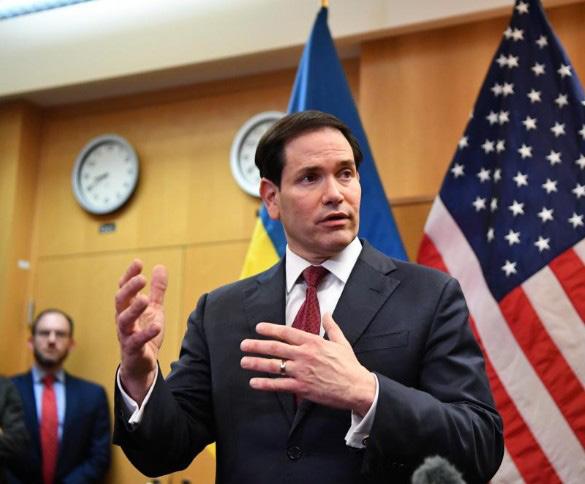
The United States expects to complete its military objectives against Iran “in weeks, not
months,” Secretary of State Marco Rubio said, as he outlined Washington’s conditions for ending the conflict and warned Tehran against attempting to control key global waterways.
Speaking in an interview to Al Jazeera on Monday (local time), Rubio said there had been “messages and some direct talks going on between some inside of Iran and the United States, primarily through intermediaries,” even as military
continue to manage liquidity conditions to support the system. The report notes that highfrequency indicators showed favourable trends prior to the onset of geopolitical tensions. However, the situation in West Asia introduces uncertainty into the near-term macroeconomic outlook, particularly given India’s
United Nations, March 31 (IANS) India condemned on Monday the killing of peacekeepers in
Lebanon and said it would seek accountability for the crime.
Three peacekeepers from Indonesia with the United Nations Interim Force in Lebanon (UNIFIL) were killed within 24 hours, according to UnderSecretary for Peace Operations Jean-Pierre Lacroix. India’s United Nations Mission said in a statement: “We condemn
POCSO accused allegedly threatens minor victim via video call from Karnataka’s Dharwad jail
Dharwad (Karnataka), March 30 (IANS) In a concerning incident in Dharwad, Karnataka, an individual accused under the Protection of Children from
SC warns of contempt for non - response on nationwide SOP for missing persons
New Delhi, March 30 (IANS)
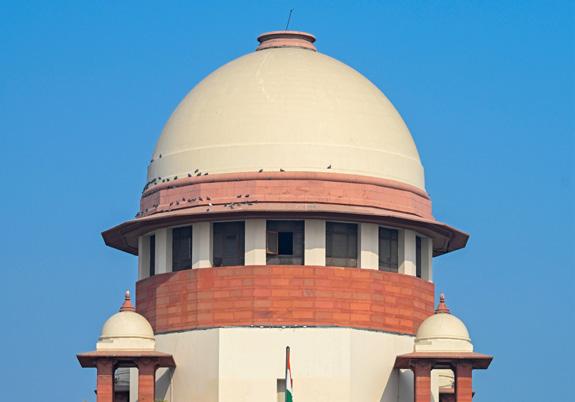
The Supreme Court has pulled up several states and authorities for failing to respond in a matter concerning human trafficking and missing persons, warning of contempt action, as it directed the formulation of a nationwide
Standard Operating Procedure (SOP).
In its order, a Bench of Justices Ahsanuddin Amanullah and R. Mahadevan recorded that despite service of notice, no one had entered an appearance on
Sexual Offences (POCSO) Act, allegedly made threatening calls to a minor victim from inside prison.
The case, which came to light on Monday, has gained significant attention and taken on a communal undertone, as the victim and the accused belong to different communities.
A video of the interaction surfaced on social media and quickly went viral, raising serious security concerns.
According to sources, the accused
placed a video call to the victim from a mobile phone while lodged in Dharwad Central Jail. In the footage, the accused reportedly shows the victim’s name etched onto his hand and threatens her, demanding she provide a statement in his favour during court proceedings and issue a statement that she is in love with him.
The accused allegedly harassed the minor with repeated calls, reportedly threatening that she
India Naxal-free, Maoist leadership decimated: HM Amit Shah
New Delhi, March 30 (IANS)
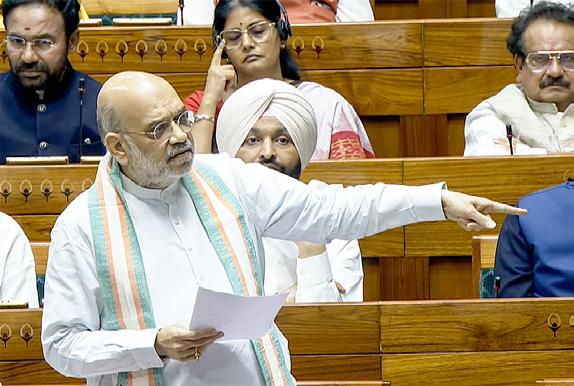
Union Home Minister Amit Shah on Monday declared in the Lok Sabha that India has virtually become Naxal-free, with the dreaded Maoist central and state leadership structures almost completely eliminated just a day before the government’s selfimposed deadline of March 31, 2026.
Addressing a debate on Naxalism,
HM Shah provided a detailed account of the massive success achieved under the Modi government’s zero-tolerance policy.
He stated that the Maoists’ central committee leadership has been neutralised or forced to surrender. Out of the top leadership, 12 have been killed, and only one is absconding, with talks underway for his surrender as well. In the state committees, the picture is equally decisive. The main 27-member state committee in one key affected state was wiped out — 11 killed, with talks initiated with two others.
EDITORIAL TEAM
Dr Ram Mohan, Chairman
Dr Ashutosh Misra, Editor-in-Chief
EDITORIAL BOARD
Amrita Deshpande, Community News Editor
Paras Sharma, Assistant Editor
Dr Uttam Kumar Sinha, Senior Fellow, Nehru Memorial Museum & Library, India
Mr Shaun Star, Director, Centre for Australia India Studies, Jindal Global University, India
India’s economy likely to grow 6.5 pc in FY27 despite high crude prices: Report
Continued from Page 1
dependence on imports of crude oil, natural gas, and fertilisers. A sustained increase in energy prices could lead to higher input costs and may have implications for corporate profitability and growth, the report noted. The ratings agency expects the current account deficit to widen to around 1.7 per cent of GDP in FY27 from about 1.0 per cent in FY26, assuming an average crude oil price of $85 per barrel.
It estimated that every $10 per barrel per barrel increase in crude oil prices could raise the CAD by 30–40 basis points. Consumption trends have remained supported by factors such as GST rate rationalisation and festive demand. Meanwhile, the report indicates that growth in spending has been driven to an extent by lower-value transactions, with credit card volumes rising faster than transaction values.The spending
surge suggested that while overall consumption remains steady, trends in discretionary spending may continue to be monitored. Investment activity is expected to benefit from the government’s continued focus on capital expenditure, with the FY27 Budget providing for an increase in capex, it predicted, adding that private sector investment activity may remain influenced by global developments and cost conditions in the near term.
US to finish Iran operation in weeks: Rubio
Continued from Page 1
operations continued.
He stressed that Washington’s core demands remained unchanged: “Iran can never -- the Iranian regime can never have nuclear weapons, and they need to stop sponsoring terrorism, and they need to stop building weapons that can threaten their neighbours.”
Rubio said US forces were “well on our way or ahead of schedule” in achieving their stated objectives, including the destruction of Iran’s air force and navy, and a “significant reduction in the number of missile launchers that they have.”
“We will achieve those objectives… in weeks, not
months,” he said.
The secretary made clear that any Iranian attempt to assert control over the Strait of Hormuz would be unacceptable.
“No one in the world can accept it,” he said, warning that such a move would set a precedent for other nations to claim international waterways.
“The United States will not accept that condition. It’s an illegal condition that they’re demanding. That’s just not going to happen,” Rubio added.
He said the strait “will be open one way or another,” either through Iranian compliance with international law or through action by a coalition of nations.
Rubio also accused Iran of
targeting civilian and economic infrastructure across the region.
“They’ve attacked embassies, diplomatic facilities… airports… energy infrastructure,” he said, calling such actions “unheard of.”
Describing Iran as “weaker than it’s been in 10 years,” he argued that degrading its military capabilities now was necessary to prevent greater threats in the future. On diplomacy, Rubio said Tehran would need to take “demonstrable steps towards ending any ambition of having nuclear weapons” and abandon missile and drone programmes.
“If they do that, then Iran’s future can be bright,” he said, while noting that for decades the regime had “refused that path.”
POCSO accused allegedly threatens minor victim via video call from Karnataka’s Dharwad jail
Continued from Page 1 would face the same fate as Neha Hiremath, a college student who was tragically stabbed to death by a jilted lover, Fayaz, on a college campus in Hubballi.
The accused in the POCSO case has also threatened the girl that he would make their private video viral.
The girl’s family has expressed outrage over the security breach and demanded immediate action.
Following a protest by activists from the Sri Ram Sena, authorities very recently transferred the accused to the Vijayapura prison.
This development has sparked a heated debate regarding the illegal availability of mobile
phones within correctional facilities and also regarding jail authorities turning a blind eye to the development.
Preliminary information indicated that the family had submitted proof of the video call made by the accused on March 11.
It can be recalled that in another case, a man who had been arrested for kidnapping and raping a minor, came out on bail, assaulted the victim and threatened her to withdraw the two complaints against him at Kembathahalli Road in Bengaluru.
The 24-year-old accused made the victim believe that he would marry her, kidnapped her and raped her. The police arrested him under the POCSO Act and
remanded him to judicial custody. Coming out on bail later, the accused and his relatives barged inside the victim's house and assaulted her, her father, mother and uncle. The police arrested him again and sent him to prison. It can also be noted that family members of a nine-year-old girl who was sexually assaulted by a driver alleged that the family of the accused threatened them to withdraw the case. The accused, hailing from Tamil Nadu, worked in Bengaluru and he allegedly sexually assaulted the girl. Following the lodging of a case in Karnataka, the accused was hiding in Tamil Nadu and threated the family of the victim.
Seven killed in stampede at temple in Bihar’s Nalanda
confirmed.
The incident occurred at the Madhda Sheetla Temple in
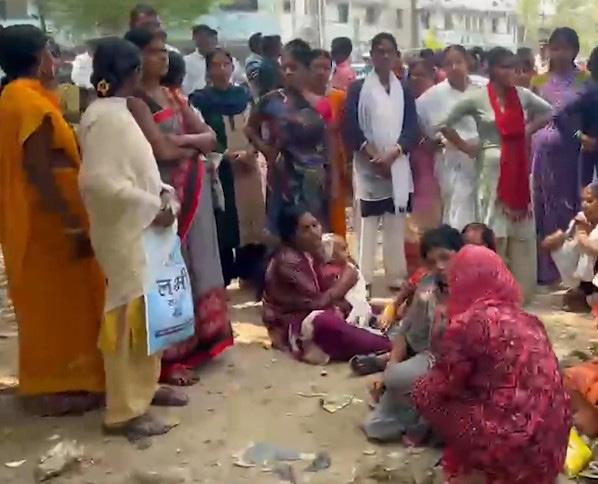
Deepnagar police station area. Upon learning about the incident, police officials, together with residents, hurried to the location and initiated relief and rescue efforts. Visuals from the scene depicted numerous devotees assembled within the temple grounds.
Rescue officials reached the site and are carrying out relief operations. Injured individuals are being
India condemns killing of UN peacekeepers in Lebanon
Continued from Page 1
the recent attacks on United Nations Peacekeepers deployed in UNIFIL, and pay our homage to the fallen Blue Helmets.”
The United Nations did not disclose the identity of the attackers, pending investigations. Lacroix said the incidents were unacceptable and stressed that peacekeepers must never be a target.
Secretary-General Antonio Guterres also condemned the killing on Sunday, according to his Spokesperson Stephane Dujarric.
UNIFIL operates in an area of Lebanon bordering Israel, where Hezbollah and Israel are active.
Its mission is to help the Lebanese government regain control of the area from Hezbollah and also acts as a tenuous buffer with Israel.
India’s mission statement noted that the country had
piloted the Security Council resolution in 2021, when it was an elected member, calling for accountability for those who attack peacekeepers. It added that India will continue to pursue action against the perpetrators. It further highlighted that India is one of the largest and longestserving contributors to United Nations Peacekeeping and has lost the most personnel to this cause. Historically, India has lost 164 personnel in peace operations, six of them with UNIFIL. Currently, 642 Indians are serving with UNIFIL, including 540 troops.
Lacroix said an Indonesian peacekeeper died on Sunday in an explosion inside a UNIFIL base. On Monday, two Indonesian peacekeepers were killed when an explosion hit a UNIFIL logistics convoy, destroying their vehicle, while two others were injured.
India Naxal-free, Maoist leadership decimated: HM Amit Shah
Continued from Page 1
In Madhya Pradesh and Maharashtra-Chhattisgarh, three members of the state committee surrendered, leaving only three. In Odisha, one surrendered, and three were killed. In Telangana, three were eliminated, leaving no member of the State Military Commission (SMC) intact anywhere. HM Shah revealed impressive overall figures; In the last three years, 4,839 Maoists have surrendered, 2,218 have been arrested, and 706 have been neutralised in encounters. He emphasised that the government has consistently offered dialogue and
rehabilitation to those willing to lay down arms, but those who continue to fire on security forces, tribals, farmers and children will be dealt with firmly through bullets when necessary. The Minister credited the success to a well-coordinated strategy combining security operations, development initiatives and advanced technology. He highlighted major operations such as Operation Octopus in the Gumla, Lohardaga, and Latehar districts of Jharkhand (earlier in the Bihar context in the speech), Operation Thunderstorm in Jharkhand, and Operation Chakra in Bihar districts.
SC warns of contempt for non - response on nationwide SOP for missing persons
Continued from Page 1
behalf of the Union of India and several states, including Haryana, Mizoram, Kerala, Odisha, and Maharashtra.
sent to the nearest hospital for treatment. Police are on the site and are trying to determine the cause of the stampede.
Bihar Deputy Chief Minister Samrat Choudhary also expressed grief over the tragedy.
In a post on X, Choudhary said, "The tragic stampede incident at the Mata Sheetla Temple in Nalanda is extremely heartbreaking. I express my condolences to the families of all the devotees who lost their lives and were injured in this accident."
Taking serious note of the lapse, the apex court directed that Directors General of Police (DGPs) of the defaulting states file personally affirmed affidavits by April 16 explaining their nonappearance.
"Personally affirmed affidavit be filed, latest by 16.04.2026, by all the Directors General of Police of the aforesaid States....failing which they shall be personally present before this Court," it ordered. The Justice Amanullahled Bench made it clear that noncompliance would invite stringent consequences, observing: "If no such affidavit is filed by them till 16.04.2026, no excuse for their non-appearance shall be acceptable", and cautioned that failure may lead to issuance of
contempt notices.
Emphasising the need for a uniform and effective response mechanism, the top court directed the Union of India, states and Union Territories to submit detailed affidavits outlining procedures to be followed in such cases. It clarified that it was not seeking theoretical frameworks but actionable solutions, stating that it is "not interested in any hypothetical or academic formula, but rather a practical strategy/approach which can be implemented/put into place right away at the local Police Station level”. Highlighting the timesensitive nature of such cases, the bench said: "In such matters of human trafficking, including child trafficking, time is of the greatest importance", and stressed that guidelines must factor in immediate police response upon receiving a missing person complaint.
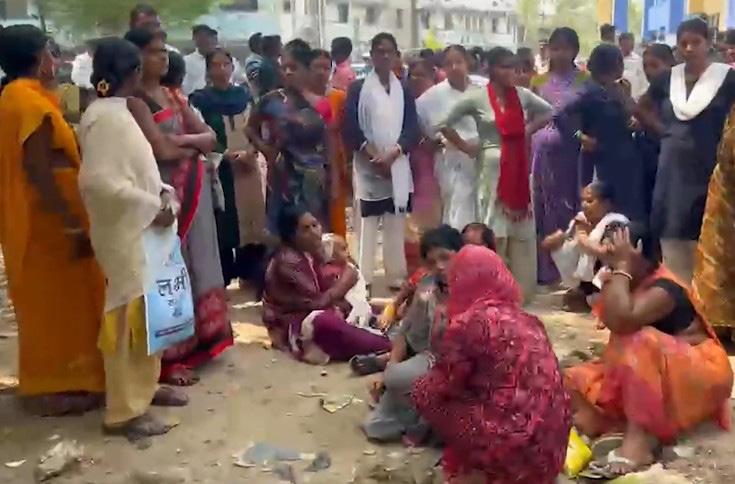
Nalanda, March 31 (IANS) A stampede broke out during prayers at Mata Sheetla Temple in Bihar's Nalanda on Tuesday, leaving seven people dead and one seriously injured, police
the
India, African nations hold talks on bolstering trade and investment ties
New Delhi, March 29 (IANS)
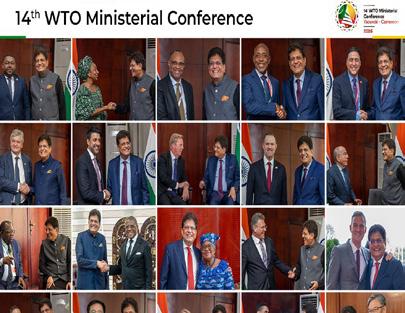
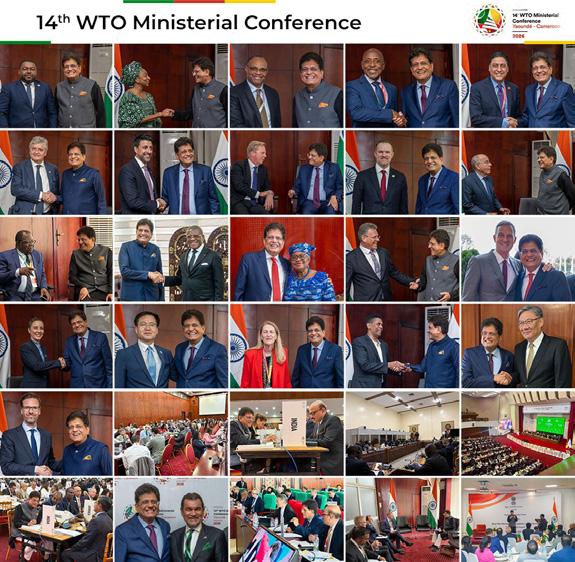
Commerce and Industry Minister Piyush Goyal on Sunday discussed the issue of strengthening India's trade and investment relations with Africa at a meeting with the ministers and ambassadors of African countries on the sidelines of the WTO ministerial conference in Cameroon.
"Had a meaningful engagement with ministers and ambassadors of the Africa Group members on the sidelines of the 14th ministerial conference of the World Trade Organisation (WTO MC14). Held substantive talks on investments, including expanding India's investments in Africa," Goyal said after the meeting, in a post on X.
"Our discussions reaffirmed the deep-rooted civilisational and historical ties and trade relations, while exchanging views on enhancing trade between India and Africa and the MC14 agenda," the minister added.
Goyal also met European Commissioner for Trade and Economic Security, Maros Sefcovic, on the sidelines of the WTO ministerial conference.
Both the leaders deliberated on key priorities under the MC14 agenda and “reviewed progress on the ongoing work towards the signing of the India-EU FTA, as announced by Prime Minister Narendra Modi and European Commission President Ursula von der Leyen in January 2026 in New Delhi.
"Also discussed avenues to further deepen our bilateral economic and trade partnership," said Goyal in a post on X.
Goyal also met Nigeria's Minister of Industry, Trade and Investment, Dr Jumoke Oduwole.
"Had discussions on MC14 agenda and explored opportunities to further strengthen trade and economic cooperation between
the two nations," he noted. A constructive conversation with Brazil's Minister of Foreign Affairs, Mauro Vieira, resulted in exchanging views on the MC14 agenda, along with enhancing bilateral trade ties and the expansion of the IndiaMERCOSUR PTA.
At the WTO meeting, drawing inspiration from Mahatma Gandhi’s philosophy of truth prevailing over conformity, India showed the courage to stand alone on the contentious issue of the Investment Facilitation for Development (IFD) Agreement and did not agree to its incorporation into the WTO framework as an Annex 4 Agreement.
"Incorporation of the IFD Agreement risks eroding the functional limits of the WTO and undermining its foundational principles," said Goyal.
As part of WTO reform discussions, members are discussing guardrails and legal safeguards for plurilaterals before the integration of any specific plurilateral outcome.
TDP celebrates 44th formation day with ‘cadre is the leader’ slogan
Amaravati, March 29 (IANS) The Telugu Desam Party celebrated its 44th formation day on Sunday in a grand manner at the party’s central office with the slogan ‘cadre is the leader’, highlighting the priority the party accords to its cadre.
TDP national president and Andhra Pradesh Chief Minister N. Chandrababu Naidu, while addressing the party cadre, asserted that only those who work sincerely for the party will be given opportunity as public representatives. He emphasised that leaders who distance themselves from party workers will themselves be kept at a distance.
Highlighting upcoming political developments, he noted that with the proposed delimitation likely to increase seats by 50 per cent and with the implementation of 33 per cent reservation for women, there will be significant opportunities for committed party workers.
The Chief Minister made it clear that every party member must uphold the TDP brand through
personal conduct and public service.
He called upon leaders and cadres to stay connected with people, understand their issues, and work towards a solution. He stated that if the party is strong, the state will be strong, and the party’s victory is the state’s victory.
The Chief Minister acknowledged that the party has faced both triumphs and crises over the years. He paid tribute to party workers who made sacrifices, endured hardships and even lost their lives for the party.
He recalled major challenges, including political conspiracies during earlier regimes, attempts on his life and the struggles faced by party leaders and cadre in the past.
CM Naidu also mentioned his own imprisonment during 2019–24, emphasising that the party’s current position is the result of the unwavering commitment of its workers.
He warned that leaders who neglect or trouble the cadre will not be tolerated.
Chandrababu Naidu highlighted key initiatives such as enhanced social pensions, “Super Six” schemes, job creation efforts, recruitment drives and industrial investments aimed at generating employment.
He reaffirmed the government’s commitment not to increase electricity charges and to
Bengal polls: Congress announces candidates for 284 of 294 Assembly seats
Kolkata, March 29 (IANS) All India Congress Committee (AICC) on Sunday announced party candidates for 284 of the 294 Assembly constituencies in West Bengal, which will vote in two phases next month.
As expected, the party has nominated the former state Congress president in West Bengal and five-time party Lok Sabha member, Adhir Ranjan Chowdhury, from the Baharampur Assembly constituency in his native district of Murshidabad.
The former Trinamool Congress Rajya Sabha member, Mausam Benazir Noor, who had recently returned to Congress, had been nominated as the party candidate from Malatipur Assembly constituency in her native district of Malda.
Ali Imran Ramz, aka Victor, who had been recently accused of domestic violence by his estranged wife, has been
complete major projects like Polavaram and the development of Amaravati as a future-ready capital city.
The Chief Minister stated that TDP stands for developmentoriented politics and urged party members to counter misinformation effectively by staying connected with the public and communicating government achievements.
Earlier, the Chief Minister hoisted the party flag at the TDP central office in the presence of TDP national general secretary Nara Lokesh, state party president Palla Srinivas, and other senior leaders.
Floral tributes were paid to the statue of N. T. Rama Rao, the founder of the party.
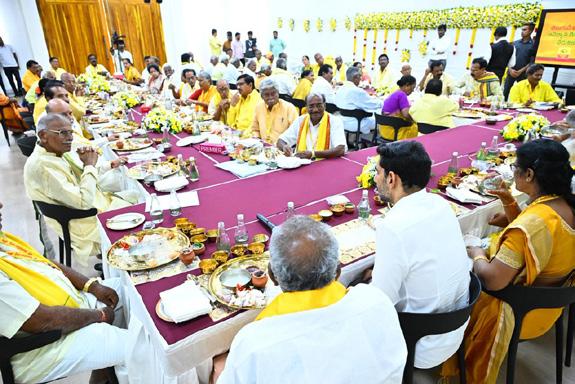
Later, Chief Minister N Chandrababu Naidu, along with Minister Nara Lokesh, hosted lunch for senior party workers who have been dedicatedly serving the party since its inception.
Senior party functionaries from nearly 60 constituencies participated. Both the Chief Minister and Lokesh interacted closely with the partymen, enquiring about their health conditions and the well-being of their families.
Chandrababu Naidu presented new clothes to all the senior workers as a mark of respect and appreciation.
fielded from Chakulia Assembly constituency in north Dinajpur. Victor was a two-time All India Forward Bloc legislator from Chakulia, first from 2011 to 2016 and then from 2016 to 2021. However, he was defeated in the 2021 Assembly elections.
He joined Congress before the 2024 Lok Sabha elections and also became a party candidate from the Raiganj Lok Sabha elections. However, he lost.
Rohon Mitra, the son of former state Congress president in West Bengal, late Somendra Nath Mitra, has been nominated from Ballygunge Assembly constituency in South Kolkata.
Congress and Left Front started contesting with a seat-sharing agreement since the 2016 West Bengal Assembly elections, which continued till the 2024 Lok Sabha polls. In 2021, neither Congress nor the Left Front could send a single representative to the state Assembly.
However, this time, the Congress decided to sever ties with the Left Front and instead contest independently from all the 294 Assembly constituencies, and on Sunday, they announced candidates for 284 Assembly constituencies.
Mann Ki Baat: Amritsar resident, known for Vedic manuscripts preservation, proud after PM’s acclaim
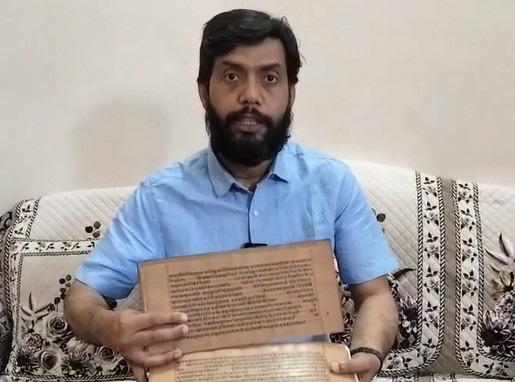
Amritsar resident Amit Singh Rana beamed with pride on Sunday, after Prime Minister Narendra Modi, during his Mann Ki Baat address to the nation, praised him for his work related to the preservation and digitisation of manuscripts. Rana, who originally hails from Kanpur but has been living in Amritsar since 2013, said that having his name mentioned by the Prime Minister in Mann Ki Baat is a "matter of great pride for him".
Speaking to IANS, Rana also expressed his gratitude to the Prime Minister for praising his work.
He said that he is actively involved in the preservation and research of manuscripts related to India’s ancient Vedic knowledge tradition, "as part of Prime Minister Narendra Modi's dream project 'Gyan Bharatam'". "Many such manuscripts are
found in homes, monasteries, temples, universities, and libraries across the country, and they form an important part of India’s cultural and intellectual heritage."
He said that he is working to survey and study these manuscripts and ensure their preservation for future generations.
"I am working to bring all such manuscripts to the Government of India."
Reflecting on his journey, Rana said: "In 2006, I had completed a course from the National Archives of India (NAI) (School of Archival Studies). From there, I got to know about manuscripts."
"In 2010, I got to know about the National Manuscript Mission. I worked for some time at the Indira Gandhi National Centre for the Arts. During my time there as a resource person, I started giving training programmes to various manuscript conservation centres across the country under the National Manuscript Mission," he said.
"I got associated with the Government of India during my time at Indira Gandhi National Centre for the Arts. Because I got to know about these manuscripts while I was working there."
Amritsar, March 29 (IANS)
Gujarat accelerates AI push with plan to provide over 100 GPUs to startups, institutions
Gandhinagar, March 29 (IANS)
Gujarat has moved to expand access to advanced computing infrastructure for artificial intelligence, announcing plans to deploy more than 100 highperformance graphics processing units (GPUs) across the state to support startups, educational institutions and government departments, officials said on Sunday.
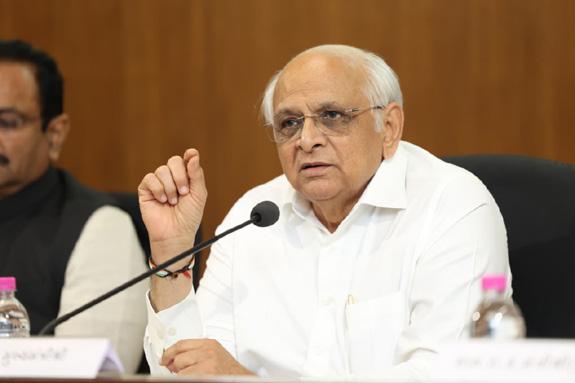
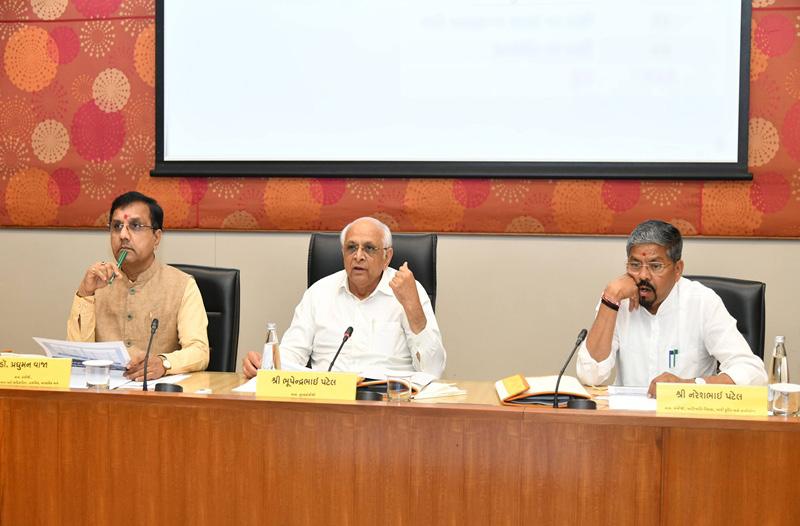
The initiative, led by Gujarat Informatics Limited under the state's Science and Technology Department, follows the recent "AI Startup Samvad" and is aligned with Chief Minister Bhupendra Patel's focus on technologydriven and citizen-centric governance.
Under the Central government's 'IndiaAI Mission', the state is operationalising shared AI compute infrastructure that will provide access to more than 100 GPUs for model training, application development and deployment of scalable solutions.
The national mission itself is designed to democratise access to computing resources and enable startups, researchers and public institutions to build indigenous AI solutions through shared infrastructure and datasets.
Officials said the shared facility would reduce both the cost and time required for individual organisations to procure highend computing systems, while enabling faster development and implementation of AI-driven applications in governance and industry.
The announcement builds on discussions held during the "AI Startup Samvad" in Gandhinagar, where the Chief Minister interacted directly with around
two dozen high-potential startups from across the country.
The event was organised to identify scalable AI solutions and strengthen Gujarat's position in emerging technologies.
During the interaction, Chief Minister Patel said that Gujarat aims to become a leading state in the adoption of artificial intelligence, with increased use of AI to enhance transparency in governance and improve citizen services.
He also emphasised the role of startups in driving innovation and contributing to sectors such as manufacturing, healthcare and education.
The state government has in recent years taken multiple steps to build an AI ecosystem, including establishing centres of excellence, supporting startupled innovation challenges and entering partnerships with industry to create AI clusters and research infrastructure.
Territorial Army honours 99-year-old Padma Shri awardee, veteran journalist in Aizawl
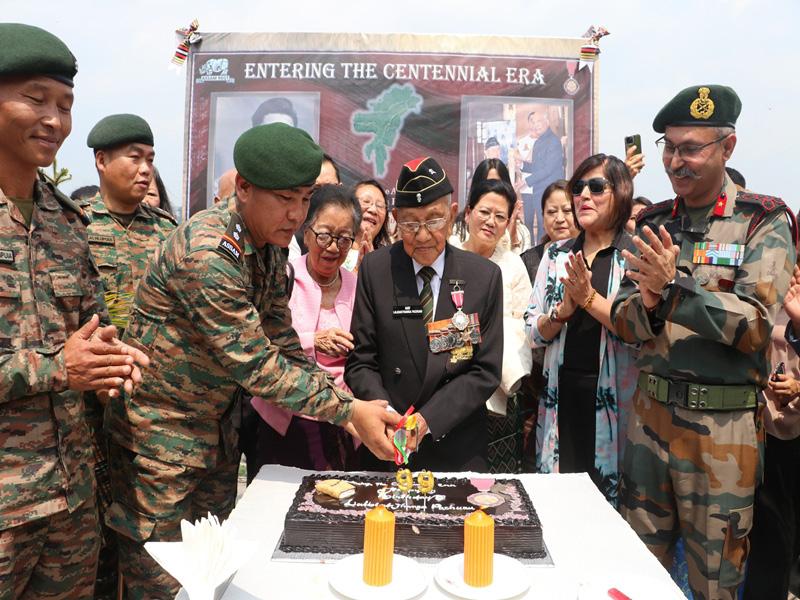
Aizawl, March 25 (IANS) The Territorial Army, under the aegis of the 23 Sector Assam Rifles, celebrated the 99th birthday of Padma Shri awardee Havildar Lalbiakthanga Pachuau (Retd), a distinguished veteran of the 3rd Battalion, The Assam Regiment. Defence spokesman Lt Col Mahendra Rawat said that at 99 years of age, Havildar Pachuau stands as a living embodiment of the finest traditions of the Indian Army.
Gujarat
Having served with distinction in the 3rd Battalion, The Assam Regiment, including participation during World War II, he later transitioned into a remarkable civilian life dedicated to journalism, literature, and social service after voluntarily retiring from the Army upon completing 17 years of service.
He was conferred the Padma Shri in 2021 in recognition of his outstanding contributions to Literature and Education (Journalism).
Widely acknowledged as India’s oldest working journalist, he has devoted his life to promoting truthful reporting, social awareness, and community development in Mizoram, Lt Col Rawat added.
Under the theme “A Remarkable Century, A Remarkable Life”,
personnel of the Territorial Army, Assam Regiment, and Assam Rifles paid tribute to the veteran. Family members and exservicemen joined the celebrations.
His life continues to inspire generations, reinforcing the enduring bond between veterans and serving soldiers.
Pachuau began his journalism career in 1953 with a local publication and went on to become a prominent figure in the Mizoram Journalists Association (MJA), serving as its president for three terms.
He was declared the “oldest working journalist in the country” by the Mizoram government’s Information and Public Relations Department and the MJA in October 2016.
tops nation in atrocity complaint disposal; Rs 23.62 crore aid disbursed in 2025
Gandhinagar, March 25 (IANS) Gujarat has ranked first in the country in disposing of complaints received through the National Helpline Against Atrocities, while over Rs 23 crore in assistance was disbursed in 2025.
The assistance is provided in cases involving Scheduled Castes (SCs) and Scheduled Tribes
(STs), officials said after a review meeting chaired by Chief Minister Bhupendra Patel on Wednesday.
The state-level Vigilance and Monitoring Committee, constituted under the Scheduled Castes and Scheduled Tribes (Prevention of Atrocities) Amendment Rules, 2018, reviewed the implementation of safeguards.
A presentation at the meeting stated that the state has achieved 100 per cent disposal of complaints received through the helpline, which has been operational via an ultra-modern call centre since March 2022.
The committee carried out a comprehensive review of cases
Delhi riots: Sharjeel Imam to surrender at Tihar as interim bail about to end
New Delhi, March 29 (IANS)
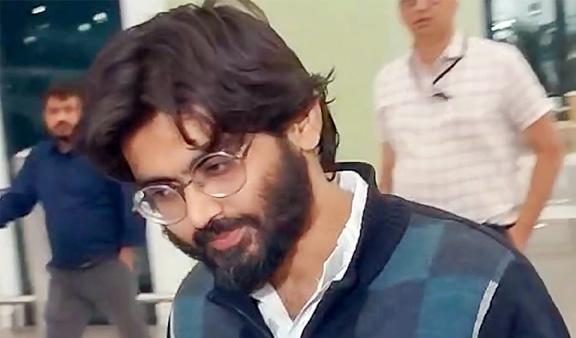
Student activist Sharjeel Imam is set to surrender before Tihar Jail authorities on Monday upon the expiry of the 10-day interim bail granted to him by a Delhi court in connection with the alleged larger conspiracy behind the 2020 North-East Delhi riots.
Imam had been granted interim bail by the Karkardooma Court from March 20 to March 30 to attend his younger brother’s wedding and to take care of his ailing mother, subject to stringent conditions.
Additional Sessions Judge Sameer Bajpai had allowed temporary relief, directing Imam to furnish a personal bond of Rs 50,000 along with two sureties of the like amount. The court had also imposed strict restrictions, including a prohibition on interacting with the media or using social media during the interim bail period.
The court had further directed that Imam would only meet his
family members, relatives and friends and not contact any witness or any person connected with the case.
He was also asked to keep his mobile phone active at all times and share the number with the investigating officer. During the interim bail period, Imam was permitted to remain either at his residence or at the venues of the wedding ceremonies, as specified in his application. Imam, who has been in custody for over five years, had sought interim bail citing his role as the sole sibling responsible for managing the wedding arrangements and supporting his family, particularly his ailing mother. The prosecution had opposed the plea, contending that his presence was not indispensable for the ceremonies and that adequate arrangements had already been made by the family. It also argued that there was no emergent medical condition necessitating his release. Imam is among several student activists who have been booked under the UAPA and various provisions of the Indian Penal Code in connection with the alleged conspiracy behind the February 2020 North-East Delhi riots.
Maha govt committed to all-round development, says Dy CM Eknath Shinde
Mumbai, March 25 (IANS)
registered in 2025 under the Scheduled Castes and Scheduled Tribes (Prevention of Atrocities) Act, 1989, and the Protection of Civil Rights Act, 1955, including assistance paid to victims and measures taken to promote social harmony.
The Chief Minister said efforts to strengthen social harmony should continue through “sensitive and empathetic cooperation” between public representatives and officials. He also directed that District Vigilance Committees be convened every three months in all districts under the chairmanship of district collectors.
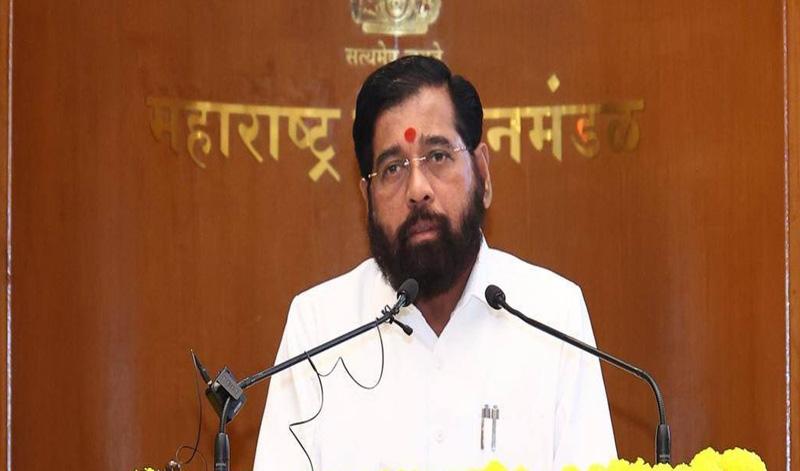
Maharashtra Deputy Chief Minister Eknath Shinde, replying to the Last Week Resolution in the Legislative Council on Wednesday, said the state government is committed to all-round development, asserting that work is underway across sectors including agriculture, industry, infrastructure, and law and order.
Marking the birth centenary of Balasaheb Thackeray, the state government has resolved to make Mumbai and its surrounding areas slum-free. For this, the ‘Hinduhridaysamrat Balasaheb Thackeray Urban Public Welfare Campaign’ will be implemented. Highlighting measures for farmers, Shinde said a loan waiver has been implemented for those with overdue loans as of September 30, 2025, granting relief of up to Rs 2 lakh. Farmers who repay loans regularly are being given an incentive of up
to Rs 50,000. He added that Rs 1,798.78 crore has been deposited in the accounts of over 89.75 lakh farmers.
On urban development, Shinde said cluster development for slums larger than 50 acres in Mumbai has been approved. Based on biometric surveys, these will be recognised as official clusters and the tender process will be initiated. To make Slum Rehabilitation Authority (SRA) housing more viable, the corpus fund has been increased. The earlier 30-year restriction on redevelopment of old houses (180, 225 and 269 sq. ft.) has been relaxed, making residents eligible for 300 sq. ft. homes. He said the government will use satellite technology to monitor and prevent the emergence of new slums, while encroachments on land belonging to agencies such as MMRDA, BMC and MHADA will be reviewed every four months. On law and order, Shinde said the police force is being strengthened with modern technology. The ‘MahaCrimeOS AI’ system has been introduced to tackle cybercrime, while a recruitment drive for over 15,000 police personnel is underway.
BJP to
complain
to EC over Shatrughan Sinha’s use of blue-beacon vehicle during campaign
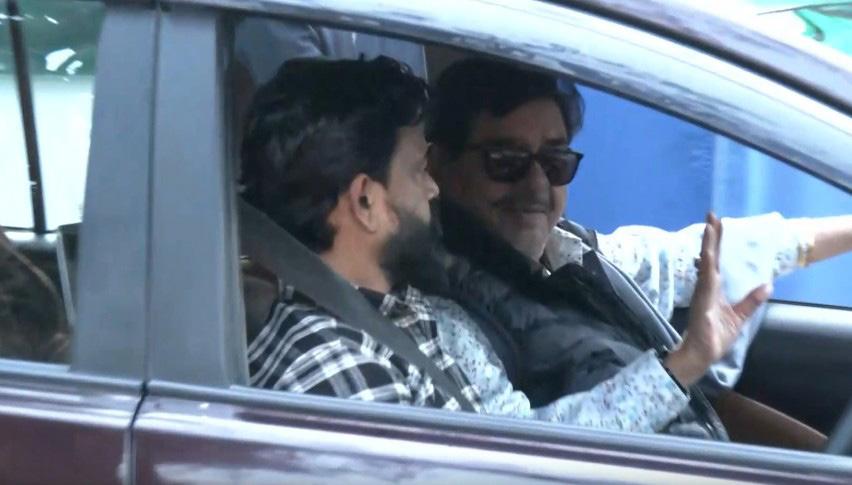
Kolkata, March 23 (IANS) The BJP on Monday said it would lodge a complaint with the Election Commission over Trinamool Congress Asansol Member of Parliament Shatrughan Sinha’s alleged use of a vehicle fitted with a blue beacon while campaigning for the Assembly elections in West Burdwan district, West Bengal. The controversy erupted after Sinha, by virtue of being a Member of Parliament, entitled to a blue-beacon vehicle, arrived at a campaign event on Sunday in support of Trinamool candidate Hareram Singh in Jamuria constituency in West Burdwan in a car bearing a blue beacon and a placard identifying him as “Member of Parliament, Asansol”, along with the Ashoka Pillar emblem. A workers' meeting had been
organised in support of Hareram, and the MP arrived at the venue in his blue-beaconed vehicle. The front of the car bore the inscription 'Member of Parliament, Asansol,' accompanied by an emblem of the Ashoka Pillar. However, questions have now arisen whether it is permissible to use a vehicle fitted with a blue beacon during a party candidate's campaign after the election schedule has officially been announced. The BJP has raised objections to this. Bijan Mukherjee, the BJP candidate for Jamuria, has formally accused Shatrughan Sinha of violating the Model Code of Conduct.
BJP candidate Bijan Mukherjee said that he intends to take this matter to the Election Commission and, if necessary, even to the courts. Bijan said, "Inventing new laws seems to be the sole purpose of the TMC government. To the best of my understanding, once the Model Code of Conduct comes into force, no one is permitted to travel in a vehicle
fitted with a blue beacon or the Ashoka Pillar. The fact that the Trinamool government shows utter disregard for rules and regulations is proven by this incident."
Shatrughan Sinha, however, dismissed the allegation. The MP told media persons, "No beacon light was installed specifically for this occasion; it was already there beforehand. I did not install anything myself. Furthermore, the light was not switched on. I do not engage in such practices. I am neither a seasonal politician nor a career professional politician in that sense. I am a gentleman. I abide by the law. I have not done nor will I ever do anything that could cause offense or hurt anyone's sentiments."
It was learnt that upon concluding his campaign and re-entering his vehicle, the blue beacon light was no longer visible on the car. Reports suggest that as soon as the controversy began, he instructed his personal assistant to have the blue beacon removed from the vehicle.
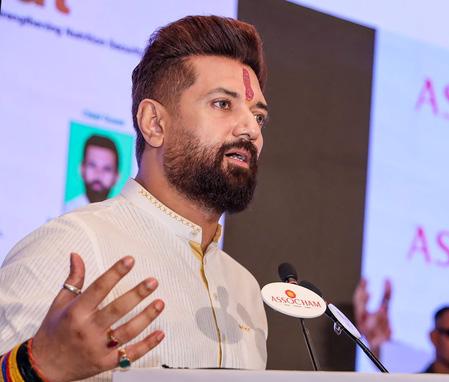
‘Dignity of language must be maintained’: Chirag Paswan slams Mamata Banerjee for remarks on PM Modi
New Delhi, March 23 (IANS)
Union Minister Chirag Paswan on Monday hit out at Mamata Banerjee over her recent remarks targeting Prime Minister Narendra Modi, urging political leaders to maintain decorum during the election season.
“It is election time, and care must be taken that the dignity of language is not violated. During the Bihar elections, we saw how even the Prime Minister's mother
MSP
was abused. The opposition, in its desperation to win elections, is willing to stoop to any level and lose all restraint. This is wrong...”
Paswan said.
The criticism comes amid escalating political tensions ahead of upcoming elections, with several BJP leaders targeting CM Banerjee’s statements.
BJP Bihar President, Sanjay Saraogi, also criticised the West Bengal Chief Minister, saying, “Mamata Banerjee’s policies, which appear to be arrogant and divisive, are reflected in her behaviour. It seems she has begun to feel that she may be on her way out of Bengal, which is evident in the way she speaks and expresses herself...”
Echoing similar sentiments, Bihar Minister Ram Kripal Yadav said,
“Mamata Banerjee will not be able to maintain her hold on power in West Bengal, no matter what she does. Anti-incumbency is strongly against her, and all her MLAs will lose. I believe she should now step down from power...”
In West Bengal, BJP leader Dilip Ghosh also responded strongly to CM Banerjee’s remarks.
“Mamata Banerjee is calling PM Modi a ‘Ghuspaithiya’. When Yusuf Pathan comes here, Shatrughan Sinha can come from Bihar, but they are not ‘Ghuspaithiyas'. Those coming from Bangladesh, like the Rohingyas, are also not ‘Ghuspaithiyas’...” he told IANS. He further added, “CCTV cameras will be installed everywhere, and the Election Commission will keep an eye. Why is Mamata Banerjee installing CCTV?
disparity emerges as key poll issue for Cauvery delta farmers ahead of TN elections
Chennai, March 23 (IANS)
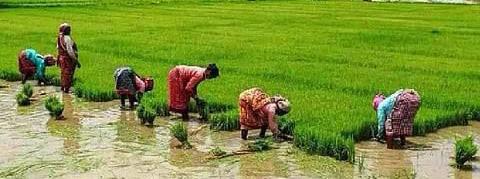
Mounting anger over low paddy procurement prices has pushed Minimum Support Price (MSP) to the centre of electoral discourse in Tamil Nadu, with Cauvery delta farmers indicating that their voting choices in the upcoming Assembly elections will depend on firm assurances from political parties. Farmer representatives from the delta region have expressed
strong dissatisfaction, pointing out that Tamil Nadu provides one of the lowest state incentives in the country. Despite repeated promises across election cycles, successive governments have failed to ensure remunerative pricing for paddy cultivation, leaving farmers struggling to cope with rising input costs.
Referring to past agitations, farmer leaders recalled a 2009 protest in New Delhi when Tamil Nadu farmers demanded fair MSP and better returns. They noted that national parties extended support during that period, but
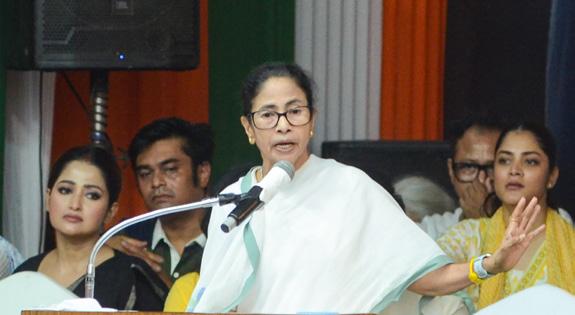
CM Mamata asks Trinamool workers to stay alert in Bhabanipur; flags concerns over poll process
Kolkata, March 22 (IANS) Trinamool Congress supremo and West Bengal Chief Minister Mamata Banerjee on Sunday asked party workers to remain vigilant in the Bhabanipur Assembly constituency, expressing concerns over the conduct of the poll process and urging them to stay alert even after voting concludes.
CM Banerjee made the remarks while addressing a meeting with party leaders and workers at Chetla in south Kolkata ahead of the upcoming Assembly elections. Special focus was laid on Bhabanipur, from where she is contesting, in what the party sees as a key electoral battle.
According to a Trinamool Congress leader present at the meeting, Banerjee cautioned workers about possible irregularities and asked them to remain watchful throughout the polling and counting process.
The Chief Minister was quoted as saying that several officials had been removed following the announcement of the poll schedule, which, she suggested, has limited the state administration’s role during the election period.
She also asked party workers to remain present and vigilant
after polling hours, stressing the need to monitor strong rooms where Electronic Voting Machines (EVMs) are kept. She referred to concerns such as possible disruptions, including power outages, and urged workers not to leave immediately after voting ends.
CM Banerjee also spoke about the broader political roadmap of the party, saying that after the Assembly elections in West Bengal, the focus would shift to national politics. She added that the party would extend legal support to voters facing issues such as deletion of names from electoral rolls. At the same meeting, Trinamool Congress national General Secretary Abhishek Banerjee called on party workers to aim for a higher victory margin in Bhabanipur and avoid complacency. Referring to past electoral performance in the constituency, he said the party should look to improve its booth-level results and increase its vote margin. He urged workers to strengthen outreach efforts and ensure higher voter support across all areas. For the upcoming election, the BJP has fielded Suvendu Adhikari against Mamata Banerjee in Bhabanipur. The two leaders had earlier faced each other in Nandigram in the 2021 Assembly elections, where Adhikari won by a narrow margin. Banerjee later contested the Bhabanipur by-election the same year and secured a decisive victory.
Sharp decline in groundwater levels across TN raises alarm ahead of summer
Chennai, March 23 (IANS)
expectations of policy changes after 2014 have largely remained unmet, particularly regarding enhanced incentives.
According to Swamimalai Sundara Vimalanathan, secretary of the Tamil Nadu Cauvery Farmers Protection Association, farmers in the state currently receive around Rs 2,545 per quintal for fine paddy and Rs 2,500 for common varieties, including state incentives. In comparison, states such as Chhattisgarh and Odisha provide around Rs 3,100 per quintal with significantly higher bonus payments.
Groundwater levels across Tamil Nadu have witnessed a significant decline, with 29 out of 38 districts recording a drop in February compared to the same period last year, according to data released by the State Ground and Surface Water Resources Data Centre under the government's Water Resources Department. The findings indicate a worsening trend in water availability despite a year of above-normal rainfall. The data shows that Dindigul and Tirupur districts recorded the steepest decline, with groundwater levels falling by 2.58 metres each. Coimbatore followed with a drop of 2.07 metres, while Salem (1.68 metres), Dharmapuri (1.62 metres), Karur (1.54 metres), and Perambalur (1.20 metres) also reported substantial decreases.
These sharp reductions point to increasing stress on groundwater reserves in the western and central regions of the state. Several other districts experienced moderate declines. Madurai recorded a fall of 1.27 metres, while Virudhunagar and Perambalur saw drops of 1.20 metres each. Namakkal (1.08 metres) and Erode (1.10 metres) also reported noticeable reductions. In northern Tamil Nadu, Tiruvallur registered a decline of 0.99 metres, and Tiruvannamalai saw a drop of 0.85 metres, highlighting a broadbased depletion across regions. In contrast, coastal and delta districts reported relatively marginal changes. Nagapattinam recorded the least decline at just 0.03 metres, followed by the Nilgiris (0.04 metres) and Tiruvarur (0.11 metres), suggesting comparatively stable groundwater conditions in these areas.
The extent of depletion is particularly concerning, given that Tamil Nadu received 12 per cent excess rainfall in 2025.
US-based fundraiser raises $200,000 to empower one lakh Indians with disabilities
Washington, March 29 (IANS)
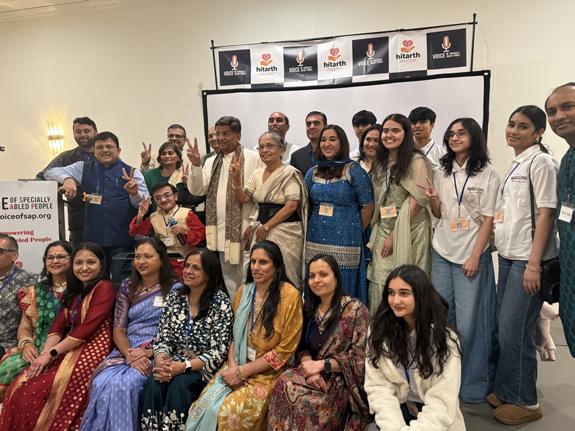
A community-led fundraiser in the national capital has raised $200,000, as a US-based nonprofit body set a goal to support 100,000 people with special abilities in India this year through assistive technology, healthcare access, and volunteer-driven programmes.
The VOSAP (Voice of Specially Abled People) gala in Fairfax, a suburb of Washington, D.C., brought together donors, professionals, and student volunteers to back disability inclusion efforts.
Founder Pranav Desai said the organisation is focused on scaling impact through technology and
community engagement. “We have been able to create a community with a single shared goal, let’s harness ability, let’s empower people with disabilities,” he said.
He said early intervention remains critical. “If a child is born with disability… if they’re not supported with what they need, they will end up without education. That means without employment,” he said. He added that “assistive device… completely changes their lives.”
Desai said the organisation has grown rapidly in recent years. It has moved from helping a few hundred individuals to tens of thousands annually. “We want to be the transformation catalyst… whatever we do has a farreaching impact,” he said.
Eminent Indian-American doctor and philanthropist Dr Vinod Shah highlighted the importance of dignity. “Anytime you give a sight, anytime you give a mobility… that is nothing more support than giving the dignity to an
individual,” he said.
Philanthropist Ila Shah shared her experience of visiting a school for blind students in India. She said structured support can enable independence. “The school was giving vocational training… so they can get a job, and they can be independent and live with dignity,” she said.
The event showcased technologyled solutions for people with visual, hearing, and mobility impairments. These include assistive devices, AI-enabled tools, and communication platforms for the deaf and deafblind.
Desai said the model goes beyond charity. “Stop thinking welfare… just look at their ability. And then there are trillions of dollars for the world,” he said.
He also highlighted the role of technology in scaling operations. The organisation uses digital platforms to identify beneficiaries, process applications, and monitor impact in real time.
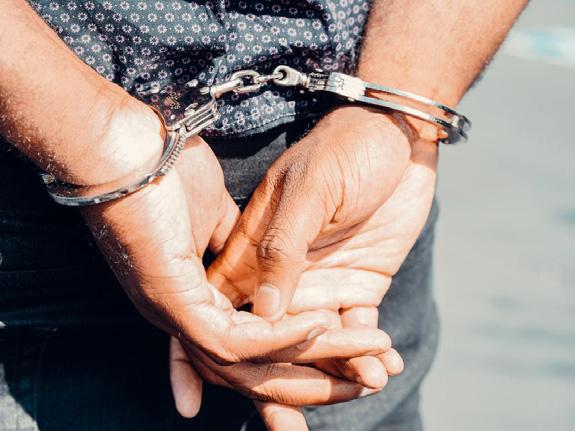
Nepal’s ex-Energy Minister Deepak Khadka arrested over money laundering charges
Kathmandu, March 29 (IANS)
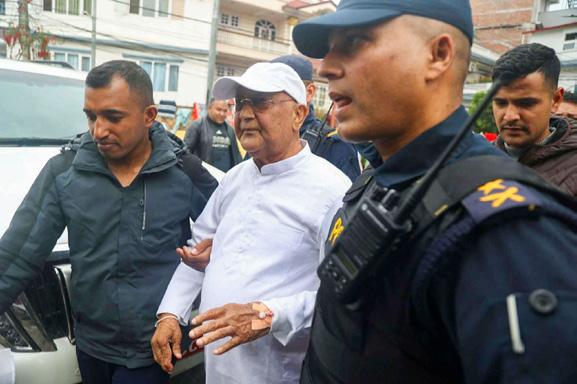
Police on Sunday arrested Nepali Congress leader and former Minister for Energy, Water Resources, and Irrigation Deepak Khadka, in a money laundering case, a senior police officer said. A day after former Prime Minister KP Sharma Oli and former Home Minister Ramesh Lekhak were arrested in homicide-related cases linked to the suppression of the Gen Z movement in
September last year, Khadka is the third person from the Oliled government’s cabinet to be arrested.
Senior Superintendent of Police (SSP) Shiva Kumar Shrestha, spokesperson for the Central Investigation Bureau (CIB) of Nepal Police, told IANS that Khadka was arrested early Sunday morning from his apartment in the Maharajgunj area of Kathmandu.
“He was taken into custody for investigation after a large amount of cash was discovered when his house was set on fire during the Gen Z movement in September last year,” said SSP Shrestha. Protesters were seen throwing bundles of cash into the air in widely circulated videos and images of the uprising.
Images and videos had also surfaced showing burnt
fragments of banknotes at the residences of former Prime Minister Sher Bahadur Deuba. Images and videos seen in the residences of both politicians were later confirmed true through forensic laboratory tests amid questions if they were generated through artificial intelligence.
The Department of Money Laundering Investigation had earlier sent a letter to Police Headquarters requesting an inquiry into Khadka.
Khadka, who is engaged in multiple businesses, including hydropower projects and hotels, had invited controversy during his tenure as energy minister as he openly clashed with former Managing Director of Nepal Electricity Authority Kul Man Ghising, which eventually led to Ghising’s removal from the post.
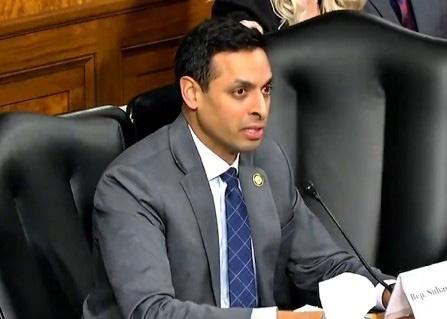
Indian-American Congressman blames House GOP for shutdown chaos
Washington, March 29 (IANS)
Indian-American Congressman Suhas Subramanyam said on Sunday that the ongoing shutdown crisis is hurting Americans and blamed House Republicans for blocking a
bipartisan Senate deal that could have eased airport disruptions.
Subramanyam said the Senate proposal had support across party lines and could have passed in the House if brought to a vote.
"It was a deal that the Senate Republicans passed unanimously, with House Democrats willing to support it," he said, adding, "House Republicans are the only thing standing in the way of ending this airport chaos right now."
The Virginia Democrat rejected claims that the Senate bill failed
Nepal: Former PM Oli’s arrest triggers protests in Kathmandu
Kathmandu, March 28 (IANS)
The arrest of Nepal’s former Prime Minister K P Sharma Oli on Saturday morning sparked protests across the Kathmandu Valley by cadres of the Communist Party of Nepal (Unified Marxist-Leninist) (CPNUML), led by Oli.
Police arrested Oli and former Home Minister Ramesh Lekhak in connection with homicide-related cases linked to the suppression of the Gen-Z uprising in early September last year. Both were arrested early in the morning from their residences in Bhaktapur district. Oli has been admitted to a Kathmandubased teaching hospital after experiencing health issues following his arrest.
UML cadres organised protests across the Kathmandu Valley in line with a decision of the party’s Central Committee on Saturday. Protesters burned tires and copies of the report prepared by the inquiry commission on the Gen-Z movement, which had recommended criminal investigation and prosecution of Oli, Lekhak, and former police chief Chandra Kuber Khapung.
The first Cabinet meeting of
Prime Minister Balendra Shah on Friday had decided to implement the report. Clashes erupted between police and protesters, with some protesters reported injured.
The UML has also decided that its district party committees will organise demonstrations and submit memorandums to the Chief District Officer (CDO) offices in all districts on Sunday.
The UML said it would engage in dialogue and cooperation with all political parties, civil society, and the general public who support democracy and the rule of law.
The party condemned the arrest of Oli and Lekhak, arguing that it was retaliatory, biased, and unlawful.
“The party demands the formation of a high-level investigation commission under the leadership of a sitting Supreme Court judge to ensure an impartial and judicial inquiry into the incident,” the party said in a statement after the meeting. The party expressed serious concern over recent developments and indicated that the protests would be carried out in phases.
Meanwhile, former President of Nepal, Bidya Devi Bhandari has described the government’s decision to arrest the duo as immature. Issuing a statement on Saturday, she expressed concern that the arrests could have longterm consequences and increase the risk of instability.
Rights body warns of ‘democratic backsliding’ in Pakistan amid curbs on NGOs
Islamabad, March 28 (IANS)
The Human Rights Commission of Pakistan (HRCP) expressed concern over the continued shrinking of civic space and restrictions on rights-based non-governmental organisations (NGOs) across Punjab province, describing it as a symptom of the democratic backsliding that the country is currently experiencing.
to fund key agencies.
He said it covered major elements of border operations and visarelated functions.
"That's not how I read it. It funded everything about Immigration and Customs Enforcement (ICE), basically, and part of Customs and Border Protection (CBP)," Subramanyam added.
The shutdown has led to long queues at airports, with Transportation Security Administration workers unpaid and ICE personnel deployed to assist operations.
In its report titled 'Regulation or Restriction?', the HRCP documented that civil society organisations -- particularly NGOs, which constitute a vital component of Pakistan's civic landscape -- are usually seen as "entities that can pose a challenge to the state and keep checks on such authoritarian drift".
It added that instead of enabling their role, Pakistani authorities have introduced "restrictive laws and policies that have undermined NGOs' legitimacy and significantly curtailed their ability to operate, thereby weakening
an important safeguard against democratic erosion."
The rights body highlighted that the NGOs have been subjected to multilayered approval processes, including mandatory MOUs with Pakistan's Economic Affairs Division (EAD), district-level noobjection certificates and security clearance prior to registration. "These requirements have been compounded by compulsory reregistration under provincial charity commissions. This has not only interfered with the scale and scope of NGO operations but even led to the suspension or closure of critical programmes on human rights and democracy. While courts have provided intermittent relief, most notably by striking down the 2022 EAD policy, the absence of a coherent, rights-compliant legislative framework has continued to enable administrative overreach," it added.
Speaking at a seminar held to discuss the report's findings on Friday, the HRCP member Zeeshan Noel said that Pakistan was witnessing a "gradual form of democratic backsliding with the incremental shrinking of civic space through legal and policy instruments."
Democrat Gregory wins Florida bypoll seat in Trump’s home turf; Republicans suffer setback
New York, March 25 (IANS) A Democrat has wrested away from President Donald Trump’s Republican Party his Florida state legislature home constituency in a by-election.
In a setback to the Republicans, Emily Gregory carried in Tuesday’s by-election the state House of Representatives seat where Trump had led by 11 per cent in the 2024 election.
Trump’s home, Mar-a-Lago, is located in the constituency where she won.
"Floridians deserve leaders who put people over politics”, Gregory
said.
A critic of postal ballots, Trump himself voted by mail in the election.
The Republican candidate, Jon Maples, was endorsed by Trump. The vacancy occurred when the Republican Mike Caruso, who won the seat by 19 per cent in 2024, quit to become the county clerk and comptroller for a local municipality.
Republicans also lost a Florida state Senate by-election to Democrat Brian Nathan, who flipped the seat.
Gregory said that the voters were motivated by concerns over the rising prices, an issue that is affecting citizens as the effects of Iran War is seeping into petrol stations and supermarkets, exacerbating an existing affordability problem.
Setting the scene for the coming showdown in the midterm elections in November, the state Democratic Party chair Nikki Fried said, “Floridians are tired
of the chaos, corruption, and sky high prices on everything from groceries, to gas, and health care”. That is a problem for the Republican Party as the country heads to the mid-term elections in November that would determine the control of Congress.
Politico reported that Democrats have seized 28 Republican-held seats in state legislatures in elections across the country over the past 14 months.
Meanwhile, US lawmakers warned of mounting pressure on American weapons stockpiles and a rapidly deteriorating global nuclear landscape, as a Senate hearing exposed sharp concerns over the Trump administration’s war with Iran and the future of arms control.
At a Senate Foreign Relations Committee hearing, Ranking Member Senator Jeanne Shaheen said the pace of weapons consumption has exposed serious gaps in planning and strategy.
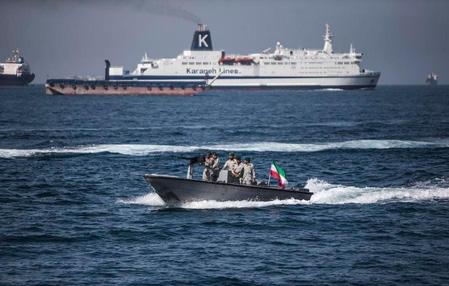
‘We allowed India to pass through Hormuz’: Iran says 5 ‘friendly’ nations get safe passage
Tehran, March 26 (IANS) As the conflict in West Asia continues to escalate, Iran has announced that it will not impose restrictions on vessels belonging to five "friendly" countries, including India, allowing them to pass through the strategically crucial Strait of Hormuz even as access remains limited for others.
Along with India, ships from Russia, China, Pakistan and Iraq have been granted safe passage through the key maritime chokepoint despite the ongoing
conflict in the region.
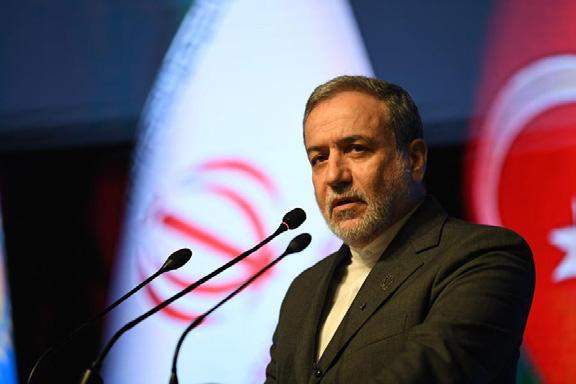
In an interview with Iranian state television, Foreign Minister Abbas Araghchi clarified that the Strait of Hormuz has not been completely shut and that certain countries with which Iran maintains friendly relations have been exempted from restrictions. "There is no reason to allow the enemy to pass through the strait. We have permitted certain countries that we consider friendly to pass through; we allowed China, Russia, India, Iraq, and Pakistan to transit," Araghchi was quoted as saying by Iran’s official news agency.
At the same time, he indicated that vessels linked to countries seen as adversaries or those involved in the ongoing conflict would not be allowed passage. He
said ships from the United States, Israel and certain Gulf nations playing a role in the current crisis would not be given clearance to transit through the strait. Araghchi also expressed satisfaction over Iran’s control over the vital waterway, stating that the country has demonstrated its authority in the region after decades. He noted that when Iran initially announced a partial blockade of the Strait of Hormuz, many observers had dismissed it as a bluff. However, he said that subsequent developments have underscored Iran’s capability to enforce its position and assert control over one of the world’s most critical energy transit routes.
Bangladesh observes ‘Genocide Day’ as world recalls brutality of Pakistani forces
Dhaka, March 25 (IANS) The night of March 25, 1971 - etched in the nation's history as the 'Black Night' - remains a painful reminder of the brutal crackdown by Pakistani forces, a report highlighted as Bangladesh observes 'Genocide Day' on Wednesday. The massacre began when the Pakistan military launched
'Operation Searchlight' on unarmed Bangladeshis – marking the beginning of one of the darkest nights in Bangladesh's history.
"As darkness fell, tanks rolled through the streets while troops opened fire indiscriminately. Key locations such as Dhaka University, Pilkhana, Rajarbagh Police Lines, and Hindudominated areas of Old Dhaka were attacked in coordinated strikes. Students and teachers were among those killed in large numbers, with university dormitories turning into scenes of mass killings," a report in Bangladesh’s leading newspaper
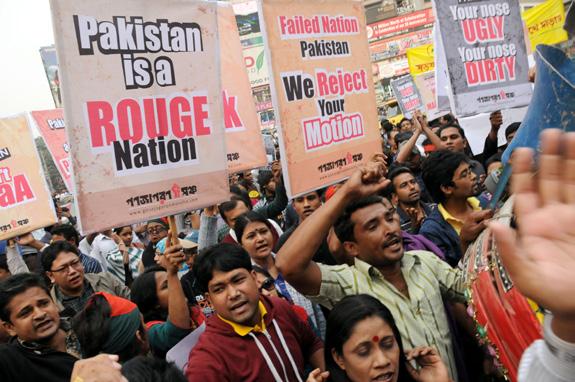
Terror-sponsor Pakistan has no locus standi to comment on India’s internal matters: MEA
New Delhi, March 25 (IANS) India on Wednesday slammed Pakistan over comments made in support of a terrorist organisation and its members, stressing that Islamabad has no locus standi to speak on matters related to India and its judicial processes.
New Delhi's strong reaction came after Pakistan Foreign Office issued a statement on the awarding of a life imprisonment sentence to Kashmiri separatist leader Asiya Andrabi.
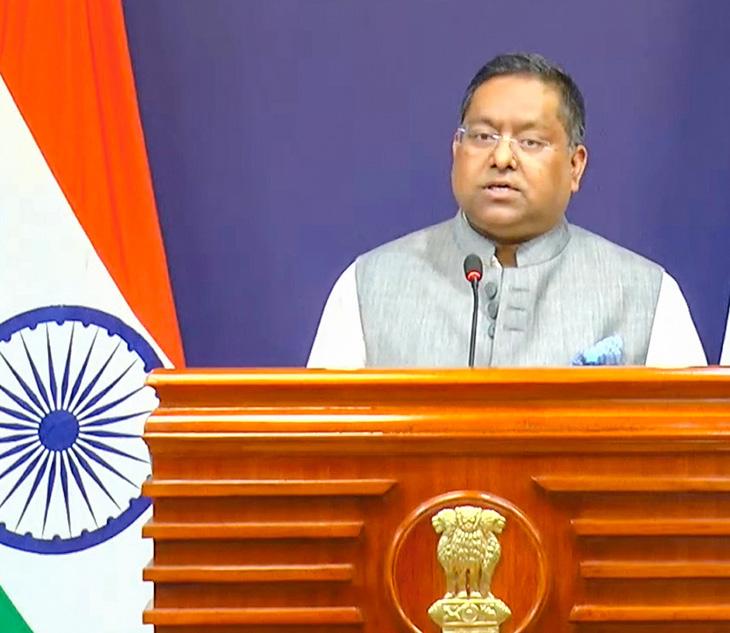
Ministry of External Affairs (MEA) spokesperson Randhir Jaiswal said that Pakistan's statement condoning violence has not surprised India as Islamabad has been sponsoring terrorism for a long time. He urged Pakistan to introspect its systematic human rights violations.
"We categorically reject the statement issued by Pakistan in
support of a banned terrorist organization and its members. Pakistan has no locus standi to comment on matters internal to India or its judicial processes. However, one is not surprised that a country, which has long been sponsoring terrorism, has come up with such a statement condoning violence and killing of innocent people. Instead of peddling lies and frivolous narratives, Pakistan should introspect on the grave and systematic human rights violations it continues to perpetrate," read a statement issued by the MEA spokesperson. A Delhi court on Tuesday sentenced Andrabi to life imprisonment for offences including conspiracy to commit terrorist acts and waging war against the Government of India, while awarding 30-year jail terms to her associates Sofi Fehmeeda and Nahida Nasreen.
Pronouncing the order on the quantum of sentence, Additional Sessions Judge Chander Jit Singh of the Karkardooma Courts held that the acts of the convicts struck at the “very existence of India” and were aimed at the secession of Jammu and Kashmir, an integral part of the country.
Raising diplomacy to end Iran war, UN chief appoints personal envoy
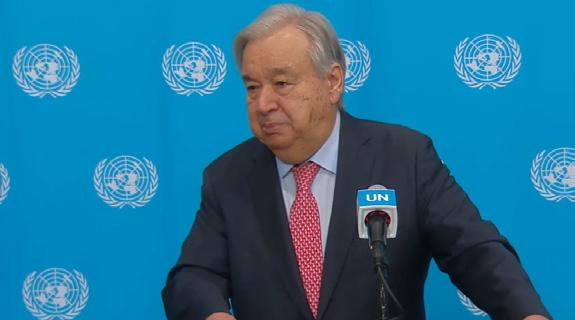
United Nations, March 25 (IANS) UN Secretary-General Antonio Guterres raised his diplomacy to end the Iran War, appointing a personal representative on Wednesday to support the mediation efforts.
Guterres said he was hopeful that despite the differing positions of the sides in the conflict, “there will be a way in which they can come to an understanding to end this horrible conflict”.
'The Daily Star' detailed.
“The planned offensive aimed to crush the Bengalee nationalist movement following the election victory of the Awami League in 1970. It soon spread to other parts of the then East Pakistan, targeting civilians, students, intellectuals, and members of the security forces,” it added.
Citing eyewitness accounts and historical research, the report indicated that thousands of unarmed civilians were killed in a single night, with homes set ablaze and entire neighbourhoods reduced to rubble.
The picture of diplomacy to end the conflict, now in its fourth week, is murky.
US President Donald Trump has asserted that negotiations were on with Iran and were making headway, but Tehran has denied any talks were taking place, and its military said the US was "negotiating with itself".
Washington is reported to have sent through third parties a 15-point plan to end the conflict, and Vice President JD Vance and Secretary of State Marco Rubio are to join the negotiations along with Trump’s special envoy Steve Witkoff and son-in-law Jared Kushner.
Trump has not identified the Iranian “man who is most
respected” with whom the US was talking.
While these efforts were afoot, Israel continued attacks on Iran on Wednesday, and Tehran hit back and also hit targets in the Gulf countries.
Trump, meanwhile, was sending paratroopers to join US forces in the region.
Guterres warned, “The world is staring down the barrel of a wider war, a rising tide of human suffering, and a deeper global economic shock”.
But with a hint of optimism, he said: “We have mediators that have offered their services. They are very engaged”.
His Personal Envoy Jean Arnault “will directly (work) on the ground, as I try to do from New York, (and) he'll be doing everything possible to support all the efforts for mediation, all the efforts for peace, to be in contact with all the parties,” the UN chief said speaking to reporters on Wednesday.
“I've been in close contact with all those that I believe can help to try to put an end to this horrible conflict,” he said.
“This conflict is having a dramatic impact in the region, with the suffering of civilians in the region and around the world, with an impact on the global economy that is causing tremendous trouble for the less developed countries,” Guterres said.
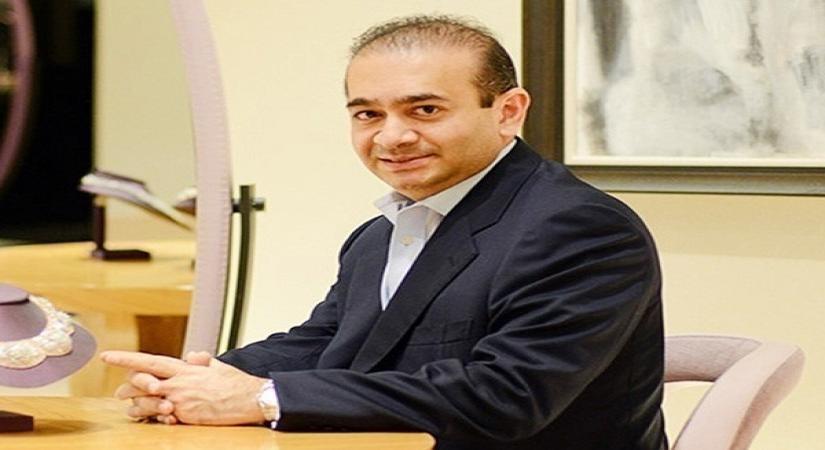
UK court rejects Nirav Modi’s plea to reopen case against extradition
New Delhi/London, March 26 (IANS) Fugitive diamond merchant Nirav Modi suffered a setback after the High Court of Justice, King’s Bench Division in London, rejected his petition seeking to reopen proceedings against his extradition order to India.
The case was argued by the Crown Prosecution Service advocate, assisted by a dedicated team from the Central Bureau of Investigation, which included investigating officers who had travelled to London to support the hearing.
The application to reopen the case was filed on the basis of the Bhandari judgment, a ruling delivered by a UK High Court in the case of defence middleman Sanjay Bhandari.
In that matter, Bhandari had argued that he could face torture if extradited to India, and the court had declined his extradition on humanitarian grounds.
Citing the same precedent, Nirav Modi contended that he too would
face a risk of torture if sent back to India. However, officials from the CBI presented arguments countering this claim during the proceedings.
While delivering its decision, the UK High Court observed that the petition filed by Nirav Modi did not meet the threshold of exceptional circumstances required to justify reopening the case. The court noted that the grounds presented were not sufficient and held that it would not be appropriate to revisit the earlier ruling.
Nirav Modi is wanted in India in connection with the Punjab National Bank fraud case, which involved the alleged use of fraudulent guarantees issued in the name of the state-run lender to obtain overseas loans.
He had left India in January 2018, shortly before the CBI initiated its probe into the scam.
Following his arrest in the United Kingdom in 2019, British courts had approved his extradition to India. The courts, while considering the case, had accepted assurances regarding his treatment in India and found no legal impediments to his extradition, subsequently dismissing his earlier appeals.
Bolivian president urges future subnational authorities to unite in tackling crisis
La Paz, March 23 (IANS) Bolivian
President Rodrigo Paz Pereira called on future subnational authorities to work with the central government to address the country's economic and institutional challenges.
Paz Pereira made this appeal after casting his vote in the southern city of Tarija on Sunday (local time), where elections are being held to choose more than 5,400 officials, including governors, mayors and local legislators for the 2026-2031 term.
"We will work with those elected by the will of the people," he said, adding that the elections offer an opportunity to strengthen democracy and encourage citizen participation.
He said the current situation requires coordinated efforts among the central government, regional authorities, and the legislature to pursue a common agenda for national recovery, reports Xinhua news agency.
The president also highlighted his administration's progress in economic management, international engagement,
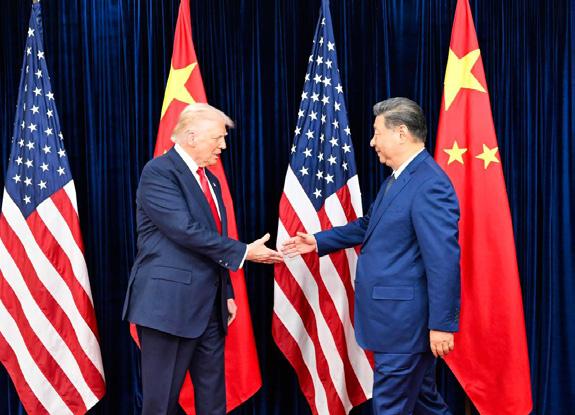
Look very much forward to spending time with Prez Xi: Trump on ‘monumental’ China visit
Washington, March 26 (IANS)
Announcing plans for a highstakes diplomatic engagement, US President Donald Trump has said that his rescheduled meeting with Chinese President Xi Jinping will take place in Beijing on May 14–15, calling it a “Monumental Event” and signalling renewed top-level engagement between the two powers.
Trump, in a social media post on Wednesday (local time), said: “My meeting with the Highly Respected President of China, President Xi Jinping… will take place in Beijing on May 14th and 15th… I look very much forward to spending time with President Xi in what will be, I am sure, a Monumental Event.”
The White House described the visit as long-awaited and now back on track after being postponed due to ongoing US military operations in Iran.
“President Trump's meeting and long-awaited meeting with President Xi in China will now take place in Beijing on May 14th and 15th,” White House Press Secretary Karoline Leavitt said
Europe
security and anti-corruption efforts.
More than 7.4 million eligible voters were expected to take part in the elections across more than 33,000 polling stations.
Around 250,000 personnel were deployed across the nation to ensure transparency and security in the subnational elections, in which more than 7.4 million citizens were to vote.
According to Carlos Alberto Goitia, a member of the Supreme Electoral Tribunal (TSE), the deployment covered all nine departments and 340 municipalities, where over 5,400 authorities will be elected for the 2026-2031 term.
The deployment includes more than 200,630 electoral jurors, who were assigned to more than 33,000 polling stations, along with temporary staff, police, military personnel and prosecutors.
About 18,000 candidates were running in the elections, reflecting the scale and complexity of the process.
Around 17,000 temporary workers supported the preliminary results transmission system to provide early voting trends.
More than 32,000 police officers were deployed to ensure election security, while the armed forces will offer logistical support.
during a regular briefing.
She added that First Lady Melania Trump will accompany the President, and that a reciprocal visit by the Chinese leadership is planned later this year.
“First lady Melania and President Trump will also host President Xi and Madame Peng for a reciprocal visit in Washington, DC, at a later date to be announced this year,” Leavitt said.
Trump also underscored that preparations for both visits are already underway.
“Our Representatives are finalising preparations for these Historic Visits,” he said in the post.
The White House indicated that the rescheduling followed direct communication between the two leaders, with Beijing accommodating Washington’s request to delay the trip amid active combat operations.
“There was a discussion about the rescheduling of the meeting between the president and President Xi,” Leavitt said.
“President Xi understood that it's very important for the president to be here throughout these combat operations right now.”
Officials made clear that the timing of the China visit was not contingent on the conclusion of the Iran conflict.
“No,” Leavitt said when asked whether ending the war was a precondition for the meeting.
At the same time, the administration has suggested that military objectives in Iran are progressing quickly, with earlier estimates placing the operation’s timeline at four to six weeks.
Leavitt said the President remains focused on both fronts -managing the military campaign and preparing for a major diplomatic engagement.
“We do look forward… I know the President looks forward to going to China on May 14th and 15th,” she said, adding that further logistical details will be shared with the media.
The planned summit comes at a time of complex ties between Washington and Beijing, with both countries navigating tensions over trade, security and global influence, even as they maintain channels for dialogue at the leadership level.
For India and the wider IndoPacific, such engagements are closely watched, given their implications for regional balance, economic flows and strategic competition.
The United States and China have long been locked in a relationship marked by rivalry and interdependence, spanning trade disputes, technology restrictions and military posturing. Leadership-level meetings have often served as key opportunities to stabilise ties and signal intent to the global community.
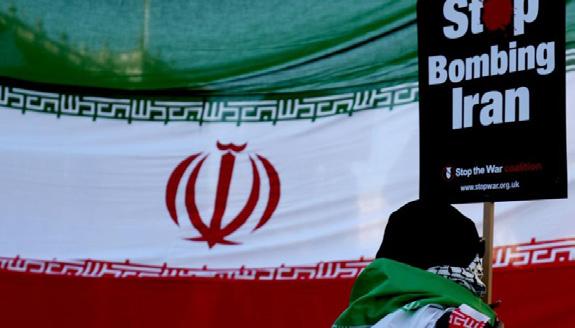
sees wave of protests against US, Israeli strikes on Iran
London, March 23 (IANS)
Thousands of protesters took to the streets in London, joining a growing wave of demonstrations across Europe against US and Israeli military strikes on Iran.
In the British capital, a sea of demonstrators marched from Russell Square to Whitehall on Saturday (local time), waving banners and chanting slogans
condemning the attacks. Their voices echoed through central London as concerns over the escalating conflict spilt onto the streets.
At a rally later in the day, participants called for an immediate ceasefire and an end to foreign intervention in the Middle East. Mariam, a protester holding a sign reading "Stop the war on Iran," criticised Washington's characterisation of the operation as "Epic Fury," calling it instead an "Epic Failure." "No foreign intervention. Hands off the Middle East and stop bombing. People have the right
to live in peace. You cannot bomb people to democracy," she said. Another protester, Adrian, who had travelled from Birmingham, described the strikes on Iran as "completely outrageous" and "quite frankly exhausting." He warned that the consequences, including rising oil prices and global insecurity, were already being felt.
The London demonstration formed part of a broader wave of protests across Europe on Saturday, reflecting mounting opposition to the ongoing offensive, reports Xinhua news agency.
Epstein survivors file lawsuit against Google over exposure of personal information
Washington, March 28 (IANS)
A group of survivors of Jeffrey Epstein has filed a lawsuit against Google, alleging that the company’s AI tools and search engine exposed their personal identities and contact information online, leading to harassment, threats, and renewed emotional
trauma, according to CNBC. The case, filed in a US federal court by a survivor identified as Jane Doe on behalf of others in similar situations, centers on claims that highly sensitive details — including names, email addresses, and phone numbers — appeared through Google platforms despite repeated requests for their removal. According to the complaint, these disclosures occurred even after victims had sought to keep their information private. The lawsuit traces the issue back
to a large release of documents by the US Department of Justice in late 2025 and early 2026. Approximately 100 Epstein survivors were inadvertently identified in the released records. Although the government later recognised the error and attempted to retract the material, the sensitive data had already spread online. Survivors allege that Google continued to display this information through its search results and AI-generated responses, even after being alerted to the problem.
War, power and the price of miscalculation
Lessons from the West Asia conflict
Wars in West Asia have rarely remained confined to borders drawn on maps. They tend to expand in meaning, shaping global energy flows, financial stability, diplomatic alignments, and even the psychology of nations far removed from the battlefield. The recent confrontation involving Iran on one side and Israel and the United States on the other reflects not merely another episode in a region marked by prolonged tensions. It represents a moment that exposes the limits of military assertiveness, the risks of strategic misreading, and the urgent need for regional and global recalibration in an increasingly multipolar world.
At the heart of the conflict lies a narrative of momentum and miscalculation. The perception that the United States entered this confrontation with confidence shaped partly by earlier geopolitical assertiveness in Latin America, particularly in its handling of Venezuela, has drawn considerable debate among analysts. Success in one theatre can create a powerful but sometimes misleading belief in the transferability of strategy. Yet Iran is not Venezuela. The geopolitical depth, ideological resilience, regional influence networks, and historical experience of sustained sanctions make Iran a fundamentally different actor.
Comparisons between the two risk underestimating the complexities of West Asian politics. Iran has developed adaptive mechanisms over decades of isolation, external
pressure, and internal contestation. Its governance structure, while facing domestic challenges, has demonstrated an ability to mobilise nationalist sentiment during crises. The assumption that intensified external pressure or targeted military action could quickly produce regime change reflects a reading of history that often overlooks the layered realities of state resilience. Regime transformation is rarely engineered solely from outside; it emerges from internal political shifts, economic breakdowns, and social mobilisation that cannot be hurried by external timelines. Equally contentious has been the timing of escalation. Diplomatic engagement between Iranian representatives and international interlocutors was reportedly ongoing in Oman, a country that has historically played the role of a quiet facilitator in regional tensions. Oman’s diplomatic tradition rests on maintaining channels of communication even when formal relations between adversaries are strained.
Escalating military confrontation while negotiations remain active raises questions about the value placed on dialogue as an instrument of conflict resolution. When diplomacy is perceived as secondary to strategic demonstration, the credibility of future negotiations can be weakened.
The perception that the United States did not sufficiently consult its allies before undertaking decisive action has also contributed to unease within broader strategic circles.
In contemporary geopolitics, legitimacy often derives not only from capability but from consensus. Allies may share concerns regarding security threats yet differ in their preferred sequencing of engagement, coercion, or negotiation. Consultation is therefore more than diplomatic courtesy; it is a mechanism through which responsibility and risk are collectively managed. Decisions that appear unilateral can strain trust and complicate long-term coalition-building, even when immediate objectives appear aligned.
Iran’s response strategies, however, have also attracted criticism for their escalatory implications. Attempts to disrupt maritime movement through the Strait of Hormuz — one of the most critical energy arteries of the global economy — have underscored how regional conflicts can quickly acquire worldwide consequences. Energy markets remain highly sensitive to perceptions of instability. Even limited disruptions in shipping routes can trigger cascading effects on inflation, industrial output, and household costs across continents. Leveraging geography as a strategic tool may offer short-term bargaining power, but it risks alienating potential diplomatic partners and intensifying international pressure.
Similarly, Iran’s targeting of or threats towards Gulf states have complicated an already fragile regional equilibrium. Many Gulf economies are engaged in ambitious diversification programmes aimed at reducing reliance on hydrocarbons while strengthening financial and technological sectors. Being drawn into a wider confrontation can derail such initiatives and deepen security anxieties. From a strategic standpoint, these actions may also reinforce external military involvement in the region — an outcome that runs counter to Tehran’s longstanding calls for reduced foreign presence.
The imbalance in conventional military capabilities between Iran and the combined forces of the
United States and Israel remains a defining reality. While Iran has invested heavily in missile systems, asymmetric tactics, and proxy networks, it cannot match the integrated technological superiority and global logistical reach of its adversaries in a sustained conventional conflict.
This asymmetry increases the risk that escalation will lead to prolonged instability without delivering decisive outcomes. History in the region suggests that wars fought under such conditions rarely produce clear strategic victories; instead, they reshape fault lines and create new cycles of uncertainty.
For the United States, the conflict represents a broader test of how superpower status is exercised in a rapidly evolving international system. Leadership today is measured not only by the capacity to deploy force but by the ability to construct durable frameworks for stability. Acting in national interest is an inherent responsibility of any administration. Yet when actions reverberate through global energy systems and financial markets, there is an expectation that strategic choices will reflect awareness of wider consequences.
The credibility of superpower leadership increasingly depends on balancing deterrence with diplomacy and unilateral capability with multilateral engagement.
The war has also reinforced an emerging lesson for countries across regions: the necessity of building strong regional alliances capable of cushioning economic shocks. Globalisation has intensified interdependence, but it has also exposed vulnerabilities.
Supply chain disruptions, energy price volatility, and financial market turbulence can quickly translate into domestic economic stress. Regional cooperation — whether through shared infrastructure projects, coordinated energy reserves, or integrated trade frameworks — offers a pathway toward greater resilience.
In Asia, Africa, and parts of Europe, policymakers are increasingly recognising that economic security cannot be divorced from strategic stability. Creating buffers within regional economic arrangements can help mitigate the impact of
distant conflicts. Such buffers may include diversified sourcing of energy, collaborative technological innovation, and financial safety nets designed to stabilise currencies and trade flows during crises. The West Asia conflict has therefore accelerated discussions on multipolar engagement — a world in which influence is distributed through networks rather than concentrated in singular power centres.
Ultimately, the confrontation involving Iran, Israel, and the United States illustrates the limits of coercive approaches in a deeply interconnected global landscape. Iran has not achieved decisive strategic gains through attempts to disrupt energy flows or expand the theatre of confrontation. The United States, despite its military reach, faces renewed scrutiny regarding the sustainability of interventionist strategies that do not fully integrate diplomatic momentum or allied consensus. Israel continues to navigate a security environment defined by persistent unpredictability.
For ordinary citizens across regions, the consequences are more immediate: rising fuel costs, inflationary pressures, disrupted employment prospects, and heightened geopolitical anxiety. These indirect impacts remind policymakers that modern wars are fought not only on battlefields but within economic systems and social expectations.
The path forward lies in recognising that dominance alone cannot guarantee stability. Dialogue must be treated as an essential strategic instrument rather than a temporary pause. Regional alliances must evolve into economic cushions capable of absorbing global shocks. Superpowers must balance national objectives with global responsibility. In a century defined by interconnected risks, the lesson of this conflict may be that security is no longer secured through force alone. It is constructed through consultation, resilience, and a shared commitment to preventing crises from becoming irreversible.
(The writer is a journalist and political analyst. The views expressed are his own.)
Kuwait says 10 troops injured as projectile strikes military camp
intercepted multiple aerial threats over the past 24 hours, while a projectile strike on a military camp left 10 troops injured, according to an official military statement.
According to the statement released on the social media platform X, defence units detected and shot down 14 hostile ballistic missiles and 12 drones.
Despite the interceptions, one military camp was struck by several projectiles, resulting in injuries to 10 armed forces personnel, Xinhua news agency reported.
The injured have been transferred to medical facilities and are currently receiving treatment, the statement said. The attack also caused material damage at the site, according to
the statement. Warehouses belonging to a private logistics company were also targeted in the attacks, resulting in property damage but no reported casualties.
Authorities reaffirmed that Kuwait's air defence systems remain on high alert and are fully prepared to respond to further threats.
They also urged the public to rely on official sources for accurate information and to adhere to safety instructions issued by relevant authorities. No further details were immediately available regarding the origin of the attacks. The incident happened amid escalating tensions following joint US-Israeli strikes on Iran that began last month.
Kuwait City, March 29 (IANS) Kuwait said on Sunday that its air defence systems successfully
Australian govt blocks entry for Iranian visa holders Australia’s
moved to block the entry of temporary visa holders from Iran amid the ongoing conflict in the Middle East.
Tony
home
announced that he has used laws passed by the federal parliament earlier in March to temporarily restrict Iranian visitor visa holders from traveling to Australia.
He said in a statement that the move would protect the integrity and sustainability of Australia's migration system, citing government concerns that the conflict has increased the risk that some visitors from Iran may be unlikely or unable to depart Australia when their visas expire.
The six-month ban will only apply to people who have a subclass 600 visitor visa linked to an Iranian passport and does not apply to visa holders already in Australia, spouses or children of Australian citizens or permanent residents, or parents of a child younger than 18 already in Australia.
The subclass 600 visa allows holders to stay in Australia for up to 12 months for tourism or to visit family.
"There are many visitor visas
which were issued before the conflict in Iran which may not have been issued if they were applied for now," Burke said.
"The Australian government is closely monitoring global developments and will adjust settings as required to ensure Australia's migration system remains orderly, fair and sustainable."
He said that the government would continue to assess visa applications and would allow a small number of impacted people from Iran to travel to Australia, with sympathetic consideration to be given to cases involving parents of Australian citizens, Xinhua news agency reported.
The government indicated that a limited number of travellers may still be allowed entry on a caseby-case basis.
Applicants can seek exemptions through special travel permissions, particularly under compelling or humanitarian circumstances.
Australia warned to prepare for severe tropical cyclone
Sydney, March 19 (IANS)
Emergency warnings have been issued for thousands of people as Severe Tropical Cyclone Narelle approaches the northeast coast of Australia's Queensland. The Bureau of Meteorology (BoM) said in an update at 7 a.m. Australian Eastern Standard Time on Thursday (2100 GMT on Wednesday) that Tropical Cyclone Narelle had reached Category 4 strength and could intensify into a Category 5 storm before making landfall early on Friday.
The BoM said that very destructive wind gusts in excess of 250 km per hour are possible near the center of the cyclone when it crosses the coast, and that heavy rainfall, which could cause flash flooding, is expected to hit from Thursday evening.
"A severe impact is likely," it said. It said that the storm was about 440 km off the east coast of Queensland's Cape York Peninsula on Thursday morning and moving west at a speed of 25 km per hour.
An emergency warning has been issued for a 600-km stretch of the peninsula's east coast, including Cooktown with a population of around 1,800 people and the 500-person Aboriginal community of Lockhart River.
David Crisafulli, the premier of Queensland, said that people
in the emergency warning area should stock up on emergency supplies.
"We're just asking people to take it seriously because it is a big system," he told Australian Broadcasting Corporation television.
The BoM is forecasting that the cyclone will temporarily weaken as it crosses a 220-km wide stretch of the Cape York Peninsula before reaching the Gulf of Carpentaria and again intensifying to a severe system and impacting the Northern Territory (NT) over the weekend, Xinhua news agency reported.
Authorities in the NT said on Wednesday night that around 500 people in the remote community of Numbulwar would be evacuated over the coming days as a precaution.
Australian PM announces fuel supply task force
Canberra, March 19 (IANS)
Australian Prime Minister Anthony Albanese on Thursday announced that the federal government has established a fuel security task force amid the ongoing conflict in the Middle East.
Speaking after meeting with state and territory leaders on Thursday morning, Albanese told reporters that the government is doing "all that it can" to secure Australia's fuel supply.
"I want to assure Australians at this time that Australia is well prepared. Our fuel supply is currently secure, however I want
us to be over prepared," he said.
"I reiterate today my message to Australians is please do not take more fuel than you need. That is how you can help."
He announced that Anthea Harris, former CEO of the Australian Energy Regulator and of the Energy Security Board, has been appointed as the coordinator of a new national fuel supply task force and that each state and territory will appoint someone in a similar capacity.
Albanese said that the task force will drive coordination between the federal, state and territory governments on fuel security and supply chain resilience.
The announcement was made shortly after the Australian Competition and Consumer Commission (ACCC) said it had launched an investigation into allegations of anti-competitive
fuel supply to get more difficult in coming months: PM
Canberra, March 27 (IANS)
Australia's fuel supply looks good in the short term, but it will get more difficult in the coming months, said Australian Prime Minister Anthony Albanese on Friday.
Addressing a press conference in Parliament House in Canberra over the escalating fuel crisis facing the country, Albanese said the government is "working around the clock" to "have the strongest possible plan," and get ready and over-prepared for what may come.
Albanese noted his "positive" engagements with Malaysia, a critical supplier of oil to Australia, and with the wider ASEAN region.
Minister for Climate Change and Energy Chris Bowen said the country's supply of petrol, diesel, and oil remains the same. "The government has always acknowledged there are real and unacceptable shortages in regional Australia as the demand
has spiked so much, and it's taken time for that strong domestic supply," said Bowen.
Albanese will also convene a national cabinet meeting on Monday over the fuel crisis. Earlier in the day, Opposition Leader Angus Taylor called on the government to temporarily halve the fuel excise for three months. The government on Wednesday conceded that about 470 service stations around the country have run out of at least one type of fuel, Xinhua news agency reported.
Earlier on March 24, the Australian Broadcasting Corporation (ABC) had reported that Australia now has only two domestic refineries still operating, while more than 80 per cent of its petrol, diesel and jet fuel is imported, almost all of it from Asia. ABC had added that much of the crude oil used by Asian refiners comes from the Middle East and is mainly shipped through the Strait of Hormuz.
The report had said the global oil market is facing severe supply disruption and that markets still appear to be underestimating the duration and damage of the shock. It had noted that even if the Strait of Hormuz reopens, shipping insurance may not recover quickly, meaning the impact on both the global and Australian economies could worsen.
Emergency warning issued for severe cyclone in northwest Australia
conduct by the nation's major fuel suppliers.
The ACCC said it commenced the investigation in response to reports concerning diesel availability to independent wholesalers and distributors servicing regional and rural Australia, Xinhua news agency reported.
On Wednesday, Australian Prime Minister had flagged new measures to protect the country's people from the 'worst' of the global economic uncertainty driven by the ongoing conflict in the Middle East.
In a speech to an automotive industry event on Wednesday morning, Albanese had described the conflict in the Middle East as another "major shock to hit the global economy" in the 2020s following the COVID-19 pandemic and the Russia-Ukraine conflict.
Sydney, March 26 (IANS)
Authorities have warned that Tropical Cyclone Narelle will hit Australia's northwest coast as a severe Category 4 storm after sweeping across the country.
The Bureau of Meteorology (BoM) said in an update at 5 a.m. Australian Western Standard Time on Thursday (2100 GMT on Wednesday), Tropical Cyclone Narelle was 240 km off the north coast of Western Australia (WA) and steadily intensifying. It said that the cyclone was at Category 3 strength as of Thursday morning and expected to reach Category 4 before impacting the northwest coast of the remote Pilbara region from Thursday night, bringing very destructive wind gusts of up to 275 km per hour and heavy rainfall. The WA Department of Fire and Emergency Services (DFES) has
issued an emergency alert for a 600 km stretch of coast, urging people to prepare to take shelter and charge mobile devices in case power goes out.
"There is a possible threat to lives and homes as a cyclone is approaching the area," it said. The emergency warning zone encompasses Karratha, the largest city in the Pilbara region, with a population of approximately 22,000 people. Schools were closed on Thursday, and Qantas and Virgin Australia have canceled flights in and out of the airport in Port Hedland, the second-largest population center in the region and the site of Australia's highest tonnage port, Xinhua news agency reported.
Tropical Cyclone Narelle hit the far north of the east coast state of Queensland as a Category 4 storm on March 20 and the Northern Territory as a Category 3 storm two days later, but avoided towns and caused only minimal damage. More than 100 millimeters (4 inches) of rain fell across a wide area of the Northern Territory during Narelle’s passage, according to news reports. Australia’s BOM warned of minor to major flooding of several rivers. The storm arrived amid a severe wet season in the region that had already caused damaging floods and prompted evacuations.
Canberra, March 26 (IANS) The Australian government has
Burke, minister for
affairs, on Wednesday night
From the editor’s desk War, energy and the search for balance Europe looks South, Australia looks forward
Why von der Leyen’s visit signals a strategic turning point
Diplomatic visits are often rich in symbolism but modest in long-term consequence. Yet there are moments when such engagements begin to reflect deeper shifts in how nations perceive their interests and responsibilities in a changing world. European Commission
President Ursula von der Leyen’s recent visit to Australia, including her address to the Australian Parliament, was one such moment. Her message underscored the growing relevance of Australia–European Union relations at a time when global politics, economic alignments, and security priorities are being reshaped by geopolitical tensions, technological transformation, and climate pressures.
For Australia, the visit represented both recognition of its expanding international role and an opportunity to strengthen partnerships that will influence its strategic and economic trajectory.
A central focus of von der Leyen’s address was the importance of advancing negotiations on the proposed Australia–EU Free Trade Agreement.
Talks on the pact have continued for several years and have faced obstacles, particularly regarding agricultural market access and regulatory standards.
Nevertheless, both sides have reiterated their commitment to pursuing a balanced agreement.
From Australia’s perspective, securing improved access to the European Union’s vast single market could help diversify trade relationships at a time when supply chains are under strain and export dependencies are increasingly viewed as strategic vulnerabilities.
Enhanced engagement with European markets may support sectors such as agriculture, resources, education, and professional services while encouraging greater two-way investment.
The significance of the proposed agreement extends beyond tariff reductions.
Modern trade frameworks shape standards related to sustainability, digital commerce, and industrial cooperation.
Von der Leyen emphasised that reliable economic partnerships are essential in an era of uncertainty, a point that resonates strongly with Australia’s own efforts to build resilient trade networks. Closer ties with European industries and research institutions could also strengthen Australia’s
participation in emerging value chains linked to clean energy technologies, advanced manufacturing, and innovationdriven growth.
Her visit also highlighted cooperation in critical minerals and renewable energy development. The European Union’s push towards decarbonisation has increased its interest in secure supplies of materials required for batteries, wind turbines, and solar infrastructure.
Australia’s substantial mineral resources therefore position it as an important partner in Europe’s green transition. At the same time, collaboration with European firms and policymakers may enable Australia to expand domestic processing capabilities and move further into value-added production. This alignment reflects a broader global trend in which climate policy and industrial strategy are becoming closely interconnected.
Equally important was the emphasis on strengthening defence and security dialogue.
In her parliamentary address, von der Leyen spoke about the need for democratic partners to coordinate responses to challenges such as cyber threats, maritime tensions, and disruptions to critical supply chains. For Australia, engagement with European partners provides an additional dimension to its strategic outlook, complementing regional alliances while reinforcing the importance of a networked approach to security. Such cooperation acknowledges that contemporary risks often transcend geographic boundaries and require coordinated international responses.
The convergence of economic and strategic priorities evident during the visit illustrates how bilateral relationships are evolving in a multipolar world. Nations are increasingly building partnerships that integrate trade, technology, climate policy, and defence cooperation into cohesive frameworks. Von der Leyen’s message suggested that Australia and the European Union share an understanding of this transformation and are seeking to position their relationship accordingly. For Australia, embracing this momentum may enhance economic resilience, support industrial innovation, and strengthen its contribution to regional and global stability.
Why the West Asia crisis is pushing Australia, India, and the European Union closer
History often reminds nations that geography alone does not determine vulnerability. Wars fought in distant deserts or contested coastlines can reshape economies, unsettle financial systems and alter strategic thinking across continents. The ongoing conflict in West Asia has once again exposed how deeply interconnected the modern world has become. For Australia, India, and the European Union, the crisis is not simply a regional security issue; it is a test of energy resilience, diplomatic coordination and long-term geopolitical positioning. In responding to these pressures, these democratic partners are beginning to recognise that collaboration may be the most effective way to navigate an uncertain global order increasingly influenced by greatpower rivalry.
India’s exposure to developments in West Asia is immediate and structural. A large proportion of its crude oil and liquefied natural gas imports originate in the region, making fluctuations in supply and pricing a direct concern for policymakers. Shipping routes passing through strategic chokepoints such as the Strait of Hormuz remain vital for sustaining industrial production and urban consumption. When tensions escalate, insurance premiums for cargo rise, freight schedules become unpredictable, and energy prices surge. These disruptions feed into domestic inflation, complicate fiscal planning and create pressure on currency stability. For an economy seeking sustained high growth while balancing social welfare commitments, such volatility introduces significant uncertainty.
The crisis has also reinforced India’s determination to accelerate energy diversification. Investments in solar power, wind generation, green hydrogen and battery storage are increasingly viewed through a strategic lens rather than solely as environmental policy choices.
Building strategic petroleum reserves and forging new supply partnerships are part of a broader effort to reduce vulnerability to geopolitical shocks. In this evolving landscape, cooperation with Australia emerges as particularly relevant.
Australia’s relationship with the West Asia conflict is more indirect but equally consequential. As a major exporter of energy commodities and critical minerals, Australia operates within global markets that respond swiftly to instability. Prolonged price volatility can influence investment cycles, alter demand patterns and affect trade balances across the Indo-Pacific region — an area central to Australia’s strategic focus. Moreover, disruptions to maritime routes and supply
chains can raise security concerns in waters that are vital for Australian commerce and regional connectivity.
Yet the crisis also presents Canberra with an opportunity to redefine its economic and strategic role. Australia’s reserves of lithium, cobalt and rare earth elements are essential for the global transition towards renewable energy technologies.
Strengthening partnerships with countries like India allows Australia to move beyond traditional resource exports and participate more deeply in valueadded manufacturing, research collaboration and clean energy innovation. Such engagement enhances both economic diversification and diplomatic influence.
The European Union finds itself confronting similar dilemmas from a different vantage point.
Recent years have already exposed Europe’s sensitivity to energy disruptions and the risks associated with concentrated supply dependencies. The renewed instability in West Asia adds urgency to efforts aimed at diversifying imports, investing in renewable infrastructure and strengthening international partnerships. Engagement with Indo-Pacific democracies such as India and Australia offers the EU pathways to secure critical mineral supply chains, expand trade relationships and contribute to stabilising global energy markets.
What is gradually taking shape is the possibility of a strategic alignment among Australia, India, and the European Union — one rooted not in confrontation but in shared priorities. All three actors are committed to democratic governance, rulesbased trade and institutional transparency. These common values enable policy continuity even during crises, fostering trust that is essential for long-term cooperation. Joint initiatives in renewable technology, maritime security dialogue and supply chain resilience illustrate how democratic convergence can translate into practical frameworks for managing global uncertainty.
The geopolitical implications of such collaboration are significant.
The contemporary international system continues to be influenced by the economic reach of China and the strategic weight of the United States. The West Asia war has highlighted how energy flows and logistical networks can become instruments of leverage in this competitive environment. By strengthening cooperation among themselves, India, Australia and the European Union can contribute to shaping a more distributed balance of influence — one that reduces overdependence on singular power centres while preserving the autonomy of regional actors. Economic considerations
reinforce this strategic logic. Coordinated investments in renewable infrastructure, digital energy management systems and advanced manufacturing can generate employment, stimulate innovation and stabilise markets. For India, deeper integration with technologically advanced partners supports industrial modernisation and sustainable development goals. For Australia, expanded engagement enhances export opportunities and reinforces its position as a trusted Indo-Pacific partner. For the European Union, collaboration with dynamic Asian economies strengthens access to resources and broadens diplomatic outreach.
Equally important is the societal dimension of this evolving partnership. Diaspora networks, academic exchanges and private sector initiatives often act as catalysts for policy implementation. Engineers working on solar parks, researchers developing battery technologies and entrepreneurs building logistics platforms embody the human connections that sustain strategic agreements. Their efforts illustrate that global cooperation is not merely a matter of government declarations but a lived process shaping everyday economic realities.
The West Asia conflict therefore serves as both warning and catalyst. It reveals the fragility of systems overly dependent on volatile regions while encouraging nations to imagine alternative pathways grounded in sustainability and cooperation. Australia, India, and the European Union are increasingly recognising that energy security, economic resilience and geopolitical balance are intertwined objectives. Their emerging alignment reflects a broader transition towards multipolarity — a world in which influence is negotiated through networks of partnership rather than imposed through unilateral dominance.
In this changing landscape, the capacity to transform crisis into collaboration may determine which nations thrive. By investing in diversified supply chains, accelerating clean energy transitions and deepening diplomatic coordination, these democratic actors have the opportunity to shape not only their own futures but also the contours of global stability.
The war in West Asia may have disrupted established patterns, but it has also illuminated the possibility of a more balanced and cooperative international order — one in which shared purpose becomes the foundation of enduring strength.
(The writer is a journalist and political analyst. The views expressed are his own.)
Nalanda stampede: CM Nitish Kumar expresses grief, announces ex-gratia of Rs 6 lakh for kin of each victim
Patna, March 31 (IANS) After a deadly stampede in Bihar’s Nalanda district claimed eight lives and injured several others, Bihar Chief Minister Nitish Kumar expressed deep grief and announced compensation for the victims.
The state government will provide Rs 6 lakh each to the families of the deceased -- Rs 4 lakh from the Disaster Relief Fund and Rs 2 lakh from the Chief Minister’s Relief Fund.
Bihar Water Resource Minister Vijay Kumar Chaudhary said the government has taken the matter seriously and that the Chief Minister is continuously monitoring the situation.
He assured that all injured persons are being provided proper medical care at the government’s expense.
Describing the tragedy as “heartwrenching”, the minister said relief and rescue operations were launched immediately and that officials have been directed to ensure all necessary assistance to the victims and their families.
Deputy Chief Minister Vijay Kumar Sinha also expressed sorrow over the incident, calling it deeply painful. He extended condolences to the bereaved families and wished a speedy recovery for the injured, assuring that the government stands firmly with those affected.
The incident occurred at the ancient Sheetla Mata Temple in Maghra village under the Deepnagar police station area, where a large number of devotees had gathered on the occasion of Sheetlashtami during the holy month of Chaitra.
Amid the large crowd, panic
suddenly broke out, triggering a stampede.
According to reports, at least eight people, including seven women, lost their lives, while dozens of others sustained injuries and are currently undergoing treatment at nearby hospitals. Some reports have indicated the toll could be higher, and officials are verifying the exact number.
Eyewitness accounts suggest that the heavy crowd and lack of space inside the temple premises led to sudden chaos, resulting in the stampede.
Rescue teams and local administration rushed to the spot and shifted the injured to hospitals.
Relief and rescue operations are currently underway, while authorities are expected to investigate the exact cause of the stampede and assess whether adequate crowd management measures were in place.
Indian Navy chief outlines maritime strategy, self-reliant push at DSSC
Wellington (Tamil Nadu), March 31 (IANS) Indian Navy chief, Admiral Dinesh K. Tripathi, underlined the force's pivotal role in protecting national maritime interests while also shedding light on evolving trends in naval warfare.
Addressing the 81st Staff Course at the Defence Services Staff College in Wellington virtually on Monday, Admiral Tripathi focused on India’s rich maritime legacy,
emerging security challenges, and the force’s preparedness to tackle hybrid threats in an increasingly complex global environment.
“Admiral Dinesh K. Tripathi, Chief of the Naval Staff, addressed the 81st Staff Course at DSSC, Wellington via VC on 30 Mar 26. The Navy chief highlighted India’s rich maritime legacy and the ongoing transformation of the Indian Navy into a combatready, credible, cohesive and future-ready force driven by the vision of Atmanirbhar Bharat," the Headquarters Integrated Defence Staff said in a post on X.
"He emphasised the Indian Navy’s crucial role in safeguarding the nation’s maritime interests and discussed emerging trends in naval warfare. He also underlined the Navy’s preparedness to
tackle both conventional and unconventional challenges," it added.
During the address, Admiral Tripathi elaborated on the Navy’s long-term vision aligned with the Atmanirbhar Bharat initiative, placing strong emphasis on indigenous shipbuilding and technological self-reliance. The roadmap includes plans to induct more than 155 indigenous warships by 2030 and over 200 by 2035, reflecting an accelerated pace of modernisation.
Officials highlighted that in recent years, new naval platforms have been commissioned at a rapid pace, averaging one vessel every 40 days. Key examples of indigenisation include platforms such as INS Vikrant, INS Arnala, INS Vindhyagiri, and INS Imphal.
PM Modi inaugurates semiconductor OSAT facility in Gujarat’s
Prime
Tuesday inaugurated the outsourced semiconductor assembly and test (OSAT) facility of Kaynes Semicon at Sanand
Gujarat, marking the start of commercial operations at the plant.
According to officials, the Prime Minister inaugurated the facility during his visit to the state, where
he also reviewed the plant’s infrastructure and ongoing operations.
The Sanand unit has been set up with an investment of about Rs 3,300 crore and is designed to undertake semiconductor assembly, packaging and testing, a key segment in the chip manufacturing value chain.
The facility is part of the Central government's broader push under the 'India Semiconductor Mission' to build domestic capabilities in the sector.
Commercial production at the plant has commenced with the manufacturing of Intelligent
Big push to Make in India: MoD and BEL sign Rs 1,950 crore contract for Mountain Radars for IAF
New Delhi, March 31 (IANS)
In a significant boost to India’s push for self-reliance in defence manufacturing, the Ministry of Defence on Tuesday signed a major capital acquisition contract with Bharat Electronics Limited for the procurement of two advanced Mountain Radars for the Indian Air Force.
The deal, valued at approximately Rs 1,950 crore, was formalised in the national capital in the presence of senior officials from both sides.
“Strengthening India’s indigenous defence capabilities under Aatmanirbhar Bharat and Makein-India, Ministry of Defence (MoD) has inked a major capital acquisition contract with Bharat Electronics Limited (BEL) for the procurement of two Mountain Radars, including associated equipment and required infrastructure for the Indian Air Force, at a cost of around Rs 1,950 crore,” according to the ministry statement.
The contract has been awarded under the ‘Buy (Indian–Indigenously Designed, Developed and Manufactured)’ category, reinforcing the government’s continued
emphasis on the Aatmanirbhar Bharat and Make in India initiatives.
The move is aimed at strengthening domestic defence capabilities while reducing reliance on foreign-origin equipment.
The Mountain Radar system has been indigenously designed and developed by the Electronics and Radar Development Establishment, a key laboratory under the Defence Research and Development Organisation. Manufacturing responsibility will be handled by Bharat Electronics Limited, one of India’s leading defence public sector undertakings.
Once installed and commissioned, these radars are expected to significantly enhance the Indian Air Force’s surveillance capabilities, particularly in challenging mountainous terrains.
Officials noted that the systems will play a crucial role in strengthening India’s air defence network and overall national security architecture.
The procurement is also expected to provide a boost to the domestic defence industry ecosystem by encouraging indigenous design and production, while supporting technological advancement within the country.
“The installation and commissioning of these radars will boost the country’s air defence and strengthen national security. The procurement will also reduce the dependency on foreign equipment,” the ministry said.
India rolls out AI skilling, content push to strengthen digital ecosystem
New Delhi, March 31 (IANS) India has launched a set of initiatives aimed at strengthening its digital economy by boosting artificial intelligence (AI) adoption, digital content creation, and access to broadcasting services, a report has said.
Sanand
Power Modules (IPMs), which are widely used in applications such as electric vehicles, industrial systems and energy-efficient appliances.
Each module integrates multiple chips into a single package to improve performance and efficiency.
The facility, once fully scaled, is expected to have a production capacity of approximately 6.3 million units per day.
The output from the plant will cater to domestic demand as well as international markets, including supplies to global semiconductor firms.
As per the Digital Watch Observatory report, the initiative focuses on building an AI-ready workforce while expanding the country’s digital ecosystem across media and technology sectors.
As part of the initiative, a national AI skilling programme will train around 15,000 creators and media professionals in collaboration with Google and YouTube. The training will cover generative AI, prompting techniques, and advanced tools to equip participants with future-ready skills, it said.
The government has also introduced MyWAVES, a platform within the WAVES OTT ecosystem, enabling users to create, upload, and share content.
The platform is designed to support user-generated content
across multiple formats and languages, encouraging wider participation.
In addition, access to broadcasting services has been simplified with the introduction of built-in satellite tuners and advanced programme guides in television sets. This eliminates the need for set-top boxes, making services more affordable and improving reach, especially in remote areas.
Moreover, a report said that India’s data centre capacity is expected to rise to about 4 gigawatts (GW) by FY30, providing a potential investment of Rs 1.5 lakh crore till then.
"India’s data centre capacity per million internet users at 1.2 megawatts per million users is lower than the global average of 5 megawatts per million users worldwide," it said.
While experts noted that data centre demand is currently driven by enterprise IT and cloud storage, but AI-led workloads are expected to power the next phase of growth over the next 5–7 years.
Sanand, March 31 (IANS)
Minister Narendra Modi on
in
Gold, silver plunge up to 6 pc on global weakness, rupee hits 93.84 against US dollar
Mumbai, March 23 (IANS)
Gold and silver prices in India traded sharply lower on Monday, tracking weakness in global bullion markets amid rising concerns over inflation and potential interest rate hikes following escalating US-Iran tensions.
On the Multi Commodity Exchange (MCX), gold futures dropped steeply at the opening.
Gold futures (April 2) fell as much as 5.59 per cent, or Rs 8,089, to hit an intra-day low of Rs 1,36,403 per 10 grams by 9:40 am, while
silver declined 6.63 per cent, or Rs 15,043, to Rs 2,11,729 per kg.
Silver was later trading at Rs 2,14,745, down Rs 12,027 or 5.3 per cent, while gold was at Rs 1,37,924, lower by Rs 6,568 or 4.5 per cent.
In the international market, bullion prices also extended their decline, with gold falling to a nearly four-month low.
Spot gold slipped 3.80 per cent to $4,320.19 per ounce, its ninth consecutive session of losses, while US gold futures dropped 4 per cent.
Silver prices also weakened globally, with spot silver falling 4.65 per cent to $64.63 per ounce.
Analysts said the sharp correction in precious metals reflects a shift in investor sentiment, as rising geopolitical tensions have heightened inflationary risks and
raised expectations of tighter monetary policy globally.
Gold prices had already declined more than 10 per cent last week, indicating sustained selling pressure in global markets. Market participants will now closely watch further developments in geopolitical tensions and the global interest rate outlook, which are expected to influence bullion prices in the near term.
Meanwhile, crude oil prices surged amid escalating tensions in West Asia, with Brent crude futures rising 0.68 per cent to $112.95 per barrel, while US WTI crude futures traded 3.32 per cent higher at $101.50.
In the currency market, the rupee hit a fresh low of 93.84 against US dollar. Equity benchmarks also opened lower, with Sensex and Nifty declining 2 per cent each.
India responding proactively to Middle East crisis to protect economic interests: CII
New Delhi, March 22 (IANS) India is taking swift and balanced steps to manage the economic impact of the ongoing Middle East conflict, with both the government and industry working together to safeguard supply chains, energy security, and overall economic stability, according to the Confederation of Indian Industry (CII) on Sunday.
CII Director General Chandrajit Banerjee said that India entered
this challenging period from a position of strength.
He noted that years of economic reforms and the government’s push for self-reliance under the Atmanirbhar Bharat initiative have improved the country’s resilience to external shocks.
“The response from both the government and industry has been quick, measured, and continuous,” Banerjee said.
“The government has taken several decisive steps, including diversifying crude oil sources, maximising LPG production, supporting exports, and ensuring currency stability to cushion the impact of the crisis,” Banerjeestated.
He added that the situation highlights the need for India to
accelerate its transition towards sustainable and self-reliant energy systems.
“Investments in renewable energy, green hydrogen, biofuels, and energy efficiency are not just climate goals but also critical strategies to reduce dependence on volatile global energy markets,” Banerjee stated.
At the same time, Indian industry is actively adapting to the situation by diversifying energy sources, improving supply chain efficiency, and taking steps to protect jobs.
CII also pointed out that government support measures aimed at easing operational pressures on businesses have come at the right time.
FM Sitharaman set to present Finance Bill 2026-27, corporate law reform bill
New Delhi, March 23 (IANS)
Finance Minister Nirmala Sitharaman is set to table two key bills — the Finance Bill, 2026 and the Corporate Laws (Amendment) Bill, 2026 — in the Parliament on Monday.
The Finance Bill, 2026 aims to give effect to the financial proposals of the Central Government for the 2026–2027 fiscal year. Finance Minister will move for the bill’s consideration and seek its passage.
This will mark a key step in implementing the government’s budgetary plans and economic
policies for the upcoming year.
Finance Minister is also slated to introduce a bill in the Lok Sabha to amend key corporate laws, according to the House agenda.
The proposed Corporate Laws (Amendment) Bill, 2026 seeks changes to the Limited Liability Partnership Act, 2008 and the Companies Act, 2013.
The Companies Act governs incorporation, corporate governance, disclosures and dissolution, while the LLP Act offers a more flexible framework with limited liability for partners. Meanwhile, the Union Cabinet gave its approval for amendments to the Insolvency and Bankruptcy Code on March 10, clearing the way to introduce the IBC Amendment Bill in the ongoing parliamentary session.
The proposed legislative updates are based on the
Goldman Sachs raises 2026 oil price forecast by 10 pc on Hormuz disruption
New Delhi, March 23 (IANS)
Analysts at Goldman Sachs have sharply raised their oil price forecasts for 2026, citing severe disruption to shipments through the Strait of Hormuz, which they described as the biggest supply shock ever to hit the global crude markets.
The prominent investment bank has expected that Brent crude futures will average $85 per barrel in 2026, an increase of 10.38 per cent from its earlier estimate of $77.
Similarly, US West Texas Intermediate (WTI) is projected at $79 per barrel, up 9.72 per cent compared to the previous forecast of $72, analyst Daan Struyven said in a note.
The upward revision is based on the assumption that oil flows through the key Hormuz passage will operate at just 5 per cent of normal capacity for six weeks, before gradually normalising over the following month.
Oil markets have been roiled by the ongoing conflict involving the US, Israel and Iran, now in its fourth week with no clear end in sight. President Donald Trump over the weekend issued a two-day ultimatum to Tehran to reopen the critical shipping route or risk attacks on its energy infrastructure, prompting warnings of retaliation from Iran.
"The unprecedented disruption could force policymakers and investors to reassess structural vulnerabilities in global energy supply, particularly the heavy concentration of production and spare capacity in the Middle East," according to Goldman Sachs. Despite tightening supply conditions in Asia, crude inventories in OECD economies across the US and Europe continue to build, reflecting the fact that global supply had been exceeding demand before the conflict began.
The bank has also estimated that crude output losses in the Middle East could rise from 11 million barrels per day at present to a peak of 17 million barrels per day. Assuming a full recovery over four weeks after normal operations resume, total cumulative losses are expected to exceed 800 million barrels.
Brent crude jumps over 60 pc since US-Israel strike on Iran
New Delhi, March 23 (IANS)
recommendations of a Select Parliamentary Committee chaired by Bharatiya Janata Party MP Baijayant Panda. The committee was tasked with reviewing the current bankruptcy framework. Upon completion, the committee submitted its comprehensive report in December 2025 with a central focus on speeding up the corporate resolution process. In order to tackle the delays that are plaguing the current system, the parliamentary committee has recommended the implementation of stricter timelines for the disposal of bankruptcy cases. Along with the more stringent deadlines, the committee has now suggested granting enhanced powers to the Committee of Creditors (CoC), thus empowering lenders to drive faster and more decisive resolutions.
Brent crude has climbed up more than 60 per cent since the conflict in the Middle East began, from roughly $70 per barrel to about $112 per barrel on Monday. Meanwhile, crude oil prices for May futures on Multi Commodity Exchange (MCX) surged 0.65 per cent at Rs 9,318 per barrel. Crude rose about 56 per cent in the past 30 days, while US West Texas Intermediate (WTI) traded near $98.75 per barrel on Monday after rising over 2 per cent in the previous session.
Escalating tensions in West Asia continues to threaten key shipping lanes, notably the Strait of Hormuz, and prompted production cuts and force majeure declarations across oil production plants in the Middle East.
US President Donald Trump's 48-hour deadline to Iran for fully opening the Strait of Hormuz is set to expire on Monday creating concerns among commodities traders. President Trump had
warned that Iran’s power plants would be “obliterated” if the shipping lanes are not open. Meanwhile, Iran’s administration has responded with threats to attack energy infrastructure of Gulf countries, adding that the Strait of Hormuz is not blocked and navigation continues in the waterway, with necessary measures being taken due to wartime conditions.
Goldman Sachs raised its 2026 Brent average estimate to $85 per barrel from $77/bbl and predicted a near-term average of $110/ bbl for March–April period. It forecasts that flows through the Strait of Hormuz will stay at only 5 per cent of normal levels for a longer six-week period before a gradual one-month recovery. Despite tightening supply conditions in Asia, crude inventories in OECD economies across the US and Europe continue to build, reflecting the fact that global supply had been exceeding demand before the conflict began.
The global financial institution has also estimated that crude output losses in the Middle East could rise from 11 million barrels per day at present to a peak of 17 million barrels per day.
Trump says US could take Iran’s Kharg Island
Washington, March 30 (IANS) US
President Donald Trump said that he wants to "take the oil in Iran" and could seize Kharg Island, the country's oil export hub.
In an interview with the Financial Times, Trump said, "To be honest with you, my favourite thing is to take the oil in Iran," comparing the US move to Venezuela, where Washington intends to control the oil industry "indefinitely" after it forcibly seized President Nicolas Maduro in January, Xinhua news agency reported.
Taking Iranian oil would involve seizing Kharg Island, through which over 90 per cent of Iran's oil is exported, the Financial Times reported, warning that such "an assault" risks raising casualties and prolonging the war.
"Maybe we take Kharg Island, maybe we don't. We have a lot of options," it quoted Trump as saying. "It would also mean we had to be there for a while."
He added that he believed Iran had little or no defence on the
island. "We could take it very easily," he said.
Trump's remarks came as he steps up the US military buildup in the Middle East while weighing a military operation to extract nearly 1,000 pounds of uranium from Iran, according to US officials.
He has also encouraged his advisers to press Iran to agree to surrender the material as a condition for ending the war,
The Wall Street Journal reported, citing an anonymous source familiar with Trump's thinking.
The Pentagon is reportedly deploying up to 10,000 additional ground troops to the region, with the US Central Command announcing Saturday that over 3,500 troops, including 2,500 Marines, had arrived in the Middle East.
Despite the threat, Trump noted that indirect talks between the United States and Iran via Pakistani "emissaries" were making progress. "A deal could be made fairly quickly," he said.
Oil prices have surged since the United States and Israel launched massive attacks on Iran on February 28, with Brent crude rising as high as $119.5 a barrel in March, the highest since June 2022.
US lawmakers clash over troops, war powers
Washington, March 30 (IANS) US lawmakers are sharply divided over the prospect of deploying ground troops in Iran, with senior politicians warning of escalating risks, unclear objectives and the need for Congressional approval. The debate has intensified amid media reports of potential military escalation. CNN reported that “thousands more US service members arrive in the Middle East, as a new front opens in the war,” while President Donald Trump said the conflict is “not finished yet.”
Democratic Senator Andy Kim cautioned against deeper military involvement, calling the moment one of the most consequential in recent memory. “We cannot have American troops on the ground in Iran,” he told CNN, warning that such a move would be “such a risky operation.”
Kim questioned the strategic clarity of the mission, saying it would “only prolong it and increase the risk at a time that we have seen already so many service members put at harm's way.”
Trump signals possible Iran deal amid escalation
Washington, March 30 (IANS)
President Donald Trump said that a deal with Iran may be close, even as he described extensive US strikes that he said had weakened the country’s military and leadership and accelerated negotiations.
“I do see a deal in Iran… could be soon too,” Trump told reporters aboard Air Force One on his way back from Mar-a-Lago in Florida.
He said the United States was engaged in both direct and indirect talks with Tehran.
“We are negotiating with them directly and indirectly. We have emissaries, but we also are dealing directly,” he said.
Trump linked the diplomatic push to recent military action, claiming
sweeping destruction of Iranian assets. “We were gonna knock out 158 ships, their entire Navy, which we did… we knocked out their entire Air Force… most of their missiles,” he said.
He argued the strikes had reshaped Iran’s leadership. “It is truly regime change… we have a group… a new regime… people that we’ve never dealt with before that are acting very reasonable,”
Trump said.
According to Trump, Tehran had responded positively to US demands. “We asked for 15 things and for the most part… they’re agreeing with us on the plan,” he said.
He also cited what he described as goodwill gestures from Iran.
“They gave us 10 massive boat loads of oil… and today they gave us another 20 boatloads of oil... that starts being shipped tomorrow,” he said.
Still, Trump acknowledged uncertainty around a final agreement. “I think we’ll make a deal with them, pretty sure. But
it’s possible we won’t,” he said. Asked about the possibility of deploying US troops, Trump said Washington retained multiple options. “We have tremendous numbers of ships over there… I just have lots of alternatives,” he said.
He reiterated his firm stance on Iran’s nuclear programme. “I don’t want Iran to have a nuclear weapon… if they had a nuclear weapon, they’d use it immediately,” he said.
Trump warned of severe consequences if Tehran failed to comply. “They’re gonna give up nuclear weapons… and maybe have a great country again. But if they don’t… they’re not even gonna have a country,” he said.
He also said regional allies had stepped up their response following recent attacks. “Saudi Arabia is fighting back hard… Qatar is fighting back, UAE is fighting back… they’re all fighting back,” he said, adding that the countries were “a hundred per cent on our side.”
Trump says Cuba ‘will be next’ as crisis deepens
He also raised concerns over the lack of a defined endgame. “It’s a constantly changing objective,” he said, reflecting broader unease among lawmakers about the administration’s war strategy.
Republicans, however, defended the administration’s approach, framing it as necessary to counter Iran’s capabilities. House Majority Leader Steve Scalise said the focus remains on eliminating threats linked to nuclear and missile programmes.
“That’s the real threat they pose to the United States and the rest of the world that President Trump is working to take out,” Scalise told ABC News, adding that operations were “getting close” to achieving their goals.
He stressed that the administration had engaged Congress through classified briefings involving both parties.
Still, divisions persist even within Republican ranks.
Congresswoman Nancy Mace told CNN any decision to deploy troops must go through lawmakers. “If we're going to do that, then come to Congress and get the proper authorities to do so,” she said.
Mace also underscored concerns about the human cost. “I worry about the impact of war on our troops and our sons and daughters that we're sending into war,” she said.
Washington, March 30 (IANS)
US President Donald Trump said Cuba “will be next” to face collapse, describing the island nation as a failing state while signalling Washington’s willingness to allow oil shipments to ease conditions for its people. “Cuba’s gonna be next… Cuba’s a mess. It’s a failing country and they’re gonna be next,” Trump told reporters aboard Air Force One. He said the United States
‘No
Washington, March 29 (IANS) Mass protests swept across the United States, as hundreds of thousands gathered in cities nationwide under the banner of “No Kings,” targeting President Donald Trump’s immigration and foreign policy. Organisers said the demonstrations were part of a coordinated national mobilisation, with more than 3,000 events planned across the
would step in to support Cuban Americans and others affected.
“We will be there to help it out… we’ll be there to help our great Cuban Americans out,” he said.
Trump attributed Cuba’s condition to its leadership. “They have a bad regime. They have very bad and corrupt leadership,” he said.
The remarks came as he addressed reports that the United States may allow oil shipments, including from Russia, to reach Cuba amid its economic difficulties.
“I told them if a country wants to send some oil to Cuba right now, I have no problem with that,”
Trump said.
He added that such shipments would not significantly alter geopolitical dynamics. “Whether it’s Russia or not… it doesn’t bother me much. It’s not gonna have an impact,” he said.
Trump argued that allowing fuel
country. The flagship rally at the Minnesota State Capitol in St. Paul drew one of the largest crowds, with estimates of over 200,000 participants.
Protesters marched, chanted slogans and held signs criticising the Trump administration, particularly its immigration enforcement actions and involvement in the Iran conflict.
In several cities, demonstrators lined major streets, while others gathered in public squares, waving placards and chanting in unison.
In St. Paul, Minnesota, the rally served as the central event of the day. It featured political leaders and prominent cultural figures. Gov. Tim Walz addressed
supplies would primarily benefit ordinary Cubans rather than the government. “I’d prefer letting it in… because the people need heat and cooling and all of the other things that you need,” he said. At the same time, he maintained that additional oil deliveries would not reverse Cuba’s broader trajectory. “Whether or not they get a boat of oil, it’s not gonna matter. Cuba’s finished,” he said. Trump’s comments suggest a dual-track approach, combining pressure on Havana’s leadership with limited humanitarian flexibility aimed at mitigating hardship for civilians.
Cuba has faced prolonged economic strain in recent years, marked by fuel shortages, power outages and declining foreign exchange earnings. US sanctions and restrictions, alongside structural challenges within the Cuban economy, have compounded the crisis.
the crowd and introduced musician Bruce Springsteen, who performed “Streets of Minneapolis.”
Other well-known personalities, including Sen. Bernie Sanders, Joan Baez, Maggie Rogers, and Jane Fonda, also appeared at the event, reflecting the intersection of political activism and cultural expression at the protests.
Thousands of protestors participated in cities including New York, Washington, Los Angeles, Chicago, and San Francisco. Protesters gathered in large numbers, marched through downtown areas, and organised rallies outside government buildings.
Japan defeat Australia to win AFC Women’s Asian Cup final
Sydney, March 24 (Australia India News Newsdesk)
Japan defeated host nation Australia in the final of the AFC Women’s Asian Cup, bringing to a close a major continental football tournament that drew strong crowds and significant attention to women’s sport across Australia.
The final was played at Stadium Australia in Sydney, where Japan secured a 1–0 victory over the Matildas. Japan’s Maika Hamano scored the winning goal in the 17th minute, much to the
delight of the fans supporting the Asian team. According to
The Australian, the match was attended by a crowd of about 80,000 spectators, reflecting the growing popularity of women’s football in the country and the wider Asian region.
Australia hosted the latest edition of the Asian Football Confederation’s premier women’s football competition during March 2026, with matches held in cities, including Sydney, Perth and the Gold Coast. According to Olympics.com, the tournament
featured 12 national teams and served as an important qualification route for upcoming global competitions, including the FIFA Women’s World Cup.
Regional football authorities had earlier expressed confidence that Australia’s hosting would help elevate the tournament’s international profile and commercial value. According to Reuters, the Asian Football Confederation viewed the event as an opportunity to strengthen visibility, professionalism and investment in women’s football across Asia.
Attendance across the tournament was reported to be higher than previous editions.
According to The Guardian, total spectator numbers set new records for the competition, highlighting increased fan engagement and media interest in the women’s game.
The tournament also generated economic activity for host cities.
According to The Daily Telegraph, the final in Sydney alone was estimated to contribute about A$35 million to the local economy, driven by visitor spending on accommodation, hospitality and transport during the event.
Reception on INS Nilgiri highlights India’s role in Exercise Kakadu 2026
Canberra, March 24 (Australia India News Newsdesk)
The High Commission of India in Canberra hosted a formal reception aboard Indian Naval Ship INS Nilgiri during its deployment for Exercise Kakadu 2026, signalling India’s continued engagement in regional maritime cooperation.
Vice Admiral Mark Hammond, Chief of the Royal Australian Navy, attended the event as Chief Guest. Vice Admiral Sanjay Bhalla, Flag Officer Commanding-inChief, Eastern Naval Command, who is leading the Indian delegation at the exercise, was also present.
The reception was attended by members of the diplomatic corps, a Member of the New South
Wales Parliament, and senior naval officers from participating countries. The gathering provided an opportunity to strengthen professional connections and exchange perspectives on maritime security in the IndoPacific.
Exercise Kakadu, hosted by Australia, brings together navies from across the region to enhance
coordination and interoperability. India’s participation reflects its commitment to collaborative security efforts and maintaining stability in the Indo-Pacific.
The event aboard INS Nilgiri also served as a platform to showcase India’s naval presence while reinforcing defence ties with partner nations.
Canberra, March 24 (Australia India News Newsdesk)
The High Commission of India in Canberra, in association with RMMC, organised Raag Prakriti, a captivating evening of Indian classical fusion music that blended the rich sounds of sarod, santoor and tabla.
The programme featured renowned artists Rahul Bhattacharya, Dr Dhananjay Daithankar and Ganesh Tanawdeji, whose performances created a deeply immersive and soulful experience for the audience. The event highlighted the depth and versatility of Indian classical music while presenting it in a contemporary fusion format.
‘Raag Prakriti’ brings Indian classical fusion to Canberra audience Lecture on Tibetan wisdom and compassion held during Australian tour
Attended by members of the Indian diaspora, music enthusiasts and guests from diverse backgrounds, the evening served as a platform to promote India’s cultural heritage and artistic excellence in Australia. Organisers noted that such initiatives play an important role in strengthening cultural ties and fostering greater appreciation of Indian arts within the broader Australian community. The event was widely appreciated for its serene ambience and highquality musical presentation, leaving audiences with a lasting impression of India’s rich musical traditions.
Canberra, March 24 (Australia India News Newsdesk)
The Australia India Institute hosted a special lecture by Ven. Geshe Lhakdor, Director of the Library of Tibetan Works and Archives in Dharamshala, as part of his Australian tour.
In his address titled “Wisdom and Compassion in a Changing World: Australia, India and Tibet,” Geshe Lhakdor spoke about Tibetan knowledge traditions, the importance of preserving cultural heritage, and the enduring relevance of compassion in contemporary society.
The event was organised in partnership with the Tibetan Library Project (ALTWA) and brought together scholars, community members and those
interested in cross-cultural dialogue.
Speakers highlighted the significance of institutions dedicated to safeguarding Tibetan language, manuscripts and intellectual traditions, noting their role in maintaining cultural continuity.
The session concluded with remarks from the Institute’s founding Director and CEO, who reflected on the importance of such exchanges in fostering deeper understanding between cultures.
Organisers said the lecture provided valuable insights into Tibetan philosophy while strengthening academic and cultural connections between Australia, India and Tibet.
Racial remarks case sparks concern among Queensland’s Indian community
Brisbane, March 24 (Australia India News Newsdesk)
Concerns have been raised within sections of Queensland’s Indian community after racially offensive remarks allegedly made by a police officer were revealed in court documents connected to a federal lawsuit filed by an Indian-origin rideshare driver.
The case relates to a January 2023 incident near Brisbane, in which the driver was accused of committing an indecent act in his vehicle while on duty. The charges were later withdrawn after key witnesses did not testify. According to The Guardian Australia, body-worn
camera footage presented as part of the legal proceedings allegedly captured a police officer describing Indians as “perverts,” comments that a magistrate subsequently considered racist.
The driver, who has since launched legal action against the Queensland Police Service in the Federal Court, is seeking damages, claiming racial discrimination and wrongful treatment during the investigation. As reported by The Guardian, court filings argue that the remarks reflected prejudicial assumptions that influenced how the case was handled.
The developments have prompted concern among some community representatives and national race relations authorities. According to The Guardian, Australia’s Race Discrimination Commissioner Giridharan Sivaraman said such remarks would be deeply distressing for members of the Indian community and could undermine confidence in law enforcement, particularly among migrant populations who may already feel vulnerable in
reporting crimes.
Queensland Police have rejected allegations of racial bias or misconduct in their handling of the matter. As noted in coverage by The Guardian, the police service has maintained that officers acted within operational procedures and that the claims are being contested through the legal process.
Observers say the case has highlighted broader questions about policing standards, cultural sensitivity, and institutional trust in multicultural societies.
Legal experts quoted by The Guardian noted that the outcome of the federal court proceedings could have implications for how discrimination claims against law enforcement agencies are assessed in Australia.
The case is expected to proceed through further court hearings in the coming months, with community leaders and legal observers closely watching developments that could influence discussions around race relations and policing practices in Australia.
Australian High Commission recognises staff excellence at Delhi town hall
New Delhi, March 19 (Australia India News Newsdesk)
The Australian High Commission in New Delhi brought together its staff for a town hall meeting, where employees were acknowledged for their service and contributions to strengthening Australia–India ties.
High Commissioner Philip Green praised colleagues for their dedication and long-standing commitment, highlighting their role in advancing bilateral cooperation between the two countries. The gathering served as an opportunity to recognise achievements and reinforce team spirit within the mission.
A special commendation was awarded to Kathryn McMorrow, who received the Australian Defence Force Group Gold Commendation for her exemplary work with the Gender Peace and
Security Directorate.
Officials said the event underscored the value of recognising individual efforts within the broader diplomatic framework, while fostering a cohesive and motivated team.
The town hall reflected the High Commission’s continued focus on excellence and collaboration in its engagement with India.
Indian Consulate hosts ‘English Vinglish’ screening at UWA
Perth, March 25 (Australia India News Newsdesk)
In a bid to promote Indian cinema and strengthen cultural engagement in Western Australia, the Consulate General of India in Perth organised a screening of the popular Hindi film English Vinglish at The University of Western Australia.
The event was held under the Development, Communication and Dissemination of Filmic Content (DCDFC) programme, an initiative designed to showcase India’s cinematic diversity and encourage cross-cultural understanding. Students, academics and members of the university community attended the screening, reflecting strong interest in Indian films and storytelling.
Participants said the film’s
theme of self-belief and personal growth struck a chord with audiences from different cultural backgrounds. The screening also served as a platform for interaction and dialogue, highlighting the role of cinema in building cultural bridges.
Representatives associated with the event noted that such initiatives contribute to deeper people-to-people connections between Australia and India particularly within academic spaces that bring together diverse communities.
The Consulate General of India in Perth has been actively organising cultural programmes across the state, with the latest screening reinforcing ongoing efforts to expand cultural diplomacy and community engagement through the arts.
Indian consulate to hold consular camp on Gold Coast
Gold Coast, March 28 (Australia India News Newsdesk)
TheConsulate General of India in Brisbane, in association with the Indian Community of Gold Coast (ICGC), will organise a Consular Camp to deliver key services to the Indian diaspora in the region.
The initiative is designed to make consular services more accessible for residents who are unable to travel to Brisbane. Services to be provided at the camp include Overseas Citizen of India (OCI) assistance, passport-related services, visa enquiries and other consular support.
The camp will take place on April 11, 2026, at the MCCGC Community Centre in Ashmore, Queensland, between 10:00 am and 2:00 pm.
Participants are required to register in advance by scanning a QR code and must bring completed application forms along with all relevant supporting documents.
Officials said the outreach programme reflects ongoing efforts to improve service delivery and strengthen engagement with the Indian community in regional areas. The camp is expected to see strong participation from
Iftaar and Qawwali evening at Nizamuddin Dargah highlights India–Australia cultural connect
New Delhi, March 16 (Australia India News Newsdesk)
Acultural and spiritual evening at the historic Nizamuddin Dargah in New Delhi brought together traditions of faith and music, with Australian High Commission Counsellor Gemma Haines attending a special Iftaar and Qawwali programme.
The gathering was hosted by Sufi priest and custodian Syed Kalim Nizami, offering a glimpse into India’s rich Sufi traditions. The event combined the observance of Ramadan with soulful Qawwali performances, creating an
atmosphere of reflection and harmony.
The participation of the Australian diplomat underscored the importance of cultural exchanges in strengthening ties between India and Australia. The evening highlighted how shared experiences rooted in tradition and spirituality can foster deeper mutual understanding.
Organisers described the event as a celebration of cultural heritage and inclusivity, reflecting the enduring significance of the Nizamuddin Dargah as a centre of spiritual and cultural engagement.
Palak Muchhal’s Gold Coast performance blends music with a message of hope
Gold Coast, March 22 (Australia India News Newsdesk)
Renowned Bollywood singer Palak Muchhal captivated audiences on the Gold Coast with a heartfelt performance that went beyond entertainment to highlight her ongoing humanitarian efforts.
Muchhal, widely recognised for her philanthropic work, has supported more than 4,000 life-saving heart surgeries for underprivileged children through her charitable foundation. Her initiative continues to draw admiration for combining music with a mission to save lives.
The event attracted members of the Indian community and music lovers, who praised both her soulful singing and her inspiring journey. The evening was marked by a strong emotional connection, with many describing it as a memorable cultural experience.
Organisers, including Manish Saini of Platinum Events Gold Coast and contributors from Sargam Music Academy, were acknowledged for successfully hosting the programme.
The event highlighted the powerful role of artists in driving social change, with Muchhal’s work standing as an example of how music can be used to make a meaningful difference.
ECCQ workshop in Townsville explores career pathways in language services
Brisbane, March 19 (Australia India News Newsdesk)
The Ethnic Communities Council of Queensland (ECCQ) hosted an “Employment Through Language” workshop in Townsville, bringing together members of multilingual communities to explore career opportunities in interpreting and language-based professions.
The session focused on providing practical guidance and clear pathways into the sector, combining shared experiences with industry insights. Participants engaged in discussions on building sustainable careers by leveraging their language skills.
The workshop featured contributions from ECCQ representative Anna Rolandsen, Richard Holliman from the National Accreditation Authority for Translators and Interpreters
and Despina Amanatidou from 2M Language Services. The speakers shared valuable knowledge on certification processes, specialisation options and industry expectations.
Key topics included NAATI certification, career progression and practical steps required to enter the profession. Interactive activities were also conducted to help participants map out their individual career pathways.
Organisers said the workshop aimed to empower community members by enhancing their confidence and equipping them with the tools needed to turn language abilities into meaningful employment opportunities.
The event highlighted the growing demand for language services and the important role multilingual communities play in strengthening Australia’s diverse workforce.
(NAATI),
Brisbane panel highlights India as key growth market for Queensland businesses
Brisbane, March 20 (Australia India News Newsdesk)
Abusiness-focused panel discussion in Brisbane underscored expanding opportunities for Queensland enterprises in the Indian market, reflecting the growing momentum in India–Australia economic relations.
The event was hosted by the Consulate General of India in Brisbane in partnership with Trade and Investment Queensland (TIQ), Business Chamber Queensland (BCQ)
and the Australia India Business Council (AIBC). Senior Trade Commissioner Abhinav Bhatia and industry stakeholders shared insights during the session.
Discussions centred on strengthening Queensland–India ties, with particular emphasis on trade frameworks such as the Australia-India Economic Cooperation and Trade Agreement (AI-ECTA) and the proposed Comprehensive Economic Cooperation Agreement (CECA). Speakers also outlined practical approaches
for entering the Indian market and navigating local business conditions.
Experts highlighted India’s strong growth trajectory and emerging sectors, encouraging Queensland businesses to explore investment and expansion opportunities.
Organisers said the session aimed to provide actionable insights and facilitate deeper commercial engagement between the two regions, reinforcing India’s position as a key destination for business growth.
Coffees of India pavilion draws attention at Melbourne Expo
the Coffees of India pavilion emerging as a key attraction for visitors and industry participants.
The pavilion was inaugurated by Consul General Amarjeet Rajan and Coffee Board Secretary Kurma Rao M in the presence of exhibitors and stakeholders. The display highlighted the diversity and quality of Indian coffee, positioning it strongly in the international market.
Organised at the Melbourne Convention and Exhibition Centre from March 26 to 28, the expo brought together global coffee professionals, offering a platform for networking and business development. The
Indian pavilion enabled visitors to experience a range of coffee varieties, distinctive flavours and evolving trends within the sector. Officials noted that participation in such international events plays a crucial role in expanding market access and promoting India’s coffee globally. The initiative also reflected increasing interest among Australian consumers and businesses in Indian coffee products.
The presence at MICE 2026 is expected to further strengthen trade linkages and open new opportunities for collaboration in the coffee industry between India and Australia.
Melbourne, March 27(Australia India News Newsdesk) India’s coffee industry was prominently showcased at the Melbourne International Coffee Expo (MICE) 2026, with
Five-city launch of Australia–India Business Compendium highlights shift from interest to execution
Sydney, March 22 (Australia India News Newsdesk)
The second edition of the Australia–India Business Case Studies Compendium, researched and produced by Newland Global Group (NGG) and the Indian Institute of Foreign Trade (IIFT), and published by Bloomsbury Publishing, has been launched across five major cities, signalling a maturing and more executionfocused phase in bilateral economic engagement.
The launch series, held over the past three months in Sydney, Melbourne, Chennai, Delhi and Mumbai, was hosted by key institutional partners including the Consulate General of India in Sydney, RSM Australia, Guidance Tamil Nadu, IIFT, the Australian Consulate-General in Mumbai and Investment NSW, supported by a broader network of more than 30 partners.
Strategic backing for the Compendium came from organisations such as the Governments of Tamil Nadu and Maharashtra, the High Commission of India in Canberra, HSBC, the University of Sydney, Business NSW and the Commonwealth Bank of Australia, reflecting strong cross-sector collaboration.
Each launch convened senior leaders from government,
industry and academia, underscoring the growing importance of the Australia–India economic corridor. While discussions in Australia centred on readiness and capabilitybuilding for engaging India, conversations in India focused on scale, speed and integrating global partnerships into an already expanding ecosystem.
Observers noted a clear shift in tone—from exploratory dialogue to practical questions around execution and long-term success. Strong participation from companies already operating in-market, alongside active involvement from state governments and institutions, reflected this transition.
Two key outcomes from the initiative included targeted memorandums of understanding signed by NGG with Guidance Tamil Nadu to support manufacturing collaboration, and with the Government of Maharashtra to advance corporate and investment engagement.
Based on 18 months of research and industry interaction, the Compendium highlights how successful companies are adapting their strategies— focusing on localisation, rethinking operating models and aligning governance and talent
across both markets.
Data presented in the report indicates strong momentum in bilateral trade, which has grown by 43 per cent to approximately $49 billion. Around 70 per cent of companies reported direct benefits from the Australia-India Economic Cooperation and Trade Agreement (AI-ECTA), while dual-market and joint venture models are becoming increasingly common.
The publication also offers sectoral insights across trade and market access, technology and innovation, energy transition and advanced manufacturing, linking company-level execution with broader industry opportunities. Experts note that the pathway towards $100 billion in bilateral trade is now increasingly achievable, but success will depend on strategic execution rather than early entry alone. Companies that take a measured approach—focusing on partnerships, sequencing and structural alignment—are seen to be outperforming others.
With contributions from over 30 partners and outreach to more than 400,000 businesses, the Compendium is positioned as a practical guide for companies navigating the evolving Australia–India business landscape.
ECCQ to host dementia care workshop focused on managing distress in home settings
Brisbane, March 26 (Australia India News Newsdesk)
The Ethnic Communities Council of Queensland (ECCQ) has announced a free in-person workshop aimed at supporting home care workers in better understanding and managing dementia-related behaviours.
The session, to be delivered by Dementia Australia on April 16, will focus on the challenges faced while caring for individuals living with dementia in home environments. It will explore why distress, resistance and occupational violence can occur, and how these situations can be handled effectively.
Participants will gain insights into how dementia affects
communication, perception, judgement and a person’s sense of safety. The workshop will also examine how these changes can sometimes lead to behaviours that may appear aggressive.
Using person-centred approaches and the CAUSEd framework, the training will provide practical tools to identify triggers, reduce escalation and respond safely, while maintaining the dignity of clients and supporting worker wellbeing.
Organisers said the initiative is designed to equip care providers with essential skills and knowledge, particularly as demand for dementia care continues to grow. Limited spots are available, and early registration has been encouraged.
Rakhi Bose honoured with ‘Artist of the Year 2026’ award in Western Australia
Perth, March 30 (Australia India News Newsdesk)
Indian-origin artist Rakhi Bose has been awarded the Artist of the Year 2026 honour by the Office of Multicultural Interests, recognising her significant contribution to the state’s multicultural arts landscape. With over 15 years of dedication to the performing arts, Bose has played a key role in promoting Indian culture through her Academy of Indian Classical and Bollywood Dance. Her work blends classical and
Melbourne B2B meet boosts AustraliaIndia business engagement
Melbourne, March 27 (Australia
India News Newsdesk)
The Consulate General of India in Melbourne, in partnership with the Services Export Promotion Council (SEPC) India, hosted a Business-to-Business (B2B) meeting to advance trade and commercial ties between Australia and India.
The meeting brought together industry representatives and business stakeholders, offering a dynamic platform to discuss potential collaborations and explore new avenues for growth. Participants exchanged insights on expanding opportunities, particularly within the services sector.
According to organisers, the initiative aimed to encourage direct engagement between businesses and facilitate stronger commercial partnerships. The discussions reflected a shared interest in enhancing bilateral economic cooperation.
The event is part of ongoing efforts to deepen Australia-India trade relations, with officials noting that such platforms contribute to building sustainable partnerships and unlocking new economic opportunities for both countries.
Colourful Holi festivities bring community together in Bendigo
contemporary styles, helping build cultural connections and empower communities across Western Australia.
Through her performances and teaching, she has inspired countless individuals and contributed to strengthening cross-cultural understanding.
The recognition places her among a select group of Indian artists, including Sindhu Nair, who have received the award for their impact on the multicultural community. Community leaders noted that such recognition highlights the important role of artists in fostering inclusivity and cultural dialogue, while celebrating the growing influence of the Indian diaspora in Australia’s creative landscape.
Bendigo, March 16 (Australia India News Newsdesk)
Holi celebrations in Bendigo, Regional Victoria, brought a burst of colour and community spirit as residents gathered to mark the popular Indian festival.
Hosted by the Indian Association of Bendigo Inc., the event saw enthusiastic participation from the Indian diaspora as well as the broader local community. The celebrations featured traditional colour play, music and social interaction, creating a lively and
welcoming environment.
People of all ages took part in the festivities, reflecting the growing multicultural presence in the region. The event highlighted the cultural significance of Holi, which symbolises joy, renewal and the victory of good over evil.
Organisers said such gatherings help promote cultural understanding and strengthen bonds among diverse communities. The celebration also underscored the increasing role of the Indian community in enriching Victoria’s regional cultural life.
The Bendigo event once again demonstrated how festivals like Holi continue to build bridges and foster inclusivity across communities in Australia.
Perth hosts ‘Naari’ event celebrating women’s empowerment and achievement
Perth, March 19 (Australia India News Newsdesk)
Avibrant celebration of women’s empowerment and achievement was held in Perth as the Indian Society of Western Australia (ISWA) organised its Naari Celebrations, attended by the Consul General of India.
The event brought together members of the Indian community to honour the spirit of Naari Shakti, recognising the contributions of women
across diverse fields. The programme featured cultural performances, inspiring moments and showcases highlighting the accomplishments of women within the community.
Women entrepreneurs were also given a platform to present their businesses, reflecting their increasing influence and participation in the economic and social landscape.
The celebrations were attended by several dignitaries, including Minister Amber-Jade Sanderson
MLA, Opposition Leader Basil Zempilas MLA, Dr Parwinder Kaur MLC, Ayor Makur Chuot MLC, Yaz Mubarakai MLA and Dr Jags MLA, demonstrating strong institutional support for community initiatives.
Organisers said the event aimed to promote recognition, inclusion and empowerment, while strengthening community bonds. The programme was well received, with attendees praising its focus on celebrating and uplifting women’s contributions.
Perth roundtable highlights support and opportunities for Indian students
Perth, March 18 (Australia India News Newsdesk)
The Consul General of India in Perth engaged with members of the Indian student community during a roundtable organised by the Association of Indian Students Australia (AISA), focusing on support services and opportunities available to students.
During the interaction, the Consul General explained the role of the Consulate and outlined various consular services accessible to Indian students, aiming to improve awareness and accessibility.
The session featured contributions from community and academic leaders, including ISWA president Deepak Sharma,
who spoke about student outreach initiatives, and ECCWA president Dr Sadhana Bose, who highlighted opportunities in STEM and community participation.
Dr Rekha Koul of Curtin University also addressed the gathering, sharing perspectives on studying in Perth and discussing both opportunities and challenges faced by international students.
The roundtable provided an interactive platform for students to raise queries and engage directly with experts. Organisers said the initiative is part of broader efforts to strengthen support networks and enhance the overall experience of Indian students in Western Australia.
Perth Marks Ugadi 2026 with grand Telugu New Year celebrations
Perth, March 30 (Australia India News Newsdesk)
The Telugu community in Perth celebrated Ugadi Vedukalu 2026 with great enthusiasm, as the Western Australia Telugu Association Inc. hosted a vibrant event to mark the Telugu New Year.
The Consul General of India in Perth attended the celebrations
as Chief Guest, underscoring the importance of community-led cultural initiatives in preserving traditions overseas.
The programme featured a variety of cultural performances, music and traditional showcases, reflecting the richness of Telugu heritage. Community members participated actively, creating a festive and inclusive atmosphere.
Organisers said the celebrations aimed to strengthen cultural identity and bring the community together, while also sharing Telugu traditions with a wider audience in Western Australia.
The event highlighted the growing cultural footprint of the Telugu diaspora in Perth and its continued efforts to celebrate and sustain its heritage abroad.
NSW parliament hosts Holi celebration, showcasing cultural harmony
Sydney, March 26 (Australia India News Newsdesk) Holi was marked with enthusiasm at the New South Wales parliament in Sydney, as leaders, officials and community members gathered to celebrate the festival of colours and unity.
The event was organised by the NSW Parliamentary Friends of India in collaboration with the Consulate General of India in Sydney, continuing a tradition
that began in 2024. This year’s programme marked the third consecutive celebration at the Parliament.
Consul General Dr S. Janakiraman attended the event along with cochairs of the NSW Parliamentary Friends of India, MP Warren Kirby and MP Gurmesh Singh.
The celebration was also attended by Members of Parliament, community representatives and guests from diverse backgrounds.
The gathering reflected the essence of Holi—joy, inclusivity and togetherness—while reinforcing cultural connections between India and Australia.
Organisers acknowledged the support of the NSW Government and Indian community groups in promoting Indian culture and festivals. The event highlighted the strengthening relationship between the two nations through cultural engagement and community participation.
New leadership team elected for Tamil Association of Queensland
in a fresh leadership
initiatives.
Karthick Elangovan has been appointed president, supported by Dr Satha Iyathurai as vice president. The role of Secretary will be undertaken by Uma Agnal Anton Madhan, while Senapathy Gunalan has been named treasurer.
The committee is further strengthened by members Preethi Raju, Kandiah Varadhan and Madhanmohan Karunamoorthy, who will contribute to advancing the association’s programmes and outreach efforts.
The association also acknowledged Palani O Thevar OAM for presiding over the annual general meeting, ensuring the smooth and orderly conduct of proceedings.
Members of the community have extended their support to the newly elected team, expressing optimism about continued growth and the promotion of Tamil culture and heritage across Queensland.
Brisbane, March 23 (Australia India News Newsdesk) The Tamil Association of Queensland has elected its new committee for 2026,
ushering
team to guide the organisation’s community and cultural
Sydney event marks Bihar Diwas with cultural showcase
Sydney, March 24 (Australia India News Newsdesk)
Bihar Diwas was celebrated in Sydney with a cultural programme organised by the Consulate General of India, in partnership with Bihar Jharkhand Community Australia and Purbi International.
Held at the Consulate premises, the event highlighted Bihar’s rich traditions through a series of performances, including dance, music, poetry and a thematic skit. The programme offered attendees an engaging insight into the state’s cultural diversity and heritage.
Bihar Deputy Chief Minister Vijay Kumar Sinha extended his greetings to the Indian community in Australia, appreciating their continued efforts in preserving and promoting the state’s cultural identity abroad.
The celebration brought together members of the diaspora, fostering a sense of pride and connection to their roots while strengthening community bonds.
Organisers said the event reflected ongoing efforts to promote regional cultures within the broader Indian diaspora and enhance cultural awareness in an international setting.
When fashion becomes a reflection of time
In India, fashion has never been merely about clothing. It has always been intertwined with memory, aspiration, cinema, and the quiet evolution of society itself. From the shimmering sarees of classic film heroines to the experimental silhouettes of contemporary stars, style has mirrored the country’s shifting cultural rhythms. In this landscape of reinvention, actress Sonam Bajwa has emerged as a figure whose fashion journey reflects not only personal growth but also the broader transformation of Indian celebrity style.
Her presence in cinema — particularly her strong grounding in Punjabi films before gaining wider national visibility — has shaped an aesthetic that feels deeply rooted yet unmistakably modern. To observe Sonam Bajwa’s wardrobe choices is to witness how today’s performers negotiate identity in an era defined by global influences, digital visibility, and renewed pride in indigenous traditions. Fashion, in her case, becomes less about spectacle and more about storytelling.
The quiet power of effortless elegance
One of the defining characteristics of Sonam Bajwa’s style is her ability to project elegance without appearing distant or unapproachable. In an industry often associated with elaborate couture and highdrama red carpet moments, she frequently embraces silhouettes that celebrate simplicity. Fluid gowns, structured ensembles in muted palettes, and thoughtfully minimal jewellery allow her personality to remain central. This approach reflects a subtle yet important shift in Indian fashion consciousness.
local and global. They navigate modern professions while remaining emotionally connected to ancestral aesthetics. Sonam Bajwa’s wardrobe often appears to echo this lived reality, transforming clothing into a bridge between past and present. Relatable glamour in an age of constant visibility
When fashion begins to reflect a generation
Increasingly, audiences are drawn to authenticity rather than ornamentation alone. The idea that grace can coexist with restraint resonates strongly in a society where personal expression is becoming more nuanced. Her red carpet appearances often capture this sentiment — not as theatrical performances but as extensions of self-assured identity.
Such elegance also signals confidence. It suggests a comfort with visibility that does not rely on excess. In many ways, this aesthetic mirrors the aspirations of young Indians who seek sophistication without losing relatability, glamour without abandoning emotional warmth. Carrying heritage into contemporary spaces
If modern refinement defines one aspect of Sonam Bajwa’s fashion narrative, her connection to Punjabi cultural heritage defines another. Traditional attire — embroidered salwar suits, vibrant dupattas, handcrafted accessories — frequently appears in her public appearances. These choices carry symbolic meaning in a time when regional crafts and textiles are finding renewed appreciation. By wearing such garments on widely viewed platforms, she contributes to keeping cultural memory alive within mainstream imagination. Fashion here becomes an act of preservation as much as presentation. Yet she rarely treats tradition as static. Contemporary tailoring, experimental styling, and softer colour palettes ensure that heritage silhouettes feel relevant to changing lifestyles.
This fusion of continuity and reinvention reflects a generational mindset. Many young Indians today inhabit spaces that are simultaneously
The rise of digital media has transformed how celebrity fashion is perceived. Public figures are no longer visible only during film promotions or award ceremonies; their everyday choices are observed, analysed, and often imitated. Sonam Bajwa has responded to this shift by cultivating an image of approachable glamour. Her casual looks — whether at airports, during travel, or in candid social media moments — frequently feature comfortable yet stylish ensembles. Denim paired with relaxed blazers, coordinated athleisure sets, and understated knitwear create a visual language that is aspirational yet attainable. Such styling reflects the evolving expectations of urban India, where mobility and practicality increasingly shape wardrobe decisions. This dimension of relatability strengthens her influence. Fashion inspiration is no longer confined to grand occasions; it becomes part of daily selfexpression. In presenting herself as both glamorous and grounded, she participates in democratising style discourse, making fashion feel inclusive rather than exclusive.
Reinventing the saree and embracing couture
While understated elegance defines much of her public image, Sonam Bajwa has also demonstrated a willingness to engage with dramatic fashion when the context demands it. Her saree appearances, in particular, often generate attention for their contemporary drapes and confident silhouettes. Structured blouses, bold colour contrasts, and experimental styling reinterpret the garment as a statement of modern femininity rather than nostalgic tradition. Similarly, couture gowns worn during major events reflect a readiness to inhabit the language of global fashion. Flowing fabrics, sculptural necklines, and subtle metallic textures allow her to project ambition and sophistication on international platforms. These moments reveal how Indian celebrity fashion is increasingly comfortable negotiating multiple aesthetic worlds — regional craft traditions, metropolitan chic, and global red carpet sensibilities. Through such experimentation, she participates in a broader cultural conversation about how heritage can evolve without losing emotional depth. Fashion becomes a site of creative dialogue rather than a fixed code.
Akshay kumar
In India, cinema has never merely entertained. It has quietly shaped how people imagine aspiration, identity, romance, success — and increasingly, style. The evolution of male fashion in Hindi cinema mirrors the transformation of Indian society itself. From the starched formality of earlier decades to the relaxed confidence of contemporary wardrobes, the modern Indian man is negotiating new expectations about how he presents himself to the world.
In this unfolding narrative, actor Pulkit Samrat represents a compelling chapter — one where fashion becomes a reflection of transition rather than a display of excess.
His style journey is not defined by flamboyance alone. Instead, it unfolds gradually, shaped by urban sensibilities, cinematic visibility, and a generation’s desire to appear confident without seeming distant. To observe Pulkit Samrat’s fashion presence is to witness how masculinity in Indian popular culture is being reimagined — softer in tone, global in outlook, yet quietly anchored in cultural familiarity.
The rise of urban ease and everyday sophistication
One of the most recognisable elements of Pulkit Samrat’s sartorial identity is his comfort with urban casual fashion. In an age where celebrity influence extends beyond film screens into social media feeds and everyday street style, his off-duty looks carry significant resonance. Slim denim, layered jackets, muted T-shirts, and contemporary sneakers form the foundation of a wardrobe that feels both aspirational and accessible. This aesthetic speaks directly to the rhythms of modern Indian metropolitan life. Young professionals navigating flexible workspaces, travel routines, and social mobility often seek clothing that balances practicality with visual impact. Pulkit Samrat’s styling reflects this lifestyle shift. His preference for structured casualwear suggests a masculinity
that values effortlessness over rigid formality. Global streetwear influences are visible, yet never overpowering. Instead, they blend seamlessly with local sensibilities, creating a visual language that feels contemporary without appearing disconnected from cultural context. In this balance lies the quiet appeal of his fashion narrative.
Precision tailoring and the return of subtle elegance
While casual styling forms a significant part of his public image, Pulkit Samrat’s formal appearances reveal another dimension of his evolving style vocabulary. Well-tailored suits in monochromatic palettes, textured blazers, and minimalist accessories convey a sense of restraint that contrasts with the flamboyant fashion often associated with celebrity culture. Such choices reflect a broader transformation in men’s formalwear. Precision tailoring has re-emerged as a powerful statement, suggesting that sophistication can be communicated through fit and proportion rather than ornamentation. On red carpets and promotional platforms, Pulkit Samrat appears comfortable inhabiting silhouettes that project cinematic charisma while remaining relevant to contemporary audiences. His engagement with traditional Indian menswear further enriches this narrative. Bandhgalas, sherwanis, and modern kurta ensembles occasionally appear in his wardrobe, styled with contemporary footwear or experimental layering. These moments signal a renewed appreciation for heritage attire among urban men seeking to integrate cultural memory into modern lifestyles. Fitness, movement and the visual language of confidence
The intersection between fitness culture and fashion has become increasingly prominent in recent Bollywood narratives, and Pulkit Samrat’s athletic persona plays a role in shaping his style. Streamlined silhouettes, wellfitted shirts, and travel-friendly layering techniques highlight how physical discipline influences sartorial presentation.
This emphasis reflects a societal trend where clothing is seen as an extension of wellbeing. Activewear, resort wear, and gym-inspired styling choices suggest mobility and vitality — qualities valued by a generation negotiating demanding schedules and aspirational lifestyles. Yet what distinguishes his fashion approach is the absence of intimidation. His relaxed demeanour communicates that confidence arises not from perfection but from comfort with one’s own identity.
Sonam Bajwa
Bharatanatyam: Where devotion, dscipline, and dance become one Indian handloom trails
In India, classical arts are not merely performances staged for entertainment; they are living traditions that carry the memory of centuries. Among these artistic expressions, Bharatanatyam stands as one of the most profound and visually compelling classical dance forms. Rooted in the cultural landscape of Tamil Nadu, Bharatanatyam represents a harmonious blend of rhythm, storytelling, spirituality, and aesthetic precision.
To witness a Bharatanatyam recital is to experience movement transformed into meaning. The dancer’s poised stance, expressive eyes, and rhythmic footwork together create a language that speaks beyond words. Each gesture carries symbolic significance, each sequence unfolds like a narrative, and each performance becomes a journey through emotion and devotion. Travel and art often intersect in unexpected ways. While journeys take us to new places, artistic encounters reveal deeper truths about cultures and traditions. Bharatanatyam offers precisely such an encounter — one that invites audiences to reflect, feel, and connect with India’s timeless artistic heritage.
Ancient origins and sacred beginnings
The roots of Bharatanatyam can be traced to ancient temple traditions where dance functioned as a form of worship. Guided by the principles of the Natya Shastra, the foundational treatise on performing arts, this dance form evolved as a sacred offering performed before deities. Devadasis, or temple dancers, dedicated their lives to mastering the art and preserving its spiritual purpose.
In those early centuries, Bharatanatyam was not intended for large public audiences. It was an intimate ritual, performed within temple courtyards where devotion and artistry merged seamlessly. The dancer became both storyteller and devotee, using movement to express reverence and philosophical ideas.
Even today, echoes of this sacred origin remain visible. Many performances begin with
invocations seeking divine blessings, reminding viewers that Bharatanatyam is not merely a technical discipline but a deeply spiritual practice.
The language of movement and expression
What distinguishes Bharatanatyam is its intricate vocabulary of gestures and expressions. Hand movements known as mudras convey specific meanings, while facial expressions communicate emotional states. Together, they create abhinaya — the art of storytelling through performance.
The dance form is structured around precise geometric postures. The characteristic half-seated stance, known as aramandi, provides stability and visual symmetry. Rhythmic footwork produces resonant sounds as ankle bells accentuate each movement, creating a dynamic relationship between dancer and music.
Through these elements, Bharatanatyam explores a wide range of human experiences — love, longing, joy, sorrow, devotion, and triumph.
Mythological narratives featuring gods and heroes often serve as themes, yet the emotions portrayed remain universally relatable.
Watching a skilled performer, one realises that stillness can be as expressive as motion. A fleeting glance or subtle shift of posture can convey entire worlds of feeling.
A performance that unfolds like a journey
A traditional Bharatanatyam recital follows a carefully designed sequence that balances technical mastery with emotional depth. It often begins with Alarippu, a pure dance piece that prepares both performer and audience for the experience ahead. Gradually, the performance moves toward more complex compositions where rhythm and narrative intertwine.
The central segment, known as Varnam, combines demanding footwork with expressive storytelling. Here, the dancer demonstrates both physical endurance and interpretative skill. Subsequent pieces may include devotional or romantic themes, culminating in lively concluding sequences that leave audiences energised.
This progression mirrors the rhythm of life itself — from awakening and exploration to reflection and fulfilment. As viewers follow this journey, they become participants in a shared emotional landscape.
Music, costume, and visual aesthetics
Bharatanatyam is not a solitary art. It exists in collaboration with music, costume design, and stagecraft. Traditional Carnatic music provides the melodic
and rhythmic foundation, while vocalists and instrumentalists interact with the dancer in real time.
Costumes play a vital role in enhancing visual impact. Bright silk attire stitched to allow freedom of movement, temple jewellery, and elaborate hair adornments create an aura of classical elegance. Makeup emphasises facial features so that expressions remain visible even from a distance.
The overall aesthetic effect is striking. When the dancer moves, pleated costume panels fan out gracefully, transforming motion into visual poetry. Such details remind audiences that Bharatanatyam is as much about visual harmony as it is about narrative expression.
Training, discipline, and the Guru–Shishya tradition
Mastering Bharatanatyam requires years of dedicated practice. Students often begin training in childhood, learning foundational steps before progressing to complex compositions. The traditional guru–shishya system emphasises respect, patience, and humility alongside technical skill. Rehearsals can be physically demanding. Maintaining posture, synchronising movement with rhythm, and conveying emotion simultaneously demand both mental focus and physical endurance. Yet for many dancers, this discipline becomes a path of self-discovery.
Learning Bharatanatyam is not merely about memorising sequences. It involves understanding mythology, music theory, and cultural context. In this way, the art form nurtures both intellectual curiosity and emotional sensitivity.
Revival and relevance in modern times
During the colonial period, Bharatanatyam faced social challenges and declining patronage. However, the twentieth century witnessed a remarkable revival led by visionary artists who reintroduced the dance to public stages and redefined its cultural significance. Today, Bharatanatyam enjoys global recognition. Performances are staged in theatres, cultural festivals, and international venues. Dancers experiment with contemporary themes such as environmental awareness, social justice, and personal identity while maintaining classical frameworks.
This adaptability has allowed Bharatanatyam to remain relevant without losing its traditional essence. The art continues to inspire new generations who view it not only as heritage but as a medium of creative expression.
Experiencing Bharatanatyam as a viewer
Travelling through India one thread at a time
Travel
in India is often imagined through landscapes
— mountains wrapped in mist, rivers flowing past ancient ghats, or coastlines shaped by restless waves. Yet there exists another journey, quieter yet deeply enriching, that unfolds not through geography alone but through texture, colour, and craft. This journey lies within India’s handloom traditions. To follow the trail of handwoven textiles across the country is to encounter stories of patience, creativity, identity, and resilience that have been preserved through generations.
Unlike factory-produced fabrics that emerge swiftly from mechanised systems, handloom textiles are shaped slowly. They are born out of rhythm — the steady movement of hands, the creaking of wooden frames, and the thoughtful arrangement of threads that gradually transform into wearable art. For travellers seeking meaningful cultural experiences, exploring India’s handloom heritage offers an opportunity to engage with living traditions rather than simply observe historical monuments. Travel, in its most fulfilling form, often involves understanding the invisible connections that bind people to their environment.
In India’s weaving villages and textile markets, these connections reveal themselves gently, inviting visitors to look beyond the surface of cloth and into the soul of craftsmanship.
Journeys into loom houses and living workshops
The handloom trail rarely begins in grand urban centres. It often leads travellers through winding rural roads, past cotton fields shimmering under the sun or coconut groves swaying in coastal breezes. The destination may not be marked by signboards or crowded tourist queues. Instead, it is a modest courtyard, a shaded veranda, or a dimly lit workshop where artisans sit patiently beside their looms.
The first impression is often auditory rather than visual.
The rhythmic clatter of wooden beams striking against stretched threads creates a soundscape that feels both mechanical and
deeply human. This is the music of livelihood — a steady pulse that has echoed across centuries. Visitors soon realise that each textile emerging from the loom is not merely a product but a culmination of experience, discipline, and inherited wisdom. Conversations with weavers reveal the quiet dedication behind their craft. Days often begin before sunrise, with preparation of yarn, dyeing processes, and careful setting of the loom. There is little room for haste. Every movement must be deliberate, every thread aligned with care. Observing this process transforms the way travellers perceive textiles. What once seemed ordinary begins to appear extraordinary — a masterpiece shaped by patience and precision. Colours that reflect landscapes and cultural memory India’s handloom traditions are inseparable from the environments that nurture them. In Rajasthan and Gujarat, vibrant reds, deep blues, and radiant yellows mirror the festive spirit that thrives even in arid desert landscapes. These bold hues seem to challenge the harshness of climate, turning cloth into celebration.
Moving eastward, the delicate Jamdani weaves of Bengal display subtle motifs resembling floating flowers and drifting clouds. Their softness reflects the region’s riverine surroundings and poetic sensibility. In Assam, the luminous sheen of Muga silk captures the golden glow of sunlight filtered through dense greenery, while in Tamil Nadu, richly bordered Kanchipuram sarees draw inspiration from temple architecture and ritual symbolism.
Each weaving region introduces travellers to new visual languages. Patterns, colours, and textures evolve in dialogue with local history and community beliefs. Exploring these diverse traditions feels like moving through multiple cultural worlds, each connected by the universal language of craftsmanship.
Markets where textiles tell stories
Handloom markets across India function as vibrant social spaces where commerce and culture intertwine. Walking through bazaars in cities such as Varanasi, Bhuj, or Hyderabad, travellers encounter dazzling arrays of fabric displayed like cascading rainbows. Sarees hang gracefully from shopfronts, shawls are folded into careful stacks, and artisans eagerly share the stories behind their creations.
These marketplaces are not merely centres of trade; they are arenas of storytelling. Shopkeepers explain how a particular motif symbolises a regional legend or how an intricate weaving technique survived decades of decline.
Beaches of Goa: Where the sea meets the soul
Goa’s identity is inseparable from its coastline. Stretching along the Arabian Sea on India’s western shore, the state’s beaches present a fascinating blend of celebration and calm, adventure and reflection, modern tourism and enduring tradition. For decades, travellers from across India and the world have been drawn to Goa not merely for relaxation but for the distinctive coastal lifestyle that unfolds here.
A journey along Goa’s beaches is rarely just about visiting places; it is about experiencing moods, creating memories and discovering a slower rhythm of life.
Travel, after all, is not always about reaching destinations. It is often about rediscovering oneself in unfamiliar surroundings. Goa’s shoreline, with its vast horizons and soothing waves, provides exactly such an opportunity.
North Goa: Movement, music and moments of excitement North Goa is widely known for its lively atmosphere. Its beaches are animated by water sports, bustling markets, beachside cafés and nightlife that continues long after sunset. Calangute Beach, often called the “Queen of Beaches,” attracts large numbers of visitors throughout the year. Its expansive stretch of sand offers space for parasailing, jet skiing and leisurely walks along the shoreline. The presence of resorts, restaurants and shops makes it a vibrant hub for travellers seeking activity and convenience.
A short distance away lies Baga Beach, which becomes particularly lively as evening approaches. Beach shacks illuminate the coastline with soft lights and music drifts across the sea breeze. Visitors
continues to attract visitors with its white sands and swaying coconut palms. As the day draws to a close, the horizon transforms into a palette of warm colours, drawing people together to witness the quiet beauty of sunset.
Nearby Benaulim Beach retains a traditional charm. Fishing boats resting on the sand and familyrun eateries serving freshly prepared seafood offer glimpses into local life. For those seeking solitude, Agonda Beach provides a peaceful retreat where the gentle sound of waves and open skies create space for reflection.
Butterfly Beach, accessible mainly by boat or forest trail, remains one of Goa’s most pristine coastal escapes, surrounded by rocky cliffs and dense greenery. One must pause here to reflect on how silence can often be as powerful as celebration. In the quieter corners of South Goa, travellers discover that the sea speaks most clearly when crowds fade away.
Jalandhar: Where heritage breathes and aspirations rise
gather to savour seafood, enjoy live performances and share conversations that stretch late into the night. The atmosphere here reflects a carefree spirit that has become synonymous with Goa.
Anjuna Beach offers a different yet equally engaging experience. Known for its rocky landscape and historic flea market, it has long attracted artists, backpackers and travellers interested in alternative cultures.
Stalls displaying handicrafts, clothing and jewellery create a colourful marketplace that mirrors Goa’s cosmopolitan character. At sunset, the sight of waves crashing against rugged rocks creates dramatic visual impressions that remain etched in memory.
Vagator Beach, with its striking red cliffs and panoramic viewpoints, provides a more relaxed setting while still retaining the charm of North Goa. Candolim Beach, though part of the northern tourist belt, offers quieter stretches ideal for reflective walks by the sea.
South Goa: Silence, space and scenic beauty
If North Goa represents energy, South Goa symbolises tranquillity. The beaches here are less crowded and more closely connected to natural landscapes. Palolem Beach stands out as one of the most picturesque coastal destinations in the state. Its crescent-shaped shoreline framed by palm trees creates a serene environment that encourages relaxation. Early mornings at Palolem reveal fishermen setting out to sea and yoga enthusiasts greeting the sunrise.
Colva Beach, among the oldest tourist destinations in Goa,
Adventure along the shoreline Goa’s beaches are not limited to scenic enjoyment; they also offer opportunities for adventure. Parasailing allows participants to view the coastline from above, while jet skiing delivers moments of speed and exhilaration. Banana boat rides remain popular among families and groups, adding an element of shared excitement. Scuba diving and snorkelling introduce travellers to vibrant marine life and underwater landscapes. Kayaking and paddleboarding, more common in calmer waters, enable visitors to explore the sea at a slower and more intimate pace. These activities contribute to Goa’s reputation as a destination that caters equally to thrill seekers and those who prefer leisurely exploration.
Goa: Culture by the coast Beyond recreation, Goa’s beaches function as cultural spaces where everyday life unfolds. Beach shacks play a vital role in shaping this environment. Simple in structure yet rich in atmosphere, they serve as meeting points where travellers from diverse backgrounds share stories, listen to music and enjoy local cuisine. Fishing continues to sustain many coastal communities.
Observing fishermen mend their nets or prepare their boats offers insight into traditions that have endured across generations.
Evening volleyball games, yoga sessions and impromptu musical gatherings further reflect the inclusive spirit of coastal life. Markets near popular beaches add another dimension to the experience. Handicrafts, textiles and artworks displayed here allow visitors to take home reminders of Goa’s cultural vibrancy. Such interactions between travellers and local communities often transform ordinary visits into meaningful journeys.
In the heart of Punjab stands Jalandhar — a city that does not always announce itself with dramatic landscapes or postcardperfect imagery, yet quietly unfolds stories that linger long after the journey ends. It is a place where history walks beside modern ambition, where spiritual devotion shapes everyday life, and where the warmth of human connection transforms travel into something deeply personal.
For many travellers, Jalandhar may initially appear as just another bustling Punjabi city. But those who slow their pace soon discover layers of experience hidden within its streets — echoes of ancient legends, the rhythm of vibrant markets, the pride of sporting excellence, and the optimism of a population steadily moving towards the future. Here, journeys are not defined by grand monuments alone but by moments — a shared cup of tea, a conversation with a shopkeeper, or the distant sound of devotional music at dawn.
Travel, after all, is often about understanding how places shape people and how people, in turn, give meaning to places.
In Jalandhar, this relationship reveals itself gently, inviting visitors to look beyond the obvious.
A past that still whispers through the present Jalandhar’s origins are steeped in myth and history. According to popular belief, the city derives its name from the demon king Jalandhara mentioned in ancient Hindu scriptures. Over centuries, the region witnessed the influence of powerful dynasties — the Mauryas, Guptas, Mughals, and later the Sikh Empire. Each period left behind impressions that continue to shape the city’s cultural identity.
During the Mughal era, Jalandhar emerged as an important administrative and commercial centre. Trade routes passing through the region strengthened its economic relevance, while local craftsmanship and agriculture flourished. Under Sikh rule, the city continued to prosper, becoming a vibrant hub of trade and rural productivity.
The British period introduced new institutions, roads, and urban planning that gradually transformed Jalandhar into a
modern municipality. Today, traces of this layered past remain visible in traditional neighbourhoods, architectural styles, and community practices that have endured through generations. Walking through older parts of the city often feels like stepping into a living archive where history is not confined to museums but exists within daily routines.
Sacred spaces and the quiet strength of faith Spirituality forms a central thread in Jalandhar’s social fabric. Temples, gurdwaras, and churches are not merely religious structures; they are spaces of reflection, community gathering, and emotional comfort.
Devi Talab Mandir, dedicated to Goddess Durga, stands among the city’s most revered landmarks. Built around a sacred pond, the temple offers a tranquil environment where the sound of temple bells mingles with the soft murmurs of prayer. During Navratri, the complex comes alive with lights, devotional songs, and an atmosphere of collective reverence.
Equally significant is Gurdwara Chhevin Patshahi, associated with Guru Hargobind Sahib. The gurdwara reflects Sikh values of service, equality, and humility. Visitors often experience the profound sense of belonging created through langar, where meals are shared without distinction of status or background.
St. Mary’s Cathedral adds another dimension to the city’s spiritual landscape. Its elegant architecture and peaceful interiors provide moments of quiet contemplation amid the bustle of urban life. Together, these sacred spaces illustrate how faith continues to guide everyday experiences in Jalandhar, offering both stability and inspiration.
The pulse of sport and the pride of industry Jalandhar enjoys a unique identity as India’s sporting goods manufacturing hub. For decades, the city has been synonymous with the production of equipment used in hockey, cricket, football, and athletics. Small workshops and large factories operate side by side, reflecting an industrious spirit rooted in perseverance and innovation.
IPL 2026: Happy to win season-opener after 13 years; Rohit was brilliant, says Pandya after six-wicket win
Mumbai, March 30 (IANS)
Mumbai Indians skipper Hardik Pandya was elated as his team ended a 13-year-old winless streak in season-openers in the Indian Premier League and hailed his predecessor Rohit Sharma for his majestic knock that set their six-wicket victory over Kolkata Knight Riders on Sunday. Rohit Sharma hammered a fabulous 78 and shared a 148-run partnership with Ryan Rickelton (81) as the Mumbai Indians scored 224/4 in 19.2 overs to overhaul KKR's score of 220/4 built on half-centuries by Ajinkya Rahane (67) and Angkrish Raghuvanshi (51) and win their season-opener for the first time since 2012.
"Obviously, it's been a long wait [to win the season opener]. Every time we wanted to start the season on a high note. The whole group is very glad we were able to do it," Pandya said in the post-match presentation at the Wankhede Stadium on Sunday. Pandya admitted that chasing big totals is now easier in T20s and said modern cricket, batting-
friendly wickets play a key role in that.
He gave credit to his bowlers for not letting KKR reach 240 or 250. "Credit to the bowlers, not letting KKR fly away to 240s or 250s. Those become tough targets, but 220 is always chaseable," he said. Pandya was effusive in praise for Rohit Sharma and Ryan Rickelton for their brilliant half-centuries that made the victory possible. "Rohit and Rickelton were outstanding. Ryan has done very well for us last year. And Quinny (Quinton de Kock) is a top man. He understood that we are backing the man and having continuity. Glad it worked. He hailed his former India and Mumbai Indians captain Rohit Sharma for making batting look easy at this age.
"Whenever I see Ro play some shots, it opens everyone's mouth. Nothing short of excellent, nothing short of outstanding," he said.
Pandya said he has backed Shardul Thakur at the franchise, and he has repaid his faith in the first match. Thakur claimed 3-39 to apply the brakes on the KKR innings, which proved decisive in the end.
"I told him, enough hopping franchises. You have to be here for the rest of your career. The way he outsmarts batters, the way he bowls, brilliant," said Pandya.
‘It’s extremely important’: Mbappe shuts down doubts, reaffirms Real Madrid commitment
Madrid, March 29 (IANS) French superstar Kylian Mbappe has firmly dismissed speculation in the Spanish media questioning his commitment to Real Madrid, insisting that both La Liga and Champions League ambitions remain his top priority despite looming international duties. The 2018 World Cup winner responded strongly to claims suggesting he could prioritise the French national team and conserve himself for the upcoming FIFA World Cup 2026. Addressing the concerns in an interview with Telefoot, Mbappe made it clear that such narratives are misplaced. "Yes, of course I want to win with
National Indoor Athletics: Gurvindervir Singh sprints to glory in 60m dash
Bhubaneswar, March 25 (IANS) Punjab’s 26-yearold international sprinter Gurvindervir Singh displayed resilience to walk away with the men's 60m title on the final day of the two-day first National Indoor Athletics Championships at Indoor Stadium in Bhubaneswar on Wednesday. In a thrilling 60m final reduced to five athletes after three false starts, Gurvindervir Singh stayed focused to rocket off the blocks and crossed the finish line in 6.60 seconds to win gold. His goldwinning time was better than the previous national 60m indoor record of 6.67 seconds, set by VK Elakkiadasan in 2022.
“It was a good start to the 2026 season. I hope to sustain my efforts in outdoor races,” the eventual winner said of posting a national 60m indoor record in his first race of the season. Gurvindervir Singh represented Reliance in the competition.
Real. In Spain, some people are a bit worried that I won’t play; they think I’ll just go straight to the World Cup. But it’s extremely important," Mbappe stated.
"We’re still competing in La Liga and the Champions League. In the Champions League, we’re going to face a big team, probably the most in-form side, and if there’s one team that can beat them, it’s Real Madrid," he added.
The French forward has recently returned from injury, making a brief appearance in the derby against Atletico Madrid before confirming his fitness with a goal for France against Brazil. Now fully fit, he is focused on the decisive stretch of the season.
Backing his star forward, Real Madrid manager Alvaro Arbeloa rubbished any concerns around Mbappe’s fitness or commitment, expressing confidence in his ability to handle both club and international responsibilities.
"I see no problem with him going with his national team. If they call them up, it’s because they are very good," Arbeloa said. Meanwhile, the 15-time Champions League winners Real Madrid will clash with German giant Bayern Munich in the first leg of the quarter finals on April 8.
The men’s 60m dash was anticipated to be an exciting race. But three false starts cost national outdoor champion and hot favourite Animesh Kujur dearly. He was the third sprinter to be disqualified.
Odisha’s Dondapti Mrutyam Jayaram and Karnataka’s Nehal Sagar were the other two sprinters disqualified due to a false start. Maharashtra’s 22-year-old Harita Bhandra was the winner of the women’s 60m dash. Harita’s winning time was 7.32 seconds.
Women: 1500m: Priyanka C (Karnataka) 4:34.31 seconds.
Women: Triple Jump: Mallala Anusha (JSW) 13.20m, Nimisha Dayma (JSW) 12.93m, Bhairabi Roy (West Bengal) 12.81m.
Women: High jump: Payal Jamod (Gujarat) 1.71m, Kevinna Ashwine (Tamil Nadu) 1.71m, Pramilla Rajgar (West Bengal) 1.68m.
Women: U20: High jump: Arpita Sarkar (West Bengal) 1.68m, Juin Mantusa (West Bengal) 1.60m, Anrisha Klein (Meghalaya) 1.60m.
Orphaned at young age, Mizoram teenager Isak Malsawmtluanga overcomes injury worries to win KITG title
Raipur, March 29 (IANS) Isak Malsawmtluanga was nearly ready to give up weightlifting after losing both parents before turning 16. The tragedy deeply affected the Mizo teenager, but support from his childhood coach and his aunt and uncle helped save his sporting career. At 18, he made everyone proud by winning the men’s 60kg gold medal at the Khelo India Tribal Games 2026 here.
Battling a troublesome back, Isak delivered a strong performance in the clean and jerk, placing second after the snatch. He secured the gold medal with a total of 235kg and was immediately embraced by his uncle, who has been a guiding influence on the teenager. Isak’s father, Heming Malsawmtluanga, died in a bike accident in 2018, the same year he started training as a weightlifter.
This left Isak, the family's only son, uncertain whether to persevere with his training or to prioritise earning money to support his family.
“At that time my childhood coach Soma motivated me a lot and asked me to continue weightlifting,” Isak told SAI Media.
Just as Isak’s performance started to improve, winning a silver medal in the 60kg category at the 2024 Youth National Championships in Himachal Pradesh, he faced another personal challenge. His mother was diagnosed with cancer, putting the family under significant emotional and financial stress.
During this challenging time, Isak’s uncle and aunt stepped in to support him. They work at a small restaurant in Aizawl’s Ramhlun Vengthar area and took him in, making sure he could keep up with his studies and continue weightlifting without disruption. However, later that year, Isak’s mother passed away
due to illness, leaving him deeply distressed. For a while, the sport that had once given him hope started to seem pointless as loneliness and grief overwhelmed him.
“Losing both my parents broke me completely from inside,” he said. “I had almost decided that I would quit weightlifting but my uncle and coach once again persuaded me to continue.
Since 2024, Isak has been training at the Sports Authority of India’s National Centre of Excellence (NCOE) in Imphal while studying for his Class 12 through the Indira Gandhi National Open School in Aizawl. Over time, his efforts paid off. He earned another silver medal at a junior event in Modinagar in 2025 and later won a bronze at the National Weightlifting Championships the same year. Even leading up to the Khelo India Tribal Games, he faced several challenges. During training, Isak sustained a back injury, and his coach advised him to skip the tournament to prevent further damage.
Artemis II set for April 1 launch as NASA completes final preparations
New Delhi, March 30 (IANS)
The US National Aeronautics and Space Administration (NASA) has completed final preparations for the launch of its 'Artemis II' mission -- which is scheduled to lift off as early as April 1 from the
Kennedy Space Center.
According to NASA, the mission will mark the first crewed flight under its Artemis programme, sending four astronauts on an approximately 10-day journey around the Moon. Artemis II will also be the first time humans travel beyond lowEarth orbit since the Apollo era. The crew includes NASA astronauts Reid Wiseman, Victor Glover and Christina Koch, along with Canadian Space Agency astronaut Jeremy Hansen. The mission will be launched aboard NASA’s Space Launch System rocket and will test the Orion spacecraft’s life-support systems with humans onboard for
the first time.
NASA said the weather outlook for launch day remains favourable, with an 80 per cent chance of suitable conditions, although cloud cover and high winds could pose challenges.
Following launch, the spacecraft will travel to high Earth orbit before heading towards the Moon along a 'free-return trajectory', taking it around the far side of the Moon and back to Earth without requiring propulsion for the return journey.
The crew is also expected to surpass the record for the farthest distance travelled by humans from Earth, previously set during the Apollo 13 mission.
India achieves significant progress in AIdriven transformation of data ecosystem
New Delhi, March 20 (IANS)
India has achieved tremendous progress in building AI-ready public data infrastructure, with many platforms improving access to official statistics and supporting AI deployment across health, weather, agriculture and other public services, according to an official statement on Friday. e-Sankhyiki, launched in 2024 as India’s official statistics data platform, currently hosts 21 statistical products with over 136 million records, enabling users to query data directly, connect datasets to analytical systems and automate statistical reporting.
It also enables users to access multiple datasets through a unified interface. This is expected to reduce time spent on data retrieval and improve efficiency in analysis and decision-making, the government said. Further, National Data and Analytics Platform currently aggregates datasets from multiple government agencies, 52 ministries and 31 sectors. It presents them in a coherent format and provides tools for analytics and visualisation, the official fact-sheet said.
In the health sector, the government has launched the Benchmarking Open Data Platform for Health (BODH) in February 2026 to enable systematic evaluation of AI models using diverse and anonymised real-world health
datasets.
"The platform assesses AI systems for performance, robustness, bias, and generalizability before large-scale deployment, helping establish benchmarking standards that improve reliability and clinical relevance in line with national public health priorities," the statement said. It provides an environment where developers can train and evaluate AI systems on diverse datasets, and regulators can undertake structured thirdparty assessments with stronger statistical confidence.
The government also mentioned meteorological agencies applying AI and machine-learning tools for short-range global forecasts, precipitation downscaling, fire location prediction and fog forecasting, etc.
Renewable energy, grid modernisation among key areas for India-Africa cooperation: Manohar Lal
New Delhi, March 21 (IANS) India and Africa, representing nearly one-third of the global population, share common aspirations for inclusive, equitable, and future-ready development, Power Minister Manohar Lal said on Saturday, adding that renewable energy, grid modernisation, energy storage and flexibility, and institutional capacity are the key areas for India-Africa cooperation.
Addressing the ‘India-Africa Strategic Partnership Meet’ on the third day of the Bharat Electricity Summit 2026 here, the
minister said that power is crucial for driving economic growth, ensuring dignity and unlocking opportunities -- highlighting the vision of ‘One Sun, One World, One Grid’ as a transformative pathway for global energy connectivity. He underscored the shared commitment to achieving reliable, affordable, and sustainable energy.
Lal cited the collaboration between Africa50 and Power Grid Corporation of India Limited, including the Kenya transmission project, as a strong example of how innovative financing, technical expertise, and publicprivate partnerships can deliver resilient infrastructure.
Referring to initiatives such as the International Solar Alliance, he reaffirmed India’s commitment to deepening collaboration with Africa.
MP govt to start ‘AI Mission’ implementation in phase wise manner
Bhopal, March 21 (IANS) The Madhya Pradesh government on Saturday said that to make the administrative system more effective and ensure development within the state, it would shortly begin implementing the ‘AI Mission’ within the governance system.
The implementation will be carried out in multiple phases.
In the current financial year 2026-27, initiatives will focus on strengthening foundational infrastructure.
During 2027-28, successful AI use cases will be scaled up and implemented across various government departments.
From 2028 onwards, AI technology will be developed as a permanent institutional capability within the governance framework.
The initiative is expected to play a pivotal role in streamlining service delivery and expanding economic opportunities, according to the government’s statement.
“The state government is
committed to extending the benefits of AI technology to all segments of society by making it both accessible and affordable.
It will facilitate the delivery of faster, smarter, and personalised services to citizens, particularly farmers, rural communities, the youth, and marginalised sections of society,” the government said. It further stated that the AI system will enable early identification of potential risks in critical sectors such as agriculture, health, nutrition, and disaster management.
To enhance administrative efficiency, officials will be provided with AI-powered tools for drafting, data analysis, decision support, and data management.
“The application of AI will not be confined merely to pilot projects but will be extensively integrated into the state’s flagship schemes. For instance, its implementation in platforms such as E-Seva and Sampada 2.0 will ensure real-time tracking, making government services more accessible to citizens,” it added.
The government also said it will establish a robust AI ecosystem within the state by fostering partnerships with startups, educational institutions, and industry.
India’s digital partnership opens way ahead for Nigeria: Report
New Delhi, March 22 (IANS)
India-Africa energy cooperation is not transactional but transformational, rooted in cocreation, and reiterated India’s commitment as a trusted partner in this shared journey, said Power Minister.
The meeting reiterated that India and Africa would work closely in areas of renewable energy expansion, development of interconnected grid systems, advancement of energy storage and flexibility solutions, and capacity building through institutional strengthening.
Shripad Yasso Naik, Minister of State for Power and New and Renewable Energy, emphasised that the India-Africa partnership must move from intent to action. He underscored the shared commitment to ensuring reliable, affordable, and sustainable energy for all, as a foundation for inclusive growth.
India’s MoUs with Nigeria on sharing digital technology provide the African nation with an opportunity to emulate the successful experiment already carried out in a 1.4 billion strong country in delivering social welfare services, education and the creation of jobs.
The MoUs were signed in New Delhi when Nigeria’s Minister of Communications, Innovation and Digital Economy, Bosun Tijani, agreed on two key frameworks: one with India’s Ministry of Electronics and Information Technology (MeitY) and another with the Central Square Foundation, an Indian EdTech-focused organisation.
“For millions of young Nigerians who dream of building the next African tech giant, or for parents who simply want their children to access better education and services, the digital-technology partnership Nigeria signed with India in 2023 was not just a dry diplomatic agreement; it was a quiet but powerful turning point,”
according to an article in India Narrative written by Chukwudi Okeke, a Startup Mentor and co-founder of Nigeria Innovation Hub in Lagos.
India did not just build a digital economy; it rewired how a billion people interact with government, banks, and schools. Nigeria, with its own vast population, youthful energy, and struggling infrastructure, now has a rare opportunity to learn from that experience, adapt it to local realities, and turn digital transformation into tangible progress for ordinary Nigerians, the article states.
The MeitY agreement focuses on sharing digital-solutions, particularly in e-governance, digital-identity, and public-service delivery, while the Central Square pact targets technology-enabled education and digital-learning infrastructure in Nigeria’s public schools and training institutions. Together, these agreements lay the groundwork for structured technology transfer, joint pilot projects, and institutional exchanges between Nigerian and Indian agencies. Nigeria’s ambition is clear: we want to create one million digital-economy jobs by 2025 and raise digital-literacy levels among our youth.
BioE3 advances India’s gene - editing and cell therapy drive: Minister
New Delhi, March 19 (IANS)
Regulatory bodies have issued national guidelines to ensure safe, ethical deployment of CRISPRbased therapies in India, while the BioE3 is accelerating indigenous capacity for cell and gene therapeutics, the government said on Thursday responding to a question on self-reliance in CRISPR and gene editing.
The government through various programs has been steadily advancing the precision medicine ecosystem with a strong emphasis on next-generation cell and gene therapies that includes approaches to modify cells or genetic material through gene augmentation, gene editing, gene silencing, and other cell-based approaches, MoS Ministry of Science and Technology & Earth Sciences Dr. Jitendra Singh said in a written reply in the Rajya Sabha. "National Guidelines for Gene Therapy Product Development and Clinical Trials, 2019”, issued by CDSCO, ICMR and DBT, guide stakeholders to comprehend and comply with regulatory requirements for research and development of gene therapeutic products (GTPs) in India.
The first-in-human Phase-I
clinical trial for gene therapy of Hemophilia A has shown clinically significant outcomes, whereby stable production of Factor VIII has been observed, offering potential treatment for long-term reduction of bleeding episodes, the minister cited progress of government supported initiatives.
The BioE3 (Biotechnology for Economy, Environment, and Employment) Policy, approved by the Union Cabinet in August 2024, aims to transform India into a global biomanufacturing hub, promoting sustainable growth and reducing import reliance.
The program focuses on highperformance biomanufacturing for chemicals, enzymes, agriculture, and therapeutics, the statement said. CSIR-Institute of Genomics and Integrative Biology (CSIR-IGIB) is working with Serum Institute, Pune, towards commercialisation of the gene therapy, having executed a technology transfer agreement for clinical translation and upscaling its novel gene therapy. Several research projects supported by ICMR strengthen translational research, infrastructure development, and industryacademia collaboration to create a sustainable pipeline of indigenous CGTs and to ensure that advanced gene-editing therapies are affordable and have widespread access, the minister noted.
Indian pharma companies launch generic semaglutide injections for diabetes
New Delhi, March 21 (IANS)
Three Indian pharmaceutical companies have launched generic versions of semaglutide injections, after the drug’s patent expired, offering lower-cost options for patients managing Type 2 diabetes and obesity. The companies, namely Sun Pharma, Zydus Lifesciences, and Dr. Reddy's Laboratories, launched their variants a day after Hyderabad-based Natco Pharma launched its generic semaglutide injection in India, priced at Rs 1,290 per month.
Sun Pharma launched semaglutide under the brand names Noveltreat and Sematrinity, where former is indicated for chronic weight management, and offered in five dose strengths, while latter targeted Type 2 diabetes not properly controlled and is available in two dose strengths. The weekly therapy costs range from approximately Rs 900 to Rs 2,000 for Noveltreat, and Rs
Govt targets expanded health allied workforce, global push for Ayush
New Delhi, March 30 (IANS)
The Union Budget lays the framework to expand the allied health workforce, strengthen infrastructure and elevate Ayush on the global stage, the government said on Monday.
The recent budget raised allocations for the Ministry of Health and Family Welfare by 10 per cent from 2025-26 to over Rs. 1,06,530 crore, and initiatives span global AYUSH integration, NIMHANS-2 establishment in North India etc, an official statement said. The allocation for the ministry
also marks a 194 per cent rise over 12 years, while The Department of Health Research has been allocated Rs 4,821.21 crore. This rising government expenditure demonstrates strong commitment toward universal healthcare and medical research innovation, the statement noted.
The government highlighted 100 per cent customs duty exemption on 17 new cancer drugs adding that the budget targets training 1 lakh allied health professionals and 1.5 lakh caregivers over the next five years.
Further, Budget proposed establishing three new All India Institutes of Ayurveda to meet growing global demand and upgrade the WHO Global Traditional Medicine Centre in Jamnagar.
The initiatives for AYUSH sector aim to strengthen education, clinical training, and research
capacity for both domestic healthcare delivery and international engagement, while raising regulatory standards and certification ecosystems to position Indian AYUSH products in global markets that demand scientifically validated solutions. Funding for Ayushman Bharat Pradhan Mantri-Jan Arogya Yojana has been rising, with the scheme providing up to Rs. 5 lakh annually per eligible household and covering over 12 crore vulnerable families.
"While the nation has achieved significant progress in tackling maternal and child health and increasing life expectancy from 49.7 years in 1973 to 70.3 years in 2023, it now faces a rising health challenge: Noncommunicable diseases (NCDs) such as cardiovascular diseases, diabetes, obesity and cancers," the statement noted.
Ayush Ministry yoga modules to help CISF personnel,
families
manage stress
New Delhi, March 19 (IANS)
750 to Rs 1,300 for Sematrinity, according to reports.
Zydus Lifesciences launched its semaglutide injection in a reusable multi-dose pen device. The drug is marketed as SEMAGLYN, MASHEMA and ALTERME for both Type 2 diabetes and obesity, at an average monthly treatment cost estimated at Rs 2,200, reports mentioned.
Dr. Reddy’s Laboratories announced Obeda, which it described as India’s first DCGI-approved generic semaglutide for Type 2 diabetes. The drug is sold in 2 mg and 4 mg pre-filled disposable pens for once-weekly use priced at Rs 4,200 per month for both strengths.
Semaglutide belongs to GLP-1 receptor agonists class, with a globally proven track record of improving glycaemic control and supporting weight management. India’s pharmaceutical exports grew by 9.4 per cent in 2024–25 to reach $30.47 billion, and the industry is now preparing to achieve double-digit growth in 2026–27 with strong government support, the Ministry of Commerce and Industry said last month.
Aiming to promote Ayush-based preventive healthcare, wellness, yoga and stress management among its personnel, the Central Industrial Security Force (CISF) signed an Memorandum of Understanding (MoU) with the Ministry of Ayush, an official said on Thursday.
The collaboration seeks to deepen cooperation between the two organisations to extend Ayushbased preventive, promotive, and wellness services to CISF personnel, the official said in a statement. The MoU aims to promote Ayush-based preventive healthcare, wellness, yoga, stress management, and overall well-
being among CISF personnel and their families, it said.
The agreement was signed by Dr. A. Raghu, Adviser (Ayu.), Ministry of Ayush, and Pratibha Agarwal, Inspector General (Administration), CISF Headquarters, New Delhi.
The MoU will remain in force for a period of five years from the date of signing.
The signing ceremony took place in the presence of senior officials, including Vaidya Rajesh Kotecha, Secretary, Ministry of Ayush, and Praveer Ranjan, IPS, Director General, CISF. Key focus areas include awareness generation, sensitisation programmes, wellness interventions, yoga practices, lifestyle management, and holistic healthcare through Ayush systems. The initiative will also explore the provision of Ayush OPD-level services at CISF establishments, wherever feasible.
Under the terms of the MoU, the
Ministry of Ayush will extend technical support, develop wellness modules, and provide expert guidance through its institutions and research councils. CISF, on the other hand, will facilitate the implementation of these initiatives across its units and establishments.
The partnership marks an important step towards integrating traditional systems of medicine into the daily lives of security personnel, thereby improving health, resilience, and overall quality of life.
Last year, the Ministry of Ayush signed a MoU and Donor Agreement with WHO for developing a dedicated Traditional Medicine module within the International Classification of Health Interventions (ICHI), the international global standard for classifying healthcare interventions.
National Dental Commission to transform dental education, healthcare quality: Govt
New Delhi, March 20 (IANS)
The government on Friday said it has constituted the National Dental Commission (NDC) along with three autonomous boards, replacing the Dental Council of India (DCI).
The notifications in this regard
were issued on March 19, and the NDC framework comes into effect from the same date, according to a Health Ministry statement. This is touted as a major reform aimed at improving the quality of dental education and aligning it with global standards.
With the coming into force of the NDC Act from 19th March, 2026, the Dentists Act, 1948 stands repealed, and the Dental Council of India is dissolved with effect from the same date, the ministry said in a statement.
Dr. Sanjay Tewari has been appointed as Chairperson of the
NDC, and Dr. Mousumi Goswami as its Part-Time Member, according to the ministry. To support the functioning of the Commission, three autonomous bodies have been constituted: Undergraduate and Postgraduate Dental Education Board to oversee dental education; Dental Assessment and Rating Board to regulate accreditation and institutional assessment; and Ethics and Dental Registration Board to govern professional conduct and registration of dentists.
This photo provided by Korean Central News Agency (KCNA) shows Kim Jong Un, general secretary of the Workers’ Party of Korea and president of the State Affairs of the Democratic People’s Republic of Korea
Algiers: Secretary (South) in the Ministry of External Affairs Neena Malhotra co-chairs the 7th Foreign Office Consultations between India and Algeria with Algeria’s Secretary General Lounes Magramane, in Algiers on Sunday, March 29, 2026.
People attend a funeral ceremony in Tehran, Iran, March 18, 2026. People in large numbers attended a funeral ceremony in the Iranian capital Tehran Wednesday for the crew members of a frigate sunk by the United States as well as one the country’s top security officials and a high-ranking military commander killed in Israeli attacks
on the
participate in the
of Gudi
Pyongyang:
New Delhi: A Sikh delegation led by former Delhi Sikh Gurdwara Management Committee presidents Paramjit Singh Sarna and Manjit Singh G.K. meets Delhi Lieutenant Governor Taranjit Singh Sandhu, at Lok Niwas in New Delhi on Tuesday, March 31, 2026.
Sanand: Prime Minister Narendra Modi interacts with engineers and specialists during the inauguration of the Kaynes Semicon Plant at Sanand in Gujarat on Tuesday, March 31, 2026.
Jerusalem: Israeli Prime Minister Benjamin Netanyahu is seen on a call in a photograph released by his office amid ongoing regional developments involving Iran, Tuesday, March 17, 2026.
Sanand: Prime Minister Narendra Modi inaugurates the Kaynes Semicon Plant at Sanand in Gujarat on Tuesday, March 31, 2026.
Bengaluru: Karnataka Deputy Chief Minister D.K. Shivakumar with Karnataka State Cricket Association (KSCA) President Venkatesh Prasad during a meeting at his residence in Bengaluru on Monday, March 30, 2026.
Dibrugarh: Asom Jatiya Parishad (AJP) candidate Lurinjyoti Gogoi from Khowang constituency campaigns during an election rally ahead of the Assam Assembly elections in Dibrugarh district of Assam, Wednesday, March 18, 2026.
Jhargram: Trinamool Congress candidate from Binpur Assembly constituency Birbaha Hansda campaigns door-todoor in villages under the Jamboni block ahead of the West Bengal Assembly elections in Jhargram on Tuesday, March 31, 2026.
Dibrugarh: BJP Assam president Dilip Saikia campaigns in support of party candidate Ramesh Teli in Duliajan ahead of the Assam Assembly elections in the Dibrugarh district on Tuesday, March 31, 2026.
New Delhi: Ministry of Defence (MoD) signs a contract with Bharat Electronics Limited (BEL) for procurement of mountain radars for the Indian Air Force (IAF), in New Delhi on Tuesday, March 31, 2026
Nagpur: Children
‘Grand Shobha Yatra and Ram Raksha Pathan’ organised
occasion
Padwa and Marathi New Year in Nagpur on Thursday, March 19, 2026.
RABB DA RADIO 3
RELEASE DATE: 3 April 2026
LANGUAGE: Punjabi (With English
Subtitles)
RUNTIME: 131 Mins
PRODUCER: Manpreet Johal
RELEASE DATE: 24 December 2026
LANGUAGE: Hindi (With English
Subtitles)
PRODUCER: Red Chillies Entertainment & Marflix Pictures
Mumbai: Actors Baseer Ali, Kashish Kapoor, Akanksha Puri, Chahat Pandey, and Natalia Dyer at the Universal India Awards 2026 in Mumbai on Monday, March 30, 2026.
Mumbai: Actor Disha Patani at the Pinkvilla Screen & Style Icons Awards 2026 in Mumbai on Wednesday, March 25, 2026.
Mumbai: Actor Sahher Bambba during ‘Celebration of Excellence – The Honours’ by The Hollywood Reporter in Mumbai on Wednesday, February 18, 2026.
Mumbai: Actor Disha Patani at the Pinkvilla Screen & Style Icons Awards 2026 in Mumbai on Wednesday, March 25, 2026.
Mumbai: Actor Arjun Rampal at the Pinkvilla Screen & Style Icons Awards 2026 in Mumbai on Wednesday, March 25, 2026.
Mumbai: Actor Mrunal Thakur poses for photographs on the set of Laughter Chef Season 3 in Mumbai on Wednesday, March 18, 2026.
Mumbai: Actor Preity Zinta arrives to attend a screening of the film ‘Dhurandhar: The Revenge’ in Mumbai on Wednesday, March 18, 2026.
Mumbai: Actors Akshay Kumar and Wamiqa Gabbi during the promotion of the film ‘Bhooth Bangla’ in Juhu, Mumbai, on Tuesday, March 24, 2026.
Mumbai: Actor Ankita Lokhande with husband Vicky Jain and actor Zaid Darbar at the launch of the song ‘The Two One Za Two’ in Mumbai on Friday, March 27, 2026.
Mumbai: Actor Sanjay Dutt with his family at Mishka Kamboj’s birthday celebration in Mumbai on Saturday, March 28, 2026.
Mumbai: Actor Vishal Jethwa at Critics’ Choice Awards 2026 in Mumbai on Tuesday, March 24, 2026.
Mumbai: Actor Arjun Rampal and his partner Gabriella Demetriades pose for photographs as they arrive to attend a screening of the film ‘Dhurandhar: The Revenge’ in Mumbai on Wednesday, March 18, 2026.
Karan Johar on clickbait culture: Humble request to not quote a line that twists the relevance
After his comments on actress Janhvi Kapoor’s exit from his talent agency started doing the rounds, filmmaker Karan Johar has made a measured appeal against the growing trend of clickbait headlines, urging media platforms to stay mindful of context while quoting interviews. Karan took to his Instagram
Sugandha
stories section, where he urged platforms to stay mindful of context while quoting interviews.
Stressing that artists willingly participate in conversations and podcasts, he pointed out that lifting a single line out of context can distort intent and discourage open dialogue.
“I want to politely speak of Click bait headlines.... Lots of us give
interviews and podcasts and we are happy to do so... but to take a line from an interview and quote it out of context is just click bait and makes one vary of speaking at all…” Karan, who did not divulge much about the context of the post, wrote. Calling it a “humble request,” the filmmaker emphasised the need to present statements with integrity rather than twisting them into something sensational.
“This is a humble request to NOT quote a line that twists the relevance of the statement made with integrity as opposed to sounding personal, offensive or sensational,” he concluded the post.
It was in an interview, when Karan was addressing Janhvi’s exit and had said that there will be some talent who come to them and go as there are “three leading agencies, there is always passing the parcel that is happening.”
He went on to share that he wishes well to those who left his agency and will work with them. However, he also talked about his in-house talent and had said that he will “prioritise” his agency’s talent because he wants to make sure “they are part of the family in everything we do.”
Mishra reveals why she became
Katrina Kaif for her first job; Akshay Kumar calls it ‘brilliant’
Narayani Shastri embraces natural glow with ‘no filter, no makeup’ moment
Television actress Narayani Shastri shared a candid glimpse of her natural self as she shared a picture without any filter or makeup.
sunlight falling across her skin, adding a gentle golden glow to the candid moments.
of
pressure that it should have more viewership and listenership. So I thought what should I do?”
“I thought I'll do a prank. I said, the one who is listening to my channel right now…, in the studio with me right now is Katrina Kaif, and the one who answers my questions, will meet Katrina personally,” she added.
Listening to these everyone including Akshay Kumar were in splits of laughter. Adding more to the fun story, Sugandha revealed, “My phone was ringing so much because I was only asking this question as Sugandha and I was only answering as Katrina.”
To this Akshay Kumar, said, “What a brilliant idea.”
Further continuing the conversation about this prank she also revealed how one of the listener called her from Punjab asking if Katrina can also speak in Punjabi and Hindi.
To this, Sugandha revealed that she lied to the listener saying “Yes I have learned hindi from the song ‘Gore Gore Mukhde Pe Kala Kala Chashma.’
Watching Sugandha enact as Katrina on Wheel of Fortune, Harsh Gujral says, “You look like a Punjabi Katrina Kaif.”
Talking about Sugandha Mishra, the actress who is known for her comedic stint within the industry, is also famously known for her playback singing, television presenter, comedian and radio jockey in the Indian film and television industry.
Letting the soft light do the magic, the actress spoke about keeping things simple, describing the moment as one filled with “beautiful light and lots of love.”
Narayani Shastri posted a few photos on Instagram of herself playing with her dogs in the garden. The actress was seen in an all-natural look, with soft
“No filter no make up just beautiful light and lots of love,” she wrote as the caption. Narayani is known for her roles in Kyunki Saas Bhi Kabhi Bahu Thi as Kesar, Piya Ka Ghar as Rimjhim Avinash Sharma, Namak Haraam as Swati Karan Sehgal, Rishton Ka Chakravyuh as Satarupa Baldev Singh, Aapki Nazron Ne Samjha as Rajvi Vipul Rawal and Nazar as Devika.
Vedhika Kumar reflects on the viral success of ‘Sulthaan’, calls it ‘overwhelming’
Actress Vedhika Kumar's latest track "Sulthaan" has turned out to be a massive success.
The high-energy track, choreographed by master Shobi Master, has reaffirmed Vedhika's position as one of the most versatile performers.
Shaan Rahman has provided the tunes for "Sulthaan" with soulful vocals by Anila Rajeev.
The captivating visuals have been captured by cinematographer Akhil George.
Reflecting on the overwhelming response to the track, Vedhika
shared, “The past few days have been nothing short of surreal. Watching Sulthaan grow into what people are calling an ‘overnight phenomenon’ has been deeply humbling. The kind of love the song has received across audiences, cutting across languages, regions, and age groups, has truly been overwhelming."
Praising the team behind "Sulthaan", she went on to add, "It is a high energy, intense track, brought to life under the choreography of one of India’s top choreographers, Shobi Master. The song is composed by the talented Shaan Rahman, beautifully sung by Anila Rajeev, and shot by one of the best cinematographers, Akhil George, making the entire experience even more exciting and demanding."
Bollywood Akshay Kumar was recently surprised to know actress, singer Sugandha Mishra had to ape Katrina Kaif for her first job ever as a Radio Jockey.
Revealing to Akshay Kumar and the audience, Sugandha said, “My first job was as a radio jockey. My show was a morning show, prime time. So I was under a lot
Sai Pallavi says ‘just coz I love what I wore’ as she shares new pictures
Actress Sai Pallavi shared a few glimpses of her latest look, saying “just coz I love what I wore,” as she posted a set of pictures celebrating the outfit she donned.
The actress took to Instagram, where she appeared delighted with her look, giving a candid peek into her personal style. Keeping it simple, the actress looked every inch gorgeous in sarees and salwar kameez.
“Just coz I love what i wore,” Pallavi wrote as the caption. Pallavi's acting journey began with uncredited roles and appearances on dance shows, but her breakthrough came as Malar in the 2015 Malayalam film Premam. In 2017, she ventured into Telugu cinema with Fidaa. Pallavi has starred in the films Kali, Middle Class Abbayi, Maari 2, Paava Kadhaigal, Love Story, Shyam Singha Roy, Gargi, Amaran and Thandel.
Her song “Rowdy Baby” is the first South Indian video song to reach
one billion views on YouTube. She will next be seen playing Sita in Nitesh Tiwary’s ‘Ramayana’.
The upcoming film features a galaxy of stars with Ranbir in the role of Lord Ram and Yash essaying Raavan.
Sunny Deol will portray Lord Hanuman, Amitabh Bachchan will play Jatayu, and Lara Dutt will be seen as Kaikeyi. Two music titans, Hans Zimmer and A. R. Rahman are joining forces for the film. ‘Ramayana’ is a two-part liveaction cinematic universe being reimagined on the scale of the biggest tentpoles produced to date.
The film also features Hollywood’s top stunt directors Terry Notary (Avengers, Planet of the Apes) and Guy Norris (Mad Max: Fury Road, Furiosa), choreographing the epic battles between gods and demons. ‘Ramayana’ is being filmed for IMAX and will be released worldwide with Part 1 releasing in Diwali 2026 and Part 2 in Diwali 2027.
Adivi Sesh calls Anurag Kashyap, ‘India’s best Hindi dialogue writer’
director-writer Adivi Sesh, who is gearing up for the release of his upcoming film ‘Dacoit’, has shared his experience of working with director-actor Anurag Kashyap in the film.
The actor spoke with IANS during the promotions of the film, and called Anurag Kashyap, “India's best Hindi dialogue writer”. Sharing his experience of working with Anurag Kashyap, he told IANS, “He constantly surprised me, surprised me with the first moment when I met him at his house, we were discussing the story for the first narration after me pitching it to him. He was so unfiltered and honest. And it was almost childlike because you don't see people with that level of honesty because there's always a certain amount of manicuring and diplomacy we all have in the world. And the fact that he didn't have it was so refreshing and it was beautiful. And it made me want to be authentic, my authentic self in front of him”. He shared, “On a side note, what happened was us having him, India's best Hindi dialogue writer on set with us. And him giving us
Hindi lines for free all over was fantastic. That was just good, that was a great moment. He's a very, very good actor”.
“It's so interesting that he never actually crossed the line into saying, he never directed us.
Just one day after almost 90% of the movie was over, we had a
few more days left. He came to me and said, ‘If you'll give me permission, I just want to tell you one thing in one scene’. I was like, ‘Sir, please’. That one hour was a masterclass for me. I think it's extraordinary, and just how amazing he is”, he added.
Ashlesha Sawant recalls how Smriti Irani stood up for her as an 18 year-old newcomer
Television actor Ashlesha
Sawant, on account of Smirti Irani’s 50th birthday recalled how the superstar stood by her when she was just starting out in the industry, saying, “You stood up for an 18 yr old me when i didn’t even know how to.”
Sharing a heartfelt birthday note on her social media account on the 23rd of March, Ashlesha reflected on her early days in the industry and the unconditional support she received from Smriti, which she continues to be grateful for.
She wrote, “It’s the little things. Your kindness to make some one feel good. To encourage and support as a much as you can. To push and build someone to give their best. When i was new to the job you gave me so much love and were always pushing me to give my best.”
Akshay Kumar reacts to the language debate in Bollywood: Have always chosen Hindi no matter what
Bollywood superstar Akshay Kumar opened up about language preferences in the film industry, further stating that he has always chosen to speak in Hindi even during a time when English was often seen as more fashionable.
"In the ’90s, even if there was an award night, I always said that I would speak in Hindi. Generally too, I always speak in Hindi. Even at many of my conclaves, where there are English speakers, I fold my hands and tell them, you
speak in English but I will speak in Hindi. That is my comfort,” Akshay Kumar said in an exclusive conversation with IANS.
During the conversation, it was noted that while English was widely preferred in the 1990s, actors like Akshay Kumar and Govinda were among the few who confidently communicated in Hindi, choosing comfort over snob appeal.
Sharing his perspective, Akshay also stated that language, for him, has always been about comfort
and authenticity rather than perception.
Actor Rajpal Yadav, who was also present at the interview, added that language has never been a barrier on film sets despite the diversity of people working together.
“Tell me one thing, there are around 250 people on a set. Punjabi, Tamil, Malayali, Assamese, Bengali, Marathi, Gujarati, everyone is there. It’s a mixture. But in that mixture, there is never a problem with
language. Till date, there has never been any issue with communication. Everyone understands cinema and communication,” Rajpal Yadav said.
On the work front, Akshay Kumar is gearing up for his upcoming film “Bhoot Bangla,” which also stars Paresh Rawal, Tabu, Wamiqa Gabbi, Rajpal Yadav, and late veteran actor Asrani.