Indian Link is a monthly newspaper published in English. No material, including advertisements designed by Indian Link, may be reproduced in part or in whole without the written consent of the editor. Opinions carried in Indian Link are those of the writers and not necessarily endorsed by Indian Link. All correspondence should be addressed to:
INDIAN LINK MEDIA GROUP
Level 25 / 259 George St, Sydney 2000 GPO Box 108, Sydney 2001 Ph: 02 9279-2004
Email: info@indianlink.com.au
Uncertainty today, strength tomorrow
TBY PAWAN LUTHRA
he war in the Middle East has dominated attention in recent weeks. Debate will continue over its causes and consequences, but events like these can leave the world feeling uncertain.
Rapid, unpredictable change unsettles people. In recent months, that unease has been amplified by shifting signals from political leaders, where announcements are made, revised, delayed, or reversed. News travels instantly - particularly through social media - and reactions are just as swift. The result, in the short term, is confusion, and a sense that events are slipping beyond control.
It is easy, in such moments, to feel overwhelmed. A cycle of negative headlines can make it seem as though everything is moving in the wrong direction. Yet this is not new. Uncertainty
has always been part of the human story.
There is an old saying: if your head is in an oven and your feet are in a freezer, on average you should feel fine. In reality, of course, you would be deeply uncomfortable. It is a reminder that averages and surface impressions can mask lived experience. Right now, that sense of dissonance is widely felt.
At such times, a broader perspective can be grounding. Periods of upheaval - wars, global health crises, and rapid change - have come before, yet humanity has continued to move forward.
Consider global health. Diseases such as smallpox once caused widespread devastation, until sustained scientific effort led to their eradication. More recently, the rapid development of mRNA vaccines during COVID-19 drew on decades of research. These breakthroughs were not sudden; they were built on persistence, collaboration, and a shared commitment to progress.
The same pattern is visible in technology. The World Wide Web
transformed how people connect and share knowledge, opening up possibilities that were once unimaginable.
Even after periods of profound conflict, progress can emerge. In the aftermath of the Second World War, efforts to rebuild and promote cooperation led to frameworks such as the Universal Declaration of Human Rightsan attempt to define shared standards of dignity and fairness.
And there are individuals whose leadership has shaped such moments. Nelson Mandela, after years of imprisonment, chose reconciliation over division, helping guide South Africa towards a more unified future. His story is a reminder that even in times of deep conflict, progress remains possible.
Perhaps that is what we hold on to. Not the noise of the moment, but the longer arc of how societies respond, adapt, and rebuild. The present may feel unsettled, but it is not without direction. Progress is rarely linear, and rarely loud - but it continues, often quietly, beneath the surface.
YOUR SAY
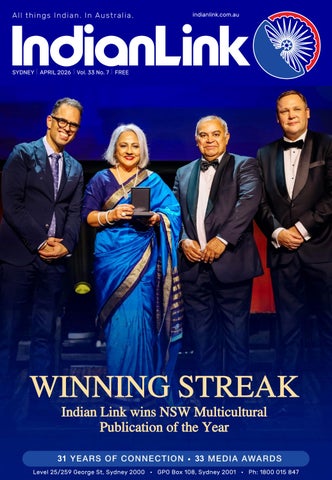
MULTICULTURAL PUBLICATION OF THE YEAR
INDIAN LINK brings home its 33rd Multicultural Media award.
Jyothsna Rao PhD wrote: This is such a well deserved award Pawan Luthra and Rajni Luthra. You run a great and high quality publication. Heartiest congratulations.
Vivek Bhatia wrote: Congratulations Rajni, Pawan and the entire team at Indian Link Media Group on this wonderful recognition - so very well deserved! Keep shining and leading the way Jerry Kalogeropoulos wrote: Congrats Pawan Luthra! Now if you could please give The Greek Herald a chance next year, I’d greatly appreciate it!
Stan Grant wrote: Rajni, what a powerhouse you are! You’re not bad either, Pawan. Seriously, the two of you, your family and your team make this already wonderful country even better, more caring and smarter. Congratulations. Harry Mantzouratos wrote: Pawan Luthra, you and Rajni provide a positive energy in a world that increasingly needs us to focus on the things that unite us, that builds our communities and brings the best out of us. You do that and more. Thank you and congratulations on winning this award.
Darshak Mehta wrote: Every time I read an issue of Indian Link it informs, engrosses, broadens and challenges. So many wonderful stories about so many inspiring people, all pursuing their hobbies, talent, passions and professions as if there is no tomorrow. I can only imagine what a Brobdingnagian labour of love each issue is. (I felt compelled to write this after rummaging through the latest issue in the solitude of the morning, soiling it with tea and toast).
Sarita Chand wrote: Absolutely wonderful, and so well deserved. You have done an amazing job, galvanizing the diaspora into a coherent entity.
Twinkle Bhambri wrote: Many congratulations! What an incredible achievement and well-deserved recognition of your dedication to quality journalism and fostering inclusion. Truly inspiring!
Brian Laul wrote: Congrats Pawan Luthra & Rajni Luthra. So well deserved for all the hard work you put in day in and day out to keep us informed and be such a strong community voice.
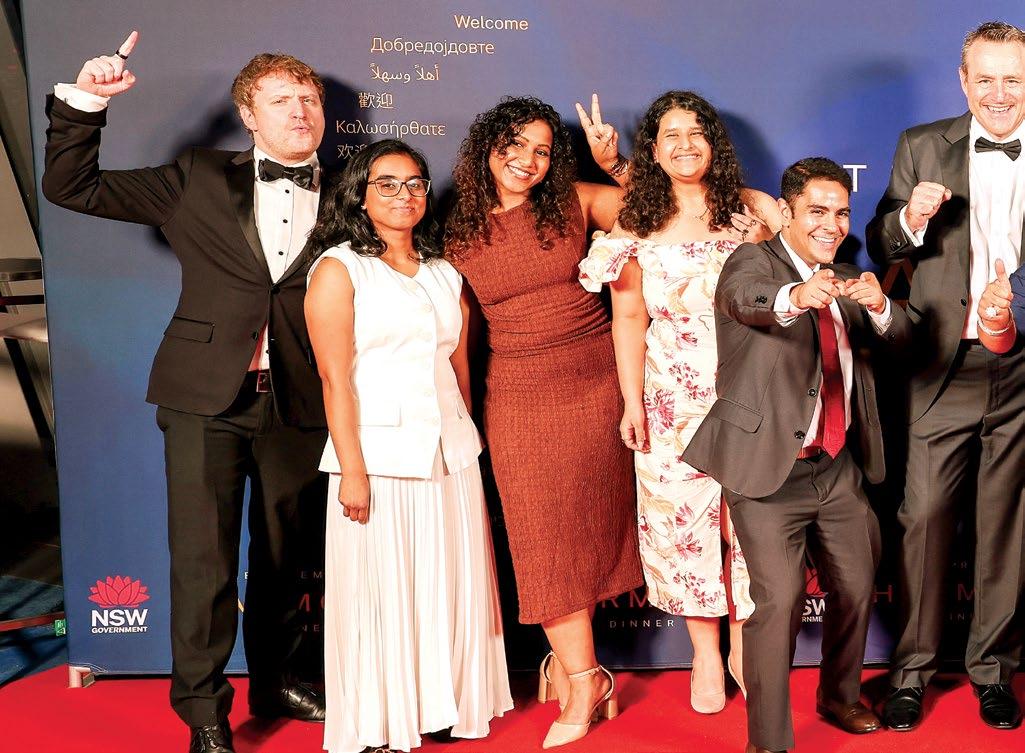
Tarini Puri wrote: Indian Link Media Group has allowed me to continue to call myself a journalist as I have opportunities to continue writing meaningful articles and to be one of the record keepers of the multiculturalism that is shaping modern Australia. From teaching me my first professional lessons in Australia when I arrived here nine years ago, to inviting me to join them at the Premier’s Harmony Dinner as they walked up on stage to receive their 33rd award, their win almost feels personal. It’s a mix of pride, joy and that warm feeling of being accepted.
Pheroza Daruwalla wrote: Congratulations and best wishes on the many successes and awards, that are most richly deserved. I love reading the stories and the news coverage in Indian Link.
Dimitra Skalkos wrote: Congratulations to my colleague, fellow publisher and IMMA - Independent Multicultural Media Australia member Pawan Luthra of Indian Link Media Group, recognised for excellence in multicultural media.
Arun Krishnan wrote: What a splendid achievement - 33rd award. Truly well deserved. Thank you for being the voice of and for the Indian diaspora ever since your first edition of the publication. Thank you especially for publishing the news from my state WA. Here’s to many more awards in the offing. Kudos to Team Indian Link.
Sheba Nandkeolyar wrote: Indian Link Media Group was awarded the best multicultural publication and we can clearly understand why, as both Pawan Luthra & Rajni Luthra live their passion everyday through this remarkable media group they have created.
Satwant Singh Calais wrote: Heartiest congratulations on winning the Multicultural Publication of the Year award. Winning 33 awards is an extraordinary achievement, reflecting the professionalism, journalistic creativity, and integrity that define your organisation.
Well done, and as they say in Punjabi, Fateh Chek!
Indians in Sydney wrote: Another year, another well-deserved recognition. And a reminder that powerful storytelling still has the ability to bring communities together.
Thank you for your congratulatory notes Anjali Agarwal, Neelam Vasudevan, Amit Wangnoo, Dr. Fotis Kapetopoulos, Bijinder Dugal, Sharad Rastogi, Wendy Huang, Dr Sonu Bhaskar, Nickie Flambouras, Aarti Betigeri, Madhu Chaudhuri, Ritam Mitra, Vijay Khurana, Yvette Lamont, Cameron Johnstone, Iqtedar 'Kim' Abdi, Preeti Jabbal, Arun Mistry, Deepa Anand, Sameer M., Javed Khan, Dimitra Skalko, Eugene Reinboth, Claire Cogswell, Rajesh Kalyanaraman, Ramu Chakravarthy, Adil Sarkari, Sarah Macdonald, Mahathi Goruthi, Adam Moremon, Gillian Lamoury, Bhavna Bidani, Akhil Dayal, Mahrukh Mundul, Clare Baxter, Aparna Thadani, Ruchikaa A Mangla, Sue Advani, Nidhi Sharma, Timsi Marwah, Mahathi Goruthi, Charu Mahajan, Dr. Preeti Khillan, Niyati Libotte, Shantana Deka Dutta, Krish Na, Chitra Iyer, Amar Singh, Shantha Viswanathan, Ajaz Ali Khan, Aneeta Menon, Suman Mathur, Sumathi Krishnan, Tila Gera-Popat, Tanvi Mor, Pradeep Taneja, Neelam Vasudevan, Aisha Amjad, Smita Shah, Mala Mehta OAM, Rani Jhala, Meena Mahanty Kumar, Aruna Chandrala, Ana Tiwary, Gai Harinath, Sachin Wakhare, Poornima Menon, Alan J Maurice, Pratibha Bhanushali, Jyotsna Sharma, Namita Matani, Manisha Belani, Shanti Raman, Bindi Shah, Dinsha Palkhiwala, Saba Zaidi Abdi, Uma Srinivasan, Seema Bhardwaj, Sunita Ji, Sarita Sachdev, Krishna Srinivas, Amrita Kohli, Rekha Rajvanshi, Mitu Bhowmick Lange, Torrsha Sen, Parth Kapoor, Charan Ahujaa, Charu Luthra, Premila Sadanandan, Rhonda BrightonHall, Neeru Saluja, Jyoti Dogra, Sharad Rastogi, Sandeep Hor, Soma Kochak, Gauri Tolgarkar, Bhavna Bidani, Usha Chandra, Yvette Lamont, Sunil Bhalla, Akhil Dayal, Adam Moremon, Ramu Chakravarty and Jimmy Medhora.
PM MODI: PROPOSED THIRD TRIP TO AUS
PAWAN LUTHRA on the news of the highly anticipated prime ministerial visit.
Bruce Erwin wrote: This is good news. It’s great to see the relationship between India and Australia getting stronger.
Wes Morris wrote: Mark Carney a couple of weeks ago. Usula von der Leyen at present. Narendra Modi coming up, in July. It remains to be seen how successful Labor is in securing ongoing fuel supplies from our Asian partners, noting that those Asian refineries source much of their crude oil from the Middle East. But at least we don't have a Federal Government that has created a damaging Trade War with our largest trading partner. At least we don't have a Federal Government that has antagonised the entire Pacific region, the region we happen to live in. So, yes, this is a period of Chaos. But by forming a range of trade partnerships with single countries, and with collectives of countries, that believe in the principles of multilateral trade, we are at least doing what we can to minimise the chaos.
Jagdeep Singh wrote: I guess to strike a deal for buying gas and selling fuel to Australia. Let’s see where it goes.
NEW BOX OFFICE HEIGHTS
TORRSHA SEN on the record-breaking Indian blockbuster Dhurandhar. Smita Pawar wrote: Ranveer was mind blowing - glad I watched it first day first show to avoid spoilers.
Shweta Doke wrote: Going tonight - switched off my phone to avoid all spoilers!
Anshuman Jain wrote: Ranveer was fine, but the film was a drag... too many plots and angles spoiled it.
TJ wrote: Happy to say I was one of those in the packed cinema at 10.00am the day after release. Loved it, I want every blockbuster released here at the same time (as in India). I would also like the songs to be subtitled in English.
GUESS THE MOVIE
An endless wedding celebration. An unspoken love story. Yet, Tuffy is the only one who knows what should happen.
Readers Akhil Jhingran, Ankush Gokarn, Megha Vagela, and Varsha Mehra Arora guessed correctly: Hum Aapke Hain Kaun.
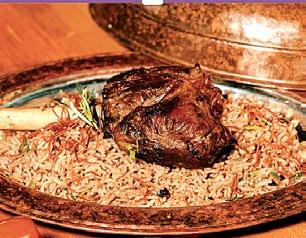
RUM & AUSSIE LAMB CHOPS IN THE TANDOOR
CHARMAINE O’BRIEN on how food paved the way for Australia-India bilateral relations.
Pawan Luthra wrote: Curry and rum. That settles the debate of what drink to pair with Indian food.
Javed Khan wrote: Who would have thought curry was shaping Australia’s culinary stock as early as 1790! And pairing it with rum – yes, looks like the food and beverage pairing debate was settled centuries ago.
Sangeeta Rao wrote: So informative. Thanks for sharing.
Mala Mehta wrote: Fascinating piece of history – so well-researched.
Adrian Karl Nill wrote: What would they do with suji?
Jyoti Dogra wrote: Informative!
Ashwini-K Aggarwal wrote: Fascinating perspective on how food can be such a powerful catalyst for international relations!
Sarita Seth wrote: Amazing story.
Shanti Raman wrote: Great story.
Kavita Cheenu wrote: It’s a great story, learned a lot.
Sanskar Sharma wrote: Fascinating how food acts as such a powerful bridge! This article highlights the delicious and complex history behind Australia and India's enduring relationship.
Sahaayak Inc wrote: Culture travels fastest through food - long before policy catches up.
Uma Srinivasan wrote: Great story.
Radhika wrote: One key omission from this fascinating history is India’s contribution to Australia’s increasing demand for sugar and the human trafficking it engaged in that subsequently funded some of the wealthiest institutions right here in NSW.
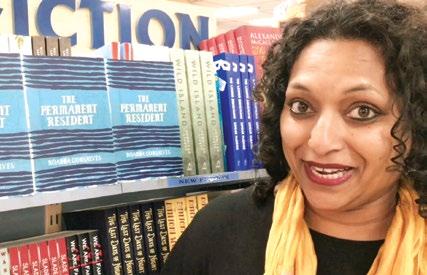
I BORROWED MY FIRST BOOKS IN MUMBAI…. … Now Sydney libraries are home, wrote ROANNA GONSALVES.
Sharon Rundle wrote: The power of books, reading and libraries – and how they open new worlds. I really related to this story by Dr Roanna Gonsalves.
Rajni Anand Luthra wrote: Took me back to books and comics and magazines I devoured as a young reader. And the ‘lending libraries’ friends set up in the various cities I lived growing up – such a common thing, but so foundational, I realise now.
Roanna Gonsalves wrote: Thank you Indian Link for your staunch and unfailing support of Indian-Australian writers and artists over many years.
Get the best of Indian Link straight in your inbox. Scan the QR code to sign up to our weekly enewsletter
HAPPY 33rd!
A growing legacy continues, as Indian Link is once again recognised for its long-standing contributions to the multicultural media landscape
TBY SRUTHI SAJEEV
he NSW Premier’s Harmony Dinner, organised by Multicultural NSW, was a night of recognition, reflection and community - but for Indian Link, it marked yet another milestone in a journey shaped by storytelling and purpose.
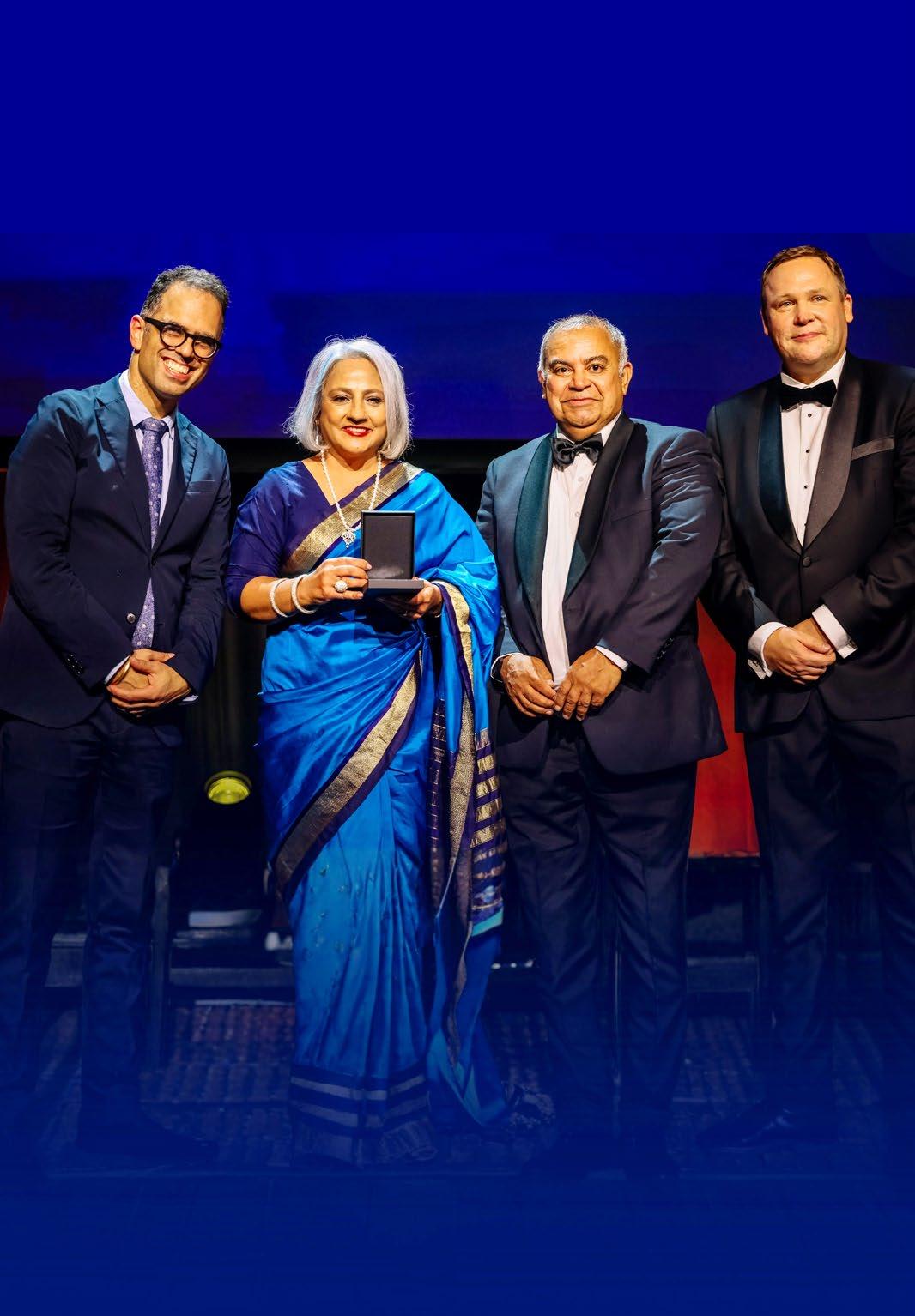
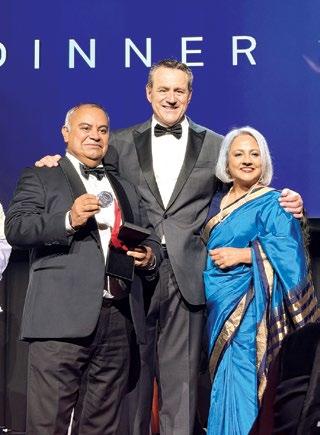
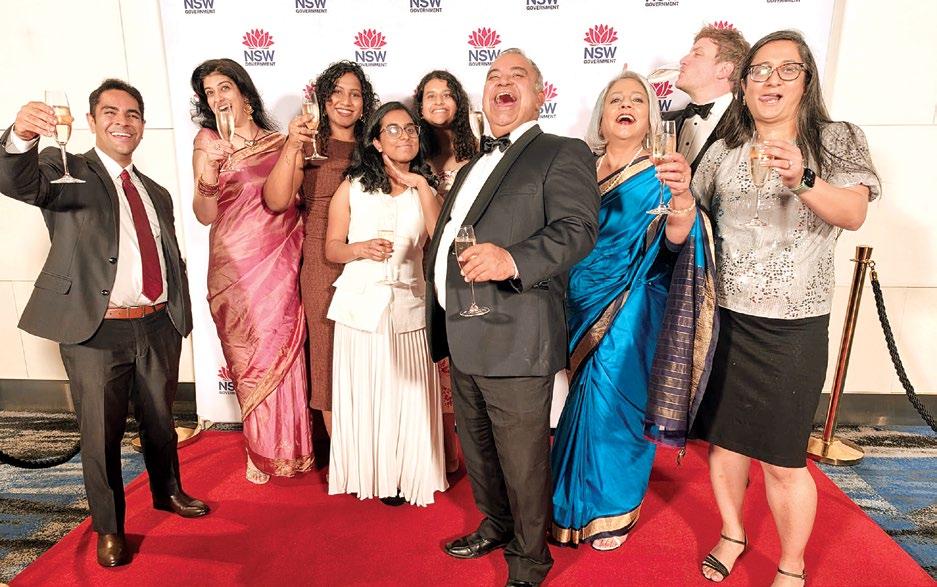
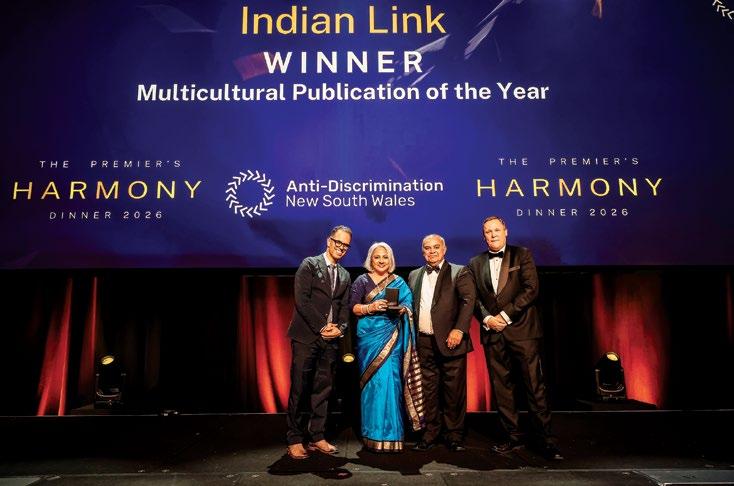
The masthead brought home the ‘Multicultural Publication of the Year’ award for 2026, its fifth win in this category since the awards were instituted in 2012. It was one of several honours identifying excellence across the state’s multicultural community.
Young journalist Khushee Gupta also won the ‘Best Report in Multicultural Media’ award for her Indian Link podcast Don’t Talk Back.
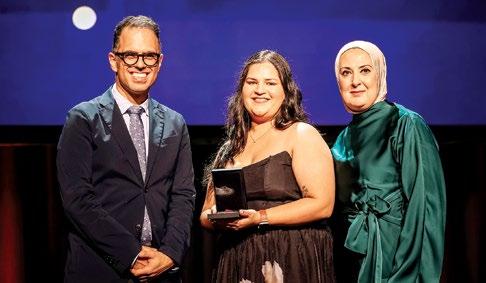
The Multicultural Publication of the Year award was presented to Rajni and Pawan Luthra by the Treasurer of NSW Daniel
Mookhey, himself of Indian origin and a long-time supporter of Indian Link.
From its early days in 1994 as a small publication serving a nascent community, Indian Link has grown into a platform that continues to document, connect and reflect the Indian-Australian experience.
Reflecting on the collective effort behind
the publication, Rajni Luthra expressed, “It was a proud moment to be up there with Pawan receiving the award – though we truly wished the whole team could have been beside us. We did it together – Charu Vij, Lakshmi Ganapathy, Torrsha Sen, Sruthi Sajeev, Ash Reynolds, Apoorva Tandon, Khushee Gupta, Shailesh Tinker,
Harini Sridhar, Sagar Mehrotra – each of you go above and beyond, often quietly, but always with purpose. Thank you for your commitment, care, and excellence.”
She also acknowledged the regular contributors whose industry insights and experience have greatly informed Indian Link’s stories through the years.
“Prutha Chakraborty, Darshak Mehta, Ritam Mitra, Manan Luthra, Khushaal Vyas, Sydney Srinivas, Tarini Puri, Ekta Sharma, Neeru Saluja, Sandip Hor, Charmaine O’Brien, Auntyji, and so many others, your outstanding work has played a valuable role in shaping and elevating our publication. We deeply appreciate your contribution. Pawan and I also thank our advertisers for their continued trust, which allows us to maintain the quality of our work.”
Over the past year, Indian Link has upheld its commitment to reporting on the vital stories at the heart of the Indian-Australian community. Its balanced and varied reportage of major events such as the antiimmigration and anti-Indian protests and the 2025 Bondi attack offered great insight into
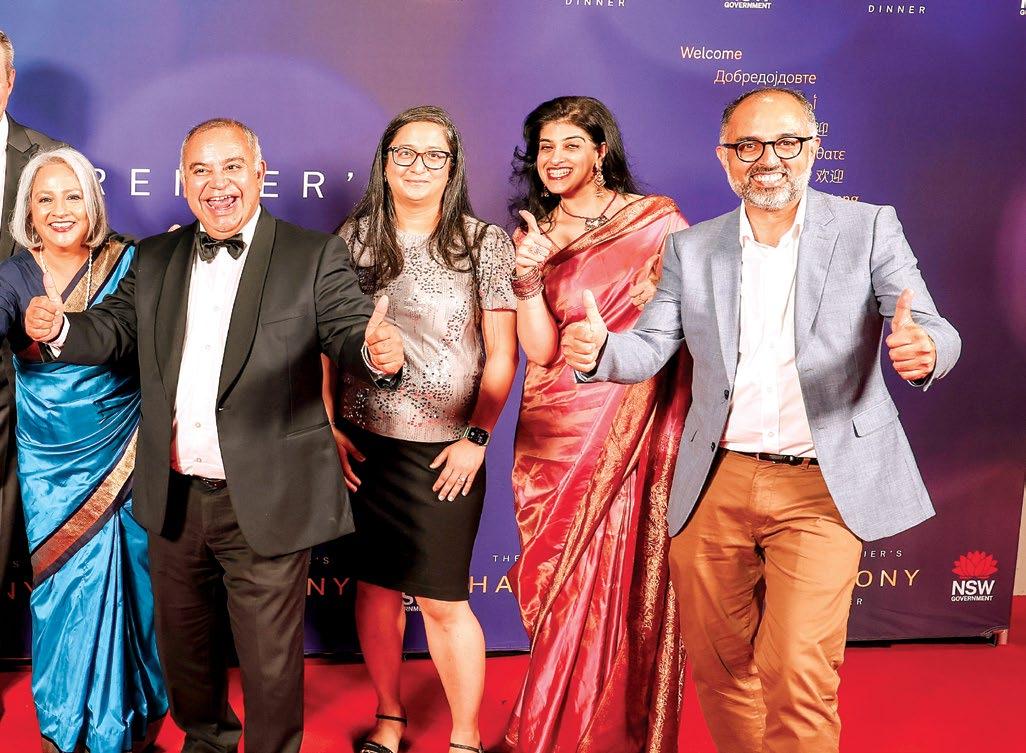
From left, Ash Reynolds, Sruthi Sajeev, Harini Sridhar, Apoorva Tandon, Manan Luthra, NSW Minister for Multiculturalism Steve Kamper, Rajni Anand Luthra, awan Luthra, Tarini
Khushee Gupta, winner of Best Report Award
the attitudes of the community at large.
Rajni credited co-founder Pawan Luthra for his advice in navigating through this period.
“Pawan has been the perfect partnerin-chief,” she noted. “He brings to this endeavour deep insight into the community we serve, along with foresight and the courage to take risks. I especially value his ability to cut through the noise and offer thoughtful, dispassionate advice that is firmly rooted in principle. Our entire team – core and extended – has come to rely on him for that.”
Pawan Luthra’s reflections on multicultural storytelling were, characteristically, macro in outlook. He noted, “To the Indian community in Australia – whom we seek to understand, engage with, and represent with care – thank you for your dynamism and for being such a rich source of stories. It is your diversity that ensures our storytelling continues to have depth.”
He added, “To the wider community in which we live and work, our growing interactions have revealed shared strengths. It has been heartening to see that there is far more that unites us than divides us –giving us even more stories to tell.”
Indian Link’s win was part of a greater celebration of harmony and unity. These messages were echoed by Ahmad Al Ahmad, hero of the Bondi terror incident, who shared his thoughts with Joseph La Posta, CEO of Multicultural NSW.
“We should celebrate multiculturalism every day,” he emphasised. “Australia is a country that is known for its unity and
NSW Treasurer Daneil
and President
harmony – it’s the reason why everyone wants to come here.”
Earlier in the evening, the Premier of NSW Chris Minns commended the state’s multicultural community for coming together in support of the Jewish community
in the wake of the
The night also included a posthumous salute for those who dedicated their lives to serving the multicultural community. Those recognised came from a broad cross-section of society, from not-for-profit founders to
language school teachers.
This year’s win brings Indian Link’s total tally of awards to 33, cementing its place as a stalwart for Australia’s multicultural groups and as one of the most influential diverse voices in the broader community.
of the Anti-Discrimination NSW Chris D'Aeth present the award to the Luthras
July dates firm for Modi visit down under
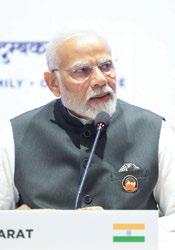
Indian Prime Minister Narendra Modi’s proposed third visit to Australia will be set against a shifting global backdrop
WBY PAWAN LUTHRA
hile an official announcement is still pending, it is expected that PM Narendra Modi will be in Australia on 8 July for 48 hours after his first ever visit to New Zealand.
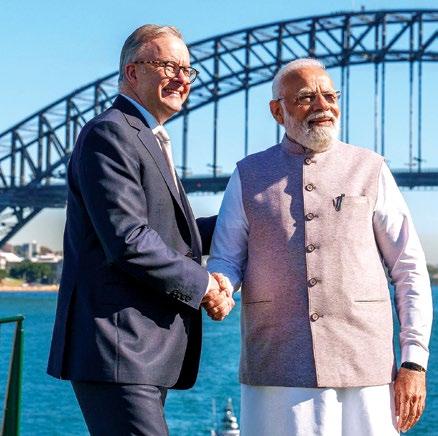
This will be his third visit to Australia. His previous visits in 2014 and 2023 were hailed as landmark diplomatic visits with PM Anthony Albanese likening Mr Modi’s turn at Qudos Arena to that of ‘The Boss’ Bruce Springsteen, and the Sydney Opera House illuminated in the tricolour.
However, uncertainties on the world stage continue to remain a caveat for his 2026 visit.
“Of course, we need to be mindful about the fast-changing global geopolitics which can cast a shadow over any planned visit, but at the moment, it is all systems go on the visit,” said a source who did not wish to be identified.
No official announcement has yet been made by the Australian Dept of Foreign Affairs and India’s Ministry of External Affairs or its Ministry of Trade and Commerce. It is expected that details will be officially confirmed once the new Indian High Commissioner Nagesh Singh takes up his role this month.
This visit down under, should all go to plan, will start with a visit to New Zealand on 6 July.
NEW ZEALAND
It was 40 years ago that an Indian Prime Minister last visited New Zealand.
Prime Minister Rajiv Gandhi travelled to Wellington in 1986, at a time when global politics were defined by nuclear tensions and ideological blocs. That trip was shaped less by trade and more by shared principles. New Zealand had just declared itself nuclear-free, straining ties with traditional allies, while India championed global disarmament as a leader of the NonAligned Movement. The visit underscored common ground on anti-nuclear policy and independent foreign policy thinking, even though economic engagement remained limited.
Should PM Modi’s visit go ahead, IndiaNZ ties are poised for a reset after nearly four decades, reflecting how geopolitics and priorities have evolved since the Cold War era.
During the PM’s visit to NZ, it is expected that the Free Trade Agreement (FTA) will be formally signed. The two countries concluded FTA negotiations in late 2025 after years of stalled talks, marking a major step forward in bilateral relations.
Once implemented, the FTA is expected to significantly boost trade by reducing or eliminating tariffs on a wide range of goods and services. It will likely benefit sectors such as agriculture, technology, education, and services, while also improving market access for businesses on both sides.
Earlier negotiations between 2010
and 2015 had failed, mainly due to disagreements over agriculture, particularly dairy. The renewed progress reflects changing economic priorities and a growing interest in strengthening ties in the IndoPacific region.
The Indo-Pacific has emerged as a central arena of global competition and cooperation, bringing countries like New Zealand into sharper strategic focus for India. Both nations share concerns about regional stability, supply chain resilience, and the need for diversified partnerships.
Another key shift is the rapid growth of the Indian diaspora in New Zealand. Once relatively small, this community has become economically and politically influential, adding a new dimension to bilateral ties. At the same time, trade discussions have regained momentum, with both sides interested in unlocking opportunities in agriculture, education, technology, and services.
Despite these positive signals, challenges remain. Geographic distance, limited trade complementarities, and differing regulatory frameworks continue to slow progress. Yet the broader trajectory suggests renewed intent.
As both countries navigate a more complex global order, the absence of a prime ministerial visit since 1986 stood out as an anomaly.
PM Modi’s 2026 visit would not only be symbolic but could also mark a turning point – transforming a historically cordial
relationship into a more strategic and economically meaningful partnership.
AUSTRALIA
After two days in New Zealand, PM Modi is expected to arrive in Australia on 8 July to spend two days in Sydney.
At a time of challenging international issues, it is expected that the discussions will be on strengthening the Indo-Australian relationship.
It is to be noted however, PM Modi’s planned visit comes amid signs of strain within the Quad grouping, which also includes the United States and Japan. While leaders continue to emphasise cooperation, differences over strategic priorities and global alignments have slowed momentum.
Items high on the agenda will be trade in critical minerals, and also, a focus on the ongoing need of Australian capital for India’s infrastructure development. Both PM Modi and PM Albanese have framed this as a mutually beneficial partnership –supporting India’s growth ambitions while providing Australian investors with access to one of the world’s fastest-growing major economies.
However, taken together, Modi’s visits and Albanese’s outreach to India highlight a maturing partnership – one that remains resilient bilaterally, even as broader regional frameworks face growing uncertainty.
Away from politics, what the Indian diaspora here would be looking forward to, would be another opportunity to hear directly from Mr Modi.
With only 48 hours or less in Sydney, odds are shortening that his address to the Indian diaspora will be on 8 July.
His address to the community in his previous visits to Australia in 2014 and 2023 highlighted the growing importance of diaspora engagement in India’s foreign policy.
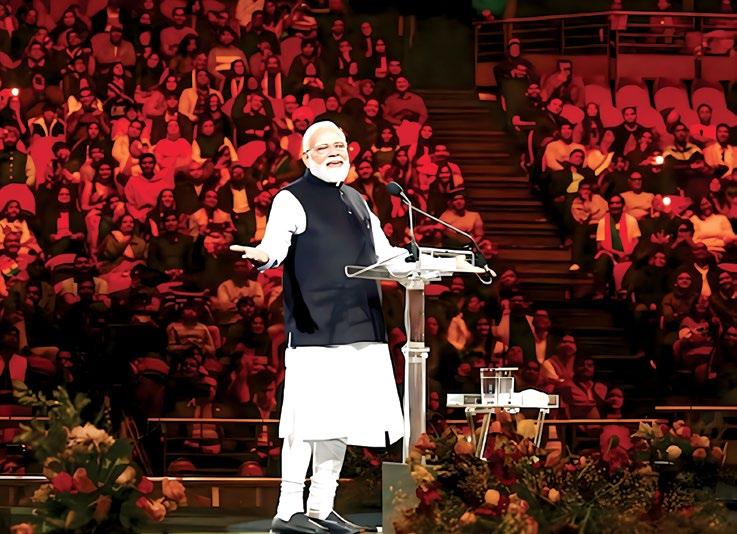
In 2014, Modi addressed a large crowd at Sydney’s Allphones Arena (now Qudos Bank Arena) during his first visit as Prime Minister.
The event marked a historic moment, as it was his first major outreach to the Indian community in Australia. His speech focused on India’s economic potential, democratic values, and the role of the diaspora as a bridge between India and Australia.
The enthusiastic reception signalled a renewed sense of connection among overseas Indians and set the tone for future engagements.
Nearly a decade later, in 2023, Modi returned to the same venue to an even larger and more energetic audience.
Over 20,000 people attended, creating an atmosphere often compared to a rock concert.
Anthony Albanese famously remarked that the welcome rivalled that of Bruce Springsteen.
Modi’s speech then emphasised themes such as democracy, diversity, and friendship, often summarised in catchy phrases like “democracy, diaspora, and dosti.”
While the 2014 speech symbolised a new beginning in India-Australia relations, the 2023 address reflected a new maturity and growing strategic alignment.
Three years later, amidst global trade and security uncertainty, PM Modi’s message will be closely heard not only by the Indian diaspora but also by political leadership worldwide.
‘A national disaster’: Truckies endure fuel shortage
A ceasefire in the Middle East is on the horizon, but is it too little too late for an industry home to so many financially insecure recent migrants?
ABY LAKSHMI GANAPATHY
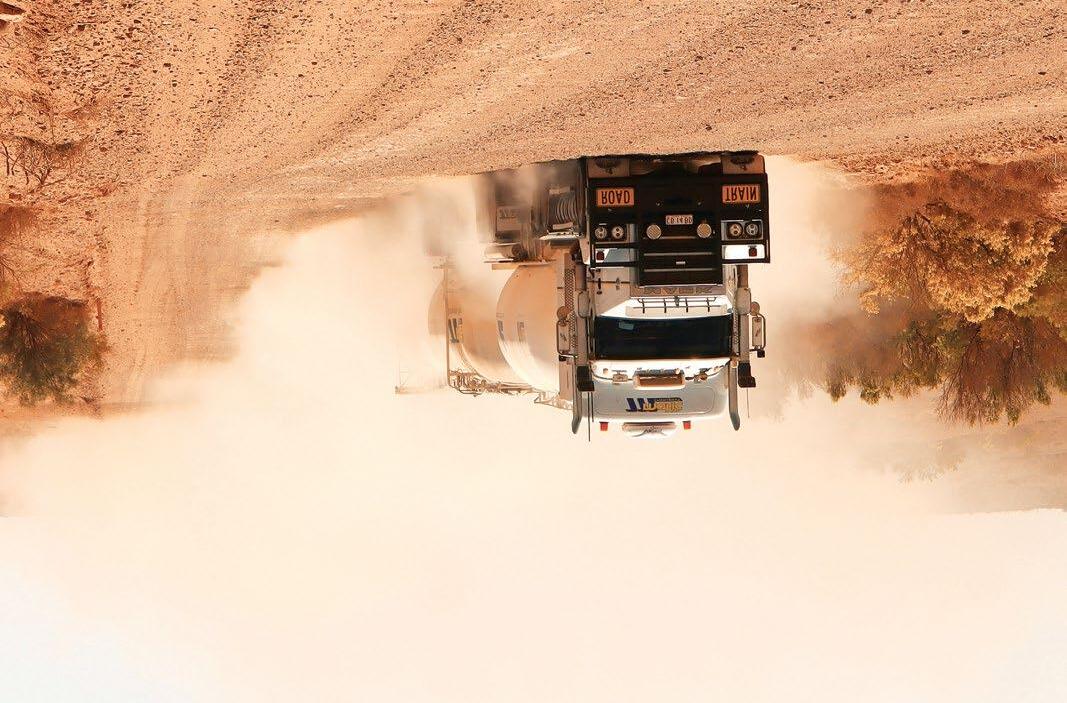
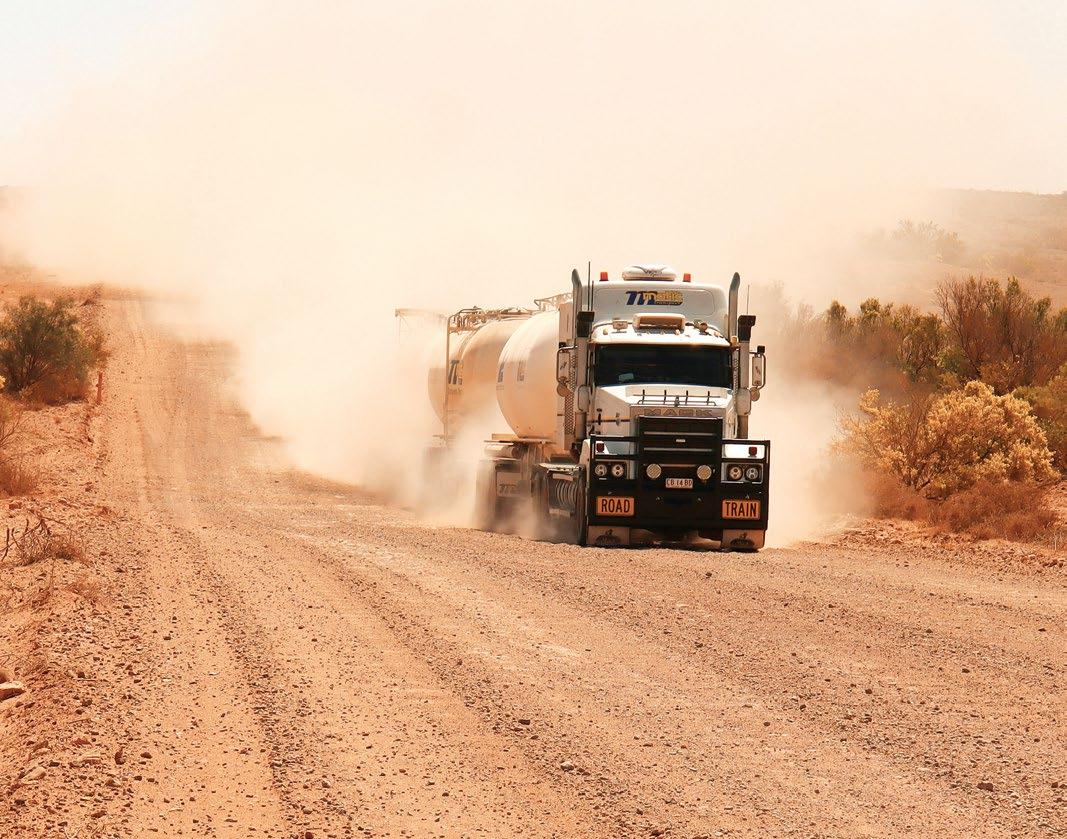
s the Strait of Hormuz remains blocked, and the price of diesel surges, the trucking and transport industries are continuing to feel the pinch.
News of a brief ceasefire is promising but may not be enough for workers who are ‘weeks away from going out of business’ according to transport advocates.
“Drivers who’ve been in this industry for decades have never seen it this hard,” says Michael Kaine from the Transport Workers Union, who are currently calling on major retail clients to share the burden of fuel prices.
“It is critical that we see fuel costs paid for by the top of the supply chain — the retailers, manufacturers and mining giants that are already increasing costs for customers, while truck drivers and businesses are struggling to hold on,” he said.
‘An uncertain future’
Transport operator Amar Singh says the fuel price pressure is resulting in an ‘uncertain future’ for workers, reduced shifts and redundancies continuing as transport companies divert their income towards petrol. Morale is low amongst transport business owners and workers, forced to choose between fuel and workers’ wages.
“You feel and hear the pain in their voice…it’s a horrible position to be in,”
Singh recounts.
With recently migrated Indian-origin truck drivers making up over five percent of the largely casual and shift-based industry, the fuel shortage has been particularly dire for those still establishing themselves financially.
“In our trucking meetings, I've heard from many people even offering to take a pay cut from the company to make sure that they can get some money in, rather than being told that they had to stay home,” explains Singh.
“You feel that in the general conversations
around our tea or coffee breaks, they’re concerned about how they’re going to work.”
Even despite the fuel excise cut, diesel prices have soared to almost 350 cents, nearly double what they were in February 2026.
“I've heard from companies that their fuel bill for a week has gone up - say it's a fleet of 25 to 30 trucks - by almost $50,000 on top of the normal spend,” Singh explains.
“No business has that much sort of running cash around, and that is the scary part.”
‘Bite the bullet and fill up’
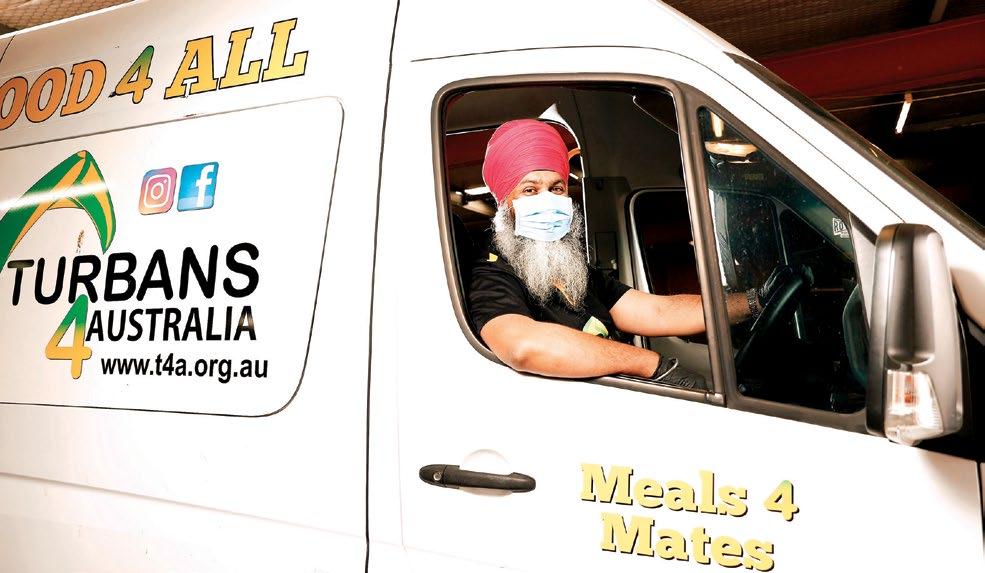
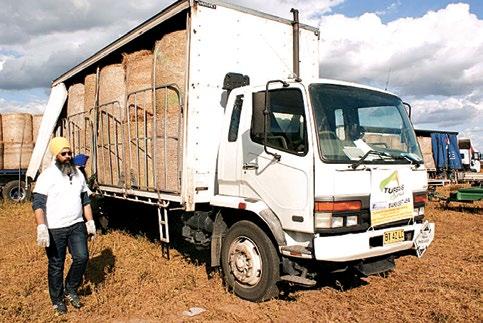
The founder of food relief charity Turbans4Australia, Singh says the fuel
shortage has caused them to lose volunteers and abandon pick-ups and deliveries of donations.
This has meant they will soon ‘have to send people away’ from their food relief service, an alarming prospect during an already strained economic period.
“There’s only so much reserve stock we have…unfortunately people are going to have to go elsewhere to seek that relief,” Singh says.
Earlier this month, the government passed the Fairer Fuel Bill, allowing the Fair Work Commission to fast-track emergency applications from transport operators.
A hearing is underway at the Fair Work Commission, where the Transport Workers Union have applied for a road transport contractual chain order, encouraging major retail clients to take greater responsibility for fuel prices.
Singh warns this latest proposal could devolve into ‘robbing Peter to pay Paul’ if major retailers pass on even more of their fuel costs to consumers.
He hopes instead to see the government freeze heavy vehicle tolls and fuel prices for the transport sector and activate disaster recovery funds for small trucking businesses. With no intervention in sight, Singh and other transport operators are forced to work through constant uncertainty.
“It does make you think every time you fuel up…but it's something you can't really live without, so you have to bite the bullet and fill up and try to keep doing what you’re doing at a smaller scale,” he says.
Amar Singh, transport operator and founder of Turbans4Australia
What India actually signed
FBY TANISHA SHAH
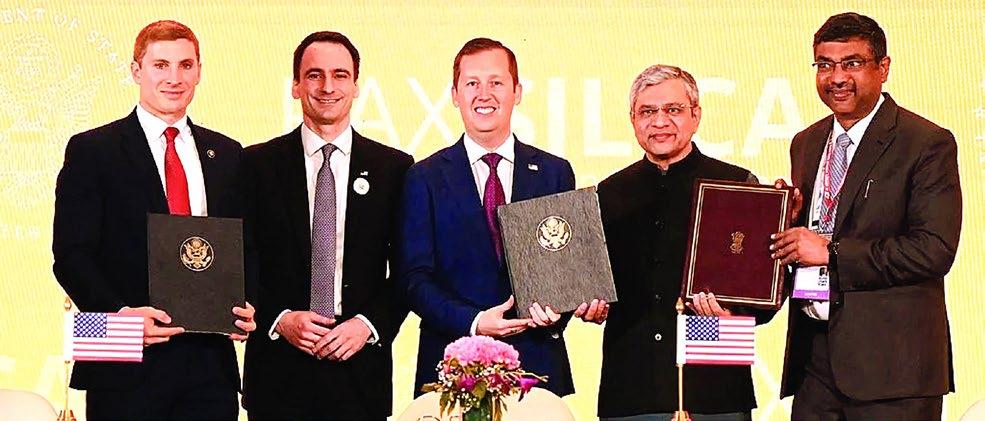
or most of India’s Independent life, non-alignment wasn’t just a foreign policy, it was a point of pride and built into the country’s bones. For generations of Indians who grew up with that policy, it became a part of how they understood India - principled, sovereign, and no singular country’s ally. In February 2026, India signed onto Pax Silica, a USled technology and supply chain initiative anchored around AI, semiconductors, critical minerals, and energy. For a community watching a world that feels increasingly like it is sorting itself into sides, and watching the news wondering what comes next, it is worth understanding what India actually walked into and what it is betting on getting out of it.
The reaction was swift. Popular media and social platforms framed it as a semiconductor alliance, a powerful new bloc tightening its grip on global chip supply chains. However, it wasn’t the narrative Washington and New Delhi were telling. In the Declaration, the word “Artificial Intelligence” appears five times, whereas the word “Semiconductors” only appears once. AI runs on silicon, critical minerals, semiconductors, and resilient supply chains. Pax Silica isn’t only about semiconductors, or chips, or minerals, but about the endto-end process of mining and processing critical minerals to manufacture chips for AI systems.
Established in December 2025, Pax Silica aims to secure critical technology supply chains and counter China’s
What India gets out of Pax Silica depends on decisions, contracts and funds that haven’t been outlined yet.
dominance in AI and hardware. Australia is a founding member alongside the United States, Japan, South Korea, Singapore, the United Kingdom, and Israel, among other signatories. India’s entry is a significant addition, as a large non-Western democracy with no mutual-defence treaty with the US, bringing reserves and a massive talent pool. It raises questions about India’s multialignment strategy and how far New Delhi is willing to collaborate with Washington on trade and security.
India’s entry ticket is its rare earth reserves, critical minerals processing ambition, and a vast talent pool for research and development. India holds the
third-largest rare earth reserves by most estimates, yet accounts for less than 1% of global mining output. Australia, by contrast, has an established mining and processing foundation. The two countries have had a formal Critical Minerals Investment Partnership since 2022 with the goal of strengthening the supply chains and investment in critical minerals projects.
The $250 million Pax Silica Fund, the US State Department’s flagship effort on AI and supply chain security, aims to address the risks of diversifying supply chains by creating a trusted network for trade. However, whether the fund supports India’s ambitions of becoming a processing partner
depends on whether India is able to leverage the Fund’s goal of securing supply chains to build its processing capacity. That said, the fund still requires Congressional approval, and has no guarantee in the current US fiscal environment.
This gap between India’s reserves and its processing reality is where Pax Silica’s founding members hold the most leverage over India’s ambitions. But the minerals discussion is part of a larger questionone that matters directly to Indians and Australians working in technology, research and innovation. Who gets to have a say in how AI is developed and deployed? If the US, UK, and Japan amongst other key players in AI continue to set the rules for how AI is developed and deployed, Indian and Australian professionals may find themselves compromising within a framework that doesn’t fully support their ambitions. Through this partnership, India has a chance to establish itself as a credible partner in the AI ecosystem, not just a provider of raw materials and human resources.
The Pax Silica Declaration is almost four months old. The Pax Silica Fund is relatively newer - announced in late March 2026, only weeks after India signed the Declaration. India’s joining of Pax Silica is perhaps better viewed as an audition. Joining an initiative where the norms, rules, and goals are all pre-determined, India will have to convert its mineral reserves and talent pool into genuine influence over how the initiative evolves. How the Fund’s contracts are structured and whether they align with India’s processing ambitions will be the first real answer. What India actually signed is clearer than what India will get out of it.
Tanisha Shah is a Masters of International Relations student at The University of Sydney.
Men who get it right, recognised
From South Australia to the national stage, these awards honour men making a quiet but profound difference
MBY PRUTHA CHAKRABORTY
uch of today’s discourse around masculinity is dominated by the language of crisis – toxic traits, harmful behaviours, and what needs fixing. While these discussions are necessary, they often leave little room to acknowledge the many invisible men who are quietly doing the right thing –showing up with integrity, supporting their communities, and leading with empathy.
It is this gap that Adelaide-based Professor Raj Shekhawat is trying to address by shifting the narrative from critique to recognition through the Positive Role Model Awards. This is a growing initiative that celebrates men who embody what positive masculinity can look like in action.
The idea is simple – celebrate healthy, constructive masculinity, to inspire other men to follow. The awards, first launched in 2024, and after two successful rounds in South Australia, are now expanding nationally, with the first stop in Victoria on 12 June this year.
“The idea emerged from a simple but powerful observation,” Prof. Shekhawat tells Indian Link. “We are surrounded by extraordinary men doing good work quietly, consistently, and without recognition.”
The timing, he stressed, cannot be more accurate. “Why now? Because we are at a point where redefining masculinity in a constructive, inclusive way is not optional, it’s essential.”
“To me, positive masculinity is about responsibility, respect, and contribution. It’s about showing up with integrity, being accountable for your actions, supporting others, and using your influence for good.”
Celebrating positive men
The thinking behind the awards is rooted in Prof. Shekhawat’s years in academia – a journey he describes as unplanned but transformative.
“My entry into academia was never part of a grand plan, it was shaped by opportunity, curiosity, and a desire to contribute,” he recounts. “The turning point came after completing my PhD from the University of Auckland, NZ, when I realised that academia wasn’t just about teaching or research; it was a platform to influence systems, shape future professionals, and create meaningful societal impact.”
What began as an accident, he adds, “became a deliberate commitment to impact at scale.”
At the core of both his academic and community work is a strong belief in people.
“I am a product of generosity,” he confesses, continuing, “Every meaningful opportunity I’ve had has been because someone believed in me, often before I believed in myself.”
Shekhawat emphasises the role of mentors and networks in shaping his path. That grounding is reflected in how the awards define and identify impact.
For Shekhawat, positive masculinity is not about grand gestures but everyday actions.
“To me, positive masculinity is about responsibility, respect, and contribution… it’s about showing up with integrity, being accountable for your actions, supporting others, and using your influence for good.”
It also embraces “vulnerability, kindness, and strength in equal measure”.
Finding the model man
The focus of the Positive Role Model Awards is on the “quiet achievers” – those who work tirelessly behind the curtains, but their work’s impact is evident.
“Impact isn’t always loud or easily quantifiable. We look for consistency over time, depth of contribution, and the ripple effect individuals have on others,” he explains. Often, it is testimonials from communities and colleagues that reveal the true extent of someone’s influence.
The response to the awards has been positive. Reflecting on the first two editions, he recalls “the sheer depth and diversity of stories” – from teachers and tradies to healthcare workers and community leaders.
“What stood out was the humility. Many nominees didn’t even see themselves as
role models,” he says, reinforcing why such recognition matters even more.
This year as the initiative grows beyond South Australia, maintaining its core ethos is crucial. “We are intentionally keeping the focus on storytelling, community validation, and meaningful engagement rather than scale for the sake of visibility… If we ever lose authenticity, we lose the essence of why this started.”
In a landscape where conversations often revolve around toxic masculinity, Shekhawat believes there is a need for balance. “If we only focus on what’s going wrong, we risk overlooking and undervaluing what’s going right. Highlighting positive role models doesn’t negate the challenges, it provides tangible examples of what good looks like.”
For him, the awards are only the beginning. “The awards are just the vehicle, the real goal is cultural change,” he says. “This is about creating a movement that celebrates contribution, encourages reflection, and inspires the next generation.”
Financial Reporting Specialists are the sponsors for the inaugural Victorian awards, to be presented at the Men’s Health gala event on 12 June. Winners will receive a cash prize totalling $1,000, and a certificate.
To nominate men for the 2026 Positive Role Model Awards, use this QR code.
Prof. Raj Shekhawat, Founder of the Positive Role Model Awards
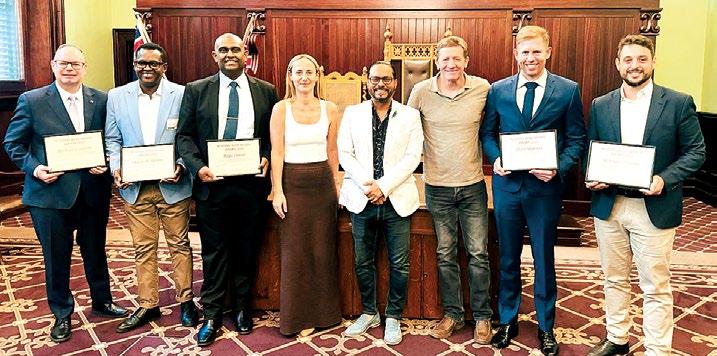
2025 Positive Role Model Award winners from South Australia
Dalit and First Nations voices meet and shine at Adelaide Fringe
A spoken word production brings caste, Country, and colonial histories into a powerful shared dialogue
TBY PRUTHA CHAKRABORTY
his year’s Adelaide Fringe was different. The iconic arts festival where thousands of performances compete for attention, the presentation ‘We Belong’ did something rare – it made audiences stay back in silence, then speak. Not just about poetry, but about memory, erasure, caste, Country, and the uneasy inheritance of language. When the spoken word performance ‘We Belong’ won the 2026 Award for Excellence in Poetry, it marked a milestone for an India-Australia collaboration. But for its director Tess Joseph, the recognition pointed to something deeper: that poetry, when held with care, can carry histories across continents – and still feel intimate.
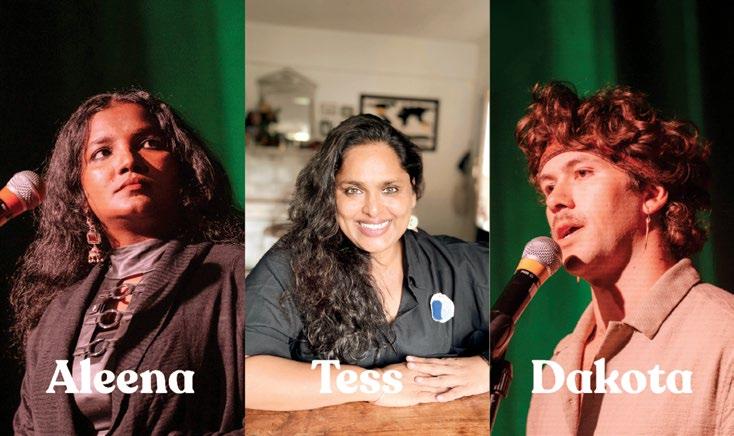
Bringing together Australian First Nations poet Dakota Feirer and Indian Dalit poet Aleena Sabu, ‘We Belong’ creates a live dialogue between two marginalised histories – without collapsing their differences. The show is created by Kommune, a Mumbaibased creator collective.
How the idea took root For Tess, the project began not as a
production, but as a feeling.
“I start my days with poetry,” she tells Indian Link. “It’s something my Amma began with me, and it has stayed like a quiet ritual, a way of listening to the world before all the talking begins.”
That instinct sharpened a few years ago while moderating a panel with First Nations poet Kirli Saunders. What she heard echoed something she already knew from Dalit and Adivasi writing – particularly from Aleena and poets like Jacinta Kerketta.
Different lands, but a shared pulse of land, identity, memory, and resistance.
“That’s when the idea first began to take shape: what would it mean to bring these voices together in conversation?”
By the time she arrived at Adelaide Fringe in 2025, the idea had found direction.
When funding opened up, ‘We Belong’ became the proposal she had to write.
“It began as a concept, but I trusted that if we brought the right artists together, something truthful would emerge. And it did.”
English language, a bridge and burden
At the heart of ‘We Belong’ lies a central tension: English as both bridge and burden.
Tess deliberately places Aleena’s ‘My English’ alongside Dakota’s ‘English is my foster home’, forcing the audience into discomfort from the outset.
“English as access, but also as violence, as inheritance, but it not being the language that runs in our veins,” she explains.
Rather than smoothing this contradiction, the performance leans into it.
“We made deliberate choices to rupture English. Aleena’s ancestral Malayalam chant enters the second segment of the show as an invocation before comprehension. Its meaning is offered after it is sung.”
Through oral traditions – whale songlines, Pulaya cosmology, grandmother memory – the work reclaims spaces that existed long before English.
“So English becomes the bridge, but never the root.”
A stellar performance built across distance
In November 2025, the team began meeting weekly on Zoom, building trust, exchanging stories, and slowly shaping the work.
“The structure emerged like a journey, not a framework,” Tess says.
The narrative moves from language to myth and origin, then into lineage and water, before arriving in the present –where borders, visas, and bureaucracy
complicate belonging.
Then came the challenge: the team met in person just one day before the actual show.
“We had one day. Four runs in my hotel room and one on stage rehearsal only. Jet lag wasn’t on the call sheet!”
Yet when the performance finally came together, something clicked.
“I still remember the first time we performed the duet in person. Suddenly – it landed! It was relief but also felt like ‘an arrival’.”
When two worlds meet For Dakota Feirer, the show’s tone was set by “a provocation of solidarity across oceans”.
At its core was a question: “if two of our ancestors met, what would they say to one another?”
The answer unfolds through a dialogue that connects, but does not collapse, Dalit and First Nations experiences.
“’We Belong’ is also one of a kind in terms of a storytelling exchange between Dalit peoples and First Nations Australian peoples,” Dakota says.
“The specificities are different, but the realities often mirror each other,” Aleena adds. “We did not merge experiences, we allowed them to stand alongside one another in conversation.”
Dakota found that exchange equally powerful.
“By not hanging up her Dalit identity before entering the room, Aleena forces everyone else to undress,” he says about his co-performer.
What emerges is not just comparison, but connection.
“What ‘We Belong’ ultimately offers to the world is a pause… that we are all bound by a shared human experience,” Dakota explains.
When ‘We Belong’ won at Adelaide Fringe, Tess redirected the credit.
“The award is an honour for all of us, but this award belongs to Aleena and Dakota. Their words… that is what won.”
For her, the recognition validates spoken word as something far more than performance.
“It is a living, breathing art form – it can hold the past and speak to the present and our future.”
IBY PRUTHA CHAKRABORTY
ndia has more than 100 million people living with Type 2 diabetes, but in Meghalaya’s remote tribal communities, doctors are now witnessing changes they never saw before: heart attacks in 28-yearolds, strokes occurring almost daily, and lifestyle diseases that were rare just 10–15 years ago.
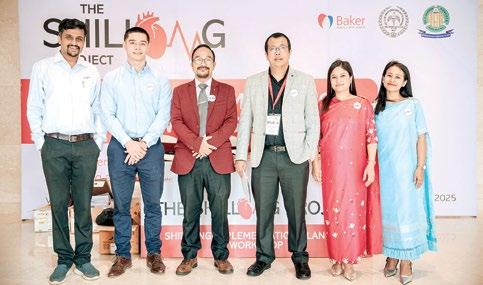
It is this rapidly shifting health landscape that has brought Australian and Indian researchers together for the SHILLONG Project, which is recruiting over 1,300 young people across 40 remote villages, one of the largest community-focused prevention efforts in the North-east.
The initiative is led by The Baker Heart and Diabetes Institute, Melbourne, in partnership with Christian Medical College Vellore and Dr H Gordon Roberts Hospital in Shillong - a collaboration designed to prevent an impending public health crisis in one of India’s most underserved regions.
An Australian take
When Australian researcher Kai Wallens first visited these villages, the contrast between resilience and vulnerability struck him immediately.
“My first impression was a mix of admiration and concern,” says Wallens from Prof. Brian Oldenburg’s Noncommunicable Diseases and Implementation Science Lab at the Baker Institute. “These villages are remote, isolated, and beautiful, but life there is more challenging than it may initially look. Many families seem to travel long distances for school, work, or basic services.”
Healthcare, he noticed, was hours away for many. Even basic checks required long travel. Yet what stood out most was not the lack of access, but the powerful sense of belonging.
“The Khasi people are known for their efforts to preserve their community and cultural roots,” Wallens elaborates. “The challenge is that young people are now navigating their way between two worlds. That tension creates real health risks, but it also shows how much opportunity there is to support them with the right tools, processes, and ways of thinking.”
For researchers, the urgency lies in how quickly lifestyles are changing.
“Tribal and rural communities are shifting from very active, traditional lifestyles to more sedentary jobs and more processed foods –and it is happening in as little as one or two
Heart attacks at 28
Inside an Australia-India project transforming health in Meghalaya - a collaboration targeting change across 40 remote villages
generations,” Wallens explains.
With limited access to doctors or screening, diabetes in rural Meghalaya is often detected late, once complications have already begun. He says, “It means that our project must be developed such that we strive to prevent a large-scale health crisis before it becomes unmanageable.”
The Indian perspective
For Shillong-based physician-researcher
Dr Meban Kharkongor, lifestyle changes in the region are visibly recent - and visibly dangerous.
“We have been observing major shifts in lifestyle as recently as two decades ago,” he says. Roads, phones, television, the internet: modernity arrived quickly, reshaping habits in ways many villagers still perceive as superior to their old ways.
“Convincing them that this new form of lifestyle is in no way superior to their older ways is indeed something that we will have
to tread on very gently,” Kharkongor adds, co-investigator of the SHILLONG project.
During field visits, the team also confronted deeply held cultural practices that shape health behaviour, especially the central role of traditional healers.
“Many families seek advice from these traditional community healers before seeing a doctor,” Wallens recounts.
But dietary habits are shifting quickly among the youth, who unlike their tribal seniors, prefer packaged snacks and sugary drinks over home-grown foods.
The project team at Shillong comprises clinicians and public and rural health experts who have been working with the people for over a decade. The team works under the umbrella of the Dr H Gordon Roberts Hospital, a 100-year-old hospital that has the goodwill of many of the local people.
And so, rather than working against the community’s cultural forces, the team members embrace them. Dr Kharkongor emphasises that building trust means recognising traditional healers as allies.
“Designing interventions that completely sideline or oppose tribal healers may draw unwarranted resistance… We have exchanged thoughts and ideas regarding diabetes, heart disease, obesity, and importantly, their prevention.”
Meghalaya’s policy of “medical pluralism” (which is the coexistence and use of multiple medical systems, such as traditional, alternative, and biomedicine, to address health and illness) supports this collaborative approach.
What the future holds
Adapting global evidence - from Finland,
the US and Australia - into the cultural fabric of Meghalaya required significant reinterpretation.
“Our entire approach involves an iterative process of listening to the needs of the communities,” Wallens says. “When people see that we respect their traditions, trust grows naturally.”
The program integrates village life, schools, family structures, storytelling traditions and community role models.
Geography remains one of the biggest obstacles.
“The terrain is remote and mountainous, coupled with bad roads, heavy fog and rainfall,” says Dr Kharkongor. Special vehicles, generators and strategic planning will be essential - but the region’s surprisingly good internet coverage will ease monitoring and data collection.
In the short term, success is defined by awareness.
“In 18 months, if all our target population become well informed, we would consider it a success,” he says.
Long term, the goal is to reverse the rising tide of chronic disease.
“In 10 years, we would be happy if the prevalence of these diseases and their complications show a decreasing trend.”
For Dr Kharkongor, the urgency is painfully clear.
“When I started my medical career in 2012, we had 1 heart attack every 5-6 months. Last week, we saw 2 patients with heart attacks, and strokes were almost a daily affair.”
He concludes, “We cannot stress this enough - this collaboration is much needed, and it comes at a very crucial time for the people of Meghalaya.”
The SHILLONG Project: An Aus-Ind collaboration
Authorised by the Victorian Government, 1 Treasury Place, Melbourne.
Leela Hospitality
SMark Silcox Striking comedy gold
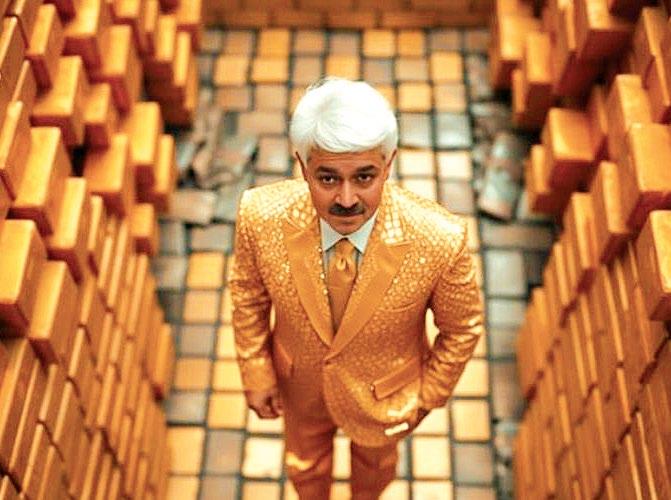
The UK-based comedian brings his show The Successful Gold Trader to Melbourne's Motley Wherehaus for MICF
BY LAKSHMI GANAPATHY
top me if you’ve heard this one before; a comedian called Mark Silcox walks on stage at a comedy club in England to tell some deadpan, self-deprecating jokes.
Except the person who walks on is a mild-mannered middle-aged Indian science teacher, and the jokes are meandering antihumour lectures told with straight faced sincerity and a desi uncle accent.
“[There’s] complete separation from my personal feelings and what I want to present as a character,” Silcox explains.
“I build up lots of expectation and people can see there's nothing behind it… that's where the funny bit comes.”
It’s this dissonance between expectation and reality which Silcox (obviously a stage name) has playfully mined since 2008, where he first created the persona as part of a comedy course at London’s adult education college CityLit.
“I was watching a documentary, and they were saying you don't have to be born funny to become a comedian. I was 45, looking to experiment, so I did that course; it was really funny because there were lots of actors doing really serious stuff about comedy, and I just couldn't relate to any one of them, so I developed my own style of comedy - not telling jokes, just talking rubbish,” he says.
With a love of ‘winding people up’, Silcox’s unique style is antithetical to the current wave of lively, Vir-Das-esque social commentarians, or the observational hopscotch of contemporaries like Russell Howard.
“In the textbook they will teach, you have to do this, you have to keep the energy high; I just ignore all those warnings and do whatever I like,” he says.
“I'm not solving any world problems; I just want to have fun and wind people up.”
It’s a comedic voice that’s both anomalous, and in the words of peer Paul Chowdhry ‘very British’; blunt, dry, subdued, and unlikely to translate back home in India.
“It takes time for a nation to develop the style of comedy; in India, comedy is relatively new. So everybody is copying the same style, the sharp joke, you have to act out your punchline, the energy, you have to fill the room with your voice. People get kind of used to that, then someone does something completely different, and they remember it,” Silcox explains.
“When I started doing comedy, none of the Asian comedians were doing my style of
comedy; [the audience] actually relate to me more than other comedians, and because of the name, they remember me better.”
Silcox’s irreverent nonsense, as seen in his Channel 4 series ‘An Immigrant’s Guide to Britain’, isn’t for everyone - but Silcox wears his one-star reviews as a badge of honour, inspired by Steve Martin and the niche stylings of his friends Sam Campbell and Aaron Chen.
“Steve Martin’s comedy style was very loose, he’d say I don't want to push you, laugh [at] whatever you want’; I think I get a similar kind of response, sometimes
they’re laughing,” Silcox says.
Nonetheless, it’s a persona that has charmed audiences across the globe, and after reaching the finals of the BBC New Comedy Awards in 2013, Silcox has gone from strength to strength with his showstealing turn as Uncle Shady in Guz Khan’s comedy-drama Man Like Mobeen, as well as roles in Channel 4’s Joe Lycett’s Got Your Back, and absurdist comedy series Mandy.
Despite being thrust into the spotlight through his silver screen appearances, Silcox isn’t concerned about reaching comedy stardom, having already achieved a successful career in science, including a PhD from Imperial College London and multiple journal publications.
“For me, [comedy’s] always been a hobby…I don't have to prove my intelligence 'cause I have paper qualifications,” he says.
“Comedy is just like a paid holiday; I'm a science teacher, so I get paid from the school and I use my holiday to do comedy. I have a lot of respect for those who choose comedy as a career, because I know how hard it is for them to get a regular income.”
Instead, he appreciates having some distance between his home life and comedy persona.
“I invite my wife when I'm doing a panel show or some acting, then I will take her
to the set to show things; but my stand-up comedy is so bad, I don't want anybody to see it!” he says of showing his family his work.
This month, he brings his latest show “The Successful Gold Trader” to Melbourne’s Motley Wherehaus for the Comedy Festival. It’s one of the rare occasions the Bhopal-born Silcox has performed outside of the UK.
Based on his own experiences investing in the lead up to his retirement, the show takes the form of a dubious Power Point seminar told with a ‘somewhat charming yet deadpan delivery’.
“I wouldn't be able to do this comedy in India, because people will demand - you haven't worked hard, written some jokes, so what are you doing here on the stage?”
“So I haven't gigged in India; it will take some time for the comedy [scene] to become more mature, [and for] people to want to explore more. That's what happened in America, where Steve Martin started doing this kind of anti-comedy there.”
Content with his own pace, Silcox, 62, looks forward to his retirement in five years, during which time he hopes to do as much comedy as he can.
“I don't think I have struck comedy gold, but I'm having fun.”
Classrooms, cosmos and everything in betweena
Comedians Urvi Majumdar and Rao Morusupalli give a candid look at the creative process behind comedy, from big laughs to flat jokes
UBY TANISHA SHAH
rvi Majumdar spends her days teaching in a classroom; Rao Morusupalli studies the stars. This year, both step onto the stage at the Melbourne International Comedy Festival, each testing whether their jokes hit.
In Miss!, Majumdar draws on the rhythms of the teacher-student dynamic, while Morusupalli’s Space Comedy launches audiences into the cosmos with his astrophysicist’s eye.
The performers are but two of over 30 South Asian-origin artists bringing bold, electric energy and sharp wit to the lineup. They speak here with Indian Link, describing their careers in comedy so far, bringing fresh perspectives and new voices to the stage, reshaping what South Asian comedy looks like, one show at a time.
Clearly, neither arrived at comedy through a conventional path. For Majumdar, the shift from classroom to stage revealed unexpected parallels. “You never know who you’ll be in front of!” she laughed. For Morusupalli, a life spent gazing at the universe became material –proof that some stories are simply too vast not to share.
Both comedians know though, that none of it works without the audience. Rao is refreshingly candid about it. “The audience is very important, it’s one of the main reasons I do comedy,” he says. For him, the comedian’s job is to earn their trust,
direct energy, and bring everyone on board for the ride. Without them, the spaceship splutters and comes crashing back down to Earth.
Urvi knows the feeling well. Her show thrives on spontaneous crowd connection, going off on tangents that pull her audience somewhere unexpected. The energy in the room, she believes, is what makes the night a success. “The more energetic the audience, the better the experience for everyone,” she explains.
Staying relevant in the age of social media algorithms is a challenge most artists face, but these artists believe that a truly good joke doesn’t need to be relevant to land. Urvi sees the relentless churn of the news cycle as a double-edged sword. By the time a joke is written, the story has already moved on. “News of the moment fades quickly,” Urvi says, explaining why she avoids following trends.
By contrast, Rao believes in the timelessness of comedy – with some of our favourites like Mr. Bean and Monty Python coming to mind. He believes in letting the jokes age, and performing for the connection, not the relevance. Even when it bombs, he follows an advice he received –“to not think about it after 24 hours.”
Despite their different approaches, neither is chasing viral glory. Rao puts his faith in a well-crafted show over a perfectly timed crowd-work clip engineered for social media, saying that, “Written jokes are always stronger. An hour of crowd work can be fun, but a well-crafted show is much more impactful.” Urvi, meanwhile, ditches the tight script entirely in favour of
Staying relevant in the age of social media algorithms is a challenge most artists face, but these artists believe that a truly good joke doesn’t need to be relevant to land.
something more alive and unpredictable, and when it doesn’t land, her greatest wish is for the audience to get amnesia the second she walks out the back door. Once, during a bit about potentially facing racist comments on a “curry bag” her parents had packed for her, a heckler decided it would be funny to shout out prices for selling her curries.
But when everything clicks, when the joke lands, the room erupts, and the connection is real, both describe the same feeling. “You feel less like a freak for thinking that way,” Urvi says. Rao puts it more succinctly, “Orgasmic.”
Whether it’s a classroom, a spaceship or a dimly lit comedy room, Urvi Majumdar and Rao Morusupalli are proof that the best stories come from the places you least expect.
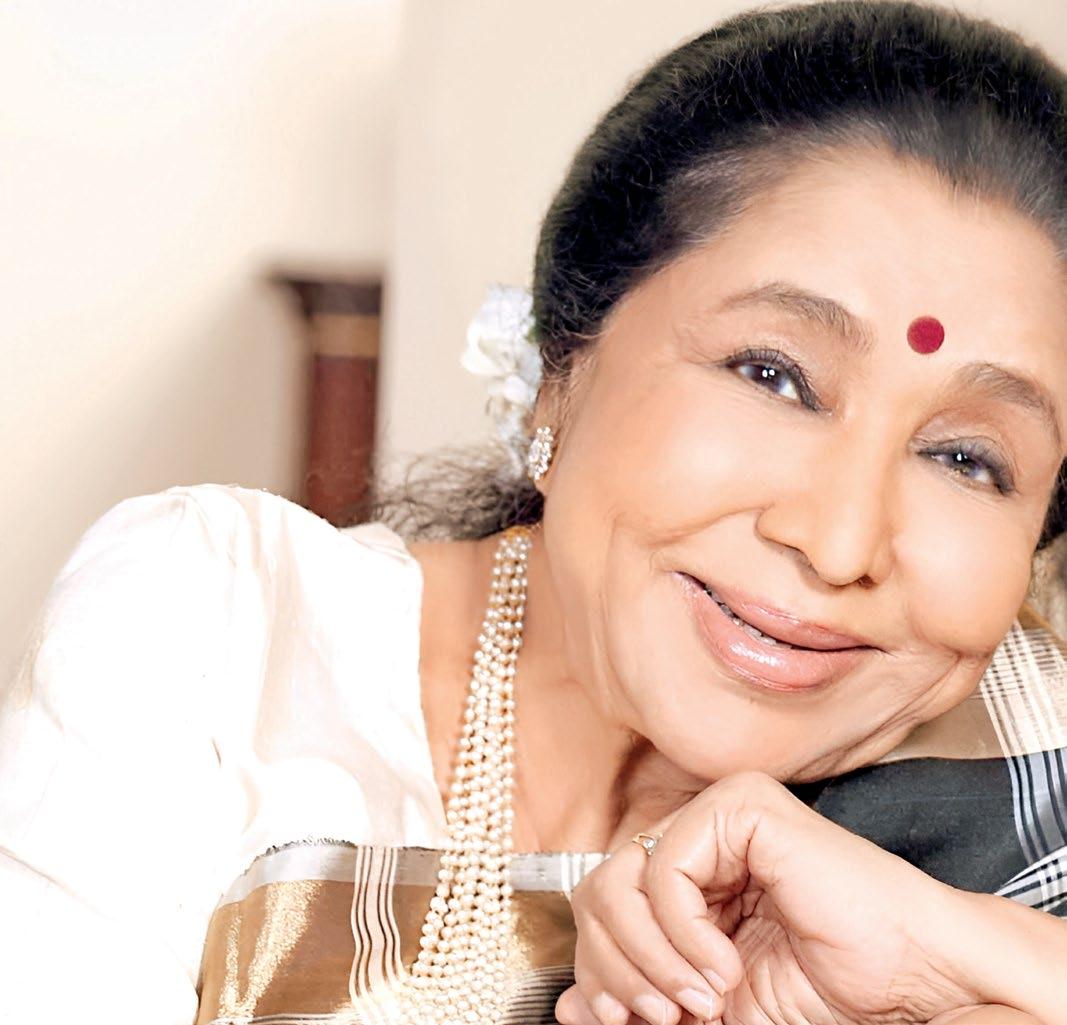
The voice that refused to wait in the wings
From the margins to centre stage, Asha Bhosle’s legacy
Asha Bhosle (1933-2026)
quality to voices that have like a river that has taken the long what the numbers never quite
elsewhere. She sang the cabaret numbers. The midnight songs. The ones that moved hips. She sang ghazals with whisky in them, folk songs with earth on them, pop songs with the whole glittering West rattling inside. All genres fell within her reach, giving her a versatility that kept her relevant across multiple generations of listeners and filmmakers. Critics who called this slumming didn’t understand that she wasn’t descending. She was expanding, finding the full lung capacity of what a woman’s voice in Indian cinema was permitted to hold.
sort of legend that fills all available space in a
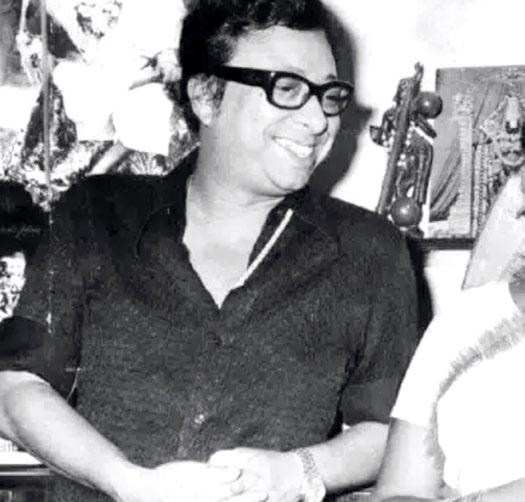
The collaboration with R.D. Burman in the ‘60s, ‘70s, and ‘80s was where she caught fire and never entirely let it go. The composer and the singer, creative partners first and then husband and wife, built something between them that belonged to no single decade. Songs including Dum Maro Dum, Piya Tu Ab To Aaja, Chura Liya Hai Tumne and Mera Kuchh Saaman became indelible markers of the era. The partnership was widely regarded as one of the most creatively fertile in Indian film music. Mera Kuchh Saaman, Gulzar’s intricate, almost impossible lyric about a woman reclaiming the scraps of herself from a finished love affair from the 1987 film Ijaazat, remains one of the most technically demanding songs in the Hindi film canon. She delivered it with such devastating plainness that you forgot to notice she was doing something no one else could.
R.D. Burman died in 1994. She kept singing.
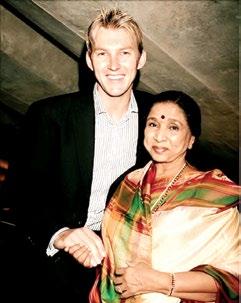
entirely, characteristically Asha. You’re the One for Me (known in Hindi as Haan Main Tumhara Hoon) was written by Lee during the 2006 ICC Champions Trophy in India, reportedly composed in thirty minutes between practice sessions. The song tells the story of a westerner trying to woo an Indian girl, with Asha playing the role of an advisor teaching him Hindi in his attempt to impress her. The single debuted at number four on the charts and reached a peak of number two. Lee called her the Aretha Franklin of Indian music, and described the experience as “a tremendous opportunity to work with an absolute legend.” Bhosle, for her part, was characteristically matter-of-fact about the whole thing. “I have been an avid cricket fan, so naturally I know almost all cricket players,” she said. “I knew Brett Lee could sing and strum. He’s young, good-looking, intelligent and a singer.” She didn’t need the collaboration to mean more than it did. She simply heard something she liked and said yes. That lightness, that willingness to play, was itself a kind of artistry.
All of this, and she still wasn’t done. In 2023, she marked her 90th birthday with a live concert in Dubai. Earlier this year, she featured on The Shadowy Light in the Gorillaz album The Mountain. Ninety-two years old, still laying down new tracks, still reminding anyone who needed reminding that she had never been anyone’s supporting act.
recorded artist in music history. She opened restaurants. She appeared on television. She lived, abundantly and on her own terms, the kind of life that no one writing her early chapters could have predicted. She passed away on 12 April 2026, following multiple organ failure, at Breach Candy Hospital in Mumbai, the city she had adopted and remade, in some small way, as her own. She was 92.
There’s a peculiar thing that happens when you lose a voice you have known your whole life. It doesn’t feel like an absence, exactly. It feels more like a room you’ve always moved through freely that suddenly has walls. The voice was so much a part of the air that you forgot it was made by a person, a person who chose, over and over and over, to keep making it.
Asha Bhosle chose. That is perhaps the simplest and most radical thing to say about her. In a world that offered her a very specific path, she chose differently. She chose the songs no one else wanted. She chose the composer who made her incandescent. She chose to stay on stage long past the point when leaving would have been dignified and easy.
She chose the joy of it, stubbornly, until the very end.
classical-devotional ideal of the
Her reach was never simply subcontinental. In 1991 she joined Boy George on Bow Down Mister, one of the first high-profile collaborations between a Bollywood playback singer and a Western pop artist. In 2002 she appeared alongside R.E.M. frontman Michael Stipe. In 2005, the Kronos Quartet recruited her to sing on an album of R.D. Burman’s songs, introducing her voice to global concert hall audiences. That same year, The Black Eyed Peas sampled her recordings on their international hit Don’t Phunk With My Heart. Cornershop sang Brimful of Asha, and an entire generation of British South Asian children heard their world reflected back at them in a pop chart for the very first time. The song topped the UK Singles Chart in February 1998.
Then there was Brett Lee. It sounds, on the surface, like a curiosity: one of the most decorated voices in Indian music history recording a duet with an Australian cricketer. But it was also
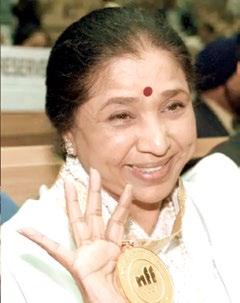
The honours accumulated: the Dadasaheb Phalke Award in 2000, India’s highest film honour; the Padma Vibhushan in 2008; and in 2011, formal recognition by Guinness World Records as the most
The music remains. Play any of it and the walls come down. The voice finds you again across whatever distance, across decades, across the diaspora, across the particular grief of losing someone you never met and nonetheless somehow knew.
Dum maro dum. Take a deep breath, then take another. It was never just about smoke.
It was always about the refusal to stop.
BY TORRSHA SEN
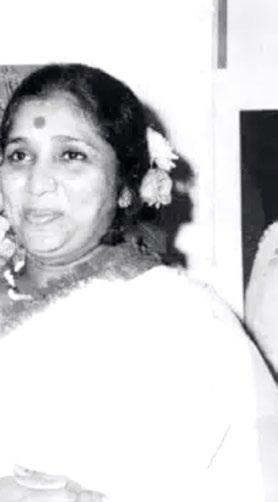
With husband and collaborator RD Burman
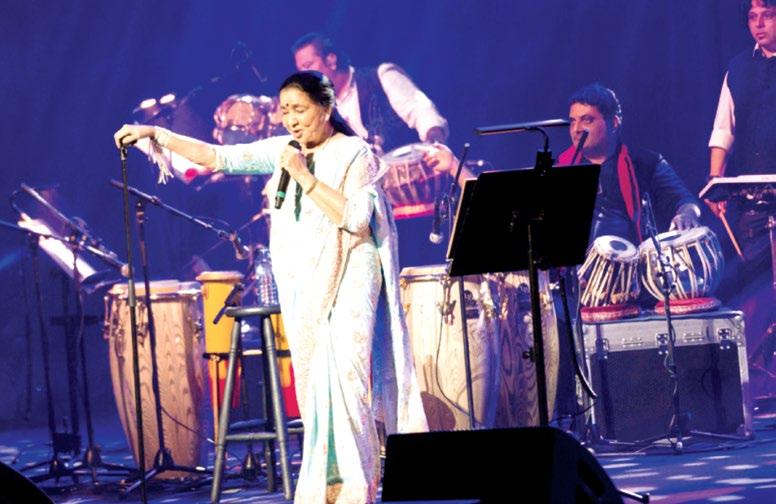
At her 2016 concert at the Sydney Opera House
Free trade: Rum and Aussie lamb chops in the tandoor
An early connection forged in food - carried across oceans, kitchens and generations
TBY CHARMAINE O’BRIEN
he jubilant tone of the Australian High Commissioner Philip Green in the Indian Express on 1 January this year was no declaration of hopeful New Year resolutions, it was a statement of fact. From that day, he said, “no Indian goods face any tariff entering Australia. None. Zilch, nada, zippo across the board. No
asterisk. No hash. No fine print … In return many Australian goods now enter India under reduced or zero duties”.
This was, he said, a great opportunity to enhance the Australia-India pact, underpinned by the Economic Cooperation and Trade Agreement (ECTA), currently worth upwards of A$50 billion. Trade in food makes an important contribution to this amount. Since the 1970s, Australian primary produce exports, mostly legumes and cereals, have bolstered Indian supply of these everyday foodstuffs. Once the ECTA was signed in 2022, tariffs reduced bilaterally, resulting in premium Australian
food and beverages, including avocadoes, wine, lamb, almonds and fruit becoming available to Indian consumers. It is an exciting advance, and a contemporary rendition of the food and drink trade between Australia and India which began in the first years of British settlement.
In 1790, New South Wales’ newly settled convicts and officials faced an impending crisis. They had only carried two years of rations, hoping the land they were to occupy would yield a bounty of food from imported seeds. It was a false imagining.
The foreign plants failed to thrive in the sandy soil. The colonists lacked the skills to capture native animals for meat or substantively utilise indigenous plant foods. With their supplies depleted, the possibility of starvation loomed. A second shipment of convicts in 1791 meant another 1000 mouths to feed. The colony’s Governor, Arthur Phillip, was compelled to take extraordinary action.
Phillip’s instructions for governing NSW forbade direct engagement with India, to protect the monopoly the East India
The supply ship Guardian’s unfortunate encounter with an ice berg off the Cape of Good Hope was one of the factors that caused Governor Phillip to send to Calcutta for supplies.
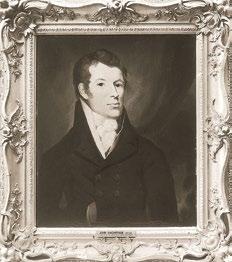
John Macarthur (1767?-1834), father of Australia’s wool industry, who traded in Bengal rum and sheep.
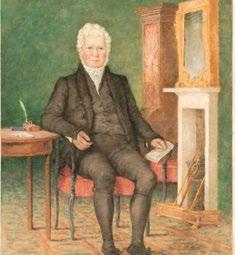
Robert Campbell (1769-1846), one of Sydney’s earliest merchants who traded in rum (and other spirits) from India, along with sugar, livestock & rice.
Company had on trade in Asia. But needs must, so Phillip dispatched the Atlantic to Calcutta, the closest British settlement.
Eight months later when the ship returned with rice, “dholl” and “soujee”, the colonists “inexpressible joy” turned to disappointment. They did not understand how to prepare the “different species of provisions” sent out, so the soujee turned sour and the dholl cooked “hard”. The rice was full of husk and the salt pork unfit to eat. No-one complained about the 250 gallons of Bengal rum included in the cargo.
A “satellite of India”
The Indian foodstuffs had eased the colonists’ hunger, but their discontented experience of these, led them hope there would be no future shipments of supplies from the subcontinent.
Instead, the episode opened the way to a buoyant trading relationship between the colonial cousins. The Australians became “indebted” to India for the “comforts” and
The prominent colonist John Macarthur made himself wealthy in early NSW trading in Bengal rum and sheep. His household ledgers show regular purchases of spices and curry powder, with instructions to include a variety of curries when hosting high society dinners.
“luxuries” of their lives; the subcontinent became their main source of imported foods, and the homes of wealthier colonists featured Indian furnishings and textiles, which signalled status and sophistication.
India was “the pot of gold at the end of the rainbow” in the British Empire, a place British merchants could make stupendous fortunes, live in luxurious homes, attended by numerous servants, and enjoy lavish
meals every day. Trading links with India likewise contributed to wealth creation in colonial NSW, and an aspiration to emulate British Indian society.
India was evident in NSW, and later Tasmania, in tastes as well as tangible goods. Early Australian cuisine is egregiously represented as uniformly monotonous and bland. However, spices were a familiar ingredient in upper class
colonial cookery, including in ‘curry’. Curry was a term describing both a spiced sauced dish as well as mulligatawny, kedgeree and “kabobs”; hybrid dishes, blending Indian and British elements which symbolised the glorious high living of India for the colonists. Spices sold by Sydney merchants were shipped from India, although selling these did not bring riches. It was another Indian import that did that: rum.
The prominent colonist John Macarthur made himself wealthy in early NSW trading in Bengal rum, and sheep. His household ledgers show regular purchases of spices and curry powder for use in family meals. Anne Marie Macarthur, John’s niece-inlaw, was advised to include various curries when hosting NSW high society to dinner. The Blaxlands, another prominent colonial family, enjoyed “all sorts of nice Indian dishes” on their table in the early 1830s. By 1840, British settlement had expanded across Australia, and the local food supply became more abundant. The food and drink trade with India waned, as did its material and cultural influence. Fashions moved on and curry went from status symbol to unremarked middle class eating.
The revitalisation of our trading relationship promises enriched eating ahead in both countries. At the ‘Taste the Wonders of Australia’ event at the Australian High Commission in Delhi last March, guests enjoyed dishes melding Australia and India on the plate, including avocado infused chickpea bhel puri, quandong -tamarind water golgappa, Australian apple and pepperberry jalebi. Outside the High Commission,the moth of March saw Subko cafes across metropolitan India feature an ‘AussieIndic’ brunch including avo toasts with crisp Manipuri chilli and eggs benedict with tikka gravy. A taste of things to come.
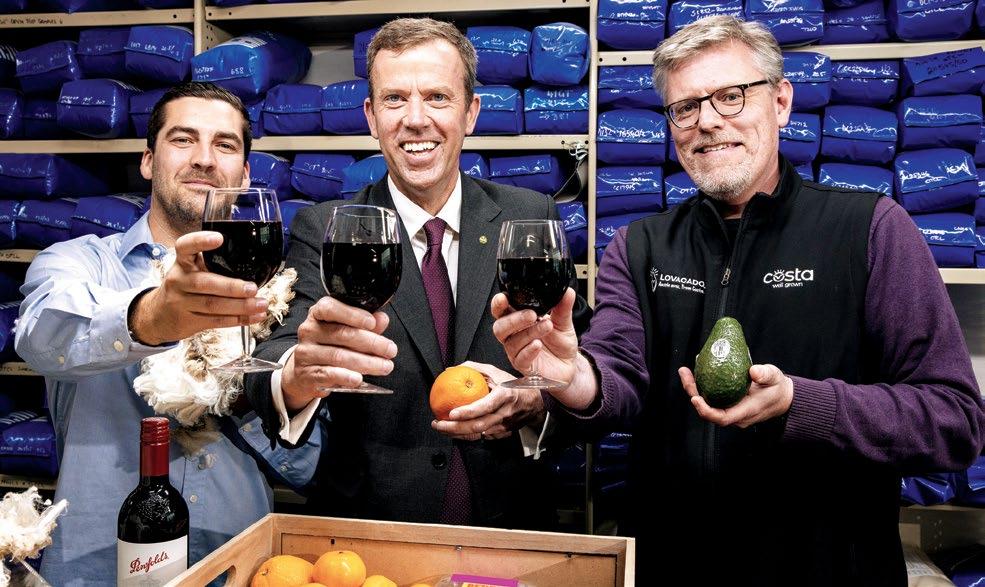
Dan Tehan, Australia’s former Minister for Trade, with produce CEOs when the AI-ECTA was signed in 2022.
Aussie fare in Indian restaurants today
Waiting to be chosen
Renting may be temporary, but it leaves permanent lessons shaped by quiet pressures and heavy responsibilities
TBY SHARANYA SATHYANARAYANAN
wenty people stood outside the modest brick unit when I arrived. They were clutching folders and scanning each other with quiet calculation. I began profiling them instantly. Young couple. Dual income? Stable. Three university boys with identical puffer jackets and easy laughter. Confident. Unbothered.
Who looks older? Who has a steady job? Who seems like they’re from here? Who appears settled?
Then there was me, an international student from India, quietly wondering if I had any real chance in this competition. It felt like the city was saying, “Welcome to Melbourne’s rental market, where you can have tuition paid, visa stamped but still feel borderline homeless.”
With vacancy rates at record lows, landlords look for predictability, not personality. Professionals seem stable, couples show shared responsibility, but students make them hesitate. The application forms showed this caution: pages of documents, job details, bank statements, and references. Sign here. Initial there. Promise you won’t default, disappear, or cause trouble. At twenty one, I felt like just another line on a spreadsheet. Eventually, I stopped taking things personally and tried to think more logically. I saw the rental process as a system I could learn and manage. I started tracking every
property in an Excel sheet, listing the address, weekly rent, distance to university, tram access, the nearest supermarket, and how many people came to inspections. I kept notes on how responsive agents were, compared commute times, and weighed the pros and cons. Even if I couldn’t control how others saw me, I could control how prepared I was.
Without any local rental history, I had to rely on the small network I was building. Every supervisor, acquaintance, and friendly chat became a chance to build credibility. In a new country, you really do have to start from scratch.
You don’t need to prepare much for inspections. You walk in, check the cupboards, look at the light, and then leave. The real decisions happen during the application. That’s when you try to
clear up doubts by attaching documents, showing your income, and listing references. You’re always trying to answer the unspoken question: can they trust you as a tenant? I started checking my email more often than I'd like to admit. Between lectures, on the tram, even on walks; whenever my phone buzzed, I felt a brief surge of hope. Usually, it was just a university update or promo, never the subject line I waited for.
After applying, everything slowed down. All that was left was waiting, and learning how much patience the process demanded.
And finally, I became the one – out of twenty – that walked away with the lease.
A set of keys is all it took, to feel like I belonged.
Moving in brought its own challenges. Sharing a kitchen required teamwork.
With vacancy rates at record lows, landlords look for predictability, not personality. Professionals seem stable, couples show shared responsibility, but students make them hesitate.
Paying bills on time mattered. Even small problems had to be discussed. Renting became a daily lesson in responsibility.
Concepts like bonds, utilities, and lease clauses were all new to me, but I learned to manage them. What was confusing at first slowly became more organised.
As I handled these new responsibilities, university kept me busy. I learned to split up chores: groceries one day, laundry another, and cleaning on a schedule. When my apartment was tidy, the city felt easier to manage. Contracts, expectations, and communication all had their own rhythm. Finding a place asked more of me than I expected - patience, resilience, and faith through uncertainty. What I gained in the end wasn’t just a set of keys, but the knowledge that I was learning how to hold my life together, one responsibility at a time.
Doing friendship right
Staying in the Indian bubble vs branching out: Why that choice is too narrow
WBY TANISHA SHAH
hen I arrived in Australia as an International student at eighteen, it was like firing a slingshot. After spending two years in quarantine during the pandemic, I was suddenly dropped in Sydney not knowing how to find a job or file my taxes. But, I had a clear directive echoing in my head: don’t get stuck in the ‘Indian bubble’. “You’ll never experience Australia if you only hang out with Indians,” they said. “Branch out, make multicultural friends. That’s the point of going overseas.” So, I did exactly that. I deliberately didn’t join the Indian society at my university. The thought of forcibly interacting with a bunch of strangers didn’t appeal to my anxiety anyway. I’d make friends the “organic” way, I told myself; and through classes, group work, casual encounters, I did make friends - good ones from various backgrounds.
I was convinced I was getting the “authentic” international student experience.
Then two Indian students - one from Canberra, and one from Muscat - moved into my student accommodation and we hit it off.
We became close the way most genuine friendships do, through proximity, shared meals, and casual conversations in the kitchen. But what caught me off guard was the homesickness that I had been carrying began to loosen like a breath I’d been holding for months. The feeling of not having to explain my habits, my culture, my festivals, was new to me.
Suddenly, we were decorating our house with diyas and dressing in our traditional outfits for Diwali. On my first Navratri in Sydney, I spent my days wistfully going through Instagram looking at the stories of people back home. A year later, I was busy going to garba events with my friends, sharing a little about my culture, and learning a little about theirs. An impromptu visit to a Tamil temple during Pongal led me to understand how the same stories are told
through different perspectives, our cultures reflecting and refracting each other.
We watched Indian movies in languages we all didn’t understand, laughed at funny memes emerging from Indian content creators, and went hunting for our comfort foods late at night on Sydney’s streets. We bonded over how all Indian parents regardless of their background and their geography are the same. The “what did you eat?” texts at odd hours, the random career advice, group video calls where everyone talks over one another, and sending you contacts of people they know in Sydney you’ve never even heard of.
It wasn’t that my other friendships were lacking or not wholesome. Like out of a sitcom, I had found my family - the kind that helps you move your couch at midnight and knows how spicy you like your food.
Here’s what I’ve realised: the “Indian bubble vs multicultural friends” binary that we talk about so much is the problem. It’s not about gravitating towards or away from Indian communities, it’s treating it like a moral choice, like there is a right and a wrong way to make friendships in a new
country and be happy.
Perhaps because the previous generation built close Indian communities out of necessity, we inherit the anxiety of doing diaspora life “correctly” and recreate that sense of belonging. But building your village requires a little more than just checking a box. It means finding people who understand you, whether that’s your cultural background, your interests, your sense of humour, or even your ambitions. They might match your background, and they might not.
I’ve met Indian students who joined Indian societies and attended every event and still felt lonely, because they were chasing a community in spaces that didn’t match their interests. I’ve met students who actively avoided other Indians and built beautiful, supportive multicultural friend groups. I’ve met people - like me - who stumbled into Indian friendships accidentally and discovered something they didn’t know they needed.
If I could go back and talk to myself on that first day, anxious, determined to avoid the “bubble,” convinced I had it all figured out, I’d say this: Stop worrying about the kind of friends you’re supposed to make. The best friendships always happen in the most random ways.
And the organic friendships I was determined to cultivate? They did happen. I found my village in both the Indian and nonIndian friends I made along the way. The advice everyone gives to avoid the Indian bubble, branch out, experience the ‘real’ Australia isn’t wrong. It’s just incomplete. Because nobody tells you that running away from your culture can be just as isolating as never stepping beyond it, and maybe that’s where the sweet spot lies - somewhere in between.
When heavy periods are treated as ‘woman’s fate’
The
Ipain,
silence and hidden cost of debilitating periods
BY Dr PREETI KHILLAN
n many families, heavy periods are not seen as a health issue, but accepted as part of being a woman. Girls are told to be brave, young women that it will settle, and mothers that it is normal after childbirth. So life goes on - work, study, school runs, social events - while managing pain, exhaustion, and constant anxiety. Yet this quiet burden is widespread. In Australia, around one in four females experience heavy periods, with recognised impacts on physical, emotional, social, and economic wellbeing.
When “just a period” begins to run your life
Heavy menstrual bleeding is not just about volume - it is defined by its impact on quality of life. It may involve frequent changes of protection, prolonged bleeding, large clots, or structuring daily life around fear of leaks. It can also lead to iron deficiency and anaemia, causing fatigue, dizziness, and reduced functioning. The national consumer
guide notes that nearly two-thirds of women with heavy menstrual bleeding are iron deficient.
This is not a minor inconvenience. It is the student afraid to stand in class, the woman in a meeting worrying about stains, the mother planning her day around her body. When bleeding dictates what a woman wears, where she goes, how she sleeps, and whether she can leave home comfortably, it is no longer “just a period.” It is a health issue.
The silence is costing women dearly
The burden is significant, yet many women still do not seek help. A national survey by Jean Hailes (a not-for-profit dedicated to women’s health) found that 78% of Australian women aged 18–44 had experienced painful, irregular or heavy
periods in the past five years. Of those affected, 75% said symptoms disrupted daily life, 44% had to pause work or study, and 58% reported impacts on mental wellbeing. Yet only 56% had spoken to a doctor. That gap matters. It means women are normalising suffering that is often treatable, losing years to fatigue, pain, and delayed diagnosis. Many who do not seek help believe nothing can be done,or feel too embarrassed to ask.
When culture teaches women to endure
For women from culturally and linguistically diverse communities, the silence can run deeper. Not because culture is the problem, but because stigma, modesty, misinformation, and practical barriers can keep treatable conditions hidden. Research shows CALD women may face taboos
If your periods are affecting your work, study, sleep, exercise, relationships or peace of mind, that is reason enough to seek help.
around discussing such issues, along with language, financial, and access barriers. In practice, this can mean reluctance to seek care, fear of examinations, or uncertainty about the health system. Many are managing not just symptoms, but silence, stigma, and confusion - allowing heavy bleeding to be quietly normalised.
The price of bleeding quietly
Heavy periods also come with a cost that is rarely discussed openly. There is missed work, reduced productivity and poorer concentration. There is also the monthly household cost of pads, tampons, period underwear, pain relief, iron tablets, extra washing and spare clothing. Jean Hailes notes survey findings that 55% of respondents had missed work because of their period, and reporting on the same issue has estimated the economic burden of problematic periods in Australia at around A$14 billion a year.
For many women, especially in a costof-living crisis, this is not a minor expense. It is another pressure added to an already exhausting experience.
Heavy bleeding can be a warning sign
Heavy bleeding can happen for many reasons. Healthdirect (a governmentfunded virtual health service) lists causes including hormone imbalance, fibroids, polyps, adenomyosis, endometriosis, thyroid problems, bleeding disorders and some medicines such as blood thinners. Australian longitudinal research has also shown that heavy menstrual bleeding becomes more common with age, rising from 17.6% at age 22 to 39.3% at age 48 among menstruating women, and is associated with poorer quality of life.
Common does not mean harmless. Sometimes heavy bleeding is the first clue that something more is going on.
The conversation that can change everything
The good news is that women do not have to simply endure it. Australia’s Heavy Menstrual Bleeding Clinical Care Standard says women should be offered the least invasive and most effective treatment appropriate to their needs and preferences and supported to make informed choices. Treatment can include iron replacement, anti-inflammatory medicines, tranexamic acid, hormonal treatment, a hormonereleasing IUD, and in some cases procedures or surgery.
If your periods are affecting your work, study, sleep, exercise, relationships or peace of mind, that is reason enough to seek help. Keep a simple record of how long you bleed, how often you change products, whether you pass clots, and whether you feel dizzy or exhausted. Take it to your GP. And if you are not heard, seek a second opinion. Women deserve better than being told to “put up with it.” They deserve answers, options and care.
Dr Preeti Khillan is a senior obstetrician and gynaecologist, laparoscopic surgeon, and Director of Western Specialist Centre in Melbourne. She is a passionate advocate for culturally sensitive women’s healthcare and for improving awareness of conditions that women are too often expected to suffer through in silence.
Photo: Canva
Hovering too close
Dr PREETI KHILLAN and Dr RAJ KHILLAN on helicoptering: How well-meaning parenting can quietly undermine a child’s confidence - and what to do instead
In many Indian families, parenting is not just a responsibility; it becomes a life mission. We want our children to have what we didn’t, we plan every step, and we worry about every risk. We tell ourselves we are being caring, involved, and protective. But sometimes, without realising it, love turns into constant control. That is when parenting begins to hover. Helicopter parenting means staying so closely involved in a child’s life that the child has little room to think, choose, fail, recover, and grow. It is not about one moment of helping; it is about a pattern of stepping in too quickly, too often, and too strongly. In our work as medical practitioners in Melbourne, we see this frequently in South Asian families, especially as children reach their teenage years and academic pressure rises.
Parents often don’t recognise it because it looks like responsibility. It sounds like devotion. But the impact on children can be the opposite of what parents intend.
What helicopter parenting looks like at home
Many parents will say, “That’s not me.” Yet the signs are often everyday habits. If you decide your child’s friends, constantly monitor where they are, direct how they should play, and control every hour of their study routine, you may be hovering. If your child faces a conflict and your first instinct is to call the teacher, message the coach, or fix the situation before your child speaks for themselves, you may be hovering. If you
routinely step in so your child never feels discomfort, embarrassment, or failure, you may be hovering.
There is also a stronger version that is quietly growing: parents who don’t just hover but remove every obstacle before the child reaches it. The intention is to smooth the path. The result is that the child never learns how to walk the path.
Why Indian parents hover more than they think
Indian parenting is rich in warmth, closeness, and sacrifice. But it is also shaped by pressure. “Log kya kahenge (What will people say?”) is not just a phrase; it becomes a silent scorecard. Marks are not merely indicators of current academic ability - they are status, security, and sometimes indicators of self-worth. Many parents who struggled early in life or built stability through education naturally fear that one wrong step will ruin a child’s future. Add social media comparisons and constant talk of “success,” and hovering can feel like love. But constant parental oversightwatching, correcting, and intervening - can
lead a child to internalise a limiting belief: “I can’t do life without you.”
The real cost: Confidence, calm and coping
Children build confidence by doing. By trying. By failing in small ways. By learning how to fix mistakes. When parents take over decisions and problems, children lose those chances. Over time, hovering can make a child anxious, because the world begins to feel unsafe. If parents behave as if every problem is a crisis, the child’s mind learns to treat problems as threats. Some children become perfectionistic and afraid to make mistakes. Some become indecisive, always needing reassurance. Some appear high achieving, but inside they feel fragile.
In older students, we have seen academic stress become so intense that it shows up physically: racing heartbeat, breathlessness, panic-like episodes. The pressure around Years 11 and 12 can become especially heavy in homes where VCE/HSC is treated as a make-or-break moment. It is important to remember that Year 12 results matter, but they
Our job as parents is to put ourselves out of a job - not by withdrawing love, but by raising children who can stand strong with our support, not our control.
are not the only test of life. A child who learns resilience and self-management will face life’s bigger tests with far more strength than a child who simply learns how to fear failure.
A simple mirror: The Sleepover Test
Here is a gentle question for many Indian families: would you allow your child to stay at a friend’s house for a sleepover? For some parents, the idea feels uncomfortable. But a safe sleepover is not just fun. It teaches independence, manners, social confidence, and responsibility away from the comfort of parents. It is a small rehearsal for adulthood. Independence does not begin suddenly at 18. It is built slowly, through everyday freedom.
Let them fall - but be the net
The message here is not to “leave the children alone.” Instead, it is: stop holding the steering wheel of their life. Think of your child like a tightrope walker. If you hold their hand every step, they may reach the end, but they won’t develop balance. If you become the safety net instead, they will fall at times, but they will learn. They will get back up. They will grow steadier. And one day they will walk with confidence because they know, deep inside, “I can do it.”
Good parenting is not about removing all hardship. It is about building capability. Our job as parents is to put ourselves out of a job - not by withdrawing love, but by raising children who can stand strong with our support, not our control.
Photo: Canva
The BUZZ
What we’re obsessed with this month
By SRUTHI SAJEEV
Books
In Fieldwork as a Sex Object, writer Meena Kandasamy tackles every contemporary author’s kryptonite: the subject of the internet. When main character Amrita Chaturvedi stumbles across a deepfake of her, she decides to take on the world of incels and reclaim her story. Described by reviewers as a “Bridget Jones meets Karl Marx” type of novel, this work will spark vital conversations about women’s agency in the digital world.
Beats Binge Bites
Anish Kumar’s club tunes bring together old Indian melodies with techno music to tell a story that is reflective of today’s diaspora. He’s recently released two singles as part of his EP AK Cuts: Vol 3. His song ‘Come On Let’s Get It,’ combines the spoken word, piano and techno, whilst ‘Passionfruit,’ is simpler, but never loses its groove. Kumar’s latest work proves he’s an artist who is well in his element.
Perth GULAB SIDHU
9 May, Serbian Community Centre
Shah Latif (Riz Ahmed), a down-on-his-luck actor often mistaken for Dev Patel, thinks he’ll become a spokesperson for the South Asian community by becoming the next James Bond. It’s a premise that hooks. But Bait truly shines for the alternate storyline which lies beneath it. Latif’s main adversary isn’t the casting director, but himself, as he struggles with his own self-worth and desire to become a ‘somebody’ for the sake of his family.
Created by influencer Anjali Harikumar, the carrot halwa panna cotta is warm, aromatic and the reward you need after braving through another busy week. The vegan twist, replacing milk with coconut cream, gives the panna cotta a softer, more delicate texture. When making halwa, Harikumar recommends using soy instead of nut milk for a creamier dish. What you’re left with in the end is a quick, indulgent dessert that’ll beat all your autumn/winter cravings.
Looking to let loose?
Punjabi star singer Gulab Sidhu is coming to Australia with an electrifying live concert that’ll bring the house down. Featuring all his greatest hits, this is the icon at his best.
Adelaide TOUCHING THE DIVINE MADNESS
Upto 26 April, Art Gallery of South Australia
14 Mar to 14 Jun, various locations
Check out the Indian links at this year’s Biennale: the works of Kulpreet Singh and Monica Rani Rudhar (Lewers Penrith Regional Gallery) and Natesha Somasundaram (White Bay Power Station), will fill you with wonder and curiosity.
Melbourne NAZEEM HUSSAIN: I’D LIKE TO TELL YOU ABOUT SOME JOKES
You’ve seen comic maestro Nazeem Hussain on TV. Now, he’s bringing his unhinged humour to the Melbourne International Comedy Festival. Prepare for a night of wild stories, deranged characters and incisive commentary.
Brisbane ROWAN THAMBAR: GRAFFITI ROOM
Witness one of Australia’s rising comedy stars in his element at the Brisbane Comedy Festival. A master storyteller, Thambar weaves together the personal with the political for a show that will move you.
This exhibition explores love and devotion in Asian art, bringing together sacred works from across the region. Featuring pieces from the AGSA’s collection, it reflects both divine and worldly expressions through diverse media shaped by Buddhism, Hinduism, and Islam.
26 Mar - 19 April, Max Watt’s 7 - 10 May, Brisbane Powerhouse
with Lakshmi Ganapathy
SHAUN CHRISTIE-DAVID is a radical restaurateur and social innovator, founder of Plate It Forward and Colombo Social. He received the 2024 TimeOut Magazine Sydney’s Future Shaper award and was also named 2023 SMH Good Food Innovator of the Year
How do you turn the anger you feel into forward motion instead of getting stuck?
Anger is crippling…You see injustice, racism, things that you don't agree with, but don't know how to do anything about. As a teen through to [when I was] a young adult… it took me a long time to understand and reconcile with [my anger].
It was [learning] how to channel that rage into doing something positive… We often think by just shouting and screaming that we're going to [get] change. No. How do we make a difference? It's by doing it in a way that's inclusive…not having that rage be the voice but calming it down and doing something beautiful with it. What can we do to unite not divide?
How do you think teenage you would look at you now?
He’d be pretty pissed about the amount of grey that's in my beard and the belly I’ve got going on!
Would teenage me be happy? Yeah, I think so. As I reflect on the person that I wanted to be growing up, I think [I wanted to] stand true to something I believed in and be able to live that every day.
I consider myself one of the luckiest people in the world. I get to hang out with the coolest individuals who have been underestimated, but overwhelmingly are the most incredible people. I get to feed people globally with amazing food and connection and hope. I get to have a lifestyle that's not so much about money, but about purpose.
made a difference. As a teenager - a dreamer, an idealist, a person that hoped for good in the world…that’s all we can try [to do].
You’ve employed people who’ve fled war, lost careers, and been shut out of the workforce. What’s the most powerful transformation you’ve witnessed?
What's something that you're currently listening to/reading/ playing/watching?
When I look back on that and at what are the pillars of success, [for me] it’s doing something [where] you can go home each day and know you’ve
I've been lucky enough to employ about 250 people from those communities, so I've got 250 powerful stories. I've got a lady with eight kids, who'd never spent more than two weeks out of incarceration before she met us and is now three and a half years out and sober, living an incredible life with a job that she loves and her kids back with her. I've seen people who have come to me with huge war trauma, laughing and smiling and happy. There's so many stories
I’ve started watching Bait with Riz Ahmed; it’s so good to see representation of that ‘first generation cool London Indian’.
What’s a word that you like in a South Asian language, and what does it mean?
I don't know how to speak Tamil, but it’s like ‘Poitu Varen’; in Tamil they don't say goodbye, they say ‘I will go and I will come back’, and I think that that's beautiful. We will all see each other again in some way shape or form, so when I see someone that I love I don't say ‘bye, see you tomorrow’, I say, ‘I'll see you soon’.
And finally: Soan Papdi
sweets at all. I've had a restaurant for six years and I've not had the dessert there yet. I put on heaps of weight when I have sugar, so I conditioned myself out of it. But [I love] anything fried and savoury, so it's not like I'm being some healthy guy, it's just sugar!
Life lessons in Botswana
A midnight river crossing gone wrong kicks off an unforgettable week in Africa's wild
PBY RITAM MITRA
art of the beauty of solo travel is the spontaneity that comes with the absence of meaningful guardrails.
At its best, the abandonment of inhibitions means true escapism; money becomes monopoly money, strangers become friends, the next stop is wherever you want it to be. Even at its worst – when logic gives way to travel-induced insanity –you pick up life lessons and stories worth telling (even if sheepishly), as I was reminded on a recent trip to Botswana.
Botswana is a vast, dry, and startlingly beautiful country. Although synonymous with the Okavango Delta – the world’s largest inland delta – up to 90% of Botswana is covered by the Kalahari Desert.
I arrived in Maun, the dusty safari gateway town, with no great ambition beyond seeing wildlife in Botswana’s ‘high cost, low impact’ model – fewer tourists, fewer jeeps.
Any visitor to Africa needs to be comfortable with things not going to plan –TIA (This is Africa) is the refrain – but my first day was going particularly smoothly. I’d been upgraded on the way in, my driver was waiting at the airport, and at the pub, made fast friends with a South African mining entrepreneur, and a British expat from Singapore.
But Africa has a way of cutting you down to size.
At some point in the night – lubricated by exceedingly cheap lagers – our South African friend offered us a lift. In Sydney, the response would be ‘No thanks mate, I’ll get an Uber’. Instead, here: ‘TIA, let’s go.’
My hotel was just across the Thamalakane River, but the nearest bridge was 15 minutes away. ‘No matter, we’ll take the shortcut’ said our driver, seated in a Great Wall ute bearing very little structural similarity to a Landcruiser. It wouldn’t be my first time in a car driving through flowing waters in Africa, so I didn’t protest.
In hindsight, I should have.
Halfway across the river, the ute got stuck. Water was rising rapidly. My passenger
side door would not open because of the pressure. As the driver forced his door open, the river rushed in with enough force to clarify the situation very quickly. We scrambled out and waded to shore in chestdeep water in darkness, shoes filling with mud, dignity dissolving.
And this is where Botswana began handing out life lessons against my will.
Lesson one: You don’t need all the data
The corporate world loves complete datasets and 100-page slide decks before making decisions. But standing in a river in Botswana in the dead of the night, I was operating in what some might call a “limited data environment”.
Had I known, while still in the river, that it was home to hippos, crocodiles, and a history of recent fatal encounters, I may have made an even worse decision – such as climbing onto the vehicle and waiting there like a marinated entrée.
Lesson two: Credentials matter
We all know someone who speaks with the confidence of a subject matter expert but has the qualifications of a Facebook comments section. Most of the time, they’re harmless. Occasionally, they drive you into a river at night in a vehicle that has no business being there.
If someone suggests a “shortcut” through moving water, a little due diligence helps. Questions like ‘Have you done this before?’ and ‘Could we die if you get it wrong?’
Lesson three: Be goal-oriented
Wading through the black river, I made the deeply unhelpful mistake of turning on my phone flashlight. Suddenly, every ripple became a potential apex predator. I quickly realised that with the light off, the situation downgraded from “blockbuster National Geographic documentary about natural selection” to “spontaneous night swim with consequences.”
With only my end goal – the shore – in mind, things were much less frightening.
Lesson four: nature reigns supreme
The absurdity of that first night could have easily set the tone for my time in Botswana, but it didn’t – over the next week, I saw the best of what Botswana had to offer.
At Moremi, we watched a pride of lions draped in the shadow of a tree in lazy intimacy, elephants appeared from all corners, zebra blocked paths with complete indifference, and towering baobabs stood watch in the distance. Across the Delta,
TRAVEL NOTE BOOK
Best time: July - September for peak water levels and wildlife.
Getting there: Fly AustraliaJohannesburg Maun (gateway to the Delta).
Stay: Base yourself outside Maun (except for Magkadikadi and a helicopter ride over the Delta). Aim for Moremi, Chobe or Chief’s Island.
Cost: ~$3,500–$4,500 per person for a five - day shared safari (more for premium lodges, less for camping).
the Mokoro safari was the true prize, my fingers trailing through glassy water as my poler steered us through reeds, keeping a respectful distance from nearby hippos.
Across the Makgadikgadi Pans – amongst the largest salt pans on earth – the scene was like something out of a fairytale, replete with hundreds of elephants, hippos, zebras, wildebeest, and giraffes, but few predators. In the four hours we spent there, we saw no other vehicles; our only company for lunch was a series of elephants playfully passing by our jeep.
At the nearby and otherwise barren Nxai Pan, the watering holes absolutely teemed with life and death alike, as wildebeest, springbok and elephants sought an escape from the drought, while vultures feasted nearby on the carcasses of those who could not.
For all that Botswana taught me, the biggest lesson was that nature is both remarkably beautiful, and completely uninterested in your plans.
cineTALK
From big-screen spectacles to OTT binges, this month delivers a power-packed mix of action, comedy, drama and romance. Ekta Sharma puts together the must-watch list just for you.
BHOOTH BANGLA (In cinemas)
Akshay Kumar and Priyadarshan reunite after 14 years, bringing back their signature mix of comedy and chaos. Set in a spooky, old-world backdrop with supernatural elements, the film blends light scares with humour, with Kumar leading the story through his trademark comic timing. The ensemble cast including Tabu, Wamiqa Gabbi, Paresh Rawal, Rajpal Yadav and Asrani adds to the film’s lively, comedic energy. Overall, it promises to be an easy, entertaining mix of horror and humour with plenty of fun moments.
Releasing 10 April
O’ROMEO (Prime Video)
Set in the gritty backdrop of 1990s Mumbai, Vishal Bhardwaj’s O’Romeo blends action, romance, and danger. Shahid Kapoor plays Ustara, while Triptii Dimri stars as a woman seeking revenge for her husband’s murder. The story slowly weaves into a dangerous love story. Check out other stellar performances - by Nana Patekar, Avinash Tiwary, Tamannaah Bhatia, Disha Patani, Farida Jalal, and Vikrant Massey.
Streaming from 10 April
MATRIMONIALS
SEEKING GROOM
Well-established Sydney-based Indian family seeks a suitable bride for their 30-year-old Sydney-born Punjabi Hindu son. Mechanical Engineer turned successful businessman, he is attractive, caring, cultured, grounded, and family-oriented, with interests in fitness, travel, and healthy living. Serious enquiries contact 0425 562 120.
Professionally qualified match for Brahmin dentist girl, practising in Sydney. Divorced, no children. Australian citizen, 1986-born, 5’3”. Interested parties may share profile on mobile and WhatsApp +61 468 342 814, or email profrajayurveda@gmail.com
Indian origin professionally qualified issueless match (working professional, not self employed) from Australia for '88 born 5"3' Hindu Punjabi girl (divorced, issueless), working with a government organization in Sydney. Must have AUS PR, non smoker and preferably teetotaler. Email : matrimonial.ml@gmail.com.
TU YAA MAIN (Netflix)
Adarsh Gourav’s Maruti, a rapper from Nalasopara, meets Shanaya Kapoor’s high-profile influencer Avani. What follows is a series of suspense-filled unexpected twists. Such as, being trapped in an empty swimming pool at a secluded place - with erm, a crocodile. Directed by Bejoy Nambiar and produced by Aanand L. Rai, this one’s inspired by the 2018 Thai thriller The Pool.
Streaming from 10 April
RABB DA RADIO 3 (In cinemas)
Rabb Da Radio 3 (Punjabi) continues the heartwarming saga that began in 2017 and reappeared in 2019, rooted in family, love, and rural Punjabi traditions. While the first two films explored emotional bonds, sacrifice, and staying true to one’s roots, the third chapter introduces fresh challenges and poignant twists. Reuniting Tarsem Jassar and Nimrat Khaira, and directed by Harry Bhatti, the film promises the same warmth, depth, and cultural richness that made the franchise so beloved.
Releasing 3 April
DACOIT: EK PREMA KATHA (In cinemas)
This Adivi Sesh–Mrunal Thakur starrer finally releases after a brief postponement from March 27. Directed by Shaneil Deo, the Hindi-Telugu action thriller follows a man wrongfully accused who escapes prison and turns the tables on his former girlfriend. Exploring themes of love, betrayal, and revenge, the film promises high-octane action and a taut narrative, with an eventual streaming release on Amazon Prime Video.
Releasing 10 April
PATRIOT (In cinemas)
This much-awaited Malayalam film brings together two of the biggest stars, Mammootty and Mohanlal, making it a major draw for fans. Directed by Mahesh Narayanan, the spy thriller follows covert operatives who uncover a vast surveillance conspiracy that escalates into a national security crisis. Racing against time, they must dismantle a dangerous network before voices are silenced. Featuring an ensemble cast including Fahadh Faasil, Kunchacko Boban, Nayanthara, and Revathy, the film promises high-octane action and emotional depth.
Releasing 23 April
GINNY WEDS SUNNY 2 (In cinemas)
What caught my attention in Ginny Weds Sunny 2 is the catchy, soulful track ‘Chapp Tilak Sab Cheeni’ featured in the trailer. The original 2020 film, starring Yami Gautam and Vikrant Massey, found an audience with its quirky romance and humour on OTT. The sequel, written and directed by Prasshant Jha, arrives in cinemas with Avinash Tiwary and Medha Shankar as the new Ginny and Sunny. With its charming leads and memorable music, the film promises laughs, warmth, and a feel-good big-screen experience.
Releasing 24 April
PEDDI (In cinemas)
Peddi is an action drama led by Ram Charan, with Janhvi Kapoor as the female lead, and later streaming on Netflix in Telugu, Tamil, Hindi, Malayalam, and Kannada. The film also stars Shiva Rajkumar, alongside Jagapathi Babu, Boman Irani, and Divyendu Sharma. Set against intense action and emotion, the story follows a gripping journey of love, sacrifice, and redemption. Directed by Buchi Babu Sana, with music by A. R. Rahman and striking visuals by R. Rathnavelu, Peddi promises a gripping cinematic experience.
Releasing 30 April
MAMLA LEGAL HAI SEASON 2 (Netflix)
The courtroom chaos returns! Ravi Kishan, Nidhi Bisht, and Naila Grewal reprise their roles as a quirky team of lawyers in Patparganj District Court. Their mission is to uphold the law but in the most unpredictable and hilarious ways. Expect a lot of laughter - and confusion - as cases are solved in this fun-filled legal comedy.
Streaming from 3 April
VADH 2 (Netflix)
Following its theatrical release in February 2026, Vadh 2 is now on Netflix. Here, we follow a prison guard and an inmate who form an unexpected bond. But when a hidden secret emerges, they face dilemmas that challenge their understanding of right and wrong, leading to intense drama and emotional conflict. Settle in for powerhouse performances from Sanjay Mishra and Neena Gupta.
Releasing 3 April
MAA KA SUM (Amazon Prime)
Playing matchmaker for your mum cannot be easy. But if you’re a 19-year-old genius (Mihir Ahuja) you might just turn it into a carefully engineered mission. Using logic and math, he comes up with the ideal match for his mum (Mona Singh) but soon learns that love cannot be solved like a mathematical problem. Along the way, he discovers the importance of emotions, family, and understanding. Some beautiful songs like Batiyaan, Main Hoon Tere Liye, and Beparwah add warmth as well as fun. With its mix of humour, heart, and music, this is a feel-good watch for the whole family.
Streaming from 3 April
ASSI (Zee5)
In Anubhav Sinha’s gripping courtroom drama, Taapsee Pannu and Mohd. Zeeshan Ayyub lead an investigation into mysterious sexual assault cases. As the team digs deeper, shocking truths come to light. The film also features music composed by Ranjit Barot. Mann Hawa (lyrics by Kumaar), is sung by Mohit Chauhan, Parampara Tandon, and Rochak Kohli. Maai Teri Yaad (lyrics and music by Swanand Kirkire), is sung by Swanand Kirkire himself. The soundtrack adds emotion and depth to the story, enhancing the drama on screen.
Streaming from 17 April
The Bard goes masala
TShakespeare's plays meet the silver screen through these notable Indian retellings
BY HARSHENI MANIARASAN
he name ‘Shakespeare’ almost inevitably comes to mind when we think of literature. Whether on stage or on the page, his works have endured across time: when you consume literature, you inevitably consume Shakespeare, either directly through his works or by means of adaptations and inspired pieces. With themes of love, power, free will and vengeance, Shakespeare’s plays became universally relevant. Beginning exclusively as performances in theatres, Shakespeare’s plays eventually made their way to the world of movies in 1899 through an English silent film, King John. Indian cinema enters the frame in interesting ways here. Shakespeare’s plays reached India following the English Education Act of 1835 that mandated the use of English Language as the medium for education, and the plays were integrated into the curriculum. Now, with Indian movies having regular roots in Indian epics and inspiration commonly drawn from theatrical forms alongside their staple engagement with high-staked drama, conflict, romance and revenge tales, Indian cinema’s exploration of Shakespeare was almost inexorable.
Recreating, altering and reimagining the original texts, these must-watch movies portray Shakespeare on the big screen with mastery, depth and of course, a perfect touch of Indian cinema’s vibrance.
HAIDER (2014)
BASED ON HAMLET
Starring: Shahid Kapoor, Tabu, Shraddha Kapoor, Kay Kay Menon
Set against the backdrop of the 1995 insurgency in Jammu and Kashmir, the film follows a young student and poet, Haider (Shahid Kapoor), who returns to Kashmir to make sense of his father’s disappearance, but soon gets embroiled in the state’s political tension. The film shares plot parallels with the play – a son seeking to avenge his father who was deceived by his uncle, who then married his mother – fusing personal vendetta and political chaos. Hamlet’s iconic phrase uttered in a moment of existential doubt “To be or not to be” is transformed into a political question here amidst a state of crisis “Hum hain ki hum nahin” (Are we, or are we not?). A bold, haunting and intense reinterpretation.
In this adaptation of the tale of the infamous forbidden lovers, the Montague and Capulet clans are recast as two rival Gujarati families, the Rajadis and Sanedas. An opulent and largerthan-life retelling with majestic production designs, this version follows Ram and Leela who fall irrevocably in love but are forced
apart by a violent ancient feud raging between their gangster families. Tragic and emotionally intense, the filmdepicts the sometimes irreconcilable interests of true love and family loyalty, and the consequences that follow.
Two sets of identical twins. One new town. Sounds familiar! In this Bengali adaptation, a merchant (Kumar) and his servant (Bandopadhyay) visit a small town for a business meeting but in a comedic turn of events, they are mistaken for two locals, who happen to be their actual twin brothers whose existence they had been unaware of. Riddled with confusion and plenty of laughter, the film effectively brings the Shakespearean comedy to life in its own unique style.
JOJI (2021)
BASED ON MACBETH
Starring: Fahadh Faasil, Baburaj, Basil Joseph
In this brilliant Malayalam retelling of Macbeth, Joji (Faasil) is an engineering school dropout who desires to become wealthy without having to work hard. Exhausted from living a life fearing his overbearing and dominating father alongside being prodded by his sister-in-law, Joji murders his father. Driven by his crazed pursuit for freedom and power, his own sins and deceit eventually catch up to him – he and Macbeth shared the same doomed fate.
OMKARA (2006)
BASED ON OTHELLO
Starring: Ajay Devgn, Kareena Kapoor, Saif Ali Khan, Vivek Oberoi
While Shakespeare’s play followed the estrangement of Othello due to skin colour, this Vishal Bhardwaj adaptation represents this phenomenon through caste discrimination. Set amid political conflict in rural India, this film recounts the story of Omkara (Devgn) who appoints Kesu (Oberoi) as his lieutenant instead of his loyal right-hand man Langda (Ali Khan), leading to Langda’s rage of jealousy and his subsequent descent as the antagonist. Constructing a vengeful manipulation of Omkara’s thoughts, Langda wreaks a bloody and chaotic tragedy,
similar to Othello’s plot. A powerful study of envy, loyalty, love and betrayal, Omkara is an almost verbatim reiteration of the Shakespearean classic, and a must-watch.
This Malayalam reinterpretation of Macbeth tells the story of Chandu Chekaver (Kapoor), North Malabar’s legendary warrior. Upon a sorceress’s prophecy that Chandu would become a powerful commander, he gets immersed in a relentless pursuit of dominance and political leverage. Blinded by his maddening ambition, Chandu turns against his own clan and masterminds the downfall of his comrade Aromal (Padmanabhan). Reflecting Macbeth’s tragic end, Chandu’s act of evil leads to his ultimate descent.
In Gulzar’s retelling, two pairs of identical twins who are separated at birth eventually encounter each other years later. Their father Raj Tilak (Dutt) names both his twin sons Ashok (Kumar) and his adopted twin sons Bahadur (Verma). An unfortunate incident divides the family, causing one child out of each twin pairs with Tilak and his wife respectively. When both Ashoks and Bahadurs grow up, they end up in the same city, leading to baffling moments and riots of laughter, making Angoor one of Bollywood’s most iconic comedies.
ISHAQZAADE (2012)
BASED ON ROMEO AND JULIET Starring: Arjun Kapoor, Parineeti Chopra, Gauahar Khan
The saga of the ever adored star-crossed lovers travels to the fictional town of Almor in this romantic action film. The Chauhans and the Qureshis are rival families haunted by a legacy of political enmity, yet this friction disintegrates in the hearts of Parma (Kapoor) and Zoya (Chopra) who develop romantic feelings for each other. Despite an initial betrayal, Parma and Zoya’s relationship slowly blooms, but it is heavily opposed by
their respective families, pushing them to flee and seek refuge. Wretched and fuelled by emotional intensity, the final standoff stands testament to the devastating pains often experienced by interfaith companions.
ZULFIQAR (2016)
BASED ON JULIUS CAESAR AND ANTONY AND CLEOPATRA
Starring: Prosenjit Chatterjee, Kaushik Sen, Parambrata Chatterjee, Dev
A fused adaptation of Shakespeare’s two tragedies, Julius Caesar and Antony and Cleopatra, this Bengali action-crime drama is set in the docks of Kolkata. The film reimagines the Senate as Syndicate, a powerful organisation that illicitly governs the city’s many events. The ascend to dominion of Syndicate’s chief member Zulfiqar (Prosenjit Chatterjee) triggers a fury of jealousy, leading to an unforeseen betrayal by his best friend Basheer (Sen). Following the vengeance for this fatal betrayal by Zulfiqar’s trusted righthand men,Tony (Parambrata Chatterjee) and Markaz (Dev), Akhtar and Laltu Das, the film continues to explore Akhtar’s desire to attain dominance. Director Srijit Mukherjee seamlessly weaves Shakespeare’s other tragedy, Antony and Cleopatra, into the film through the romantic relationship between Markaz and Rani (Nusrat Jahan). Combining themes of power, loyalty, love and violence, Zulfiqar delivers a high-octane narrative.
MAQBOOL (2003)
BASED ON MACBETH
Starring: Irrfan Khan, Tabu, Pankaj Kapur, Om Puri, Naseeruddin Shah
This acclaimed reimagination of Macbeth witnesses the Scottish tragedy’s transposition into the Mumbai world of crime.It tells the story of Maqbool (Khan), the right-hand man of Jahangir Khan (Kapur). The Witches from the original text appear in the form of two corrupt policemen (Puri and Shah) who foretell that Maqbool will claim rule over the underworld from his leader. Maqbool and Jahangir’s mistress Nimmi (Tabu) are secretly in loveMaqbool, persuaded by Nimmi and his own desire for power, murders Jahangir and asserts his rule as Don. Haunted by immense guilt and paranoia, Maqbool and Nimmi’s moral corruption turns calamitous for the couple.
QAYAMAT SE QAYAMAT TAK (1988)
BASED ON ROMEO AND JULIET
Starring: Aamir Khan, Juhi Chawla, Goga Kapoor, Dalip Tahil
A brilliant take on a romance tragedy, this cult classic narrates the story of Rajveer (Khan) and Rashmi (Chawla) who fall in love, unaware of their families’ enmity resulting from a past dishonour and murder. Rajveer and Rashmi attempt to salvage their relationship, eloping to a deserted fort, but their opposers eventually catch up to them. Succumbing to fierce familial restrictions, the lovers meet their deadly fate. QSQT effortlessly mirrors the classic play in its passion and intensity.
PayPal launches Xoom in Australia, enabling money transfers to India and 150+ countries
PayPal recently launched its international money transfer service, Xoom, in Australia. Xoom is a fast, secure, and reliable digital service that makes it easier for Australian users to send money to India and more than 150 countries and regions worldwide, in over 100 currencies.
As cross-border connections grow, Xoom gives Australians more flexible and diverse ways to transfer funds – whether supporting family or paying for overseas services. Customers can use Xoom to send money straight to a bank account or mobile wallet, and in India they can also choose cash-pickup from convenient partner locations.
Xoom is already trusted by millions of users around the world. Its launch in Australia covers around 95% of the country's major money transfer destinations, including India as well as key markets such as the UK, China, Vietnam and Sri Lanka.
There are currently more than 9.5 million active PayPal accounts in Australia, representing approximately half of the adult population. Furthermore, PayPal
was recently named "Most Trusted Payment Brand of 2025" by Roy Morgan, Australia's largest independent research firm.
Andrew Toon, General Manager of PayPal Australia, said: “With Xoom, Australian users have more flexibility and choice in how they send and receive money. Whether it’s depositing money in a bank or mobile wallet, or arranging for self-pickup or home delivery, Xoom puts control in the hands of customers, making cross-border support fast, simple, and secure.”
HOW TO USE XOOM:
n Access: via the Xoom app, the Xoom.com website, or within the PayPal app.
n Sign up: Existing PayPal users can create an Xoom account directly using theirPayPal credentials, and new users can sign up in just a few steps.
n Ways to send: Send to bank accounts or mobile wallets, orchoose cash pickup or home delivery in supported countries/ regions.
n Limits: A maximum of AUD 50,000 per transaction.
n Real-time tracking: Monitor your transfer in real time via the Xoom app or your PayPal account.
The launch of Xoom in Australia highlights PayPal’s commitment to helping individuals and communities thrive by making cross-border money management simpler, safer, and more convenient.
Australian users can start quickly and securely sending money by downloading the Xoom or PayPal mobile app, or by visiting the Xoom information page on Xoom.com or PayPal.com.
APRIL 2026 BY MINAL KHONA
Minal Khona has been reading tarot cards for the last two decades. She uses her intuition and connect with the cards mostly to help people.
TAURUS
GEMINI
Aces signal new beginnings, and the Sword brings clarity of thought. A past matter that once caused confusion now resolves itself. It’s a favourable time to pursue fresh ideas at work, with your efforts attracting the right kind of attention. Singles may receive a message from a secret admirer. A marriage could face a brief rough patch. Pay attention to any vitamin deficiencies. Trust that what is meant for you will find its way.
A month of action for the Bull, as the Five of Wands calls for teamwork to resolve disputes and see projects through on time. You may even find yourself too busy for romance. Family dynamics could stir some tension at home. An incident prompts reflection on your life’s direction. Health remains strong overall, and finances stay stable, with any legal matters likely to favour you. Take time to examine your emotions, especially the negative ones, and shift your perspective.
The divine number 11:11 signals action and protection, indicating support for new initiatives you undertake. Frustrations may arise through home and relationship matters. Be cautious with paperwork and steer clear of difficult colleagues. In relationships, there may be hidden truths to uncover. Stress-related aches and pains could surface, so take care. Finances may arrive in larger, irregular amounts rather than steadily. While progress may feel slow at times, persistence will help you navigate challenges and get things done.
Multiple Eights signal a shift in how you think and perceive your reality. If you’re feeling trapped in a relationship, remember it is temporary. Use logic and clear thinking to resolve conflicts across all areas of life. A job offer may not be as promising as it appears, so proceed with caution. Be mindful around gadgets and furniture at home. Embrace the ‘Let Them’ mindset, release control, and begin prioritising your own well-being.
A happy month for Leos, with reason to celebrate alongside family. Singles may find themselves swept off their feet, while an ex could resurface. If interpersonal tensions have lingered, turn to healing practices. Pay attention to your diet and overall wellbeing. Finances show steady improvement. With divine protection guiding you, support comes in your endeavours. A karmic cycle nears completion, reminding you that how you see yourself reflects your deeper connection with the divine.
Not a month for impulsive choices — whether in spending or snap decisions. But if you have a strong idea ready to launch, go for it; past ideas may also begin to manifest. You may feel uncertain in a relationship — whether to go all in or hold back a little longer. A wish could be granted sooner than expected. A new job or business venture looks beneficial. A sense of spiritual unease nudges you to seek deeper meaning and nourishment for the soul.
You seek truth in a situation, but illusions may cloud your clarity. Turn inward and work on your inner child to reduce emotional reactivity. Certain events could significantly shift relationships with family (such as divorce or loss of a parent) or at work, bringing lasting change. If your personal life feels uncertain, grounding yourself in work may offer stability. Be mindful of negative thoughts — not everything is as it appears, and clarity will come with patience and self-awareness.
You may face challenges in relationships or property matters, with a new connection likely to fizzle out. Be cautious, as health concerns or business disagreements could impact your income. A confrontation at work may escalate, and a partnership might fall through, prompting you to seek new alliances. Pay attention to stomachrelated issues. Money owed to you may be difficult to recover. Address recurring problems with patience and take practical steps to resolve them.
The Justice card this month suggests legal matters will turn in your favour. A sense of divine intervention helps shift circumstances, marking the beginning of a new chapter. You may consider relocating or purchasing a new home. Be mindful of toxic colleagues who may trigger insecurities. A marriage could face a difficult turning point. Finances may feel tight, but gradual improvement is underway. If recent times have been challenging, expect steady change, with current problems slowly resolving.
The Justice card suggests a once-in-alifetime opportunity is on its way, whether in your personal or professional life. Those in relationships may reassess their commitment. Improved work conditions stem from a shift in your mindset, and some may explore new job options. Singles are encouraged to move forward and welcome new connections. Be mindful of a loved one’s health. Investments are likely to yield positive returns, bringing a sense of stability and forward momentum.
Major changes may unfold, such as a new side hustle, a lifestyle shift, or the end of a project. With added responsibilities, pace yourself to avoid burnout and fatigue. A relationship may come to a complete close; it’s best not to revisit what cannot be revived. Be mindful of spending, as a financial setback is possible. Stay focused on your goals and don’t settle for mediocrity — what you’ve been working towards is close to manifesting.
You choose to remain focused on your goals, giving your best even as you wait for results to show. Singles may meet someone interesting and charming. Work-related travel is likely. Be prepared for complications with paperwork, particularly in legal matters, which could cause delays. The self-employed may see a sudden boost in business, though some could also face setbacks. While your goals are nearing completion, a few unfinished details still need attention before you can fully move forward.
One Sun, many new years
Why India has many new years, and how astronomy and accounting are involved
IBY TANISHA SHAH
ndia has several new years: this is not breaking news to most Indians. But the details behind them might surprise you. It surprised me — a Gujarati Indian, who had spent all her life celebrating the New Year in November. Moving to a bigger, multicultural city like Sydney, I realised what the chaos is about in April.
Between 13 and 15 April, various Indian states mark their New Year — celebrating different harvests, speaking different languages, yet arriving at the same date. This is not magic, but math. The Solar cycle was the decider here. These festivals, Puthandu (Tamil Nadu), Vishu (Kerala), Pohela Boishakh (West Bengal), Bohag Bihu (Assam) and Baisakhi (Punjab and Haryana), are the “I’ll be there at 7 sharp” people.
Somewhere in the world right now, there’s an HR manager staring at two requests — one from a Bengali and one from a Punjabi, for two different New Year celebrations, with a Tamilian quietly drafting a third. They’re probably going to google, “how many Indian New
Years are there?”
However, not everyone got the Sun memo. There are some festivals that come around the same time, but never on the exact same dates. Are they just late to the party? Think again. These ones follow the moon instead, and the moon, romantic as it is, runs about 11 days shorter than the solar year. Left unchecked, your harvest festival slowly drifts in winter. So ancient
Indian astronomers added an extra month to balance it out. Problem solved, more or less. These festivals, Ugadi (Andhra Pradesh, Telangana, Karnataka), Gudi Padwa (Maharashtra, Goa), Navreh (Kashmir), and Cheti Chand (Sindhi New Year) are “I’ll be there at 7-ish” people. This took me by surprise as Gujarati New Year always falls in October or November after Diwali in winter. As a mercantile
state, Gujarat runs on commerce and not crops. At our New Year festival, we pray to Goddess Lakshmi, and perform Chopda Pujan (where traders close their old accounts books and open new ones), wishing for wealth and prosperity. Hence the New Year follows the accounts and not the harvest.
While everyone else is clarifying that their New Year is not on Diwali, Gujaratis are the ironic exception who actually do celebrate their New Year near Diwali. We are the people who accidentally went to a different party.
But, if I’m being honest, I always felt that the Gujarati New Year got buried between Diwali and end-of-the-year chaos. Having a new year in Spring and then celebrating another one in December seems like the perfect balance of parties in between working.
Every January 1, people around the world pick up pristine new diaries and chart out bold transformations — only for the enthusiasm to fade by February.
Indians solved that problem by having multiple fresh starts a year. Miss one? Don’t worry, we’ll just catch the next one. Now in Sydney, far from my roots, my curiosity is teaching me more about ancient astronomy than geographical proximity ever could.
Driving on less than five hours of sleep? You’re putting you and your family at risk.
When you drive on less than five hours of sleep, you are four times more likely to crash. Do not drive tired. Consider an alternative mode of transport, postponing your trip, or get more sleep before driving.
Smoking causes mutations. This is how cancer starts.
When you smoke, the chemicals you inhale cause mutations in your body. If you could see the damage, would you stop?