
























Duration: 1 Month (Weekly-2 hrs)
Mode: 100% Online (Objective Test after each lecture)


Module 1: Understanding Autism/ADHD - History, Causes & Diagnosis
Module 2: Science of Reversing Autism/ADHD
Module 3: Setting up Your Kitchen & Home in Accordance with C.A.N. Protocol

Module 4: Handling Common Health Emergencies (Seizure, Fever, etc.)

Course


































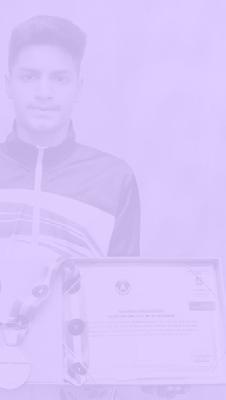































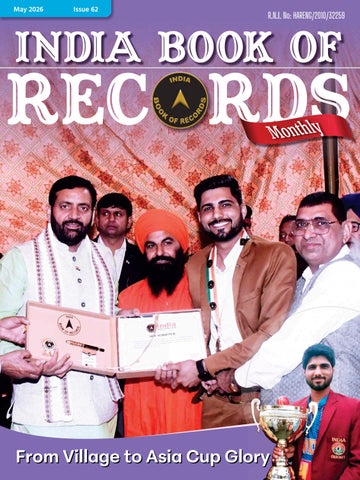
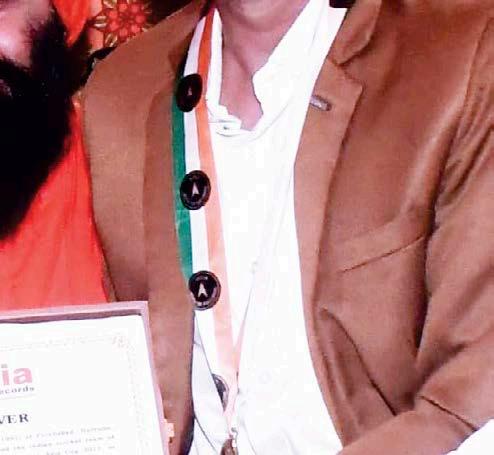
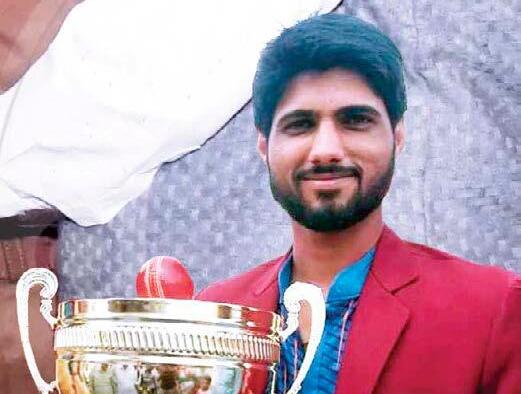
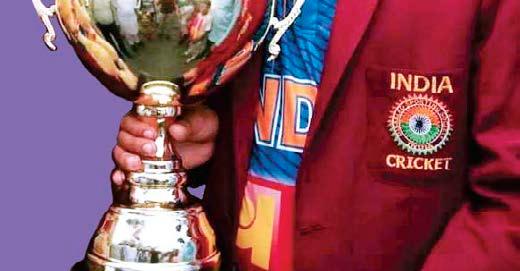
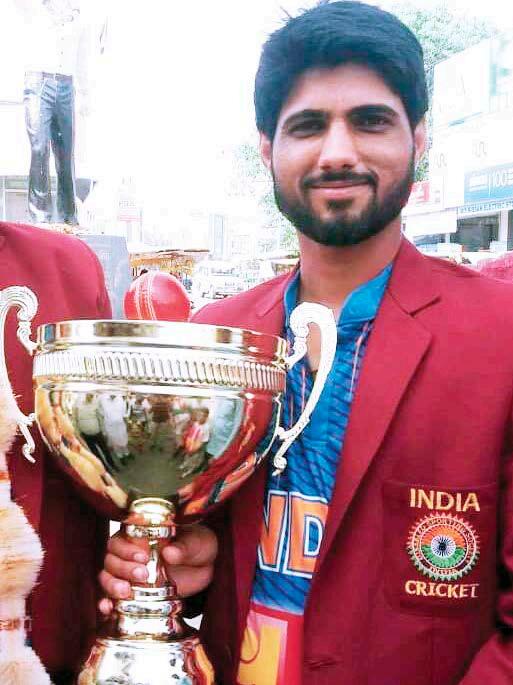
From a small village in Haryana to guiding India’s Divyaang cricket team to Asia Cup victory; Deepak Kamboj’s journey reflects determination, discipline, and a strong belief in transforming limitations into strength through sports.


Story Story







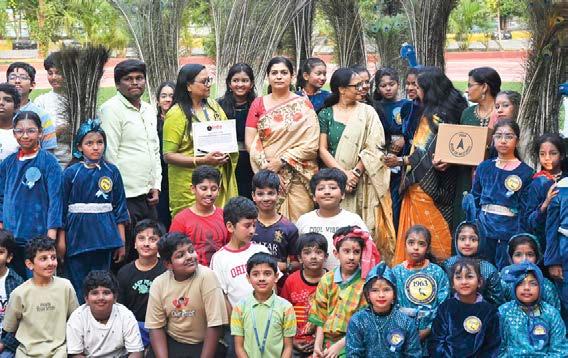


























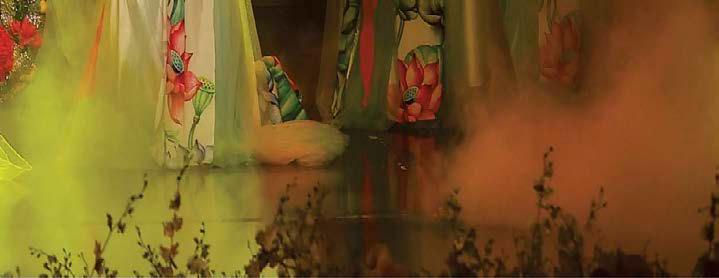
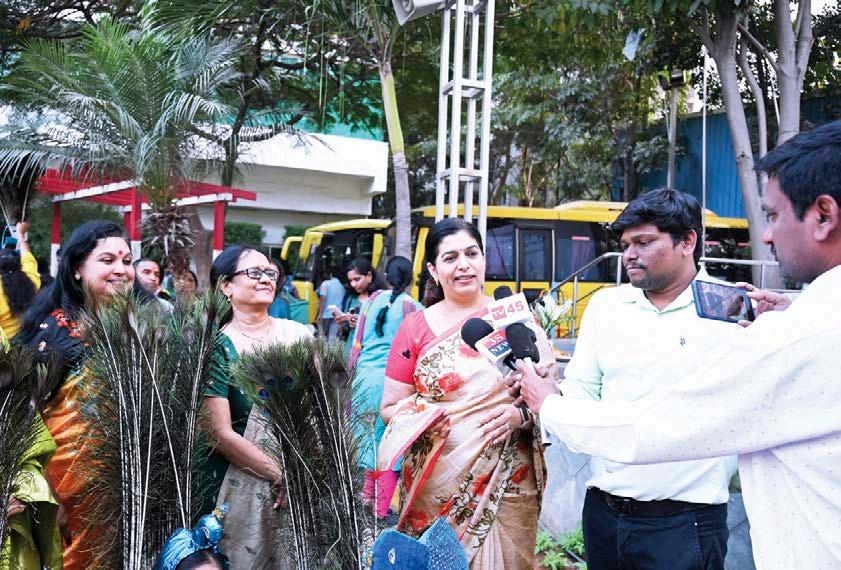
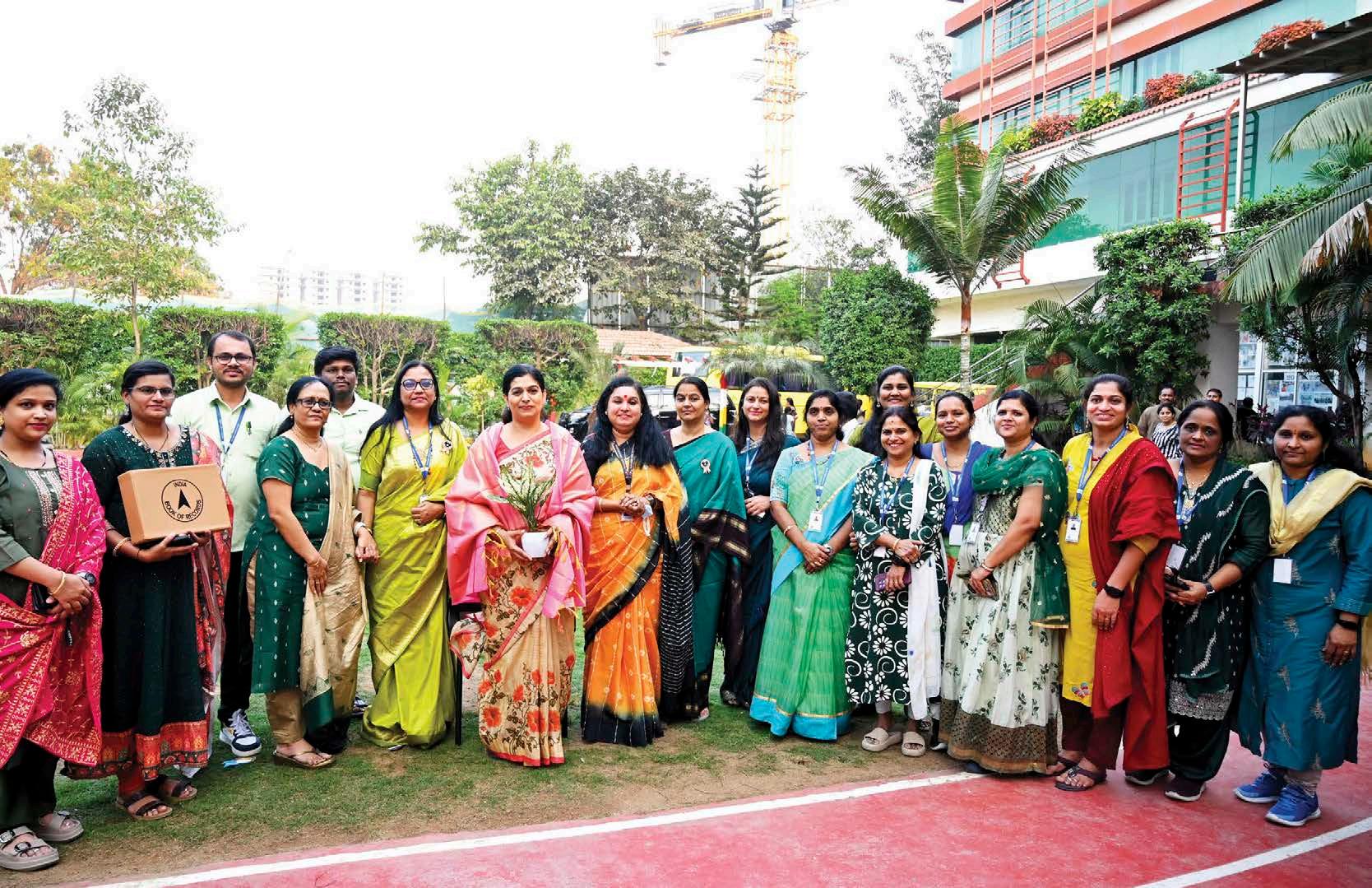
A 63-minute group dance by 63 children in Hyderabad marked 63 years of India’s national bird; blending culture, discipline, and nature in a synchronised performance recognised by India Book of Records.








16 9 1 12 6


















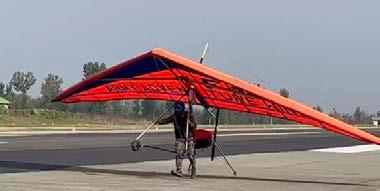
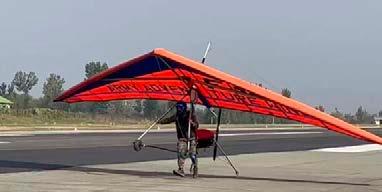
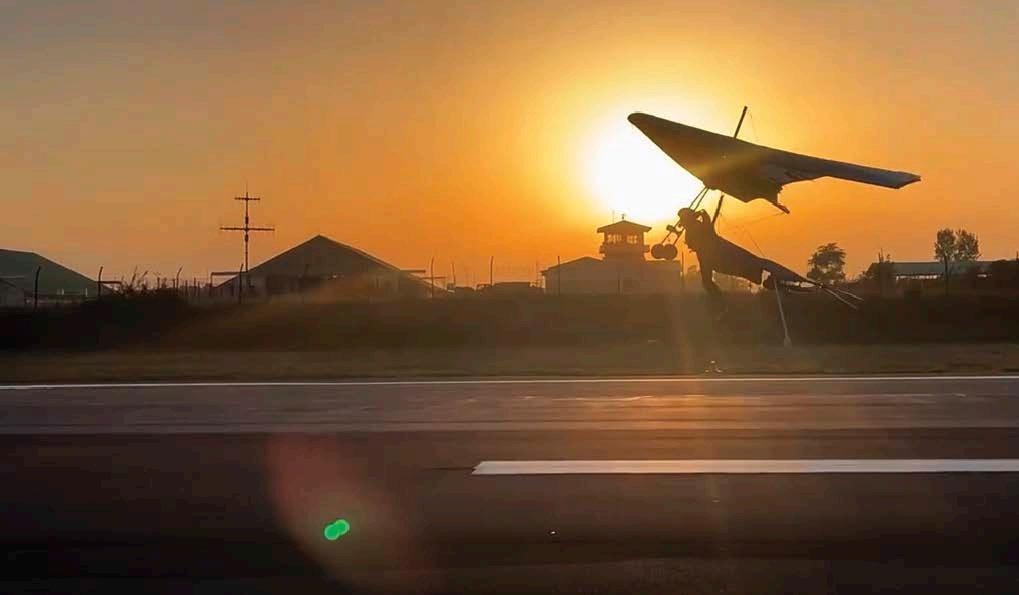
Indian Army team achieved an Asia-level high-altitude hang gliding record during an ambitious expedition; marking the bicentenary of the Regiment of Artillery with precision flying at Manasbal Air Base, Kashmir.











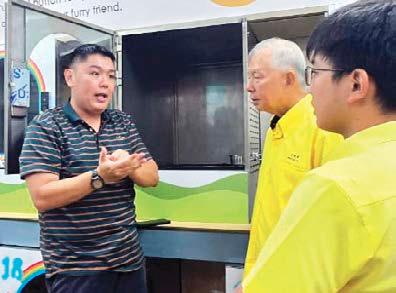









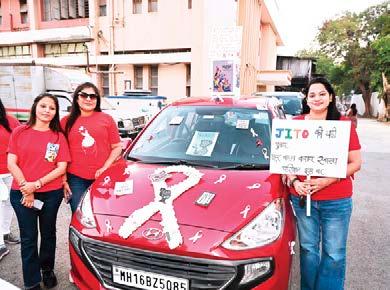
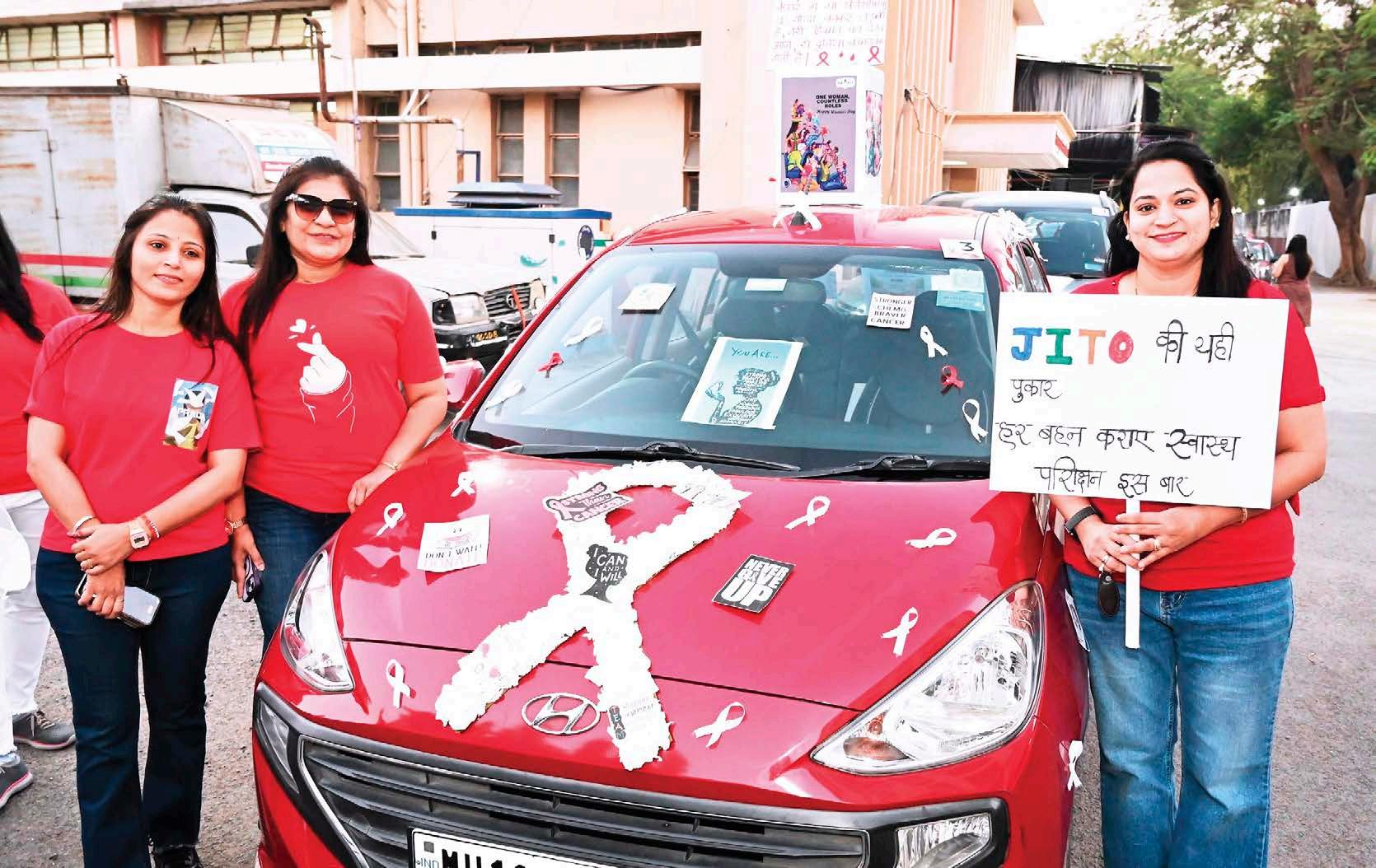
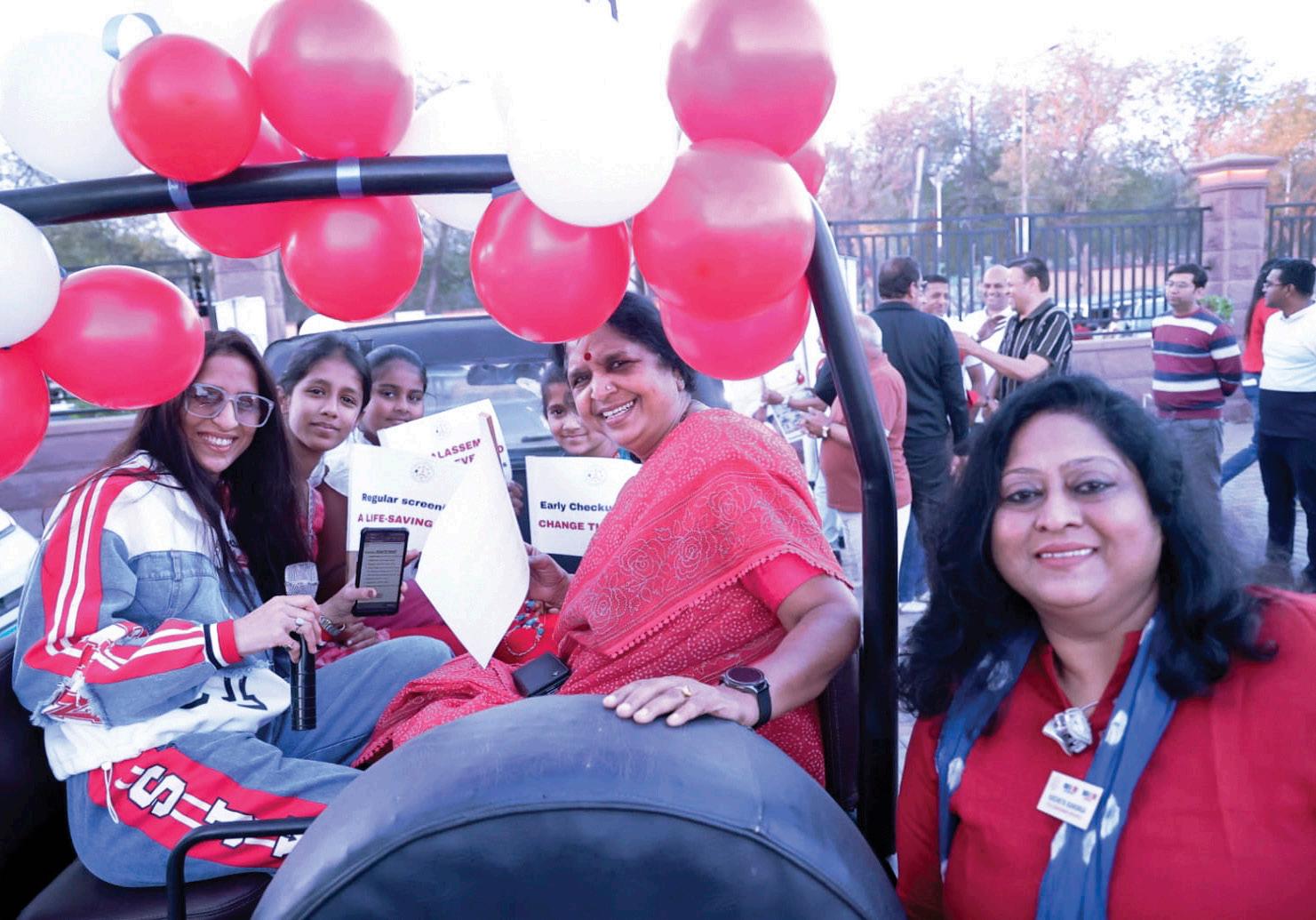
A nationwide car rally across 64 cities on 8 March 2026 spread awareness on thalassemia; engaging communities, promoting screening, and supporting affected families through a coordinated social initiative.





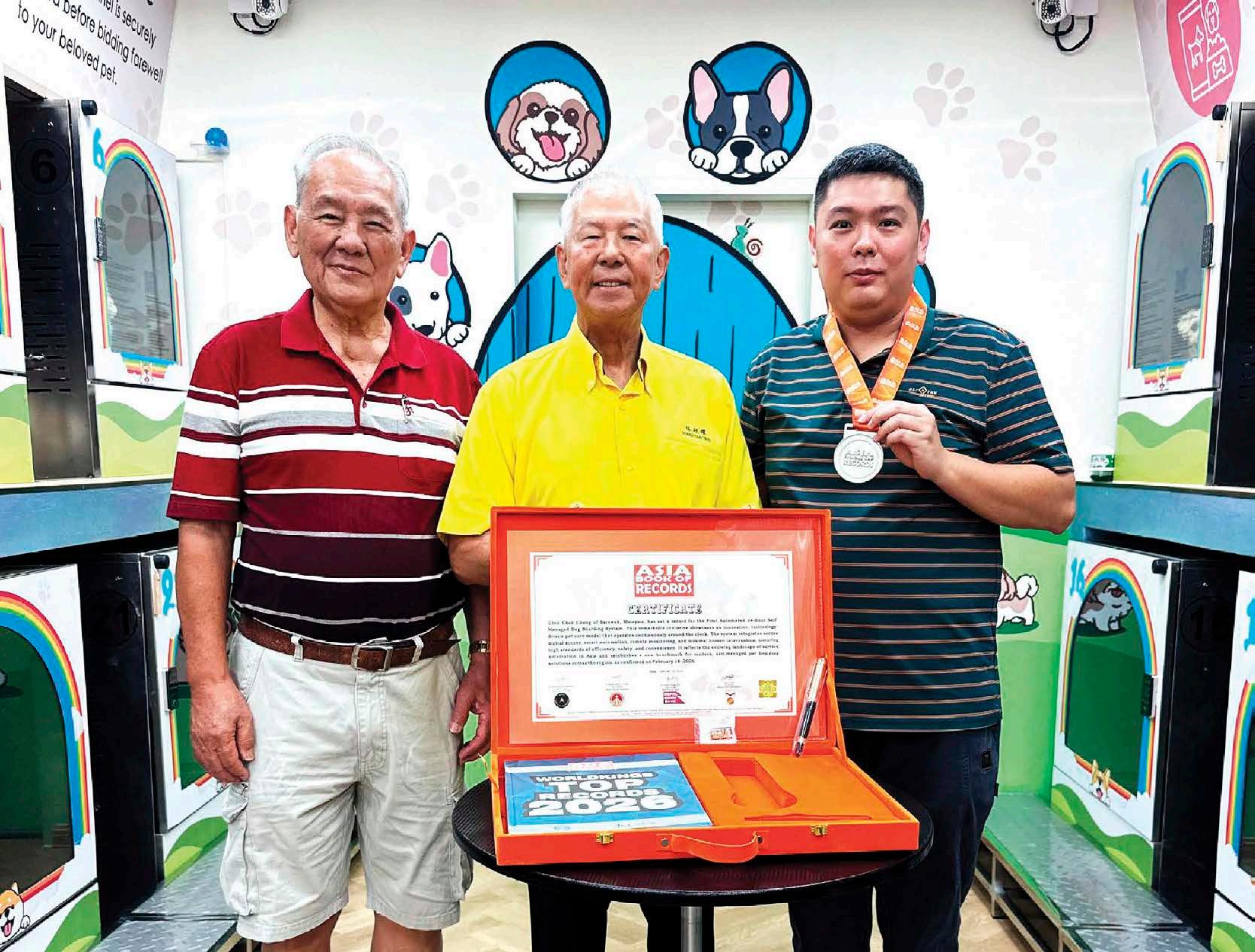
A 24-hour automated dog boarding system in Malaysia redefines pet care; combining hygiene, technology, and flexible access while setting a recognised record in Asia. Automation drives their entire process of pet management.






























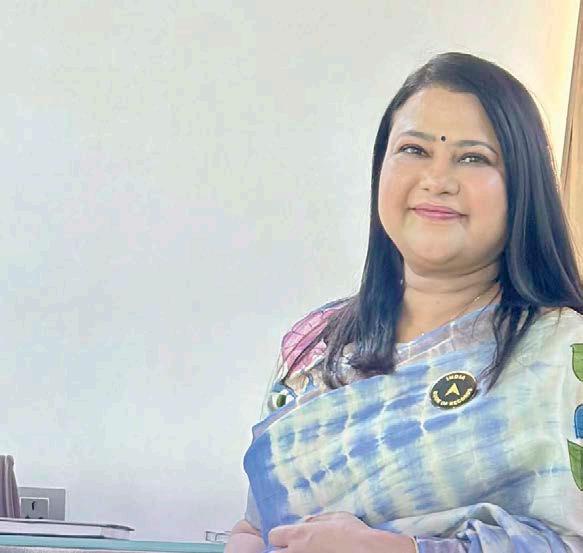

Dear readers,

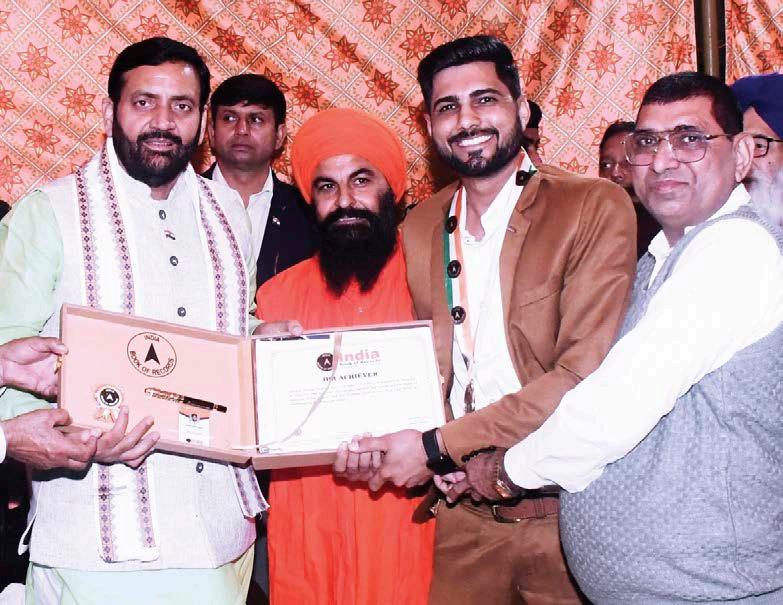
This month, our cover story celebrates a journey shaped by dedication. Deepak Kumar Kamboj stands behind one of India’s most inspiring cricket victories. Guiding the Indian Divyaang Cricket Team to the Asia Cup 2015 title, his work reflects discipline and purpose. His recognition by IBR, along with appreciation from the Haryana Chief Minister and local administration, highlights the impact of committed coaching.
Alongside this inspiring story, several remarkable achievements define this issue. In Hyderabad, 63 young performers brought alive the elegance of India’s national bird through a synchronised peacock dance, blending culture with discipline. The Army Adventure Nodal Centre achieved a significant feat in aerial sports, recording a high-altitude powered hang glider take-off.
Engineering excellence finds expression in Tawang, where the Indian Army constructed a monorail at 16,000 feet, strengthening logistics in extreme terrain. In Jaipur, students and faculty at Jaipur National University created a giant millet-based pizza, linking culinary innovation with sustainable food practices. Across the nation, an all-women convoy drove from Bhuj to Kibithoo, challenging perceptions and reinforcing confidence on longdistance routes.



Beyond India, innovation in Malaysia introduced an automated dog boarding system, reflecting the growing role of technology in everyday services. Each story in this issue captures action and forward movement.
Write to us: media@indiabookofrecords.in
Warm regards,

Neerja Roy Chowdhury Managing Editor






R.N.I. No: HARENG/2010/32259
Managing Editor Neerja Roy Chowdhury
Editor Narvijay Yadav
Copy Editors Sonum Garg, R.K. Gupta
Design & Layout Swapan Banik, Shankar Singh Koranga
Image Editing Vinod Kumar, Ranveer Singh
Image Compilation Muskaan Singh, Swati Tyagi
Compilation Mansi Satija
Records Management Team SangeetaSinha, Neha Tyagi

GunjanKachroo, Riena Singh Khare, Emmanuel Job
Support Mohd Ikram, Jeet Singh ITTeam Shantanu Chauhan
Padam Singh Rana, KapilAttri, Sunil Goyal
Board of Advisors

Justice B.G. Kolse Patil (Former Judge of Mumbai High Court)
Dr. Raj Rup Fulia (retd. IAS), (Former Principal Secretary, Govt. of Haryana)
Dr. Parveen Kumar (retd. IAS), (Former DG, Dept. of Sci & Tech., Govt. of Haryana)
Dr. Bipin Kumar (President Vishwa Hindi Parishad)
Rakesh Kumar Verma (Blackbelt-6 Degree) (Retd from MES, MoD, Govt. of India)
Somnath Bharti (Former Law Minister, Delhi)
Send all correspondence to: India
413A, HSIIDC, Sector-68, IMT, Faridabad-121004, Haryana, India
Mobile No.: +91-99994 36779
Phone No.: +91-129-2510534
Email: ibr@indiabookofrecords.in media@indiabookofrecords.in abr@asiabookofrecords.com

Asia Book of Records Selvarani Muthiah
Vietnam Book of Records Prof. Dr. Hoang Quang Thuan
World Records University Rachna Sharma
Indo-Vietnam Medical Board Nguyen Hoang Anh
Nepal Book of Records Deepak Chandra Sen
Bangladesh Book of Records Dr. Gobind Das
Indonesia Book of Records Osmar Semesta Susilo
USA Book of Records Dr. Theresa Quach
Acharya Manish, Dr. Anant Biradar, Shivani Agarwal, Surjeet Singh, Dr. Pradeep Bhardwaj
Our Adjudicators/Reporters
Andhra Pradesh Dilip Patro, Dr. Sarala
Assam & North East Jitender Kumar Jain
Chhattisgarh Kiran Sharma, Krishna Kumar Gupta
Delhi Mohit Vats, Samir Das, Bhanu Pratap Singh, Richi Sharma
Gujarat Neelima Chhajed, Ritesh Chanpura, Dushyant Chaturvedi
Haryana Ashutosh Mittal, Narvijay Yadav, Sanjay Bhola


Himachal Pradesh Chitranjan Mahant
Jharkhand Prakrit Kumar Singh
Karnataka Harish R., Girish Banvi
Kerala Vivek Nair, S. Sagayaraj, Sam George, Sagar AR, Prateek Joshi
Madhya Pradesh Antim Kumar Jain
Maharashtra Biswadeep Roy Chowdhury, Kashmira Shah, Dr. Manoj Tatwadi, Dr. Sunita Dhote, Rekha Singh, Dilip Mane, Seema Manikkoth, Dr. Chitra Jain
Punjab Acharya Manish, Dr. Pankaj Sital, Sachin Khullar
Rajasthan Bhuvnesh Mathuria, Dr. Vinod Sharma, Dr. Raja Mookim

Websites: www.indiabookofrecords.in www.asiabookofrecords.com



Tamil Nadu Vivek Nair, Kavitha Jain

Telangana Vasudha Rani, Sunita Arya, Rammohan Reddy
Tripura Tapan Datta
Uttarakhand Virender Singh
Uttar Pradesh Vinod Kumar Singh, Smita Singh, Anand Vedant, Neeti Agnihotri, Pramil Dwivedi, Lata Tack
West Bengal Sunita Kedia, Meena Gupta
All India Manoj Prajapati, Manoj Singh, Hemant Sharma, Anjul Tomar

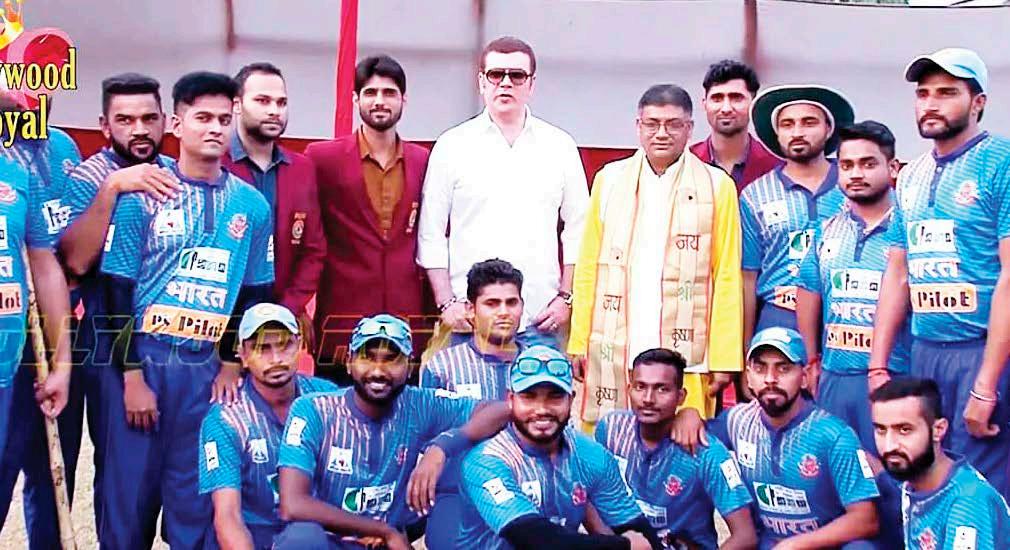


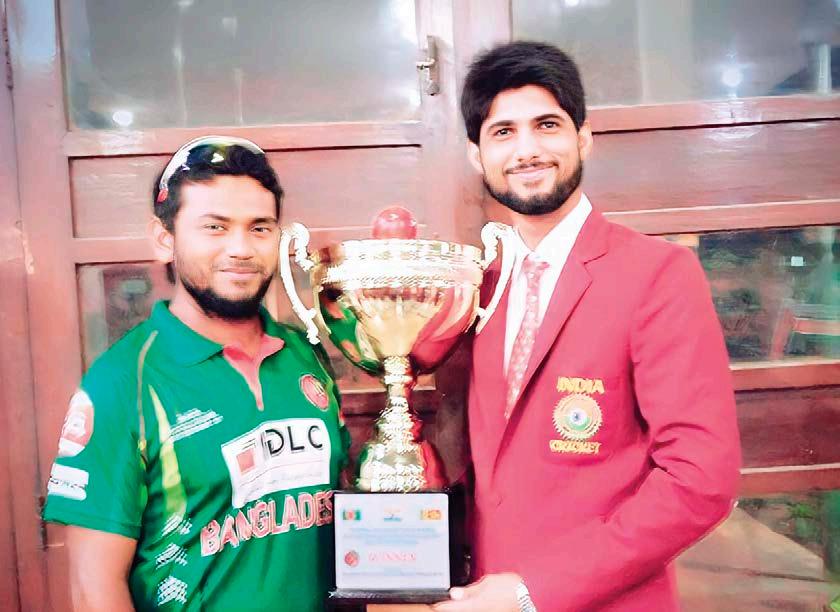
TheDivyaang Cricket Team of India has emerged as a symbol of determination and competitive spirit. Behind this rise stands a coach who worked away from the spotlight. Deepak Kumar Kamboj has played a defining role in shaping the journey of specially-abled cricketers in India. Born on 27 June 1991 in Chimmo village of Fatehabad district, Haryana, Deepak grew up in a farmer’s family. Resources were limited. Aspirations were high. He picked up cricket at the age of seven in 1997. His early years were shaped by local matches and strong family

support. His brother Sandeep encouraged him to join a cricket club. That decision shaped his career.
Deepak played at the interstate level. He was selected for the Hindustan Premier Cricket League. The momentum slowed later. He chose a new direction. In 2014, he completed a Certificate Course in Coaching from the Sports Authority of India, NIS Patiala. This marked the beginning of his coaching journey. His work with specially-abled players brought a new dimension to Indian cricket. He trained players to compete at international standards. He focused on both physical preparation and mental strength. His coaching approach emphasised discipline, routine, and belief.
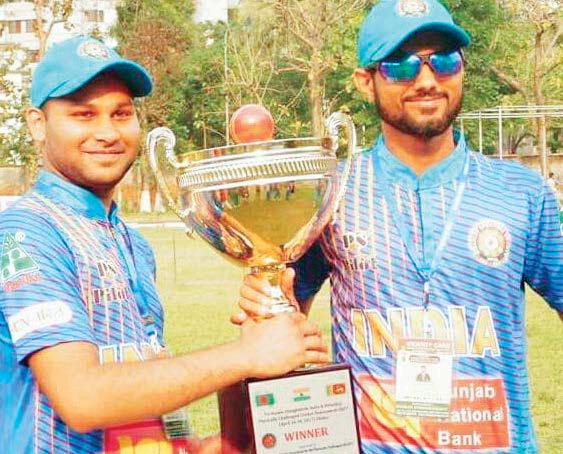
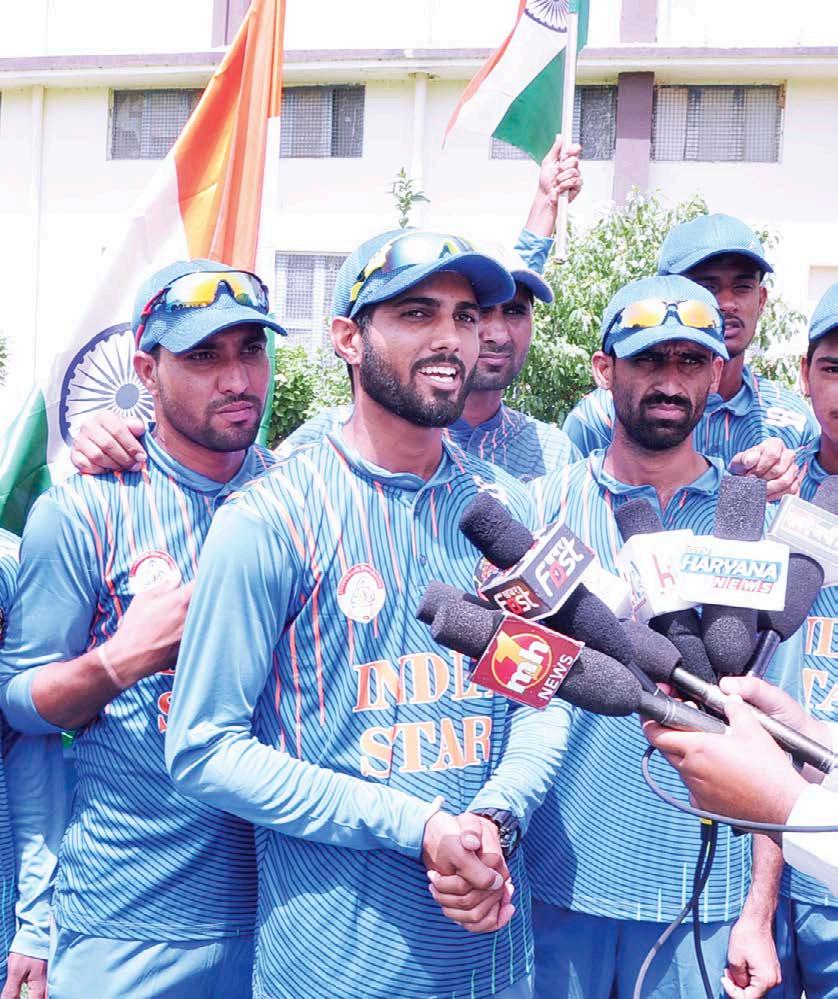
Under his guidance, the Indian Divyaang cricket team achieved significant milestones. The team won the Asia Cup in 2015. They also performed strongly in the Triangular Series and Oxyzen Cup. The team represented India in tournaments held in Malaysia, Thailand, and the UAE. Participation in the Divyaang Premier League at Sharjah Stadium added further visibility.

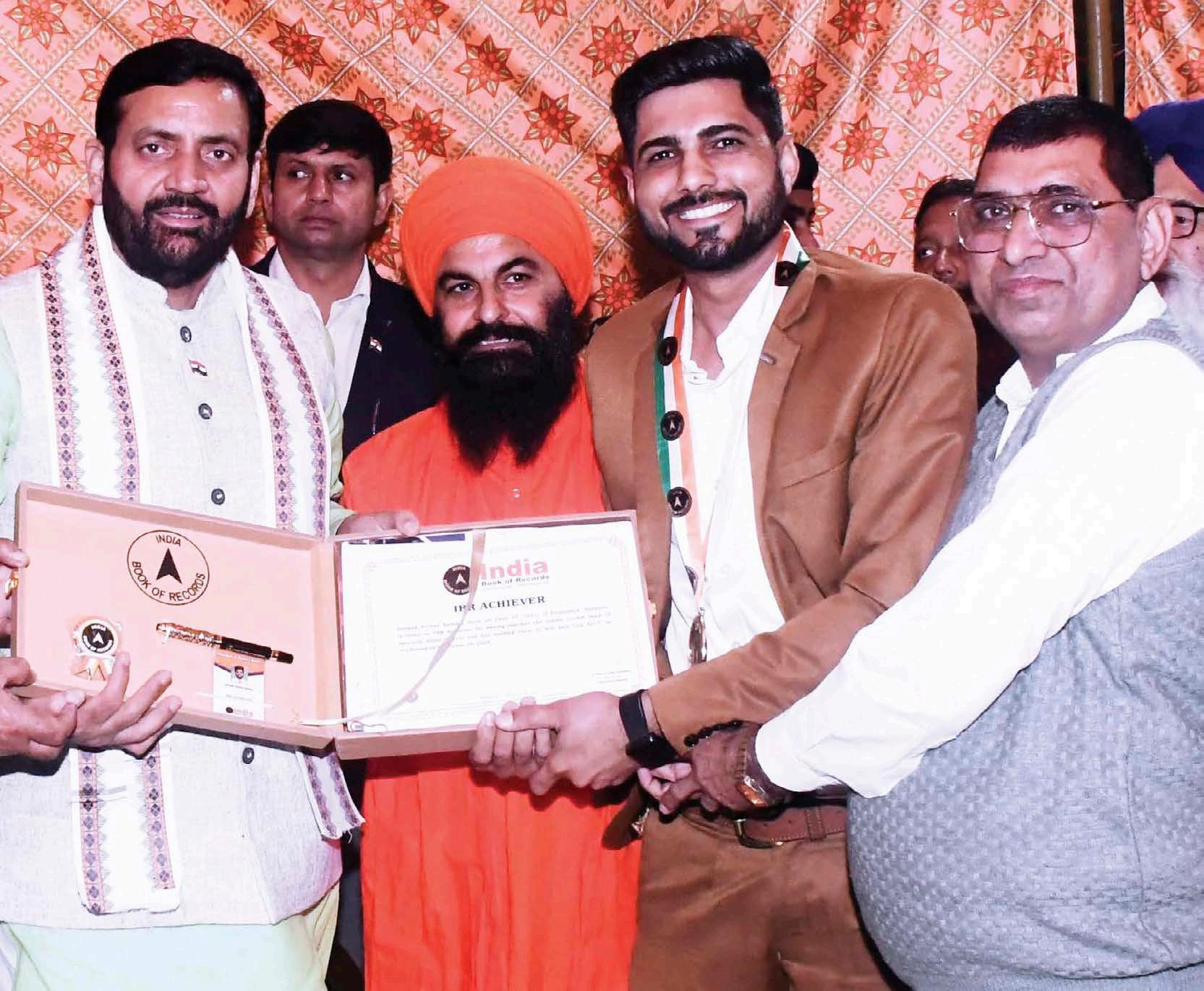

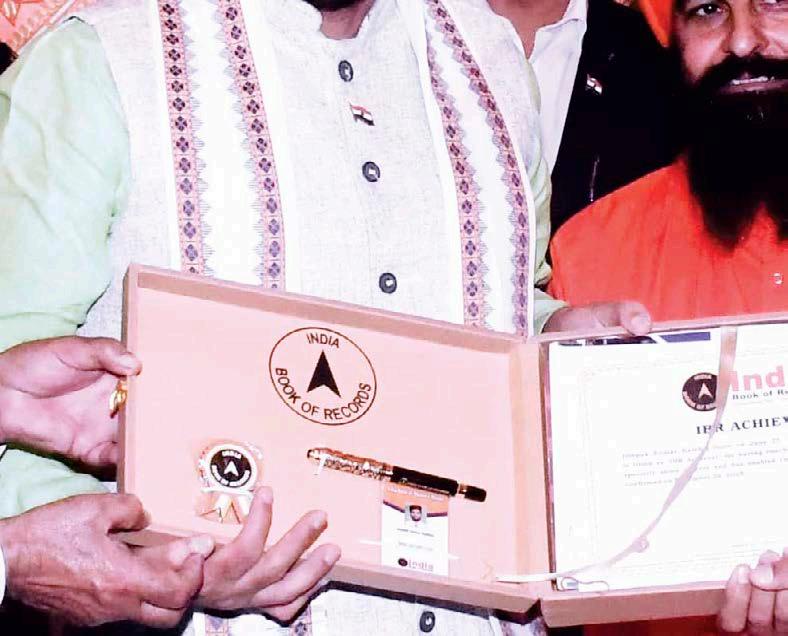
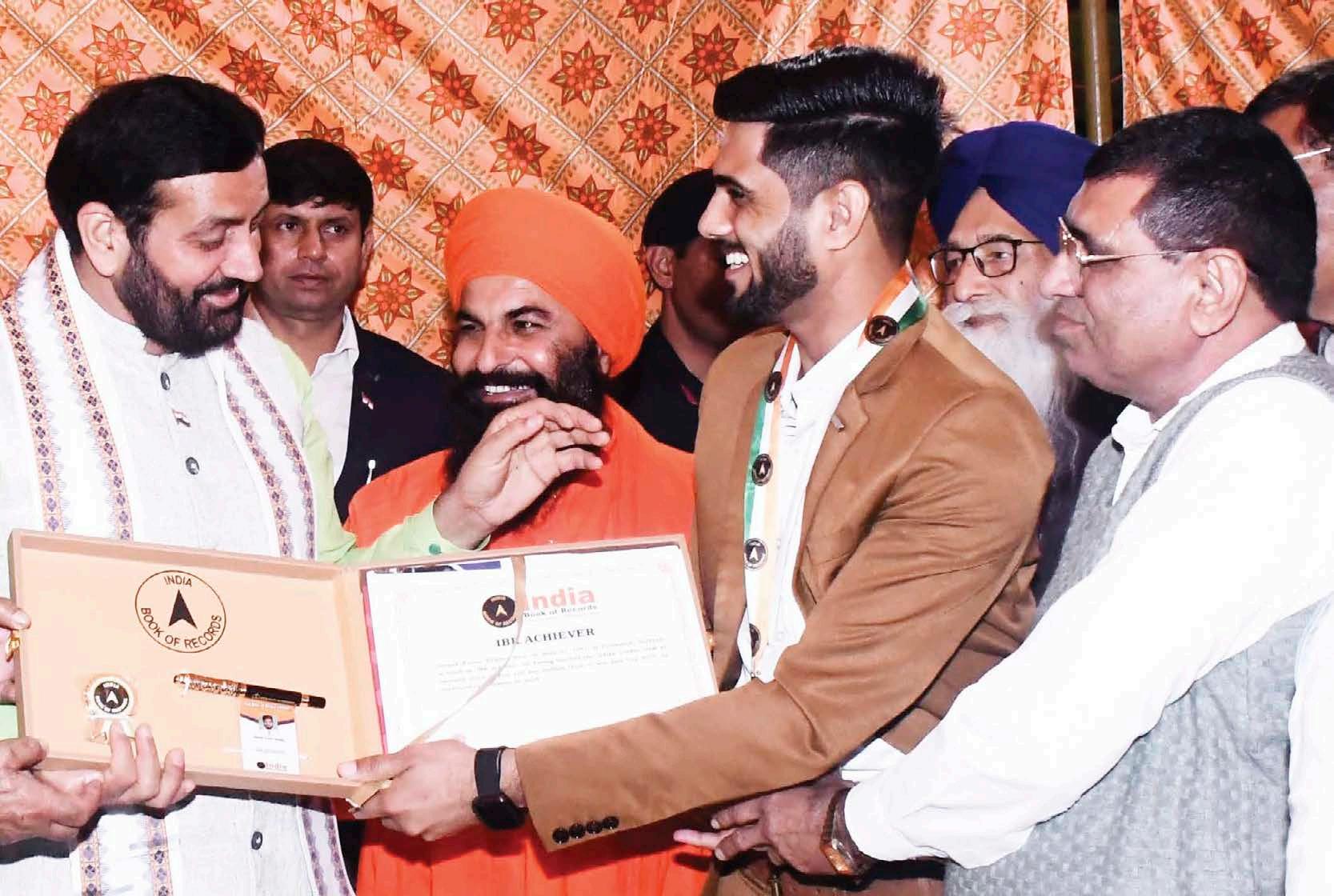
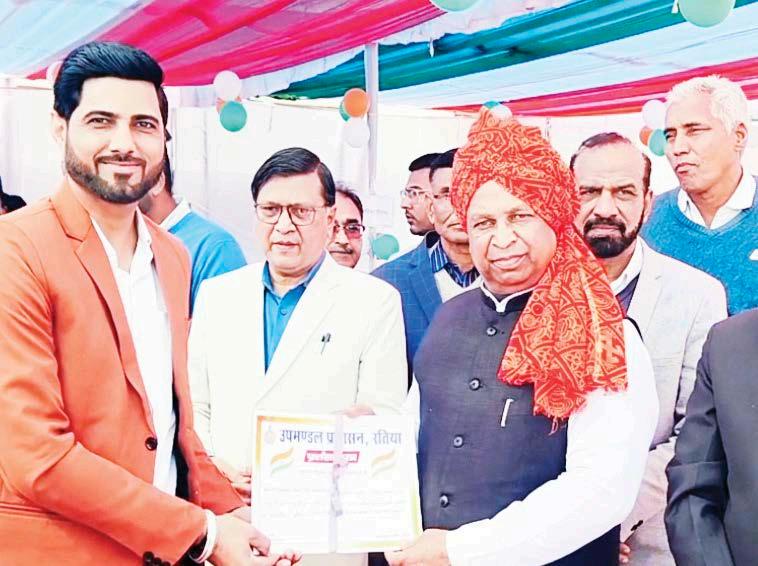
India Book of Records (IBR) recognised Deepak Kumar Kamboj as an ‘IBR Achiever’ for coaching the Indian cricket team of specially-abled players and guiding them to victory in the Asia Cup 2015. This recognition highlights his contribution to Indian sports. His efforts received appreciation at the state level as well. On 26 February 2026, Haryana Chief Minister Nayab Singh Saini honoured him at Sant Kabir Kutir in Chandigarh. The recognition acknowledged his contribution to sports and society. Fatehabad SP Sidhhant Jain also congratulated him for his remarkable achievements.


Deepak’s journey was shaped without large financial backing. He worked through constraints. He built systems from the ground level. He focused on players who often lacked access to proper training. His role extended beyond coaching. He became a mentor and motivator. He consistently encouraged players to convert their challenges into strengths. His message remained clear. Deepak said, “They must turn their weakness into power and an asset.”

His engagement with players extended beyond the field. He organised a major event in Mumbai for specially-abled cricketers. Film personalities such as Aditya Pancholi, Arman Kohli, Arun Bakhshi, Shabbir Ahluwalia, Jeetu Verma, Arun
From a small village in Haryana to guiding India’s Divyaang cricket team to Asia Cup victory; Deepak Kamboj’s journey reflects determination, discipline, and a strong belief in transforming limitations into strength through sports.
Vadola, Abhishek Kapoor, and Sameer Kochar attended the event. Their presence boosted morale and visibility.
Deepak also explored creative ways to motivate players. He used music as a medium. His songs ‘Jeet ka Jashan’ and ‘JashnE-Hindustan’ were created to inspire confidence. The second song marked India’s World Cup victory in 2024. These efforts strengthened emotional connection within the team.





He continues to train young cricketers at the Diwan Chand Cricket Academy in Ratia tehsil of Fatehabad. The academy is named after his grandfather. It serves as a platform for aspiring players. He focuses on discipline and skill development at the grassroots level. His personal interests include dancing, singing, and modelling. These interests reflect his energetic personality. They also help him connect with young players.
Deepak carries a simple dream. He wishes to meet Prime Minister Narendra Modi. His journey reflects clarity of purpose. He chose a path where impact matters. He worked with players who needed guidance and opportunity. His efforts contributed to India’s presence in Divyaang cricket at the international level. His journey continues with the same focus. He trains. He guides.
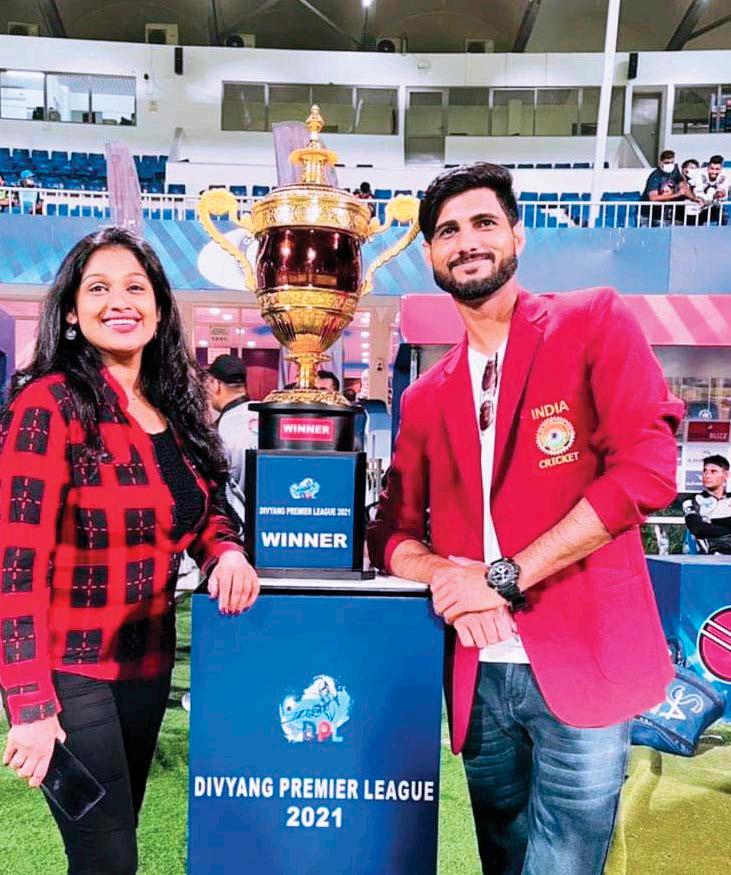
He builds players for the future. The recognition from IBR stands as an important milestone. It marks his contribution to Indian sports. It also highlights the growing strength of Divyaang cricket in the country.
His journey continues to inspire many beyond the field. Young players now see a clear path. Families find confidence in supporting such dreams. His work shows that opportunity can be created. It also shows that guidance matters. Deepak remains focused on the next generation. He believes in consistent effort. He believes in progress through practice. His story stands as a reminder. Change begins with one determined step forward.


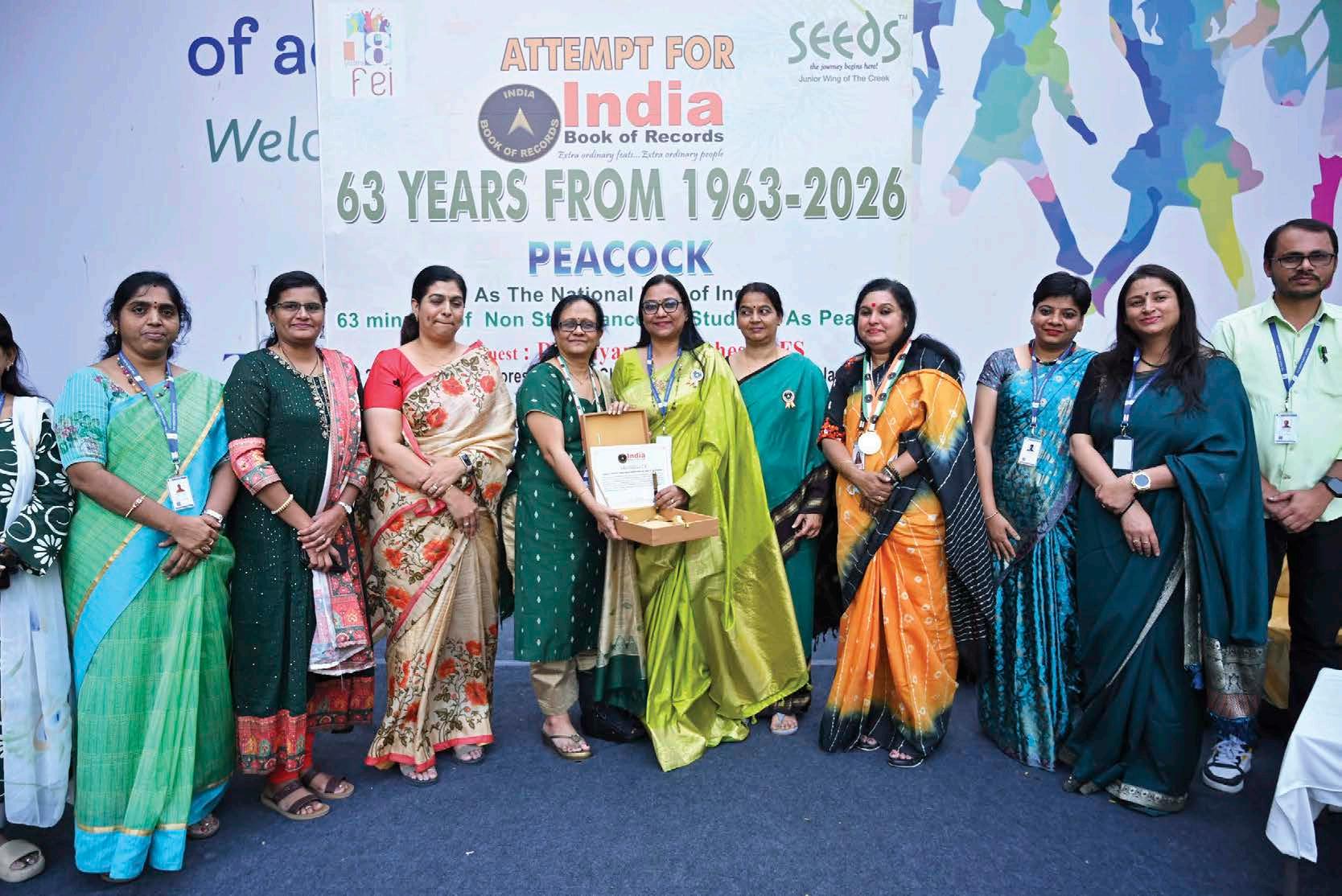



The Indian peacock, or Pavo cristatus, holds a special place in the country’s cultural memory. It appears in classical art, temple carvings, and folklore. It is associated with Lord Krishna and Lord Murugan. A group of 63 children in Hyderabad, Telangana, turned the stage into a moving peacock for 63 minutes on 7 February 2026; setting a national record with rare precision and grace.

The performance was organised by Futuristic Edu Initiatives, Telangana, and was later confirmed by India Book of Records (IBR) on the same day. The attempt carried a clear idea. The number 63 was repeated across the concept. It matched the years since the Indian peacock was declared the national bird on 1 February 1963. The duration of the performance and the number of participants followed the same number; giving the presentation a structured identity. This alignment added meaning to the effort and helped the audience connect with the theme instantly.

The children performed a continuous thematic dance. There was no break in rhythm. Movements stayed aligned from start to finish. The choreography reflected the posture, spread, and elegance of the peacock. The stage carried shades of blue and green. Formations changed with music; creating a visual pattern that resembled feathers in motion. Hand gestures were carefully designed to reflect the grace of the bird.

Its selection as the national bird was based on visibility, beauty, and cultural depth. The species is protected under the Wildlife (Protection) Act, 1972; ensuring its safety across regions. Over the decades, it has remained a symbol of pride and identity.
The Hyderabad performance connected this legacy with young learners. Weeks of practice went into the preparation. Timing had to be exact. Each child carried a defined role. Any delay could affect the flow. The group maintained focus for the entire
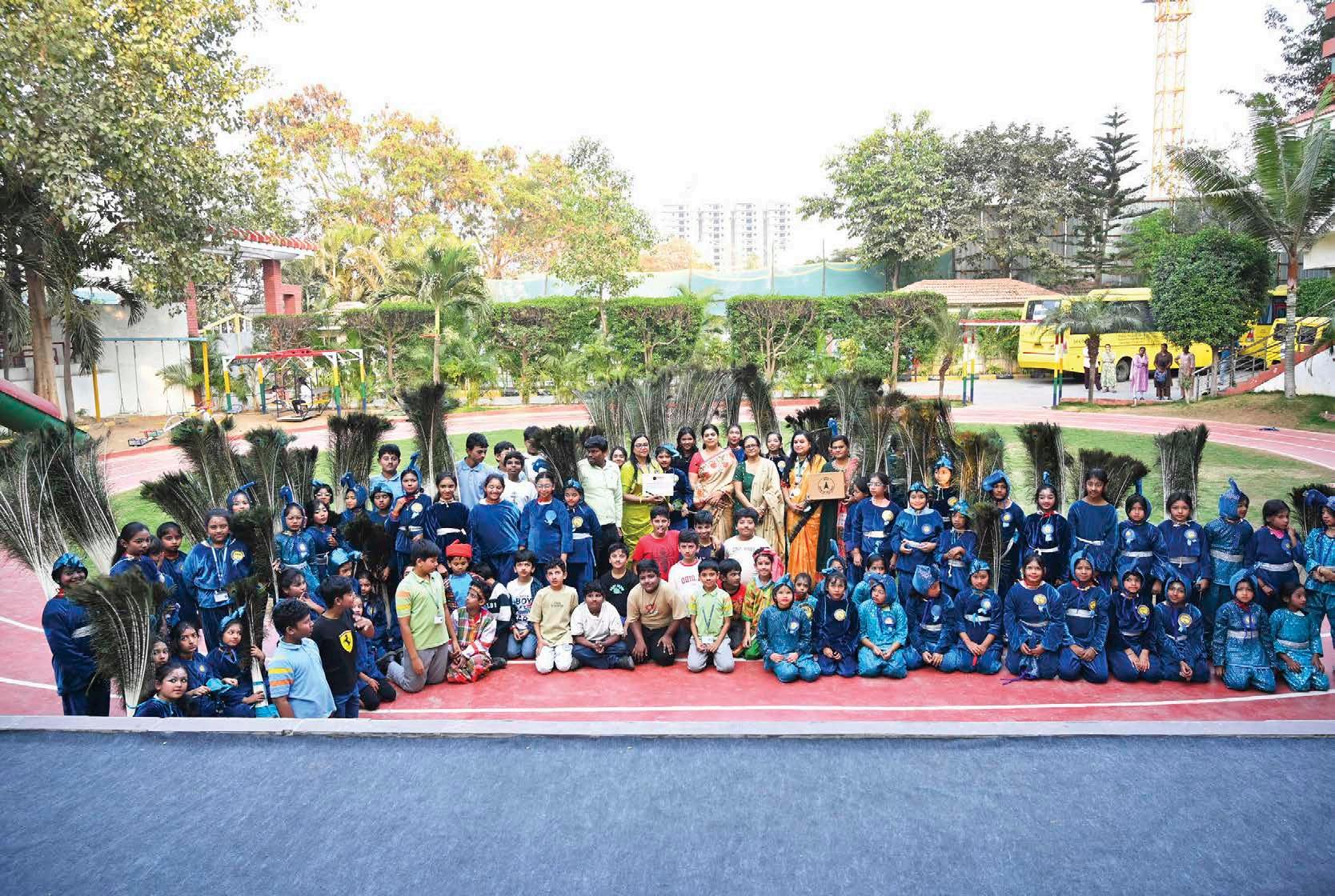
A 63-minute group dance by 63 children in Hyderabad marked 63 years of India’s national bird; blending culture, discipline, and nature in a synchronised performance recognised by India Book of Records.
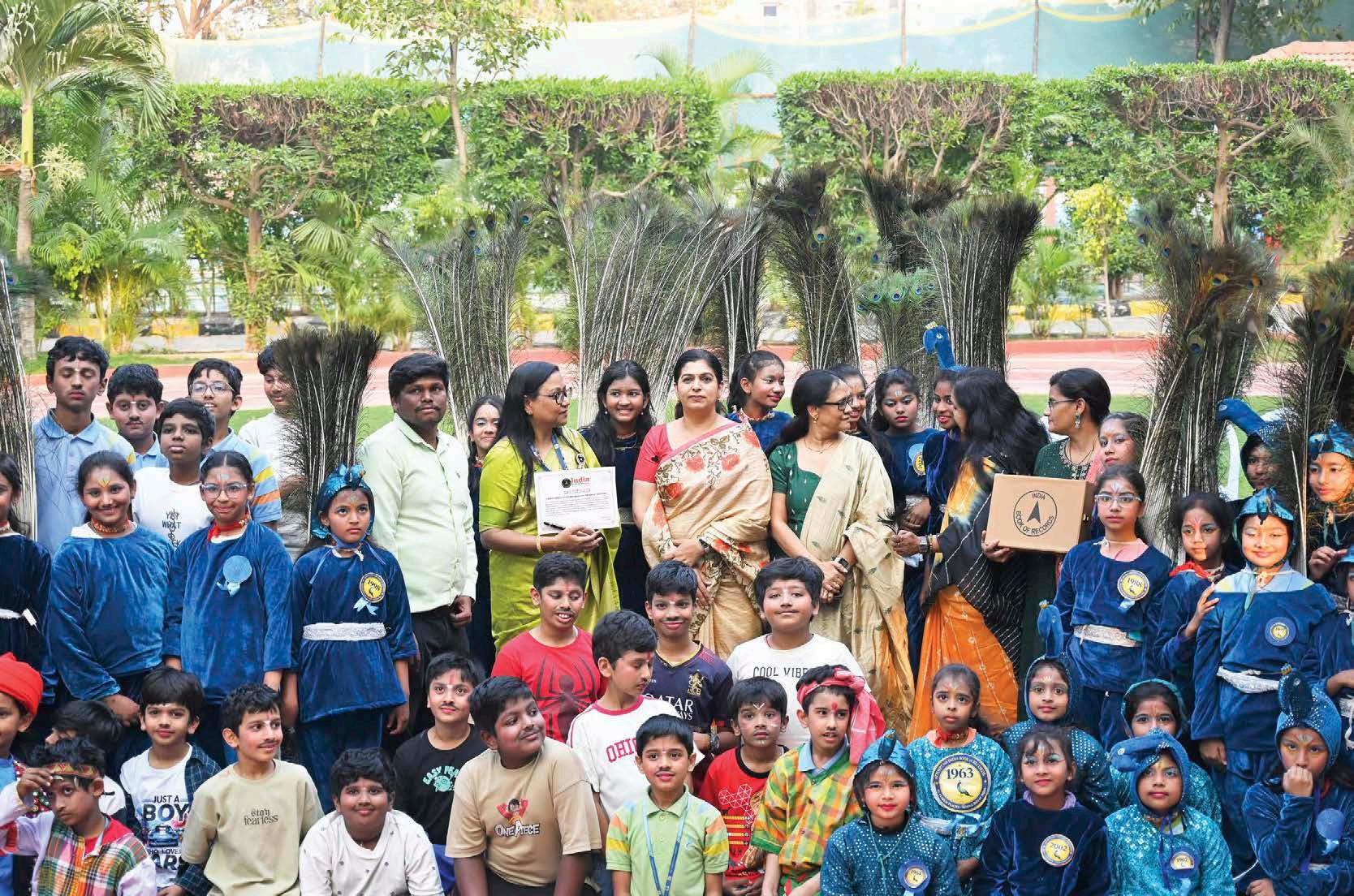

duration; showing discipline and coordination. Teachers guided the students closely during rehearsals.
Futuristic Edu Initiatives has been active in the education sector since 2008. The group runs multiple institutions in Hyderabad and Rajahmundry. Its approach combines academics with creative learning. Events like this reflect its emphasis on cultural exposure and student engagement. The institution believes that learning extends beyond classrooms.
The audience remained attentive throughout the act. Parents and teachers watched the children sustain energy and expression. The uninterrupted format added to the challenge. It also made the achievement more meaningful. The atmosphere carried a sense of pride and appreciation.
India Book of Records (IBR) adjudicator Dr Vasudha Rani presented the medal and certificate after verification. The process included timing checks and performance review. The recognition placed the effort among notable group achievements in cultural performance. Such records encourage young participants to explore new ideas.
A representative of Futuristic Edu Initiatives said, “We wanted children to experience India’s heritage through performance; this record belongs to every child who stayed committed for those 63 minutes.”

Group performances at this level require unity. Each participant must move in sync. The Hyderabad event showed how a simple idea can turn into a large collective effort. It brought together art, learning, and national identity on one stage. The children also gained confidence through this experience.
The pride of the peacock found a fresh expression through this performance. It moved from tradition into a structured

presentation. The children carried that legacy forward with focus and clarity; leaving a lasting impression on the audience present at the venue and the record keeping organisation.
The impact of this performance extends beyond the stage. It has opened new possibilities for learning through art. Schools can adopt similar formats. Cultural themes can be explored with creativity. Students can engage with heritage in active ways. This approach builds deeper understanding. It also improves focus and teamwork. Such experiences stay with children for long. They influence confidence and expression. The discipline of practice shapes behaviour. The joy of performance builds motivation. The Hyderabad initiative also highlights the role of institutions in shaping holistic education. It shows that proper planning can create meaningful outcomes. It encourages educators to think beyond routine formats. It brings attention to the importance of cultural literacy. The performance stands as a model. It blends tradition with method. It connects the past with the present. It creates pride among participants. It leaves a message for future efforts. Creative learning can inspire lasting change.

Hang

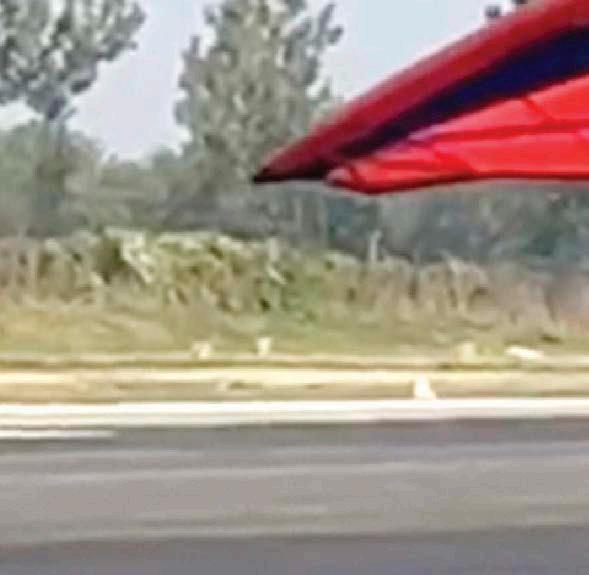
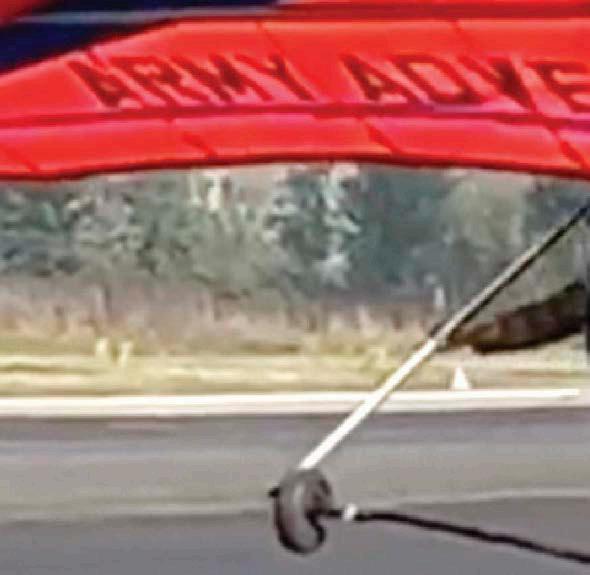
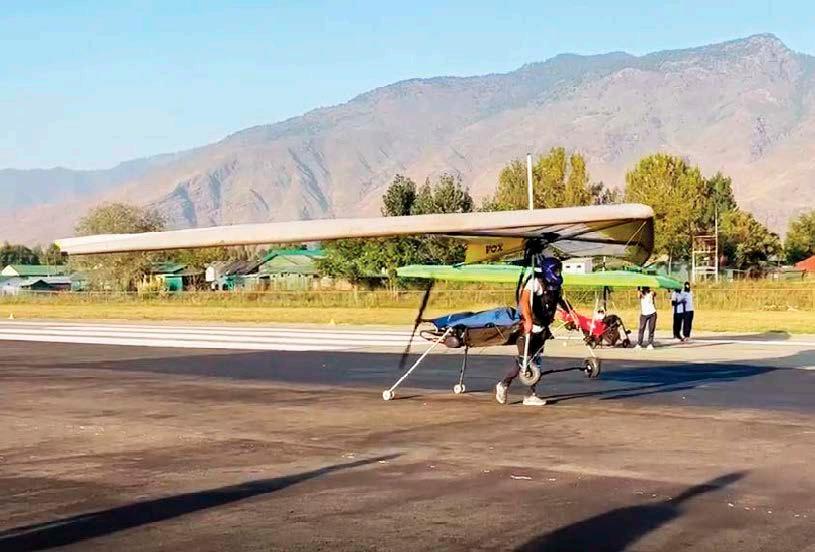
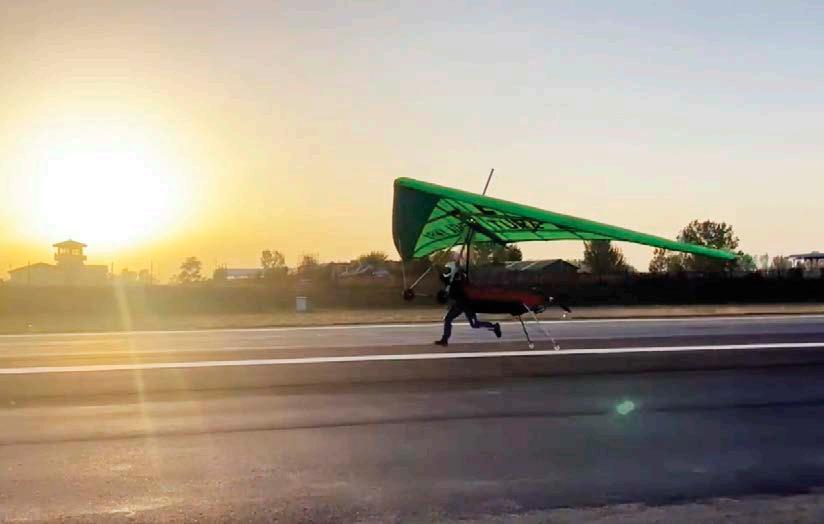
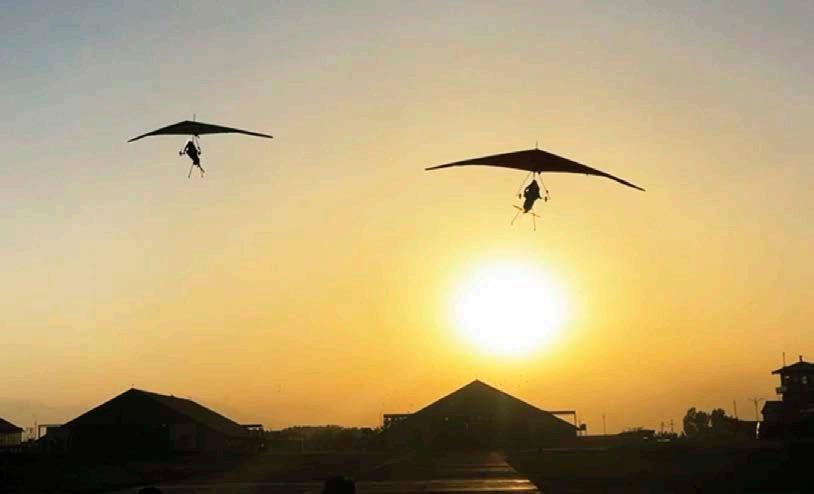
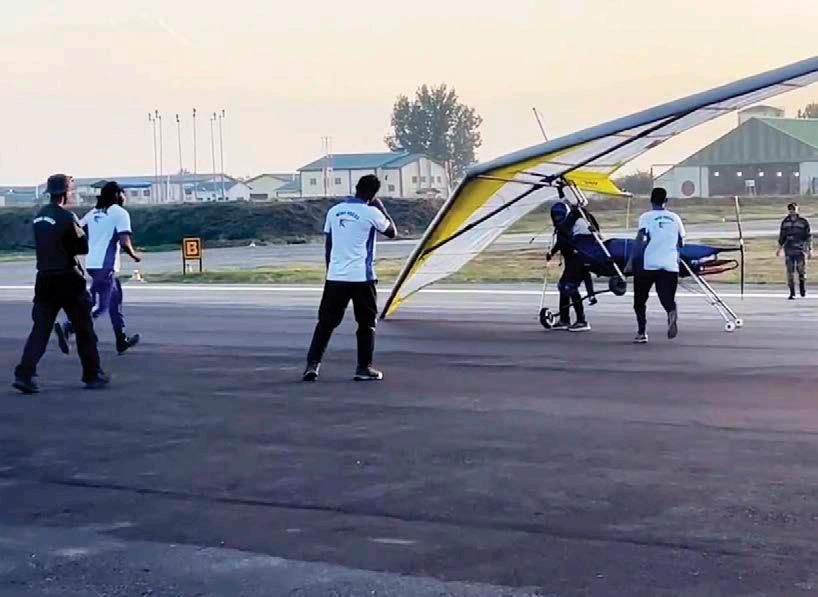
gliding as an aero-sport demands skill, control, and sharp judgement; and the Indian Army has once again demonstrated these qualities with a remarkable high-altitude achievement. On 25 September 2025, the Army Adventure Nodal Centre (Hang Gliding) Team from the School of Artillery, Devlali, Maharashtra, set a record for the highest take-off altitude achieved while flying a foot-launched powered harness hang glider.



The attempt took place at the Manasbal Air Base in Kashmir. The team used a two-stroke, 120 cc powered foot-launched harness hang glider. The take-off point stood at 5,275 feet above mean sea level. The glider ascended to 5,906 feet; achieving a vertical gain of 670 feet above the launch point. The performance was later verified and confirmed on 12 December 2025. Asia Book of Records (ABR) recognised the achievement.
The record was part of the larger Kargil to Kanyakumari Expedition. This journey was designed to test endurance, planning, and technical capability across varied terrains. It also marked the 200th anniversary of the Regiment of Artillery. The expedition carried symbolic value. It reflected a long-standing tradition of discipline and operational excellence within the Indian Army.

The team operated under the leadership of Lieutenant Colonel Vijay Rai. A group of 23 members worked on the project.


Indian Army team achieved an Asia-level high-altitude hang gliding record during an ambitious expedition; marking the bicentenary of the Regiment of Artillery with precision flying at Manasbal Air Base, Kashmir.

Preparation extended over twelve months. Each stage required attention to detail. Equipment checks, flight simulations, and terrain assessments formed part of the process. Weather patterns in Kashmir added another layer of complexity.
Flying at higher altitudes brings specific challenges. Air density reduces. Engine efficiency can fluctuate. Pilots must adjust quickly. The Manasbal terrain presented these conditions. The team calibrated their equipment to match the environment.
The powered harness glider delivered consistent performance during the ascent.
The School of Artillery at Devlali has a strong background in training and technical excellence. Established as an affiliated institution, it supports both academic and skill-based development. The Army Adventure Nodal Centre within the institution promotes aero-sports and adventure activities. Initiatives like this record highlight its commitment to pushing boundaries.
The achievement adds to India’s growing presence in aerosports. It also reflects the integration of technology and human skill. Powered hang gliding combines mechanical precision with pilot judgement. This balance was visible in the Manasbal flight.
Lieutenant Colonel Vijay Rai said, “This mission represents our commitment to explore new frontiers and honour the legacy of the Regiment of Artillery.” The flight itself required precise coordination. Launch timing had to match wind conditions. The pilot maintained control during ascent. The glider responded smoothly to directional inputs. The climb to peak altitude was gradual and controlled. The successful landing completed the attempt without deviation.

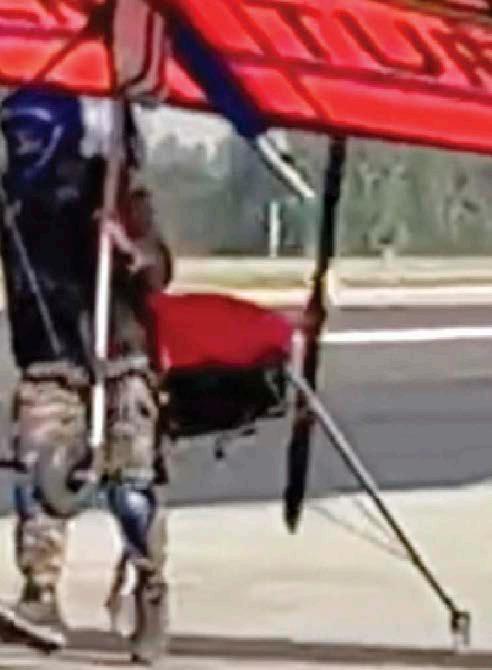

The confirmation by Asia Book of Records (ABR) followed detailed scrutiny. Flight data, altitude readings, and technical parameters were examined. The validation process ensured accuracy. The record now stands as a benchmark in powered hang gliding. The expedition from Kargil to Kanyakumari carried multiple objectives. It aimed to inspire young aspirants. It also showcased the operational readiness of specialised teams. The hang gliding record became a key highlight of this journey.
Such achievements extend beyond numbers. They reflect planning, teamwork, and execution under demanding conditions. The Manasbal flight captured these elements in a single attempt. It demonstrated how training and focus can translate into measurable success. The sky over Kashmir became the stage for this performance. The glider’s ascent marked a moment of achievement for the team and the institution. It also honoured a 200-year legacy through a modern aero-sport challenge.

This achievement also sets a clear direction for future efforts. It shows how focused training can unlock new possibilities. It inspires young officers to explore aero-sports. It highlights the value of preparation and discipline. It also strengthens India’s position in adventure aviation. The success at Manasbal adds confidence to similar missions. It proves that extreme terrain can be managed with planning. It reflects the Army’s evolving approach. Innovation remains at the core. Each such effort builds capability. Each mission adds experience. The sky now offers new opportunities for exploration.

















Thalassemia burden in India remains a serious health concern. Thousands of children are born each year with this inherited blood disorder. Limited awareness and delayed screening add to the challenge. Early diagnosis and counselling can reduce long-term impact. Yet many families lack access to clear information. Against this backdrop, a nationwide awareness initiative took shape on 8 March 2026.


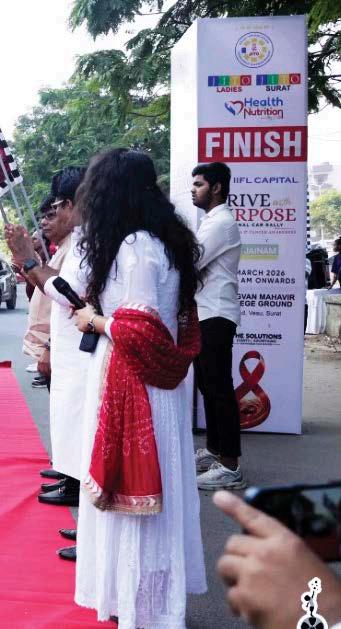
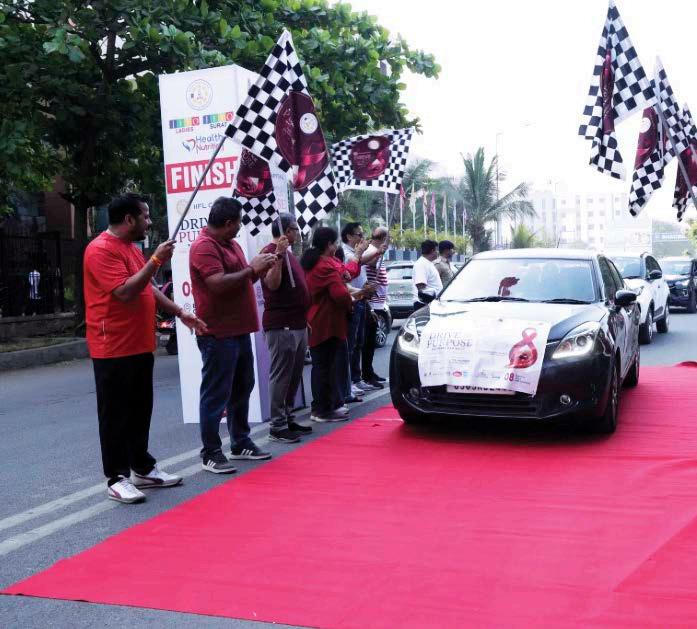
The Jain International Trade Organisation (JITO) organised “IIFL Drive with Purpose” car rallies across 64 cities. The effort aimed to spread awareness about thalassemia and encourage responsible health practices. The initiative also marked International Women’s Day; adding a social dimension to the campaign.
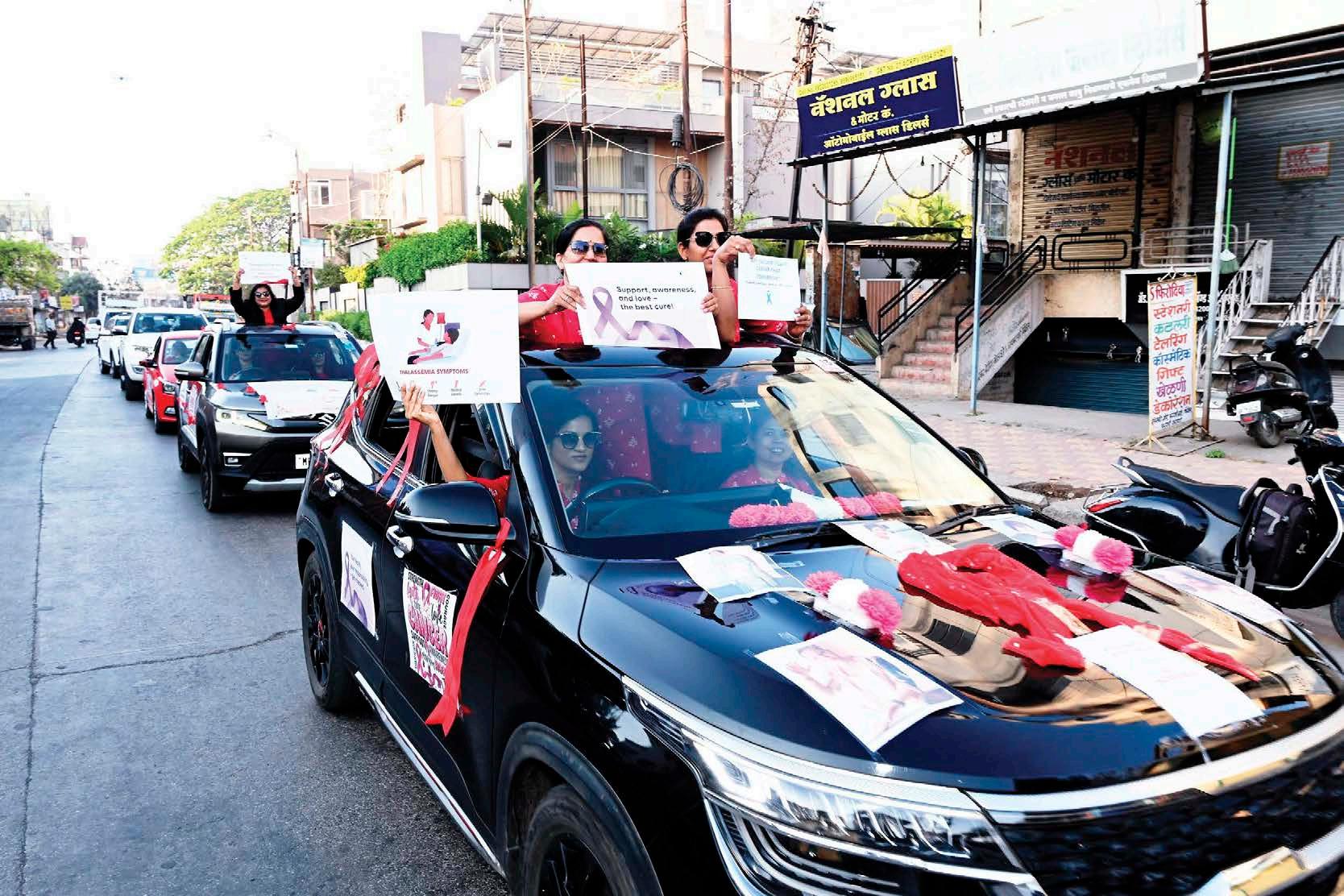
The coordinated rallies created a strong public presence. Vehicles moved through city routes carrying messages on screening, treatment, and care. Participants engaged with local communities. The movement highlighted the importance of early testing and genetic counselling. It also encouraged conversations around prevention.
This effort was recognised by India Book of Records (IBR) as the largest multi-city car rally organised to create awareness on thalassemia. The confirmation acknowledged the reach and coordination of the campaign. IBR adjudicator Disha Jain presented the medal and certificate after verification. The campaign extended beyond symbolic participation. In cities like Ahmedabad, local chapters organised proper events.


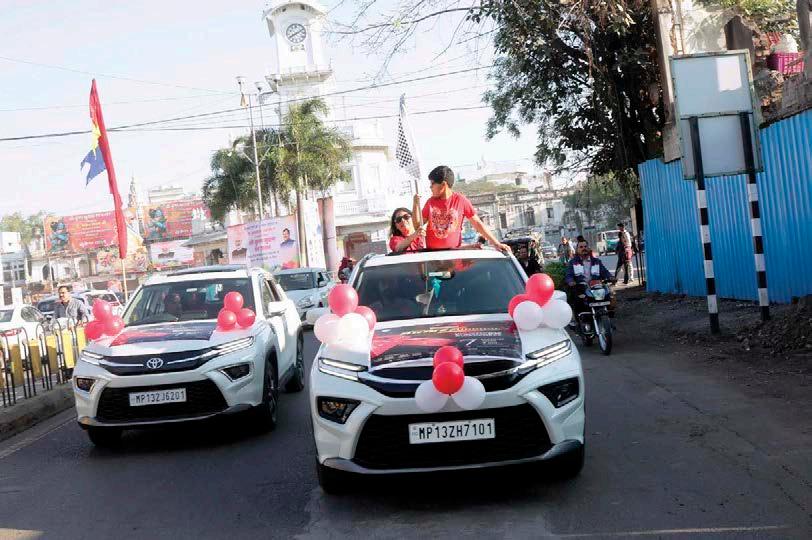
The rally began early in the morning with a formal flag-off. Around 50 cars joined with over 125 participants. Medical experts addressed gatherings and shared practical guidance. Their presence added credibility to the awareness drive. Doctors explained the nature of thalassemia in simple terms. They highlighted the role of carrier screening. Couples were advised to undergo tests before marriage or parenthood. Awareness sessions focused on reducing stigma and improving access to treatment. Families affected by the condition were encouraged to seek support networks.
The initiative also brought together multiple stakeholders. Healthcare professionals, social organisations, and local leaders contributed to the campaign. Partnerships with hospitals and educational institutions strengthened outreach. The involvement of sponsors and volunteers ensured smooth execution across locations.
The choice of a car rally format added visibility. It allowed the message to travel across neighbourhoods. Public engagement increased as vehicles passed through busy routes. Banners, stickers, and announcements carried clear information. The movement created a direct connection with people in their daily environment.
Jain International Trade Organisation (JITO) has been active in social initiatives across sectors. This campaign reflects its focus on health awareness and community engagement. By organising simultaneous rallies in multiple cities, the organisation demonstrated its ability to coordinate large-scale efforts. Anuja Shah, JLW Chairperson, said, “Together, we

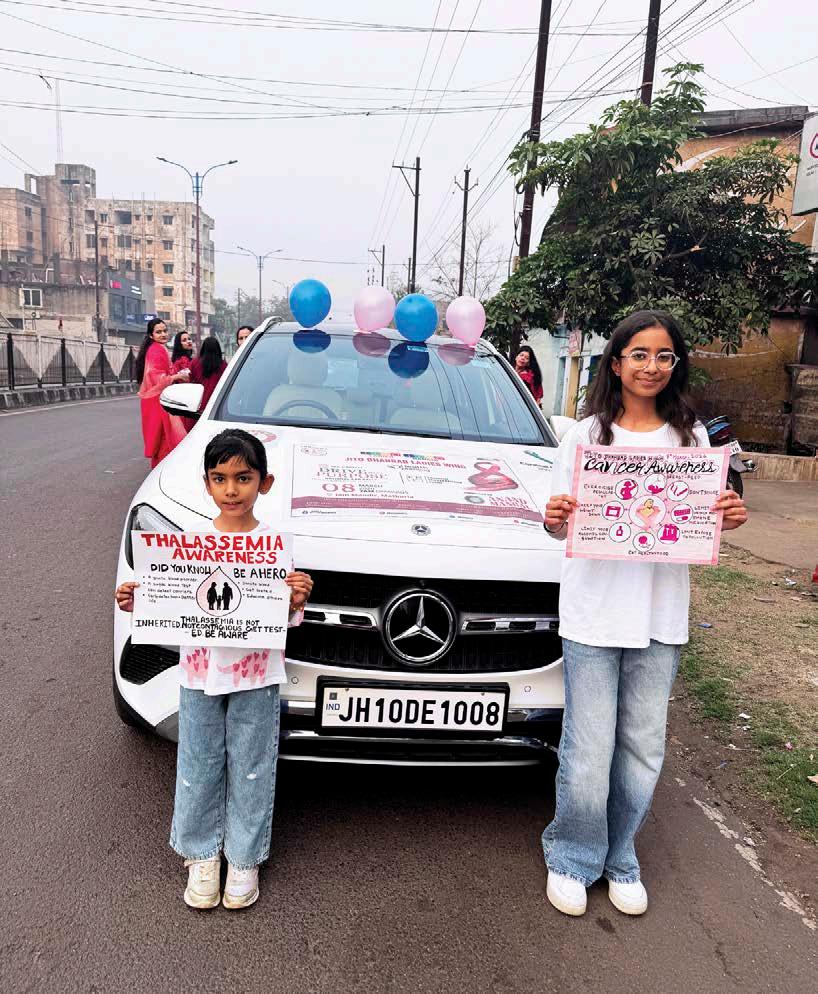
64 cities on 8 March 2026 spread awareness on thalassemia; engaging communities, promoting screening, and supporting affected families through a coordinated social initiative.

didn’t just drive cars; we drove a message of hope, health, and compassion.”
The campaign also aligned with broader public health goals. Thalassemia can be managed with timely intervention. Blood transfusions, medication, and counselling form part of longterm care. Awareness remains the first step in reducing the burden of the disease. Events like this help bridge information gaps. They bring medical knowledge closer to communities. They encourage preventive action. They also reduce hesitation around testing and diagnosis. Public participation plays a key role in such movements.

The nationwide rally created a shared moment of awareness. It connected cities through a common cause. It showed how collective action can address health challenges. The movement reached people across regions; carrying a message that can influence future decisions. Thalassemia continues to require sustained attention. Awareness campaigns need to be consistent and accessible. The “Drive with Purpose” initiative has added momentum to this effort. It has set a record while delivering a meaningful public message.




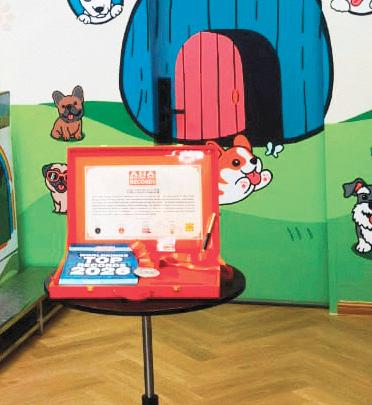
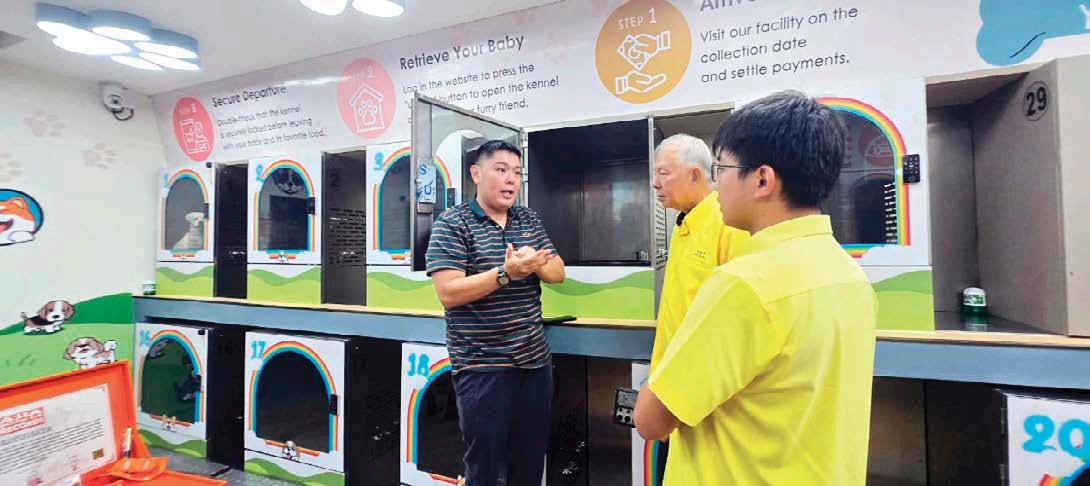
Anew idea in pet care has taken shape in Miri, Sarawak, Malaysia. There, Chin Chee Chong introduced a fully automated 24-hour dog boarding system that runs with minimal human intervention. The innovation set a new record under Asia Book of Records (ABR) on 18 February 2026. The concept is simple to understand and complex to execute. Pet owners can check in and check out their dogs at any hour. A secure digital system manages access.

Monitoring continues remotely. The facility remains active round the clock; without depending on fixed staff schedules. This model responds to a visible shift in urban life. Pet owners today follow varied routines. Travel, work hours, and sudden plans create the need for flexible pet care. Traditional boarding centres often operate within fixed time windows. Chin’s system removes that limitation. Each dog is given an individual kennel. This reduces interaction-related stress and helps maintain hygiene.

Dedicated ventilation ensures fresh air flow within each unit. The design prevents the spread of infections that are common in shared environments. A key feature of the system is the automatic urinal flushing mechanism. Waste is cleared at regular intervals. This limits bacterial growth and reduces the risk of disease. The use of 304 stainless steel surfaces allows thorough cleaning. High-temperature steam is used for sanitisation. These steps ensure that the facility maintains a clean and safe environment.

Automation drives the entire process. Owners interact with the system through a digital platform. Entry and exit are controlled through secure access. Surveillance systems allow remote observation. The need for constant human supervision is reduced; while maintaining reliability. The idea received early validation in Malaysia. The facility was listed in the Malaysia Book of Records in March 2025. It also received endorsement from the Department of Veterinary Services Sarawak. Support came also from the Mayor of Miri City and the Deputy Minister of Tourism Sarawak. Regional media highlighted the project as an example of innovation in pet care.

The system also connects with education. Collaborations with Curtin University Malaysia and Fajar College Miri bring students into the facility. They gain exposure to automation, sustainability practices, and operational systems. This interaction adds practical value to academic learning. Environmental considerations are part of the design. Watersaving systems reduce wastage. Energy-efficient processes lower operational impact. Cleaning methods follow eco-friendly practices.
The facility aligns with emerging global standards in sustainable operations. The project also opens a path for inclusive employment. Plans are in place to involve individuals on the autism spectrum. Structured tasks such as kennel cleaning, inventory checks, and monitoring suit routine-based







work. This approach creates opportunities while maintaining operational efficiency.
Chin Chee Chong said, “Our goal was to create a system where pets receive safe and hygienic care at any hour; while owners experience complete convenience and trust.” The recognition by Asia Book of Records (ABR) followed detailed verification. The system’s automation, safety measures, and operational model were examined. The confirmation places this facility as a benchmark in automated pet boarding.
The impact extends beyond one city. Miri gains visibility as a pet-friendly location. Pet owners gain confidence in structured care systems. The model shows how technology can solve longstanding challenges in animal boarding.
This system also signals a broader shift. Services are moving towards automation and user control. Convenience is becoming central to design. Chin’s model fits into this changing landscape. The facility offers a replicable framework. Other cities can adopt similar systems. The combination of hygiene, automation,
A 24-hour automated dog boarding system in Malaysia redefines pet care; combining hygiene, technology, and flexible access while setting a recognised record in Asia. Automation drives their entire process of pet management.


and accessibility makes it adaptable. As demand grows, such models may become common.
This achievement reflects a clear direction in modern services. Thoughtful design, supported by technology, can improve everyday experiences. In this case, it brings comfort to pets and confidence to their owners; setting a new reference point in pet care.


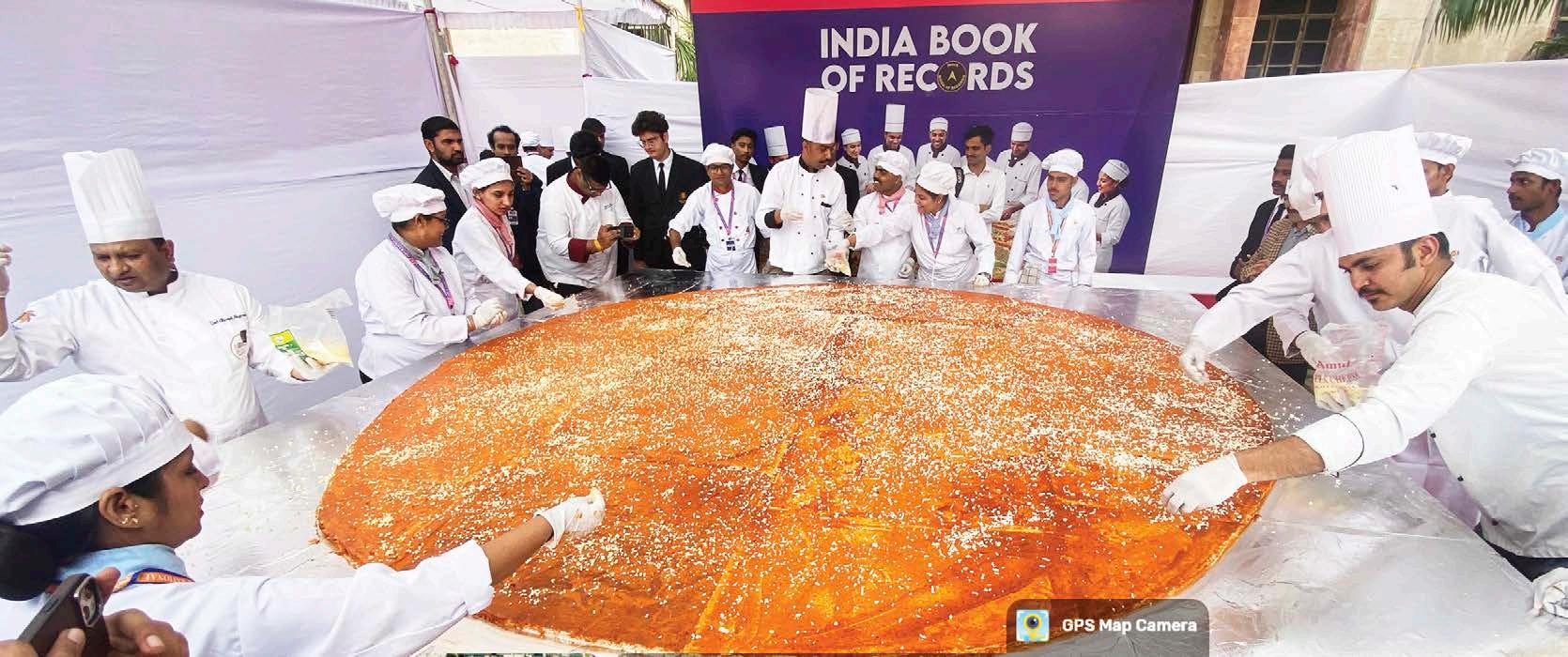
Millets are gaining importance in a balanced diet across India. They are rich in fibre, minerals, and essential nutrients. They support digestion and help manage lifestyle diseases. The government has also pushed for millet revival through national campaigns. These grains are now returning to everyday kitchens. An educational initiative in Jaipur brought millets into a creative spotlight.
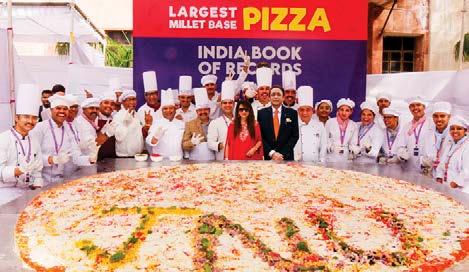
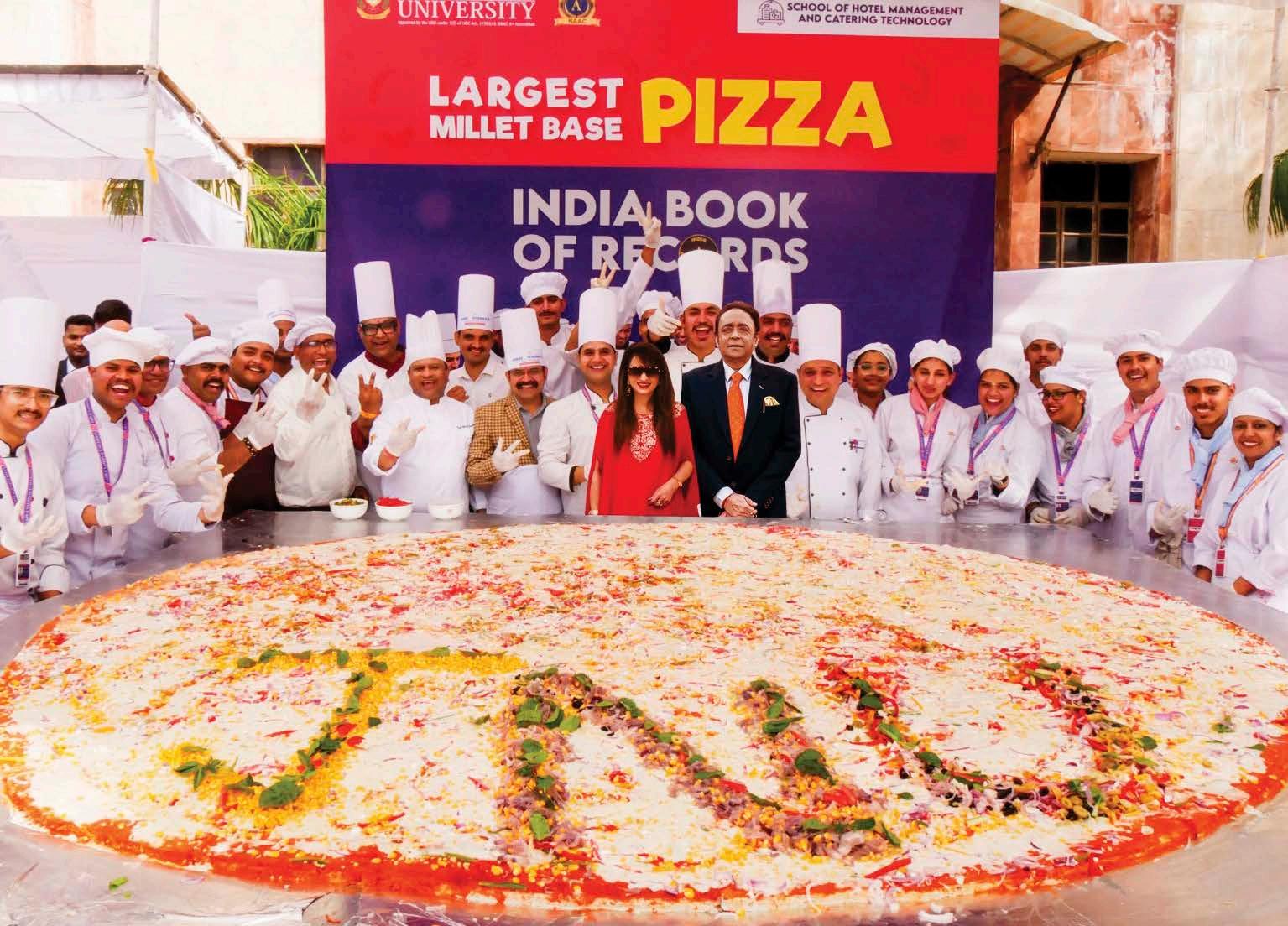
Jaipur National University (JNU), through its School of Hotel Management and Catering Technology, undertook a unique culinary challenge. The aim was to combine traditional Indian grains with a popular global dish. The effort also focused on student learning and innovation. After six months of preparation, the university created the largest millet-based pizza. The pizza measured 119 inches in length and 119 inches in breadth.



It covered a massive area and required careful planning. More than 500 students and faculty members participated in the process. The record for the ‘Largest Millet Based Pizza Prepared by an Educational Institute’ was confirmed on 2 March 2026. India Book of Records (IBR) recognised the achievement. The attempt was conducted under the supervision of Chancellor Dr Sandeep Bakshi. Executive Director Dr Preeti Bakshi led the initiative on the ground.
The preparation required coordination at multiple levels. Ingredients had to be sourced and processed in large quantities. The millet base demanded precision in texture and consistency. Teams handled mixing, baking, and assembly in a proper manner. Hygiene and safety protocols were followed throughout the process. The initiative was designed as a learning exercise.

Students gained exposure to large-scale food production. They also understood the importance of local ingredients in modern cuisine.
The activity bridged classroom learning with practical execution. It also built confidence among aspiring hospitality professionals. The presence of industry experts added value to the event. Renowned chefs observed the process and appreciated the execution. They noted the discipline and clarity shown by the students. The attempt reflected industry standards and professional training.
The use of millets was central to the concept. These grains are considered climate-friendly. They require less water and adapt well to Indian conditions. Promoting millets supports both health and sustainability goals. The pizza became a medium to communicate this message to a wider audience.
Dr Sandeep Bakshi said, “This record reflects our commitment to innovation, health awareness, and respect for India’s agricultural roots.” The event also highlighted teamwork. Faculty members guided students at every stage. The collaboration ensured smooth execution of a complex task. The success belongs to both learners and educators. It reflects a shared vision of excellence.
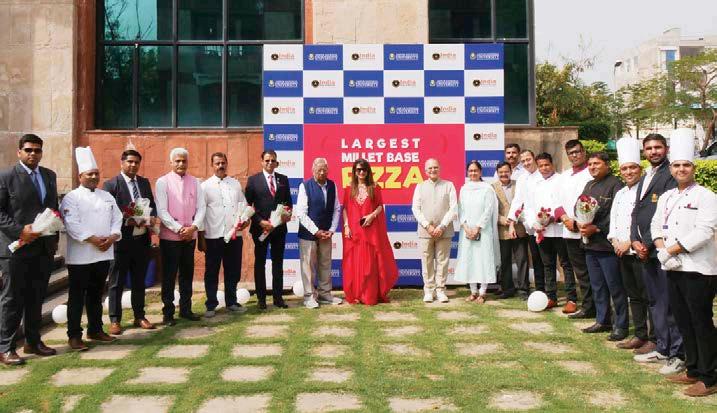
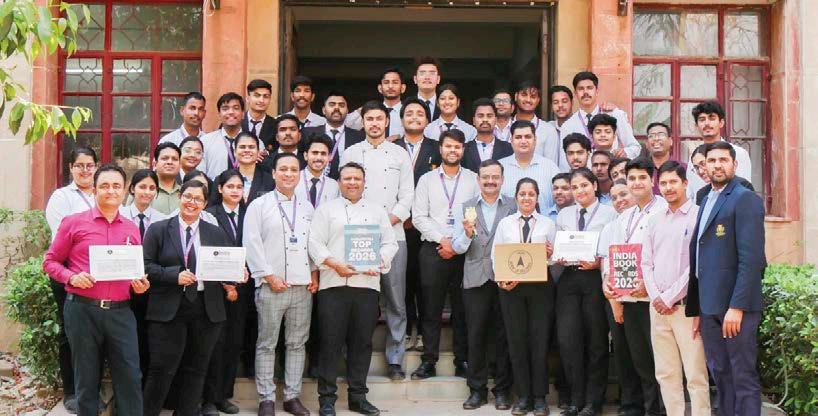
Jaipur National University sets a national record with a giant millet-based pizza; promoting healthy eating, sustainable food practices, and showcasing culinary innovation led by students and faculty collaboration.
Jaipur National University has been focusing on practical education in hospitality. This initiative strengthens its position in the field. It shows how traditional knowledge can be blended with global formats. It also highlights the growing relevance of Indian ingredients in modern menus. The hospitality sector in India is expanding. It demands professionals who can think creatively and work efficiently.

he value of recycling to keep environment clean is becoming central to modern industry. Waste is rising with construction and urban growth. Materials like cement and putty bags often end up in landfills. Managing this waste requires structured systems and industrial solutions.
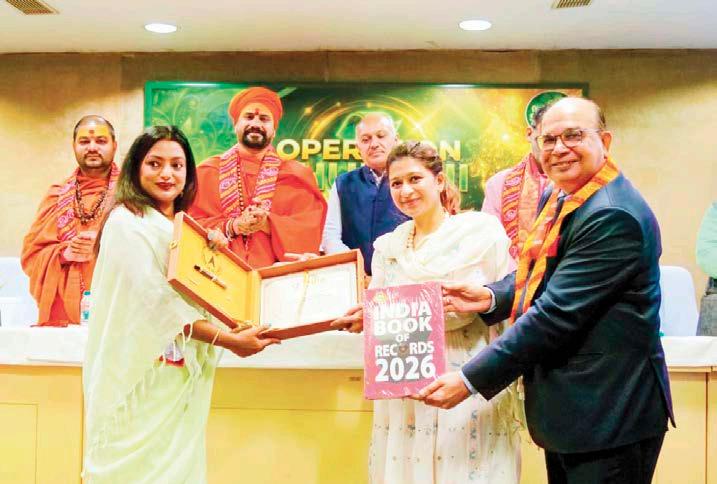
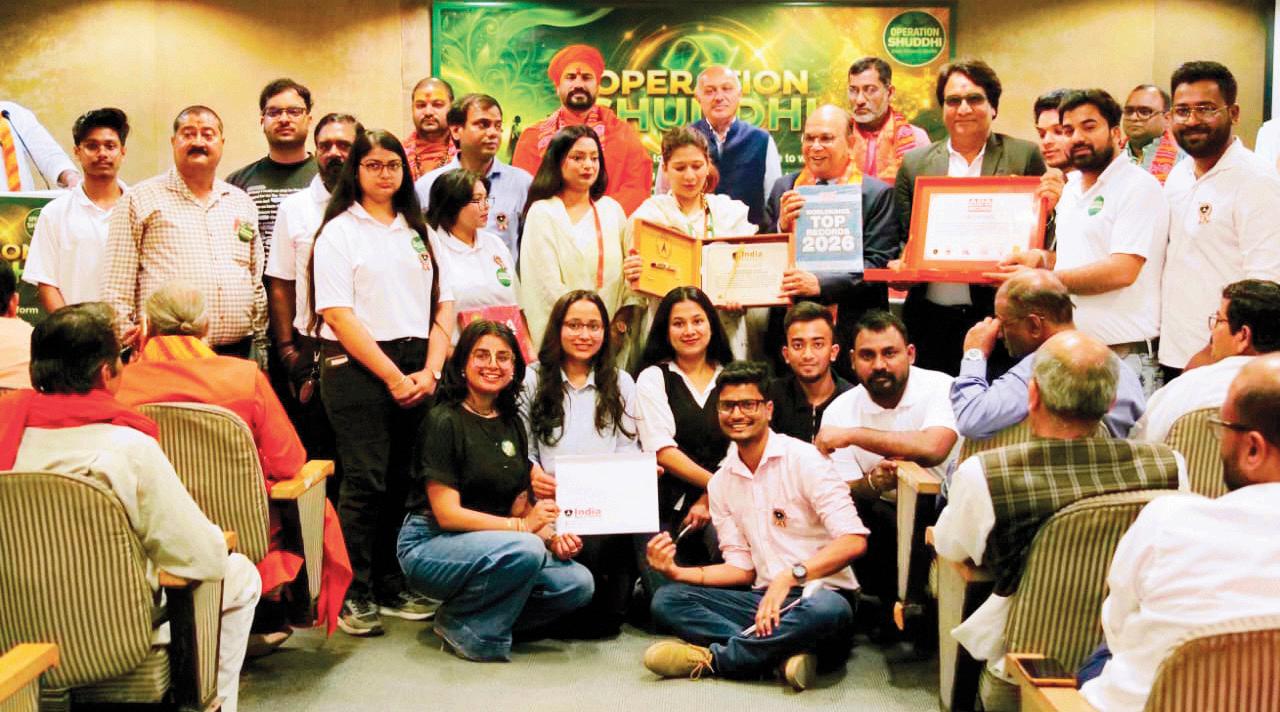
In Ghaziabad, Uttar Pradesh, Avro India Limited has set a new benchmark in this space. The company operates the largest washing plant in India dedicated to processing cement and putty bags. This facility was recognised by Asia Book of Records (ABR) and India Book of Records (IBR) on 12 February 2026 for its capacity and design.

These flakes can be reused in manufacturing new products. This completes the recycling cycle and reduces dependence on fresh plastic production.
The plant processes over 3,00,000 bags within 24 hours. This capacity places it among the highest in the country. The operation follows a structured recycling process. Used bags are collected and sorted. Paper-based materials are separated from woven plastic. The plastic component then moves to the next stage.
Shredding forms the second step. Bags are cut into smaller pieces. This allows efficient cleaning. The material then enters friction washing units. Residual cement and putty are removed through controlled washing. The process ensures that contaminants are reduced to safe levels.
Drying is the next stage. High-capacity dryers remove moisture from the washed material. The output is clean plastic flakes.




Automation plays a key role in the plant. Conveyor systems move materials between stages. This reduces manual handling. It also improves consistency in operations. The design supports continuous processing; allowing large volumes to be handled without interruption. Industrial recycling requires safety measures. Workers use protective gear such as gloves and masks. Dust and chemical residues need careful handling. The facility maintains protocols to ensure safe working conditions. These steps support both productivity and worker safety.
Avro India Limited has been active in promoting waste-towealth models. Its initiatives focus on converting industrial waste into usable resources. Projects like this washing plant reflect that direction. They show how industry can contribute to environmental protection.
The growing construction sector increases the volume of used bags. Without recycling, these materials create long-term environmental issues. Dedicated plants provide a solution. They bring structure to waste management. They also create value from discarded material.
Recognition by Asia Book of Records (ABR) and India Book of Records (IBR) followed verification of capacity and operations.


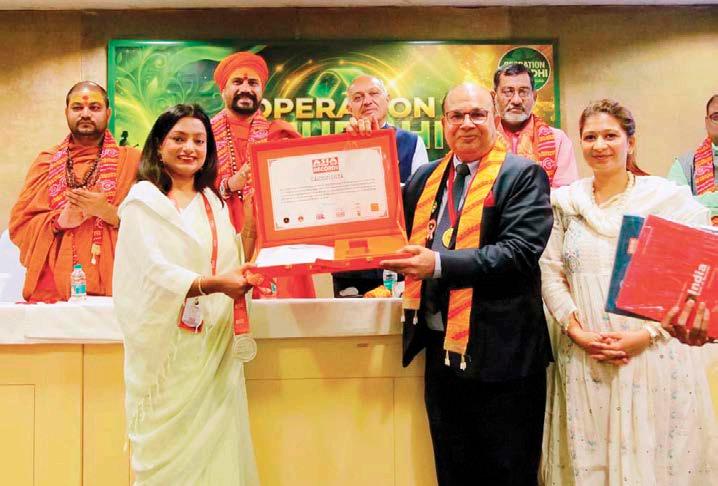


Adjudicator Shweta Jha presented the medals and certificates to company officials. The record highlights the scale and efficiency of the facility. An official from Avro India Limited said, “Our focus is to convert industrial waste into usable resources. This plant reflects our commitment to cleaner processes and responsible manufacturing.”
The plant supports the concept of a circular economy, where materials are reused rather than discarded. This reduces pressure on natural resources. It also lowers environmental impact over time. Recycling becomes part of the production cycle. The initiative aligns with broader sustainability goals. Industries are expected to manage their waste responsibly. Facilities like this set practical examples. They combine technology with environmental awareness. They also show how large-scale operations can remain efficient.
The Ghaziabad plant represents a change in how industrial waste is handled. It moves from disposal to processing. It brings focus to recycling as a core activity. The impact extends beyond one facility. It sets a direction for similar projects across regions. Recycling remains a key element in environmental protection. Industrial participation strengthens this effort. The washing plant by Avro India Limited demonstrates how innovation and capacity can work together; turning waste into opportunity while supporting a cleaner future.
This development also signals a shift in industry mindset. Waste is no longer seen as a burden. It is viewed as a resource. Systems like this can influence policy and planning. They can
A high-capacity washing plant in Ghaziabad processes over 3,00,000 cement and putty bags daily; advancing plastic recycling and supporting a cleaner environment through organised industrial waste management.
guide future investments in recycling infrastructure. Urban growth will continue. Construction activity will expand. The need for organised waste handling will increase. Plants with such capacity can absorb this pressure. They can reduce landfill load. They can improve material recovery rates.
The model also opens opportunities for allied sectors. Transport, collection, and segregation services gain importance. Skilled manpower is required to manage such operations. Training and safety standards must keep pace. Public awareness can further strengthen this chain. When waste is segregated at source, efficiency improves.
This facility stands as a practical example of industrial responsibility. It shows how objective can be turned into action. It also shows that sustainability can align with efficiency.




Iron deficiency anaemia remains a widespread health concern in India. Millions of women and children are affected each year. Fatigue, poor growth, and reduced immunity are common outcomes. Limited awareness and delayed diagnosis often worsen the condition. Addressing this issue requires consistent effort from both medical professionals and communities.

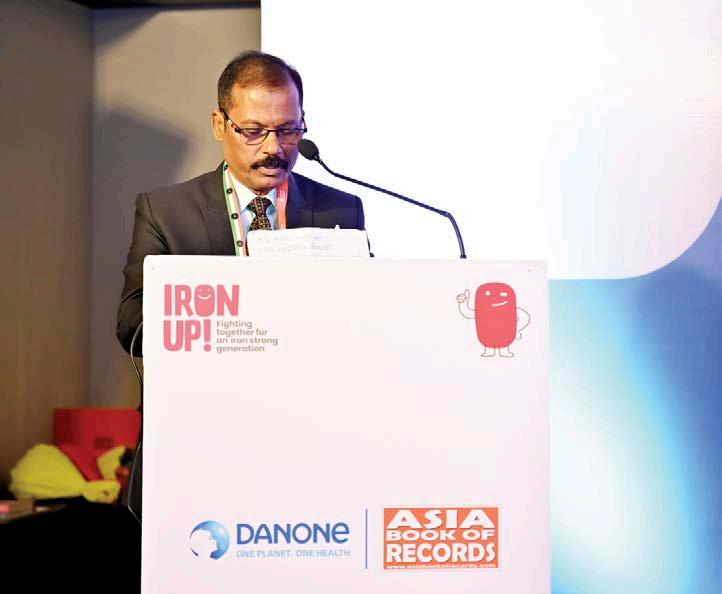
A nationwide initiative took shape in late 2025 to respond to this challenge. Danone India launched the ‘Iron Up: Fighting Together for an Iron Strong Generation’ campaign. The programme focused on early detection, nutrition awareness, and evidence-based intervention. It aimed to create a coordinated response within the healthcare community.
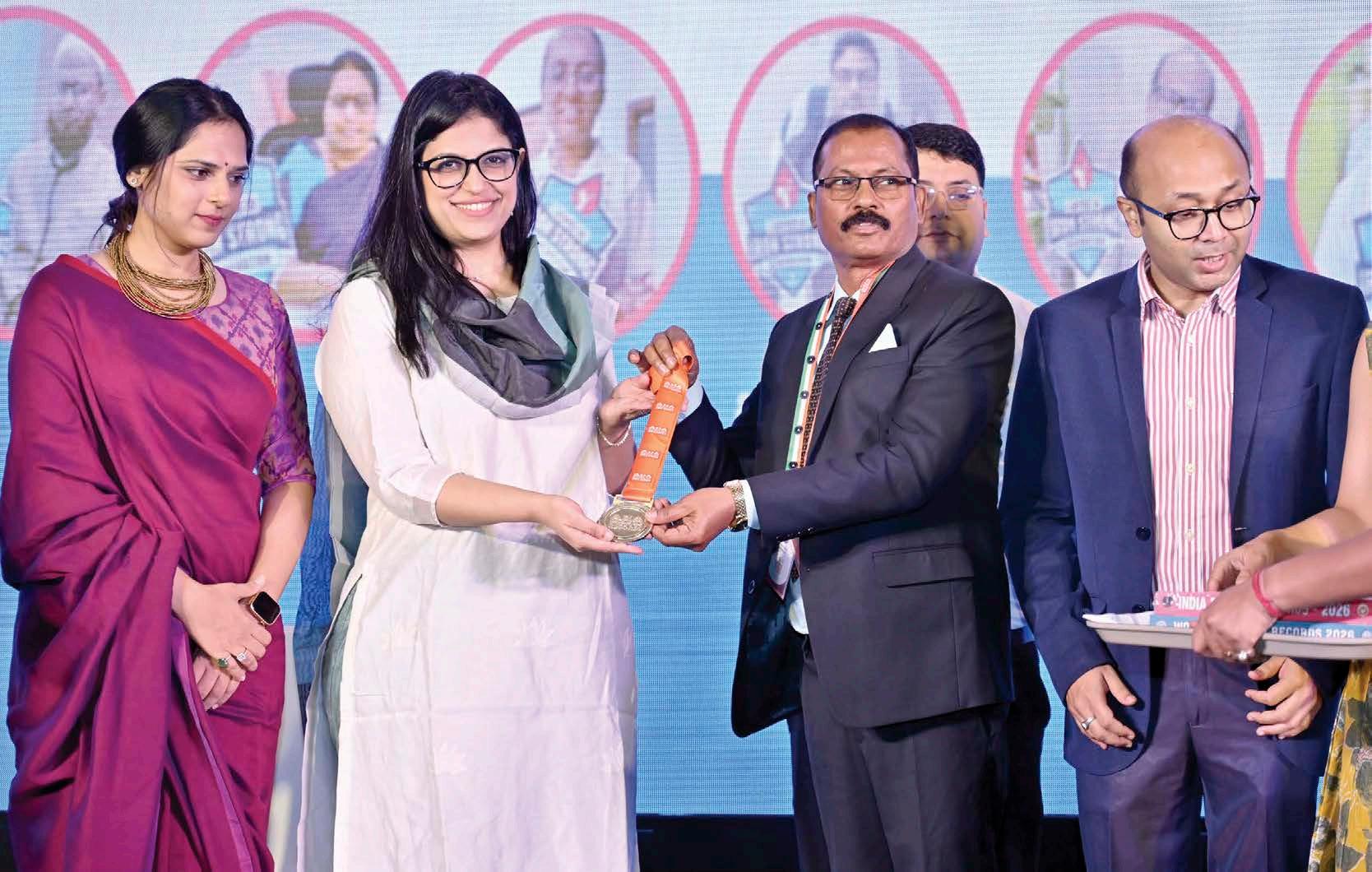
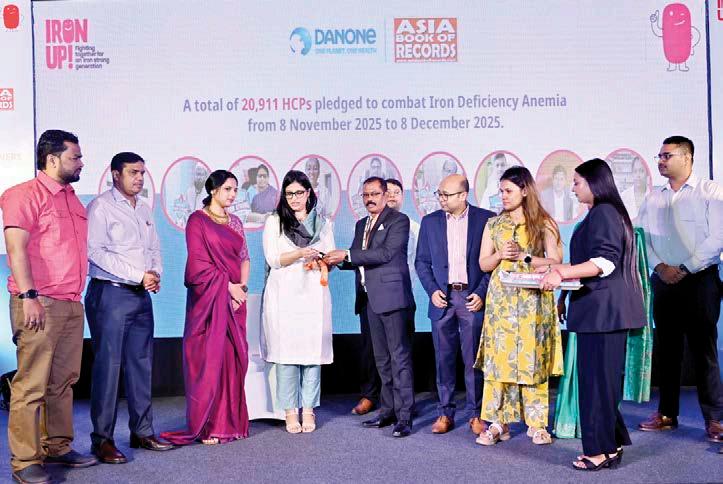
Between 8 November 2025 and 8 December 2025, a total of 20,911 healthcare professionals across India pledged to combat iron deficiency anaemia. This effort was recognised by Asia Book of Records (ABR) as the maximum number of healthcare professionals pledging for this cause.
The campaign brought together paediatricians, general physicians, and other healthcare workers. Through outreach
programmes and educational sessions, they were encouraged to promote early screening and timely intervention. The initiative created a shared platform for professionals to engage with communities and spread awareness.

Iron deficiency often develops silently. Many individuals remain unaware until symptoms become visible. Regular screening plays a key role in early identification. Nutritional guidance also helps prevent the condition. The campaign focused on these aspects through well planned communication.
Danone India used a combination of digital and on-ground engagement. Healthcare professionals participated in pledge activities and awareness drives. Educational content was shared to strengthen understanding of iron deficiency. The effort aimed to make information accessible and practical.
The initiative also emphasised preventive nutrition. Balanced diets, iron-rich foods, and supplementation were highlighted. The role of gut health in iron absorption was discussed. Scientific approaches were introduced to support better
outcomes. This aligned with the organisation’s focus on nutrition-led solutions.
The campaign extended its reach to vulnerable groups. Pregnant women and young children were given special attention. Programmes such as ‘Swastha Mata Swastha Balak’ in Bihar aimed to improve maternal nutrition. These efforts support long-term health outcomes at the community level. Coordination played a key role in the campaign.
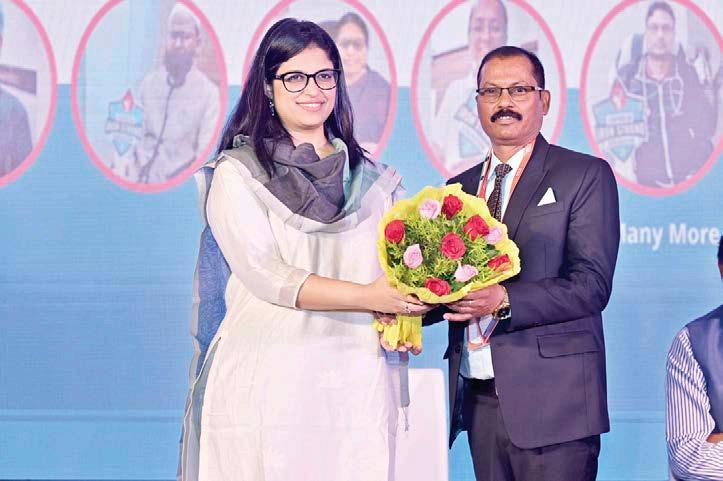
Healthcare professionals across regions participated within a defined time frame. The response showed the willingness of the medical community to address public health issues collectively. It also reflected growing awareness about micronutrient deficiencies. Recognition by Asia Book of Records (ABR) followed verification of participation data. Adjudicator Dr Gaurav Priyadarshi presented the medal and certificate to Danone India officials.
Priyanka Verma, Marketing Director, Danone India, said, “Securing 20,911 pledges from healthcare professionals reflects a shared commitment to fight anaemia and improve health outcomes across communities.”
The initiative demonstrates the importance of collective action. Healthcare professionals play a central role in guiding public behaviour. Their engagement helps build trust and
encourages timely intervention. Awareness campaigns become more effective when supported by medical expertise.
India continues to face challenges in addressing iron deficiency anaemia. Changing dietary habits, improving access to healthcare, and promoting screening remain essential steps. Large campaigns can create momentum and drive behavioural change. The ‘Iron Up’ initiative shows how planned programmes can influence public health. It connects knowledge with action. It brings professionals and communities onto a common platform. This approach strengthens the response to a persistent health issue.
The record achieved through this campaign marks a significant milestone. It reflects participation at a national level. It also sets a direction for future initiatives. Continued efforts in awareness and prevention will shape better health outcomes for millions across the country.
Over 20,000 healthcare professionals in India pledged action against iron deficiency anaemia. They created a national movement focused on early detection, nutrition awareness, and improved public health outcomes.
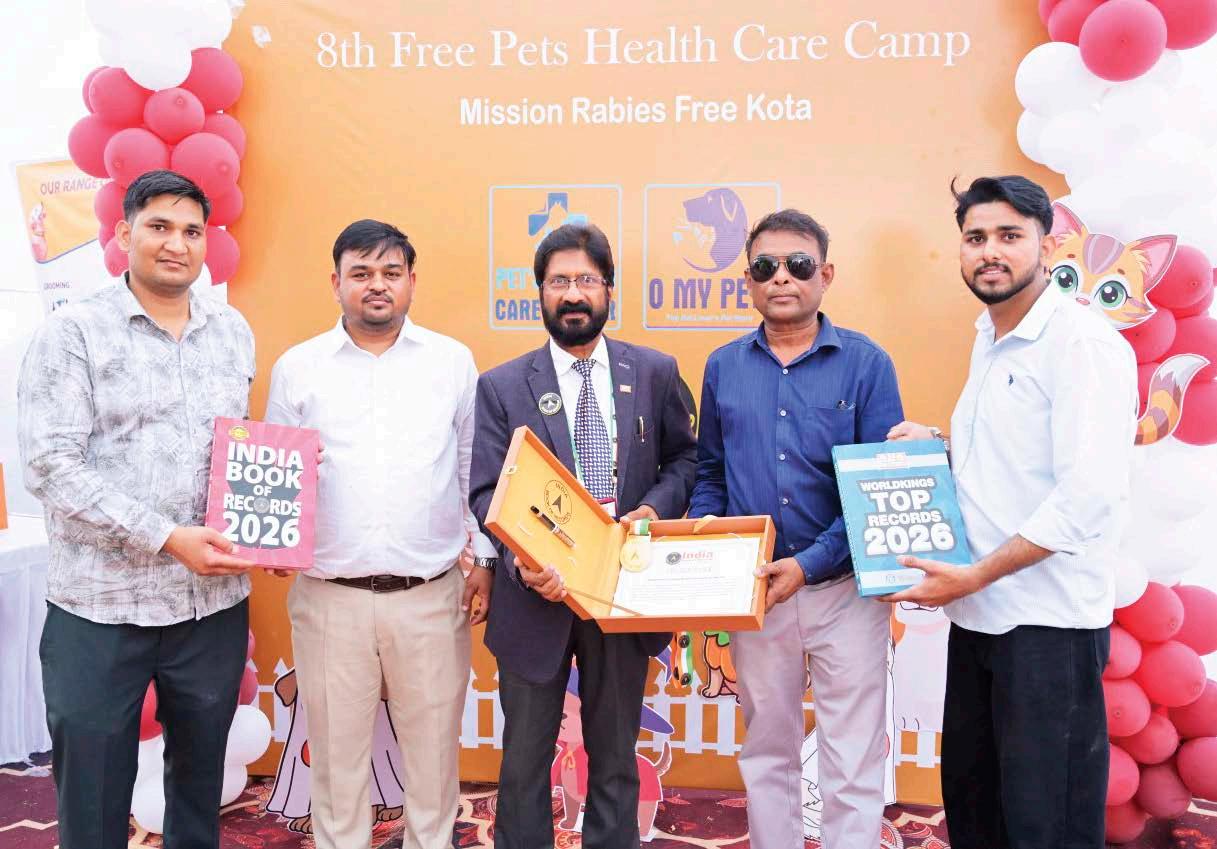


Rabies continues to pose a serious threat in India. Thousands of deaths are reported each year. Most cases are linked to dog bites. Lack of awareness and delayed treatment worsen the situation. Prevention through vaccination remains the most effective solution. Public health experts have long stressed mass immunisation of dogs. This approach reduces transmission at the source. Community participation also plays a key role. Responsible pet ownership and timely vaccination can save lives. Awareness drives help bridge the knowledge gap.


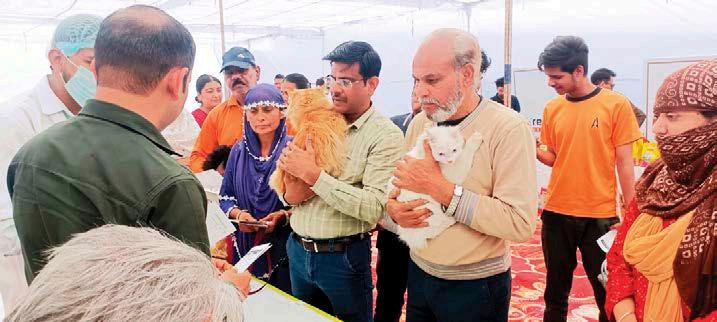
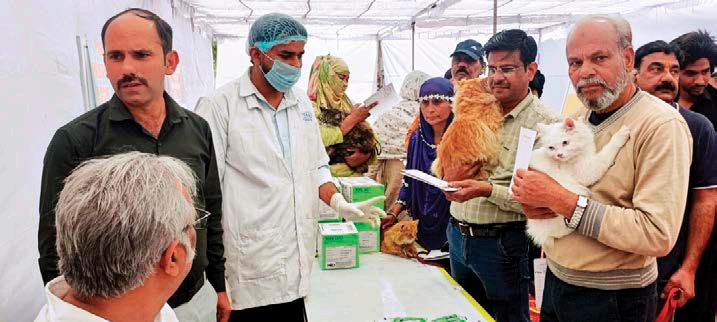
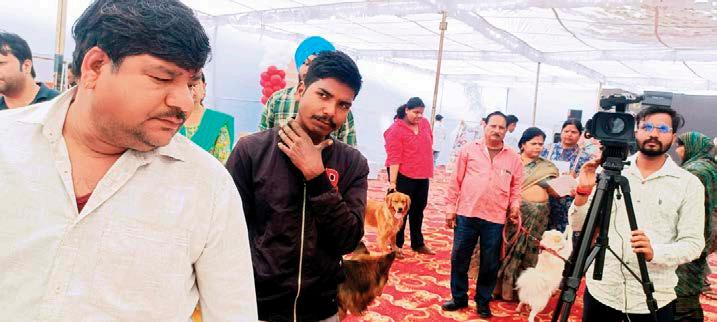
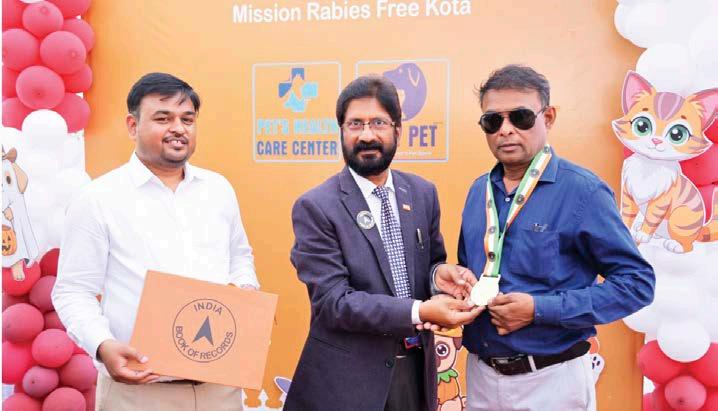
A major initiative was carried out in Kota, Rajasthan in this regard. The focus was on preventive vaccination against rabies. The drive aimed to reach a large number of pets within a limited time. It also sought to highlight the importance of early protection. On 1 March 2026, Dr Vilas Rao and Sohail Baig of Pet’s Health Care Centre and O My Pet set a record for the ‘Maximum

Pets Vaccinated for Anti-Rabies in One Day’. A total of 1,089 pets were vaccinated within six hours.
The achievement was confirmed by India Book of Records (IBR). Adjudicator Dr Bhuvnesh Mathuria presented the medal and certificate to the organisers. The effort reflected strong planning and coordination. Teams were deployed to manage registration, vaccination, and monitoring. Pet owners responded in large numbers. The drive created a sense of urgency around rabies prevention. It also encouraged responsible behaviour among pet owners.

India continues to face gaps in vaccination coverage. Many stray and domestic animals remain unvaccinated. This increases the risk of transmission. Regular campaigns can address this issue. They also help build trust between communities and veterinary professionals. Similar efforts were planned across the country. In Jaipur, the Student Wing of the
A large vaccination drive in Kota set a record by highlighting urgent need for rabies prevention through pet immunisation, awareness campaigns, and stronger community participation in animal health.
Veterinary Association of India organised the ‘Healthy Paws Jaipur - Rabies Vaccination & Collar Drive’ on 14-15 March 2026. The initiative focused on vaccination, awareness, and training. Veterinary students and volunteers participated in the drive. Such programmes offer practical exposure to young professionals. They also strengthen field-level response. Volunteers assist in vaccination campaigns and community outreach. These efforts contribute to long-term disease control. They also promote the concept of One Health, where human and animal health are interconnected.
The Veterinary Association of India plays an important role in this ecosystem. It supports veterinarians across the country. It works under the AgroVet Research & Development Foundation. The organisation is registered with key national bodies. Its initiatives focus on animal health, education, and welfare.
Rabies prevention requires a multi-layered approach. Vaccination drives must be supported by awareness campaigns. Communities need clear information on first aid after dog bites. Access to post-exposure treatment must improve. Coordination between health and veterinary sectors is essential.
Dr Vilas Rao said, “Mass vaccination is the only practical way to break the chain of rabies transmission and protect both animals and humans.” The Kota drive shows how focused action can create impact. It demonstrates that large numbers can be covered within a short time. It also highlights the importance of partnerships between clinics and communities. Such models can be replicated in other regions.
India has set a goal to eliminate rabies in the coming years. Achieving this will require sustained effort. Regular vaccination drives will remain central to this mission. Public awareness must continue to grow. Each initiative adds momentum to the larger goal. The record achieved in Kota stands as a reminder of what can be done with focused approach. It reflects commitment
from professionals and participation from citizens. The path ahead calls for similar action across cities and towns. This initiative also underlines the importance of continuity. One-day drives create momentum. Regular follow-up sustains impact. Local bodies can build on such models. Schools and communities can be involved. Awareness can begin at the household level. Pet registration and tracking can improve coverage. Stray animal vaccination must expand in parallel. Data-driven planning can guide future campaigns. The Kota effort offers a clear template. It combines speed with organisation. It connects professionals with the public. With consistent action, the goal of rabies elimination can move closer to reality.
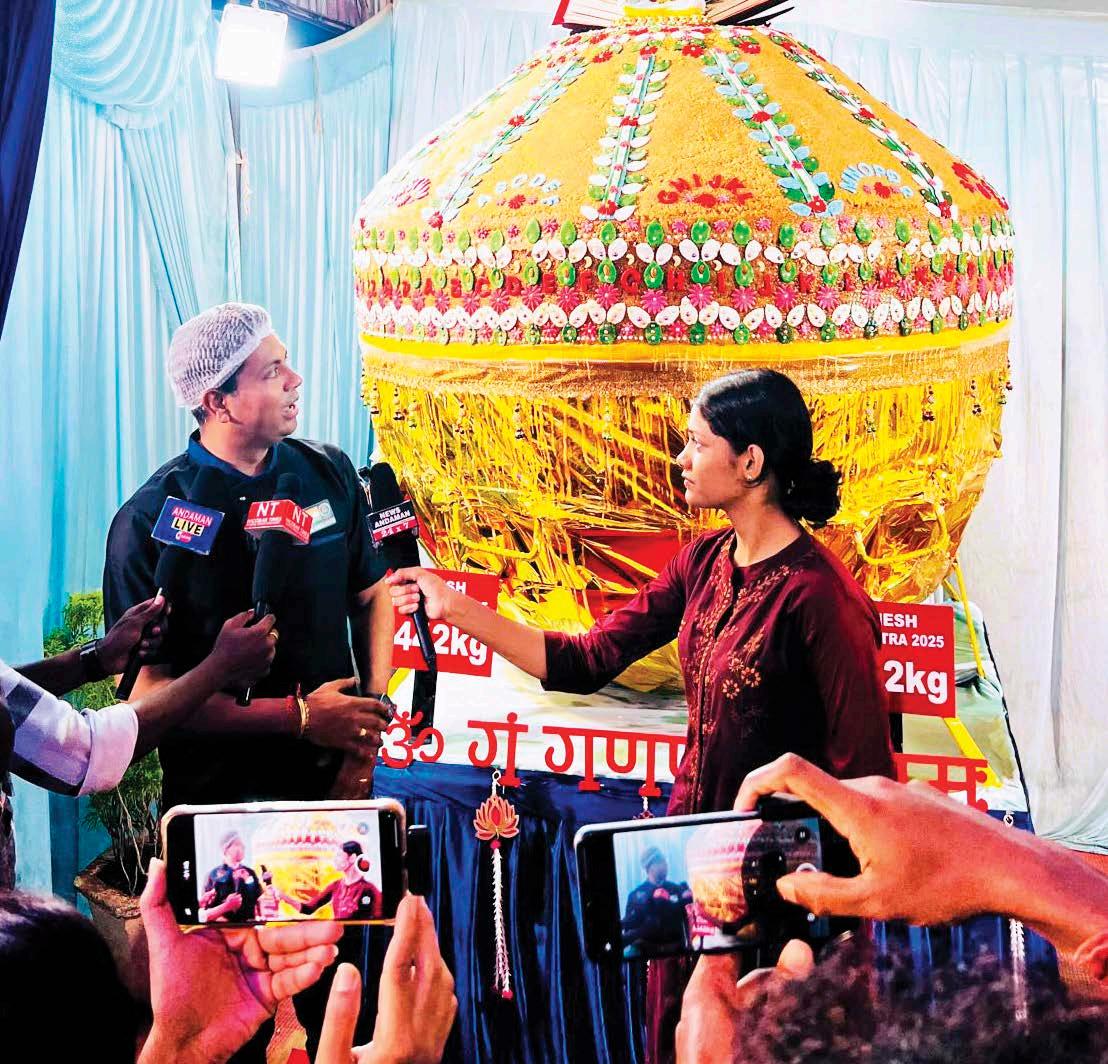






The importance of unique regional dishes in India goes far beyond taste. Food carries memory, ritual, and local identity. Every region protects its flavours through festivals and shared kitchens. Sweets hold a special place. They mark gratitude, prayer, and togetherness. During Ganesh Utsav, laddus become symbols of devotion as much as celebration.


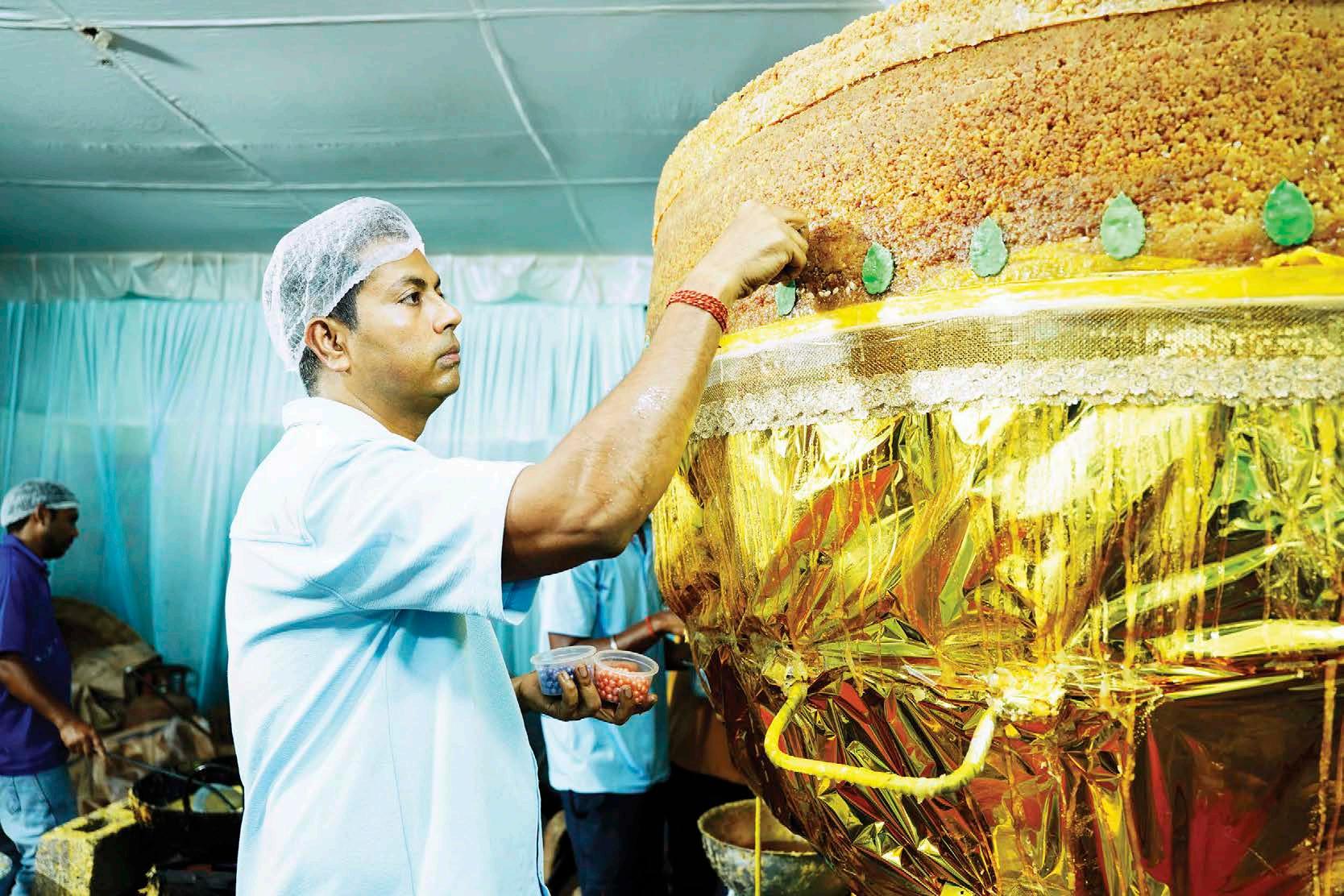

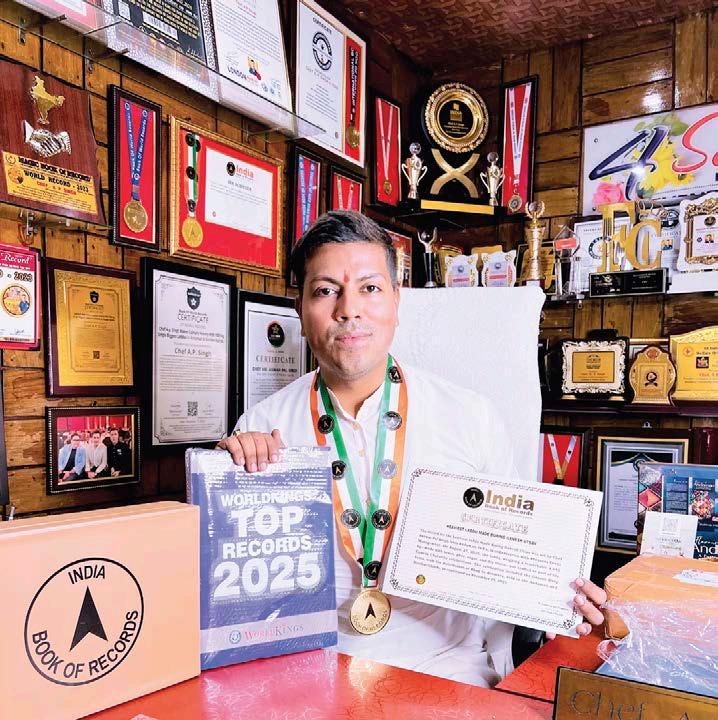
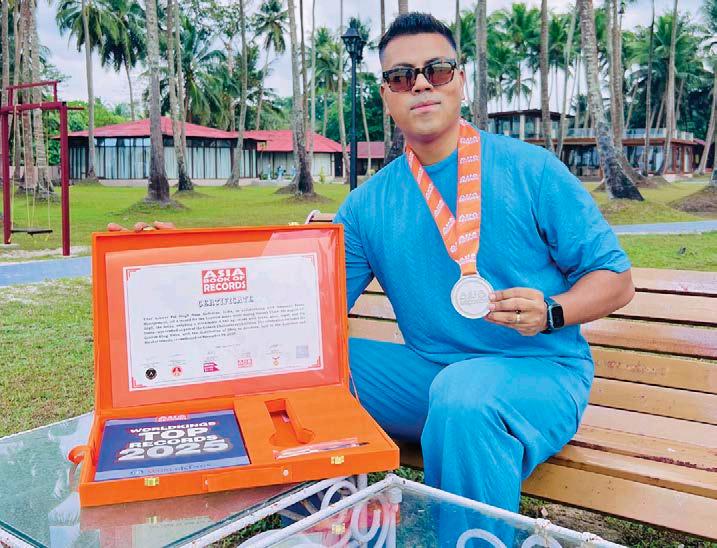
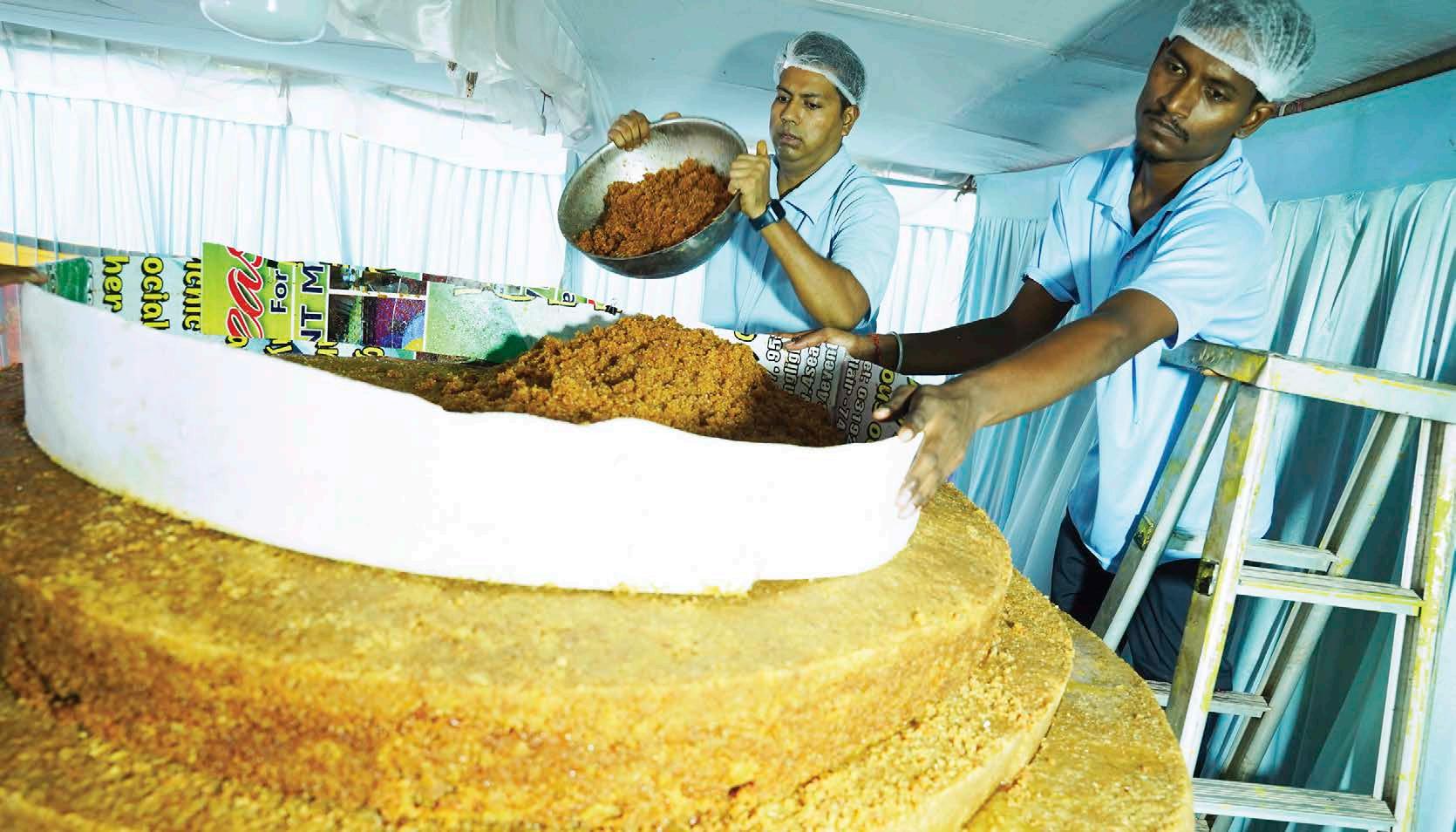
In August 2025, this tradition took on unprecedented scale in the Andaman and Nicobar Islands. Chef Ashwar Pal Singh set a national record for the heaviest laddu made during Ganesh Utsav. The laddu weighed an extraordinary 4,442 kilograms. It was crafted in collaboration with 4Seasons Event Management and presented as part of the Ganesh Chaturthi celebrations on 27 August 2025.
The laddu was made using classic ingredients. Besan formed the base. Ghee added richness. Sugar bound the texture. Dry fruits completed the flavour. The scale was immense. The laddu stood about seven feet tall with a breadth of five feet. It took six days of focused preparation to complete the sweet in its final form.

India’s regional food traditions found monumental expression when a festival
laddu reached record scale. The achievement blended devotion, culinary skill, and community celebration during Ganesh Utsav in the islands.

The event unfolded as a community celebration. The Ganesh Bhog Yatra formed the centrepiece. Devotees gathered to witness the offering. The bhog was distributed among attendees, maintaining the ritual purpose of the preparation. The setting ensured that the laddu was not merely displayed. It was shared in spirit and substance.
food and collective gatherings. Hosting a record of this scale brought national attention to local celebration styles. It also highlighted how traditional recipes travel across geography while retaining ritual integrity.


The achievement received recognition from Asia Book of Records (ABR) and India Book of Records (IBR). The dual recognition placed the feat among the most significant food-related records associated with Indian festivals. For the Andaman and Nicobar Islands, the event carried special meaning. Island communities often express culture through
Chef Ashwar Pal Singh is no stranger to large-scale culinary challenges. He has previously created record-setting laddus. Each effort builds upon experience. This time, the weight crossed earlier milestones by a wide margin. He said that planning played a critical role. Ingredient sourcing had to be precise. Cooking required controlled heat and timing. Structural stability mattered as much as flavour. Food safety remained



central throughout the process. The laddu was prepared with the intention of distribution.
Speaking after the achievement, Chef Ashwar Pal Singh said, “This laddu was created with devotion and teamwork. My aim was to honour Ganesh Utsav and show how Indian food traditions can bring communities together at any scale. Hygiene standards were followed. Teams coordinated continuously. The final offering balanced scale with sanctity.”
Large food records often attract attention for size alone. This one carried cultural context. The laddu did not stand apart from ritual. It stood within it. Devotees participated. Blessings were offered. The sweet became a shared experience rather than a spectacle.
Such achievements also underline the evolving role of chefs in public celebrations. Culinary professionals now engage with heritage, logistics, and community engagement. The kitchen extends into public space. Tradition adapts without dilution. India’s festival foods vary widely. Modaks in Maharashtra. Pithas in the east. Laddus across regions. Each form carries meaning. Scaling them up requires care. The essence must remain intact.
In this case, the familiar taste profile guided the process despite the scale. The record laddu also inspired younger cooks and organisers. It demonstrated that ambition can coexist with tradition. Innovation does not require reinvention of recipes. It requires respect for process.



Cervical cancer remains a serious public health concern in India. Thousands of women face delayed diagnosis each year. Limited awareness and irregular screening contribute to the burden. Early detection can save lives; yet many cases are identified at advanced stages. In this context, a large national effort took shape in January 2026.
Pathkind Diagnostics Pvt. Ltd., based in Gurugram, Haryana, conducted a countrywide cervical cancer awareness campaign from 19 January 2026 to 31 January 2026. The initiative coincided with World Cervical Cancer Awareness Week. The campaign reached multiple regions and communities within a short span of time. During this period, the organisation conducted 1,591 awareness camps across India.



The organisation operates diagnostic centres across India. It focuses on quality testing services and healthcare support. Initiatives like this campaign extend its role beyond diagnostics. They contribute to preventive healthcare and public education. The response from participants was encouraging. Women attended sessions in large numbers. Many sought further guidance on screening procedures. The camps created a space for open discussion. This is important in conditions where hesitation often delays action.

This effort was later recognised by Asia Book of Records (ABR) on 14 March 2026 as the maximum number of cervical cancer awareness camps organised by an organisation. The record reflected both planning and execution at a national level. The campaign focused on spreading clear and practical information. Women were informed about the causes of cervical cancer. The role of Human Papillomavirus was explained in simple terms. The importance of regular screening was highlighted. Participants were encouraged to undergo timely tests. Health professionals at the camps addressed questions directly.
Cervical cancer develops slowly in many cases. This provides an opportunity for early intervention. Screening methods such as Pap smear tests can detect abnormal changes at an early stage. Vaccination against HPV also reduces risk. Awareness about these preventive steps remains uneven across regions. Pathkind Diagnostics designed the campaign to bridge this gap. Camps were organised in urban centres and smaller towns. Outreach included community gatherings and health check-up events.
The presence of trained staff ensured that information remained accurate and accessible. The scale of the campaign required coordination. Teams worked across states within a limited time frame. Logistics, communication, and medical support had to align. The execution reflects the organisational capacity developed by Pathkind Diagnostics over the years.
The achievement now stands as a benchmark in awarenessdriven healthcare initiatives. A spokesperson from Pathkind Diagnostics said, “Our aim was to reach as many women as possible with clear information on cervical cancer. We believe that early screening can change outcomes.”
The campaign also aligned with global efforts. Organisations such as the World Health Organization continue to emphasise awareness, vaccination, and screening. India’s diverse population requires sustained outreach. Large campaigns help build that momentum. Such initiatives show how organised efforts can influence public health outcomes. Awareness leads to action. Action leads to early detection. Early detection improves survival rates. The link between information and outcome becomes clear.
The Pathkind campaign demonstrates how a focused effort can create wide impact within a short duration. It brings attention to a disease that often remains under-discussed. It also highlights the role of private healthcare organisations in supporting national health priorities. No doubt, cervical cancer is preventable and treatable when detected early. This message formed the core of the campaign. By taking it across 1,591 camps, the organisation has set a clear example. The record stands as a marker of outreach. The impact will continue through the lives it helps protect.
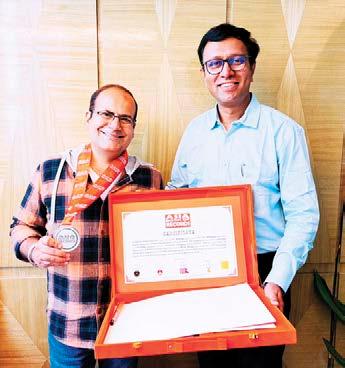




Women driving across cities and highways is rising in India. More women are choosing the wheel for daily travel and long journeys. The shift is visible in metros and smaller towns. Confidence on roads is growing. Yet, longdistance driving still faces hesitation and social bias. Questions around safety and capability often follow women drivers. Advice comes unsolicited. Night driving and highway travel remain areas of concern. Many women avoid extended road trips. Cultural perceptions still influence decisions. Breaking this pattern requires visible examples.
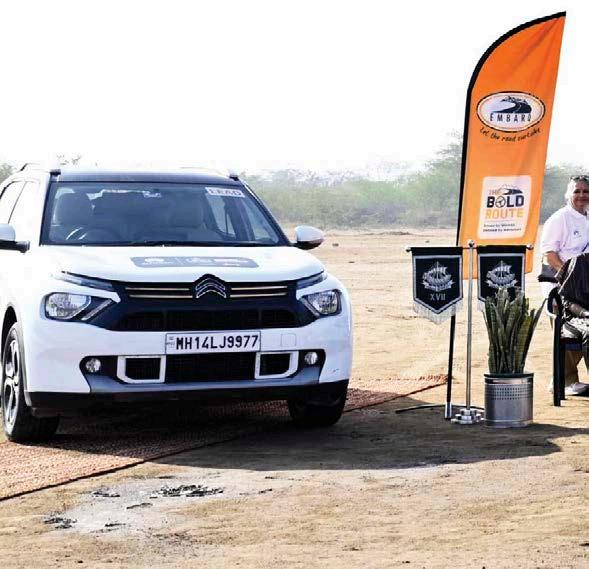



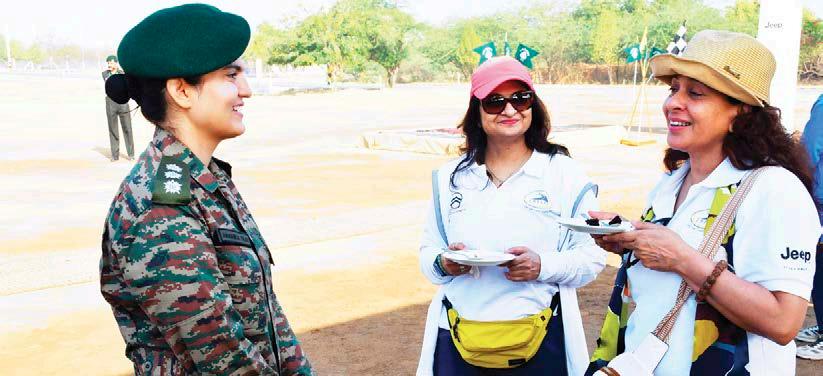
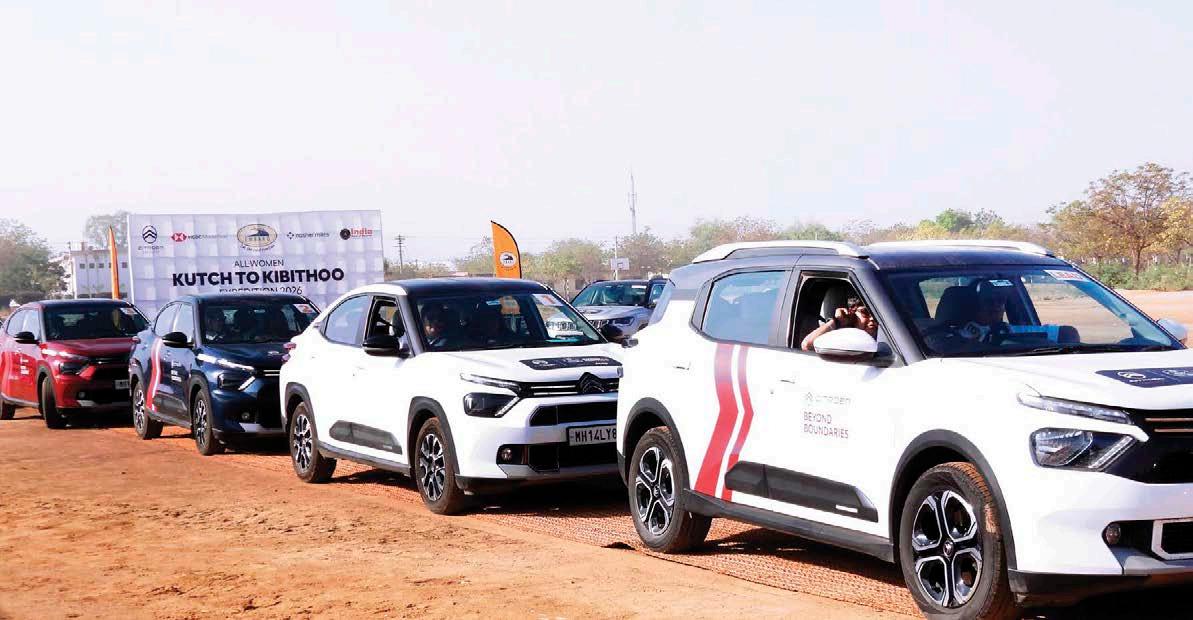
A major step in this direction came through a nationwide expedition. Embarq Motorworld Pvt Ltd organised an all-women convoy across India. The journey began at Bhuj in Gujarat on 8 March 2026. It concluded at Kibithoo in Arunachal Pradesh on 21 March 2026. The route covered highways, plains, and mountain terrain. The convoy included 12 cars driven by women. Over 40 participants were part of the larger expedition. The drive stretched over 4,500 kilometres. Drivers covered long distances each day. The terrain became tougher in the eastern Himalayan region. Narrow roads and sharp turns tested driving skills.

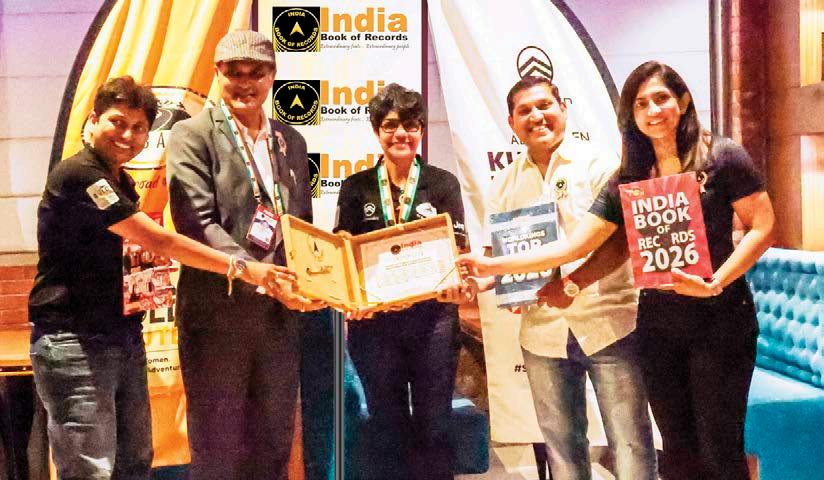
This effort set the record for the ‘Largest Convoy Driven by Females Covering from Westernmost to Easternmost Point of India’. The achievement was confirmed on 24 March 2026. India Book of Records (IBR) recognised the feat. Adjudicator Ritesh Chanpura presented the medal and certificate to the organisers.
The journey was finalised after detailed planning. Rest stops were mapped every two hours. Medical and breakdown support points were identified in advance. Each vehicle had communication support through walkie-talkies. Safety and coordination remained central throughout the drive. The expedition passed through cities like Jaipur, Lucknow, Patna, Siliguri, Guwahati, and Itanagar. It brought visibility to women
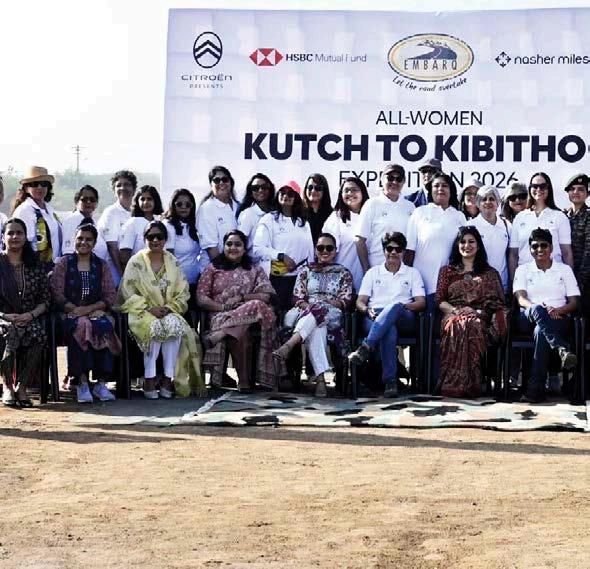

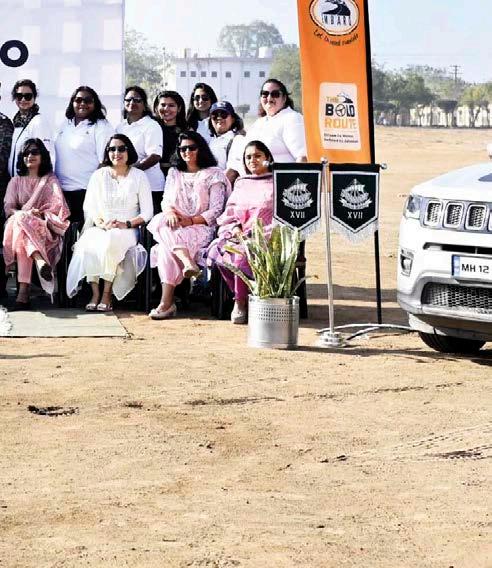

drivers across regions. The convoy drew attention wherever it passed. People stopped to watch.
The final stretch towards Kibithoo was demanding. The convoy reached Walong near the Indo-China border. The terrain required focus and control. Drivers navigated difficult conditions with precision. The journey tested endurance and driving ability. The initiative was part of Embarq’s Bold Route Series. The company was founded by Medha Joseph and Sujal Patwardhan. Their experience in long-distance driving shaped the expedition design. The approach balanced challenge with support. Participants focused on driving while logistics were managed.
The impact extended beyond the road. Participants shared stories and experiences. Many drove long distances for the first time. The journey built confidence. It also created a network of women drivers. Exposure to different regions added depth to the experience. The convoy also served as a social message. It challenged the idea that highways are male spaces. Visibility became a tool for change. When women drive across states, perceptions change. Young drivers see new possibilities. Families gain confidence in supporting such journeys.


Medha Joseph said, “When women drive across the country together, they change how the road is seen and who it belongs to.” The record highlights a growing movement. Women are stepping into spaces that were earlier restricted. Driving is becoming a symbol of independence. Long-distance travel is now part of that narrative. Planned initiatives make this transition smoother.
India’s road network continues to expand. With it comes opportunity. Encouraging women to participate fully in mobility will strengthen this growth. Training, awareness, and community support will play key roles. The Bhuj to Kibithoo convoy stands as a landmark effort. It reflects planning, courage, and collective spirit. It also signals a shift in mindset. Roads across India are opening up to new drivers.

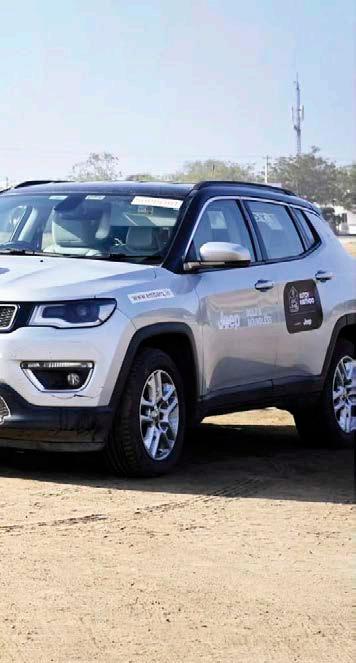

An all-women convoy travelled from Bhuj to Kibithoo; covering over 4,500 kilometres and setting a national record, while challenging stereotypes and promoting confidence in long-distance driving across diverse terrains.
Harsh weather and snow-laden mountains define Tawang in Arunachal Pradesh. Temperatures drop sharply. Terrain remains rugged and isolated. Movement becomes difficult for months. In such conditions, transport systems are limited. The monorail has emerged as a crucial support for Indian Army operations.
Forward posts in the Kameng Himalayas often face supply challenges. Roads remain blocked due to snow and landslides. Helicopter movement depends on weather. Foot transport is slow and risky. Troops require a reliable system to maintain supplies and readiness. Logistics becomes the backbone of survival in these areas.

To address this challenge, the Indian Army developed an indigenous monorail system. The project was undertaken by the


10 Engineer Regiment. Construction began on 6 October 2025 at an altitude of 16,000 feet. A small team led the effort. It included one officer, one Junior Commissioned Officer, and 15 other ranks.
The team worked under extreme conditions. Oxygen levels were low. Weather remained unpredictable. The terrain demanded precision and planning. Despite these challenges, the project was completed on 6 November 2025. The achievement reflects focused execution and technical capability.

The monorail system now enables round-the-clock movement of supplies. It can carry loads of over 300 kilograms in a single run. Essential items such as rations, fuel, ammunition, and equipment are transported efficiently. This ensures continuity of operations in remote locations.



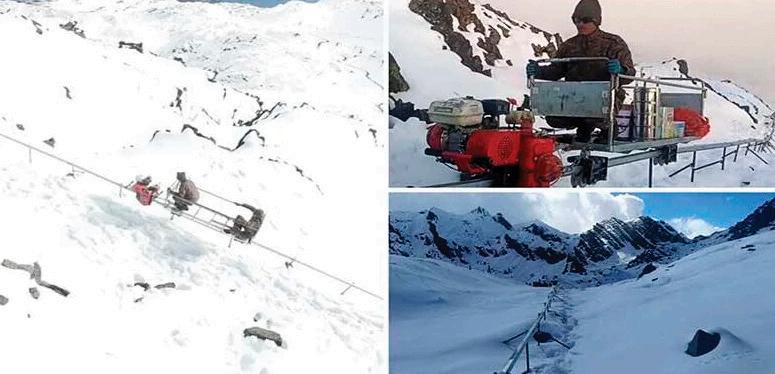

The system functions in all weather conditions. Snow, rain, and storms do not halt its movement. It operates with or without escort. This reliability makes it a lifeline for troops stationed in isolated posts. It reduces dependency on uncertain transport methods.
The monorail also supports casualty evacuation. Injured personnel can be moved quickly and safely. In areas where helicopter evacuation is not possible, this system provides an effective alternative. It reduces risk and response time during emergencies.
The project highlights the focus on self-reliance. The system was conceptualised and developed within the Army. It reflects practical innovation driven by field requirements. The approach ensures solutions are tailored to real conditions on the ground.


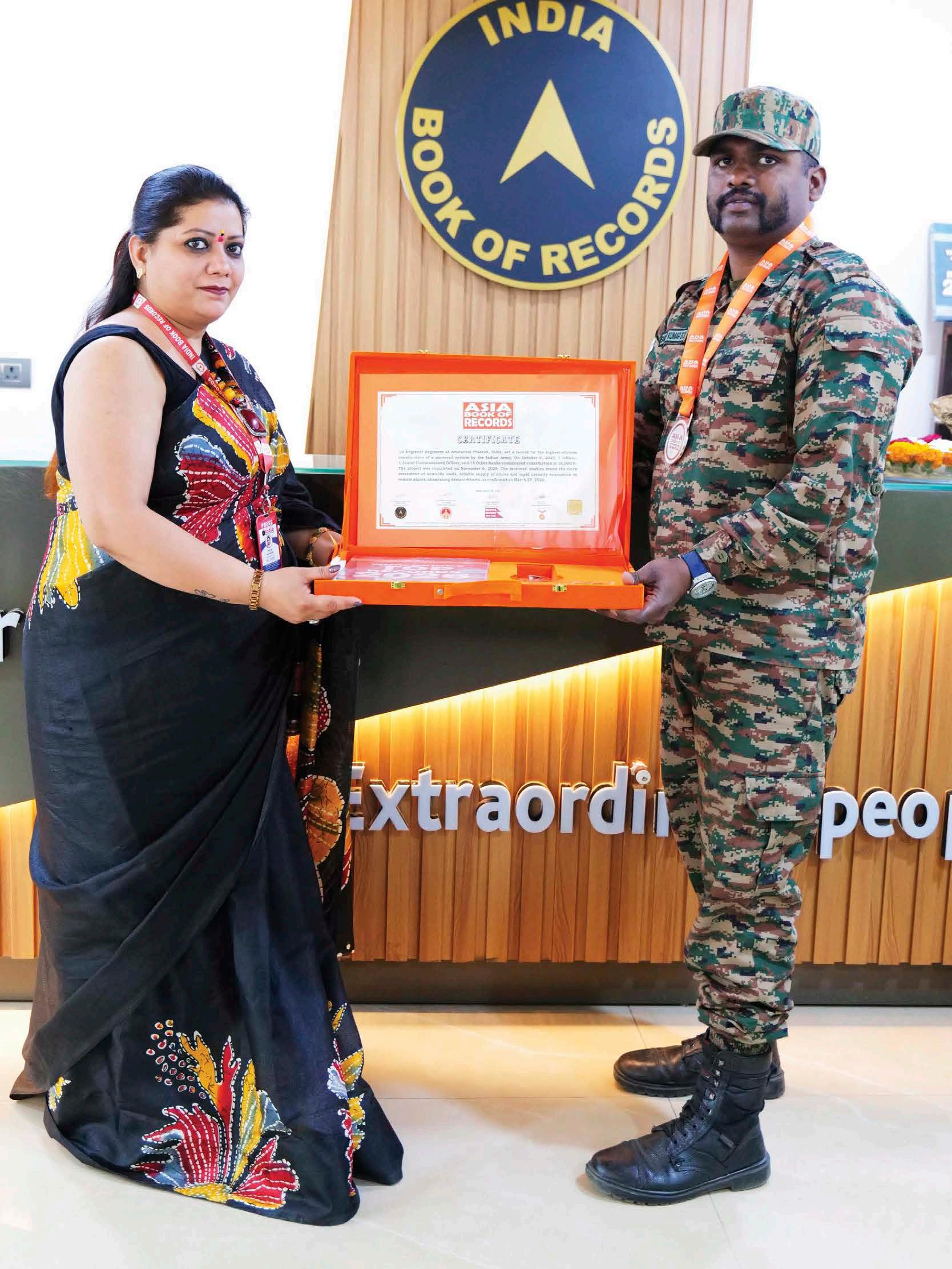
On 27 March 2026, the achievement was recognised by Asia Book of Records (ABR) and India Book of Records (IBR) simultaneously. The record was set for the ‘Highest Altitude Construction of Monorail System by the Indian Army’. Ms Neha Tyagi, representing both IBR & ABR, presented the record certificates and medals to the Indian Army officer N K Sandeep at IBR office on 28 March 2026. The recognition acknowledged both engineering effort and operational impact in the rugged terrain.
Lt Col Mahendra Rawat said, “This system ensures uninterrupted supply to forward posts and strengthens operational readiness in one of the toughest terrains.” The monorail strengthens the Army’s logistics network. It connects
Indian Army engineers built a highaltitude monorail in Tawang. This ensured continuous supply, faster evacuation, and reliable logistics in extreme terrain in Arunachal Pradesh. In the process they set a remarkable record.

remote posts with supply bases. It ensures timely delivery of essential materials. It also improves efficiency in resource management. The system supports sustained deployment in high-altitude areas.
Such innovations are critical for modern defence operations. Terrain challenges require adaptive solutions. Indigenous development reduces dependency on external systems. It also enhances confidence in internal capabilities. The success of this project may influence similar initiatives in other regions. High-altitude areas across India face comparable challenges. Replicating such systems can improve logistics and safety. It can also support civilian applications in remote regions. The Tawang monorail stands as a practical solution shaped by necessity. It reflects engineering skill and operational insight.





Composite girder viaducts play an important role in modern railway infrastructure. They help trains move across busy corridors without interruptions. By lifting rail lines above ground crossings and junction points, these structures reduce congestion and improve safety. Engineers rely on composite girders because they combine steel and reinforced concrete to create strong and stable bridges. Such designs allow railway networks to handle heavier traffic and higher speeds.


India’s expanding rail system requires similar solutions in many regions. Freight corridors carry essential resources across long distances. Passenger trains share these lines with heavy freight movement. When routes become crowded, delays affect logistics and daily travel. Infrastructure upgrades therefore remain essential for smoother operations.
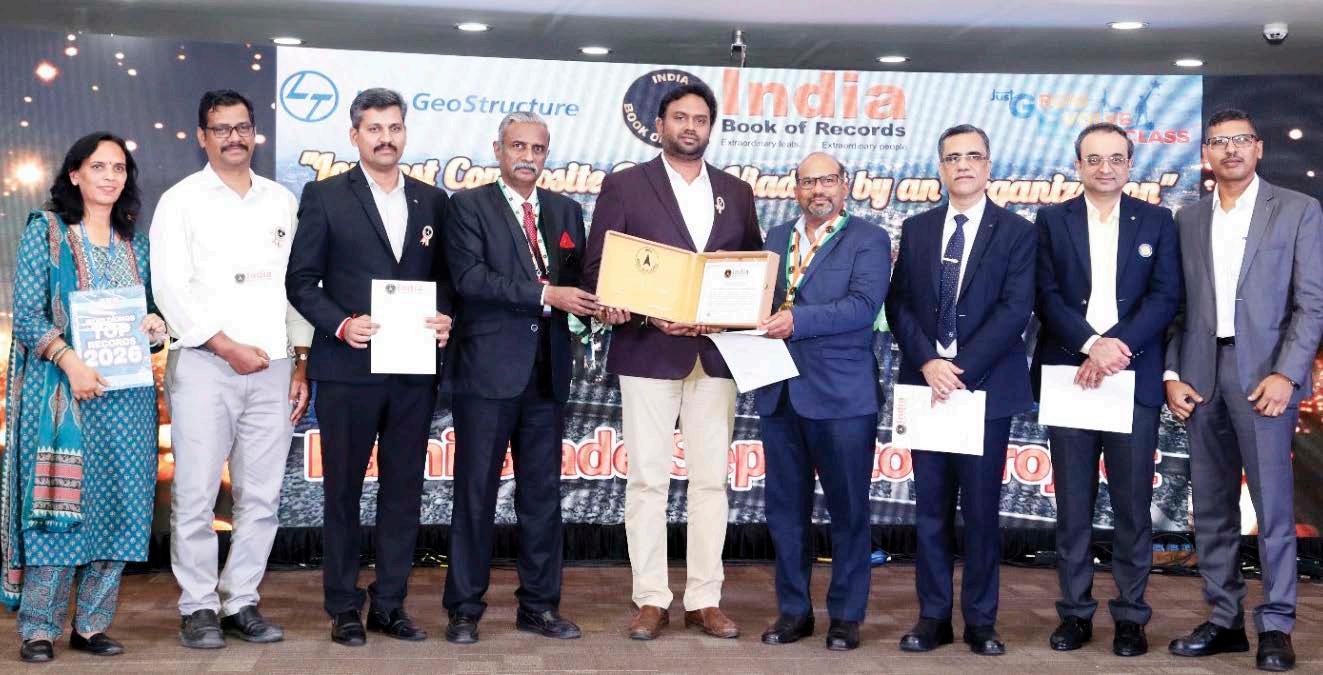
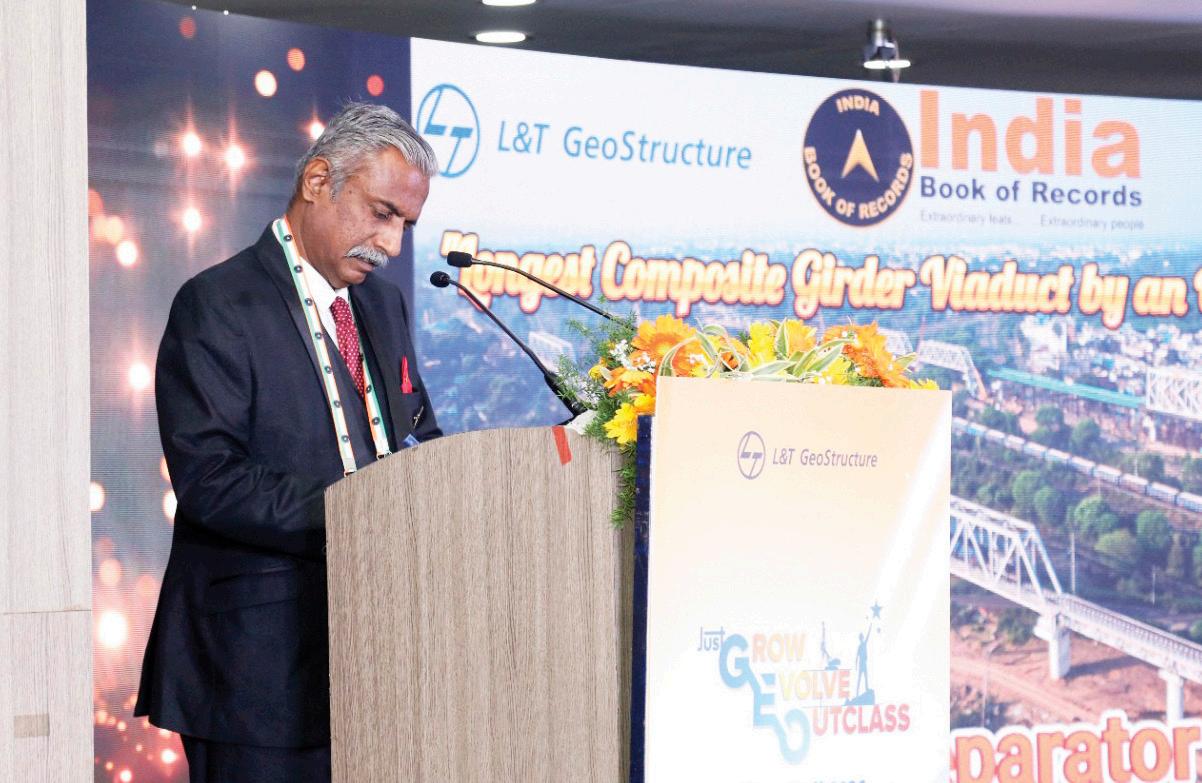
A major project in Madhya Pradesh addressed this challenge. L & T Geo Structure Pvt. Ltd., Chennai executed the longest composite girder viaduct by an organisation under IRCON International Limited at Katni. The project forms part of the Katni Railway Grade Separator initiative designed to ease congestion along the Singrauli–Bilaspur–Bina railway corridor. The up-line section of the grade separator stretches 15.85 kilometres. It represents India’s longest railway viaduct of its
type within a single executed project. The engineering work includes 7.04 kilometres of rail viaducts constructed with composite and open web girders. Additional infrastructure such as retaining walls, earthwork in formation, and associated civil works support the structure.
Composite girder viaducts function through an integrated design. Steel girders, often shaped as I-sections or box profiles, connect with reinforced concrete decks through shear connectors. These elements act together as one structural unit. The combined system improves strength and stiffness. It also allows efficient load distribution during train movement.


Engineers selected this design to manage heavy rail loads and continuous operations. The structure offers strong resistance to torsion and vibration. Such properties are important for rail bridges that experience repeated dynamic forces. The design also shortens construction time because several elements can be prefabricated and assembled on site.
The Katni Grade Separator forms part of a broader railway infrastructure upgrade. The entire project spans approximately 33.40 kilometres when both up-line and down-line sections are considered. While the 15.85 kilometre up-line section has been


A 15.85 km composite girder railway viaduct at Katni has improved traffic flow on a busy freight corridor. The engineering project strengthens rail efficiency and reduces congestion on a critical central India route.
commissioned, the 17.52 kilometre down-line section remains under development.
The corridor plays a vital role in India’s freight network. It connects coal-producing regions around Bilaspur and Singrauli with industrial centres near Bina. Heavy freight trains frequently operate on this route. Grade separation reduces delays that previously occurred when multiple train lines intersected at ground level.
Construction involved a combination of precast and cast-insitu components. This approach allowed engineers to maintain durability while accelerating project timelines. Strong piers and foundation systems support the elevated rail deck. The design also accommodates overhead electrification infrastructure for modern railway operations.
Before opening to regular traffic, the structure underwent technical inspections and operational tests. A CRS inspection evaluated the structural readiness of the viaduct. Following this, a speed trial was conducted at 130 kilometres per hour in August 2025. The tests confirmed that the infrastructure met required safety and performance standards.
After successful verification, the section began routine railway operations on 29 August 2025. The elevated route improved the movement of trains through Katni and surrounding regions.
Freight services and passenger trains now experience fewer delays along the corridor. India Book of Records recognised the achievement. The record acknowledged L & T Geo Structure Pvt. Ltd. for executing the longest composite girder viaduct by an organisation within the Katni Railway Grade Separator project.
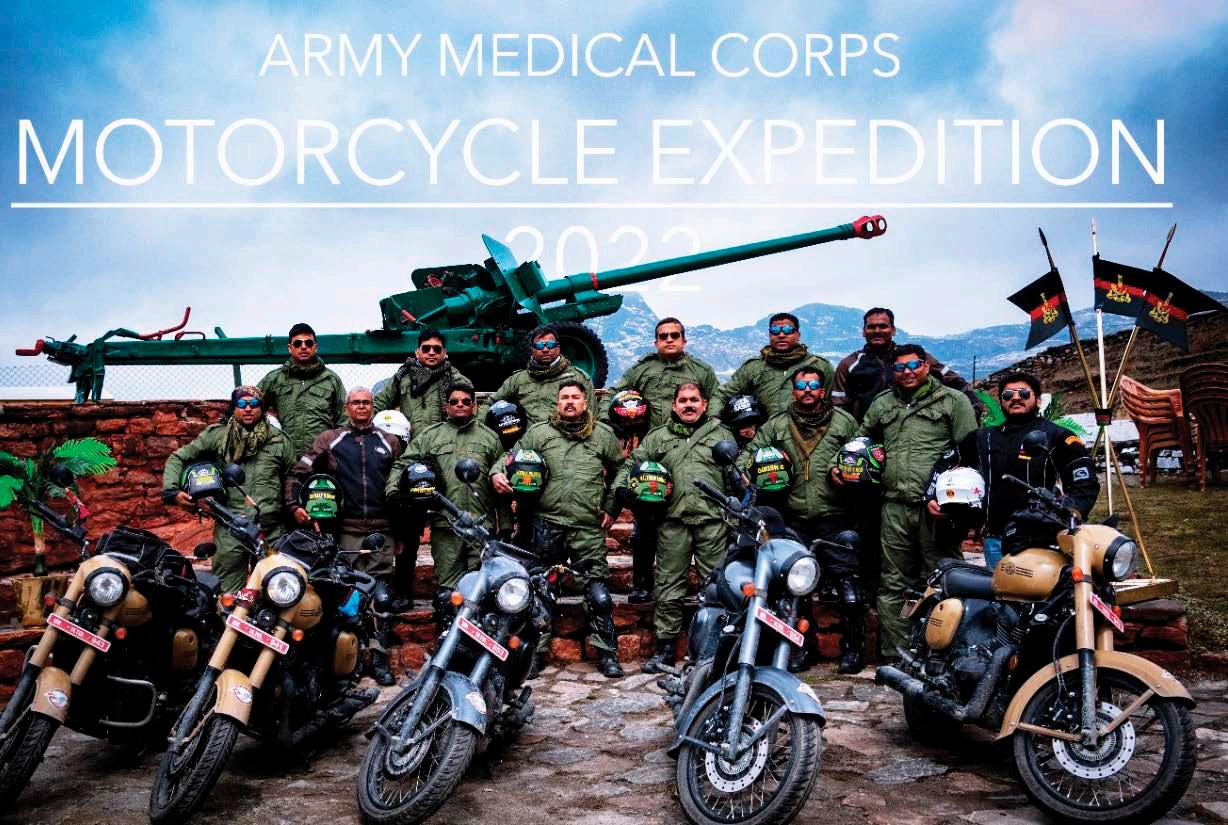


The Army Medical Corps, Delhi stands at the core of India’s military healthcare system. Its role extends from battlefield medicine to peacetime care. Doctors, paramedics, and support staff serve in varied conditions. Their work often remains unseen. Recognition within the force strengthens morale and continuity of service.




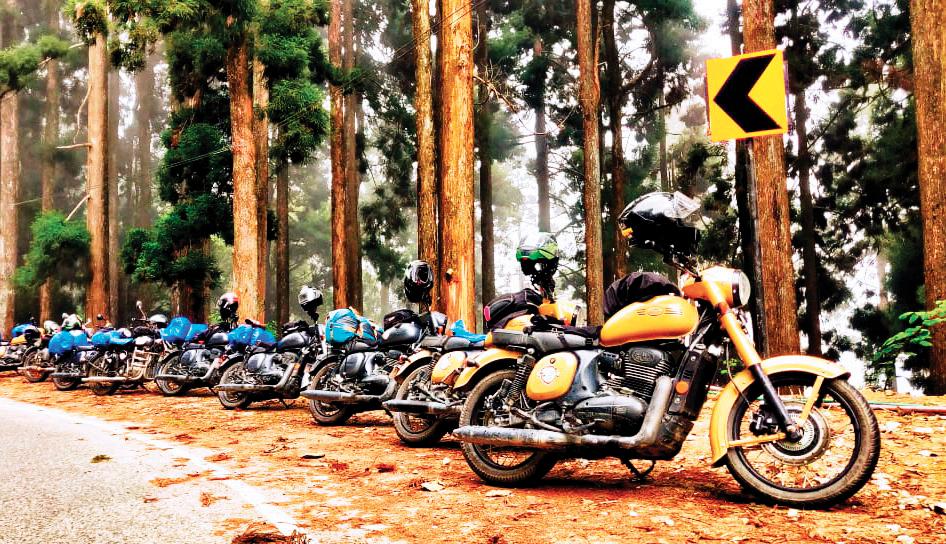
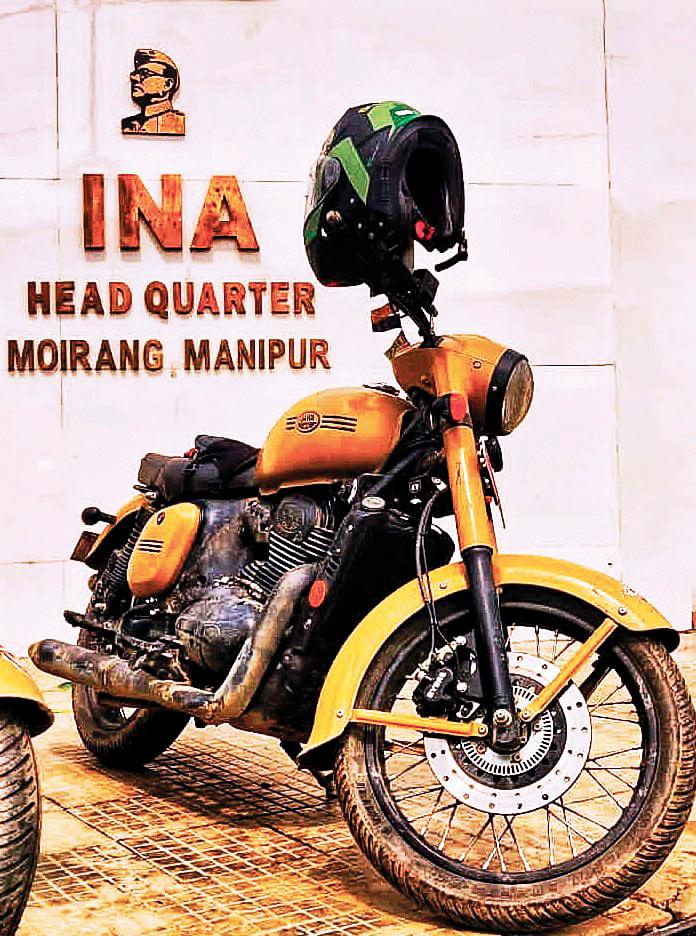
In April 2022, the Corps chose an unusual way to honour its people. A multi-state motorcycle expedition was launched to mark Azadi Ka Amrit Mahotsav and the 258th Raising Day of the Army Medical Corps. The expedition was flagged off on 3 April 2022, by Surg Vice Admiral Rajat Datta, Director General Armed Forces Medical Services. The journey began with tributes paid at the National War Memorial to medical personnel who laid down their lives in service.
The expedition covered more than 10,000 kilometres in 18 days. The route passed through 12 states, including seven states of the Northeast. Nearly 5500 kilometres involved jungles and mountainous terrain. The riders faced changing weather, difficult roads, and long riding hours. The mission demanded planning, discipline, and physical endurance.
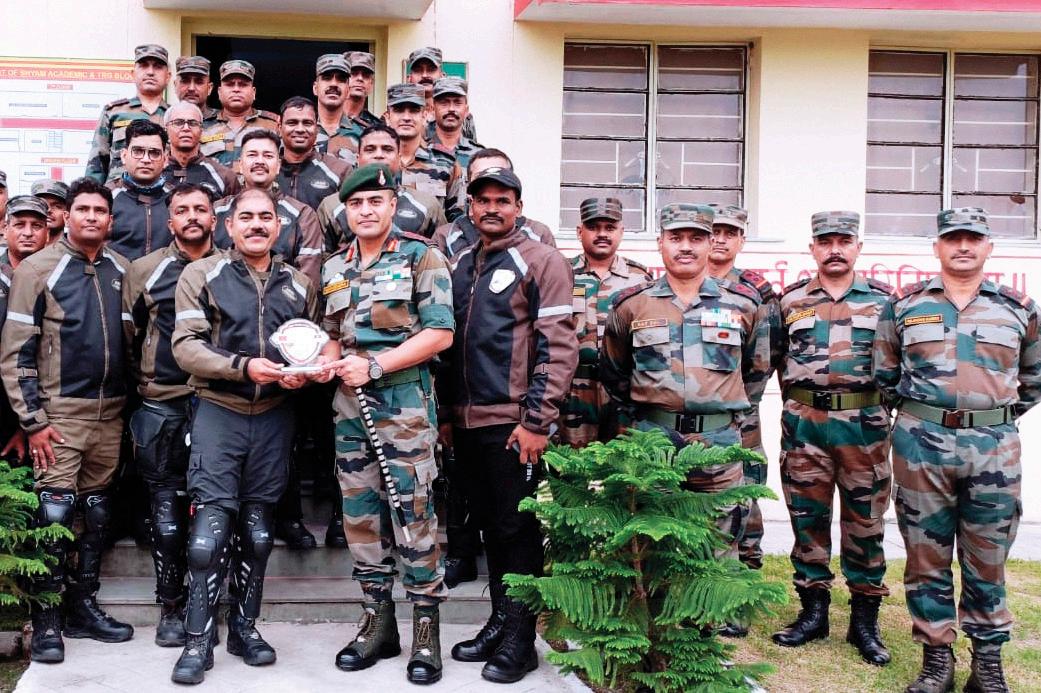
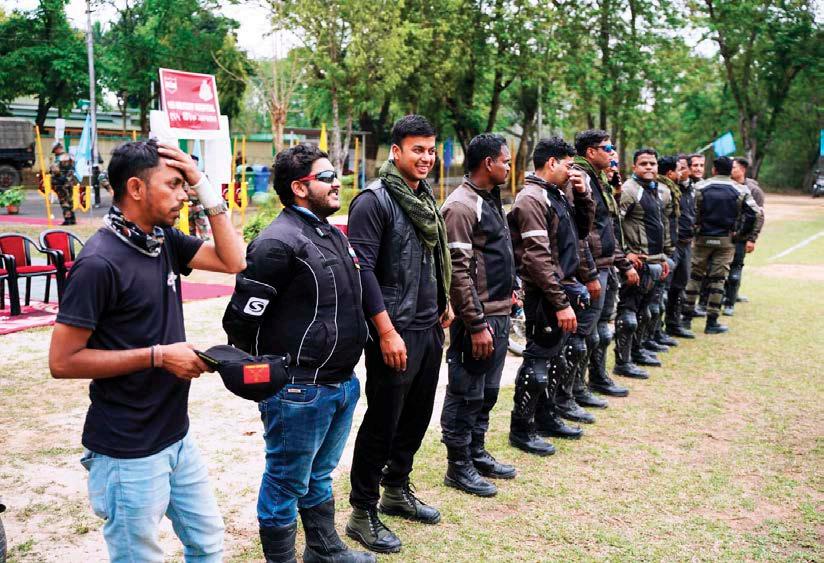
The team consisted of ten volunteers from the Army Medical Corps. Officers, Junior Commissioned Officers, and Other Ranks participated. All members belonged to the medical fraternity. The expedition was led by Colonel Rajesh W Adhau, Sena Medal awardee and an experienced mountaineer. His background in high-altitude expeditions guided route management and safety.
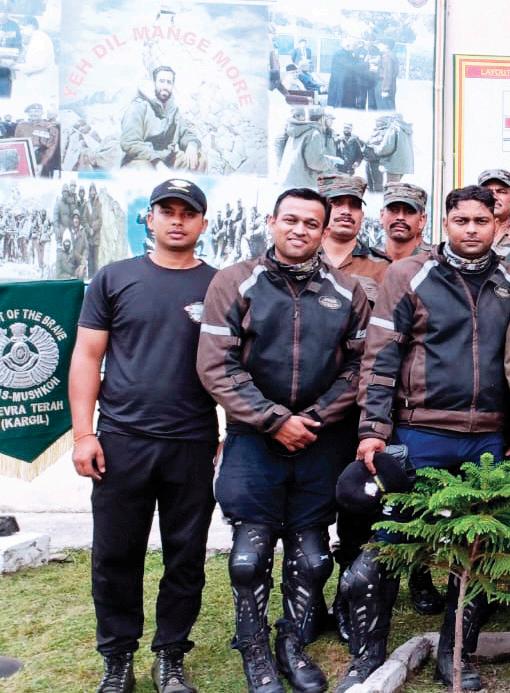
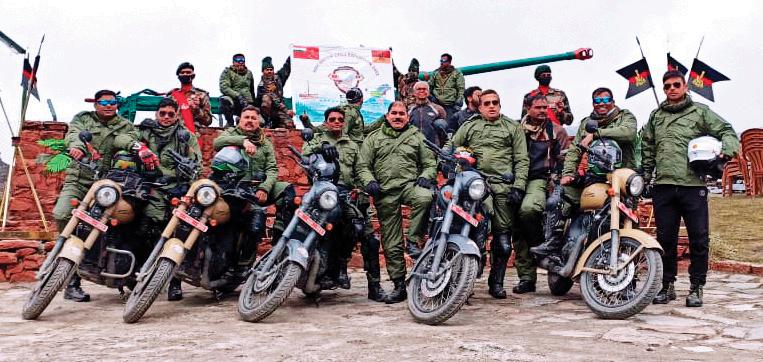
The objective went beyond distance. The team visited around 75 Army units during the journey. These units included medical personnel posted in remote and challenging areas. The riders interacted with doctors and paramedics. They shared experiences and conveyed appreciation for service during the Covid pandemic. The presence of peers on motorcycles carried symbolic weight.
During the pandemic years, the Army Medical Corps worked under sustained pressure. Field hospitals, quarantine centres, and emergency responses became routine tasks. The expedition served as a moving gesture of acknowledgement. It connected leadership with frontline caregivers.
The journey concluded at Lucknow. It was planned to be flagged in by the chiefs of all three services. The completion marked the end of an intense schedule. Each day required
The Army Medical Corps completed a landmark bike expedition across India, that honoured service, motivated field medical units, and highlighted commitment to care across difficult terrain and remote regions.
coordination of fuel, rest, maintenance, and medical readiness. The motorcycles performed reliably across varied terrain. India Book of Records later recognised the achievement. The expedition was confirmed on 22 December 2025, as the longest multi-state motorcycle expedition by a defence team. The recognition acknowledged the execution and placed the Army Medical Corps in a unique record category.
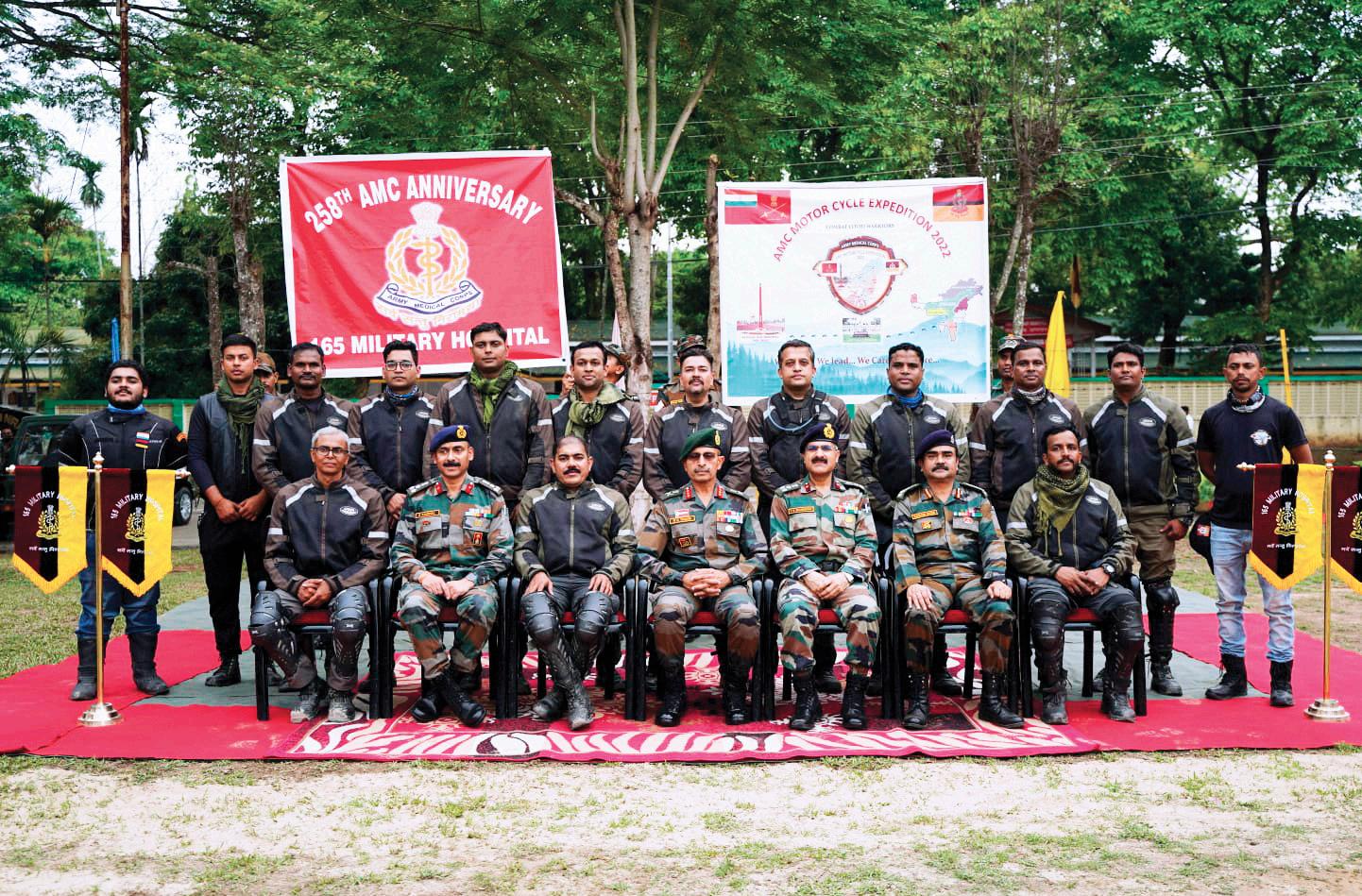
The Corps carries the motto “Sarve Santu Niramaya”. The phrase reflects a commitment to health and healing. The expedition translated this principle into motion. It carried a message of care across states and borders within the country.
Colonel Rajesh W Adhau reflected on the journey, saying, “This expedition was meant to reach our medical colleagues where they serve. The ride carried respect, motivation, and a shared sense of purpose across every unit we visited.”
The expedition also highlighted the broader structure of the Army Medical Corps in Delhi. Institutions like the Army College of Medical Sciences train future military doctors. Education, service, and operational readiness remain linked. The motorcycle journey reinforced this continuum.
Such expeditions require voluntary spirit. Participation was not mandated. Each rider committed time and energy. Their effort reflected personal conviction rather than obligation. This aspect strengthened the message received by units along the route. Motorcycle expeditions hold a place in military tradition. They test endurance and teamwork. They also create visibility.
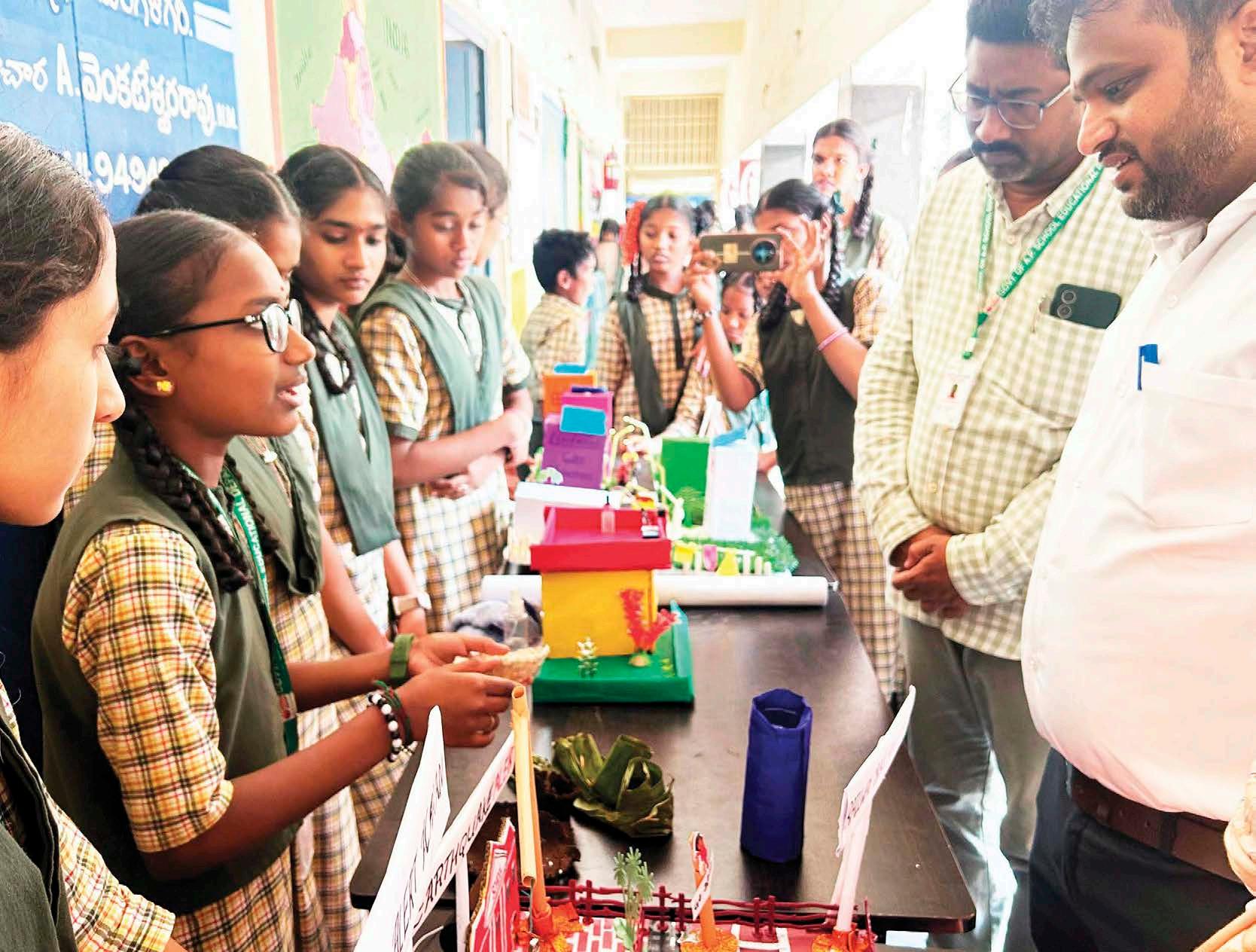



The need for scientific temperament among students is gaining importance in the changing world. Classrooms are evolving. Learning is moving from theory to practice. Students are expected to question, explore, and apply concepts in real situations. This change was visible in Andhra Pradesh through a large science initiative that brought thousands of young minds together. The Science City of Andhra Pradesh, Amaravathi, organised a statewide programme where 29,423 students performed science experiments simultaneously across multiple venues.

This effort was recognised by Asia Book of Records (ABR) and India Book of Records (IBR) as a record for the maximum number of students performing science experiments at multiple venues. The event was designed to make science active and engaging. Students worked on experiments related to science and technology, life sciences, energy and electricity,

mathematics, physics, smart plantation, and agriculture systems used in daily life. The focus remained on understanding concepts through direct experience.
Participation came from schools across the state. Students from urban and rural areas joined the initiative. Classrooms turned into working labs. Simple ideas were developed into working models. Teachers guided the process while allowing students to take the lead. This approach encouraged curiosity and independent thinking.
The programme aligned with the broader vision of promoting innovation in education. It reflected the direction set by the leadership of the state. Support from administrative and educational authorities helped the initiative reach a large number of students within a limited time frame. The scale of participation required careful planning. Schools coordinated schedules. Materials were arranged in advance. Digital systems



Over 29,000 students across Andhra performed science experiments together, creating a large learning movement that promotes hands-on education, innovation and scientific thinking among students statewide.
were used to document and monitor the activities. The execution showed how large educational programmes can be managed with clarity and coordination.
The initiative also connected with the Science Samagra Mahotsav 2K26. This event provided a platform for students to present their ideas and innovations. A total of 29,423 students from multiple schools participated in the broader programme across 26 districts. Students worked in teams and developed projects that addressed practical challenges.
The selection process followed multiple stages. Projects were reviewed at school, mandal, district, and state levels. Expert panels evaluated entries based on understanding, feasibility, innovation, and teamwork. This ensured that the process remained fair and well organised. The impact of the initiative was visible in student engagement. Young participants showed interest in building models and testing ideas. They explored real-life applications of science. The experience moved beyond textbooks and examinations.
Science City of Andhra Pradesh played a central role in driving this programme. Its focus on experiential learning shaped the structure of the event. The organisation has been working to promote science education through various outreach activities across the state.
Venkateswarlu Kesineni, CEO of Science City of Andhra Pradesh, said, “Our aim was to create a platform where students can experience science through action. This record reflects their curiosity and participation.”
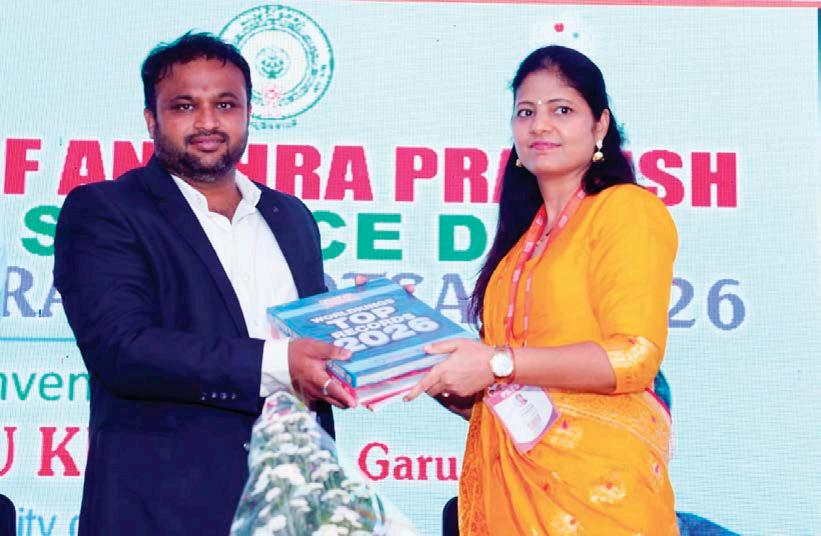
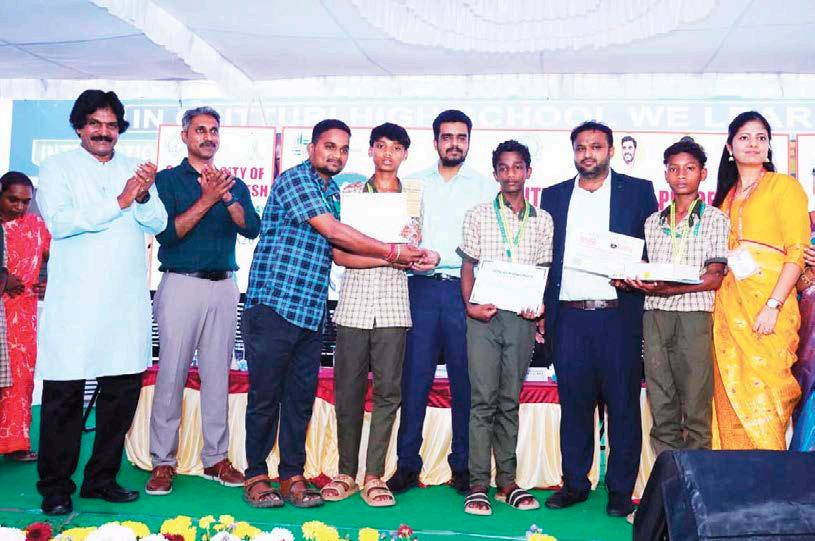
The recognition by Asia Book of Records (ABR) and India Book of Records (IBR) followed verification of participation and activities. Adjudicator Varsha Lakhyani presented the medals and certificates. The record stands as a large-scale example of student engagement in science education. Such initiatives contribute to building a culture of inquiry. Students learn to observe, test, and conclude. They gain confidence in handling
scientific tools and concepts. This exposure can influence future learning paths and career choices.
The programme also highlights the importance of inclusive education. Participation from different regions ensures equal opportunity. It brings diverse perspectives into the learning process. It also strengthens the connection between education and everyday life.





Constipation remains one of the most common digestive complaints in India. It affects daily comfort. It disrupts routine life. Many patients feel hesitation. They delay discussion. The problem often stays unspoken in clinics. This silence deepens discomfort. It also delays care. Among people living with diabetes and hypertension, the burden becomes heavier. Medication, diet, and reduced mobility add risk. Yet conversation remains limited.
Medical understanding has long been clear. Constipation is not rare. It is not trivial. It can signal lifestyle imbalance. It can reflect underlying conditions. Regular dialogue helps early management. Doctors know this. Patients often do not speak first. This gap in communication formed the centre of a large national initiative a few months ago.
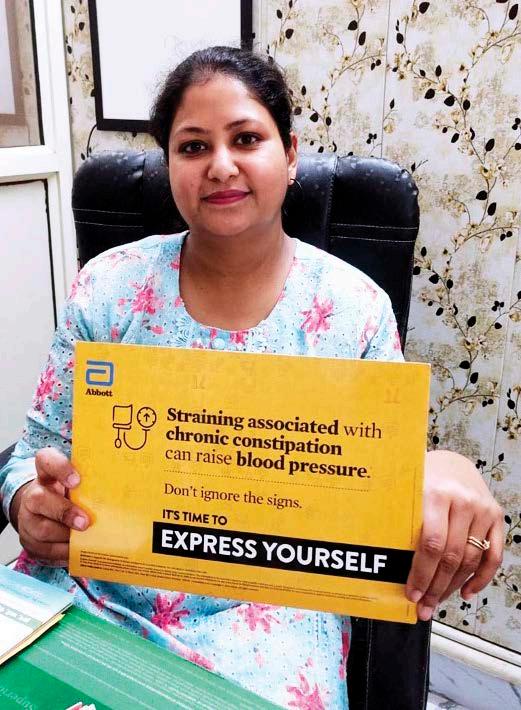
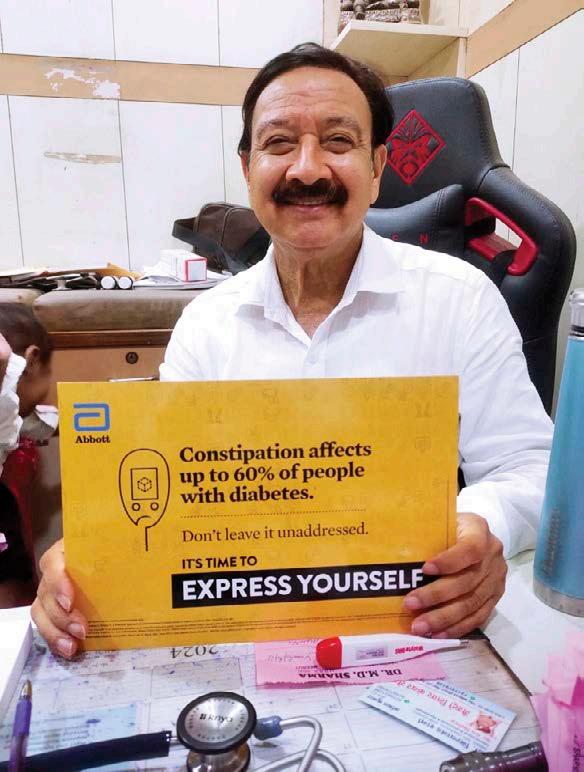
Abbott India Limited led a patient awareness campaign titled “Express Yourself – Let’s Talk Constipation”. The initiative aimed to normalise discussion around constipation. It encouraged

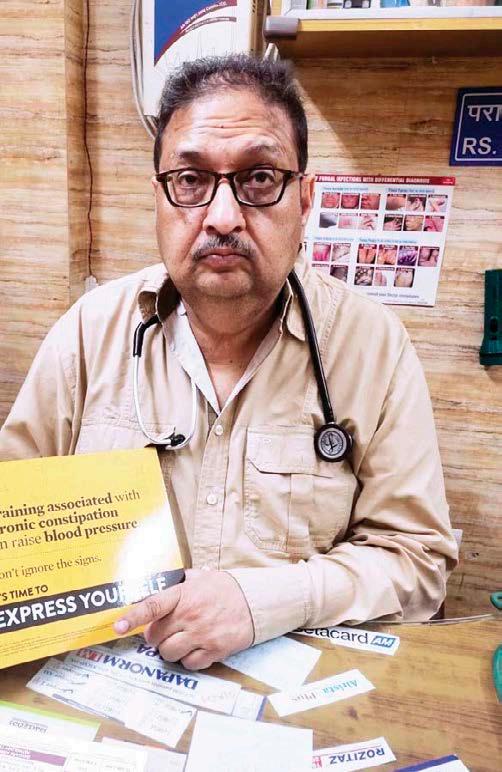


doctors to invite conversation. It focused on dignity and clarity. The campaign ran from 7 September to 6 November 2025. During this period, 8582 healthcare professionals participated across multiple locations in India.
The record was recognised as the maximum number of HCPs advocating open conversations about constipation. The achievement was confirmed on 8 December 2025. Asia Book of Records adjudicator Ms Lata Tack presented the medal and record certificate, marking formal recognition of the campaign’s scale and intent.
The drive reached clinics, hospitals, and community practices. Doctors from different specialities joined. Physicians, diabetologists, and general practitioners contributed. The focus stayed on patient interaction. Doctors encouraged patients to speak openly. Simple questions opened discussion. Symptoms were addressed without judgement. Language remained supportive.





Constipation affects people across age groups. Diet low in fibre adds risk. Inadequate hydration contributes. Sedentary habits worsen symptoms. Certain medicines slow bowel movement. Diabetes can affect gut function. Hypertension management may involve drugs that alter bowel patterns. Without conversation, patients self-manage poorly. Laxatives are misused. Discomfort becomes chronic.
The campaign addressed this reality. Doctors discussed routine habits. Fibre intake was explained. Fluid consumption was reviewed. Physical activity was encouraged. Medication history was assessed. Patients felt heard. The act of speaking reduced anxiety. Many realised the condition was manageable.
Several doctors actively supported the initiative. Dr Subrata Kumar Bhattacharjee, Dr Ashim Saha, Dr Ramkrishna Banik, Dr B S Choudhury, Dr Indrajit Paul, Dr Gitesh Bhattacharjee, Dr S Jain, and Dr Nityanand Ghosh were among those who participated in the awareness effort. Their involvement reflected the shared understanding that patient comfort begins with communication.
Abbott India has worked in healthcare for decades. Its presence spans diagnostics, medicines, and patient education. The constipation campaign aligned with its focus on everyday health issues. Rather than spotlighting rare conditions, the initiative addressed a common concern that affects quality of life.
The campaign structure remained practical. Educational materials supported consultations. Messaging avoided alarm. It focused on normalisation. Doctors listened. Patients responded positively. Many shared concerns they had ignored for years.
From a clinical perspective, open discussion improves outcomes. Early intervention reduces complications. Lifestyle guidance works best when patients understand causes. Trust strengthens adherence. Doctors benefit too. Clear communication saves time. Follow-up becomes easier.
A senior representative from Abbott India reflected on the initiative, saying, “Constipation affects millions, yet silence surrounds it. This campaign encouraged doctors to lead conversations with empathy and clarity. When patients feel comfortable speaking, care improves.” The record highlighted professional alignment. Doctors acted together. There was no single event. The campaign unfolded over weeks. Consistency replaced spectacle. This sustained approach suited the objective.
A nationwide medical campaign brought constipation into open conversation as 8582 doctors joined a patient awareness drive, reframing how a common yet neglected condition is discussed in clinical practice.

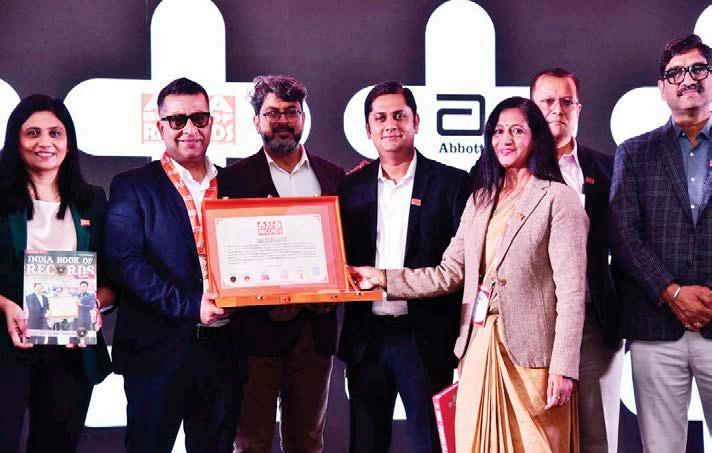

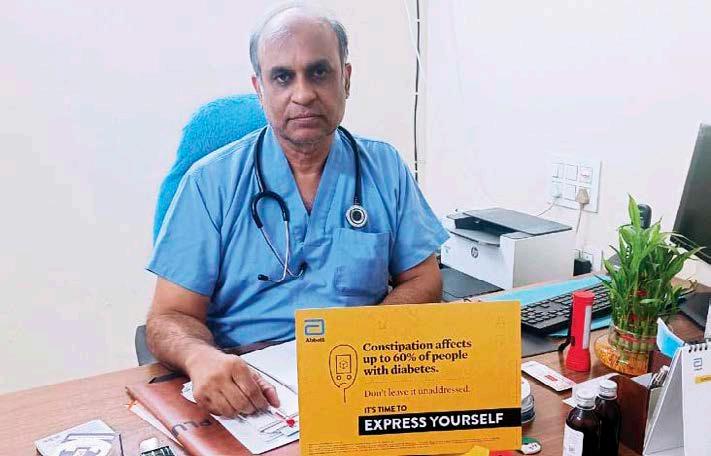



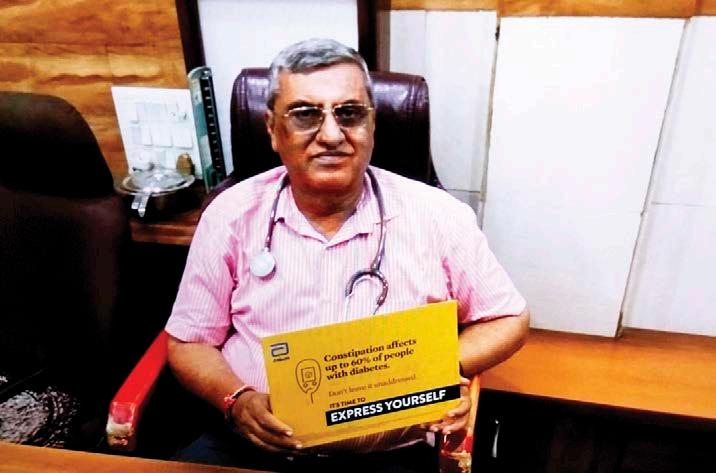


The importance of Gastroesophageal Reflux Disease (GERD) screening has grown as digestive complaints rise across India. Acid reflux is common. Many dismiss it as routine acidity. Symptoms recur quietly. Damage progresses without warning. Burning chest discomfort, sour taste, chronic cough, and disturbed sleep often appear late. When ignored, reflux can inflame the oesophagus. It can worsen asthma. It can disturb dental health. Long-term exposure raises cancer risk. Early screening remains the simplest defence.


Against this backdrop, a large national effort unfolded in late 2025. Sun Pharmaceuticals Laboratories Limited, Maharashtra, led the largest GERD screening and awareness campaign conducted by healthcare professionals. The campaign ran from 3 November to 10 December 2025. During this period, 11,022 healthcare professionals across India conducted 1,59,040 patient screenings for Gastroesophageal Reflux Disease. Asia Book of Records confirmed the achievement.

Medical literature has established GERD as more than discomfort. Repeated acid exposure injures tissue. Healing becomes slow. Lifestyle factors increase vulnerability. Irregular meals, obesity, stress, and tobacco use add pressure. Many patients self-medicate. Antacids provide brief relief. The disease continues unchecked. Doctors often meet patients after months or years of symptoms. This delay increases complications. Screening changes that trajectory.
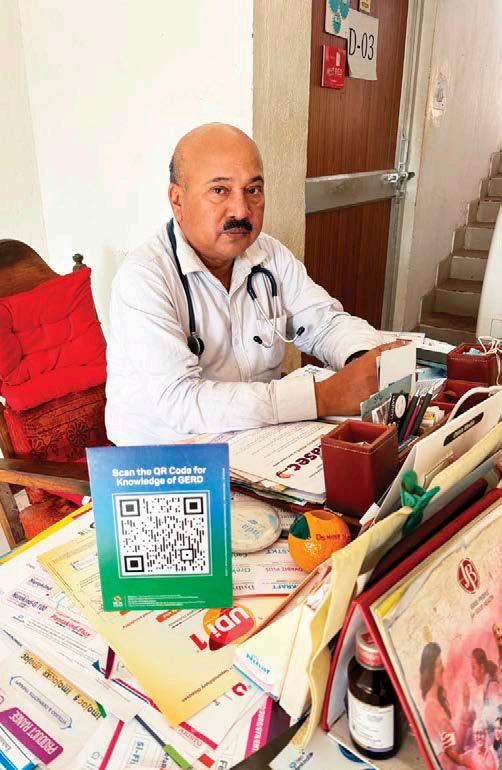
The record recognised the scale of professional participation and patient reach. Clinics, hospitals, and community practices joined. Physicians, gastroenterologists, and general practitioners took part. Each screening followed a structured approach. Symptom history was noted. Risk factors were discussed. Lifestyle habits were reviewed. Patients received guidance on next steps. The focus stayed on early identification and prevention.
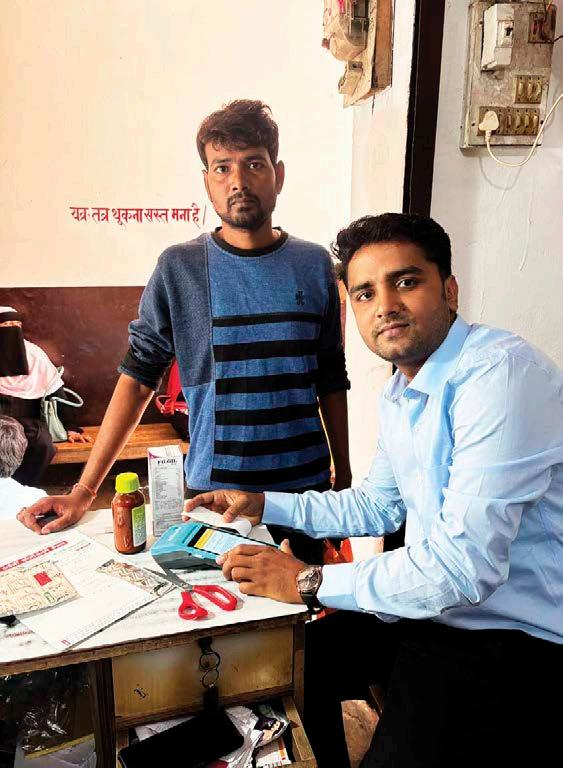
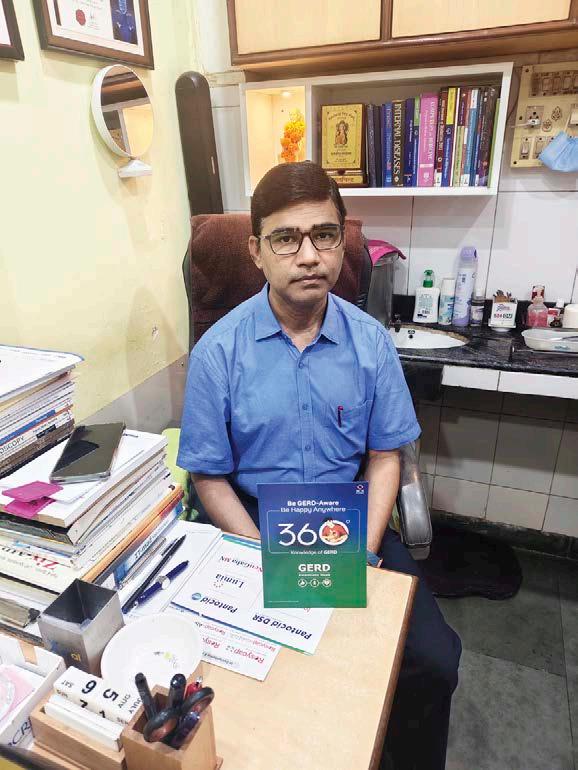
GERD affects varied age groups. Young adults experience stress-related reflux. Middle-aged patients manage diet-linked symptoms. Older adults face reduced muscle tone and delayed clearance. Pregnancy also increases risk. Despite this spread, awareness remains uneven. Many link reflux with spicy food alone. Patients learned about meal timing. Portion size gained importance. Simple changes found space in daily routine.
The campaign also highlighted the link between GERD and other conditions. Persistent reflux can worsen respiratory symptoms. It can trigger chronic cough. Night-time reflux disturbs sleep quality. Poor sleep affects work and mental health. Screening allowed these connections to surface early. Doctors could advise timely evaluation. Referral pathways became clear.
Sun Pharma has a long presence in Indian healthcare. Its work spans research, manufacturing, and patient education. The GERD initiative reflected this broader role. Instead of focusing on treatment alone, the campaign prioritised awareness and prevention. Healthcare professionals acted as the primary channel. This preserved trust. Patients listened. Questions followed. Stigma reduced.
Coordination across the country required planning. Educational materials supported clinicians. Reporting systems tracked numbers. Uniform messaging ensured clarity. The campaign unfolded systematically rather than through a single event. This continuity mattered. GERD symptoms vary. Patients arrive at different times. Sustained screening captured this diversity.
Asia Book of Records adjudicator Ms Kashmira Shah presented the medal and certificate to Sun Pharma officials in Mumbai. The recognition acknowledged the reach and purpose.
Dr Kiran Peddi, Senior Gastroenterologist and IBD Specialist, reflected on the initiative, saying, “GERD is often
A nationwide reflux screening drive united over eleven thousand healthcare professionals to screen more than one lakh patients, placing early GERD detection at the centre of preventive digestive health in India.
underestimated. Screening helps us identify patients early, guide lifestyle changes, and prevent long-term damage. Large campaigns like this bring reflux care into everyday clinical conversation.”
Patients responded positively. Many appreciated structured questioning. Symptoms they ignored gained meaning. Some sought further tests. Others adjusted habits. Awareness replaced anxiety. Screening became an entry point rather than an endpoint. GERD management works best when started early. Lifestyle correction often suffices in initial stages. Medication finds a clearer role when diagnosis is timely.
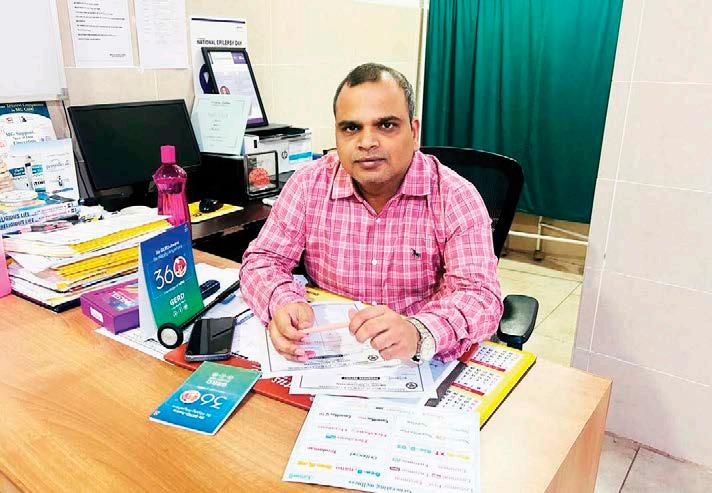


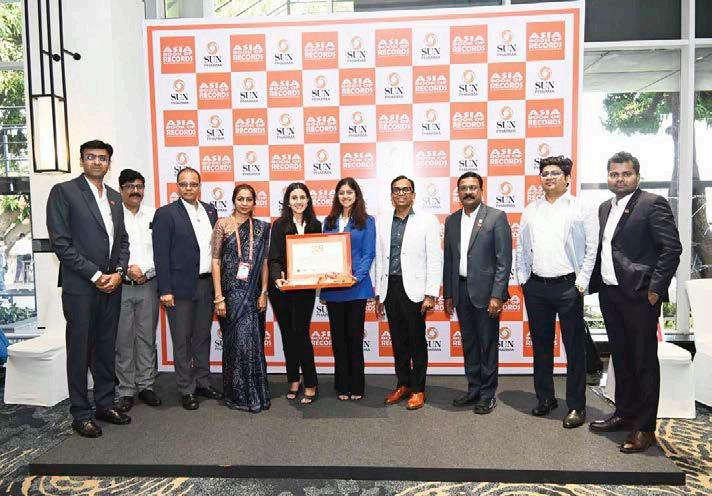



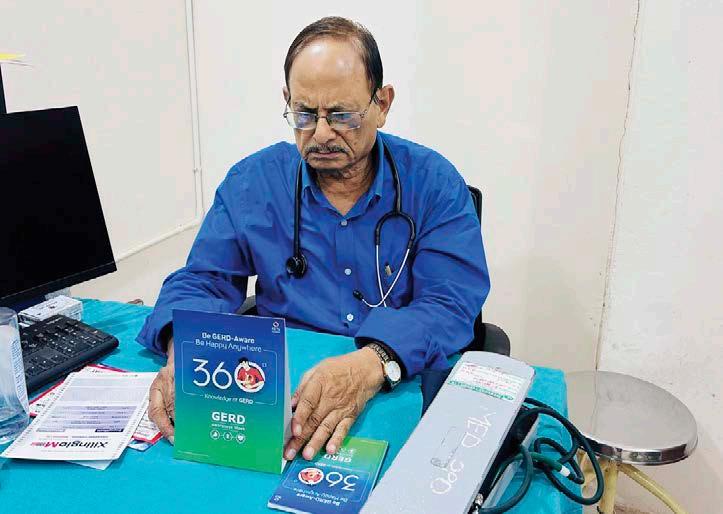


Cardiovascular health risks continue to rise across India, often advancing quietly before symptoms appear. Lipid imbalance sits at the centre of this challenge. Elevated cholesterol and triglyceride levels strain blood vessels. They accelerate plaque formation. They raise the risk of heart attack and stroke. Many individuals remain unaware of their lipid status. Fitness routines may improve stamina, yet hidden lipid abnormalities can persist. Regular screening remains the simplest way to identify this invisible risk early.


This gap shaped a large outreach effort in late 2025. Alembic Pharmaceuticals organised a lipid screening campaign that reached patients across regions and age groups. The drive ran from 20 September to 29 October 2025. During this period, 28,772 patients underwent lipid screenings. The objective stayed clear throughout. Detect lipid abnormalities early. Encourage timely medical advice. Reduce long term cardiovascular risk through awareness and intervention. Asia Book of Records confirmed the achievement on 7 November 2025.

Medical evidence has long linked lipid levels with cardiovascular outcomes. High low-density lipoprotein cholesterol damages arterial walls. Low high-density lipoprotein cholesterol weakens protection. Raised triglycerides worsen metabolic stress. These factors often coexist with diabetes, obesity, and sedentary lifestyles. Yet lipid testing is frequently delayed. Patients seek care after complications. Preventive screening still struggles for attention outside clinical settings.

The record recognised the highest number of lipid screenings conducted in a single outreach campaign. Such scale required careful coordination. Screening points were organised methodically. Data capture remained consistent. Patients received basic explanations of results. Many encountered lipid testing for the first time. The campaign extended beyond numbers. It opened discussions about diet, exercise, and follow up care.



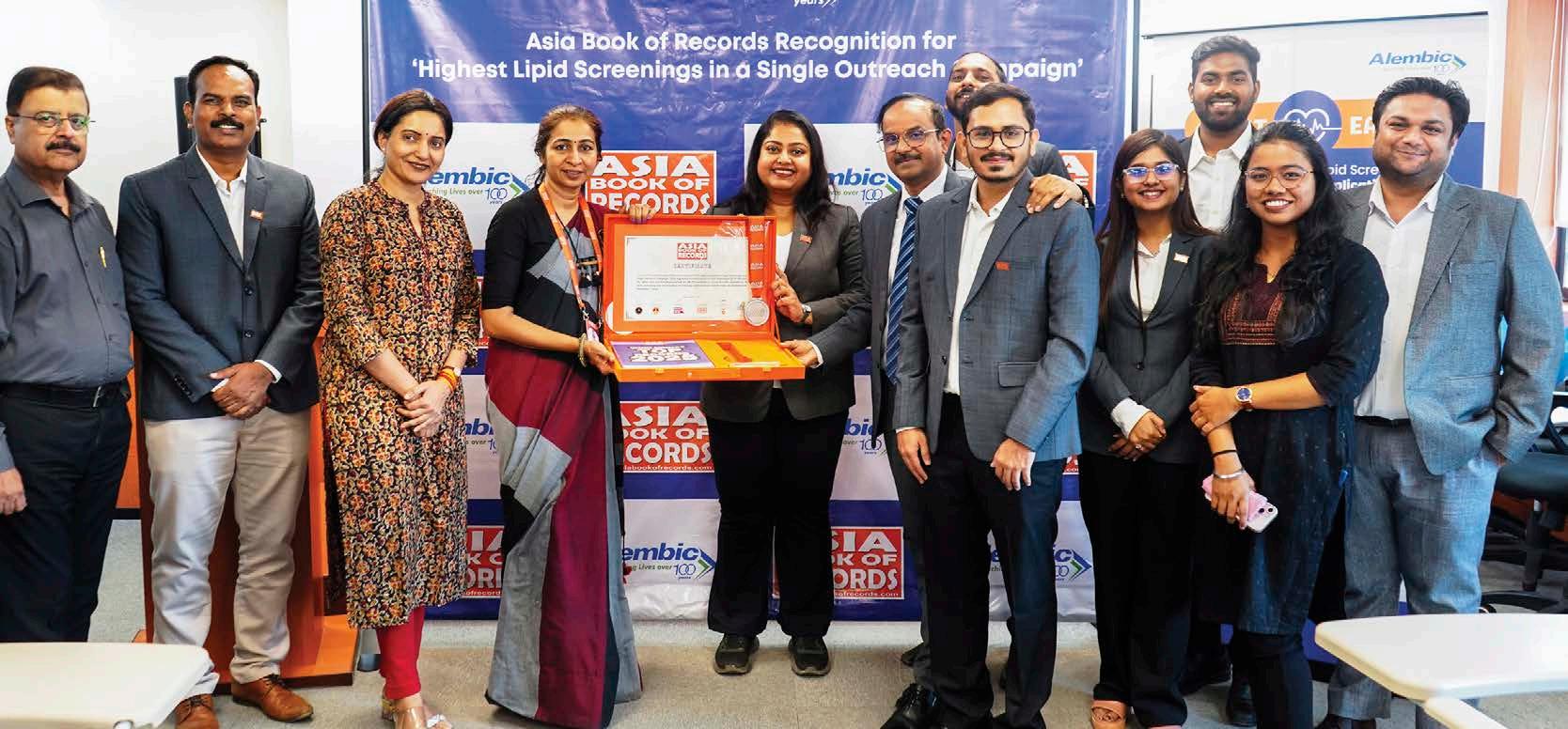

Lipid screening offers insight that routine checks often miss. Blood pressure can appear normal. Weight may seem acceptable. Lipid levels still reveal hidden risk. Early identification allows lifestyle changes before medication becomes necessary. When medication is required, it can begin sooner. This sequence reduces cumulative damage to the cardiovascular system. Screening therefore acts as a preventive tool rather than a diagnostic end point.
Alembic Pharmaceuticals brought its long-standing healthcare focus to this initiative. Established in 1907, the company has built its presence through manufacturing, research, and patient centric programmes. Its facilities in Vadodara, Panelav, and Baddi support large scale operations. The lipid screening drive aligned with its emphasis on practical healthcare impact. The outreach moved diagnostics closer to communities instead of waiting for hospital visits.
Patients responded positively to the accessibility of the programme. Many participants had family histories of heart disease. Others managed diabetes or hypertension. Some considered themselves healthy. Screening results often prompted reflection. Simple explanations helped patients understand numbers. High values gained context. Normal results offered reassurance. In both cases, awareness increased. Managing lipid disorders requires continuity. Screening marks the starting point. Follow up determines outcome. Doctors can advise dietary changes. Physical activity plans gain direction. Medication decisions become informed. The campaign reinforced this sequence. Participants were encouraged to consult physicians for interpretation and next steps. The outreach supported clinical care.
Asia Book of Records adjudicator Ms Kashmira Shah presented the medal and certificate to Alembic Pharmaceuticals officials,
A lipid screening brought cardiovascular prevention into focus as Alembic Pharma reached nearly thirty thousand patients, highlighting how early detection can change long term heart health outcomes.
formally recognising the organisation of the campaign. A senior representative of Alembic said, “Lipid disorders progress silently for years. Our aim was to bring screening closer to people and encourage early action. When patients know their numbers, they can protect their heart health more effectively.”
The campaign also reflected a broader shift in healthcare outreach. Prevention now competes with treatment for attention. Screening camps translate clinical knowledge into public access. They help bridge the gap between awareness and action.

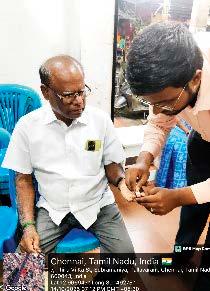

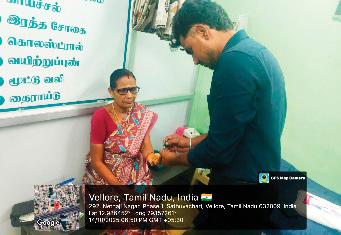




Meningococcal meningitis remains a serious yet often under-recognised health threat. It progresses rapidly. Symptoms can appear suddenly. Fever, headache, neck stiffness, and confusion escalate within hours. Delay in action can prove fatal. Survivors may face long-term complications. Despite this risk, public awareness remains uneven. Many families fail to recognise early warning signs. Prevention through vaccination is available. Knowledge, however, does not always reach communities in time.

From October 2025 to December 2025, a total of 2026 healthcare professionals across India participated. Doctors, paediatricians, and other clinicians recorded video messages as part of the campaign. The content highlighted meningococcal meningitis as a vaccine-preventable disease. Asia Book of Records confirmed the achievement on 6 January 2026. The record recognised the maximum number of healthcare professionals recording video messages to spread awareness on meningococcal meningitis.
This gap in awareness shaped a focused national initiative. Dr Reddy’s Laboratories Limited led a campaign titled “Race to Defeat Meningococcal Meningitis.” The initiative aimed to spread clear, timely information using a simple format. Healthcare professionals were invited to record short video messages. Each message focused on awareness, early symptoms, and prevention. The approach relied on medical voices speaking directly to the public.
Meningococcal meningitis is caused by Neisseria meningitidis bacteria. It spreads through close contact. Crowded settings increase risk. Children, adolescents, and young adults remain vulnerable. Early diagnosis saves lives. Treatment requires urgent hospital care. Vaccination reduces incidence and outbreak risk. Yet many remain unaware of vaccine availability or disease severity. The campaign addressed these realities through digital reach. Video messages allowed doctors to communicate beyond
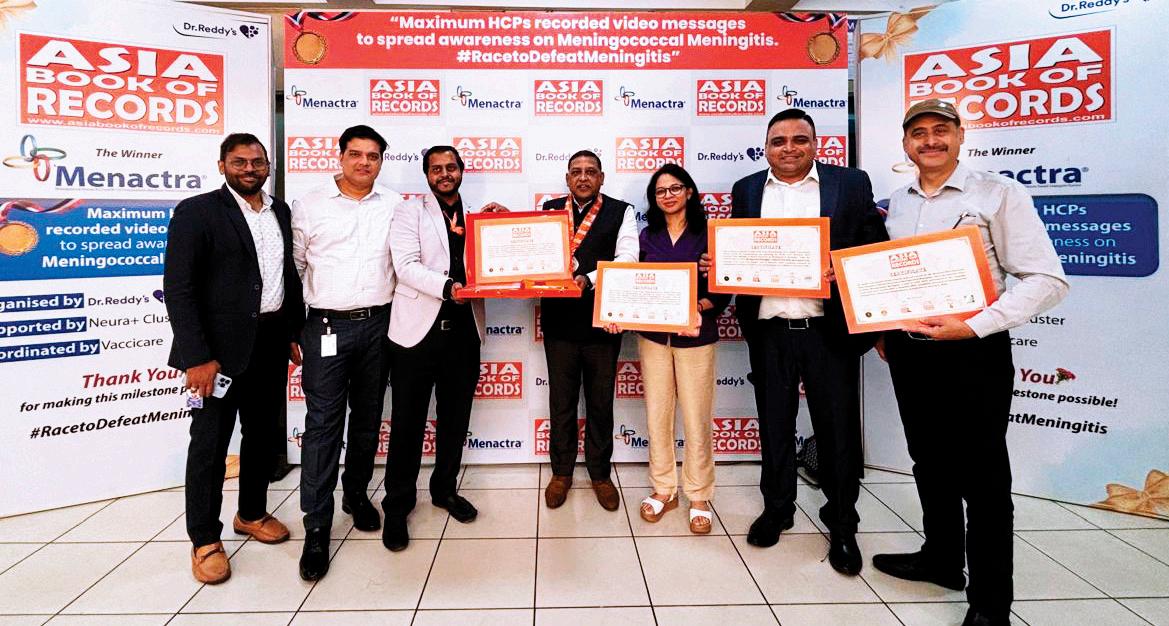

clinics. Short recordings travelled across social platforms and professional networks. The format supported repetition and recall. Viewers could hear the same advice from multiple professionals. Consistent messaging reduced confusion. The language stayed simple. The tone remained calm and informative.
Dr Reddy’s Laboratories has long worked in pharmaceutical research and public health education. The company operates across global markets. Education forms a core part of its outreach. The meningococcal campaign aligned with this direction. Instead of printed material alone, the initiative used video. Faces and voices created trust. Medical authority became accessible.

A
nationwide awareness campaign brought together 5,752 doctors who wrote public health messages on diabetes care. The initiative highlighted early monitoring and preventive habits for better disease management.

Coordination required planning. Participants were registered. Video guidelines ensured uniform focus. Messages avoided technical jargon. Emphasis stayed on recognition and prevention. Each healthcare professional contributed a small piece. Together, the pieces formed a national narrative. Awareness grew through volume and consistency.
Asia Book of Records adjudicator Mr A R Sagar presented the medal and certificate to Dr Reddy’s Laboratories officials. The recognition acknowledged participation scale and campaign structure. A senior representative from Dr Reddy’s Laboratories reflected on the initiative, saying, “Meningococcal meningitis moves fast and awareness must move faster. By bringing healthcare professionals together on a common platform, we aimed to make prevention messages visible and urgent.”
The use of recorded messages carried practical value. Doctors could participate without travel. Time barriers reduced. Geographic diversity increased. Urban and semi-urban
professionals joined alike. This expanded reach across regions where access to specialist care may be limited.

The campaign also reinforced the importance of vaccination dialogue. Many vaccine-preventable diseases persist due to lack of awareness rather than lack of tools. Meningococcal meningitis falls into this category. Education complements immunisation programmes. Together, they reduce risk.
The number 2026 represents more than participation. Each healthcare professional interacts with hundreds of patients. Each message influences decisions. The ripple effect extends beyond the campaign period. Awareness gained today shapes response tomorrow.
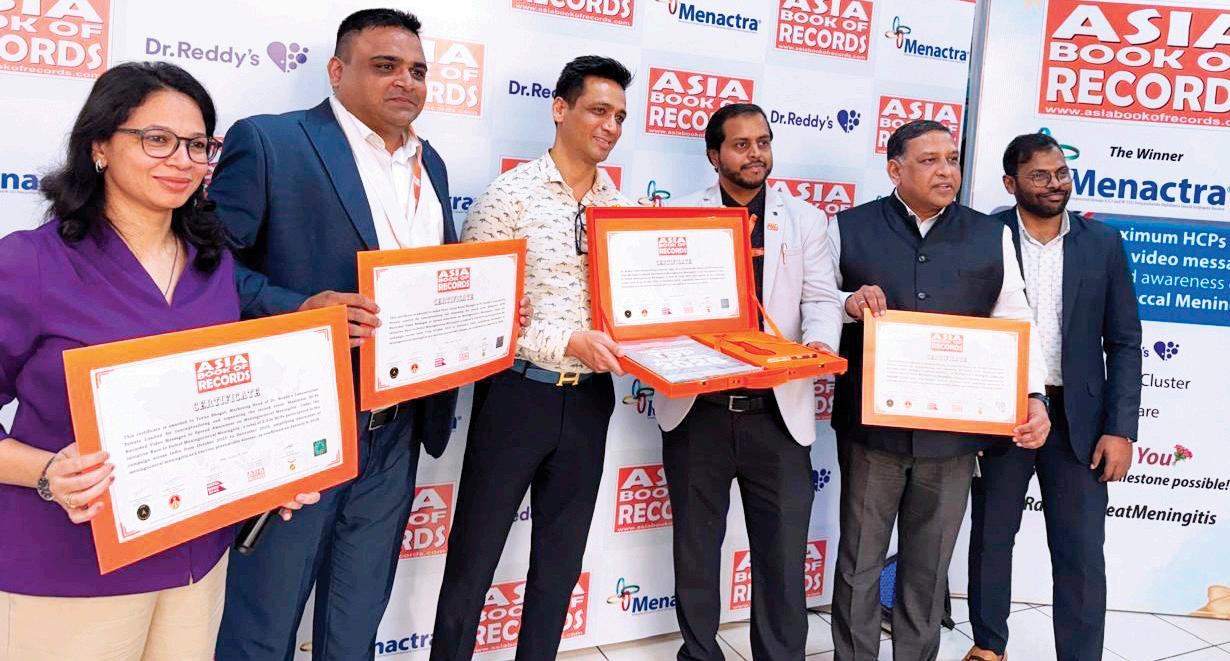



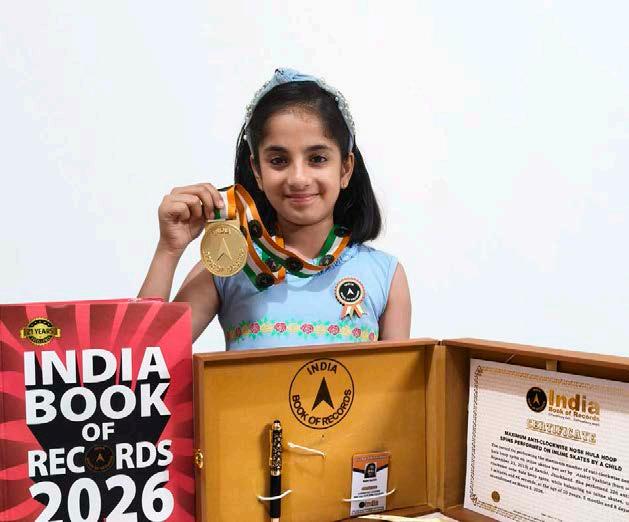

minutes and 46

The record for performing the maximum number of anticlockwise nose hula hoop spins on inline skates was set by Aashvi Vashista (born on September 23, 2015) of Ranchi, Jharkhand. She performed 226 anti-clockwise nose hula hoop spins, while balancing on inline skates, in 3 minutes and 46 seconds, at the age of 10 years, 5 months and 8 days, as confirmed on



March 3, 2026.














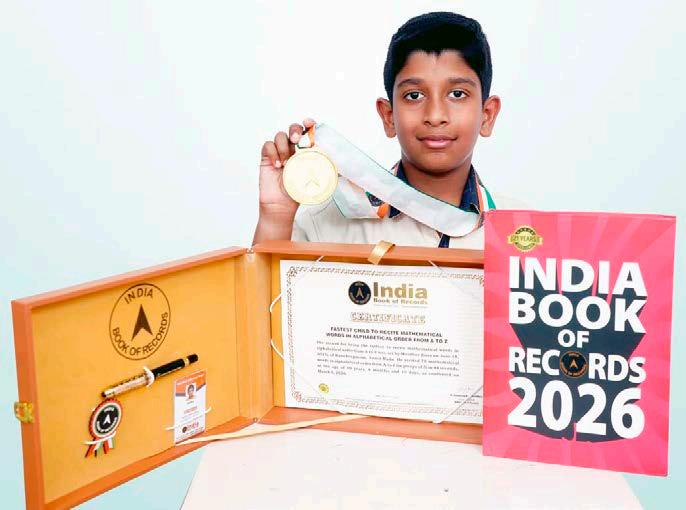

The record for being the fastest to recite mathematical words in alphabetical order from A to Z was set by Maadhav (born on June 18, 2015) of Kancheepuram, Tamil Nadu. He recited 78 mathematical words in alphabetical order from A to Z (in groups of 3) in 44 seconds, months and 15 days, as confirmed on March 5, 2026.




The record for being the youngest Black Belt holder in Karate with 10 Kata was set by Prisha Kashyap Patel (born on May 24, 2018) of Kolhapur, Maharashtra. She achieved the First Dan Black Belt in Karate with 10 Kata (Kata, a Japanese word, is used to describe specific sequences of motion in Karate) from ‘Ichalkaranji Amateur Tae Kwon-Do Academy’, Ichalkaranji, on May 4, 2025, at the age of 6 years, 11 months and 10 days, as confirmed on March
The record for making the maximum number of teachers’ portraits was set by Shikha K. P. (born on October 6, 2012) of Malappuram, Kerala. She made detailed portraits of 110 teachers on A4 sized sheets of paper, comprising 41 male and 69 female teachers of her school Panakkadu Thangal Memorial Higher Secondary School, Thazhekode’, using pencils, at the age of 13 years, 4 months and 27 days, as confirmed


7,



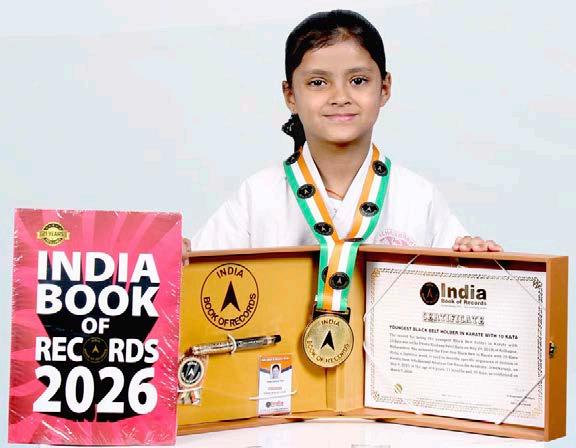





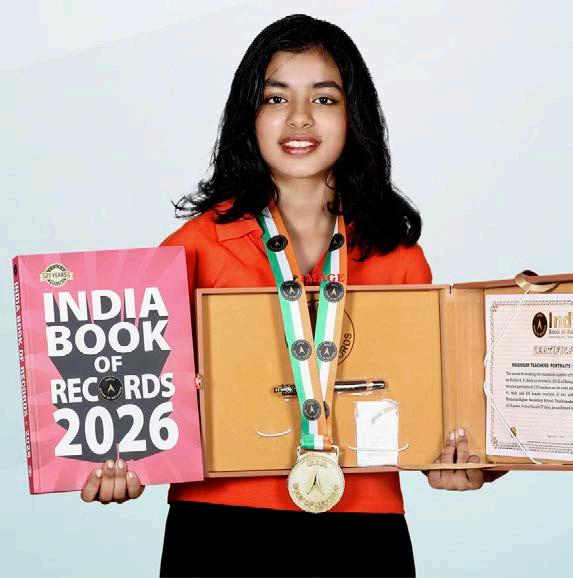
on March 5, 2026.











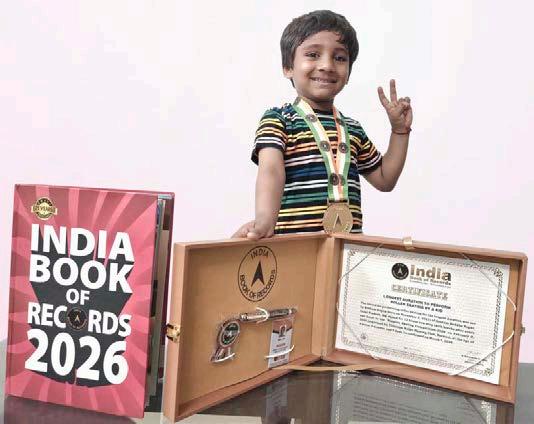



The record for performing roller skating for the longest duration was set by Ridham Gupta (born on November 3, 2021) of Gautam Buddha Nagar, Uttar Pradesh. He skated for 12 hours non-stop (with breaks after every one hour) in the ‘Stamina Skating Competition-2026’ on February 8, 2026 (organised by Titanium Roller Skating Club, Barmer), 3 months and 5 days, 2026.






March






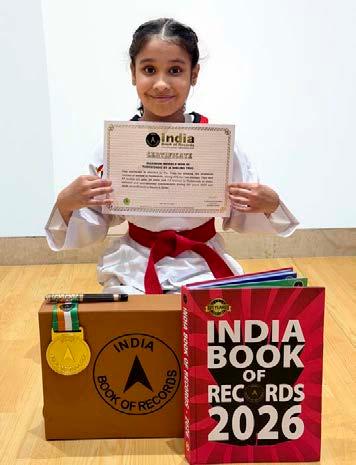
The record for authoring the maximum number of poetry books in English was set by Julfina Ali (born on December 11, 2011) of Kolkata, West Bengal. She authored 4 poetry books in English titled ‘The Epic Poetry’ (ISBN: 978-81-95772-08-7), published by Nayak Enterprises, and ‘Written Emotions’ (ISBN: 978-81-98831-03-3), published by Coffee Houser Charpase, among others, at the age of 14 years, 3 months and 1 day, as confirmed on March12,2026.






The record for performing the maximum number of Ghoomar dance spins in one minute was set by Ishika Bagri (born on October 11, 2014) of Jodhpur, Rajasthan. She performed 80 Ghoomar dance spins (rotational movements) in one minute, at the age of 11 years, 4 months and 30 days, as confirmed on

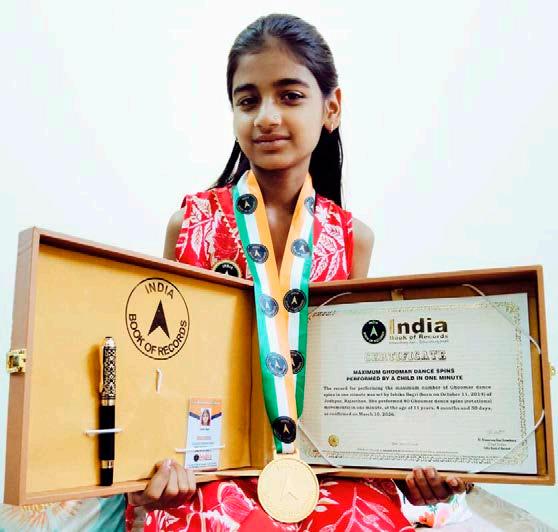
This certificate is awarded to Pia Valia for winning the maximum number of medals in Taekwondo, along with her two siblings. They won 63 medals (31 gold, 20 silver and 12 bronze) in Taekwondo at state, national and international tournaments during the years 2025 and 2026, as confirmed on March



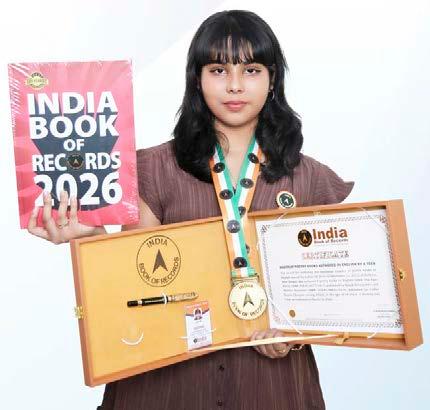



(rotational movements) in March 10, 2026.








The record for making a mehndi design on the longest cloth was set by Akanksha Patel (born on March 16, 2001) of Barabanki, Uttar Pradesh. She made an intricate mehndi design on the longest cloth, measuring 39.1 feet x 3 feet, in 13 hours and 51 minutes, depicting traditional dance forms, including Ghoomar, Garba, Kathakali and others, using 46 mehndi cones, as confirmed on February5,2026. 2026.








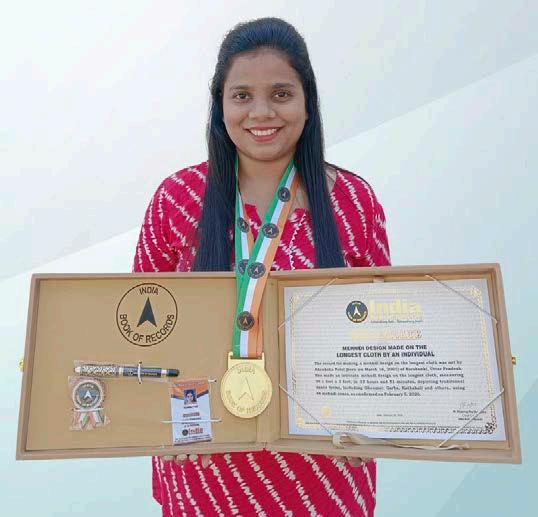









The record for making the largest portrait of Goddess Durga using charcoal was set by Kiranmoy Nandi (born on August 10, 1995) of Paschim Bardhaman, West Bengal. He made the largest portrait of Goddess Durga (measuring 33 ft. x 22 ft.) on 726 combined sheets of paper (each measuring 1 ft. x 1 ft.), using charcoal, as confirmed on February16,2026. March on 726 combined sheets of February 16, 2026.






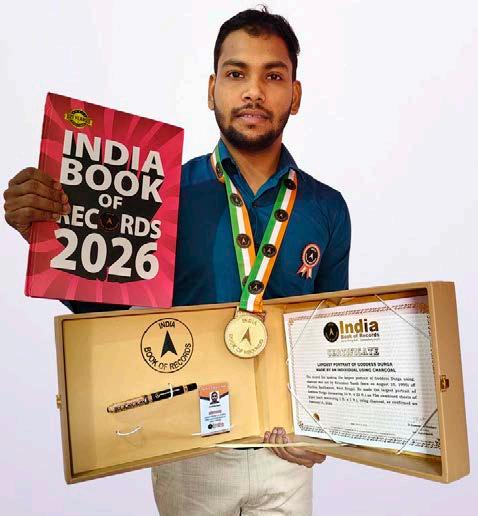







The record for being the fastest to recall the capitals of all countries in alphabetical order was set by Nithara Renjith (born on March 29, 2020) of Ernakulam, Kerala. She recalled the capitals of all 195 (UN recognised) countries in alphabetical order in 2 minutes, 15 seconds and 23 milliseconds (on hearing the names of the countries), at the age of 5 years, 10 months and 25 days, as confirmed on February23,2026.

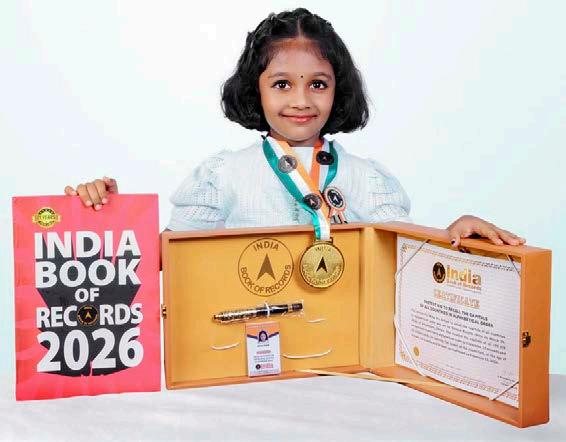


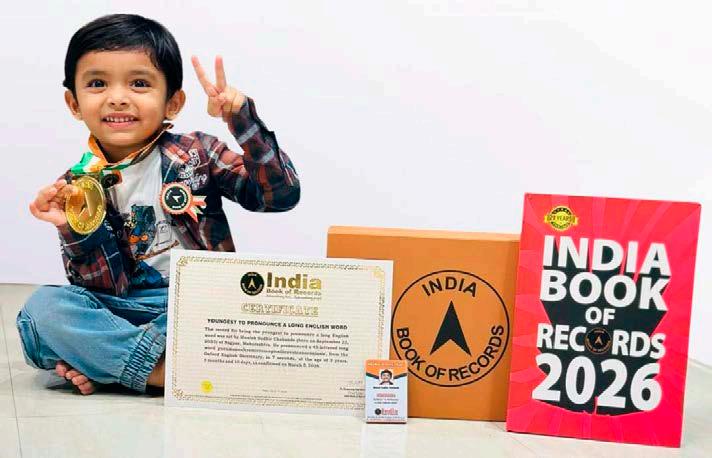



The record for being the youngest to pronounce a long English word was set by Munish Sudhir (born on September 23, 2022) of Nagpur, Maharashtra. He pronounced a 45-lettered long word ‘pneumonoultramicroscopicsilicovolcanoconiosis’, from the Oxford English Dictionary, in 7 seconds, at the age of 3 years, 5 months and 10 days, as confirmed on March5,2026.







The record for orally answering the maximum number of addition sums of single-digit numbers was set by Isha Polimera (born on July 26, 2023) of Hyderabad, Telangana. He orally answered 79 single-digit addition sums in 4 minutes and 58 seconds, on hearing the sums, at the age of 2 years, 6 months and 15 days, as confirmed on February10,2026.

February 10, 2026. 2026.






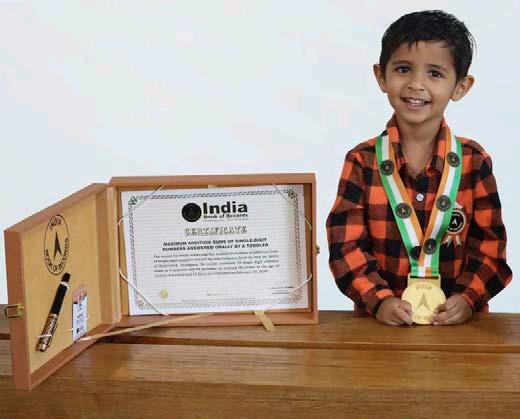






The record for being the fastest to recite all shlokas from Chapter 11 of the Bhagavad Gita was set by Utsavi Amit Singh (born on June 3, 2020) of Bengaluru, Karnataka. She recited all 55 shlokas from Chapter 11 of the in 10 minutes and 30 seconds, at years, 8 months and 17 days, as February20,2026. 2026.



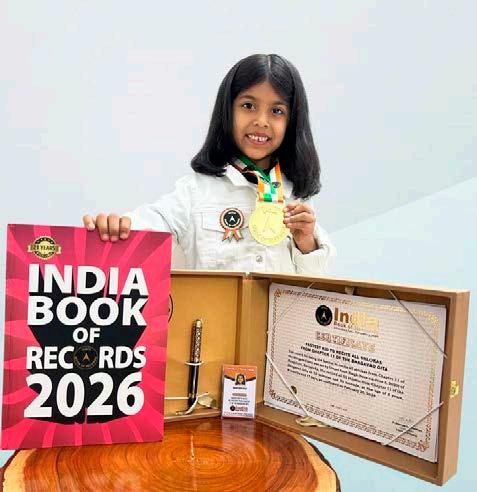












The record for being the fastest to identify 50 car brands was set by Ishaan Sacheenkumar Patil (born on March 11, 2023) of Bagalkot, Karnataka. He identified and recalled the names of 50 national and international car brands in 1 minute, 20 seconds and 47 milliseconds by viewing the pictures of cars in a book, at the age of 2 years, 11 months and 17 days, as confirmed on February28,2026.
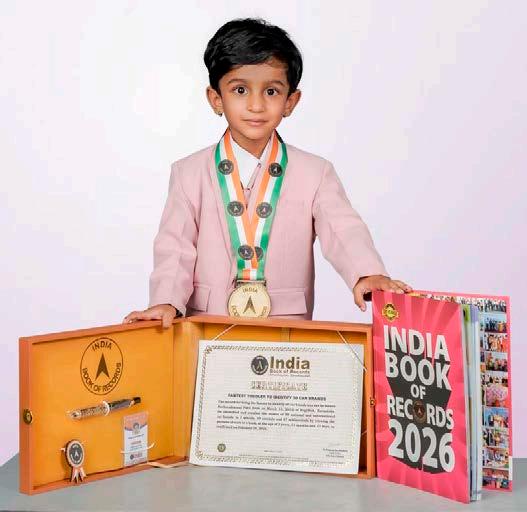








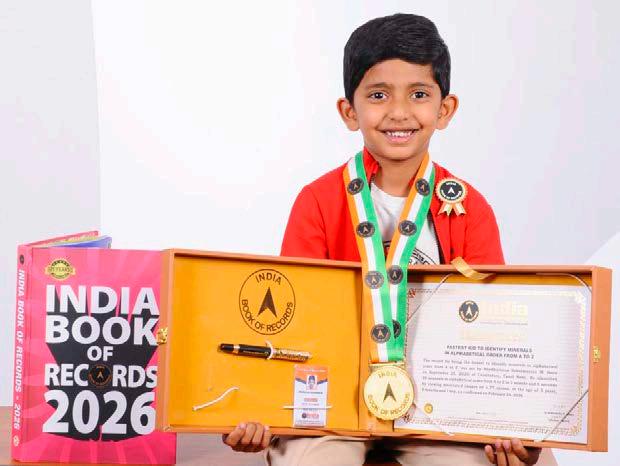
This certificate is awarded to Prisha Valia for winning the maximum number of medals in Taekwondo, along with her two siblings. They won 63 medals (31 gold, 20 silver and 12 bronze) in Taekwondo at state, national and international tournaments during the years 2025 and 2026, as confirmed on March 2, 2026.










The record for being the fastest to write all the letters of the English alphabet from A to Z, ambidextrously was set by Advait Vikas Patade (born on September 21, 2019) of Pune, Maharashtra. He wrote all 26 small cursive letters of the English alphabet from A to Z, simultaneously, with both hands (ambidextrously) on a sheet of paper in 34.10 seconds, using a pen, at the age of 6 years, 4 months and 28 days, as confirmed on February18,2026.

The record for being the fastest to identify minerals in alphabetical order from A to Z was set by Nhydhuruvan Subramanian M. (born on September 25, 2020) of Coimbatore, Tamil Nadu. He identified 26 minerals in alphabetical order from A to Z in 1 minute and 5 seconds by viewing associated images on a TV screen, at the age of 5 years, 5 months and 1 day, as confirmed on February26,2026. 2026. 2026. February 26, 2026.
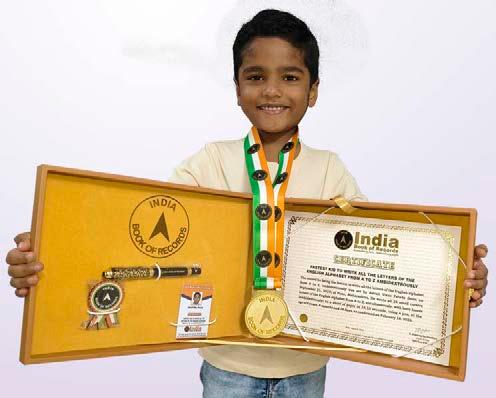








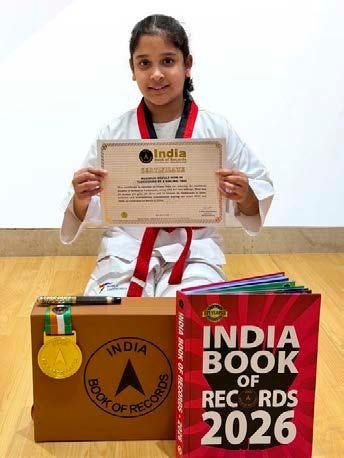


The record for being the fastest to drape a saree was set by Mowmitha (born on July 9, 1997) of Coimbatore, Tamil Nadu. She draped a 5.5 metre (6 yards) long saree in 15 seconds, as confirmed on February 17, 2026.

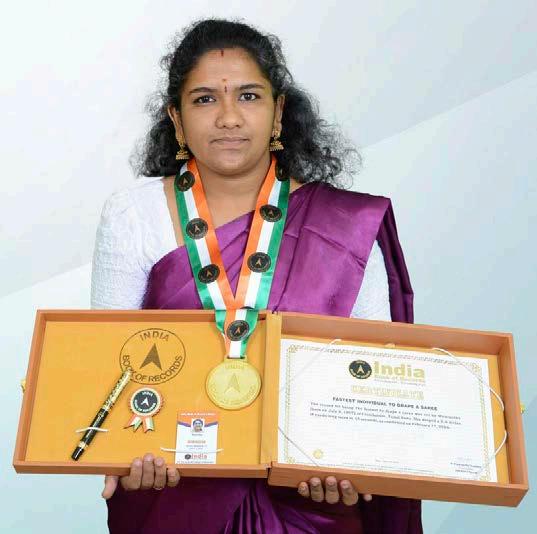












Shreya Dipak confirmed on February 12, 2026.
The record for being the fastest to recite Roman numbers from 1 to 100 was set by Sadanshio (born on February 26, 2016) of Akola, Maharashtra. She recited Roman numbers from 1 to 100 in 42 seconds, at the age of 9 years, 11 months and 17 days, as confirmed on February12,2026.



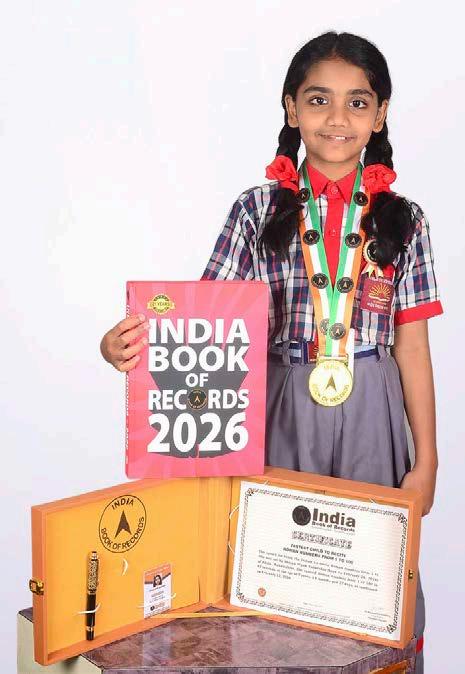











The record for being the fastest to draw and colour an A4size picture of Lord Hanuman blindfolded was set by Charvi Puneeth (born on August 5, 2015) of Bengaluru, Karnataka. She drew and coloured an A4-size picture of Lord Hanuman, blindfolded, in 17 minutes and 48 seconds, using crayons, at the age of 10 years, 6 months and 14 days, as confirmed on February19,2026. She drew and coloured an 19, 2026.
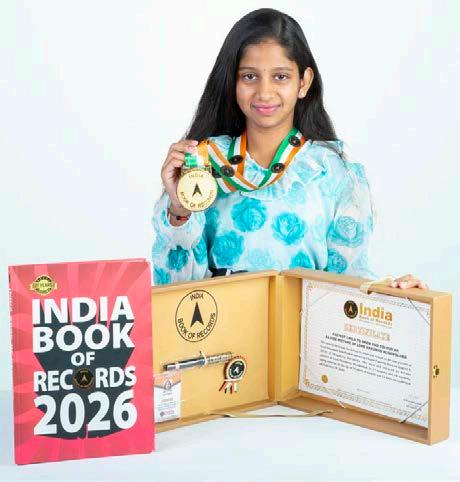







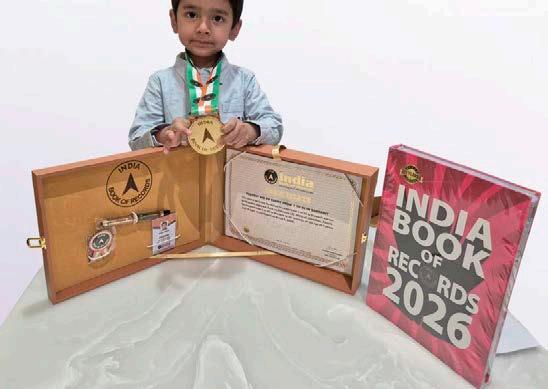


The record for being the fastest to count from 1 to 20 in Sanskrit was set by Himaksh Aggarwal (born on February 15, 2022) of Jalandhar, Punjab. He counted from 1 to 20 in Sanskrit in 20 seconds, at the age of 4 years and 19 days, as confirmed on March6,2026.
March

The record for identifying the maximum number of historical monuments and landmarks blindfolded was set by Tanmay Darak (born on July 7, 2014) of Udaipur, Rajasthan. He identified and named 76 historical monuments and landmarks, blindfolded, in 7 minutes, by viewing the images on flashcards, at the age of 11 years, 7 months and 5 days, as confirmed on February12,2026.

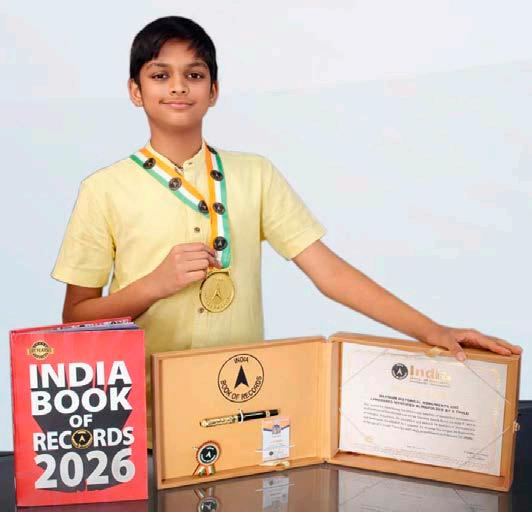

















The record for breaking the maximum number of wooden boards with a Nunchaku in one minute was set by Chandubhai Baldha Gujarat. She broke 50 wooden boards (each board measuring 11 inches in length, 8 inches in width and 6 mm in thickness) with a Nunchaku in one minute, using her right hand (under the guidance of Athletes Sports Academy, Ahmedabad), at the age of 7 years, 6 months and 25 days, as confirmed on February3,2026.
Vedika (born on July 9, 2018) of Ahmedabad, February 3, 2026.


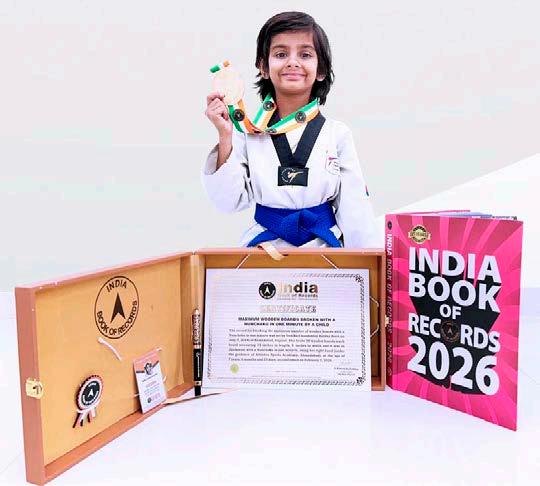


The record for winning the maximum number of certificates, medals and trophies for Karate was set by Aayush Nandan (born on February 13, 2015) of Hassan, Karnataka. He won 80 certificates, 22 medals and 20 trophies for participating in 22 state-level and national-level Karate championships, from November 3, 2019 to January 5, 2025, at the age of 9 years, 10 months and 23 days, as confirmed on February6,2026.










The record for running barefoot on an athletic track for the longest duration was set by Nilesh Rajendra Wadkar (born on March 26, 1988) of Mumbai, Maharashtra. He ran 81.2 km barefoot in 12 hours on February 7, 2026, on an athletic track at a stadium in Dombivli, Maharashtra, for the social initiative ‘Run So They Can Walk’, aimed at supporting footwear donation for underprivileged children, as confirmed on February23,2026.




The record for being the fastest to recite 350 digits of the Pi value blindfolded was set by K. Vaibhav Manikanth (born on May 2, 2016) of Peddapalli, Telangana. He recited 350 digits of the Pi value, blindfolded, in 1 minute and 1 second, at the age of 9 years, 8 months and 29 days, as







The record for winning the maximum number of medals in Taekwondo by a sibling trio was set by Viaan Valia (born on August 25, 2016) of Mumbai, Maharashtra, along with his two sisters. They won 63 medals (31 gold, 20 silver and 12 bronze) in Taekwondo at state, national and international tournaments during the years 2025 and 2026, at the age of 9 years, 6 months and 8 days, as confirmed on March2,2026. 6, 2026. footwear donation for February 23, the Pi at the confirmed on January 2026.






The record for covering the maximum distance on an electric bicycle was set by Prashant Iranna Patil (born on September 11, 1990) of Kalaburagi, Karnataka. He covered a distance of 28.53 km, on an electric bicycle (Emotorad Doodle V3 model), in 1 hour, 4 minutes and 27 seconds, while pedalling from PVP School University Quarters






Signal to Mayaganahalli, Bengaluru, as confirmed on

February 16, 2026.



The record for being the fastest to identify 100 pictures was set by Prayan Maanju (born on February 15, 2023) of Jhunjhunu, Rajasthan. He identified and named 100 pictures of animals, fruits, vegetables, vehicles, shapes, parts of the body and letters of the English alphabet, among others, in 3 minutes and 19 seconds, at the age of 2 23 days, as confirmed on

in 3 minutes and 19 7, 2026.

The record for being the fastest to recall sea creatures from A to Z was set by Diago Denson (born on August 31, 2023) of Kanyakumari, Tamil Nadu. He recalled the names of 26 sea creatures in alphabetical order from A to Z in 1 minute and 2 seconds, at the age of 2 years, 5 months and 6 days, as confirmed on February6,2026.

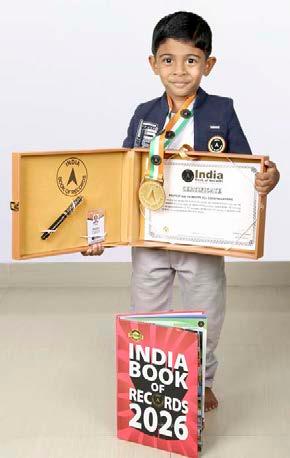


The record for being the fastest to recite all constellations was set by S. Thanvik (born on July 18, 2021) of Tiruvallur, Tamil Nadu. He recited all 88 constellations in 57 seconds, at the age of 4 years, 7 months and 12 days, as confirmed on March2,2026.



















The record for answering the maximum number of questions on Hindu Mythology was set by Sannidhi Bitragunta 27, 2019) of Chennai, Tamil Nadu. She answered 215 questions on Hindu Mythology in 12 minutes and 40 seconds, at the age of 6 years, 9 months and 17 days, as confirmed on February13,2026.





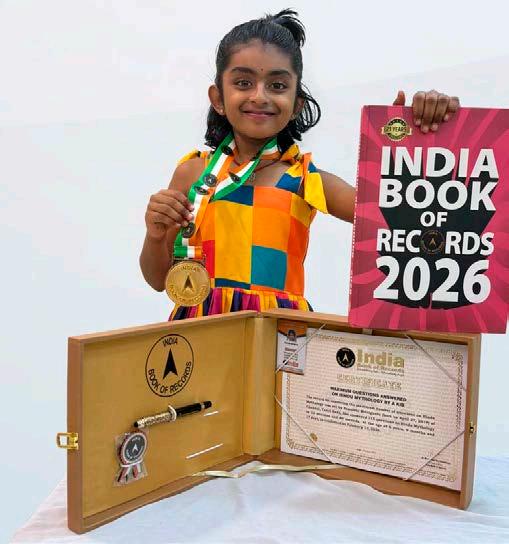


The record for playing Tabla for the longest duration was set by Shreyas Dattatray Bhoir (born on November 19, 2010) of Thane, Maharashtra. He played the Tabla (a pair of drums) non-stop for 6 hours and 6 seconds, at the age of 15 years, 2 months and 30 days, as confirmed on February18,2026.


February 18, 2026. (born on April 2026.
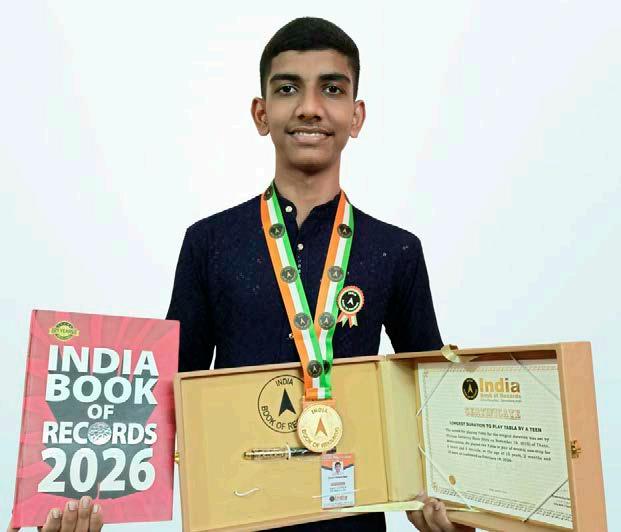













The record for being the youngest to rappel down Kokankada cliff at Harishchandra Fort was set by Prithviraj Shital Dashrath Patekar (born on February 13, 2020) of Pune, Maharashtra. He started rappelling down Kokankada cliff at 1.00 p.m., descended a distance of 1,800 feet, and ended the rappelling at 1.35 p.m. on January 18, 2026 (under the guidance of a trekking guide), at the age of 5 years, 11 months and 5 days, as confirmed on February9,2026.
February 9, 2026.
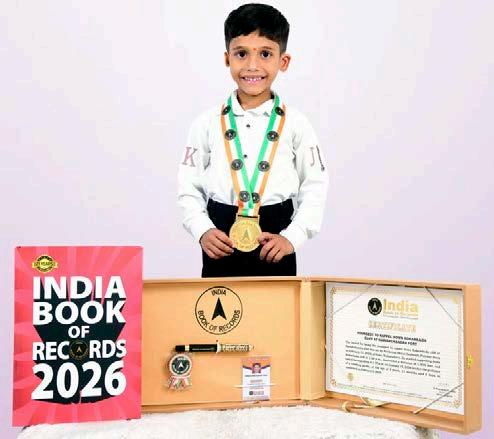





The record for crocheting the maximum number of chain stitches in one minute was set by Gianna Elisabeth Reny (born on April 23, 2014) of Ernakulum, Kerala. She crocheted 105 chain stitches in one minute, using dark orange coloured yarn and a crochet hook, at the age of 11 years, 10 months and 1 day, February24,2026.


February 24, 2026.
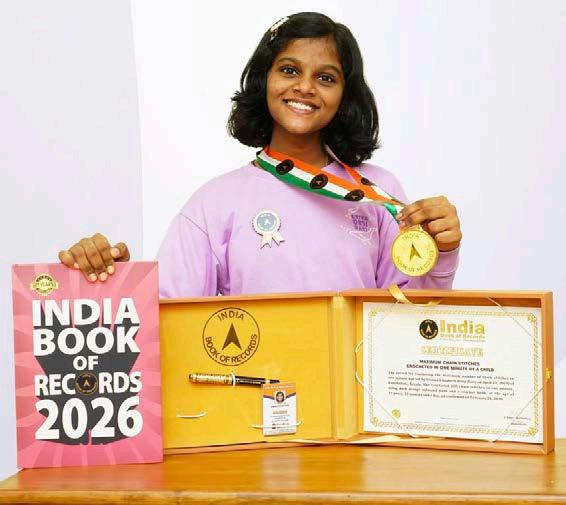







The record for writing the alphabet of the maximum number of languages was set by Sresthangshu Ghosh (born on July 19, 2020) of Darjeeling, West Bengal. He wrote the alphabet of 19 languages, including English, Serbian, Russian, Hebrew, Greek, Ukrainian, Kazakh, Filipino, German and others, in 49 minutes and 26 seconds, using pencil and paper, at the age of 5 years, 7 months and 14 days, as confirmed on March5,2026.

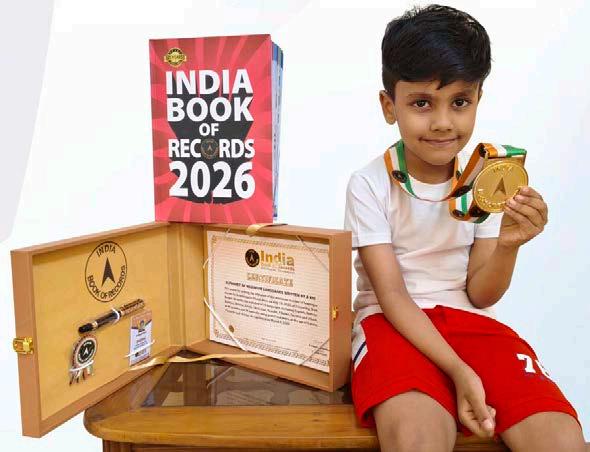
Maximum hula hoop knee spins on one leg performed in one minute by an individual
The record for performing the maximum number of hula hoop knee spins on one leg in one minute was set by Ryana Singh (born on March 3, 2003) of Delhi. She performed 191 anticlockwise hula hoop knee spins in one minute, with simultaneous crisscross hand weaves, while standing on her left leg, as confirmed on February 18, 2026.

The record for recalling the maximum number of multiples of a two-digit number was set by Diwakar Das (born on July 21, 2014) of Purnea, Bihar. He recalled 120 multiples of the twodigit number 24 in 1 minute and 33 seconds, at the age of 11 years, 6 months and 28 days, as confirmed on February18,2026.

2026. 2026.


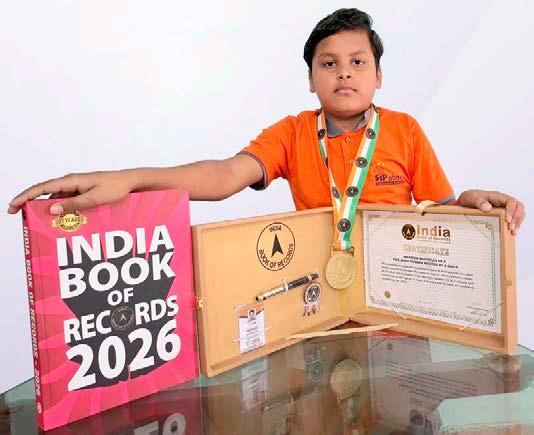




The record for performing the maximum number of hula hoop knee spins on one leg in one minute was set by Ryana Singh (born on March 3, 2003) of Delhi. She performed 191 anticlockwise hula hoop knee spins in one minute, with simultaneous crisscross hand weaves, while standing on her left leg, as confirmed on February18,2026.

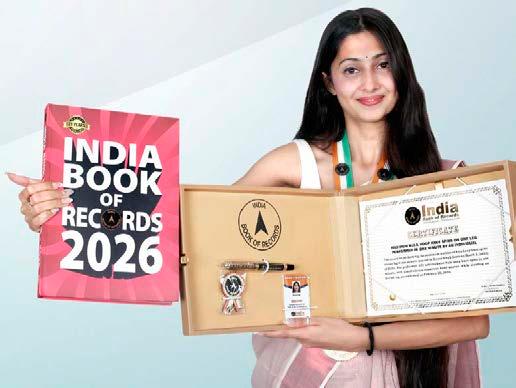










The record for naming the maximum number of snakes blindfolded in 30 seconds was set by A. Pranith Rishi (born on January 21, 2020) of Kancheepuram, Tamil Nadu. He named 30 snakes, blindfolded, in 30 seconds, at the age of 5 years, 11 months and 17 days, as confirmed on January

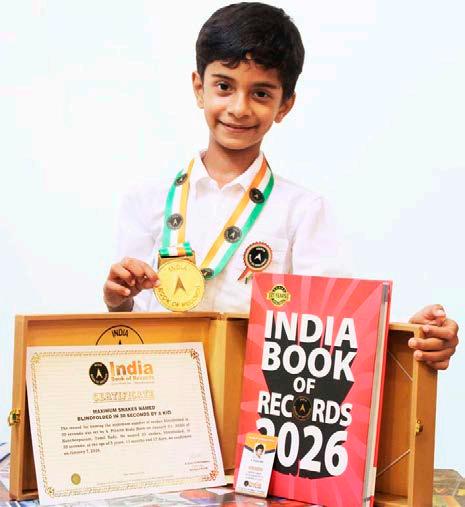


The record for winning the maximum number of gold medals in a single national powerlifting championship was set by Desaraju Venkata Sankara Rao (born on June 17, 1953) of Bhadradri Kothagudem, Telangana. Having undergone bypass heart surgery in 2012, he won four gold medals in the National Masters Classic & Equipped Powerlifting Championship 2025 (under 83 kg category) at Kozhikode (Kerala), held from August 2, 2025 to August 7, 2025 (organised by Powerlifting India), at the age of 72 years, 1 month and 21 days, as confirmed on January23,2026.

The record for orally solving the maximum number of single-digit addition and subtraction sums with multiple terms was set by Aarvi Ajay (born on November 18, 2016) of Mumbai Suburban, Maharashtra. She orally answered 14 single- digit addition and subtraction sums, each consisting of 20 multiple terms, in 7 minutes and 53 seconds, using the Abacus speed calculation technique, at the age of 9 years, 3 months and 13 days, as confirmed on March3,2026. 2026.
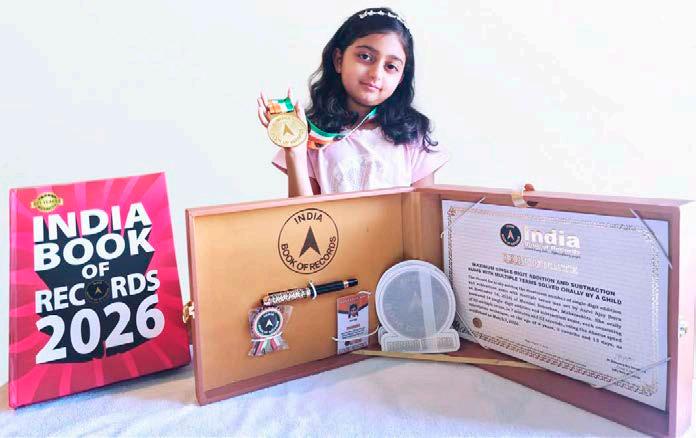













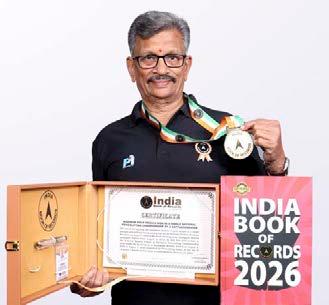


The record for playing the Keytar for the longest duration was set by Rittu P. Fredy (born on October 6, 1999) of Thiruvananthapuram, Kerala. She played the Keytar (a keyboard instrument that is supported by a strap around the neck) non-stop for 30 minutes and 48 seconds, January24,2026. as confirmed on 24, 2026.
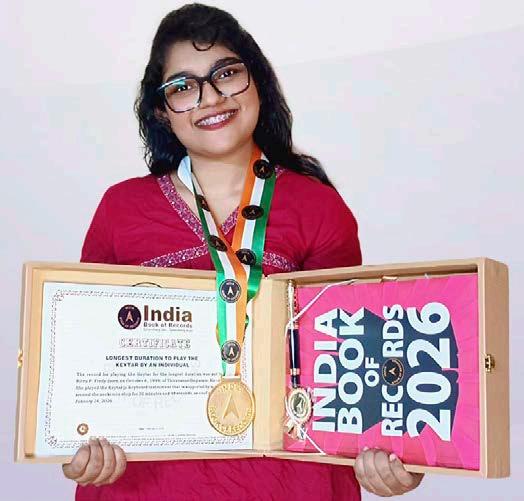









The record for being the youngest to participate in a ceremonial display of Indian flags on the summit of Kedarkantha was set by Hridaya Amit Chavan (born on February 13, 2014) of Mumbai, Maharashtra. She participated in a ceremonial display of 76 Indian flags on the summit of Kedarkantha (at an altitude of 12,500 feet) on January 19, 2026, to commemorate the 76th Indian Republic Day, at the age of 11 years, 11 months and 6 days, as confirmed on February26,2026.






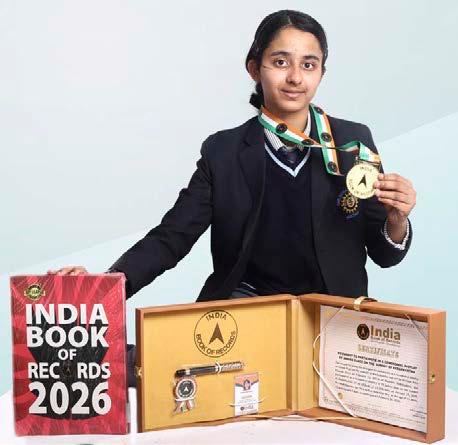







The record for being the youngest to hold the dead hang position on a monkey bar was set by Srisa Simika (born on March 10, 2024) of Sundergarh, Odisha. She held the dead hang position on a monkey bar for 1 minute and 46 seconds, at the age of 2 years and 1 day, as confirmed on March 11, 2026.
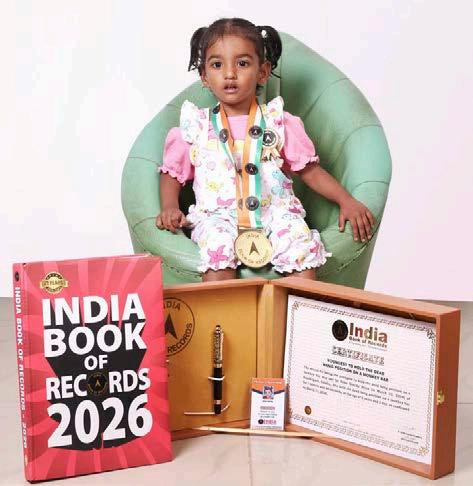












The record for orally answering the maximum number of multiplication sums of single and double digit numbers was set by Isha Polimera (born on July 26, 2023) of Hyderabad, Telangana. He orally answered 92 multiplication sums of single and double digit numbers, in 5 minutes and 37 seconds, on hearing the sums, at the age of 2 years, 7 months and 7 days, as confirmed on March5,2026.

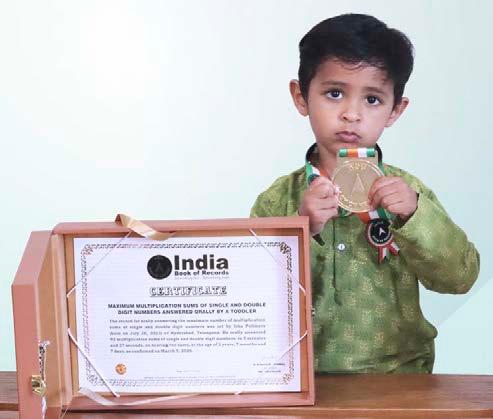
The record for being the youngest to perform Kuchipudi dance on a brass plate while balancing a pot on her head was set by Sayoojya Sreejith (born on October 26, 2018) of Thrissur, Kerala. She performed Kuchipudi dance by executing Panchajathi Jathis (in traditional attire) on a brass plate for 2 minutes, while balancing a pot on her head, at the age of 7 years, 4 months and 9 days, as confirmed on March 7, 2026.




The record for writing the alphabetical letters of the maximum number of languages in mirror writing was set by Sresthangshu Ghosh (born on July 19, 2020) of Darjeeling, West Bengal. He wrote the alphabetical letters of 15 languages in mirror including Serbian, Russian, Ukrainian, Kazakh, Filipino, German and others in 38 minutes and 43 seconds, at the age of 5 years, 7 months and 17 days, as confirmed on March5,2026.



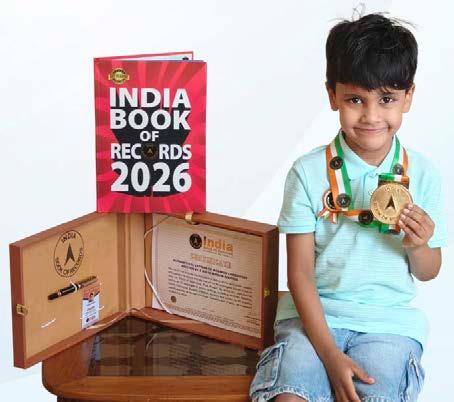






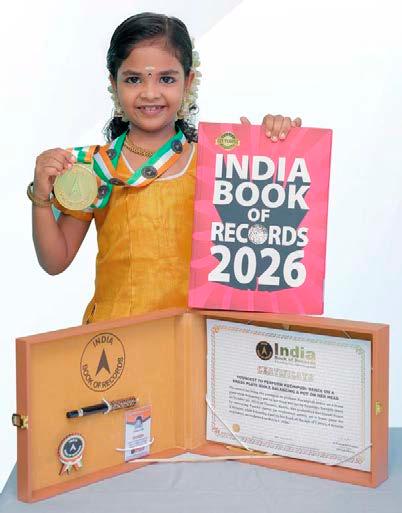






The record for identifying the maximum types of dental equipment was set by Kiyansh Juneja (born on July 30, 2016) of Karnal, Haryana. He identified 100 types of dental equipment in 3 minutes and 6 seconds, by pointing to the associated surgical to their names, at the age of 9 years, 5 months and 24 days, as confirmed on January23,2026.

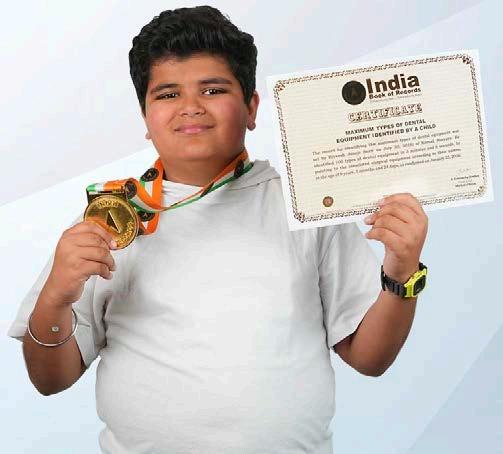













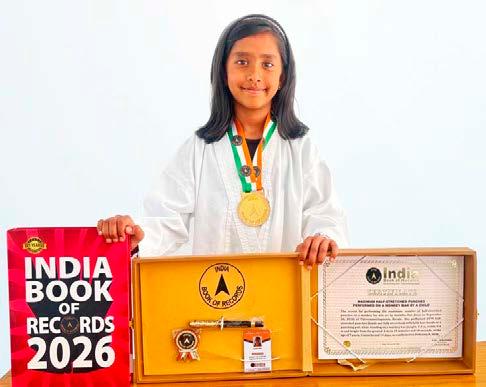



The record for performing the maximum number of halfstretched punches on a monkey bar was set by Anaisha Nair (born on September 26, 2018) of Thiruvananthapuram, Kerala. She performed 2375 half-stretched punches (hands not fully stretched) with both bare hands on a punching pad, while standing on a monkey bar (length: 4.5 m, width: 0.6 m and height from the ground: 2 m) in 19 minutes and 16 seconds, at the age of 7 years, 4 months and 14 days, as confirmed on February9,2026. 0.6 m and height from minutes and 16 seconds, 9, 2026.


The record for conducting the longest continuous multi-trade skill demonstration programme was set by Krishi Udyog Mool Shikshan Sanstha (Karhati) Baramati of Pune, Maharashtra.




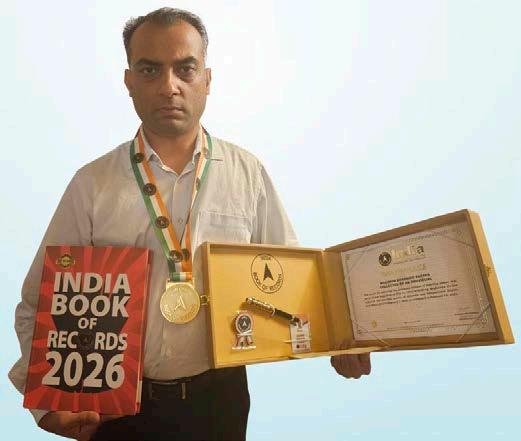

The record for collecting the maximum number of boarding passes was set by Gaurav Bajaj (born on May 11, 1981) of Shillong, Meghalaya. He has collected 394 boarding passes, of domestic and international flights, from May 9, 2002 to February 1, 2026, as confirmed on February12,2026. February 12, 2026.









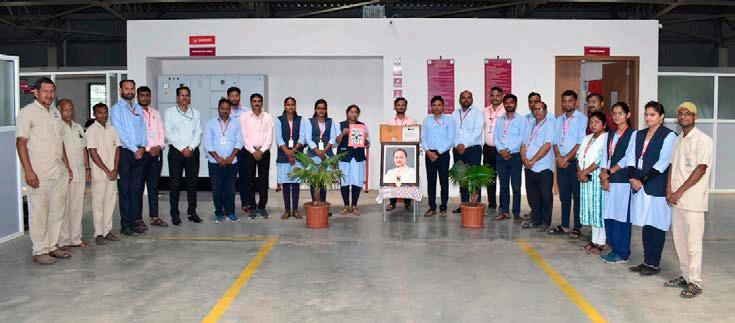
The longest multi-trade skill demonstration programme, consisting of 84 students, 14 staff members and 11 supporting members, was conducted non-stop for 30 hours (1 day and 6 hours) from 8 a.m. on February 27, 2026 to 2 p.m. on February28,2026. The event was organised as a tribute to the leadership and inspiration of Honourable late Ajit Pawar (President of Krishi Udyog Mool Shikshan Sanstha and Deputy Chief Minister of Maharashtra), as confirmed on March5,2026.




The record for swimming in a river for the longest duration with tied hands and legs was set by Pankaj Jain (born on November 8, 1968) of Kanpur, Uttar Pradesh. He swam a distance of 12.55 km with 1 hour, 56 minutes and 35 seconds (as per the strava app details) in the river Ganga at Kanpur, as confirmed on February13,2026. tied hands and legs in 1 hour, 56 minutes and river Ganga at Kanpur, February 13, 2026.



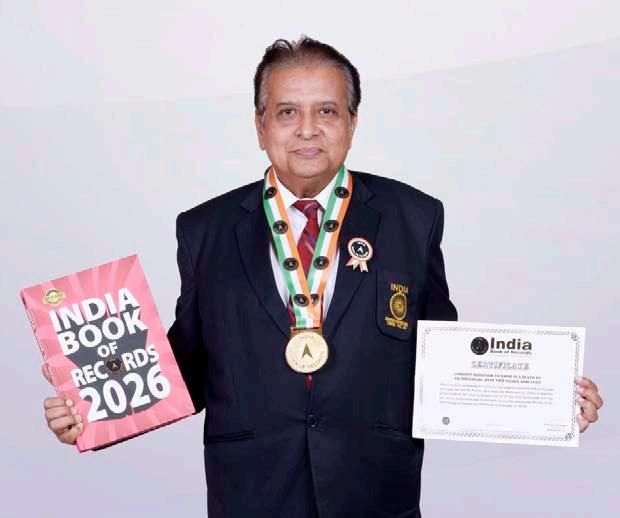











The record for performing the maximum number of anticlockwise hula hoop spins around the waist while balancing on a pillar was set by A. Ruhana (born on June 3, 2020) of Coimbatore, Tamil Nadu. She performed 536 anti-clockwise hula hoop spins around her waist in 4 minutes and 58 seconds while balancing on a pillar (measuring 11.02 inches x 14.17 inches x 25.55 inches) on the terrace of her house, at the age of 5 years, 8 months and 9 days, as confirmed on February12,2026.
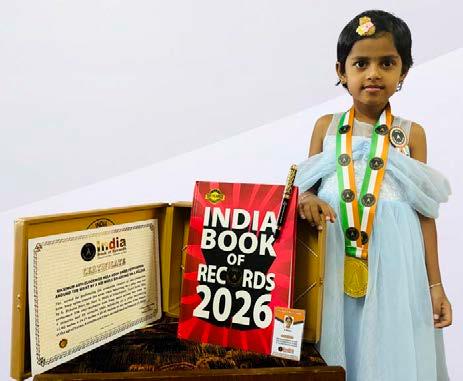






minute, 7 seconds and 72






The record for being the fastest to identify individual outline shapes of all the states of USA was set by Ridwin Vilas Chaher (born on August 28, 2021) of Raigad, Maharashtra (presently residing in Wisconsin, USA). He identified the individual outline shapes and recalled the names of all 50 states of the United States of America in 1 minute, 7 seconds and 72 milliseconds by viewing the individual foam shapes, at the age of 4 years, 4 months and 19 days, as confirmed on January16,2026.
January 16, 2026.
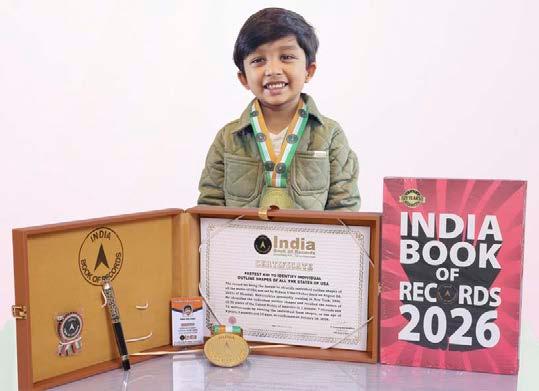





The record for cutting the maximum number of blouse pieces, in different patterns, was set by Nisha Rajput (born on July 10, 1987) of New Delhi. She cut 57 blouse pieces of different patterns, including frill, halter, corset and princess cut, among others, in 15 minutes and 16 milliseconds, as confirmed on January22,2026. January 22, 2026.



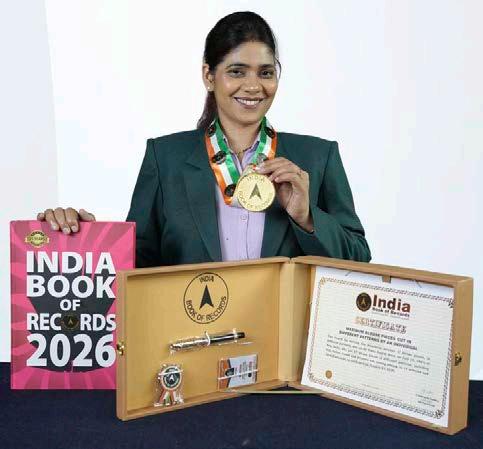



The record for writing Hindi mirrored texts for the maximum number of years was set by Pallavi Pare Chouksey (born on May 21, 1984) of Narmadapuram, Madhya Pradesh. She has written Hindi mirrored texts of devotional scriptures, comprising Shri Ramcharitmanas, Shrimad Bhagavad Gita and the Bible (New Testament), along with other miscellaneous topics, for 25 years from 2000 to date, and continues to work on other similar projects, verified at the office of India Book of Records, Faridabad, as confirmed on March24,2026.











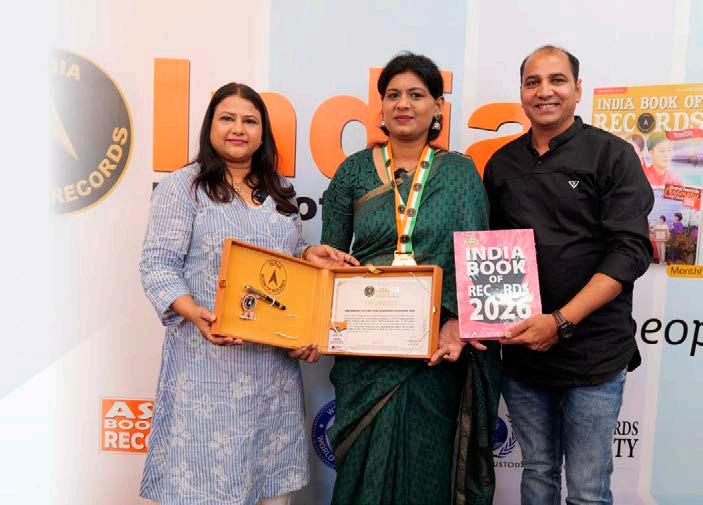









yoga pose (measuring 4.5 seconds, at 27 days, on
The record for performing the Raja Bhujangasana yoga pose on a monkey bar for the longest duration was set by Amyra Sharma (born on June 11, 2018) of Panipat, Haryana. She performed the Raja Bhujangasana yoga pose (King Cobra pose) on a monkey bar m in length, 0.6 m in width and 2 m in height from the ground) for 15 minutes and 28 the age of 7 years, 7 months and as confirmed February 7, 2026.

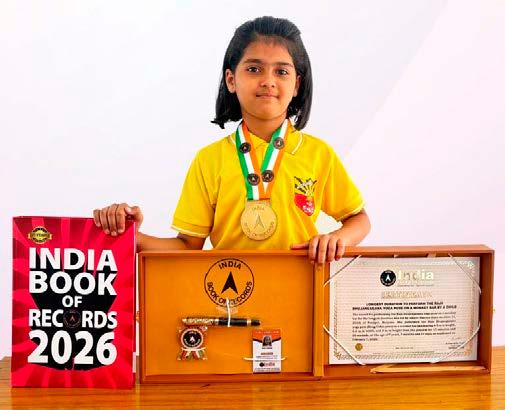

The record for reciting the names of the maximum number of prehistoric animals was set by Kridhay Arya N. (born on April 25, 2022) of Bengaluru, Karnataka. He recited the names of 32 prehistoric animals in 41 seconds, at the age of 3 years, 9 months and 2 days, as confirmed on January 27, 2026.








The record for performing the maximum number of forearm twists with dumbbells in one minute was set by Abhi Ram Kanaparthi (born on December 7, 2006) of Tirupati, Andhra Pradesh. He performed 170 forearm twists simultaneously with both arms (180 degrees each) in one minute, holding a 4 kg dumbbell in each hand, at the age of 19 years, 2 months and 7 days, as confirmed on February14,2026.














The record for being the fastest to recite the names of all the Jain tirthankaras was set by Samvida Jain (born on March 25, 2020) of Surat, Gujarat. She recited the names of all 24 Jain tirthankaras in 30 seconds, at the age of 5 years, 11 months and 16 days, as confirmed on March10,2026.







Kerala. He recalled the in 1 minute and 21 days, as confirmed on February 18, 2026. 17, 2026.


The record for being the fastest to recall the names of inventors was set by Adith Amal Krishna (born on March 2, 2022) of Thiruvananthapuram, Kerala. He recalled the names of 50 inventors seconds, by hearing the inventions, at the age of 3 years, 11 months and 16 February18,2026.




The record for making the smallest model of a road roller using cardboard was set by Muhammed Alfin S. (born on March 27, 2011) of Thiruvananthapuram, Kerala. He made the smallest model of a road roller (measuring 1.5 cm x 1.4 cm), using cardboard, waste material and colours, at the age of 14 years, 10 months and 28 days, as confirmed on February24,2026.
The record for identifying the maximum number of countries’ outline maps in one minute was set by Aadhilakshmi Sanesh (born on March 14, 2019) of Kannur, Kerala. She identified the outline maps and recalled the names of 117 countries in one minute by viewing the images of outline maps on a laptop screen, at the age of 6 years, 11 months and 3 days, as confirmed on February February 24, 2026.







A. Nadu. He wrote the name ‘Nehru’ 889 times, in Jawaharlal



The record for writing the name ‘Nehru’ for the maximum number of times to make a typographic portrait of Pandit Jawaharlal Nehru was set by Sanjay A. (born on March 30, 2012) of Kancheepuram, Tamil Nadu. He wrote the name ‘Nehru’ 889 times, in English, to make a typographic portrait of Pandit Jawaharlal Nehru, on an A4 size sheet, using a black pen, at the age of 13 years, 9 months and 28 days, as confirmed on January 27, 2026.


















The record for performing the maximum number of anticlockwise hula hoop spins around the waist was set by Hemitha M. (born on October 11, 2020) of Bengaluru Rural, Karnataka. She performed 9,200 anticlockwise hula hoop spins around the waist in 1 hour, 32 minutes and 35 seconds, at the age of 5 years, 4 months and 6 days, as confirmed on 2026.

The record for clearing the maximum number of NISM certification examinations was set by Batchu Prudhvi (born on May 6, 2002) of Guntur, Andhra Pradesh. He cleared 11 certification examinations conducted by the National Institute of Securities Markets (NISM) from December 2025 to March 2026, as confirmed on March13,2026.



The record for identifying and naming the outlined flags of the maximum number of countries with their colours in alphabetical order was set by Viswak (born on October 18, 2019) of Vellore, Tamil Nadu. He identified the outlined flags and recalled the names of 173 countries with their colours, alphabetically, in 20 minutes and 30 seconds by viewing the images of outlined flags on sheets of paper, at the age of 6 years, 3 months and 2 days, as confirmed on January20,2026.







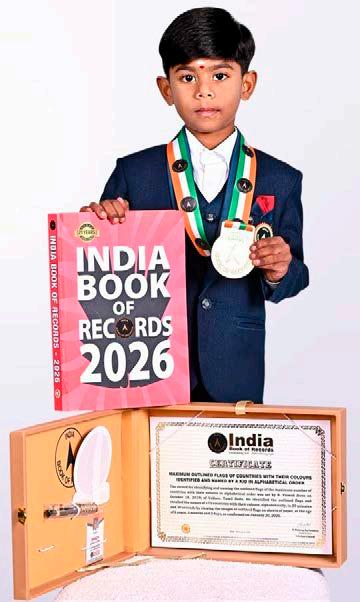

February 17,






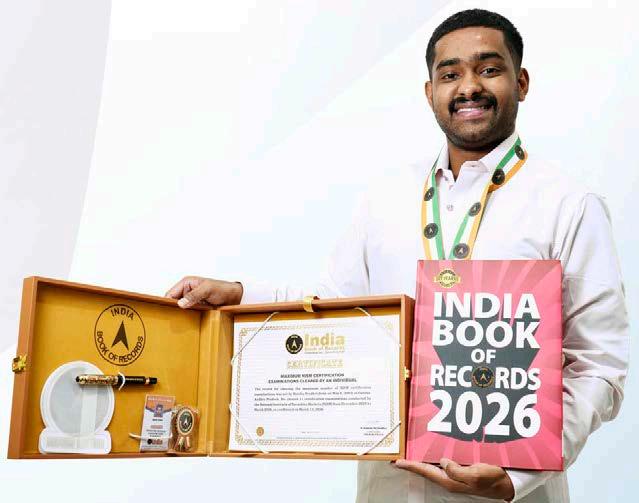







The record for qualifying the maximum number of UGC NET exams in Commerce was set by Mahendra Kumar Sahu (born on May 23, 1995) of Kalahandi, Odisha. He qualified for the UGC NET exam, in between November 2025, as confirmed on (born on October

Commerce, five times 2017 and December February 18, 2026.
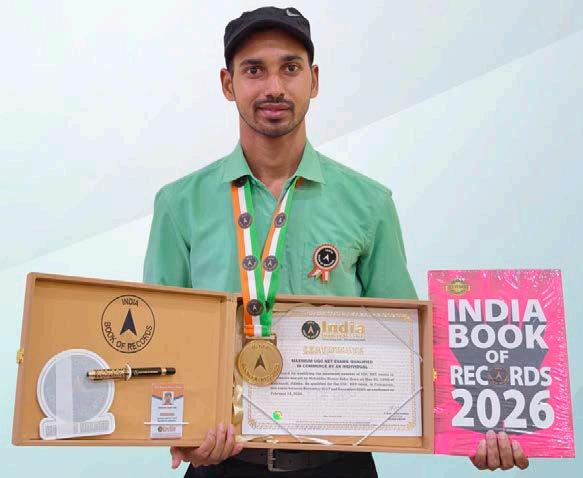



The record for recalling the maximum number of Physics formulae was set by Samara Sinha (born on March 10, 2015) of North 24 Parganas, West Bengal. She recalled 95 Physics formulae of Mechanics, Circular Motion, Gravitation, Oscillations and Waves, Heat and Thermodynamics, Optics, Electricity and Magnetism in 9 minutes and 16 seconds, at the age of 10 years, 9 months and 29 days, as confirmed on January8,2026.




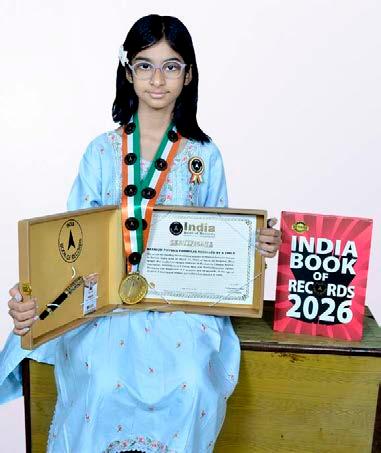


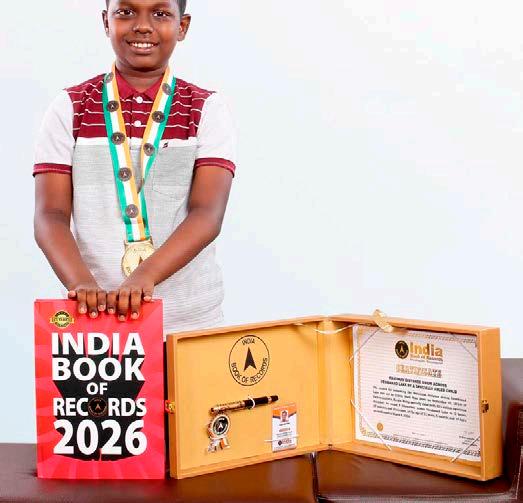
The record for being the fastest to recite the names of the books of the Bible was set by Praharsha Kiran (born on June 1, 2011) of MedchalMalkajgiri, Telangana. He recited the names of 66 books of the Bible (39 from the Old Testament and 27 from the New Testament) in 18.87 seconds, at the age of 14 years, 8 months and 19 days, as confirmed on February20,2026.
Neela





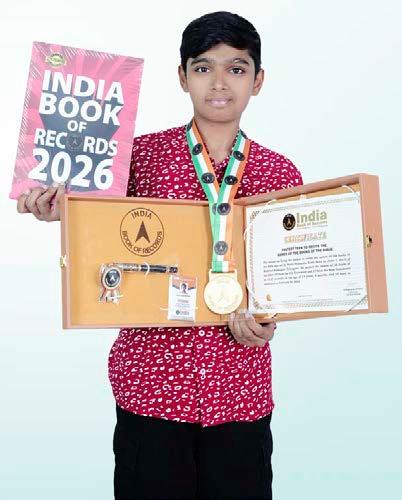

The record for swimming the maximum distance across Vembanad Lake was set by Calvin Mark Binu (born on September 22, 2014) of Pathanamthitta, Kerala. Being specially abled (with 80% autism spectrum disorder), he swam 5 kilometres across Vembanad Lake in 2 hours, 27 minutes and 10 seconds, at the age of 11 years, 5 months and 15 days, as confirmed on March9,2026.



The record for being the fastest couple to drive through the world’s longest road tunnel was set by A.M. Ramakrishnan (born on May 18, 1959) of Palakkad, Kerala, along with his wife. The couple entered the Laerdal Tunnel in Norway from the Aurland side at 12.36 p.m. and exited on the Bergen side at 1.02 p.m. on August 23, 2025, covering the tunnel’s total length of 24.51 km in 26 minutes (at an average speed of approximately 57.6 km/h), as confirmed on December10,2025.




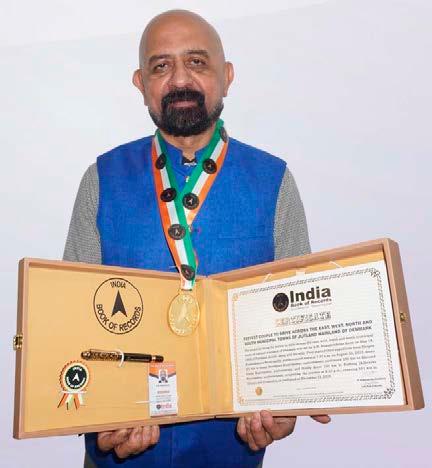


The record for collecting the maximum sets of blue and red pens was set by Hrusikesh Nayak (born on June 7, 1987) of Nayagarh, Odisha. He collected 185 sets of blue and red pens (a total number of 370 pens) of different companies, including Camlin Ball Pen, Cello Zero Pressure, Classmate Octane Gel 0.5 and others, as confirmed on January22,2026.







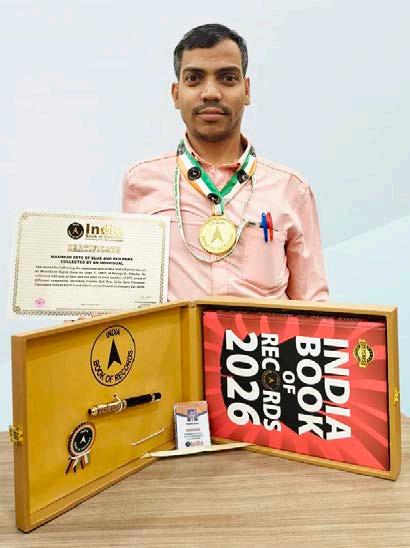




2025. The nail art






The record for performing nail art with extensions on female clients for the longest duration was set by Bhumika Ghiya (born on September 6, 1992) of Vadodara, Gujarat. She performed nail art with extensions on 33 female clients for 11 hours on December8,2025. The nail art consisted of nail cutting and shaping, nail buffing, application of nail extensions and nail paint, as confirmed on February14,2026.
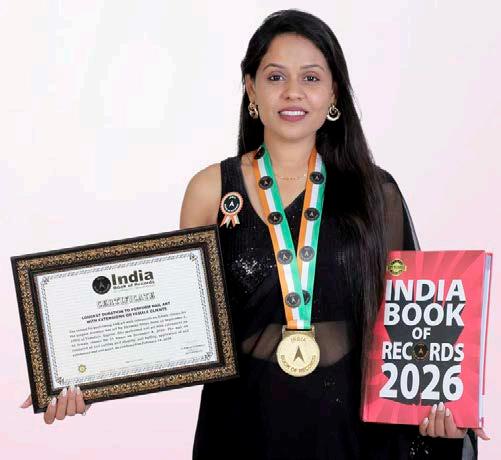


The record for uploading the maximum number of Basavanna Vachanas songs on YouTube was set by Fakkirgouda M. Hadimani (born on July 25, 1993) of Belagavi, Karnataka. He uploaded 409 Basavanna Vachanas songs in Kannada, on his YouTube channel ‘GoudrusarkarAiBeats’, composed using the Suno AI (Artificial Intelligence) platform, from December 28, 2025 to January 21, 2026, as confirmed on February18,2026.





The record for performing the highest altitude Tandem Skydive was set by P. Makeshwar (born on September 25, 1981) of Coimbatore, Tamil Nadu. Being a certified ‘Tandem Master’, he performed a tandem skydive (carrying a passenger) from the highest altitude of 27,460 feet from an aircraft and executed a safe landing on mountainous terrain, at Puga (Ladakh) on October28,2025.This successful attempt establishes a key milestone in the skydiving and aviation adventure history, as confirmed on February6,2026.







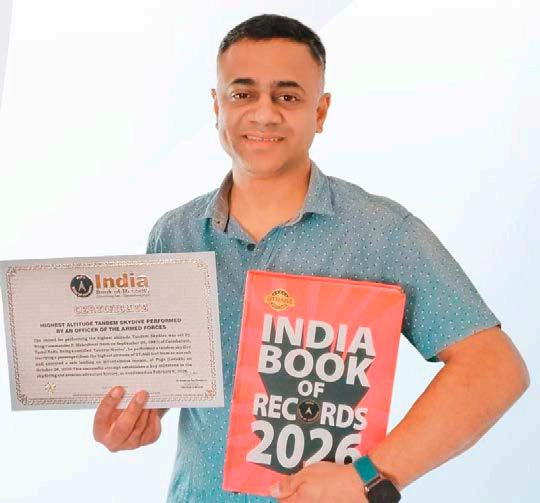






The record for writing the smallest letters of the National Anthem on a postage stamp was set by Vinayak Kashiram Dhande (born on June 2, 1969) of Akola, Maharashtra. He wrote the smallest letters (each measuring 1 mm in height) of the complete Anthem on the reverse side of postage stamp (measuring x 2.5 cm) in 4 minutes 50 seconds, using a black pen, as confirmed on February28,2026.
He wrote the smallest letters (each measuring

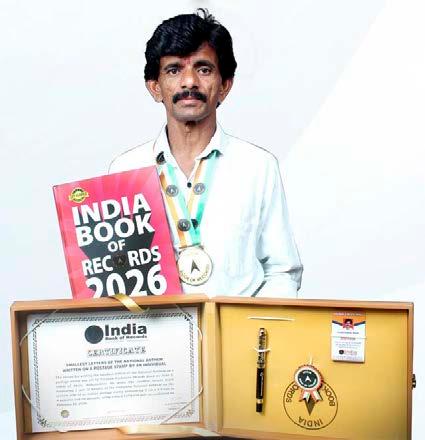

The record for being the fastest to identify and name 50 gemstones with their associated countries was set by Muhammad Almir V.A. (born on August 15, 2017) of Ernakulam, Kerala. He identified and named 50 gemstones with their associated countries in 58 seconds and 16 milliseconds, at the age of 8 years, 7 months and 9 days, as confirmed on March24,2026.



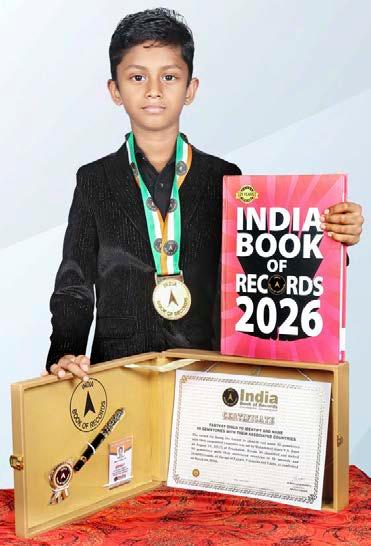





Ansh




The record for sitting on a stool for the longest duration was set by (born on October 2, 2005) of Bhatinda, Punjab. He sat on a stool in a room, continuously, for 4 hours,15 minutes and 23 seconds, as confirmed on January9,2026.
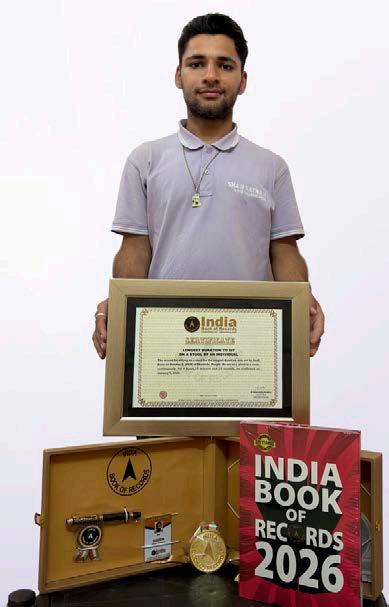




A to Z, blindfolded, on









The record for being the fastest to draw calligraphy images of letters from A to Z blindfolded was set by Kunisha Kumawat (born on December 1, 2012) of Udaipur, Rajasthan. She drew 26 calligraphy images of letters from A to Z, blindfolded, on different sheets of paper, in 21 minutes and 13 seconds, using sketch pens, at the age of 13 years, 1 month and 27 days, as confirmed on January28,2026.


January 28,







She recited all 247 letters of the

The record for being the fastest to recall the capitals of 50 countries was set by Raghav Panchal (born on August 21, 2023) of Kota, Rajasthan. He recalled the capitals of 50 countries in 2 minutes, 22 seconds and 96 milliseconds, at the age of 2 years, 6 months and 13 days, as confirmed on March6,2026.



December 27,




The record for being the fastest to recite all letters of the Tamil alphabet was set by Inara D. (born on April 10, 2013) of Madurai, Tamil Nadu. She recited all 247 letters of the Tamil alphabet in 24.45 seconds, at the age of 12 years, 8 months and 17 days, as confirmed on 2025.





names of 84 animals




The record for recalling the binomial scientific names of the maximum number of animals and reptiles was set by Mahaasri A. (born on April 22, 2013) of Coimbatore, Tamil Nadu. She recalled names of 84 animals and reptiles in 1 minute, 28 seconds and age of 12 years, 8 months and 22 days, as confirmed on (born on December 1, 2012) of Udaipur, Rajasthan.


January 13, 2026.


The record for performing the maximum number of burpees in one minute was set by Hanaan Muhammed P. A. (born on June 7, 2013) of Ernakulam, Kerala. He performed 37 burpees in one minute, at the age of 12 years, 7 months and 20 days, as confirmed on January 27, 2026.

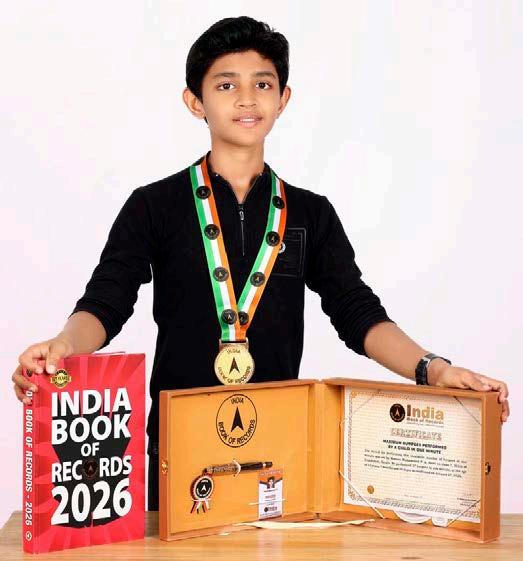





The record for being the fastest to crochet a coin purse was set by P.A. Varnika (born on February 19, 2014) of Kallakurichi, Tamil Nadu. She crocheted a coin purse (measuring 11 cm x 9 cm) in 27 minutes, 7 seconds and 91 milliseconds, using a crochet needle and coloured wool, at the age of 11 years, 11 months and 30 days, as confirmed on February18,2026.


18, 2026.
The record for playing the maximum number of badminton rally shots was set by (born on July 30, 2020) of Bengaluru, Karnataka. He played 117 badminton rally shots (across the net with an opponent) in 5 minutes and 44 seconds, at the age of 5 years, 7 months and 18 days, as confirmed on March 17, 2026.



The record for being the fastest to recite one hundred computer abbreviations while performing hula hoop spins, simultaneously, was set by Hamsika Felicia (born on January 13, 2017) of Sivaganga, Tamil Nadu. She recited 100 computer abbreviations while performing hula hoop spins, simultaneously, in 7 minutes and 40 seconds, at the age of 9 years and 1 day, as confirmed on January14,2026.

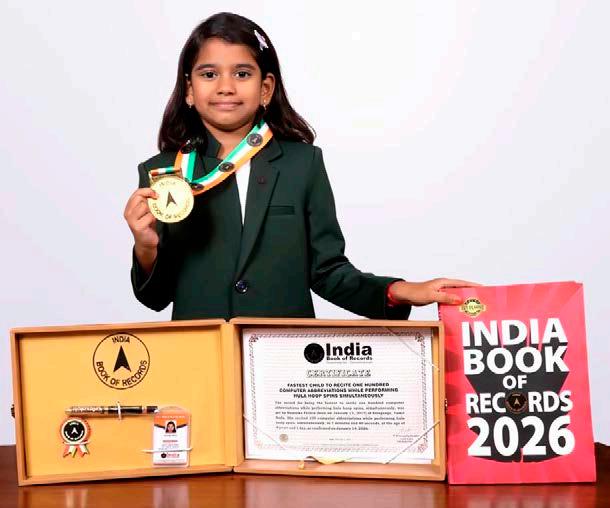


January 14,


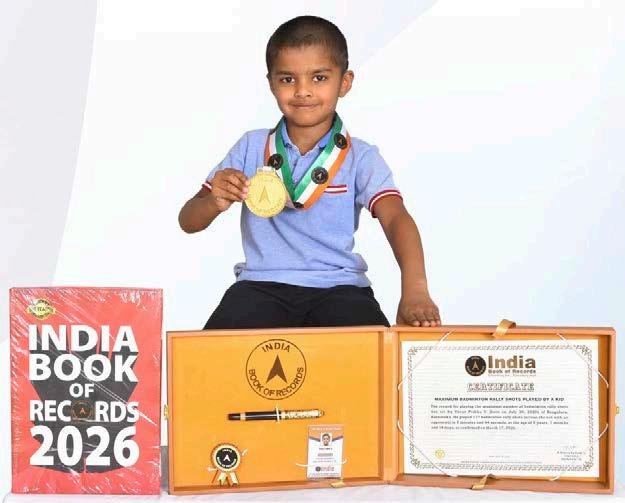






The record for surgically removing the largest spinal disc was set by Dr. Saraj Kumar Singh (born on February 25, 1985) of Patna, Bihar. As a surgeon, he operated on a 55-year-old male patient and surgically removed the largest spinal disc (measuring 8 cm x 3 cm x 1 cm) at AIIMS (Patna) on September 25, 2023, as confirmed on February16,2026.
16, 2026.






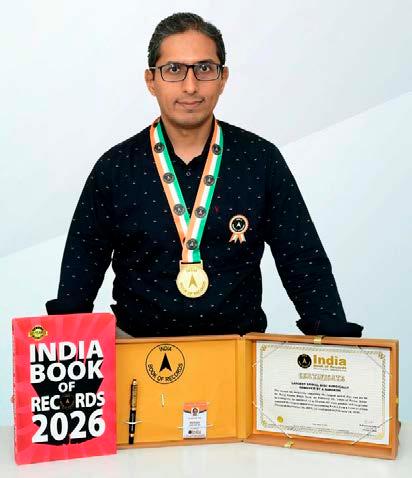
















P. Adhiyan (born on September 18, 2020) of Tiruvannamalai, Tamil Nadu, is titled as ‘IBR Achiever’ for reciting 11 multiplication tables from 1 to 11 in 2 minutes, at the age of 5 years and 5 months, as confirmed on March 2, 2026.
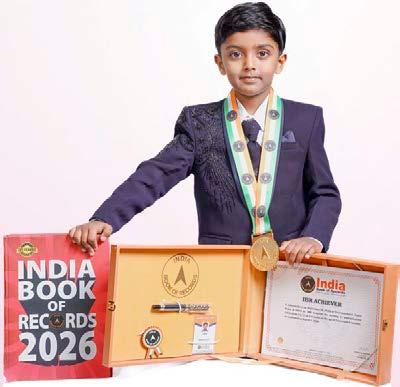










Kritin R. (born on August 2, 2024) of Bengaluru, Karnataka is titled as ‘IBR Achiever’ for identifying and naming 24 logos of national and international brands of cars, 18 animals, 12 titles of nursery rhymes, 11 fruits, flags of 11 countries and 11 parts of the body, at the age of 1 year and 7 months, as confirmed on March 5, 2026.





Vivan Surya (born on April 13, 2016) of Bengaluru, Karnataka, is titled as ‘IBR Achiever’ for reciting the entire ‘Vishnu Sahasranamam’ (in Sanskrit) in 12 minutes and 38 seconds, at the age of 9 years and 10 months, as confirmed on March 6, 2026.


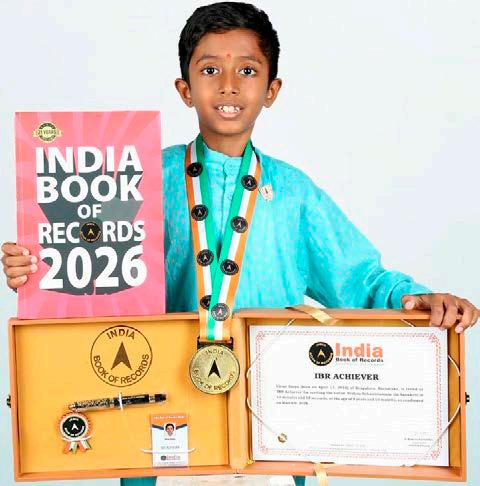


Sreemayi Subeesh (born on July 19, 2024) of Kannur, Kerala, is titled as ‘IBR Achiever’ for identifying 20 animals, 11 birds, 11 vehicles, 10 fruits, 6 vegetables, 9 parts of the body, 8 colours, 3 actions and 29 miscellaneous items; mimicking the sounds of 5 animals and 3 birds; and recalling 12 greeting words, at the age of 1 year and 7 months, as confirmed on


year and 7 months, 1 to 11 in 2 minutes, at months, as confirmed and 38 seconds, at the March 3, 2026.









Purvagya Parag Chaudhari (born on February 8, 2024) of Chandrapur, Maharashtra, is titled as ‘IBR Achiever’ for identifying 7 fruits, 14 animals, 10 colours and19 parts of the body; reciting 5 English nursery rhymes and 26 letters of the English alphabet; counting numbers from 1 to 10 in English and 1 to 18 in Marathi, at the age of 2 years, as confirmed on March 5, 2026. English alphabet; counting numbers from 1 to 10 March 5, 2026.







Rishit Drolia (born on October 23, 2022) of Bhilwara, Rajasthan, is titled as ‘IBR Achiever’ for identifying 43 different types of vehicles of land, water and air transport in 1 minute and 56 seconds by viewing the pictures on a mobile screen; and recalling 11 national symbols in 1 minute and 11 seconds, at the age of 3 years and 4 months, as confirmed on March 3, 2026.









Mohammed Arshad (born on August 1, 2018) of Warangal, Telangana, is titled as ‘IBR Achiever’ for reciting the names of 180 (UN recognised) countries, along with the capitals and currencies, in 5 minutes and 26 seconds, at the age of 7 years and 7 months, as confirmed on March 11, 2026.


Yogna Saira (born on March 25, 2022) of Surat, Gujarat, is titled as ‘IBR Achiever’ for identifying the flags and recalling the names of all 195 (UN recognised) countries in 6 minutes and 38 seconds by viewing the images of flags on a chart sheet, at the age of 3 years and 11 months, as confirmed on March 2, 2026.




Lyon Matis (born on May 17, 2024) of Puducherry, is titled as ‘IBR Achiever’ for lifting and holding 2 dumbbells (weighing 2 kg each) in both hands for 7 seconds, at the age of 1 year and 9 months, as confirmed on March 11, 2026.







26 household items, at

Emir Ezdan K. (born on May 17, 2024) of Palakkad, Kerala, is titled as ‘IBR Achiever’ for identifying 5 vegetables, 6 apparels, 7 kitchen items, 9 daily use items, 9 vehicles, 10 fruits, 12 parts of the body, 12 food items, 16 creatures, 4 birds and 26 household items, at the age of 1 year and 9 months, as confirmed on March 5, 2026.







Nihara Nimish Shah (born on November 18, 2019) of Mumbai Suburban, Maharashtra, is titled as ‘IBR Achiever’ for delivering a speech at TEDx Talks for a duration of 11 minutes and 40 seconds on the topic ‘Innovative Parenting in Future AI Driven World’ (at NES International School, Mumbai) on January 17, 2026, at the age of 6 years and 2 months, as confirmed on



March 7, 2026.








Sports Club, at Chinnaswamy
Kumaran Sampath (born on February 3, 1973) of Bengaluru, Karnataka, is titled as ‘IBR Achiever’ for taking 4 wickets on 4 consecutive balls, all clean bowled, in the quarter final match of the Hindu Trophy, playing against State Bank of Mysore team, representing BEL Sports Club, at Chinnaswamy Stadium (Bengaluru) in July 1998, as confirmed on March 3, 2026.



Eshan A.R. (born on November 22, 2021) of Pathanamthitta, Kerala, is titled as ‘IBR Achiever’ for identifying the pictures on 94 flashcards and recalling the names of animals, vegetables, vehicles, fruits, parts of the body, food items and miscellaneous objects in 5 minutes, at the age of 4 years and 3 months, as confirmed on March 10, 2026.








Karn Mithunbhai Parmar (born on July 5, 2024) of Surat, Gujarat, is titled as ‘IBR Achiever’ for reciting letters of the English alphabet; identifying 20 wild animals, 10 pet animals, 20 birds, 18 fruits, 20 vegetables, 15 vehicles and 18 shapes, at the age of 1 year and 8 months, as confirmed on March 14, 2026.






Nyha Yashlyn (born on May 27, 2021) of Kozhikode, Kerala, is titled as ‘IBR Achiever’ for identifying 12 parts of the body; reciting days of the week, months in a year (in English and Malayalam), 8 planets, one celestial body and 7 colours of the rainbow; and answering 10 G.K. questions related to India, at the age of 4 years and 9 months, as confirmed on March 3, 2026.


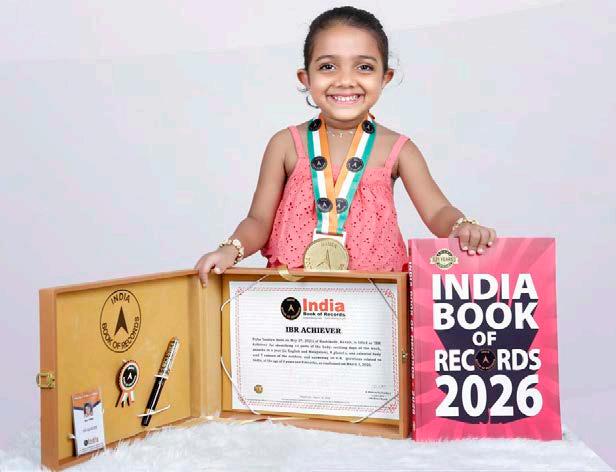




Ditya Mahtani (born on December 12, 2022) of Kolkata, West Bengal, is titled as ‘IBR Achiever’ for identifying and naming 4 famous personalities, 4 musical instruments, 5 comic characters, 6 vehicles, 7 wonders of the world, 8 planets, 12 shapes, 12 colours, 16 fruits, 19 parts of the body, 36 creatures and 38 miscellaneous items; answering 15 G.K. questions; reciting 2 mantras; recalling 12 elements of the periodic table and 8 national symbols, at the age of 3 years and 2 months, as confirmed on March 9, 2026.





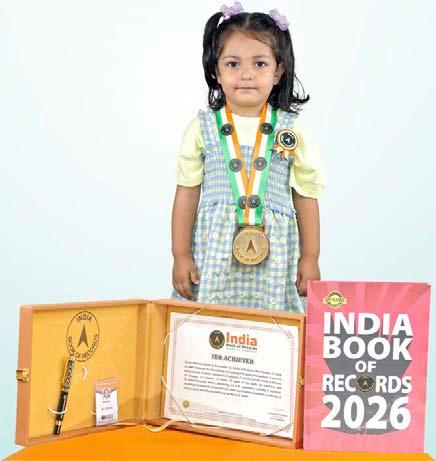



Krisha Singhal (born on April 19, 2022) of Jaipur, Rajasthan, is titled as ‘IBR Achiever’ for recalling the capitals of 50 countries in 1 minute and 8 seconds, at the age of 3 years and 10 months, as confirmed on March 7, 2026.
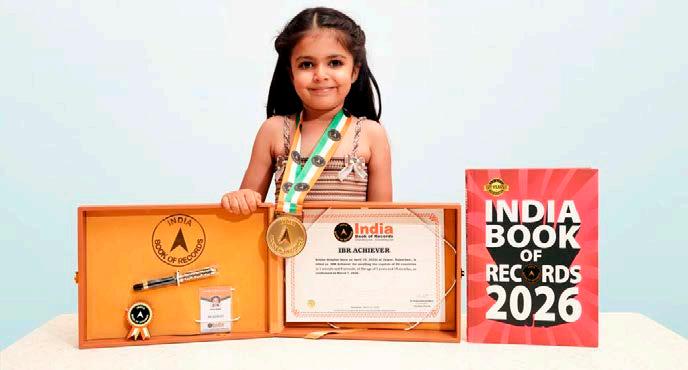






12 elements of the months, as confirmed on
Omysha Dhami (born on May 28, 2022) of Dehradun, Uttarakhand, is titled as ‘IBR Achiever’ for identifying and naming 6 shapes, 20 parts of the body, 7 cartoon characters and 20 animals; reciting 5 sense organs, 8 planets and 6 English nursery rhymes; counting numbers from 1 to 30; and writing letters of the English alphabet from A to Z, at the age of 3 years and 9 March 16, 2026.

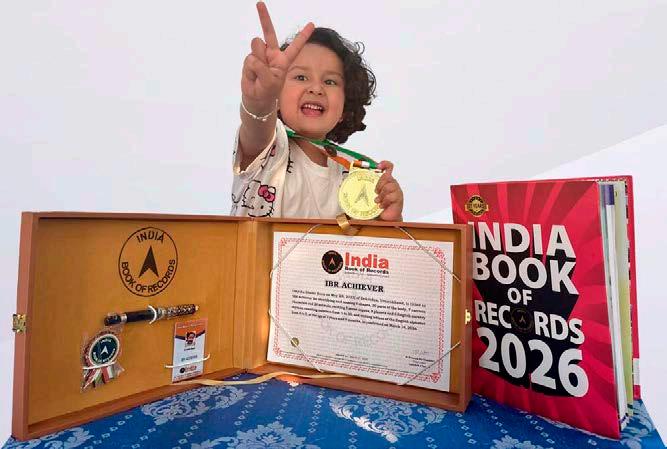





Amyra Mahreen (born on May 26, 2023) of Paschim Bardhaman, West Bengal, is titled as ‘IBR Achiever’ for identifying and naming 12 insects, 16 fruits, 16 vegetables, 16 birds, 16 flowers, 16 colours, 16 vehicles and 28 animals; recalling months in a year, days of the week and 26 letters of the English alphabet with associated words; singing the National Anthem; counting numbers from 1 to 20; and reciting 16 English nursery rhymes, at the age of 2 years and 9 months, as confirmed on March 11, 2026.





numbers from 1 to 20;








Aashvi De (born on December 8, 2023) of South Tripura, Tripura, is titled as ‘IBR Achiever’ for identifying 20 animals, 20 fruits, 20 vegetables, 10 colours, 12 parts of the body, 20 actions, 12 emotions and flags of 20 countries; recalling alphabetical words from A to Z, numbers from 1 to 10 and days of the week; and mimicking the sounds of 9 animals, at the age of 2 years and 3 months, March 9, 2026. as confirmed on



Dhairya Gupta (born on September 9, 2019) of Delhi, is titled as ‘IBR Achiever’ for identifying and naming the flags of 107 countries in 3 minutes and 24 seconds by viewing the pictures of flags on flashcards, at the age of 6 years and 6 months, as confirmed on March 14, 2026.







Jarpula Dhevansh (born on April 29, 2023) of Mahabubnagar, Telangana, is titled as ‘IBR Achiever’ for identifying and naming 12 vegetables, 12 miscellaneous objects, 10 animals, 10 fruits and 7 Wonders of the World, at the age of 2 years and 10 months, as confirmed on March 7, 2026.





Iksh Gandhe (born on November 7, 2021) of Hyderabad, Telangana, is titled as ‘IBR Achiever’ for reciting all 118 elements in the periodic table in 1 minute and 19 seconds, at the age of 4 years and March 11, 2026.
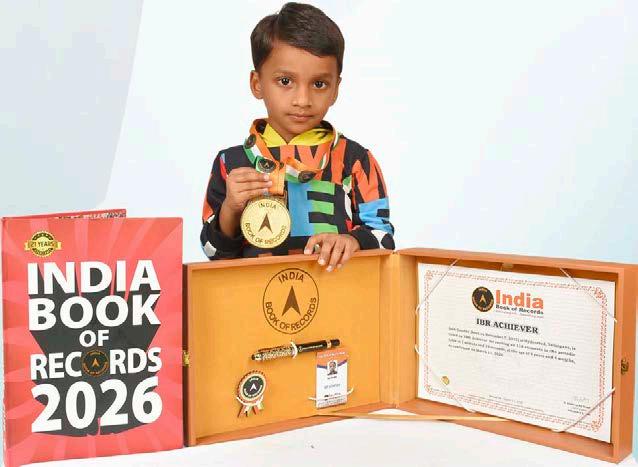
on flashcards, at the 4 months, as confirmed on




Jiyansh D. (born on January 11, 2024) of Bengaluru, Karnataka, is titled as ‘IBR Achiever’ for recalling words in alphabetical order from A to Z in 1 minute and 1 second, at the age of 2 years and 1 month, as confirmed on March 6, 2026.


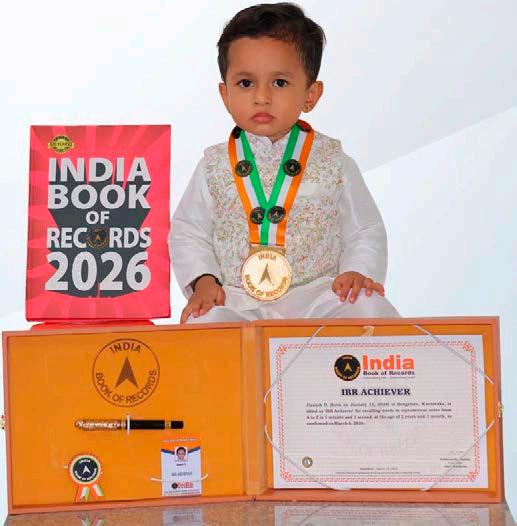


Aldrich Fin A. Amar (born on May 28, 2023) of Kozhikode, Kerala, is titled as ‘IBR Achiever’ for identifying and naming 22 animals, 10 birds, 14 other creatures,11 vehicles, 11 vegetables, 13 fruits, 12 colours, 13 internal organs and 14 parts of the body; counting numbers from 1 to 10, at the age of 2 years and 8 months, as confirmed on February 13, 2026.

Aadhya Darshan Mangukiya (born on July 22, 2022) of Surat, Gujarat, is titled as ‘IBR Achiever’ for reciting 22 mantras, including the Gayatri Mantra, Krishna Mantra, Mahamrityunjaya Mantra, Shanti Mantra, Hanuman Mantra, Devi Mantra and Durga Mantra, among others, at the age of 3 years and 6 months, as confirmed on February 5, 2026.
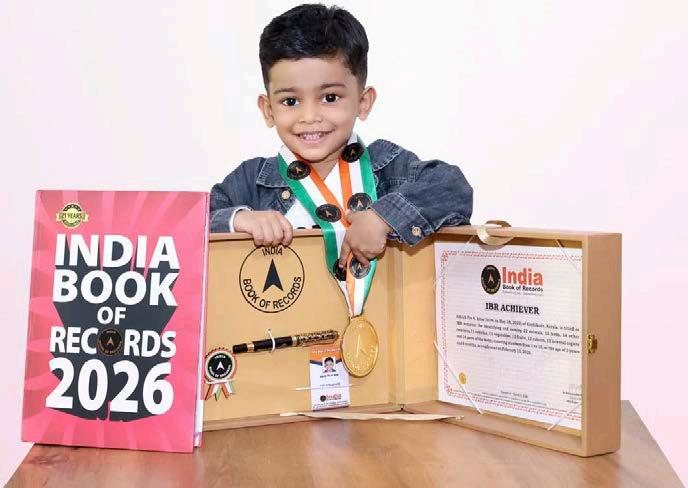







Majeti Maanhitha (born on May 27, 2023) of Vijayawada, Andhra Pradesh, is titled as ‘IBR Achiever’ for identifying and naming 17 birds, 16 fruits, 3 shapes, 16 vegetables, 12 vehicles, 10 colours and 14 parts of the body; reciting 5 shlokas, 2 English nursery rhymes, months in a year, days of the week and all 26 letters of the English alphabet with associated words; and counting numbers from 1 to 20, at the age of 2 years and 8 months, as confirmed on February 16, 2026.

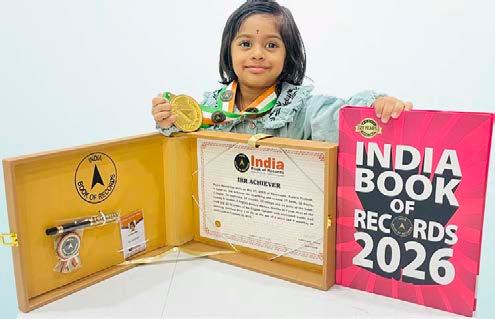






Tiara Meera Rahul (born on June 30, 2022) of Pathanamthitta, Kerala, is titled as ‘IBR Achiever’ for identifying and recalling the names of 19 animals, 15 parts of the body, 64 miscellaneous items, 15 fruits and 8 planets; reciting 26 letters of the English alphabet with associated words, at the age of 3 years and 7 months, as confirmed on February 16, 2026.

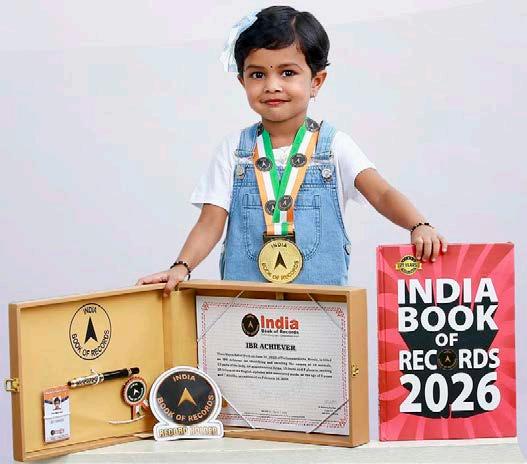




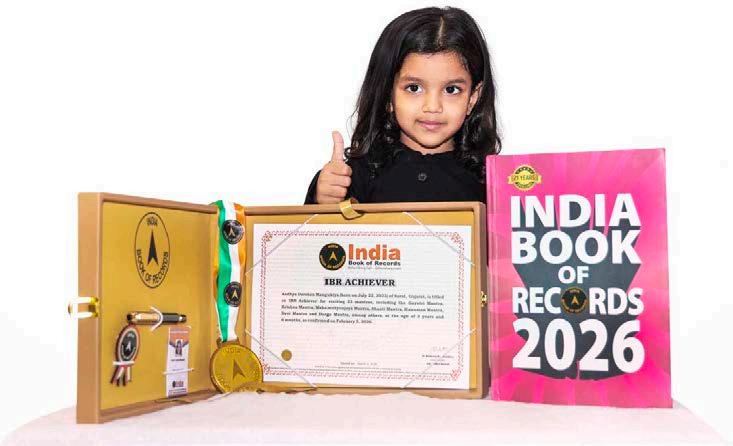





Prathulan S Anand (born on February 9, 2023) of Kancheepuram, Tamil Nadu, is titled as ‘IBR Achiever’ for reciting 10 Tamil Thirukkurals in 1 minute and 12 seconds, at the age of 2 years and 11 months, as confirmed on January 31, 2026.

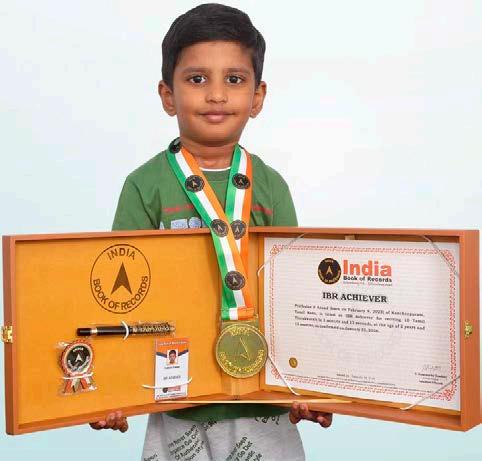

alphabetical words from A to Z, 9 months, as confirmed on numbers from 1 to 20, at the confirmed on


Taksh Nikhil Ruikar (born on April 27, 2023) of Dharashiv, Maharashtra, is titled as ‘IBR Achiever’ for identifying and naming 9 colours, 9 mathematical symbols, 7 sea animals, 10 vehicles, 12 fruits and 16 parts of the body; recalling 8 national symbols, months in a year, days of the week, and all alphabetical words from A to Z, at the age of 2 years and 9 months, as confirmed on February 18, 2026.
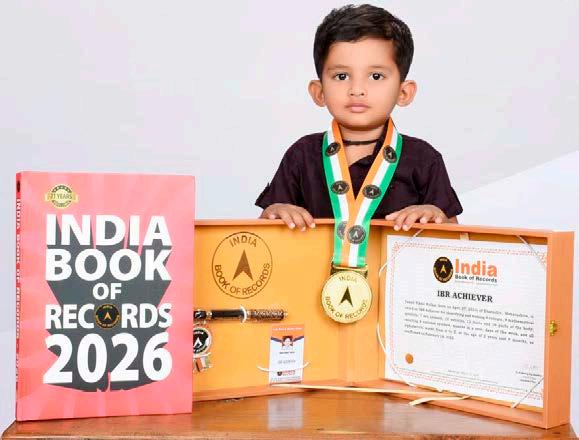




S. N. Arya (born on September 30, 2023) of Coimbatore, Tamil Nadu, is titled as ‘IBR Achiever’ for riding a brakeless balance bicycle (without pedals and supporting wheels) on a road for a distance of 0.21 km in 1 minute and 5 seconds, at the age of 2 years and 4 months, as confirmed on February 14, 2026.

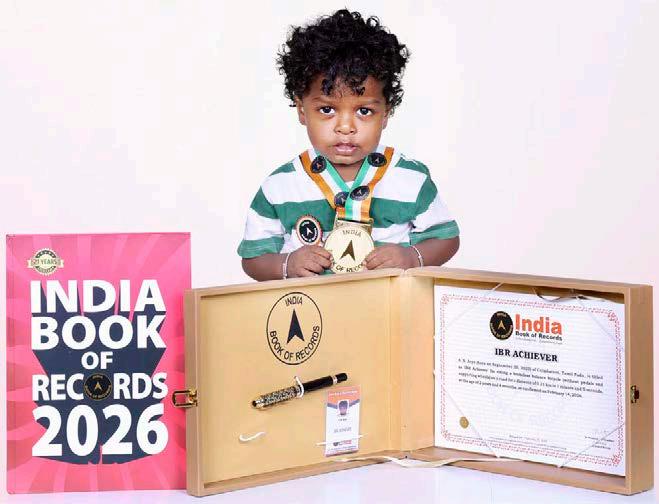


Niza Lafzi P. (born on August 30, 2017) of Palakkad, Kerala, is titled as ‘IBR Achiever’ for identifying and naming 15 food items, 15 cartoon characters, 15 parts of the body, 15 home appliances, 15 animals, 15 vehicles, 15 actions, 15 colours and 15 fruits; recalling 4 seasons, 14 districts of Kerala, 10 lakes of Kerala, 7 continents and 15 facts about India, at the age of 8 years and 5 months, as confirmed on February 4, 2026. months, as confirmed on


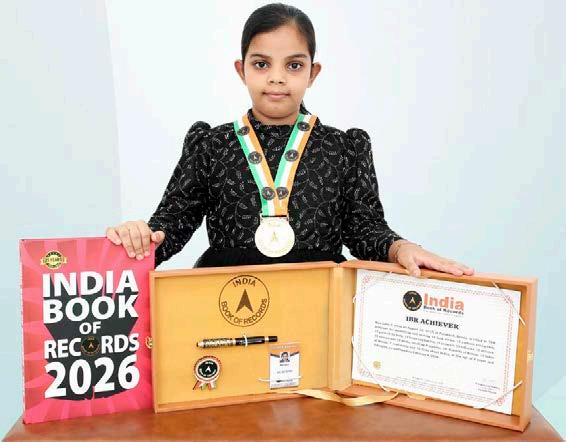



Advaith Mayon P. (born on April 10, 2021) of Tirunelveli, Tamil Nadu, is titled as ‘IBR Achiever’ for reciting 10 multiplication tables (from 1 to 10) in 3 minutes and 56 seconds, at the age of 4 years and 9 months, as confirmed on February 5, 2026.
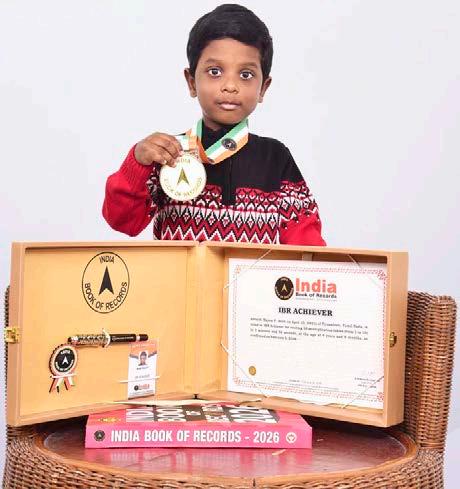















Barun Kumar Sethi (born on June 17, 2023) of Balasore, Odisha, is titled as ‘IBR Achiever’ for identifying 59 animals, young ones of 20 animals, 16 vehicles, 15 shapes, 20 freedom fighters, 15 musical instruments and 10 parts of the body; counting from 1 to 30; recalling 26 letters of the English alphabet, 7 continents, 8 planets, 17 national symbols and 28 states with capitals; reciting 6 shlokas, 4 English nursery rhymes; and singing the National song, at the age of 2 years and 7 months, as confirmed on February 13, 2026.



in 1 minute, 4 seconds and 20 milliseconds, at the on
Midhush Shourya (born on November 29, 2018) of Mandya, Karnataka, is titled as ‘IBR Achiever’ for reciting all 118 elements of the periodic table in 1 minute, 4 seconds and 20 milliseconds, at the age of 7 years and 2 months, as confirmed February 12, 2026.





Akshath K. (born on April 25, 2020) of Kancheepuram, Tamil Nadu, is titled as ‘IBR Achiever’ for solving six 4 x 4 Sudoku puzzles, on a sheet of paper, in 3 minutes and 22 seconds, using a pencil, at the age of 5 years and 9 months, as confirmed on February 23, 2026.




2 months, as confirmed on
Vedanshi Mehulbhai Dudhat (born on November 27, 2023) of Surat, Gujarat, is titled as ‘IBR Achiever’ for performing 21 yoga poses in 3 minutes and 54 seconds, at the age of 2 years and 2 months, as confirmed on February 17, 2026.



Kiyan Mandal (born on March 11, 2022) of South 24 Parganas, West Bengal, is titled as ‘IBR achiever’ for reciting 3 Bengali nursery rhymes; identifying 13 vegetables; translating 28 fruits, 18 professions, 20 vehicles, 19 flowers, 21 creatures and 21 animals from English to Bengali; and recalling the capitals of 30 countries, at the age of 3 years and 11 months, as confirmed on February 20, 2026.








Shiyali Rai (born on February 9, 2024) of Dakshina Kannada, Karnataka, is titled as ‘IBR Achiever’ for identifying 42 miscellaneous items, 5 vegetables, 3 fruits, 17 parts of the body, 10 vehicles, 10 animals, 6 colours, 11 electronic items and 5 birds; counting from 1 to 10; recalling 5 English antonyms; and reciting a nursery rhyme, at the age of 2 years, as confirmed on February 12, 2026.






Chainika Kaur Virdi (born on June 22, 2012) of Mumbai, Maharashtra, is titled as ‘IBR Achiever’ for participating in the Republic Day 2026 Triathlon (consisting of 42 km cycling, 42 km skating and 21 km running) and achieving a ‘Certificate of Appreciation’ along with a medal (organised by MK’s Club of Sports and Art), at the age of 13 years and 7 months, as confirmed on January 31, 2026. months, as confirmed on





Veeha Swapnil Junnarkar (born on May 26, 2017) of Pune, Maharashtra, is titled as ‘IBR Achiever’ for identifying 38 flashcards, blindfolded, and recalling the names of miscellaneous images of animals, vehicles, letters of the English alphabet, fruits, shapes, colours and numbers, among others, in one minute by swiftly moving the shuffled flashcards, at the age of 8 years and 8 months, as confirmed on January 29, 2026.








Nayanika Biswas (born on February 23, 2019) of Bilaspur, Chhattisgarh, is titled as ‘IBR Achiever’ for writing 50 odd numbers from 1 to 100, in 1 minute and 40 seconds, in a notebook, using a pencil, at the age of 6 years and 11 months, as confirmed on January 28, 2026.











Ayra Zefrin (born on March 24, 2023) of Palakkad, Kerala, is titled as ‘IBR Achiever’ for identifying and recalling the names of 61 animals, 20 vegetables, 25 fruits, 19 birds, 20 professionals, 27 vehicles, 16 shapes, 18 colours, 24 parts of the body, 32 actions, 21 opposite words and 8 planets; reciting days of the week, months in a year and 26 letters of the English alphabet; answering 8 G.K. questions; counting from 1 to 10; and solving 3 puzzles, at the age of 2 years and 10 months, as confirmed on February 17, 2026.









Yogit Suhan (born on March 5, 2024) of Thane, Maharashtra, is titled as ‘IBR Achiever’ for identifying 10 deities, 11 colours, 11 miscellaneous items, 11 shapes, 13 car brands, 18 parts of the body, 20 vegetables, 24 fruits, 25 animals, 20 vehicles, 8 birds, 19 food items, all letters of the English alphabet with associated words; reciting 2 nursery rhymes; arranging 25 pieces of shapes; and stacking 6 coloured rings, at the age of 1 year and 11 months, as confirmed February 14, 2026.




months, as confirmed on
Hari Narayanan (born on April 28, 2017) of Cuddalore, Tamil Nadu, is titled as ‘IBR Achiever’ for making an origami frog (measuring 8.7 cm x 4.7 cm) in 2 minutes, using a green sheet of paper, at the age of 8 years and 9 months, as confirmed on February 16, 2026.
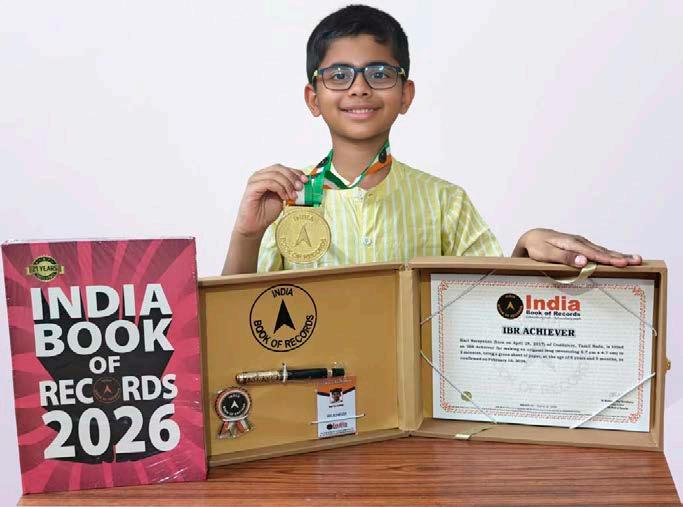






months, as confirmed

Avyan N. Jain (born on July 6, 2023) of Bengaluru, Karnataka, is titled as ‘IBR Achiever’ for identifying and naming 42 animals, 30 vehicles, 29 vegetables, 20 fruits, 8 shapes, 10 colours, 12 insects, 14 aquatic animals, 15 birds and 100 miscellaneous items; counting from 1 to 10; reciting 26 letters of the English alphabet, days of the week, 3 English nursery rhymes, 8 planets, 22 Tirthankaras and 10 national symbols, at the age of 2 years and 7 on February 25, 2026.
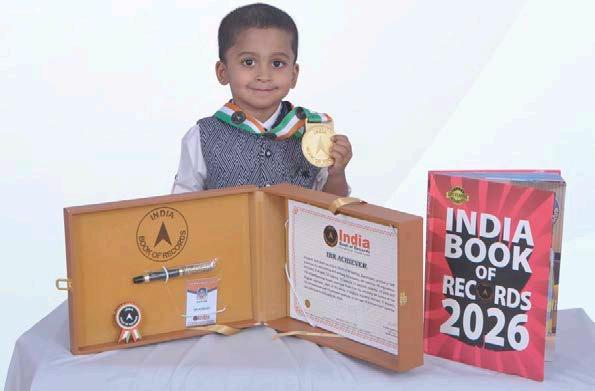




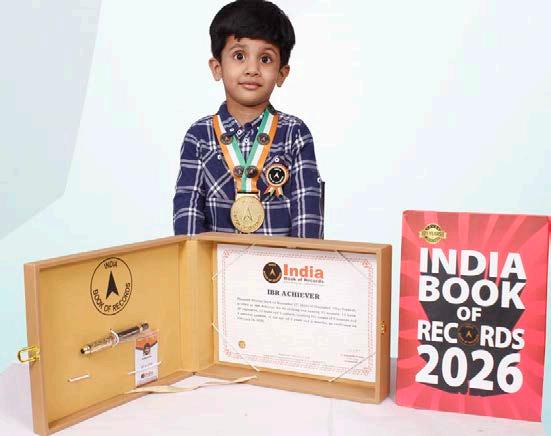

Bhaanish Sharma (born on November 27, 2022) of Ghaziabad, Uttar Pradesh, is titled as ‘IBR Achiever’ for identifying and naming 31 animals, 13 birds, 20 vegetables, 13 fruits and 9 colours; recalling the names of 5 seasons and 8 national symbols, at the age of 3 years and 2 months, as confirmed on February 16, 2026.




numbers from 1 to 20, at on



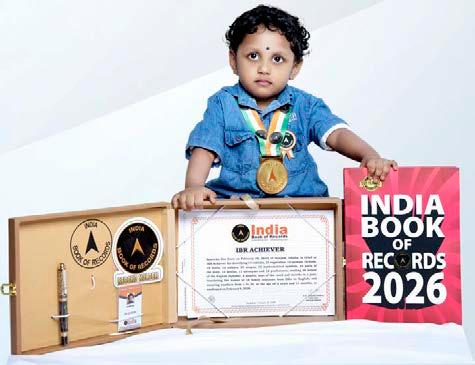



Saanvika Das (born on February 10, 2023) of Ganjam, Odisha, is titled as ‘IBR Achiever’ for identifying 13 vehicles, 23 vegetables, 12 animals, 16 birds, 19 fruits, 12 colours, 20 shapes, 13 mathematical symbols, 23 parts of the body, 12 deities, 11 antonyms and 12 professions; reciting 26 letters of the English alphabet, 8 planets, days of the week and months in a year; translating the names of 14 family relations from Odia to English; and counting numbers from 1 to 20, at the age of 2 years and 11 months, as confirmed on February 6, 2026.












Shehza Mehar (born on September 11, 2020) of Kasaragod, Kerala, is titled as ‘IBR Achiever’ for identifying and naming 16 animals, 19 fruits, 17 vegetables, 8 shapes, 6 national symbols, 17 letters of the Arabic alphabet, 17 vehicles, 5 types of plants and 17 parts of the body; reading 14 Malayalam and 21 English words; counting from 1 to 100; recalling days of the week; and spelling numbers from 1 to 5, at the age of 5 years and 5 months, as confirmed on February 11, 2026.










Vedhanth Sudheep (born on May 12, 2023) of Kozhikode, Kerala, is titled as ‘IBR Achiever’ for identifying and naming 20 vehicles, 12 insects, 15 parts of the body, 15 vegetables, 20 fruits, 20 birds, 10 home appliances, 30 animals, 12 water animals, 12 flowers and 60 miscellaneous items; reciting 6 English nursery rhymes, months in a year and letters of the English alphabet, at the age of 2 years and 9 months, as confirmed on February 18, 2026.














Shaan Baidya (born on December 29, 2023) of Dakshin Dinajpur, West Bengal, is titled as ‘IBR Achiever’ for translating 10 fruits, 12 vegetables, 12 birds, 10 animals, 10 insects and 6 types of fish from English to Bengali; recalling the names of 18 chapters of the ‘Srimad Bhagavad Gita’; answering 9 G.K. questions; and reciting 2 Bengali nursery rhymes, at the age of 2 years and 1 month, as confirmed on February 12, 2026.






Zuan Salim Muhammed (born on November 23, 2017) of Ernakulam, Kerala, is titled as ‘IBR Achiever’ for solving a 2 x 2 Rubik’s Cube in 1 minute and 31 seconds while mentally solving 15 addition and subtraction sums in continuation (8 + 2 = 10, 10 + 5 = 15, 15 – 3 = 12 ….. 32+1 = 33, 33 - 4 = 29, 29+1 = 30) by responding to the questions, at the age of 8 years and 2 months, as confirmed on February 18, 2026.

Hamda Hassnain (born on March 27, 2024) of Udupi, Karnataka, is titled as ‘IBR Achiever’ for identifying 10 shapes, 22 parts of the body, 14 actions, 51 animals and birds; reciting all letters of English and Arabic alphabet with associated words; recalling 8 English words from spellings; imitating the sounds of 11 animals; and counting numbers from 1 to 15, at the age of 1 year and 10 months, as confirmed on February 20, 2026.







Arav Ranjan Goud (born on February 12, 2024) of Bengaluru, Karnataka, is titled as ‘IBR Achiever’ for identifying 30 animals, 22 birds, 22 vegetables, 22 fruits, 16 vehicles, 8 freedom fighters, 8 actions, 10 parts of the body and 101 household items; imitating the sounds of 6 animals; recalling 4 national symbols; and performing 30 jumps (in 15 seconds), at the age months, as confirmed on
months, as confirmed on months, as confirmed of 1 year and 11 January 31, 2026.














donations, as confirmed
Satvir Singh (born on August 10, 1981) of Sirsa, Haryana, is titled as ‘IBR Achiever’ for receiving 20 certificates and medals from Bapu Maghar Singh Ji International Blood Centre, Sirsa, for donating blood 20 times, of type O+, from February 3, 2024 to January 26, 2026. The donations included both blood and SDP donations, as confirmed on February 11, 2026.





K. John Solomon (born on July 30, 2022) of Virudhunagar, Tamil Nadu, is titled as ‘IBR Achiever’ for identifying and naming the flags of 195 (UN recognised) countries in 5 minutes and 43 seconds by viewing the flags on flashcards, at the age of 3 years and 6 months, as confirmed on February 17, 2026.


Jasteena K. Shiju (born on February 25, 2021) of Malappuram, Kerala, is titled as ‘IBR Achiever’ for reciting the names of all the 14 districts of Kerala in 6 seconds, at the age of 5 years, as confirmed on February 25, 2026.






K. Pradeepan (born on August 29, 2020) of Tiruchirappalli, Tamil Nadu, is titled as ‘IBR Achiever’ for identifying the flags and recalling the names of all 195 (UN recognised) countries in 1 minute and 29 seconds by viewing pictures of flags on a laptop screen, at the age of 5 years and 5 months, as confirmed on February 18, 2026.










Satvik Mazumder (born on June 18, 2024) of Andaman and Nicobar Islands, is titled as ‘IBR Achiever’ for identifying and naming 18 vehicles, 20 food items, 20 animals, 15 fruits, 18 vegetables,14 parts of the body and 21 alphabetical pictures; recalling 26 letters of the English alphabet and 6 action words; counting from 1 to 10; stacking 5 coloured rings and arranging 25 shapes, at the age of 1 year and 7 months, as confirmed on February 12, 2026.
months, as confirmed on




10 Bible verses and











Kathlyn Miriam Shah (born on March 27, 2024) of Thiruvananthapuram, Kerala, is titled as ‘IBR Achiever’ for identifying and naming 28 birds, 28 animals, 12 sea creatures, 10 colours, 20 vegetables, 18 parts of the body and 19 fruits; reciting 26 letters of the English alphabet, 10 Bible verses and days of the week; counting numbers from 1 to 10; performing 5 actions; and mimicking the sounds of 13 animals, at the age of 1 year and 10 months, as confirmed on February 20, 2026.




Aayush Saisravan (born on January 30, 2021) of Mumbai, Maharashtra, is titled as ‘IBR Achiever’ for solving a jigsaw puzzle named ‘The Lion King’ (consisting of 108 pieces) in 27 minutes and 43 seconds, at the age of 5 years, as confirmed on February 19, 2026.


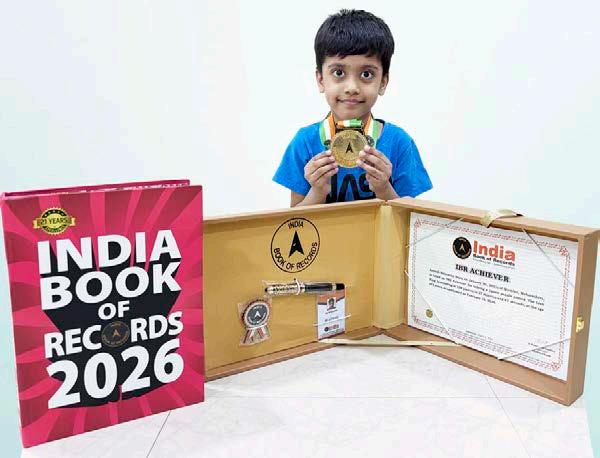



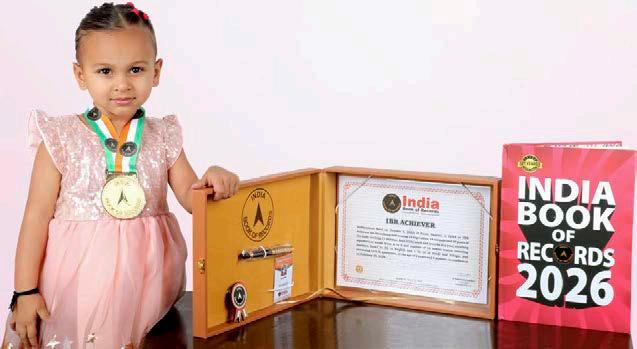
Aadhyashree (born on October 2, 2023) of Surat, Gujarat, is titled as ‘IBR Achiever’ for identifying and naming 14 vegetables, 14 animals and 20 parts of the body; reciting 11 shlokas, days of the week and months in a year; recalling alphabetical words from A to Z and capitals of 16 Indian states; counting numbers from1 to 30 in English and 1 to 10 in Hindi and Telugu; and answering 12 G.K. questions, at age of 2 years and 4 months, as confirmed on the February 25, 2026.









Archit Sachin Singalkar (born on April 16, 2017) of Thane, Maharashtra, is titled as ‘IBR Achiever’ for identifying the flags and recalling the names of 195 (UN recognised) countries alphabetically from A to Z in 4 minutes and 19 seconds by viewing the images of flags on a TV screen, at the age of 8 years and 9 months, as confirmed on February 14, 2026.












Aahaan Modi (born on June 18, 2020) of Pune, Maharashtra, is titled as ‘IBR Achiever’ for identifying the flags and recalling the names of 195 (UN recognised) countries in 2 minutes, 49 seconds and 82 milliseconds by viewing the pictures of the flags on a large screen, at the age of 5 years and 8 months, as confirmed on February 23, 2026.
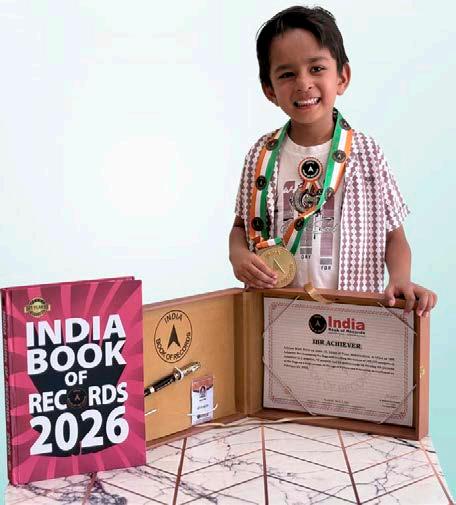








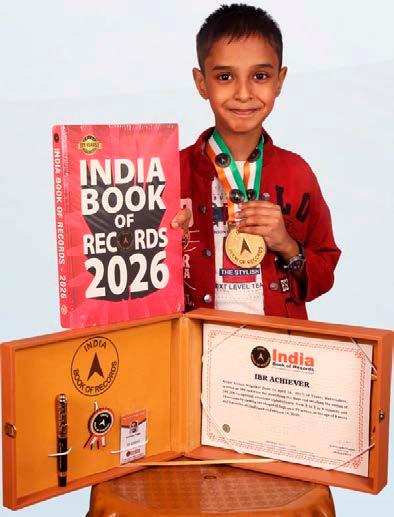






countries and 28 Indian states, and 3 months, as confirmed on
Nairit Ghosh (born on October 27, 2022) of Howrah, West Bengal, is titled as ‘IBR Achiever’ for identifying the flags of 149 countries, 36 famous personalities, 25 fruits, 25 vegetables, 25 animals, 25 vehicles, 25 birds, 25 flowers, 18 shapes, 12 colours, 8 planets and 35 parts of the body; locating 28 Indian states, 8 union territories and 23 districts of West Bengal on a map; counting from 1 to 100; recalling days of the week, months in a year, capitals of 121 countries and 28 Indian states, at the age of 3 years and 3 months, as confirmed on February 12, 2026.
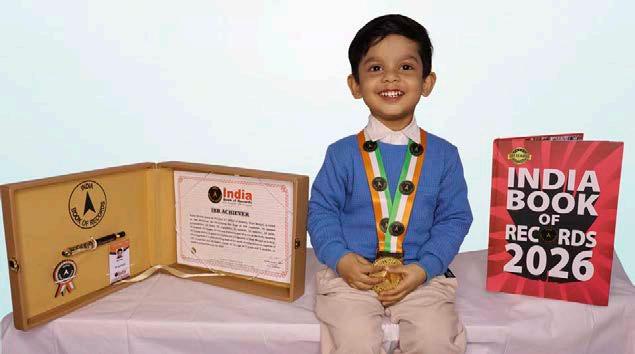



















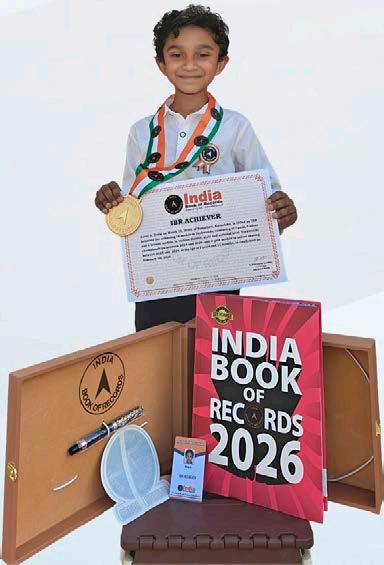




Aarav A. (born on March 16, 2020) of Bengaluru, Karnataka, is titled as ‘IBR Achiever’ for achieving 16 medals in Taekwondo, consisting of 7 gold, 5 silver and 4 bronze medals, in various district, state and national level Taekwondo championships between 2024 and 2026, and 4 gold medals in inline skating between 2025 and 2026, at the age of 5 years and 11 months, as confirmed on February 16, 2026.
level Taekwondo 2024 and 2026, and 4 months, as confirmed



Manvitha N. (born on March 22, 2024) of Bengaluru, Karnataka, is titled as ‘IBR Achiever’ for identifying and naming 18 parts of the body, 16 fruits, 12 vegetables and 26 letters of the English alphabet; reciting days of the week and 2 English nursery rhymes; performing 17 actions; and imitating the sounds of 9 animals, at the age of 1 year and 10 February 20, 2026. of 9 animals, at the months, as confirmed on
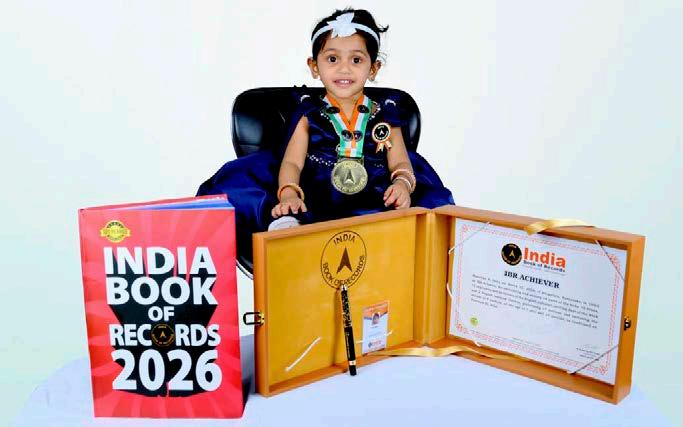
















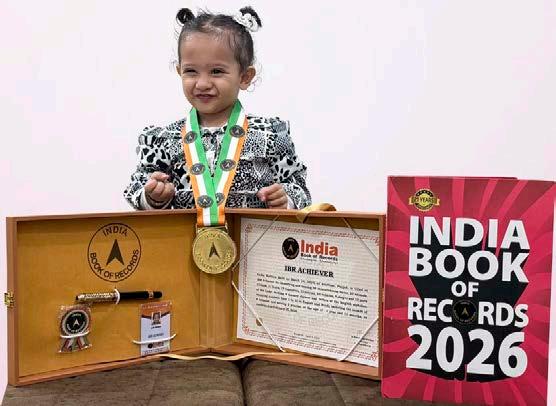



Anika Wadhwa (born on March 14, 2024) of Amritsar, Punjab, is titled as ‘IBR Achiever’ for identifying and naming 50 miscellaneous items, 33 animals, 12 birds, 21 fruits, 15 vegetables, 12 colours, 10 vehicles, 9 shapes and 10 parts of the body; reciting 4 nursery rhymes and letters of the English alphabet; counting numbers from 1 to 10 in English and Hindi; imitating the sounds of 8 animals; and solving 2 puzzles, at the age of 1 year and 11 months, as confirmed on









M. Krithi (born on May 12, 2023) of Chittoor, Andhra Pradesh, is titled as ‘IBR Achiever’ for identifying 30 animals, 20 vegetables, 27 fruits, 12 colours, 11 shapes, 11 birds, 7 flowers, 17 vehicles, 15 community helpers and 15 parts of the body; recalling months in a year, 8 planets, 26 alphabetical letters with associated words; reciting 8 English and Telugu nursery rhymes; performing 20 actions; solving 2 puzzles; imitating the sounds of 10 animals; and counting from 1 to 10, at the age of 2 years and 9 months, as confirmed on February 12, 2026.




of 10 animals; and










Ivana D. (born on September 6, 2023) of Madurai, Tamil Nadu, is titled as ‘IBR Achiever’ for identifying 13 vehicles, 13 parts of the body, 7 birds and 15 animals; reciting days of the week, months in a year and 26 letters of the English alphabet; and counting numbers from 1 to 10, at the age of 2 years and 5 months, as confirmed on February 18, 2026.




numbers from 1 to 10, months, as confirmed the sounds of 8 animals; and February 25, 2026.

animals, 6 wild animals, 8 birds,




Rudra Prathiksha (born on August 22, 2023) of Thanjavur, Tamil Nadu, is titled as ‘IBR Achiever’ for identifying and naming 8 shapes; recalling all letters of English and Tamil alphabet, 7 domestic animals, 6 wild animals, 8 birds, 8 fruits, 8 vegetables, 8 colours and 20 parts of the body; and counting numbers from 1 to 20, at the age of 2 years and 5 months, as confirmed on February 20, 2026.
numbers from 1 to 20, at the months, as confirmed on



A. K. Reya Padma (born on February 29, 2024) of Bengaluru, Karnataka, is titled as ‘IBR Achiever’ for identifying 15 animals in 1 minute and 35 seconds; recalling associated words of the letters of the English alphabet from A to Z in 1 minute and 38 seconds, at the age of 1 year and 11 months, as confirmed on February 28, 2026.







Ihaan Shaurya (born on January 2, 2023) of Kannur, Kerala, is titled as ‘IBR Achiever’ for identifying and naming 35 animals, 18 birds, 10 colours, 10 shapes, 18 fruits, 17 vehicles and 15 car logos; reciting months in a year; and counting numbers from 1 to 49, at the age of 3 years and 1 month, as confirmed on February 20, 2026.
numbers from 1 to 49, at month, as confirmed on








Jiyana A. (born on March 6, 2024) of Chennai, Tamil Nadu, is titled as ‘IBR Achiever’ for identifying 12 vehicles, 8 animals, 7 shapes, 7 parts of the body, 8 vegetables, 8 fruits, 8 household items, 8 food items, 8 colours and 8 toys; counting from 1 to 10, at the age of 1 year and 11 months, as confirmed on February 11, 2026.







S. Jeevan (born on November 26, 2014) of Ballari, Karnataka, is titled as ‘IBR Achiever’ for identifying and recalling the colours and numbers of 100 UNO cards, blindfolded, in 4 minutes and 4 seconds by touching the cards, at the age of 11 years and 3 months, as confirmed on February 27, 2026.





Niharika Jena (born on September 13, 2021) of Jajpur, Odisha, is titled as ‘IBR Achiever’ for identifying 16 parts of the body; recalling 7 national symbols, months in a year and days of the week; singing the National Anthem; and reciting 3 Hindi nursery rhymes, at the age of 4 years and 5 months, as confirmed on February 17, 2026.







associated words, at the months, as confirmed on
Muhamed Razin (born on September 21, 2021) of Kozhikode, Kerala, is titled as ‘IBR Achiever’ for identifying and naming 16 countries by the flags, 35 vehicles, 15 flowers, 25 shapes, 35 fruits, 5 organs, 13 professionals, 24 colours, 16 insects, 27 vegetables, 24 birds, 32 parts of the body, 32 animals, 8 planets and 12 types of houses; counting from 1 to 50; recalling 14 districts of Kerala, days of the week, months in a year and 26 letters of the English alphabet with associated words, at the age of 4 years and 4 months, as confirmed on February 10, 2026.

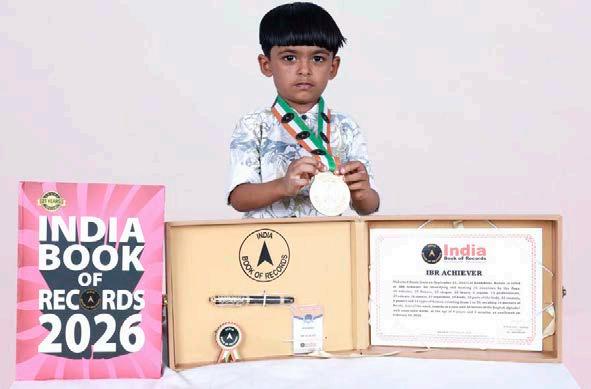







Bishnu Mohan Panda (born on May 3, 1955) of Cuttack, Odisha, is titled as ‘IBR Achiever’ for authoring 28 books in English, including ‘Beautiful Bastar’ (ISBN: 978-93-5207584-3), ‘Amazing KBK Region and Lord Ram’s Trail’ (ISBN: 978-93-89615-08-1), ‘Hockey in India’ (ISBN: 978- 93-6095521-2) and ‘Mahima Religion and Mahima Trail- in Odisha’ (ISBN: 978-93-60959- 94-4), among others, published by Authors Press, as confirmed on February 25, 2026.
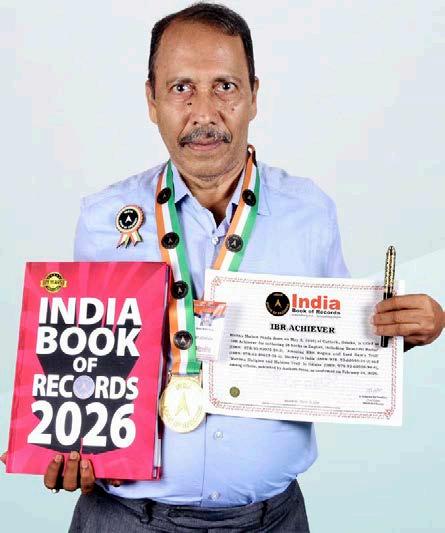








Jinisha Anurag Sarda (born on January 12, 2024) of Nagpur, Maharashtra, is titled as ‘IBR Achiever’ for identifying and naming months in a year,12 animals, 11 parts of the body, 10 household items, 7 fruits, 3 vegetables and 3 vehicles; performing 14 actions; sorting and completing a puzzle of 20 shapes; and chanting a mantra, at the age of 2 years and 1 month, as confirmed on March 3, 2026.
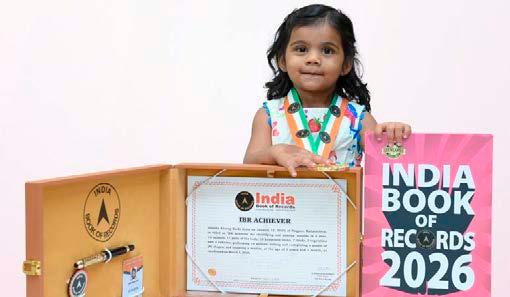





K. Rudwiin (born on March 21, 2022) of Tiruppur, Tamil Nadu, is titled as ‘IBR Achiever’ for reciting 17 Tamil Thirukkurals in 58 seconds and 89 milliseconds, at the age of 3 years and 10 months, as confirmed on February 17, 2026.



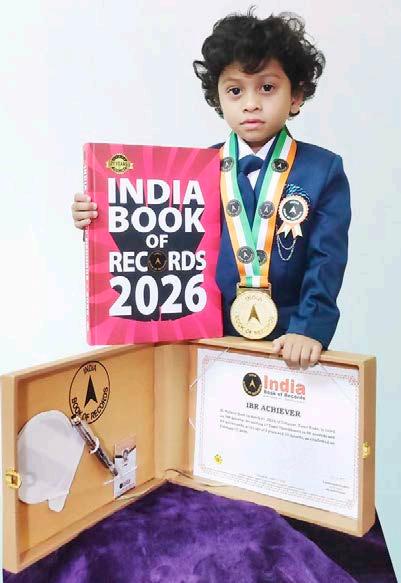








of 39 Indian cities by their a tractor, truck, taxi,


Samrik Dhali (born on July 3, 2022) of Nadia, West Bengal, is titled as ‘IBR Achiever’ for identifying 76 vehicles, including a tractor, truck, taxi, scooty, crane and a bicycle, among others, in 5 minutes and 18 seconds, at the age of 3 years and 7 months, as confirmed on February 20, 2026.











Peddi Praagnatmika (born on February 17, 2021) of Mallaram, Telangana, is titled as ‘IBR Achiever’ for recalling the names of 39 Indian cities by their sobriquets (nicknames) in 52 seconds, at the age of 5 years, as confirmed on February 24, 2026.


Srihita Sriyanvi Parida (born on May 23, 2024) of Ganjam, Odisha, is titled as ‘IBR Achiever’ for recalling the capitals of 28 Indian states ; answering 12 G.K. questions; reciting letters of English and Odia alphabet, months in a year, days of the week and 10 nursery rhymes; counting from 1 to 30 in Odia and 1 to 10 in English; identifying 10 parts of a cycle, 19 parts of the body, 18 miscellaneous items, 7 colours and 4 ornaments; and imitating the sounds of 10 animals, at the age of 1 year and 8 months, as confirmed on February 2, 2026.


R. G. Yuvaan Mohapatra (born on June 4, 2023) of Cuttack, Odisha, is titled as ‘IBR Achiever’ for identifying 10 shapes, 11 colours, 20 vehicles, 19 fruits, 15 birds, 15 community helpers, 26 vegetables, 47 animals, 41 miscellaneous items, 34 parts of the body, 14 insects and reptiles; reciting months in a year, days of the week, 8 planets, 10 English nursery rhymes, 6 mantras, 16 national symbols and letters from A to Z; answering 18 G.K. questions; and counting numbers from 1 to 30, at the age of 2 years and 8 months, as confirmed on February 28, 2026.










J. P. Pranav (born on October 23, 2022) of Chengalpet, Tamil Nadu, is titled as ‘IBR Achiever’ for answering 100 General Knowledge questions in 2 minutes, 30 seconds and 77 milliseconds, at the age of 3 years and 4 months, as confirmed on February 27, 2026.


Adhvika Kalavathy M. S. (born on August 7, 2023) of Thiruvananthapuram, Kerala, is titled as ‘IBR Achiever’ for identifying 19 animals, 17 fruits, 18 birds, 12 shapes, 12 colours, 27 vegetables, 10 flowers, 12 vehicles and 19 parts of the body; recalling 9 national symbols, days of the week, 5 senses, 7 rainbow colours, life stages of a butterfly and letters of the English alphabet with associated words; reciting 2 English nursery rhymes; and counting numbers from 1 to 10, at the age of 2 years and 5 months, as confirmed on





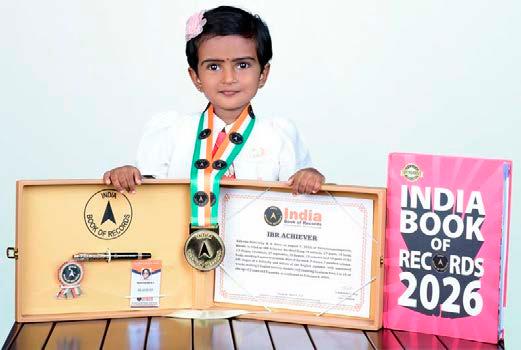


nursery rhymes; and months, as confirmed on


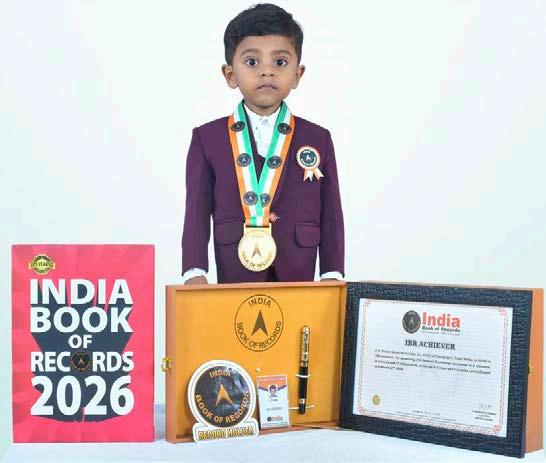

Alain C. Rahul (born on September 14, 2022) of Kannur, Kerala, is titled as ‘IBR Achiever’ for identifying 25 animals, 7 insects, 10 fruits, 19 vehicles, 5 shapes, 9 flowers, 12 colours, 6 vegetables, 6 logos, 7 parts of the body, 8 miscellaneous pictures, all letters of the English and Malayalam alphabet; counting numbers from 1 to12, at the age of 3 years and 5 February 20, 2026.

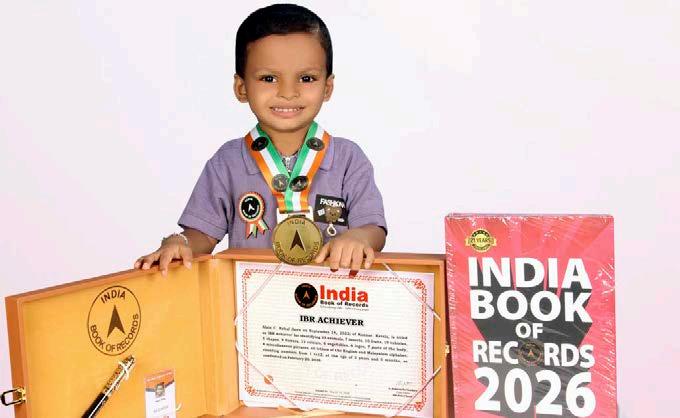




Aijaz Ahmad (born on December 1, 1999) of Amroha, Uttar Pradesh, is titled as ‘IBR Achiever’ for achieving 103 online certificates in Data Science and Analytics, Generative AI Tools and programming languages, from recognised platforms, between September 16, 2025 and February 20, 2026, as confirmed on February 25, 2026. 2026, as confirmed on


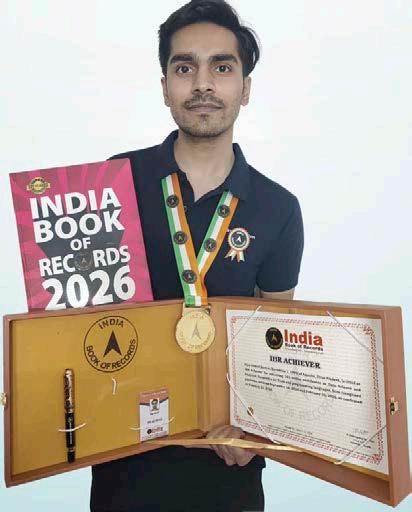



Babu K. C. (born on May 28, 1968) of Ernakulam, Kerala, is titled as ‘IBR Achiever’ for reciting 26 letters of the English alphabet in reverse order (from Z to A) in 1.41 seconds, as confirmed on February 25, 2026.



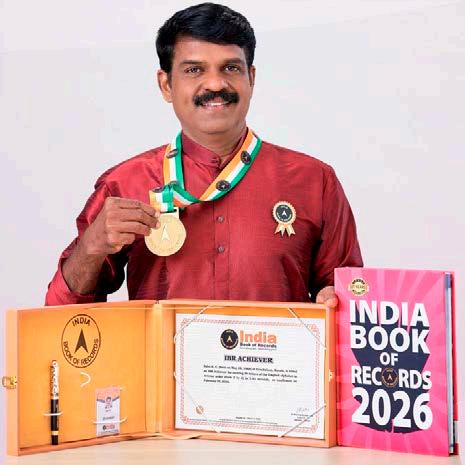




sounds of 10 animals;




Apurbi Kurmi (born on January 29, 2022) of Hailakandi, Assam, is titled as ‘IBR Achiever’ for reciting associated words of the English alphabet from A to Z and 5 shapes; singing the National Song ‘Vande Mataram’; mimicking the sounds of 10 animals; and answering 13 G.K. questions, at the age of 4 years, as confirmed on February 20, 2026.







Diya S. (born on October 2, 2021) of the Nilgiris, Tamil Nadu, is titled as ‘IBR Achiever’ for identifying the flags and recalling the names of all 195 (UN recognised countries), along with associated capitals and currencies, in 9 minutes and 10 seconds, on viewing the pictures of the flags on flashcards, at the months, as confirmed on February 27, 2026.

age of 4 years and 4 months, as confirmed on




Nikshitha M. (born on June 27, 2023) of Bengaluru, Karnataka, is titled as ‘IBR Achiever’ for identifying 18 animals, 14 fruits and 12 vegetables; counting from 1 to 30; recalling days of the week, months in a year, letters of the English and Tamil alphabet with associated words, at the age of 2 years and 6 months, as confirmed on January 19, 2026. 6 months, as confirmed on







Arwa Fatima Akilhusen Saiyed (born on October 13, 2023) of Ahmedabad, Gujarat, is titled as ‘IBR Achiever’ for identifying and naming 11 birds and 58 animals; reciting 2 English and Gujarati nursery rhymes; recalling 3 professions; translating the names of 8 relations from Hindi to English; solving a puzzle; and counting numbers from 1 to 10 in English and Hindi, at the age of 2 years and 4 months, as confirmed on February 28, 2026.

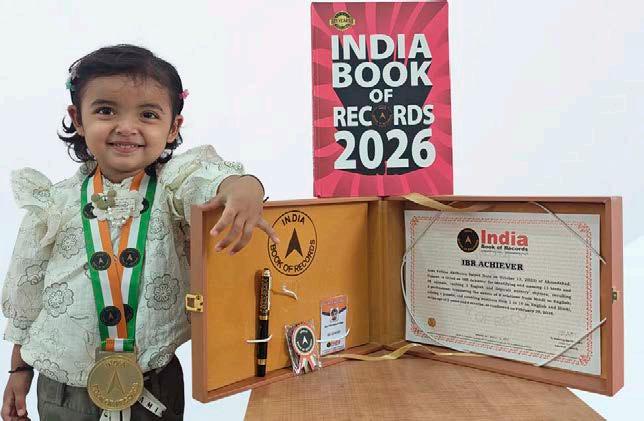




Vama Vivek Desai (born on August 27, 2024) of Valsad, Gujarat, is titled as ‘IBR Achiever’ for identifying 7 shapes, 11 actions, 10 birds, 13 vegetables, 15 fruits, 10 farm animals, 9 wild animals, 13 vehicles, 10 colours and 7 household items by viewing the pictures on flashcards, at the age of 1 year and 6 months, as confirmed on March 2, 2026.


Hamiz Ibrahim (born on September 1, 2021) of Kannur, Kerala, is titled as ‘IBR Achiever’ for reciting 99 names of Allah, 10 daily prayers in Arabic, names of 14 districts of Kerala and recalling 9 national symbols at the age of 4 years and 5 months, as confirmed on February 19, 2026.

months, as confirmed on 11 months, as confirmed on
Hazel Hardik Kumar Patel (born on February 21, 2024) of Surat, Gujarat, is titled as ‘IBR Achiever’ for identifying 28 states of India in 2 minutes and 14 seconds by viewing the pictures on an Indian map puzzle, at the age of 1 year and 11 months, as confirmed on February 16, 2026.






Daanvi Sara A. (born on May 10, 2023) of Kanyakumari, Tamil Nadu, is titled as ‘IBR Achiever’ for reciting 12 Tamil months in a year in 6 seconds, at the age of 2 years and


8 months, as confirmed on January 23, 2026.





Amda Ashvadh (born on January 9, 2020) of Hyderabad, Telangana, is titled as ‘IBR Achiever’ for identifying the flags and recalling the names of 140 (UN recognised) countries in 5 minutes and 44 seconds, at the age of 6 years, as confirmed on




Harshith E. (born on July 4, 2023) of Karur, Tamil Nadu, is titled as ‘IBR Achiever’ for identifying and naming 33 vehicles, 21 vegetables, 13 sports, 12 musical instruments, 11 professions, 6 dry fruits, 24 fruits, 22 actions, 16 shapes, 17 parts of the body, 23 domestic animals, 21 wild animals, 14 national symbols, 12 English antonyms, 26 alphabetical words, 20 birds, 4 seasons and 6 natural elements, at the age of 2 years and 6 months, as confirmed on January 27, 2026.

January 21, 2026.




Gangarajula Vishruth Tej (born on January 30, 2023) of Nizamabad, Telangana, is titled as ‘IBR Achiever’ for reciting 33 districts of Telangana, 5 English nursery rhymes, 3 shlokas, all letters of the English alphabet, days of the week and months in a year; identifying 12 parts of the body; recalling the spellings of numbers from 1 to 10; solving a 12-piece Montessori colour slide puzzle and a 5-piece shape puzzle, at the age of 2 years and 11 months, as confirmed on January 24, 2026.












Anisha Jhunjhunwala (born on August 16, 2017) of Ghaziabad, Uttar Pradesh, is titled as ‘IBR Achiever’ for achieving a certificate (certificate number: P010200743) from ‘The Yoga Certification Board’ for being certified as a ‘Yoga Protocol Instructor’ from December 9, 2025 to December 8, 2030 (evaluated by Modish Services Private Limited), at the age of 8 years and 4 confirmed on January 10, 2026.
Private Limited), months, as

Aditya Gupta (born on February 11, 2011) of Gurugram, Haryana, is titled as ‘IBR Achiever’ for capturing an image of a celestial body in the night sky with the help of a telescope, at the age of 14 years and 10 months, as confirmed on

December 31, 2025.




Lihan Eshwar P. (born on August 24, 2024) of Bengaluru, Karnataka, is titled as ‘IBR Achiever’ for performing 12 actions; identifying 24 animals, 25 fruits, 26 vegetables, 21 vehicles, 12 festivals, 20 deities, 16 community helpers, 8 famous personalities, 16 freedom fighters, 21 birds, flags of 14 countries, 7 wonders of the world, 18 miscellaneous items and 18 parts of the body, at the age of 1 year and 6 months, as confirmed on February 28, 2026.
Viansh Karmakar (born on November 11, 2023) of Dadra and Nagar Haveli and Daman and Diu, is titled as ‘IBR Achiever’ for pointing out the geographical locations of all 28 states on an India map puzzle, in 3 minutes and 53 seconds, at the age of 2 years and 2 months, as confirmed on
Hitesh Patel (born on October 26, 1969) of Surat, Gujarat, is titled as ‘IBR Achiever’ for creating an AI-generated music album, in Gujarati, on a theme ‘Nirbandh Varso’ (Unbound Legacy) , as confirmed on January 6, 2026.
B. K. Riana Dhriti (born on September 4, 2023) of Cuddalore, Tamil Nadu, is titled as ‘IBR Achiever’ for reciting all 26 letters of the English alphabet from A to Z in 13 seconds, at the age of 2 years and 5 months, as confirmed on February 14, 2026.
Rudraksh Chakraborty (born on October 7, 2021) of Malda, West Bengal, is titled as ‘IBR Achiever’ for identifying and naming 12 colours; recalling 4 national symbols; answering 7 G.K. questions; counting numbers from 1 to 100 in English and Bengali; and reciting the complete Hanuman Chalisa, at the age of 4 years and 4 months, as confirmed on
Raafqua Fatima (born on March 28, 2024) of Ranchi, Jharkhand, is titled as ‘IBR Achiever’ for identifying 10 animals,18 vegetables, 9 colours, 10 parts of the body and 4 birds, at the age of 1 year and 11 months, as confirmed on March 7, 2026.


Samarth Bansal (born on April 6, 2024) of Chandigarh, is titled as ‘IBR Achiever’ for identifying and naming 9 shapes, 10 vegetables, 10 fruits, 10 animals and 11 parts of the body; reciting letters of the English alphabet with their associated words, at the age of 1 year and 11 months, as confirmed on March 27, 2026.






Tarun S. (born on February 22, 2022) of Coimbatore, Tamil Nadu, is titled as ‘IBR Achiever’ for solving a ‘Mind Puzzler’ set (a sliding game of 16 pieces) in 1 minute and 2 seconds, at the age of 4 years, as confirmed on March 3, 2026. as


Saanshi Rabel S. (born on September 12, 2024) of The Nilgiris, Tamil Nadu, is titled as ‘IBR Achiever’ for identifying and naming 7 parts of the body and 5 miscellaneous items; recalling letters of the Tamil alphabet, at the age of 1 year and 6 months, as confirmed on March 18, 2026.





Tejas (born on January 1, 2017) of Kalaburagi, Karnataka, is titled as ‘IBR achiever’ for solving a 40-piece political map puzzle of India, blindfolded, in 5 minutes and 20 seconds, at the age of 9 years and 1 month, as confirmed on

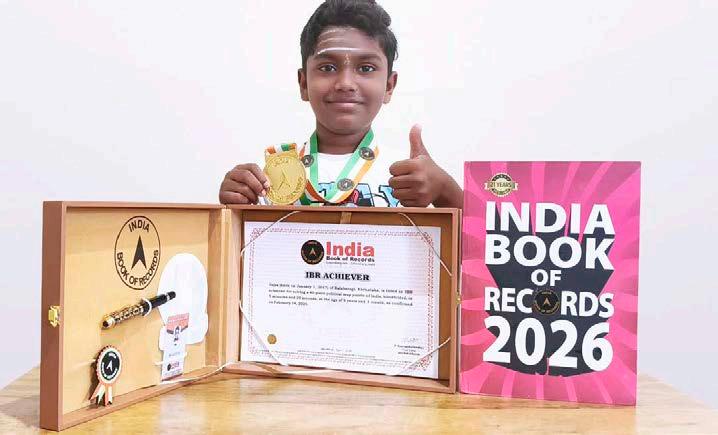

Tatsa Rushi Patel (born on February 2, 2024) of Ahmedabad, Gujarat, is titled as ‘IBR Achiever’ for identifying 21 animals, 9 colours, 8 planets, 10 shapes, 9 birds, 13 parts of the body and 26 letters from A to Z; counting numbers from 1 to 10; answering 5 mythological questions and 8 national symbols; recalling days of the week; and reciting 3 Sanskrit shlokas, at the age of 2 years and 1 month, as confirmed on March 13, 2026.




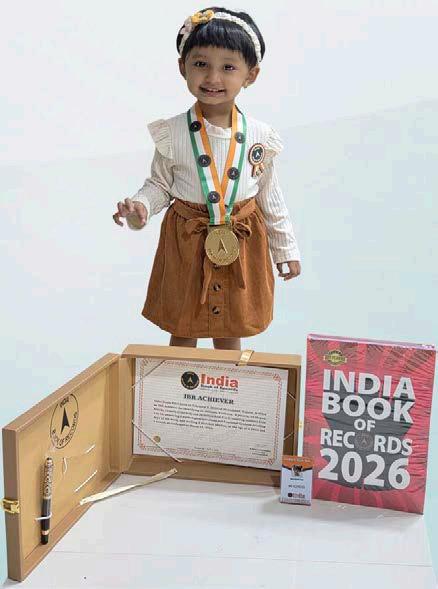










Shaurya Sharma (born on October 9, 2019) of Pithoragarh, Uttarakhand, is titled as ‘IBR Achiever’ for delivering a speech on Uttarakhand; reciting the names of 13 districts in Uttarakhand, 15 shlokas of Shiv Tandav Stotra, G20 countries and their capitals, 31 abbreviations with full forms, 195 countries (UN recognised) with their capitals and currencies and 28 Indian states with capitals, at the age of 6 years and 5 months, as confirmed on March 17, 2026.

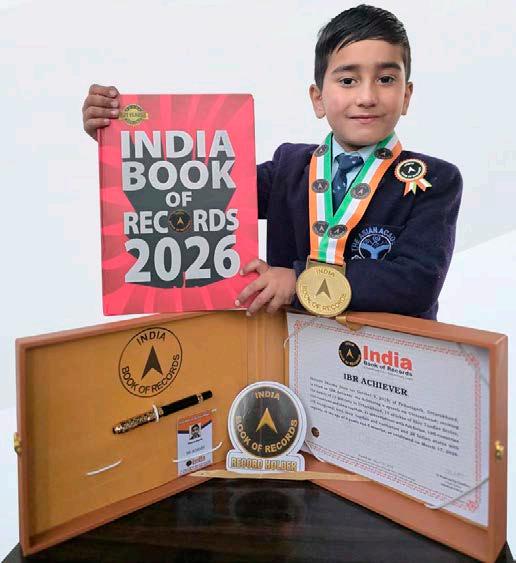





Sanchayan Das Gupta (born on December 3, 2023) of North 24 Parganas, West Bengal, is titled as ‘IBR Achiever’ for identifying 21 fruits, 27 vegetables, letters from A to Z, 23 parts of the body, flags of 18 countries, 12 colours, 23 animals, 16 vehicles and 9 actions; counting from 1 to 20; naming 6 national symbols, 13 elements of the periodic table and the solar system; reciting 22 Bengali and 3 English nursery rhymes; and solving a puzzle, at the age of 2 years and 3 months, as confirmed on March 10, 2026. and 23 seconds, at the

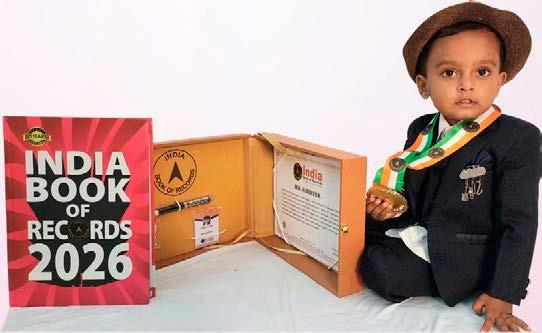



Rudran Ramanathan (born on July 13, 2023) of Coimbatore, Tamil Nadu, is titled as ‘IBR Achiever’ for riding a bicycle, without supporting wheels, for a distance of 3.05 km on a busy road in 29 minutes and 23 seconds, at the age of 2 years and 7 months, as confirmed on March 6, 2026.

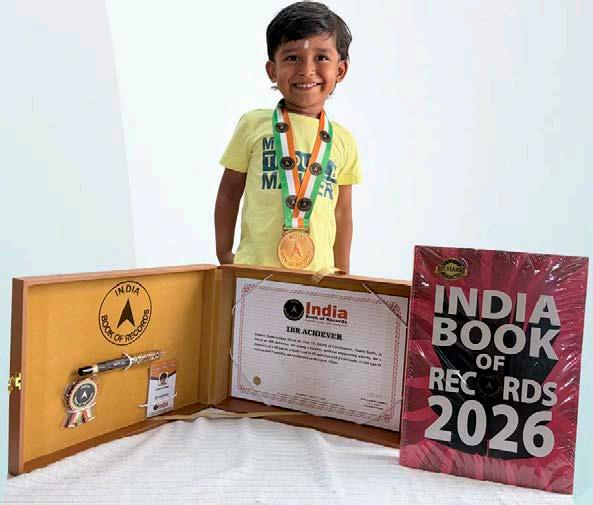



S. P. Saisri (born on September 5, 2020) of Tiruvallur, Tamil Nadu, is titled as ‘IBR Achiever’ for reciting 23 Thirukkurals in 1 minute and 14 seconds, at the age of 5 years and 5 months, as confirmed on March 5, 2026.


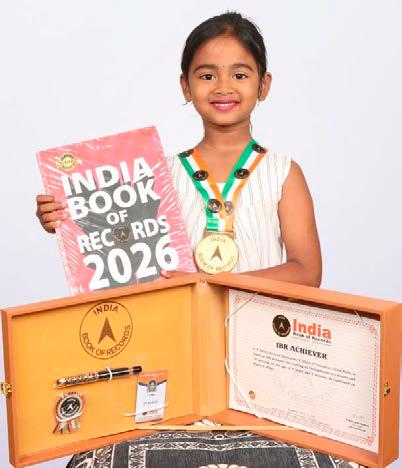


Rohit Uppal (born on March 6, 1980) of Faridabad, Haryana, is titled as ‘IBR Achiever’ for covering a distance of 6297 km by walking in one year (365 days), using a step-tracker device, as confirmed on February 12, 2026.



Shriyan M. S. (born on August 11, 2019) of Kollam, Kerala, is titled as ‘IBR Achiever’ for identifying 36 species of dinosaurs in 52 seconds from flashcards, at the age of 6 years and 6 months, as confirmed on March 5, 2026.


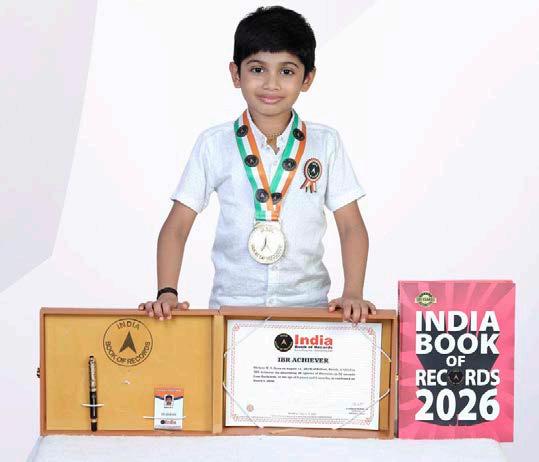

R. K. Lakshith Liyaan (born on July 11, 2023) of Chennai, Tamil Nadu, is titled as ‘IBR achiever’ for identifying the logos of 100 national and international brands of cars in 1 minute and 41 seconds, at the age of 2 years and 7 months, as confirmed on March 10, 2026.
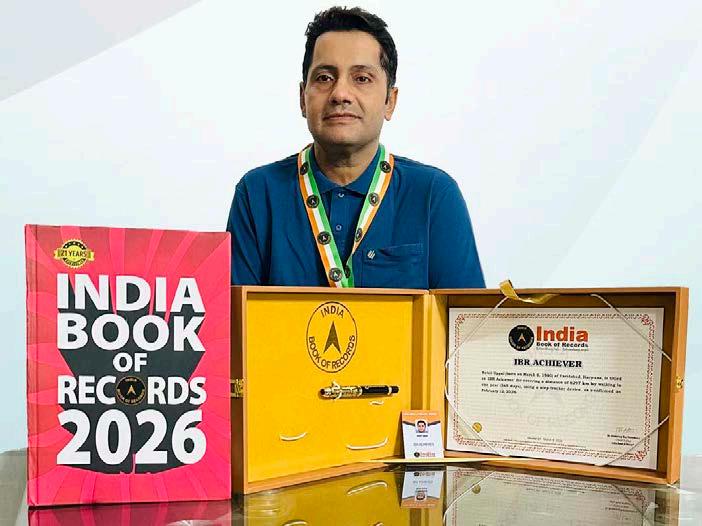




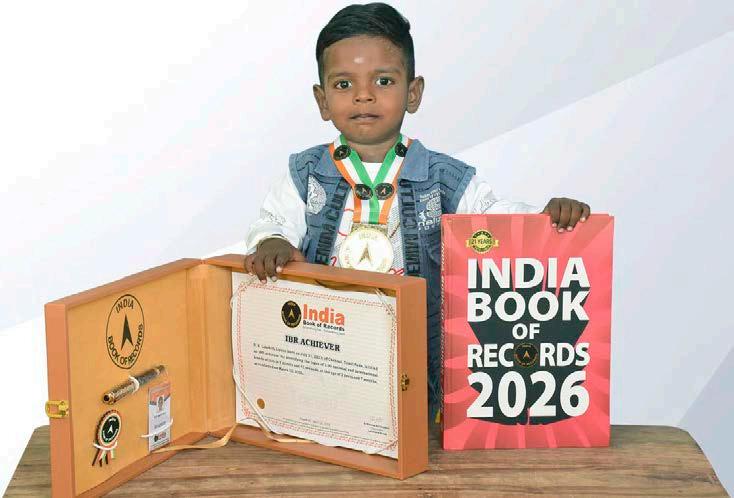
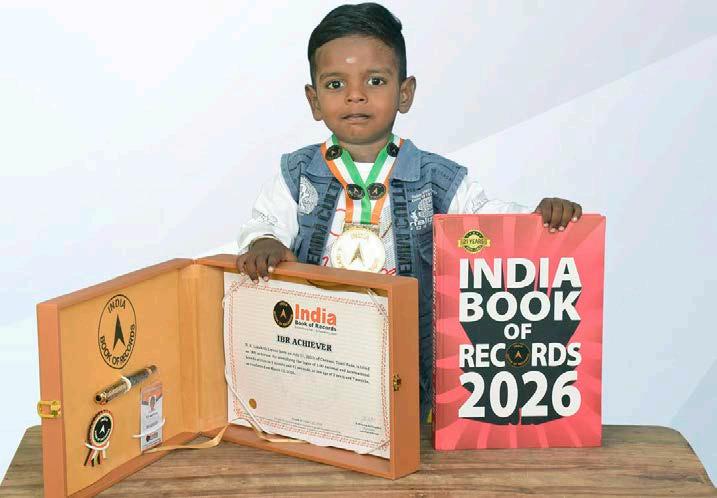






Abced M.S. (born on May 11, 2019) of Ernakulam, Kerala, is titled as ‘IBR Achiever’ for having a unique name, comprising the first five letters of the English alphabet (a, b, c, d, e), at the age of 6 years and 9 months, as confirmed on February 17, 2026.

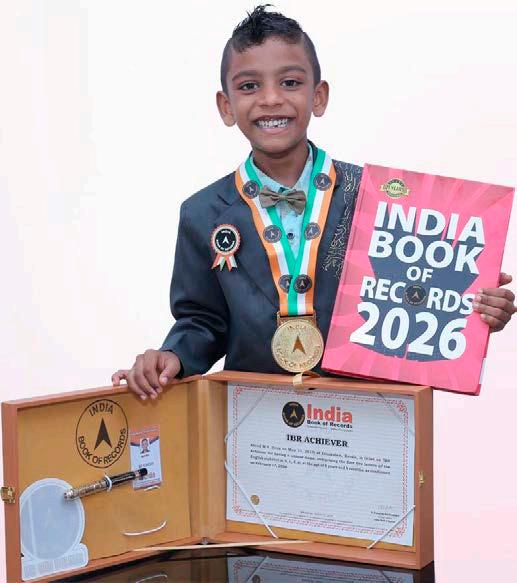


Abdec M. S. (born on January 15, 2022) of Ernakulam, Kerala, is titled as ‘IBR Achiever’ for having a unique name, comprising the first five letters of the English alphabet (a, b, c, d, e), at the age of 4 years and 1 month, as confirmed on February 20, 2026.


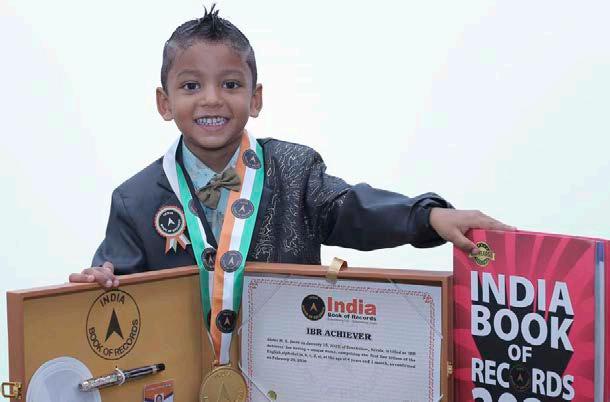






Diyansh Vishnu Vegi (born on February 25, 2021) of Bengaluru, Karnataka, is titled as ‘IBR Achiever’ for reciting 12 multiplication tables from 1 to 12 in 3 minutes and 22 seconds, at the age of 4 years and 11 months, as confirmed on February 14, 2026.














Avyukt Anirvan (born on June 16, 2023) of Jagatsinghpur, Odisha, is titled as ‘IBR Achiever’ for identifying and naming 7 insects, 12 vegetables, 9 colours, 9 deities, 8 shapes, 12 fruits, 23 animals, 18 parts of the body, 14 vehicles and 26 alphabetical words from A to Z; counting numbers from 1 to 10; reciting 4 English nursery rhymes; recalling 14 national symbols, 5 shlokas, days of the week and months in a year; performing 17 actions; and answering 15 G.K. questions, at the age of 2 years and 7 months, as confirmed on February 11, 2026.








Ayush Dawani (born on October 6, 2009) of Bhopal, Madhya Pradesh, is titled as ‘IBR Achiever’ for recalling 74 calendar days (by the dates) from the years 2016 to 2040 in 5 minutes, at the age of 16 years and 4 months, as confirmed on February 10, 2026.




actions; and answering years 2016 to 2040


Shivansh Parida (born on February 7, 2020) of Bengaluru, Karnataka, is titled as ‘IBR Achiever’ for identifying and recalling the names of 17 fruits, 13 vegetables, 7 shapes, 8 colours, 12 national symbols and 4 seasons; reciting days of the week, months in a year and 13 shlokas, at the age of 6 years, as confirmed on February 23, 2026.








Elzin Muhammad (born on August 10, 2022) of Palakkad, Kerala, is titled as ‘IBR Achiever’ for identifying 31 flags, 18 animals, 18 fruits, 16 vegetables, 11 occupations, 11 colours, 21 parts of the body, 20 vehicles, 8 car logos, 8 shapes and 13 famous personalities; recalling 12 opposite words; and answering 20 General Knowledge questions, at the age of 3 years and 5 months, as confirmed on February 6, 2026.







Emmanuvel Kyalvin Davrev (born on November 29, 2001) of Idukki, Kerala, is titled as ‘IBR Achiever’ for authoring a Malayalam book titled ‘Aadhiparvvam’ (ISBN: 978-81-98185-709), published by Era Books Publications on February 4, 2026, and releasing an official original soundtrack (BGM) of the book titled ‘Siege of the Iron Serpent’, as confirmed on February 17, 2026.




Dwani Sreelal (born on September 21, 2023) of Alappuzha, Kerala, is titled as ‘IBR Achiever’ for running a distance of 100 metres in 51 seconds, at the age of 2 years and 5 months, as confirmed on February 23, 2026.










months, as confirmed on months, as confirmed (BGM) of the book titled ‘Siege of the Iron is titled as ‘IBR Achiever’ a distance of 8.3 km






Priyanshu Prateek Behera (born on January 26, 2019) of Bhadrak, Odisha, is titled as ‘IBR Achiever’ for identifying 28 freedom fighters; naming 15 Prime Ministers, 15 Presidents and 9 Cabinet Ministers of India; answering 100 G.K. questions; recalling 30 English antonyms, 8 planets, 24 family members, capitals of 28 Indian states, 17 national symbols and 9 shlokas, at the age of 7 years, as confirmed on February 16, 2026.

of 28 Indian states, 17






months, as confirmed on
Juwain (born on April 6, 2019) of Thiruvananthapuram, Kerala, is titled as ‘IBR Achiever’ for performing roller skating on a busy road for a distance of 8.3 km in 41.36 minutes, at the age of 6 years and 10 months, as confirmed on February 20, 2026.
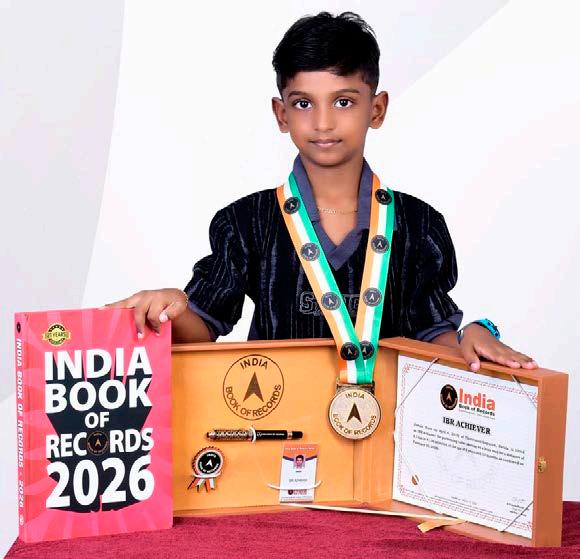





Sathvik M. M. (born on October 15, 2017) of Kannur, Kerala, is titled as ‘IBR Achiever’ for identifying 141 countries by viewing the images of flags on flashcards, and simultaneously locating 109 countries on a globe, at the age of 8 years and 4 months, as confirmed on February 19, 2026.
4 months, as confirmed on
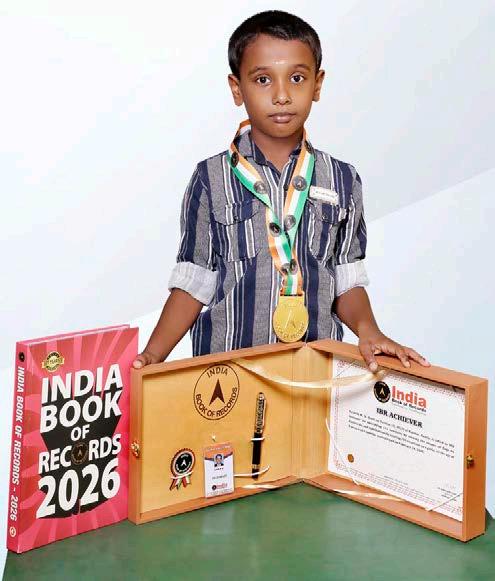













Prachet Swapnil Kole (born on July 23, 2023) of Solapur, Maharashtra, is titled as ‘IBR Achiever’ for identifying the flags of 32 countries, 57 miscellaneous items, 20 fruits, 12 shapes, 22 parts of the body, 23 vegetables, 21 vehicles, 20 professions, 8 colours, 17 animals, 14 actions and 26 letters of the English alphabet, at the age of 2 years and 6 months, as confirmed on February 11, 2026.
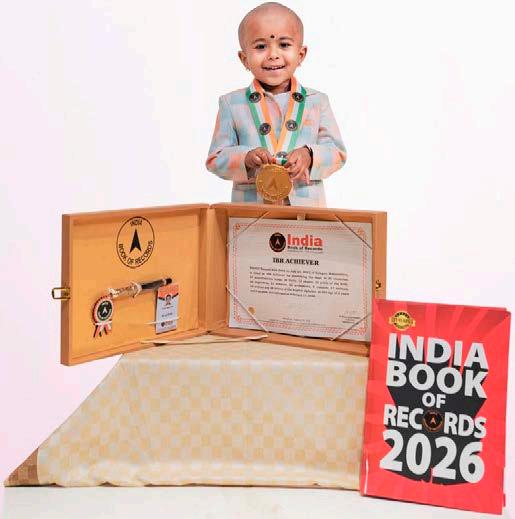

Rashid K. (born on February 28, 1998) of Malappuram, Kerala, is titled as ‘IBR Achiever’ for undertaking a motorcycle expedition from Telangana (Hyderabad) to Kerala, covering a total distance of 1,000.99 km in 18 hours and 14 minutes, as confirmed on February 17, 2026.









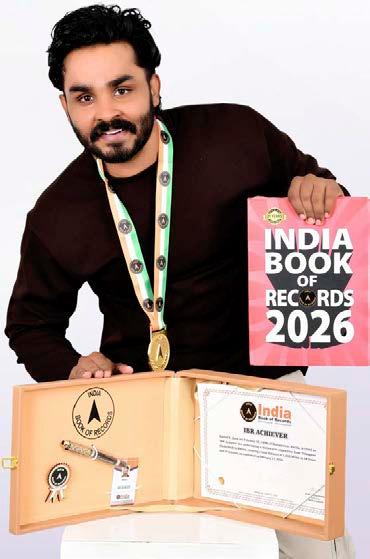




Nilaani N. Pranav (born on June 3, 2024) of Kozhikode, Kerala, is titled as ‘IBR Achiever’ for identifying and recalling the names of 7 Chief Ministers of Kerala, 10 colours, 12 fruits, 13 vegetables, 11 parts of the body, 11 animals, 10 birds, 7 flowers and 8 vehicles; performing 9 actions; and imitating the sounds of 8 animals, at the age of 1 year and 7 months, as confirmed on January 31, 2026.





17 animals, 14 actions and months, as confirmed on February 17, 2026.


S. P. Thvaritha (born on March 1, 2024) of Chennai, Tamil Nadu, is titled as ‘IBR Achiever’ for identifying 28 parts of the body in 1 minute and 34 seconds, at the age of 1 year and 11 sounds of 8 animals, at




Suryanshu Bor (born on February 11, 2024) of Kolkata, West Bengal, is titled as ‘IBR Achiever’ for identifying and naming 26 animals, young ones of 10 animals, 11 colours, 12 shapes, 15 birds, 21 fruits, 10 vegetables, 16 vehicles and 13 parts of the body; answering 19 G.K. questions; reciting days of the week, months in a year and 11 letters of the Bengali alphabet; counting from 1 to 30 in English and 1 to 20 in Bengali, at the age of 1 year and 11 months, as confirmed on January 30, 2026.



Srika Sridhar (born on December 18, 2023) of Karur, Tamil Nadu, is titled as ‘IBR Achiever’ for identifying 61 miscellaneous items. including household items, parts of the body, ornaments, fruits, vegetables, animals and vehicles, in 5 minutes and 47 seconds, at the age of 2 years and 1 month, as confirmed on February 7, 2026.






Muhammed Lezin Emad (born on July 30, 2023) of Malappuram, Kerala, is titled as ‘IBR Achiever’ for identifying 17 parts of the body, 17 vehicles, 12 vegetables, 11 animals, 15 fruits, 5 national leaders, 5 birds, 5 colours, 5 seasons and 5 beverages; counting numbers from 1 to 10 in English and Malayalam; answering 10 G.K. and 10 Islamic questions; recalling days of the week and 14 districts of Kerala,

Bhagyashree Das (born on December 23, 2022) of Cuttack, Odisha, is titled as ‘IBR Achiever’ for identifying 26 freedom fighters, 36 creatures, 20 parts of a computer, 26 vegetables, 12 colours, 20 fruits and 24 animals; answering 130 G.K. questions; recalling capitals of 28 Indian states and 8 union territories, 30 districts of Odisha, 7 continents, 6 seasons, 7 national symbols, 18 books with authors, 15 poets, 10 Indian folk dances, 10 historical places, 10 animals with their food habits, 16 animals and their young ones, 40 English antonyms and 8 planets, at the age of 3 years and 1 month, as confirmed on February 14, 2026. folk dances, 10 historical their food habits, 16 animals








Shlok Balasubramanian (born on July 11, 2023) of Bengaluru Urban, Karnataka, is titled as ‘IBR Achiever’ for reciting 8 shlokas in 1 minute and 17 seconds, at the age of 2 years and 7 months, February 14, 2026.

as confirmed on
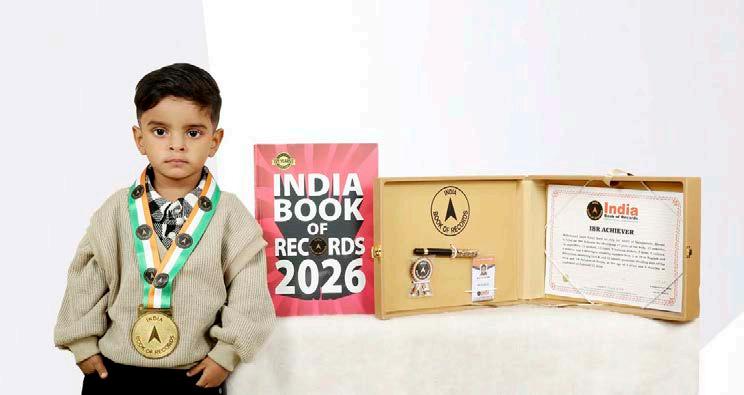





Aethan V. Arun (born on December 22, 2023) of Kozhikode, Kerala, is titled as ‘IBR Achiever’ for identifying and naming 20 miscellaneous items, 17 vehicles, 13 animals, 12 parts of the body, 10 fruits, 10 colours, 6 birds, 3 traffic lights with meanings and the National Flag; performing 8 actions; and imitating the sounds of 5 animals, at the age of 2 years and 1 month, as confirmed on February 20, 2026.
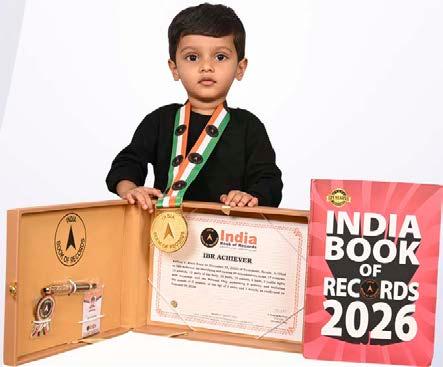





numbers from 1 to 30, at the months, as confirmed on
Trishan Sahoo (born on March 30, 2023) of Khordha, Odisha, is titled as ‘IBR Achiever’ for identifying and naming 12 freedom fighters, 13 fruits, 19 professions, 13 shapes; 27 parts of the body; recalling the capitals of 22 countries, 28 Indian states, currencies of 15 countries, 15 English antonyms, 17 national symbols, 15 baby animals, 6 shlokas and 26 associated words of the English alphabet; counting numbers from 1 to 30, at the age of 2 years and 10 months, as confirmed on February 20, 2026.

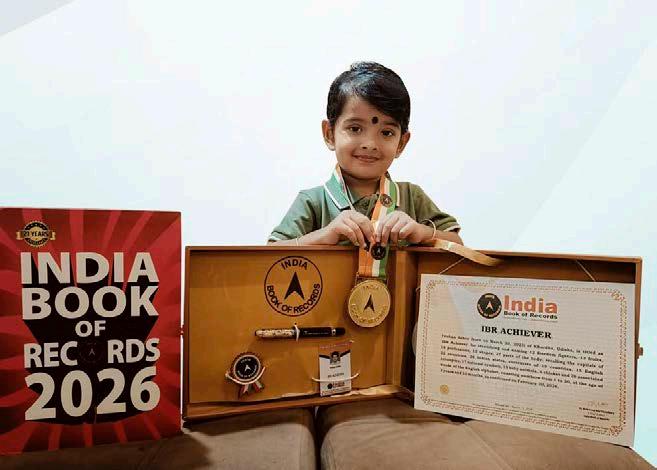






Varikela Arhaansh (born on December 20, 2023) of Jangaon, Telangana, is titled as ‘IBR Achiever’ for identifying and naming images on 61 flashcards, consisting of 18 animals, 15 vehicles, 10 fruits, 8 shapes, 5 parts of the body, 4 freedom fighters and one bird, in 4 minutes and 33 seconds, at the age of 2 years and 1 month, as confirmed on February 19, 2026.
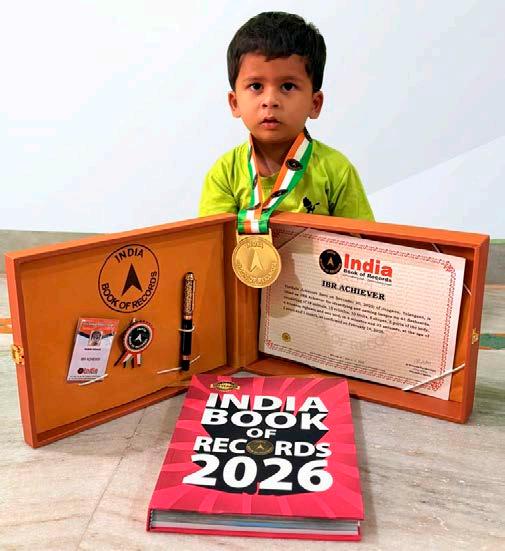





International Budo Karate





Eadfrid Vincent P.J. (born on May 24, 2021) of Thrissur, Kerala, is titled as ‘IBR Achiever’ for achieving 2 certificates for participating in the National Karate Championship 2025, held at Vivekodayam Boy’s High School (Thrissur) on December 29, 2025, and secured 1st position in the individual Kumite and Kata in ‘Colour Belt Category’ (organised by the International Budo Karate Masters Federation), at the age of 4 years and 7 months, as confirmed on February 17, 2026.
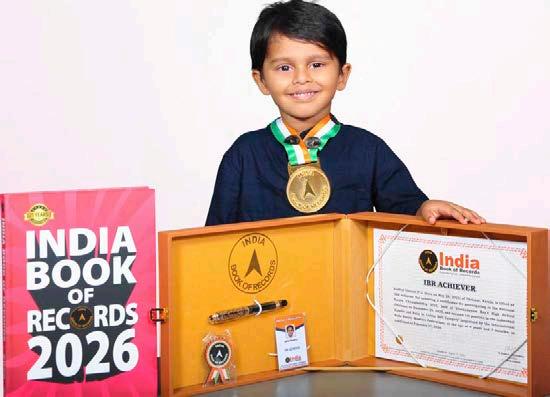







Arya. R (born on June 11, 2024) of Kasaragod, Kerala, is titled as ‘IBR Achiever’ for identifying and recalling the names of 12 vehicles, 11 animals, 10 parts of the body, 9 fruits and 5 vegetables, at the age of 1 year and 7 months, as confirmed on January 28, 2026.




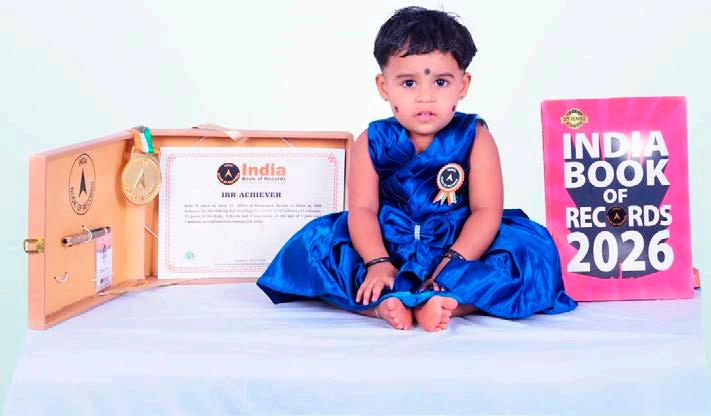


Prisha Yadav (born on December 23, 2023) of Charkhi Dadri, Haryana, is titled as ‘IBR Achiever’ for identifying and naming 11 fruits, 16 animals, 12 vegetables, 14 vehicles, 7 colours, 12 actions and 10 parts of the body; imitating the sounds of 5 animals, at the age of 2 years and 2 months, as confirmed on February 28, 2026.
months, as confirmed
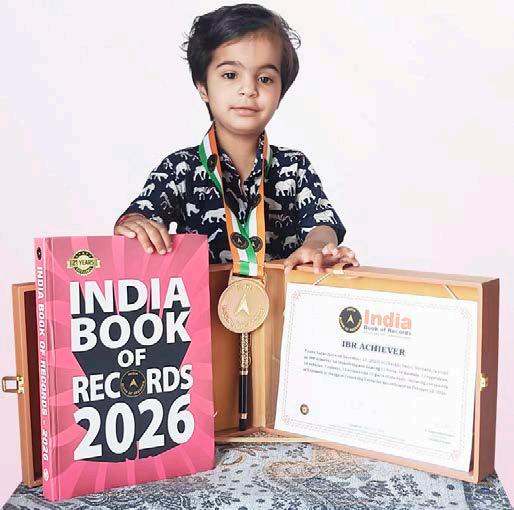










Gopireddy Venkata Shreya (born on March 12, 2001) of YSR Kadapa, Andhra Pradesh, is titled as ‘IBR Achiever’ for painting 9 glass bottles with images of Mandala art, Warli art, names of 28 Indian states with capitals and other creative patterns, as confirmed on February 27, 2026.


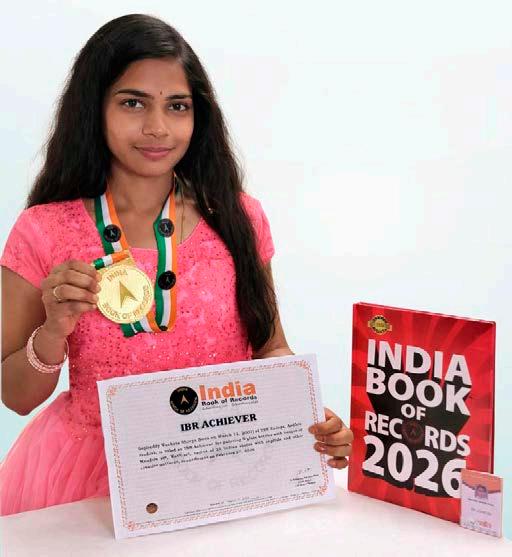




Aaradhya Pradhan (born on April 6, 2023) of Kendrapara, Odisha, is titled as ‘IBR Achiever’ for identifying 25 parts of the body, 10 leaders, 8 shapes and 5 vowels; recalling 17 national symbols, 17 opposite words, months in a year, days of the week, 6 seasons and nursery rhymes and 4 mantras; and answering 20 G.K. questions, at the age of 2 years and 9 months, as confirmed on January 9, 2026.

5 sense organs; reciting 2 months, as confirmed
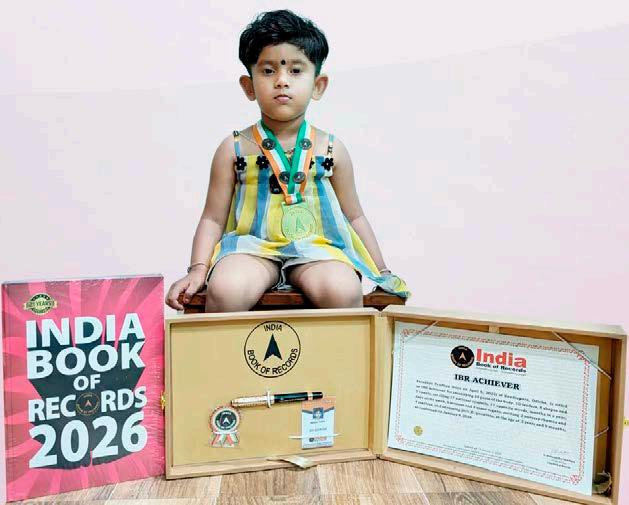





Yurovo Decode and Yurovo 2025, as confirmed on

Muhammad Mishal V.P. (born on November 8, 2003) of Malappuram, Kerala, is titled as ‘IBR Achiever’ for creating ‘Yurovo Learn’ on Instagram and LinkedIn, which consists of 7 educational series, named Yurovo Sparks, Blueprints by Yurovo, Yurovo Legends, Yurovo Chronicles, Yurovo Roots, Yurovo Decode and Yurovo Arena. He uploaded 161 posts from August 1, 2025 to October 26, 2025, as confirmed on January 12, 2026.





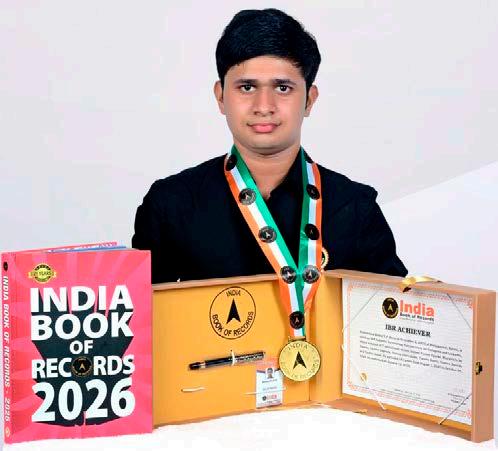






Akshara Chinthakindi (born on June 3, 2020) of Warangal, Telangana, is titled as ‘IBR Achiever’ for sharing the same date of birth and month with both of her siblings born on June 3, 2022 and June 3, 2024, respectively, as confirmed on
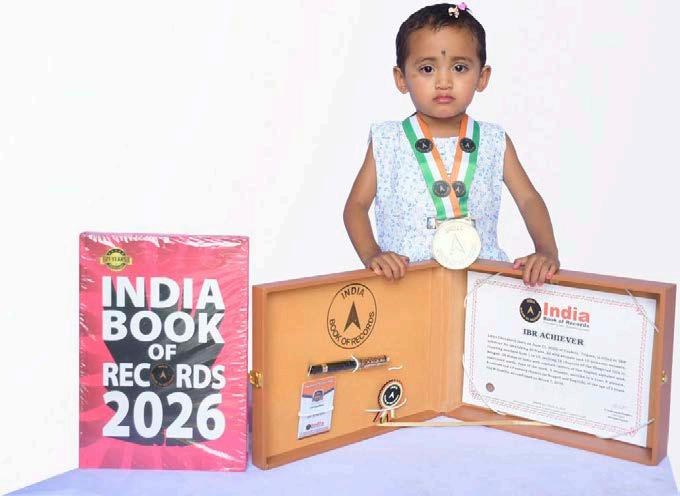
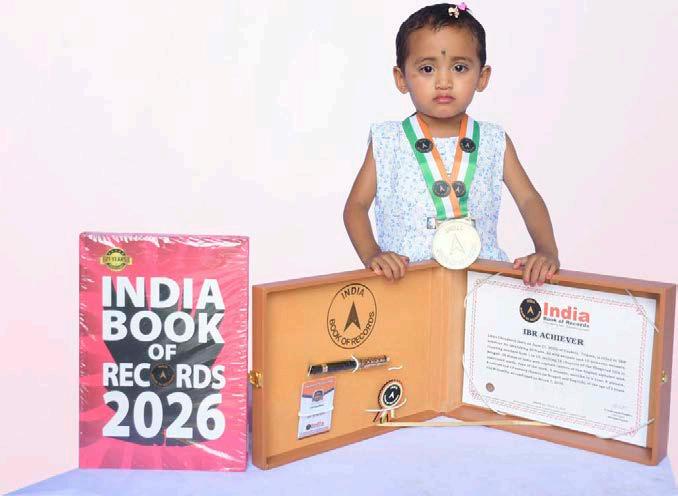
N. Maithrasri (born on July 19, 2023) of Chennai, Tamil Nadu, is titled as ‘IBR Achiever’ for identifying 16 parts of the body, 10 vegetables and 11 animals; reciting 2 Tamil Thirukkurals; and performing 10 actions, at the age of 2 years
Livya Choudhury (born on June 21, 2023) of Unakoti, Tripura, is titled as ‘IBR achiever’ for identifying 20 fruits, 22 wild animals and 19 domestic animals; counting numbers from 1 to 10; reciting 18 chapters of the Bhagavad Gita in Bengali, 28 states of India with capitals, letters of the English alphabet with associated words, days of the week, 4 seasons, months in a year, 8 planets, 8 colours and 13 nursery rhymes (in Bengali and English), at the age of 2 years and 8 months, as confirmed on March 7, 2026. and 8 months, as and 7 months, as confirmed on March 14, 2026.
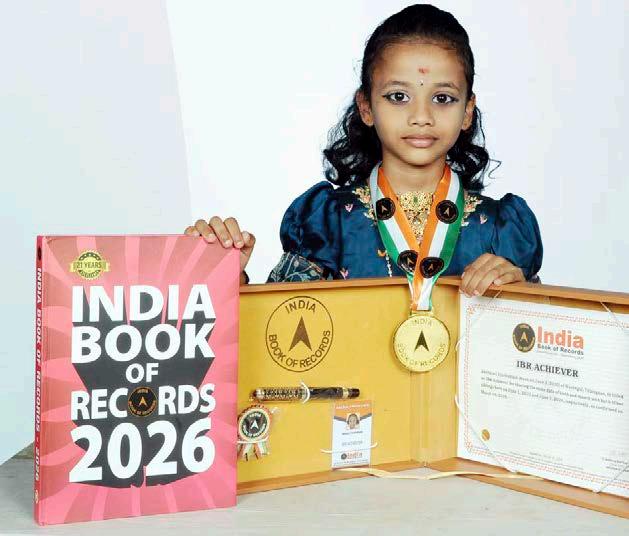








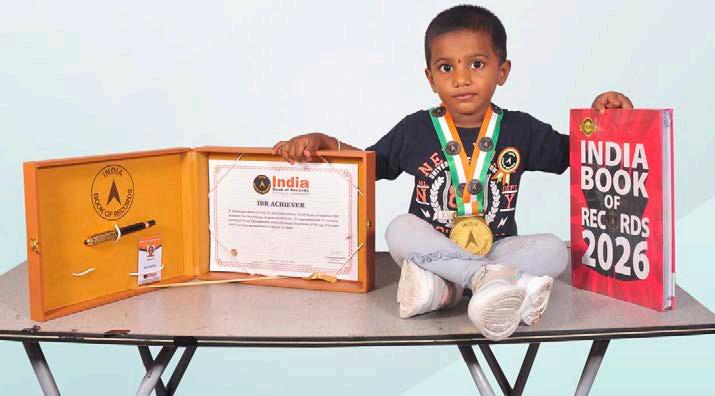


Ovi Pramod Yeole (born on June 17, 2024) of Pune, Maharashtra, is titled as ‘IBR Achiever’ for identifying 20 animals, 6 vegetables and 16 parts of the body; performing 26 actions; counting numbers from 1 to 10 in Marathi; drawing 4 shapes; climbing 72 steps; singing a song; dancing on a song; and imitating the sounds of 8 animals, at the age of 1 year and 9 months, as confirmed on March 19, 2026.

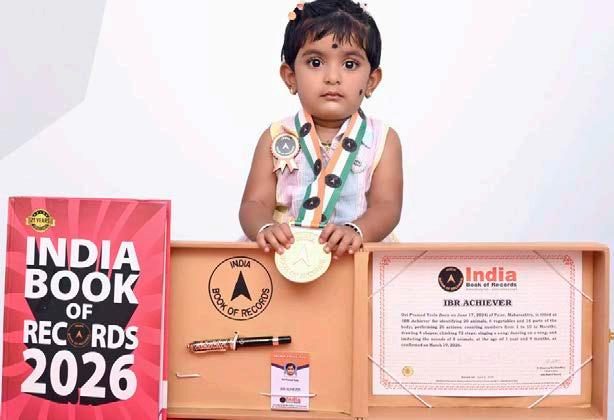


Pranshi Jaydeepbhai Dudhat (born on February 9, 2023) of Rajkot, Gujarat, is titled as ‘IBR Achiever’ for reciting 15 Sanskrit shlokas, including Vakratunda Mahakaya, Om Gam Ganapataye Namaha, Sarv Mangal Mangalye and others, in 4 minutes and 16 seconds, at the age of 3 years and 1 month, as confirmed on March 17, 2026.

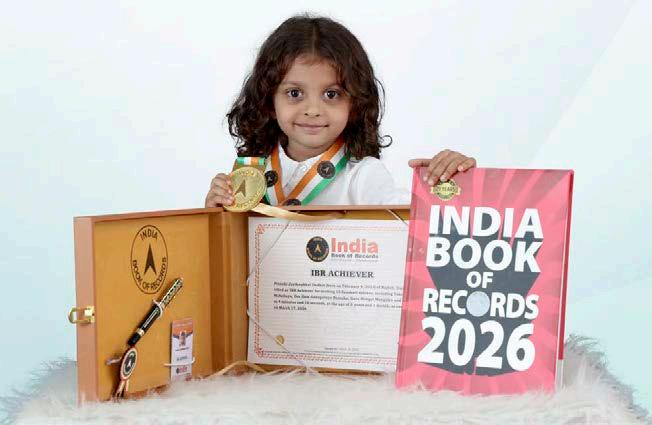







Daivik S. (born on December 27, 2019) of Bengaluru, Karnataka, is titled as ‘IBR Achiever’ for identifying 180 pictures, comprising the flags of 92 countries, 4 world leaders, 9 Indian actors, 31 athletes, 17 car brand logos and 27 national and international brand logos, in 2 minutes and 22 seconds by looking at the charts, at the age of 6 years and 2 months, as confirmed on March 18, 2026.
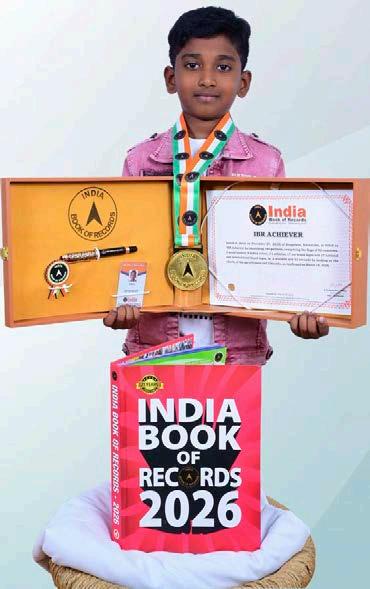


Lavishka Kishore Raj (born on March 26, 2020) of Bengaluru Rural, Karnataka, is titled as ‘IBR Achiever’ for demonstrating 28 Asamyuta Hasta Mudras (single hand gestures) of Bharatanatyam dance (under the guidance of V2 Dance Academy) in 24 seconds and 44 milliseconds, at


S. Rithanya (born on April 19, 2024) of Chennai, Tamil Nadu, is titled as ‘IBR Achiever’ for identifying 5 national symbols, 7 vehicles, 10 colours, 12 vegetables, 13 fruits, 30 animals and 20 parts of the body; matching 12 colours; and sorting 16 shapes, at the age of 1 year and 9
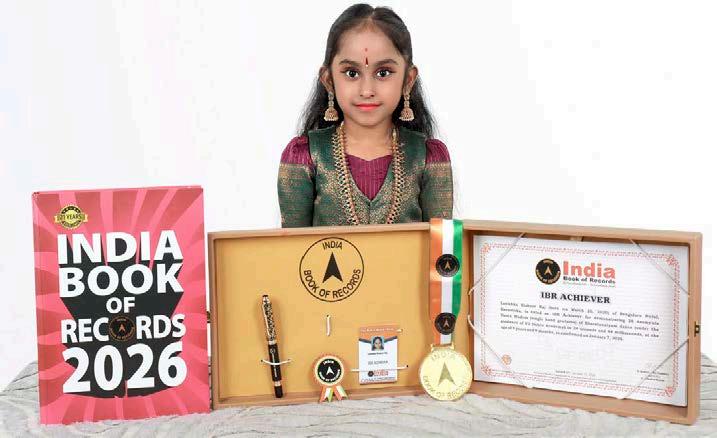




the age of 5 years and 9 months, as confirmed on months, as confirmed on January 24, 2026.


Edla Samyuktha (born on October 14, 2011) of K.V. Rangareddy, Telangana, is titled as ‘IBR Achiever’ for reciting all 118 elements of the periodic table in 30 seconds, at the age of 14 years and 3 months, as confirmed on January 19, 2026.


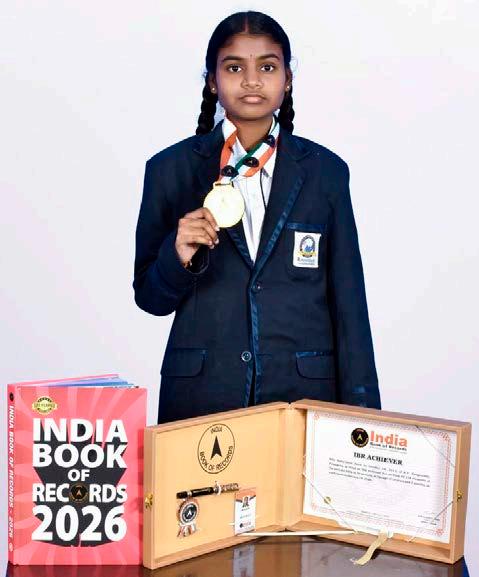








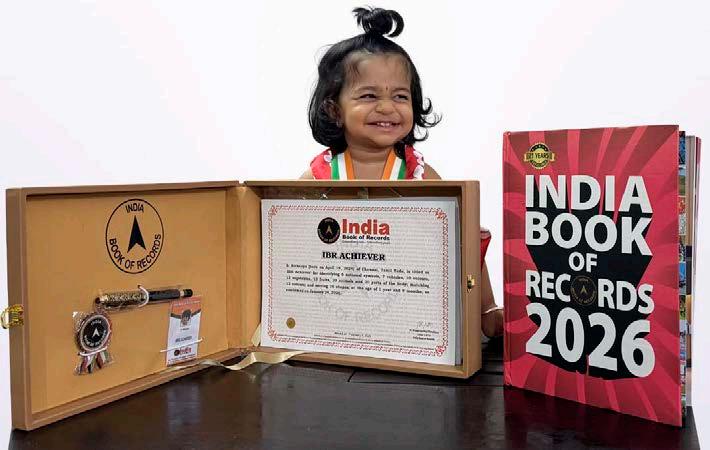





N. Niya (born on December 11, 2023) of Tiruvallur, Tamil Nadu, is titled as ‘IBR Achiever’ for identifying 10 parts of the body; recalling 26 letters of the English and 12 letters of the Tamil alphabet with associated words; reciting months in a year and days of the week; and counting from 1 to 10, at the age of 2 years, as confirmed on January 10, 2026.

Aryan Rajesh Khedekar (born on July 31, 2011) of Thane, Maharashtra, is titled as ‘IBR Achiever’ for completing a long distance sea swimming feat from Prong Lighthouse to Atal Setu, covering a distance of 20 km in 3 hours, 54 minutes and 15 seconds, on March 16, 2025, conducted by Maharashtra State Amateur Aquatic Association, at the age of 13 years and 7 months, as January 29, 2026.

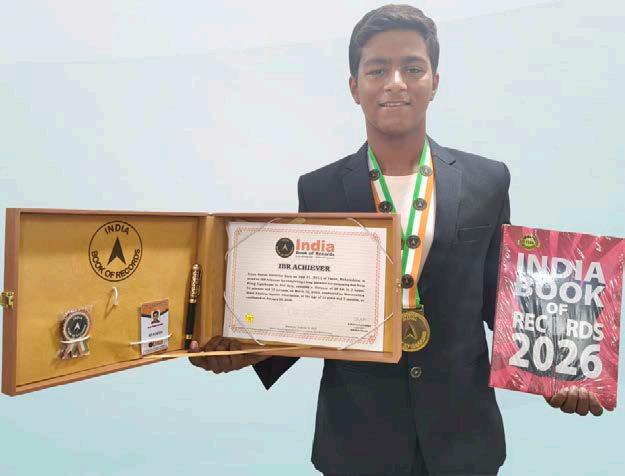




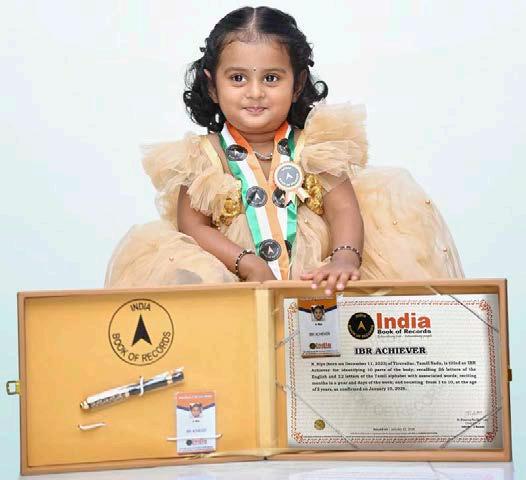


a year and days of the table in 30 seconds, at the and 3 birds, at the Association, at confirmed on



Aisha Zoohi P.P.K. (born on August 21, 2023) of Ernakulam, Kerala, is titled as ‘IBR Achiever’ for identifying and recalling the names of 13 vegetables, 17 fruits, 5 animals, 10 parts of the body, 6 flowers, 7 vehicles, 8 actions, 5 shapes, 10 colours, 8 professions and 3 birds, at the age of 2 years and 5 months, as confirmed on January 21, 2026.






V. Saindhavi (born on January 20, 2021) of Salem, Tamil Nadu, is titled as ‘IBR Achiever’ for identifying and recalling 60 binomial scientific names of different fruits, vegetables, plants, flowers and animals in 3 minutes and 16 seconds, at the age of 5 years and 1 month, as confirmed on March 2, 2026.














Vanya Saini (born on July 15, 2023) of Hisar, Haryana, is titled as ‘IBR Achiever’ for answering 15 G.K. questions; singing the National song; recalling 7 colours of the rainbow, months in a year, days of the week, 8 planets and 4 seasons, at the age of 2 years and 7 months, as confirmed on






Shifa Azad (born on March 19, 2024) of North 24 Parganas, West Bengal, is titled as ‘IBR Achiever’ for identifying and naming 16 animals, 9 vegetables, 9 fruits and 9 birds; recalling alphabetical words from A to F; reciting 3 Bengali nursery rhymes; identifying 9 parts of the body; imitating the sounds of 5 animals; and answering 7 G.K. questions, at the age of 1 year and 11 months, as confirmed on March 7, 2026.
Vriha Handa (born on April 26, 2024) of Kapurthala, Punjab, is titled as ‘IBR Achiever’ for identifying and naming 5 vehicles, 7 vegetables, 9 shapes, 10 colours, 15 parts of the body and 15 animals; reciting 26 letters of the English alphabet; and counting numbers from 1 to 10, at the age of 1 year and 10 months, as confirmed on March 9, 2026. March 5, 2026.










Aaradhya Jain (born on September 28, 2015) of Ghaziabad, Uttar Pradesh, is titled as ‘IBR Achiever’ for receiving the ‘Global Child Prodigy Awards 2025’ in Innovation and Technology at the House of Commons, British Parliament on June 25, 2026. She also developed the ‘Smart Support Cane’, a technologydriven elderly-assistive innovation and achieved 8 trophies, 11 medals and 10 certificates for academic excellence, at the age of 10 years and 3 months, as confirmed on January 23, 2026.


ICAI, CA CPT, CA Intermediate






Shirish Agrawal (born on June 20, 1990) of Harda, Madhya Pradesh, is titled as ‘IBR Achiever’ for completing academic and professional qualifications in Law and Commerce, comprising Information Technology Certificate Course from ICAI, CA CPT, CA Intermediate (Group 1), LL.B., LL.M. and Ph.D. from the years 2008 to 2024, as confirmed on March 7, 2026.

household items, 20 fruits and 17 vegetables, at the



Abigail Grace Tintu (born on October 12, 2022) of Pathanamthitta, Kerala, is titled as ‘IBR Achiever’ for identifying and naming 19 parts of the body, 20 animals, 23 household items, 20 fruits and 17 vegetables, at the age of 3 years and 3 months, as confirmed on January 21, 2026.










Mohammed Usman M. Z. (born on February 9, 2013) of Haveri, Karnataka, is titled as ‘IBR Achiever’ for performing and holding the Elbow Plank pose, on the floor, for 5 minutes and 28 seconds, at the age of 12 years and 11 months, as confirmed on January 28, 2026. and 28 seconds, at the months, as confirmed on
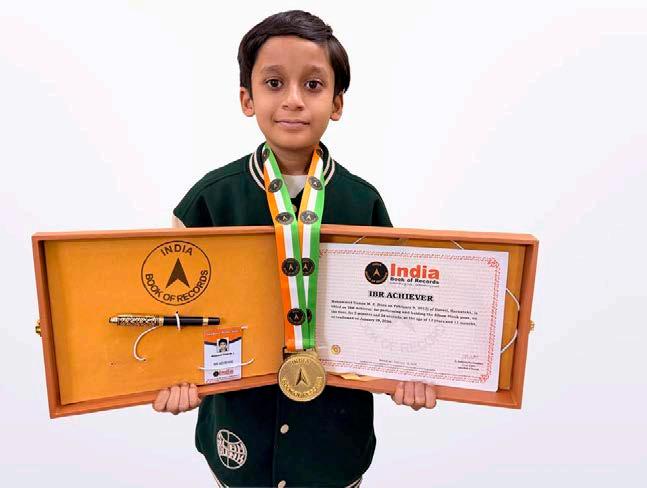



Roudrik Basak (born on April 8, 2022) of North 24 Parganas, West Bengal, is titled as ‘IBR Achiever’ for writing all the letters of the English alphabet with associated words and numbers from 1 to 100; solving 9 addition and subtraction sums; identifying 12 birds, 12 parts of the body and 31 vehicles; reciting 4 English nursery rhymes and spelling number names from 1 to 10, at the age of 3 years and 9 months, as confirmed on January 15, 2026.

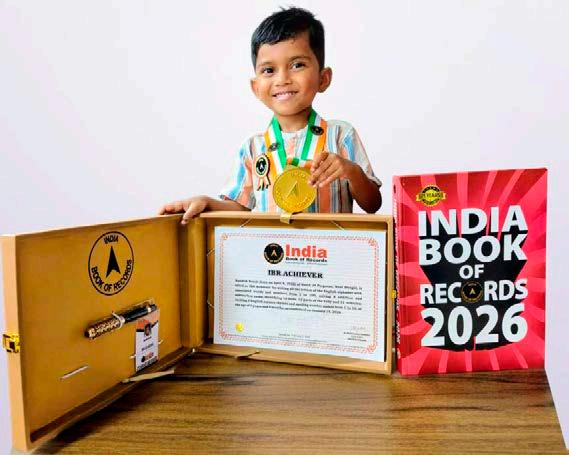





S. Varshika Sri Sivagnanam (born on January 29, 2015) of Madurai, Tamil Nadu, is titled as ‘IBR Achiever’ for authoring a self-published e-book in English, titled ‘Inventions to Adventures’, at the age of 10 years and 11 months, as confirmed on January 21, 2026.


S. Sai Shrisha (born on September 28, 2023) of Coimbatore, Tamil Nadu, is titled as ‘IBR Achiever’ for identifying the flags and recalling the names of 50 countries in 3 minutes and 9 seconds by viewing the pictures of flags on flashcards, at the age of 2 years and 3 months, as confirmed on January 15, 2026.

number names from 1 to 10, 9 months, as confirmed on organised by the Amravati
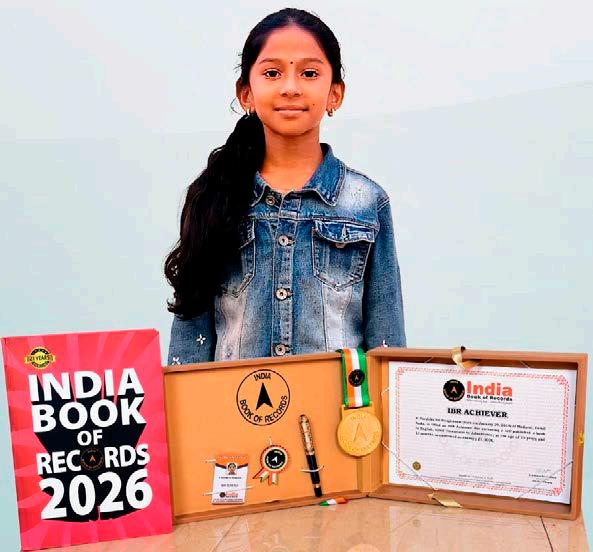















Om Ganeshkumar Jadhav (born on September 6, 2006) of Buldhana, Maharashtra, is titled as ‘IBR Achiever’ for achieving 6 certificates for participating in different Brevet cycling competitions, covering 200 km on September 14, 2025, 300km on October 12, 2025, 400 km on November 15, 2025 and 600km on November 1, 2025 and December 20, 2025, organised by the Amravati Cycling Organisation, affiliated to Audax India Randonneurs, at the age of 19 years and 4 months, as confirmed on January 14, 2026.



Raviprasad Pooshan Deshpande (born on May 24, 2022) of Bengaluru, Karnataka, is titled as ‘IBR Achiever’ for solving 20 jigsaw puzzles (each consisting of six pieces) of animals and vehicles in 25 minutes and 38 seconds, at the age of 3 years and 9 months, as confirmed on March 19, 2026.


months, as confirmed on


Prayushi Dash (born on June 20, 2024) of Ganjam, Odisha, is titled as ‘IBR Achiever’ for identifying 16 animals, 18 fruits, 10 vehicles, 10 shapes, 7 sea animals, 5 colours, 20 vegetables and 4 insects; imitating the sounds of 9 animals; counting from 1 to 5; recalling 22 baby animal names, 9 English antonyms and 26 alphabetical words, at the age of 1 year and 8 months, as confirmed on March 2, 2026.

R. Jency (born on January 7, 2022) of Dindigul, Tamil Nadu, is titled as ’IBR Achiever’ for reciting the names of 28 Indian states, along with the capitals, in 43 seconds, at the age of 4 years and 2 March 12, 2026.
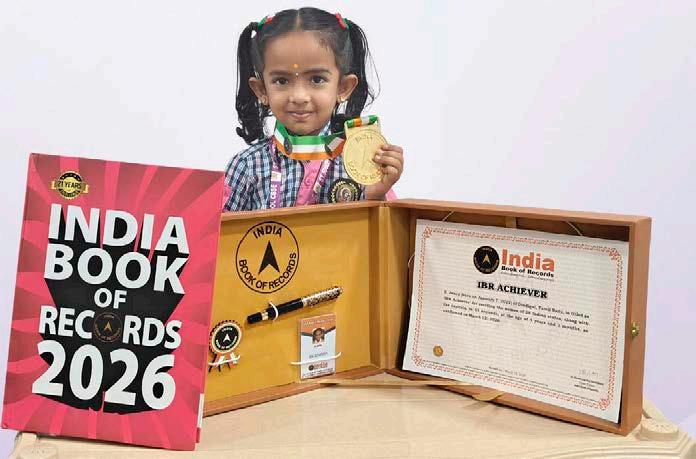


1 minute and 16 seconds of 3 years and 6

Rhythamicca G. (born on August 31, 2022) of Tiruppur, Tamil Nadu, is titled as ‘IBR achiever’ for identifying and recalling the names of 28 types of land, water and air transport in 1 minute and 16 seconds by viewing pictures on flashcards, at the age months, as confirmed on March 2, 2026.

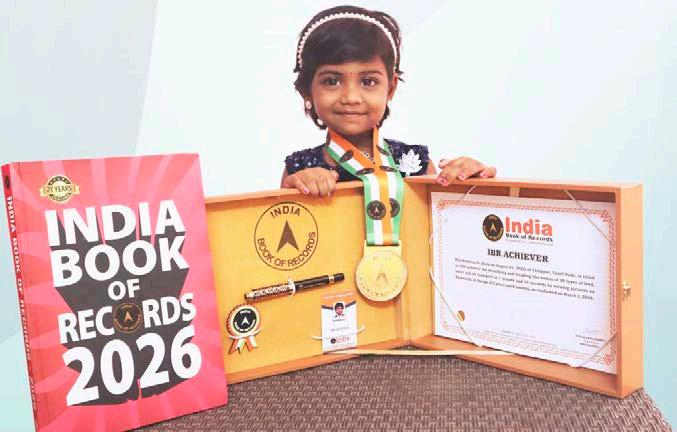


Ridhima Dash (born on June 10, 2015) of Jagatsinghpur, Odisha, is titled as ‘IBR Achiever’ for being awarded 18 certificates, 4 trophies and 9 medals for participating in academic and extracurricular activities, including drawing, mono acting, English debate and Olympiads (English and Science); achieving a certificate from the‘Vikram Sarabhai Science Foundation’ for being chosen as the ‘Top 100 Young Science Talents’. Additionally, she has been identified as the Best PerformerLevel II in the Bharat Olympiad Exams in English for the academic session 2025-26, at the age of 10 years and 8 months, as confirmed on March 6, 2026.








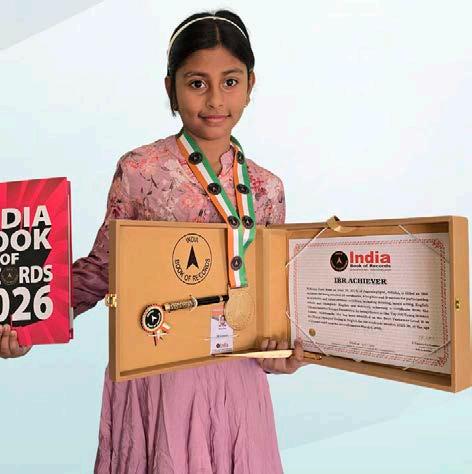


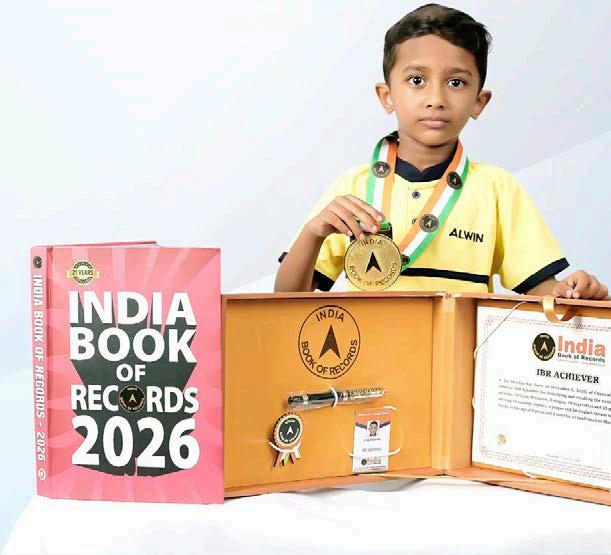

S. Sai Shashin Raj (born on December 5, 2020) of Chennai, Tamil Nadu, is titled as ‘IBR Achiever’ for identifying and recalling the names of 9 domestic animals, 16 fruits, 9 colours, 5 shapes, 18 vegetables and 15 parts of the body; reciting 10 nursery rhymes, a prayer and 26 English letters with alphabetical words, at the age of 5 years and 3 months, as confirmed on March 13, 2026.



Zenha Mehrin M A (born on May 10, 2024) of Thrissur, Kerala, is titled as ‘IBR Achiever’ for identifying 21 parts of the body, 15 miscellaneous pictures; reciting 2 English nursery rhymes; and stacking 5 coloured rings, at the age of 1 year and 8 months, as confirmed on January 23, 2026.




G.M. Vidusha (born on July 8, 2020) of Tiruppur, Tamil Nadu, is titled as ‘IBR Achiever’ for reading a mathematics paper in English for 51 seconds, at the age of 5 years and 6 months, as confirmed on January 13, 2026.





Trishika Bhure Sisodhiya (born on July 26, 2023) of Vadodara, Gujarat, is titled as ‘IBR Achiever’ for identifying and recalling the names of 25 states of the United States of America in 1 minute and 3 seconds by viewing an unlabelled outline map of USA, at the age of 2 years and 6 months, as confirmed on January 27, 2026.



Ezin Ali Juraij M. (born on June 18, 2024) of Malappuram, Kerala, is titled as ‘IBR Achiever’ for identifying 7 parts of the body, 6 wild animals, 8 aquatic animals, 8 domestic animals, 14 vegetables, 18 fruits, 7 birds, 8 insects, 11 vehicles, 5 colours, 11 electrical items, 11 kitchen utensils, 7 furniture items, 37 miscellaneous objects and 28 relatives; expressing 5 emotions; and imitating the sound of 6 creatures, at the age of 1 year and 6 months, as confirmed on January 14, 2026.




Shlok Umesh Nehete (born on March 30, 2015) of Thane, Maharashtra, is titled as ‘IBR Achiever’ for locating and naming 40 countries on a globe in 59.80 seconds, at the age of 10 years and 9 months, as confirmed on January 21, 2026.
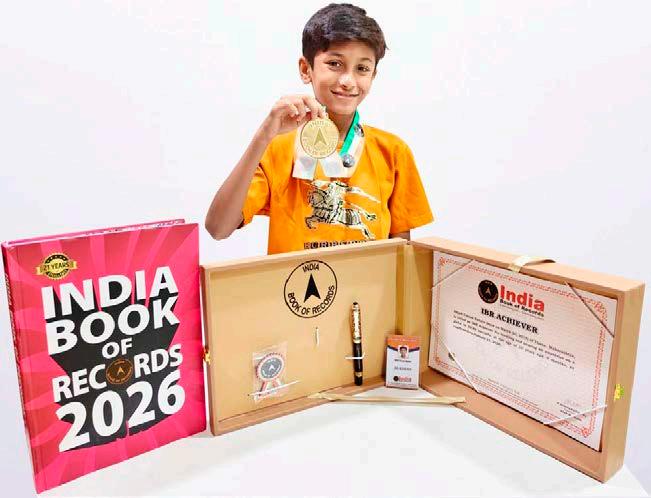





Shweta Maurya (born on July 10, 1999) of Bengaluru, Karnataka, is titled as ‘IBR Achiever’ for making a small painting of Lord Ganesha (measuring 2.5 cm x 2.5 cm) on a sheet of paper in 31 seconds, using beetroot juice, as confirmed on January 3, 2026. January 3, 2026.
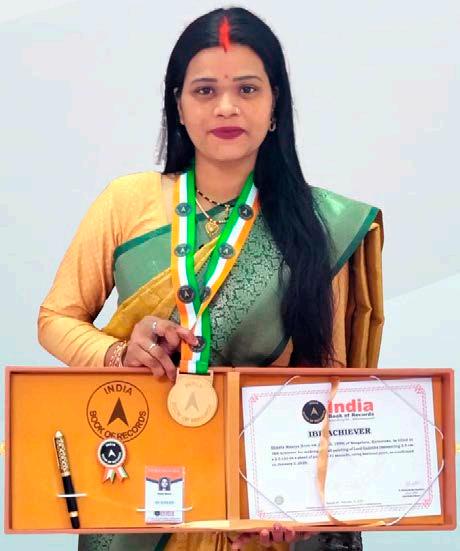
































relief in 2 steps



Step 1 Open the cap Step 2 Sniff the oil



The box contains: • 2 Seconds Oil bottle • Cer tificate of Commitment












































This is probably the world’s first book on the Science of Postural Medicine based on using the greatest force on earth, the Gravity as Medicine! After reading this book you will surely be convinced that in comparison to existing major systems of treatment including Allopathy (Modern Medicine), Homeopathy, Ayurveda or Naturopathy, postural medicine is the fastest, safest and more evidence-based than others, besides being almost zero cost and having zero dependency on chemicals/drugs and high-tech equipment.


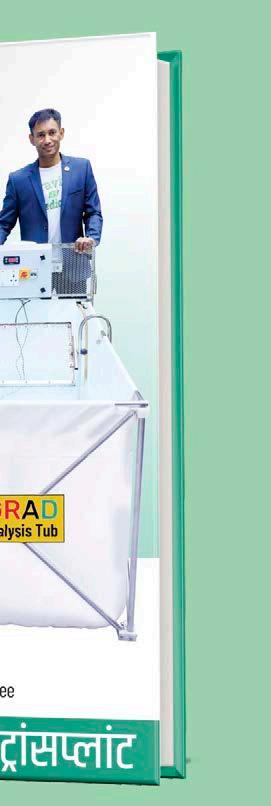
Price: ₹ 225/(Courier charges extra)
(Available in Hindi/English, in all leading online stores)


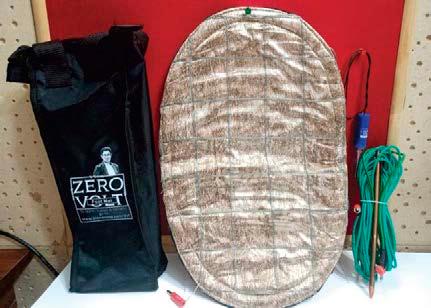
Ÿ Foot Mat (19 x 12 inch)
Ÿ Earthing Copper Rod
Ÿ Connecting Copper Wire (10 meter)
Ÿ Carry Bag
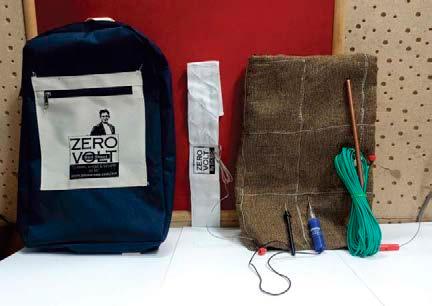
Ÿ
(75
Ÿ Earthing
Ÿ Connecting
Wire (10 meter)
Ÿ Copper connecting wristband
Ÿ Carry Bag
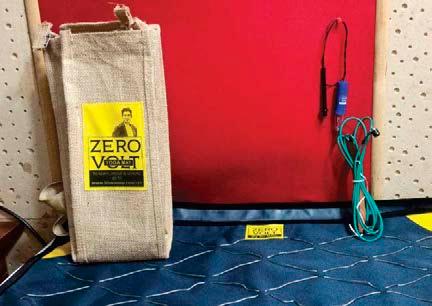
Ÿ
Mat (74 x 30 inch)
Ÿ Earthing Copper Rod
Ÿ Connecting Copper Wire (2 meter)
Ÿ Carry Bag



By Neerja Roy Chowdhury
This book will show you how to:
· Memorize a dictionary
· Never forget any appointment
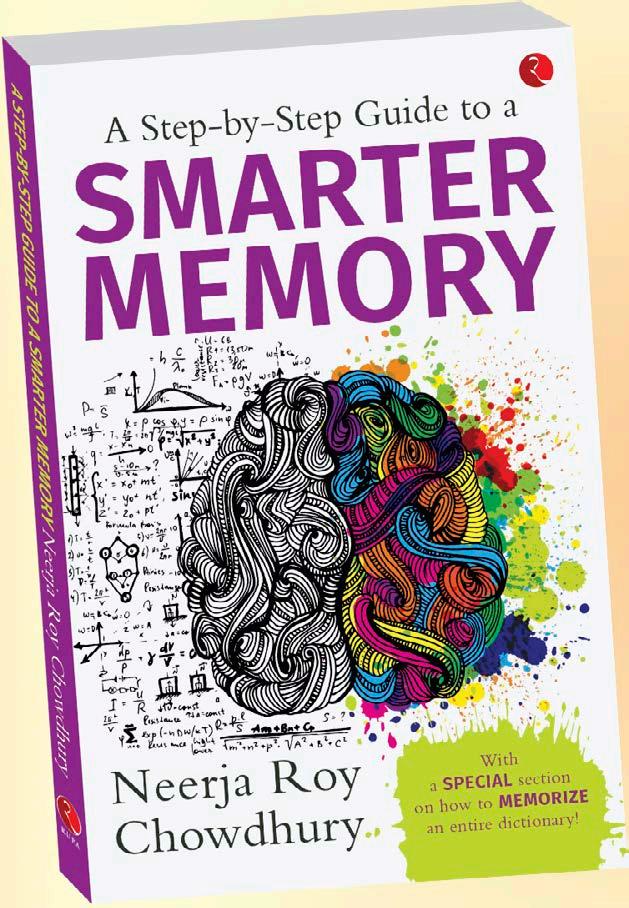


· Recall every formula correctly


· Remember the shopping lists, birthda s and anniversaries etc.

· Overcome absent-mindedness



· Learn Memory techniques to achieve career goals
· Secure better marks in every exam
Neerja Roy Chowdhury, the name can be found in prestigious record books including Guinness Book of World Records and Indo-China Book of Records for diverse reasons The most interestin of all is her ability to memorize the c
Dictionary She has also developed s o
dictionary. She has travelled more than 100 cities internationally in last one decade training people on ‘Memory
T




Memory’ is published by Rupa Publication Presently she is involved in developing curriculum in memory techniques for international universities




If you have decided to pick only one of my suggestions for the sake of your health, then take this suggestion:
Stop consuming tea, especially in the morning. Early morning tea makes the inner lining of the intestinal wall acidic because, after a long night of fasting, the stomach is empty and craving food. An acidic stomach on a regular basis is one of the biggest causes of all kinds of inflammatory and lifestyle diseases, including arthritis and diabetes.
Hunza Civilization: The Hunza people live in the extreme northwest of the Indian subcontinent, within the Hindu Kush range. They are one of the world's healthiest civilizations, with some individuals living up to 110 years.
Ingredients:
* 12 Mint leaves(Pudina)
* 8 Basil leaves (Tulsi)
* 4 Green cardamom (Elaichi)
* 2 gm Cinnamon (Dalchini)
Instructions:
* Take 4 cups of water in a tea pan
* Add all ingredients, simmer it for 10 mins
* Add a dash of lemon juice and serve hot or cold



























































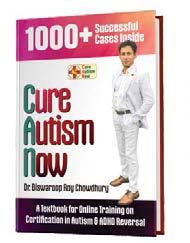


















































































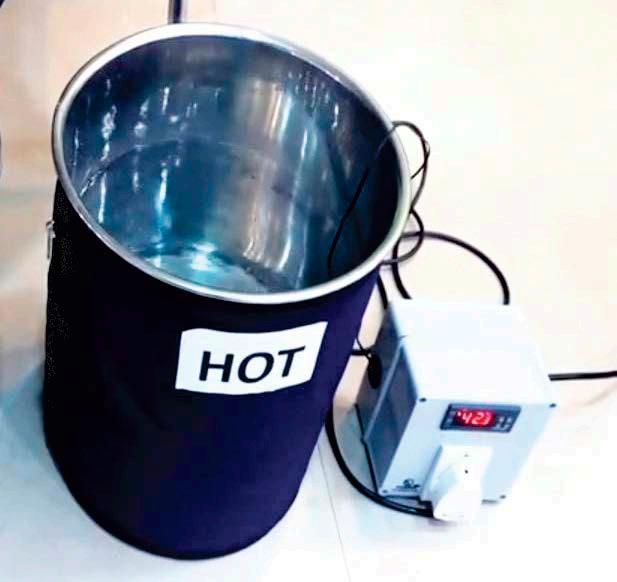






























































































































































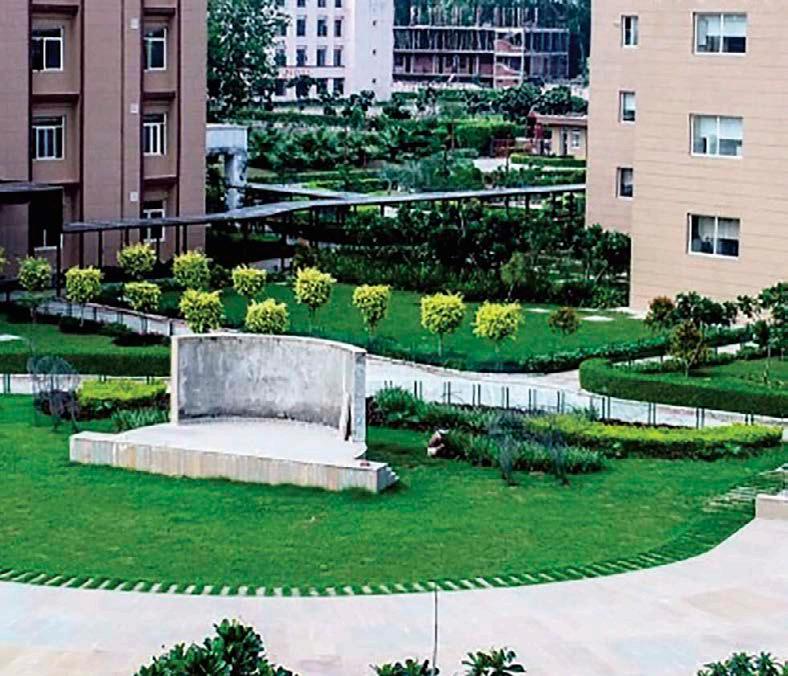
















We are proud to be pioneers in the field of “Healing Care” through “Engineering Science”, with over a decade of experience across Malaysia, Vietnam, and India. Our work is led by Dr. Biswaroop Roy Chowdhur y, renowned author of 36 books and creator of the acclaimed D.I.P. Diet.












We warmly invite you to our 8-hour aining session titled “3 Medicines























showing how nature’s three medicines can help you raeclaim your healthnot in months or days, but for many, within just a few hours of integrating them into your lifestyle.













To explore the engineering of the human body using scientific tools such as a voltmeter, light meter, and EMF meter, join us for this one-day hands-on workshop.


























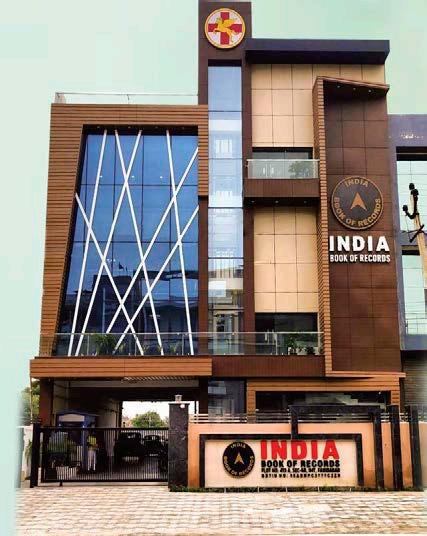





































1. Time as Medicine: Eating a variety of fruits for breakfast can improve metabolism and help control blood sugar, whereas consuming fruits after sunset may have the opposite effect. This science can be understood by studying your circadian clock—the body's internal timekeeper.























2. Food as Medicine: What if 50% of your diet consisted of raw vegetables and fruits, excluding all forms of animal protein? Most likely, you would achieve a healthy Body Mass Index (BMI) within 2 to 3 months, along with significant improvements in stamina and endurance. A true understanding of the science of food can empower you to reach your health goals.


















3. Zero Volt Medicine: Simply step barefoot onto grass or natural earth. Within the first 10 seconds, your body ’s voltage drops to zero. At this “Zero Volt” state, the body is believed to reach peak








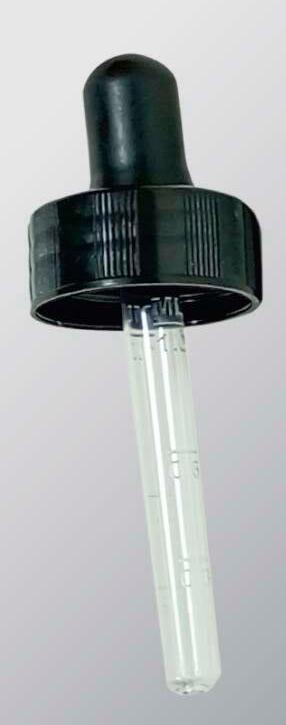











Duration: 1 Month Mode: 100% Online • (Objective test after each lecture)
• History, Chemistry & Cultural Adaptation of Neem
• History of Neem as a Medicine
• Cultural Adaptation Worldwide
• Chemistry of Active Agents
• Neem as Cosmetics Module 1: Neem Culture, Chemistry & Cosmetics
3: Practitioner’s Toolkit – Infectious Diseases
• Evidence Base of Neem as medicine for Infectious Diseases
• Dosage Calculation
• Practitioner’s Toolkit – Infectious Diseases
Neem Bark PowderDropper • Measuring Spoon
• Dosage Calculation





• Evidence Base of Neem as medicine for lifestyle diseases
• Practitioner’s Toolkit – Lifestyle Diseases
2: Practitioner’s Toolkit – Lifestyle Diseases • Neem Panchkarma for Symptomatic Pain Management
• Basics of Neem Panchkarma
• Practical Sessions • DIY: Home Pesticides • Final Objective Test


Jo n our ompr ns v pro r m n ‘Int r t M n ’ w w ll



• D.I.P. Diet
mpow r you to om your own o tor. Furt r you w ll l to om p rt o our — n twork o + l n s. t our l t on you w ll l to pr t Dr B C roto ols n your r or ty. t r t's l styl s s , n t ous s s , m r n y r , or p n m n m nt, t s ours w ll qu p you to r t n nt r t m r n y tool ox t om to m t t s t r ts. Don't m ss t s opportun ty to t k r o your lt n w ll- n . Enrol now to st rt your ourn y tow r s s l -su n y n lt m n m nt. Mode: k n Onl n / Corr spon n Course Material: ours m t r l n lu s ooks w w ll l v r to your oorst p v our r (w t n In ) n - ooks w ll s r t rou m l.
• 3 Step Flu Diet
• GRAD
• Circadian Chart
• Zero Volt Therapy
• Acupressure
• Ayurvedic Panchkarma
• Vaso-Stimulation Therapy
• D.A.N. Protocol
































































































































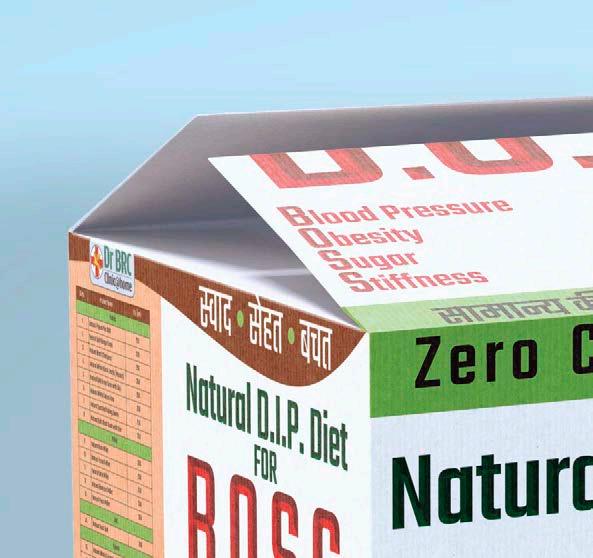


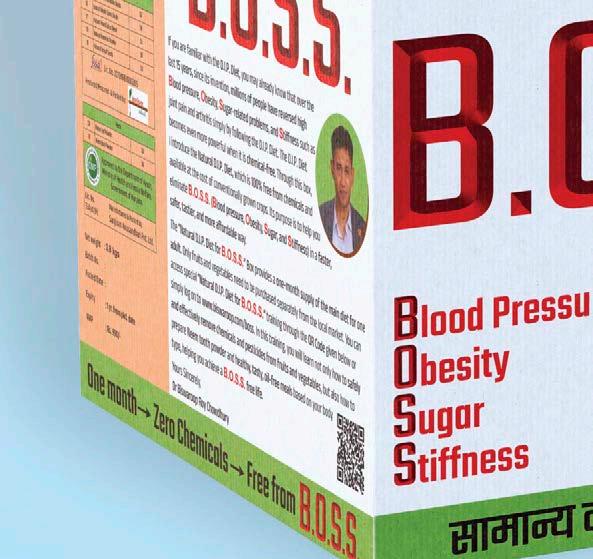


































India Book of Records 413A, HSIIDC, Sector-68, IMT, Faridabad (Haryana), India, Pin-121004
Phone: +91-99994 36779, +91-129-2510534
Email: media@indiabookofrecords.in www.indiabookofrecords.in

To avail Convocation@IBROffice services email us at: convocation@indiabookofrecords.in India Book of Records is registered with the Government of India with RNI no HARENG/2010/32259. India Book of Records is affiliated to Asia Book of Records and follows International Protocol of Records (IPRs) as per the consensus arrived at the meeting of the Chief Editors of National Record Books, Ho Chi Minh City, Vietnam.