
India Book of Rec rds




Duration: 1 Month (Weekly-2 hrs)
Mode: 100% Online (Objective Test after each lecture)
Module 1: Understanding Autism/ADHD - History, Causes & Diagnosis
Module 2: Science of Reversing Autism/ADHD
Module 3: Setting up Your Kitchen & Home in Accordance with C.A.N. Protocol
Module 4: Handling Common Health Emergencies (Seizure, Fever, etc.)
Course







“Vườn Tình Yêu – Prem Ki Surdhara” Wins Best International Film Award
The India Book of Records production “Vườn Tình Yêu
Sports Beyond the Limit
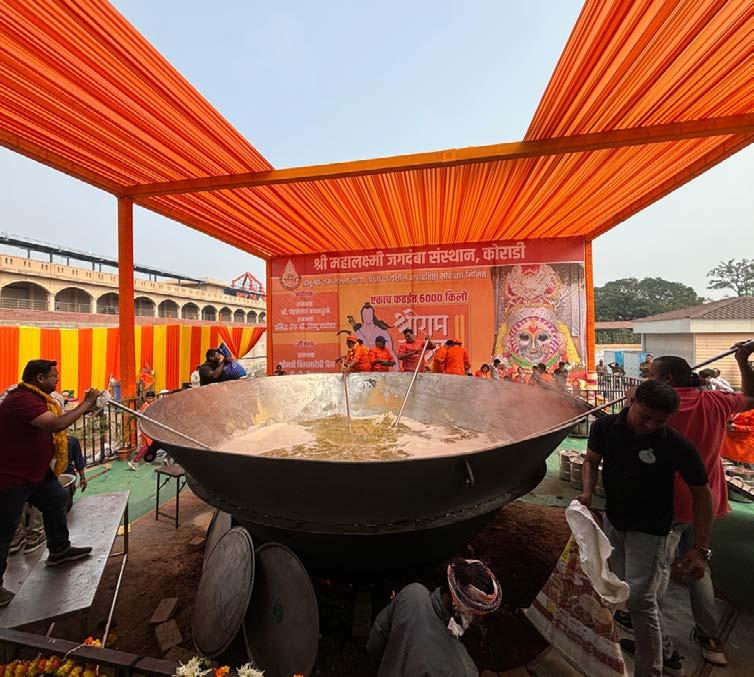
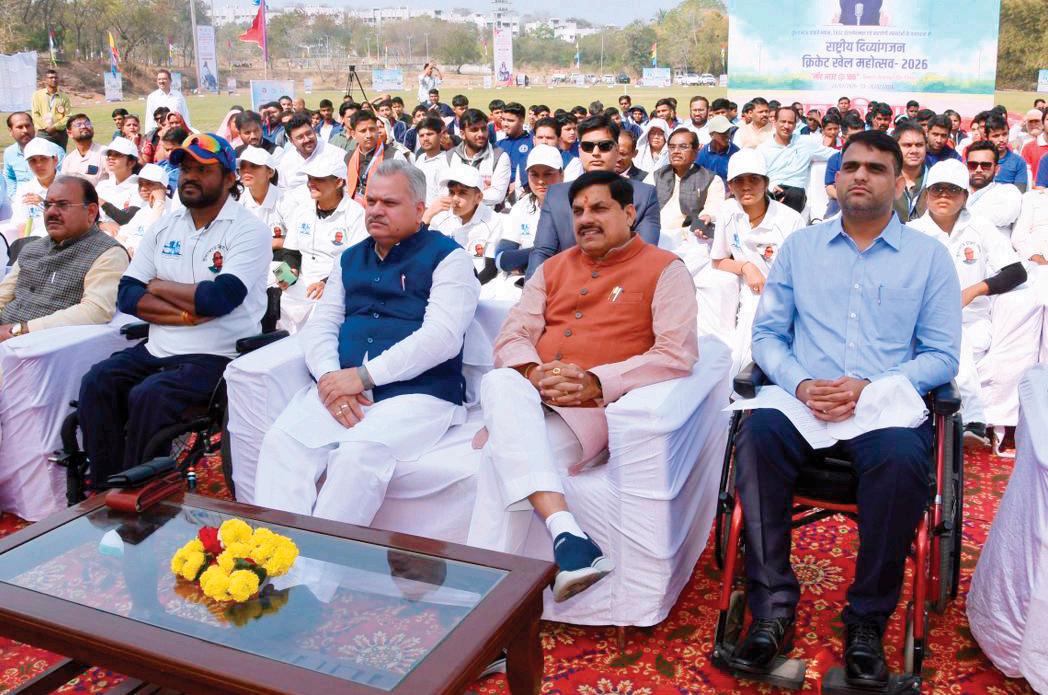
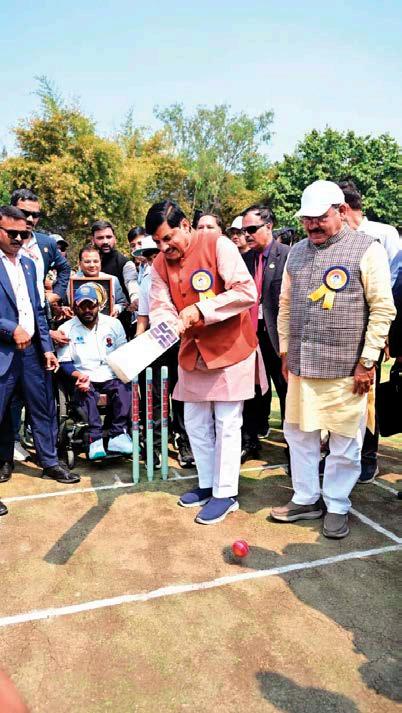
A 100-hour non-stop cricket festival in Bhopal united 350 para-athletes across categories. The “Divyangjan Khel Mahotsav” set a record and reinforced India’s expanding commitment to inclusive sports.
Story
8
– Prem Ki Surdhara” has achieved international acclaim by winning the Best International Film Award at the 8th Haryana International Film Festival, held at Kurukshetra University on March 25, 2026 - emerging as a powerful testament to the enduring cultural ties between India and Vietnam. 20 14 1 18
Supercars Conquer Cho La Pass
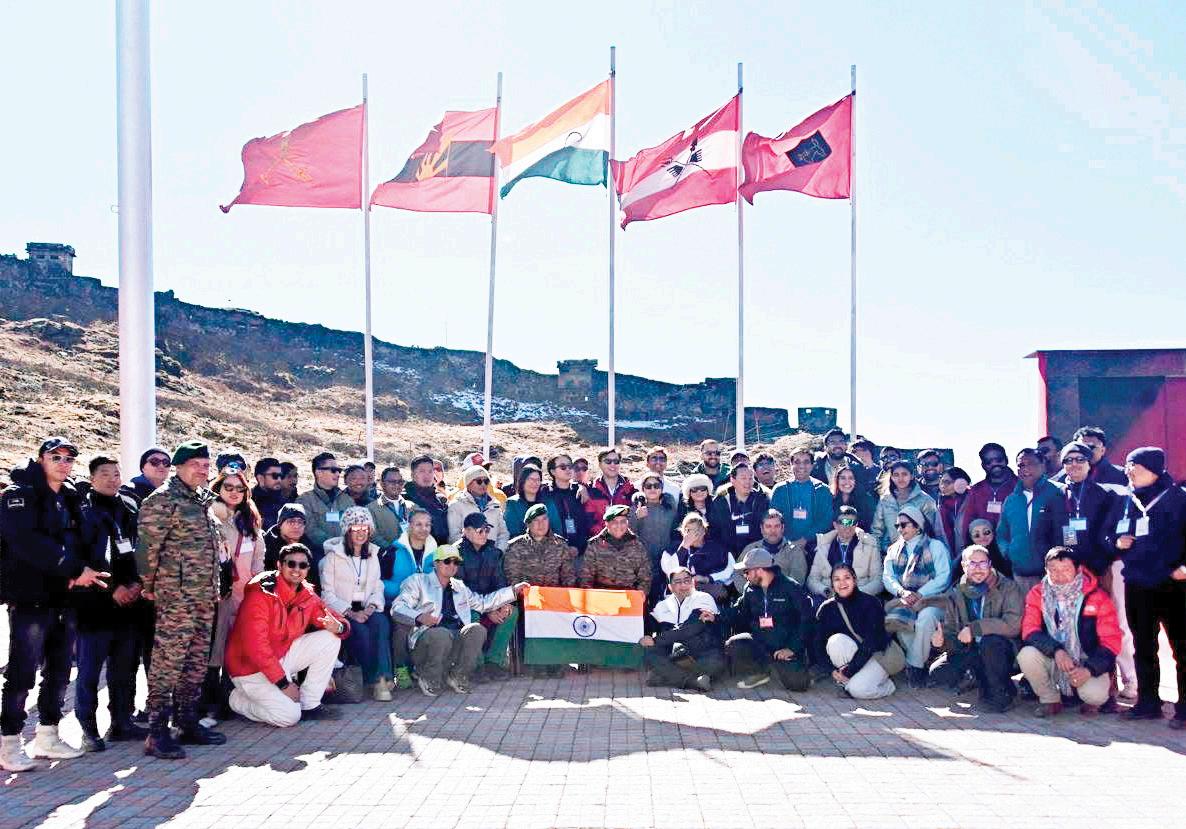
A 17-car supercar convoy reached Sikkim’s high-altitude Cho La Pass in December. The expedition set a national record while spotlighting frontier heritage, defence history, and responsible adventure tourism.
11
Electric Wheels, Long Roads
River and mountain expeditions by NIMAS marked new ground for Indian adventure sports. A 1040 km Brahmaputra rafting journey and a first summit of Mount Gorichen East earned national & international recognition.
Electric Scooter Conquers Kolli
An electric two-wheeler rewrote perceptions as Ampere Nexus climbed Tamil Nadu’s Kolli Hills, proving EV capability on steep terrain and earning a record through disciplined engineering and execution.
Women Learning Investment Power
A nationwide financial literacy drive reached 39,833 girl students across India through 571 programmes in 45 cities. The initiative highlighted the growing importance of financial education among young women.

STEM Quiz Sparks India
Racing the World’s Bars
Child Nutrition Campaign
Dear readers,
It gives me immense pleasure to share that this month’s India Book of Records issue features two extraordinary cover stories.
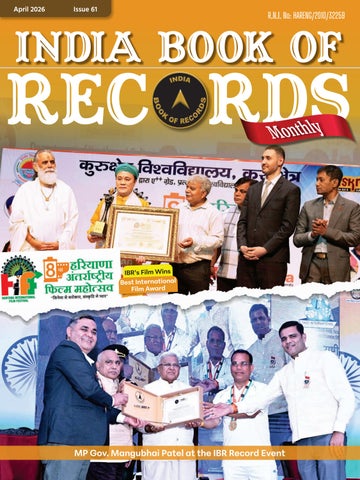
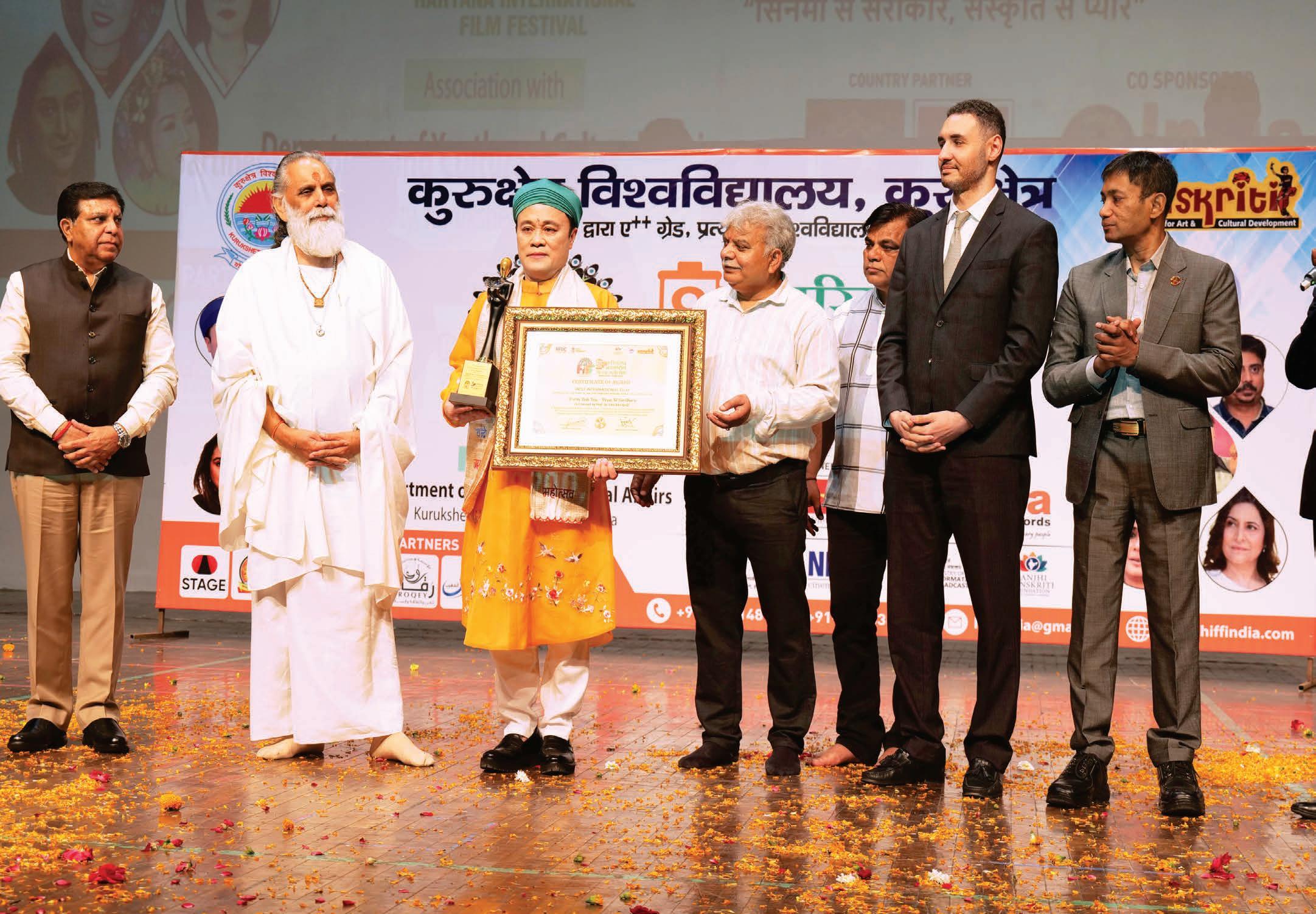
The first celebrates IBR-produced film “Vườn Tình Yêu – Prem Ki Surdhara”, which won the Best International Film Award at the 8th Haryana International Film Festival, highlighting enduring cultural ties between India and Vietnam. The award was presented to Prof. Dr. Chu Bao Que.
Young Hands, Wooden Dreams
When Art Shapes Landmarks
Forging
Our second cover story, Sports Beyond the Limit, captures the spirit of human aspiration. This 100-hour continuous cricket tournament for paraathletes in Bhopal brought together 350 players across multiple disability categories. Madhya Pradesh Chief Minister Mohan Yadav inaugurated the event, while Governor Mangubhai Patel attended the closing ceremony, celebrating determination, teamwork, and perseverance.
Adventure and innovation take centre stage as well. A convoy of seventeen supercars scaled the historic Silk Route to Cho La Pass, while artist Afshan Raza Khan unveiled a 20-foot Rampuri Chaaku-inspired sculpture in Uttar Pradesh. Global exploration shines through Ankit Poothia’s 60-day journey across six continents and Pranik.AI’s real-time AI transcription of medical proceedings, demonstrating technology’s transformative potential. Innovation on Indian roads is highlighted by Raptee Energy’s electric motorcycle, completing a 7,530-km All-India ride in 19 days.
These stories reflect ambition, creativity, and progress, reminding us that records emerge where passion meets persistence. Write to us: media@indiabookofrecords.in
Warm regards,
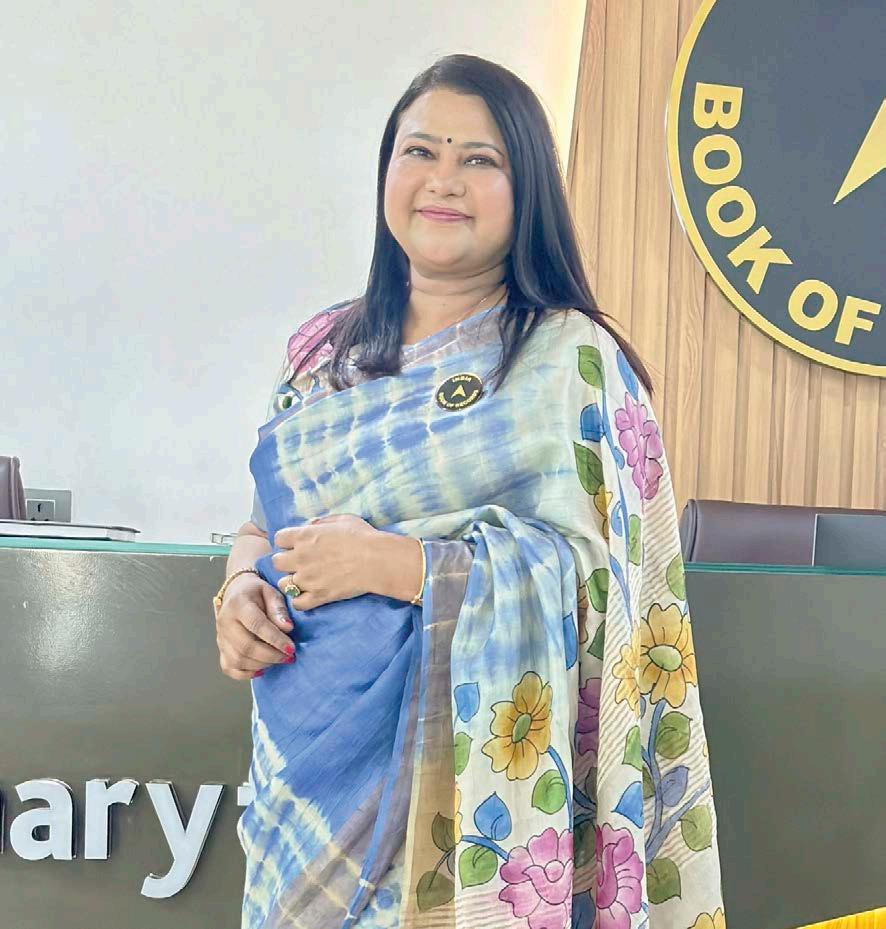
Neerja Roy Chowdhury Managing Editor

R.N.I. No: HARENG/2010/32259
Managing Editor Neerja Roy Chowdhury
Editor Narvijay Yadav
Copy Editors Sonum Garg, R.K. Gupta
Design & Layout Swapan Banik, Shankar Singh Koranga
Image Editing Vinod Kumar, Ranveer Singh
Image Compilation Muskaan Singh, Swati Tyagi
Compilation Mansi Satija
Records Management Team Sangeeta Sinha, Neha Tyagi
Gunjan Kachroo, Riena Singh Khare, Emmanuel Job
Support Mohd Ikram, Jeet Singh IT Team Shantanu Chauhan
Padam Singh Rana, Kapil Attri, Sunil Goyal
Board of Advisors
Justice B.G. Kolse Patil (Former Judge of Mumbai High Court)
Dr. Raj Rup Fulia (retd. IAS), (Former Principal Secretary, Govt. of Haryana)
Dr. Parveen Kumar (retd. IAS), (Former DG, Dept. of Sci & Tech., Govt. of Haryana)
Dr. Bipin Kumar (President Vishwa Hindi Parishad)
Rakesh Kumar Verma (Blackbelt-6 Degree) (Retd from MES, MoD, Govt. of India)
Somnath Bharti (Former Law Minister, Delhi)
Send all correspondence to: India Book
of Records
413A, HSIIDC, Sector-68, IMT, Faridabad-121004, Haryana, India
Mobile No.: +91-99994 36779
Phone No.: +91-129-2510534
Email: ibr@indiabookofrecords.in media@indiabookofrecords.in abr@asiabookofrecords.com
Websites: www.indiabookofrecords.in www.asiabookofrecords.com
Our Associates
Asia Book of Records Selvarani Muthiah
Vietnam Book of Records Prof. Dr. Hoang Quang Thuan
World Records University Rachna Sharma
Indo-Vietnam Medical Board Nguyen Hoang Anh
Nepal Book of Records Deepak Chandra Sen
Bangladesh Book of Records Dr. Gobind Das
Indonesia Book of Records Osmar Semesta Susilo
USA Book of Records Dr. Theresa Quach
Consultants
Acharya Manish, Dr. Anant Biradar, Shivani Agarwal, Surjeet Singh, Dr. Pradeep Bhardwaj
Our Adjudicators/Reporters
Andhra Pradesh Dilip Patro, Dr. Sarala
Assam & North East Jitender Kumar Jain
Chhattisgarh Kiran Sharma, Krishna Kumar Gupta
Delhi Mohit Vats, Samir Das, Bhanu Pratap Singh, Richi Sharma
Gujarat Neelima Chhajed, Ritesh Chanpura, Dushyant Chaturvedi
Haryana Ashutosh Mittal, Narvijay Yadav, Sanjay Bhola
Himachal Pradesh Chitranjan Mahant
Jharkhand Prakrit Kumar Singh
Karnataka Harish R., Girish Banvi
Kerala Vivek Nair, S. Sagayaraj, Sam George, Sagar AR, Prateek Joshi
Madhya Pradesh Antim Kumar Jain
Maharashtra Biswadeep Roy Chowdhury, Kashmira Shah, Dr. Manoj Tatwadi, Dr. Sunita Dhote, Rekha Singh, Dilip Mane, Seema Manikkoth, Dr. Chitra Jain
Punjab Acharya Manish, Dr. Pankaj Sital, Sachin Khullar
Rajasthan Bhuvnesh Mathuria, Dr. Vinod Sharma, Dr. Raja Mookim
Tamil Nadu Vivek Nair, Kavitha Jain
Telangana Vasudha Rani, Sunita Arya, Rammohan Reddy
Tripura Tapan Datta
Uttarakhand Virender Singh
Uttar Pradesh Vinod Kumar Singh, Smita Singh, Anand Vedant, Neeti Agnihotri, Pramil Dwivedi, Lata Tack
West Bengal Sunita Kedia, Meena Gupta
All India Manoj Prajapati, Manoj Singh, Hemant Sharma, Anjul Tomar

Wins Best International Film Award

TheIndia Book of Records production
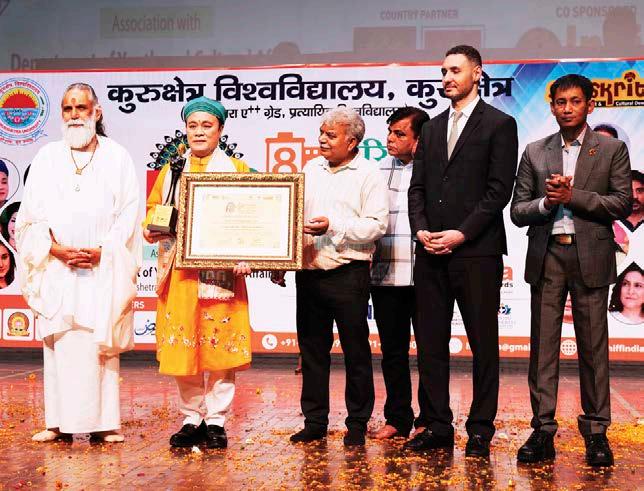
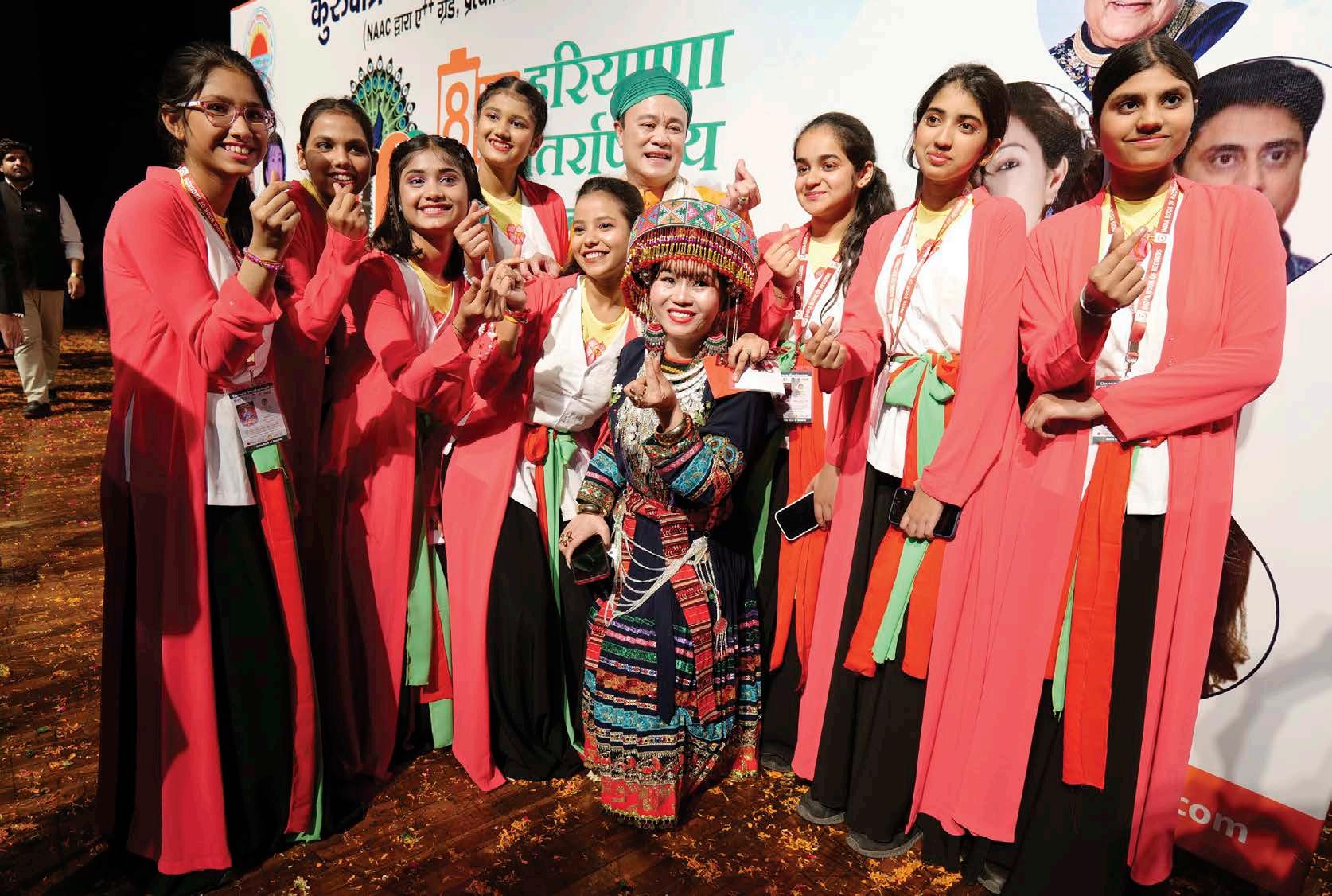
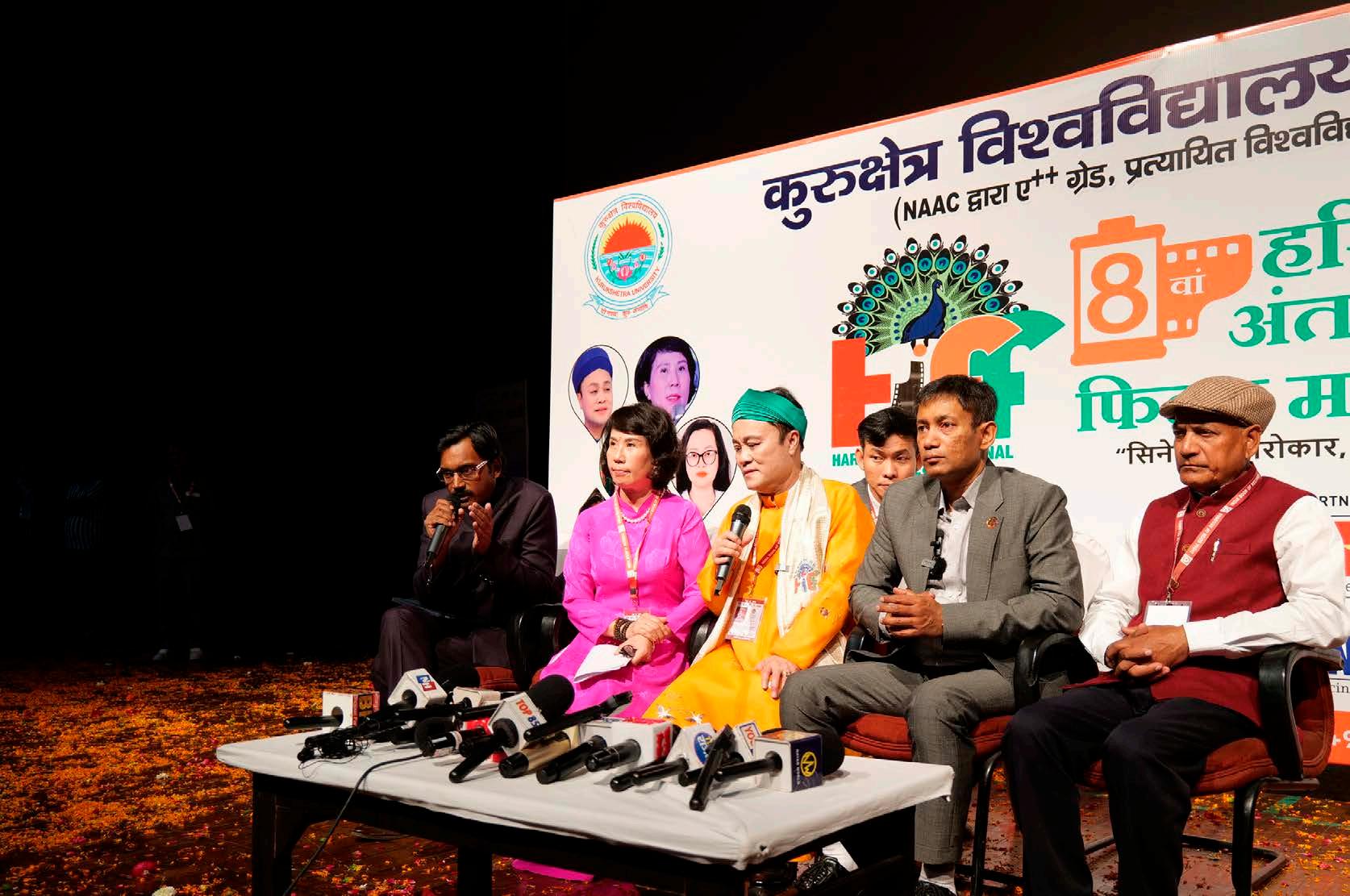
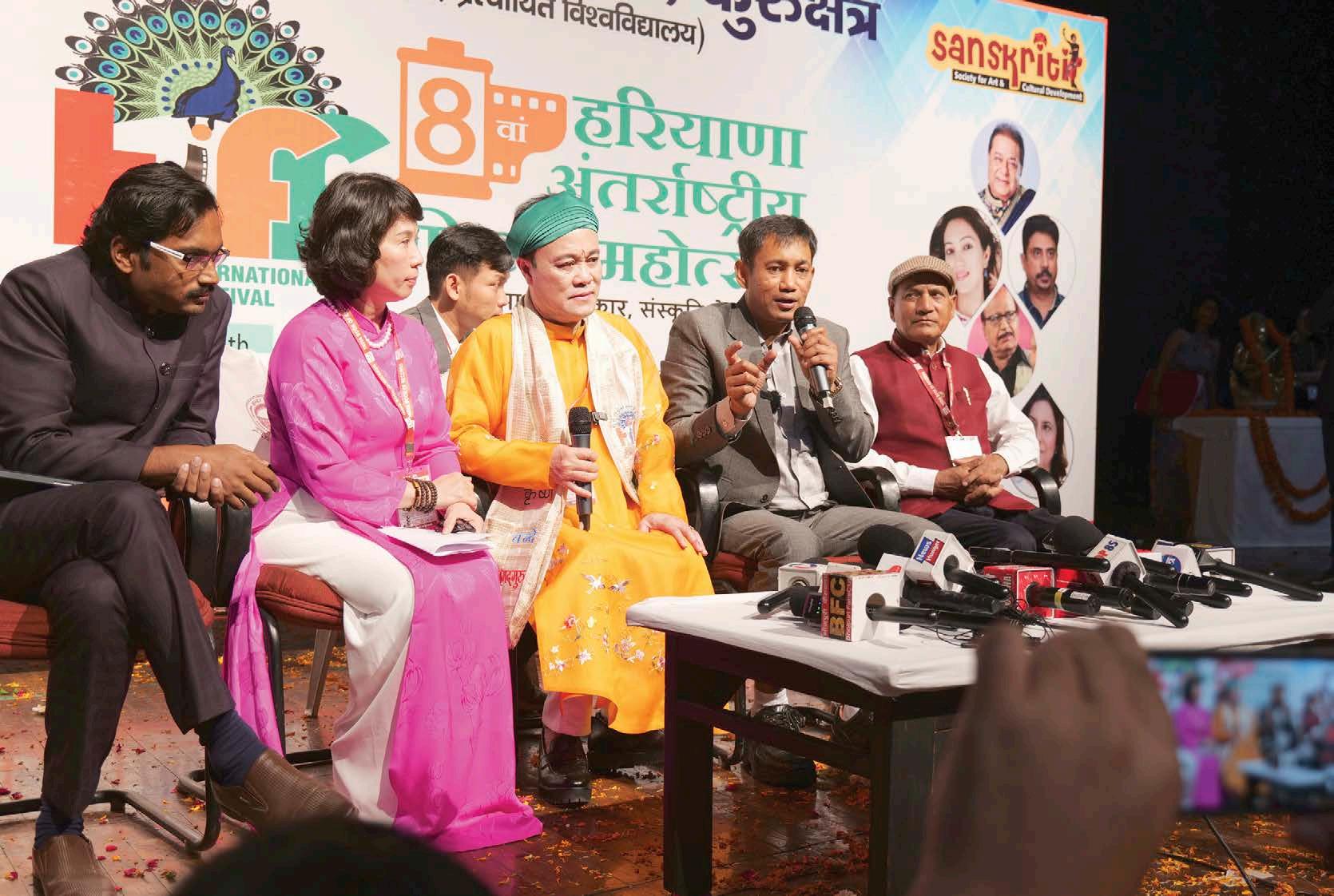
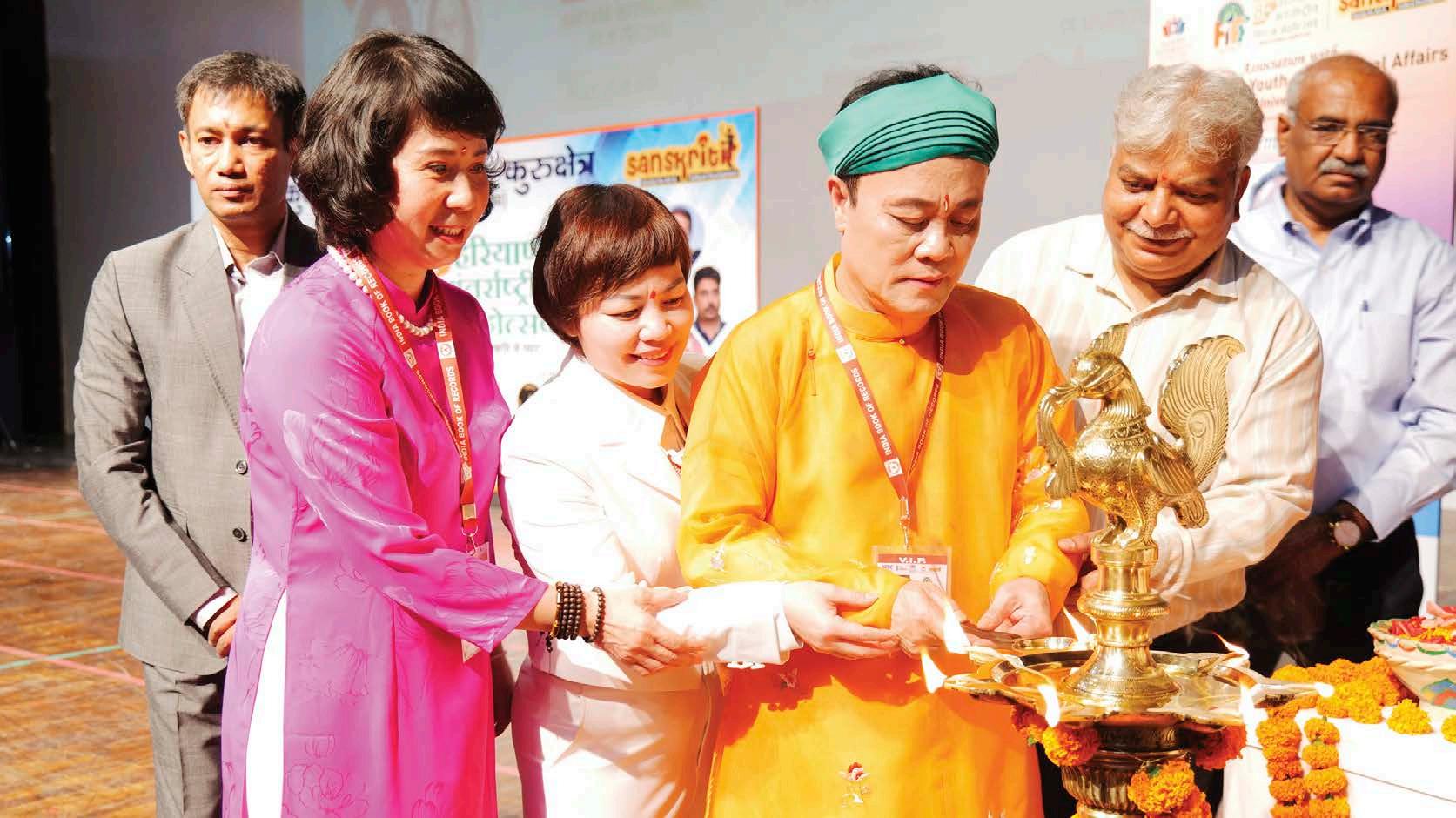
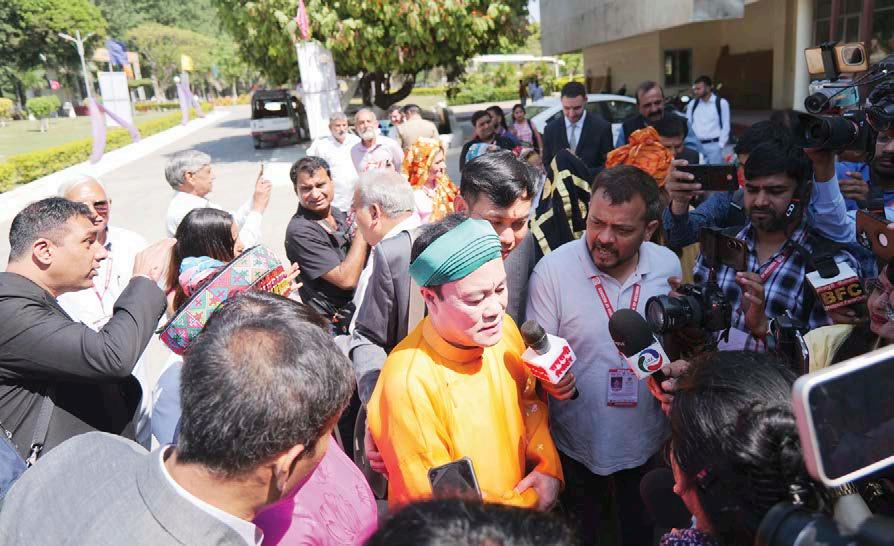
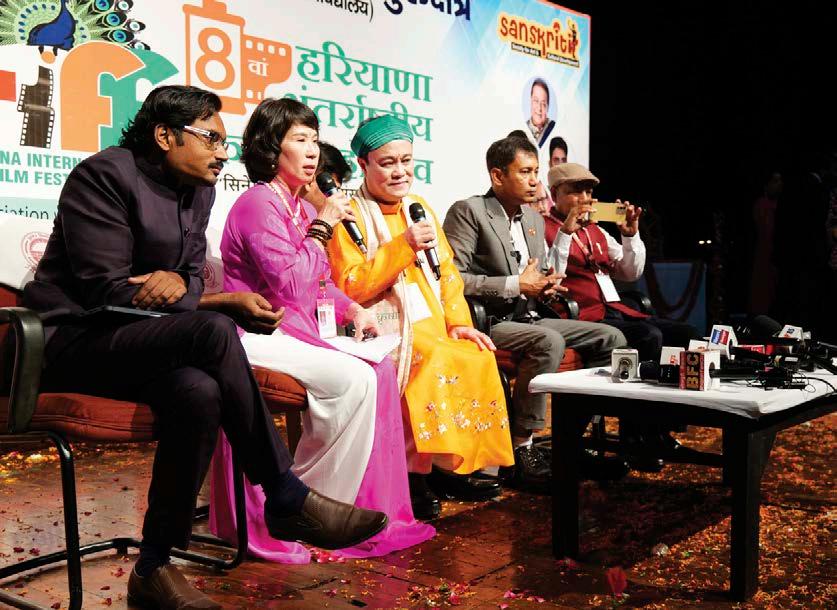
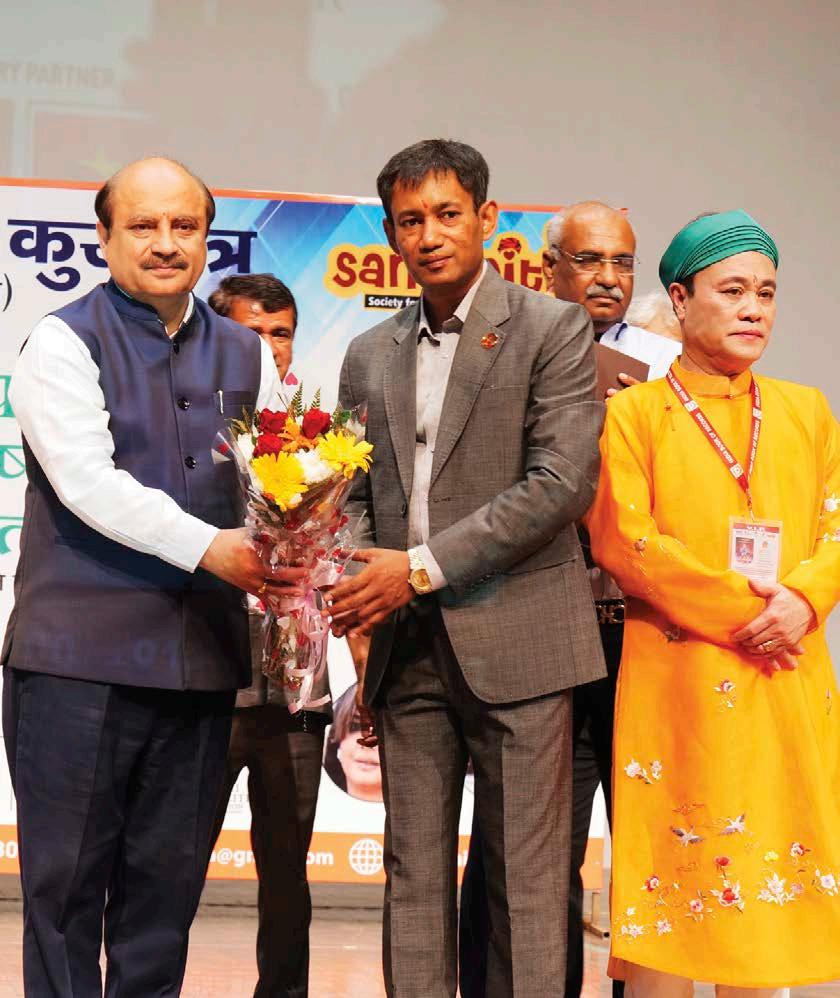
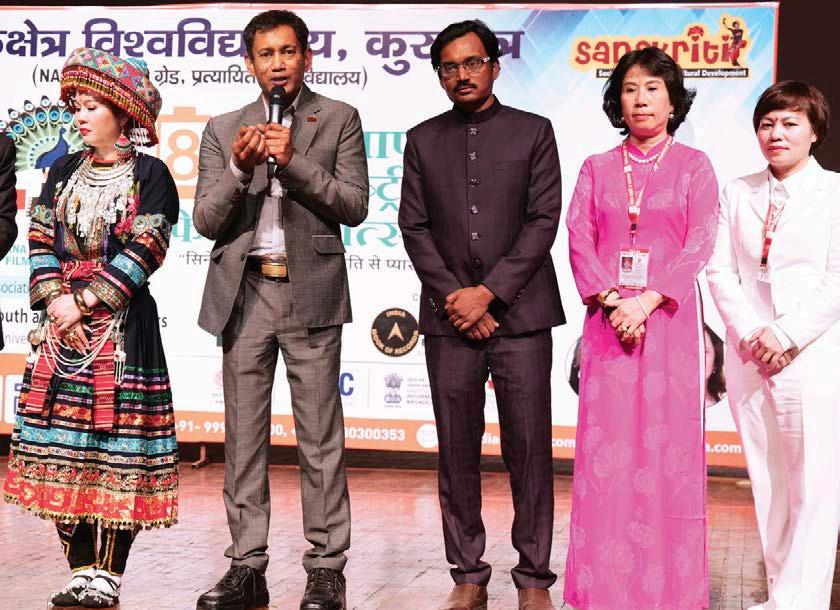
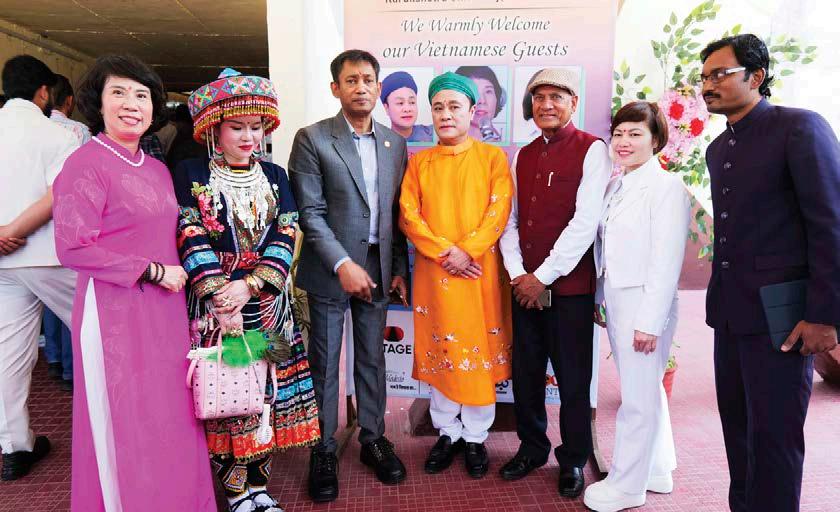
“Vườn Tình Yêu – Prem Ki Surdhara” has achieved international acclaim by winning the Best International Film Award at the 8th Haryana International Film Festival, held at Kurukshetra University on March 25, 2026 - emerging as a powerful testament to the enduring cultural ties between India and Vietnam.
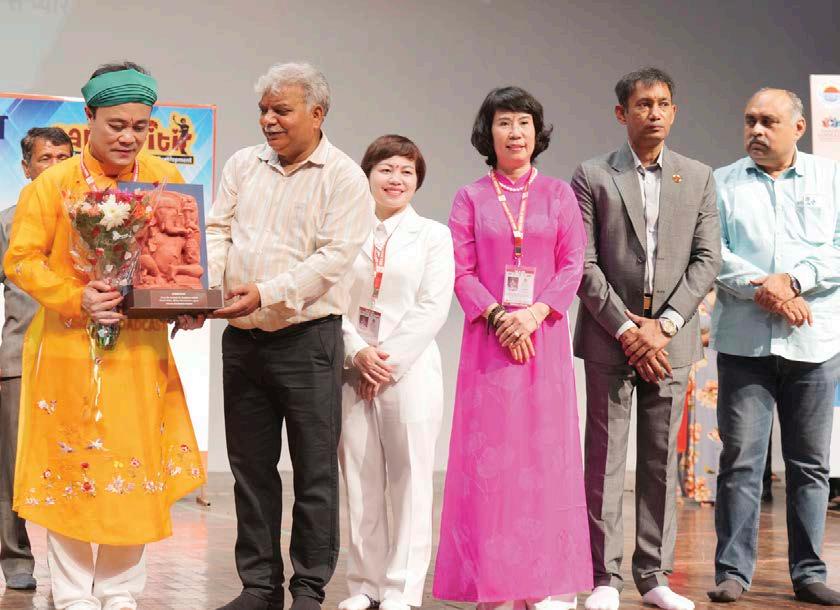
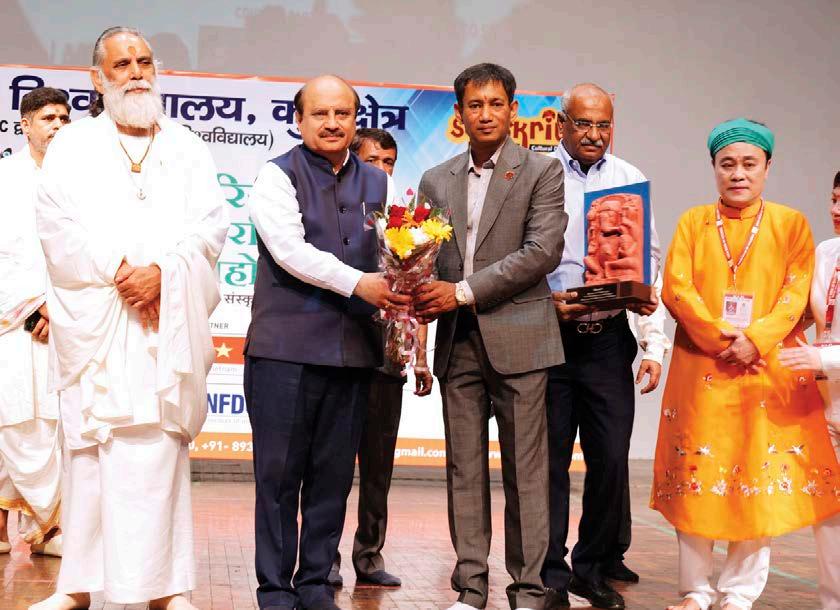
The prestigious award was presented to Prof. Dr. Chu Bao Que - Honorary Doctor, professor, artist, and Chairman of the Policy and Development Consultative Council of the Vietnam Federation of UNESCO Associations - by Swami Shri Gyananand Ji Maharaj, a revered spiritual guru and founder of the Shri Krishna Kripa Seva Samiti and GIEO GITA.
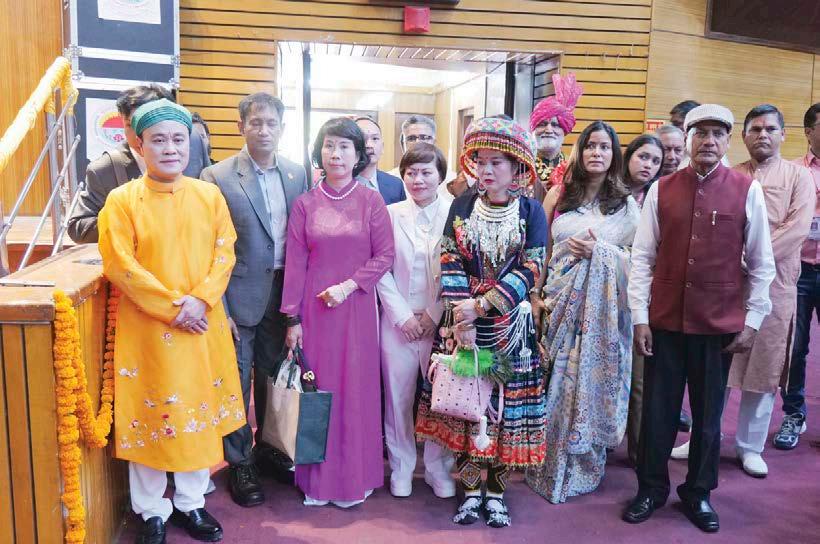
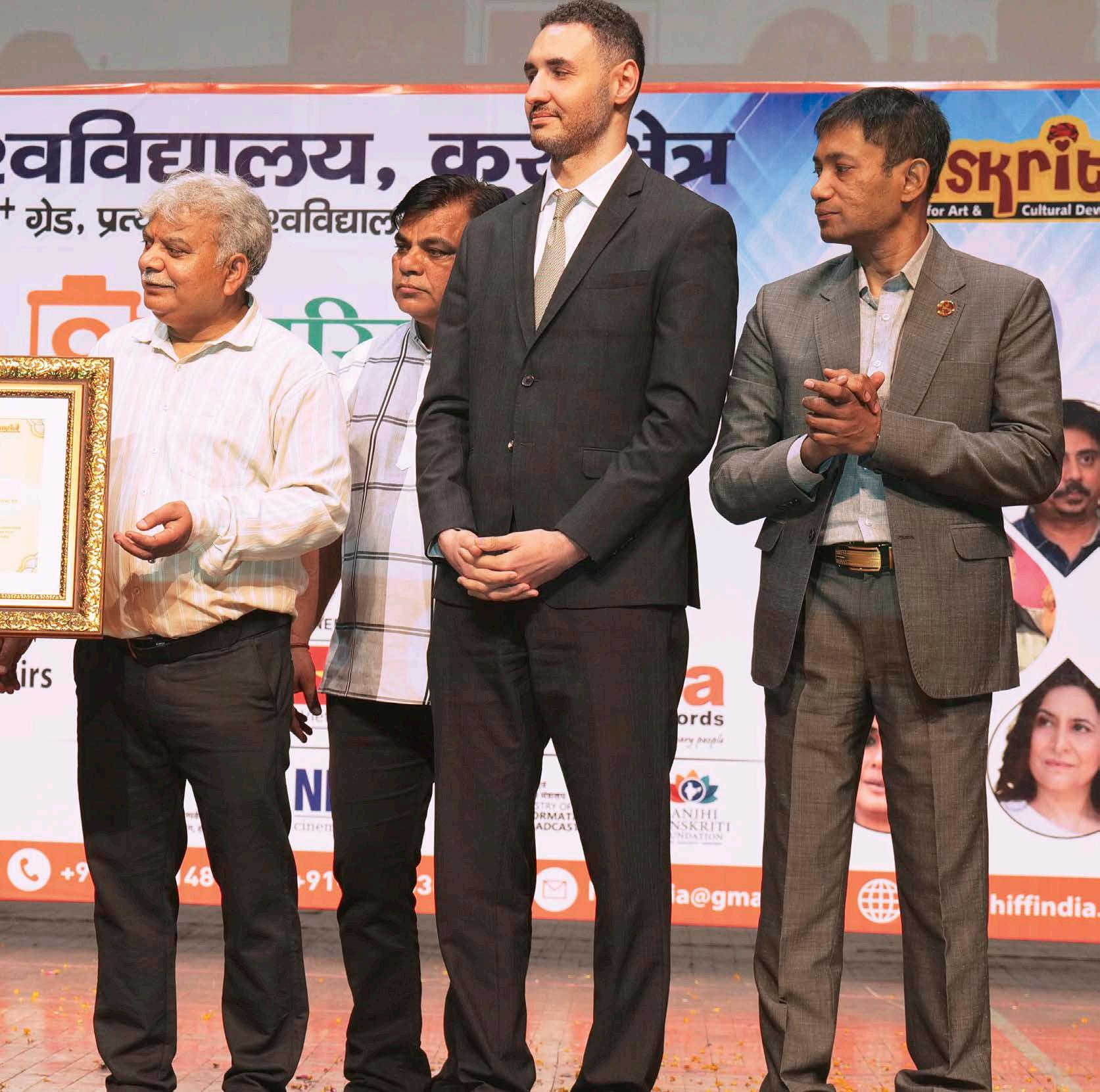
Also present were - Mr. Som Nath Sachdeva, Vice-Chancellor of Kurukshetra University; Justice Lalit Batra, Chairman of the Haryana Human Rights Commission; Mr. Walid Hasbi, Cultural Ambassador of Morocco; Dr Nguyen Hoang Anh (Julia), General Secretary of the World Records Union and Permanent Vice-
Chairwoman of the Vietnam Records Organization; Mrs. Hoang Thu Hang, Head of the Culture Department at the Sports and Culture Newspaper, Vietnam News Agency; Artist Chu Thuy Hang, Head of the UNESCO Vietnam Folk Arts Group; Artist Nguyen Thu Trang, Deputy Head of the UNESCO Vietnam Folk Arts Group; Dr. Raj Rup Fuliya (retd. IAS), Former Principal Secretary, Govt. of Haryana; Mr. Dharmender Dangi, the organiser of the film festival; and Mr. Vikas Sharma - among others - all of whom contributed to strengthening cultural ties at the event.
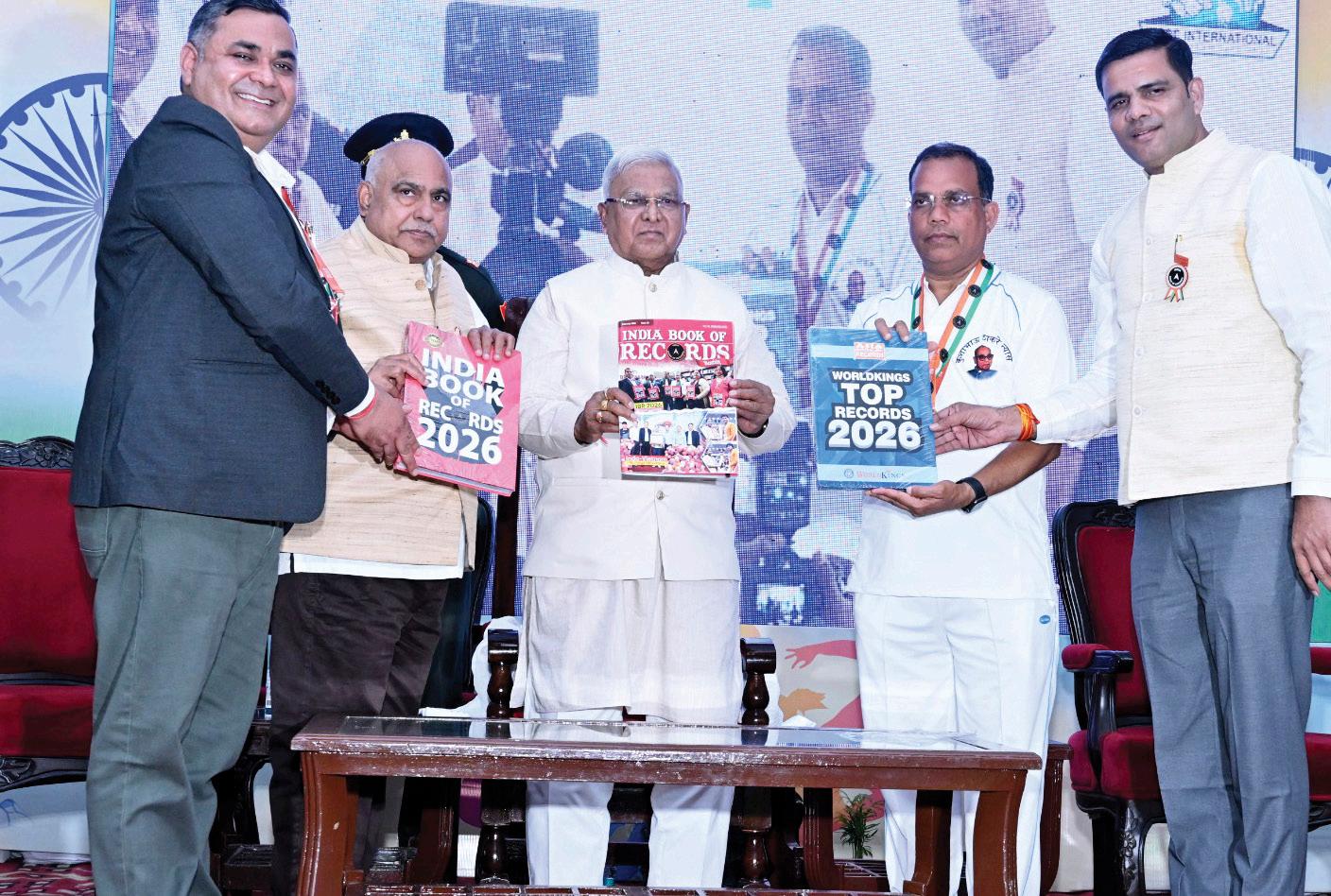
Dr. Biswaroop Roy Chowdhury, Chief Editor of the India Book of Records, also graced the occasion and presented copies of the India Book of Records 2026 Edition to esteemed dignitaries and distinguished guests.
Addressing the audience, Prof. Dr. Chu Bao Que eloquently described cinema as more than just an art form - it is a bridge between cultures. Through “Vườn Tình Yêu – Prem Ki Surdhara,” he emphasised the team’s mission to revive the ancient cultural connections between Vietnam and India, rooted in shared philosophies, traditions, and spiritual heritage spanning thousands of years.
He highlighted a central message of the film: heritage remains alive only when it is shared, preserved, and continuously reimagined. The project, he noted, is not merely about honouring history but about inspiring future generations to embrace and carry forward their cultural legacy. As two of the
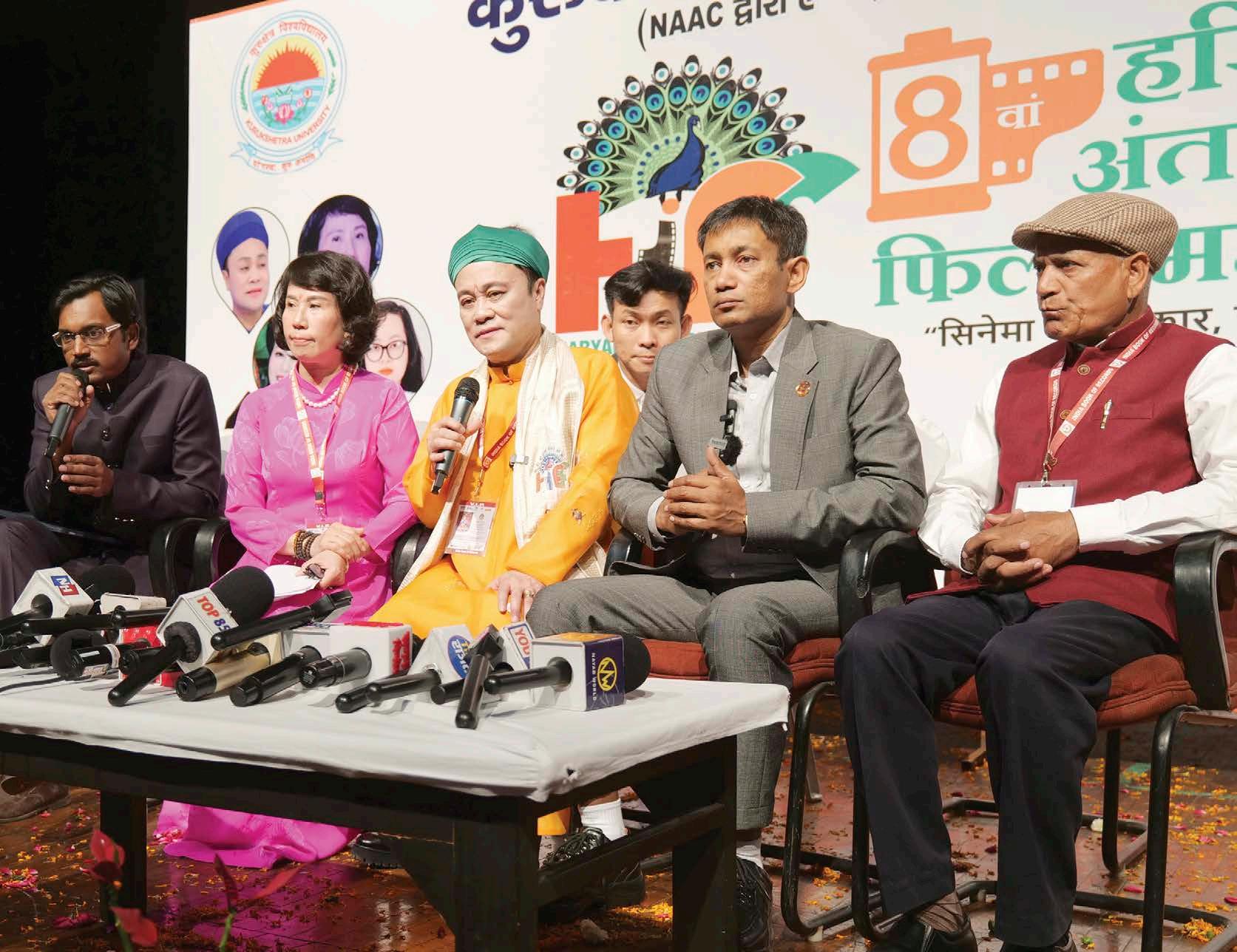
(L–R) Biswadeep Roy Chowdhury, Dr. Nguyen Hoang Anh (Julia), Prof. Dr. Chu Bao Que, Dr. Biswaroop Roy Chowdhury, Dr. R. R. Fuliya
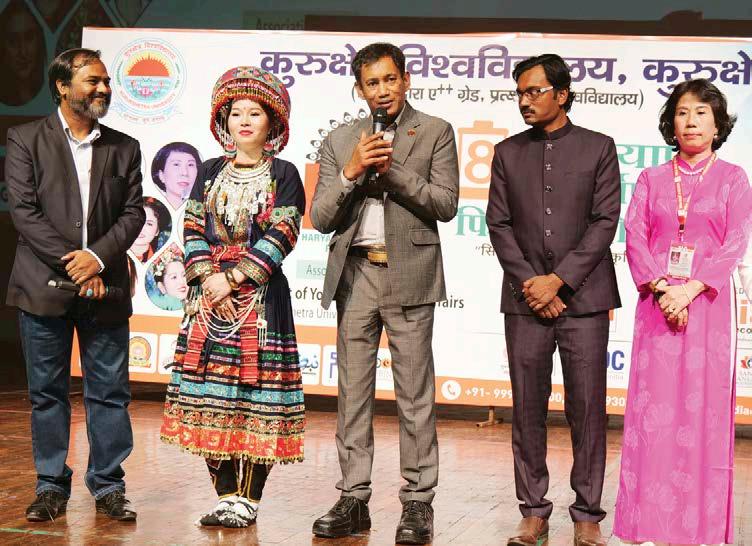
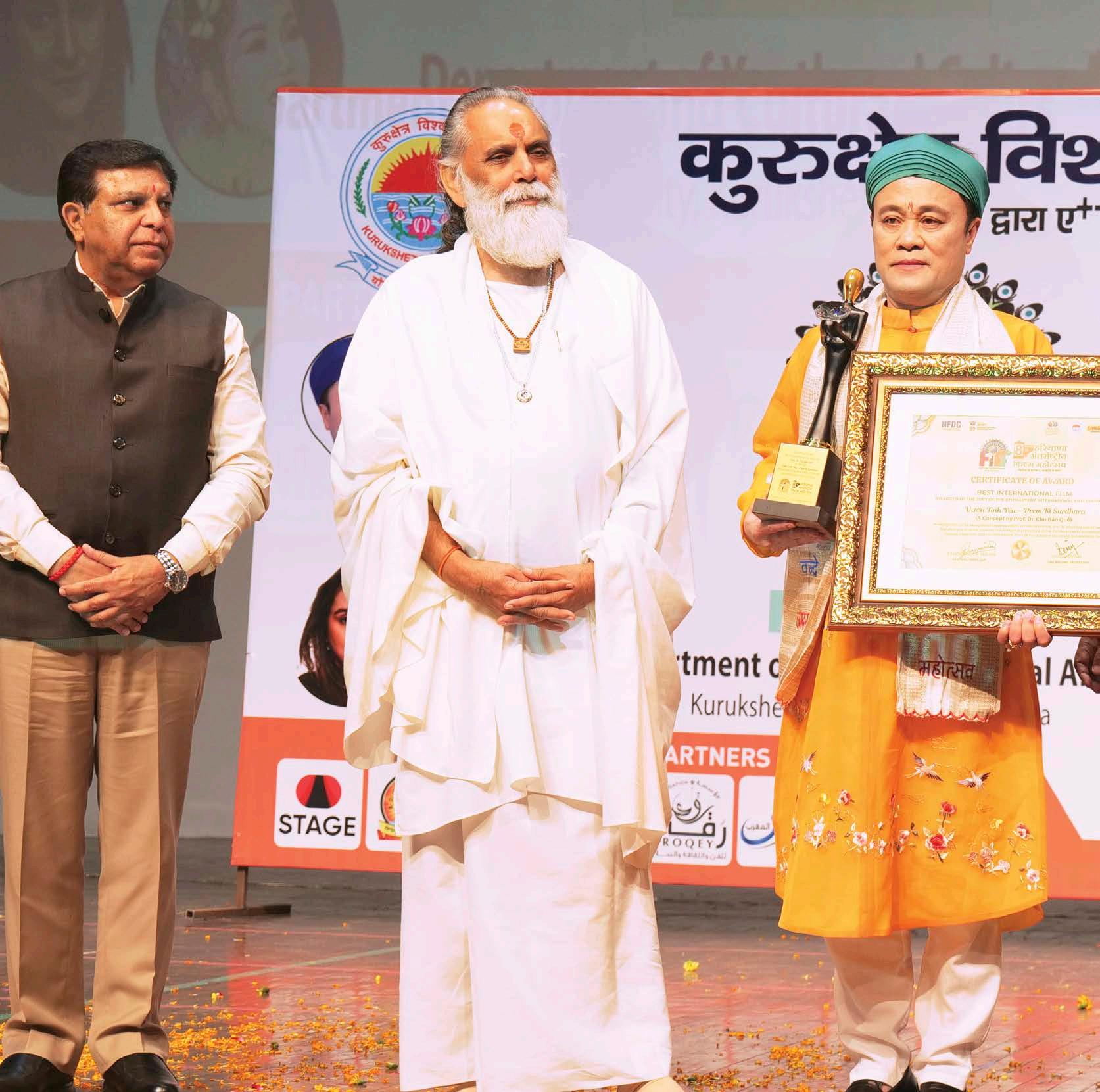
(L–R): Justice Lalit Batra, Swami Shri Gyananand Ji Maharaj, Prof. Dr. Chu Bao Que, Dharmender Dangi, Vikas Sharma, Walid Hasbi, and Dr. Biswaroop Roy Chowdhury at the 8th Haryana International Film Festival, Kurukshetra
world’s oldest civilisations, Vietnam and India have a unique responsibility to lead this global cultural dialogue.
The four-day festival showcased 80 internationally acclaimed films across multiple languages, drawing filmmakers, artists, media and cinema enthusiasts from around the world. The strong presence of Vietnamese delegates underscored the event’s international significance.
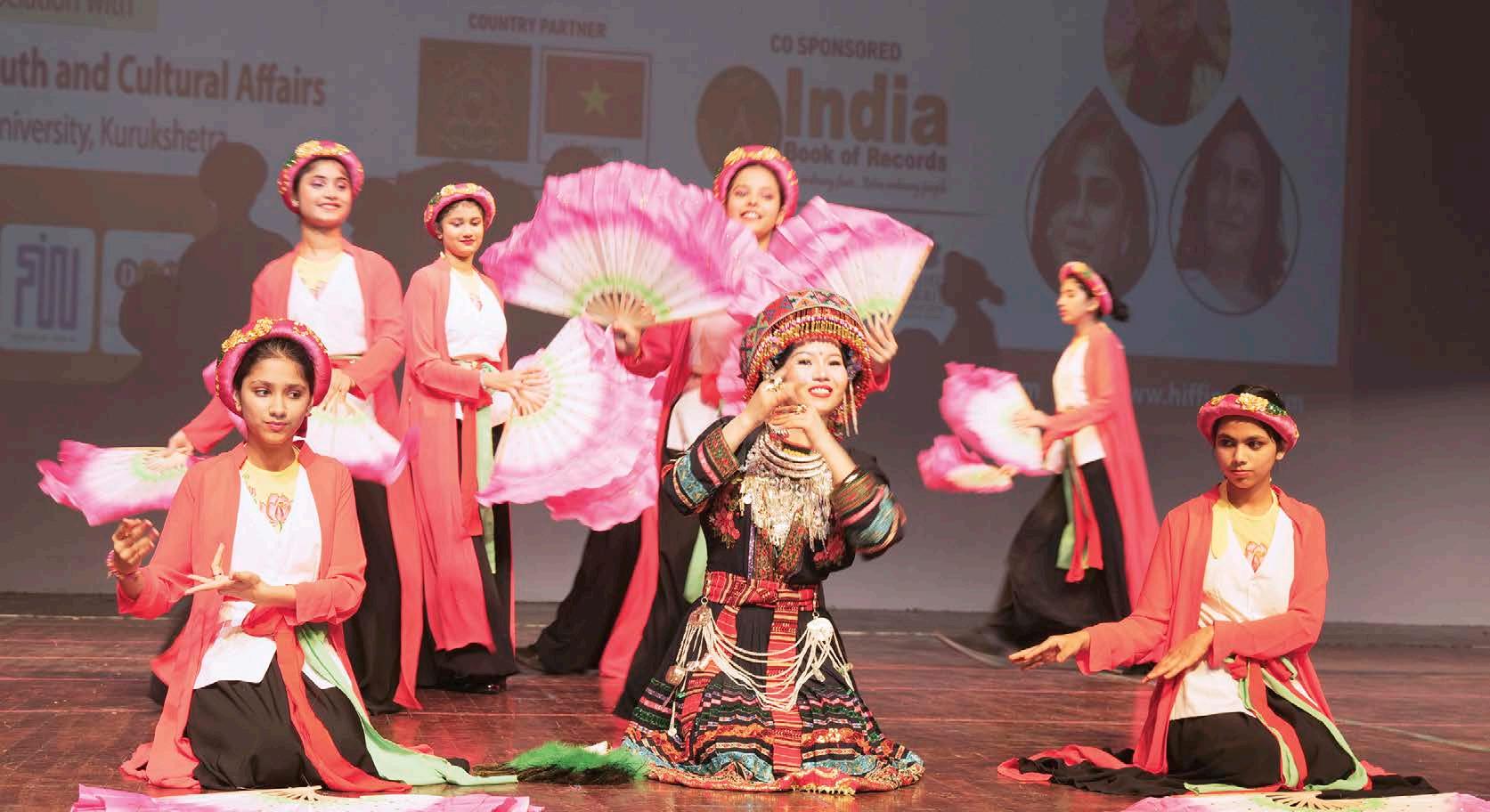
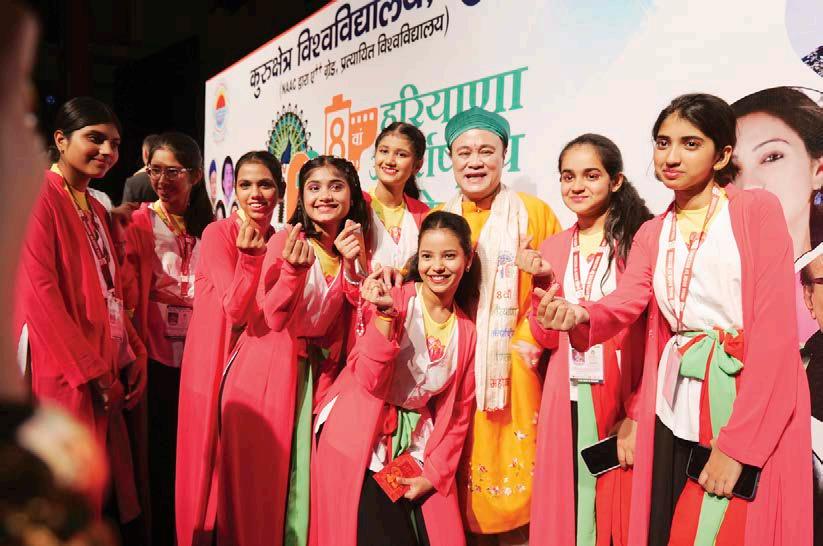
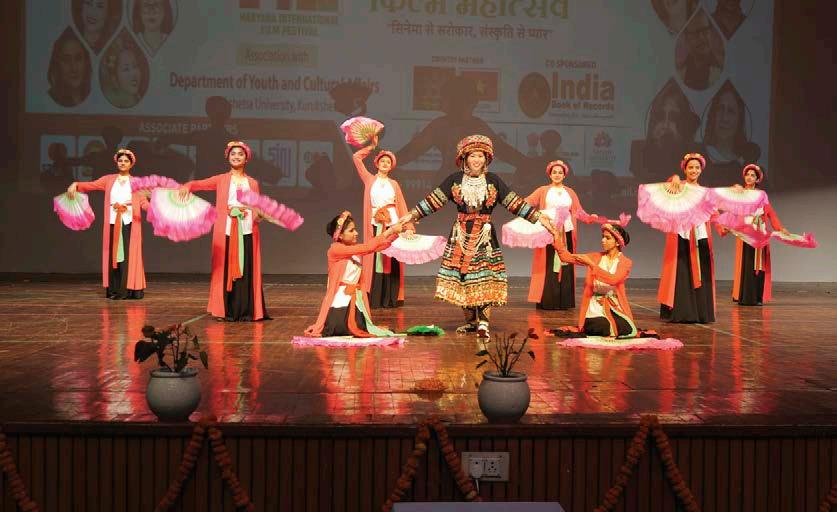
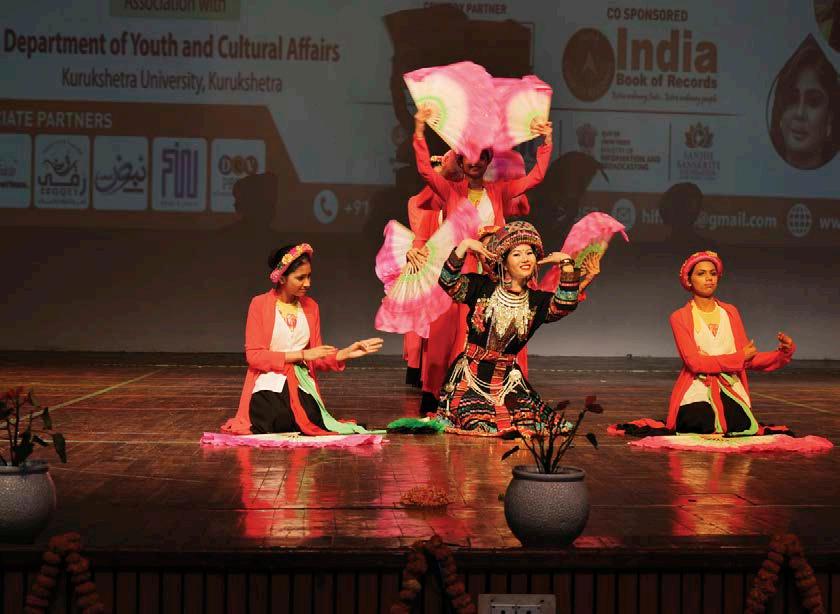
The festival’s organiser, Mr. Dharmender Dangi, extended a warm welcome to international guests through a traditional Haryanvi dance performance. This cultural exchange was beautifully reciprocated by Vietnamese and Indian students, who presented
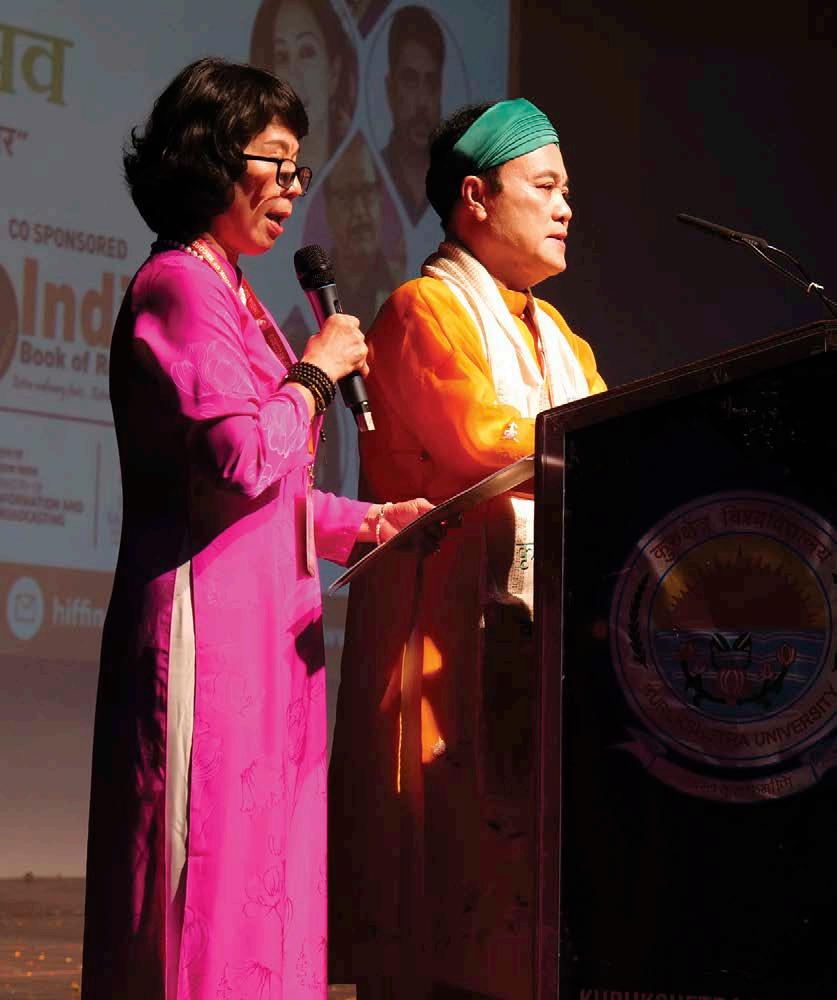
a vibrant Vietnamese dance, creating a harmonious blend of traditions on stage.
The film is part of the Indo-Vietnam Cultural Heritage Exchange Program, an initiative dedicated to fostering mutual understanding and preserving shared heritage. As part of this broader effort, “Guardian of Heritage,” a book authored by Dr. Biswaroop Roy Chowdhury was released in February 2025 in New Delhi and subsequently in Vietnam.
Directed by Biswadeep Roy Chowdhury, with cinematography by Vimal Mishra, the film uses symbolic storytelling, music, and layered imagery to explore shared spiritual and cultural values.
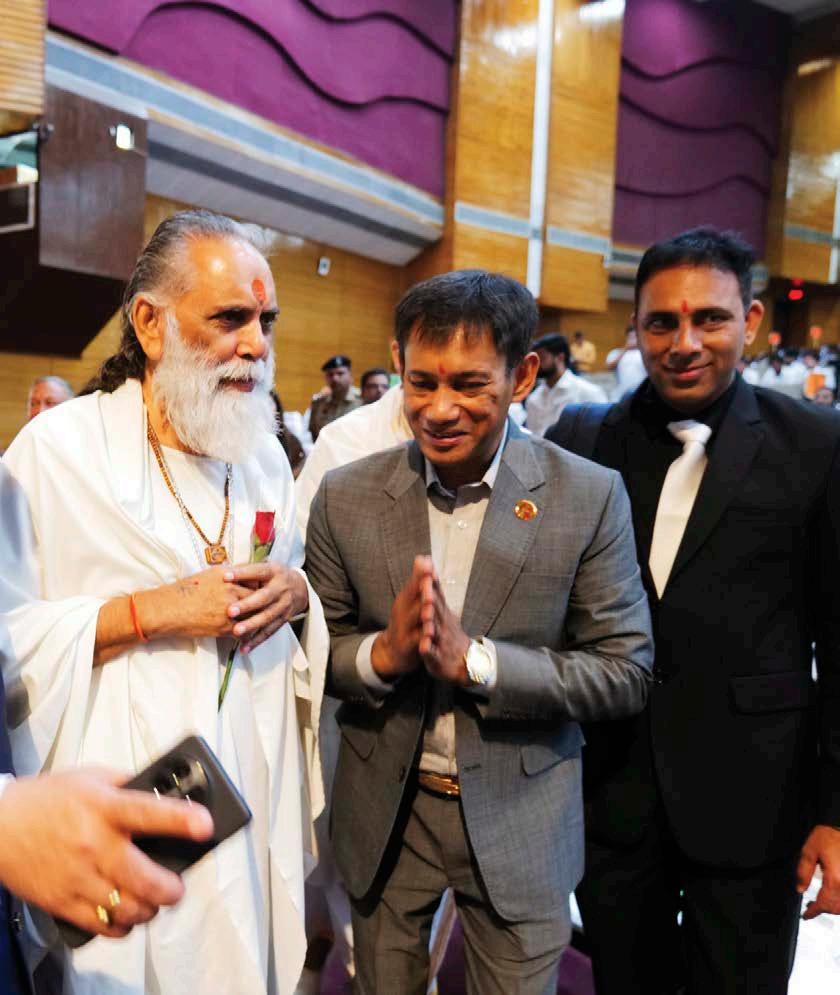
It presents a “garden of memory,” where love, identity, and heritage intertwine in a visually poetic narrative.
The film’s success at the festival marks a significant milestone for its creators as it begins its journey across international platforms. With plans for a Vietnamese-dubbed version and global release with English subtitles in cinemas and on OTT platforms, the film is set to reach audiences worldwide.
More than just a cinematic achievement, “Vườn Tình Yêu –Prem Ki Surdhara” stands as a symbol of friendship, artistic collaboration, and shared heritage. Its recognition not only celebrates excellence in filmmaking but also reinforces the enduring cultural bond between India and Vietnam - one that continues to inspire, connect, and flourish across borders.
Sports Beyond the Limit
Sport has long served as a mirror of society’s aspirations. Competitive arenas often reveal human determination, discipline, and community spirit. In recent years, para sports have gained renewed recognition in India. Athletes with disabilities continue to demonstrate that competitive sport belongs to everyone who chooses to pursue it. Events dedicated to para-athletes now carry deeper social meaning, highlighting both inclusion and opportunity.
In February, Bhopal hosted a remarkable sporting initiative that brought this message to life. Kushabhau Thakre Nyas and TASC International set the record for the Longest Continuous Sports Event Organised for Para Athletes at a Single Venue. The event, titled Divyangjan Khel Mahotsav, centred around a continuous cricket tournament lasting one hundred hours.
The tournament ran from 22 to 26 February 2026 at Nehru Nagar Police Ground in Bhopal. The ground became a centre of constant sporting activity. Matches progressed day and night
without interruption. Teams rotated across schedules while organisers ensured that the momentum never slowed.
A total of 350 players participated in the festival. They represented multiple disability categories including Wheelchair, Hearing/Visually Impaired, Orthopaedic, Sitting, and MR categories. Each category competed according to established international playing norms. The format ensured fairness and professional standards throughout the tournament.
The initiative involved twenty-five teams competing across the duration of the event. Players travelled from different parts of the country. The festival created a shared environment where athletes interacted, competed, and encouraged one another. Cricket served as the connecting thread.
TASC International has played a major role in promoting disabled cricket in India and globally. The organisation has previously supported events such as the Blind World Cup and several international tournaments for visually impaired
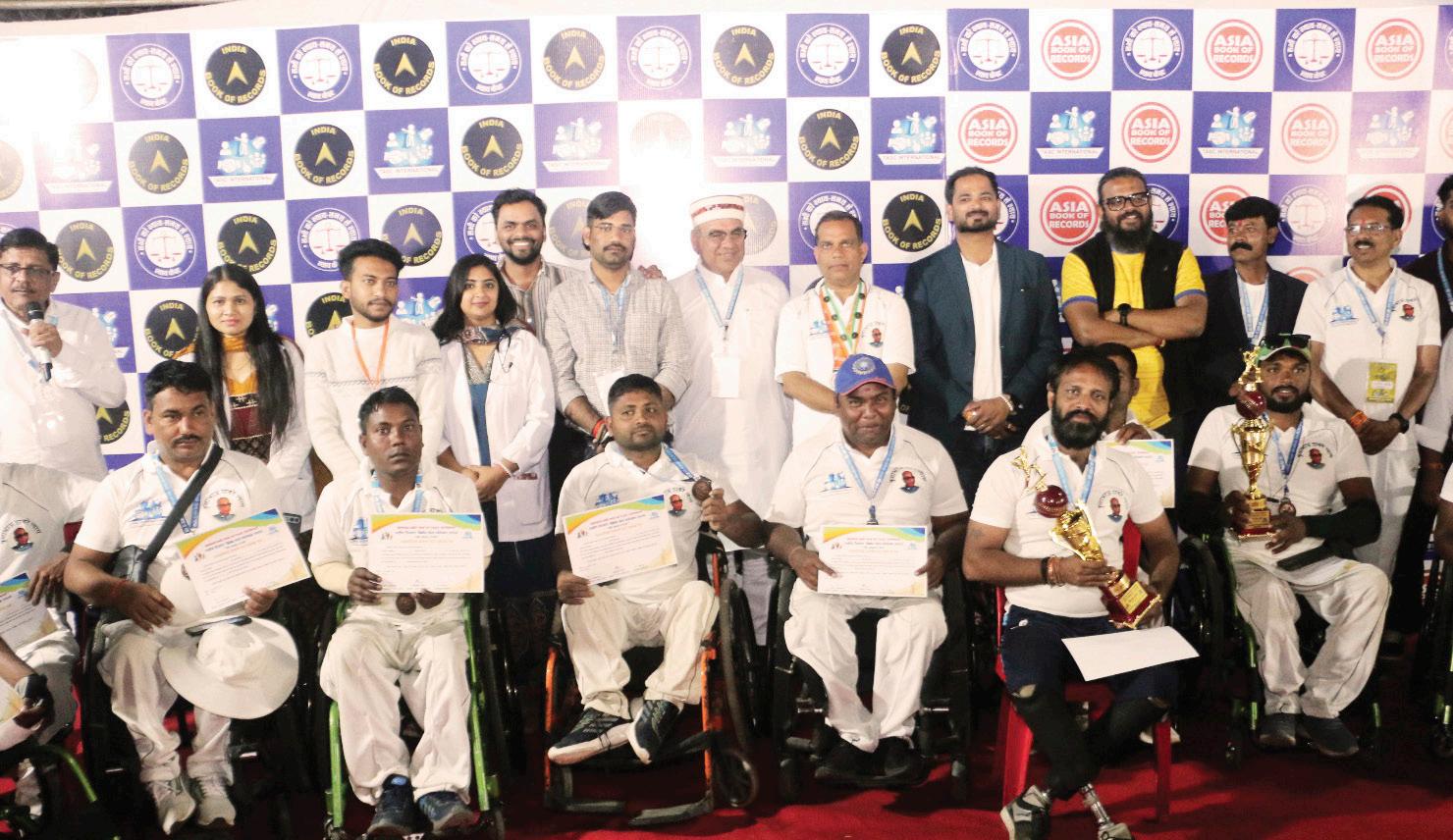
A 100-hour non-stop cricket festival in Bhopal united 350 para-athletes across categories. The “Divyangjan Khel Mahotsav” set a record and reinforced India’s expanding commitment to inclusive sports.
cricketers. Its experience contributed to the smooth management of the 100-hour cricket schedule.
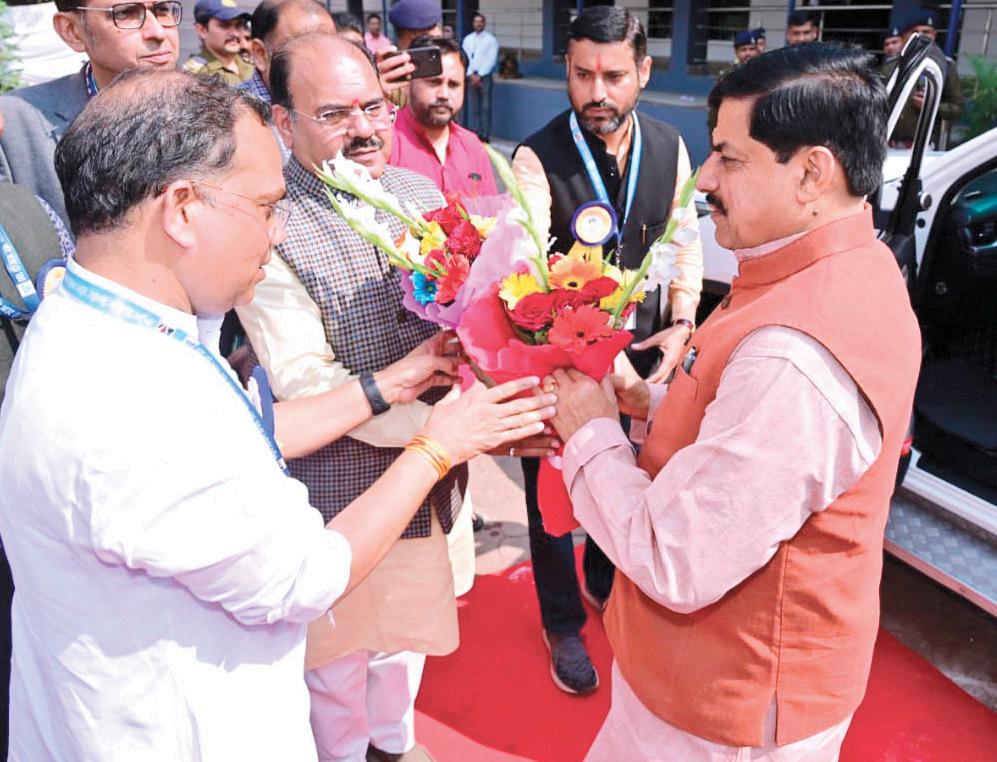
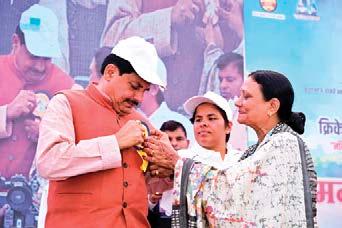
Madhya Pradesh Chief Minister Mohan Yadav attended the opening ceremony as the chief guest. He addressed the players and organisers, highlighting the significance of inclusive sporting platforms. According to him, such initiatives strengthen the confidence of athletes and encourage wider participation.
Over the following days the Police Ground remained active at all hours. Floodlights illuminated the pitch through the night. Spectators gathered at different intervals to watch the matches. Volunteers worked continuously to support the players and ensure proper facilities.
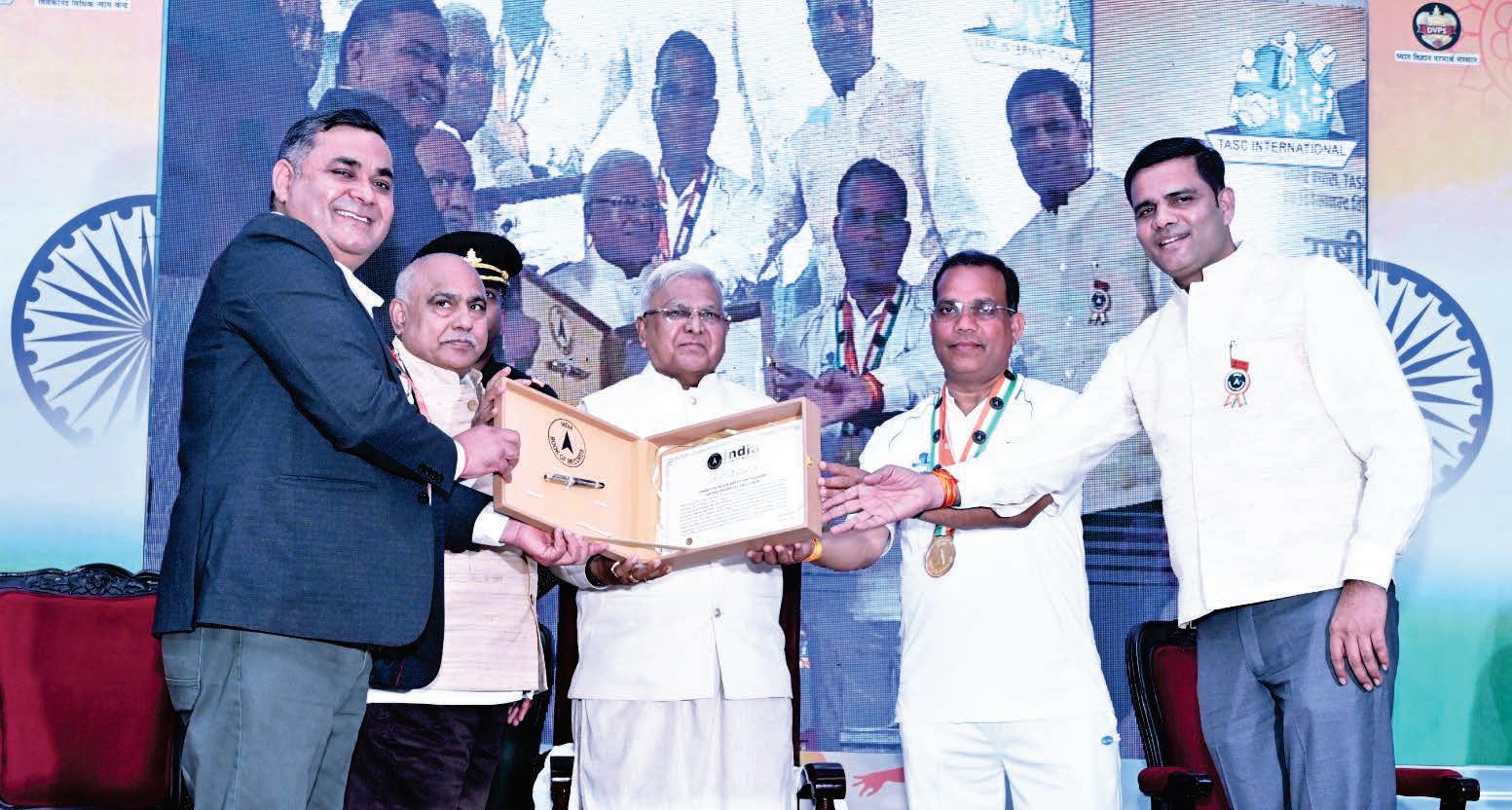
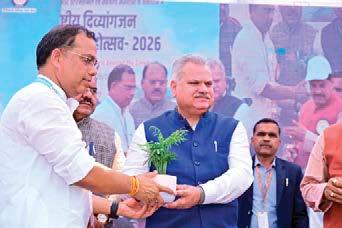
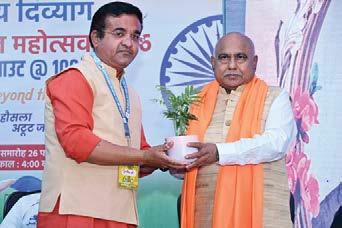
The closing ceremony took place on 26 February. Governor of Madhya Pradesh Mangubhai Patel attended the event as chief guest. During the ceremony he interacted with participating players and appreciated the organisers for creating a platform that celebrated sporting talent among Divyangjan athletes.
India Book of Records (IBR) and Asia Book of Records (ABR) both recognised the achievement. Dr Bhanu Pratap presented the official medals and certificates to the organisers during the closing ceremony. The recognition formally confirmed the 100hour event as a record-setting initiative.
The event also highlighted the personal journeys of several athletes. Participants displayed impressive skill despite physical challenges. Wheelchair players demonstrated speed and coordination. Visually impaired cricket teams followed precise communication techniques. Each match revealed a different dimension of adaptive sport.
Chief Minister Mohan Yadav emphasised the broader message during his address. He said that determination can overcome
limitations when directed toward social progress. He praised athletes such as Sangeeta Vishnoi for representing courage and confidence through sport.
Local MLA Bhagwandas Sabnani also thanked the participants for travelling to Bhopal and contributing to the historic festival. He acknowledged the efforts of organisers and volunteers who ensured that the matches continued smoothly across the full duration.
Dr Raghvendra Sharma, convenor of the event, said, “Our aim was to create a platform where Divyangjan athletes could compete continuously and confidently. The hundred-hour cricket festival symbolised collective strength and inclusive sporting spirit.”
Electric Wheels, Long Roads
The growing trend of electric vehicles in India is reshaping expectations for mobility and commercial transport. Electric cars and two-wheelers are now common in cities. Interest is spreading to logistics and long-distance movement. Yet doubts remain. Questions around range, charging access, and load handling still influence decisions. For electric commercial vehicles, proof on real roads matters more than projections.
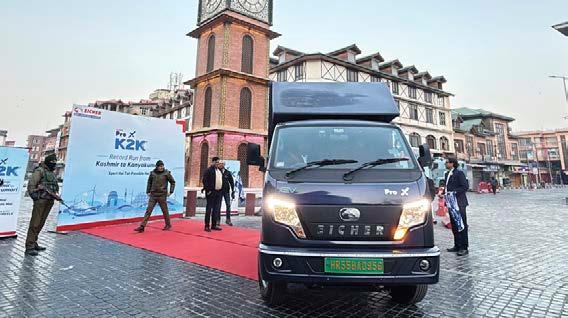
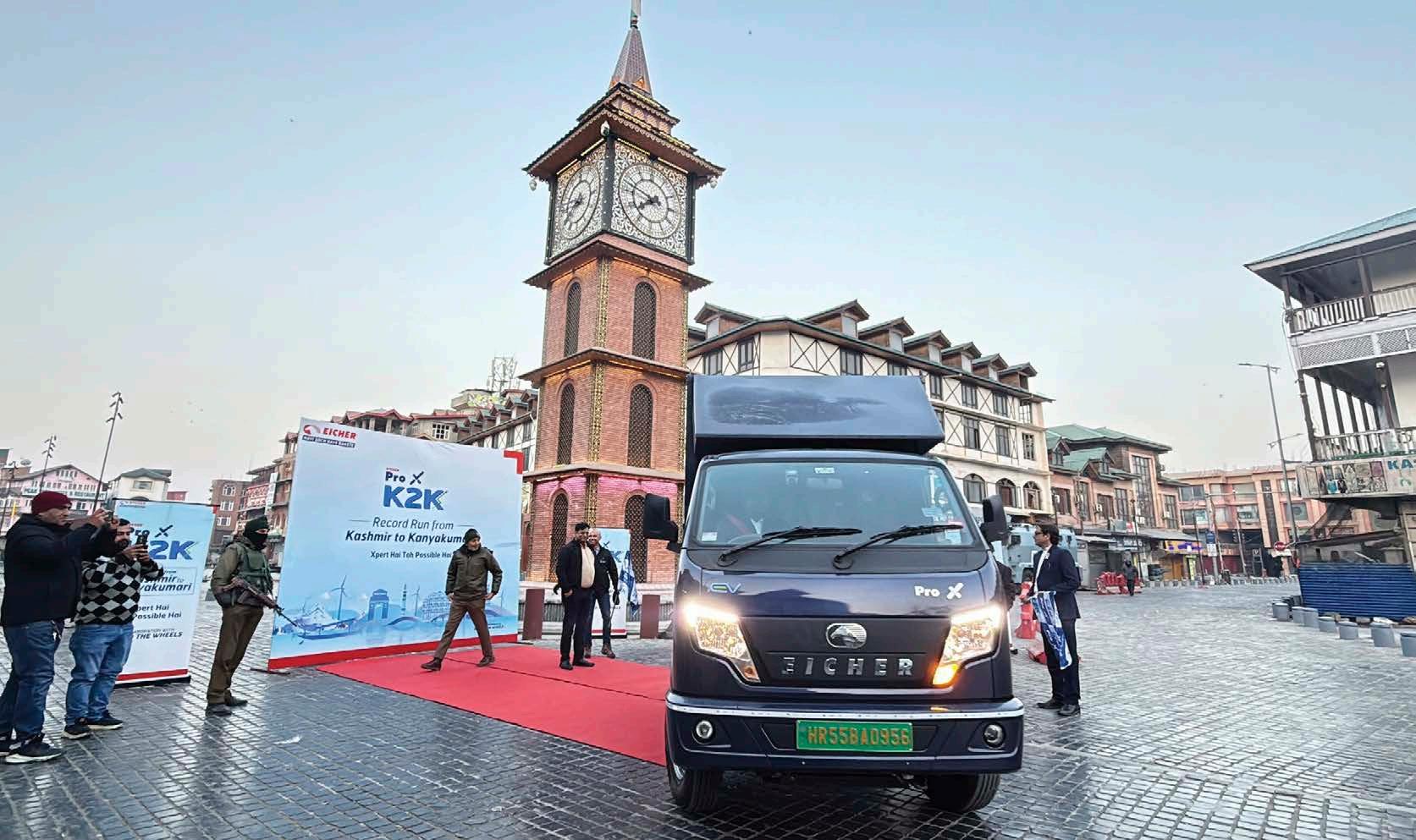
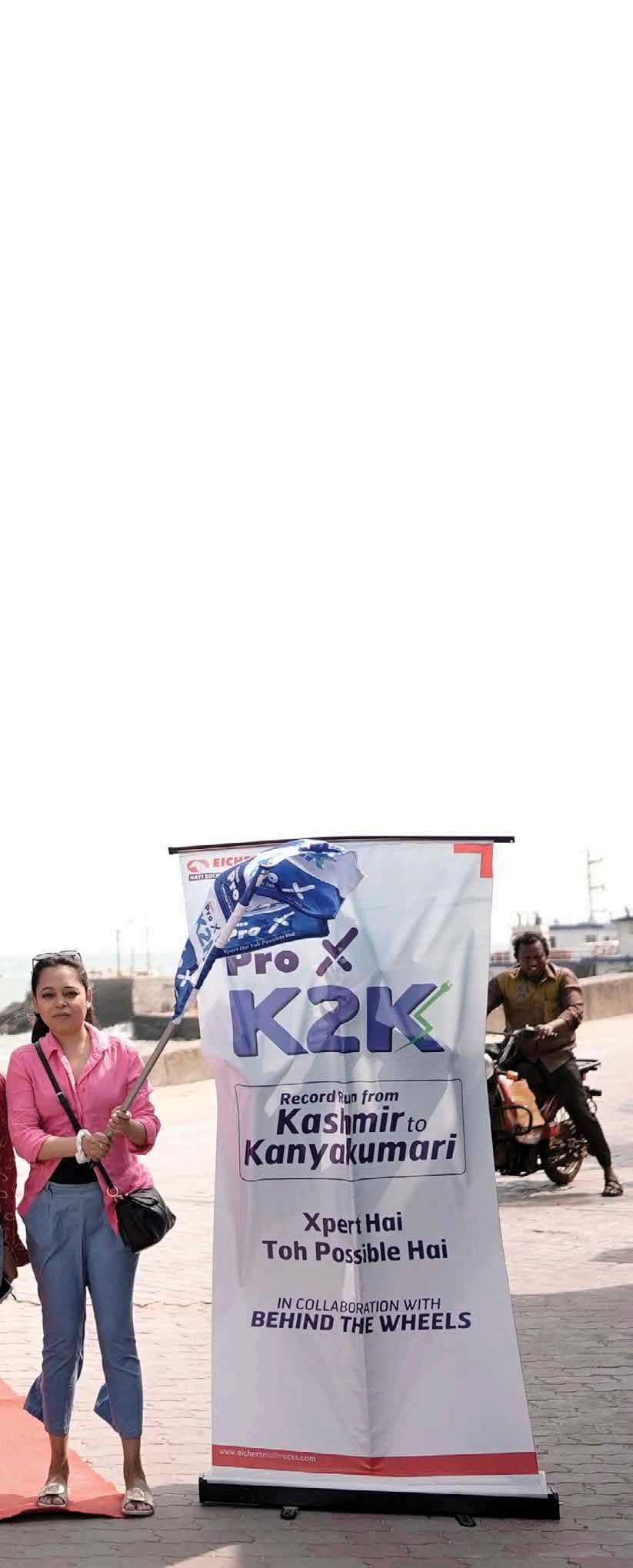
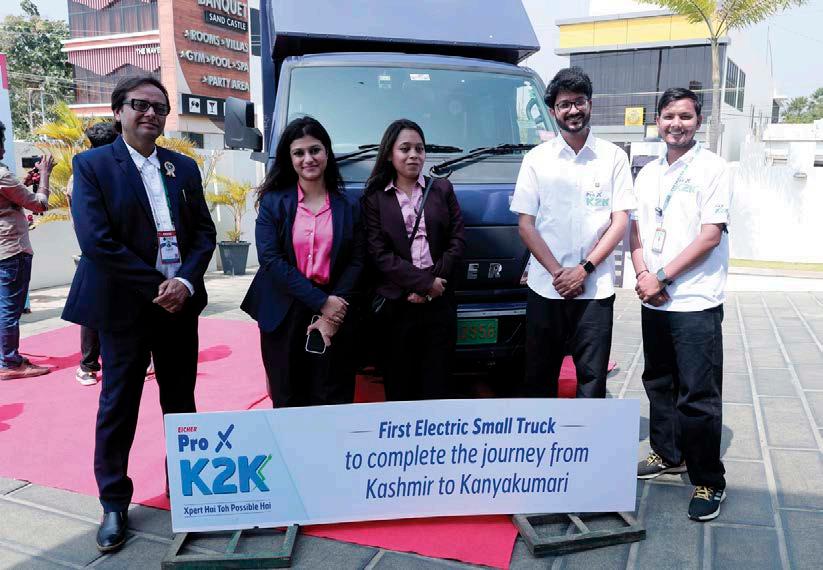
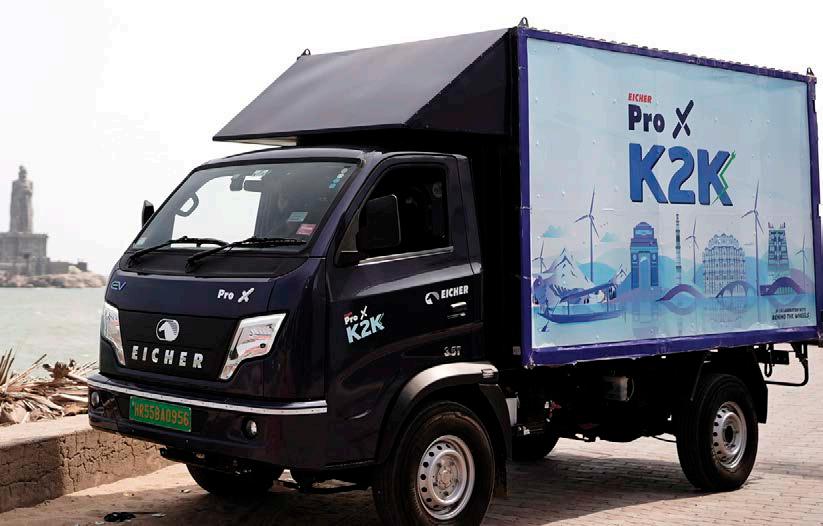
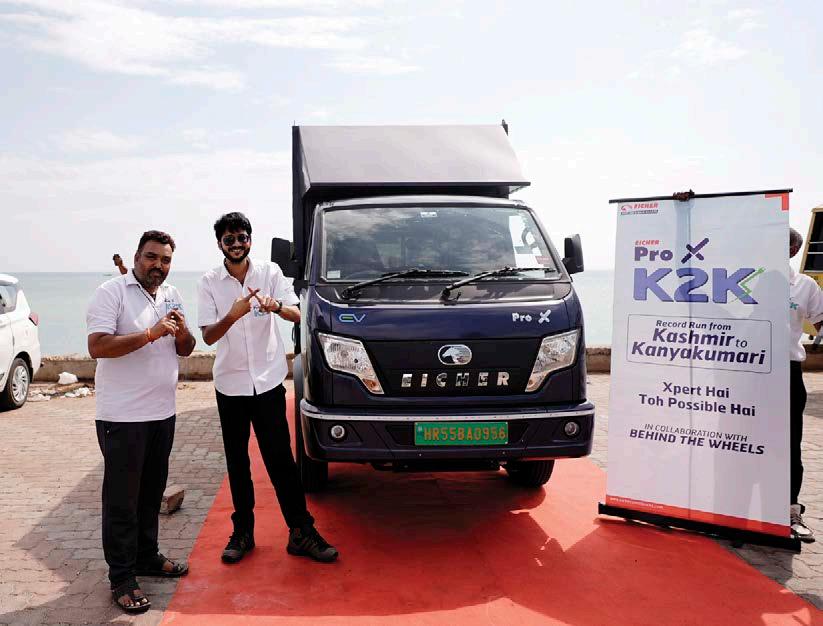
In January 2026, VE Commercial Vehicles Ltd, headquartered in Gurugram, Haryana, delivered such proof. The company achieved two national records with its Eicher Pro X EV. It became the first electric small commercial vehicle to travel from Kashmir to Kanyakumari with loaded cargo. It also completed the fastest drive on this route by a loaded electric small commercial vehicle.
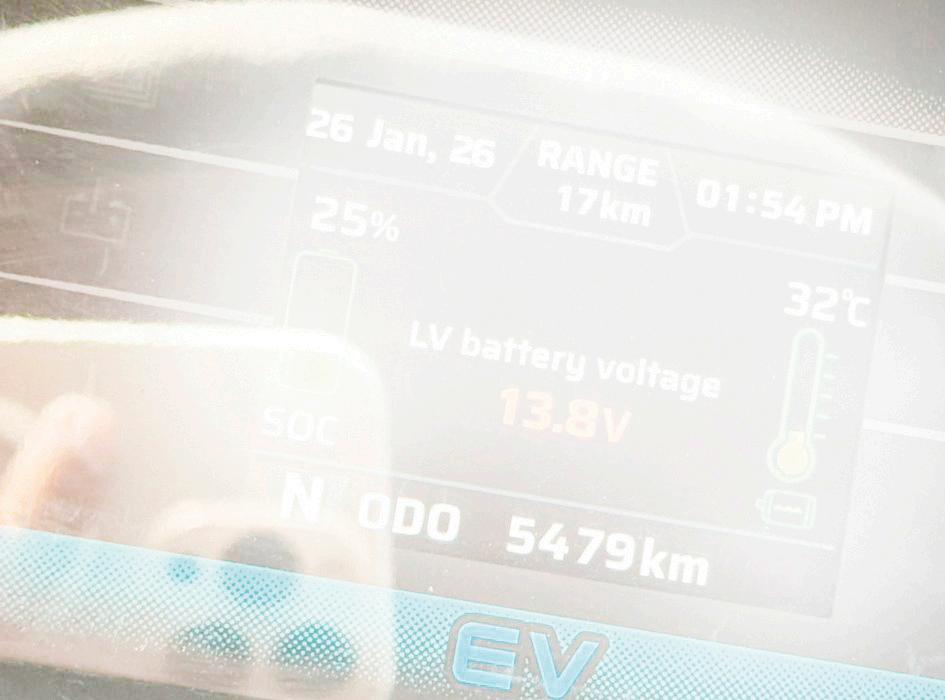
The journey began from Srinagar on 20 January 2026, at 8.05 am. It concluded in Kanyakumari on 26 January, at 1.54 pm. The vehicle covered a total distance of 4097 km in 149 hours and 49 minutes. The entire expedition was carried out under loaded conditions. Both records were confirmed on the day of completion.
The route itself carries symbolic and practical weight. It stretches across diverse terrain and climate zones. The Eicher Pro X EV moved through mountain roads, plains, plateaus, and coastal belts. Each section tested performance consistency. Cold starts in the north gave way to warmer southern conditions. Road gradients changed. Traffic patterns varied. Throughout the journey, the vehicle maintained stable operation.
A
loaded electric commercial vehicle set two national records by completing the 4097 km drive from Srinagar to Kanyakumari. The journey proved EV endurance and logistics use across diverse Indian terrain.
The expedition was designed to demonstrate endurance rather than speed alone. Energy efficiency and charge planning were central. Public charging infrastructure was used across states. Stops were planned with care. The vehicle relied on available networks rather than dedicated arrangements. This reflected real operating conditions for fleet users.
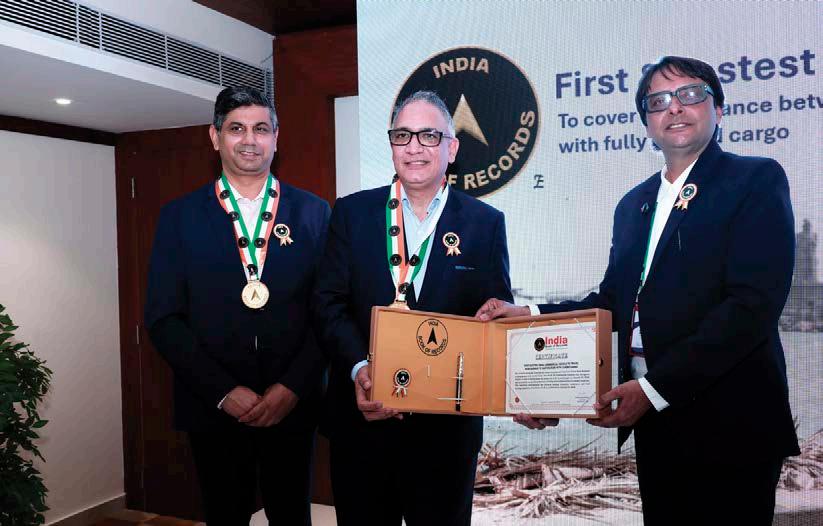
India Book of Records verified the drive for compliance. Distance, time, route, and load conditions were monitored closely. On completion, IBR adjudicator Mr Sanjay Bhola announced both records and presented medals and certificates to the organisers. The confirmation placed the achievement in an official national context.
The Eicher Pro X EV is positioned as a practical solution for urban and intercity logistics. Its design focuses on load capacity, predictable range, and operational reliability. The
Kashmir to Kanyakumari drive put these attributes to test in one continuous run. There were no route shortcuts. There was no offloading. The vehicle completed the journey as planned.
For the commercial vehicle sector, this drive addressed a key hesitation. Many operators view electric vehicles as suitable for short routes alone. Long-distance hauling raises concerns about downtime and reliability. By completing one of India’s longest road journeys under load, the Pro X EV shifted this perception.
VE Commercial Vehicles Ltd has invested heavily in electric mobility. Its approach emphasises application readiness. The expedition aligned with this philosophy. It was conducted on public roads. It followed traffic norms. Safety and coordination remained priorities. A spokesperson from VE Commercial Vehicles said, “This journey was planned to show what electric commercial vehicles can achieve on real Indian roads. Completing this route under load proves the capability, reliability, and readiness of the Eicher Pro X EV.”
The timing of the drive also mattered. India’s EV ecosystem continues to expand. Charging infrastructure is growing along highways. Policy focus on clean transport is increasing. Fleet operators are now evaluating electric options beyond city limits. Demonstrations like this provide clarity without complex explanation. The Kashmir to Kanyakumari route has long represented endurance in Indian motoring. Completing it in an electric commercial vehicle adds a new chapter.
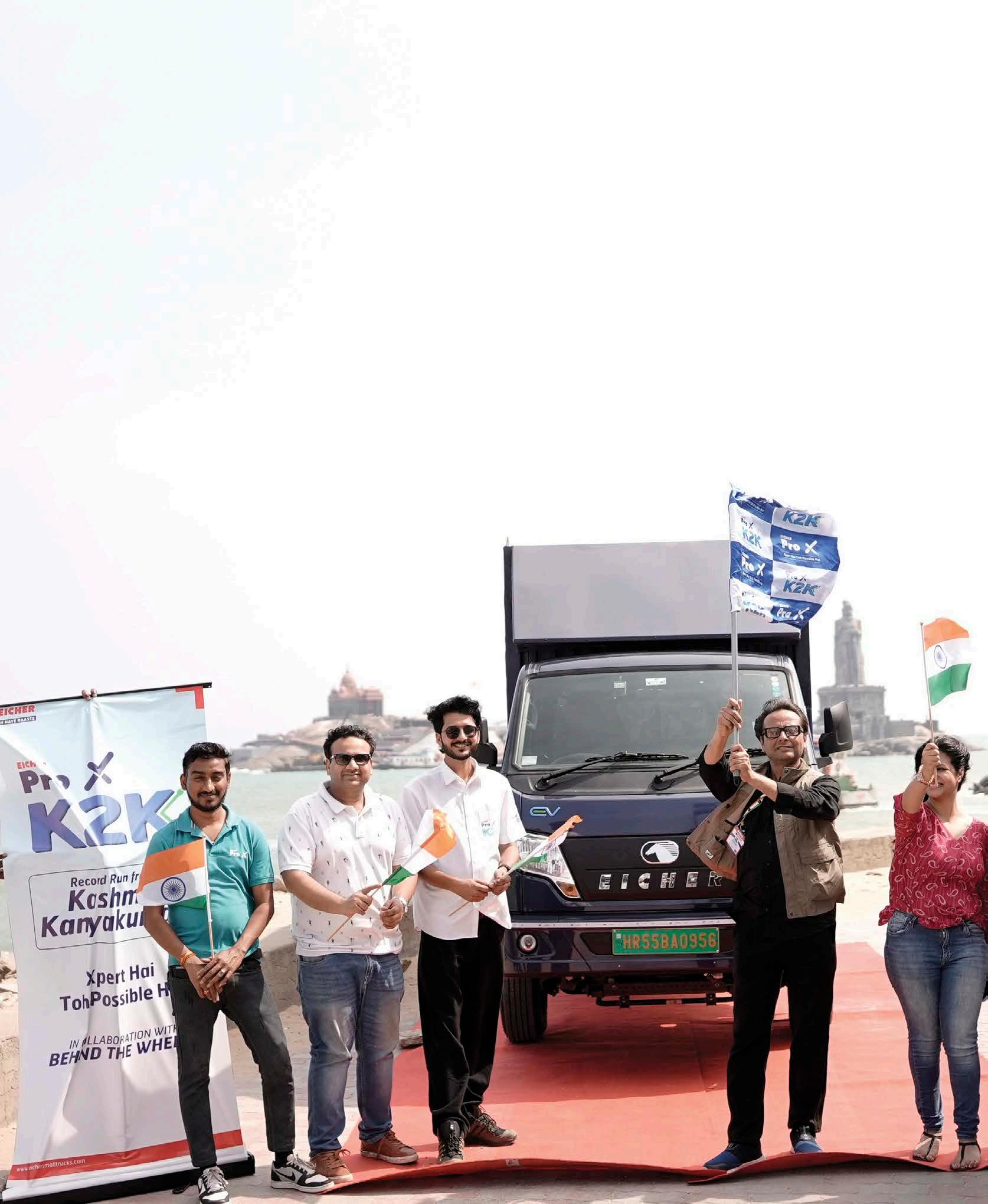
Looking ahead, such demonstrations are likely to play a crucial role in accelerating adoption. Fleet owners tend to rely on proven case studies rather than theoretical claims, especially when operational costs and delivery timelines are at stake. Realworld validation builds confidence not only in the vehicle but also in the supporting ecosystem, including charging networks, service readiness, and route planning tools. As more electric commercial vehicles undertake similar long-haul journeys, a body of evidence will emerge to guide industry decisions.
This shift may also influence how logistics companies design their operations. Route optimization could increasingly account for charging intervals alongside traditional factors like fuel stops and driver rest periods. Partnerships between vehicle manufacturers, charging providers, and logistics firms may deepen to ensure smoother deployments. Over time, standard practices for electric fleet management are likely to evolve, making adoption less complex.
Ultimately, the significance of the Kashmir to Kanyakumari drive extends beyond a single record. It signals a transition point where electric commercial vehicles begin to move from experimental to dependable. As infrastructure continues to improve and more data becomes available, the hesitation surrounding long-distance electric transport is expected to diminish, paving the way for broader integration into India’s logistics backbone.
Supercars Conquer Cho La
Cho La Pass rises sharply above the eastern Himalayas, where wind sculpts ice and silence carries history. At 14,200 feet, the pass links Sikkim to the old trade routes that once connected valleys and empires. The terrain is unforgiving. Weather shifts without warning. Oxygen thins. Roads demand respect. It is a place known for endurance and memory, not spectacle.
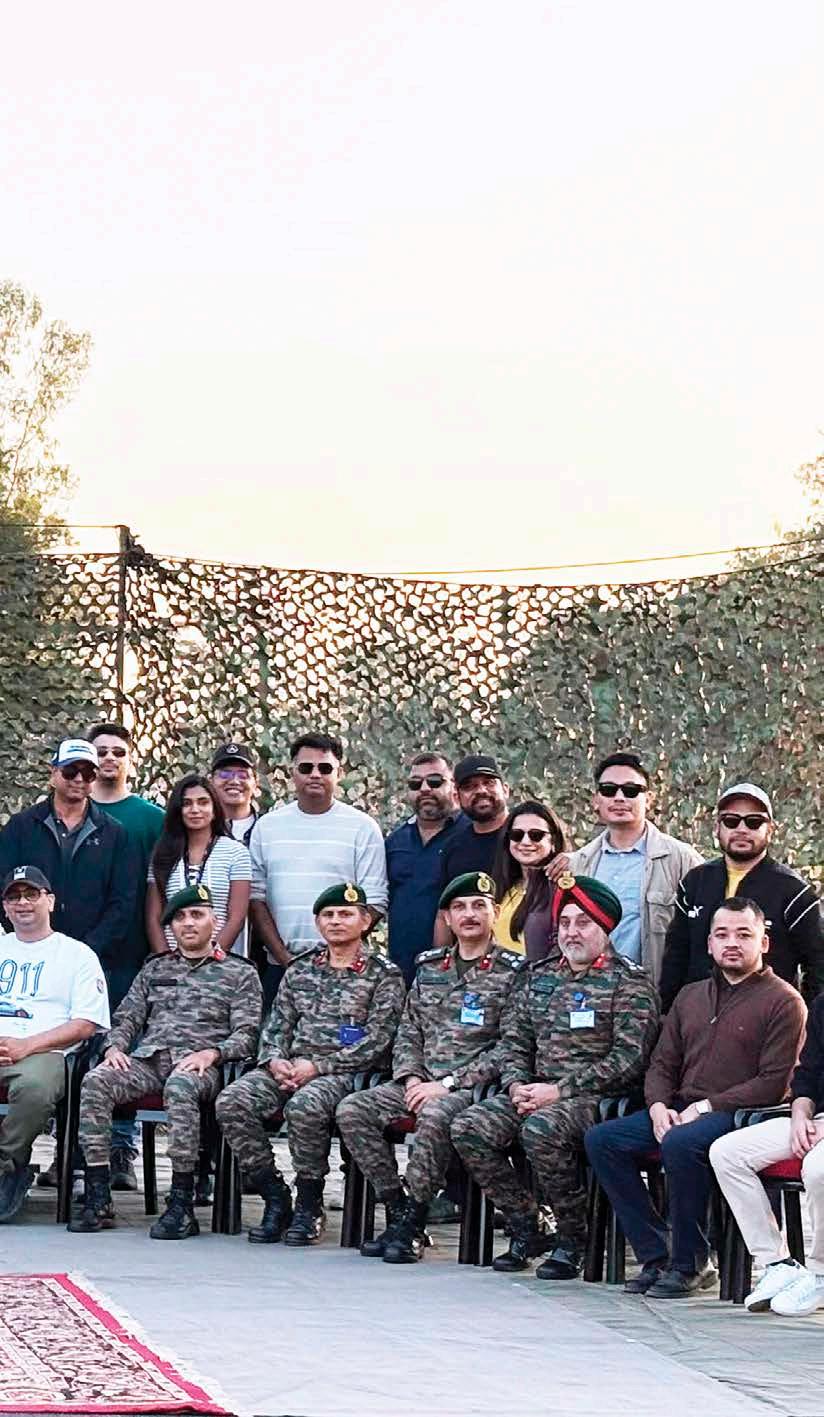
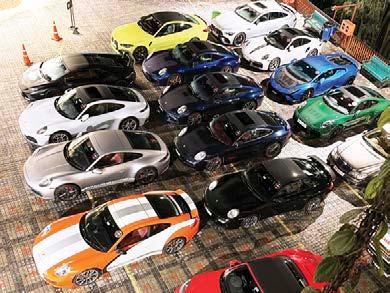
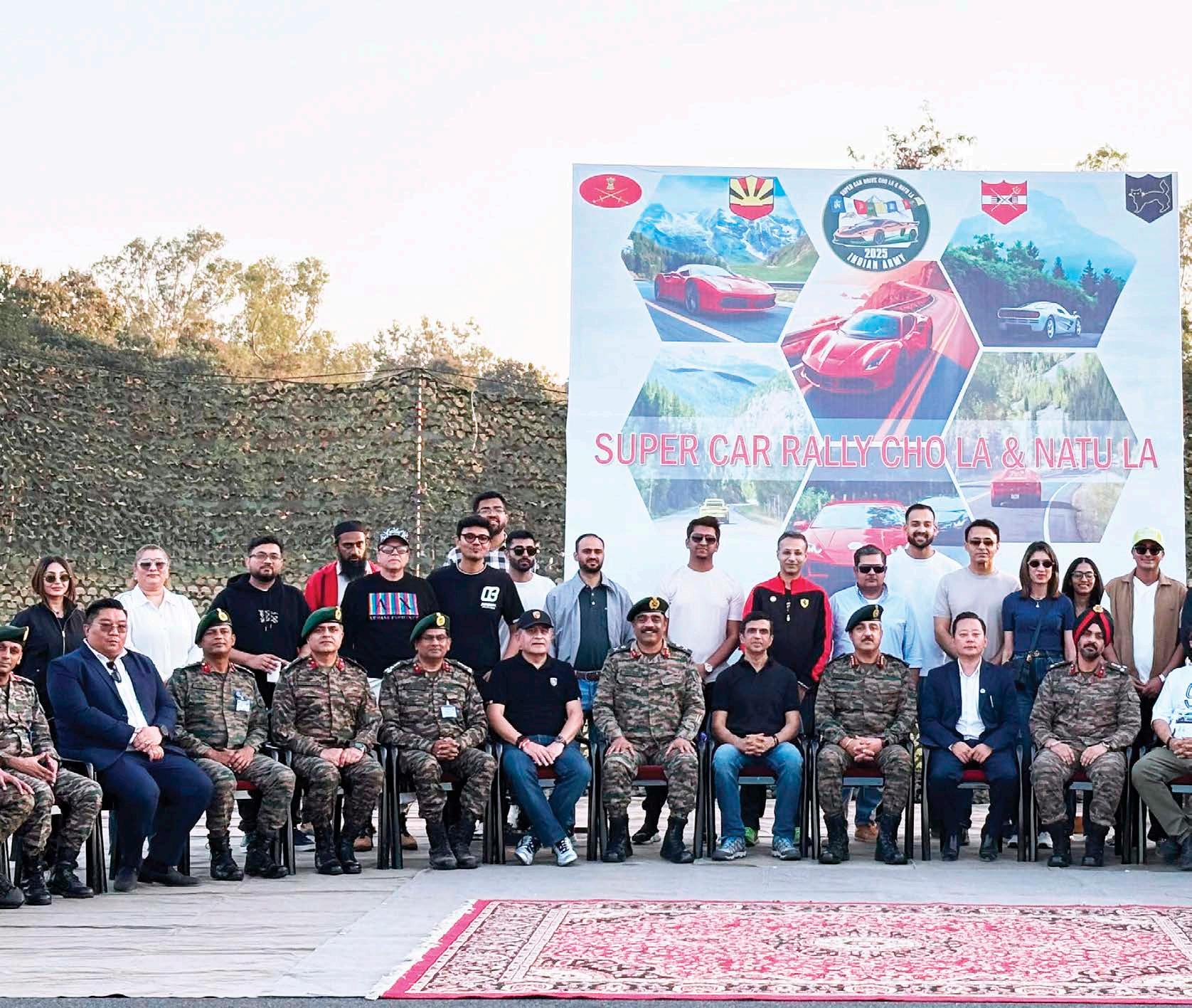
In December 2025, that balance changed with care and purpose. A convoy of supercars reached Cho La Pass for the first time. The journey was led by Zain Nadeem Rais under the banner of The Supercar Route, Mumbai. The record was formally recognised by India Book of Records (IBR).
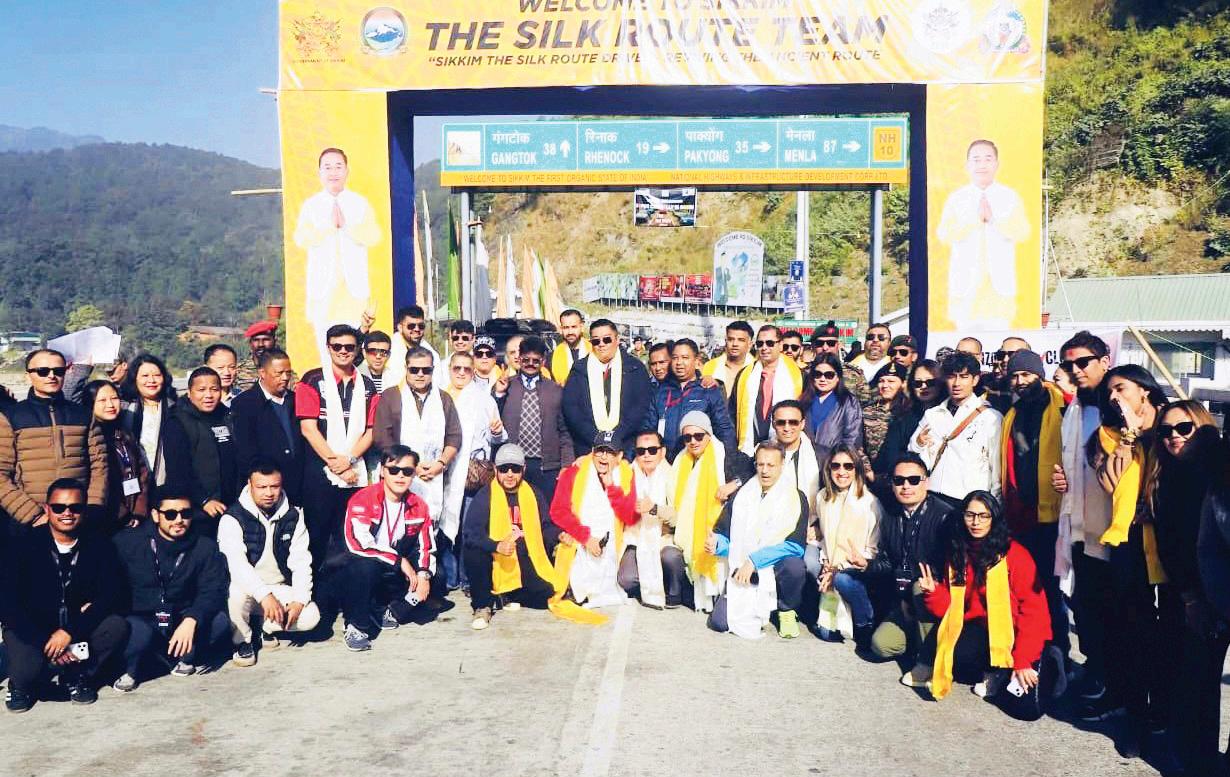
Seventeen supercars set out on 12 December 2025, from Siliguri. The route climbed to Gangtok, then traced the Old Silk Route to Nathula Pass. Two days later, on 14 December, the convoy reached Cho La Pass. The confirmation followed on 22 December 2025. The timeline mattered. The planning mattered more.
High-altitude driving is a test of systems and discipline among the participants. Engines respond differently in such areas. Brakes heat quickly in mountains. Tyres face grit and ice. Electronics of the vehicles must adapt. Drivers must slow decisions and sharpen judgement. Every halt requires checks. Every restart needs patience. The convoy progressed with coordination and patience.
The objective went beyond arrival. The expedition aimed to promote Bharat RanBhoomi Tourism. The focus was on India’s defence and historic battlefields. These routes carry strategic meaning. They also carry stories of supply lines, patrols, and perseverance. The convoy paused at points that invite reflection and care.
Support structures were central to this expedition. The event was produced by Entertainment Bay Experiences. The Black Cat Division supported the movement under the aegis of the Trishakti Corps of the Indian Army. The Government of Sikkim extended cooperation. Permissions, timing, and safety protocols aligned. Responsible tourism guided every decision.
For Sikkim, the moment added a new dimension. The state is known for measured access and fragile ecology. Any new narrative must protect that balance. The convoy respected limits. Noise was controlled. Stops were brief. Waste management was strict. The presence aimed to inform, not intrude.
Automotive capability played its part. Modern supercars blend power with precision. Cooling systems, traction control, and braking technologies proved reliable in thin air. Yet machines followed humans. Drivers adjusted lines and pace. Marshals monitored weather windows. Communication stayed constant.
The achievement also reframed adventure tourism. It suggested that high-performance vehicles can coexist with heritage routes when planning is rigorous. It opened a conversation about curated access to frontier regions. It
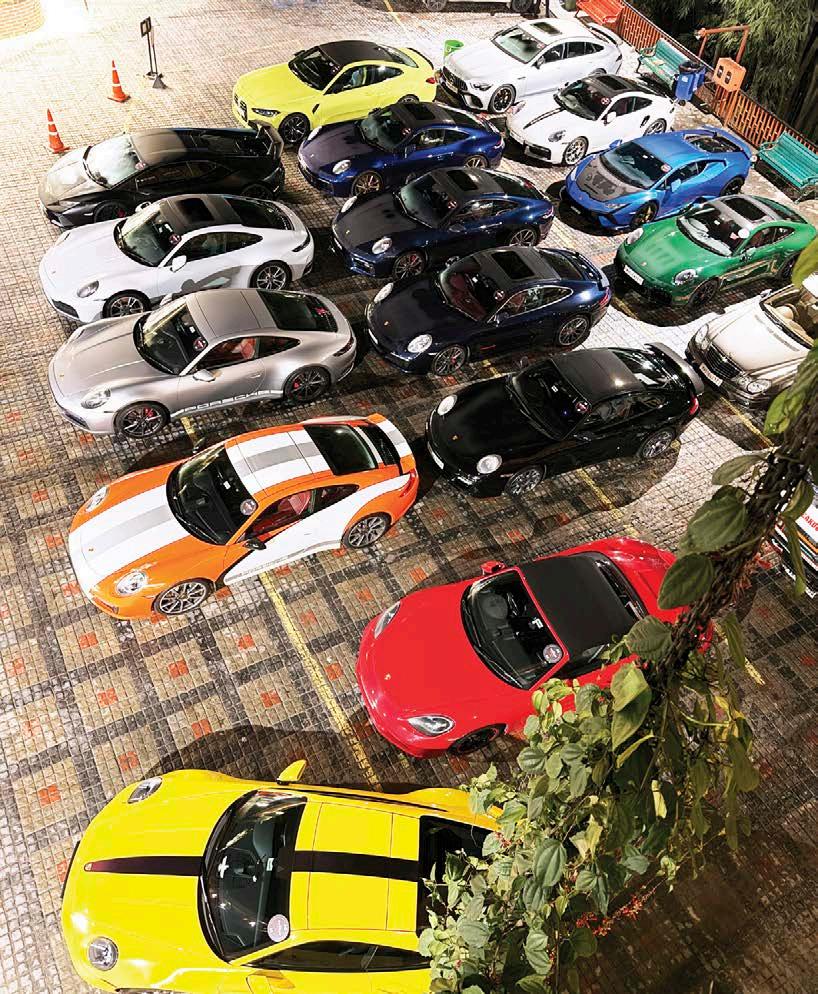
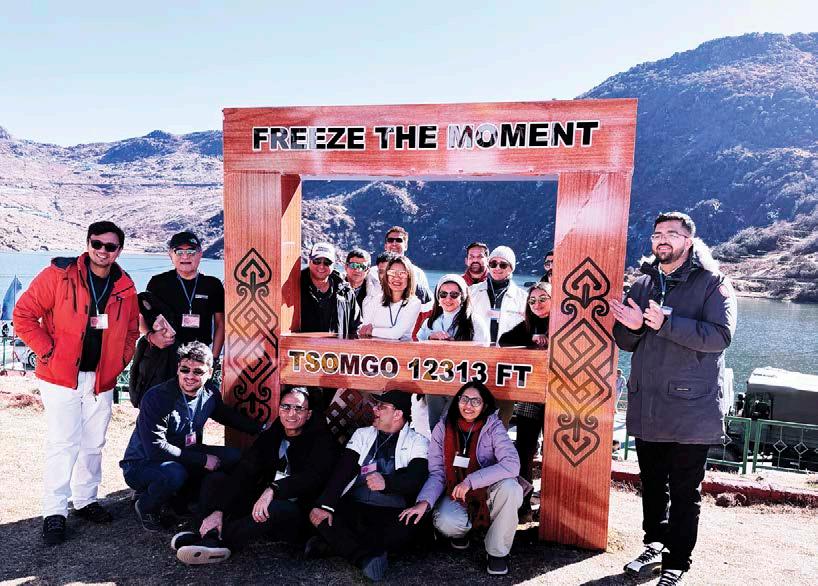
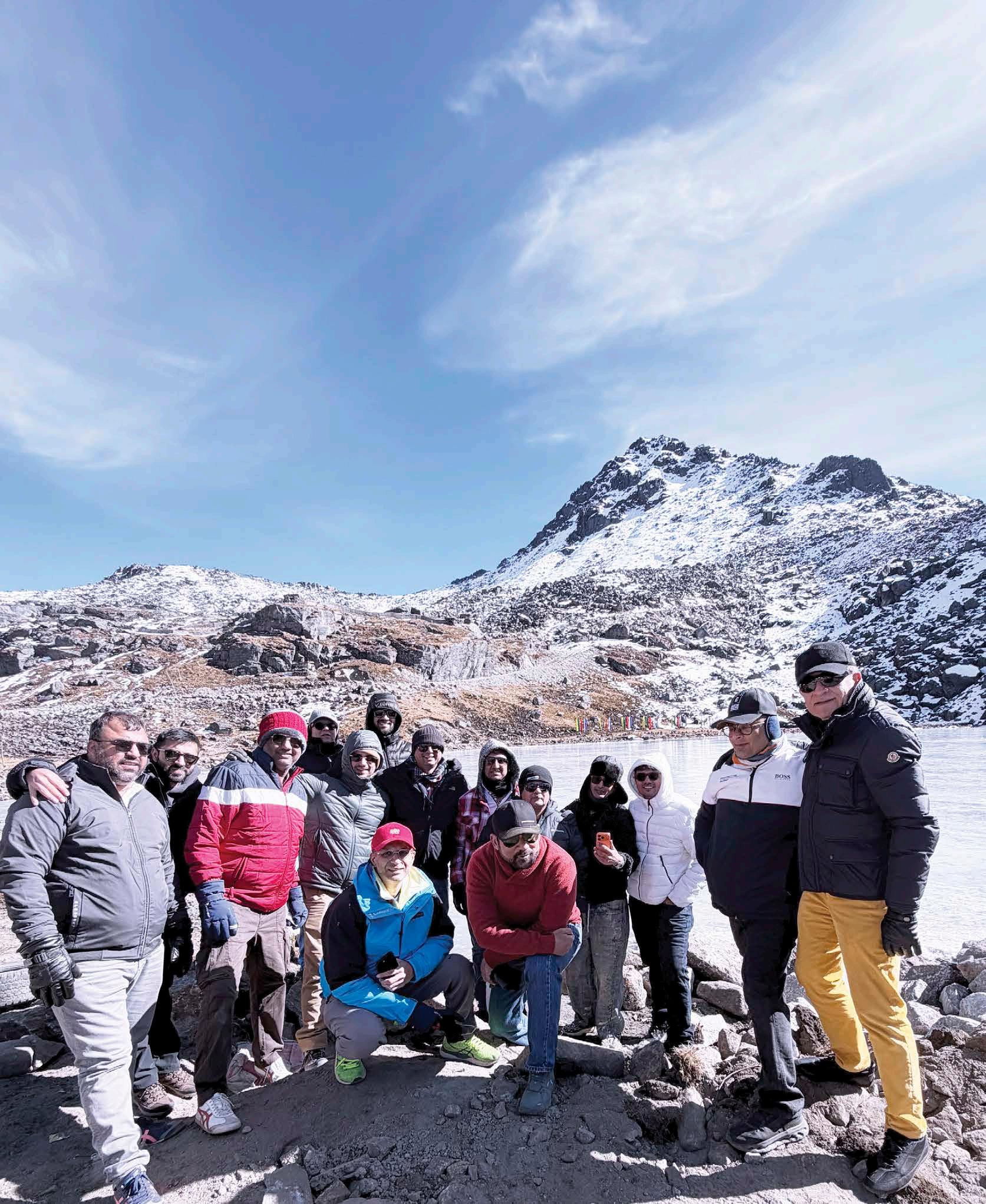
A 17-car supercar convoy reached Sikkim’s high-altitude Cho La Pass in December.
The expedition set a national record while spotlighting frontier heritage, defence history, and responsible adventure tourism.
reinforced the idea that tourism can educate when it honours context.
Zain Nadeem Rais reflected on the purpose behind the rare drive. “This journey was planned to honour our frontier history and to show that responsible exploration can deepen respect for these regions,” he said. The statement matched the conduct seen on the road.
The recognition marked a first. It also set a benchmark for how such feats should be approached. Preparation over bravado. Coordination over display. Purpose over novelty. The convoy did not seek to rewrite the mountains. It sought to listen, then pass through.
As the cars descended, Cho La returned to its quiet rhythm. Wind resumed its work. Tracks faded. What remained was a record and a reminder. High places demand humility. When ambition meets discipline, milestones can be reached without disturbing the ground that holds them.
Electric Scooter Conquers Kolli
The growing trend of electric two wheelers in India is reshaping daily mobility and long-distance confidence. Urban adoption has grown strong. Rural curiosity has increased. Questions around performance on slopes and tough terrain remain common. Range anxiety still influences decisions. Hill roads often become the final test. In this context, a focused endurance ride in Tamil Nadu offered a clear answer.
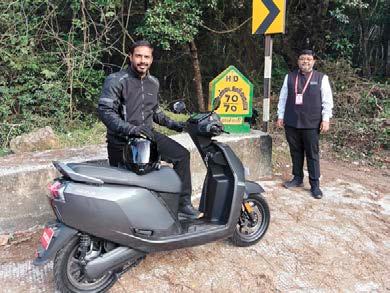
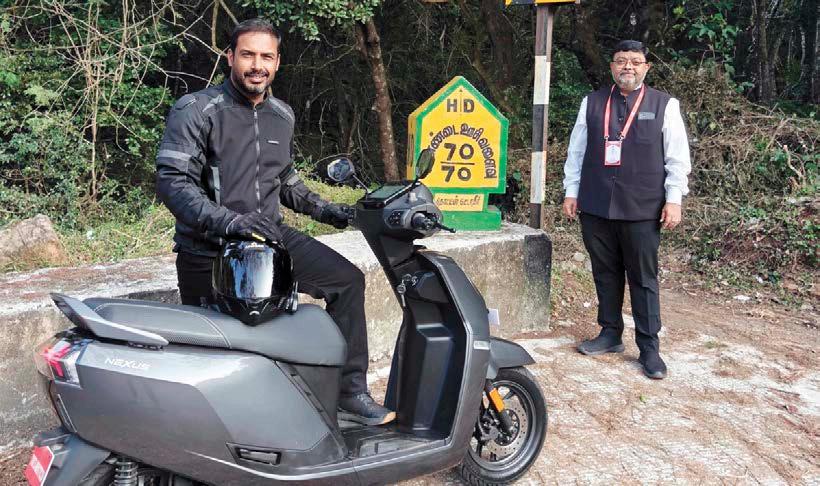
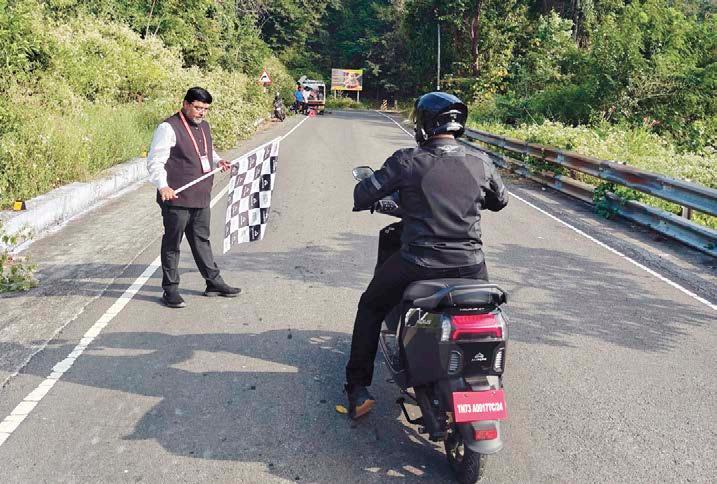
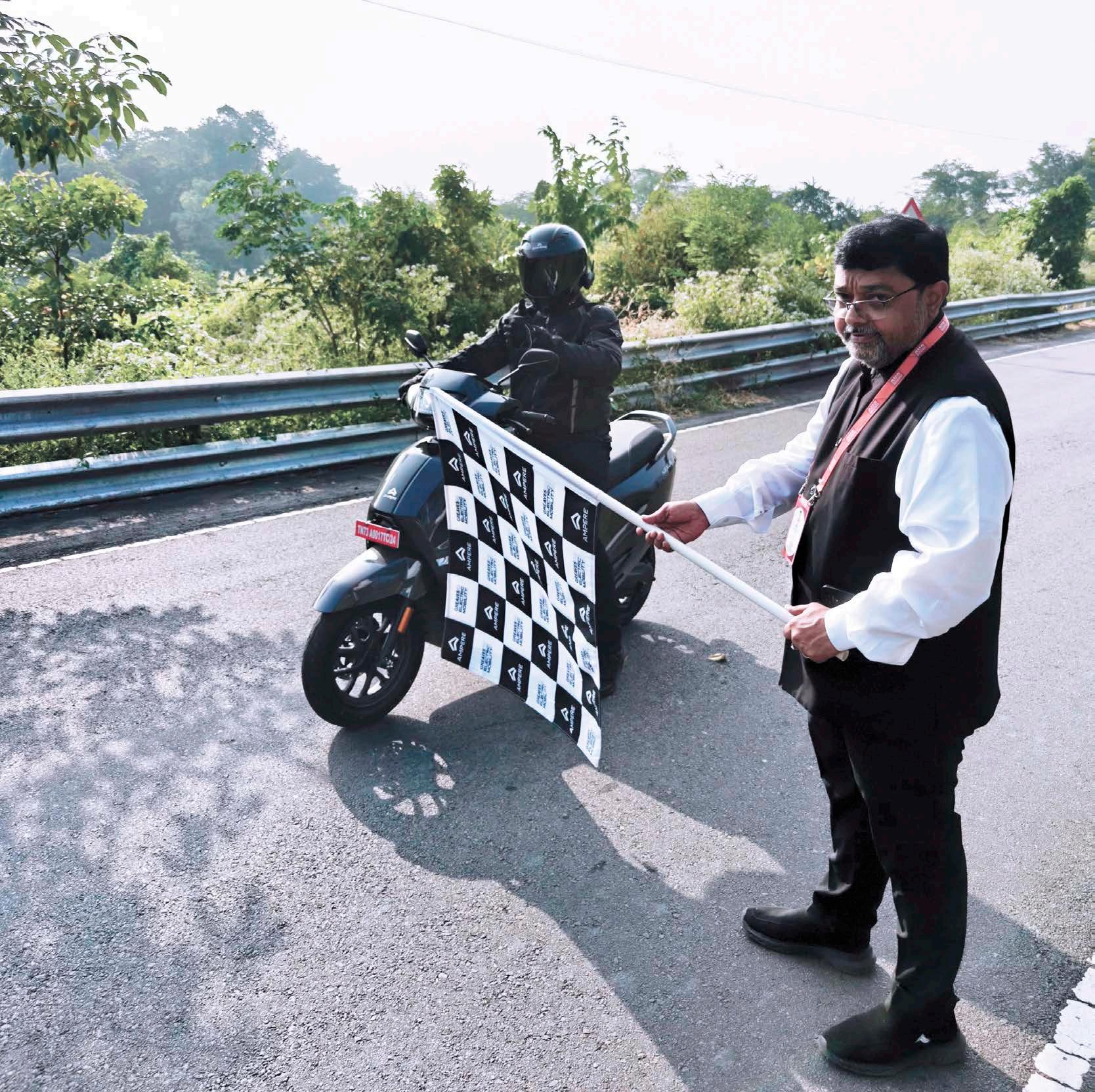
On 7 January 2026, Greaves Electric Mobility created a defining moment for India’s EV landscape. The company achieved the record for the first electric two-wheeler to ascend Kolli Hills. The climb began at 7 am from Belukurichi and ended at the summit of Kolli Hills. The ride was completed using the Ampere Nexus electric scooter. The Pixel Motion team handled the ascent. The route included 70 sharp hairpin bends. The total climb time was 22 minutes and 10 seconds. Asia Book of Records confirmed the achievement on the same day.
Kolli Hills is known for its demanding gradient. The hill road rises steep through forested terrain. The bends test braking control and torque delivery. Weather shifts quickly. Road width narrows in sections. For conventional vehicles, the climb demands patience. For electric two wheelers, it demands proof of capability. The Ampere Nexus faced this test without external assistance.
The ride focused on consistency rather than speed. Throttle control mattered. Battery management mattered. Heat management mattered. The scooter maintained output through
each curve. The ascent showed how modern electric drivetrains deliver instant torque. The climb also demonstrated stability under continuous load. The 70 bends came one after another. Each demanded balance and judgement.
The Ampere Nexus was selected for its design focus. The scooter is built for everyday commuting. It carries a strong motor platform. Its battery architecture supports sustained output. Engineers observed data during the climb. Performance remained predictable. There was no mid-route intervention. The ride ended at the summit as planned.
Electric two wheelers often face scepticism outside cities. Hill roads represent a mental barrier. Many riders believe EVs suit flat terrain alone. The Kolli Hills ascent addressed this concern directly. It moved discussion from theory to practice. A real road replaced simulation. A real gradient replaced brochure claims.
Greaves Electric Mobility has positioned Ampere as a mass mobility brand. Its focus stays on practical use cases. The company has invested in local engineering and testing. The Kolli Hills climb aligned with this approach. It was not a laboratory test. It was a public road challenge under real conditions.
The role of the Pixel Motion team proved important. The riders planned the climb sequence. They studied the route. They timed energy use. They respected traffic norms. Safety remained a priority. The ascent took place early in the morning to ensure clear conditions. Coordination remained tight throughout the climb.
Recognition from Asia Book of Records added formal validation. The confirmation placed the achievement in a wide frame. It acknowledged execution and intent. Records often highlight extremes. This one highlighted relevance. It showed how electric scooters can handle terrain many riders face daily in hill towns.
Mr Vikas Singh, Managing Director of Greaves Electric Mobility, reflected on the milestone, saying, “This climb was about confidence. We wanted to show that electric two wheelers can handle real Indian roads, including steep hill climbs, with reliability and control.”
The timing of the climb also mattered. India’s EV policy environment continues to evolve. Charging infrastructure is expanding. Consumers now look beyond range alone. They ask about load, incline, and durability. Demonstrations like this help answer those questions without heavy explanation.
An electric two-wheeler rewrote perceptions as Ampere Nexus climbed Tamil Nadu’s Kolli Hills, proving EV capability on steep terrain and earning a record through disciplined engineering and execution.
Women Learning Investment Power
Financial literacy plays a crucial role in shaping economic independence. Understanding savings, investments, and long-term financial planning allows individuals to make informed choices. In India, awareness about investment options has expanded continuously in recent years. Yet many young students still begin their professional lives with limited financial knowledge.
Among women, the gap is often more visible. Cultural patterns, family priorities, and lack of exposure sometimes delay financial decision-making. Experts believe that early education can change this pattern. When young women understand investments at the beginning of their careers, they gain stronger financial confidence.
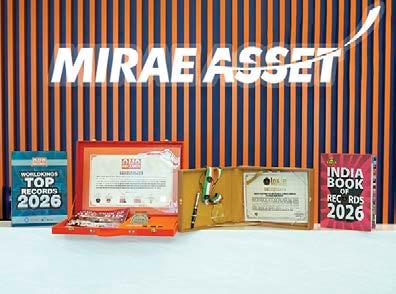
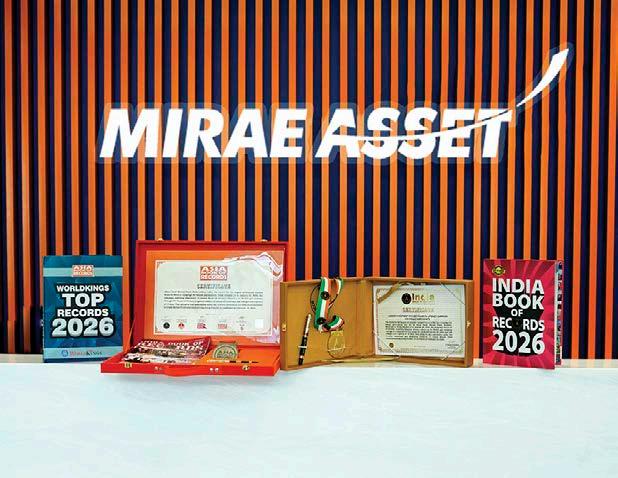
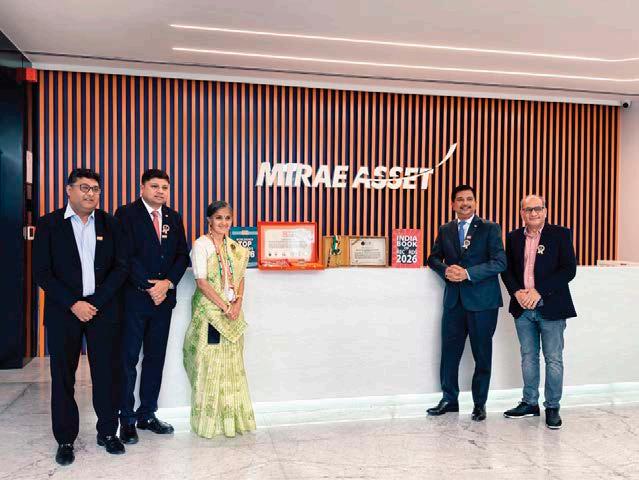
A nationwide initiative in early 2026 attempted to address this challenge directly. Mirae Asset Mutual Fund, Mumbai, set a record for the Largest Investment Focused Financial Literacy Campaign for Female Participants. The campaign reached thousands of college students across India and introduced them to the basics of financial planning.
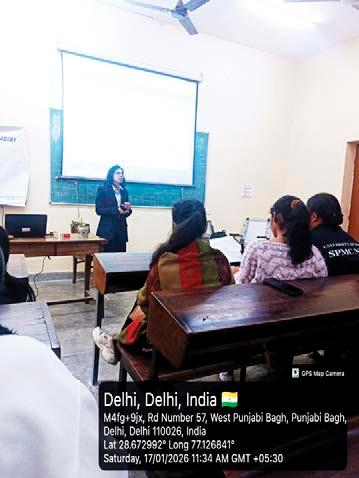
The programme ran from 12 to 26 January 2026. During these fifteen days, the organisers conducted 571 financial literacy sessions. The sessions were held across 45 cities and covered 320 colleges. A total of 39,833 girl students attended the programmes.
The campaign formed part of the Investor Awareness and Education initiative aimed at building mutual fund awareness among young women. The sessions focused on practical topics such as savings habits, systematic investment plans, risk awareness, and long-term wealth creation.
Educators explained how disciplined investing can support personal goals. Many students heard detailed explanations of mutual funds for the first time. Trainers used simple examples to explain market concepts. Interactive discussions helped participants understand financial decisions in everyday life. College campuses provided an effective environment for these programmes. Students could ask questions freely. Faculty members also supported the initiative. The sessions encouraged participants to think about financial planning early in their professional journey.
The campaign required extensive coordination. Teams travelled across multiple states to organise sessions. Each programme followed a structured format designed to ensure consistency of information. Educational material and presentations were prepared to make the sessions accessible for beginners.
Organisers emphasised that financial awareness must begin before individuals start earning. Understanding how investments work can influence future choices related to
savings, spending, and career planning. When young women learn about financial tools early, they gain greater control over their economic future.
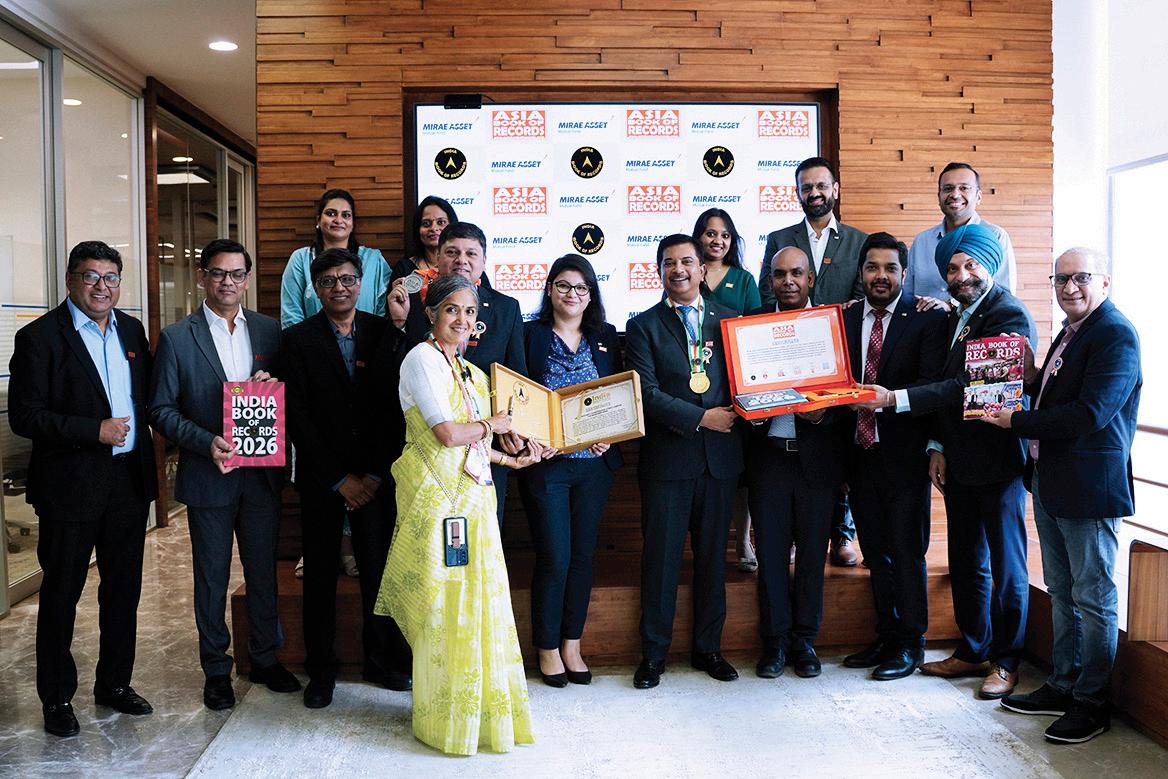
The scale of the campaign drew national attention. Conducting hundreds of sessions across many cities within fifteen days demanded careful planning. Coordinators worked with colleges to manage schedules and student participation. Asia Book of Records and India Book of Records recognised the campaign as the largest investment-focused financial literacy initiative for female participants. Adjudicator Seema Manikkoth presented medals and certificates to the organisers.
Leaders from the organisation reflected on the purpose of the campaign. Mirae Asset Mutual Fund CEO Swarup Anand Mohanti said, “Financial literacy among young women can shape stronger economic participation. Empowering female students with investment knowledge helps them make confident financial decisions throughout life.”
Across India, awareness about mutual funds has grown over the past decade. Digital platforms, investor campaigns, and regulatory initiatives have expanded access to financial information. Yet education remains the most important starting point. Financial literacy programmes in colleges can bridge the gap between theory and real-life decision making.
A nationwide financial literacy drive reached 39,833 girl students across India through 571 programmes in 45 cities. The initiative highlighted the growing importance of financial education among young women.
Students often graduate with professional skills yet lack knowledge about investments. Initiatives like this one attempt to address that gap at an early stage. For many participants, the campaign became their first exposure to investment education. Some students expressed interest in learning more about financial planning. Others began exploring savings strategies for their future careers.
Battling Junk Food Habits
The growing trend of fast-food consumption has begun to shape India’s health and economic landscape in visible ways. Easy availability, aggressive marketing, and changing family routines have pushed packaged and ultra-processed foods into daily diets. The impact extends beyond waistlines. Rising cases of obesity, diabetes, hypertension, and early lifestyle disorders add pressure on families and on the nation’s healthcare system.
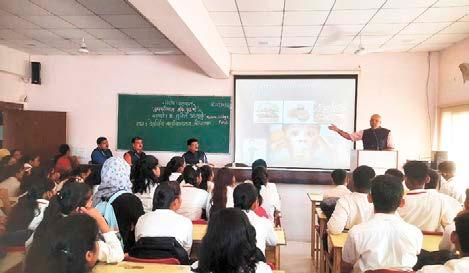
Within this setting, sustained food awareness at the student level has gained importance. Schools remain the first space where habits are formed and questioned. One educator from Pune chose to address this challenge through consistent dialogue rather than isolated campaigns.
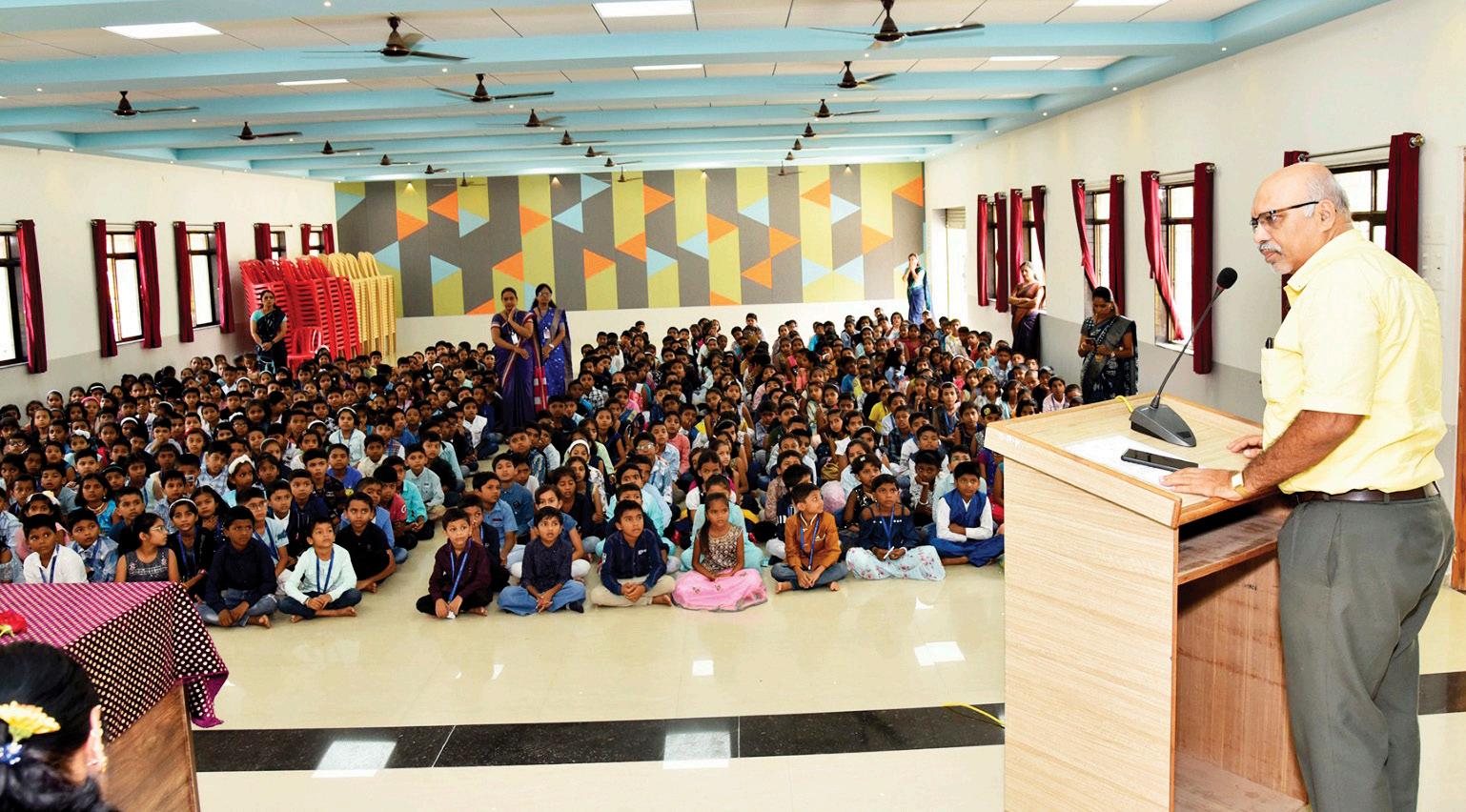
Prof Sunil Babanrao Adsule of Pune, Maharashtra, set a record for conducting the maximum number of sessions on the harmful effects of junk food. He delivered 230 lectures and reached over 75,000 students across schools and colleges. The achievement was recognised by the India Book of Records.
Prof Adsule serves as a lecturer at Modern High School & Junior College. Alongside his academic responsibilities, he chose to commit time to student health education. The record
was not built through a single tour. It emerged from repeated visits, follow-up interactions, and sustained engagement over several years.
The sessions focused on everyday food choices. Students were guided to observe what they eat, when they eat, and why they eat. Lectures explained how excessive intake of fast food affects digestion, metabolism, concentration, and long-term health. Examples were drawn from daily life. Scientific terms were simplified. Visual demonstrations were often used to hold attention.
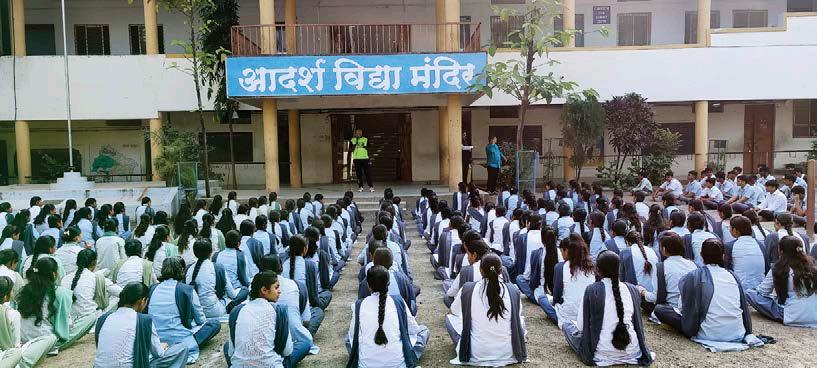
Marathi-language reports highlight that his outreach extended beyond urban classrooms. Prof Adsule travelled to schools in Pune city, surrounding rural areas, and smaller towns. He addressed students from different age groups. Sessions were adapted to match maturity levels. Younger students were taught to identify junk food. Older students were guided to read labels and question marketing claims.
The effort required balance. Teaching schedules, examination duties, and institutional work continued alongside these lectures. Travel added physical strain. Yet the sessions continued. Reports note that some days involved multiple
lectures at different locations. The scale grew gradually. Word spread among schools. Invitations followed.
Junk food awareness formed the core theme. Health consequences were explained in clear terms. Obesity, type 2 diabetes, high blood pressure, heart disease, dental issues, and reduced immunity were discussed. The link between poor diet and reduced concentration was emphasised, as it directly affects academic performance.
Economic impact was also addressed. Students were shown how long-term illness increases medical expenses. Families bear the cost first. Public hospitals carry the larger burden later. Preventive habits reduce this pressure. Parents and teachers were often present during sessions. This helped extend the conversation beyond the classroom. Students were encouraged to discuss food habits at home. Local foods and simple meals were promoted as practical alternatives. The aim remained realistic change.
Prof Adsule often combined health education with valuebased discussion. Discipline, self-control, and awareness were linked with daily routines. Physical activity and balanced meals were presented as achievable habits, even within busy schedules. Recognition by the IBR brought wider attention to this educational effort. Prof Adsule stated, “Students must
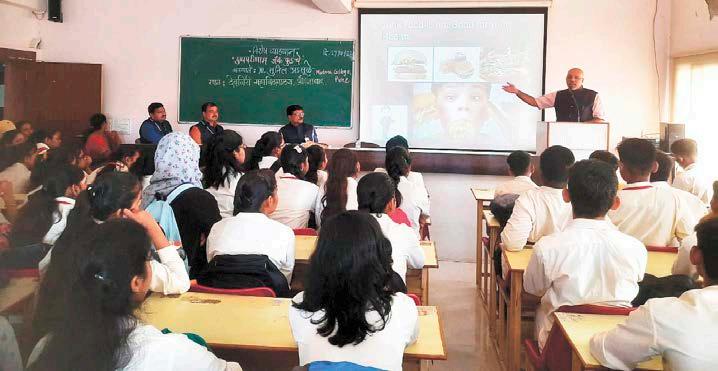
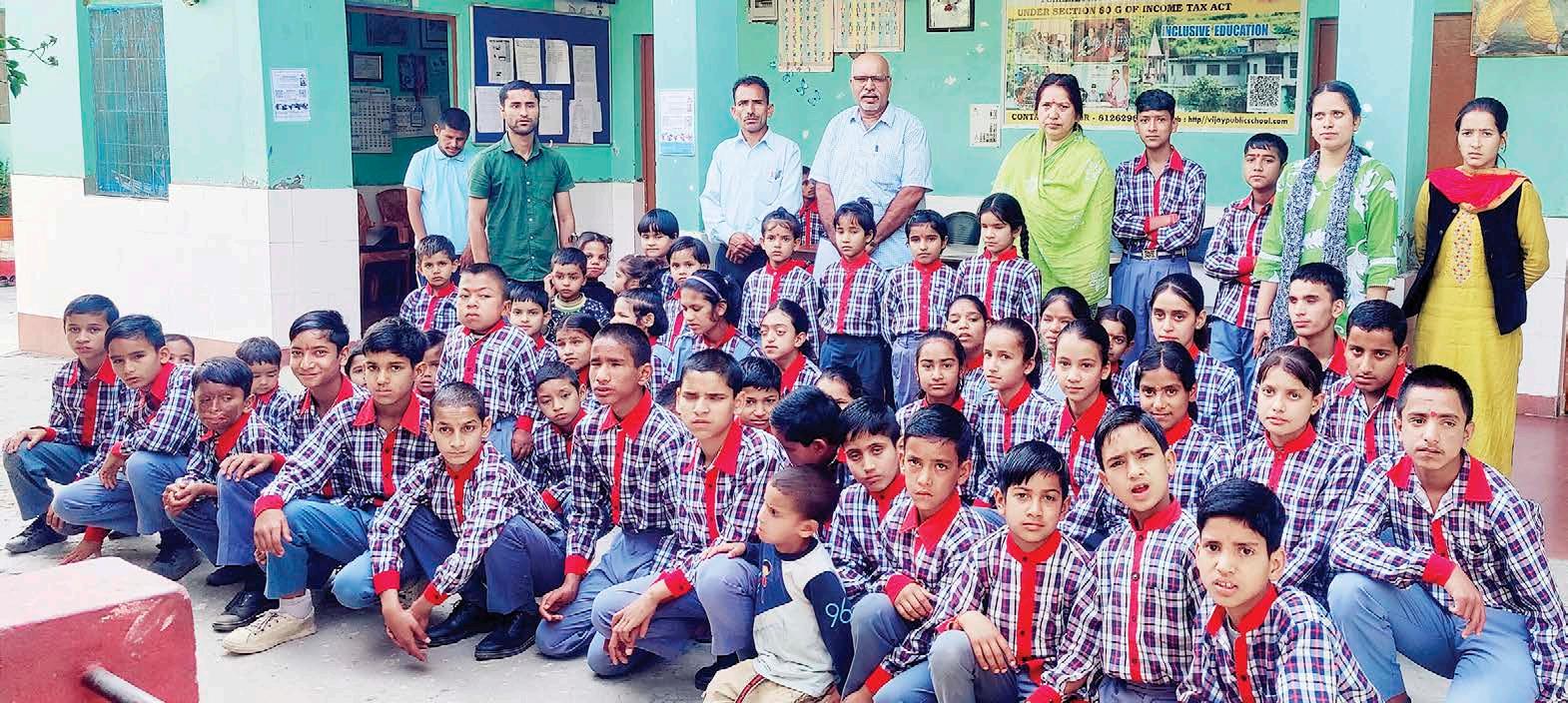
An educator from Pune reached thousands of students through sustained classroom outreach. His lectures on junk food risks highlighted how food choices affect health, learning, and the nation’s healthcare burden.
understand what junk food does to their bodies at an early age. Awareness today can prevent serious illness tomorrow.”
India’s fast-food market continues to expand. Awareness efforts must keep pace. Healthcare costs will rise if habits remain unchecked. Through 230 sessions and conversations with over 75,000 students, Prof Adsule demonstrated how persistence amplifies impact.
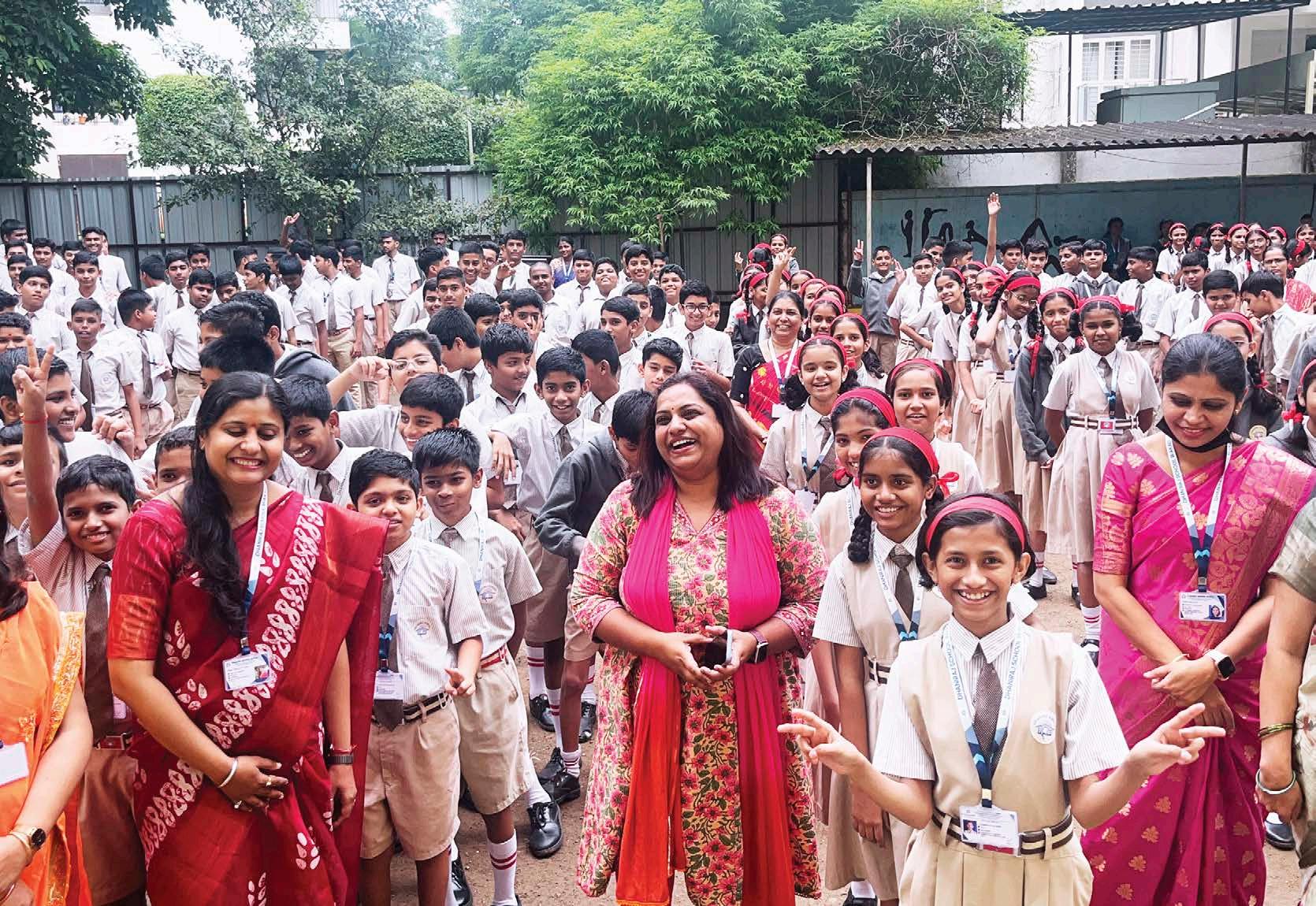
Pledging Clean Ganesh Utsav
Ganesh Utsav holds a unique place in Maharashtra’s social and cultural life. The festival brings homes, streets, and neighbourhoods together in shared devotion and celebration. Along with joy, it also places responsibility on citizens. Idol immersion, floral waste, plastic use, and post-festival cleanliness shape the environmental footprint of the event. In recent years, this awareness has grown across cities and towns.
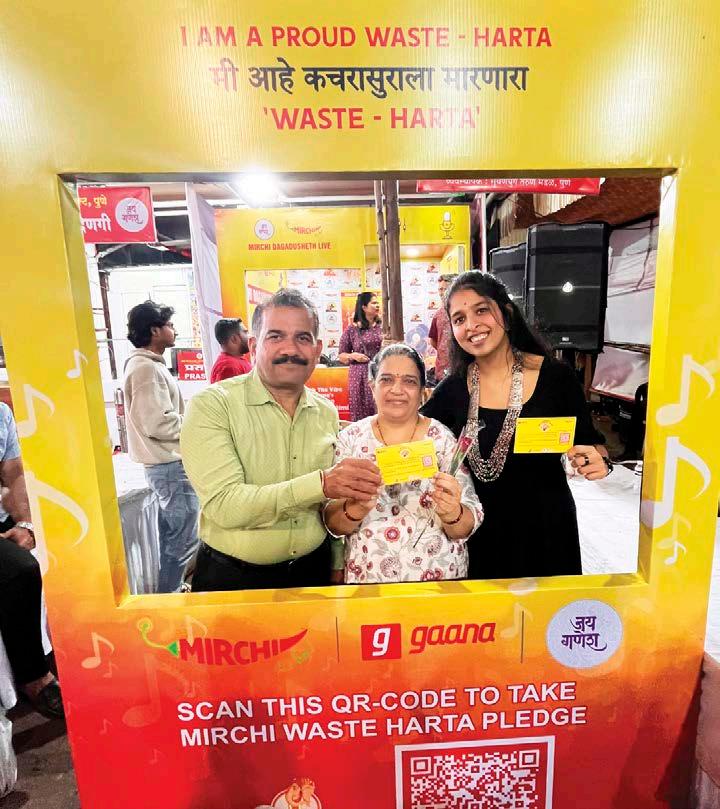
Against this backdrop, 98.3 Mirchi Pune, part of Entertainment Network India Ltd, launched a large-scale civic initiative during Ganesh Utsav 2025. Titled “Mirchi Waste Harta Pledge,” the campaign set a new benchmark for public participation. It was recognised as the largest eco-friendly cleanliness pledge campaign during Ganesh Utsav by an organisation, as confirmed on 3 January 2026, by Asia Book of Records.
The campaign ran from 27 August to 6 September 2025. Over these eleven days, 9,330 citizens took a cleanliness pledge through physical and digital formats. Participation came
from schools, colleges, housing societies, public spaces, and specially created live pledge booths. The effort extended beyond signatures. It created conversations around waste segregation, responsible disposal, and post-festival hygiene.
Ganesh Utsav often transforms cities into vibrant public spaces. With that transformation comes waste at multiple points. The “Mirchi Waste Harta Pledge” addressed this reality directly. Citizens were encouraged to reflect on daily habits during the festival. The focus remained practical. Avoid plastic. Manage floral waste. Keep immersion zones clean. Respect shared spaces.
Radio played a central role in amplifying the message. Mirchi RJs used on-air segments to explain the purpose of the pledge. Live interactions invited listeners to participate. On-ground presence added momentum. RJ-led booths became points of engagement, not mere formality. The campaign bridged broadcast influence with street-level action.
Pune’s response reflected a shift in public attitude. Students pledged within campuses. Housing societies organised group sign-ups. College volunteers assisted at booths. Digital pledges allowed participation beyond physical locations. The format remained inclusive and accessible. The aim was to make responsibility visible during celebration.
The scale of participation also highlighted the power of medialed civic campaigns. Radio, often seen as an entertainment medium, acted as a facilitator of behaviour change. By aligning festival emotion with environmental responsibility, the initiative found natural acceptance. The message did not disrupt tradition. It strengthened it.
The recognition from Asia Book of Records validated the impact. It also placed the campaign within a larger regional context. Ganesh Utsav is celebrated across Maharashtra. Replicable models matter. The “Waste Harta” format demonstrated how local festivals can support broader cleanliness goals without losing cultural essence.
Smita Tribhuvan, Zonal Content Head, Rest of Maharashtra, 98.3 Mirchi, underlined the aim behind the initiative. “Ganesh Utsav connects deeply with people in Maharashtra, and this pledge was our way of turning devotion into daily responsibility for cleaner surroundings,” she said.
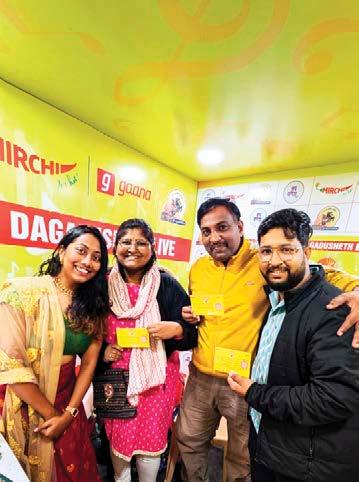
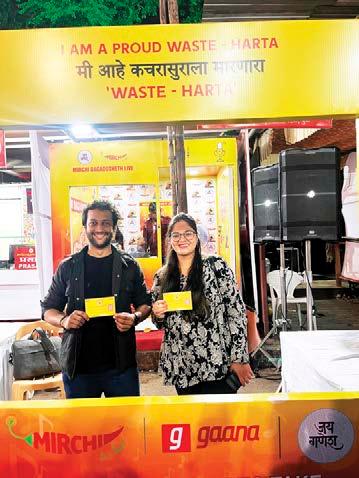
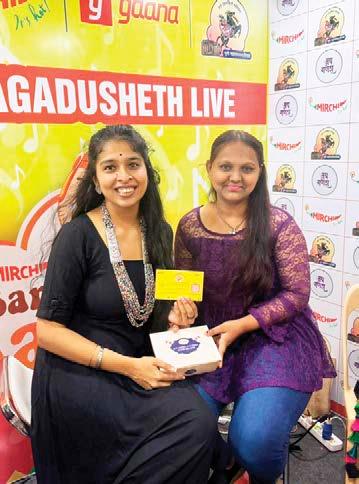
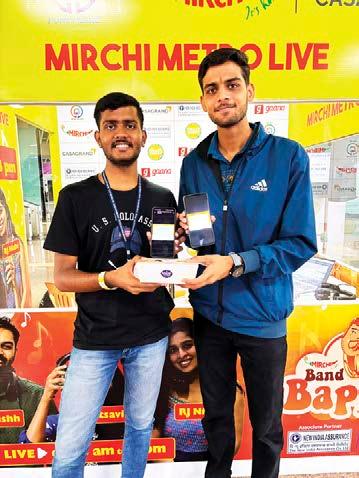
The success rested on coordination. Mirchi RJs, content teams, volunteers, and partner institutions worked in sync. Schools and colleges opened their spaces. Housing societies mobilised residents. Citizens responded with willingness. Environmental responsibility during festivals often fades once celebrations end. This campaign sought continuity.
The pledge asked participants to carry habits beyond immersion day. Clean streets. Segregated waste. Respect for public infrastructure. Small actions, when repeated, shape civic culture. For Pune, the campaign added a new chapter to festival engagement. It showed that mass participation need not be loud to be effective. Commitment can be quiet and collective. Media platforms can guide it with sensitivity. As Ganesh Utsav continues to evolve, initiatives like “Mirchi Waste Harta Pledge” suggest a path forward.
During Maharashtra’s most cherished festival, a Pune-based radio initiative mobilised thousands to commit to cleanliness and ecofriendly practices. The campaign blended faith, civic duty, and community action at scale.
STEM Quiz Sparks India
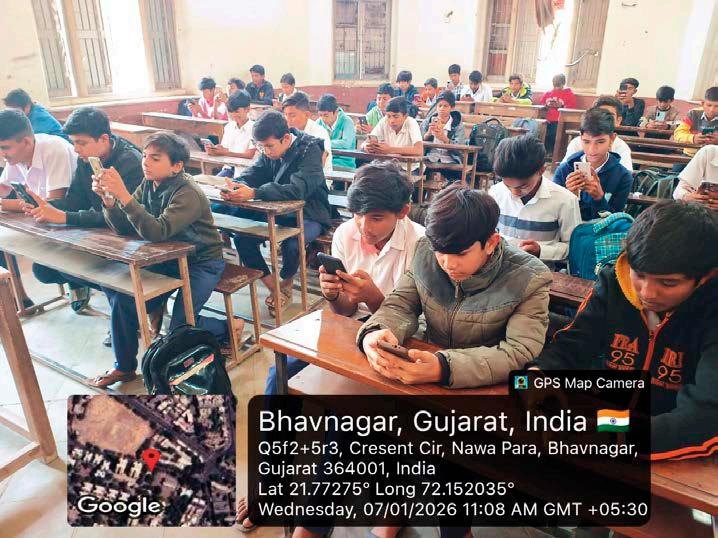
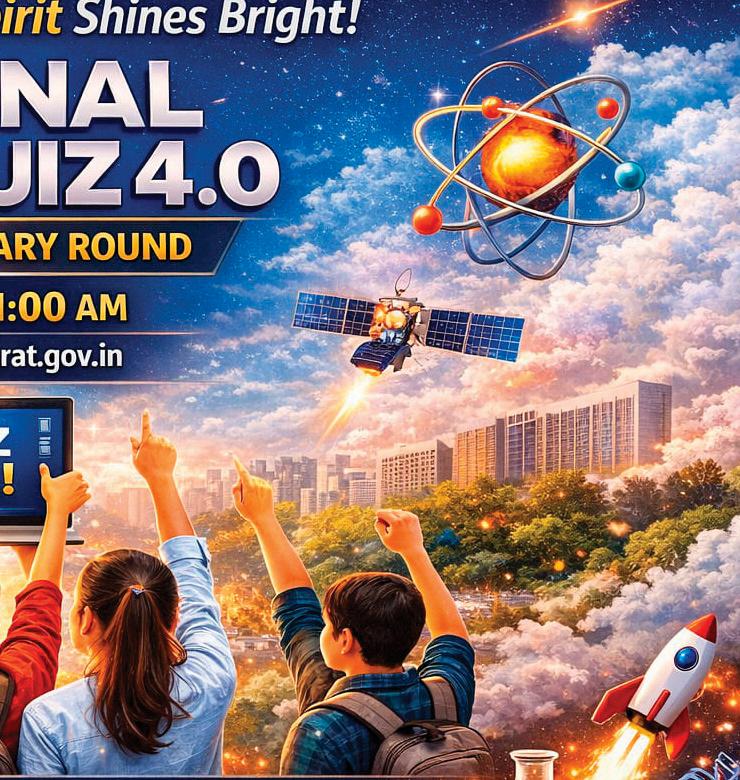
The Gujarat STEM Quiz has grown into a familiar academic event for school students across the country. Designed to blend curiosity with structured learning, the initiative uses quiz-based engagement to draw young minds toward science, technology, engineering, and mathematics. In January 2026, the programme reached a level that few educational initiatives in India have achieved.
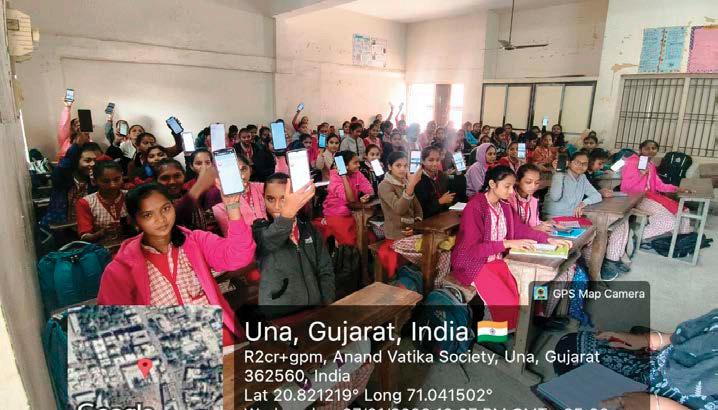
On 7 January, a total of 15,01,249 school students registered for the National STEM Quiz at Gujarat Science City. The feat set a record for the largest number of school student registrations for a STEM quiz. The achievement was led by Gujarat Council on Science and Technology, working under the Department of Science and Technology, Government of Gujarat. The record received formal recognition from Asia Book of Records and India Book of Records.
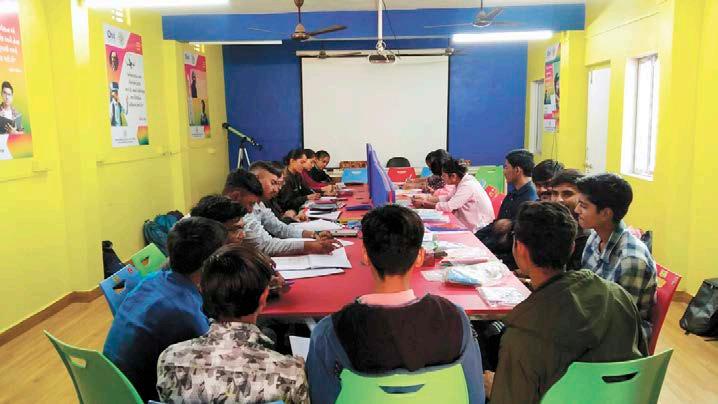
The scale of participation reflected careful planning and inclusive design. Students from Classes IX to XII registered from multiple states, boards, and mediums of instruction. Location posed no barrier. Gender posed no barrier. Access remained central to the structure. Registrations opened in September 2025 and continued until 15 December. Interest continued to build through schools, teachers, and student networks.
The quiz framework focused on informal science learning. Questions encouraged reasoning over recall. Concepts connected classroom knowledge to real-world applications. The competitive element remained balanced with learning value. Students prepared using a curated question bank of more than 7,000 items, covering both junior and senior levels.
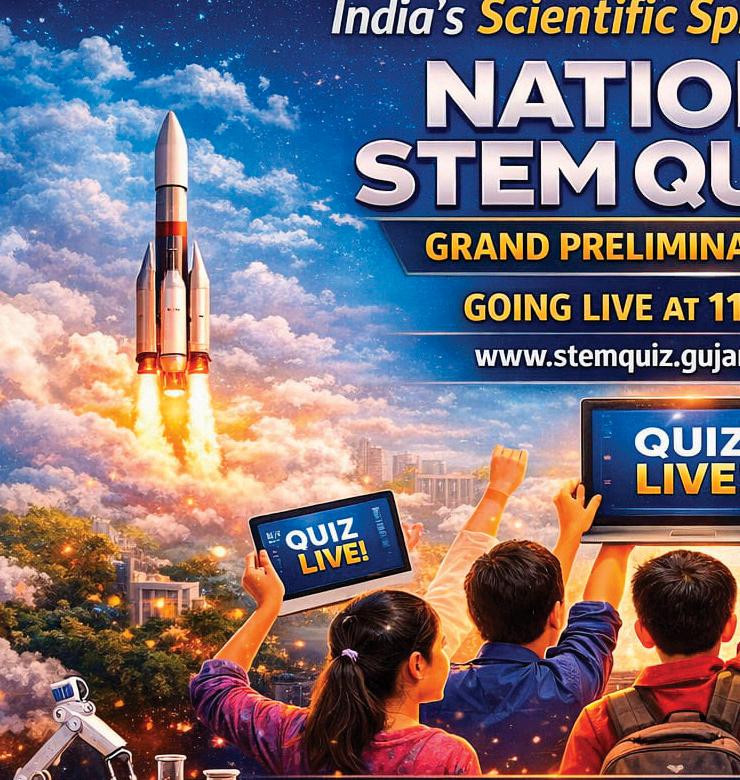
The Gujarat STEM Quiz drew over 15 lakh school registrations nationwide. This highlight rising scientific curiosity among students and positioned quiz-based learning as a powerful national STEM engagement tool.
The initiative progressed through defined stages. Registered students first attempted a mock test to familiarise themselves with the format. An online preliminary test followed in January 2026. Top performers moved to zonal rounds followed by grand finale at Gujarat Science City. This phased structure helped manage it while maintaining academic rigour.
Collaboration strengthened the programme. National scientific institutions contributed expertise and content support. These included the Space Applications Centre of ISRO, Bhabha Atomic Research Centre, Defence Research and Development Organisation, and National Forensic Sciences University. Gujarat Informatics Limited served as the technology partner, ensuring platform stability during peak participation.
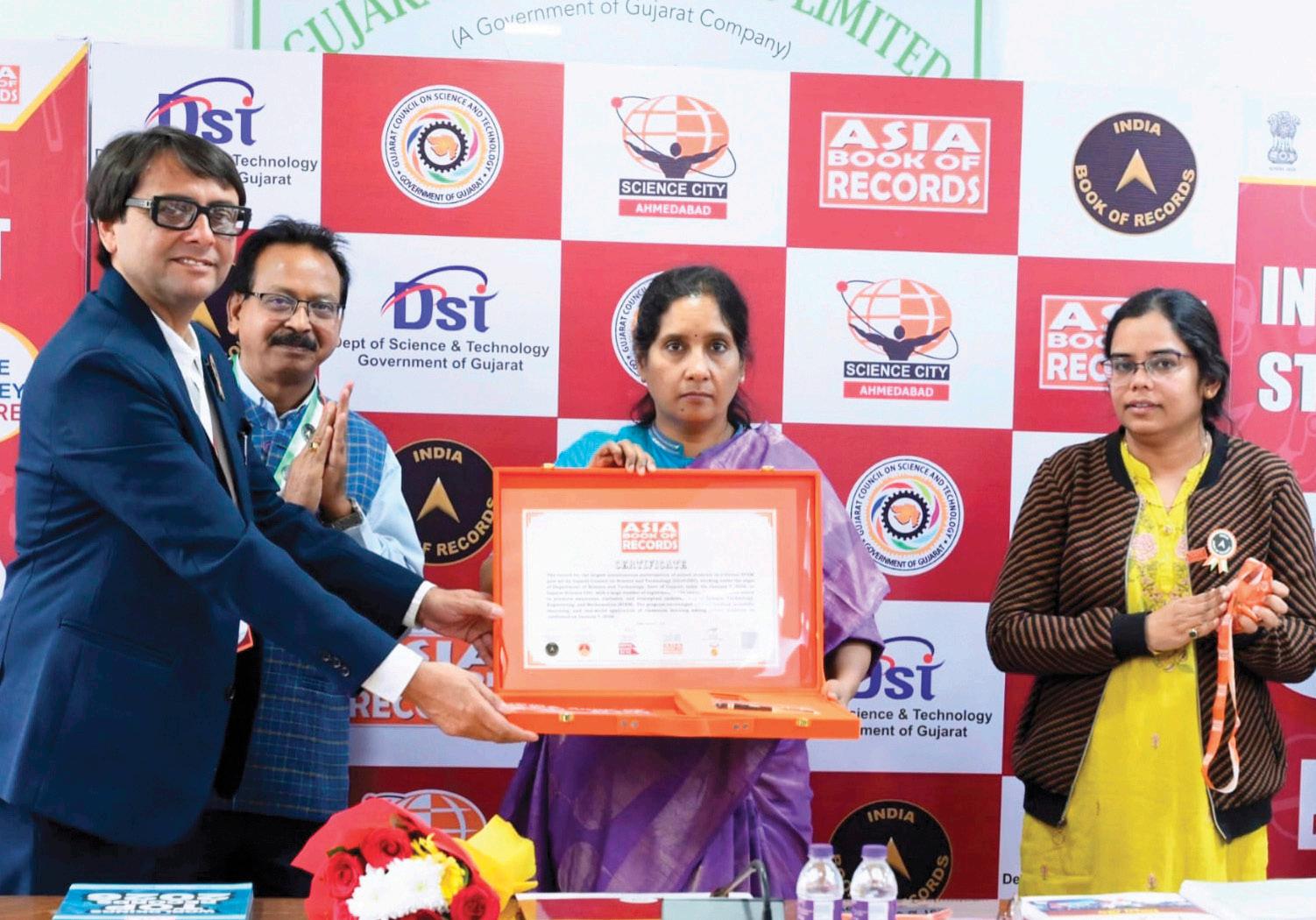
The record confirmation ceremony marked the collective effort behind the numbers. Medals and certificates were presented to the organisers by adjudicator Sanjay Bhola. The recognition acknowledged planning discipline, outreach execution, and sustained coordination across agencies.
Beyond numbers, the participation highlighted a shift in student engagement with STEM subjects. Quiz-based formats offer immediacy. They reward curiosity. They reduce hesitation around complex topics. For many students, this format becomes an entry point into deeper exploration.
GUJCOST emphasised this objective clearly. “The overwhelming participation shows how strongly students connect with STEM learning when it is accessible and engaging; our goal is to nurture curiosity and scientific reasoning at a national scale,” the council stated. The Gujarat STEM Quiz also demonstrated how state-led initiatives can achieve national reach through digital infrastructure. Virtual participation enabled scale without compromising integrity. It allowed equal opportunity for students from urban centres and smaller towns alike.
Educational impact remains the core measure. Exposure to structured questioning sharpens analytical skills. Timed responses build clarity of thought. Topic diversity broadens awareness. Students gain confidence in handling unfamiliar problems, a skill essential for future scientific and technical pathways.
As India looks to strengthen its STEM pipeline, such initiatives offer practical models. They combine institutional credibility with student-friendly formats. They rely on partnerships rather than isolation. They scale through inclusion rather than exclusivity. The record of 15,01,249 registrations stands as a milestone. More importantly, it signals momentum. When curiosity meets access, participation follows.
Racing the World’s Bars
The attraction of globally famous luxurious bars lies in more than polished counters and rare spirits. These spaces have become cultural landmarks. Design, service, sound, and storytelling converge behind the bar. Cities express identity through hospitality, and the world’s best bars often sit at that intersection.
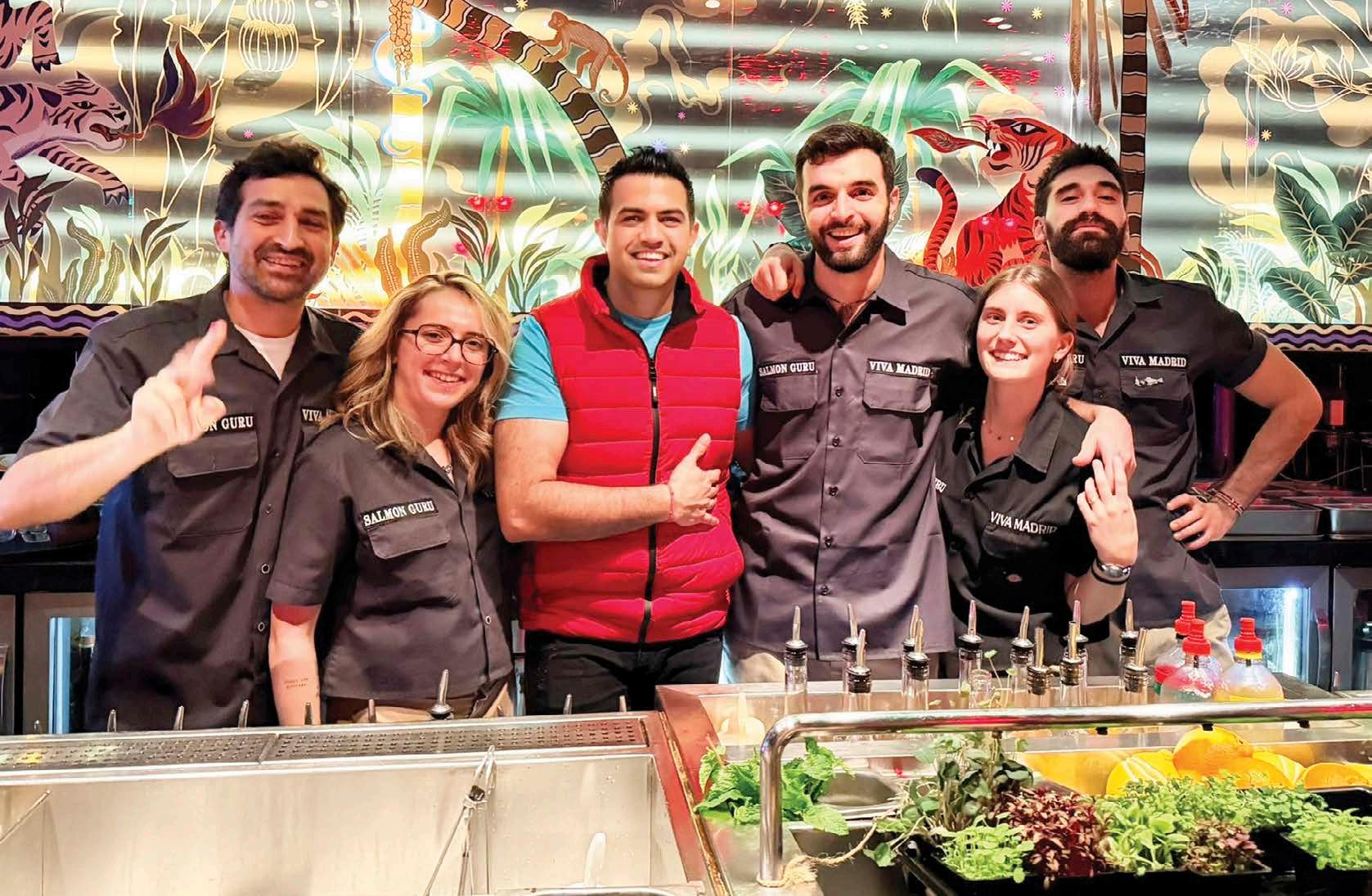
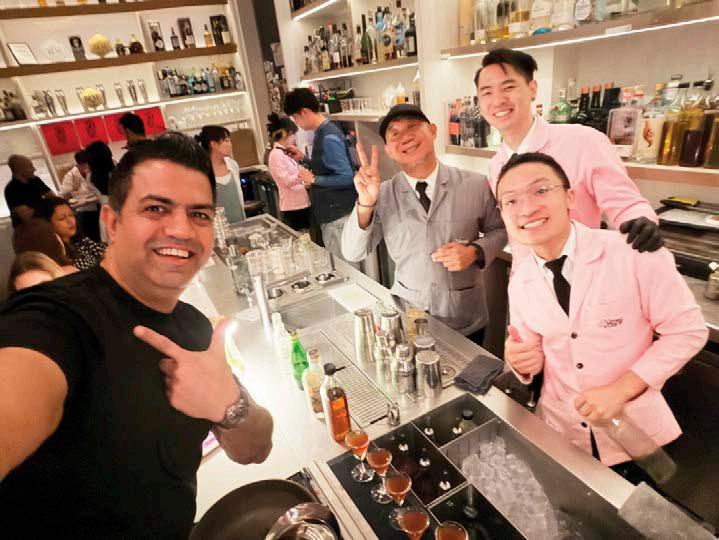
In late 2025, this idea was tested through an ambitious global expedition led by Ankit Poothia from New Delhi. He set the record for the fastest to visit 50 internationally recognised bars, completing the journey in 60 continuous days. The expedition ran from 9 October to 5 December 2025, and covered six continents, 23 countries, and 29 cities.
The feat required determination and discipline. Poothia travelled nearly 1,00,000 kilometres, navigating airports, time zones, and tight schedules. Around 45 flights and train journeys formed the backbone of the route. Each visit had to meet
recognition criteria tied to internationally awarded cocktail bars. Documentation followed every step.
The record was confirmed on17 December 2025, and received recognition from Asia Book of Records (ABR) and India Book of Records (IBR). The validation marked the completion of a journey that blended travel logistics with cultural research.
Poothia’s background shaped the approach. With over two decades of experience building global teams and advising large organisations, he treated the expedition as a wellplanned project. Planning replaced spontaneity. Routes were optimised. Time at each destination was measured. Fatigue was managed.
The idea began years earlier. In 2017, Poothia encountered global rankings that judged bars on creativity, hospitality, and cultural identity. The concept shifted his view. Bars were no longer stops between meetings. They became windows into
cities. Over seven years, he visited several of these venues during work travel. The pattern grew into purpose.
The 60-day expedition was neither leisure travel nor nightlife indulgence. Each bar represented a research point. Design choices were observed. Menu philosophy was noted. Interaction between staff and guests was recorded. Local influences surfaced through music, ingredients, and service style.
Cities moved quickly. Mumbai to Mexico City. Europe to Asia. The Americas to Oceania. Time zones compressed rest. Recovery depended on routine. Meals were planned. Sleep windows were protected. Consistency mattered.
The journey also highlighted how hospitality adapts across cultures. Some bars focused on heritage spirits. Others leaned into experimental techniques. Yet a shared value emerged. Human connection remained central. Bartenders acted as hosts and narrators.
Poothia emphasised this perspective while reflecting on the record. “Bars are cultural storytellers. My aim was to understand the people, ideas, and craftsmanship behind them, rather than treat the journey as a drinking challenge,” he said.
The level of the record placed Indian representation at the centre of a global hospitality conversation. Endurance came from planning. Curiosity drove momentum. Cultural respect shaped interaction. The achievement showed that research-led travel can exist within unconventional spaces.
Such records also reveal how global hospitality has evolved. Bars now compete on experience as much as product. Lighting,
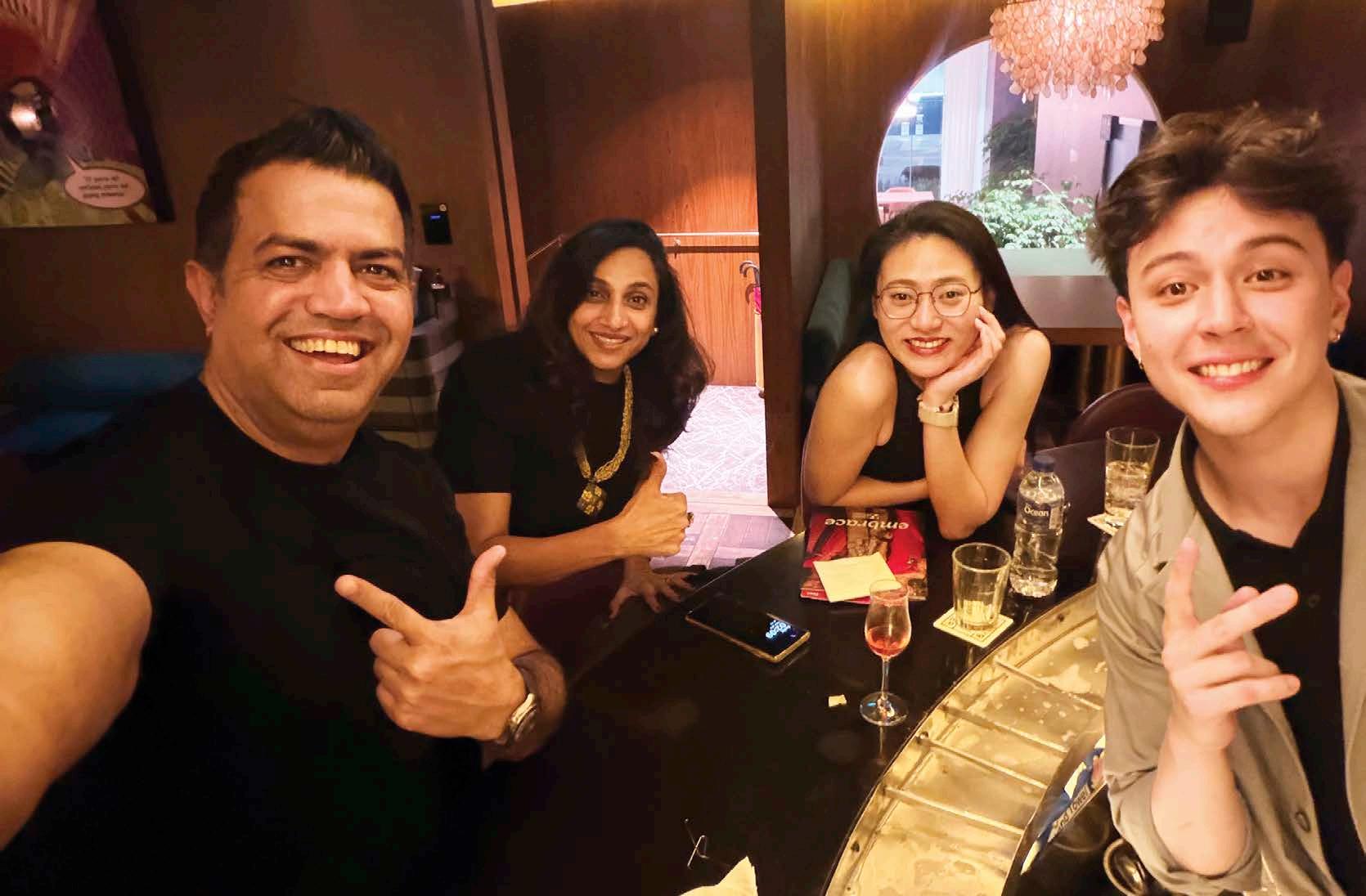
Luxury cocktail bars became cultural checkpoints when an Indian executive completed a record global sprint.
The journey reframed hospitality as research, endurance, and storytelling across continents.
acoustics, and narrative matter. Awards recognise these layers. Visiting them in rapid succession offered comparative insight. The expedition concluded without spectacle.
Child Nutrition Campaign
The condition of Child Nutrition in India continues to shape the nation’s future health. Early food habits influence growth. Deficiency weakens immunity. Excess sugar creates long risks. Parents often seek guidance. Doctors remain the first point of trust. Against this background, a large medical outreach took place in September 2025. Meyer Organics Pvt. Ltd organised a nationwide awareness campaign on child nutrition.
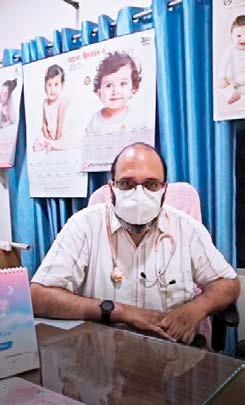
The programme ran from 1-7 September 2025. A total of 4167 doctors participated across India. Asia Book of Records (ABR) confirmed the achievement. The record recognised the maximum number of doctors participating in an awareness campaign about child nutrition within a week. Clinics in cities and towns joined. Paediatricians, physicians, and family doctors contributed. Each consultation carried a common message. Food choices matter early. Routine habits decide later health.
The campaign focused on parent education. Doctors held direct consultations. They discussed balanced diets. They explained portion control. They highlighted the role of fruits, vegetables, and proteins. Leaflets in regional languages supported each session. The aim remained clarity rather than instruction.
India’s nutrition indicators show mixed progress. Exclusive breastfeeding has improved. Stunting remains high. Wasting affects many children under five. Anaemia among women continues at serious levels. These figures underline the need
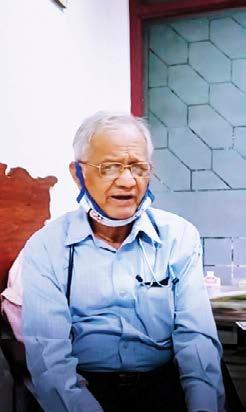
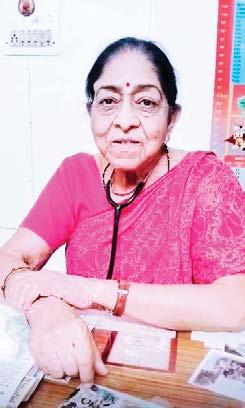
for early guidance. The campaign responded to this gap. Instead of mass advertising, it used medical contact. Each doctor met families daily. Each discussion adapted to local habits. This personal approach increased acceptance. Advice came with trust.
Meyer Organics has worked in healthcare for decades. Founded in 1982, the company develops nutrition supplements and anti-infective products. Its facilities in Thane and Bengaluru support research and quality control. The campaign reflected its long-term focus on preventive care.
Coordination required planning. Doctors registered in advance. Reporting systems tracked participation. Content guidelines ensured uniform messaging. Regional languages expanded reach. The week passed with sustained activity rather than isolated events. The role of doctors proved central. Many parents hesitate to change diet habits. Medical reassurance builds confidence. Small adjustments, repeated daily, shape outcomes.
The campaign emphasised gradual change. Asia Book of Records adjudicator Ms Kashmira Shah presented the medal and certificate to Meyer Organics officials. The recognition acknowledged magnitude and structure. It also highlighted the role of organised healthcare communication.
A senior representative from Meyer Organics reflected on the effort, saying, “We believed doctors could guide families better than any campaign. This initiative showed how medical voices can improve everyday nutrition choices.”
The record gained attention within medical circles. Professional groups shared updates. Clinics displayed participation certificates. The message spread beyond the week. Child nutrition often receives attention during crises. Sustained guidance matters more. Growth depends on daily meals. Lifestyle habits form before school age. Doctors shape these habits quietly.
The campaign also respected regional diversity. Diet patterns vary by state. Doctors adapted advice to local foods. Rice, millet, lentils, and vegetables formed the base. Packaged food risks were explained without alarm.
For Meyer Organics, the programme connected science to homes, showing how consistent, coordinated outreach can scale impact and strengthen India’s long-term nutrition efforts.
Voices Against Diabetes
The menace of diabetes in India continues to widen its reach. Urban lifestyles, dietary shifts, and limited early screening have pushed the condition into millions of households. Symptoms often arrive quietly. Fatigue, frequent urination, blurred vision, and unexplained weight change are missed or normalised. Delays in diagnosis add risk. Awareness, therefore, remains a public health priority.
In this context, a nationwide radio initiative took shape with unusual scale and purpose. Novo Nordisk India Private Limited, headquartered in Bengaluru, led a multi-month awareness drive that brought doctors directly to the airwaves. From 17 July to 27 November 2025, a total of 2,049 doctors participated in radio broadcasts focused on diabetes disease awareness. The effort set a national record for the maximum number of doctors participating in radio broadcasts for diabetes awareness.
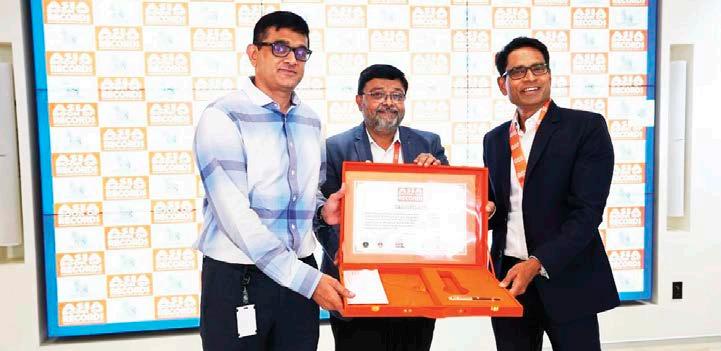
The record was recognised by Asia Book of Records. Adjudicator Harish R verified the claim and presented the medal and certificate to the company officials. The recognition acknowledged coordination, reach, and sustained participation across regions.
Radio remains a trusted medium in India. It reaches commuters, rural listeners, and households during daily routines. Health messages delivered through familiar voices often cut through noise. This campaign used that strength. Doctors spoke in clear language. They explained risk factors. They described early symptoms. They addressed myths. They guided listeners on when to seek testing and care.
The broadcasts ran across stations and time slots to widen access. Doctors from diverse specialities joined, including general physicians, diabetologists, and allied practitioners. The conversations avoided jargon. They focused on practical signs and daily habits. Listeners were encouraged to act early rather than wait for complications.
Diabetes care benefits from early identification. Lifestyle changes and timely treatment can slow progression and reduce complications. Yet awareness gaps persist. Many people remain
undiagnosed for years. Radio conversations helped bridge this gap by meeting listeners where they are.
The campaign also demonstrated the power of collective medical participation. Coordinating over two thousand doctors required planning and alignment. Schedules had to be managed. Content had to remain consistent while allowing local context. The sustained duration across four months ensured repetition, which is critical for recall.
Novo Nordisk India has long worked in the diabetes care space. The campaign aligned with its focus on education and prevention alongside therapy. By choosing radio, the initiative prioritised reach over spectacle. The emphasis stayed on public understanding rather than promotion.
One of the strengths of the effort lay in its simplicity. Doctors spoke about diet, physical activity, and routine checks. They explained warning signs without fear messaging. They encouraged family conversations. Such framing builds trust and prompts action.
A representative of the record holder reflected on the purpose behind the initiative in these words, “When doctors speak directly to people through radio, health advice becomes accessible and actionable. Our aim was to help families recognise early signs of diabetes and seek timely care.”
The verification by Asia Book of Records added formal recognition. It also underlined the role of structured awareness campaigns in public health. Records in this domain reflect coordination, consistency, and measurable participation. India’s diabetes challenge intersects with other health risks.
Research continues on links with cardiovascular disease and cognitive decline. Prevention and early management remain essential to reduce long-term burden. Public communication plays a critical role in this effort. Radio has a way of lingering. Messages heard during a commute often resurface later. When those messages come from doctors, they carry weight.
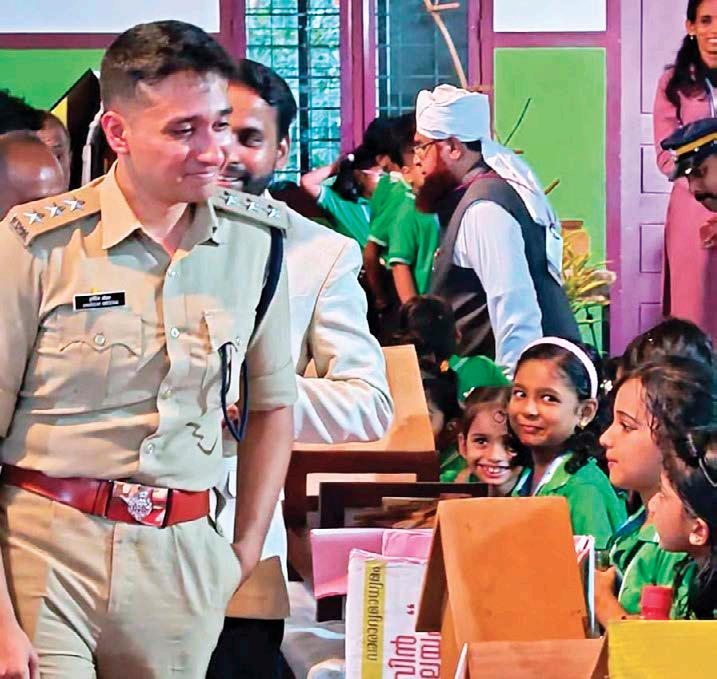
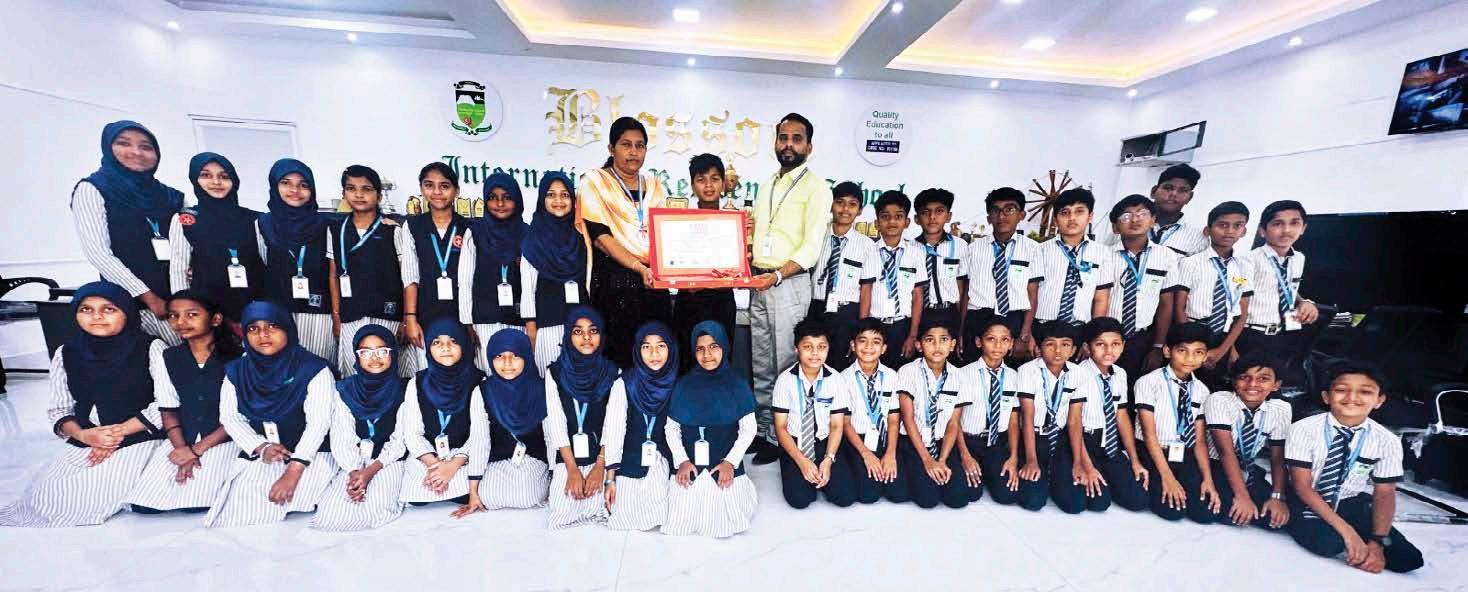
Young Hands, Wooden Dreams
The art of miniature exhibits has always carried quiet power. Small forms invite closer attention. Detail becomes dialogue. Scale sharpens imagination. At Blossom International Residential School in Nellikuzhi, Kerala, this art became a fullschool experience that reached far beyond display tables.
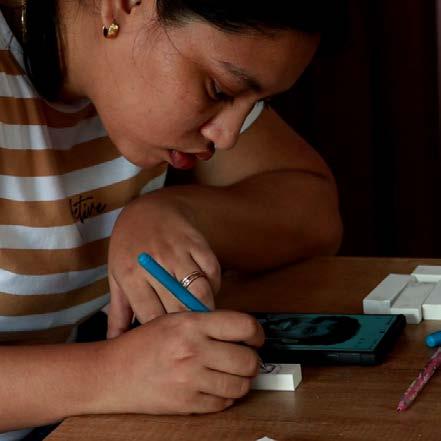
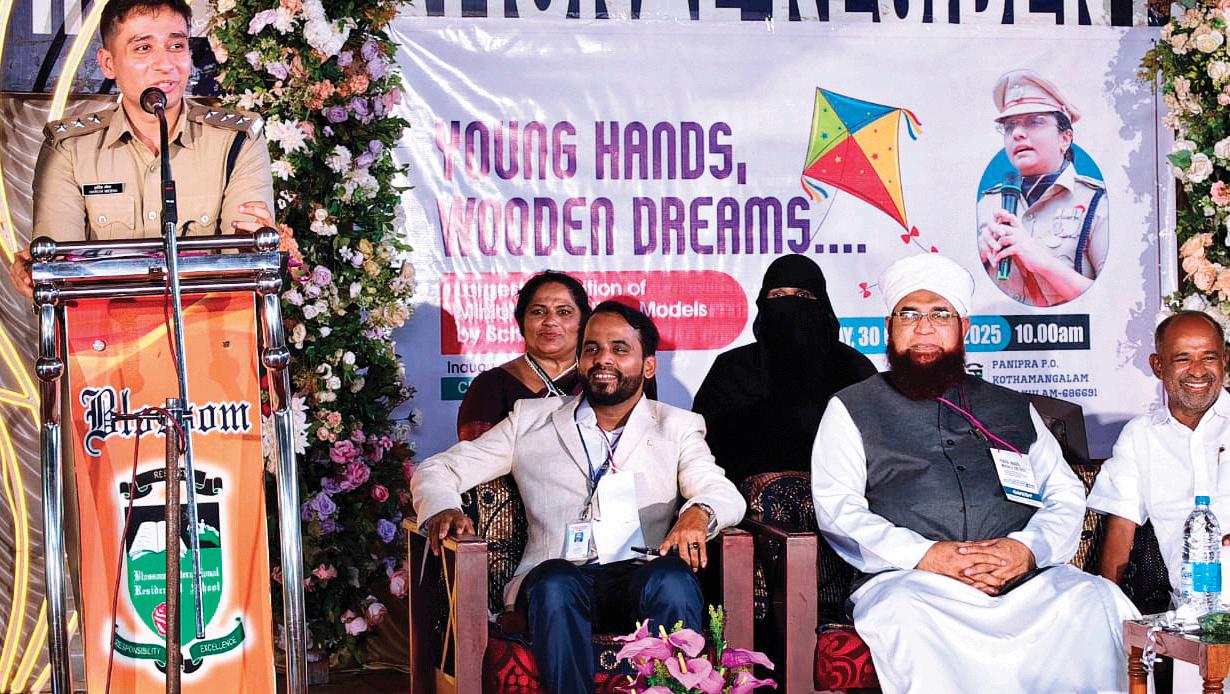
On 30 October 2025, classrooms turned into workshops and corridors into galleries. A total of 791 students from Grades 1 to 10 presented 1207 miniature furniture models. The exhibition carried a gentle title, “Young Hands, Wooden Dreams.” Its scale later set a national benchmark. The record for maximum student participation in a miniature furniture models exhibition was confirmed on 5 January 2026, and recognised by Asia Book of Records (ABR).
The models were small in size. The thinking behind them was expansive. Students worked with cardboard, waste wood, paper, and fabric scraps. Every piece had a purpose. Every choice
carried meaning. Sustainability was learned through practical experience. Reduce, Reuse, and Recycle became daily practice for them.
Nellikuzhi is widely known as a furniture-making hub in Kerala. The exhibition drew strength from this identity. Many students come from families of carpenters, designers, and workshop owners. Furniture is part of everyday life here. By recreating stools, tables, cots, and cabinets in miniature form, students studied shapes they see at home and on the street. Heritage entered the classroom without ceremony.
The process encouraged curiosity. Children spoke to parents and local artisans. They observed joints, proportions, and finishes. They asked why certain designs last longer. These informal conversations became lessons. Learning flowed between generations. Craft knowledge found new listeners.
Teamwork played a central role. Students planned together. They solved material constraints together. They shared tools and ideas. Confidence grew quietly. Leadership appeared naturally. The exhibition space reflected this energy. Each table carried a story. Visitors paused often. Many smiled in recognition.
The impact did not stop at the exhibition hall. Students began questioning waste at home. Plastic use reduced in small ways. Scrap materials found second lives. Sustainability became personal. The idea of responsibility shifted from abstract to immediate. Small actions felt valuable.
Recognition added momentum. National attention brought pride to the students and their families. Teachers saw validation of effort. The school saw proof that experiential learning works. More importantly, students felt seen. Their work mattered beyond grades.
Dr Abiwafy T A, Principal of Blossom International Residential School, Nellikuzhi, Kerala, reflected on the learning behind the models, “Our Multipurpose Draughtsperson course student has crafted a miniature dining table using the skills learned at our centre. Amazing work showcasing creativity and hands-on expertise.”
The exhibition also offered a wider lesson for education. When learning connects with place, it gains depth. When children work with their hands, ideas stay longer. When schools involve communities, trust grows. Purpose becomes visible.
Across India, schools search for meaningful engagement. This initiative offers a clear path. It shows that scale is not required for impact, purpose is. A miniature chair can carry a full lesson on design, environment, and livelihood.
As visitors moved through rows of small furniture, many lingered. They bent closer. They asked questions. That quiet attention captured the spirit of the event. In Nellikuzhi, miniature exhibits did more than showcase skill. They shaped understanding. They turned learning into lived experience. The
An extraordinary school exhibition in Kerala turned miniature furniture into a living classroom; blending sustainability, local craft, and mass student participation to earn a national record and communitywide pride.
exhibition proved that thoughtful education grows from context, craft, and care; when children build with purpose, learning becomes visible, memorable, and deeply rooted in everyday life.
When Art Shapes Landmarks
Sculptures have long played a defining role in the promotion of tourism. They anchor memory to place. They give travellers a visual reason to pause, photograph, and inquire. Across cities and heritage towns, large public artworks often become reference points that quietly narrate history. In Uttar Pradesh’s Rampur, one such sculpture has altered the urban landscape with purpose and pride.
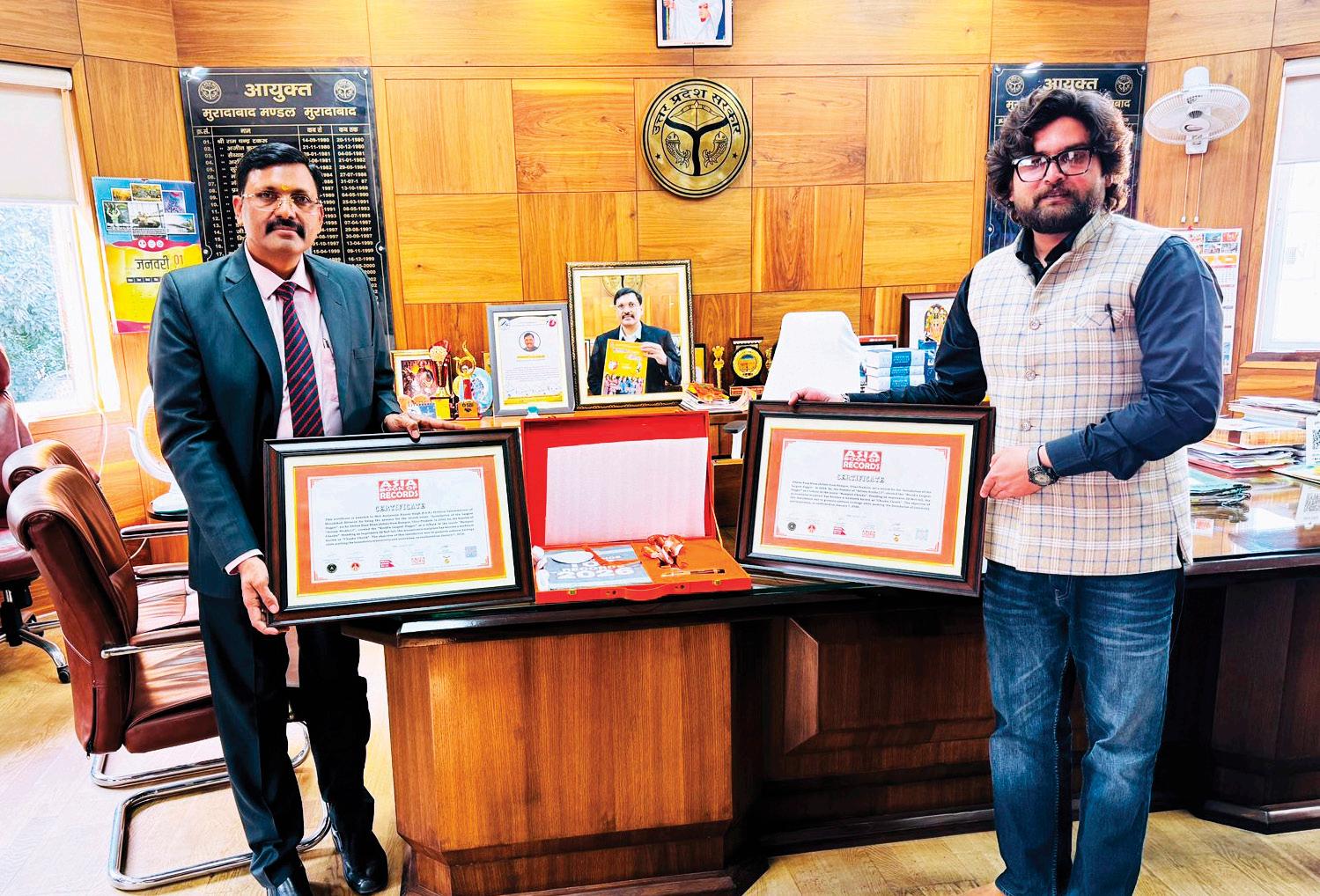
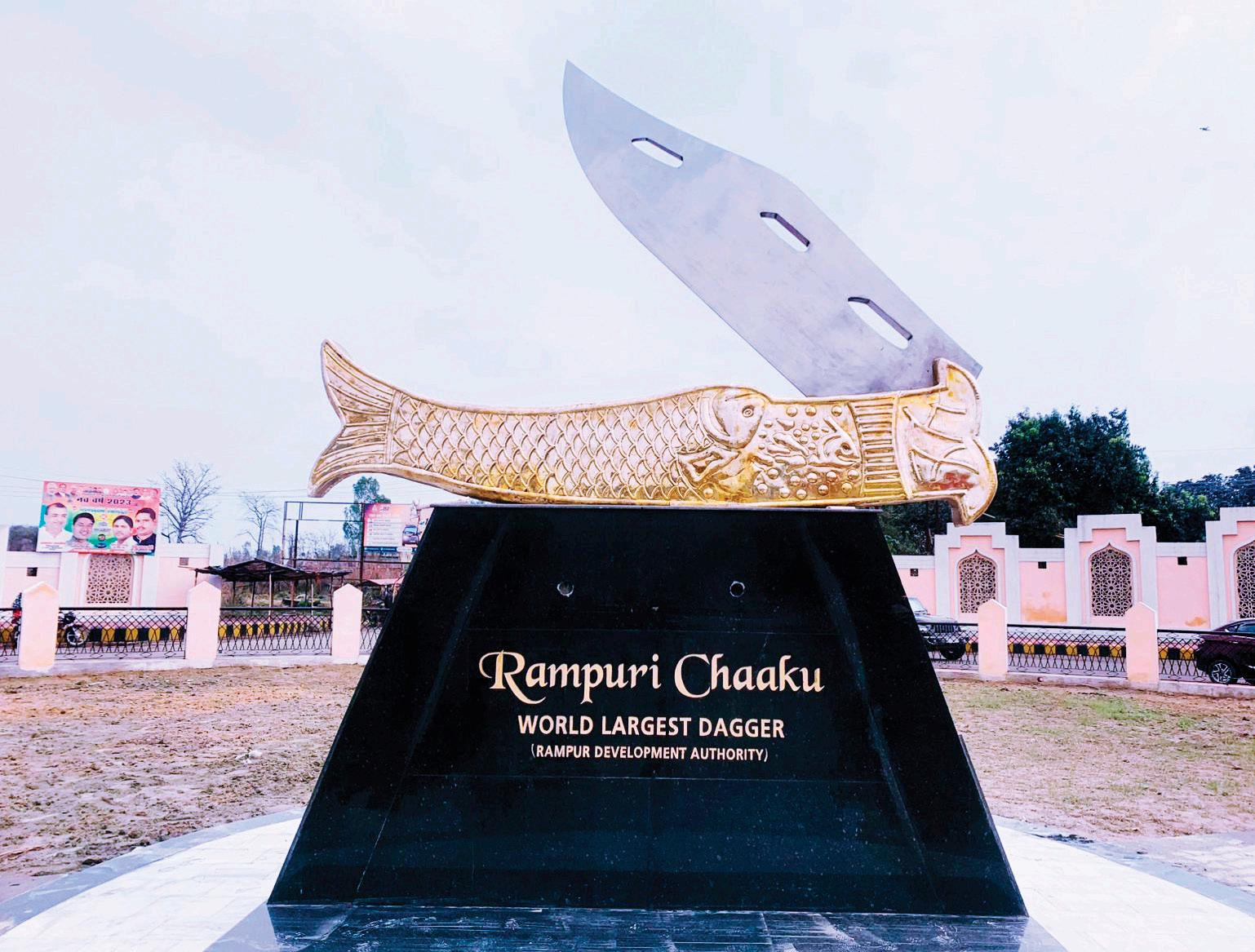
In 2022, artist Afshan Raza Khan created and installed what is now recognised as the world’s largest dagger. Standing 20 feet tall, the structure pays tribute to the iconic Rampuri Chaaku, a craft synonymous with the city’s cultural identity. The installation has since emerged as a landmark known locally as “Chaaku Chowk”. The achievement was officially confirmed on 7 January 2026, and recognised by Asia Book of Records (ABR).
Rampur’s association with fine knife-making dates back to the princely era. Historical accounts note that organised craftsmanship began here in the early twentieth century. The Rampuri Chaaku gained renown for balance, finish, and
sharpness. Over time, this object moved beyond utility and entered folklore. Afshan’s sculpture captures that transition from tool to symbol.
The dagger measures 20 feet in length and nearly three feet in width. It weighs around 8.5 quintals. Brass sourced from Moradabad, steel and mild steel from Maharashtra, and mixed materials came together through a process that took close to three months. Local knife artisans contributed to the effort, ensuring that the piece remained rooted in the skills Rampur is known for.
The location also matters. Installed at Jauhar Chowk, a busy intersection, the sculpture occupies a civic space rather than a closed gallery. It meets daily life. Commuters slow down. Visitors stop. Conversations begin. The square itself has gradually adopted a new identity through the presence of the artwork.
Afshan Raza Khan’s journey to this point followed an unconventional arc. Born in Rampur in 1993, his early interest in mechanics grew under the influence of his father’s work. He
studied animation in Delhi, worked as a 2D animator in Hyderabad, and later moved to Dubai as a graphic designer. Exposure to international art spaces shaped his desire to work with metal and scale. In 2016, he returned to India to establish “Artism Studio13” in Rampur.
Artism Studio13 became a space where scrap metal found a second life. Copper, aluminium, steel, and brass were reimagined into sculptures. This approach aligned creativity with environmental responsibility. Afshan’s work often draws attention to sustainability without overt messaging. The material itself tells the story.
Beyond the dagger, his portfolio includes large installations crafted from vehicle junk, such as a bull head sculpture and a warrior helmet titled “Sikandar”. Each piece reflects strength, form, and transformation. Public placement remains central to his philosophy. Art, in his view, should be encountered, not searched for.
The dagger installation was realised in association with the Rampur Development Authority. Administrative support and civic cooperation played a role in execution. The inauguration in March 2023 saw participation from elected representatives and district officials. Such backing helped embed the artwork into the city’s official narrative.
A monumental dagger sculpture in Rampur transformed local heritage into a tourism landmark. It honoured the “Rampuri Chaaku” tradition while redefining how public art can shape identity and civic spaces.
For tourism, the impact has been immediate. Visitors now associate Rampur with a visible emblem of its knife-making heritage. The sculpture offers a starting point to explore the city’s past. It also reinforces the idea that heritage can be expressed through contemporary form.
Afshan Raza Khan describes the intention behind the work with clarity. “This dagger is my way of honouring Rampur’s craft legacy and showing how local history can speak confidently at a global scale,” he said.
Forging Strength, Precisely
The fitness and gym industry in India has moved strongly from imported dependence to indigenous ambition. Gyms now look beyond price. Precision, safety, and durability matter. Equipment is expected to perform under pressure, and to last. This shift has opened space for Indian manufacturers who design, test, and build within the country.
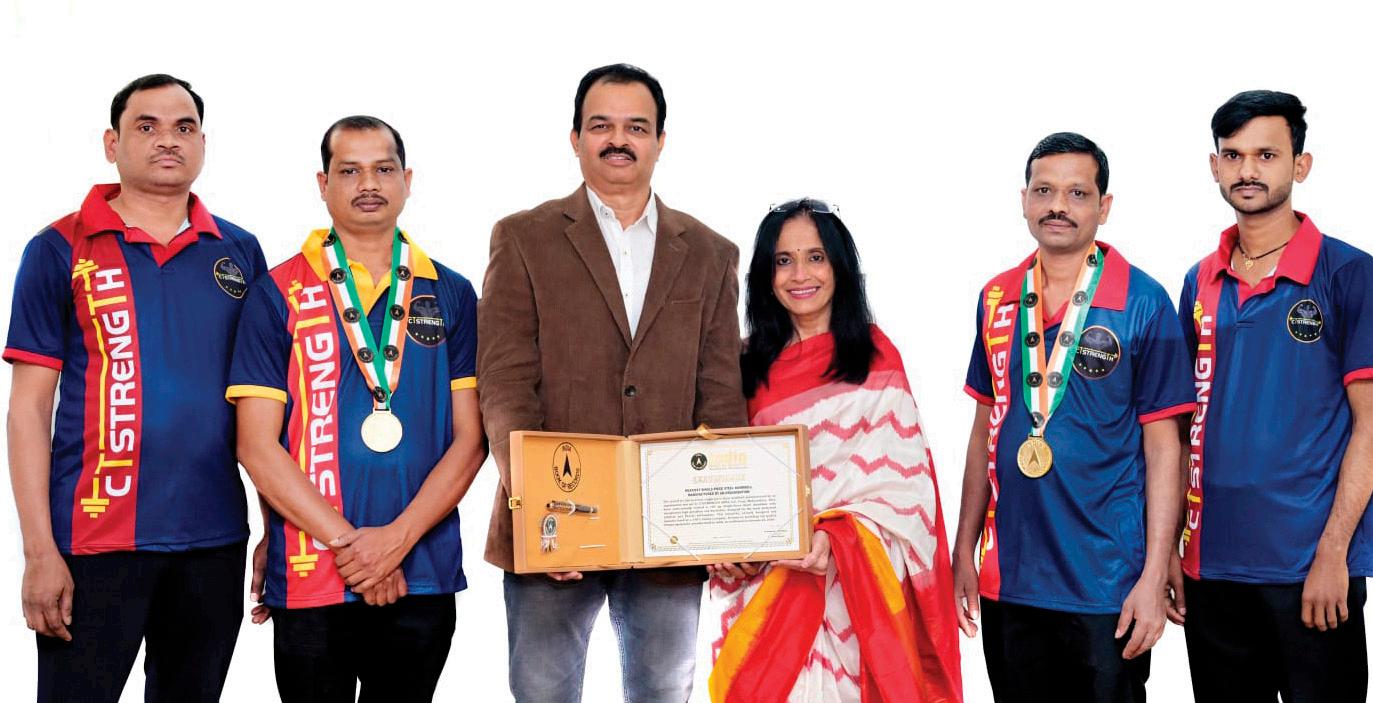
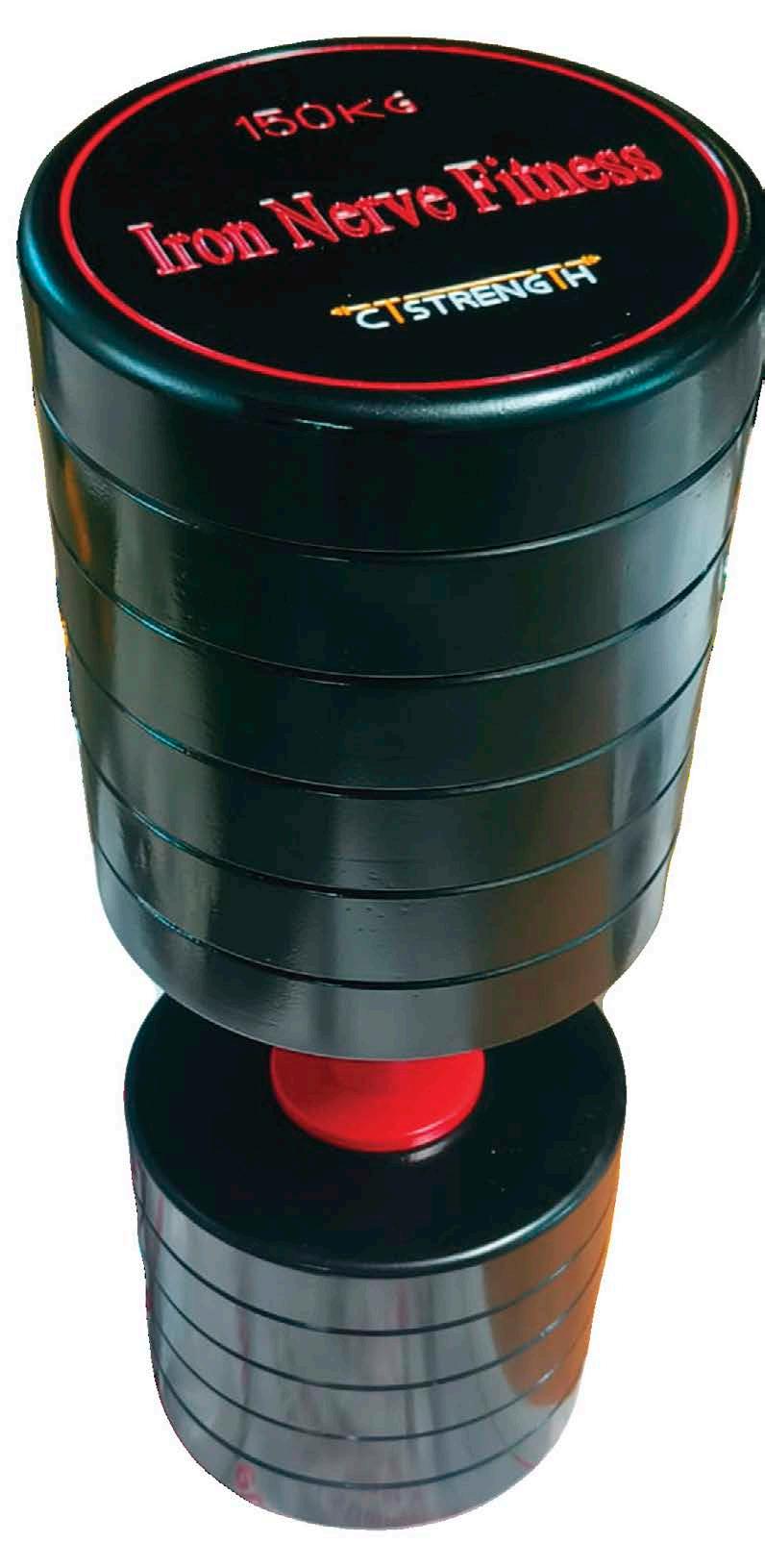
In this evolving landscape, CTSTRENGTH India LLP, based in Pune, Maharashtra, has set a new national benchmark. The organisation manufactured a 150-kilogram single-piece steel dumbbell, crafted with extreme accuracy and structural integrity. The feat was officially recognised on 22 January 2026, by India Book of Records (IBR) as the heaviest single-piece steel dumbbell manufactured by an organisation.
The dumbbell was designed as one solid unit. It had no joints. It did not involve assembly. This approach demanded highlevel engineering control. Any imbalance could compromise safety. Any deviation could affect usability of the item. The final product achieved a verified tolerance of ±0.1 kg, with an actual variance of just 50 grams. Such precision is rare at this weight scale; it was communicated by the company.
Behind this IBR record stands Tushar Jagannath Chivate, a mechanical engineer with over 35 years of experience in the
fitness equipment industry. His professional grounding includes an Advanced Diploma in Industrial Safety. He entered the fitness equipment space after observing a persistent gap. Many brands sold rebadged imports. Design ownership remained absent. Manufacturing depth was limited.
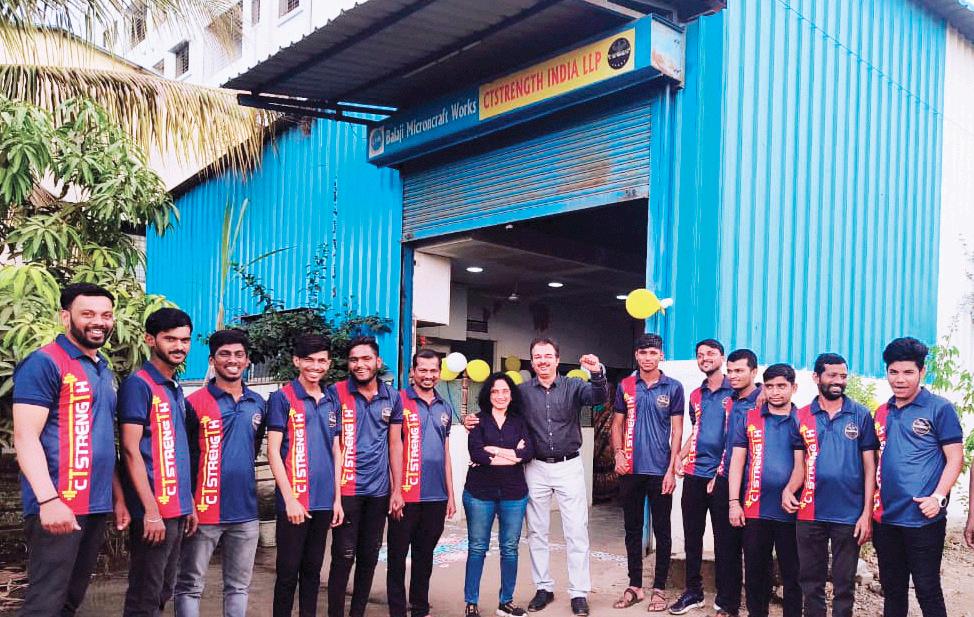
CTSTRENGTH emerged to address this major gap. The early journey was modest. When the company was incorporated on 4 April 2020, the market was under lockdown. Gyms were closed. Demand had collapsed. In its first year, CTSTRENGTH sold about 500 kg of equipment, largely to friends and known contacts. The focus remained on process and product integrity.
Growth followed consistency. Each year brought refinement. Designs improved. Manufacturing control tightened. By 2025, annual sales reached 25,000 kg. The client base expanded across 23 states. The company collaborated with more than 150 gyms, ranging from independent training centres to structured fitness facilities.
CTSTRENGTH’s portfolio reflects functional diversity. It includes rotating steel dumbbells, fixed-weight barbells, Olympic bars, weight plates, log bars, mudgals, racks, and weight stack assemblies. The products feature hard chrome plating and powder-coated finishes. Custom orders have included gold-
India’s fitness manufacturing sector marked a defining moment when a Pune-based company produced a 150 kg single-piece steel dumbbell; a feat combining precision engineering and indigenous design.
plated stainless-steel dumbbells weighing up to 100 kg for gyms in Mumbai, Delhi, and Bhubaneswar.
The 150 kg dumbbell represents more than scale. It reflects manufacturing discipline. Digital calibration tools, sensor-based verification, and precision machining workflows are embedded into production. Each stage is measured. Each output is tested. Safety remains central, especially for heavy-lift environments where joint stress and balance are critical.
The recognition has added visibility to Indian fitness manufacturing. It has also reinforced confidence among gym owners who seek reliable equipment made locally. The achievement aligns with broader national goals around selfreliant manufacturing and industrial capability.
Tushar Jagannath Chivate remains clear about the philosophy guiding the company. “Excellence is achieved when
responsibility is owned, and quality is never compromised,” he said. The statement reflects an approach built on accountability rather than scale alone.
Challenges persist. Skilled labour shortages affect timelines. Energy costs raise operational pressure. Yet optimism remains grounded. The demand for safe, durable fitness equipment continues to rise. Users are better informed. Expectations are higher. As India’s fitness culture matures, such records signal a deeper shift. Strength is no longer measured only by weight lifted. It is measured by how precisely that weight is made.
Electric Ride Across India
Electric mobility has often been associated with city commuting. Questions usually arise when longer journeys are discussed. Riders worry about charging infrastructure, battery performance, and endurance under diverse road conditions. Across India, highways stretch across deserts, forests, mountains, and crowded cities. Such terrain tests any vehicle, especially electric two-wheelers.
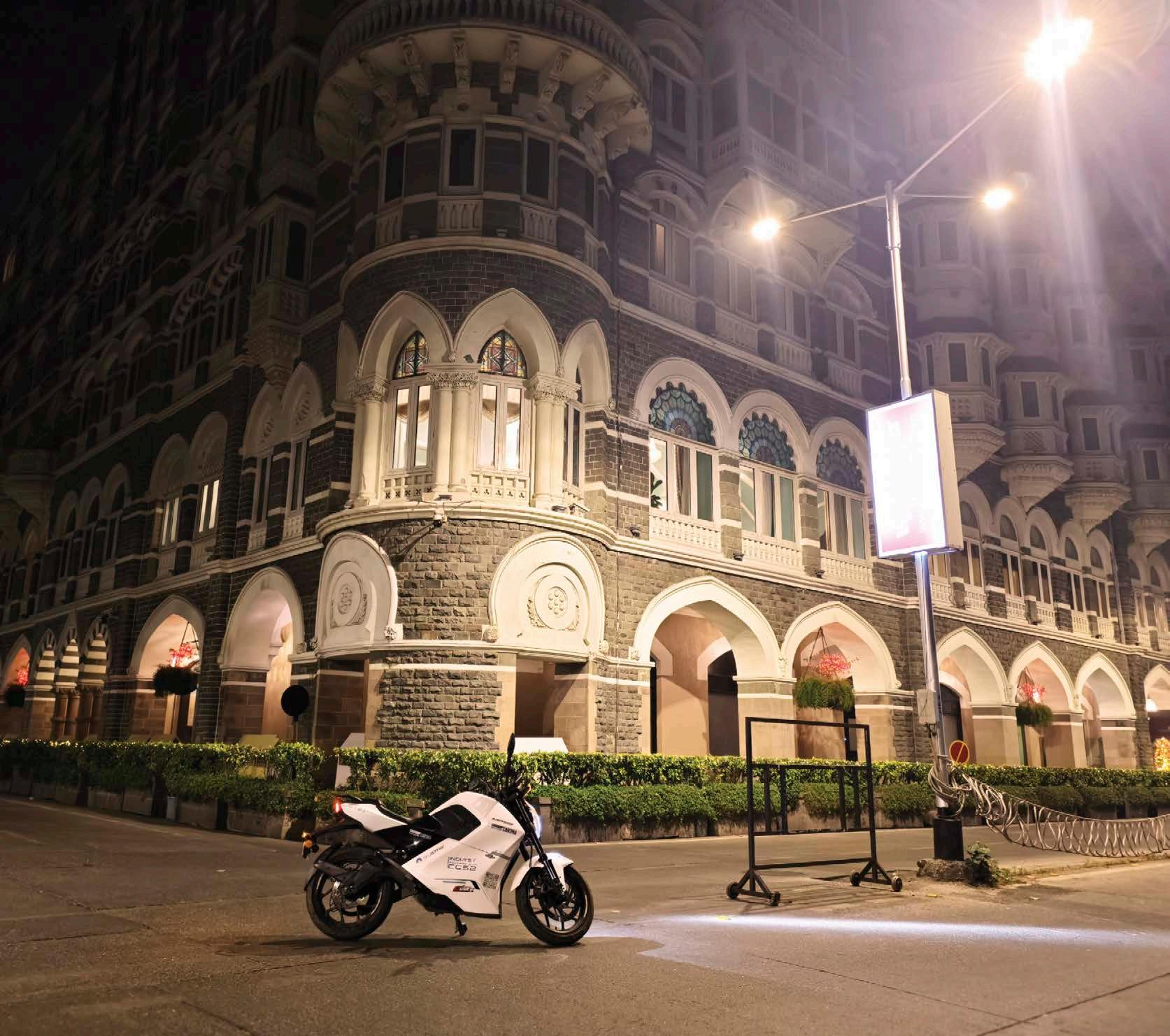
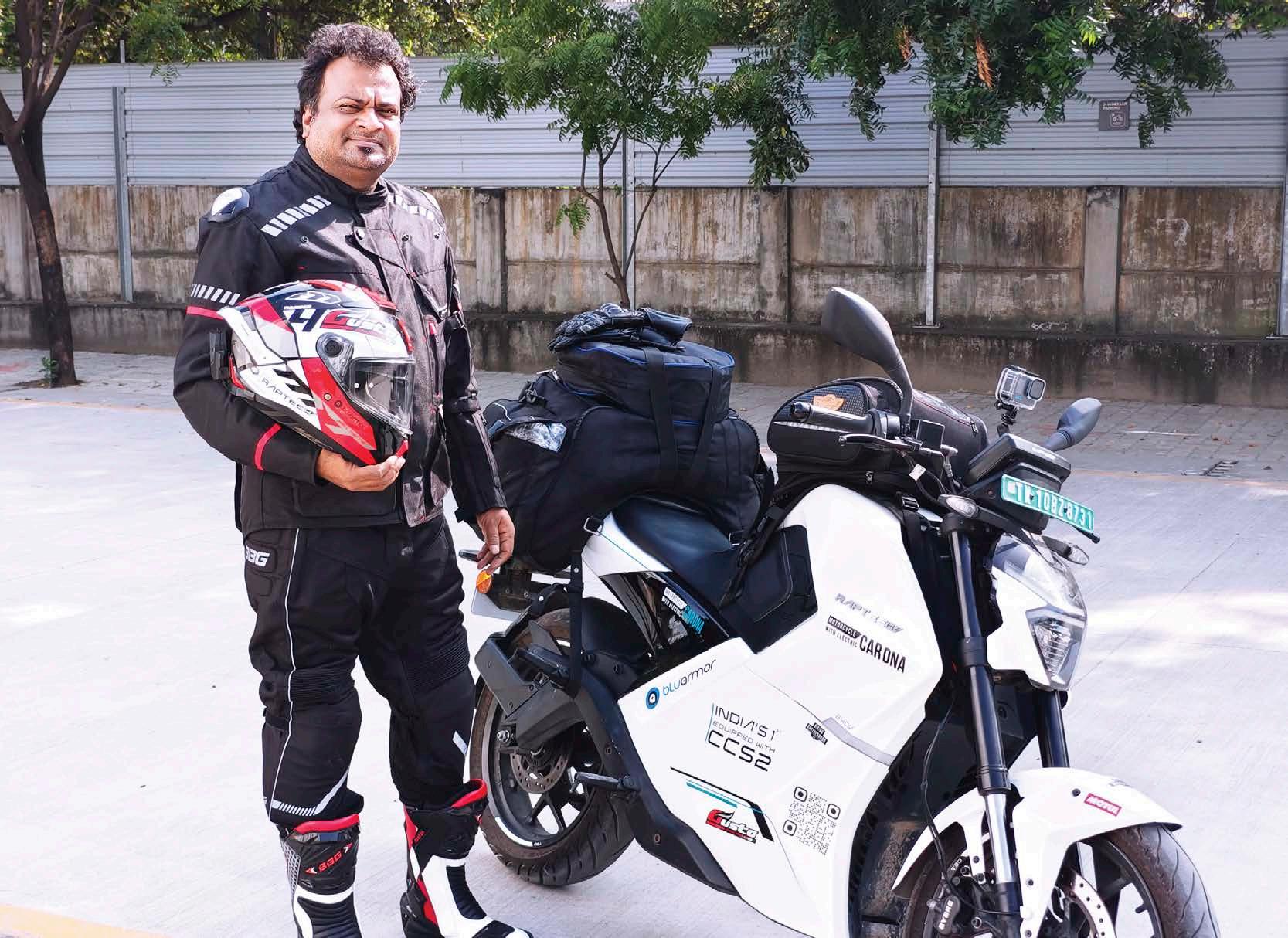
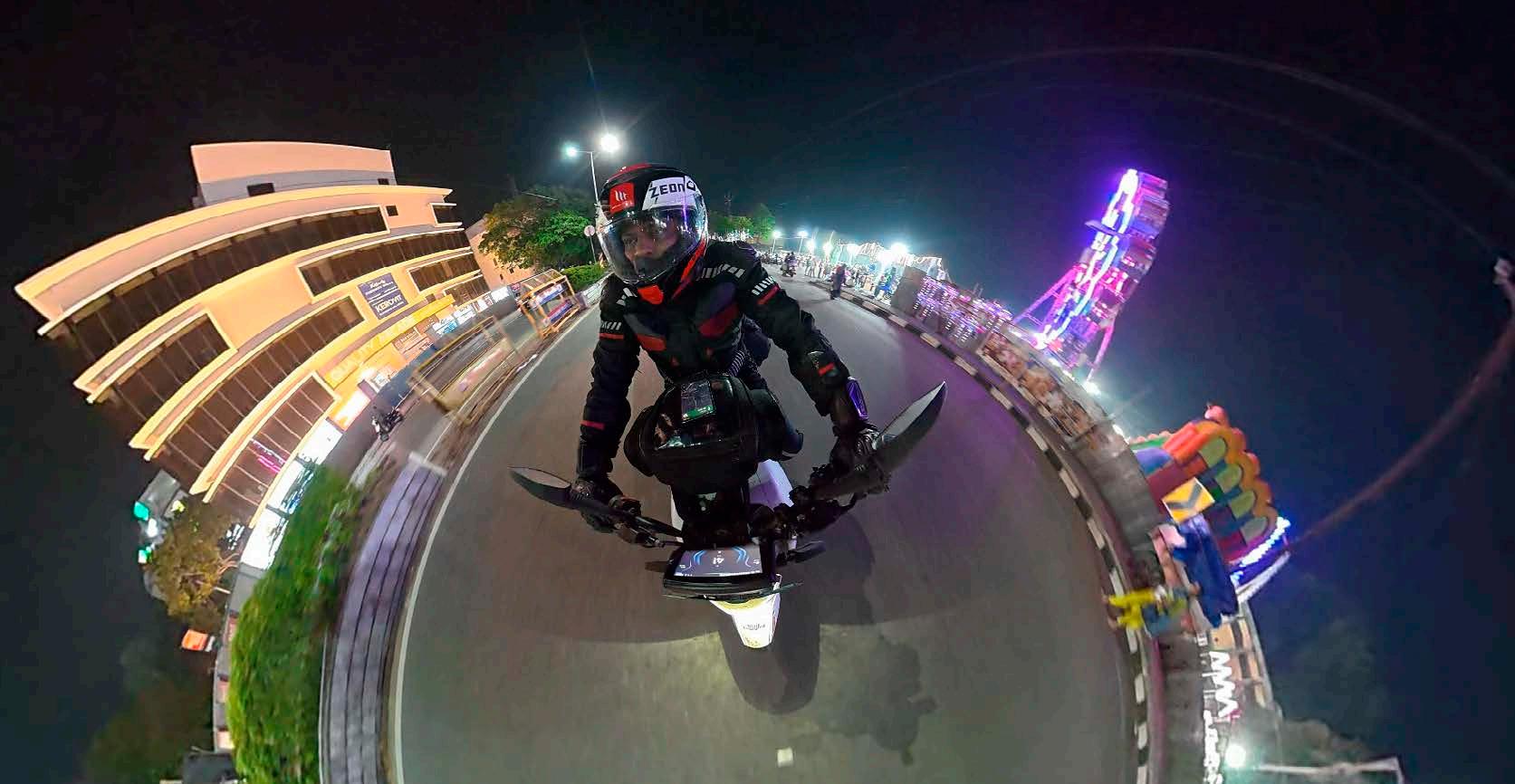
In early 2026, an ambitious ride demonstrated how far electric motorcycles have progressed. Raptee Energy Private Limited, Chennai, set the record for the Longest Distance Covered by a Production Electric Motorcycle. The achievement documented a 7,530-kilometre journey completed during an All-India ride. The journey took place over nineteen riding days. The route passed through multiple states. The ride followed standard road
conditions. No mechanical modifications were made to the motorcycle.
The rider followed traffic rules and travelled through verified checkpoints. The distance and timeline were carefully documented. The motorcycle used for the ride was the Raptee. HV T30. The model represents the company’s effort to bring high-voltage electric technology to the two-wheeler segment. This architecture resembles the platform used in electric cars. It allows faster charging and stable power delivery.
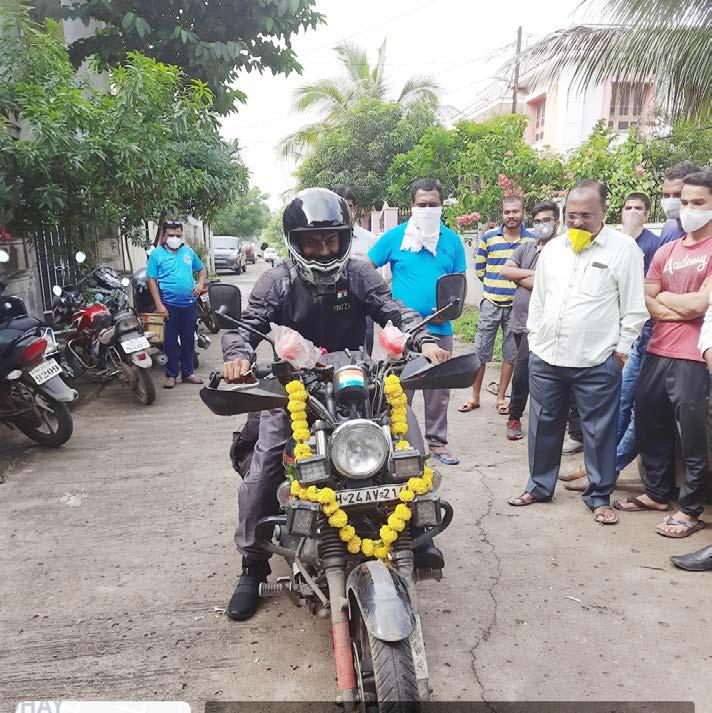
The ride was completed by Baala Manikandan, an electric vehicle riding enthusiast. He has earlier set records for electric motorcycle journeys. During the All-India ride he averaged around 407 kilometres per day. This figure exceeded the daily distance of his previous electric motorcycle rides.
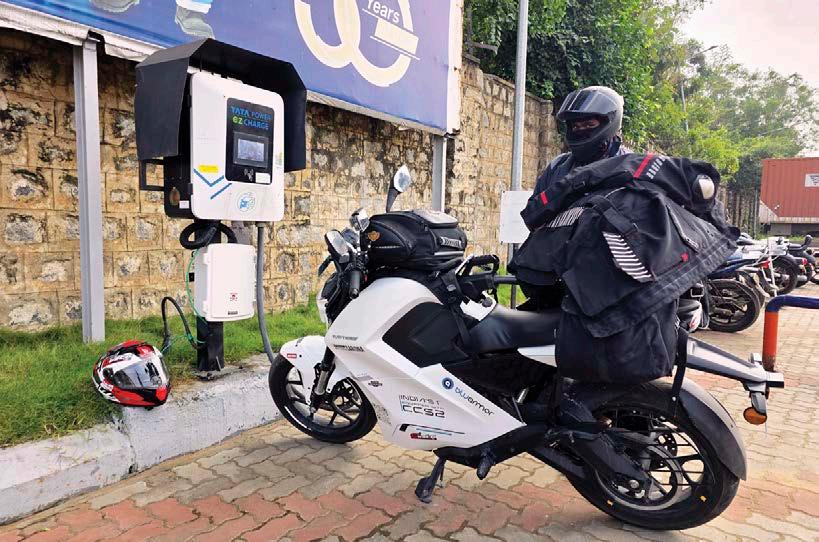
A major factor behind the achievement was the charging system. The T30 motorcycle supports the CCS2 charging connector. This connector is widely used by electric cars. The compatibility allowed the motorcycle to access more than 40,000 public DC fast chargers installed across India.
A production electric motorcycle completed a 7,530 km All-India journey in 19 days. The record highlighted the growing strength of EV technology and fast-charging infrastructure for long-distance mobility.
During the journey, charging stops were planned according to available infrastructure. When DC fast chargers were present, the battery could be charged in roughly thirty minutes. In locations where only AC charging was available, the motorcycle reached eighty percent charge in about an hour. Despite repeated fastcharging sessions across the long route, the battery maintained
stable performance. After the journey ended, the battery health reportedly remained at one hundred percent. The ride therefore demonstrated reliability under extended travel conditions.
Raptee.HV was founded in 2019 and is headquartered in Chennai. The company focuses on high-voltage electric motorcycle technology. Its engineers have developed most of the electronic systems internally. The company has filed over one hundred fifty patents related to its technology platform. Production activities are based at a manufacturing facility spread across 4.5 acres in Chennai. The plant has an annual production capacity of around 1,00,000 units.
Raptee.HV has also secured additional land at SIPCOT in Cheyyar for future manufacturing expansion. Financial backing has supported the company’s development. Raptee.HV has raised around five million US dollars in pre-Series A funding. The company is also working towards closing a twenty-million-dollar Series A round through a mix of equity and debt.
The All-India ride provided a practical demonstration of the motorcycle’s capability. It showed that electric two-wheelers can operate beyond urban environments. Highway distances, varying climates, and long travel days were all part of the experiment.
CEO Dinesh Arjun said, “While designed primarily for urban mobility, CCS2 fast-charging empowers the T30 for confident long-distance travel.”
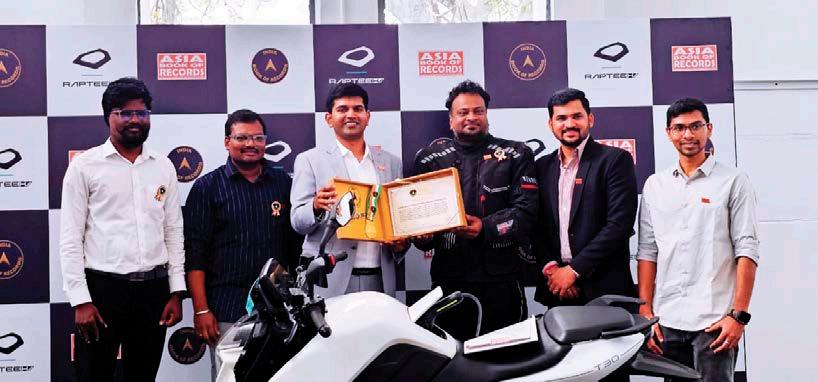
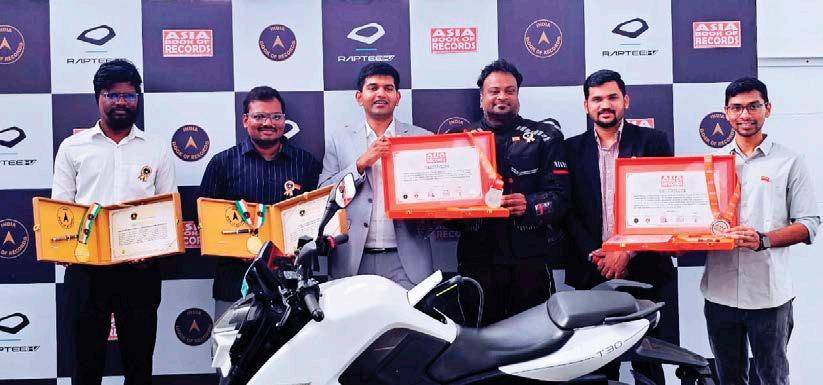
The record was recognised by the Asia Book of Records and the India Book of Records, with adjudicator Vivek Nair presenting honours. It sparked discussion on electric mobility, where many observers noted that shared charging infrastructure may be more critical than battery range alone.
Wrapping a City Skyline
The growing trend of outdoor advertising has reshaped how brands speak to cities. Large formats now dominate skylines. Walls, bridges, and façades have turned into storytelling surfaces. Visibility matters in crowded markets, and scale has become a language of its own. Across India, brands are exploring outdoor media that feels permanent, bold, and rooted in place.
Against this backdrop, a landmark installation rose in Raipur, Chhattisgarh. Shri Bajrang Power & Ispat Ltd, known by its Goel TMT brand, set a remarkable record for the Largest Building Wrap Advertising Installation by an organisation. The achievement marked the company’s 25th anniversary and placed Raipur firmly on India’s outdoor advertising map.
On 8 November 2025, a monumental building wrap measuring 23,958 square feet was unveiled at PWD Bridge, Canal Road. The installation spanned five floors of a prominent building. It transformed a familiar urban structure into a single visual statement. The scale stood out immediately. Confirmation of the record followed next, after verification by Asia Book of Records (ABR). Adjudicator K K Gupta formally announced the record and presented the medal and certificate to the organisers.
The execution demanded planning and precision. The wrap was completed within five days by a team of 35 skilled workers. Nearly 24,000 square feet of flex media was used. Each section required careful alignment across floors. Safety and timing mattered. The location ensured constant visibility for commuters and residents.
For Goel TMT, the installation carried meaning beyond size. The company has operated from Raipur for over two decades. The wrap served as a visual acknowledgment of that relationship. It spoke directly to the city where the brand grew. The message was clear and local.
Sandeep Goel, Director of Goel TMT, explained the thinking behind the idea. “Our company has worked with commitment and integrity for 25 years. This building wrap reflects our pride in being a Raipur-based brand and our desire to communicate that presence across the city,” he said.
Outdoor advertising often aims for recall. This project aimed for connection. The wrap did not compete with the city. It became part of it. Its placement near a key bridge ensured daily exposure. Drivers, pedestrians, and nearby businesses encountered it repeatedly. The project was executed by Abhay Publicity, an agency experienced in large outdoor formats. Their role involved coordination, logistics, and rapid deployment. Such installations require more than design. They demand site management and teamwork.
The record also highlighted Goel TMT’s history of unconventional outdoor campaigns. The brand has previously explored formats that challenged norms. These included an Indian Railways engine wrap and a hoarding designed to resemble fire. Each attempt sought to surprise without confusion.
Sharad Sahu, Head of Corporate Marketing at Goel TMT, spoke about this direction. “Our focus has always been on impactful visibility and memorable brand experiences. This record continues our effort to create outdoor ideas that stay with people,” he said. His comment framed the wrap as part of a longer creative journey.
Recognition by Asia Book of Records placed formal emphasis on the achievement. Records in advertising reflect changing communication styles. They document how brands use space, scale, and timing.
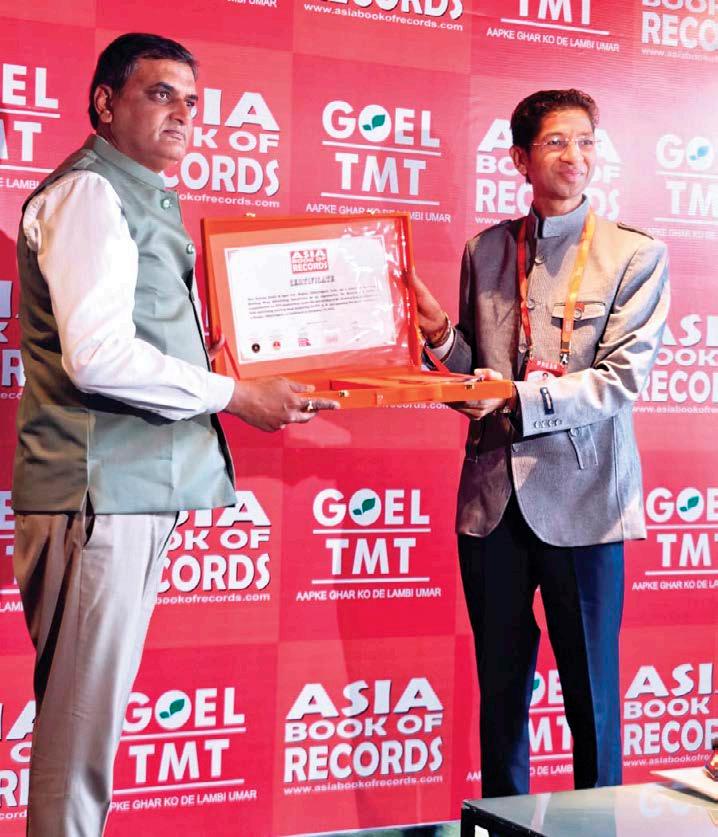
Dry Eyes in the Digital Age
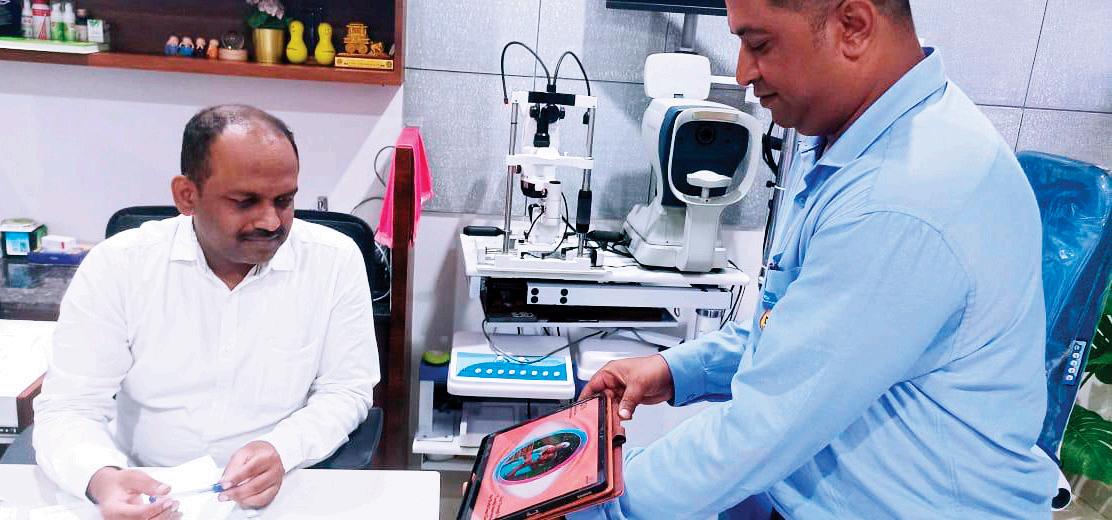
The problem of Dry Eye Disease has grown quietly with modern routines. Long screen hours reduce blink rate. Air-conditioned spaces dry the ocular surface. Symptoms linger. Burning, irritation, blurred vision, and fatigue affect daily tasks. Many ignore early signs. Treatment arrives late. Awareness remains uneven despite rising prevalence.
Against this backdrop, a nationwide professional response took shape in 2025. Mankind Pharma Limited, Delhi, led a digital pledge drive that brought ophthalmologists together around prevention and patient education. The initiative addressed a simple reality. Eye care must keep pace with screen-led lifestyles.
From 9 June 2025, to 8 December 2025, a total of 4,133 ophthalmologists joined the pledge on a digital platform. The effort set a record for the maximum ophthalmologists digitally pledged for Dry Eye Disease awareness. Participants committed under the theme “Best Eye Care”, with a clear focus on responsible screen use and better daily eye habits.
The pledge emphasised practical guidance. Regular blinking. Conscious breaks from screens. Proper lighting. Adequate hydration. Timely consultation. Such measures often prevent progression when adopted early. The initiative encouraged specialists to reinforce these steps during consultations and public interactions.
Dry eye is not limited to older age groups. Students, professionals, and gamers experience symptoms earlier than before. Mobile phones and laptops dominate work and leisure. Tear film instability follows. Without awareness, discomfort becomes chronic. The pledge highlighted this shift and urged consistent messaging across clinics.
The digital format enabled scale. Ophthalmologists from varied regions participated without travel barriers. Registration and verification followed a structured process. Each pledge was documented. Consistency of messaging remained intact while allowing local outreach. The record was recognised by Asia Book
of Records (ABR) by adjudicator Dr. Pradeep Bharadwaj after due verification. The recognition acknowledged both participation volume and the public health intent of the campaign.
For Mankind Pharma, the initiative aligned with a broader commitment to accessible healthcare. The company has operated across pharmaceutical, OTC, and consumer health segments, with a strong presence in India and overseas markets. The pledge drive focused on education and awareness. The emphasis stayed on preventive behaviour.
A spokesperson of the company said, “Dry eye affects quality of life across age groups. By uniting ophthalmologists digitally, we aimed to amplify simple, effective eye-care practices that people can adopt every day.” Clinical evidence supports this approach. Excessive screen time alters blink dynamics.
Environmental factors compound dryness. Early intervention improves comfort and function. Education bridges the gap between symptom onset and care. Ophthalmologists play a decisive role in guiding this journey. The pledge also encouraged dialogue beyond clinics. Specialists shared messages through professional networks and community interactions. Patients received clearer explanations of warning signs. Preventive advice gained consistency across settings.
Digital mobilisation reflects a changing healthcare landscape. Awareness campaigns now rely on speed and reach. Verified pledges provide accountability. They also create measurable impact. In a country with vast patient numbers, such tools matter. Records in health awareness capture moments of alignment. They signal priorities.
This record highlighted Dry Eye Disease as a condition that deserves attention alongside more visible ailments. It reframed discomfort as a clinical issue with solutions. As the
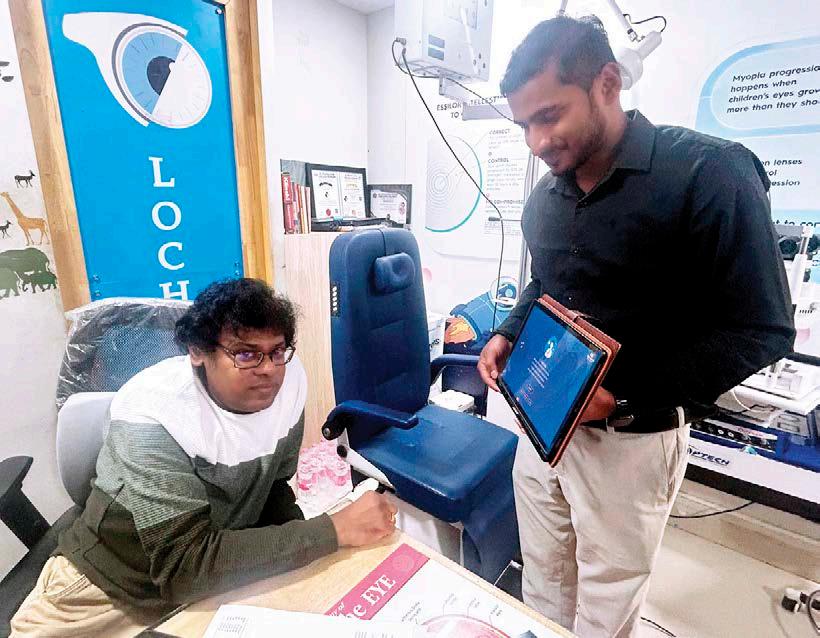
India’s growing dry eye burden prompted a rare professional alignment as thousands of specialists pledged digital action. The record campaign reframed screen-related eye strain as a public awareness priority.
campaign concluded, its effects extended into routine practice. Ophthalmologists reported more conversations about screen habits. Early care gained emphasis.
The participation of 4,133 specialists stands as a marker of shared responsibility. It shows how digital platforms can unify expertise for public benefit. In the ongoing effort to protect vision in a screen-first world, awareness remains the first and most effective intervention.
Sustaining this momentum will require continued engagement beyond campaigns. Regular public education, workplace guidelines, and school-level awareness can reinforce these habits. As digital exposure grows, preventive eye care must become routine, ensuring that awareness translates into longterm behavioural change and improved visual health outcomes across populations.
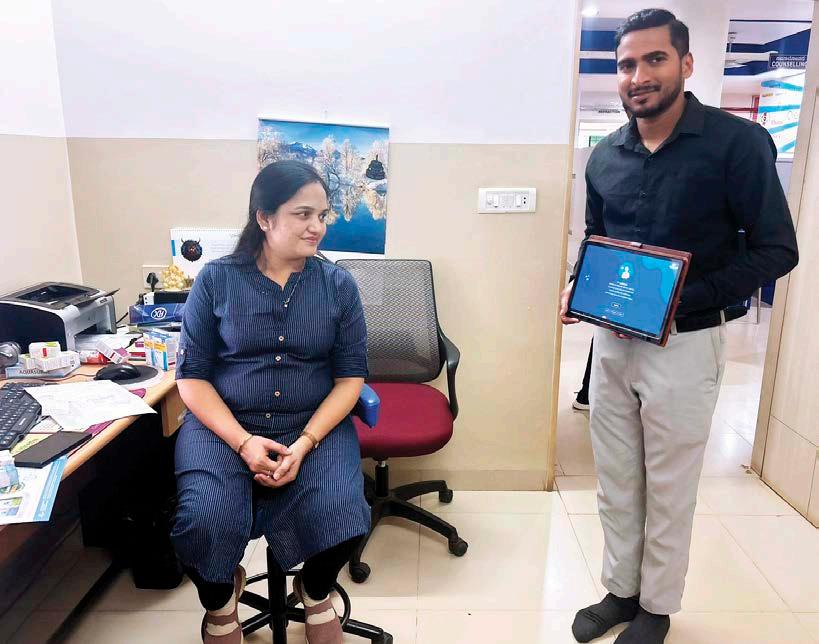
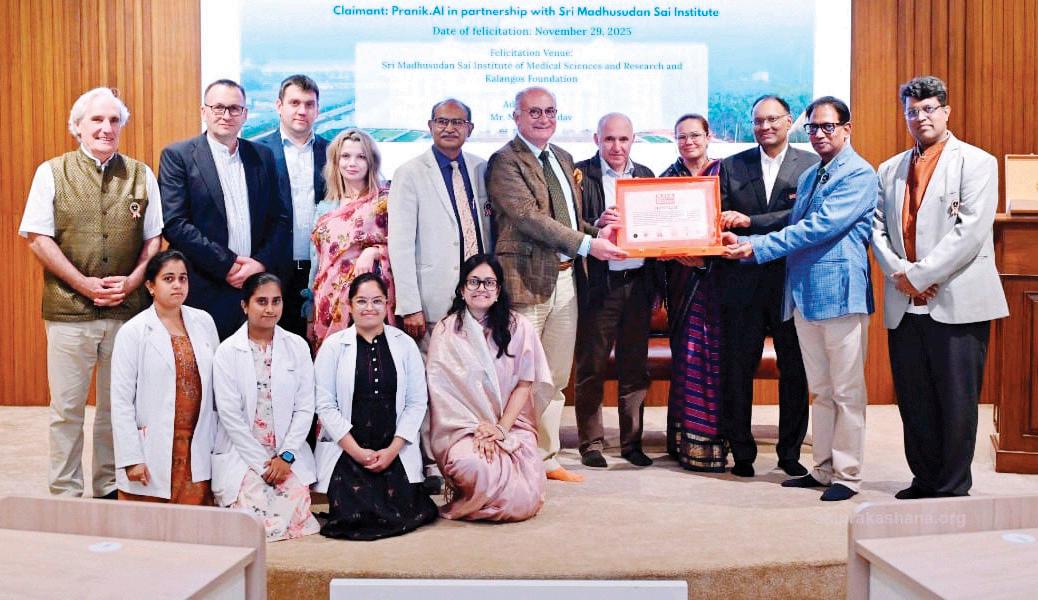
AI Captures Medical Science
Scientific conferences generate valuable knowledge, yet documentation often lags behind discussion. Researchers present findings, clinicians debate treatment strategies, and specialists exchange ideas that shape medical practice. Converting those discussions into accurate records usually takes weeks. Delays slow the spread of knowledge and limit immediate clinical application.
A new initiative in 2025 explored how artificial intelligence could transform this process. Pranik.AI, Hyderabad, in partnership with Sri Madhusudan Sai Institute of Medical Sciences and Research and the Global Forum on Humanitarian Medicine, set a record for the maximum Euro-Asian hybrid participation for real-time AI transcription of scientific proceedings in cardiovascular sciences. The achievement took place during the 15th Global Forum on Humanitarian Medicine in Cardiology and Cardiac Surgery, held on 29 November 2025. The forum brought together cardiologists, surgeons, and researchers from different countries. A total of 265 doctors participated through a hybrid format that combined physical presence and digital connection. Specialists joined sessions from multiple locations across Europe and Asia. The conference
also hosted the 6th Euro-Asian Symposium of Paediatric and Cardiac Surgery.
What made the event distinctive was the role of artificial intelligence. The Pranik.AI platform captured live audio from cardiovascular sessions and converted it into precise written transcripts in real time. These transcripts were then organised and verified to produce publishable scientific proceedings immediately after the conference concluded. The system allowed doctors to review discussions without waiting for conventional documentation processes.
Medical conferences often produce dense technical discussions. Terminology varies across specialties. Accurate transcription requires strong contextual understanding. The AI platform addressed this challenge by recognising specialised vocabulary related to cardiology and cardiac surgery. It processed the discussions while speakers continued their sessions.
The hybrid format also widened participation. Doctors who could not travel still joined the event virtually. Their contributions entered the same transcription system. The
A hybrid medical forum united doctors from Europe and Asia
as AI transcribed specialised cardiovascular discussions in real time. The initiative demonstrated a new benchmark for rapid scientific documentation.
technology ensured that remote discussions were captured with the same accuracy as on-site sessions.
The record was confirmed on 29 November 2025. Asia Book of Records (ABR) and India Book of Records (IBR) recognised the achievement as a global benchmark for AI-driven documentation of scientific proceedings. The recognition acknowledged both the scale of participation and the technological execution of the transcription system.
A special gathering later took place at Sathya Sai Grama in Muddenhalli, Chikkaballapur district of Karnataka. The location lies about an hour’s drive from Bengaluru. During this ceremony, Sadhguru Sri Madhusudan Sai blessed the participating doctors for their efforts. Medals and certificates were presented by Narvijay Yadav, Editor, India Book of Records magazines.
Several prominent medical experts attended the event. Among them were Dr Karthik Ramesh, Chief Executive Officer of Tabhi Inc. (Dubai), Dr C. S. Hiremath, Chief Cardiac Surgeon at Sri Madhusudan Sai Institute of Medical Sciences and Research, and Dr Shaun Setty, Clinical Assistant Professor at Stanford Medicine. Doctors from multiple countries also participated in the discussions and celebrations.
The gathering also marked the launch of the book A Cardiothoracic Ready Reckoner. The book was authored by Dr Karthik Ramesh and Dr C. S. Hiremath. It provides practical guidance for clinicians working in cardiothoracic medicine. Dr Karthik Ramesh emphasised the broader purpose of the initiative. He said, “The project aimed to bridge the gap between complex medical knowledge and rapid documentation, ensuring that insights from global medical discussions become immediately usable for doctors.”
Artificial intelligence continues to reshape many professional fields. Healthcare remains one of its most promising frontiers. Tools that support diagnosis, treatment planning, and knowledge sharing are evolving rapidly. The real-time transcription initiative demonstrated how AI can assist scientific communication without disrupting the natural flow of discussion.
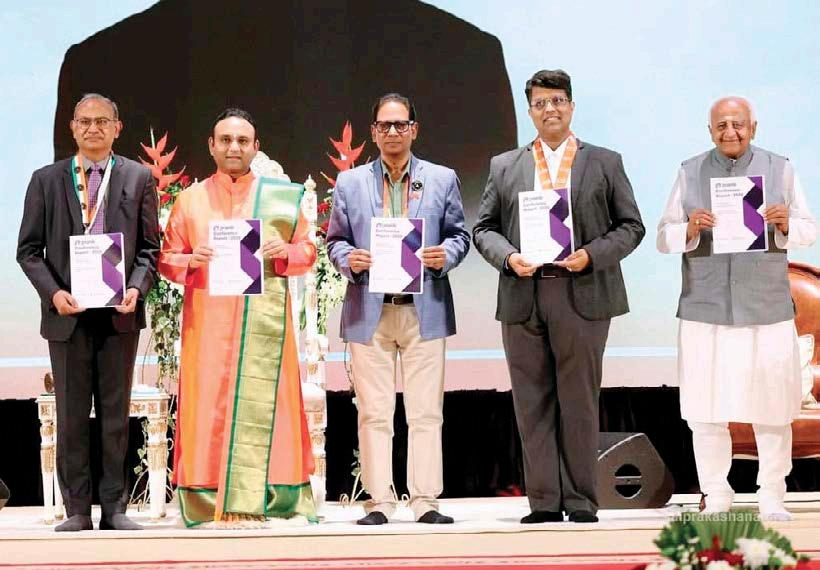
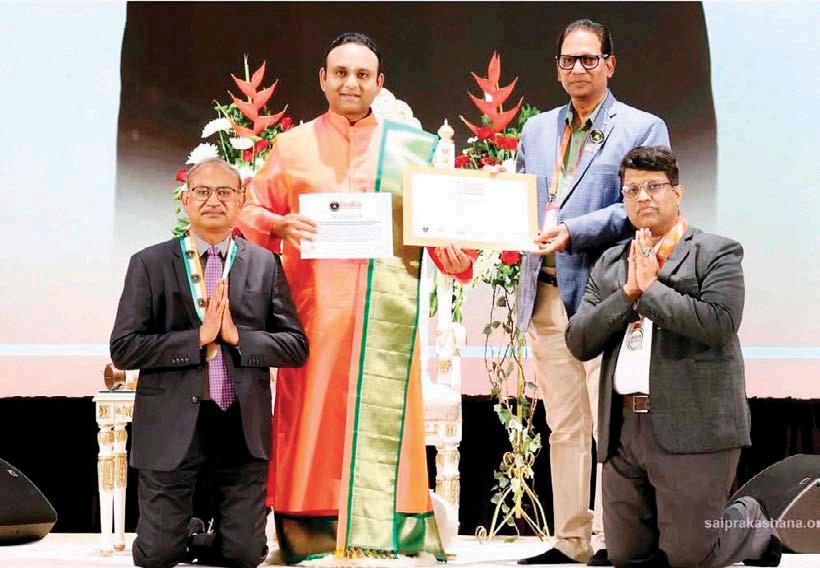
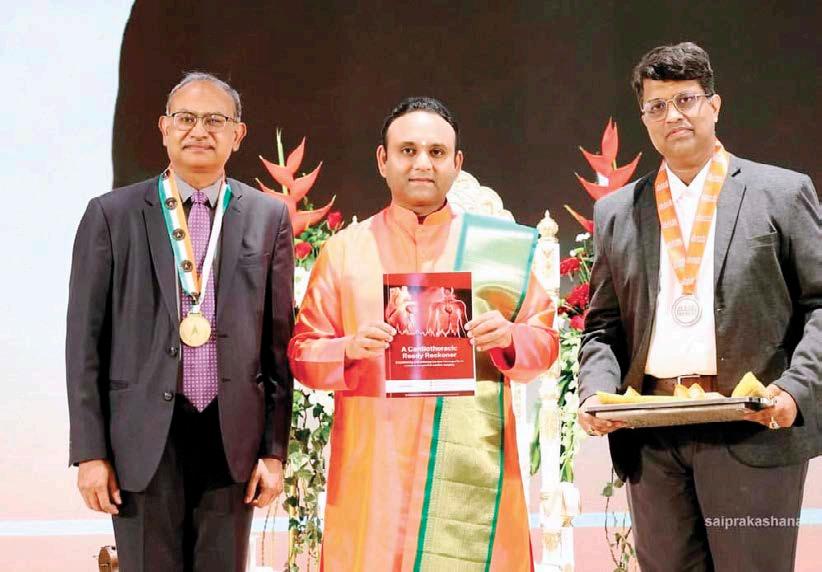
Mobilising Care Against COPD
The problem of COPD exacerbations continues to strain patients, families, and healthcare systems across India. Sudden worsening of breathlessness, cough, and sputum leads to frequent hospital visits. Each flare-up accelerates lung damage. Recovery becomes harder with time. Many patients remain unaware of preventable triggers, and delayed intervention increases risk.
India faces a unique challenge with chronic obstructive pulmonary disease (COPD). A large proportion of patients are non-smokers. Environmental exposure, indoor pollution, occupational dust, and repeated infections play a role. Exacerbations remain a major cause of hospitalisation and healthcare cost. Prevention, therefore, demands awareness beyond clinics and emergency rooms.
In November 2025, a nationwide digital initiative sought to address this gap through collective professional commitment. Cipla Limited, Maharashtra, set a record for the maximum number of healthcare professionals participating in a digital pledge drive for preventing COPD exacerbations. From 13 November to 30 November 2025, a total of 14,127 healthcare professionals across India took part in the initiative.
The campaign centred on the “Focus on Mucus” message. Mucus plays a central role in disease progression. Thick secretions obstruct airflow. They trap pathogens. They worsen breathlessness and raise the risk of infection. Poor mucus clearance often precedes acute flare-ups. Addressing this factor can reduce symptom burden and hospital admissions.
The digital pledge encouraged doctors, nurses, and allied professionals to prioritise mucus management in routine care.
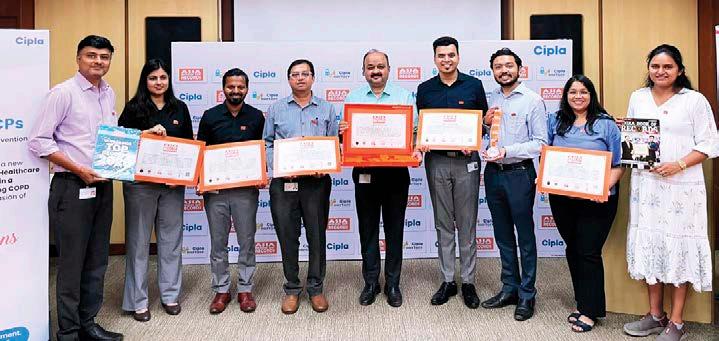
Participants committed to educating patients, promoting early symptom recognition, and supporting adherence to treatment plans. The format allowed wide participation without geographic barriers. Registration and verification followed a structured digital process.
The scale of participation reflected urgency within the medical community. COPD often remains underdiagnosed. Symptoms are mistaken for ageing or recurrent infections. Exacerbations are treated episodically rather than prevented. The pledge aimed to shift this mindset toward proactive care.
The feat was recognised by Asia Book of Records (ABR). Adjudicator Kashmira Shah presented the medal and certificate to Cipla officials. The recognition acknowledged both participation numbers and the public health focus of the initiative. Digital platforms played a decisive role. They enabled rapid outreach. They allowed consistent messaging. They also created a measurable trail for validation. In a country with vast healthcare networks, digital pledges offer speed and scale.
Cipla’s long engagement with respiratory care shaped the initiative. The company has invested in awareness, diagnostics, and therapy access over decades. The pledge drive aligned with this direction by emphasising prevention and education. A spokesperson of the company said, “COPD exacerbations cause avoidable suffering and hospitalization. By uniting healthcare professionals around mucus management, we aim to promote early action and better daily control for patients.”
The initiative also gained relevance amid emerging data. In India, a majority of COPD patients are non-smokers. This challenges common assumptions. Early diagnosis becomes critical. Handheld spirometers and point-of-care tools are expanding access. Yet awareness remains the first step.
Healthcare professionals play a pivotal role in this journey. They guide diagnosis. They shape patient behaviour. They monitor progression. Collective action amplifies individual effort. When thousands align around a shared message, consistency improves across settings.
Silent Frontline of Neurology
The growing concern of neurological cases in India is no longer confined to specialist circles. Hospitals report continuous increases in headaches, strokes, seizures, tremors, and nerve disorders. Many patients arrive late. Symptoms are ignored. Access to specialists remains uneven. The pressure on neurologists continues to rise.
Within this demanding landscape, a rare clinical milestone has been recorded. Lt. Col. Jitender Sharma, serving at Base Hospital, Delhi Cantt; Kirby Place, Delhi, handled 10,161 neurology cases in a single year. The period covered 1 January 2024, to 31 December 2024. The count included both outpatient and inpatient care. The achievement was confirmed in June 2025, and recognised by India Book of Records.
Neurology is a discipline that depends on time and precision. Each consultation requires careful listening. Examination is detailed. Imaging needs interpretation. Treatment plans demand follow-up. Many cases involve chronic conditions. Adjustments are frequent. Patient counselling is essential. Managing such volume without dilution of care reflects sustained clinical discipline.
Lt. Col. Sharma has served in the Indian Army for over two decades. His work spans varied terrains and settings. Military hospitals follow strict systems. Punctuality is enforced. Documentation is structured. Decision-making is evidence-led. These habits shape daily practice. In neurology, they matter deeply.
During the record year, his caseload reflected the changing disease pattern in India. Headache disorders formed a large share. Migraine and tension-type headaches often remained untreated for years before referral. Stroke cases followed closely. Early identification and risk control were key. Epilepsy cases required long-term planning and social counselling. Movement disorders needed regular review. Peripheral neuropathies appeared frequently among diabetic patients. Neuro-infections added complexity.
Each patient encounter demanded focus. A neurological visit cannot be rushed. History reveals clues. Examination confirms suspicion. Tests support decisions. Medication requires caution.
Follow-up plans must be clear. Handling such intensity over twelve months required mental clarity and physical stamina.
A typical day began early. Inpatients were reviewed first. ICU assessments followed. Imaging and reports were checked. Outpatient clinics ran through the day. Emergencies interrupted schedules. Academic duties continued alongside. Evenings often involved case reviews or planning. The workload extended beyond visible hours.
The scale of 10,161 patients also highlights a larger issue. India faces a shortage of neurologists. Awareness remains limited. Early symptoms are missed. Stroke warning signs are poorly understood. Seizures still carry stigma. Tremors are dismissed as age-related. Delay worsens outcomes.
The record served a broader purpose. It drew attention to neurological health. It encouraged early consultation. It reminded patients that persistent symptoms need evaluation. It reinforced the value of structured care within public hospitals.
Lt. Col. Jitender Sharma remains clear about his approach. “Neurological symptoms should never be ignored. Early consultation can change the course of disease and quality of life,” he said.
Behind the numbers stood a coordinated team. Nursing staff, technicians, junior doctors, and hospital administration ensured continuity. Family support allowed balance. Such outcomes never occur in isolation. Systems matter. Teams matter.
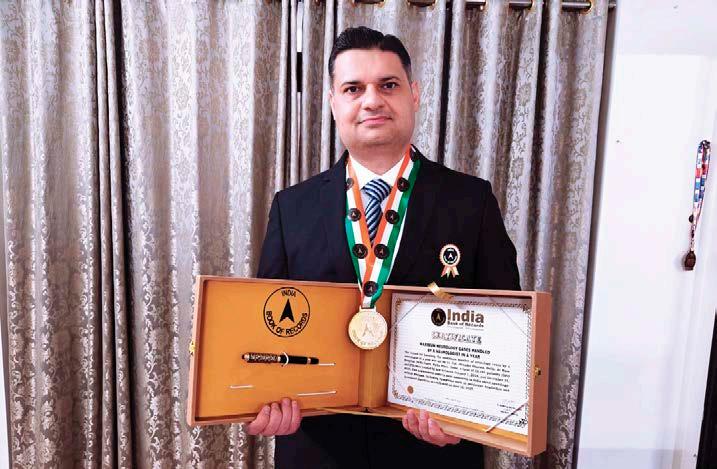
Doctors Back Daily Laughter
The role of laughter in wellness has long been recognised across cultures. A genuine laugh eases tension, regulates breathing, and lifts mood. Medical research links laughter with lower stress hormones and improved circulation. In everyday life, it remains one of the simplest habits available to everyone, regardless of age or setting.
This idea moved from theory to collective action through a nationwide initiative led by Zuventus Healthcare Ltd, in partnership with Spirant Communication Pvt Ltd. Together, they set a record for the maximum number of doctors pledged with placards to promote daily laughter workout. A total of 5,274 doctors participated, marking a rare moment of unified messaging across clinics and cities.
The initiative aimed to place laughter firmly within the conversation on preventive health. Doctors held placards carrying short messages on the benefits of laughing each
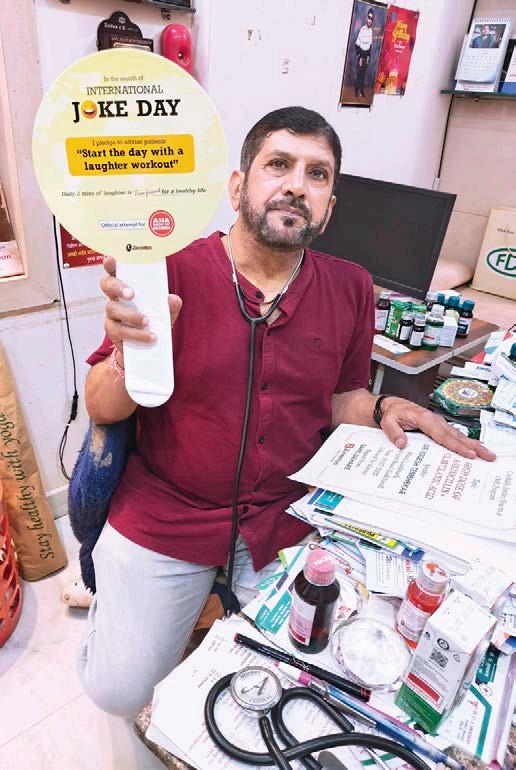
day. The act was simple, visible, and intentional. It invited patients and peers to pause and reflect on wellness beyond prescriptions.
The pledge was conducted through a structured process. Medical representatives of Zuventus Healthcare visited doctors at their clinics across India. Each participating doctor was photographed holding a placard promoting daily laughter. These images were compiled and submitted to the headquarters of Asia Book of Records (ABR) in Faridabad, Delhi NCR. The record organisation verified each image and supporting detail before confirming the achievement.
The scale of participation reflected trust. Doctors from varied specialities joined the effort. Clinics in metros and smaller towns took part. The format required minimal time, yet conveyed a clear message. It proved that wellness begins with daily habits that support mental balance.
Laughter therapy and laughter yoga have gained attention in recent years. They encourage voluntary laughter through breathing and movement. Studies suggest benefits for mood, immunity, and social bonding. While laughter does not replace medical care, it complements it by supporting emotional health. The campaign used this understanding without exaggeration. Placard messages stayed concise. They focused on daily practice.
Doctors became visible advocates of a habit they often recommend informally during consultations. Healthcare communication played a key role in execution. Spirant Communication coordinated logistics, ensured consistency of messaging, and managed verification documentation. Their experience in healthcare outreach helped align thousands of individual actions into a single, verifiable record.
For Zuventus Healthcare, the initiative aligned with its broader engagement with doctors and communities. The company acknowledged the doctors’ participation through public communication and social media. The emphasis remained on collective wellbeing. A Zuventus Healthcare spokesperson said, “A simple habit like daily laughter supports mental balance and overall health. We are grateful to the doctors who joined us in sharing this message with patients and communities.”
Recognition by Asia Book of Records added formal weight to the initiative. Records in health awareness reflect coordination and reach. They also highlight themes that deserve wider attention. In this case, the theme was accessible wellness. India’s healthcare system often focuses on treatment after illness appears. Preventive practices receive less visibility. Campaigns that encourage low-cost, daily habits help fill this gap. Laughter requires no equipment. It fits into busy routines. It invites human connection.
Thousands of doctors across India pledged support for daily laughter as a wellness habit. A nationwide placard campaign highlighted laughter’s role in stress relief through coordinated medical participation.
Doctors play a unique role in shaping public attitudes toward health and daily habits. When they collectively endorse a simple practice, the message gains credibility and wider acceptance. Seeing a doctor hold a placard about laughter, for instance, can shift perceptions and make wellness feel approachable. It reframes health as a shared responsibility between individuals and professionals. The record of 5,274 doctors pledged captures this collective intent and highlights how coordinated efforts can promote positive, preventive practices effectively.
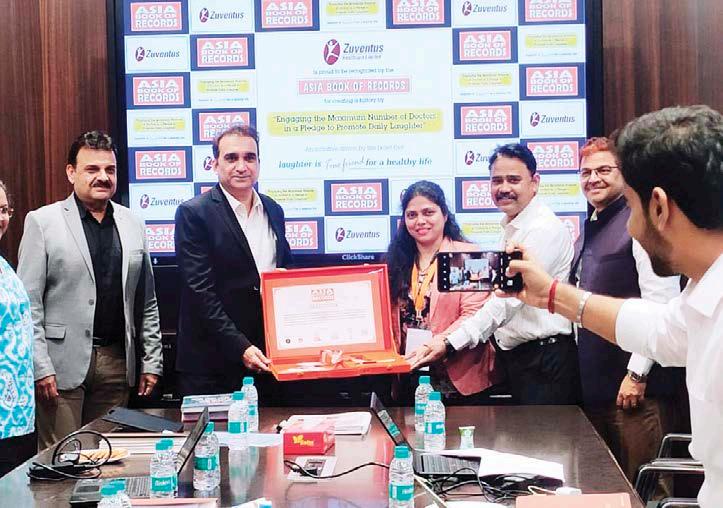
Doctors Take Diabetes on Air
Diabetes has become one of India’s most pressing public health problems. Cases are rising across age groups. Young adults now face risks once seen later in life. Sedentary habits, diet changes, stress, and genetics combine silently. Many ignore early signs. Delay worsens outcomes. Awareness remains uneven, especially outside clinics. Against this backdrop, communication beyond hospital walls has gained importance.
Radio continues to reach households across cities and small towns. It travels during commutes. It plays in shops and homes. Health messages delivered through this medium carry familiarity. Cipla Limited, Mumbai, chose this route during World Diabetes Awareness Month in November 2025. The company launched a nationwide diabetes awareness radio campaign titled “Young India at Risk; Diabetes and Heart Disease don’t wait for Age”.
The campaign ran from 12 November to 28 November. During this period, 643 doctors participated across India. Each doctor lent professional voice and credibility to the broadcasts. The scale set a record for the maximum number of doctors participating in a diabetes awareness radio campaign. Asia Book of Records confirmed the achievement.
The message focused on young adults. Diabetes is no longer limited to older populations. Early onset raises lifetime complications. Heart disease risk increases. Many young people remain unaware. Symptoms like fatigue, frequent thirst, or weight change are ignored. Radio conversations aimed to bridge this gap. Doctors explained risks in simple terms. Prevention formed the core.
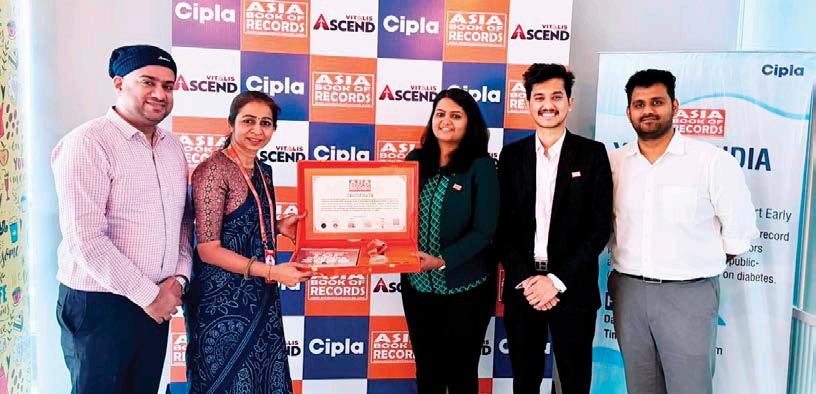
Participating doctors came from varied specialties. Physicians, diabetologists, and cardiology-focused practitioners contributed. Each radio segment followed a clear structure. Causes were explained. Lifestyle factors were highlighted. Listeners were encouraged to test early. The language remained accessible. The tone avoided alarm. Clarity mattered more than complexity.
The campaign also linked diabetes with cardiovascular health. Blood sugar and heart risk often travel together. Early diabetes can damage blood vessels. High blood pressure adds strain. Cholesterol imbalance worsens outcomes. Addressing one condition without the other limits benefit. Doctors used radio time to explain this connection. Young listeners heard that age does not protect against metabolic disease.
Cipla has worked in healthcare for decades. Its presence spans chronic therapies and patient education. The radio campaign aligned with this focus. Instead of product messaging, the emphasis stayed on awareness. The company used its network to coordinate participation. Scheduling across multiple radio stations required planning. Doctors recorded messages. Stations aligned broadcast slots. Consistency was maintained throughout the period.
Radio proved effective. Listeners heard doctors during daily routines. Messages repeated across days reinforced recall. The format allowed questions in some segments. Call-ins created engagement. Doctors answered common doubts. This direct exchange reduced hesitation. Hearing a doctor speak casually on radio made the topic approachable.
The recognition ceremony marked formal closure. Asia Book of Records adjudicator Ms Kashmira Shah presented the medal and certificate to Cipla officials at a felicitation programme. The award acknowledged coordination and participation. It also highlighted the role of doctors in public education.
Diabetes education often relies on clinics, but radio reaches young adults directly, with doctors’ collective voices reinforcing trust and consistent messaging.
Doctors Aid Diabetes Control
Diabetes management in India has become a growing public health priority. Millions of people live with the condition across the country. Many cases remain undiagnosed for years. Lifestyle changes, urban routines, and dietary habits contribute to the rising numbers. Doctors often warn that delayed detection leads to complications affecting the heart, kidneys, eyes, and nerves.
Medical experts emphasise that diabetes control depends on regular monitoring and disciplined lifestyle habits. Patients must track blood glucose levels, follow dietary guidance, and maintain daily physical activity. Early awareness plays a crucial role in preventing complications. Yet many individuals still underestimate the seriousness of the disease.
Public health campaigns have therefore gained importance in recent years. Medical organisations, hospitals, and pharmaceutical companies frequently conduct awareness initiatives. These programmes aim to inform patients about prevention, early diagnosis, and treatment management. Doctors remain central to these efforts because they directly guide patients and communities.
In November 2025, a nationwide initiative attempted to strengthen this message. Dr Reddy’s Laboratories Private Ltd, set a record for the maximum number of doctors writing awareness messages for efficient management of diabetes at a workplace. The campaign brought together physicians from across the country who contributed written messages encouraging better diabetes care.
The programme began on 3 November 2025 and concluded on 14 November. During this period, a total of 5,752 doctors participated in the campaign. Each participant wrote messages focused on improving awareness about diabetes prevention and daily management practices.
The initiative emphasised simple but essential health practices. Doctors highlighted the importance of regular exercise and balanced nutrition. They encouraged patients to monitor blood sugar levels consistently. The messages
also focused on preventive habits that can reduce the risk of complications.
The campaign created a collective platform for healthcare professionals to share guidance in their own words. Doctors wrote brief advisory notes that explained diabetes management in practical terms. These messages were designed to be easily understood by patients and the general public.
Such campaigns rely on the credibility of medical professionals. Written messages from physicians help simplify complex medical information. Patients often respond positively to advice presented in clear language. Organisers coordinated the campaign across different medical institutions and workplaces. Doctors from multiple cities participated in the effort. The messages were compiled and documented as part of the awareness initiative. Asia Book of Records adjudicator Dt. Vito Nunes recognised the campaign for the maximum number of doctors writing awareness messages related to diabetes management. A spokesperson from Dr Reddy’s Laboratories said the initiative aimed to encourage patients to adopt simple lifestyle habits that support better diabetes control and reduce long-term health risks.
Healthcare specialists emphasise that diabetes requires consistent management. Regular monitoring, disciplined routines, and ongoing treatment are essential, while awareness campaigns help reinforce these practices across broader communities for better long-term outcomes.
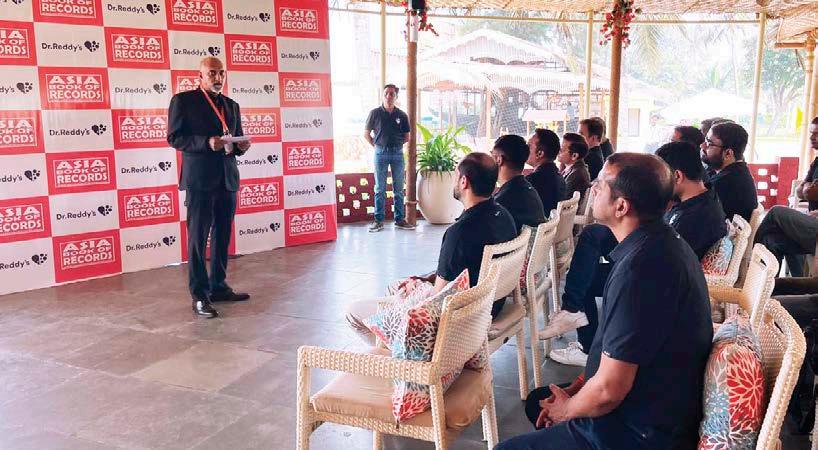
Records
Maximum multiplication sums of random large numbers mentally calculated by a child
The record for mentally calculating the maximum number of multiplication sums of random large numbers was set by Riquil Akhil (born on June 1, 2018) of Thiruvananthapuram, Kerala. He recalled the answers of 15 multiplication sums of 15 random large numbers (with different multipliers) in 2 minutes and 23 seconds, on hearing the sums, wherein the answers ranged from 4 million to 121 decillion, at the age
Longest duration to perform the Vrikshasana yoga pose by an individual
The record for performing the Vrikshasana yoga pose for the longest duration was set by Bindu Garg (born on February 15, 1979) of Bathinda, Punjab. She performed the Vrikshasana yoga pose (Tree pose) for 33 minutes and 18 seconds, as confirmed on February
2026
Maximum 2 x 2 Rubik’s Cubes solved while hanging upside down by a kid
The record for solving the maximum number of 2 x 2 Rubik’s Cubes while hanging upside down was set by Ishika N. Desa (born on October 26, 2020) of Bengaluru, Karnataka. She solved 103 different 2 x 2 Rubik’s Cubes, while hanging upside down, in 12 minutes and 24 seconds, at the age of 5 years, 3 months and 14 days, as confirmed
Fastest teen to type letters of the English alphabet on a laptop using an app
The record for being the fastest to type letters of the English alphabet on a laptop using an app was set by Aher Kunal Suresh (born on August 15, 2008) of Nashik, Maharashtra. He typed all the letters of the English alphabet from A to Z (in small letters without space) on a laptop in 1 second and 980 milliseconds with both hands, using the ‘Speed Typing Online’ App (on a standard QWERTY keyboard), at the age of 17 years, 5 months and 20 days, as confirmed on February 4, 2026.
Maximum solo treks in Karnataka completed consecutively by an individual
The record for completing the maximum number of solo treks in Karnataka consecutively was set by K. Ramakrishnan (born on February 20, 1995) of Madurai, Tamil Nadu. He completed 7 in Karnataka, namely Anthargange Trek, Betta Trek, Skandagiri Trek, Siddara Savandurga Trek, Ramadevara Betta Trek Kaiwara Trek, consecutively, December 21, 2025 to December 27, 2025, covering a total distance of 34.4 km, as confirmed on February 4, 2026.

Maximum cones used to perform inline slalom skating by a child
The record for using the maximum number of cones to perform inline slalom skating was set by Dakshith S. (born on January 21, 2016) of Ernakulam, Kerala. He used 40 cones (each placed 50 cm apart) to perform inline slalom skating, with zig-zag manoeuvres (on the front wheels of each skate), in 24 seconds, at the age of 10 years and 12 days, as confirmed on February
Maximum Hindu squats performed on inline skates by a kid
The record for performing the maximum number of Hindu squats on inline skates was set by Aryan Raj (born on April 17, 2021) of Kasaragod, Kerala. He performed 101 Hindu squats (uthak baithak) on inline squats in 3 minutes and 53 seconds, at the age of 4 years, 9 months and 24 days, as confirmed on February 10, 2026.
Maximum pages of different volumes of a Hindi novel authored by an individual
The record for authoring the maximum number of pages of different volumes of a Hindi novel was set by Dev Goyal ‘Dev’ (born on June 16, 1953) of Mumbai, Maharashtra. He authored 1938 pages of 7 volumes of a Hindi novel titled ‘Anjaana Humsafar, including ISBN of 2 volumes (ISBN: 978-93-64315-74-6) and (ISBN: 978-93-6431083-3), published by Kavya Publications. The 7 volumes have 225, 240, 242, 281, 302, 284 and 364 pages, respectively, as confirmed on 3, 2026.
Maximum times Surya Namaskar performed on Mount Kilimanjaro by an individual
The record for performing Surya Namaskar for the maximum number of times on Mount Kilimanjaro was set by Jyoti Sharma (born on March 24, 1983) of Ghaziabad, Uttar Pradesh. She performed Surya Namaskar, 14 times, atop Uhuru Peak of Mount Kilimanjaro, at an altitude of 5,895 m, in 4 minutes and 49 seconds, on January 26, 2026, as confirmed on February 7, 2026.
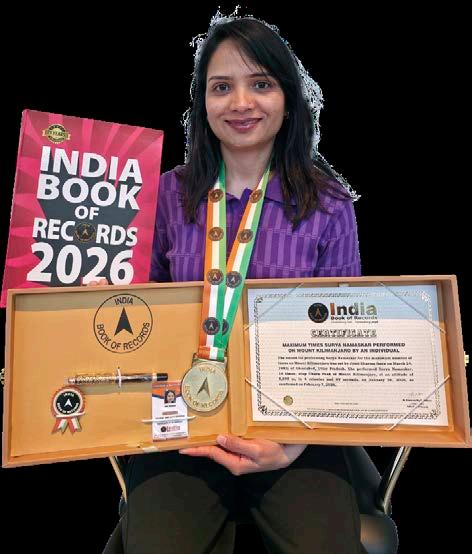
Fastest kid to answer 50 questions of Ramayana in Hindi
The record for being the fastest to answer 50 questions of Ramayana in Hindi was set by Adhvik Atal (born on July 25, 2022) of Bhilwara, Rajasthan. He answered 50 questions of Ramayana minutes and 19 seconds, at years, 6 months and 6 days, as January
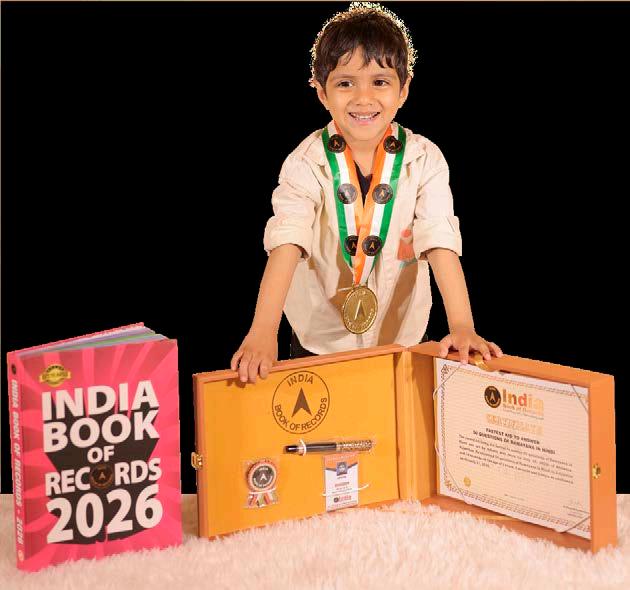
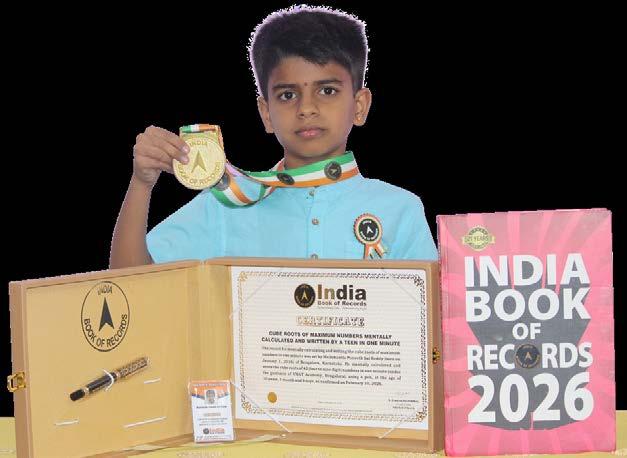
Fastest kid to identify flags of 50 countries blindfolded
The record for being the fastest to identify flags of 50 countries blindfolded was set by Agastya D. (born on May 27, 2020) of Dakshin Kannada, Karnataka. He identified the flags and recalled the names of 50 countries, blindfolded, in 1 minute, 24 seconds and 72 milliseconds, at the age of 5 years, 7 months and 18 days, as confirmed on January 14,
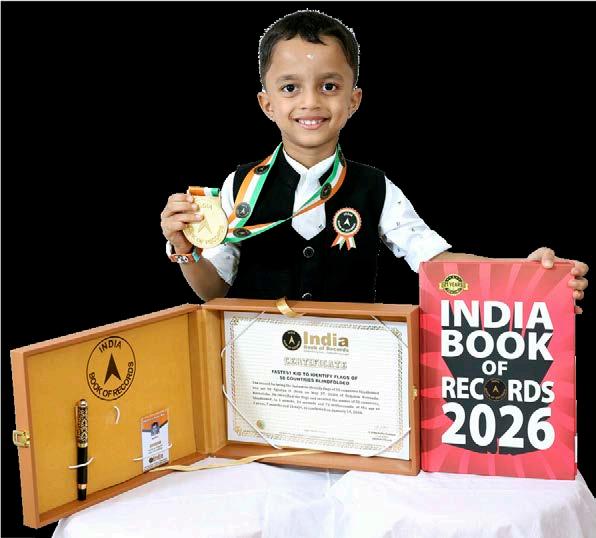
Cube roots of maximum numbers mentally calculated and written by a teen in one minute
The record for mentally calculating and writing the cube roots of maximum numbers in one minute was set by Mallukuntla Puneeth Sai Reddy (born on January 1, 2016) of Bengaluru, Karnataka. He mentally calculated and wrote the cube roots of 42 (four to nine digit) numbers in one minute (under the guidance of VMAT Academy, Bengaluru), using a pen, at the age of 10 years, 1 month and 9 days, as confirmed on February 10, 2026.
Maximum handmade objects crafted from coconut shells by an individual
The record for crafting the maximum number of handmade objects from coconut shells was set by Bijay Kumar Kamila (born on May 26, 1971) of Mayurbhanj, Odisha. He crafted 53 handmade objects from coconut shells, including a fighter jet, Chandrayan-3, map of India, Lord Ganesha, a sanitiser spray, tree, a flower vase, a spoon stand and a mirror, among others, as confirmed January 29, 2026.
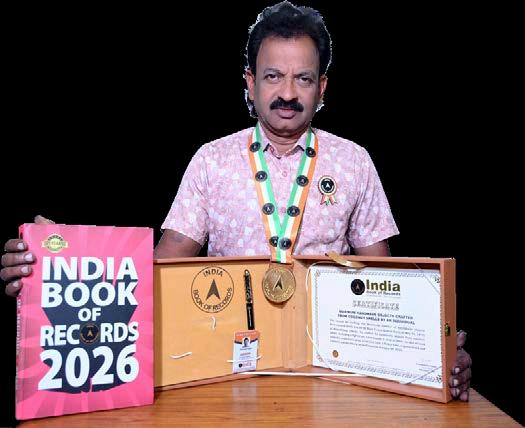
Maximum nose hula hoop spins performed by a child
The record for performing the maximum number of nose hula hoop spins was set by Aaditri Singh (born on September 29, 2015) of Dhanbad, Jharkhand. She performed 148 anticlockwise hula hoop spins around the nose in 2 minutes and 23 seconds, at the age of 10 years and 4 months, as confirmed on January
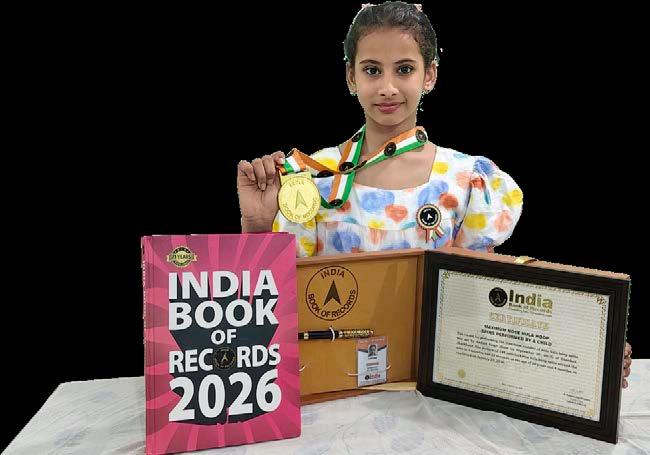
Maximum shorts on communication skills uploaded on YouTube by an individual
The record for uploading the maximum number of shorts on communication skills on YouTube was set by Chinmay Vitthal Naik (born on September 6, 2001) of Sawantwadi, Maharashtra. He made 500 shorts on communication skills and uploaded them on his YouTube channel ‘ChinmaynaikCEOSpeechcoaching’ from July 30, 2025, to January 27, 2026, as confirmed on January 29, 2026.
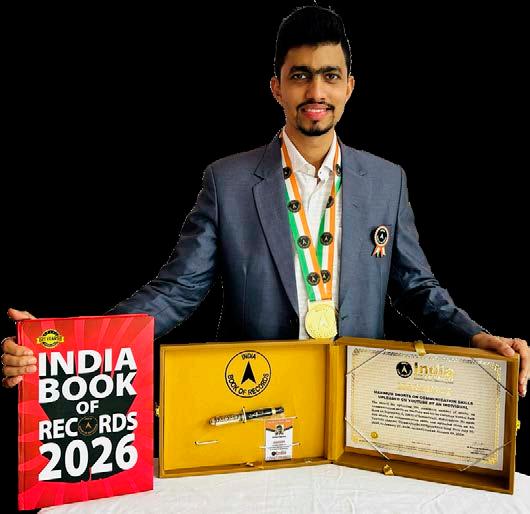
Fastest kid to recite 100 rhyming peg words in English
The record for being the fastest to recite 100 rhyming peg words in English was set by Polamarasetti Manvith (born on October 4, 2021) of Visakhapatnam, Andhra Pradesh. He recited 100 English rhyming peg words (a mnemonic technique used to memorise ordered lists, wherein the system relies on associating numbers with simple, rhyming words) in 1 minute and 11 seconds, at the age of 4 years, 3 months and 29 days, as confirmed on February 2, 2026.
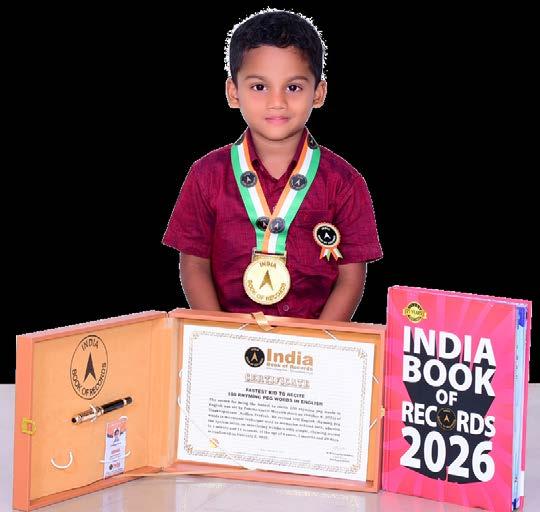
Maximum Malayalam songs played and sung simultaneously on a Keyboard by a teen
The record for playing and singing the maximum number of Malayalam songs simultaneously on a Keyboard was set by Johan Samuel Paul (born on December 12, 2006) of Thiruvananthapuram, Kerala. He played and sang 102 Malayalam songs simultaneously on a Keyboard, nonstop, for 11 hours, 54 minutes and 55 seconds, at the age of 19 years, 1 month and 19 days, as confirmed on January 31, 2026.
Longest duration to float on back in a swimming pool while performing different yoga poses
The record for floating on back in a swimming pool for the longest duration while performing different yoga poses was set by Ramalakshmi Raja (born on May 26, 1965) of Chennai, Tamil Nadu. She floated on her back in a swimming pool for 4 hours and 41 minutes from 9.05 a.m. to 1.46 p.m. at Dolphin Swimming Pool, Mogappair State Sports Complex (Chennai) on December 15, 2025, while performing 19 different yoga poses, including Setu Bandhasana (Bridge pose), Navasana (Boat pose) and Shishupala asana (Rocking baby pose), among others, as confirmed on December 18, 2025.
Longest duration to perform the Omkarasana yoga pose on a stool by a teen
The record for performing the Omkarasana yoga pose on a stool for the longest duration was set by Manya (born on May 11, 2012) of New Delhi. She performed the Omkarasana yoga pose (OM pose) on for 2 minutes and 91 milliseconds, of 13 years, 7 months and 27 confirmed on January
Fastest child to swim from Atal Setu to the Gateway of India
The record for being the fastest to swim from Atal Setu to the Gateway of India was set by Om Kunal Bhangale (born on January 11, 2017) of Thane, Maharashtra. He started swimming from Atal Setu and completed it at the Gateway of India, Mumbai, on January 8, 2026. He covered 17 km in 2 hours, 33 minutes and 44 seconds, at the age of 8 years, 11 months and 28 days, as confirmed on January 15, 2026.
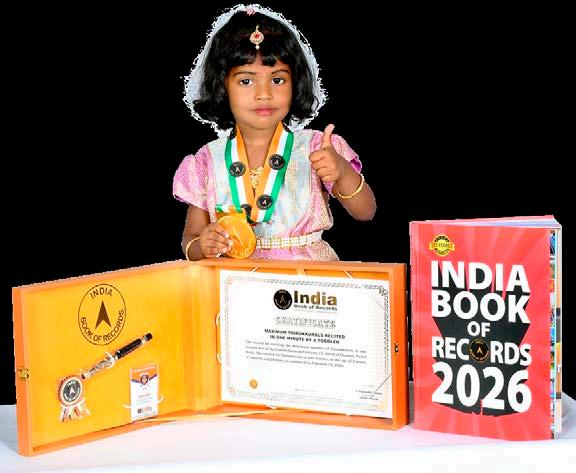
Maximum times a Table Tennis ball tapped in one minute by a child
The record for tapping a Table Tennis ball for the maximum number of times in one minute was set by Sadhana S. (born on November 29, 2017) of Coimbatore, Tamil Nadu. She tapped the ball continuously with a Table Tennis bat 263 times in one minute, at the age of 8 years, 1 month and 18 days, as
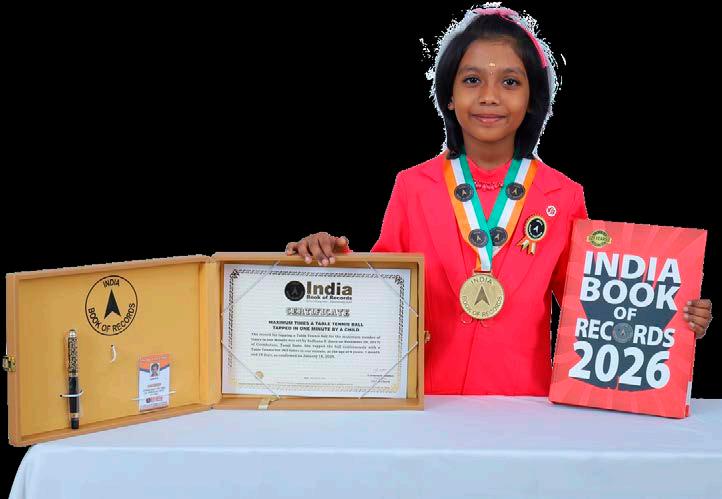
Maximum Thirukkurals recited in one minute by a toddler
The record for reciting the maximum number of Thirukkurals in one minute was set by Yazhini (born on February 15, 2023) of Chennai, Tamil Nadu. She recited 13 Thirukkurals in one minute, at the age of 2 years, 11 months and 28 days, as confirmed on February 12, 2026.
Fastest kid to decipher 100 English scrambled words
The record for being the fastest to decipher 100 English scrambled words was set by Krishwin A. (born on June 21, 2019) of Tiruvallur, Tamil Nadu. He deciphered 100 English scrambled words (ranging from 3 to 8 letters) in 49.40 seconds by viewing the scrambled letters displayed on a laptop screen, at the age of 6 years and 7 months, as confirmed on January 21, 2026.
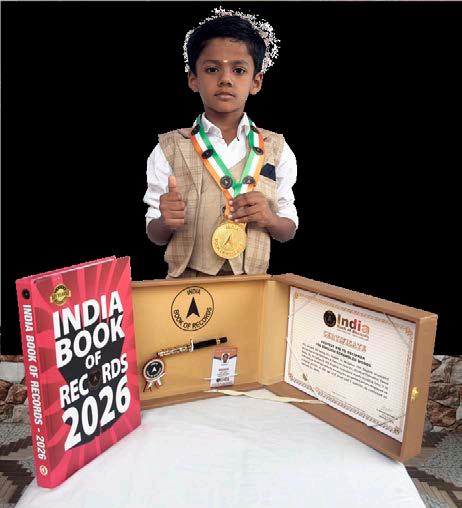
Smallest indigenous calf produced by cross-breeding
The record for producing the smallest indigenous calf by cross-breeding was set by Dhunn Charitable Trust of Anand, Gujarat. The scientists at the charitable trust achieved a major breakthrough in cross-breeding, wherein both parents are pure indigenous A2 breeds and ‘Harini’ is a carrier of superior, easy-to-digest A2 milk proteins. The dimensions of the smallest indigenous calf ‘Harini’ are as follows: birth height 20 inches, birth girth 22 inches and birth weight 12.360 kg, as confirmed on February 12, 2026.
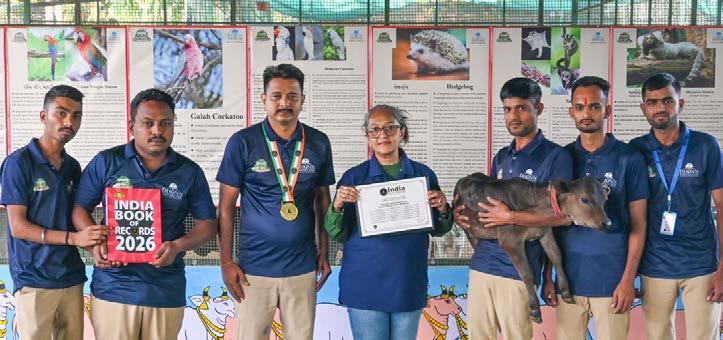
Fastest kid to solve a 2 X 2 Rubik’s Cube
The record for being the fastest to solve a 2 X 2 Rubik’s Cube was set by Mihan Juvale (born on July 22, 2019) of Mumbai Suburban, Maharashtra. He solved a 2 X 2 Rubik’s Cube in 4.25 seconds, at the age of days, as confirmed on January
Maximum three-letter CVC words written on a whiteboard by a toddler
The record for writing the maximum number of three-letter CVC words on a whiteboard was set by Takshvi Urvashi Tank (born on March 11, 2023) of Mumbai City, Maharashtra. She wrote15 three-lettered CVC (Consonant Vowel Consonant) words on a whiteboard in 3 minutes and 49 seconds, using a black marker pen, at the age of 2 years, 10 months and 2 days, as confirmed on January
Maximum multiplication sums of three digits solved by a child
The record for solving the maximum number of multiplication sums of three digits was set by Aarav Harishbhai Patel (born on September 4, 2015) of Daman, Dadra and Nagar Haveli and Daman and Diu. He solved 205 multiplication sums, consisting of three digits multiplied by a single digit, in 5 minutes and 3 seconds, using pen and paper, at the age of 10 years, 5 months and 10 days, as confirmed on February 14, 2026.
Longest duration to play Tabla by a teen
The record for playing the Tabla for the longest duration was set by Akshaj Kulkarni (born on May 10, 2011) of Bengaluru, Karnataka. He played the Tabla (a pair of drums) non-stop for 4 hours and 30 seconds, at the age of 14 years, 7 months and 19 days, as confirmed on December
Longest duration to perform the plank pose with additional weight by a female
The record for performing the plank pose with additional weight for the longest duration was set by Bijall Joshi (born on December 20, 1991) of Surat, Gujarat. She performed and held herself in the plank pose, with an additional weight of 75 kg on her back, for 45 seconds, as confirmed on
Largest thematic multi-layered handmade
explosion box made by an individual
The record for making the largest thematic multi-layered handmade explosion box was set by Akhila S. Nayak (born on November 9, 2002) of Mangaluru, Karnataka. She made the largest thematic multi-layered handmade explosion box, measuring 35 cm x 35 cm (explodes to 1847 cm x 105 cm in its open form when spread out across a room), on the theme ‘Indian Armed Forces’, using chart paper, images of soldiers, handwritten messages, letters, quotes, slogans and drawings, as confirmed on January 28, 2026.
Maximum animals identified in 30 seconds by a kid
The record for identifying the maximum number of animals in 30 seconds was set by Monu Shree S. (born on December 25, 2021) of Bengaluru, Karnataka. She identified and recalled the names of 46 animals in 30 seconds, by viewing pictures of animals on flashcards, at the age of 4 years and 20 days, as confirmed on January
Maximum reverse steps walked on toe knuckles by a kid
The record for walking the maximum number of reverse steps on toe knuckles was set by Vaishna Ratheesh (born on October 9, 2019) of Kasaragod, Kerala. She walked 67 reverse steps on the knuckles of her toes (nonstop) in 29.65 seconds, covering a distance of 15 metres, at the age of 6 years and 4 months, as confirmed on February 9, 2026.
Fastest teen to solve a Cylinder Cube
The record for being the fastest to solve a Cylinder Cube was set by Neerav Kumar (born on January 8, 2013) of Kota, Rajasthan. He solved a Cylinder Cube in 40.81 seconds, at the age of 13 years and 4 days, as confirmed on January 12, 2026.
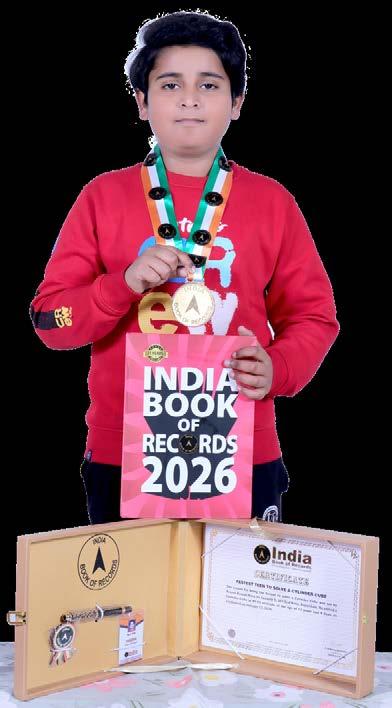
Maximum distance covered in a torch run expedition from Kashmir to Kanyakumari by an individual
The record for covering the maximum distance in a torch run from Kashmir to Kanyakumari was set by Ankur Kumar (born on July 17, 1999) of Meerut, Uttar Pradesh. He started his torch run expedition on October 31, 2025, at 7:36 a.m. from Srinagar (Kashmir) and completed it at Kanyakumari (Tamil Nadu), on December 19, 2025, at 11:18 a.m., covering a total distance of 3,771 km in 49 days, 3 hours and 42 minutes, as confirmed on 14, 2026.
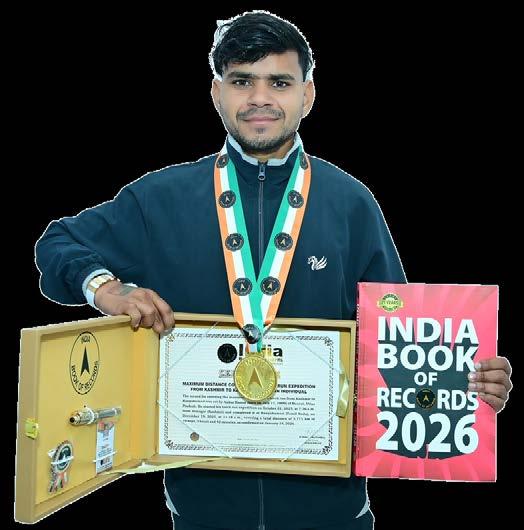
Fastest kid to identify flags of 50 countries
The record for being the fastest to identify flags of 50 countries was set by Sonika Ketaki Kartik Achar (born on June 28, 2019) of Pune, Maharashtra. She identified the flags and recalled the names of 50 countries in 16.63 seconds by viewing the pictures of flags on a chart paper, at the age of 6 years, 6 months and 16 days, as confirmed on
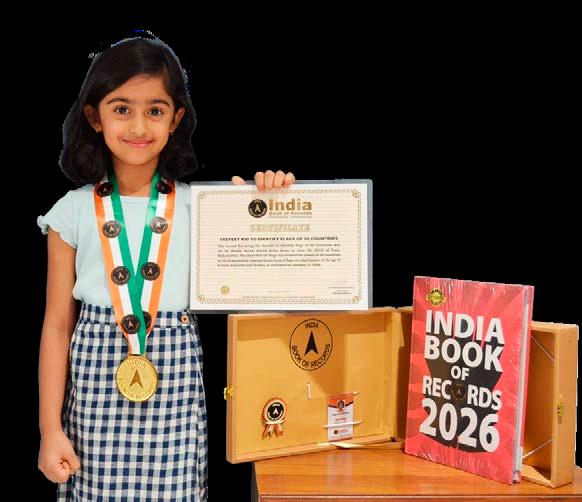
Fastest individual to write the symbols of all elements of the periodic table with atomic mass
The record for being the fastest to write the symbols of all elements of the periodic table with atomic mass was set by Shashidhar G. Y. (born on June 12, 2000) of Chitradurga, Karnataka. He wrote the symbols of all 118 elements of the periodic table with atomic mass in 3 minutes and 58 seconds, using paper and pen, as confirmed on January
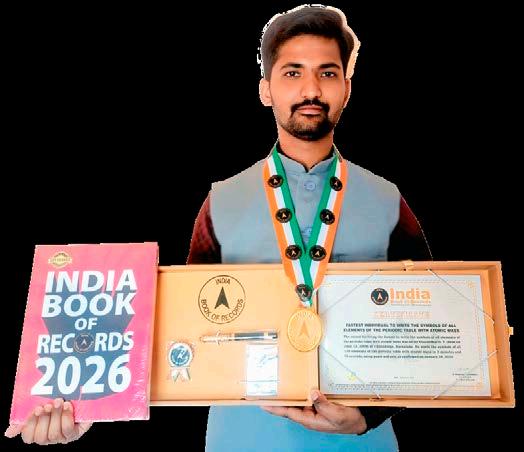
Maximum pictures identified blindfolded by a kid using the touch and smell technique
The record for identifying the maximum number of pictures blindfolded using the touch and smell technique was set by [SP1] Shubh Singh Chauhan (born on December 5, 2022) of Gwalior, Madhya Pradesh. He identified 142 miscellaneous pictures blindfolded and recalled the names of vehicles, animals, fruits and others in 11 minutes and 40 seconds, using the touch and smell technique, at the age of 3 years, 2 months, and 7 days, as confirmed on February 12, 2026.
Fastest kid to recall verses of the Holy Bible alphabetically
The record for being the fastest to recall verses of the Holy Bible alphabetically was set by Zayne Evanpaul (born on September 20, 2020) of Bengaluru, Karnataka. He recalled 26 verses of the Holy Bible alphabetically from A to Z in one minute, at the age of 5 years, 3 months and 16 days, as confirmed on January 5, 2026.
Maximum 5 x 5 magic squares solved by a child in 15 minutes
The record for solving the maximum number of 5 x 5 magic squares was set by Eeshani Jayesh (born on April 7, 2017) of Kollam, Kerala. She solved 30 magic squares, consisting of random numbers ranging from 0 to 99, in 15 minutes (under the guidance of VMAT Academy, Bengauru), at the age of 8 years, 9 months, and 7 days, as confirmed on January
Maximum musical notes played on a flute by a teen
The record for playing the maximum number of musical notes on a flute was set by Aanjaneya Joshi (born on May 4, 2011) of Gautam Buddha Nagar, Uttar Pradesh. He played a total of 42 musical notes (swaras) on a flute in a total duration of 8 minutes and 34 seconds (consisting of 3 minutes and 53 seconds of Raag Yaman, 2 minutes and 45 seconds of Alankar Shuddha Swaras and 1 minute and 56 seconds of AlankarVikritSwaras), at the age of 14 years, 8 months and 6 days, as confirmed on January 10, 2026.
Maximum hula hoop spins performed while solving Rubik’s Cubes by a child
The record for performing the maximum number of hula hoops spins while solving Rubik’s Cubes was set by Riva Jain (born on May 26, 2018) of Mumbai Suburban, Maharashtra. She performed 343 hula hoop spins (around her waist) while solving 3 cubes, namely a 2 x 2 Rubik’s Cube, a Pyraminx and a 3 x 3 Rubik’s Cube in 3 minutes,10 seconds and 86 milliseconds, at the age of 7 years, 7 months and 13 days, as confirmed on January 8, 2026.
Fastest toddler to recall capitals of all Indian states
The record for recalling the capitals of all Indian states was set by Laksh Doshi (born on March 23, 2023) of Kolkata, West Bengal. He recalled the capitals of all 28 Indian states in 33.14 seconds, at the age of 2 years, 9 months and 21 days, as confirmed on January 13, 2026.
Fastest individual to cover three and a half Shakti Peethas along with five Jyotirlingas of Maharashtra
Maximum members of a family participated in the Intentionality Road Ultra 2025 together
The record for the participation of the maximum family members in the Intentionality Road Ultra 2025 together was set by Siveej Kodappully Sivaraman (born on October 30, 1980) of Thrissur, Kerala, along with his wife and son. They participated in the ‘Intentionality Road Ultra 2025’ together on December 7, 2025, ran a distance of 50 km, and completed it at different time durations, as confirmed on December 27, 2025.
The record for being the fastest to cover three and a half Shakti Peethas along with five Jyotirlingas of Maharashtra was set by Gouri Abhishek Indulkar (born on September 9, 1985) of Ratnagiri, Maharashtra. She started her motorcycle expedition from Bhimashankar Temple (Pune) at 5.34 a.m. on January 20, 2026; covered three and a half Shakti Peethas of Maharashtra (Trimbakeshwar Temple, Grishneshwar Temple and Tulja Bhavani Temple), along with 5 Jyotirlingas of Maharashtra, and terminated at Mahalaxmi Temple (Kolhapur) at 3.14 p.m. on January 22, 2026; covering 1,626.29 km in 31 hours and 39 minutes (as per GPS data), as confirmed on January 27, 2026.
Fastest child to solve a 21 x 21 Rubik’s Mega Cube
The record for being the fastest to solve a 21 x 21 Rubik’s Mega Cube was set by Kriyansh Kiran Kenia (born on May 10, 2016) of Chennai, Tamil Nadu. He solved a 21 x 21 Rubik’s Mega Cube in 10 hours, 18 minutes, 1 second and 47 milliseconds (with several pauses), at the age of 9 years, 8 months and 9 days, as confirmed on January 19, 2026.
Fastest individual to recite all shlokas of Bhagavad Gita
The record for being the fastest to recite all the shlokas of the Bhagavad Gita was set by Rejukumar R. (born on July 19, 1977) of Thiruvananthapuram, Kerala. He recited all 700 Sanskrit shlokas of the Bhagavad Gita, from chapters 1 to 18, in 52 minutes and 20 seconds, as confirmed on January
Maximum miscellaneous certificates achieved by an individual
The record for achieving the maximum number of miscellaneous certificates was set by Bharathi K. S. (born on July 29, 1969) of Kanyakumari, Tamil Nadu. She achieved 1298 miscellaneous certificates for participating in various quiz competitions and webinars, as confirmed on February 10, 2026.
Fastest child to identify the flags of all countries blindfolded
The record for being the fastest to identify the flags of all countries blindfolded was set by Shree R. Konakeri (born on July 7, 2014) of Dharwad, Karnataka. He identified the flags and recalled the names of 195 (UN recognised) countries, blindfolded, in 3 minutes and 45 seconds, while holding the flashcards of flags in his hands, at the age of 11 years, 6 months and 21 days, as confirmed on January 28, 2026.
Maximum rope skips in 30 seconds performed blindfolded by an individual
The record for performing the maximum number of rope skips in 30 seconds blindfolded was set by Dr. Vaibhav Vijay Thorat (born on July 17, 2001) of Pune, Maharashtra. He performed 100 rope skips in 30 seconds blindfolded, as confirmed on January 2026.
Maximum side sit-ups performed by a child
The record for performing the maximum number of side sit-ups was set by Rehan Khan (born on February 11, 2018) of Yadgir, Karnataka. He performed 1100 side sit-ups in 10 minutes, 10 seconds and 86 milliseconds, at the age of 7 years, 10 months and 11 days, as confirmed on December 2025.
Maximum single-handed no-bounce ball catches in 30 seconds by an individual
The record for performing the maximum number of singlehanded no-bounce ball catches in 30 seconds was set by Sanjaynishudhan (born on November 21, 2004) of Vellore, Tamil Nadu. He performed 38 single-handed no-bounce ball catches (against a wall) in 30 seconds, as confirmed on 2025.
Fastest kid to write numbers from 1 to 100 ambidextrously
The record for being the fastest to write numbers from 1 to 100 ambidextrously was set by Advait Vikas Patade (born on September 21, 2019) of Pune, Maharashtra. He wrote numbers from 1 to 100 simultaneously with both hands (ambidextrously) on a sheet of paper in 5 minutes, 21 seconds and 89 milliseconds, using a pen, at the age of 6 years, 4 months and 7 days, as confirmed on January 28, 2026.
Maximum sight words read by a kid while performing anticlockwise hula hoop spins
The record for reading the maximum number of sight words while performing anticlockwise hula hoop spins was set by Chinmayi De (born on September 27, 2021) of Bengaluru, Karnataka. She read 100 English sight words (in alphabetical order), while performing 275 anticlockwise hula hoop spins, in 2 minutes and 46 seconds by viewing the words on a TV screen, at the months and 16 days, January
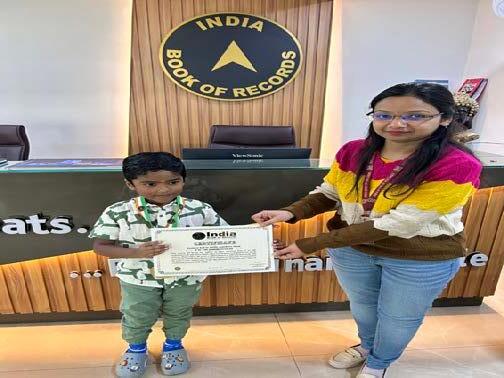
Maximum Thirukkurals recited in one minute by a teen
The record for reciting the maximum number of Thirukkurals in one minute was set by Varsha Vardni A. S. (born on March 28, 2012) of Chennai, Tamil Nadu. She recited 24 Thirukkurals in one minute, at the age of 13 years, 9 months and 11 days, as confirmed on January
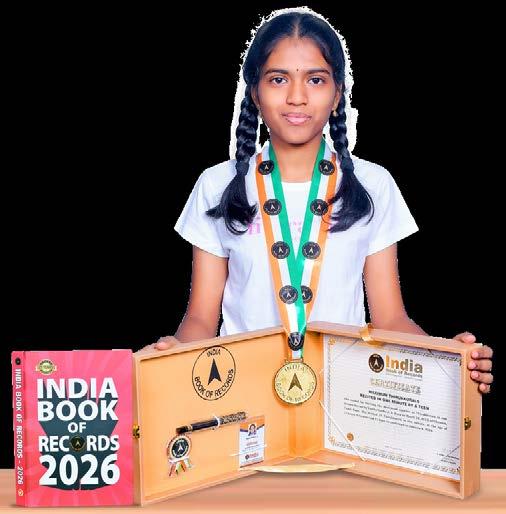
Fastest teen to write square values of numbers from 1 to 100
The record for being the fastest to write the square values of numbers from 1 to 100 was set by Vinayak Prashanth (born on August 12, 2012) of Kannur, Kerala. He wrote the squares of numbers from 1 to 100 in 2 minutes, 17 seconds and 23 milliseconds, at the age of 13 years, 5 months and 9 days, using paper and pen, as confirmed on January 21, 2026.
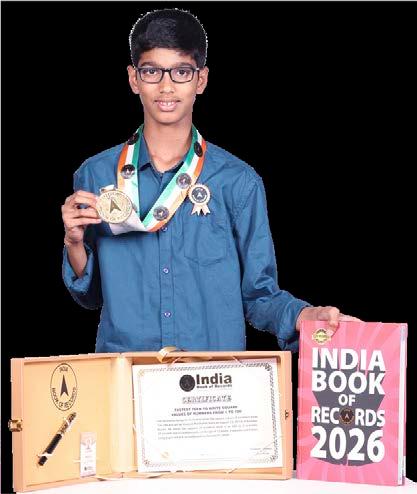
Youngest to author an illustrated bilingual book on hygiene and good habits
The record for being the youngest to author an illustrated bilingual book on hygiene and good habits was set by Syeda Abiha (born on March 28, 2021) of Parbhani, Maharashtra. She authored an illustrated bilingual book in Urdu and English, on hygiene and good habits, titled ‘Benny and the Invisible Monsters’ (ISBN: 978-9395041-24-9), published by Azra Book November 3, 2025, at the age of 7 months and confirmed on January 2, 2026.
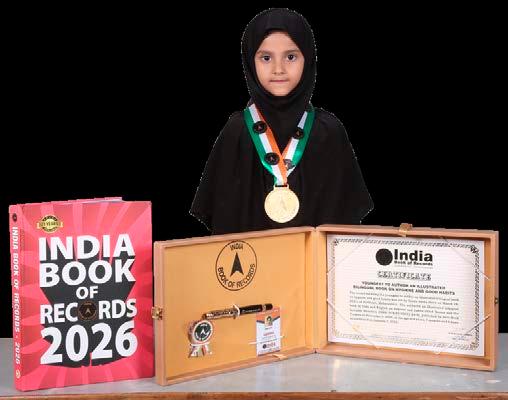
Maximum types of medical apparatus and equipment identified by a kid
The record for identifying the maximum types of medical apparatus and equipment was set by Minakshi Prasad (born on March 15, 2022) of Alappuzha, Kerala. She identified and named 180 types of medical apparatus and equipment in 5 minutes and 39 seconds by viewing the images of medical apparatus and equipment on a laptop screen, at the age of 3 years, 9 months and 28 days, as confirmed on January 12, 2026.
Fastest teen to break 50 wooden boards with a single Taekwondo punch
The record for being the fastest to break 50 wooden boards with a single Taekwondo punch was set by Riddhi Jimmy Rohera (born on November 6, 2012) of Ahmedabad, Gujarat. She broke 50 wooden boards (each board measuring 11.5 inches x 8 inches) with a single Taekwondo bare-fist punch in 24 seconds, using her right hand (under the supervision of coach Harshikesh Mena, Universe Taekwondo Academy, Ahmedabad), at the age of 13 years, 2 months and 7 days, as confirmed on January 13, 2026.
Maximum yoga poses performed in one minute by a teen
The record for performing the maximum number of yoga poses in one minute was set by Yeshkrita Sharma (born on April 30, 2011) of Bhiwani, Haryana. She adeptly performed 48 yoga poses in one minute, at the age of 14 years, 8 months and 4 days, as confirmed on January 3, 2026.
Maximum internal and external parts of the human body identified in one minute by a kid
The record for identifying the maximum number of internal and external parts of the human body in one minute was set by Ishan Dev (born on January 19, 2022) of Kozhikode, Kerala. He identified 70 internal and external parts of the human body in one minute by viewing pictures in a book, at the age of 3 years, 10 months and 24 days, as confirmed on December 13, 2025.
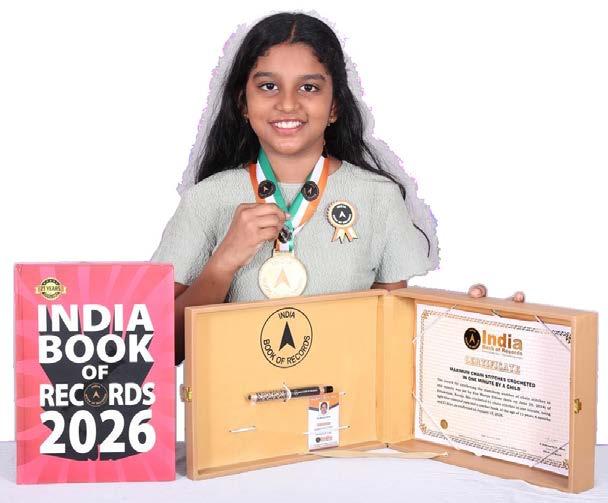
Maximum pictures identified by a kid in five minutes
The record for identifying the maximum number of pictures in five minutes was set by Shazin Shahul (born on March 23, 2020) of Wayanad, Kerala. He identified 191 pictures of 30 creatures, 4 dresses, 6 electronic items, 6 stationery items 5 car logos, 5 toys, 17 home appliances, 7 shapes, 9 colours, 10 parts of the body, 14 vegetables, 9 vehicles, 17 food items, 19 fruits and 33 miscellaneous items in five minutes by viewing pictures on a mobile phone screen, at the age of 5 years, 8 month and 22 days, as confirmed on December 15, 2025.
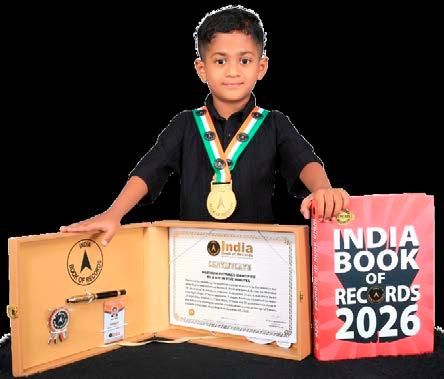
Maximum chain stitches crocheted in one minute by a child
The record for crocheting the maximum number of chain stitches in one minute was set by Eva Mariya Eldose (born on June 25, 2014) of Ernakulam, Kerala. She crocheted 61 chain stitches in one minute, using light blue coloured yarn and a crochet hook, at the age of 11 years, 6 months and 21 days, as confirmed on January 15, 2026.
Maximum flowers described in Hindi in an illustrated book by an individual
Maximum figure-eight Silambam rotations performed single-handedly in one minute by a kid
The record for performing the maximum number of figureeight Silambam rotations single-handedly in one minute was set by Saara Elangovan (born on June 25, 2021) of Erode, Tamil Nadu. She performed 60 figure-eight Silambam rotations, single-handedly, in one minute (swinging the Silambam from one side of the body to the other in a large arc forming a figure-eight shape), using her right hand, at the age of 4 years, 5 months and 11 days, as confirmed on December 6, 2025.
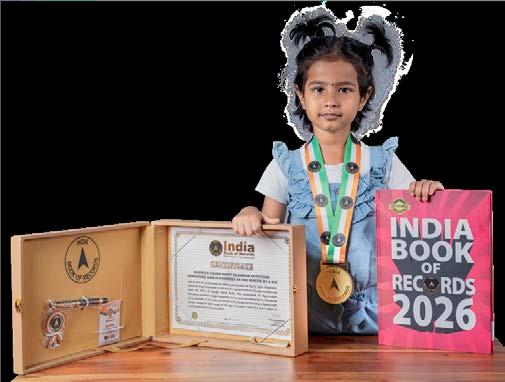
The record for describing the maximum number of flowers in Hindi in an illustrated book was set by Mahesh Bansal (born on July 1, 1954) of Indore, Madhya Pradesh. He described 101 flowers in Hindi, including queen’s tears, pink quill, ruby necklace, shooting star and others, with pictures and special features, in his book titled ‘PUSHP Phool’ (ISBN: 978-93-34405-72-9), as confirmed on January
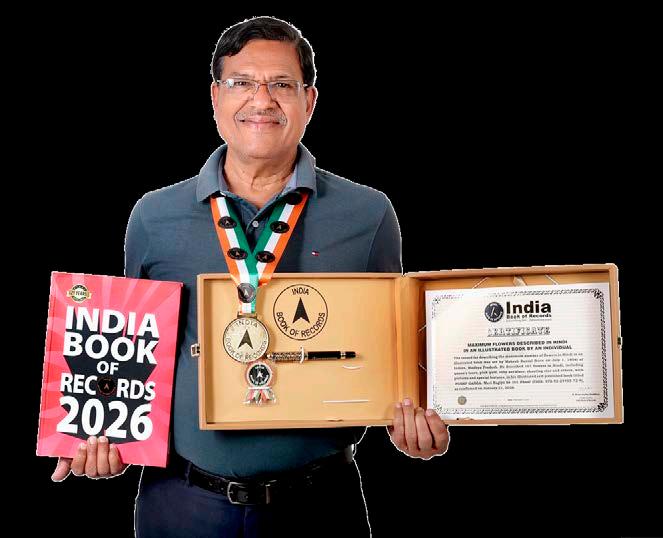
Youngest to decorate a picture blindfolded using matching beads
The record for being the youngest to decorate a picture blindfolded using matching beads was set by Pranvi Agarwal (born on February 1, 2021) of Jaipur, Rajasthan. She decorated a picture of a girl on a sheet of canvas (measuring 15 cm x 15 cm) blindfolded, in 10 minutes and 57 seconds, using multi-coloured beads, at the age of 4 years, 11 months and 6 days, January
Maximum car brands identified by a kid
Maximum steps walked on toe knuckles by a child
The record for walking the maximum number of steps on toe knuckles was set by Muhammed Nehan T. P. (born on November 15, 2018) of Wayanad, Kerala. He walked 424 steps on toes across a hall, in 4 7 years, 2 months and 1 day, as confirmed on January
The record for identifying the maximum number of car brands was set by Yuvaan Vinil (born on November 5, 2021) of Palakkad, Kerala. He identified and named 215 car brands in 5 minutes and 48 seconds by viewing the pictures of cars on a large screen, at the age of 4 years, 2 months and 15 days, as confirmed on January 20, 2026.
Maximum wooden boards broken with a single Taekwondo punch by a child
The record for breaking the maximum number of wooden boards with a single Taekwondo punch was set by Siddhi Jimmy Rohera (born on January 11, 2014) of Ahmedabad, Gujarat. She broke 40 wooden boards (each board measuring 11.5 inches x 8 inches) with a single Taekwondo bare-fist punch in 18 seconds, using her right hand (under the supervision of coach Harshikesh Mena, Universe Taekwondo Academy, Ahmedabad), at the age of 12 years and 2 days, as confirmed on January
Maximum Nauli strokes performed by an individual in Vajrasana yoga pose
The record for performing the maximum number of Nauli strokes in Vajrasana yoga pose was set by Rathod Kushal (born on September 30, 2002) of Surat, Gujarat. He performed 1,681 Nauli strokes (rhythmic contractions of the abdominal muscles) in 25 continuous rounds in 31 minutes and 50 seconds, while performing the Vajrasana yoga pose (Diamond/Thunderbolt Pose), as confirmed on January
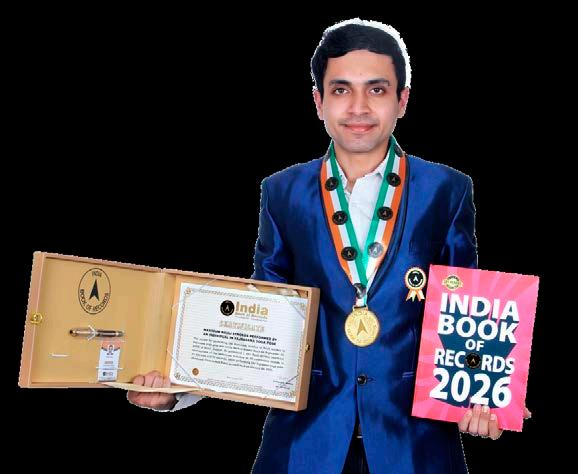
Fastest child to assemble a LEGO Technic F1 racing car
The record for being the fastest to assemble a LEGO Technic F1 racing car was set by Dhanikashri (born on September 18, 2018) of Ramanagar, Karnataka. She assembled a LEGO Technic F1 racing car (model: Mercedes-AMG F1 W14 E Performance Pull-Back), consisting of 240 pieces, without looking at the instruction manual, in 30 minutes and 10 seconds, at the age of 7 years, 3 months and 27 days, as confirmed on January 14, 2026.
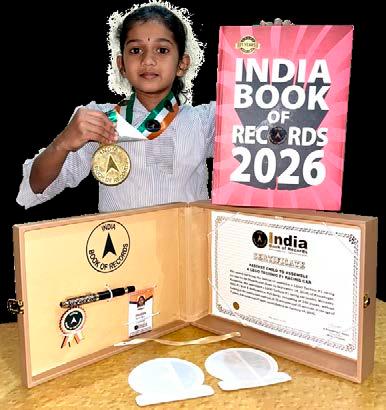
Fastest specially abled child to recite all shlokas of chapters 12, 15 and 16 of the Bhagavad Gita blindfolded
The record for being the fastest to recite all shlokas of chapters 12,15 and 16 of the Bhagavad Gita blindfolded was set by Aaradhya Soni (born on March 22, 2013) of Neemuch, Madhya Pradesh. Being specially abled, she recited all 64 shlokas of chapters 12, 15 and 16 of the Bhagavad Gita, blindfolded, in 13 minutes and 28 seconds, at the age of 12 years, 9 months and 24 days, as confirmed on January 15, 2026.
Maximum certificates, trophies and medals achieved by an individual for participating in yoga competitions
The record for achieving the maximum number of certificates, trophies and medals for participating in yoga competitions was set by (born on December 30, 1996) of North Dinajpur, West Bengal. She achieved 32 certificates, 22 trophies and 4 medals for participating in various district, state, national and international level yoga competitions, as confirmed on January 20, 2026.
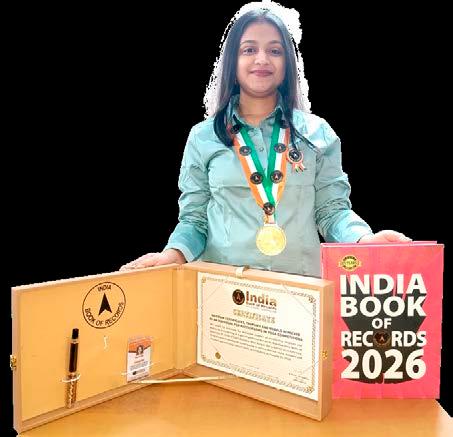
Fastest kid to name all the districts of Kerala
The record for being the fastest to name all the districts of Kerala was set by Zayba Rasheed M.K. (born on March 4, 2019) of Malappuram, Kerala. She recited the names of all the 14 districts and 62 milliseconds, at the age of 6 years, 10 months and 1 day, as confirmed on January 5,
Maximum rivers with countries of origin recited by a child
The record for reciting the names of the maximum number of rivers with countries of origin was set by Mathuran D. (born on October 6, 2018) of Kancheepuram, Tamil Nadu. He recited the names of 175 rivers with countries of origin, in 2 minutes and 51 seconds, at the age of 7 years, 3 months and 18 days, as confirmed on January 24, 2026.
Maximum Rubik’s cubes solved by a child while recalling the capitals of all countries
The record for solving the maximum number of Rubik’s cubes, while recalling the capitals of all countries, was set by Isaac Sony Jacob (born on November 11, 2016) of Thane, Maharashtra. He solved five Rubik’s cubes, while recalling the capitals of all 195 (UN recognised) countries in 3 minutes and 38 seconds, by listening to the names of the countries, at the age of 9 years, 2 months and 12 days, as confirmed on January 23, 2026.
Maximum English words with phonic sounds read by a kid
The record for reading the maximum number of English words with phonic sounds was set by Muhammed Hyzin (born on February 21, 2021) of Kannur, Kerala. He read 70 English words from sheets of paper (consisting of two to three letter words), with phonic sounds, in 6 minutes and 56 seconds, at the age of 4 years, 10 months and 30 days, as confirmed on January
Maximum General Knowledge questions answered in one minute by a kid
The record for answering the maximum number of General Knowledge questions in one minute was set by Aalvin P.T. (born on September 9, 2021) Kerala. He rapidly answered 75 General Knowledge questions in one minute, years, 4 months and 4 days, as confirmed on January
Maximum volunteers participated in a mobile-free residential camp conducted by an educational institute
The record for conducting a mobile-free residential camp with the participation of the maximum number of volunteers was set by S. D. Arts & Shah B. R. Commerce College of Gandhinagar, Gujarat, under the guidance of Dr. Haresh Kumar Ishwarlal Prajapati, National Service Scheme (NSS) Programme Officer. A total number of 35 volunteers participated in a mobile-free residential camp from January 1, 2026, to January 7, 2026, at village ‘Amarpura’, Gujarat, where they engaged in different activities, including food distribution, road cleaning, door-to-door awareness campaign and others. The camp was conducted under the theme of ‘No Mobile, No Distraction, Say Yes to Nation’, as confirmed on February 4, 2026.

Maximum multi-skilled activities performed together by twins
The record for performing the maximum number of multi-skilled activities together was set by Swetha (born on September 7, 2014) along with her twin Swathi Karthikeyan of Kanchipuram, Tamil Nadu. They performed 8 multi-skilled activities together, namely playing Chess, Badminton and the Violin; performing Silambam; presenting freestyle and 300 Thirukkurals; and singing 19 Carnatic songs, at the confirmed on January
Fastest kid to identify 50 monuments and landmarks with locations and countries
The record for being the fastest to identify 50 monuments and landmarks with locations and countries was set by Avyaan Modi (born on December 22, 2020) of Bhilwara, Rajasthan. He identified and recalled the names of 50 national and international monuments landmarks with countries, including Statue of Liberty-New York (USA), Taj Mahal-Agra (India) and Hagia Sophia-Istanbul (Turkey), among others, in 1 minute and 53 seconds by viewing pictures on sheets of paper, at the age of 5 years and 24 days, as confirmed on January 15, 2026.
Fastest child to recite the names of all Tamil Sitrilakiyam
The record for being the fastest to recite the names of all Tamil Sitrilakiyam was set by C. A. Sharvath Eshwaran (born on June 8, 2014) of Chennai, Tamil Nadu. He recited the names of all 96 Tamil Sitrilakiyam (small literary works written by poets across different periods of Tamil literature) in 55.05 seconds, at the age of 11 years, 7 months and 20 days, as confirmed on January 28, 2026.
Maximum hula hoop spins performed in an aerial yoga pose by a kid
The record for performing the maximum number of hula hoop spins in an aerial yoga pose was set by Jia Aggarwal (born on June 3, 2019) of New Delhi. She performed 115 hula hoops spins, around the right-hand wrist, while sitting in an aerial yoga pose (Floating Straddle Pose) for 53 seconds, at the age of 6 years, 7 months and 21 days, as confirmed on January 24, 2026.
Fastest toddler to identify 50 flashcards
The record for being the fastest to identify 50 flashcards was set by Swayamshree Nayak (born on April 19, 2023) of Ganjam, Odisha. She identified 50 flashcards with pictures of animals, fruits, vegetables, vehicles and others in one minute, at the age of 2 years, 7 months and 29 days, as confirmed on

Maximum verses of Shiv Tandav Stotram recited by a child while simultaneously solving multiple Rubik’s Cubes on inline skates
The record for reciting the maximum number of verses of Shiv Tandav Stotram while simultaneously solving multiple Rubik’s Cubes on inline skates was set by Chirush N. P. (born on August 28, 2017) of Mysuru, Karnataka. He recited 14 divine verses of Shiv Tandava Stotram, while solving four cubes (Pyraminx, Skewb, 2 x 2 x 2 and a Maple Leaf Cube), on inline skates, in 3 minutes, 55 seconds and 99 milliseconds, at the age of 8 years, 4 months and 30 days, as confirmed on January 27, 2026.
Maximum multiplication sums solved by a kid using single-digit multipliers
The record for solving the maximum number of multiplication sums using single-digit multipliers was set by Kothagundu Kameswari Sathvika (born on January 19, 2020) of Bengaluru, Karnataka. She correctly solved and wrote the answers of 120 multiplication sums (double and triple-digit numbers multiplied by a single-digit number) in 14 minutes and 35 seconds, using paper and pencil, at the age of 6 years and 3 days, as confirmed on January 22, 2026.
Fastest child to recite the names of all African countries with capitals, blindfolded, in alphabetical order
The record for being the fastest to recite the names of all African countries with capitals, blindfolded, in alphabetical order, was set by Avia Singh (born on August 10, 2014) of Hazaribagh, Jharkhand. She recited the names of all 54 African countries in alphabetical order, along with their capitals, while being blindfolded, in 47.67 seconds, at the age of 11 years, 5 months and 4 days, confirmed on January 14, 2026.
Youngest to rappel down Kokankada cliff at Harishchandra fort
The record for being the youngest to rappel down Kokankada cliff at Harishchandra fort was set by Kartik Nilesh Khandare (born on November 23, 2018) of Pune, Maharashtra. He started rappelling down Kokankada cliff at 9.37 a.m., descended a distance of 1,800 feet, and ended the rappelling at 11.30 a.m. on January 3, 2026 (under the guidance of a trekking guide), at the age of 7 years, 1 month and 11 days, as confirmed on January 7, 2026.
Maximum times the name of Goddess Radha written by an individual in Hindi
The record for writing the name of Goddess Radha in Hindi for the maximum number of times was set by Naresh Khare (born on October 10, 1961) of Dewas, Madhya Pradesh. He wrote the divine name ‘Radha’ 14,00,000 times in Hindi on both sides of 835 sheets of paper, using pens of different colours, showcasing exceptional devotion, dedication and patience, as confirmed on January
Maximum weight lifted by an individual in the leg press category
The record for lifting the maximum weight in the leg press category was set by S G Aakash Raj (born on November 22, 1998) of Chennai, Tamil Nadu. He lifted a 530 kg weight in the leg press category (on a machine) and performed 10 repetitions in 30 seconds, as confirmed on January 13,
IBR Achievers
Avreen Aloona (born on August 15, 2018) of SAS Nagar, Punjab, is titled as ‘IBR Achiever’ for solving a 4 x 4 Mind Puzzler (a sliding number game) in 41 seconds, at the age of 7 years and 5 months, as confirmed on February 12, 2026.
Ira Krushna Bhivarkar (born on March 21, 2024) of Washim, Maharashtra, is titled as ‘IBR Achiever’ for identifying the flags of 48 Asian countries in 4 minutes and 32 seconds, by viewing the images of flags on flashcards, at the age of 1 year and 10 months, as confirmed on February 6, 2026.
Rathik R. (born on October 27, 2020) of Chengalpattu, Tamil Nadu, is titled as ‘IBR Achiever’ for being awarded 11 certificates for participating in different Karate Championships during the year 2025, at the age of 5 years and 3 months, as confirmed on February 9, 2026.
Tanvir Sekh (born on April 11, 2022) of Howrah, West Bengal, is titled as ‘IBR Achiever’ for translating the names of 21 animals, 8 vegetables and 11 fruits from Bengali to English; recalling 8 duas; reciting 10 Bengali nursery rhymes; and answering 5 G.K. questions, at the age of 3 years and 9 months, as confirmed on February 4, 2026.
Janaki Marlena (born on April 12, 2022) of Kozhikode, Kerala, is titled as ‘IBR Achiever’ for identifying and recalling the names of 48 wild animals, 22 birds, 24 sea animals and 5 insects, along with their young ones, and explaining the characteristics of 24 animals and 12 birds, at the age of 3 years and 10 months, as confirmed on February 16, 2026.
Badharinadh G. N. (born on June 27, 2022) of Kollam, Kerala, is titled as ‘IBR Achiever’ for identifying and naming 34 car logos, 21 vegetables, 21 fruits, 8 politicians, 8 temples, 19 musical instruments and 10 food items; playing the traditional instrument ‘Chenda’ and singing a song, at the age of 3 years and 7 months, as confirmed on February 5, 2026.
Viaan Malabagi (born on November 17, 2022) of Bengaluru, Karnataka, is titled as ‘IBR Achiever’ for identifying 7 wonders of the world, 113 animals, 34 birds, 48 parts of the body, 10 car logos, 85 actions, 54 cartoon characters, 20 colours, 11 dinosaurs, 53 fruits, 16 festivals and 71 insects; counting numbers from 1 to 100; recalling 61 opposite words and 17 national symbols; mimicking the sounds of 21 animals and 5 birds; and matching a puzzle of 20
Yug (born on November 15, 2023) of Kota, Rajasthan, is titled as ‘IBR Achiever’ for identifying all Hindi and English alphabetical letters with associated words, 8 planets, 7 wonders of the world, 20 other landmarks and 91 flashcards of animals, colours, vegetables, fruits and others; solving 8 animal puzzles (each consisting of 9 labelled pieces), at the age of 2 years and 2 months, as confirmed on February 10, 2026.
Vaghela Pradyumansinh (born on October 3, 1968) of Gandhinagar, Gujarat, is titled as ‘IBR Achiever’ for undertaking social welfare activities by donating notebooks to students, blankets to women, food packets to the needy and providing financial aid to many people, as confirmed on February 5, 2026.
Trayaksh Ray (born on May 30, 2024) of Bengaluru Urban, Karnataka, is titled as ‘IBR Achiever’ for identifying 52 flashcards, namely 11 parts of the body, 11 miscellaneous items, 8 wild animals, 6 fruits, 4 vegetables, 4 birds, 3 sea animals, 3 domestic animals and 2 flowers and imitating the sounds of 4 at the age of 1 year and as confirmed on February 9, 2026.
Adam Ali M. (born on April 17, 2014) of Thiruvananthapuram, Kerala, is titled as ‘IBR Achiever’ for solving two Rubik’s Cubes (3 x 3 and 5 x 5) in 4 minutes and 1 second, at the age of 11 years and 9 months, as confirmed on February 10, 2026.
Ananthu S. I. (born on November 2, 2009) of Thiruvananthapuram, Kerala, is titled as ‘IBR Achiever’ for developing 5 mathematical methods to solve square roots of random numbers (quick calculation techniques), at the age of 16 years and 3 months, as confirmed on February 9, 2026.
R. K. Yogambal (born on March 9, 2018) of Tiruchirappalli, Tamil Nadu, is titled as ‘IBR Achiever’ for performing 15 yoga poses, including Padmasana, Gomukhasna, Bhujangasana and Mandukasana, despite being specially abled with 86 percent multiple disability, in 4 minutes and 24 seconds, at the age of 7 years and 10 months, as confirmed on February 2, 2026.
M. Seyonmithra (born on January 5, 2015) of Kancheepuram, Tamil Nadu, is titled as ‘IBR Achiever’ for descending 7 steps, indoors, in Chakrasana yoga pose in 29.83 seconds, at the age of 11 years and 1 month, as confirmed on February 5, 2026.
Namita Kumari (born on September 9, 1993) of Bhagalpur, Bihar, is titled as ‘IBR Achiever’ for successfully climbing Uhuru Peak (5,895 m high) of Mount Kilimanjaro in Tanzania (Africa) at 8.35 a.m. on January 24, 2026, on the occasion of National Girl Child Day, holding a banner with a slogan ‘150 Girls, 150 Dreams’, as confirmed on February 2, 2026.
Kiaansh Sagar Shinde (born on October 17, 2022) of Pune, Maharashtra, is titled as ‘IBR Achiever’ for narrating the spiritual story of Shri Rameshwar Jyotirlinga in Marathi and reciting the names of 12 Jyotirlingas of India, on the stage, in 3 minutes and 33 seconds, at the age of 3 years and 3 months, as confirmed on February 4, 2026.
Riana (born on March 1, 2013) of Karnal, Haryana, is titled as ‘IBR Achiever’ for playing football for 4 minutes and 17 seconds using different moves, at the age of 12 years and 11 months, as confirmed on February 2, 2026.
Kreya Rajkumar (born on June 1, 2022) of Chennai, Tamil Nadu, is titled as ‘IBR Achiever’ for identifying and naming 12 colours, 9 shapes, 19 fruits, 19 vegetables, 30 food items, 20 parts of the body, 15 actions, 48 animals, 12 insects and 15 vehicles; counting from 1 to 10; reciting days of the week, months in a year and 26 letters of the
Hiyaan Kataria (born on May 30, 2017) of Dewas, Madhya Pradesh, is titled as ‘IBR Achiever’ for filing a patent for ‘A handwriting correction device method of improving handwriting alignment on paper’ at the Patent Office (Intellectual Property India) on January 10, 2026, at the age of 8 years and 7 months, as confirmed on February 4, 2026.
Fathima Noura K. (born on November 5, 2018) of Malappuram, Kerala, is titled as ‘IBR Achiever’ for walking on the knuckles of her toes for 5 minutes (across a room) with both arms stretched backwards, at the age of 7 years and 3 months, as confirmed on February 6, 2026.
Kridha Agrawal (born on April 15, 2024) of Dhamtari, Chhattisgarh, is titled as ‘IBR Achiever’ for identifying and naming 23 fruits, 25 animals, 13 vehicles, 15 vegetables, 10 birds, 10 colours, 9 young ones of animals and 13 parts of the body; recalling months in a year, days of the week, 26 English alphabetical letters with associated words and capitals of 9 Indian states, at the age of 1 year and 9 months, as confirmed on February 10, 2026.
Chitransh Pandey (born on July 14, 2020) of Pithoragarh, Uttarakhand, is titled as ‘IBR Achiever’ for reciting the Hanuman Chalisa, Surya Namaskar Mantra, Indian Pledge, all 118 elements of the periodic table, 195 (UN recognised) countries with capitals and currencies, G20 countries, 28 Indian states with capitals and RTO codes, 40 abbreviations, 10 Indian currency notes, 17 national days, 10 English quotes, 28 Cabinet Ministers and 15 Prime Ministers of India, at the age of 5 years and 6 months, as confirmed on February 6, 2026.
D. Dhruv (born on June 24, 2023) of Bengaluru, Karnataka, is titled as ‘IBR Achiever’ for reading 130 English words in 6 minutes and 36 seconds by viewing the words on a laptop screen, at the age of 2 years and 7 months, as confirmed on February 14, 2026.
Namir Izyan Bin Naeem (born on July 27, 2021) of Kannur, Kerala, is titled as ‘IBR Achiever’ for identifying 19 fruits, 17 animals, 16 vehicles, 9 shapes, 19 vegetables, 7 rainbow colours, 6 parts of a plant, 4 types of trees and 3 colours of the Indian flag; reciting phonic sounds of the English alphabet; recalling 6 national symbols; reading 30 three-letter English words; and counting numbers from 1 to 50, at the age of 4 years and 6 months, as confirmed on February 6, 2026.
Advik Anand (born on April 19, 2024) of Kollam, Kerala, is titled as ‘IBR Achiever’ for having natal teeth since birth, as verified by the doctor, at the age of 1 year and 8 months, as confirmed on January 10, 2026.
Kavya (born on March 15, 2024) of Kanchipuram, Tamil Nadu, is titled as ‘IBR Achiever’ for identifying all 26 letters of the English alphabet, 18 vegetables, 12 fruits, 8 colours, 15 parts of the body and 10 shapes; reciting 5 nursery rhymes; counting numbers from 1 to 20; and stacking 6 coloured rings, at the age of 1 year and 10 months, as confirmed on February 3, 2026.
Dr. Gajanan M. Naik (born on March 7, 1989) of Uttara Kannada, Karnataka, is titled as ‘IBR Achiever’ for authoring 61 articles on Engineering topics, under the aegis of R.V. Institute of Technology and Management, published by H.B.R.P. Publication, 2025 to January 2026, as confirmed on January 28, 2026.
L. Ephrath Hathway Joseph (born on September 13, 2023) of Kanyakumari, Tamil Nadu, is titled as ‘IBR Achiever’ for identifying and recalling the names of 20 colours, 20 vegetables, 20 vehicles, 20 parts of the body, 20 fruits, 20 food items, 20 objects and 20 animals, at the age of 2 years and 4 months, as confirmed on
Heza Mehak K. (born on March 24, 2020) of Palakkad, Kerala, is titled as ‘IBR Achiever’ for reciting 5 parts of a plant, 5 types of plants, 10 fruits, 10 vehicles, 10 animals and 10 community helpers; matching 15 Hindi words with English words; reading English and Malayalam story books, at the age of 5 years and 10 months, as confirmed on January 29, 2026.
Theekshithan S (born on February 12, 2024) of Tiruvallur, Tamil Nadu, is titled as ‘IBR Achiever’ for identifying and naming 67 animals, 49 birds, 15 insects, 20 shapes, 32 sea creatures, 10 colours, 39 fruits and vegetables, 26 vehicles, flags of 25 countries and 26 letters of the English alphabet with associated words; reciting Tamil and English months in a year and days of the week; and counting from 1 to 20 in English, at the age of 1 year and 11 months, as confirmed on January 30, 2026.
Ayansh Sahoo (born on May 4, 2023) of Angul, Odisha, is titled as ‘IBR Achiever’ for identifying 45 vegetables, 22 flowers, 39 fruits, 12 professions, 20 deities, 38 vehicles, 41 wild animals, 33 birds, 12 colours and 39 pet animals; recalling letters of the English alphabet with associated words, 15 national symbols, 30 districts of Odisha, days of the week and months in a year, at the age of 2 years and 8 months, as confirmed on January 7, 2026.
Shivam Kishor Yadav (born on January 30, 2023) of Pune, Maharashtra, is titled as ‘IBR Achiever’ for running a distance of 200 metres in 1 minute and 9 seconds, at the age of 3 years, as confirmed on February 6, 2026.
Ayansh Kumar Nayak (born on October 17, 2023) of Khordha, Odisha, is titled as ‘IBR Achiever’ for identifying 36 animals,16 vehicles, 16 vegetables, 16 fruits, 12 flowers, 20 miscellaneous items, 8 colours, 16 birds and 23 parts of the body; recalling 20 national symbols, days of the week, months in a year, letters of the English alphabet with associated words, 4 directions, 30 districts of Odisha, 6 seasons and 8 planets; counting from 1 to 30; and answering 10 G.K. questions, at the age of 2 years and 2 months, as confirmed on
Seema Saini (born on January 10, 1978) of Ambala, Haryana, is titled as ‘IBR Achiever’ for achieving a certificate from the ‘French Republic Ministry of National Education’ on November 2, 2025, for passing DELF A1 diploma in French language studies, as confirmed on February 16, 2026.
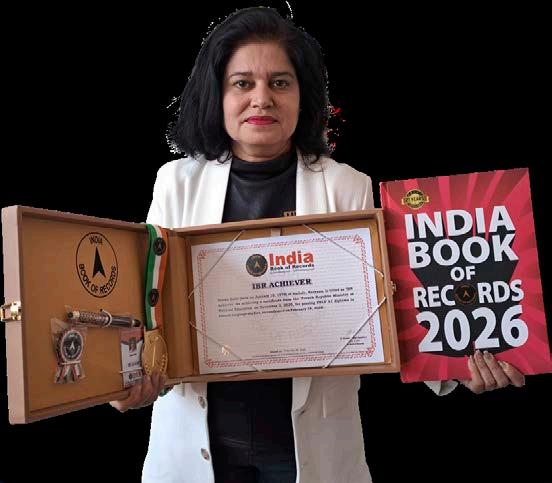
Rio Amit Arjani (born on December 1, 2021) of Amravati, Maharashtra, is titled as ‘IBR Achiever’ for writing the spelling of 21 English words, in a notebook with a pencil, in 8 minutes and 6 seconds, at the age of 4 years and 2 months, as confirmed on February 6, 2026.
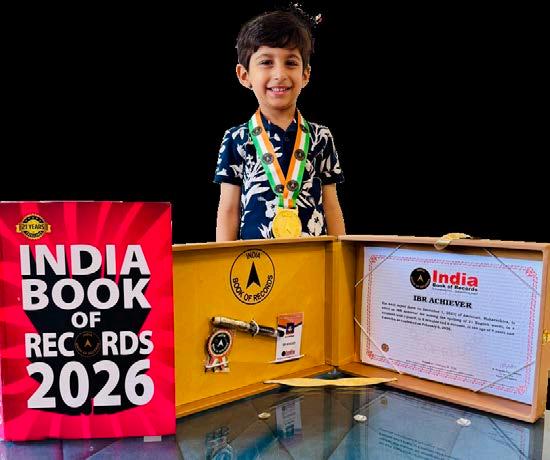
Dr. E. Cowshik (born on April 27, 1990) of Tiruppur, Tamil Nadu, is titled as ‘IBR Achiever’ for achieving two gold medals in medical postgraduate degrees in the Community Medicine Specialty, namely Diploma in Public Health (DPH) and M.D. in Community Medicine from Dr. M.G.R. Medical University, Tamil Nadu, as confirmed on January 8, 2026.
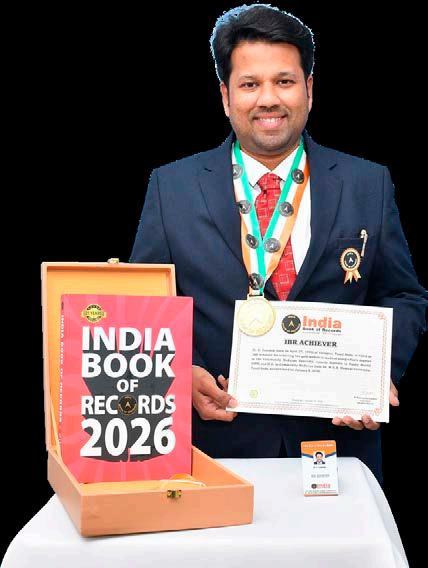
Fathima V. P. (born on July 6, 2013) of Malappuram, Kerala, is titled as ‘IBR Achiever’ for reciting a long English word ‘Pneumonoultramicroscopicsilicovolcanoconiosis’ 7 times in 20 seconds, at the age of 12 years and 6 months, as confirmed on January 6, 2026.
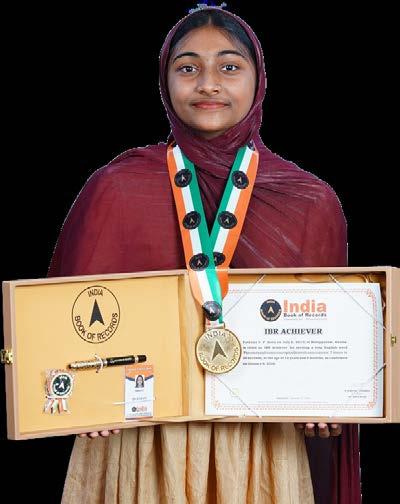
Kankana Mondal (born on October 30, 2007) of Hooghly, West Bengal, is titled as ‘IBR Achiever’ for making 2 beautiful paintings of Netaji Subhash Chandra Bose and a village scene on pistachio shells; one beautiful painting of Rabindranath Tagore on a pumpkin seed, using acrylic colours, at the age of 18 years, as confirmed on December 31, 2025.
Iha (born on September 23, 2020) of Kozhikode, Kerala, is titled as ‘IBR Achiever’ for recalling the names of 7 continents, 14 districts of Kerala, 15 national symbols, 14 Prime Ministers and 15 Presidents of India, at the age of 5 years and 3 months, as confirmed on January 15, 2026.
Ozil Meran A. (born on July 15, 2023) of Thiruvananthapuram, Kerala, is titled as ‘IBR Achiever’ for identifying 9 animals, 9 vehicles, 5 food items, 2 colours, 4 electronic items, 4 birds, 2 professions, 6 actions and 12 miscellaneous objects; and stacking rings of 4 colours, at the age of 2 years and 5 months, as confirmed on January 8, 2026.
P. K. Sahana (born on June 7, 2012) of Chennai, Tamil Nadu, is titled as ‘IBR Achiever’ for recalling 160 abbreviations (with full forms) of educational and medical terms in 4 minutes and 45 seconds, at the age of 13 years and 6 months, as confirmed on December 12, 2025.
Bismina Akbar (born on October 20, 1994) of Kollam, Kerala, is titled as ‘IBR Achiever’ for being an architect and conducting 5 camps, at different venues, enabling 86 participants to engage in thinking beyond conventional classroom education during 2024 and 2025. The experiential learning programmes include trekking, guided observation, meditation sessions, campfire discussions and structured architecture learning, as confirmed on December 29, 2025.
Kanishk Kwatra (born on March 16, 2024) of New Delhi, is titled as ‘IBR Achiever’ for identifying 13 parts of the body; recalling 10 miscellaneous objects by colours; counting numbers from 1 to 10; and imitating the sounds of 7 animals, at the age of 1 year and 10 months, as confirmed on January 16, 2026.
Japseerat Kaur (born on January 11, 2016) of Mohali, Punjab, is titled as ‘IBR Achiever’ for authoring a children’s story book in English titled ‘Beyond the Glitter: A Journey of True Worth’ (ISBN: 979-82-41799-97-5), self-published on Amazon Kindle Direct Publishing on December 31, 2025, at the age of 9 years and 11 months, as confirmed on January 19, 2026.
Hanuman Sitaram Pawshe (born on September 29, 1986) of Thane, Maharashtra, is titled as ‘IBR Achiever’ for winning the title ‘4 Stroke Unrestricted Champion’ and receiving a trophy for participating in MMSC FMSCI Indian National Motorcycle Drag Racing Championship 2025 (powered by Vamcy Merla) at the Madras International Circuit on December 28, 2025, as confirmed on January 7, 2026.
Karvi Sarang Sali (born on October 5, 2020) of Pune, Maharashtra, is titled as ‘IBR Achiever’ for completing a round-trip trekking expedition to Kalsubai Peak. She started trekking at 6.30 a.m. on December 26, 2026 from Mata Kalsubai Devi Temple in Indore village, and reached the top of Kalsubai Peak at 10 a.m. the same day in 3 hours and 30 minutes. She started descending at 11.30 a.m. and completed it at 2.30 p.m. in 3 hours, at the age of 5 years and 3 months, as confirmed on January 10, 2026.
Nyza Naheem (born on October 5, 2023) of Malappuram, Kerala, is titled as ‘IBR achiever’ for identifying 15 vegetables, 10 food items, 7 parts of the body, 9 colours, 14 fruits, 7 home appliances, 9 domestic animals, 20 wild animals and 11 vehicles; imitating the sounds of 8 animals; and solving 9 different puzzles, at the age of 2 years and 3 months, as confirmed on January 6, 2026.
Hethvik P. (born on December 1, 2023) of Chennai, Tamil Nadu, is titled as ‘IBR Achiever’ for reciting 12 vowels of the Tamil alphabet (Uyirezhuthu); counting numbers from 1 to 10; and imitating the sounds of 12 animals, at the age of 2 years and 1 month, as confirmed on January 9, 2026.
Mourya Vegesna (born on June 24, 2023) of Bengaluru, Karnataka, is titled as ‘IBR Achiever’ for identifying and naming 20 vehicles, 6 colours, 8 animals, 9 fruits and 7 miscellaneous items, at the age of 2 years and 6 months, as confirmed on January 6, 2026.
Punya M. N. (born on September 29, 2019) of Davangere, Karnataka, is titled as ‘IBR Achiever’ for delivering a speech on the topic ‘Kannada Rajyotsava’, in Kannada, for 5 minutes and 30 seconds, at the age of 6 years and 3 months, as confirmed on December 29, 2025.
N. Sai Vihana (born on March 27, 2023) of Coimbatore, Tamil Nadu, is titled as ‘IBR Achiever’ for identifying and naming 12 colours, 20 animals, 14 fruits and 20 vegetables; reciting 12 Tamil vowels, 7 English and 6 Tamil nursery rhymes; recalling months in a year and letters of the alphabet with 26 associated words; singing a devotional song; and counting from 1 to 15, at the age of 2 years and 9 months, as confirmed on December 29, 2025.
Manvith Muthyal (born on February 26, 2021) of Bengaluru, Karnataka, is titled as ‘IBR Achiever’ for solving a Solar System jigsaw puzzle, consisting of 73 pieces, in 7 minutes and 35 seconds, at the age of 4 years and 10 months, as confirmed on January 12, 2026.
Navami Jithin (born on April 11, 2024) of Thiruvananthapuram, Kerala, is titled as ‘IBR Achiever’ for identifying 46 fruits, 36 vegetables, 11 parts of the body, 10 vehicles and 18 daily use items, at the age of 1 year and 8 months, as confirmed on
Prasanna S. (born on August 12, 2002) of Chitradurga, Karnataka, is titled as ‘IBR Achiever’ for completing a presentation, titled ‘Samsung Communication Audit’, of 31 PowerPoint slides in 11 minutes and 46 seconds during a live zoom meeting, as confirmed on December 31, 2025.
Kushaagra Agrawal (born on March 1, 2019) of Gorakhpur, Uttar Pradesh, is titled as ‘IBR Achiever’ for achieving the FIDE (Fédération Internationale des Échecs) rating of 1428, published by FIDE (International Chess Federation) on June 27, 2024, at the age of 5 years and 3 months, as confirmed on December 31, 2025.
Medhansh Shailender Kumar (born on April 5, 2009) of New Delhi, is titled as ‘IBR Achiever’ for bouncing a Tennis ball on a Cricket bat 1,963 times non-stop in 10 minutes, at the age
Pranav P. Kaimal (born on June 12, 2012) of Alappuzha, Kerala, is titled as ‘IBR Achiever’ for standing, while balancing 5 books (weighing 2.895 kg) on his head, for 7 minutes and 5 seconds, at the age of 13 years and 7 months, as confirmed on January 22, 2026.
Madhuwant Raja Rajeswaran (born on May 14, 2015) of Mumbai, Maharashtra, is titled as ‘IBR Achiever’ for recalling the names of 25 countries, in alphabetical order, from A to Z in 14.97 seconds, at the age of 10 years and 7 months, as confirmed on January 12, 2026.
Mila Ayilalath (born on April 24, 2024) of Kozhikode, Kerala, is titled as ‘IBR Achiever’ for identifying and naming 7 fruits, 9 animals, 10 vegetables, 6 parts of the body, 5 vehicles, 49 miscellaneous items and 5 colours; performing 7 actions; counting from 1 to 10; reciting 2 English nursery rhymes; and climbing 60 steps, at the age of 1 year and 8 months, as confirmed on January 5, 2026.
Pawan Kumar Sharma (born on October 2, 1961) of Gurugram, Haryana, is titled as ‘IBR Achiever’ for compiling a selfpublished directory of Karaoke singers titled ‘Swar Sangrah’ (ISBN: 978-93-55255-66-2), as a tribute to legendary Indian playback singers, including Mohammed Rafi, Kishore Kumar, Lata Mangeshkar, Mukesh and others, as confirmed on December 31, 2025.
Shreyansh Soni (born on May 11, 2014) of Purnia, Bihar, is titled as ‘IBR Achiever’ for reciting the first ten multiples of numbers from 1 to 50 (first 10 multiples of each number) in 3 minutes and 54 seconds, using Abacus technique, at the age of 11 years and 7 months, as confirmed on December 26, 2025.
Rahman Khan P.K. (born on January 28, 2019) of Kozhikode, Kerala, is titled as ‘IBR Achiever’ for identifying the flags and recalling the names of 62 countries in 36 seconds by viewing the pictures of flags, at the age of 6 years and 10 months, as confirmed on December 25, 2025.
Lalatendu Senapati (born on September 30, 2023) of Kendrapara, Odisha, is titled as ‘IBR Achiever’ for identifying 20 birds, 23 parts of the body, 8 freedom fighters, 16 vehicles, 23 flowers, 12 festivals, 20 animals and all the letters of the English alphabet; recalling 3 mantras, 6 seasons,12 national symbols and the young ones of 10 animals; performing 25 actions; and counting from 1 to 10, at the age of 2 years and 3 months, as confirmed on January 14, 2026.
Shameem Adam (born on July 19, 2021) of Kannur, Kerala, is titled as ‘IBR Achiever’ for identifying 24 Indian states, 7 wonders of the world, 10 freedom fighters and 6 flags of the Gulf Cooperation Council; reciting 8 planets; counting from 1 to 20 in Finnish; and answering 14 questions on national symbols, at the age of 4 years and 5 months, as January 5, 2026.
Shaurya Sharayu Ninad Maske (born on June 26, 2023) of Chhatrapati Sambhajinagar, Maharashtra, is titled as ‘IBR Achiever’ for identifying the flags and recalling the names 102 countries in 12 minutes and 38 seconds by viewing the images of flags on flashcards, at the age of 2 years and 5 months, as confirmed on December 23, 2025.
Shrihan Sushil Sawarkar (born on August 4, 2023) of Mumbai, Maharashtra, is titled as ‘IBR Achiever’ for identifying 40 animals, 30 vegetables, 26 fruits, 18 birds, 11 aquatic animals, 3 flowers, 10 colours, 16 shapes, 20 actions, 6 celestial objects, 39 vehicles, 7 food items, 33 miscellaneous items, 12 insects, 20 parts of the body, numbers from 1 to 10 and letters of the English alphabet; recalling months in a year and days of the week, at the age of 2 years and 4 months, as confirmed on January 2, 2026.
Nalboth Rishikesh (born on August 6, 2020) of KV Rangareddy, Telangana, is titled as ‘IBR Achiever’ for identifying 31 flashcards by touching the flashcards, blindfolded, in 1 minute and 9 seconds, at the age of 5 years and 5 months, as confirmed on January 7, 2026.
Shuresh Maibam (born on March 10, 2007) of Thoubal, Manipur, is titled as ‘IBR Achiever’ for being a human rights activist and working as an active state member of ‘Human Rights and Social Justice Mission’ of the Manipur unit, at the age of 18 years and 9 months, as confirmed on January 7, 2026.
Ridhant Chakraborty (born on September 24, 2023) of Howrah, West Bengal, is titled as ‘IBR Achiever’ for identifying 10 parts of the body, 7 colours, 5 shapes, 6 vegetables, 8 fruits, 7 food items, 6 miscellaneous items, 5 elements of nature, 5 vehicles and 7 animals; demonstrating 5 emotions; reciting all the letters of the English alphabet; and counting numbers from 10 to 1 in reverse order, at the age of 2 years and 3 months, as confirmed on January 13, 2026.
Revathi K. P. (born on January 24, 2014) of Bengaluru, Karnataka, is titled as ‘IBR Achiever’ for making a beautiful Mandala Art painting of a peacock on an A-4 size sheet of paper, blindfolded, in 29 minutes, 21 seconds and 22 milliseconds, at the age of 11 years and 11 months, as confirmed on January 7, 2026.
Shiv Kumar Pandey (born on August 6, 1984) of Palamu, Jharkhand, is titled as ‘IBR Achiever’ for recreating the epic ‘Ramayana’ in a creative literary style called ‘chausath chaali chobis shabdiya shabd antakshari’. It is composed and expressed in 24 words, has 64 sequential moves and each word begins with the final letter of the previous word, as confirmed on January 6, 2026.
Risha Rajesh Maladinni (born on October 6, 2023) of Belagavi, Karnataka, is titled as ‘IBR Achiever’ for identifying and naming 18 parts of the body, 14 animals, 10 fruits, 10 vehicles and 8 shapes; reciting days of the week, months in a year, 8 planets and numbers from 1 to 20; recalling the names of 4 yoga poses, 5 national symbols, associated words of the English alphabet and 13 actions, at the age of 2 years and 3 months, as confirmed on January 13, 2026.
Lakshmkruthi Lagisetty (born on April 26, 2015) of Hyderabad, Telangana, is titled as ‘IBR Achiever’ for having long tresses, measuring 149 cm in length, at the age of 10 years and 8 months, as confirmed on January 13, 2026.
Saisha S. (born on April 18, 2021) of Thoothukudi, Tamil Nadu, is titled as ‘IBR Achiever’ for reciting the names of the first 50 elements of the periodic table with symbols, 28 Indian states with capitals, 25 Tamil years, 12 quotes of Aathichudi and 15 motivational quotes in Tamil, at the age of 4 years and
Saanvi S. (born on April 22, 2020) of The Nilgiris, Tamil Nadu, is titled as ‘IBR Achiever’ for identifying and naming 12 fruits, 9 vegetables, 10 animals, 8 insects, 10 vehicles and 7 colours; recalling 10 English antonyms; reciting 6 nursery rhymes; and giving selfintroduction in 3 languages (English, Kannada and Tamil), at the age of 5 years and 8 months, as confirmed on December 29, 2025.
Saketh Ram Narayanan (born on May 13, 2021) of Chennai, Tamil Nadu, is titled as ‘IBR Achiever’ for identifying the flags and recalling the names of 195 (UN recognised) countries in 2 minutes, 26 seconds and 45 milliseconds by viewing the pictures of flags on a laptop screen, at the age of 4 years and 7 months, as confirmed on December 31, 2025.
ShahzadiAfaf Maryam A. R. (born on February 1, 2023) of Thiruvananthapuram, Kerala, is titled as ‘IBR Achiever’ for identifying and naming the currencies of 46 Asian countries in 2 minutes and 40 seconds; solving an India map puzzle (consisting of 25 labelled pieces) in 6 minutes and 51 seconds, at the age of 2 years and 10 months, as confirmed on
Nakul V. G. (born on May 7, 2023) of Davanagere, Karnataka, is titled as ‘IBR Achiever’ for identifying 21 parts of the body, 27 vehicles, 34 animals, 20 vegetables, 5 birds and 9 freedom fighters; reciting all the letters of English and Kannada alphabet, days of the week, months in a year, 5 English nursery rhymes; and singing the National Anthem, at the age of 2 years and 8 months, as confirmed on January 12, 2026.
S V Krishna Prasad (born on August 21, 1968) of Hyderabad, Telangana, is titled as ‘IBR Achiever’ for undertaking a motorcycle expedition across Hyderabad, Dharwad, Sonda, Udupi, Sosle, Bengaluru, Sudathi, Gokarna, Mysore and Rameshwaram, and covering a total distance of 3541 km in 18 days from November 28, 2025 to December 15, 2025, as confirmed on January 7, 2026.
Muhammed Mehfin Ishan (born on October 19, 2021) of Kannur, Kerala, is titled as ‘IBR Achiever’ for identifying 40 parts of the body, 12 famous personalities, 16 insects, 18 shapes, 28 kitchen items, 21 vegetables, 12 colours, 25 fruits and 25 vehicles; answering 20 G.K. questions; recalling letters of the English alphabet, days of the week, months in a year and 14 districts of Kerala; counting numbers from 1 to 30, at the age of 4 years and 2 months, as confirmed on January 16, 2026.
Sankshita Pradhan (born on April 14, 2024) of Jajpur, Odisha, is titled as ‘IBR Achiever’ for identifying 11 national leaders, 5 national symbols, flags of 11 countries, 6 colours, 8 planets, 11 fruits, 9 space cards, 21 vegetables, 24 animals, 9 shapes, 12 birds, 11 flowers, 15 parts of the body; and performing 21 actions, at the age of 1 year and 8 months, as confirmed on January 2, 2026.
Riya Rakesh (born on January 27, 2020) of Thrissur, Kerala, is titled as ‘IBR Achiever’ for identifying and recalling 65 multiple brand logos, flags and games of 14 countries, 40 car brand logos, 62 wild animals, 32 domestic animals, 18 shapes, 25 sea animals, 12 internal parts of the human body, 7 continents and 30 birds; and recalling the names
Sai Snigdha Srinivasan (born on February 22, 2015) of Vijayawada, Andhra Pradesh, is titled as ‘IBR Achiever’ for reciting 56 words of the National Song ‘Vande Mataram’ in 43 seconds, at the age of 10 years and 10 months, as confirmed on January 2, 2026.
Sathviknath U.K. (born on February 7, 2014) of Kannur, Kerala, is titled as ‘IBR Achiever’ for becoming a cricket commentator associated with the U.K.M.S. organisation, at the age of 11 years and 10 months, as confirmed on January 6, 2026.
Trianshu Dash (born on March 28, 2024) of Puri, Odisha, is titled as ‘IBR Achiever’ for recalling associated words of the letters of the English alphabet; identifying and naming 9 fruits, 8 vehicles, 5 wild animals and 8 parts of the body; and counting from 1 to 10, at the age of 1 year and 9 months, as confirmed on January 5, 2026.
Zia N. (born on December 18, 2023) of Coimbatore, Tamil Nadu, is titled as ‘IBR Achiever’ for identifying 8 vegetables, 4 fruits, 40 miscellaneous items and 8 parts of the body; counting from 1 to 10; recalling all letters of the English alphabet; ascending 4 steps of a rope ladder in a park; and reciting 4 lines of ‘Saraswati Namastubhyam’, at the age of 2 years, as confirmed on December 30, 2025.
Varun R.V. (born on October 4, 2007) of Alappuzha, Kerala, is titled as ‘IBR Achiever’ for delivering a speech on ‘Anti-drug abuse and nutrition deficiency disorders and its solutions’ from August 19, 2025 to September 13, 2025, as a part of the programme conducted by the Kerala government called ‘Happy Kerala’, at the age of 18 years and 2 months, as confirmed on December 11, 2025.
Maya Das (born on December 19, 2020) of Thiruvananthapuram, Kerala, is titled as ‘IBR Achiever’ for reciting the names of 25 countries alphabetically from A to Z, along with the letters, in 43 seconds, at the age of 5 years and 1 month, as confirmed on December 22, 2026.
Yazeed Ali (born on August 11, 2021) of Malappuram, Kerala, is titled as ‘IBR Achiever’ for identifying and naming 36 parts of the body, 20 famous personalities, 24 insects, 26 flowers, 25 shapes, 12 types of houses, 40 kitchen items, 7 continents, 28 birds, 41 animals, 30 vegetables, 24 colours, 35 fruits and 31 vehicles; recalling letters of the English alphabet with associated words; and counting 1 to 50, at the age of 4 years and 4 months, as confirmed on December 30, 2025.
TrishikaTanaya Patra (born on June 2, 2023) of Bhadrak, Odisha, is titled as ‘IBR Achiever’ for identifying and naming 54 birds, 50 vegetables, 42 fruits, 40 animals, 29 vehicles, 24 famous personalities, 19 water animals, 20 insects, 18 parts of a computer, 18 shapes, 10 colours, 19 flowers and 33 parts of the body; and recalling associated words of all the letters of the English alphabet, 20 national symbols and young ones of 15 animals, at the age of 2 years and 7 months, as confirmed on January 2, 2026.
Suddula Ashreth Nandan (born on May 24, 2014) of Hyderabad, Telangana, is titled as ‘IBR Achiever’ for drawing an outline of map of India, freehand, on a sheet of paper in 1 minute and 8 seconds, using a pencil, at the age of 11 years and 7 months, as confirmed on December 31, 2025.
Siya Rakesh (born on January 27, 2020) of Thrissur, Kerala, is titled as ‘IBR Achiever’ for identifying and naming 30 company logos, flags and games of 14 countries, 23 wild animals, 21 sea animals, 20 birds, 27 domestic animals, 12 internal parts of the human body, 18 shapes; recalling name of 8 planets, 16 national symbols, at the age of 5 years and 10 months, as confirmed on December 25, 2025.
Sushruth Sharma (born on July 1, 2012) of Tiruvallur, Tamil Nadu, is titled as ‘IBR Achiever’ for identifying the flags and recalling the names of 150 (UN recognised) countries in 1 minute and 29 seconds by viewing the images of flags on a laptop screen, at the age of 13 years and 6 months, as confirmed on January 12, 2026.
Subhash Chandra Ghosh (born on October 26, 1978) of South 24 Parganas, West Bengal, is titled as ‘IBR Achiever’ for receiving 20 certificates and awards for his social work under Human Rights and Social Welfare Association, as confirmed on January 13, 2026.
Suman Chowdhury (born on January 26, 1994) of Paschim Bardhhaman, West Bengal, is titled as ‘IBR Achiever’ for playing the role of a transgender woman in a Bengali social media campaign ‘Dadar Didigiri’, despite being a male TV actor, to spread awareness about gender equality in society, as confirmed on January 16, 2026.
Teerth Jemishbhai Nakrani (born on September 6, 2016) of Surat, Gujarat, is titled as ‘IBR Achiever’ for receiving a ‘Certificate of Merit’ for participating in an ‘All India Sea Swimming Competition’ (as part of a team event organised by Shree Ram Sea Swimming Club) at Porbandar on January 3, 2026. He swam a distance of 1 km in 1 hour, 11 minutes and 4 seconds, despite being speciallyabled with 60 percent disability (Autism Spectrum Disorder), at the age of 9 years and 3 months, as confirmed on December 10, 2026.
B. Thanwin (born on June 18, 2022) of Puducherry, is titled as ‘IBR Achiever’ for identifying and naming 22 fruits, 22 vegetables, 22 wild animals, 22 birds, 10 colours and 7 shapes; counting numbers from 1 to 30; and reciting all the letters of the English alphabet, at the age of 3 years and 6
Mayra Narendra Patil (born on April 19, 2024) of Panvel, Maharashtra, is titled as ‘IBR Achiever’ for identifying 15 fruits, 15 vegetables, 9 parts of the body, 5 Chess pieces, 11 birds, 15 community helpers, 18 vehicles, 12 domestic animals, 24 wild animals, all letters of the English alphabet; and reciting an English poem, at the age of 1 year and 9 months, as confirmed on January 19, 2026.
Hifza Afsheen (born on November 26, 2020) of Thrissur, Kerala, is titled as ‘IBR Achiever’ for identifying and naming 8 parts of a bird, 4 stages of the life cycle of a butterfly, 5 parts of a plant, 8 sea animals, 19 vehicles, 5 sense organs, 7 internal organs, 16 vegetables, 15 English antonyms, 16 professions, 20 actions and 20 fruits; recalling the multiplication table of one and 5 letters of the English alphabet, at the age of 5 years and 1 month, as confirmed on January 2, 2026.
Debayan Kundu (born on September 1, 2023) of Paschim Bardhaman, West Bengal, is titled as ‘IBR Achiever’ for identifying the flags of 28 countries; recalling the capitals of 60 countries, 28 states and 8 union territories of India; and answering 50 G.K. questions, at the age of 2 years and 4 months, as confirmed January 16, 2026.
Shreyangshi Naskar (born on June 6, 2023) of South 24 Parganas, West Bengal, is titled as ‘IBR Achiever’ for recalling months in a year, capitals of 25 Indian states, 13 inventors, 9 national symbols and capitals of 82 countries; and answering 7 G.K questions, at the age of 2 years and 6 months, as confirmed on January 2, 2026.
Advik Raj (born on March 21, 2019) of Hyderabad, Telangana, is titled as ‘IBR Achiever’ for recalling the names of 4 Vedas, 4 yugas, 5 natural elements (Pancha Bhuta) and 20 types of doctors; reciting 7 colours of the rainbow, an English nursery rhyme, multiplication tables from 1 to 11, large number names (in the International Number System) from one to googolplexplex and names of 18 chapters (Adhyayas) of the Bhagavad Gita; counting numbers in reverse order from 1 languages, at the age of as confirmed on
Chirasmi Varunavi M. (born on March 22, 2023) of Bengaluru, Karnataka, is titled as ‘IBR Achiever’ for identifying and naming 26 animals, 30 fruits, 30 actions, 28 parts of the body, 26 food items, 25 vegetables, 18 birds, 14 aquatic animals, 13 vehicles, 10 shapes, 10 colours, 5 electronic items, 5 stationery items, names of 5 fingers and 62 miscellaneous items; recalling days of the week; and counting from 1 to 10, at the age of 2 years and 9 months, as confirmed on January 3, 2026.
Fathima Sana K. P. (born on September 2, 2006) of Palakkad, Kerala, is titled as ‘IBR Achiever’ for making intricate mehndi designs on a long cloth, measuring 23.68 feet in length and 1.47 feet in width, using 36 mehndi cones, at the age of 19 years and 4 months, as confirmed on January 22, 2026.
Dr. Anand Hegde (born on May 15, 1996) of Uttara Kannada, Karnataka, is titled ‘IBR Achiever’ for being a social activist and actively contributing to ensuring enablement of multiple public infrastructure services, including fibre broadband (FTTH) internet connectivity, BSNL mobile network connectivity, establishment of a polling booth, construction of a road under the NABARD scheme and introducing Karnataka SRTC bus service in Shigehalli village, Uttara Kannada, Karnataka, as confirmed on January 13, 2026.
Hyzin Rahiman Nizarudheen (born on January 17, 2021) of Kasaragod, Kerala, is titled as ‘IBR Achiever’ for reverse counting from 1000 to 0 and 1 quadrillion to 100; recalling odd numbers from 1 to 109 and even numbers from 2 to 100; solving 24 addition and subtraction sums; and reciting multiplication tables from 1 to 10, at the age of 4 years and 11 months, January 2, 2026.
Haiza Maryam K.K. (born on November 25, 2022) of Malappuram, Kerala, is titled as ‘IBR Achiever’ for singing a song of colours; identifying 13 parts of the body, 9 colours, 10 vegetables, 8 animals, 10 fruits, 3 vehicles and 3 places of worship; symbols, at the age of 3 years and 1 month, as confirmed on
Kiaan Prem (born on December 17, 2017) of Bengaluru, Karnataka, is titled as ‘IBR Achiever’ for identifying 71 flashcards, blindfolded, and recalling the names of miscellaneous images of animals, colours, letters of the English alphabet, shapes, words and numbers in 1 minute and 7 seconds by swiftly moving the flashcards, at the age of 8 years, as confirmed on January 12, 2026.
Roman Mondal (born on January 9, 2022) of Murshidabad, West Bengal, is titled as ‘IBR Achiever’ for answering 113 G.K. questions; translating 10 colours, 15 fruits, 16 vegetables, 30 animals, 16 birds, 16 flowers, 12 insects and 5 reptiles from English to Bengali; and recalling the capitals of 40 countries, at the age of 3 years and 11 months, as confirmed on January 2, 2026.
Theeran Vijaianandh (born on December 1, 2022) of Kancheepuram, Tamil Nadu, is titled as ‘IBR Achiever’ for identifying 193 national and international car brands in 6 minutes and 11 seconds by viewing the pictures of cars on a laptop screen, at the age of 3 years and 1 month, as confirmed on January 22, 2026.
Aindri Bhowal (born on November June 20, 2024) of Darjeeling, West Bengal, is titled as ‘IBR Achiever’ for identifying and naming 16 parts of the body, 7 vehicles, 9 vegetables, 7 fruits, 6 insects, 4 birds, 14 shapes and 10 miscellaneous items; imitating the sounds of 8 animals; and recalling 5 English antonyms, at the age of 1 year and 6 months, as confirmed on
V. Anan Thugilan (born on July 15, 2020) of Kancheepuram, Tamil Nadu, is titled as ‘IBR Achiever’ for reciting the squares of numbers from 1 to 28 in 46 seconds, at the age of 5 years and 5 months, as confirmed on January 9, 2026.
Afzal Sayeed Choudhury (born on September 15, 2005) of Hojai, Assam, is titled as ‘IBR Achiever’ for receiving a ‘Letter of Appointment’ as the Academic Director of Max3 International School, Borpukhuri, Hojai (Assam), with effect from April 1, 2025, at the age of 19 years and 6 months, as confirmed on
Aleena Joseph (born on May 2, 2002) of Wayanad, Kerala, is titled as ‘IBR Achiever’ for capturing 10 species of moths and butterflies in one day on December 7, 2025, as confirmed on January 3, 2026.
Pranvi Prakash (born on August 17, 2023) of Udupi, Karnataka, is titled as ‘IBR Achiever’ for identifying 23 freedom fighters, 22 parts of the body, 20 vegetables, 12 fruits, 12 birds, 10 wild animals, 11 vehicles and 50 flashcards; counting numbers from 1 to 10 in English and Kannada; reciting letters of the English and Kannada alphabet, days of the week and months in a year, at the age of 2 years and 4 months, as confirmed on January 9, 2026.
Aaradhya Bhattacharjee (born on February 22, 2024) of Paschim Bardhaman, West Bengal, is titled as ‘IBR Achiever’ for identifying 9 fruits, 13 vegetables, 17 parts of the body and 14 wild animals; counting numbers from 1 to 12; and
Sonesh Goindani (born on July 13, 1988) of Bengaluru, Karnataka, is titled as ‘IBR Achiever’ for undertaking a round-trip motorcycle expedition from Bengaluru to Nepal, along with his wife and son, from December 20, 2025 to January 4, 2026, covering a distance of 4560 km in 15 January 9, 2026.
Parvi Garg (born on November 15, 2005) of Meerut, Uttar Pradesh, is titled as ‘IBR Achiever’ for filing a patent for ‘Microbial Bio-Glues from Agricultural Waste for Sustainable Adhesion’ at the Patent Office (Intellectual Property India) on July 11, 2025, along with an institution and 2 others, as confirmed on January 6, 2026.
Adyant Tyagi (born on November 1, 2022) of New Delhi, is titled as ‘IBR Achiever’ for identifying and naming 21 vehicles, 12 colours, 30 parts of the body, 50 actions, numbers from 1 to 20 and 20 fruits; recalling 26 alphabetical words and 3 nursery rhymes; and answering 10 G.K. questions, at the age of 3 years and 3 months, as confirmed on February 4, 2026.
Ruthvi Tharunya K. S. (born on July 15, 2024) of Bengaluru, Karnataka, is titled as ‘IBR Achiever’ for climbing 27 grills of a window (measuring 6.6 feet in height) indoors, in 35 seconds, at the age of 1 year and 6 months, as confirmed on January 16, 2026.
M.G. MagizhMithran (born on June 11, 2024) of Chennai, Tamil Nadu, is titled as ‘IBR Achiever’ for identifying 54 labelled images of animals, birds, vegetables, fruits, household items and alphabetical words from A to Z in 2 minutes and 46 seconds, at the age of 1 year and 7 months, as confirmed on January 20, 2026.
Maria Jane (born on September 26, 2023) of Chennai, Tamil Nadu, is titled as ‘IBR Achiever’ for identifying and naming 6 shapes, 10 vehicles, 4 birds, 26 animals and 15 parts of the body; reciting days of the week, months in a year, all letters of the English alphabet with associated words; performing 19 actions; counting numbers from 1 to 20, at the age of 2 years and 3 months, as confirmed on January 23, 2026.
Reshwanth Purajith (born on February 3, 2024) of Tumakuru, Karnataka, is titled as ‘IBR Achiever’ for identifying 18 animals, 10 fruits, 15 vehicles, 12 vegetables and 13 parts of the body; recalling months in a year, days of the week, 12 Kannada masagalu, one nursery rhyme and letters of the English alphabet with 26 associated words; counting from 1 to 10; and mimicking the sounds of 7 animals, at the age of 1 year and 11 months, as confirmed on January 27, 2026.
S. Reatheanya (born on September 7, 2022) of Coimbatore, Tamil Nadu, is titled as ‘IBR Achiever’ for reciting the names of 28 Indian states and 1 union territory with capitals in 32 seconds, at the age of 3 years and 3 months, as confirmed on December 23, 2025.
Nivitha (born on July 28, 2023) of New Delhi, is titled as ‘IBR Achiever’ for identifying 20 fruits, 20 vegetables, 20 national symbols, 23 animals, 17 birds, 10 colours, 18 vehicles, 12 freedom fighters, 12 professions and 18 actions; recalling 15 English antonyms; and counting from 1 to 20, at the age of 2 years and 5 months, as confirmed on January 3, 2026.
Nakrani Mansukhlal (born on June 1, 1953) of Jamnagar, Gujarat, is titled as ‘IBR Achiever’ for walking 11,321,892 steps in one year from January 1, 2025 to December 31, 2025, and tracked the steps, using a walking tracker, as confirmed on January 9, 2026.
Baibhab Barik (born on March 26, 2011) of Cuttack, Odisha, is titled as ‘IBR Achiever’ for writing a research paper on Mathematics titled ‘Mathematical Innovation & Intellectual’ to represent the spirit of Viksit Bharat, at the age of 14 years and 10 months, as confirmed on January 29, 2026.
Kanithra (born on June 28, 2021) of Salem, Tamil Nadu, is titled as ‘IBR Achiever’ for identifying the flags and recalling the names 75 countries in 47 seconds by viewing the pictures of flags pasted on a wall, at the age of 4 years and 6 months, as confirmed on January 27, 2026.
I.T. Dakshina Sri (born on January 25, 2014) of Chennai, Tamil Nadu, is titled as ‘IBR Achiever’ for achieving Grade ‘A*’ in Mathematics and Physics, and Grade ‘A’ in Chemistry and Information and Communication Technology in I.G.C.S.E. (International General Certificate of Secondary Education) Exams. conducted in March 2024, March 2025 and November 2025, as a private candidate, at the age of 11 years and 11 months, as confirmed on January 21, 2026.
Kanishkha Shree G. D. (born on May 13, 2023) of Chennai, Tamil Nadu, is titled as ‘IBR Achiever’ for identifying 15 characters of the Jungle Book, 20 creatures, 10 fruits, 5 bathroom accessories, 7 vehicles, 8 colours, 10 miscellaneous items, 4 shapes, 10 furniture items and 12 parts of the body; reciting 8 English nursery rhymes; recalling 3 kind words, days of the week and 6 relatives, at the age of 2 years and 7 months, as confirmed on January 10, 2026.
Jashvik Prusty (born on December 14, 2023) of Khordha, Odisha, is titled as ‘IBR Achiever’ for identifying 16 birds, 16 wild animals, 16 fruits, 13 shapes, 8 freedom fighters, 14 celestial objects, 22 farm animals, 17 vegetables, 14 countries and 10 vehicles; answering 21 G.K. questions; performing 13 activities; and recalling 7 English antonyms, at the age of 2 years and 1 months, as confirmed on January 15, 2026.
Devansh Nayak (born on September 4, 2023) of Pune, Maharashtra, is titled as ‘IBR Achiever’ for identifying and naming 15 fruits, 15 vehicles and 27 animals; reciting months in a year, days of the week, all letters of the English and Hindi alphabet and 5 English and Hindi nursery rhymes; recalling 11 national symbols, young ones of 10 animals and 20 English antonyms; answering 9 G.K. questions; and counting numbers from 1 to 20, at the age of 2 years and 4 months, as confirmed on January 24, 2026.
Samvriti Samir Jadhav (born on September 9, 2022) of Gandhinagar, Gujarat, is titled as ‘IBR Achiever’ for identifying and naming 5 deities, 26 animals, 17 food items, 22 fruits, 32 household items, 11 colours, 12 vehicles, 19 vegetables, 22 parts of the body, 6 shapes, 8 birds, 7 festivals, 5 flags, 7 professions and 16 actions; recalling 6 mantras, 10 national symbols, all letters of the English and Hindi alphabet ; reciting 14 nursery rhymes; counting numbers from 1 to 20, at the age of 3 years and 4 months, as confirmed on January 28, 2026.
Santosh K. P. (born on January 1, 1975) of Kottayam, Kerala, is titled as ‘IBR Achiever’ for making an Edakka (a cylindrical percussion instrument) and 2 Violins (a string musical instrument) by using coconut shells, coconut shell powder and gum, as confirmed on January 22, 2026.
Kabir Raunaq Lalwani (born on May 31, 2020) of Ahmedabad, Gujarat, is titled as ‘IBR Achiever’ for achieving Level 1 Award in Grade 1 Examination in Rock and Pop Drums (with merit) from Trinity College London in November 2025, at the age of 5 years and 6 months, as confirmed on January 8, 2026.
Karunya (born on August 31, 2021) of Chengalpattu, Tamil Nadu, is titled as ‘IBR Achiever’ for identifying and naming 32 fruits, 34 vegetables, 29 vehicles, 20 insects, 20 shapes, 40 animals, 25 professions, 27 flowers, numbers from 1 to 20 and 247 letters of the Tamil alphabet; reading 60 words in Tamil and 109 words in English; reciting days of the week and months in a year in Tamil and English, at the age of 4 years and 3 months, as confirmed on December 25, 2025.
Santhanu S. (born on February 16, 2021) of Salem, Tamil Nadu, is titled as ‘IBR Achiever’ for reciting multiplication tables from 1 to 11 in 4 minutes, at the age of 4 years and 10 months, as confirmed on January 9, 2026.
Rustomjee Academy for Global Careers of Thane, Maharashtra, is titled as ‘IBR Achiever’ for making a rectangular shaped chocolate cake (measuring 6 feet in length, 4 feet in width, 3 inches in height and weighing 95 kg) on the occasion of International Chef’s Day. The ‘Chocolate Celebration Cake’, a symbol of teamwork and creativity, was made by a team of student chefs and faculty members of RAGC Hospitality (under the guidance of Chef Shivkumar Thevar), as confirmed on December 31, 2025.
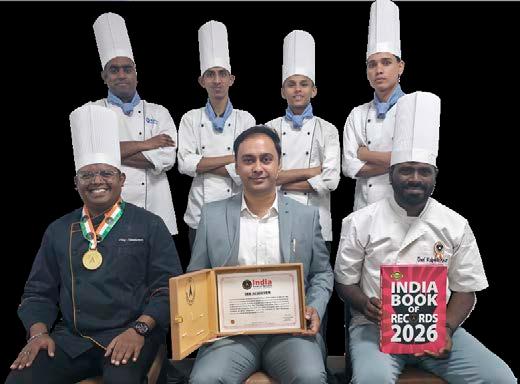
Surya Basudev Swain (born on September 12, 2023) of Jagatsinghpur, Odisha, is titled as ‘IBR Achiever’ for identifying 50 miscellaneous items, 15 animals, 11 colours, 11 vehicles, 16 parts of the body and 11 actions; counting from 1 to 10; recalling days of the week, 14 letters of the English alphabet from A to N and 11 national symbols, at the age of 2 years and 3 months, as confirmed on January 10, 2026.
V. Sharvil Karthigan (born on May 14, 2023) of Chennai, Tamil Nadu, is titled as ‘IBR Achiever’ for solving a 4 x 3 Montessori slide colour puzzle in 31 seconds, at the age of 2 years and 8 months, as confirmed on January 19, 2026.
Sarah Fazal Salim (born on March 14, 2024) of Kasaragod, Kerala, is titled as ‘IBR Achiever’ for identifying and recalling the names of 14 animals, 11 fruits, 17 parts of the body, 3 birds, 3 vegetables, 3 vehicles, 3 actions and 3 colours; reciting
K. Sarva Vihaas Krishnan (born on March 9, 2024) of Chennai, Tamil Nadu, is titled as ‘IBR Achiever’ for identifying and naming 32 animals, 5 fruits, 5 vegetables, 13 parts of the body and 9 vehicles; recalling associated words of all letters of the English alphabet; and mimicking the sounds of 4 animals, at the age of 1 year and 9 months, as confirmed on January 7, 2026.
Vyoom Chandrasekar (born on June 15, 2023) of Coimbatore, Tamil Nadu, is titled as ‘IBR Achiever’ for identifying and naming 50 national and international car brands in 2 minutes by viewing the pictures of cars on a laptop screen, at the age of 2 years and 7 months, as confirmed on January 21, 2026.
Shrinika N. Baraker (born on March 23, 2023) of Gadag, Karnataka, is titled as ‘IBR Achiever’ for identifying and naming 85 creatures, 27 fruits, 11 vegetables, 22 vehicles, 17 parts of the body and 52 miscellaneous pictures; reciting months in a year and days of the week; performing 14 actions; recalling 8 national symbols and 10 English antonyms; and counting from 1 to 20, at the age of 2 years and 9 months, as confirmed on January 12, 2026.
Aydin Savad (born on January 24, 2021) of Kannur, Kerala, is titled as ‘IBR Achiever’ for identifying and naming 12 colours, 8 shapes, 12 flowers, 12 fruits, 9 vegetables, 9 professions, 24 animals, 5 senses, 13 vehicles, 4 types of a plant, 5 uses of a plant and life stages of a butterfly; reading 30 three letter words in English; and counting numbers from 1 to 100, at the age of 5 years, as confirmed on January 30, 2026.
Akruti Akshaykumar Kate (born on September 13, 2022) of Solapur, Maharashtra, is titled as ‘IBR Achiever’ for identifying and naming 9 fruits, 8 vegetables, 10 animals, 16 parts of the body and 10 actions; reciting months in a year, 3 nursery rhymes and all letters of the English alphabet; dancing on the stage; singing the National Anthem; and writing letters of the English alphabet, at the age of 3 years and 4 months, as confirmed on January 29, 2026.
Taravati Saini ‘Neeraj’ (born on June 15, 1990) of Dausa, Rajasthan, is titled as ‘IBR Achiever’ for writing the essence (gist) of the entire Ramayana and the Shrimad Bhagavad Gita, in Sanskrit, on 5 traditional palm leaves, each measuring 28 cm x 4 cm, using an iron-tipped pen, cotton cloth, yardstick, turmeric and oil, as confirmed on December 29, 2025.
Vismaya Vincent (born on April 9, 1999) of Ernakulam, Kerala, is titled as ‘IBR Achiever’ for making 10 items of different kinds of artwork, including resin art, clay modelling, portrait painting, paper craft, wall painting, bottle art and designing a dress for herself, among other creative pursuits, as confirmed on January 20, 2026.
Rajesh K. K. (born on August 26, 1982) of Palakkad, Kerala, is titled as ‘IBR Achiever’ for having a unique mobile number 8589934592, which is exactly divisible by 2. Additionally, the value of 2^33 is also 8589934592, as confirmed on January 13, 2026.
Muhammed Haddad P. (born on April 30, 2020) of Malappuram, Kerala, is titled as ‘IBR Achiever’ for recalling the capitals of 28 Indian states, official languages of 28 Indian states, 14 districts of Kerala, 17 national symbols, currencies of 16 countries, 12 Arabic months, 8 planets, 13 Chief Ministers of Kerala, 13 Presidents and 15 Prime Ministers of India, at the age of 5 years and 9 months, as confirmed on January 23, 2026.
Nira Nidhun (born on May 10, 2024) of Thrissur, Kerala, is titled as ‘IBR Achiever’ for climbing 18 steps indoors, in 28 seconds and identifying 10 household items in 27 seconds, at the age of 1 year and 8 months, as confirmed on January 21, 2026.
Anirudh K. (born on November 11, 2009) of Malappuram, Kerala, is titled as ‘IBR Achiever’ for collecting 117 Indian coins and 33 rupee notes of various denominations, along with 22 coins from foreign countries, at the age of 16 years, as confirmed on January 31, 2026.
P. A. Sendrayan (born on June 1, 2023) of Madurai, Tamil Nadu, is titled as ‘IBR Achiever’ for identifying 11 colours, 50 actions, 3 kitchen items, 8 home appliances, 3 elements of nature, 5 toys, 8 planets, 4 emotions, 19 fruits, 18 vegetables, 23 animals and 15 vehicles; counting from 1 to 20; recalling letters of the English alphabet, 12 national symbols, days of the week and months in a year (in English and Tamil), at the age of 2 years and 7 months, as confirmed on
Soumya Ishwar Naik (born on June 9, 2005) of Uttara Kannada, Karnataka, is titled as ‘IBR Achiever’ for writing 25 multiplication tables from 1 to 25 in 11 minutes and 45 seconds on a sheet of paper, using a pen, as confirmed on January 20, 2026.
Sharvikha (born on July 13, 2024) of Bengaluru, Karnataka, is titled as ‘IBR Achiever’ for identifying and naming 5 colours, 8 birds, 8 fruits, 9 vehicles, 9 parts of the body, 10 vegetables and 21 alphabetical words; performing 20 actions; and mimicking the sounds of 6 animals, at the age of 1
S. Mahil Nagulan (born on March 16, 2022) of Salem, Tamil Nadu, is titled as ‘IBR Achiever’ for identifying and naming 30 insects, 36 colours, 38 birds, 15 types of dinosaurs, 22 marvel characters, 74 cartoon characters; reciting 14 English nursery rhymes; and solving 2 puzzles (India map and World map), at the age of 3 years and 10 months, as confirmed on January 23, 2026.
Janaki R. (born on January 10, 2023) of Thiruvananthapuram, Kerala, is titled as ‘IBR Achiever’ for identifying and naming 12 vegetables, 10 fruits, 14 vehicles, 10 professions, 46 animals, 10 reptiles, 20 birds, 12 colours, 10 actions, 15 flowers, numbers from 1 to 20, 8 national leaders and 8 food items; recalling days of the week, months in a year and 4
Krithick N. (born on June 30, 2022) of Dharmapuri, Tamil Nadu, is titled as ‘IBR Achiever’ for recalling 26 colours from an inset wooden puzzle (consisting of 26 letters of the English alphabet) in 55 seconds, at the age of 3 years and 7 months, as confirmed on
Rahul M. P. (born on February 18, 2022) of Palakkad, Kerala, is titled as ‘IBR Achiever’ for identifying 12 electrical items, 12 actions, 12 vehicles, 12 fruits, 8 birds, 9 vegetables, 10 animals, 5 flowers, 8 parts of the body, 14 famous personalities, 17 animals, 12 domestic animals and 12 wild animals; reciting 4 English nursery rhymes; answering 9 G.K. questions; and counting from 1 to 10, at the age of 3 years and 10 months, as confirmed on January 10, 2026.
Krishav Agarwal (born on August 28, 2013) of Kanpur, Uttar Pradesh, is titled as ‘IBR Achiever’ for solving 50 algebraic linear expressions (with multiple choice answers) in 4 minutes and 1 second, using an app, at the age of 12 years and 4 months, as confirmed on January 21, 2026.
Hitaishi K. (born on June 30, 2022) of Chamarajanagar, Karnataka, is titled as ‘IBR Achiever’ for identifying and naming 12 colours and 42 parts of the body; reciting 30 mantras, 170 nursery rhymes (English, Telugu and Kannada) and 12 religious songs; recalling food habits of 10 animals, 15 national symbols and vehicles of 10 deities; solving 6 puzzles and 56 Montessori activities; imitating the sounds of 14 animals; performing writing activities, at the age months, as confirmed on
Prabadevi Venkatesan, also known as Esha x Shiva (born on February 26, 2003) of Puducherry, is titled as ‘IBR Achiever’ for authoring 10 books, titled ‘The Dopamine Effect: Unlock Your Brain’s Potential for Motivation, Success, and Well-being’ (ISBN: 978-93-34453-53-9) and ‘The Complete Guide to Aura Healing: Understanding and Repairing Your Energy Field’ (ISBN: 978-93others, which were self2025 to November 20,
Yuga Aaragan V. (born on March 21, 2024) of Chennai, Tamil Nadu, is titled as ‘IBR Achiever’ for identifying and naming 12 animals, 22 birds, 20 vegetables, 20 vehicles, 10 shapes, 7 colours and 20 miscellaneous items, at the age of 1 year and 9 months, as confirmed on January 15, 2026.
Aadrith Abishek (born on May 3, 2024) of Bengaluru, Karnataka, is titled as ‘IBR Achiever’ for identifying and recalling the names of 20 flowers, 10 celestial bodies, 10 birds, 10 nuts, 10 aquatic animals, 10 arctic animals, 10 insects, 10 shapes and 10 fruits, at the age of 1 year and 8 months, as confirmed on January 12, 2026.
Rajneesh Kumar Pandey (born on July 17, 1995) of Basti, Uttar Pradesh, is titled as ‘IBR Achiever’ for driving across 6 other states from Kerala by car. He started at 6.13 a.m. from Kochi (Kerala) on July 21, 2025, drove across 6 states of Karnataka, Andhra Pradesh, Telangana, Maharashtra, Madhya Pradesh and Uttar Pradesh, and completed it at 3.38 p.m. at Prayagraj (Uttar Pradesh) on July 23, 2025; covering 2,238 km (as per the car odometer reading) in 57 hours and 25 minutes, as confirmed on January 10, 2026.
Aarushi Shrivastava (born on November 3, 2007) of Raipur, Chhattisgarh, is titled as ‘IBR Achiever’ for writing the entire Hanuman Chalisa on 243 rice grains in Hindi, using a paint brush with red acrylic paint, at the age of 18 years and 2 months, as confirmed on January 13, 2026.
Zane Rosh Albin Vadakkethala (born on November 10, 2021) of Thrissur, Kerala, is titled as ‘IBR Achiever’ for identifying and recalling the names of 55 logos of national and international brands of cars in 1 minute and 40 seconds, at the age of 4 years and 2 months, as confirmed on January 29, 2026.
Pradvithi P. Maurya (born on December 11, 2022) of Hassan, Karnataka, is titled as ‘IBR Achiever’ for reciting months in a year, days of the week, 8 planets, 5 English nursery rhymes, 8 winners of Jnanpith Award, 28 Indian states with capitals, 8 union territories, 31 districts of Karnataka, Preamble of the Indian Constitution along with letters of the English and Kannada alphabet; singing the National Anthem; and counting numbers from 1 to 20, at the age of 3 years and 1 month, as confirmed on January 31, 2026.
Aadi Maheswar A. (born on January 16, 2019) of Thiruvananthapuram, Kerala, is titled as ‘IBR Achiever’ for reciting all the 5 verses and 186 words of the original Bengali composition of the National Anthem titled ‘Bharoto Bhagyo Bidhata’ (written by Rabindranath Tagore) in 5 minutes and 30 seconds, at the age of 6 years and 10 months, as confirmed on December 10, 2025.
M. Mayon Seara (born on January 20, 2022) of Kancheepuram, Tamil Nadu, is titled as ‘IBR Achiever’ for climbing up an iron gate (measuring 7.25 feet in height), crossing over to the other side and climbing down, in total time of 52 seconds, at the age of 4 years, as confirmed on January 22, 2026.
Lidy Prahladan (born on June 7, 1976) of Ranga Reddy, Telangana, is titled as ‘IBR Achiever’ for creating 50 items of craftwork, using different eco-friendly materials, including dried branches, flowers, seed pods, pistachio shells, diyas and coconut, among others, as confirmed on January 9, 2026.
Dipta Maji (born on July 12, 2023) of Purba Medinipur, West Bengal, is titled as ‘IBR Achiever’ for identifying and naming 30 vehicles, 17 vegetables, 11 fruits, 14 animals and 8 colours, at the age of 2 years and 6 months, as confirmed on January 30, 2026.
Azita Azrin O. M. (born on December 21, 2023) of Kozhikode, Kerala, is titled as ‘IBR Achiever’ for identifying 14 fruits, 13 vegetables, 10 colours, 8 vehicles, 7 animals and 5 shapes, at the age of 2 years, as confirmed on January 15, 2026.
Prasun Dey (born on April 7, 1990) of Hooghly, West Bengal, is titled as ‘IBR Achiever’ for undertaking a solo motorcycle expedition from Mandvi (Gujarat) to Konnagar (West Bengal). He started his expedition at 4.33 a.m. from Mandvi on October 16, 2025, and reached Konnagar at 2.54 p.m. on October 18, 2025; covering a total distance of 2,380 km in 2 days, 10 hours and 24 minutes, as confirmed on November 13, 2025.
Abhisek Kumar Sahu (born on October 13, 2022) of Ganjam, Odisha, is titled as ‘IBR Achiever’ for identifying and naming 20 famous personalities, 30 animals, 28 professionals, 25 vegetables, 25 fruits, 22 parts of a computer, 12 denominations of Indian currency, 28 states of India and 37 parts of the body; recalling 23 national symbols, 5 nursery rhymes, 8 mantras, 30 opposite words, alphabetical words and multiplication tables from 2 to 5, at the age of 3 years and 2 months, as confirmed on January 10, 2026.
Nilan Shaim (born on July 27, 2020) of Tenkasi, Tamil Nadu, is titled as ‘IBR Achiever’ for reciting 29 couplets of Thirukkurals in 56 seconds, at the age of 5 years and 4 months, as confirmed on December 6, 2025.
Shreyas A. P. (born on December 17, 1993) of Kolar, Karnataka, is titled as ‘IBR Achiever’ for writing the English lyrics of a devotional song ‘Om Nava Narasimha’ and uploading it on YouTube channel ‘Think Music Bhakti Sagara’ on June 21, 2022, as confirmed on January 30, 2026.
Yuvaan Ashish Kancharla (born on May 26, 2024) of NTR, Andhra Pradesh, is titled as ‘IBR Achiever’ for identifying 191 vegetables, fruits, birds, animals, vehicles, parts of the body and miscellaneous items, at the age of 1 year and 7 months,
Gargi Amol Deore (born on October 25, 2023) of Dhule, Maharashtra, is titled as ‘IBR Achiever’ for identifying and naming 10 vegetables, 23 fruits and 20 animals; reciting associated words of the letters of the English alphabet and 14 national symbols; and answering 2 General Knowledge questions, at the age of 2 years and 2 months, as confirmed
Vyom Ambarasan (born on March 7, 2023) of Bengaluru, Karnataka, is titled as ‘IBR Achiever’ for identifying the flags and recalling the names of 25 countries in 1 minute and 12 seconds, at the age of 2 years and 10 months, as confirmed on January 23, 2026.
IBR Achievers
Aadhya A. N. (born on October 15, 2023) of Kanyakumari, Tamil Nadu, is titled as ‘IBR Achiever’ for identifying and naming 9 colours, 18 animals, 11 parts of the body, 13 food items and 7 vehicles; and reciting 2 English nursery rhymes, at the age of 2 years and 3 months, as confirmed on January 15, 2026.
Vaishnaratheesh (born on October 9, 2019) of Kasaragod, Kerala, is titled as ‘IBR Achiever’ for walking 120 steps on the knuckles of her toes, across a verandah, in 54 seconds, at the age of 6 years and 3 months, as confirmed on January 19, 2026.
Shivika Bal (born on November 6, 2023) of Cuttack, Odisha, is titled as ‘IBR Achiever’ for identifying 15 animals, 15 miscellaneous items, 14 parts of the body, 10 fruits, 10 vegetables, 5 colours and 5 birds; climbing 39 steps; reciting the names of 8 planets and 5 nursery rhymes; demonstrating 3 yoga poses; and stacking 5 coloured rings in a cone, at
Rinzan Kundathil (born on November 13, 2018) of Kannur, Kerala, is titled as ‘IBR Achiever’ for solving 4 Rubik’s Cubes, namely 3 X 3, 2 X 2, Pyramid and Megaminx Cubes, in 7 minutes and 35 seconds, at the age of 7 years and 2 months, as confirmed on January 19, 2026.
Vaishnavi V. K. (born on May 13, 2016) of Kasaragod, Kerala, is titled as ‘IBR Achiever’ for performing 23 yoga asanas, including Bakshasana, Koundinyasana, Bhujapidasana, Samakonasana, Urdhva Dhanurasana, Shalabhasana and others, in 5 minutes and 15 seconds, at the age of 9 years and 7 months, as confirmed on December 31, 2025.
Vuyyala Vidyadharee (born on May 3, 2022) of Krishna, Andhra Pradesh, is titled as ‘IBR Achiever’ for reading 310 English words (ranging from three to ten letters) from a story book in 7 minutes and 10 seconds, at the age of 3 years and 8 months, as confirmed on January 27, 2026.
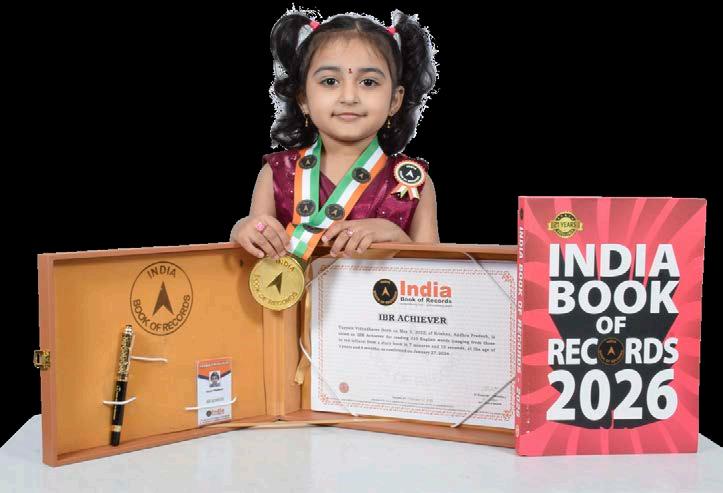
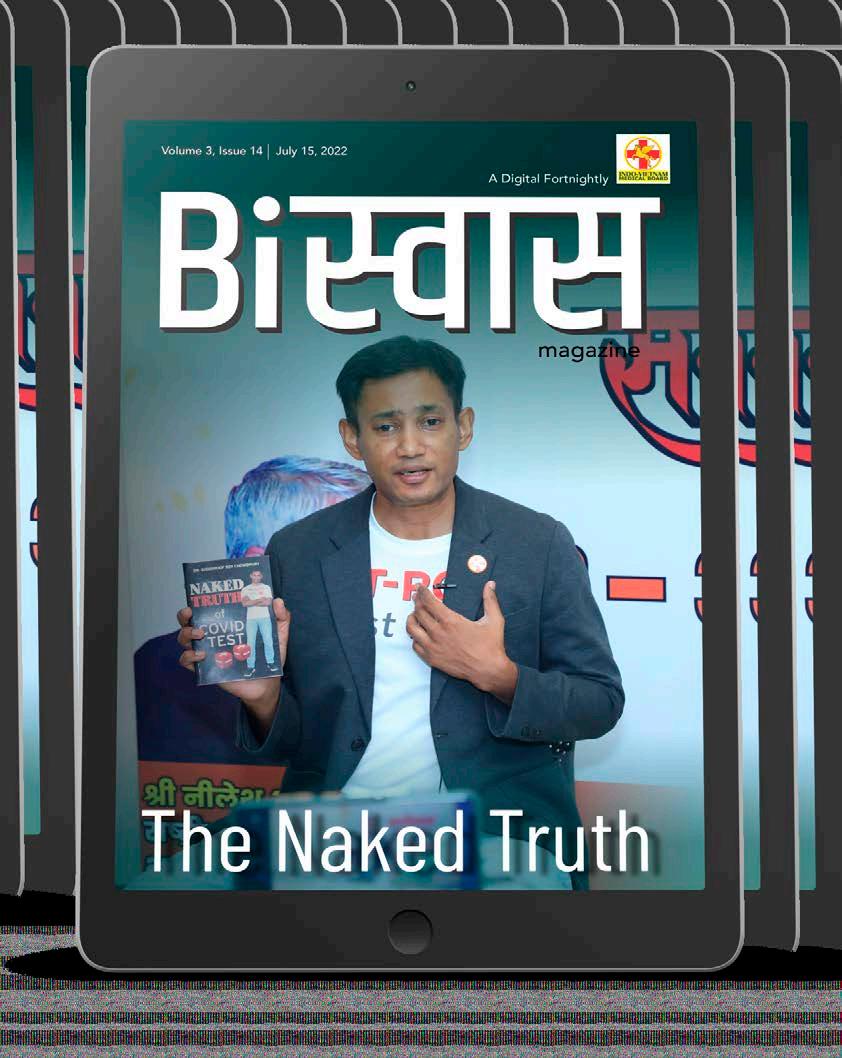
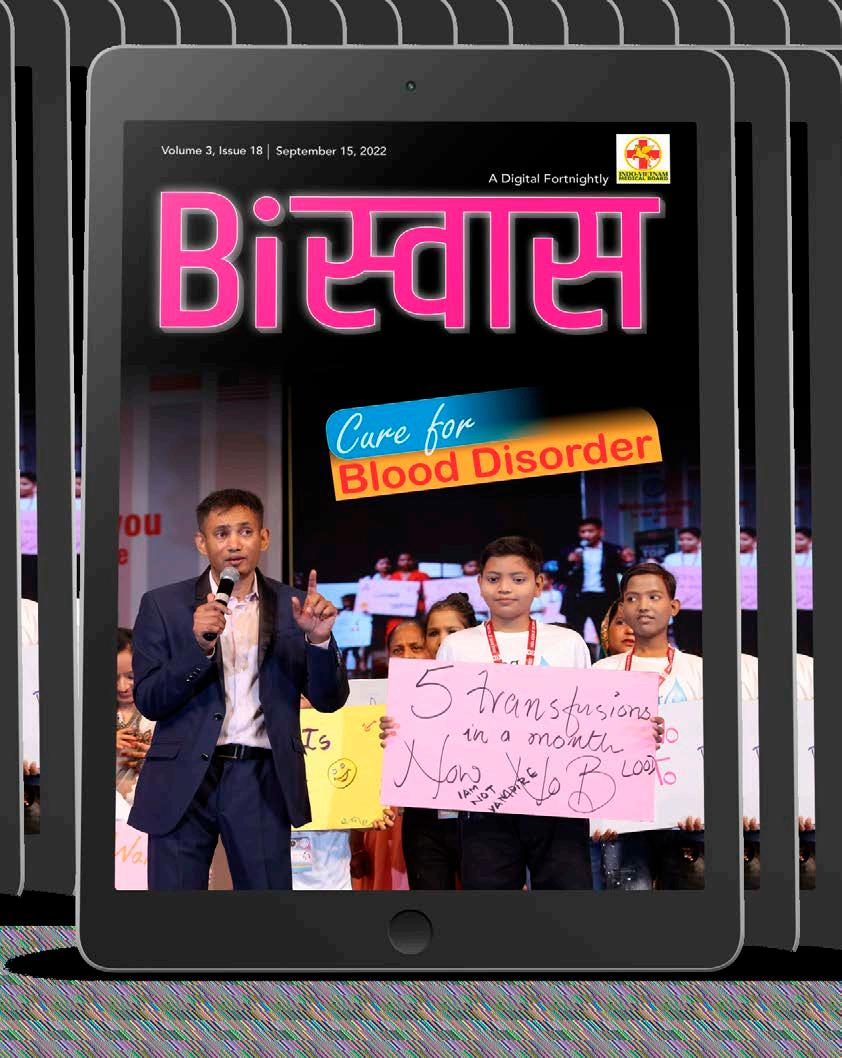

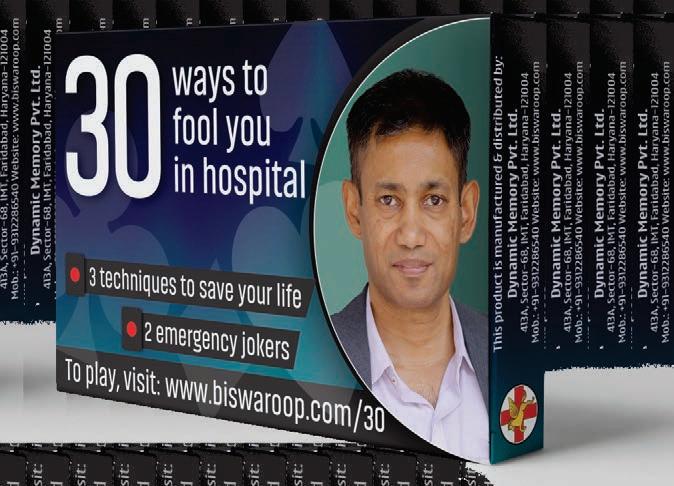






as MedicineGravity
This is probably the world’s first book on the Science of Postural Medicine based on using the greatest force on earth, the Gravity as Medicine! After reading this book you will surely be convinced that in comparison to existing major systems of treatment including Allopathy (Modern Medicine), Homeopathy, Ayurveda or Naturopathy, postural medicine is the fastest, safest and more evidence-based than others, besides being almost zero cost and having zero dependency on chemicals/drugs and high-tech equipment.
Price: ₹ 225/(Courier charges extra)
(Available in Hindi/English, in all leading online stores)


Ÿ Foot Mat (19 x 12 inch)
Ÿ Earthing Copper Rod
Ÿ Connecting Copper Wire (10 meter)
Ÿ Continuity meter
Ÿ Carry Bag
Ÿ
Ÿ
Ÿ
Ÿ
Ÿ
Ÿ


Ÿ
(74
Ÿ
Ÿ Connecting
Ÿ Continuity
Ÿ
A Step by Step Guide to a Smarter Memory
By Neerja Roy Chowdhury
This book will show you how to:
· Memorize a dictionary
· Never forget any appointment
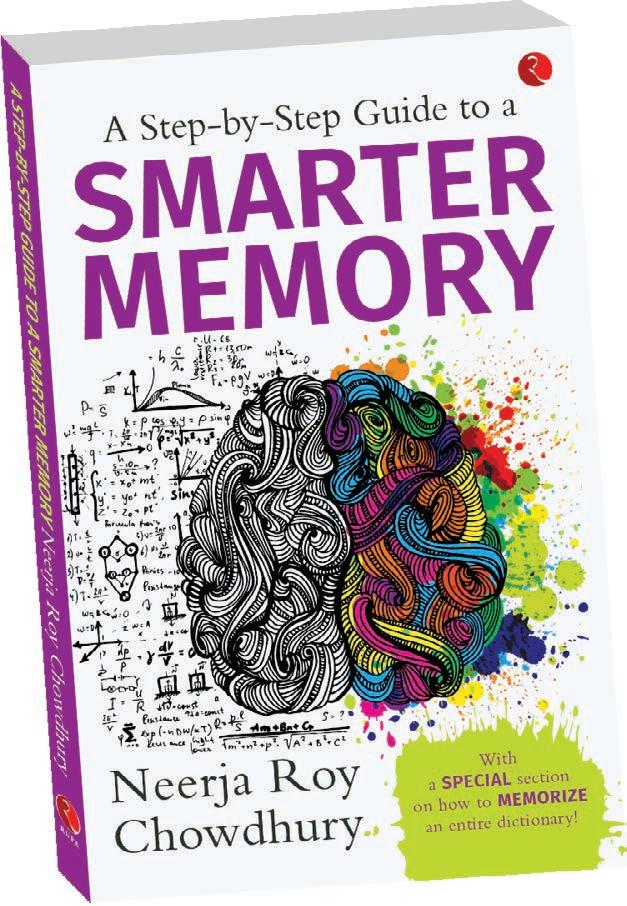
· Recall every formula correctly
· Remember the shopping lists, birthdays and anniversaries etc.
· Overcome absent-mindedness
· Learn Memory techniques to achieve career goals
· Secure better marks in every exam
About the author:
Neerja Roy Chowdhury, the name can be found in prestigious record books including Guinness Book of World Records and Indo-China Book of Records for diverse reasons. The most interesting of all is her ability to memorize the complete Oxford English-Hindi Dictionary. She has also developed software for memorizing a dictionary. She has travelled more than 100 cities internationally in last one decade training people on ‘Memory Techniques’. Her latest book ‘Smarter Memory’ is published by Rupa Publication. Presently she is involved in developing curriculum in memory techniques for international universities.
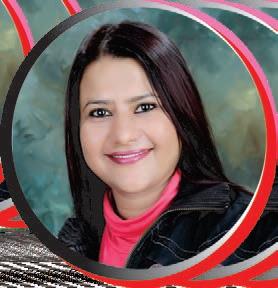

charges extra)


Let every morning be the Hunza Morning
If you have decided to pick only one of my suggestions for the sake of your health, then take this suggestion:
Stop consuming tea, especially in the morning. Early morning tea makes the inner lining of the intestinal wall acidic because, after a long night of fasting, the stomach is empty and craving food. An acidic stomach on a regular basis is one of the biggest causes of all kinds of inflammatory and lifestyle diseases, including arthritis and diabetes.
How to stop craving of teaSwitch to Hunza Tea
Hunza Civilization: The Hunza people live in the extreme northwest of the Indian subcontinent, within the Hindu Kush range. They are one of the world's healthiest civilizations, with some individuals living up to 110 years.
Ingredients:
* 12 Mint leaves(Pudina)
* 8 Basil leaves (Tulsi)
* 4 Green cardamom (Elaichi)
* 2 gm Cinnamon (Dalchini)
Instructions:
* Take 4 cups of water in a tea pan
* Add all ingredients, simmer it for 10 mins
* Add a dash of lemon juice and serve hot or cold
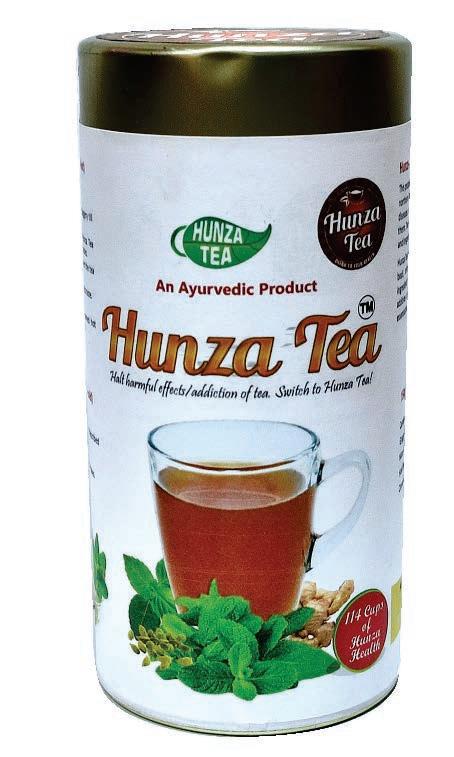






































Vaso-Stimulation Therapy Kit
This hot water utensil with an electric panel is a part of hot water Vaso-Stimulation Therapy. Before connecting the VST Kit with the electrical socket, one must check the earthing of the socket. To check the earthing, use Dr. BRC Earthing Detector included in this kit.
For full understanding of VST Kit, read the book H.E.L.P. (www.biswaroop.com/help)



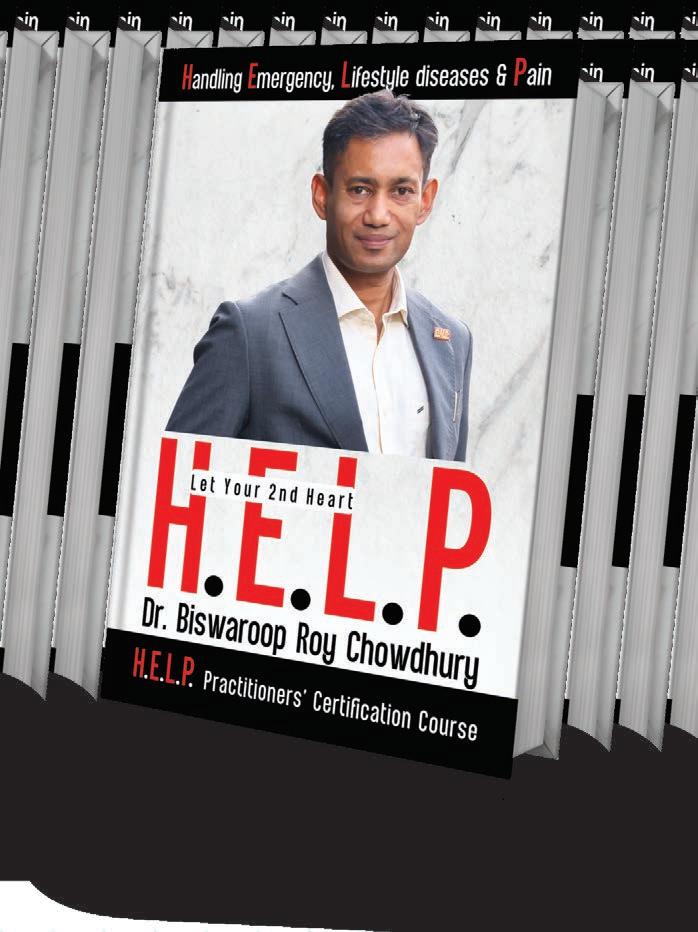

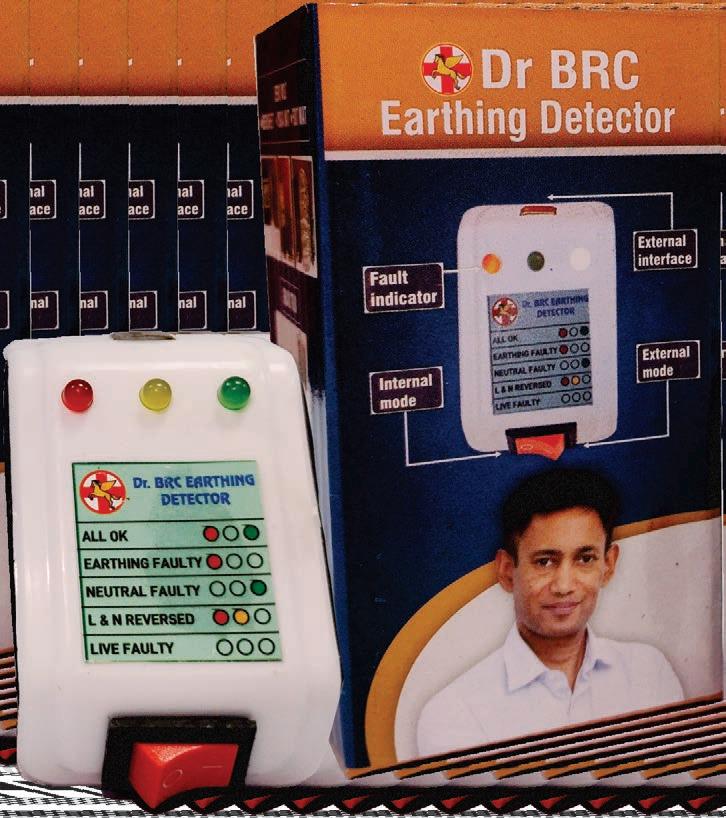






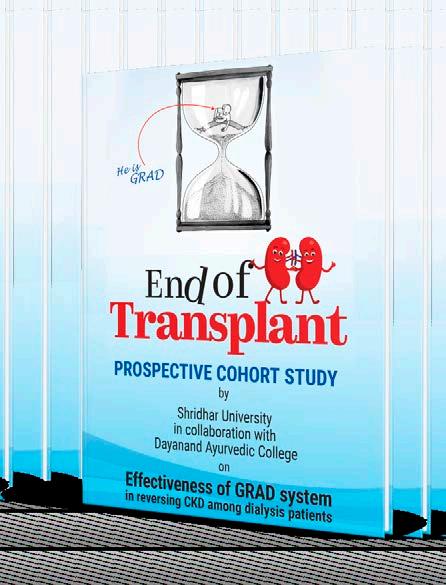
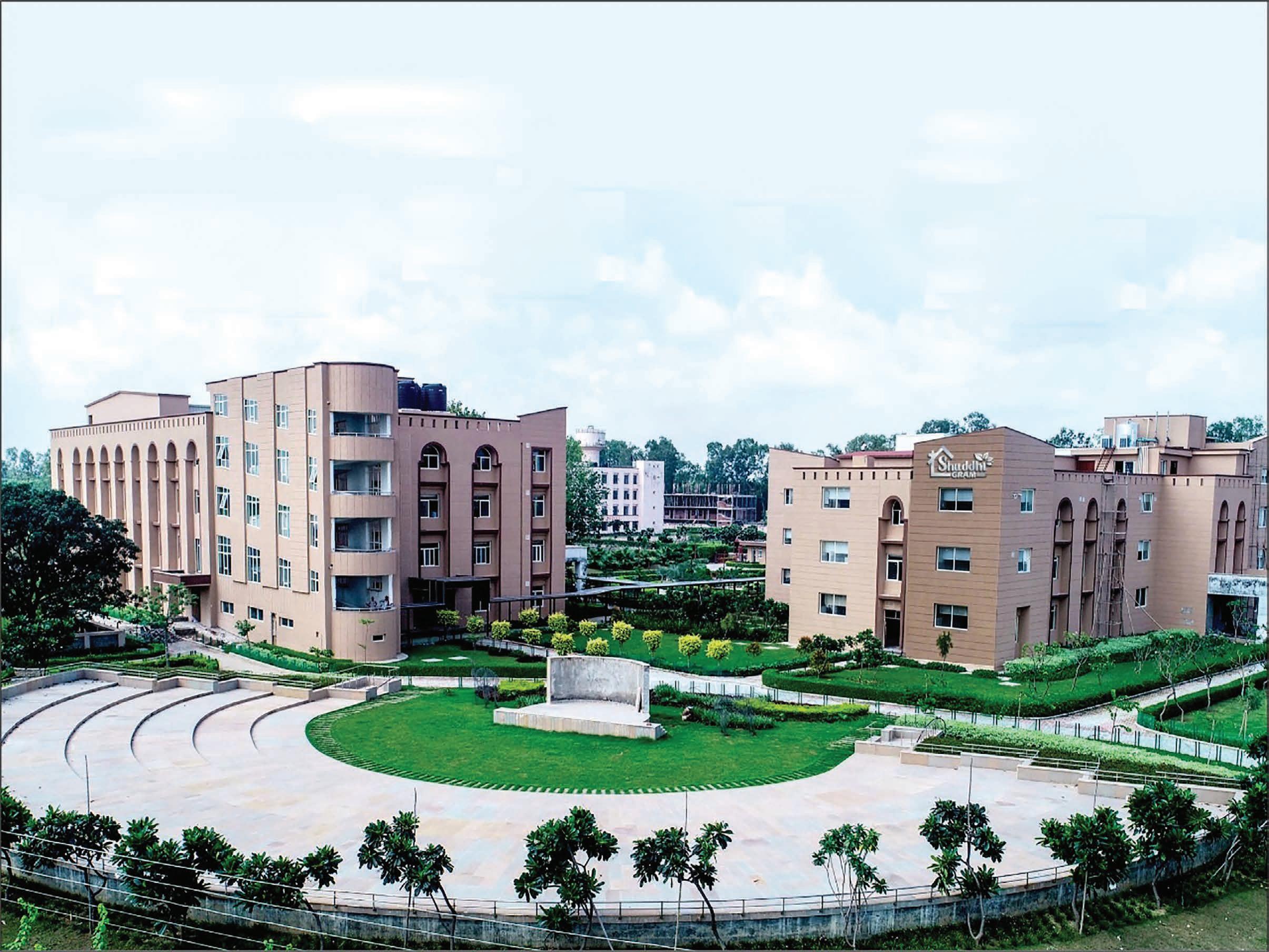

3 MEDICINES FOR HOLISTIC HEALTH
Malaysian Government

We are proud to be pioneers in the field of “Healing Care” through “Engineering Science”, with over a decade of experience across Malaysia, Vietnam, and India. Our work is led by Dr. Biswaroop Roy Chowdhury, renowned author of 36 books and creator of the acclaimed D.I.P. Diet.
We warmly invite you to our 8-hour training session titled “3 Medicines for Holistic Health”, where you’ll witness practical demonstrations showing how nature’s three medicines can help you raeclaim your healthnot in months or days, but for many, within just a few hours of integrating them into your lifestyle.
To explore the engineering of the human body using scientific tools such as a voltmeter, light meter, and EMF meter, join us for this one-day hands-on workshop.

For more details, contact: 413A, Sector-68, IMT, Faridabad - 121004, Haryana (India). Mob.: +91-9312286540
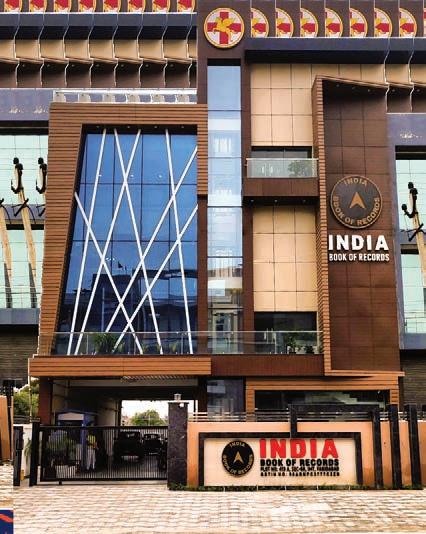
HRD Approved Training
3 Medicines To Sustain A Good Physical & Mental Health
1. Time as Medicine: Eating a variety of fruits for breakfast can improve metabolism and help control blood sugar, whereas consuming fruits after sunset may have the opposite effect. This science can be understood by studying your circadian clock—the body's internal timekeeper.
2. Food as Medicine: What if 50% of your diet consisted of raw vegetables and fruits, excluding all forms of animal protein? Most likely, you would achieve a healthy Body Mass Index (BMI) within 2 to 3 months, along with significant improvements in stamina and endurance. A true understanding of the science of food can empower you to reach your health goals.
3. Zero Volt Medicine: Simply step barefoot onto grass or natural earth. Within the first 10 seconds, your body’s voltage drops to zero. At this “Zero Volt” state, the body is believed to reach peak immunity, triggering numerous positive and significant changes in both physical and mental health.


Course Highlights

Duration: 1 Month Mode: 100% Online • (Objective test after each lecture)
Module 1: Neem Culture, Chemistry & Cosmetics
•History, Chemistry & Cultural Adaptation of Neem
•History of Neem as a Medicine
•Cultural Adaptation Worldwide
•Chemistry of Active Agents
•Neem as Cosmetics
Module 3: Practitioner’s Toolkit – Infectious Diseases
•Evidence Base of Neem as medicine for Infectious Diseases
•Dosage Calculation
•Practitioner’s Toolkit – Infectious Diseases
Syllabus Overview Practitioner’s Kit
• • Neem OilNeem Leaves Powder
• • Neem Bark PowderDropper
• Measuring Spoon
Module 2: Practitioner’s Toolkit – Lifestyle Diseases

•Evidence Base of Neem as medicine for lifestyle diseases
•Dosage Calculation
•Practitioner’s Toolkit – Lifestyle Diseases
Module 4: Neem Panchkarma & Home Pesticide
•Neem Panchkarma for Symptomatic Pain Management
•Basics of Neem Panchkarma
•Practical Sessions
•DIY: Home Pesticides • Final Objective Test

Jo n our ompr ns v pro r m n ‘Int r t M n ’ w w ll

•D.I.P. Diet
mpow r you to om your own o tor. Furt r you w ll l to om p rt o our — n twork o + l n s. t our l t on you w ll l to pr t Dr B C roto ols n your r or ty. t r t's l styl s s , n t ous s s , m r n y r , or p n m n m nt, t s ours w ll qu p you to r t n nt r t m r n y tool ox t om to m t t s t r ts. Don't m ss t s opportun ty to t k r o your lt n w ll- n . Enrol now to st rt your ourn y tow r s s l -su n y n lt m n m nt. Mode: k n Onl n / Corr spon n Course Material: ours m t r l n lu s ooks w w ll l v r to your oorst p v our r (w t n In ) n - ooks w ll s r t rou m l.
•3 Step Flu Diet
•GRAD
•Circadian Chart
•Zero Volt Therapy
•Acupressure
•Ayurvedic Panchkarma
•Vaso-Stimulation Therapy
•D.A.N. Protocol






Media Coverages of our Record Holders
To avail Convocation@IBROffice services email us at: convocation@indiabookofrecords.in
India Book of Records 413A, HSIIDC, Sector-68, IMT, Faridabad (Haryana), India, Pin-121004
Phone: +91-99994 36779, +91-129-2510534
Email: media@indiabookofrecords.in www.indiabookofrecords.in
India Book of Records is registered with the Government of India with RNI no HARENG/2010/32259. India Book of Records is affiliated to Asia Book of Records and follows International Protocol of Records (IPRs) as per the consensus arrived at the meeting of the Chief Editors of National Record Books, Ho Chi Minh City, Vietnam.