India Book of Rec rds


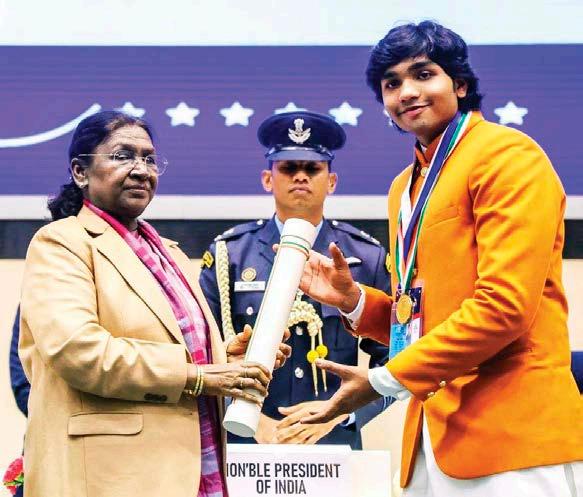
Pradhan Mantri Rashtriya Bal Puraskar

Course
Module 1: Understanding Autism/ADHD - History, Causes & Diagnosis
Module 2: Science of Reversing Autism/ADHD
Module 3: Setting up Your Kitchen & Home in Accordance with C.A.N. Protocol
Module 4: Handling Common Health Emergencies (Seizure, Fever, etc.)
Course




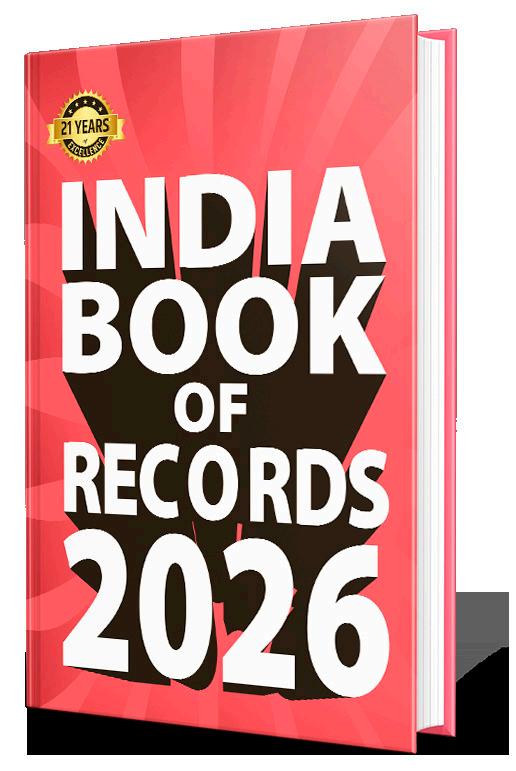


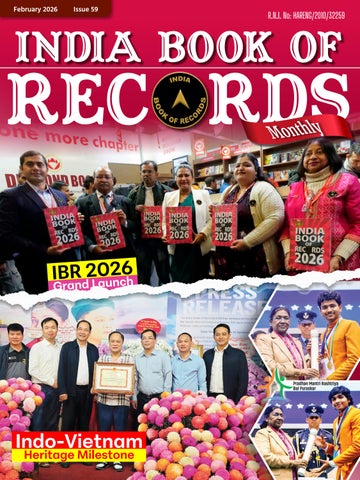
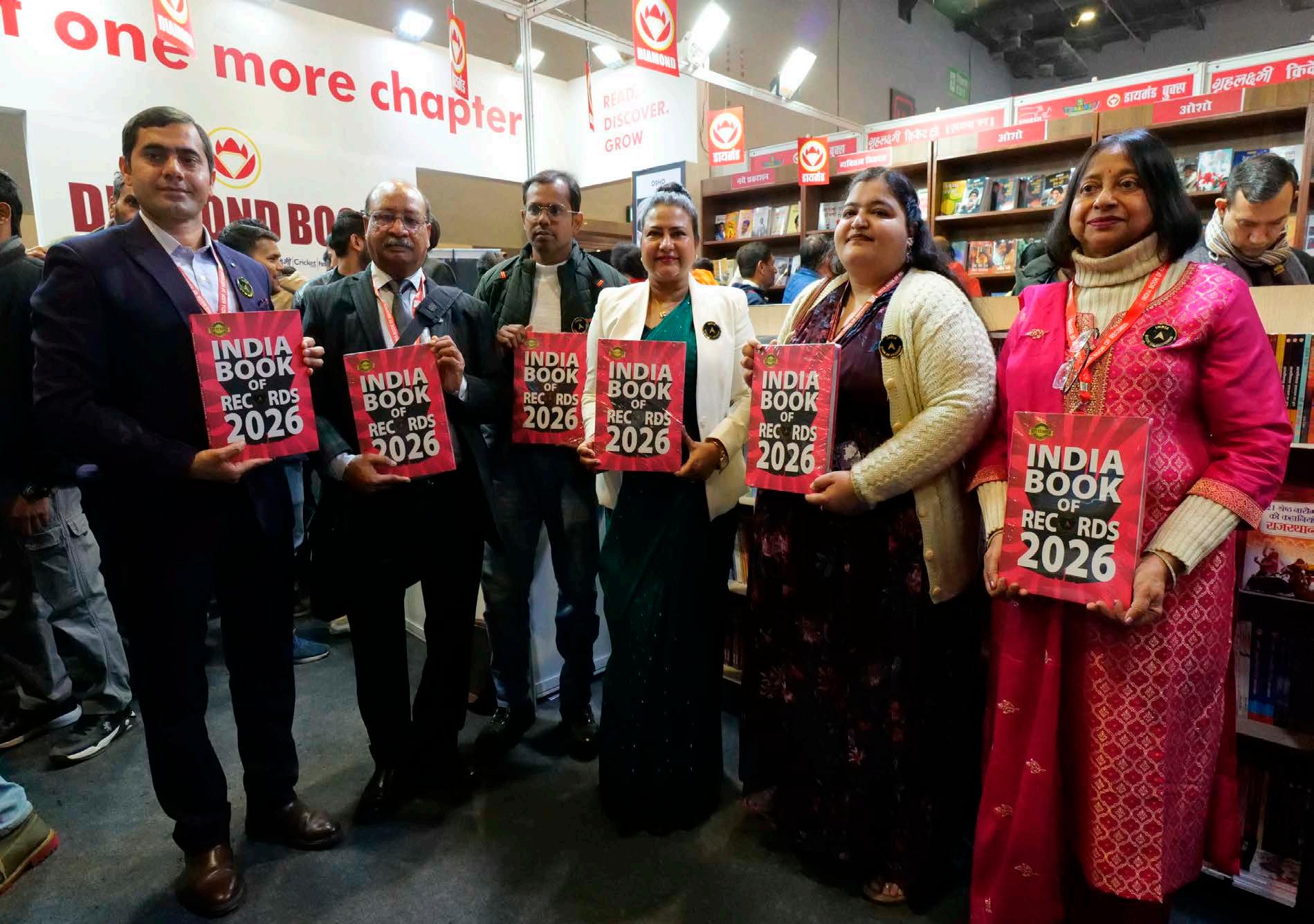
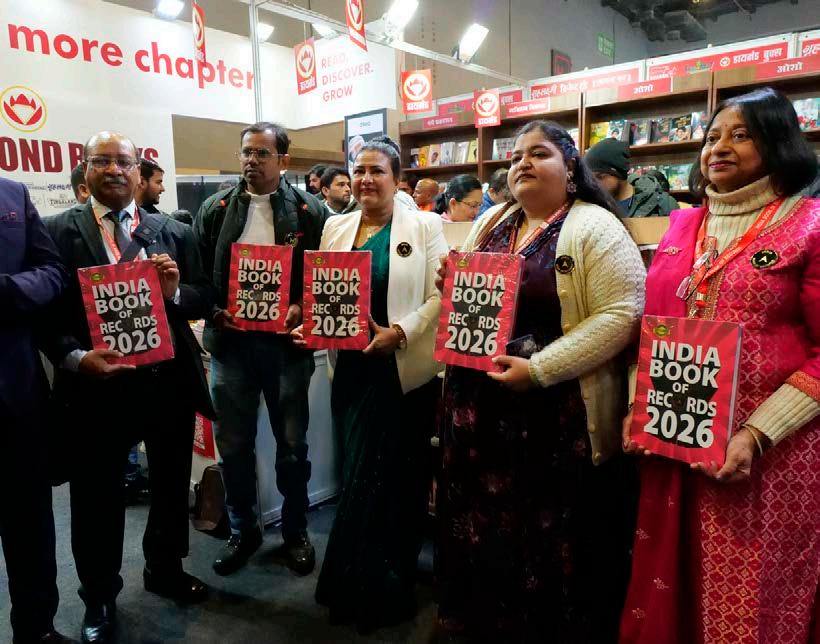
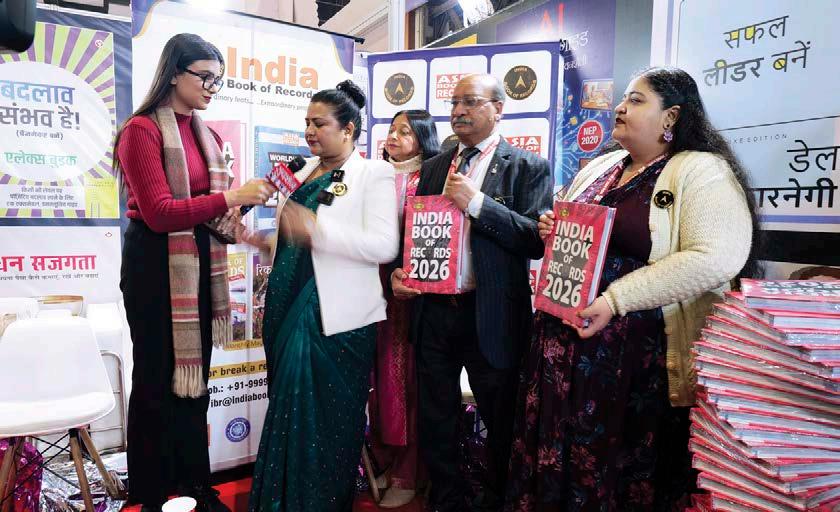
Grand Release of India Book of Records 2026 at World Book Fair
India Book of Records unveiled its 2026
Annual Edition at the New Delhi World Book Fair, 21st continuous volume featuring 6000-plus records, honouring nationwide achievement, passion, and perseverance.
6
16 10 1 14
Anthem of Shared Voice
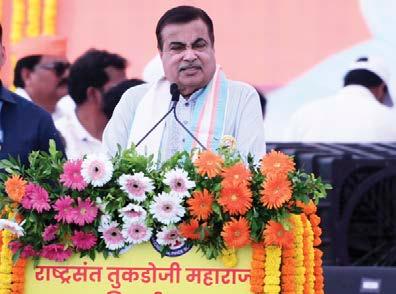
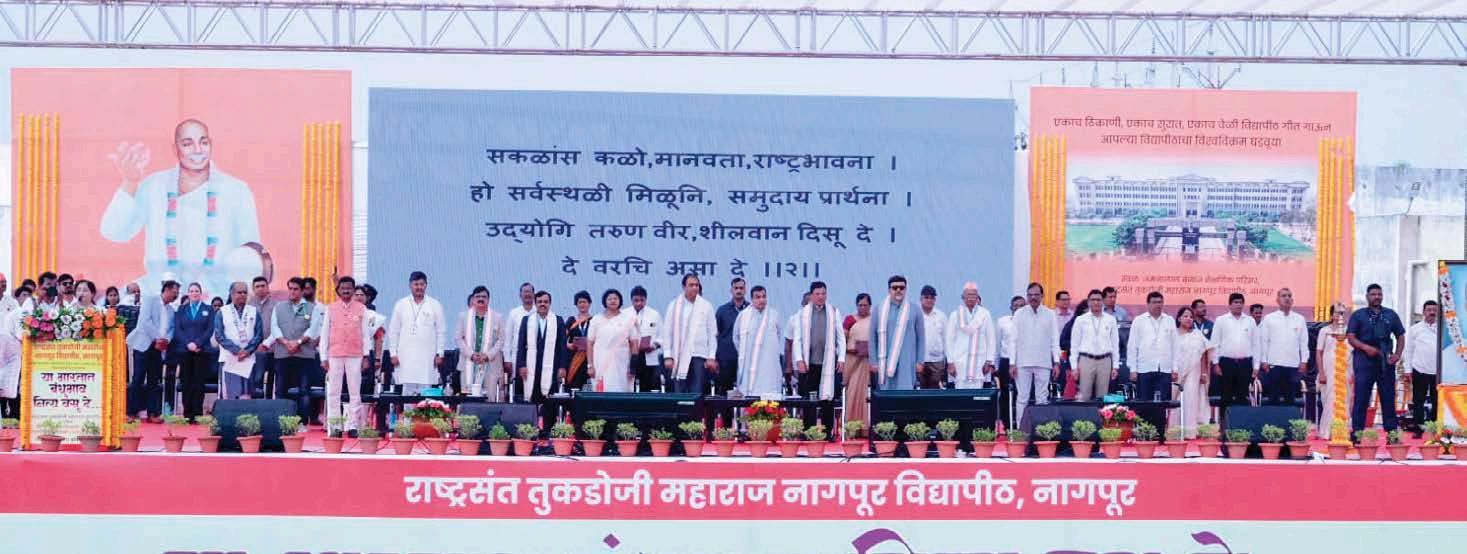
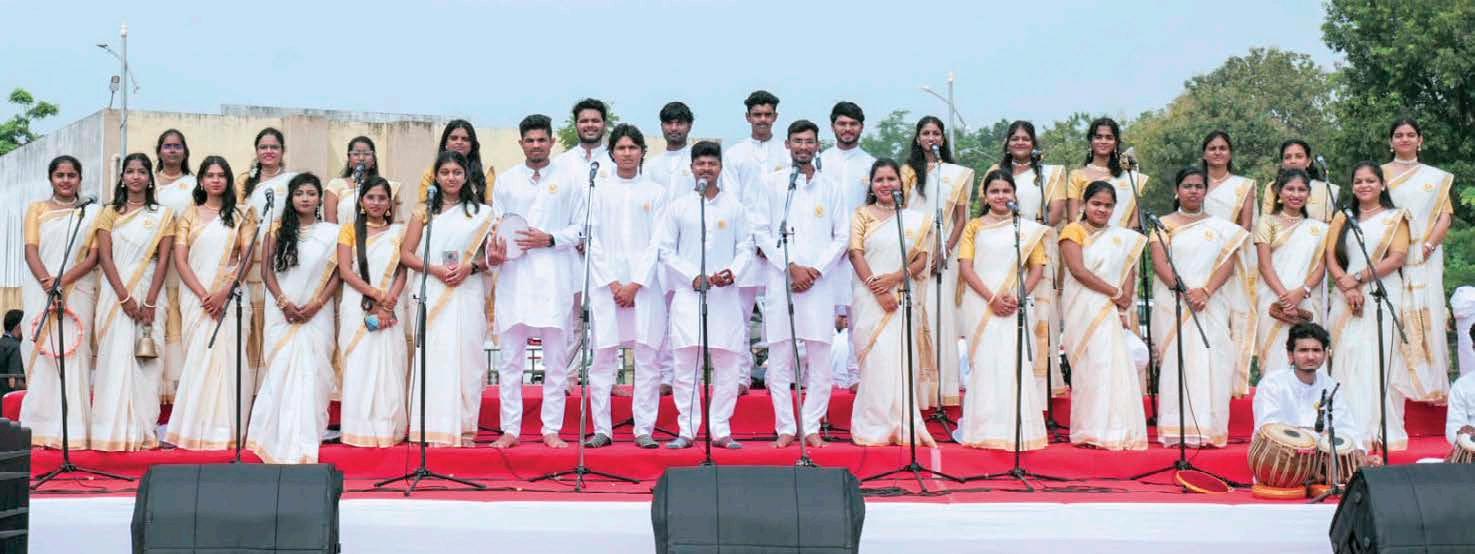
On a solemn day in Nagpur, thousands joined across campuses and screens to sing a university anthem together, turning remembrance into collective expression and setting a national participation record.
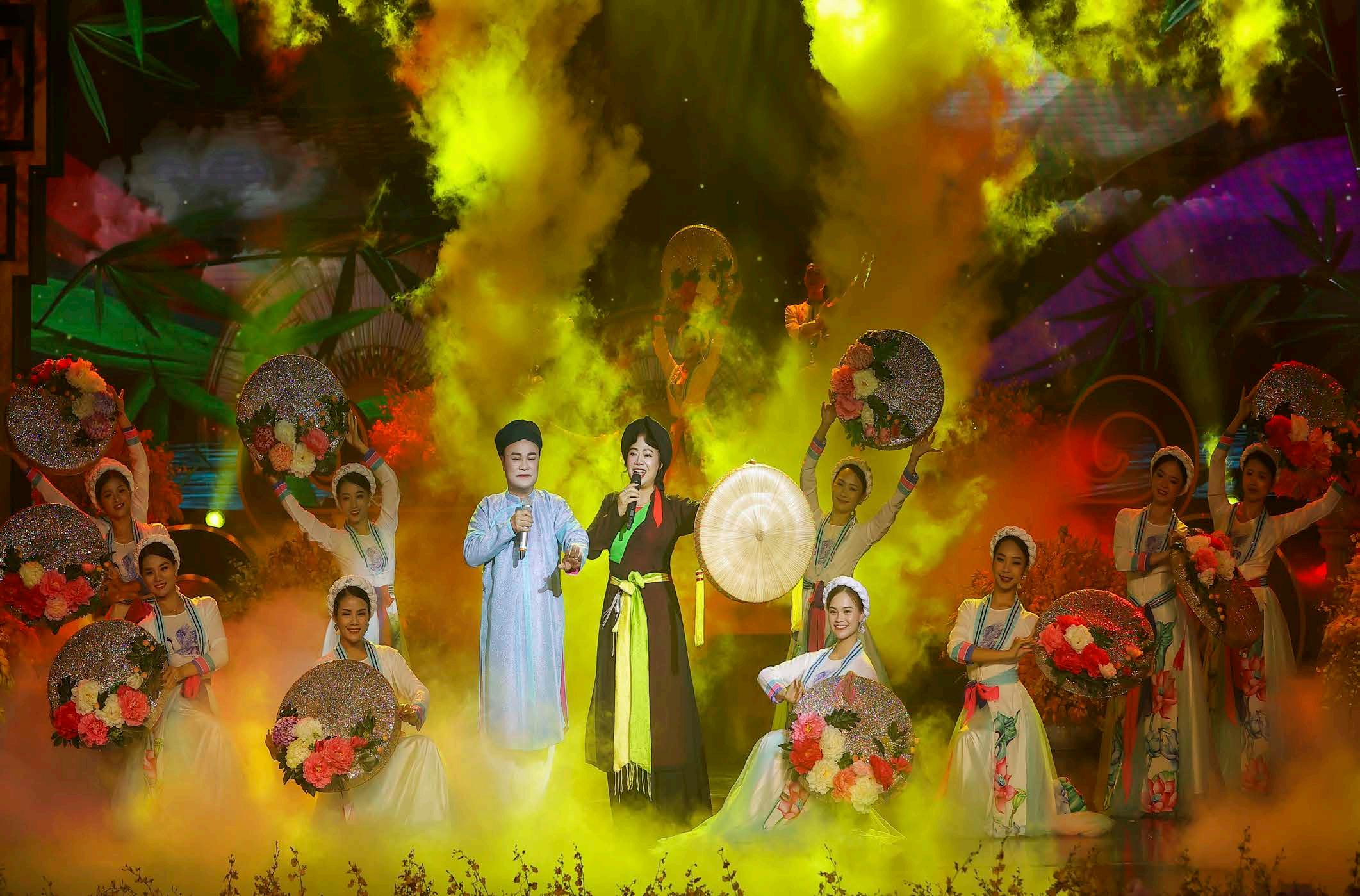
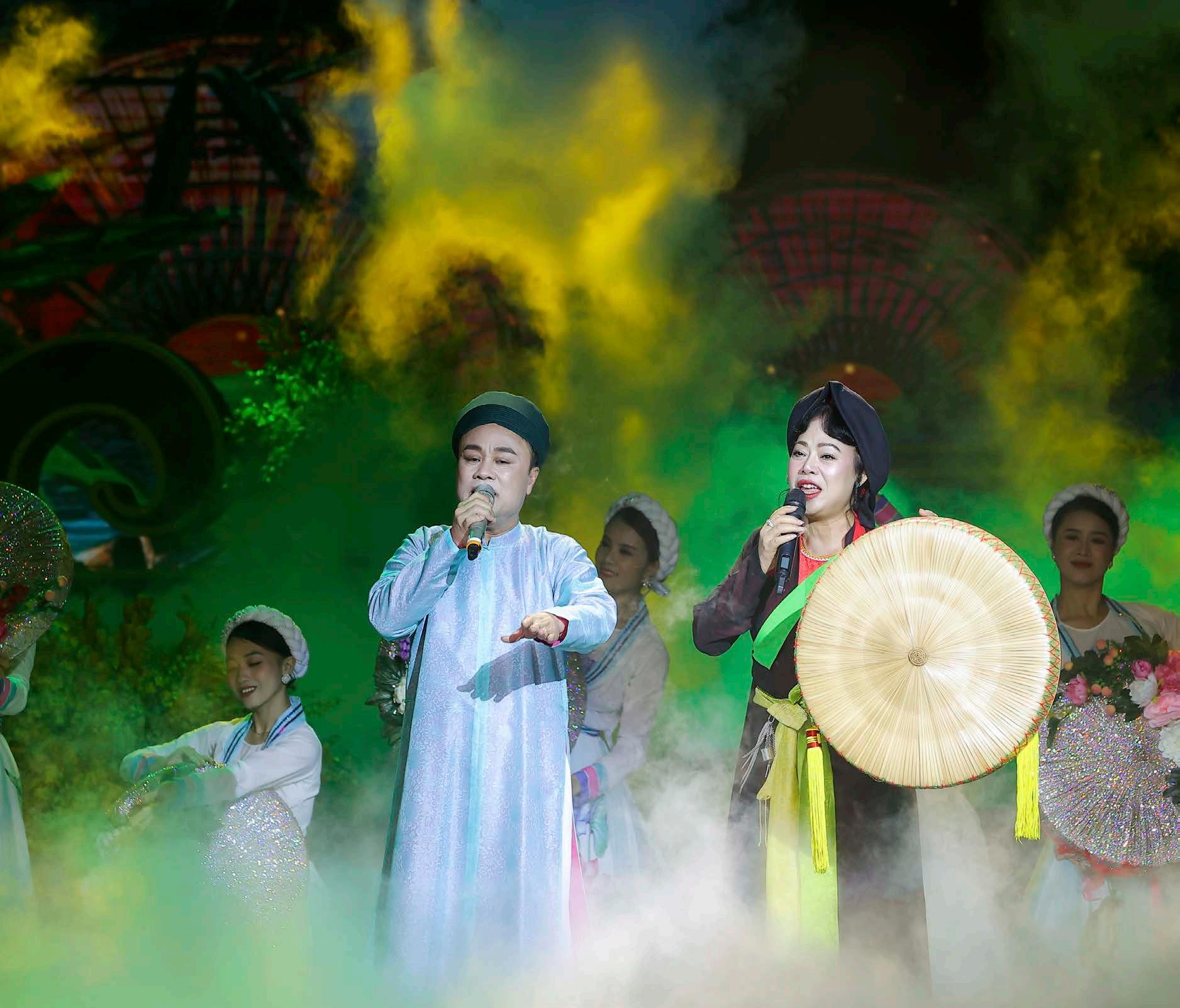
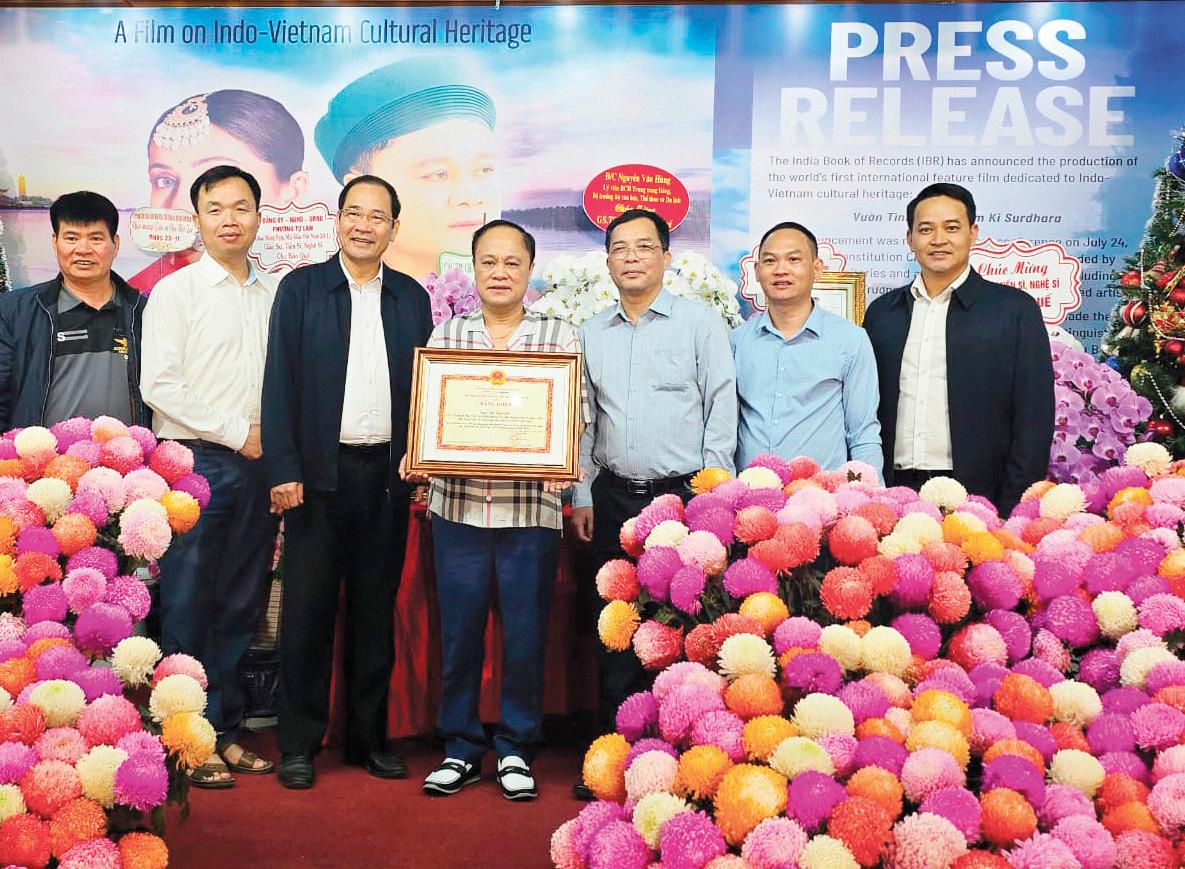
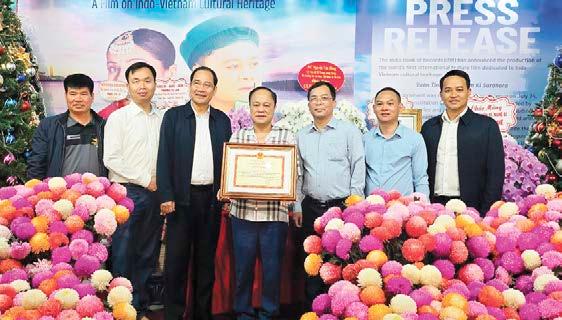
A New Milestone in the Indo–Vietnam Cultural Heritage Exchange Program
Prof Chu Bao Que advanced Indo–Vietnam cultural heritage exchange at Expo 2025 Osaka, earned Vietnam government honours, and inspired a book and film recognising his cross-border preservation mission.
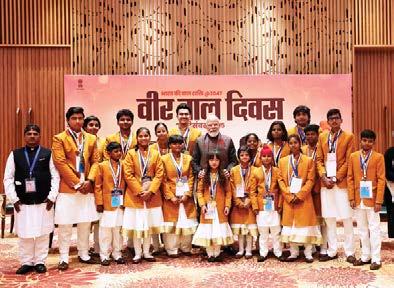
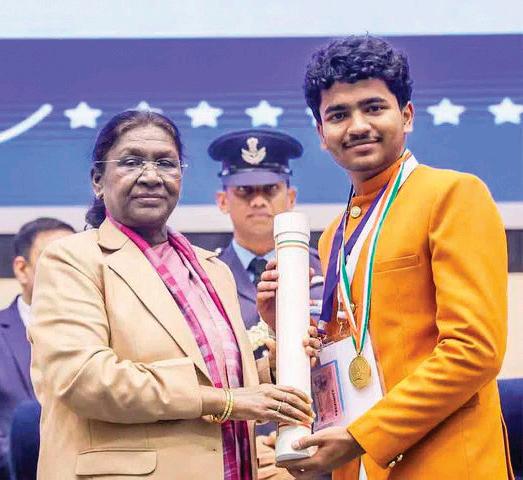
Pradhan Mantri Rashtriya Bal Puraskar
President Droupadi Murmu conferred the Pradhan Mantri Rashtriya Bal Puraskar on 20 children for achievements across diverse fields. Among them were India Book of Records holders Suman Sarkar and Vishwanath Karthikey Padakanti.
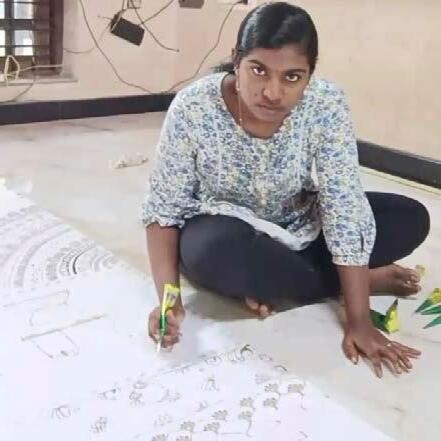
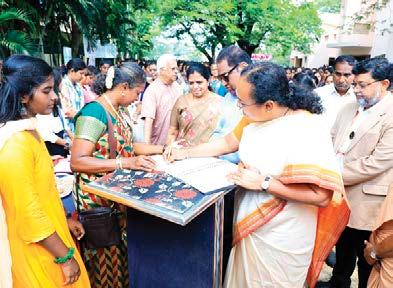
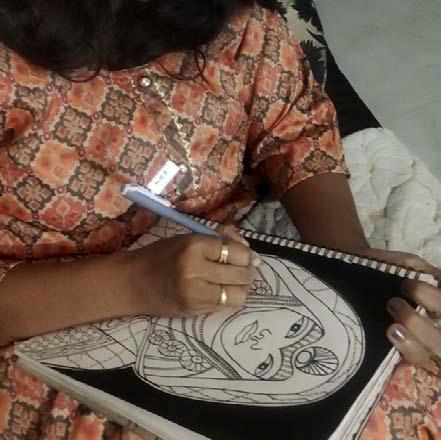
Screening for Strong Futures
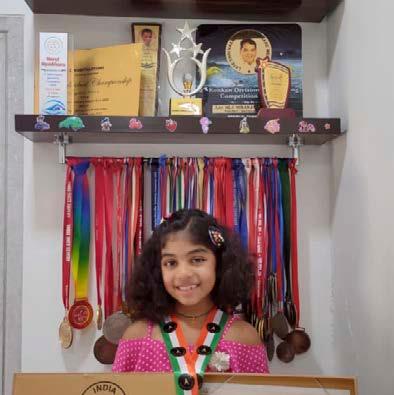
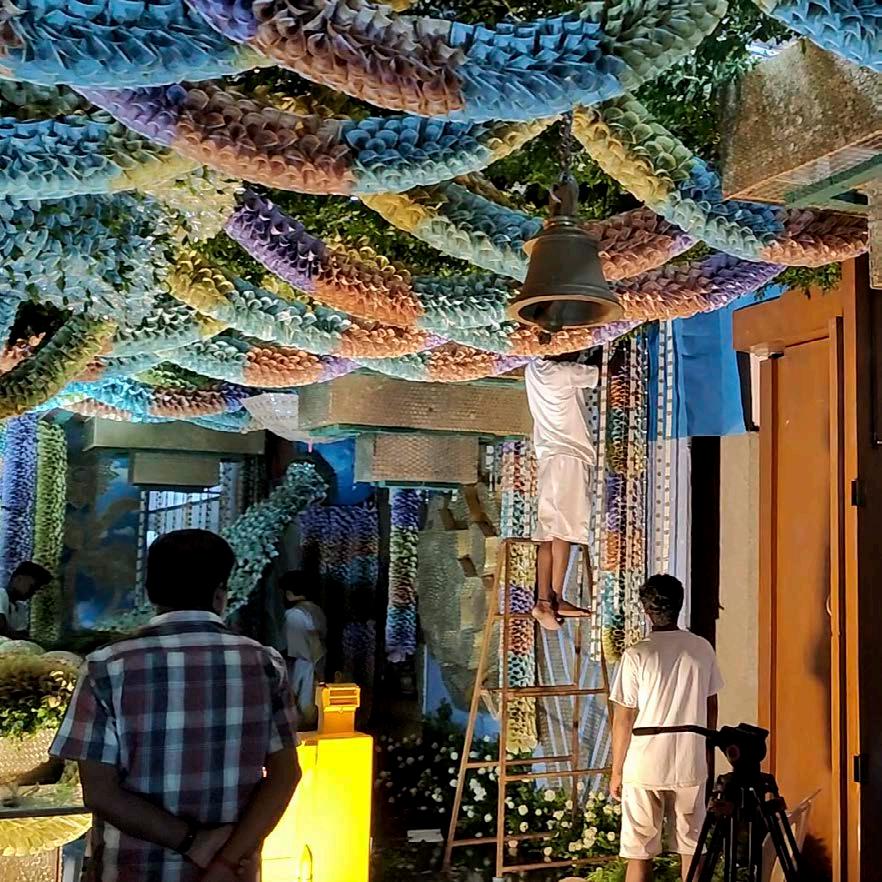
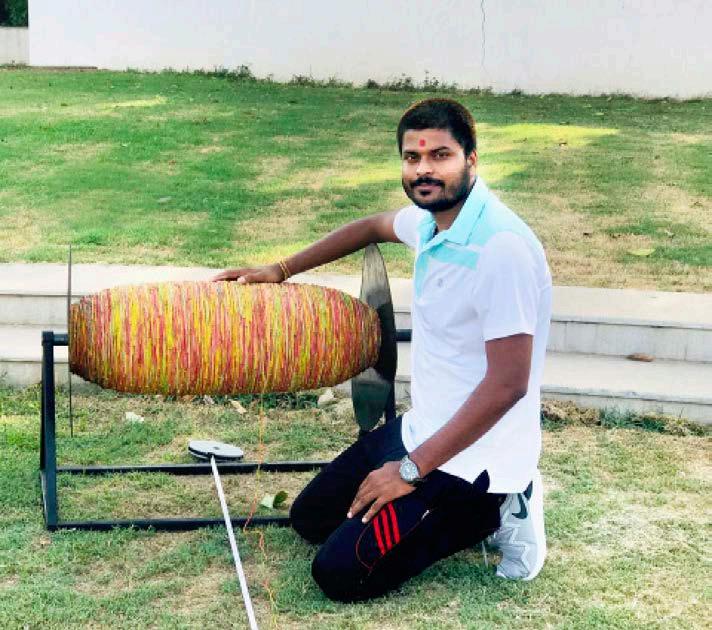
A large-scale haemoglobin screening in Vellore brought health awareness to the forefront, as thousands of young women participated in a single-day initiative that linked education and preventive health care.
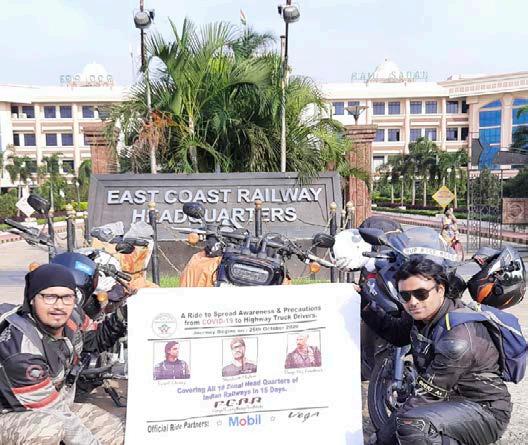

Painting Peace for Earth
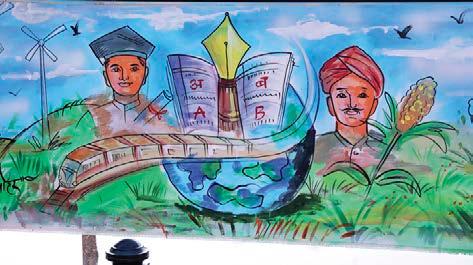
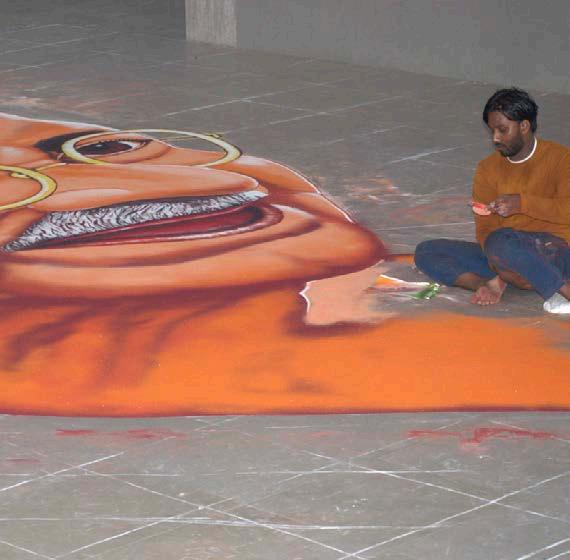
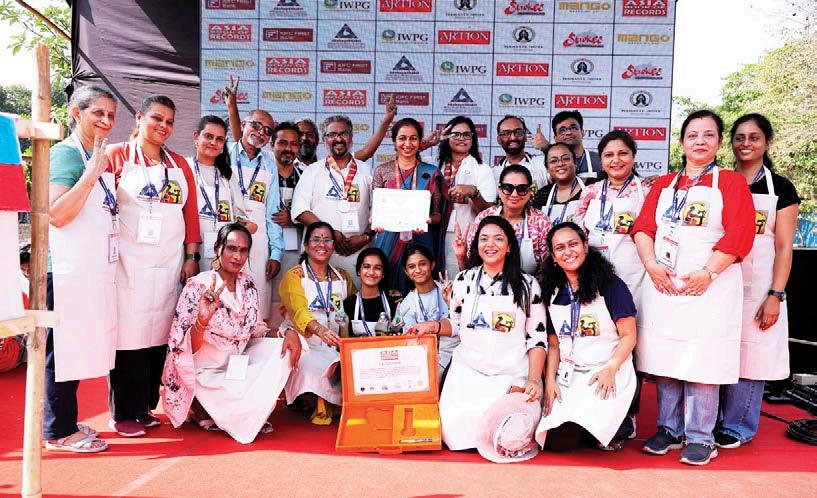
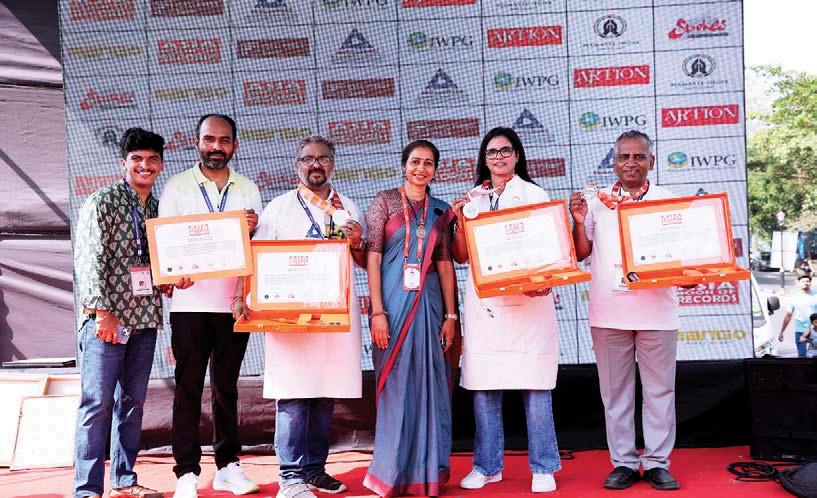
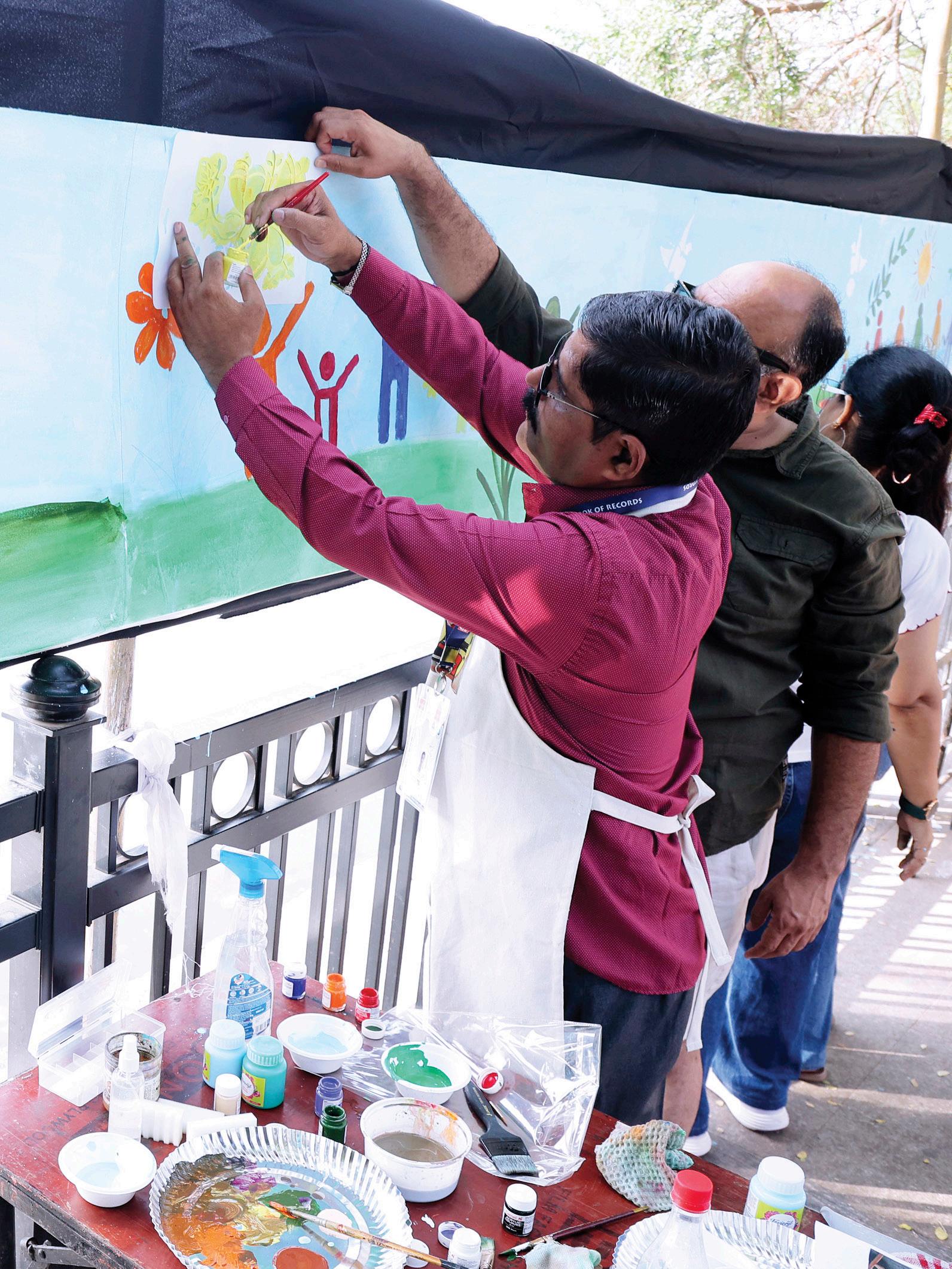
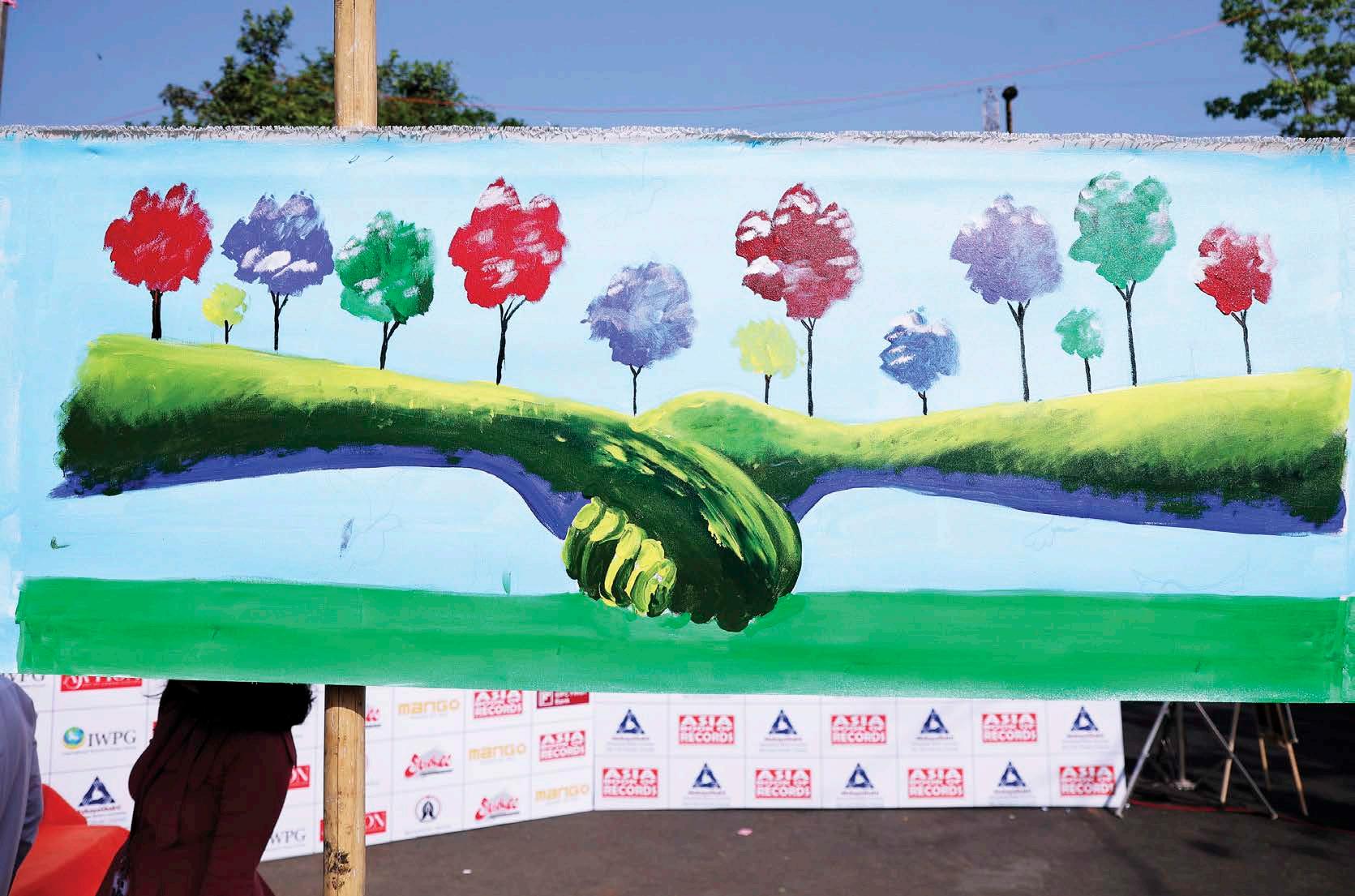
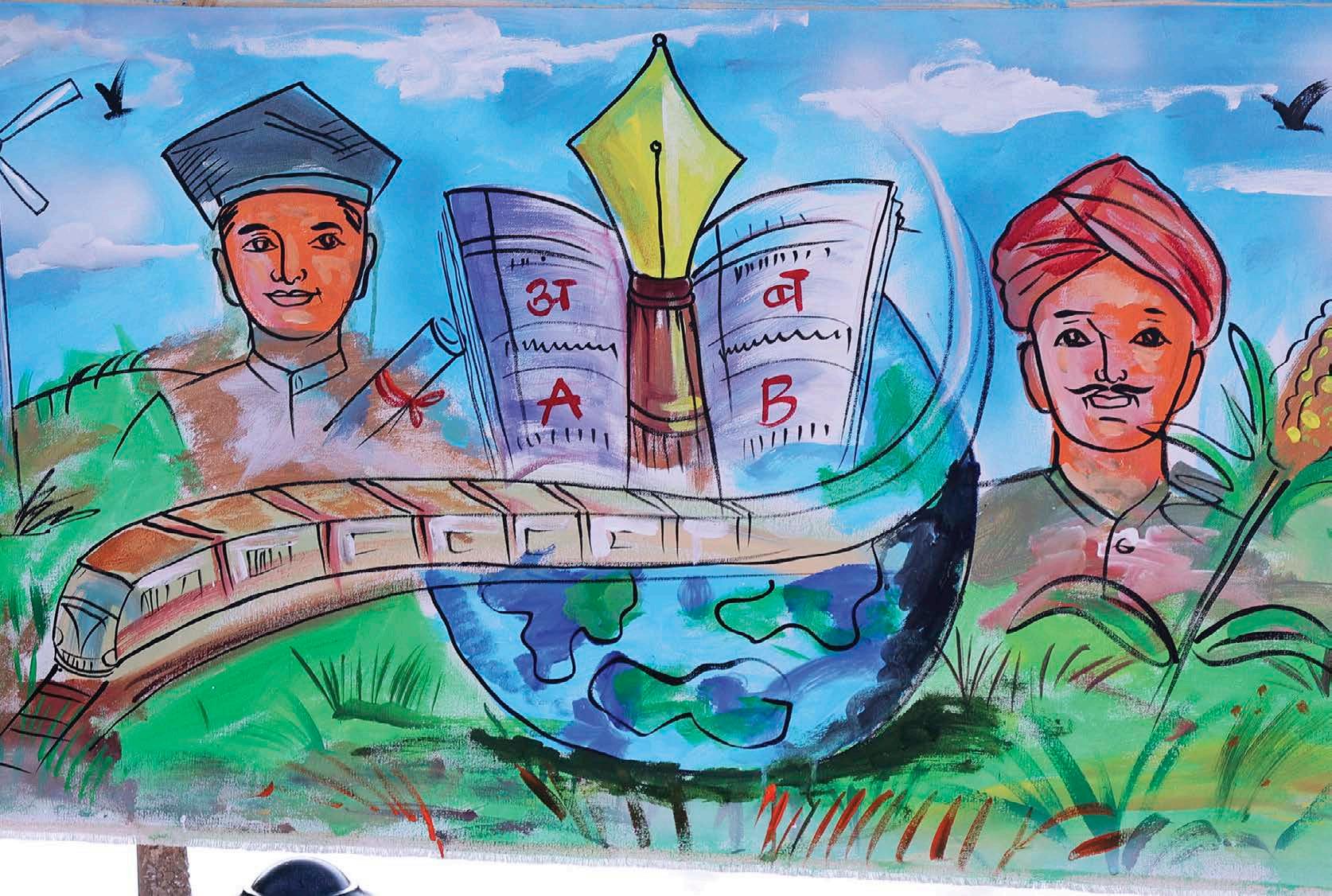
A 120-metre peace mural created in just forty minutes on Earth Day brought artists and citizens together in Thane, Maharashtra, turning collective creativity into a strong social message for the planet Earth.
A Bowl of Tradition India Reads Together Across India by Road Students Defy Gravity Songs That Shaped Stage Garba Beyond Sound Voices of a Thousand Clean Classrooms, Cleaner Minds Ravana Rises in Kota When Waste Became Worth Young Kicks, Big Impact Rhythm of Collective Grace Bamboo Rising in Devotion Eternal Flame of Faith Sun, Balance, Community Greening Beed, One Day
Dear readers,
Japi Rises
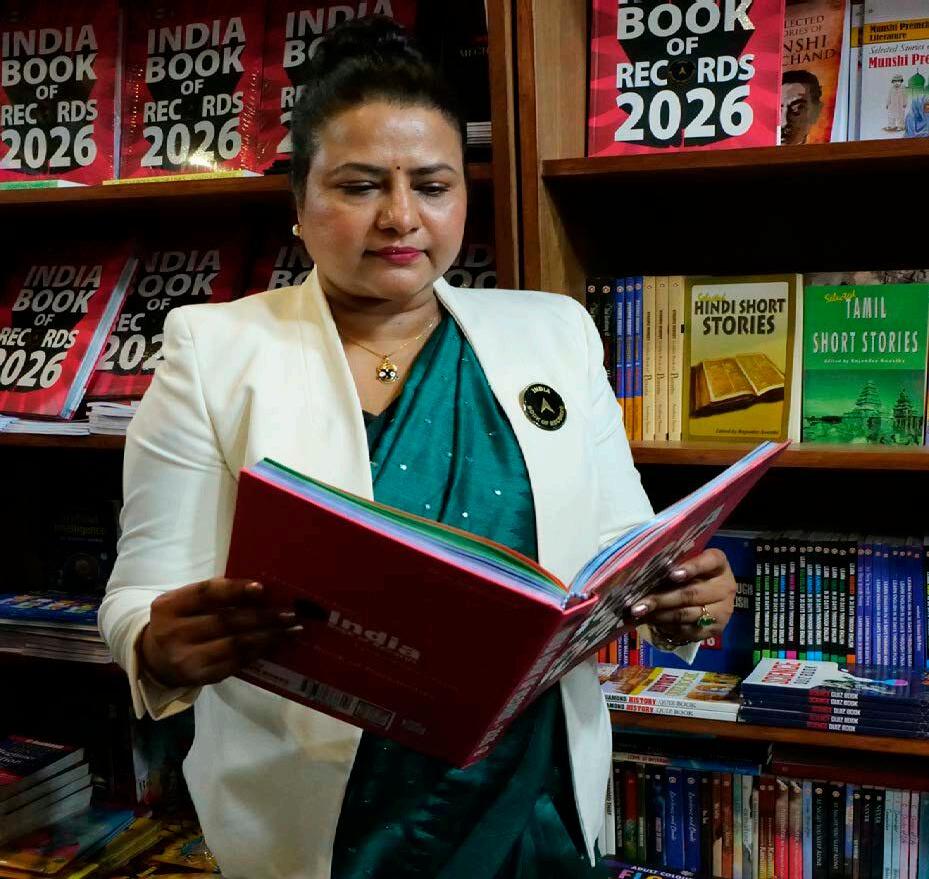
The World Book Fair at New Delhi, opened this season with a landmark moment; the grand release of the India Book of Records 2026 Edition on 17 January. Alongside it, the Asia Book of Records - WorldKings 2026 was unveiled at the Diamond Books stall. This marks the 21st uninterrupted annual edition of IBR since 2006. With around 6000 new records across 552 full colour hardbound pages, the volume continues to document the scale and diversity of human achievement across India. The release was a celebration of two decades of verified excellence.
This issue also brings strong stories of cultural bridges and young achievers. At Expo 2025 Osaka, Prof Chu Bao Que advanced the Indo-Vietnam Cultural Heritage Exchange mission and was honoured by the Govt of Vietnam for his contribution. In Delhi, two IBR holders were among the children who received the Pradhan Mantri Rashtriya Bal Puraskar from the President of India.
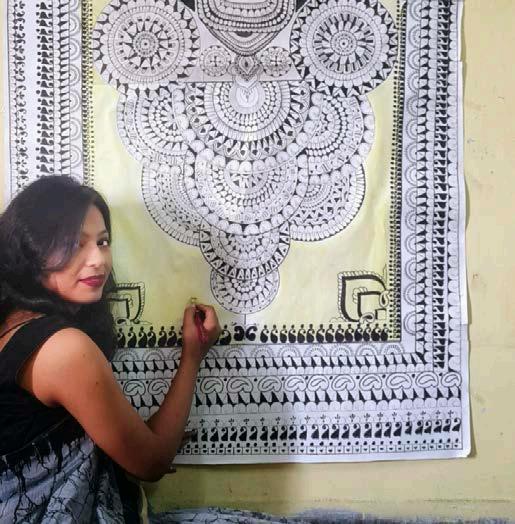
Inclusion and sustainability shape several records this month. Vadodara hosted a Garba workshop for deaf participants. Lucknow presented a 53.4foot bamboo Shivling structure. Nagpur celebrated local cuisine through a 556-kg Kaccha Chiwda preparation. Assam added cultural pride with the largest handcrafted Japi.
Each record speaks of purpose, participation, and public spirit.
Write to us: media@indiabookofrecords.in
Warm regards,
Neerja Roy Chowdhury Managing Editor

R.N.I. No: HARENG/2010/32259
Managing Editor Neerja Roy Chowdhury
Editor Narvijay Yadav
Copy Editors Sonum Garg, R.K. Gupta
Design & Layout Swapan Banik, Shankar Singh Koranga
Image Editing Vinod Kumar, Ranveer Singh
Image Compilation Muskaan Singh, Swati Tyagi
Compilation Mansi Satija
Records Management Team Sangeeta Sinha, Neha Tyagi
Gunjan Kachroo, Riena Singh Khare, Emmanuel Job
Support Mohd Ikram, Jeet Singh IT Team Shantanu Chauhan
Padam Singh Rana, Kapil Attri, Sunil Goyal
Board of Advisors
Justice B.G. Kolse Patil (Former Judge of Mumbai High Court)
Dr. Raj Rup Fulia (retd. IAS), (Former Principal Secretary, Govt. of Haryana)
Dr. Parveen Kumar (retd. IAS), (Former DG, Dept. of Sci & Tech., Govt. of Haryana)
Dr. Bipin Kumar, (President Vishwa Hindi Parishad)
Rakesh Kumar Verma (Blackbelt-6 Degree) (Retd from MES, MoD, Govt. of India)
Somnath Bharti (Former Law Minister, Delhi)
Send all correspondence to: India Book
of Records
413A, HSIIDC, Sector-68, IMT, Faridabad-121004, Haryana, India
Mobile No.: +91-99994 36779
Phone No.: +91-129-2510534
Email: ibr@indiabookofrecords.in media@indiabookofrecords.in abr@asiabookofrecords.com
Websites: www.indiabookofrecords.in www.asiabookofrecords.com
Our Associates
Asia Book of Records Selvarani Muthiah
Vietnam Book of Records Prof. Dr. Hoang Quang Thuan
World Records University Rachna Sharma
Indo-Vietnam Medical Board Nguyen Hoang Anh
Nepal Book of Records Deepak Chandra Sen
Bangladesh Book of Records Dr. Gobind Das
Indonesia Book of Records Osmar Semesta Susilo
USA Book of Records Dr. Theresa Quach
Consultants
Acharya Manish, Dr. Anant Biradar, Shivani Agarwal, Surjeet Singh, Dr. Pradeep Bhardwaj
Our Adjudicators/Reporters
Andhra Pradesh Dilip Patro, Dr. Sarala
Assam & North East Jitender Kumar Jain
Chhattisgarh Kiran Sharma, Krishna Kumar Gupta
Delhi Mohit Vats, Samir Das, Bhanu Pratap Singh, Richi Sharma
Gujarat Neelima Chhajed, Ritesh Chanpura, Dushyant Chaturvedi
Haryana Ashutosh Mittal, Narvijay Yadav, Sanjay Bhola
Himachal Pradesh Chitranjan Mahant
Jharkhand Prakrit Kumar Singh
Karnataka Harish R., Girish Banvi
Kerala Vivek Nair, S. Sagayaraj, Sam George, Sagar AR, Prateek Joshi
Madhya Pradesh Antim Kumar Jain
Maharashtra Biswadeep Roy Chowdhury, Kashmira Shah, Dr. Manoj Tatwadi, Dr. Sunita Dhote, Rekha Singh, Dilip Mane, Seema Manikkoth, Dr. Chitra Jain
Punjab Acharya Manish, Dr. Pankaj Sital, Sachin Khullar
Rajasthan Bhuvnesh Mathuria, Dr. Vinod Sharma, Dr. Raja Mookim
Tamil Nadu Vivek Nair, Kavitha Jain
Telangana Vasudha Rani, Sunita Arya, Rammohan Reddy
Tripura Tapan Datta
Uttarakhand Virender Singh
Uttar Pradesh Vinod Kumar Singh, Smita Singh, Anand Vedant, Neeti Agnihotri, Pramil Dwivedi, Lata Tack
West Bengal Sunita Kedia, Meena Gupta
All India Manoj Prajapati, Manoj Singh, Hemant Sharma, Anjul Tomar

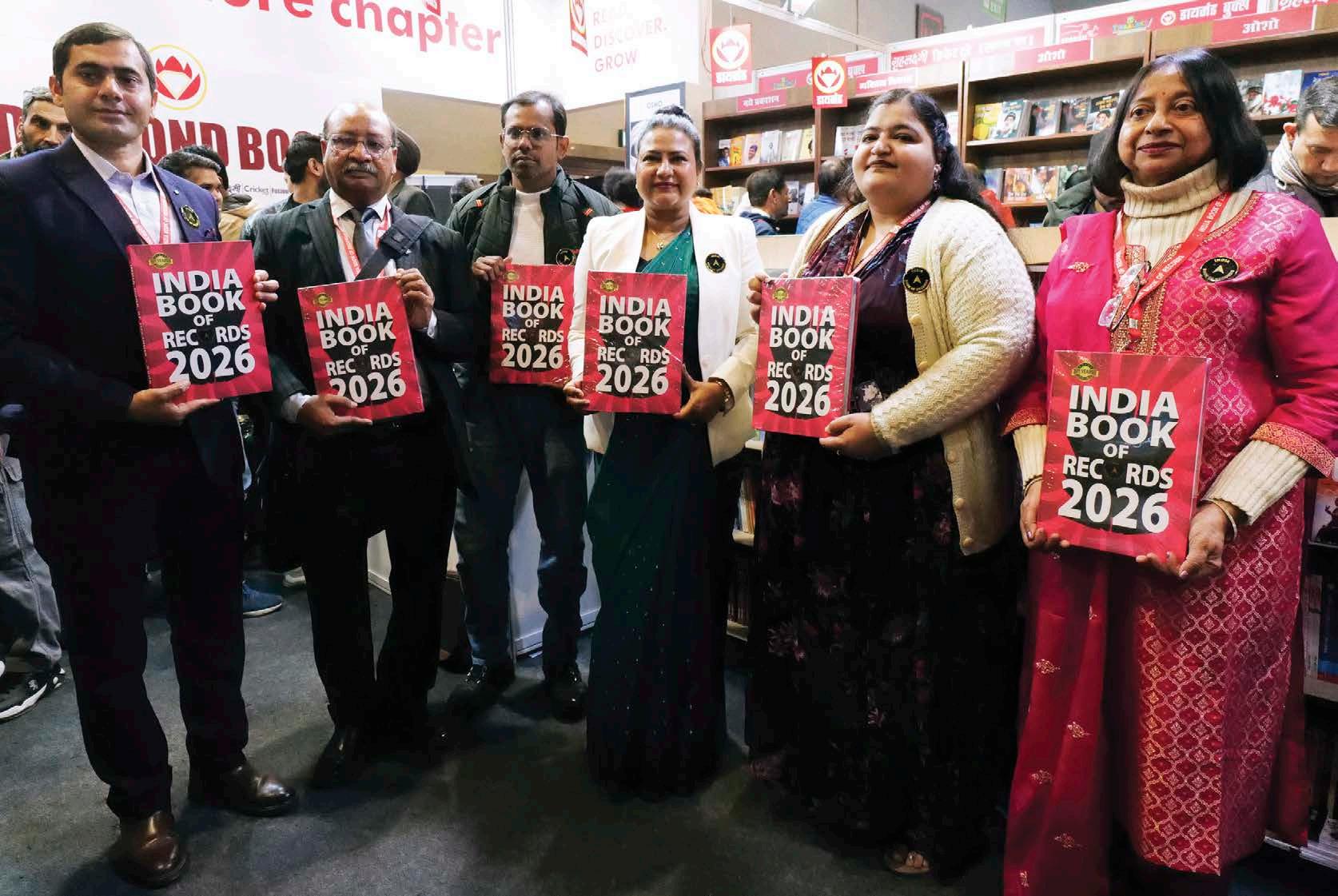
Grand Release of India Book of Records 2026 at World Book Fair
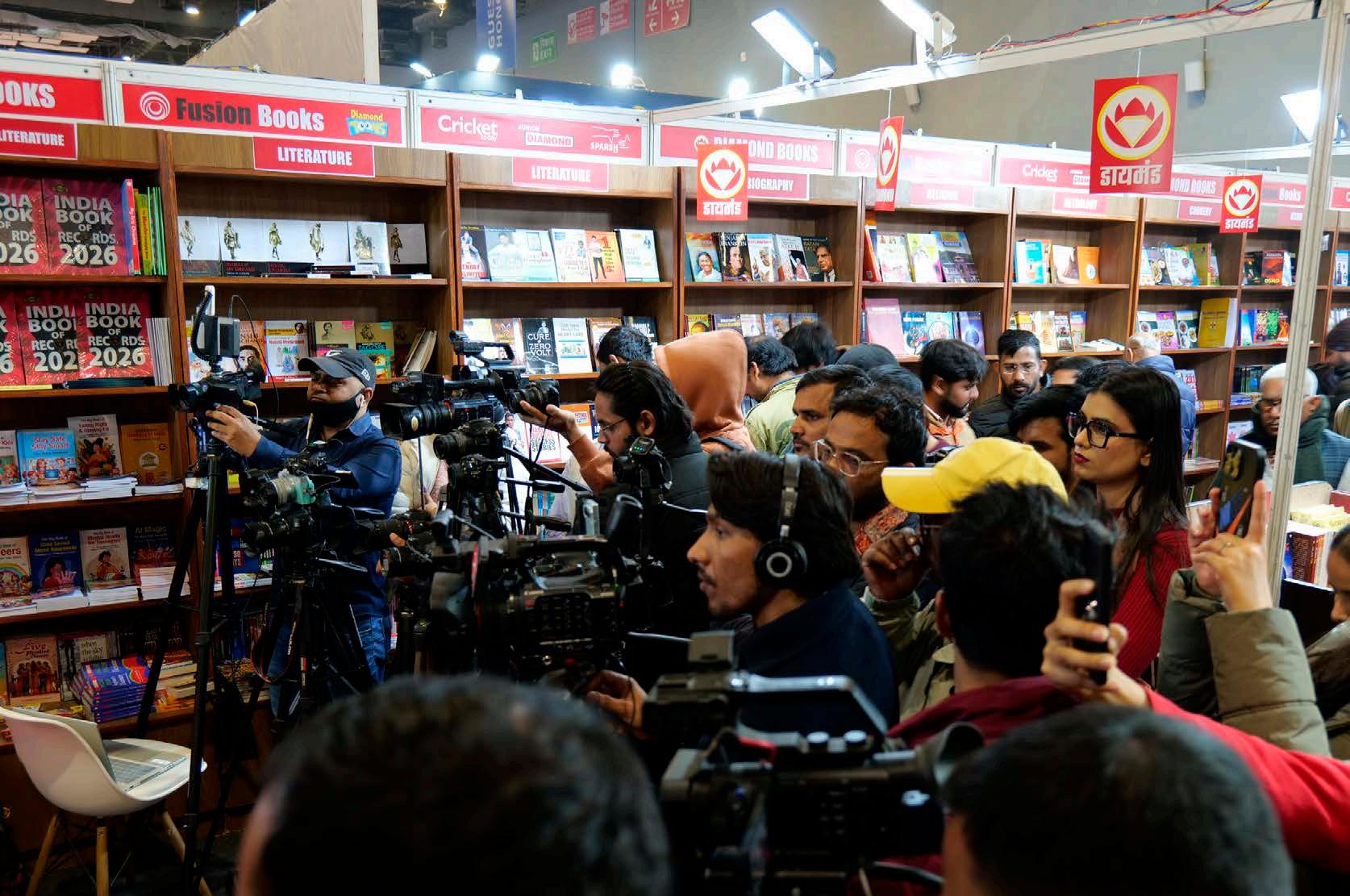
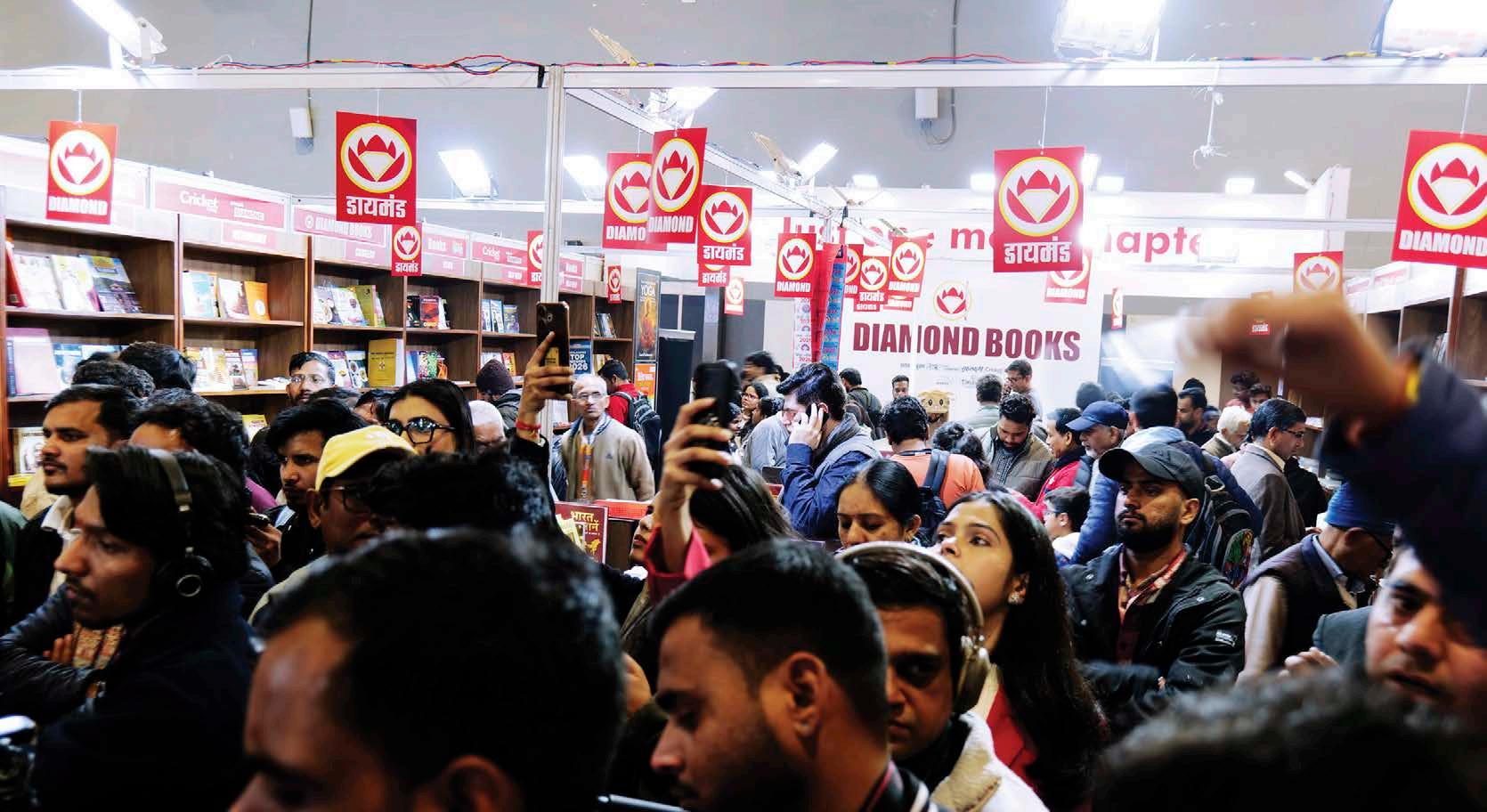
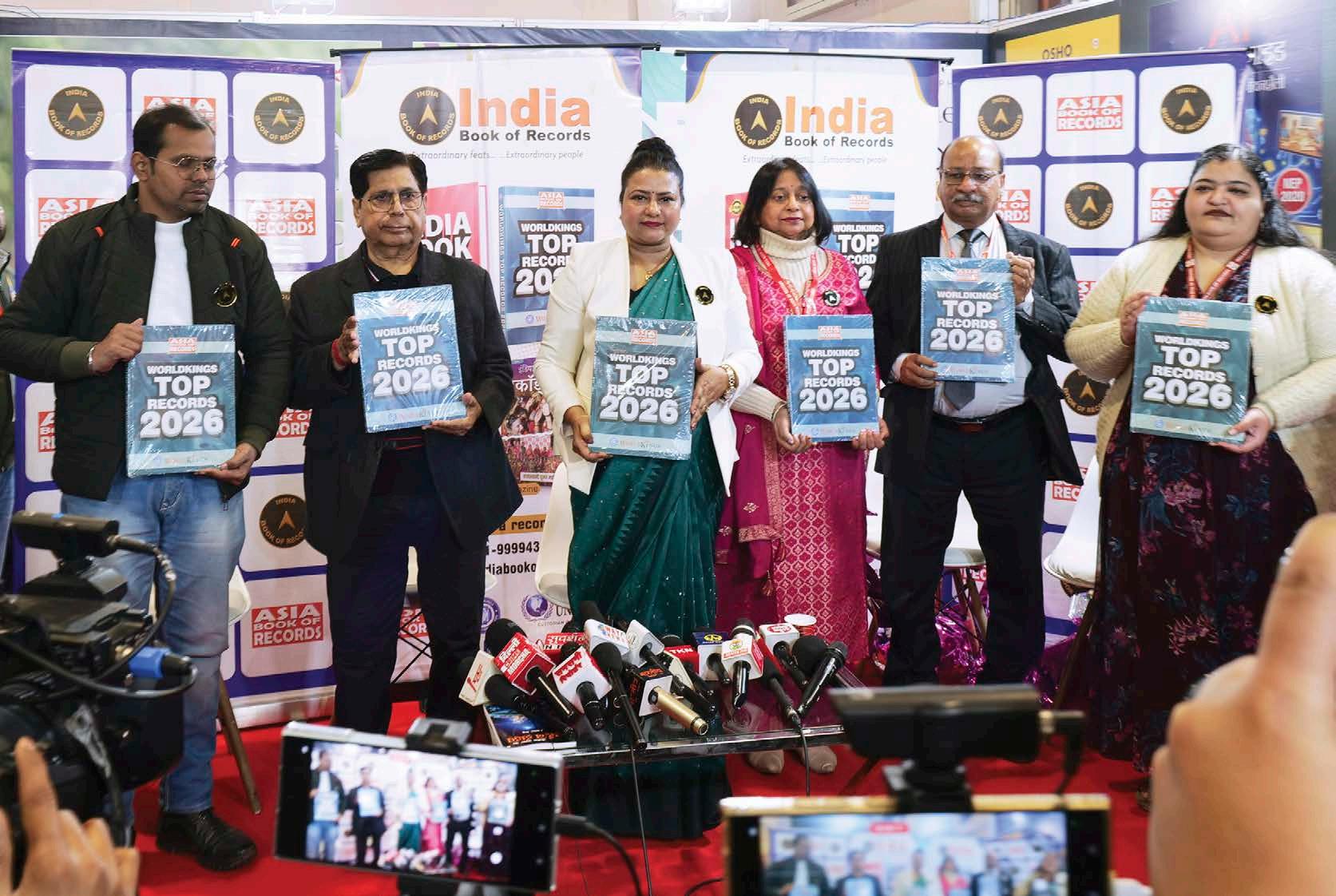
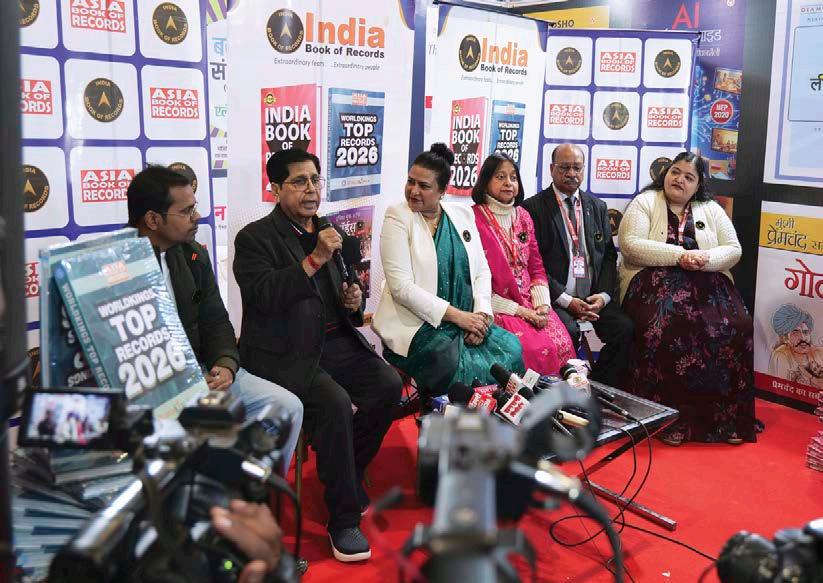
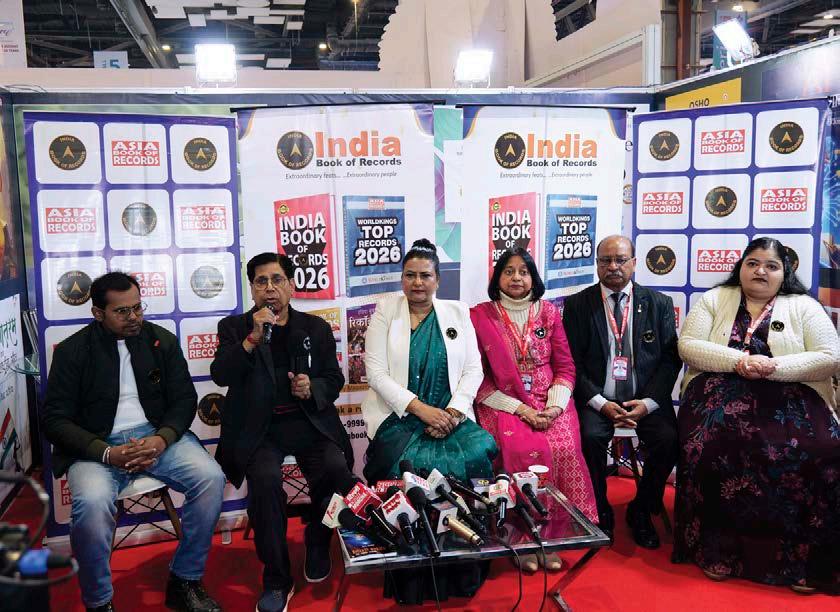
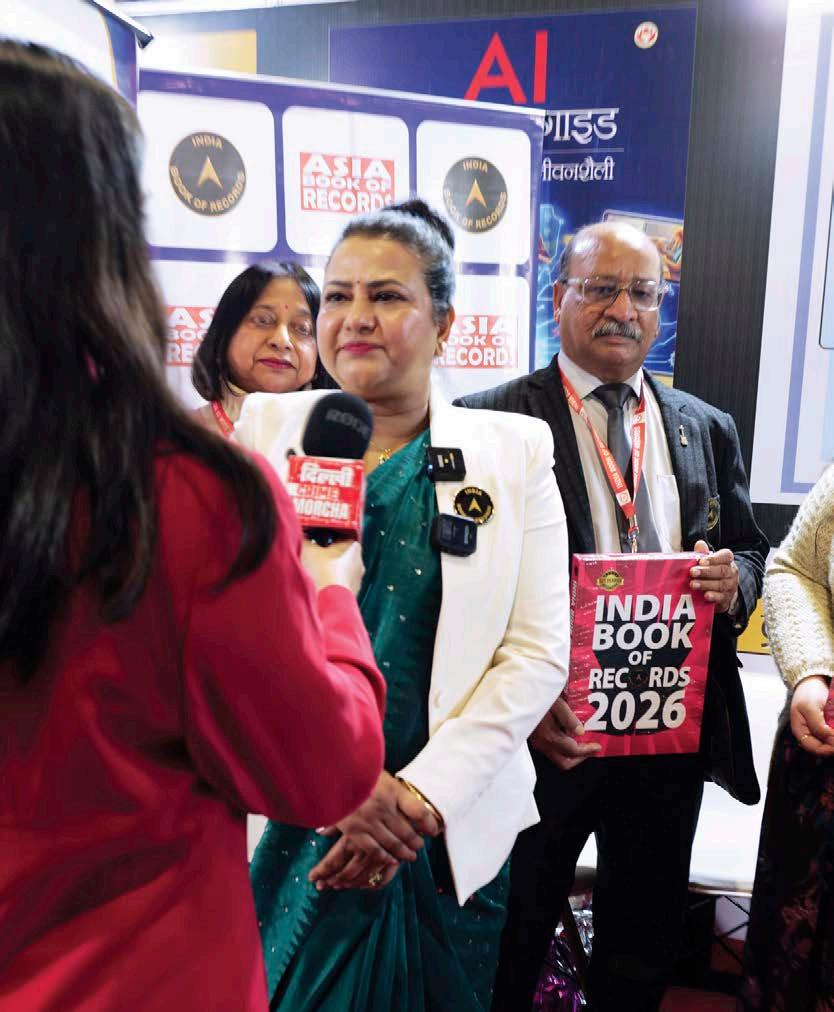
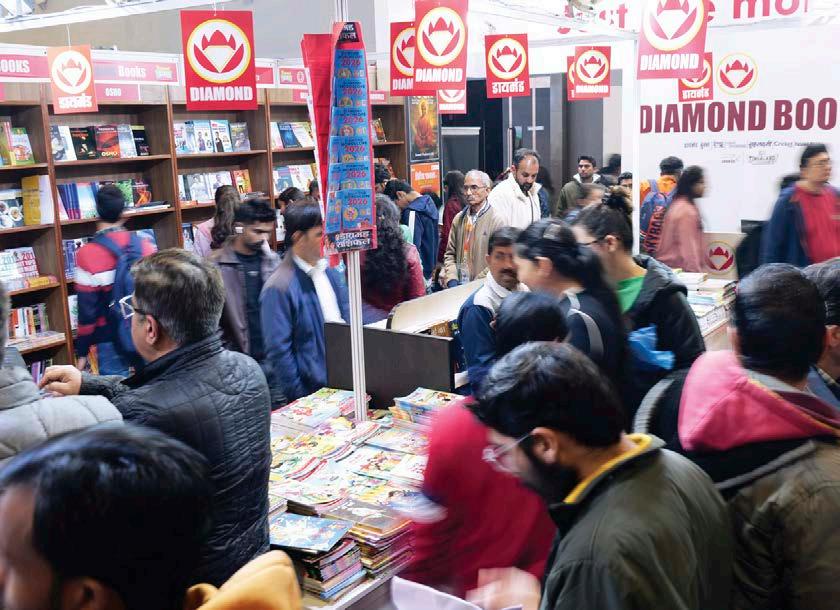
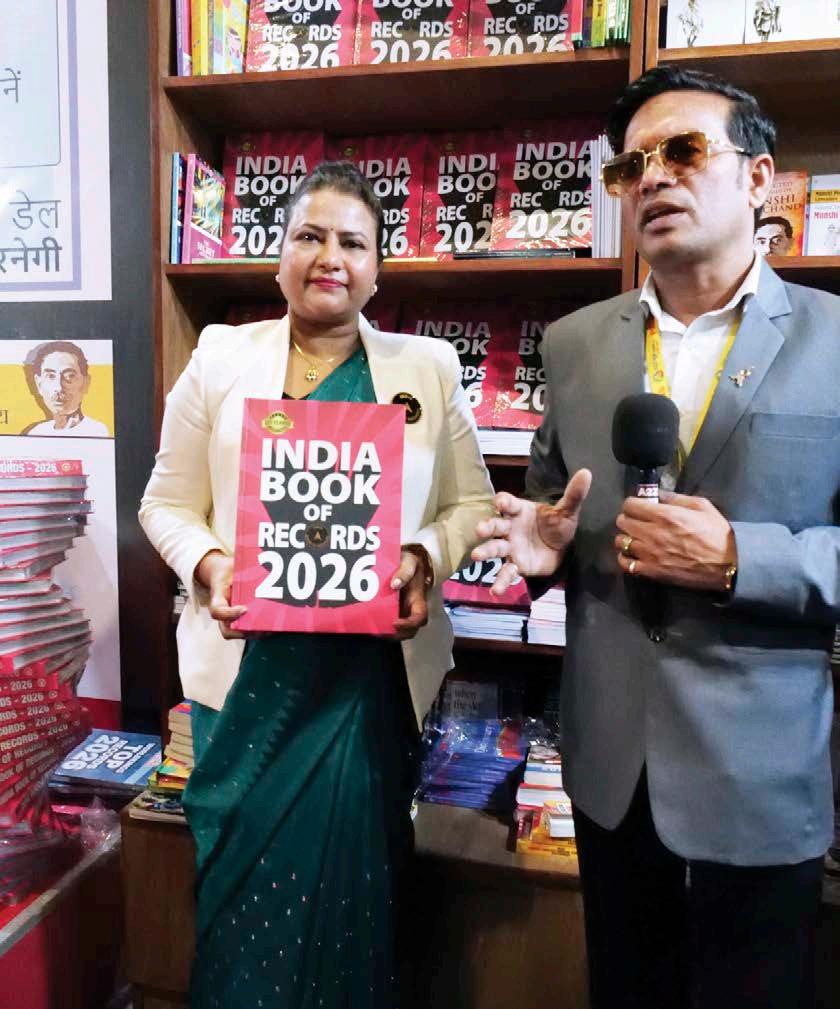
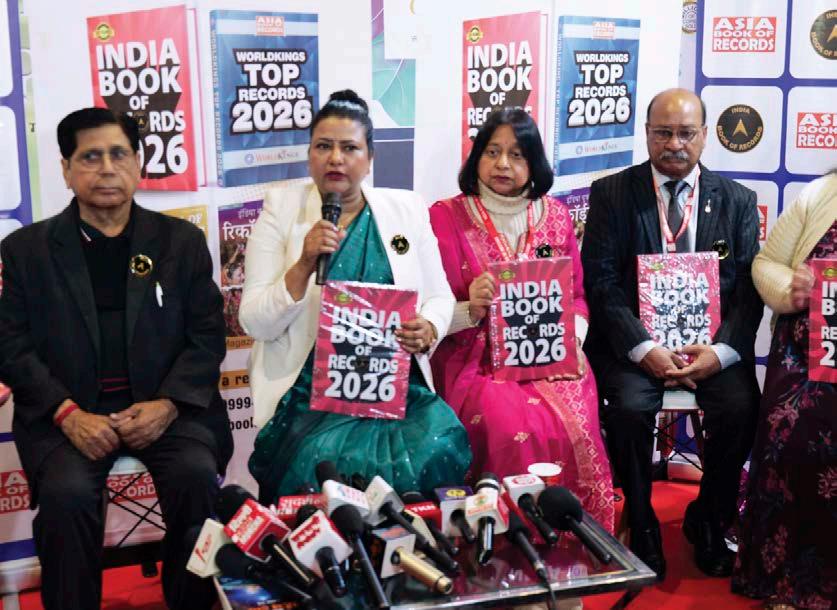
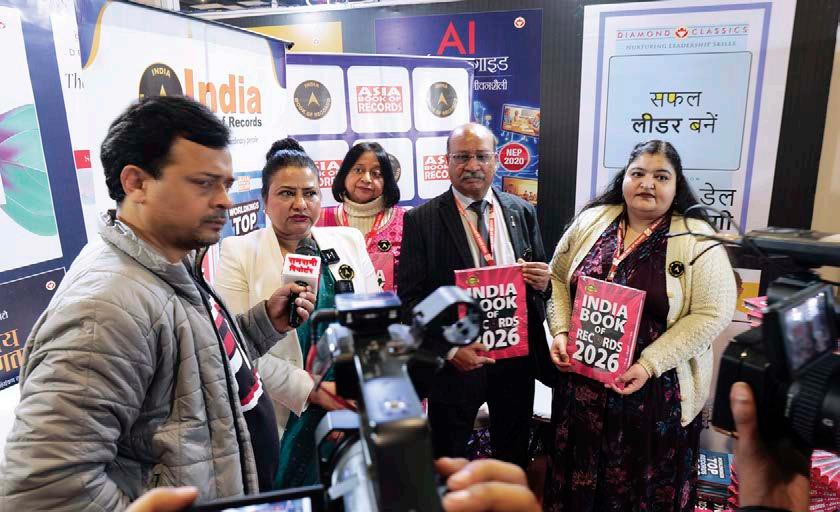
The World Book Fair at Bharat Mandapam, New Delhi, witnessed a momentous occasion with the release of the India Book of Records 2026 Edition on January 17, 2026. Alongside it, the Asia Book of Records – WorldKings 2026 was also unveiled. Hosted at the Diamond Books stall, the launch marked the 21st consecutive annual edition of this prestigious record compendium. Since its inception in 2006, the India Book of Records (IBR) has stood as the nation’s foremost record keeping authority, chronicling extraordinary feats and celebrating the spirit of achievement across India.
For over two decades, IBR has been synonymous with the documentation of human excellence. From unique talents and innovative creations to acts of endurance and social contributions, the organisation has provided a platform for individuals whose accomplishments might otherwise remain unnoticed. The Annual Book, published without interruption for 21 years, has become a cultural landmark, inspiring generations to push boundaries and redefine possibilities.
The 2026 edition continues this tradition with renewed vigour. Featuring approximately 6,000 new records, the book spans 552 glossy, full colour pages bound in a durable hard cover. Each page is a testament to the diversity of Indian talent, capturing stories of courage, creativity, and perseverance.
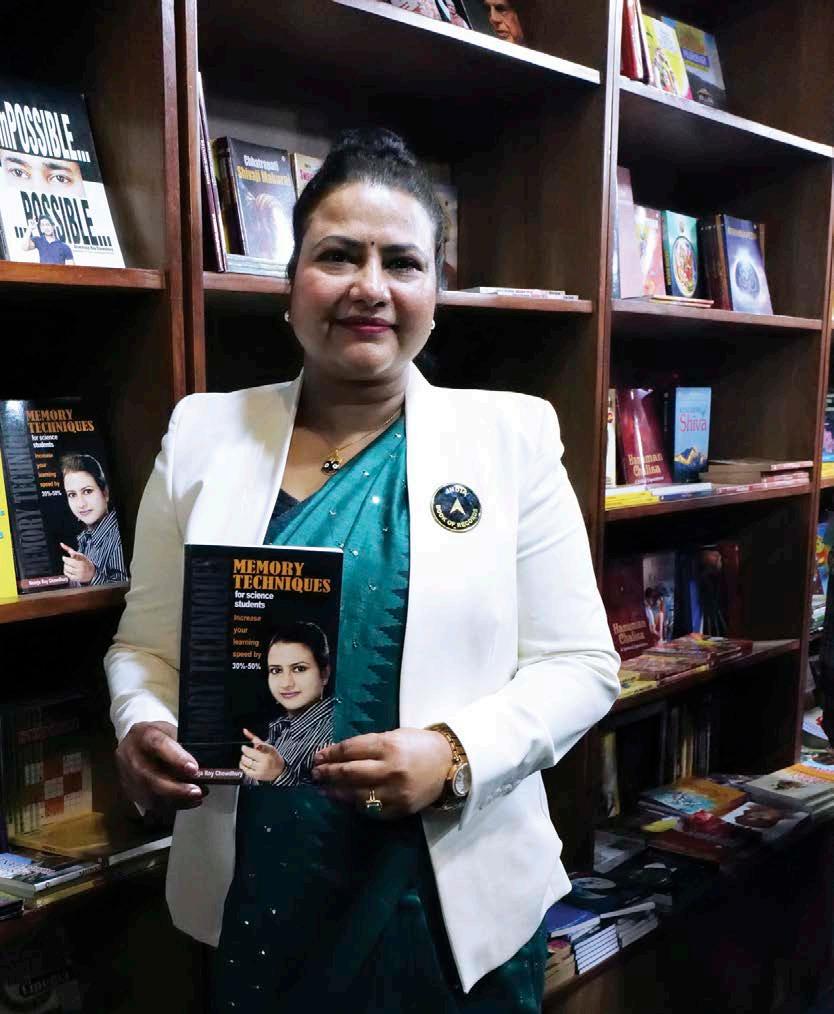
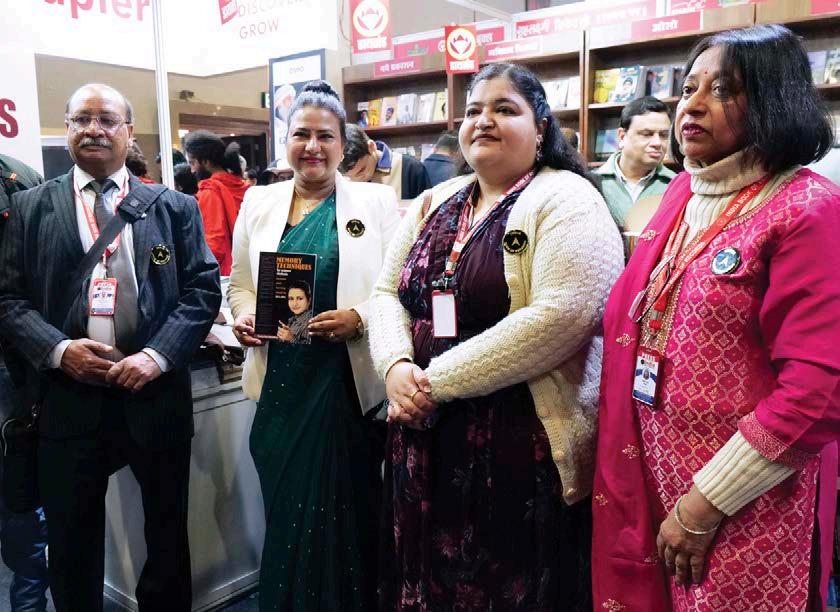
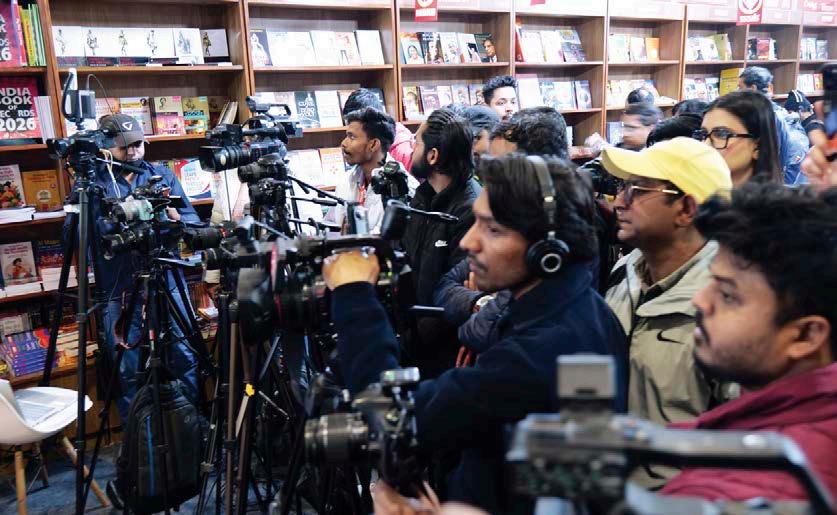
The release ceremony was graced by Mrs. Neerja Roy Chowdhury, Managing Editor of the India Book of Records, along with her dedicated team. Also in attendance was Mr. Narender Kumar Verma, Founder and Chairman of Diamond Books. In the presence of numerous media representatives, book lovers, and record enthusiasts, Mrs. Chowdhury formally unveiled the edition, reiterating IBR’s mission to “take the unidentified talents of India to their rightful destination.”
Her words resonated with the audience, underscoring the organisation’s vision of inclusivity and recognition. By spotlighting achievers from all walks of life, IBR ensures that
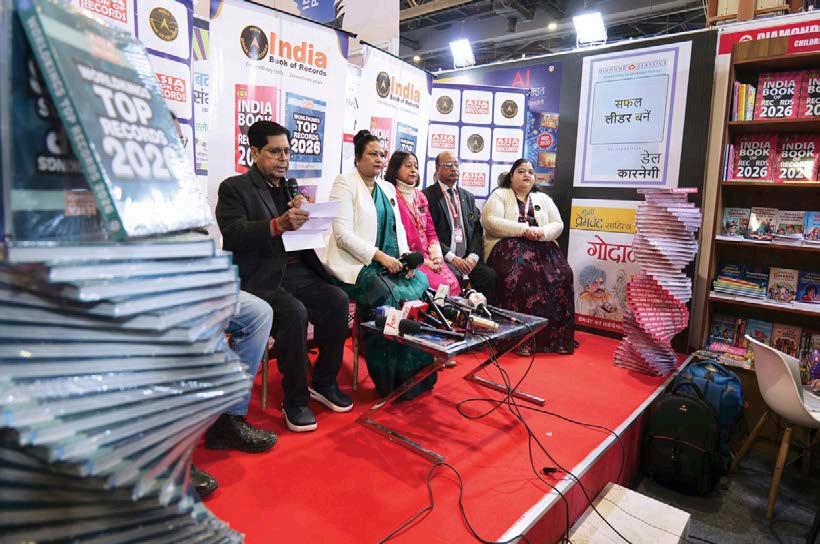
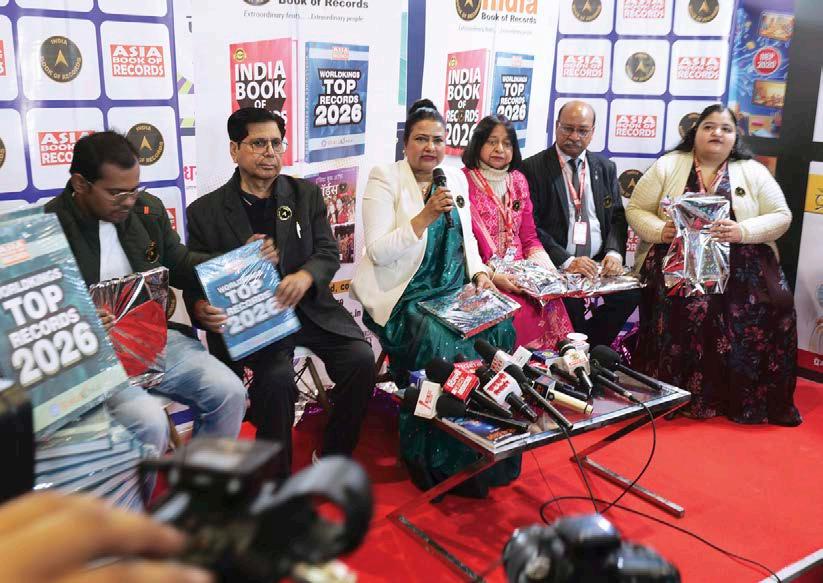
India Book of Records unveiled its 2026 Annual Edition at the New Delhi World Book Fair, 21st continuous volume featuring 6000plus records, honouring nationwide achievement, passion, and perseverance.
talent is not confined to metropolitan centres or elite circles but reaches every corner of the nation.
While the Annual Book remains the flagship publication, IBR’s influence extends far beyond its pages. The organisation publishes a monthly magazine in both English and Hindi, offering inspiring stories of record holders and updates on new achievements. These magazines serve as a bridge between the annual editions, keeping readers engaged and motivated throughout the year.
Additionally, IBR organizes regular convocations to honour record holders in person. These events provide achievers
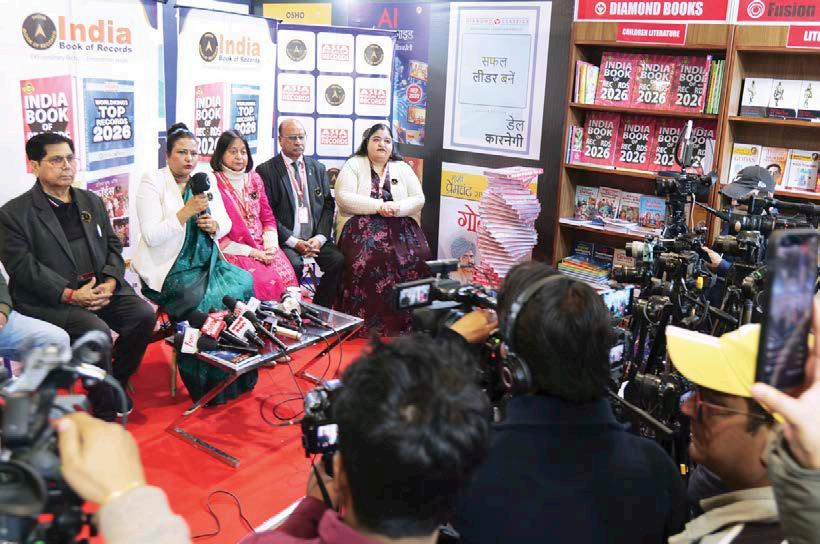
with a platform to share their journeys, fostering a sense of community among individuals who have dared to dream differently. The recognition ceremonies are not merely symbolic; they validate the efforts of record holders and encourage others to pursue their passions.
In keeping with the evolving media landscape, IBR has established a strong presence across multiple platforms. Weekly television programs highlight record holders and their stories, bringing achievements into living rooms across the country. Online platforms, including the official website, provide access to records, updates, and opportunities for aspiring achievers to submit their entries.
The 2026 edition is now available for purchase online, making it accessible to readers nationwide. Interested buyers can order the book through the official website: https:// indiabookofrecords.in
One of the defining features of IBR is its inclusivity. The records featured span a wide spectrum – from feats of physical endurance and intellectual brilliance to artistic creativity and social impact. Whether it is a child prodigy solving complex puzzles, a community initiative transforming lives, or an individual breaking barriers in sports, each record reflects the multifaceted spirit of India.
By documenting such diverse achievements, IBR not only honours individuals but also contributes to the collective identity of the nation. It reminds readers that greatness is not
limited to conventional definitions of success but can be found in everyday acts of innovation and perseverance.
The release of the 2026 edition is more than a ceremonial milestone; it is a call to action for aspiring achievers. As Mrs. Chowdhury noted during the launch, the mission of IBR is to ensure that hidden talents find recognition. This vision aligns with India’s broader narrative of progress, where individual excellence contributes to national pride.
For young readers, the book serves as a source of inspiration, encouraging them to explore their potential. For educators and
parents, it offers examples of determination and creativity that can motivate children to pursue their passions. For society at large, it stands as a reminder that every achievement, big or small, deserves acknowledgment.
The unveiling of the India Book of Records 2026 Edition at the World Book Fair in New Delhi reaffirms the organisation’s commitment to celebrating human achievement. With 6,000 new records across 552 vibrant pages, the book is a treasure trove of inspiration, documenting the extraordinary in the ordinary.
As IBR enters its 21st year of publication, it continues to uphold its role as custodian of Indian records, bridging the gap between talent and recognition. Through its annual book, monthly magazine, convocations, and media presence, the organisation ensures that achievers across the nation are celebrated and remembered.
The 2026 edition is not just a book; it is a movement – a celebration of India’s boundless creativity, resilience, and spirit of excellence.
A New Milestone in the Indo–Vietnam Cultural Heritage Exchange Program
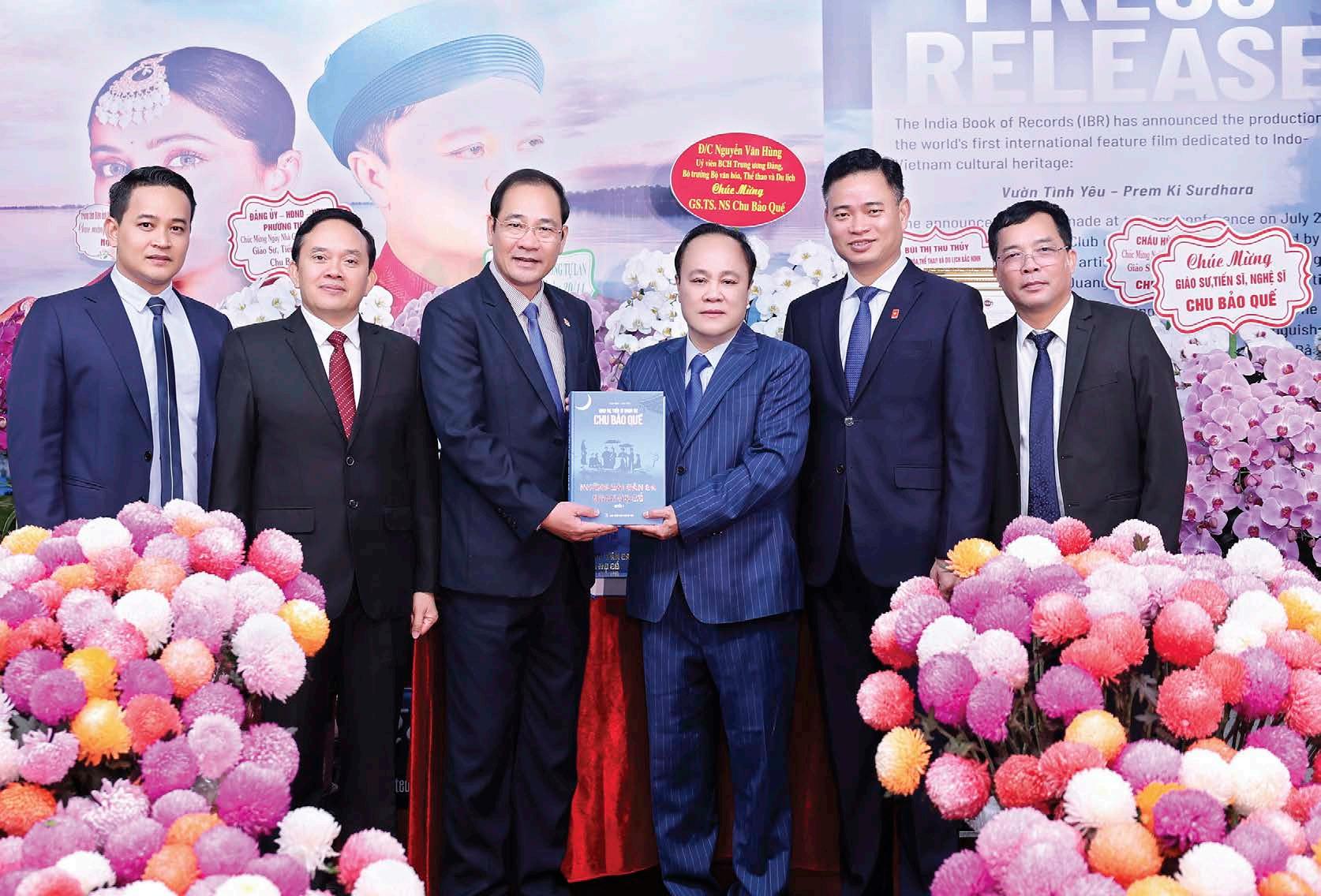
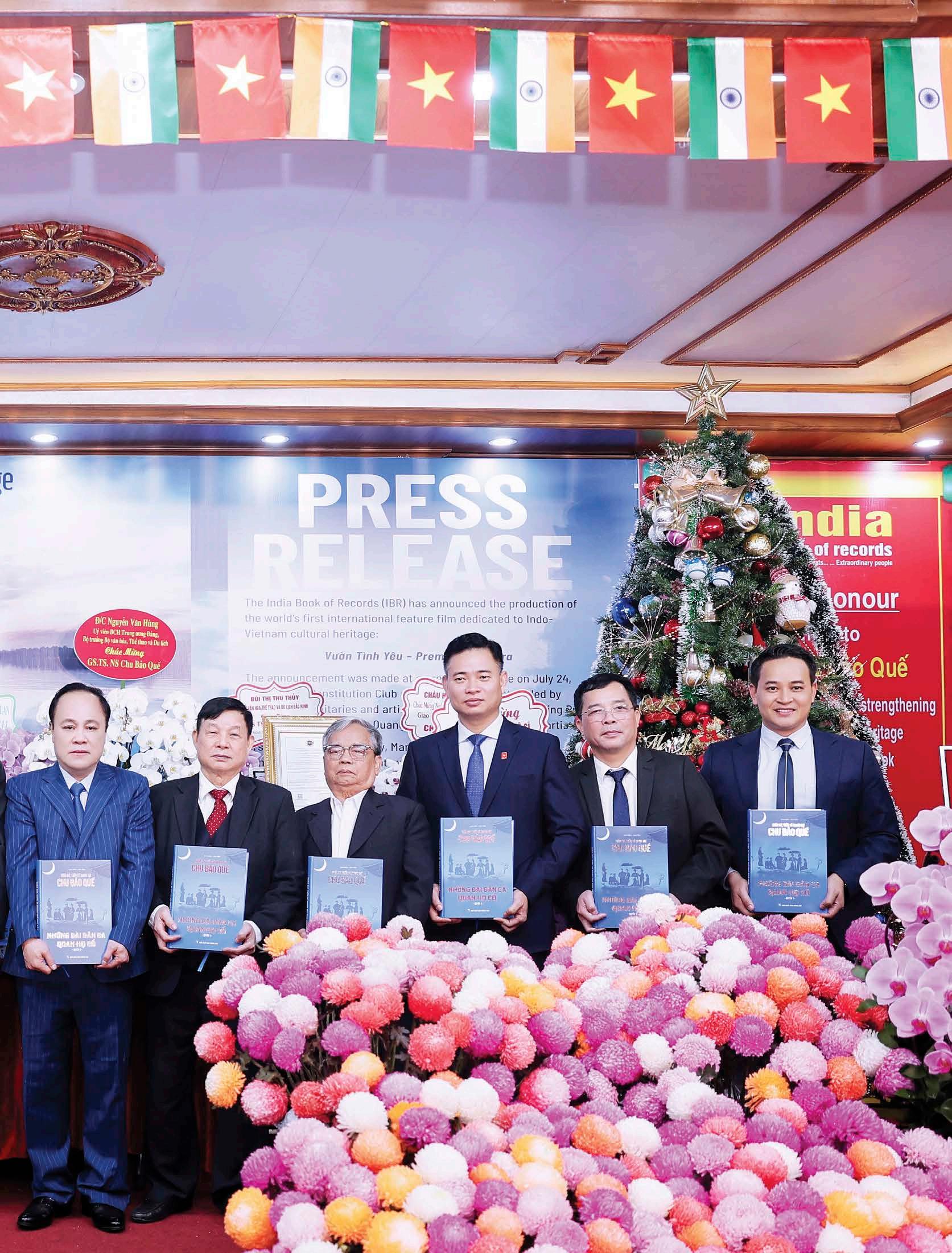
The India Book of Records proudly celebrates yet another remarkable achievement by Prof. Chu Bao Que, Brand Ambassador of the Indo–Vietnam Cultural Heritage Exchange Program - an initiative of the India Book of Records.
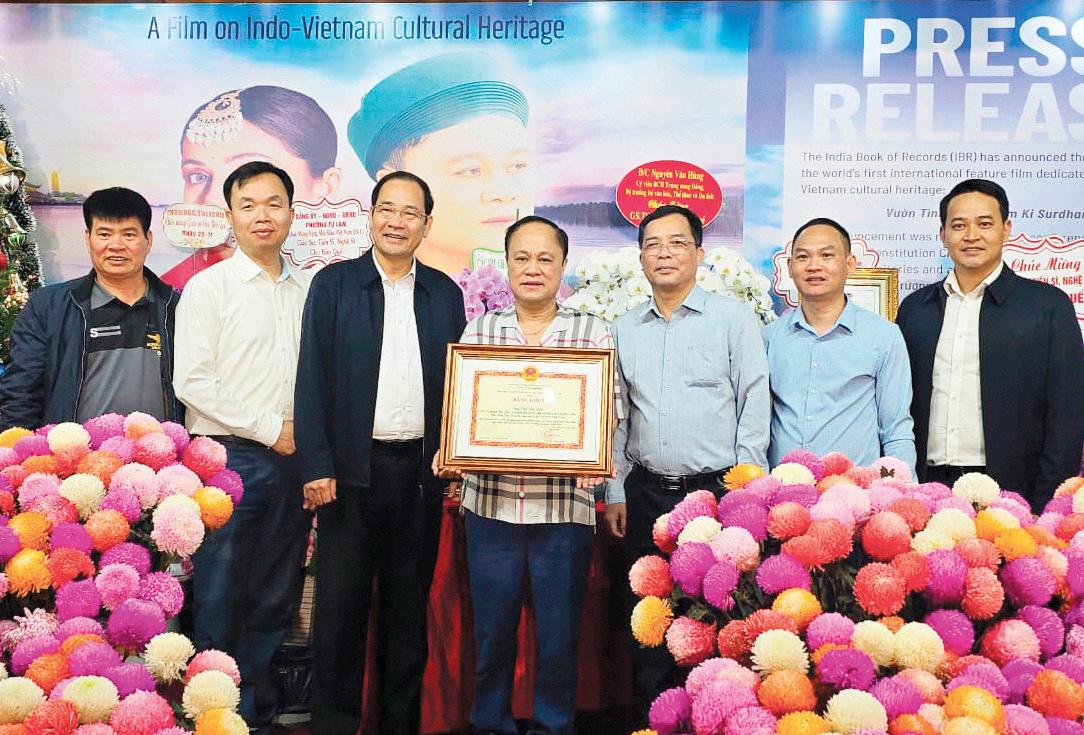
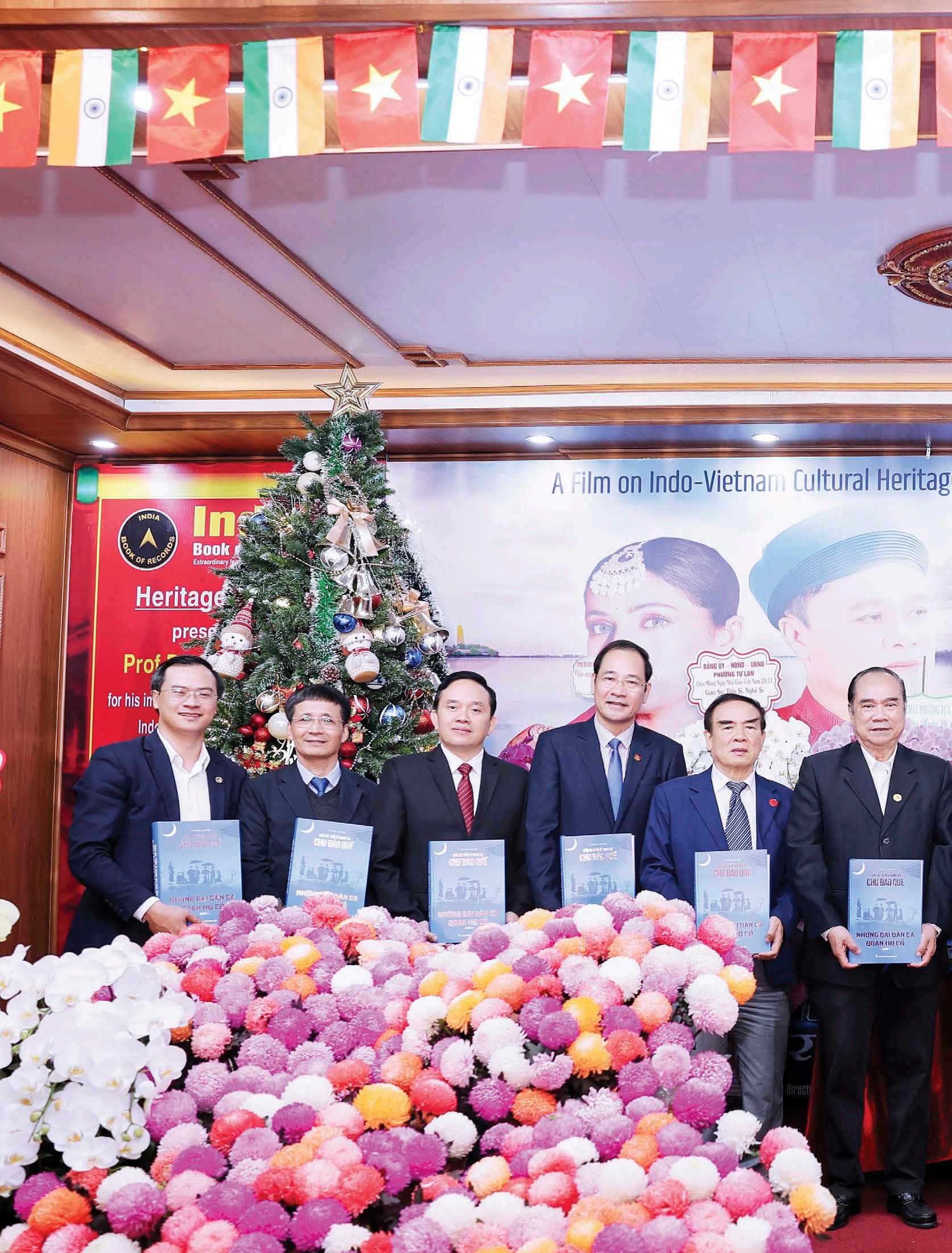
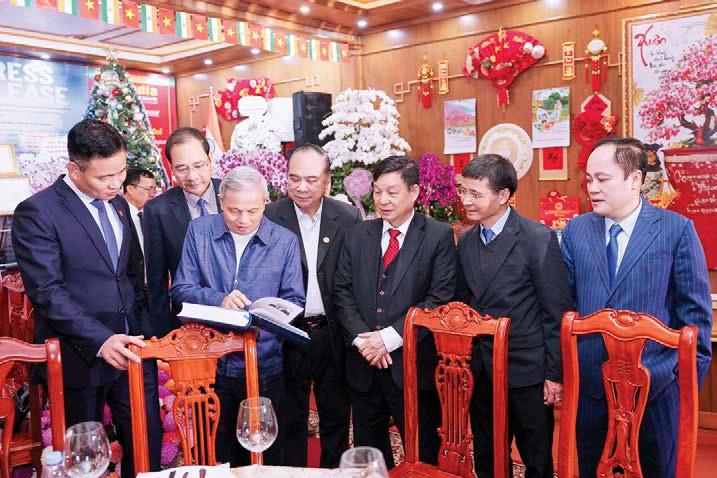
Prof. Chu Bao Que has reached a new milestone at Expo 2025 Osaka, Kansai, Japan, continuing his tireless mission to safeguard and promote cultural heritage across borders. Upon his return, he was honoured by the Government of Vietnam with a special ceremony and the release of a book dedicated to his works. In recognition of his outstanding achievements, which contributed significantly to the success of Vietnam National Day at Expo 2025, he received the award from the Minister of Culture, Sport and Tourism.
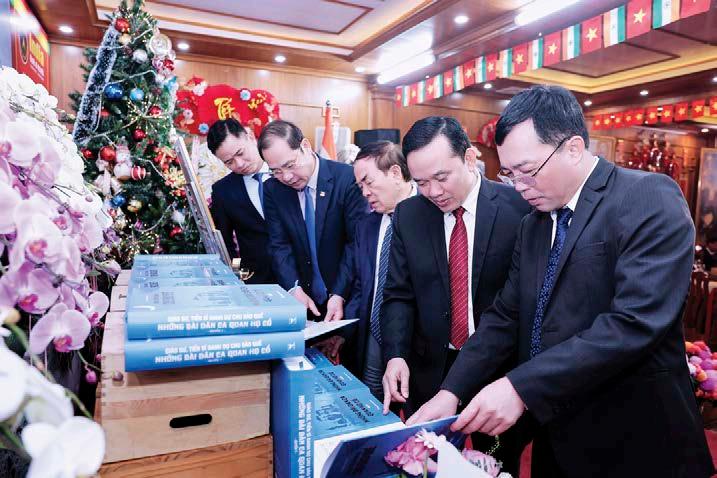
This recognition marks a continuation of a distinguished journey. Earlier in February 2025, New Delhi witnessed the release of Guardian of Heritage, authored by Dr. Biswaroop Roy Chowdhury, followed by its Vietnamese edition,
launched in Hanoi.
A feature film titled Vuon Tinh Yeu – Prem Ki Surdhara is also being produced by IBR and is scheduled for release in the first week of April 2026. Both the book and the film are based on the life and the contribution of Prof. Chu Bao Que in protecting and promoting the Indo–Vietnam Cultural Heritage Exchange.
On September 21, 2025, Indian delegates were honoured at the prestigious Grand Records Ceremony held in Ho Chi Minh City, Vietnam. This recognition celebrated the collaborative efforts between India and Vietnam in promoting cultural exchange and safeguarding traditions.
From October 2–5, 2025, a four-day Vietnamese Cultural Dance Training Camp was organised at the India Book of Records Head Office in Faridabad. The camp was conducted by expert UNESCO-affiliated Vietnamese dancers, who provided intensive training to selected participants. This initiative offered young talents the opportunity to learn intricate dance techniques and immerse themselves in the rich cultural heritage of Vietnam, fostering deeper cultural understanding and artistic excellence.
This exclusive dance training was led by distinguished Vietnamese artists affiliated with UNESCO, under the expert guidance of Prof. Chu Bao Que, a revered figure in cultural arts and the brand ambassador of this project.
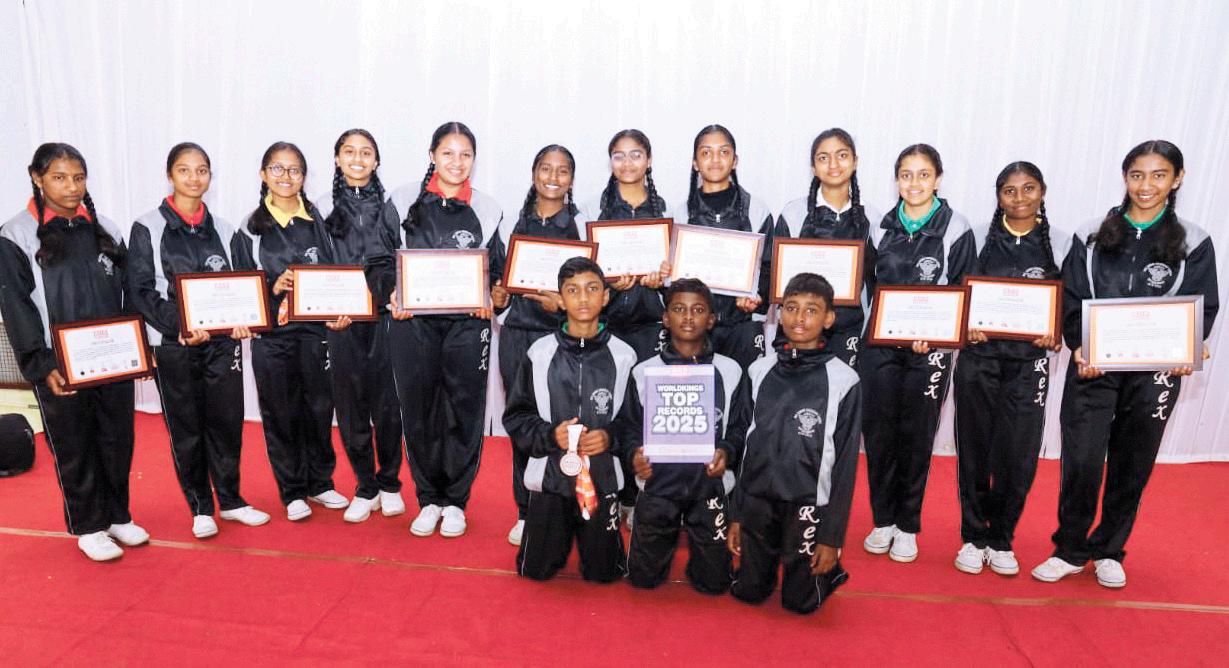
The program, directed by Dr. Nguyen Hoang Anh (Julia), Artist Chu Thị Hằng, and Artist Nguyễn Thu Trang, selected 16 children aged 13 to 17 from various schools who demonstrated exceptional talent in dance. These young performers received personalised instruction, learning intricate techniques and cultural nuances that define Vietnamese dance traditions.
On October 24, 2025, Dr. Biswaroop Roy Chowdhury, Chairman of the World Records Union, received the Golden Board Award from the Vietnam Federation of UNESCO Associations during a cultural exchange program and Vietnamese Mother Goddess worship heritage preservation activities held in India. The award
was presented by Mr. Trần Văn Mạnh, Vice President of the Asia–Pacific Federation of UNESCO Clubs and Associations, at an event in Hanoi, which was also attended by Mr. Tạ Quang Đông, Deputy Minister of Culture, Sports, and Tourism of Vietnam.
Together, these milestones underscore the Indo–Vietnam Cultural Heritage Program’s commitment to preserving traditions and fostering cultural exchange on a global scale.
The next activity in this series will be jointly organised by UNESCO and IBR in Vietnam, where Indian dancers will have the opportunity to perform and teach Indian cultural dance, while also learning Vietnam’s rich cultural dance heritage.
Nominations are now open for those who wish to join the upcoming Indo–Vietnam Cultural Dance Activity.
To nominate yourself, visit: indiabookofrecords.in/unescoibrdancetraining
For more details, please contact: 8826333382
All these efforts are aimed at one goal: protecting, promoting, and reviving the cultural heritage of India and Vietnam.
The India Book of Records is not only committed to documenting the achievements of its record holders but also equally dedicated to showcasing their talents on a global platform. In this direction, the book, the film, and the
Vietnamese dance training by UNESCO-affiliated artists have been organised. In the future, IBR remains committed to promoting the talents of India worldwide through UNESCO, national television channels, social media, IBR monthly magazines, and the IBR annual books.
The all-new India Book of Records Annual Book 2026 Edition has just been released.
Anthem of Shared Voice
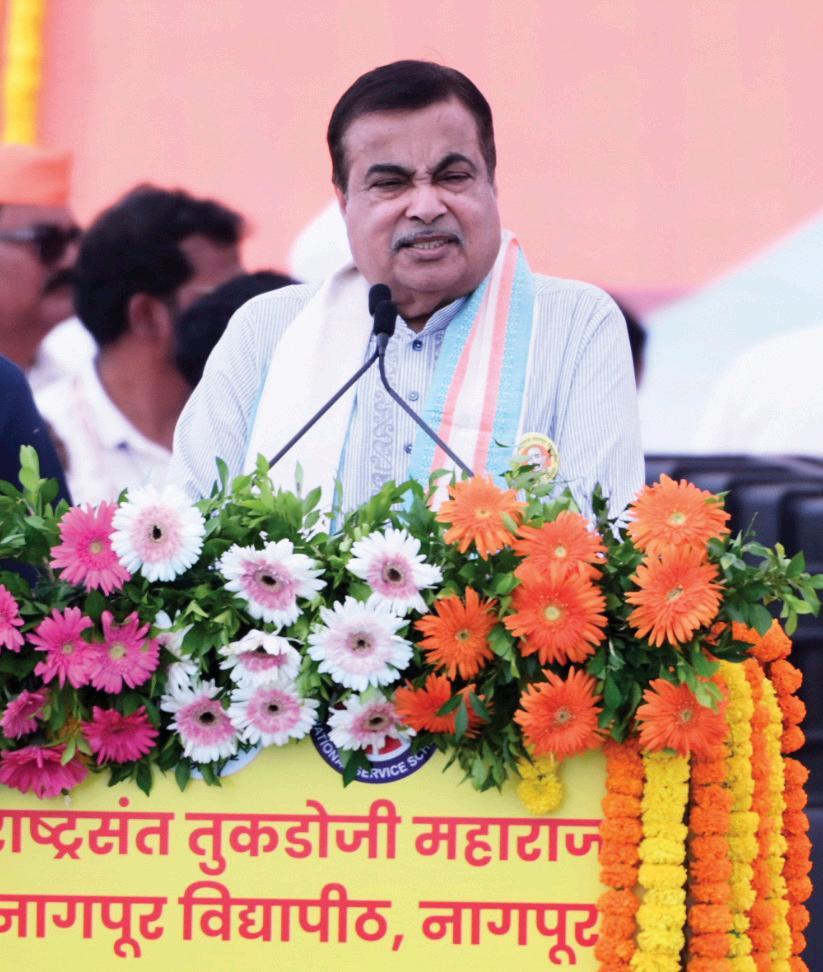
Rashtrasant Tukadoji Maharaj in Maharashtra remains a guiding presence in social thought, education, and community life. His ideas of unity, discipline, and ethical conduct continue to influence institutions across the state. His death anniversary often invites reflection through collective acts rather than ceremony alone.
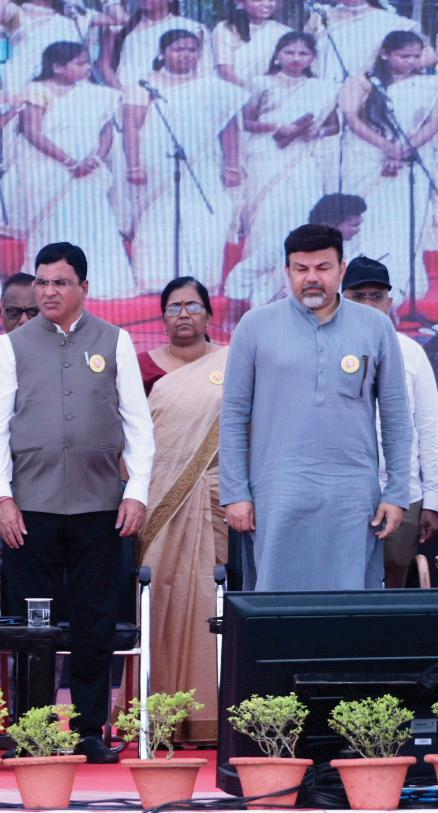
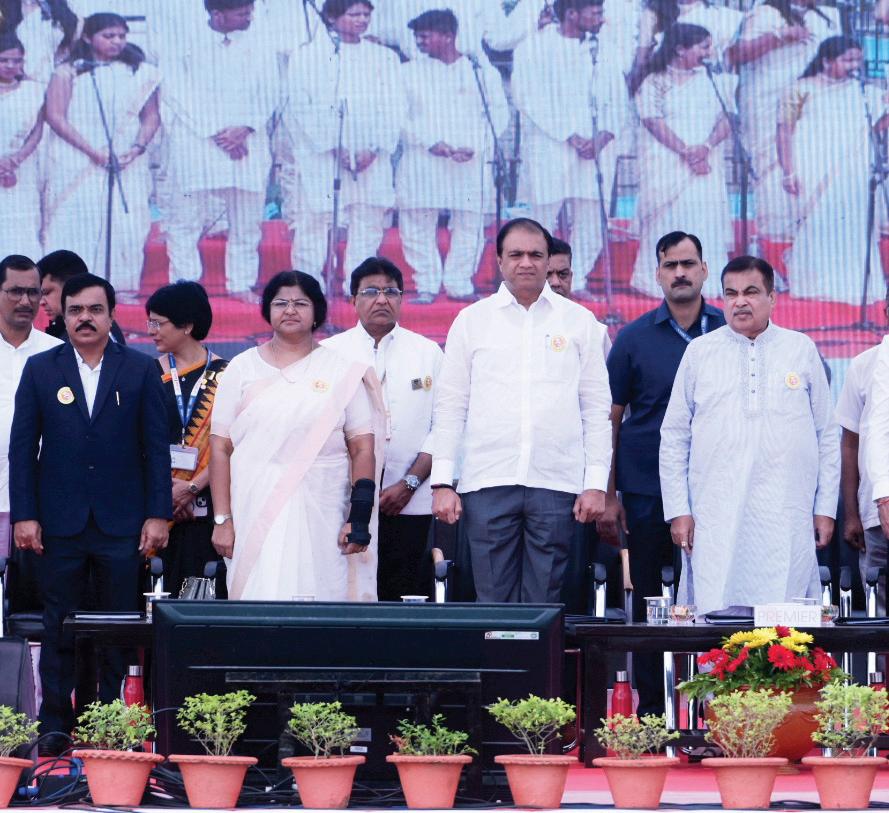
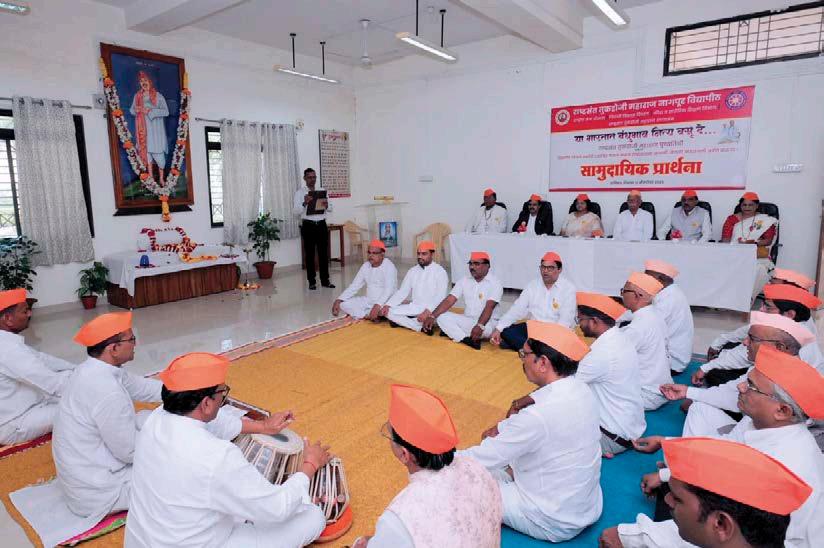
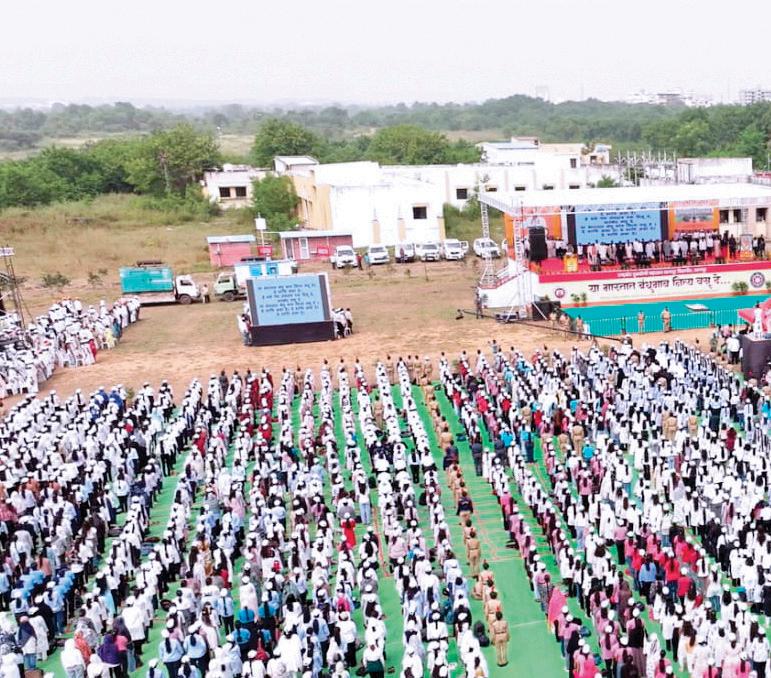
On 11 October 2025, Rashtrasant Tukadoji Maharaj Nagpur University chose song as that collective act. The university organised a large-scale initiative to sing its anthem, “Ya Bharatat Bandhu Bhav Nitya Vasu De…”, at the same time across multiple locations. The effort brought together students, faculty, staff, and alumni.
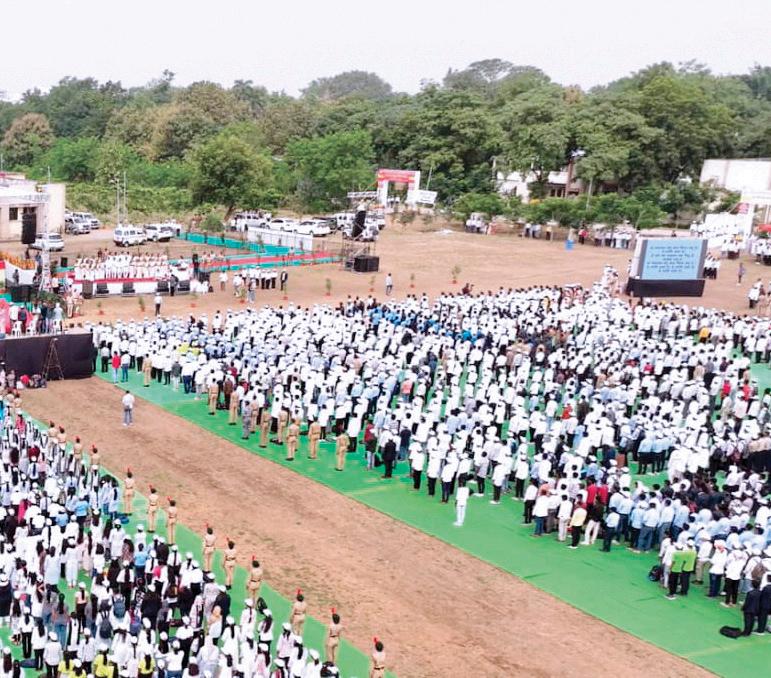
The initiative unfolded through physical gatherings and digital participation. Campuses hosted coordinated singing sessions. Parallel online platforms connected participants who joined remotely. A total of 27,535 people sang the university anthem at different locations through both digital and physical campaigns.
Lecture halls, open grounds, offices, and screens became part of this moment. Distance did not dilute the experience. The anthem itself carries meaning rooted in fraternity and belonging. Its words speak of unity within diversity. Singing it together on the death anniversary of Rashtrasant Tukadoji Maharaj added context and purpose.
The initiative was guided by Vice-Chancellor Dr Madhavi Khode Chaware. Planning focused on inclusion and remembrance. Participation was encouraged across departments and affiliated colleges. Clear instructions ensured uniform timing and conduct. The university’s administrative teams coordinated logistics. Technical teams handled digital streaming. Volunteers managed on-ground assemblies.
Communication flowed through official channels and student networks. Despite the scale, the atmosphere remained composed. There was no rush. Participants stood attentive. Many described the experience as grounding and reflective. The act of singing replaced speeches. The record was confirmed on the same day, 11 October 2025.
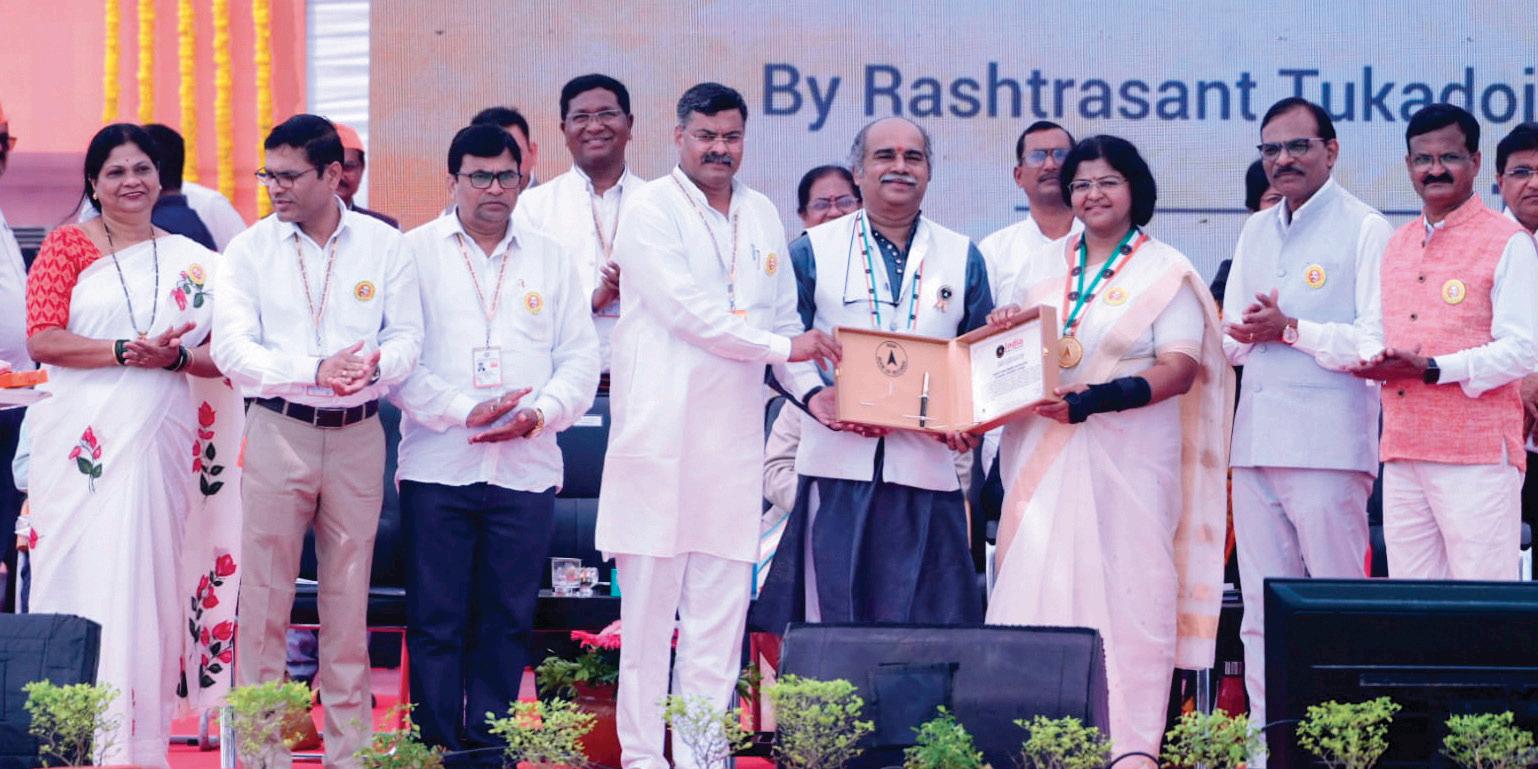
Asia Book of Records and India Book of Records recognised the achievement as the largest simultaneous participation in singing a university anthem. Adjudicator Dr Manoj Tatwadi presented medals and record certificates to the organisers. The recognition acknowledged coordination across locations and platforms. It also recognised the symbolic value of the event. Collective singing demands timing and attention.
Dr Madhavi Khode Chaware said, “This anthem brings our university community into one rhythm. Singing it together on this day honoured Rashtrasant Tukadoji Maharaj’s message of unity. We felt proud of this porgramme.”
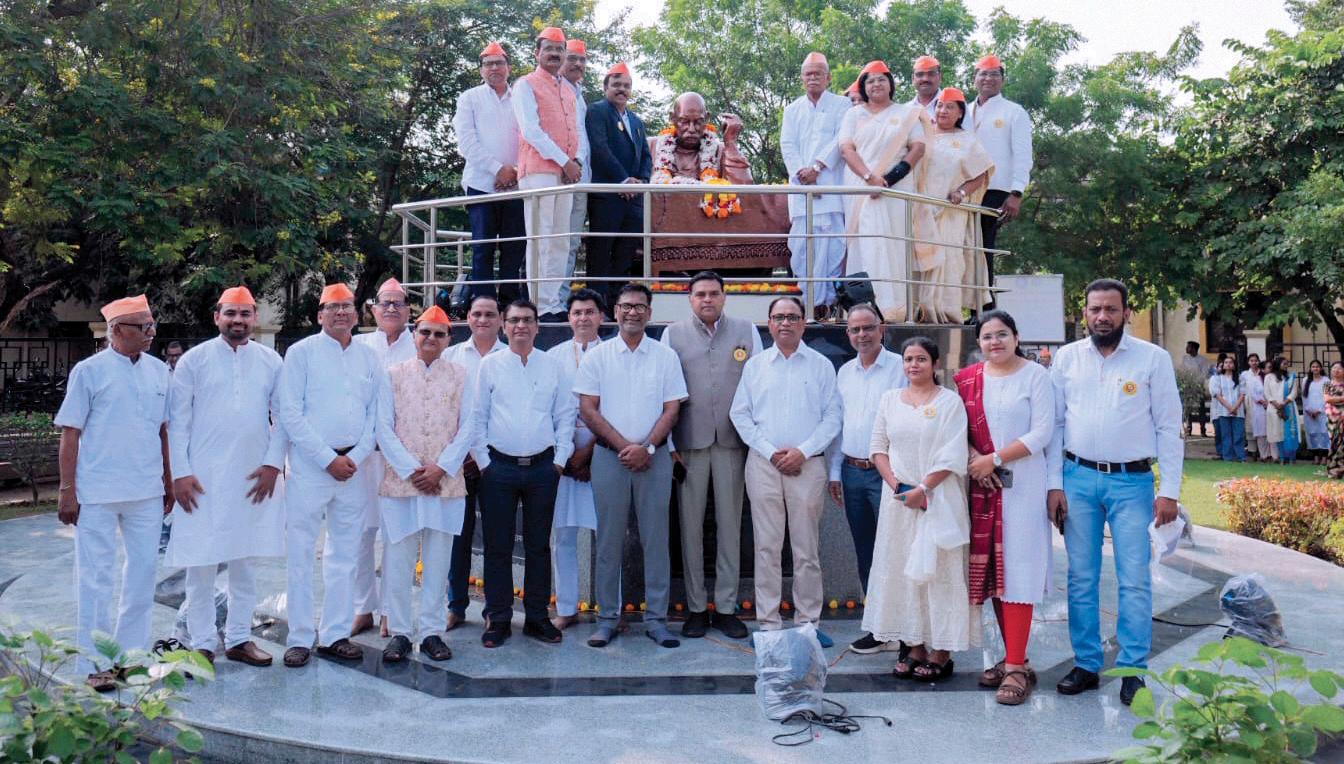
The event was designed to connect generations within the university. Students who had recently joined sang alongside those nearing graduation. Faculty members joined as equals. Rashtrasant Tukadoji Maharaj’s association with the university adds depth to the occasion. The institution bears his name and carries his values within its academic culture. Marking his death
On a solemn day in Nagpur, thousands joined across campuses and screens to sing a university anthem together, turning remembrance into collective expression and setting a national participation record.
anniversary through massive participation aligned tradition with present-day tools.
Digital participation expanded reach. Alumni joined from other cities. Students on internships connected online. The anthem crossed physical boundaries without losing its synchrony. The initiative also highlighted how universities adapt to changing communication methods. Physical presence and digital connection worked together. The result remained cohesive.
Observers noted the silence that followed the anthem. It was brief yet meaningful. Many stood still before dispersing. The moment lingered. Such collective acts reinforce identity within
large institutions. Universities often house diverse disciplines and opinions. Such rituals provide common ground.
Simplicity remained central at the event. A song, a time, and a common intention formed the core. Media coverage followed, yet the focus within the campus stayed inward. Conversations centred on participation. The record will be documented. Certificates will be displayed. Yet the lasting impact lies in memory.
The initiative stands as a reminder that collective expression can strengthen institutional identity while honouring cultural heritage. Rashtrasant Tukadoji Maharaj’s values found resonance in the anthem, uniting thousands in shared rhythm. Beyond the record, the event demonstrated how tradition and technology converge to inspire reflection, foster belonging, and reinforce the timeless message of unity through simple, meaningful acts.
IBR Record Holders Receive Rashtriya Bal Puraskar
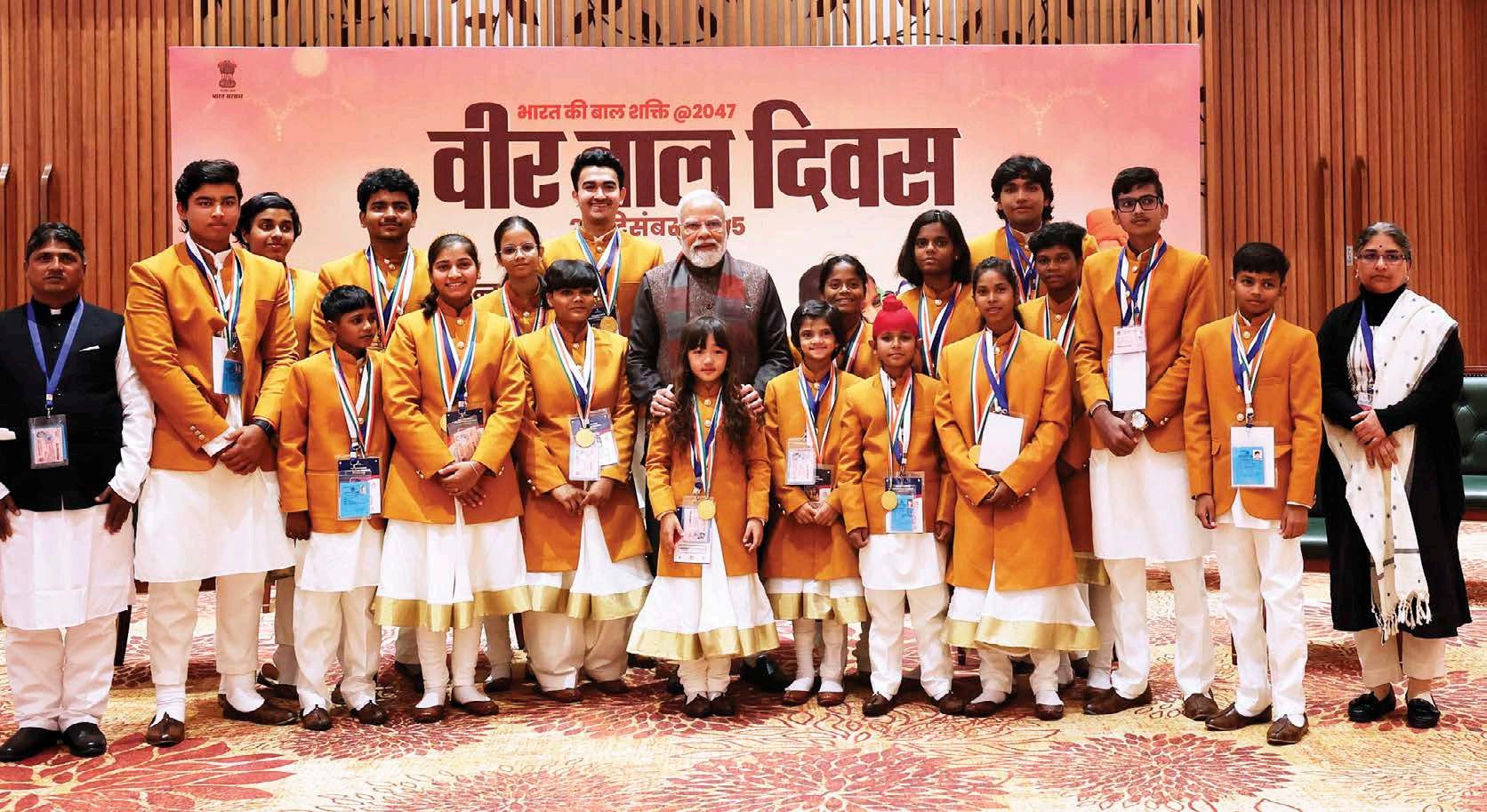
India has always been a land of extraordinary talent, where young minds and hearts rise above challenges to make their mark in diverse fields. The Pradhan Mantri Rashtriya Bal Puraskar (PMRBP), instituted by the Ministry of Women and Child Development, once again shone a spotlight on this brilliance. On December 27, 2025, at Vigyan Bhawan, New Delhi, President Droupadi Murmu conferred the prestigious awards upon 20 exceptional children from across the country. Their achievements spanned bravery, innovation, art and culture, sports, social service, environment, and science and technology - each story a testament to resilience, creativity, and determination.
talent from an early age. By celebrating achievements in diverse fields, it sends a powerful message: excellence is not confined to academics alone but can be found in art, sports, innovation, social service, and even the courage to face adversity.
Every year, many India Book of Records achievers find their place among the awardees, highlighting the synergy between record-setting feats and national recognition. The 2025 edition, with Suman and Vishwanath as honourees, reinforces this tradition. Their journeys - one through the rhythms of tabla, the other across the world’s tallest peaks - reflect the diversity of talent that India proudly nurtures.

Among the awardees, like every year, were two remarkable India Book of Records (IBR) holders, whose journeys exemplify the spirit of youthful excellence: Suman Sarkar, a tabla prodigy from West Bengal, and Vishwanath Karthikey Padakanti, a fearless mountaineer from Telangana. Their stories not only inspire but also reaffirm India’s rich tradition of nurturing talent across disciplines.
The Pradhan Mantri Rashtriya Bal Puraskar is more than just an award - it is a national recognition of the immense potential of India’s youth. Instituted to honour children who display exceptional abilities, the award underscores the importance of nurturing
The Pradhan Mantri Rashtriya Bal Puraskar stands as a beacon of hope and inspiration, celebrating the achievements of 20 young heroes who represent the best of India’s future. Among them, Suman Sarkar and Vishwanath Karthikey Padakanti shine brightly, their journeys reminding us that talent knows no boundaries of age or geography.
As India continues to evolve as a global leader, it is these young trailblazers who will carry forward the legacy of excellence. Their stories encourage every child to dream big, work hard, and believe that the impossible can indeed be achieved.
Suman Sarkar: The Tabla Virtuoso
At just 16 years old, Suman Sarkar has already carved a niche for himself in the world of classical music. Hailing from Nadia, West Bengal, Suman’s journey with the tabla began as a childhood fascination and soon blossomed into a passion that earned him admiration on the global stage. His dedication to the art form has been recognised through multiple records and accolades.
• Maximum Certificates Achieved by a Teen Tabla Player: Suman set the record by securing 43 certificates in national and international competitions, clinching first position 22 times. This feat was confirmed in early 2024, when he was just 15 years and 4 months old.
• Longest Duration to Play Tabla by a Teen: On April 1, 2024, Suman played the tabla non-stop for 2 hours, 44 minutes, and 17 seconds, showcasing not only his stamina but also his deep connection with rhythm and tradition.
His achievements have been recognised by the India Book of Records (IBR) and the Asia Book of Records (ABR), cementing his reputation as one of the most promising young talents in Indian classical music.
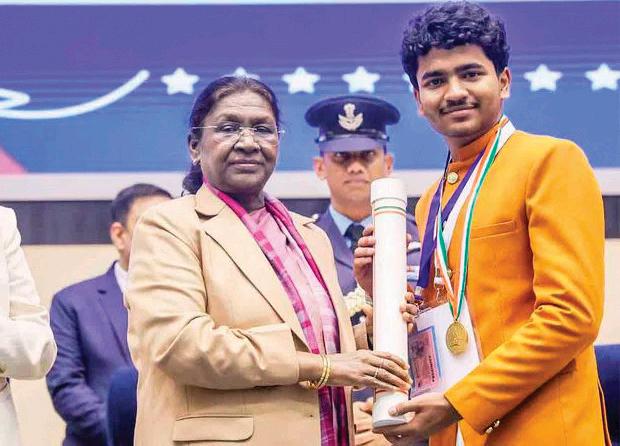
The PMRBP citation aptly described him as a “gifted tabla prodigy whose exceptional talent has earned him admiration and accolades on the global stage.” For Suman, the award is not just a recognition of his skill but also a motivation to continue his journey of preserving and innovating within India’s rich musical heritage.
Vishwanath Karthikey Padakanti: Conquering the Seven Summits
If Suman’s story is one of rhythm and endurance, Vishwanath Karthikey Padakanti’s journey is a saga of courage and adventure. Born in Hyderabad, Telangana, Vishwanath has achieved what few adults dare to attempt - he became the youngest Indian to complete the Seven Summits Challenge, scaling the highest peaks on all seven continents. His mountaineering odyssey began with the ascent of Mt. Elbrus in Europe in August 2022, marking the start of an extraordinary journey. Over the next three years, he went on to conquer some of the world’s most iconic peaks, including Mt. Kilimanjaro in Africa, Mt. Kosciuszko in Australia, Mt. Denali in North America, Vinson Massif in Antarctica, and Mt. Aconcagua in South America. The culmination of this remarkable adventure came on May 27, 2025, when he scaled the crown jewel of mountaineering, Mt. Everest in Asia, completing the legendary Seven Summits Challenge at the age of just sixteen.
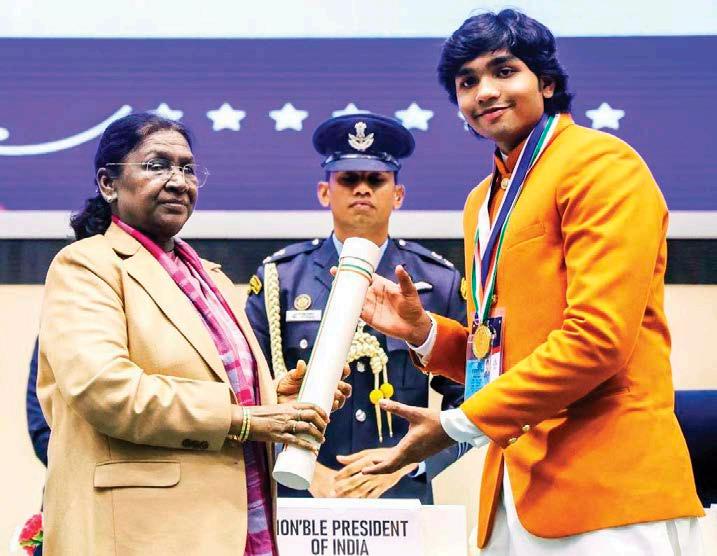
At just 16 years, 6 months, and 27 days, Vishwanath completed this extraordinary feat. His citation described him as “a fearless mountaineer who conquered the world’s highest peaks, becoming the youngest to complete the Seven Summits Challenge.”
The Seven Summits are considered one of the most gruelling challenges in mountaineering, demanding not only physical strength but also mental resilience, adaptability, and sheer determination. Vishwanath’s achievement places him among an elite group of global adventurers and serves as an inspiration for countless young Indians who dream of pushing boundaries.
Screening for Strong Futures
The importance of haemoglobin screenings cannot be overstated in a country where anaemia affects a large section of young women. Low haemoglobin levels often remain unnoticed. Fatigue, reduced concentration, and weakened immunity follow quietly. Early detection becomes essential for long-term well-being. This concern shaped a landmark public health initiative in Vellore, Tamil Nadu.
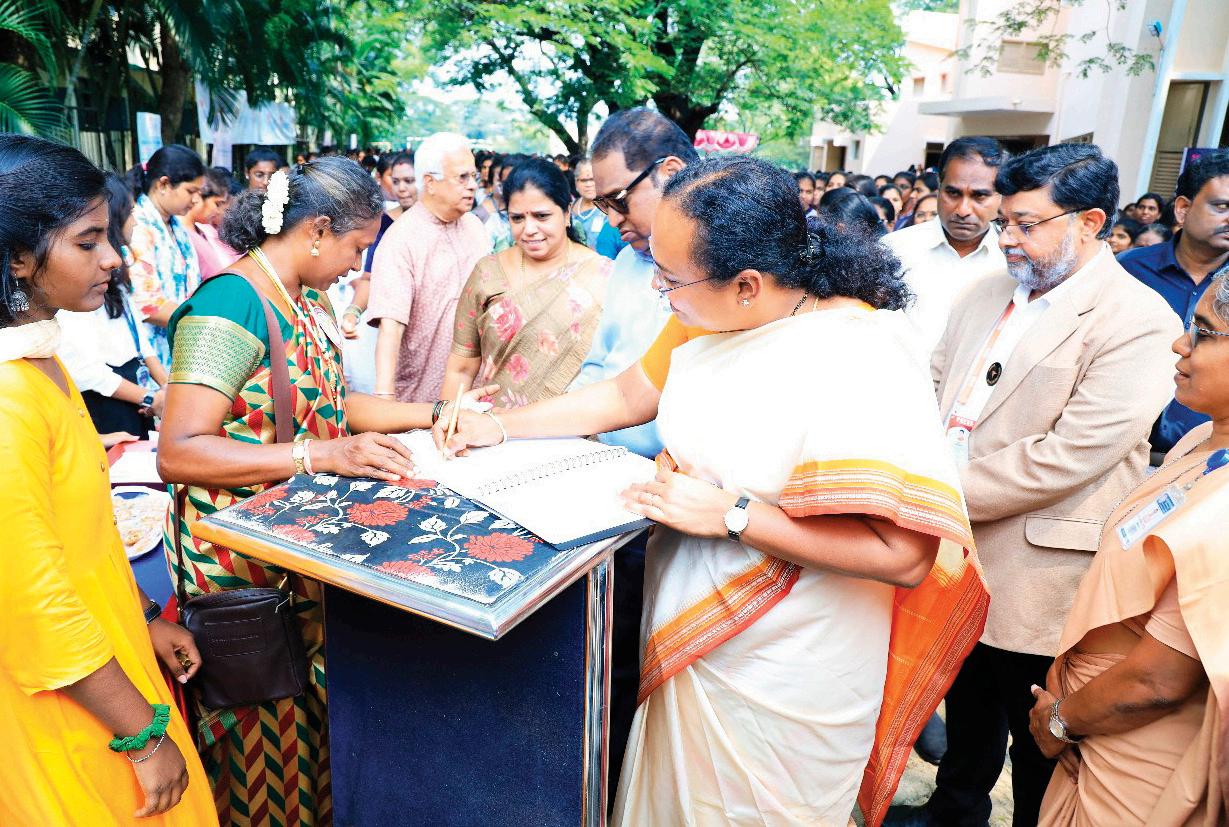
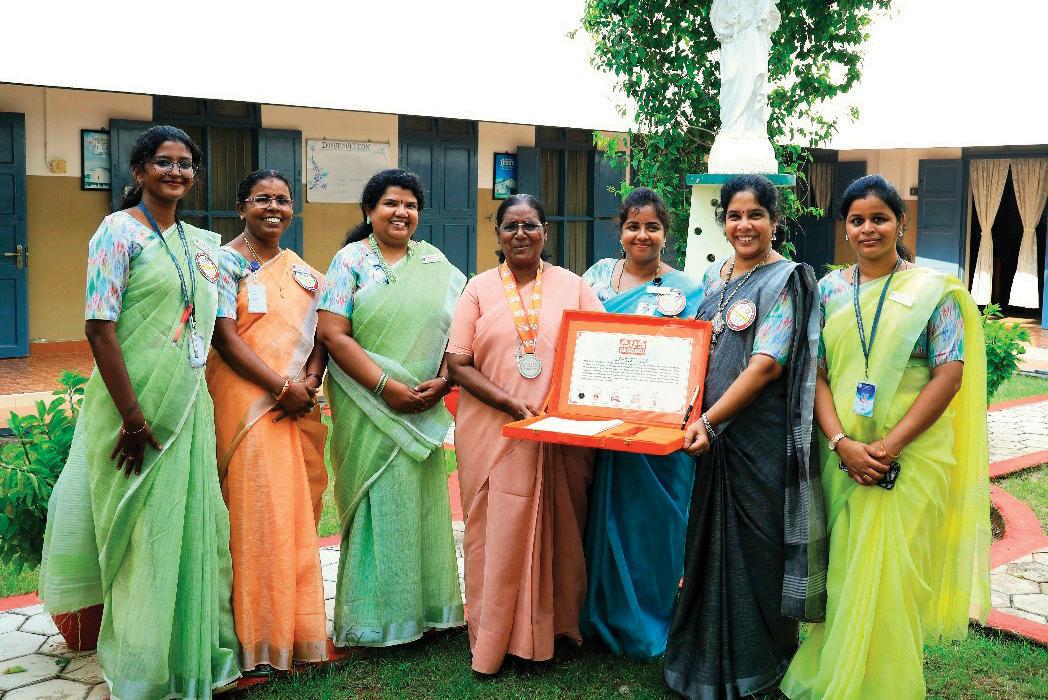
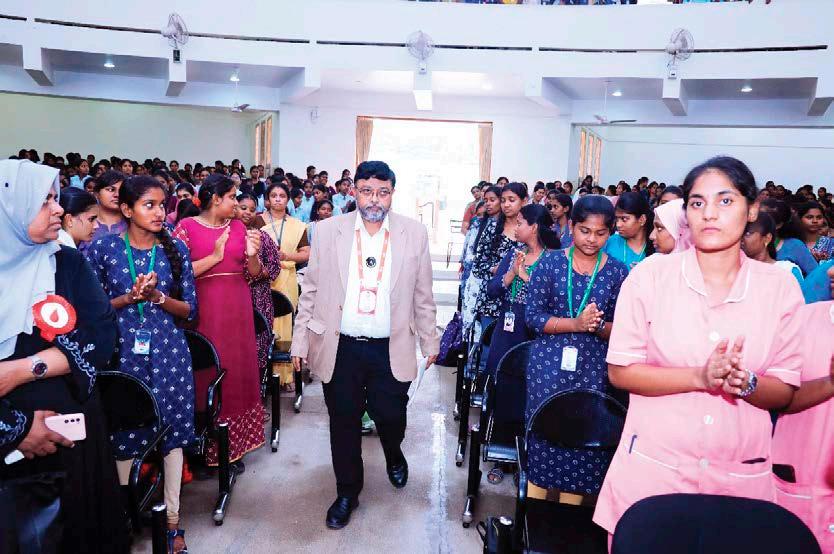
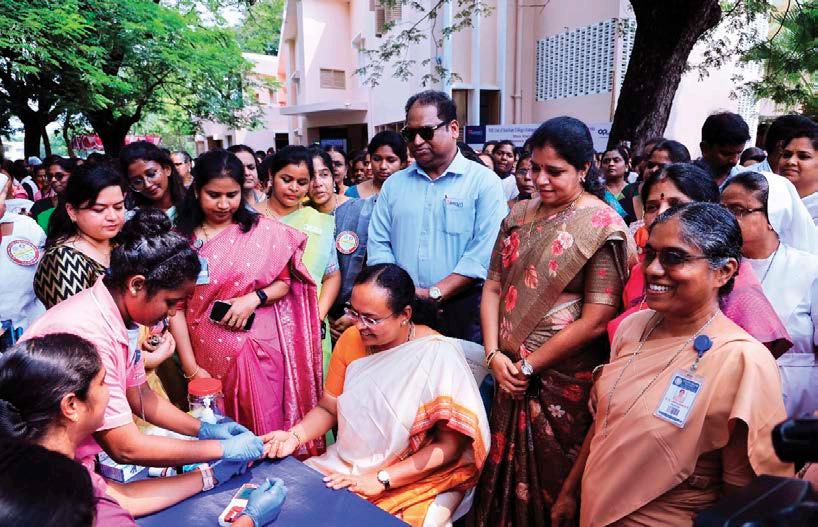
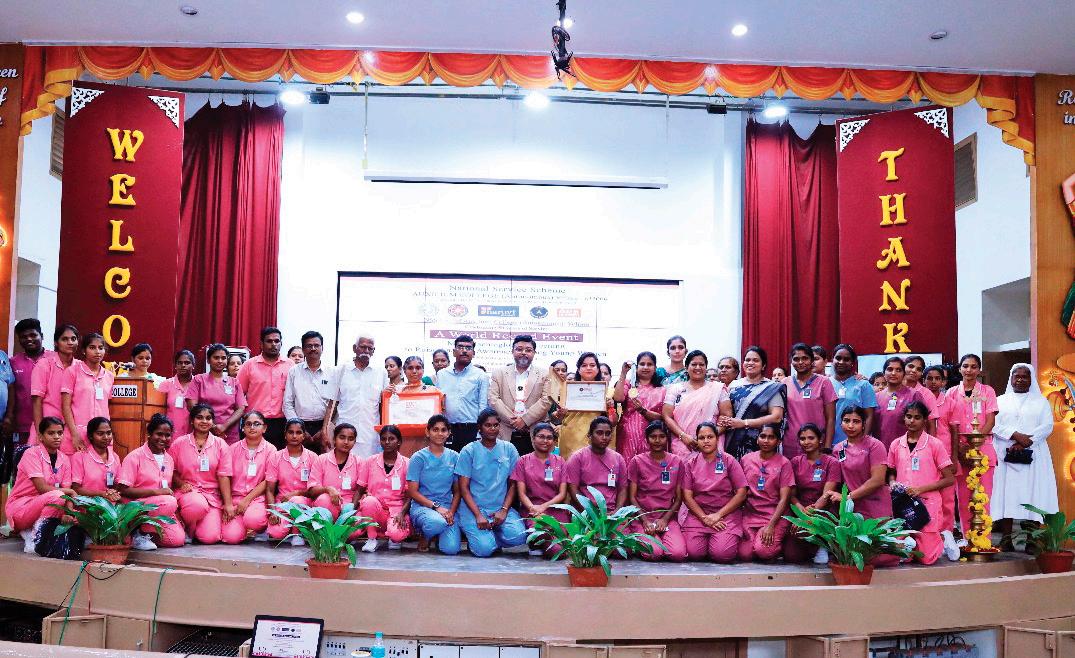
The NSS Unit of Auxilium College (Autonomous), Vellore, joined hands with Naruvi Hospital, Chennai, to conduct a mass haemoglobin screening. The focus remained firmly on awareness and prevention. The screening was conducted on 10 October 2025 at the Auxilium College campus. Students and staff participated in large numbers. Around 3,500 individuals were screened in a single day.
The effort set a record for the maximum haemoglobin screenings to raise anaemia awareness among young women. Medical teams from Naruvi Hospital carried out the screenings
with precision. Each participant’s haemoglobin level was tested. Counselling followed where required. Doctors explained the significance of the readings in clear terms.
Anaemia remains a widespread issue among young Indian women, especially in the age group of 15 to 24. Health studies estimate that nearly half of women in this category suffer from low haemoglobin levels. The condition affects physical strength and learning capacity. It also impacts future maternal health.
The screening camp was formally inaugurated by Vellore Collector VR Subbulaxmi and GV Sampath, Chairman of Naruvi Hospitals. Their presence reinforced the seriousness of the issue. Public institutions and healthcare providers stood together on the same platform.
For Auxilium College, the initiative carried added meaning. The event marked fifty years of National Service Scheme engagement at the institution. Over the decades, the NSS unit
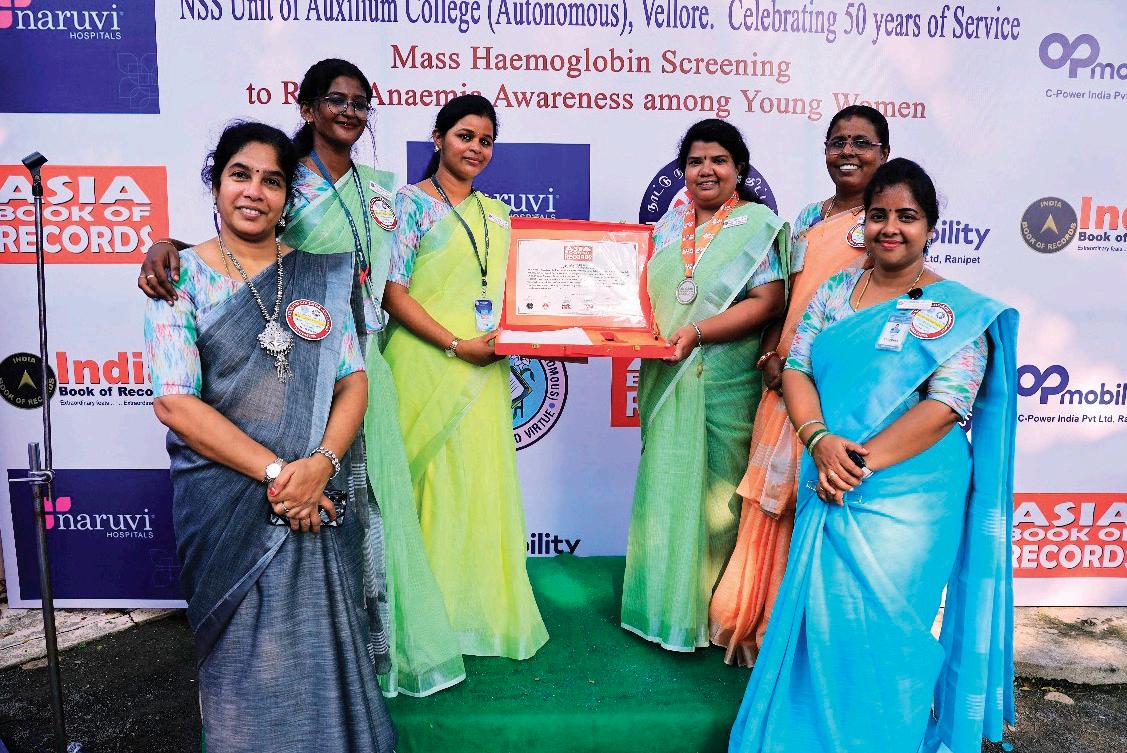
A large-scale haemoglobin screening in Vellore brought health awareness to the forefront, as thousands of young women participated in a single-day initiative that linked education and preventive health care.
has focused on community development, youth participation, and social awareness. Health education forms a natural extension of that mission.
Organising a screening of this scale required careful coordination. Registration desks were set up early. Sample collection moved in batches. Medical staff worked in shifts. Volunteers guided participants patiently. The process remained orderly throughout the day. Students played an active role. NSS volunteers managed queues and assisted medical teams. Many had received prior orientation on anaemia awareness. This allowed them to communicate confidently with participants.
The atmosphere remained calm and purposeful. Conversations around diet, iron intake, and lifestyle followed naturally. Several participants expressed surprise at their readings. For many, it was their first haemoglobin test.
Asia Book of Records and India Book of Records jointly recognised the effort. Adjudicator Mr Harish R presented the medals and certificates, confirming the record achievement. The recognition acknowledged scale, intent, and execution. A representative of the NSS Unit of Auxilium College said, “Our aim was to make health visible. Screening brings awareness, and awareness leads to timely care for young women.”
The event was never framed as a one-day medical exercise. It was designed as a starting point for dialogue and followup. Naruvi Hospital’s involvement ensured medical credibility. Doctors and technicians followed standard protocols. Participants received guidance on next steps when required. Preventive healthcare took centre stage.
The initiative also highlighted the role of educational institutions in public health. Colleges serve as access points for young populations. Integrating health checks within academic spaces increases reach and trust.
Painting Peace for Earth
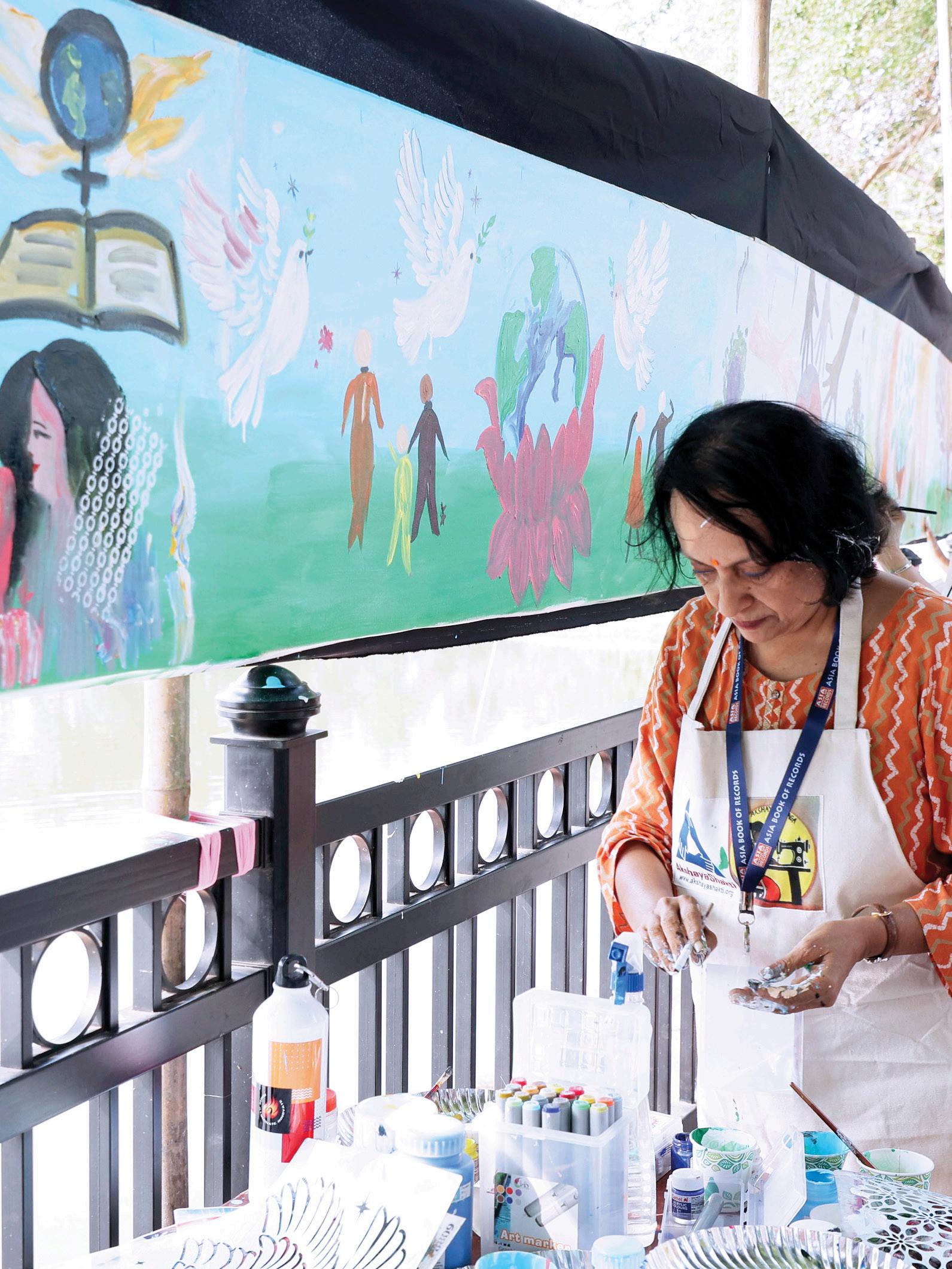
Earth Day importance grows with every passing year as environmental stress becomes visible in daily life. Climate shifts, shrinking green spaces, and rising waste levels have made planetary care a shared duty. Earth Day now stands as a moment to pause, reflect, and act with purpose. This spirit shaped a rare artistic effort in Thane, Maharashtra, where speed met meaning. On 20 April 2025, a large peace-theme painting was created in a record time, turning Earth Day into a living canvas of concern and hope.
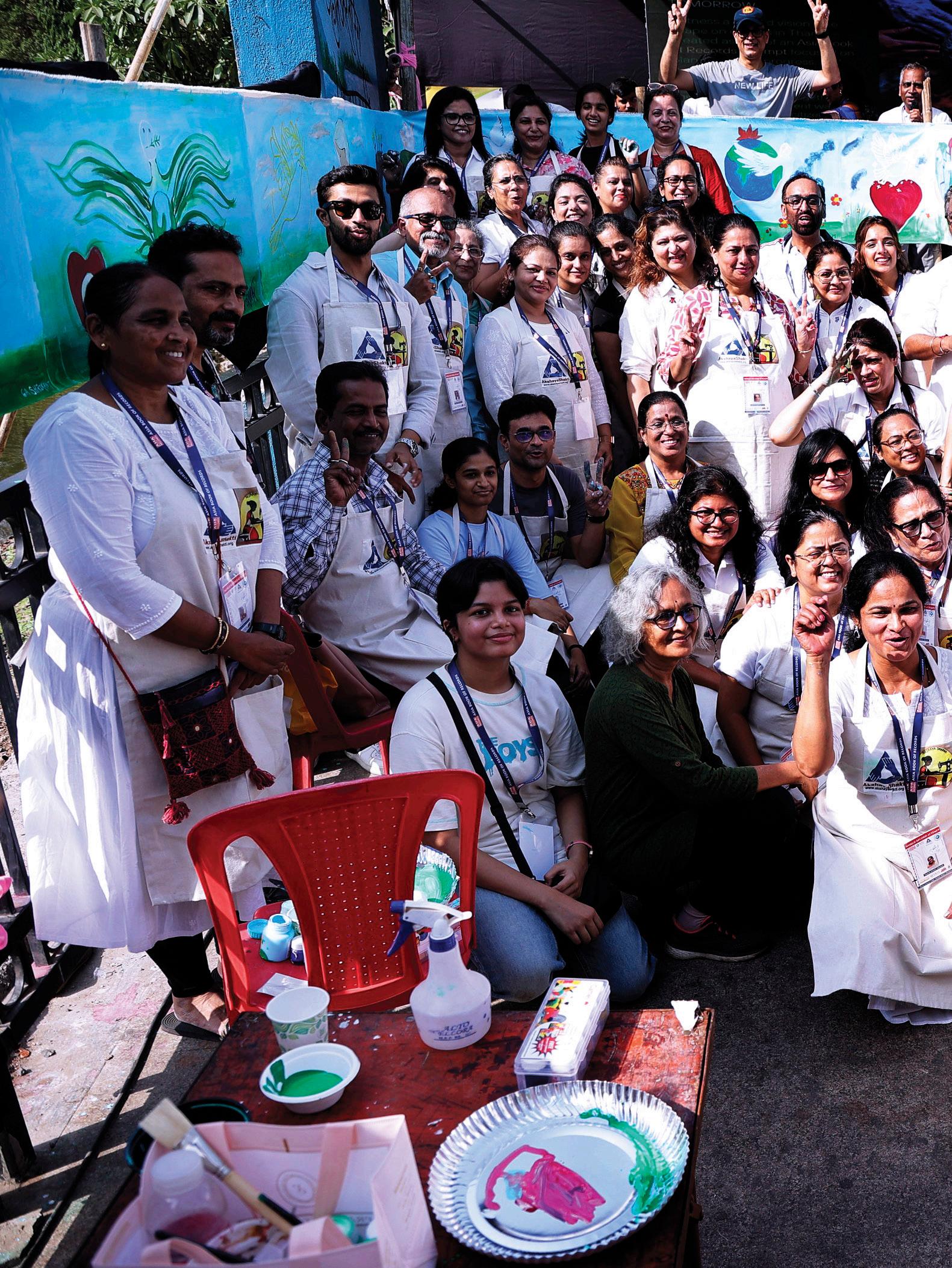
A 120-metre peace mural created in just forty minutes on Earth Day brought artists and citizens together in Thane, Maharashtra, turning collective creativity into a strong social message for the planet Earth.
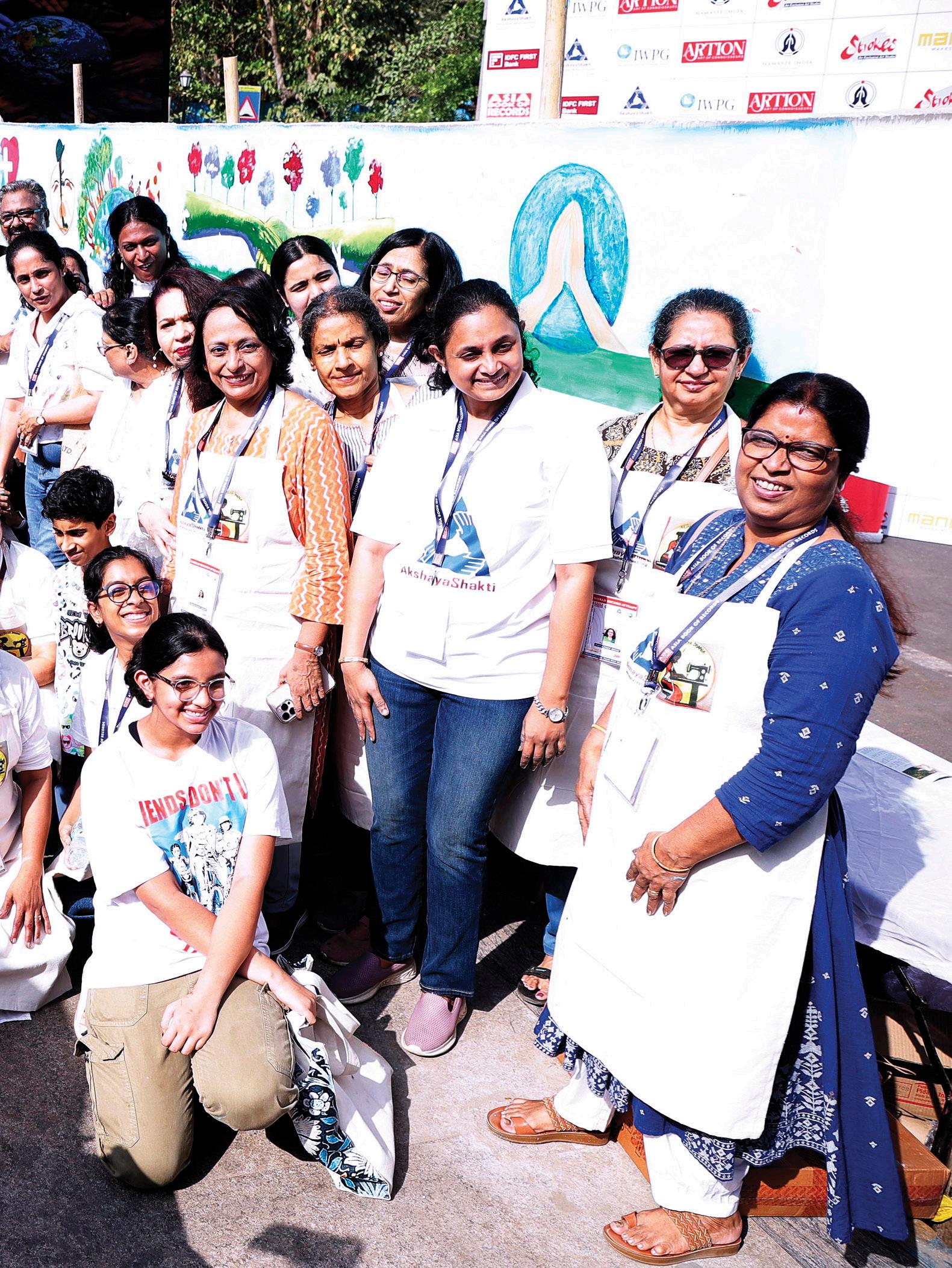
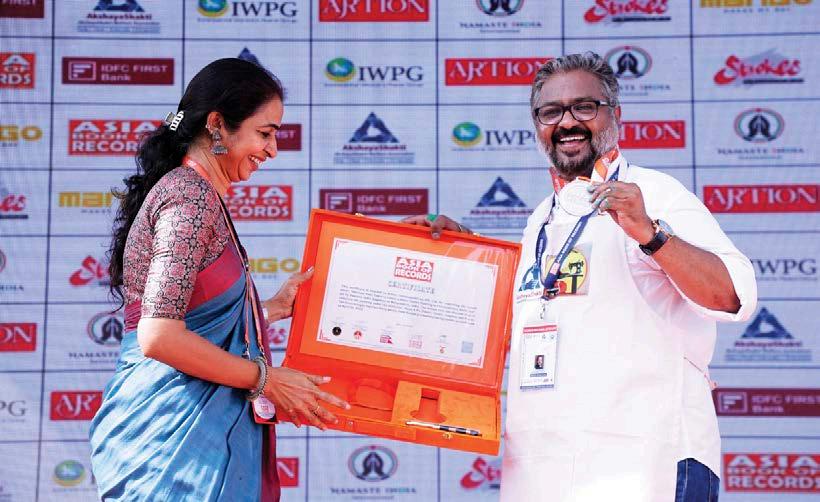
The record for the shortest time taken to create a peacetheme painting to commemorate Earth Day was set by Akshayashakti Welfare Association, Thane. The initiative was carried out in association with Strokes Art Studio, Artion Communications Pvt Ltd, and Namaste India Magazine of Maharashtra.
Under the banner of Paint 4 P’s, standing for Planet, People, Progress, and Peace, the project brought together artists and volunteers from diverse professional backgrounds. Engineers stood beside designers. Students painted alongside senior citizens. Art became a shared language.
The mural stretched across 120 metres. Brushes moved fast. Colours spread with intent. Within 40 minutes, the peacethemed artwork stood complete. Time pressure sharpened focus and clarity. The painting was a decorative beauty. At the same time, it carried symbols of harmony, coexistence, and shared responsibility. Earth, humanity, and peace appeared as connected ideas.
Planning played a key role. Artists were briefed in advance. Roles were defined. The layout was imagined before the first brush touched the surface. When the clock started, execution flowed with discipline. The event venue turned into a quiet hive of activity. There was urgency, yet calm prevailed. Volunteers managed materials. Coordinators kept track of time. Observers watched in silence.
The mural emerged as a joint statement rather than an individual signature. No single artist claimed the centre. Every participant became part of a larger visual thought. The initiative aimed to show that action for the planet does not always require long timelines or complex tools. Even a short window, when used with high purpose, can leave a lasting impression.
Asia Book of Records (ABR) adjudicator Ms Kashmira Shah officially confirmed the achievement and presented the medal and certificate to the organisers. The recognition acknowledged speed, scale, and coordination.
The Paint 4 P’s initiative has a wider vision. It connects social awareness with creative expression. It encourages citizens to step out of routine roles and contribute to public dialogue through art. Such efforts gain importance as environmental movements, but often remain confined to reports and conferences. A public mural reaches people where they live and move. It speaks without words.
Participants came from different walks of life. Some had formal art training. Others picked up a brush for the first time. Skill levels varied, yet purpose aligned everyone. A representative of Akshayashakti Welfare Association reflected on the moment with simplicity. “We wanted to show that peace
with the planet can be expressed quickly and together. When people unite with clarity, time becomes an ally,” the organiser said.
The mural creation also carried a message of inclusion. Art was not limited to professionals. It welcomed participation. This openness mirrored the idea that Earth care belongs to all. The 40-minute window added intensity. It demanded trust among participants. Each person focused on their section, knowing the feat depended on combined rhythm. Earth Day events often focus on planting trees or cleaning drives. This effort chose a different path. It used creativity to provoke thought and conversation.
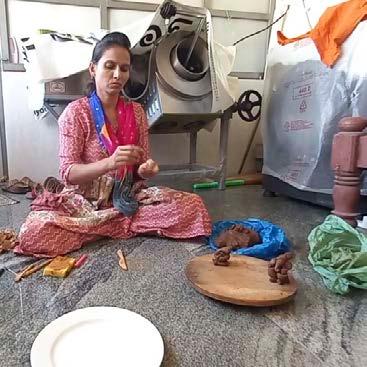
A Bowl of Tradition
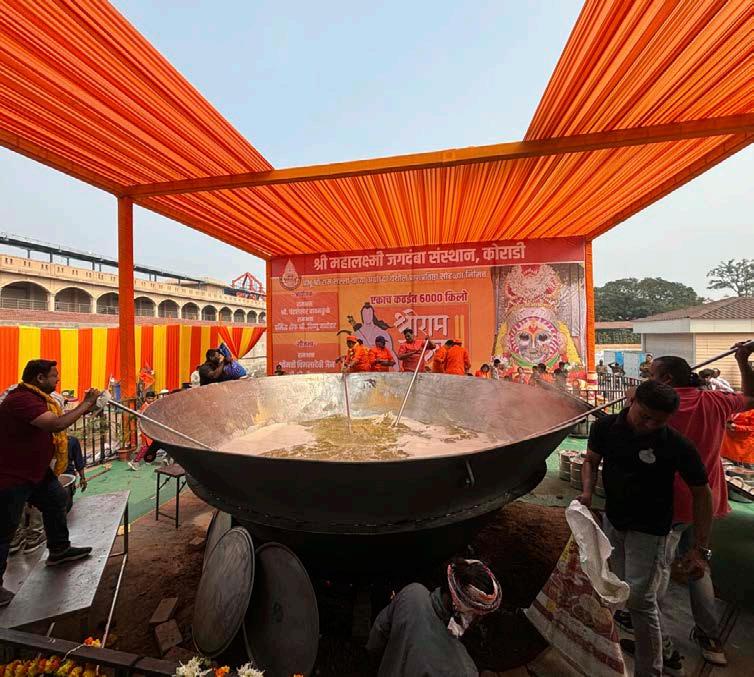
The importance of regional snacks and recipes lies in their ability to preserve memory, identity, and local wisdom. These foods travel across generations without written manuals. They survive through practice, taste, and shared kitchens. In India, snacks often carry as much cultural meaning as full meals. In Nagpur, one such snack is Kaccha Chiwda. It is prepared without heat. It relies on balance, timing, and familiarity with ingredients.
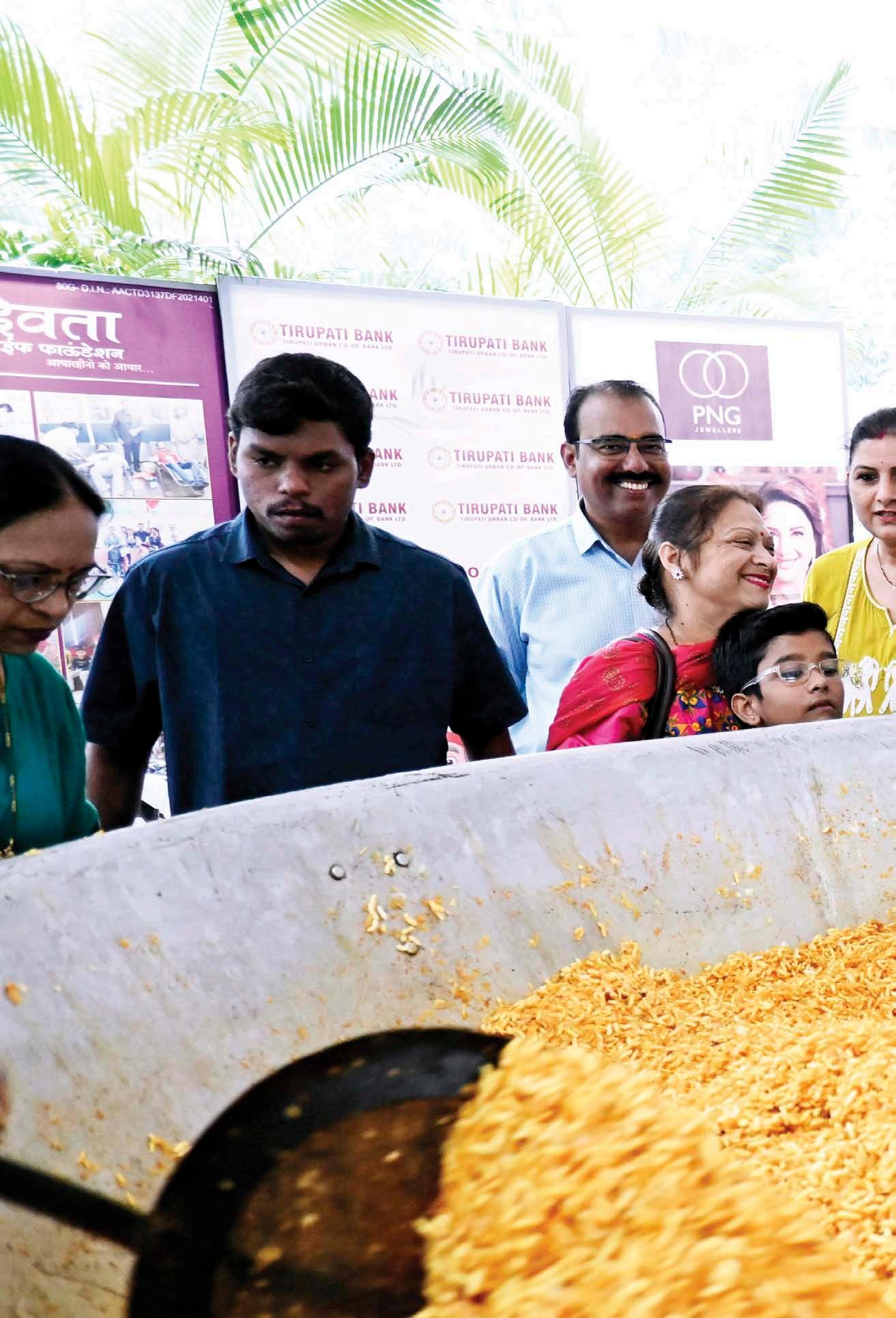
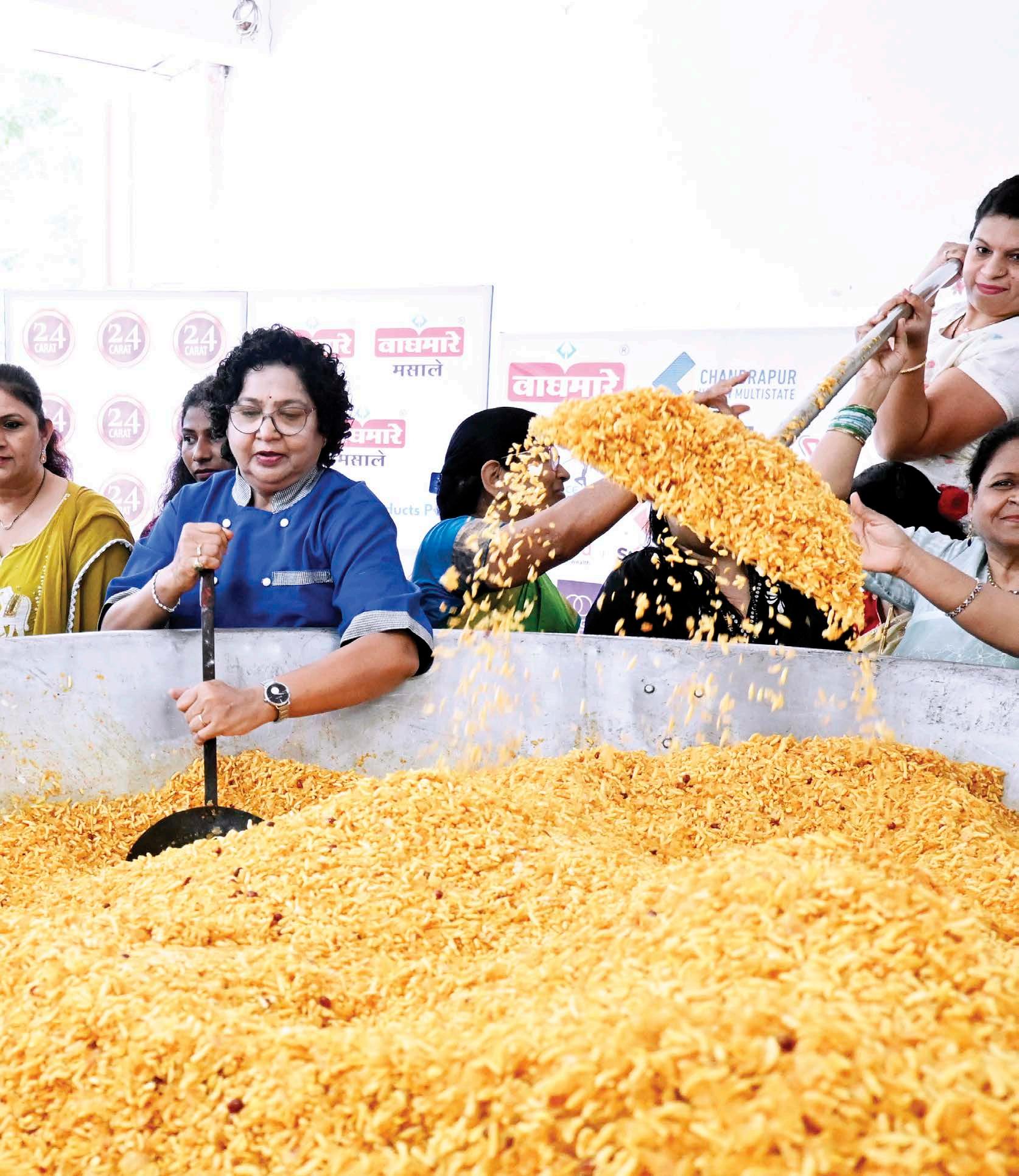
On 14 September 2025, this everyday snack became the centre of a record-setting culinary effort. Chef Neeta Anjankar of Nagpur prepared 556 kilograms of Kaccha Chiwda without using heat. The preparation used raw poha, puffed rice, peanuts, sev, and peanut oil. Every ingredient remained uncooked. Mixing, proportion, and consistency mattered throughout the process.
The preparation was carried out with care and planning. Large quantities demand control. Raw ingredients behave differently at scale. Oil distribution must remain even. Dry components must not break. Taste must stay consistent from the first handful to the last.
Kaccha Chiwda holds a special place in Nagpur’s food culture. It is often prepared during festivals, family gatherings, and community events. It is light, filling, and easy to distribute. Its raw nature makes it distinct from fried snacks. Chef Neeta’s initiative aimed beyond the kitchen. After preparation, the entire quantity was distributed among citizens and charitable organisations. The act connected cuisine with public welfare.
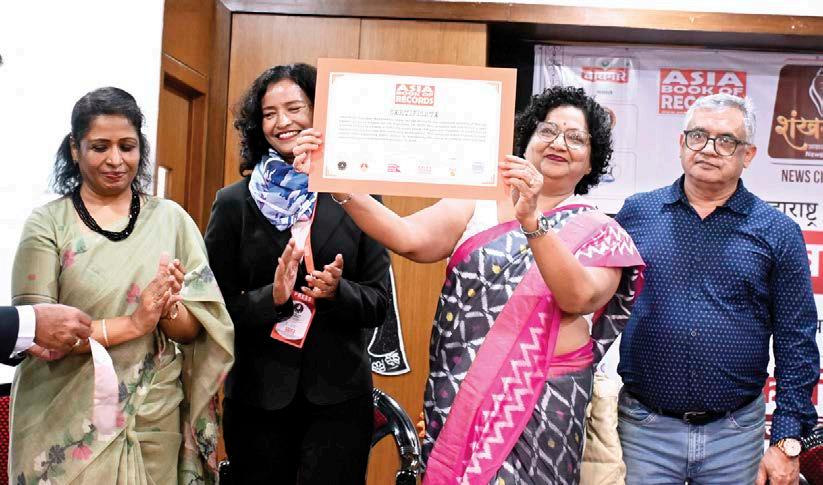
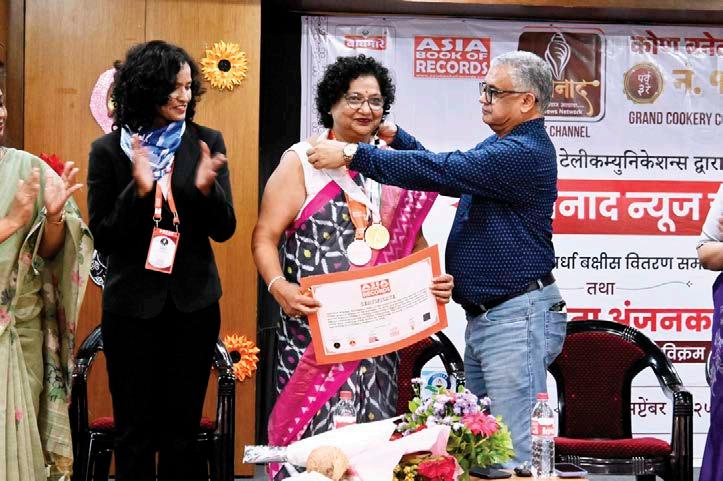
Food became both celebration and service. The record was confirmed on the same day, 14 September 2025. Asia Book of Records and India Book of Records recognised the achievement. Adjudicator Dr Sunita Dhote presented the medals and certificates, acknowledging both scale and method.
For Chef Neeta, the effort reflected her connection with local food traditions. Speaking about the achievement, she said, “Kaccha Chiwda is a snack of my city. Preparing it at this scale without heat was my way of honouring Nagpur and sharing its taste with everyone.”
The focus was never spectacle alone. It was about taking a familiar recipe and placing it in a larger social context. Large-scale preparation without heat requires coordination. Ingredients must be sourced in advance. Storage must be clean and dry. Mixing must follow sequence. Volunteers must understand the process. Every step needs discipline.
The venue witnessed steady movement rather than rush. Teams worked in sections. Quality checks happened repeatedly. The snack remained fresh and balanced. Regional cuisine often faces pressure from packaged alternatives. Records like this bring attention back to local recipes. They remind people that traditional food can still hold relevance.
Kaccha Chiwda also represents mindful eating. It avoids frying. It uses simple ingredients. It depends on proportion rather than processing. Such snacks fit well into changing food conversations.
Nagpur has a strong food identity. From oranges to savouries, the city values its flavours. This record added another chapter to that identity. The public response remained warm. People recognised the familiarity of the snack. Many associated it with childhood memories. Distribution created direct engagement.
Chef Neeta Anjankar’s effort stands at the intersection of craft and care. Cooking here was not confined to taste alone. It extended into community reach. The recognition by IBR and ABR brought visibility. Yet, the essence remained humble. A bowl of mixed grains and peanuts carried a city’s story.
In celebrating Kaccha Chiwda, this record celebrated regional wisdom. It showed how everyday food can take centre stage when intention and scale meet. From Nagpur’s kitchens to record books, a raw snack proved its strength through simplicity.
In Nagpur, a simple raw snack became a national talking point as Chef Neeta Anjankar prepared 556 kilograms of Kaccha Chiwda without heat, celebrating regional taste while serving the wider community.
India Reads Together
Reading together has always shaped India’s learning culture.
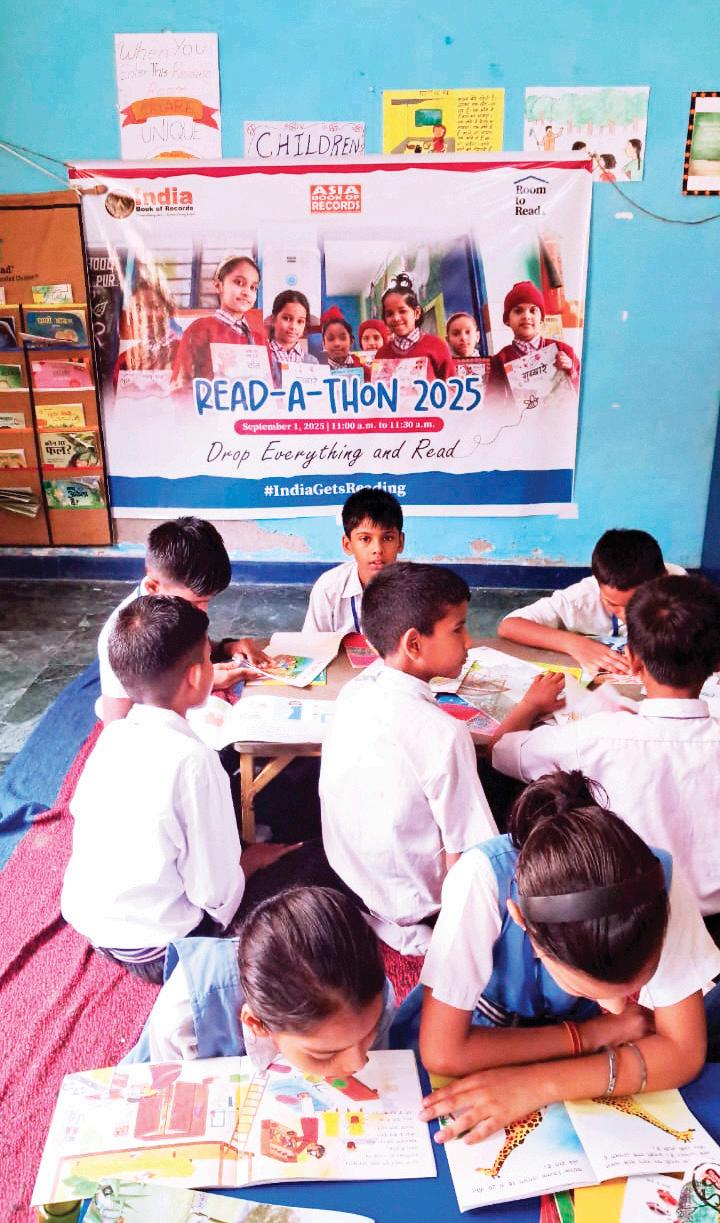
From homes to classrooms, the shared act of reading creates focus, calm, and curiosity. When this habit unfolds across regions within the same window of time, it becomes a national experience. That experience took form through a largescale Read-a-thon led by Room to Read India, New Delhi.
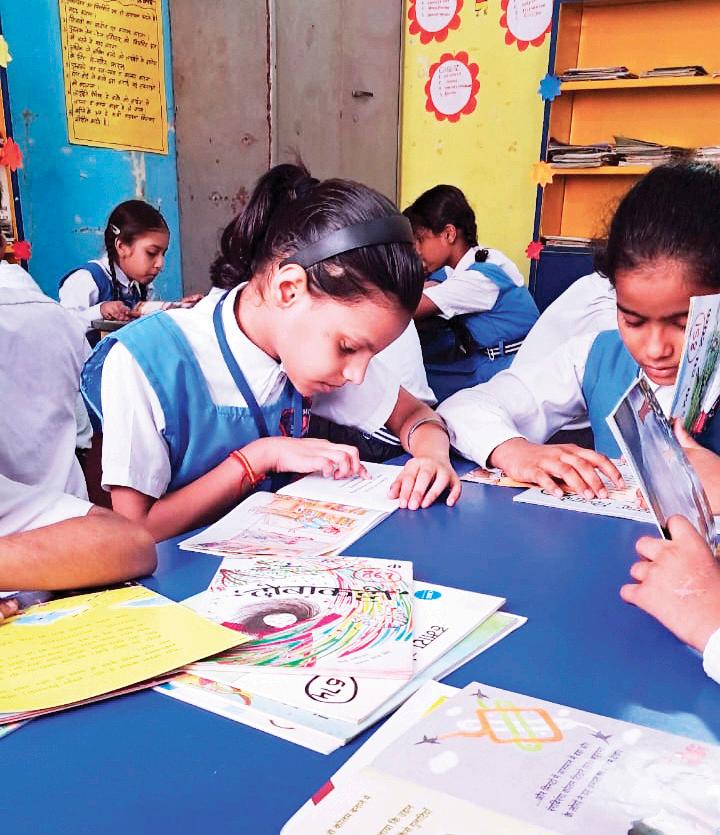
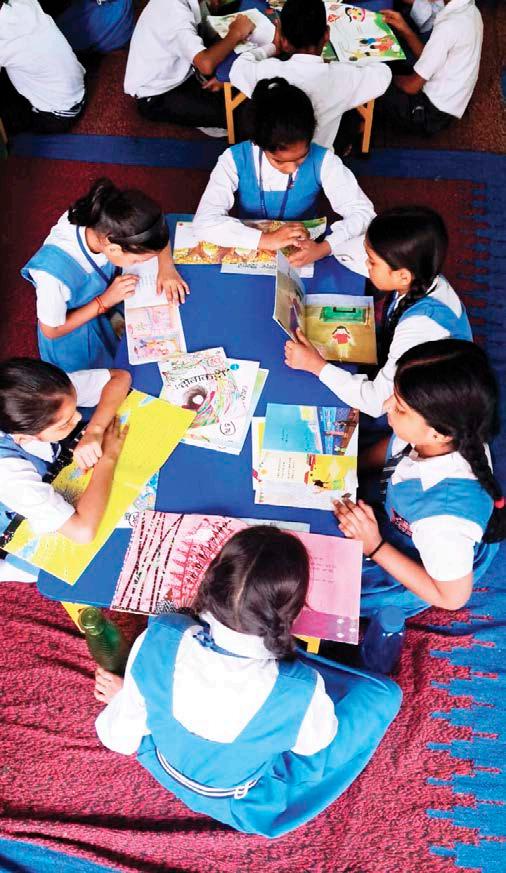
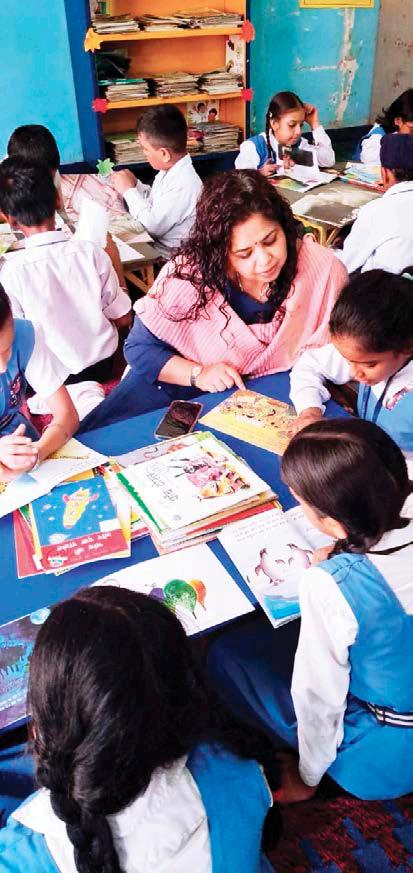
The campaign was conducted between 1 and 8 September 2025. During this period, students across multiple states paused daily routines and picked up books together. Pages turned in quiet rhythm. Attention stayed on words. The record set was for the maximum number of participants reading together across different venues.
A total of 3,920,248 readers participated. Schools from Delhi, Jharkhand, Karnataka, Madhya Pradesh, Rajasthan, Telangana, and Uttar Pradesh took part in the synchronised reading effort. The achievement was confirmed on 9 October 2025. Reading sessions were organised in classrooms, assembly halls, corridors, and shaded outdoor spaces.
Each venue followed the same basic instruction. Read silently. Read attentively. Read for the allotted time. Teachers and volunteers observed without interruption. Discipline remained central. The Read-a-thon unfolded over eight days. Schools followed scheduled time slots. Reading material matched age groups. Reporting formats were shared in advance. Coordination teams monitored participation across locations.
The process demanded planning and consistency. The scale of participation reflected growing trust in the campaign. Children from urban centres and smaller towns joined equally. Some read in cool morning hours. Others read during warm afternoons. Climate and geography differed, yet the action remained uniform. Books bridged distances.
The record recognised the cumulative participation across venues rather than a single gathering. This approach highlighted inclusivity. Every reader counted. Every page mattered. The effort showed how decentralised participation can still create national impact.
Room to Read India has worked in the country since 2003. Its programmes support foundational literacy and life skills. Gender equality remains integral to its mission. Over the years, its reach has expanded steadily through partnerships with state education systems and schools.
The Read-a-thon reflects this long-term approach. Reading is presented as a habit. Children are encouraged to associate books with pleasure and curiosity. The campaign asks them to pause digital noise and focus on text.
Participation numbers have grown year after year. What began as a modest initiative has evolved into a nationwide movement. Educators, administrators, and local communities have supported its expansion. Their involvement ensured smooth execution across diverse regions.
On the days of the Read-a-thon, classrooms reported visible calm. Students remained seated with books open. Teachers observed concentration levels rarely seen during routine periods. The silence carried intent.
Mr Sanjay Bhola, adjudicator for the record, acknowledged the scale of coordination involved. He noted that synchronising reading across millions of participants required discipline, accurate reporting, and shared commitment from every institution involved.
Ms Poornima Garg, Country Director of Room to Read India, summarised the spirit of the effort in simple words, “When children across states read during the same hours, reading becomes a shared habit. This achievement shows how consistency can shape a nation’s learning culture.”
Mr John Wood, founder of the global Room to Read network, has often spoken about education’s ripple effect. Literacy influences health, opportunity, and confidence. This record was driven by routine, repetition and trust in small daily actions. Parents and teachers welcomed the initiative. Several schools reported renewed interest in libraries after the campaign. Some introduced daily reading hours. The effect extended beyond the scheduled sessions.
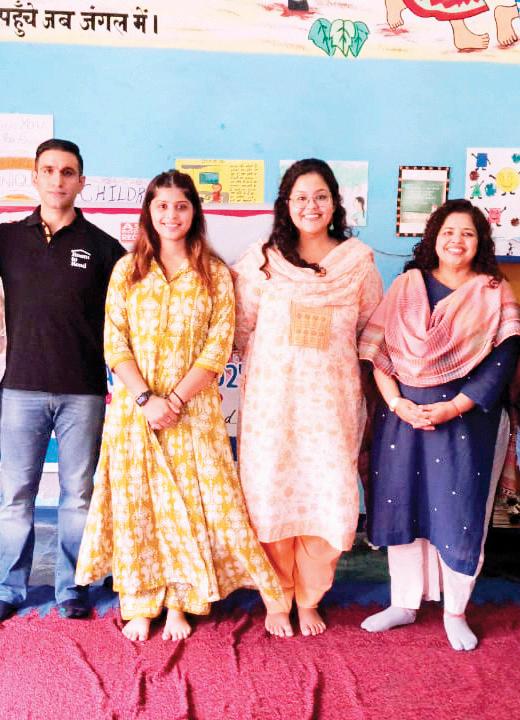
Room to Read India brought millions of readers together through a Read-a-thon, setting a new record while reinforcing reading habits, shared discipline, and a sustained culture of literacy across schools and communities.
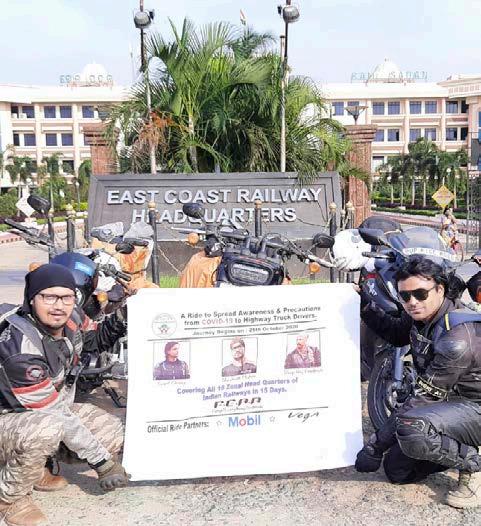
Across India by Road
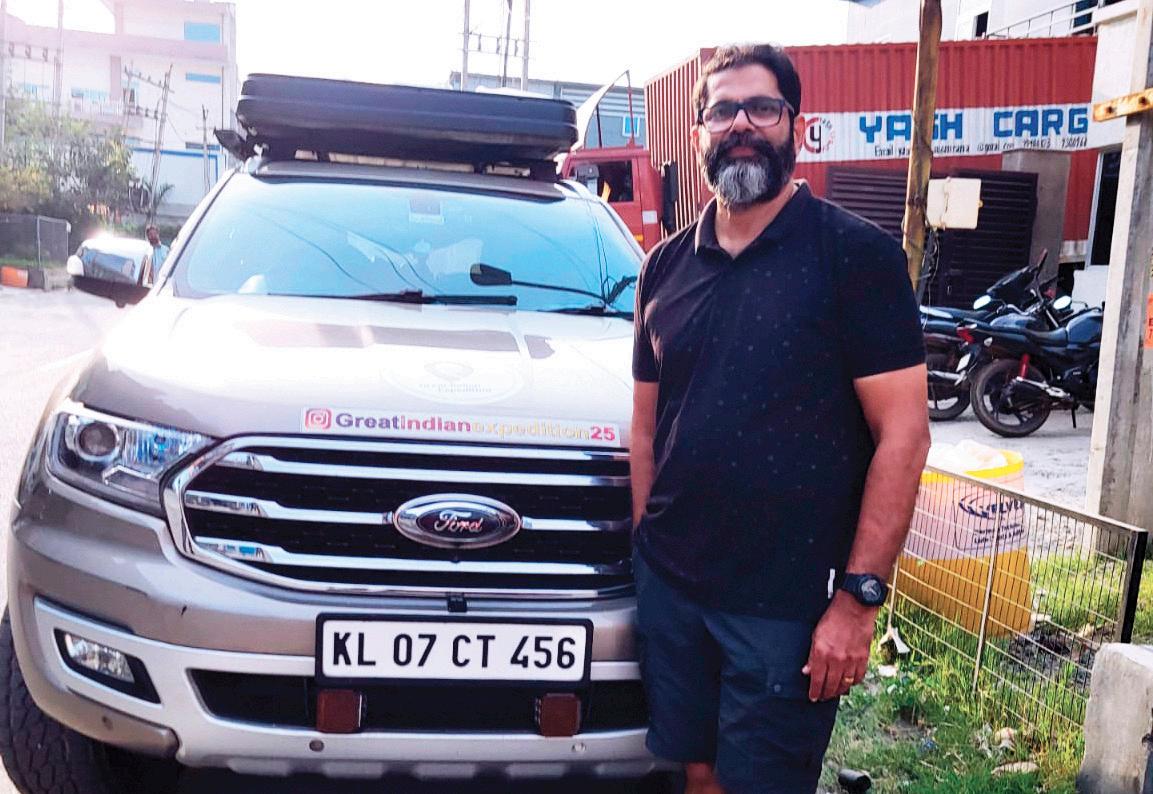
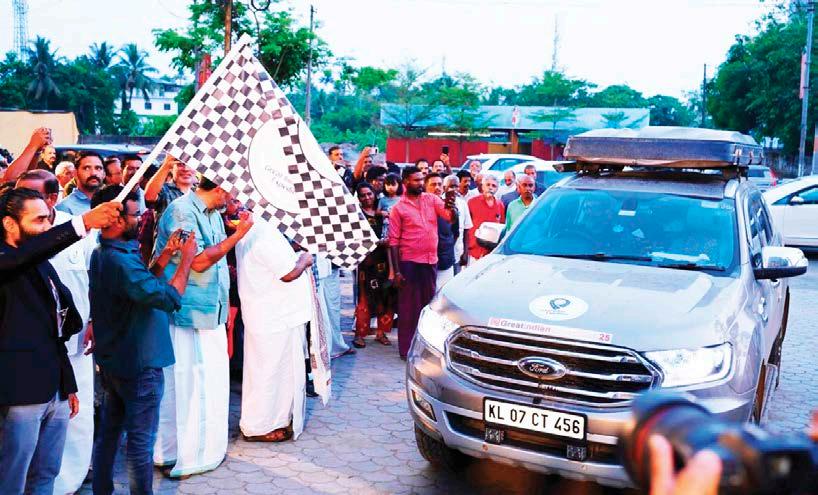
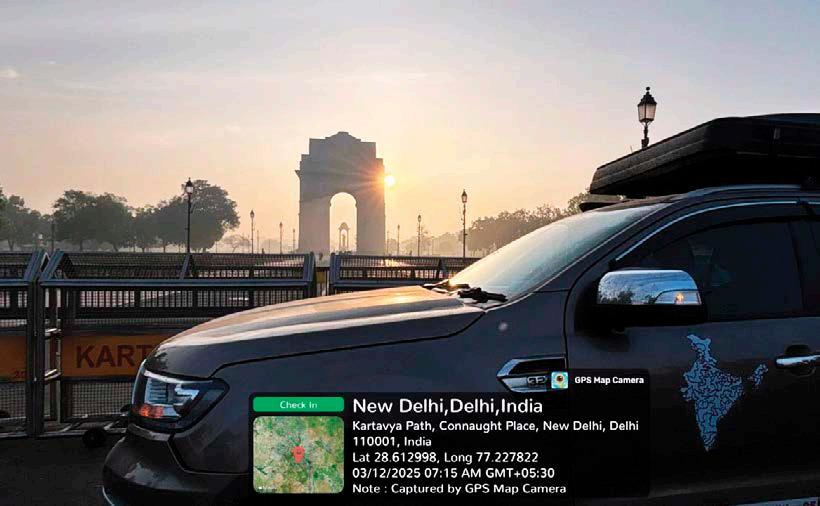
The challenges of road travel across India are known to every long-distance driver. Distances stretch endlessly. Roads change character without warning. Weather shifts across borders. Traffic tests patience. Terrain tests skill. Yet, for some, the road becomes a calling. V Sreekumar of Kalady, Kerala, chose to answer that call. Last year, he set out on a self-driven expedition from his hometown.
The plan was ambitious. The execution demanded discipline. The goal was clear. Over the next three months, he drove across the length and breadth of the country. The journey concluded at Kozhikode, Kerala. By then, he had covered 740 districts. The route passed through 28 states and 6 Union Territories. No shortcuts were taken. No districts were skipped.
The journey unfolded across changing geographies. Coastal highways gave way to dry plains. Forested stretches demanded alert driving. Mountain roads required caution and control. In the north, winter mornings were cold and foggy. In central India, the heat rose sharply during the day. In the east, humidity slowed the pace. In the south, sudden rains tested visibility.
Sreekumar drove through key regions such as Rajasthan, Maharashtra, Uttar Pradesh, West Bengal, Assam, Karnataka, Tamil Nadu, and Andhra Pradesh. Union Territories including
Delhi, Puducherry, Chandigarh, and Jammu and Kashmir were also covered. Each region brought a different driving rhythm. Remote rural roads formed a major part of the journey. Some stretches lacked clear signages. Some demanded long hours without support facilities. Fuel planning became crucial. Rest stops were chosen carefully. Vehicle checks were routine.
The expedition was properly structured and time-bound. Daily targets were set. Documentation was maintained. District boundaries were verified. Route maps were updated constantly. Weather added its own unpredictability. Early mornings often began in mist. Afternoons stretched under harsh sunlight. Evenings demanded alertness after long hours behind the wheel. Fatigue was managed through discipline rather than speed.
Sreekumar’s background supported the task. A passionate driver, he had earlier travelled across India and Nepal. He had also participated in racing events. His familiarity with longdistance driving proved useful. Yet, the scale of this expedition was different.
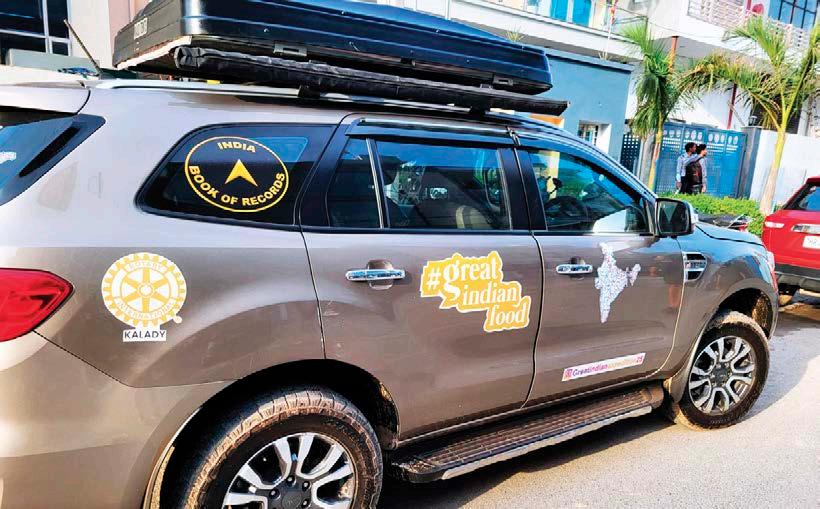
He also carried a larger purpose. As a charter member of the Rotary Club of Kalady, District 3201, he connected with Rotary
Clubs across districts. Flag exchanges took place along the way. Conversations followed. Fellowship travelled alongside the vehicle.
Kalady, his starting point, holds cultural importance in Kerala. Situated on the banks of the Periyar River, it is known for its spiritual heritage. From this quiet town, the journey expanded into one of the widest road expeditions attempted by an individual.
The effort was formally confirmed by the India Book of Records. It verified the districts, states, Union Territories, and travel duration. Adjudicator Mr Sam George later presented the medal and record certificate to V Sreekumar.
Reflecting on the extraordinary road journey, V Sreekumar said, “India teaches patience on the road. Every district had its own lesson, and I drove with respect for the land and the people.”
Self-driven travel remains one of the most demanding forms of exploration. It leaves no room for distraction. The record highlights more than distance. It reflects planning, consistency, and physical endurance. It also reflects trust in one’s preparation. Driving for weeks across diverse conditions
demands mental steadiness. This journey also offered insight into India’s vastness. District borders appear quietly. Landscapes shift subtly. Languages change. Food habits differ. Roads become stories.
An epic self-driven journey across India saw a Kerala-based motorist cover 740 districts, spanning 28 states and 6 UTs, navigating varied terrain and weather to earn recognition from India Book of Records.
Students Defy Gravity
The trend of aerial yoga in India has moved steadily from urban studios to educational spaces. What began as a fitness experiment is now finding acceptance in schools. The practice blends yoga with controlled suspension. It builds focus, balance, and body awareness in a visual and engaging way.
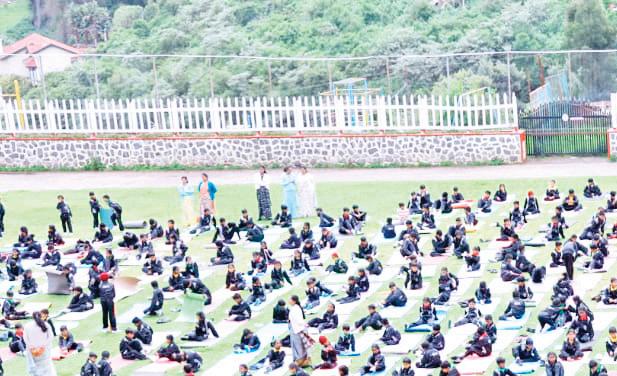
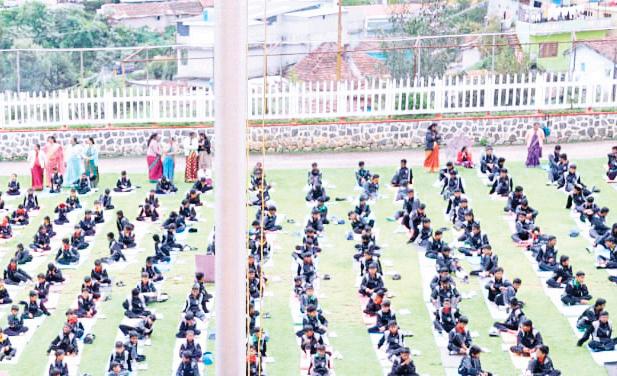
In Ooty, Tamil Nadu, this trend reached a remarkable milestone. Students of Christus Rex Senior Secondary School created a new benchmark in aerial yoga. They performed continuously for twenty minutes. Throughout the duration, every participant remained off the floor. Legs stayed lifted. Form stayed intact.
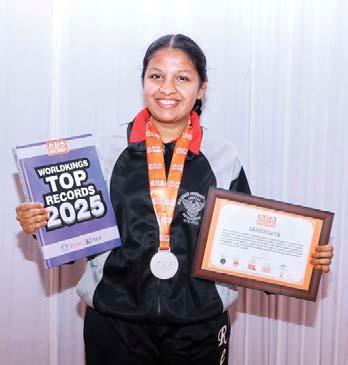
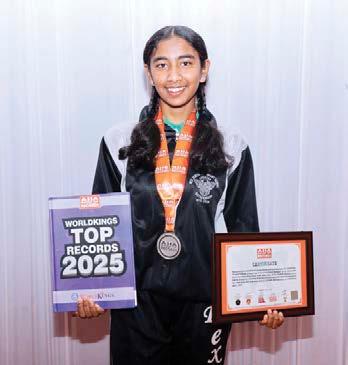
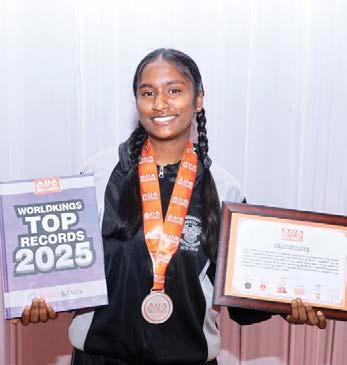
Asia Book of Records verified the claim and formally recognised the effort. The title awarded was the longest duration of aerial yoga performed by school students. The achievement placed the school on a continental platform.
Aerial yoga uses a soft fabric hammock suspended from the ceiling. The body is supported while gravity is partially removed. This allows deeper stretches and controlled inversions. At
the same time, the core muscles work constantly to maintain stability. Balance becomes essential. Concentration becomes non-negotiable.
For school students, the challenge is greater. Strength must be paired with discipline. Fear must be replaced with trust in technique. The Ooty students trained methodically. Sessions focused on posture, breathing, grip control, and mental calm. Safety remained central throughout.
During the final performance, the hall remained silent. Instructors watched posture and alignment. Students held poses with steady breathing. No legs dropped. No one touched the floor before time. The twenty-minute mark was completed with uniform control.
Observers described the scene as composed and intense. The absence of music allowed deeper focus. Every student relied on internal rhythm and visual cues. The hammocks moved gently. Bodies stayed aligned.
Christus Rex Senior Secondary School has a long history in education. Founded on 15 August 1975, the institution has emphasised holistic learning for decades. Academics have always been supported by physical and value-based education. Yoga fits naturally into that approach.
The aerial yoga programme was designed to enhance physical confidence and mental clarity. Teachers involved in the training noted improved posture and attention spans among students. The discipline required for aerial poses translated into classroom behaviour as well.
The school’s management supported the initiative from the planning stage. Infrastructure was adapted. Certified instructors guided the sessions. Parents were informed and involved. The effort became a shared responsibility.
A school representative, speaking as the record holder, said, “Our students proved that age is not a barrier when training is systematic and the mind is steady. This record reflects their commitment and our belief in balanced education.”
Asia Book of Records verified participation, duration, and execution standards. Documentation included timing records, visual evidence, and instructor reports. Only after thorough review, was the record confirmed.
Beyond the certificate, the achievement sends a broader message. Aerial yoga is no longer limited to elite fitness circles. It can be adapted for young learners under proper guidance. The practice builds trust in the body and calm in the mind.
Health experts often note that aerial yoga strengthens the core and improves flexibility. It also promotes spatial awareness. For adolescents, these benefits support growth and coordination. When taught responsibly, the practice becomes safe and effective.
In Ooty’s cool climate, the serene setting added to the experience. The students performed with quiet confidence. The
A growing aerial yoga trend in India reached a landmark in Ooty, where school students held anti-gravity postures for twenty minutes, earning record recognition for discipline, balance, and focused training.
hammocks became tools of learning rather than spectacle. This record places Christus Rex Senior Secondary School among institutions exploring new paths in physical education. This achievement also highlights a growing shift in how schools approach fitness and mindfulness. By integrating aerial yoga into structured education, institutions like Christus Rex Senior Secondary School demonstrate that innovative practices can nurture resilience, discipline, and creativity. The record stands not only as a milestone but also as an inspiration for future generations to embrace holistic well-being.
Songs That Shaped Stage
Marathi musical theatre heritage has shaped generations through voice, verse, and disciplined performance. Natya Sangeet grew as a refined blend of classical music and drama. Pune emerged as one of its strongest centres, where practice, pedagogy, and performance lived side by side. This living tradition took a historic form in September, when Ashwini Swaralaya of Pune organised a grand cultural offering titled Natya Swar Yadnya.
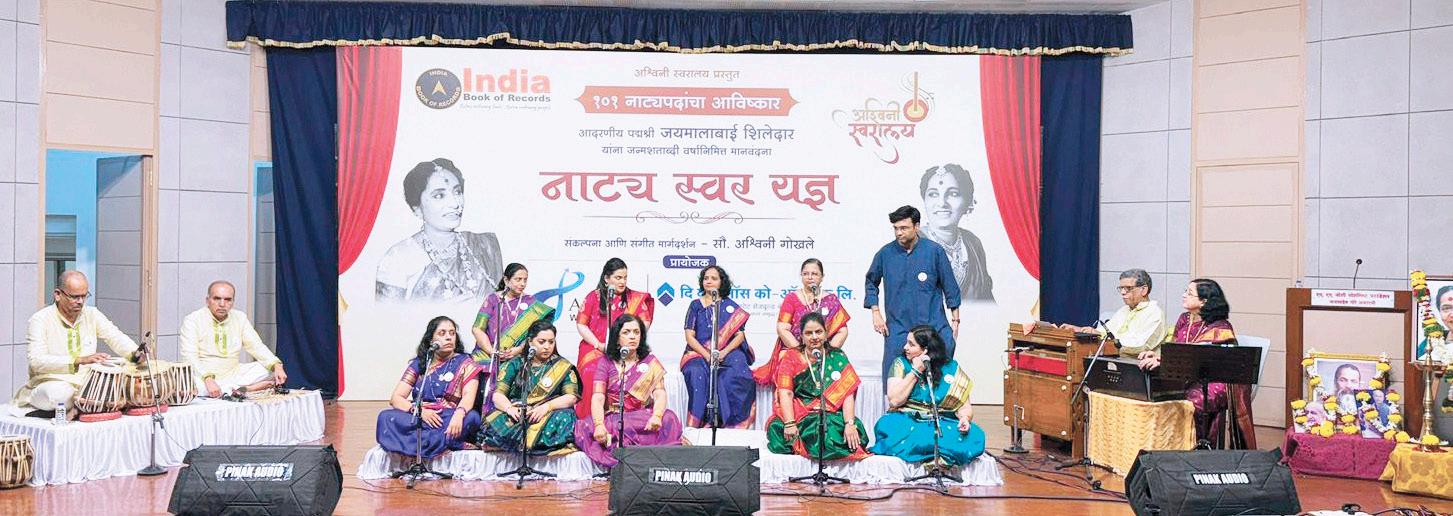
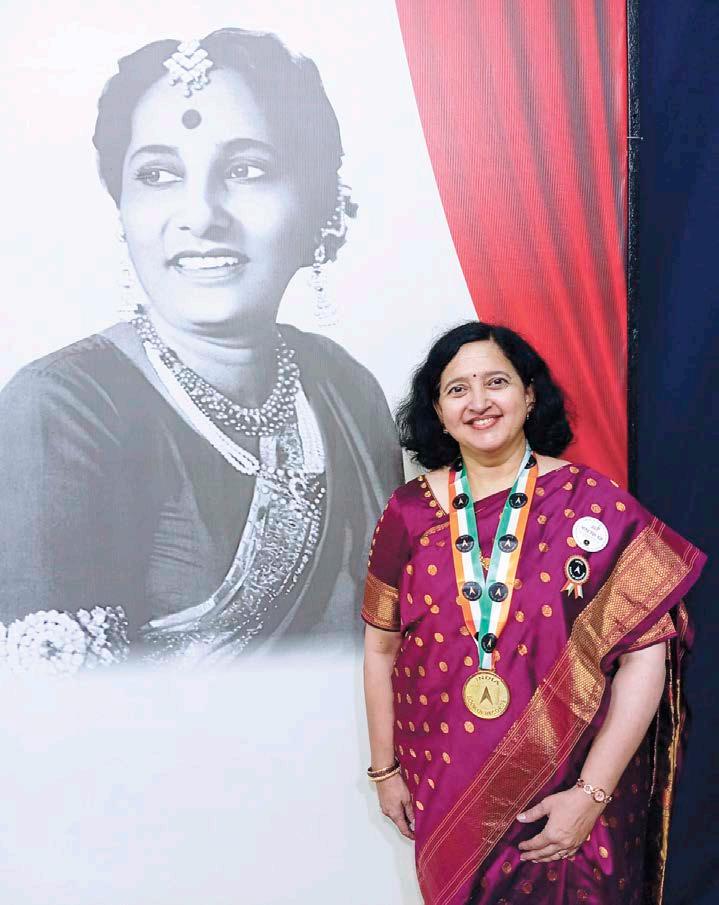
The event paid tribute to Padmashree Ms Jaymalabai Shiledar on the occasion of her birth centenary. It also created a national record. A total of 101 Natyapadas were performed in a single event. These were songs drawn from Sangeet Natak, the classical Marathi musical theatre repertoire. Performances unfolded in Marathi and Hindi, maintaining stylistic integrity and emotional depth.
The presentation brought together multiple generations. Mrs Ashwini Gokhale, founder of Ashwini Swaralaya, led the
performances. Sixty-five students of the institute joined her on stage. Four senior disciples of Jaymalabai Shiledar also participated, adding lineage and continuity to the evening.
Each Natyapada carried its own character. Some expressed devotion. Some explored longing and dignity. Others reflected dramatic conflict. The sequence demanded vocal stamina, memory, and interpretative clarity. The programme remained focused and disciplined throughout.
Ms Jaymalabai Shiledar holds a towering place in Marathi theatre history. A protege of Bal Gandharva, she carried forward the classical tradition with authority. Her career spanned over five decades. She performed in thousands of shows and played lead roles in many landmark productions. She also trained generations of artistes.
The Natya Swar Yadnya was designed as a respectful homage. Costumes remained understated. The focus stayed on voice and
bhava. Audiences responded with attention. Ashwini Swaralaya worked quietly for years to preserve classical and semi-classical music. Based in Pune, the institution trains students for Gandharva Mahavidyalaya examinations. It also prepares them for stage performance. Teaching and performance are treated as inseparable.
Planning such a large programme required care. Song selection followed a clear arc. Ragas were balanced. Vocal load was distributed across performers. Rehearsals were structured over months. Every transition was timed.
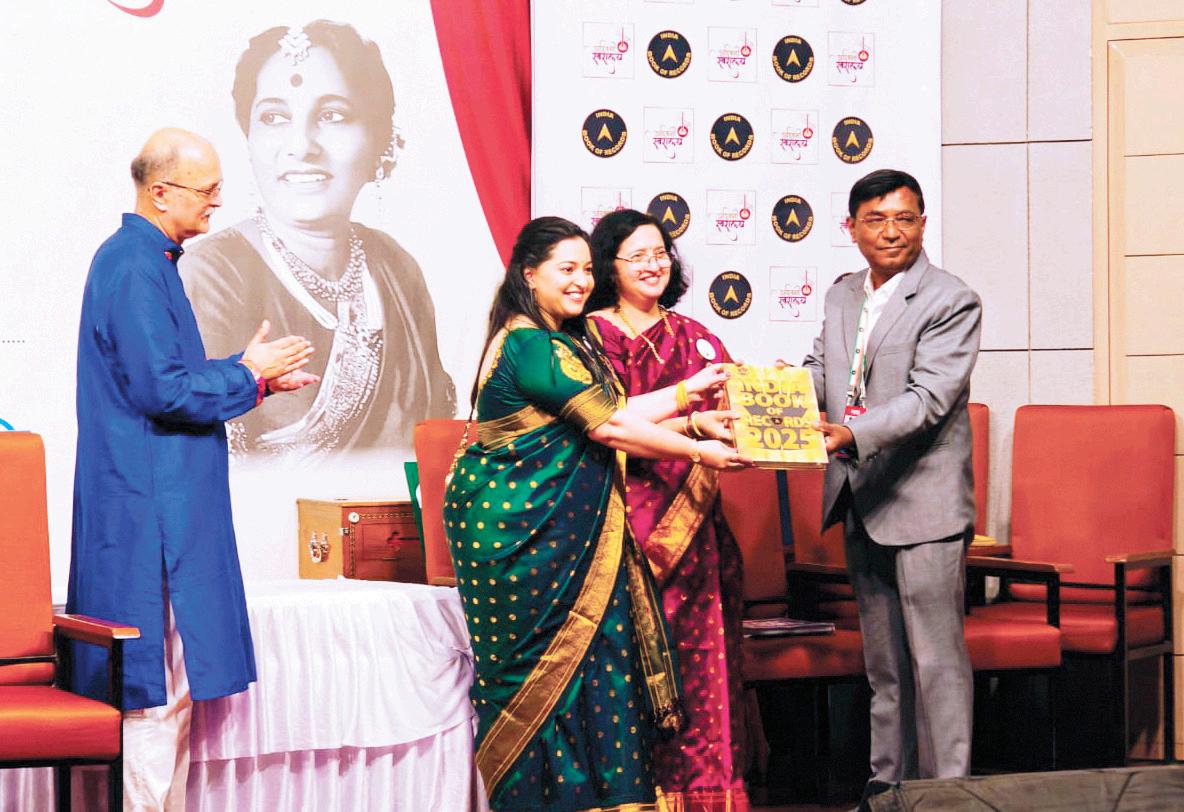
On 14 September 2025, the effort was formally confirmed. India Book of Records recognised the event as the maximum Natyapadas performed in a single event to honour a legendary artist. Adjudicator Mr Ashok Adak presented the medal and certificate to the organisers.
Speaking after the recognition, Mrs Ashwini Gokhale said, “This was our offering to Guru Jaymalabai Shiledar. Every Natyapada was sung with discipline, gratitude, and the intent to pass this art to the next generation.”
The evening reflected sustained training rather than momentary ambition. Students who participated described the experience as demanding and enriching. Many sang multiple pieces. Some performed solos for the first time. Guidance from senior artistes provided reassurance and structure. Pune’s long association with Natya Sangeet formed the backdrop. Institutions like Pune Bharat Gayan Samaj shaped this legacy. Events like Natya Swar Yadnya extend it into the present. The audience included senior musicians, students, and theatre enthusiasts. Many recognised rare compositions. Some recalled earlier performances by Jaymalabai Shiledar herself. Memory and music met quietly. The record highlights how cultural achievements differ from physical feats. Here, endurance lay in voice control. Coordination lay in raga flow. Achievement lay in collective discipline. Such events reaffirm the relevance
of classical forms. They show that tradition remains dynamic when taught and performed with care. Natya Swar Yadnya did more than honour one artist. It reinforced a lineage. It placed students beside masters.
A landmark Natya Sangeet event in Pune honoured theatre icon Jaymalabai Shiledar through 101 Natyapadas, performed by artists together, setting a national record rooted in Marathi musical theatre tradition.
Garba Beyond Sound
Garba dance culture is rooted in Gujarat’s social life. It belongs to community spaces, open grounds, and shared joy. The circular steps reflect unity. The claps reflect connection. The dance has always welcomed everyone who feels its rhythm. In Vadodara, this living tradition took a new and meaningful turn. A Garba dance workshop brought together deaf participants. The aim was learning, expression, and shared movement. The outcome became historic.
A workshop curated by Ms Poonam Krunal Panchal gathered 24 deaf individuals at one venue. The session began at 3:00 PM and concluded at 6:30 PM. Under expert guidance, every participant learned Garba steps and performed together. Visual cues replaced sound. Counting replaced beats. Energy replaced limitation.
Garba usually depends on music, tempo, and dhol rhythms. This workshop relied on sight and coordination. Instructors used hand signals, eye contact, and floor patterns. Movements were broken into small counts. Practice remained patient and focused. The group responded with discipline and enthusiasm.
The participants came with varied backgrounds and ages. Some had danced before. Some were learning Garba for the first time. All shared the same space and purpose. As the session progressed, hesitation faded. Confidence grew. Steps aligned. Circles formed.
Smiles became the strongest expression. Synchronised movements told their own story. The absence of sound did
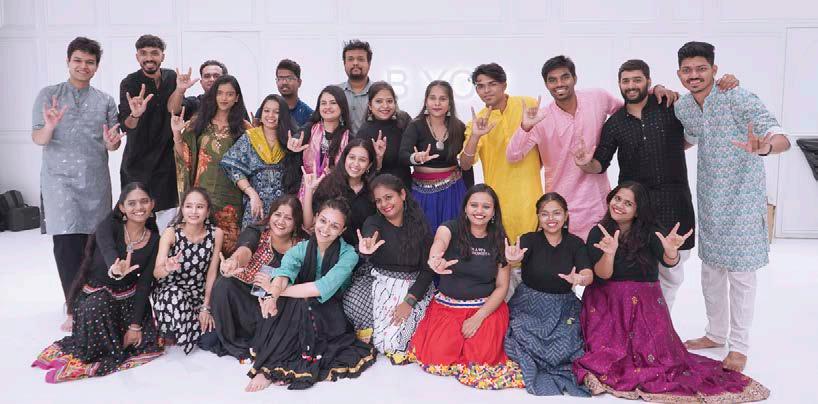
not weaken the performance. It strengthened attention and bonding. Every clap was timed through sight and trust.
Observers present at the venue described the atmosphere as powerful and moving. The floor vibrated with footwork. The energy felt complete. Garba once again proved that it belongs to the people, not to conditions.
India Book of Records (IBR) verified and recognised the effort as the record for the maximum number of deaf individuals participating in a Garba dance workshop. The documentation confirmed participation, duration, and learning outcome.
The record holder, Ms Poonam Krunal Panchal, who curated and led the initiative, viewed it as a natural extension of Garba’s spirit. She said, “Garba is about togetherness. When the participants danced with full focus and joy, I knew rhythm lives in the body, not only in sound.”
Her approach focused on dignity and clarity. The Garba dance workshop was not framed as an act of charity. On the other hand, it was framed as learning and celebration. Participants were treated as dancers, not as exceptions. This approach shaped the final outcome.
This cultural dance related record also highlighted evolving methods in performing arts education. Garba dance training no longer depends on sound alone. Visual rhythm, spatial awareness, and group energy can guide large teams of participants. This opens doors for inclusive cultural participation.
Vadodara has long been a cultural hub of Gujarat state. Garba nights across cities of the state draw thousands of revellers every year during Navratri. This workshop added a deeper layer to that tradition. It showed that heritage grows stronger when it adapts with care.
For the participants, the event became a moment of pride. Many expressed joy through gestures and expressions after the performance. Their families witnessed them shine in a public art form. The memory will stay beyond the record certificate.
This Garba workshop stands as a quiet shift in how society views ability. It shows what happens when instruction meets intent. In the workshop, dance became a shared language. Silence did not stop celebration. Garba began as a folk expression. In Vadodara, it became a reminder that culture listens even when ears cannot.
Voices of a Thousand
The beauty of regional languages of India lies in their sound, memory, and continuity. Each language carries stories shaped by land and people. Assamese, with its lyrical depth, holds a special place in this mosaic. That beauty found a powerful collective form in a landmark literary effort from Assam.
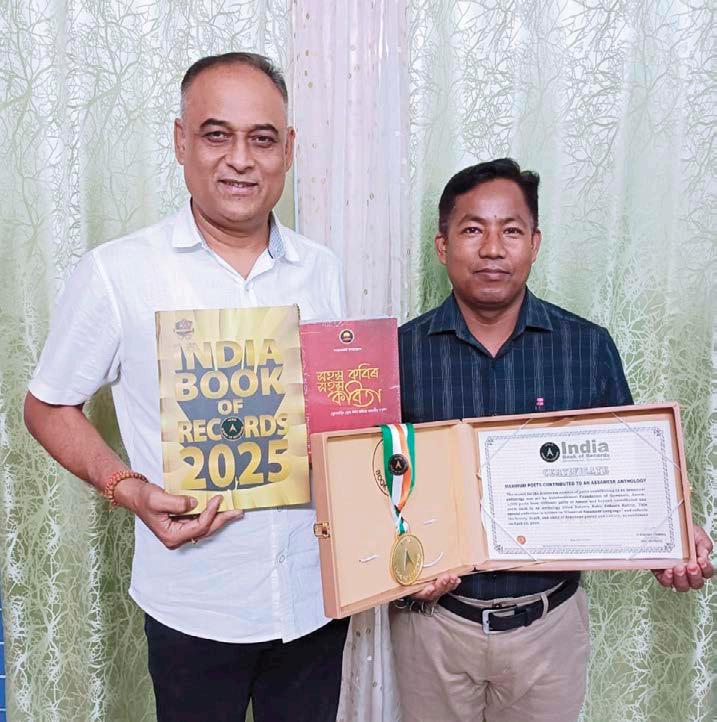
Sanskardhwani Foundation of Guwahati, Assam, brought together one thousand poets for a single anthology. The book, titled Sahasra Kabir Sahasra Kabita, stands as a rare moment in contemporary Indian literature. Each poet contributed one poem.
The language chosen was Classical Assamese. The intent was clarity and continuity. The outcome was scale and unity. India Book of Records (IBR) verified the claim and recognised it as a national record for the maximum number of poets contributing to an Assamese anthology.
The book, Sahasra Kabir Sahasra Kabita, reflects a wide range of themes. Love appears gently in some verses. Nature flows quietly through others. Several poems engage with society and politics. Pain, hope, faith, and human struggle find honest expression. No single voice dominates. Every poem holds its own space.
What binds the collection is respect for diversity within tradition. Poets from different parts of Assam contributed. Voices from beyond the state also joined. Experienced writers and first-time contributors stand together. The anthology avoids hierarchy. It offers equal presence.
Coordinating such a large literary effort was not simple. All the poems had to be curated with utmost care. Language standards were maintained. The classical tone remained consistent. Yet, individuality was never compromised. Each poem reflects the poet’s inner rhythm.
The foundation’s aim was inclusion. The idea was to create a platform where every voice mattered. There was no restriction on style or subject. Poetry remained open and accessible. The book resists narrow definitions of literature.
From a cultural perspective, the anthology captures a moment in Assamese society. It reflects current thought without losing classical roots. Readers encounter emotions shaped by modern life and inherited memory. This balance gives the book lasting relevance.
Literary circles across Assam responded with warmth. Writers, readers, and language enthusiasts welcomed the initiative. Many described it as a milestone in regional publishing. The collective nature of the book strengthened community bonds.
Young poets found encouragement in its pages. Seeing their work printed alongside established names built confidence. The anthology became a signal that poetry still belongs to the people.
The publishing design remained restrained. There was no visual excess. The focus stayed on words. This choice suited the purpose. This poetry book invites reading rather than display.
Dr Hitesh Goswami, speaking on behalf of Sanskardhwani Foundation, said, “This IBR record belongs to every poet of Assam who trusted their mother language and offered a verse with devotion. Our goal was to honour Assamese in its pure and collective form.”
Dr Goswami’s words reflect the spirit behind the project. The anthology was never about numbers alone. The number became meaningful because of intent. The record title may speak of scale, yet the impact lies in intimacy. Each poem carries a personal truth. Together, they form a shared cultural voice.
Clean Classrooms, Cleaner Minds
Swachh Bharat Abhiyan has steadily moved from slogans to everyday practice. It has shaped how cities think about hygiene, waste, and public responsibility. Across India, local bodies have begun translating this national mission into classroom conversations. Betul, a quiet district town in Madhya Pradesh, offered a clear example of how sustained civic education can reach young minds at scale.
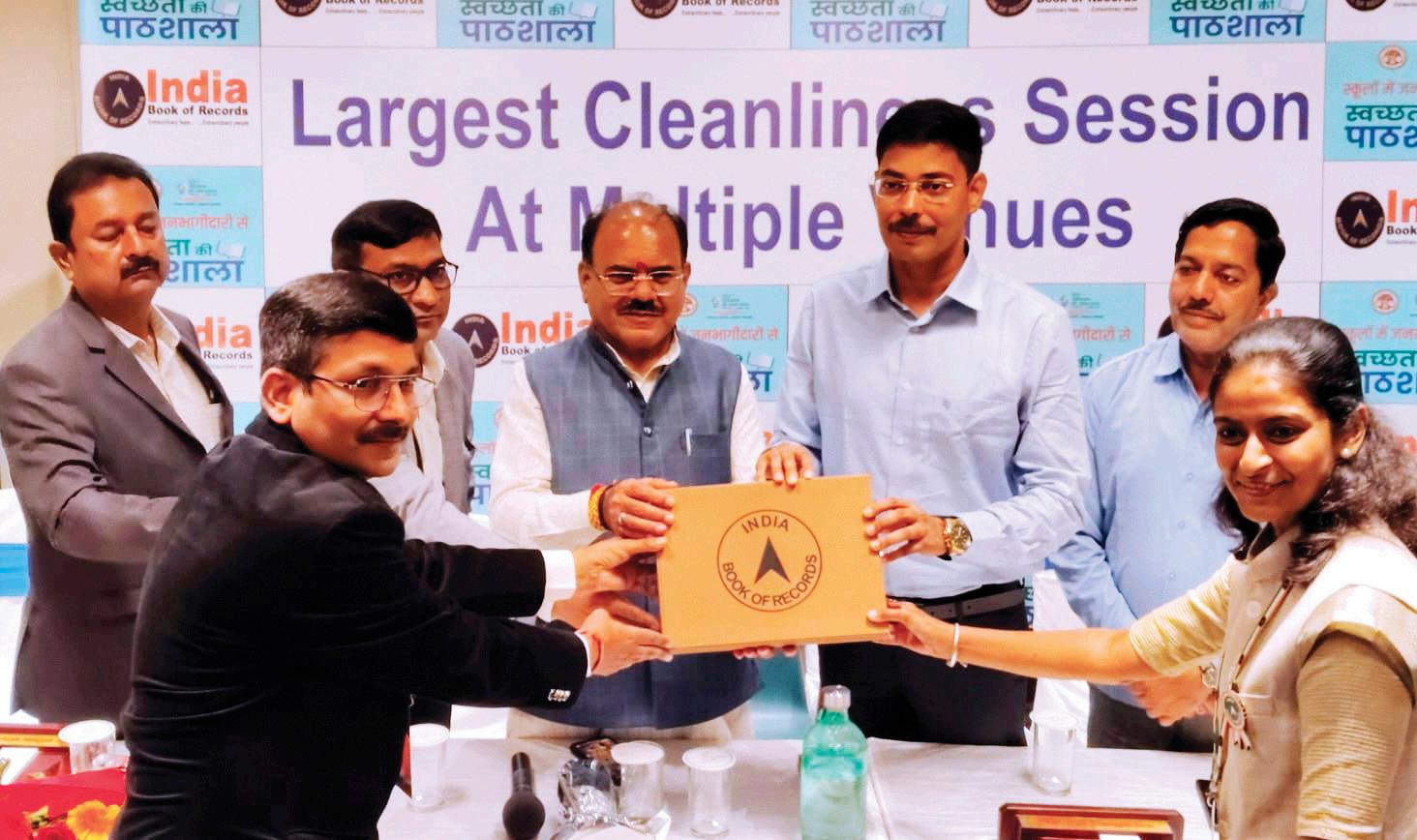
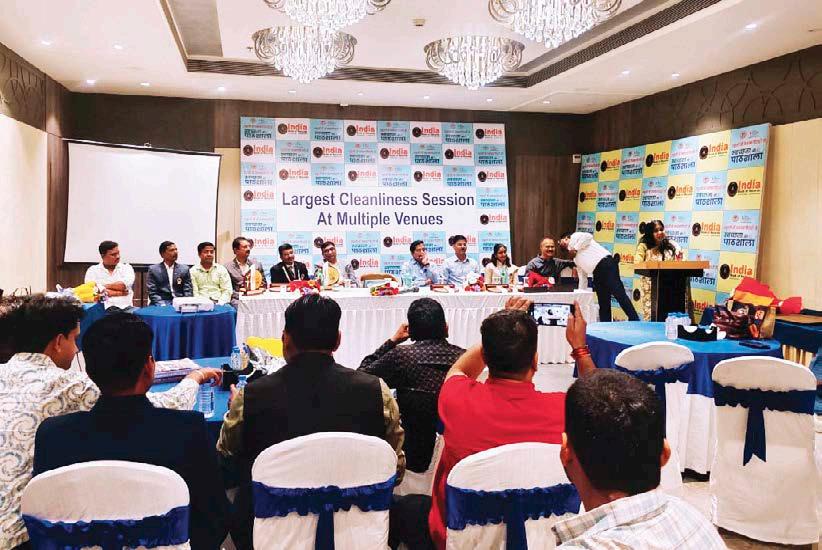
Nagar Palika Parishad Betul organised a massive cleanliness awareness session across the district. A total of 23,774 students participated at multiple venues in a day. Schools and anganwadi kendras became learning spaces for hygiene, waste segregation, and environmental responsibility. The initiative was carried out under the leadership of Mr Ompal Singh Bhadouriya, then Chief Municipal Officer of Betul. The achievement was later recognised by India Book of Records.
The campaign focused on simple habits. Children were taught why cleanliness matters for health and dignity. They learned how waste generated at home and school travels through the city system. Educators explained the difference between wet and dry waste. Students were encouraged to use two dustbins at home.
The idea was practical and relatable. The initiative focused on habits that could be followed daily without cost or complexity.
Municipal teams explained the working of modern waste management facilities. Students were introduced to the concept of Material Recovery Facilities. They were told how construction and demolition waste is handled separately. Information about the Faecal Sludge Treatment Plant was also shared in ageappropriate language. These sessions helped children see cleanliness as a system.
The scale of participation made the effort remarkable. Sessions were held simultaneously across urban and semiurban pockets. Teachers, anganwadi workers, and municipal staff coordinated closely. Volunteers ensured that each venue followed a structured programme. Visual aids and live demonstrations kept children engaged. The focus remained on learning instead of lectures.
Betul’s approach stood out for its inclusion. Anganwadi centres ensured that early learners were part of the conversation. School students from different age groups participated together. This
created an understanding across generations. Cleanliness became a collective idea rather than an individual task.
The programme was part of a larger civic journey for Betul. In the same period, the town also ran cleanliness drives around water bodies. Public appeals were made to protect ponds and lakes from waste dumping. These actions reinforced what children learned in classrooms. Civic messaging remained consistent across platforms.
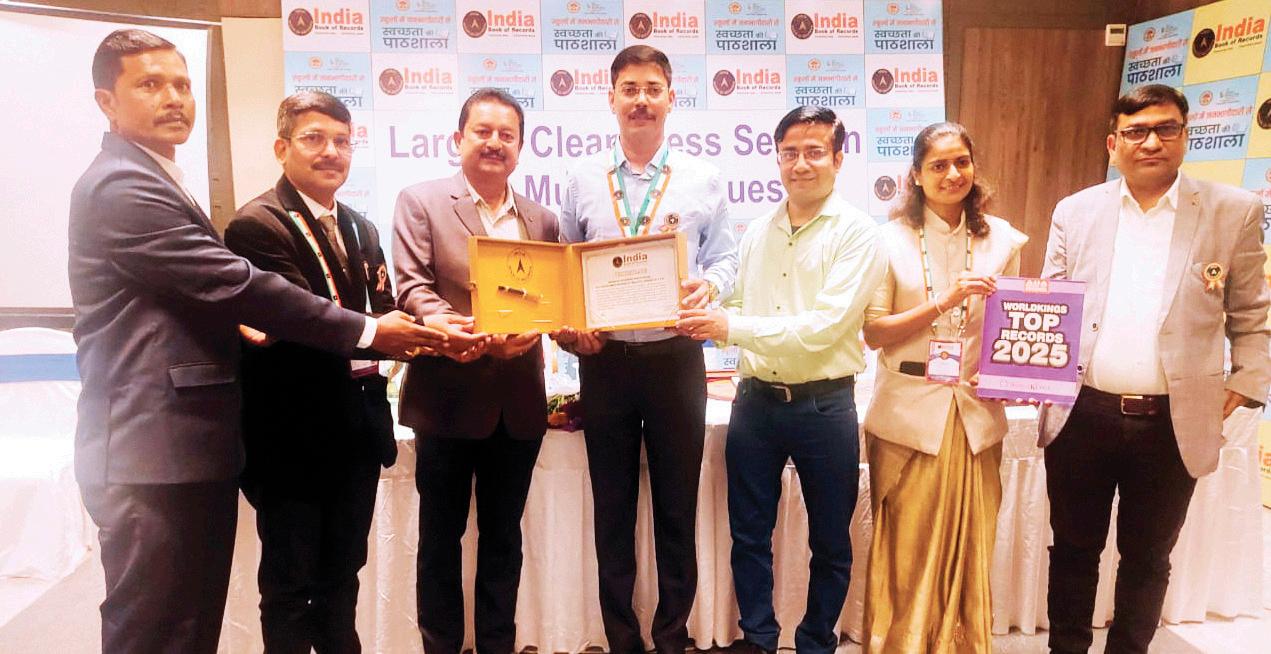
Recognition came after careful verification. India Book of Records (IBR) acknowledged the effort as the maximum number of students participating in a cleanliness session at multiple venues in a single day. Adjudicators Dr Antim Kumar Jain and Dr Rinku Porwal presented the medal and certificate to the organisers. The honour placed Betul on the national map for civic innovation.
Mr Ompal Singh Bhadouriya reflected on the initiative with clarity. “When children understand cleanliness early, cities become cleaner naturally. This record belongs to every student who listened, learned, and carried the message home,” he said.
The campaign also strengthened coordination between civic bodies and educational institutions. Schools became partners in public health goals. Teachers acted as messengers beyond textbooks. Parents, influenced by their children, began adopting better waste practices at home. The impact extended beyond the record day.
When civic engagement often struggles for attention, Betul chose education as its tool. The effort did not rely on spectacle. It relied on reach, repetition, and relevance. Thousands of young participants carried the lesson forward, one habit at a time.
Betul’s city-wide cleanliness drive brought together 23,774 students in one day, turning Swachh Bharat ideals into daily habits through schools and anganwadi centres, earning recognition for civic leadership.
Ravana Rises in Kota
The craze for Ravana effigy during Dussehra runs deep across north India. Every year, cities compete through scale, craft, and spectacle. Effigies rise higher, crowds grow larger, and tradition finds new visual expression. In 2025, Kota (Rajasthan) set a new benchmark. Kota Nagar Nigam South and North constructed the tallest effigy of Raavan ever built for a festival. The structure stood at an astonishing height of 233 feet and became the central attraction of the city’s Dussehra celebrations.
The record was set on 2 October 2025. The effort was carried out under the leadership of Mr Om Birla, Speaker of the House, whose guidance supported coordination between civic authorities and organisers. The project reflected planning, scale, and collective execution. The effigy was constructed using bamboo sticks, soil, clay, paper, and firecrackers. Traditional materials formed the core. Modern engineering sense supported stability.
Despite its massive height, the structure retained the familiar form of Raavan, complete with symbolic detailing. Artisans worked for weeks to shape the effigy. Bamboo frameworks were assembled in sections. Clay and paper layers followed. The final form balanced height with proportion. Every stage demanded precision.
Kota has long been known for its large-scale public events. The Dussehra celebration holds special significance in the city. This
year, the intention was to create a visual symbol that matched the spirit of the festival while respecting traditional values.
Crowds gathered days before the event. People came from nearby towns and districts. The effigy dominated the skyline. It became a shared point of anticipation.
The objective behind the structure extended beyond records. The organisers aimed to showcase cultural heritage. The story of Dussehra is retold each year through fire and form. The towering Raavan amplified that narrative without altering its meaning.
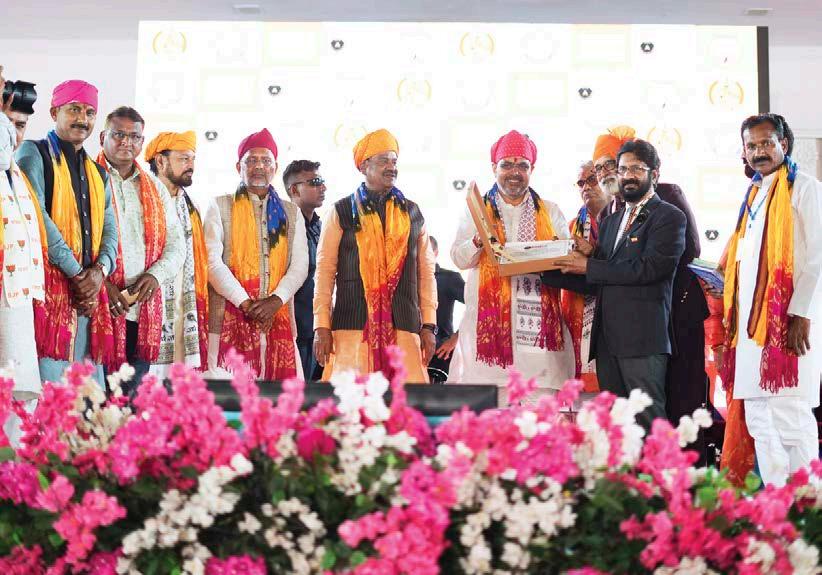
On the day of confirmation, Asia Book of Records and India Book of Records jointly verified the height and construction. Adjudicator Mr Bhuvnesh Mathuria presented medals and record certificates to the organisers, formally recognising the achievement.
A representative of Kota Nagar Nigam, speaking as the record holder, stated, “This effigy represents teamwork, tradition, and civic pride. Our aim was to honour Dussehra with scale and sincerity.”
Civic bodies, craftsmen, engineers, and volunteers worked together. No single element stood alone. The construction also highlighted the role of traditional materials. Bamboo remains central to large festival structures due to its strength and flexibility. Clay and paper allow detailed shaping. Such methods keep the craft rooted in local practice.
The effigy drew attention from across the country. Images circulated widely. Media coverage followed. Kota’s name entered record books alongside its festive identity. Dussehra celebrations across India differ in form. Some focus on performance. Some highlight procession. In Kota, the focus rested firmly on scale and craft. The effigy became a temporary monument.
Despite its height, safety remained a priority. Structural checks were conducted regularly. The base was reinforced. Weather conditions were monitored. Planning ensured controlled execution. The record also reflected how public festivals evolve. Scale increases, yet symbolism stays constant. Raavan continues to represent the triumph of good over arrogance. Height amplifies visibility. Such records often fade after the event, yet their impact lingers. They inspire future efforts. They raise expectations of the people. They push organisers to think bigger while staying grounded.
When Waste Became Worth
The art of creating Best from Waste has moved from classrooms to public platforms. It reflects a shift in how young minds view discarded material. What was once ignored now becomes a medium of expression and purpose. This idea took a striking form at the MET Institute of Mass Media in Mumbai.
Sixty-nine students came together to build the largest trophy made using electronic waste material. The structure stood three metres tall and carried a strong visual presence. The trophy was constructed using old keyboards, discarded CPU parts, electronic wires, fabric waste, and bamboo used as internal support.
Every element came from waste streams. Nothing new was added for appearance alone. The result was both symbolic and functional. The project unfolded ahead of METamorphosis 2025, the institute’s flagship creative festival. Students worked across media, design, production, communication, and fabrication.
Each group handled a specific responsibility. Coordination remained central. The installation was built live on 18 November 2025 during a six-hour session at MET Bhujbal Knowledge City in Bandra. Visitors observed the process as it progressed. The structure gradually took shape. Waste began to resemble form.
The trophy weighed nearly 350 kilograms. Stability was ensured through careful internal design. Bamboo provided strength without compromising the theme. The outer layers used electronic components arranged with intention.
The unveiling took place on 5 December 2025. By then, the structure had become a focal point of discussion. Students from other colleges paused to observe it. Faculty members reflected on its relevance. Conversations around sustainability followed.
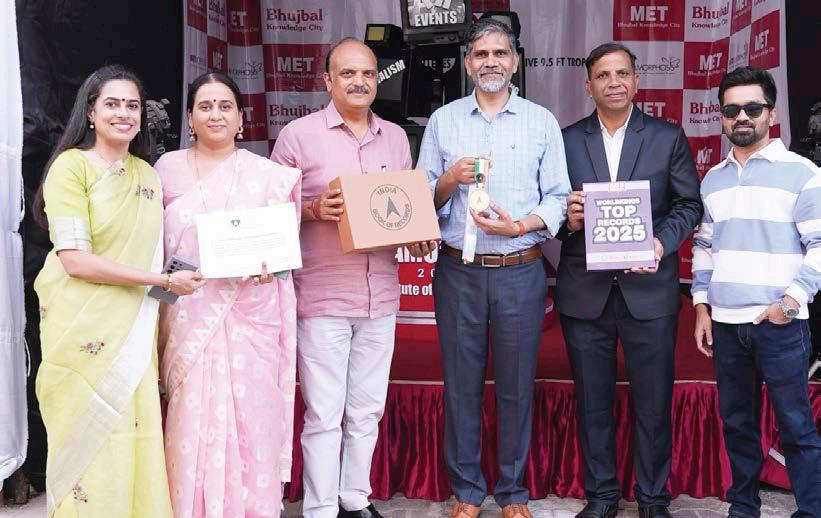
India Book of Records confirmed the feat on 24 November 2025. The recognition acknowledged scale, material choice, and student-led execution. The record marked the largest trophy made using electronic waste material.
The project was guided by the vision of Trustee Mr Pankaj Bhujbal, with support from senior management representative Ms Vishaka Bhujbal. Academic mentorship came from Director Ms Priya Menon Nair. Visual artist Mr Sumeet Patil advised students on artistic and structural aspects.
Despite guidance, ownership remained with students. Decisions were debated. Designs were revised. Mistakes were corrected on site. Learning happened through practice and proper instructions.
The trophy was created to be awarded during METamorphosis 2025. It was intended for the Best College in Mumbai based on performance across cultural, media, journalism, intellectual, and sports categories. The trophy itself carried the message of transformation.
A student representative from the MET Institute of Mass Media, said, “We wanted to prove that waste can speak powerfully. This trophy shows how creativity and responsibility can exist together.”
The project was extraordinary in size. It was also special due to relevance. Electronic waste remains a growing concern in urban India. Repurposing it into art sends a direct message. MET Institute of Mass Media has positioned itself as a space where creativity meets technology. Its programmes integrate storytelling, design, and digital tools. This project extended that philosophy into physical form.
Students from diverse disciplines united under Mediaverse, creating a trophy symbolising evolving media minds. Public response praised its design, repurposed objects, and messageshowcasing education’s adaptability beyond exams into shared dialogue.
Young Kicks, Big Impact
Taekwondo sport in India has steadily moved from niche training halls to school grounds and competitive platforms. Known for its emphasis on balance, speed, and mental control, the martial art has attracted young practitioners who see discipline as a daily habit rather than a distant goal. Over the years, Indian children have begun to test their limits through structured practice, measured strength, and timed performance.
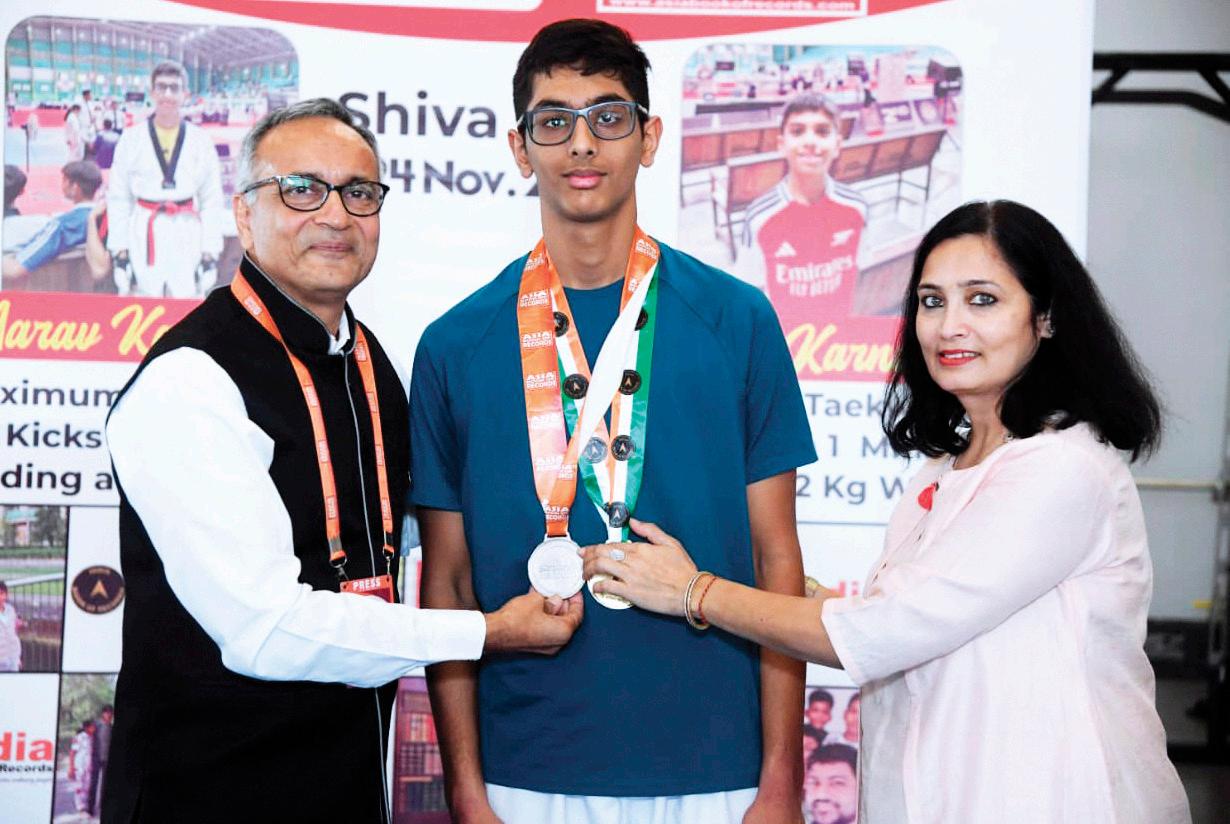
This spirit of focused training was visible in Jaipur, Rajasthan, on 24 November 2025. Two brothers, Aarav Karnawat and Aahan Karnawat, set double records in Taekwondo, each in their respective age categories. Their performances combined physical strength with precise technique, observed under strict timing and weight conditions.
The first record was set by Aarav Karnawat, born on December 15, 2009. At the age of 15 years and 11 months, he performed the maximum number of Taekwondo side kicks in one minute while
holding a 5 kg weight. Aarav delivered 274 side kicks within sixty seconds, maintaining form and balance throughout the attempt. The record was confirmed on 24 November 2025.
Side kicks in Taekwondo demand strong hip rotation, core stability, and controlled breathing. Adding a 5 kg weight increases strain on the supporting leg and upper body. Aarav’s performance required sustained concentration, as even a minor lapse could affect speed or posture.
The second record was set by his younger brother, Aahan Karnawat. At the age of 11 years and 7 months, Aahan performed the maximum number of Taekwondo front kicks in one minute while holding a 2 kg weight. He completed 113 front kicks within the stipulated time, meeting all technical requirements. This record was also confirmed on the same day.
Front kicks focus on direct force, knee lift, and snap control. For a child, maintaining rhythm while holding additional weight
tests coordination and endurance. Aahan’s performance reflected steady training and confidence developed over time.
Both attempts were conducted under supervision, with timing, counting, and form monitored closely. The records were recognised jointly by India Book of Records and Asia Book of Records. The achievements were acknowledged as a combo record, highlighting the brothers’ shared commitment to the sport.
The Karnawat brothers train in an environment that values consistency over shortcuts. Their preparation involved repeated drills, strength conditioning, and recovery routines. School schedules were balanced with practice sessions, showing that structured discipline can coexist with academic life.
Taekwondo training has gained popularity in Indian schools due to its focus on self-control and fitness. It teaches children to manage stress, follow routines, and respect guidance. Performances like these reinforce the idea that progress comes through daily effort rather than sudden leaps.
Aarav Karnawat spoke briefly after the record confirmation. “Taekwondo has taught me patience and focus. Breaking this record was about staying calm and trusting my training. I am happy to achieve what I had decided,” he said.
The records also serve as inspiration for other children who practise martial arts. They show that age is not a barrier to excellence when guidance and discipline align.
Two Jaipur brothers created national records in Taekwondo by delivering weighted kicks at remarkable speed, highlighting discipline, focus, and the growing strength of martial arts culture among Indian youth.
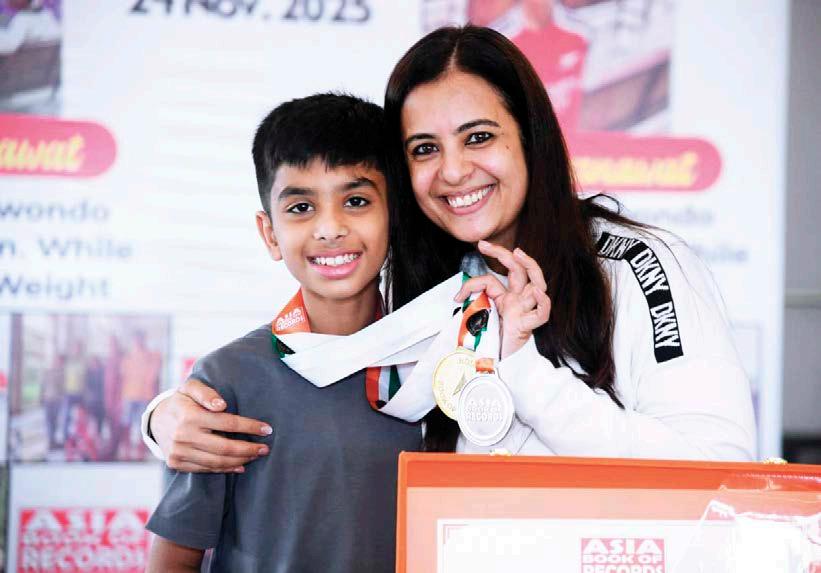
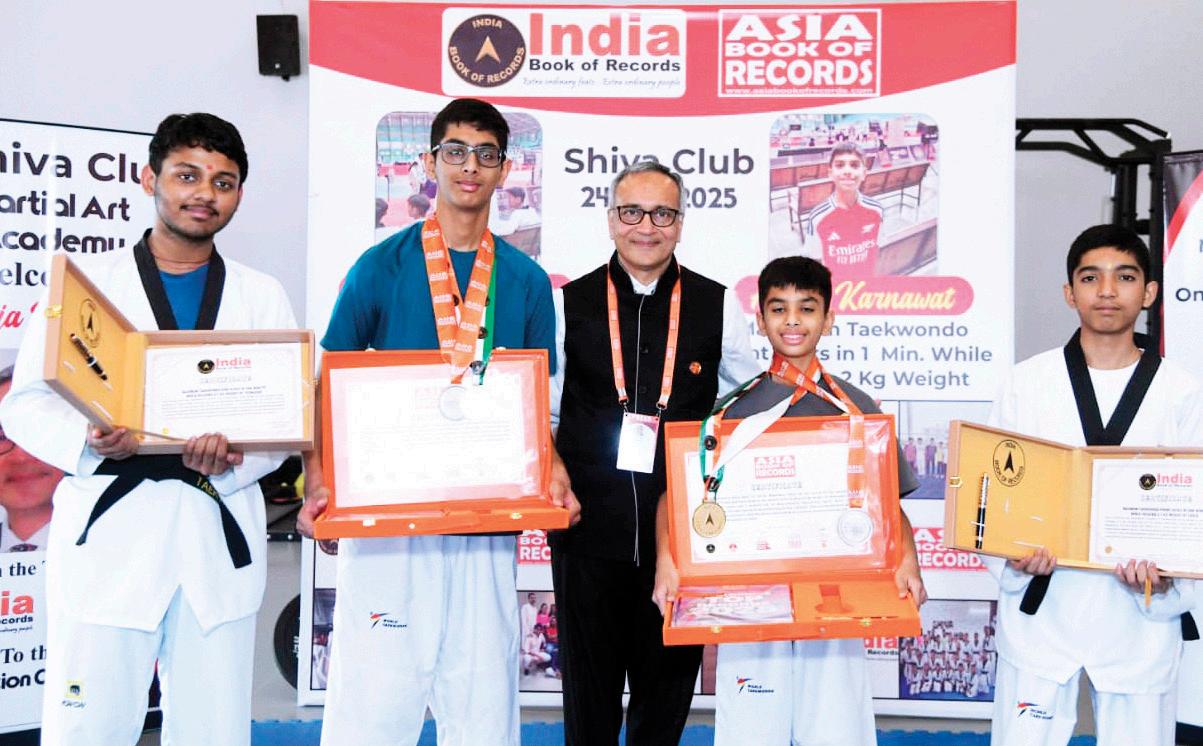
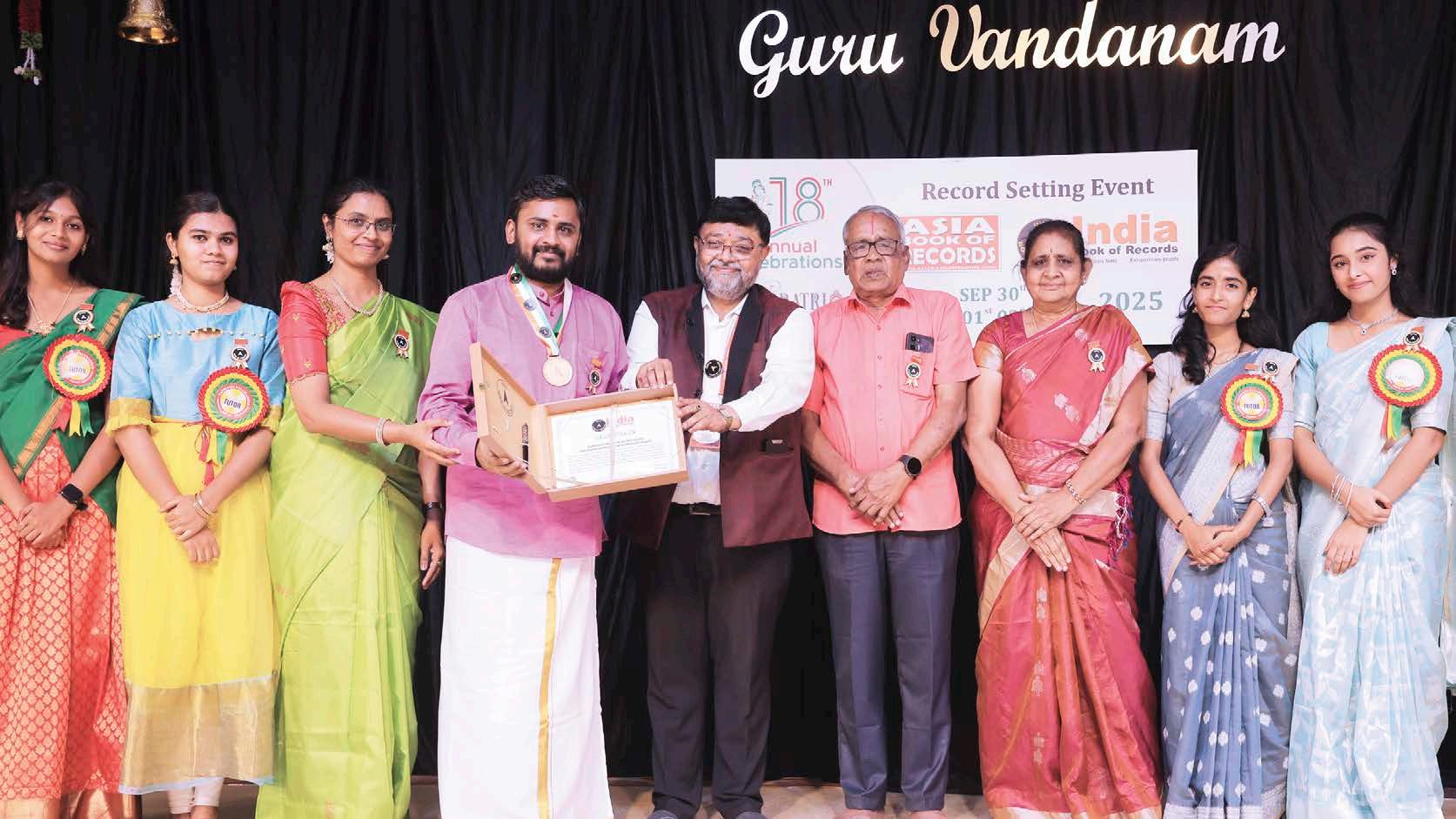
Rhythm of Collective Grace
Bharatnatyam Dance stands among India’s oldest classical forms, where movement, expression, and rhythm combine into a disciplined language. Rooted in devotion and storytelling, it demands years of training and internal balance. When performed collectively, its precision becomes even more visible. That collective strength was witnessed in Hosur, Tamil Nadu, during Navarathri Festival 2025.
PadmaSri Kalamandir organised a large-scale Bharatanatyam presentation involving its students across multiple groups. The event unfolded as part of Guru Vandanam, marking the institution’s 18th Annual Celebration. From 30 September 2025 to 3 October 2025, Bhavani’s Grand Palace in Hosur became the centre of continuous classical movement.
A total of 725 students of PadmaSri Kalamandir performed Bharatanatyam in different groups across the four days. Each group followed its own sequence, maintaining clarity and form. The scale of participation set the effort apart. Students ranged across age groups and learning stages. Beginners and advanced dancers shared the same platform. Their performances reflected structured training and sustained rehearsal. The event was supervised by Guru Shri S Krishnan, whose guidance shaped the programme. Coordination of such a large
number required careful planning. Group transitions were timed. Music cues were aligned. Stage discipline remained consistent.
Navarathri holds deep cultural significance in Tamil Nadu. It celebrates the Divine Mother in her forms of Durga, Lakshmi, and Saraswati. Dance and music become central during these days. Guru Vandanam aligned naturally with this spirit of learning and gratitude.
Each Bharatanatyam group presented traditional compositions. Adavus, abhinaya passages, and rhythmic sequences followed classical structure. Costumes reflected uniformity. Expressions remained focused. Despite the scale, individual attention to movement was evident.
Families, students, and art enthusiasts attended across the days. The atmosphere remained devotional and attentive. Applause followed group completions rather than individual display. The emphasis stayed on collective effort.
PadmaSri Kalamandir has worked for years to promote classical dance education in Hosur. The institution focuses on disciplined learning rather than short-term performance goals. This approach became visible through the event’s execution.
Managing rehearsals for 725 students demanded patience. Practice schedules were staggered. Groups rehearsed separately and together. Feedback loops remained constant. The result was cohesion rather than chaos.
The record was officially confirmed on 3 October 2025. Asia Book of Records and India Book of Records recognised the achievement as the maximum number of students of an institution performing Bharatanatyam in different groups. Verification covered participant count, performance duration, and group structure.
Adjudicator Mr Harish R presented the medals and record certificates to Guru Shri S Krishnan. The recognition acknowledged the institution’s sustained effort and organisational discipline. Guru Shri Krishnan said, “This achievement belongs to every student who practised with sincerity. Our aim was to honour the art and the guru parampara through collective dedication.”
Bharatanatyam requires alignment of body and mind. When hundreds perform together, that alignment extends into shared timing and awareness. Such performances demand restraint as much as energy. The focus remained on learning and continuity.
The event also reinforced the role of institutions in preserving classical arts. Training large numbers without diluting quality is challenging. PadmaSri Kalamandir demonstrated that scale and discipline can coexist. For many students, the experience marked an important milestone. Performing in groups reduced individual pressure while building confidence.
Younger dancers observed seniors closely. Seniors guided juniors through example. The cultural setting of Navarathri added depth. The festival encourages new beginnings and learning. Presenting Bharatanatyam during these days aligned tradition with practice. This record reinforced the essence of Bharatanatyam.
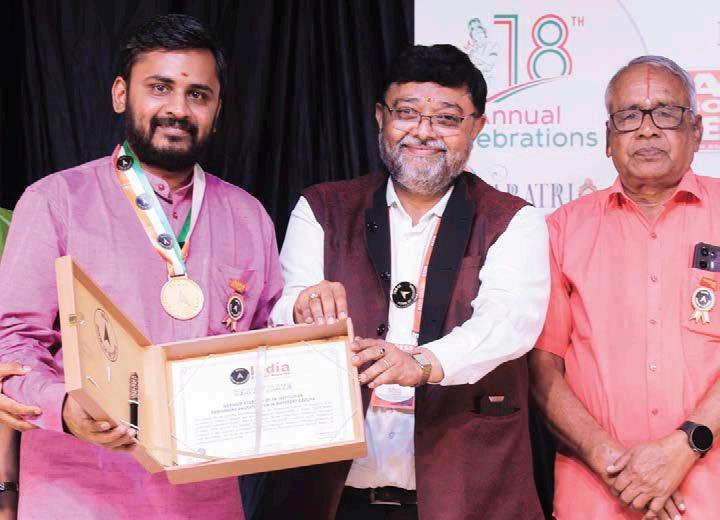
During Navarathri 2025, a Hosur-based institution brought 725 students together in grouped Bharatanatyam performances, creating a record that reflected discipline, tradition, and shared artistic dedication.
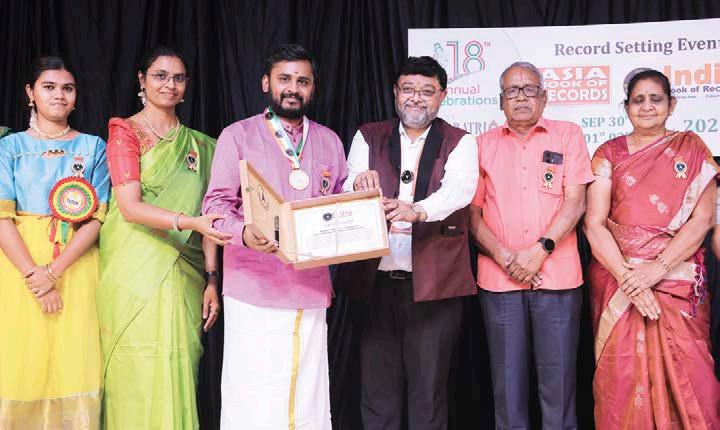
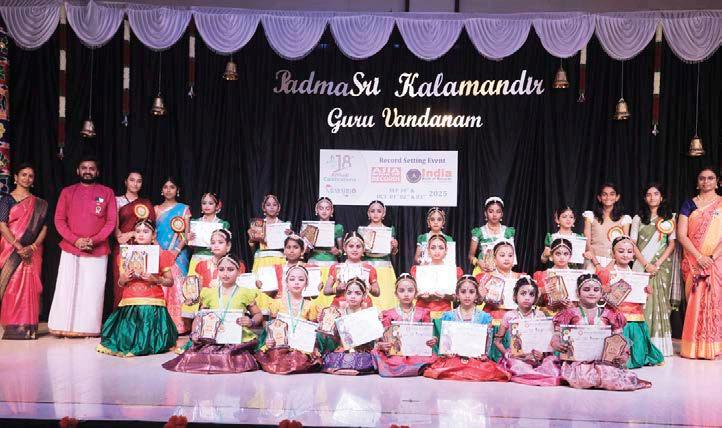
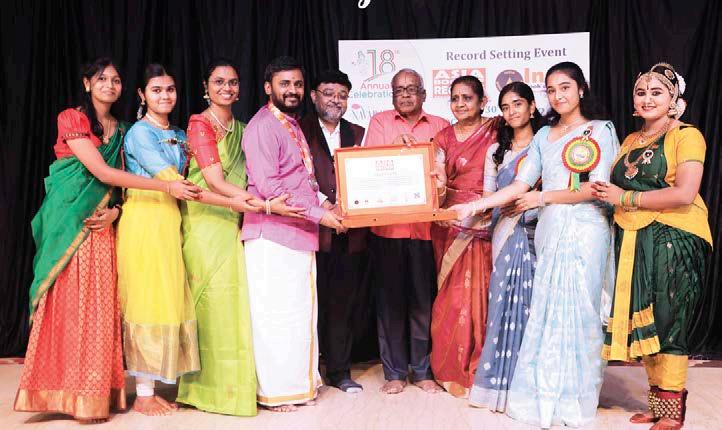
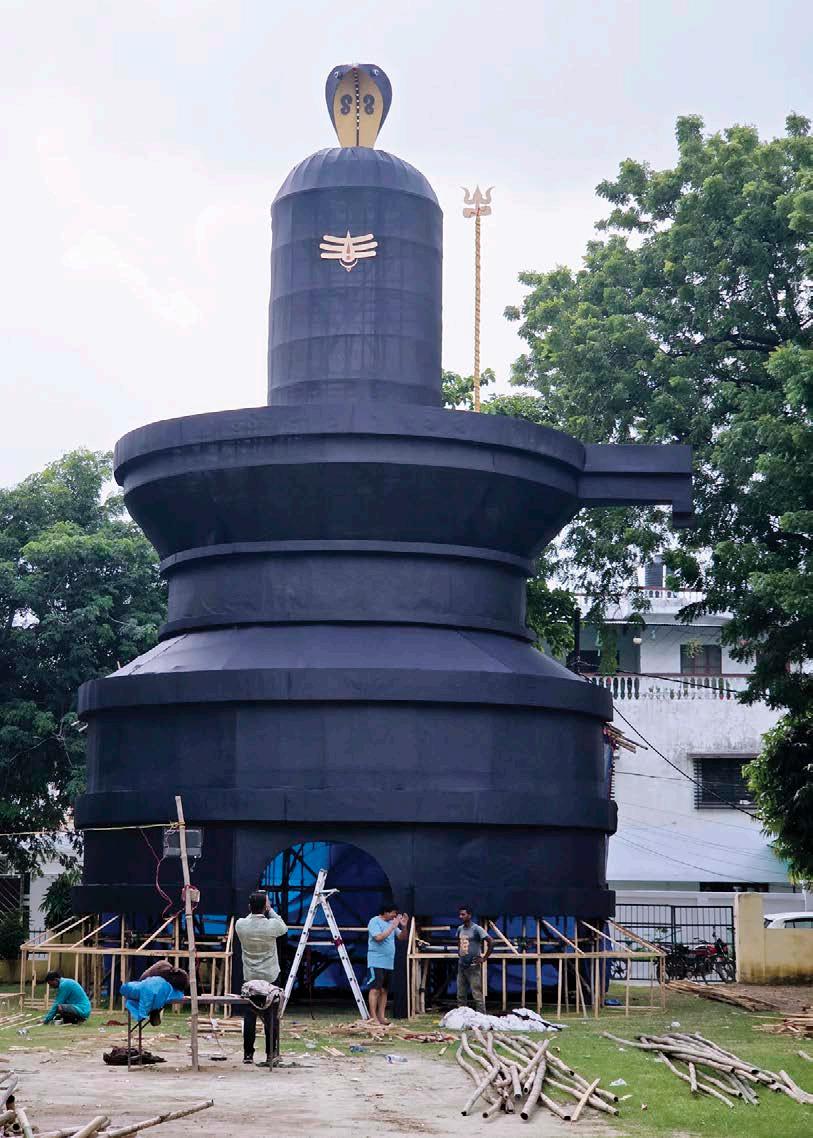
Bamboo Rising in Devotion
Bamboo-made handicraft items have long reflected India’s ability to merge utility with beauty. From baskets to furniture, the material has carried cultural memory across regions. In recent years, bamboo has returned to the centre of public design, driven by sustainability and craft revival. This renewed respect for bamboo found a striking expression in Lucknow during Ganesh Utsav 2025.
Akshay Samiti of Lucknow created the tallest eco-friendly Shivling structure made entirely with bamboo. The structure stood at 53.4 feet and became a focal point of devotion and public gathering. The Shivling-shaped pandal formed part of the widely known “Lucknow ke Maharaja” celebrations at Nishatganj Paper Mill Colony.
Visitors witnessed a blend of faith, scale, and craftsmanship rarely seen in festival architecture. The structure was built
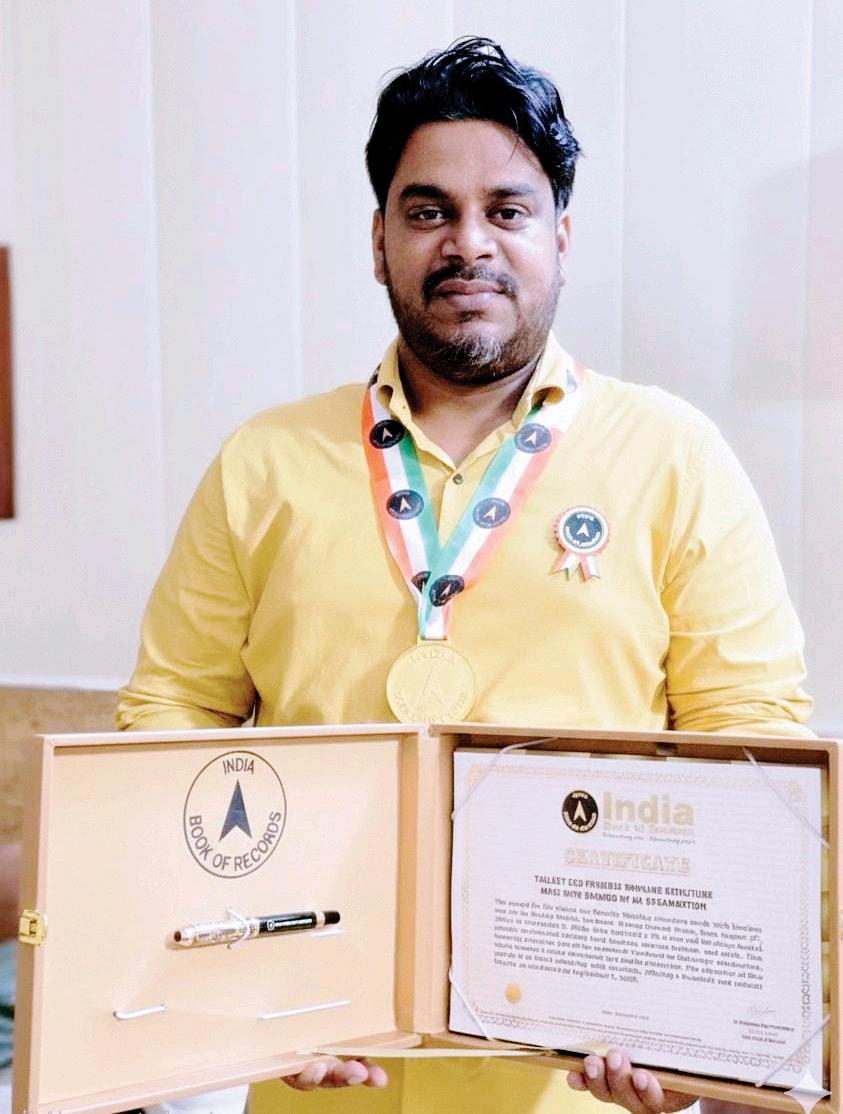
using bamboo, wooden battens, and cloth. No concrete or metal frames were used. The design respected traditional symbolism while adopting modern engineering sense. Skilled artisans worked patiently to ensure stability and proportion.
Bamboo, one of the fastest-growing renewable materials, allowed the team to create height without harming the environment. The material also enabled flexibility in design. Curves and contours were shaped with care. The Shivling retained spiritual dignity while standing tall in public space.
Throughout the festival days, devotees gathered in large numbers. Many paused to observe the craftsmanship before offering prayers. The pandal became a place of reflection as well as admiration. Its presence changed the visual language of the celebration.
Akshay Samiti has organised Ganesh Utsav in Lucknow for years. Each year brings a new creative concept. In 2025, the focus shifted clearly towards sustainability. The bamboo Shivling was planned as an artistic tribute rooted in ecological responsibility.
The installation process involved planning, testing, and constant supervision. Safety remained central. Bamboo joints were reinforced with traditional binding techniques. The structure stood firm through varying weather conditions during the festival period.
The record was confirmed on 5 September 2025. India Book of Records officially recognised the feat as the tallest eco-friendly Shivling structure made with bamboo by an organisation. The measurement and material verification were conducted as per record guidelines.
A representative of Akshay Samiti, speaking on behalf of the record holder, said, “We wanted to show that devotion can walk alongside nature. Bamboo gave us the strength, height, and message we wished to convey.”
The Shivling pandal also carried a deeper message. It highlighted how traditional materials can address modern concerns. Bamboo supports rural livelihoods. It regenerates quickly. It reduces dependence on forest timber.
Across India, bamboo is no longer seen as a secondary resource. Designers and artisans now treat it as premium material. Furniture, packaging, and architecture increasingly
rely on it. The Lucknow Shivling stood as a public example of this shift.
Ganesh Utsav 2025 also featured cultural activities. Dance competitions for junior and senior groups attracted young participants. The festival atmosphere remained inclusive and lively. The bamboo Shivling became the backdrop to these moments.
For Lucknow, the structure added a new chapter to festive creativity. It drew visitors from across the city. Social media amplified its reach. Images and videos circulated widely, spreading the message beyond the venue.
The success of the bamboo Shivling suggests a changing mindset. Communities are ready to embrace eco-friendly celebration without losing spiritual depth. Craft and devotion can evolve together. As the festival concluded, the structure left behind more than a record. It left an idea. Celebration can rise high without burdening the earth. In bamboo, Akshay Samiti found both material and meaning.
A towering bamboo-made Shivling in Lucknow blended faith, craft, and sustainability during Ganesh Utsav, setting a record while drawing attention to eco-friendly celebration and traditional craftsmanship.
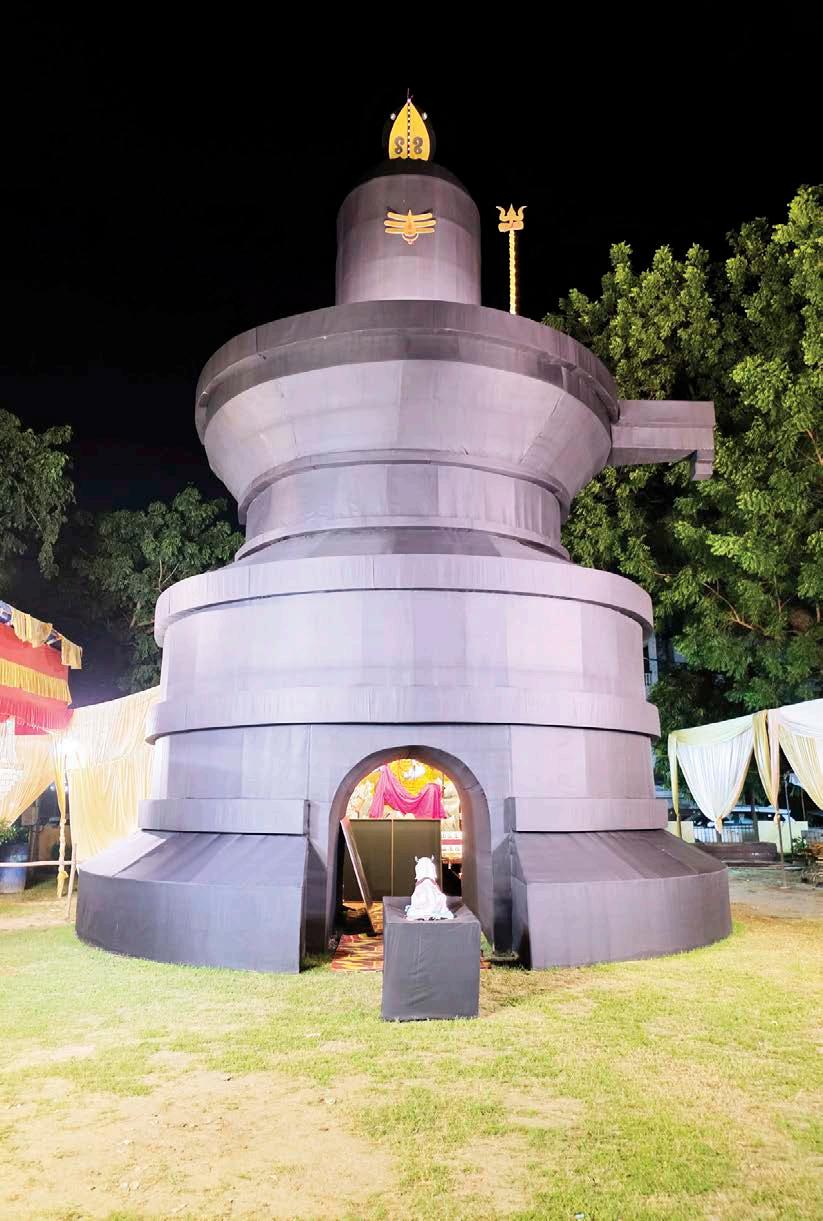
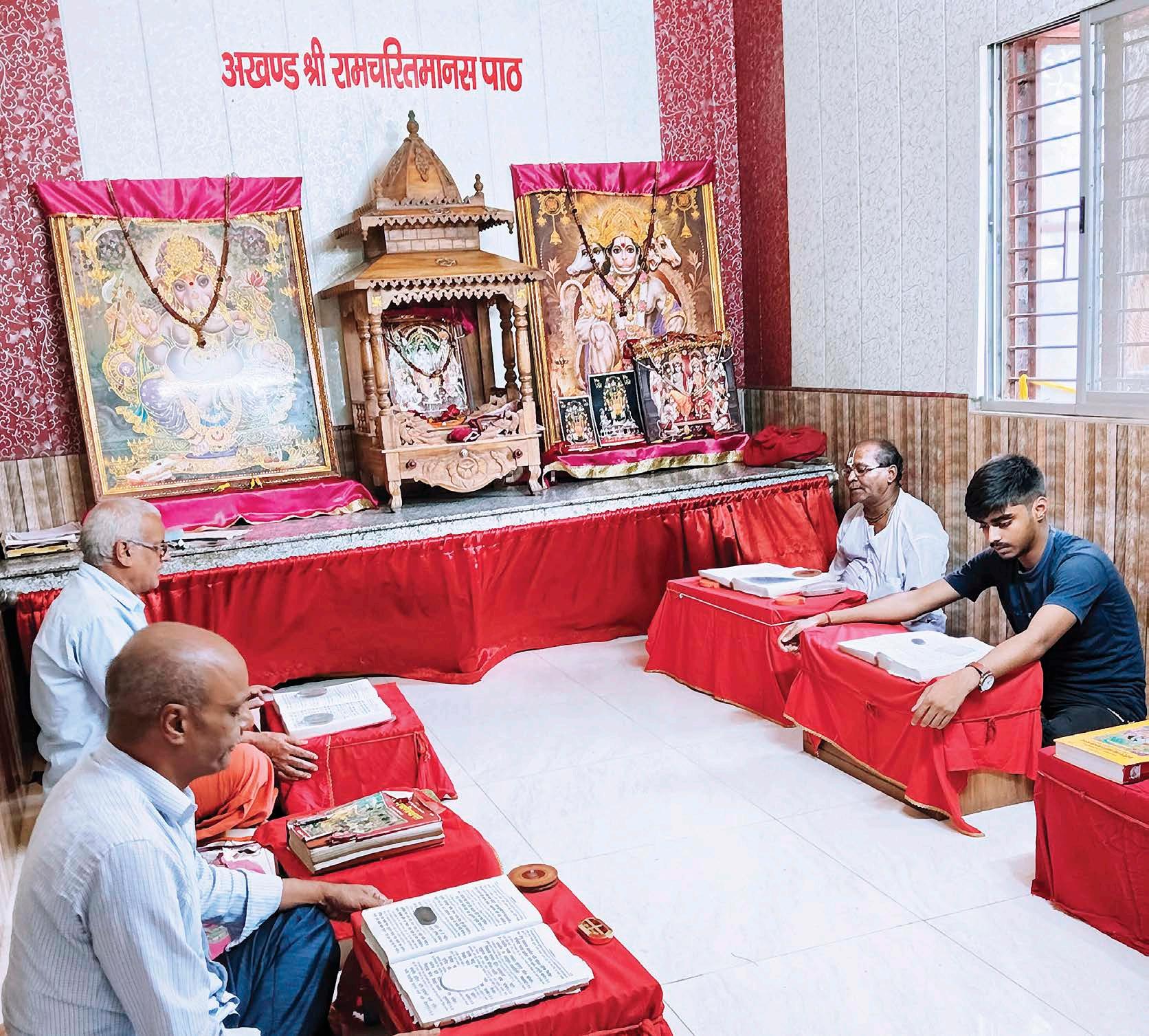
Eternal Flame of Faith
The tradition of Akhand Paath of Ramayan holds a special place in India’s spiritual life. It represents continuity of faith, where sacred verses flow without pause and devotion moves beyond time. In many regions, such practices are observed for days or weeks. In Jehanabad, Bihar, this tradition has extended into years.
At Shri Ramayana Mandir in Jehanabad, an uninterrupted Akhand Ramcharitmanas Path has been ongoing since 25 December 2018. Alongside it, an Akhand Jyoti has remained lit at the same location without a break. The flame burns day and night, watched over by caretakers and devotees.
Two years later, on 25 December 2020, Akhand Sitaram Naam Sankirtan was added to the daily spiritual cycle. Since then, Ramcharitmanas recitation, Sitaram chanting, and the eternal flame have continued together at one place. The practice also includes daily Hanuman Chalisa, Sundar Kand recitations, and regular Havan.
This combination of rituals running simultaneously and continuously at a single location is rare. It requires planning, discipline, and coordination. The responsibility has been carried by Mr Rakesh Kumar, President of the Ramanujam Trust, along with a dedicated team of volunteers.
The temple has become a quiet centre of spiritual routine. Devotees arrive at different hours. Some sit briefly. Some stay longer. The sound of chanting remains steady. The glow of the lamp never fades.
At a temple in Jehanabad, an uninterrupted Ramcharitmanas path, Sitaram chanting, and sacred flame have continued for years, creating a rare spiritual record rooted in discipline, continuity, and collective devotion.
Maintaining such continuity demands attention to detail. The reciters work in shifts. The chanting is scheduled carefully. The flame is protected from wind and rain. Supplies are arranged in advance. No ritual is left unattended.
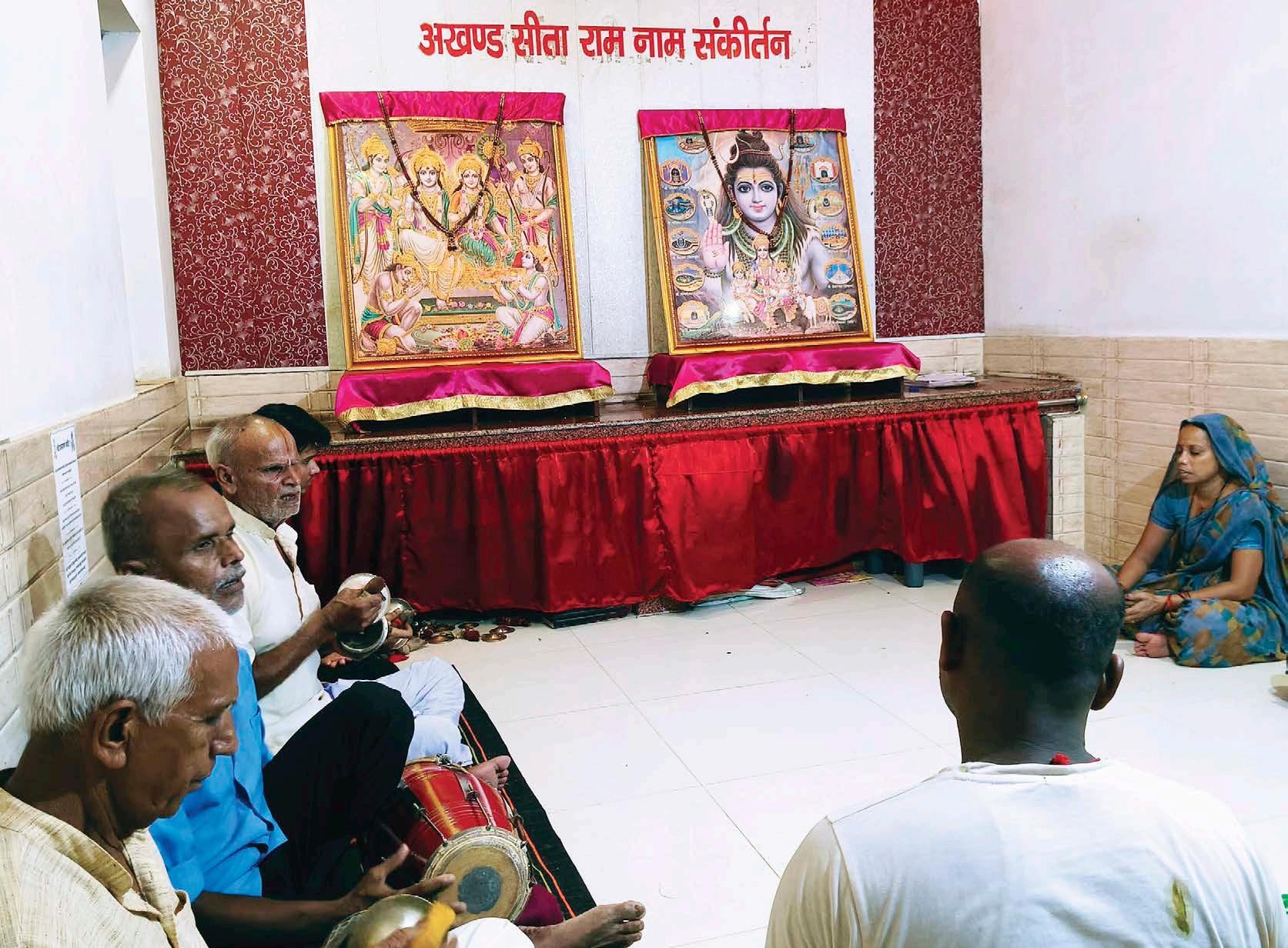
Over the years, the mandir has drawn visitors from nearby towns and villages. Many come seeking peace. Some arrive out of curiosity. Others return regularly. The atmosphere remains calm and focused.
Ramcharitmanas, composed by Tulsidas, holds deep cultural and devotional value. Its verses are part of daily life in many homes. At Shri Ramayana Mandir, the text is treated as a living presence rather than a ceremonial reading.
The continuity of the Akhand Jyoti adds symbolic depth. Light, in Indian tradition, represents knowledge and faith. Keeping it burning without interruption has become a shared responsibility of the community.
Rakesh Kumar has guided the effort with consistency. Speaking about the journey, he said, “Our intention was to let devotion flow without interruption and allow this space to remain open for anyone who seeks peace.”
His role involves more than supervision. He coordinates volunteers, manages schedules, and ensures rituals follow tradition. The Ramanujam Trust supports these efforts quietly, without spectacle.
The record was officially confirmed on 5 September 2025. Asia Book of Records recognised Shri Ramayana Mandir for the longest ongoing Akhand Ramcharitmanas, Sitaram chanting, and Jyoti at a single location. The verification covered dates, continuity, and ritual practices.
The recognition brought attention, yet daily routines at the temple remained unchanged. Chanting continued as before. The flame stayed lit. Devotees carried on with quiet dedication.
Such long-running spiritual practices reflect cultural preservation. They show how tradition adapts to time without losing its core. In Jehanabad, faith has been structured into a daily rhythm.
The mandir does not rely on grand events. Its strength lies in repetition and care. Each day mirrors the previous one. Each recitation follows the same discipline. For the local community, the temple has become a constant. It marks time differently. Days pass, years change, yet the sound of Sitaram remains steady. The flame burns. The verses flow. Devotion continues.
Sun, Balance, Community
The importance of sun bath and the Vriksasana yoga pose has been recognised across cultures for centuries. Both are rooted in balance, exposure to nature, and mindful stillness. Sunlight supports natural rhythms of the body. Vriksasana trains focus and stability through a simple standing posture. When practised together, they remind people that health often begins with the most basic elements of life.
This understanding shaped a unique public health event in Ahmedabad, Gujarat, on 9 November 2025. On the occasion of the 8th Naturopathy Day, two records were set at a single venue. The programme brought together Surya Foundation INO and the Gujarat State Yoga Board, in collaboration with the National Institute of Naturopathy under the Ministry of AYUSH, Government of India. The event drew citizens from different age groups, all united by a shared commitment to natural living.
A total of 685 participants gathered at the Sabarmati Riverfront. They took part in a mass sun bath that lasted one hour and thirty minutes. The activity followed basic naturopathy principles, including exposure to morning sunlight and the use of face mud packs. This effort set the record for the maximum number of people taking a sun bath at a single venue. The same group also performed Vriksasana together during the programme, setting another record for the maximum number of people performing the pose simultaneously at one location.
Both records were confirmed on the spot. Asia Book of Records adjudicator Mr Ritesh Chanpura presented medals and certificates to the organisers. The verification process observed timing, posture discipline, and participant count. The atmosphere remained calm and orderly throughout the session, reflecting the spirit of yoga and naturopathy.
The event was inaugurated by Acharya Devvrat, Governor of Gujarat and Maharashtra. He spoke about humanity’s growing distance from nature and the health challenges that follow. His address recalled India’s traditional systems of wellness, where daily routines were aligned with natural cycles. The gathering listened in silence as participants stood steady in Vriksasana, framed by the open riverfront and morning light.
Naturopathy Day is observed to raise awareness about drugless systems of healing. This programme extended that idea beyond discussion halls. It placed practice at the centre. Participants experienced the discipline required to stand still. They felt the warmth of the sun without distraction. The session became a lived lesson rather than a demonstration.
The Gujarat State Yoga Board coordinated volunteers and instructors. Clear instructions were given before the start. Safety checks were conducted. Medical teams remained present as a precaution. The organisers ensured inclusivity, allowing beginners to participate without pressure. The aim was participation, not perfection.
The programme was also part of a wider national campaign. From 9 November to 18 November, similar yoga and naturopathy activities were planned across India. Seminars, group practices, and awareness sessions were scheduled in different states.
Ahmedabad became the focal point by hosting the recordsetting event.
Shri Anant Biradar, National President of the International Naturopathy Organisation, described the effort with quiet conviction. “When people come together to practise simple natural methods, awareness grows faster than any lecture. These records show that public health can begin with shared action,” he said.
Such initiatives gain meaning because they are accessible. Sunlight costs nothing. Naturopathy invites people to slow down and observe their own bodies.
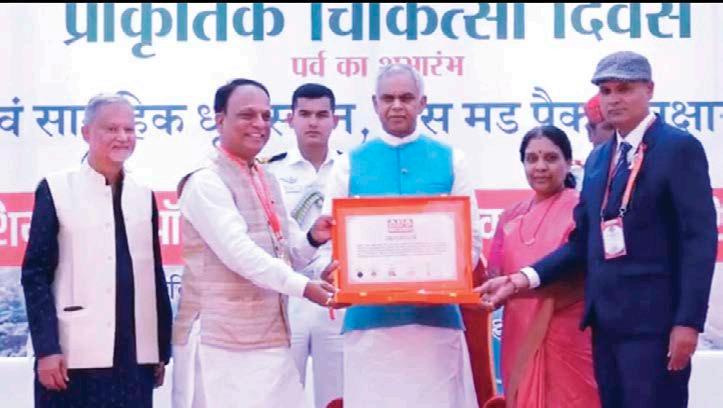
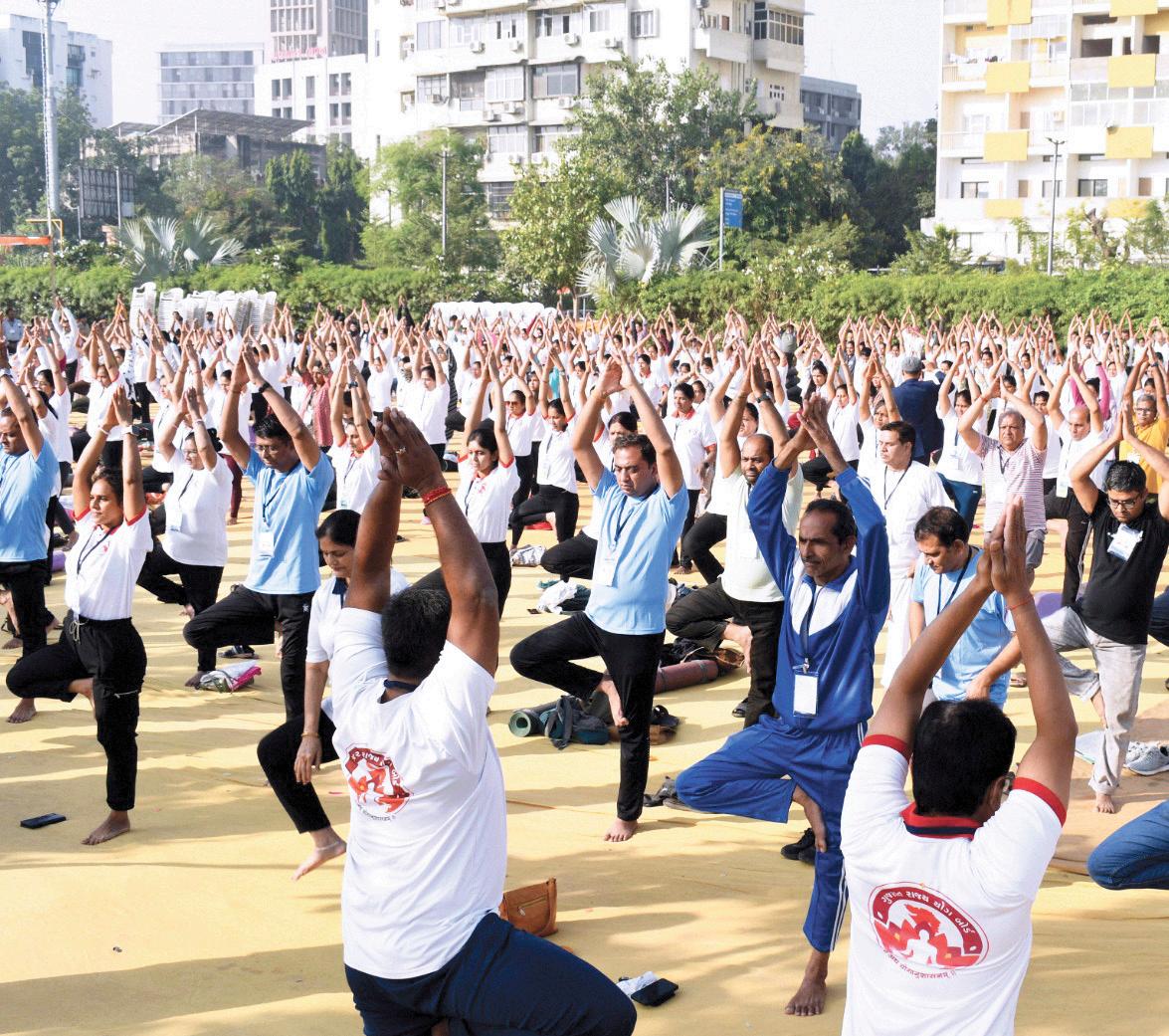
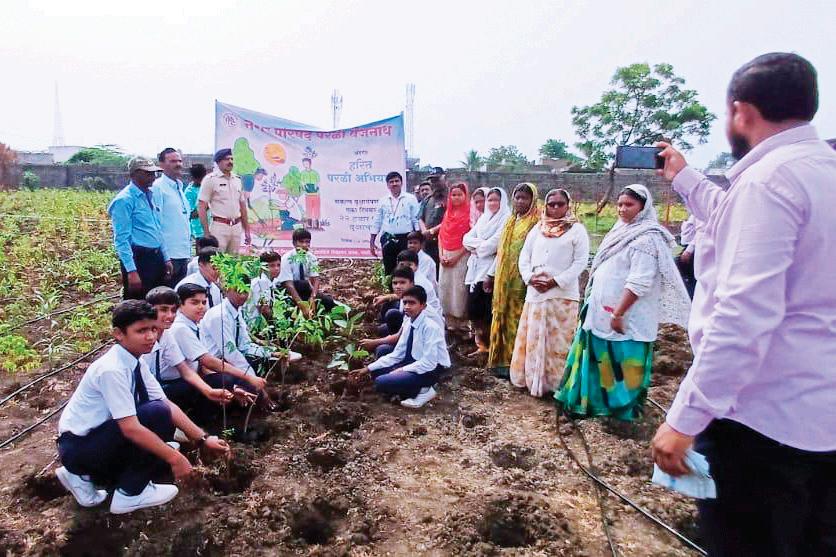
Greening Beed, One Day
Maharashtra has long faced pressure on its forest cover. Rapid urbanisation, recurring droughts, and erratic rainfall have steadily reduced green spaces in many districts. Marathwada, including Beed, has felt this strain sharply. Low forest density has affected soil health, water retention, and local climate patterns. Against this backdrop, large-scale plantation has become a necessity rather than a symbolic gesture.
Beed district responded with action. The District Administration of Beed, Maharashtra, set a national record for the maximum number of seedlings planted in a single day in August. A remarkable 32 lakh and 50 thousand seedlings were planted across the district within twenty-four hours. The effort was led by the District Forest Department, with active participation from municipal bodies, government departments, schools, and community groups.
The plantation drive was carried out under the broader vision of “Green Maharashtra, Prosperous Maharashtra.” It was guided by Late Ajit Dada Pawar, Deputy Chief Minister of Maharashtra, and Mr Ganesh Naik, Forest Minister of Maharashtra. Planning began weeks in advance. Locations were identified village by village. Sapling varieties were selected based on soil conditions and water availability. Maintenance plans were prepared alongside plantation targets, recognising that survival matters more than numbers alone.
The scale of coordination was unprecedented for the district. Forest officials worked with revenue staff, rural development teams, education departments, and local selfgovernments. School students joined hands with teachers. Volunteers, farmers, and civic workers participated with visible enthusiasm. From roadside stretches to public lands and
institutional campuses, planting activity spread across Beed in a synchronised manner.
Beed’s low forest cover has often been linked to irregular rainfall and land degradation. The district administration treated this drive as a corrective step. The plantation was aligned with water conservation efforts and long-term ecological planning. Officials emphasised that tree cover plays a vital role in groundwater recharge and micro-climate regulation, which are critical for agrarian regions like Marathwada.
The initiative also carried a social message. Under the ‘Ek Ped Maa Ke Naam’ sentiment, citizens were encouraged to associate personal responsibility with environmental care. This emotional connection helped draw participation beyond official machinery. The day witnessed plantation as a shared civic movement rather than a routine government programme.
The achievement received formal recognition from the India Book of Records (IBR). Adjudicator Mr Ashok Namdeo Adak verified the entire process. Measurement protocols, documentation, and geo-tagged data were examined before the record was confirmed. The medal and record certificate were later presented to the District Administration of Beed, marking the feat as a historic environmental milestone.
Speaking on the occasion, District Collector Mr Vivek Johnson, IAS, said, “This record is in the name of Green Maharashtra. It reflects Beed’s collective resolve to restore ecological balance and secure a greener future for coming generations.”
The administration also committed to transparency and follow-up. Plantation details, survival rates, and maintenance schedules are being uploaded on an online monitoring portal.
Each department has been assigned responsibility zones to ensure accountability. Forest officials have been tasked with periodic audits to assess sapling growth and replacement where required.
Maharashtra has set ambitious afforestation goals in recent years, aiming to significantly expand green cover statewide. Beed’s record-setting drive fits into this larger framework. It demonstrates how district-level execution can translate state vision into ground-level impact when planning and public participation converge. The Beed plantation drive has set a benchmark in administrative coordination and community engagement. It showed that environmental action can be scaled up without losing local ownership.
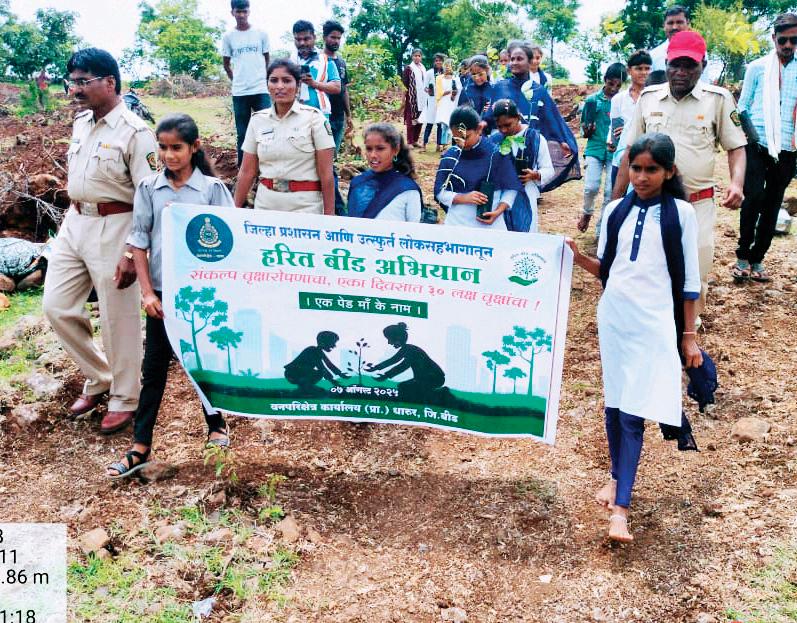
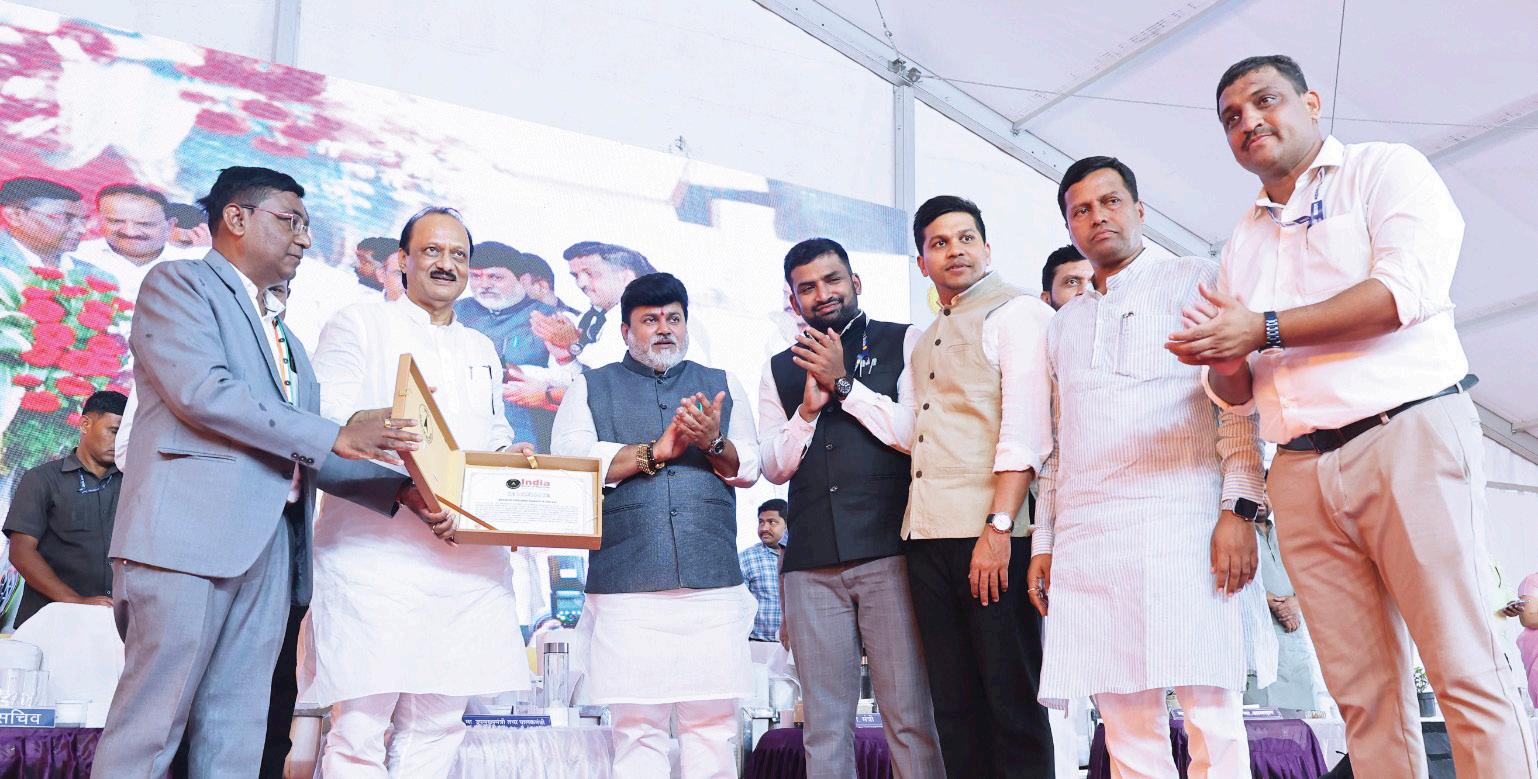
Japi Rises Monumental
The Japi has long stood as a symbol of Assam’s identity. It protects from sun and rain. It honours guests. It reflects care, skill, and respect rooted in everyday life. This humble cultural emblem took an extraordinary form in Bajali, Assam. A monumental Japi was unveiled at the 77th Biennial Pathsala Conference of the Assam Sahitya Sabha. The creation entered the India Book of Records (IBR) as the largest Japi ever made.
The record for creating the Largest Japi was set by the Assam Sahitya Sabha at Pathsala. The structure measured an astonishing 87 feet in diameter and covered a total area of 555 square metres. Crafted from intricately woven bamboo, cane, and a large palm leaf, the Japi reflected traditional methods on a grand scale. Each material carried meaning. Bamboo gave strength. Cane added flexibility. The palm leaf formed the protective crown.
The making of the Japi involved careful planning. Artisans worked with precision. Scaling up a familiar object demanded fresh calculations. Balance mattered. Weight distribution mattered. The final structure had to hold shape without losing its cultural form. The conference venue turned into a living exhibition of Assamese heritage.
Visitors gathered around the giant Japi. Many paused. Many clicked photographs. Elders explained its symbolism to younger visitors. In Assamese society, the Japi is more than headgear. It is offered to respected guests. It marks celebration and honour. It carries warmth without words. Enlarging it to such proportions amplified its message.
The Assam Sahitya Sabha, founded in 1917, has played a central role in preserving Assamese language and culture. Its biennial conferences often blend literature with folk traditions. This time, craft took centre stage. The idea behind creating the largest Japi was rooted in cultural assertion. Organisers wanted a visual statement. Something that spoke instantly of Assam’s living traditions. The Japi served that purpose.
Work on the structure brought together skilled hands. Bamboo workers. Cane artisans. Traditional craftsmen who understood the rhythm of the material. Their experience guided the process. Despite the grand size, the makers stayed faithful to traditional patterns. The weaving followed familiar designs. The curvature echoed everyday Japis seen in rural homes. The difference lay only in size.
The unveiling drew applause. It marked a moment of shared pride. Cultural achievements rarely depend on speed or
A giant handcrafted Japi (Assamese hat) unveiled at Pathsala turned Assamese tradition into a national record, blending size, craft, and cultural pride at the Assam Sahitya Sabha’s historic biennial gathering.
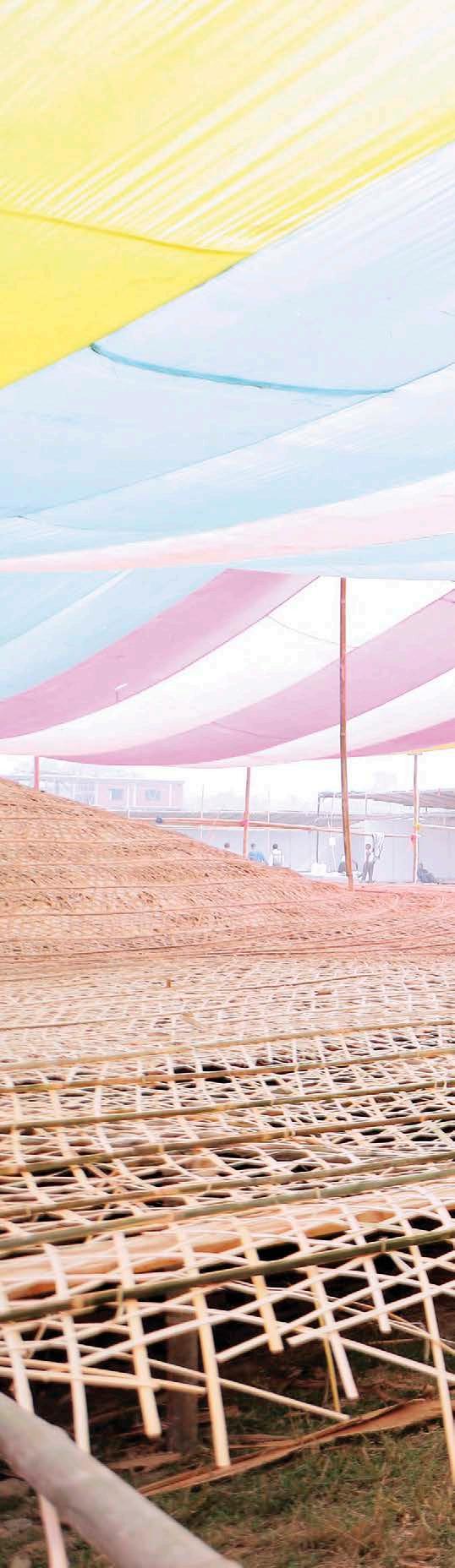
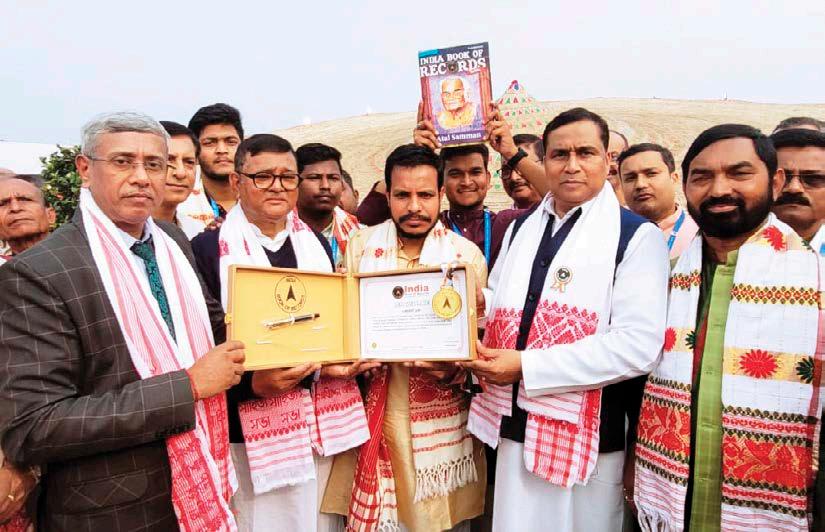
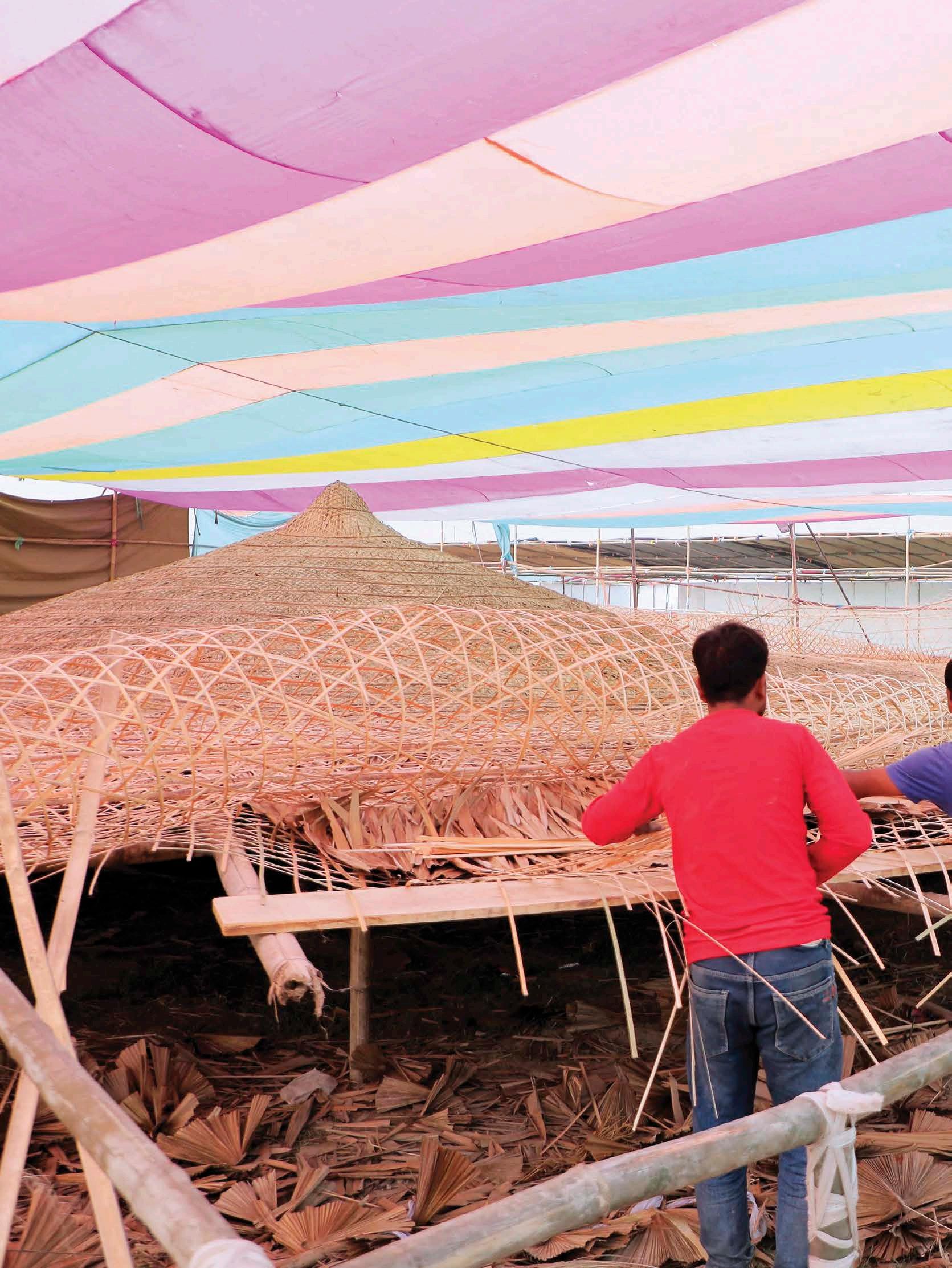
competition. Here, patience and craft defined success. India Book of Records (IBR) adjudicator Mr Tapan Datta officially confirmed the record and presented the medal and record certificate to the organisers. The recognition validated both large size and authenticity.
A representative of the Assam Sahitya Sabha said, “This Japi represents our culture in its purest form. By enlarging the
giant Japi added a visual anchor to discussions on identity and continuity. Photographs of the Japi travelled far beyond the venue. Social media carried images across states. Many viewers encountered the Assamese symbol for the first time. Cultural forms survive when they are seen, understood, and valued. The record-setting Japi achieved that quietly.
size of the traditional headgear, we wished to show how culture can still command space and attention.”
The giant Japi also became a learning point. Students asked questions. Visitors discussed materials. Focus moved from art to sustainability, as bamboo and cane remain renewable resources. In an era of synthetic displays, the choice of natural materials stood out. The structure reminded many that tradition often aligns with ecological wisdom.
The Pathsala conference itself drew scholars, writers, and cultural thinkers from across the state. The presence of the
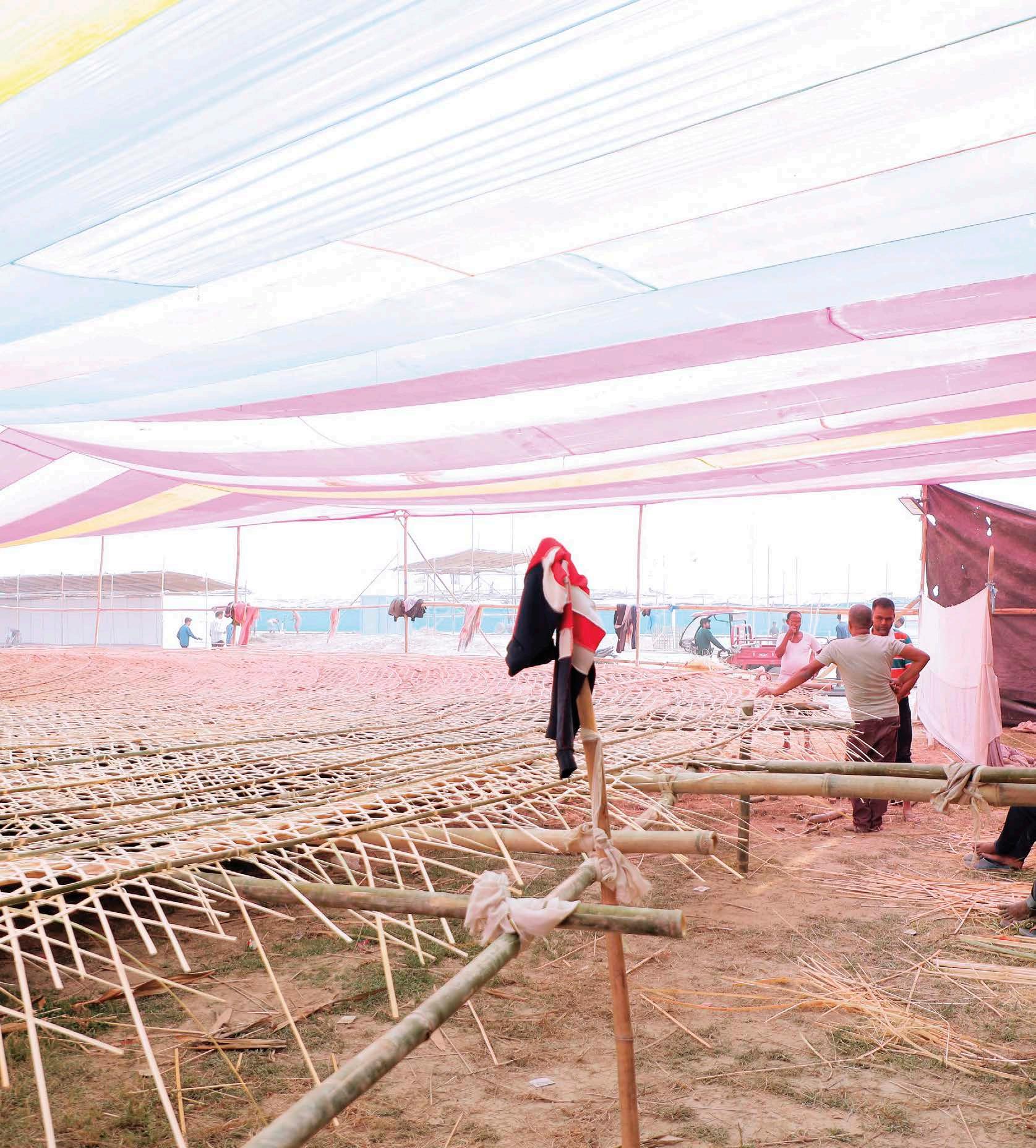
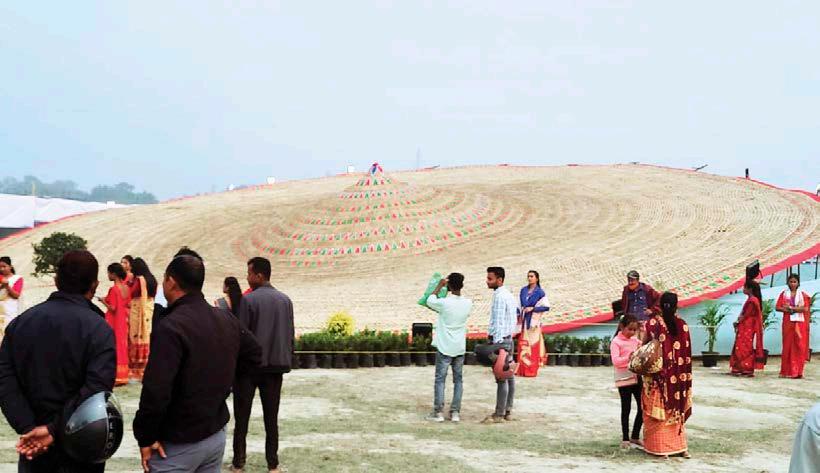
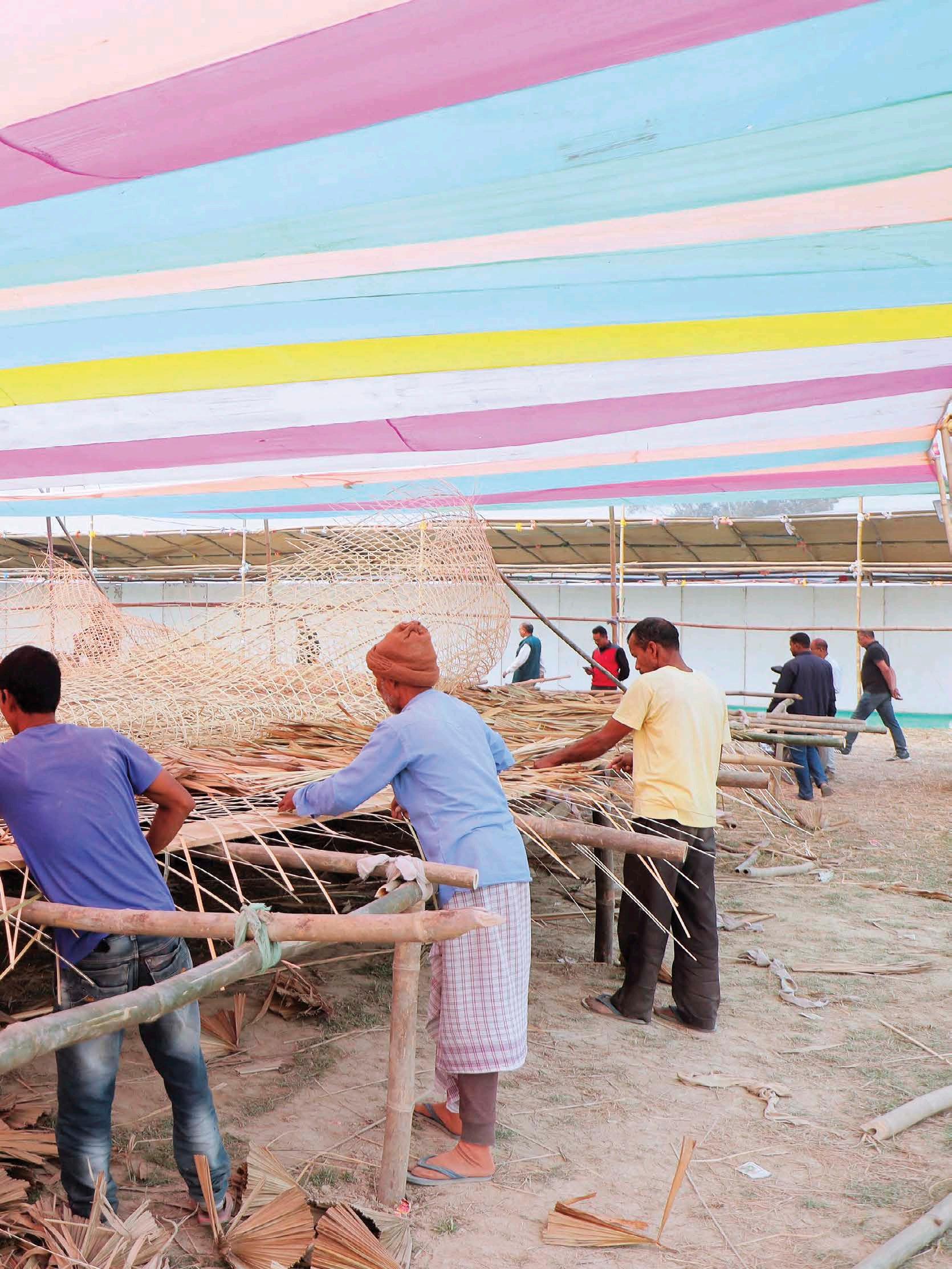
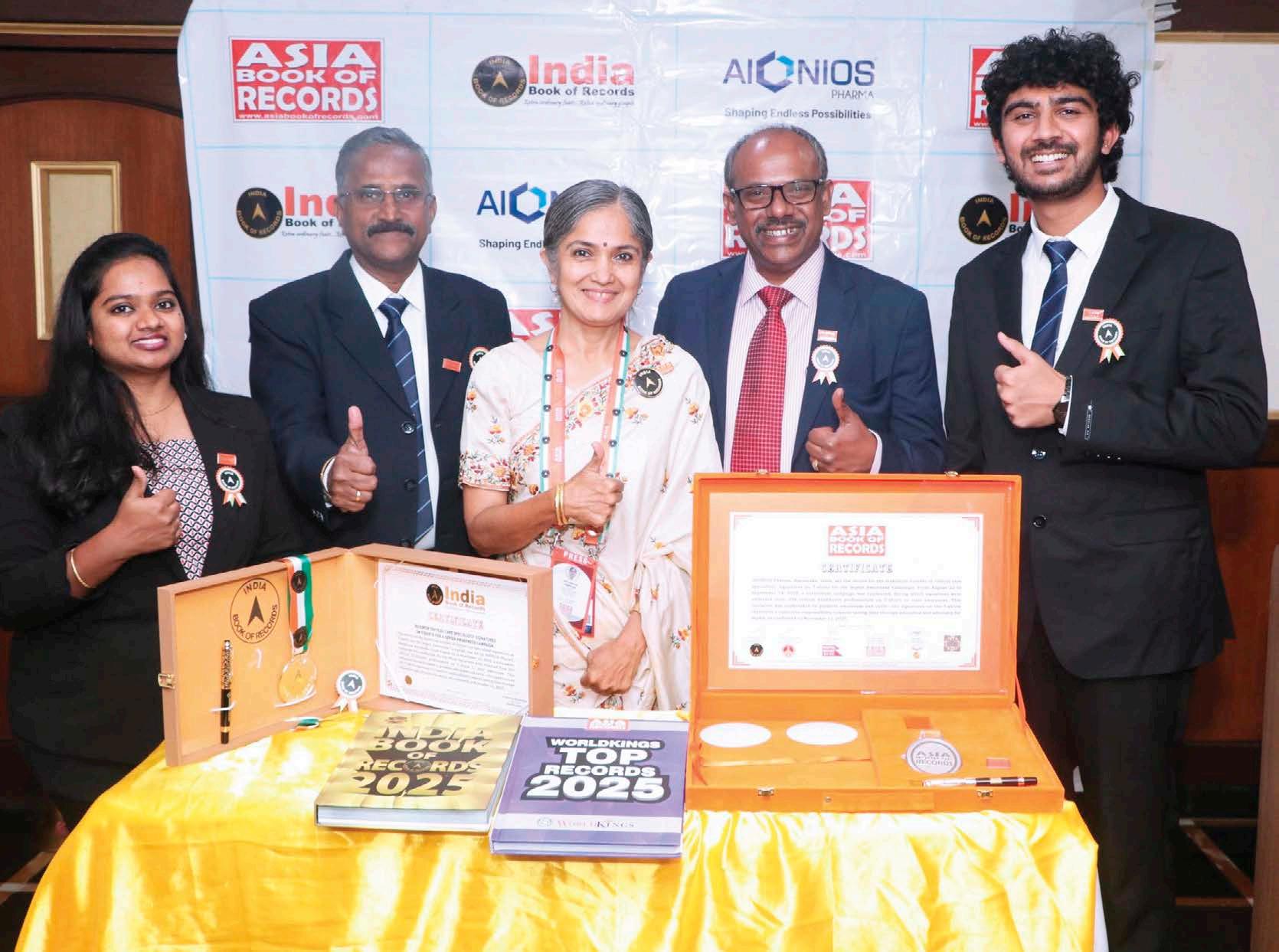
Signatures Against Silent Killer
The problem of sepsis remains one of the most urgent yet least understood challenges in modern healthcare. It does not announce itself loudly. It often begins with a simple infection. When ignored or misread, it can overwhelm the body within hours. Lives are lost because symptoms are missed. Awareness, therefore, becomes as vital as treatment.
Sepsis is the body’s extreme response to infection. Instead of fighting germs alone, the immune system turns aggressive and starts damaging its own organs. Fever, confusion,
breathlessness, low blood pressure, and reduced urine output are warning signs. Speed matters. Delay can mean irreversible damage or death.
Despite medical advances, sepsis continues to claim millions of lives worldwide each year. It affects newborns, the elderly, and people with weakened immunity. Many survivors face longterm complications. Yet public understanding remains limited. This gap between danger and awareness inspired a unique national initiative in India.
AIONIOS Pharma, based in Bangalore, Karnataka, launched a Sepsis Awareness Campaign that travelled across the country between 22 August and 14 September 2025. The campaign chose an unconventional medium. White T-shirts became moving canvases. Instead of slogans, they carried signatures.
During the campaign, signatures were collected from 204 critical care specialists across hospitals and medical institutions. Each signature represented clinical experience. Each name stood for lives treated, saved, or lost to sepsis. Together, these signatures formed a visible statement of unity within the medical community.
The record set was for the maximum number of critical care specialists’ signatures on T-shirts for a sepsis awareness campaign. The achievement was confirmed on 13 November 2025. The adjudicator for India Book of Records and Asia Book of Records Ms Seema Manikkoth presented the medal and certificate to AIONIOS Pharma officials, recognising the feat.
The campaign unfolded quietly but purposefully. Doctors signed between patient rounds, conferences, and ICU duties. There were no grand stages. The focus stayed on message and meaning. Awareness was the goal. Education was the method. These signed T-shirts travelled across cities and medical events. They sparked discussions among healthcare workers, students, and caregivers.
September is observed globally as Sepsis Awareness Month. World Sepsis Day falls on 13 September. The timing of the campaign aligned with this global movement. It reinforced the message that sepsis is a medical emergency, much like a heart attack or stroke. AIONIOS Pharma designed the initiative to bring doctors together across specialities. Critical care physicians see sepsis daily. Their collective voice carries weight. When they sign together, the message moves beyond individual opinion.
A spokesperson from AIONIOS Pharma reflected on the effort with clarity, saying, “Every signature on these T-shirts stands for urgency and shared duty. If awareness helps even one family reach care earlier, this campaign has meaning.”
A nationwide sepsis awareness campaign turned simple T-shirts into a powerful medical message as 204 critical care specialists united through signatures to highlight early detection and collective responsibility.
The simplicity of the idea made it effective. No complex technology was involved. No elaborate messaging. Just names. Ink. Fabric. And a cause that cuts across regions and institutions. The campaign also reminded the public that sepsis does not arise from rare diseases alone. Common infections like pneumonia, urinary tract infections, or skin wounds can trigger it. Early treatment saves lives. Delay costs them.
Healthcare systems worldwide struggle with late diagnosis. Many patients reach hospitals when organs have already begun failing. Education helps families recognise danger signs. It prompts faster action. The record reflects coordination across weeks and locations. It also reflects consensus within the medical community. Sepsis awareness cannot remain confined to textbooks or conferences. It must reach homes. By turning a record attempt into an advocacy tool, AIONIOS Pharma linked recognition with responsibility.
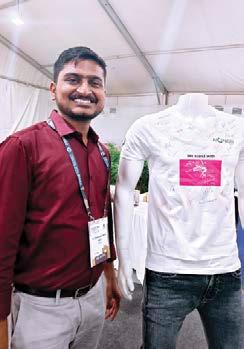
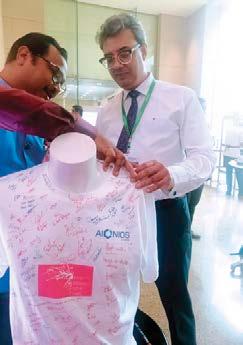
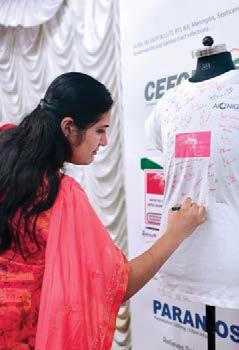
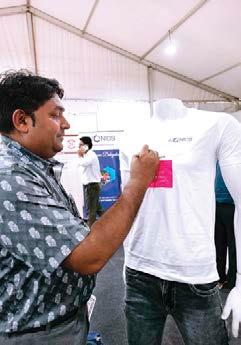
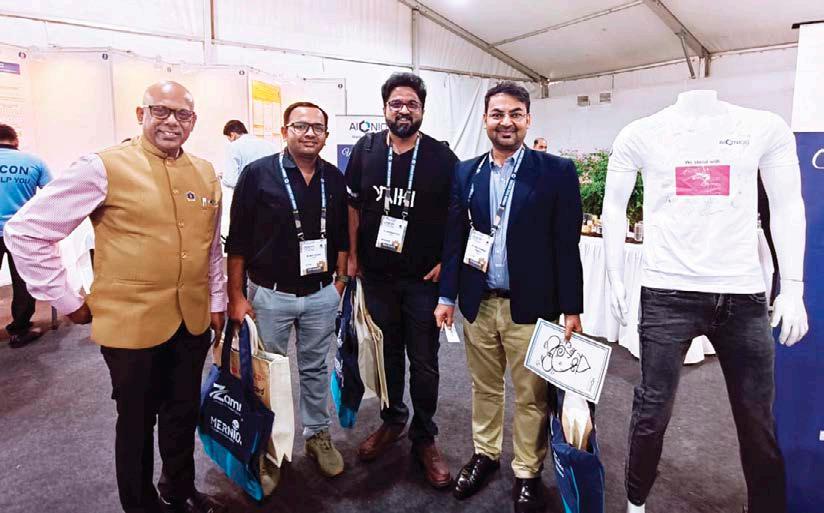
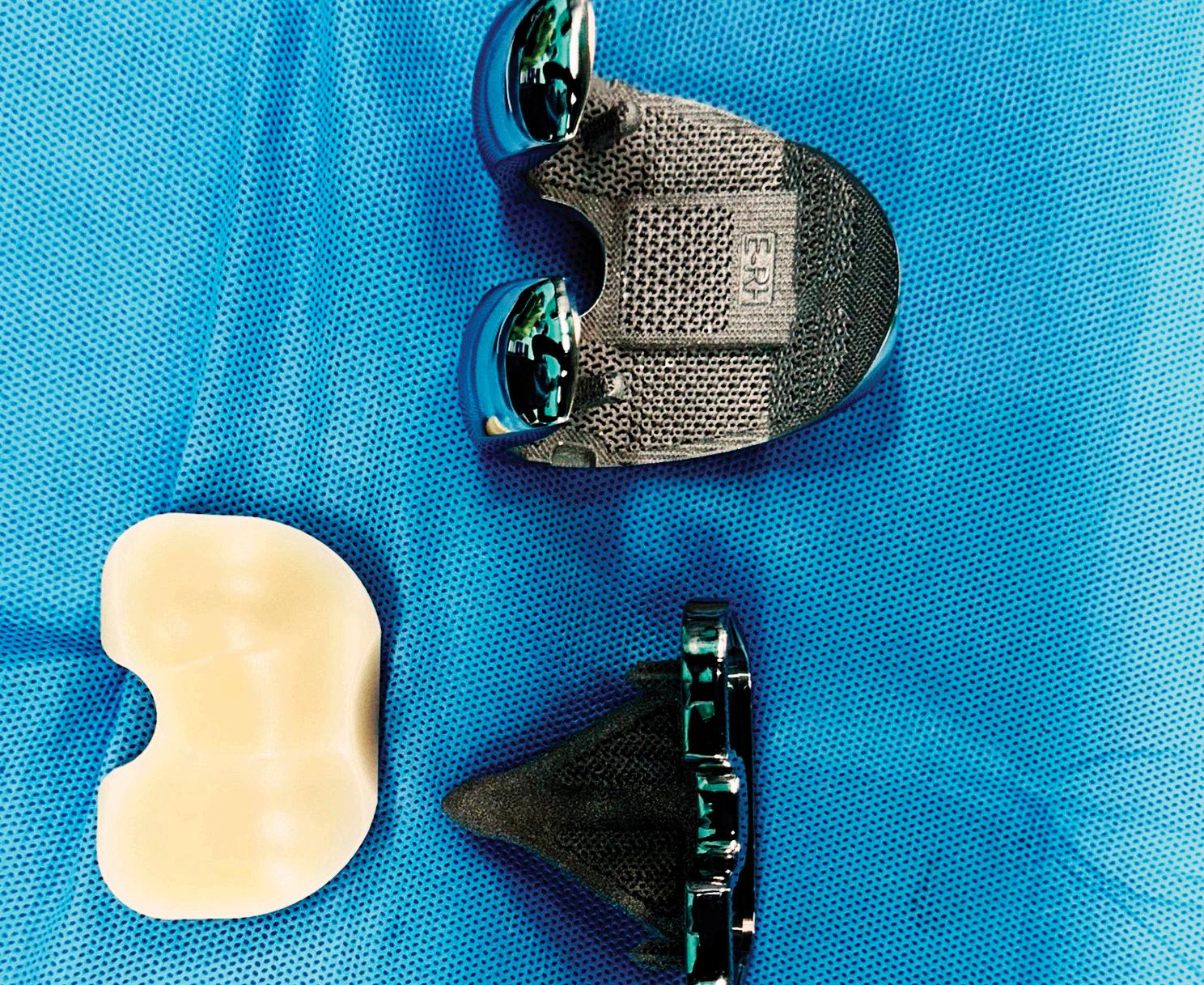
Robots Redefine Knee Surgery
Robotic surgery is gaining strong momentum in India. From cardiac care to oncology, automation and precision tools are reshaping operation theatres. Orthopaedics has joined this shift with growing confidence. Surgeons now rely on data-driven planning, robotic arms, and personalised implants to improve outcomes and reduce recovery time. This momentum translated into history at Max Super Specialty Hospital, Saket, New Delhi.
Orthopaedic surgeon Dr Sujoy Bhattacharjee of Max Super Specialty Hospital, New Delhi performed the first fully automated active robotic arm-assisted cementless medial pivot knee replacement surgery. The procedure was carried out using the advanced CUVIS robotic system and marked a global first in joint replacement care.
The patient was a 54-year-old man, Brij Kishore, from Dhanbad, Jharkhand. He had suffered from severe osteoarthritis for more than eight years. Chronic pain, stiffness, and deformity had restricted his movement. Daily tasks had become dependent on family support. Local treatment options had failed to provide relief, and his condition continued to worsen.
The surgery adopted a cementless medial pivot knee implant developed by Biorad Medisys. Unlike traditional cemented implants, this approach allowed natural bone growth around the implant. Over time, this biological integration improves stability and long-term durability. The medial pivot design closely mirrors the natural movement of the human knee, offering better balance during walking, stair climbing, and sitting.
Robotic assistance played a critical role throughout the procedure. The CUVIS robot enabled precise alignment, accurate bone preparation, and exact implant placement. Every cut and adjustment was guided by real-time data. This level of accuracy reduces the margin of error and protects surrounding soft tissue. The result is a joint that feels more natural and supports faster rehabilitation.
Within days of surgery, the patient showed clear improvement. Pain levels reduced significantly. Mobility improved steadily under supervised rehabilitation. The personalised surgical plan ensured that recovery was aligned with the patient’s anatomy and lifestyle needs. This outcome highlighted how robotic systems can support consistent results even in complex knee deformities.
India Book of Records recognised the achievement. The record acknowledged the first fully automated active robotic armassisted cementless medial pivot knee replacement surgery performed by an orthopaedic surgeon. The recognition placed India at the forefront of advanced robotic joint replacement on a global platform.
Dr Sujoy Bhattacharjee reflected on the milestone, saying, “This procedure shows how robotic precision and cementless medial pivot technology can restore mobility with confidence and comfort. Seeing the patient walk independently again within days makes this advancement truly meaningful.”
Max Super Specialty Hospital has continued to strengthen its robotic orthopaedic programme. The Max Institute of Robotic Joint Replacement has invested in high-end systems and specialised training. Surgeons, engineers, and rehabilitation teams work in close coordination to deliver tailored solutions for each patient.
India’s healthcare landscape is evolving rapidly. Patients now seek durability, comfort, and quicker return to normal life. Robotic surgery addresses these expectations through precision
India’s rapid adoption of robotic surgery reached a new milestone in New Delhi, where a fully automated robotic knee replacement set a global benchmark in precision, durability, and patient recovery.
and predictability. As access to such technology expands, complex procedures that once required long recovery periods are becoming safer and more efficient.
This landmark knee replacement at Max Hospital signals a clear shift. Robotic systems are no longer experimental tools. They are becoming reliable partners in surgical decisionmaking. With skilled surgeons leading the way, India’s role in advanced orthopaedic innovation continues to grow, offering patients outcomes that were once considered out of reach.
In another recent case, Dr Bhattacharjee treated a 57-year-old professional from Jharkhand who had suffered knee pain and walking difficulty for four years due to a bow-legged deformity. That surgery involved a cemented total knee replacement using a gold medial pivot cruciate-retaining implant, again assisted by the CUVIS robot. The outcome further demonstrated the versatility of robotic platforms across implant types.
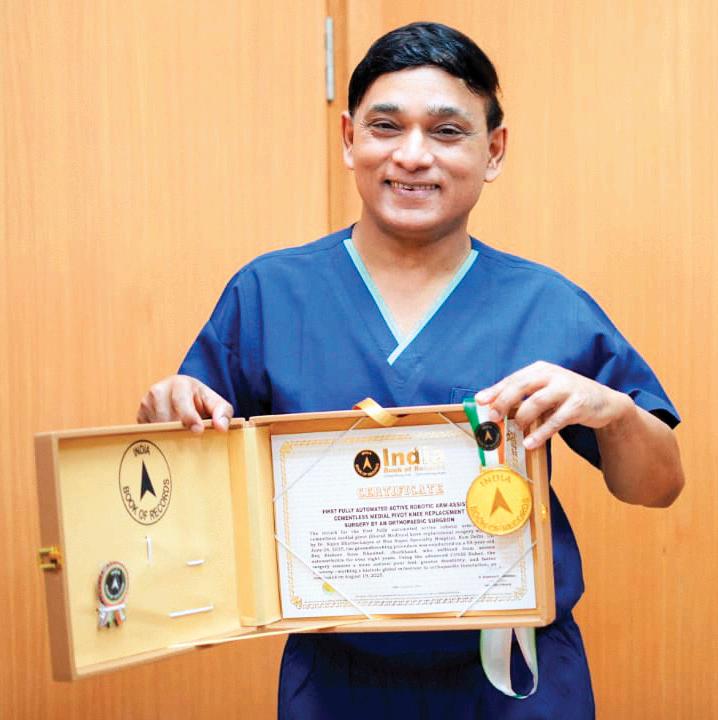
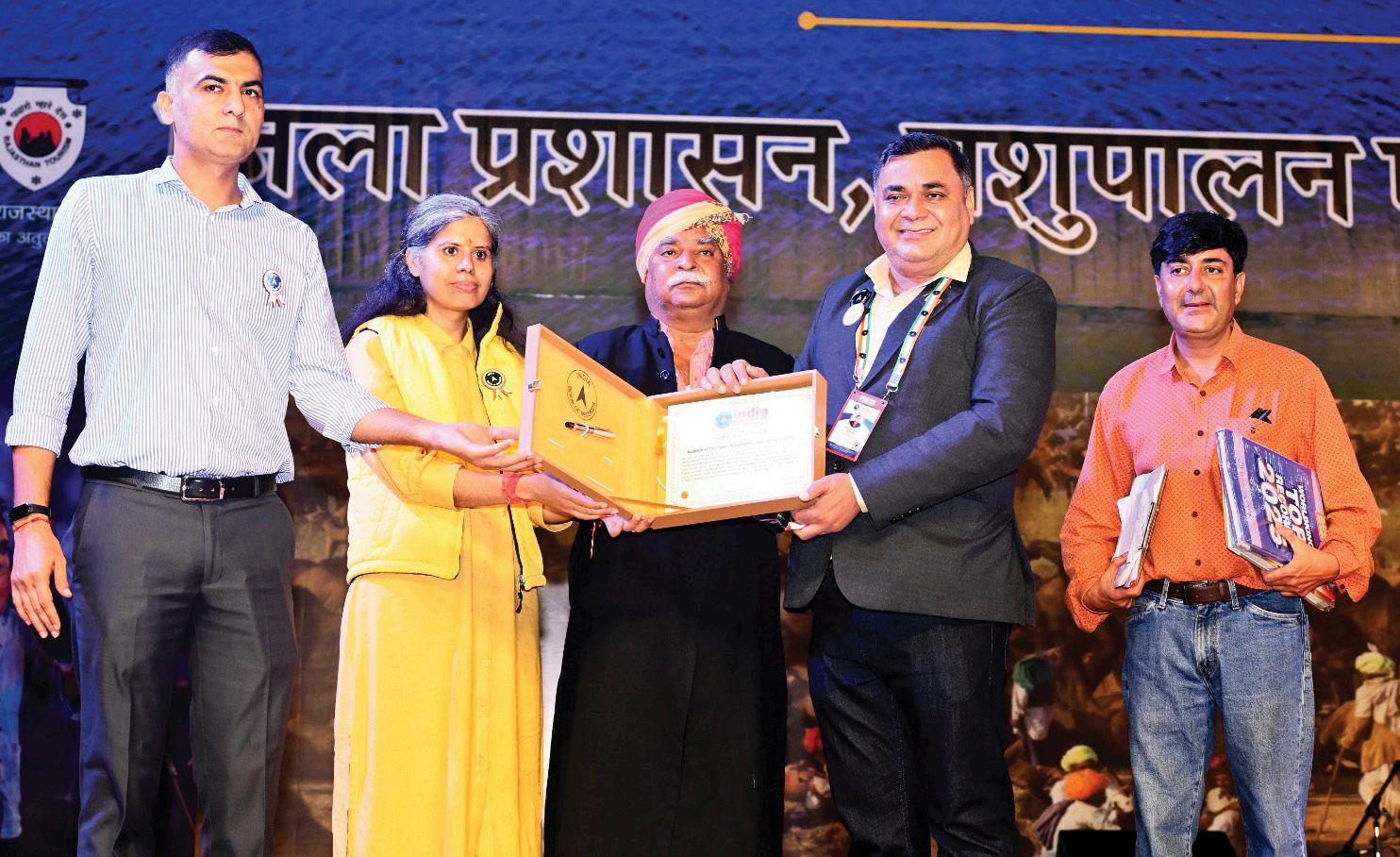
Drums of Glory at Pushkar
The International Pushkar Festival 2025 began with a sound that shook the desert sky. As the sun rose over the sacred ghats, hundreds of kettle drums thundered in unison, their rhythms rolling across the sand dunes of Rajasthan. It was a moment of pride, power, and passion, the sound of India’s heritage finding its place in history.
On 30 October 2025, the District Administration of Pushkar, Rajasthan, orchestrated this grand event that brought together skilled Nagada (kettle drum) players for a spectacular live performance. Known locally as Nagada Vaadan, the beating of the kettle drums has been an integral part of Rajasthani folk culture for centuries. This time, the 111 drums didn’t just fill the air, they filled the news spaces. The event set a national record for the Maximum Kettle Drums Played Simultaneously at a Venue, officially recognised by the India Book of Records. The adjudicator, Dr Bhanu Pratap Singh, verified the feat and presented the medal and certificate to district officials at the
venue. The applause that followed was as loud as the drums themselves, a chorus of joy from performers and visitors alike.
For the people of Pushkar, it was a celebration of their living tradition. The Nagada, with its deep bass and sharp rhythm, has always accompanied temple processions, royal ceremonies, and folk performances. In Pushkar, it symbolises both welcome and worship, a sound that connects devotion with celebration.
“This performance was about honouring our culture,” said a representative of the district administration. “Each beat carried the energy of Rajasthan’s heritage. It was a proud moment for every artist who participated.”
The performance began as dusk approached. Dressed in vibrant traditional attire, the Nagada players stood in a vast circle near the festival ground. With a signal from the lead drummer, the air exploded with rhythm. The synchronised
The famous International Pushkar Festival 2025 created a cultural history as 111 ‘nagadas’ (kettle drums) echoed together in a grand Nagada Vadan, setting a new national record for India’s cultural pride.
beats created a pulse that could be felt across the town. Tourists, locals, and international visitors gathered in silence for a moment, then swayed to the thunderous harmony that followed.
For decades, the Pushkar Fair has been famous for its colourful blend of spirituality, trade, and entertainment. Once known as the world’s largest camel fair, it has evolved into a celebration of Rajasthan’s art, music, and community life. Yet, amidst camel races, hot air balloons, and craft stalls, the sound of the Nagada still rules the heart of the festival.
Musicians described the experience as spiritual. “When hundreds of drums play together, it feels like the earth itself is breathing,” said one of the senior drummers from Ajmer. “It takes strength and timing, but more than that, it takes heart.”
The audience included visitors from several countries who watched the spectacle in awe. Many recorded the performance on their phones, calling it the highlight of their Indian journey. The rhythmic waves seemed to merge with the chants from the nearby Brahma Temple, creating a soundscape that was both ancient and eternal.
The Pushkar district administration, supported by local cultural bodies, ensured that the event remained both authentic and safe. Experts monitored the acoustics, stage layout, and drum synchronisation. As the final drumbeat faded into the evening wind, the silence that followed carried a deep sense of satisfaction.
Pushkar’s achievement reinforced the idea that traditions thrive when celebrated with purpose. The Nagada Vaadan of 2025 reminded the world that India’s strength lies in its rhythm; the rhythm of culture, unity, and pride.
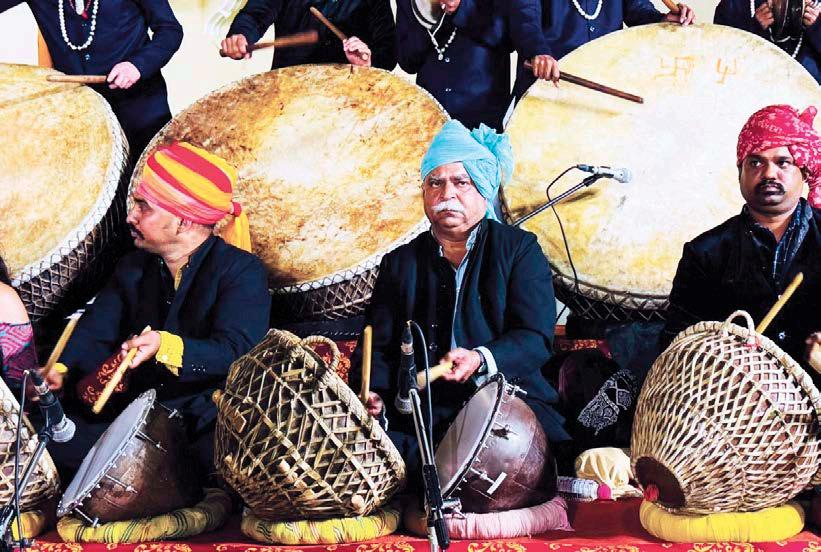
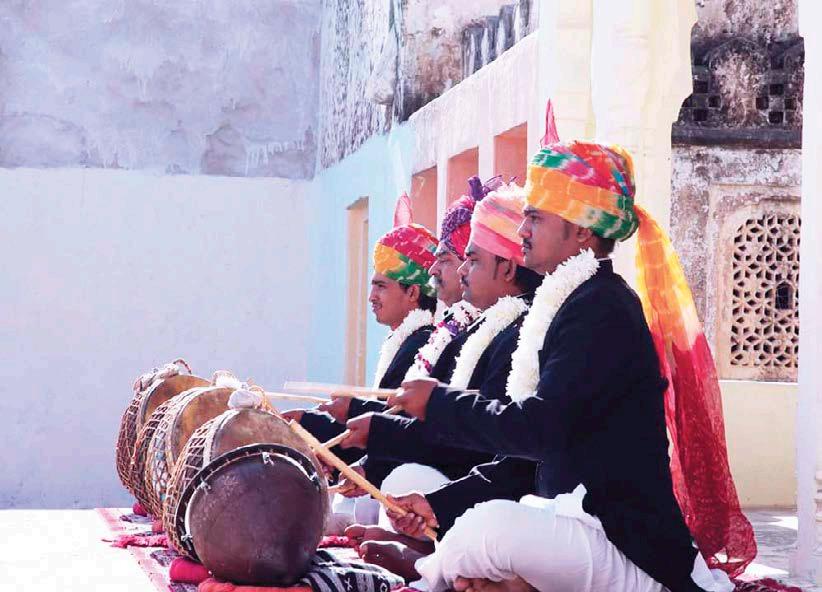
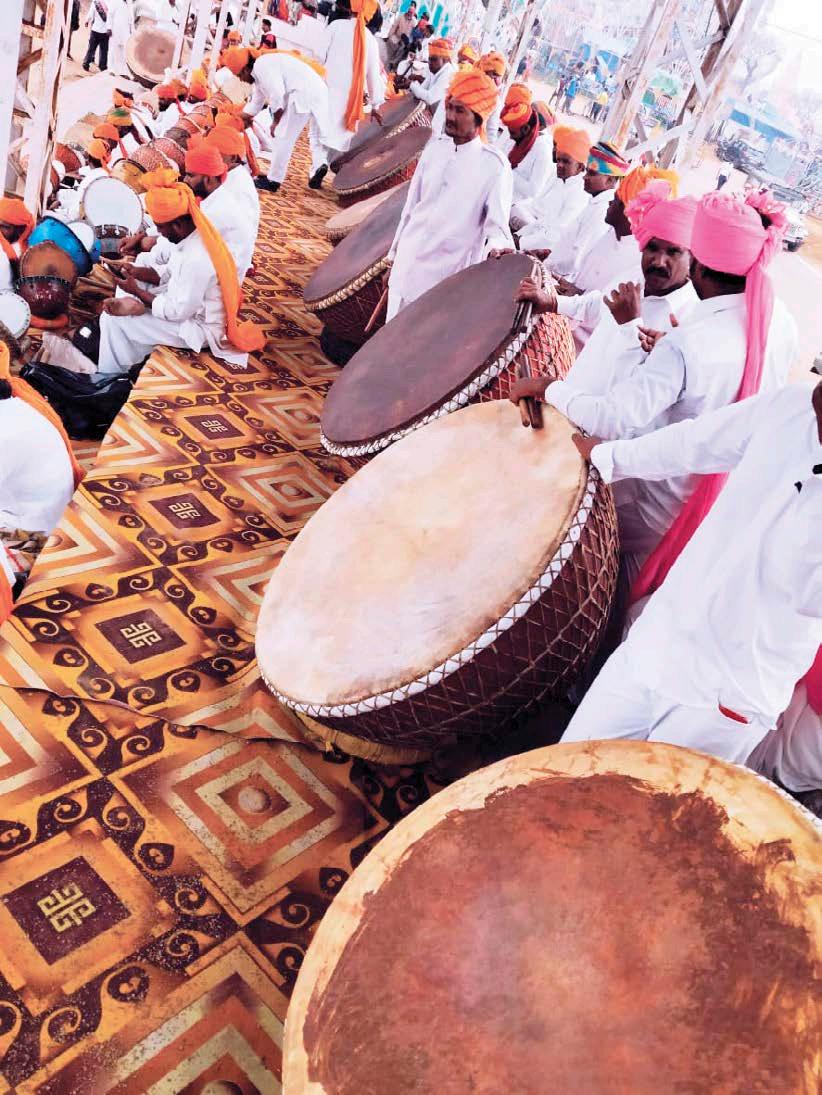
Guardians Get Health Check
The menace of diabetes in India has grown quietly but steadily, affecting millions across age groups and professions. Long working hours, stress, irregular meals, and lack of routine health checks have made diabetes a serious concern, even among disciplined uniformed forces.
Police personnel remain on duty around the clock. Their schedules are unpredictable. Meals are often delayed or skipped. Physical strain combines with mental pressure. These factors place them at high risk for lifestyle diseases, especially diabetes. Yet health screening rarely becomes a priority for those who protect public safety every day.
This gap was addressed through a focused medical initiative led by Dr Prakash Kurmi from Ahmedabad, Gujarat. On 14 November 2025, coinciding with World Diabetes Day, he conducted a largescale diabetes screening programme across multiple police stations in a single day. The effort aimed to reach officers at their workplaces, removing barriers of time and access. The record set was for the maximum number of police officials screened for diabetes at multiple venues in a day. Blood sugar tests were conducted using glucometers. The screenings were free of cost. A total of 3608 police officials were screened for diabetics. They received immediate readings and basic guidance on follow-up care.
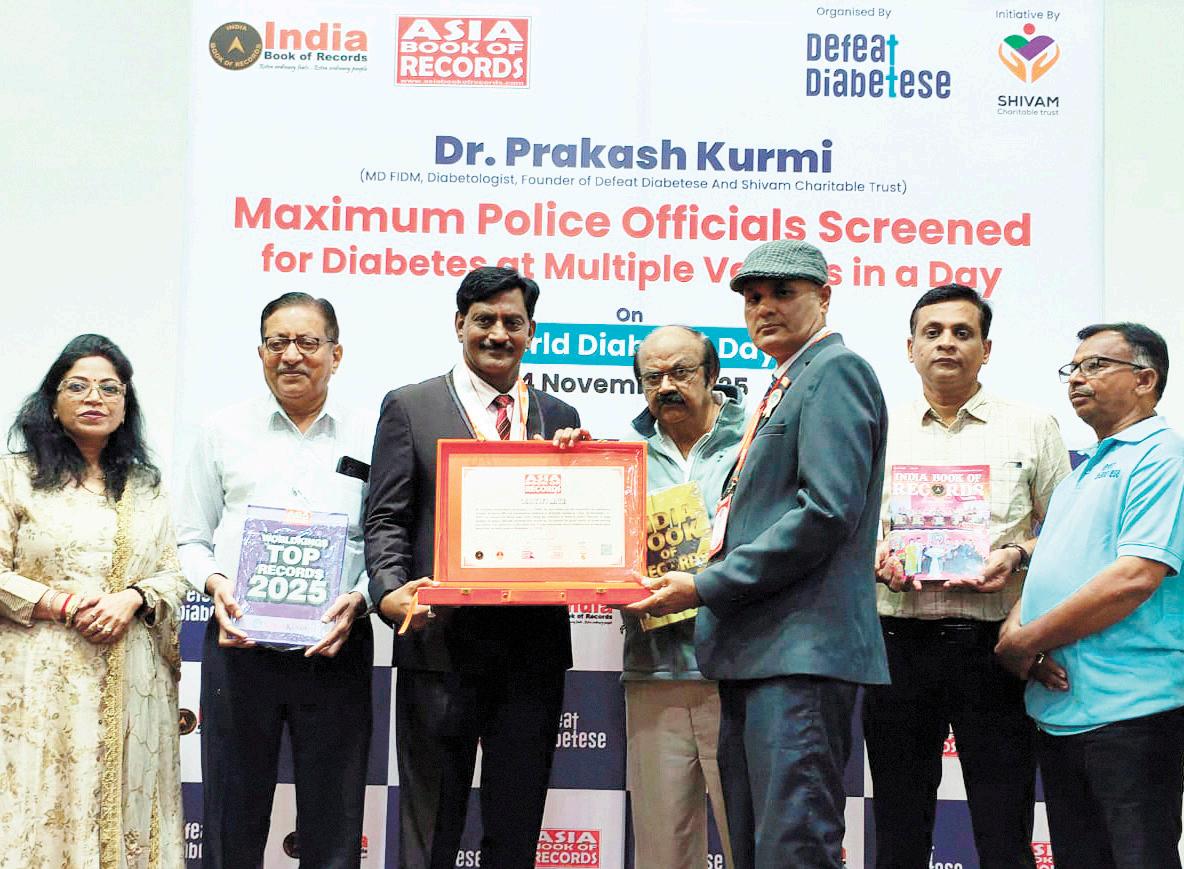
The programme covered several police units across Ahmedabad. Medical teams moved from one station to another with precision. Coordination with city police officials ensured smooth access and crowd management. Each screening point followed standard protocols to maintain accuracy and hygiene.
This initiative was confirmed on 14 November 2025. Asia Book of Records and India Book of Records adjudicators Mr Ritesh Chanpura presented medals and certificates to Dr Prakash Kurmi and CEO Ms Soniya Khanna, recognising both scale and intent.
The objective extended beyond numbers. Awareness was central. Officers were informed about diabetes risk factors, early symptoms, and the importance of regular monitoring. Many participants learned their blood sugar status for the first time. India carries one of the highest diabetes burdens globally. According to health studies, early detection remains the strongest defence. Simple screening can prevent complications affecting the heart, kidneys, eyes, and nerves. For police personnel, good health directly impacts operational readiness and decision-making.
Dr Prakash Kurmi has spent over two decades working as a diabetologist. His work through Shivam Hospital and Shivam Charitable Trust has focused on preventive care. Earlier, his teams conducted awareness and screening camps for border security forces. Those experiences shaped this initiative.
The idea gained momentum after discussions with senior police officials. Support from the Ahmedabad City Police helped translate intent into action. Medical colleges and volunteers joined hands to execute the plan within a tight timeline. Police officers responded with discipline and openness. Many spoke about stress, night shifts, and family history of diabetes. The screenings created space for conversation about health, an area often overlooked in uniformed services.
A nationwide diabetes screening drive brought preventive healthcare to police stations across Ahmedabad as 3608 officers were tested in a single day, setting a new benchmark for public service wellbeing.
Dr Prakash Kurmi described the effort with sincerity. “Police officers protect society every day. Taking preventive healthcare to their workplace is a small way of giving back and ensuring they stay strong for their families and the nation,” he said.
The initiative also highlighted the role of workplace health interventions. Instead of expecting employees to visit hospitals, healthcare can reach them. This model holds relevance for other essential services. Beyond the achievement, the impact lay in early alerts. Officers with high readings were advised to seek follow-up care. Lifestyle guidance was shared in simple terms.
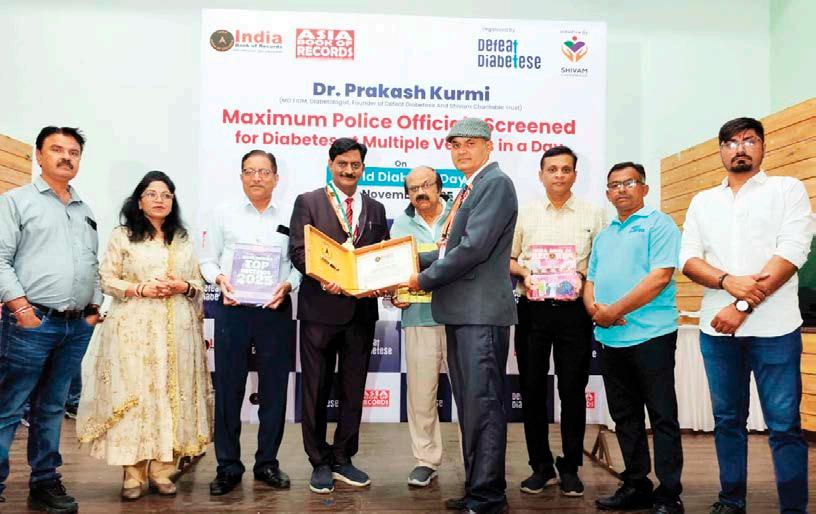
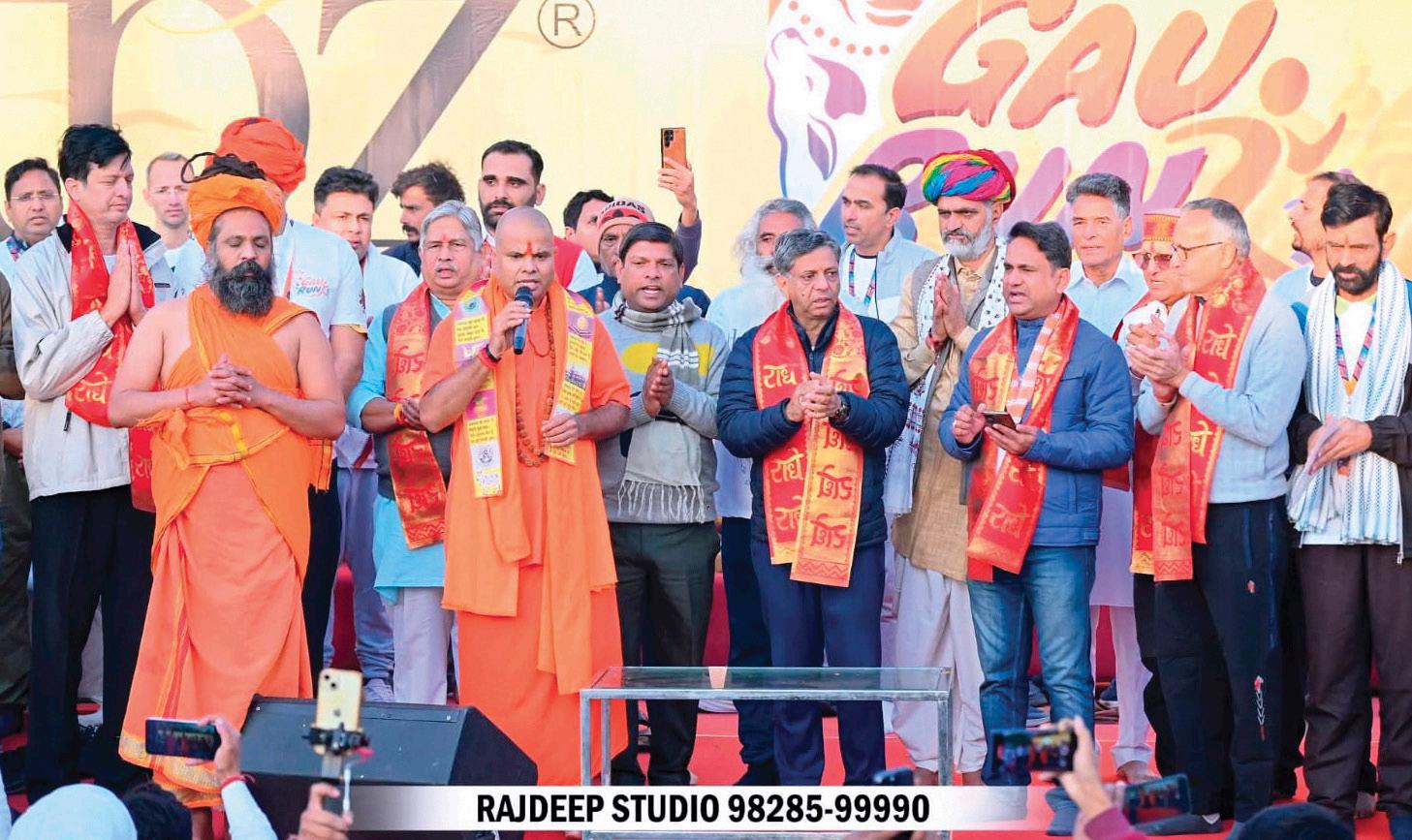
Run for Gaumata
The importance of cow protection in India runs deep across history, agriculture, and everyday life. For centuries, the cow has supported rural livelihoods, nourished families, and symbolised care and continuity. In modern times, this bond faces pressure from urbanisation, neglect, and shrinking awareness. Public engagement has therefore become essential to keep this responsibility alive.
That engagement took a powerful form in Jaipur, Rajasthan, on 16 November 2025. AWARI, jointly with GAUMAAYA, organised a large-scale awareness run dedicated to cow protection. The event transformed city roads into a shared space of movement, reflection, and collective intent. Participants gathered early in the morning, carrying messages of care.
The record set was for the largest participation in a run to raise awareness for cow protection. The event saw 2029 participants showing their commitment to preserving animal rights, cutting across age, profession, and background. Families ran together. Professional athletes shared the route with
students, farmers, and social volunteers. The mass run was for 5 km and 10 km.
Asia Book of Records and India Book of Records adjudicator Mr Yogesh Mittal announced the record on site and presented medals and certificates to the organisers. The recognition acknowledged coordination, and the clear social purpose behind the run.
It was not a conventional marathon. It carried a message at every step. Routes passed through prominent city landmarks, drawing public attention. Volunteers guided runners while maintaining discipline and safety. Cultural elements added depth to the event, with devotional chants and traditional symbols reinforcing the theme.
Cow protection remains closely linked to sustainable farming in India. Indigenous cow breeds support soil health through natural manure. They reduce dependence on chemical inputs. Many rural communities still rely on cows for livelihood stability. Yet several native breeds face decline due to cross-breeding
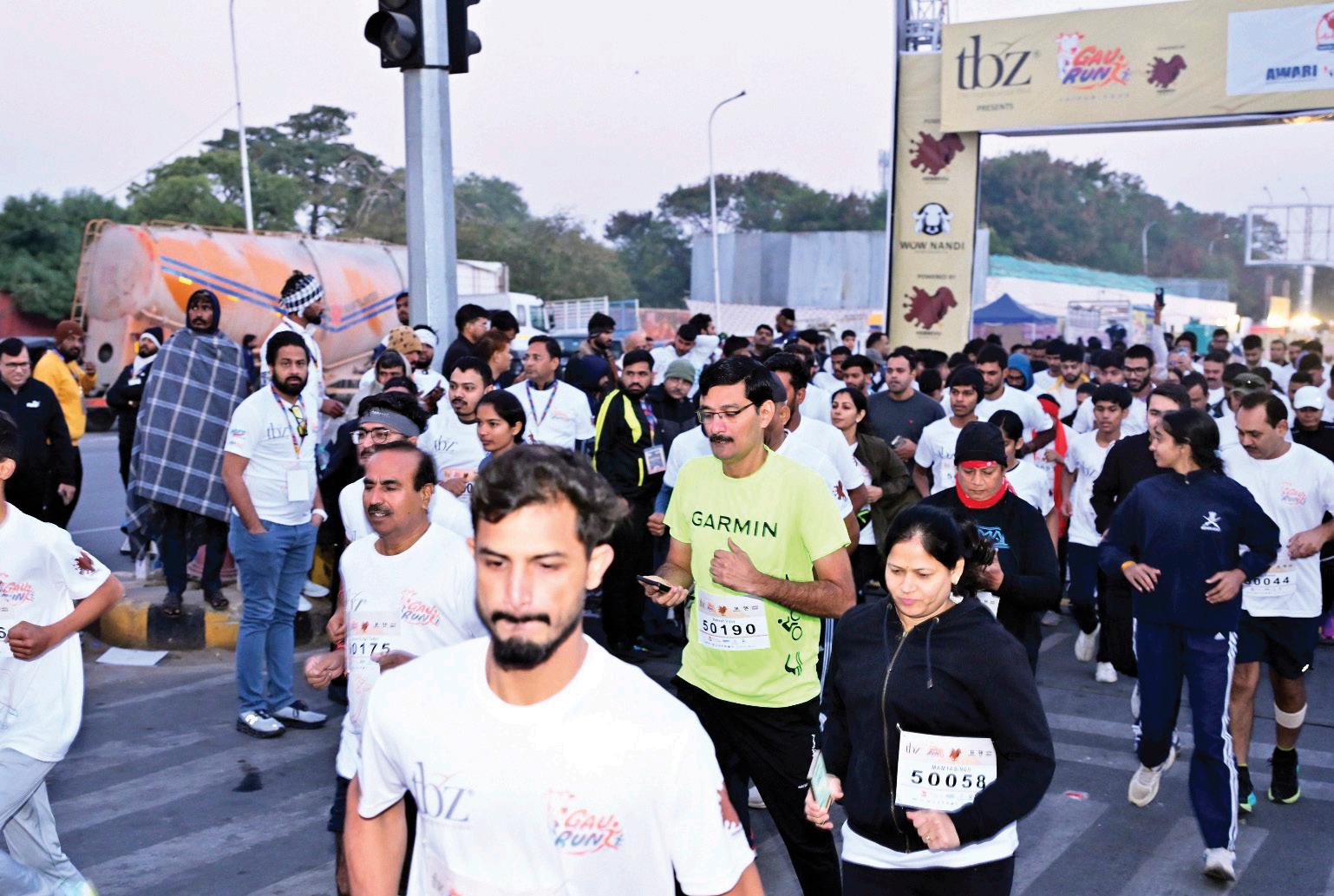
and abandonment. The run highlighted these concerns without confrontation. Instead, it used participation as persuasion.
Each runner became a messenger. Each step carried awareness beyond banners and speeches. The atmosphere remained peaceful, energetic, and focused. Spiritual leaders, social organisers, and community representatives attended the event. Their presence gave the run cultural grounding. Messages centred on compassion, balance, and responsibility towards living beings. The streets of Jaipur reflected this mood through colour and disciplined movement.
The organisers ensured inclusivity. Different run categories allowed people of varying fitness levels to join. Some ran longer distances. Others walked shorter stretches. Participation mattered more than pace. An AWARI representative said, “This run was organised to remind society that protecting cows is a shared duty. When people move together with awareness, compassion finds a stronger voice.”
The planning behind the event required coordination across agencies. Permissions, route management, medical support, and volunteer training were handled in advance. The smooth execution ensured that attention stayed on the cause rather than logistics. The event also drew support from farmers and cattle caretakers. Many travelled from nearby regions to be part of the gathering. Their presence reinforced the practical connection between cow welfare and agricultural health.
Jaipur’s participation carried symbolic weight. Rajasthan has a strong tradition of animal care linked to pastoral life. Hosting the record here added regional relevance to a national message. The run created visible impact beyond the day itself. Social media coverage extended reach. The message spread to schools and neighbourhoods.
For many first-time participants, the event sparked curiosity about indigenous breeds and ethical farming. Records often celebrate speed or scale alone. This one celebrated purpose. It showed how physical activity can merge with social values. It demonstrated that awareness need not be confined to meetings or classrooms.
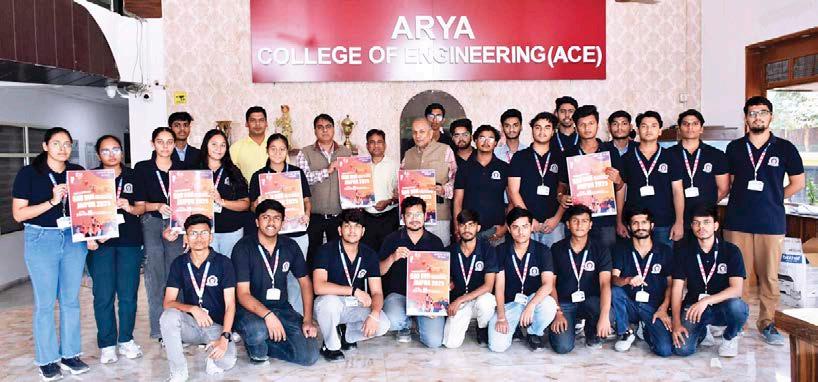
A historic mass run in Jaipur united 2029 people for cow protection, blending fitness with cultural duty as AWARI and GAUMAAYA set a record, turning public participation into a visible call for compassion.
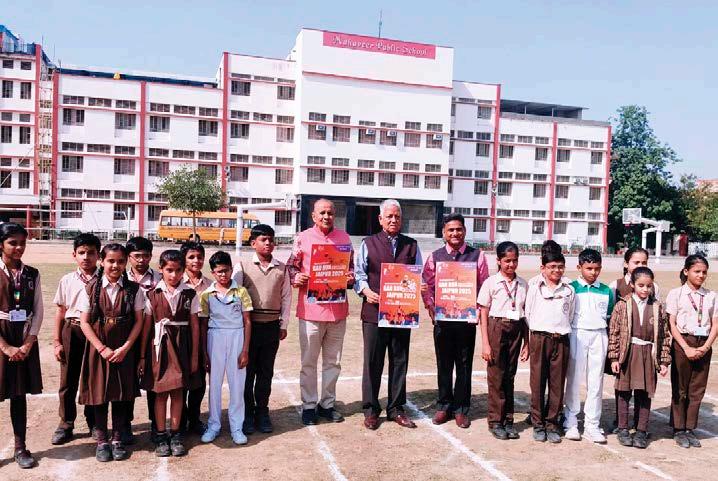
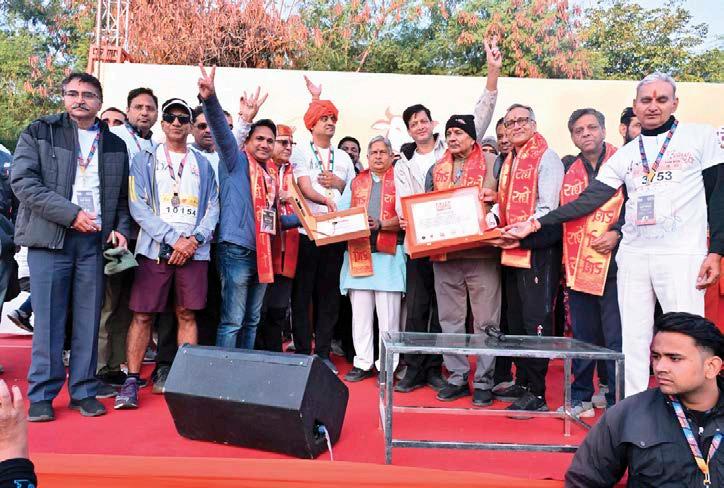
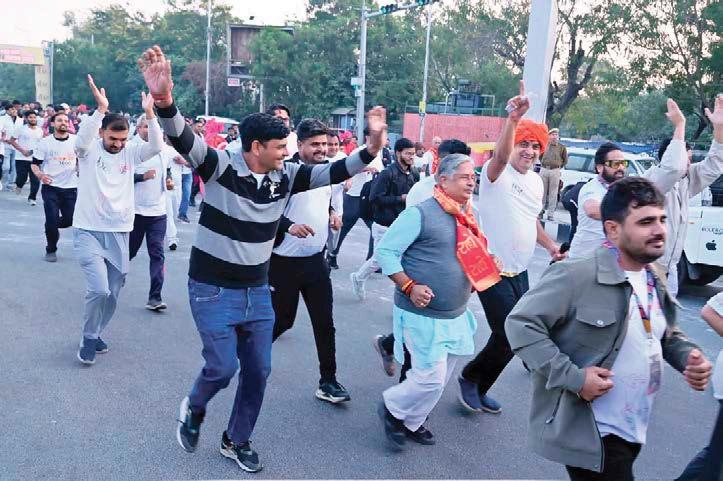
Fastest child to recite the first 100 multiples of 125
The record for being the fastest to recite the first 100 multiples of 125 was set by Abhigyan Anand (born on May 25, 2014) of Purnia, Bihar. He recited the first 100 multiples of 125 (125, 250, 375…to 12,500) in 1 minute, 14 seconds and 59 milliseconds, at 11 years, 6 months and 6 days, as on December 1, 2025.
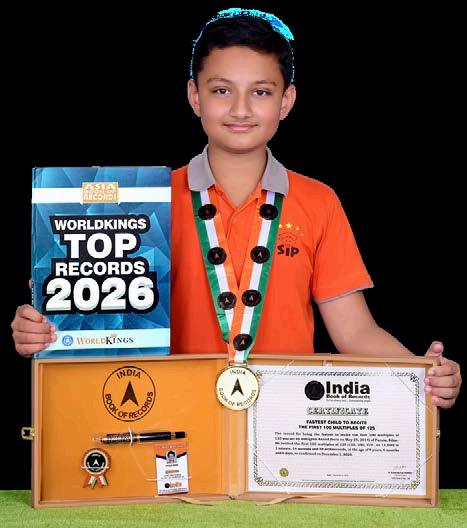
Maximum nunchuck and bo staff rotations performed simultaneously by a teen in 30 seconds
The record for performing the maximum number of nunchuck and bo staff rotations simultaneously in 30 seconds was set by Hridoy M. (born on October 4, 2011) of Kollam, Kerala. He performed 40 nunchuck and bo staff rotations simultaneously in 30 seconds, using both hands, at the age of 14 years, 2 months and 1 day, as confirmed on December 5,
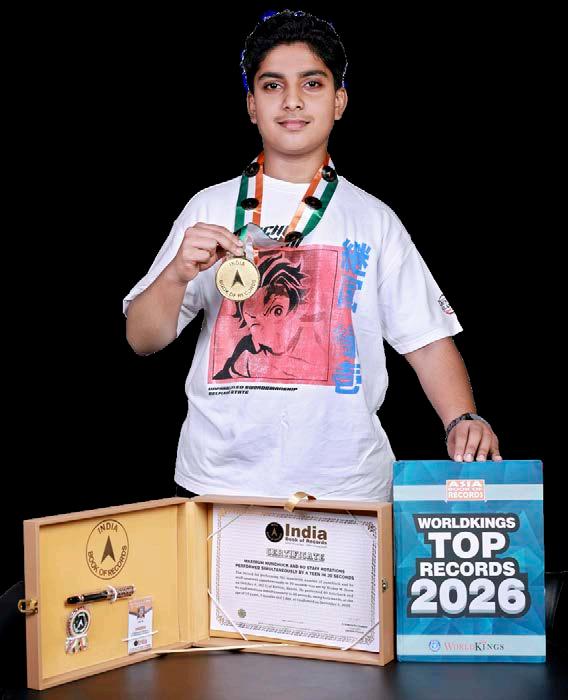
Maximum questions on the Mahabharata answered in Telugu by a kid
The record for answering the maximum number of questions on the Mahabharata in Telugu was set by Koluguri Chaitrika (born on February 16, 2019) of Karimnagar, Telangana. She answered 105 questions on the Mahabharata, in Telugu, in 3 minutes and 58 seconds, at the age of 6 years, 9 months and 19 days, as confirmed on December 5, 2025.
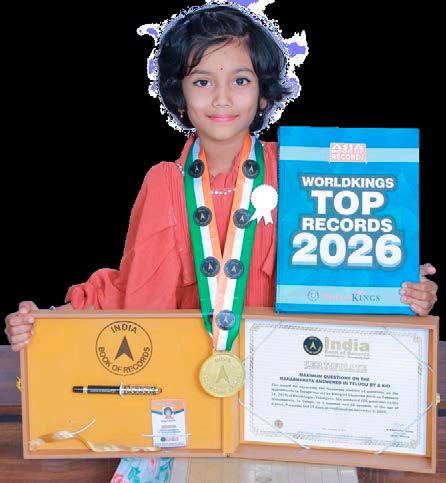
Official state songs of maximum Indian states sung by a teen
The record for singing the official state songs of the maximum number of Indian states was set by V. Jeniva (born on November 21, 2009) of Nagapattinam, Tamil Nadu. She memorised and melodiously sang the official state songs of 16 Indian states, including Tamil Nadu, Madhya Pradesh, Andhra Pradesh, Assam, Bihar, West Bengal, Chhattisgarh, Gujarat, Haryana, Maharashtra, Manipur, Meghalaya, Odisha, Telangana, Uttarakhand and Karnataka, in 41 minutes and 54 seconds, at the age of 16 years and 21 days, as confirmed on December 12,
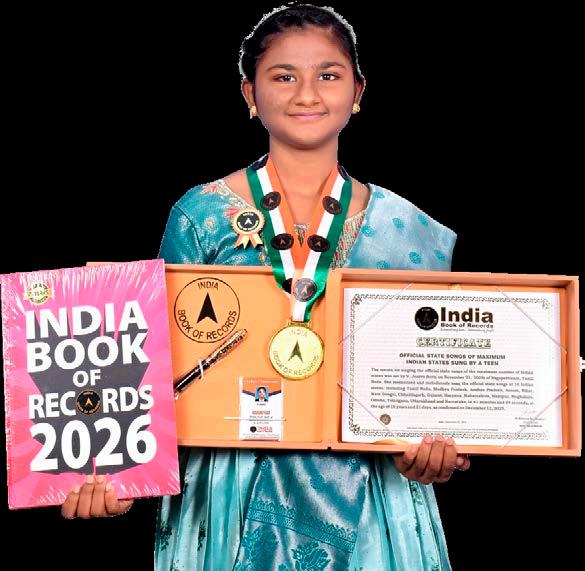
Maximum posts on Nature uploaded on Instagram
The record for uploading the maximum number of posts on Nature on Instagram was set by Desigan A.G.V. (born on May 23, 1981) of Chennai, Tamil Nādu. He uploaded 2,007 non-repetitive photographs on Nature for 1,918 consecutive days from June 14, 2020 to September 13, 2025, on his Instagram account (desiganagv), as confirmed on December 5, 2025.
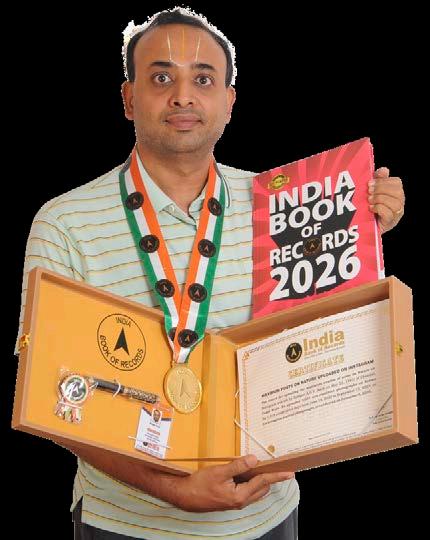

Fastest female to climb Everest Base Camp in a saree
The record for being the fastest to climb Everest Base Camp in a saree was set by Ashwini Kaka Angarkhe February 7, 1985) of Pune, Maharashtra. She started her trek on October 25, 2025, and reached Mount Everest Base Camp located in Nepal (at an altitude of 5,364 metres) on November 3, 2025, in 9 days, donned in traditional attire (saree), as confirmed on December 8, 2025.
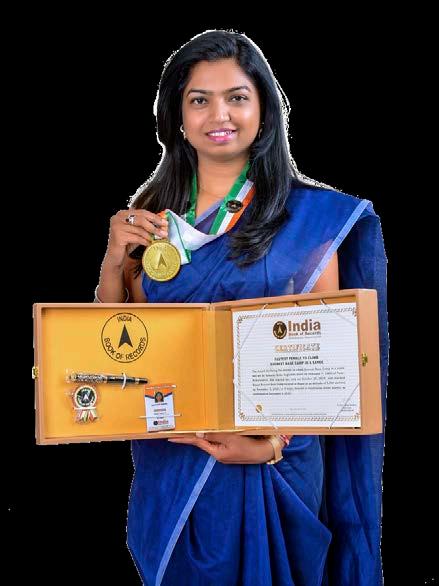
Fastest child to recite the entire Vishnu Sahasranamam
The record for being the fastest to recite the entire Vishnu Sahasranamam was set by Sathiraju Ishaan (born on August 26, 2017) of K.V. Ranga Reddy, Telangana. He recited 108 divine verses of the ‘Vishnu Sahasranamam’ in 9 minutes and 53 seconds, at the age of 8 years, 3 months and 5 days, as confirmed on December 1, 2025.
Fastest kid to recite the names of all the countries in alphabetical order from A to Z
The record for being the fastest to recite the names of all the countries in alphabetical order from A to Z was set by Shauryaveer Soni (born on December 5, 2018) of New Delhi. He recited the names of all 195 (UN recognised) countries in alphabetical order from A to Z in 1 minute, 45 seconds and 42 milliseconds, at the age of 6 years, 11 months and 29 days, as confirmed on December 4, 2025.
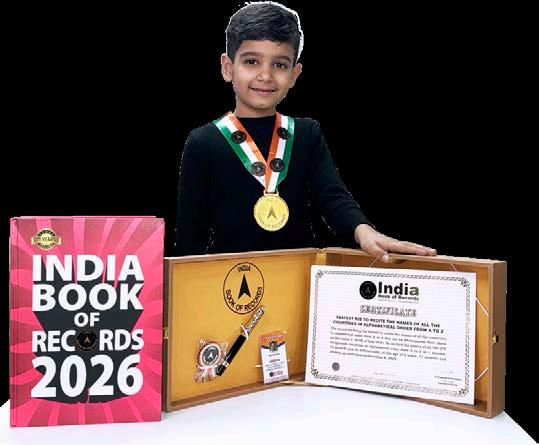
Longest duration to perform the Vrischikasana Leg Split yoga pose by a teen
The record for performing the Vrischikasana Leg Split yoga pose for the longest duration was set by Sreehari H. (born on February 23, 2010) of Alappuzha, Kerala. He performed the Vrischikasana Leg Split (Scorpion pose) yoga pose for 1 minute and 20 seconds, at the age of 15 years 9 months and 17 days, as confirmed on December 10, 2025.
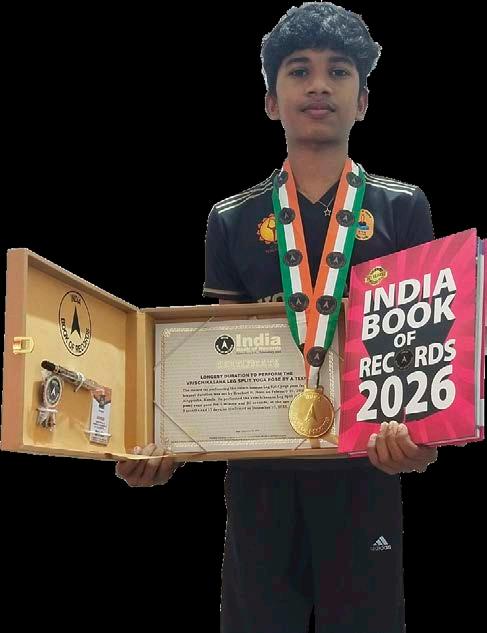
Longest duration to perform the Parivrtta Padmasana yoga pose by a child
The record for performing the Parivrtta Padmasana yoga pose for the longest duration was set by Meenakshi Murugadas (born on February 23, 2016) of Palakkad, Kerala. She performed Padmasana yoga pose pose) for 24 minutes seconds, at the age of months and 12 days, as December 5, 2025.
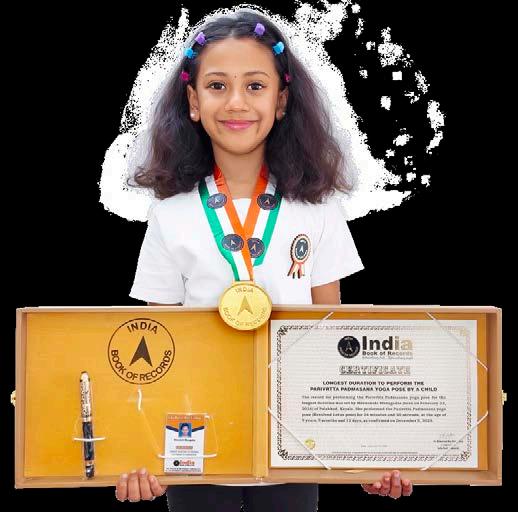
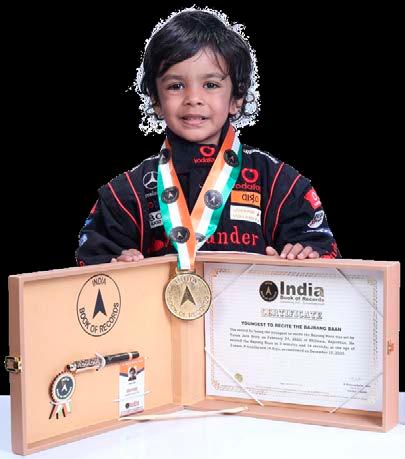
Largest portrait of Udhayanidhi Stalin made by a child using coins
The record for making the largest portrait of Udhayanidhi Stalin using coins was set by A. Anto Jebas Rijo (born on March 25, 2018) of Tirunelveli, Tamil Nadu. He made the largest portrait of Udhayanidhi Stalin, serving Deputy Chief Minister of Tamil Nadu, on a flex sheet (measuring 7 feet and 9 inches x 7 feet and 9 inches), using 1,361 ten and one-rupee coins (under the guidance of S. A. V. Balakrishna Matric Higher Secondary School, Vadakkankuam), at the age of 7 years, 8 months and 4 days, as confirmed on November 29, 2025.
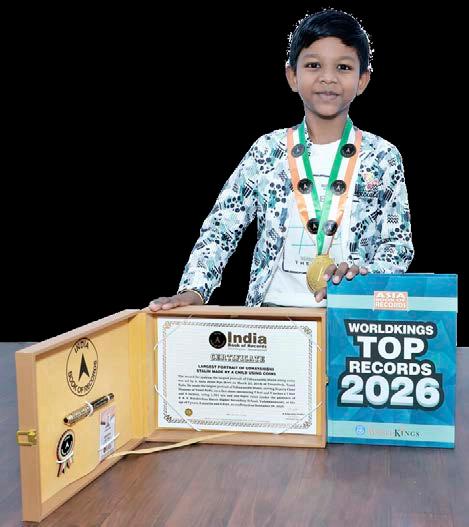
Youngest to recite the Bajrang Baan
The record for being the youngest to recite the Bajrang Baan was set by Yuvan Jain (born on February 24, 2022) of Bhilwara, Rajasthan. He recited the Bajrang Baan in 3 minutes and 14 seconds, at the age of 3 years, 9 months and 16 days, as confirmed on December 10, 2025.
Fastest teen to identify 100 football players
The record for being the fastest to identify 100 football players was set by Madhav S. (born on March 7, 2012) of Kollam, Kerala. He identified and recalled the names of one hundred (100) international football players in 1 minute and 19 seconds by viewing their pictures on a laptop screen, at the age of 13 years and 8 months, as confirmed on November 7, 2025.
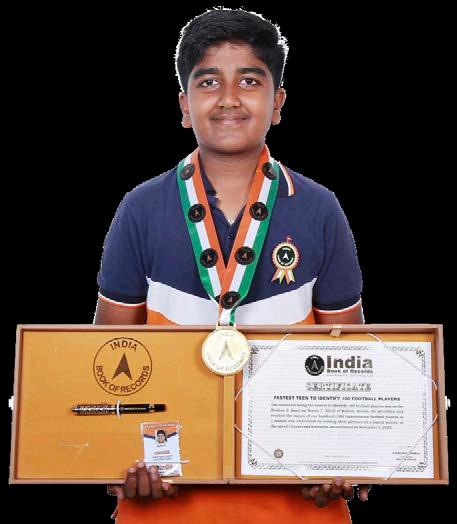
Fastest kid to recite 100 digits of Pi value blindfolded
The record for being the fastest to recite 100 digits of Pi value blindfolded was set by Ayaan Prince (born on April 18, 2020) of Thiruvananthapuram, Kerala. He rapidly recited 100 digits of Pi value, blindfolded, in 48 seconds, at the age of 5 years, 7 months and 23 days, as confirmed on December 11, 2025.
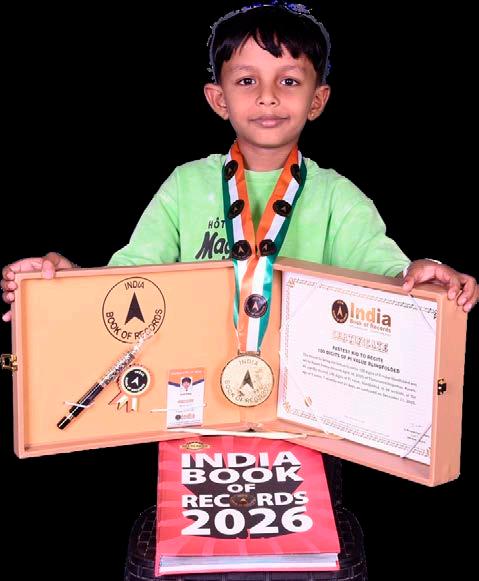
Maximum times 2 x 2 Rubik’s Cubes solved by a kid while moving backwards on inline skates
The record for solving 2 x 2 Rubik’s Cubes for the maximum number of times while moving backwards on inline skates was set by Dhanya Shree G. (born on March 6, 2020) of Dharmapuri, Tamil Nadu. He solved two 2 x 2 Rubik’s Cubes 100 times in 54 minutes and 15 seconds while moving backwards on inline skates on a busy road, at the age of 5 years, 8 months and 26 days, as confirmed December 2, 2025.
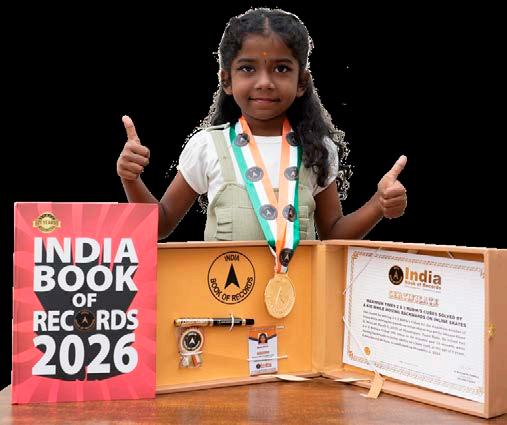
Maximum postgraduate degrees achieved from different universities by an individual
The record for achieving the maximum number of postgraduate degrees from different universities was set by Kripal Singh Banthala November 1, 1969) of Ghaziabad, Uttar Pradesh. He achieved 17 postgraduate degrees from 4 different universities, including CCS University, IGNOU, UPRTOU and Dr. B.R. Ambedkar University (Agra), from 1994 to 2025, as confirmed on December 4, 2025.
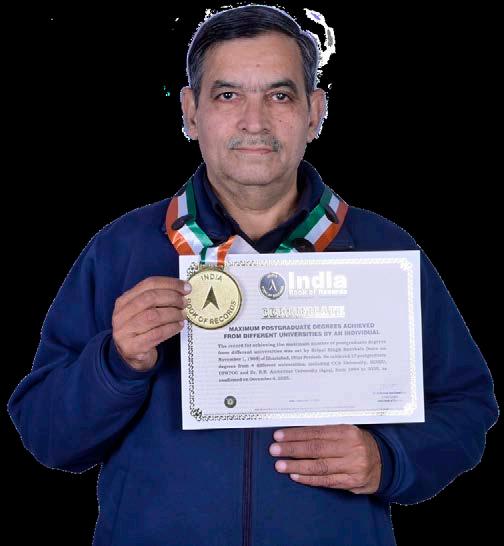
Fastest kid to swim 50 metres freestyle in a swimming pool
The record for being the fastest to swim 50 metres freestyle in a swimming pool was set by Vihaana Laddha (born on March 24, 2022) of Chhatrapati Sambhajinagar, Maharashtra. She swam 50 metres (2 laps), freestyle, across the length of a swimming pool (measuring 25 m x 14 m with a depth of 1 m to 2.4 m) in 3 minutes, at the age of 3 years, 8 months and 15 days, as confirmed on December 8, 2025.
Fastest child to solve a single 9 x 9 Sudoku puzzle
The record for being the fastest to solve a single 9 x 9 Sudoku puzzle was set by Akshita Chilamkurthi (born on December 13, 2014) of Guntur, Andhra Pradesh. She solved a single 9 x 9 Sudoku puzzle (on paper) in 1 minute and 44 seconds, using a pencil, at the age of 10 years, 11 months and 19 days, as confirmed on 2025.
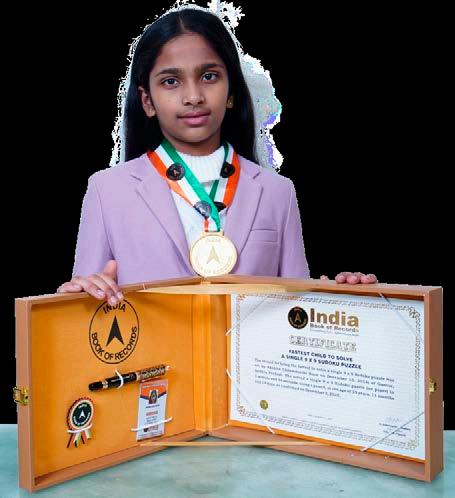
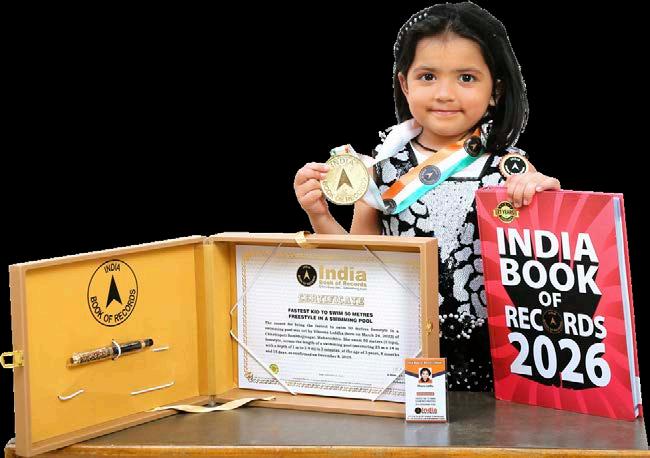
Maximum double under rope skips performed in 30 seconds by a teen
The record for performing the maximum number of double under rope skips in 30 seconds was set by Maanas Reddy Kola (born on September 21, 2011) of Medchal Malkajgiri, Telangana. He performed 85 double under rope skips in 30 seconds, at the age of 14 years, 2 months and 11 days, as confirmed on December 2, 2025.
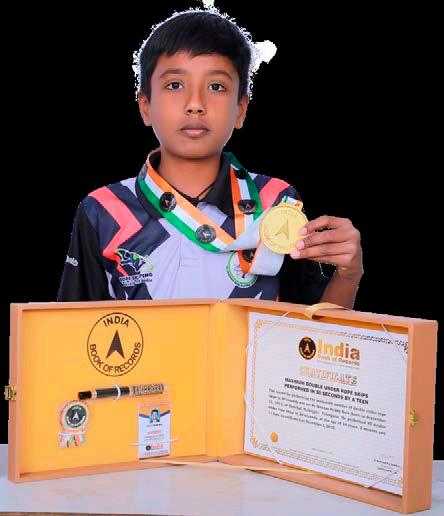
Maximum questions about the Quran answered by an individual
The record for answering the maximum number of questions about the Quran was set by Muhammad Mishab K.P. (born on July 14, 2003) of Kannur, Kerala. He answered 100 questions about the Quran, in English, in 6 minutes and 5 seconds, as confirmed on November 6, 2025.
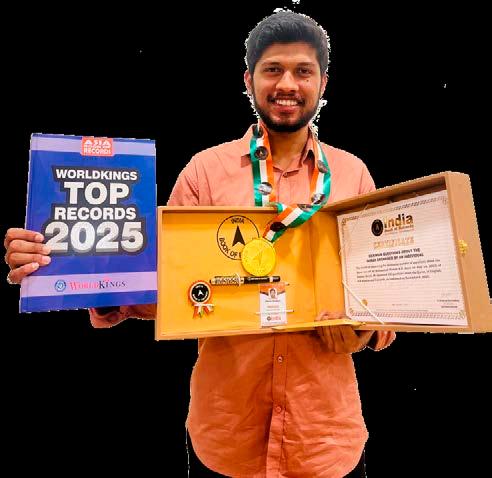
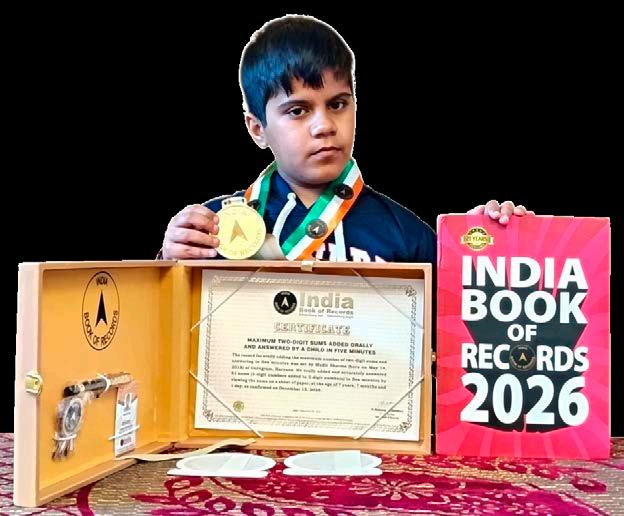
Maximum General Knowledge questions about India answered in one minute by a kid
The record for answering the maximum number of General Knowledge questions about India in one minute was set by Trridev Sivashankar (born on July 9, 2022) of Chennai, Tamil Nadu. He answered 36 General Knowledge questions about India in one minute, at the age of 3 years, 4 months and 1 day, as confirmed on November 10, 2025.
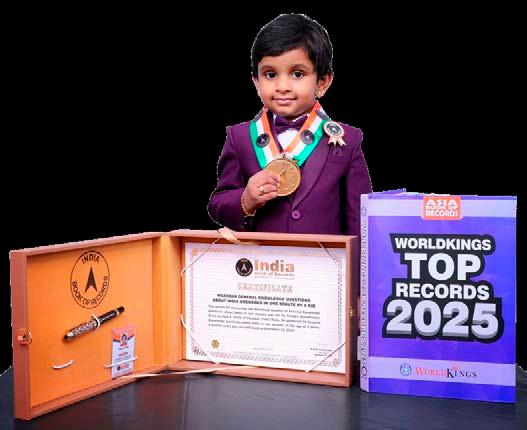
Maximum two-digit sums added orally and answered by a child in five minutes
The record for orally adding the maximum number of two-digit sums and answering in five minutes was set by Mudit Sharma (born on May 14, 2018) of Gurugram, Haryana. He orally added and accurately answered 61 sums (2-digit numbers added to 2-digit numbers) in five minutes by viewing the sums on a sheet of paper, at the age of 7 years, 7 months and 1 day, as confirmed on December 15, 2025.
Maximum stairs climbed while performing anticlockwise hula hoop spins by a child
The record for climbing the maximum number of stairs while performing anticlockwise hula hoop spins was set by Sachiaar Singh Oberoi on March 8, 2018) of Ludhiana, Punjab. He climbed 63 stairs while performing anticlockwise hula hoop spins in 5 minutes and 42 seconds, at the age of 7 years, 8 months and 19 days, as confirmed on November 27, 2025.
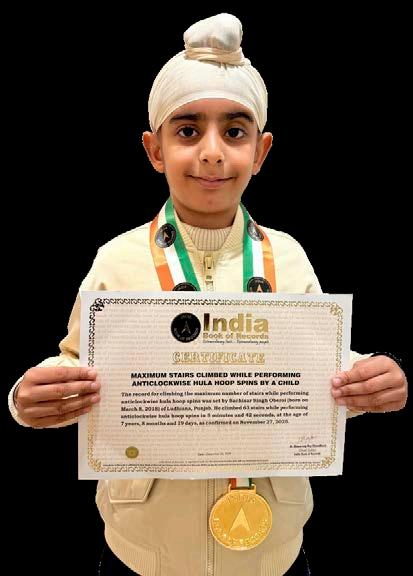
Fastest child to recite the capitals of all countries
The record for being the fastest to recite the capitals of all countries was set by Leona Patriccia Kuraganti (born on January 25, 2018) of Krishna, Andhra Pradesh. She recited the capitals of all 195 (UN recognised) countries in 1 minute, milliseconds, at months and 1 day, as confirmed on 2025.
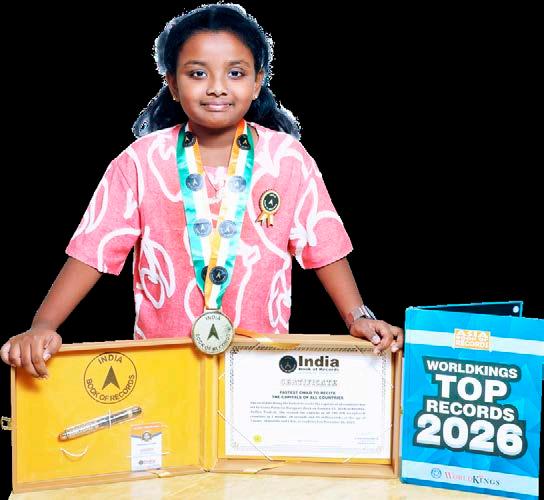
Fastest teen to recite 350 digits of Pi value blindfolded
The record for being the fastest to recite 350 digits of Pi value blindfolded was set by Pooja Lakshmi C. (born on August 25, 2010) of Kozhikode, Kerala. She recited 350 digits of Pi value, blindfolded, in 1 minute and 20 seconds, at the age of 15 years, 2 months and 27 days, as confirmed on November 21, 2025.
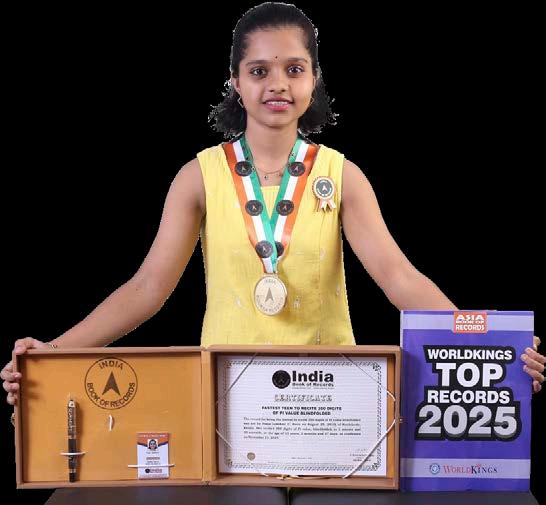
Fastest child to recite Roman numbers from 1 to 100
The record for being the fastest to recite Roman numbers from 1 to 100 was set by M. (born on March 30, 2018) of Vellore, Tamil Nadu. She recited Roman numbers from 1 to 100 in 2 minutes and 20 seconds, at the age of 7 years, 7 months and 6 days, as confirmed on November 5, 2025.
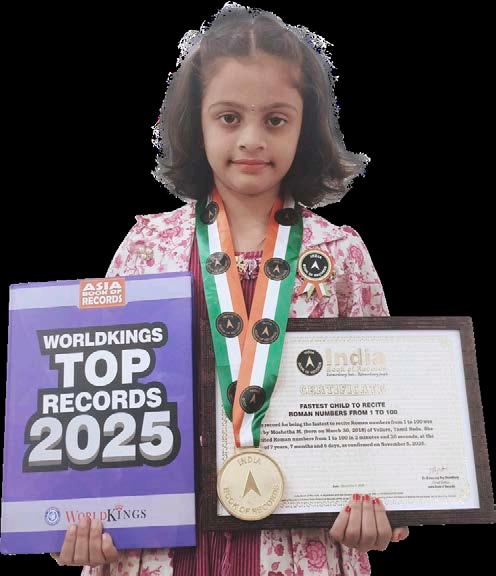
Maximum flashcards memorised and shown by a kid
The record for memorising and showing the maximum number of flashcards was set by Bondili Hanshith Singh (born on December 14, 2019) of Guntur, Andhra Pradesh. He memorised and showed each of the 80 flashcards (placed on the floor, facing down), one by one, in 6 minutes and 56 seconds, on hearing the names called out by the teacher (under the guidance of Sreshta Play School, Guntur), at the age of 5 years, 11 months and 22 days, as confirmed on December 6, 2025.
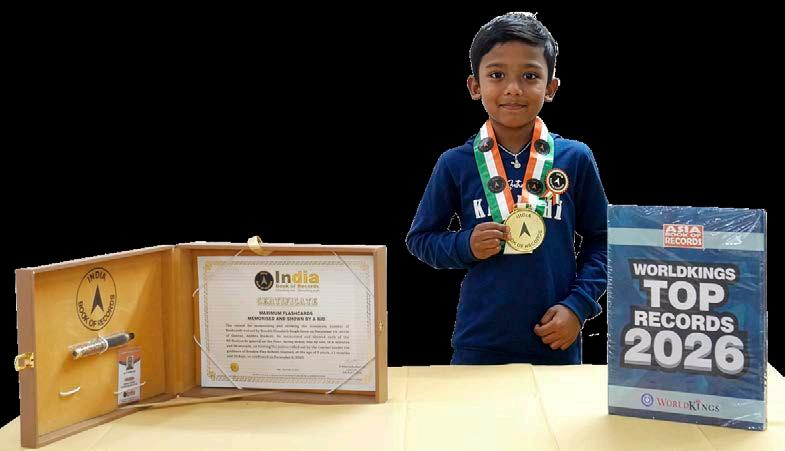
Fastest kid to recite odd numbers from 1 to 100
The record for being the fastest to recite odd numbers from 1 to 100 was set by Adithya Reddy
Anantapur, Andhra Pradesh. He recited 50 odd numbers from 1 to 100 in 23.40 seconds, at the age of 5 years, 5 months and 1 day, as confirmed on November 10, 2025.
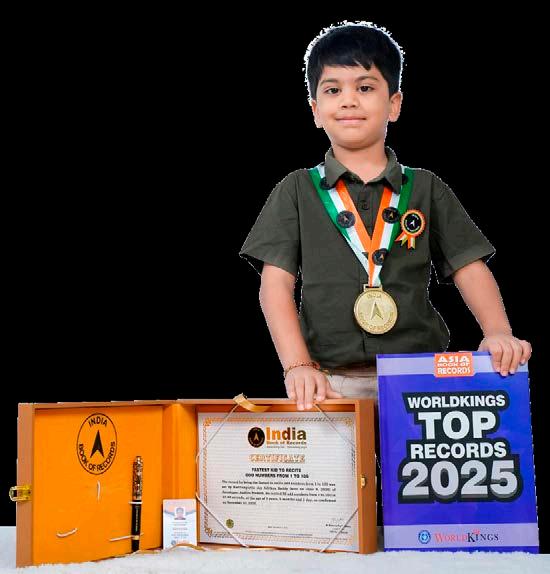
Maximum flashcards memorised and shown by a kid
The record for memorising and showing the maximum number of flashcards was set by Mohammed Aayan Shaik (born on December 1, 2020) of Guntur, Andhra Pradesh. He memorised and showed each of the 60 flashcards (placed on the floor, facing down), one by one, in 5 minutes and 51 seconds, on hearing the names called out by the teacher, at the age of 5 years and 1 day, as confirmed on December
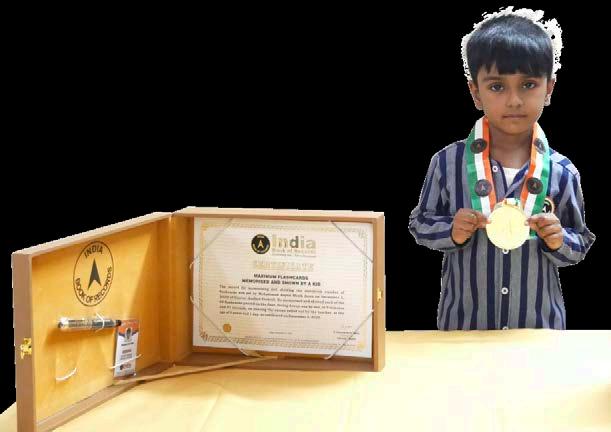
Maximum distance swum non-stop by a child in butterfly stroke
The record for swimming the maximum distance non-stop in butterfly stroke was set by Aalya Biyani (born on July 28, 2013) of Delhi (currently residing in Canberra, Australia). She swam a distance of 3 km non-stop in a swimming pool in butterfly stroke (comprising 60 laps of a 50-metre-long swimming pool) in 1 hour and 8 minutes, at the age of 12 years, 3 months and 14 days, as confirmed on November 11, 2025.
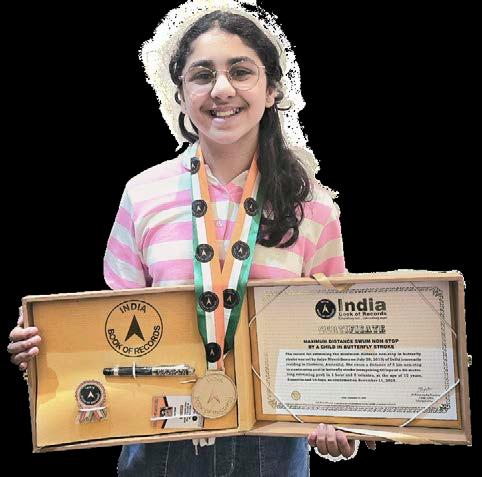
Youngest to climb Vajir Pinnacle
The record for being the youngest to climb Vajir Pinnacle was set by Arnavi Aniket Chavan (born on May 22, 2018) of Aurangabad, Maharashtra. She climbed the Vajir Pinnacle (at a height of 250 feet and 90 degrees steep) on November 2, 2025 (under the guidance of a trekking guide), at the age of 7 years, 5 months and 11 days, as confirmed on November 19, 2025.
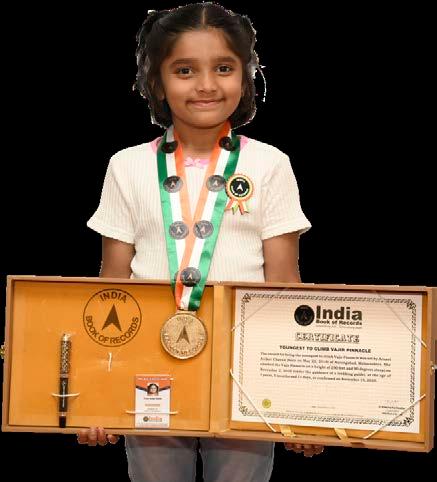
Maximum mathematical formula- based sums solved by a child
The record for solving the maximum number of mathematical formula-based sums was set by Kriyansh Rathi (born on September 15, 2017) of Ajmer, Rajasthan. He solved 150 mathematical formula-based sums of Algebra, Geometry, Mensuration, Trigonometry, Integration, Differentiation, Probability and others in 1 hour, 9 minutes and 41 seconds, using pen and paper, at the age of 8 years, 2 months and 19 days, as confirmed on December 4, 2025.
Smallest functional washing machine made by a teen
The record for making the smallest functional washing machine was set by Yadala Venkata Sai Shashank (born on April 2, 2011) of Medak, Telangana. He made the smallest functional top-loading model of a square-shaped washing machine (measuring 2.4 cm x 1.3 cm) and weighing 2.24 grams, using cardboard, a 4v-12v DC motor and a battery, at the age of 14 years, 7 months and 25 days, as confirmed on November 27, 2025.
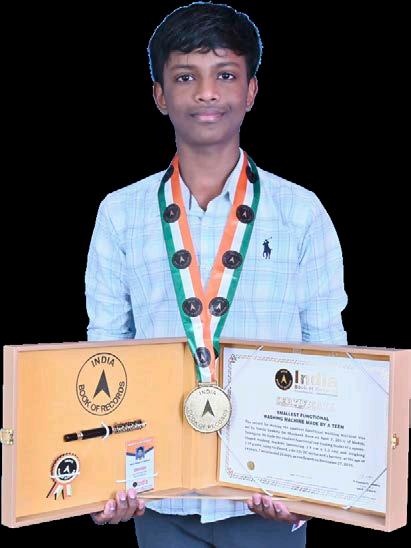
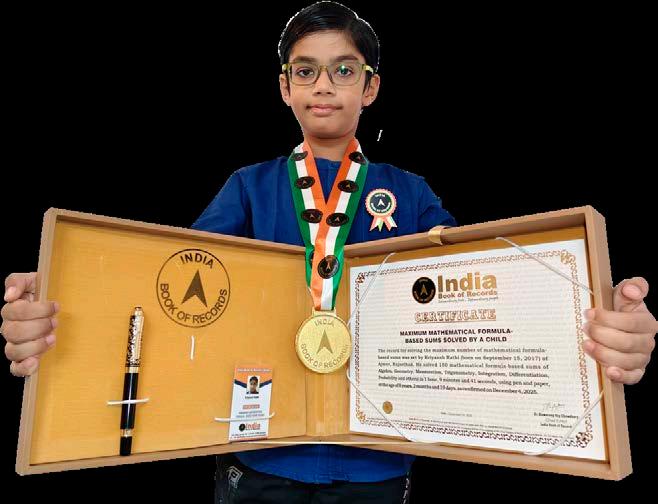
Maximum words of a Marathi poetry in praise of Shri Chhatrapati Shivaji Maharaj recited by a kid
The record for reciting the maximum words of a Marathi poetry in praise of Shri Chhatrapati Shivaji Maharaj was set by Shreyaa Prashant Chavan (born on September 14, 2021) of Solapur, Maharashtra. She fluently recited 546 words of a Marathi poetry, non-stop, in praise of Shri Chhatrapati Shivaji Maharaj (Powada) in 6 minutes and 13 seconds, at the age of 4 years, 2 months and 14 days, as confirmed on November 28, 2025.
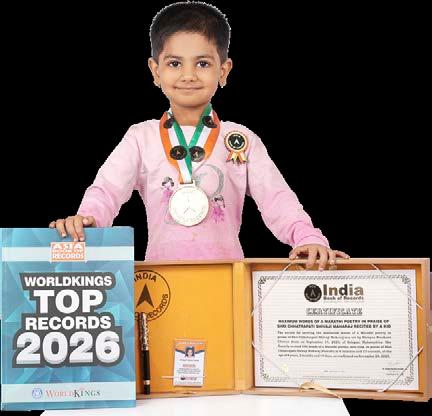
Maximum cartwheels performed by a kid
The record for performing the maximum number of cartwheels was set by Dheera Ram Krishna Kotap (born on April 21, 2021) of Mumbai, Maharashtra. She cartwheels in 11 minutes on at the age of 4 years, 7 3 days, as confirmed on 2025.
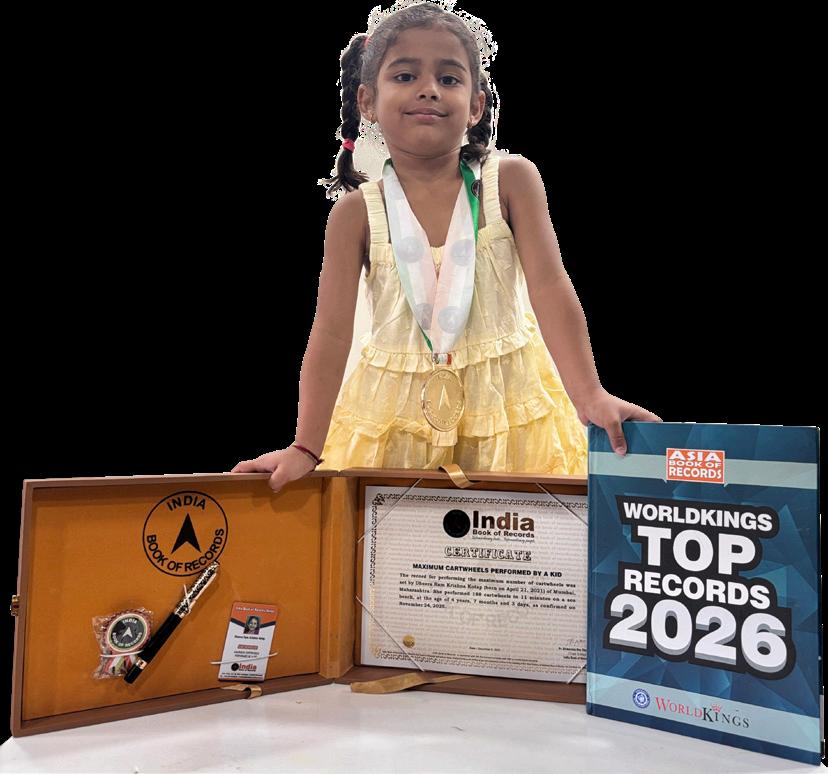
Largest portrait of Pandit Jawaharlal Nehru made with pebbles by students of an educational institution
The record for making the largest portrait of Pandit Jawaharlal Nehru with pebbles was set by I.E.S. Public School (CBSE Affiliation No: 930141) of Thrissur, Kerala. A total number of 1,790 students of the school made the largest portrait of Pandit Jawaharlal Nehru (measuring 10 feet x 10 feet) by using river pebbles, under the supervision of the coordinator Aishwarya Saji. The school students engraved their names on the pebbles, as confirmed on November 12, 2025.
Maximum flashcards memorised and shown by a kid
The record for memorising and showing the maximum number of flashcards was set by Shaik Ayana (born on January 3, 2022) of Guntur, Andhra Pradesh. She memorised and showed each of the 50 flashcards (placed on the floor, facing down), one by one, in 5 minutes and 21 seconds, on hearing the names called out by the teacher, at the age of 3 years, 10 months and 26 days, as confirmed on November 29, 2025.
Maximum patterns depicted on solved 4 x 4 Rubik’s cubes and back to solved state by a child
The record for depicting the maximum number of patterns on solved 4 x 4 Rubik’s cubes and back to solved state was set by Rayan Fernandez Cheeran (born on February 28, 2015) of Thrissur, Kerala. He depicted 8 different patterns (checkerboard, cube-in-a-cube, cubein-a-cube-in-a-cube, dot, plus, vertical stripes, shifted stripes and window) on separate solved 4 x 4 Rubik’s cubes, and back to its solved state in 1 minute, 53 seconds and 25 milliseconds, at the age of 10 years, 9 months and 1 day, as confirmed on November 29, 2025.
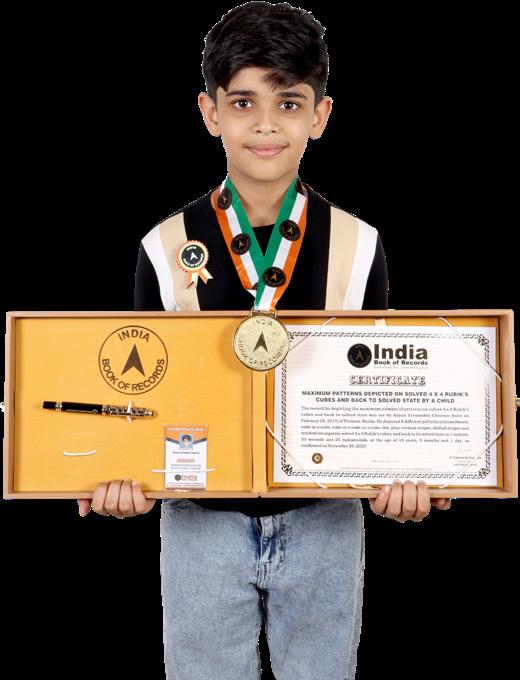

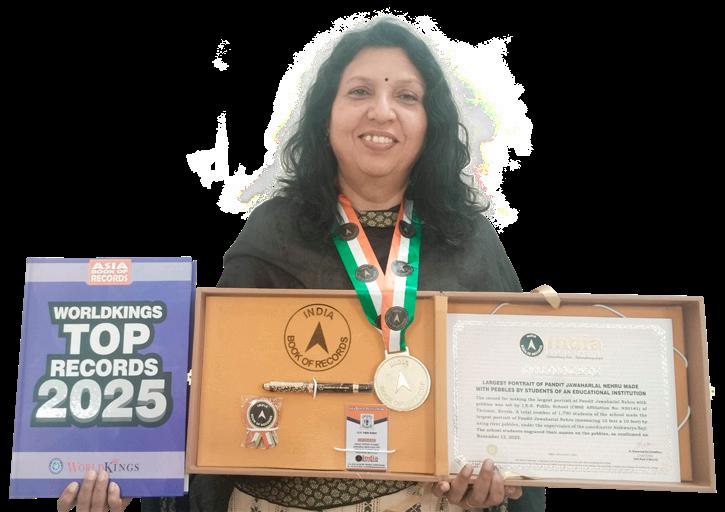
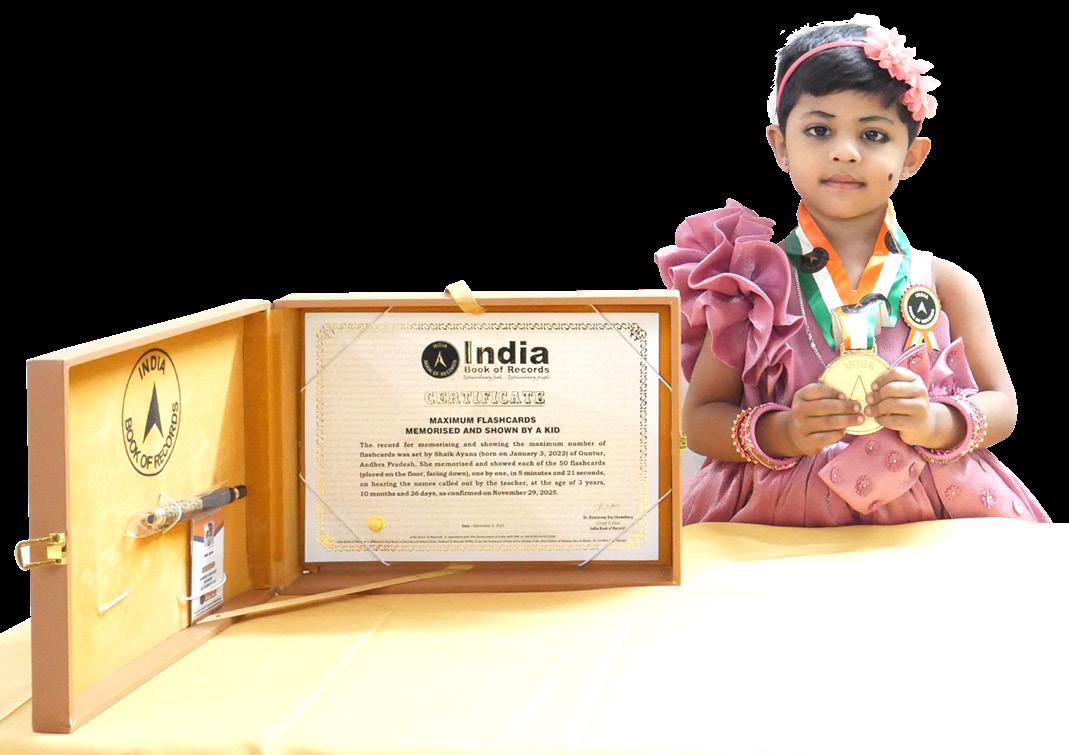
Maximum patterns depicted on solved
4 x 4 Rubik’s cubes blindfolded by a child
The record for depicting the maximum number of patterns on solved 4 x 4 Rubik’s cubes blindfolded was set by Rayan Fernandez Cheeran (born on February 28, 2015) of Thrissur, Kerala. He depicted 8 different patterns (Classic stripes, Split stripes, Cross, Single stripes, Cube in a Cube, Anaconda, Bricks and Eye) on separate solved 4 x 4 Rubik’s cubes, blindfolded, in 48.13 seconds, at the age of 10 years, 9 months and 6 days, as confirmed on December 4, 2025.
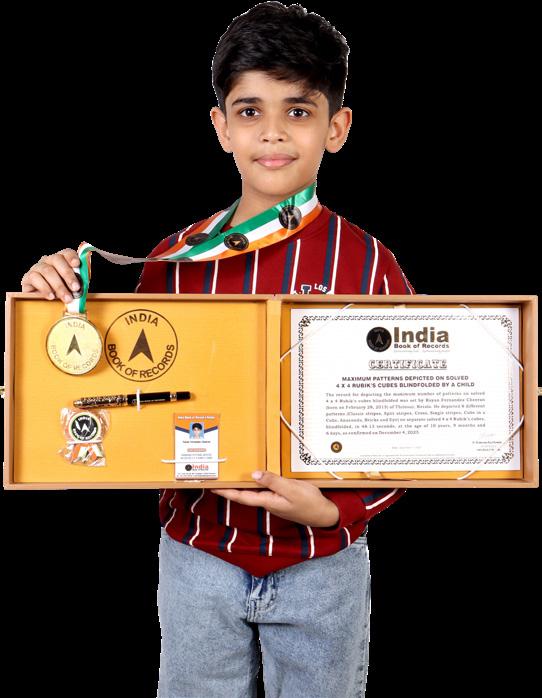
Fastest kid to identify 50 dinosaurs
The record for being the fastest to identify 50 dinosaurs was set by Avyukt Singh (born on July 15, 2020) of Noida, Uttar Pradesh. He identified and recalled the names of 50 dinosaurs in 43.35 seconds by viewing the pictures on a laptop screen, at the age of 5 years, 4 months and 3 days, as confirmed on November
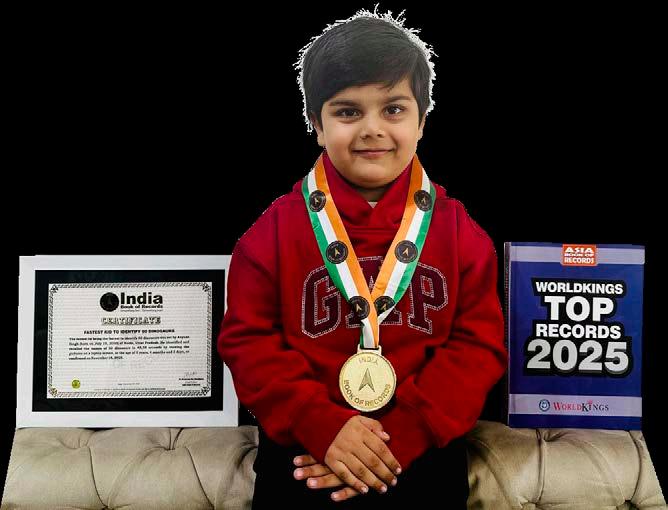
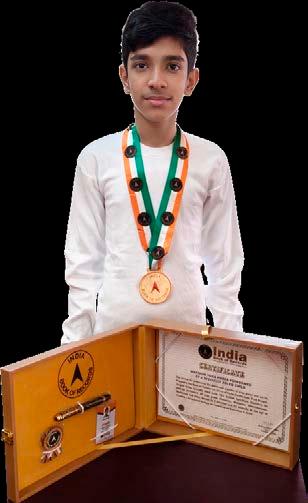
Maximum Indian currency notes with denominations and serial numbers identified by a child blindfolded
The record for identifying the maximum number of Indian currency notes with denominations and serial numbers blindfolded was set by Tanush May 21, 2013) of Hyderabad, Telangana. He correctly identified and recalled the denominations and serial numbers of 26 Indian currency notes, blindfolded, in 3 minutes and 50 seconds, at the age of 12 years, 6 months and 1 day, as confirmed on November 22, 2025.
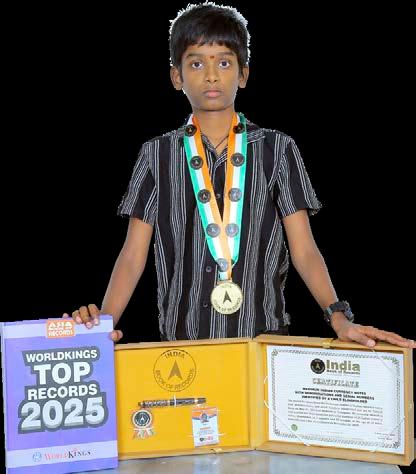
Maximum yoga poses performed by a specially abled child
The record for performing the maximum number of yoga poses was set by Priyanshu Das (born on October 14, 2014) of Purba Bardhaman, West Bengal. Despite being specially abled (with 70% Autism Spectrum Disorder), he skilfully performed 20 yoga poses (Balasana, Malasana, Gomukhasana, Naukasana and other asanas) in 4 minutes and 53 seconds, at the age of 11 years, 1 month and 20 days, as confirmed on December 3, 2025.
Maximum flashcards of Mahabharata, Ramayana and other deities segregated blindfolded by a child
The record for segregating the maximum number of flashcards of Mahabharata, Ramayana and other deities blindfolded was set by Pulla Sai Amrutha (born on November 3, 2013) of East Godavari, Andhra Pradesh. She segregated 78 flashcards of Mahabharata, Ramayana and other deities, and placed them in the respective piles, blindfolded, while simultaneously naming 26 characters of each category in 1 minute and 43 seconds, at the age of 12 years and 16 days, as confirmed on November 19, 2025.
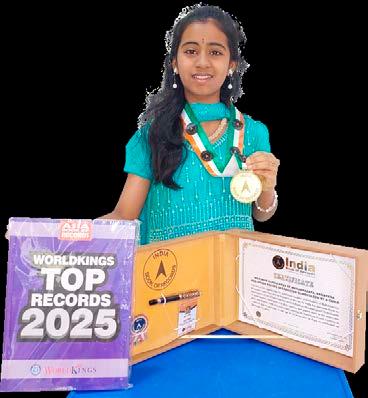
Fastest child to solve a 3 x 3 Rubik’s Cube while simultaneously performing Abacus calculations and skating on roller skates
The record for being the fastest to solve a 3 x 3 Rubik’s Cube while simultaneously performing Abacus calculations and skating on roller skates was set by Saayan Sandeep (born on January 27, 2013) of Ernakulam, Kerala. He solved a 3 x 3 Rubik’s Cube in 36.38 simultaneously performing Abacus calculations (consisting of single digit integers in 15 rows) and skating on roller skates, at the 12 years, 10 months day, as confirmed on November 28, 2025.
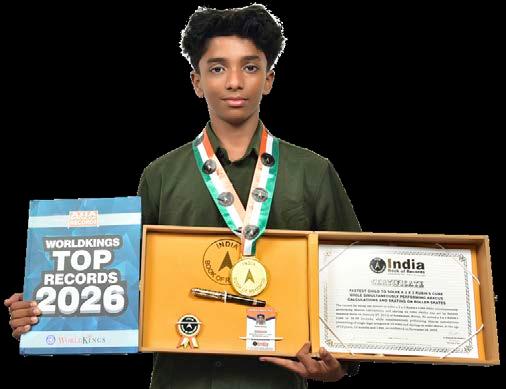
Fastest kid to identify 100 prehistoric animals and plants
The record for being the fastest to identify 100 prehistoric animals and plants was set by Madhav Adithya (born on July 23, 2020) of Kancheepuram, Tamil Nadu. He identified and recalled the names of 100 prehistoric animals and plants in 3 minutes and 29 seconds by viewing the pictures on a laptop screen, at the age of 5 years, 4 months and 4 days, as confirmed 27, 2025.
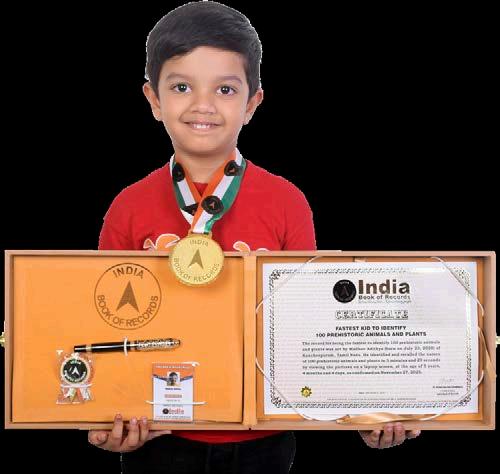
Fastest recitation of squares from 1 to 50 by a kid
The record for being the fastest to recite the squares of numbers from 1 to 50 was set by Richard Vincent Kuraganti (born on September 4, 2019) of Krishna, Andhra Pradesh. He rapidly recited the squares of numbers from 1 to 50 in 43.60 seconds, at the age of 6 years, 2 months and 18 days, as confirmed on
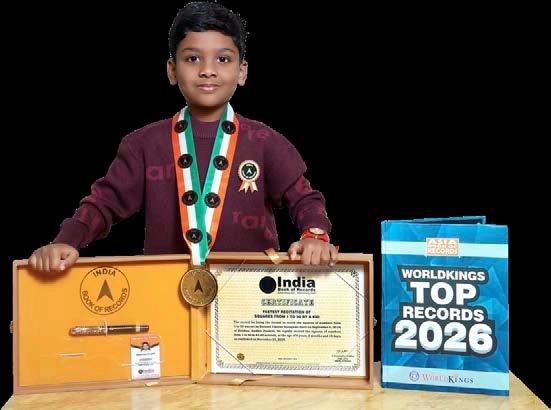
SI units of maximum fundamental physical quantities recalled by a kid
The record for recalling the SI units of the maximum number of fundamental physical quantities was set by Mohith Krishna Henchinamane (born on July 14, 2021) of Bengaluru, Karnataka. He recalled the SI units of 30 fundamental physical quantities, including resistance, power and heat, among others, in 48.82 seconds, at the age of 4 years, 4 months and 19 days, as confirmed on December 3, 2025.
Maximum Rubik’s Cubes solved by a kid while answering General Knowledge questions
The record for solving the maximum number of Rubik’s Cubes while answering General Knowledge questions was set by Thea Urvashi Harsh Solanki (born on September 21, 2021) of Mumbai, Maharashtra. She solved 12 different types of Rubik’s Cubes, while answering 80 General Knowledge questions, in 12 minutes and 8 seconds, at the age of 4 years, 1 month and 18 days, as confirmed on 2025.
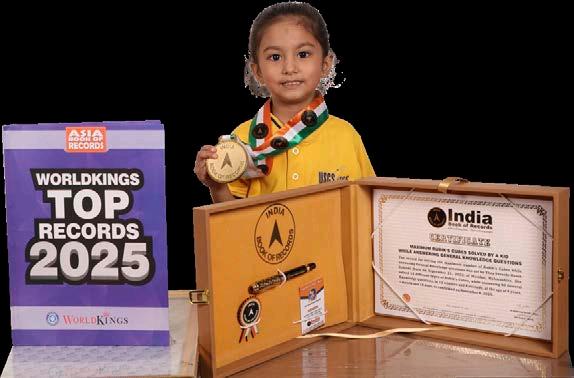
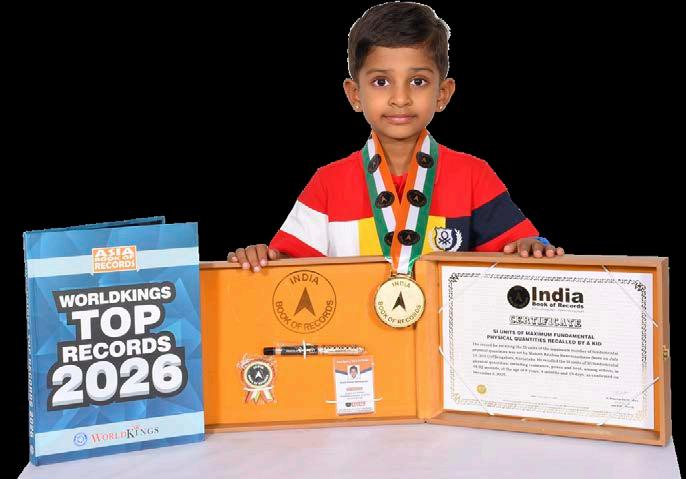
Maximum birds identified by a kid
The record for identifying the maximum number of birds was set by Vihaan N. (born on June 24, 2020) of Coimbatore, Tamil Nadu. He identified and named 450 birds in 18 minutes and 11 seconds by viewing the pictures of birds on an iPad screen, at the age of 5 years, 5 months and 1 day, as confirmed on November 25, 2025.
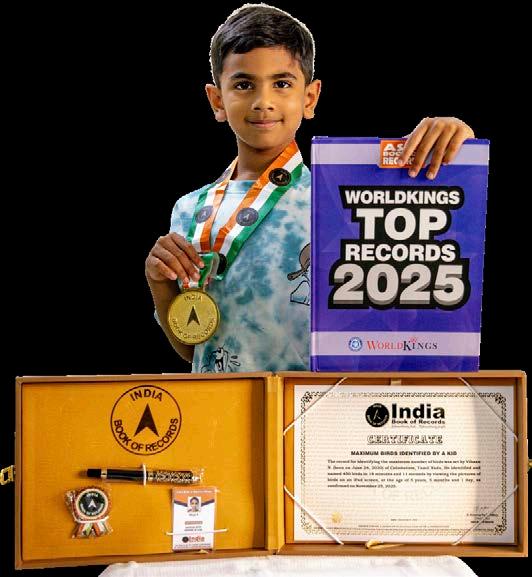
Maximum yoga poses performed in one minute by an individual
The record for performing the maximum number of yoga poses in one minute was set by Subhalakshmi P.S. on December 20, 2003) of Thiruvananthapuram, Kerala. She performed 42 yoga poses (asanas), including Baddha Konasana, Sukhasana, Padmasana, Baddha Padmasana, Gomukhasana and Virasana, among others, in one minute, as confirmed on October 7, 2025.
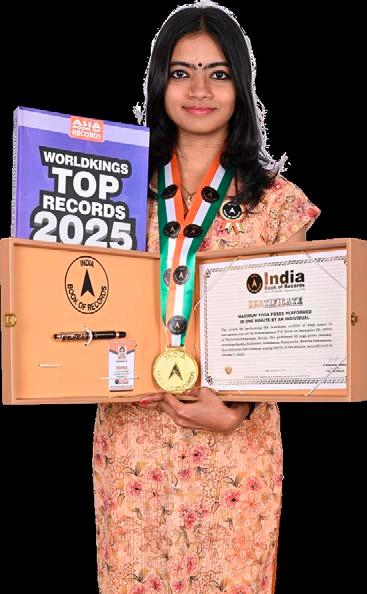
Fastest child to recite large number names from one to googolplexplex
The record for being the fastest to recite large number names from one to googolplexplex was set by J. Jephthah Ashir Elijah (born on November 20, 2017) of Kancheepuram, Tamil Nadu. He recited 51 large number names (in the international number system) from one to googolplexplex in 37 seconds, at the age of 7 years, 11 months and 29 days, as confirmed on November
Maximum times numbers doubled successively by a child
The record for doubling numbers successively for the maximum number of times was set by Kathan Jeet Joshi (born on January 1, 2018) of Amreli, Gujarat. He doubled numbers successively 25 times from 2 onwards to derive an answer of 3,35,54,432 by reciting both the questions and answers (1+1= 2; 2+2= 4; 4+4= 8… to 20,97,152+20,97,152=41,94,304, 41,94,304+41,94,304=83,88,608, 83,88,608+83,88,608=1,67,77,216, 1,67,77,216+1 ,67,77,216=3,35,54,432), in 2 minutes and 12 seconds, at the age of 7 years, 10 months and 27 days, as confirmed on November 28, 2025.
Maximum dumbbell bench presses performed by an individual in one minute
The record for performing the maximum number of dumbbell bench presses in one minute was set by Jeevan Viju (born on June 14, 2004) of Malappuram, Kerala. He performed 92 dumbbell bench presses in one minute, using gym dumbbells (weighing 5 kg each), as confirmed on November 13, 2025.
Fastest teen to recite Punjabi alphabet
The record for being the fastest to recite the Punjabi alphabet was set by Mandeep Kaur (born on January 10, 2007) of Ludhiana, Punjab. She recited all 41 letters of the Punjabi alphabet in 9 seconds, at the age of 18 years, 10 months and 4 days, as confirmed on November 14, 2025.
Fastest child to identify all countries on a world map
The record for being the fastest to identify all countries on a world map was set by Romeo (born on April 10, 2017) of Karur, Tamil Nadu. He identified and recalled the names of 195 (UN recognised) countries on a world map in 1 minute, 26 seconds and 62 milliseconds by pointing to each country on the world map, at the age of 8 years, 7 months and 2 days, as confirmed on November 12, 2025.
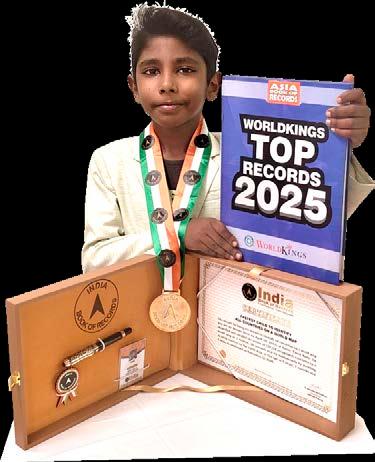
Maximum questions about Indian Law answered by a child
The record for answering the maximum number of questions about Indian Law was set by Sachin Basker (born on March 17, 2018) of Kancheepuram, Tamil Nadu. He answered 147 questions about Indian Law, including those related to IPC sections and others, in 10 minutes, 19 seconds and 12 milliseconds, at the age of 7 years, 8 months and 1 day, as confirmed on November 18,
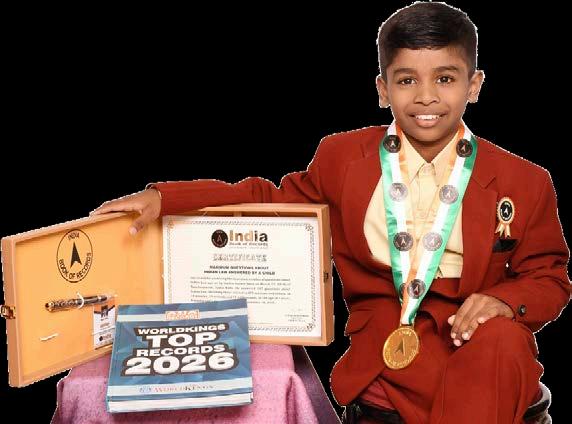
Maximum figure-eight hula hoop movements performed single-handedly by a child
The record for performing the maximum number of figure-eight hula hoop movements singlehandedly was set by Aamya Gandhi (born on June 22, 2017) of Delhi. She performed 828 figure-eight hula hoop movements single-handedly in 20 minutes and 16 seconds (swinging the hula hoop from one side of the body to the other in a large arc forming a figure-eight shape), using her right hand, at the age of 8 years, 5 months and 11 days, as confirmed on December 3, 2025.
Maximum historical monuments across UAE visited by an individual
The record for visiting the maximum number of historical monuments across UAE was set by SV Lenin (born on May 30, of Kollam, Kerala. He visited 11 historical monuments across UAE, covering all the 7 emirates, in 14 hours and 38 minutes by a Toyota Corolla car, as confirmed on
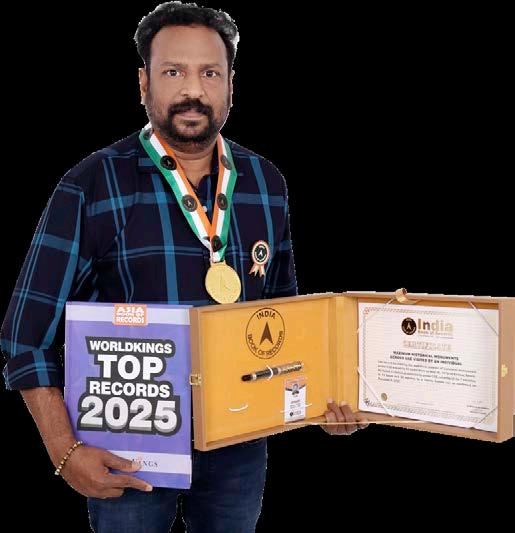
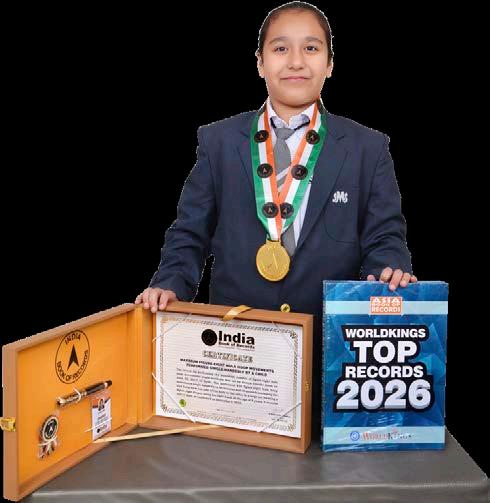
Largest portrait of Shri Guru Tegh Bahadur made by a teen using charcoal powder
The record for making the largest portrait of Shri Guru Tegh Bahadur using charcoal powder was set by Arshpreet Singh (born on June 2, 2008) of Jhansi, Uttar Pradesh. He made the largest portrait (measuring 24 feet and 9 inches x 17 feet and 2 inches) of Shri Guru Tegh Bahadur, along with his name, on combined sheets of paper (each measuring 8.3 inches), using charcoal powder, at the age of 17 years, 5 months and 8 days, as confirmed on November 10, 2025.
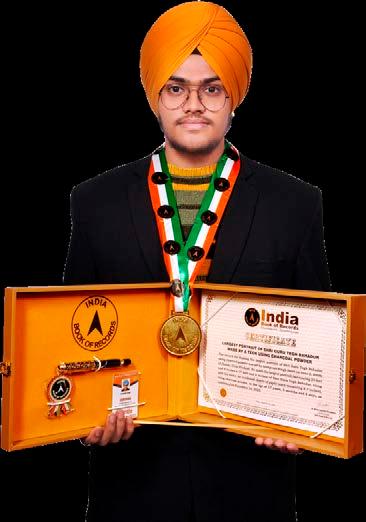
IBR Achievers
Zeyn Uvais Bin Shefferin (born on June 16, 2023) of Pathanamthitta, Kerala, is titled as ‘IBR Achiever’ for identifying 8 birds, 19 animals, 7 fruits, 3 vegetables and 3 books; naming 10 colours; and recalling phonic sounds from A to Z, at the age months, as confirmed on
Ewa Wania M. S. (born on February 22, 2021) of Thrissur, Kerala, is titled as ‘IBR Achiever’ for solving 85 cards of various activities, including 32 ‘match the following’, 27 ‘sorting activities’, 14 addition sums, 7 ‘connect the dots’, 3 maze puzzles and 2 ‘spot the difference’, at the age of 4 years and 9 months, as confirmed on December 8, 2025.
Nimeshika M.P. (born on December 3, 2021) of Krishnagiri, Tamil Nadu, is titled as ‘IBR Achiever’ for identifying and naming 5 public places, 8 national symbols, 10 colours, 12 fruits, 10 vegetables, 11 vehicles, 13 animals and 9 shapes; counting from 1 to 10; reciting 26 letters of the English alphabet, months in a year, days of the week, 3 Thirukkurals, 3 slogans (English and Tamil), 7 4 good habits and 3 traffic 4 years, confirmed on
Shreyan Suraj (born on April 10, 2022) of Coimbatore, Tamil Nadu, is titled as ‘IBR Achiever’ for identifying and naming 21 vehicles, 15 fruits, 20 animals, 9 festivals, 15 leaders, flags of 13 countries, 4 seasons and 18 car logos; and reciting months in a year, at the age of 3 years and 7 months, as confirmed on December 6, 2025.
Nivaan Laksh V. (born on June 3, 2023) of Malappuram, Kerala, is titled as ‘IBR Achiever’ for identifying 15 parts of the body; counting from 1 to 10; recalling the names of 8 vehicles, 12 birds, 8 planets, 14 districts of Kerala, months in a year, days of the week, 15 letters of the Malayalam alphabet and 9 animals, at the age of 2 years and 6 months, as confirmed on December 4, 2025.
Ria Zerin (born on January 29, 2022) of Kasaragod, Kerala, is titled as ‘IBR Achiever’ for recalling 13 national symbols; identifying and naming 6 national flags, 9 monuments of India, 23 animals, 18 fruits, 14 vegetables, 15 vehicles, 13 colours, 11 professions, 8 sports, 6 famous paintings, 10 parts of the body and 10 shapes; reciting letters of the English alphabet, 5 English and 3 Malayalam nursery rhymes; singing the National Anthem; and counting from 1 to 10, at the age of 3 years and 10 months, as confirmed on December 4, 2025.
A. Ahyan Ahad (born on December 17, 2019) of Kanyakumari, Tamil Nadu, is titled as ‘IBR Achiever’ for answering 500 G.K. questions, on various topics, in 42 minutes and 15 seconds, at the age of 5 years and 11 months, as confirmed on December 2, 2025.
Lezim Zayan U. K. (born on May 31, 2021) of Malappuram, Kerala, is titled as ‘IBR Achiever’ for identifying 21 famous personalities, 21 shapes, 20 vegetables, 20 colours, 19 vehicle logos, 21 actions, 20 helpers, 20 animals, 18 birds, 14 insects, 21 fruits, 22 vehicles and 25 parts of the body; recalling 17 national symbols; reciting 26 letters of the English alphabet, 8 planets, days of the week and months in a year; and counting from 1 to 20, at the age of 4 years and 6 months, as confirmed on December 3, 2025.
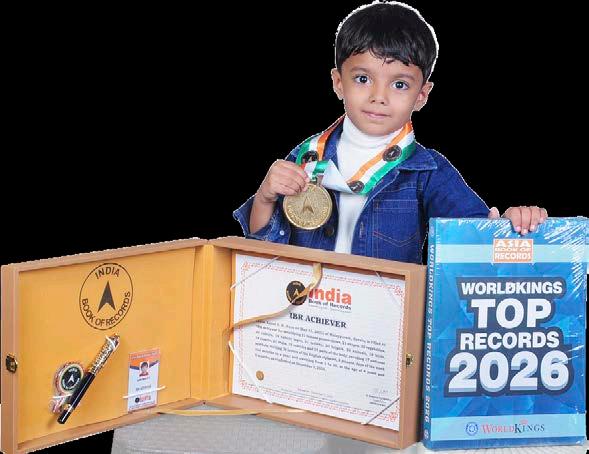
Rishaan Shyju (born on March 17, 2023) of Kasaragod, Kerala, is titled as ‘IBR Achiever’ for identifying 12 fruits, 12 vehicles, 12 animals, 10 colours, 9 vegetables, 14 districts of Kerala, months in a year and days of the week; and counting from 1 to 10, at the age of 2 years and 8 months, as confirmed on
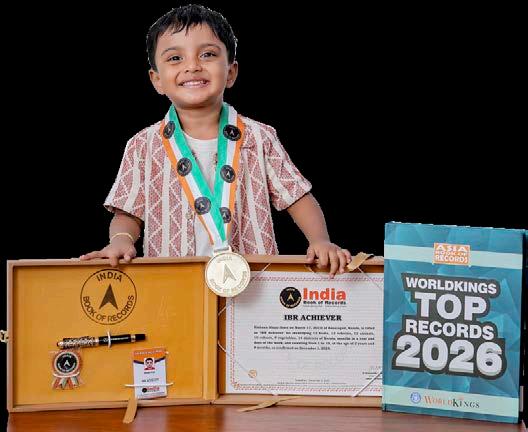
Arfina Ashraf (born on June 11, 1996) of Kozhikode, Kerala, is titled as ‘IBR Achiever’ for painting and embroidering 5 pictures on knitted, nylon, cotton, blue denim and black polyester fabric pieces (each measuring 1inch x 1inch), using fabric paints and strands of embroidery thread, as confirmed on December 2, 2025.
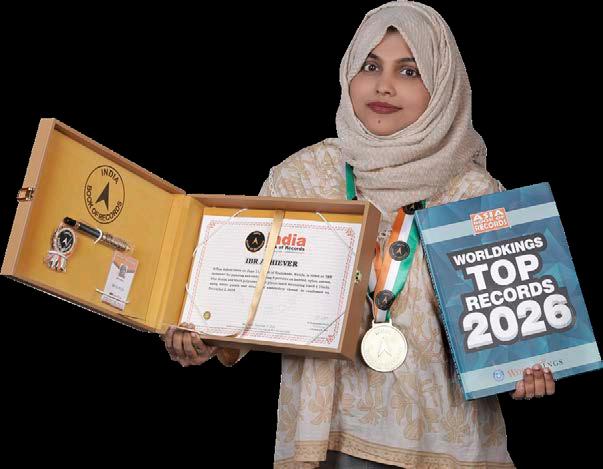
Krithi T. M. (born on September 8, 2023) of Tumakuru, Karnataka, is titled as ‘IBR Achiever’ for identifying and recalling the names of 9 parts of the body, 6 vehicles, 7 fruits, 7 vegetables and 8 animals; reciting a shloka, 26 letters of the English alphabet and 4 nursery rhymes (in English and Kannada), at the age of 2 years and 2 months, as confirmed on December 5, 2025.
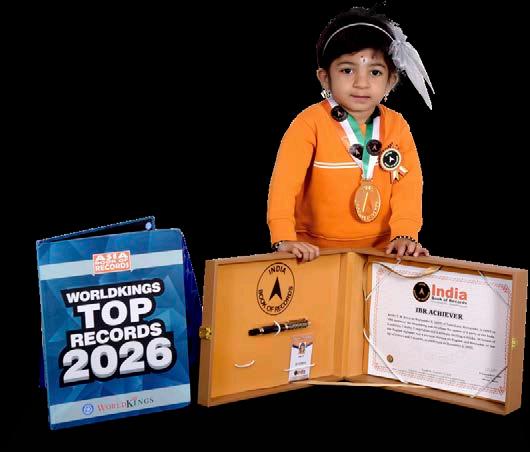
Nitika Didwania (born on February 5, 1982) of Mumbai, Maharashtra, is titled as ‘IBR Achiever’ for authoring and publishing an English book on Kindle titled ‘Manifest Your Dreams - With a Pen’ (ASIN: B0FFHS6P3V) on June 24, 2025, as confirmed on December 3, 2025.
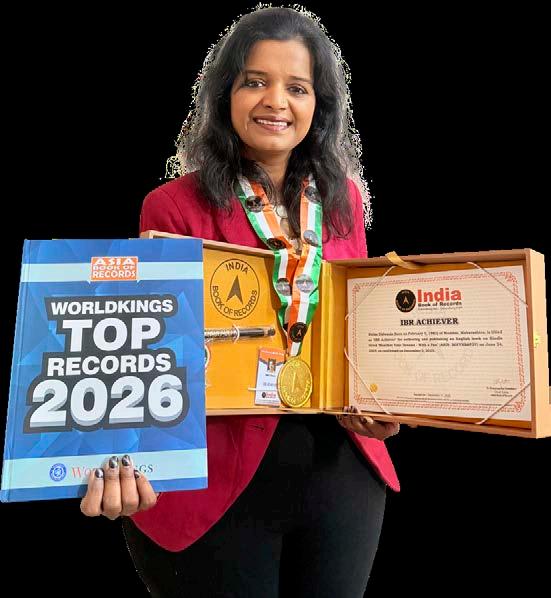
Aishi Vinay (born on November 5, 2017) of Bengaluru, Karnataka, is titled as ‘IBR Achiever’ for chanting the sound of the divine mantra ‘Om’ in one breath for 25 seconds, at the age of 8 years, as confirmed on November 11, 2025.
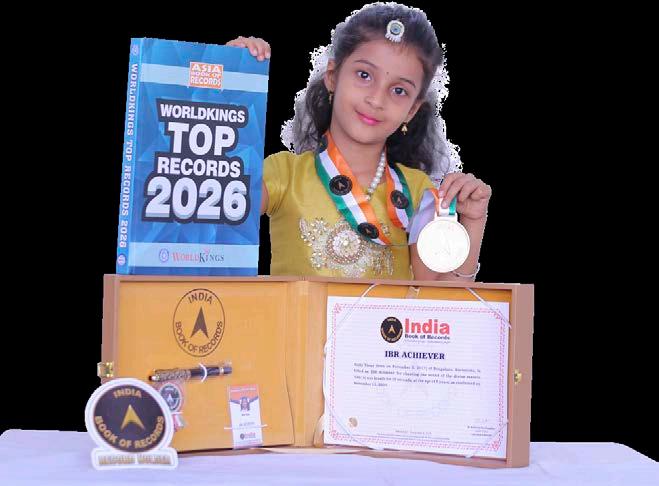
Joaan Leo Jithin (born on May 27, 2023) of Kannur, Kerala, is titled as ‘IBR Achiever’ for identifying and naming 8 fruits, 37 animals, 3 insects, 5 birds, 13 vehicles, 5 shapes, 12 parts of the body, 24 miscellaneous items, the sun and 3 celestial bodies; reciting all the letters of the English alphabet and an English nursery rhyme; performing 18 actions; guessing the names of 28 animals by their shadows; and counting from 1 to 10, at the age of 2 years and 5 months, as confirmed on November 10, 2025.
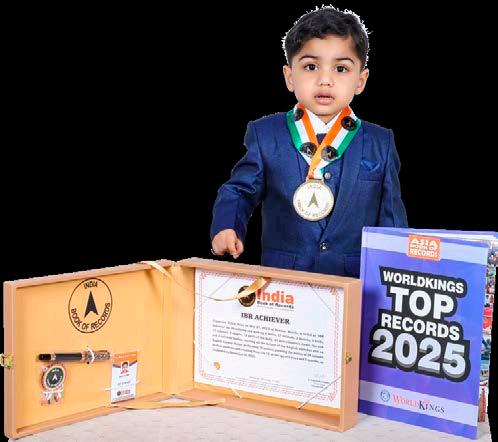
Koyyalamudi Bruhathi (born on September 29, 2023) of West Godavari, Andhra Pradesh, is titled as ‘IBR Achiever’ for identifying and naming 6 vegetables, 14 parts of the body, 15 actions, 30 animals, 8 shapes, 11 relatives and 35 household items; reciting 3 Telugu nursery rhymes and 3 shlokas; counting numbers from 1 to 10 in English and 1 to 5 in Telugu; answering 6 G.K. questions related to Mahabharata; and recalling 10 characters of Mahabharata, at the age of 2 years and 1 month, as confirmed on November 17, 2025.
Nazakat Ahmad (born on January 7, 2006) of Kupwara, J&K, is titled as ‘IBR Achiever’ for being a member of the American Society of Microbiology and the All-India Research Scholars Association, and achieving 11 certificates and 3 medals for research and innovation, at the age of 19 years and 10 months, as confirmed on November 8, 2025.
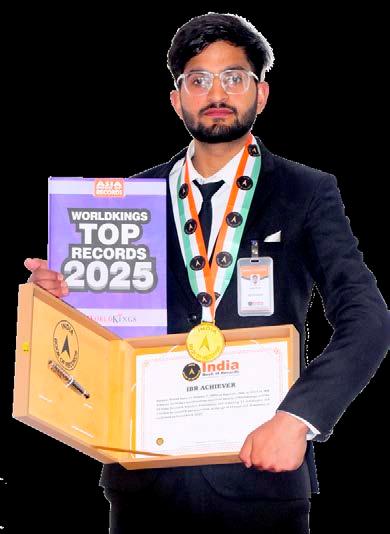
Viaan Aggarwal (born on January 8, 2020) of Bathinda, Punjab, is titled as ‘IBR Achiever’ for solving a 3 x 3 Rubik’s Cube in 3 minutes and 46 seconds, at the age of 5 years and 9 months, as confirmed on October 30, 2025.
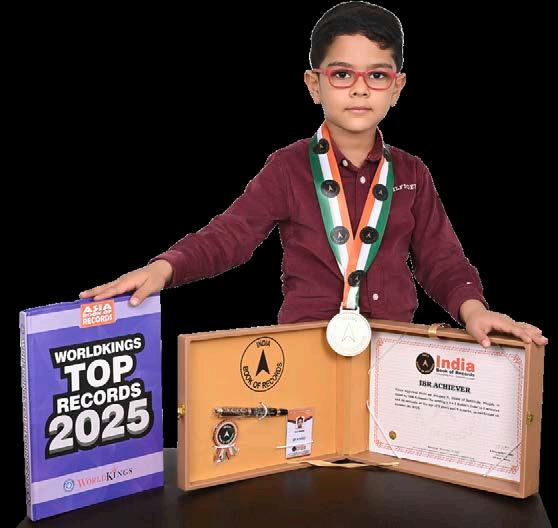
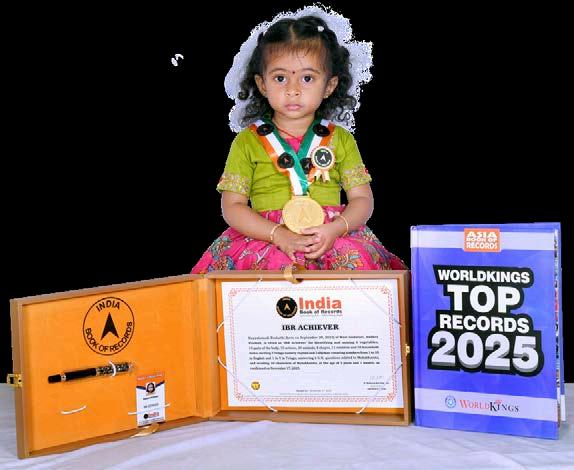
Biswajit Swain (born on September 12, 2022) of Cuttack, Odisha, is titled as ‘IBR Achiever’ for identifying 15 fruits, 10 flowers, 10 birds, 14 vehicles, 17 animals, 12 colours, 20 famous personalities, 33 parts of the body, 12 helpers, 12 festivals and 12 games; counting from 1 to 50; performing 20 actions; recalling months in a year, days of the week, 13 English antonyms, 19 national symbols and 3 multiplication tables, at the age of 3 years and 1 month, as confirmed on
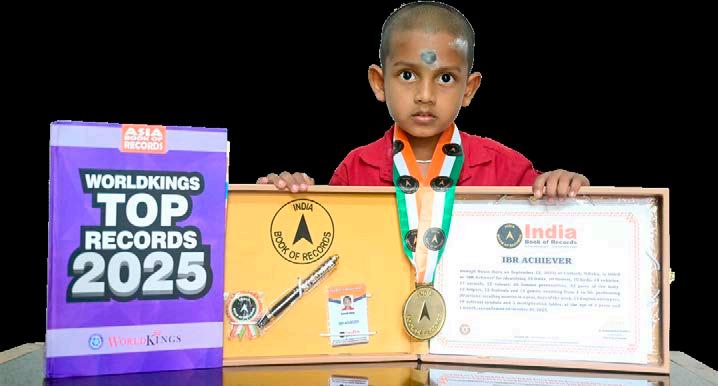
Ayaan Ali Miah (born on September 4, 2020) of Coochbehar, West Bengal, is titled as ‘IBR Achiever’ for identifying the flags of 195 (UN recognised countries) in 2 minutes and 48 seconds by viewing the images of flags on a chart sheet, at the age of 5 years and 2 months, as confirmed on November 11, 2025.
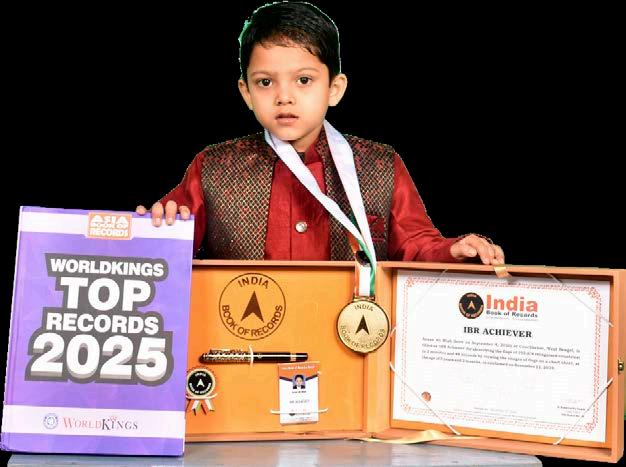
David Liam Anup (born on January 6, 2024) of Palakkad, Kerala, is titled as ‘IBR Achiever’ for solving a 5-shape sorting and stacking puzzle, consisting of 25 pieces, in 2 minutes and 29 seconds, at the age of 1 year and 10 months,
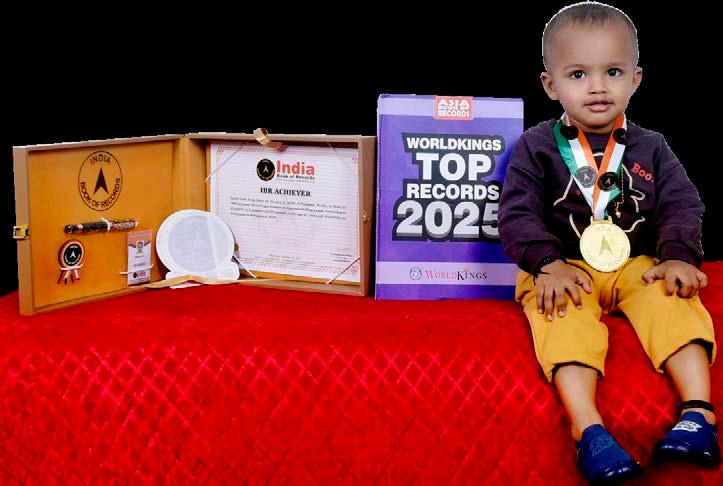
Taniya Prasanth P. M. (born on June 6, 2022) of Kozhikode, Kerala, is titled as ‘IBR Achiever’ for reciting the names of 44 rivers and 14 districts of Kerala, 28 Indian states, 8 planets, 8 Arab countries, months in a year, days of the week, 7 colours of the rainbow and 7 continents; singing the National Anthem; recalling 20 national symbols; and identifying 15 parts of the body, at the age of 3 years and 5 months, as confirmed on November 7, 2025.
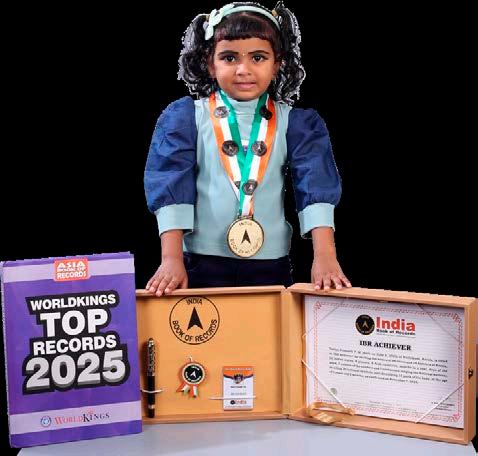
Chhavi S. Gowda (born on November 30, 2023) of Bengaluru, Karnataka, is titled as ‘IBR Achiever’ for identifying 38 fruits, 32 vegetables, 35 vehicles, 28 actions, 16 colours, 16 sea animals, 30 other animals, 18 flowers, 14 birds, 12 insects, 21 shapes, 59 miscellaneous items and 16 parts of the body, at the age of 1 year and 11 months, as confirmed on
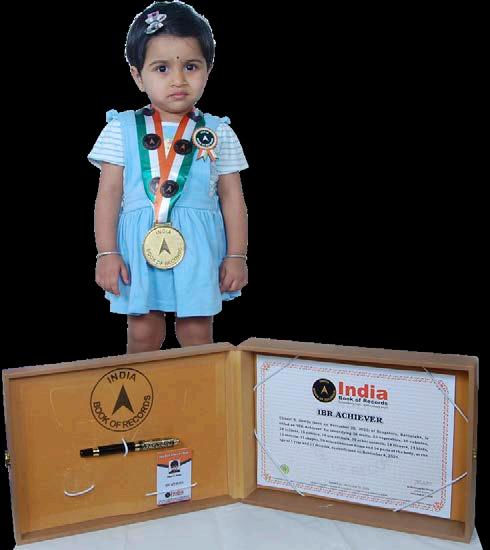
Amayra Amir Shaikh (born on September 16, 2021) of Solapur, Maharashtra, is titled as ‘IBR Achiever’ for translating the names of 17 fruits and 14 animals from Hindi to English; reciting 2 English nursery rhymes, days of the week and months in a year; singing the National Anthem; identifying and naming 16 parts of the body, 9 colours and flags of 12 countries, at the age of 4 years and 1 month, as confirmed on
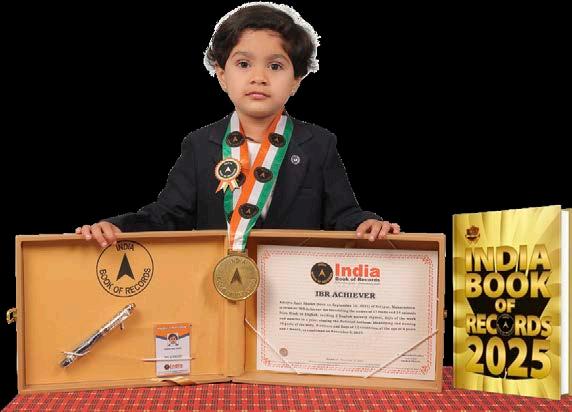
Avyukth Ram Patnala (born on June 20, 2022) of Krishna, Andhra Pradesh, is titled as ‘IBR Achiever’ for solving a world map puzzle (consisting of 105 labelled pieces) in 31 minutes and 7 seconds, at the age of 3 years and 4
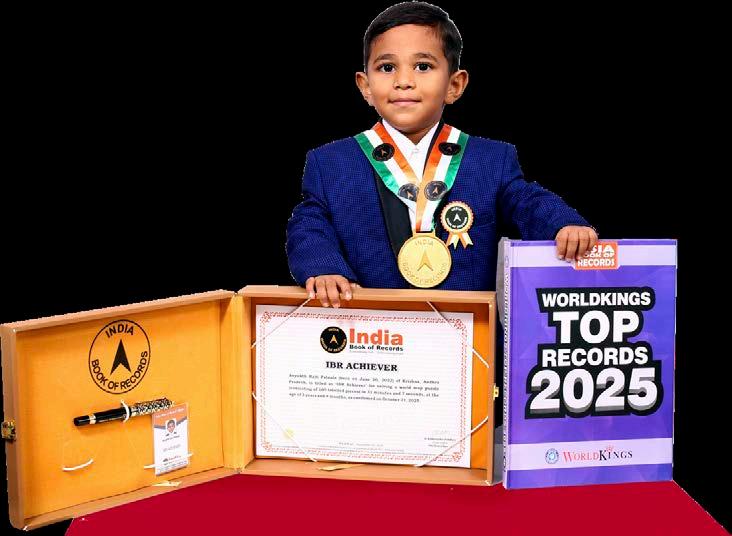
Samriddha Pal (born on February 5, 2024) of Murshidabad, West Bengal, is titled as ‘IBR Achiever’ for translating the names of 7 insects, 15 birds, 15 vegetables, 16 animals and 18 fruits from English to Bengali; identifying 12 parts of the body, 10 miscellaneous items and 19 vehicles; mimicking the sounds of 11 animals, at the age of 1 year and 8 months, as confirmed on
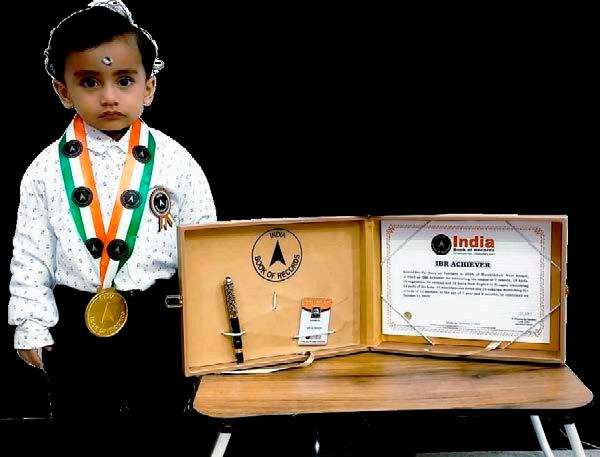
Swarupkumar Pramod Talawdekar (born on May 5, 1994) of Thane, Maharashtra, is titled as ‘IBR Achiever’ for performing 108 Surya Namaskars for 108 consecutive days, as confirmed on November 19, 2025.
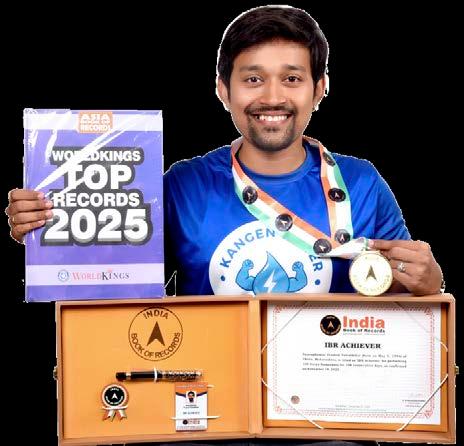
Harini S. (born on June 18, 2015) of Bengaluru, Karnataka, is titled as ‘IBR Achiever’ for having been invited to participate in the 38th Conference on Neural Information Processing Systems (NeurIPS Conference 2024) at Vancouver (Canada) on December 10, 2024. She rendered 2 presentations based on the following topics, namely ‘The Tale of Punyakoti: An AI-Enhanced Audio Experience’ and ‘Responsible Rhymes: Bias Stereotypes’, at months, as confirmed on October 15, 2025.
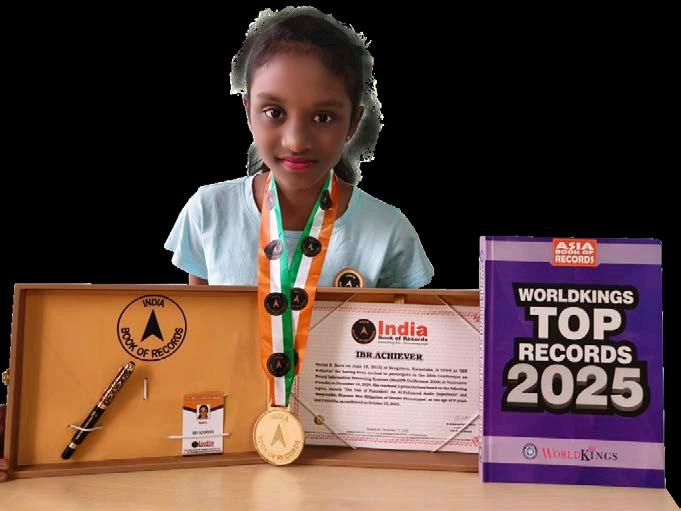
Sindhu Vattakkunnel (born on December 20, 1974) of Wayanad, Kerala, is titled as ‘IBR Achiever’ for writing the mirror image of the National Anthem in three languages, namely Malayalam, English and Hindi in 6 minutes and 46 seconds, using pen and paper, as confirmed on November 13, 2025.
Viyara Zora V. V. (born on May 5, 2024) of Madurai, Tamil Nadu, is titled as ‘IBR Achiever’ for identifying and naming 14 fruits, 6 vegetables, 26 animals, 5 professions, 8 parts of the body, 9 food items, 9 household items and 8 miscellaneous items; performing 15 actions; and imitating the sounds of 8 animals, at the age of 1 year and 6 months, as confirmed on November 10, 2025.
Erish Larin P. (born on March 20, 2024) of Malappuram, Kerala, is titled as ‘IBR Achiever’ for identifying and naming 10 fruits, 10 vegetables, 25 animals, 8 shapes, 21 parts of the body and flags of 24 countries; reciting all the letters of the English alphabet with associated words; performing 8 actions; and counting from 1 to 10, at the age of 1 year and 7 months, as confirmed on November 7, 2025.
Kevin Kedar (born on February 21, 2024) of Kozhikode, Kerala, is titled as ‘IBR Achiever’ for identifying 22 fruits, 32 animals, flags of 14 countries, 20 vegetables, 11 Nnational heroes, 14 flowers, 10 parts of the body, and 20 birds by viewing their pictures on the sheets of paper, at the age of 1 year and 8 months, as confirmed on November 13, 2025.
Nyra Gujar (born on September 1, 2022) of Pune, Maharashtra, is titled as ‘IBR Achiever’ for solving and matching 20 puzzles on a tablet in 25 minutes, at the age of 3 years and 2 months, as confirmed on November 3, 2025.
Daksh S. (born on April 27, 2023) of Palakkad, Kerala, is titled as ‘IBR Achiever’ for identifying and naming 10 colours, 10 wild animals, 10 farm animals, 10 fruits, 10 vehicles, 10 parts of the body, 10 professionals, 10 vegetables, 5 shapes and 16 food items; reciting an English nursery rhyme; counting from 1 to 10; recalling 26 letters of the English alphabet and days of the week, at the age of 2 years and 6 months, as confirmed on November 10, 2025.
M. Sowmika (born on June 18, 2020) of Tiruvannamalai, Tamil Nadu, is titled as ‘IBR Achiever’ for identifying and naming 24 fruits, 15 domestic animals, 24 wild animals and 25 vegetables; reciting 16 national symbols; and answering 21 G.K. questions, at the age of 5 years and 4 months, as confirmed on November 3, 2025.
S. P. Rishika (born on May 4, 2023) of Salem, Tamil Nadu, is titled as ‘IBR Achiever’ for identifying and naming 9 vegetables, 12 shapes, 19 fruits, 10 colours, 15 animals and 19 vehicles; answering 5 G.K questions; counting from 1 to 10; reciting 5 English nursery rhymes and 26 letters of the English alphabet with associated words, at the age of 2 years and 5 months, as confirmed on October 24, 2025.
P A Vishwak (born on June 15, 2017) of Kancheepuram, Tamil Nadu, is titled as ‘IBR Achiever’ for identifying and recalling the names of 136 logos of multiple brands in 2 minutes and 44 seconds by viewing the images of logos on a laptop screen, at the age of 8 years and 4 months, as November 7, 2025.
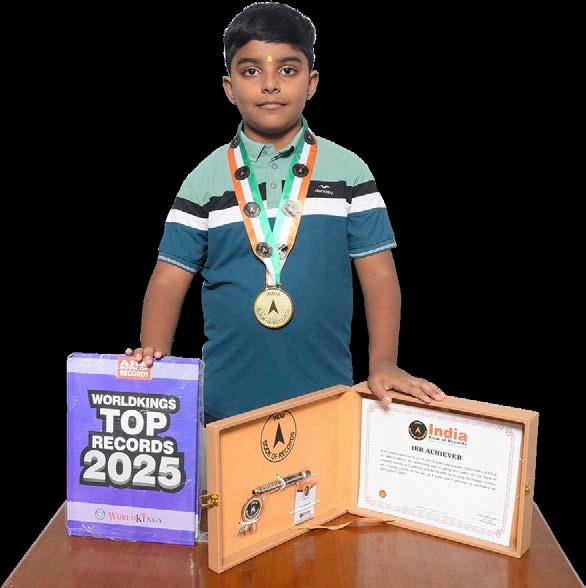
Daryl Traikash A. (born on December 6, 2020) of Thanjavur, Tamil Nadu, is titled as ‘IBR Achiever’ for covering a distance of 8.14 km on inline skates, on a road, in 33 minutes and 41 seconds, at the age of 4 years and 11 months, as confirmed on November 11, 2025.
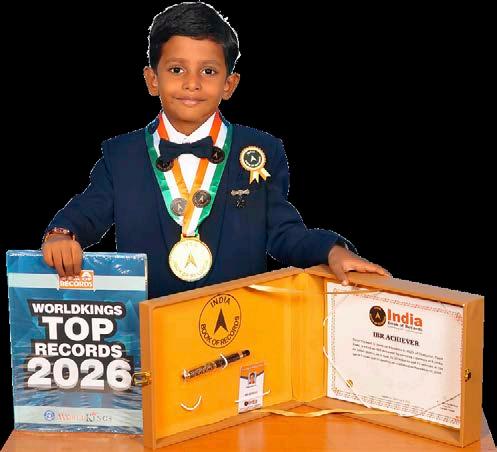
Prajwal M. (born on October 12, 1996) of Dakshina Kannada, Karnataka, is titled as ‘IBR Achiever’ for making a beeswax chessboard (measuring 20 cm x 26 cm), along with beeswax chess pawns, using natural two colour beeswax. It was displayed in the beekeeping section at the state-level ‘Agriculture Fair’ held at G.K.V.K., Bengaluru, from November 13, 2025 to November 16, 2025, as confirmed on November 19, 2025.
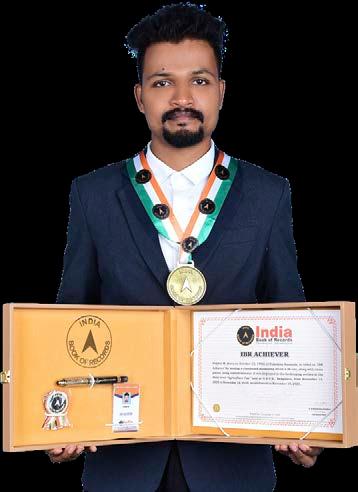
Aniruddha Khedekar (born on July 9, 1997) of Raigad, Maharashtra, is titled as ‘IBR Achiever’ for making a hyperrealistic rangoli portrait (measuring 4 feet × 3 feet) of a child standing with a sieve on his head, showcasing an intricate pattern of light and shadow on the child’s body, using rangoli colours. This exceptional rangoli artwork was made at the ‘Annual Rangoli Art Exhibition’ (organised on the occasion of Shri Kalbhairav Jayanti), held from November 12, 2025 to November 15, 2025, at Revdanda, Raigad, as confirmed on November 22, 2025.
Yaachan Paul D. (born on December 19, 2021) of Bengaluru, Karnataka, is titled as ‘IBR Achiever’ for riding a bicycle, without supporting wheels, for a distance of 1.45 km on a busy road in 7 minutes and 59 seconds, at the age of 3 years and 11 months, as confirmed on November 19, 2025.
Yahvi Jain (born on October 20, 2020) of Ludhiana, Punjab, is titled as ‘IBR Achiever’ for holding herself in the seated wide leg split pose for 42 minutes and 16 seconds, at the age of 5 years, as confirmed on November 3, 2025.
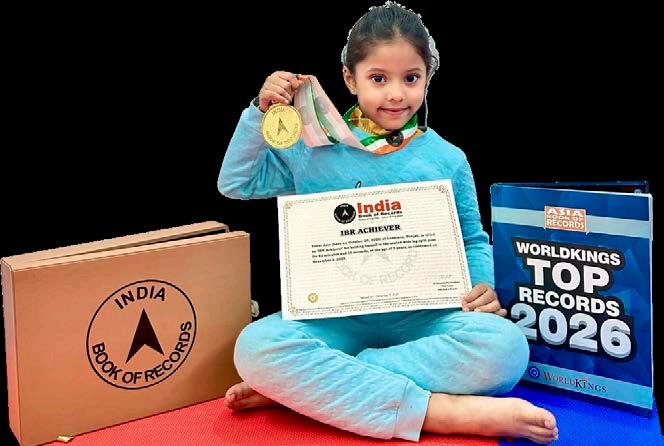
Eva Bansal (born on September 15, 2022) of Sambalpur, Odisha, is titled as ‘IBR Achiever’ for reciting 4 mantras, 5 English nursery rhymes, 5 sense organs and days of the week; recalling 9 national symbols and 10 English antonyms; counting from 1 to 20; recalling phonic sounds of letters of the English alphabet; identifying 23 vegetables, 14 vehicles and 10 shapes; and singing the National Anthem, at the age of 3 years and 1 month, as confirmed on
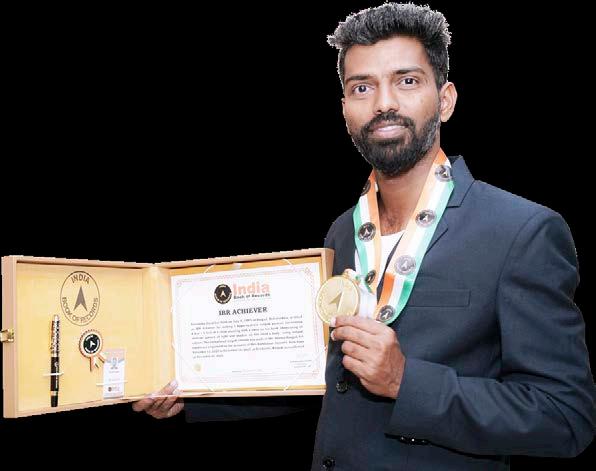
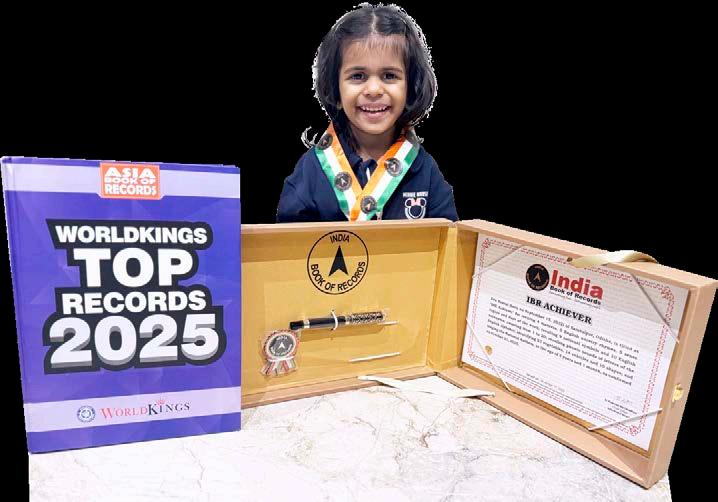
Raahi Amit Singh (born on April 16, 2014) of Bengaluru, Karnataka, is titled as ‘IBR Achiever’ for reciting all the 47 shlokas of chapter 6 of the Bhagavad Gita in 8 minutes and 30 seconds and all the 72 shlokas of chapter 2 of the Bhagavad Gita in 15 minutes and 10 seconds, at the age of 11 years and 7 months, as confirmed on November 24, 2025.
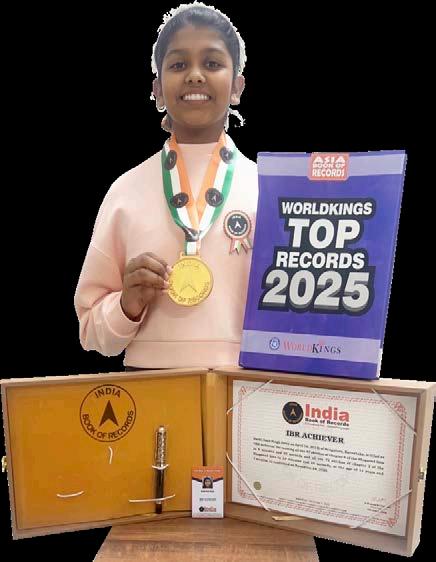
Ehan Sameer (born on December 6, 2022) of Pathanamthitta, Kerala, is titled as ‘IBR Achiever’ for identifying and naming 10 fruits, 10 birds, 10 vegetables, 24 vehicles and 35 animals; counting from 1 to 35; recalling 6 national symbols, 8 planets and 5 sense organs; counting from 1 to 10 in Hindi; mimicking the sounds of 8 animals; and completing a puzzle of 26 letters of the English alphabet, at the age of 2 years and 11 months, as confirmed on November 10, 2025.
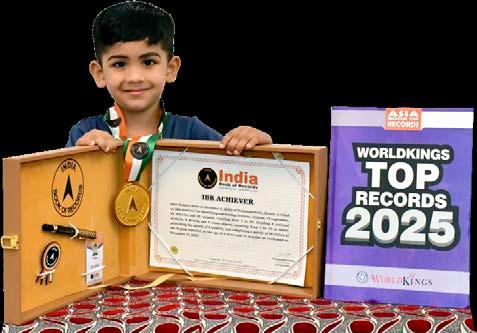
Hoysala Sri Sai (born on June 4, 2022) of Davangere, Karnataka, is titled as ‘IBR Achiever’ for identifying 10 monuments, 23 creatures and 28 animals; reciting letters of the English alphabet, 6 Indian Army awards, 8 Kannada Jnanpith awardees, 10 avtars of Lord Vishnu, 6 religions, months in a year, days of the week, 6 mantras, multiplication table of 2, 3 Kannada and 6 English nursery rhymes; 1 to 10 with number names; and recalling the young ones of 10 animals, years and 5 months, as November 11, 2025.
Paarthiv Harish (born on June 16, 2022) of Hyderabad, Telangana, is titled as ‘IBR Achiever’ for typing the letters of the English alphabet from A to Z (in upper case without space) on a laptop in 23. 92 seconds, using the right index finger, at the age of 3 years and 4 months, as confirmed on November 1, 2025.
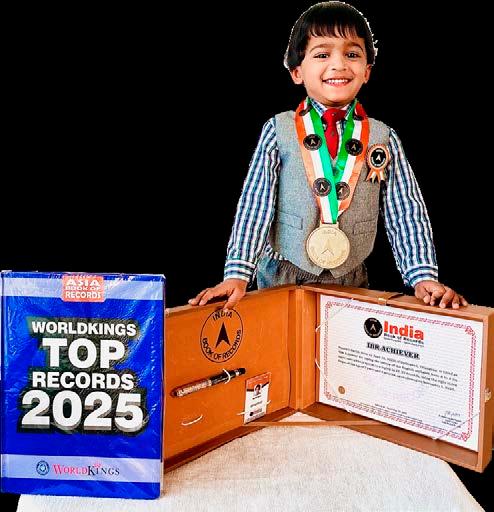
Aman Mondal (born on September 11, 2023) of North 24 Parganas, West Bengal, is titled as ‘IBR Achiever’ for identifying and naming 5 fruits, 4 vegetables and 14 parts of the body; and answering 3 G.K. questions, at the age of 2 years and 1 month, as confirmed on November 4, 2025.
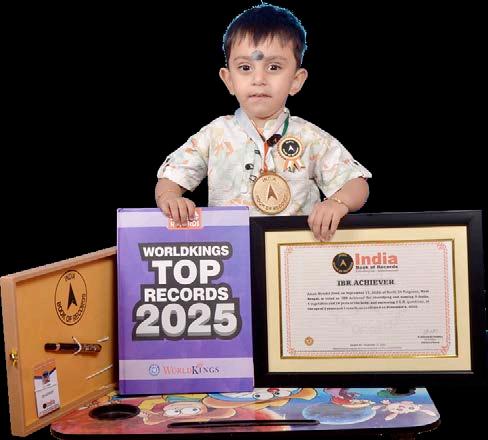
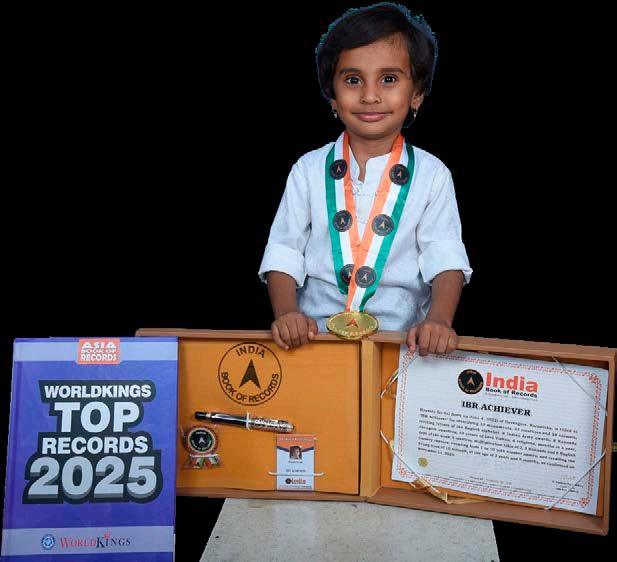
Derrick David Bitto (born on August 1, 2019) of Kottayam, Kerala, is titled as ‘IBR Achiever’ for identifying and recalling the names of 70 countries by viewing the pictures of flags on a laptop screen and 40 car brands by viewing the logos on a laptop screen; recalling the names 15 Indian national symbols; and answering 11 questions on the solar system, at the age of 6 years and 3 months, as confirmed on November 18, 2025.
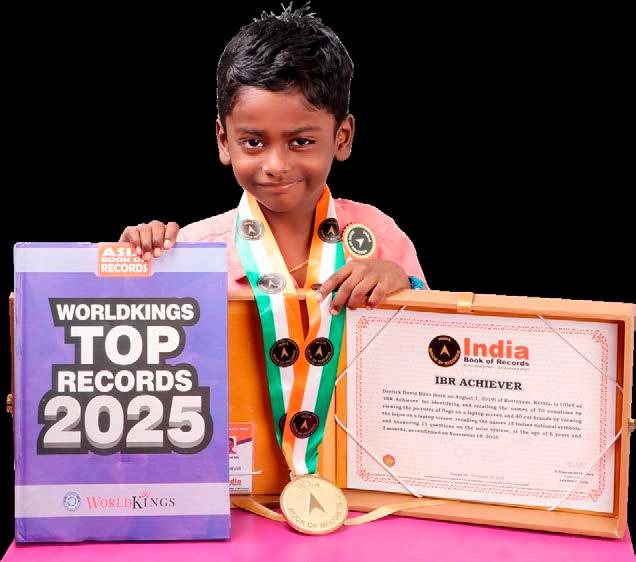
Dr. Jalam Singh (born on May 26, 1978) of Jaisalmer, Rajasthan, is titled as ‘IBR Achiever’ for authoring 289 pages of a book, in Hindi, titled ‘Police Prashasan Evam Prabandhan’ (ISBN: 979-88-87330-07-5), explaining the internal mechanism of the police administration and management, published by Notion Press in August 2022, as confirmed on November 6, 2025.
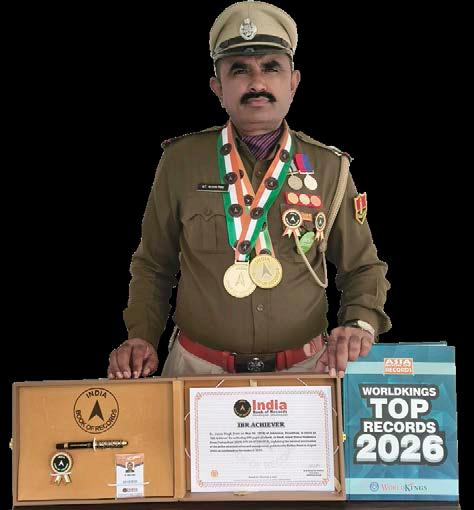
Edith K.Gowda (born on October 13, 2022) of Mandya, Karnataka, is titled as ‘IBR Achiever’ for identifying and naming 13 colours, 21 fruits, 21 parts of the body, 28 vehicles and 75 creatures; writing letters of the English alphabet and numbers from 1 to 10; reciting 7 English nursery rhymes and 5 shlokas; recalling the names of 28 Indian states, English alphabetical words, 16 national symbols and 15
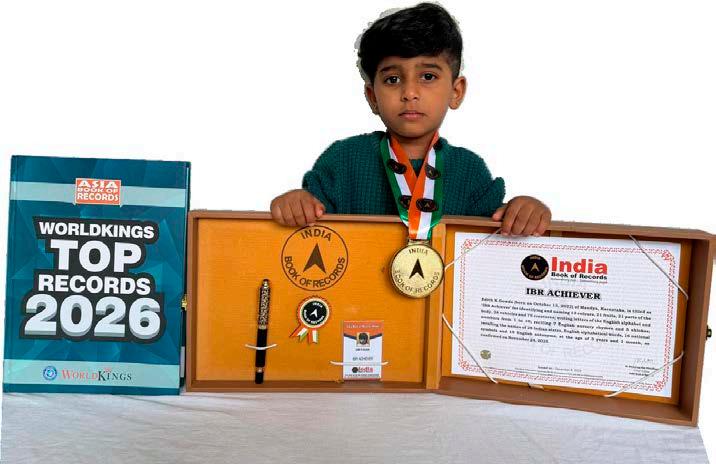
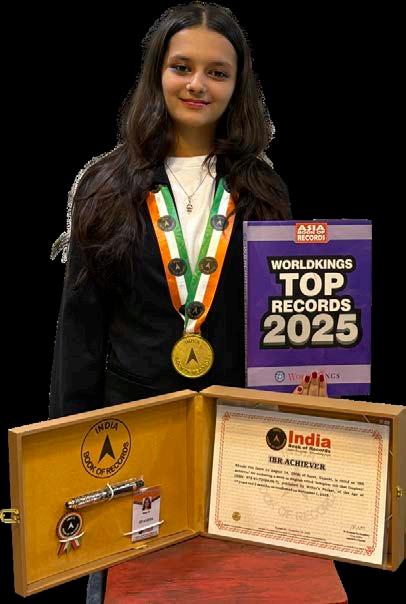
Khushi Oza (born on August 14, 2008) of Surat, Gujarat, is titled as ‘IBR Achiever’ for authoring a book in English titled ‘Inkspire- Ink that Inspires’ (ISBN: 978-93-7248806-7), published by Writer’s Pocket, at the age of 17 years and 2 months, as confirmed on November 1, 2025.
Fatima Zahra (born on June 3, 2022) of Kasaragod, Kerala, is titled as ‘IBR Achiever’ for identifying and recalling the names of 20 animals, 15 fruits, 11 colours, 12 parts of the body and 6 vegetables; reciting letters of the English alphabet; recalling 8 national symbols; and counting from 1 to 10, at the age of 3 years and 5 November 21, 2025.
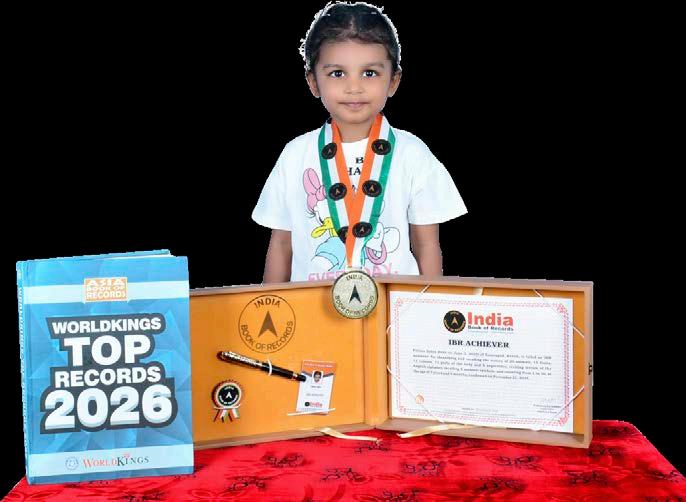
Kounish Srivathsava Vutukuri (born on April 15, 2023) of Guntur, Andhra Pradesh, is titled as ‘IBR Achiever’ for reciting 15 Sanskrit shlokas, 4 Telugu nursery rhymes, 15 elements of the periodic table and letters of the Telugu alphabet, at the age of 2 years and 6 months, as confirmed on November 12, 2025.
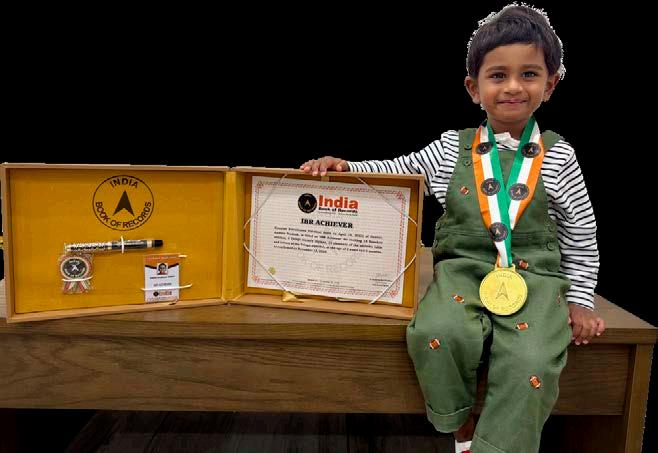
Karmanbir Singh (born on March 22, 2019) of Amritsar, Punjab, is titled as ‘IBR Achiever’ for identifying the flags and recalling the names of 195 (UN recognised) countries in 3 minutes and 35 seconds by viewing the pictures of flags on chart sheets, at the age of 6 years and 7 months, as confirmed on November 19, 2025.
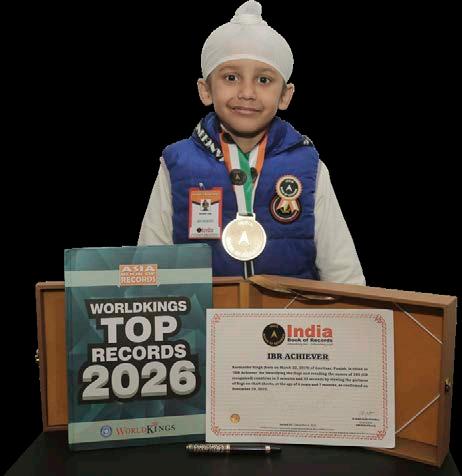
Aryan Das (born on December 29, 2023) of Karimganj, Assam, is titled as ‘IBR Achiever’ for identifying and naming 7 fruits, 12 vegetables and 7 animals; counting from 1 to 10; recalling letters of the English alphabet from A to G, days of the week and months in a year, at the age of 1 year and 10 months, as confirmed on November 13, 2025.
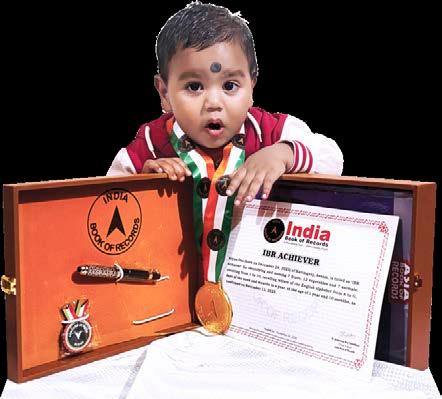
Utpal R. Raja (born on December 19, 2010) of Bengaluru, Karnataka, is titled as ‘IBR Achiever’ for reciting the complete Hanuman Chalisa in one minute, at the age of 14 years and 11 months, as confirmed on November 20, 2025.
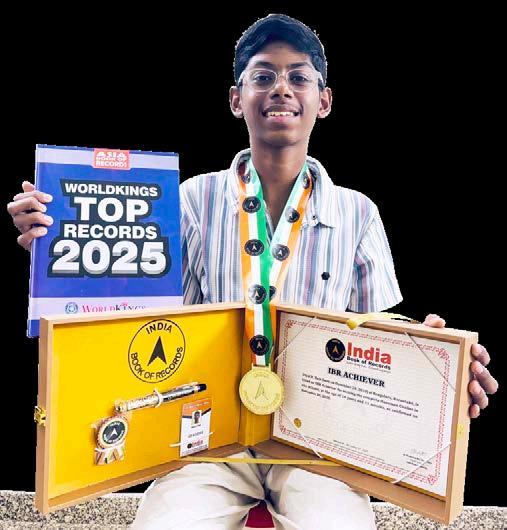
Aayaz Ozil (born on May 10, 2024) of Nagaon, Assam, is titled as ‘IBR Achiever’ for identifying and recalling the names of 27 vehicles, 24 animals, 24 landmarks, 23 household items, 20 food items, 15 shapes, 14 vegetables, 10 professions, 7 flowers, letters of the English alphabet and flags of 45 countries; recalling days of the week, months in a year, 4 seasons,14 national symbols, 8 planets and 26 alphabetical words; answering 25 G.K. questions; and counting from 1 to 50, at the age of 1 year and 6 months, as confirmed on November 19, 2025.
Alavala Nihira Sahasra (born on January 25, 2022) of Rajahmundry, Andhra Pradesh, is titled as ‘IBR Achiever’ for reciting all the 9 divine verses of the Kalabhairava Ashtakam in 2 minutes and 20 seconds, at the age of 3 years and 9 months, as confirmed on November 8, 2025.
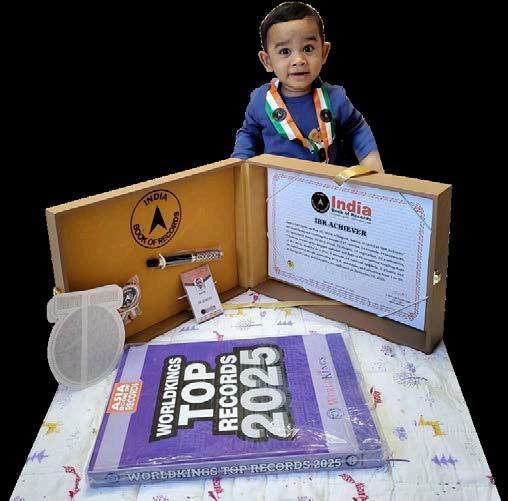
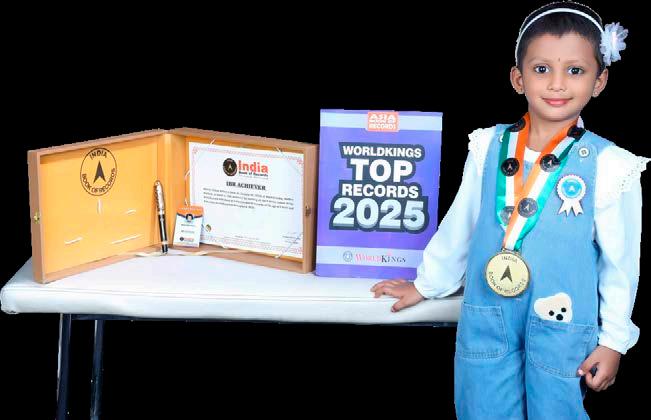
Aniket Barah (born on April 1, 2024) of Angul, Odisha, is titled as ‘IBR Achiever’ for identifying 10 parts of the body, 12 fruits, 11 vegetables, 14 vehicles, 7 birds, 4 flowers, 4 miscellaneous items, 4 deities, 5 animals and 5 actions; recalling 26 alphabetical words; and answering 5 G.K. questions, at the age of 1 year and 7 months, as confirmed on November 18, 2025.
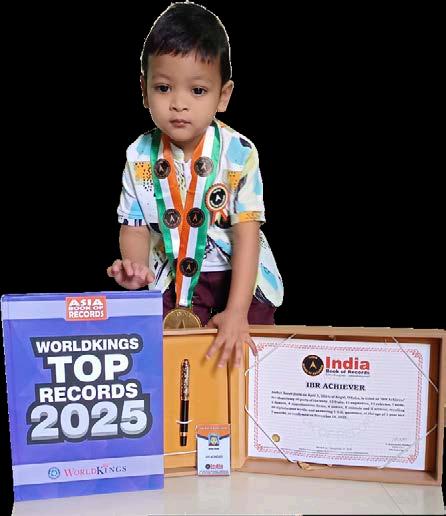
Gauri (born on February 24, 2012) of Bengaluru, Karnataka, is titled as ‘IBR Achiever’ for authoring 7 self-published illustrated books of Bhagavad Gita, based on chapters 1 to 7, along with 3 books in English, titled ‘Relish of Prashnaupanishad’, ‘Nobility of Katha Upanishad’ and ‘Honour of Taittiriya Upanishad’, published by BriBooks, at the age of 13 years and 8 months, as confirmed on November 18, 2025.
Satya Prakash Rout (born on January 18, 2015) of Kendrapara, Odisha, is titled as ‘IBR Achiever’ for recalling the names of 30 Odia districts, 26 countries, 26 parts of the body, 26 deities, 7 continents, 15 national symbols, 28 Indian states with capitals and 20 Indian ministers, at the age of 10 years and 9
Dharshik Manoj (born on December 5, 2019) of Ernakulum, Kerala, is titled as ‘IBR Achiever’ for identifying the flags and recalling the names of 195 (UN recognised) countries in 5 minutes and 40 seconds by viewing the images the age of 5 confirmed on
Ishaan Kundu (born on December 2, 2022) of Bankura, West Bengal, is titled as ‘IBR Achiever’ for identifying 27 parts of the body, 12 colours, 12 shapes, 12 types of balls, 20 flowers, 25 birds, 60 animals, 27 creatures, 34 vehicles, 26 vegetables and 33 fruits; counting from 1 to 100; recalling 30 elements of the periodic table, 26 alphabetical words, 7 continents, capitals of 28 Indian states and 8 union territories, at months, as confirmed on
S. Yazhini (born on April 8, 2024) of Chennai, Tamil Nadu, is titled as ‘IBR Achiever’ for lifting a 2.5 kg dumbbell with both hands for 10 seconds, at the age of 1 year and 7
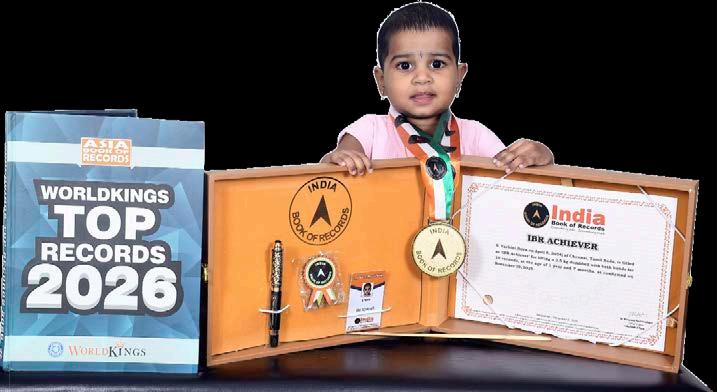
Rishan Hossain (born on May 26, 2023) of Murshidabad, West Bengal, is titled as ‘IBR Achiever’ for identifying and recalling the names of 14 fruits, 7 vegetables, 14 animals, 8 birds, 6 flowers, 10 colours, 5 shapes, 15 vehicles and 6 parts of the body; reciting months in a year, days of the week and 14 nursery rhymes (in Bengali and English); recalling 6 Indian national symbols; counting from 1 to 30 in English and 1 to 20 in Bengali, at the age of 2 years and 5 months, confirmed on November 22, 2025.
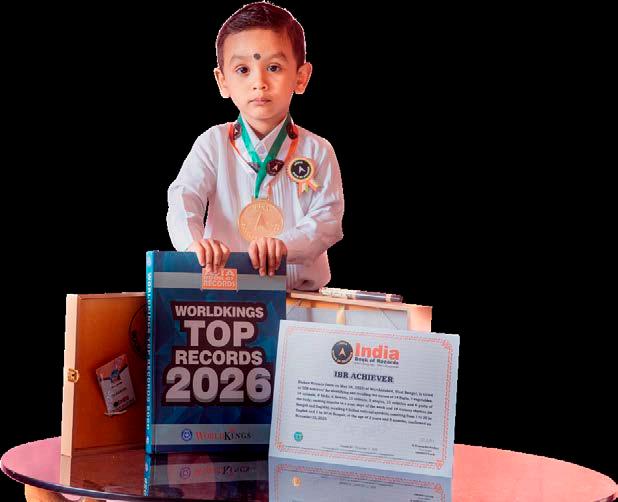
Olety Venkata Karthikeya Aryansh (born on April 4, 2022) of East Godavari, Andhra Pradesh, is titled as ‘IBR Achiever’ for identifying and recalling the names of 107 multi-brand logos in 4 minutes and 2 seconds while viewing the images of logos on a mobile phone screen, at the age of 3 years and 7 months, as confirmed on November 17, 2025.
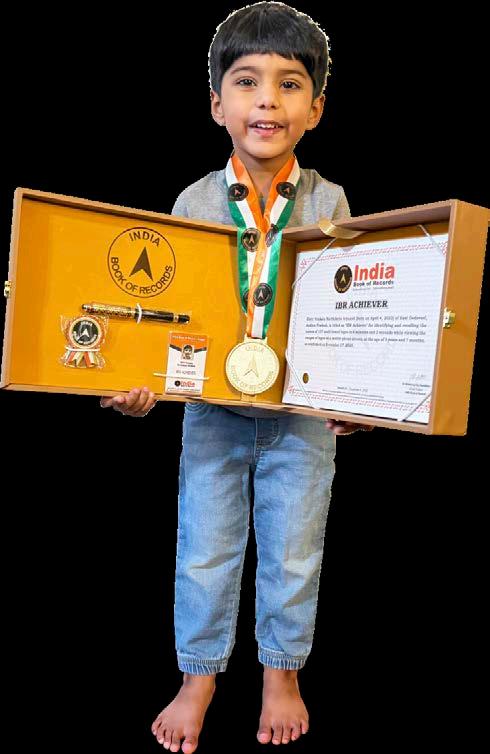
Rayansh P. (born on May 20, 2023) of Kozhikode, Kerala, is titled as ‘IBR Achiever’ for identifying 62 airlines, 45 car logos, flags of 56 countries, 16 flowers, 16 birds, 12 colours, 15 vehicles, 17 animals, 16 fruits and 22 electronic items, at the age of 2 years and 5 months, as confirmed on November 7, 2025.
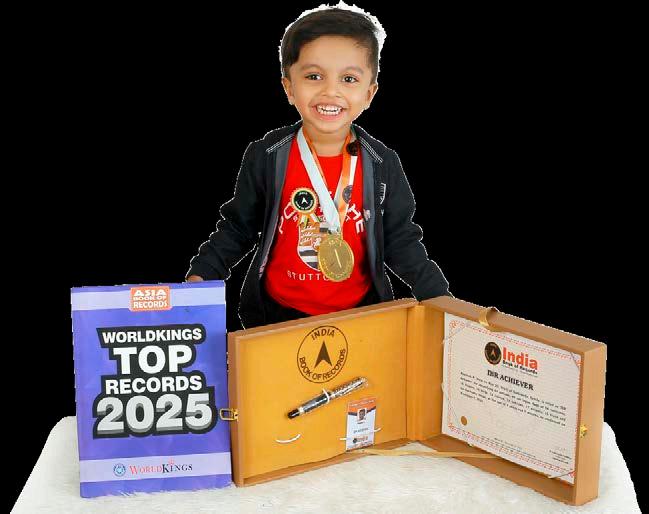
Tasmay H. (born on May 10, 2017) of Bellary, Karnataka, is titled as ‘IBR Achiever’ for naming 44 physical features of India on a map of India; singing the National Anthem; identifying the images and naming 15 deities; reciting 28 names of Goddess Radha; recalling the names of national animals and birds of 35 countries, at the age of 8 years and 6 months, as confirmed on November 21, 2025.
Yashanth S. Kotian (born on November 24, 2005) of Udupi, Karnataka, is titled as ‘IBR Achiever’ for making an image of Lord Krishna, measuring 48 cm x 24 cm, on a board, using stapler pins, at the age of 19 years and 11 months, as confirmed on November 20, 2025.
Shiva Kumari (born on February 25, 2010) of Bengaluru, Karnataka, is titled as ‘IBR Achiever’ for achieving a certificate (certificate number: PO10045075) from ‘The Yoga Certification Board’ for being certified as a ‘Yoga Protocol Instructor’ from April 8, 2023 to April 7, 2028 (evaluated by Indian Yoga Association), at the age of 15 years and 8 months, as confirmed on November 18, 2025.
G. P. Keshan (born on January 24, 2024) of Bengaluru, Karnataka, is titled as ‘IBR Achiever’ for identifying and naming 18 fruits, 20 vegetables, 20 vehicles, 20 wild animals and 21 pet animals, at the age of 1 year and 9 months, as confirmed on
Raizy Bella Roy (born on March 17, 2023) of Kollam, Kerala, is titled as ‘IBR Achiever’ for identifying and recalling the names of 42 miscellaneous items, 24 animals, 16 fruits, 27 parts of the body and 10 colours; making 4 building blocks; reciting week and 26 letters of alphabet, at the age of 2 months, confirmed on November 21, 2025.
Yunukshan M. (born on May 11, 2020) of Namakkal, Tamil Nadu, is titled as ‘IBR Achiever’ for identifying and naming 40 vehicles, flags of 70 countries, 30 fruits, 7 wonders of the world and 40 animals, along with mimicking their sounds, at the age of 5 years and 6 months, as confirmed on November 29, 2025.
Yuvaan Vij (born on May 22, 2019) of New Delhi, is titled as ‘IBR Achiever’ for performing 3,000 anticlockwise hula hoop spins around the waist in 30 minutes, using an LED hula hoop, at the age of 6 years and 6 months, as confirmed on December 5, 2025.
Sriansh Sastri (born on September 30, 2023) of North Tripura, Tripura, is titled as ‘IBR Achiever’ for identifying 6 shapes, 8 birds, 37 animals, 8 insects, 12 colours, 10 vegetables, 10 professions, 16 freedom fighters, 18 parts of the body and flags of 11 countries; reciting days of the week; recalling all the letters of the English alphabet with associated words, 5 finger names and capitals of 11 Indian states; performing 8 actions; matching 5 letters, 5 shapes and 5 miscellaneous pictures, at the age of 2 years and 1 month, as confirmed on November 19, 2025.
Joysmin Panigrahi (born on June 8, 2009) of Bhadrak, Odisha, is titled as ‘IBR Achiever’ for sketching 17 pictures of human figures and deities on separate A4 size sheets of paper; receiving 4 certificates for participating in art competitions and for completing online courses, at the age of 16 years and 5 months, as confirmed on November 29, 2025.
Dhaksha P. (born on December 2, 2023) of Malappuram, Kerala, is titled as ‘IBR Achiever’ for identifying and recalling the names of 22 household items, 16 animals, 27 miscellaneous items, 18 parts of the body, 18 food items, 16 toys, 12 vegetables, 11 vehicles, 10 birds, 10 famous personalities, 10 professions, 9 fruits, 5 insects and 5 medicines; and imitating the sounds of 6 creatures, at the age of 1 year and 11 months, as confirmed on November 29, 2025.
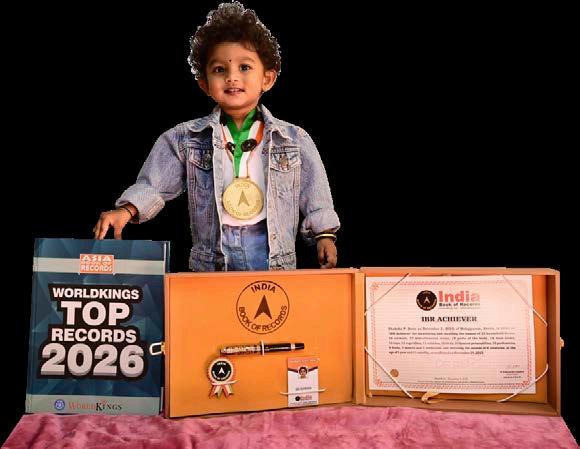
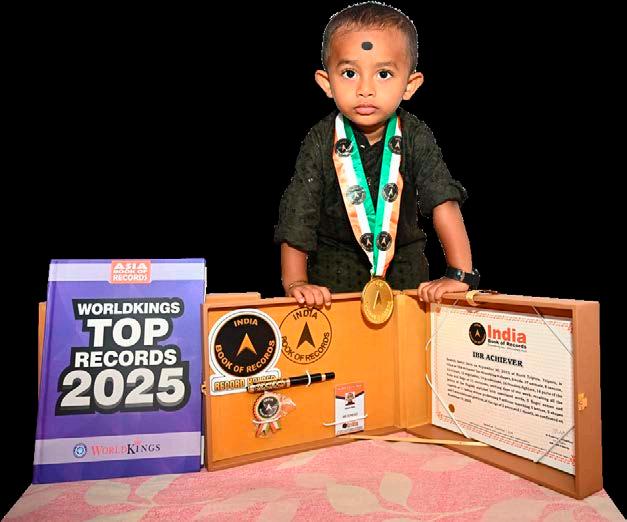
Trivikrama (born on June 30, 2012) of Bengaluru, Karnataka, is titled as ‘IBR Achiever’ for authoring 3 self-published books in English, titled ‘ Ramayana Bala Kanda’, ‘The Greatest Epic Ramayana’ and ‘Vedanta- The Essence of our Life Unleashed’, published by BriBooks, at the age of 13 years and 4 months, as confirmed on November 24, 2025.
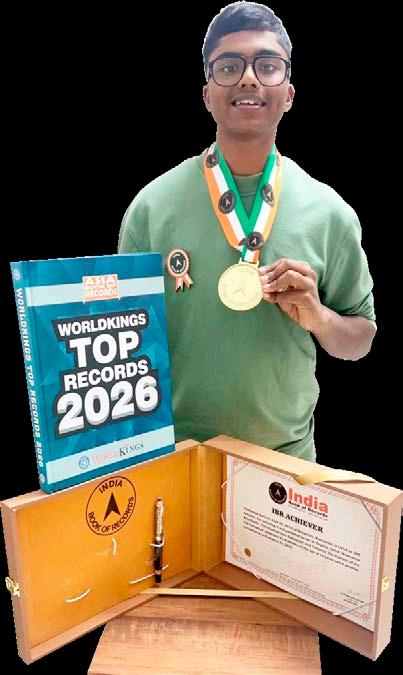
Aradhya R. Naik (born on April 5, 2020) of Jagatsinghapur, Odisha, is titled as ‘IBR Achiever’ for reciting the names of 28 Indian states with their languages and rivers, 15 Indian cities with their nicknames, 18 Indian monuments, 5 oceans, 7 continents, 8 planets and 22 Indian folk dances; recalling 30 English antonyms and 17 national symbols, at the age of 5 years and 7 months, November 17, 2025.
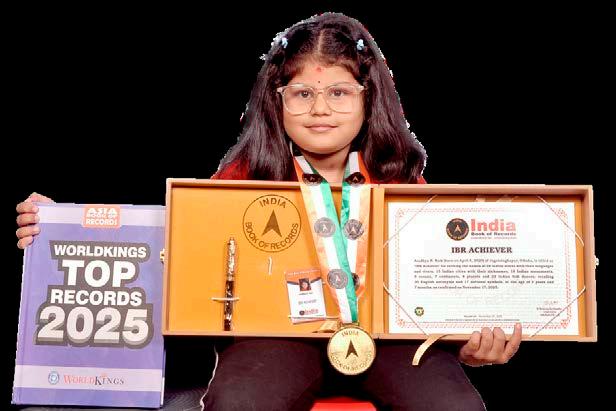
Akankshya Advika Behera (born on April 17, 2023) of Khordha, Odisha, is titled as ‘IBR Achiever’ for identifying and naming 12 shapes, 12 colours, 40 parts of the body, 32 domestic animals, 25 wild animals, 23 birds, 16 insects, 30 fruits, 29 vegetables, 9 monuments and 13 freedom fighters; recalling letters of the English alphabet, 17 national symbols, days of the week, months in a year, 8 planets, 7 continents and 6 seasons, at the age of 2 years and 7 months, as confirmed on November 17, 2025.
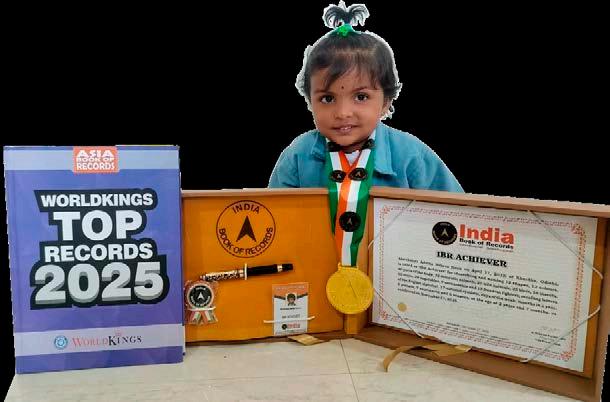
Sofiya S. (born on February 17, 1999) of Thiruvananthapuram, Kerala, is titled as ‘IBR Achiever’ for reciting the names of 12 Disciples, Fruits of the Spirit, Fathers of 12 Tribes and the Ten Commandments in 31 seconds, as confirmed on November 24, 2025.
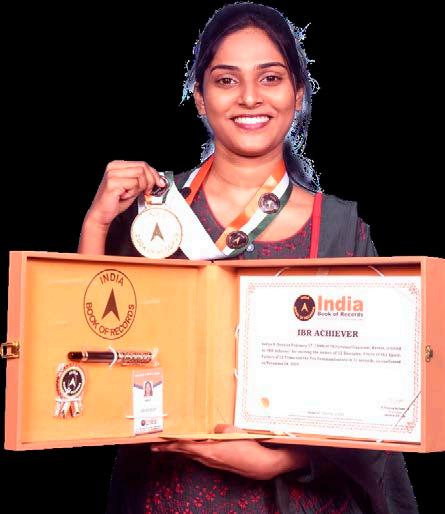
Adeesha Jagadish Patil (born on November 18, 2022) of Kalaburagi, Karnataka, is titled as ‘IBR Achiever’ for identifying and naming 12 community helpers, 12 historical places, 8 Jnanpith awardees, 10 baby animals, 16 famous personalities, 19 animals, 20 birds, 20 fruits and 23 miscellaneous items; counting from 1 to 20; reciting 6 shlokas; recalling 8 planets, 7 national symbols, 12 festivals and 14 opposite words, at the age of 3 years, as confirmed on November 19, 2025.
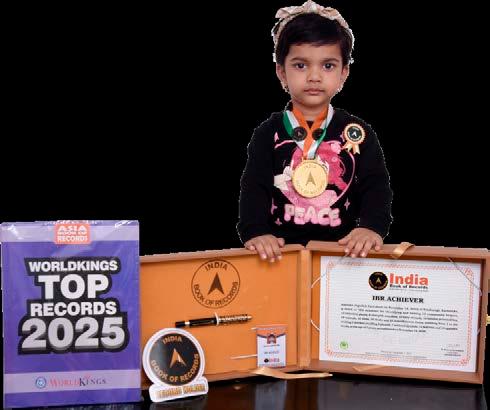
Muhammed Azaan M. P. (born on January 29, 2023) of Malappuram, Kerala, is titled as ‘IBR Achiever’ for identifying 13 colours, 8 national symbols, 16 fruits, 12 vegetables, 15 vehicles, counting from 1 to 10, 15 animals, 12 professionals, 20 parts of the body, 4 seasons, 6 famous personalities, 10 birds, 8 insects and 70 miscellaneous items; reciting 26 of the English alphabet, at the
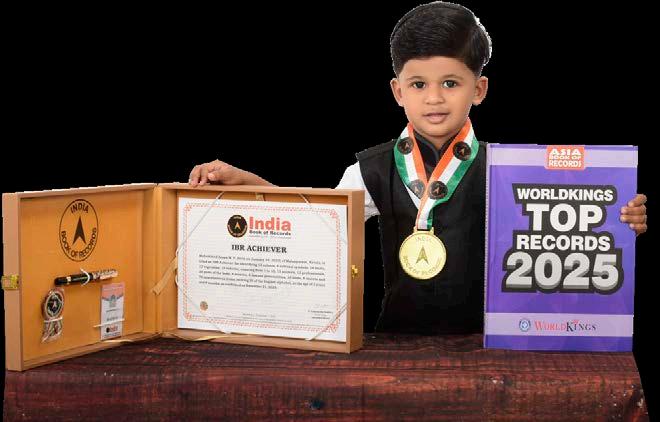
Jouhar Saheel (born on March 19, 2004) of Malappuram, Kerala, is titled as ‘IBR Achiever’ for writing 30 names of Almighty Allah in Arabic calligraphy on separate sheets of paper in 4 minutes and 35 seconds, using a black marker pen, as confirmed on November 13, 2025.
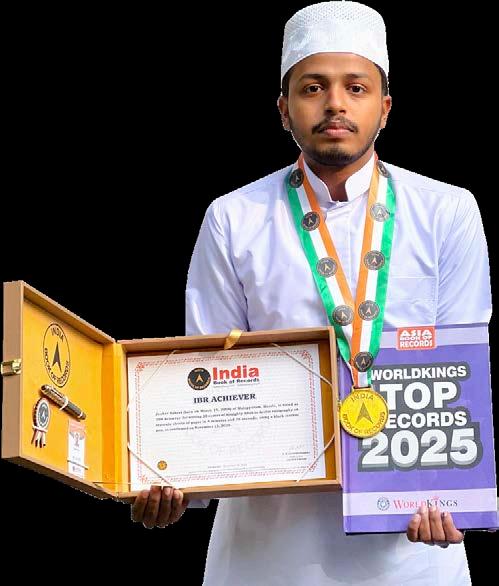
Sanvika Syam (born on November 23, 2021) of Kozhikode, Kerala, is titled as ‘IBR Achiever’ for hanging upside down and swinging on a pull-up bar in the doorway (at a height of 150 cm from the floor) for 14 seconds, at the age of 3 years and 11 months, as confirmed on November 18, 2025.
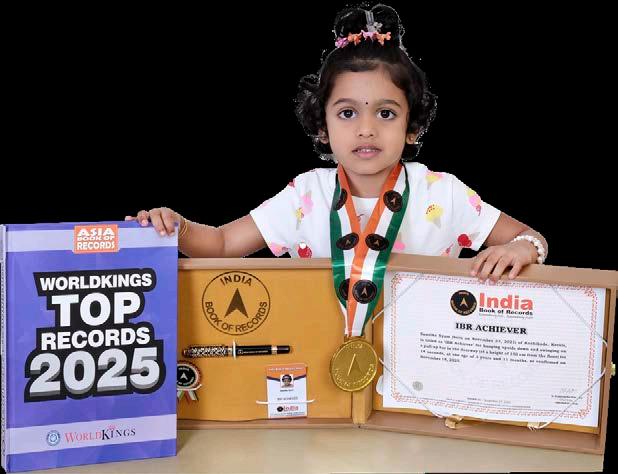
Mehak Muhsin (born on April 27, 2024) of Ernakulam, Kerala, is titled as ‘IBR Achiever’ for identifying 16 animals, 5 vehicles, 6 birds, 4 colours, 12 miscellaneous items, 8 parts of the body and 7 vegetables; and riding a skating scooter, at the
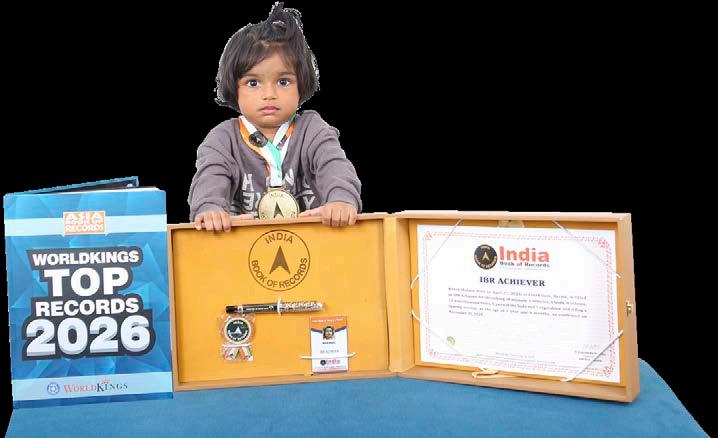
Neelambari Prabha (born on July 22, 2019) of Bengaluru, Karnataka, is titled as ‘IBR Achiever’ for correctly reading a 51-digit number in the International Number System in 39.1 seconds (under the guidance of VMAT teacher), at the age of 6 years and 3 months, as confirmed on
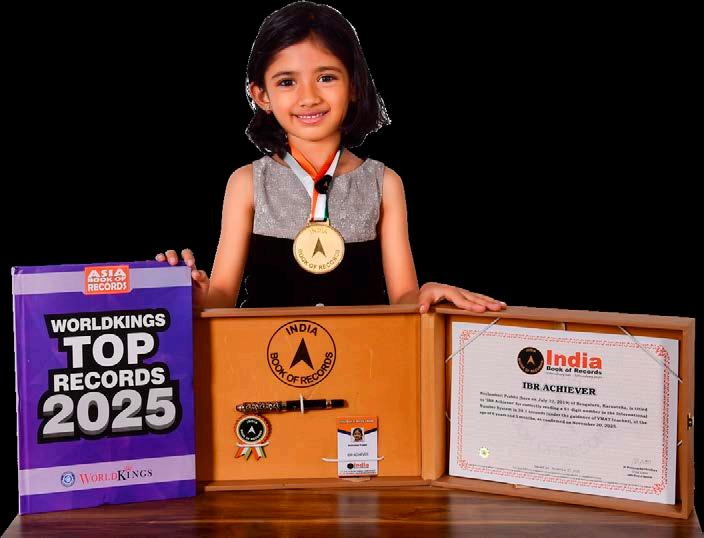
Aarna Mahajan (born on May 13, 2024) of Delhi, is titled as ‘IBR Achiever’ for identifying 32 animals, 12 parts of the body, 6 emotions, 36 food items, 14 relations, 5 shapes, 4 vehicles, 33 actions and 81 miscellaneous items, at the age of 1 year and 6 November 28, 2025.
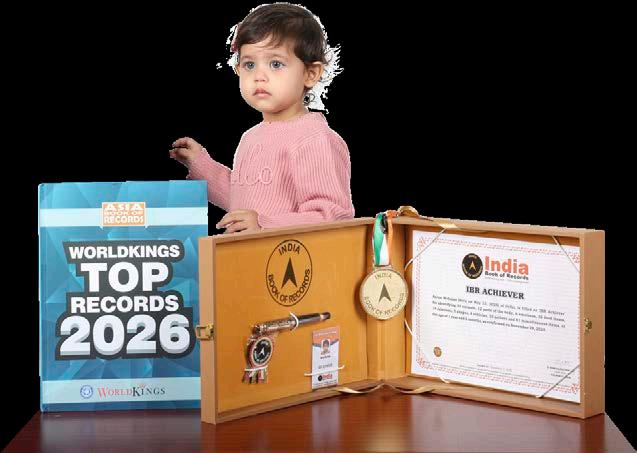
Debadrita Das (born on April 18, 2023) of Kolkata, West Bengal, is titled as ‘IBR Achiever’ for identifying 7 wonders of the world, 8 internal organs of the human body, 9 shapes, 11 vehicles, 11 parts of the body, 12 colours, 14 fruits, 22 vegetables, 20 birds and 38 other creatures; recalling the names of 5 baby animals and 15 national symbols; reciting 6 English and 45 Bengali nursery rhymes; and counting from 1 to 20, at the age of 2 years and 6 months, as confirmed on November 11, 2025.
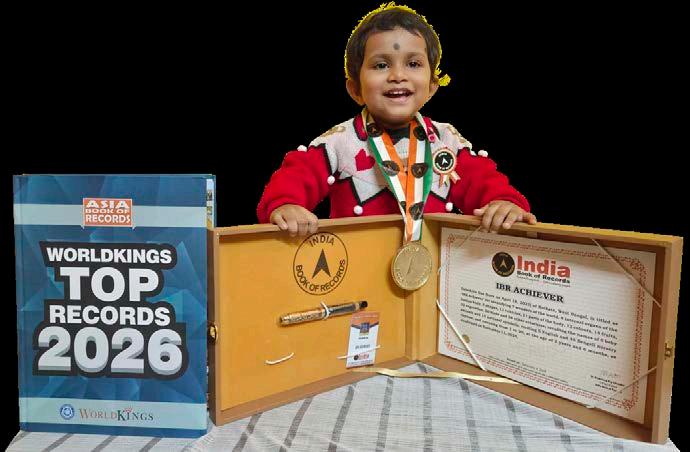
Akhil Aadhvik M. (born on March 2, 2024) of Tiruppur, Tamil Nadu, is titled as ‘IBR Achiever’ for identifying 264 labelled flashcards of animals, birds, vegetables, fruits, sea animals, flowers, vehicles and household items, among others, in 11 minutes and 35 seconds, at the age of 1 year and 9 months, as confirmed on December 5, 2025.
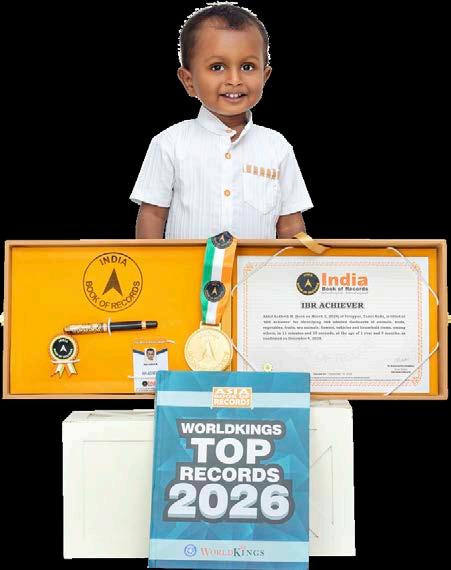
S R Maghizhni (born on November 6, 2023) of Madurai, Tamil Nadu, is titled as ‘IBR Achiever’ for identifying 24 fruits, 24 parts of the body, 24 actions, 24 domestic animals, 24 wild animals, 24 birds, 24 vehicles and 11 colours, at the age of 2 years and 1 month, as confirmed on December 11, 2025.
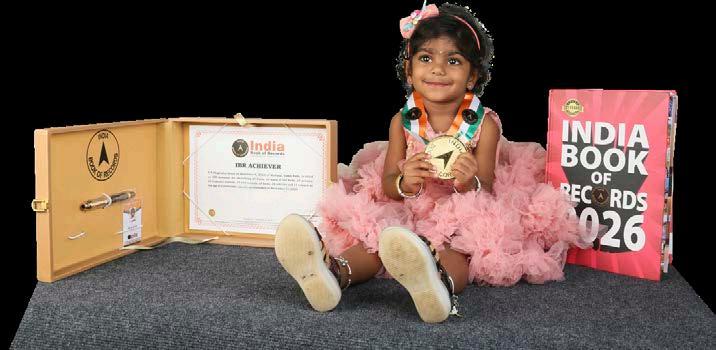
Nyasa Agrawal (born on January 24, 2006) of Sambalpur, Odisha, is titled as ‘IBR Achiever’ for making a Mandala art picture of the deity ‘Shree Khatu Shyam’ on a white sheet of paper (measuring 22 inches x 18 inches), using a pencil, at the age of 19 years and 10 months, as confirmed on December 5, 2025.
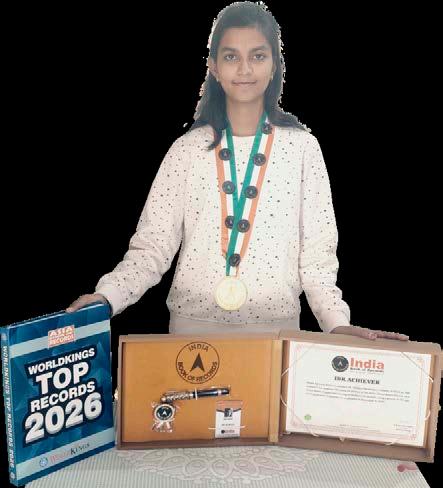
Liyan Anjith (born on February 4, 2024) of Kozhikode, Kerala, is titled as ‘IBR Achiever’ for identifying 10 food items, 12 household items, 11 fruits, 10 wild animals, 6 domestic animals, 8 parts of the body, 6 insects, 8 birds, 3 reptiles, 7 actions, 9 vegetables, 9 vehicles, 9 accessories and 4 famous personalities; answering 2 G.K. questions; performing 7 actions; singing a Malayalam song; and recalling 2 national symbols, at the age of 1 year and 10 months, as confirmed on December 4, 2025.
Nihal Josh (born on January 19, 2022) of Palakkad, Kerala, (now residing in Dubai, UAE), is titled as ‘IBR Achiever’ for identifying and recalling the names of 105 national and international car logos in 1 minute and 15 seconds by viewing the labelled images of logos on a laptop screen, at the age of 3 years and 9 months, as confirmed on November 12, 2025.
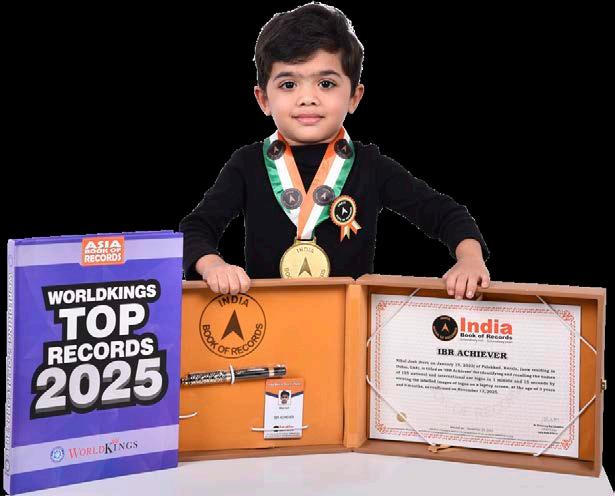
S. Abinesh (born on May 3, 2023) of Chengalpattu, Tamil Nadu, is titled as ‘IBR Achiever’ for reciting 21 Aathichudi quotes (written by Avvaiyar) in 52 seconds, at the age of 2 years and 6 months, November 26, 2025.
Kathirnilavan A. (born on December 14, 2023) of Dindigul, Tamil Nadu, is titled as ‘IBR Achiever’ for identifying and naming 17 fruits, 16 vegetables and 12 parts of the body; reciting an English nursery rhyme, a Thirukkural, months in a year (in English and Tamil), days of the week, all the letters of the English and Tamil alphabet with associated words; and counting from 1 to 20, at the age of 1 year and 11 months, as confirmed on December 8, 2025.
Varinka Shivakumar (born on December 7, 2022) of Bengaluru, Karnataka, is titled as ‘IBR Achiever’ for recalling 10 mantras, including Guru Brahma, Saraswati Namasthubyam, Rama Skandam, Maatru Devo Bhava, Gayatri Mantra, Krishnaya Vasudevaya Mandalakaaram, among and 15 seconds, at the age of 3 years, as confirmed on December 9, 2025.
Thribhuvan Sangathya Gowda (born on September 18, 2015) of Hassan, Karnataka, is titled as ‘IBR Achiever’ for performing the Bhunamanasana (Greeting the Earth) yoga pose for 1 hour, 1 minute and 15 seconds, at the age of 10 years and 2 months, as confirmed on December 16, 2025.
Praviksha Singh (born on August 31, 2022) of Vadodara, Gujarat, is titled as ‘IBR Achiever’ for identifying and naming 41 animals, 9 birds, 10 insects, 16 parts of the body, 9 colours, 15 vehicles, 8 vegetables, 11 fruits, 8 dinosaurs, 7 shapes and the time on 6 separate clocks; reciting 26 letters of the English alphabet, 8 planets, days of the week, months in a year, 3 shlokas and 3 nursery rhymes; counting from 1 to 29; answering 23 G.K. questions; and
Viyona Thummala Gulle (born on July 14, 2023) of Sangareddy, Telangana, is titled as ‘IBR Achiever’ for solving 36 jigsaw puzzles (consisting of a total number of 1,004 pieces) of farm animals, wild animals, English alphabet, numbers, jungle theme and others, at the age of 2 years and 4 months, as confirmed on December 4, 2025.
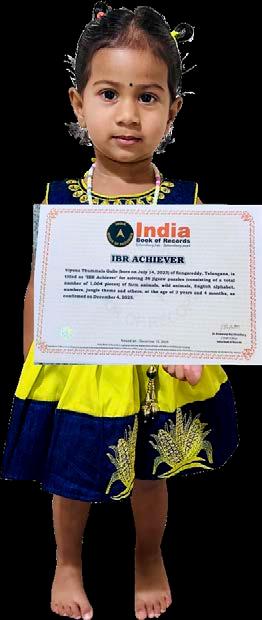
Srinish Chandra Chitmalla (born on May 26, 2019) of Hyderabad, Telangana, is titled as ‘IBR Achiever’ for writing 52 letters of the Telugu alphabet, on a sheet of paper, in 2 minutes, 53 seconds and 83 milliseconds, using a pencil, at the age of 6 years and 6 months, as confirmed on November 29, 2025.
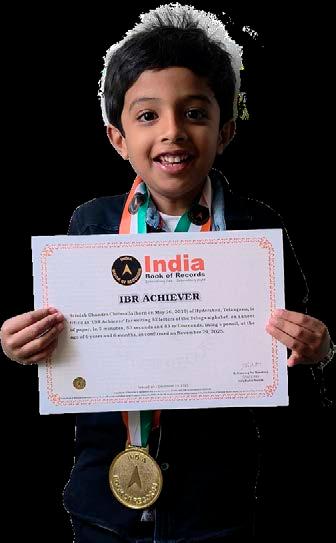
Shriyan Panda (born on November 4, 2019) of Purba Medinipur, West Bengal, is titled as ‘IBR Achiever’ for reciting a Bengali poem; colouring 2 pictures; making 4 models, namely, a headphone, diving mask, mobile phone and a pair of binoculars, using household materials, at the age of 6 years and 1 month, as confirmed on December 10, 2025.
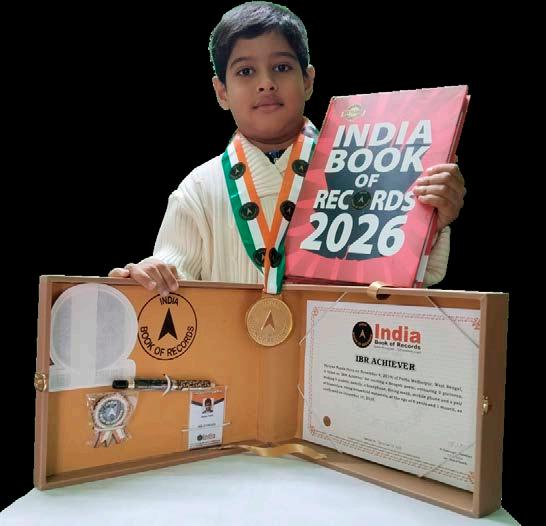
Avyukth Das (born on March 15, 2023) of Rayagada, Odisha, is titled as ‘IBR Achiever’ for identifying 51 animals, 12 insects, 16 parts of a computer, 27 fruits, 4 dry fruits, 20 vegetables, 7 colours and 13 vehicles; recalling days of the week, months in a year, 5 rhymes, 3 shlokas and 11 national symbols; and counting from 1 to 50, at the age of 2 years and 8 months, as confirmed on November 21, 2025.
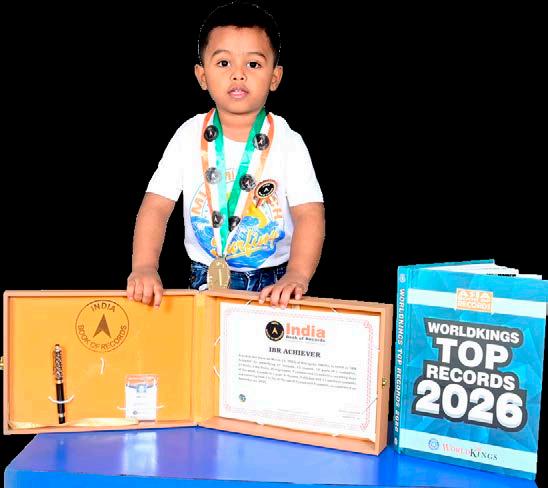
Aizen Taniz (born on February 1, 2024) of Kozhikode, Kerala, is titled as ‘IBR Achiever’ for identifying 26 animals, 8 birds, 4 insects, 12 aquatic animals, 12 parts of the body, 34 miscellaneous items, 5 vegetables, 9 fruits and 5 vehicles, at the age of 1 year and 9 months, as confirmed on November 11, 2025.
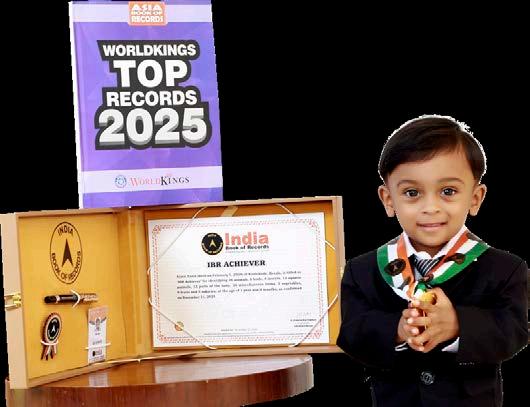
Y. Rudransh Vishwa (born on September 5, 2023) of Medchal− Malkajgiri, Telangana, is titled as ‘IBR Achiever’ for identifying 22 animals with young ones, flags of 21 countries, 22 birds, 22 flowers, 20 vehicles, 20 fruits, 21 food items, 20 professions, 19 actions, 17 parts of the body, 11 shapes, 5 musical instruments and 7 wonders of the world; recalling 8 planets, 10 English antonyms, 8 neighbouring countries of India, 10 national symbols and capitals of 20 Indian states, at the age of 2 years and 2 months, confirmed on November 20, 2025.
Dhanya Mithra P. (born on December 10, 2023) of Kancheepuram, Tamil Nadu, is titled as ‘IBR Achiever’ for solving an inset puzzle of the English alphabet; reciting days of the week, months in a year in Tamil and English, 7 continents, 12 Tamil vowels, a Tamil nursery rhyme and letters of the English alphabet; and counting numbers from 1 to 20, at the age of 1 year and 11 months, as confirmed on November 26, 2025.
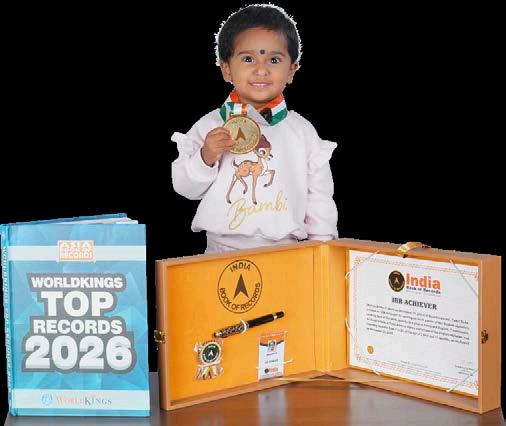
Najwa Jumaana (born on November 13, 2023) of Kannur, Kerala, is titled as ‘IBR Achiever’ for identifying 10 parts of the body, 10 food items, 10 fruits, 10 vehicles, 12 wild animals, 12 domestic animals and 8 colours; counting from 0 to 9; and recalling 26 letters of the English alphabet, at the age of 2 years, as confirmed on November 21, 2025.
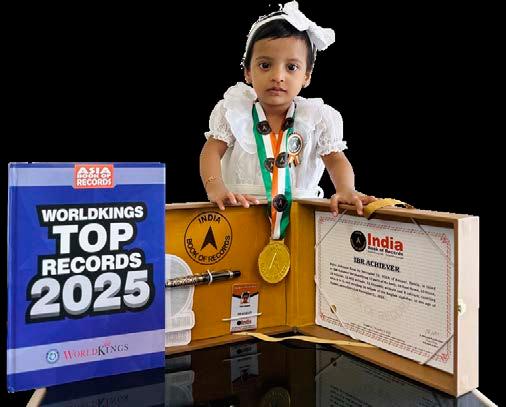
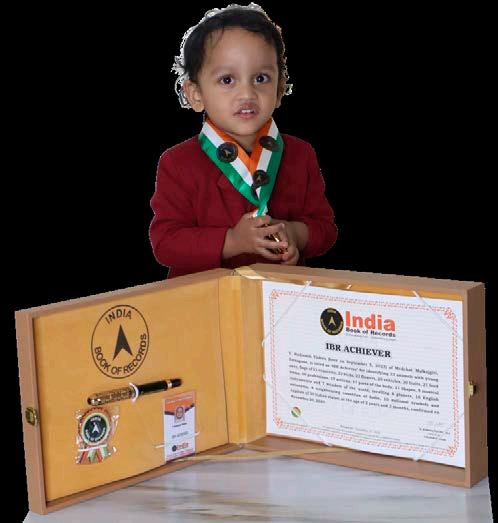
Aithen Jino (born on May 9, 2020) of Pathanamthitta, Kerala, is titled as ‘IBR Achiever’ for identifying and recalling the names of 130 international multi-brands, 26 international football players, flags of 113 countries and 60 international car brands by viewing the images on a laptop screen, at the age of 5 years and 6 months, November 20, 2025.
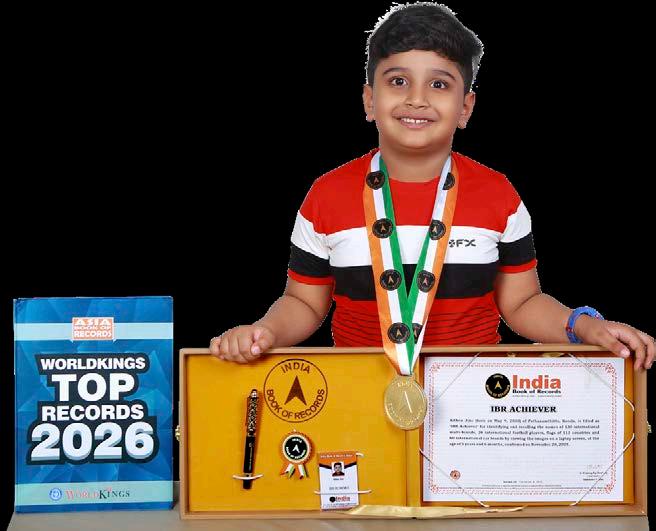
Vasu Sree Gangapalli (born on September 26) of Bengaluru, Karnataka, is titled as ‘IBR Achiever’ for authoring and publishing 5 English books on Kindle, titled ‘Echoes In The Silence’ (ASIN: B0DJZT6RZD), ‘Muddy Marbles: 55 Fiction’ (ASIN: B0DNWZ52J1), ‘Whispers in Two Sentences: Stories in a Blink’ (ASIN: B0DPC6Q9JW), ‘Blossom of the Silent Words’ (ASIN: B0DM9W1K1P) and ‘Daffofils and other Poems’ (ASIN: B0F8BY8MCJ); and receiving 4 ‘Certificates of Achievement’, including ‘Literary Award 2025’ and ‘Star of the Globe Award 2025’, among others, as confirmed on December 6, 2025.
Dishith Raj L. (born on April 24, 2017) of Udupi, Karnataka, is titled as ‘IBR Achiever’ for reciting the Hanuman Chalisa in 2 minutes and 38 seconds, at the age of 8 years and 7 months, as confirmed on December 5, 2025.
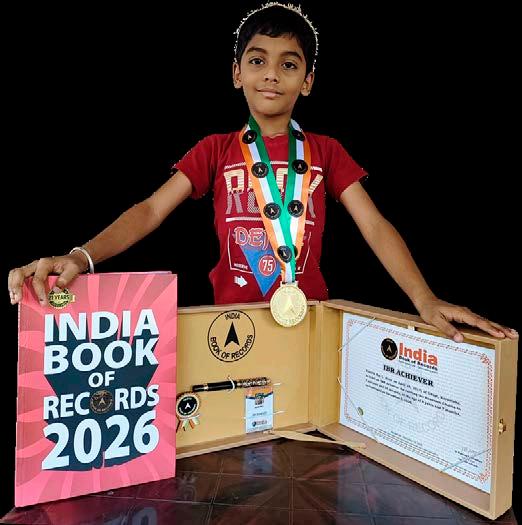
Ananya Narayanan (born on December 3, 2009) of Srikakulam, Andhra Pradesh, is titled as ‘IBR Achiever’ for making 10 different types of paintings, consisting of Mandala, Pot, Warli, Madhubani, Fabric, Landscape, Bottle, Lippan, Mural and Digital, despite being specially abled with 40% Autism Spectrum at the age of 16 years, as
Virajhh Thiruvarangam (born on February 3, 2021) of Chennai, Tamil Nadu, is titled as ‘IBR Achiever’ for reciting 101 number names based on the exponential powers of 10 from 10^0 (1) to 10^100 (googol) in 9 minutes and 44 seconds; identifying the flags and recalling the names of 125 (UN recognised) countries, along with continents, in 15 minutes and 59 seconds by viewing the images of flags on flashcards, at the age of 4 years and 10 months, as confirmed on December 11, 2025.
Dhananjay Goswami (born on April 4, 1963) of Bankura, West Bengal, is titled as ‘IBR Achiever’ for growing a marigold plant, measuring 8 feet and 5 inches (259 cm) in height, at his residence, December 2, 2025.
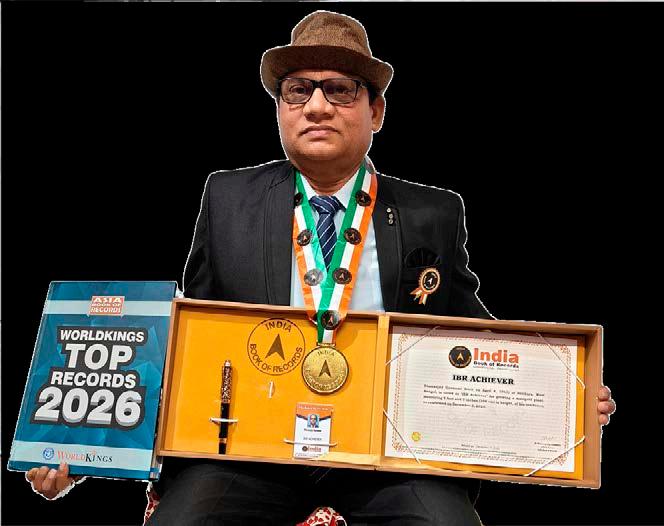
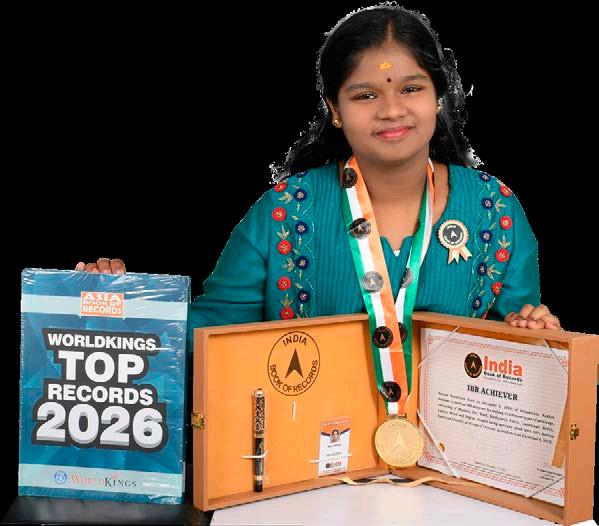
Deepak Kumar Kamboj (born on June 27, 1991) of Fatehabad, Haryana, is titled as ‘IBR Achiever’ for having coached the Indian cricket team of specially abled players and has enabled them to win Asia Cup 2015, as confirmed on November 29, 2025.
confirmed on December 6, 2025.
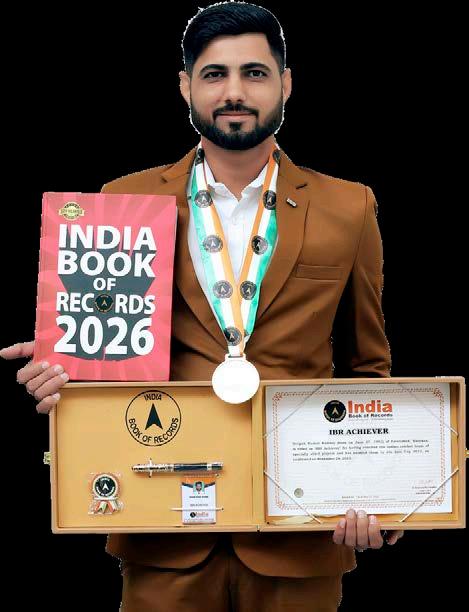
Shreshta Nithin Valat (born on April 28, 2023) of Kannur, Kerala, is titled as ‘IBR Achiever’ for identifying and naming 7 sea animals, 10 farm animals, 10 wild animals, 8 fruits, 10 vegetables, 8 colours, 7 shapes, 13 parts of the body; reciting 26 letters of the English alphabet; recalling 9 young ones of animals; matching pictures of 10 young ones of animals; and completing pictures of 6 other animals, at the age of 2 as confirmed on
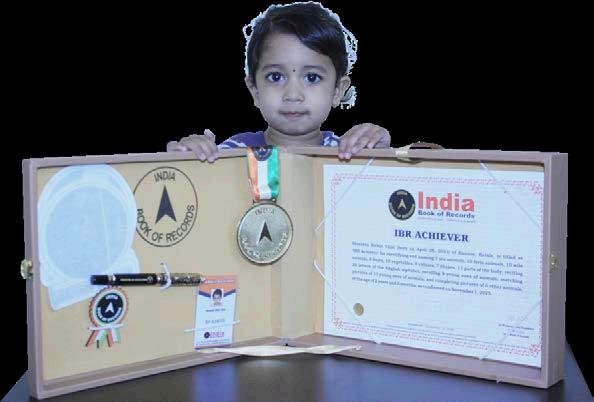
Ann Hagin (born on December 27, 2023) of Thrissur, Kerala, is titled as ‘IBR Achiever’ for identifying and naming 17 fruits, 41 animals, 9 birds, 10 vehicles, 15 vegetables, 11 colours and 14 parts of the body; reciting days of the week; and counting from 1 to 10, at the age of 1 year and 10 months, as confirmed on November 14, 2025.
Tuhin Debnath (born on April 8, 2023) of Nadia, West Bengal, is titled as ‘IBR Achiever’ for translating the names of 10 flowers, 15 fruits, 15 birds, 15 animals, 15 parts of the body, 20 vegetables and 130 words from English to Bengali; reciting 26 letters of the English alphabet; and performing 5 actions, at the age of 2 years and 6 months, as confirmed on November 6, 2025.
Radhesh Bhupendra Patil (born on February 8, 2007) of Nandurbar, Maharashtra, is titled as ‘IBR Achiever’ for painting all the divine forms of Sade Teen Shakti Peethas of Maharashtra, including Tulja Bhavani of Tuljapur, Mahalaxmi of Kolhapur, Renuka of Mahur, Saptashrungi Devi of Vanigad, 2 Gajalakshmi, along with a Trishul, Kalash and Lotus, on 9 different cowrie shells, using acrylic colours, at the age of 18 years and 8 months, as confirmed on November 6, 2025.
Yaashwin Krishna S. (born on May 21, 2024) of Palakkad, Kerala, is titled as ‘IBR Achiever’ for running a distance of 50 metres in 59 seconds, at the age of 1 year and 6 months, as confirmed on November 22, 2025.
Adam Junaid (born on July 18, 2023) of Kannur, Kerala, is titled as ‘IBR Achiever’ for identifying 8 toys, 12 vehicles, 4 colours, 6 miscellaneous items and 10 animals; solving puzzles of animals, vegetables, fruits, vehicles and 16 shapes; riding a battery-operated jeep; and stacking rings of 6 colours, at the age of 2 years and 3 months, as confirmed on
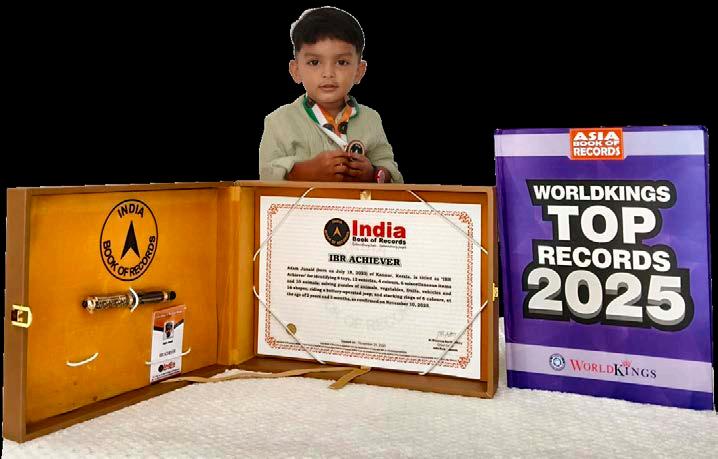
Athiyan Arun Kumar (born on December 29, 2019) of Chennai, Tamil Nadu, is titled as ‘IBR Achiever’ for identifying the flags and recalling the names of all 195 (UN recognised) countries in 6 minutes and 1 second by viewing flashcards, of 5 years and 11 months, as
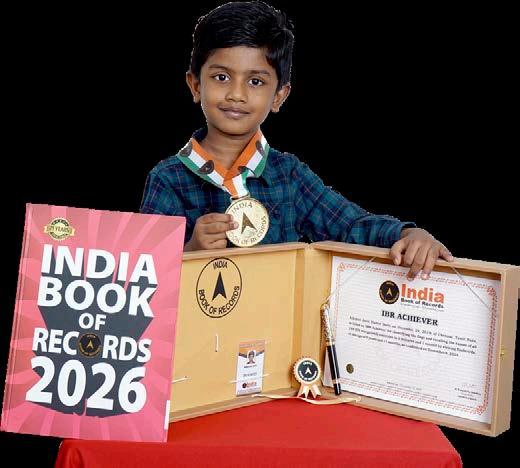
Minha M. (born on June 4, 2024) of Kasaragod, Kerala, is titled as ‘IBR Achiever’ for identifying 10 animals, 5 vegetables, 5 deities, 14 fruits, 8 birds, 7 vehicles, 8 parts of the body and 9 miscellaneous items; imitating the sounds of 5 birds and animals, at the age of 1 year and 6 months, as confirmed on December 15, 2025.
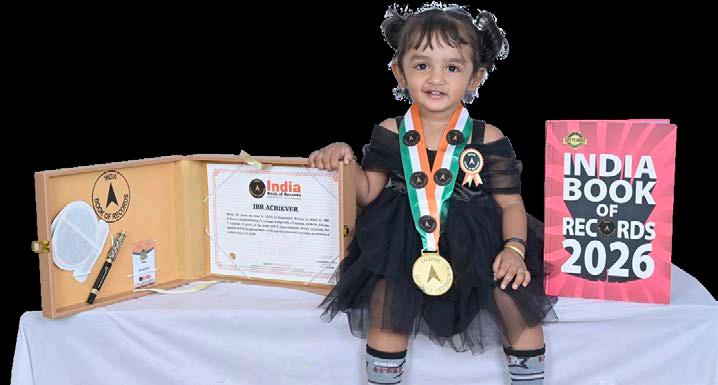
P. Aadhimithran (born on January 8, 2024) of Tirunelveli, Tamil Nadu, is titled as ‘IBR Achiever’ for identifying 10 insects, 6 birds, 8 vegetables, 11 vehicles, 13 animals, 5 parts of the body, 7 actions, 15 fruits, 26 alphabetical words and 8 national leaders; recalling days of the week in Tamil and the capitals of 10 countries; counting from 1 to 10, at the age of 1 year and 11 months, as confirmed on
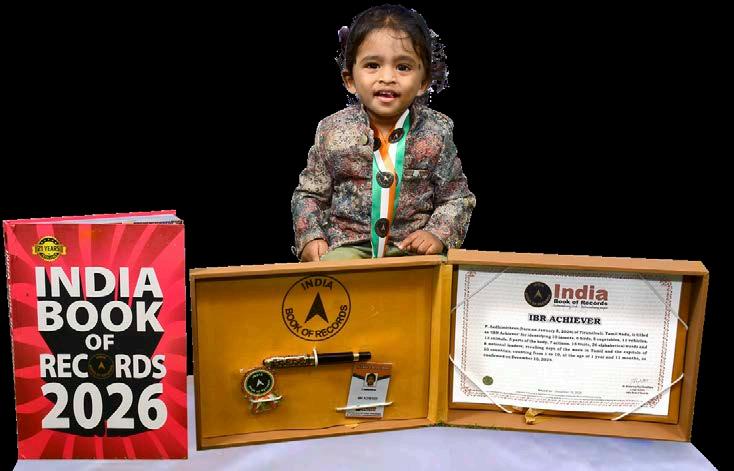
Advik Samal (born on October 11, 2023) of Khordha, Odisha, is titled as ‘IBR Achiever’ for identifying 15 food items, 15 fruits, 18 animals, 20 vegetables, 11 colours, 19 parts of the body and 9 shapes; recalling 26 alphabetical words; performing 9 activities; and answering 5 questions on religion, at the age of 2 years
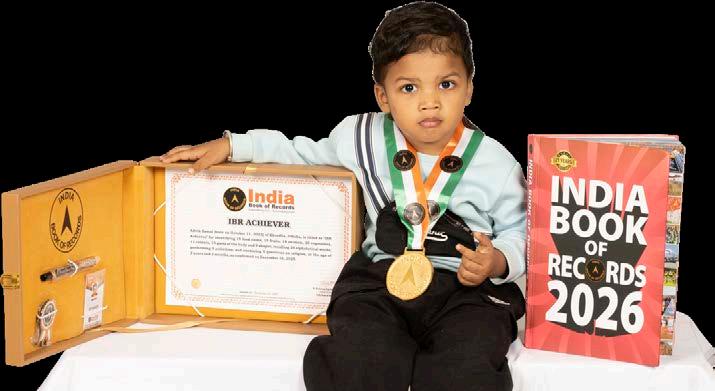
Mithran Yadvik K. (born on July 11, 2021) of Chennai, Tamil Nadu, is titled as ‘IBR Achiever’ for recalling 34 exponential powers of 10, from 10^3 (Thousand) till 10^100 (Googol), in 1 minute and 28 seconds, at the age of 4 years and 4 months, as confirmed on December 8, 2025.
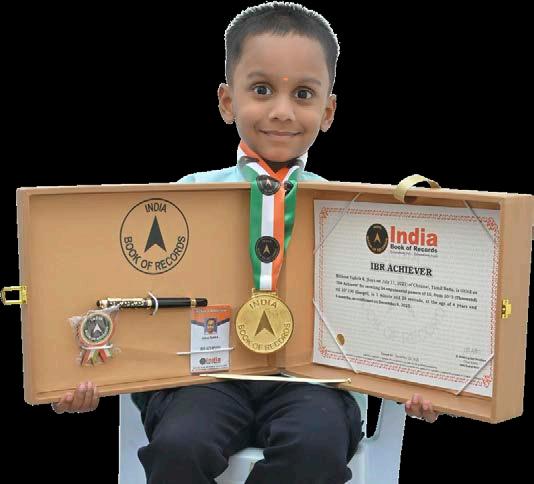
JM Rajveer Jena (born on November 25, 2022) of Puri, Odisha, is titled as ‘IBR Achiever’ for identifying and naming 20 fruits, 20 birds, 24 vegetables, 12 colours, 19 flowers, 14 vehicles, 74 animals, 5 fingers, 24 parts of the body and 20 musical instruments; reciting 8 English rhymes, days of the week, months in a year, 6 seasons, 3 mantras and 26 letters of the English alphabet with words; recalling 11 national symbols and 15 antonyms; answering 8 G.K. questions; singing
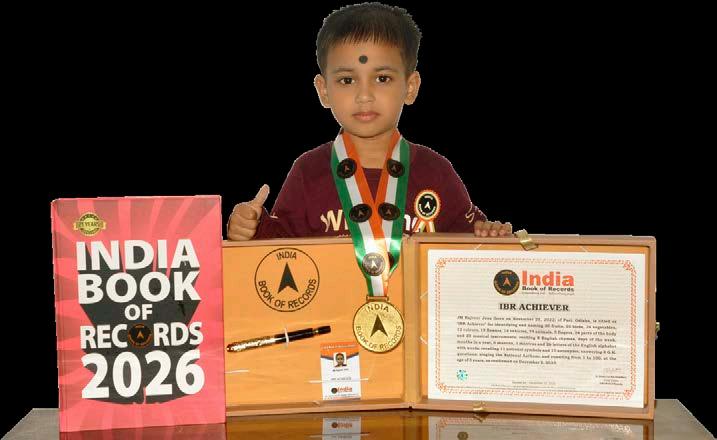
Udvith G. H. (born on March 2, 2020) of Tumakuru, Karnataka, is titled as ‘IBR Achiever’ for recalling 40 animals, 25 fruits, 23 parts of the body, 17 national symbols, 28 Indian states, 31 districts of Karnataka, 10 shapes, 10 birds, 50 opposite words, 26 letters of the English alphabet, 20 action words, 5 English vowels and letters of the Kannada alphabet; reciting 24 English nursery rhymes; counting from 1 to 100; and answering 25 General Knowledge questions, at the age of 5 years and 9 months, as confirmed on December 16, 2025.
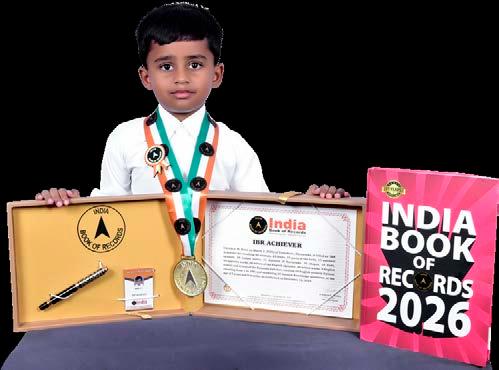
K. Aadhavan (born on July 29, 2022) of Villupuram, Tamil Nadu, is titled as ‘IBR Achiever’ for identifying and recalling the names of 53 shapes and 24 symbols by viewing the shapes and symbols on flashcards,
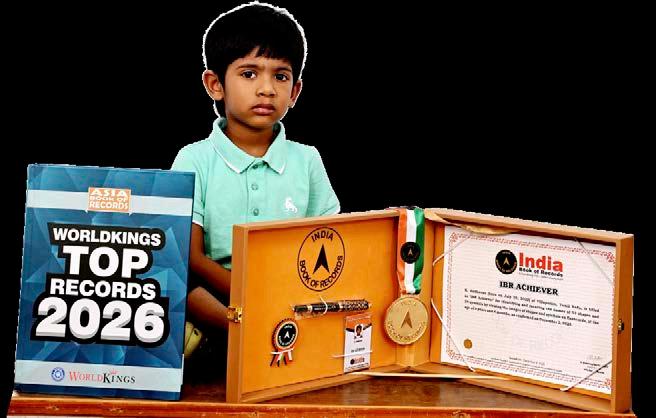
Diptayan Sen (born on July 22, 2022) of North 24 Parganas, West Bengal, is titled as ‘IBR Achiever’ for identifying and naming 24 animals, 8 shapes, 15 fruits, 16 vehicles, 16 birds, 9 colours, 15 community helpers, 13 famous leaders, 21 parts of the body and 14 parts of a computer; reciting 3 English nursery rhymes, days of the week, months in a year and 26 letters of the English alphabet; recalling the capitals of 13 Indian states and 6 national symbols; singing the
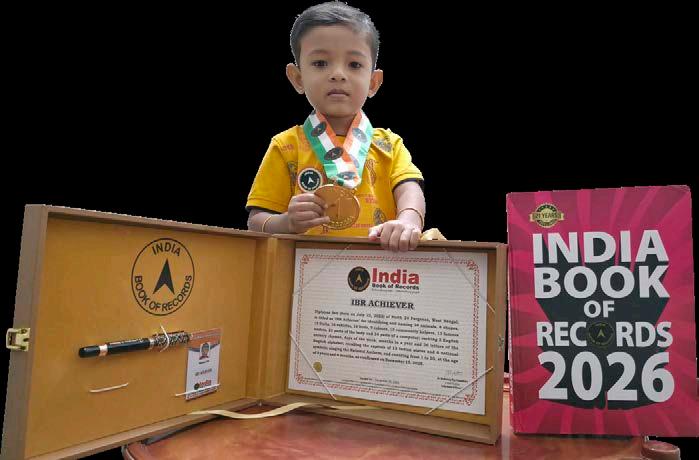
Akshara Shaw (born on March 7, 2024) of North 24 Parganas, West Bengal, is titled as ‘IBR Achiever’ for identifying and naming 6 flowers, 7 birds, 15 vegetables, 13 fruits, 19 animals, 8 vehicles, 15 miscellaneous items, 12 actions and 15 parts of the body; and counting from 1 to 10, at the age of 1 year and 9 months, as confirmed on December 8, 2025.
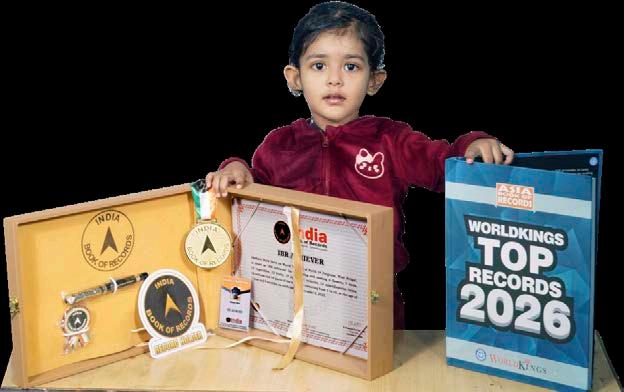
T.P. Miharikha (born on July 23, 2020) of Ranipet, Tamil Nadu, is titled as ‘IBR Achiever’ for reading 38 English storybooks, titled Ganesha, Hanuman, The Moon Jet, Super Dad, Kipper’s Birthday, Poor Old Rabbit and The Babysitter, among others, in one hour, at the age of 5 years and 4 months, as confirmed on December 9, 2025.
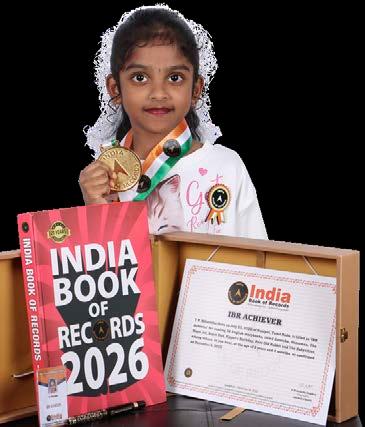
Vidhyalakshmi (born on December 26, 2023) of Puducherry, is titled as ‘IBR Achiever’ for identifying flags of 10 countries, 15 fruits, 10 vegetables, 24 letters of the English alphabet, 15 wild animals, 10 domestic animals, 10 good habits, 12 parts of the body, 3 colours, 15 electronic items, 4 household items, 7 bathroom items, 2 worship items, 3 hair accessories, 5 stationery items, 3 Disney characters, 3 sea animals and 5 numbers; reciting 3 English and 3 Tamil nursery rhymes, at the age of 1 year and 11 months, as confirmed on December 10, 2025.
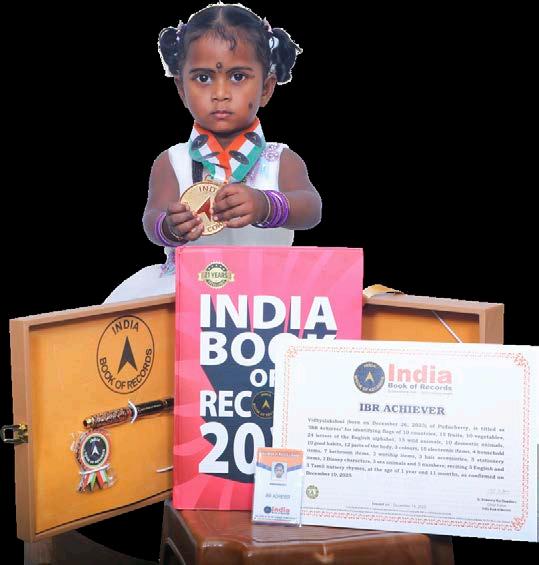
Vedanshi A. S. (born on November 1, 2023) of Chennai, Tamil Nadu, is titled as ‘IBR Achiever’ for identifying 22 actions, 20 professions, 21 fruits, 10 shapes, 11 colours, 22 vegetables, 22 farm animals, 21 other animals and their young ones, at the age of 2 years, as confirmed on November 8, 2025.
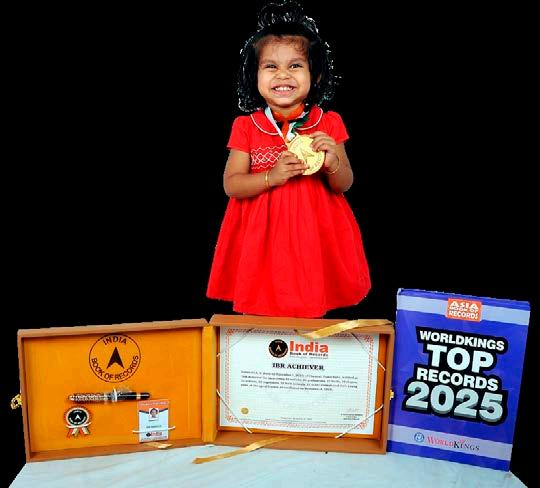
Kiyaan Jain (born on July 30, 2016) of Bengaluru, Karnataka, is titled as ‘IBR Achiever’ for successfully climbing Deoriatal Chandrashila in Uttarakhand (at an altitude of 12,083 feet) from September 27, 2025 to October 2, 2025, at the age of 9 years and 2 months, along with his family, as confirmed on October 16, 2025.
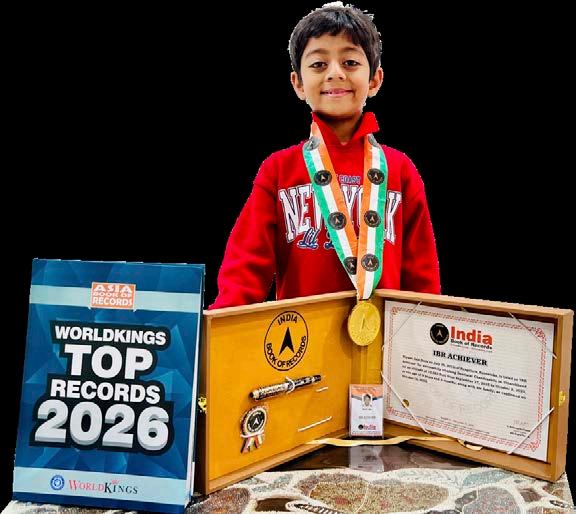
This certificate is awarded to Anirban Besra for completing a round-trip motorcycle expedition, along with two friends. The 3 riders, known as ‘Bir Disom Riders’, undertook a motorcycle expedition from Kolkata (West Bengal) to Bum La (Arunachal Pradesh). They started their expedition from Kolkata on October 26, 2025, reached Bum La (15200 feet) on November 3, 2025, and returned to Kolkata on November 7, 2025, as confirmed on November 17, 2025.
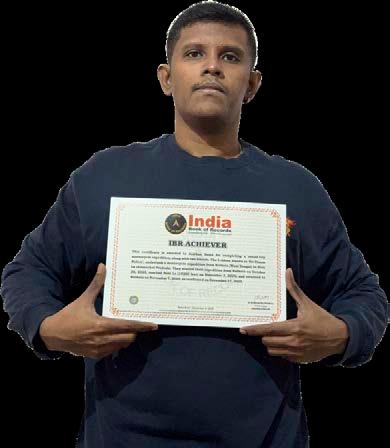
A. Mithran (born on November 2, 2018) of Coimbatore, Tamil Nadu, is titled as ‘IBR Achiever’ for identifying the flags and recalling the names of all 195 (UN recognised) countries in 3 minutes and 9 seconds by viewing the pictures of flags on a laptop screen, at the age of 7 years, as confirmed on November 26, 2025.
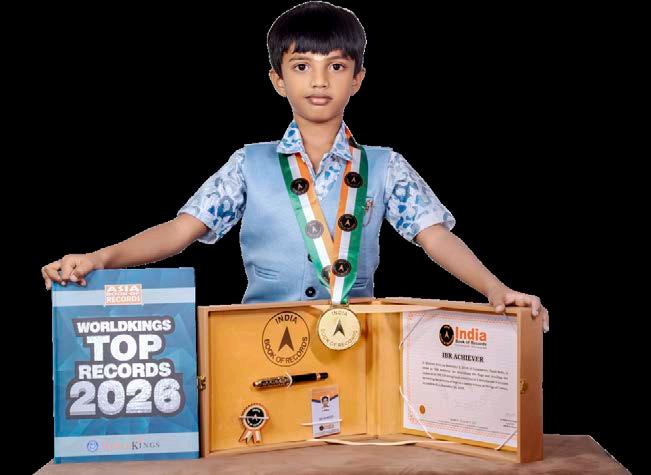
This certificate is awarded to Iswar Chandra Hansda for completing a round-trip motorcycle expedition, along with two friends. The 3 riders, known as ‘Bir Disom Riders’, undertook a motorcycle expedition from Kolkata (West Bengal) to Bum La (Arunachal Pradesh). They started their expedition from Kolkata on October 26, 2025, reached Bum La (15200 feet) on November 3, 2025, and returned to Kolkata on November 7, 2025, as confirmed on November 17, 2025.
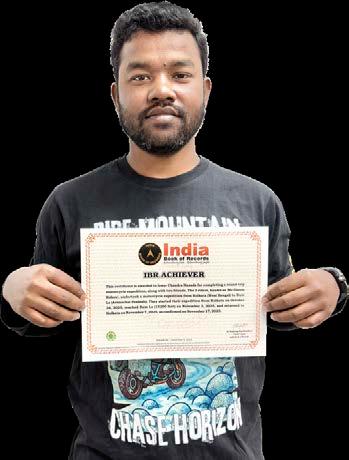
Gurdeep Singh Dhillon (born on August 8, 1987) of Bathinda, Punjab, is titled as ‘IBR Achiever’ for receiving a conditional certificate of qualification from Ministry of Education and Child Care, British Columbia, Canada, on August 1, 2025, for having met the requirements under section 30 of the Teachers Act, as confirmed on November 10, 2025.
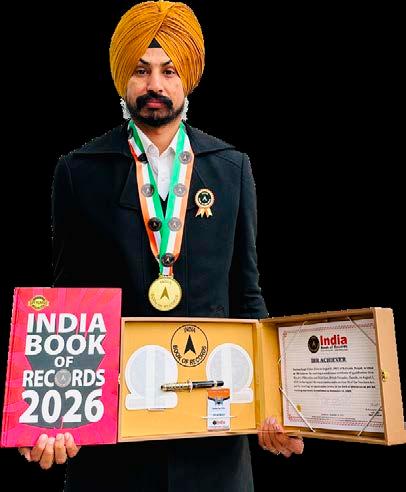
Suvajit Hembram (born on December 28, 1990) of South 24 Parganas, West Bengal, is titled as ‘IBR Achiever’ for completing a round-trip motorcycle expedition, along with two friends. The 3 riders, known as ‘Bir Disom Riders’, undertook a motorcycle expedition from Kolkata (West Bengal) to Bum La (Arunachal Pradesh). They started their expedition from Kolkata on October 26, 2025, reached Bum La (15200 feet) on November 3, 2025, and returned to Kolkata on November 7, 2025, as confirmed on November 17, 2025.
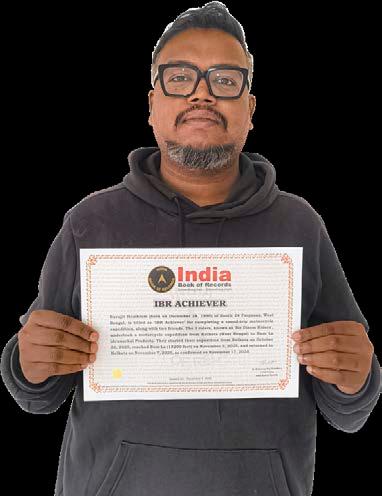
Aviram Ghose (born on July 24, 2017) of Kolkata, West Bengal, is titled as ‘IBR Achiever’ for participating in ‘JBG Kolkata Marathon’ and completing a 10 km run in 1 hour, 3 minutes and 18 seconds on November 30, 2025, at the
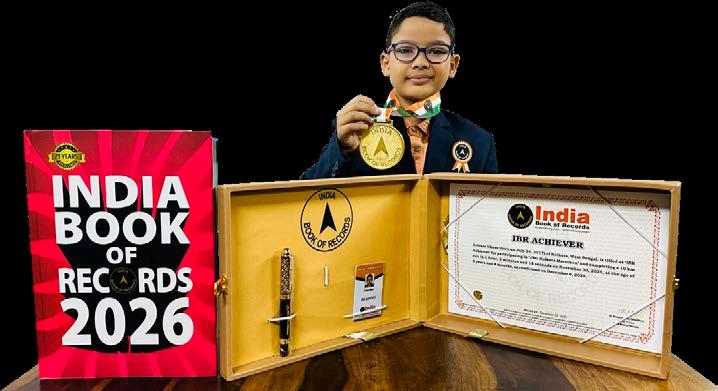
Bishrul Hafi P. (born on June 30, 2023) of Malappuram, Kerala, is titled as ‘IBR Achiever’ for identifying 29 animals, 6 shapes, 14 vegetables, 15 fruits, 5 insects, 10 birds, 9 colours, 3 places of worship, 6 famous personalities, 19 parts of the body, 35 miscellaneous items, 7 national symbols, numbers from 1 to 10 and 26 letters of the English alphabet; solving 2 puzzles (shapes and the English alphabet), at the age of 2 years and 5 months, as confirmed on December 15, 2025.
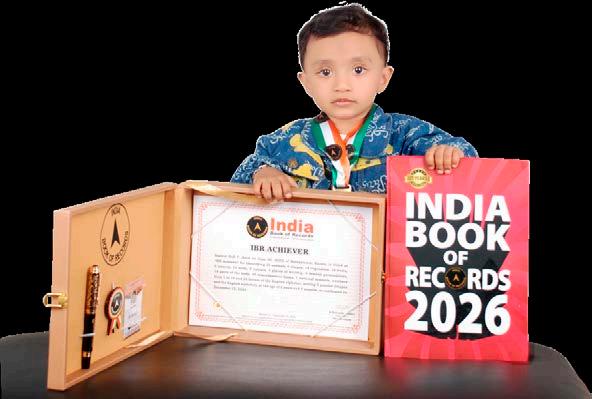
Tadikonda Isha Nitra (born on October 31, 2021) of Sangareddy, Telangana, is titled as ‘IBR Achiever’ for reciting reverse counting of numbers from 100 to 1 in 42.43 years, as confirmed on
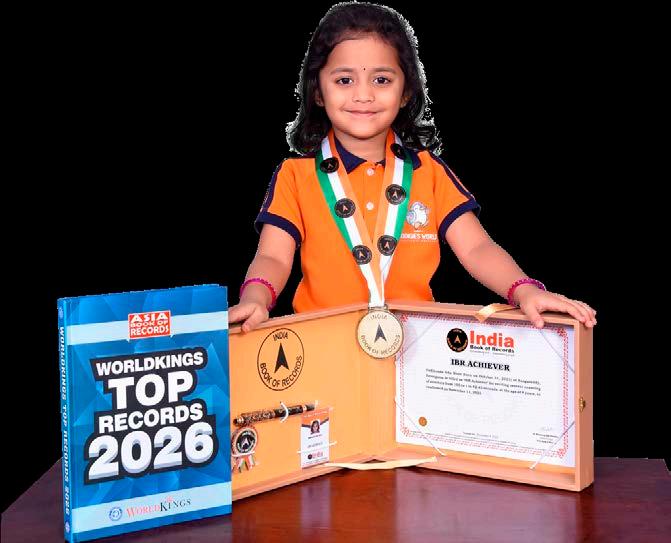
Adrija Panja (born on February 18, 2024) of Hooghly, West Bengal, is titled as ‘IBR Achiever’ for identifying 20 vegetables, 20 fruits, 20 animals, 20 parts of the body and 20 birds; reciting letters of the Bengali alphabet and 20 Bengali nursery rhymes; recalling the names of 5 fingers; and counting from 1 to 10, at the age of 1 year and 9 months, as confirmed on December 13, 2025.
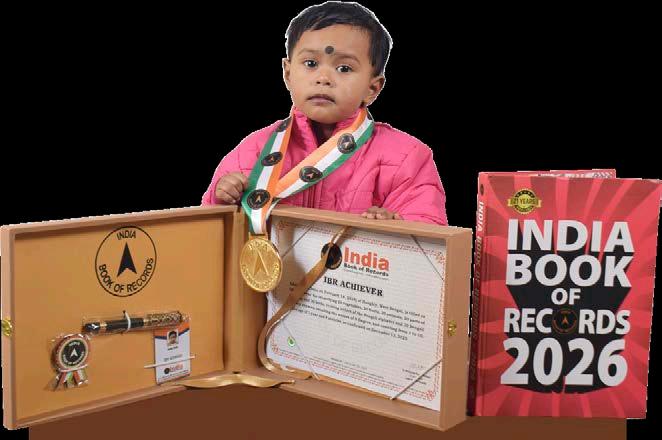
Sabarish. A (born on June 28, 2016) of Tiruvannamalai, Tamil Nadu, is titled as ‘IBR Achiever’ for reciting 70 English words with antonyms in 52 seconds, at the age of 9 years and 4 months, as confirmed on November 20, 2025.
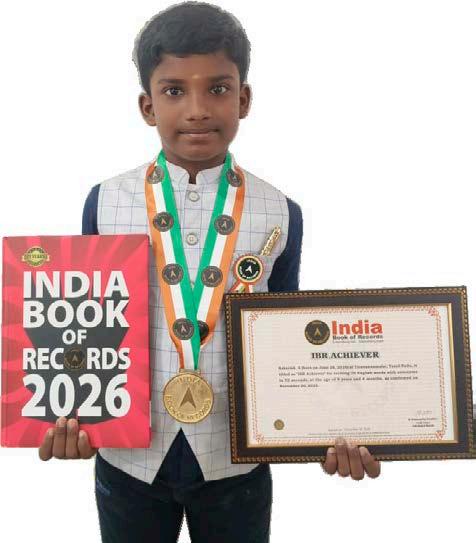
Yadalla Teekshika (born on September 21, 2020) of Kadapa, Andhra Pradesh, is titled as ‘IBR Achiever’ for recalling the names of 34 current Cabinet ministers (by their departments), along with the names of the President and Vice President of India, in 1 minute and 50 seconds, at the age of 5 years and 1 month, as confirmed on October 28, 2025.
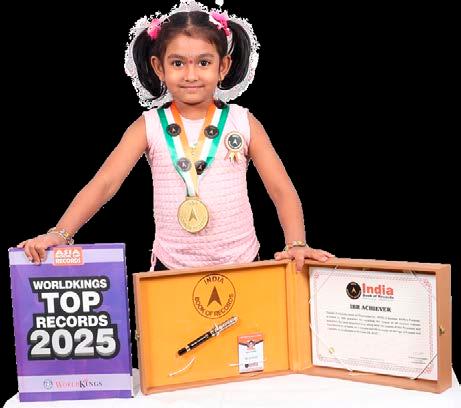
Siddeequl Akbar M. K. (born on February 28, 2004) of Malappuram, Kerala, is titled as ‘IBR Achiever’ for performing the Headstand yoga pose (Sirsasana), against a wall, for 2 minutes and 37 seconds, as confirmed on
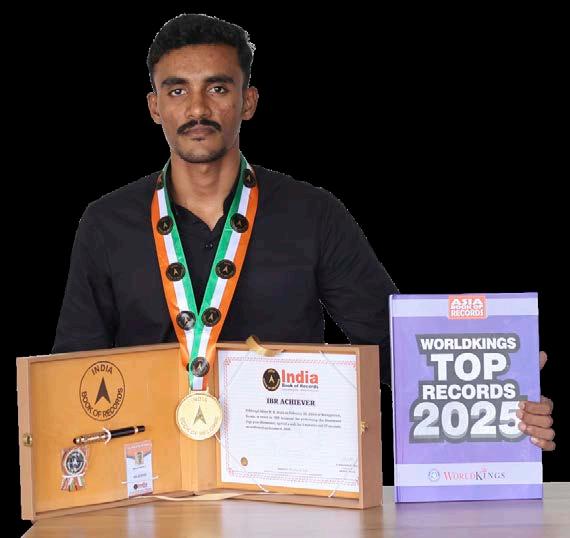
Ashwin Kumar (born on January 16, 2019) of Salem, Tamil Nadu, is titled as ‘IBR Achiever’ for reciting squares of numbers from 1 to 30, multiplication tables of numbers from 1 to 20 and recalling 35 large numbers in the powers of 10
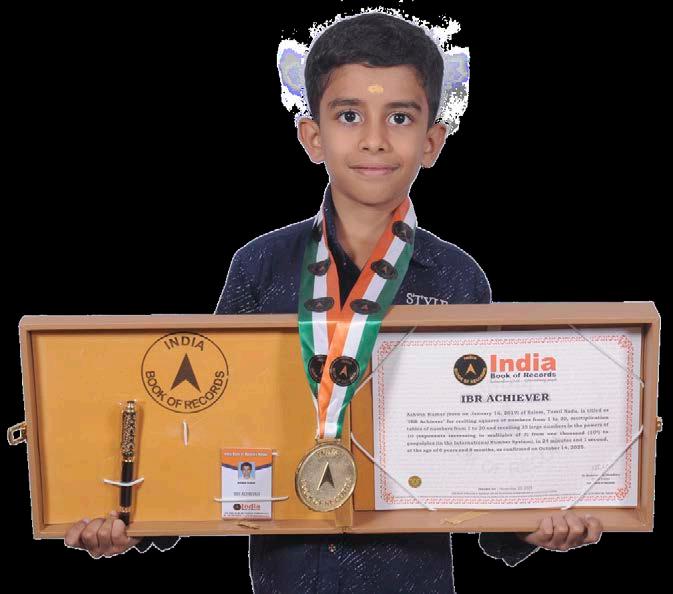
V.H. Mitesh Selvam 19, 2011) of Chengalpattu, Tamil Nadu, is titled as ‘IBR Achiever’ for developing a career guidance mobile application titled ‘Dreamvestor’, at the age of 13 years and 10 months, as confirmed on October 14, 2025.
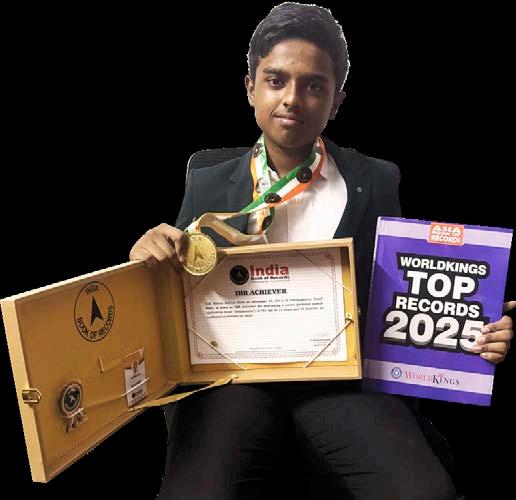
Aylin Ebrah Fathima (born on May 24, 2023) of Kozhikode, Kerala, is titled as ‘IBR Achiever’ for identifying 13 animals, 9 colours, 5 vegetables, 4 birds, 9 fruits, 4 shapes, 6 vehicles, 4 cartoon characters, 21 parts of the body, 17 miscellaneous items and flags of 7 countries; reciting all the letters of the English alphabet with associated words and 2 English nursery rhymes; completing 7 shadow-matching puzzles; performing 13 actions; counting from 1 to 10; and climbing 46 steps in 46 seconds, at the age of 2 years and 5 months, November 22, 2025.
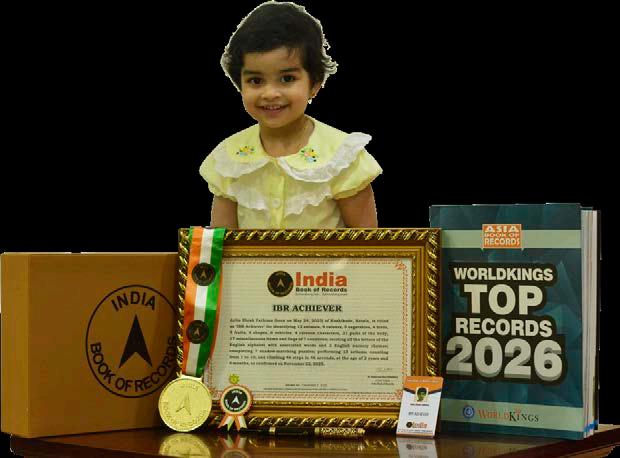
Alok Kumar Awadh Srivastav (born on January 2, 2007) of Thane, Maharashtra, is titled as ‘IBR Achiever’ for designing a lightweight drone system, enabled with interceptor – target architecture and AI-assisted targeting, using SpeedyBee F405 V3 flight controller, high-thrust RS-2205 2300KV brushless motors and low-latency 2.4 GHz RF telemetry link, at the age of 18 years and 9 months, as confirmed on October 24, 2025.
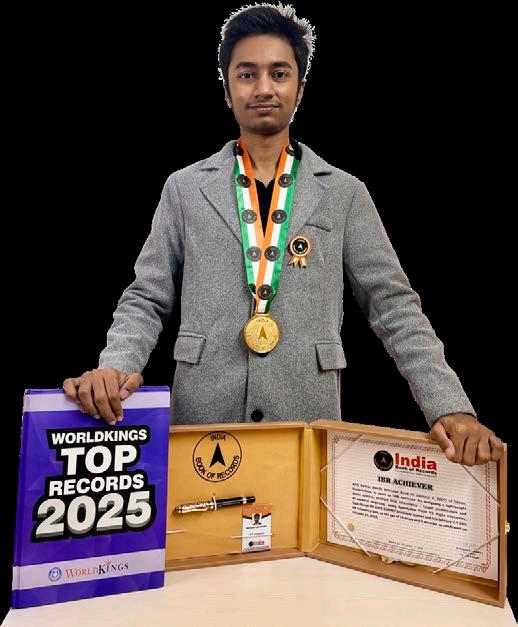
Vignesh Kumar R. (born on January 20, 1992) of Chennai, Tamil Nadu, is titled as ‘IBR Achiever’ for achieving a degree of Bachelor of Arts in Hindi (Rashtrabasha Praveen) from the Executive Committee of the Dakshina Bharat Hindi Prachar Sabha, Madras, in 2005, as confirmed on November 12, 2025.
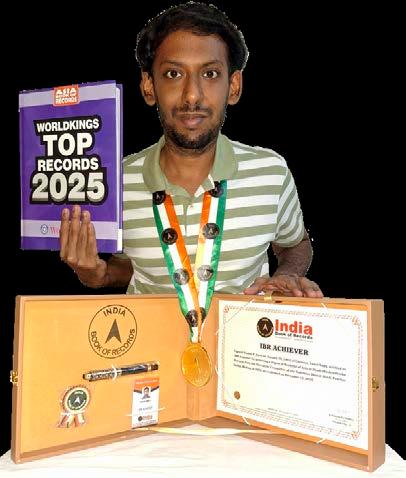
D.R. Rithanya (born on November 21, 2022) of Tiruvallur, Tamil Nadu, is titled as ‘IBR Achiever’ for identifying 7 parts of the body and 26 miscellaneous items; reciting 4 greeting words in English, days of the week, letters of Tamil and English alphabet, numbers from 1 to 10, 5 English nursery rhymes, months in a year and a Thirukkural, at the age of 2 years and 11 months, as confirmed on November 3, 2025.
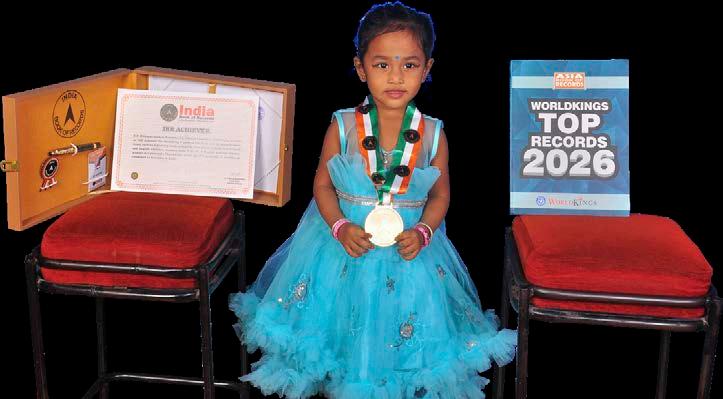
Hanishka Honey C.S. (born on April 19, 2024) of Palakkad, Kerala, is titled as ‘IBR Achiever’ for identifying 26 animals, 14 fruits, 21 vegetables, 18 parts of the body, 15 food items, 10 freedom fighters, 16 household items, 13 vehicles, 13 insects, 12 birds, 15 clothes, 20 electronic items, 10 actions and 76 miscellaneous items, at the age of 1 year and 7 months, as confirmed on November 25, 2025.
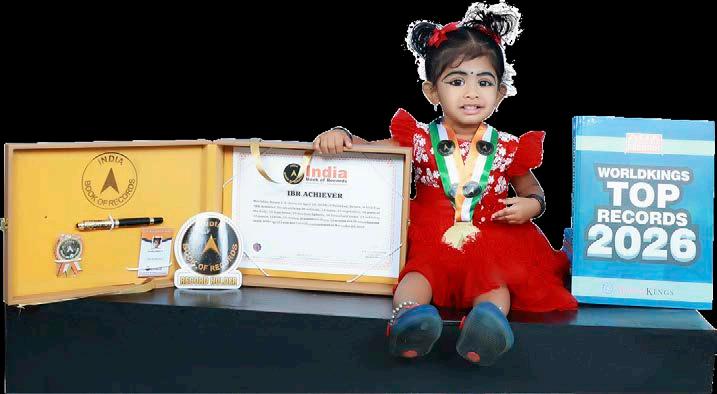
Divisha Reddy Yerasi (born on November 22, 2023) of Hyderabad, Telangana, is titled as ‘IBR Achiever’ for identifying and naming 17 parts of the body, 6 fruits, 3 vegetables, 19 miscellaneous items, 10 shapes, 24 animals, 6 deities, 6 professionals and 12 vehicles; counting from 1 to
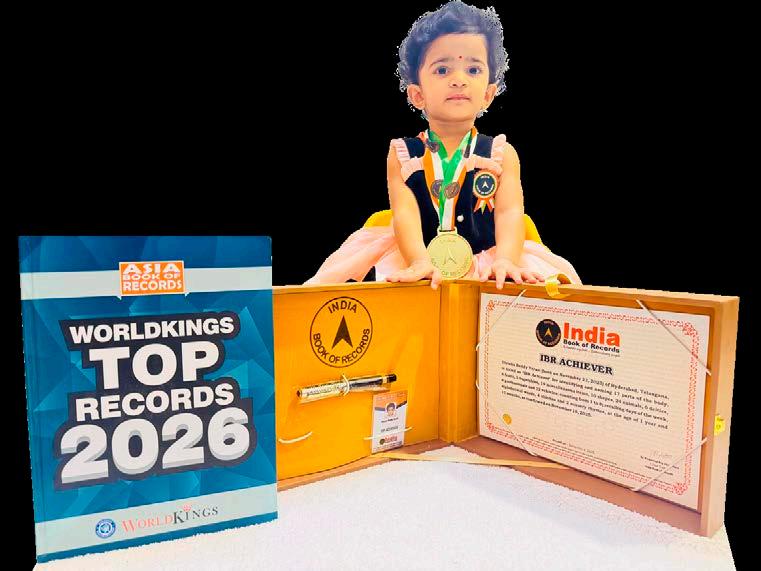
Kayra Muttha (born on October 3, 2023) of Pune, Maharashtra, is titled as ‘IBR Achiever’ for identifying 11 fruits, 14 animals, 33 food items, 12 parts of the body, 21 household items and 50 miscellaneous items; counting from 1 to 10; performing 5 yoga poses; reciting 3 English nursery rhymes, days of the week, 2 mantras, 8 planets and all the letters of the English alphabet, at the age of 2 years and 1 month, as confirmed on November 5, 2025.
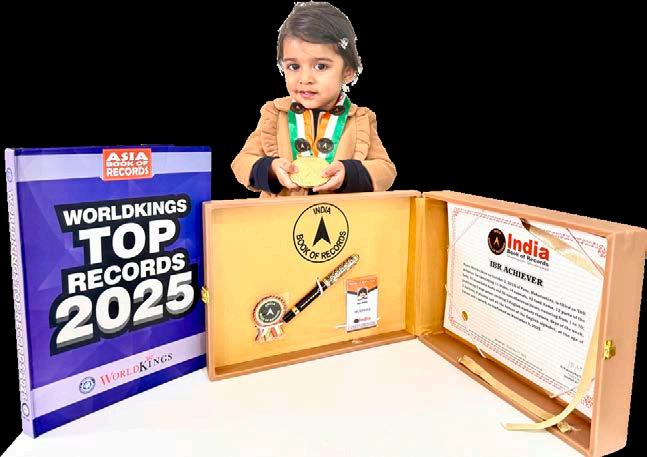
Fathima Zala Elham (born on April 12, 2024) of Kasaragod, Kerala, is titled as ‘IBR Achiever’ for identifying 6 animals, 6 vehicles, 5 fruits, 6 parts of the body and 5 miscellaneous pictures, at the age of 1
Lankannagari Vishwajeeth Reddy (born on October 6, 2022) of Hyderabad, Telangana, is titled as ‘IBR Achiever’ for answering 104 General Knowledge questions in 5 minutes and 10 seconds, at the age of 3 years, as confirmed on October 8, 2025.
Ketaki Surjith (born on November 14, 2020) of Kottayam, Kerala, is titled as ‘IBR Achiever’ for recalling multiplication tables from 1 to 10 in 12 minutes and 50 seconds, at the age of
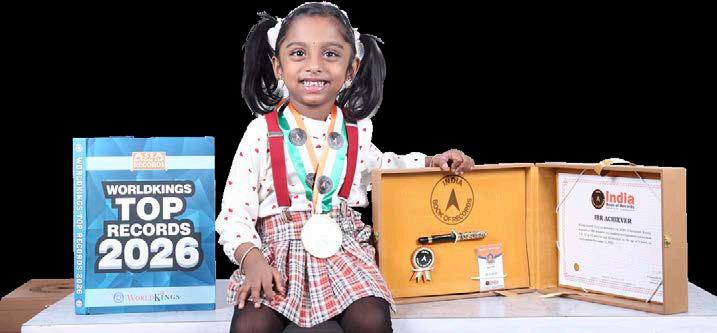
Tamim Miran Bin Nazil (born on April 6, 2023) of Kannur, Kerala, is titled as ‘IBR Achiever’ for identifying 22 wild animals, 6 domestic animals, 6 young ones of animals, 6 internal organs, 14 fruits, 15 food items, 4 famous personalities, 7 marine creatures, 5 kings and queens, 9 habits and activities, 4 great women, 12 vehicles, 20 birds, 14 vegetables, 9 professionals, 6 insects, 4 reptiles, 10 electronic items, 7 parts of the body, 3 geometric shapes and 88 miscellaneous items; imitating the sounds of 4 animals, at
Aarush Prasanth (born on November 26, 2015) of Thrissur, Kerala, is titled as ‘IBR Achiever’ for solving a 3 x 3 and a 2 x 2 Rubik’s Cube, along with a Pyramid Cube (Pyraminx), in 2 minutes and 26 seconds, while continuously performing non-stop inline side walk, at the age of 9 months, as confirmed on
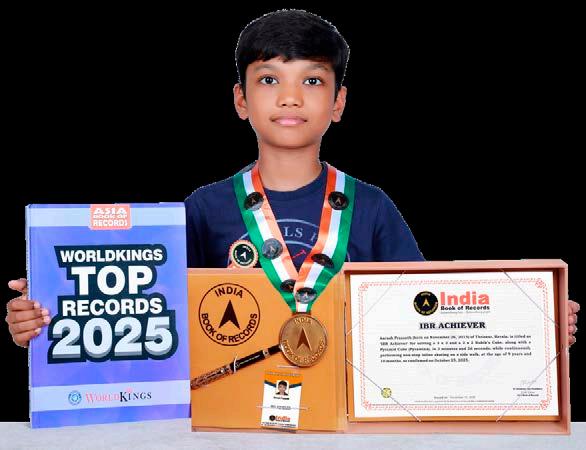
Thummalapalli Sri Aadhya (born on July 24, 2018) of NTR, Andhra Pradesh, is titled as ‘IBR Achiever’ for reciting all 20 shlokas of chapter 12 of the Bhagavad Gita; performing 306 hula hoop spins in the kneeling position; drawing 74 pictures with letters of the English alphabet and numbers; 165 G. K. questions; narrating an English story; and performing two semi-classical dances with hula hoops, at the age of 6 11 months, as confirmed on July 15, 2025.
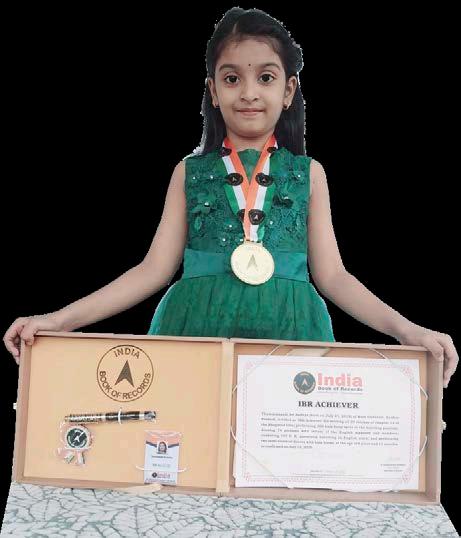
Vivaan Akshagna (born on June 11, 2014) of Puducherry, is titled as ‘IBR Achiever’ for speed-reading an English comprehension passage (consisting of 507 words) in 57 seconds and orally answering 10 comprehension-based questions in 3 minutes and 20 seconds, at the age of 11 years and 1 month, as confirmed on July 18, 2025.
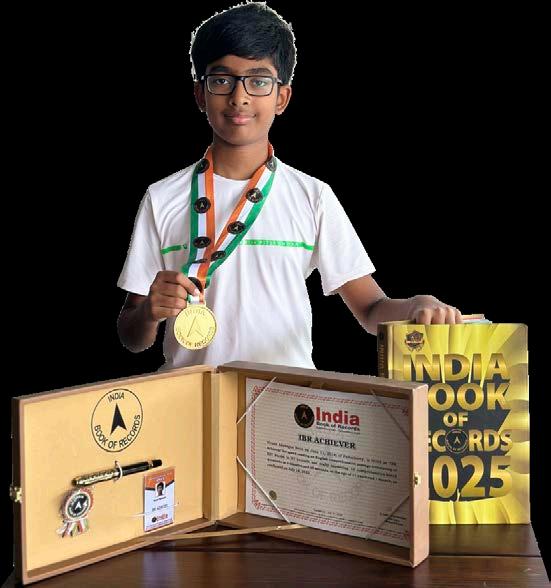
Shanaya Jain (born on June 1, 2020) of Ludhiana, Punjab, is titled as ‘IBR Achiever’ for performing the Trivikramasana Peak yoga pose (Standing Split pose), with the support of a door, for 18 minutes and 50 seconds, at the age of 5 years and 5 months, as confirmed on November 14, 2025.
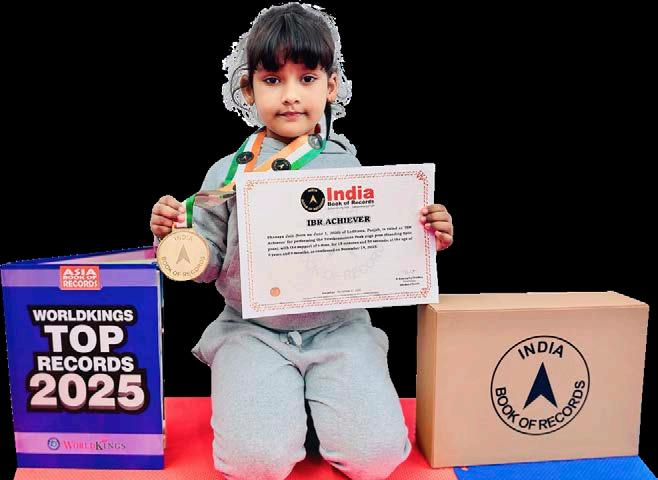
Nila Aswin (born on August 7, 2019) of Kozhikode, Kerala, is titled as ‘IBR Achiever’ for performing Bharatanatyam dance for 37 minutes, dressed in traditional attire, at the age of 6 years and 3 months, as confirmed on November 12, 2025.
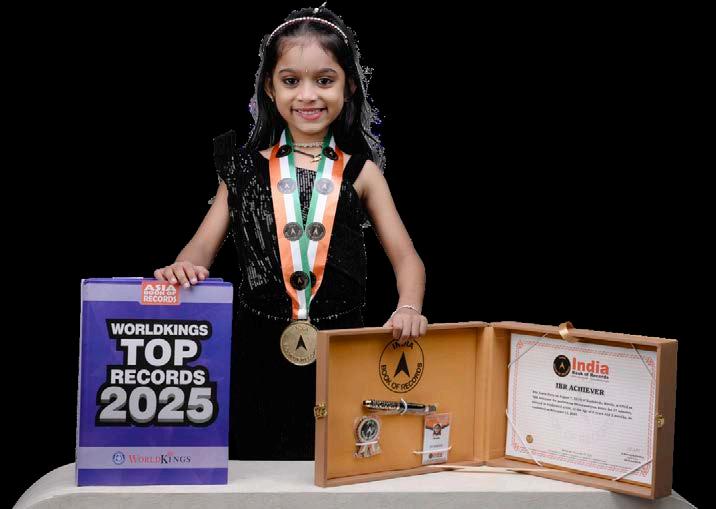
Astha Vadnagara (born on September 15, 2003) of Ahmedabad, Gujarat, is titled as ‘IBR Achiever’ for publishing 100 blogs on applied science and technology, on WordPress, titled ‘Lab to Life’, continuously from August 22, 2025 till date, as confirmed on November 29, 2025.
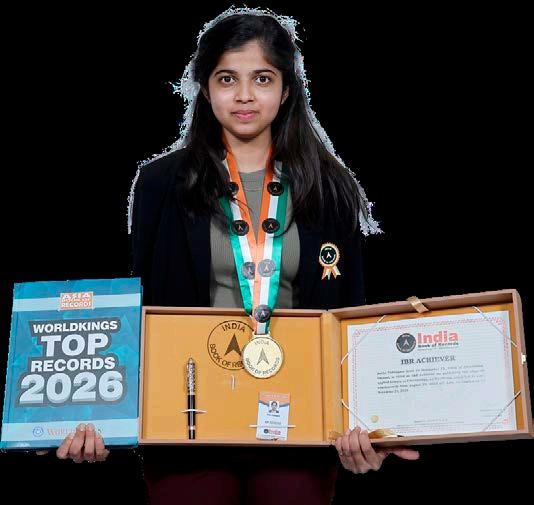
Nimalan Yaazh Thiththan (born on September 8, 2021) of Thanjavur, Tamil Nadu, is titled as ‘IBR Achiever’ for riding a bicycle, without supporting wheels, for a distance of 7.09 km on a busy road in 56 minutes and 41 seconds, at the age of 4 years and 2 months, as confirmed on November 12, 2025.
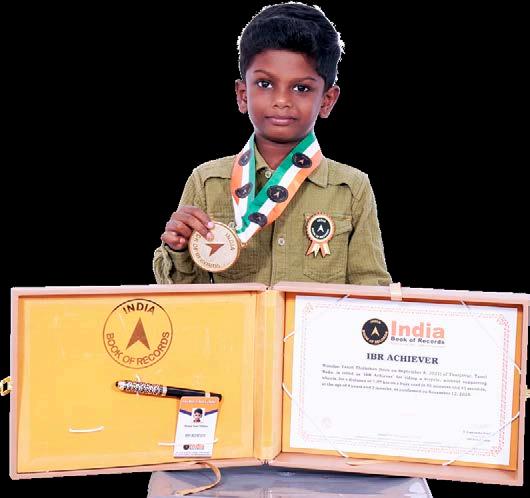
Sreehari S J (born on July 31, 2006) of Thiruvananthapuram, Kerala, is titled as ‘IBR Achiever’ for developing a Wi-Fi CSI Deep Learning Gesture System with an accuracy of 90.2%, at the age of 19 years and 3 months, as confirmed on November 18, 2025.
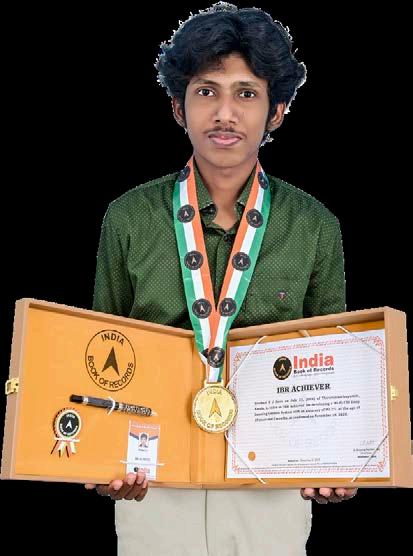
Abdul Sinan (born on August 27, 2009) of Dakshina Kannada, Karnataka, is titled as ‘IBR Achiever’ for meticulously writing the Holy Quran on sheets of paper, at the age of 16 years and 2 months, as confirmed on November 22, 2025.
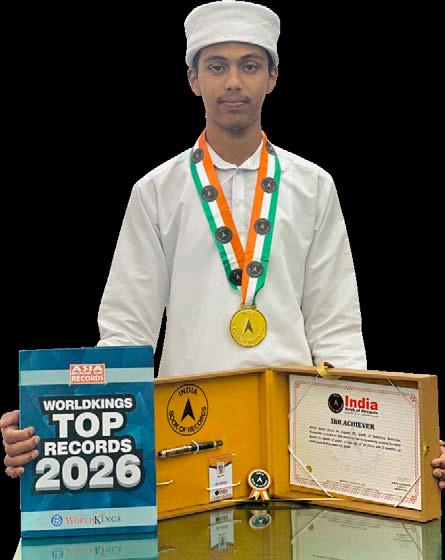
Manvik Aadheeran S. (born on June 6, 2022) of Bengaluru, Karnataka, is titled as ‘IBR Achiever’ for identifying and naming 10 colours, 15 vehicles, 7 continents, 10 types of machinery and 16 parts of the body; answering 10 General Knowledge questions; reciting 5 English nursery rhymes, days of the week; and running a distance of 100 metres in 36 seconds, at the age of 3 years and 1 month, as confirmed on July 9, 2025.
Sohan Gachhui (born on September 16, 2022) of Howrah, West Bengal, is titled as ‘IBR Achiever’ for identifying 15 historical places, 37 vehicles; answering 10 G.K. questions in Bengali; translating the names of 20 birds, 20 fruits, 55 miscellaneous words, 25 parts of the body and 20 flowers from English to Bengali, at the age of 2 years and 10 months, as confirmed on July 17, 2025.
Shekhar Kumar Sahu (born on September 10, 2022) of Mayurbhanj, Odisha, is titled as ‘IBR Achiever’ for identifying 29 colours, 15 flowers, 19 birds, 35 fruits, 25 parts of the body, 25 freedom fighters, 26 animals and 12 games; reciting letters of the English alphabet, 7 English nursery rhymes, 10 shlokas and 8 planets; counting from 1 to 50; recalling 28 Indian states with capitals, 33 English antonyms and 25national symbols; answering 70 G.K. questions, at the
Minha Khalid (born on September 2, 2004) of Malappuram, Kerala, is titled as ‘IBR Achiever’ for designing a living room, using the software named ‘Coohom’ (a powerful software providing 3D design solutions for architects), as confirmed on July 24, 2025.
Pramansh Pramol Hambarde (born on March 30, 2023) of Nanded Maharashtra, is titled as ‘IBR Achiever’ for identifying and naming 127 images on flashcards, including 14 fruits, 12 vegetables, 30 animals, 5 birds, 12 vegetables, 6 insects, 5 birds, 9 shapes, 16 vehicles and 18 miscellaneous pictures, in 4 minutes and 39 seconds, at the age of 2 years and 3 months, as confirmed on July 10, 2025.
Sailesh Shanmuga Raja Vidhya (born on December 17, 2023) of Chennai, Tamil Nadu, is titled as ‘IBR Achiever’ for lifting and holding a dumbbell (weighing 3 kg) for 1 minute and 28 seconds with both hands and running across the room, at the age of 1 year and 6 months, as confirmed on July 16, 2025.
Advika Biswal (born on December 22, 2021) of Dhenkanal, Odisha, is titled as ‘IBR Achiever’ for identifying and naming 24 parts of the body, 21 yoga poses, 24 traffic signals, 15 colours, 24 shapes, 7 freedom fighters, 16 vehicles, 15 fruits, 15 scientific name, 15 elements; answering 22 G.K. questions; recalling Hindi alphabetical words, 13 mantras, 40 opposite words, 17 national symbols, 12 English and 11 Hindi nursery rhymes; at the age of 3 years and 10 months, as confirmed on November 8, 2025.
Muhammed Hyzin Sabith K. (born on December 14, 2022) of Malappuram, Kerala, is titled as ‘IBR Achiever’ for identifying 70 miscellaneous items, 7 colours, 6 famous personalities, 5 numbers (in Hindi, English and Malayalam), 5 wonders of the world, 15 vegetables, 18 parts of the body, 6 professions, 14 vehicles, 12 fruits, 6 outdoor games, 6 great teachers of India, 7 internal organs, 5 identity and 8 flowers, at the age of 2 and 11 months, as confirmed on
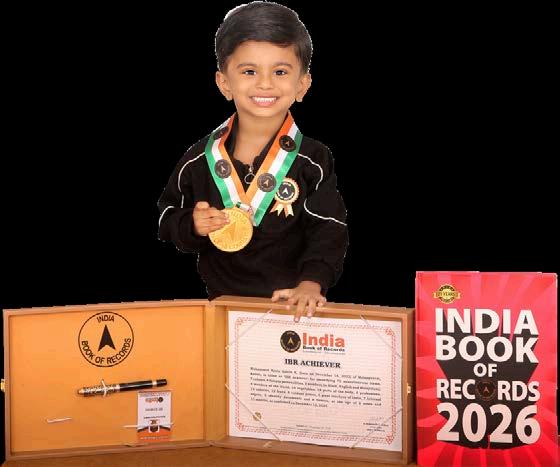
S. Dheeran (born on September 2, 2022) of Tiruvallur, Tamil Nadu, is titled as ‘IBR Achiever’ for identifying and naming 17 fruits, 24 animals, 14 birds, 17 vegetables, 18 vehicles, 8 colours, 8 shapes, 13 parts of the body and 34 miscellaneous items; reciting days of the week, months in a year (both in English and Tamil), 26 letters of the English alphabet and 10 English and Tamil nursery rhymes; and counting from 1 to 20, at the age of 3 years and 3 months, as confirmed on December 5, 2025.
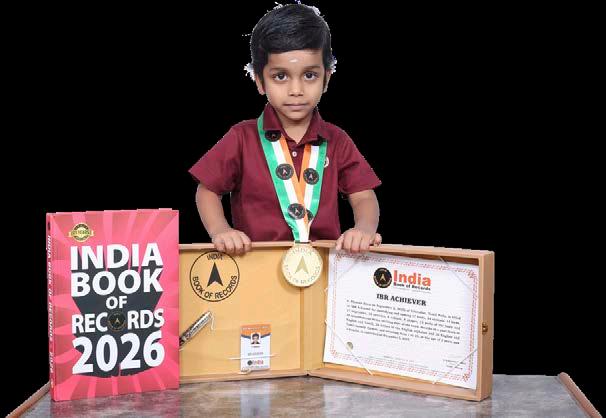
Mouliga (born on December 15, 2022) of Palakkad, Kerala, is titled as ‘IBR Achiever’ for identifying 7 colours, 8 domestic animals, 9 fruits, 11 parts of the body, 8 national symbols,7 vegetables, 5 wild animals, 6 Prime Ministers of India, 6 shapes, 6 flowers, flags of 6 countries, 5 sense organs, 6 Malayalam actors, 5 household items, 5 electronic items, 5 singers and 4 pictures related to nature; and reciting 26 letters of the English alphabet, at the age of 2 years and 11 months, on November 26, 2025.
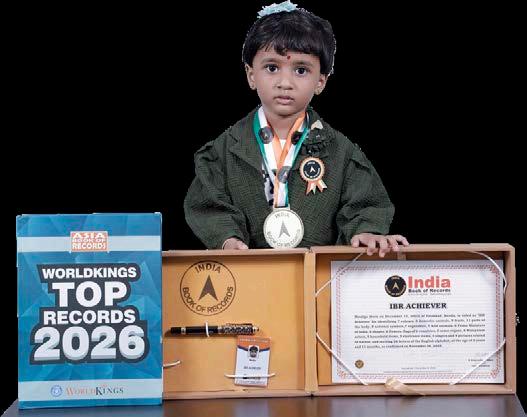
Mani Raj Singh (born on June 26, 1991) of Mathura, Uttar Pradesh, is titled as ‘IBR Achiever’ for covering 28 Indian states and 6 union territories, by car, from March 1, 2023 to April 11, 2023. He also visited the Char Dhams and 12 Jyotirlingas, as confirmed on November 19, 2025.
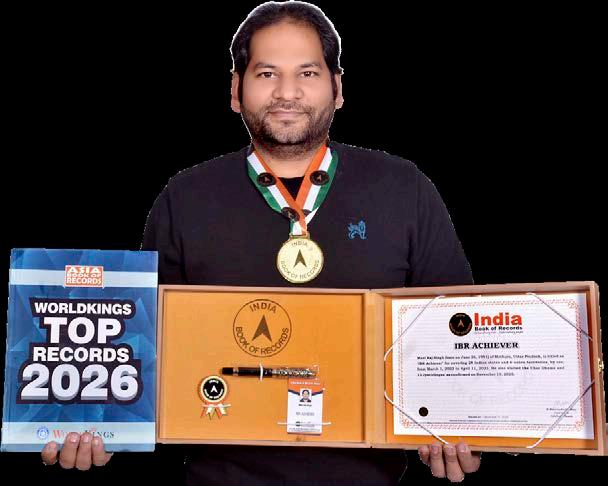
Sulagna Raul (born on December 7, 2022) of Purba Medinipur, West Bengal, is titled as ‘IBR Achiever’ for identifying and naming 10 parts of the body and 5 fingers; answering 26 G.K. questions in Bengali; reciting 14 Bengali nursery rhymes, months in a year and days of the week; translating 14 organs, 7 insects, 10 foods and 15 fruits from English to Bengali; and singing the basic musical notes, at the age of 2 years and 11 months, as confirmed on December 3, 2025.
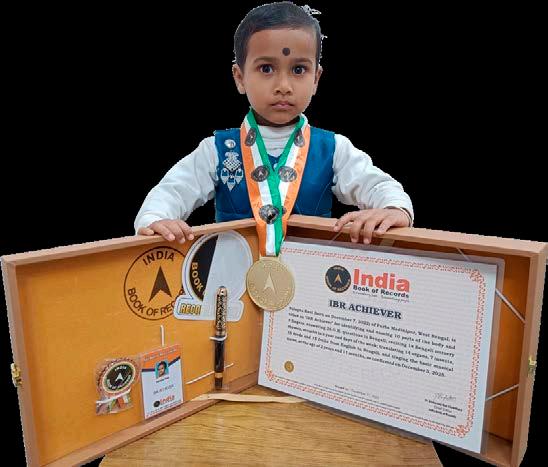
Faheema Jaffarin (born on September 16, 2000) of Thiruvarur, Tamil Nadu, is titled as ‘IBR Achiever’ for being appointed as a young Principal of Mahasoomiya Nursery and Primary School, Budamangalam, Thiruvarur (Tamil Nadu), with effect from July 16, 2025, at the age of 24 years and 10 months, as
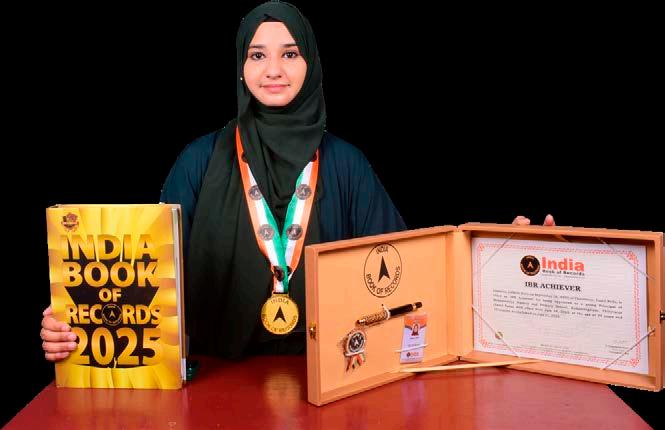
J. Vetrivel (born on March 27, 2023) of Chennai, Tamil Nadu, is titled as ‘IBR Achiever’ for identifying and naming 8 flowers, 22 food items, 22 professions, 11 shapes, 12 celestial bodies, 21 vegetables, 11 colours, 18 parts of the body, 20 animals, flags of 15 countries, 20 deities, 22 fruits, 18 birds and 26 letters of the English alphabet with associated words; counting from 1 to 10; imitating the sounds of 7 animals; and reciting 12 Tamil uyir age of 2 years and 3 months, July 23, 2025.
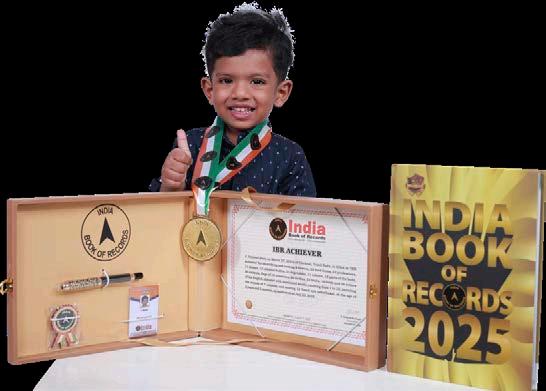
Kanak Amar Mundada (born on July 15, 2020) of Aurangabad, Maharashtra, is titled as ‘IBR Achiever’ for recalling the names of 50 inventors in 1 minute and 55 seconds, at the age of 4 years and 11 months, as confirmed on July 2, 2025.
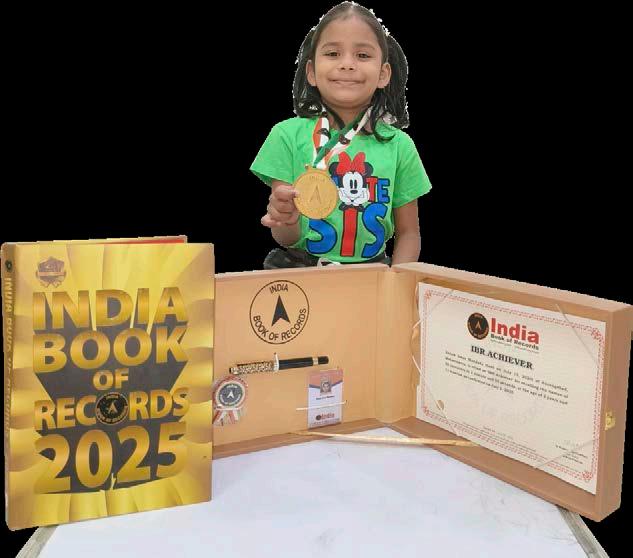
Bhoomika Saha (born on July 14, 2022) of Kolkata, West Bengal, is titled as ‘IBR Achiever’ for identifying and naming 5 vegetables, 5 fruits, 6 soft toys, 7 cartoon characters, 10 animals, 6 vehicles, 5 deities and 10 animals; reciting 10 Bengali and 6 English nursery rhymes; counting from 1 to 10; answering 10 G.K. questions; mimicking the sounds of 7 animals; solving a shape puzzle of 16 pieces; achieving 2 certificates and one medal; solving an English alphabet puzzle and singing the National Anthem, at the age of 3 years, as confirmed on July 16, 2025.
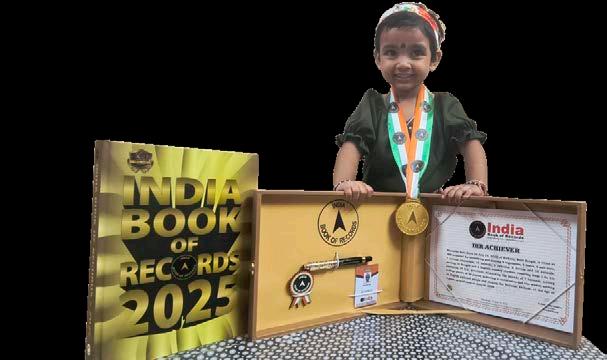
Krishan Yadav (born on January 19, 2019) of Mount Abu, Rajasthan, is titled as ‘IBR Achiever’ for achieving a 1st Dan Black Belt certificate in Seiko Kai Karate from ‘Seiko Kai Karate International India’ on May 18, 2025, at the age of 6 years and 3 months, July 16, 2025.
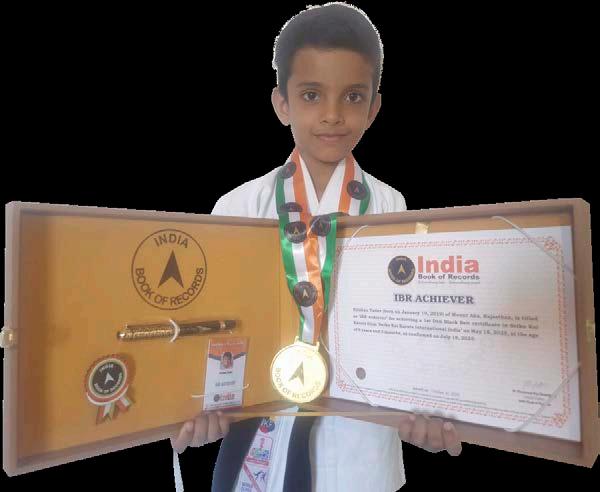
Manthan Ankit Parikh (born on July 4, 2013) of Ahmedabad, Gujarat, is titled as ‘IBR Achiever’ for undertaking a round-trip bicycle expedition. He started cycling from Paldi (Ahmedabad) on July 4, 2025, and terminated at Paldi the same day; cycling 101.28 km in 4 hours and 19 minutes, at the age of 12 years, as confirmed on July 11, 2025.
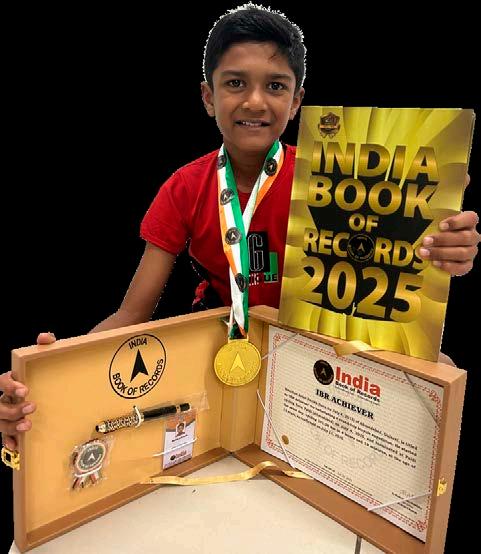



as MedicineGravity
This is probably the world’s first book on the Science of Postural Medicine based on using the greatest force on earth, the Gravity as Medicine! After reading this book you will surely be convinced that in comparison to existing major systems of treatment including Allopathy (Modern Medicine), Homeopathy, Ayurveda or Naturopathy, postural medicine is the fastest, safest and more evidence-based than others, besides being almost zero cost and having zero dependency on chemicals/drugs and high-tech equipment.
Price: ₹ 225/(Courier charges extra)
(Available in Hindi/English, in all leading online stores)
Ÿ
Ÿ Earthing
Ÿ Connecting
Ÿ Continuity meter
Ÿ Carry Bag
Ÿ
Ÿ
Ÿ
Ÿ
Ÿ
Ÿ
Ÿ
Ÿ
Ÿ
Ÿ
Ÿ

A Step by Step Guide to a Smarter Memory
By Neerja Roy Chowdhury
This book will show you how to:
· Memorize a dictionary
· Never forget any appointment
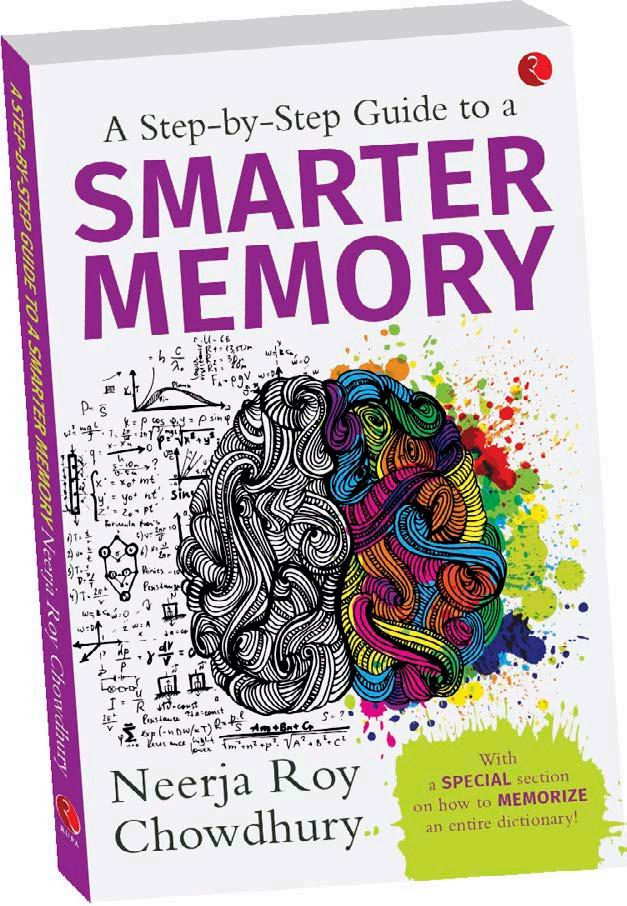
· Recall every formula correctly
· Remember the shopping lists, birthdays and anniversaries etc.
· Overcome absent-mindedness
· Learn Memory techniques to achieve career goals
· Secure better marks in every exam
About the author:
Neerja Roy Chowdhury, the name can be found in prestigious record books including Guinness Book of World Records and Indo-China Book of Records for diverse reasons. The most interesting of all is her ability to memorize the complete Oxford English-Hindi Dictionary. She has also developed software for memorizing a dictionary. She has travelled more than 100 cities internationally in last one decade training people on ‘Memory Techniques’. Her latest book ‘Smarter Memory’ is published by Rupa Publication. Presently she is involved in developing curriculum in memory techniques for international universities.
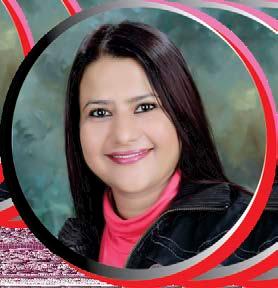
Let every morning be the Hunza Morning
If you have decided to pick only one of my suggestions for the sake of your health, then take this suggestion:
Stop consuming tea, especially in the morning. Early morning tea makes the inner lining of the intestinal wall acidic because, after a long night of fasting, the stomach is empty and craving food. An acidic stomach on a regular basis is one of the biggest causes of all kinds of inflammatory and lifestyle diseases, including arthritis and diabetes.
How to stop craving of teaSwitch to Hunza Tea
Hunza Civilization: The Hunza people live in the extreme northwest of the Indian subcontinent, within the Hindu Kush range. They are one of the world's healthiest civilizations, with some individuals living up to 110 years.
Ingredients:
* 12 Mint leaves(Pudina)
* 8 Basil leaves (Tulsi)
* 4 Green cardamom (Elaichi)
* 2 gm Cinnamon (Dalchini)
Instructions:
* Take 4 cups of water in a tea pan
* Add all ingredients, simmer it for 10 mins
* Add a dash of lemon juice and serve hot or cold































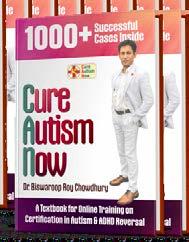
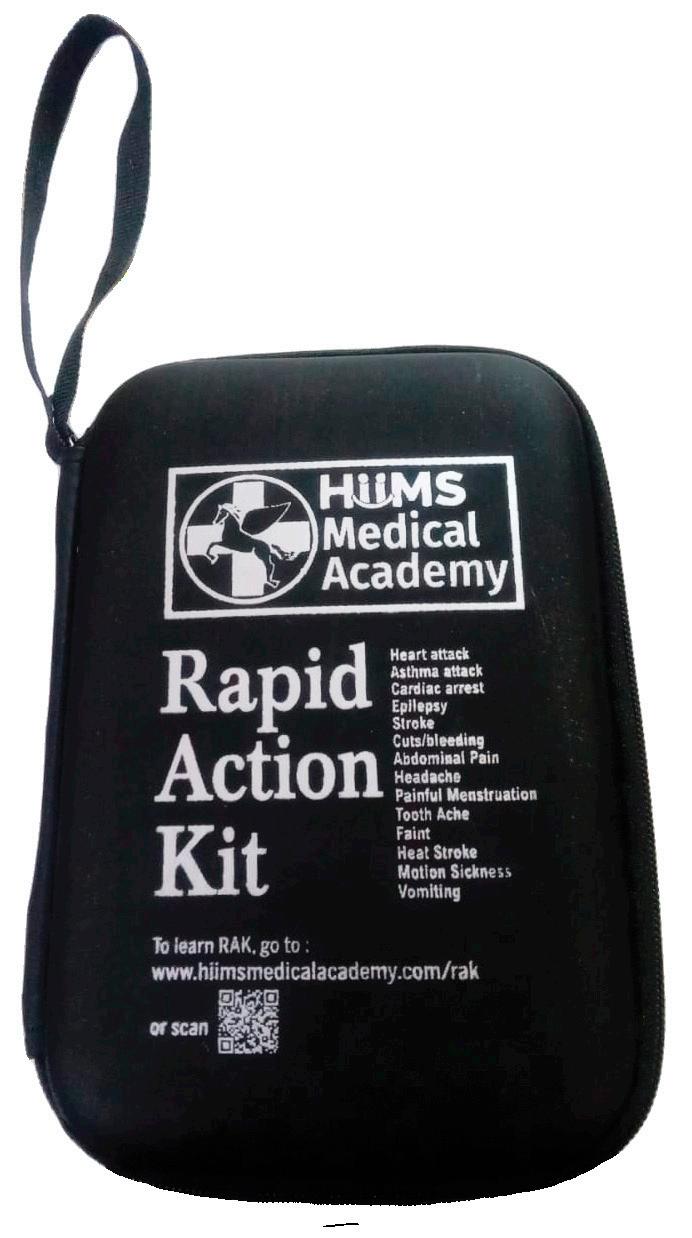
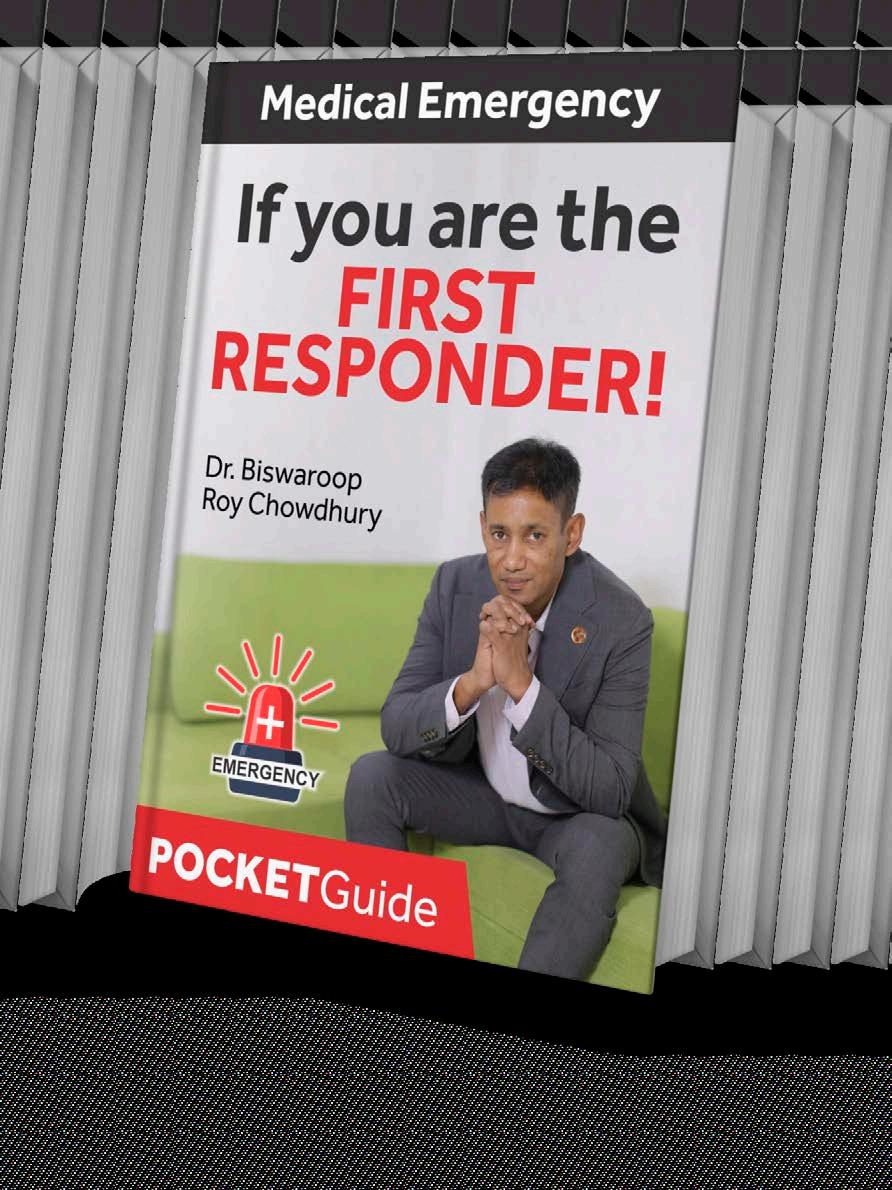

Vaso-Stimulation Therapy Kit
This hot water utensil with an electric panel is a part of hot water Vaso-Stimulation Therapy. Before connecting the VST Kit with the electrical socket, one must check the earthing of the socket. To check the earthing, use Dr. BRC Earthing Detector included in this kit.
For full understanding of VST Kit, read the book H.E.L.P. (www.biswaroop.com/help)
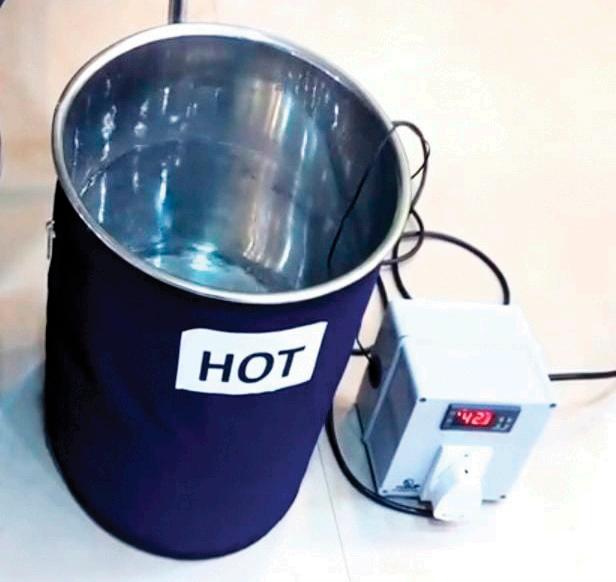
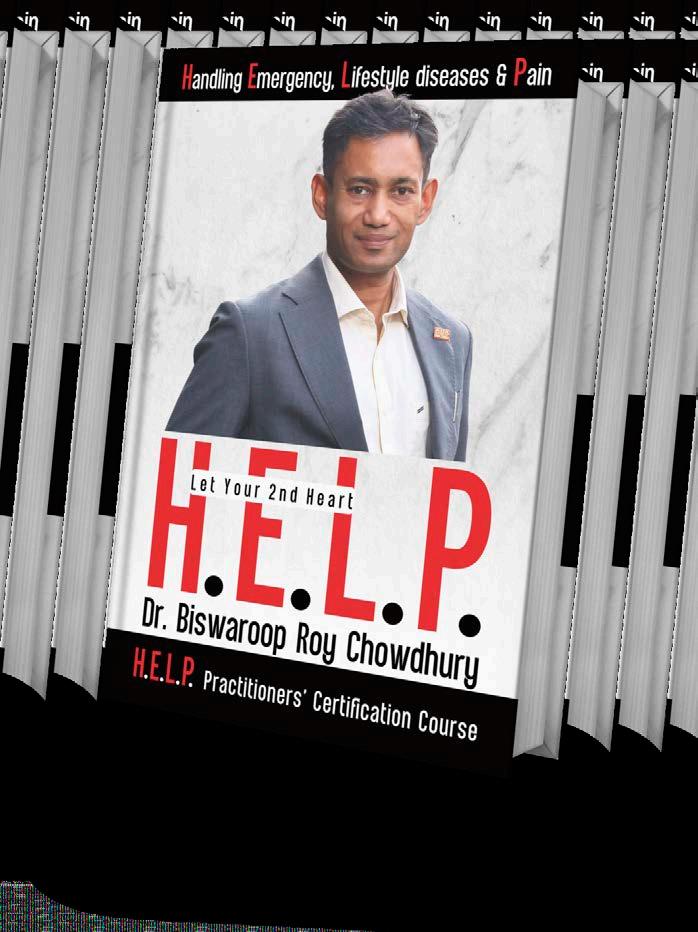


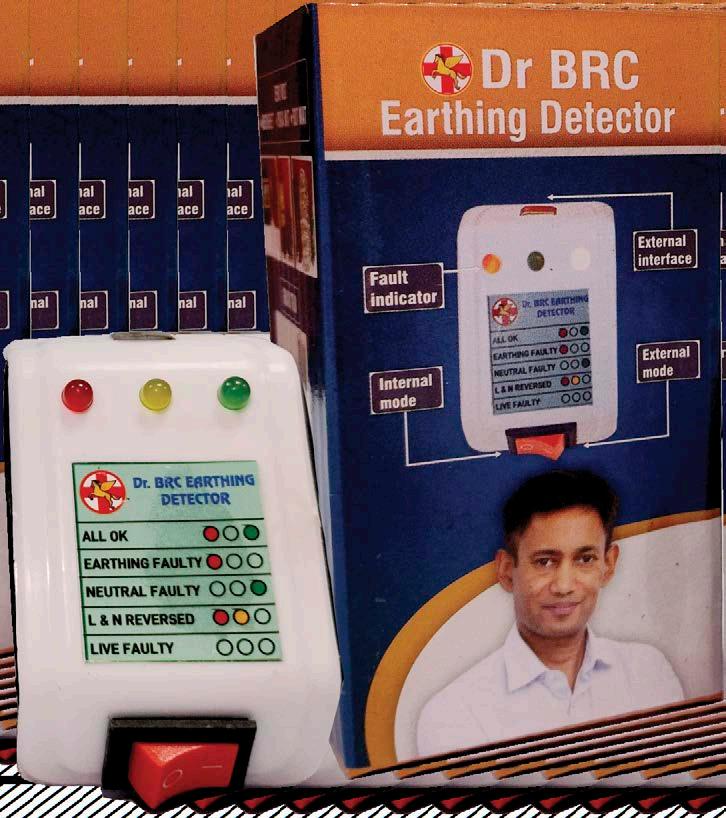



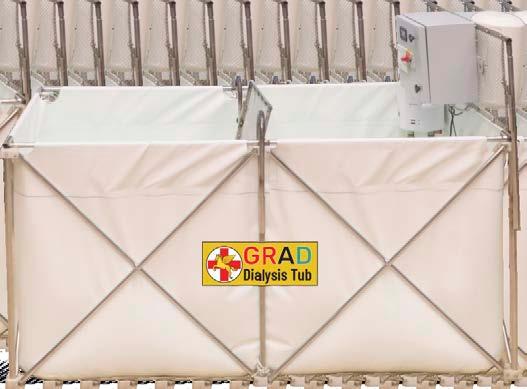


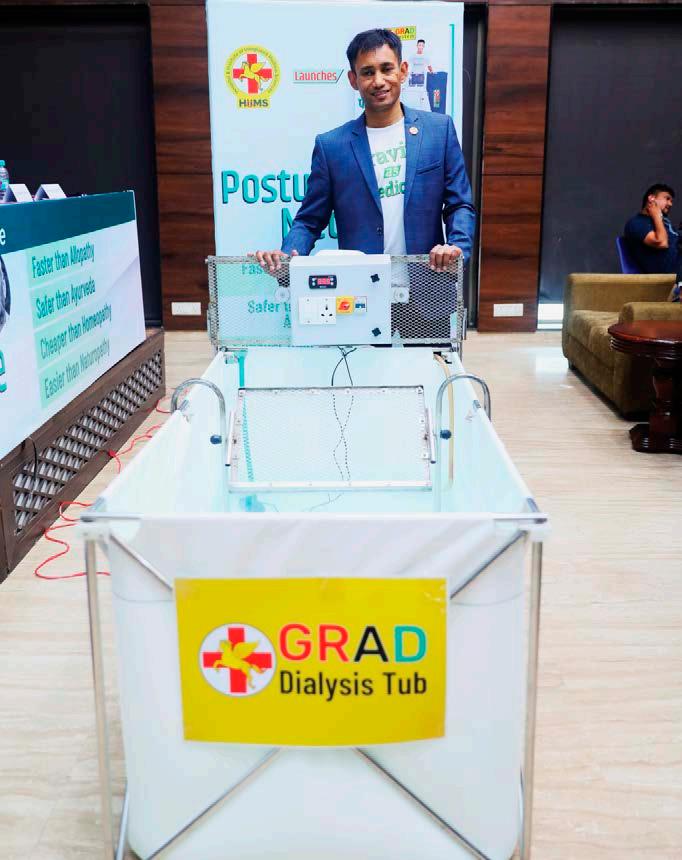

Course Highlights

Duration: 1 Month Mode: 100% Online • (Objective test after each lecture)
Module 1: Neem Culture, Chemistry & Cosmetics
•History, Chemistry & Cultural Adaptation of Neem
•History of Neem as a Medicine
•Cultural Adaptation Worldwide
•Chemistry of Active Agents
•Neem as Cosmetics
Module 3: Practitioner’s Toolkit – Infectious Diseases
•Evidence Base of Neem as medicine for Infectious Diseases
•Dosage Calculation
•Practitioner’s Toolkit – Infectious Diseases
Syllabus Overview Practitioner’s Kit
• • Neem OilNeem Leaves Powder
• • Neem Bark PowderDropper
• Measuring Spoon
Module 2: Practitioner’s Toolkit – Lifestyle Diseases

•Evidence Base of Neem as medicine for lifestyle diseases
•Dosage Calculation
•Practitioner’s Toolkit – Lifestyle Diseases
Module 4: Neem Panchkarma & Home Pesticide
•Neem Panchkarma for Symptomatic Pain Management
•Basics of Neem Panchkarma
•Practical Sessions
•DIY: Home Pesticides • Final Objective Test



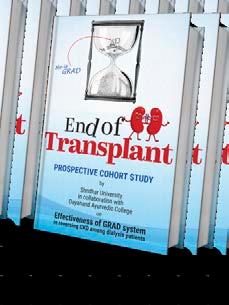


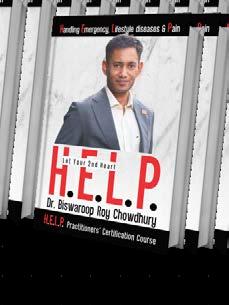
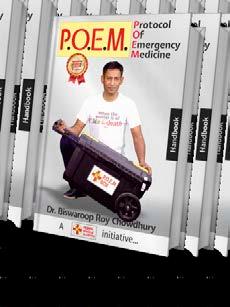






Media Coverages of our Record Holders
To avail Convocation@IBROffice services email us at: convocation@indiabookofrecords.in
India Book of Records 413A, HSIIDC, Sector-68, IMT, Faridabad (Haryana), India, Pin-121004
Phone: +91-99994 36779, +91-129-2510534
Email: media@indiabookofrecords.in www.indiabookofrecords.in
India Book of Records is registered with the Government of India with RNI no HARENG/2010/32259. India Book of Records is affiliated to Asia Book of Records and follows International Protocol of Records (IPRs) as per the consensus arrived at the meeting of the Chief Editors of National Record Books, Ho Chi Minh City, Vietnam.