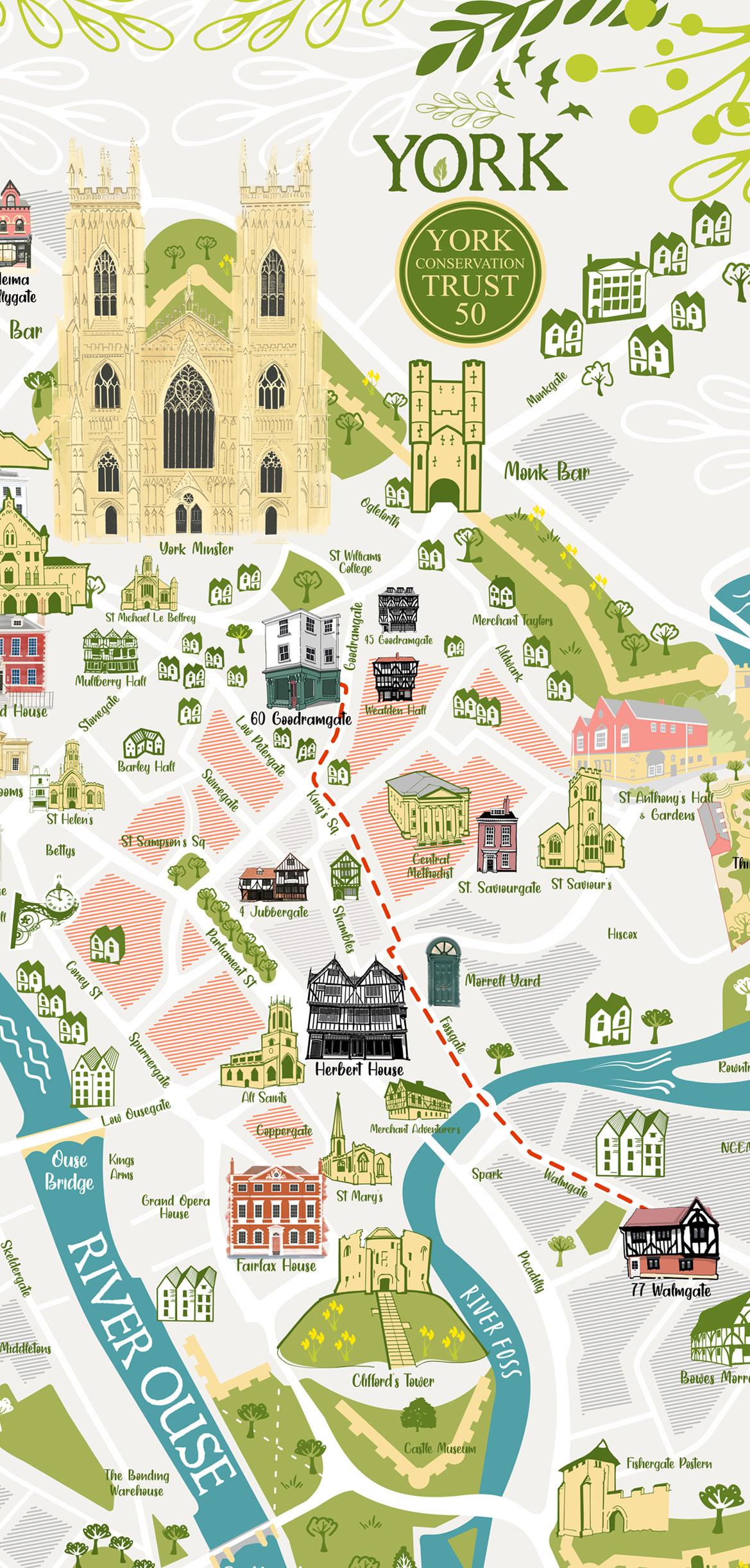
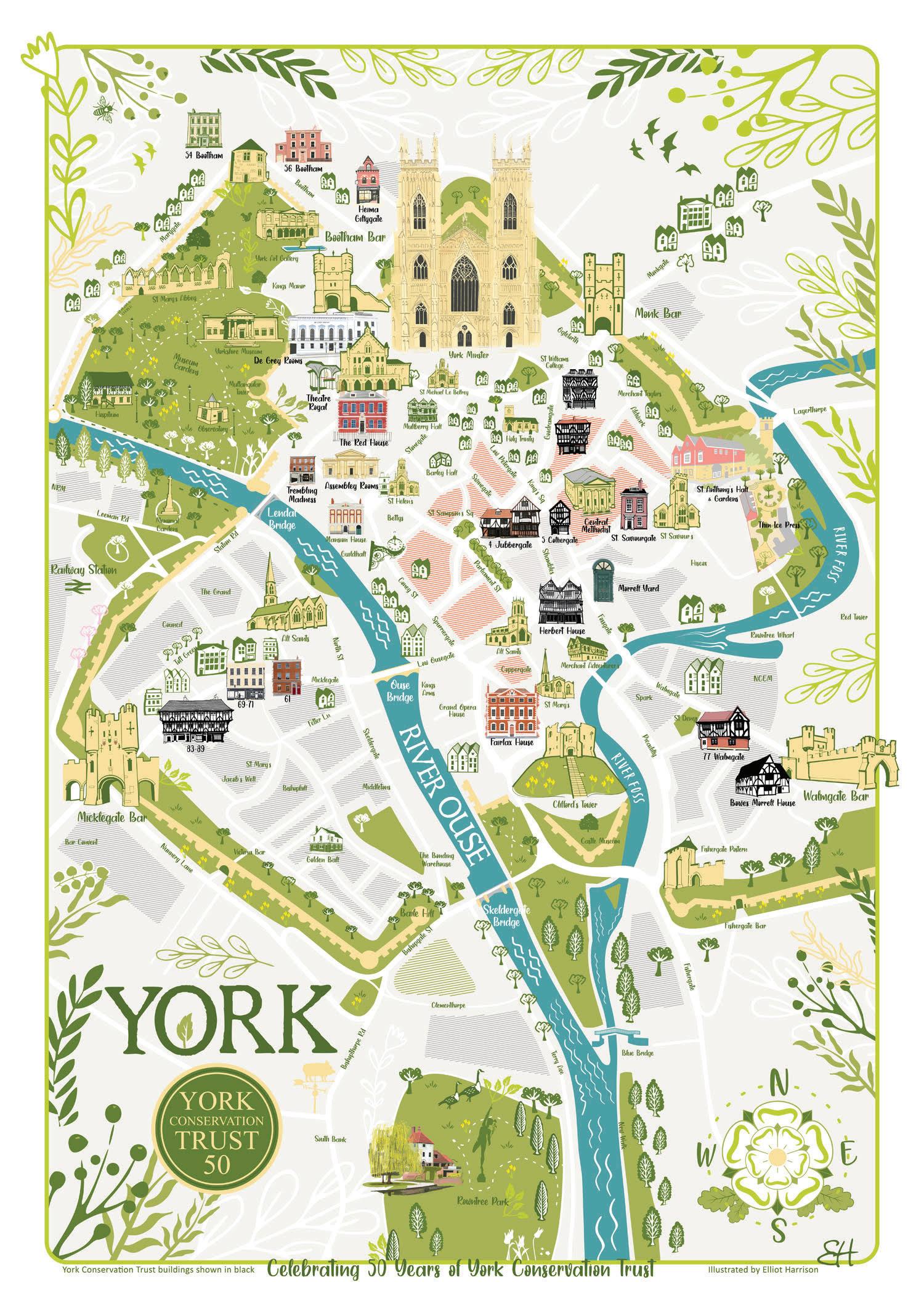
As part of York Conservation Trust’s 50th anniversary, we are opening three remarkable historic buildings for a special open day, hosted in partnership with York Unlocked.
Herbert House, 60 Goodramgate and 77 Walmgate are all historic timber-framed buildings, each highlighting different phases of York’s built heritage and the unique structural characteristics of this remarkable historic form of construction.
Together, they tell a wider story about York’s timberframed buildings, why they are so unusual, and the specialist skills, materials and craftsmanship needed to repair and care for them. The aim of this open day is to raise awareness, encourage public enjoyment, and share knowledge about the careful conservation these buildings require to survive for future generations.
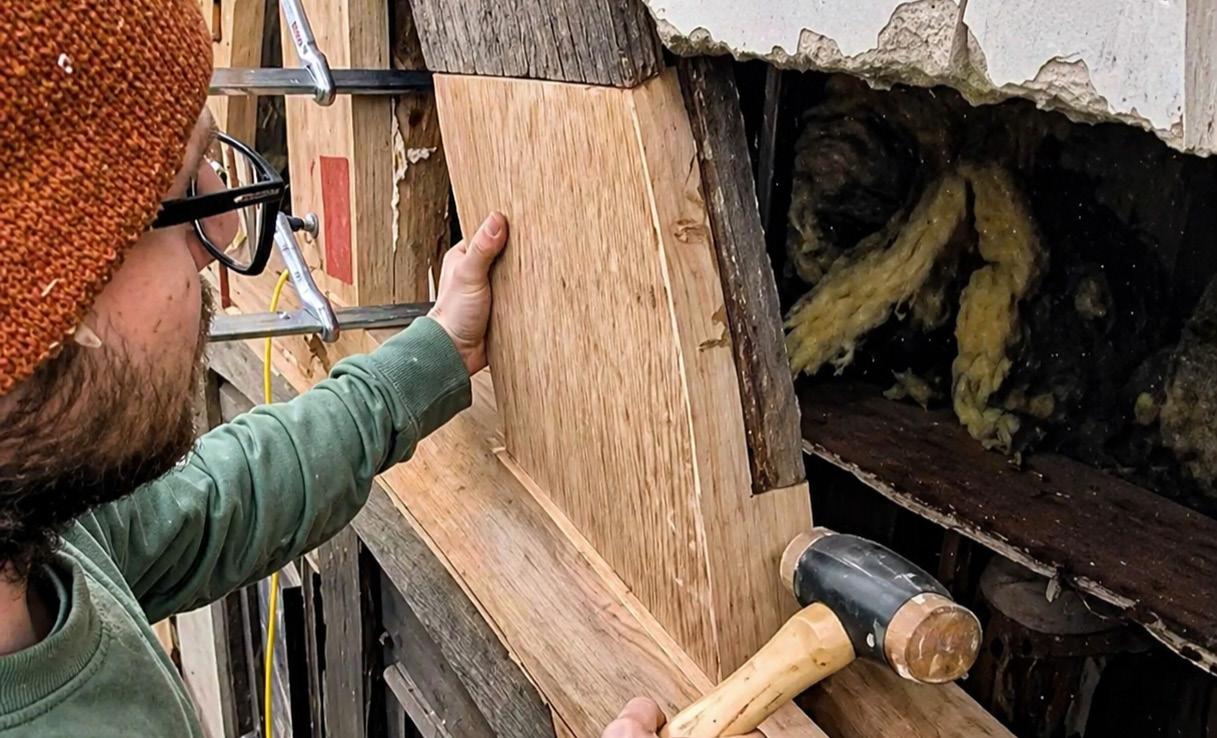
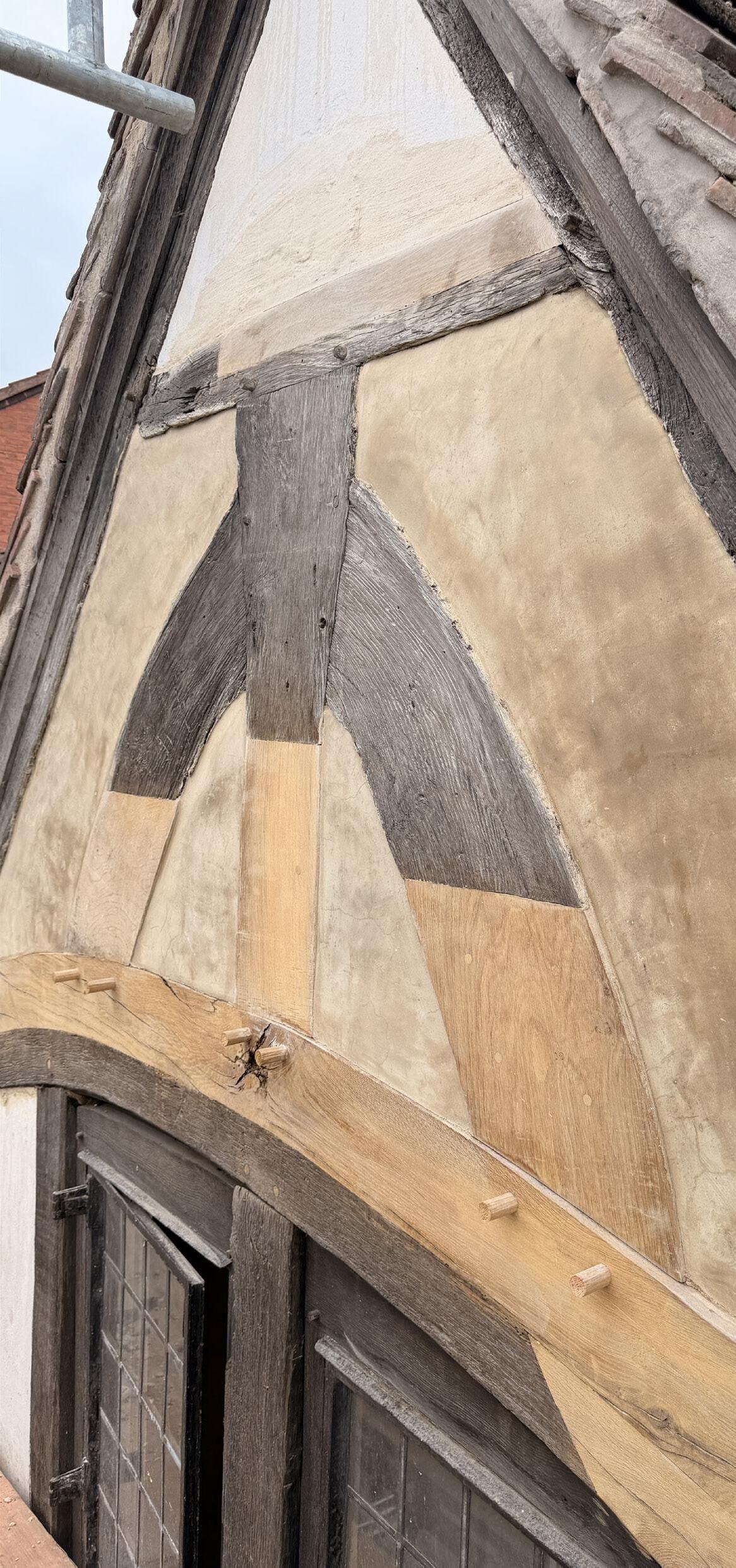
Traditional timber-frame repairs to the 15th-century gable wall of 77 Walmgate
Don’t miss the heritage craft demonstration today at Herbert House.
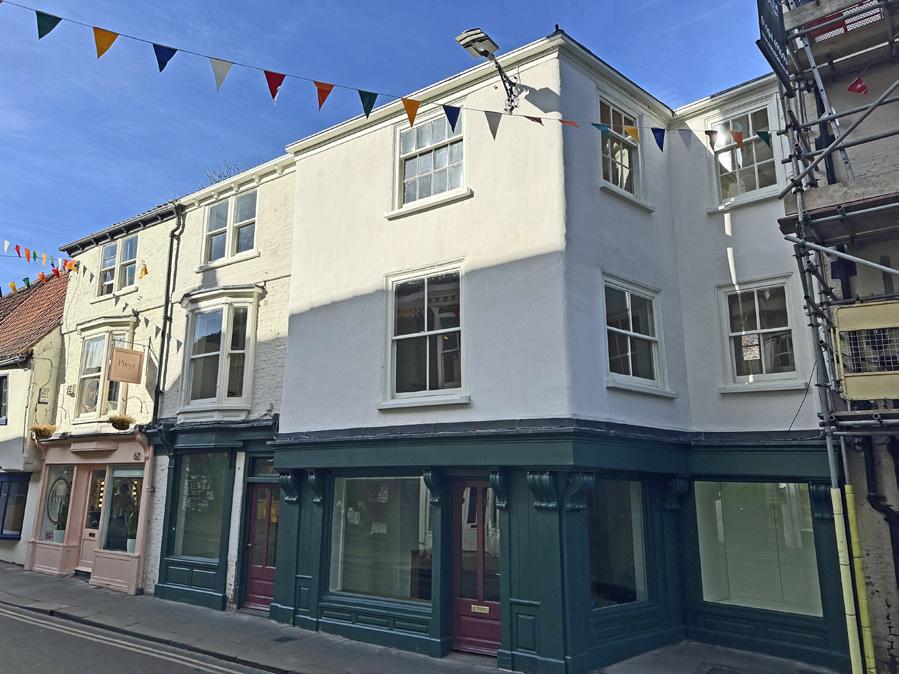
Built in c.1316 by Holy Trinity Church as part of Lady Row, this is one of the oldest surviving rows of timber-framed houses in the UK. The row comprised small commercial and residential units to provide income for the church.
The building you see today is the result of centuries of change, repair and adaptation, making it a true patchwork of York’s history.
Five key facts:
• Lady Row dates back to c.1316, making it one of the earliest surviving timber-framed rows in the country.
• The left half of the property was rebuilt in brick in c.1783 by John Lund, turner and toy maker.
• The surviving timber-frame has been much altered in the past 700 years. The top floor was added around 1827, extending it to its present three storeys.
• Over the years it has been used by gunsmiths, watchmakers and jewellers, including Catherine Bates, one of York’s few known female gunmakers, who lived and worked here from 1844 until around 1870.
• A small fire broke out in the upstairs living quarters in 1888 which became part of the building’s story and helped shape later repairs and changes you can still spot today.
Project highlight:
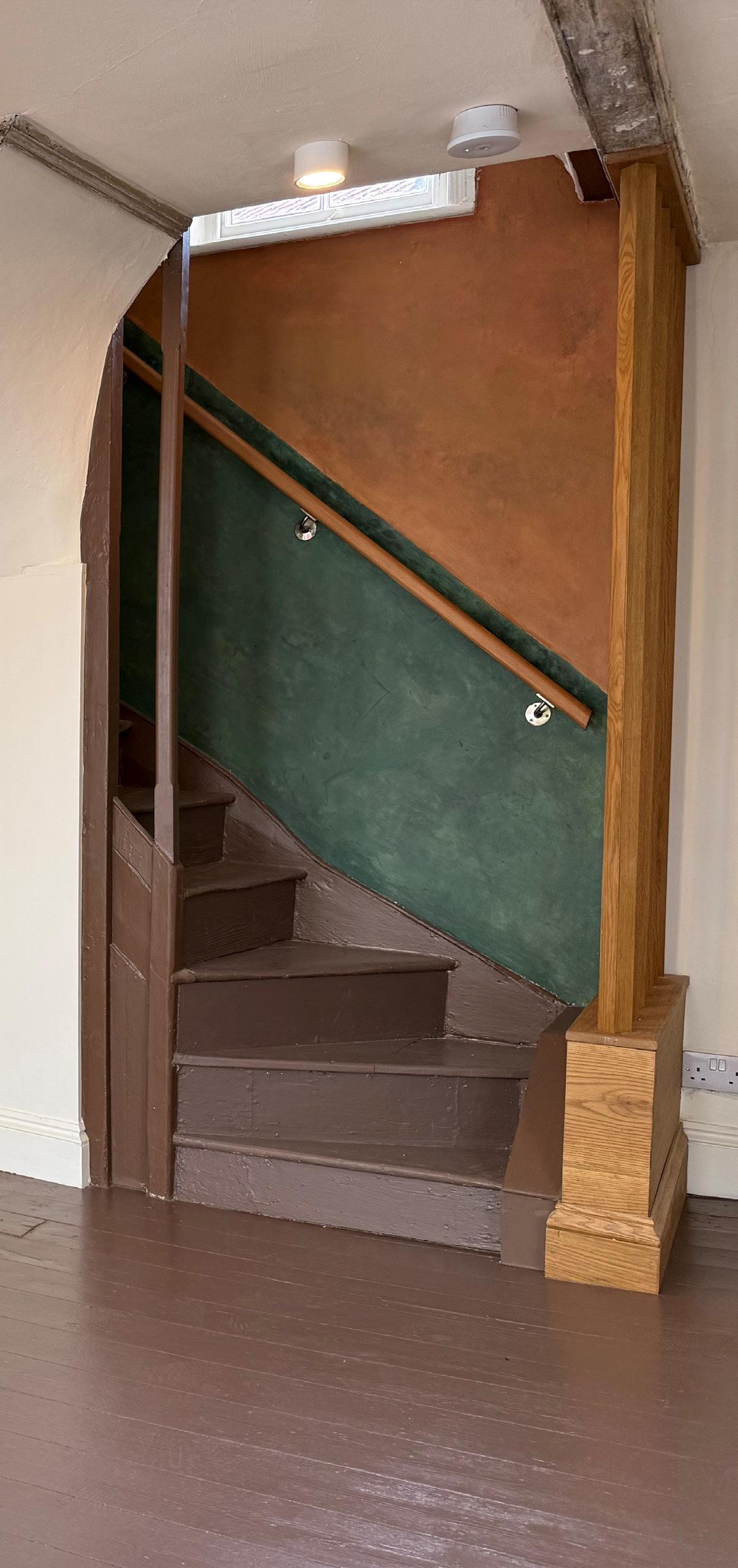
During conservation work in 2021, the removal of modern shop fittings revealed beautiful historic painted walls and timber paint finishes, hidden for generations. Instead of covering these up again, the project followed a “conserve as found” approach - carefully repairing and protecting fragile surfaces so visitors can see genuine traces of past lives inside the building.
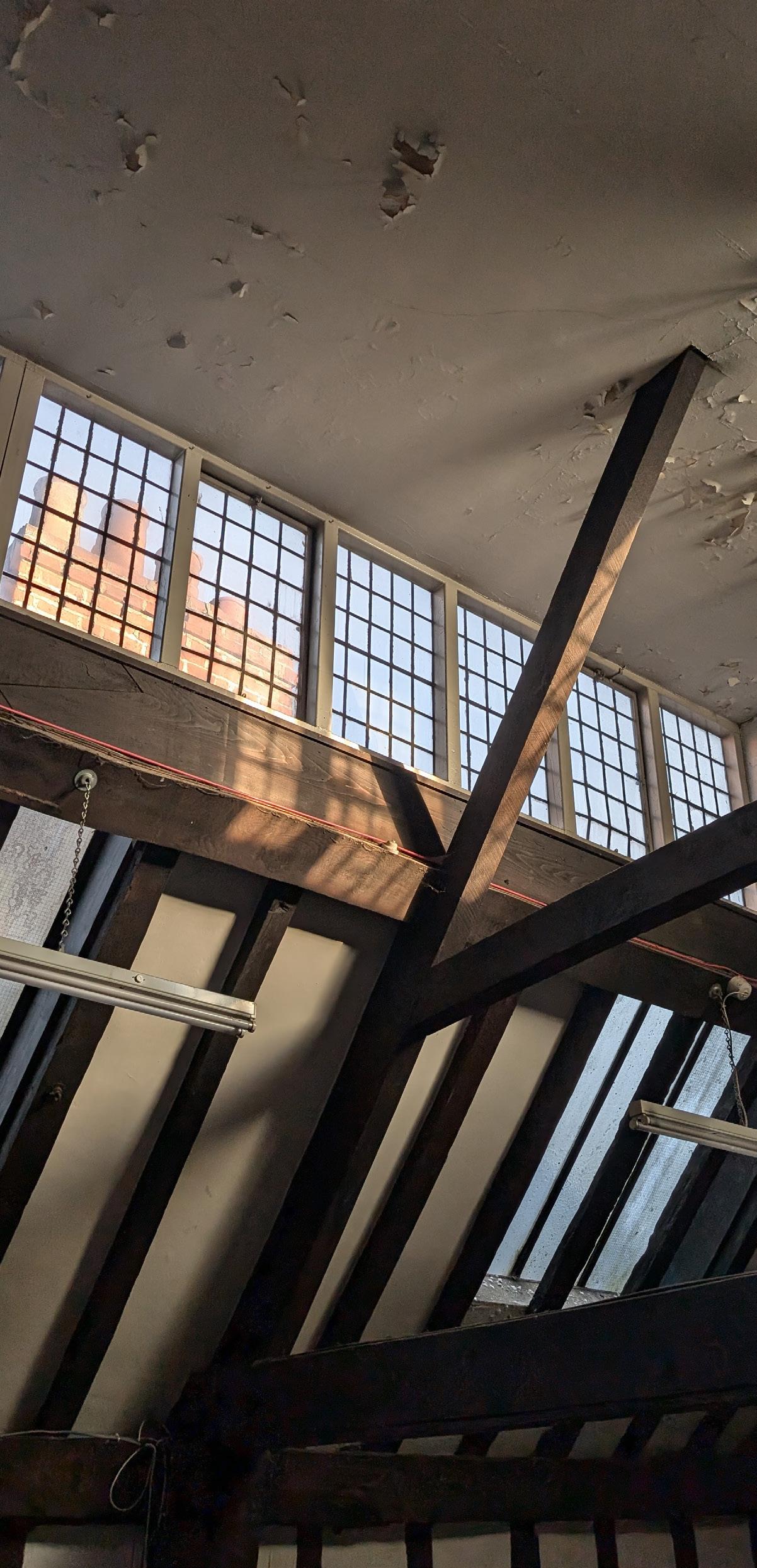
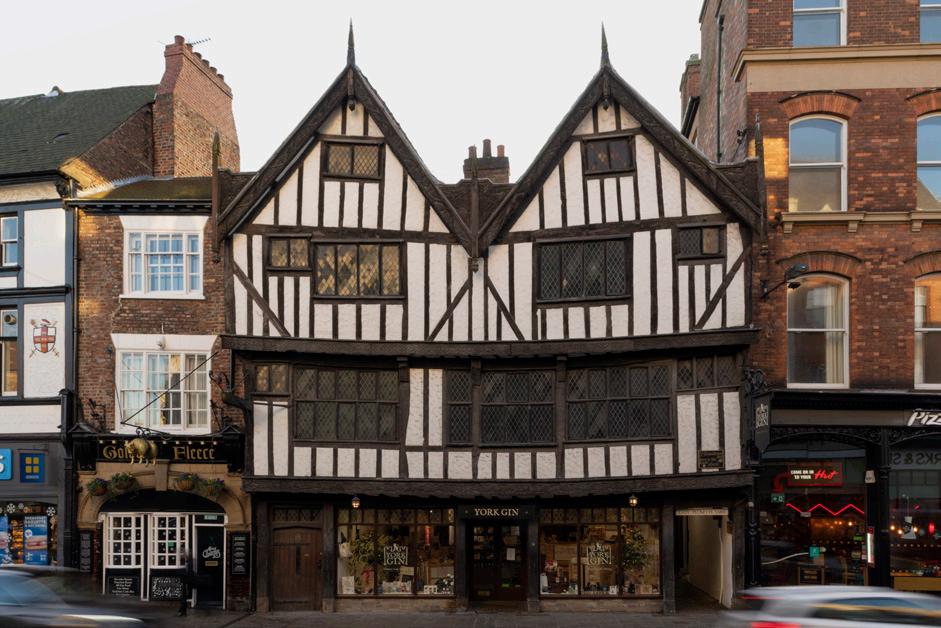
Herbert House is a remarkable group of 16th and 17th century timber-framed buildings located on Pavement and Lady Peckett’s Yard, forming one of the city’s most significant surviving collections of post medieval timber-framed mercantile buildings.
Five key facts:
• The site incorporates an assemblage of large 16th and 17th century timber-framed structures of exceptional heritage value.
• It was home to generations of the Herbert family, who were linen merchants and prominent civic figures. Sir Thomas Herbert, born at the site in 1606, was a noted diplomat, and Gentleman of the Bedchamber to King Charles I.
• Lady Peckett’s Yard was named after Alice Peckett, wife of John Peckett, Lord Mayor in 1701. She lived at the site, and is reputed to haunt the adjacent Golden Fleece pub.
• Currently empty, Herbert House is being prepared for a carefully planned return to use to ensure it can once again play an active role in the life of the city.
• The building is the focus of a detailed architectural feasibility study, supported by the Architectural Heritage Fund (AHF), helping to guide sensitive conservation and sustainable reuse.
Project highlight:
Herbert House is at an early but crucial stage in its conservation journey. The ongoing study is exploring how the building can be repaired and reused in ways that respect its historic fabric while meeting modern needs.
Throughout the day, Herbert House will also host heritage craft demonstrations by skilled craftspeople involved in the restoration of historic properties across York.
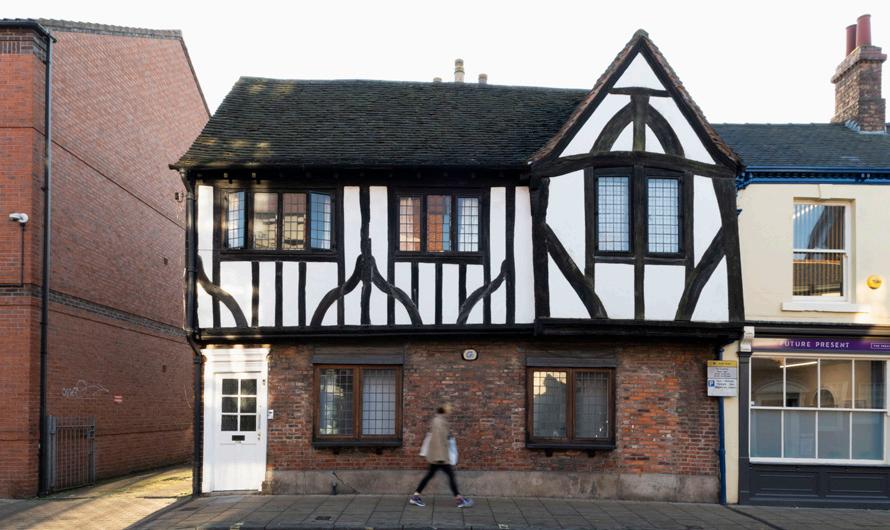
77 Walmgate is a Grade II* listed building comprising part of a former medieval timber-framed hall and crosswing complex. It is one of only two substantially surviving medieval timber-framed buildings on Walmgate, having escaped the widespread 20th century clearances that transformed much of the street.
Five key facts:
• It comprises a 15th-century crosswing and a late 16th-century hall range with distinctive curved ‘ogee’ braces.
• Served as a lodging house in the 19th-century, when Walmgate was the poorest parish in York.
• The site was extensively restored and altered in 193536 by architects Brierley & Rutherford for Mr Cuthbert Morrell. Recent works included specialist timber frame repairs using traditional skills and materials to stabilise and protect the structure.
• A modern rear extension has been added in a way that allows the historic building to function well today, while keeping its character at the forefront.
• Over time it shifted from a private house to mixed commercial and residential use, and later into poorly planned apartments. The most recent conservation project has carefully reversed this, restoring the building, while respecting its historic fabric.
Project highlight:
Years of piecemeal change had left 77 Walmgate underused and difficult to live in. The recent conservation project has transformed it into a comfortable, wellplanned family home, combining repaired historic rooms with a carefully designed contemporary extension. By repairing the timber frame, reusing existing materials where possible, and improving energy performance, the project shows how historic timber-framed buildings can be adapted for modern life without losing what makes them special.
York Conservation Trust (YCT) is an independent charity caring for more than 70 historic buildings across York, from small shops to major civic landmarks. Our aim is to repair and reuse historic buildings, so they remain useful, welcoming and part of everyday life in the city.
2026 marks our 50th anniversary as a charity; throughout this year we are hosting events such as this to celebrate half a century of our work in helping to save York’s heritage.
The conservation works at 60 Goodramgate and 77 Walmgate represent some of the first completed projects in our new 10-year plan, showing how careful conservation can protect the past while creating spaces that will be used and enjoyed long into the future.
We hope you enjoyed visiting these properties today. If you would like to help York Conservation Trust continue to protect York’s historic buildings please donate here