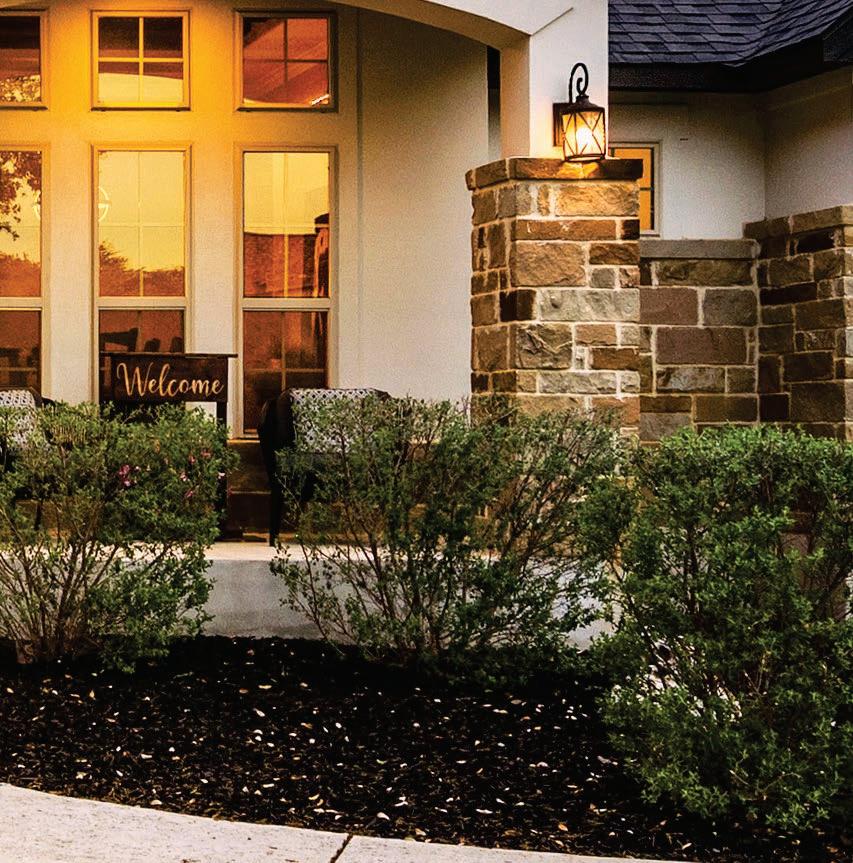
Independence Title is built on a conviction that a local title company focused on innovation and the unique needs of Texas communities would succeed. And so we have. With 70-plus locations statewide, we handle transactions in 53 counties around all four Texas Metro areas and beyond, and are supported by every major underwriter in the nation. Our top decision-makers remain local, and we take pride in delivering service that is both personal and professional. As an industry leader in information resources, education, and technology tools, Independence Title has guided hundreds of thousands of Texans in staking their flag on the Texas land they call their own.
Let Independence Title be part of your Texas history.
Dedicated Team of experts
From the talented escrow teams and title examiners who process your transaction, to all the employees behind the scenes, we understand that your transaction is personal to you. And it’s personal to us.
Our staff includes industry leaders in navigating federal and state regulations, branding, web development, business technologies, research, and training.
Our in-house Legal Team is on top of the latest changes in laws and best practices, and is ready to help with special challenges.
Our team is backed with cutting edge technology resources, including apps to help you find us, transfer earnest money, estimate transaction costs, and more.
Who’s Who Professionals involved in your transaction
Realtor®
A licensed real estate agent who is a member of the National Association of REALTORS®, a real estate trade association. REALTORS® also belong to their state and local associations of REALTORS®.
Listing Agent
The listing agent or broker forms a relationship with the homeowner to sell the property and place the property in the Multiple Listing Service.
Buyer's Agent
A key role of the buyer’s agent or broker is to work with the buyer to locate a suitable property and negotiate the home purchase.
Escrow Officer
An escrow officer facilitates your closing, including coordination of document preparation, recording, and disbursements. An Escrow Officer acts as a neutral third party and is there to serve both the buyer and seller in the transaction.
Appraiser
Before you can get a loan, the bank will have an appraiser look at the home and decide if it’s really worth the money you’re planning to spend. Many homeowners hire their own appraisers to make sure they’re getting the best value.
Mortgage Broker or Lender
When financing your home, you can use a mortgage broker—who shops multiple lenders for the best loan—or go directly to a lender like a bank or credit union. The process often begins with a loan preapproval, which helps set your budget and strengthens your offer.
Inspector
The inspector looks at the foundation, roof, attic, walls, ceilings, windows, doors, and any attached decks or porches. They will also inspect the electrical, heating, air conditioning, and plumbing.
Surveyor
If you are using a loan in transaction, you are usually required to have a survey performed on your property by a licensed surveyor for the State of Texas. The survey will show the boundary of the property as well as all permanent structures located on the property.
PRE-QUALIFICATION
Goals for purchase, income, assets, debts and credit are discussed to estimate price range and loan terms that are best for the buyer.
PRE-APPROVAL
Loan application completed; credit history, income, employment, bank accounts verified and evaluated by underwriting.
SHOP FOR HOME
Pre-approval letter in-hand and price range determined, buyer is now ready to shop for a home with their REALTOR.
REPORTS ORDERED
Appraisal ordered by lender, charged to buyer. Title Report and Escrow ordered. Buyer shops for homeowners insurance.
OFFER ACCEPTED
Home inspection completed, paid for by the buyer. Requests for any repairs/credits negotiated. Loan terms finalized, rate locked.
OFFER WRITTEN
Home found! Terms of offer, seller credit, closing date, etc. discussed to ensure buyer is comfortable with numbers. Earnest Money check written.
SETTLEMENT STATEMENT
Purchase Contract, appraisal, title, insurance and any remaining loan conditions sent to underwriting for review.
CLOSING DISCLOSURE/ LOAN DOCUMENTS
After underwriting ‘clears’ all prior conditions, the Closing Disclosure will be sent. Once received, the CD requires a 3 day review period. After the review period the loan docs are drawn & delivered to escrow.
SUBMIT FOR FINAL APPROVAL
Prepared by escrow, discloses all the final numbers including the buyer’s cash due for closing. Once completed, escrow contacts buyer with final figures and schedules closing.
TRANSACTION FUNDING
Lender wires funds to escrow. Escrow pays all the parties listed on settlement statement and records documents with county clerk.
FINAL LENDER REVIEW
Signed loan docs returned to lender for review. Final verbal verification of employment for buyers done. All funding conditions are reviewed & cleared for closing.
SIGN DOCUMENTS
Buyer signs the loan/title docs at the title company, confirms title company’s wiring instructions, and provides funds for closing.
Types of Mortgage Loans Financing
Starting the mortgage loan process is a crucial step in buying a home if you plan to finance the purchase. This should be done in advance, even before the bidding process takes place.
Loan Options
Talk with loan officers at financial institutions, mortgage companies, or savings and loan institutions to review the types of loans that are available and/or applicable to you and compare the rates of each.
First-Time Homebuyer
You may have the potential to qualify for mortgage programs with little money down, low interest rates, or federal programs that give beneficial rates. Loan officers can go over these programs and help you determine which program you may qualify for.
Financial History
Having a good credit history and limited debt could help you obtain a better loan rate. Alternatively, if your current credit score is less than ideal, your financial representative can give you tips and tools to better your score and qualify for a better rate.
Preapproval Letter
When you have chosen a loan officer, dependent upon your loan, the next step is to get preapproved and obtain a preapproval letter. To do so, your loan officer will need to examine your credit files and discuss exactly how much you can borrow. It is important to discuss your preapproval letter with your chosen real estate professional before you begin looking for homes.
Conventional Loan
A conventional loan is any mortgage loan that is not insured or guaranteed by the government (such as Federal Housing Administration, Department of Veterans Affairs, or Department of Agriculture loan programs)
FHA Loan
The Federal Housing Administration (FHA) administers a program of loan insurance to expand homeownership opportunities. FHA provides mortgage insurance to FHA-approved lenders to protect these lenders against losses if the homeowner defaults on the loan. The cost of the mortgage insurance is passed along to the homeowner. The standards for qualifying for these loans are generally more flexible than for conventional loans.
VA Loan
The Department of Veterans Affairs (VA) offers loan programs to help service members, veterans, and their families buy homes. The VA does not make loans, but rather sets the rules for who may qualify, arranges the terms under which mortgages may be offered, and guarantees any loan made under the program. Some VA loans are available with no down payment.
Real estate transactions are a big deal – big money, and big complexities, even with a transaction that seems straightforward. A Realtor represents your best interests, and handles all this and more:
Researching the local market and specific neighborhood to make sure sellers and buyers are getting their best price, accounting for property condition, location, and many fine details based on expert comparisons with other recent sales and listings.
Realtors are experts on the promulgated contract forms that account for every aspect of the transaction, including property legal descriptions, down payments, option fees, surveys, tax prorations, title policies, exclusions, and much more.
For Sellers, Realtors guide you strategically in staging and preparing your property for sale, provide security for you and your property by limiting access to qualified buyers, help you understand and properly navigate contract and disclosure obligations, and advertise your property across a wide network of other agents and potential buyers.
For Buyers, Realtors are the experts on school districts, neighborhoods, and changing property values over time. They have access to multiple resources to find homes for sale, and work with proven professional property inspectors, mortgage lenders, title insurance companies, and others that work together to get you to and through the closing table.
And Realtors manage the complicated negotiations around pricing, option periods, repairs, lender requirements, interest rates, parties that do not live up to their obligations, plus all the personal dynamics of working with other people, including emotions, family needs, illness, heirs, finances, relationships forming or breaking apart – all the circumstances that can influence the process.
The bo line?
You will likely buy or sell real estate only a few times in your lifetime, but Realtors manage multiple transact ons e ery year. er ence atters. nter ew ult l ealtors. re t e est fit or you.
Guide to Multiple Off Negotiations
Information for Buyers
• In some situations, sellers will have several competing purchase offers to consider. Sellers have several ways to deal with multiple offers. Sellers can accept the “best” offer; they can inform all potential purchasers that other offers are “on the table”; they can “counter” one offer while putting the other offers to the side awaiting a decision on the counter-offer; or they can “counter” one offer and reject the others.
• While the listing broker can offer suggestions and advice, decisions about how offers will be presented – and dealt with – are made by the seller - not by the listing broker.
• There are advantages and disadvantages to the various negotiating strategies you can employ in multiple offer negotiations. A low initial offer may result in buying the property you desire for less than the listed price – or it may result in another buyer’s higher offer being accepted. On the other hand, a full price offer may result in paying more than the seller might have required. In some cases there can be several full price offers competing for the seller’s attention – and acceptance.
• Your buyer-representative will explain the pros and cons of these (and possibly other) negotiating strategies. The decisions, however, are yours to make.
• Purchase offers generally aren’t confidential. In some cases sellers may make other buyers aware that your offer is in hand, or even disclose details about your offer to another buyer in hope of convincing that buyer to make a “better” offer. In some cases sellers will instruct their listing broker to disclose an offer to other buyers on their behalf.
• Listing brokers are required to follow lawful, ethical instructions from their clients in the same way that buyer representatives must follow lawful, ethical instructions from their buyer-clients. While some REALTORS® may be reluctant to disclose terms of offers, even at the direction of their seller-clients, the Code of Ethics does not prohibit such disclosure. In some cases state law or real estate regulations may limit the ability of brokers to disclose the existence or terms of offers to third parties.
• You may want to discuss with your buyer-representative the possibility of making your offer confidential, or of establishing a confidentiality agreement between yourself and the seller prior to commencing negotiations. Realize that as a represented buyer, your broker likely has other buyer-clients, some of whom may be interested in the same properties as you are. Ask your broker how offers and counter-offers will be presented and negotiated if more than one of their buyer-clients are trying to buy the same property.
• Appreciate that your buyer-representative’s advice is based on past experience and is no guarantee as to how any particular seller will act (or react) in a specific situation.
Information for Buyers and Sellers
• Perhaps no situation facing buyers or sellers is more potentially frustrating or fraught with potential for misunderstanding and for missed opportunity than presenting and negotiating multiple, competing offers to purchase the same property. Consider the following issues and dynamics:
• Sellers want to get the highest price and best terms for their property.
• Buyers want to buy at the lowest price and on the most favorable terms.
• Listing brokers – acting on behalf of sellers – represent sellers’ interests.
• Buyer representatives represent the interests of their buyer-clients.
• Will a seller disclosing information about one buyer’s offer make a second buyer more likely to make a full price offer? Or will that second buyer pursue a different property?
• Will telling several buyers that each is being given a chance to make their “best offer” result in spirited competition for the seller’s property? Or will it result in the buyers looking elsewhere?
• What’s fair? What’s honest? Why isn’t there a single, simple way to deal with multiple competing offers?
• Knowledgeable buyers and sellers realize there are rarely simple answers to complex situations. But some fundamental principles can make negotiating multiple offers a little simpler.
• Realize the listing broker represents the seller – and the seller’s interests, and the buyer-representative represents the buyer – and the buyer’s interests. Real estate professionals are subject to state real estate regulation and, if they are REALTORS®, to the Code of Ethics of the National Association of REALTORS®.
Who’s Responsible?
Payoff of Existing Loan(s)
Prorated Taxes
Escrow Fee
Courier Fee
Tax Certificate
Document Preparation
Recording Fee(s)
Termite Inspection (VA Loan Only)
Talk to your Realtor and your Independence Title Escrow Officer about the details of your specific transaction.
Property Inspections
Termite Inspection
Prorated Taxes
Escrow Fee
Document Preparation
Courier Fee
Hazard Insurance
* Loan Origination Fee
* Loan Title Policy and Endorsements
* Appraisal
* Credit Report
* Prepaid Interest
* Recording Fee(s)
* Initial Deposit for Escrow Account (if applicable)
* Mortgage Insurance Premium (if applicable)
VA Funding Fee (if applicable)
* These costs are associated with a mortgage loan and do not apply to cash purchases. Talk to your lender about all fees applicable to your specific transaction.
HOA Resale Certificate
HOA Transfer Fees
Home Warranty
Owner's Title Policy & Endorsements
Realtor Commissions Repairs Survey
These items are negotiable on the promulgated Texas Real Estate Sales Contract. Talk to your Realtor about the best strategies for your situation.
Contract Receipted
Escrow Department Opens Order
Title Department Received Order
Escrow Team Coordinates Transaction
Commitment for Title Insurance is Issued Examiner Researches Property
All Agree to Close!
Closer Receives Instructions Preparation of Documents
Approval
What to Pack, What to Ask, and What to Say for a Smooth Closing.
Congratulations on getting to the finish line! Here are a few tips to help make your closing experience smooth and free of surprises.
Identification
Bring complete identification to closing, including any person signing with a Power of Attorney. To comply with federal and state security, banking, and notary laws, you must bring valid (not expired!) government-issued identification (i.e., Driver’s License or Passport).
If Your Transaction is Linked to Another Closing ...
For example, if you’re selling and using the proceeds on a purchase later that day, or you’re buying with proceeds from a closing that happened earlier— let your escrow officer know as soon as possible to coordinate all the moving parts better.
Changes to Marital Status
Alert your escrow officer if there are any changes to your marital status since signing the contract, ideally before sitting down at the closing table. If a party to the contract is using a Power of Attorney (someone else will sign for them), ensure the title company has the original executed document at or prior to closing. Also, the title company is legally required to contact the person granting a power of attorney on the day of closing – make sure this person is available and expecting the call!
“Good Funds”
For any monies due over $1500, plan to bring “good funds” to the closing table, in other words, a wire transfer or cashier‘s check (note that a bank “ACH” transfer is different from a wire transfer and can cause lengthy delays).
Funds Delivery
Buyers should also confirm how the lender will deliver funds (usually via check or wire transfer) and work with their agent to clarify expectations with the seller. Bear in mind that a wire transfer from the lender will typically allow the title company to wire out the proceeds to the seller as soon as funding approval is received, assuming the seller’s proceeds are not more than the amount of funds received in via wire. A cashier’s check must be honored or “collected” by the bank before any funds may be sent out via a wire, which could delay one to three business days. Buyers and sellers should communicate (with the help of their agents) before closing to clarify expectations.
Here are some of the principal reasons to obtain and review a survey:
• To determine whether improvements (buildings, driveways, fences, utility lines, etc.) intended to be located on your property encroach into a neighbor’s property, or vice versa.
• To mark the boundaries on the ground, so they are clear to observers standing on or near the property.
• To provide the evidence needed by the title insurer to delete certain standard exceptions to coverage and thereby provide “extended coverage” against o -record title matters (including matters that would abe revealed by an accurate survey).
When to Use an Existing Survey
The TREC (Texas Real Estate Commission) Contract was revised several years ago giving the option to sellers and buyers to use existing surveys when appropriate. Per the TREC contract, not only does the buyer have to accept the survey, but lenders and title companies must also a ro e an acce t t. ur ey a fi a ts ass st n researc and review. However, the best information comes from those who have been on the property, particularly prospective buyers and their REALTORS®.
To avoid costly delays, the following guidelines for using an existing survey are provided:
• Survey should be completely legible. It must have the ro erty a ress co lete legal escr t on oo cert ficat on an t e sur eyor s s gnature an seal on the drawing.
• ur ey ust re ect all er anent ro e ents t at are currently on the property, including pools, fences, spas, decks, and additional square footage. If the sellers have added permanent structures that are not shown on the survey, it is important to identify new improvements such as a pool, gazebo, fence, etc. when signing the sur ey a fi a t. s not fies all art es t at t e sur ey provided is not an accurate rendering of the property as of the current date.
Almost always it is advisable to forego using an existing survey if improvements have been built since the time the initial survey work was performed. When an incorrect survey is delivered to the buyer and their agent, a new one should be requested. The title company and lender must be informed of the need for a new survey.
When to Obtain a New Survey
It is recommended that a purchaser obtain a new survey if one or more of the following conditions exist:
• sur ey s ows t at all s gn ficant ro e ents currently located on the property do not exist or cannot be found.
• Surveys exist only for portions of the property, but the property as a whole exists of two or more parcels that are not platted and that are described by “metes and bounds”, such that without a surveyor’s interpretation of the legal descriptions, one cannot be certain of whether the parcels are contiguous, or whether there might exist a “gap” between, or overlap of, property boundaries.
Even when one or more of the foregoing conditions are present, a survey might not be necessary, and the purchaser might wish to bear the risk of proceeding without a survey; unless required by the lender.
Title C mitments
Afrom to D
The ABC’s of a Title Commitment
Here’s a quick and basic overview of the four schedules of the Commitment for Title Insurance. In general, a title commitment is a commitment by the title company to insure the property and issue a title policy if conditions in the commitment are met.
lease contact your scrow ficer w t any uest ons a out a art cular t tle co t ent or transact on.
A
“A” is for “Actual Facts”
In other words, this is the “Who, What, Where and How Much” of the transaction. You’ll see the names of the seller and buyer, the types of policies to be issued, a description of the property, the sales price, and the name of the lender if any.
“B” is for “Buyer Noti cation”
“C” is for “Clear to Close”
From areas where other parties have some interest or control of the use of property. An example would be a utility easement, where the city would have a part of the land reserved for their use, or a building setback requirement that prevents the homeowner from building within a certain distance from the front of the property. These items are not covered.
BCD
“D” is for “Disclosure”
These items must be resolved in order to insure title to the new owner. This would include such things as a mortgage to be paid off, marital status, home improvement liens, unpaid taxes, or a requirement that another person - such as an heir or a former spouseparticipate in the sale of the property.
This last section outlines all parties who will collect any part of the insurance premium, including underwriters, title agents and attorneys.
Te the truth.
Do you really know what title insurance is?
Why most people should have it? Why it costs what it costs? Most people don’t. In fact, a recent survey by the American Land Title Association revealed that most homebuyers think of title insurance as “just another fee” they have to pay to buy a home. They don’t really know what it does, or how it protects them.
When you purchase a home, how can you be sure that the seller really owns the property and has the right to sell it to you? That there are no debts, liens or unpaid taxes that will become your problem? Title issues can limit your use and enjoyment of the property, as well as create a otent al financ al loss.
Title insurance is very unique compared to other lines of insurance. It does not address hazards that might occur after you buy the property. Instead, title insurance companies search for problems related to past ownership that need to be corrected or excepted from coverage before the property changes hands. In other words, title insurance covers mistakes and unknown factors that may exist prior to closing. The Texas Department of Insurance regulates title companies in Texas and sets fees, so there is no need to “shop” to compare premiums. A title policy premium is a one-time fee – there are no annual renewals like we pay for health, homeowner and auto insurance.
Once a sales contract has been signed by all parties, your title company searches the public records connected with the property and previous owners, going back many years. More than 1/3 of all title searches reveal a title problem that must be addressed before closing. For instance, a previous owner may have had minor construction done on the property but never paid the contractor, or the contractor did not pay his subcontractors, resulting in a lien claim. There may be a lien on the property for unpaid taxes by a previous owner, a missing signature of an heir in a prior transfer of the owners or a lure to file a release o l en on a ast mortgage.
Sometimes title problems occur because of matters that did not appear in the public records. To help protect purchasers in these instances, it is recommended that they obtain an Owner's Policy of Title Insurance to insure them against unforeseen problems.
Possible hidden title problems can include:
• Errors or omissions in deeds
• Mistakes in examining records
• Forgery
• Undisclosed heir
• Supplemental tax bills
The cost of Owner's Title Insurance, or the “Owner's Policy,” is based on the sales price of the property. It protects the buyer(s) for as long as they or their heirs have an ownership interest in the property. For more information on the cost of premiums, please refer to the rate schedule included in this piece, or visit www.IndependenceTitle.com, choose your metro area, and go to the Title Premium Calculator in the Tools and Resources section.
Examples of Claims Against an Owner’s Title Policy
Tax Example:
Mr. Buyer purchases a home from Mrs. Seller. Two years before the sale, Mrs. Seller added a detached garage, but did not get permits or notify the county tax office. Three years after Mr. Buyer purchased the property, the county tax office sends him a bill for back taxes on the improved property, going back to the date Mrs. Seller built the garage.
Heirship:
When a homeowner dies without a will, state law allows that two people outside the family (“disinterested parties”) may submit an Heirship Affidavit establishing who the heirs to the property should be. Obviously there could be relationships that are unknown to them. Heirs that were not accounted for can appear years later and claim some of the proceeds of the sale from the new owner, or claim some ongoing interest in the property.
Forgery:
It is possible that documents in the chain of title may be forged, especially releases of lien (documents that falsely claim a debt was paid), fraudulent “conveyances,” (deeds that transfer title to the property), and powers of attorney. In one common scam, a fraudster identifies a property not occupied by the owner, files a fake deed transferring title into their own name, and “sells” the home to an unsuspecting buyer.
Considering an Enhancement to Your Owners Title Policy?
Amendment to Area & Boundaries Exception
With a satisfactory survey reviewed and approved by the title company, the buyer may choose to remove a portion of the Area & Boundary Exception, which adds some coverage back into the Owner’s Title Policy. The cost to the responsible party (as determined by the contract) is 5% of the basic title insurance premium for a residential real property.
Insurance coverage relating to violation of enforceable restrictions, violation of building setbacks, reversionary rights, encroachments upon and beyond the property, and damage to improvements resulting from surface mineral development. Premium cost for this endorsement, for policies insuring residential real property, is calculated at 10% of the Basic Premium Rate for the Owner’s Policy, if the endorsement is purchased alone, or 5% of the Basic Premium Rate for the Owner’s Policy if purchased in conjunction with amendment of the area and boundaries exception (minimum of $50 for this endorsement).
Examples of Claims with an Enhanced Owners Title Policy
Boundary Dispute
Ms. Black just purchased 5 acres of land in the country. She was in the process of installing a fence along the south property line when her neighbor came out to tell her fence contractor to get off his property. At a meeting between Ms. Black and her neighbor they compared survey plats and found that the metes and bounds descriptions for their common property line were different and conflicting one another. She filed a claim with her title insurance underwriter based on her purchase of the Area & Boundary Exception Amendment for her Owner’s Title Policy, and the underwriter assisted her in resolving the issue with the neighbor.
Restriction Violation
Mr. Pitt purchased a home from Mrs. Smith. Mr. Pitt was in love with the metal roof on the home, newly installed by the seller. Two weeks after Mr. Pitt closed on his home purchase he received a certified letter from the Happy Home Owners Association stating that the metal roof was in violation of the HOA restrictions and several neighbors had complained about the reflective nature of this roof. The HOA required that he replace the metal roof with a composition shingle roof. Since he had purchased a T-19.1 Endorsement to his Owner’s Title Policy, he was able to recover the replacement cost from his title insurance underwriter.
Do you have Earnest Money and/or Option Money that you need to deliver to Independence Title? No problem! There are several ways to get that done:
Come See Us
You can drop off a personal check or cashier’s check to us at any of our locations and we will take care of it for you.
Use a Delivery Service
You can send a courier to us or call us and we will send one to you to pick up your personal or cashier’s check. If you are located outside of town, we can send you a prepaid FEDEX label.
Use the ZOCCAM APP
Zoccam is an app that you download to your phone that allows you to send us deposits much like making a mobile deposit at your bank. Download the APP for this convenient method of delivery.
Acceptable Funds: Personal checks, cashier’s c ec s teller c ec s o fic al c ec s an business checks. Money orders will be rejected.
USE BANK SHOT
Bank Shot allows you to send us deposits, much like making a mobile deposit at your bank. See QR Code below to access secure website or visit: IndependenceTitle.GetBankShot.com/Receivables/9998212
Acceptable Funds: Personal checks, cashier’s checks, teller c ec s o fic al c ec s an business checks. Money orders will be rejected.
Wire the Funds
Remember to be cautious of wire fraud. You must contact our o fice to o ta n w r ng nstruct ons n t ate any w re e ore call ng our o fice or based on any email you receive. Only upon your request will you be sent a link to download them securely.
Each Independence Title branch has different wiring instructions, so it is important to get the right set.
Money
Protect Your From Wire Thieves
What does wire fraud look like?
It can look like a legitimate email or text from the title company, the realtor, or the lender with urgent instructions to wire funds! THE PROBLEM??? Those emails or texts are attempts by a criminal to STEAL YOUR MONEY and get you to wire money to an account controlled by them, set up under a name very similar to Independence Title.
BE SUSPICIOUS AND CAUTIOUS OF ANY EMAIL THAT YOU RECEIVE REQUESTING A WIRE
TRANSFER.
Pick up the phone and call your escrow team at a phone number from our Independence Title website and NOT a phone number contained in an email.
• We will NEVER call, email, or text you an unsolicited request to urgently wire money
• We will NEVER email our wiring instructions to you
• You must call us to request a link to download them from a secure site
• Once you have downloaded them using the secure link, they will not change
• Our bank account name will ALWAYS be Independence Title
• Our bank account will ALWAYS be located in Texas
WANT A BETTER OPTION FOR FUNDS?
A cashier’s check is a SAFER option to deliver closing funds than a wire transfer as it eliminates the risk of wired funds being diverted to a fraudulent account. PURSUANT TO PROCEDURAL RULE P-27, CASHIER’S CHECKS ARE CONSIDERED GOOD FUNDS ONCE THEY ARE COLLECTED BY THE FINANCIAL INSTITUTION. DELIVERY OF A CASHIER’S CHECK ON THE DAY OF CLOSING MAY CAUSE A DELAY IN OUTBOUND WIRE REQUESTS SO PLEASE ARRANGE TO DELIVER ONE TO TWO DAYS PRIOR TO CLOSING.
Moving can be overwhelming, but a checklist can help keep you focused. By keeping you organized and breaking tasks into manageable steps, it can help prevent an upcoming move from becoming a stressful disaster!
From updating addresses to scheduling movers, the checklist acts as a visual roadmap, ensuring no detail is missed.
The Basics
Review your relocation package if you have one, and determine what expenses will be paid by your company.
Start a log of moving expense receipts (some may be tax deductible).
Get written estimates from moving companies, including their written commitment of pickup and delivery dates. Get references. Check the limits of insurance they offer, and if it covers replacement cost. Purchase additional insurance if necessary.
Arrange for storage facility, if you plan to store any contents. Check insurance. Arrange transport service for pets or automobiles if needed.
Contact your bank and arrange transfer of your accounts; order checks with new address; clean out your safety deposit box.
u t c ange o a ress or s to t e ost o fice mail postcards to friends & creditors.
Give day-care center proper notice of withdrawal.
Contact schools and arrange for transfer of student records.
Contact your doctors for medical records and possible referrals to new physicians.
Change your insurance policies on property, auto and medical.
rgan e all ortant ocu ents n a fire sa e o . Some things you want to include are school records, home purchase/sale papers, will, marriage/divorce a ers et ocu ents financ al recor s stoc cert ficates soc al secur ty car s rt cert ficates and passports.
Give notice of resignation to any clubs, organizations or volunteer activities you belong to.
Cancel newspaper subscriptions.
Arrange for hotels, rental cars or temporary housing as needed.
Two
Weeks
Before the Move
Two Weeks Before the Move
Take a ruthless walk-through to determine what you really want to take. Tag the rest of it and hold a garage sale or donate it.
Clean out club, gym and school lockers; pick up all dry cleaning.
Arrange for the disconnection or changeover to your new home of all utilities.
One Week Before the Move
Make an inventory list of all items going with you personally. Keep valuable and irreplaceable items such as jewelry and heirlooms with you, not movers.
Confirm arrangements and dates with moving & storage companies.
Confirm hotel, rental car or temporary housing accommodations.
Disassemble furniture or others items.
Be sure to check yard and sheds for all items to pack.
Two Days Before the Move
Clean and defrost refrigerator and freezer.
Reconcile and close bank accounts, unless you will be using another branch of the same bank.
Moving Day
Confirm delivery address, directions and delivery date with the movers.
Carefully supervise the move. Make sure boxes are clearly marked and your instructions are understood.
Clean the home and check entire grounds before leaving.
On Arrival
Check to make sure all utilities are on and working.
Let family members or friends know you have arrived safely. Check in with your employer & real estate agent to confirm itineraries.
Supervise moving crew on-location.
Have measurements taken of the rooms in your new residence and use floorplans to determine where everything will go.
Begin packing less-used items. Label each box, and keep an inventory.
Retrieve and return all borrowed items from neighbors & friends.
Clean out the cupboards & plan remaining meals so you can pack what you don't need, and don't buy any more perishables than you have to.
Inform all friends & relatives of your forwarding address. If your phone service won't be instantaneous, arrange for a temporary voice mailbox.
Social Security benefit recipients should change their address with the Social Security Administration.
Notify the IRS of your new address. Check whether your moving expenses are tax-deductible.
Take pictures of furniture or get fabric samples for anything you will want to reference for color or decorating before your goods are delivered to your new home.
Set aside a box of cleaning supplies and a vaccuum cleaner.
Conclude financial matters relating to the sale or lease of your home.
Movers or your family should complete packing of all household goods for the move. Make sure are boxes are clearly marked.
Check thermostat and make sure temperature is set appropriately. Make sure all windows/doors are closed and locked, and all appliances are turned off. Leave forwarding address, garage door openers & any keys, if agreed to, for the new owners or renters.
If your home is going to be vacant when you leave, make sure a relative, neighbor or real estate agent has the keys and how to contact you. Also, notify your insurance agent and police department that the home will be empty.
Give the kids a job to do - let them start on their rooms. Usually, the kitchen and the kids rooms are the best to set up first, as it helps them feel at home.
Go over the Bill of Lading from the moving company very carefully before signing; check for damaged items first, as this is usually binding once signed.
Moving can be stressful for anyone, but it’s also stressful for our furry friends. Pets have an instinctive fear of new surroundings, but as pet owners we can help them adjust quickly with careful planning and preparation. Here are some tips to help create a more pleasant experience for our pet companion(s).
Pre Move
Update Tag and microchips with new contact information. Make sure new collars fit snugly.
Get Vet Records and any prescriptions from your current vet so you can transfer them to your pet's new doctor.
During Move
Pack Essentials such as medications, food, and toys. Make sure they are easy accessible.
Secure In Crate or consider boarding your pet for the day to keep them safe.
Po Move
Find A New Vet immediately so you know where to go for emergencies.
Lay Out Essentials before unpacking your own things. This will give them some familiarity in their new home
Take Time Packing, so as not to stress out you or your pet. Bring moving boxes in early to help them adjust to change.
Regular Rest Stops will help prevent accidents in the car. If traveling long distance research pet-friendly hotels in advance.
Start Your Routine so your pet can feel comfortable in their new home quickly.
What is a Homestead Exemption?
A homestead exemption reduces the taxable value of your home, which saves you money on your property taxes. The homestead exemption also limits the increase in the assessed value of your home to 10% each year. All Texas homeowners can apply for a General Residence Homestead Exemption for their primary residence. Other exemptions are available to homeowners who are over 65, veterans or disabled, and require the same application process.
Who qualifies?
These requirements must be met to receive the exemption:
1. You must own and occupy the home as your primary residence on January 1st in the year that you apply for the homestead exemption.
2. You may apply for a prorated homestead exemption in the year you purchase and occupy the home if the property was not claimed as a homestead by the previous owner i.e. the property was a rental or is a new construction home.
3. You may only claim one property as homestead in Texas.
4. Only individual homeowners (not corporations or other entities) may receive a homestead exemption. Family Trusts may qualify, check with the local appraisal district for requirements.
5. A homestead can be a house, condominium, or a manufactured home together with land also owned by the homeowner and used as a yard or for another purpose related to the residential use of the home.
6. Constitutional amendments were passed on November 4, 2025, are retroactive for 2025 and increased the following school district exemptions:
• Homestead exemption increased from $100,000 to $140,000
• Homestead exemption additionally increased from $10,000 to $60,000 for elderly or disabled persons
How do homeowners apply?
1. Complete the Application for Residential Homestead Exemption. The application is available on the websites of most county appraisal districts, or at the Texas Comptroller’s website at: https://comptroller.texas.gov/forms/50-114.pdf
2. Include a copy of your DRIVER’S LICENSE or IDENTIFICATION CARD from the Texas Department of Public Safety at www.dps.texas.gov The address MUST MATCH the homestead address.
3. Take a copy of the RECORDED DEED in case the Appraisal District has not yet updated court records. Contact us at IndependenceTitle.com if you need help securing a copy of your recorded deed.
4. Provide documentation of veteran or disabled status if claiming this exemption.
For more information on all types of property tax exemptions, contact your local county appraisal district office, or visit: https://comptroller.texas.gov/taxes/property-tax/exemptions/index.php
What Are PIDS, MUDS, SUDS, and PUDS?
They are mechanisms developers use to raise funds for utilities and/or amenities needed in a new community. The decision whether or not to use a PID, MUD, SUD, or PUD to fund a development can have longterm implications for buyers and sellers, agents and lenders, and impact the marketability of a neighborhood. Having a basic understanding of these four financing mechanisms is important to help clients make educated decisions and avoid surprises.
A PID is a "Property Improvement District"
A PID is a special district created by a city or county under the authority of Chapter 3723 of the Texas Local Code. This law allows a city or county to charge a tax against properties within the designated area, or district, to pay for improvements. IDs can be used to finance the same infrastructure a UD would finance but are more commonly used to fund additional infrastructure items such as sidewalks, landscaping, parks and recreation. Some developers will use a PID instead of an HOA to fund infrastructure within a development. One reason for using a PID rather than an HOA is that PID assessments are tax deductible whereas HOA dues are not. Most PID assessments run 20-40 years and payments end when the bonds are paid. PID assessments can also be paid in full up-front by a buyer. Two Collin County neighborhoods that include PIDs are Mustang Lakes in Celina and Creeks of Legacy in Prosper.
A MUD is a "Municipal Utility District" or an officially classified Political Subdivision of the State of Texas
MUDs are created under the authority of the Texas Commission of Environmental Quality (TCEQ) and provide water, sewage, drainage, or other utility-related services to new developments. MUDs are likely to exist in large master planned developments that, when started, fell outside city limits or outside the area where a city was providing utility services. A few recent orth Te as developments that are classified as UDs are Light Farms in Celina, Artesia in Prosper, and Trinity Falls in McKinney.
MUDs use the sale of bonds to raise funds needed to build out infrastructure for new development. The homeowners within the MUD pay off bonds and pay for utility services through a MUD tax. A MUD tax will be in lieu of a city tax. In theory, a MUD tax will go down over time because the initial infrastructure costs are eventually repaid, so only money to maintain services would be collected after the original bonds are paid. The only way a MUD tax is eliminated is if the MUD area is annexed by the city. If this happens, the city pays off the MUD debt and the utility payments are paid by the city.
A SUD is a "Special Utility District"
A SUD is a Texas water district and special utility district under Chapters 49 and 65, Texas Water Code. It's purpose is to provide water and wastewater utility services as permitted by applicable law. It's operating policies, bylaws, rates, tariffs, and regulations are formulated and effected by a Board of Directors elected by the voters of the District.
A PUD is a "Planned Unit Development"
A PUD is a community of homes that could look like single family residences, townhomes, or condos, and can include both residential and commercial units, but on paper, they're most similar to condos. When you're shopping for homes and see the type of ownership listed as "condominium", even though the home looks like a typical house or townhome, then it's most likely a PUD.
A PUD includes ownership of a "lot," with common areas either owned by an HOA or collectively by all invested parties. If you buy a home within a planned unit development, you'll have to pay HOA dues. PUDs often have amenities beyond the scope of most condos, like private tennis courts and outdoor playgrounds that are maintained by HOA fees and only open to homeowners. The monthly dues can be very high in some communities, so it's important to include them in your monthly budget when deciding whether or not to buy a PUD.
How do you know if a property has one?
Buyers of new construction are informed if a property is in a PID, MUD, SUD or PUD, but will this be the case for resales? Sometimes "No PID/MUD/SUD/PUD'' is placed at the start of a property description for homes in areas where they are common. While the seller should be disclosing this information, it is wise for agents to view the ta certificate provided by the title company to determine if a property has a PID/MUD/SUD/PUD tax. Knowing whether or not a property has one of these ta es is important in the qualification process because the inclusion of one of these taxes very often results in higher overall property taxes. This can cause a buyer who is stretching their budget to no longer qualify once the higher ta es are identified. A failure to give the notice can lead to termination of the contract by the buyer.
H e Wa anty H eown s Insurance VS.
While both are great protections to have, home insurance and home warranties offer different types of protection. Learn what each covers and why you should consider purchasing both. Owning a home is the one of the greatest investments you’ll make in your life. Protecting your assets is not just smart—it’s imperative. The best way to do this is to purchase both a homeowners insurance policy and a home warranty. Purchasing both will cover your home, belongings, appliances and system components in case they need replacement or repair. But understanding the differences between the two products and why you need them can be tricky.
What is a Home Warranty?
A home warranty is a service contract that provides for repair or replacement of your system components and appliances that fail due to age and standard wear and tear. For instance, components of your HVAC, electrical, and plumbing, kitchen appliances and washer/dryer are all typically covered under this warranty. You can also cover larger systems like your pool and spa.
Home warranties typically have 12-month contract terms, and are not mandatory to obtain a mortgage. A home warranty is purely elective, but it’s a smart purchase
What Is Homeowners Insurance?
A home insurance policy covers any accidental damage to your home and belongings due to theft, storms, fires, and some natural disasters. There are four primary areas covered under the policy: the interior and exterior of your home, personal property in case of theft, loss or damage, and general liability that can arise when a person is injured while on your property. A home insurance policy is usually mandatory, and a bank will generally require you to obtain one before issuing a mortgage on a home. A policy is renewed yearly. All home insurance policies require a deductible, which is what you’ll pay when a claim is made. The policy will then take care of any additional costs. *Certain protections from storms and natural disasters may require purchase of additional endorsement coverage, or may be unavailable in some areas.*
How is a Home Warranty Different From Homeowners Insurance?
Homeowners insurance typically protects your home from things that might happen, like fires, theft or natural disasters. On the other hand, a home warranty helps protect your budget when covered components of home systems and appliances break down due to normal wear and tear.
Title T ms
If real estate lingo tends to make your eyes glaze over, know that you’re not alone. For many people, the terminology used during the process of buying or selling a home might as well be an alien language.
Here’s a list of title terms to know for when you establish first contact with your agent or closer...
Appraisal
An estimate of the value of a property resulting from an analysis of facts about the property.
Chain of Title
The history of recorded ownership transfers for a property. Title companies review this to confirm ownership transfers over time.
Closing Statement
A document provided at the end of the transaction that shows all costs, credits, and payments for both buyer and seller. Common versions include the Closing Disclosure (CD) for most financed transactions, the HUD-1 Settlement Statement for most cash or non-residential deals, and/or the ALTA Settlement Statement, which title companies often use for a standardized breakdown of closing costs.
Cloud on Title
An issue, error, or claim that creates uncertainty about who legally owns the property. Common examples include unreleased liens, name discrepancies, or filing mistakes.
Comparable Sales (“Comps”)
Sales with similar characteristics to the subject property, used for analysis in the appraisal.
Deed
The legal document that transfers ownership of a property from one person or entity to another. It includes the names of the parties, consideration, and a legal description of the property.
Deed of Trust
A document used to secure a loan with real estate as collateral. It involves the borrower, lender, and a third-party trustee who acts on behalf of the lender in the event of a foreclosure.
Deed Restrictions
Rules recorded in the deed that limit how a property can be used, such as restrictions on home design, fences, or business activity. These restrictions remain with the property through future sales.
Easement
A right to use another person's real estate for a specific purpose. The most common type of easement is the right to travel over another person's land, known as a right of way. In addition, property owners commonly grant easements for the placement of utility poles, utility trenches, water lines or sewer lines.
Earnest Money
A deposit made by the buyer to show serious intent to purchase. The contract instructs the parties on how it is delivered, and in most cases, it is held by the title company and applied to the final purchase price. If the buyer defaults, the seller may have the right to keep it.
Escrow
A neutral process in which the title company holds funds and documents until all contract conditions are met. Escrow ensures no money or property changes hands until everything is ready to close. In Texas, escrow services are usually handled by the title company.
Legal Description
A formal description of the property’s exact location and boundaries. It appears in the deed and is different from a street address. Depending on the type of property, different methods are used to create a legal description and include survey maps, metes and bounds descriptions, plats and condominium declarations.
Lien
A legal claim against a property for unpaid debts like taxes, mortgages, or contractor services. All liens must be resolved before ownership can be transferred.
Mortgage
The instrument by which real property is pledged as security for repayment of a loan.
Option Money
A non-refundable fee paid by the buyer for the right to terminate the contract during the option period. The contract instructs the parties how it must be delivered and receipted, and is typically credited toward the sales price if the deal closes
PITI
A payment that combines Principal, Interest, Taxes, and Insurance.
Power of Attorney
A written authorization by a person to another person to act for him on his behalf.
Recording
Filling documents affecting real property with the County Recorder as a matter of public record.
Survey
A map prepared by a licensed surveyor that shows property boundaries, structures, fences, and easements, along with any existing improvements. A survey is often required by lenders or title companies to confirm that there are no boundary or encroachment issues, so that the requested title insurance coverage can be applied to a title insurance policy.
Title
The legal right to own, use, and transfer a property. It shows who has legal ownership and must be free of issues or claims before a sale can be finalized.
Title Commitment
A preliminary report from the title company that outlines what will be covered under the title insurance policy, including any exceptions, and issues that must be resolved before closing.
Title Insurance Policy
A one-time insurance policy issued at closing that provides coverage to the buyer and/or lender from financial loss due to past issues with ownership, liens, or legal defects not found during the title search. The title insurance policy is a contract between the insured and the underwriter.
Our Pledge To You
We at Independence Title join together to bring respect, integrity, creativity and enjoyment to all our efforts and relationships. We are honored to be part of helping so many realize the dream of home ownership, start businesses, and invest in their future. And we are committed to giving back to the communities we serve.
Locations in Austin, DFW, Houston, and San Antonio