

Digital Twins
How Artificial Intelligence Is Rewriting Fiber & Nonwovens Process Design
Co-creating










From Trial-And-Error To Algorithmic Manufacturing
How AI And Digital Twins Are Rewriting Fiber And Nonwovens Process Design
By Dr. Sanjay Wahal
When Tradition Meets The Algorithm
By Adrian Wilson, International Correspondent, Europe
China Weaves The Future Using AI-Optimized Fibers
By Jason Chen, International Correspondent, China
Biopolymers In Fibers And Nonwovens
A Primer On The State Of The State By Steve Davies and Robert Green
Near-Term Developments In Smart Textiles
By Dr. Marie O’Mahony, Smart & Advanced Textiles Correspondent
Next-Gen Options For Eco-Friendly Stretch Materials
By Geoff Fisher, European Editor
ON NONWOVENS
Director Q&A: KTex Nonwovens Carves Niche Through Super-Soft Fabrics
By Arun Rao, International Correspondent, India
Introduction By Rachael S. Davis, Chief Content Officer & Publisher, IFJ
Development of Biobased Polyethylene For Textile Applications
Tech Notes Latest Technology Briefs In the Business: Nonwovens
Physical-Digital Traceability Enabled By SMX And Validated With CETI
By Philippe Wijns, Principal at CleverSustainability
Movers & Shakers
Industry
and Notes

CONTENT | EDITORIAL
CHIEF CONTENT OFFICER & PUBLISHER
Rachael Davis rdavis@inda.org | +1 404.518.9599
EDITOR & DIGITAL PRODUCTS MANAGER
Ken Norberg ken@ifj.com | +1 202.681.2022
EUROPEAN
INTERNATIONAL CORRESPONDENT, EUROPE Adrian
SMART & ADVANCED TEXTILES CORRESPONDENT
Marie O’Mahony
INTERNATIONAL CORRESPONDENT, CHINA Jason Chen
INTERNATIONAL CORRESPONDENT, INDIA Arun Rao
ADVERTISING | SALES
See Sales Representative Contact Details in Movers & Shakers Section
For Inquiries to Your Sales Representative, e-mail advertising@inda.media
Download the IFJ Media Kit at www.fiberjournal.com/advertise
AUDIENCE | CIRCULATION CIRCULATION MANAGER inda@darwin.cx +1 319.861.5017
International Fiber Journal is published by INDA Media, the B2B publishing arm of INDA, Association of the Nonwoven Fabrics Industry. +1.919.459.3700 info@fiberjournal.com | www.fiberjournal.com News & Press Releases to IFJNews@inda.media
2026 BUYER’S GUIDE www.fiberjournal.com/buyers-guide SUBSCRIBE: www.fiberjournal.com/subscription
MISSION
International
An Introduction A
s the new publisher and chief content officer of IFJ , I am pleased to share my first Viewpoint with you. I would like to begin by thanking Caryn Smith for her leadership and dedication to serving the fiber industry with reliable and engaging content. Under her guidance, IFJ continued to strengthen its role as a trusted platform that readers rely on for insight, dialogue and technical perspective.
I join IFJ after 25 years in publishing for a broad-based textile industry B2B magazine, bringing extensive editorial experience along with a technical foundation from the Georgia Institute of Technology, where I earned a B.Sc. in Polymer and Textile Chemistry. This combination of industry knowledge and technical training informs my commitment to delivering content that is both authoritative and accessible.
As noted in the Mission Statement at the bottom left of this page, IFJ aims to provide “insights and perspectives to global producers, users and business leaders who need to know about what’s next in fibers, filaments and processing solutions.” Our commitment to relevant, practical and technical coverage remains unchanged. At the same time, readers can expect thoughtful evolution — including exploration of emerging technologies, expanded coverage in key areas and new voices that broaden the conversation. My goal is to ensure IFJ reflects the realities of today’s fiber industry while helping readers anticipate what comes next, and I welcome your feedback as we continue that dialogue.
One area shaping what’s next is artificial intelligence (AI), which is rapidly moving from experimentation into practical deployment. While discussions around workforce disruption, privacy and energy consumption are important, AI is already delivering value in the textile industry through automation, advanced data analysis and enhanced operational efficiency. Its influence on process optimization, predictive maintenance and monitoring is rapidly
growing and its broader impact is still unfolding. It’s in this context that IFJ looks at digitalization and AI in textile manufacturing.
On page 18, Adrian Wilson, IFJ ’s Europe correspondent, shares stories from traditional textile manufacturers who are embracing digital technologies and AI. “When even some of the most tradition-bound manufacturers in the textile and apparel industry are leaning into digital tools, it is clear that a deep structural shift has been underway for some time,” he notes. Wilson also observes that what is most interesting about digitalization “is not simply the pace of adoption, but the breadth.” He also predicts that AI will eventually fade from the headlines and become an invisible part of the infrastructure, “quietly ensuring that decisions made at one end of the textile and apparel value chain are grounded in operational reality at the other.”
On page 14, contributor Dr. Sanjay Wahal examines AI-enabled digital twins — “a living, data-fed representation of a process that continuously updates as conditions change” — and how they are gaining traction in manufacturing. He notes that “AI-enabled digital twins introduce a fundamentally different paradigm by learning system behavior, not just detecting deviations; modeling interactions, not isolating variables; and predicting outcomes rather than recording history.”
AI and digital twins are not a replacement for human expertise; rather, they amplify human capability. As the technology continues to mature, organizations that approach AI thoughtfully and strategically will be best positioned to benefit from its potential.
I hope you enjoy reading the articles in this issue. If you have an idea for a future story or wish to share feedback, please contact me at rdavis@inda.org.

Rachael S. Davis Chief Content Officer & Publisher, INDA Media, IFJ

Philippe Wijns Principal, CleverSustainability, Filtration Expert and Sustainable Business Development Advisor philippe.wijns@ cleversustainability.com

Adrian Wilson International Correspondent adawilson@gmail.com +44 7897.913134

Steve Davies Davies Advisors steve@stevencdavies.com linkedin.com/in/stevencdavies1/

Dr. Marie O’Mahony Smart & Advanced Textiles Correspondent marie.consultant@gmail.com

Arun Rao International Correspondent Owner, Taurus Communications arun@tauruscomm.net

Dr. Sanjay Wahal Founder Decarbonization, LLC sanjay.wahal@gmail.com +1 920.562.9639

Jason Chen International Correspondent, China jasonchen200501@hotmail.com

Robert Green Principal, Tru Green Solutions LLC +1 843.333.4735

Geoff Fisher European Editor gfisher@textilemedia.com +44 1603.308158
CALL FOR CONTRIBUTORS
International Fiber Journal is seeking contributed technical articles and editorial columns from qualified industry professionals and those allied to the fiber industry. If you would like to pitch an article for publication in IFJ, please contact Rachael Davis at rdavis@inda.org.

expert at drawing your fibres
to perfection
Rolls, godets, heating elements and custom built machines for heat treatment and drawing of synthetic filaments. Win – OLT ® yarn tension on-line monitoring systems.
Engineered and produced in Switzerland
Retech Aktiengesellschaft CH-5616 Meisterschwanden
info@retech.ch
North America’s leading event for technical textiles and nonwovens.
Connect with a global exhibitor base, engage in on-floor Tech Talk sessions, and gain deeper insight through the industry-recognized Symposium.
Discover emerging materials and technologies, learn directly from sector experts, and identify new opportunities to advance your business. opportunities to grow your business.
Register Today for the 2026 Edition of Techtextil North America!

FUNCTION.
AUGUST 4 – 6, 2026
RALEIGH, NORTH CAROLINA
FUTURE.
Scan the QR code for registration & more attendee info!
TECH
SPOTLIGHT
Development Of Biobased Polyethylene For Textile Applications
BB Engineering Participates In bioPEtex Research Project
Germany-based BB Engineering GmbH (BBE) has joined the bioPEtex research project to help develop textiles made using 100-percent biobased polyethylene (PE). BBE is contributing its spinning and texturizing expertise and developing the texturing process for bioPEtex on an industrial scale. The first promising results are already available — opening up new opportunities for sustainable and economically attractive applications in the textile industry.
For years, the global man-made fiber market has been dominated by polyethylene terephthalate (PET), a technically mature, versatile, and cost-effective polymer for textile applications. However, despite its advantages in terms of processability, strength, and economic availability, PET has come under scrutiny due to its dependence on fossil raw materials, high carbon dioxide emissions along the value chain, and challenges in recycling PET products.
Currently, PET cannot be produced on an industrial scale in a 100-percent biobased manner. Clothing made entirely from other biopolymers exists only in studies, as it is too expensive for commercial production. In this context, bioPEtex is investigating biobased PE, a polymer that has previously been considered unsuitable for man-made fiber production because of its material properties. However, biobased PE is inexpensive

to procure and environmentally friendly, making it an attractive candidate for further development in the textile industry.
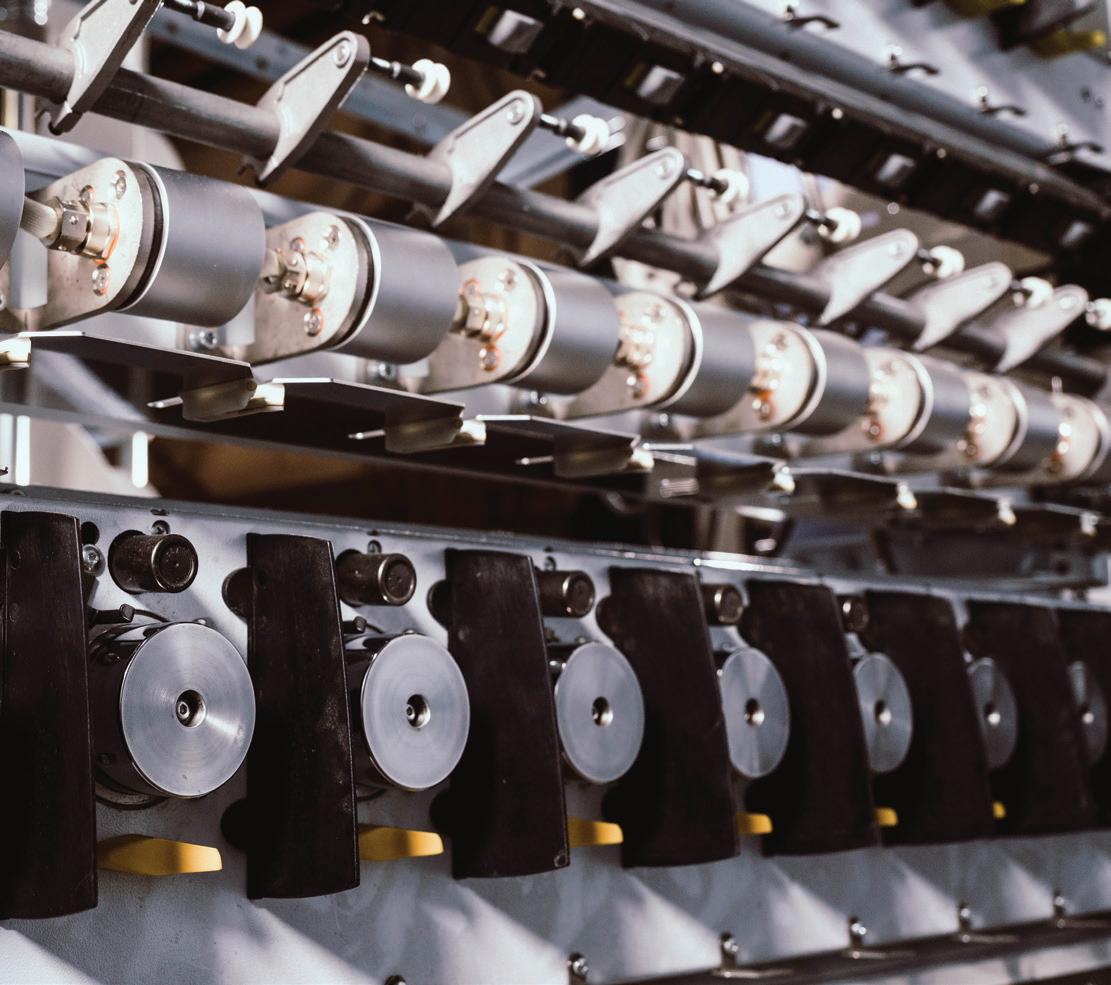
BBE is one of the industrial partners working with RWTH Aachen University in Germany on the bioPEtex project. BBE is contributing its expertise to the bioPEtex project including consulting support for the spinning process, as well as developing the crucial texturizing step, which has a significant influence on the subsequent performance of the developed fibers.
PE And Its Role In The Chemical Fiber Industry
PE is one of the most commonly produced polymers worldwide. Particularly durable, hydrophobic, lightweight and chemically stable, it is used not only in its main area of application — the packaging industry — but also in various other areas such as building materials and consumer goods. However, PE has so far been almost absent in textile fiber production, mainly due to processing challenges.
PE crystallizes at low temperatures and offers a narrow temperature window for spinning and texturing. In addition, a low polarity makes it difficult to dye.
Today, PE is used exclusively as a functional component in composites, geosynthetics, or special highperformance fibers — in the form of ultra-high-molecular-weight polyethylene — but seldom in traditional clothing or home textile segments. Yet the material structure
also offers properties that are highly attractive for certain textile applications including:
• very low density resulting in extremely lightweight fibers;
• excellent chemical resistance;
• very good dimensional stability and abrasion resistance;
• potentially good recyclability due to clear polymer structure; and
• water-repellence and quick dry properties along with a cool feel.
The issue of difficult dyeability could be resolved by using dope dyeing.
As a result, PE could become relevant for applications where lightweight construction, hydrophobicity, robust performance, and recyclability are required, for example, in sports textiles, outdoor products, technical textiles or hygienic disposable products.
Biobased PE — Economic And Ecological Potential For The Textile Industry
Unlike PET, biobased PE is chemically identical to its fossil-based counterpart: both materials are completely identical in terms of structure and properties. The only difference lies in the
For details on how to submit your company’s technology for consideration as a “Technology Spotlight” in IFJ, contact Ken Norberg at ken@ifj.com or +1 202.682.2022.
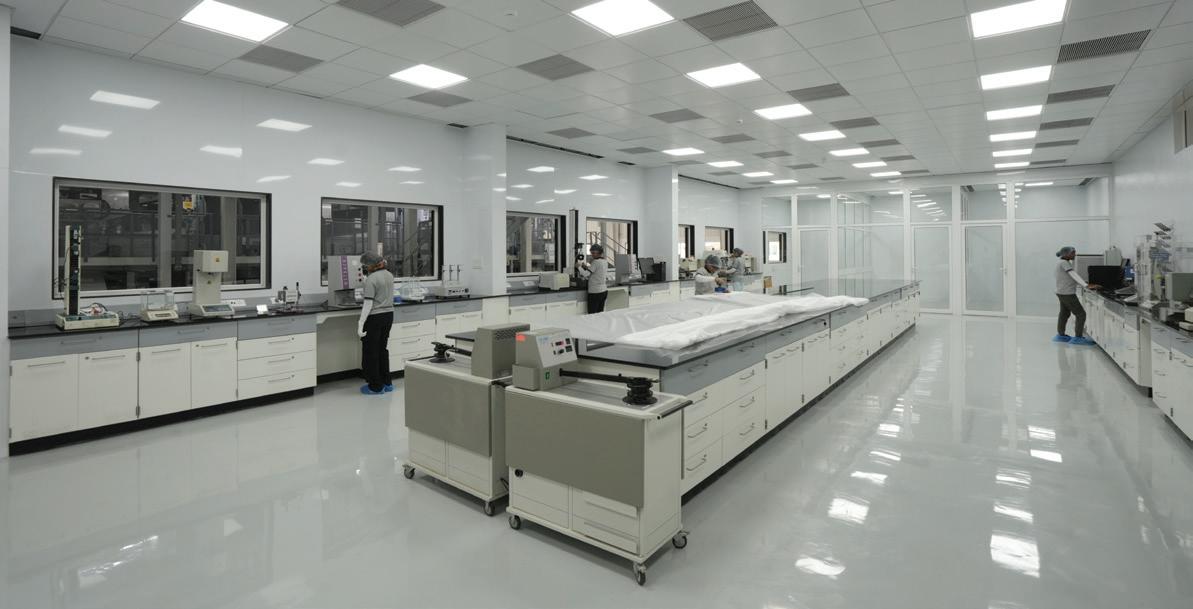
BB Engineering builds spinning and texturizing lines. BB Engineering
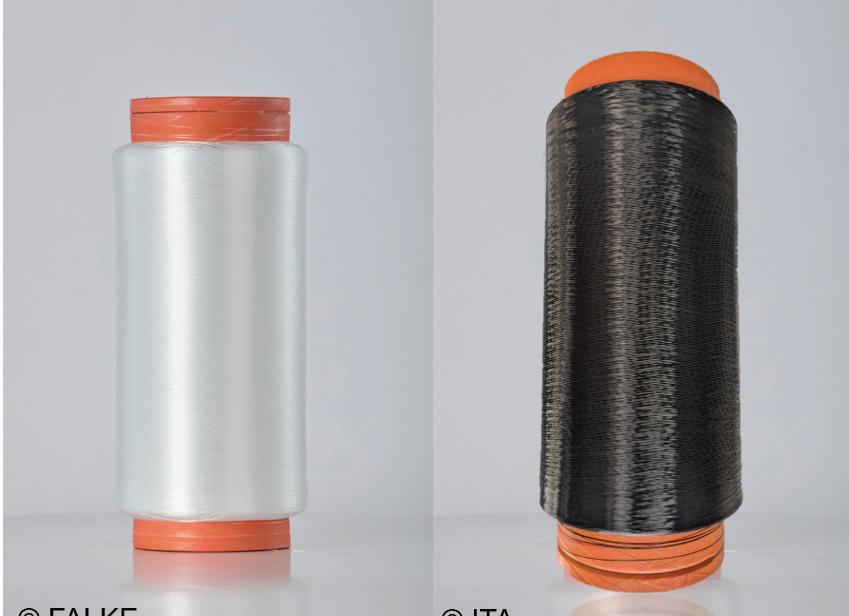
White and black 96f organic PE POY, produced by the Institute of Textile Technology at RWTH Aachen University. Falke and ITA, Aachen
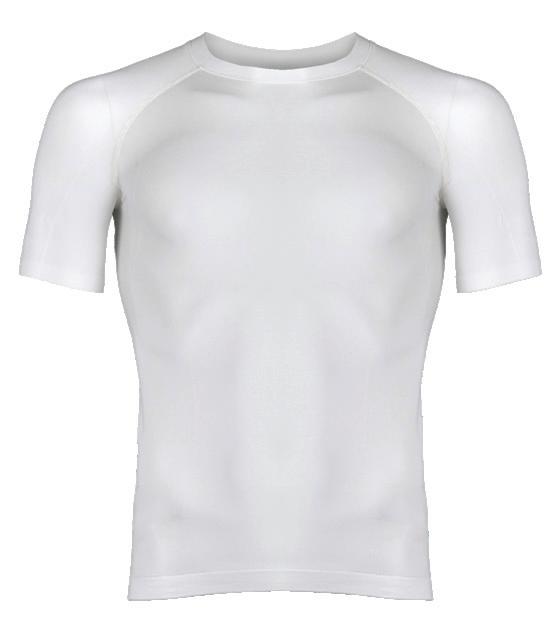
Seamless knit T-shirt made using organic polyethylene by Falke.
Falke
origin of the monomers used. Biobased PE is usually produced from fermented sugar from sugar cane, or starch from corn.
Compared to fossil-based PE, it has a significantly better carbon footprint and opens up the possibility of a completely biobased textile recycling cycle without any loss of quality. Since the low melting point reduces the energy required for processing and bioPE is widely available globally, energy and material costs are potentially lower. The textile industry can benefit from the established raw material flows of the packaging and plastics industries. In addition, the introduction of PE fibers enables the development of new, highly specialized product segments and presents additional differentiation opportunities for manufacturers through sustainable material alternatives.
Developing The PE Texturizing Process
Before PE can be used on an industrial scale as a material for the man-made fiber industry, it must first be systematically researched and tested. The texturizing process is crucial, as this step defines the subsequent haptic, functional and mechanical properties of a fiber. The challenge lies in modifying PE under the novel process conditions in such a way that it becomes compatible with established textile applications.
Overall, the project comprises several steps:
1. Material development: Development and production of spinnable bioPE compounds by TECNARO containing biobased color pigments.
2. Process optimization: Melt spinning and false twist texturing processes, which are being scaled up for industrial use at the Institute for Textile Technology at RWTH Aachen University and at BBE.
3. Textile production: FALKE, another industrial partner, is conducting initial knitting trials to validate the yarn and produce T-shirts.
The results so far show promising progress: the bioPE yarns have suitable mechanical properties and are comfortable to wear imparting a cooling effect, which is desirable in sportswear. At the same time, a design-for-recycling approach is being pursued in order to efficiently recycle the textiles at the end of the life cycle.
For more information e-mail Pia Kürten at kuerten.pia@bbeng. de or visit bbeng.de

EMPOWERING CIRCULARITY
HIGH PERFORMANCE MEETS RECYCLABILITY IN TECHNICAL TEXTILES
With the 100% polyester-based TUBICOAT PET series, the CHT Group showcases its strong commitment to the circular economy. Their pure monomaterial solutions contribute perfectly to the sustainable transformation – without compromising functionality, process reliability or industrial scalability.

TECH
NOTES
Metsä Group, ANDRITZ Open Demo Plant For New Lignin Products
Finland-based Metsä Group and Austria-based ANDRITZ have successfully started up a new demonstration plant for lignin refining at Metsä’s Äänekoski bioproduct mill in Finland.
Harper Hygienics Introduces Kindii Water Care
Poland-based Harper Hygienics recently introduced Kindii Water Care, a new line of baby wipes created to meet the needs of the most sensitive skin. Kindii Water Care is designed with simplicity, safety, and gentleness in mind, combining a minimalist formula with carefully selected, skin-friendly materials.
The wipes are moistened using 99.9 percent water and contain only three ingredients, including grapefruit extract, which is known for its natural preservative properties. The fragrance-free formula gently cleanses delicate baby skin without irritation and is dermatologically tested, making it suitable for newborns and infants.
Metsä Group and ANDRITZ have successfully started up a new demonstration plant for lignin refining at Metsä’s Äänekoski bioproduct mill in Finland.
The plant will enable Metsä to add new lignin products to its portfolio, while Andritz brings its LigniOx™ lignin recovery technology to demonstration scale. The project also involves materials science company Dow, which is collaborating to develop biobased plasticizers for concrete and gypsum applications with modified lignin from the demo plant.
Lignin is a substance in wood that binds wood fibers together. In pulp production, lignin is separated from the fibers as a black liquor that is typically used for bioenergy. Using part of this lignin for chemical and material applications improves the mill’s resource efficiency and helps replace fossil-based raw materials. andritz.com
Nonwoven Fabrics From PVOH
5K Fibres LLC — a Neenah, Wis.-based wholly owned subsidiary of Biax-Fiberfilm — has developed a proprietary process for producing nonwoven fabrics using polyvinyl alcohol (PVOH), unlocking new possibilities for sustainable materials. By combining unique processing capabilities with thermoplastic PVOH’s unique chemistry, the innovation enhances application potential and productivity — without compromising functionality or end-of-life credentials.
PVOH is a versatile, water-soluble polymer recognized for its biodegradability, film-forming ability and superior barrier properties. Traditionally used in film applications for its resistance to oils, greases and many organic solvents, PVOH also offers excellent gas and aroma barrier performance. Now, 5K Fibres is extending these benefits to nonwoven formats.
The wipes are produced using 100-percent natural viscose fibers derived from plant-based cellulose, in line with the brand’s commitment to responsible care. According to the company, the wipes are fully biodegradable, free from microplastics, and designed to naturally decompose, helping reduce environmental impact and support more sustainable everyday choices. harperhygienics.com


Potential applications include:
• Temporary protective covers;
• Sanitary products and other single-use disposables;
• Filtration media;
• Anti-static packaging for electronics;
• Unit dosing for chemicals;
• Carriers for waterless cosmetics or detergents; and
• Embroidery backing. 5kfibres.com
Kindii Water Care wipes from Harper Hygienics
Precision Jet Dyeing Moves Toward Industrial Scale as Alchemie Partners With Acatel
England-based Alchemie Technology has partnered with Acatel, a Portugal-based sustainable textile manufacturer. The two companies will work together to validate and optimize Alchemie’s Endeavour system for knitted cellulosic fabrics.
According to Alchemie, Endeavour enables dye houses to eliminate energy and carbon dioxide emissions by up to 85 percent, achieve chemistry savings of up to 30 percent, and reduce water usage by up to 95 percent compared to traditional dyeing methods. The proprietary liquid application solution combines a large droplet size and high droplet velocity to deliver unrivaled penetration into a textile fabric.
As part of the collaboration, Alchemie and Acatel will run a 12-month research and development program to prepare the technology for large-scale manufacturing and demonstrate how the fully electric, non-contact dyeing process can replace conventional dyeing routes.
The partnership will operate from the Acatel Innovation Hub in northern Portugal, with the industrial expertise, manufacturing infrastructure, and focus on innovation necessary to accelerate the adoption of this next-generation textile technology.
Through the platform, Alchemie will advance the commercial readiness of its low-carbon digital dyeing system tailored for knitted cellulosic fabrics made using cotton, lyocell, linen and hemp, among other blends. alchemietechnology.com
Henkel To Accelerate Use Of Biobased Raw Materials
Henkel Adhesive Technologies, Germany, has entered into a strategic collaboration with Sweden-based chemical company Sekab, with a focus on replacing conventional ethyl acetate with sustainable, biobased alternatives for adhesive production.

Fi-Tech Team connects you to the most technologically advanced suppliers serving the Polymer, Synthetic Fiber, Nonwoven and Textile Industries.
Henkel aims to integrate renewable raw materials into product formulations as a drop-in solution, helping customers achieve their climate goals and reducing its own environmental footprint. The collaboration with Sekab represents part of the company’s strategy to advance circular solutions.
Adam Lindholm, Sekab’s head of Sales and Business Development, said the collaboration with Henkel demonstrates how fossil-free, biobased chemicals can be integrated into existing value chains without compromising performance. “This accelerates the transition towards a fossilindependent chemical industry,” Lindholm said. “By working together along the value chain, we can bring scalable, sustainable raw materials to market and create tangible climate benefits.”
The collaboration with Sekab represents a key pillar of Henkel’s corporate sustainability strategy, which includes advancing circular solutions, reducing carbon emissions, and enabling customers to meet their own sustainability targets through cutting-edge adhesive technologies. henkel-adhesives.com
customers trust us
The Henkel Inspiration Center in Düsseldorf, Germany



By Philippe Wijns Principal at CleverSustainability, Filtration Expert and Sustainable Business Development Advisor
From Circular Filtration Materials To Audit-Proof Sustainability Data: Physical-Digital Traceability Enabled By SMX And Validated With CETI
Circularity in nonwovens and fibers is no longer a nice-to-have narrative. It is becoming a hard requirement, driven by increasingly detailed customer specifications, growing scrutiny of brand claims, and emerging policy instruments that reward verifiable evidence rather than stated intent. At the same time, many organizations recognize that sustainability reporting maturity is constrained by a persistent weak link: the inability to demonstrate — at the product level — what a material is, where it originated, and what occurred across processing, conversion, distribution, use and end of life.
In operational terms, the nonwovens value chain requires a robust mechanism to connect circular feedstocks and process decisions with traceable, audit-ready data. This includes substantiating recycled content, safeguarding chain-of-custody integrity, and implementing a defensible “claim-to-proof” workflow that moves beyond paper-based documentation and self-declared statements. Without such infrastructure, circularity risks remain an aspiration rather than a measurable and verifiable performance parameter.
“SMX technology gives materials memory by embedding our markers at various strategic supply chain points,” said Jean-Philippe Bailly, COO of Ireland-based SMX (Security Matters) Plc. “We provide our customers with the ability to track, trace, authenticate and report on the origination, all the way through their processes to finished product covering single or blended materials. The outcome enables an auditable transition from linear to circular operations and the reduction in virgin used materials and fabrics within their products.”
SMX & CETI: Collaboration
SMX uses chemical markers, fast non-destructive reading, and secure digital records to track, trace, and authenticate materials across the supply chain, connecting their physical identity to verified digital data.
France-based CETI supports independent evaluation and validation of post-processing detectability, as well as the creation of measurement protocols for nonwoven applications. This guarantees that embedded markers stay detectable and reliable after industrial processing, improving evidence and credibility for sustainability and origin claims.
Together, this collaboration enables organizations to innovate and evolve their product portfolios while maintaining control and transparency over material flows. Importantly, it supports companies in tracking and reporting on their sustainability initiatives with greater confidence and audit readiness. At the same time, the combination of CETI’s trusted expertise and SMX’s integrated offering helps protect brand IP and reduce concerns related to counterfeiting across the portfolio.
Overall, the partnership provides a structured pathway for companies to transition toward more circular and environmentally responsible operations, supported by verifiable data and independent technical validation.
What The SMX Technology Covers
SMX describes its system as comprising three integrated building blocks:
1. a hidden, chemical-based marker embedded in the material or product item;
2. a dedicated reader to detect and “read” that embedded identifier in seconds without destroying the product; and
3. a secure, blockchain-enabled digital platform that records scan events and stores verification and ownership data across the supply chain. The operational concept is straightforward: the marker is applied upstream so downstream actors can verify identity and provenance at multiple checkpoints. Because verification is tied to the material itself, the same item can be authenticated repeatedly across multi-stage and multi-loop life cycles, including reuse and recycling. In addition to identity and provenance, the system supports higher data granularity by linking scan events to product and batch information — for example, origination,
production data, brand and article ID — making that information quickly accessible on the shop floor, at inbound quality checks, or at end-of-life sorting points.
A Concrete Proof Point: Industrial Marking Of rPET Fibers
A practical example is the industrial marking of rPET fibers. The core challenge was to integrate the SMX marker system directly into rPET resin manufacturing without modifying process parameters or altering material properties, while ensuring that the marker remained detectable after fiber and fabric processing. Key objectives included food-contact compliance, embedding the marker molecules during the granulation of shredded PET, enabling authentication of producer, polymer type and recycled content, and maintaining durability through downstream steps such as yarn spinning, twisting and dyeing.
The results showed successful integration and even dispersion in the fabric, no effect on rPET performance, and reliable detectability at every stage including undyed, dyed and dope-dyed fabrics. For nonwovens and fiber uses, detection is consistent regardless of geometry, color or processing method, meeting robust standards for industrial audits.
How This Differs From Existing Traceability Approaches



Most traceability systems in fibers and nonwovens fall into two broad families. The first, digital-only traceability — comprising enterprise resource planning (ERP) lot tracking, certificates, blockchain “paper trails” and Digital Product Passport (DPP) tooling — is strong at structuring data, but typically weak at proving that the physical material in hand is the same as the data record. The integrity of the system depends on disciplined data entry and controls across many parties.
The second family, physical verification approaches — using taggants, DNA/isotopic verification and forensic methods — can anchor claims to the material itself, but often require sampling, lab analysis, lead time and cost that limit routine use across many checkpoints.
SMX’s stated differentiation is in combining a physical anchor, or embedded marker, with fast, non-destructive, in-field reading and a digital event ledger. If that field-verification claim holds in real deployments, it can shift traceability from periodic audits to continuous verification, which is particularly relevant for recycling loops and multi-party supply chains where errors and fraud risk compound quickly.
Where SMX Is Not Unique
Two elements of the stack are not unique as categories. First, blockchain-enabled traceability platforms and DPP infrastructures exist widely, and their value depends more on interoperability and governance than on the word blockchain itself. Second, material-embedded markers are not unique as a concept; several markets use physical taggants or forensic verification mechanisms.
Therefore, the uniqueness question is not “does anyone else do physical marking or digital traceability?” but rather “does this implementation deliver operational superiority and evidentiary strength at scale?”
Where The Technology Can Truly Be Unique For Nonwovens And Fibers
The most meaningful uniqueness claim lies in the integrated combination of four capabilities:
• An embedded, invisible marker physically linked to the material itself;
• Rapid, non-destructive in-field verification within seconds, without laboratory infrastructure;
• Durability through harsh processing conditions and multiple recycling loops; and
• Secure digital recording of each verification event.
In-field verification is crucial for nonwoven and fiber-based products, allowing direct authentication on site with portable devices, no sample extraction or lab analytics needed. This method solves a major traceability issue by ensuring that physical goods match their digital records through material-embedded identity and secure logging. For technical nonwovens, verification at various control points — from production and conversion to logistics and end-of-life sorting — is possible without significant cost, delays, or disruptions.
How It Can Help The Nonwoven And Fiber Industry
For nonwovens producers and converters, the value is not only in knowing where something came from, but also reducing uncertainty in areas that affect commercial outcomes, including:
• Recycled content claims — linking a recycled-content statement to a physically verifiable marker can strengthen substantiation compared with documentation-only approaches.
• Supplier accountability and quality control — detection at inbound checks can help flag blending with unidentified feedstock and improve batch integrity.
• Faster audits and less paperwork — the ability to read embedded data quickly can reduce reliance on manual document chasing, especially in multi-tier supply chains.
1. A chemicalbased hidden marker system
2. A unique reader to identify these codes.
3. A blockchain/digital platform record to store and verify ownership data.
The SMX technology platform comprises three integrated building blocks:
• End-of-life sorting and circular loops — a marker designed to persist supports sorting decisions and closed-loop verification, which is essential for scaling circularity beyond pilot programs.
Sustainability And Circularity: Moving From Claims To Proof
A circular economy requires more than collection and recycling technology; it requires trust in the inputs and outputs. SMX positions its platform as a way to “certify recycling materials” and to enhance, replace or reduce human and paper auditing by providing verifiable data embedded in the product and accessible through readers along the chain.
From a sustainability management perspective, the material benefit is a stronger evidence chain for product-level metrics and claims. The SMX/CETI methodology explicitly links the physicaldigital workflow to claim-to-proof registers, batch traceability and chain-of-custody controls, and frames CETI’s role as validation of compatibility and post-processing detectability, plus measurement protocols and data governance.
High-Value Use Cases In Nonwovens: From Compliance To Life Cycle Intelligence
The same physical-digital principle can be mapped to several high-value nonwoven application clusters.
• Hygiene and consumer nonwovens: In high-volume categories with complex, global sourcing structures, documentbased systems are inherently fragile. Rapid in-field verification strengthens supplier claims, enhances transparency, and reduces exposure to greenwashing risks by linking sustainability attributes to the physical material itself.
• Medical and protective products: In regulated environments where traceability is directly linked to risk management and compliance, embedded identifiers provide an additional physical assurance layer. Unlike external labels or packaging elements, the identifier remains part of the material, reducing the risk of separation, manipulation, or loss of critical product information.
• Durables including automotive, construction and geotextiles: For applications with long service lives and complex end-of-life pathways, persistent material identifiers enable verification well beyond the point of sale. This supports secondary markets, controlled dismantling, and informed recycling decisions, adding life cycle intelligence to durable nonwoven systems.
• Filtration media including air, liquid, HVAC, cabin air: In performance-critical applications, provenance and composition verification support claims regarding recycled content or controlled feedstocks. At the same time, embedded traceability strengthens quality assurance and enables tracking of materials that directly influence filtration performance and regulatory conformity.
How Audit-Proof Data Is Generated In Practice
In audit terms, “audit-proof” is not a slogan; it is a control architecture. A defensible approach typically needs:
• Physical evidence — an identifier that can be detected on the actual material/product, not only on paperwork;
• Repeatable verification — the same item can be checked at multiple points including downstream and end-of-life using defined procedures;
• Event integrity — each verification produces a time-stamped record linked to a device/operator/site; and
• Tamper resistance and governance — records are protected from silent modification, and access and calibration are governed.
SMX’s approach aligns with this structure by anchoring records to a detectable marker and logging scan events to a secure digital platform. CETI’s contribution is critical here: independent validation and protocol development reduce ambiguity and make verification repeatable, which is what auditors and customers ultimately require.
Next Steps And Innovation Directions
The next development steps are less about adding features and more about industrialization — scaling reader deployment, building standard operating procedures, integrating with enterprise systems and DPP data models, and defining data governance roles across brands, converters, recyclers and third-party verifiers.
For fibers and nonwovens, additional innovation opportunities include validating marker resilience across a wider set of polymers and additives; quantifying detection performance such as false positives or negatives after specific processes including spunbond, meltblown, hydroentanglement, thermal bonding or coating; and establishing reference methods so that different sites and operators generate comparable evidence.
Services Offered
The SMX proposition is not a standalone software subscription, but rather a system deployment — integration of the marker application into upstream processes, reader-based verification at selected checkpoints, and a shared digital platform for recording and accessing traceability events. CETI’s role can extend to compatibility testing, post-processing validation, and the development of measurement and verification protocols that support downstream claims and quality assurance workflows.
Final Conclusions
Traceability in nonwovens highlights that advancing sustainability depends on reliable data and evidence. Organizations that succeed, treat sustainability claims with the same rigor as financial statements, investing in controls, repeatable methods, and clear audit trails. The SMX/CETI approach stands out by linking materials engineering to data governance and emphasizing physical verification over digital-only solutions. The technically demanding nonwovens sector is well-positioned to lead due to its focus on reliability.
If traceability is the new license to operate, are we investing in physical proof and data controls with the same seriousness as we invest in process capability? Are we ready to design circularity programs that can be verified at scale, not just claimed?


JOIN US THIS MONTH AT LAMBEAU FIELD










From Trial-And-Error To Algorithmic Manufacturing
How AI And Digital Twins Are Rewriting Fiber And Nonwovens Process Design
By Dr. Sanjay Wahal
For decades, fiber and nonwovens manufacturing has relied on experience, incremental trials, and design of experiments (DOE). This approach built the industry — and it still works when systems are stable, margins are forgiving, and raw materials are consistent.
However, that is no longer the operating environment. Manufacturers now face simultaneous pressure from energy price volatility, tighter product specifications, recycled and variable feedstocks, faster grade changes, and regulatory scrutiny on efficiency and waste — all while margins narrow. Under these conditions, small process deviations no longer produce small effects.
In meltblown, spunbond, carding, and hydroentanglement processes — now operating as highly coupled, nonlinear systems — minor parameter changes
routinely trigger regime shifts rather than incremental responses, explaining why trial-and-error optimization struggles in high-dimensional manufacturing systems.1
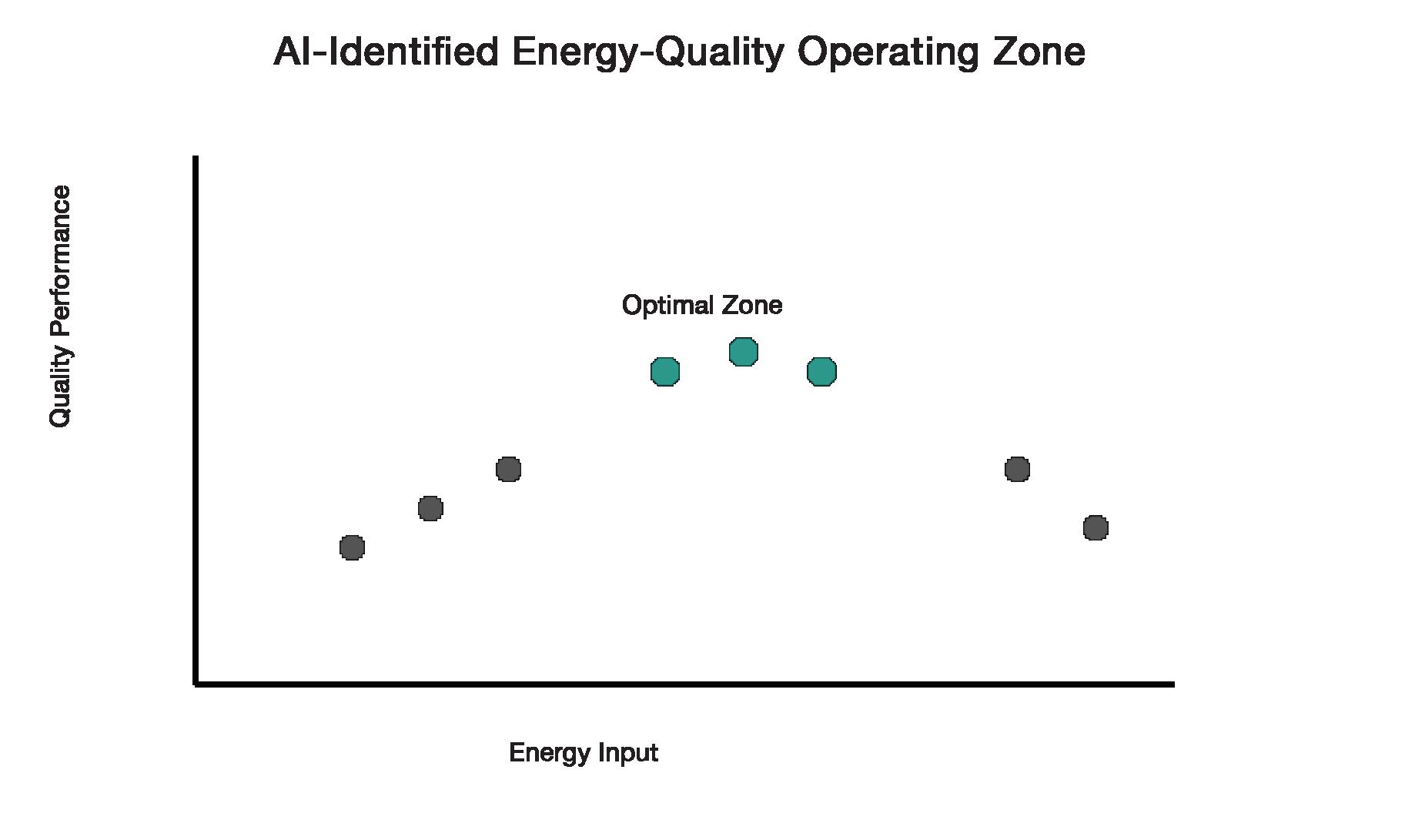
At its core, this is a shift from set-point thinking — holding individual variables constant — to operating-zone thinking, where performance emerges from the interaction of many variables across changing conditions. This distinction sets the stage for why artificial intelligence (AI)enabled digital twins are gaining traction.
When Small Changes Create Outsized Effects: Nonlinear Process Sensitivities
Across fiber and nonwovens processes, performance is often governed by cliffs, not slopes. The following flagship examples illustrate why traditional tuning breaks down.
Flagship Example 1: Meltblown — Primary Air Temperature
• Small change: A 5 to 10°C increase in primary air temperature;
• Observed cliff: Sudden shot formation, fiber breakage or fly, and loss of web integrity;
• Mechanism: Meltblown fiber attenuation depends on a narrow balance between polymer viscoelasticity and air drag. A small temperature increase can cause melt viscosity to drop nonlinearly, pushing the polymer from elongational flow into capillary breakup. Once this threshold is crossed, defects escalate rapidly rather than gradually;
• Why traditional tools miss it: DOE assumes smooth response surfaces; this transition occurs at a critical threshold.
Flagship Example 2: Meltblown — DieTo-Collector Distance (DCD)
• Small change: ±5 to 10 millimeter (mm) change in DCD;
• Observed cliff: Abrupt fiber-diameter shift, web openness collapse or excessive densification, and filtration efficiency swings outside specification, the absorbency — both rate and capacity — changes significantly; Mechanism: Fiber cooling, attenuation, and turbulent laydown occur over a short spatial window; a small DCD change could alter fiber solidification timing relative to air turbulence, dramatically changing laydown structure and bonding behavior; Why traditional tools miss it: Traditional tuning and DOE treat DCD as a geometric variable with smooth influence on fiber diameter. In reality,
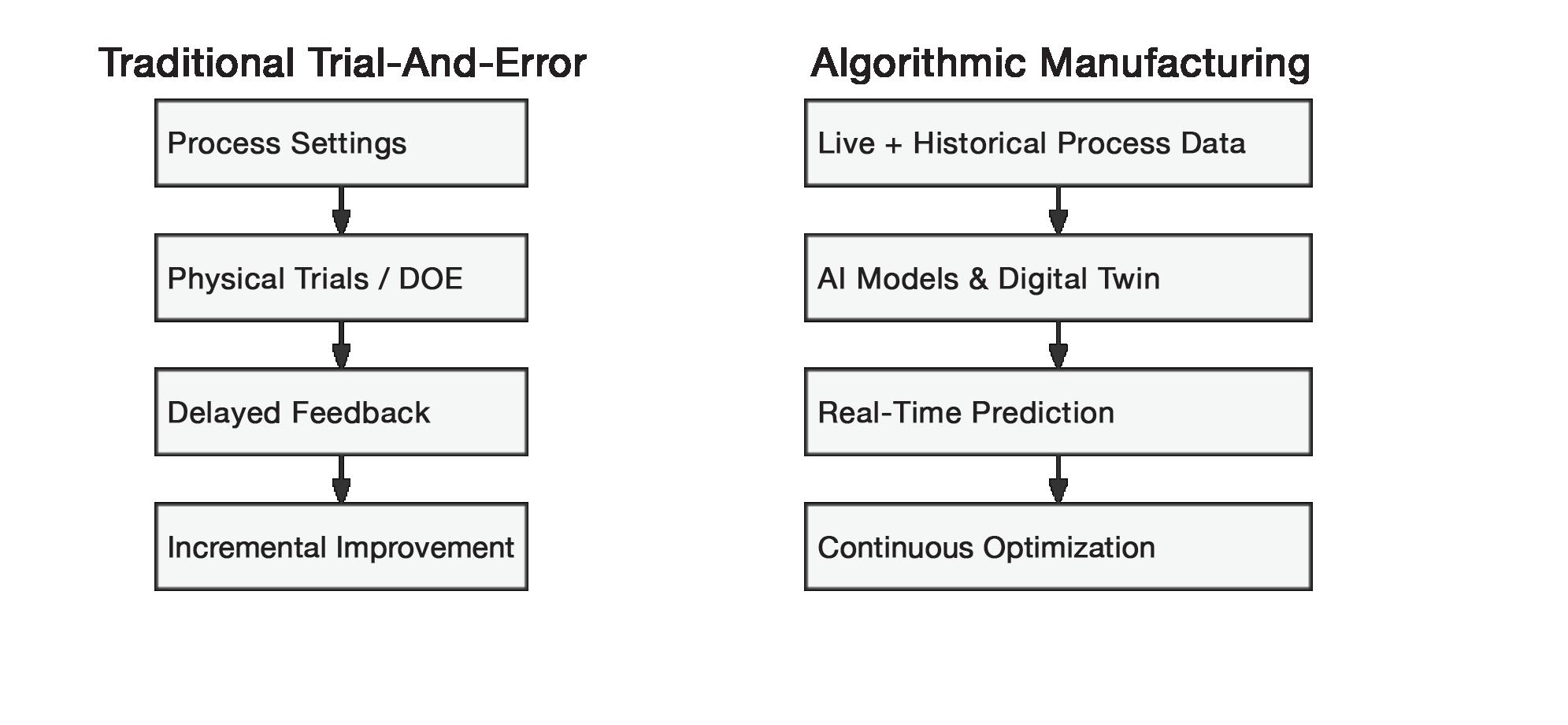
Figure 1: Conceptual comparison of traditional trial-and-error optimization and algorithmic manufacturing based on AI-enabled digital twins.
DCD interacts strongly with air velocity, temperature decay, and turbulence intensity. Once fiber solidification shifts upstream or downstream of the turbulent laydown zone, the process crosses a structural boundary — producing abrupt changes that DOE averages out rather than isolates.
Flagship Example 3: Spunbond — Quench Air Imbalance
• Small change: 2 to 3 percent change in quench air velocity or temperature;
• Observed cliff: Filament whipping instability, localized basis-weight streaks, fiber fusing;
• Mechanism: Cooling-rate changes alter tensile stress distribution; aerodynamic feedback amplifies oscillations;
• Why traditional tools miss it: Traditional control treats quench air as an independent cooling variable. In practice, quench conditions interact with draw stress and filament aerodynamics in a regime-dependent manner. Once oscillatory motion begins, aerodynamic feedback amplifies it, producing macroscopic defects that are not predicted by linear tuning rules.
Flagship Example 4: Carding — Fiber Moisture
• Small change: 0.3 to 0.5 percent absolute fiber moisture shift;
• Observed cliff: Sudden nep spikes and CV% increase;
• Mechanism: Electrostatic forces rise sharply below a moisture threshold;
• Why traditional tools miss it: Electrostatic regime changes are nonlinear and environment sensitive.
Flagship Example 5: Hydroentanglement — Jet Pressure
• Small change: Increase of 5 to 10 bar in jet pressure;
• Observed cliff: Loss of elongation, harsh hand, pin-holing;
• Mechanism: Energy transfer scales with jet velocity squared (v²);
• Why traditional tools miss it: Energy-quality trade-offs are multiobjective and nonlinear. Reducing pressure alone appears effective until a narrow threshold is crossed, after which fabric damage occurs abruptly — behavior that single-variable tuning and static trials fail to anticipate.
Why These Examples Matter For Digitalization
The examples are not tuning problems; they are regime-shift problems where:
1. linear intuition breaks down near critical thresholds;
2. operators experience “cliffs,” not slopes; and
3. historical set points lose validity as conditions drift.
This is precisely where AI-enabled digital twins excel — detecting proximity to instability boundaries; mapping safe operating zones rather than single set points; and predicting transitions before defects appear.2 In this context, trial-and-error is no longer merely slow — it is structurally inadequate.
AI-enabled digital twins introduce a fundamentally different paradigm by learning system behavior, not just detecting deviations; modeling interactions, not isolating variables; and predicting outcomes rather than recording history.
From Statistical Control To Algorithmic Understanding
Digitalization in textiles has historically focused on monitoring and control including statistical process control (SPC) charts, inline sensors, automated alarms and historical trend analysis. These tools are valuable, but reactive. They signal when something has already gone wrong.
AI-enabled digital twins introduce a fundamentally different paradigm by learning system behavior, not just detecting deviations; modeling interactions, not isolating variables; and predicting outcomes rather than recording history.
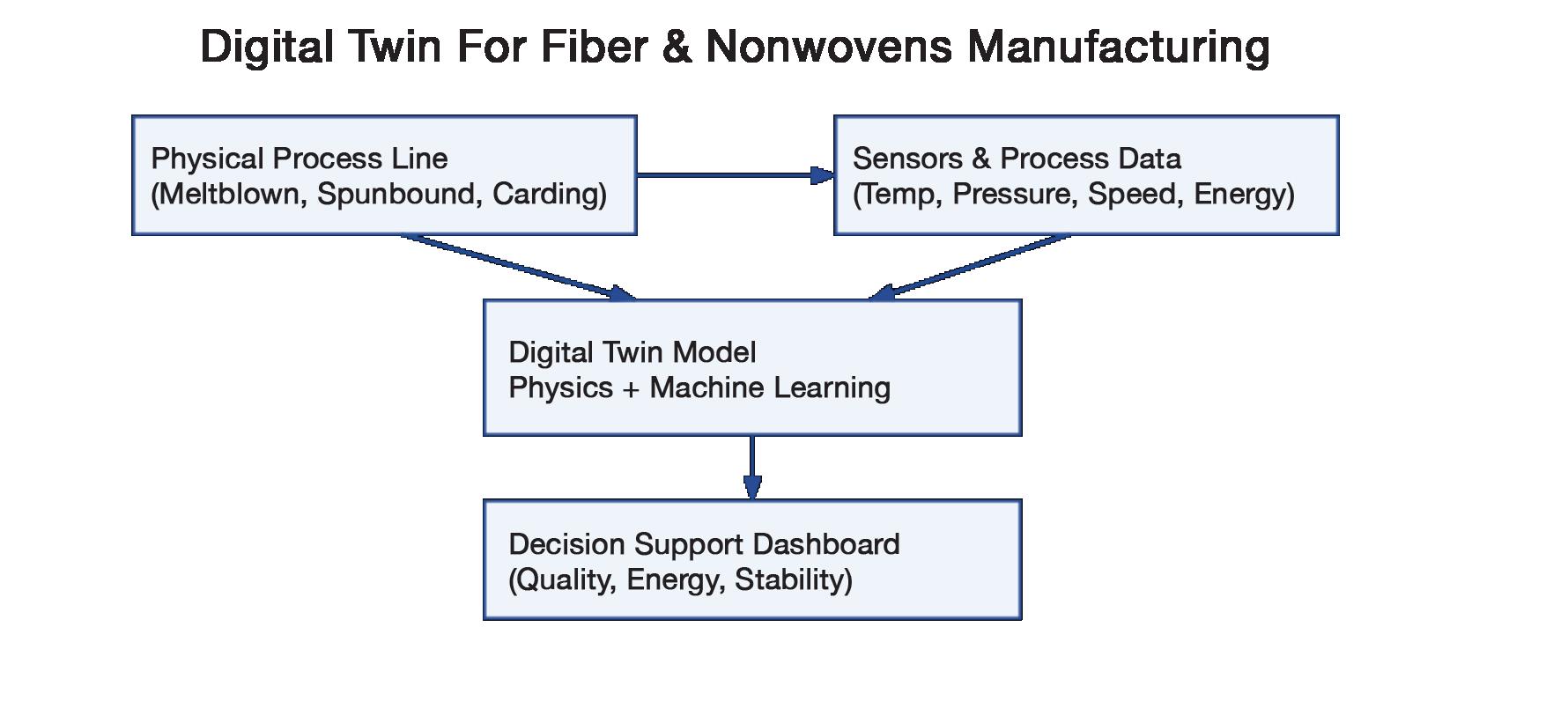
A digital twin is a living, data-fed representation of a process that continuously updates as conditions change. When paired with machine learning (ML), it enables thousands of virtual “what-if” experiments that would be impractical — if not impossible — to run physically.3
How AI-Enabled Modeling And Digital Twins Deliver Real Manufacturing Gains
From nonlinear sensitivity to predictive control: What problems is AI actually solving?
From a control perspective, fiber and nonwovens manufacturing is a highdimensional, nonlinear optimization problem operating under drift and constraints — exactly the class of problems where conventional rule-based control degrades.1,5
In control terms, this is a system with
Figure 2: Schematic illustration of a digital twin for fiber and nonwovens manufacturing.
drifting parameters, interacting constraints, and multiple local optima — conditions under which fixed rules and static models are known to fail.
Multiple inputs influence each output, interactions change by operating regime, and constraints — quality limits, energy ceilings, throughput targets — must be respected simultaneously. Crucially, these relationships drift over time as raw materials, ambient conditions, and equipment states change.
For example, fiber diameter in meltblown is not a function of air temperature alone, but of humidity × air temperature × throughput × polymer rheology — an interaction term that cannot be tuned reliably one variable at a time.
Traditional control asks, “Is the process in control?” AI-enabled modeling asks, “How close are things to a cliff — and which combination of changes keeps it inside a safe operating zone?”
This shift — from monitoring deviations to predicting outcomes — is the fundamental value of digital twins.
How AI & Digital Twins Are Built In Practice — Architecture
A practical digital twin for nonwovens is best understood as three tightly coupled layers.
Layer 1: Physical and process guardrails
This layer encodes physics, operating envelopes, and constraints — polymer grade, fiber blend, machine configuration, airflow limits, thermal balances. These guardrails prevent overfitting and block nonsensical extrapolation beyond safe regions.
Layer 2: Machine-learning models
In practice, simpler models — gradientboosted trees and random forests — often outperform deep neural networks in process industries. Datasets are structured, relatively small, and noisy, favoring interpretable models that capture interaction effects robustly.3
Inputs typically include airflow, temperature, pressure, throughput, draw ratio, ambient conditions, and energy consumption. Outputs include fiber diameter distribution, basis-weight CV%, tensile and elongation, defect probability, and energy per kilogram.
Layer 3: Decision logic (not automation)
This layer encodes objectives and constraints, not just if-then rules: OEE targets, energy per kg, tensile minima, defect risk tolerance. The system proposes trade-offs and confidence ranges; operators retain authority. This human-in-the-loop structure is critical for adoption and safety.2
Three Concrete Examples Of AI/ Digital Twin Value
The following examples illustrate the value of digital twins and the use of AI in manufacturing.
Example 1: Meltblown fiber diameter stability
• Observed problem: Fiber diameter drifts with ambient humidity and polymer lot variation; operators compensate manually → overcorrection → instability;
• AI-enabled solution: Train an ML model on historical runs — with inputs such as air temperature, air velocity, throughput, humidity; and outputs including fiber diameter distribution — embed in a digital twin, and run continuous predictions;
• What the twin does: Detects approach to viscosity-air drag instability, predicts fiber breakup before it occurs, and suggests minimal adjust-
ment combinations — a 2 percent air velocity increase and 1.5 decrease in air temperature rather than large single-variable changes, for example;
• Result: A 15 to 30 percent reduction in diameter variability, lower defect rates and reduced operator intervention.3,4
Example 2: Energy optimization in hydroentanglement
• Observed problem: Energy reduction trials degrade softness or elongation; jet pressure tuning is risky due to pin-holing thresholds;
• AI-enabled solution: Build an ML model correlating jet pressure, nozzle spacing, and belt speed to strength, elongation, and hand-feel proxies; use the digital twin to simulate the pressure-energy trade space;
• What the twin reveals: There is not one “safe” pressure but a zone; some pressure reductions can be compensated by speed changes; energy scales nonlinearly with jet velocity (∝ v²);
• Result: A 5- to 12-percent energy reduction with no loss in elongation and fewer trial runs.1,6
Example 3: Carding—nep formation prediction
• Observed problem: Nep spikes oc-
Figure 3: Conceptual illustration of AI-identified optimized energy-quality operating zone.
AI succeeds not because data is perfect, but because it detects patterns humans cannot see, tolerates noise better than physics-only models and learns interaction effects directly from outcomes .
cur suddenly with recycled fibers; root cause unclear and could possibly be moisture, speed or fiber blend;
• AI-enabled solution: Train an ML model on fiber moisture, licker-in speed, and flat settings, predicting nep probability — not just nep count;
• What changes: The twin flags rising nep risk before visible defects so operators can adjust moisture or speed preemptively;
• Result: Reduced scrap, improved consistency with recycled fibers, and less dependence on tribal knowledge.5
Why Digital Twins Outperform DOE
DOE is powerful within a static, low-order window, but it assumes smooth response surfaces and must be re-run as conditions drift. In meltblown, for example, DOE may show air temperature improving fiber attenuation — until a narrow threshold is crossed and shot formation appears abruptly.
Digital twins operate differently. They continuously reidentify relationships as new data arrive, explicitly model regime switches and constraints, and explore untested regions virtually rather than through disruptive physical trials.
In short, DOE optimizes slopes. Digital twins help manufacturers avoid cliffs and operate confidently inside evolving safe zones. This distinction is especially important in meltblown and spunbond, where operating cliffs — not slopes — dominate behavior.
Where DOE characterizes behavior within a window, digital twins help manufacturers recognize when the window itself is moving.
Why This Works Even With “Messy” Industrial Data
AI succeeds not because data is perfect, but because it detects patterns humans cannot see, tolerates noise better than
physics-only models, and learns interaction effects directly from outcomes. Hybrid models, such as physics-informed ML, are especially effective in polymers and fibers.2,3
Where AI is delivering value today:
1. Fiber Diameter Control: AI models trained on air temperature, airflow, throughput, pressure profiles, and ambient conditions predict fiberdiameter distributions more accurately than rule-based systems while identifying energy-efficient operating combinations.4
2. Basis-Weight Uniformity and Web Formation: Machine-learning models correlating upstream process behavior with downstream scanner data have reduced edge-to-center variation, accelerated grade changeovers, and lowered scrap — without removing operator authority.
3. Energy Optimization Without Yield Loss: AI-enabled digital twins evaluate energy-quality trade-offs simultaneously, identifying robust operating zones. In energy-intensive processes such as meltblown and hydroentanglement, even single-digit percentage improvements translate into meaningful cost and carbon reductions.6
AI works best when it recommends options, quantifies trade-offs, and highlights risk and uncertainty. Human experts still define objectives, apply judgment, and override recommendations when needed.
This human-in-the-loop model accelerates learning while preserving accountability and trust.5 Consider AI as decision support, not as automation.
The End Of Guesswork Manufacturing
The fiber and nonwovens industry is not short on expertise. What it lacks is the ability to scale that expertise across nonlinear complexity. AI-enabled digital twins do not replace human knowledge — they
capture it, extend it, and apply it consistently where intuition alone is no longer sufficient.
The transition from trial-and-error to algorithmic manufacturing marks a fundamental shift: from reactive to predictive, from isolated experiments to continuous learning, and from guesswork to informed confidence. For manufacturers willing to approach digitalization pragmatically, the rewards are tangible — and increasingly unavoidable.
References
1. Wuest, T., Weimer, D., Irgens, C., & Thoben, K.-D. (2016). Machine learning in manufacturing: Advantages, challenges, and applications. Production & Manufacturing Research , 4(1), 23–45.2.
2. Tao, F., Zhang, H., Liu, A., & Nee, A. Y. C. (2019). Digital twins and cyber–physical systems toward smart manufacturing. Engineering, 5(4), 653–661.
3. Venkatasubramanian, V. (2019). The promise of artificial intelligence in chemical engineering. AIChE Journal, 65(2), 466–478.
4. Subramanian, K., Senthilkumar, M., & Jeevarathinam, A. (2020). Data-driven approaches in textile manufacturing. Textile Research Journal, 90(19–20), 2191–2205.
5. Kusiak, A. (2018). Smart manufacturing must embrace big data. Nature, 544, 23–25.
6. International Energy Agency (IEA). (2023). Digitalization and Energy

Dr. Sanjay Wahal is the founder of Decarbonization LLC, a strategic advisory and consulting firm committed to accelerating low-carbon transitions through innovation in materials, manufacturing and energy systems guided by a strong foundation in policy and systems thinking. With more than 30 years of executive leadership spanning technology commercialization, advanced materials and sustainable industrial practices, Dr. Wahal offers a multidisciplinary approach to climate-focused innovation. He holds a Ph.D. in Chemical Engineering and an MBA in Strategy and Innovation.
AWHEN Tradition MEETS The Algorithm
By Adrian Wilson, IFJ International Correspondent, Europe
rtificial intelligence (AI) is now seeping into every corner of the textile and apparel value chain.
In practice, the term has become a catch-all for a wide spectrum of data-driven technologies, many of which have existed for years but are now being amplified by more advanced algorithms, greater computing power and improved connectivity.
What is striking is not simply the pace of adoption, but the breadth. When even some of the most tradition-bound manufacturers in the textile and apparel industry are leaning into digital tools, it is clear that a deep structural shift has been underway for some time.
Digital Simulation
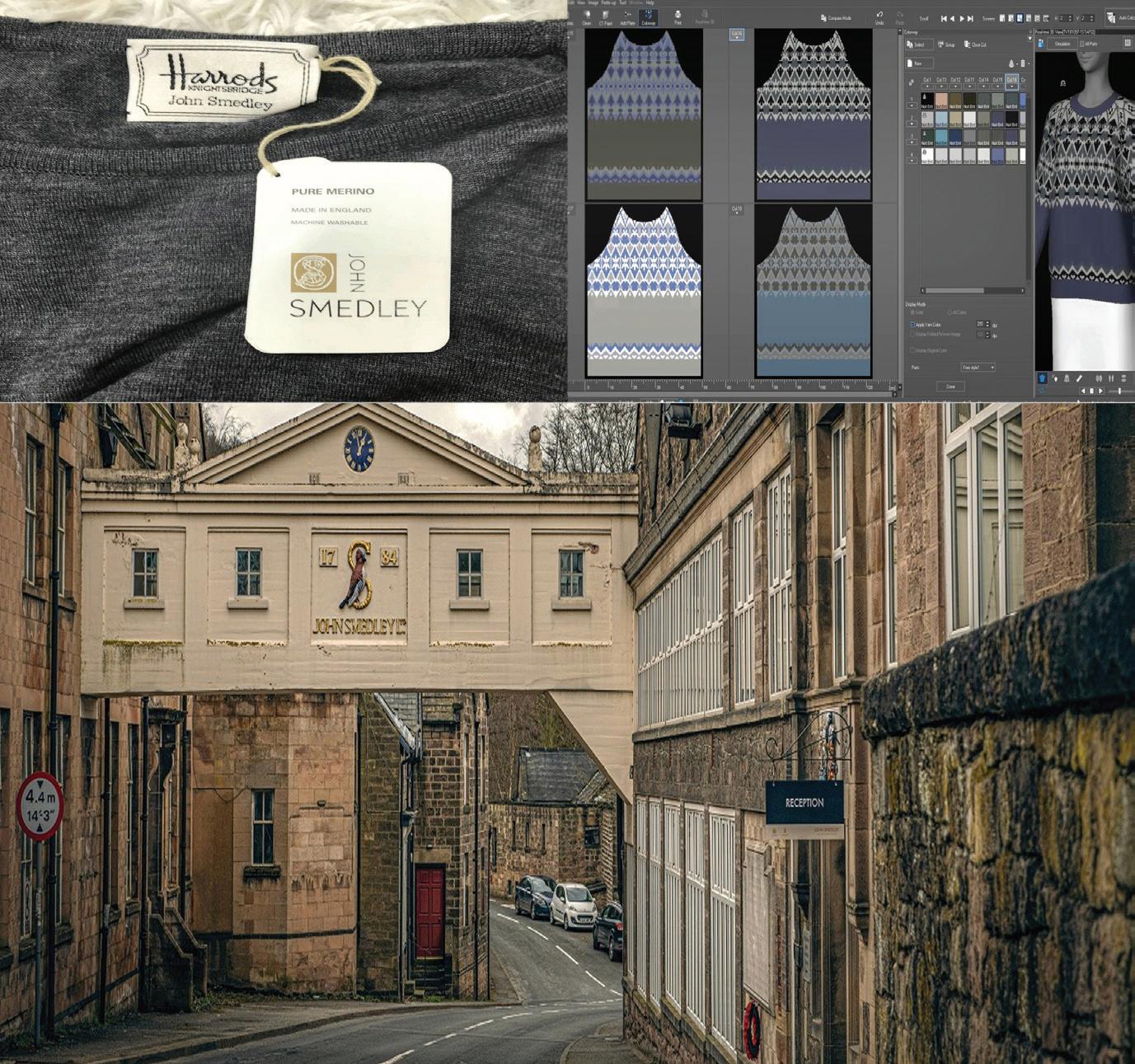
Few companies embody continuity more clearly than England-based John Smedley. Founded in 1784 and widely recognized as the world’s oldest continuously operating knitwear manufacturer, the company has built its reputation on extra-fine merino wool garments produced at its Derbyshire factory. Products are sold globally through its own retail network and through highend partners such as Harrods, Harvey Nichols and Selfridges. Yet behind this heritage image sits a design and development process that has been quietly transformed through advanced digital simulation.
The adoption of SDS-One APEXFiz design software from Japan-based Shima Seiki Mfg. Ltd. has fundamentally altered how knitwear is conceived and developed at John Smedley. According to design director Pip Jenkins, the system is used for both swatch development and product prototyping. Previously, stitch structures
and patterns were developed directly on production machines, and every colorway swatch for wholesale presentations had to be physically knitted, washed and finished. From programming to completion, this could take more than a month.
The costs of that approach extended beyond time. High-value yarns were consumed during development, production machines were tied up with low-volume sampling, and waste was unavoidable. Digital simulation changed that equation.
By replacing physical swatches with highly realistic knit simulations, John Smedley eliminated the need to knit wholesale samples altogether. Designers and programmers could work from the same digital reference, reducing errors at the handover stage, while colorways and design variations could be explored without knitting a single loop.
The results were immediate. Lead times fell sharply, yarn consumption during development dropped, and prototypes
Founded in 1784, John Smedley’s adoption of Shima Seiki’s design software has fundamentally altered how its knitwear is conceived and developed. John Smedley/Shima Seki
were more likely to be right first time. After digital development, the company now moves straight into physical prototyping, with far fewer iterations. What appears, on the surface, to be a modest software upgrade is in fact a reconfiguration of how creative, technical and production decisions interact.
Narrowing The Field
In theory, this kind of digital design environment could be linked seamlessly to downstream manufacturing, logistics and even customer feedback, forming a coherent end-to-end system that begins to resemble true artificial intelligence. In reality, such fully integrated platforms remain rare. More often, digitalization advances in discrete stages, creating pockets of intelligence rather than a single, unified architecture.
Beyond aesthetics and fit, AI is increasingly being used to formalize decisionmaking around cost, compliance and sustainability. Material selection, long reliant on tacit knowledge and experience, is becoming more data-driven. Algorithms can now assess fabrics and trims against performance requirements,
regulatory constraints, supplier reliability and availability, reducing late-stage substitutions and stalled developments. Recommendation engines do not replace designers or developers, but they narrow the field of viable options earlier, when change is cheaper.
This shift towards digital product creation is supported by a growing ecosystem of technology providers. Threedimensional garment simulation platforms, pattern-based CAD environments and increasingly sophisticated product life cycle management systems are helping brands translate creative intent into production reality with greater accuracy.
While the marketing language surrounding these tools often implies seamless automation, their real value lies in making trade-offs explicit and decisions more transparent.
Manufacturing
The same logic applies on the factory floor, where AI tends to deliver its most tangible returns. Textile production generates vast volumes of data, from machine speeds and tensions to temperatures, humidity levels and defect rates. Applied carefully,
machine-learning models can stabilize processes, reduce variation and predict problems before they lead to downtime. Predictive maintenance, based on vibration analysis or electrical signatures, allows interventions to be planned rather than reactive, extending machine life and improving utilization.
Quality control is another area where AI is reshaping established practices. Computer vision systems can now detect holes, slubs, shade variation and weave defects at speeds far beyond human inspection, applying consistent criteria across shifts and locations. Crucially, when inspection data is linked back to process parameters, quality becomes preventative rather than corrective. Defects are not simply flagged, but traced to probable causes.
Wet processing, traditionally one of the most resource-intensive and variable stages of textile production, is also being reshaped by digital control. Dyeing and finishing operations increasingly rely on AI models to optimize recipes, monitor bath conditions and detect drift that leads to reprocessing. By improving right-firsttime performance, mills can reduce water, energy and chemical use while improving throughput.
Waterproofing
These technologies are no longer confined to greenfield sites or high-volume commodity producers. At Halley Stevensons in Dundee, Scotland, digital process control has been introduced into one of the industry’s most tradition-laden niches. Founded in 1864, the company specializes in waxed cotton fabrics, a technique with its roots in early maritime waterproofing practices developed by Scottish fishing communities centuries earlier.
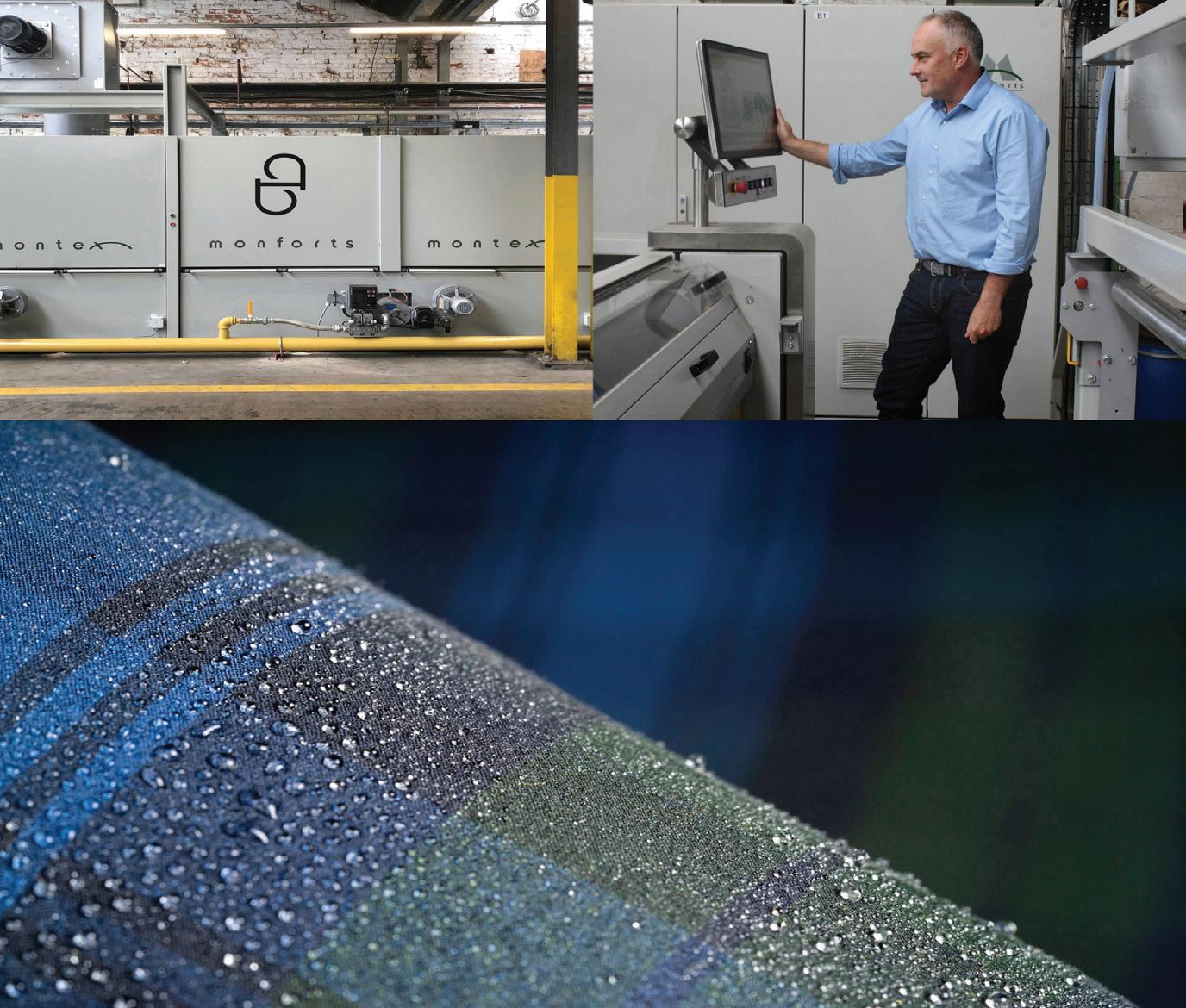
To enhance flexibility and efficiency, Halley Stevensons has installed a modern Monforts Montex coating and finishing range equipped with advanced automation and process control. According to managing director James Campbell, the system — engineered by Germany-based A. Monforts Textilmaschinen GmbH & Co. KG — gives technicians greater confidence to develop new products while also fine-tuning the energy profile of
With its roots in early maritime waterproofing practices developed by Scottish fishing, Halley Stevensons is now benefiting from the latest automated finishing technology. Halley Stevensons/Monforts

existing ones. Energy consumption can be recorded at batch level, creating a feedback loop for continual improvement. The touchscreen interface allows operators to move easily between parameters, combining visual clarity with technical precision.
What is notable is not the replacement of skill, but its amplification. The accumulated craft knowledge of generations remains central, but it is now supported by systems that make processes more predictable and resource use more transparent. Tradition, in this context, is not being displaced by digitalization but reinforced by it.
Juggling Variables
In apparel manufacturing, the gains from AI are often less visible but equally significant. Planning and line balancing have long been bottlenecks, particularly in environments with high product variety and short lead times. AI-driven scheduling tools can juggle far more variables than manual planning, from changeover penalties and skill matrices to real-time work-in-progress. When orders shift, schedules can be recalculated quickly, reducing disruption and waste. Used thoughtfully, such systems
support smoother workflows rather than treating labor as an abstract input.
The greatest untapped potential for AI, however, lies beyond the factory gate, in distribution and inventory management. Many of the industry’s structural inefficiencies stem from chronic mismatches between supply and demand. Overproduction, followed by discounting and complex logistics, remains a defining feature of fashion economics.
AI-based forecasting models that combine historical sales data with pricing, promotions, weather and digital signals can generate more adaptive demand projections. This, in turn, supports more stable replenishment and reduces the need for reactive transport. Even brands with deep roots in craftsmanship are now investing heavily in these capabilities.
Tailoring And Digital Twins
Hugo Boss offers a clear illustration. Founded in 1924 as a family-run tailoring business in southern Germany, the brand’s identity has long been anchored in precision, restraint and fit. Today, with annual sales exceeding $4 billion and a global supply network spanning owned facilities
and external partners, the company sees digitalization as a primary growth engine.
By creating a digital twin of its supply chain, Hugo Boss aims to align demand planning, procurement and logistics more closely. Real-time data and AI-supported decision-making are intended to improve the timing and quantity of fabric and garment orders, while smarter inventory allocation helps ensure that customer demand is met more effectively. The language is technical, but the objective is simple — to reduce friction between what is made, where it sits and when it is needed.
Connected Capability
Across design, manufacturing and distribution, the most meaningful efficiencies emerge when AI is treated as a connected capability rather than a collection of isolated tools. Fully integrated systems remain the exception rather than the rule. As previously mentioned, however, progress more commonly takes the form of connected islands, linked by data lakes and interfaces rather than unified platforms. Structural fragmentation across the value chain, differing economic incentives and persistent issues around data quality and governance all slow integration.
The direction of travel, however, is clear. Cloud platforms, standardized data models and application programming interface-driven architectures are steadily lowering the barriers to connection. At the same time, commercial pressures around speed, sustainability and capital efficiency are forcing closer coordination between once-discrete functions.
As these islands begin to merge, AI is likely to fade as a headline concept and simply become the invisible infrastructure. Its real significance will lie not in bold claims of disruption, but in quietly ensuring that decisions made at one end of the textiles and apparel value chain are grounded in operational reality at the other.

Adrian Wilson is an international correspondent for IFJ in Europe. As a journalist, he covers fiber, filtration, nonwovens and technical textiles. He can be reached at adawilson@ gmail.com.
Founded in 1924 as a family-run tailoring business, Hugo Boss has created a digital twin of its supply chain to more closely align its demand planning, procurement and logistics. Hugo Boss

Using AI-Optimized Fibers China Weaves The Future
By Jason Chen, IFJ International Correspondent, China
China just took an important step toward the artificial intelligence (AI) era for its manufacturing sector. China’s Ministry of Industry and Information Technology (MIIT), alongside seven other departments, recently announced an initiative to accelerate the country’s AIintegrated manufacturing. The most recent goals set for 2026 and 2027 include deploying three to five large, general-purpose AI models, 1,000 industrial intelligent agents and 100 high-quality datasets, promoting 500 typical application scenarios, and nominating 1,000 benchmarking enterprises.
This initiative is a follow-up to the State Council’s “AI+” strategy launched last year, which aims to empower science, manufacturing, consumption, and many sectors with AI technologies, and ultimately lead China to a “smart society” by 2035.
Often, an initiative like this in China will substantially benefit those companies that follow the government’s guidance. In addition to the government’s promise to fund the research and development (R&D) and applications and to create mechanisms and policies for facilitating the deployment of AI systems, manufac-
turers who adopt AI technologies may also see other benefits such as high-tech subsidies or tax cuts, low-interest loans from banks, and land price discounts.
This is good news for the Chinese man-made fiber manufacturers, as some of them have been leveraging AI technologies to deal with the challenges they face for nearly a decade. The AI initiative will no doubt help them accelerate their AI efforts over the next decade.
Challenges Call For AI Solutions
The Chinese man-made fiber industry grew rapidly from almost nothing to today’s dominant position in just four decades. However, problems such as low profit rates, low values, severe overcapacity, weak bargaining power, and environmental issues have also hurt the industry. Supply was often much larger than demand; prices and profits were often too low to support the healthy growth; and when the prices of raw materials fluctuated, manufacturers often suffered losses.
In 2024, China produced 74.75 million metric tons of man-made fibers, accounting for about three quarters of the world’s total and generating revenues of
1.17 trillion RMB ($160 billion), according to the China Chemical Fiber Association (CCFA). In the first three quarters of 2025, the output grew by 5.6 percent. At this rate, China’s man-made fiber production would reach a total of 78.94 million metric tons on an annual basis.
However, the industry’s average profit remained low at only around 3 percent, and some segments performed worse or even reported significant losses. For example, the average profit rate of polyester filaments was below 2 percent in the first seven months of 2025, according to Longzhong Information, a China-based commodity data provider. The Chinese spandex industry also suffered big losses for three years from 2023 to 2025; and Tayho, China’s fifth-largest spandex producer, reported a gross loss of almost 12 percent for its spandex segment in 2024.
The problem of low profits or losses also exists in part because of severe competition. Leading Chinese spandex companies invested to increase capacity over the past few years even though it was known that the industry had fallen into severe overcapacity. Companies were trying to wipe out their small- or mid-size competitors
to grab additional market share at a cost of several years of losses. Overcapacity causes huge oversupply, and as a result, spandex prices and profits plunged to a historical low, which forced many smalland mid-size producers to retreat from the market. In addition, the industry concentration kept rising and by the end of 2025, the top five spandex producers owned more than 86 percent of the total capacity in China. As the rapid expansion is coming to an end, the competition is expected to ease, and profits will likely return to a normal level.
Low profits and losses also exist in part because the fiber producers typically have relatively weak bargaining power with both their customers and suppliers: when the prices of raw materials increase, manufacturers find it is difficult to pass along any increase to customers when demand is weak.
One solution to this problem is for manufacturers to focus on advanced or differentiated fibers with higher values and less competition. However, R&D on advanced fibers can be difficult and expensive, and low profits can make a move to advanced materials nearly impossible.
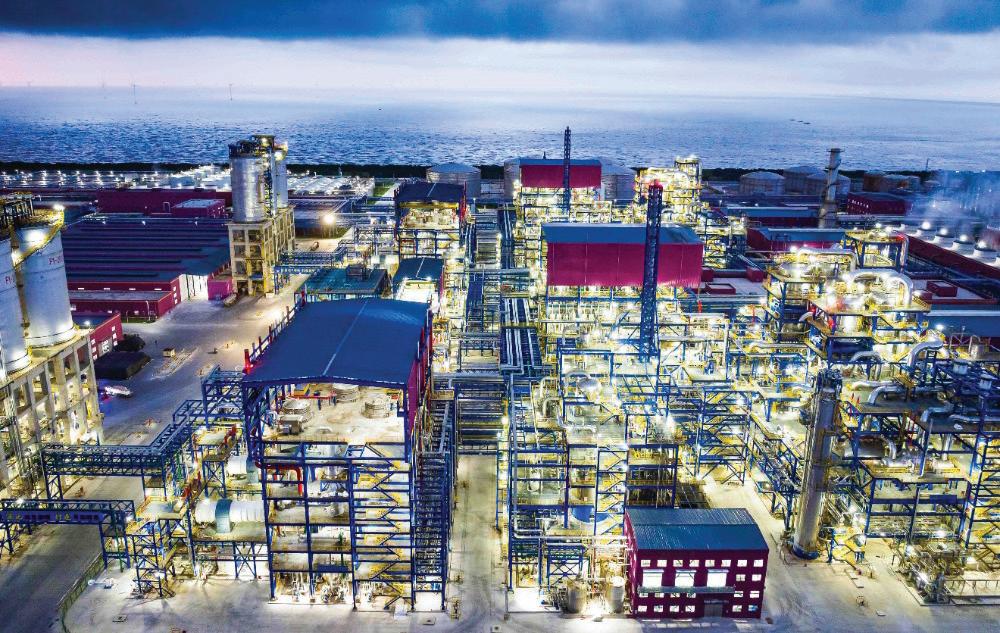
China, which started its AI journey in 2019. Tongkun has established an AI factory that connects more than 28,000 pieces of equipment with more than 1.5 million data collection points. The factory has the capacity to process 12 billion pieces of data per day, which allows the company to optimize production, reducing energy consumption by 23 percent and operating costs by 31 percent.
The company was the winner of an AI manufacturing competition held by MIIT late last year, making it eligible to become an AI benchmarking enterprise. Currently, Tongkun has a capacity of 15.1 million metric tons of polyester filament per year, which accounts for more than one-fifth of the world’s total capacity. Partially driven
environment without risking any physical asset. With this digital twin, Tayho reports it consumes 15 percent less energy, uses 30 percent less storage space, has reduced maintenance costs by 1.5 million RMB ($210,000) a year, has lowered the factory’s accident rate by 30 percent, and has achieved a 100 percent emission control goal — all while improving the quality of its products.
By the end of 2025, Tayho’s spandex capacity reached 100,000 metric tons per
The good news is that in recent years, Chinese manmade fiber producers have found AI to be an effective and efficient tool to lower their production and R&D costs, while improving the quality of their products. They have leveraged machine learning, the Internet of Things (IoT), computer vision, data analytics and other AI technologies to optimize production processes, enable predictive maintenance, improve efficiency, enhance quality control, automate supply chains, and reduce energy consumption and emissions.
Success Stories: Polyester Champion And Spandex Rebound
The first success story comes from manmade fiber and polyester producer Tongkun Holding Group Co. Ltd., Tongxiang,
by the success of the AI factory, Tongkun’s profits increased significantly over the past two years. It was estimated the company’s proceeds would grow approximately 70 percent to reach around $300 million in 2025 at a profit rate of about 3 percent — much higher than the industry average.
In the spandex sector, Yantai Tayho Advanced Materials Co. Ltd. set up a digital twin for its factory to reduce costs, energy consumption, storage areas and emissions. The digital twin is a dynamic, virtual model of Tayho’s physical factory that uses real-time data from sensors to accurately simulate, monitor, and predict the real factory's performance, enabling the company to optimize production processes and test scenarios in a virtual
year, accounting for about 5.6 percent of the global total. The company said in a recent press release that losses in its spandex business in 2025 decreased significantly compared to 2024 as a result of reduced costs and improved quality partially achieved through the use of a digital twin and other AI technologies.
AI Solutions: Energy Consumption
Success stories are seen in almost every man-made fiber category, from polyester and viscose to nylon, carbon and recycled fibers. In these cases, AI technologies have penetrated into almost every step of manmade fiber producers’ life cycles.
In production, AI technologies are used to collect, monitor, and analyze data to optimize processes and improve product quality and production efficiency, increase the utilization rate of raw materials, reduce equipment wear, lower the rejection rate of final products, and save energy.
Tongkun and Tayho both set energy savings as a priority for their AI factories because it is important for both cost and
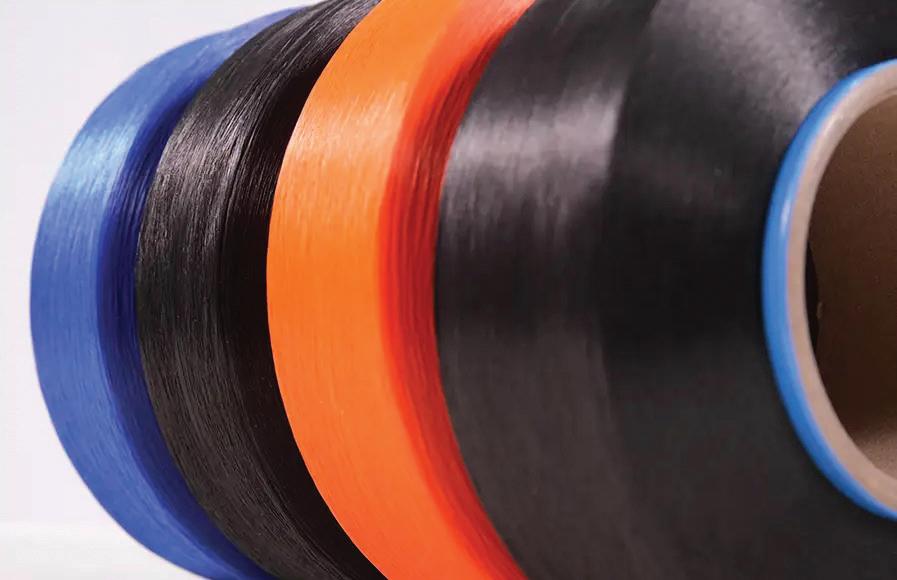
Colored spandex from Yantai Tayho Advanced Materials Co. Tayho
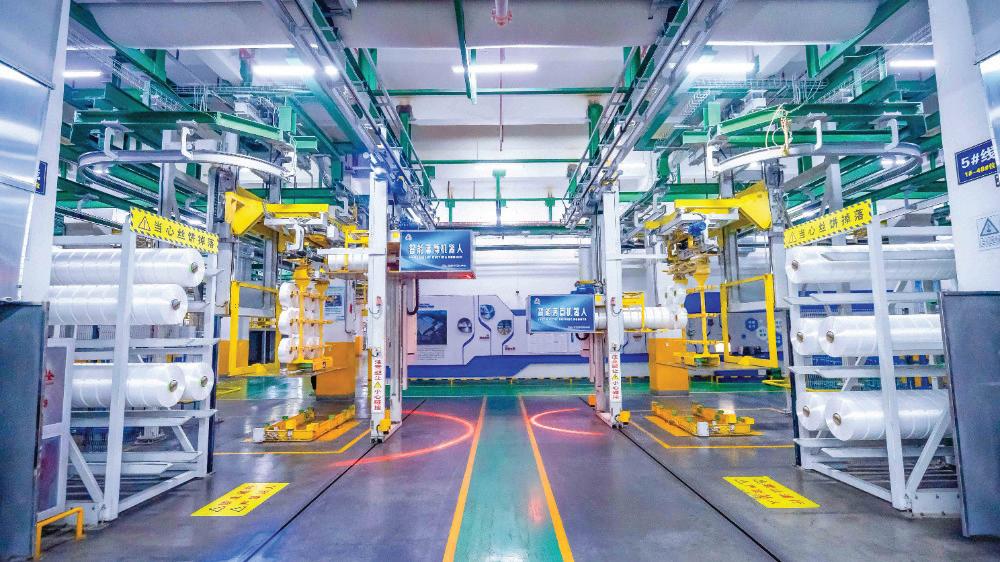
Tongkun Holding Group's smart factory connects more than 28,000 pieces of equipment with more than 1.5 million data collection points. Tongkun
environmental reasons. By using AI technologies, manufacturers can easily collect energy consumption data and analyze energy efficiency in order to optimize production time or inform decisions about advanced equipment or new technology purchases to save energy.
Quality Control
A quality prediction and defect detection system is also key to the success of production optimization. These systems often combine real-time monitoring of material and product parameters with a feedback mechanism and quality management system. For example, Xingshida, a recycled polyester producer based in Jinjiang, China, has developed a patented AI technology to detect and predict the impurity distribution and melt flow during post-consumer PET bottle or textile waste melting to enable adjustments to equipment parameters and operations. In an implementation example, this AI technology enhanced the fiber strength by nearly 20 percent, while reducing the energy consumption by 25 percent and the equipment wear rate by 50 percent, according to the company.
Supply Chain Management And R&D
In supply chain and logistics management, AI technologies are used for various purposes, including demand forecasting and inventory management, intelligent logistics and distribution optimization, and raw material procurement analysis and prediction. These efforts increase efficiency while reducing costs and labor requirements for a more profitable process. In advanced fiber materials R&D, AI systems are deployed for various purposes including new material assistance, discovery
and design acceleration, R&D cost reduction, new material performance optimization, interdisciplinary communication between fiber materials and other industries, automated testing and iterative learning, as well as production process simulation and optimization. Using AI technologies in R&D may increase development efficiency and the likelihood of success, while significantly reducing costs.
Risks And Challenges For AI Manufacturing
While AI manufacturing is promising, its integration into the man-made fiber industry will also face many challenges. Some of the challenges include:
• Fragmentation of AI application scenarios — Some fiber companies use only limited AI solutions in their production processes such as computer vision for quality control or predictive maintenance of equipment. Failing to connect and integrate AI into core operations including supply chain, quality management and production planning may limit the full potential of the technology.
• Inadequate data support — Problems in the quality, quantity, and format of data could result in inadequate information to train the AI model, thus affecting the performance of the AI systems.
• Communication and workforce problems — A lack of talented people who really understand both the manufacturing process and AI/information technology may impair the deployment and implementation of AI systems.
• Lack of evaluation method for AI options — The use of AI often re-
quires a substantial investment in computing power, data management and workforce. An appropriate evaluation model is needed in order to choose the right solution.
What Does The Future Look Like With AI?
In an optimistic scenario using AI technologies, advanced and differentiated fibers will appear on the market mor quickly and in greater quantity as R&D and simulation costs drop and development efficiency increases dramatically. Manufacturers will be able to create more value while avoiding overcapacity and severe competition in the fiber segments. On the other hand, manufacturing costs may be reduced by optimizing the production processes and supply chain using AI technologies. Energy consumption will be reduced and emissions will be managed better, which will also make the industry more sustainable and greener.
Ultimately, the increased value and decreased costs will provide enough profit to support the healthy growth of the manmade fiber sector, which will feed the R&D and environmental protection efforts in turn, thus forming a positive cycle for the future growth of the man-made fiber industry.

Jason Chen is an international correspondent for IFJ in China. As a journalist, he covers the fiber industry in Asia; and as a senior analyst he has published more than 50 books and reports for polymers, composites, and other advanced materials and technologies. He can be reached at jasonchen200501@ hotmail.com.
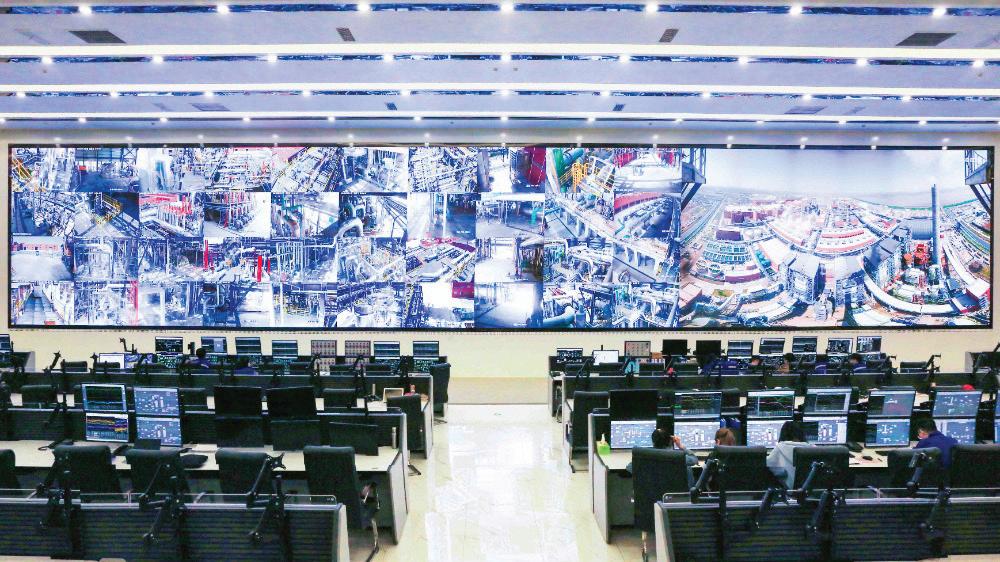
Package doffing robots (above left) and the control center in Tongkun Holding Group's smart factory Tongkun
Biopolymers In Fibers & Nonwovens: A Primer On The State Of The State
By Steve Davies and Robert Green
Last issue, Steve Davies and Robert Green published an article about the disconnect between the extensive innovation occurring in biopolymers and their relatively low adoption rate in fibers and nonwovens markets in the “Thinking Out Loud” special section (See “So Much Biomaterials Innovation, And Yet So Little Nonwovens Industry Benefit (Until Now),” IFJ, Issue 1, 2026). The authors expressed a desire to delve into the topic in more depth and IFJ will publish a series of articles on biopolymers in 2026. Here is their second article examining the current state of play for biopolymers in fibers and nonwovens.
In recent years, the fibers and nonwovens industry has received a steady stream of pitches for sustainable or circular materials. For biopolymers, these include proposals from long-established suppliers; from new, low-cost entrants; and from the latest startups using diverse feedstocks including alginates and protein-derived materials. All proposals seek rapid adoption and scale-up in fiber and nonwoven applications.
It’s no surprise then that when decision-makers in the fibers and nonwovens industry look at the biopolymers supplier industry, it can seem a little bewildering. Some may describe it without pejorative intent, as the Wild West — young, innovative, and structurally unsettled. It’s an industry that’s going through numerous growing pains, with associated wild swings for some materials, such as polylactic acid (PLA), which experienced a recent undersupply — understandably re-
sulting in reluctance to commit to a new material in the fibers/nonwovens channel — to now oversupply, with new players in China rapidly building out considerable over-capacity for PLA as well as poly (butylene adipate-co- terephthalate) (PBAT).
With those changes in supply can come associated big swings in pricing and ensuing concerns about commercial viability.
While consolidation, rationalization, ownership changes, and new entrants and exits are to be expected for a still nascent, relatively young industry like biopolymers, the uncertainty that can accompany it provides yet another barrier to entry for fibers and nonwovens players interested in new materials characteristics.
Figure 1, from the European Bioplastics Industry, provides a capacity snapshot for the currently commercialized biopoly-
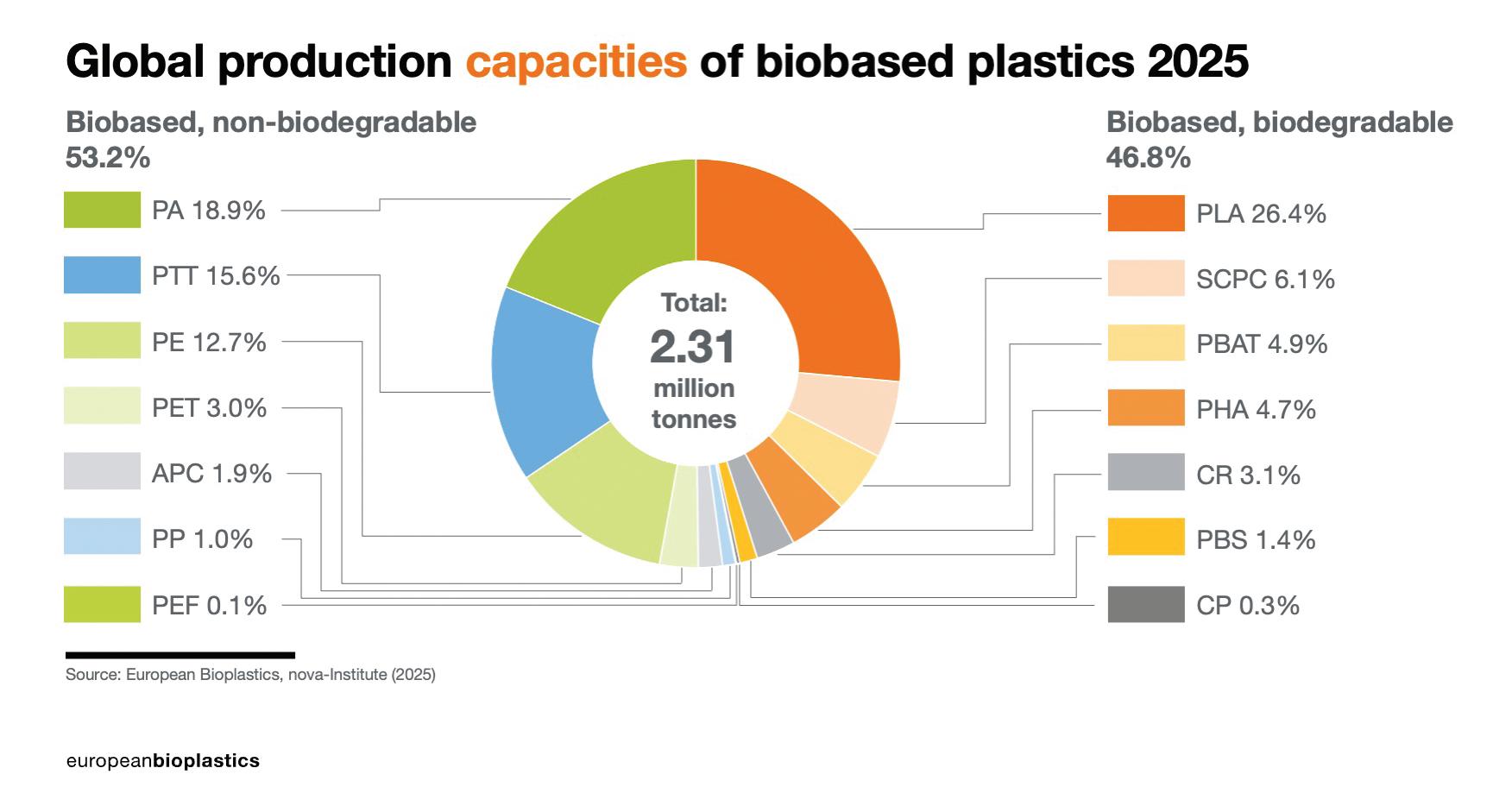
Figure 1 Source: european-bioplastics.org/bioplastics-market-development-update-2025/
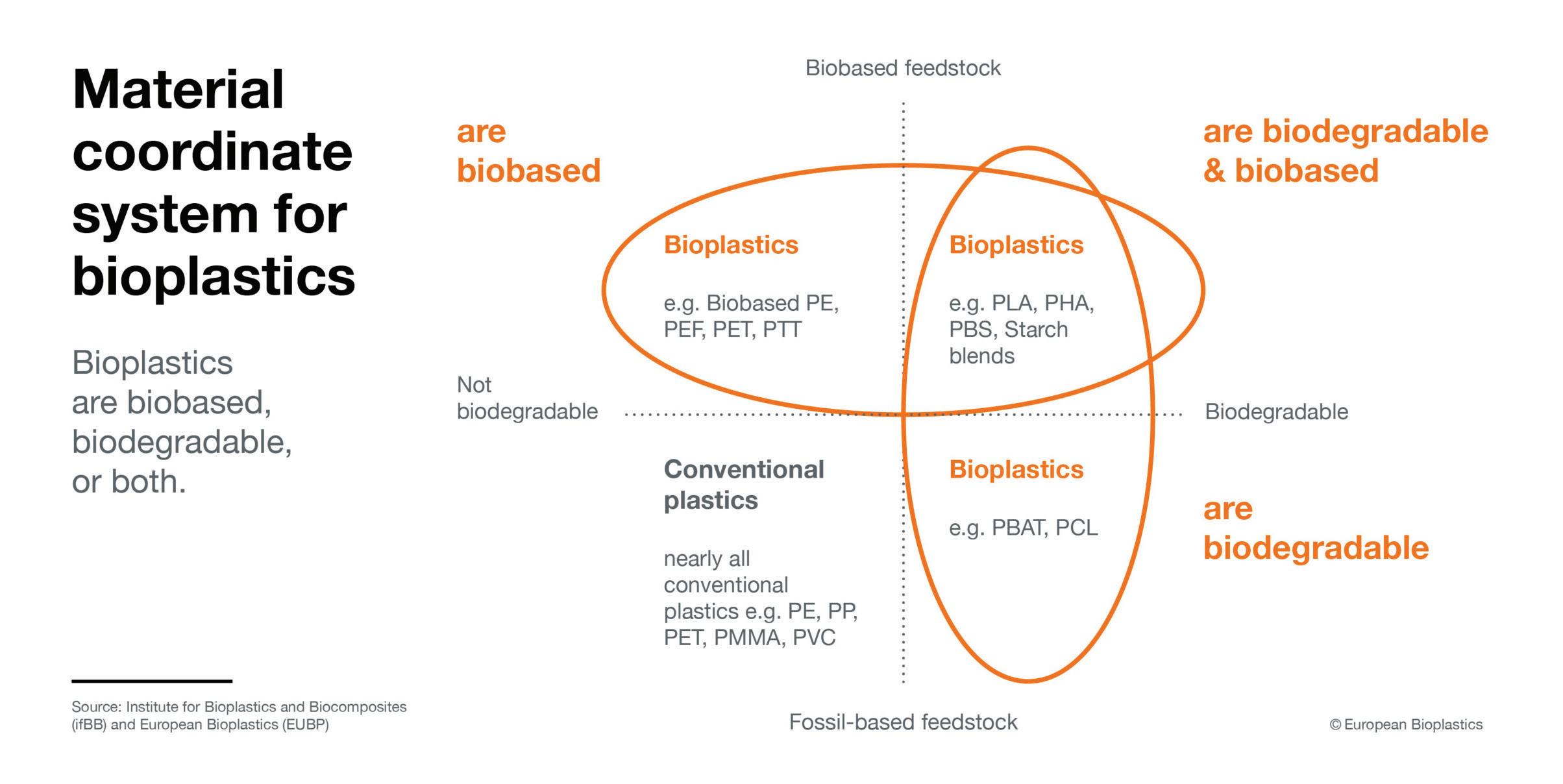
Figure 2 Source: european-bioplastics.org/news/multimedia-pictures-videos/#AnkerLogos
mers. Updated annually, it is a valuable resource from a consistent perspective. What this big-picture, static view does not provide, however, is a ringside view of the fast-moving industry dynamics that underpin this annual summary, or of the latest advances that make this capacity increasingly relevant for fibers and nonwovens developers.
This article provides a systematic overview — from a fibers and nonwovens vantage point — of the current state of play in the global biopolymers industry. The goal is to provide the nonwovens audience with a simple, structured overview of the biopolymers space that can be used as an anchoring reference for work, clarifying the state-of-play in fibers and nonwovens for the various biopolymers, and illustrating where the nonwovens-relevant advances are being made.
Biopolymers Defined
In this article, use of the word “biopolymer” refers to polymers that are biobased, biodegradable, or both. The four-quadrant format shown in Figure 2 is a longstanding, generally accepted industry definition, yet this remains a topic ripe for discussion and disagreement. Indeed,
perhaps it’s precisely because of the explicit either/or construct of the definition — the biobased and biodegradable camps each have their ardent champions, and often each would prefer a definition that excludes the other.
Furthermore, adding fuel to the ongoing passionate discussions is the intentional use of the broad term “biodegradable” in this definition. It’s a term that is only useful with further definition of what the user means when they say biodegradable, and that requires a further careful specification of the biodegradation time scale and environment including temperature and moisture, for example.
Definitions aside, the focus here is less on sourcing or end-of-life pathways and more on performance in processing and in use — specifically, whether these materials deliver fibers or nonwovens relevant characteristics at the right price. For too long, the supplier discussion has focused on the former — biobased, and/or biodegradable — and not on getting the right price/performance balance, which has stymied the growth of these innovative new materials.
In this article, the discussion focuses on the two right-hand quadrants — ma-
terials that are biodegradable under defined conditions, no matter what they’re sourced from. While partially or fully renewably sourced versions of conventional polymers such as polyethylene (PE), polypropylene (PP), and polyethylene terephthalate (PET) may provide interesting options for those interested in making carbon footprint claims or avoiding reliance on fossil resources, the polymers themselves are well understood in the fibers and nonwovens industry and typically fall outside of the wild west observation noted above.
The Biopolymers Degradability Landscape
Commercial biopolymers span wide ranges in biobased content, biodegradability, physical properties, commercial scale, and of course, cost. Figure 3, based on an excellent summary of biodegradability claims provided by the Germany-based nova-Institute, organizes the most common commercially available polymeric materials across a broad degradability spectrum.
For a fiber/nonwovens applications developer, the Nova Institute construct makes clear the criticality of specifying
The trend to watch is not the rise of a single, winning biopolymer, but the deliberate
engineering of
systems — blends, bicomponent
architectures and applicationspecific formulations
— designed explictly around nonwovens
metrics. This represents a maturation of the industry … .
performance
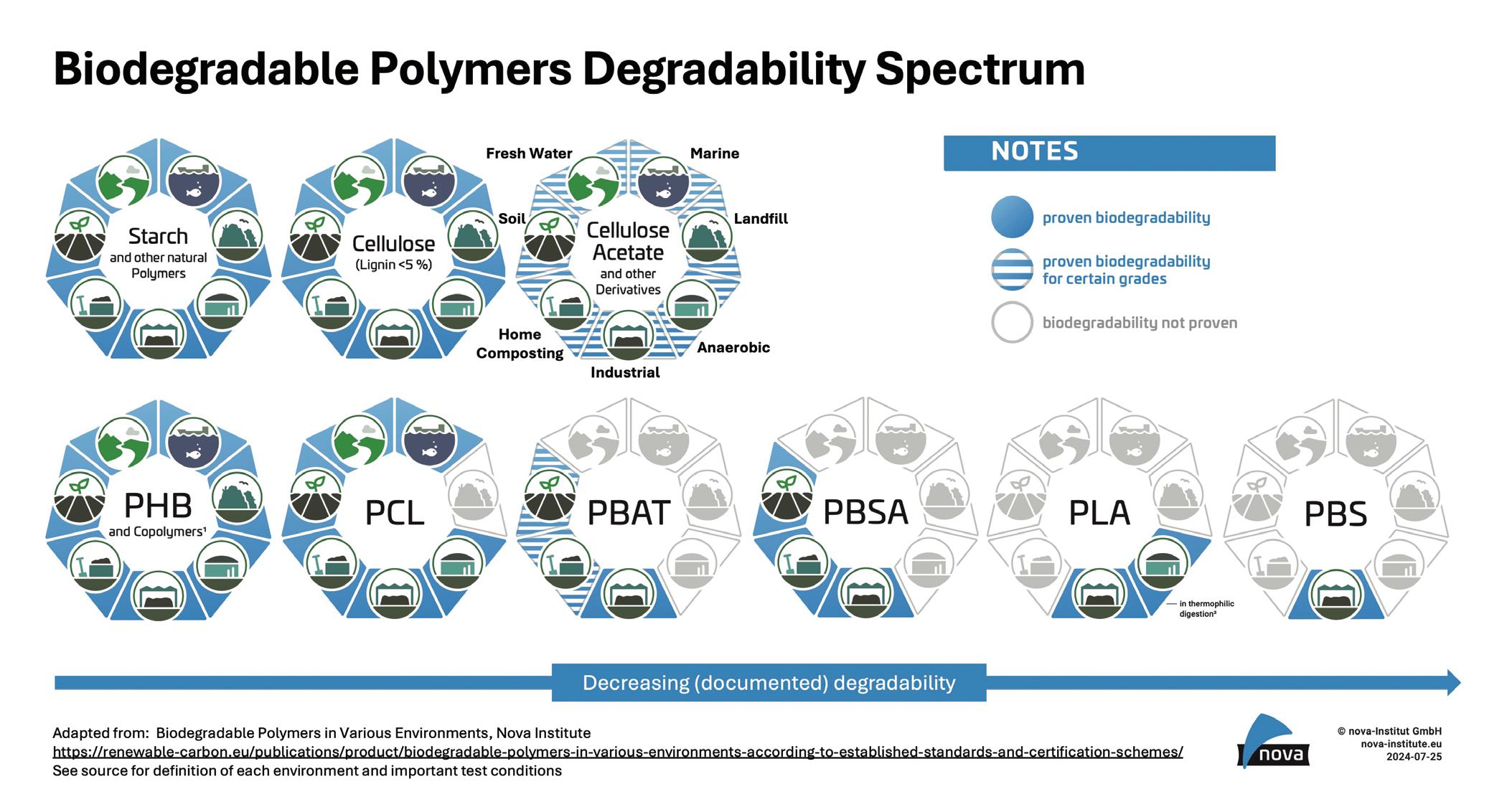
Figure 3 Source: renewable-carbon.eu/publications/product/biodegradable-polymers-in-various-environments-according-to-established-standards-and-certificationschemes/. See source for definition of test conditions.
the exact biodegradation conditions that are of interest. The seven degradability environments captured — industrial and home compost, soil, freshwater, marine, landfill, and anaerobic systems — span dramatically different conditions of temperature, moisture and microbiology.
For developers concerned with microplastics or microfiber persistence, clarity about the relevant exposure environment is essential. The anaerobic degradation environment provides an example: materials designed to perform well in a dry, hot or thermophilic anaerobic digester — such as a stacked solids system, for example — may be entirely inappropriate for a wet, cold anaerobic digestion system such as a water treatment system. The intent here is simply to highlight some of the excellent resources that are available to
fibers and nonwovens developers on the topic of degradability, testing, certification and claims.
It is worth noting that biodegradable is inherently context specific. The rate and extent of degradation depend heavily on environmental conditions, and outcomes relevant to microfiber persistence will vary accordingly. For fibers and nonwovens developers, clarity around the intended exposure environment helps ensure that sustainability objectives and performance expectations remain aligned.
While understanding the exact degradability characteristics of a material of interest is critical, it must be understood that degradability is but one piece of the puzzle, and that more attention must be given by both biopolymers suppliers and users in also getting the right processing
and fiber performance attributes at the right price. It’s a theme that the biopolymers industry is beginning to recognize and call out — addressed explicitly for example, by new biopolymer supplier South Korea-based SK Leaveo in the presentation “Degradability in Adsorbent Hygiene Products — Necessary but not Sufficient,” given at the last Hygienix™ conference.
What Figure 3 does not capture, with its focus on comparing degradability, is the tremendous physical property range that the currently commercial biodegradable polymers encompass spanning from the hard and rigid, PET-like, biopolymers like PLA to the soft/flexible biopolymers like PBAT, the polyhydroxyalkanoates (PHAs), or polybutylene succinate (PBS).
The biopolymers industry is beginning to awaken to the possibilities and innova-
tion afforded by cleverly combining biopolymers from this portfolio. With ample supplies of the neat resins now commercially available, there is real opportunity for the fibers and nonwovens industry to achieve the right price/performance balance by combining these materials.
Biopolymers In An Industry Life Cycle Context
Theodore Levitt’s classic 1965 “Product Life Cycle” provides a useful macro lens for understanding where biodegradable biopolymers sit along the industry spectrum — from introduction to growth and maturity (see Figure 4).
The more mature biopolymers, PLA and PBAT, now in their third decade of commercial production, and the not too-farbehind PHA, are firmly in the growth stage marked by competitive entry, pricing competition and the need for differentiation.
To varying degrees, all these biopolymers face the same challenge — the substantial capital investment required to build polymer facilities at an economic scale. Purely biobased variants such as PLA, face the additional capital expenditures (CAPEX) challenge of having to simultaneously build out the requisite monomer capacity. By contrast, biode
gradable materials such as PBAT that can use existing fossil-based monomers have been able to scale more rapidly from existing petro-based monomer capacity already available at an economic scale. This lower CAPEX barrier to entry for PBAT, along with the existence of a relatively large, legislated compostable bag market, has resulted in global PBAT capacities estimated in the 1-million to 2-million ton range.1 Note that the smaller PBAT capacities shown in Figure 1 represent only the PBAT which is both biobased and biodegradable. While little of that capacity until today has been applicable to fibers and nonwovens markets, recent advances in fiber-specific grades that bring compelling, more polyolefin-like performance to nonwovens are encouraging to see.
In the PLA space, the considerable CAPEX barriers to entry initially constrained industry expansion, resulting in a period of undersupply relative to market demand. More recently, rapid capacity additions — particularly in Asia — have shifted the market into a period of relative oversupply and pricing pressure. This recalibration has prompted some established and prospective producers to pause or reassess previously announced expansion plans.
Longer term, however, this period of capacity rationalization may ultimately benefit fiber and nonwovens players by increasing pricing competitiveness and incentivizing differentiation through fiber-specific grades and applicationaligned product development. It is worth noting that this renewed focus on fiberspecific grades builds on a technical foundation laid many years ago.
A look back to a comprehensive evaluation of PLA fiber processing and nonwoven performance in the early 2000s reinforces that today’s momentum reflects not only novelty, but also maturation.2
From Capacity To Application Reality
Biopolymers have largely been discussed so far from an industry-structure perspective — capacity, capital intensity, supply cycles and maturity stage. For fiber and nonwovens developers, however, the more pressing question is not how much resin exists globally, but how well that resin translates into process stability, fabric performance and total system economics.
In other words, what does this evolving biopolymer landscape actually mean at the line, on spunbond, meltblown, carded, airlaid, and bicomponent equipment, and in the finished product? It is at this
Biodegradable polymers in an industry life cycle context
interface between polymer science and web formation that the real inflection point is beginning to occur.
Biopolymer Alignment With Market Demand
To date, there has been no shortage of biopolymer innovation — only a shortage of meaningful translation into fiber and nonwovens value. That gap is now narrowing. Across hygiene, wipes, filtration, and durable nonwovens, the market signal is increasingly clear: brands and original equipment manufacturers (OEMs) are demanding softness comparable to PP, reliable and durable hydrophilic performance without secondary finishes, credible positioning around reduced persistence of microfibers under defined end-of-life conditions, and environmental claims grounded in defensible life cycle assessment and end-of-life pathways. The nonwovens industry does not simply want biobased or biodegradable. It wants drop-in or near-drop-in performance, process stability on existing spunbond, meltblown, airlaid, and carded lines, and cost structures that can scale.
Amidst these numerous adoption criteria, the industry has too often stalled with innovations trapped in prolonged pilots, launches delayed by endless refinements, and meaningful gains dismissed for not being perfect. Yet not every challenge must be solved at once. In many highvolume nonwovens markets — including hygiene, wipes, filtration, agriculture and medical — addressing even a single major sustainability or regulatory pressure can deliver real value today while building momentum for broader change.
What is needed are clear, market-specific roadmaps that sequence progress: what must be solved now, what can follow, and what requires longer-term reinvention. Waiting for perfection is no longer a viable path forward.
Fortunately, the state of play is materially different than even two to three years ago. Tangible progress is observed in melt-blend systems — such as alloys tailored for softness, toughness and controlled degradation — improved rheol-
ogy control for spunmelt processing; and early commercial examples of sheathcore bicomponent fibers that intelligently combine biomaterials to balance hand, strength, and surface functionality. These structures enable designers to put performance where it is needed — with hydrophilic or biodegradable functionality in the sheath, structural integrity in the core — rather than forcing a single polymer to do everything. At the same time, nucleation strategies, compatibilization, and additive packages are improving crystallization control, drawability, and web uniformity — areas that historically limited nonwovens adoption.
Historically, much of the biopolymers conversation in nonwovens has centered on direct substitution — “Can this material replace PP?” That framing — while understandable — has often set unrealistic expectations, asking a single polymer to simultaneously deliver mechanical strength, softness, hydrophilicity, cost parity and controlled end-of-life behavior.
The more promising direction emerging today is not one-for-one substitution, but engineered systems. Instead of expecting a single resin to do everything, designers are combining complementary materials, through blends, bicomponent architectures, compatibilized alloys, and targeted additive packages, to place performance where it is most needed.
That said, making this real at scale remains a collective challenge. Biopolymer suppliers must continue closing gaps in

thermal stability windows, lot-to-lot consistency, and for specific materials, global capacity concerns. Downstream converters must adapt bonding curves, surface treatments, and line conditions to new material behaviors. And the entire value chain must align around harmonized terminology, realistic service-life expectations, and substantiated claims — particularly around biodegradability and microplastics.
The trend to watch is not the rise of a single winning biopolymer, but the deliberate engineering of systems — blends, bicomponent architectures and application-specific formulations — designed explicitly around nonwovens performance metrics. This represents a maturation of the industry where innovation is no longer occurring in isolation at the polymer level, but at the interface between material science, process engineering and enduse design.
For the first time, the industry appears positioned not merely to experiment with biopolymers in nonwovens, but to integrate them deliberately and strategically into mainstream product design.
References
1 https://www.huaon.com/channel/trend/ 1055033.html
2 Farrington, D.W., Lunt, J., Davies, S., and Blackburn, R.S., “Poly(lactic acid) Fibers,” Biodegradable and Sustainable Fibres, Woodhead Publishing, 2005, Chapter 6 (nonwovens discussion in Section 6.4.3).
With more than 35 years leadership experience in the materials industry spanning fibers, plastics, and chemicals, Steve Davies is recognized for advancing circular economy solutions, commercializing novel materials, and building multi-sector partnerships that unite industry, government, academia, and non-governmental organization in his two decades at NatureWorks LLC. He now helps organizations evaluate and commercialize novel and advanced materials and solutions, providing business strategy development, go-to-market planning, stakeholder engagement, and issues management.

Robert Green, a global thought leader in polymers, fibers, and nonwovens, has more than 30 years of experience driving innovation, growth, and value creation. A former vice president at NatureWorks LLC and veteran of the polyester industry, he built and led one of the first successful global fibers and nonwovens biopolymer businesses. He now advises biomaterials and nonwovens companies on commercialization, sustainability strategy, and scalable innovation, while serving in leadership roles supporting non-woven industry innovation and growth.
Near-Term Developments In Smart Textiles
By Dr. Marie O’Mahony, IFJ Smart & Advanced Textiles Correspondent
This article takes stock of some of the near-term developments that are likely to be seen in e-textiles, as well as outlining some important industry and academic events this coming year that will no doubt offer additional insights and trends in the sector. E-textile developments are important in considering the current and short-term landscape, and perhaps more crucially for the signpost they offer to future research, development and fully commercialized products.
Key Trends And Developments
E-textiles and wearables are continuing to grow and to mature in terms of the technology, applications and consumer demand. The users of these products have really come to the fore this past year, helping to drive new developments, with the expectation going forward of even greater emphasis on user-centered design, as well as improved energy efficiency and lower environmental impacts. All of this is likely driven by consumer, health, societal and workplace demands. To break this down a little in the near-term, some alignment is very likely between the progression of wearables with trends and developments in other fields such as digital health and artificial intelligence (AI).
As the potential for wearables continues to expand, key subsectors are emerging. Remote and distance wearables is an example of this potential, and is expected to be a particularly strong trend in 2026. According to a report from Future Market Insights, the remote health care market is expected to be valued at approximately
$13 million in 2025, with the value expected to rise to more than $84.6 million by 2030 with a compound annual growth rate (CAGR) of 20.5 percent. Surveying the main technology research report agencies, the wearable health care device market in general is expected to grow anywhere between 10.9 percent CAGR and 25.5 percent during this period, so that 20.5 percent CAGR for remote and distance wearables is not out of line with other predictions.
The World Health Organization (WHO) in their “Global Strategy on Digital Health 2020-2027” report stresses the need for digital health to be an integral part of health priorities. In a separate report from Enterprise Ireland — a government agency responsible for supporting Irish businesses to enter new markets and achieve scale — Dr. Christian Stafford outlines what he sees as multiple benefits of digital health wearables: “In a world where we want to push care to the home and community, using smarter de-
vices and data to monitor and track patients remotely, technology to diagnose and treat and only bringing the most acute cases to hospital — you can readily see how a new way of delivering care, locally and community-based is inherently greener and more sustainable while also offering greater quality of life.”
Remote and distance wearables provide for the treatment of people outside hospitals and formal health care facilities. It can for example allow elderly patients to be discharged more quickly from hospitals and cared for in their own homes or care home facilities. It also has potential for patients to receive treatment post-surgery, such as rehabilitation, in their own home. This reduces the risk of infection and improves patient outcomes while reducing the financial and resource cost to the health care provider.
The ability of wearables to provide continuous monitoring over distance can allow health providers to reach people who are geographically remote. Coun-
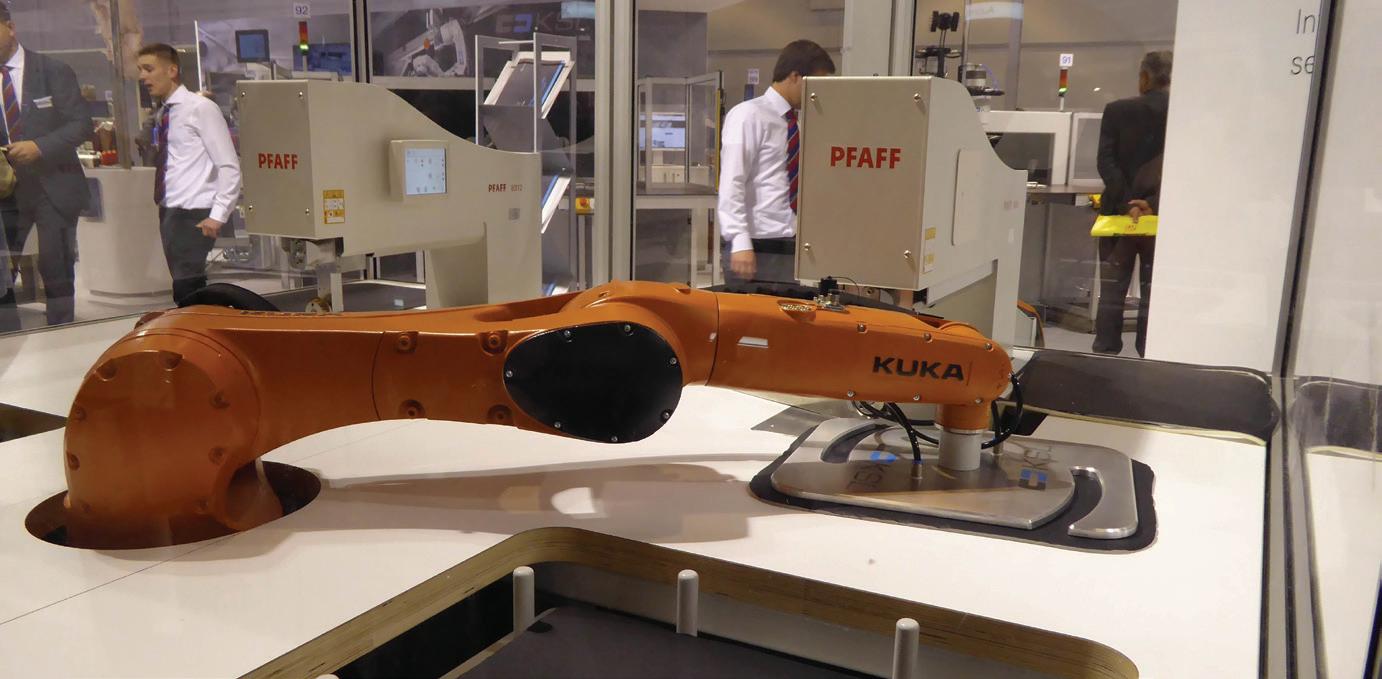
KUKA pick-and-place robot arm at work during Techtextil in Frankfurt. Marie O’Mahony
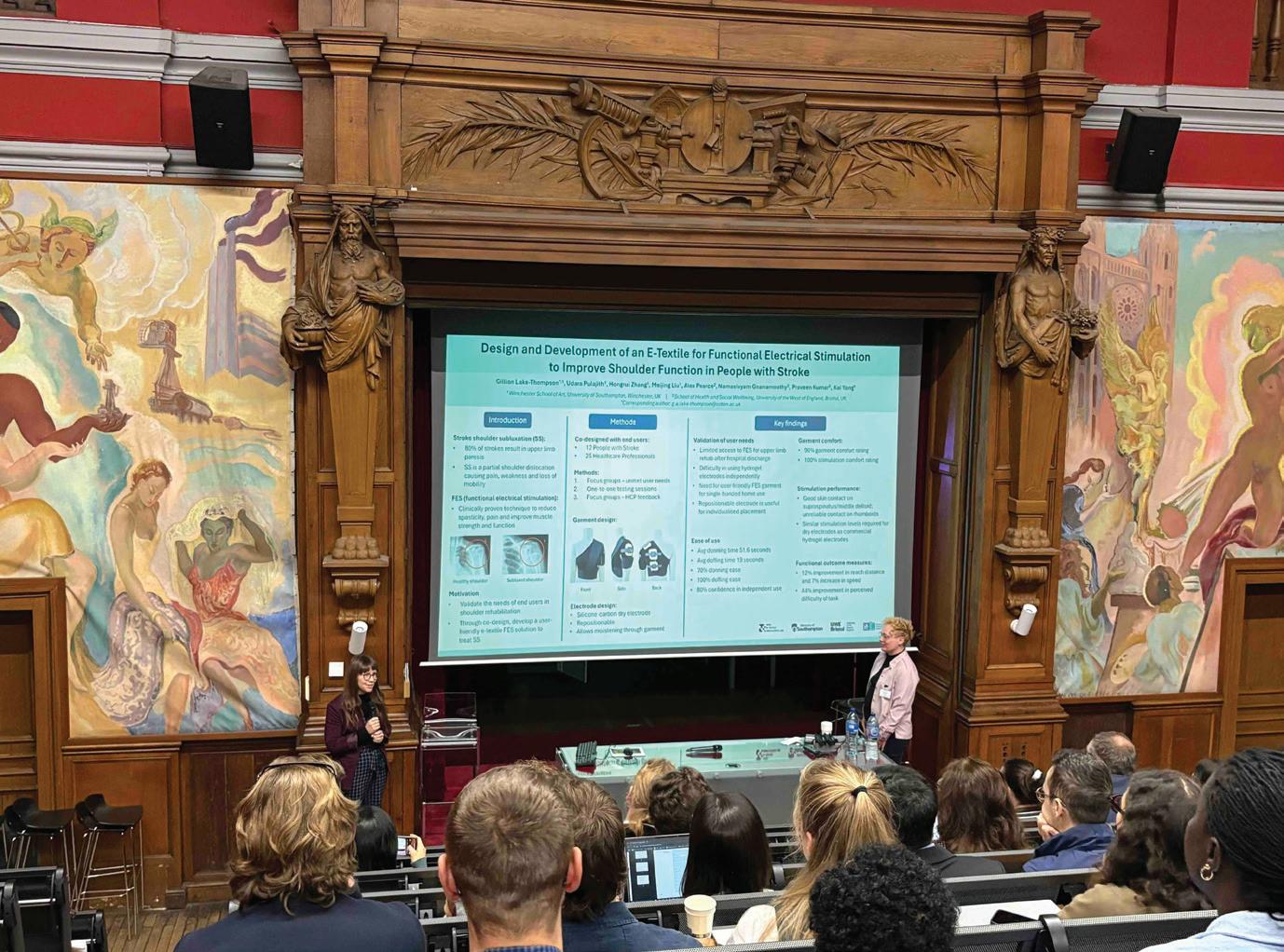
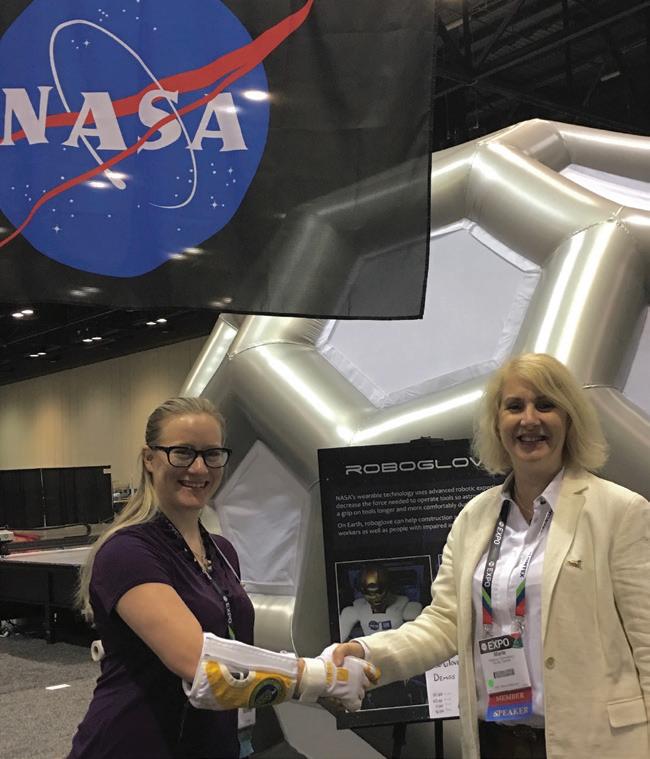
tries such as Canada and Australia have largely concentrated populations in small areas relative to their size. They are also home to remote groups of people, including indigenous populations that can be difficult to reach in a sustained or timely way. Workwear wearables are also looking beyond fixed work locations to consider the health and safety of workers in remote and extreme environments as well as sector-specific groups such as long-distance truck drivers who may suffer fatigue or other health problems that can endanger themselves or others.
The WHO digital health report stresses the need for interconnectedness in terms of digital technology, visualizing a system for the trusted and secure exchange of data and the sharing of relevant information across the health ecosystem to create a continuum of care. Remote and
distance wearables developments will undoubtedly be informed by this strategic thinking, allowing the sector to develop to scale while contributing to the delivery of better health care across societal, cultural and geographic borders.
Key Trade Shows And Conferences: Techtextil
Two Techtextil trade shows will take place this year, with the larger of the two to be held April 21-24, 2026, in Frankfurt. This is a biennial event and includes all aspects of e-textiles from new fiber and yarn developments, to woven, knitted, nonwoven, coated and printed electronics. Exhibitors from industry, research institutes and academia are global as are the attendees. Application areas are equally diverse with wearables, medical and health, transport and building sectors all strongly represented. Collocated sister show Texprocess is a platform for processing technologies and machinery section of the event. Exhibits will highlight individual machines, as well as robotics and connected technology. These Frankfurt events are not 100 percent e-textiles focused, but the sector has
a strong showing. The annual Techtextil North America will be held August 4-6, 2026, in Raleigh, N.C. This is a smaller version of the Frankfurt event, but e-textiles will also have a presence.
E-Textiles 2026
E-Textiles is an annual conference held in a rotating series of so far European cities each year. E-Textiles 2026 — the 8th International Conference on the Challenges, Opportunities, Innovations and Applications in Electronic Textiles — will take place in Pilsen, Czech Republic, November 24-26, at the Parkhotel Congress Centre.
The four-day conference attracts speakers primarily from academia, research institutes, small to medium-sized enterprises (SMEs), and start-ups. There is a small exhibition area that includes manufacturers, universities and research institutes, as well as a strong student poster area with many from these sections also presenting. It is a showcase for new research and developments with wearables, medical and health applications particularly well represented. One of the event’s strengths is in disseminating progress on some of the very large European grants that have multiple partners from academia and industry with these commonly continuing over three- or five-year periods often with follow-on to commercialization.
AT Expo 2026
This trade show and conference organized by the Advanced Textiles Association (ATA) takes place annually. AT Expo 2026 will be held in Orlando, November 3-5. Etextiles feature strongly both on the show floor, conference and campfire education programming. The conference is held the day before the show floor opens, with campfire sessions located on the show floor itself during the trade show and free to attend. North American exhibitors feature strongly with some from Asia and Europe also attending. Show attendees are primarily from North America. This is the flagship ATA event. Although not an exclusively e-textile event, all aspects of the sector are covered, with a heavy focus on fiber and yarn developments, as well as woven and knitted structures. Exhibitors
Gillian Lake-Thompson (left), E-textile Innovation Lab, University of Southampton, presenting her paper on “Design and development of an E-textile for a functional electrical stimulation to improve shoulder function in people with stroke” during E-textiles 2025 held in Lille, France. Marie O’Mahony
The author taking the opportunity to shake hands with NASA’s soft robot glove at AT Expo.
Marie
O’Mahony
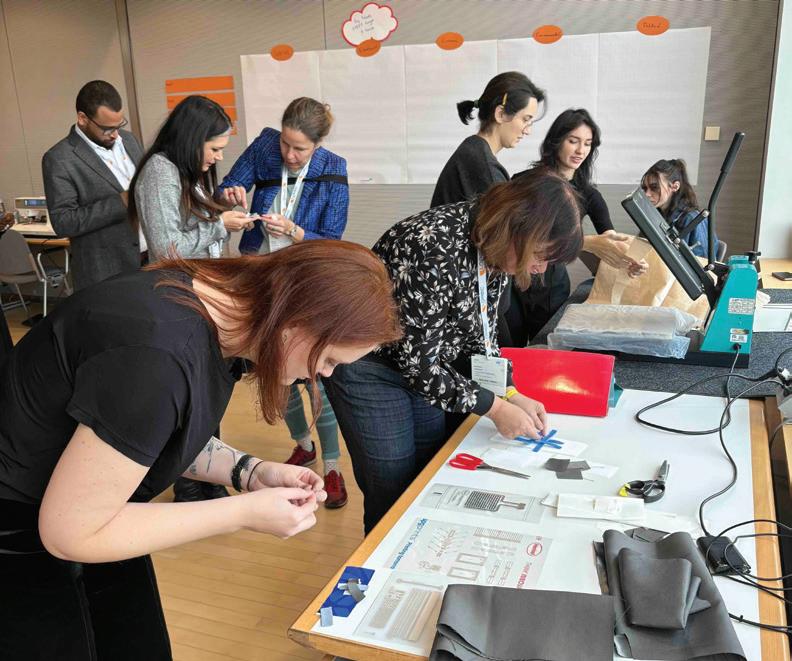
Beyond 2026: LOPEC
from industry, research institutes and academia are represented with the National Aeronautics and Space Administration (NASA) exhibiting and presenting each year. Application areas are diverse with wearables, workwear, medical and health all featuring strongly. One of AT Expo’s strengths is in disseminating progress on very large grants and research specialisms that look to the medium and long-term.
The Large-Area, Organic & Printed Electronics Convention (LOPEC) is an annual conference that takes place next March 2-4, 2027. LOPEC is the primary annual conference and trade show for the printed electronics sector and it takes place in Munich, Germany. The event focuses on printed electronics and flexible hybrid electronics, with exhibitors ranging from manufacturers to SMEs, start-ups, testing equipment providers and academia. European companies have a strong presence, but exhibitors from North America and Asia are also present. The conference is the primary education program, which features speakers from industry, academia, and associated areas such as industry standards. The show floor hosts a number of panel discussions, as well as a student poster exhibit area just outside the
main show floor. I instigated Design@ LOPEC with Marina Toeters in 2025 to bring design and industry together for a workshop with some exciting results. The workshop ran for the second year in 2026, and I hope to see it return in 2027.
Most of these trade shows and conferences are covered by IFJ journalists including myself. Look for coverage of the upcoming events in future issues of IFJ

Dr. Marie O’Mahony is an industry consultant, academic, and the author of several books on advanced and smart textiles published by Thames and Hudson. She is program leader for the M.Sc. in E-textiles and Wearable Technologies at the University of Southampton’s Winchester School of Art. Dr. O’Mahony can be reached at marie.consultant@ gmail.com or linkedin.com/in/dr-marie-omahony-94776836/


Participants at the inaugural Design@LOPEC workshop in 2025 undertaking activities that included trend forecasting as well as hands-on functional e-textile sample making.
Marie O’Mahony
At a recent Kingpins Amsterdam, The Lycra Co. showed its bio-derived Lycra® EcoMade fiber and its customized fit solution for jeans, Lycra FitSense denim technology. The Lycra Co.
Next-Gen Options For Eco-Friendly Stretch Materials

The future for elastane and stretch fabrics is part of the ongoing mission to replace petroleum-based materials with plant-based alternatives.
By Geoff Fisher, IFJ European Editor
Love it or hate it, elastane is an integral part of today’s fashion world. Consumers love it because it provides unrivaled levels of comfort and stretch; the recycling industry hates it because any material blended with elastane is difficult, if not impossible, to recycle.
Elastane has revolutionized the clothing industry owing to its stretch and comfort. The addition of just a few percent of elastane fiber makes denim jeans and leggings fit perfectly to the body and retain their shape; it gives sportswear, swimwear and activewear more comfort due to the resulting high stretch; and it provides compression wear with needed support.
Hidden Impact
Although a functional choice that offers excellent shape retention, elastane comes with a high environmental cost: it com-
prises a long-chain polymer — polyurethane — a chemically complex, non-renewable resource derived from fossil fuels that contributes to carbon emissions and non-renewable resource consumption.
Further, elastane is non-biodegradable, breaks down with heat and reportedly sheds more microfibers than other fibers, especially during domestic laundering, thereby adding to microplastic pollution.
While breakthrough technologies are emerging and the industry is clearly pushing toward solutions, there is no established, scalable infrastructure currently available for recycling elastane-blend fabrics.
Intractable Problem
According to the Netherlands-based Fashion For Good, elastane is present in around 80 percent of all clothing, added in varying concentrations — typically 1 to 5
percent by weight in cotton or wool garments and up to 20 percent in polyester or polyamide garments — to provide the required stretch and comfort.
But in the context of circularity, even minimal concentrations of elastane “contaminate” textile recycling feedstocks, thereby compromising fiber-to-fiber recycling of high-volume fibers such as polyester and cotton. This gives the vast majority of clothing limited end-of-life options beyond downcycling or landfill.
“Elastane is one of the most overlooked blockers to true circularity in fashion: it’s everywhere and yet there is a significant challenge to recovering it at scale,” said Carrie Freiman Parry, senior director of sustainability at luxury womenswear label Reformation based in Vernon, Calif.
Mixed-fiber textiles, especially polyamide/elastane and polyester/elastane blends, are extremely difficult to separate,
and there is currently no infrastructure for the recycling of elastane: recycling plants simply are not designed for handling this material.
In many countries’ textile recycling plans, which include automated sorting and fiber-to-fiber recycling, elastane remains one of the “innovation gaps” identified in the various road maps and pathways for hard-to-recycle materials: strategies for a fully operational elastane-specific recycling stream remain elusive.
Recycling Elastane-Blend Fabrics
Danish researchers from the Interdisciplinary Nanoscience Center at Aarhus University have produced a technology that can separate out fibers in mixed fabrics so that they can be processed and reused. So far, the team has developed a method to remove elastane completely from polyamide.
But in the context of circularity, even minimal concentrations of elastane "contaminate" textile recycling feedstocks, thereby compromising fiber-to-fiber recycling of high-volume fibers such as polyester and cotton.
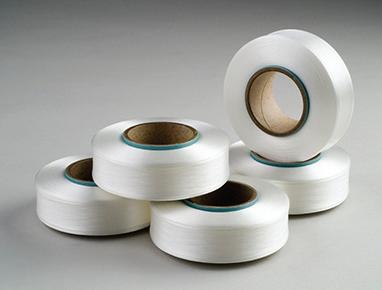
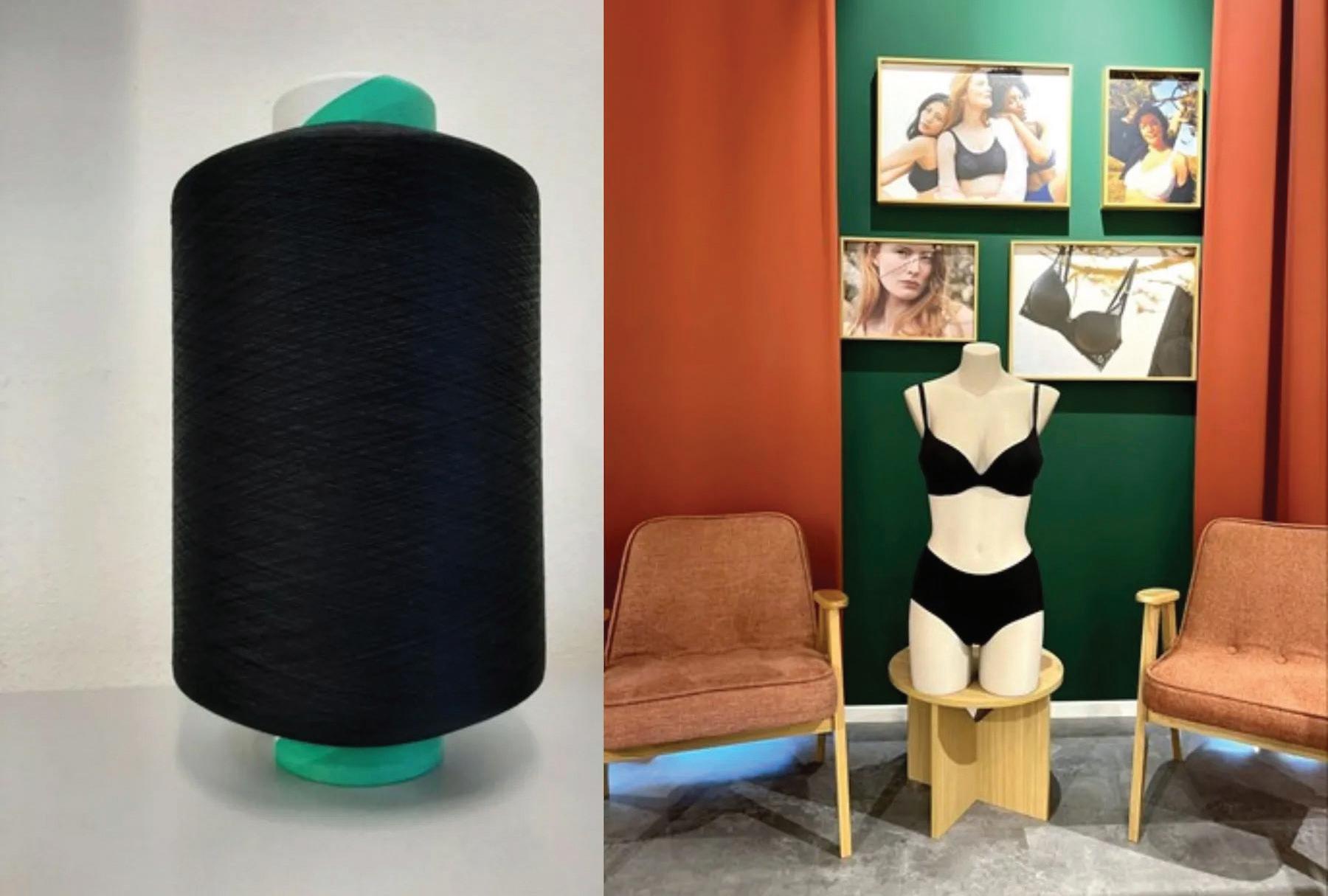
Assistant Professor Steffan Kvist Kristensen explained: “The many links in the elastane chain are bound together by a small molecule called a diamine. By heating the clothes to 225°C and adding a specific alcohol, we have found a method to break down the bonds in elastane. When this happens, the chains fall apart and the materials separate.”
A potassium hydroxide base is added to the alcohol, which accelerates the process. It is thought that potassium hydroxide either increases the reactivity of the alcohol or breaks down the chemical bonds in elastane slightly, making it easier for the alcohol to break them completely.
The method is not quite there yet with cotton, because some of the cotton fibers are broken down in the process. However, the researchers believe that, with some minor adjustments, this problem can be solved.
Closed-Loop Recycling Of Polyamide/Elastane
Italy-based RadiciGroup, The Lycra Co.,
Wilmington, Del., and Switzerland-based lingerie brand Triumph International recently collaborated to develop a closedloop recycling process that recovers both polyamide and elastane from mixed-fiber textiles. The project has resulted in a prototype coordinated lingerie set, consisting of a bra and briefs, made entirely from recycled materials — Lycra® fiber and RadiciGroup’s Renycle® yarn.
The recycling process, developed by Radici InNova, the research and innovation division of RadiciGroup, uses selective dissolution technology to separate different fibers within a fabric, making it possible to recycle textile waste that contains multiple materials, such as polyamide and elastane blends.
The process uses non-toxic, non-flammable and environmentally compatible solvents, and can be applied to the main types of nylon, including nylon 6 and nylon 6,6. Importantly, both the fibers and the solvent can be recovered and reused, which supports both environmental goals
and economic feasibility.
But putting it bluntly, the current infrastructure for recycling elastane-blend fabrics is fragmented, experimental and nowhere near being commercially viable: elastane is still considered a “killer fiber” for recycling.
Future-Forward Thinking
If recycling elastane-blend fabrics remains a difficult and uneconomic task, the future could belong to recycled elastane, biobased elastane or even biodegradable elastane.
Recycled elastane fibers can be produced from pre-consumer elastane manufacturing waste, pre-consumer materials, reclaimed production waste and recycled polyethylene terephthalate bottles.
Recycled elastane products currently available on the markets include Creora™ Regen™ from South Korea-based Hyosung, made using reclaimed waste; Roica™ EF from Tokyo-based Asahi Kasei Corp., made using pre-consumer materials; and
A Triumph International lingerie set made entirely from 100 percent Renycle® recycled polyamide and Lycra® fiber, produced in a closed-loop system as a prototype to demonstrate a new mixed-fiber recycling process.
RadiciGroup
Roica™ EF biobased fiber
Asahi Kasei
If recycling elastane-blend fibers remains a difficult and uneconomic task, the future could belong to recycled elastane, biobased elastane or even biodegradable elastane.
Lycra EcoMade fiber, made using 20 percent pre-consumer recycled materials.
Biobased elastane can be produced from renewable biomass, including plantbased materials and agricultural waste. For example, Hyosung supplies this as Creora bio-based, in which 30 percent of petroleum-based resources are replaced with biobased raw materials derived from industrial field corn known as dent corn.
Roica V550 is a stretch yarn from Asahi Kasei, which has been awarded a Cradle to Cradle Certified® Material Health certificate. However, it does not classify as being biodegradable because its degradation speed is too slow. For materials to qualify as biodegradable, they must completely break down and decompose into natural elements within a short time after disposal — typically within a year or less. Around 35 percent of the Roica V550 yarn is degraded within 270 days and 50 percent after 24 months.
Validating Biobased And Recycled Elastane
Earlier this year, a collaborative project
— Stretching Circularity — was initiated by Fashion For Good to accelerate the adoption of lower-impact elastane alternatives that are compatible with circular textile systems. By validating biobased and recycled elastane solutions through pilot-scale testing and demonstrator garments, the initiative aims to remove one of the most significant technical barriers to a circular textile economy.
One aspect of the project focuses on testing next-generation elastane materials made from alternative inputs, including biobased materials and other feedstocks. This phase includes the creation of demonstrator garments, specifically a technical T-shirt with 10 percent elastane and a non-technical T-shirt with 2 percent elastane. The project will also focus on testing regenerated elastane made
Celanese and Under Armour have collaborated to develop Neolast® fibers for performance stretch fabrics. Celanese
SGS-certified Creora™ biobased elastane Hyosung

through emerging recycling innovations.
Biomass-Balanced Tetrahydrofuran
In 2023, BASF began supplying a biomass-balanced variant of tetrahydrofuran (THF BMB) to the Roica division of Asahi Kasei, which is integrating this solution to produce its mass balance-grade premium sustainable stretch fiber under the Roica brand. The collaboration aims to promote the launch of environmentally friendly apparel collections by Asahi Kasei’s customers.
Roica has introduced mass balance (MB) stretch fibers across most of its product range. It aims to establish itself in the market with new sustainable fibers and is currently in discussions with several apparel manufacturing corporations. THF is used to produce polytetrahy-
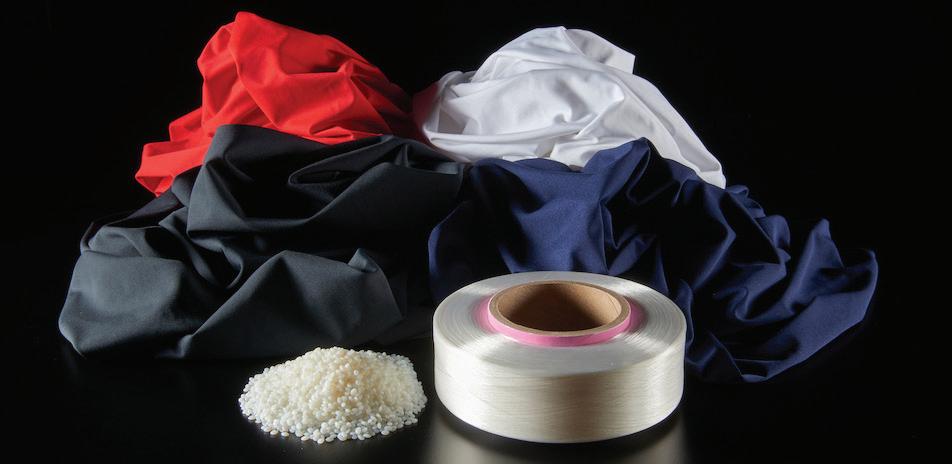
drofuran, which is a raw material for the production of elastane fibers. BASF’s THF BMB is recognized for significantly reducing carbon footprints compared with traditional THF products owing to the substitution of a portion of fossil-based raw materials used in production with renewable resources.
Utilizing THF BMB in products can lead to a 25 percent decrease in carbon dioxide (CO2) emissions, according to Asahi Kasei. By further incorporating its own massbalance approach and using renewable energy for production, the company hopes to manage an additional 25 percent reduction in CO2 emissions of its products.
Other Stretch Fibers
As an alternative to elastane, many manufacturers and fashion brands are now considering other stretch fibers that can be recycled and are less likely to cause microfiber pollution. For example, Newark, Del.-based Covation Biomaterials LLC, the former DuPont biomaterials business, has developed Sorona®, a 37 percent plantbased stretch fiber from propane-1,3-diol derived from corn glucose, while Italybased Fulgar S.p.A. has produced Evo®, a biobased stretch fiber manufactured from a castor bean oil-derived biopolymer.
An alternative next-generation moderate stretch system that avoids traditional elastane is S.Leisure™ from Taiwan-based Singtex® Group. This lightweight fabric is said to employ mechanical stretch, thermoplastic engineered polymers and bicomponent fibers, providing comfort, breathability, fast-drying properties, ultraviolet protection, good recovery and recyclability with a lower carbon footprint than comparable elastane-based materials. It is also claimed to be at least 20 percent more energy - efficient than elastane-based fabrics.
Alternative For Athletic Apparel
Specialty materials and chemicals company Celanese Corp., Irving, Texas, and athletic apparel and footwear producer Under Armour Inc., Baltimore, have announced the development of a new fiber for performance stretch fabric.
Neolast™ fibers feature the stretch, durability, comfort and improved wicking expected from performance fabrics yet are also designed to begin addressing sustainability challenges associated with elastane, including recyclability.
The fibers are produced using recyclable elastoester polymers and a proprietary solvent-free melt-extrusion process, eliminating potentially hazardous chemicals typically used to create stretch fabrics made with elastane.
Additional benefits of the Neolast fibers include enhanced production precision, allowing spinners to dial powerstretch levels up or down and engineer fibers to meet a wider range of fabric specifications.
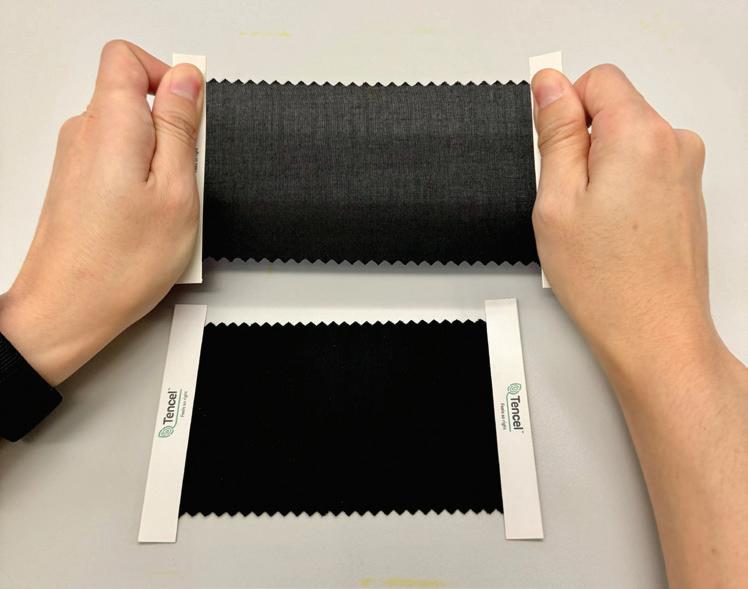
Fossil-Free Material
Austria-based cellulosic fiber producer Lenzing AG has developed a new processing technique for its Tencel™ Lyocell fiber that can transform it into a traceable and fossilfree alternative material for stretch fabrics, offering enhanced recovery properties and more design possibilities for lightweight apparel, alongside responsible production techniques.
Lenzing has unveiled the potential of Tencel™ Lyocell fibers as an alternative material for stretch fabrics. Lenzing
Yulastic® natural rubber filaments are biodegradable in one to two years.
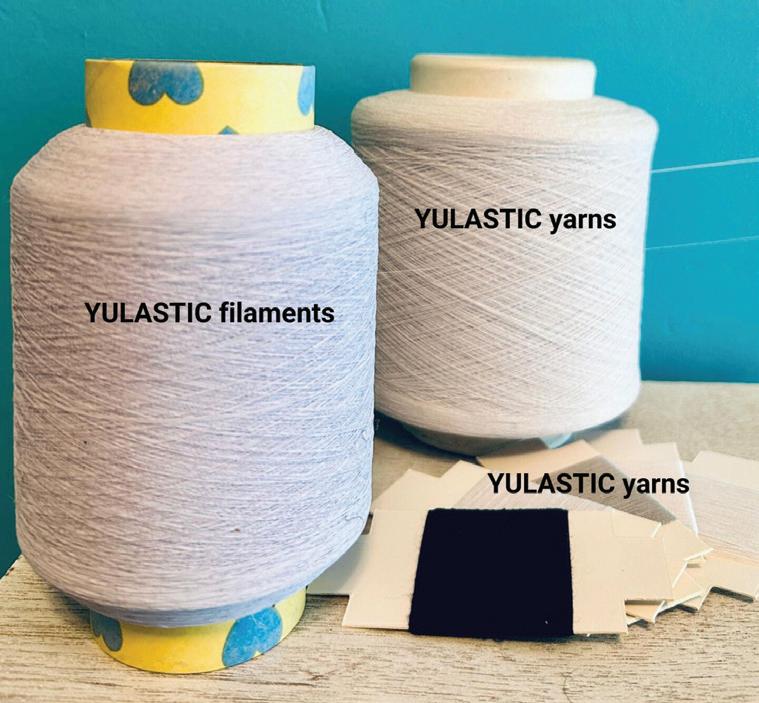
The novel method comprises the reconfiguration of woven fabrics made of Tencel Lyocell fibers, followed by a fabric pre-treatment. During the wet process, lyocell fibers expand in diameter, which leads to an increase in yarn crimps widthwise. This results in a fabric that can stretch easily, with enhanced recovery and does not shrink or wrinkle easily, maintaining a smooth appearance even after home laundering, according to Lenzing.
The Tencel Lyocell fibers used in these stretch fabrics are extracted from certified wood sources and produced using a resource-saving closed-loop method. In addition, the fibers can be identified in end products and are traceable back to their sources, ensuring increased accountability and transparency throughout the supply chain.
Plant-Based Replacement — Nature’s First Elastomer
Meanwhile, Chandler, Ariz.-based Yulex LLC has launched Yulastic®, a “natural and sustainable alternative to elastane.” Made from natural rubber, the plantbased material is said to offer the same stretch and recovery performance as
elastane, without the reliance on petrochemicals.
Yulastic is a fine, natural rubber filament harvested from Hevea brasiliensis, a species of rubber tree; and Yulex produces renewable products such as wetsuits, swimwear and bags using the filament.
CEO Liz Bui said: “Mother Nature has been making the best polymers since day one. But we’ve replaced natural fibers with non-biodegradable plastics that last forever and are impossible to recycle. And look where that got us.”
Yulastic natural rubber filaments are biodegradable in one to two years. The company added that several undisclosed “household-name” fashion brands are already on board, preparing to integrate Yulastic into their collections.

Geoff Fisher is the European editor of IFJ and a director of England-based Textile Media Services, a B2B publisher of news and market reports on transport textiles, medical textiles, smart materials and emerging markets. He has 40 years of experience reporting on fibers and technical textiles and can be contacted at gfisher@ textilemedia.com.
Yulex
KTex Nonwovens Carves Distinctive Niche Through Super-Soft Fabrics
ndia-based KTex Nonwovens Pvt. Ltd. has carved a distinctive niche in the nonwoven fabrics industry through its super-soft fabrics. These materials deliver a luxurious cotton-like, silky texture, offering tailored comfort and quality. Developed through extensive research by the company’s dedicated Research & Development (R&D) team, the proprietary formula gives KTex a competitive advantage.
These premium fabrics are specifically engineered for high-end hygiene products, including top-tier diapers and sanitary pads. The most compelling benefit of KTex’s innovation is its skin-friendly nature — the ultra-gentle surface virtually eliminates the risk of skin irritation and rashes, a common concern with conventional materials. This makes KTex’s fabrics preferable for sensitive skin applications.
Arun Rao, IFJ ’s international correspondent in India, recently had the opportunity to meet with Nimesh Sanghrajka, KTex Nonwovens’ director, to learn more about the company and its specialty products.
International Fiber Journal: Kindly provide a brief history of your company.
Sanghrajka: KTex Nonwovens began as a joint venture, was incorporated in 2017, and actual production started in 2018. Prior to starting the company, we were already trading and exporting nonwoven fabrics to the European Union and the United States since 1995. Incidentally, the first nonwoven fabric roll in India was sold by our trading company in 1995. The fabric was sourced from a 100 percent export-oriented Indian nonwoven fabrics manufacturer and since they had surplus material, they approached us. We sold
By Arun Rao, IFJ International Correspondent, India
Q+A

IN THIS ISSUE:
NIMESH SANGHRAJKA
Director, KTex Nonwovens Pvt. Ltd., India
the fabric to a renowned diaper brand that was earlier importing the fabric.
IFJ: Please share details about manufacturing infrastructure and annual capacity.
Sanghrajka: Our first production line was ordered from China. But we ordered only the frame of the machine, while all the machine components and parts were sourced from Germany. This SSMMS [spunbond-spunbond-meltblown-meltblown-spunbond] line has a width of 1.8 meters and had a production capacity of 6,000 tons per annum and within a period of three months, we were utilizing 100 percent capacity producing fabrics for the hygiene market. During the COVID-19 pandemic, our production capacity was sold out for two years. But even during the pandemic, we grew our hygiene business by selling 70 percent of
production to the hygiene market and the rest in the open market. That’s how we built relationships with major companies like Johnson & Johnson as we supplied them fabrics even during the pandemic while others were concentrating on selling medical fabrics.
In 2022, we sourced two Reifenhäuser Reicofil lines from a closed-down Saudi Arabian nonwoven production factory. One is a 3.2-meter-wide SMMS bicomponent line and to the best of our knowledge, we are the only company in India to have a bicomponent line. The fabric also gives a very soft feel. These fabrics are particularly preferred by companies producing hygiene products.
Once the first line bought from Saudi Arabia was fully operational, we began installing the second 4.2-meter-wide SSMMS line, which was operational in 2024. This is also a one-of-a-kind line in India. After the addition of the two new lines, our production capacity jumped from 6,000 tons per annum to 36,000 tons per annum or a six-fold increase. With the addition of these two lines, more hygiene product manufacturers started getting associated with us as we were giving them the option to purchase fabrics from three production lines with fabrics of various characteristics and parameters. We have also installed lamination machines.
IFJ: Which are the core products and solutions KTex offers?
Sanghrajka: We can supply fabrics from 8 to 100 grams per square meter (gsm), but normally we produce 25 gsm fabrics for the hygiene industry and around 50 gsm for medical applications. Our unique selling proposition is producing one-ofa-kind super-soft fabrics, which have a very cotton-like and silky feel. We are us-
Most of our business comes from our relationships. We do not sell products; we sell an experience.
— Nimesh Sanghrajka
ing a proprietary formula developed by our R&D team. These fabrics are used in premium diapers or sanitary pads. The biggest benefit provided by the super-soft fabrics is that the wearer will not develop rashes. Between 75 and 80 percent of our fabrics go to the hygiene industry, 15 percent goes into medical applications, and the rest is used for packaging and agriculture crop covers, among other applications. We also manufacture breathable laminated nonwoven fabrics that are laminated with films.
IFJ: Please provide details of the R&D department and its achievements.
Sanghrajka: We have an R&D lab and also a quality control lab with state-of-theart equipment imported from the United States. We always look to add value to our
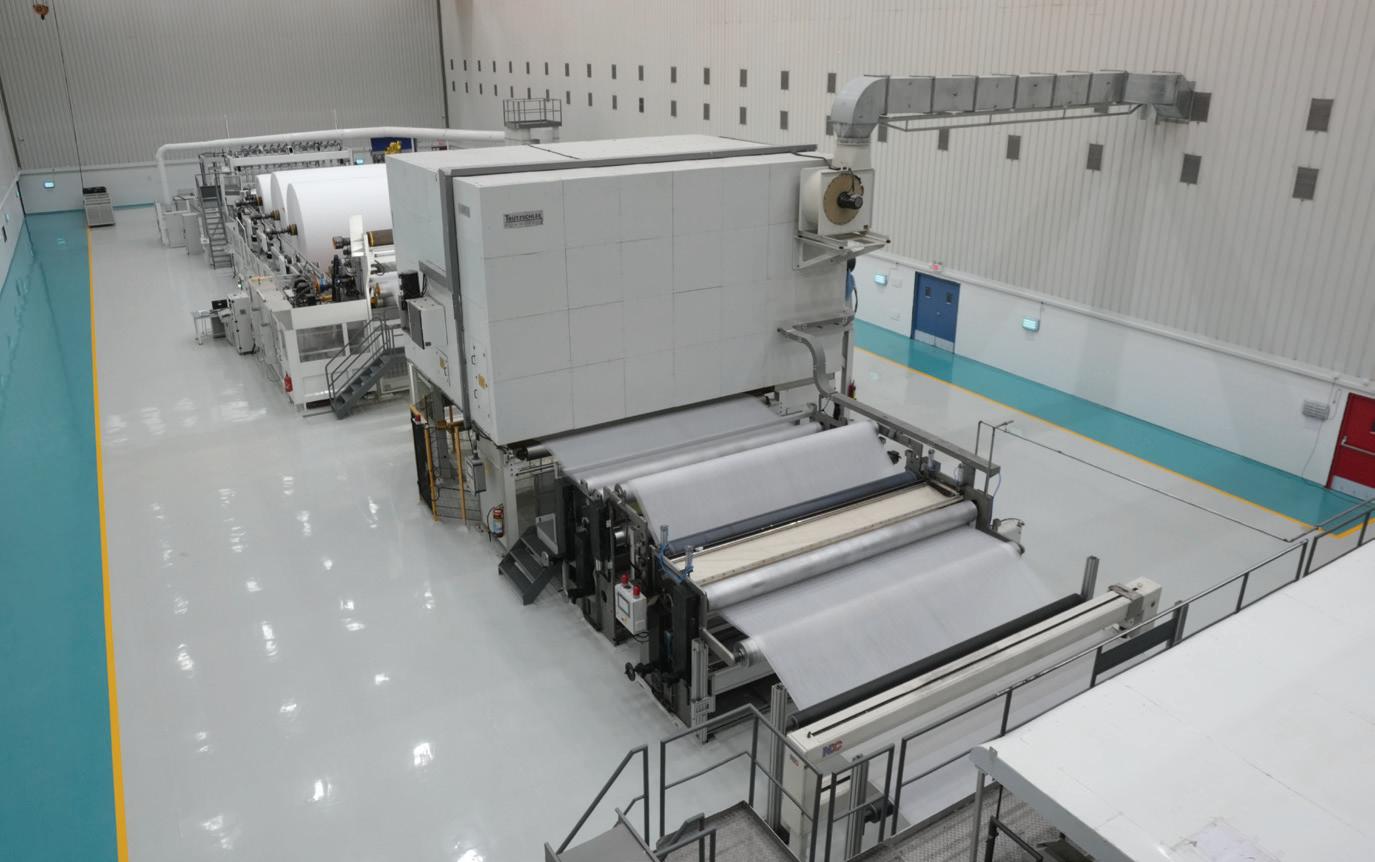
er-gsm fabrics. This brings down the cost of the product for the customer.
IFJ: How important is sustainability for your company?
fabrics that can benefit our customers. For example, the super-soft nonwoven fabrics have been developed by our R&D team using a proprietary formula.
IFJ: What is the advantage of the products offered by KTex compared to those offered by competitors?
Sanghrajka: The main difference between us and our competitors is our product quality and timely deliveries. Most of our business comes from our relationships. We do not sell products; we sell an experience. Whenever a customer buys a new nonwoven fabric product, our technical teams visit the customer’s factory and help guide them, and if needed, we also modify the fabrics. We have been able to supply lowergsm fabrics — down by 20 percent — with the same strength and properties as high-
Sanghrajka: Sustainability is very important. Even reducing the gsm of the fabric for a particular application can make it more sustainable. We have installed a waste recycling machine that recycles the side trims and converts them into pellets that are reused as raw material, and so there’s no waste. Now companies are introducing polymers with additives that make the fabric biodegradable. We are yet to start using those additives, but we plan to do so in the near future.
IFJ: Please share details of your presence in the Indian domestic and export markets. Also, please share details on your distribution or sales channels.
Sanghrajka: Every customer has requirements for fabrics with different parameters even if both are producing diapers. So, we manufacture only on confirmed orders. The factory was started with a primary goal to export the fabrics since we were earlier exporting nonwoven fabrics and had a huge clientele. But during the COVID pandemic, when there were export restrictions, we started developing the domestic market. Both the hygiene and medical sectors grew phenomenal-
Just one of the production lines operated by KTex Nonwovens. KTex
KTex Nonwovens has an R&D Laboratory equipped with state-of-the-art technology. KTex Nonwovens
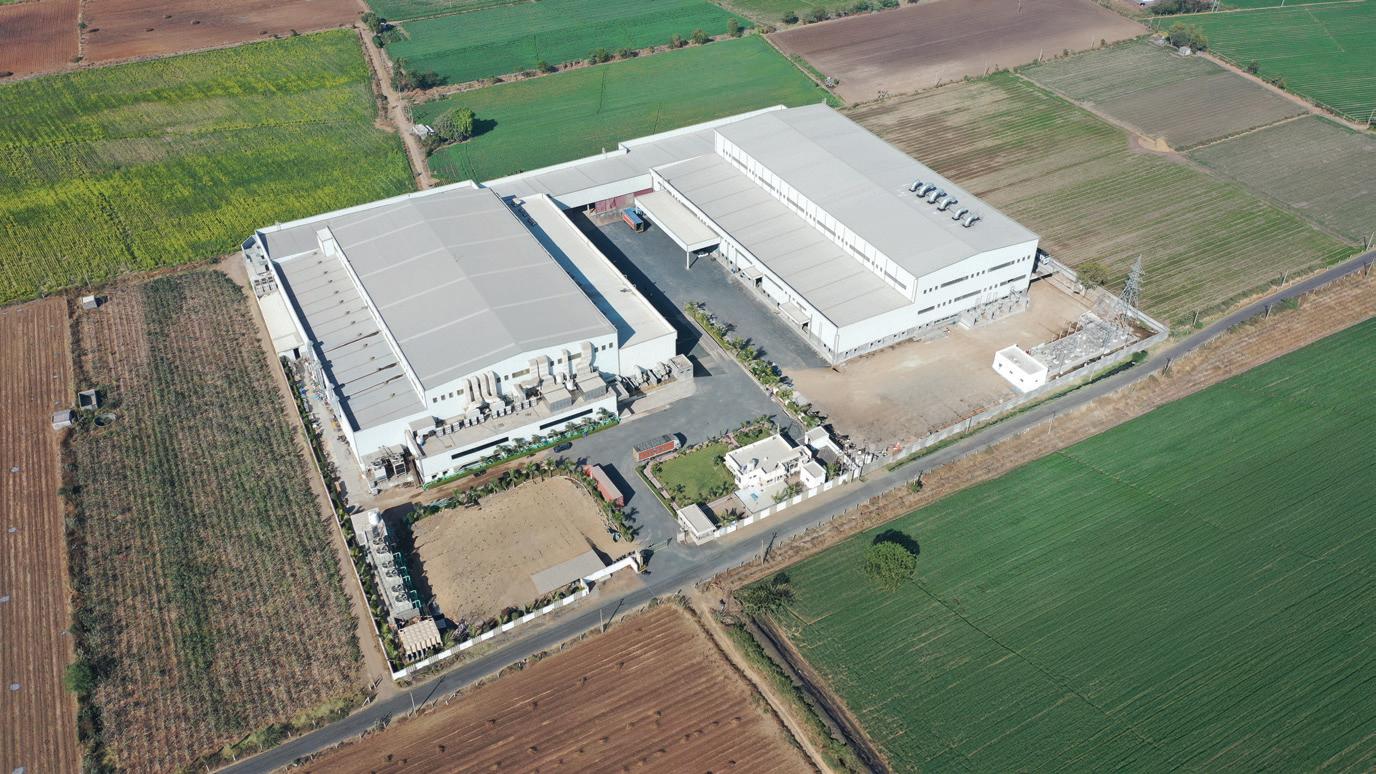
ly during and post the pandemic. This helped us gain a good market share in the domestic market. But since 2023, export markets have revived. However, U.S. tariffs hit our exports in 2025. So, now we are exploring new regions like Africa — where the African market is growing in leaps and bounds — as well as European countries.
IFJ: Does KTex plan any capacity expansions or investments?
Sanghrajka: We may put up another production line in 2027 depending on the market conditions. We have already shortlisted the production line we will purchase. We are also planning to foray into converting fabrics into medical garments in 2026 and this will serve as an OEM business for our U.S. and European buyers.
IFJ: Can you talk about key trends in consumer demand and the growth trajectory of the Indian and global nonwoven fabric markets?
Sanghrajka: During the two-year COVID-19 period, a lot of nonwovens production capacity was added on the premise that COVID would continue for a few years. But demand dropped once the pandemic ended and due to overcapacity, the years between 2022 and 2024 were a very difficult period. But since the third quarter of 2025, both domestic and global demand has revived, and we are optimistic about gener-
ating good business in the next two years. In the last five years, the number of converting lines for various applications like diapers and sanitary napkins has more than doubled in India, which is a good indicator for the nonwovens fabric industry in India. Prior to COVID-19, there may have been just 40 converting lines for both diapers and sanitary napkins. But now there may be more than 200 such lines. Consumption of medical garments too has gone up by more than 50 to 60 percent. We expect the converting industry for both diapers and sanitary pads to grow at a steady compound annual growth rate of 15 percent until 2030.
The current usage of disposable baby diapers is only for five out of 100 babies in India, while in the United States it is around 70 out of 100 babies and in China it is 50 out of 100. So, even if the usage of baby diapers doubles to 10 out of every 100 babies, it is still a huge figure. Baby diaper consumption in recent years has mainly increased due to disposable incomes. For lower-income families and those living in rural areas, now even single-piece baby diaper packs are available in the market, which they can use while traveling. Once they start using those diapers, they will realize the benefit and continue using them.
In case of adult diapers, there were earlier just three or four companies manufacturing those diapers. Now there are at least six companies. Now when an older person is admitted to a hospital, they are
provided adult diapers by the hospital, which they then continue to use even after leaving the hospital.
The medical segment consumption took off during the two-year pandemic. Demand faded after the pandemic, but consumption in 2025 was still double the 2019 level as consumption has shot up compared to the pre-pandemic years. Now even patients insist that doctors should wear a medical gown during an operation. A lot of multinational companies have also shifted their production of medical gowns to India, which has led to an increase in medical fabrics sales.
IFJ: Do you have expectations on the future growth and opportunities in the Indian as well as overseas markets?
Sanghrajka: India is now the fastest-growing diaper manufacturing and consumer market in the world. New entrepreneurs are entering the converting industry, and they are setting up and selling in the tier 2 and tier 3 cities and towns. They are focused on selling in the regions in which they have the production plant and are not stretching themselves. They just need 4,000 square feet of production space, a majority of which goes into storing the finished product. Since the production lines are automated, they do not have the hassle of employing a high number of workers. We expect that as incomes keep growing and there is more disposable income, the Indian market for hygiene products will explode.

Arun Rao started his career in the textile industry and has worked in spinning and weaving production. He forayed into sales, beginning with branded innerwear and later selling clothing of well-known brands. He then joined Fibre2fashion, a B2B textile website, as news editor for seven years. Recently, Rao launched Taurus Communications, a public relations and advertising agency focused on the textile industry value chain. With a love for journalism, he freelances for textile magazines, along with managing the agency. He is the India foreign correspondent for IFJ
An aerial view of the KTex Nonwovens plant. KTex


A Global Hub For The Nonwovens Value Chain
INDEX™26, the triennial nonwovens exhibition owned by EDANA — a Brussels-based international association representing the nonwovens industry — will return to Palexpo in Geneva May 19-22, 2026.
Organized in conjunction with Palexpo SA, INDEX brings together the full nonwovens value chain including raw material suppliers, media producers, equipment manufacturers and end-use specialists. At this year’s edition of the show, a new immersive experience designed in a dynamic way will engage participants and help them explore trends, applications and breakthrough nonwoven technologies.
The more than 50,000 square meters of exhibition space also serves as a hub for innovation and networking. Trends, innovative materials, new technologies and more will be on display during the four-day event with the hygiene, automotive, construction, geotextiles, filtration, medical, wipes and packaging sectors all represented.
EDANA reports that trends in the industry point toward high-performance
lightweight materials and an increasingly integrated global supply chain. Sustainability and efficiency remain a focus of the industry.
Exhibitor, Visitor Profiles
At the 2026 edition of INDEX, some 600 exhibitors will participate, showing the latest innovations in the nonwovens industry.
“The incredible commitment from our exhibitors confirms INDEX26 as the essential event for the nonwovens industry,” said Magali Fakhry Dufresne, INDEX director. “Leaders from across the entire value chain are coming together to showcase a powerful fusion of innovation and sustainability that is shaping our future.”
The 2023 edition of INDEX attracted 610 exhibitors from 42 countries as well as more than 12,000 attendees from 103 nations.
Exhibit Highlights
Some exhibitors have shared details about new product launches planned for INDEX26 including Reifenhäuser Reicofil, Magnera — exhibiting for the first time since the Berry Global and
Glatfelter merger — A.Celli, Borealis, Saueressig, Trützschler and Wisdom Greentech. Machinery for efficient fiber and nonwovens production; 3D embossing and perforating technologies; breathable low weight nonwovens; and soft, binder-free nonwovens are among just some of the innovations that will be on display in Geneva.
“INDEX26 showcases an industry that is resilient and determined to diversify. Today, it is no longer just about massproduced disposable items, but about high-tech, durable and sustainable solutions to the most complex challenges of our time,” Fakhry Dufresne noted. “We are seeing a fundamental change in which reducing the carbon footprint per kilogram of nonwoven fabric is becoming the most important performance indicator for the entire value chain. INDEX26 is the place where this technological change becomes visible.”
Learning Opportunities
INDEX will host a robust seminar program designed to offer a deep dive into current technical, regulatory and market
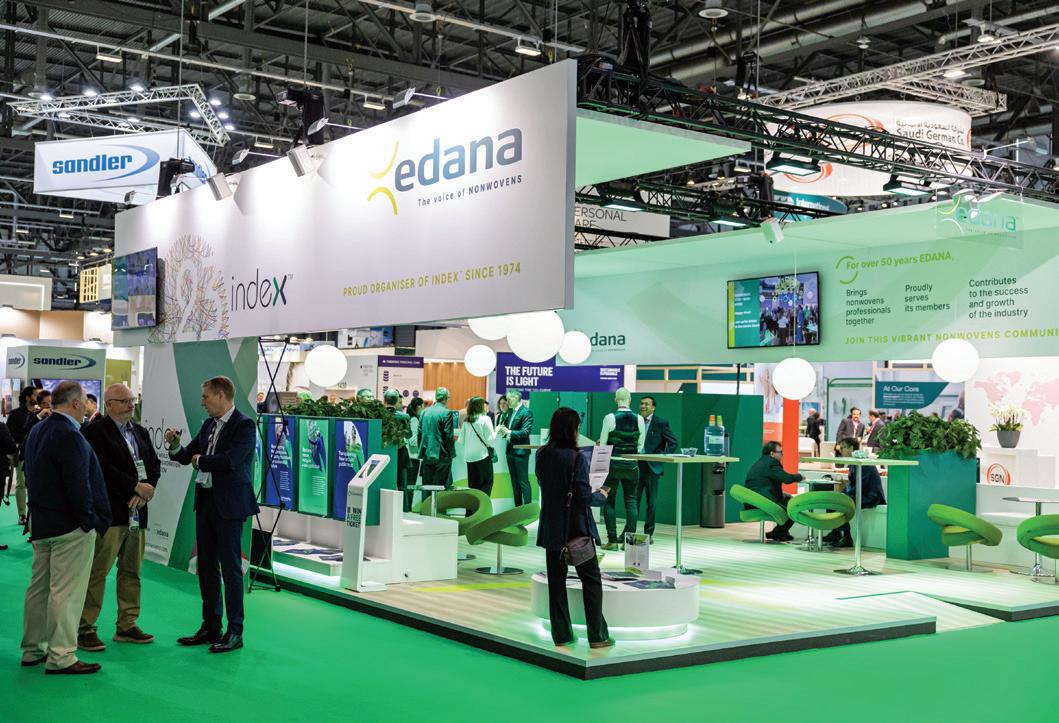
issues impacting the global nonwovens industry. The seminar program is created around three pillars — Strategic Market Intelligence; Sustainability and Regulatory Resilience; and Innovation in Specialized Sectors including geotextiles, filtration and mobility.
The Strategic Market Intelligence pillar will focus on trends drawing from EDANA’s nonwovens industry intelligence. The Sustainability and Regulatory Resilience pillar will explore challenges related to environmental and end-of-life concerns, as well as carbon footprint reduction challenges while aligning operations with regulations in a shifting legislative climate.
A session on filtration will look at high-growth areas and new applications; a geotextile seminar will examine the role of nonwovens in revitalizing modern civil engineering; and the mobility seminar will illustrate how nonwovens are meeting the various demands of high-tech transportation.
During INDEX26, EDANA will confer a number of INDEX Awards to deserving finalists who demonstrate the highest level of achievement in the nonwovens and related industries.
Exhibition Details
The show floor is open Tuesday, May 19 through Thursday, May 21 from 9 a.m. until 6 p.m. On Friday, May 22, the event is open from 9 a.m. until 4 p.m.
A four-day pass costs 110 euros (approximately $125), which includes access to all the related events as well as the exhibit halls. Single-day passes are not available. Registrants will receive a badge via email that they are encouraged to print before arriving at Palexpo in order to expedite the entry process.
“INDEX26 is far more than a showcase for individual products. It stands as clear evidence that innovation in the nonwovens industry today is powered by global collaboration rather than isolated breakthroughs,” said Murat Dogru, general manager of EDANA. “At a time when parts of the world are turning inward, INDEX26 demonstrates the strength of an industry built on open exchange and interconnected value chains. By bringing together high-tech market launches, live demonstrations and a comprehensive seminar program, the event showcases a fundamental shift towards deeper, more intensive collaboration across the entire value chain.”
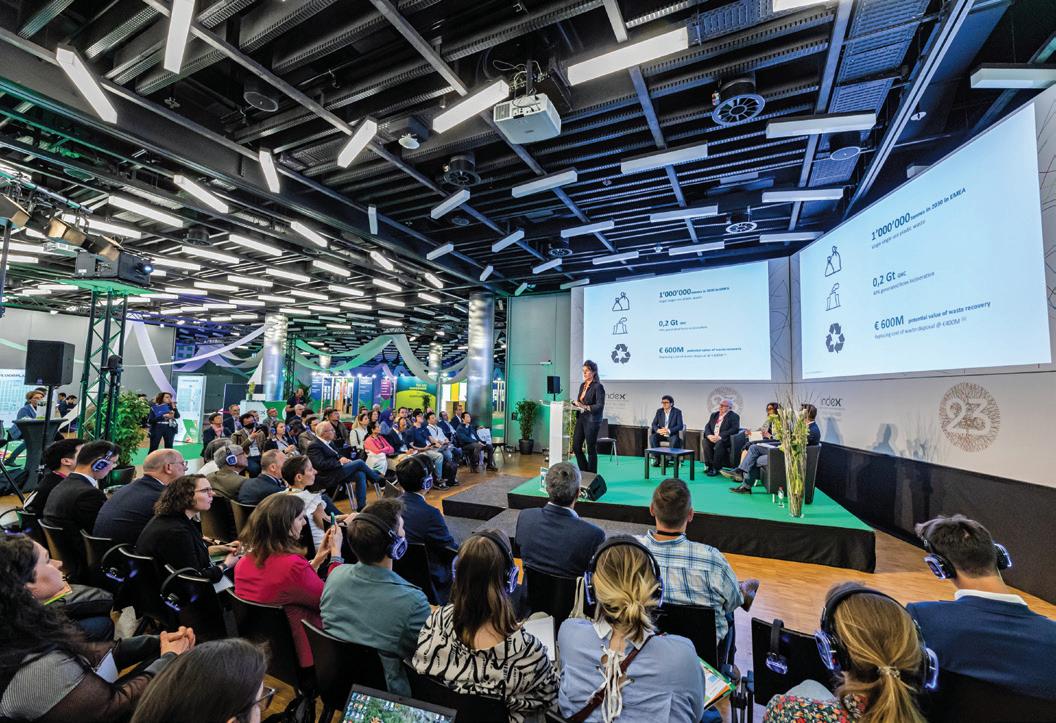
According to an EDANA survey, 89 percent of attendees at INDEX23 rated their experience as excellent or very good. Visitors also praised the event’s value proposition as a place to connect, discover and network all under one roof.
Plan your visit to INDEX26 and join the nonwovens industry in Geneva in May!
For more information about INDEX26, please visit indexnon wovens.com
Exhibit at
Connect Your Solutions to Global Buyers


MAR 23–25, 2027
Kansas City, MO
IDEA®27 is the premier marketplace for the nonwovens and engineered fabrics industry bringing together the buyers, decision-makers, and innovators driving sustainable growth. Put your solutions in front of the decision makers shaping whatʼs next.



Donʼt let competitors capture your share of the market.

Reserve your exhibit space today and position your company at the center of the nonwovens world.














Textiles Recycling Expo Launches In The United States
IFJ Special Report
The Textiles Recycling Expo USA will take place for the first time in Charlotte, N.C., April 2930, 2026, at the Charlotte Convention Center. The event will bring together industry stakeholders to address the challenge of textile waste, including fabric, clothing, footwear, fiber and nonwoven recycling.
The free-to-attend exhibition and conference — organized by events company Applied Market Information Ltd. (AMI), England — will build on the success of the debut event that was held in Europe last year. According to AMI, key organizations in North America have shown their support for the U.S. version of the event.
“We are very excited to bring the Textiles Recycling Expo to the USA,” said Zied Chetoui, event manager for the show. “We had discussions with numerous American attendees at our launch event in Europe and it’s clear that there’s a real need for a similar meeting place for the North American textiles recycling community to help foster dialogue and progress.”
Americans discard more than 10 million tons of textiles annually, according to industry estimates, with only a fraction recycled currently. The U.S. fashion and waste management sectors are under increasing pressure to increase recycling rates and reduce the volume of clothing and fabrics going to landfills. The Textiles Recycling Expo USA will address these challenges head-on, promoting information exchange, innovation and collaboration to create a more circular and sustainable future for the industry.
Exhibitor Profile, Key Sponsors
Organizers report that exhibitors at Textiles Recycling Expo USA can expect to connect with influential buyers and
specifiers from across the supply chain, while visitors will have the opportunity to discover innovative technologies from an international array of suppliers as well as gain invaluable industry insights in the show’s conference theater.
More than 60 exhibitors have already signed up to participate, and organizers expect that number to grow. Exhibitors include textile recyclers, sustainable fiber companies, sorting and recycling technology suppliers, waste management services, and collection/recycling program organizations. The exhibitor list features some of the industry’s most influential names including UNIFI Inc., Syre, PureLoop, Valvan, Valerius, Circ and Debrand. Sweden-based Syre, a founding exhibitor, is particularly well aligned with the U.S. edition of the event as it prepares to launch its first North Carolina-based plant capable of producing 10,000 metric tons of circular polyester annually.
Textiles Recycling Expo USA has secured key sponsors, including the American Association of Textile Chemists and
Colorists (AATCC), as well as industry partners:
• Structural Partner — Accelerating Circularity, which will work closely with the organizers to help shape the conference program;
• Founding Partners — Secondary Materials and Recycled Textiles Association (SMART) and American Circular Textiles; plus
• Impact Partners — Textile Exchange, Carolina Recycling Association, Goodwill, Southern Textile Association (STA), Fashion Takes Action, International Fiber Journal , North American Linen Association, and Denim Deal, among other Impact Partners.
Conference Sessions
Featuring Expert Speakers
The open conference theater at Textiles Recycling Expo USA will host keynote presentations and panel discussions, and present case studies from circularity experts. Sessions will explore critical topics such as regulatory developments, market trends, technical innovations, supply chain developments and investment opportunities.
Industry leaders speaking at the conference include:
• Jessica Franken, director of Government Affairs, SMART;
• David Eagles, executive vice president and COO, Goodwill Industries International;
• Diane Woods, global head of Sales and Business Development, Reju;
• Eileen Mockus, COO, Accelerating Circularity;
• Adam Gardiner, Recycled lead, Textile Exchange;

• Camille Tagle , co-founder, FABSCRAP;
• Kelly Drennan, founder, Fashion Takes Action;
• Rachel Kibbe, founder and CEO, American Circular Textiles;
• Morgan Ginn, Footwear Circularity Program manager, The Footwear Collective;
• Steve Bethell , founder, Bank & Vogue;
• Jimmy Summers, chief sustainability officer and vice president of Environmental, Health, and Safety, Elevate Textiles; and
• Stuart Ahlum, co-founder and COO, SuperCircle.
Special Exhibition Features
A showcase for the National Science Foundation (NSF)-funded Textile Innovation Engine — which brings together NC State University, Material Return, Manufacturing Solutions Center (MSC), Gaston




Fiber Innovation Center, and Goodwill Industries of Northwest North Carolina — will highlight how the engine is working to collaboratively accelerate the development of scalable textile circularity solutions rooted in North Carolina.
The VIP Lounge, sponsored by Reju, offers a dedicated networking space for decision-makers to meet with like-minded professionals. In addition, a Networking Party will be held on the evening of April 29 at the golf-themed Puttery on Rampart Street in Charlotte.
For more information about the exhibition and conference, as well as details on how to register for a free ticket, visit events.amiplastics.com/textiles-recy cling-expo-usa.






New UNITEX Plant Opens In Trang Bang, Vietnam
Vietnam-based UNITEX, a subsidiary of Century Corp., has expanded its capacity by 36,000 tons per year with a new filament yarn production plant. The recently inaugurated plant is completely digitalized using the atmos.io digitalization platform from Germany-based Barmag, the man-made fiber division of Switzerland-based Rieter Group. The platform can digitally record and network the entire material flow, and each separate package is tracked individually and documented with its specific characteristics. With the help of artificial intelligence, deviations in production are detected at an early stage so that operators can react immediately. Corrections in the material flow can be made in real time. The laboratory, which is digitally integrated into the process, also safeguards interventions in the material flow. barmag.com
Registration Open For The World of Wipes® International Conference 2026
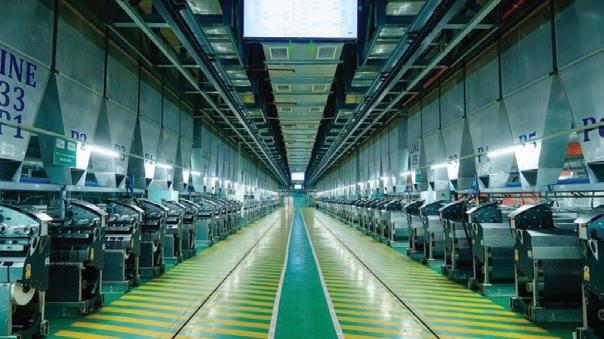
atmos.io.
NONWOVENN Acquired By CorpAcq
England-based nonwoven fabric-tech company Nonwovenn has been acquired by CorpAcq, an Englandbased business acquisitions compounder backed by TDR Capital. The acquisition also marks the successful exit of growth capital investor BGF Investment Management Inc.

Founded in 2003 by the current Chairman David Lamb, Nonwovenn manufactures and supplies technical fabrics for niche markets including filtration. The company has a strong focus on harm reduction with its product range including materials for protective clothing and wound treatment.
Following an initial multimillion-pound investment in 2016, BGF has supported the business through a period of significant growth. The company has increased its annual turnover from £19 million ($26 million) in 2016 to £46 million ($63 million) in 2025 and has continued its strong growth into 2026. The business has now celebrated 19 consecutive years of profit and is a significant exporter of goods. It is a major employer in Somerset and recently invested a further £1.5 million ($2 million) in research and development to enhance its chemical, biological, radiological and nuclear protective solutions. nonwovenn.com
Three Andritz Spunlace Lines Begin Operations In China
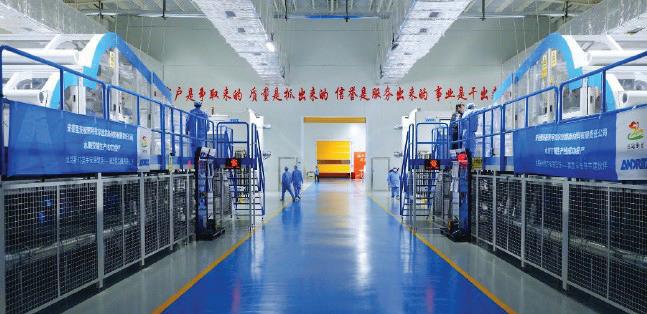
Alar Silk Road New Materials Co. Ltd. and Austria-based Andritz have successfully commissioned three spunlace lines in a crosslapped configuration at Alar’s facility in Xinjiang, China. According to Andritz, the new lines strengthen Alar’s capacity to produce high-quality nonwovens and support the development of a more resource-efficient and sustainable ecosystem for the region’s hygiene and medical industries.
Alar Silk Road New Materials is a producer of nonwovens for hygiene, medical and care applications. andritz.com
Cary, N.C.-based INDA, the Association of the Nonwoven Fabrics Industry, announced that registration and exhibit space reservations are now open for the World of Wipes® (WOW) International Conference, which will take place June 29-July 2, 2026, at the Grand Hyatt Nashville in Nashville, Tenn.
Recognized as a premier global event dedicated exclusively to the wipes industry, WOW 2026 will bring together industry leaders, innovators, brand owners, suppliers and technical experts from around the world. This year’s theme, “Redefining Wipes: Smart. Sustainable. Scalable,” reflects the industry’s rapid evolution and focus on advanced technologies, sustainability and growth-ready solutions.
WOW 2026 highlights:
• Pre-Conference Webinars: Gain essential insights into key topics shaping the wipes industry ahead of WOW 2026.
• Wipes Development Course | June 29–30: Participate in 12 expert-led sessions presented by Heidi Beatty, CEO, Crown Abbey, covering the full lifecycle of wipes development — from product concept through commercialization.
• Exhibits & Evening Receptions | June 30–July 1: Explore an engaging exhibit showcasing the latest innovations from leading-edge suppliers during two networking-focused evening receptions.
• Lightning Talks | June 30–July 1: Exhibitors deliver fast-paced, five-minute presentations highlighting their new products, technologies, and solutions prior to the evening receptions.
• World of Wipes Innovation Award® | June 30 & July 2: Celebrate excellence and innovation in wipes by honoring products that leverage nonwoven fabrics and technologies to enhance performance and expand applications. Award nominations are open through April 27. Finalists will present on June 30, with the award winner announced on July 2. Additional conference details, including the full technical program, will be released at a later date. worldofwipes.org
The new UNITEX plant in Trang Bang, Vietnam, is fully digitalized with Barmag’s
Nonwovenn has a strong focus on harm reduction across its product range, including materials for protective clothing and wound treatment.
China-based Alar Silk Road New Materials selected neXline spunlace technology from Andritz for a recent expansion.
Barmag
B.I.G. Yarns Achieves EcoVadis Platinum Rating
B.I.G. Yarns — the carpet yarn brand of Belgium-based Beaulieu International Group (B.I.G.) and a manufacturer of nylon, polypropylene and polyester yarns for contract, automotive, and high-end residential applications — has been awarded the EcoVadis Platinum medal, placing the company among the top 1 percent of more than 130,000 companies assessed globally.

With an overall score of 86 out of 100, B.I.G. Yarns reached the highest distinction awarded by EcoVadis, a trusted and widely used sustainability assessment platform. The rating is based on rigorous third-party evaluation across four key pillars — environment, labor and human rights, ethics, and sustainable procurement.
According to the company, its achievement confirms that B.I.G. Yarns’ sustainability strategy delivers measurable, industry-leading results and reflects years of investment in responsible operations, transparent governance, and climate-conscious innovation. bintg.com
Recycling Europe Textiles Calls For Compulsory Recycled Content
Recycling Europe Textiles (RET), the European association representing the textiles reuse and recycling sector based in Brussels, has urged the EU Commission to introduce eco-design rules mandating at least 10 percent recycled fiber content in textile products beginning in 2028.
RET believes that the upcoming European regulation on eco-design for textile products is a decisive opportunity to accelerate the industry’s transition to a truly circular model. In a position statement published in January, the organization underlined that introducing mandatory recycled-content requirements is essential to strengthen the recycling industry and respond to the growing pressure on textile-waste collection and treatment systems in Europe. recyclingeurope.org
Management Announces Closure Of Germany-Based Kelheim Fibres
TADVERTISING | SALES
General Inquiries: advertising@inda.media
Rachael Davis PUBLISHER rdavis@inda.org | +1 404.518.9599
Vickie Smead BUSINESS DEVELOPMENT SALES ASSOCIATE vsmead@inda.org | +1 919.459.3715
Angelica Gonzalez
IFJ BUYER’S GUIDE agonzalez@inda.org | +1 919.459.3718
Sabine Dussey GERMANY, FRANCE, AUSTRIA, SWITZERLAND, SCANDANAVIA, BENELUX sabine.dussey@dussey.de | +49 2129.348390
Filippo Silvera ITALY & SPAIN info@silvera.it | +39 02.284.6716
Zhang Xiaohua CHINA ifj_china@126.com | +86
he management of Germany-based Kelheim Fibres GmbH recently announced that a continuation of the company was not possible after an investor search and sales process conducted within the framework of self-administration did not lead to a positive outcome.
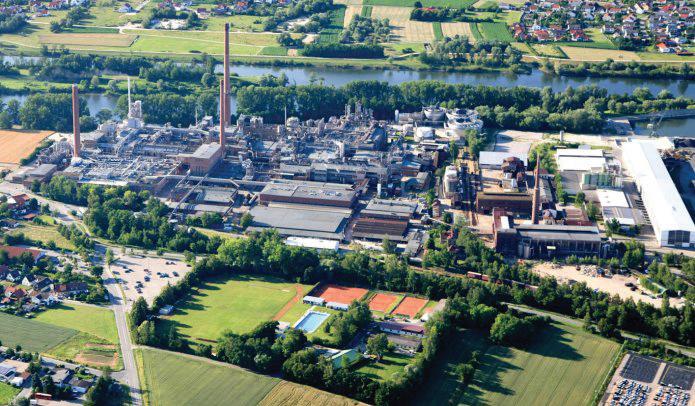
The potential strategic investor who most recently entered the process withdrew from a potential investment at short notice. Independently of this, despite the support of a large proportion of customers and restructuring measures already implemented, it was not possible to achieve sufficient offtake volumes that would have been required for an economically viable continuation of business operations. This also reflected the absence of orders from a key customer. kelheim-fibres.com
ADVERTISER INDEX
B.I.G. Yarns has been awarded the EcoVadis Platinum medal.
Kelheim Fibres plant in Germany.
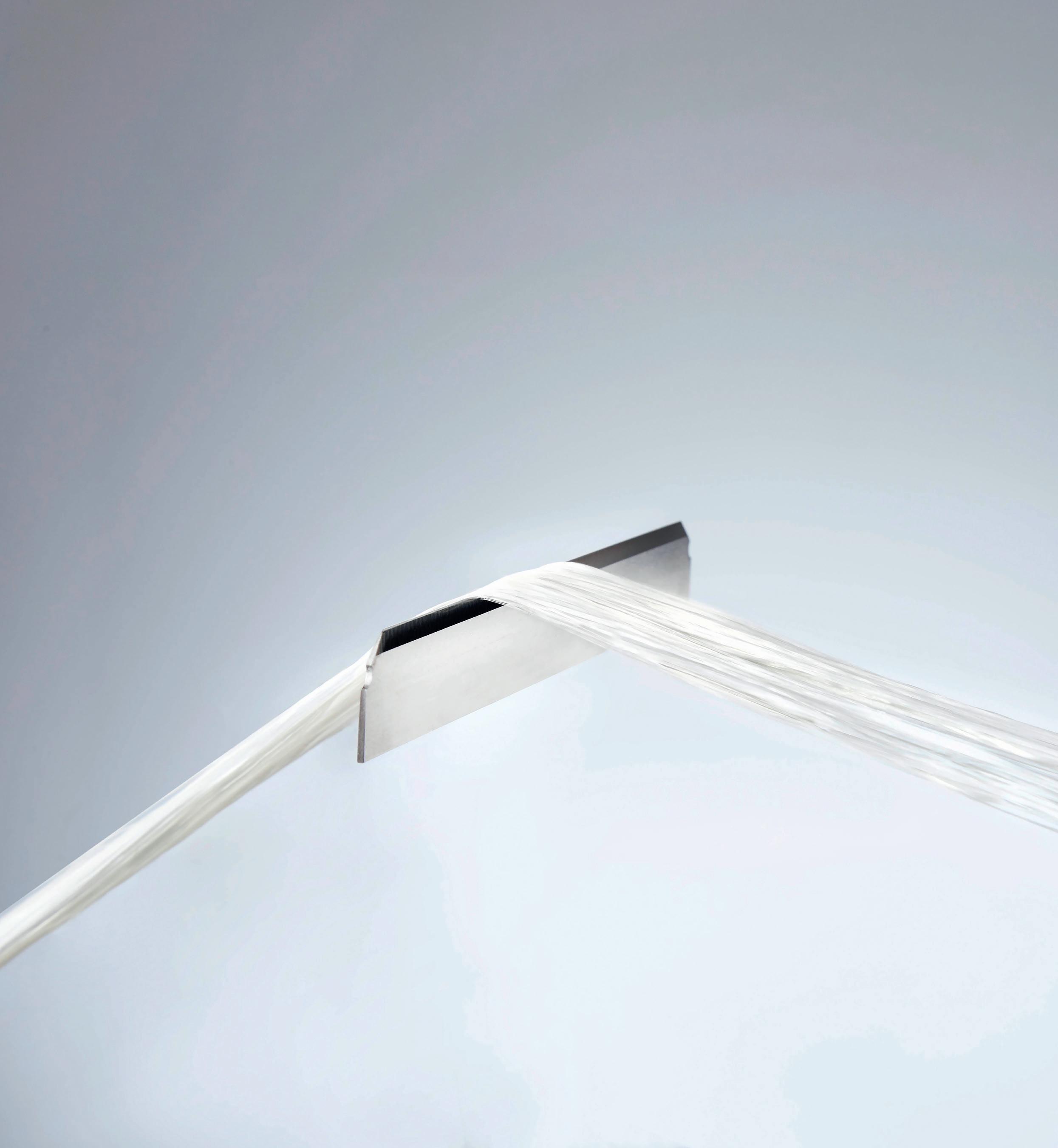
100% made in Solingen, Germany.