3 4 14 A perspective on Mother TongueBased Bilingual Education
It Takes a Network: Literacy as a Community Development Ecosystem in Makhanda
Asset-Based Community Development (ABCD) Africa Association
20
Five Years Since “Does CD Work?”
From Standards to Accountability: Reclaiming Ethics and Integrity in Community Development Practice
34
Beyond Celebration, Owning Our Future, Raising a Generation Together: How Heritage Preservation Shapes Youth Development for Sustainable Community Development Practices
Walking with the Forgotten: Our Journey from Compassion to Community Empowerment
Reclaiming the Heart of Community: Regeneration as a Pathway to Inclusive and Sustainable Development
Reweaving Possibility Through Connection: Reflections on Synergos’ Practice in South Africa and Beyond
29
Listening to the Unheard: What NEETs Youth Reveal About the Gaps in South Africa’s Youth Support Programmes
Professor & Director for Research Development, EMS faculty, NWU
NikkiGreen
Scholar–practitioner in Service Learning and Community Engagement, RU
CornelHart
CDP, Professionalization & Policy Researcher; CD Research Associate, UJ
MzwandileHewu
Chief Director: Community and Partnership Development DSD, WC
MarleneOgawa
Country Director: Synergos Institute. South Africa
OlinKiewietz
MD: Community Development House & co-founder: Change Agents of South Africa
JanineWard
One of six founding members: ABCD Association Africa & IACD Board Member
LindaniMaphumulo
CDP and Community Development lecturer, UWC
OctaviaJ Hendricks
Chief Inspiration Officer (CEO) and Principal Trainer at Osun Rise Group Pty Ltd
RefilweThobejane
Junior Researcher: Kelello Collectives.
Completing MA: Social Development, WITS
PeterWestoby
Author, practitioner & CD analyst. Professor, Murdoch University & Visiting Professor UFS
Editorial
Reconciliation, in its truest sense, is less about ceremony than about the everyday work of rebuilding trust, restoring dignity, and widening the spaces where people can belong a task
pain and possibility remain unheard?
Mzwandile Hewu’s study on NEETs youth exposes the fractures in public support systems and the quiet resilience of young people who continue to hope despite exclusion. His work sits in conversation with the Makhanda literacy ecosystem described by Nikki Green, where networked practice rather than isolated interventions begins to shift the trajectory of early learning in systemic ways Both pieces echo a global pattern familiar to practitioners around the world: development succeeds not through programmes, but through relationships that restore possibility We are similarly
challenged to reconsider the foundations of our practice in the From Standards to Accountability article, which argues that ethical community development is not a technical exercise but an integrity-based discipline. In a year where public trust has wavered across sectors from government and NGOs to universities and global institutions the call for reflective, accountable, valuescentred practice feels more urgent than ever, and resonates far beyond South Africa’s borders.
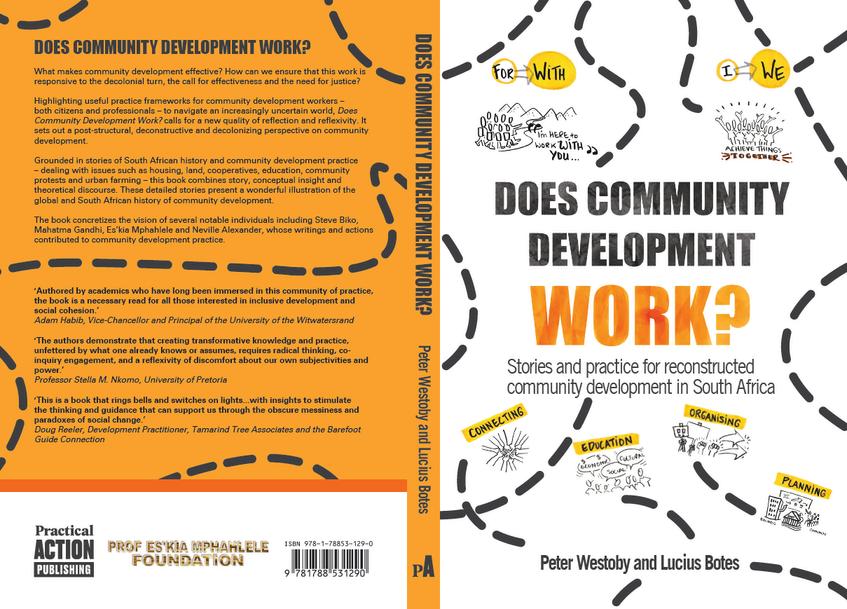
Community Development Work? situates these contemporary shifts within the broader intellectual traditions of our field, grounding today’s innovations in long-standing South Afr legacies of activism, theory, and reconstructive practice.
Taken together, these contributions form more than an edition; they form a conve generations, disciplines, provinces, and lived experiences, but also across continents an traditions They reaffirm the conviction that sustainable development is neither an act o technocratic exercise It is a collective, iterative undertaking held by citizens, practition youth, elders, leaders, and communities themselves a truth shared by all continents
As the year ends, may this issue be a mirror reflecting our societies' shared grief and b compass pointing toward a future built on connection and trust, not fear.
May December 16th remind us that reconciliation is a continuous practice of rebuilding and other's humanity Despite intergenerational trauma, we carry ancestral joy through love, song Let's embrace this colorful joy as we enter 2026
Thank you to every contributor for your courage, your clarity, and your generosity and for se
And thank you to every reader across South Africa, the African continent, and the wide community for continuing the work of making our world more just, more humane, and mo
With appreciation,
MarleneOgawa
GUEST EDITOR
Marlene Ogawa is the Country Director for Synergos South Africa. She has long supported collaborative leadership, adult learning, and system-strengthening initiatives across NGOs, government, and business in South Africa and the SADC region. She has worked extensively with youth development practitioners in entrepreneurship, mentorship, education design, volunteer initiatives and enabling community-driven development through reflective and participatory methods. Marlene believes building people’s capacity enables sustainable change. Marlene holds an education degree from the University of Johannesburg and certificates in project management and ICT4D
STAKEHOLDERS AND NETWORKS IN COMMUNITY DEVELOPMENT
Community development thrives on partnerships, bringing together government, non-profits, businesses, and community members to drive collective action and transformative change. This section highlights the collaborative efforts and networks that strengthen community development practice.
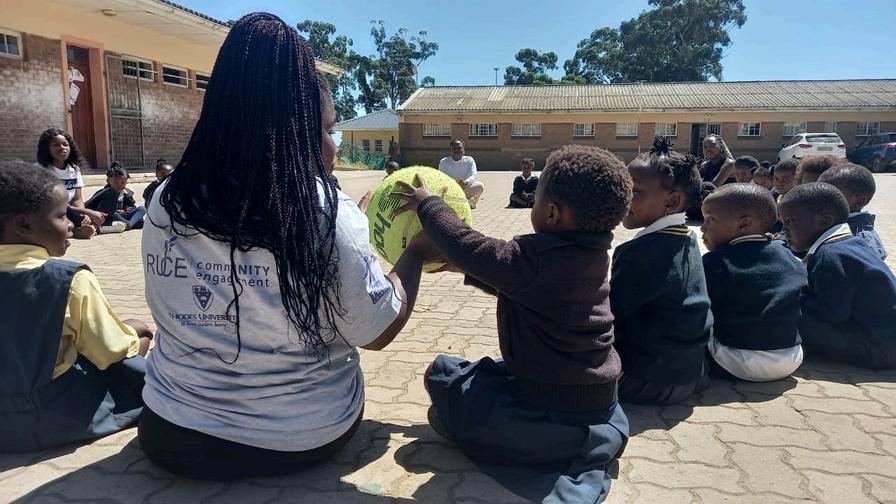
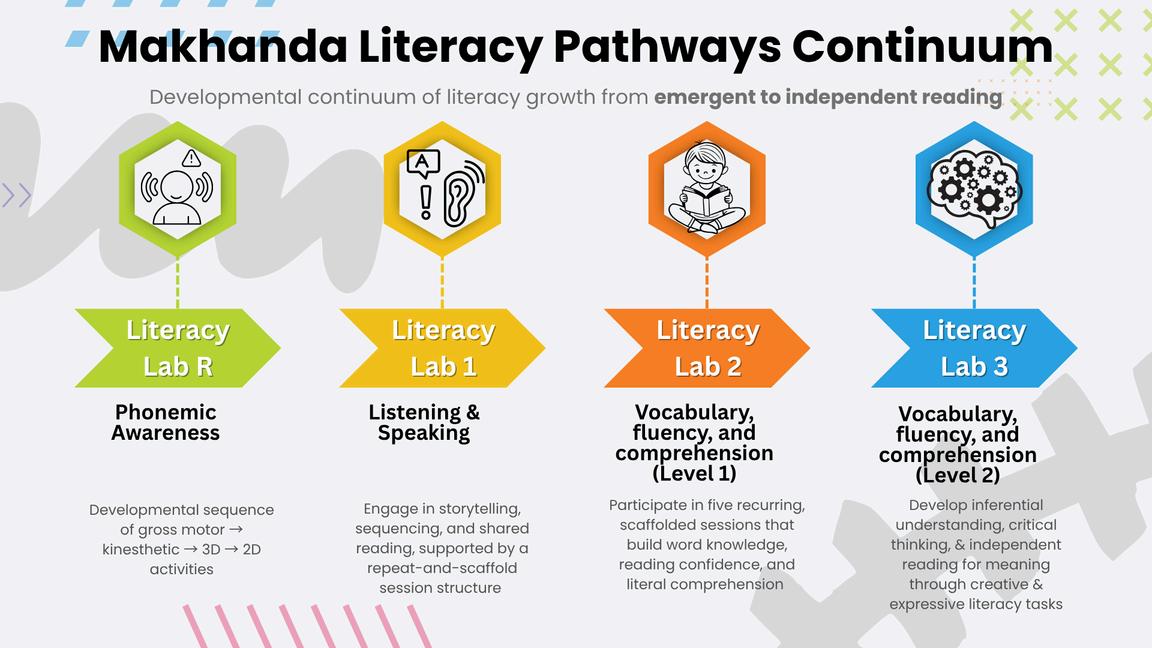
Achildren meaningfully but as isolated silos, disconnected across developmental stages, languages, and pedagogies. There was minimal alignment of content, limited scaffolding based on language acquisition research, and few opportunities for collaboration between teachers, volunteers, and NGOs
literacy is much more than a curriculum outcome
networks of relationships are the real infrastructure of community life
Community development is most powerful when it values knowledge pluralism
Development that is relational, ethical, and grounded in local context
This mirrors the collective impact model (Kania & Kramer, 2011), which emphasises shared measurement, mutually reinforcing activities, continuous communication, and a backbone organisation, roles the Makhanda Literacy Collective (MLC) and Rhodes University Community Engagement (RUCE) unit fulfil together. In 2023, all literacy interventions in Makhanda that were partnered with the RUCE Unit formalised an alliance known as
Higher literacy correlates with improved economic participation, civic engagement, health outcomes, and intergenerational mobility (United Nations, n.d)
Conclusion: The Work Belongs to All of Us
In developmental terms, literacy is a social determinant of equity. Higher literacy correlates with improved economic participation, civic engagement, health outcomes, and intergenerational mobility (United Nations, n.d). But beyond data, literacy represents a community’s capacity to imagine, narrate, and transform its own story, aligning closely
Author
Nikki Green (they/them) is a scholar–practitioner in Service Learning and Community Engagement at Rhodes University. Their work explores how partnerships, reflection, and collaborative practice can advance social justice and strengthen community–university relationships. Contact: n.green@ru.ac.za / +2746 603 7226.
References
1.Banks, S., & Westoby, P. (2019). Ethics, Equity and Community Development. Policy Press.
2.Freire, P. (1970). Pedagogy of the oppressed. Continuum.
3.Gilchrist, A. (2019). The well-connected community: A networking approach to community development. Policy Press.
4 Ingamells, A , Lathouras, A , & Wiseman, R (2010) Community Development Practice: Stories, Method and Meaning Common Ground Publishing
5 Kania, J , & Kramer, M (2011) Collective impact Stanford Social Innovation Review, 9(1), 36–41
6 Kretzmann, J P , & McKnight, J L (1993) Building communities from the inside out: A path toward finding and mobilizing a community's assets ACTA Publications
7 Ledwith, M (2011) Community development: A critical approach Policy Press
8 Scoones, I (2022) A New Politics of Uncertainty: Towards Convivial Development in Africa In African Futures Leiden, The Netherlands: Brill https://doi org/10 1163/9789004471641 009
9 Twelvetrees, A (2017) Community development, social action and social planning Bloomsbury Publishing
10 United Nations (n d ) Transforming our world: The 2030 agenda for sustainable development Department of economic and social affairs United Nations https://sdgs.un.org/publications/transforming-our-world-2030-agenda-sustainable-development17981
11.Wenger, E. (1999). Communities of practice: Learning, meaning, and identity. Cambridge University Press.
Why an ABCD Association?
Communities around the world have been driving their own development for centuries and there are many stories to evidence this. For instance, in African communities, the elderly often tell stories of how they were able to ensure that they could support themselves and their families. Whilst they may not have known that what they were doing was to mobilise assets at their disposal and in particular natural resources i e land, water, and trees, that is in fact what it
was. Another example is that of subsistence farming which was a way of life, from growing crops like maize to fishing in coastal towns and villages, and families were able to feed themselves and share surplus with their neighbours through bartering or exchanging whatever they had. A deep sense of connectedness and community existed, and it was not uncommon for members of households to have a range of different hard skills like building, carpentry and electrician skills. Often such informal skills were passed on from
Development Agency (NDA) and Fort Hare University to introduce Asset Based Citizen-Led Development Members of Coady then travelled to different provinces and a few NDA staff were sent to Coady to participate in the ABCD and Livelihoods Workshop. The Eastern Cape NGO Coalition was invited to the Fort Hare meeting, and this is where it realised that ABCD was a possible approach that could offer alternative forms of thinking about and working with communities in South Africa.
In 2009, the first official ABCD workshop was held in collaboration with the University of Cape Town’s Graduate School of Business, facilitated by the Coady Institute It was a twoday workshop attended by more than 50 NGO partners and leaders from South Africa There was such interest from participants that it was decided to offer a Train-the-Trainer workshop at the GIBS Business School in Johannesburg in 2012 Several independent consultants and NGO leaders from across Africa attended this training workshop
Eastern Cape. This three-day event was attended by 173 participants from 23 different countries and was a resounding success as experiences from across the globe were shared at this Festival. It contributed immensely to growing the international ABCD family. Since this Festival, there have been other international Festivals and the community continues to learn from one another and grow together
Motivation for an Association
Several ABCD practitioners, facilitators and academics have spent the past 13 years actively promoting the ABCD approach, and the impact is evident on the ground As with
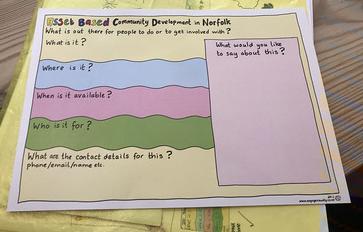
Engage Visually. Debbie Roberts's photo, licensed as CC BY-NC-ND 2.0.
Artwell Chivhinge have several decades of experience working with grassroots organizations that struggle with basic aspects of community development; Amelia Visagie brings a corporate perspective of ABCD use in large engineering projects such as the construction of national motorways through community land and working with these communities to ensure harmony between infrastructure and local economic development; Hanna Nel brings the academic flavour and research expertise to the Association having also collaborated with government departments to bring ABCD into public sector strategies, and Judith Mtsewu has worked across the development sectors and brings an astute analytical mind to organisational development and governance. All of these varied experiences show that ABCD is widely applicable and relevant
The objectives of the Association are to establish a network of ABCD researchers and
practitioners across Africa for the purposes of:
Building a body of knowledge and evidence for ABCD approaches to development; Advocating for ABCD approaches and programmes with key stakeholders; Developing resources and supporting communities of practice to advance ABCD programming throughout the continent of Africa; Forming partnerships, alliances, and collaborations with aligned networks, movements, associations, donors, higher education institutions, research institutes and government to advance citizen-led and appreciative approaches to community development.
Evidence and knowledge about ABCD and its core principles are available from other countries across the world, and the drive
with the ABCD Africa Association is to fill the gap and document, store and share African content and experience. The African proverb “If you want to go fast, go alone; but if you want to go far, go together” is particularly relevant here, where the founding members felt that the emphasis on collaboration and crosscontinental connection is critical for the strengthening and growth of this development approach.
The virtual launch was attended by 32 people, fellow ABCD enthusiasts from South Africa and Zimbabwe, and the recording has been shared with colleagues across the continent
Membership is invited from corporations or organisations, individuals and student/community members, with different fees applicable in these 3 categories.
Membership Benefits include knowledge sharing and learning through the platform and online webinars; networking with likeminded practitioners;
Author
Janine Ward on behalf of Founding members: Amelia Visagie, Johanna Nel, Judith Mtsewu, Bernie Dolley, Artwell Chivhinge who are passionate about ABCD and work in various sectors – corporate, academic and community-based. Contact: Website: www.abcdafrica.org Email:hello@abcdafrica.org
Strengthening African-Led Asset-Based Practice for Health, Change, & Collective Power
How can we explore and stimulate locally led contribution and participation to supportpeople in understanding their power?
How do we co-create spaces wherechange and healinghappen, forourselvesand with others, grounded inAfricanwisdom, lived experience and community strength? This ABCD AfricaAssociationtraining is designed specifically forpractitioners, community organisers, facilitators and leaders inAfrica committed to nurturingchangethatrisesfrom within theirown people, cultures and contexts. Grounded in Asset-Based Citizen-led Development (ABCD)andAfricantraditions of solidarity, Ubuntuand collective care, this trainingcentres the knowledge, resilience and leadership already present in African communities.
Use the QR code or linkto register: https://www.guicket.co.za/events/350422abcd-africa-training/
• Bernie Dolley, aseasoned ABCDfacilitator, former Founding Director of lkhala Trust for 20 years, nowan independentABCD facilitator.
• Judith Mtsewu, Founderand Director of HlumaSonke Consultancy.
• Hanna Nel, a professorin the Department of SocialWork and Community Development atthe University of Johannesburg (UJ), is a passionateresearcherand educator.
• AmeliaVisagieis the expertise lead forstakeholderengagement and is responsiblefor the growth and eminence ofthe Sustainability Business Unit atZutari.
• JanineWard, a qualified SocialWorker and has worked for40 years in asset-based citizen-'led development (ABCD) sharingher passion for thistransformativedevelopment approach.
• Withsupport from DeeBrooksand Fiona Millerfrom theJeder InstituteinAustralia inpartnership with the Asset-Based Community Development Institute.
EDUCATION, TRAINING, AND PROFESSIONAL DEVELOPMENT
Empowering practitioners through education and training lies at the heart of sustainable community development. This section showcases transformative initiatives and continuous professional development opportunities that equip practitioners with the skills and knowledge to drive meaningful change.
A perspective on Mother Tongue-Based Bilingual Education
Indigenous African languages were systematically excluded
affirmation (Mulaudzi, 2024). Therefore, the inclusion of African languages in education remains a central issue in discussions about social justice and national identity While policy frameworks advocate for their use to improve academic performance and foster cultural pride, practical challenges continue to hinder progress. These challenges include a shortage of qualified teachers fluent in African languages, insufficient instructional materials, and the complexities of managing multilingual classrooms (Gilmour, 2009). The shift from mother-tongue instruction to English in Grade 4 often disrupts learning continuity and contributes to persistent educational inequalities. South Africa’s perceptions are
shaped
by broader societal and institutional factors
(August-Mowers, 2025)
As a result, although policy frameworks support the use of African languages in education, their practical integration into teacher training remains limited (August-Mowers, 2025) Overcoming these challenges requires coordinated efforts in curriculum development, resource allocation, professional training, and attitude transformation Only through sustained and inclusive strategies can South Africa realise its vision of a multilingual education system that values and uplifts indigenous languages (August-Mowers, 2025).
Many educators lack formal training in African languages
stronger academic performance, deeper engagement with the curriculum, and greater cultural affirmation. In a multilingual society, this approach is not only pedagogically sound but also socially just.
Author
Refilwe Thobejane is an Intern Junior Researcher at Kelello Collectives and currently completing her MA in Social Development at Wits University.
Contact: refilwethobej@gmail com/ 0687145814
References
1 August-Mowers, C M (2025) The slowly turning wheels on mother tongue-based bilingual education (MTbBE) South African Journal of Higher Education, 39(3) https://www journals ac za/sajhe/article/view/7348
2 Dlamini, T , and Ndlovu, S (2023) Culturally responsive teaching in multilingual classrooms: A South African perspective Journal of African Education Studies, 15(2), 45–60
3 Gilmour, D (2009) Language policy and education in South Africa: An overview South African Linguistics Journal, 27(1), 12–25
4 Heugh, K (2002) The case against bilingual and multilingual education in South Africa: Laying bare the myths Perspectives in Education, 20(1), 171–196
5.Lemmer, E., and van Wyk, N. (2004). Language diversity and education in South Africa. South African Journal of Education, 24(3), 183–194.
6.Mafoa Quan, G., Fambasayi, R., and Ferreira, T. (2024). Transforming education through mother tongue language as a language of instruction in South Africa. African Human Rights Law Journal, 24(1). https://www.scielo.org.za/pdf/ahrlj/v24n1/13.pdf
7.Mokoena, M., and Mthembu, T. (2020). Teacher preparedness for mother tongue instruction in South African schools. Journal of Language and Education Policy, 12(4), 88–102.
8.Mulaudzi, L. V. (2024). Evaluating the Language-in-Education Policy of 1997: Advancing inclusivity and multilingual education. Journal for Language Teaching, 58(2). https://www.ajol.info/index.php/jlt/article/view/290481
9.Ntombela, B., Canagarajah, S., and Ngubane, S. (2024). Multilingual teacher education in South Africa: Challenges and opportunities. International Journal of Multilingual Education, 19(1), 22–39.
10. Porter, L., Vazquez Cano, M., and Umansky, I. (2024). Bilingual education and America’s future: Evidence and pathways. ERIC. https://files.eric.ed.gov/fulltext/ED628814.pdf
11.Sibanda, R., and Tshehla, L. P. (2025). From mother tongue to English: A language policy shift at a multilingual township school in Gauteng. South African Journal of Childhood Education. https://files.eric.ed.gov/fulltext/EJ1464747.pdf
12 Skuka, H , and Murtezani, L (2023) The effects of bilingual education on academic achievement of students in school settings IOSR Journal of Humanities and Social Science, 28(9), 32–35
https://www iosrjournals org/iosr-jhss/papers/Vol 28-Issue9/Ser-6/E2809063235 pdf
13 Tyler, R , and McKinney, C (2024) Teacher education and African languages: A curriculum reform agenda South African Journal of Teacher Development, 10(2), 55–70
Sand practitioner,
the voice of the practitioner that is not always heard, Supervision for the Social Service Professions provides critically needed clarifications on the concepts, elements, stages, skills and functions of supervision on an international level Swanzen and Morokane provide the pathway for the establishment of an integrated model for supervision, informed by vast perspectives on supervision and best practice guidelines, ultimately aimed at better care for vulnerable populations.
Endorsed by: Jack Phelan, Professor Emeritus, MacEwan University, Alberta:
“Employing a comprehensive bibliography, practical descriptions of supervisory situations and useful charts, diagrams and comparisons, the authors have created a
“ENJOY 30% OFF THIS TITLE, AVAILABLE IN PRINT OR EBOOK, WITH CODE EME30”
ETHICAL AND QUALITY-ASSURED PRACTICE
Maintaining high standards and ethical practices is essential for impactful community development. This section delves into the standards, case studies, and frameworks that uphold integrity and ensure effectiveness in the field.
practitioners to work with and be among communities, particularly supporting local leadership development.
have a shared practice framework it is almost impossible to reflect together rigorously on practice and theory Horizontal learning to enable ‘scalingacross ’ as opposed to scaling-up. This horizontal learning approach facilitates learning exchanges between communities that have created successful initiatives With learning exchanges, other communities don’t so much ‘ copy ’ the initial initiative (a scalingup mentality), but take the seeds of what worked in one place and grow it differently in their own place
The place of emotion in practice, for example the role of anger in mobilising people around their shared concerns and a traumatised past. The different pathways of practice as people come together around shared concerns – some being economic, others political, cultural, social and even spiritual.
Creating more space for bottomup dialogue and building partnerships and adopting assetbased approaches to community development
Working from what is strong and not what is wrong in communities
Some impacts of the book include: key messages of the book have been presented and workshopped at two International Development Studies and Community Development Conferences (i.e. EADI – the Hague and IACD Nairobi)
The book has also been workshopped at two national events for the Department of Social Development and their Community Development Directorate and a Provincial Workshop for the Northern Cape Department of Social Development, besides smaller workshops with academics, practitioners and NGOs throughout South Africa
The book has been reviewed for the Oxford Published Community Development Journal, the USAbased International Community Development Journal and the South African Town and Regional Planning Journal
The book is currently prescribed at several Universities in South Africa for students in Undergraduate and
which includes: The insistence of deeper reflection and in-situ learning for CD practitioners
Deliberative action to restore human dignity and earthkeeping CD workers cultivate a practice of accompanying and supporting communities’ own initiatives.
Always an awareness of the haunting of justice, not simply economic integration to the globalising economy
Use of innovative and developmental forms of evaluation to support on-going action-learning and evidence-based practice that are aligned with decolonising practices.
Community
Development is built on trust yet trust is fragile It grows in moments of fairness, honesty, courage, transparency, and equity. It dissolves when practitioners assume authority instead of sharing it, or when development becomes something done to communities rather than built with them Across South Africa and internationally, communities have long asked a simple but powerful set of questions: Who is developing whom?
ethical practice Standards become meaningful only when practitioners internalize them as daily commitments: Am I acting with integrity?
Whose voice is missing? How do I work across difference and navigate conflict? What evidence shows that my practice is fair, inclusive, and just? The international Norms and Standards developed through the UK’s CD-NOS 2009 and the IACD frameworks from “Understand and Practise CD” to “Manage and Develop Practice” give practitioners a structured way to answer these questions in real time. They anchor the profession in shared principles while embracing the standardsisnot aboutpolicing eachother.Itis about strengthening whatethical Community Developmentlooks likeineveryday decisions
to facilitate but to take principled positions to protect spaces of inclusion, to insist on equitable partnerships, and to create openings for communities to lead their own struggles for justice.
Ethics is not a technical skill. It is a stance one that must be demonstrated consistently, especially when the work becomes difficult
When Communities Hold the Mirror
One of the most powerful tools in the suite is the Community Checklist: Holding Practitioners
Accountable. Its questions are honest and unflinching: Do you treat us with respect and fairness?
Cornel Hart, is a CDP and Associate Researcher at the University of Johannesburg, specializing in CD professionalization and community development policy research, as well as Higher Education Scholarship of Engagement for Societal Impact (SoE-SI).
1.International Association for Community Development (IACD) (2018). International standards for community development practice.
2.Lifelong Learning UK. (2009). National Occupational Standards for Community Development. Federation for Community Development Learning (FCDL).
3.Republic of South Africa Department of Social Development (DSD). 2014. (Draft) Community Development Practice Policy Framework (CDPPF). Pretoria: Government Printer.
RESEARCH AND THEORY IN COMMUNITY DEVELOPMENT
Theoretical frameworks and research enrich community development practice by bridging knowledge and action. This section explores groundbreaking studies, findings, and academic discourse that connect theory to impactful practice.
Acollective impact remains weak Departments of Social Development, Cultural Affairs and Sport, Labour and others all implement overlapping schemes: Youth Cafés, the Chrysalis Academy, Cape Access Centres, the Presidential Youth Programme, the National Youth Service, and learnerships under the Expanded Public Works Programme.
millions of young people sit at the margins of opportunity
Even when information did reach them, young people encountered psychological and structural barriers
The research carries direct implications for policymakers. The fragmentation identified echoes concerns in the National Youth Policy (2015–2020), which warned that overlapping mandates and poor monitoring dilute impact. Aligning efforts with South Africa’s National Development Plan 2030, Sustainable Development Goal 8 (decent work and economic growth) and the African Union’s Agenda 2063 calls for a unified, inclusive approach to youth development. That approach must do three things simultaneously:
The fragmentation identified echoes concerns in the National Youth Policy (2015–2020)
begins when youth claim their collective power
Echoes
of 1976: Remembering
Youth as Catalysts for Change
As we reflect on today’s generation of NEETs youth, it is impossible not to recall 16 June 1976 when young people rose together in the Soweto Uprising to demand a fairer, more dignified future. Their courage reshaped the national conscience and proved that
Listening to youth voices is not only an act of respect, but the most direct route to real, lasting change
Author
Mzwandile Hewu is the Chief Director: Community and Partnership Development Western Cape: Department of Social Development
Contact: Mzwandile Hewu@westerncape gov za
References
1 Hewu, M J (2023) Public sector youth support services efficacy: a case study exploring NEETs youth perceptions and suggestions for improvement https://uwcscholar.uwc.ac.za:8443/server/api/core/bitstreams/7eb99000-cd94-43fd-97711b6732dc8ad6/content.
VOICES FROM THE FIELD
Real stories from practitioners and communities bring community development to life. This section elevates personal experiences and practical insights from those at the forefront of transformative change.
Beyond Celebration, Owning Our Future, Raising a Generation Together: How Heritage Preservation Shapes Youth Development for Sustainable Community Development Practices
voluntary associationsusing heritage initiativesoften becomecatalysts forachieving sustainablerural development
Intergenerational responsibilityisa foundational principleinboth community developmentand heritage preservation.
heritage. A community cannot outsource the responsibility of raising its children to schools, NGOs, or the government. These structures are partners, not replacements, for parental guidance
A Community Legacy Reborn and a Reflection on Youth Development for Sustainable Community Development Practices
The Gugulethu Programmes reflect what becomes possible when communities take ownership
Established as a platform to nurture boys into responsible young men, it has historically provided guidance, mentorship, cultural grounding, and
Gugulethu invests in its youth today will determine the kind of community it becomes tomorrow. Through the values of Ubuntu, shared responsibility, and cultural pride, community-led development can transform lives As
Author
Lindani Sthembele Maphumulo is a Community Development lecturer at UWC.
Contact llmaphumulo@uwc ac za
References
Ownershipisnot anabstractidea it'sapractice.
1 Abdul Aziz, N A , Mohd Ariffin, N F , Ismail, N A , & Alias, A (2023) Community participation in the importance of living heritage conservation and its relationships with the community-based education model towards creating a sustainable community in Melaka UNESCO world heritage site Sustainability, 15(3), 1935
2 Albert, M T , Richon, M , Viñals, M J , & Witcomb, A (2012) Community development through world heritage Paris: UNESCO
3 Bajec, J F (2016) Cultural heritage and the role of voluntary associations in the process of achieving sustainable development in rural communities Studia ethnologica croatica, (28)
4 Beel, D , & Wallace, C (2021) How can cultural heritage contribute to community development and wellbeing.
5.Bihari, S. (2023). Cultural heritage and indigenous knowledge: Reviving traditions for future generations. Sustainable Development Goals in SAARC Countries: Key Issues, Opportunities and Challenges, 1, 24-32.
6.Bradshaw, T. K. (2000). Complex community development projects: Collaboration, comprehensive programs, and community coalitions in complex society. Community Development Journal, 35(2), 133-145.
7.Brooks, C., Waterton, E., Saul, H., & Renzaho, A. (2023). Exploring the relationships between heritage tourism, sustainable community development and host communities’ health and wellbeing: A systematic review. PloS one, 18(3), e0282319.
8.Christens, B. D., & Dolan, T. (2011). Interweaving youth development, community development, and social change through youth organizing. Youth & Society, 43(2), 528-548.
9.Flint, R. W. (2013). Practice of sustainable community development. A participatory framework for change. Nueva York: Springer.
10.Goel, K. (2014). Understanding community and community development (Doctoral dissertation, Niruta Publications).
11.Gulnora, K. (2024). The role of cultural heritage in shaping family relationships among youth. International Journal of Pedagogics, 4(11), 297-302.
12.Mkwananzi, F., Cin, F. M., & Marovah, T. (2023). Transformative youth development through heritage projects: connecting political, creative, and cultural capabilities International Journal of Heritage Studies, 29(6), 581-597
13 Puaschunder, J M (Ed ) (2018) Intergenerational responsibility in the 21st century Vernon Press
14 Sormin, A , & Sihombing, H (2023) Empowering youth for sustainable cultural tourism: A case study Tipang village, Baktiraja district, Humbang Hasundutan regency, Indonesia Jurnal Ilmu Pendidikan dan Humaniora, 12(1), 56-68
15 Spiridon, P , Kosic, M , & Tuci, B (2014) CRE-ACTIVE YOUTH PROMOTING CULTURAL HERITAGE FOR TOMORROW Ad Alta: Journal of Interdisciplinary Research, 4(2)
16 Wallace, C , & Beel, D (2021) How cultural heritage can contribute to community development and wellbeing In Researching Happiness (pp 133-154) Bristol University Press
17 Wissenburg, M L (2011) Parenting and intergenerational justice: Why collective obligations towards future generations take second place to individual responsibility. Journal of agricultural and environmental ethics, 24(6), 557-573.
we had always believed: community voices belong at the same tables as policymakers
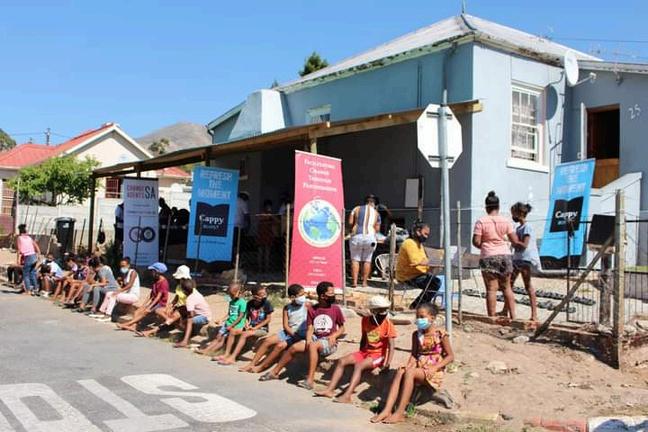
Workingfulltimeas volunteerswas hard.Therewere monthswhenwe hadnoincomeat all,butwekept going.Westudied afterhoursto strengthenour practice
the first payslip earned after years of unemployment, the small business started with borrowed tools, and the quiet courage of someone choosing to hope over despair
It is the mother who volunteers to cook for a skills-training group
Community development is not theory to us; it is our everyday life.
Author
Olin Kiewietz is the Managing Director of Community Development House South Africa (CODEHSA) and co-founder of Change Agents of South Africa. He is based in the Langeberg Municipality, Western Cape Contact olinkiewietz@gmail com / +2771 637 9613
AI Editorial Support Declaration
This article was derived from a WhatsApp voice-note conversation submitted by the author and editorially adapted for Inclusive Impact Magazine using generative AI (ChatGPT-5, OpenAI, November 2025) under the direction of the Inclusive Impact editorial team The AI was used to transcribe, structure, and extend the narrative while preserving the author’s authentic voice, lived experience, and factual integrity All edits were reviewed and approved by the editorial team
From Healing to Thriving Regenerative community development is not simply about survival; it is about thriving It is about designing environments: social, organisational, and ecological, that nourish rather than extract. It is about moving from a scarcity mindset to one of sufficiency and shared stewardship. When we invest in human potential, we invest in the most renewable resource on
earth: consciousness. The thirty women of Khayelitsha are not beneficiaries, they are architects of the new world, embodying a legacy of resilience that has the power to redefine what development looks like from the inside out
time. As we cultivate inclusive impact, may we remember that every community is a living story, and we each hold the pen redefinewhat developmentlooks likefromthe insideout
Author
Octavia Juanit and Principal
Contact: octav www.osunrise
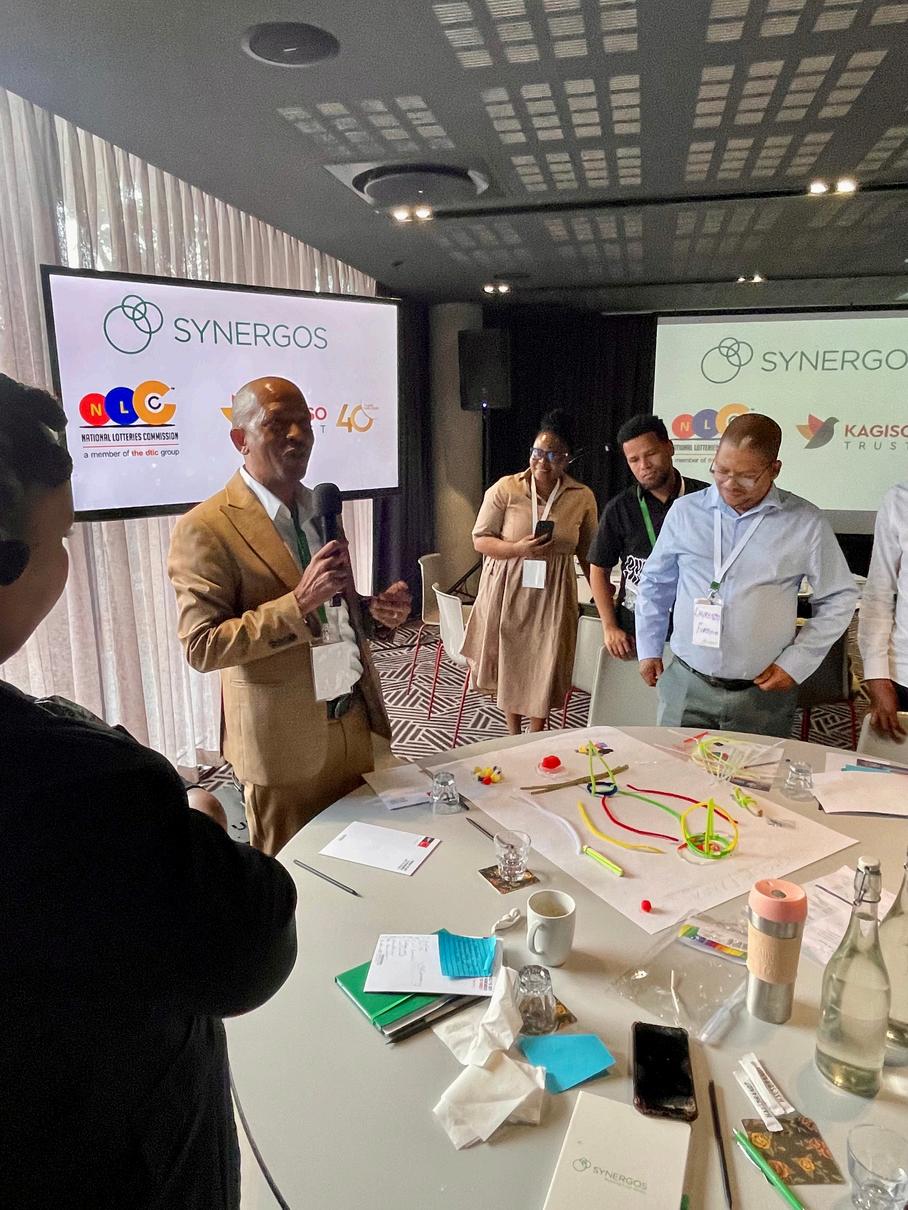
Reflections on Synergos’ Practice in South Africa and Beyond
As South Africans, we live and work in a landscape shaped by both fracture and extraordinary resilience Our daily realities reflect systems under strain youth exclusion, weakened public institutions, social fragmentation, climate stress, and the emotional fatigue carried quietly by leaders and communities Yet these challenges are not uniquely ours. Across continents,
Whatshifts
restored, becomes a powerful enabling condition for collaborative governance The kind of collaboration that allows communities to co-design solutions with municipalities, for youth to shape policy dialogues, and for local networks to mobilise their own strengths before looking outward
Scan the QR code OR complete the form via this link to subscribe to the Inclusive Impact Magazine: https://forms.gle/JzRJagLbh2Znxvw97 Access and Contribution Guidelines