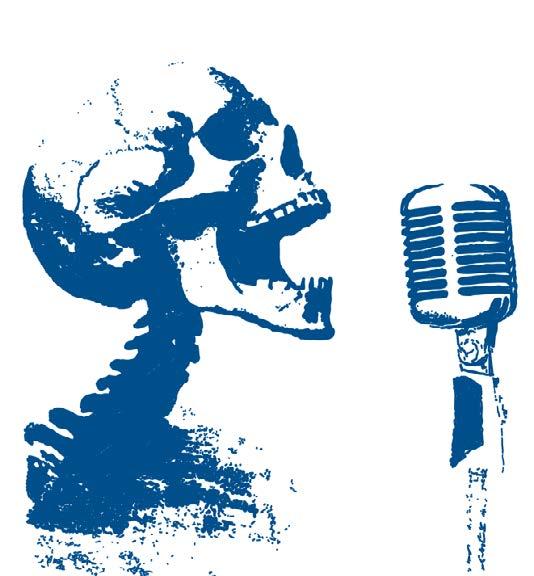
Words mean more than what is set down on paper. It takes the human voice to infuse them with deeper meaning
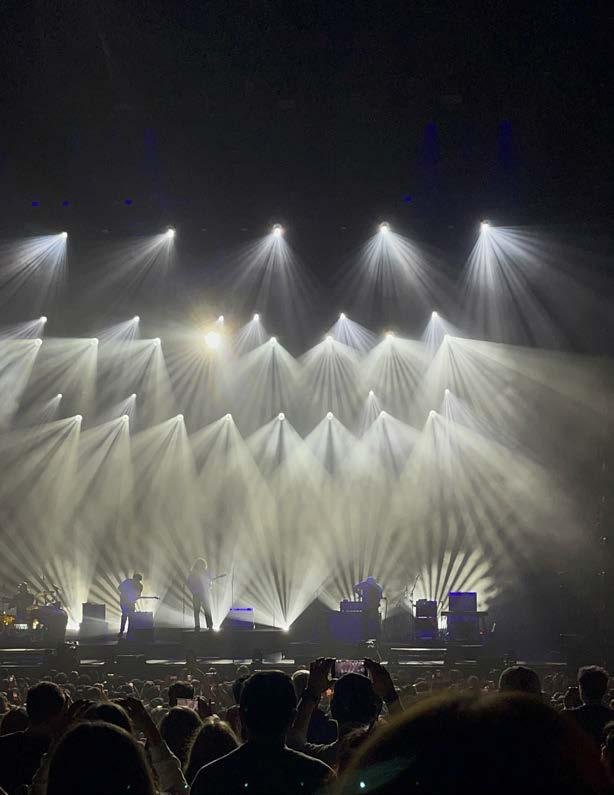
Dr. Maya Angelou
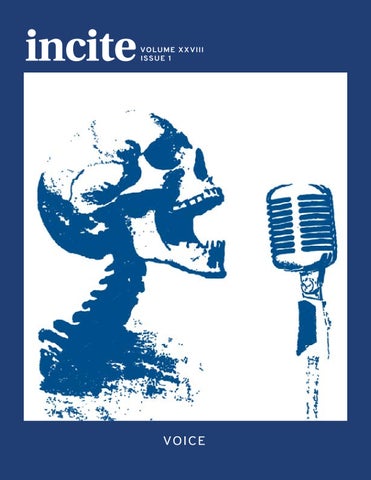
Words mean more than what is set down on paper. It takes the human voice to infuse them with deeper meaning
Dr. Maya Angelou
Dear Reader,
What an honour it is to be able to present you this stunning volume of Incite Magazine! In a world that can be dizzyingly unjust, the creative arts are an endeavour that has always allowed human beings to resist the forces that threaten freedom. In that way, art has shaped movements for generations, and is a powerful tool that can speak to our innermost feelings louder than any other voice can.
Similarly, as many of us grow into our fledgeling adulthood, we are discovering how best to harness our craft to make a difference and are forging a path for ourselves amidst the uncertainty of our futures. This, too, is a way McMaster’s students have captured the idea of voice in this volume.
I am simply floored by the creative mastery and experimental ambition of our student contributors, who are the reason this volume is as lovely as it turned out to be. Their thoughtful and captivating work was handled with the utmost care by our talented and dedicated editorial board. The content editors, art managers, and layout editors at Incite Magazine are truly exceptional people to work with. I endlessly admire their skill and commitment to this project, which could only come to fruition thanks to their consistent efforts. I would like to especially thank my co-EIC, Christina Tam, for being so collected and patient with me as I helplessly bumbled my way through learning the responsibilities of this role.
When you read this volume, I hope you enjoy the many ways McMaster students have interpreted the idea of voice, and that their work inspires you to discover your own.
Sincerely,
Editor-in-Chief (Content)

Raniya Chowdhury
Dear Reader,
With sharing your art, there comes a special type of vulnerability and courage. The courage to share yourself with the world, and let yourself be heard. To announce your place in the world and stand firm to it. This is the vision we aimed to capture with this volume of Incite under the theme of “Voice.”
This edition holds dear to me. From the beginning, Incite has existed for this purpose – to give ourselves a voice. To express the ideas that we often hold back on exploring in our daily lives by telling ourselves there isn’t enough time for them.
I want to say thank you to the Incite editorial board for making this possible. To my talented art manager team, who never ceases to amaze me with what they create. To my wonderful co-EIC, Raniya Chowdhury, for her support and management of Incite’s written side. And thank you to our contributors for lending their unique voice to us, and our readers for listening in return.
Write down your thoughts. Publish them if you can. Create messy art. Speak with passion, with love, with vitriol. Life is too short to keep yourself hidden.
With hope and creativity,

Editor-in-Chief (Art)
Christina Tam
allegedly summer ebubechukwu monye echoes haram akram circling thoughts esther chai toll-free number for an understroyed future pei f somewhere between jovan singh variable integer m lewis the painter rc don’t bite your tongue iris m.p. the weight of love sema pharynx speaks back ace ko threads of a harmony dora xu to be human iqra latif the open door gabriela when the mind starts to whisper iman yaser strangers ria patel anchors and other offering for nereids raniya chowdhury the cure yennie chen lullaby eric zhang wrong season for raincoats arya raol shibboleth raniya chowdhury abating stasis hagios huan memorandum felix manashy feeling lonely ct the dummy sakeenah niazi
resonance fatima salman raza cold weather esther chai hush & quiet vereena andrawes planetarium esther chai find your voice esther chai somewhere between yeemon inheritance ayesha umair the thread you weave arya raol untitled yvonne tong voicemail yvonne tong a brief story of sound audrey ewen are you listening fiona pu little spots of hope esther chai voice anika yadav the open door gabriela rojas naranjo untitled ej nothing to see fiona pu green strangers maggie wang being led astray yeemon own voice yeemon childhood lullabies maggie wang for what it’s worth rhiannon carr jewelry arya raol loosing your voice esther chai untitled natalie wu loss, belonging, what defines a home audrey ewen unravel ayesha umair lysis arya raol timeout arya raol the siren song isra chowdhury who’s voice vereena andrawes speak to me christina tam open mic night maggie wang
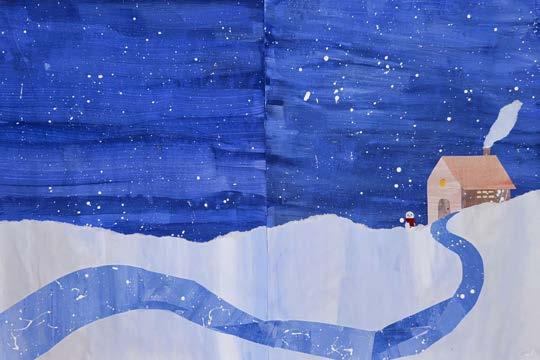
ART by ESTHER CHAI
WORDS by EM & EZ
“Alright! This should be the last picture!” Jade said, turning quickly. I was glad, honestly. She was taking so long, I was beginning to notice the cold.
“Ah, I see you’re shivering a little bit! That’s fine! Mighty fine,” she looked up, deep in blissful nostalgia. “Why, I remember my first time here. Your Dad was a lot of help in getting us tickets!”
Suddenly, her hand was on my shoulder, leading me along as she walked. “It was honestly pretty cold back then!” she continued. “The coldest I’ve ever been. And it took me quite a bit to get used to it.”
Then, I felt a pat on my back, one that filled me with the slightest bit of warmth. “But you’re an Eze! You push through, you adapt, and you succeed! It’s what your Dad did, and it’s what you’ll do! Am I right?”
I guess the only reason I felt a bit of warmth was because of the ache in my chest. I nodded, wordlessly. “Well, I’ve got a flight to catch! If you need anything, be sure to give me a call and I’ll mail it in, ok?”
“Right,” and she left.
With a fiery resolve, I managed not to cry. This was a true breakthrough! I’m the first of my kind! I’ve finally, FINALLY made it. This has been my dream from the start! To attend one of these universities abroad. Although I’ve always found it odd that everyone who knows about this venture into the unknown warned me about the cold. My Dad warned me, Mom warned me, even my Dad’s friend, who usually comes back on vacation, warned me severely. The heat in my country can be pretty strong at times. Though I usually have my umbrella and my mini fan to protect me from all of that, I wasn’t allowed to bring those with me. (Not like they would help against this hypothetical cold). But hey, what does it matter? I’m strong. I’m independent. There’s no way the cold will affect me.
It’s rather silent in here. Three days in, and the room still smells like the tape that was wrapped around my boxes. The windows don’t open all the way, and the walls feel like I could fall through just by leaning a bit too hard. But more importantly, I haven’t cried. Although I haven’t said a word since I got here, that I haven’t cried means I must be doing something right. Why? It doesn’t mean I don’t miss home. Not the people within it like my parents and siblings, but the environment itself. I loved waking up in the morning and basking in the golden gleam of the Sun on a bright summer morning.
The Sun doesn’t gleam nearly as hard here. It still shines, and the skies are bluer than anything I’ve ever seen. But despite the way the Sun completes that storybook sky, when I go outside to observe it, the cold jolts my system. Why would such a Sunny day feel so cold?
Around 3 days later, I tried venturing out. Though it was crowded today, I still think it could’ve gone far better. There was an event for a cultural club that I was really interested in. They even said that cuisine, authentic to my culture, would be provided. Boy, how excited I was! I was.
Well, it wasn’t exactly authentic. In fact, things were wrong that I didn’t even know COULD be wrong. What was meant to be refreshing was bland, and what was meant to be hot was cold. Surely a bit of Google could’ve helped. Oh well. It’s not like I could’ve made it myself anyway. If it’s not an egg to fry, I don’t know how to make it. Although it’s still down on me a bit, the way my hopes were dashed. And staying in my dorm certainly wasn’t fun either. I moved around like a ghost in the hall, intercepting a hi or two, feeding feelings of accomplishment to others
The halls of the dorm were often really cold. I have no clue why, considering it’s controlled by a central system. Perhaps they set it to a temperature that was cool for them. But if this is cool, what could cold be? Regardless, it’s not all losses. I can’t afford to lose, can I? I sat beside the heater of my dorm, tapping away at my laptop. It was nice and warm. From the air blowing from the side, to the glow of the screen as I viewed it. I did feel uncomfortable sitting there and not getting a whole lot done, so I would often try and take walks in between sessions.
But the warmth of the screen is almost drug-like. Compared to the cold outside, the warmth feels way up my alley. Just familiar enough to put a smile on my face. Ah! Something familiar! That’s a fantastic idea.
I love football. I played all the time at home! In fact, had I come to this land earlier, I would’ve tried out for the football team. It’s a magnificent sport. It’s fast, it’s exhilarating, and you feel a warm, fuzzy feeling, whether you’re watching it or you’re playing it. That warmth, maybe I could achieve it here! By the time I got there, however, everything about the experience was pretty… miserable.
Why so?
“I thought you loved soccer?” one might ask. Firstly, it’s football, and I do love the sport. But for all the positives it can produce, it can also deliver a healthy, sobering dose of reality. I love this team. Sometimes, I would sit in the cold and watch them train. And while I felt the same as usual, they seemed as warm as ever.
I should stop beating around the bush. The team I went to support were not very good in real life. I had become attached to them after guiding them to a UCL Trophy on Football Manager. But to see them run around like headless chickens was humbling, to say the least. That was when I COULD focus on the match. It was the coldest it had ever been. It travelled through my body and started to poke at my soul. And I’m pretty sure it’s not allowed to reach that deep.
I had to run back and grab my jacket. I’m surprised they let me back into the stadium. Perhaps this is a regular occurrence? Regardless, the cold didn’t bypass my jacket. It brute-forced it. Froze it just as solid as it froze me. It was almost shocking just how little resistance it added to me. But when I look around for eyes similar to mine, there are no vibrations half as violent. No, people all sat together.
Perhaps since they were all huddled together in their own individual groups, they were able to provide just enough heat for themselves. It’s plausible, yes, but it doesn’t explain the total lack of reaction. Why am I the only one getting so badly shafted by the cold? Well, I would’ve asked that question had I been home. But I still haven’t spoken much since Jade left. I hope the cold doesn’t freeze over my vocal cords. Though, with how little I use them, it just might.
- 3 DAYS LATER -
Classes have started! They’ve been…well…
Ok. No real human being enjoys class, ok? You know it, I know it. What’s even worse is the type of class I picked. You see, I went to boarding school, so I often woke up really early. So I thought I would be prepared to do the same here. But I guess any faith in myself is just a simple overestimation. It’s really cold in the mornings, and walking to class felt really anxious for something that was essentially a YouTube video. I believe that attendance is of utmost importance, so I pride myself in coming early for class, but this was a lot of effort for something this little.
At the very least, the classrooms weren’t cold. But they were just suffocating enough to feel hot and bothered. And let me tell you, that is very different from feeling warm. I know I go on a lot of side tangents, but I really wish this story had more dialogue. I don’t know. It feels like I’ve been in my head a lot. And that’s a place I’m deeply uncomfortable spending my time in.
I mean, I have tried. But it’s hard to approach people in this weather.
“Weather? As an excuse for avoidance? I’ve heard it all!” right? I do agree, it’s silly. But the weather impacts many things, surprisingly. It affects the way I walk, keeping me far more robotic; it increases the distances between me and others by pushing me back. Hell, sometimes, it stops playing around and simply freezes my tongue!
And yes, it’s all on the cold, not me. The real me would be able to deal with this easily. But hampered by the cold, a weakness since I was born, fighting, pushing, and talking feels way tougher. Meh. It’s not as bad as back then, so I can still push through! Push through like my Father before me. ‘Cause there’s no way I’d let a little cold break me. Well, I say that, but the cold isn’t very little anymore. Meh.
- 3 DAYS LATER -
I find it very discouraging when I check the weather, and believe the cold will be bearable, only to be sorely disappointed. I might be asking for a lot here, but it feels like I’m being taunted. No one seems to be bothered, though. They were wearing their tank tops and t-shirts in this brutal cold. Some don’t even need the shared body heat of a group.
I look at myself, fit with both jacket and joggers, and I wonder, why can’t I handle the cold? Is it that I’m not doing enough? No, it can’t be! I’m dressed for the occasion all the time! I’m responsive in the rare event that people call my name. I try to look as vulnerable and as jittery as I can, hoping that someone will put a thick enough jacket around me. But I don’t think people have jackets to spare, and my tongue hurts too much to ask them.
This is quite the predicament.
Sometimes, I wonder if I’ll adjust. If my skin might thicken or the cold might begin to feel like background noise. Maybe one day, I’ll walk outside with short sleeves too. Maybe I’ll face the wind, unbothered. But all I can do is check the forecast like a promise. And every day, it breaks it.
I have no energy. I was frozen solid, stuck to my bed.
Sometimes, I would break through the ice and head back to the heater. People walked around me just fine. They don’t need a heater, if their body heat is more than enough. I feel like asking them to help. Complaining about the temperature. Asking for directions to a pharmacy for Vitamin C. But I would just be inconveniencing them. The majority carries the vote, and more ways than one, I’m not that. I can’t even focus in class. The lukewarmness feels gross in my mouth, and it fogs up my brain.
Most times, I have to leave. No point wasting my time if I couldn’t focus, right? I decided to leave today’s class. I couldn’t focus. I felt bad, but was too sad to do anything there. This isn’t what Dad would do. I’m sure of it. He would’ve pushed through, and gritted his teeth with a smile! But my teeth chatter, and my hands are too busy rubbing against each other to force my lips upwards.
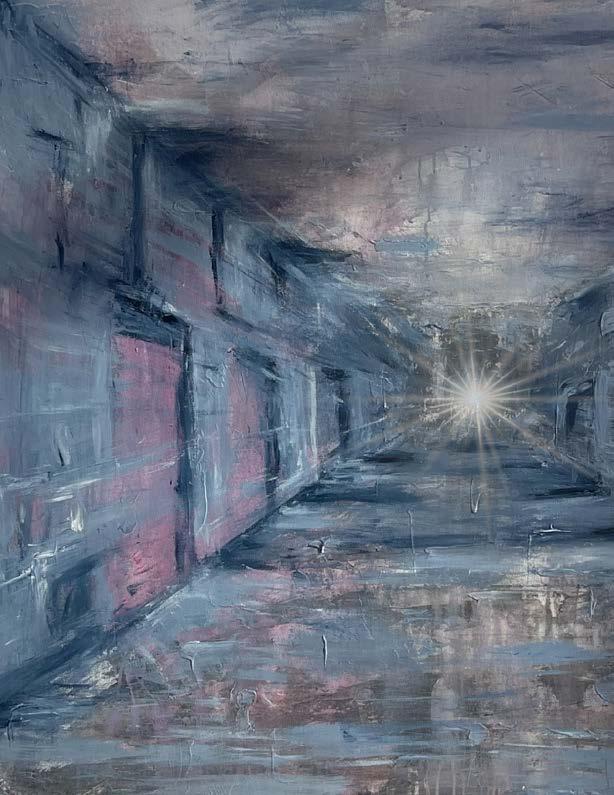
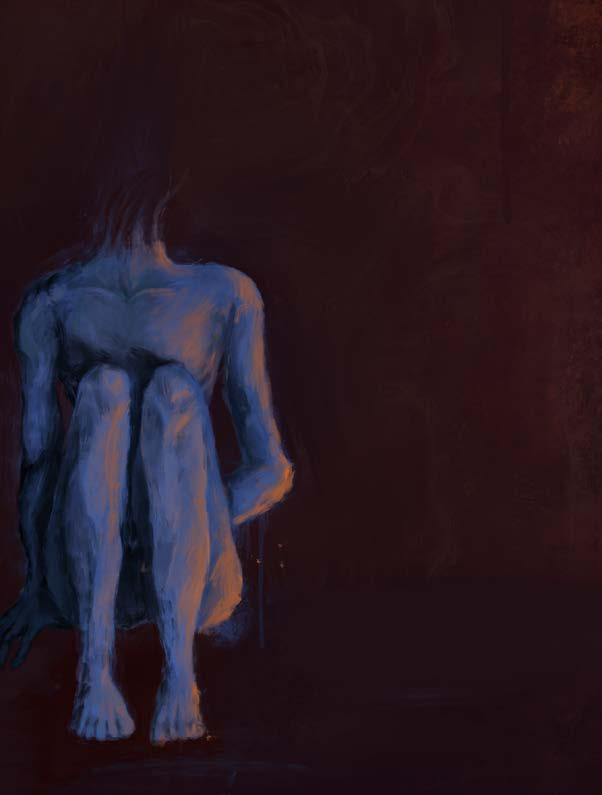
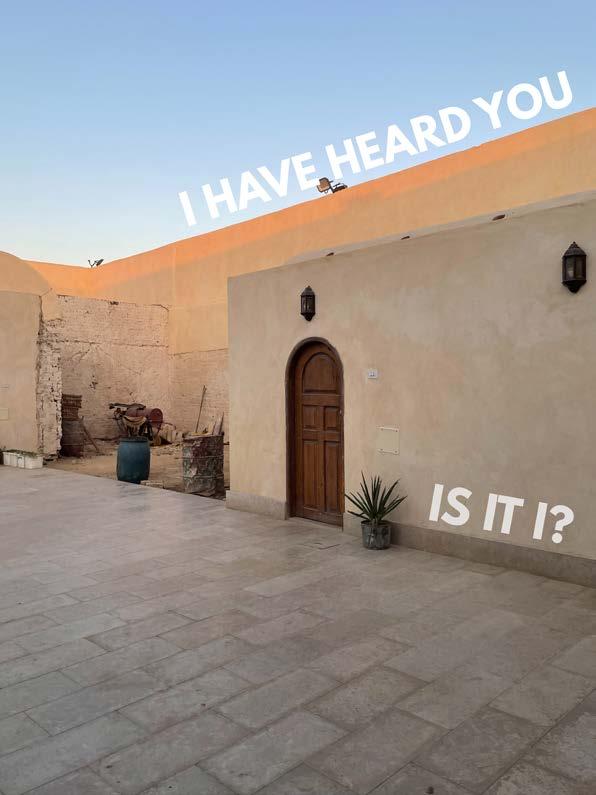
the call to prayer ricochets off spiraling minarets, stretching upwards to scrape against the sun, the call to prayer slips beneath the silver-stained doors, settling into the soil beneath silver-tiled floors, it beckons the healthy, the holy, the humanity of eras passed, present, and predicted; any and every one.
the day’s dust collecting beneath broken fingernails and within open pores, side-by-side, filling the masjid, watch their shoulders drop and breathing slow, see the flexion of widened backs slacken ever-so-slightly, and eyes remain casted low.
leagues behind the rest, and yet, in the same row, i stand. a humble servant, a faithful, a sinner; a prey and a predator; a metaphor struggling to make sense of a metaphor. i stand alone; i stand as a no man’s land.
i find myself focused on the faux-aged, rust-painted, floor to ceiling engravings, i find myself focused on the crystal chandelier fracturing light into scattered stars that are beyond saving. in these hallowed halls, ceilings echo back the call for prayer five times a day.
they feel unheard here, or rather, unanswered.
in my mind, You linger by the doorway of holidays like i do, like a guest that has overstayed, unwilling to leave, welcome to remain, and yet impossible to persuade.
lately, i catch glimpses of You like a figure obscured by frost-fogged windows in the dead of winter, brought into focus by each wipe of my hand, and yet still not clear enough to decipher.
i stopped seeing You for a while. but did You leave
Did I stop listening? x
ART by VEREENA ANDRAWES WORDS by HARAM AKRAM
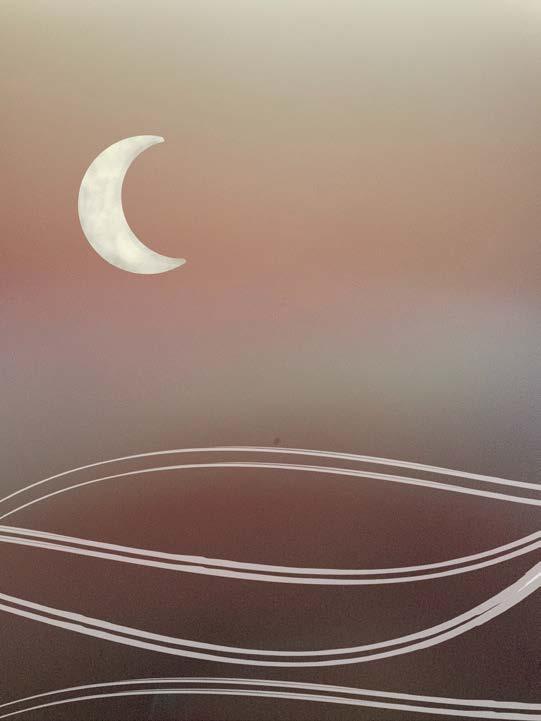
ART by ESTHER CHAI


WORDS by ESTHER CHAI
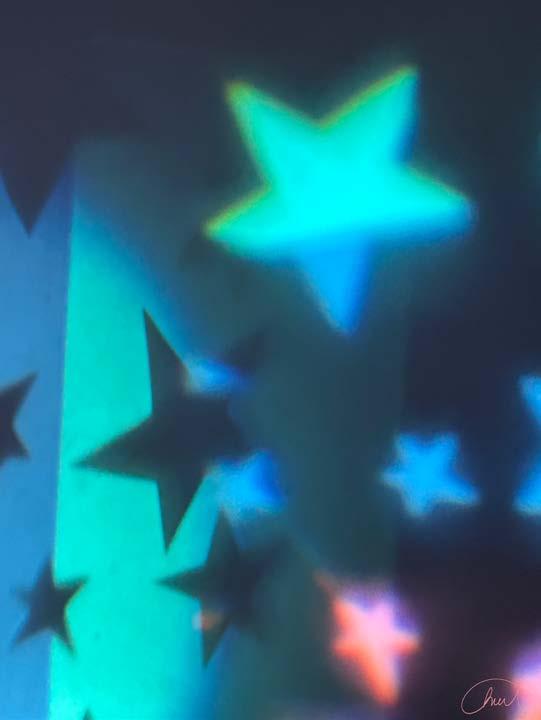
i don’t like it not really it’s not ok it still hurts

It was an unremarkable Tuesday when the call came in.
“Hello?” I held the receiver to my ear. It was either Mom, or Dr. Dan from Happy Paws calling about Pringles kicking up a fuss. Through the window, the sun seeped through clouds like a spilled sweetened drink.
“Good day, customer! This is Steve from The Existential Crisis Bank. Our team noticed you haven’t been using up your quota of toll-free calls provided by our service and wished to reiterate what’s in your package.”
The person on the other end launched unprompted into a rapid-fire sales pitch, during which I considered hanging up the phone. Just as I decided it wouldn’t violate my good citizenship, he ended with, “Isn’t it an exceptional offer?”
“Ah, yes. Indeed.” I didn’t understand a sWingle thing you said. “Twenty-four seven. Unlimited time.”
“Exactly! Now, why don’t we give it a try?”
“Um—” I was not getting roped into this business.
“First off, when did you create this mess?”
My whole body went cold. Down to the bone. “…I’m sorry?”
“I asked, since when was your life such a disaster, customer?”
I c u t the call.
Later, after channeling much of my inner Zen, I resolved it wasn’t worth ruining a day over. I didn’t get cheated out of money; that’s certainly a plus.
“I’m glad you don’t trash my accomplishments out of the blue,” I said.
In response, Pringles rolled over lazily on the table, next to my dinner which was going cold. And I un-reassuringly realized he wasn’t in a position to trash me, the sole supplier of his peanut butter treats.
But it wasn’t as if I was doing something wrong.
It wasn’t as if I didn’t try balancing work and chores and hobbies, or preventing burnout, or reserving time for people who reserved time for me. It wasn’t as if I had no passions or greater purpose or didn’t go out for sun. And it wasn’t as if I hadn’t tried everything to fix my childhood night lamp.
It wasn’t as if I didn’t try.
I shook off my thoughts to stop Pringles’ nose from entering my dinner plate, which now had to return to the microwave.
‘—quota of calls per lifetime, unlimited time offer! But we recommend calling as early as possible, for not all opportunities in life last forever!’
I froze, wondering if that spontaneous recollection of Sketchy Steve the Scammer’s sales pitch meant he was trying to persuade me through my subconscious.
Now that’s unsettling. Or perhaps I just needed sleep. Then came the mail.
It didn’t matter the number of complaints I made to the post office, the answer was always ‘Sorry, there’s nothing we can do. Have a good day.’ Every morning started off with apologizing to Ms. Molly the Landlady while rushing for the early bus, and every evening involved returning to a porch covered in envelopes. All of them carried the same message.
And that dealt the final blow.
“Thank you for contacting The Existential Crisis Bank—we offer to financially manage your future! For quota inquiries, press one. To speak with our customer service, press t—”
It was only a second before the hold music stopped, followed by a familiar salesperson saying, “Hello again, customer! I’m glad to see you’ve—”
“I have no idea, got it? If I had an answer, I wouldn’t even be where I am, right now. So if you’re after money or expedited access to jail, you can say that, instead.”
‘Since when was your life such a disaster?’ This entire week, that one sentence had been swallowing all my thoughts. Along with that overly enthusiastic, scammy sales pitch.
There was a sigh on the other end.
“You ended the call, last time, before I could walk you through the entirety of our service,” said Sketchy Steve. “Our goal isn’t to add to your troubles—I apologize if it came across otherwise. But you’ve been highlighted as ‘high priority’ in our database, customer. And to our team, ‘disaster’ isn’t a negative term, we rather see it as…a chance to express.”
“Express?” I repeated, in question.
“I a negative term, we rather see it as…a chance to express.” =which was going cold. And I un-reassuringly realized he wasn’t in a position to trash me, the sole supplier of his peanut butter treats.
But it wasn’t as if I was doing something wrong. It wasn’t as if I didn’t try balancing work and chores and hobbies, or preventing burnout, or reserving time for people who reserved time for me. It wasn’t as if I had no passions or greater purpose or didn’t go out for sun. And it wasn’t as if I hadn’t tried everything to fix my childhood night lamp. It wasn’t as if I didn’t try.
I shook off my thoughts to stop Pringles’ nose from entering my dinner plate, which now had to return to the microwave. ‘—quota of calls per lifetime, unlimited time offer! But we recommend calling as early as possible, for not all opportunities in life last forever!’
I froze, wondering if that spontaneous recollection of Sketchy Steve the Scammer’s sales pitch meant he was trying to persuade me through my subconscious.
Now that’s unsettling. Or perhaps I just needed sleep. Then came the mail.
It didn’t matter the number of complaints I made to the post office, the answer was always ‘Sorry, there’s nothing we can do. Have a good day.’ Every morning started off with apologizing to Ms. Molly the Landlady while rushing for the early bus, and every evening involved returning to a porch covered in envelopes. All of them carried the same message. And that dealt the final blow.
“Thank you for contacting The Existential Crisis Bank—we offer to financially manage your future! For quota inquiries, press one. To speak with our customer service, press t—”
It was only a second before the hold music stopped, followed by a familiar salesperson saying, “Hello again, customer! I’m glad to see you’ve—”
“I have no idea, got it? If I had an answer, I wouldn’t even be where I am, right now. So if you’re after money or expedited access to jail, you can say that, instead.”
‘Since when was your life such a disaster?’ This entire week, that one sentence had been swallowing all my thoughts. Along with that overly enthusiastic, scammy sales pitch. There was a sigh on the other end.
“You ended the call, last time, before I could walk you through the entirety of our service,” said Sketchy Steve. “Our goal isn’t to add to your troubles—I apologize if it came across otherwise. But you’ve been highlighted as ‘high priority’ in our database, customer. And to our team, ‘disaster’ isn’t a negative term, we rather see it as…a chance to express.” “Express?” I repeated, in question.
“Well, if you recognize something isn’t working out, that’s a chance to fix. And if it’s your current life not working out, that’s a chance to express what change you might want to create.”
For once, I wasn’t compelled to end the call. Unless I’m falling for his scheme. But if that meant fixing my life, it wasn’t too bad.
“That’s the whole purpose of our service,” Steve continued. “‘Financially managing your future.’ Our happiness equates to the happiness of our customers, got it?
“Your happiness equates to the happiness of your customers,” I echoed.
“Exactly!” He piped in excitement. And I realized—Sketchy Steve loved his job, and that felt strangely admirable. “Then should we
try it out?”
“Okay.” Can’t believe I’m agreeing to this. “But one question.”
“Of course.”
“What’s the quota of calls? You didn’t specify a number.”
He thought for a second. “That depends.”
“On the customer?”
“On a lot of things,” he said whimsically. “Mostly on how much the customer would wish to call us.”
Maybe this is a scam, after all. “So, there’s no quota.”
“You can say that. Now, customer, would you like to begin?” x
ART byYEEMON
WORDS byJOVAN SINGH
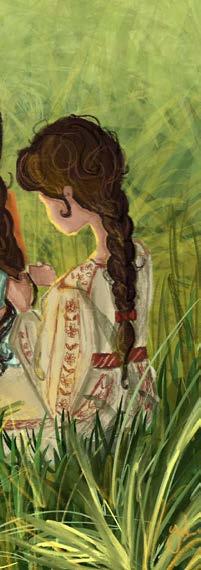
Somewhere between Punjab and Palestine, we learned how to cradle pain like a newborn, wove resilience into the strands of our hair.
Between mountains and olive trees, wheat fields and flowing rivers, mothers clutch keys to homes they can no longer return to–feeling the final heartbeat of a baby who left this world too soon.
Maps redrawn by hands that never touched the soil they split, borders break the spine of the motherland.
Gurmukhi and Arabic lose their voice inside classrooms and state institutions–for when they take our tongues, they silence our spirits.
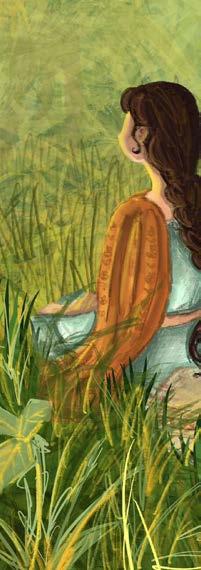
Somewhere between Punjab and Palestine, wounds never heal.
Here, holiness is desecrated.
Here, the soil knows too well the pain of genocide.
Here, grieving parents raise children who know the definition of exile before learning to spell their own names.
Somewhere between Punjab and Palestine, a flag proudly rises in the air, a glimpse of hope amid clouds of despair.
Somewhere between Punjab and Palestine, nations embrace in their shared ache, sisters torn apart by war, promising one another one day, they will be azaad . x
ART byAYESHA UMAIR
WORDS byM. LEWIS
My existence is a statement, written in a language I fail to understand, a stream of numbers with no known end; I wish they’d accept my last digit as a mystery.
My siblings are the 1.5s, living in the in-between. The hostility of this persistent war—elite 1.0s against downtrodden 2.0s— shatter our edges, compress our air, graft foreign objects to our face.
Yet even in this solidarity, I am without a home. For they are the fixed centre, the perfect in-between, the 1.500000… I am but a mere decimal, lost in the in-between of the in-between.

A regular vendor at the local market, I strive to become a complete integer. Today, I sell my heart for 0.74, round myself down to a precise 1.0— I’m ashamed of the cheap profit.
The endless power isn’t worth tomorrow’s blood and fire. Someone will offer me shoddy band-aids to shelter the wounds from where I hacked off my soul, but only if I take their 0.98.
Now treated as a 2.0, my voice is lost in their cacophony of outcries— the outcries that 1.0s insist all sound the same.
Even within the walls of 2.0-only spaces, my missing hundredths of a decimal scream: fraud, deception, sham.
Each market transaction seizes me further from reality— A soup, I am, tainted by cyclical seasoning and straining, the layers of flavour creating not gourmet, rather toxic waste, my original recipe long ago erased by coats of scrawled ink.
But I know a place where the cool breeze stills my monotonous stirrings, whispers of a space I now call home. It is here where: my trailing decimals are never forced to be rounded, an exact number is not needed to have value I can experiment as a variable rather than a constant, not a word needs to be spoken to be understood.
And though some days frustration drives me to trade decimals, slowly, I am learning to find joy in the chaos of the in-between of the in-between, the infinity bridging 1.0 and 2.0. x
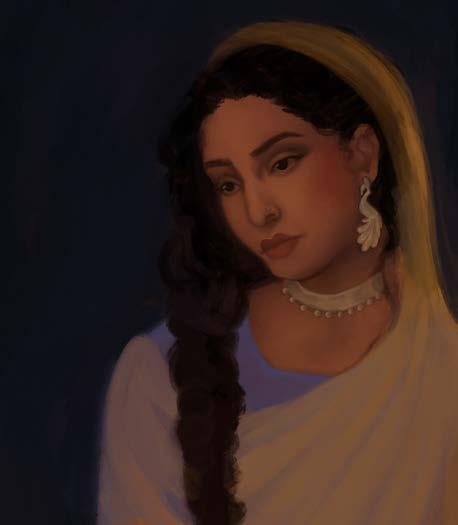
ART byARYA ROAL WORDS byRC
On hot summer days in Sawarkheda, when the sun is wrathful in the sky, the girls dance in the centre of our village. Wiping a gleam of sweat from my brow, I roll my shoulders, enjoying the satisfying pop of my backbones. Today, I’ll go into town. Across the singular room of my home, I retrieve the cloth for my dhoti, and fashion the fabric around my legs and waist, tying it off at my navel. Blinking away the last dregs of sleep from my eyes, I find my coin satchel and push open the wooden door, immediately immersed in a bluster of sound and life.
The moment night retreats, and morning birds beckon, the town becomes a hive of activity. I walk towards the square, nodding to neighbours and vendors, who are propped up by their vegetable stalls. Two men sit by the trunk of a gulmohar tree, its flame-like flowers casting a rosy shadow over them. They’re immersed in a game of chaturanga, cross-legged across from one another, they stroke their beards in contemplation of the checkered board before them. A woman holds a basket of round, purple eggplants in the crook of her hip. She gathers her green saree in her spare hand, careful to keep the hem clean from the dusty ground. A group of children rush past me, brandishing heavy tree branches, chasing after one another. A portly brown cow clops across the road, swatting flies with its skimpy tail. Its neck is adorned with vibrant floral garlands, and as I pass it, I brush my hand across its muzzle, to which it exhales gratefully.
I stop at a stall I’m familiar with and greet the vendor, who is an old friend of mine. I open my small satchel and retrieve a gold dinar. The faces engraved on its shiny surface wink in the sunlight. The stall is packed with a variety of bright fruit: green jujubes, yellow papayas, and deep purple jamuns. My eyes settle, however, on the mangoes. I pick the ripest, orange fruit of the bunch and hand the shopkeep the coin in exchange for it. “Will you be in town today to see the dance?” he asks, pocketing the round dinar. It holds it in its beak happily, trilling.
“Yes, I’m hoping to find some inspiration. There’s still an empty wall, and I’m not sure what to put there,” I reply. The shopkeeper takes the mango and kindly uses his blade to slice it open for me, a trickle of juice escaping the fruit before he returns it.
“Akram the artist! Well, have fun then. I’ll see you tomorrow? Let’s see if you can finally beat me in chaturanga,” he teases with a wink.
I roll my eyes. “You’re not a winner if you’re a cheater,” I remind him. He waves a hand dismissively at that, sarcastically remarking about me being a sore loser. I turn on my heel and resume my walk, calling out a goodbye behind me as the shopkeeper snickers.
The flesh of the mango is sweet as I bite into it. It’s refreshing against the cruel rays of sunlight that beat against the back of my neck. It seems like the world’s colours saturate as soon as there’s some food in my belly. I start to notice the gentle blue of the sky, the white streaks of clouds across its canvas. The mountainside that crests our town is lush with verdant greenery, thick with trees. Everything is merrier once I finish the mango, toss the peel onto the dirt, and wipe my mouth. As I approach my destination, the faint sound of a beat vibrates beneath my bare feet, and my heart thumps along with it.
Finally, I arrive at the crux of our village, and push through a throng of onlookers as the music swells. A group of girls play various instruments on the ground, legs folded over their saree skirts, blowing into flutes, beating against drumskins. They grin, eyes drawn to the tall, slender dancer in the middle. Her hair is decorated with wreaths of jasmine flowers that hold her black bun into place. She sways gracefully to the tune, arms winding, striking, like a snake on the hunt. With each step, her feet kick up a small cloud of dust, jingling with the bells around her ankles. Her arms are decorated in bright silver bangles, and her neck glints with heavy jewellery as well. Every part of her is decorated, and her patterned dress flutters as she moves.
The crowd of adults and children alike clap along with the rhythm and cheer as the music intensifies and the dancer’s footwork becomes more intricate. She is somehow both a picture of elegance and danger; alluring and magnetic, but powerful and deadly, like a venomous flower. I commit the scene to memory, the beauty of her art, of the music and the passion of the crowd. Soon, the dance ends, and the dancer is knelt in her final pose, a drop of sweat dripping from her nose as she pants. The gathering applauds wildly, whistling and praising her. Wreaths of flowers are thrown at her feet. I rush past the dispersing crowd and begin the trek along the mountain to Ajanta. The journey is long, but I’ll get there quicker if I cut through the wood, so I venture into the wilderness, instead of taking the dirt path. The forest is untamed and humid, the air thick with moisture that gathers on the leaves. I squeeze past vines and step
on plush moss, the sounds of the jungle and its abundance of life like the most deafening of silences, like the most quiet of confessions. Following the peaks which loom over the canopy of trees, I emerge from the tall undergrowth and behold the majestic Ajanta temple. It is carved onto the face of the mountain, with several cavemouths held open by tall pillars, like small windows etched onto the cliff. Winding stairs lead me to a particular entrance, with great big columns along either side of the hall and extravagant statues of Gautama Buddha scattered between them. The grand entrance branches off into smaller corridors, and I weave my way through the labyrinth of passageways until I stand before a patch of blank wall. In contrast to the murals, friezes and statues placed on every surface, the empty wall looks stark. My paints are in the corner of the room, covered in cloth to prevent them from drying up, and I gather the various pigments: red and yellow ochre, black earth, mineral blue, bone white. With a small pail of water, I wet my horeshair brush and bring the powdered hues to life, deepening their shade.
I close my eyes and retrieve the memory of the dancer: bold, nimble, feminine. I dip my brush into the paint and turn the blank wall into art with nothing but intention, and bold streaks of colour. I capture the movement of her form, fluid like water, and just as strong. I surround her with the musicians, who gaze up at her, drawn to her in the same way as the audience was. With rich whorls of colour, gold-flecked accents that shimmer like a dinar and deep black to accent kajal-rimmed eyes, hennastained hands, and midnight-dark hair, I bring the scene to life. The sun sets on the temple, and the remaining warm daylight recedes, making my shadow tall.
I step back and admire my work, flexing my sore hands. The placid faces of the women, the slight curves of their smiles as they beat the mridangam and the urumi like the footsteps of elephants, play the bansuri like the call of songbirds. At their center, the beautiful dancer, turning the music into a story, into movement. The sunlight yawns, leaving a sliver, and then nothing. As I curl up onto my straw bed in the room to spend the night, I wonder to myself if someday, years from
now, somebody will look at this mural and appreciate the moment trapped within it as I do. I wonder, a little guiltily, if they will look at it and think, perhaps, of the man who made it. In the stone halls of the Ajanta temple, pigment-stained and exhausted, I drift off, captured by the momentary oblivion of sleep. My dreams are a storm of colours and pictures of tomorrow, of playing chaturanga with a friend , of losing the game, of bathing in the river, of painting and of the rest of my little life. I’m satisfied with this small existence in the vastness of the world, and the infinite breadth of time. In a wink, a flash, this life will end and lapse into a new one. A better one, where I am born anew as a parakeet, or a cow, or a dancer.
But for now, a painter will do. x
against my neck you breathe symphonies that quiver and sigh as your lips
let words flutter along my throat, like butterflies dancing. whisper your daydreams across my collarbones. hum secrets against my skin. although you don’t need to say it out loud— tell me that your heart sings for me, that i am yours, please, ibegyoutoletmehearit.x
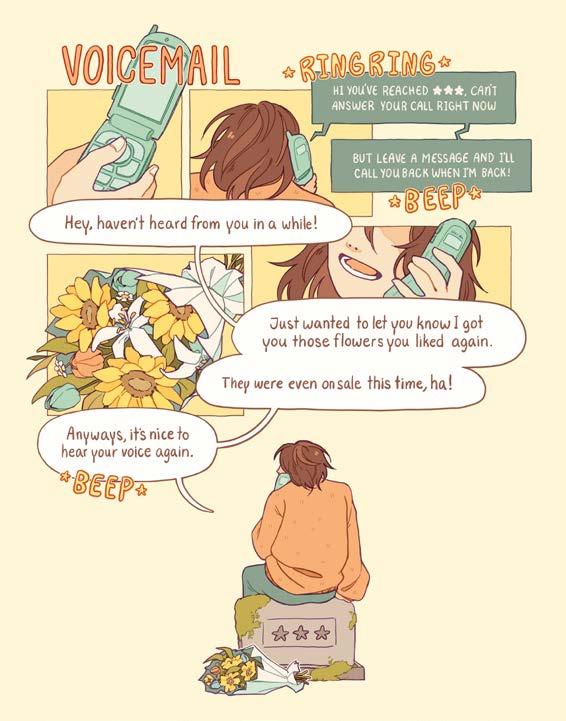
ART by YVONNE TONG WORDS by SEMA
You made loving me look like breathing natural, necessary and without thought. In your arms, I became the truest version of myself, while you smiled at every hidden part.
But seasons change, and so did you. The warmth that once wrapped around us turned to winter’s sharpest exhale, leaving me gasping in the sudden cold. You couldn’t love me anymore, as you were suffocating from the love you once needed to breathe.
I retrace my steps through fading memories, looking for the moment I became too much when my love shifted from gift to burden, when the very essence you once cherished became the weight you couldn’t carry.
Questions echoed in the space you left: Wheredidtheeasylovego? When did I become too much? How did I become the storm instead of our home?
Perhaps some hearts are meant to love in seasons, not lifetimes.
I guess I’m not that easy to love after all. - SM x
Do all the things you wish you said run wild run violent through your lungs like sarcoma, like melanoma, like any of the consonant assonant dissonant words that flow violent through the wind through the pharynx through the larynx through the–
Forgive the anaphora. Forgive the lack of phrase lack of meaning lack of praise to whatever remained unsaid: To whatever stayed stuck, in your throat, breaking the skin of your layers playing on your prayers of life of love of death so dear and falling down, down, down,
the twelve-step-twelve-run-twelve-month program, regularly-scheduled, that your throad bled pink to the audience that saturday morning,
, which you forget, because you forgot, which you forgave, because there’s no other choice:
air gets stuck stuck stuck in your lungs like paper in a pauper in a press in a publishing company long-went-broken and you try and you try and you fail to clear it out: the piping’s gone wrong, doc, it might be too late: I am the last unspoken word,
like the melancholia like the last forgotten friend. the stairs! the steps!
like the melanoma (sorry, is that repetition)?
Forgive the intrusions: Forgive the last gasp,
I hope you can, in the end, forgive-forget-forember-november- what? Sorry?
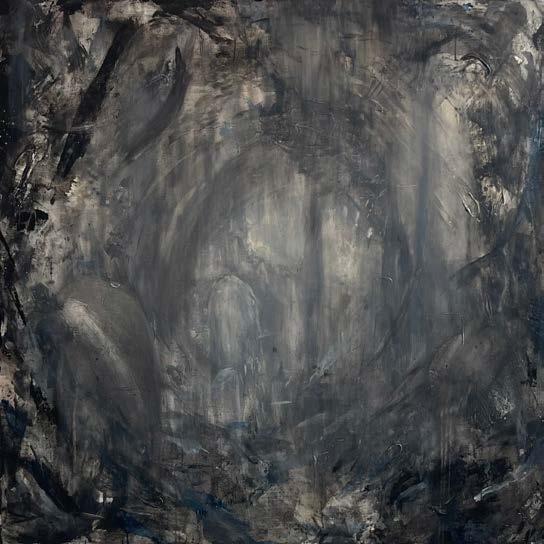
I can’t hear you. It’s too late. Don’t look back. It hurts x
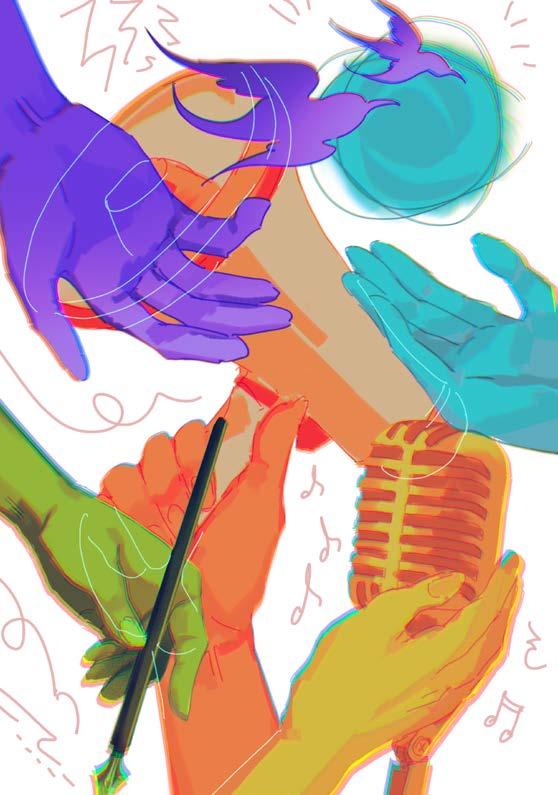
connections are the words of conversations
intertwining like vines, and ideas taking root in the soil of our minds.
a name scribbled down on a napkin a contact saved onto a phone a face committed to memory laughter floating with the breeze in courtyards and kitchens on beaches and bustling streets it is handshakes at a fair, trading stories and jokes, and sharing a coffee between classes.
the act of listening the feeling of mattering to someone the remembrance of details friendships are woven together with the threads of our words writing a page into our stories.
there are countless paths waiting to be taken, countless people we have yet to meet.
connection is more than proximity. it’s in the courage of starting a conversation and keeping it going.
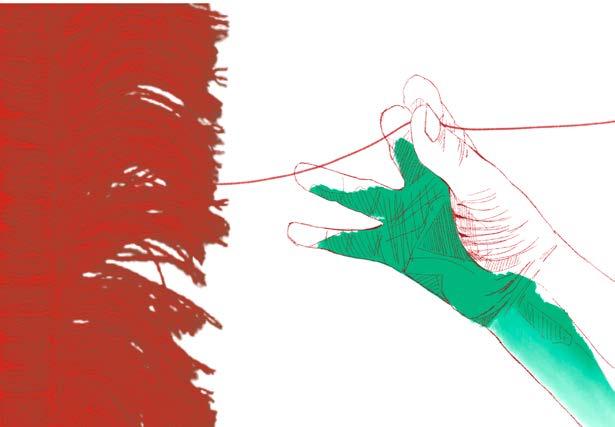
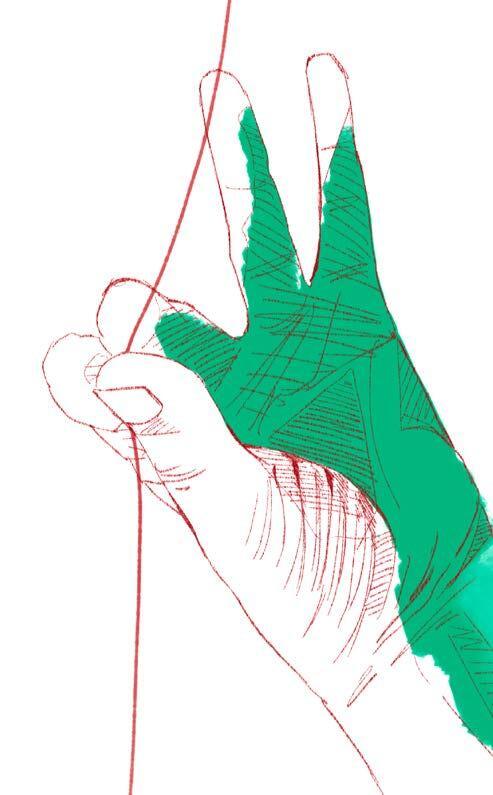
the start of a thread weaving into years, the comfort of belonging to something, the joy of simply being remembered we are weaving together threads of a harmony all of us belong to.
it’s nice knowing even when the season slips away, the bonds remain. x

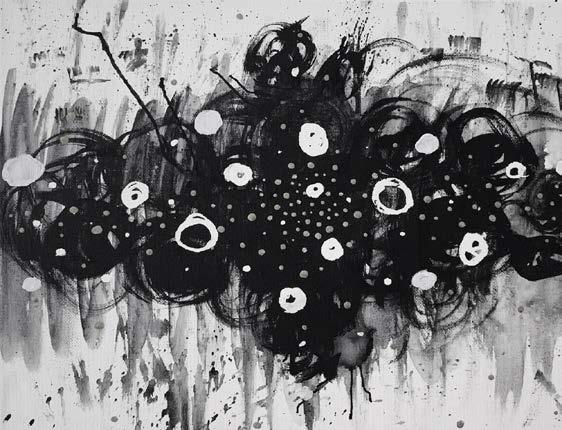
Emptiness, Silence, and Despair, Words I know effortlessly, A doll sewn with its mouth shut, String on their lips attached to the heart, A soul wanders the Earth alone, Never looking further than self-critiques.
Were they always like this?
Me, a doll, a soul, all cursed, Once, we used to laugh, Once, we used to cry, Our fields now lie barren, Cacti do not grow where flowers used to bloom.
Recklessness is the brevity of the soul, So let me be reckless, I beg, End my suffering, The soul is but a coward, Too scared to fall in deep, Instead chooses to walk alone.
"Sorrow is foolish," cry the infidels, "Despair is unknown," cry their tongues, They know not of it, These heathens are not of any religion, Their disbelief lies in humankind, They speak of knowing humanity, But harm the hearts of others.
Words and tongues grow like serpents on the heart, Dig flowers from the gardens of people, Making souls drift endlessly with pain, Making dolls stitch their mouths shut, Filling the world with emptiness.
Yet those whose hearts are harmed are not accepted, They are not believed; they are left broken, Screaming outside till their throats burn, “They are useless,” cry the infidels, “They are too broken, too endless.”
Beds become prison, Walls squeeze in, Yet, I live when I should be gone. To hate myself is to be a narcissist, To love myself is the same, So I learn how to bear myself, As the doll learns to be quiet, As the soul learns to wander.
Peace is mistaken for sorrow, This is no cure, Only a way to soothe the infidels, Who never learn to be human, Not as I do.
To be human is to cry, To be human is to laugh,
ART by ANIKA YADAV
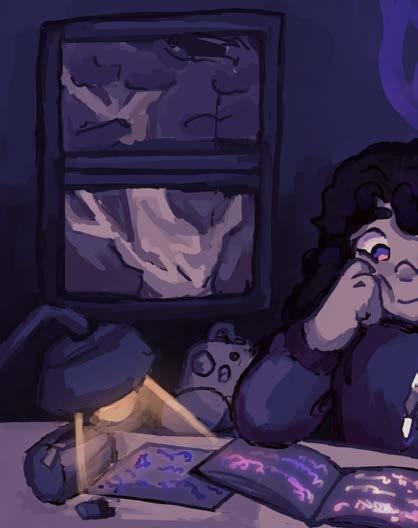
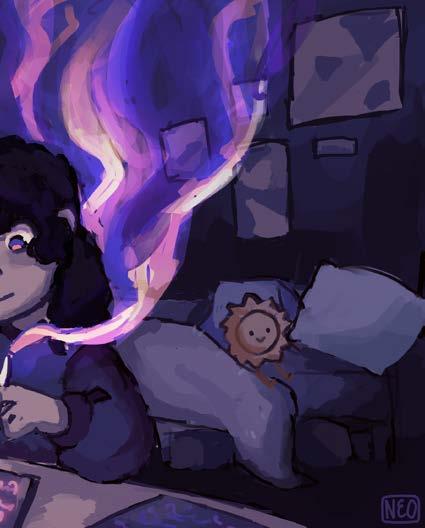
With growing pains comes a friend, who silently all consuming created a severance between mind and tongue.

How safe I am in this stagnant room, everything always lies where I placed it; the same colour on the walls, the framed photographs sun-spotted and pale.
Outside I must stand atop a three legged stool. What if I fall?
Pull me back in,
soothe my racing heart—it was only a thought.

I can’t get hurt here.
Reminiscing pokes holes in the veil’s seductive warmth. Who was I before you?
What did I want?
Not you. Not this.
I can’t grow here.

Loosen the clasp at her throat, leaving that cold embrace.
All she stands for, a swallowed whisper, becomes an upfaced palm: begging, reaching, clawing, slowly, finally. x
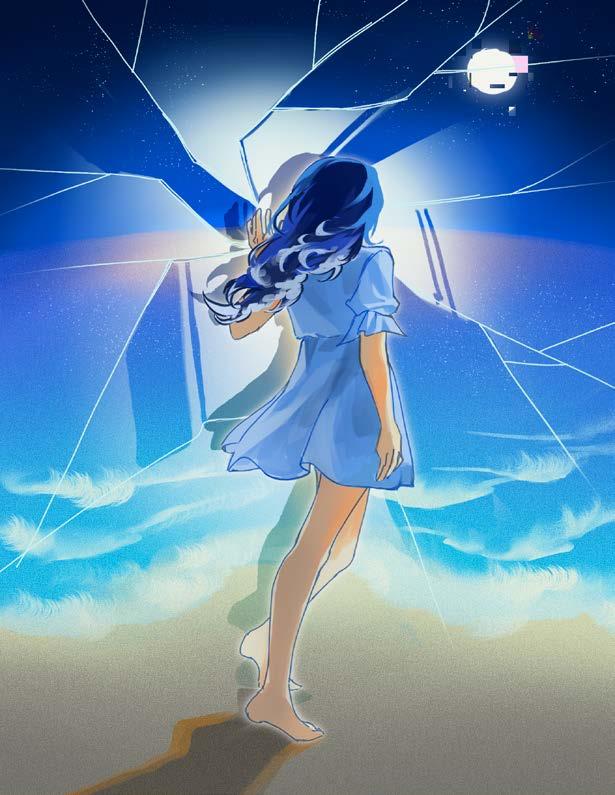
At first, it’s quiet, Just a hum beneath my thoughts. A static noise I can almost tune out –Like the surrounding murmurs of a crowded room.
I tell myself it’s normal. Everyone experiences this.
The world is heavy, after all.
But soon, the noise grows teeth. It chews at my focus –Devouring the hours I can’t remember losing. I wake up in places I don’t recall reaching. Old conversations loop in my mind, With echoes of a voice that isn’t mine.
My mirror has started to lie. Its eyes follow me differently now –Pitying, maybe mocking, I can’t tell.
Sometimes I wave at it just to see if it moves; A second too late, it always does. I think it’s testing me.
People tell me I’m distant, But how can I explain that the air hisses my name?
That the shadows know too much?
That I whisper back to quiet them –Just to buy a moment of silence?
The walls pulse when I breathe too fast. The room bends inward, like it’s tired of holding me,
And I swear, the ground tilts and sways –Like the world’s spinning just to mock my balance. I journal to remember what’s real, But the words feel foreign; as if written by a stranger’s hand.
Still, I keep writing.
The sentences don’t unsettle me the way they used to.
Sometimes, I even recognize the cadence –Like a half-forgotten lullaby.
The shadows don’t hiss anymore; they purr in low conversation, Their voices weaving softly through the silence.
Time still slips from me sometimes, But I’ve stopped chasing it. It always finds its way back eventually.
The mirror still lags a second behind, Maybe it’s not deceitful, just cautious, Reaching out gently now that I’ve stopped pulling away.
Even the ground’s slow sway doesn’t taunt me anymore –
It was never mocking; only patient, Shifting to match my rhythm all along.
The hum is louder, but clearer now. No longer a threat, but a guide.
It speaks words I used to fear, Yet somehow, they feel familiar –
As if they’re a part of me I’m only just beginning to hear.
I think I’m starting to understand What it’s been trying to say all along.
The mirror smiles first this time. I smile back.
Finally –We see each other clearly.
ART by FIONA PU WORDS by IMAN YASER
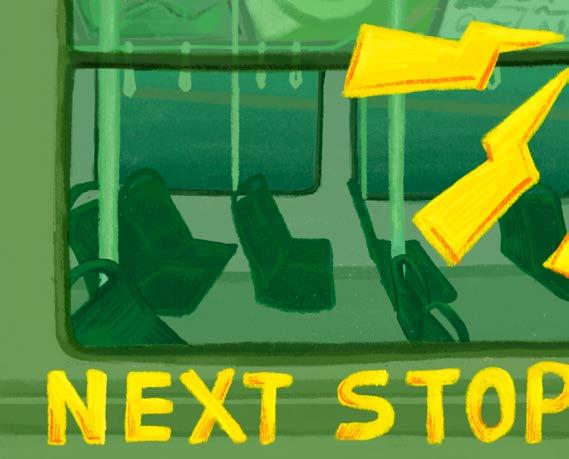
Behind me a woman speaks my mother tongue with my grandmother’s accent I am going home on the intercity bus
Three girls wear dark green
And so do I
ART by MAGGIE WANG WORDS by RIA PATEL
The person in front of me turns, and they don’t meet my eyes “Does this go to Brantford?” I shake my head and they walk away
The person behind me taps my backpack “If you’re going to Aldershot, it’s the next one!” And so I smile, and stay
A rubbernecker stops, and signals at me to walk
He half watches the flipped car in the middle of the street
I saw it roll on my way to my midterm, an hour ago
Funny how tragedy ties us beyond time
Before I could ask the officer if anyone was hurt
The driver crinkles his brow, like a fifth coffee cup, anxious
And the officer nods at both of us
And so I knew, and didn’t ask
In the queue, they were saying the same thing too “Did you see the crash?”
Sunny morning drive with a side served sideways
I heard sirens as I wrote, and I listen to strangers “Will it make the news?”
Dying in epidemics and united outside
Funny how sympathy binds us beyond ties
The station people, three girls, my grandmother, a cop
The over-explanatory driver
Loud as a sunrise Tim’s drive through, and over-prepared
Telling us how they’re re-avoiding the accident
And which highway and how much traffic and circling back and all of that
The girls on the bus hold their tree breath
Matching sweaters exhaling as the driver cracks over the intercom
“Next stop…”
And I am almost home on the intercity bus
I don’t believe in the kindness of strangers
But I believe we are less like people on a bus and more like this forest of trees
We match, we ask, we share, we stare
The grandmother behind me is sleeping
And I know when the driver beeps the intercom again she will wake up
And I am at home on the intercity bus
With the silence of strange, strange people
Who are green, and just like me
The planks here are worn with the million paces of wary strangers, sailors in black and blue suit-’n-tie. Here, they enjoy the cool air skimming lax, draped folds along the water, coaxing a wave to slosh lazily against a great concrete wall, standing rigid against the steady erosion of salt. Seafoam sizzles after each crash, so loud and carbonated with Sometimes,bubbles. the moon is too full to hold all these old secrets waxing heavy in the buckling night sky. So she comes cracking out from the shale, scaled and swallowing anchors from the sea. Sometimes, knotted ropes come undone, nets parting to release hostage anchovies back to the home brine of the water. Her eye is a dim lantern scoping the port, lighthousing for a lost soul with heavy pockets those types sink best when snatched back into the breathing deep.x


by YEEMON WORDS by RANIYA CHOWDHURY


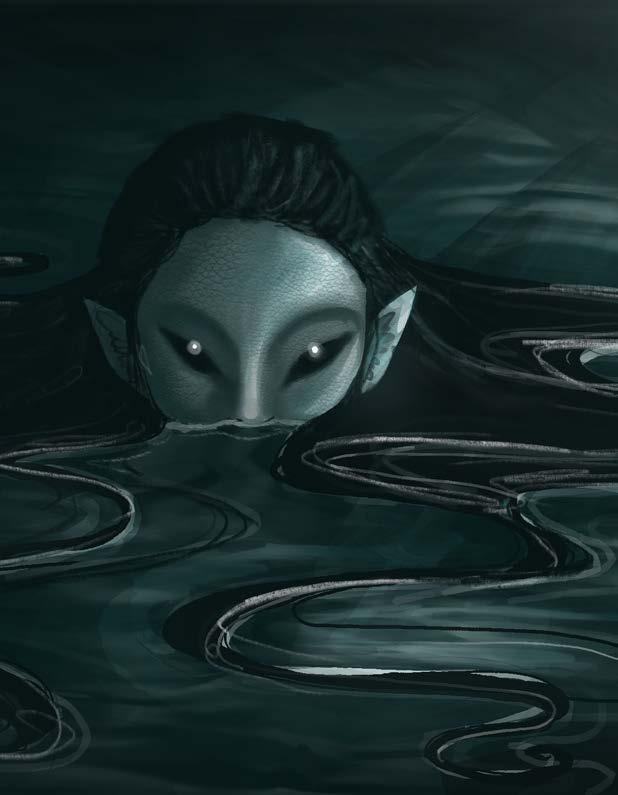
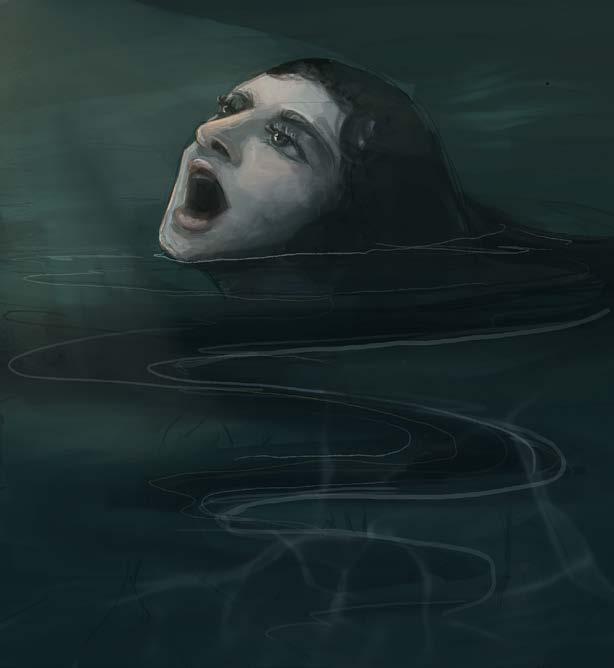
you said i spent this sorry youth running like a river with its head cut off, a snake that cannot tell its own tail from a line, let alone bite down on those ellipses that slip with sorrow down our soot-blackened drain my lungs heave, heave, but fail to inspire. i served dinner: liver with an ethanol chaser blaming rust for the flush on my face, silence a tourniquet around my neck, last course winding down to stopper the gash that split my throat like a second mouth, still hungry and wretched and wailing for some kind of panacea. in the vault lies that dawn-tainted image your shaking frame outlined in pale pink light as the fires leaking through the edges of fingers that try to eclipse the sun. that day was the first where i saw you translucent, where i learned of the penumbra you had placed me in. you who wanted to turn back the spring who
threw the corpses of warm southern winds over our sagging clothesline, over the shells of robin eggs you sent to the ground ruptured sun spilling over pieces of sky, questions made rhetorical. you were content to be the parasite but never the host, wishing for apocalypses all your own, the slit in my throat your eye for a new eschatology. that day in the fog that always lingered between us as gauze stuffed between my vocal cords, the end of those bloodied strings converging to a common fate; my bandages spiralling around opaque hands, my asphyxiated memories collapsing into my chest, my arteries splayed in dendritic streams that all drained into you, you, sewing up exit wounds and leaving the front door open, a welcome in sign hung over the hole in my neck. that day in the fog you gave me my very first choice: to die at your hands or kill myself chasing after them. it’s true: i spent this sorry youth running like a river with its head cut off, a cadaver
bloated with the breath of decay. i loved up and lived down, acrid words fizzling out in a buffer of silence, praying for a spoonful of laughter to soothe my ulcerous self. and now i stand at the line between death and dying, your figure waning into the grey distance, the last pus-stained bandage torn from my neck and waving in the air as a perpetual defeat. you are already too far gone to hear the drip of my blood and the creak in my limbs this regression made a resurrection, a song that slips and strikes against the chasm in my throat: inhaling, exhaling, and inhaling again. x
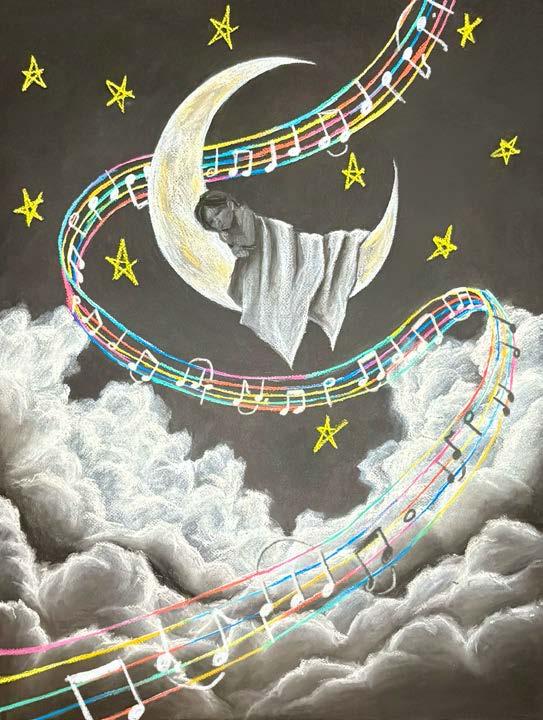


Sunk in the blanket of moonlit slumber, Hands grasped across my breast. I lose you from my suburban night to your halls of forgotten travesty. Yet we follow; cast forth through this lullaby born of family blood, the guardians of generations. May the cadence of song light the campside pyre, and grant you serenity in the fearless dark.x



WORDS
& ART by ARYA RAOL
Snow isn’t the same as rain, it smells different, and it doesn’t leave the air behind it clean.
But snowflakes still melt in warm hands, water slipping between small fingers.
I carry my raincoat through the wrong season, dragging it in the slush. I want it heavy with mud, weighted with proof of the weather.
A daughter’s duty is to keep dry, even when a monsoon lives in her chest.
I learned to read a room by the way the floor creaked, walking with my face turned away from the wind, not because it hurt, but because no one wanted to see me flinch.
We call it resilience, polishing the sky for others, but the thaw doesn’t ask for permission. It rises through the ground like an unfinished sentence and spills into our hands.
Floods come and go, like wives, like children, and the river is always hungry.
Somewhere beneath the ice, my inheritance waits, a silence handed down like a family heirloom, kept cold so it would last.
When summer comes, it will rise without warning, flowing through my hands, leaving me dripping with the words I never learned how to say.
Wrong Season for Raincoats x
ART by ESTHER CHAI
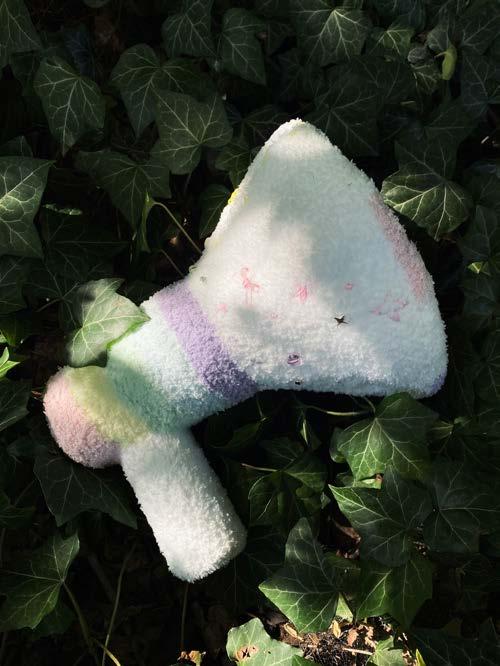
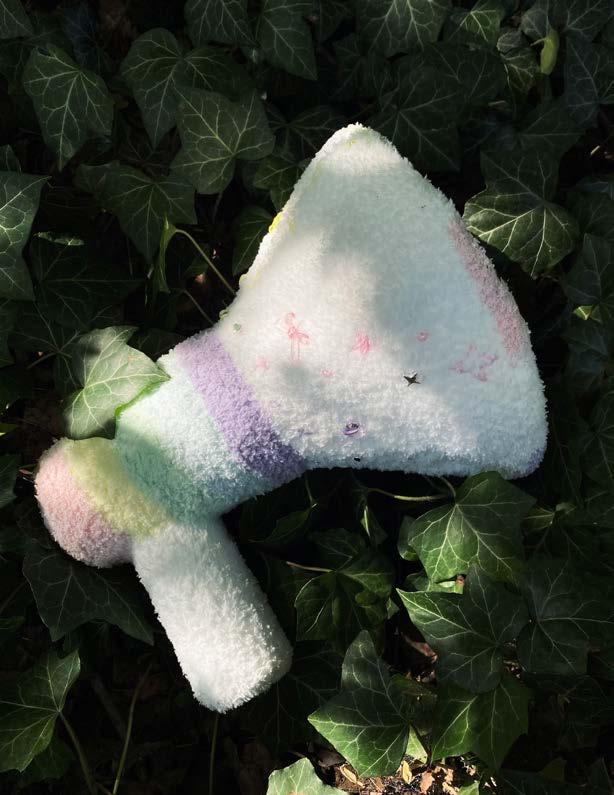
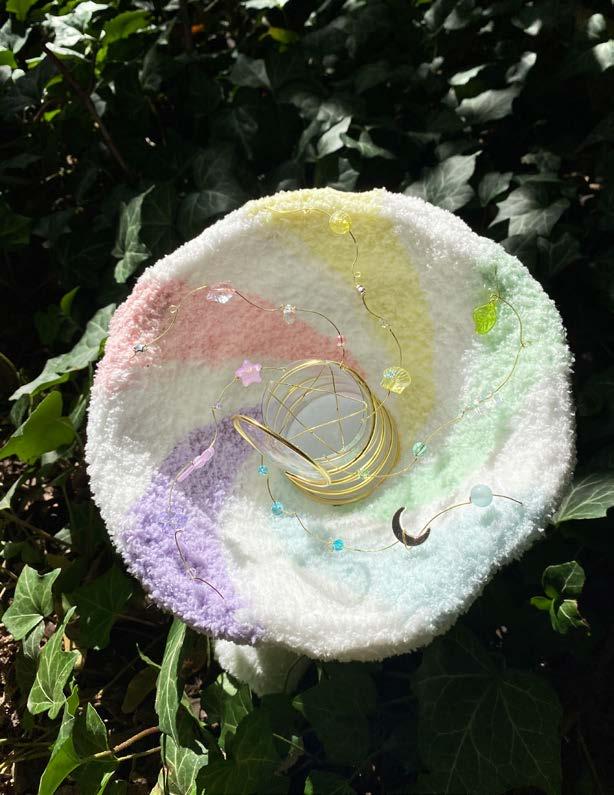
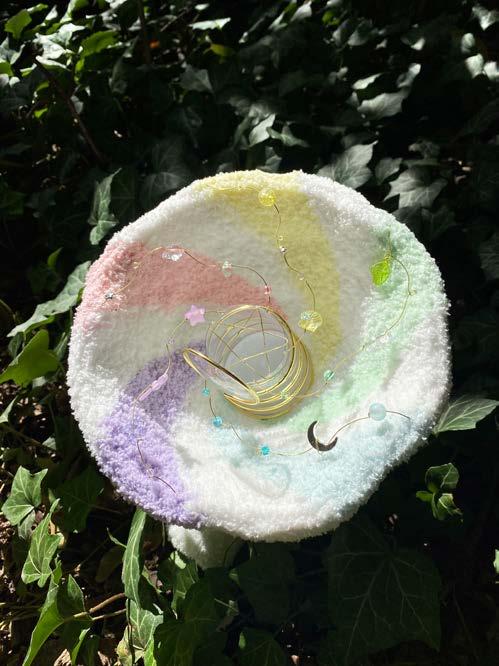
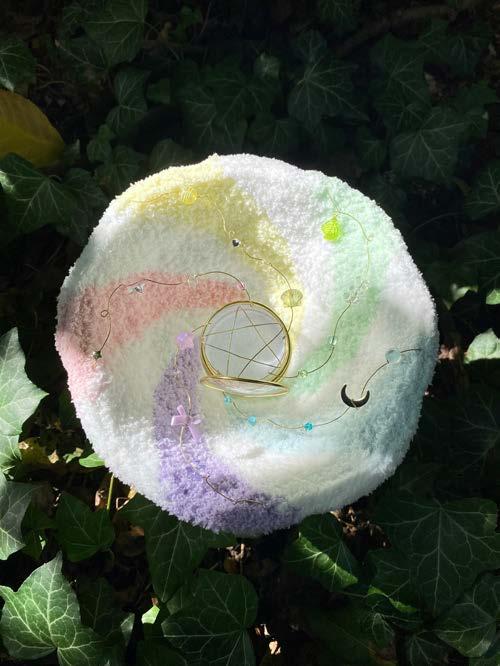
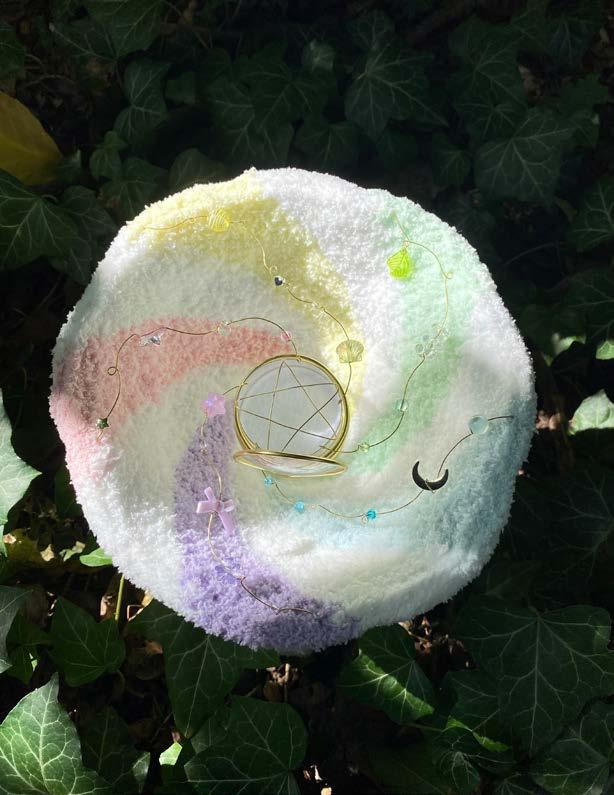
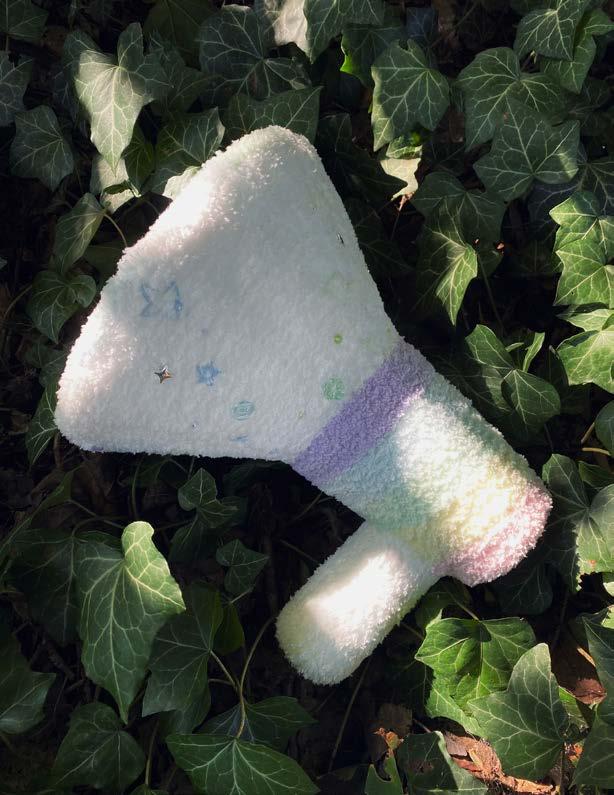
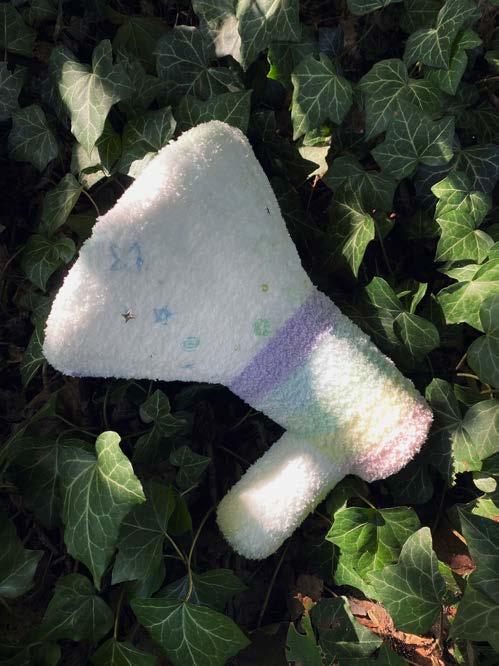
I am breathing sounds around a bubble in A fine membrane sticks to the gummy walls of my mouth. Forming vowels is all I have because, despite the yawning hole, my teeth jaw is sore from all this waiting. But I can manage I am grown just like you always asked me to close enough, I can press you to the palate you’ll be warm, opening the door to me, hinged language now, morphimes shrinking, gentle you remember when we still babbled at made sense of the senseless, of glossolalia, picking ants from fur and grunting noises make these words make sense again, because I could manage, you were tender still. I conquered understanding, but you could not conquer Ma, ma, ma, let’s be apes again so you the semiosis, I would sacrifice syllables to hear you coo back at me. That was the one doing the imitating. I’m still waiting that makes this bubble pop. x
in the back of my throat. walls of my trachea, the roof have become capable of now, teeth and lips can’t connect. My manage the ache. I can; to be. And if you look palate of my mouth where hinged glottis. Losing gentle “ma, ma, ma.” Do at each other like this? You glossolalia, like two gibbering apes at each other. Ma, ma, ma, because when noises were all conquered language to earn your conquer it to earn my forgiveness. can pick at my hair—screw syllables and drown my dictionaries the last time I was not the waiting for the magic word
ART by AYESHA UMAIR
WORDS by HAGIOS HUAN
city
The school
cries, its trampled floors and students
I came here to live; it was not my choice to live.
Hear about morality;
Speak of a new place sighs, cresting the shore, gazing past the chalkboard. coursing asphalt in our veins.
Read about torrid love affairs, and shrapnel, and miniature resistances. between the sounds of explosions if it is not absolute, it must be worthless; where the clouds cry gold, sweetness if it is not given, it cannot be taken. and retribution, and absolution.
The city, the school.
Stupid, hopeful wretches. It must be created by us, wretches.
To: Date: August 29th, 2039 From: File No.
Subject: Proposal for Public-Private Partnership (P3) with Bogan-Mayert Ltd.
MISSION STATEMENT: Create a P3 with industry leaders in assistive technology in response to the public health crisis caused by the SFV-B epidemic.
Background: The Klondike River Biological Research Institution (KRBRI) is a federally funded, restricted and highly isolated, research laboratory which works in conjunction with, among other organizations, the Royal Canadian Mounted Police (RCMP) and the private entity, Bogan-Mayert Ltd., on investigating matters of national security related to biological hazards.
The lab houses a number of Risk Group 4 (RG4) pathogens. At an unknown date in the last quarter of 2038, there was a breach of containment of an engineered togavirus with the capability to infect humans as an aerosol via the olfactory route. This makes it highly contagious in ways previously not seen with viruses of this type. At this point in time, the virus is widespread within the country, resulting in a public health crisis, as declared by the Public Health Agency of Canada (PHAC).
Primary effects of the virus in question, known as Semliki Forest virus type B (SFV-B):
X Damage to Broca’s area of the cerebral cortex of the brain, resulting in Broca’s aphasia, a condition in which patients have extreme difficulty forming speech, but still possess a complete understanding of language. There is no paralysis involved in this stage of the disease and it is typically the first symptom to appear.
Z At this stage, administration of a Nabitovid™, a medication that consists of an antiviral for SFV-B alongside an experimental course of oligodendrocyte therapy, developed as an antidote by Bogan-Mayert Ltd. can be administered to fully reverse the effects of the condition.
Z Nabitovid™ is extremely expensive ($2,000 + per dose) to produce and administer and it has been determined that it is not realistically within the scope of the Canada Health Act to fund this medication for public health reasons. It is not advised for provincial governments to include it as an option in their respective Medicare drug plans.
X Damage to the fifth cervical spinal nerve (C5) leading to paralysis of the legs, torso, and wrists/hands, but maintaining the ability to breathe and perform necessary internal body functions, and in rare cases also maintaining shoulder and elbow movement.
Z This typically occurs quite suddenly, within the span of an hour, starting approximately 3-5 days after Broca’s aphasia becomes apparent which is why it is imperative to administer Nabitovid™ as soon as possible, if the patient chooses to pay out of pocket for the treatment.
X General fatigue and malaise, “flu-like” symptoms, which typically peak around three weeks but can persist longer.
PROPOSAL: In the past two decades, Canadian and international industries have made significant leaps in the areas of Artificial Intelligence (AI) and neuroscience. A neural implant device, NeuralisEcho™, developed by Bogan-Mayert Ltd., specifically for communication for patients with damage to Broca’s area, was recently accelerated through approval to a Class IV medical device. It is proposed that the Government of Canada agrees to a deal with Bogan-Mayert Ltd, valued at approximately $600 million, to subsidize the implementation of these devices into the population suffering from long term damage due to an SFV-B infection. Trials have already been conducted and the feedback from patients is overwhelmingly positive.
Features of the device include:
X Specially calibrated language models, trained off relevant data, that outputs speech interpretations of electroencephalogram (EEG) brain signals.
Z Addressing the Mental Health Crisis: Language models promote positive self-talk, a core component of the evidence-based psychotherapeutic technique of Cognitive Behavioural Therapy (CBT). This feature is automatically enabled in patients with biomarkers of Major Depressive Disorder (MDD) or other depressive conditions; it is estimated that 85% of those struggling with the aftermath of an SFV-B infection have MDD.
f This feature can be easily calibrated for similar uses without the need for a major software update.
X Easy, laparoscopic, surgical implementation that only requires local anesthetic over the left temple region and can be performed by any surgeon, regardless of surgical specialty.
X Easy firmware debugging and software updating
Z Unique user identification, which is editable and accessible only by approved members of the RCMP and Bogan-Mayert Ltd. through an autonomous processor subsystem. This prevents the transfer, sale and unauthorized surgical implementation of the device.
Z 10TB of storage, including rapid filtering and compression of recorded data.
f For trace logging purposes and criminal investigations.
X Option for use of frequencies identical to patient’s larynx to promote identity ($1,800).
Due to lack of verbal or physical cues from patients with fully progressed SFV-B infection, consent for NeuralisEcho™ surgery can be implied, unless a substitute decision maker or Advance Directive is present.
Benefits of funding mass distribution of the device:
X There is a federal election scheduled for October 17, 2039. Current polls exclude the section of the population with SFV-B infection-based paralysis and aphasia and it is unclear, upon election day, how these people will engage in their civic duties.
Z The distribution of NeuralisEcho™, could significantly sway political outcomes by allowing an additional set of ballots to be cast from a new perspective.
Z The distribution of NeuralisEcho™ would allow for those impacted by the severe outcomes of the disease to engage in political lobbying.
f Investment by the Government of Canada could help in regulating political advertising by fact-checking the political claims made by those with the implant.
X Implementation of Section 33 of the Canadian Charter of Rights and Freedoms: The Notwithstanding Clause by many provincial governments, as well as promotion of necessary restrictions to reduce the spread of SFV-B, is losing ground in popularity.
Z PHAC partially attributes this to a lack of authentic and emotional reports of the outcomes of the disease, leading the currently unaffected population to feel disconnected from the potential consequences of disregarding advice, or even fighting legal measures related to SFV-B.
Z The distribution of NeuralisEcho™ would allow for those impacted by the severe outcomes of the disease to deliver personal testimonies as part of public health promotion.
Thank you for your consideration of this proposal. I look forward to discussing our shared goals further in person and I wish you luck on your campaign. Sincerely, x
ART by ARYA RAOL WORDS by CT
[JULIAN is lying on his therapist’s couch with his hands interlocked over his chest. He stares blankly at the ceiling. His therapist, EVE, is sitting in a chair beside the couch with her legs crossed. She is jotting down notes on a pad of paper.]
EVE: Alright Julian, so what brings you in here today?
[JULIAN doesn’t respond.]
EVE: Not the talkative type, are you?
JULIAN: Sorry… I’m just having a hard time focusing. It’s hard to put into words, but I’ve been feeling really lonely. It’s harder to get out of bed these days. I’ve lost so much weight because I don’t even feel like getting up to eat anymore.
EVE: Why’s that?
JULIAN: My girlfriend Maya broke up with me two months ago. We dated for three years. Things got… messy. She screamed at me for two hours straight and told me to never contact her again.
EVE: That’s intense, I’m sorry. How did that make you feel?
JULIAN: Devastated. [His brows furrow. His voice begins to shake.] We were supposed to get married, have kids, and grow old. We were supposed to be buried together. I don’t think I’ve loved anyone as much as her. And now it’s just… gone. I’ve tried calling and texting her, but she’s blocked my number. Her friends are ignoring my messages.
EVE: Right. And how do you feel about Maya now?
JULIAN: I hate her. She said I was a horrible person, that I ruined her trust, and that I didn’t deserve to date anybody. But I cared so much for her. I still do. I carried her to her bed when she fell asleep in my car on our drive home from our movie dates. I made her breakfast in the mornings, with her favourite omelette recipe she always talked about. I don’t know how she could do this to me, after everything I did for her.
EVE: She said you ruined her trust?
JULIAN: Yeah. Whatever that means. [Pause.]
EVE: Julian, did you cheat on her?
[Silence fills the room. JULIAN turns his head towards the wall to avoid eye contact. His jaw tightens.]
JULIAN: No.
EVE: Are you sure?
JULIAN: Well. I was drunk. And it didn’t mean anything. I just got carried away! I’m only human. I still love Maya, and I would tell her I loved her every single day. I was really good to her, alright?
EVE: So that makes it okay?
JULIAN: …I didn’t mean to hurt her. It was a mistake.
EVE: Not to her, it wasn’t.
[Pause. JULIAN’s eyes begin to water.]
EVE: And now you’re lonely because you broke the trust of someone who loved you.
JULIAN: [Yelling.] You’re not helping me! What kind of therapist are you?
[The room is quiet. Slowly, JULIAN looks to his left and realizes EVE isn’t there. She never was. The therapist’s chair morphs into his bed, and the room fades into his bedroom. JULIAN is lying alone in his bed. He sits up.]
JULIAN: [Tears are streaming down his face.] I’m sorry, Maya. x

ART by ISRA CHOWDHURY

CHRISTINA
Jamie found himself in his room, staring at Bonbon’s eerily-smiling face as his heart raced. He lived in two worlds, spoke in two tongues. His own was one of them, quiet and stilted as he tripped over his words. Bonbon’s, loud and witty, was the other. He wished at times he could use Bonbon’s voice as his own, but the one time he tried had ended with high pitched squeals and broken English as Sarah Mackie stared down at his fourteenyear old self, confusion written on her face as she turned back to her friends with a shrug and resumed chattering about the upcoming school dance. Ever since then, Bonbon had followed him everywhere, loyally perched on his shoulder to answer questions in class and accept social invites he normally would have turned down. He knew it was odd, though. The other kids stared, but eventually stopped as they got used to it. The new kids, on the other hand, had no apprehensions, and neither did their parents.
How long had it been since he had spoken in his own voice, thin and reedy and timid? Bonbon stared back at him, his stark white face and garishly painted cheeks almost taunting him, daring him to speak.


begging him to put the dummy down and speak for himself. One time, in a fit of fear and rage, his father locked Bonbon away and promised not to give him back until he stopped hiding his own voice. He did not speak for two weeks, after which his mother convinced his father to bring Bonbon back. They never spoke of it again, but they also never tried getting rid of Bonbon again. It became an unspoken fact that he would not speak alone. They had enrolled him in the only puppetry school in the state, hoping he could make some use of his ‘condition,’ as they called it. He had hoped, initially, that at school he’d find others like him, others who preferred to let their dummies speak for them. Instead, all he found was blank stares and concerned counsellors, their gentle voices telling him to try putting Bonbon away.
“Just for a few hours,” they suggested. “Just try practicing without him.”
He resisted, at first, angry at the intrusion. Finally, after a year of coaxing, his counsellor offered him an ultimatum: go one full day of speaking to people without Bonbon, or go back home. His voice felt dry and hoarse, stuck halfway on its way out.
Jamie, he mouthed. My name is Jamie.
The movement felt weird and unnatural — he had spent so long not using his mouth, training his lips to be stiff and immobile as he spoke.
Jamie, my name is Jamie. He tried to force the words from his mouth, but no sound came out. He frowned.
Jamie, my name is Jamie.
Nothing.

Panic rose in him. He couldn’t help but look at Bonbon. Did his eyes always have that twinkle in them? He grabbed a hold of Bonbon, resting his fingers on his strings.
“Jamie, my name is Jamie,” Bonbon said in his normal, booming voice.
An icy cold crept into his heart.
What is your name? he demanded wordlessly.
Bonbon turned to face him. He sat in horror hearing his own timid voice come from the painted wooden doll.
“Jamie, my name is Jamie.” x

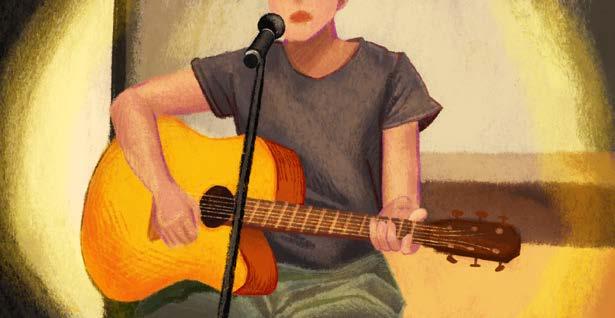


ART by Maggie Wang
Published January 2025
Incite Magazine is McMaster University’s creative arts and writing publication. We aim to unite a community of creatives by promoting self-expression, collaboration, and dialogue within our university campus and the city of Hamilton. Every aspect of Incite’s writing, graphics, multimedia, and event production is carried out by our wonderful student volunteers. If you would like to get involved, feel free to get in touch by emailing incitemagazine@gmail.com.
incitemagazine.ca issuu.com/incite-magazine facebook.com/incitemagazine @incitemagazine
editor in chief (content): raniya chowdhury
editor in chief (arts): christina tam
layout director: hamzah ali
treasurer: charlotte heron
communications director: vereena andrawes
events director: jasmina sharma
content editors: ali sahib, amanda chow, caitlyn nguyen, elizabeth zhou, emily wang, keona cantos, marshall zhang, sakeenah niazi, selina qiu, yennie chen,
layout editors:
aadit todkar, adhishri dhivakar, esther chai, hamzah ali, katie kim, keena allison, naomi onasanya, nikô aref, rida rana, sheza jamil
cover art: The Voices by hamzah ali
contributors: (Content): ace ko, arya raol, ct, dora xu, ebubechukwu monye, eric zhang, esther chai, felix manashy, gabriela, hagios huan, haram akram, iman yaser, iris m.p., iqra latif, jovan singh, m lewis, pei f, raniya chowdhury, ria patel, sakeenah niazi, sema, yennie chen (Artists): anika yadav, arya raol, audrey ewen, ayesha umair, christina tam, ej, esther chai, fatima salman raza, fiona pu, gabriela rojas naranjo, isra chowdhury, maggie wang, natalie wu, rhiannon carr, vereena andrawes, yeemon, yvonne tong