




I hold an undergraduate degree in legal studies, where my interest in architecture emerged through studying prison design in the United States and its long-term psychological and social effects on incarcerated populations. This exposure revealed how the built environment can reinforce or challenge systems of power, shaping human behavior and well-being over time.
I am currently pursuing a Master of Architecture (M.Arch) and Master of Landscape Architecture (MLA) at the University of Massachusetts Amherst. I approach architecture as a holistic practice, emphasizing the relationship between space, the body, and the mind. My work is guided by an interest in how materiality, light, color, and spatial organization influence emotional experience, perception, and mental health, with the goal of creating intentional, humane, and responsive environments.
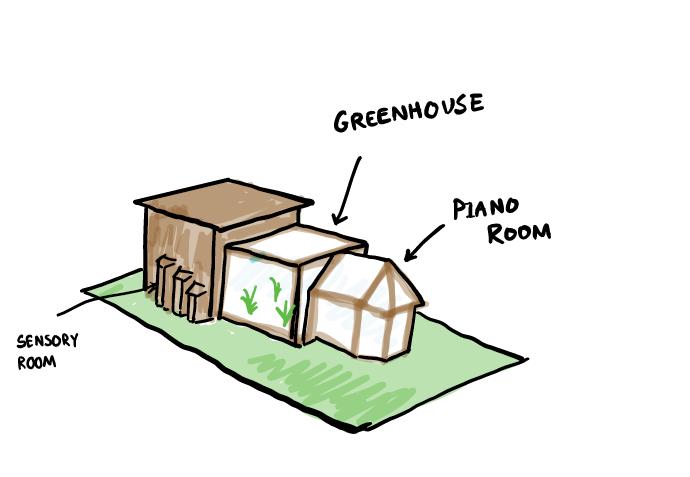
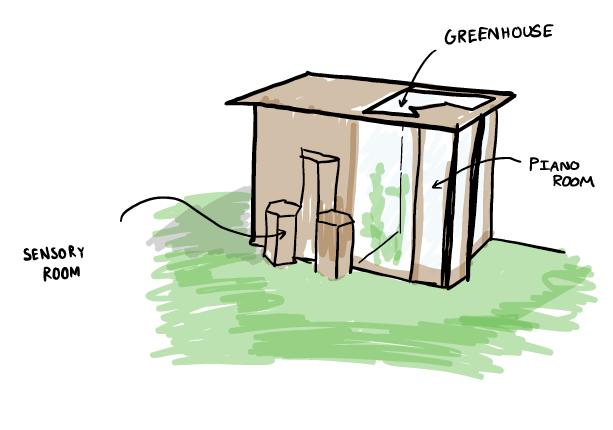
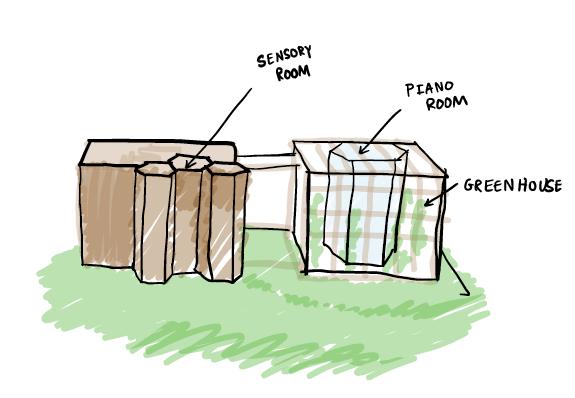
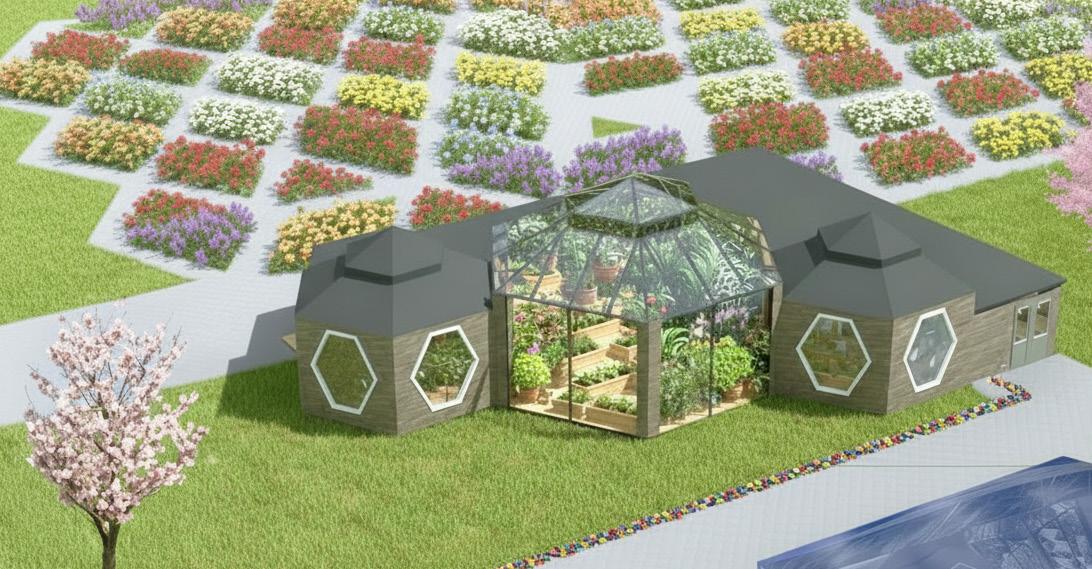
The Camellia House was developed in response to a studio prompt to design a greenhouse on the existing site of wildwood elementary school, integrating one additional program to expand its use beyond plant cultivation.
The Camellia House is designed to be a 2,000-square-foot glass and stone greenhouse in the heart of Amherst, Massachusetts. Designed as a welcoming space for guests of all ages and backgrounds, it serves as a site for reflection, growth, and connection. Inside, the building includes a light-filled greenhouse, a piano room for quiet performances, and a sensory room that engages touch, scent, and sound. The Camelia House opens its doors to school groups, hospital programs, and community visitors, offering a restorative environment that blends nature, art, and care.
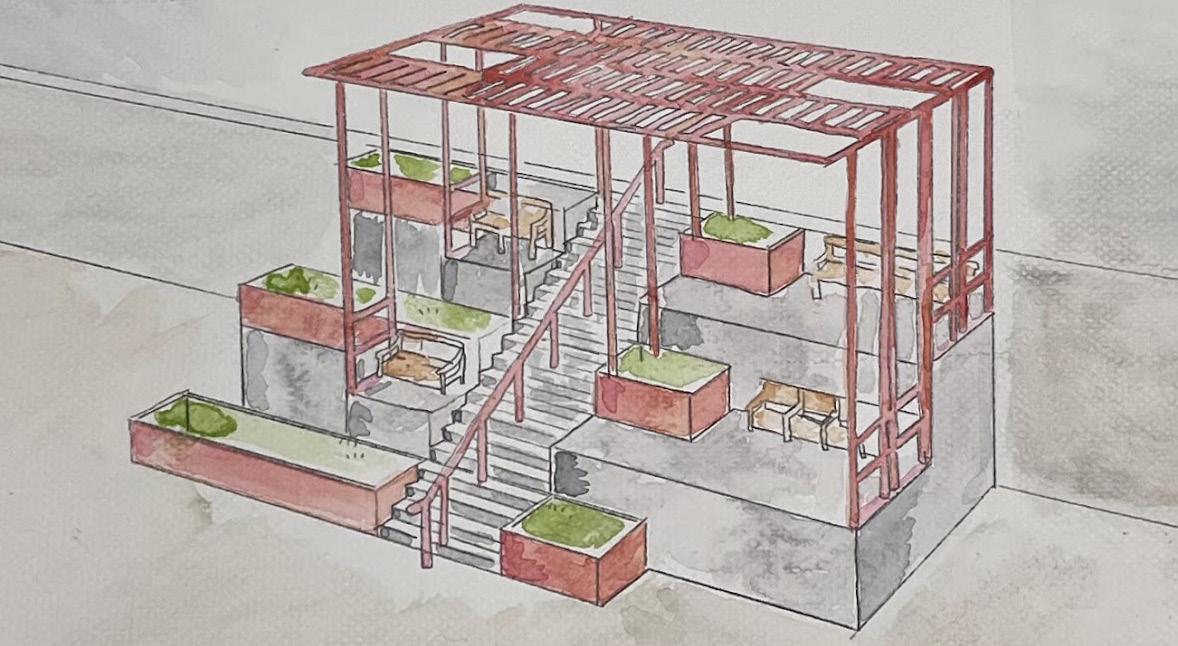
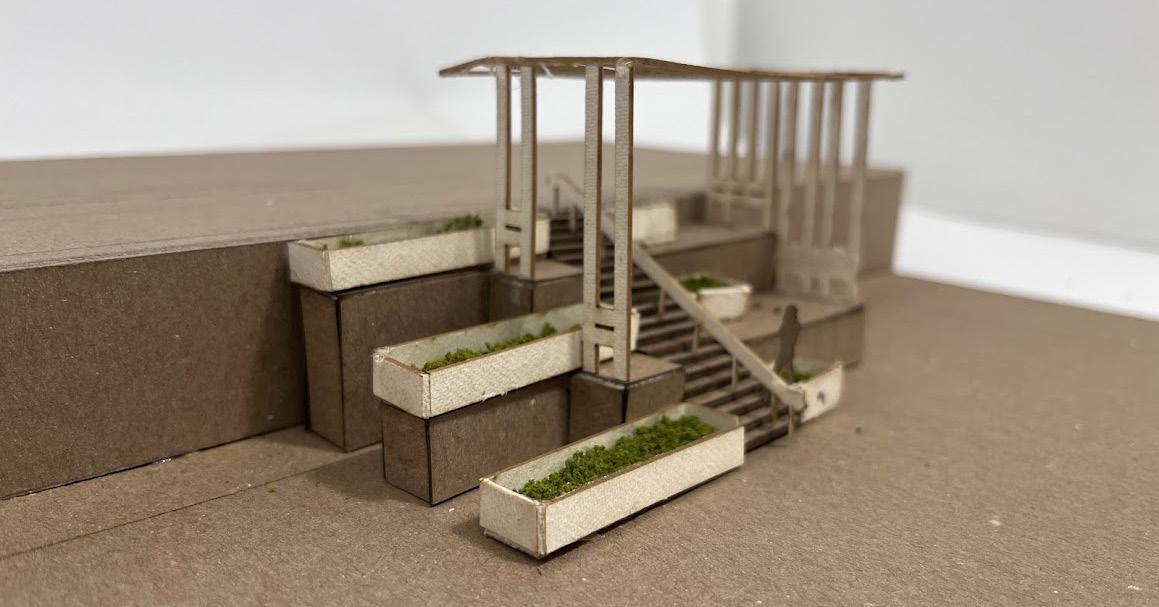
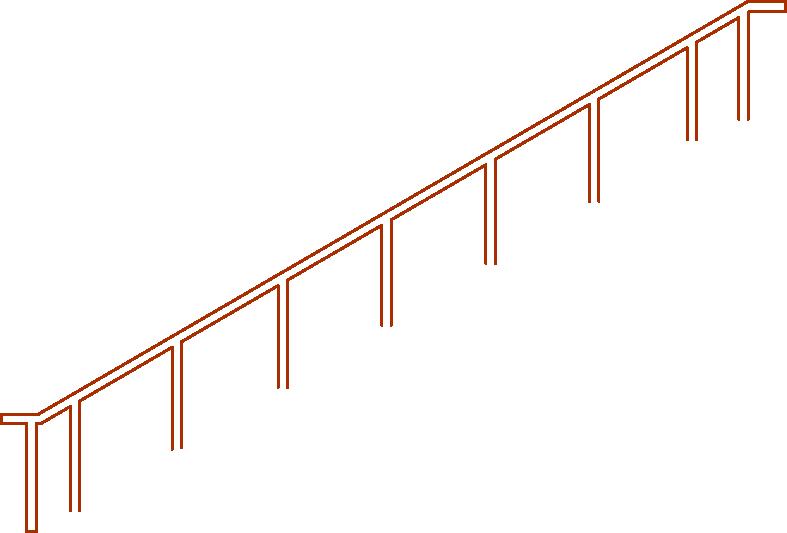
This public staircase was designed in response to a studio prompt to create a connection between Main Street and a nearby bike path in Northampton, Massachusetts. The site is located between a bridge and a restaurant called Fitzwillys. The project required an egress-compliant stair that also incorporated public seating and partial sun shading. The design responds to the site’s position between the urban character of Main Street and the more natural landscape of the bike path. Heavier stereotomic riser and seating elements are paired with lighter tectonic components, including guardrails and a pergola supported by metal columns, while planters and woodtopped benches create places for people to pause or gather along the stair.

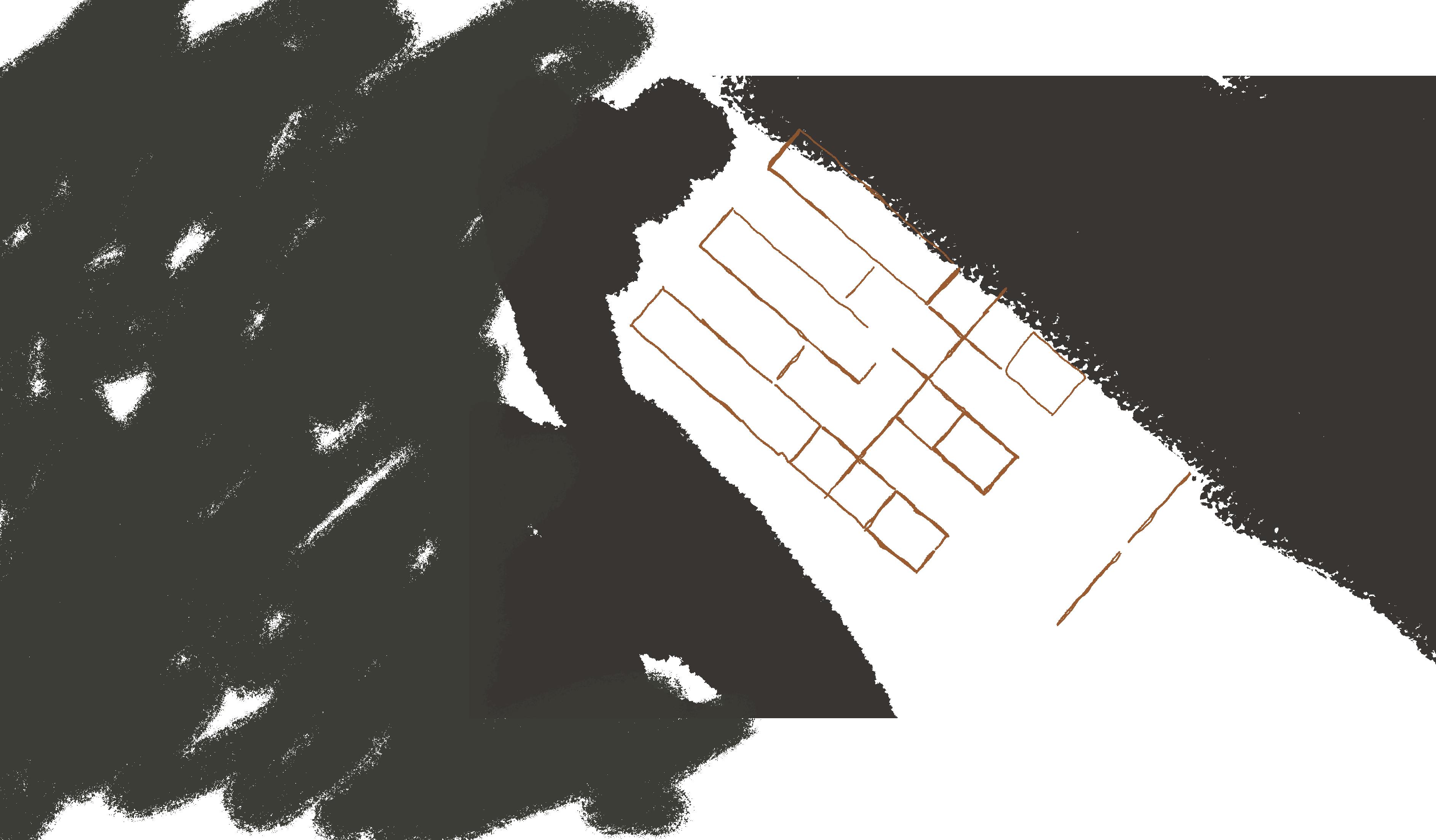



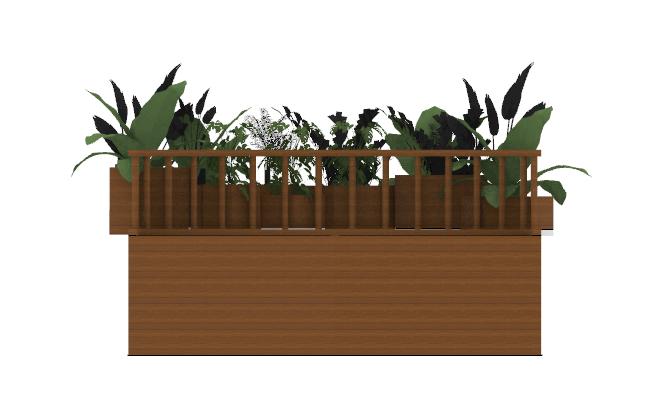
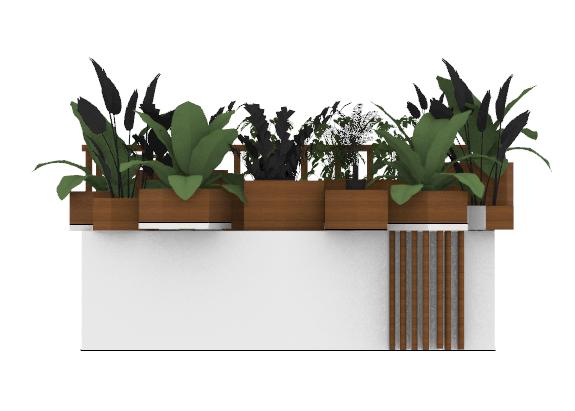
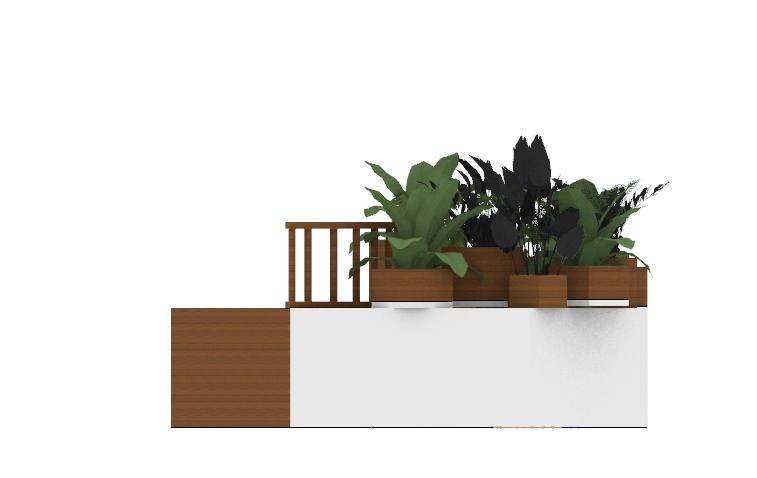
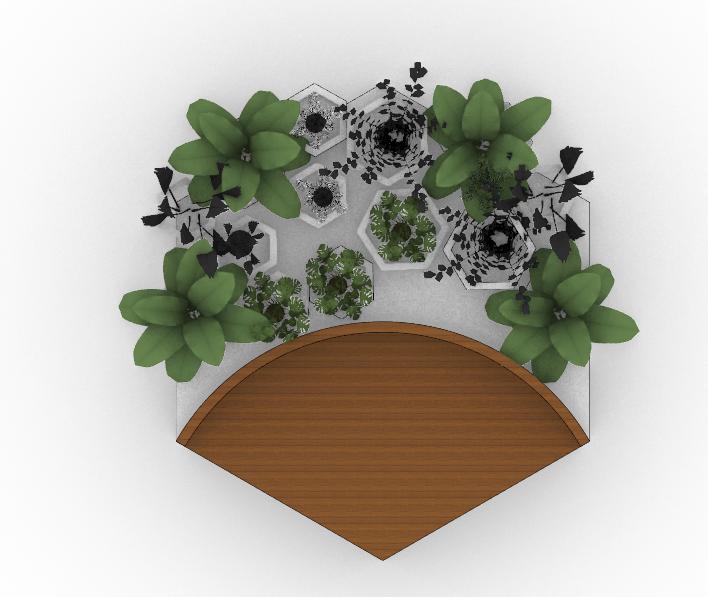
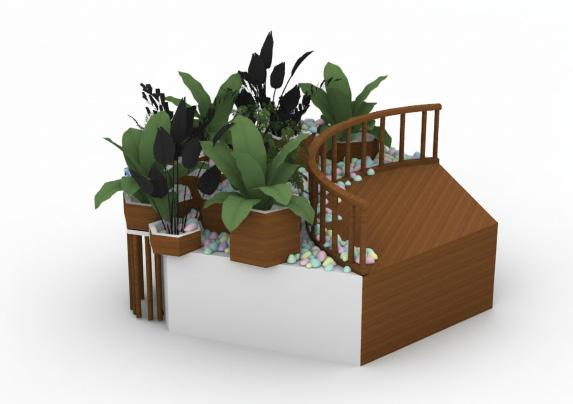
This project involved designing a custom piece of furniture for an interior design studio. I developed a planter bench that combines seating with integrated planting areas, bringing vegetation into a shared interior space. The design explores how furniture can serve both functional and environmental purposes by supporting rest while also introducing greenery. Material and form were considered to create a piece that could work in communal areas such as studios or lobbies. The project was also submitted to the University of Massachusetts Bromery Center for the Arts planter design contest in February 2026.
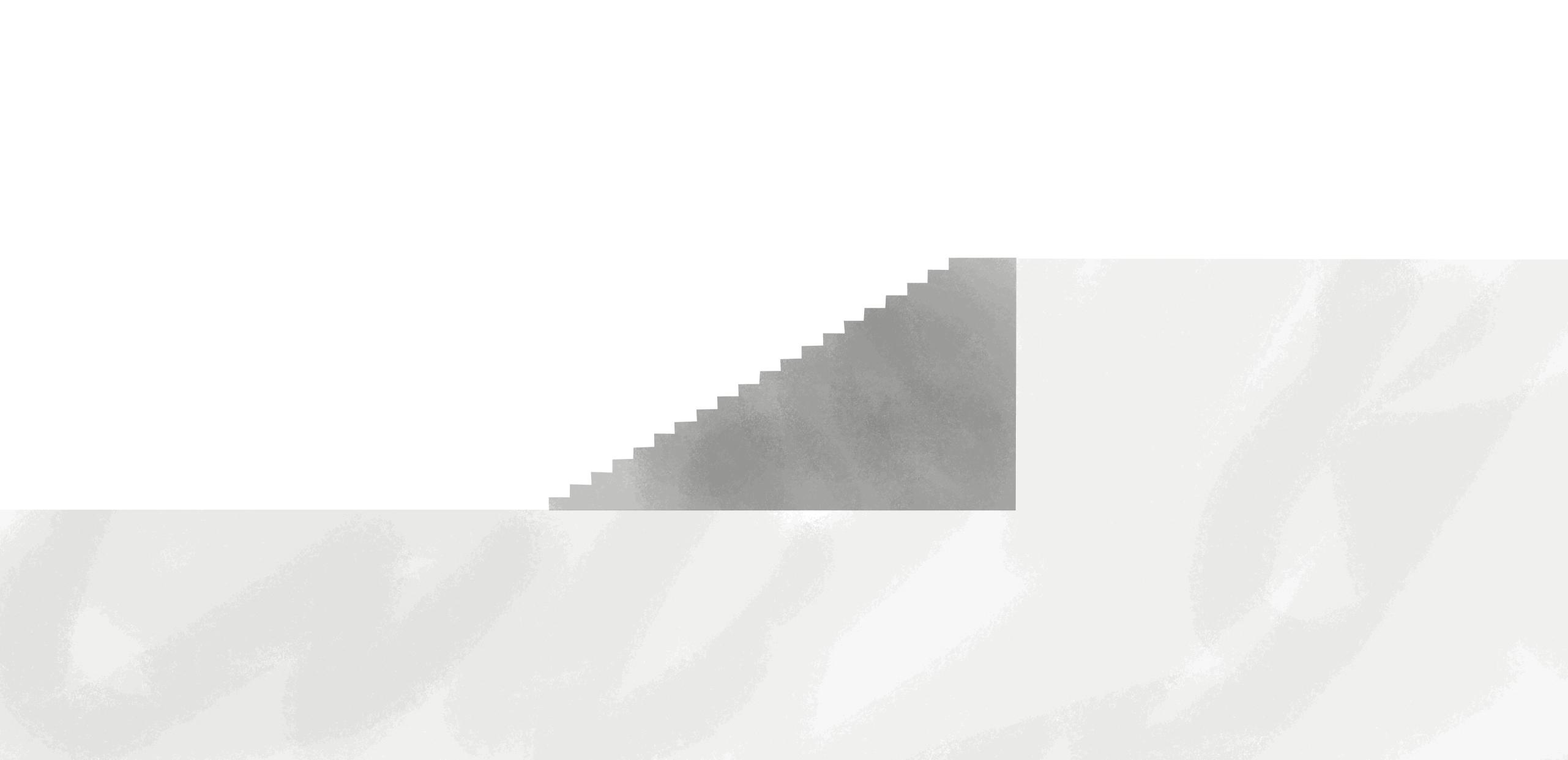
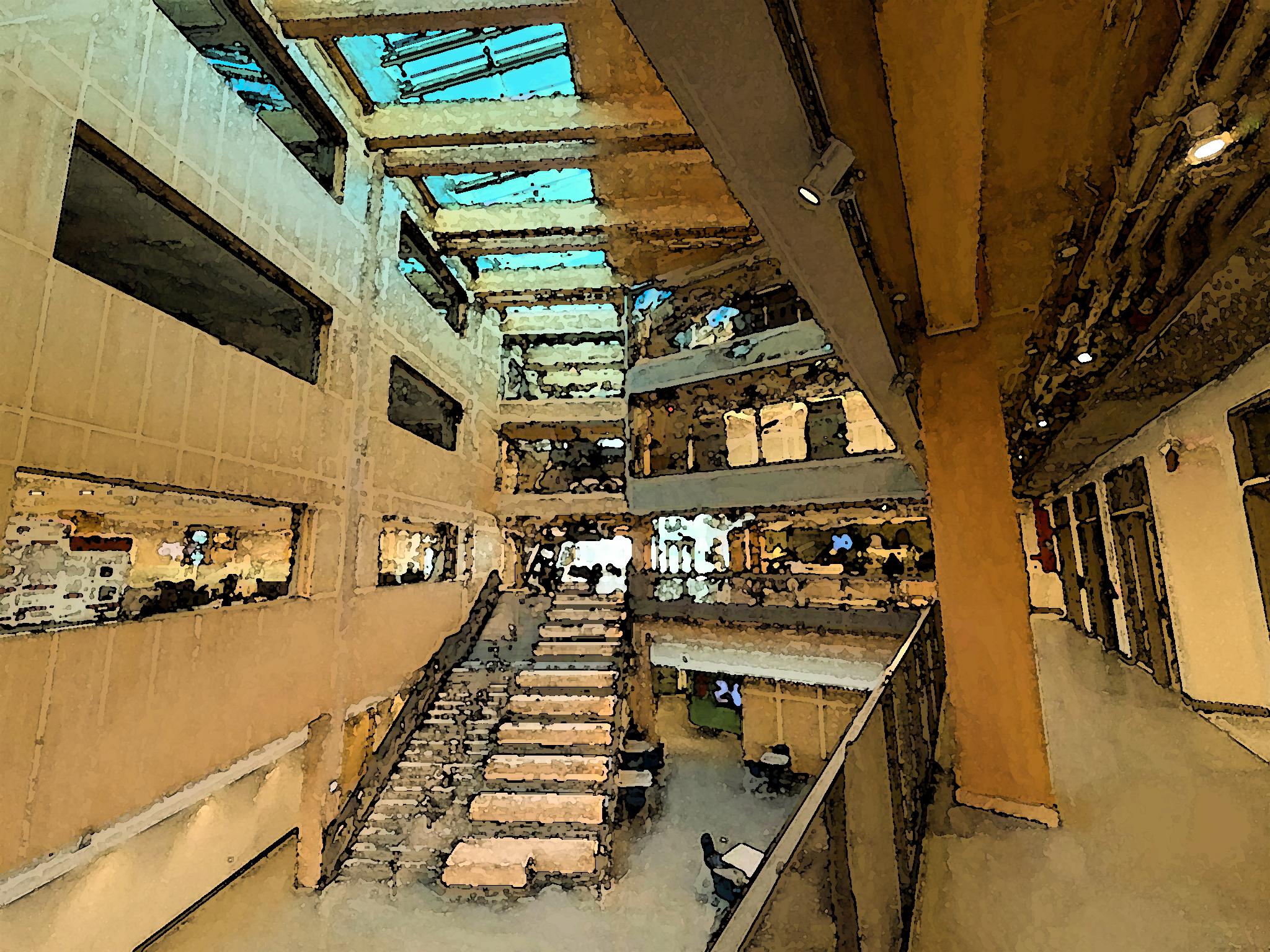
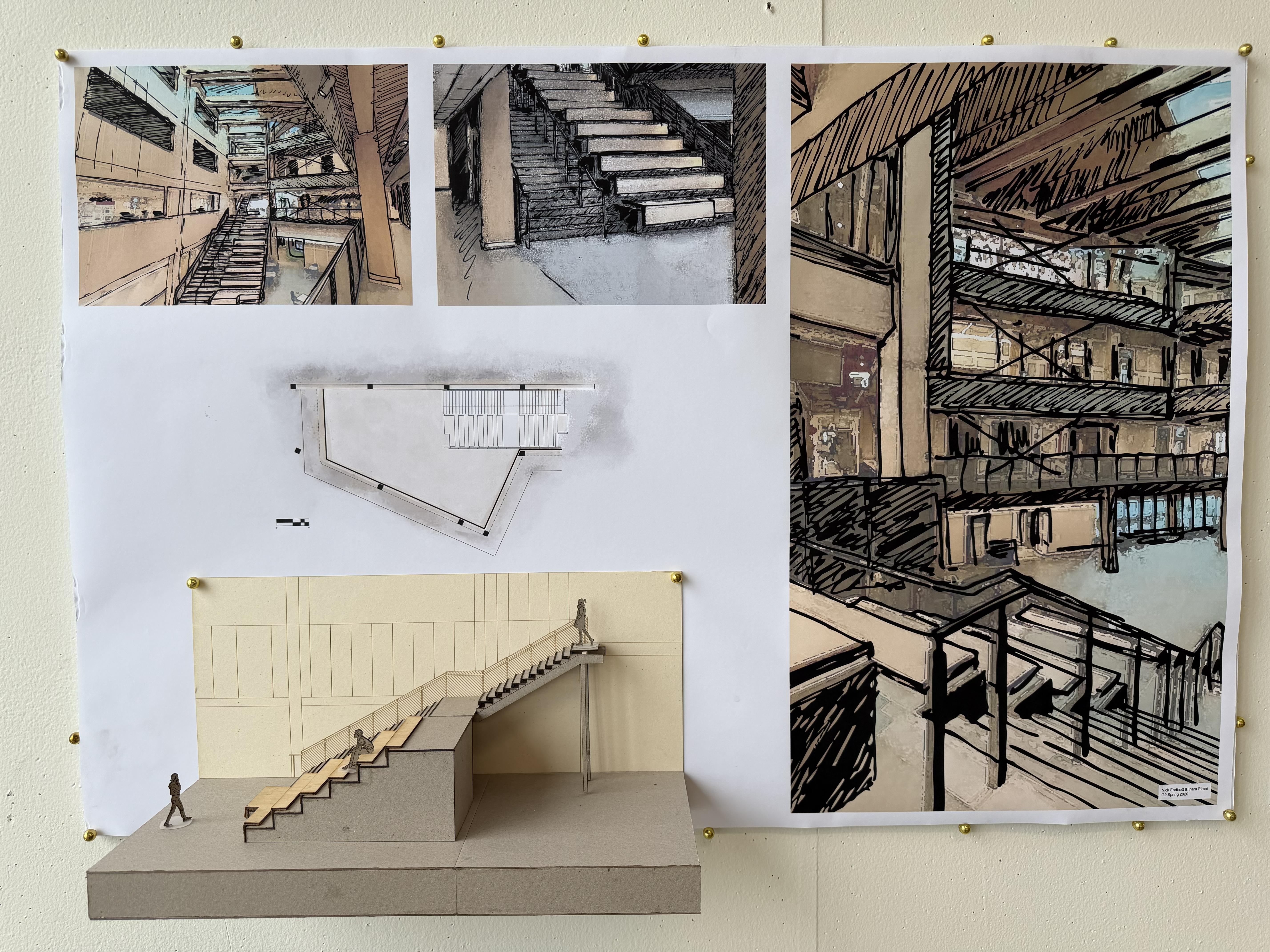
This is a case study of an existing staircase on the UMass campus, analyzed in relation to its surrounding building and spatial context. The study focused on the stair’s construction, material logic, and compliance with egress requirements. Through measured drawings, perspective representations, and a bas-relief sectional model, the project documents both the physical and spatial qualities of the stair. The purpose of the exercise was to develop an understanding of egress design and the regulations that shape stair construction in public buildings. This project was completed in collaboration with Nick Endicott.
This project is a focused case study of the Jacobs House by Frank Lloyd Wright, developed to build proficiency in Rhino. The study involved producing accurate elevations and an axonometric drawing with careful attention to line weight and clarity. Emphasis was placed on translating architectural drawings into a clear digital format on Rhino while maintaining hierarchy and readability. The project also provided a closer understanding of the spatial and formal qualities of the house through digital reconstruction.
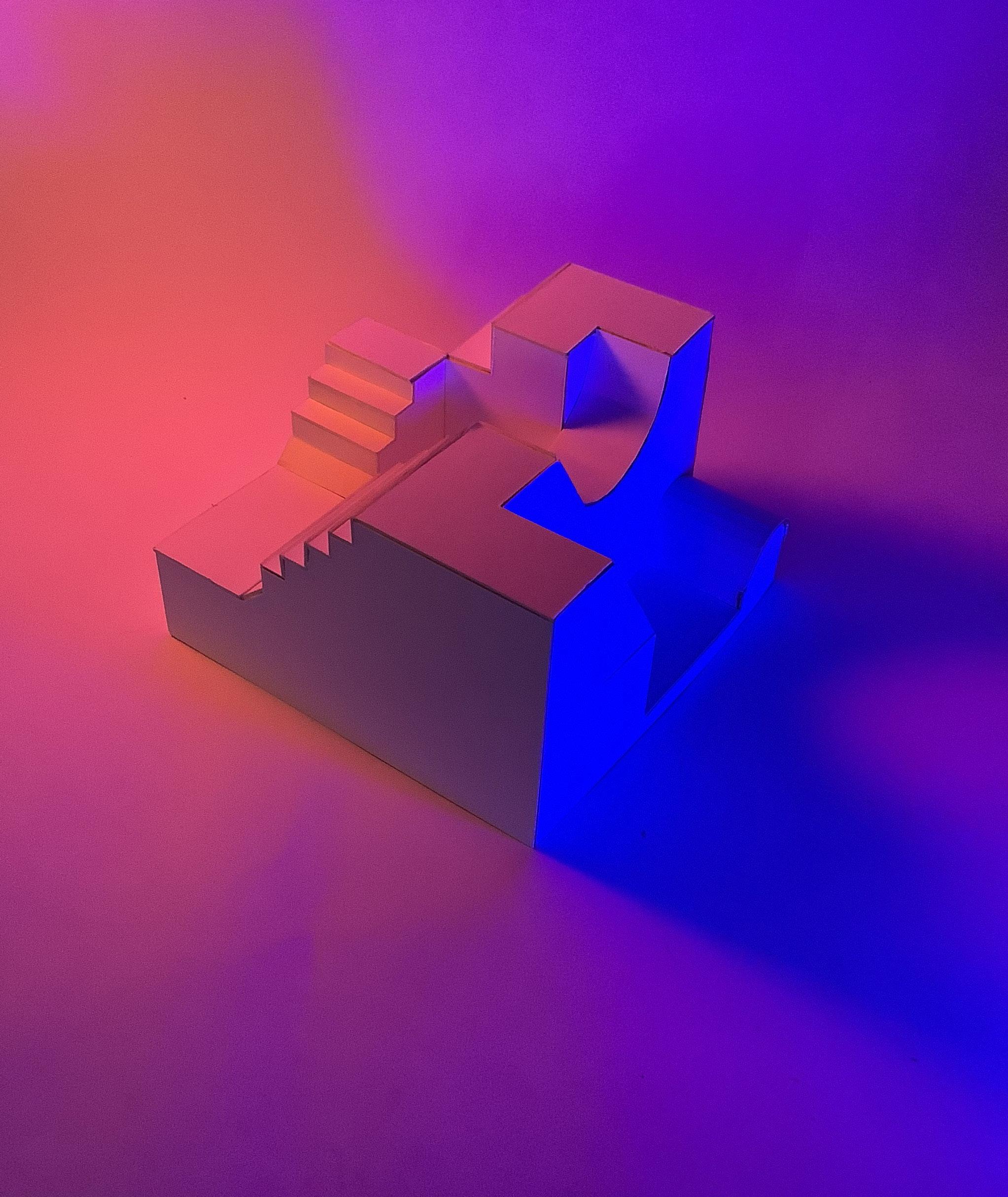
This relief sculpture studies spatial relationships, focusing on planes, light, and shadow to explore how architecture balances structure and void. The prototype sketches are on the right.
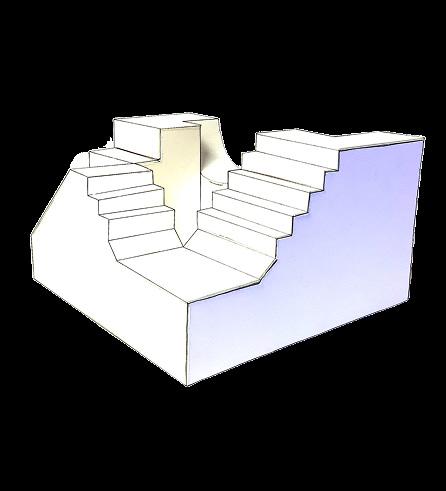
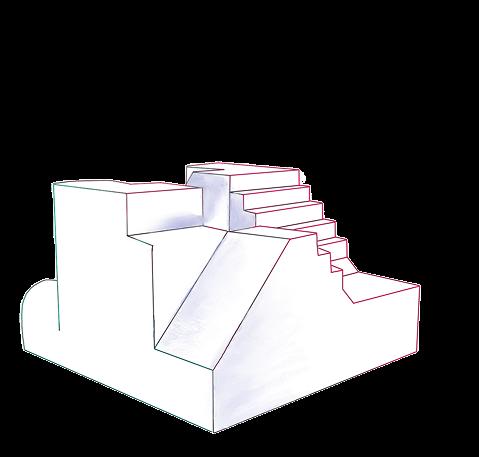
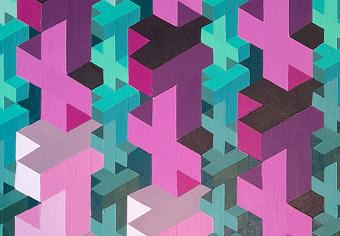
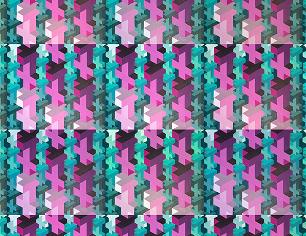
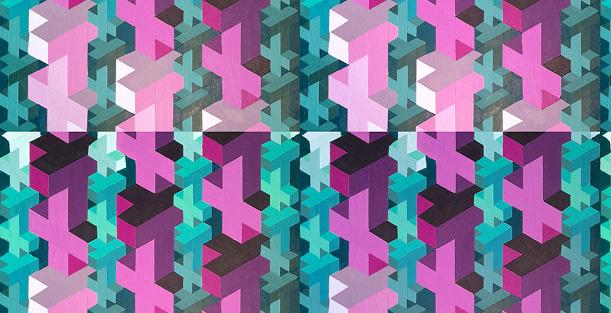
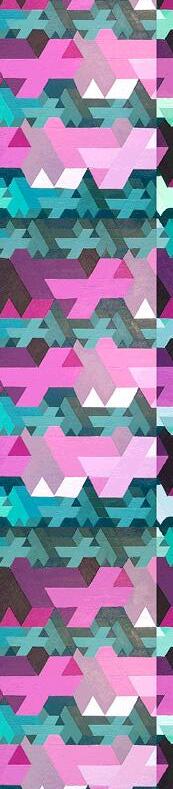
This project is made from the unit piece below and hand-painted into an isometric pattern using acrylics. The piece showcases complementary colors, hues, and shading to create an illusion of dimension and structure. The hand-painted panel (top right) was digitized and transformed into a seamless pattern and an accessory using photoshop (bottom left and right).