


EDITORS-IN-CHIEF:
Kristen Ashworth
Kyla Demkiv
Nayaab Punjani
EXECUTIVE EDITORS:
Beatrice Acheson
Jasmine Amini
Sara Corvinelli
Alyona Ivanova
Anna Mouzenian
Lizabeth Teshler
DESIGN EDITORS:
Ravneet Jaura (Co-Director)
Jinny Moon (Co-Director)
Qingyue Guo
Athena Li
Vicky Lin
Josip Petrusa
Raymond Zhang
SOCIAL MEDIA TEAM:
Lizabeth Teshler (Director)
Lielle Ronen
Abigail Wolfensohn
PHOTOGRAPHY TEAM:
Jino Lim (Director)
Eliza McCann (Director)
JOURNALISTS & EDITORS:
Aria Afsharian
Yalda Champiri
Carmen Chan
Mya Chronopoulos
Clarize Donato
Karen Fang
Mia Feldman
Emily Forster
Sreemoyee Ghosh
Katherine Guo
Sonika Kumari
Josephine Machado
Sabeeka Malik
Caroline Marr
Areej Mir
Ahmad Mohammad
Gharaza Nasir
Kinjal Parekh
Karan Patel
Christina Pereira
Gisany Ravichandran
Eesha Rehman
Stephanie Rizza
Rianna Sarbajna
Rubab Shafiq
Rebecca Smythe
Omer Syed
Alicia Tran
Rivka van Klei
Shreya Vasudeva
Jiani Xie

Dear IMS,
Welcome to our Spring Issue of the IMS Magazine on Metabolic Health!



As we begin to experience the Canadian spring thaw, most of us find ourselves stepping outside more, which means embracing fresh air, going on longer walks, and soaking in more Vitamin D—all of which contribute to improving our metabolic health, having direct effects on our lifespan and quality of life. In this issue, we are excited to showcase the remarkable research going on within our IMS community that is advancing our understanding of metabolic diseases, and uncovering innovative strategies to optimize our metabolic health to promote longevity.
We are excited to feature Dr. Daniel Drucker, who has redefined the landscape of diabetes and weight-loss management through his groundbreaking work on GLP-1 receptor agonists. In this feature, we explore the collaborative path that led him and others to the development of therapies like semaglutide, and what the future holds for this remarkable therapeutic.
In addition, we highlight the work of four scientists at IMS that are leading new avenues of research in metabolic health: Dr. Cynthia Luk, studying fat tissue dysfunction in obesity and diabetes; Dr. Herbert Gaisano, investigating the cellular mechanisms behind insulin secretion to understand diabetes; Dr. Rodrigo Mansur, exploring the intersection of metabolic health and mood; and Dr. Subodh Verma, studying the efficacy of GLP-1 receptor agonists on cardiovascular and peripheral arterial diseases.
Our viewpoints in this issue cover a broad range of topics, from the rapid rise of GLP-1 pharmacologics and questions around their regulation, to evolving definitions of obesity that play a role in our approach to its treatment. In addition, we explore the often-overlooked metabolic consequences of antipsychotic and antidepressant medications and emerging strategies to mitigate them. We also examine how weight is shaped not only by individual choices but by structural inequities to care, food, and healthy environments, and, more specifically, we dive into the factors that have contributed to obesogenic conditions in Indigenous communities in Canada. Finally, we discuss the enduring appeal of fad diets, and why sustainable, evidence-based approaches (though less glamorous) remain essential for long-term health.
We’re also extremely excited to announce a new addition to the IMS Magazine, showcasing a written piece from Dr. Betty Zou’s modular course in Science Communications, MSC1126. This issue features an article regarding GLP-1 and its protective effects on the brain, and how these benefits may vary based on biological sex. We’re thrilled with the creation of this section to highlight more individuals within the IMS community, and look forward to additional contributions from the course as time goes on.
Our spotlight articles in this issue highlight the academic and career journeys of a couple of outstanding members of the IMS community—Lauren de Freitas, IMS alumna and current Senior Specialist at Ontario Health, and Dr. Mitchell Elliot, a medical oncologist and current IMS student in the PhD program studying liquid biopsies for cancer detection.
The Editors-in-Chief extend a sincere thank you to our magazine team–our journalists, editors, and designers–who have made this issue possible. We are fortunate to have so much passion, talent, and hard work in one place to make the magazine all that it is!
Happy Spring, and happy reading!
Sincerely,
Kristen Ashworth
Kristen is a PhD student studying the use of a human-based retinal organoid model to investigate cell therapies for genetic eye disease under the supervision of Dr. Brian Ballios at the Krembil Research Institute.
@K_Ashworth01

Kyla Demkiv
Kyla is a PhD student studying the mechanism of action of novel therapies for lymphoma under the supervision of Dr. Armand Keating, Dr. John Kuruvilla, and Dr. Rob Laister.
@kylatrkulja

Nayaab Punjani
Nayaab is a PhD student examining a neuroprotective drug therapy for cervical-level traumatic spinal cord injury at the Krembil Research Institute under the supervision of Dr. Michael Fehlings.
@nayaab_punjani

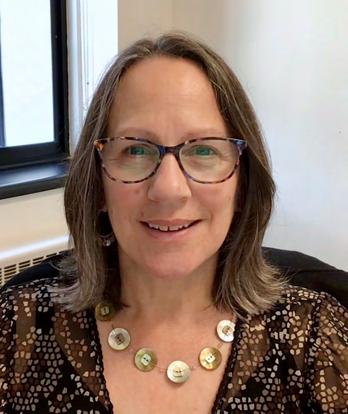
DR. LUCY OSBORNE
Interim Director, Institute of Medical Science
Professor of Medicine, University of Toronto
The spring season is often associated with new beginnings, renewal, and transitions as we welcome in the warmer weather. Along with these new transitions, it is important to place focus on understanding how well our bodies establish equilibrium. Hence, this issue of the IMS Magazine places a key focus on metabolic health—exploring the work IMS faculty and students are doing in understanding and developing therapeutics for patients living with metabolic disorders.
This issue of the IMS Magazine features five faculty that are providing interdisciplinary lenses on metabolic health. Dr. Dan Drucker, pioneer in the development of glucagonlike peptide-1 (GLP-1) receptor agonist (RA) drugs for type 2 diabetes (T2D) and obesity, speaks to the journey to discovery of these drugs—learning from negative data and exploring additional applications for their use. Dr. Cynthia Luk is moving beyond the stigmatizing lifestyle narrative around obesity to holistically understanding the underlying biology of fat cell death and fibrosis that contribute to its development. Dr. Herbert Gaisano is exploring the mechanisms associated with insulin release and delivery at the level of the vesicles in pancreatic beta cells to improve care for patients with diabetes. Dr. Rodrigo Mansur looks at the intersection of psychiatric and metabolic health, exploring cardiovascular and insulin pathways in the context of mood disorders and the therapeutic potential of GLP-1 RAs. Lastly, Dr. Subodh Verma focuses on understanding the underlying factors impacting cardiometabolic health—exploring the impact of GLP-1 RAs in improving risk for cardiovascular disease, in conjunction with diabetes and obesity.
In addition to faculty, this issue places a spotlight on two members of our IMS community. Dr. Mitchell Elliott, medical oncologist and current PhD student at IMS, speaks to his journey from the clinic to research, and the life lessons he has learned along the way. The IMS Magazine also interviewed alumna Dr. Lauren de Freitas, who speaks about her transition from being a rights advisor to working at the provincial level in mental health policy.
This issue also spearheads a new showcase series to the IMS Magazine, highlighting written work by students taking the Science Communicators modular course MSC1126, hosted by Dr. Betty Zou. The article herein focuses on the sex differences associated with GLP-1 and its protective benefit on the brain.
On behalf of the IMS community, I extend my congratulations to all new faculty joining IMS and members who have received promotions this year. I would also like to thank the Editors-in-Chief Kristen, Kyla, and Nayaab, Design Team Co-Directors Jinny and Ravneet, as well as the larger team of IMS Magazine journalists, editors, photographers, and designers, in putting this issue together. Finally, in the spirit of new spring transitions, I wish all IMS students the best in working towards any new goals, in research and for their professional development.
Sincerely,
Dr. Lucy Osborne Interim Director, Institute of Medical Science


Beatrice Acheson is a second-year MSc student working under the supervision of Dr. Peter St GeorgeHyslop at the Tanz Centre for Research in Neurodegenerative Disease, where she investigates the genetic and molecular mechanisms underlying microglial dysfunction in Alzheimer’s Disease. In addition to her research, Beatrice enjoys trivia and solving The New York Times Crossword Puzzle.
@bea.acheson

Carmen K. Chan is a PhD student exploring the molecular mechanisms of obesity and type 2 diabetes, focusing on immuno-metabolism. She is co-supervised by Dr. Cynthia Luk (St. Michael’s Hospital) and Dr. Daniel Winer (Toronto General Hospital Research Institute). Outside of the lab, Carmen can be found playing the piano, tending to her (many) houseplants, or taking a long walk by the waterfront.

Mya Chronopoulos is a first-year MSc student supervised by Dr. Caleb Browne at the Centre for Addiction and Mental Health where she is exploring how serotonin and dopamine coordinate in the mesolimbic dopamine system to shape motivation/reward-seeking behaviour. Outside of the lab, she enjoys early morning pilates classes, spending time with family, and traveling.
@myachronopoulos

Mia Feldman is a second-year MSc student working under the supervision of Dr. Isabella Caniggia at the Lunenfeld Tanenbaum Research Institute. They are studying the placentalmaternal crosstalk in cardiovascular diseases of pregnancy. In their free time, Mia enjoys reading and exploring different neighborhoods in Toronto!

Karen Fang is a PhD student supervised by Dr. Aaron Schimmer at the Princess Margaret Cancer Centre, where she investigates neuroendocrine modulation of blood cancers. Outside of research, she enjoys reading, drawing, and travelling.
@karenn_fang

Alyona Ivanova is a PhD student investigating the molecular signature of glioblastoma using spatial -omics technologies at the Hospital for Sick Children under the supervision of Dr. Sunit Das. Alyona is a professional figure skater and a model. Alyona is a Creative Director of PanoramicsA Vision Inc. She enjoys traveling, cooking, and reading.
@_alyonaivanova_

Josephine Machado is a second-year MSc student working under the supervision of Dr. Andrea Knight at The Hospital for Sick Children. Her research is focused on examining the neuropsychiatric impacts of childhood-onset systemic lupus erythematosus (cSLE) through the study of brain-aging in children with the condition. Outside of research, Josephine enjoys reading, playing the piano, nature walks, and volunteering.


Sabeeka Malik is a second-year MSc student at the SickKids Research Institute, working under the supervision of Dr. Andreas Schulze. Her research aims to determine effective substrate reduction therapy drug candidates for Mucopolysaccharidosis III (Sanfilippo Syndrome), a lysosomal storage disease. Outside of the lab, Sabeeka enjoys reading and playing card games with her friends.

Ahmad Mohammad is a PhD candidate at the Centre for Addiction and Mental Health under the supervision of Dr. Liisa Galea. His research investigates Alzheimer’s disease risk models, and the effects of modifiable lifestyle factors on brain health, with a particular focus on hormone therapy and weightmanagement focused therapeutics. Outside of his research, Ahmad enjoys traveling and going to the gym.

Gharaza Nasir is a second-year MSc student at the Toronto General Hospital Research Institute, working under the supervision of Dr. Arndt Vogel. Her research utilizes patient-derived xenograft (PDX) models to investigate tumour dynamics and evaluate potential therapeutic strategies for Cholangiocarcinoma. In her free time, Gharaza enjoys working out, playing video games, and spending time with friends and family.
@g.harazanasir

Kinjal Parekh is a first-year MSc student at St. Michael’s Hospital, working under the supervision of Dr. Andras Kapus. Her research is focused on uncovering the mechanism of a novel inhibitor targeting the YAP/TAZ transcription factors, central regulators whose overactivation drive cancer and fibrosis. Outside of research, she enjoys cooking, playing badminton, and nature walks. @kinjalparekh09

Gisany Ravichandran is a first-year MSc student at Sunnybrook Research Institute working under the supervision of Dr. Andrew Lim. Her research aims to identify sleep physiological features associated with cognitive resilience and resistance in older adults with and without dementia. Outside of research, she enjoys exploring different coffee shops and travelling with her friends.
@gisanyravi

Eesha Rehman is a first year MSc student at Centre of Addiction and Mental Health (CAMH) working under the supervision of Dr. Erin Dickie. Her research examines functional connectivity patterns in a clinical youth population with psychosis spectrum symptoms (PSS). Outside of research, she loves solving puzzles, collecting stickers, and journaling.

Journalists (cont.)

Rebecca P. Smythe is a first-year MSc student at Women’s College Hospital working under the supervision of Dr. David Lim. Her research aims to better understand the lived experiences of transgender and gender diverse (TGD) individuals navigating breast cancer care, across the entire care continuum from screening to survivorship. Outside of her work Rebecca enjoys reading, travelling, and spending time with loved ones.
@beckyysmythe

Omer Syed is a firstyear PhD student at Sunnybrook Research Institute under the supervision of Dr. Peter Giacobbe. His research examines psychedelic and dissociative substances, primarily psilocybin and ketamine, as treatments for difficult-to-treat mood disorders and their use in non-clinical naturalistic settings. In his free time, he enjoys sleeping and reading.
@omerssyed

Rivka van Klei is a first-year Master’s student at the Centre for Addiction and Mental Health, where she studies the biopsychosocial factors that
contribute to increased dementia risk in individuals with a history of depression. Outside the lab, Rivka loves spending time outdoors—biking, hiking, and enjoying nature. During the winter months, you’ll more likely find her indoors, gathered with friends for cozy karaoke and board-game nights.
@rivka_zeng_vanklei

Jiani Xie is a firstyear MSc student working under Dr. Rupert Kaul, focusing on characterizing the effects of antimicrobials on the penile urethral microbiota and immunology. The outcome of her work will help inform HIV prevention programs and improve reproductive health. Some of her favourite activities include skiing, volleyball, baking and trying new things!

Rianna Sarbajna is a first-year MSc student at the Hospital for Sick Children working under the supervision of Dr. Indra Narang. Her research examines the association between pediatric asthma and the social determinants of health, in the aims of identifying social risk factors contributing to adverse asthma outcomes in children. Outside of her research she enjoys hosting dinners with her friends, fibre arts and reading.
@rianuhhh

Emily Forster is a senior PhD student investigating the molecular mechanism of fertilization under the supervision of Dr. Jeffrey Lee in the department of Laboratory Medicine and Pathobiology. Her work aims to characterize the proteins essential for sperm-egg fusion, and to develop biologics which block these interactions, as a non-hormonal contraceptive strategy. Outside of her research, she enjoys walking her rescue dog, doing escape rooms, and playing strategy board games.
@emilyroseforster


Lizabeth Teshler (Lead) is a PhD student supervised by Dr. Brian Feldman at The Hospital for Sick Children. Her research investigates how to improve the clinical examination of musculoskeletal health for people with Hemophilia. Outside of research, she loves biking, spending time outdoors, and exploring new cities.

Lielle Ronen is a second-year MSc student in Dr. Andrew Sage’s Lab at the Latner Thoracic Surgery Research Labs in PMCRT. Her research investigates smoking damage in donor lungs to improve post-transplant outcomes using Ex-Vivo Lung Perfusion (EVLP). Aside from research, she loves painting, baking, running, and trying local restaurants in Toronto.

Abigail Wolfensohn is a second-year MSc student in Dr. Mojgan Hodaie’s lab at Toronto Western Hospital. She is researching how the brain’s wasteclearance system functions in people with trigeminal neuralgia, a chronic facial pain condition. In her free time, she enjoys outdoor activities, puzzles, trying new restaurants, and playing the piano.
@abbywolfen
Aria Afsharian
Yalda Champiri
Clarize Alarcon Donato
Mia Feldman
Sreemoyee Ghosh
Katherine Guo
Areej Mir
Jino Lim
Caroline Marr
Kinjal Parekh
Karan Patel
Christina Pereira
Stephanie Rizza
Omer Syed
Alicia Tran
Shreya Vasudeva
Rubab Shafiq

Eliza McCann is a first-year MSc student working under Dr. Clement Hamani at the Sunnybrook Research Institute. Her research focuses on Deep Brain Stimulation as a treatment for PostTraumatic Stress Disorder. In her spare time, she likes to read, spend time with her friends, and cook.

Jino Lim is a firstyear MSc student under Dr. Katharine Dunlop’s supervision at St. Michael’s Hospital. His research focuses on multivariate analysis on structural magnetic resonance imaging data for Major Depressive Disorder (MDD). In his free time, you can find Jino fish keeping or reading literature!
@jin0lim
The IMS Design Team is a group of 2nd-year MSc students in the Biomedical Communications (BMC) program. Turning scientific research into compelling visualizations is their shared passion, and they are thrilled to contribute to the IMS Magazine.

(Co-Director) ravneetjaura.com
artby_reetu

qiy_o_0


(Co-Director) jinnymoon.ca
jmoon.vis

Qingyue Guo athna.stomosis liathena101.wixsite.com/portfolio jpetrusavisuals
Vicky Lin www.vickylin.ca
Josip Petrusa josippetrusa.com viyxlin


Raymond Zhang helloimraymond.github.io
rayz_the_roof

By Mia Feldman and Beatrice Acheson
Glucagon-like peptide- 1 receptor agonists (GLP- 1 RAs), known familiarly by brand names like Ozempic and Wegovy, have redefined “virality” in pharmaceuticals. Emerging in a societal landscape shaped by an unmet need for treatments for metabolic disease and a growing obsession with self-optimization, these drugs became a seemingly overnight sensation.
Despite their sudden cultural ubiquity, GLP- 1 RAs are the product of decades of research spearheaded by Dr. Dan Drucker, an endocrinologist and clinician-scientist at the LunenfeldTanenbaum Research Institute and professor at the University of Toronto. In 1984, Dr. Drucker pursued a research fellowship where he was tasked with characterizing a newly identified protein: GLP- 1 . Regarding his methodology, he says, “There was no ‘omics back then. It was just very simple biochemistry and physiology.” He employed basic techniques to purify GLP- 1 and demonstrate its role as a regulator of insulin, a hormone that maintains normal blood sugar. The findings sparked efforts to harness the protein’s potential as a therapeutic for type 2 diabetes (T2D). 1
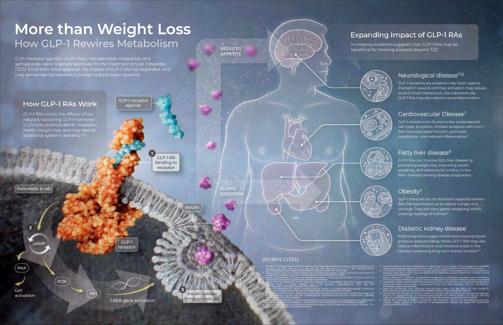
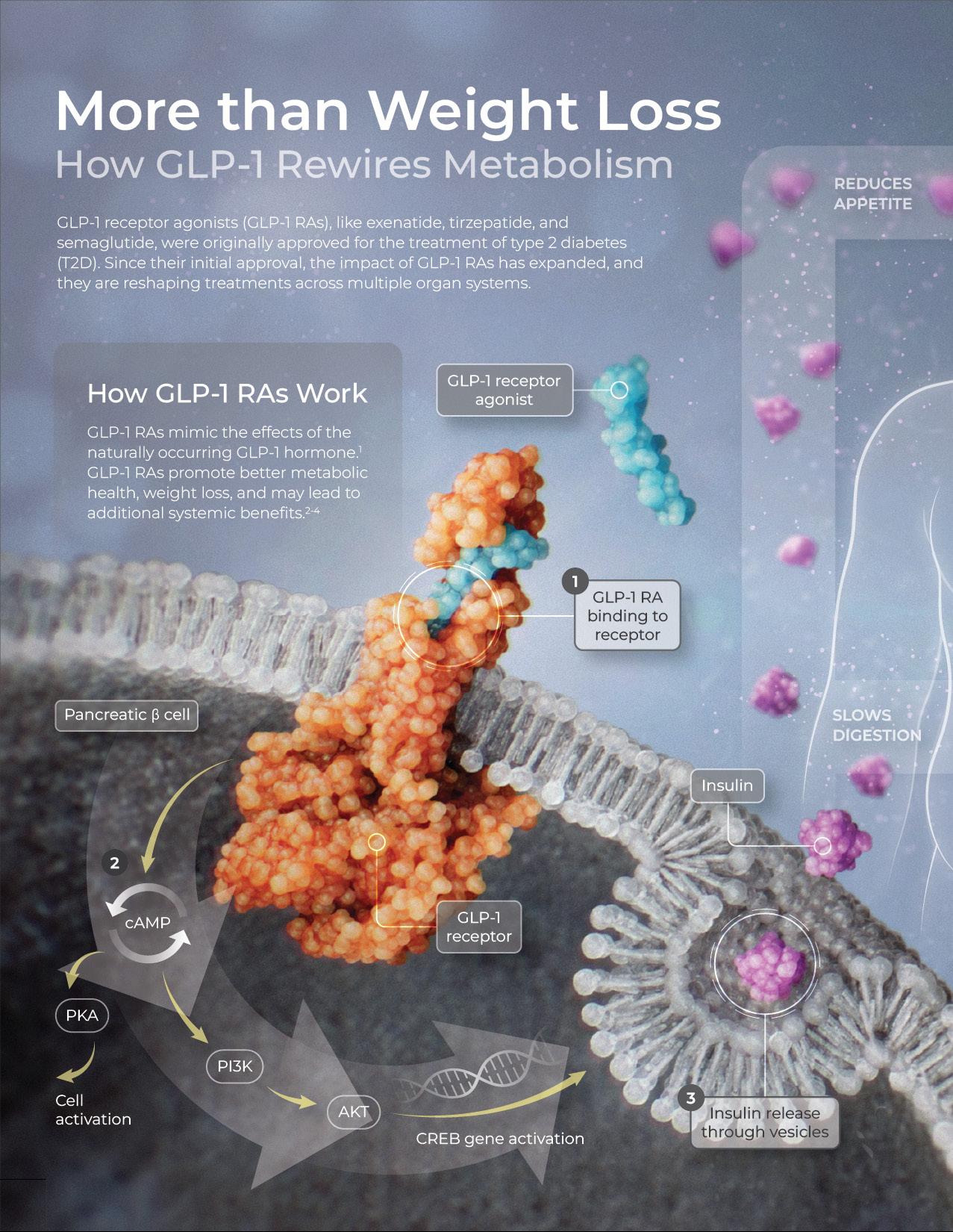
GLP- 1 RAs mimic the GLP- 1 peptide to stimulate insulin release in pancreatic cells, promote satiety, and slow digestion. Importantly, they only work in the presence of glucose, reducing the
risk of low blood sugar. 2 Translating the biology of GLP- 1 into clinical practice, however, took years. Dr. Drucker attributes the delay to the perception that existing treatment options were sufficient. He recalls, “Why would we want to stimulate insulin secretion through another injection?” Nevertheless, he and his collaborators persisted. Amylin Pharmaceuticals, a small biotech startup, agreed to advance development in 2002 and in 2005, exenatide, the first GLP- 1 RA, was approved for clinical use by the Food and Drug Administration (FDA). 3
Trials led by Dr. Drucker and collaborators demonstrated that exenatide improved blood sugar control and promoted weight loss in individuals with T2D. 4 Later trials showed that GLP- 1 RAs like semaglutide also promote weight loss in individuals without T2D. In 2021, semaglutide was FDA approved for weight loss, marking a major expansion of its clinical use, 5 and prompting an explosion in prescriptions. 6 GLP- 1 RAs offer the first clinically meaningful solution to weight reduction, reframing obesity as a treatable medical condition rather than a personal failure.
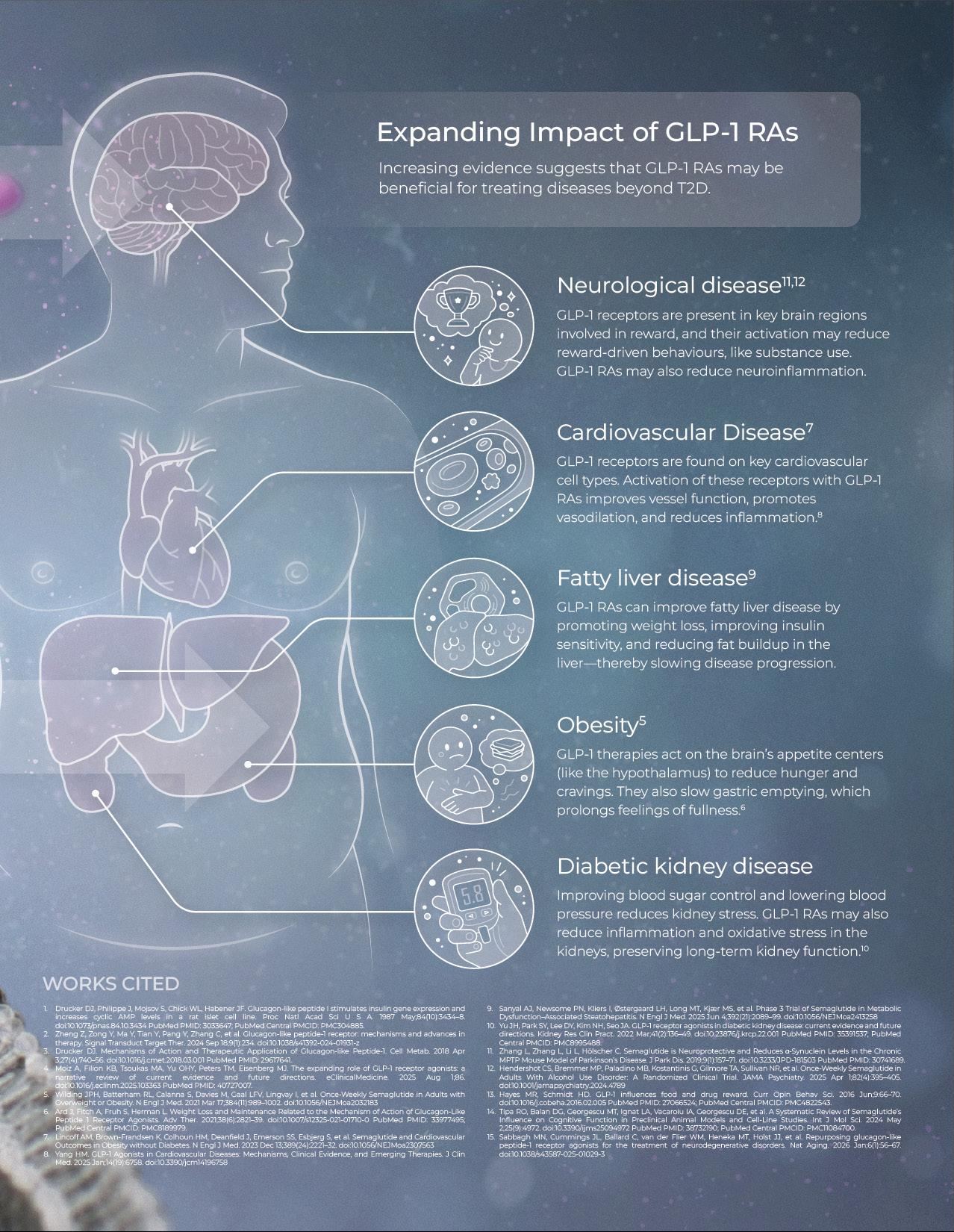
The widespread use of GLP- 1 RAs has provided a wealth of clinical and anecdotal evidence suggesting that the benefits of these drugs extend beyond diabetes and weight management. Importantly, GLP- 1 receptors are found
in other organs and cell types, not just the pancreas, suggesting that benefits may arise from direct action of GLP- 1 RAs that are independent of metabolic improvement. 7 As these effects emerge, researchers like Dr. Drucker have begun to ask if and how GLP- 1 RAs act beyond the pancreas.
Most recently, Dr. Drucker investigated how GLP- 1 RAs exert cardioprotective effects. Vascular smooth muscle cells (VSMCs) regulate blood flow and blood pressure through contraction and relaxation and are known to express GLP- 1 receptors. 8 Dr. Drucker’s lab assessed the involvement of these receptors in the cardioprotective effects of GLP- 1 RAs. To test this, they administered semaglutide to mice with and without VSMC GLP- 1 receptors and found that the drug lowered blood pressure only in mice expressing intact receptors. 9 The work provides a potential mechanism for the cardioprotective effects of GLP- 1 RAs and inspires future work assessing its relevance in humans.
Many of the broader benefits of GLP-1 RAs are thought to arise from their ability to modulate inflammation. To understand this effect, Dr. Drucker turned to a less intuitive site: the brain. Unlike cardiovascular cells, immune cells express low levels of GLP-1 receptors, suggesting that GLP-1 RAs may mitigate inflammation indirectly. To explore this, Dr. Drucker’s lab induced inflammation

(This is for spotlight photos! Delete this later.)
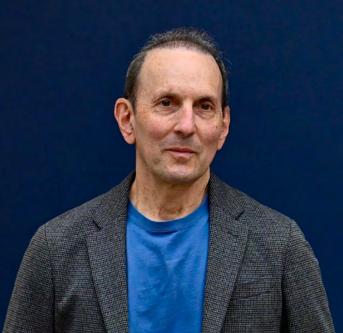
Endocrinologist and Clinician-Scientist at the Lunenfeld-Tanenbaum Research Institute and Professor in the Department of Medicine
in mice treated with exenatide or placebo. Mice treated with exenatide had lower levels of inflammatory markers, and the effect required intact nervous system GLP-1 receptors.10 The findings directly implicate the brain-immune axis in the anti-inflammatory actions of GLP-1 RAs.
The story of GLP- 1 RAs is one of immense pharmaceutical success. These drugs have reshaped the treatment of T2D, medicalized weight loss, and demonstrated systemic benefits. Yet, Dr. Drucker emphasizes that progress depends on learning from negative data as much as celebrating the triumphs. This reality was reflected in the EVOKE
clinical trials. The ability of GLP- 1 RAs to act on the brain and reduce inflammation sparked investigations into their efficacy in treating inflammatory neurodegenerative diseases like Alzheimer’s Disease (AD). Preclinical evidence from other laboratories suggests that GLP- 1 RAs attenuate neuroinflammation and neuronal cell death in mouse models of AD. 11 Despite initial promise, the EVOKE trials showed that GLP- 1 RAs did not significantly reduce the rate of cognitive decline in patients with AD. 12
Dr. Drucker does not view the outcome as a failure and instead, believes that negative data invites new scientific questions. He explains that the key is to “ask good questions and then use all the available techniques to do rigorous science.” Even when hypotheses are disproven, the knowledge gained moves the field forward.
The GLP- 1 RA story is much more than a viral moment. It is a testament to the slow, methodical nature of scientific discovery, the value of persistence, and the humility necessary to accept negative results and move forward. Dr. Drucker’s work is a reminder that breakthroughs are not instant; they are the product of curiosity, resilience, and a willingness to follow the data where it leads—especially if it’s somewhere unexpected.
1. Drucker DJ, Philippe J, Mojsov S, et al Glucagon-like peptide I stimulates insulin gene expression and increases cyclic AMP levels in a rat islet cell line. Proc Natl Acad Sci U S A. 1987 May;84(10):3434–8. doi:10.1073/pnas.84.10.3434 PubMed PMID: 3033647; PubMed Central PMCID: PMC304885.
2. Drucker DJ. Mechanisms of Action and Therapeutic Application of Glucagon-like Peptide-1. Cell Metab. 2018 Apr 3;27(4):740–56. doi:10.1016/j.cmet.2018.03.001 PubMed PMID: 29617641.
3. Drucker DJ. The GLP-1 journey: from discovery science to therapeutic impact. J Clin Invest. 134(2):e175634. doi:10.1172/ JCI175634 PubMed PMID: 38226625; PubMed Central PMCID: PMC10786682.
4. Buse JB, Drucker DJ, Taylor KL, et al. DURATION-1: Exenatide Once Weekly Produces Sustained Glycemic Control and Weight Loss Over 52 Weeks. Diabetes Care. 2010 Mar 9;33(6):1255–61. doi:10.2337/dc09-1914
5. Wilding JPH, Batterham RL, Calanna S, et al. Once-Weekly Semaglutide in Adults with Overweight or Obesity. N Engl J Med. 2021 Mar 17;384(11):989–1002. doi:10.1056/NEJMoa2032183
6. Farahvash A, Lee MC, Jain R, et al. Pattern of semaglutide prescription in a real-world Canadian patient cohort. Prim Care Diabetes. 2025 Oct 1;19(5):512–6. doi:10.1016/j. pcd.2025.06.006
7. GLP1R glucagon like peptide 1 receptor [Homo sapiens (human)] - Gene - NCBI [Internet]. Available from: https://www. ncbi.nlm.nih.gov/gene/2740#gene-expression
8. Pyke C, Heller RS, Kirk RK, et al. GLP-1 Receptor Localization in Monkey and Human Tissue: Novel Distribution Revealed With Extensively Validated Monoclonal Antibody. Endocrinology. 2014 Apr 1;155(4):1280–90. doi:10.1210/en.2013-1934
9. Medak KD, Koehler JA, Baggio LL, et al. Semaglutide Reduces Murine Blood Pressure Through the Vascular Smooth Muscle GLP-1 Receptor. JCI Insight. 2026 Mar 3. doi:10.1172/jci. insight.201148 PubMed PMID: 0.
10. Wong CK, McLean BA, Baggio LL, et al. Central glucagon-like peptide 1 receptor activation inhibits Toll-like receptor agonist-induced inflammation. Cell Metab. 2024 Jan 2;36(1):130143.e5. doi:10.1016/j.cmet.2023.11.009
11. Sabbagh MN, Cummings JL, Ballard C, et al. Repurposing glucagon-like peptide-1 receptor agonists for the treatment of neurodegenerative disorders. Nat Aging. 2026 Jan;6(1):56–67. doi:10.1038/s43587-025-01029-3
12. Cummings JL, Atri A, Sano M, et al. Efficacy and safety of oral semaglutide 14 mg (flexible dose) in early-stage symptomatic Alzheimer’s disease (evoke and evoke+): two phase 3, randomised, placebo-controlled trials. The Lancet. 2026 Mar 19;0(0). doi:10.1016/S0140-6736(26)00459-9 PubMed PMID: 41865758.

By Carmen K. Chan
In 2021, an estimated 2.11 billion (45.1%) adults globally were considered overweight or living with obesity, a figure estimated to grow to 3.8 billion by 2050, representing over half of the world’s adult population.1 Obesity is a major risk factor for type 2 diabetes (T2D), heart disease, stroke, and the buildup of fat in the liver.2 These diseases are strongly associated with illness and early death, with heart disease remaining a leading cause of death in Canada.3,4 The growing prevalence of obesity places substantial burden on healthcare systems and the economy,5 underscoring the need to better understand the biology driving metabolic disease to identify new treatment strategies.
Despite the global scale of obesity, the cultural narrative stubbornly remains: “eat less and move more.” For Dr. Cynthia Luk, an endocrinologist and clinicianscientist at St. Michael’s Hospital, this fails to capture the complexities she sees in her patients. She explains that “as a clinician, it’s difficult to work around these cultural stigmas. We must remember that these are complex diseases. Some components are controllable, while others are determined by genetics and biology.” Framing obesity as a matter of individual willpower overlooks biological factors (such as genetics, sex, and co-existing medical conditions) and systemic barriers (including cost of living and access to healthcare) that can make sustained weight loss far more complex than “eat less and move more.”
One key biological factor lies in fat tissue itself. When fat tissue becomes dysfunctional, it can disrupt how the body stores fat and regulates fat in the blood (lipids), increasing risk for other metabolic diseases. Yet not everyone with obesity develops the same complications. Some remain metabolically healthy, while others develop complications like T2D and heart disease. Could biological differences in fat tissue explain why obesity-driven metabolic disease develops in some people but not others? These types of questions frequently arise in Dr. Luk’s clinical work.
Dr. Luk is the Director of the Lipid Clinic at St. Michael’s Hospital, one of the largest of its kind in Canada. The clinic acts as a resource for the community, seeing patients referred by both family doctors and other specialists for complex diabetes and lipid disorders. Patient experiences directly inform research in her lab. “Working day-to-day with people that are struggling to manage metabolic disease— being hungry all the time, trying to fit in exercise—is there a better way to manage this?” she asks. Addressing these questions could reveal key biological drivers of obesity and point toward new therapies.
For Dr. Luk, research offers a way to answer these questions and create longterm change beyond the brief window of clinic visits. “Patient interactions are tento-fifteen minutes. With research, you can ask bigger, long-term questions and change the way we do things,” she says. Following her medical training, Dr. Luk completed
a PhD and postdoctoral fellowship with Dr. Minna Woo, where her interest in the biological drivers of metabolic disease began to take shape. Dr. Luk now leads her own lab investigating signalling pathways like cell death and fibrosis (thickening or scarring of tissue) that are well established in other diseases, and explores their role in metabolic tissues, including fat, liver, and the cardiovascular system.
One of her favourite projects, started in Dr. Minna Woo’s lab, examined the role of caspase-8, a key player of cell death, in fat cells. Obesity places prolonged metabolic stress on fat tissue that can cause fat cells to die. Fat cell death is accompanied by the release of inflammatory factors that interfere with the body’s ability to respond to insulin, contributing to insulin resistance and T2D.6,7 In her 2023 work published as “Paper of the Month” in Diabetes, Dr. Luk and her team found that caspase-8 levels were increased in fat from individuals with T2D and in mice with metabolic disease. Removing caspase-8 from fat cells in obese mice reduced weight gain, inflammation, and insulin resistance.8 These findings identify caspase-8 as a key biological factor driving fat tissue dysfunction during obesity, and suggest blocking caspase-8 in fat tissue could be a therapeutic strategy for obesity-driven metabolic diseases.
Another major focus of her lab is fibrosis in fat tissue. Fibrosis causes tissues to become stiff and scarred, which impairs their normal function. Dr. Luk’s team


T. Luk, MD, PhD
Endocrinologist and Clinician-Scientist at St. Michael’s Hospital and Assistant Professor at the Institute of Medical Science
blood sugar.9 These findings suggest that targeting YAP in fat could prevent fat fibrosis and slow the progression of metabolic disease.
Together, Dr. Luk’s work highlights how obesity and metabolic disease are driven by complex biological mechanisms that extend far beyond willpower or lifestyle. While these discoveries may appear straightforward, each finding is built on years of uncertainty, setbacks, and persistence.
her patients face. In the lab, she works to understand the biology behind those challenges. Ultimately, her goal is to move beyond the stigma and towards a better understanding, treatment, and prevention strategies for metabolic disease.

has been studying the Hippo signalling pathway which has been linked to fibrosis across multiple organs. A key component of this pathway is a protein called yesassociated protein (YAP), which controls genes that promote cell growth. When YAP becomes overactive, it can lead to excessive cell growth and fibrosis. Dr. Luk’s team found that YAP activity was increased in humans with T2D and in mice with obesity and insulin resistance. Removing YAP from fat cells of obese mice reduced fat fibrosis and decreased fat mass, which was accompanied by improved
When asked what makes an impactful clinician-scientist, Dr. Luk emphasizes perseverance. She explained, “when you apply for a grant, there’s a small chance of acceptance, but you try anyway. You keep responding to feedback and refining what you do with the hope that one day the work is meaningful to patients.” Even when progress feels incremental, the field is moving quickly, which brings hope to patients who have already begun benefiting from novel interventions. She added that, “I think endocrinology and metabolism is the most exciting field right now. When I started training, there were a few insulins and people often got amputations for T2D complications. Now there are multiple insulins, a whole menu of medications, and advances in lifestyle care.” Perseverance in research enables breakthroughs that transform care for people living with metabolic disease.
For Dr. Luk, the intersection of research and care is where change happens. In the clinic, she sees the daily challenges
1. Ng M, Gakidou E, Lo J, et al. Global, regional, and national prevalence of adult overweight and obesity, 1990–2021, with forecasts to 2050: a forecasting study for the Global Burden of Disease Study 2021. The Lancet. 2025;405:813–38. doi:10.1016/S01406736(25)00355-1.
2. Abdelaal M, le Roux CW, Docherty NG. Morbidity and mortality associated with obesity. Ann. Transl. Med. 2017;5:161. doi:10.21037/ atm.2017.03.107.
3. Heart Disease in Canada 2017. https://www.canada.ca/en/public-health/services/publications/diseases-conditions/heart-disease-canada.html.
4. Leading causes of death. World Health Organization; n.d.
5. Janssen I. The public health burden of obesity in Canada. Can. J. Diabetes. 2013;37:90–6. doi:10.1016/j.jcjd.2013.02.059.
6. Hotamisligil GS, Murray DL, Choy LN, et al. Tumor necrosis factor a inhibits signaling from the insulin receptor (cy e/lnu non-Iul-dependent diabetes mdstus/glucose ranport/tyrine e receptor). vol. 91. 1994. doi:10.1073/pnas.91.11.4854.
7. Cinti S, Mitchell G, Barbatelli G, et al. Adipocyte death defines macrophage localization and function in adipose tissue of obese mice and humans. J. Lipid Res. 2005;46:2347–55. doi:10.1194/jlr. M500294-JLR200.
8. Luk CT, Chan CK, Chiu F, et al. Dual Role of Caspase 8 in Adipocyte Apoptosis and Metabolic Inflammation. Diabetes. 2023;72:1751–65. doi:10.2337/db22-1033.
9. Han DJ, Aslam R, Misra PS, et al. Disruption of adipocyte YAP improves glucose homeostasis in mice and decreases adipose tissue fibrosis. Mol. Metab. 2022;66. doi:10.1016/j.molmet.2022.101594.

By Gharaza Nasir and Sabeeka Malik
In 2024, approximately 3.9 million Canadians lived with diagnosed diabetes, and 260,000 new cases are diagnosed each year, posing a significant burden on the healthcare system.1 We typically associate diabetes with concepts like blood sugar, diet, lifestyle, and insulin. Although these are relevant, these associations overlook the intricate cellular choreography underlying metabolic conditions. Hidden from view are the pancreatic islet cells, or beta cells, which secrete tiny vesicles carrying insulin, a critical regulator of blood glucose.
In healthy individuals, after a meal, glucose levels rise in the bloodstream, which signals beta cells to release insulin from these vesicles. For insulin to perform its role effectively, these vesicles must undergo a precise sequence of events: docking at the cell membrane, fusing with it, and releasing their contents into the bloodstream.2 Upon successful release, insulin promotes the uptake of glucose by cells, enabling the cells to use the glucose for energy. However, in individuals with type 1 diabetes (T1D), the body destroys its own beta cells, resulting in little to no insulin release. In type 2 diabetes (T2D), individuals develop a resistance to insulin. Both forms of diabetes lead to dysregulated blood glucose, or high blood sugar, which can lead to vascular vessel damage and further health complications, such as heart disease and kidney disease.1
Despite a strong understanding of why diabetes develops, the precise mechanism by which beta cells release
insulin remained elusive. Early in his career as a clinician-scientist, Dr. Herbert Gaisano set out to address this gap by studying the mechanisms of insulin release in pancreatic beta cells. Dr. Gaisano is a Professor in the Departments of Physiology and Medicine at the University of Toronto, as well as a Senior Scientist at the Toronto General Hospital Research Institute. When he began working at the University of Toronto in 1991, solubleN-ethylmaledimide-sensitive factor attachment protein receptors (SNARE) proteins were a novel concept.
SNARE proteins are a family of small membrane anchored proteins responsible for fusing vesicles with target membranes.3 These proteins act as the cell’s “molecular machinery,” enabling the delivery of materials from one part of the cell to another called vesicular transport, and when delivered outside of the cell, this is called “exocytosis.”3 SNARE proteins were first discovered in the context of synaptic vesicle fusion in the nervous system. 3-5 Dr. Gaisano set out to characterize SNARE proteins in the realm of metabolic health in hopes of unveiling novel therapeutic targets.
Dr. Gaisano’s early work established the role of SNARE proteins in insulin secretion. His earliest contributions in the field highlighted the presence of neuronal SNARE proteins in beta cells.
Using known neuronal SNARE protein antibodies for western blotting and
immunohistochemistry, Dr. Gaisano and his team showed the presence of SNARE proteins in the pancreatic beta cell.6,7 They were then able to confirm the localization of SNARE proteins on the plasma membrane and cytosolic vesicles, specifically on insulin granules, using immunofluorescence confocal microscopy, live-cell imaging, and electron microscopy.6,7 This and subsequent similar work defined the molecular framework for insulin exocytosis and secretion defects and revealed that insulin release requires the same fusion machinery as the brain.6-9
After establishing the role of SNARE proteins in insulin release, Dr. Gaisano sought to uncover their involvement in diabetes pathogenesis. Pancreatic islet beta cells isolated from a diabetic rat model were found to have lower levels of SNARE proteins when compared to the wild type.8 When diabetic rats were treated with phlorizin, a drug that lowers blood glucose, they saw an increase in betacell SNARE protein levels.8 This suggests that hyperglycemic states, common in individuals with T2D, disrupts proper SNARE protein function. These findings directly implicated SNARE proteins in the pathogenesis of diabetes and reframed the field to include cellular defects, like in exocytosis, as a root cause of metabolic diseases, extending beyond the traditional focus on insulin production and resistance.
Dr. Gaisano’s monumental contributions to the field led to a series of continued research, building on his work with


highly regulated process that is disrupted in individuals with diabetes. 9 Another pioneering discovery of Dr. Gaisano is how SNARE proteins contribute to insulin exocytosis by their interactions with ion channels.10 SNARE proteins may act as regulatory “brakes” on insulin exocytosis by their interactions with other novel proteins, potentially offering novel therapeutic targets for T2D.11
1. Government of Canada. Diabetes in Canada: An interactive report on key statistics [Internet]. Ottawa: Government of Canada; 2025 [cited 2026 Mar 3]. Available from: https://health-infobase.canada. ca/diabetes/
2. Fu Z, Gilbert ER, Liu D. Regulation of Insulin Synthesis and Secretion and Pancreatic Beta-Cell Dysfunction in Diabetes. Curr Diabetes Rev. 2013 Jan 1;9(1):25–53.
3. Söllner T, Bennett MK, Whiteheart SW, et al. A protein assembly-disassembly pathway in vitro that may correspond to sequential steps of synaptic vesicle docking, activation, and fusion. Cell. 1993 Nov;75(3):409-418.
4. Söllner T, Whiteheart SW, Brunner M, et al. SNAP receptors implicated in vesicle targeting and fusion. Nature. 1993 Mar;362(6418):318-24.
SNARE proteins. With increased resources and advances in imaging technology, scientists were able to visualize this molecular machinery in action. In 2005, Dr. Gaisano and his team used live imaging to track the movement of single insulin granules towards the edge of beta cells, their attachment to the membrane, and the release of their contents in beta cells from diabetic and non-diabetic donors.9 The work showed that insulin release is not random, but a
If there is one thing we can learn from Dr. Gaisano, it is the importance of having the courage to look where no one else is—digging deeper, beyond the surface of the disease. It is important to investigate the underlying biology to find the mechanistic answers behind complex systems. He encourages students to continuously learn new techniques and apply them beyond what might seem obvious. Dr. Gaisano’s work has reshaped our understanding of metabolic diseases and specifically in the context of diabetes care for patients. By shifting the research perspective beyond insulin resistance to the biology of insulin release, his work has shown that metabolic health depends not only on how the body responds to insulin, but also on whether it can be delivered effectively. His work serves as a reminder to young scientists to challenge conventions, ask difficult questions, remain curious, and explore novel ideas.
5. Sudhof TC. The synaptic vesicle cycle. Annu Rev Neurosci. 2004;27:509-47.
6. Wheeler MB, Sheu L, Ghai M, et al. Characterization of SNARE protein expression in beta cell lines and pancreatic islets. Endocrinology. 1996 Apr;137(4):1340-8.
7. Gaisano HY, Ghai M, Malkus PN, et al. Distinct cellular locations of the syntaxin family of proteins in rat pancreatic acinar cells. Mol Biol Cell. 1996 Dec; 7(12):2019-27.
8. Gaisano HY, Ostenson CG, Sheu L, et al. Abnormal Expression of Pancreatic Islet Exocytotic Soluble N-Ethylmaleimide-Sensitive Factor Attachment Protein Receptors in Goto-Kakizaki Rats Is Partially Restored by Phlorizin Treatment and Accentuated by High Glucose Treatment. Endocrinology. 2002 Nov;143(11):4218–4226.
9. Kwan EP, Gaisano HY. Glucagon-like peptide 1 regulates sequential and compound exocytosis in pancreatic islet beta-cells. Diabetes. 2005 Sep;54(9):2734-43.
10. Leung YM, Kwan EP, Ng B, Kang Y, Gaisano HY SNAREing voltage-gated K+ and ATP-sensitive K+ channels: tuning beta-cell excitability with syntaxin-1A and other exocytotic proteins. Endocr Rev. 2007 Oct;28(6):653-63.
11. Xie L, Kang F, Qin T, et al. Septin5 deletion enhances β-cell exocytosis by releasing microtubule-tethered insulin granules onto plasma membrane. Nat Commun. 2025 Mar; 16:2725.



By Karen Fang
Mood disorders, such as major depressive disorder (MDD) and bipolar disorder (BD), are mental health conditions that affect emotional states and impact up to 15% of the Canadian population.1 Historically, mood disorders have been examined through the lens of imbalance in neurotransmitters like serotonin. Despite a heavy focus on the neurological underpinnings of these conditions, patients with mood disorders often have physical comorbidities. Rather unexpectedly, the leading cause of death in patients with mood disorders is not suicide, but cardiovascular disease.2 This reality has shifted the focus of recent investigations toward the mechanisms that link the mind and the body.
Dr. Rodrigo Mansur is a staff psychiatrist at the Toronto Western Hospital and an Associate Professor in the Department of Psychiatry, Division of Neurosciences and Clinical Translation at the University of Toronto. Dr. Mansur completed his medical training at the Universidade Federal de São Paulo/Escola Paulista de Medicina (UNIFESP/EPM) in Brazil. He completed his psychiatry residency training and PhD at UNIFESP/EPM and then went on to do his fellowship training in psychiatry at the University of Toronto.
With extensive clinical experience in mood disorders, Dr. Mansur notes that his interest in metabolic dysfunction arose from the observation that patients with
mood disorders are two to three times more likely to develop diabetes.3 This may be due to lifestyle factors, like smoking or poor dietary habits, or treatment-related factors, as certain medications may lead to weight gain.3 However, these factors alone do not fully explain the increased risk of metabolic disease in these patients. “Patients with mood disorders often show indicators of metabolic disease, such as insulin resistance, that precede any diagnosis of mental health disorders,” Dr. Mansur explains. This indicates that there may be a connection between mental health disorders and metabolic disease, which has become a central focus of his research in recent years.
One major area of Dr. Mansur’s research is brain insulin signalling in patients with BD. While impaired insulin signalling, or insulin resistance, is typically studied in organs like the liver and skeletal muscle in the context of diabetes or obesity, the brain also widely expresses insulin receptors. For example, insulin receptors are expressed in the hippocampus, which is involved in memory formation, and the ventromedial prefrontal cortex (vmPFC), which is linked to decision making and cognitive function. In the brain, insulin signalling has been implicated in neuroplasticity and cognitive function.4 Recent research has shown that patients with BD are more likely to be insulin resistant, suggesting a potential role for disrupted insulin signalling in the pathophysiology of BD.5 However, unlike
other organs in the body, brain signalling pathways cannot be evaluated by blood tests, highlighting a major challenge in neuropsychiatric research.
To overcome this, Dr. Mansur’s team evaluated the brain-insulin pathway using an innovative approach: neuronal extracellular vesicles (NEVs) from blood samples.6 NEVs are membrane vesicles originating from neurons, which allows the team to study signalling pathways without the need for invasive procedures.6 Blood samples were obtained from patients with BD enrolled in a clinical trial evaluating the effect of infliximab, a drug known to promote insulin sensitivity. At baseline, NEV biomarkers of insulin resistance were associated with cognitive dysfunction and reduced vmPFC volume as measured by magnetic resonance imaging (MRI). Treatment with infliximab led to increased activity in insulin signalling and increased brain volume.6 These results suggest that impaired insulin signalling may contribute to cognitive dysfunction and structural brain changes that are typical of BD. This study is the first to evaluate insulin signalling in the brain and points to the therapeutic potential of modulating insulin sensitivity for patients with BD.
Building on the importance of metabolic pathways in mood disorders, Dr. Mansur’s team has recently turned their attention to the use of metabolic agents for the treatment of MDD. Specifically, the team

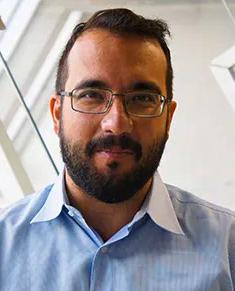
Dr. Rodrigo Mansur, MD, PhD
Staff Psychiatrist, Toronto Western Hospital and Associate Professor, Department of Psychiatry, University of Toronto
focused on glucagon-like peptide 1 receptor agonists (GLP-1 RAs), a class of drugs originally designed for diabetes and obesity. Recent research has also linked GLP-1 RAs to other clinical effects, including reduced cardiovascular events, improved kidney and liver function, and improved cognitive function.7,8
In a 2026 study, Dr. Mansur’s team evaluated the safety and efficacy of the GLP-1 RA semaglutide for the treatment
of cognitive dysfunction in adults with MDD in a clinical trial.9 In this randomized, double-blind trial, 72 adults with MDD and obesity/overweight, who showed cognitive impairment, were given 14mg of oral semaglutide or a placebo control over 16 weeks. Cognitive function was assessed using a range of neuropsychological tools and questionnaires. Semaglutide did not improve executive function, which includes complex processes like problem-solving and reasoning. However, it did demonstrate beneficial effects on global cognition, which includes memory and attention. Furthermore, semaglutide reduced body weight without affecting depressive symptom severity or suicidal ideation.9 This study is the first to demonstrate the safety of semaglutide for patients with MDD and the potential efficacy of semaglutide for specific cognitive domains. Together, these results underscore the role of metabolism in mood disorders and provide a rationale for further investigations into brain metabolic pathways and repurposing of metabolic agents for psychiatric disorders.
The intersection of metabolic and psychiatric disorders is an evolving field that demands a whole-body perspective. “Conventionally, psychiatric disorders are often treated separately from the rest of the body, but there is an intrinsic connection between physical and mental health,” Dr. Mansur says. To adapt to the heterogeneous nature of psychiatric disorders, researchers and clinicians are moving away from a
one-size-fits-all treatment approach. Dr. Mansur emphasizes the need for more mechanistic studies to disentangle the complex brain metabolic pathways and importantly, larger randomized controlled trials to evaluate potential therapeutic interventions for patients with psychiatric disorders. Overall, Dr. Mansur’s research provides direct evidence supporting the role of metabolism in mood disorders and compels us to consider more integrated approaches to psychiatric treatment that extend beyond neurological modulation.
References
1. Statistics Canada. Table 13-10-0465-01 Mental health indicators 2023.
2. Walker ER, McGee RE, Druss BG. Mortality in Mental Disorders and Global Disease Burden Implications. JAMA Psychiatry 2015;72:334.
3. Possidente C, Fanelli G, Serretti A, et al. Clinical insights into the cross-link between mood disorders and type 2 diabetes: A review of longitudinal studies and Mendelian randomisation analyses. Neurosci Biobehav Rev 2023;152:105298.
4. Kleinridders A, Ferris HA, Cai W, et al. Insulin action in brain regulates systemic metabolism and brain function. Diabetes 2014;63:2232–43.
5. Coello K, Vinberg M, Knop FK, et al. Metabolic profile in patients with newly diagnosed bipolar disorder and their unaffected first-degree relatives. Int J Bipolar Disord 2019;7:8.
6. Mansur RB, Delgado-Peraza F, Subramaniapillai M, et al. Exploring brain insulin resistance in adults with bipolar depression using extracellular vesicles of neuronal origin. J Psychiatr Res 2021;133:82–92.
7. Badve S V, Bilal A, Lee MMY, et al. Effects of GLP-1 receptor agonists on kidney and cardiovascular disease outcomes: a meta-analysis of randomised controlled trials. Lancet Diabetes Endocrinol 2025;13:15–28.
8. Ballum H, Dri C, Liao S, et al. The effect of glucagon-like peptide 1 (GLP-1) receptor agonists on cognition: A systematic review of systematic reviews and meta-analyses. J Affect Disord 2026;402:121310.
9. Badulescu S, Gill H, Shah H, et al. Semaglutide for the treatment of cognitive dysfunction in major depressive disorder: A randomized clinical trial. Med 2026;7:100916.

By Gisany Ravichandran
Cardiovascular diseases (CVDs) are the number one cause of death globally, comprising a group of disorders affecting the heart and blood vessels.1 Obesity and type 2 diabetes (T2D) increase the risk of CVD through shared cardiometabolic disturbances, such as disruptions to glucose regulation, fat storage, and energy balance.2 As the global prevalence of obesity rises, so does the development of CVD and diabetes, contributing to high mortality and morbidity.3-4 Together, metabolic disturbances and CVD represent a significant and growing healthcare burden.4
In recent years, medications known as glucagon-like peptide-1 receptor agonists (GLP-1 RAs) have transformed the treatment landscape for diabetes and obesity. Originally developed to improve blood sugar control, these therapies have shown benefits for CVD risk and outcomes.5 These insights have inspired a new wave of research aimed at uncovering the mechanisms underlying the intersection of obesity, CVD, and cardiometabolic diseases.5 These advances have catalyzed a new era of medicine focused on cardiometabolic health. This emerging field probes the biological connections between metabolic dysfunction and cardiovascular outcomes to identify new strategies for prevention and treatment.
Dr. Subodh Verma is a cardiac surgeon at St. Michael’s Hospital, Professor of Surgery at the University of Toronto,
and Tier 1 Canada Research Chair in Cardiovascular Surgery. His research focuses on unveiling the mechanisms underlying the relationship between diabetes, obesity, and cardiovascular stress. Since 2007, he has worked as a cardiac surgeon-scientist, mending human hearts in the operating room, while pioneering global efforts in advancing cardiovascular and cardiometabolic medicine.
Dr. Verma’s research efforts are directly inspired by his clinical work. Operating at the forefront of cardiac surgery and translational research, Dr. Verma identified a fundamental gap in cardiovascular medicine: translating high-quality clinical data into real-world patient and surgical care. In response, he co-founded CardioLink with Dr. David Mazer in 2015. CardioLink was developed to unite international cardiac investigators and clinicians to conduct rigorous, translational clinical trials using cutting-edge techniques to inform surgical and clinical decision-making. Over the past decade, the platform has produced numerous high-impact publications supporting evidence-based practice and improving patient outcomes.
CardioLink has been integral to understanding the impact of GLP-1 RAs, like semaglutide, on CVD. Semaglutide is known to reduce cardiovascular events and promote weight loss in patients with obesity or diabetes; however, the biological mechanisms behind these protective effects remain unclear.6
To address this, Dr. Verma and his colleagues launched the Semaglutide and Vascular Regeneration (SEMA-VR) CardioLink-15 trial.6 The study examined patients with atherosclerotic CVD (ASCVD), a condition where plaque build-up on the arterial walls hardens the arteries.7 Healthy blood vessels rely on specialized repair cells, or vascular regenerative (VR) cells to maintain vascular health, but they are diminished in individuals with ASCVD risk factors, including obesity and T2D.6 It is known that semaglutide impacts ASCVD risk, though the mechanism remained elusive.6
Given the role of VR cells in ASCVD, Dr. Verma hypothesized that semaglutide may impact the number and/or function of these cells, contributing to better outcomes. He evaluated the effects of semaglutide on VR cell content using multi-parametric flow cytometry, a technique that tags cells with unique cellspecific markers to distinguish beneficial repair-oriented cells from harmful inflammatory cells.6 Dr. Verma and his team demonstrated for the first time that semaglutide increases the number of bone marrow-derived VR progenitor cells. The discovery uncovered a previously unrecognized mechanism by which the drug exerts cardioprotective effects in people with obesity, diabetes, ASCVD, or ASCVD risk factors.6
Another major focus of Dr. Verma’s research assesses the efficacy of GLP-1 RAs in treating peripheral artery disease (PAD).


Dr. Subodh Verma, MD, PhD
Cardiac Surgeon-Scientist at St. Michael’s Hospital and Professor in the Departments of Surgery and Pharmacology and Toxicology
Photo Credit: Jino Lim
PAD occurs when fatty plaques build up in the arteries, narrowing the blood vessels. In lower limb PAD, reduced circulation leads to leg pain, trouble walking, and diminished quality of life.8 PAD is a severe type of ASCVD that disproportionately affects women and individuals with T2D, often progressing to severe disability or even limb amputation.8 Despite its prevalence and severity, effective treatment options are limited.
To address this unmet clinical need, Dr. Verma and his collaborators examined whether semaglutide could improve functional outcomes in people with PAD and diabetes through the Semaglutide and Walking Capacity in People With
Symptomatic PAD and T2D (STRIDE) trial.9 The study demonstrated that semaglutide significantly improved walking ability and quality of life of these individuals.9 “GLP-1 [RAs] are the first kind of hope for these people—it’s a critical advancement in the field,” says Dr. Verma. Building on these findings, he led the post-hoc analysis examining sex differences, which demonstrated that although semaglutide improved functional outcomes regardless of sex, females with PAD have different baseline demographics and treatment histories compared to males.10 These findings are critical to consider when designing and interpreting future PAD trials.
The collective efforts of Dr. Verma, his team, and their collaborations with investigators worldwide have illuminated the breadth of impact of semaglutide and other GLP-1 RAs in influencing CVD, heart failure, and metabolic health. “It’s the gift that keeps on giving,” Dr. Verma reflects. “We’ve hit a core driver of multiple cardiometabolic comorbidities.” The collaborative framework of CardioLink has also enabled a deeper understanding of the intersection between CVD and metabolic health. “It’s not just a story of [myself]—it’s a story of intense global collaboration. Interrogating overweight and obesity with these therapies has really represented a sea of change in our ability to move the field forward.” These discoveries are not only reshaping treatment, but they are also shifting the focus towards earlier intervention. Dr. Verma’s efforts are not
just opening doors to new treatments, they are refining the way CVD and metabolic diseases are studied and managed to optimize patient care.
“It is a profound privilege to serve as a cardiac surgeon—caring for the human heart in the operating room while advancing solutions for heart failure, atherosclerosis, and PAD from bench to bedside, with impact that extends to patients globally.”
1. Olvera Lopez E, Ballard BD, Jan A. Cardiovascular Disease. In: StatPearls [Internet]. Treasure Island (FL): StatPearls Publishing; 2025 Jan-. Available from: https://www.ncbi.nlm.nih.gov/books/NBK535419/
2. Park B, Bakbak E, Teoh H, et al. GLP-1 receptor agonists and atherosclerosis protection: the vascular endothelium takes center stage. Am J Physiol Heart Circ Physiol. 2024;326(5):H1159-H1176. doi:10.1152/ ajpheart.00574.2023.
3. Powell-Wiley TM, Poirier P, Burke LE, et al. Obesity and Cardiovascular Disease: A Scientific Statement From the American Heart Association. Circulation. 2021;143(21):e984-e1010. doi:10.1161/CIR.0000000000000973
4. Netala VR, Teertam SK, Li H, et al. A Comprehensive Review of Cardiovascular Disease Management: Cardiac Biomarkers, Imaging Modalities, Pharmacotherapy, Surgical Interventions, and Herbal Remedies. Cells. 2024;13(17):1471. Published 2024 Sep 1. doi:10.3390/cells13171471
5. Ferhatbegović L, Mršić D, Macić-Džanković A. The benefits of GLP1 receptors in cardiovascular diseases. Front Clin Diabetes Healthc. 2023;4:1293926. Published 2023 Dec 8. doi:10.3389/fcdhc.2023.1293926
6. Park B, Dennis F, He AZ, et al. Semaglutide promotes bone marrow-derived progenitor cell flux toward an anti-inflammatory and pro-regenerative profile in high-risk patients: the SEMA-VR CardioLink-15 trial. Eur Heart J. 2025. https://doi.org/10.1093/eurheartj/ehaf690
7. Pahwa R, Jialal I. Atherosclerosis. In: StatPearls [Internet]. Treasure Island (FL): StatPearls Publishing; 2026 Jan-. Available from: https://www.ncbi. nlm.nih.gov/books/NBK507799/
8. Verma S, Leiter LA, Mangla KK, et al. Epidemiology and Burden of Peripheral Artery Disease in People With Type 2 Diabetes: A Systematic Literature Review. Diabetes Ther. 2024;15(9):1893-1961. doi:10.1007/ s13300-024-01606-6
9. Bonaca MP, Catarig AM, Houlind K, et al. Semaglutide and walking capacity in people with symptomatic peripheral artery disease and type 2 diabetes (STRIDE): a phase 3b, double-blind, randomised, placebo-controlled trial. Lancet. 2025;405(10489):1580-1593. doi:10.1016/S0140-6736(25)00509-4
10. Verma S, Catarig AM, Houlind K, et al. Sex Differences in Effectiveness of Semaglutide in Patients With Peripheral Artery Disease: The STRIDE Trial. J Am Coll Cardiol. 2025;86(20):1843-1857. doi:10.1016/j.jacc.2025.08.046


Athena is a medical and scientific illustrator with a background in health sciences, anatomy, and research. She uses clear, engaging storytelling and accurate visual representation of data to make complex scientific ideas easier to understand for targeted audiences. She is particularly nerdy about graphic design, pedagogy, and human anatomy. Her current academic interests are in advancing educational strategies for student and patient populations.


Beverly Ng is a biomedical illustrator with an interest in healthcare and scientific education. Her work specializes in balancing accuracy with clarity. She is passionate about making complex science accessible for audiences of all educational backgrounds, ranging from medical students to the lay public.


Sabrina is a first-year MSc student in the Biomedical Communications (MScBMC) program. With a background in biology and a passion for visual storytelling, she creates work that translates complex scientific concepts into clear and engaging imagery. Sabrina is particularly interested in medical education, health equity, and using design to make science more accessible to diverse audiences.


Laura Wu is a first-year MScBMC student with considerable hands-on experience in academic research as well as content development processes in continuing medical education. She is eager to create visual tools that can shrink gaps in scientific communication, ultimately allowing for a smoother flow of information and understanding.

By Kinjal Parekh
Ozempic needs no introduction; often described as a “miracle drug,”1 it has quickly become a household name, crossing the usual boundaries that limit most medications to the medical community and their patients. Dominating social media feeds with users chronicling its weight-loss effects, this frenzy has overshadowed its actual FDA-approved indication: a prescription medicine for diabetes-management.2
Ozempic is part of a class of drugs called glucagon-like peptide-1 receptor agonists (GLP- 1 s), which work by mimicking our natural GLP- 1 hormone. 3 Your gut releases GLP- 1 in response to eating, essentially slowing down how quickly your stomach empties and signalling to your brain that you’re full. 3 Although originally developed to help control blood sugar for type 2 diabetes, they were found to have an added benefit of significant weight loss. 3 This led to the development of weight-loss medications based on active ingredients used in diabetes-management drugs, such as semaglutide in Ozempic. 1
The benefits of these drugs are clear, as they are powerful tools for managing type 2 diabetes and obesity.3 However, the increasing use of these drugs is also alarming, especially with the United States seeing a 700% increase from 2019 to 2023 in patients without diabetes starting Ozempic treatment.4 What is especially concerning is the jump in off-label
prescriptions, with an increase from 16% in 2021 to 33% in 2024.2 As the drug’s weight loss effects are being increasingly advertised, younger adults make up the majority of these off-label prescriptions. A study from Michigan Medicine shows the use of these drugs is increasing rapidly in adolescents and young adults, especially females; 5 using a prescription database that reports prescriptions from 93.6% of US retail pharmacies, between 2020 and 2023, researchers found a 594% increase in the monthly number of young adults using GLP- 1 s. 5
Proper regulation of these drugs is becoming increasingly important due to the rising interest of individuals beyond the patients they were initially intended to treat. 5 Part of the normalization of GLP- 1 use comes from celebrity endorsements that laud Ozempic without the full spectrum of warnings. 2 Ranging from Elon Musk to Serena Williams, 6 every week there is yet another star that states how GLP- 1 s have contributed to their current physique. Importantly, it is not only those who actively seek out GLP- 1 drugs that are hypnotized by its effects; just by taking a ride on Toronto’s public transit, which is ridden by approximately 1.7 million people every weekday, 7 people encounter advertisements from companies like myRocky.ca, which convey how easily available GLP- 1 s can be. 8 These advertisements can easily sway viewers into perceiving GLP- 1 s as a simple, accessible lifestyle
choice rather than a medical treatment. This type of exposure raises ethical concerns, as it may influence vulnerable populations such as individuals with eating disorders.
There is also a potential danger to the expanding off-label use of GLP- 1 s, as the range of the drugs’ side effects remain underknown. Emerging research is highlighting the risk of gastrointestinal issues (nausea, vomiting, diarrhea, constipation), as well as more severe complications like pancreatitis, kidney problems, potential thyroid cancer, and extreme cases of malnutrition due to its suppressant effects. 9 Several studies show GLP- 1 to have conflicting effects on both retinal health and diabetes-associated vision loss, where some studies suggest potential beneficial effects,10 while others propose detrimental effects. 11 This underscores the uncertainty surrounding GLP- 1 s, with many potential side effects still undiscovered as rapid adoption forces science to play catch-up.
Another important consideration is maintaining the desired effects of GLP- 1 s, especially following their discontinuation. About half of people with obesity on GLP- 1 s discontinue their use within a year due to high cost and adverse side effects. 12 A study led by the University of Oxford reviewed randomized trials and observational studies on overweight or obese adults who took GLP- 1 s compared to others in behavioural weight management

programs to understand weight regain after cessation of these medications. 12 Interestingly, participants who went off these weight-loss medications regained weight approximately four times faster than those who stopped exercising or did not stick to their diets. 12 Consequently, at a time when we are bombarded with pharmacological methods for weight loss, it is important not to rely on these alone, but to remember their effectiveness is greatest when combined with a healthy diet and regular exercise.
The importance of emphasizing the risks and limitations of GLP- 1 s is further increasing with their expanded availability and accessibility. In Canada, there are six medications that are authorized by Health Canada for long term weight management and require a prescription from a licensed health care provider. 13 However, companies like MyRocky provide same day appointments, connecting patients to physicians who can provide them with a prescription within a week. 8 Novo Nordisk is one of the world’s most influential biopharmaceutical companies, responsible for Ozempic and Wegovy. However, their data exclusivity for semaglutide has expired in Canada, which opens the door for generic versions, potentially expanding the pool of access. 13 Although these have not yet been reviewed and approved by Health Canada, there is discussion that they may debut as early as this summer. 14
Increasing supply and demand also poses additional challenges surrounding regulation. Within the first six months of introducing the Ozempic analog for obesity, Wegovy, supplies ran short and led to individuals who use the drug for cosmetic purposes to seek other semaglutide-based drugs from untrustworthy online sellers. 15 Presently, Health Canada has identified unauthorized GLP- 1 products in retailers. 15 These products are extremely dangerous as they have not been assessed for safety, efficacy, or quality. The potential risks can be due to alterations of the active ingredient, containment of unlisted and dangerous ingredients, contaminants like heavy metals, and even improper manufacturing and storing. 14 Importantly, multiple reports of hospitalizations have been linked to use of counterfeit GLP- 1 drugs, attributed to infections due to lack of sterility and abdominal pain due to incorrect dosing. 14 These dangers highlight the need for strict regulation behind dispensing and producing these drugs.
With GLP- 1 s becoming a rising cultural phenomenon, regulation and enforcement are paramount. Regulation of GLP- 1 s is needed to prevent shortages for those that require it medically, educate GLP- 1 users on the benefits and risks of GLP- 1 use, and ensure they do not fall into the hands of those with the potential to abuse its weight-loss effects.
1. Logan P. On the Increase in Use of GLP-1s. blogs. 2024. Available from: https://medicine.iu.edu/blogs/bioethics/on-the-increase-inuse-of-glp-1s
2. Lynch E. Ozempic, Celebrities, and TikTok: A Regulatory Nightmare Waiting to Happen? - Petrie-Flom Center. Petrie-Flom Center - The blog of the Petrie-Flom Center at Harvard Law School. 2025. Available from: https://petrieflom.law.harvard.edu/2025/06/26/ ozempic-celebrities-and-tiktok-a-regulatory-nightmare-waiting-to-happen/
3. Fisher J. How does Ozempic work? Understanding GLP-1s for diabetes, weight loss, and beyond - Harvard Health. Harvard Health. 2025. Available from: https://www.health.harvard.edu/ staying-healthy/how-does-ozempic-work-understanding-glp-1sfor-diabetes-weight-loss-and-beyond
4. Mahase E. GLP-1 agonists: US sees 700% increase over four years in number of patients without diabetes starting treatment. BMJ. 2024 Jul 23;q1645–5.
5. Lee JM, Sharifi M, Oshman L, et al. Dispensing of Glucagon-Like Peptide-1 Receptor Agonists to Adolescents and Young Adults, 2020-2023. JAMA. 2024;331. Available from: https://jamanetwork. com/journals/jama/article-abstract/2819128
6. Ryan T. Celebrities on Ozempic: Stars who’ve used the weight-loss drug. Page six. 2023. Available from: https://pagesix.com/article/ celebrities-who-used-ozempic-for-weight-loss/
7. City of Toronto. Toronto Transit Commission. City of Toronto. 2017. Available from: https://www.toronto.ca/city-government/ accountability-operations-customer-service/city-administration/ city-managers-office/agencies-corporations/agencies/toronto-transit-commission/
8. Rocky - Your Health Partner. Rocky Health. 2026. Available from: https://www.myrocky.ca
9. Catanese L. GLP-1 diabetes and weight-loss drug side effects. Harvard Health. 2024. Available from: https://www.health.harvard.edu/ staying-healthy/glp-1-diabetes-and-weight-loss-drug-side-effectsozempic-face-and-more
10. Allan KC, Joo JH, Kim S, et al. Glucagon-like Peptide-1 Receptor Agonist Impact on Chronic Ocular Disease Including Age-Related Macular Degeneration. Ophthalmology. 2025 Jan
11. Marso SP, Bain SC, Consoli A, et al. Semaglutide and Cardiovascular Outcomes in Patients with Type 2 Diabetes. New England Journal of Medicine. 2016 Nov 10;375(19):1834–44.
12. Zafar A. People regained weight, worsened heart health after stopping weight loss drugs: review. CBC. 2026. Available from: https://www.cbc.ca/news/health/weight-regain-weight-medications-glp1-9.7037276
13. Gagner M. GLP-1 Drugs for Weight Loss: What Patients Should Know in 2025. Clinique Michel Gagner. 2025. Available from: https://cliniquemichelgagner.com/news/glp-1-drugs-for-weightloss-what-patients-should-know
14. CBC. Health Canada warns about fake or unauthorized versions of GLP-1 drugs. CBC. 2026. Available from: https://www.cbc.ca/news/ health/ozempic-health-canada-counterfeit-9.7054857
15. Goodall-Summers I. The science of skinny: Ozempic reinforces the obsession with thinness. The Oxford Scientist. 2023. Available from: https://oxsci.org/the-science-of-skinny/

By Eesha Rehman
You are obese. You have obesity.
Are these two statements different? According to body mass index (BMI), they are not.
In a 2022 Statistics Canada survey, approximately one-third (33%) of Canadian adults have obesity, as classified by a BMI greater than 30.1 However, is BMI the ideal metric to assess whether an individual has obesity? Does being obese equate to having obesity?
Two patients with BMIs over 30 can have markedly opposing health outcomes, despite both being in the ‘obese’ category. BMI does not account for differences in weight by fat or muscle. In accordance with the BMI criteria, an active plus-sized fashion model and a sedentary office worker are both obese, and in accordance with the Statistics Canada survey, they also have obesity. The BMI criteria define obese akin to obesity, yet the model could have an arguably lower health risk profile due to their active lifestyle than, let’s say, a lethargic, overworked graduate student with a “normal” BMI.
Thus, the measure of weight requires a more nuanced definition to address the myriads of body types to correctly identify those at risk for obesity. BMI is a metric that assesses the size of the person rather than addressing their health concerns. A refined definition could promote acceptance in society of body variance,
instead of an exclusive mold that generates black and white categorical associations of obesity via height and weight.
The original purpose of BMI, developed by mathematician Adolphe Quetelet nearly 200 years ago, was to find "l’homme moyen" (the average man).2 His goal was to determine the ideal height and weight of the Caucasian male. In the 1970s, American physiologist and dietician, Ancel Keys, advocated for what was then called the Quetelet Index to quickly screen for obesity, which quickly popularized to BMI.2
Currently, BMI values have been used by scientists, clinicians, and companies alike to categorize people’s risk of developing cardiovascular disease and diabetes.
BMI is quick and easy to compute, yet its simplicity blinds the whole truth of health. BMI covers a mere iota of the multifaceted complexities of human health and disease.
Currently, BMI is the basic measurement utilized in understanding global trends regarding weight and healthy living, making it easier for government and statisticians to interpret results. Height and weight are relatively easy measurements to procure, hence increasing its accessibility and reproducibility. Yet are these results reliable with real-world validity, or are they skewed to over-simplification?
Consider real-world variation such as age, sex, and ethnicity that have differing, but meaningful, impacts on body composition


and disease risk. For example, women tend to have a higher fat percentage in their hips and abdominal area; however, that fat has been found to provide health protective effects such as hormone regulation.3 People of Polynesian descent with high BMI tend to have less fat on their bodies than Europeans with the same BMI, attributing to differences in muscle mass.4 The obesity metric gap in clinical and research policies and procedures diminishes and ignores the health profiles of other groups.
In research, BMI is a common metric to collect when conducting population-based health estimates/studies. BMI can be compared with an array of other metrics such as incidents of cardiovascular disease, quality of life, and others. However, an alarming number of studies do not factor the influence of external variables such as diet and exercise in their analysis of BMI. What if poor diet and exercise cause both high BMI and increased mortality risk, rather than just BMI directly? Translational health research informs medical practice. Therefore, the negative implications of misinterpreted results in misguided health suggestions and practices serve no clinically significant benefit.
Moreover, the effects of BMI are greater in the clinical field due to its commonality in various assessments. BMI is a universal measurement reported on medical reports, and healthcare practitioners in their hectic
schedule may tend to make assumptions regarding the patient’s health based on their BMI categorization. For instance, if a patient comes in with complaints about heart issues, a physician may see a BMI greater than 30 and assume that they need to lose weight to resolve the issue, ignoring the fact that it may be some other underlying cause. The utilization of BMI as the rationale for medical issues severely limits the quality of care received, reducing the patient to one aspect of their health.
Lastly, this number is used by health insurance companies to determine eligibility for medical-related expenses. They can increase their premiums for patients labelled with high risk of disease based on their BMI.
BMI is a universal measurement. It has deeply rooted itself in the medical field and cannot be uprooted and replaced easily. Additionally, BMI in a general capacity does demonstrate an overall pattern; however for individual treatment BMI should be one part of the mosaic of health. Researchers and clinicians both need to expand their criteria for diagnoses of obesity and be less conservative in their diagnoses of diseases related to excess adipose tissues (i.e. fat cells).
In 2023, the American Medical Association stated that BMI is “an imperfect way to measure body fat in
multiple groups given that it does not account for differences across race/ethnic groups, sexes, genders, and age-span.”5
Hence, a more inclusive definition of obesity should not just include BMI as a criterion, but also look at percentage of excess adipose tissues, hormone fluctuation, and metabolic syndromes. A more holistic definition of the disease will encompass the multifaceted nature of obesity rather than as a BMI-defined disease.
1. Public Health Agency of Canada. Obesity statistics in Canada: report [Internet]. Ottawa (ON): Government of Canada; 2025 Jun 5 [cited 2026 Feb 15]. Available from: https://www.canada.ca/en/ public-health/services/publications/healthy-living/obesity-statistics-canada.html.
2. Pray R & Riskin S. The History and Faults of the Body Mass Index and Where to Look Next: A Literature Review. Cureus. 2023;15(11). doi: 10.7759/cureus.48230.
3. Zhang C, Rexrode KM, van Dam RM, et al. Abdominal obesity and the risk of all-cause, cardiovascular, and cancer mortality: sixteen years of follow-up in US women. Circulation. 2008;117 doi: 10.1161/CIRCULATIONAHA.107.739714.
4. Swinburn BA, Ley SJ, Carmichael HE, & Plank LD. Body size and composition in Polynesians. Int J Obes Relat Metab Disord. 1999;23(11):1178-83. doi: 10.1038/sj.ijo.0801053.
5. American Medical Association (AMA). 2023 June 14. AMA adopts new policy clarifying role of BMI as a measure in medicine. Chicago (IL): AMA. https://www.ama-assn.org/ press-center/ama-press-releases/ama-adopts-new-policy-clarifying-role-bmi-measure-medicine

By Josephine Machado
What’s one to do when a medication that is set out to help their mind mounts an unprecedented attack on their relationship with their body? While psychiatric medications can be an essential tool in improving quality of life, weight gain continues to be a particularly distressing side effect for those who rely on them. This remains a relevant concern given that the use of these medications is on the rise. Many individuals with mental health concerns face lengthy wait times to receive sustained government-funded support; therefore, relative to other treatments, psychotropic medications can provide timely and cost-effective relief for what can constitute debilitating symptoms. As a result, between 2019 and 2023, the prevalence of individuals who received antidepressants from community pharmacies in Canada increased from 15.4% to 16.4%, with over 6.6 million Canadians reporting antidepressant use in 2023 alone.1 The use of antipsychotic medications, used to treat conditions such as schizophrenia, has also increased in recent years, with over 1.5 million individuals reporting use of antipsychotic medications in 2022.1
This places additional burden on the stigma that comes with receiving treatment for depression, as weight gain is a well-established side-effect of almost all psychotropic medications.2 Antidepressants are commonly prescribed for major depressive disorder and anxiety; however, long-term use is similarly associated with
weight gain, affecting up to 55–65% of patients.3 While antidepressant-related weight gain remains modest to mild in comparison to antipsychotic-related weight gain, selective serotonin reuptake inhibitors (SSRIs) such as paroxetine have been associated with weight gain of up to 2.7 kg.2 A particularly challenging aspect of prescribing psychotropic medication is that there are no tools available to definitively identify patients with a greater susceptibility to weight gain,4 making monitoring weight an imperative component of medication management.
Several biological mechanisms have been proposed to facilitate antidepressant-induced weight gain, especially in cases of longterm use. Antidepressants generally act by increasing the availability of neurotransmitters in the brain, such as serotonin and dopamine. Given that serotonergic and dopaminergic pathways play a role in regulating both mood and appetite, mechanisms that improve mental health may also have an influence on body weight.3 Long-term use of SSRIs is thought to downregulate and desensitize serotonin receptors, reducing the activity of neurons that supress appetite.3 Moreover, dopamine pathways are essential for feeding behaviours, with medication-induced alterations including inhibition of dopamine pathways in the brain’s reward centres. This can blunt sensitivity to pleasure and trigger food-seeking behaviour—where a person eats more, craving carbohydrates specifically—to feel satisfied.3
Antipsychotics, however, cause weight gain by blocking histamine and serotonin receptors in the hypothalamus, where appetite is controlled, thus stimulating appetite and delaying satiety signals, leading to increased food intake.2,5 Antipsychotics can also block muscarinic receptors on cells in the pancreas that produce insulin, which interferes with insulin secretion and increases susceptibility to diabetes signals.2,5 Finally, these drugs can also alter the gene expression, promote the creation and storage of fat, and disrupt hormones such as leptin and ghrelin signals.5
Medication-related weight gain is a common deterrent to psychiatric treatment, often prompting an unwillingness to begin medication as well as increasing treatment nonadherence.4 Medication hesitancy poses a clinical concern in that it can increase the risk of relapse or worsen depressive symptoms.3 Psychotropic medicationinduced weight gain can also exacerbate comorbid conditions such as obesity, diabetes, and cardiovascular disease. Obesity is the second most common cause of preventable death after smoking; thus, the need to monitor medication-induced weight gain is crucial.3
Lifestyle- or behavioural-based management is one avenue of management, with methods such as alterations to diet, regular physical

activity, and even switching psychotropic medications serving as common approaches for managing weight gain. Cognitive and behavioral strategies under the guidance of a licensed mental health professional may also be helpful in assisting adhering to lifestyle changes.6 Early weight gain can act as a predictor of future weight gain;7 thus, monitoring metabolic health during follow-up visits is important to help identify signs of weight gain and allow for both lifestyle-based and pharmacological interventions.
Adjunctive medications for weightmanagement have been utilized to mitigate antidepressant-induced weight gain. Several options exist, but the most commonly used and efficacious treatment is metformin, acting as an insulin sensitizer with moderate strength in mitigating antidepressant-related weight gain.3 However, recent years have seen a rise in the use of glucagon-like peptide-1 receptor agonists (GLP-1 RAs), a class of medication used to treat type 2 diabetes and obesity.8 GLP-1 RAs induce appetite suppression and have been shown to be highly effective in mitigating the effects of medication-induced weight gain. A 2024 systematic review of six studies where participants utilized GLP-1 RAs while on psychotropic drugs found that the majority reported significant and clinically meaningful effects on GLP-1 RAs on metabolism and body weight, with one study reporting an average reduction of 3.7 kg compared to 0 kg in the placebo group.9 As an added bonus, although the evidence
is still in its early stages, GLP-1 RAs may also reduce symptoms of depression themselves, giving them the potential of alleviating the primary issue of the mental health concern that led to medication use in the first place.10
While antidepressants and antipsychotics can profoundly improve functionality and quality of life, the metabolic consequences of such treatment modalities—particularly weight gain—remains an important clinical consideration. Weight gain has been shown to have significant impacts on treatment adherence thus affecting mental health outcomes. Part of breaking the stigma around mental health involves not only covering and accepting the collateral effects of mental health treatments, such as weight gain, but also acknowledging that the unintended consequences can also have significant impacts on both one’s selfconfidence and quality of life. Overall, it is indisputable that psychotropic medication use in Canada is on the rise, not only as a result of a growing prevalence in mental health concerns, but the rather significant restraints that have been placed on access to care in a timely and effective manner. Thus, continuing to research and explore methods for mitigating the side-effects of such medications—such as psychotherapy, adjunctive medications, and lifestyle changes—is an important aspect of mental health research. The pursuit of essential mental healthcare should remain a

priority by ensuring that treatment is not avoided due to side effects, but that those side effects are managed well enough for individuals to feel empowered to seek


1. Medication Treatments for Mental Health Disorders in Canada An independent IQVIA report on drug utilization data, 2020-2024. Canada: IQVIA.
2. Mazereel V, Detraux J, Vancampfort D, et al. Impact of Psychotropic Medication Effects on Obesity and the Metabolic Syndrome in People With Serious Mental Illness. Front Endocrinol. 2020 Oct 9;11:573479. doi:10.3389/fendo.2020.573479
3. Mouawad M, Nabipur L, Agrawal DK. Impact of Antidepressants on Weight Gain: Underlying Mechanisms and Mitigation Strategies. Arch Clin Biomed Res. 2025;9(3):183–95. PubMed PMID: 40444017; PubMed Central PMCID: PMC12121960.
4. McIntyre RS, Kwan ATH, Rosenblat JD, et al. Psychotropic Drug–Related Weight Gain and Its Treatment. AJP. 2024 Jan 1;181(1):26–38. doi:10.1176/appi.ajp.20230922
5. Dayabandara M, Hanwella R, Ratnatunga S, et al. Antipsychotic-associated weight gain: management strategies and impact on treatment adherence. Neuropsychiatr Dis Treat. 2017;13:2231–41. doi:10.2147/NDT.S113099 PubMed PMID: 28883731; PubMed Central PMCID: PMC5574691.
6. MPH CA MD. Harvard Health [Internet]. 2022 [cited 2026 Mar 14]. Managing weight gain from psychiatric medications. Available from: https://www.health.harvard.edu/blog/managing-weight-gain-from-psychiatric-medications-202207182781
7. Vandenberghe F, Gholam-Rezaee M, Saigí-Morgui N, et al. Importance of Early Weight Changes to Predict Long-Term Weight Gain During Psychotropic Drug Treatment. J Clin Psychiatry. 2015 Nov 25;76(11):e1417–23. doi:10.4088/JCP.14m09358
8. Collins L, Costello RA. Glucagon-Like Peptide-1 Receptor Agonists. In: StatPearls [Internet]. Treasure Island (FL): StatPearls Publishing; 2026 [cited 2026 Mar 14]. Available from: http://www.ncbi.nlm.nih. gov/books/NBK551568/ PubMed PMID: 31855395.
9. Menon T, Lee S, Gong XY, et al. A systematic review on the efficacy of GLP-1 receptor agonists in mitigating psychotropic drug-related weight gain. CNS Spectr. 2024 Oct;29(5):347–53. doi:10.1017/ S1092852924000531
10. Chen X, Zhao P, Wang W, et al. The Antidepressant Effects of GLP-1 Receptor Agonists: A Systematic Review and Meta-Analysis. The American Journal of Geriatric Psychiatry. 2024 Jan;32(1):117–27. doi:10.1016/j.jagp.2023.08.010

By Rebecca Smythe
Whenthinking about weight loss advice, some common phrases may come to mind from “eat better and move more” to “make the change today”. Everyday tips for weight management often seem intuitive, however these recommendations are simply not feasible for many. Although weight management in Canada tends to be framed as an individual’s responsibility, we must recognize that weight is shaped and limited by social, structural, and institutional inequities. Lack of healthy food options, juggling responsibilities, weight stigma, and inaccessible healthcare all affect one’s ability to adhere to recommendations.
whereby foods higher in protein keep you satiated for longer.3 Unsurprisingly, quality foods with higher protein content end up costing more than processed foods high in fat and carbohydrates.3 Purchasing foods adhering to the Canadian guidelines for “healthy eating” results in a 9% increase of cost, translating into nearly an additional $400 CAD per adult, per year.4
Unfortunately, many Canadians have no choice but to opt for cheaper, calorie-dense foods. This is not an individual decision but is driven by inflation and the increasing cost of living. When access to food is unstable, the “healthy balance” that many care providers recommend becomes an unattainable ideal and not an appropriate weight management intervention. Common weight management guidance assumes an availability of abundant healthy food options; however, for one in four Canadians who are food insecure, this is not the case.1 Household food insecurity, understood as inadequate access to food due to financial constraints, is a significant public health concern that increases one’s risk for adverse health outcomes, worse overall health, and increased emergency department use.2 Studies have shown that lower income households are at higher risk of obesity, as low household income can disrupt the consistency of healthy meals and eating patterns.2
One determinant of eating patterns is accessibility to high quality and nutrient dense foods. For example, protein content in food helps reduce calorie consumption,
Often, weight management recommendations require time devoted to being active or meal planning. Many individuals say they know how to lose weight, but cannot remain consistent due to competing responsibilities and uneven time distribution.5 Time poverty can be understood as lack of time for leisure and personal activities due to over-commitment to other requirements.7 Time is an important determinant of health, where many individuals may be limited by working multiple jobs, having long commutes, or taking on a caregiving role for a loved one.6 Common weight management recommendations such as meal preparation, calorie tracking, and regular exercise
may become difficult to adhere to with such rigid time constraints. Individuals experiencing time poverty are more likely to purchase food away from home and eat sporadically, which can make it more difficult to lose weight.7 Coupled with the psychological consequences of prolonged time stress and possible sleep deprivation, multiple factors intersect making common weight loss strategies ineffective. People who have the least amount of time are often harshly criticized for “non-adherence” to weight-loss programs and being “too lazy” to contribute to their wellbeing, when this cannot be further from the case.
Weight Stigma in Healthcare and Inequitable Care Experiences
When weight management challenges bring individuals into the clinic or hospital, health care settings can entrench inequities rather than resolve them. When enacting weight centric approaches, body mass index (BMI) is often used despite being an inaccurate indicator of metabolic health.8 BMI, initially developed in the 1830s with the goal to establish the “average man”, used samples of height and weight from exclusively Caucasian, Belgian men.9 This limits the transferability of findings, particularly in people of color and women. Moreover, BMI’s failure to consider body composition and fat distribution restricts its use as a proxy for health.8,9 Despite this, BMI continues to be used and perpetuates clinical weight stigma, emphasizing weight management as a primary health outcome.8 Through
Weight is shaped and limited by social, structural, and

this lens, symptoms can be dismissed as “weight complications” resulting in delayed diagnosis and shame during clinical encounters.
While trust between healthcare providers and their patients is crucial, this relationship may be weakened by weight stigma.9 Providers may judge patients for their size, and in these cases, patients have been found to receive less respect from their providers, receive less explanation about interventions, and experience decreased involvement in care, ultimately making the patients less adherent to weight loss initiatives.9 Stigma disproportionately affects women, marginalized individuals, people with disabilities, and those in larger bodies,10 compounding existing barriers to care and resulting in worse short- and long-term health outcomes.
Support for weight management in Canada is unfortunately fragmented and inaccessible. There is a severe lack of public health coverage for dietitians, nutritionists, and medications.5 These disparities extend to geographic distribution of care provisions, notably concentrated in urban settings compared to rural communities.5 Effective care is available, but is not widely accessible, which disproportionately impacts who receives best practice.
The dominant cultural narrative around weight management and obesity surrounds
personal irresponsibility, casting blame and shame on individuals living in larger bodies.5 Public health messaging often underscores behavior change as the key driver in weight management, which absolves institutions of their responsibility in the matter and further justifies underinvestment in social support. Weight management is a collective societal issue and when responsibility is individualized, inequities are silently amplified.
We need to understand that weight is not the sole defining factor of health, and it is shaped by several intersecting factors such as income, social support networks, personal health practices, ethnicity, and ability.11 Intervention emphasis should be placed on upstream systemic and regulatory changes, through national initiatives, rather than individual fixes. Recent changes in Canada’s healthy eating strategy have showcased promising advancements through improving healthy eating information and nutrition quality, while protecting vulnerable populations, however this is still a work in progress.12 We need to consider food security policies, income supports, publicly funded multidisciplinary care, and stigmainformed training. Resolving this issue is not about abandoning weight management goals; rather it will involve breaking down barriers and changing societal discourse around weight management overall.
References
1. Food Banks Canada. Hunger by the Numbers. Food Banks Canada [Internet]. 2026 [Cited 2026 Feb 25]. Available from https://foodbankscanada.ca/hunger-in-canada/
2. Fafard St-Germain AA, Hutchinson J, Tarasuk V. The relationship between household food insecurity or obesity among children and adults in Canada: a population-based, propensity score weighting analysis. Applied Physiology, Nutrition, and Metabolism. 2024;49(4):473-486. doi: 10.1139/apnm-2023-0302.
3. Cabeza de Baca T, Piaggi P, Gluck ME, et al. Meal-to-meal and dayto-day macronutrient variation in an ad libitum vending food paradigm. Appetite. 2022; 171: 105944. doi: 10.1016/j.appet.2022.105944
4. Rochefort G, Brassard D, Paqette MC, et al. Adhering to Canada’s food guide recommendations on healthy food choices increases the daily diet cost: insights from the PREDISE study. Nutrients. 2022;14(18):3818. doi: 10.3390/nu14183818
5. Sharma AM, Belanger A, Carson V, et al. Perceptions of barriers to effective obesity management in Canada: Results from the ACTION study. Clinical Obesity. 2019;9(5):e12329. doi: 10.1111/cob.12329
6. Oostenach LH, Lamb KE, Crawford D, et al. Influence of work hours and commute time on food practices: a longitudinal analysis of the household, income, and labour dynamics in Australia survey. BMJ Open. 2022;12(5):e056212. doi: 10.1136/bmjopen-2021-056212.
7. Koomson I, Martey E, Temoso O. Employment-related time poverty, tim stress and food away from home behaviour: Panel evidence from Australia. Appetite. 2025;204. doi: 10.1016/j. appet.2024.107734.
8. Levinson JA, Clifford D, Laing EM, et al. Weight-Inclusive Approaches to Nutrition and Dietetics: A Needed Paradigm Shift. Journal of Nutrition Education and Behavior. 2024;56(12):923-930. https://doi.org/10.1016/j.jneb.2024.07.007
9. D’Arpino E, Kardong-Edgren S. From education to patient care: the impact of weight stigma in healthcare. Baylor University Medical Center Proceedings. 2025;38(5):769-778. doi: 10.1080/08998280.2025.2528397
10. Abrams Z. The burden of weight stigma. American Psychological Association [Internet]. 2022 [Cited 2026 Feb 8]. Available from https://www.apa.org/monitor/2022/03/news-weight-stigma
11. Kasten G. Listen.. And Speak: A discussion of weight bias, its intersections with homophobia, racism, and misogyny, and their impacts on health. Canadian Journal of Dietetic Practice and Research. 2018;79(3):133-138. doi: 10.3148/cjdpr-2018-023.
12. Government of Canada. Health Canada’s healthy eating strategy. Government of Canada [Internet]. 2026 [Cited 2026 Feb 15]. Available from https://www.canada.ca/en/health-canada/services/ food-nutrition/healthy-eating-strategy.html

By Jiani Xie
Many people grow up hearing that weight gain is a matter of personal control. The message is hidden in the health advice we receive: you are what you eat, and you control how much you move. However, weight and obesity is not only shaped by personal lifestyle choices, but also by environments, some of which may be obesogenic. Obesogenic environments are living conditions that increase the likelihood of weight gain and sedentary behaviours,1 with some factors including the accessibility and affordability of healthy foods, safe infrastructure for physical activity, and walkable-city design.2 While Obesogenic environments negatively affect all populations, some groups bear a disproportionate burden; for example, Indigenous populations and those of lower socioeconomic status are more likely to live in obesogenic environments, highlighting important inequalities in obesity risk.2
In Canada, Indigenous people carry a disproportionate burden of obesity.3 In 2017, obesity prevalence was 42% in Métis populations, 41% in First Nations communities, and 32% in Inuit communities, compared with 18% in Canadian adults overall.3,4 The complications of obesity are significant, increasing the risk of developing physical and mental health conditions such as type 2 diabetes, cardiovascular disease, depression, and anxiety, which can stem from low self-esteem.5 Addressing obesity within Indigenous communities requires
an understanding of the factors that contribute to obesogenic environments, such as food insecurity, limited access to infrastructure for physical activity, and intergenerational trauma.
Food insecurity drives obesogenic environments within Indigenous communities. Results from the Canadian Community Health Survey revealed that the probability of food insecurity is 56% higher in off-reserve Indigenous households compared to non-Indigenous Canadian households.⁷ Food insecurity experienced by Indigenous communities is rooted in colonial policies that disrupt traditional food systems. For Indigenous people, traditional foods are important because they are healthier, locally sourced, and hold cultural significance.⁶ Before colonization, Indigenous people harvested traditional foods through hunting, gathering, and fishing,⁷ which provided nutrient-dense, nourishing foods for their communities. Colonialism has led to the loss of governance of Indigenous lands,⁷ and practices like industrialization have degraded ecosystems and increased environmental contamination, which have reduced traditional food sources.⁷ The ongoing impacts of colonial practices are evident in the First Nations communities of Old Crow and Teslin, for example, who reported reduced consumption of traditional foods compared to 15 years ago.⁶
Food insecurity is also driven by the loss of knowledge of how to harvest and prepare traditional foods.⁶ Many Indigenous communities across Canada want to eat traditional foods, but do not know how to acquire them.⁶ For example, Inuit communities identify the loss of hunting and harvesting knowledge as a major barrier to eating healthy.⁶ This knowledge is transferred between generations through community and family teachings; however, this was disrupted by the residential school system, which forcibly removed children from their communities.⁶ These practices have shifted the diets of Indigenous people away from nutrient-dense traditional foods toward processed, calorie-dense foods, contributing to the obesogenic environment.
The reliance on market-based foods introduces another barrier to food security. For many Indigenous communities, market foods are both unaffordable and physically inaccessible.⁶ Alicia Elliott describes this in A Mind Spread Out on the Ground;12 growing up on the Six Nations of the Grand River reserve in Ontario, her diet often consisted of calorie-dense, processed foods from gas stations. Fresh produce was scarce on the reserve, and when it was available, it was unaffordable. In Indigenous communities, limited access to healthy foods combined with dependence on highly processed options can lead to weight gain and obesity, contributing to the obesogenic environments in Indigenous communities.

The loss of traditional land-based activity and limited infrastructure for physical activity have reduced opportunities for Indigenous people to live active and healthy lives. In Canada, 41% of First Nations individuals live sedentary lifestyles.¹¹ Before colonization, Indigenous people lived active lifestyles, participating in land-based activities such as hunting, fishing and foraging.¹¹ Colonization dispossessed Indigenous people from their land and disrupted these ways of active living.¹¹ Today, many communities lack the basic infrastructures to support active lifestyles. Some common barriers include the lack of sidewalks, unsafe roads, and wildlife concerns.¹¹
For Indigenous communities, rising sedentary behaviour reflects the barriers in achieving active lifestyles. Without land access or infrastructure that encourages physical activity, health inequities that Indigenous people face are exacerbated.
In Canada, Indigenous communities experience chronic stress at higher rates than non-Indigenous populations.⁸ This is a result of enduring trauma from colonization, land dispossession, and
residential schools.¹⁰ Studies across Indigenous communities show that traumatic stress can be passed to future generations via epigenetics, where modifications to gene expression, rather than the actual genetic information itself, can be passed along to one’s children.¹⁰ The intergenerational transmission of trauma-related vulnerability can influence obesity risk through both behavioural and epigenetic changes.
Intergenerational trauma perpetuates parenting behaviours that increase adverse childhood experiences (ACEs), such as child abuse, child neglect, and exposure to household dysfunction.⁸ ACEs are associated with poor physical and psychiatric health outcomes; notably, children with mothers who attended residential school were more likely to experience ACEs.⁸ Current literature shows that one of the strongest predictors of parenting behaviour is how a mother was parented herself, and many mothers who survived residential schools experienced poor parenting and high levels of ACEs.⁸ These experiences can influence how they parent, increasing their children’s exposure to ACEs. Over time, this cycle of chronic stress can increase the risk of obesity.
Your health is shaped by where you live. For Indigenous communities, colonialism has created obesogenic environments that promote poor health outcomes.
Reclaiming the Indigenous way of life is an important step to restore the land that Indigenous people live on. A health program that centers the indigenous way of life should include (1) education on how to gather, prep and use traditional foods, (2) include traditional physical activities that are connected to the land, such as hunting, foraging or traditional games, and (3) integration of traditional knowledge in community-based program on traditional foods and physical activities. We are all deserving of an environment that supports the health of its people.
1. University of Nevada. What is obesogenic environment? [cited 2026 Feb 12]. Available from: https://extension.unr.edu/publication.aspx?PubID=2810
2. The Lancet Public Health. Time to tackle obesogenic environments. Lancet Public Health. 2025; 10(3): e165. doi: 10.1016/S2468-2667(25)00049-0
3. Kolahdooz F., Sadeghirad B., Corriveau A., et al. Prevalence of overweight and obesity among indigenous populations in Canada: a systematic review and meta-analysis. Critical Reviews in Food Science and Nutrition. 2017;57(7):1316–1327. doi: 10.1080/10408398.2014.913003
4. Statistics Canada. Overweight and obese adults (self-reported), 2013. [cited 2026 Feb 12]. Available from: https://www150.statcan.gc.ca/n1/pub/82625-x/2014001/article/14021-eng.htm
5. Ansari S, Haboubi H, Haboubi N, et al. Adult obesity complications: challenges and clinical impact. Ther Adv Endocrinol Metab. 2020; 11: 2042018820934955. doi: 10.1177/2042018820934955\
6. Shafiee M, Keshavarz P, Lane G, et al. Food security status of Indigenous peoples in Canada according to the 4 pillars of food security: a scoping review. Adv Nutr. 2022; 13: 2537-2558. doi: 10.1093/advances/nmac081
7. Batal M, Chan HM, Fediuk K, et al. First Nations households living on-reserve experience food insecurity: prevalence and predictors among ninety-two First Nations communities across Canada. Can J Public Health. 2021; 112: 52–63. doi: 10.17269/s41997-021-00491-x
8. Moon-Riley KC. The biological impacts of residential schooling on the development of intergenerational trauma among indigenous people. The University of Lethbridge. [cited 2026 Feb 12]. Available from: https://opus.uleth.ca/server/api/ core/bitstreams/8c156d47-9259-485e-ae24-320f27da3373/content
9. Vadiveloo M, Mattei J. Perceived weight discrimination and 10-year risk of allostatic load among US adults. Ann Behav Med. 2017; 51(1): 94–104. doi: 10.1007/s12160-016-9831-7
10. Schafte K, Bruna S. The influence of intergenerational trauma on epigenetics and obesity in Indigenous populations: a scoping review. Epigenetics. 2023; 18(1): 2260218. doi: 10.1080/15592294.2023.2260218.
11. Pelletier CA, Smith-Forrester J, Klassen-Ross T. A systematic review of physical activity interventions to improve physical fitness and health outcomes among Indigenous adults living in Canada. Prev Med Rep. 2017;8:242-249. doi:10.1016/j. pmedr.2017.11.002.
12. Elliott A. A mind spread out on the ground. Toronto: Doubleday Canada; 2019.

By Carmen K. Chan
Brightly coloured magazines lined the checkout aisles at Walmart, each featuring an airbrushed celebrity coaxing me to uncover the diet secrets inside: “GET-SLIM DETOX TEA” and “BURN FAT FAST”. The cultural narrative is clear: quick-fix diets promise rapid, effortless weight loss.
Despite the popularity of these diets, the prevalence of obesity continues to increase at an alarming rate worldwide. In Canada, more than two-thirds (68.3%) of adults were classified as overweight or having obesity based on body-mass index in 2024, a substantial increase from 60.4% in 2017. 1 Obesity contributes to mortality through increased risk of type 2 diabetes (T2D), cardiovascular disease, and some cancers. 2 So why do these empty promises continue to appeal to us?
“Fad diets” are trendy eating patterns intended for rapid weight loss or other health benefits, such as improving blood sugar, blood pressure, and cholesterol. Despite differing rules, most share the same physiological mechanism: reducing caloric intake so the body uses more energy than it consumes. The high-fat/low-carbohydrate ketogenic (“keto”) diet promotes satiety through increased fat intake, helping people sustain a caloric deficit. At the other end, low-fat diets can also lead to weight loss, as fat is the most energy-dense macronutrient, although long-term efficacy is often limited.3 Detoxes are
even more restrictive, eliminating entire food groups or limiting intake to liquids. Intermittent fasting alternates between periods of eating and fasting that can last from hours to days, thereby reducing opportunities to consume calories. Notably, reduced caloric intake is also a primary driver of weight loss with Ozempic and Wegovy, glucagonlike peptide- 1 (GLP- 1 ) receptor agonists that have risen in popularity over the last several years. Collectively, these approaches highlight that weight loss depends on a negative energy balance.
Short-term studies on fad diets have shown meaningful health benefits. Compared with the Mediterranean diet—an established, evidence-based diet emphasizing plant-based foods and healthy fats—the keto diet or intermittent fasting for three months reduced more body weight than the Mediterranean diet in adults with obesity.4 Other studies have reported additional metabolic benefits associated with intermittent fasting, including reduced fat mass, blood sugar, and blood fat levels.5 Likewise, a threemonth keto diet was as effective as the Mediterranean diet at improving blood sugar in adults with prediabetes or T2D.6
However, long-term safety and efficacy data on fad diets are limited. In adults with T2D, a six-month calorieunrestricted high-fat/low-carbohydrate diet was more effective at reducing weight and improving blood sugar
than a low-fat/high-carbohydrate diet, but improvements were not sustained three months after stopping the diet.7 Similarly, a meta-analysis of 11 randomized controlled trials comparing the keto diet to control diets showed no significant differences in body weight or blood sugar in adults with T2D, and only one study extended follow-up to two years.8 Additional concerns include nutritional deficiencies and hormonal disruption,9 which may make some fad diets unsafe during pregnancy and for individuals with co-morbidities.10 Despite these potential risks and data gaps, fad diets remain widely promoted and appealing to us.
The personal appeal of fad diets stems from their simplicity. Obesity is a complex, multi-factorial disease shaped by an interplay of biology, genetics, and environment. Yet persistent messaging to “just eat less and move more” largely attributes responsibility on individual willpower. Many may be motivated to change their diet to regain control. In a culture of endless choices, the rigid rules of fad diets are particularly alluring, reducing decision fatigue and restoring that sense of control. Rapid early weight loss, largely from water loss rather than fat, reinforces adherence to fad diets. This creates the impression that the diet is working before any meaningful fat loss occurs. However, this simplicity warrants caution as the rigid dietary rules and rapid weight changes may exacerbate disordered eating. Specifically,

individuals who engage in fad diets were found to have an increased risk of depression, body dissatisfaction, and disordered eating behaviours. 11
Beyond personal motivations, the appeal of fad diets is amplified by systemic and social barriers. Weight bias can appear through exclusionary design (i.e., equipment and furniture that inadequately accommodate diverse body sizes) and harmful stereotypes in schools, workplaces, media, and healthcare. 12 Notably, individuals with obesity reported increased discrimination in Canadian healthcare settings. 13 Currently, Alberta is the only Canadian province that recognizes obesity as a chronic disease, 14 which may contribute to limited public coverage for evidence-based treatments. The lack of recognition combined with weight bias in healthcare settings can delay access to proper care, despite obesity increasing risk for many chronic diseases.
Additionally, socioeconomic status may limit access to healthy foods through the creation of “food deserts”. Communities experiencing poverty, lower education level, high unemployment rates, and limited transportation access were found to have an increased likelihood of becoming food deserts, 15 which was associated with higher obesity risk. 16 This structural challenge is compounded by a profit-driven food industry that prioritizes highly palatable, calorically dense products. Sociocultural ideals of
thinness, once reflected in pervasive diet tips in print media and now in the normalization of diet culture on social media, further amplify anecdotal advice without scientific support. With evidence-based options limited and healthy foods difficult to afford, many individuals may turn to quick, accessible strategies such as fad diets to navigate widespread weight bias.
Glossy magazines promising “FLAT ABS IN 10 DAYS” oversimplify complex health issues and promote quick-fix solutions. This simplicity is precisely what drives the appeal of fad diets, which is reinforced by our systems and social norms. But our health and wellbeing are not fads. Moving toward sustainable, evidence-based approaches while addressing systemic issues will not be a quick-fix, but it is the only path to lasting health for all.

1. Statistics Canada. Overweight and obesity based on measured bodymass index, by age group and sex 2025. doi:10.25318/1310037301ENG.
2. Abdelaal M, le Roux CW, Docherty NG. Morbidity and mortality associated with obesity. Ann. Transl. Med. 2017;5:161. doi:10.21037/ atm.2017.03.107.
3. Tobias DK, Chen M, Manson JE, et al. Effect of low-fat diet interventions versus other diet interventions on long-term weight change in adults: a systematic review and meta-analysis. Lancet Diabetes Endocrinol. 2015;3:968–79. doi:10.1016/S2213-8587(15)00367-8.
4. Martínez-Montoro JI, Bandera B, Gutiérrez-Bedmar M, et al. Effect of a ketogenic diet, time-restricted eating, or alternate-day fasting on weight loss in adults with obesity: a randomized clinical trial. BMC Med. 2025;23:368. doi:10.1186/s12916-025-04182-z.
5. He M, Wang J, Liang Q, et al. Time-restricted eating with or without low-carbohydrate diet reduces visceral fat and improves metabolic syndrome: A randomized trial. Cell Rep. Med. 2022;3:100777. doi:10.1016/j.xcrm.2022.100777.
6. Gardner CD, Landry MJ, Perelman D, et al. Effect of a ketogenic diet versus Mediterranean diet on glycated hemoglobin in individuals with prediabetes and type 2 diabetes mellitus: The interventional Keto-Med randomized crossover trial. Am. J. Clin. Nutr. 2022;116:640–52. doi:10.1093/ajcn/nqac154.
7. Hansen CD, Gram-Kampmann E-M, Hansen JK, et al. Effect of Calorie-Unrestricted Low-Carbohydrate, High-Fat Diet Versus High-Carbohydrate, Low-Fat Diet on Type 2 Diabetes and Nonalcoholic Fatty Liver Disease : A Randomized Controlled Trial. Ann. Intern. Med. 2023;176:10–21. doi:10.7326/M22-1787.
8. Choy KYC, Louie JCY. The effects of the ketogenic diet for the management of type 2 diabetes mellitus: A systematic review and meta-analysis of recent studies. Diabetes Metab. Syndr. Clin. Res. Rev. 2023;17:102905. doi:10.1016/j.dsx.2023.102905.
9. Tahreem A, Rakha A, Rabail R, et al. Fad Diets: Facts and Fiction. Front. Nutr. 2022;9:960922. doi:10.3389/fnut.2022.960922.
10. Daley SF, Masood W, Annamaraju P, et al. The Ketogenic Diet: Clinical Applications, Evidence-based Indications, and Implementation. StatPearls, Treasure Island (FL): StatPearls Publishing; 2025.
11. Burmeister J, Burmeister AK, Moening L, et al. Fad dieting and psychological well-being. Nutrition. 2026;142:112996. doi:10.1016/j. nut.2025.112996.
12. Recognizing & reducing weight bias. Obes. Can. n.d. https://obesitycanada.ca/for-patients/weight-bias/.
13. Gupta N, Bombak A, Foroughi I, et al. Discrimination in the health care system among higher-weight adults: evidence from a Canadian national cross-sectional survey. Health Promot. Chronic Dis. Prev. Can. Res. Policy Pract. 2020;40:329–35. doi:10.24095/ hpcdp.40.11/12.01.
14. Alberta Declares March 4 as World Obesity Day, Recognizing Obesity as a Chronic Disease. Obes. Can. 2025. https://obesitycanada. ca/news/alberta-first-province-obesity-chronic-disease/.
15. Dutko P, Ploeg MV, Farrigan T. Characteristics and Influential Factors of Food Deserts. United States Department of Agriculture; 2012.
16. Chen D, Jaenicke EC, Volpe RJ. Food Environments and Obesity: Household Diet Expenditure Versus Food Deserts. Am. J. Public Health. 2016;106:881–8. doi:10.2105/AJPH.2016.303048.

By Ahmad Mohammad
Millions of people are taking a weight-loss drug that may do more than slim their waistlines.1 The explosive growth of glucagon-like peptide 1 (GLP-1) mimicking drugs represents a breakthrough for weight and diabetes management. Beneath this success story, however, lies a far more profound discovery that is only now coming into focus: these drugs could be protecting users’ brains from Alzheimer’s disease (AD), but females and males may not reap the same benefits.
Drugs that act like GLP-1 in the body (GLP-1 mimetics) appear to shield the brain from AD in unexpected ways, however, the protection offered by these medications is not uniform.1 Females and males taking identical doses of this drug family experience strikingly different outcomes,2 raising the question—if a medication can protect your brain but works differently depending on your sex, how can we ensure everyone who could benefit receives the help they need?
Originally developed in the 1990s as a diabetes treatment, GLP-1 mimetics were designed to mimic a naturally occurring hormone that signals fullness and prompts your body to lower blood sugar.3 These compounds have recently grown in popularity due to their role as the active ingredient in drugs like Ozempic.3 What no one anticipated as their use increased, however, was how these drugs could affect the brain or even change diagnosis rates for diseases throughout the lifespan. In 2024,
researchers analyzed the electronic health records of 116 million US patients and observed that those with type 2 diabetes using GLP-1 mimetics showed lower AD diagnosis rates compared to those on other antidiabetic drugs.4 Furthermore, this effect was more potent in females, which is crucial when it comes to AD as two-thirds of cases are in female patients.4
As with many diseases and treatments, a much more complicated picture emerged when preclinical studies carefully compared sex differences. Female mice given GLP-1 mimetics showed more pronounced improvements in memory than male mice given an identical dose.5 Despite these benefits, females are more likely to abruptly discontinue use, a pattern
that has been attributed to their higher rates of nausea and vomiting.6
This realization created a painful paradox: the population that may experience the greatest cognitive benefits from GLP-1 mimetics are also the population most likely to experience side effects severe enough to prevent them from accessing those benefits.
Research increasingly points to estrogen as a likely central player in this puzzle. Estrogen levels fluctuate throughout a person’s life depending on age, menstrual cycle phase, and menopausal status.7 Evidence suggests these changes in estrogen levels may impact how GLP-1 mimetics affect brain function. In fact, females

The most exciting possibility is using these drugs for prevention or very early intervention, before damage has occurred. “ “

taking the medication during phases when estrogen levels are naturally higher showed greater cognitive benefits, but more intense side effects.2 While this hormonal interplay has profound implications for all females currently using these drugs, this knowledge has barely penetrated mainstream discussions.2 Despite nearly three million Canadians currently or previously taking GLP-1 mimetics, the potential interplay with estrogen remains understudied and rarely discussed.8
What makes these findings particularly urgent for middle-aged adults is emerging evidence suggesting that there may be a critical window of prevention. A 2025 review found that the most drastic cognitive benefits of GLP-1 mimetics were in those aged 40 to 60 who have elevated body weight, regardless of AD risk.1 Those who already have an AD diagnosis, on the other hand, showed only modest improvements in cognition.1 These findings suggest that early intervention with GLP-1 mimetics, before significant neurological damage has accumulated, may be substantially more effective than treatments started after symptoms have emerged.
“If you wait until someone has memory issues, it is probably too late,” says Dr. Bonnie Lee, a postdoctoral researcher in the lab of Dr. Liisa Galea at the Centre for Addiction and Mental Health. Dr. Lee further stresses the importance of timing to reap the protective benefits of these drugs: “The most exciting possibility is using these drugs for prevention or very
early intervention, before damage has occurred. That is where we are seeing the most impressive results. And that is where the sex differences become clinically important. Females may get better protection, but only if we figure out how to give them the medication in a way they can tolerate.”
The conversation around GLP-1 mimetics should encompass not only their potential benefits for weight loss and blood sugar regulation but also their effects on the brain. Females especially should consider this decision with clear information about both the potential cognitive benefits and the nausea-related side effects they may experience.
The key takeaway is not that GLP-1 mimetics can universally prevent AD. Rather, these medications may help certain people, and the research should consider that sex and metabolic health are important factors in predicting who will benefit most and who has a higher chance of struggling with side effects.
As research continues, it further highlights that GLP-1 mimetics act in ways that are far more intricate than the headlines suggest. The answers matter not just for those considering the drugs today, but for countless others worried about memory, healthy aging, and what the future holds for their brains.
1. Chuansangeam, M., Phadungsaksawasdi, P., Park, H. J., et al. Exploring the link between GLP-1 receptor agonists and dementia: A comprehensive review. J Alzheimers Dis Rep 9, 25424823251342182 (2025).
2. Börchers, S. & Skibicka, K. P. GLP-1 and Its Analogs: Does Sex Matter? Endocrinology 166, bqae165 (2025).
3. Popoviciu, M. S., Păduraru, L., Yahya, G., et al. Emerging Role of GLP-1 Agonists in Obesity: A Comprehensive Review of Randomised Controlled Trials. Int J Mol Sci 24, 10449 (2023).
4. Wang, W., QuangQiu, W., Qi, X., et al. Associations of semaglutide with first-time diagnosis of Alzheimer’s disease in patients with type 2 diabetes: Target trial emulation using nationwide real-world data in the US. Alzheimers Dement 20, 8661–8672 (2024).
5. Richard, J. E., Mohammad, A., Go, K., et al. Sex-specific metabolic and central effects of GLP-1–estradiol conjugate in middle-aged rats on a standard or western diet. Brain, Behavior, and Immunity 130, 106088 (2025).
6. Sikirica, M. V., Martin, A., Wood, R., et al. Reasons for discontinuation of GLP1 receptor agonists: data from a real-world cross-sectional survey of physicians and their patients with type 2 diabetes. Diabetes Metab Syndr Obes 10, 403–412 (2017).
7. Yu, Z., Jiao, Y., Zhao, Y., et al. Level of Estrogen in Females—The Different Impacts at Different Life Stages. Journal of Personalized Medicine 12, 1995 (2022).
8. Harris, E. Poll: Roughly 12% of US Adults Have Used a GLP-1 Drug, Even If Unaffordable. JAMA 332, 8 (2024).


By Mya Chronopoulos
In oncology, there are moments when everything moves fast: a patient’s scan changes, a treatment stops working, a crucial decision needs to be made. Conversely, there are the long stretches of monitoring, adjusting, and patiently waiting. For Dr. Mitchell Elliott—medical oncologist and PhD research trainee at the Institute of Medical Science (IMS)— that constant shift between urgency and patience is not just the reality of his clinical practice, it also mirrors the entire journey that led him to where he is today.
Dr. Elliott’s path into medicine began at the University of Windsor, where he completed three years of undergraduate studies in Molecular and Cell Biology before being accepted into medical school at the University of Toronto—something he still describes as a “fluke”, with disbelief. “I have no idea how that happened,” he says, with a modest dismissal. Entering medical school early accelerated his career path but came with many unexpected challenges.
Following medical school, Dr. Elliott went on to complete his residency in internal medicine, and later, a fellowship in medical oncology, all at the University of Toronto. He is now pursuing two additional educational milestones: an advanced clinical training program in drug development at Princess Margaret Cancer Centre, and a PhD candidate at the IMS under the supervision of Dr. Dave Cescon. His research focuses on liquid biopsies—specialized blood tests that can detect cancer-related
changes—and on modeling how cancers develop resistance to treatment.
In short, Dr. Elliott is someone who makes you wonder when exactly he sleeps. But if you ask him about the secret to navigating a career this long and demanding, his answer is almost reflexive: “It’s a marathon, not a sprint. I tell myself that all the time. I’d almost get that tattooed on my body.”
Dr. Elliott was careful to distinguish his path from the classical MD/PhD trajectory, where the doctoral training is completed simultaneously with medical training. His route is what he calls “circuitous”— completing all the clinical training before beginning the doctoral training. The advantage of this route, he explains, is that his research questions are shaped by the clinical problems he has already encountered in practice, allowing him to investigate issues that arise directly from patient care. However, this path was not without its hardships. One of his most unexpected challenges arose from the very thing that accelerated his pathway— getting into medical school early. Having entered medical school after three years of undergraduate studies, he technically never completed an honours bachelor’s degree. This fact nearly stopped him from pursuing a PhD, as a full 4-year bachelor’s degree is a typical requirement. “I had done 10 years of postgraduate training at the time,” he says, “and not having that one undergraduate fourth year could have prevented me from pursuing this opportunity.” The IMS, with its admissions structure, turned out to be the one doctoral program to which he could
apply. “I’m really thankful that the structure exists,” he reflects. Today, he is an enthusiastic advocate for the IMS precisely because of that flexibility, and what it represents for mature students navigating unconventional paths.
Dr. Elliott’s initial pull towards research was not a sudden revelation, but rather a slow burn. During his undergraduate years, he found himself in a lab with three close friends, all of whom also went on to complete MD/PhD programs. The lab environment, he recalls fondly, “stimulated curiosity.” By the first month of medical school, he was already back in a lab, running experiments, and considering how science and clinical practice could support one another. “Medicine can be very different from laboratory science,” he explained, “and having both of them together makes you think differently, and approach problems differently.” Being equally comfortable with a patient in clinic and a dataset in the lab and being able to ask relevant scientific questions because of what he sees in practice, and to approach patient care with the rigor of the scientific method, are perspectives he has developed by joining his clinical work with being a researcher. Dr. Elliott analogized this symbiotic relationship to the advantages of being bilingual, explaining, “being able to speak both languages [clinical medicine and laboratory science], having both opportunities, has been important for my career in shaping how I practice medicine.”
That balance between science and clinical practice is something Dr. Elliott credits,

tackling very similar problems—has been really helpful,” he says.
Dr. Elliott is candid about the challenges he experiences in engaging fully with the IMS community as a mature student with simultaneous clinical responsibilities. Between clinic hours and lab work, the community-building aspects of the program can be harder to access. However, what he has been able to participate in, he values deeply. “The freedom to learn,” he says, contrasting with the highly prescriptive nature of medical training, “is one of the strengths of the program.”
during his training. He has a dog. He takes vacations. He uses all his allotted time off and actively encourages others to do the same. “Your job isn’t being a student the entire time,” he says. “You are also an individual who needs to learn and develop in other ways. At the end of the day, it’s about taking care of yourself.”
in part, to the IMS. For him, the most distinctive feature of this program is its diversity—not just of students, but of ideas.
Among his most impactful experiences within IMS was a bio-startup course (MSC1121H) that introduced him to the business side of translating scientific discovery into clinical practice. Additionally, he highlighted another stand-out course, Molecular Medicine in Human Genetic Disease (MSC2010Y)— instructed by Dr. Lucy Osborne—as particularly formative. “Getting that different perspective—different ways of
Above all else, for Dr. Elliott, it is the IMS community that has left the deepest impression. Asked about his favourite IMS memory, he didn’t describe a single moment. “It’s the people,” he said simply. “There are some really good people in IMS, people who really care, and who really want to impact the lives of others and improve outcomes. Just being in that type of environment, which supports and prioritizes that, has been very refreshing.”
Reflecting on his academic experience, there is one piece of advice Dr. Elliott returns to repeatedly—for students, for mentees, and for himself: the marathon metaphor. He first heard it from mentors early in his training. “Everyone tells you, once you’re in medical school, then you’re good,” he recalls. “Then you match into residency, then you’re good. But it’s not like that.” He quickly learned the importance of work-life balance. He got married
His other enduring piece of advice: stay curious. In a training environment that rewards knowing the answer, he values asking why, slowing down, and taking a moment to see where a question will lead. “Being curious is where I learn the most,” he says. “You are trying to actually understand why things happen, and I think that has helped me develop as a scientist.”
It is this advice, it turns out, that Dr. Elliott also offers his patients. In oncology, he tells them, there will be moments that demand everything at once and long stretches that ask only for steadiness. “There are times where we have to sprint,” he says, “and then there are times where we’re going to slow down. I’m trying to practice what I preach.” For someone who entered medical school before most had finished an undergraduate degree, who spent over a decade in medical training, and who is still somewhere in the middle of his own marathon, that might be the most important piece of advice he gives to the IMS community. In the end, the goal is not just about how quickly you can arrive at your destination, but also about moving forward with intention and to recognize that each step along the way is part of the journey that shapes you.

By Rivka van Klei
“Working as a rights advisor [that involved] talking to patients about their rights and experiences opened my eyes to the broader pieces that impact someone’s overall care and outcomes,” shares Lauren de Freitas, Institute of Medical Science (IMS) alumna and Senior Specialist at the Mental Health and Addictions Centre at Ontario Health.
Previously, in her role as a rights advisor at the Ontario Ministry of Health and Long-Term Care, Lauren helped individuals—particularly those under involuntary psychiatric care—understand and exercise their legal rights. Lauren’s undergraduate experience as a rights advisor sparked her inspiring journey into mental health and policy. While preparing for medical school, looking for research experience, Lauren decided to pursue a master’s degree at the IMS. “I’m really happy I made that choice, because I found that I loved research.”
Under Dr. Sergio Rueda’s supervision at the Institute of Mental Health Policy Research at the Centre for Addiction and Mental Health (CAMH), Lauren examined how cannabis might be used more safely for people, both psychologically and physiologically. Lauren emphasized her strong relationship with her supervisor in developing confidence as a researcher. “Dr. Rueda was a great mentor, giving me guidance and the autonomy to figure things out on my own. That really helped shape my thinking and informed my writing.”
Dr. Rueda also included Lauren in a project with the Pan American Health Organization, where she helped develop a course called ‘Update on Cannabis Uses and Its Implications for Public Health’, on cannabis use in a clinical setting. “It’s interesting to reflect on it, because it’s similar to the work I’m doing now— creating clinical expectations that will be implemented throughout the province.” Lauren’s interest in the policy side of mental health grew. “In medicine, you often see outcomes happen in real time when supporting patients. On the research side, the work is so important, but it informs change slowly. Working in policy feels like a nice middle ground.”
The IMS community also benefitted from Lauren’s active engagement. During her MSc, she served as the Director of Wellness at the IMS Students’ Association (IMSSA), contributed to a timely episode of Raw Talk focused on cannabis legalization, and helped recruit Dr. Danielle Martin to speak at UofT Talks, advocating for strengthening Canada’s public health system. Lauren is still active within the IMS community, and helped co-create the IMS Career Mentorship Program, where doctoral students are mentored by an alumni or faculty mentor in their desired career. Reflecting on these experiences, Lauren said she is still in touch with many people she met through these initiatives. “It’s so helpful to build that bigger community.”
While transitioning from graduate school into the workforce was overwhelming, Lauren was inspired by the keynote speaker at her master’s convocation ceremony, who said: “When you enter a new space, there might be a bit of an internal struggle, a learning curve. Don’t put too much pressure on yourself at that time to be perfect from day one—look at it as an opportunity for growth.” Lauren reflects that adopting this kind of growth mindset helps ease imposter syndrome.
After graduation, Lauren first contributed to a book entitled ‘Cannabinoids and Pain’, and a review article called ‘Clinical Practice Guidelines for Cannabis and Cannabinoid-Based Medicines in the Management of Chronic Pain and Co-Occurring Conditions’. She then worked at the Slaight Family Centre for Youth in Transition at CAMH as a research analyst exploring early psychosis intervention. Although she enjoyed research, Lauren remained interested in exploring jobs in policy work and kept her eye open for job postings. “I saw this posting came up for [Ontario Health’s Mental Health and Addictions Centre of Excellence], which, at the time, was being developed. I thought it was a great opportunity to join something that was being built from the ground up.”
Now, Lauren is a Senior Specialist at Ontario Health. “Ontario Health is responsible for overseeing and coordinating the quality and delivery of health services and outcomes across the province, and our department

questions, such as ‘What does high quality care look like for provincial substance use programs?’ She explains, “We are privileged to collaborate with various people—clinicians, administrators, and people with lived experience. We codesign with people who have navigated the system, ensuring the work reflects those receiving care.” Lauren admitted that although hearing stories of affected individuals can be emotionally challenging, she finds it impactful to hear how they share their experiences and advocate for change.
presenting to emergency departments for alcohol or opioid-related concerns, providing tailored care and guidance to the next step based on their goals, preferences, and needs. Reflecting on the development of SUD ICP, Lauren noted: “Seeing this program starting to be implemented across the province and knowing its impact on patient care and health as well as on providers and the overall system has been incredibly meaningful. It is exciting to see how far it has come.”
focuses on that for mental health and addictions.” Guided by examples like Cancer Care Ontario, Lauren focuses on standardizing substance use care across the province. IMS was instrumental in equipping her with critical skills in knowledge translation and evidence synthesis that she now relies on to convert dense scientific research into clear, actionable, and evidencebased care standards.
When asked about a typical workday, Lauren laughed, explaining its dynamic nature: “It changes often. Currently, it focuses on defining the clinical aspects of care.” In her role, Lauren asks important
Once the guidelines are established— such as standards for rapid-access addiction medicine clinics and bed-based withdrawal management services—Lauren transitions to implementation planning and scaling changes across the province. Then, she and her team monitor how well programs achieve the outlined expectations. Their work ensures that no matter where a person accesses a particular service throughout the province, they receive the same evidence-based, highquality care. “It is this iterative process that has been exciting work to do. Throughout my career, I have always been drawn to the system and policy lens, so it is nice to see where I currently am.”
Lauren and her team’s work at Ontario Health resulted in the first clinical program established for substance-use disorders, called the Substance Use Disorders Integrated Care Pathway (SUD ICP). SUD ICP is a clinical pathway for people
There are challenges that come with her job, too. Lauren explained that because her team is just beginning to standardize mental health and addictions care across the province, there is a lot of work to do, and limited resources add to the challenge. However, Lauren and her team remain dedicated and passionate towards their work. “Even though we’re small, we’re also very mighty.” Another challenge is that evidence-based care does not always align with political evidence or public opinion. “It’s hard to navigate at times, but that also drives my excitement and passion for highlighting high-quality, evidence-based care in the mental health and addictions sector.”
Considering how IMS helped shape her path, Lauren remarked: “My time at IMS taught me how to think critically, lead with purpose, and use data to drive meaningful change—all of which are lessons that continue to shape every step of my career in mental health and addictions.”

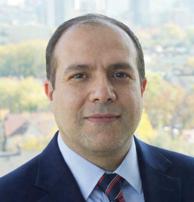
Dr. Mohamad Khazaei
Dr. Mohamad Khazaei is an assistant professor in the Division of Anatomy at the Temerty Faculty of Medicine, University of Toronto. His research focuses on human neural circuit injury and repair, with particular emphasis on traumatic brain injury and glioblastoma. Dr. Khazaei’s work aims to develop human-relevant platforms that inform regenerative and cell-based therapeutic strategies for neurological disease.

Dr. Aneta Krakowski
Dr. Aneta Krakowski is a child psychiatrist at the Hospital for Sick Children. Her research focuses on single gene disorders associated with autism and ADHD, specifically neurofibromatosis Type 1 (NF1), as a way of understanding phenotype-genotype correlations.

Dr. Carmen Riggioni
Dr. Carmen Riggioni is a clinicianinvestigator at the Division of Allergy & Clinical Immunology at the Hospital for Sick Children and an Associate Scientist Track Investigator at the Peter Gilgan Centre for Research and Learning. Her research focuses on food allergy diagnosis and treatment, specifically immunophenotyping, immunotherapy, and the microbiome.

Dr. Nicole Kozloff
Dr. Nicole Kozloff is an associate professor in the Department of Psychiatry and Institute of Health Policy, Management and Evaluation and a psychiatrist and scientist at the Centre for Addiction and Mental Health, where she directs the McCain Centre for Child, Youth and Family Mental Health.
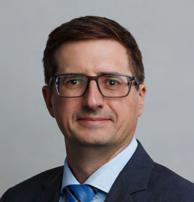
Dr. Dallas Seitz
Dr. Dallas Seitz is the Chief of the Division of Geriatric Psychiatry at the Centre for Addiction and Mental Health (CAMH) where he also holds the Peter and Shelagh Godsoe Chair in Late-Life Mental Health Research. Dr. Seitz’s research examines health service and knowledge translation related to dementia and older adult mental health.

By Kristen Ashworth
On Thursday, November 13, 2025, the IMS Magazine hosted its second annual Fall Launch Party to celebrate the publication of our 2025 fall issue, Health in the Margins, and to welcome a new academic year with the magazine. Journalists, editors, and designers, both new and returning, alongside IMS faculty, staff, students, friends, and featured guests, joined together for a wonderful evening of celebration, community, and of course, some delicious food!
The party began with a welcome address from Interim Director of the Institute of Medical Science (IMS), Dr. Lucy Osborne. The magazine was grateful for her thoughtful remarks, which focused on the growth of the magazine since its founding in 2011, and its unique role within our IMS community. Dr. Osborne highlighted how the magazine provides students with an opportunity to greatly strengthen their scientific communication skills, while also being a platform to showcase the remarkable research taking place across the institute.
The evening continued with a presentation that introduced the 2025-2026 magazine team, including our executive editors, designers, and journalists, many of whom were in the audience.
This was followed by a panel discussion with an impressive line-up of guest panelists featured in the fall issue, including Dr. Sloane Freeman, Dr. Jenny Lau, and Dr. Mayrose Salvador. Dr. Freeman, a pediatrician at St.
Michael’s Hospital and associate professor at IMS, founded the Research Equity Advocacy in Child Health (REACH) School Network program to better connect school-aged children to health professionals; Dr. Lau, a palliative care physician at the IMS, is working to reduce barriers to palliative care access for those with substance use disorder; and Dr. Salvador, Co-Founder of Pueblo Science, brings hands-on, communitydriven science education to underserved and remote classrooms around the world. Together, all three panelists brought a breadth of versatile and insightful perspectives to the conversation on the issue’s theme. The discussion spanned topics ranging from career pathways and the driving forces behind their research passions to thoughtful reflections on practicing sensitivity and empathy in their work, particularly in their interactions with marginalized communities.
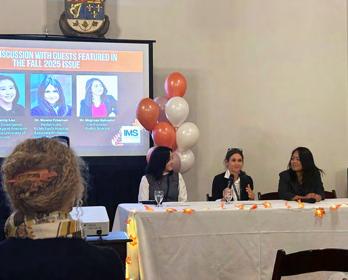
The evening concluded with a reception that included some delicious food, music, and photos. Guests also had the opportunity to pick up their hard copies of the fall issue.
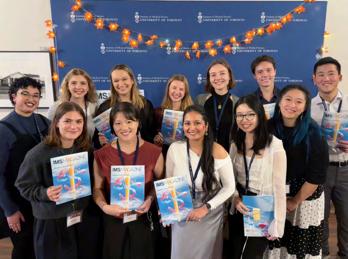
The IMS Magazine would like to extend its sincere thanks to everyone who contributed to both the issue and launch party event, as well as the faculty, students, and guests who came out to support and celebrate the magazine for our second annual launch party. We couldn’t have asked for a more successful evening and look forward to coming together again next year!


By Rianna Sarbajna
Our understanding of health has shifted vastly over time, from an exclusively biological lens to incorporate various social demographics that allow us to have a more holistic understanding of the factors impacting our wellbeing. In the healthcare field, health equity, social determinants of health, and EDI (equity, diversity, and inclusion), now dominate popular discourse in policy discussions. This is sometimes done so meaningfully, however, more often than not this is quite ambiguous. Despite their prominence in institutional agendas, translating these concepts into everyday clinical practice remains a persistent challenge. Conversations pertaining to health inequities often remain at the level of recognition, or policy reform, while practical mechanisms for identifying inequity at the bedside are less clearly defined. How then, do we begin to address health inequity at the level of the patient, within the ebbs and flows of everyday care? At the Hospital for Sick Children (SickKids), an attempt at answering this pressing question takes a simple approach—The Health Equity Data Initiative, otherwise known as HEDI.
HEDI was first piloted at SickKids in 2023. This standardized questionnaire aims to collect data on patients’ and families’ basic social demographics such as racial and ethnic background, patient sexual and gender identities, family income, preferred language, disability status, and migrant status among other variables. The goal of HEDI is not to categorize patients, but to create a clear and robust image of their
social context which shapes their health outcomes, access to care, and overall patient experience. Crucially, the collection of this data allows for comparability across patient populations, enabling the identification of systemic patterns that may need to be considered. In doing so, HEDI transforms these social factors into quantifiable variables that can be integrated into clinical research, resource allocation, and institutional decision-making.
Although HEDI appears to be a small dent in the broader landscape of health equity work, its impact at SickKids has been nothing less than substantial. Data collected through the initiative has been used to identify gaps in care, tailor social support interventions, and inform numerous research studies across the institution.
HEDI data has directly informed studies on telemedicine access, as well as helped identify vulnerable populations to support the creation of patient social support funds. Critical to its success are the numerous student volunteers who have worked tirelessly over the past three years to collect this data, many of them doing so in one of the most sensitive and busy areas of the hospital, the emergency department (ED).
The ED is often where patients and families first encounter the hospital, drawing in the largest number of diverse patient demographics in a single department. It is a unique space in the hospital, one that is demarcated by the interdisciplinary care it provides and by the heightened vulnerability of the patients it cares for. For student
research volunteers, navigating such a climate is both an insightful experience and an incredibly daunting task.
When interacting with a population that is often in pain, anxious, and exhausted from hours-long waits, posing questions on income and personal identity becomes a task that requires the utmost sensitivity and expert judgement. We interviewed Jasmine Zhang, a seasoned HEDI volunteer, who reflected on her own experience collecting patient data. She explains, “[it was] quite daunting…not knowing how the patients and families are doing in their rooms… [and] you’re not sure if it’s an inappropriate time.” This reflection is indicative of central tensions within such work: the need to gather meaningful, timely data whilst remaining acutely attuned to the emotional and clinical landscapes of the ED.
Jasmine Zhang is one of the longest serving student volunteers involved in the initiative. Beginning in 2023, her journey with health equity work began in the ED through the SickKids Emergency Assistants for Research in Child Health (SEARCH) program. This is an educational initiative aimed at integrating students into patient-specific research efforts in the ED, where she quickly became acclimated to the fast-paced realities of emergency care.
At first glance, the collection of such data may seem deceivingly simple. Volunteers such as Jasmine are instructed to move room to room, introduce themselves, and offer families the option of completing the


Whilst the data HEDI collects is essential to building the basis for health equity work, the questionnaire touches on sensitive subjects, such as ethnicity, personal income, and sexual identity. Unsurprisingly, volunteers such as Jasmine often encounter a sense of hesitation or explicit push back during patient encounters with families asking, "Why does that matter?" or rejecting to answer certain questions. When encountering such scenarios, Jasmine emphasizes the importance of pausing to listen to families’ specific concerns.
questionnaire with them. However, these volunteers are required to consistently make rapid, context-dependent judgments, deciding not only how to approach families, but whether it is appropriate to do so at all, often with access to limited and brief chart notes. Jasmine recounts her initial experiences as intimidating. “There’s a lot of urgency going around,” she explains, “as a volunteer, you don’t want to be a burden or bother anyone more with certain task.” In addition to exposing her to the everyday clinical intensity and heterogeneity of the ED, such an environment has allowed her to become increasingly attuned to its complex emotional landscape. Families, often waiting for hours, may already be distressed, even in low-acuity cases. Thus, volunteers are required to approach each interaction with heightened situational and emotional awareness, while still fulfilling the research objectives of HEDI.
Jasmine highlights that the collection of feedback is just as important as collecting the data itself. She notes, “There’s no point in being defensive when this is the population you’re trying to help. You have to respect the circumstance they’re under… at the end of the day you respect their decision and autonomy for their kids.” Yet, despite the inherent challenges associated with such patient interactions, it is precisely this relational aspect of the work that drew Jasmine to HEDI. She reflects, “What I enjoyed most was actually interacting with the families and having a conversation with them, that felt a little bit more fulfilling to me.” Having previously participated in more traditional research roles, she found herself drawn to the opportunity for direct engagement with families to more effectively understand their experience navigating the healthcare system.
Nearly three years later, her experience as a volunteer and a member of the HEDI team has fostered a growing sense of
confidence within Jasmine. “It takes a long time to build that confidence in the [ED], but once you have that, you realize that you’re well supported.” Her confidence is not simply a product of time, but from hours of learning to operate within uncertainty, pivoting between various unique patient cases. She has also been backed by the support of a team that both guides and legitimizes her work as a volunteer in this high-stake environment. Jasmine’s work, and that of the broader HEDI team, is a reminder that while health equity work may demand sweeping upstream reform, its foundations are laid in everyday patient encounters. This can be observed through the quiet and consistent efforts of research volunteers, and their willingness to listen with patience and care.
HEDI itself, however, extends beyond the bedside. It is not a static initiative but rather a dynamic framework that is continuously refined to reflect the evolving realities of SickKids’ patient populations. In the spring of 2026, the questionnaire will expand to include questions on a patient’s ability to pay for basic needs, such as utilities, food, and housing, as well as their ease of access to transportation to and from the hospital. In a landscape where equity is often discussed solely in theory, HEDI represents a deliberate shift towards actionable progress. By embedding patients’ social realities into clinical systems, HEDI aims to transform health equity from an aspiration into measurable and actionable change.

By Omer A. Syed
What if I said that your reading of this article, possessing this edition of the IMS Magazine, and even knowing of the Institute of Medical Science or the University of Toronto to begin with, was naught of your free will or conscious choice but predetermined? Often people feel that their entire lives have led up to a specific singular moment. Robert Sapolsky, a Stanford University Professor of Biology, Neurology, and Neurosurgery, in his book Determined: A Science of Life Without Free Will, 1 provides a compelling case for how this is indeed always the case for every moment in one’s life.
Discussions on the existence of free will, or the lack thereof, have been occurring across millennia, spanning the fields of theology, law, physics, and now, as discussed in Determined , psychology and neuroscience. In just over 400 pages, Sapolsky provides a clear account for the scientific backing of a world without free will.
To effectively present his case, he highlights how all our seemingly conscious decisions are influenced and dictated by internal and external factors which are out of our control. For instance, the spontaneous motor movements we mistakenly attribute to conscious intentions are, in actuality, caused by the activation of specific brain regions milliseconds prior to our perception of these actions. The variation in our day-today mood which affects our behavior and
judgements is influenced by environmental stimuli and their impact on our hormone levels. Even our personality and attitudes in adulthood are shaped by our early adolescent and childhood experiences, mother’s prenatal behavior, and parental gene pool. In this book, Sapolsky provocatively asserts that our lives are determined by the hand we were dealt before even being born.
“[E]ssentially every aspect of your childhood—good, bad, or in between—factors over which you had no control, sculpted the adult brain you have.” (pg. 67)
Leading a life wholly determined by factors outside of our control is a sobering thought that may justifiably elicit feelings of existential dread. However, a meaningful silver lining appears if we were to recalibrate our perspective and consider how the behaviors of those around us are not governed by their reasoned choice or free will either. Having served on several court cases as an expert witness, Sapolsky describes how the wrongdoings of individuals, from trivial, minor offenses to morally reprehensible acts, are entirely influenced by biological and environmental factors outside of the offenders’ control. Similar to how the growth of a brain tumor could cause someone to commit heinous crimes, so could traumatic childhood experiences that shift a person’s brain chemistry towards deviant and unconventional behavior. Nevertheless,
while the former’s case may typically be viewed sympathetically, the latter’s circumstances are likely discounted, and the person is deemed guilty. To that end, while surrendering the belief in our own free will might be uncomfortable, it can lead to a less judgemental and more empathetic world—one where we consider a person by the hand they were dealt, not solely by the cards they play.
Sapolsky convincingly advances the case for determinism, but certain implications could have been elaborated on further. For example, although morality is mentioned several times throughout the book, his discussion in the area left much to be desired. Specifically, the notion of excusing moral wrongdoings in light of the absence of free will is to imply there exists moral rights and wrongs to begin with. A world without reasoned choice or free will, however, seems incompatible with the existence of morality, at least in any objective sense. Nevertheless, Determined: A Science of Life Without Free Will is a great example of effective science communication, breaking down a complex area of discussion in a manner that can be entertaining for academics and lay people alike. For these reasons, albeit slightly unsettling, it has been one of my most recommended books since its publication in 2023.
References

By Alyona Ivanova
As the winter season began to set in, I was lucky enough to escape the cold and spend a week in Hawaii attending the Annual Meeting of the Society for Neuro-Oncology. This year, neuro-oncologists, scientists, students, and industry professionals gathered in Honolulu—the capital and largest city of Hawaii.
What immediately strikes the first-time visitor is how happy and welcoming Hawaiians are. The slower pace of life, year-round warm and sunny weather, stunning natural surroundings, a deep sense of community—all these factors contribute to a high quality of life. “Aloha” is not just a commonly used greeting; it is also a way of being that fosters harmony between people and nature. It signifies “the presence of breath” and deeply represents a philosophy of love, peace, compassion, and affection. The “Aloha Spirit” is a foundational Hawaiian philosophy of life that guides people to live with kindness, respect, and care for others and for nature.
Nature on the island of Oahu is truly mesmerizing. From dramatic volcanic mountain ranges, lush rainforests, to scenic white-sand beaches bordering the turquoise Pacific Ocean, Oahu truly feels like a paradise. I highly recommend hopping on a Grand Circle Island Tour bus that will take you around the island’s iconic landmarks. Prepare to be amazed!
Hawaii is known as the Rainbow State (ānuenue in Hawaiian). Its ideal weather conditions make it one of the best places on Earth to see rainbows. They are so common that they even appear on vehicle license plates.
One of the most memorable experiences during my time in Hawaii was watching a monk seal haul out on the beach to rest as the sun was setting, so be sure to watch out for wildlife along the shores.
Dining out in Hawaii can be expensive due to high produce import costs. However, trying new things while traveling is a must! Hawaiian cuisine offers a unique and delicious blend of Polynesian, Asian, and American influences. Surrounded by the ocean, Hawaii has an abundance of fresh local seafood. One traditional dish invented by Native Polynesians is poke. It consists of raw fish (most commonly tuna or salmon) marinated in soy sauce and sesame oil and served over rice with various toppings. Hawaiian tropical fruits also deserve special recognition. I recommend visiting farmers’ markets to try exotic fruits like dragon fruit, lychee, papaya, or the famous blue bananas. If you have extra time, a trip to the Dole Plantation is well worth it for their fresh and flavorful pineapples and the iconic Dole Whip.
Finally, be sure to explore Hawaii’s incredible outdoor activities, from snorkeling to hiking. And if you’re feeling adventurous, sign up for a surf lesson and embrace the waves!



By Emily Forster and Sonika Kumari
While there’s no right time to have kids, deciding if and when to do so can be a challenge—and for many, it’s also a luxury. Imagine being asked to decide within days whether to preserve fertility before chemotherapy, or trying to plan a pregnancy during the unrelenting pace of medical training. Both situations carry quiet urgency. Fertility preservation offers options, but only if people are informed early enough and can access care equitably.
Fertility preservation is an umbrella term for different medical techniques that save eggs, sperm, or other reproductive tissues to help someone have a child in the future. For males, freezing sperm is rather easy, as samples can simply be frozen and then stored indefinitely for later use. Females, however, need to go through a more complicated process, as egg freezing involves up to two weeks of daily hormonal injections and multiple clinic appointments, followed by a minor surgical procedure. Collected eggs are then frozen at ultra-cold temperatures for longterm storage, known as cryopreservation. Eggs can also be fertilized with partner or donor sperm before storage, a process known as embryo cryopreservation. While these techniques offer excellent options, many people first encounter them during moments of crisis, with limited time to understand and access them.
For cancer patients, time is often the scarcest resource of all. Cancer therapy
can damage sperm or eggs and can deplete ovarian reserve,1 putting the patient’s fertility at risk. Many cancer patients cannot delay treatment for egg freezing or may be too young to provide eggs. A promising alternative is called Ovarian Tissue Cryopreservation (OTC), a procedure in which thin sections of ovary are laparoscopically removed and then cryopreserved. These tissue fragments can later be re-implanted to restore fertility and hormonal function.2
In episode #135 of Raw Talk Podcast, Dr. Jennia Michaeli, an oncofertility specialist and clinician-scientist at Mount Sinai Fertility, shared, “People spend the rest of their lives as cancer survivors, and we want to make sure that they maintain their quality of life and are able to accomplish their life goals. And for many people, having children is one of the most fundamental life goals.” Yet in the shock and urgency of a cancer diagnosis, fertility may not be top of mind—including for the treating physician. Patients cannot choose options they are never offered; this makes early, standardized fertility counseling not just a clinical courtesy, but an equity issue. Counseling must also be culturally respectful and traumainformed, recognizing that beliefs about reproduction and medical decisionmaking differ across communities.
Despite OTC’s promise, access remains unequal: laparoscopic surgery can be done in most medical
settings, but processing and storage require specialized facilities. To improve access, tissue samples can be transported to centralized cryobanks with appropriate infrastructure. 3 Dr. Michaeli described this model as “the patient stays; the tissue moves”, a slogan she heard originally from international colleagues. In practice, however, this system depends on awareness, coordination, and funding— all still lacking.
Fertility preservation also intersects with longstanding health inequities. In Ontario, lesser-known fertility preservation methods like OTC remain completely unfunded, which is often an insurmountable financial barrier to access. An OTC procedure alone costs approximately $12,000 USD, 4 which does not even include the costs for sample storage or reimplantation when pregnancy is desired. These gaps disproportionately affect patients with lower incomes, those in rural communities, and those navigating multiple systemic barriers to care, widening existing disparities in cancer outcomes and access to specialized care. 5 Ensuring equitable fertility preservation therefore demands culturally competent communication, dedicated navigation resources, and funding structures that do not disadvantage already marginalized populations. Expanding fertility preservation options means little if access remains limited to those in most need.

These inequities extend beyond oncology, into training of future physicians, professionals, and more. Even without illness, fertility preservation decisions weigh heavily on young people in the early stages of demanding careers, particularly in medicine. Population-based data from Ontario show physicians’ median age at first childbirth is 32, compared with 27 among non-physicians. 6
In episode #135 of Raw Talk Podcast, Dr. Lauren Pickel, a first-year urology resident at the University of Toronto, shared that while in medical school she did not remember “any teaching about family planning, fertility planning, and how that might intersect with a medical career.” This gap is common, as less than 8% of female physicians are educated on the risks of delaying pregnancy, such as infertility, miscarriage, or pregnancy complications. 7 This shortcoming affects personal choices as well as career trajectories, including specialty selection, geographic placement, and long-term seniority status. Although female representation in medicine has been rising in Canada, it remains disproportionately low in leadership positions and in the surgical specialty, 8,9 highlighting the importance of improved workplace family planning policies and education.
On a lighter note, in episode #135, Dr. Nirojini Sivachandran, a retinal surgeon and clinician-scientist at the

Toronto Retina Institute, who had two children during residency, described how institutional support can make a difference: “I had the most amazing program director who was incredibly supportive, and I think that truly helped me carry through the program.” Stories like hers highlight how workplace culture and policy shape reproductive choices. Improving family planning policies and education in the workplace could significantly better the quality of life for many physicians and their families.
Across oncology clinics and medical schools, the same gap persists: fertility preservation exists, but education and access lag behind. When people can see the options available to them and the steps they need to take, decisions feel less like emergencies and more like care. Fertility care must begin with early standardized counseling and sustained public funding. Reproductive choice must be protected as a core component of equitable care, not just a privilege.
We would like to acknowledge the efforts and ideas of the episode #135 team. Sonika Kumari and Julia Wong were Show Hosts and Tesam Ahmed was our Content Creator. Angela Dela Cruz was the Audio Editor and Nicole Chu is our Executive Producer.
To learn more about why fertility preservation must be a health system priority, we invite you to listen to episode #135 of Raw Talk Podcast, titled #135: Understanding Fertility and Reproductive Health.
1. Vassilakopoulou M, Boostandoost E, Papaxoinis G, et al. Anticancer treatment and fertility: Effect of therapeutic modalities on reproductive system and functions. Critical Reviews in Oncology/Hematology 2016;97:328–334; doi: 10.1016/j.critrevonc.2015.08.002.
2. Diaz-Garcia C, Domingo J, Garcia-Velasco JA, et al. Oocyte vitrification versus ovarian cortex transplantation in fertility preservation for adult women undergoing gonadotoxic treatments: a prospective cohort study. Fertility and Sterility 2018;109(3):478-485.e2; doi: 10.1016/j.fertnstert.2017.11.018.
3. Michaeli J, Erb M, Savic M, et al. Fertility preservation by ovarian tissue transportation and centralized cryobanking for a 20-year-old woman with Hodgkin lymphoma. CMAJ 2025;197(39):E1307–E1310; doi: 10.1503/cmaj.250519.
4. Levine J, Canada A, Stern CJ. Fertility Preservation in Adolescents and Young Adults With Cancer. JCO 2010;28(32):4831–4841; doi: 10.1200/JCO.2009.22.8312.
5. Peipert BJ, Potapragada NR, Lantos PM, et al. A Geospatial Analysis of Disparities in Access to Oncofertility Services. JAMA Oncol 2023;9(10):1364; doi: 10.1001/jamaoncol.2023.2780.
6. Cusimano MC, Baxter NN, Sutradhar R, et al. Delay of Pregnancy Among Physicians vs Nonphysicians. JAMA Intern Med 2021;181(7):905; doi: 10.1001/jamainternmed.2021.1635.
7. Lai K, Garvey EM, Velazco CS, et al. High Infertility Rates and Pregnancy Complications in Female Physicians Indicate a Need for Culture Change. Annals of Surgery 2023;277(3):367–372; doi: 10.1097/SLA.0000000000005724.
8. Pickel L, Sivachandran N. Gender representation in Canadian surgical leadership and medical faculties: a cross-sectional study. BMC Med Educ 2024;24(1):667; doi: 10.1186/s12909-024-05641-6.
9. Pickel L, Sivachandran N. Gender trends in Canadian medicine and surgery: the past 30 years. BMC Med Educ 2024;24(1):100; doi: 10.1186/s12909-024-05071-4.