The Running Issue


Strength supports the moments that ask your body for a little more. Exercise helps build that strength, and real life is where you feel the difference. CanPrev’s Creatine MagnaPower ® fuels your muscles with the energy needed to power those everyday demands, supporting strength in every step.









annual calendar and featured events to keep you running all year
with Feta and Dill
C asarecce Pasta With Butter
Edamame and Pistachio Soba Noodle Spinach Salad 108 Cinnamon Sugar Dessert Gnocchi 110 Q uick Macerated Berries with Mint & Coconut Whip

A leader in the industry for 35 years, IMPACT Magazine is committed to publishing content provided by the best experts in their fields for those who aspire to higher levels of health and fitness.
PUBLISHER & EDITOR-IN-CHIEF Elaine Kupser elaine@impactmagazine.ca
GUEST EDITOR Louise Hodgson-Jones corsa.communications@shaw.ca
ART DIRECTION & GRAPHIC DESIGN Marc Morin - Impello Inc marc@impello.com
COPY EDITORS Tom Lundteigen
DIGITAL MARKETING & SOCIAL MEDIA MANAGER Maricris Taeza maricris@impactmagazine.ca
ADVERTISING advertising@impactmagazine.ca
LEGAL COUNSEL Gregory Forrest PRINTING TC Printing
DISTRIBUTION Media Classified Maple Leaf Distributors
CONTACT IMPACT Magazine Head Office 2007 2nd St. S.W. Calgary, AB T2S 1S4 403.228.0605
SUBSCRIPTIONS
$45 for one year, or $70 for two years (includes GST) impactmagazine.ca/subscriptions
WEBSITE www.impactmagazine.ca
SOCIAL impactmagcanada impactmag impactmag ImpactMagTelevision


The opinions expressed in IMPACT Magazine are the writers’ and not necessarily those of the publication. IMPACT Magazine advises you to consult your physician if you do not follow a regular fitness program. All content is the property of IMPACT Productions Inc. and cannot be reproduced in any form without written consent of IMPACT Productions Inc. © 2026 Impact Productions Inc.



Hannah is a musculoskeletal physiotherapist who holds a Master of Physiotherapy from the University of Queensland and a Bachelor of Kinesiology from the University of Calgary. She specializes in progressive injury rehabilitation programming, bridging the gap between acute injury and return to sport, from Calgary, AB.
HANPHYSIO HANPHYSIO HANPHYSIO
Jasper has a BSc Hons. in Kinetics from the University of Guelph, and is a NCCP Certified Coach in Triathlon, Athletics, Alpine Skiing, Tennis and Fundamental Movement Skills. An IRONMAN Champion, he is five-time Ontario Triathlete of the Year. He offers on-line and personalized coaching through his company B78 Coaching, based in Victoria, B.C.
B78COACHING B78COACHING B78COACHING
Janey is the author of the bestseller Fear To Fearce and is the founder of Fearce Academy Inc., a wellness company that helps peak performers maximize their mental health and psychological potential. Brown has impacted people of all demographics globally with her motivational keynotes and wellness workshops, from Toronto, ON.
JANEYBWORLD JANEYBWORLD JANEYBWORLD JANEYBROWN
Owner of Andie Pask Coaching, Andie is a certified running and strength coach with Peak Endurance. She has coached people of all ages and abilities and completed the UTMB 100M last year. She lives in Victoria, B.C. with her husband and two children.
ANDIEPASKCOACHING ANDIE.PASK
Melissa lives in Calgary, AB and is the owner & founder of We Run the World Coaching, Inc. and The Run Lounge. She has coached hundreds of athletes to personal bests in all distances. Her career highlights include running a sub 2:40 marathon as well as earning top Canadian female at the 2023 Chicago Marathon.
WERUNTHEWORLDCOACHING
President of Marathon Dynamics Inc., Kevin is a NCCP-certified running coach. He is still actively running and is the 2025 Canadian Masters Marathon Champion (55+), and six-time Canadian record holder (55+), from Toronto, ON.
MARATHONDYNAMICS
CONTRIBUTORS Hannah Antony, Jasper Blake, Addie J. Bracy, Janey Brown, Amby Burfoot, Scott Cruickshank, Jeremy Deere, Caroline Doucet, Lisa Harvey, Louise Hodgson-Jones, Cathal Logue, Angela Liddon, Irene Matys, Emily Meyer, Andy Pask, Melisaa Paauwe, Amy Puzey, Lori Rasmussen, Susan Scarlett, Andrew Simmons, Kevin Smith, Lauren Toyota, Jessica Natale Woollard.
PHOTOGRAPHERS Canadian Armed Forces, Bob DB Partnership, Brett Clarke, Caroline Doucet, Pam Doyle, Brynn Featherstone, Bob Garlick, Jessica Kalman, Ronald Lee, Angela and Eric Liddon, Jannel Lo, Conner MacFadyen, Irene Matys, Graham McKerrell, Alan McIvor, Julie Porter, Platinum Racing, Lori Rasmussen, Lauren Toyota, Jay Wallace.



That’s


Elaine Kupser, Publisher & Editor-In-Chief elaine@impactmagazine.ca

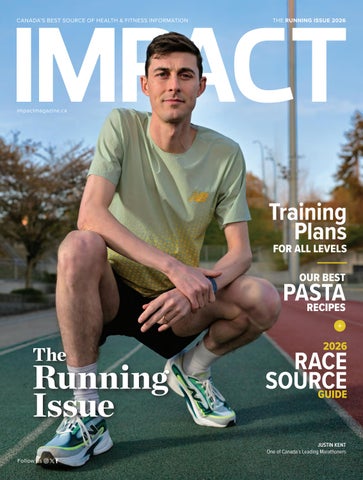
Welcome to our highly anticipated annual Running Issue and the 2026 RACE SOURCE GUIDE, your go-to edition for races, training, and inspiration for the year ahead. Hang onto this one—you’ll be referring to it often.
We’re here to inspire every kind of runner, whether you’re lining up for your first 5K, chasing a marathon personal best, training for your first triathlon, dreaming of your first ultra, or simply looking to stay healthy through the joy of running. What makes this issue so powerful is its inclusivity: running is for all levels, all backgrounds. All you need is a decent pair of running shoes and the willingness to head out the door and move.
Inside these pages, you’ll find training plans designed for nearly every race distance, created by some of the top running coaches from across the country. These programs are easy to follow, and designed to help you prepare with confidence, structure and intention, and ultimately get you across that finish line.
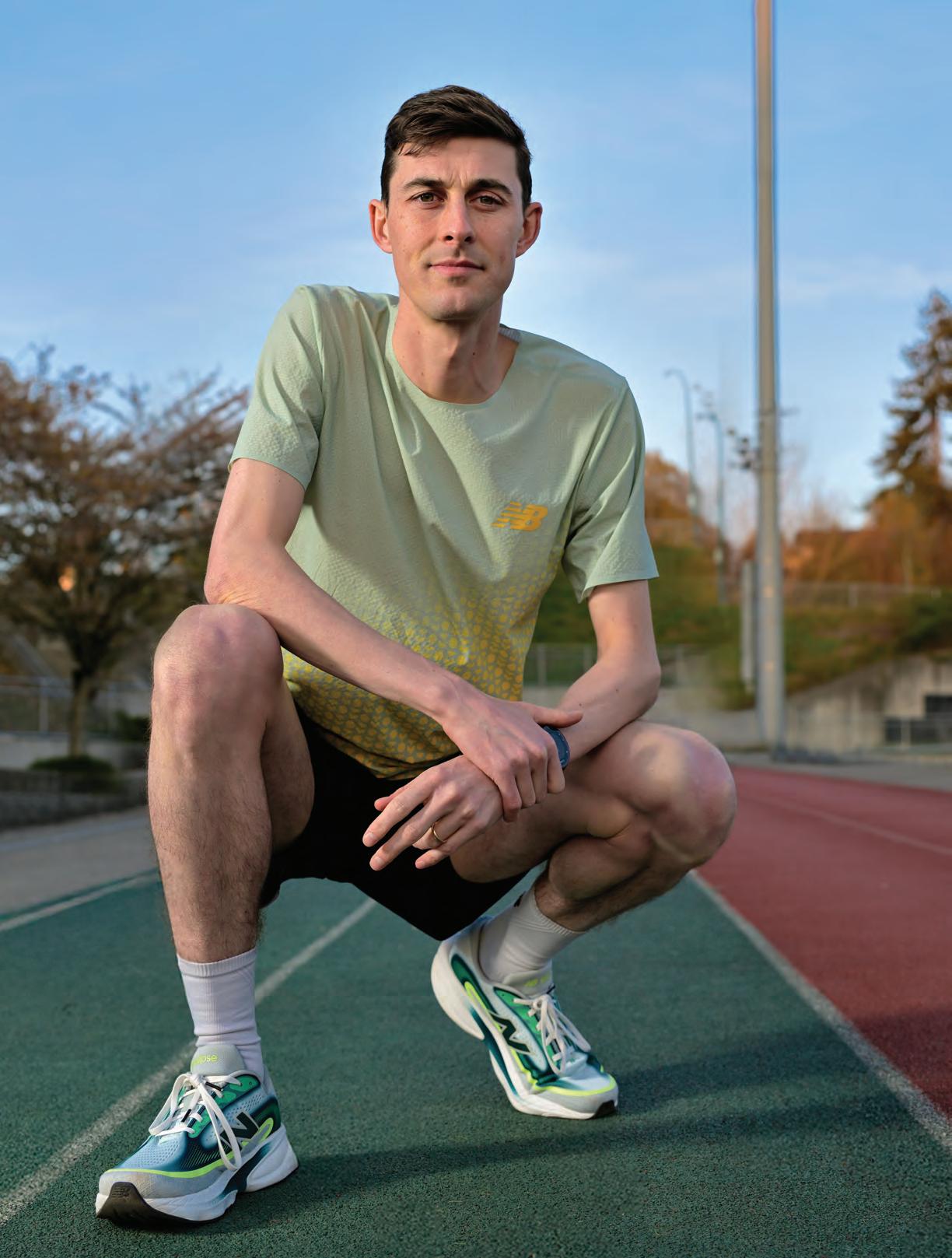
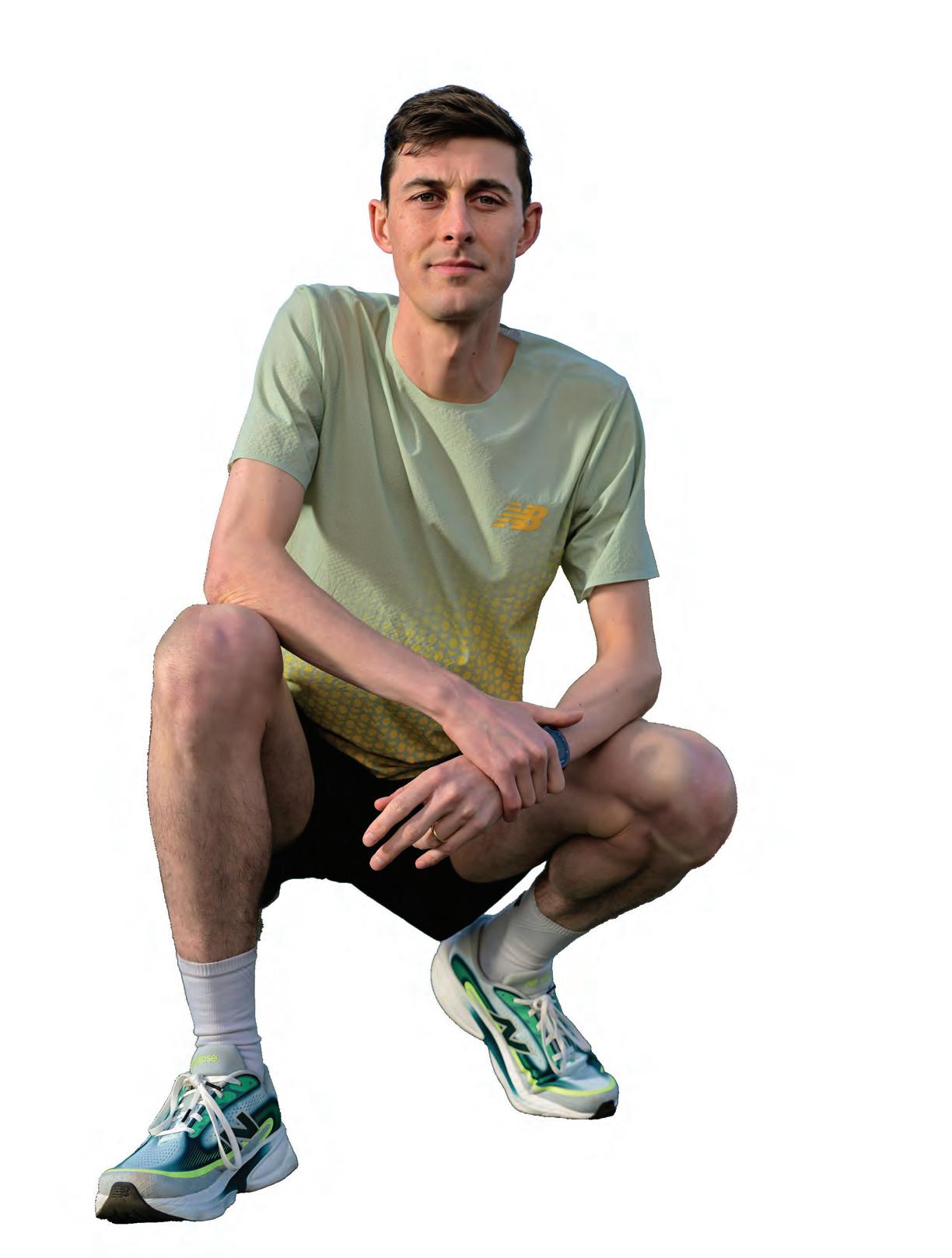
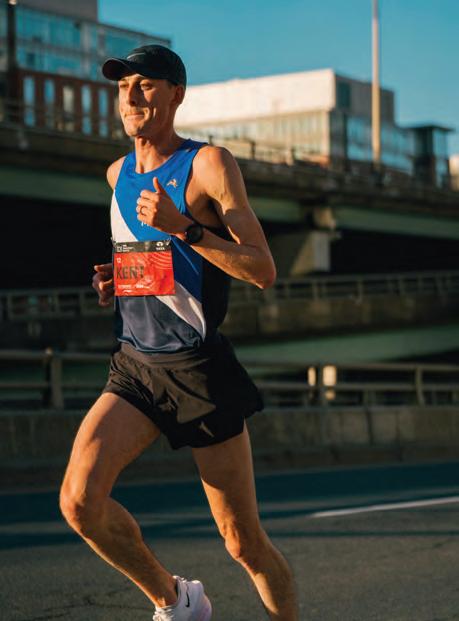
At the heart of this issue are our personal stories beginning with our cover story on Justin Kent from Vancouver, B.C. A Canadian top marathoner known for his steady rise in the sport, Justin’s story is one of persistence, growth, and the pursuit of excellence, told by none other than our Guest Editor (and runner), Louise HodgsonJones. We keep producing some of the best marathoners in the world here in Canada and we love featuring them on our covers.
We are also honoured to share the deeply moving story of elite runner, Jen Millar and her son, Eamonn. While Jen’s achievements as an athlete are remarkable, this story is not about pace or performance,
it’s about power of of community in the face of adversity.
Mike Shaw, who after suffering a catastrophic ski injury, resulting in a broken neck and paralysis, was told he may never walk again. Well, they were wrong. Guess what? He’s in our Running Issue for a reason.
Our Athlete with IMPACT stories remind us that running, and any sport or fitness endeavour, is never just about performance, but often more about perseverance, perspective and most of all, purpose.
We are equally excited to share expertise from our leaders in the fitness, health and sports medicine space. This includes workouts from two of our newest Canada’s Top Fitness Trainers 2026 awards recipients, along with guidance on mental health, nutrition, and training from trusted experts who continue to elevate how we approach health, fitness and performance on many levels.
And because health is also fuelled by joy, recovery, and balance, we’ve included perfectly delectable pasta recipes to bring a little comfort to your table post-workouts. I mean, Cinnamon Sugar Dessert Gnocchi, anyone? Thank you, Lauren Toyota!
As always, our goal is to deliver content that not only informs, but inspires. We hope that we are a magazine you can consider your long-time friend that meets you where you are in your journey, and encourages you to keep moving forward, one step, one run, one goal at a time.
Thank you for being part of our community. We’re proud to share this issue with you.
Friday, May 29 - Saturday, May 30 - Tickets on Sale Now
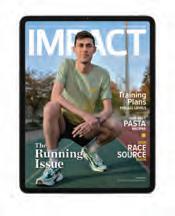
Didn’t get your hands on a favourite edition of IMPACT? Or maybe your best friend secretly borrowed it from you? No worries. Subscribe to our FREE newsletter and digital edition online at www.impactmagazine.ca


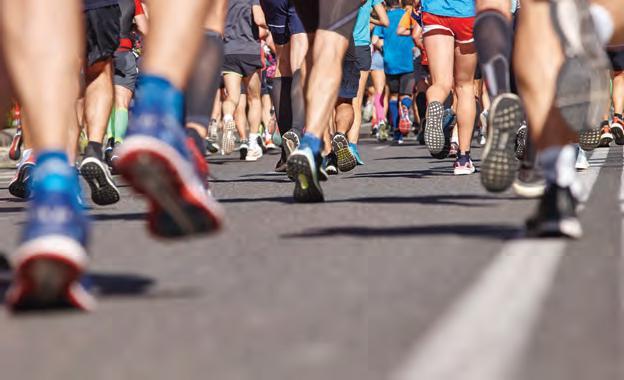
Better medical response and training and the use of lifesaving equipment at races have improved survival rates from cardiac arrests, according to a study from the Race Associated Cardiac Event Registry (RACER).
The study analyzed cardiac arrests that occurred during US marathons and half-marathons between 2010 and 2023, tracking how they happened, who’s most at risk, and survival rates. Of the 29 million recreational marathon and half marathon finishers there were 176 documented cardiac arrests—averaging one in every 166,667 runners. Of those, 117 individuals survived, resulting in a 66 per cent survival rate. This was an improvement over the 2000 – 2009 RACER study which was at 29 per cent.
Men were the higher risk factor—1.12 per 100,00—with women showing 0.19 per 100,000. Perhaps not surprisingly marathoners were also at a higher risk than half marathoners—1.04 per 100,000 and 0.47 per 100,000 respectively.
Of the 52 per cent of cardiac arrests coronary artery disease (CAD) was the most common medical issue. Other causes included an enlarged heart and exertional heat stroke but were less common.
The conclusion was that despite increased participation in endurance races, rapid response from medical teams and the immediate availability of defibrillation and CPR led to increased survival rates.
Source: Journal of the American Medical Association (JAMA)
If you are an Ironman athlete and used to taking images of your race, including that coveted selfie at the finish line, you are no longer allowed to do this. As of March, Ironman has amended their 2026 Global Competition Rules to ban all on-course communication including cameras, phones and smart glasses. Use of them will lead to disqualification.
The rules state: “Using any device (e.g., including without limitation, cameras, phone cameras, video cameras, glasses, etc.) to capture photographs, video, or other visual images during the Race is prohibited. Athletes using any device in this manner will be disqualified.”
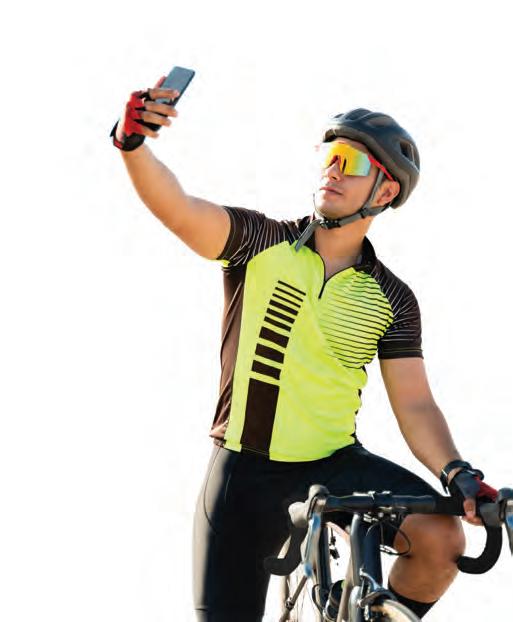
Organizers cite safety is the reason behind this change, as well as protecting the integrity of the race and other athletes. They claim races are adequately covered by the official photographers. We wait to see the ramifications of this ban and if other races will consider this policy.
Exercise can have positive impacts on our immune system. As we go from being physically inactive to active, our infection risk declines. If we overtrain, however, as hardcore athletes often do, we may put excessive stress on our body and actually increase our risk of infection.
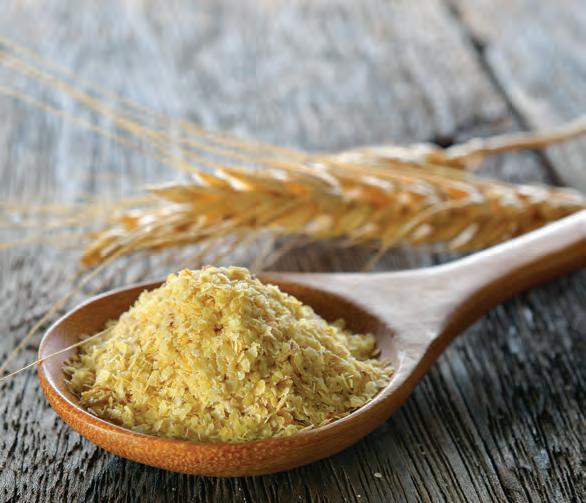
Beta-glucan, a special type of fibre found in baker’s, nutritional, and brewer’s yeasts, may prevent this immune decline in marathon runners. Indeed, a study found that we can better maintain our level of circulating white blood cells after exhaustive exercise by consuming beta-glucan.
Nutritional yeast may also help improve mood. Elite athletes normally experience mood deterioration before and after a marathon, but researchers found that a little nutritional yeast may improve a wide range of emotional states, reducing feelings of tenseness, fatigue, confusion, and anger, while at the same time increasing perceived vigor.
A note of caution: People with the autoimmune diseases Crohn’s disease and hidradenitis suppurativa may want to avoid nutritional yeast.
Source: www.nutritionfacts.org
Since 2000, Westside Recreation Centre has been a cornerstone in Calgary’s southwest, a place where generations have trained, played, and built lasting connections.
Our recently expanded Fitness Centre, updated running track, best-in-class fitness equipment, renovated Plus change rooms, and a café opening soon are just a few of the new things you’ll find at Westside. Come be part of our community.

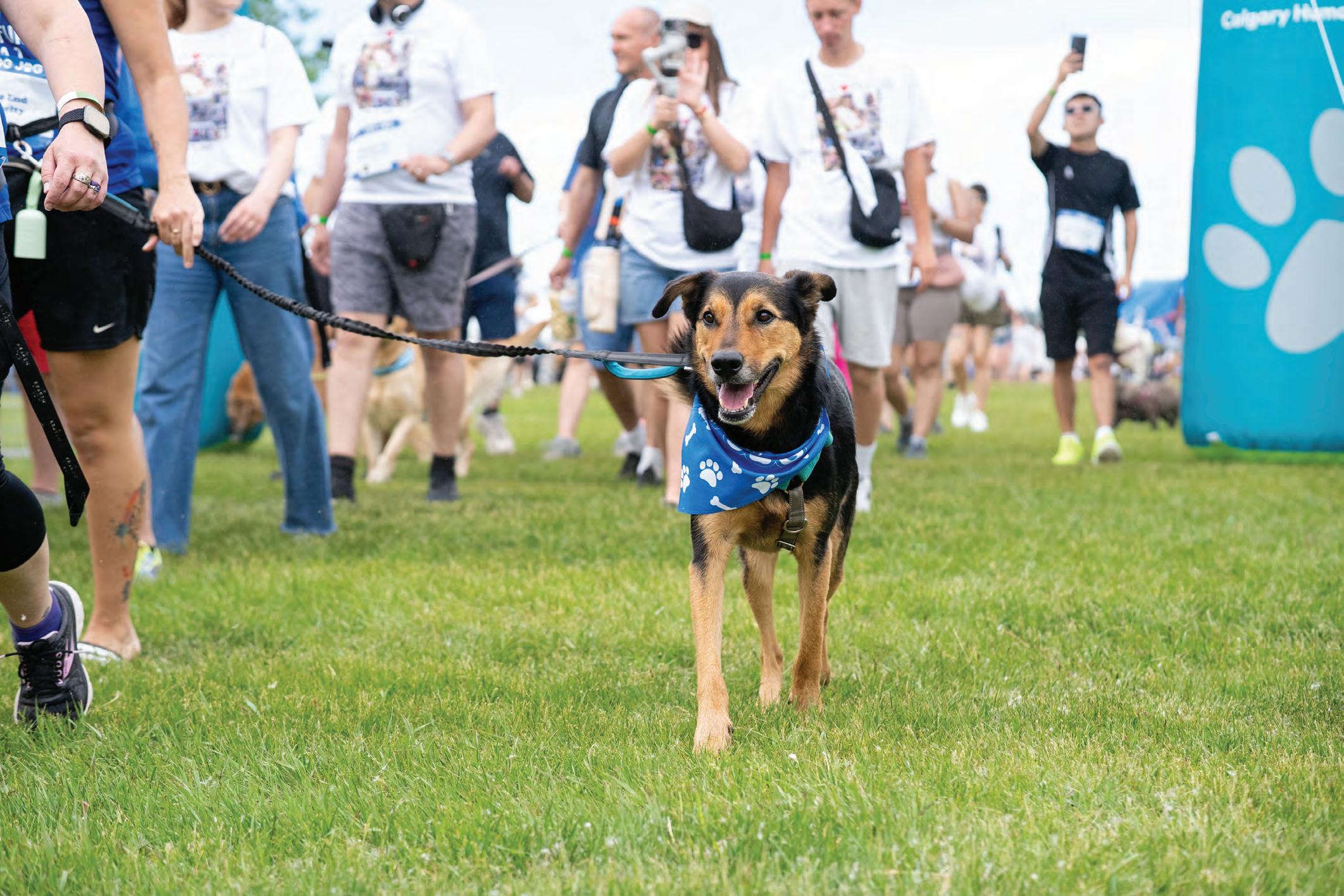

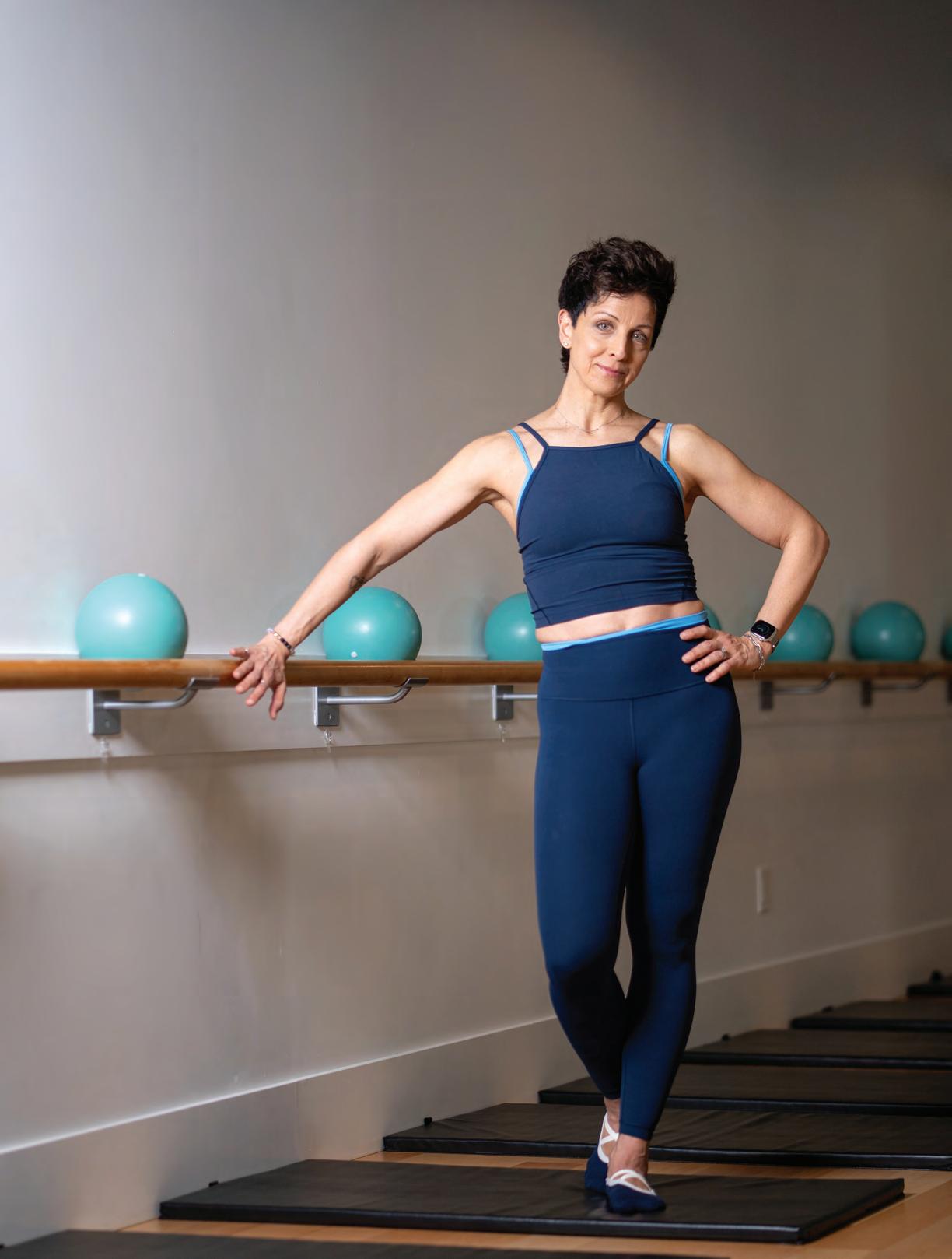
Run taller, build strength, balance, and control with these standing barre movements designed to support your run
BY SUSAN SCARLETT BOB DB PARTNERSHIP
One of Canada’s Top Fitness Instructors, 2025 and owner of Barre Fitness in Surrey, B.C. BARREFITNESS.SS BARREFITNESS
Clothing Courtesy Morgan Crossing lululemon
Running well isn’t just about distance, it’s about control. This standing Barre sequence targets the hips, calves, quads, glutes and core to improve stability, posture, and efficiency. By building strength through single-leg work and controlled, low-impact movement, you’ll support your stride and move with more ease. These exercises also help reinforce alignment and balance, key elements for reducing injury risk and maintaining consistency in your training. Best of all, this sequence can be done anywhere, with no equipment required, making it easy to add into your routine whenever you need it.
2 sets, 8-12 reps + 16 count balance hold Stand with feet wider than hips, toes turned slightly out. Press through the balls of your feet to lift your heels, then lower with control, stopping just before the heels touch the floor. Continue for 8-12 reps, maintaining constant tension and resistance. Weight is evenly distributed in all 10 toes. After your final rep, hold at the top (heels lifted) for 16 counts, staying tall through the spine and steady through the ankles as you balance here.
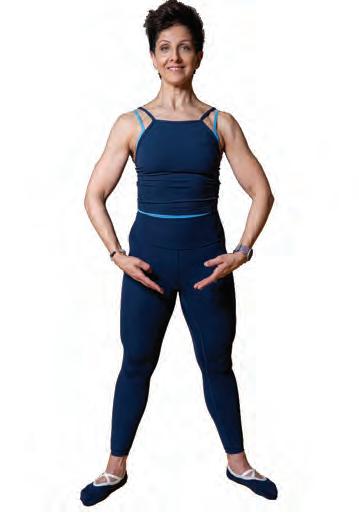
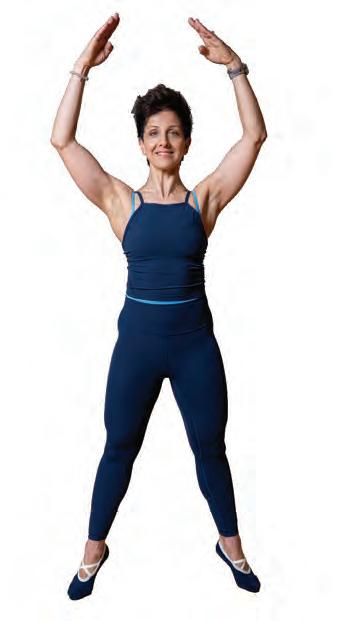
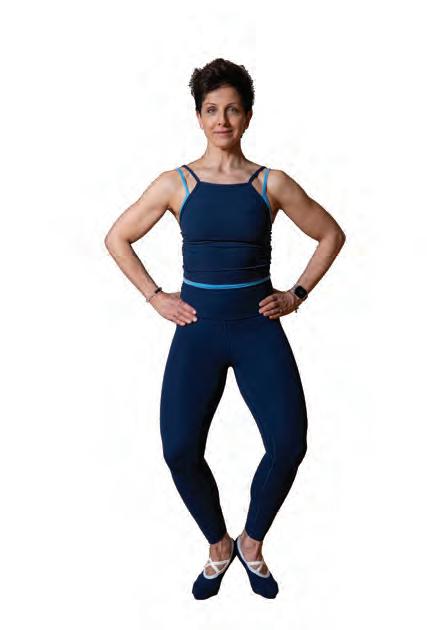
2 sets, 8-12 reps + 16 count pulse Stand with heels together, toes turned out. Lift heels off the floor and bend your knees slightly (this is your starting point. Press your lifted heels together and bend your knees into a demi plié tracking the knees over your toes while keeping your torso upright. After completing your reps, hold at the bottom and pulse for 16 counts in a small, controlled range before returning back to standing. •
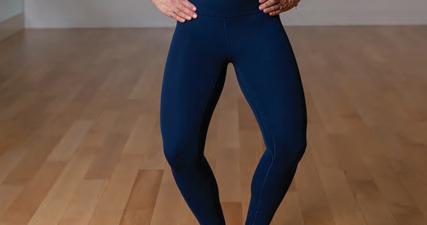
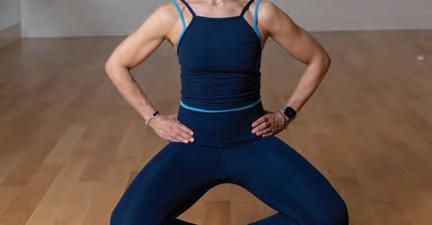
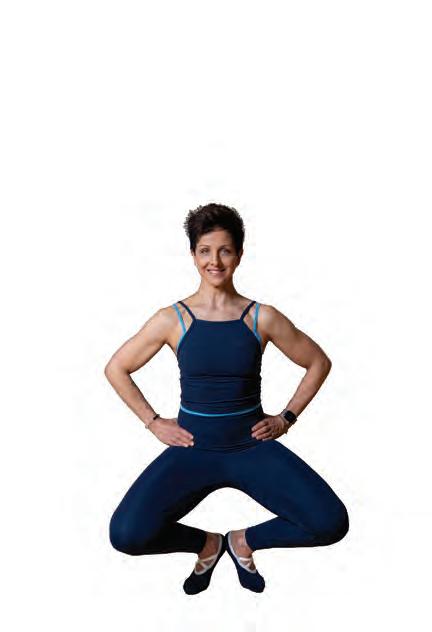
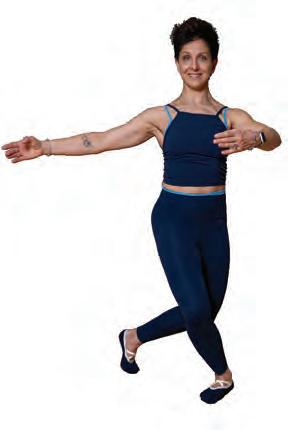
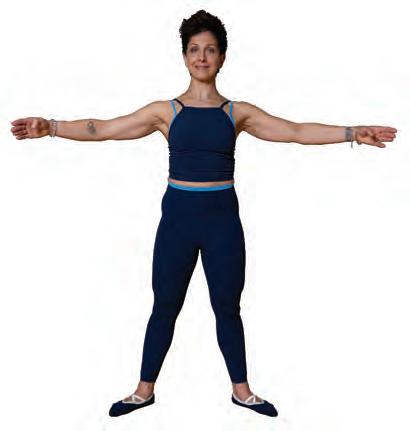
2 sets, 8-12 alternating reps + 16 count pulse each side
Step one leg diagonally behind you into a curtsy lunge (arms lift in front of chest), then return to standing (arms lower back down) and alternate sides. After completing your reps, step one leg back into the curtsy position and pulse for 16 counts. Repeat on the other side, keeping your chest lifted and weight grounded through the front heel.
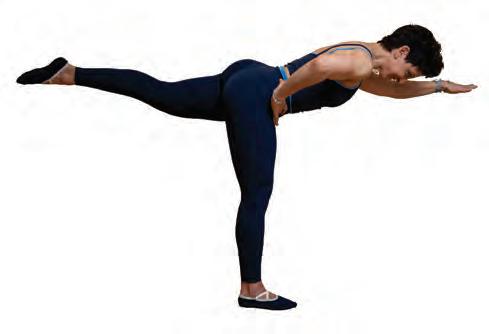
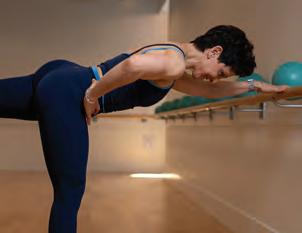
2 sets, 8-12 reps per side + 16-count pulse hold Hinge forward from the hips with a long spine as one leg extends straight back. Lift and lower the back leg with control for 8-12 reps. After your final rep, hold the leg lifted and pulse for 16 counts, keeping hips square and movement small and precise.
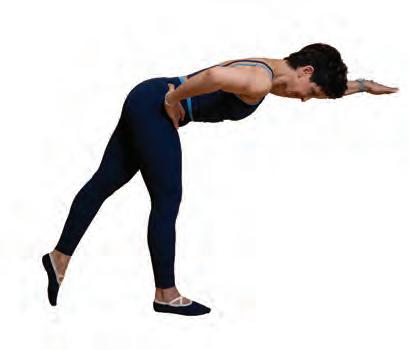
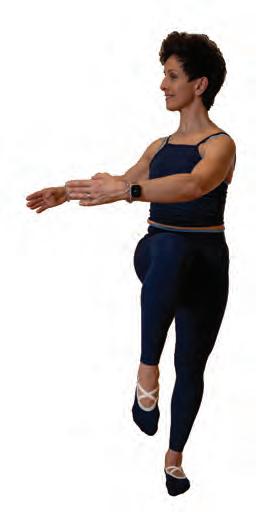
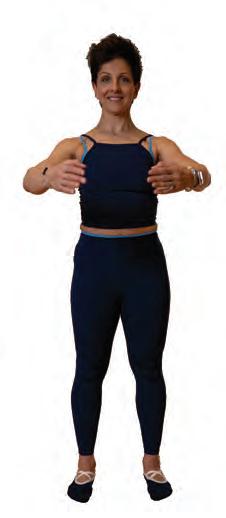
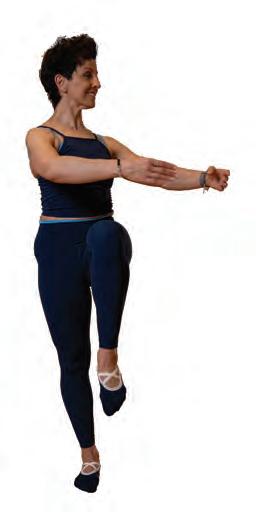
2 sets, 8-12 alternating reps with balance hold From standing, lift one knee toward hip height while gently rotating your torso toward it (arms lifted in front of body), then return to center and alternate sides. After your final rep on each side, hold the knee lifted briefly to challenge balance, maintaining a tall posture and steady core engagement.
Boost power and efficiency with this focused circuit
BY KEN KOTYK GRAHAM MCKERRELL
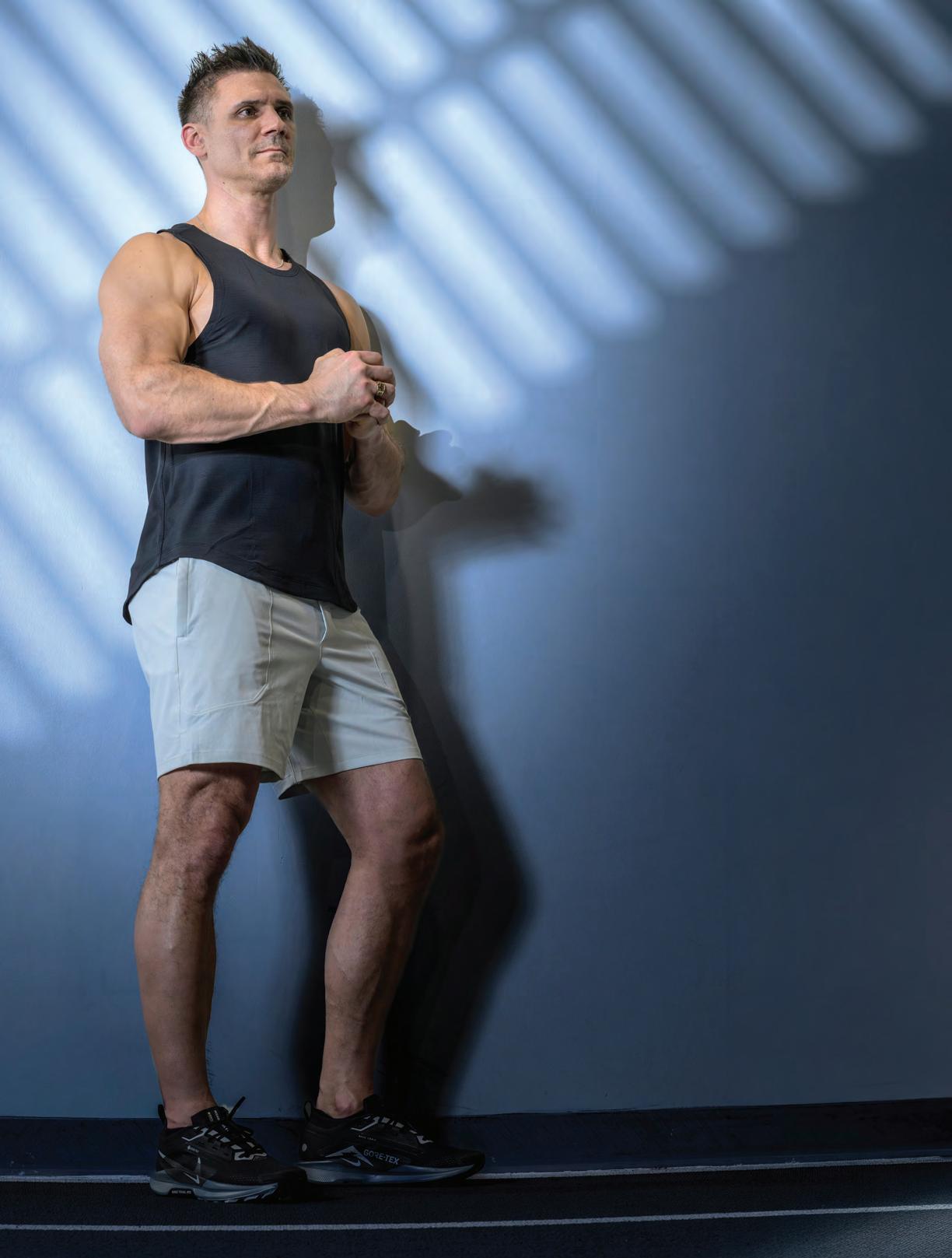
One of Canada’s Top Fitness Trainers, 2026, Olympian and the owner of Kotyk Athletic Performance in Calgary, AB.
KOTYKPERFORMANCE KOTYKPERFORMANCE
Clothing Courtesy lululemon 17 Ave. Calgary
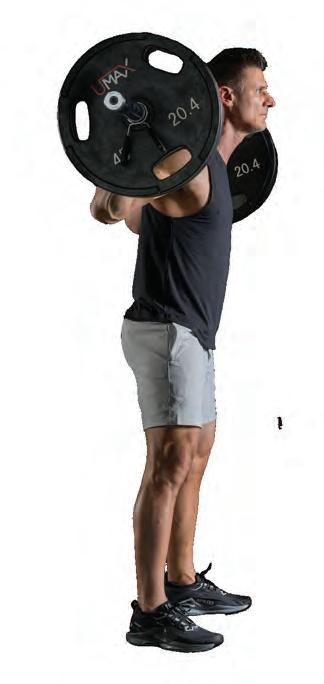
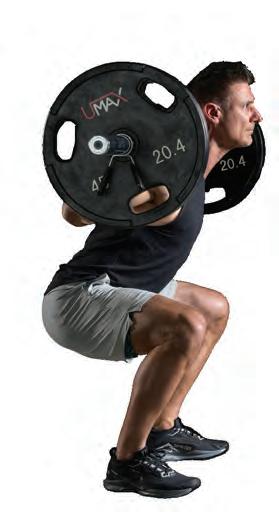
For distance runners, strength training isn't about building bulk it's about improving efficiency, resilience, and force production over thousands of strides. This workout targets the posterior chain, ankle stiffness, and lumbo-pelvic stability, all critical components of running performance. Movements like back squats and walking lunges build hip-driven strength and single-leg stability, helping runners apply more force into the ground rather than absorbing it. Over time, this improved force application can translate into increased stride length, better running economy, and improved speed without increasing effort.
The addition of calf raises, isometrics, and double-leg hops further strengthens the Achilles and lower leg, improving tendon durability, reactive strength, and fatigue resistance. This is especially important late in races, on hills, or when running on uneven terrain. Together, these exercises build a stronger, more efficient runner, one who can maintain form, generate power, and reduce injury risk over the long haul. Even small gains in stride efficiency repeated over thousands of steps can make a meaningful difference in performance.
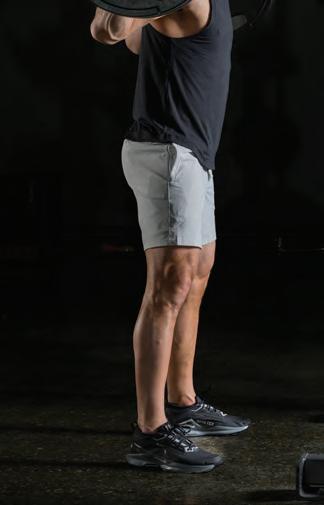
3-4 sets x 4-6 reps
1. G rip a bar 2-3 inches beyond shoulder-width and rest it on rear deltoid/bottom part of upper trapezius.
2. Step back while staying in the middle of the rack and plant feet just beyond shoulder-width, toes slightly turned out.
3. Stand tall/long through torso by lifting in and up with the belly button.
4. Rotate slightly through both femurs, which will engage the gluteus medius muscles and help stabilize the knees and pelvis.
5. Push hips down through the heels, staying active through the hip and passive through the knee. Stay tall above the hips while keeping the femurs externally rotated with full foot contact. This position will allow you to maximise the stretch in the hamstrings.
6. Squat to parallel, while maintaining lumbo-pelvic integrity, then push up from your heels, through your torso line, engaging hamstrings and glutes.
The why?
Before initiating the squat, remember you are looking to build strength while keeping the movement pattern in line with sprint and jump mechanics, which means maintaining lumbopelvic stability (LPS) while driving from the hips. It’s not functional if you are not moving through the hip and knee together, because this is what happens when you run and jump. This squat position also helps maximize posterior-chain engagement.
If you can’t maintain strength through the lumbo-pelvic area and posterior chain over the long haul, you absorb force instead of applying force where needed. The more force applied the greater the stride length and speed. My old coach would say the difference between a fourhour and a three-hour marathon is two inches of stride length for every stride. Doesn’t it make sense to increase strength and power from the hip in the correct way to help you in your race?
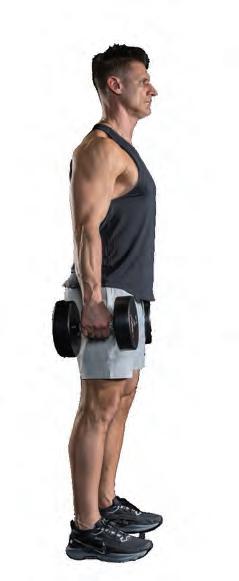
3 x 8/Leg
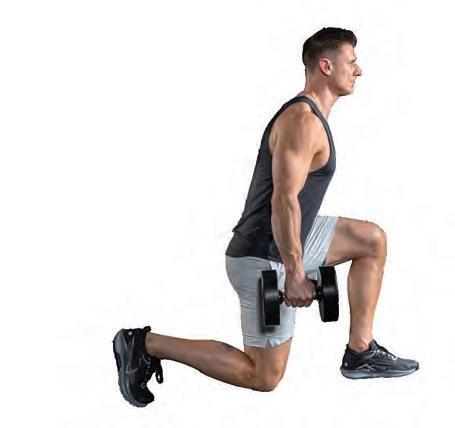
1. H old dumbbells at sides (arms long, relaxed like chains), shoulder blades together and down, maintaining scapular integrity. Stand tall/long through the torso, imagine standing at attention.
2. Step forward, heel first. Keep the front knee forward facing or very slightly externally rotated. This provides more stability and engages the right muscles. The shin and knee are either stacked over the ankle, or the knee is shifted slightly forward, but not directly over the toe. Back knee is hovering over but not touching the floor.
3. I nitiate the lift with the front leg by pushing up through the heel, knee and hip open at a similar rate, hitting a full standing position on that leg. Weight will transfer from heel to toe as you hit full extension in the hip, while bringing the back leg through and forward. Remember to initiate the hamstrings and glutes with the front leg as you step through.
The why?
We are trying to maximise posterior-chain engagement. As in the squat, maintain scapular and lumbo-pelvic integrity while moving through the knee and hip at the same rate. This will help increase stride length. And because of the unilateral position the ankle joint will increase both stabilization and strength. Roads are never perfectly flat, and the ankle joint is one that loses strength the quickest as we age.
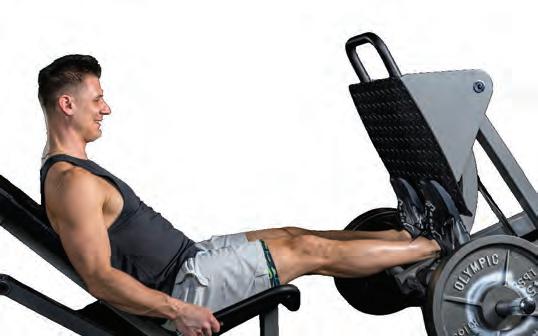
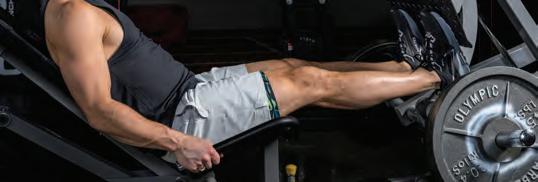
2-3 sets x 8-15 reps
1. Si t on the machine, feet shoulder-width apart on the platform.
2. Through the balls of the feet raise the platform as high as possible with straight legs and soft knees (a slight bend, not locked out), contracting the calf muscles.
3. S lowly lower the platform (2–3 seconds) to feel a stretch in the calves, heels pushing up as the toes descend.
4. M aintain stiff ankles so they don’t collapse.
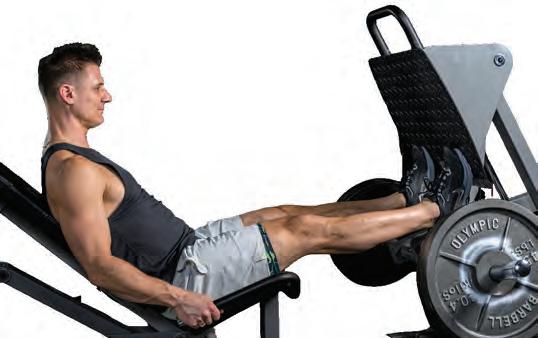
2-3 sets x 30-45 sec
5. Through the balls of the feet raise the platform as high as possible with straight legs and soft knees (a slight bend, not locked out), contracting the calf muscles.
6. H old the weight at full extension and maintain steady tension through the duration of the set.
The why?
This isometric combination can help with injury prevention and rehabilitation of the Achilles tendon. It also improves tendon strength and fatigue resistance. Raises can help with push-off force, tendon load capacity to safely handle repeated force, and stride/ankle stiffness which improves force transfer. This leads to less fatigue, lower injury risk and better force transfer.
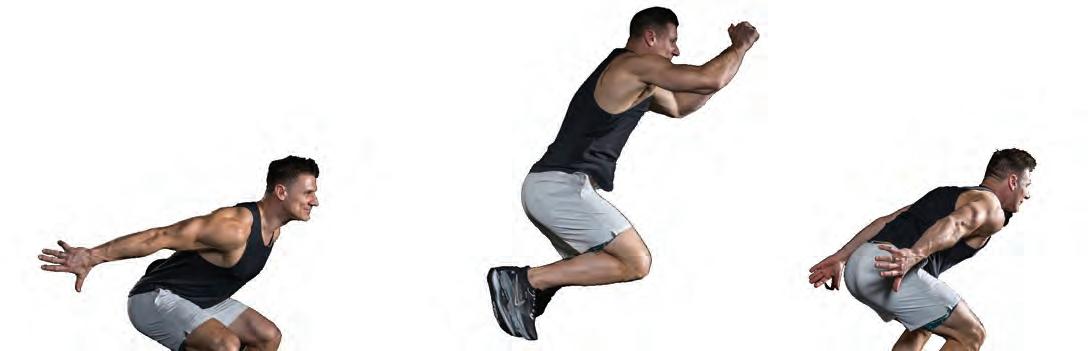
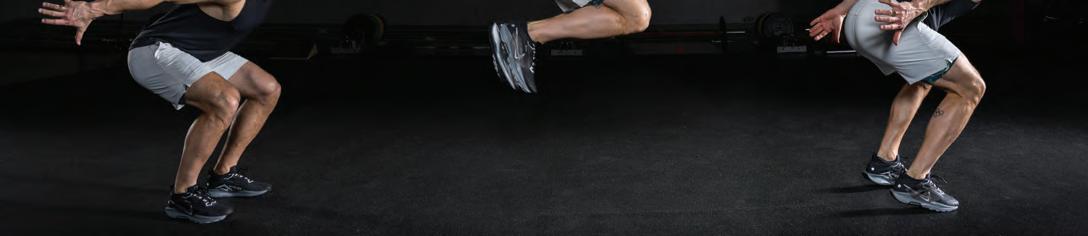
Reps x3, x5, x7, x9
1. Start with feet hip- or shoulder-width apart weight on heels.
2. D rop through the hips and knees, hands going back with the hips as low as is needed to produce maximum force in each jump.
3. I nitiate the jump, transferring your weight from heels to toes and driving the hips forward, generating power down through your knees, ankles and all the way through your toes. Your arms will swing through just before or as your hips extend.
4. B ecause you are jumping for distance, direct your power going forward.
The why?
This helps Achilles tendon loading capacity, stride/ankle stability, reactive strength and power endurance (the ability to produce repeated force over time even when fatigued). There might be a hill or two when you are running! 3 4

BY LOUISE HODGSON-JONES
CONNOR MACFADYEN, RONALD LEE, JULIE
PORTER
IMPACT guest editor, communications & event specialist in Victoria, B.C.
LOUISEHODGSONJONES LOUISE.HODGSONJONES
Justin Kent is rising the marathon ranks and is setting his sights on the 2028 Los Angeles Olympics
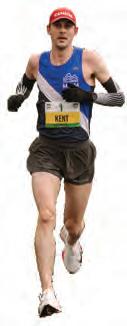
Justin Kent attributes the pandemic as the impetus to his transition to marathon running. A middle-distance runner from schoolage, when lock-down happened in 2020 the track season was cancelled. He had a few 10-kilomtere runs under his belt so decided to trial a half marathon distance and really enjoyed it.
Then with the absence of the major marathons that year, came the Marathon Project in December 2020, when 40 elite men and 34 elite women came together to run a six-loop course, in the Arizona desert. Kent was one of them, running his first marathon in a credible 2:17: 22 but was disappointed: “It was tough and I hit the wall," he recalls.
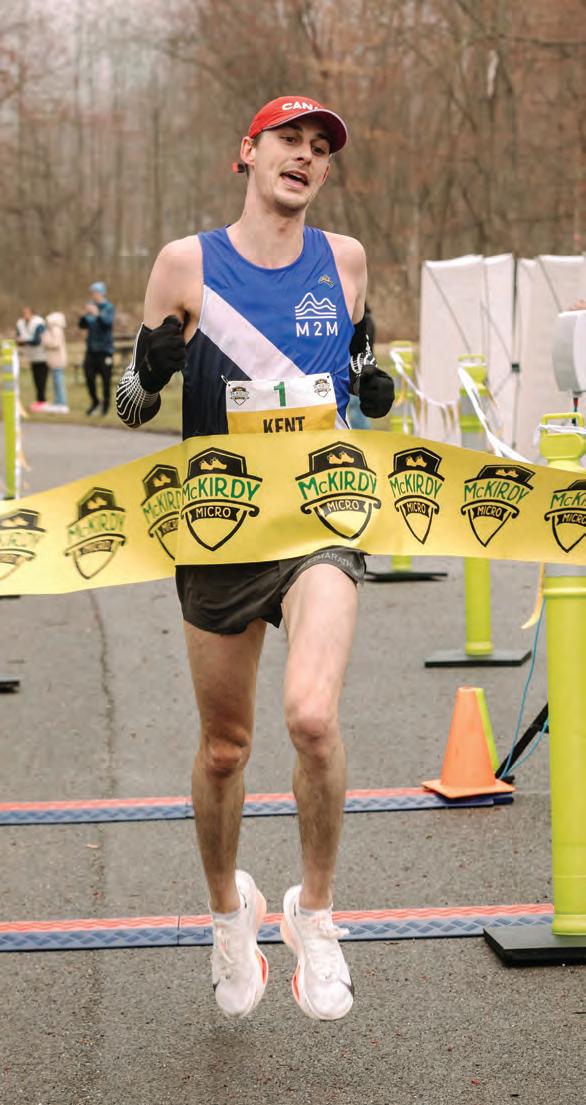
Undeterred and under the tutelage of his coach Richard Lee he continued to train and enjoy his newly found distance. In the fall of 2024, he won the Canadian nationals at the Toronto Waterfront Marathon in a time of 2:12:17. Then riding on a momentum he decided to try for a 2:10 and chose a flat course, the McKirdy Marathon in Rockland Lake State Park, Congers, New York. It ended up being more of a race than he thought: “We had a pacer through to 30 kilometres then the last 12 kilometres it became a race which was awesome. I even did a sprint finish which looking back was crazy. The pace came pretty easy and everything just clicked.”
Cam Levins M arch 2023 2:05:36
Rory Linkletter O ctober 2025 2:06:49
Ben Preisner F ebruary 2024 2:08:58
Thomas Nobbs M arch 2026 2:09:25
Justin Kent M arch 2025 2:09:29
Source: worldathletics.org
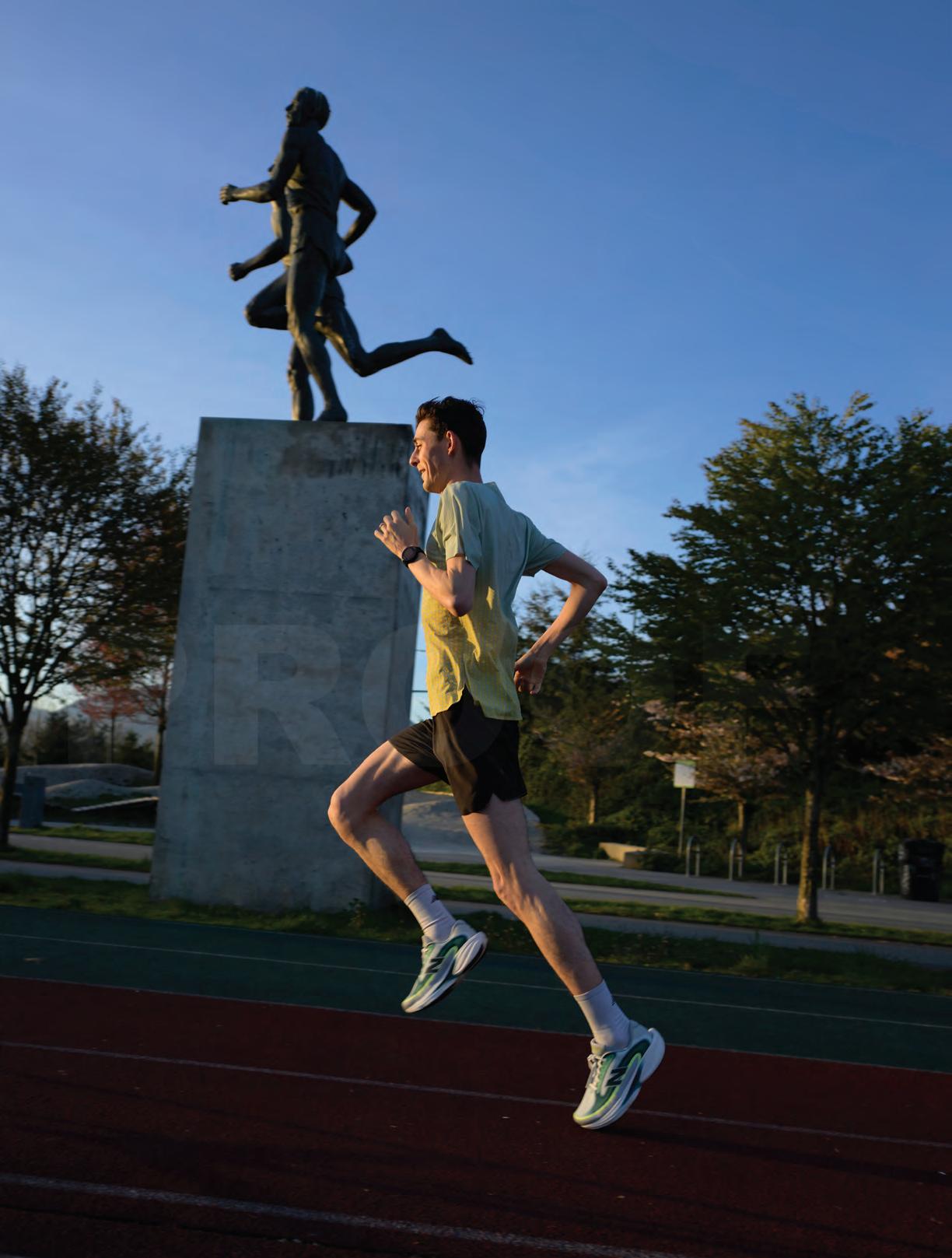
Kent finished in 2:09:29 and became the fourth fastest Canadian male marathoner of all time. (He has since slipped to fifth with Thomas Nobbs clocking a 2:09:25 on the same course last month). “You train for those moments, and it becomes really special.” It was even more special as his father Scott Kent was cheering him on and sharing the moment.
Scott was a collegiate runner, coached son Justin at school in Burnaby, B.C. and founded the Coastal Track Club, one of the many successful running clubs to thrive in B.C.’s Lower Mainland. Growing up in this atmosphere it is no wonder that Kent excelled at running. He did play hockey, baseball and soccer until he was 10, but growing up so near the renowned Harry Jerome track the elder Kent saw his son’s passion, so from grade 11 he started to run more. “Running chose me,” he jokingly says.
He started in cross-country (“that was a blast!”) then ran the two-kilometre steeplechase, three-kilometres and 1500 metres. “I didn’t have the speed for the 800 metres.” A scholarship to UBC (University of British Columbia) followed with four years running for the Thunderbirds. Under head coach Merek Jedrzejek—who also coached his Dad—he continued running the 1500 metres and steeplechase but also the 4 x 800 metre relay and some fivekilometres races. “He created a unique culture and atmosphere,” Kent says of Jedrzejek, who coached many athletes to Olympic, Commonwealth and Pan-American medals.
After UBC he ran with a post-collegiate group coached by Lee, who at the time was also coaching Dylan Wykes and Natasha Wodak. Coincidentally Lee was also a teammate of Scott Kent when they were athletes in the late 1980s. “So it was easy for Justin to transition to my training as the philosophy and expectations were the same as what he grew up under,” Lee says. “His talent was obvious in high school and Scott instilled a great work ethic in him. Physically he was built to run. Mentally it took a while for him to find the confidence and believe he could be as good as he's become.”
Kent observes how his training on track is different than long distance. “It changes the dynamic with your coach. Training on a track is so repetitive. Your coach is there calling out splits but it isn’t the same as Rich joining me on a bike for a 40-kilometre run, handing me bottles and chatting. That is something I gravitate towards and is much more enjoyable.” He says his body adapts better to that style of training with more volume but also does attribute it to his years of speed.
Lee isn’t always present at training sessions and praises Kent’s ability to execute and follow his program. “He has a good understanding of what needs to be done and is good at holding himself accountable to achieve the goals of each session. He doesn't tend to take big risks in training and racing which can sometimes hold one back from making bigger gains.”
Having done a few marathons in a row—he has completed eight—Kent is currently concentrating on shorter distances until the Olympic window opens in December. (Kent has his eyes set on the 2028 Los Angeles Olympics). This year he came second in the First Half in Vancouver (1:03:29) and came first in the Steveston Icebreaker 8K, setting a new course record in 23:06.
that are still incorporated in the program.
He plans on running the Vancouver Sun Run at the end of April, a half marathon in Japan and the Chicago Half Marathon in June. He trains every day, sometimes twice a day, split between track and road for interval-focused sessions and two long runs clocking in 100 miles a week. He also does two strength sessions in his home gym. His volume will increase at the end of the year when training becomes more marathon focused. Lee says these will be more long, sustained tempo efforts with higher volume—upwards of 160-180 kilometres a week.
“As an athlete ages, there is less capacity and more high risk in pushing the higher quality workouts. Justin always has that ability to tap into his past track background and execute the few quality workouts that are still incorporated in the program. It's about staying healthy and carefully picking the times to push things,” he explains.
Kent also coaches on Wednesday nights. Since 2019 he has been a Mile2Marathon coach setting up a group in Burnaby. “It’s a great outlet to share my passion with the support, my learning and mistakes. It’s a big motivator as it normalises what I am doing.”
Despite all the training and coaching he still finds time for his family and holding down a full-time job. Married to 2020 Olympian 800-metre specialist Lindsay Butterworth, they have a daughter, Willa who turns two in May. He is brand manager for Stoko, the performance apparel company, who have been very flexible with his working hours so he can train.
He actually finds his schedule and balance to have advantages. When he knows he has a two-hour window to run, he is focused on getting it done. “Having a time window makes it more purposeful. I can be up at 5 am and out to run before Willa gets up and then log more miles later when she is in bed. I wouldn’t be able to do this without Lindsay’s support.”
With the 2028 Olympics on the horizon does he have a goal? At 34 years of age what is achievable? “My 2:09 time was a signal that I can buckle down and focus. On a good day 2:07 is on the cards if I stay healthy.”
Lee agrees. “Justin hasn't reached his limits yet with marathon training or racing. Volume-wise he has been on the lower end of what is considered world class for marathoners these days. That's been by design in an effort to remain healthy. So, there is room for growth and he will certainly have to make that jump and take that risk if he wants to improve from here. Where that ends up is hard to say. Could be 2:07 – 2:08. We'll find out in the next few years.”
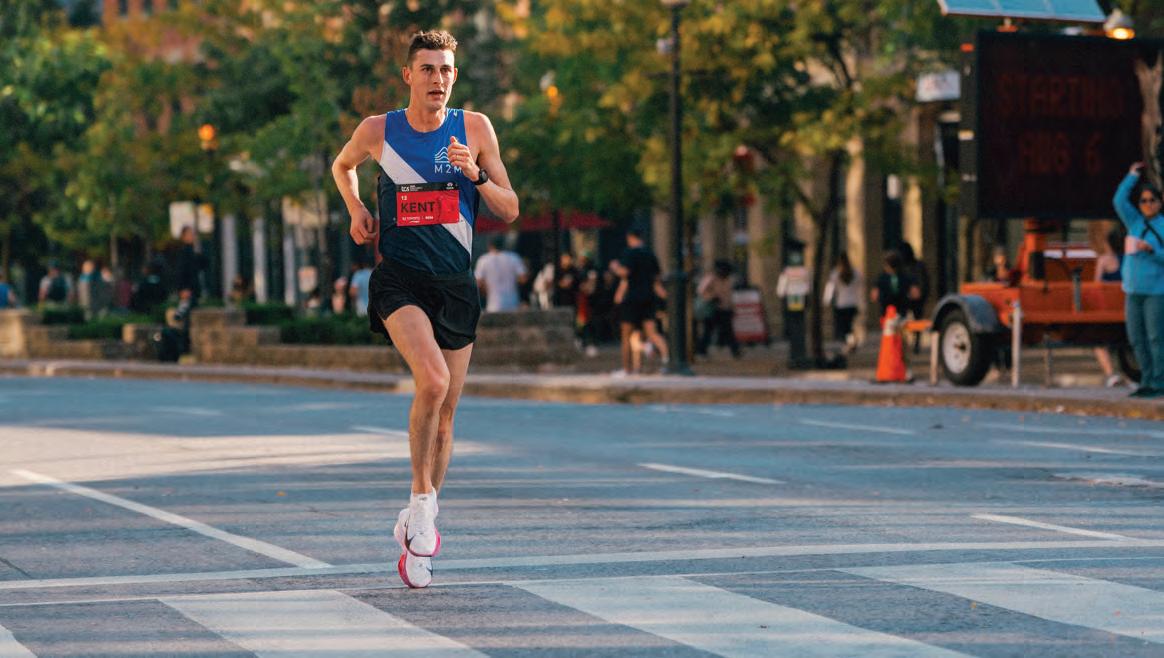
Kent became the Canadian National Marathon Champion in 2024.
Inspired by her son Eamonn’s courageous battle with leukemia, athlete Jen Millar is drawing on her inner strength by staying positive, while supporting fundraising efforts for childhood cancer
BY SCOTT CRUICKSHANK BRETT CLARKE, JAY WALLACE
Scott is a writer from Calgary, AB covering all levels of sport for 35 years for websites and magazines all over Canada SCOTTCRUICKSHANK.BSKY.SOCIAL
While striving to become an elite triathlete, Jen Millar ran cross country for Queen’s University. Talented and tenacious, she also raced on behalf of the school’s varsity swimming team.
Her athletic bona fides are undeniable.
As is the depth of her determination.
In 2014—after the onset of May-Thurner Syndrome and the removal of a 40-centimetre blood clot—she was told she’d never run again.
Guess who won the women’s crown at the 2022 Times Colonist 10K in Victoria?
Guess who rattled off women’s masters titles at the Canadian Cross Country Championships in 2021, 2022 and 2023?
Now, grinding through an unimaginably heavy ordeal, Millar has marshalled her well-honed attributes—resilience and discipline, positive thinking and goal setting—and applied them to real life.
Two years ago, her son Eamonn had been diagnosed with highrisk acute lymphoblastic leukemia, an aggressive cancer. For the Victoria-based family, which includes husband Trevor and daughter Charlie, it’s become a challenge like no other.
Which is why repurposing her athletic assets makes sense.
“Those characteristics, you really need them,” she says. “It’s knowing you can do hard things. It’s carrying the mental load through physical fatigue, just to keep going. Even in training, it’s all about the journey and process. If we can make this journey and process about fighting cancer with Eamonn, about supporting him, his outcomes will be positive and strong.”
The unflinchingly sturdy mindset is paying off—for everyone.
Because community, for the Millars, matters. Teamwork is no small part of their mission. Incredibly—in the midst of treatments, transfusions, serious setbacks and “numerous curveballs”— family members, including Eamonn, now 12, are giving back. They have pledged to make a difference.
For instance, Millar is committed to cycling in the End2End Cancer Relay, a Victoria to Port Hardy return trip, June 16 - 18.
Four two-person teams take turns tackling the 1,000 kilometres: pedalling 50 kilometres, getting 150 kilometres’ worth of rest, repeating. The inaugural event raised $110,000 for the Island Kids Cancer Association. This year’s target is $150,000. The family’s contributions go beyond seat time. For End2End Cancer Relay participants in 2025 and 2026, Eamonn—in collaboration with Outway athletic apparel—designed the socks. The event’s cycling jerseys also feature his stylish artwork. These colourful creations, which have raised $20,000, are available online. “You see his socks in the hospital on all the nurses, in the grocery store on random strangers,” says Millar, chuckling. “The first days of Grade 6, he’s like, ‘Mom, three kids in my class were wearing my socks and I don’t even know them.’”
Eamonn is also lending his artistic touch to dog collars and leashes for RC Pets, with proceeds going to the B.C. Children’s Hospital’s Pet Therapy Program. And, with the support of a Changemaker grant from A Million Acts of Love Foundation, he is curating a book filled with the jokes he received daily from classmates while he was away from school during Grades 4 and 5. That volume, with his illustrations, will be published.
Another initiative? “Blood parties.” Inspired by what she witnessed in hospital hallways—“All these little warriors with their bags of blood products”—Millar visited the local Canadian Blood Services branch. There, she saw the University of Victoria men’s hockey players making donations. Stoked by the group approach and knowing that Eamonn has so far required 28 transfusions, Millar appealed to her social media followers. Team Eamonn was formed, attracting 100 members who, on a regular basis, roll up their sleeves.
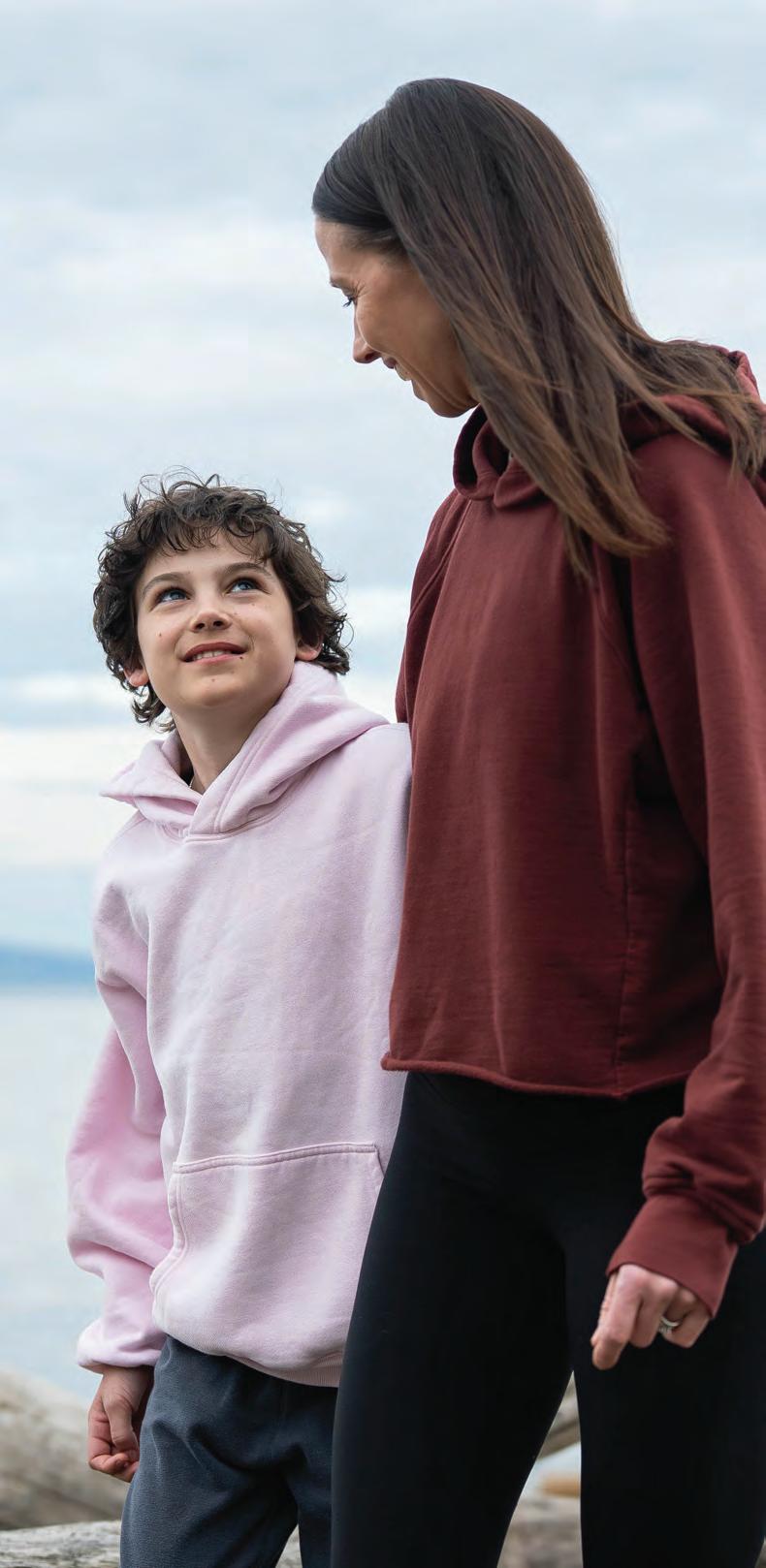
“We are so well-supported,” says Millar. “Everyone has rallied behind us. As a family, we’re so grateful. Every day is still a battle—we’re through the trenches, but we still have a battlefield to navigate.”
A sense of optimism nevertheless prevails. Two years after the April 2, 2024, diagnosis, Millar highlighted the milestone on Instagram: “730 days of getting better.”
Reality, however, persists. Eamonn deals daily with complications. Mom, a pediatric occupational therapist, remains on leave from Queen Alexandra Centre for Children’s Health. Dad—co-owner of Motis Physiotherapy—continues to work. And Charlie, 14, faces an unforeseeable day-to-day.
“In a single moment, your life changes forever,” says Millar. “I do feel like our lives have stopped.”
She last raced on January 14, 2024, capturing the women’s 45-49 category at the Harriers Pioneer 8K in Victoria.
Now, with no competitive outlet, this goal-driven extrovert channels her considerable energy elsewhere. Which is good news for those coping with childhood cancer. “Being able to support other people has helped me to stay strong for Eamonn and to show up for Eamonn in a better way, knowing that we’re raising funds for kids going through this.”
One of whom returned the favour by sharing this piece of wisdom: “You can’t always choose your circumstance, but you can choose what to do with it.” That quickly became the Millars’ mantra.
“For our family of four, it really resonated,” she says. “We choose hope. And we choose to bring awareness to our community about what childhood cancer is.”
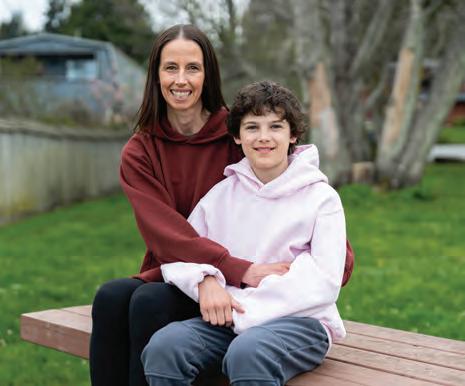

EAMONN’S FUNDRAISING INITIATIVES: RC Pets leashes/collars: https://rcpets.com/eamonn-millardreams-gone-wild Outway Socks: https://outway.com/products/enchanteddeep-crew
Mike Shaw was told he'd never walk again. Twelve years on, he's running marathons and giving back.
BY JESSICA NATALE WOOLLARD BRYNN FEATHERSTONE
Jessica is an award-winning freelance writer and communications professional based in Victoria, B.C. JRWOOLLARD
An incomplete quadriplegic, Shaw can't fully feel his legs or hands and can’t feel the ground beneath his feet.
Crossing the finish line in front of the historic B.C. parliament building in Victoria, Mike Shaw was flooded with gratitude.
He’d just run the half-marathon at the 2025 Royal Victoria Marathon in 2 hours, 12 minutes, and he was elated, not just for completing the race, but for every step he takes.
“I know how lucky I am,” the recent Victoria transplant says. “Anytime I finish a race, it's a win.”
In 2013 at age 26, Shaw suffered a catastrophic ski injury. He was in Colorado coaching a group of half pipe Olympic hopefuls and was demonstrating a trick he had completed countless times, a Nose Butter 720, with two revolutions in the air. But on this December afternoon, he landed in punchy snow. His feet stopped dead while his upper body pitched forward, slamming his head into the ground and dislocating his neck.
Hours later at a hospital in Denver, the surgeon recommended fusing vertebrae C3 to C7. While the doctor didn’t expect Shaw to walk again, he said there was a chance he might regain some movement in his arms. Shaw said yes to the surgery, and when he woke found he had some function in his biceps.
With rest and rehabilitation, more function returned. Within six months, he walked the 5-kilometre race at the Scotiabank Vancouver Half-Marathon. On the one-year anniversary of his injury, he skied in Whistler, wearing the same skis he crashed in. Eleven years after the accident, he ran his first marathon.
As victories accumulated, Shaw became a public speaker to share the story of his remarkable recovery and the role of gratitude in his journey. He’s been a TEDx speaker and subject of a Red Bull documentary, and he released a book called Never Part of the Plan.
“I'm aware that not everybody gets better from a spinal cord injury,” he reflects. “I got super lucky.”
The challenges of his spinal cord injury linger, however. An incomplete quadriplegic, Shaw can't fully feel his legs or hands and can’t feel the ground beneath his feet. He struggles with his balance, losing it up to 50 times a day. He doesn’t have the full sense of touch, so relies heavily on his vision to perceive where he is in space. His muscles get spastic when he fatigues.
Yet, where difficulties persist, so too does gratitude. To demonstrate his thankfulness, Shaw frequently runs for a purpose.
At the Victoria marathon, he championed the Children’s Health Foundation of Vancouver Island, a non-profit that supports the health care journeys of children and youth. One of the foundation’s core programs is operating the accommodation near hospitals where families can stay when a child needs care. Shaw is a new father to a one-year-old boy and helping families facing the unthinkable hits close to home. He recalls vividly the financial toll and stress his parents were under when he was hospitalized for months, first in Denver, then in Vancouver.
Supporting causes is what led him to running in the first place. Once his recovery was on track, he set a goal to participate in the Wings for Life World Run, which raises awareness and funds for those with spinal cord injuries. The run takes place in May on the same date and time around the world. There’s no set distance; participants run as far as they can.
“It's all about running for those who can't,” explains Shaw, noting the 2025 race had more than 310,000 runners from 170 countries.
After the Wings for Life run this May, Shaw will begin training for the Royal Victoria Marathon in October, with the goal of raising $10,000 for the Children’s Health Foundation. His legs don’t always cooperate—he has to tell them almost every step to keep going—but he doesn’t take his ability to run for granted: “I lean into gratitude and how lucky I am to have the body and the health that I do. It gives me that fire to get up and get moving.”
His focus on gratitude has prompted a career change. In 2024, he completed a Master of Arts in Counselling Psychology and subsequently launched a counselling practice called Gratus Health.
“I got into mental health because I realized I had an opportunity based on my lived experience to really support people going through adversity and difficulty,” he explains, adding that his new profession feels like a calling rather than a career.
Gratitude is the foundation of his practice—the Latin root of the word is in the name—and he’ll draw on his experience as a professional athlete and coach to guide his clients, focusing on body and mind.
“The mindset tools that elite athletes use aren't reserved for elite athletes,” he says. “I implore people to push their personal limits and do things outside of their comfort zone from a place of appreciation and gratitude for what your body can do.”
BY EMILY MEYER
Fitness and travel enthusiast in Calgary, AB. EMILY.MEYER.TRAVELTALES EMILYMEYER287
There is no denying that a change of scenery—whether that be in striking architecture or awe-inspiring landscapes—can motivate you to put kilometres on pavement. If you’re looking for that bit of extra motivation to run your first marathon or you’re a seasoned runner wanting an adventure, we’ve compiled a list of some of the most popular, unique, and aspirational marathons around the world to inspire your next step.



This one-of-a-kind race begins with a free ferry ride from downtown Hamilton to the historic Royal Naval Dockyard where the race begins. Pass pristine beaches and historic sites, including the world’s smallest working drawbridge, as you run just about the entire island. For a truly Bermudan experience, enjoy two rum stops along the route serving up Goslings world-famous rum cocktails. With on-course entertainment and cheering squads, this will be a marathon to remember. The marathon is part of the Chubb Bermuda Triangle Challenge— running three distances over three days. push yourself to your limit.
JANUARY | Bermuda
WWW.BERMUDATRIANGLECHALLENGE.COM
BERMUDATRIANGLECHALLENGE
BURNT HOUSE PRODUCTIONS
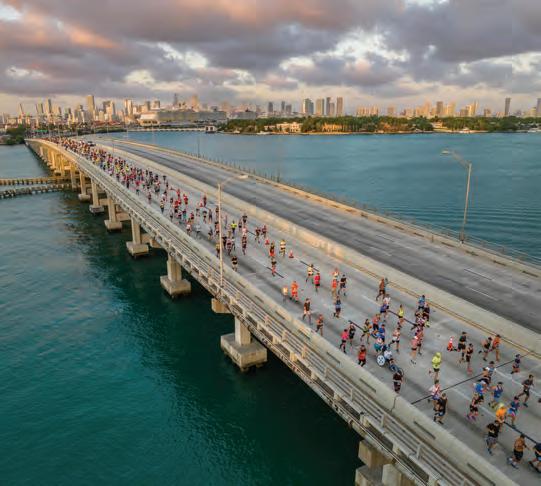
There’s nothing better than trading in the dark days of winter for the energetic vibes of Miami. While the course is mostly flat, a few gentle inclines over the bridges keep things interesting. As you run through Miami Beach and the city, let the ocean breeze keep you energized as you take in the sparkling water, palm-lined streets and bustling urban surroundings. This marathon is as much a celebration of the city as it is a race.
JANUARY | Miami, Florida
WWW.THEMIAMIMARATHON.COM
THEMIAMIMARATHON
WE FLY AERIAL MEDIA
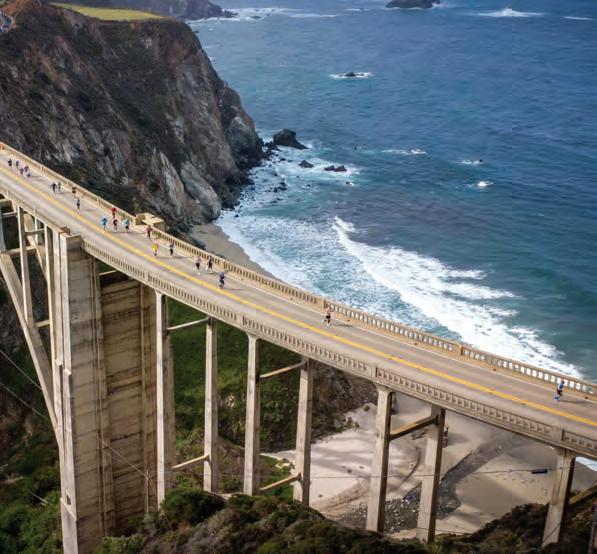
For one of the most stunning marathons in the world, try this point-to-point course along Highway 1 from Big Sur to Carmel. Spectacular scenery including crashing waves and towering redwoods will be a welcome break from thinking about the distance you have to cover.
This race has a limited number of entries, so don’t wait to register.
APRIL | Big Sur, California
WWW.BIGSURMARATHON.ORG
BSIMEVENTS
LUIS ESCOBAR •
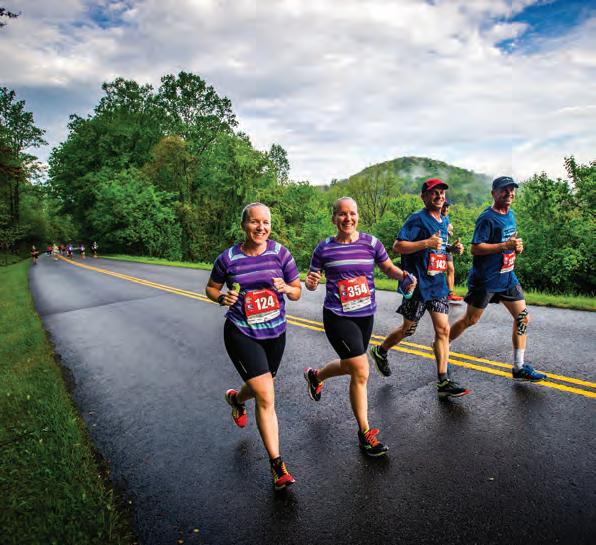
With an elevation gain/loss of more than 2,200 metres, this race is as challenging as it is picturesque. Long climbs and descents will push your limits physically and mentally. The course begins in Roanoke and then takes you into the surrounding mountains along the scenic Blue Ridge Parkway. The marathon has limited space available, so register fast if you think you have the legs for it.
APRIL | Roanoke, Virginia
WWW.BLUERIDGEMARATHON.COM
BLUERIDGEMARATHON
FOOT LEVELERS BLUE RIDGE MARATHON
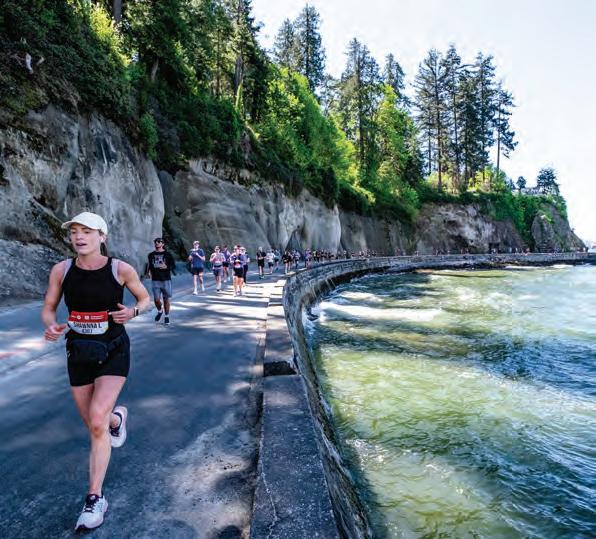
You don’t have to travel too far to enjoy an incredible marathon experience. The BMO Vancouver Marathon offers breathtaking views at every turn, with most of the route along the shorelines of Stanley Park and Pacific Spirit Park. With the Rocky Mountains rising in the distance, follow Vancouver’s Seawall—the world’s longest uninterrupted waterfront path—past beaches and cherry blossoms, and breathe in the fresh, ocean air.
MAY | Vancouver, British Columbia
WWW.BMOVANMARATHON.CA
BMOVANMARATHON
RUNVAN
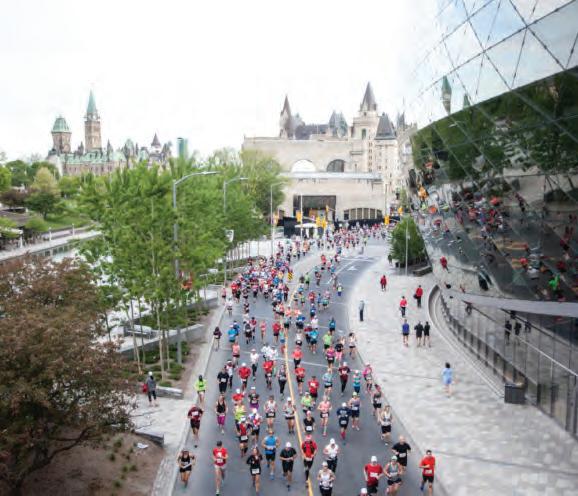
Explore Canada’s capital city while participating in one of the country’s fastest marathons. Recognized as a prestigious World Athletics Elite Label Road Race, you’ll take to the streets with worldclass athletes from around the globe. But don’t let that intimidate you. This is a race for beginners and advanced athletes alike. The buzzing atmosphere and the way the city comes alive for the race is an experience you won’t soon forget.
MAY | Ottawa, Ontario
WWW.RUNOTTAWA.CA
OTTAWARACEWKND
RÉMI THÉRIAULT
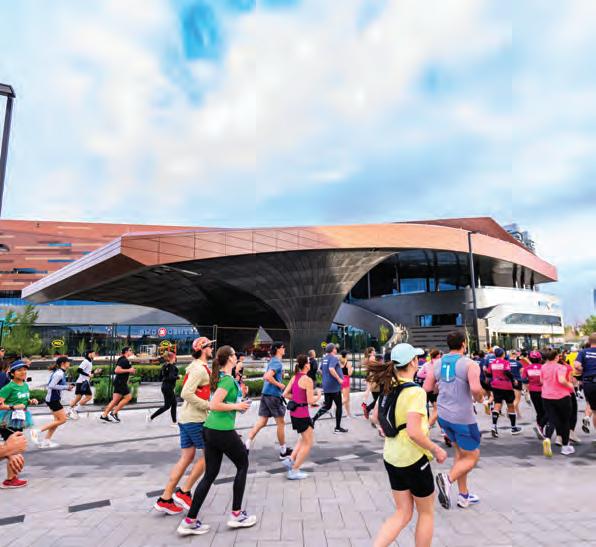
As the longest-running marathon in Canada, this race has been at the forefront of running for more than six decades. What started in 1963 with 19 men now sees thousands of people from around the world flock to the city to run through downtown and the quaint neighbourhoods of Calgary. In 2025, the marathon marked a significant milestone, splitting the race events over two days to make an already incredible event even more electrifying.
MAY | Calgary, Alberta
WWW.CALGARYMARATHON.COM
CALGARYMARATHON
ANGELA BURGER
This is a marathon showcasing the very best of the Pacific Northwest. The Olympic Mountains rise in the distance, while the rugged shores of the Strait of Juan de Fuca stretch below. Perhaps catch a glimpse of seals by the shore, and breathe in the fresh scent of the surrounding forest. Is there a more serene marathon? It’s certainly hard to think of one, which is why this Boston Marathon qualifier should be on your list.
JUNE | Port Angeles, Washington State
WWW.NODM.COM
NORTH OLYMPIC DISCOVERY MARATHON
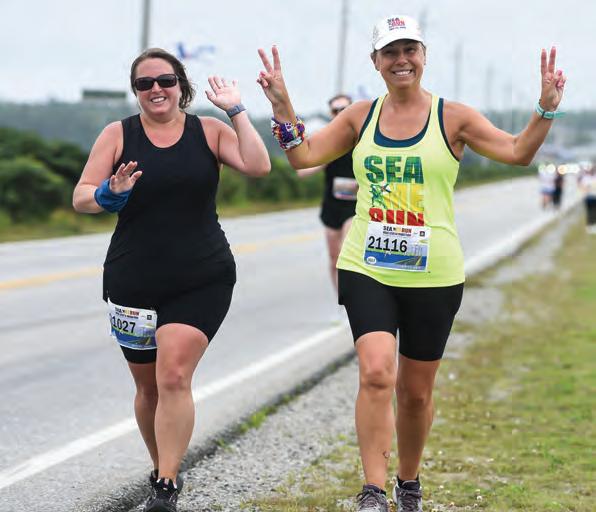
This race has been running for more than 50 years, but it certainly isn’t your average marathon. Forget the concrete jungle feel and bustling crowds. Instead, think rural coastal route with fishing boats bobbing in the distance and windswept shores. The course is quite flat with a few rolling hills, so you can use your energy to take in the peaceful Maritime charm.
JULY | Barrington, Nova Scotia
WWW.BARRINGTONMUNICIPALITY.COM
SEAMERUNNS
KEN CHETWYND •

Ocean views, tropical breezes and palm trees await you on this marathon route in Kauai. Beginning in Poipu, a resort area on the sunny south shore, you’ll follow the coastline before heading inland, with sweeping, rugged mountains and tropical rainforests around you. Runners are encouraged by hula dancers and Taiko drum troupes along the course to add to the Hawaiian experience.
SEPTEMBER | Poipu, Kauai, Hawaii
WWW.THEKAUAIMARATHON.COM
THEKAUAIMARATHON
JO EVANS DA KINE IMAGES
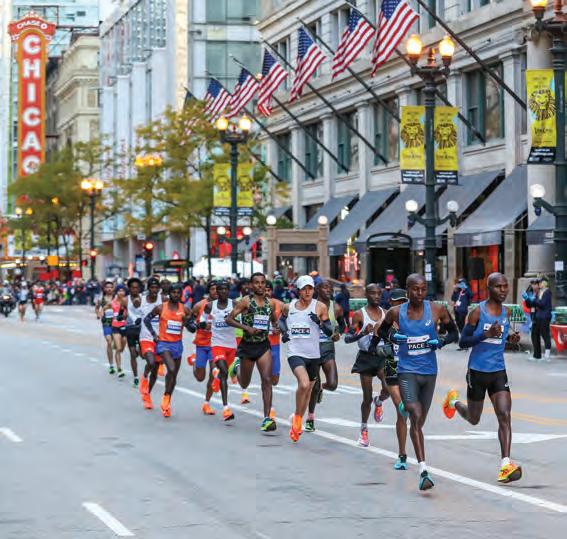
This is a great marathon for first timers, currently holding the record for fastest marathon times for both men and women. Join more than 50,000 participants as they embark on an epic tour through 29 of Chicago’s vibrant neighbourhoods. Starting and ending at Grant Park, run in the shadows of skyscrapers downtown before experiencing the city’s character as you make your way through Boystown, Greektown, Little Italy, Chinatown, and Pilsen, where mariachi music fills the air.
OCTOBER | Chicago, Illinois
WWW.CHICAGOMARATHON.COM
CHIMARATHON
KEVIN MORRIS
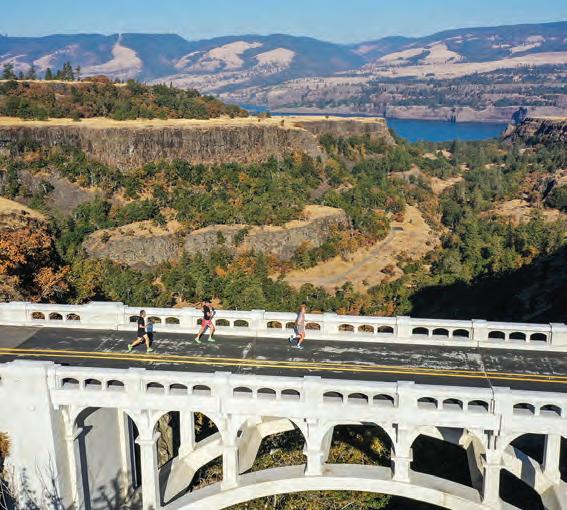
Columbia Gorge Marathon is touted as more than just a marathon. It’s the perfect way to enjoy Oregon in the autumn. Come for the nature-filled hikes and cozy wineries and stay to enjoy the spectacular autumn colours as you run along the famous Columbia River Gorge. The route passes by waterfalls, winds through the small town of Mosier and offers a fantastic view at the Rowena Viewpoint turnaround.
OCTOBER | Hood River, Oregon
WWW.COLUMBIAGORGEMARATHON.COM
COLUMBIAGORGEMARATHON
ADAM LAPIERRE BREAKAWAY PROMOTIONS
Since 1979, the Marathon Beneva de Montréal has been transforming Montreal into a runner’s paradise, inviting participants to be part of the largest running event in Quebec. This marathon allows runners of all levels to discover Montreal’s history, its parks and shores. The route starts at Espace 67 in Parc Jean-Drapeau, travelling from one side of Montreal to the other, finishing at Parc Maisonneuve.
OCTOBER | Montreal, Quebec
WWW.MTLMARATHON.COM
MTLMARATHON
MONTRÉAL BENEVA MARATHON
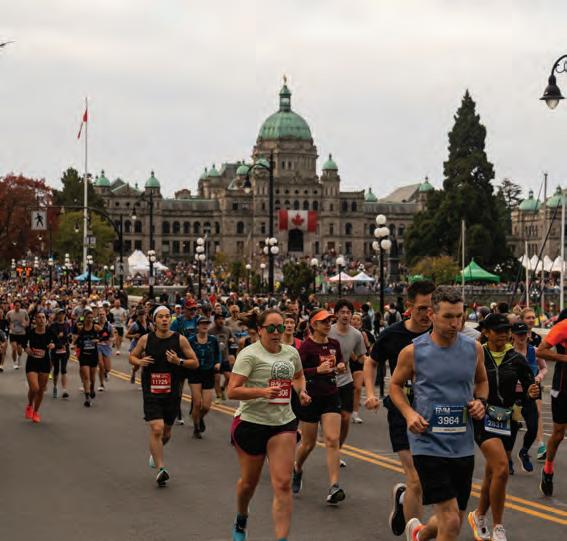
With a total elevation gain of around 200 metres, the Royal Victoria Marathon is a great route for first-timers. Runners enjoy a refreshing run along the ocean with a few gentle hills. This magical course will take you through the famous Beacon Hill Park and past the B.C. parliament buildings, with views of the Strait of Juan de Fuca and the Olympic Mountains of Washington.
OCTOBER | Victoria, British Columbia
WWW.RUNVICTORIAMARATHON.COM
RUNVICTORIAMARATHON
BRYNN FEATHERSTONE
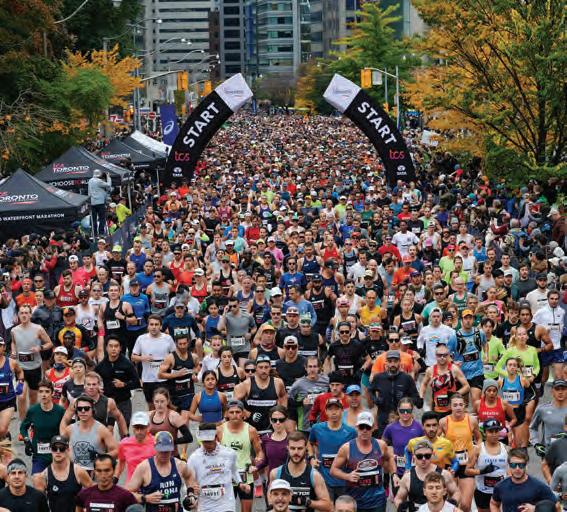
More than 30,000 runners from 50+ countries flock to the streets of Toronto to race in the TCS Toronto Waterfront Marathon. It’s a race that offers the chance to see Toronto and experience the buzzing atmosphere of Canada’s largest city. As the name suggests, the course takes runners along the beautiful Lake Shore Blvd., offering glimpses of Toronto’s harbour and Lake Ontario.
OCTOBER | Toronto, Ontario
WWW.TORONTOWATERFRONTMARATHON.COM
TOWATERFRONT42K
TODD FRASER •
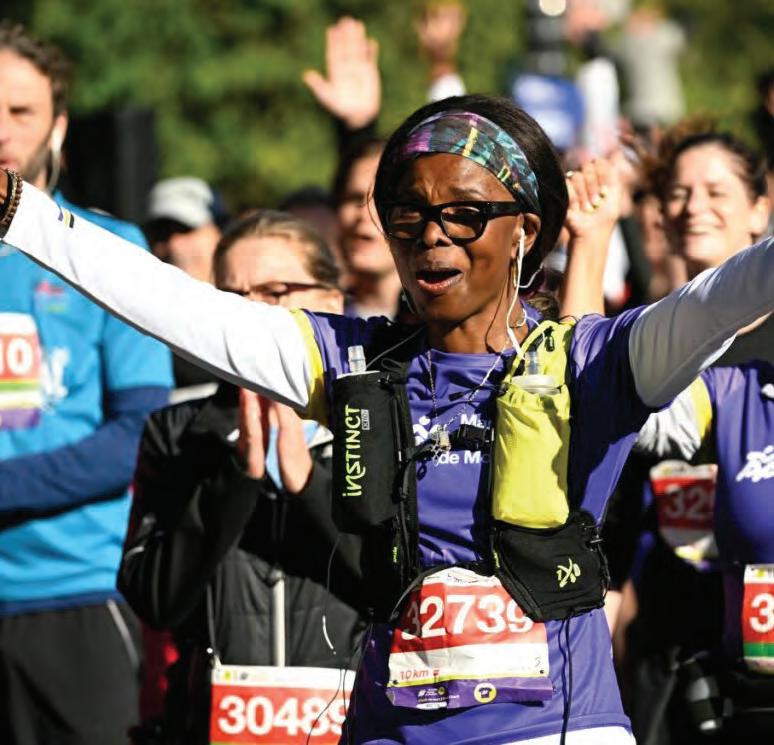
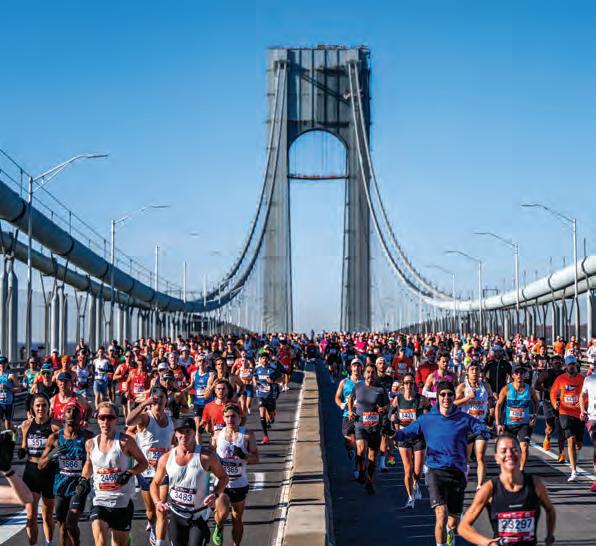
There isn’t a spectacle quite like the TCS New York City Marathon, which holds the record for the most marathon finishers—59,226 in 2025. More than two million New Yorkers take to the streets to cheer on participants, and an additional 300 million watch on the live broadcast. There’s no better way to explore the city as you start on the Verrazano Narrows Bridge on Staten Island and run through all five boroughs before crossing the finish line in iconic Central Park.
NOVEMBER | New York City, New York
WWW.TCSNYCMARATHON.ORG
NYCMARATHON
NEW YORK ROAD RUNNERS, SCOTT MCDERMOTT
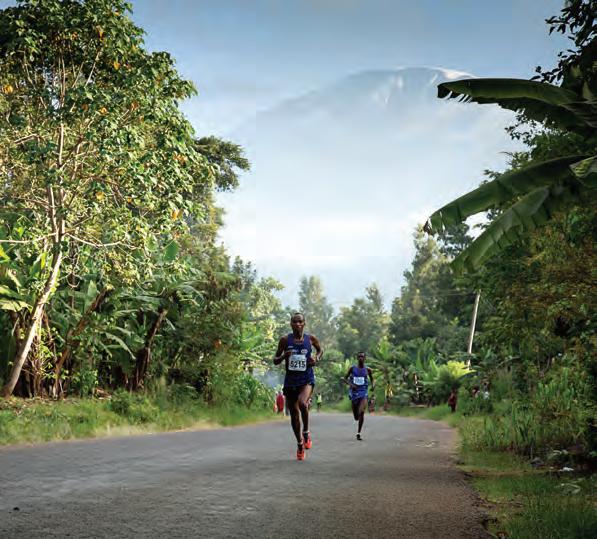
Run in the shadow of Africa’s tallest mountain—Mount Kilimanjaro. Runners begin their race at the MoCU Stadium before tackling the hardest part of the marathon first. Expect a 290-metre altitude gain in the first eight kilometres as you head towards the looming mountain before coming back down through the town. Feeling extra adventurous? Extend your stay and hike to the top of the world-famous mountain.
MARCH | Moshi, Tanzania
WWW.KILIMANJAROMARATHON.COM
KILIMANJAROMARATHON
KILIMANJAROMARATHON
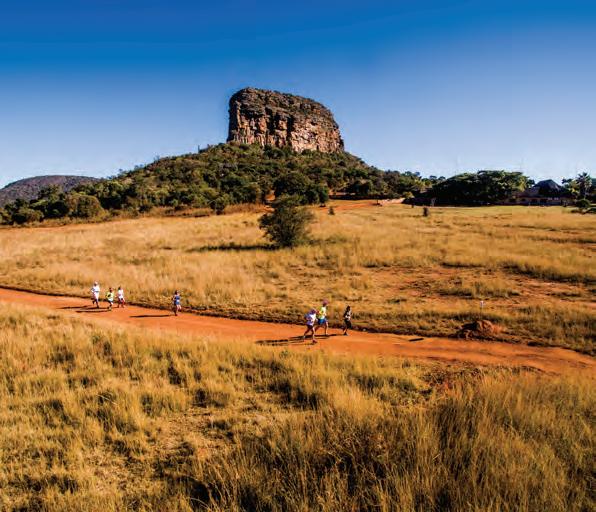
This is your chance to immerse yourself in the African Savannah. Run through the Entabeni Game Reserve, and keep your eyes peeled for Africa’s big five: elephants, rhinos, buffalo, lions and leopards. With a couple of big hills and surfaces ranging from deep sand to pavement, this race is sure to challenge your limits. This marathon is done as part of a safari package that includes accommodation, transportation, game drives and more.
JUNE | Limpopo, South Africa
WWW.BIG-FIVE-MARATHON.COM
ALBATROSADVENTUREMARATHONS
ALBATROS ADVENTURE MARATHONS
VICTORIA FALLS MARATHON
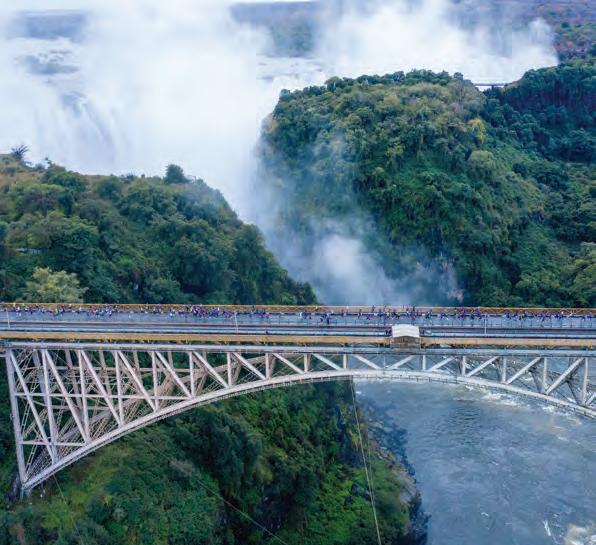
If you’re looking for some scenery to take your mind off the act of running a marathon, you might have just found your race. Starting in Victoria Falls Town on the Zimbabwe side of the falls, runners cross the famous Victoria Falls Bridge to Zambia, all while the magnificent Victoria Falls thunders nearby. Make this a trip to remember by adding a travel package to explore nearby wildlife areas.
JULY | Victoria Falls, Zimbabwe
WWW.VICFALLSMARATHON.COM
VICTORIAFALLSMARATHON
VICTORIAFALLSMARATHON
VICTORIA FALL MARATHON
RUN ROME THE MARATHON
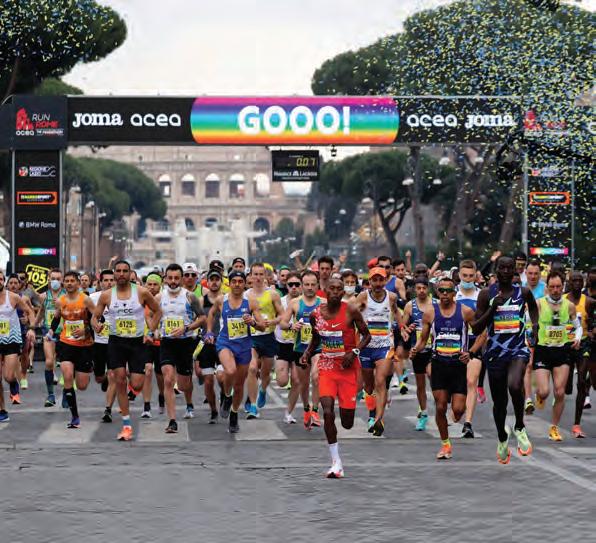
It’s hard to imagine a more fascinating marathon than one that winds through the streets of one of the oldest cities in the world. Featuring primarily flat terrain, runners do have to contend with cobblestones through some of the route. The race begins at the Imperial Fora, just blocks away from the Colosseum. Runners pass world-famous sites such as the Vatican, the Trevi Fountain, the Spanish Steps, Castel Sant’Angelo and more.
MARCH | Rome, Italy
WWW.RUNROMETHEMARATHON.COM
RUNROME_THEMARATHON
ROME MARATHON
TCS LONDON MARATHON
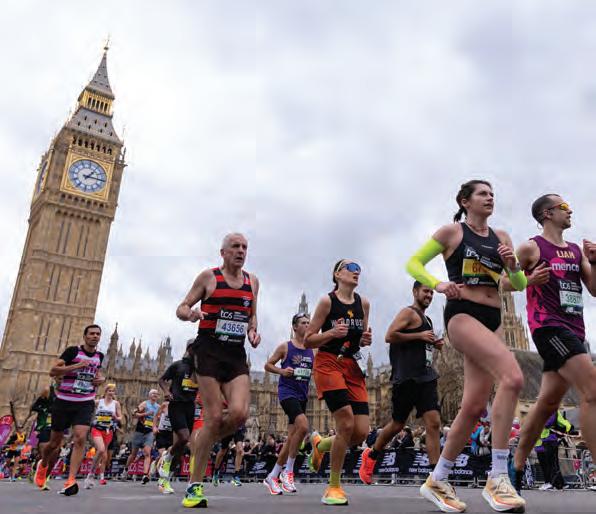
What better way to see the renowned sights of London than by running through the city? Beginning in Greenwich Park, runners must test their restraint as the first few kilometres are downhill. Runners pass over the Tower Bridge and follow along the Thames River past London classics like Big Ben, the Parliament Buildings, and the London Eye. Once beyond St. James Park, you’ll lay eyes on the finish line—the Mall in front of Buckingham Palace.
APRIL | London, England
WWW.TCSLONDONMARATHON.COM
LONDONMARATHON
LONDON MARATHON EVENTS •
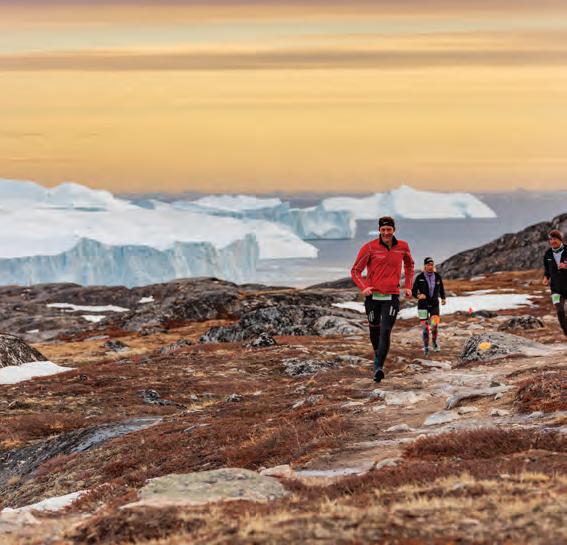
Imagine testing your trail-running skills on this spectacular midnight race where the sun doesn’t set. Beginning and ending at the historic Hotel Hvide Falk, runners head through the picturesque town of Ilulissat before tackling Greenland’s rough terrain. Run past impressive icebergs in the Ilulissat Icefjord, a UNESCO World Heritage Site. With virtually no flat parts along the trail, the surroundings more than reward the effort.
MAY | Ilulissat, Greenland
WWW.ICEFJORD-MIDNIGHT-MARATHON.COM
ALBATROSADVENTUREMARATHONS
ALBATROS ADVENTURE MARATHONS
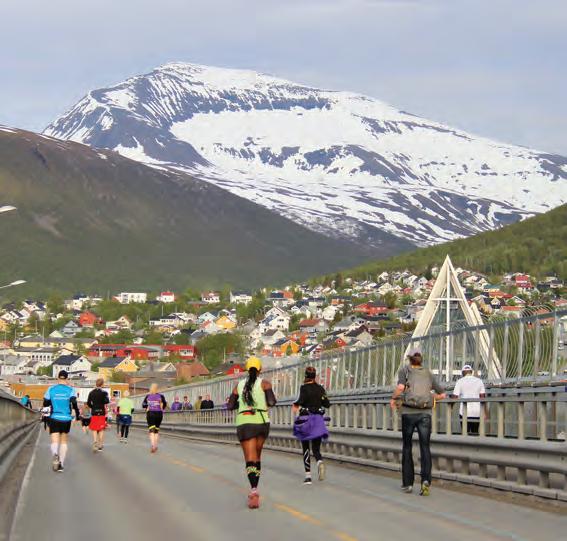
Starting at 8:30 p.m., this race is for night owls. But don’t worry about bringing a headlamp—the sun won’t dip below the horizon at this northern locale in June. Located 350 kilometres north of the Arctic Circle, Tromsø has 24 hours of sunlight in June. Expect a scenic route through the city with rolling hills framed by snowcapped mountains.
JUNE | Tromsø, Norway
WWW.MSM.NO
MIDNIGHT_SUN_MARATHON
MIDNIGHT SUN MARATHON
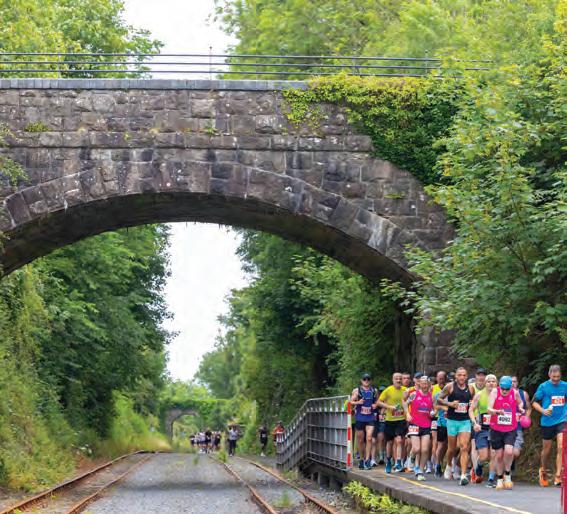
Experience Ireland’s oldest city, founded in 914 by Vikings. The route takes runners through the historic city of Waterford and along the Greenway, a former railway track, now popular for cycling and walking. Run alongside the River Suir and head towards the magnificent Mount Congreve Gardens, known as “The Great Gardens of the World.” From lively music to energizing supporter zones, this is an unforgettable marathon.
JUNE | Waterford City, Ireland
WWW.WATERFORDVIKINGMARATHON.COM
WATERFORDVIKINGMARATHON
PATRICK BROWNE
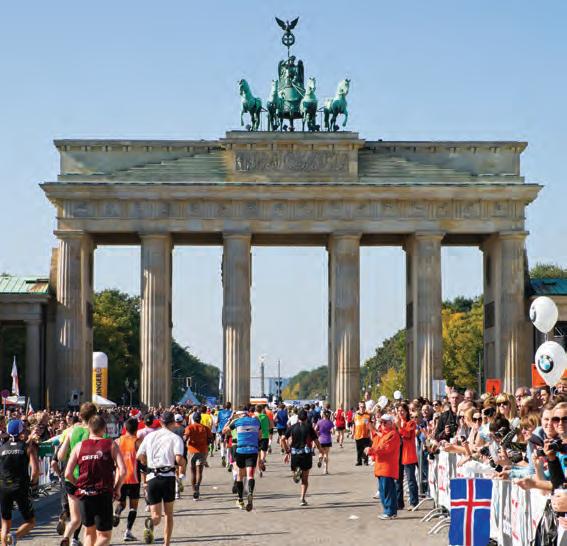
Known as being flat and fast, with temperate weather in late September, runners aren’t exposed to the extremes they are in some of the other major marathons. Beginning west of the Brandenburg Gate, the course passes sights like the Victory Column, the German House of Parliament and Checkpoint Charlie. The perfect sightseeing tour of the city, after running through the boroughs of Berlin, runners pass under the famed Brandenburg Gate before crossing the finish line.
SEPTEMBER | Berlin, Germany
WWW.BMW-BERLIN-MARATHON.COM
BERLINMARATHON
BERLIN MARATHON
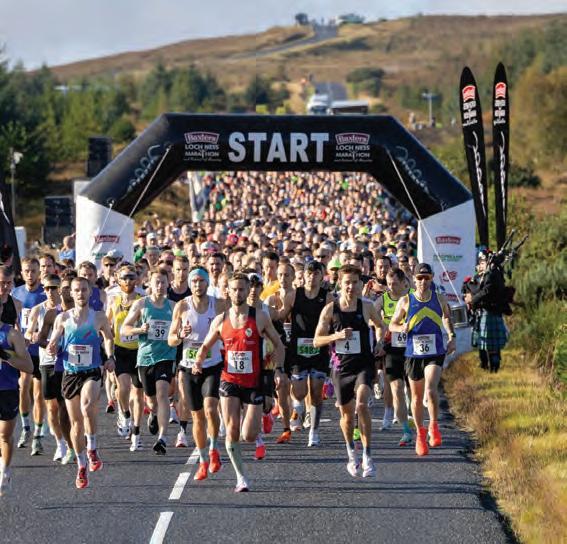
This is another marathon on this list with dramatic scenery that is sure to distract. This point-to-point route takes runners along the southeast shores of the famous Loch Ness and northward to Inverness, the capital of the Scottish Highlands. With a friendly atmosphere, spectacular vistas, and a spirited event festival including street food, pop-up bars, and Scottish music, we think this race might be more fun than it is work.
SEPTEMBER | Loch Ness, Scotland
WWW.LOCHNESSMARATHON.COM
LOCHNESSMARATHON
COURTESY LOCH NESS MARATHON
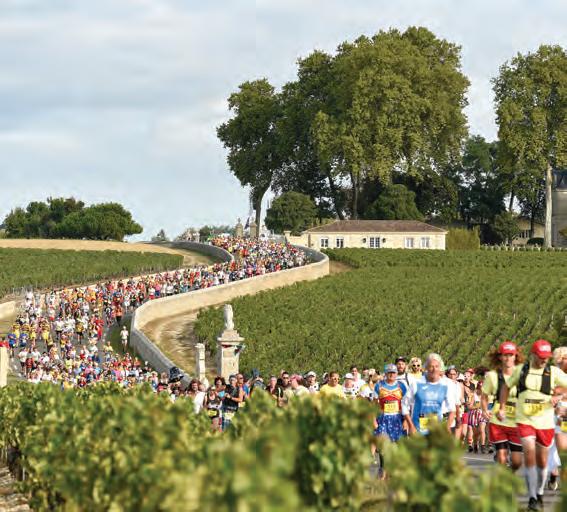
Are you up for the challenge of joining the largest eating and drinking race in the world? This marathon has over 20 places along the route to stop for wine tastings and treats including grapes and ice cream. The course takes you through more than 50 charming vineyards around the Médoc region in Bordeaux, and participants are required to run in costume, which just adds to the fun.
SEPTEMBER | Bordeaux, France
WWW.MARATHONDUMEDOC.COM
MARATHONDUMEDOC
AMCM/MAINGUY •
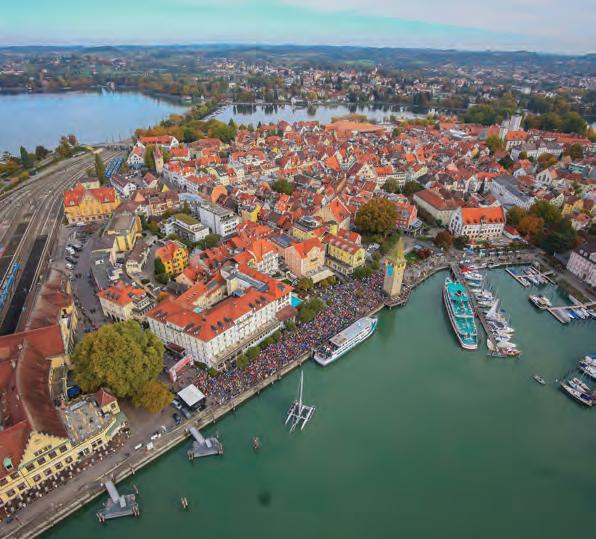
Tick off three countries in one marathon. Starting in Germany, this marathon route will take you into Austria and Switzerland before circling back to Austria at Bregenz. The route starts at the tranquil spa town of Lindau, Germany, and takes you along the shoreline of Lake Constance, all the while surrounded by Alpine peaks. Enjoy enchanting villages and friendly cheering locals along the way.
OCTOBER | Austria/Germany/Switzerland
WWW.SPARKASSE-3-LAENDER-MARATHON.AT
3_LAENDER_MARATHON
STEURER
THE RED STAG ROTORUA MARATHON
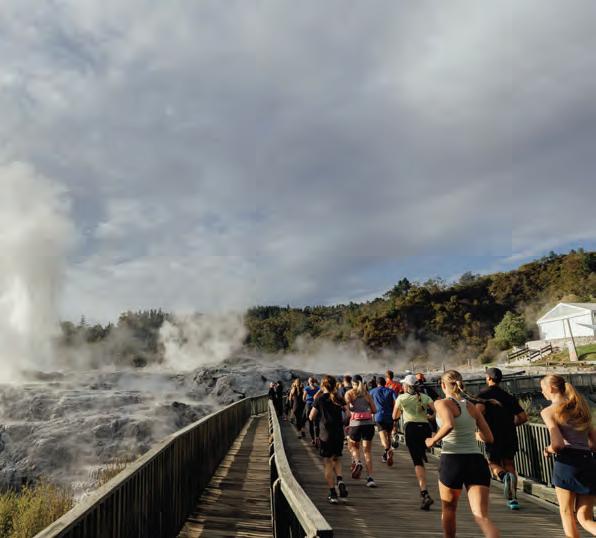
Experience the Kiwi hospitality and charm during New Zealand’s oldest marathon. The unique route is quite distinctive, taking runners on a complete circuit of Lake Rotorua. Beginning at the Government Gardens, runners traverse through the geothermal landscapes the area is well known for. Along the way, runners are treated to idyllic views of the lake and surrounding rolling countryside.
MAY | Rotorua, New Zealand
WWW.ROTORUAMARATHON.CO.NZ
THE RED STAG ROTORUA MARATHON
AUSTRALIAN OUTBACK MARATHON
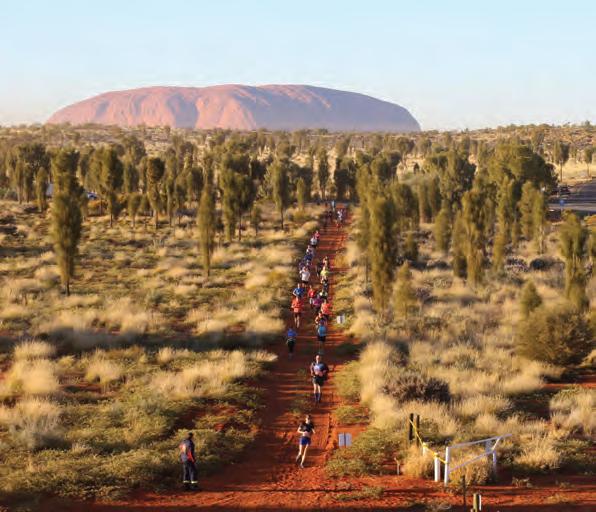
This race is the quintessential “Down Under” experience. Australia’s famous Uluru looms in the distance at the starting line, with the outback’s red dusty landscape stretching out before you. As you run, enjoy the majestic domes of Kata Tjuta and the barren landscape of Northern Australia. The course itself is relatively flat, with a few short sand dunes adding an element of spice to the route.
JULY | Yulara, Australia
WWW.AUSTRALIANOUTBACKMARATHON.COM
AUSTRALIANOUTBACKMARATHON
AUSTRALIAN OUTBACK MARATHON
TCS SYDNEY MARATHON
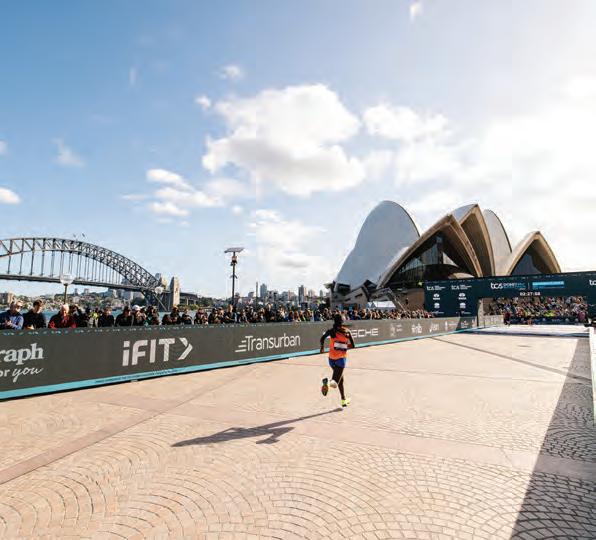
The newest edition to the Abbott World Marathon Majors, the TCS Sydney Marathon is the only major located in the southern hemisphere. It also happens to have the most elevation gain of any of the majors, but don’t worry—Sydney’s energy and urban character are sure to carry you through the course. Runners begin in North Sydney before crossing the Harbour Bridge, winding through Darling Harbour and the Royal Botanical Gardens to cross the finish line at the Sydney Opera House.
AUGUST | Sydney, Australia
WWW.TCSSYDNEYMARATHON.COM
SYDNEY_MARATHON
TCS SYDNEY MARATHON PRESENTED BY ASICS
TOKYO MARATHON
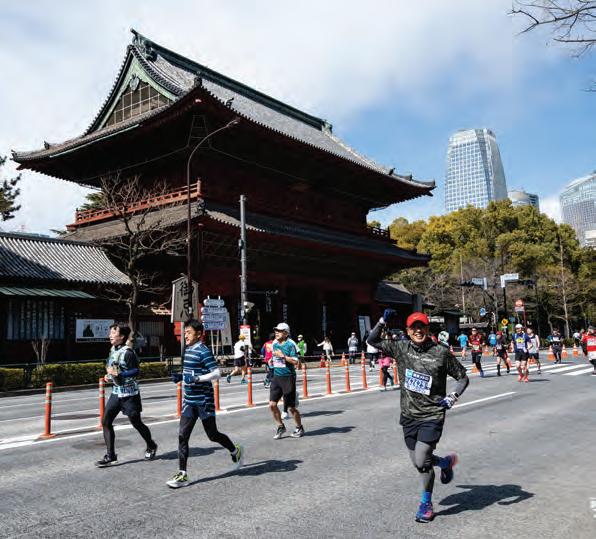
The Tokyo Marathon is one of the seven major marathons held in the world. Even though the marathon expects close to 40,000 participants, the organization and efficiency of the event are top-notch. Embrace the atmosphere as nearly two million spectators take to the street to cheer you on as you pass by modern skyscrapers and traditional Japanese temples. There is entertainment along the way and people dressed up in all sorts of exciting and outrageous costumes.
MARCH | Tokyo, Japan
WWW.MARATHON.TOKYO
TOKYOMARATHON
TOKYO MARATHON FOUNDATION
PETRA DESERT MARATHON
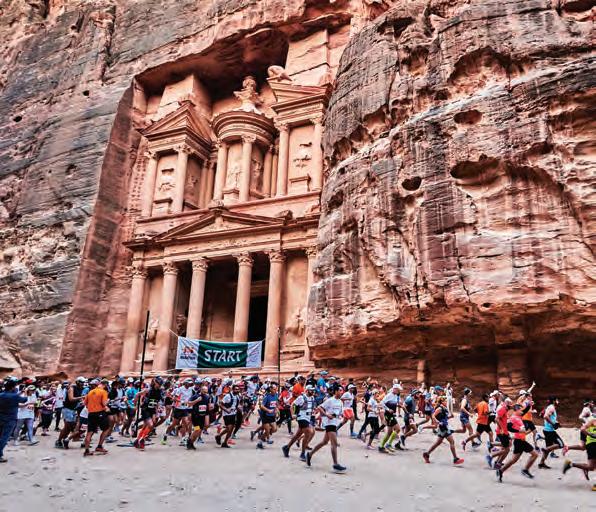
Is there any place more enchanting to begin a marathon than the ancient cave city of Petra? With the starting line in the Street of Facades, this marathon will treat runners to history, culture and nature. Runners will pass mountainside carvings, ancient tombs, monasteries and caves before being released into the arid Jordanian desert.
SEPTEMBER | Petra, Jordan
WWW.PETRA-DESERT-MARATHON.COM/ ALBATROSADVENTUREMARATHONS
ALBATROS ADVENTURE MARATHON •

LADAKH MARATHON
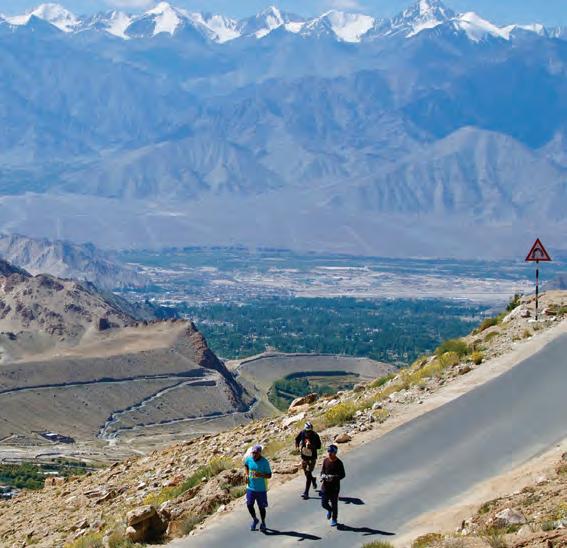
Plan to arrive at least a week ahead to acclimatize before running this marathon at 3,500 metres above sea level. Known as one of the world’s toughest marathons due to the altitude, this race is not for beginners. The route begins in the historic town of Leh, then heads out along the Indus River and past several monasteries, churches and even a palace. With the Stok Mountain Range stretching across the horizon, this race is as captivating as it is challenging.
SEPTEMBER | Leh, India
WWW.LADAKHMARATHON.COM
LADAKHMARATHON
LADAKH MARATHON
ANTARCTICA MARATHON
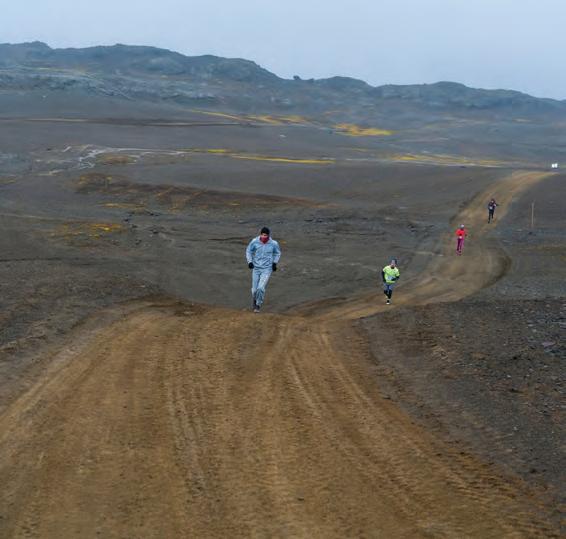
Is it your dream to complete a marathon on all seven continents? Marathon Tours & Travel has been organizing this one-of-a-kind race since 1995. As part of the tour package, racers enjoy a stay in Buenos Aires before flying to Ushuaia to catch a ship to Antarctica. The race itself takes place on King George Island, and participants can expect challenging conditions including snow, mud and temperatures below freezing.
MARCH | King George Island, Antarctica
WWW.MARATHONTOURS.COM
MARATHONTOURS
MARATHON TOURS AND TRAVEL
PATAGONIAN INTERNATIONAL MARATHON
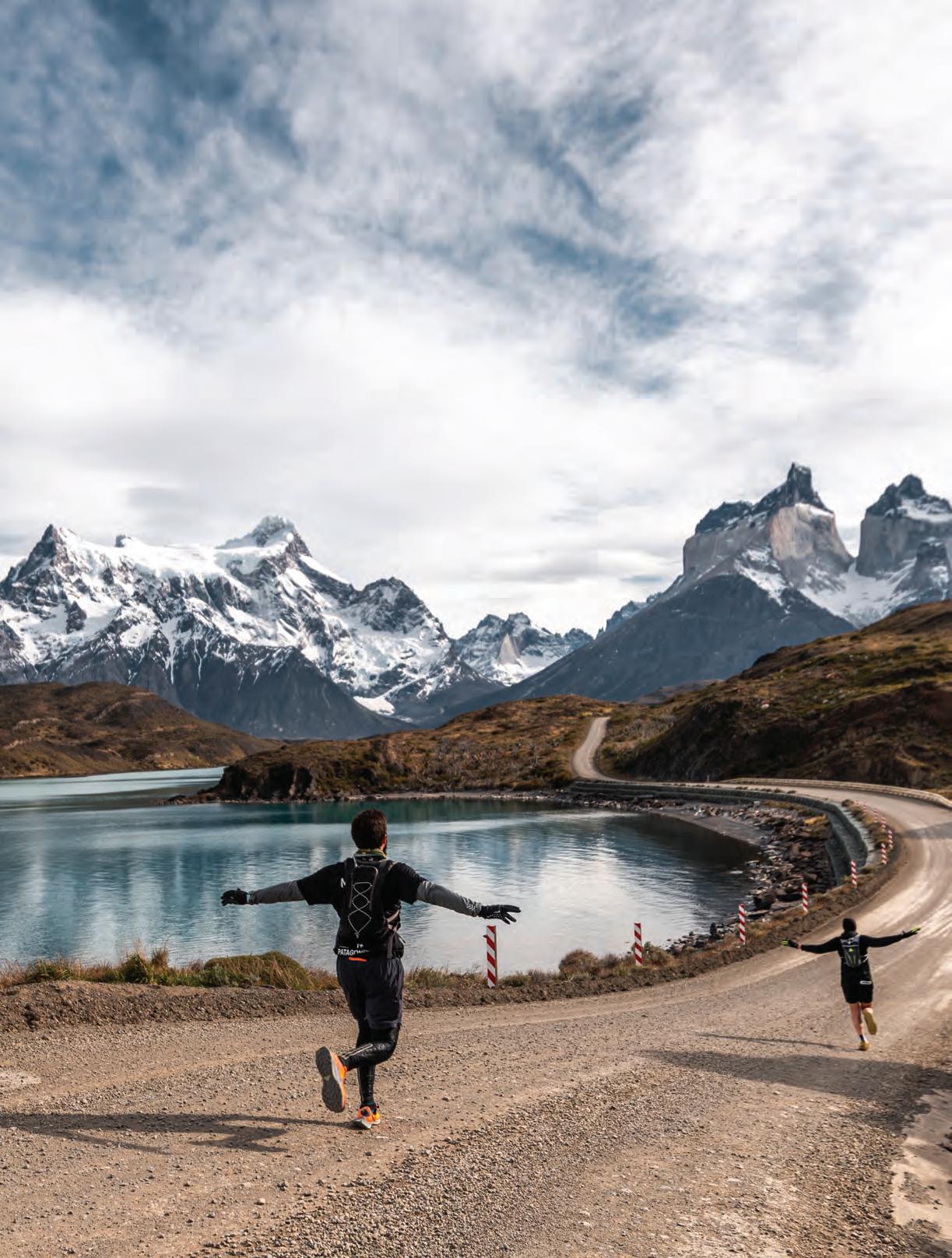
Run the gravel roads of Torres del Paine National Park, one of the most striking regions in the world. The breathtaking expanse of untamed lakes and jagged, snow-capped peaks will be a welcomed distraction from the difficult course. From the strenuous, hilly terrain and relentless, hostile climate of the area, this marathon will test your limits.
SEPTEMBER | Patagonia, Chile
WWW.PATAGONIANINTERNATIONALMARATHON.COM
PATAGONIANMARATHON
PATRICIA AINOL


We’ve got your shirts, medals, and swag.
From creative design and custom performance race apparel to finisher medals, awards, and branded merchandise for your expo and event weekend, DNQ partners with races across Canada to help bring events to life. We combine bold design, dependable manufacturing, and hands-on experience to create products that perform, elevate your brand, and leave a lasting impression with participants.
Proudly Canadian-owned and trusted by race organizations for over 10 years, delivering custom design, apparel, medals, and race merchandise that make an impact.
Bring your race vision to life.

Build strength and speed with this nonstop hill training method
BY CATHAL LOGUE
Logue is an avid runner and coach with many PBs. He now helps runners of all abilities reach their potential and likes exploring the mountains north of his current home, Madrid, Spain.
CATHALLOGUE | MARATHON.HANDBOOK

Hill workouts are excellent for improving running efficiency and leg strength. By incorporating hills into training, runners can boost power, endurance, and overall performance. These workouts typically involve running uphill for a set distance or time, with the downhill serving as recovery.
However, there is a type of hill workout that, commonly called Kenyan Hills, is less known. This concept is believed to have been around since the 1970s and consists of a continuous session of uphill running followed by downhill running without rest.

The East African athletes have always understood the importance of hills, and it is often commented that their consistent hill training is one of the factors behind their continued success on the world stage.
Steve Vernon, U.K. Athletics endurance coach points to the use of hills as a reason for the unrivaled success of the Kenyans and Ethiopians in distance events stating: “The East Africans have proven that it works. They do all their training on rolling dirt roads that are uneven and usually steep. This makes them extremely strong from the feet upwards and teaches them to be very efficient off the ground.”
The main difference between Kenyan Hills and a normal hill session is that on the downhill you’ll be looking to maintain the same effort—akin to running a tempo-paced session—and should not use this section as a traditional recovery.
In this type of hill workout, the runner will run continuously for a set duration, say 30 minutes, or they could break down the session into intervals, say 5 x 5 mins, with a 2-minute recovery. In terms of why they are called Kenyan Hills, there is no specific evidence of where the name came from or who indeed was the first to coin the term. However, it is generally believed it derived from a Western athlete returning from a training period in Kenya.
The workout is great for getting used to continual change of pace as you go from running uphill to downhill. This helps you get used to races where surges and changes in pace are commonplace— cross-country races for instance.
You get used to running at a tempo pace—around 80 per cent of your max heart rate—coupled with periods where your heart rate drops, but not to levels where they are considered recovery pace. With the HR kept relatively high in the “recovery” phases, the length of the session will depend on your current fitness.
Kenyan Hills are a terrific way of getting the downhill running benefits: not only improving your coordination, but it will strengthen your quadriceps and glutes. Moreover, it is a way of increasing your cadence or stride frequency and hence your speed.
This type of session will also help you prepare for downhill sections in any of your upcoming races. Downhill running at speed places considerable demands on the quadriceps so getting your body familiar with this feeling in training will lead to no surprising sensations come race day.
For a Kenyan hills training session, you’ll be aiming to run continuously over a long duration, so you’ll typically need a longer stretch of time than you would use for the traditional short hill sprint session.
Ideally, you should be aiming for a hill that is between 400 and 800 metres long, which would take somewhere in the range of one to three and a half minutes to ascend.
Don’t worry too much about how fast you climb but focus on feeling relaxed and maintaining a steady pace. Remember that you’ll not only get an endurance boost from the run, but you’re also developing specific leg strength.
1. Start at a solid steady pace as you run uphill. Then turn immediately at the top and run down the hill with a longrelaxed stride, then repeat without resting. Continue for five minutes and then take two minutes of recovery before repeating three more times.
2. A s above, this time increase the duration to eight minutes with a two-minute recovery. Repeat two more times.
As you gradually become more comfortable with this type of session and you have been able to maintain the required pace, move on to trying the following sessions in the same hilly terrain:
3. Run steady for 10 minutes, take a three-minute recovery. Repeat two more times.
4. T ry 2 x 15 minutes with a four-minute recovery
5. Once you have built up sufficient endurance and strength, you could have a go at a continuous 30-minute block with no recovery.
Remember, for each effort try and keep as consistent a pace as possible for the uphill and downhill sections. Your heart rate will be around 80-90 per cent of its max and it shouldn’t drop into recovery zones on the downhill sections.
There are several factors that have resulted in Kenyans dominating endurance events. Diet, running as a part of life from a young age, and living and training at altitude are some of the reasons most attributed to their success. However, one thing that is consistent amongst Kenyan athletes is their hill running.
The Kenyan Hills sessions are great if you have a hilly race coming up or have been a bit bored of the normal hill session or tempo runs in your schedule.
After all, more and more of the popular marathons include some very arduous climbs—Boston has Heartbreak Hill—so having more experience running hills and building the specific leg strength that comes with it can give you the edge on race day. Edited and reprinted with permission of
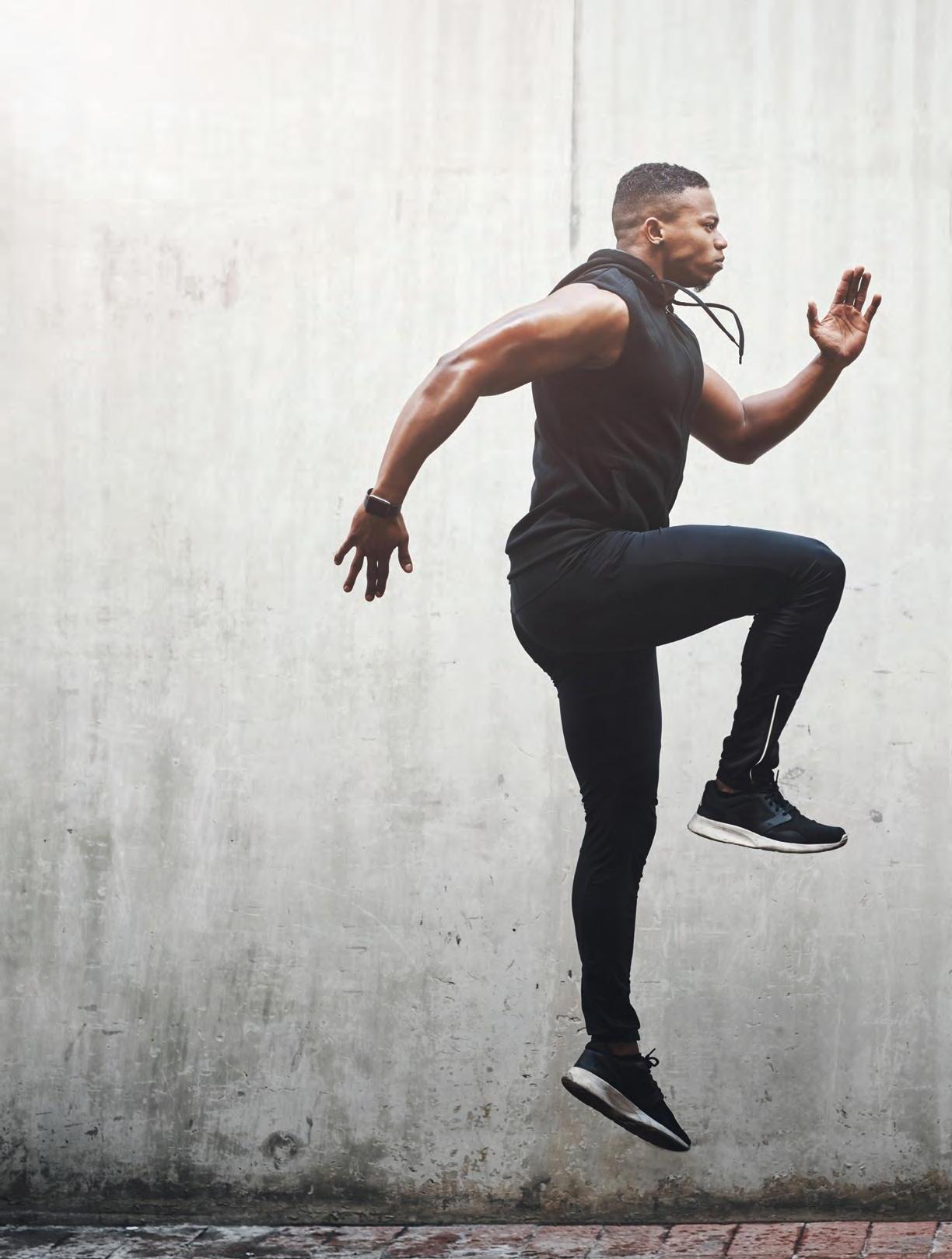
Including drills into your training can strengthen muscles and improve performance
BY KEVIN SMITH
President of Marathon Dynamics Inc., NCCP-certified running coach, 2025 Canadian Masters Marathon Champion (55+), Six-time Canadian Record Holder (55+), from Toronto, ON. MARATHONDYNAMICS
Runners are often bombarded almost daily with recommendations on all kinds of great ideas and advice that we should act on to improve our running. But amidst the blizzard of well-intentioned advice, one often unsung hero of long-term success is most definitely running form drills. Running form itself, or biomechanics, can be defined as the way one’s body moves through space when engaged in the act of running. But what are running form drills?
Essentially, they are a way of breaking the entirety of the running stride into smaller segments, to isolate parts of the full gait cycle, making it easy to rehearse and improve specific aspects, before putting it all back together again to define your own natural running form.
• Most commonly, after a 10–15 min easy jog warm-up, before harder, faster more intense running, such as intervals, hill repetitions, time trials and/or races.
• We often recommend practicing running form drills at least one or two other times per week, after other, usually shorter, easy runs as well, especially for newer or novice runners, to help establish and reinforce ideal movement patterns before “bad habits” become entrenched.
WHY DO THEM?
• Reduce injury risk and safely ready the body for imminent fast running.
• Strengthen key running muscles.
• P ractice neuromuscular patterning for better coordination.
• Establish greater range of motion and functional flexibility.
• U ltimately to improve performance.
HOW TO DO THEM?
• Find a clear, straight, flat stretch of pavement, grass or running track, that’s at least 40 metres long.
• T hroughout all drills, focus on tall, erect posture, and make sure your breathing is deep, full and relaxed (i.e. belly breathing). Strive for “yoga on the move” and you’ve got it.
• G ently engage your core muscles and try to limit vertical—up and down—movement of your hips. Stay “horizon quiet.”
• Perform one to three sets, 30–40 metres for each drill.

There are many drills out there but here we are concentrating on the ‘big 4.’ And even if you’ve only got five minutes to spare it is worthwhile fitting them into your running schedule.
• Running A’s or “Running Skips”- start with a high-knee lift march, and when comfortable graduate to a more forceful “thrust” of the forward knee (opposite elbow back) that pulls your body forward (rather than pushing off your back foot).
• Running Bs or “Paw Backs” – tall posture, high-knee lift, gently extend lead foot to activate hamstring, and draw lead foot directly underneath hip at ground contact/weight transfer (opposite elbow back).
• Running Cs or “Butt Kicks” – hop on balls of feet, lifting heels close to glutes, emphasizing quick compact cadence.
• Running Ds or “High Knees” – hop on balls of feet, lifting knees in front of you, up close to hip height, trying to pop quickly off your feet, minimizing ground contact time. Three great adjuncts to run form drills, often completed in conjunction with running drills, are:
• D ynamic Mobility Exercises: leg swings, hip circles, lunges, squats and “scoops.”
• Static Stretching: quadriceps, hamstrings, calves and “ITB” (iliotibial band).
• Striders or Strides: six - seven reps of 80 -120 metre-long gentle, progressive accelerations to “near but not” sprinting, focusing on smoothly increasing stride rate, effort and speed by the end of each rep.
As a runner and coach of over 30 years I have been practicing and instructing regular running form drills hundreds of times per year. I am virtually certain that a big part of my long-term running and coaching success is due to regular running form drills. Give them a try and see for yourself.
For short video demos of each drill, go to Marathon Dynamics YouTube channel @ MDI Running Form Drills Review.

Making strategic decisions ahead of a race can result in a stress-free event
BY ADDIE J. BRACY
A competitive distance runner and coach for two decades, Addie has competed in some of the world’s top ultra races including the UTMB in Mont Blanc and the Canyons Endurance Run, from Twin Lakes, CO. ADDIEBRACY

When I think back to when I first started running ultramarathons compared to now, I see that I’ve drastically reduced the amount of gear I carry with me. I’ve also revised race logistics to be even more efficient and effective. The strategy behind these changes was partly about increasing efficiency both on the course and through aid stations but also about reducing the number of decisions I needed to make throughout a race.
Every time you make a decision, it requires your brain to do a mental rehearsal and project the possible scenarios and outcomes of each option. Even when it’s operating at a subconscious level, it’s taking up valuable mental resources. When you’re planning for an effort likely to be one of the hardest of your life, ask yourself which decisions are worth the energy. You’ll quickly find that having a smorgasbord of fueling options to choose from every time you stop at a crew station may not be crucial, and in fact, deciding what food to grab may even feel like it takes more mental energy than it should. It’s much better to practice with different options, choose a few that you know work well for you based on what you need to take in, and stick with those few things.
This isn’t a new concept, and it’s not isolated to sports arenas. CEOs of billion-dollar companies—like Mark Zuckerberg—often wear a version of the same outfit. They have so many important decisions to make during the day that the last thing they want


to spend mental energy on is what to wear. Even Barack Obama told Vanity Fair magazine in 2012, “You’ll see I wear only gray or blue suits. I’m trying to pare down decisions. I don’t want to make decisions about what I’m eating or wearing. Because I have too many other decisions to make.” He went on to explain that making too many decisions impairs his ability to make decisions later in the day.
This is a concept that psychologists refer to as decision fatigue. An experiment performed at the University of Kent (Baer 2013) showed that strenuous or continuous thinking leaves your body physically exhausted. The study separated the subjects into two groups, each assigned a 90-minute task. One group was told to play a taxing video game while the other sat back and watched a documentary about either sports cars or trains. Afterward, each subject got on an exercise bike, set their resistance level, and pedaled as long as they could. Almost every time, the documentary watchers outperformed the gamers.
Deciding between multiple options uses the same resources as willpower. That means that the more decisions you have to make early in a race, the less fuel and motivation you will have to keep pushing through discomfort later. Think about that implication in the context of running an ultra, an endeavour that provides a lot of time to mistakenly give yourself too many decisions to make— both in the race and even in the days and night before. If you allow


yourself to get into this situation, you may find that in the later stages of the race you feel even more exhausted and lack the mental reserves or willpower to keep going.
Routines also have utility in helping control attention and activation levels. When you create your preperformance or performance routines, include the mental skills you have learned. It is a built-in way to direct your focus and attention where you want it to be. For example, during your pre-race routine, a body scan might be beneficial. The exercise is a way to direct your attention to broad, internal awareness of how you’re feeling without focusing or fixating on one specific thing. It also may pull your attention away from things going on around you, like other competitors, that may invoke feelings of anxiety.
Your body responds physiologically to whatever you focus on. As you create your routines, keep that in mind as well. For example, during your routine the night before the race, laying out your uniform and preparing all your gear can sometimes initiate a wave of nerves. The end of that routine is the perfect time for slow breathing or progressive muscle relaxation.
As you consider your preperformance routines, I want to point out the difference between a routine and a superstition. Routines have a tangible impact on performance. They are designed to direct your attention and control your activation levels to put you in an optimal

performance state. Routines should also include only factors that you have control over. Superstitions, on the other hand, don’t have any real bearing on your performance. That doesn’t mean you should never have superstitions. I’m just suggesting that you be aware of what parts of a routine actually have an impact on performance. Additionally, if you do have a superstition, make sure it’s something that you can control (like doing a certain warm-up) versus something that might be harder to control (like eating the exact same meal the night before).
If you think you can’t race well without wearing your lucky socks, it doesn’t matter that they don’t make you run faster because you believe that they do. When you’re creating your routines, don’t give power to anything that doesn’t deserve to have power.
As you’re preparing for a race, break it down and simplify the experience. Create routines and omit as much unnecessary cognitive engagement as possible. Routines allow you to get things done without having to think too much or make too many decisions. They are also an effective way to build in your mental skills. Routines are a way to logistically prepare for the race but also to get into the optimal attentional and activation states.
Excerpt from Mental Training for Ultrarunning by Addie J. Bracy (Human Kinetics 2022). Edited and reprinted with permission of www.Canada.HumanKinetics.com.
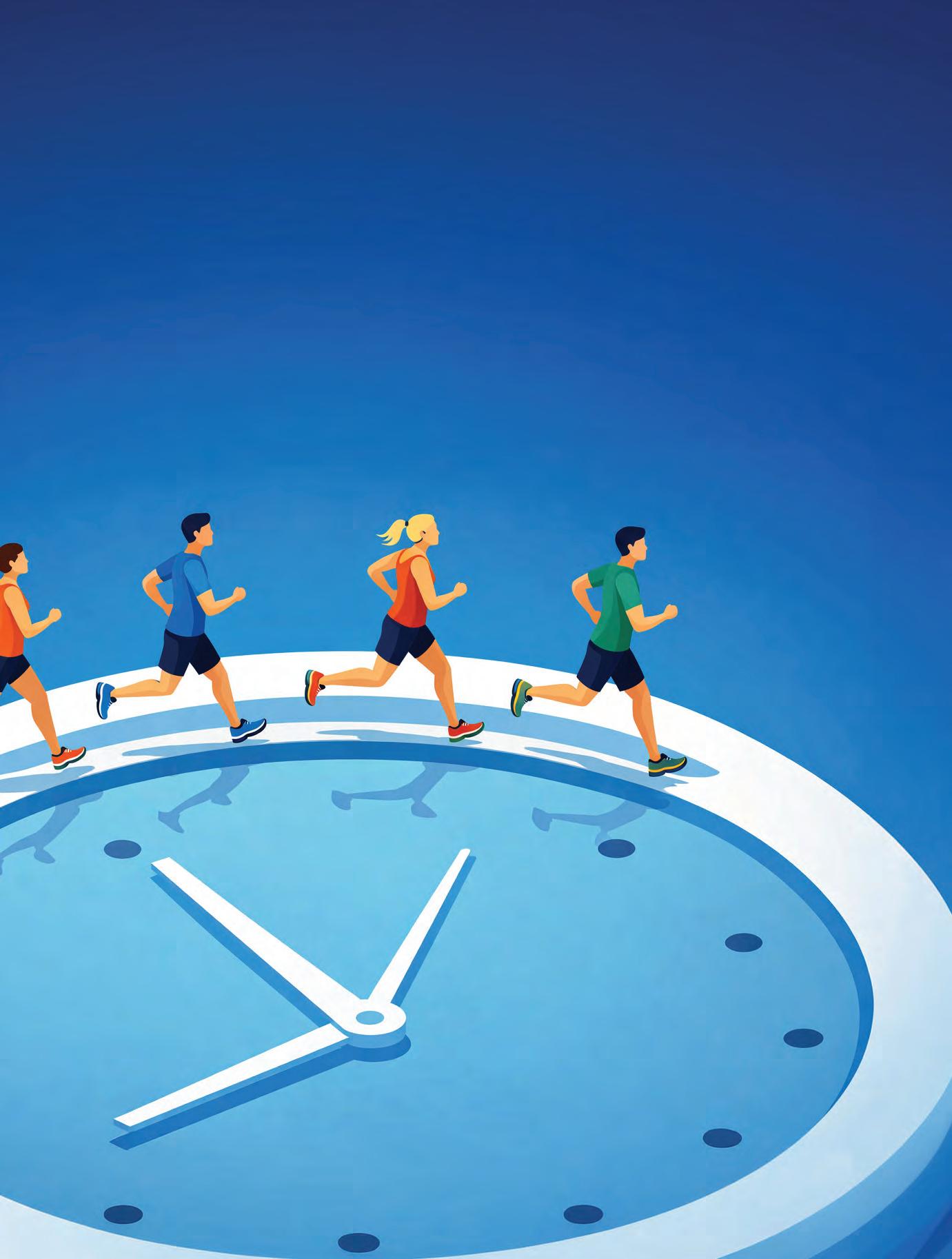
Minutes or Miles
While many runners plan workouts based on distance, shifting to time-based training can offer a refreshing change with many benefits
BY ANDREW SIMMONS
A USATF and TrainingPeaks Level 2 certified coach and the founder/head coach of Lifelong Endurance. Andrew resides in Denver, CO, where he still trains as a competitive amateur. TRAININGPEAKS LIFELONGENDURANCE LIFELONG_ENDUR

It’s easy for runners to fall into the trap of more mileage equals more fitness. But this isn’t necessarily the case. If you’re tired of obsessing over mile or kilometre markers and chasing exact splits, consider shifting to time-based training.
As an experienced running coach, I’ve seen firsthand how timebased training helps my athletes stay more consistent, improve the quality of their workouts, and reduce mental and physical burnout.
Here are five reasons why shifting your training to minutes instead of miles/kilometres can benefit you in the long run (pun intended).
When you focus on mileage, there’s often an unspoken pressure to hit a certain pace, especially if you’re uploading your runs to platforms that display average pace and reward fast times.
This can lead to a mindset where “good runs” are defined by pace instead of effort. This might push you to go too hard on easy days, completely defeating the purpose of the run.
One of the best things about time-based running is how it helps you maintain a consistent effort, no matter the terrain or elevation gain.
Without the pressure of hitting a certain split, you’re able to focus on steady effort rather than speed. For example, if you’re running 30 minutes over a hilly route, you’ll naturally adjust your effort without feeling your are overexerting yourself to maintain a certain pace.
Simply put, running for time allows you to better listen to your body and adjust your pace accordingly without the fear of running “too slow” or “too fast.”
Mileage-based training can take a toll on you, both physically and mentally. Some days you feel ready to tackle a long, demanding workout; other days, your body is practically begging for rest.
Running for time allows you to adapt to your body’s current state instead of forcing it to hit a set distance regardless of fatigue. This can help prevent overuse injuries—a common issue among runners chasing arbitrary mileage goals.
And it’s not just physical stress that takes a toll on your body. There’s an often-overlooked mental strain that comes with mileage targets. How many times have you pushed to hit round weekly totals—40, 50, or even 60 miles—or went an extra lap just to make your run ends end at an even mile?
This probably wouldn’t happen if you listen to your body’s cues. When fatigue sets in and your form is suffering, those extra steps might reinforce poor mechanics, ultimately risking injury.
Smart, effective training isn’t about grinding to the point of exhaustion. “The grind” pays off when your body can recover and adapt to the workload.
Mileage-based training often comes with a “just get it done” mindset where the focus is solely on covering the distance rather than the quality of each step. But time-based shifts your focus to how you’re running—making form, cadence, and overall running economy the priority.
This is especially valuable during training cycles that emphasize technique. In my experience, runners who switch to time-based
training develop smoother, more efficient strides, contributing to long-term performance gains.
When you prioritize quality over quantity, you start focusing on what really drives your progress as an athlete.
Remember, improvement isn’t just about increasing your mileage. Adding strides to refine your form and economy, incorporating running drills to establish strong movement patterns, or building strength in the weight room can all bring meaningful results.
It’s measurable as well. Think starting a training cycle by running 4.86 miles (7.8 kilometres) in 40 minutes and later covering 5.2 miles (8.3 kilometres) in the same amount of time with a lower heart rate. That’s a clear sign of improved efficiency and fitness!
Workouts vary greatly in intensity, speed, and intention. As many know, tempo runs, long runs, intervals, and recovery runs all serve a different purpose. Focusing on intensity with time-based training can help you achieve these goals.
Take a 30-minute recovery run, for example. The goal isn’t about how far you can go; it’s about keeping your heart rate and output low enough to truly recover.
When you run for time, you avoid the pressure to hit a certain pace and distance, allowing you to execute the workout’s intended purpose.
Unlike mileage-based runs where your mind fixates on counting down to a set distance, time-based training encourages you to stay fully immersed in each moment. This mindfulness—attending to each stride, breath, and bodily sensation—shifts your focus from finishing a set distance to being present and intentional.
Time-based training also shines when it comes to developing pacing strategies and mental focus. You’re free to adapt to varying terrains and conditions while practicing how to evenly distribute your effort. By listening to your body—tuning into cues like heart rate and energy levels—you can train smarter, not harder.
Time-based training strengthens what sports psychologists call “mental endurance”—the ability to maintain focus and composure under physical stress. It’s not just about enduring discomfort; it’s about learning how to actively manage your response to it.
Running for time helps prevent burnout—both physical and mental. It keeps training fresh and rewarding, encouraging you to appreciate the quality of each workout, no matter how you feel that day.
Is Time-Based Running for You?
Embracing time-based training offers a fresh perspective, challenging the standard obsession with mile markers and instead listening to your body’s cues. It encourages you to stay present, tune into your form, and prioritize quality over quantity.
With time-based running, you can finally let go of hitting round mileage numbers and instead focus on how your body is feeling.
It’ll also help you gain mental resilience, a healthier approach to pacing, and even some cheeky satisfaction from focusing on the journey rather than an arbitrary finish line in your local park or trailhead. This article has been edited for length and reprinted with permission by TrainingPeaks - www.trainingpeaks.com.

BY JANEY BROWN JEREMIE DUPONT
Founder of Fearce Academy Inc, Brown teaches mental resilience to world-class entertainers, corporate executives, and renowned athletes. from Toronto, ON.
JANEYBWORLD JANEYBWORLD JANEYBROWN
You have to respect that every athlete that’s (at your level of excellence) has done physically what it takes to be there… because they’re standing next to you.
You have trained relentlessly. You know your potential. And yet, right before you step into the spotlight, fear captures your mind. Whether you’re about to compete, preparing for try-outs, being interviewed, or speaking onstage for your sport, that surge of fear can rule your performance if you don’t learn how to face it.
As I mention in my book Fear To Fearce, a small amount of stress leading up to a performance is healthy and can indeed help us improve performance. This type of pressure feels like butterflies in your belly. Performance anxiety, on the other hand, feels less like butterflies and more like tiny vampire bats with machetes.
Performance anxiety isn’t just ‘nerves.’ It’s an intense, full mind-body response driven by the fear of negative evaluation when we step into high-stakes performance domains. For many peak performers, output becomes fused with identity, making our performance abilities a proxy for who we are. This astronomically jacks up the stakes of making a mistake, as failure would not only represent a strike to our success record, but to our self-worth. For athletes, coaches, and performers alike, these perceived stakes can lead to conscious and unconscious avoidance behaviours and self-sabotage. In turn, these patterns prevent risk-taking, consistency, and the tolerance for the discomfort required to build mental resilience and achieve peak performance.
This article isn’t about sharpening your performance skills; if you show up to practice day after day, you likely already have that covered. Instead, this is about forging the capacity to endure the pressure and fear that come with striving for performance excellence. The first step is understanding that avoidance reinforces fear, while exposure rewires it.
Just like physical training, mental resilience is built through the repetition of facing the thing we want to avoid. The REPS model trains us to flex the courage muscle so we can maintain momentum toward high-performance goals.
R (Repeated)
One exposure isn’t enough to rid performance anxiety. Confidence is strengthened by consistent repetition of performing under pressure. That means having the courage to show up again and again, even when the fear feels unbearable: Taking another shot. Stepping back on stage. Staring down critics. Risking failure. Repetition makes the confrontation of fear familiar, and familiarity neutralizes fear.
E (Exposure)
Many people try to manage performance anxiety with breathing exercises, visualization, or even distraction. While these tools can help in the moment, literature consistently shows that outright exposing ourselves to the feared stimulus is the most critical element in reducing anxiety long-term.
Not all at once, but progressively you can start to:
• P ractice in front of one person you trust before a full room.
• Simulate performance conditions in training.
• Record yourself and watch it back.
• Show up. One session at a time. One step at a time. One breath at a time.
The goal is desensitization, not perfection.
P (Perceived)
Here is the key: Just because you perceive a threat doesn’t mean you’re in actual danger.
*I’ll caveat this by saying that in some performance domains, such as extreme sports like race car driving, the possibility of injury and even death cannot be ignored. In these cases, fear is a protector of both livelihood and lives. The nuance is that REPS focuses primarily on performance-related fear, not legitimate safety concerns. Athletes in high-risk sports often require an additional layer of mental resilience to cope with real danger while striving for peak mental performance.
Your nervous system doesn’t distinguish well between a threat to your life and the threat of negative social evaluation. Thus, the concept of missing a goal, forgetting choreography, or being judged can feel dangerous. REPS works by helping your brain contextualize fear in athletic performance and update it to False Evidence Appear Real.
S (Stress)
Not all stress is bad. In fact, optimal stress (not too much, not too little) can enhance performance by sharpening focus and preparing the body for action. The goal isn’t to eliminate stress, but to hone it, using that increased energy as a cue to step forward, not fall back.
Each time you step toward a perceived threat and come out the other side, you teach your nervo us system a new story:
“I have the courage to bear this fear and still perform anyway. I can turn fear into fuel.”
Peak performers don’t run from fear or wait for it to disappear. They put in the REPS and build the courage to perform with it.
For more on turning fear into fuel and achieving Fearce performance in your personal and professional life, check out my Fear To Fearce Book on Amazon.
Follow this plan to achieve a new personal best
BY JEREMY DEERE CANADIAN ARMED FORCES
Eight-time World Cross Country Championships Competitor, World Athletics Championships 5000m and Owner of Strides Running Store in Calgary, AB. STRIDESRUNNING STRIDESRUNNINGSTORE STRIDESRUNNING
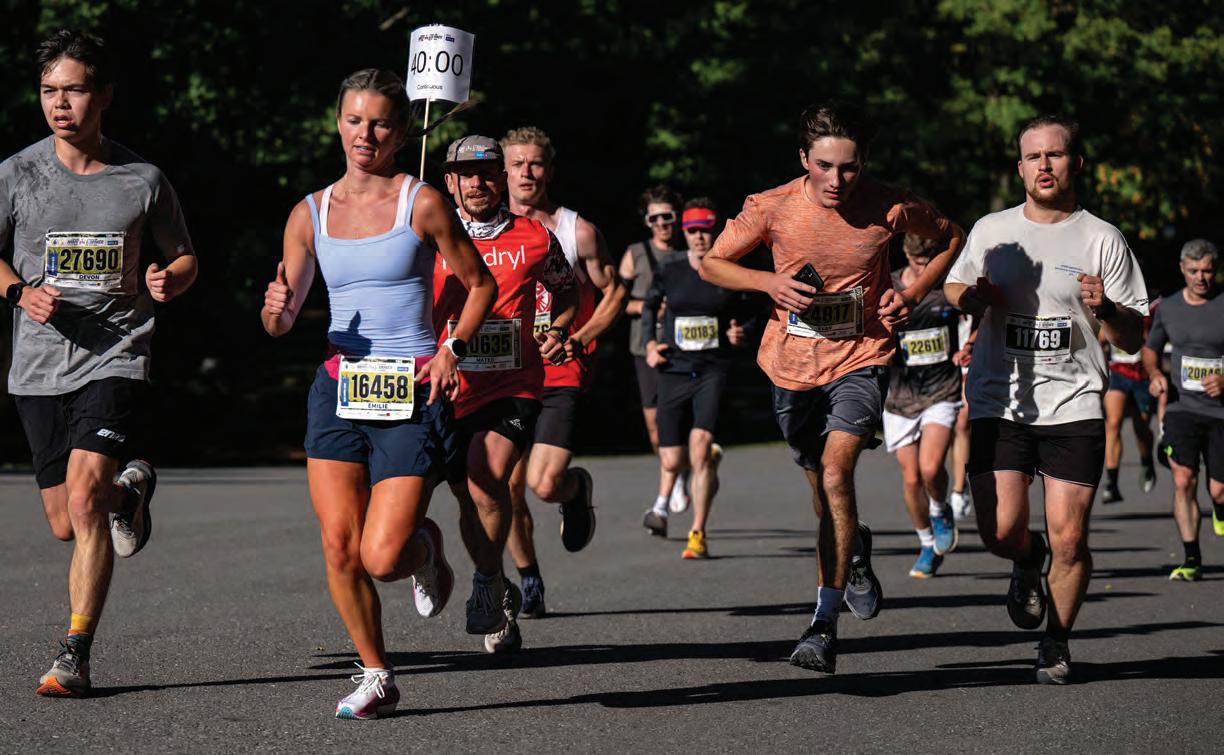
If you have a time goal for a 10-kilometre race in the next few months this program is designed to help your training progress by keeping it interesting, yet challenging. Before starting this plan, it is strongly recommended that you can comfortably complete a 10-kilometre distance (with or without walk breaks).
There may be a few new concepts introduced in this program – e.g. intervals, tempo runs and strides. Here’s a quick definition for each as they relate specifically to the training.
Intervals - These are faster-paced runs and can range from 200 metres all the way up to three kilometres, depending on the distance you’re training for. In this program, I’ve kept the longest intervals to 1000 metres to help build your speed and turnover. Pace will vary depending on the length of interval. For example, for intervals 400 – 800 metres in distance, your pace will be run at your goal (or current) 5-kilometre pace. If you don’t know at what pace to run your intervals there are great pace charts available online – I often refer to www.mcmillanrunning.com
Note: If you don’t have a GPS to calculate distance (or access to a running track), interval distances can be converted to time, based on your pace. For example, if your goal 10-kilometre pace is 50 minutes, the interval is 1000 metres and the workout calls for 10- kilometre pace, then you will run your interval for five minutes (or approximately 1000 metres).
Tempo Runs - These are longer, sustained efforts, often run at, or slightly slower/faster, than your goal race pace. They help you increase endurance and provide feedback on your improvement. After a 10-minute warm-up jog, increase your pace to goal race pace for the designated time (e.g. 16-mininute tempo), then finish
with a 10-minute cool down jog. The tempo pace should feel fast and steady, but comfortable, and you should finish feeling like you could have kept going at that pace (it is, after all, shorter than your race distance, but run at a similar pace). If you struggle to get through the time, then slow down slightly next week.
Strides - Think “wind sprints” like you used to do in school. These are short (80 – 100 metre) fast sprints run at about 80 per cent maximum speed. They provide three main benefits: improve running form, get your body used to running at a pace faster than race pace, and loosen your legs up following a shorter, easier run. Find a flat stretch of road, sidewalk or grass. Sprint 80 – 100 metres focusing on running form and quick turnover. Jog easy back to the start. Repeat four times.
Long Run - While this is not a new concept, many runners aren’t sure at what pace to run their long runs. In this program, I recommend running them at ‘conversation pace.’ This means at all points in the run—from start to finish—you should be able to comfortably hold a conversation with your running partner. Long runs and easy runs between workouts help build aerobic base, while the intervals and tempo runs take care of the speed and race fitness. Long runs are scheduled for Saturdays but If you’re used to doing your long run on Sunday these two days can be swapped. Finally, if you’re not used to running six days a week (I’ve designated Friday as the day off in this program), you can use Monday as an optional day. This means a second complete rest day or a cross-training day (e.g. yoga, bike, etc.)
Enjoy following this 12-week training program and I hope you’ll stay motivated to run a new 10-kilometre PB!
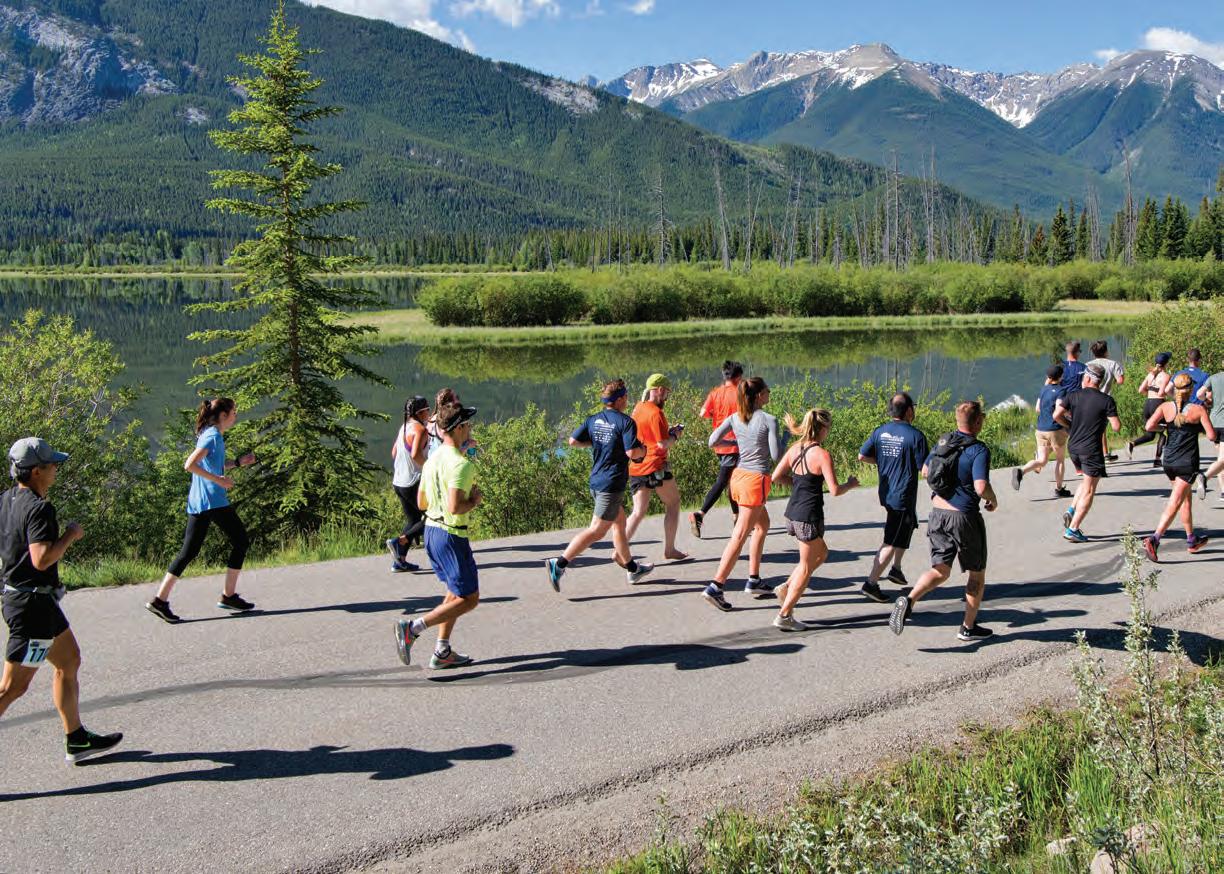
BY LISA HARVEY PAM DOYLE
1992 Olympian - 10,000 metres, three-time World Outdoor Track National Team Member, eight-time World Cross Country National Team Member, multiple Canadian medalist at distances from track to the marathon, in Calgary, AB. LISARUNSWIM
Running under two hours for the half-marathon is an achievable goal for many runners. In this gentle half build you will be guided through a 12-week training plan where the goal is to run four days per week with the remainder of the week for cross training, strength, and flexibility exercises. Before beginning this plan, you should be comfortable running two-three times per week at a pace faster than 7:00/km. Listen to your body and modify your training to avoid injuries.
The plan consists of a workout (Wednesday), long run (Sunday), two easy runs (Tuesday/Thursday), and an optional cross training day. Running by effort at the beginning is key to determine the running pace that feels best for you. The long run should be done at a comfortable pace that you could maintain for an hour or more, this is called Long Slow Distance (LSD). Think about controlled breathing, relaxed arm swing, low knee lift, and feet touching the ground lightly with each stride. Some long runs are just a run whereas others have half marathon pace sections embedded. Easy runs are shorter runs during the week where you are running 15-30 seconds faster than your long run. The workouts are a chance to practice race paces and good running form. They consist of a warm-up, strides, intervals, and cool down.
• B e patient – follow the plan and take rest days off running
• B elieve in yourself – use positive self-talk to get you through tough training
• Flexibility – adjust the plan to fit your work/life schedule
• Running shoes – wear shoes that are supportive and feel good on your feet
• Maintain flexibility and strength – short sessions throughout the week will help to avoid injuries
• Switch up running routes and surfaces – flat, hilly, paved, and trail
STRIDES – Accelerations to practice faster leg turnover and good running form (good posture, knees driving forward, arms bent). On an 80-100 metre flat stretch of pathway or grass, think about starting at an easier pace and finishing fast.
MP – Marathon Pace
HMP – Half-Marathon Pace (5:42/km or under if your goal is to run under two hours).
NEGATIVE SPLIT – Run at your long run pace for the first half of the run and then increase to half-marathon pace for the second half.
Maintaining consistency in your schedule will help achieve your goals
BY MELISSA PAAUWE BRYNN FEATHERSTONE
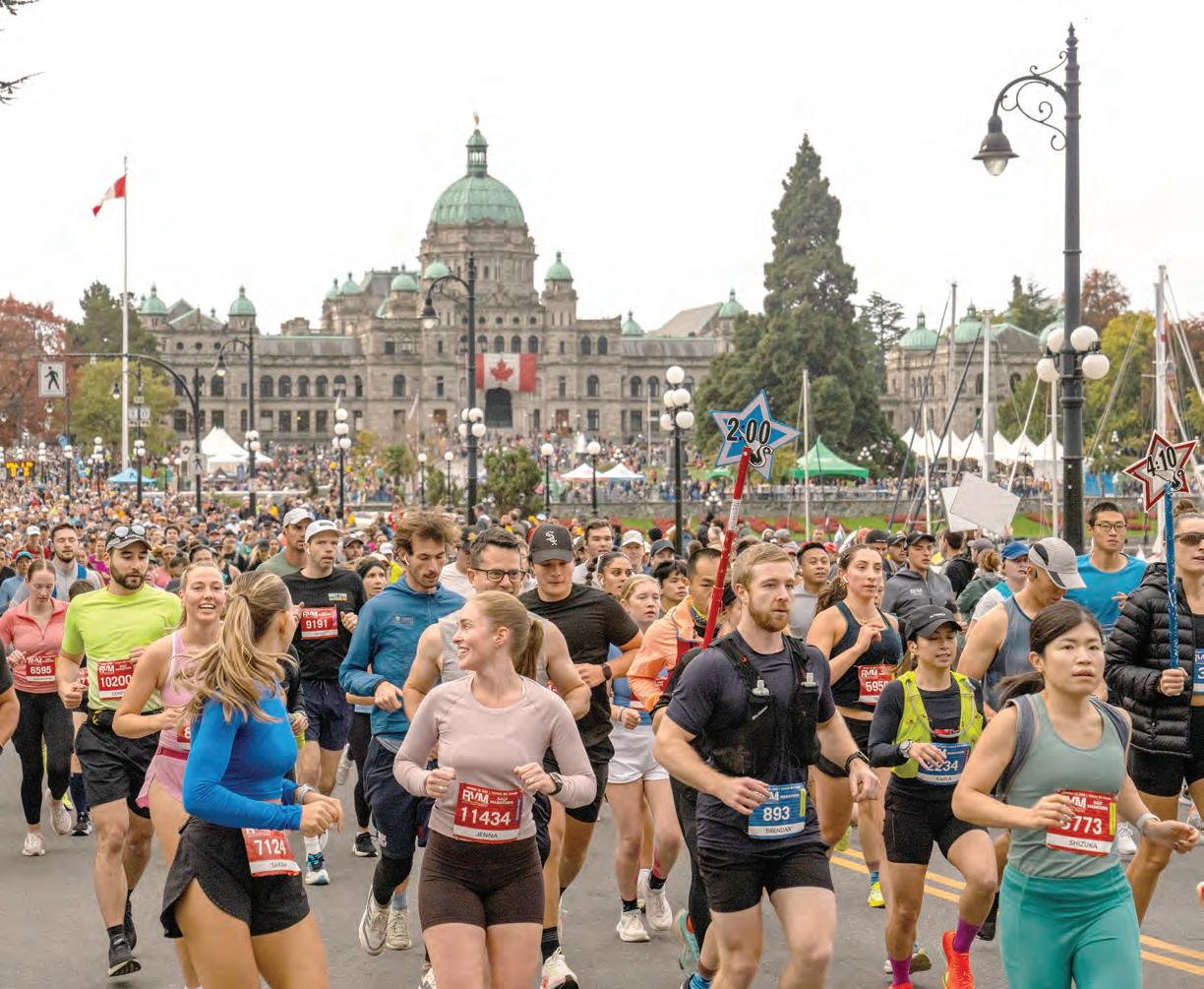
If you are someone who has ran marathons before but is looking to achieve a new personal best, this is the plan for you. This 20week plan assumes you can already comfortably run three-four times per week, and your long run is at least 15 kilometres.
In my experience, the keys to success in any marathon training plan is consistency and getting those long runs in. Keep the easy runs as they are intended to be run, easy. And save your mental and physical energy for those tough workouts on the schedule.
I recommend following the schedule as closely as possible. However, if scheduling changes need to be made, ensure you are not running hard days back-to-back and that you are not doing speed work the day following your long run.
The goal of any training plan should be to get you to the start line healthy. Marathon training is hard on the body and pulling back, every so often, is just as important as building. My intermediate plan is designed with build weeks and recovery weeks, so you make recovery intentional. Listen to your body and take care of it while you move through this training block.
10 km – 10-kilometre race pace
HMP – half marathon pace
MP – goal marathon pace, i.e., if you want to run a 3:30:00 marathon, your MP target for workouts is 5:00/km.
RPE – Rate of perceived exertion with 0 being no effort and 10 being max effort. Easy runs should be run at an RPE no greater than 5/10. Take them slower if you feel fatigued.
The key for these runs is to build your aerobic fitness and should not be run fast. Keep the easy days easy and the hard days hard!
Strides – pickup in pace of 50-100 metres but not an all-out sprint. Jog for 60 seconds between each stride. All runs are prescribed in minutes or kilometres. An apostrophe indicates minutes, a “k” indicates kms and an “s” indicates seconds.
BY ANDIE PASK ALLAN MCVICAR
Owner of Andie Pask Coaching, run and strength coach with Peak Endurance in Victoria, B.C. She has coached people of all ages and abilities and completed the UTMB 100M last year.
ANDIEPASKCOACHING ANDIE.PASK
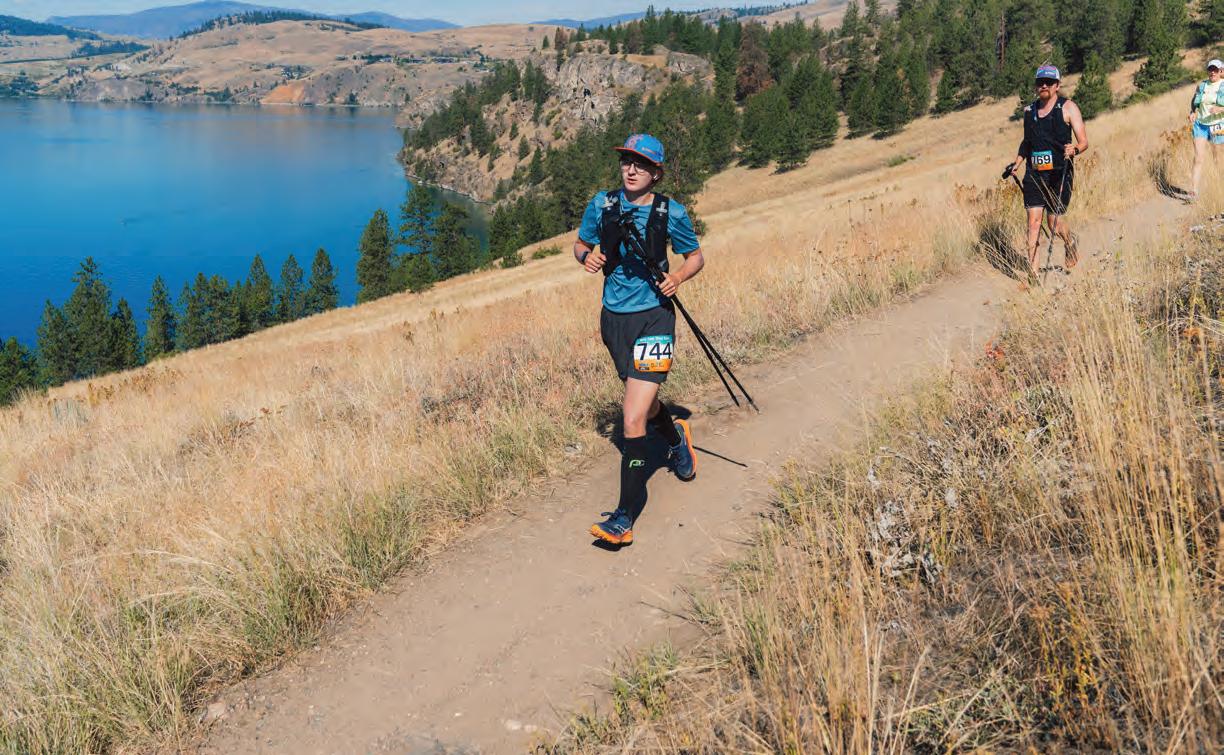
Trail running has exploded in popularity over the past number of years, and for good reason: you’re surrounded by nature, the soft and uneven surfaces are more forgiving than pavement on the body, and you don’t have to be fixated on maintaining a particular pace. The range in trail race distances—from 5-kilometres to over 100 miles—makes trail racing both accessible and challenging for all runners. If you are ready to challenge yourself to a new distance that’s moderate in length, then this 12-week plan is for you! Before beginning this training program, you should be comfortable running four days a week for at least one hour.
The program is comprised of four days/week of running: two easy days (Tuesday/Sunday), a run workout (Wednesday) and a long trail run (Saturday). The terrain is a mix of road and trail, so there is the assumption that you will have access to trails throughout the week. There are also two cross-training days to achieve aerobic endurance, and give the running muscles a break. Cross-training also helps prevent overuse injuries that can occur from exclusively running. These cross-training days will also include strength training which further helps to prevent injury and makes your body stronger and more durable on the trails.
• A ll runs should begin gently to warm up the muscular and cardiovascular systems.
• A 15 – 20 minute warm-up and cool down should also be included on every Wednesday workout.
• T rail shoes should be worn on the trails as they have better traction than road shoes.
• Power hiking is a large component of trail running and should be used on big hill climbs.
• Invest in a hydration vest that can carry your water and fuel for long runs.
• Fuel every 30 – 40 minutes on long runs over an hour (e.g. gels, chews, bars) and consider adding electrolytes to your water.
• B e sure to download off-line maps and have GPS on your phone so you don’t get lost, and if you are alone, let someone know where you will be.
• B e sure to carry safety equipment with you if you are going into the backcountry.
• C onsider hiring a strength coach to give you a program geared towards trail running.
• B e consistent and trust the process.
RPE - Rate of Perceived Exertion. A measure on a scale of 1-10 of how hard you are working (1 being easy and 10 being challenging).
X-train - (Cross-training) Examples are cycling, the elliptical trainer, swimming, etc. The effort should be kept low with an RPE of 3-5. Easy Run - A low effort run with an RPE of 3-5. You could tell a story to a friend and your breathing is not laboured.
Strides - Starting slow with perfect form, accelerate through 60 metres then walk back and repeat five times. These accelerations are to practice fast leg turnover and good running form (good posture, knees driving forward, arms bent). [ ] - On Wednesday workouts, anything included inside this is your recovery.
wanted
BY JASPER BLAKE PLATINUM RACING
Ironman Champion and Triathlon Canada Long Distance Athlete of the Year; five-time Ontario Triathlete of the Year; NCCP Certified Coach in Triathlon, Athletics, Alpine Skiing, Tennis and Fundamental Movement Skills, from Victoria,
B78COACHING B78COACHING B78COACHING
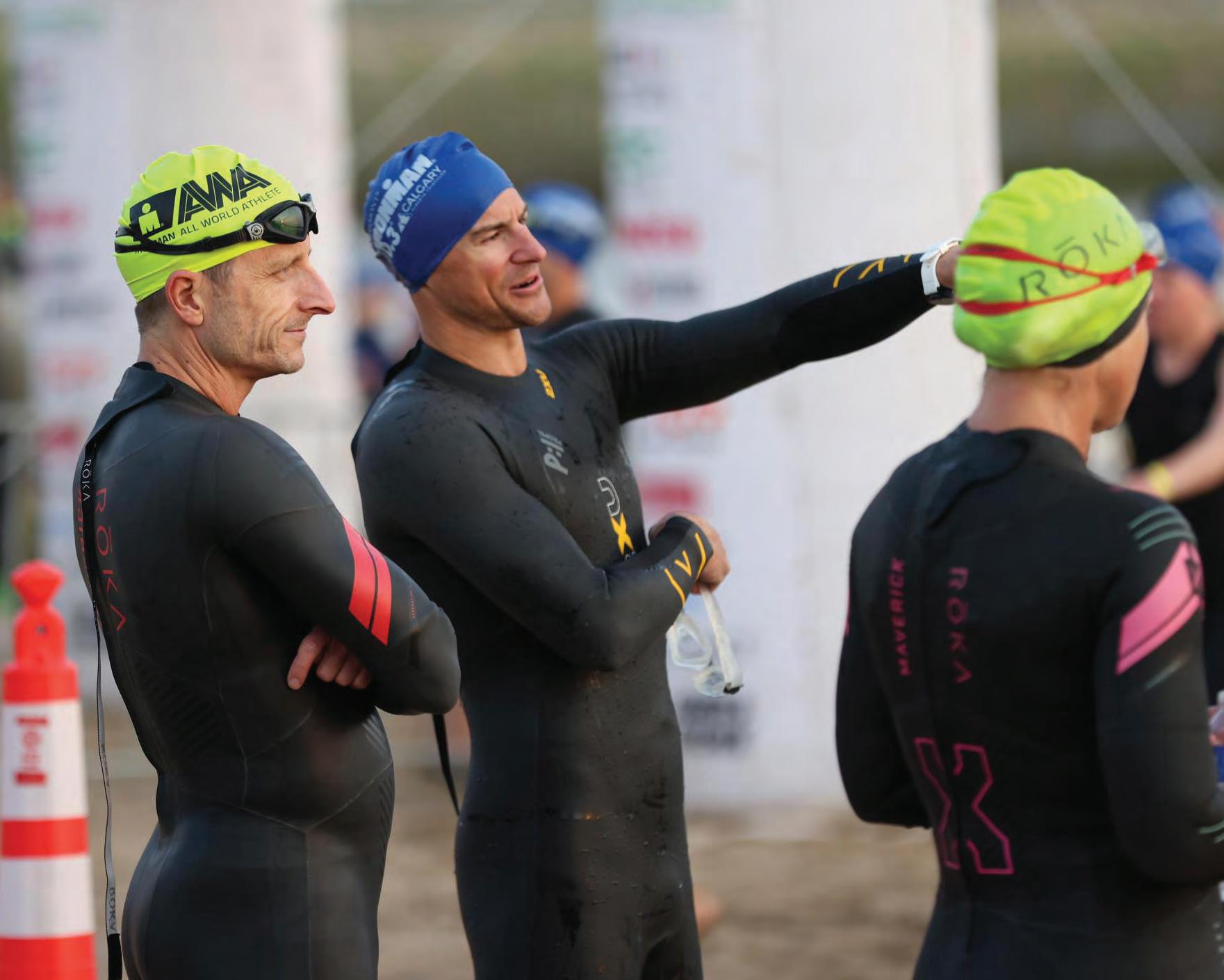
This beginner Half Ironman training program is designed to have you ready for a 70.3 Half Ironman in 12 weeks. During this program you will have three-four exposures in each sport each week. The program runs on a four-week cycle (three weeks building/training load, one week recovery/adaptation). The program is progressive meaning each week builds in volume as your fitness improves. Consistency is crucial for success so do your best to really commit to the entire program. Intensity recommendations are for entry level triathletes looking to complete a Half Ironman. It is very important that you establish what that intensity is for you either through an FTP or a similar test.
Nutrition is incredibly important during longer events. Everyone is different but there are some simple guidelines you can follow. My recommendation is to start with these numbers and trouble shoot from there. You may find this is too much or too little so adjust accordingly. All of your longer weekend "race simulation" workouts should include nutrition practice as well.
Aim for the following:
• 500-1000 ml of fluid per hour
• 50-75 g carbohydrate per hour
• 500-1000 mg sodium per hour
OW – Open water
OTB – Off the bike
WU – Warm up
MS – Main set
CD – Cool down
GP – Goal race pace/effort
HP – Half Ironman pace/effort
EP – Effort Parameters
RPE – Rate of Perceived Exertion on a scale of 1-10 or 1-100% effort
Fast – 85-90% effort
Descending (swim sets) – Get faster with each repetition
' – indicates minutes
" – indicates seconds
Choice – Choose any stroke or kicking combination you like in a swim workout
W 1
MON TUE WED THU FRI SAT
Swim, 1200m
WU: 200m choice, 100m kick
MS: 2x (300m easy pull on 15" rest, 100m easy kick on 10" rest)
EP: RPE 50-60%
CD: 100m easy choice
Swim, 1500m
WU: 200m choice, 100m kick
W 2
MS: 2x (400m easy pull on 15" rest, 100m easy kick on 10" rest)
EP: RPE 50-60%
CD: 200m easy choice
Swim, 1700m WU: 200m choice, 100m kick
MS: 2x (500m easy pull on 15" rest, 100m easy kick on 10" rest)
EP: RPE 50-60%
CD: 200m easy choice
Run, Hills, 35' WU: 15' easy
MS: 6x 30"
uphill strong effort (60" easy jog/walk down between)
EP: RPE 85-90%
CD: 11' easy
Run, Hills, 40' WU: 15' easy
MS: 8x (30" uphill strong effort, 60" easy jog/walk down between)
EP: RPE 85-90%
CD: 13' easy
Run, Hills- 45' WU: 15' easy
MS: 10x (30" uphill strong effort, 60" easy jog/walk down between)
EP: RPE 85-90%
CD: 15' easy
Swim, 1500m WU: 200m choice, 8x 25m on 10" rest descending 1-4 (get faster), 100m easy choice
MS: 8x 50m (fast on 30" rest), 100m easy choice, 2x
200m (easy pull on 30" rest)
EP: Varied CD: 100m choice
Swim, 1600m
WU: 100m choice, 100m kick, 100m freestyle
MS: 10x 50m (fast on 30" rest),
100m easy choice
2x 300m (easy pull on 30" rest)
EP: Varied
CD: 100m choice
Swim, 2000m WU: 300m choice, 200m kick
MS: 5x 100m (fast on 60" rest), 100m easy choice, 2x 400m (easy pull on 30" rest)
EP: Varied
CD: 100m choice
Bike, Hills, 1 h WU: 30' easy
MS: 5x (1' uphill strong effort, 2' easy)
EP: RPE 8590% CD: 15' easy
Bike, Hills, 1 h
WU: 30' easy
MS: 4x (2' uphill strong effort, 3' easy)
EP: RPE 8590%
CD: 10' easy
Bike, Hills, 1 h WU: 30' easy
MS: 3 x (3' uphill strong effort, 4' easy)
EP: RPE 8590%
CD: 9' easy
Off Run, 1 h WU: 15' easy
MS: 40' at HP
EP: RPE 65-75%
CD: 5' easy
Swim, OW, 30' WU: 5' easy mixed strokes
MS: 2x (10' at GP, 30" rest)
EP: RPE 65-75%
CD: 5' easy mixed strokes
Off Run, 1 h 15'
WU: 15' easy
MS: 55' at HP
EP: RPE 65-75%
CD: 5' easy
Swim, OW, 40' WU: 5' easy mixed strokes
MS: 3x (8' at GP, 30" rest)
EP: RPE 65-75%
CD: 5' easy mixed strokes
Off Run, 1 h 30' WU: 15' easy
MS: 70' at HP
EP: RPE 65-75%
CD: 5' easy
Swim, OW, 45' WU: 5' easy mixed strokes
MS: 5x (6' at GP, 30" rest)
EP: RPE 65-75%
CD: 5' easy mixed strokes
Race simulation WU: 20' easy
MS: 2x (25' at goal race pace/ effort, 5" easy)
EP: RPE 65-75%
CD: 10' easy
Run, OTB, 10'
EP: RPE 65-75%
Race simulation, Bike/Run, 2 hs 15' WU: 20' easy
MS: 2x (40' at GP, 5' easy)
EP: RPE 65-75%
CD: 10' easy
Run, OTB, 15'
EP: RPE 65-75%
Race simulation, Bike/Run, 2 h 50' WU: 30' easy
MS: 60' at GP, 10' easy, 30' at GP
EP: RPE 65-75%
CD: 20' easy
Run, OTB, 20'
EP: RPE 65-75%
4 RECOVERY
Swim, 1000m WU: 200m choice
MS: 7x (100m as 50 easy swim,
50 easy kick on 20" rest)
EP: RPE 50-60%
CD: 100m easy choice
Swim, 2000m
WU: 300m choice, 100m kick
5
W
MS: 4x (300m easy pull on 15" rest)
200m easy kick on 10" rest
EP: RPE 50-60%
CD: 200m easy choice
Swim, 1200m
WU: 200m choice, 100m kick
MS: 6x (100m easy pull on 15" rest), 100m easy kick on 10" rest
EP: RPE 50-60%
CD: 200m easy choice
Run, Hills, 30' WU: 15' easy
MS: 5x (30" uphill strong effort, 90" easy jog/walk down between)
EP: RPE 85-90%
CD: 5' easy
Run, Hills, 45'
WU: 15' easy
MS: 5x (1' uphill strong effort, 2' easy jog/walk down between)
EP: RPE 85-90%
CD: 15' easy
Swim, 1200m WU: 300m choice, 100m kick
MS: 12x (50m fast on 30" rest)
EP: 85-90%
CD: 200m choice
Bike, Hills, 1 h WU: 30' easy
MS: 5x (1' uphill strong effort, 2' easy)
EP: RPE 8590%
CD: 15' easy
Swim, 1800m WU: 300m choice, 200m kick
MS: 3x 100m (strong effort on 30" rest), 300m easy pull on 30" rest, 3x 100m (strong effort on 30" rest), 300m easy pull on 30" rest
EP: Varied
CD: 100m choice
Run, Hills, 50' WU: 15' easy
MS: 7x (1' uphill strong effort, 2' easy jog/walk down between)
EP: RPE 85-90%
CD: 14' easy
Swim, 2000m WU: 300m choice, 200m kick
MS: 10x (100m strong effort on 30" rest), 400 easy pull on 30" rest
EP: Varied
CD: 100m choice
Bike, Hills, 1 h
WU: 20' easy
MS: 5x (2' uphill strong effort, 3' easy)
EP: RPE 8590%
CD: 15' easy
Off Run, 1 h WU: 15' easy
MS: 40' at HP
EP: RPE 65-75%
CD: 5' easy
Swim, OW, 25' WU: 5' easy mixed strokes
MS: 15' at GP
EP: RPE 65-75%
CD: 5' easy mixed strokes
Off Run, 1 h 30'
WU: 15' easy
MS: 70' at HP
EP: RPE 65-75%
CD: 5' easy
Swim, OW, 40'
WU: 5' easy mixed strokes
MS: 4x (8' at GP, 30" rest)
EP: RPE 65-75%
CD: OW 3' easy mixed strokes
Bike, Hills, 1 h WU: 20' easy
MS: 2x (1' uphill strong effort, 2' easy, 2' uphill strong effort, 3' easy, 3' uphill strong effort, 4' easy)
EP: RPE 85-90%
CD: 10' easy
Off Run, 1 h 45'
WU: 15' easy
MS: 80' at HP
EP: RPE 65-75%
CD: 10' easy
Swim, OW, 45'
WU: 5' easy mixed strokes
MS: 3x (12' at GP, 30" rest)
EP: RPE 65-75%
CD: 4' easy mixed strokes
Race simulation, Bike/Run, 1 h 40' WU: 20' easy
MS: 60' at GP
EP: RPE 65-75%
CD: 10' easy
Run, OTB, 10'
EP: RPE 65-75%
Race simulation, Bike/Run, 2 h 50'
WU: 30' easy
MS: 2x (45' at GP, 5' easy)
EP: RPE 65-75%
CD: 20' easy
Run, OTB, 20'
EP: RPE 65-75%
Race simulation, Bike/Run, 3 h 25' WU: 30' easy
MS: 2x (60' at GP, 5' easy)
EP: RPE 65-75%
CD: 20' easy
Run, OTB, 25'
EP: RPE 65-75%
Swim, 1400m WU: 300m choice, 200m kick
MS: 3x (200m easy pull on 15" rest), 100m easy kick on 10" rest
EP: RPE 50-60%
CD: 200m easy choice
Swim, 1200m WU: 100m choice
MS: 10x 100m
(50m easy swim, 50m easy kick on 20" rest)
EP: RPE 50-60%
CD: 100m easy choice
Swim, 1500m WU: 200m choice, 100m kick
MS: 2x 400m (easy pull on 15" rest), 200m easy kick on 10" rest
EP: RPE 50-60%
CD: 200m easy choice
Swim, 1700m
WU: 300m choice, 200m kick
MS: 800m easy
pull on 15" rest, 200m easy kick on 10" rest
EP: RPE 50-60%
CD: 200m easy choice
Swim, 1700m
WU: 200m choice, 100m kick
TUE
Run, Hills, 50' WU: 15' easy
MS: 5x (90" uphill strong effort, 2.5' easy jog/walk down between)
EP: RPE 85-90%
CD: 15' easy
Run, Hills, 30' WU: 15' easy
MS: 5x (30" uphill strong effort, 90" easy jog/walk down between)
EP: RPE 85-90%
CD: 5' easy
Run, Hills, 50' WU: 15' easy
MS: 6x (90" uphill strong effort, 2.5' easy jog/walk down between)
EP: RPE 85-90%
CD: 11' easy
Run, Hills, 55' WU: 15' easy
MS: 5x (2' uphill strong effort, 3' easy jog/walk down between)
EP: RPE 85-90%
CD: 15' easy
Run, Hills, 60' WU: 15' easy
Swim, 2000m WU: 300m choice, 200m kick
MS: 20x 50m (strong effort on 20" rest), 400m easy pull on 30" rest
EP: Varied
CD: 100m choice
Swim, 1200m WU: 300m choice, 200m kick
MS: 5x 100m (50m fast, 50m easy on 30" rest)
EP: Varied
CD: 200m choice
Swim, 2000m WU: 300m choice, 200m kick
MS: 10x 50m (strong effort on 20" rest), 5x 100m (strong effort on 20" rest), 400m easy pull on 30" rest
EP: Varied
CD: 100m choice
Swim, 2000m WU: 300m choice, 200m kick
MS: 14x 100m strong effort on 20" rest
EP: RPE 85-90%
CD: 100m choice
Bike, Hills, 1 h 10' WU: 20' easy
MS: 5x (3' uphill strong effort, 4' easy)
EP: RPE 8590% CD: 15' easy
Bike, Hills, 1 h WU: 30' easy
MS: 5x (1' uphill strong effort, 2' easy)
EP: RPE 8590%
CD: 15' easy
Bike, Hills, 1 h 15'
WU: 20' easy
MS: 8x (2' uphill strong effort, 3' easy)
EP: RPE 8590%
CD: 15' easy
Bike, Hills, 1 h 20'
WU: 20' easy
MS: 6x (3' uphill strong effort, 4' easy)
EP: RPE 8590%
CD: 18' easy
Off Run, 2 h WU: 15' easy
MS: 90' at HP
EP: RPE 65-75%
CD: 15' easy
Swim, OW, 50' WU: 5' easy mixed strokes
MS: 5x (8' at GP, 30" rest)
EP: RPE 65-75%
CD: 5' easy mixed strokes
Off Run, 1 h 15' WU: 15' easy
MS: 55' at HP
EP: RPE 65-75%
CD: 5' easy
Swim, OW, 30' WU: 5' easy mixed strokes
MS: 20' at GP
EP: RPE 65-75%
CD: 5' easy mixed strokes
Off Run, 2 h 10' WU: 15' easy
MS: 1 h 40' at HP
EP: RPE 65-75%
CD: 15' easy
Swim, OW, 50' WU: 5' easy mixed strokes
MS: 2x (20' at GP, 30" rest)
EP: RPE 65-75%
CD: 5' easy mixed strokes
Off Run, 2 h 20' WU: 15min easy
MS: 2x (50' at HP, 5' easy)
EP: RPE 65-75%
CD: 15' easy
Swim, OW, 50' WU: 5' easy mixed strokes
MS: 40' at GP
EP: RPE 65-75%
CD: 5' easy mixed strokes
Race simulation, Bike/Run, 4 h WU: 30' easy
MS: 3x (45' at GP, 5' easy)
EP: RPE 65-75%
CD: 30' easy
Run, OTB, 30'
EP: RPE 65-75%
Race simulation, Bike/Run, 2 h 15' WU: 30' easy
MS: 75' at GP
EP: RPE
Race simulation, Bike/Run, 4 h WU: 30' easy
MS: 2x (70' at GP, 5' easy)
EP: RPE 65-75%
CD: 30' easy
Run, OTB, 30'
EP: RPE 65-75%
Race simulation, Bike/Run, 4 h 30' WU: 30' easy
MS: 2x (85' at GP, 5' easy)
EP: RPE 65-75%
CD: 30' easy
Run, OTB, 30'
Swim, 2500m
WU: 200m choice, 100m kick
Bike, Hills, 1 h 20'
Off Run, 1 h 15' WU: 15' easy
WU: 20' easy
MS: 45' at HP
Race simulation, Bike/Run, 1 h 40'
WU: 20' easy
EP: RPE 65-75% W 11
MS: 1000m easy pull on 15" rest, 200m easy kick on 10" rest
EP: RPE 50-60%
CD: 200m easy choice
Swim, 1000m
WU: 200m
choice, 100m kick
MS: 12x 50m pull on 20" rest
EP: RPE 50-60%
CD: 100m easy choice
MS: 10x (1' uphill strong effort, 2' easy jog/walk down between)
EP: RPE 85-90%
CD: 15' easy
Run, Hills, 30' WU: 15' easy
MS: 5x (30" uphill strong effort, 90" easy jog/walk down between)
EP: RPE 85-90%
CD: 5' easy
MS: 20x 100m strong effort on 20" rest
EP: RPE 85-90%
CD: 200m choice
Swim, 1200m
WU: 300m choice, 200m kick
MS: 5x 100m strong effort on 20" rest
EP: RPE 85-90%
CD: 200m choice
MS: 5x (4' uphill strong effort, 5' easy)
EP: RPE 8590%
CD: 15' easy
Bike, Hills, 45' WU: 20' easy
MS: 5x (1' uphill strong effort, 2' easy)
EP: RPE 8590%
CD: 10' easy
EP: RPE 65-75%
CD: 15' easy
Swim, OW, 50' WU: 5' easy mixed strokes
MS: 40' at GP
EP: RPE 65-75%
CD: 5' easy mixed strokes
Off Pre-Race Activation
Run 10' easy, Bike 20' easycheck to make sure bike is in good working order, Swim 10' at the race site — make sure to check swim start and exit as well as transition area flow
MS: 60' at GP
EP: RPE 65-75%
CD: 10' easy
Run, OTB, 10'
EP: RPE 65-75%
RACE DAY

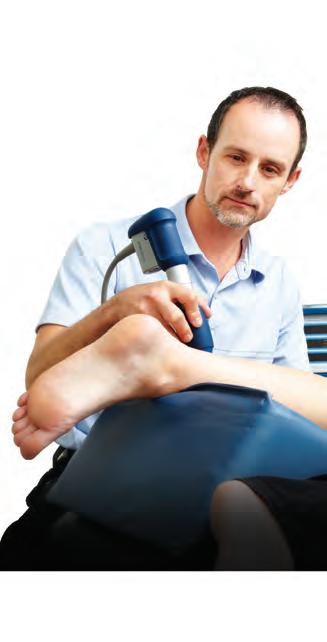
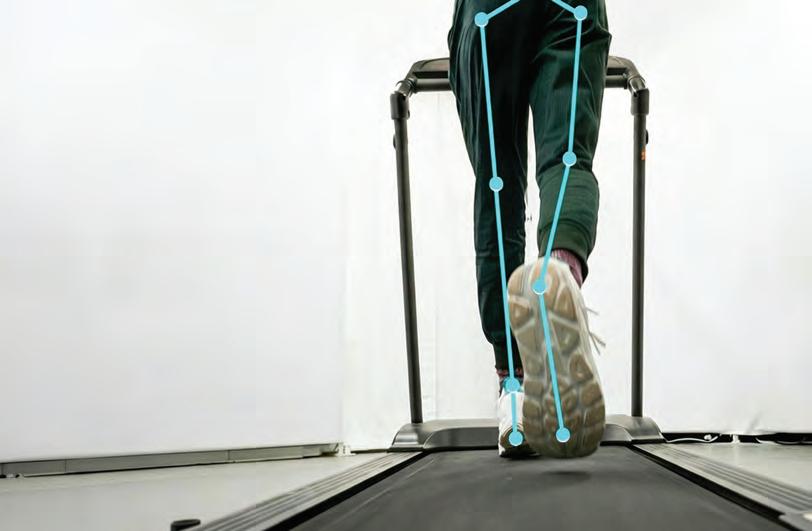
Yāna Motion Lab™, headquartered in Calgary, is formally launching its next phase of growth with a clear mandate: make clinical-grade movement health accessible to everyone. Built on advanced markerless motion capture, biomechanical processing, AI, and cloud-based delivery, Yāna represents a new category of movement assessment - one that is precise, repeatable, and operationalized for real-world use.
At its core, Yāna measures how people move. Balance, Gait, Symmetry, Posture, and Functional Coordination are captured in a fast, non-invasive studio environment. This matters because good movement health underpins everything.
Accuracy and Precision: Yāna Motion Lab’s technology utilizes sophisticated computer vision algorithms and eight (8) 3D cameras, providing detailed three-dimensional analysis. The result is a comprehensive analysis, with clinical-grade accuracy not feasible with single camera or wearable device applications-providing insights relevant to clinicians, therapists, trainers, and individuals alike.
As part of its Calgary launch, Yāna is introducing the Yāna Running Package, a purpose-built assessment designed to support runners of all levels - from first-time participants to experienced athletes. Developed in collaboration with running expert Dr. Syl Corbett, the package combines Full-Body Movement Assessment with detailed Running Gait analysis to identify inefficiencies, asymmetries, and potential injury risks.
The objective is simple: help runners understand their running style, move better, stay healthy, and build toward their goals with clarity and confidence. By establishing an individual baseline and enabling repeat assessments over time, Yāna provides runners with a measurable path to improvement - bridging the gap between training intent and physical reality.
AI-Driven Insights: The application of AI in motion analysis transforms it from data presentation to analysis and perspective. Yāna’s approach is not about replacing existing training or clinical practices, it enhances them with objective, clinically grounded data that can be understood and acted upon by all stakeholders. At Yāna we don’t prescribe - we inform, highlight, and measure progress.
“Motion Health for Life™”
To bring this to life, Yāna Motion Lab is preparing to launch a Calgarybased running study alongside the YYC Marathon. Participants will complete three in-depth 3D movement and running assessments before the race, after, and during recovery - providing insight into how your body adapts to marathon stress.
Participants will receive over $600 in value, including advanced 3D analysis, personalized reports, and exclusive Yāna gear and partner (Rock On Clay) perks.
Spots are limited. If you’re running the YYC Marathon and want to better understand your body, this is your opportunity to experience the future of running performance and recovery. Join the interest list: https://www.yanamotion.com/yycmarathonstudy2026
By appointment: 825-608-5440 2410 10 Ave. SW Calgary, AB www.yanamotion.com

Featuring 1,300+ Listings Annually in Print & Online
Running Events | Triathlons
Adventure Races | Walking Events
Duathlons | Obstacle Races
Cycling Events
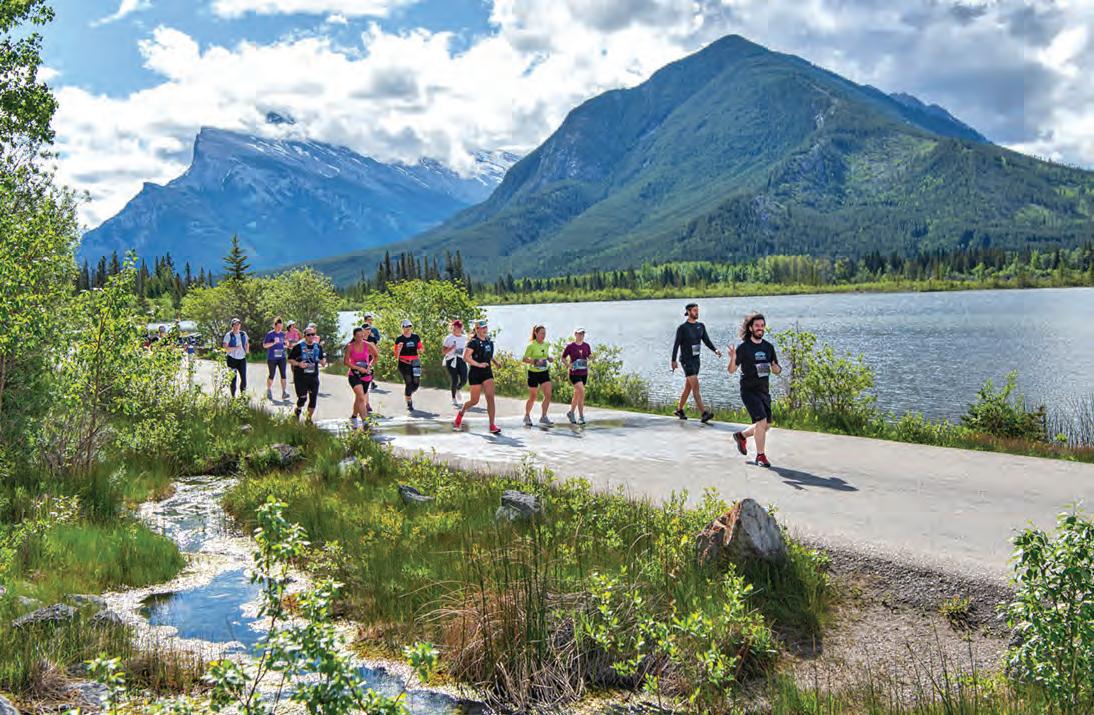
02-Mar Campbell Valley Trail Run 5 & 10K
06-Mar Secret 3K
02-Mar Victoria Goddess Run
02-Mar Chilly Half Marathon
Langley, BC
Calgary, AB
Victoria, BC
Burlington, ON
15-Mar Runnin’ O’ the Green 5K & 8K Bellingham, WA
16-Mar Shamrock’n Race - 5K, 7-Mile, Half Marathon
16-Mar Calgary Wild Rose Women's 1-Day Retreat
Burnaby, BC
Calgary, AB
16-Mar St. Patrick's Day 5km Toronto, ON
16-Mar Barcelona Marathon Barcelona, Spain
16-Mar Aldergrove Ramble 4.8 K and 8 K Langley, BC
16-Mar Cochrane Wild Rose Women's Indoor Triathlon Cochrane, AB
22-Mar The Big 80's Run+A9 Burnaby, BC
30-Mar Around The Bay Road Race Hamilton, ON
29-Mar The Whidbey Woods Trail Run Whidbey Island, WA
04-Apr Big Easter Run
Vancouver, BC
04-Apr 5 Peaks Trail Running Series: Alice Lake Alice Lake, BC
11-Apr OAT Run Port Angeles, WA
12-Apr NN Rotterdam Marathon Rotterdam, Netherlands
12-Apr Synergy Bazan Bay 5km Road Race Sidney, BC
12-Apr Dirty Feet Trail Run #1 Kamloops, BC
18-Apr Foot Levelers Blue Ridge Marathon Roanoke, VA
18-Apr The Foxtail Rail Trail Race Dundas Valley, ON
19-Apr Vancouver Sun Run Vancouver, BC
19-Apr Chestermere Loop the Lake Run Chestermere, AB
24-Apr BC Backyard Ultra Salmon Arm, BC
25-26-Apr Limestone Race Weekend Kingston, ON
25-Apr Jasper Canadian Rockies Half Marathon Jasper, AB
26-Apr London Marathon London, England
26-Apr Mississauga Marathon (Half, 21.1K, 10K, 5k) Mississauga, ON
26-Apr Big Sur International Marathon Big Sur, CA
26-Apr Get Shit Done 5km, 10km, 21km Calgary, AB
2026
2-4-May Moab Rocks Moab, UT
02-May 5 Peaks Trail Running Series: Kelso Kelso, ON
02-May The Cumby Cumberland, BC
02-May The Rugged Raccoon Night Race Saint Mary's, ON
02-May 5 Peaks Trail Running Series: Golden Ears Golden Ears, BC
02-May Suntrail Pure Grit Trail Race Wiarton, ON
02-May Demi-Marathon Lévis Lévis, QC
02-May Eyeball the Wall Calgary, AB
03-May Leading Edge Physiotherapy RunWild St. Albert, AB
03-May TransRockies Moab Fondo Fest Moab, UT
03-May Know Where To Turn Airdrie, AB
03-May Edmonton First Responders Half Marathon Edmonton, AB
03-May BMO Vancouver Marathon Vancouver, BC
03-May Winnipeg Police Half Marathon Winnipeg, MB
03-May Toronto Marathon Toronto, ON
03-May The Ranney Gorge Run Trent Hills, ON
03-May Dirty Feet Kal Park 50 Vernon, BC
03-May Shoppers Drug Mart® Run for Women - Moncton Moncton, NB
8-10-May Fredericton Marathon Race Weekend Fredricton, NB
09-May 5 Peaks Trail Running Series: Sikome Lake Calgary, AB
09-May Medicine Hat Massacre Elkwater, AB
09-May Physio Fit Run Winnipeg, MB
09-May 5KM Route La Clinique Du Coureur Lac Beauport, QC
09-May Survival of the Fittest Squamish, BC
09-May Run and Walk to Remember Altona, MB
09-May Conquer the Canuck Cambridge, ON 09-May Shoppers Drug Mart® Run for Women - Waterloo Waterloo, ON 09-May Shoppers Drug Mart® Run for Women - Vancouver Vancouver, BC 10-May Sasamat Ice Cracker Open Water Swim Vancouver, BC 10-May 5 Peaks Trail Running Series: Terwillegar Park Edmonton, AB 10-May Sport Chek Mother’s Day Run, Walk and Wheel Calgary, AB 10-May Run Around the Beach Goderich, ON 10-May Blossom 13K Penticton, BC 10-May Sporting Life 10K Toronto, ON 10-May Westwood Lake Triathlon Nanaimo, BC
15-17-May Medavie Blue Nose Marathon Halifax, NS 16-May Lakou Backyard Ultra Parkland County, AB 16-May Whitefish Marathon, Half Marathon & 5K Whitefish, MT 16-May Conquer the Coulee Medicine Hat, AB 17-May Windermere Marathon Spokane, WA 17-May Woody’s RV World Marathon Red Deer, AB 17-May Union Trail Medicine Hat, AB 17-May Chris Walker Memorial Giants Head Grind Summerland, BC 22-24-May The Women’s Soap Run Canmore, AB
23-May Toronto Spartan Event Weekend Orono, ON 23-May PUMA Toronto Women’s Spring 5K/10K Toronto, ON
23-24-May Sulphur Springs Trail Race Ancaster, ON 23-24-May The Storm Adventure Race Caledon, ON 23-24-May Cycle Canada Century Ride Toronto, ON 23-May Boyne Book It Fun Run Carman, MB
23-May Shoppers Drug Mart® Run for Women - Oakville Oakville, ON 23-May Shoppers Drug Mart® Run for Women - Edmonton Edmonton, AB
23-May Toronto Women’s Run 10K/5K Toronto, ON
23-May Hardwood Singletrack Classic Barrie, ON
23-24-May Servus Calgary Marathon Race Weekend Calgary, AB
24-May Tamarack Ottawa Marathon Ottawa, ON
24-May Blackwell Dairy Fun Run Kamloops, BC
24-May Oak Bay Half Marathon Victoria, BC 24-May Edinburgh Marathon Edinburgh, Scotland 24-May SUDBURYROCKS!!! Marathon Sudbury, ON 24-May IRONMAN 70.3 Victoria, BC
24-May Shoppers Drug Mart® Run for Women - Markham Markham, ON 24-May Ski to Sea Bellingham, WA
26-May La Course de la Releve Dolbeau, QC
29-May The Longest Day Road Race Vancouver, BC
29-31-May BC Bike Race North Vancouver, BC
30-May Blackfoot Ultra Sherwood Park, AB
30-May Run for Water Trail Race 10K, 25K, 50K Trail Races Abbotsford, BC
30-May Icefjord Midnight Marathon Ilulissat, Greenland
30-May Hungry Hungry Half Kelowna, BC
30-May Pelee Island Winery Half Marathon Pelee Island, ON
30-May Half Corked Marathon Osoyoos, BC
30-May Shoppers Drug Mart® Run for Women - Victoria Victoria, BC
30-May Pharmaprix® Course pour les femmes - Montreal Montréal, QC

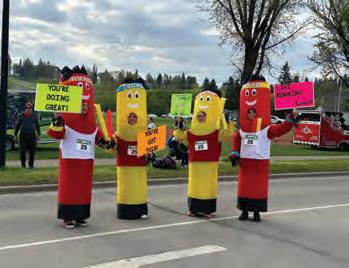
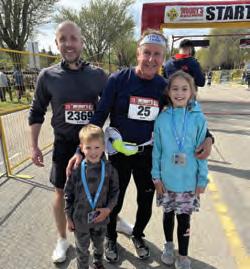
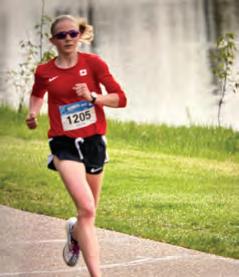


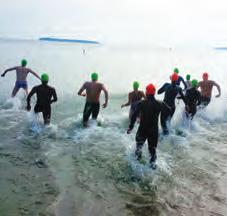
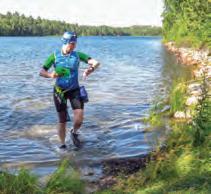

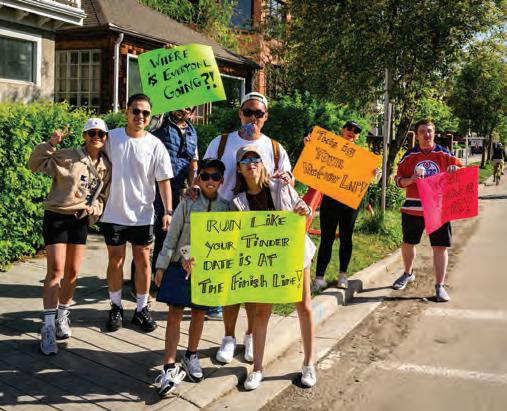
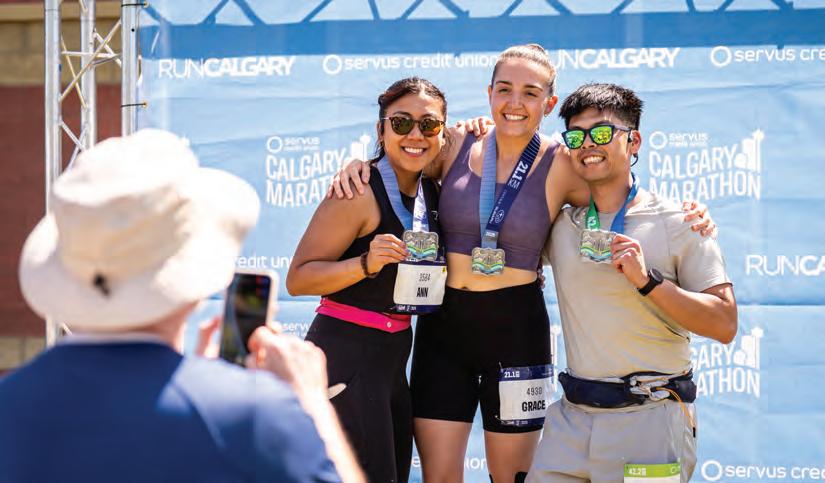

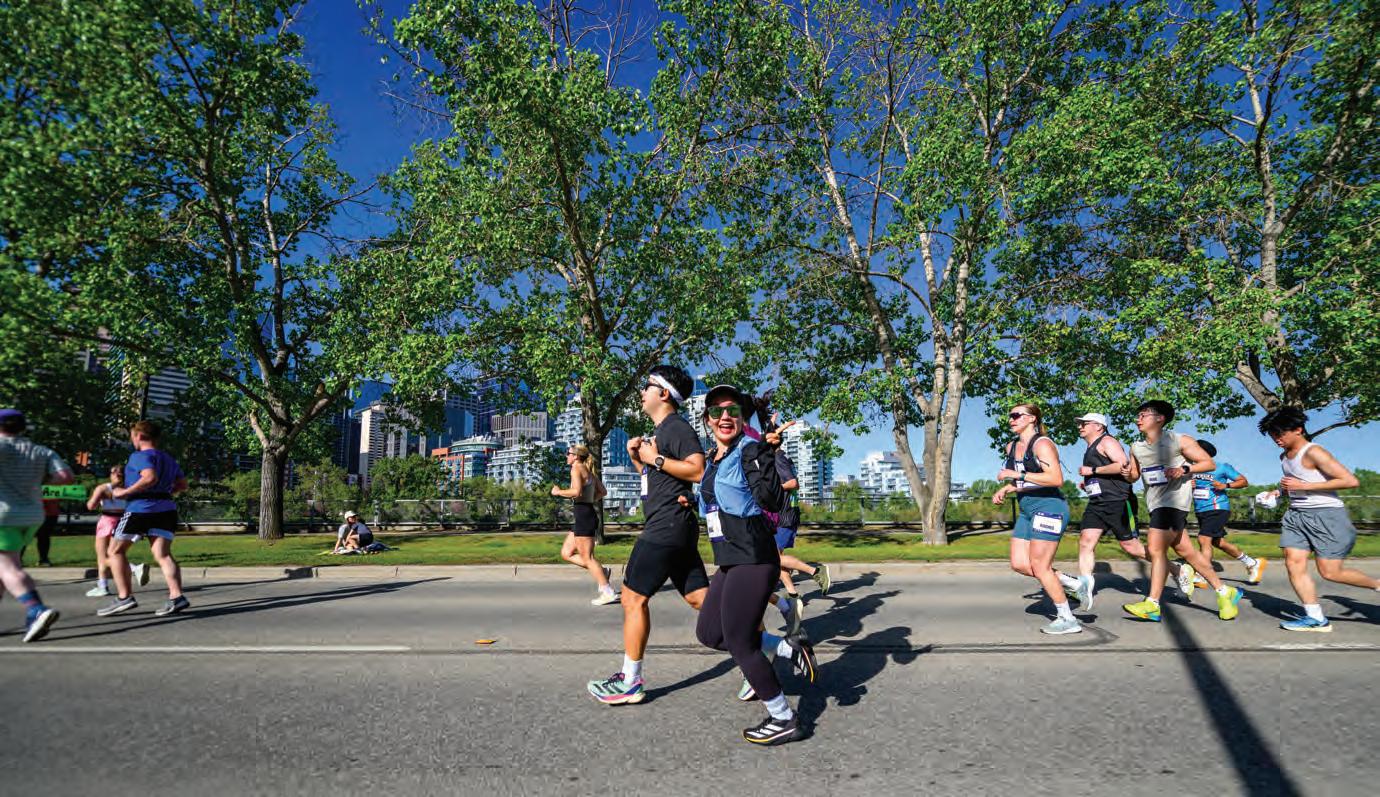
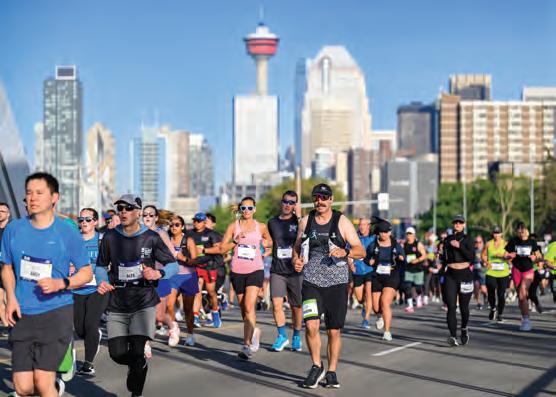


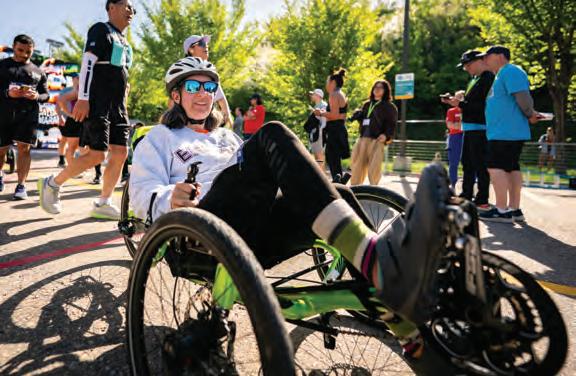
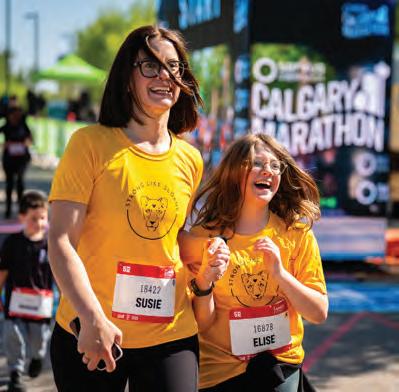


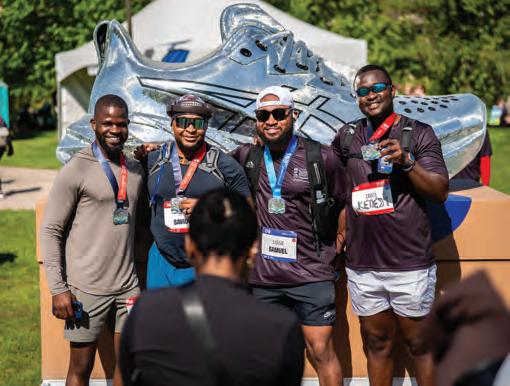




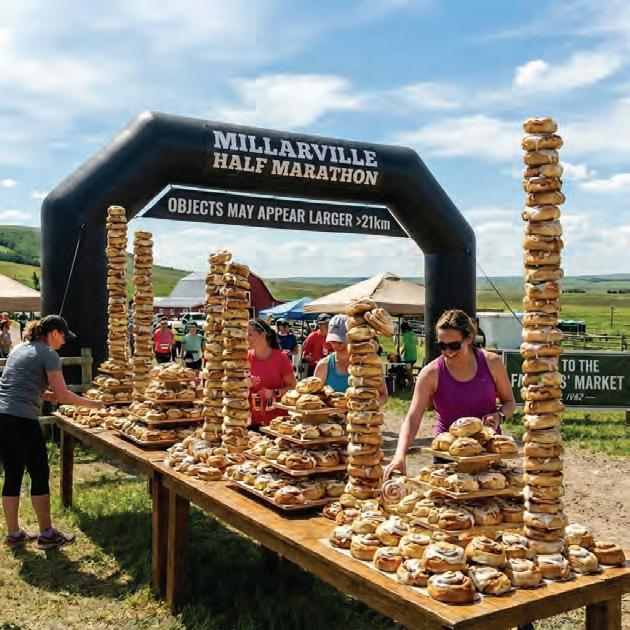


2

15K 30K 5K-10K-21K




OCTOBER 31 5K / 10K / 21K

30-May Vertical Vendetta
30-31-May Rock ‘n’ Roll Marathon: San Diego
31-May Big Jungle Run
31-May Hike for Hospice
31-May The Cowichan Crusher Gravel Fondo
Crowsnest Pass, AB
San Diego, CA
Burnaby, BC
Okotoks, AB
Lake Cowichan, BC
31-May Saskatchewan Marathon Saskatoon, SK
31-May MS Walk
31-May Dirty Feet Trail Run #2
31-May Run Up for Down Syndrome
31-May Plunge for the Cure
Multiple Locations
Kelowna, BC
Burnaby, BC
Vancouver, BC
31-May Shoppers Drug Mart® Run for Women - Ottawa Ottawa, ON
31-May Gutsy Walk for Crohn’s and Colitis Canada Toronto, ON
31-May Course des Pompiers Laval, QC
31-May 5 Peaks Trail Running Series: Whitemud Park Edmonton, AB
31-May Footstock Cochrane, AB
31-May WBYO’s 5ish Fun Run
31-May Victoria Youth Triathlon
Winnipeg, MB
Victoria, BC
LOCATION
1-30-Jun Heart & Stroke Ride for Heart Toronto, ON
6-8-Jun TransRockies Golden Rush Golden, BC
06-Jun Whistler Half Marathon Whistler, BC
06-Jun Oliver Sprint/Standard Tri Oliver, BC
06-Jun Twelve Mile Creek Half Marathon
St. Catharines, ON
06-Jun Moon In June Road Race Burlington, ON
06-Jun Dog Jog Calgary, AB

“When
06-Jun Vertical Slam Ultimate Challenge Taylor, BC
06-Jun Banff Jasper Relay Banff, AB
06-Jun Run, Walk & Ruck for Mental Wellness Regina, SK
06-Jun Gran Fondo Jasper Jasper, AB
06-Jun Shoppers Drug Mart® Run for Women - TorontoToronto, ON
06-Jun Women’s 4 Hour – Mountain Bike Relay Oro Station, ON
06-Jun 5 Peaks Trail Running Series: Crawford LakeCrawford Lake, ON
06-Jun 5 Peaks Trail Running Series: Canmore #1 Canmore, AB
06-Jun Shoppers Drug Mart® Run for Women - Winnipeg Winnipeg, MB
06-Jun Oliver Triathlon Oliver, BC
07-Jun Ride Don't Hide Vernon, BC
07-Jun Subaru Triathlon Series Milton Milton, ON
07-Jun Gutsy Walk for Crohn’s and Colitis Canada Multiple Locations
07-Jun Spring ARK Fest Burlington, ON
07-Jun Shoppers Drug Mart® Run for Women - Hamilton Hamilton, ON
07-Jun Applewood Valley Gran Fondo Fort Langley, BC
12-13-Jun Sadownik Miles for Smiles 1-24 hrs Fort St John, BC
12-14-Jun Survivorfest Running Event Sherwood Park, AB 12-14-Jun Ultra Obscura Sutton, QC
13-Jun Pharmaprix® Course pour les femmes - Quebec City Québec City, QC
13-Jun Shoppers Drug Mart® Run for Women - Saskatoon Saskatoon, SK
13-Jun Shoppers Drug Mart® Run for Women - St. John’sSt. John’s, NL
13-Jun Shoppers Drug Mart® Run for Women - LondonLondon, ON
13-Jun North Sun Ultra Edmonton, AB
13-Jun Big Five Marathon Limpopo, South Africa

While





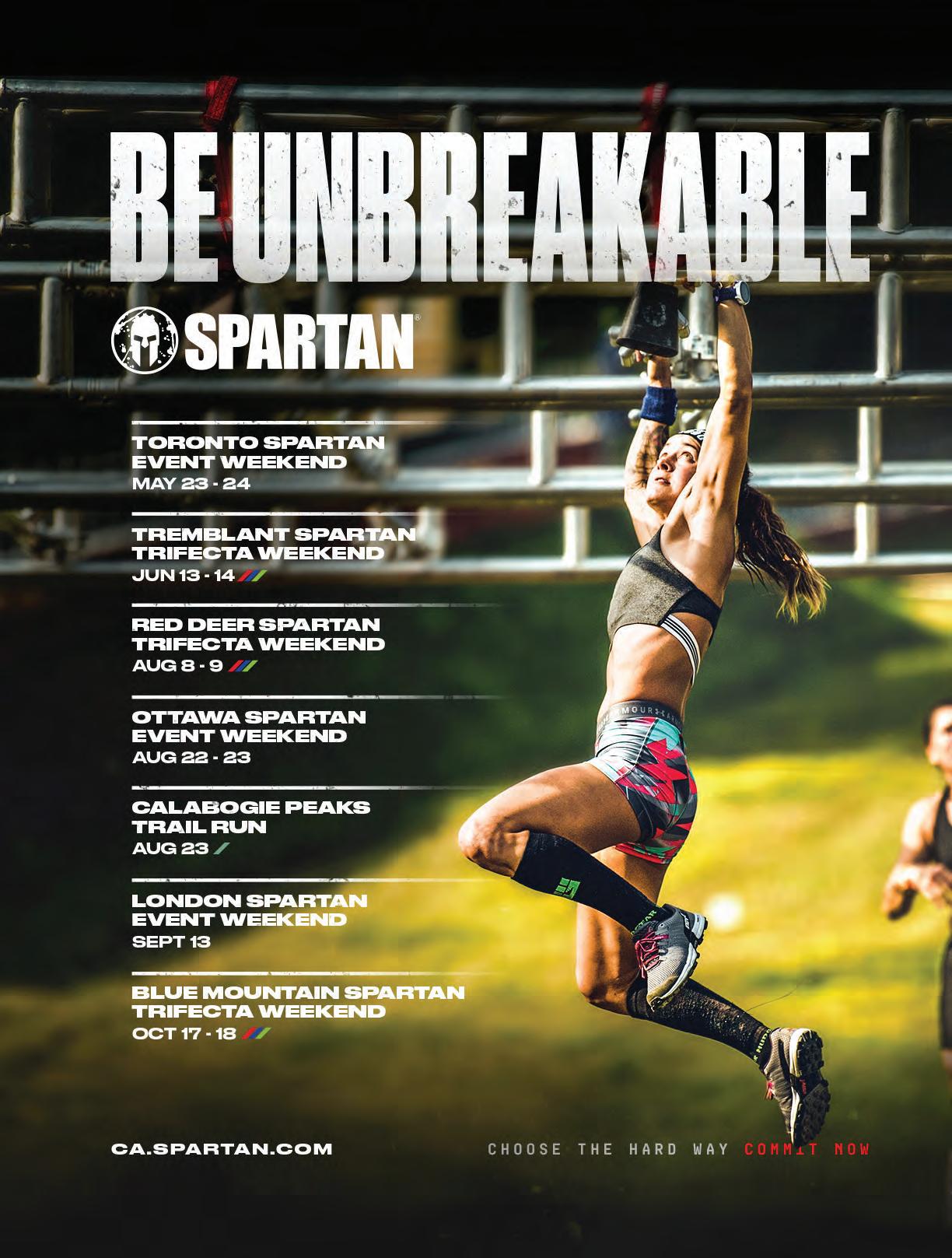
Across Western Canada, endurance racing is evolving beyond traditional competition and increasingly aligning with how new athletes approach sport, travel, and achievement. At the centre of this shift is Platinum Racing, a 15-event endurance series designed specifically with modern participation trends in mind.
Leading the organization is Tom Bamford, the company’s “Chief Sweat Officer.”
A lifelong endurance athlete, Bamford has competed since 1989 and has raced at four world championships including the Ironman. His background informs a clear objective: make high-quality racing competitive, fun and offer a variety of race experiences.
Platinum Racing’s approach focuses on democratizing endurance sport for the next generation of athletes—particularly 25–29-year-olds who are driving the sport’s growth. They often enter in groups, train together, and seek meaningful, high-impact “big day” experiences rather than isolated race results, with finish-line environments designed for celebration and achievement.
This philosophy is reflected in flagship events like the Ironman 70.3 Calgary, which is structured to support relay teams, first-time half-Ironman participants and world championship qualifiers on the same course. “The new course hugs the Rockies with amazing views and the run along the Bow River brings the entire Cochrane, Alberta community out to cheer,” explains Bamford.
The event calendar spans from Victoria to Edmonton and includes running races, triathlons, cycling Gran Fondos, and multi-sport events that combine all three. It blends long-standing races that have operated since 1983 with newer, more experiential events designed to reflect evolving participant expectations. For new athletes, the series provides a clear pathway from entry-level fun runs through to destination endurance races and multi-sport challenges.
Signature events like the Banff Half Marathon deliver destination-level appeal in iconic settings, while creative formats such as Millarville’s “Run to the Market,” featuring cinnamon bun aid stations, add personality and memorable moments that resonate strongly with “experience-minded” participants. Beyond racing, Platinum generates over $100,000 annually for local charities and youth organizations.
Sustainability initiatives are showcased at the Banff Half Marathon, emphasizing responsible operations and reduced environmental impact. “The Banff Half Marathon sustainability program is built around becoming the ‘greenest running event on the planet,’ using comprehensive strategies like zero-waste initiatives, renewable energy, carbon offsetting, and sustainable transportation to minimize environmental impact”, says Bamford.
Platinum Racing delivers a curated endurance calendar built for variety, progression, performance, and the “big day” experiences that define a new generation of athletes. Explore the calendar at www.platinumracing.ca.

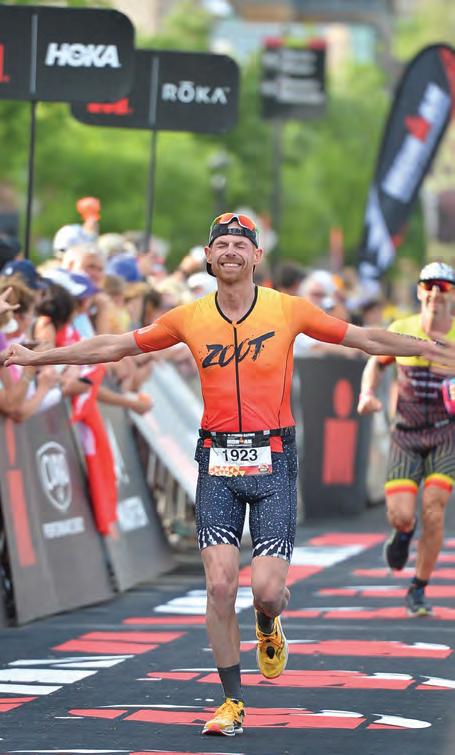

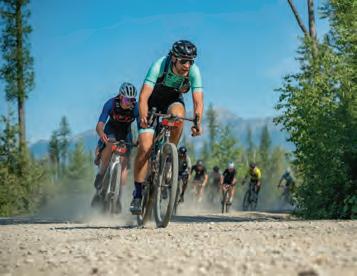
Fernie Gravel Grind
July 3 – 5
A weekend-long cycling event for all ages on some of Canada’s best gravel routes. Multiple distances, race categories and fun activities. Open to anyone & everyone.
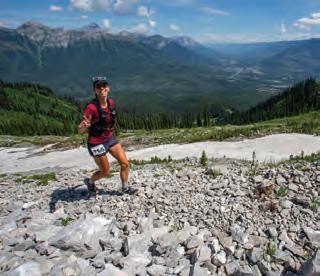

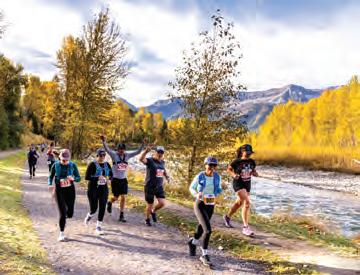
Elk Valley Ultra 50km
July 25
A high-vert alpine trail running race offering the iconic 50km route on some of Fernie’s best trails. You can add a punchy 15km counterpart the next day –the Headwall Hustle (July 26).
Steep n’ Deep / Fernie Femmduro
September 26 - 27
Steep n’Deep delivers a rowdy cross-country course featuring 4 unique timed stages, while Femmduro is a new enduro event designed for women and non-binary riders.
Fernie Half Marathon
October 4
A staple race & fundraiser for 20+ years, this event offers three race-style options: 21km Half Marathon, 10km or 5km Run/Walk.
Combine your desire to challenge yourself with a well-deserved getaway. Stay longer and enjoy all Fernie has to offer.
The Wasa Lake Triathlon is an annual event (over 30 years!) held at the stunning Wasa Lake Provincial Park in the East Kootenay, British Columbia. Our events include Trikids, Standard Triathlon, Sprint Triathlon, Super Sprint Triathlon, Standard Team, Aquabike (1500m swim+40km bike).
PROUD TO BE THE 2026 BC SPRINT CHAMPIONSHIP EVENT!
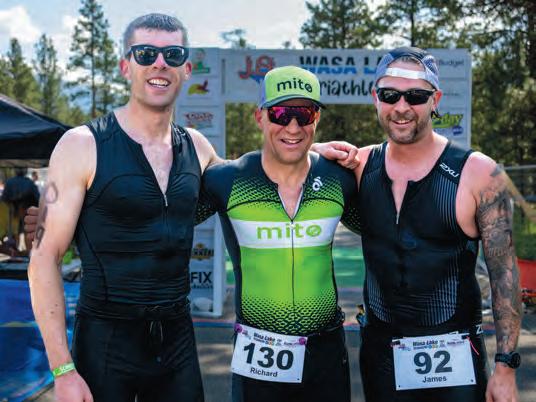
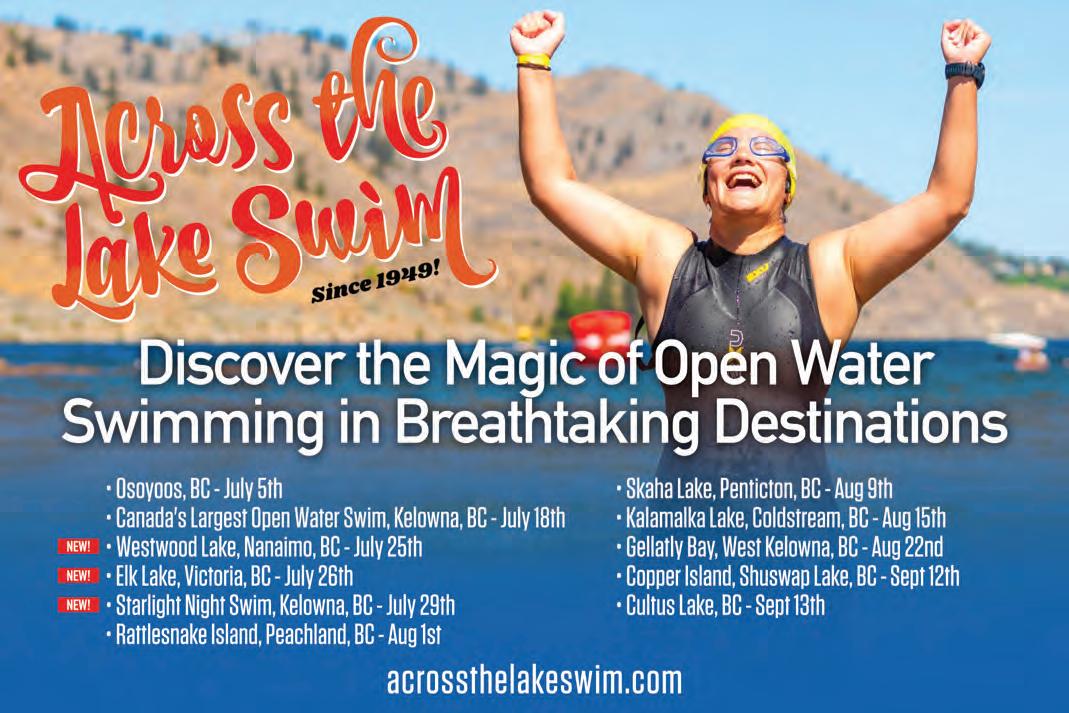












July 26
July 12



JULY 12
July 26 5K-10K-21K

FRIDAY, AUG. 28 – VK – 6KM/1200M
This course will be the 2027/2028 Canadian Mountain Running Championships Uphill Course.

SATURDAY, AUG. 29 – 15K
This course will be the 2027/2028 Canadian Mountain Running Championships Classic Up / Down Course.
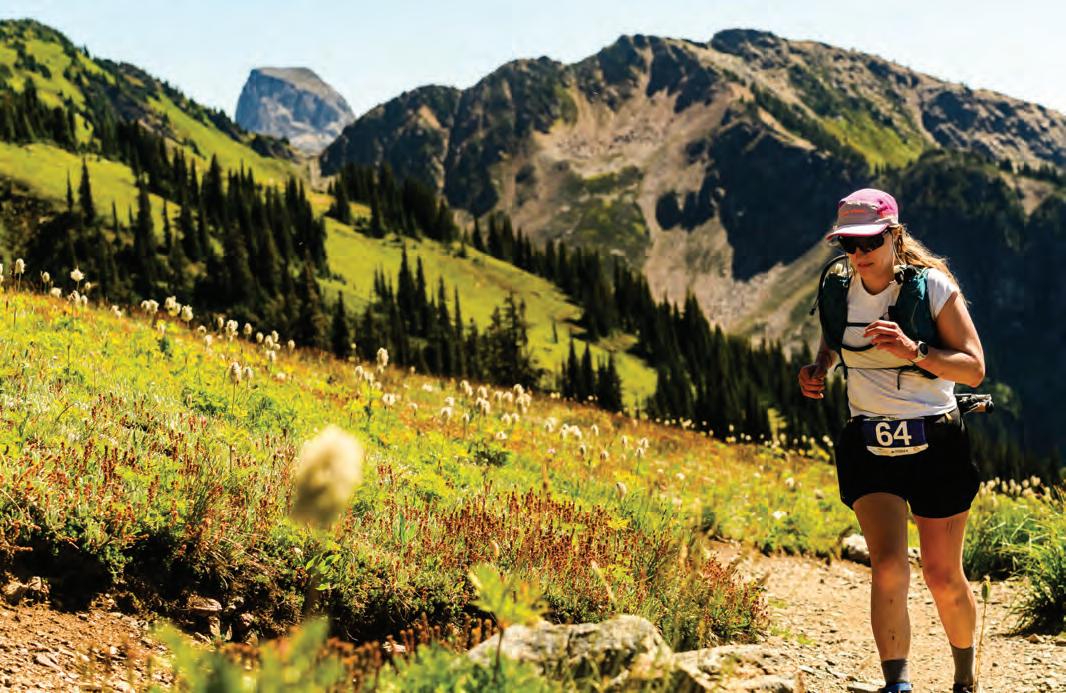
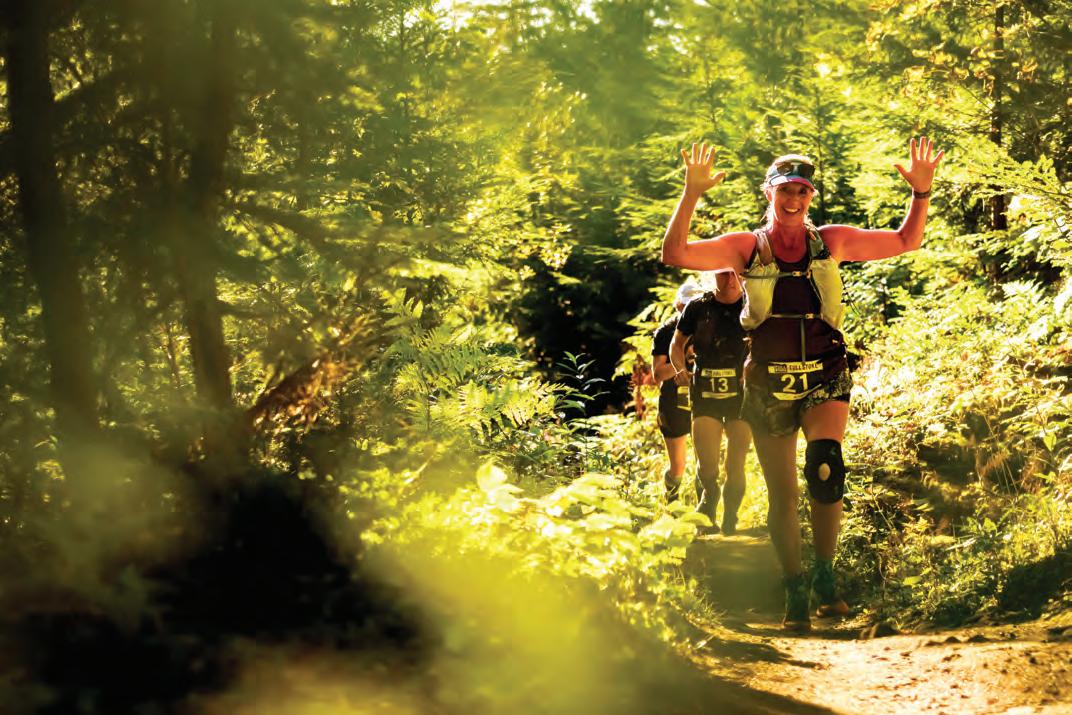
SUNDAY, AUGUST 30 – 30K
SUNDAY, AUGUST 30 – 20K
13-Jun Kelowna Wine Country Half Marathon
Kelowna, BC
13-Jun Gravel Unravel: Bon Jon Pass Out Quilcene, WA
13-Jun Dirty Feet Beat The Buzzer Kamloops, BC
13-Jun Branch Out Bike Tour
13-Jun Mont-Tremblant Spartan Trifecta Weekend
Diamond Valley, AB
Mont-Tremblant, QC
14-Jun Welland Open Water Swim Welland, ON
14-Jun Side by Side for ALS Calgary Calgary, AB
14-Jun Run for the Diamond Uxbridge, ON
14-Jun Banff Half Marathon & 10K Banff, AB
14-Jun Wasa Lake Triathlon Cranbrook, BC
17-20-Jun Yukon River Quest Whitehorse, YK
20-Jun The Sunburn Solstice Trail Run Hamilton, ON
20-Jun Shoppers Drug Mart® Run for Women - Calgary Calgary, AB
20-Jun Run To The Farmers Market Millarville, AB
20-Jun 5i50 Sprint Triathlon
Mont-Tremblant, QC
20-Jun Subaru Triathlon Series Guelph Lake 1 Guelph, ON
20-Jun Niagara Ultra Niagara Falls, ON
20-Jun TriGator for Kids Elmira, ON
20-Jun CFB Esquimalt Navy Run Victoria, BC
20-Jun Kananaskis 100 Mile Relay Race Kananaskis, AB
20-Jun Kettle Mettle Dirty Fondo 2 Day Okanagan, BC
20-Jun Midnight Sun Marathon
20-Jun Woody’s Triathlon
Tromsø, Norway
Red Deer, AB
20-Jun Woody’s Triathlon - Kids of Steel Red Deer, AB
20-Jun Shoppers Drug Mart® Run for Women - Whitby Whitby, ON
20-Jun Slay The Dragon Trail Running Race Vernon, BC
21-Jun IRONMAN 70.3 Mont-Tremblant
Mont-Tremblant, QC
21-Jun Manitoba Marathon Winnipeg, MB
21-Jun Chinook Classic Gran Fondo Calgary, AB
21-Jun Calgary Wild Rose Women's Run Calgary, AB
21-Jun Wild Rose Women’s Triathlon Calgary, AB
27-Jun Powderface Marathon & Half Marathon Powderface Mtn., AB
27-Jun Padden Triathlon Bellingham, WA
27-28-Jun MultiSport Canada Rose City Triathlon Weekend Welland, ON
28-Jun Vancouver Half Marathon & 5K Vancouver, BC
28-Jun Mudskipper Seneca Lake & 5K Dresden, NY JULY 2026 LOCATION
01-Jul Canada Day Road Race Multiple Locations
2-5-Jul Québec Mega Trail
Beaupré, QC
04-Jul Fernie Gravel Grind Weekend Fernie, BC
4-5-Jul Windermere Triathlon Weekend Windermere, BC
4-5-Jul Okanagan Trestles Tour Penticton, BC
04-Jul Gran Fondo Badlands Drumheller, AB
04-Jul The Limberlost Challenge Lake of Bays, ON
04-Jul VFAC Summerfast 10K Vancouver, BC
05-Jul Across the Lake Swim Osoyoos Osooyos, BC
05-Jul XTERRA Victoria Victoria, BC
05-Jul TRi KiDS Triathlon Series - Milton Milton, ON
05-Jul Collingwood Open Water Swim & SwimRun Challenge Collingwood, ON
05-Jul Stampede Road Race Calgary, AB
05-Jul IRONMAN 70.3 Muskoka Huntsville, ON
05-Jul Great White North Triathlon Stony Plain, AB
08-Jul Le Tour du Lac Labrecque Labrecque, QC
10-11-Jul Ride of Courage Calgary, AB
11-Jul Summit 700 presented by Salomon Blue Mtn Resort, ON
11-Jul XTERRA Quebec Québec City, QC
11-Jul Relentless 24 - The Rockies' 24-hour Endurance Run Canmore, AB
11-12-Jul Sinister 7 Ultra Crowsnest Pass, AB
11-Jul Knee Knackering North Shore Trail Race West Vancouver, BC
11-Jul The First Blaze Trail Race Milton, ON
11-Jul San Lorenzo River Marathon Santa Cruz, CA
11-Jul Reggie Ramble Gravel Grinder Warkworth, ON
11-Jul The First Blaze Trail Race Niagara Falls, ON 11-Jul MultiSport Canada Bracebridge Triathlon & DuathlonBracebridge, ON
11-Jul The Range Gravel Cycling Classic Claresholm, AB
12-Jul Wabamun Open Water Swim Wabamun Prov Park, AB
12-Jul Dirty Feet Trail Run #3 Vernon, BC
12-Jul Victoria Half Olympic & Sprint Triathlon Victoria, BC
12-Jul The Midsummer 8K Kelowna, BC
15-Jul TransRockies Singletrack 6 (Jul 10-15) Castlegar, BC
15-Jul MRA Family Ice Cream Run #2 Winnipeg, MB
17-Jul Summer Night 5K London, ON
18-Jul 5 Peaks Area 8 Milton, ON
18-Jul Gravel Unravel: Gamble Graveller - Why-Not-Chee Olympic Pen, WA
18-Jul Enbridge Tour Alberta for Cancer Multiple Locations
18-Jul 5 Peaks Trail Running Series: Cypress MountainWest Vancouver, BC
18-Jul Broken Goat Rossland, BC
18-Jul Tour de Whatcom Bellingham, WA
18-Jul Across the Lake Swim Kelowna Kelowna, BC
18-Jul Across the Lake Swim Kids Shore Splash! Kelowna, BC
18-Jul Young Hearts Triathlon Invermere, BC
18-Jul Gravel Unravel: Why-Not-Chee Wynoochee Lake, WA
18-Jul Sylvan Lake Open Water Swim Sylvan Lake, AB
18-Jul Totem to Totem Marathon Skidegate, BC
18-19 Jul XTERRA Conquer the Crater Sudbury, ON
18-19 Jul Enbridge Tour Alberta for Cancer Strathmore, AB
18-Jul Heart of the Rockies Young Hearts Invermere, BC
19-Jul Lakeshore Women's Triathlon Port Elgin, ON
19-Jul Heart of the Rockies Triathlon & Duathlon Invermere, BC
19-Jul 5 Peaks Trail Running Series: Bowmont Park Calgary, AB
19-Jul Heart of the Rockies Open Water Swim Invermere, BC
19-Jul Heart of the Rockies Gran Fondo Invermere, BC
19-Jul Parry Sound Open Water Swim and SwimRun ChallengeParry Sound, ON 19-Jul Nova Scotia Marathon/Half Marathon and 10KBarrington, NS
19-Jul Back-Country Trail Run & Mtn Bike Race Elkwater, AB
19-Jul La Course de la Traversée Roberval, QC
19-21-Jul TransRockies Run Colorado, USA
24-Jul Buckin’ Hell North Vancouver, BC
25-Jul Summer Epic 8 Hour MTB Relay Barrie, ON
25-Jul Australian Outback Marathon Yulara, Australia
25-Jul Toronto Carnival Run Toronto, ON
25-Jul Bluewater Triathlon and Duathlon Brights Grove, ON
25- Jul Across the Lake Swim - Westwood Lake Nanaimo, BC
25-Jul Mud Hero Ottawa Ottawa, ON
25-Jul Tally in the Valley Trail Race Hamilton, ON
25-Jul Elk Valley Ultra Fernie, BC
25-Jul IRONKIDS Calgary Cochrane, AB
26-Jul IRONMAN 70.3 Calgary Cochrane, AB
26-Jul Capilano Volkswagen Cypress Challenge West Vancouver, BC
25-26-Jul Jack and Jill’s Downhill Marathon North Bend, WA
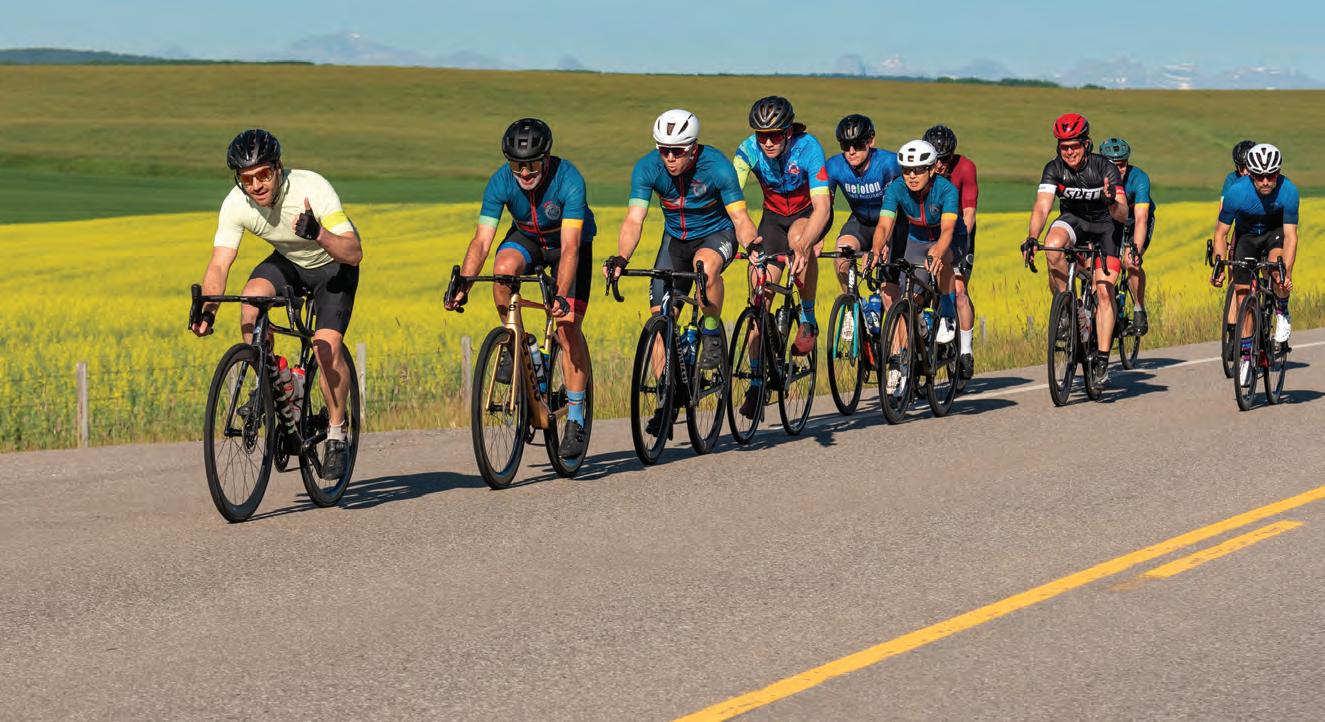
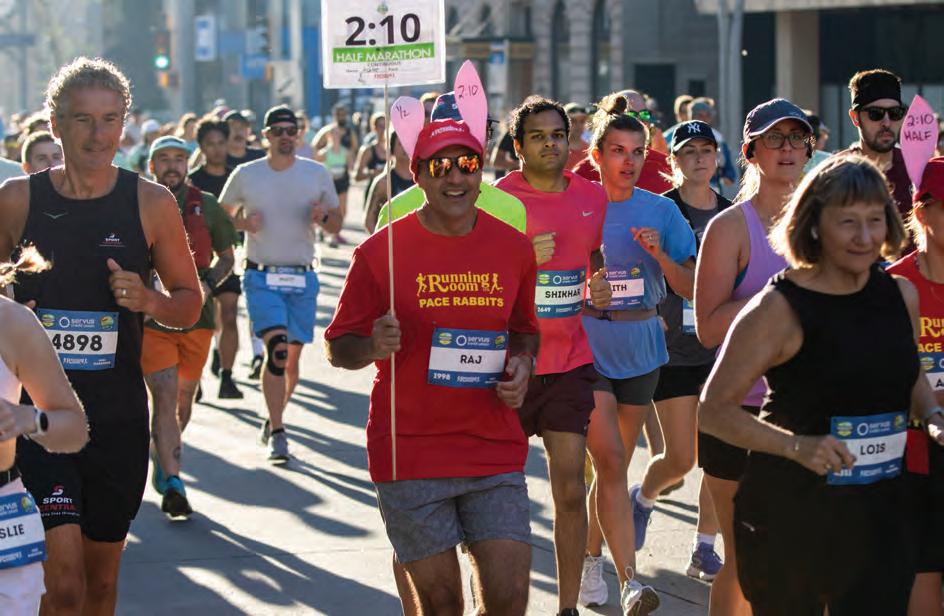
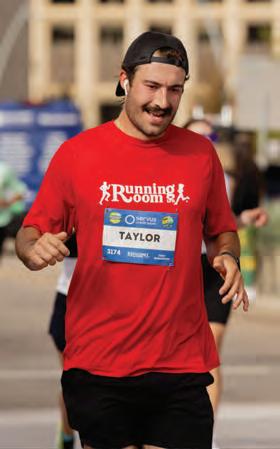
The 2026 Servus Edmonton Marathon and Festival of Events is a celebration of achievement, community, inclusivity, and the incredible energy of downtown Edmonton
Overlooking the stunning North Saskatchewan River Valley, this event welcomes participants of all levels to experience a fast, scenic, supportive and encouraging course. Runners will be immersed in the city’s natural beauty and rich sporting and cultural spirit, with distances ranging from 1 km to 42.2 km.
Known as “The Friendly Marathon,” the Servus Edmonton Marathon is gaining recognition as one of Canada’s best destination races. With an affordable entry point, Edmonton welcomes runners from across the country and beyond to experience its welcoming atmosphere. The official host hotel, The 4 Star Westin Edmonton, offers budget-friendly accommodations starting at just $139 per night, making it an accessible choice for those looking to combine participation in a major city marathon with a weekend of urban adventures.
Championships, where elite runners compete and chase their dreams and national titles. But it’s not just about the top competitors—every participant is celebrated, no matter the distance or speed. With a flat, fast course ideal for personal bests, the races wind atop the River Valley and dynamic downtown core, where runners are energized by the unmatched spirit of over 15,000
to finish. Edmonton’s community spirit shines through, creating a welcoming and uplifting environment that embodies the city’s commitment to sport, health, wellness, and active living.
We could not be prouder of the growth and future of this event. Working with our community, we deeply care about how our event represents Edmonton and we strive to support the collective well-being of our participants.”
spectators. From enthusiastic cheering zones, DJ stations, to live entertainment along the route, the atmosphere shows participants the best of Edmonton and its community and love for the sport.
As the Servus Edmonton Marathon continues to grow, it tells the story of Edmonton as an inclusive and healthfocused city. Whether you’re a first-time marathoner, a seasoned runner, a participant striving for personal goals or a spectator soaking in the atmosphere, this event is an experience like no other. Come and be part of something truly special—the 2026 Servus Edmonton Marathon is awesome! We believe in you and we can’t wait to see you at the start line on Sunday, August 16, 2026!
Marathon weekend is packed with excitement, headlined by the Athletics Canada Canadian Half Marathon
The heart of this event are 400 incredible super volunteers who bring time, passion and dedication, ensuring every runner feels supported from start
For more information please visit www.edmontonmarathon.ca and follow @edmontonmarathon on Instagram. Don’t forget to visit our Hotel booking and Explore Edmonton.

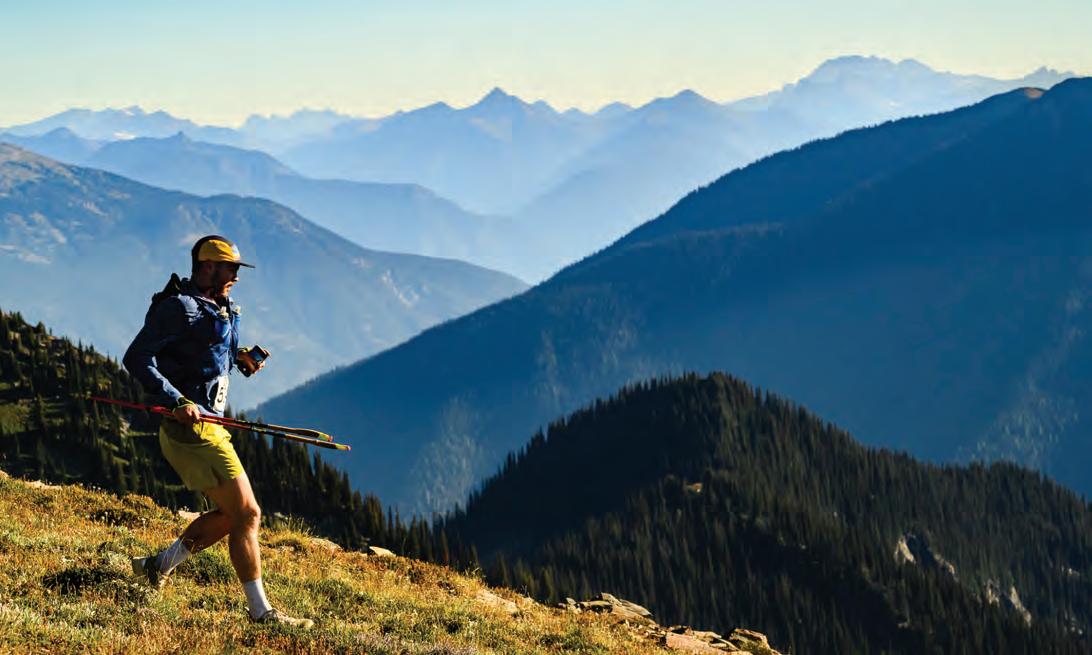
25-26-Jul MS Bike Grand Bend to London Grand Bend, ON
26-Jul Across the Lake Swim - Elk Lake Victoria, BC
26-Jul 5 Peaks Trail Running Series: Gold Bar Edmonton, AB
26-Jul Toronto Triathlon Festival Toronto, ON
29-Jul Across the Lake Swim Starlight Kelowna, BC
29-30-Jul Summerside Open Water Swim & SwimRun ChallengeSummerside, PEI
30-Jul The Lucky Triathlon Festival Woodland, WA
AUGUST 2026 LOCATION
01-Aug Across the Lake Swim Rattlesnake Island SwimPeachland, BC
01-Aug Tour de Lavender Sequim, WA
1-2-Aug Canadian Death Race Grande Cache, AB
02-Aug Camarillo Marathon Camarillo, CA
02-Aug Canaqua Sports Midsummer Classic Welland, ON
03-Aug Dartmouth Natal Day Road Race Dartmouth, NS
05-Aug La Petite Patte Jeannoise Métabetchouan, QC
06-AugKauai Marathon and Half Marathon Koloa, HI
7-8-Aug Columbia River Triathlon & Endurance Sports FestivalVancouver, WA
07-Aug Fat Dog 120 Trail Race Manning Park, BC
8-9-Aug Pinawa Multisport Festival Pinawa, MB
08-Aug Subaru Iron Girl Canada Women’s Triathlon Grimsby, ON
08-Aug Castle Alpine Trail Race - 28 km Crowsnest Pass, AB
08-Aug Iron Legs Mountain Races Bragg Creek, AB
08-Aug Red Deer Spartan Event Weekend Red Deer, AB
08-Aug Bruce Peninsula Multisport Race Wiarton, ON
08-Aug Rock the Quarry Tri and Mile Swim Goshen, IN
08-Aug Loop the Lake Invermere Invermere, BC
09-Aug 5 Peaks Trail Running Series: Chickakoo Chickakoo Lake, AB
09-Aug Stomping Down Barriers For Mental Health Strathmore, AB
09-Aug Mont-Tremblant Half-Marathon Montréal, QC
09-Aug Canaqua Nanaimo Open Water Swim Nanaimo, BC
09-Aug Lake Chaparral Triathlon Calgary, AB
09-Aug Across the Lake Swim Skaha Lake Swim Penticton, BC
09-Aug Falling Water Trail Marathon/ Half Marathon Eugenia, ON
10-14-Aug The Divide 200 Castle Mtn Resort, AB
12-Aug Annapolis Royal 5K Annapolis Royal, NS
14-Aug Kelowna Made Festival Kelowna, BC
15-AugAcross the Lake Swim Kalamalka Lake SwimColdstream, BC
15-Aug Dirty Feet Heartbreak 100K, 50K & Relay Kamloops, BC
15-Aug Ryder Hesjedal’s Tour de Victoria Victoria, BC
15-16-Aug MultiSport Canada Toronto Island Triathlon Toronto Island, ON 15-16-Aug Squamish 50 Squamish, BC
15-16-Aug MS Bike - Ottawa to Brockville Ottawa, ON 16-Aug Servus Edmonton Marathon Edmonton, AB
16-AugMudskipper Cdn SwimRun Champs Milton, On 16-Aug TRi KiDS Triathlon Series - Niagara Port Colborne, ON
16-AugNot Since Moses Five Islands, NS
16-Aug Subaru Triathlon Series Owen Sound Owen Sound, ON
16-Aug Wooly Bully Races Amherst Island, ON
22-Aug TranSelkirks Run Revelstoke, BC
22-Aug Ottawa Spartan Event Weekend Calabogie, ON
22-Aug The Devil's Key Duntroon, ON
22-Aug Across the Lake Swim Gellatly Bay Swim West Kelowna, BC
22-Aug Helsinki Marathon Helsinki, Finland
22-Aug PUMA Toronto Women's Race Series Summer 5/10kToronto, ON
22-Aug Black Spur Ultra Kimberley, BC
22-Aug Run Regina I Love Regina Run & Walk Regina, SK 22-Aug Victoria Splash & Dash Championships Victoria, BC
23-Aug Calabogie Peaks Trail Run Calabogie, ON 23-Aug Wild Rose Women's Gran Fondo Calgary, AB
28-Aug Bottoms Up! VK-6KM/1200M Revelstoke, BC
28-30-Aug The Stoked Ultra Weekend Revelstoke, BC
29-Aug Appletree Marathon, Half & 5K Vancouver, WA
29-Aug Dash For Dialysis Relay Run Calling Lake, AB
29-Aug MultiSport Canada Wasaga Beach Tri & Duathlon Wasaga Beach, ON 29-Aug The Stoked Climb Revelstoke, BC
30-Aug Wild Rose Women's Sub Ultra Calgary, AB
30-AugTRAILSTOKE Half Marathon Revelstoke, BC
30-Aug Welland Canal Open Water Swim and SwimRunWelland, ON SEPTEMBER 2026 LOCATION
05-Sep Rise: Run, Yoga, Meditate Calgary, AB
05-Sep 5 Peaks Trail Running Series: Whistler BlackcombWhistler, BC
05-Sep Subaru Triathlon Series - Guelph Lake 2 Guelph, ON 05-Sep 5 Peaks Trail Running Series: Albion Hills Albion Hills, ON
05-Sep Petra Desert Marathon Petra, Jordan
05-Sep Marathon des Châeaux du Médoc Pauillac, France
05-Sep 5 Peaks Trail Running Series: Canmore #2 Canmore, AB
06-Sep Fast Days of Summer 5000 Kelowna, BC
06-Sep Patagonian International Marathon Puerto Natales, Chile
06-Sep Walk in the Park Kamloops, BC
06-Sep 30 km des Rives de Boucherville Boucherville, QC
TBD Forever Young 8K Richmond, BC
TBD Toronto Island Run Toronto, ON
07-Sep Vancouver Triathlon Vancouver, BC
11-15-Sep SOO 200 Sault Ste. Marie, ON
11-Sep Golden Ultra Golden, BC
11-Sep Ultra Trail Harricana La Malbaie, QC
11-Sep Kidney March Calgary, AB
11-Sep Lost Soul Ultra Lethbridge, AB
11-Sep Klondike Road Relay Whitehorse, YK
12-Sep Kootenay Gran Fondo Cranbrook, BC
12-Sep Triathlon Esprit de Montréal Montréal, QC
12-Sep GOAT Run Port Angeles, WA
12-Sep High River Half High River, AB
12-Sep Finlayson Arm 28K/50K/100K Victoria, BC
12-Sep RBC Gran Fondo Whistler Whistler, BC
12-Sep Cancervive Ride for Wellspring Banff, AB
12-Sep Tough Mudder Toronto Weekend Toronto, ON
12-Sep Oasis ZooRun Toronto, ON
12-Sep Nasty Nuttby Killer 5km Nuttby, NS
12-Sep Across the Lake Swim Copper Island Swim Shuswap, BC
12-13-Sep Tobermory Trail Race Weekend – Run The EdgeTobermory, ON
13-Sep Dino Dash Calgary, AB
13-Sep Ladakh Marathon Leh, India
13-Sep Canmore Rocky Mountain Half Marathon, 10K & 5K Canmore, AB
13-Sep Across the Lae Swim Cultus Lake Swim Cultus Lake, BC
13-Sep GMS Queen City Marathon Regina, SK
13-Sep Dinosaur Valley Half Marathon Drumheller, AB
13-Sep Saskatoon Heartbeat Run Saskatoon, SK
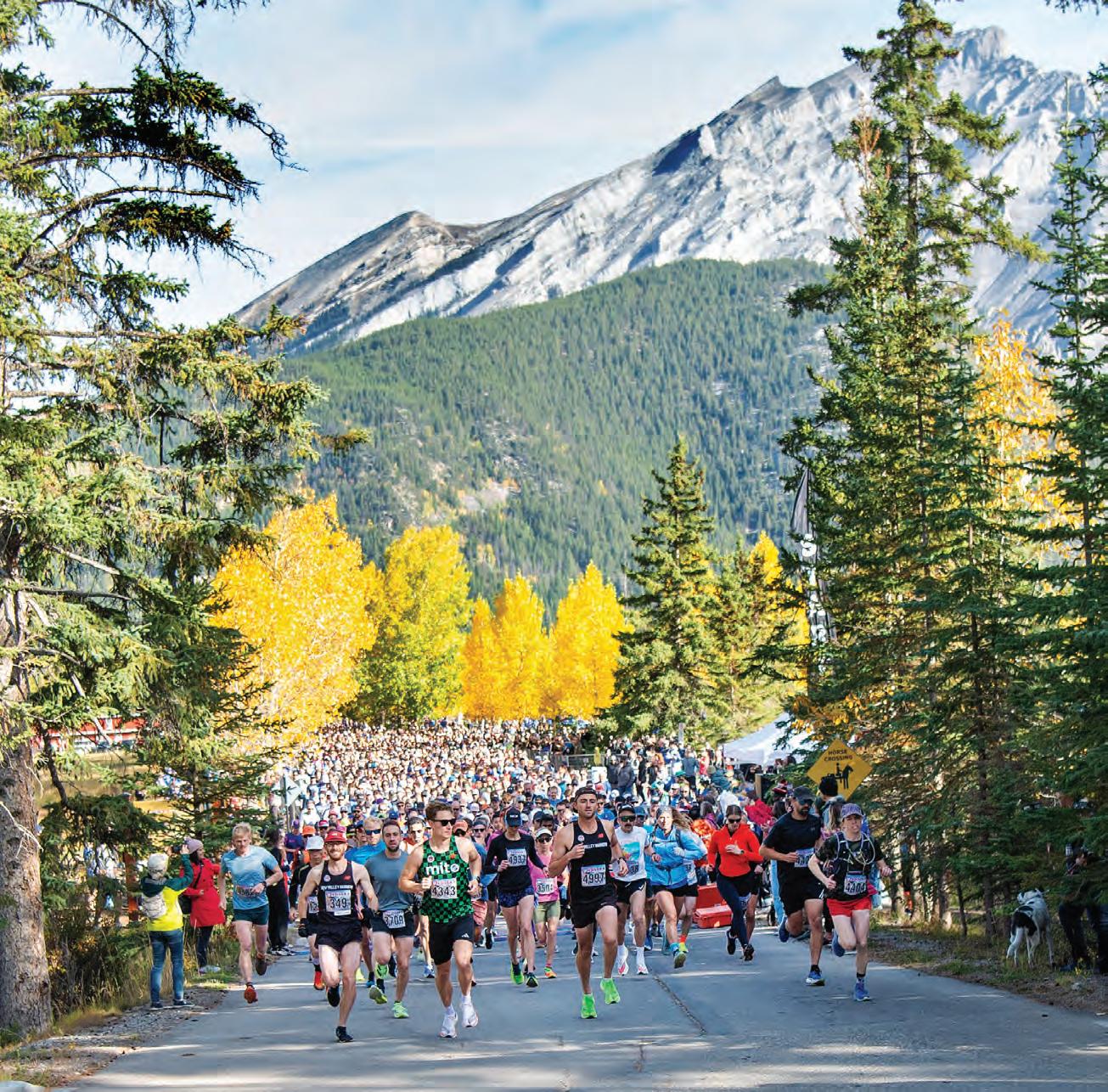


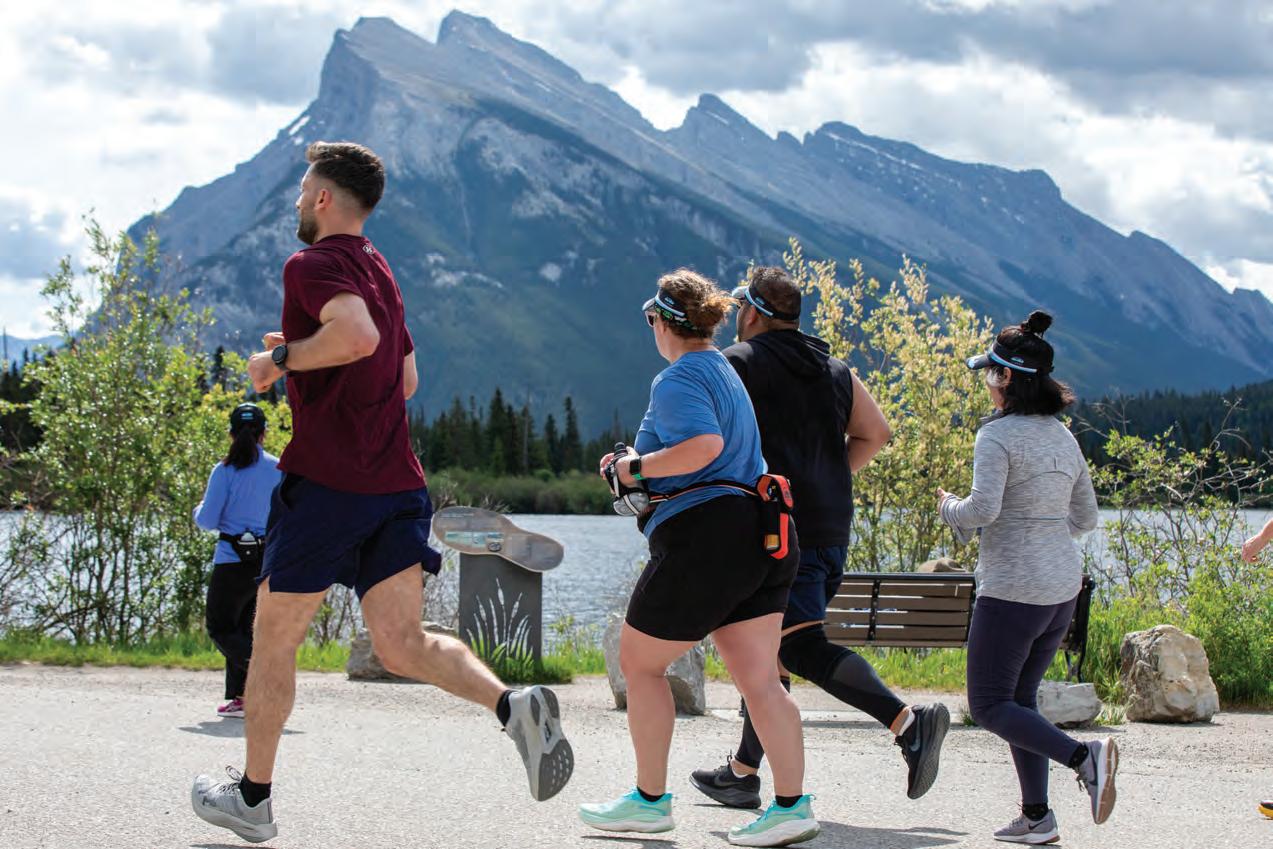


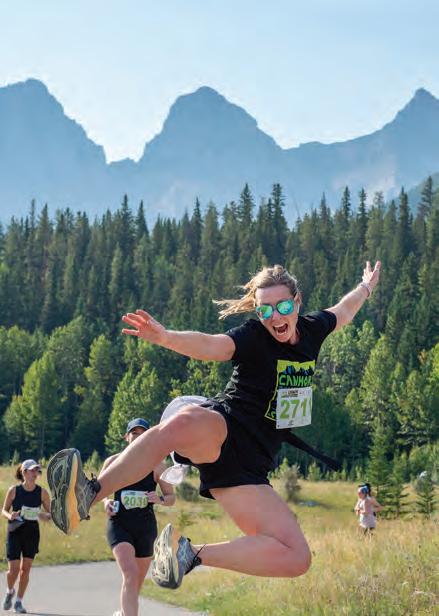
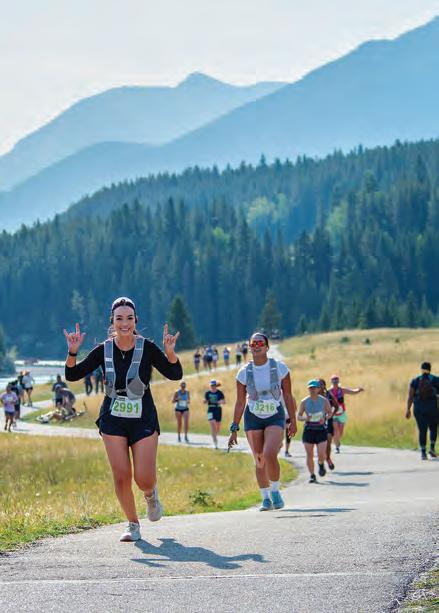
This year the Canmore Rocky Mountain Half Marathon celebrates 30 years of running in the beautiful Canadian Rockies. From humble beginnings three decades ago, to a perennial sold-out destination race today, the Canmore Half has grown and evolved over the years, all the while retaining its focus on a real community feeling. “The race has always had a community focus, and a fun and relaxed atmosphere,” says Race Director Jamie Carrick. “The race is much larger today than when it began, but with our 200 enthusiastic local volunteers, and our emphasis on charitable giving and fundraising, we are very proud of what we offer to runners, and what we provide to the community. And what better place to run than in the mountains?”
The Canmore Rocky Mountain Half Marathon boasts one of Canada’s most beautiful and scenic races, surrounded by the beauty of Canmore, Alberta. Over the past 30 years, both seasoned runners and those looking for a new adventure have enjoyed the winding paths and breathtaking mountain views. Although the race began in 1996 as a full marathon, today three distances are offered - the Half Marathon, 10KM and 5KM events. The popular 10KM and 5KM distances are very fast and flat, with virtually no elevation change, and they race through Canmore and alongside the Bow River. The Half Marathon distance weaves along Canmore’s roadways and gravel trails, with short climbs on winding paths, before returning to the finish area in downtown Canmore.
The race has gained new partners over the years, including Clique Hotels and Resorts as the race’s title sponsor. Clique offers luxury accommodation to visiting runners who seek a modern resort experience. The Canmore Rocky Mountain Half Marathon’s long-time partnering local charity is Embrace International Foundation. Embrace’s mission is to help children with disabilities live in a more just, loving, and accessible world. The Canmore Half is proud to support Embrace’s essential charitable work in Canada and around the globe.
Celebrating this year’s 30th annual race, all participants in every distance will receive a beautiful, locally-made wooden finisher medal. Additionally, all registrants will receive a stylish, custom buff athletic headband in their race packages. Finally, returning this year for the 30th anniversary celebration is a free kids’ race, live music, and beer garden at the finish line.
The Canmore Rocky Mountain Half Marathon is a fantastic destination event for runners of all ages and ability. Register today at www.canmorehalfmarathon.ca, and celebrate 30 years of running in the mountains on September 13th, 2026!
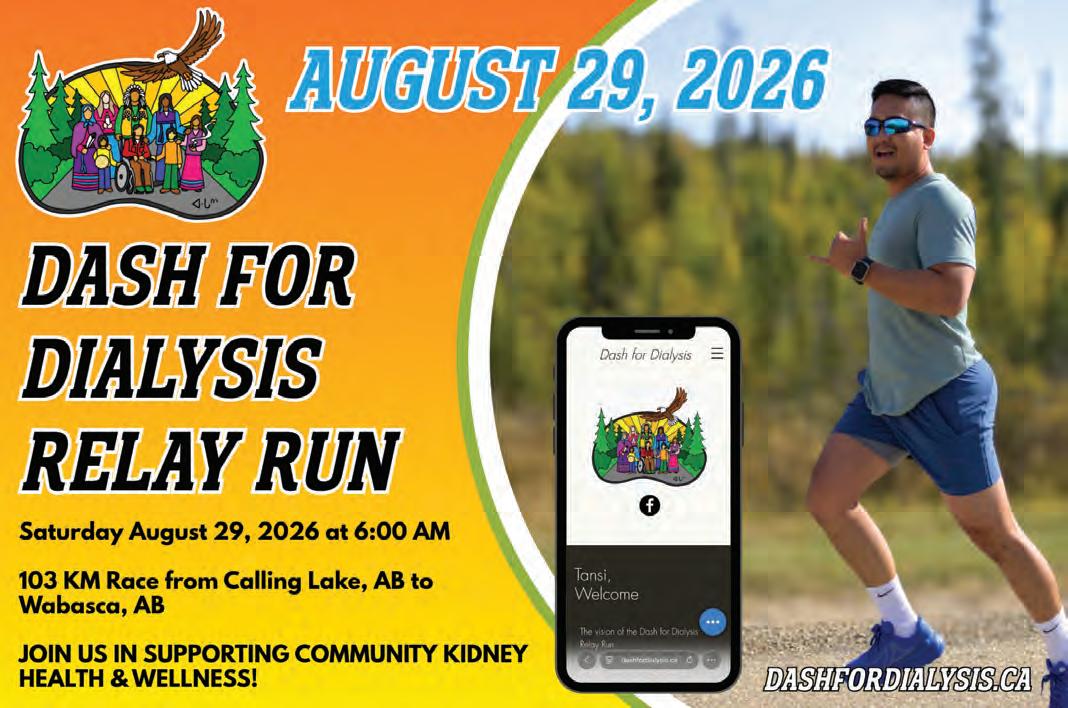

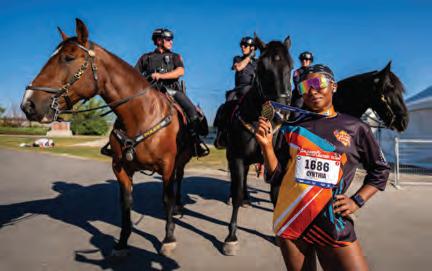


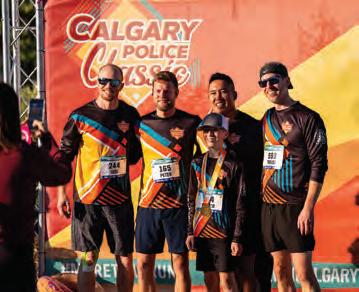
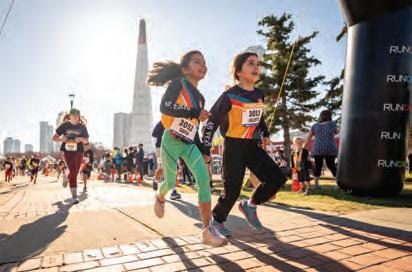

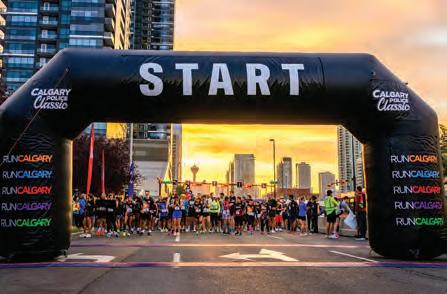







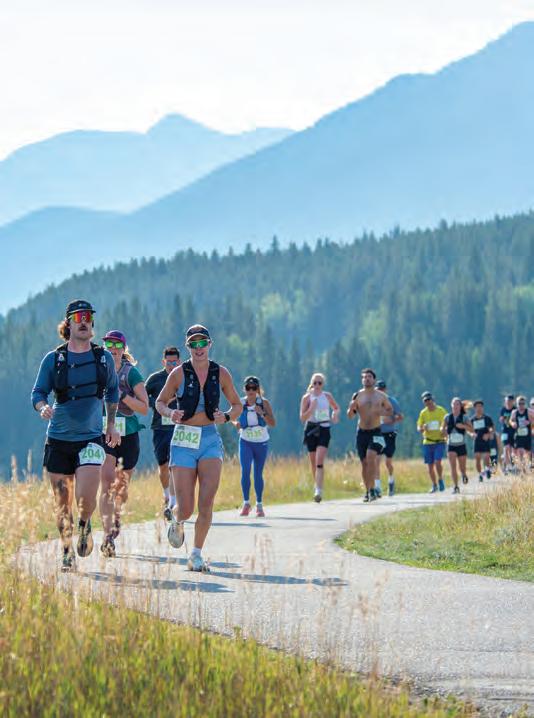


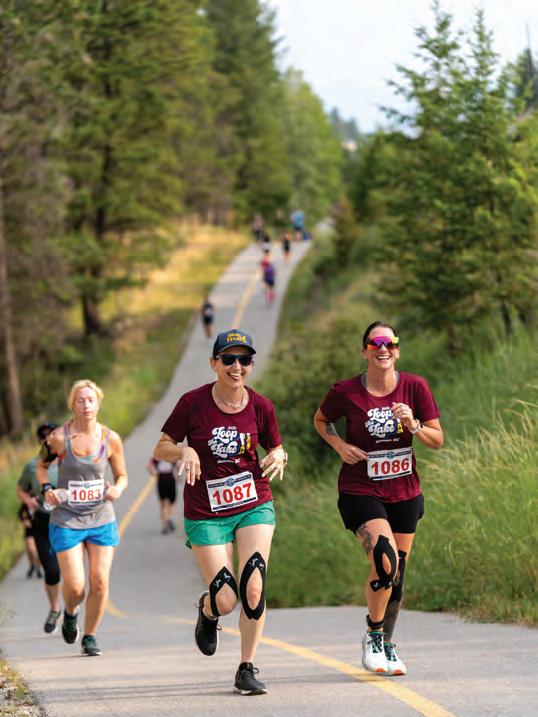


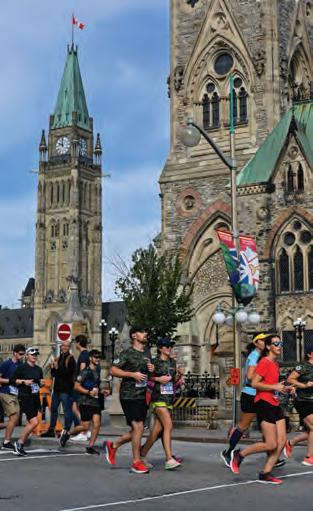
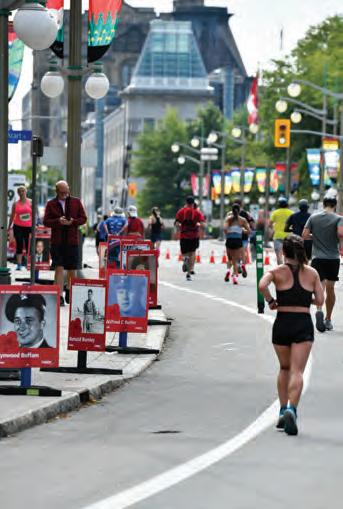



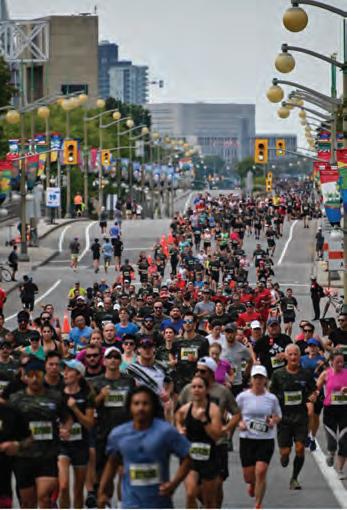
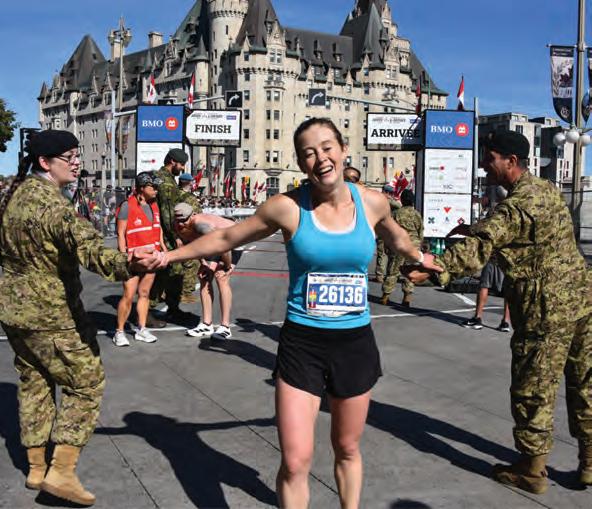
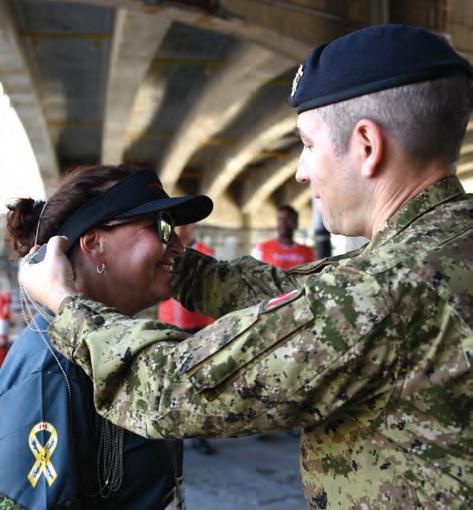
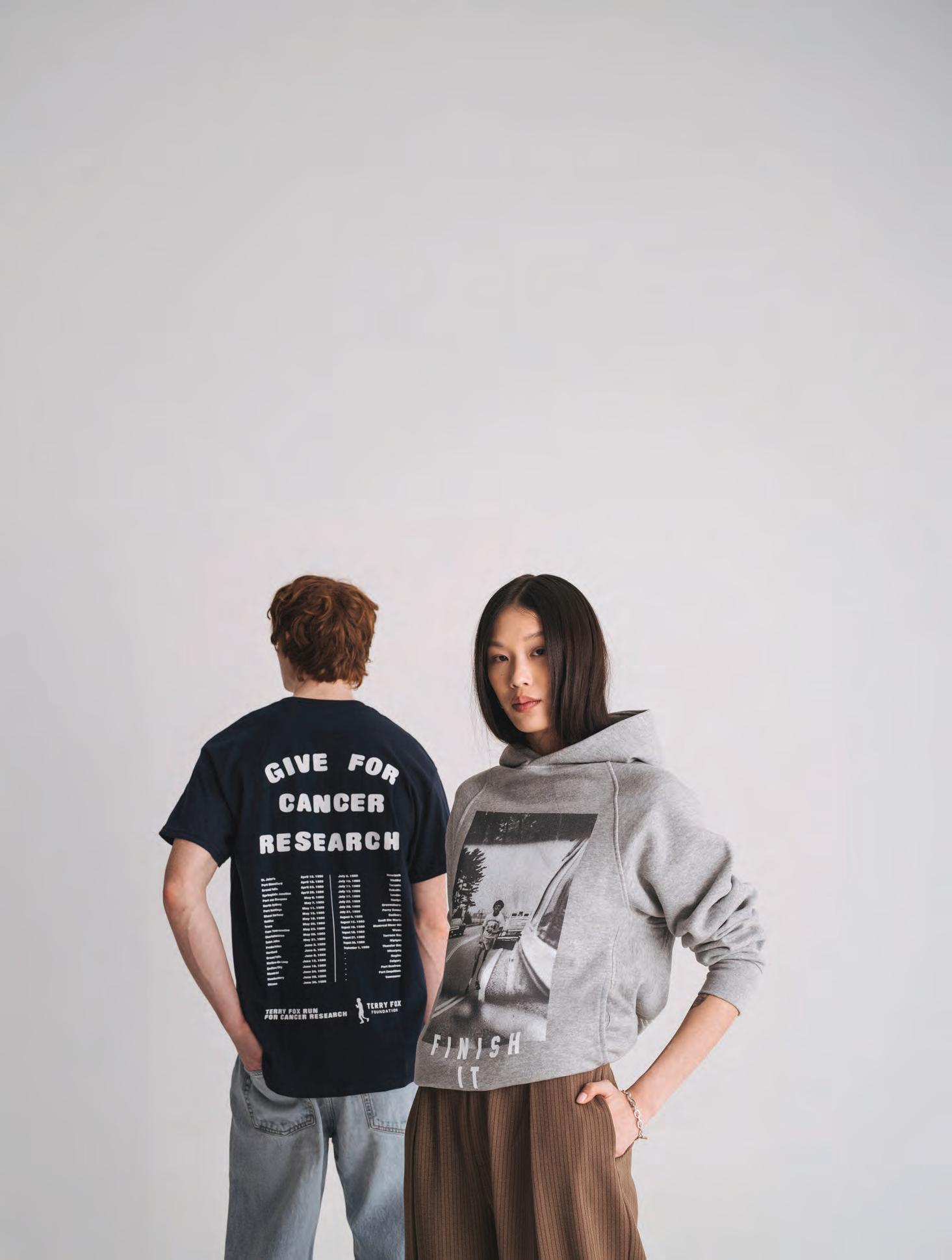

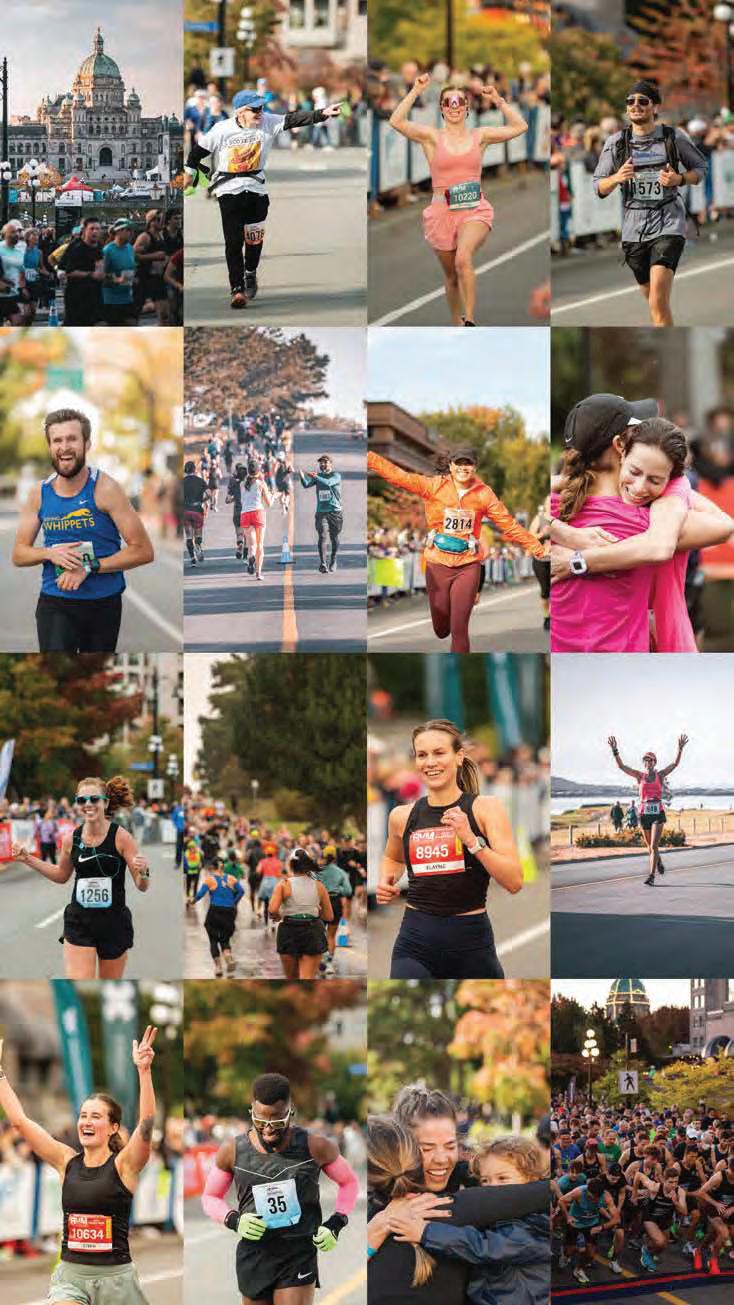
13-Sep London Spartan Event Weekend
13-Sep Mt. Baker Hill Climb
19-Sep Beaver Flat 50
19-Sep Swamp Donkey Adventure Race
19-Sep Calgary Police Classic
19-Sep Moran Constitutional Relay
19-Sep Ultra Night Run
19-Sep Monster of Mazinaw Trail Race
London, ON
Deming, WA
Swift Current, SK
Falcon Lake, MB
Calgary, AB
Orcas Island, WA
Edmonton, AB
Cloyne, ON
19-Sep Be Fearless Trail Marathon, 21k & 11k Squamish, BC
19-Sep Freaky Creeky 50 Vernon, BC
19-Sep Castle Alpine Trail Race
19-Sep Mind Over Mountain Adventure Race
19-Sep River’s Edge Ultra
19-Sep Big Pirate Run
Castle Mtn, AB
Cumberland, BC
Parkland, AB
Richmond, BC
20-Sep Sea 2 Sky Gravel Fondo Squamish, BC
20-Sep Canada Army Run
20-Sep Constantine Yorkville Run
20-Sep Treherne Run for the Hills
20-Sep Terry Fox Run
Ottawa, ON
Toronto, ON
Treherne, MB
Multiple Locations
20-Sep Calgary & Edmonton Heartbeat Run Multiple Locations Edmonton, AB
20-Sep La French Run
24-S ep Big Hurt Multi-Sport Race
Calgary, AB
Port Angeles, WA
25-27-Sep Blue Bully Ultra Blue Mtn. Resort, ON
26-Sep 5 Peaks Trail Running Series: Mt. Seymour North Vancouver, BC
26-Sep Wilderness Traverse Dorset, ON
26-Sep Ultra Paine Puerto Natales, Chile
26-Sep 5 Peaks Trail Running Series: Weaselhead Calgary, AB
26-Sep 2026 Annual Reconciliation Run (Half Marathon)Birtle, MB
26-Sep Melissa’s Road Race Banff, AB
26-Sept Sight Night Edmonton Edmonton, AB
27-Sep Under Armour Eastside 10K Vancouver, BC
27-Sep Dirty Feet Trail Run #4 Kamloops, BC
27-Sep BMW Berlin Marathon Berlin, Germany
27-Sep Sasamat Mudskipper BC Champs
Port Moody, BC
27-Sep Chicago Half Marathon / 5K Chicago, IL
27-Sep 5 Peaks Trail Running Series: Devon Devon, AB
TBD Run the River Fall Challenge Edmonton, AB OCTOBER 2026 LOCATION
03-Oct Penticton Beer Run
Penticton, BC
03-Oct Dirty Feet Run 4 Donuts Kamloops, BC
03-Oct PUMA Toronto's Womens Race Series Fall 5/8kToronto, ON
03-Oct Whistler 50 Relay and Ultra Whistler, BC
03-Oct Mochas and Marshmallows Kids Run Calgary, AB
03-Oct 5 Peaks Trail Running Series: Heart Lake Heart Lake, ON
03-OctLive Love Run 21K/10K/5K Langley, BC
04-Oct Legs for Literacy Moncton, NB
04-Oct Beneva Québec City Marathon Québec City, QC
04-Oct Fernie Half Marathon Fernie, BC
04-Oct CIBC Run for the Cure Multiple Locations
10-Oct Grizzly Ultra Marathon & Relay Canmore, AB
10-Oct Sticks n' Stones Trail Race Hamilton, ON
10-Oct Wandering Moose Kelowna, BC
9-11-Oct Marathon Beneva de Montréal Montréal, QC
11-Oct The Original Las Vegas Marathon Las Vegas, NV
11-Oct Lisbon Marathon Lisbon, Portugal
11-Oct Valley Harvest Marathon New Minas, NS
9-11-Oct Royal Victoria Marathon Weekend Victoria, BC
11-Oct Sparkasse 3-Länder Marathon Lindau, Germany
11-Oct Bank of America Chicago Marathon Chicago, IL
11-Oct Alzheimer Calgary Walk & Run Calgary, AB 11-Oct Trails to Taps Relay Bellingham, WA
11-Oct Whistler Turkey Trot Whistler, BC
17-Oct Sight Night Red Deer Red Deer, AB
TBD Wintergreen Ekiden Relay Race Bragg Creek, AB
17-Oct Blue Mountain Spartan Trifecta Weekend Blue Mtn. Resort, ON
18-Oct First Responders Half Marathon Saskatoon, SK
18-Oct Dirty Feet Trail Run #5 Predator Ridge, BC
18-Oct Lachine Bonneville Half Marathon Montréal, QC
18-Oct Prince Edward Island Marathon Charlottetown, PE
18-Oct Run LoSeCa St. Albert, AB
18-Oct Amsterdam Marathon Amsterdam, NL
18-Oct TCS Toronto Waterfront Marathon Toronto, ON
18-Oct Cape Breton Fiddlers Marathon Cape Breton, NS
18-Oct Columbia Gorge Marathon Hood River, OR
20-Oct Yeti Marathon Khangsar, Nepal
26-Oct 5 Peaks Cider Run Uxbridge, ON
26-Oct Las Vegas Marathon Weekend Las Vegas, NV
31-Oct Run Red Deer Red Deer, AB
31-Oct Newport Marathon Newport, OR
31-Oct The Dark Crowsnest Pass, AB
TBD RBC Race for the Kids Vancouver, BC
NOVEMBER 2026 LOCATION
01-Nov Hamilton Marathon Road2Hope Hamilton, ON
01-Nov Bootstrap Boogie Trail Race Saint John, NB
01-Nov First Responders Half Marathon Vancouver, BC
01-Nov The Dark: 24 Hours Underground Crowsnest Pass, AB 03-Nov Boundary Bay Marathon Delta, BC 04-Nov Barbados Open Water Festival Carlisle Bay, Barbados
07-Nov Sight Night Calgary Calgary, AB
08-Nov Le Marathon des Alpes-Maritimes Nice-Cannes Nice, France
08-Nov 15 km au pied du Mont Saint-Hilaire Mont saint-Hilaire, QC 08-Nov Wild Rose Women's Fall Indoor Triathlon Cochrane, AB
08-Nov Athens Marathon. The Authentic Athens, Greece
TBD The Phantom Run North Vancouver, BC
14-Nov Queenstown Marathon Queenstown, NZ
15-Nov Last Chance Half Marathon & 10 km Calgary, AB
15-Nov The Fat Ass Trail Run Batawa, ON
28-Nov Chill Session Mulmur, ON 28-Nov Rebuild Jasper Jasper, AB
29-Nov Stocking Stuffer Holiday Walk/Run Calgary, AB
TBD Vancouver Historic Half Vancouver, BC
DECEMBER 2026 LOCATION
01-Dec Advent Run Streak Virtual 01-Dec The 12K's of Christmas Virtual
06-Dec Run Barbados Marathon Weekend Barclays Park, Barbados
06-Dec Reggae Marathon, Half Marathon, 10K & 5K Kingston, Jamaica
12-D ec The Big Elf Run Vancouver, BC
13-Dec Antarctic Ice Marathon Antarctica
26-Dec Boxing Day 10 & 4 Mile Runs Hamilton, ON
31-Dec Vancouver Trail Run Vancouver, BC
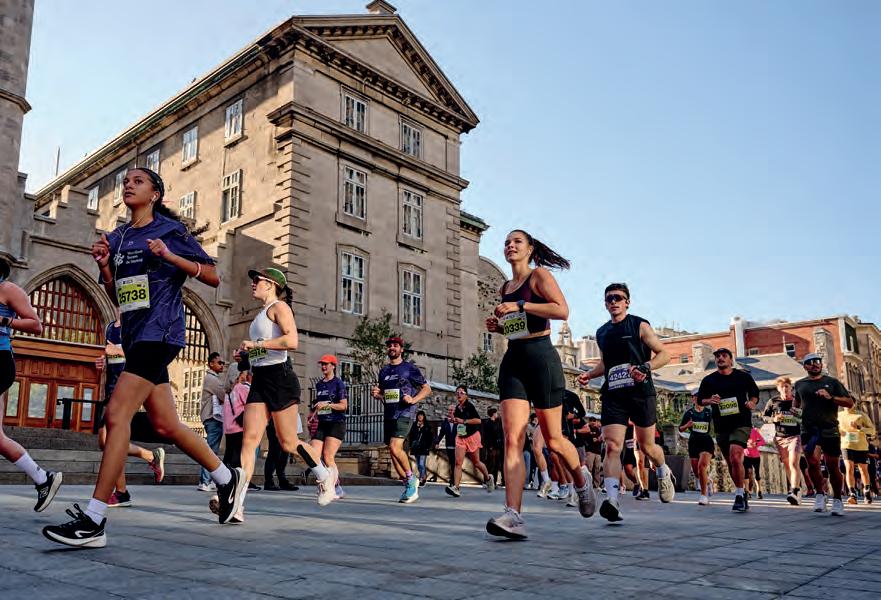
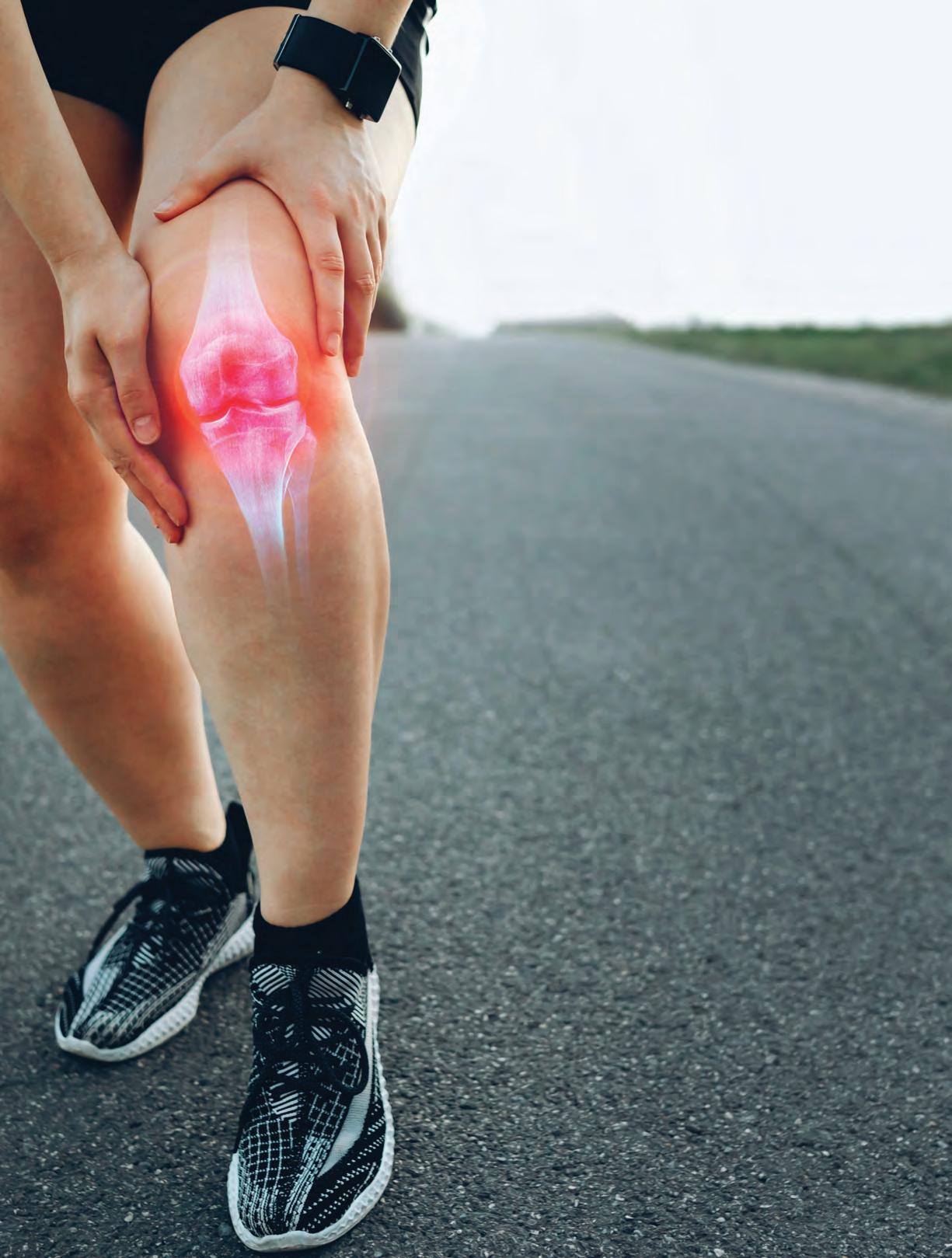
The causes of knee pain and how to safely return to running
BY HANNAH ANTONY, BKIN, MPHTY JEREMIE DUPONT
Hannah is a musculoskeletal physiotherapist who holds a Master of Physiotherapy from the University of Queensland and a Bachelor of Kinesiology from the University of Calgary. She specializes in progressive injury rehabilitation programming, bridging the gap between acute injury and return to sport, from Calgary, AB.
HANPHYSIO HANPHYSIO HANPHYSIO
If you've ever told someone your knee hurts while running, you've probably heard one of two things: stop running or just push through it. Knee pain is one of the most common complaints among runners, and the good news is that with the right approach, most people don't have to choose between those two extremes.
Runners might be quick to blame shoes or running form, but knee injuries are much more complex. Factors like training load, injury history, lifestyle stressors (sleep, nutrition), and biomechanics all need to be considered. These tend to fall into three categories:
• Too much too soon: running injuries may pop up after a large spike in distance, volume or intensity compared to previous training.
• Too little recovery: sleep, nutrition, fueling, and stress management all contribute to how well the body adapts between sessions.
• Too little preparation for the demands of running at that point in time: when load and recovery are mismatched, the body isn't ready for what's being asked of it, which can lead to pain or injury.
Patellofemoral pain (PFP), known as Runner's Knee, is the most common. This usually presents as diffuse pain at the front of the knee, sometimes behind the kneecap (the patella).
Other common types of knee pain are:
• Iliotibial band (ITB) pain: usually sharper pain at the outside of the knee, experienced during bending and straightening.
• Tendinopathy of the patellar tendon, at the front of the knee below the kneecap, or the pes anserine, the insertion of three tendons at the inside, front aspect of the knee. Tendon pain usually feels stiff and painful initially but can warm up during activity. With the right treatment, most runners can manage these conditions and stay on their feet.
Seeing a physiotherapist early can help clarify which type of knee pain you're dealing with, rule out anything more serious, and build a load management plan tailored to your training. Recovery from knee pain isn't a single fix. Start by calming down the pain, without needing to stop running. Then build up your ability to tolerate more load. Use these treatment options to manage your knee pain and find what works best for you.
Reduce loads on the knee in the early stages by including incline running on a hill or treadmill. This can help to move the running forces from the knees to the ankle complex. Ensure you don’t overdo this type of training if you are not used to it as it can increase loads on the Achilles tendon and calf muscles.
As your knee pain improves, slowly reduce incline runs. Increase flat-ground running while avoiding pushing into too much fatigue. Lastly, reintroduce running downhill.
The knee joint can take up to 5x bodyweight in forces during running—the quads, 1-2x. While weakness may not be a direct cause of knee pain, the quads still play a critical role in decelerating the leg and producing force to counter the ground reaction forces of running.
Early on, start with a stationary exercise like a wall sit, working up from 10 seconds to 30 seconds. Then build up to a lunge to challenge the single leg. Use a slow lowering of three seconds to work on the eccentric strength of the quads: key for deceleration and downhill runs. As you progress, add weights.
Hip muscle weakness is not necessarily a cause of knee pain, but when the knee is sore, it is useful to work other supporting muscles. Try these exercises for your hips:
• Side plank from the knees or feet to target the side glutes (gluteus medius)
• Single-leg glute bridge to challenge hip stability and target the main glutes (gluteus maximus)
Running is a repeated springing action, and plyometrics train the lower leg to do that job more efficiently, taking load off the knee. Skipping for one to two minutes before a run is a good starting point. Or try double hopping on the spot, progressively trying to jump higher while keeping contact time on the ground as short as possible. Then you can progress to single leg as your knee pain improves.
While there's no single best running form, a heel-strike places more load through the knees, and a forefoot strike shifts demand to the ankle and calf. For knee pain, temporarily increasing your cadence by seven to 10 per cent can nudge the body towards a forefoot pattern, moving forces away from the knee while it recovers. Once the pain settles, ease back to your natural rhythm, the one your body has adapted to.
The knee was built to take load. It has cartilage that can adapt to loading, a meniscus that helps to distribute the forces in the knee, and large contact areas to help with the demands of running. Running may even be protective of the knee joint.
The knee is more capable than most runners give it credit for. With the right modifications and a bit of patience, you can stay running and build knees that are more resilient.
BY AMY PUZEY
A holistic nutritionist, entrepreneur, competitive trail and mountain runner and founder of Goodphyte in Invermere, B.C. THE.GOOD.PHYTE JOINTHEGOODPHYTE
For many runners, fatigue is part of the deal. It comes with the long miles, the early mornings, and the never-ending pursuit of personal bests. But for some—especially women—there’s a deeper issue quietly draining performance: iron deficiency.
Iron is essential for carrying oxygen to working muscles, yet up to 50 per cent of female endurance athletes are iron-deficient. And many women struggle with traditional forms of iron supplementation that cause constipation and gut aches, and often don’t work. Even those who eat a nutrient-rich diet can struggle to maintain optimal levels. Why? The answer lies not just in what we eat, but in what our bodies can absorb—and that’s where the story takes a surprising turn.
When you are an elite ultra-runner and nutrition-science nerd by necessity, you know the signs of low iron too well: heavy legs, shortness of breath, mental fog, and inability to recover from workouts. Despite a plant-forward diet and iron supplementation, my bloodwork told a different story. That disconnect led me down a research rabbit hole and what I discovered was something many athletes and even dietitians overlook: phytic acid.
Phytic acid, sometimes called phytate, is found in all plant foods but is highest in foods made from grains, legumes, nuts, and seeds, the cornerstone of many “clean” and plant-based diets. But while these foods are celebrated for their fibre, protein, and mineral content, phytic acid is what scientists call an “anti-nutrient.” It binds to minerals like iron, zinc, magnesium, calcium, and amino acids in the gut, preventing their absorption.
In simple terms: you might be eating iron-rich food, but phytic acid locks it away so your body can’t access it.
That’s where phytase comes in. Phytase is a naturally occurring enzyme that breaks down phytic acid, freeing up the minerals it’s bound to so your body can absorb them. It’s commonly found in sprouted or fermented foods but is otherwise limited in the typical Western diet. Simply put, humans don’t make enough phytase to break down all the phytic acid in their diets, which can lead to serious mineral deficiencies.
In animal nutrition, phytase is widely used to improve mineral absorption in livestock. But in humans, especially athletes, its potential is just beginning to gain global attention as organizations like Sight and Life and the Gates Foundation are beginning to look at adding it to staple foods to improve micronutrient deficiencies in populations that rely heavily on plant-based foods.
Studies have shown that supplementing with phytase or consuming foods treated with phytase can increase the bioavailability of non-heme iron—the form found in plants—by up to 150 per cent. For runners who rely heavily on whole plant foods, this could be a game-changer.
Iron deficiency doesn’t just cause fatigue and burnout, it affects everything from VO₂ max to cognitive focus. Without enough iron, the body can’t produce hemoglobin efficiently, which means less oxygen gets to your muscles. For endurance athletes, that’s a direct hit to performance.
As research continued, experimenting with adding more sprouted foods to the diet and eventually supplementing with a simple phytase product produced undeniable results: more stable iron levels, faster recovery, and far less heavy-leg fatigue after training.
While phytase isn’t yet a household name in sports nutrition, it’s quickly becoming a tool worth watching, especially for runners who consume staple foods like pasta, rice, bread, cereal, oatmeal, nuts and nut butters, and legumes. Here are some science-backed ways to support better iron absorption:
• Pair iron-rich foods with vitamin C (like bell peppers or citrus) to enhance absorption
• L imit tea and coffee near meals—they contain polyphenols that inhibit iron uptake
• Soak, sprout, or ferment grains and legumes to reduce phytic acid
• C onsider phytase supplementation, especially if you rely on plant-based iron sources
For runners like me, the science of enzymes has turned into a secret weapon in the fight for better performance and recovery. Because sometimes, it’s not about adding more miles, it’s about unlocking more from what you’re already eating.
RECIPE AND PHOTOGRAPHY BY CAROLINE DOUCET
A registered dietitian based in Vancouver, B.C. Caroline has a private practice where she helps clients eat more plants and improve their relationship with food. She also shares simple vegan recipes and nutrition tips at nourishedbycaroline.ca. NOURISHEDBYCAROLINE NOURISHEDBYCARO
This avocado pesto pasta is a vibrant, plant-based dinner that comes together in under 30 minutes, making it perfect for busy nights. Blended with fresh basil, bright lemon juice, and plenty of garlic, the creamy avocado sauce delivers bold, fresh flavour while providing a boost of heart-healthy fats. Easily customizable, it pairs well with your favourite pasta and can be elevated with high-fibre noodles, seasonal vegetables, and the crispy chickpeas add the protein. The result is a satisfying, nutrient-dense meal that feels indulgent while nourishing your body.

Prep Time – 15 minutes
Total Time – 30 minutes
Serves 4
INGREDIENTS
• 3 cups pasta of choice
• 1 cup canned chickpeas, drained and rinsed
• 1 Tbsp. olive oil
• S alt to taste
• 1 handful arugula, for serving
• Vegan parmesan, for serving
Avocado Pesto
• 2 medium avocados, pitted and peeled
• 1 cup fresh basil
• ¼ cup olive oil
• 3 Tbsp. lemon juice, about 1 large lemon
• 2 medium garlic cloves
• 1 Tbsp. water, or more as needed
• ¼ t sp. fine grain sea salt, or more to taste
• Pepper to taste
1. Preheat the oven to 400°F. Place the chickpeas on a baking sheet and toss with oil. Sprinkle with a pinch of salt. Roast the chickpeas for 25-30 minutes or until golden and crispy.
2. Meanwhile, bring water to a boil in a medium saucepan. Cook the pasta according to the package's instructions.
3. Prepare the avocado pesto: In a food processor, add the avocados, basil, garlic, oil, lemon juice, water and salt. Process until smooth, stopping to scrape the sides as needed.
4. Once the pasta is ready, drain and return it to the saucepan. Add the pesto and toss to combine.
5. Serve the pasta with the crispy chickpeas, vegan parmesan and arugula.
NOTE:
• You can reduce the amount of oil in this recipe if preferred. Simply add more lemon juice and/or water as needed until you get your desired consistency. The sauce should be thick and creamy. Taste the pasta before adding more lemon juice.
• I f you’re looking for a lower fat recipe, you can replace some of the oil with additional water.
• You can use your pasta of choice, including white, whole wheat or gluten-free. Linguine, fettucine or fusilli are great options.
• This would also be delicious with roasted broccoli or Brussels sprouts if you’re looking for more vegetables.
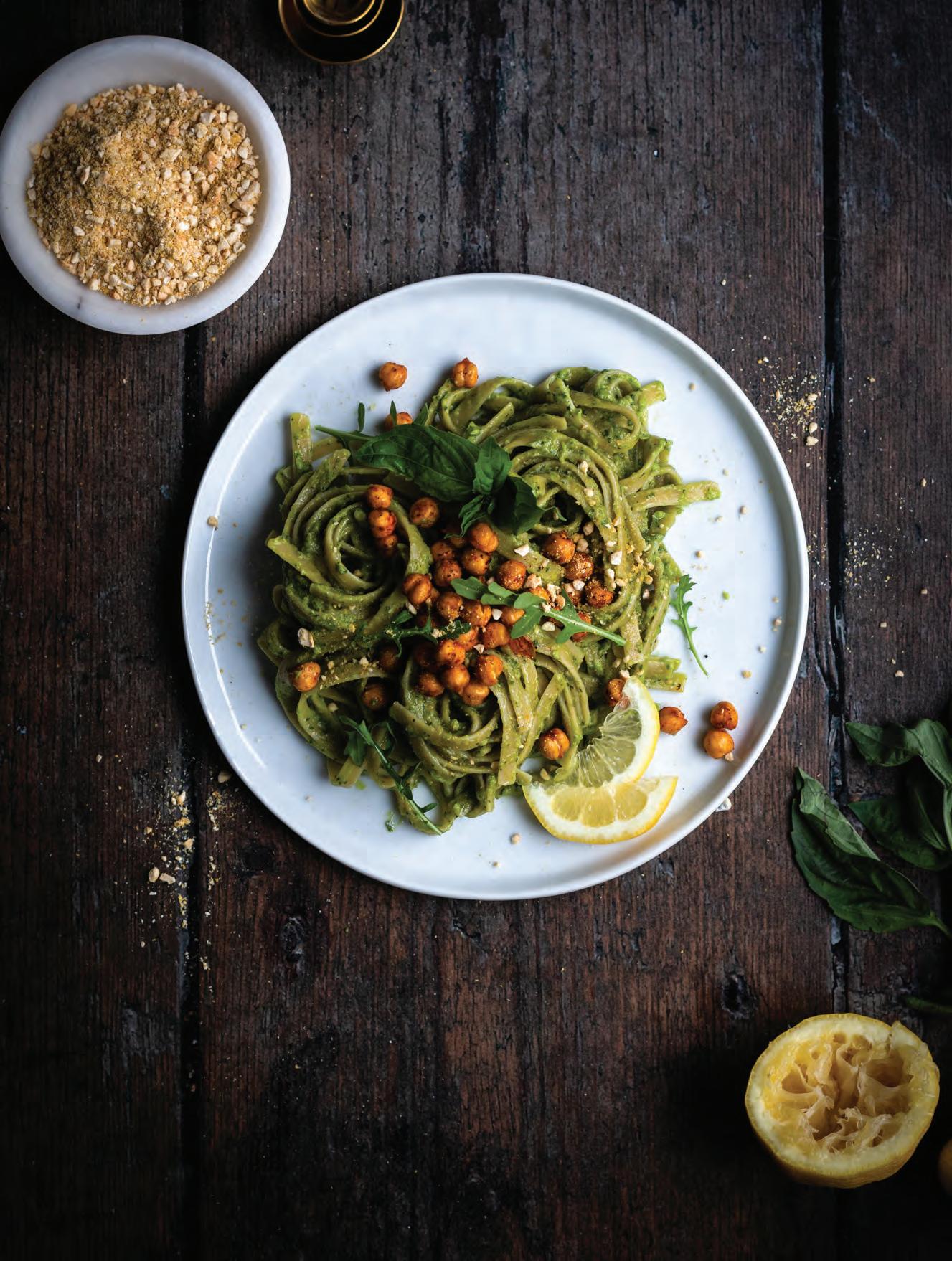
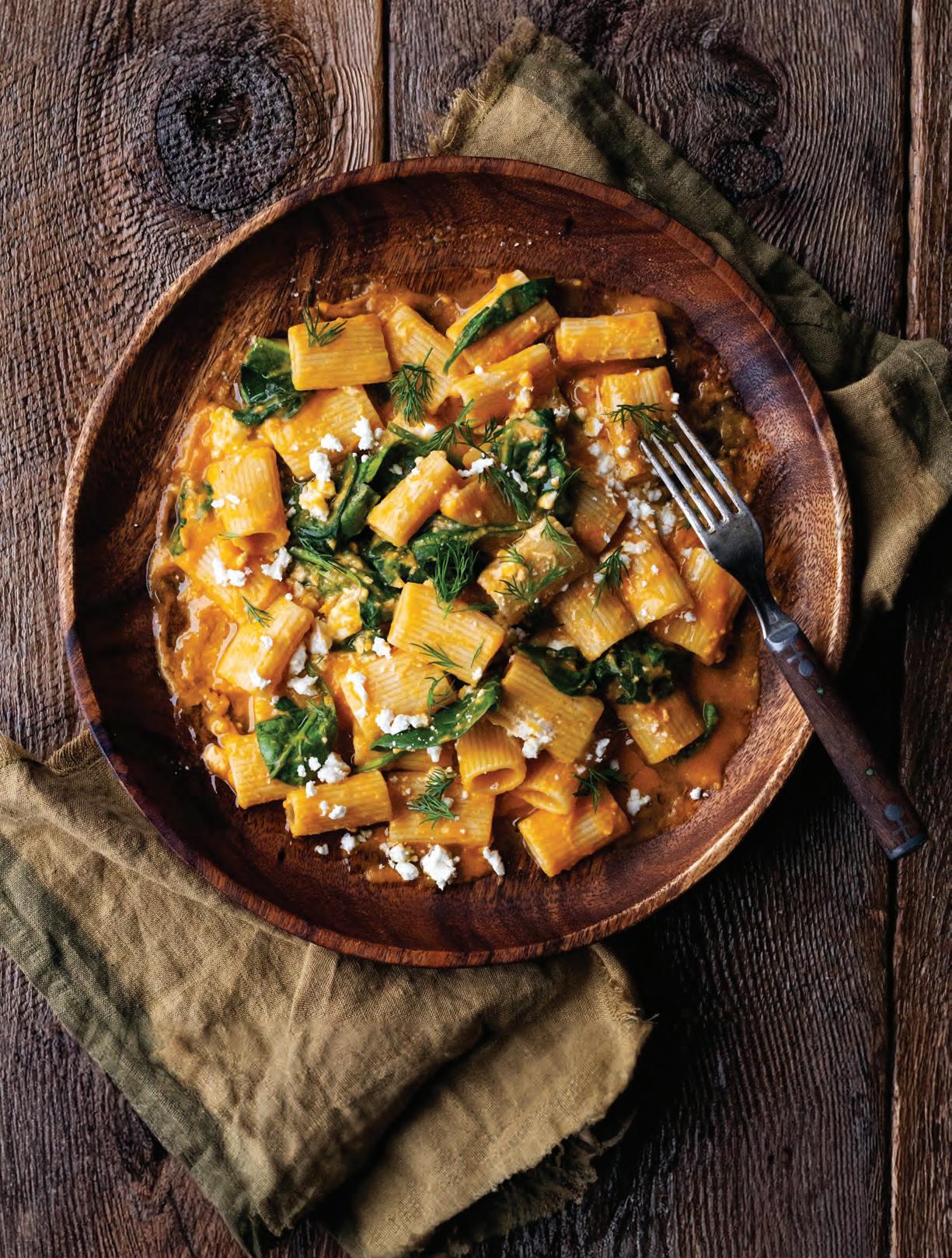
This pasta creation embodies the warmth of a comforting embrace
RECIPE AND PHOTOGRAPHY BY IRENE MATYS
Local farm-to-table advocate, food stylist, recipe developer, food photographer, on-air food expert and world award winning cookbook author from Oakville, ON. IRENE_MATYS IRENE.MATYS
The simplicity of this dish makes it an easy and affordable option, highlighting the bounty of a local harvest. The vegetables are roasted to enhance their natural sweetness, transforming them into a lusciously creamy and versatile sauce. This delectable sauce isn’t limited to just pasta; it effortlessly doubles as a delightful pizza sauce, perfect for pairing with your favorite toppings. Additionally, you’ll find it equally delightful as a soup—simply adjust the consistency to your liking by incorporating vegetable stock.

Total Time – 1 hour
Serves 4
• 2 ½ lbs. butternut squash washed, skin on
• 3 large ripe tomatoes, halved
• 1 large cooking onion, quartered
• 1 garlic head
• 3 Tbsp. extra-virgin olive oil
• 1 ½ t sp. sea salt
• ¼ tsp. fresh ground black pepper
• ¼ cup extra-virgin olive oil
• 3 cups baby spinach
• 450 g rigatoni
• 1 /3 cup feta
• ¼ cup fresh, chopped dill
1. Preheat oven to 400°F and line a large baking sheet with unbleached parchment paper.
2. Cut butternut squash in half lengthwise and remove seeds. Cut again into 4 pieces. Place on baking sheet cut side facing up. Add tomatoes and onions on baking sheet.
3. Cut the top off the garlic bulb just enough to expose the garlic cloves and place full bulb on baking sheet.
4. D rizzle 3 Tbsp. of olive oil all over vegetables and garlic. Season with ½ tsp. salt and pepper and mix them to ensure they are covered well. Spread vegetables evenly on baking sheet with butternut squash cut side facing down. Roast in oven for 45-55 minutes until squash is fork tender.
5. Place squash, tomatoes, and onions in a food processor or high-speed blender. Remove garlic from skin and add to processor with olive oil. Blend until a creamy sauce. This makes 4 cups of sauce.
6. B ring a large pot of water to a running boil and season with 1 tsp. of salt. Add pasta and cook al dente as per package directions. Reserve 2 cups of paste water and drain pasta.
NOTE: Sauce can be refrigerated in an airtight container up to 3 days. Can also be frozen up to 3 months. This sauce is versatile. Great as pizza sauce or add enough vegetable stock to your preferred consistency to enjoy as soup.
7. Add pasta back into the pot and add spinach, 1 cup of the pasta water and 3 cups of sauce. Stir well until mixed well. Slowly stir in the remaining pasta water until sauce has come to your preferred creaminess and consistency. You might not need the entire cup.
8. G arnish pasta with feta and dill.
Nutrition facts per serving Calories 827; protein 20 g; fat 31 g; carbs 125 g.
RECIPE AND PHOTOGRAPHY BY LORI RASMUSSSEN
Self-taught food blogger at My Quiet Kitchen, photographer and certified yoga instructor in Asheville, North Carolina. MYQUIETKITCHEN MYQUIETKITCHEN
Who doesn't love the simplicity of pasta, butter, garlic, and lemon? It's a classic for good reason and so comforting when you're short on time and energy. This one-pot casarecce pasta is ready in 25 minutes and great when you're craving simple comfort food. The smooth, twisted pasta pairs beautifully with sautéed garlic, lemon, butter, and olive oil. Toss in your favourite vegetables, proteins, cheeses, and herbs for endless flavour combinations.

Prep Time - 10 mins
Cook Time - 15 mins
Serves 6
• 1 6 ounces casarecce pasta, or fusilli, penne, or rotini
• 6 Tbsp. vegan butter
• 1 to 2 Tbsp. olive oil
• 6 cloves garlic, minced
• ¼ t sp. crushed red pepper flakes
• 1 large bunch kale, thick stems removed, chopped
• 1 large lemon
• S alt and pepper
DIRECTIONS
1. C ook the pasta in generously salted water according to package directions. Drain in a colander and set aside.
2. Return the pot to the stove over low to medium-low heat. Add the butter, 1 tablespoon olive oil, and garlic. Stirring frequently, cook the garlic for 3 to 4 minutes. Reduce heat if necessary so it doesn't brown.
3. Add red pepper flakes and kale and increase heat to medium. Cook until the kale is dark green and wilted, about 2 minutes.
4. Zest half of the lemon into the pot and add the pasta. Stir to combine. Slice and juice the lemon. Tasting as you go, add as much lemon juice, salt, pepper, and olive oil as you like. Serve hot. Garnish with vegan parmesan, if desired.
NOTE: Variations
Make it more filling with cooked cannellini beans, chickpeas, or your favourite plant-based sausage. Instead of kale, try peas, spinach, zucchini, tomatoes, broccoli or cauliflower.
Store
Leftover pasta can be stored in an airtight container in the refrigerator for up to 5 days. Freezing not recommended.

RECIPE
BY
ANGELA LIDDON ANGELA LIDDON AND ERIC LIDDON
The founder and creative force behind ohsheglows.com, an award-winning destination that has inspired millions with her healthy, plant-based recipes from Calgary, AB. OHSHEGLOWS
This protein-packed noodle salad tossed with an umami-rich Toasted Sesame, Tamari, and Garlic Dressing is high in protein, and along with the carbohydrates from the soba noodles, gives this salad mega staying power. This one has been in high demand ever since I first brought it to a family picnic (it travels like a dream!). It’s crunchy and bright from the red bell pepper, and salty and nutty from the earthy soba noodles and the surprising addition of chopped pistachios. It also has a bit of a bite from the crisp green onions and little pops of crunch and toasty flavour from the sesame seeds. It’s ready in less than 30 minutes, can be served warm or cold, and makes flavourful leftovers.
Prep Time - 5 minutes
Total Time - 30 minutes
Serves 4
INGREDIENTS

• 1 cup frozen shelled edamame
• 1 batch Toasted Sesame, Tamari and Garlic Dressing
• 5 cups water
• 1 medium red bell pepper, seeded and diced (1 cup)
• ¾ cup thinly sliced green onions (3 large)
• 1 /3 cup raw or roasted pistachios, finely chopped*
• ½ cup packed, fresh cilantro leaves, coarsely chopped
• 6.4 ounces dried soba noodles
• 2 cups packed baby spinach, thick stems removed, chopped
• Fine sea salt
• Freshly ground black pepper
• 4 t sp. toasted sesame seeds**
• 4 lime wedges
DIRECTIONS
1. Thaw the edamame and drain well.
2. M ake the Toasted Sesame, Tamari, and Garlic Dressing.
3. B ring water to a boil in a medium pot.
4. M eanwhile, prepare the bell pepper, green onions, pistachios, and cilantro, adding them to separate small bowls or arranging them in groupings on a large cutting board as you go.
5. When the water comes to a boil, add the soba noodles, reduce the heat to medium-high, stir, and simmer, uncovered, according to the package directions (most soba noodles cook in 3 to 5 minutes), until al dente. Be sure not to overcook the noodles or they will be mushy in your salad.
6. Drain the noodles and rinse under cold running water for at least 1 minute stop the cooking process and prevent the noodles from sticking. Drain very well.
Makes ⅔ cup
This dressing has it all, and you’ll be enjoying it right off the spoon! It’s umami-rich from the tamari, sweet from the pure maple syrup, tangy from the rice vinegar, creamy from the tahini, and deeply rich from the sesame oil.
• 1 medium garlic clove
• 3 T bsp. light tamari*
• 3 T bsp. seasoned rice vinegar
• 2 T bsp. grapeseed oil or pure/refined olive oil
• 2 Tbsp. runny tahini
• 1 T bsp. + 1 tsp. toasted sesame oil
• 3 to 4 tsp. pure maple syrup, to taste
TIP: Store in an airtight container in the fridge for up to 5 days or in the freezer for up to 6 weeks. Stir before each use, if needed.
* It’s important to use light tamari (not regular full-sodium tamari) or the dressing will be too salty.
** If you prefer a tangier dressing, use 3 teaspoons of pure maple syrup; if you prefer a sweeter dressing, use 4 teaspoons. The sweetness counters the slightly bitter taste of the kale.
Nutrition
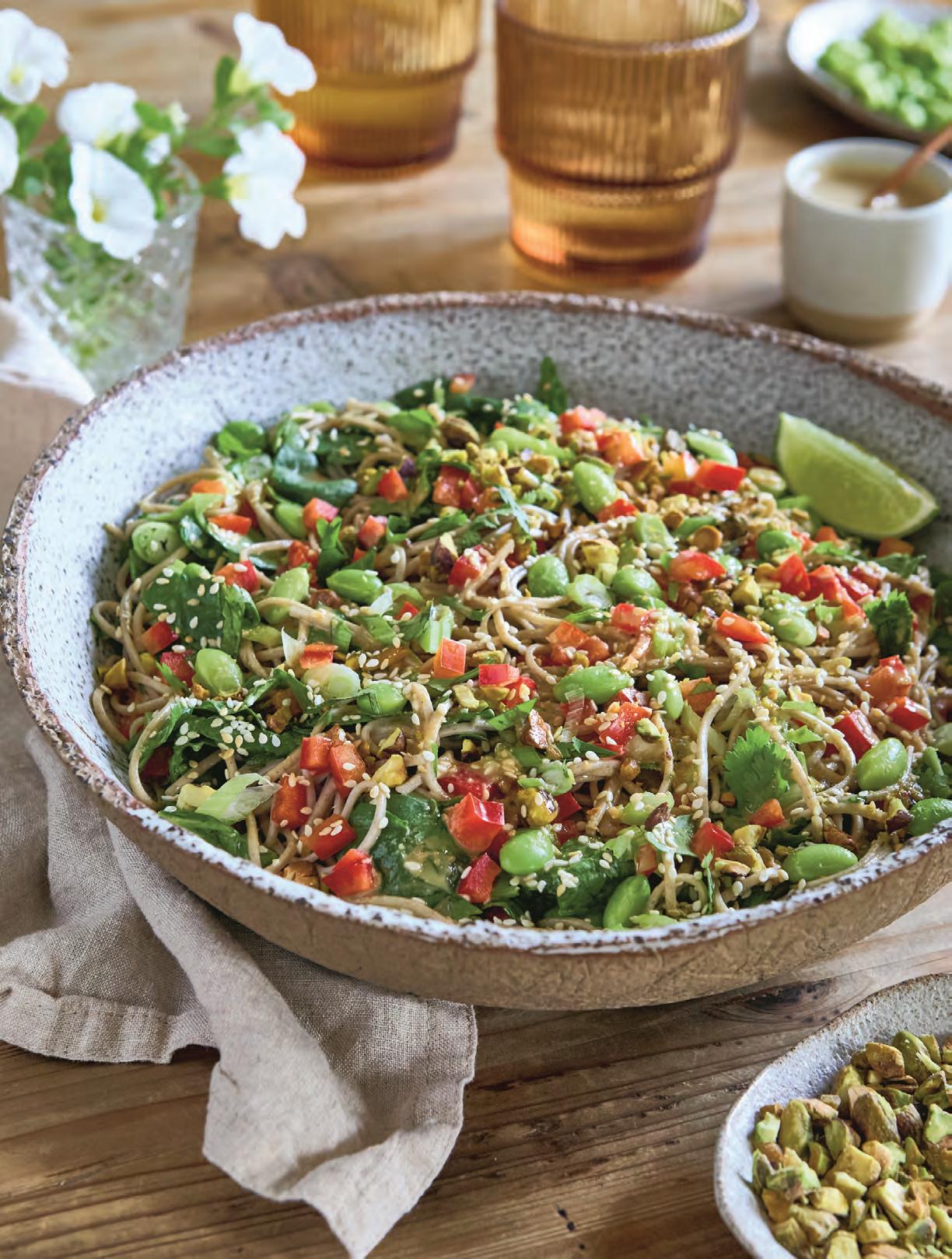

RECIPE AND PHOTOGRAPHY BY LAUREN TOYOTA
Creator of Hot for Food blog and cookbooks. Lauren is one of IMPACT Magazine’s Top Vegan Influencers, vegan chef, content producer and author based in Toronto, ON.
HOTFORFOOD HOTFORFOODBLOG
Treat yourself to a post-run indulgence with these warm, velvety Vegan Cinnamon Sugar Dessert Gnocchi. Soft gnocchi are coated in a fragrant blend of cinnamon and sugar, creating a comforting, plant-based dessert that feels like a reward after any workout. Perfect for cozy evenings or as a show-stopping treat for guests, this dessert transforms a simple pantry staple into a sweet, melt-in-yourmouth delight that everyone will love.

Prep Time – 2 mins
Cook Time – 10 mins
Serves 2-4
• 2 Tbsp. granulated sugar
• 2 tsp. ground cinnamon
• 1 lb./453 g potato gnocchi
• 2 Tbsp. vegan butter
• C oconut whipped topping, 2 Tbsp. each for serving
1. C ombine granulated sugar and cinnamon together in a small bowl and set aside.
2. B ring a pot of water to a boil. Add gnocchi and boil for a couple of minutes or until most of the gnocchi start to float.
3. M eanwhile heat up a nonstick or cast iron pan over medium heat with butter for about 30 seconds to 1 minute or until fully melted and sizzling. Use a large, slotted spoon to scoop out gnocchi from boiling water. Shake lightly to get rid of excess water and place gnocchi into the hot pan. Ensure each piece is touching the pan and brown on one side for 4 to 5 minutes. Toss only once to get the other side slightly crispy and light brown.
4. Add cinnamon sugar and toss to coat the gnocchi. Spread gnocchi into an even layer and cook another 1 to 2 minutes to allow the sugar to slightly caramelize. Lower heat to prevent burning. Turn off the heat and let the gnocchi rest for 1 minute as it will be very hot.
5. Portion gnocchi onto small dessert plates and top each serving with a generous scoop of coconut whip on top and a little sprinkle of cinnamon as garnish.
Nutrition facts per serving
Calories 257; protein 3.5 g; fat 10 g; carbs 41 g.

RECIPE
BY
JANNELL LO JESSICA KALMAN
A food creator, writer and founder of the blog) My BF is GF, and author of the new cookbook My Best Friend is Gluten-Free, Jannell champions gluten-free cuisine inspired by her travels and ChineseCanadian upbringing. She has been featured on Food Network Canada, Cherry Bomb and lives in North Vancouver, B.C. where she enjoys nature walks, picnics, and beach time with her husband. MYBFISGF MYBFISGF
If you love fruit and coconut this one’s for you. It’s essentially a bowl of glossy, juicy berries, with a hint of mint for an unexpected herbal note, topped with coconut whip for a little decadence. A short maceration time with a sprinkle of sugar brings out the natural sweetness of the fruit without making it overly wet and mushy. Best with in-season, local berries! It’s a simple, fresh pleasure to savour at the end of any meal.

Serves 4
INGREDIENTS
• 2 pints strawberries, raspberries, blackberries, and/or blueberries (24 oz)
• 1 Tbsp. granulated sugar or maple syrup
• 4 large mint leaves, finely chopped
• 1 c anister (7.9 oz) coconut whip (see note)
DIRECTIONS
1. I f using strawberries, begin by slicing them.
2. I n a large bowl, toss all fruit together with the sugar and mint and let sit 5 to 10 minutes.
3. Portion the fruit mixture into bowls and top with coconut whip.
Nutrition facts per serving Calories 816; protein 5 g; fat 54 g; carbs 85 g.
NOTE:
Instead of canned coconut whip, you can refrigerate 1 can (14 oz)) full-fat coconut milk overnight, skim off the cream that forms on top, and whip it with 1 Tbsp. of granulated sugar for 4 minutes using a stand or hand mixer.
Jeff Galloway spent over 50 years teachingthe easy run-walk method inspiring thousands world-wide
BY AMBY BURFOOT GALLOWAY DIGITAL
Author, speaker, coach, former executive editor of Runner’s World Magazine, 1968 Boston Marathon winner from Mystic, CT. AMBYBURFOOT AMBY-BURFOOT
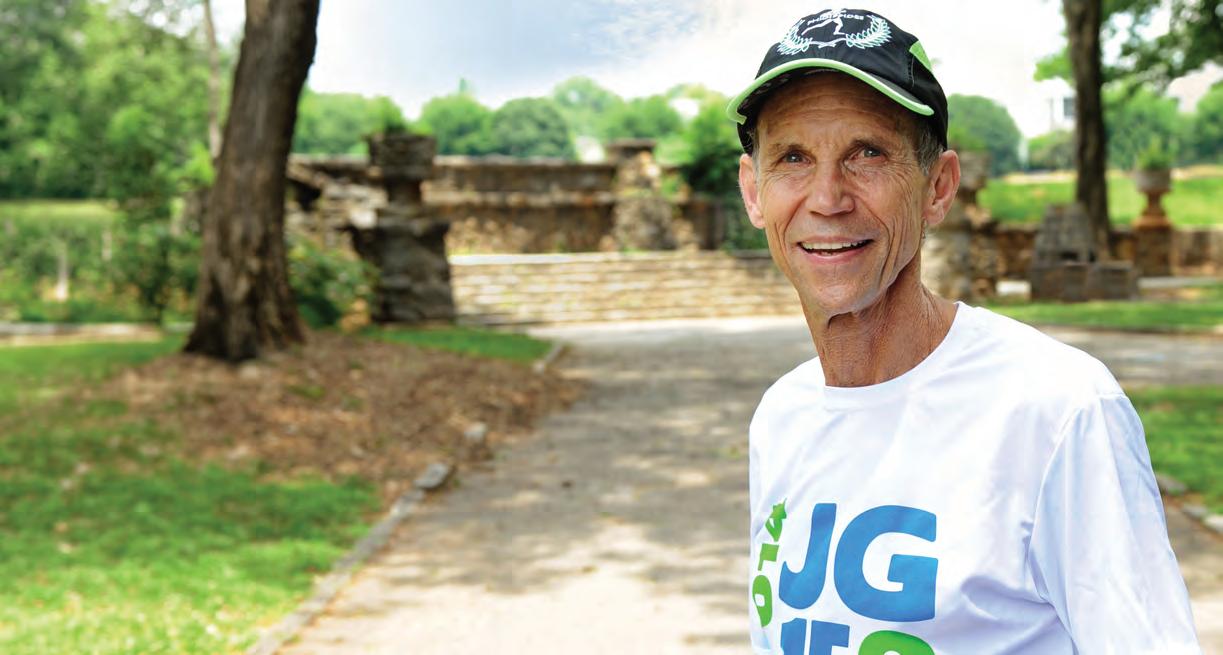
The global running community lost its number one ambassador with the death of Jeff Galloway, 80, last month in Pensacola, Florida, from complications of a recent stroke.
And I lost my favourite training partner. Jeff and I ran together every day for three years as college students at Wesleyan University (Middletown, CT) in the mid 1960s.
Four-time Boston Marathon and New York City Marathon winner Bill Rodgers also ran with Galloway at Wesleyan.
“Jeff was like this powerful southern preacher of running,” he said. “I can’t think of another Olympic runner who downshifted the way Jeff did so he could reach so many average people.”
Galloway was like a ship’s captain–steady, steady, steady. The first time I saw his running log, I was stunned. Whereas I kept my weekly mileage totals in a thin mini-notebook, Jeff kept his in a literal captain’s log—hard covered and big as a coffee-table photo book.
This was a runner who took his workouts seriously and believed they should be duly recorded.
Galloway’s intent and discipline eventually led to an Olympic team berth in 1972 and a marathon PR of 2:16:36.
This is not how he will be remembered, however. Tens of thousands of would-be runners in the U.S. and beyond heard Jeff speak at marathon clinics and small, retail runner gatherings. He had a simple message for them.
You don’t have to aim for the Olympics or a Boston Marathon qualifying time. You can change your life, improving it dramatically, by adopting a run-walk-run approach for your fitness goals.
Don’t measure yourself against others. Just take a few strides forward from where you are today. The mental and physical benefits will soon be apparent to you.
I met many Galloway runners, also called fans of “Jeffing,” at the Honolulu Marathon in December. He was supposed to be there to run a marathon in the eighth consecutive decade of his life. Unfortunately, he suffered a knee injury and couldn’t make the trip.
I have always supported mid-pack runners but hadn’t met a lot at the back of the mid-pack. In Honolulu, I did. At the celebration party many Galloway runners finished in 7 hours, give or take 30 minutes. I expected to hear tales of misery.
That isn’t what I found. Almost all seemed pleased and excited with their day’s efforts. I was particularly struck by one woman in her 70s who had run the entire marathon with a Holter monitor due to her recent heart problems.
The monitor didn’t survive the wind and rain. The runner did. She just kept plugging along even after she realized her heartprotection device had shorted out.
Jeff had that kind of effect on people. He made them believers.
Chris Twiggs, the chief training officer at Galloway Training Programs, remembers a trip to Beijing, China, with Galloway. “Jeff was celebrated as a hero there,” Twiggs said. “All the runners wore shirts with Jeff’s face on them.”
Anyone who ever spoke with Jeff recalls the Galloway stare that it was almost frightening.
“He was fully invested in every conversation. He would spend as much time as possible with every individual, looking straight in their eyes and deep in their soul, listening, and letting them know he believed in them.”
Jeff Galloway was an educator, too. He saw that the emphasis on elite runner performance and training wasn’t helpful to typical recreational runners. So, he also started a new school.
Few if any have called it “The Galloway School of Running” but that’s essentially what it was.
And it graduated more healthy, happy runners than any other running program I have known.
There can be no greater legacy than this.
This article is edited for length and reprinted with permission from Marathon Handbook – www.marathonhandbook.com