The foundation that drives progress.
MuscleRescue delivers all nine essential amino acids plus L-arginine to help promote muscle growth and function, with targeted support after exercise and during recovery. Available in Fruit Punch and Pineapple Punch flavours.
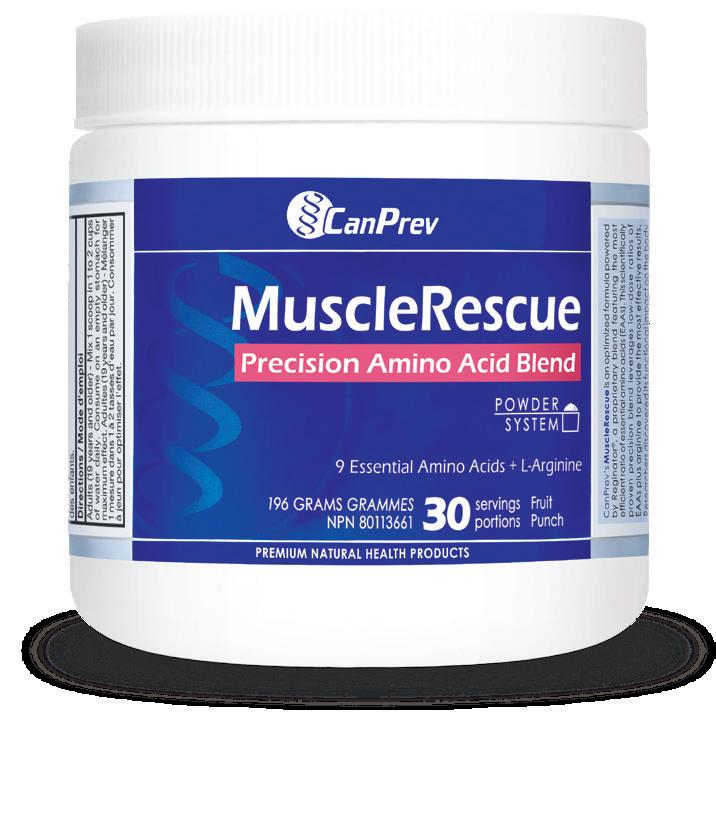

Learn more at musclerescue.ca







VOLUME 35, ISSUE 5
A leader in the industry for 35 years, IMPACT Magazine is committed to publishing content provided by the best experts in their fields for those who aspire to higher levels of health and fitness.
PUBLISHER & EDITOR-IN-CHIEF Elaine Kupser elaine@impactmagazine.ca
GUEST EDITOR Emily Meyer emily.meyer.content@gmail.com
ART DIRECTION & GRAPHIC DESIGN Marc Morin - Impello Inc marc@impello.com
COPY EDITORS Tom Lundteigen
DIGITAL MARKETING & SOCIAL MEDIA MANAGER Maricris Taeza maricris@impactmagazine.ca
ADVERTISING advertising@impactmagazine.ca
LEGAL COUNSEL Gregory Forrest PRINTING TC Printing DISTRIBUTION Media Classified Maple Leaf Distributors
CONTACT IMPACT Magazine Head Office 2007 2nd St. S.W. Calgary, AB T2S 1S4 403.228.0605
SUBSCRIPTIONS
$45 for one year, or $70 for two years (includes GST) impactmagazine.ca/subscriptions
WEBSITE www.impactmagazine.ca
SOCIAL impactmagcanada impactmag impactmag ImpactMagTelevision


The opinions expressed in IMPACT Magazine are the writers’ and not necessarily those of the publication. IMPACT Magazine advises you to consult your physician if you do not follow a regular fitness program. All content is the property of IMPACT Productions Inc. and cannot be reproduced in any form without written consent of IMPACT Productions Inc. © 2026 Impact Productions Inc.

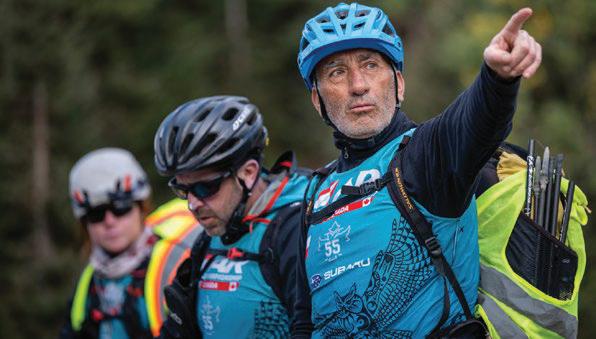
invited to find your way out there
Adventure racing—a sport that combines trekking, mountain biking, paddling, ropes, navigation, and teamwork—is experiencing incredible momentum. Thanks to a new partnership between Subaru Western Region and Expedition Canada, that momentum is about to accelerate.
We’re proud to announce the launch of the Subaru Western Canada Adventure Racing Series, bringing together five unique events that create a clear pathway into one of the world’s most rewarding endurance sports.
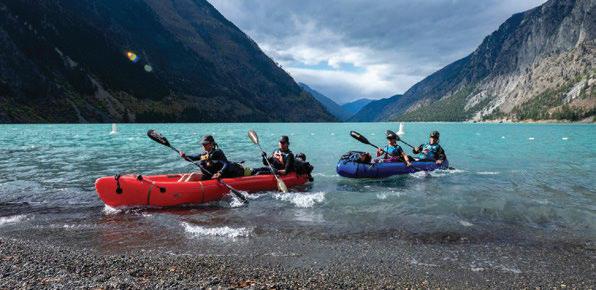
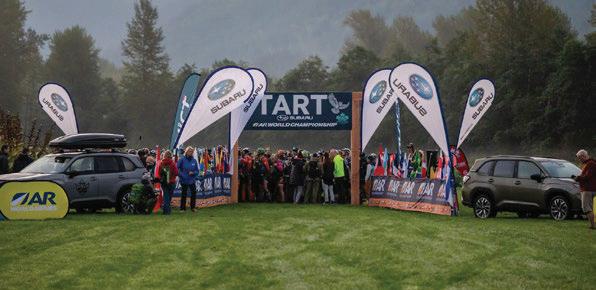
The Series Includes:
• Expedition Canada LITE – Kootenays, British Columbia
• Mind Over Mountain Adventure Race – Comox, British Columbia
• Swamp Donkey Adventure Race – Winnipeg, Manitoba
• Wild in YYC – Calgary, Alberta
• Expedition Canada – Golden, British Columbia
Whether you’re an experienced trail runner, cyclist, paddler, or simply someone looking for a new challenge, adventure racing offers something truly different. It isn’t about individual achievement— it’s about teamwork, strategy, resilience, and exploring incredible places together.
The benefits extend far beyond race day.
Every event introduces athletes and their families to communities they may never have visited, supporting local businesses, tourism operators, accommodations, restaurants, and outdoor recreation throughout Western Canada. Every kilometre travelled strengthens the connection between healthy people, healthy communities, and the wild places that inspire us to get outside.
This partnership also represents something bigger than a race series. It reflects a shared commitment to growing outdoor recreation, encouraging active lifestyles, and making adventure more accessible to Canadians of all experience levels. By investing in the sport, Subaru Western Region is helping create opportunities for new athletes, support for local race organizers, and a stronger future for endurance sport across the country.
Adventure racing has always welcomed people from every endurance background. Trail runners, mountain bikers, paddlers, hikers, rogainers, and adventure seekers all bring unique strengths to the team. If you’ve ever wondered what your next challenge might be, this could be it.
Every great expedition starts with a single step. Whether that’s your first four-hour race or your first expedition across the mountains, there’s now a place for every adventurer to begin. We hope to see you on the start line.

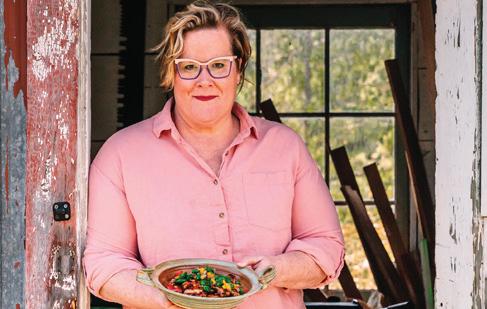
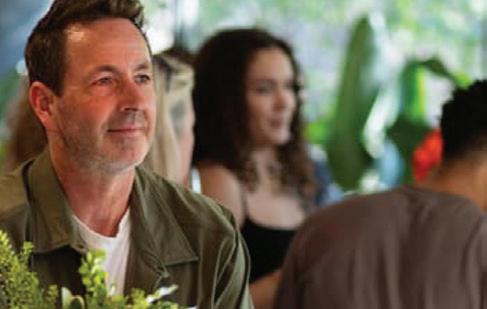


Andrea is a Canadian chef, recipe developer, and bestselling cookbook author from Toronto, ON known for her approachable, flavour-forward cooking style. With over 20 years in the food industry, she has become a familiar face in Canadian media, sharing practical, no-fuss recipes that make home cooking more accessible and enjoyable. Her cookbook The Essential Cottage Cookbook reflects her signature focus on simple, elevated meals inspired by real life and seasonal living.
ANDREABUCKETTCOOKS ANDREABUCKETTCOOKS
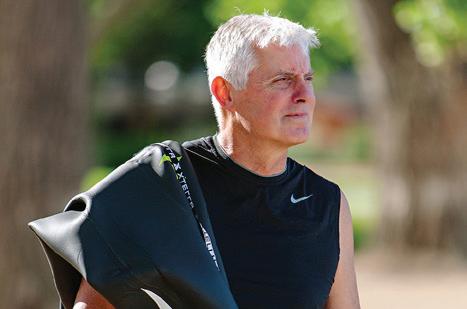
Mark is a retired physician, author, open water swim coach and passionate advocate for water safety based in Kelowna, B.C. After learning to swim as an adult, he became a longtime organizer of the Across the Lake Swim, Canada’s largest and longest-running open water swim.
OPENWATERSWIMBOOK
Ron is the editorial director of Get Out There and Momentum magazines and a journalist with more than 30 years of experience covering the outdoors, travel, cycling and adventure. A longtime freelance writer, his work has appeared in Sierra, The Globe and Mail, and numerous other Canadian and international publications. Based in Toronto, ON he specializes in storytelling that inspires people to explore the outdoors and embrace active living.
RON-JOHNSON | GETOUTTHEREMAGAZINE | INMOMENTUMMAG
Dr. Karrow is an immunotoxicologist and professor at the University of Guelph in Guelph, ON. He is co-founder and chief science officer of ImmunoCeutica Inc., where his research on how natural compounds regulate immune function has produced 249+ peer-reviewed publications with over 6,200 citations.
IMMUNOCEUTICA | NKARROW
Dr. Nibber is a graduate of the Canadian College of Naturopathic Medicine and registered as a naturopathic doctor in AB. In addition to her clinical and consulting work, she is a medical director and brand educator for Advanced Orthomolecular Research in Calgary, AB, engaging with international research in the naturopathic field and is a published health expert in over 25 international publications.
AORHEALTH AORHEALTH
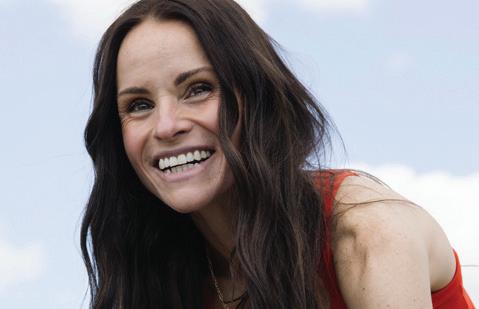
Lynsey is a competitive distance runner, professional run coach, and the founder of Skyline Run Coaching in Calgary, Alberta. She is a sub three-hour marathoner, 1:18 half marathoner, a mom, and has stood on podiums at major road races across Canada.
LYNSEYEROMANO LYNSEY-ROMANO
CONTRIBUTORS Sean Allt, Andrea Buckett, Dr. Syl Corbett, Chantal Menard Côté, Dr. Joel Fuhrman, Mark Fromberg, Dr. Luisa Giles, Dr. Michael Greger, Ron Johnson, Louise Hodgson-Jones, Dr. Niel Karrow, Andrea Katz, Mikaila Kukurudza, Jesse Lane Lee, Amy Mcdonnell, Emily Meyer, Dr. NavNirat Nibber, Jacob Puzey, Heidi Richter, Lynsey Romano, Daniel Salazar, Priyanka Sharma, David Strayer, Jessica Natale Woollard.
PHOTOGRAPHERS Raez Argulla, Newfoundland and Labrador Tourism/Alex Buisse, GouvQc Pierre Carbonneau, Destination Ontario, Sean Evans, Bob Garlick, Tourism Vancouver Island/Ben Giesbrecht, Ashley Graham, Jesse Lane Lee, Jack Madeley, Leigh McAdam, Graham McKerrell, Destination BC/Megan McLellan, Emily Meyer, Jana Miko, Lori Rasmussen, Heidi Richter, Jessa-lynne Robb, Destination BC/Andrew Strain Tourism, New Brunswick, Tourism Nova Scotia.
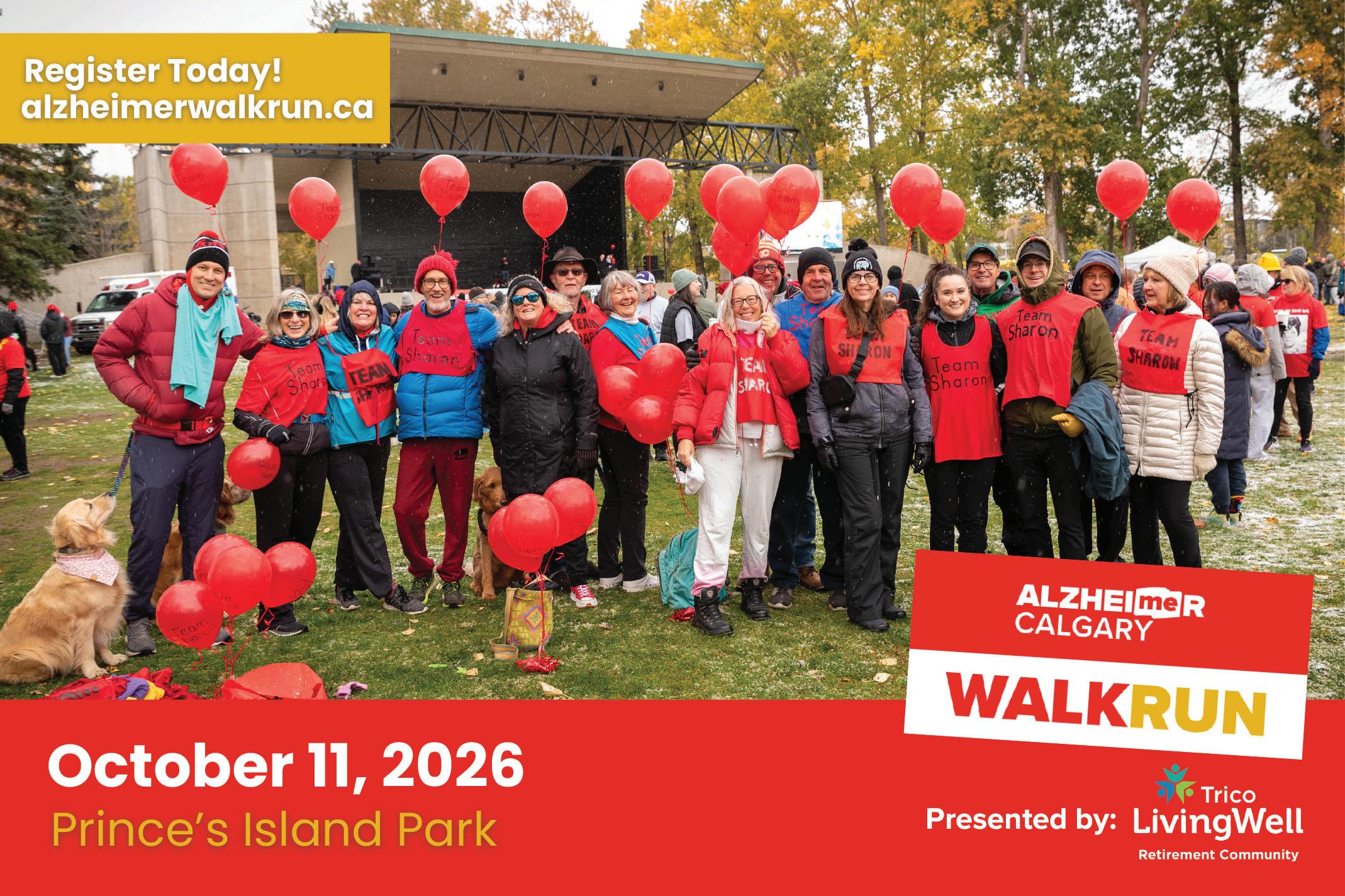
oct 31 – nov 8, 2026
Elaine Kupser, Publisher & Editor-In-Chief elaine@impactmagazine.ca
As Canadians, we know that summer is a season worth celebrating. After what often feels like an endless winter, these warm, long, sun-filled days remind us to get outside, explore, reconnect with nature, and make the most of every opportunity to move, travel, and recharge. We hope you find that inspiration here.
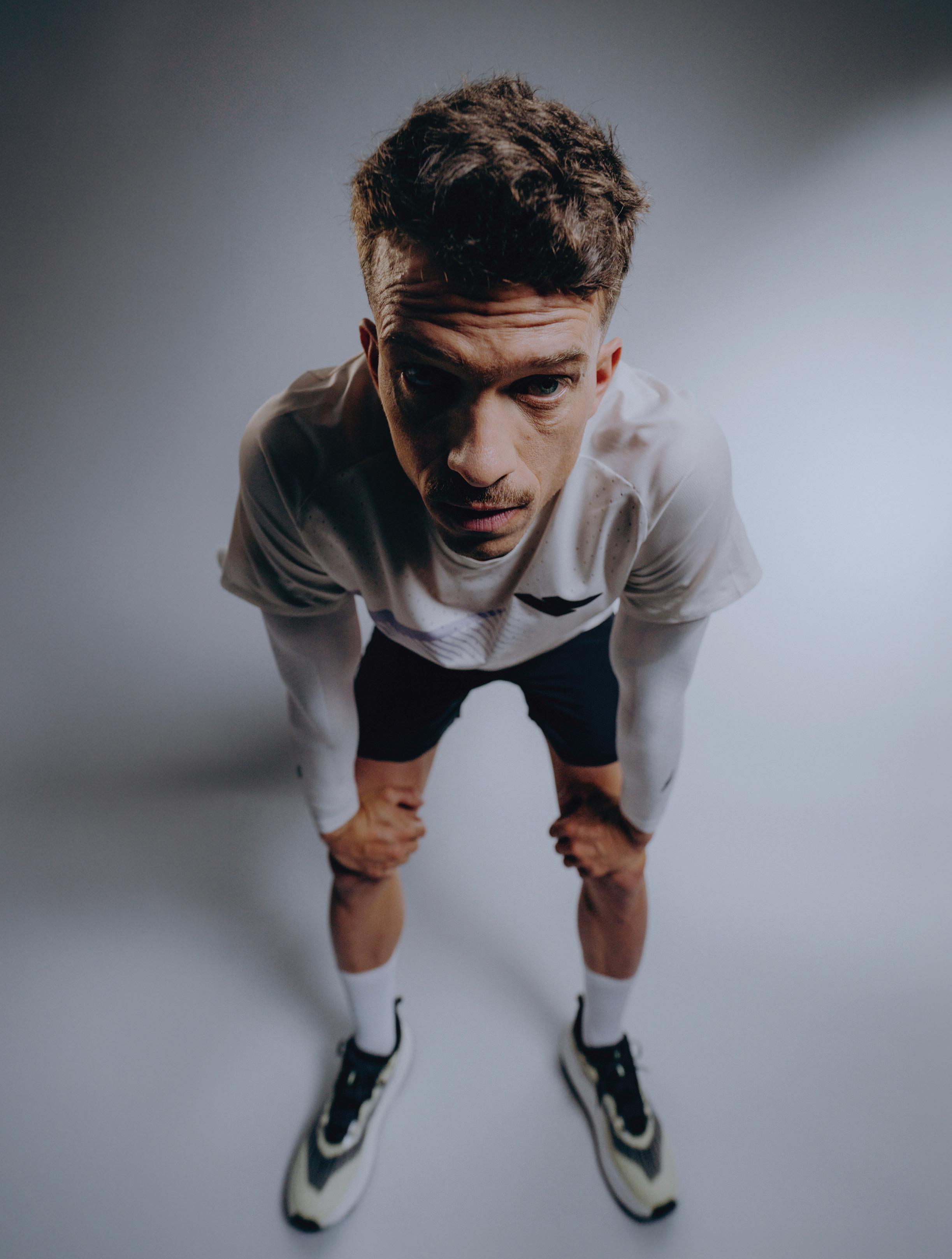
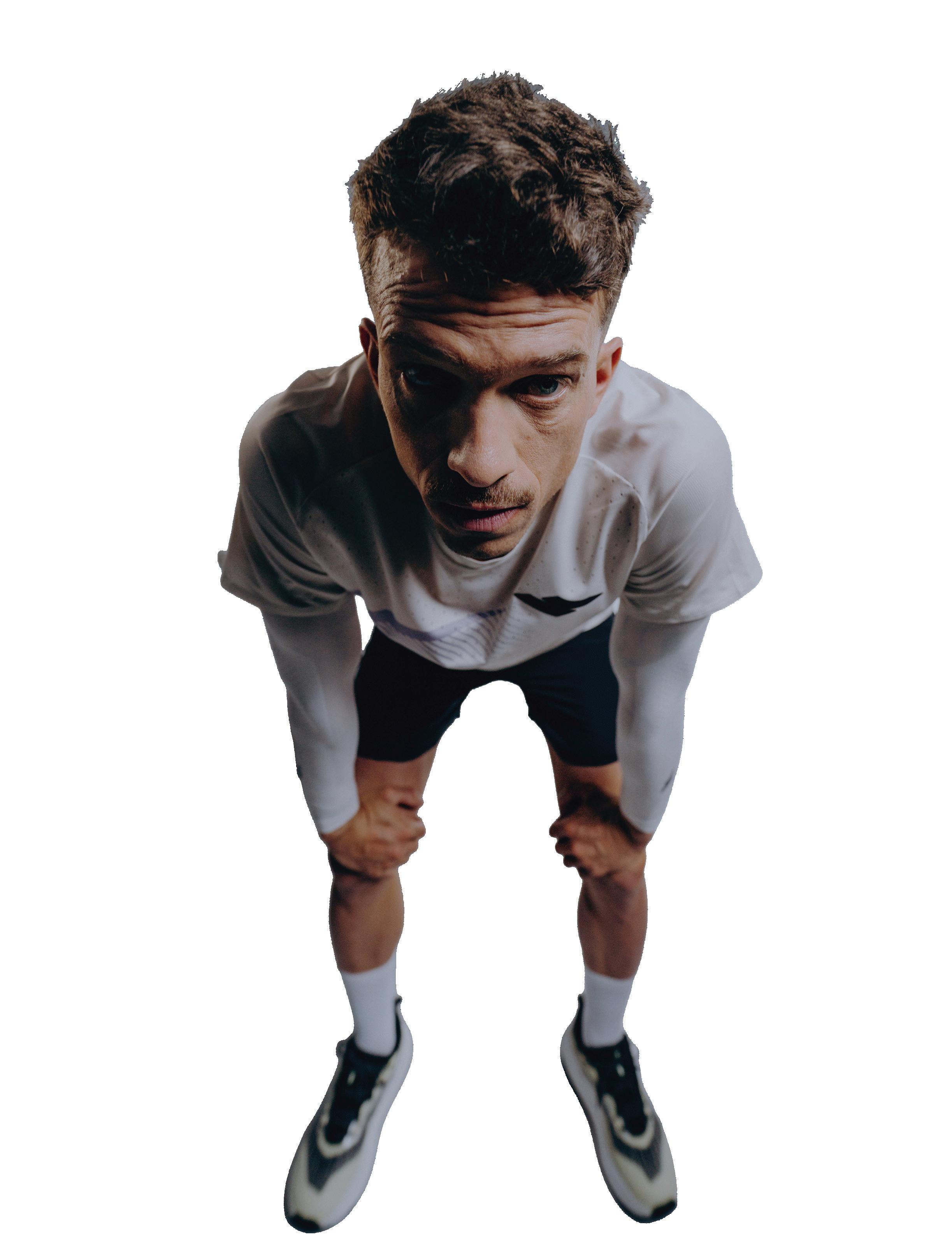
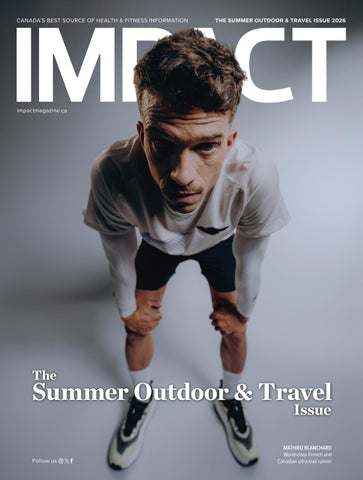
We are honoured to feature Mathieu Blanchard on our cover, a world-renowned ultra-trail athlete whose story goes far beyond the sport. After years as an engineer, Mathieu made the lifechanging decision to trade the certainty of a traditional career for the unknown path of a professional athlete. His story inspires us all to embrace new challenges, pursue our dreams, and discover what’s possible when we step beyond our comfort zone.
While most of us won’t be tackling 100-mile mountain races, we can all embrace our own outdoor adventures. Nature has a powerful way of restoring our energy, clearing our minds, and reconnecting us with what matters most.
In this issue, we share a bucket list of breathtaking hikes across Canada that deserve a spot on your adventure list. With the right nutrition and fitness you can prepare your body for wherever the trail takes you.
Our workouts in this issue feature two of our Canada’s Top Fitness Trainers, fresh off their 2026 award recognition. Priyanka Sharma shares an inspiring yoga workout designed for all levels, while Daniel Salazar delivers a strength workout to help you build power and prepare for race day and beyond.


As always, IMPACT celebrates the inspiring humans who remind us of what is possible, and this issue is no exception. Meet Caroline Drury, whose incredible journey proves that it’s never too late to rewrite your story. During COVID-19, Caroline decided to prioritize her health, swap wine and pizza nights for an active lifestyle, and get into the best shape of her life. That transformation has led her to an extraordinary next chapter: taking on the Great World Race, where she will complete seven marathons across seven continents in just seven days.
You will also meet Kyle Wills in this edition. This year Kyle will be rowing over 4,800 kilometres solo and unsupported in the World’s Toughest Row while raising $250,000 for the Brain Tumour Foundation and SickKids Foundation. His story is also about finding strength through adversity. You’ll learn how Kyle turned to adventure sports including ultramarathon running as a way to support his mental health, and how that journey ultimately led him to seek an even greater challenge, pushing his physical and mental limits in pursuit of something much bigger than himself.
There is so much more inside this issue that you have come to expect from IMPACT. My sincere thanks to all of our expert contributors and advertisers for sharing their knowledge, passion, and expertise with our readers. Their support and contributions are what continue to make IMPACT a trusted resource for living a healthier, more active life.
Next up? Our 35th Anniversary Edition. This is a milestone I am incredibly proud to celebrate. We can’t wait to share this special edition with you as we celebrate the past and honour the people who have been part of our journey.
Celebrate 35 Years with 35 Kilometres
• Join hundreds of runners accross Canada and beyond—on your terms, your schedule, and your pace.
• Run or walk from now until October 18, 2026 to celebrate 35 years of IMPACT with us.
• Participate on your own, as a group, or at an event, and simply log your kilometres.
• Premium Race Kit includes limited edition 35 KM T-shirt, custom finisher’s medal, and shipping.
Register at www.impactmagazine.ca
As Canada’s first national park and one of the world’s oldest, Banff National Park has long been a renowned destination for the beauty of its turquoise lakes, towering Rocky Mountain peaks, and unforgettable alpine scenery.
Located in the national park, just 15 minutes from the town of Banff, Sunshine Village is one of Canada’s most iconic mountain resorts. While celebrated for world-class skiing in winter, summer reveals an entirely different
www.banffsunshinemeadows.com
The journey to Sunshine Meadows is part of the experience. Visitors begin with a 22-minute ride aboard Banff’s largest gondola, an eight-person cabin designed to comfortably carry families and groups up to the Sunshine Meadows village.
The village features the Banff Sunshine Interpretive Centre, where guests can
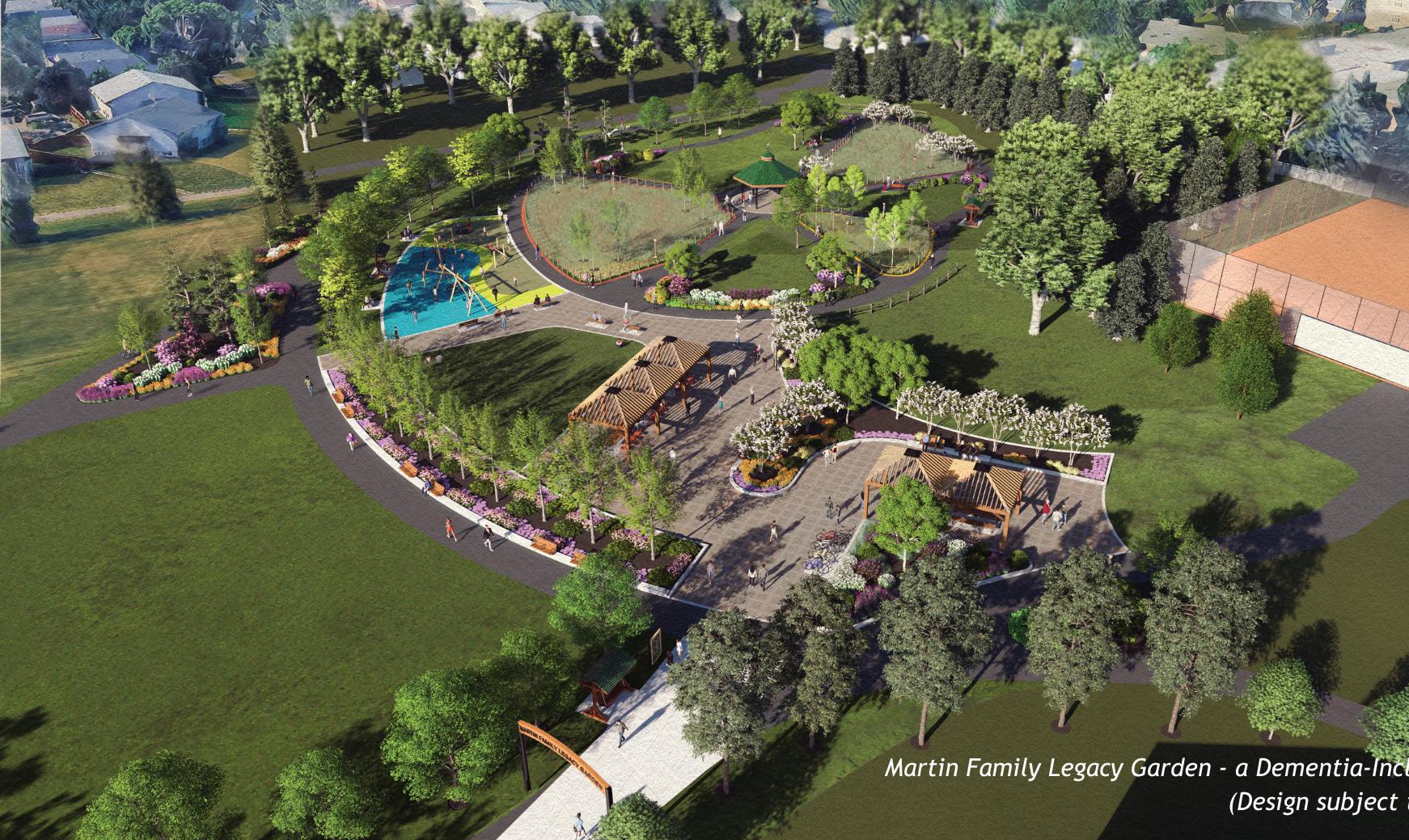
Parks Foundation Calgary is redefining how parks and play spaces serve communities, as the organization leads the development of innovative and inclusive parks that reflect the city’s evolving needs. At the forefront of this work is the Martin Family Legacy Garden—Canada’s first dementia-inclusive park—a pioneering initiative that reimagines green spaces to foster accessibility, healing, and meaningful connection.
Designed alongside healthcare professionals, researchers, community advocates, caregivers, and those with lived experience, the dementia-inclusive park integrates their insights and exceeds traditional accessibility standards. Thoughtful wayfinding features such as recognizable landmarks and colour-coded pathways with continuous handrails help reduce confusion and support independence. Sensory-rich elements, including colour contrast and a variety of plant materials, are intentionally integrated to help stimulate cognitive function. Safety is embedded into the design, using landscape materials as natural containment to ensure users can explore freely while feeling secure.
The Martin Family Legacy Garden is designed to address cognitive differences commonly experienced by those with dementia, welcoming individuals and families often underserved in public space design. With a playground and gathering areas, the park encourages intergenerational connection and reduces isolation. Ultimately, it will serve as a therapeutic sanctuary, one that was brought to life through the shared vision of donors, advocates, and subject-matter experts.
This commitment to inclusion reflects a broader, partnershipdriven vision for Calgary’s parks and open spaces. Across the city, Parks Foundation collaborates with a wide range of partners to bring ambitious projects to life.

Rotary/Mattamy Greenway, which encircles Calgary with 145 km of connected pathways and links into more than 1,000 km of existing regional trails—creating one of the largest urban pathway networks in the world—stands as a testament to this collaborative approach. As it approaches its 10th anniversary in 2027, the Greenway continues to connect communities across the city, supporting active transportation and outdoor recreation at scale.
“Whether you’re seeking connection, recreation, quiet reflection, or simply a beautiful place to spend time outdoors, these remarkable spaces invite every Calgarian to experience firsthand the power of parks designed for everyone.”
Also made possible through the generosity of the Martin Family, opening on August 22 is the Martin Family Pump Track & Skatepark —Calgary’s first combined pump track and skatepark—reflects the power of philanthropy to create dynamic, youth-focused spaces. This project completes the revitalization of George Moss Park, offering a recreation hub of play, connection, and community-building. These projects signal a shift in how parks are imagined - not simply as green spaces, but as essential infrastructure for inclusive, healthy cities. Through innovation, community insight, and the generosity of its partners, Parks Foundation Calgary is setting a new standard: one where everyone belongs.







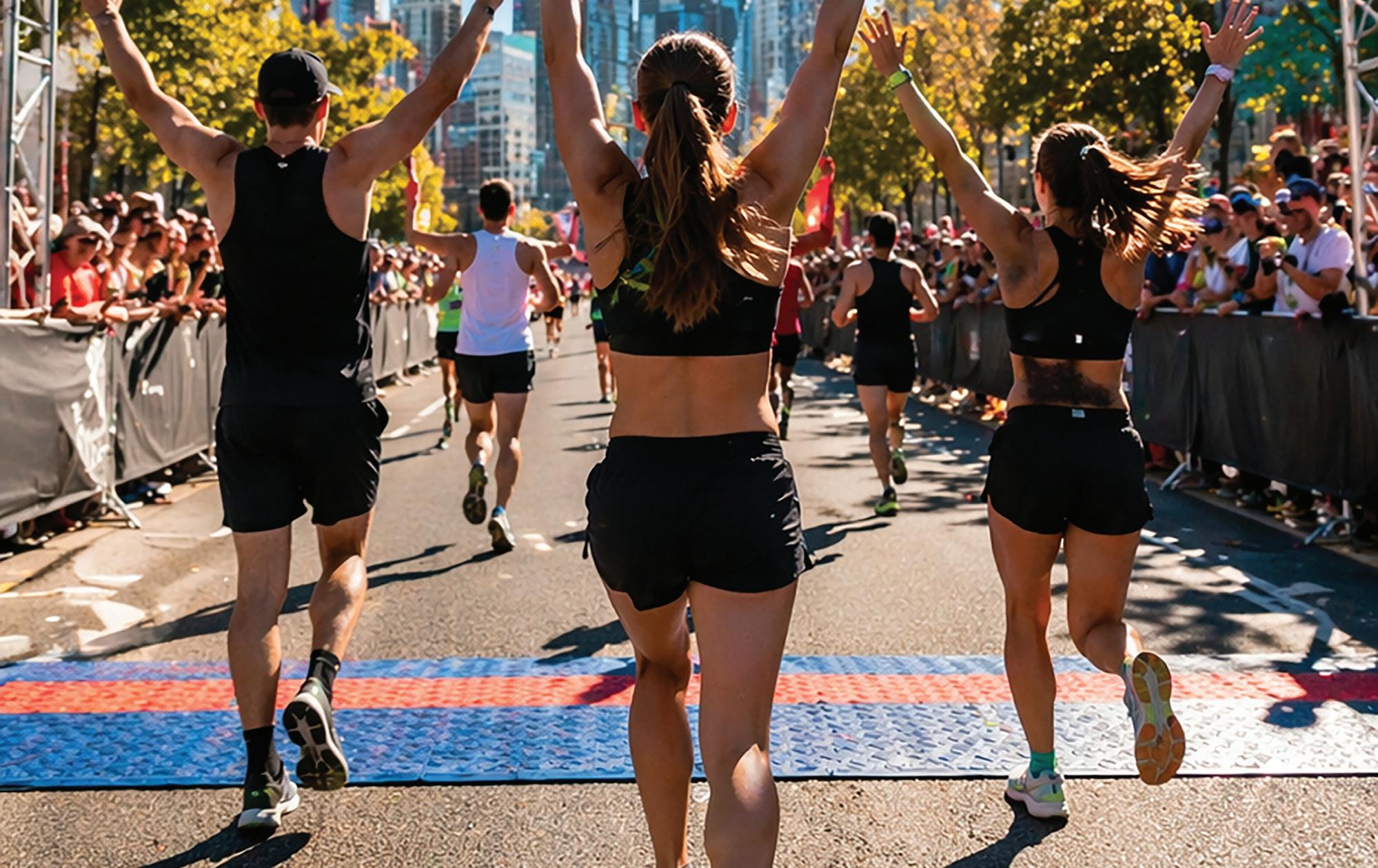
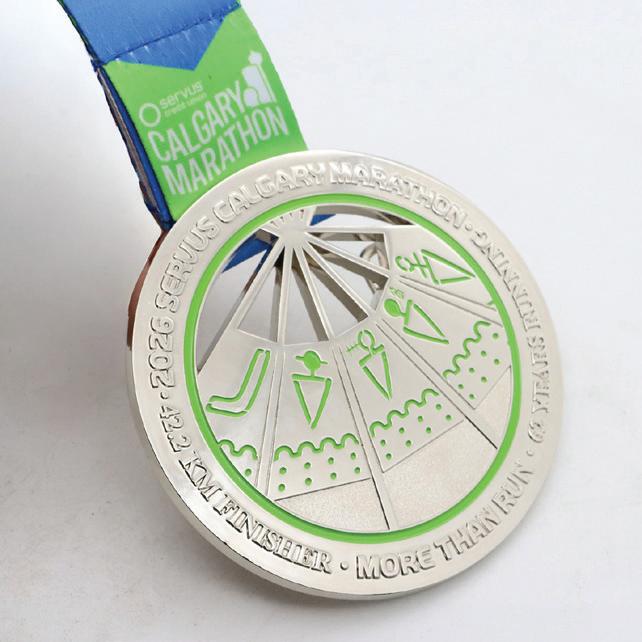
We’ve got your shirts, medals, and swag.
From creative design and custom performance race apparel to finisher medals, awards, and branded merchandise for your expo and event weekend, DNQ partners with races across Canada to help bring events to life. We combine bold design, dependable manufacturing, and hands-on experience to create products that perform, elevate your brand, and leave a lasting impression with participants.
Proudly Canadian-owned and trusted by race organizations for over 10 years, delivering custom design, apparel, medals, and race merchandise that make an impact.
Bring your race vision to life.















For as long as many of us can remember, we’ve been told to put on sunscreen to protect our skin against UV-related skin damage and lower skin cancer risk. Although this remains true, the type of sunscreen we use may also matter.
In a 2020 study by FDA scientists, it was discovered that six main ingredients in chemical sunscreen can be absorbed into the bloodstream at levels that are above the FDA’s proposed threshold, including avobenzone, octocrylene, homosalate, octisalate, octonoxate and ecamsule, and oxybenzone.
Now, just because they can be absorbed into the body doesn’t mean they’re unsafe. But more research is required to determine the risk-factor.
By contrast, mineral sunscreens, made with zinc oxide and titanium dioxide, act by sitting on the skin’s surface and reflecting or scattering UV radiationUnder the FDA's current sunscreen monograph, these two ingredients are the only active sunscreen ingredients currently classified as Generally Recognized as Safe and Effective (GRASE). As a result, mineralbased formulations are increasingly viewed as a more stable option while longer-term data on chemical filters continues to evolve.
Get outside and enjoy the sun this summer—just be sure to reach for the mineral sunscreen first.
Source: Journal of the American Medical Association (JAMA).

The sun is shining. The thermostat is happy. It’s finally time to get outside and get reacquainted with nature. But there’s something wreaking havoc on our outdoor adventures. Ticks.
They’re a growing public health concern across much of Canada, and while risk varies by region, the Public Health Agency of Canada notes established or emerging tick populations in Southern Ontario, Quebec, Manitoba, New Brunswick, Nova Scotia and parts of southern British Columbia.
Although tick presence is higher during the warmer months, they can be found whenever temperatures stay above freezing.
So, what do we do about it? Public health guidance recommends the following after spending time outdoors in grassy or wooded areas:

1. Thinksport Safe Sunscreen SPF 50
2. ATTITUDE Sunly Mineral Sunscreen SPF 50
3. Green Beaver Natural Mineral Sunscreen
4. Rocky Mountain Soap Co. Tinted Mineral Sunscreen
5. Blue Lizard Sensitive Mineral Sunscreen Lotion, SPF 50+
• Wear light-coloured long-sleeved shirts and pants.
• Tuck your shirt into your pants and your pants into your socks.
• Use EPA-approved repellents containing DEET or icaridin.
• Treat clothing with permethrin.
• Walk on clear paths or walkways.
• Do a full-body tick check.
Pets can also carry ticks home, so be sure to check your four-legged pals too.
If you discover you’ve been bitten by a tick, health officials recommend the following:
• Use clean, fine-point tweezers to immediately remove the tick.
• Grasp the tick’s head as close to the skin as possible.
• Slowly pull it straight out. Try not to twist or squeeze the tick.
• Wash the bite area with soap and water or alcoholbased sanitizer.
Early detection is key. In most cases, if caught early, tick-borne diseases such as Lyme can be treated effectively with antibiotics. The risk of Lyme disease increases the longer a tick remains attached, typically after 24 hours or more.
Don’t let ticks ruin your outdoor fun. Be prepared and know what to do if you come in contact with these tiny pests.




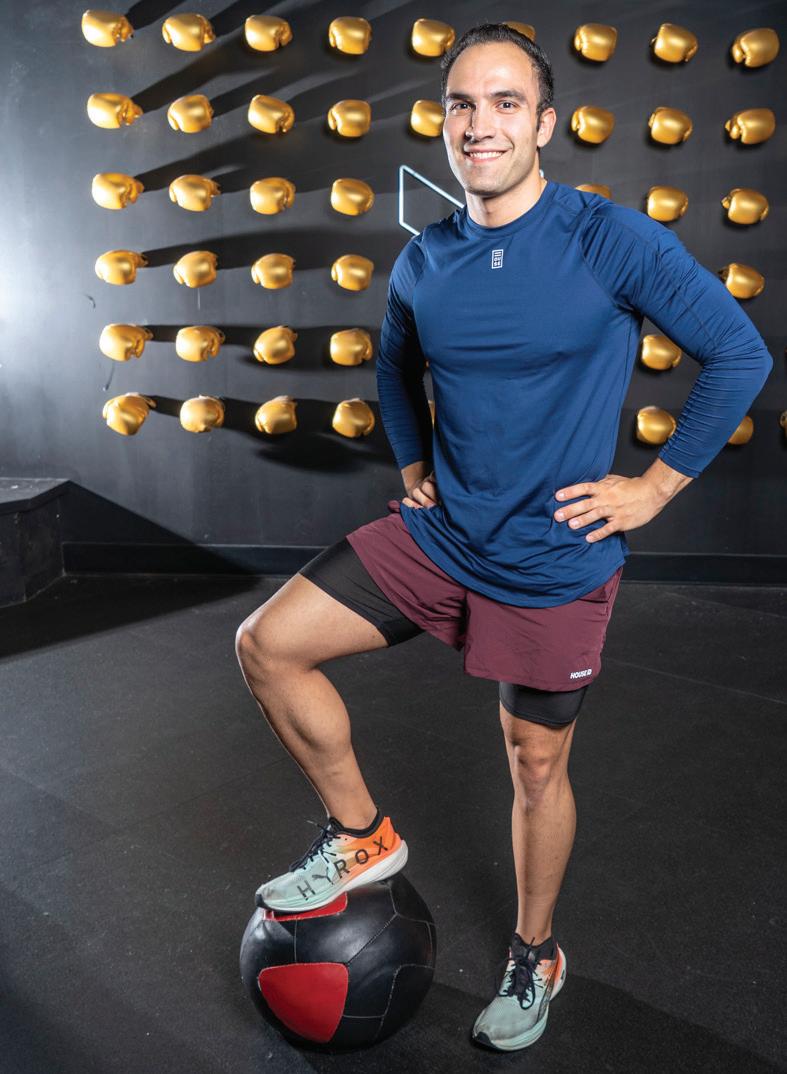
BY DANIEL SALAZAR BOB GARLICK
A kinesiologist, personal trainer, and competitive athlete based in Vancouver, B.C. operating out of House Concepts and the Fairmont Pacific Rim. Daniel was a Canada’s Top Fitness Trainer, 2026.
MR.SALAZARLIFTS DANIEL.SALAZAR.9212
LOCATION: HOUSE CONCEPTS, VANCOUVER, BC
Running is a single-leg sport. Every stride demands that your body absorb and redirect force through one leg at a time yet most runners train both legs equally, leaving massive strength gaps that show up as fatigue on the back half of a race or, worse, as injury. This runner-specific strength circuit targets the glutes, hip stabilizers, hamstrings, and core—the exact muscles that control your stride mechanics, protect your knees, and keep your form intact when the kilometres pile up. Whether you're training for your first 5K or chasing a marathon personal best, add this to your weekly routine 2–3 times and you'll run faster, longer, and with far less breakdown. No excuses. The work happens before the race.
Sets, Reps: 3 sets × 10 reps per side
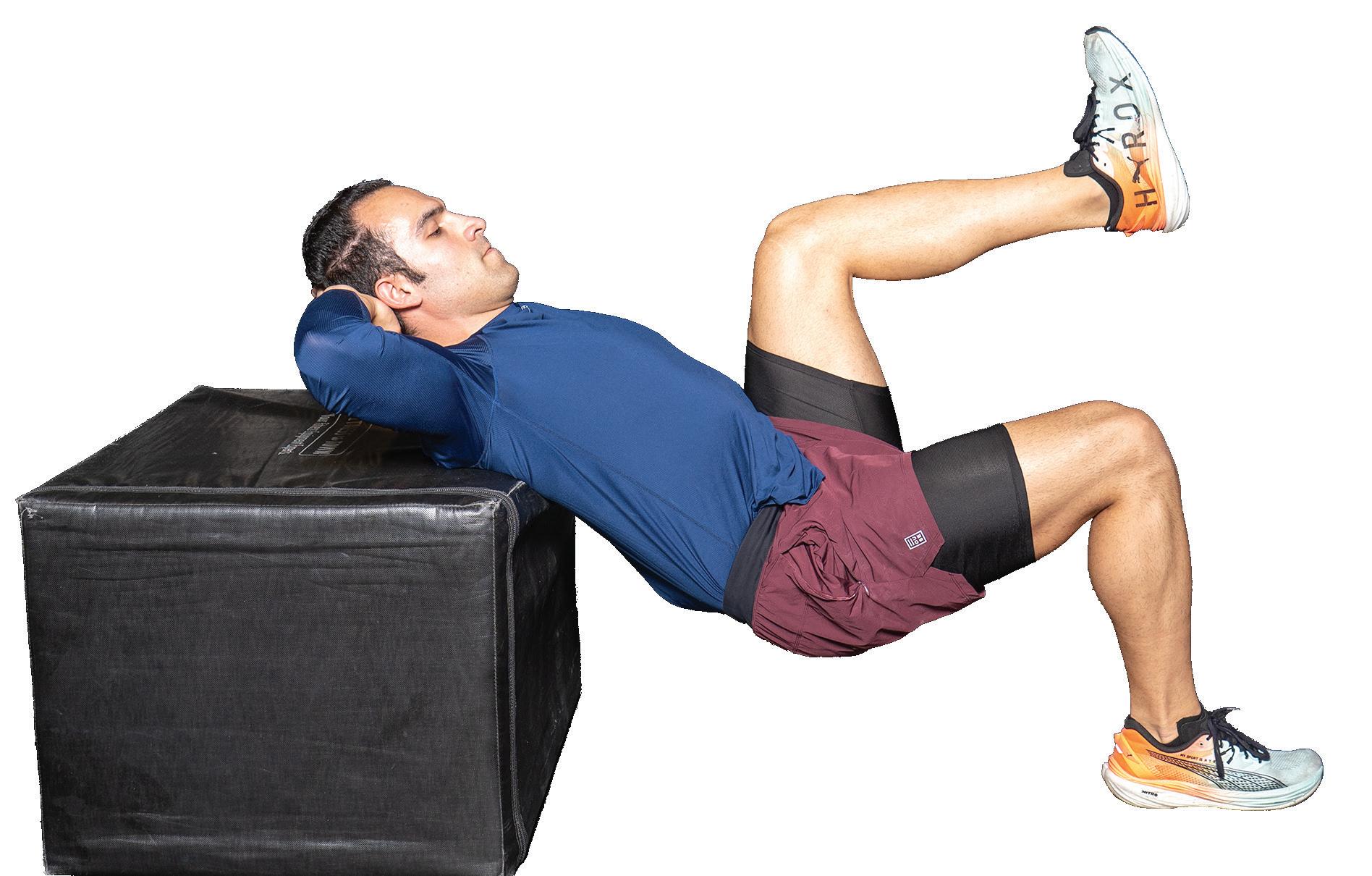
Set your upper back against a bench and plant one foot flat on the floor, extending the other leg straight out. Drive through your planted heel to lift your hips until your body forms a straight line from shoulder to knee. Squeeze the glute hard at the top and lower with control. The glute max is the engine of your running stride—if it's weak, your quads and lower back will compensate, and that's where breakdowns begin.
1. Start: hips low, one leg extended
2. Top position: full hip extension, glute engaged, body in a straight line
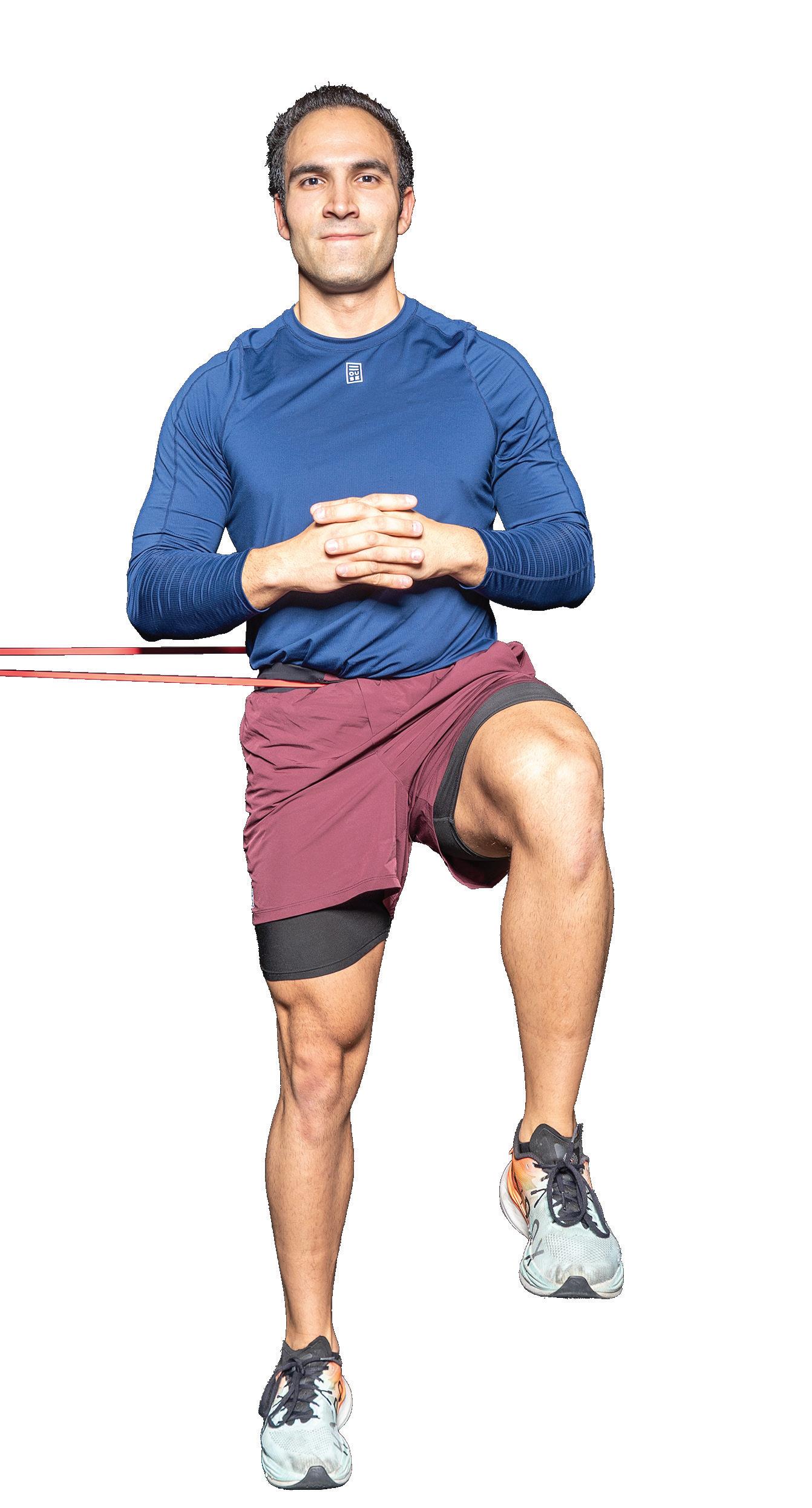
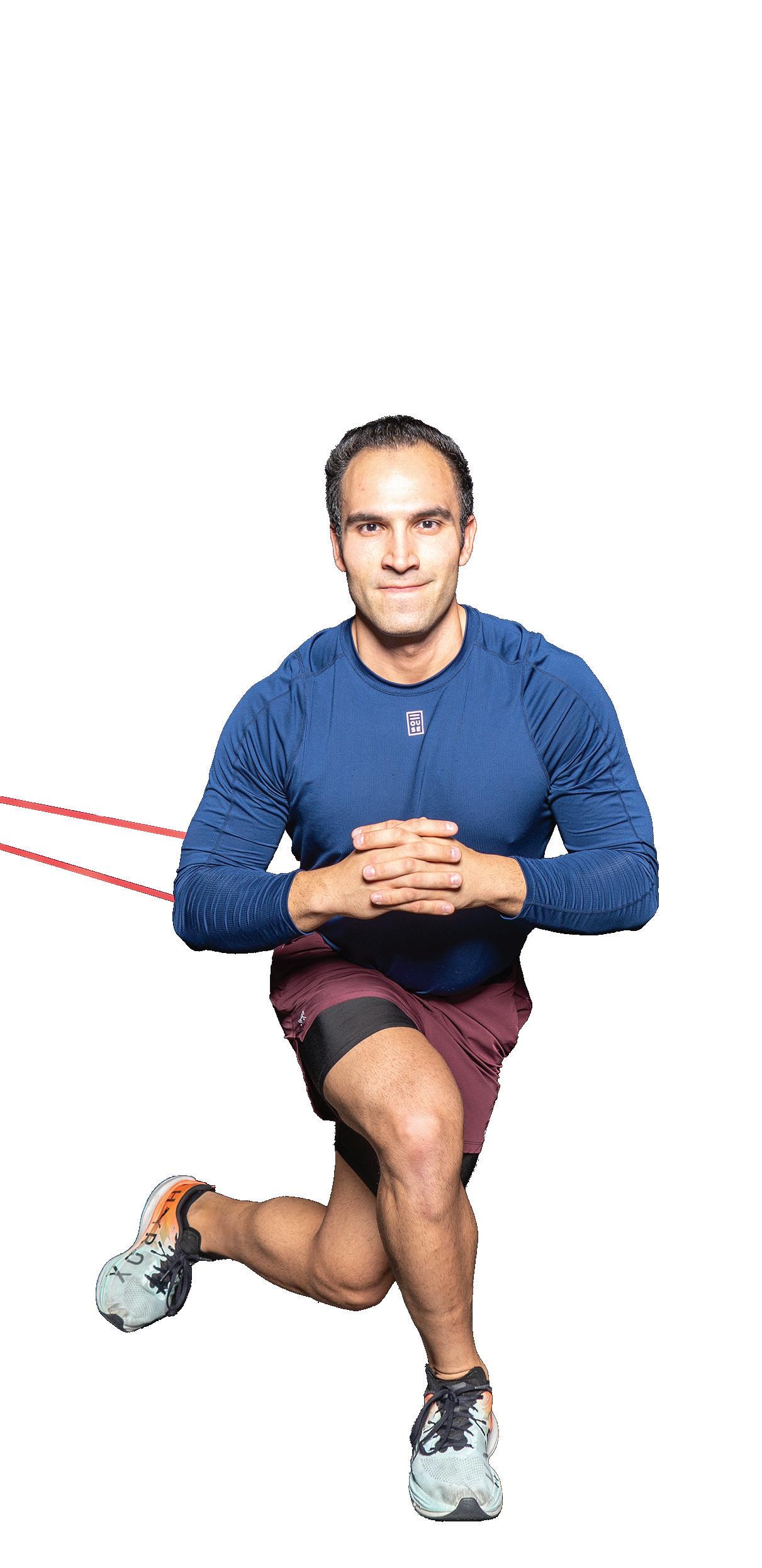
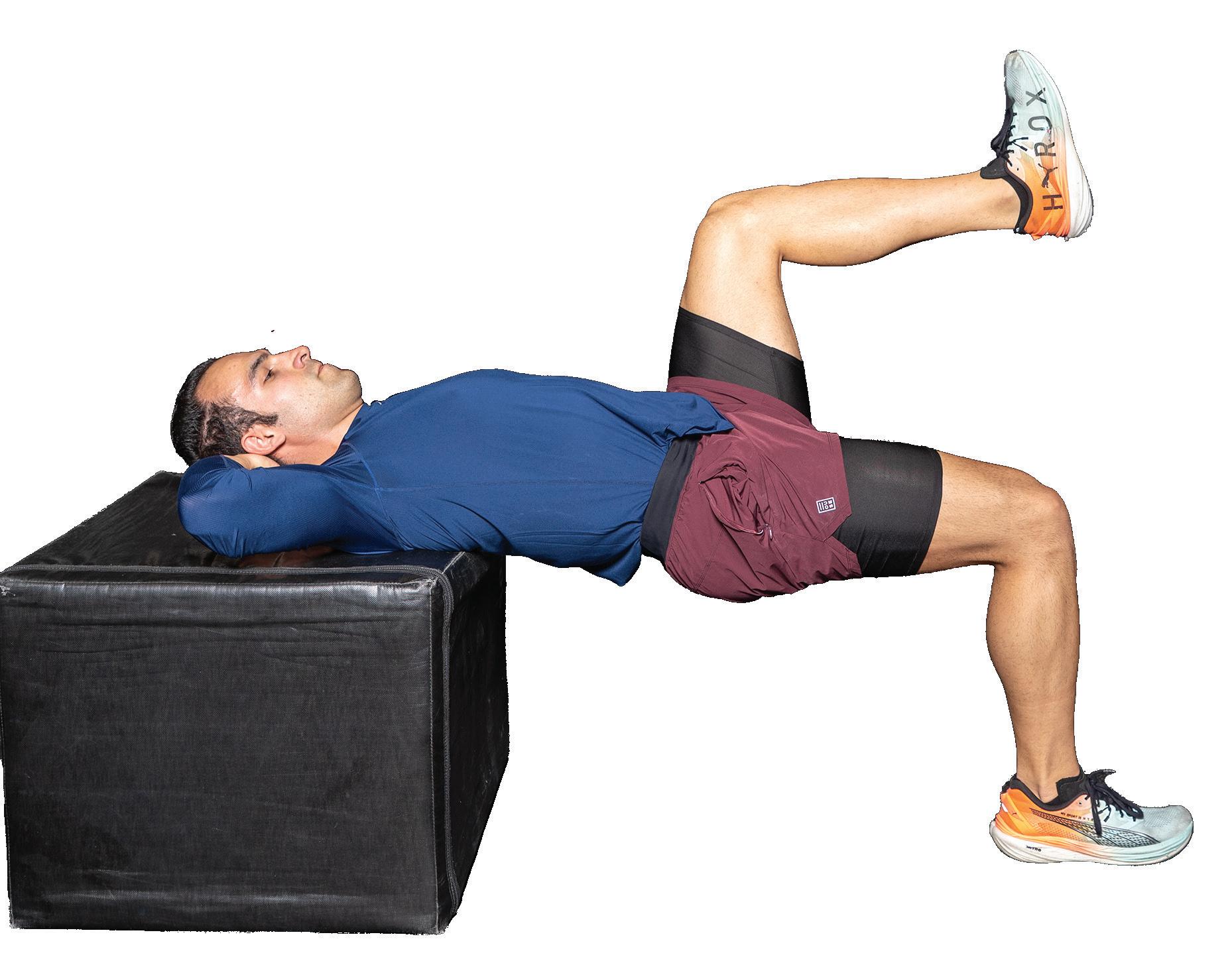
Sets, Reps: 3 sets × 10 reps per side
Place a resistance band just above your knees and take three controlled lateral steps to the right, then step your right foot behind and across into a curtsy lunge, lowering your back knee toward the floor. Return to standing and repeat to the other side. This combo activates the gluteus medius, the hip stabilizer responsible for keeping your pelvis level with every foot strike.
A weak glute med is one of the most common causes of runner's knee and IT band syndrome.
Lateral band walk: wide stance, band under tension
Curtsy lunge: rear leg crossed behind, knees soft and controlled
Sets, Reps: 3 sets × 8 reps per side (3-second descent)
Elevate your rear foot on a bench behind you and lower your front leg into a deep lunge on a slow 3-second count, pausing for a beat at the bottom before driving back up. Keep your torso upright and your front knee tracking over your second toe. The Bulgarian split squat is the closest gym exercise to the single-leg loading of running—the tempo forces your muscles to work under sustained tension, building the quad and glute strength that carries you through the final stretch of any race.
1. Standing start: rear foot elevated, upright posture
2. Bottom of split squat: deep lunge, controlled, 3-second hold
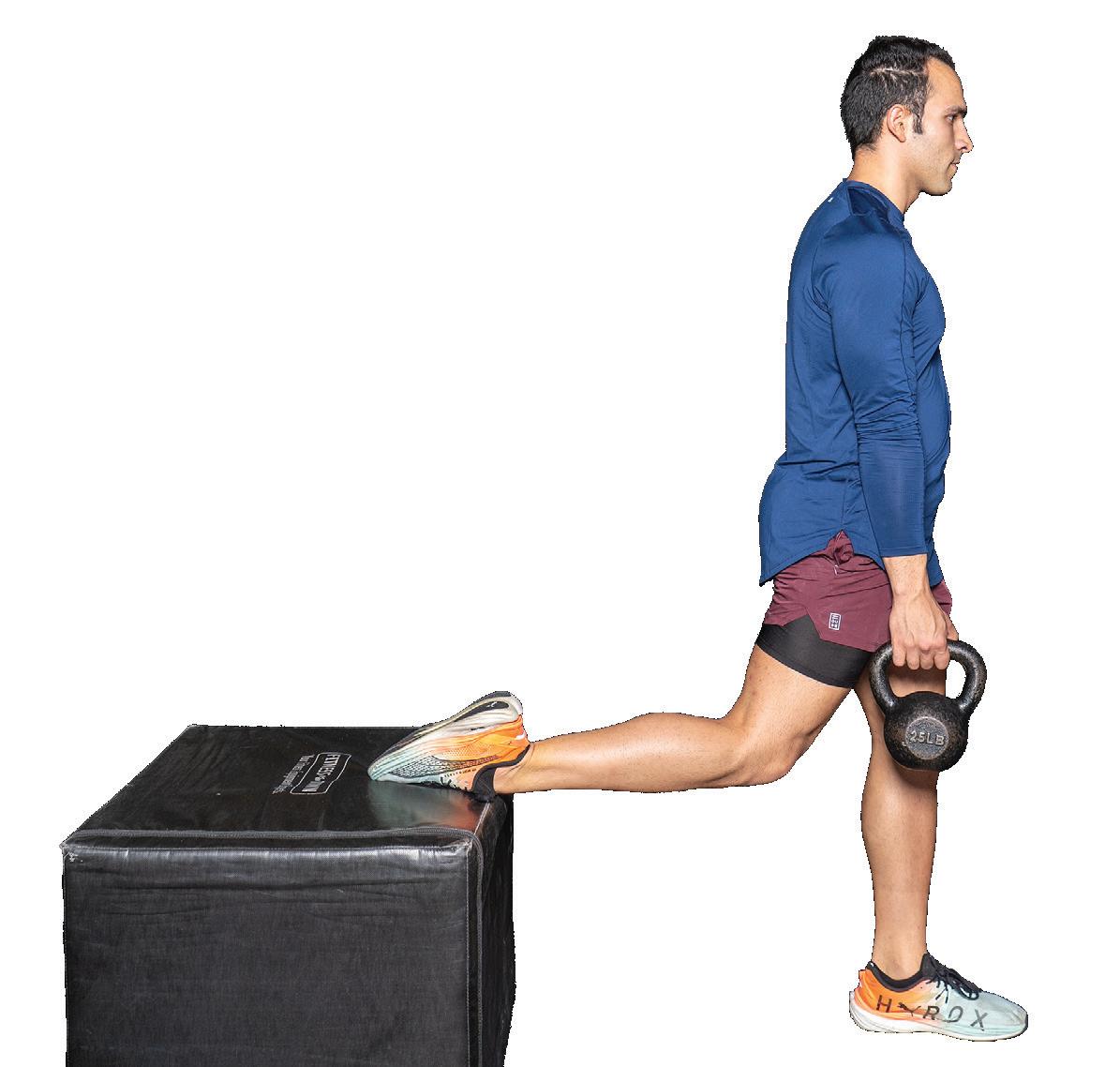
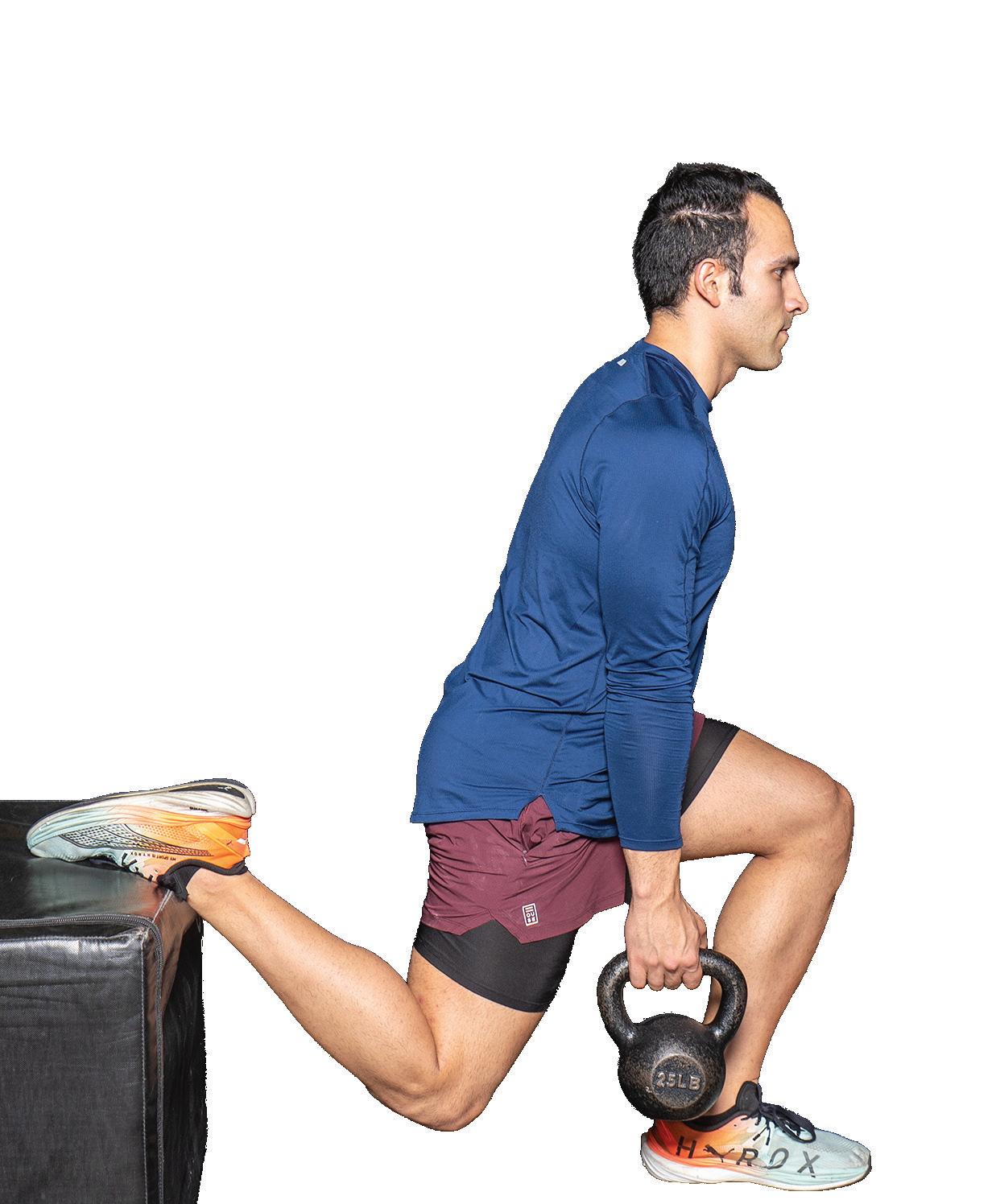
Sets, Reps: 3 sets × 20–30 seconds per side
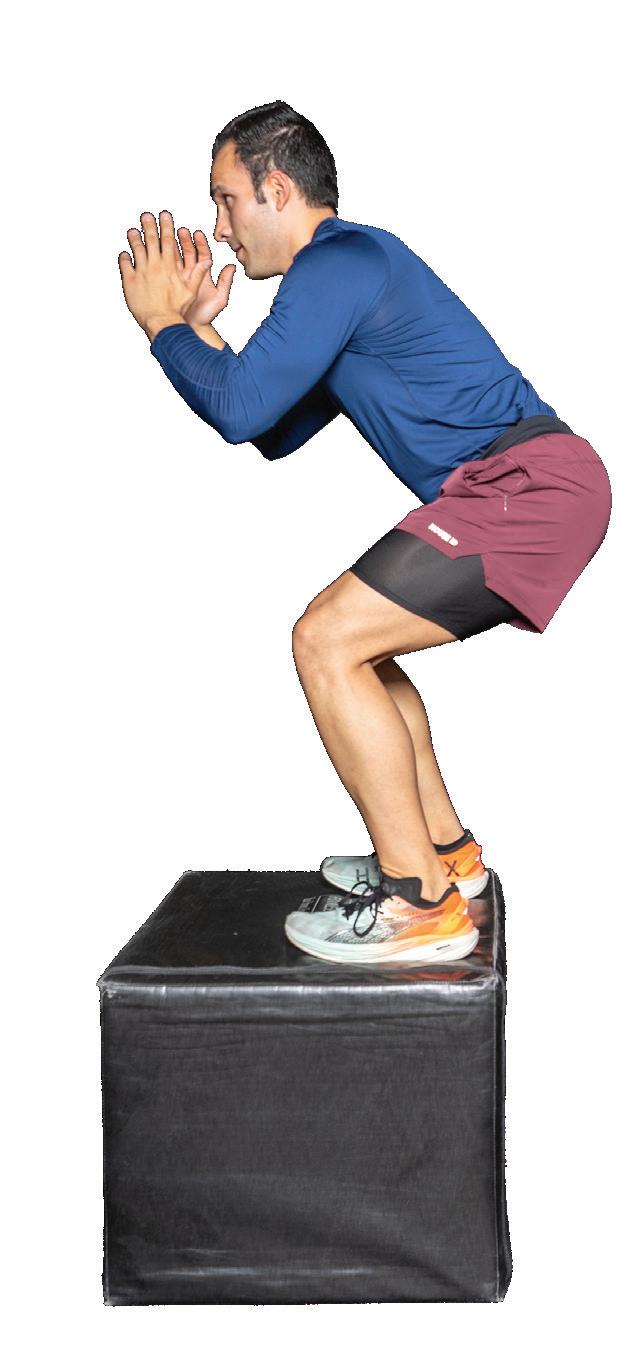
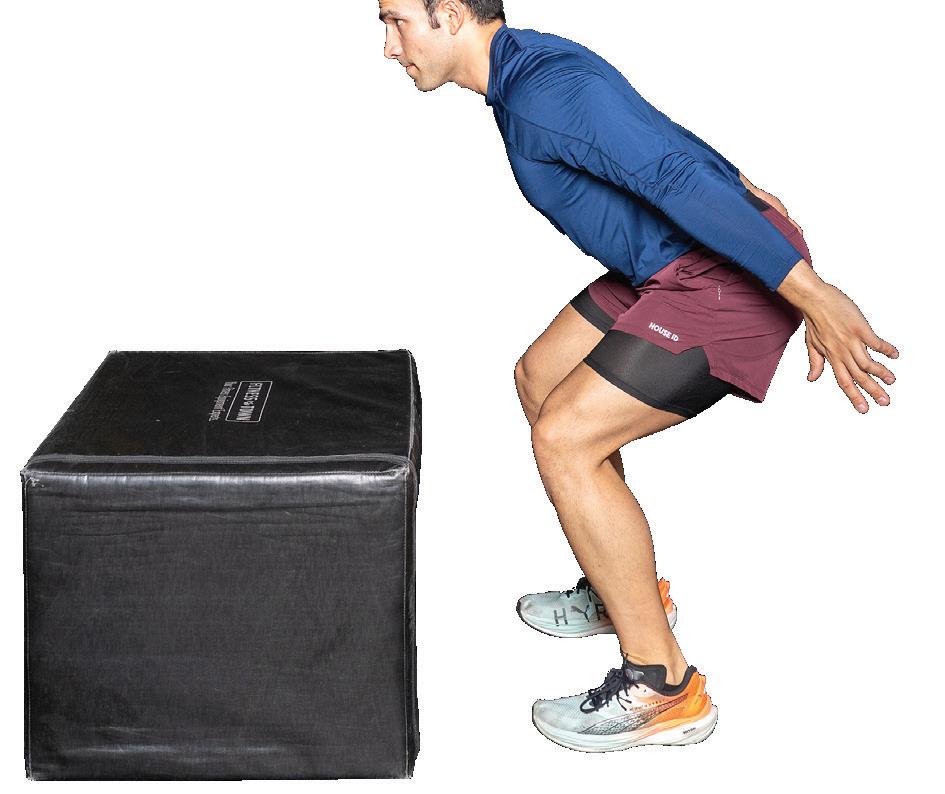
Stand facing a sturdy plyometric box. Drive your arms and jump onto the box, landing softly in a quarter squat with knees tracking out. Pause, then step down one foot at a time with full control—do not jump back down. The explosive jump builds the reactive power and tendon stiffness that makes you faster off the ground; the controlled step-down trains the eccentric braking strength that protects your joints on downhills and repeated impact.
1. Jump: full extension at takeoff, arms driving overhead
2. Soft landing on box: quiet, knees bent, athletic position 3 4 4
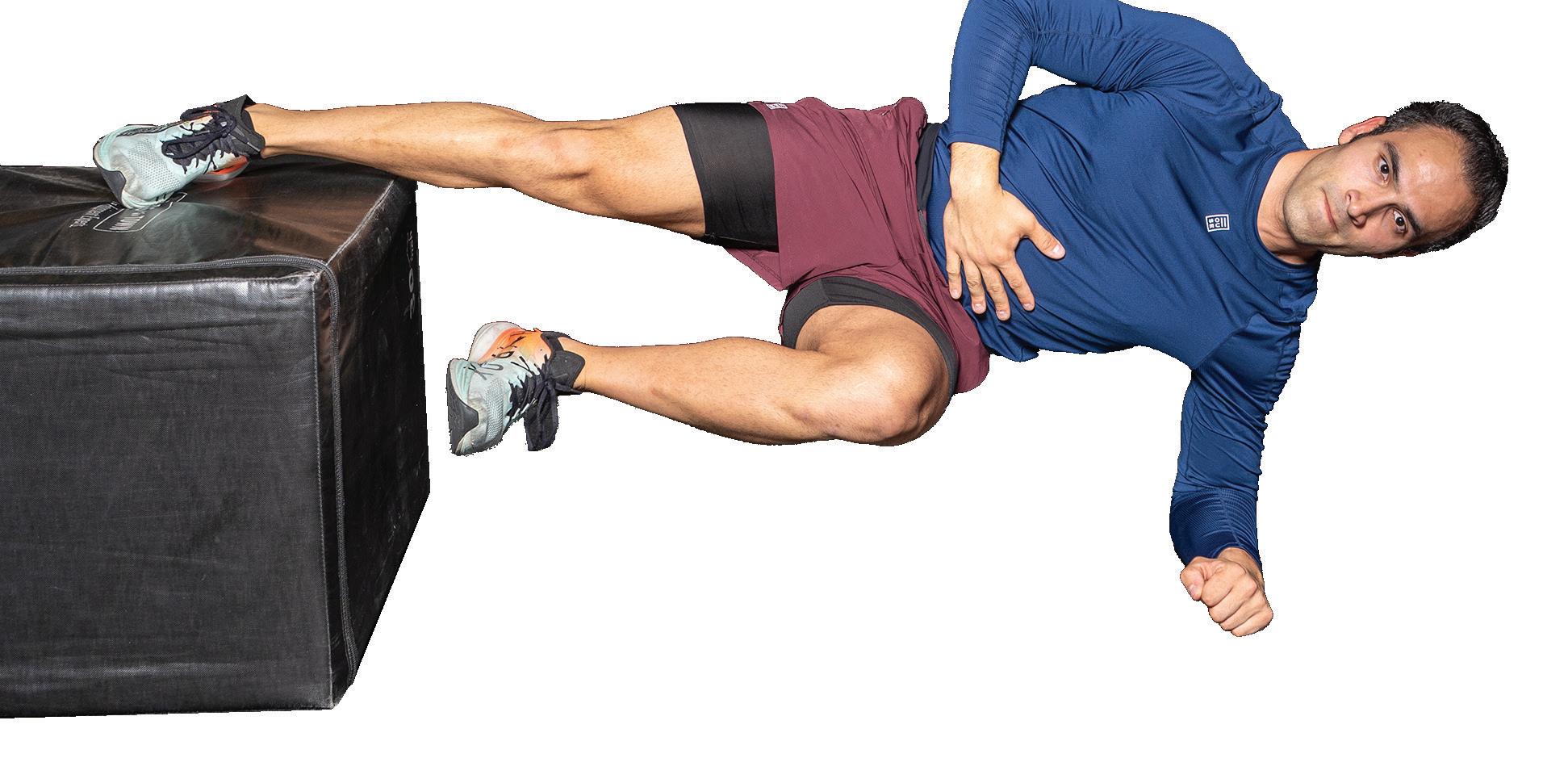
Sets, Reps: 3 sets × 20–30 seconds per side
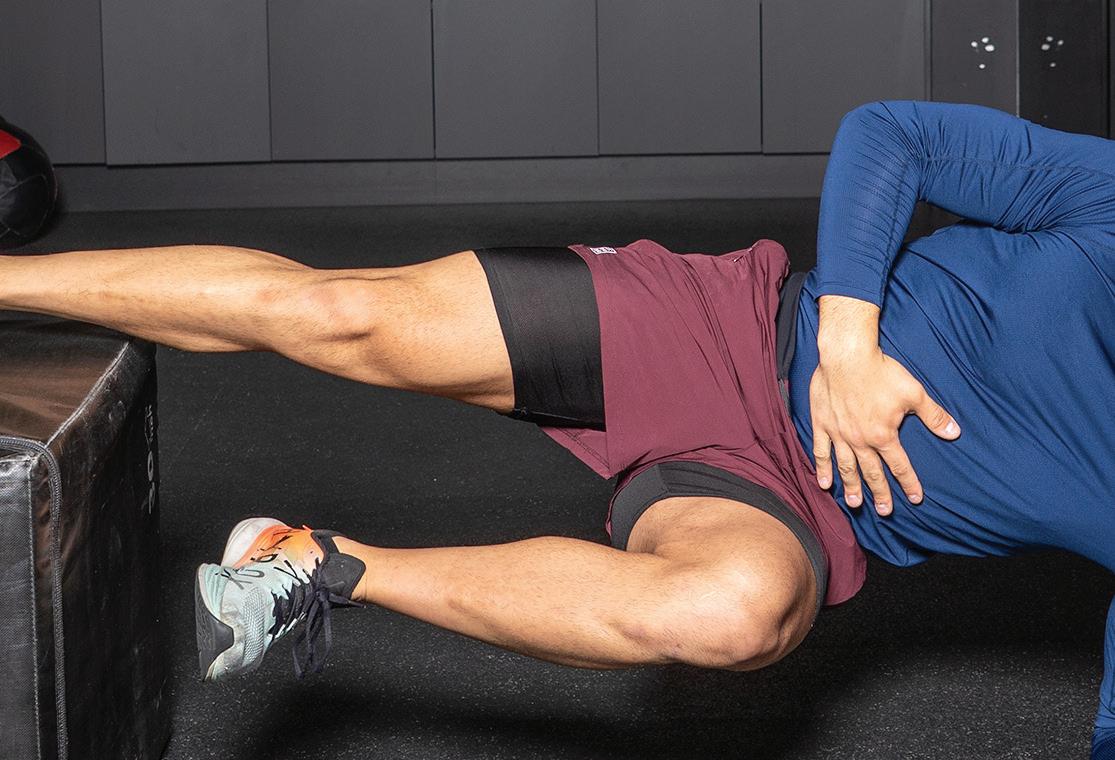
Set up side-on to a bench and place your top foot on the bench, stacking your bottom leg beneath it or hovering it just off the floor. Lift your hips to create a straight line from head to heel. Hold. This exercise directly targets the hip adductors, the inner thigh muscles almost always neglected in runner training programs. Adductor weakness is a key contributor to groin strains, hip drops, and inefficient lateral movement mechanics.
1. Setup: side plank position, top leg on bench
2. Full hold: hips lifted, body straight, bottom leg raised


A five-pose yoga flow to build strength, improve flexibility, enhance balance, and encourage mindful movement
BY PRIYANKA SHARMA
GRAHAM MCKERRELL
Founder of Yoga with Priyanka in Calgary, AB and an internationally trained yoga teacher who blends traditional yoga with modern movement principles. In 2026, she was recognized as one of Canada's Top Fitness Trainers.
YOGA_PRIYANKASHARMA
YOGASHIKSHA
YOGAFITNESSWITHPRIYANKASHARMA
LOCATION: MNP COMMUNITY & SPORTS CENTRE
Yoga is more than improving flexibility. It's about creating strength, stability, and balance from the inside out. This five-pose flow targets the entire body, helping build core strength, improve mobility, and enhance posture through mindful, controlled movement. By combining standing balances, heart-opening backbends, and deep stretches, you’ll increase body awareness while developing confidence both on and off the mat. These exercises also support healthy movement patterns, making everyday activities feel more effortless. Best of all, this sequence can be practiced almost anywhere with little to no equipment, making it an easy addition to your wellness routine.
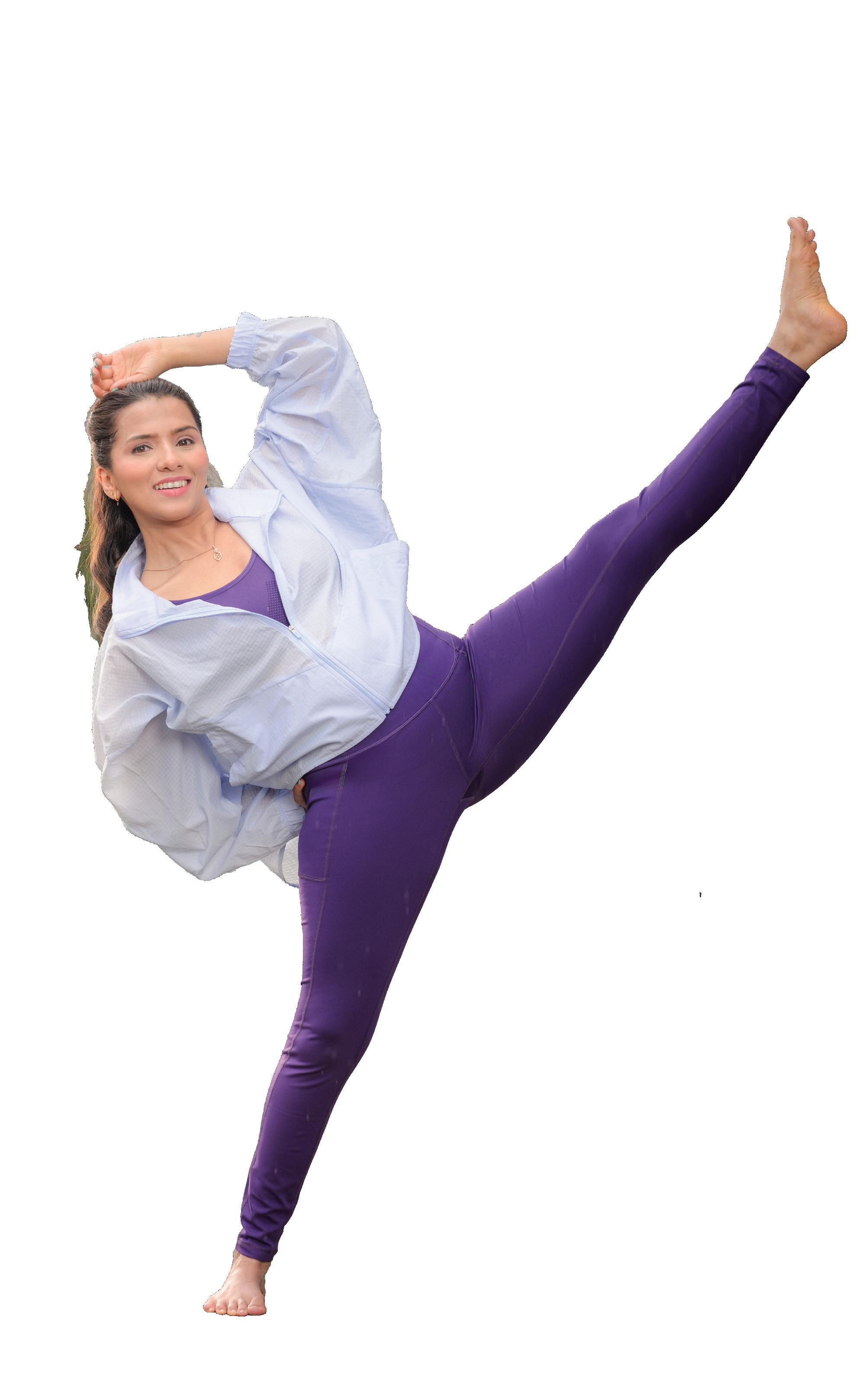
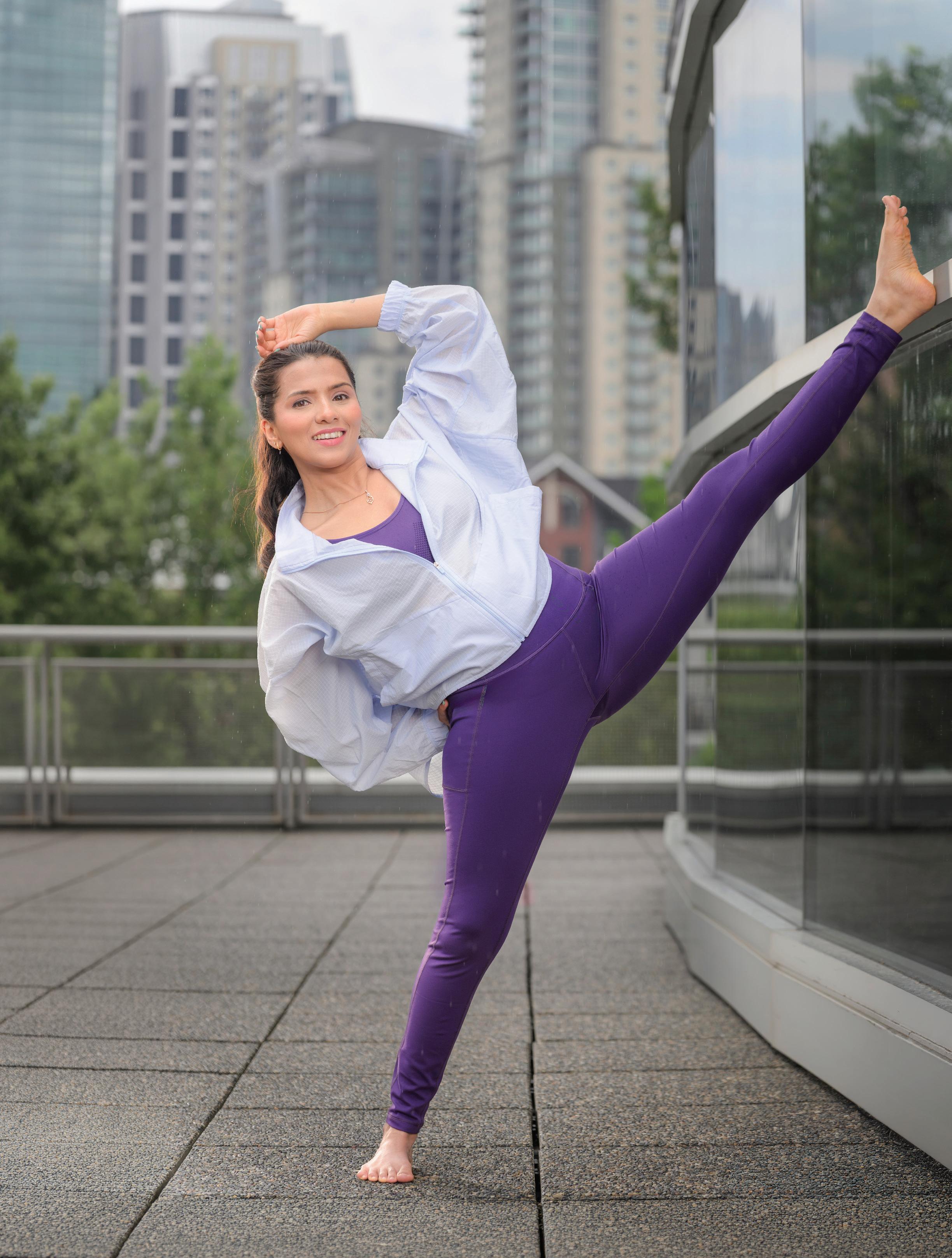
Sets, Reps: 2 sets × Hold for 30–45 seconds per side
A standing balance pose that strengthens the legs and core while improving focus, posture, and stability.
1. Stand tall with your feet together.
2. Shift your weight onto one foot.
3. Place the sole of the opposite foot on your inner calf or inner thigh (avoid the knee).
4. Bring your hands to your heart or extend them overhead.
5. Keep your gaze fixed on one point and breathe steadily.
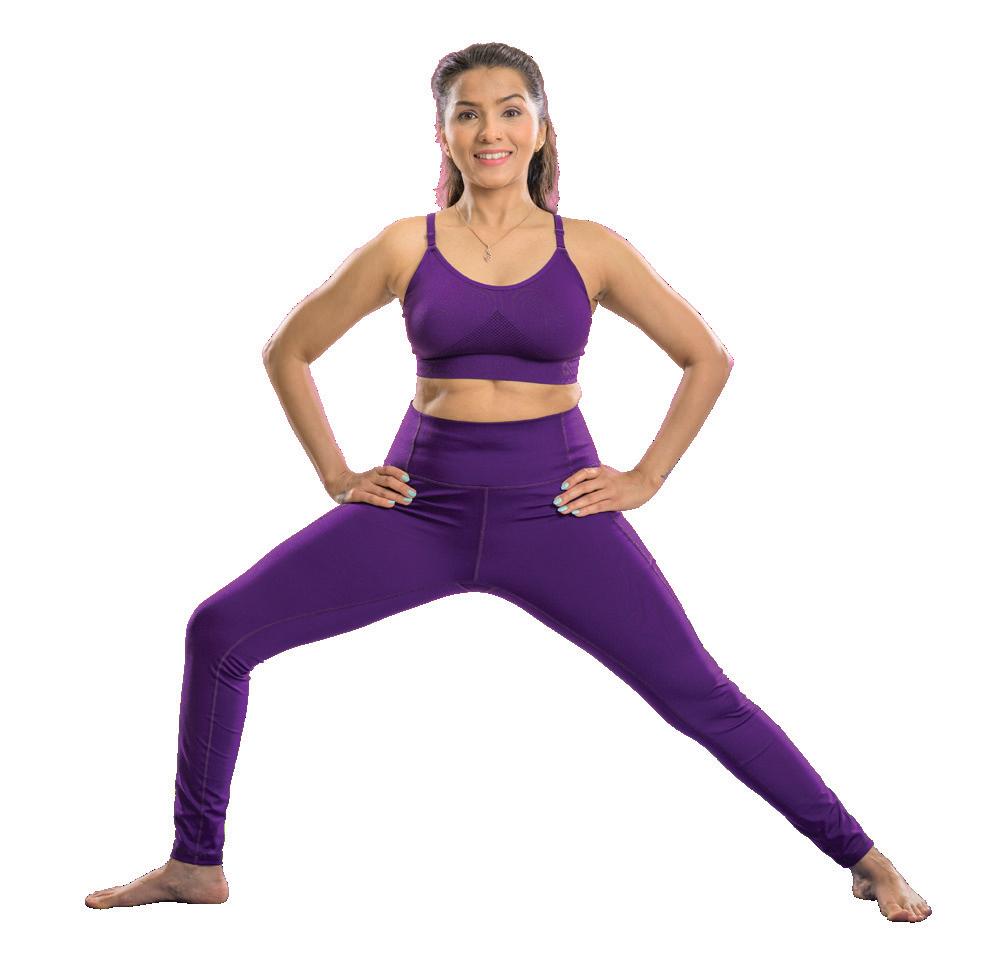





Sets, Reps: 2 sets × Hold for 30–45 seconds per side
A powerful standing pose that builds lower-body strength, improves endurance, and opens the hips and chest.
1. Step your feet wide apart.
2. Turn your front foot forward and your back foot slightly inward.
3. Bend your front knee until it stacks over your ankle.
4. Extend your arms parallel to the floor.
5. Gaze over your front fingertips while keeping your shoulders relaxed
Sets, Reps: 2–3 sets × Hold for 10–20 seconds
An energizing backbend that strengthens the upper and lower body while increasing spinal flexibility and opening the chest.
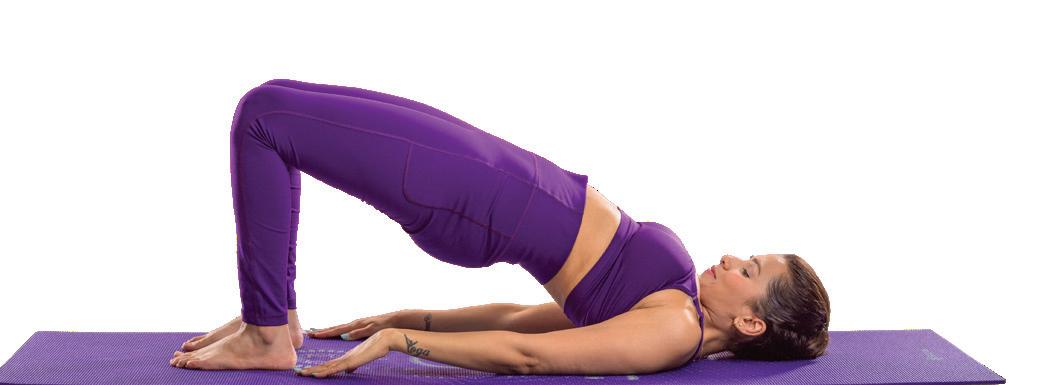
1. Lie on your back with your knees bent and feet hip-width apart.
2. Place your hands beside your ears with your fingertips pointing toward your shoulders.
3. Press into your hands and feet to lift your hips and chest.
4. Straighten your arms as comfortably as you can.
5. Hold with steady breathing, then slowly lower back down.


Sets, Reps: 2 sets × Hold for 20–30 seconds per side
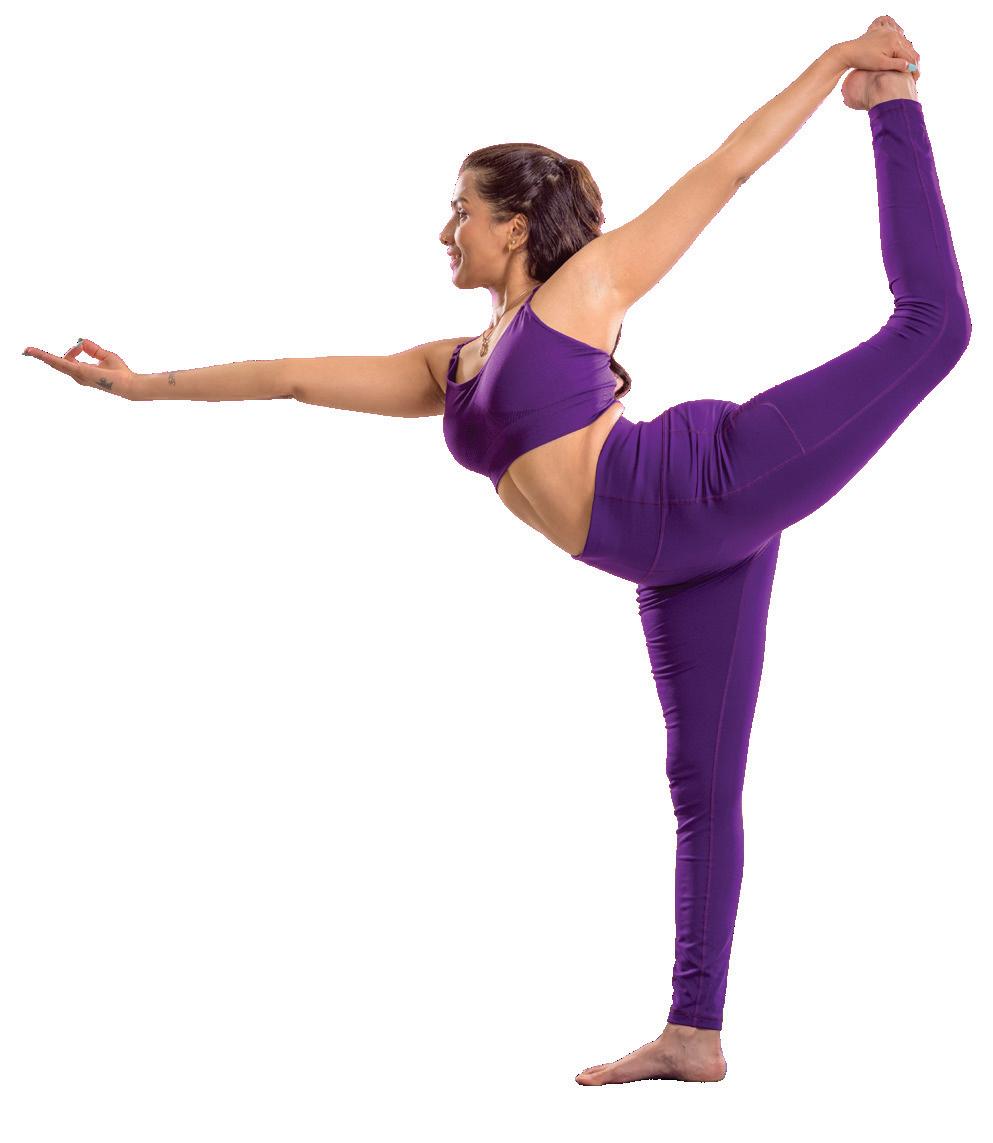
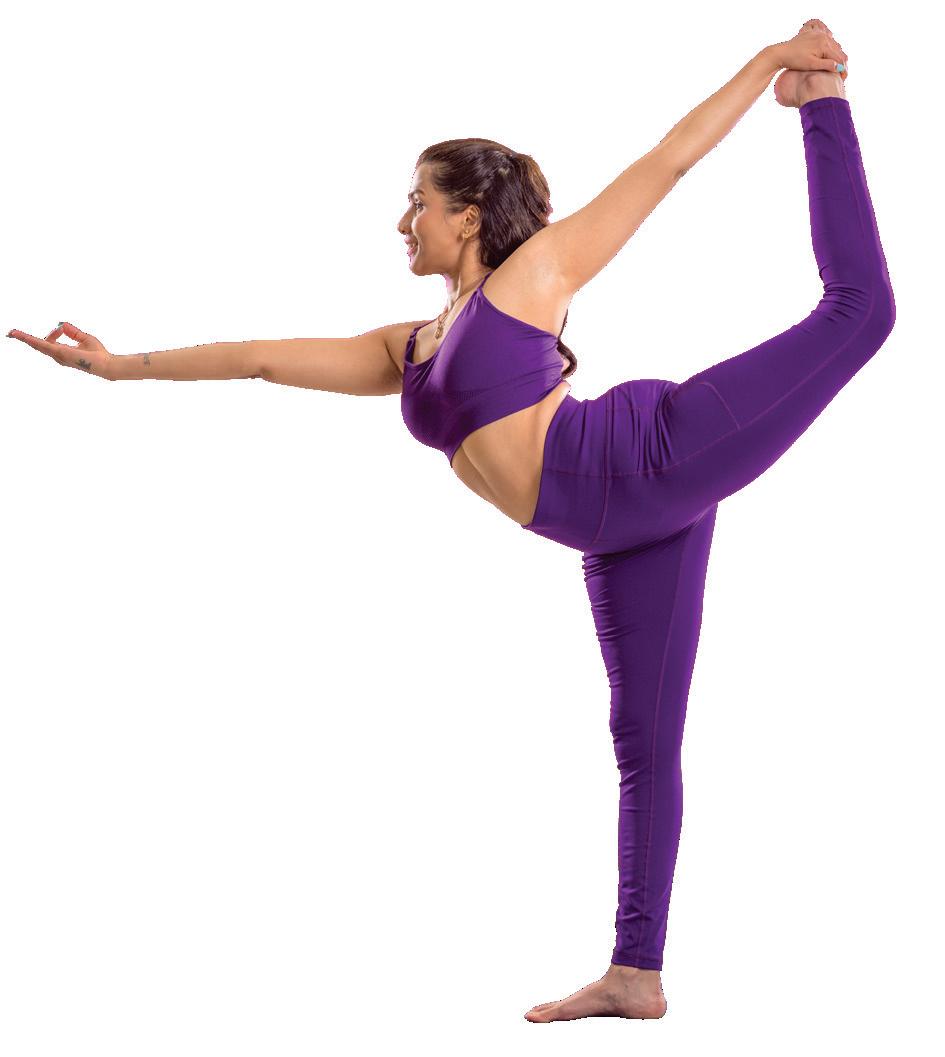
A graceful balancing pose that develops strength, flexibility, focus, and coordination while opening the chest and shoulders.
1. Stand tall in Mountain Pose.
2. Shift your weight onto one foot.
3. Bend the opposite knee and hold the inside of your foot or ankle.
4. Extend your free arm forward.
5. Press your foot into your hand while lifting your chest and maintaining your balance.

Sets, Reps: 2 sets × Hold for 20–30 seconds per side
A deep flexibility pose that stretches the hamstrings, hip flexors, and groin while improving hip mobility and body awareness.
1. Begin in a low lunge.
2. Slowly straighten your front leg while sliding your heel forward.
3. Glide your back leg behind you until you reach a comfortable split.
4. Keep your hips as square as possible.
5. Lift your chest, engage your core, and breathe steadily before carefully coming out of the pose
Description:
A deep flexibility pose that stretches the hamstrings, hip flexors, and groin while improving hip mobility and body awareness.




After finding adventure in the world’s most challenging races, Mathieu Blanchard is inspiring others to chase their own ambitions
BY EMILY MEYER
A Calgary, AB-based freelance writer and IMPACT Magazine guest editor. With a background in journalism and communications, she is passionate about exploring the intersections of fitness, travel and human resilience.
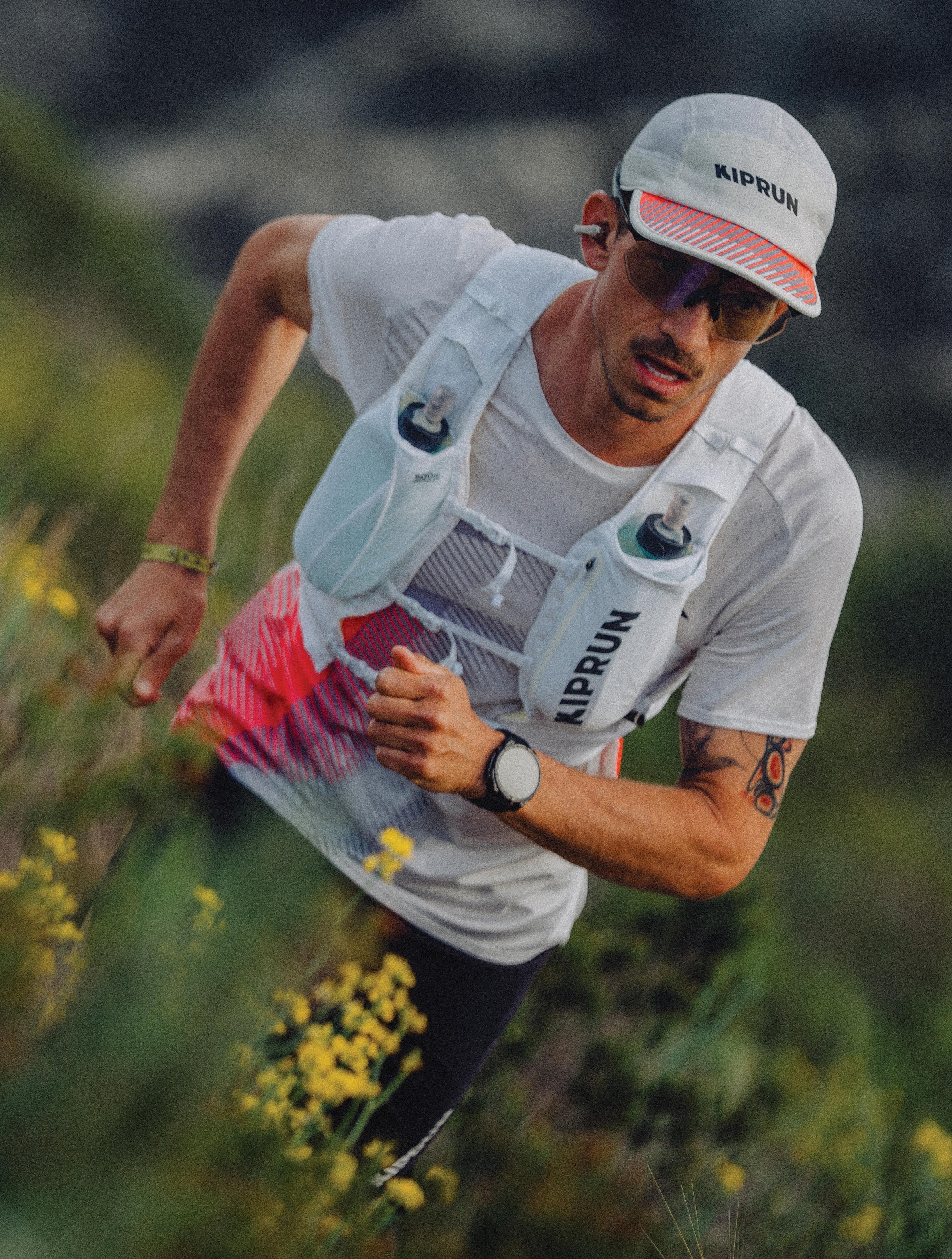
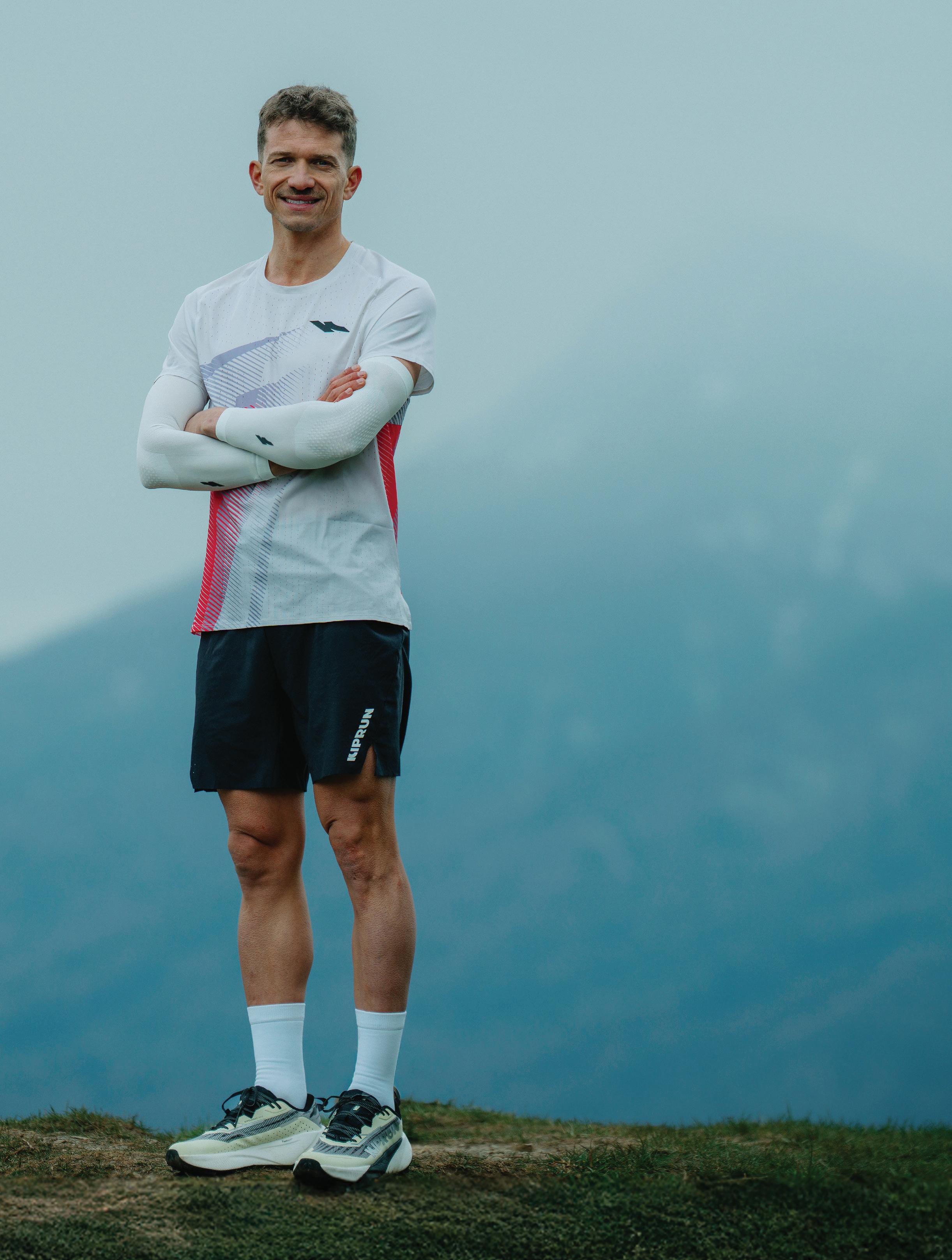
imagine giving up your job as an engineer to chase the world’s most extreme physical challenges as a professional athlete. Well, that’s exactly what Mathieu Blanchard did. And as it turns out, he’s widely considered one of the best ultrarunners in the world.
Yet there’s more to this ultrarunner than just elite competition.
The French native studied as an engineer, moving from France to Montreal in 2014 to take a job in the energy field. It was here that he discovered his love for adventure. He explains that when he was younger, he focused on the path that was presented to him— go to school, get good grades—rather than following his passion. He admits that if he had a sense of adventure in those younger years, it was buried somewhere inside him.
But moving to Montreal set him on a path toward adventure and a deeper connection with nature. Because it was during his time in Quebec’s vibrant metropolis that he found ultra-running.
“Around 30, I finally gave [my sense of adventure] permission to speak louder,” he says. “Maybe it was my ‘30-year-old crisis,’ but honestly, it was a pretty good one.”
The Canadian-French dual citizen explains that his love of ultrarunning developed naturally. Put simply, he fell in love with it—with the emotions, the intensity, the long hours in nature.
“I love that strange feeling of ultra-endurance fatigue, when your body is tired but your mind starts opening in a different way,” he says. •
A dream, by definition, is something ambitious, emotional, and a little uncomfortable.
You have to take the first step without having all the cards in your hand.
That connection to nature eventually led him to make a dramatic change in 2019, when he left his engineering job to pursue professional sport.
“I didn’t love spending so much time indoors, sitting in front of a computer,” he explains. “I felt this small voice inside me saying, ‘Maybe you should try it. Maybe sport can become your life.’ So, I listened to it.”
The then 31-year-old took a big risk in leaving his job to pursue his dream, and it was certainly not an easy road in the beginning. Blanchard spent several years living off of his savings and doing small side jobs to support himself while forging his path as an athlete. “Today I can say it was the right risk for me. If I had to do it again, I would.”
He quickly began to compile an impressive list of accomplishments. In 2020, he set the record for Quebec’s 650-kilometre GR A1 trail. In 2021, he placed third in the UTMB, and improved to second in 2022, making history alongside Kilian Jornet as the first runners to break the 20-hour mark on the full 170-kilometre course.
Those early risks have since carried him to some of the world’s toughest start lines, where he has amassed an impressive list of finishes across five continents and distances few runners would dare attempt.
But the endurance star’s most defining challenge to date began several years earlier, not on a race course, but in the Canadian winter that had slowly become part of his life.
“Winter is not just a season,” Blanchard says about Canada. “It’s part of the identity. Little by little, I started connecting with the cold.”
He began with winter bivouacs—improvised camping in snowy conditions. Then he sought longer adventures.
“One day I discovered these ultra-distance races in extreme cold, and something clicked,” he says. Inspired by American novelist Jack London’s stories about the Yukon, he decided it was the perfect place to complete his first big Arctic event.
And that is how Mathieu Blanchard entered the 600-kilometre Yukon Arctic Ultra, his most extreme adventure to date.
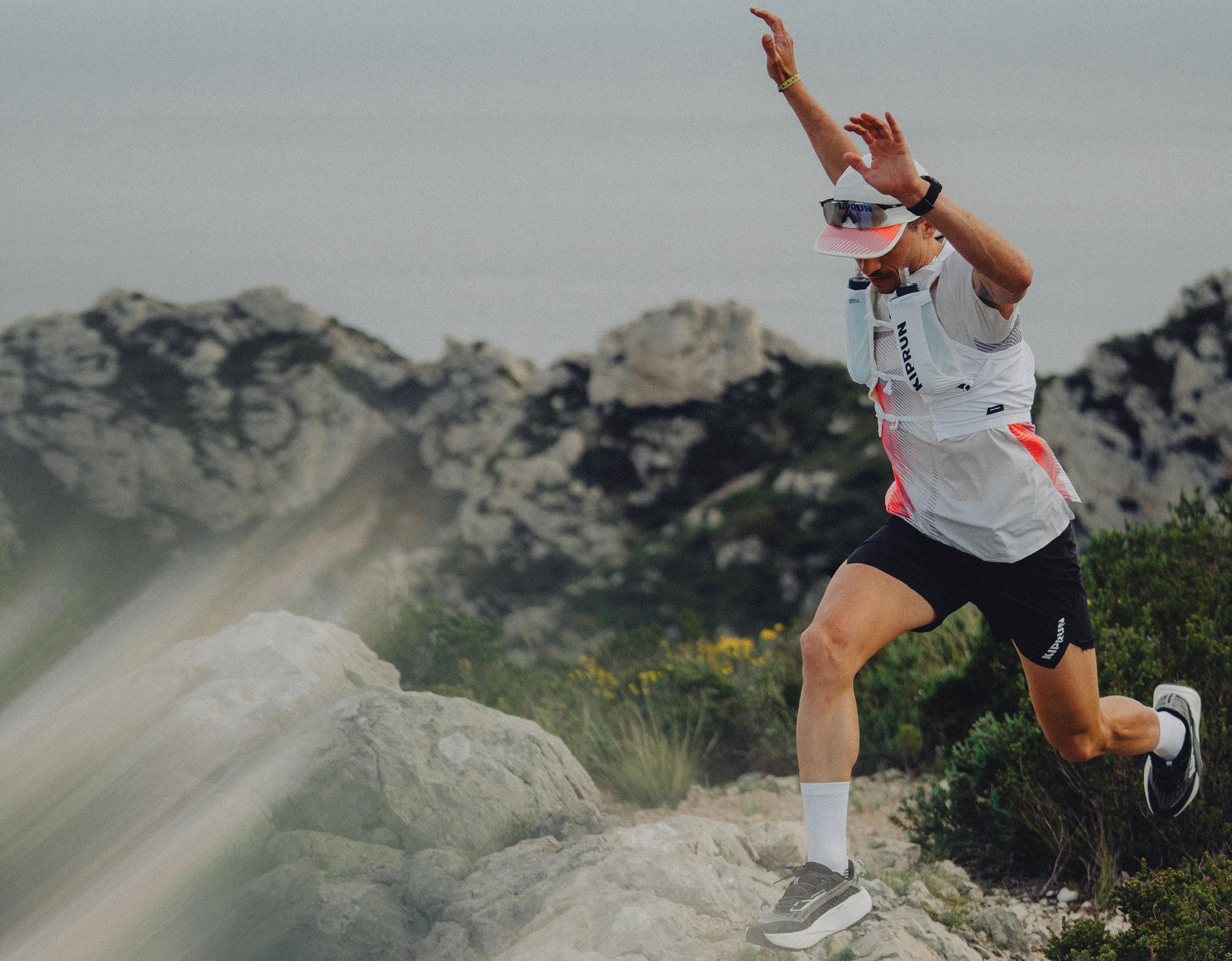
This punishing polar race takes place every year in February, when temperatures can drop below -40 C. The race is run in near autonomy, meaning the former engineer strapped a sled to his back carrying all the equipment he would need for the gruelling journey. That included clothing, a bivouac shelter, a sleeping mat, snowshoes, a stove, a pot, emergency food, a satellite communication device and much, much more.
In 2025, 46 people entered the race. Of those 46, only six finished. And of those six, only three completed the colossal distance on foot.
Blanchard was one of them—the first one of them. He won the foot race with a time of seven days, 22 hours, and 28 minutes.
“It was not heroic. It was just hard. Very hard,” says the 38-year-old. “The kind of experience where you learn quickly that nature doesn’t care who you are.”
It would be easy to look at Blanchard’s accomplishments and see them as something reserved for elite athletes. But perhaps the most compelling thing about him is that he believes adventure isn’t reserved for the few. He’s a reminder that people are capable of extraordinary things, and he’s working hard to encourage others to recognize that.
Take his relationship with his brother, Luca. When Luca was just 15-year-old, he was involved in a terrible road accident that resulted in the amputation of one of his legs. It was a miracle that he survived at all.
“It was extremely difficult for him,” says Blanchard. “At that age, you’re just starting to build your confidence, your identity, your place in the world. And suddenly, he had to rebuild everything.”
He explains that as Luca’s big brother, he wanted to help him on that journey. It wasn’t about giving him big speeches. It was about sharing something stronger. So, when Luca was old enough, Blanchard took him to Jordan’s Wadi Rum desert for what he describes as a “running adventure.”
The adventure? The Half Marathon des Sables, a 150-kilometre ultra race with temperatures soaring to 40 C during the day—the polar opposite of Blanchard’s future Yukon adventure.
“I wanted him to feel that he was still capable. That his dreams were still allowed,” he says. “We talked a lot during that adventure. I think something opened for him there. When he came back, he changed his life.”
Today, Luca dreams of competing at the Paralympic Games in snowboarding. He’s joined the French team and continues to train incredibly hard.
“For me, that adventure with him is one of the most meaningful things I’ve ever done.”
Blanchard’s encouragement doesn’t stop with family. He also strongly believes that everyone should follow their dreams, regardless of where they are at on their journey.
“Don’t wait until you control every part of the dream,” he says, adding that at the beginning, you never have all the pieces: the budget, the skills, the perfect confidence. But that’s okay.
“A dream, by definition, is something ambitious, emotional, and a little uncomfortable,” he says. “You have to take the first step without having all the cards in your hand. It’s never too late. But also, don’t wait forever.”
Today Blanchard shares his training philosophy through Campus, a training app supporting more than 600,000 runners. No matter the goal, whether it’s performance, looking to enjoy the process, or simply feeling better, the Frenchman takes pride in helping people progress.
“Very quickly, I understood that if adventure and outdoor sport helped me grow, maybe it could help other people too,” he says, adding that people began writing to him to share that they had taken up running, signed up for their first race, spent more time outdoors or dared to dream a little bigger. “That gave a lot of meaning to my career.”
So, what's next for the former Montreal resident? Blanchard describes this next chapter as one of "amplification." Through his new partnership with Kiprun, he's exploring parts of himself that extend
beyond racing to build something bigger than podium finishes.
That means bringing together all of the skills he's developed throughout his life.
The former engineer is now involved in testing gear and co-developing products, work that allows him to tap into the analytical mindset he once used in engineering.
“Today, when I work on product development, when I test gear, when I analyze performance, I still use that engineering brain," he says. "It just found a new playground.”
For Blanchard, performance alone was never enough. While he still loves racing, he says the opportunity to help create products and contribute to something lasting is equally fulfilling.
“I love the idea that when I reach the end of my career, I won't only be able to say, ‘I ran fast.’ I'll also be able to say, ‘I helped create products with people I trusted.’ That means a lot to me.”
As for the racing side? Well, what’s next remains to be seen. But if Blanchard’s journey has proven anything, it’s that he isn’t afraid of the unknown. In fact, he welcomes it.
“When a project scares you, it’s already a sign that it matters,” he says. “The difference is maybe that I don’t see fear as an enemy. I see it as a conversation. And usually, I still move forward.”
BY JESSICA NATALE WOOLLARD RAEZ ARGULLA
An
award-winning freelance writer and communications professional based
in Victoria, B.C.
JESSICAWOOLLARD
After running two marathons, Caroline Drury, 46, decided to up the ante and tackle one of the most gruelling endurance challenges around. This November, she will participate in the Great World Race, putting her body and mind through the epic trial of completing seven marathons on seven continents in seven days.
“It’s not going to tickle. It's going to be incredibly uncomfortable,” the Manitoban says. “But that's why I'm signing up to do it.”
Time zones don’t exist for the purposes of the race. The group of 60 runners will sleep on flights between destinations, then they will land and start their run, sometimes in the middle of the night. They’ll endure extreme temperature variations, sleep deprivation, and backto-back flights across the globe with no rest-and-recovery between.
Wolf’s Fang on the north coast of Antarctica is the first stop. The run will be held in subzero temperatures on a course of slick blue ice and compacted snow—a skating rink, essentially.
But the frozen continent is not the destination Drury is most concerned with. “What I'm most worried about is running in Cartagena, Colombia, which is going to be probably 40 degrees Celsius with 100 per cent humidity,” she says. “Apparently, it’s brutal. I'm imagining it to be the worst, most uncomfortable running I've ever done or will do in my life. And then hopefully, it'll be marginally better.”
When people find out Drury’s running the Great World Race, they assume she has been fit all her life.
“It could not be further from the truth,” she explains. “I just scrapped it out. I pieced it together, small success after small success. And it's possible for everyone.”
For Drury, the journey to the Great World Race started early in the COVID-19 pandemic. Originally from Whitehorse, she was living in Toronto and focused on her career in arts administration when the lockdown started. Health and fitness had taken a back seat through her adult years, and Drury, who was approaching her fortieth birthday, experienced an epiphany of what she calls “radical accountability.” She and her husband realized they had no one to blame but themselves if they couldn’t get into the best shape of their lives while the world was shut down and every excuse was moot.
They gave up their daily lockdown pizza and wine cold turkey, and Drury started an eight-week fitness challenge three days later. She didn't diet, just ate whole foods and followed the workouts. She lost nearly 20 pounds. Then, she wondered what else she could do. “I decided I wanted running to be more part of my life,” she remembers. “So, I ran my first marathon.”
Discovering fitness and running changed everything for Drury. She got certified as a personal trainer, launched fitness and nutrition apps, and became a fitness influencer on Instagram where she posts details about every workout and training session.
It was the process of running—including meticulously tracking workouts and nutrition—that helped her fall in love with training.
“For most women, the drive in fitness is to have your body look good, which is awesome. We all want to look good; we all want to feel good. That's a very natural thing,” she explains. With running, the focus was different. “It became, ‘What can my body do?’ It was so empowering.”
With her greatest challenge before her, Drury is focused on linking together wins to create a chain of strength and momentum to help her through the Great World Race.
“That's how you create success, and that's how you create your moment, by linking small successes,” she says. “One good meal linked to a good workout, linked to a good post-workout meal, linked to drinking enough water.”
While running those seven marathons, when she’s exhausted physically, mentally and emotionally, she will rely on her chain of successes to help her put one foot in front of the other.
“I am most excited about learning who I am in the midst of running those marathons back-to-back,” she says. “There's no question to me that my body is going to do it because I'm going to train. The mind is the unwieldy part... Running one marathon, you can go to a dark place. I wonder what's going to happen when I run seven?”
Despite the unknowns and the brutal conditions that await, Drury is confident in her ability to finish the race. “There's nothing in me that believes that I can't do this,” she adds. “I believe everyone is capable of doing this.”
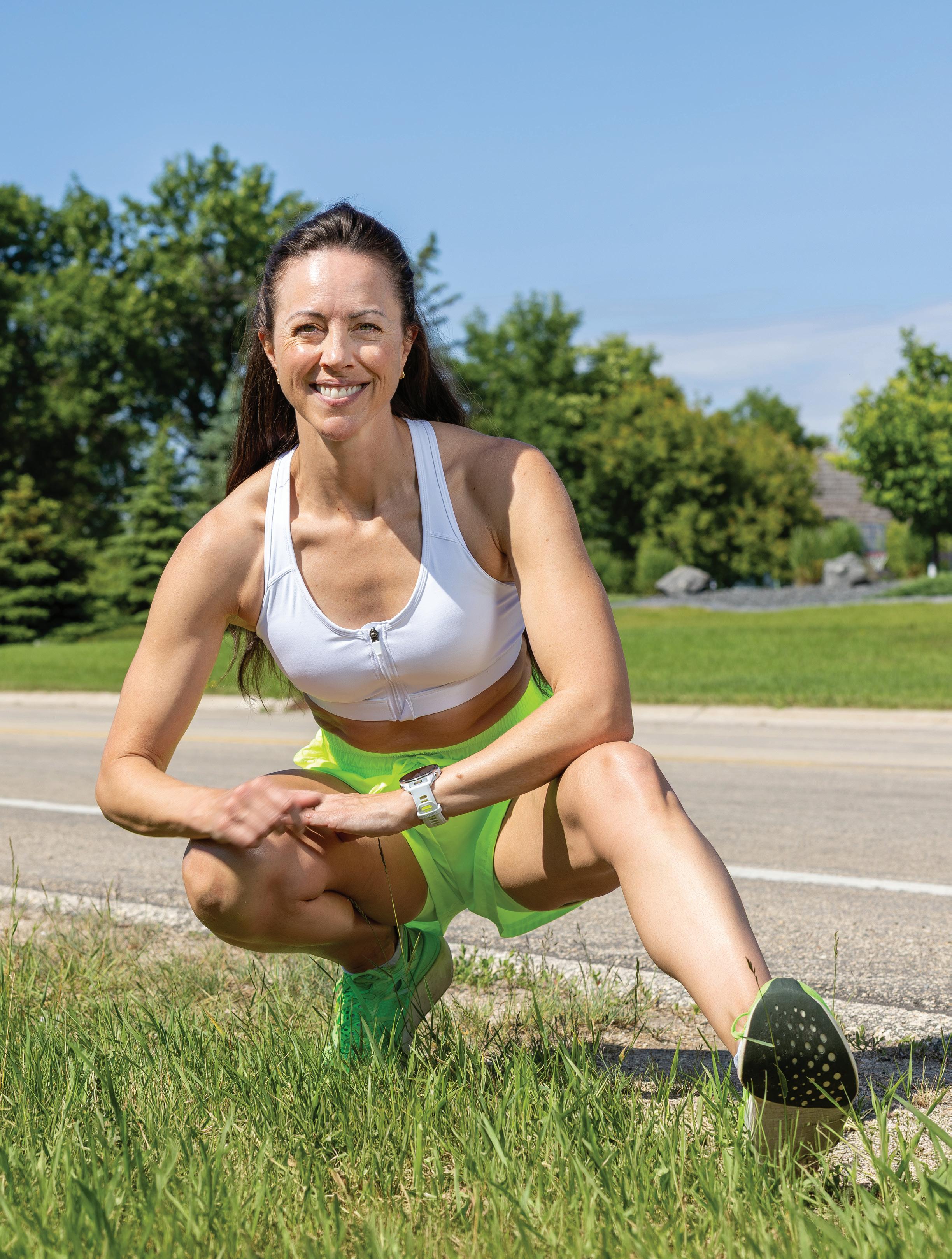
I am most excited about learning who I am in the midst of running those marathons back-to-back.
Kyle Wills once struggled to get out of bed. Now he is rowing solo across the Atlantic to prove that one brave “yes” can lead to a life you never thought possible.
BY MIKAILA KUKURUDZA JACK MADELEY
A fitness writer, marketing nerd and complete brunch enthusiast in Toronto, ON. MIKAILAKUKURUDZA MIKAILA-KUKURUDZA
In the middle of the Atlantic, 1,080 nautical miles from the nearest land, Kyle Wills, 34, will turn up Morgan Wallen and look out at the vast “ocean prairie.”
The only mountains in sight, the small sticker Wills placed on board for moments of homesickness during the 40- to 60-plus days he could be living on his 5.5-foot-wide Rannoch R25 ocean rowing boat.
Despite the obvious dangers and having no previous rowing experience, Wills does not fear this moment, or any moment of the 4,800-kilometre solo race across the Atlantic, which takes place December 2026 from La Gomera in the Canary Islands to Antigua.
“My biggest fear is not getting to that start line,” says Wills, who signed up for World’s Toughest Row in 2023 and says that, for the last year, he has spent an average of 40 hours a week on logistics and fundraising.
Wills is no stranger to multi-day races, having competed in ultrarunning events, but this row has proved to be much bigger than himself. Not only does this race amplify the complexity of required logistics—taking a course, ticking off 24 pages of checklists, months of training and approximately $190,000 Canadian just to get to the start line—but Wills is also on a mission to raise $250,000 for SickKids Foundation and Brain Tumour Foundation of Canada.
“I really want to give every child the opportunity to have the opportunities that I did,” he says. “And it starts with having a childhood that they’re not scared of losing.”
Wills credits his positive childhood for providing him hope to hold onto during his six-year battle with depression in his early twenties. “It was my childhood speaking to me,” says the London, Ont., native. “Look, this is a blip. You have a great adulthood that’s gonna give you just as much spark.”
When life became too monotonous to get out of bed, Wills pushed away everyone, even his two childhood best friends, Matt and Becca. But one day, an invitation to run a 5K from Becca changed the trajectory of Wills’ life.
With no training, Wills struggled through every single kilometre, but was met at the finish line with new perspective. Soon, he began to understand something about himself.
“I can push myself to do new things,” he says. “And that’s where I started broadening my horizons, not just around sport, but everything.”

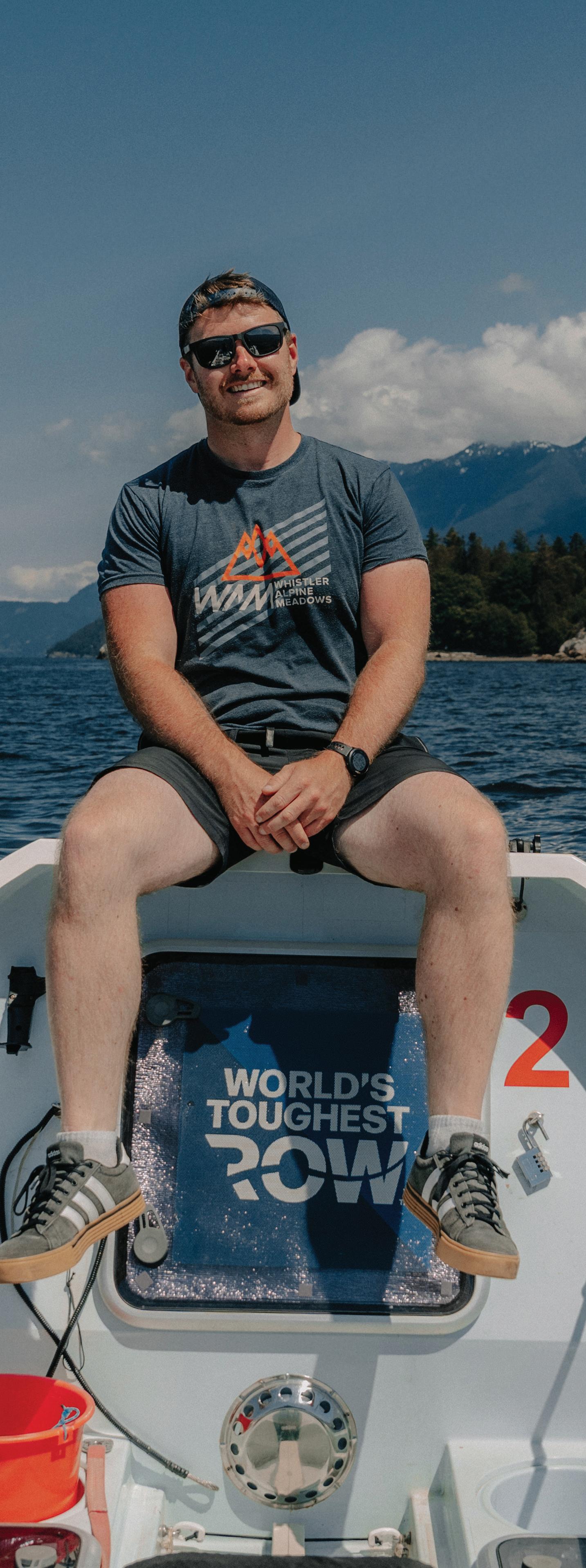
I used to never see a single future, but now I see a million of them.
When Becca invited him to run a 10K next, the only obvious answer was yes. Then a 15K. Then a half-marathon with Matt and Becca, followed by 30K and his first marathon.
Running gave Wills proof that hard things could not only be survived, but make you feel alive.
“I used to never see a single future, but now I see a million of them,” says Wills.
Wills began just saying yes to anything new—ultrarunning, skydiving, getting his pilot’s licence. And now, the World’s Toughest Row.
In late 2024, a year into Wills fundraising for his row, Matt texted him. Doctors found a growth the size of a lime on his frontal lobe. It was the last thing the trio had expected. Matt and Becca just got married, bought their first house and were planning to start their family. Wills had comfortably settled into his role of “the immortal third wheel.” Now, Matt’s diagnosis of a grade 2 astrocytoma, a slow-growing form of brain cancer, looms over all of their futures.
“I never ever expected to cross this finish line and Matt’s not there,” Wills says. “I never expected a life without this man. I don’t have memories without him or without Becca.”
Wills decided to split his fundraising efforts, adding Brain Tumour Foundation of Canada to his cause and a renewed sense of gratitude to his training. “Things can change so abruptly,” he says. “There’s no reason to not put 100 per cent into it.” And that mindset is carrying Wills through the final months of preparation.
“A lot of the goal when training is to make myself hate rowing,” he says. “And then continue to row.” From finding the headwind and rowing directly into it, to letting barnacles grow just to slow down his boat and make it more difficult to steer, Wills will do anything to simulate an environment as hard as the race itself.
The average solo crossing takes about 60 days. The solo world record is 30 days, seven hours and 49 minutes. More than 50 boats are expected to line up for the 2026 Atlantic race, from solo entrants to crews of five, with a safety yacht usually two to three days away if any of the rowers should require assistance.
“My big goal is under 40 days,” he says. “If I can hit anything with a three on it, that’s fantastic.”
Wills knows as uncomfortable as the race might get, he’s the lucky one. The challenges he will face in the middle of the ocean are no comparison for the challenges those he rows for face daily.
In fact, his challenge is quite simple: just row.
Wills explains that pushing himself "opened up 10 million different possibilities." Adding, "I feel like my life is just starting."
From coast to coast, these are Canada's most unforgettable bucket list hikes
BY RON JOHNSON
Based in Toronto, ON, he is the editorial director of Get Out There and Momentum magazines and a journalist with more than 30 years of experience covering the outdoors, travel, cycling and adventure. A longtime freelance writer, his work has appeared in Sierra, The Globe and Mail, and numerous other Canadian and international publications.
RON-JOHNSON
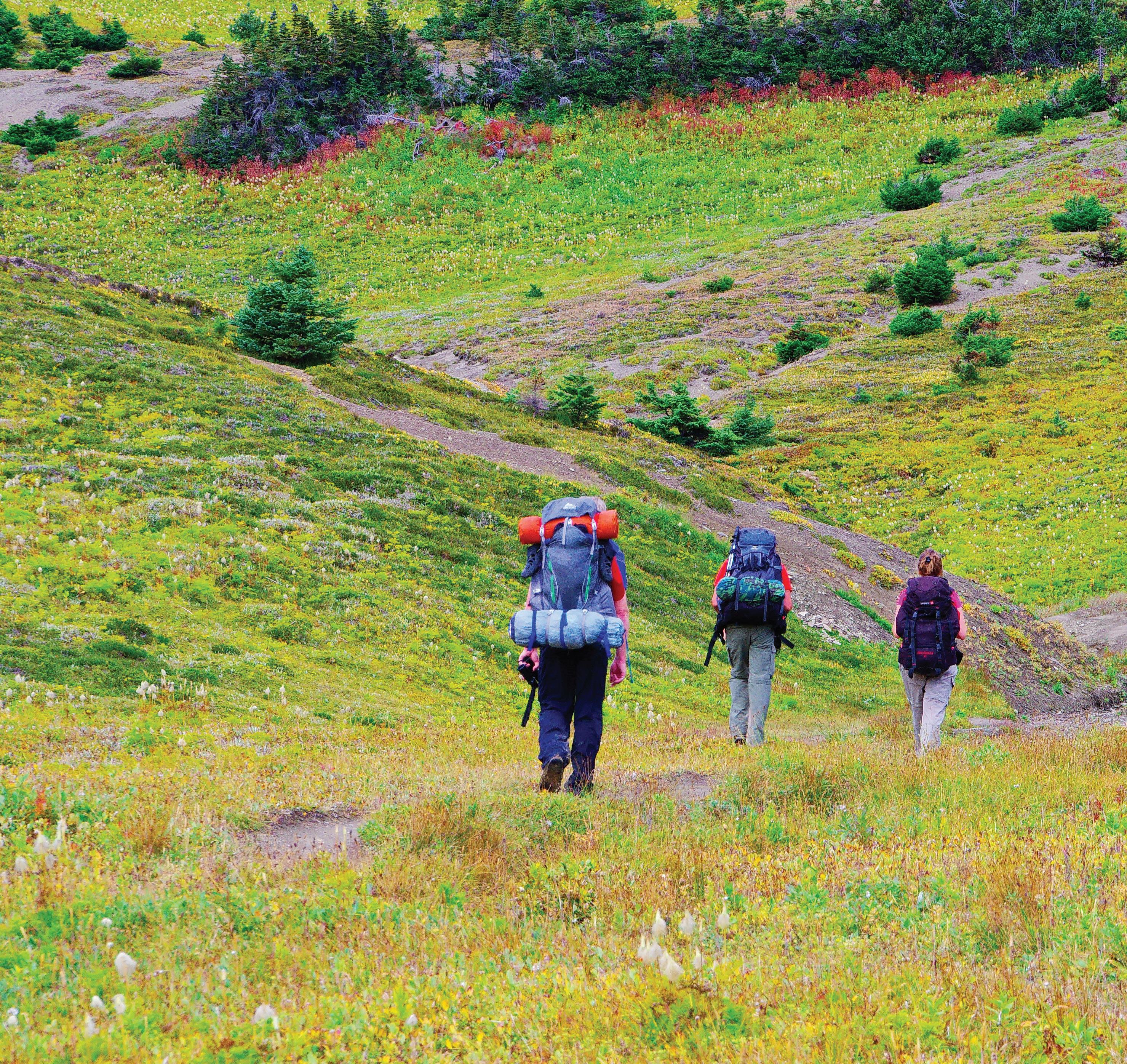
Canada is a country built for big hikes. From the storm-battered coastlines of Newfoundland to the alpine ridges of the Canadian Rockies and the ancient forests of the Pacific Northwest, there are trails that can make a weekend or week-long adventure feel more like a wilderness experience. But which hikes should earn a place in the Canadian hiking bucket list of the outdoorsy set? Here are 10 classics from coast to coast that make the grade.


VANCOUVER ISLAND, BRITISH COLUMBIA | TOURISM VANCOUVER ISLAND/BEN GIESBRECHT
If there is one hike on the bucket list of outdoors-loving Canadians, it is the West Coast Trail. If your vibe is all about challenging hikes through old-growth rainforests and along secluded beaches, up ladders crafted from found timber, over rickety suspension bridges, across tidal crossings and past the occasional seal, this is the trail for you. Most hikers complete this epic 75-kilometre route, originally built as a lifesaving route for shipwreck survivors, in five to seven days, camping along the way in designated sites. The trail requires advance reservations through Parks Canada, and book early because this hike is world famous and packed every year. •
JASPER NATIONAL PARK, ALBERTA LEIGH MCADAM
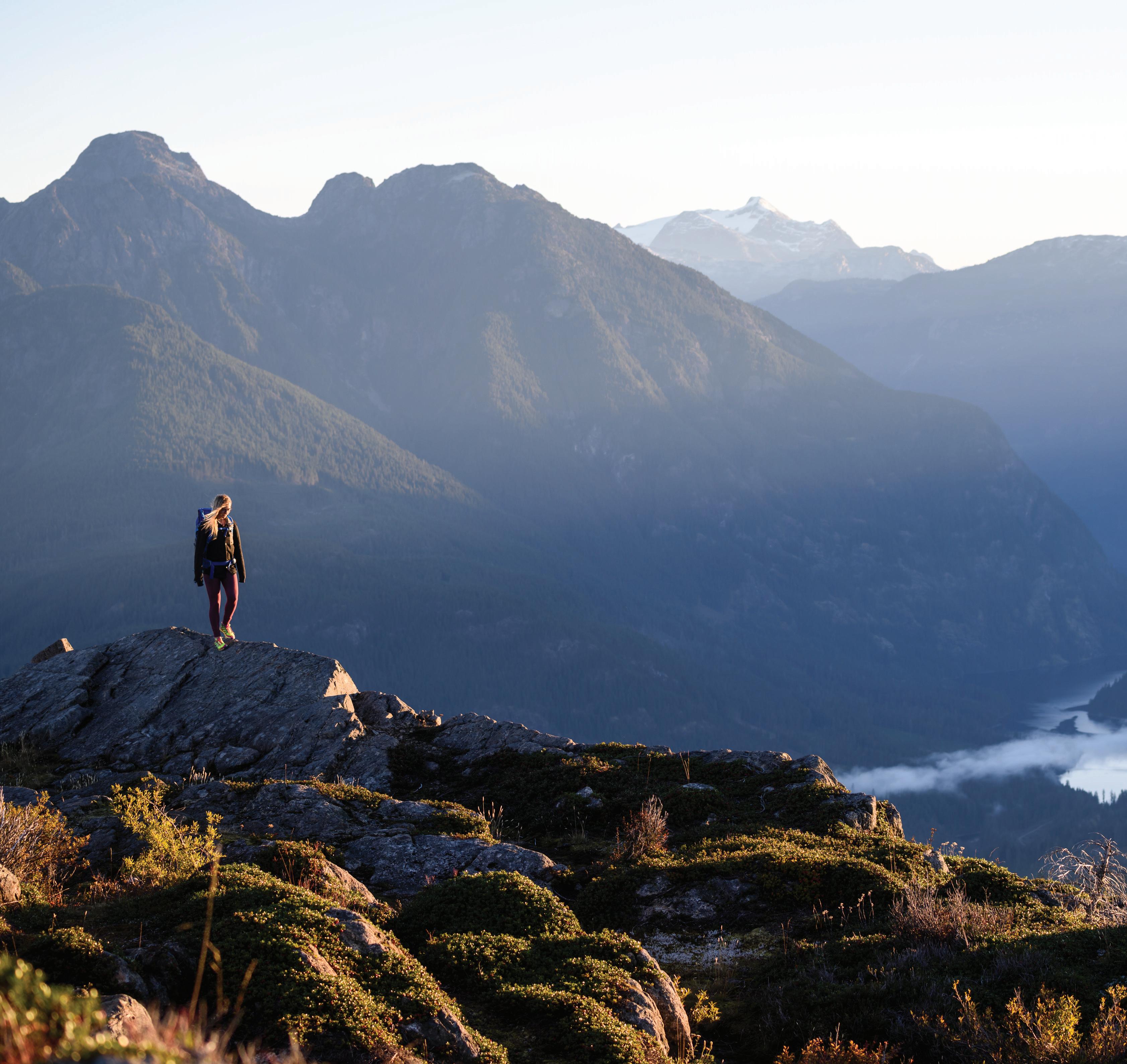
The Canadian Rockies are probably the most stunning landscape, well… anywhere. So, we need

BRITISH COLUMBIA DESTINATION BC/ANDREW STRAIN
The Sunshine Coast Trail is a gem that is one of the most popular and unique hikes in the country. What makes this route so fantastic is the 14 huts along the way, making it the longest hut-to-hut hiking trail in the country. Hikers can spend nearly two weeks travelling through everything from coastal rainforests to mountain ridges and alpine lakes without needing to carry a tent. That is some hard-to-beat seclusion. The full route requires some planning and resupply stops, and shorter sections are also perfect for weekend adventures. •
Visit impactmagazine.ca to view the full feature story.



MOUNT ROBSON PROVINCIAL PARK, BRITISH COLUMBIA DESTINATION BC/MEGAN MCLELLAN
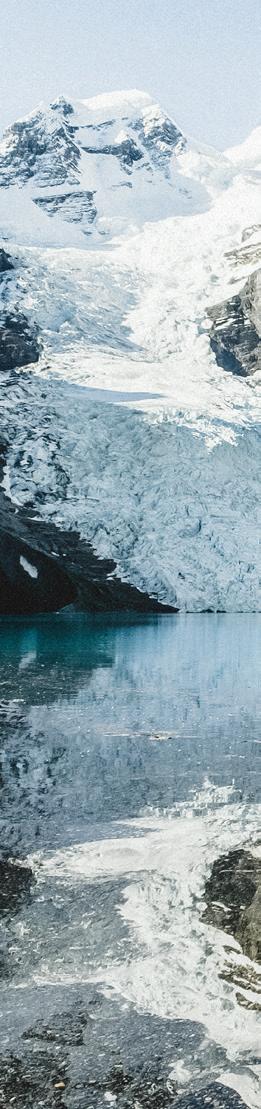
No list of Canadian bucket list hikes is complete without a classic from the Canadian Rockies. The Berg Lake Trail is one of the country’s most iconic mountain hikes. Here, hikers travel through some of Mount Robson Provincial Park's most spectacular scenery towards the towering north face of Mount Robson, the highest peak in the Rockies. The 23-kilometre route winds through forests, past waterfalls and across suspension bridges before reaching the stunning turquoise waters of Berg Lake. While the trail is often completed as a multi-day backpacking trip, day hikers can also explore sections of the route. This is a steep one with about 1,000 feet of elevation gain, but the scenery rewards the effort: glaciers, alpine meadows and some of the best mountain views in Western Canada. •


KILLARNEY PROVINCIAL PARK, ONTARIO
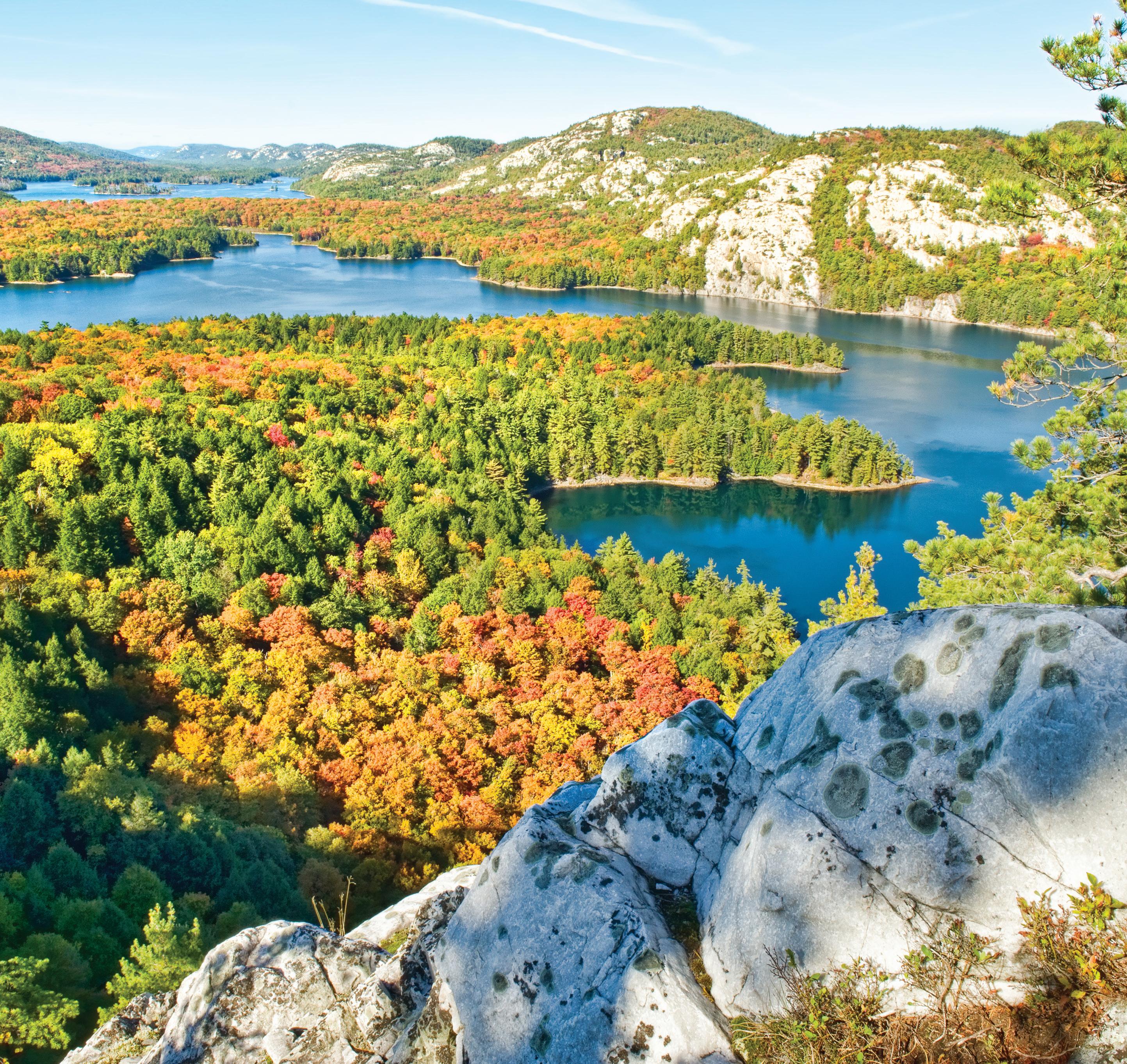
Imagine being hunkered down at a dreamy lakeside campsite, with crystal-clear water gently lapping the shore, the eerily white La Cloche Mountains as a backdrop and wolves howling in the distance. That’s Killarney Park in a nutshell and the best way to see it is on the La Cloche Silhouette Trail, a 78-kilometre loop around the park. The park is known for its crystal-clear lakes, white rock ridges and dreamy forests, but this hike is legit with plenty of elevation gain and rocky scrambles to keep things interesting. Most hikers complete the loop in seven to 10 days, though shorter sections are possible. Ontario Parks reservations are required, and hikers should be prepared for rugged terrain, limited water sources and challenging climbs.



NEW BRUNSWICK TOURISM NEW BRUNSWICK
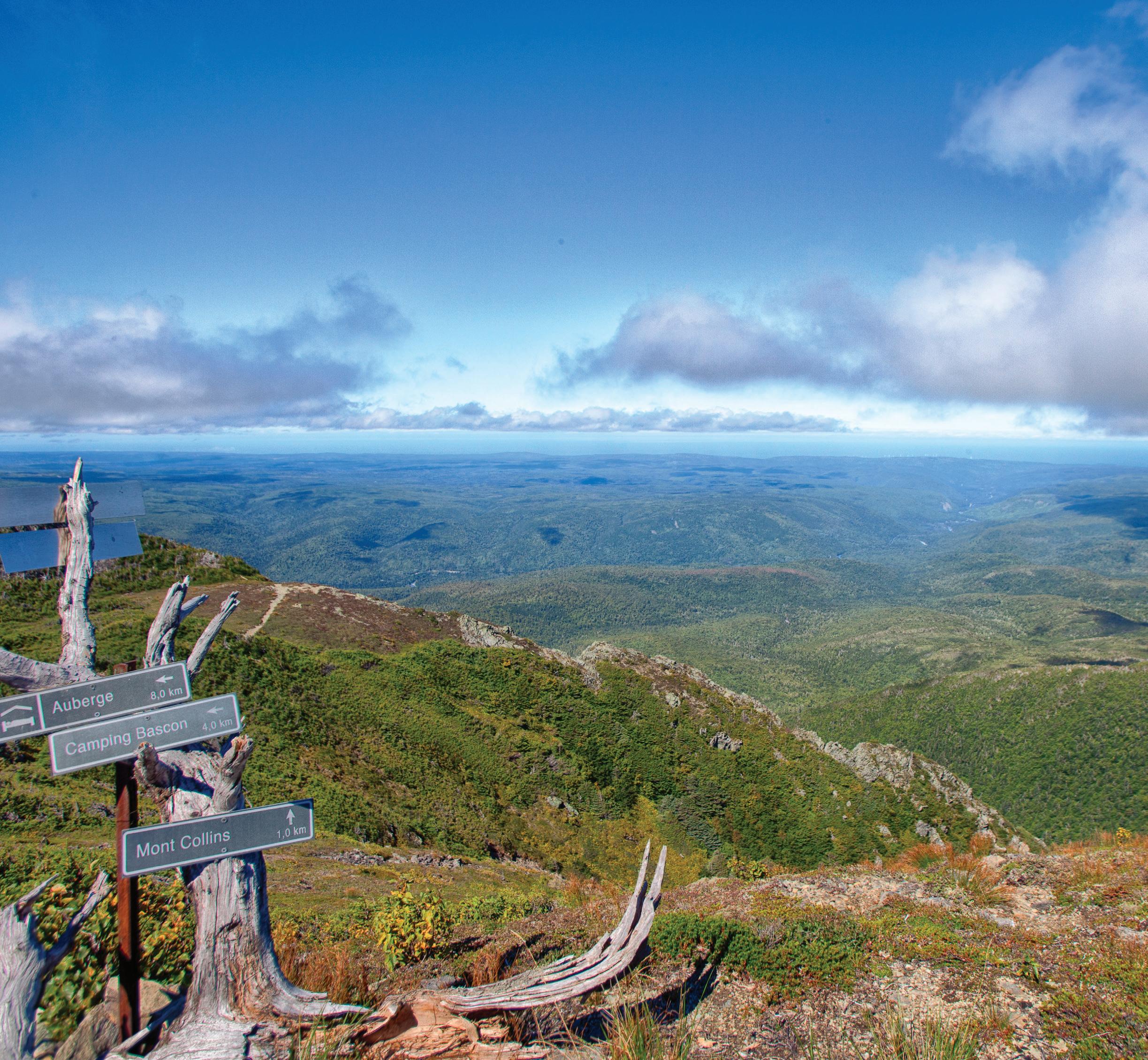
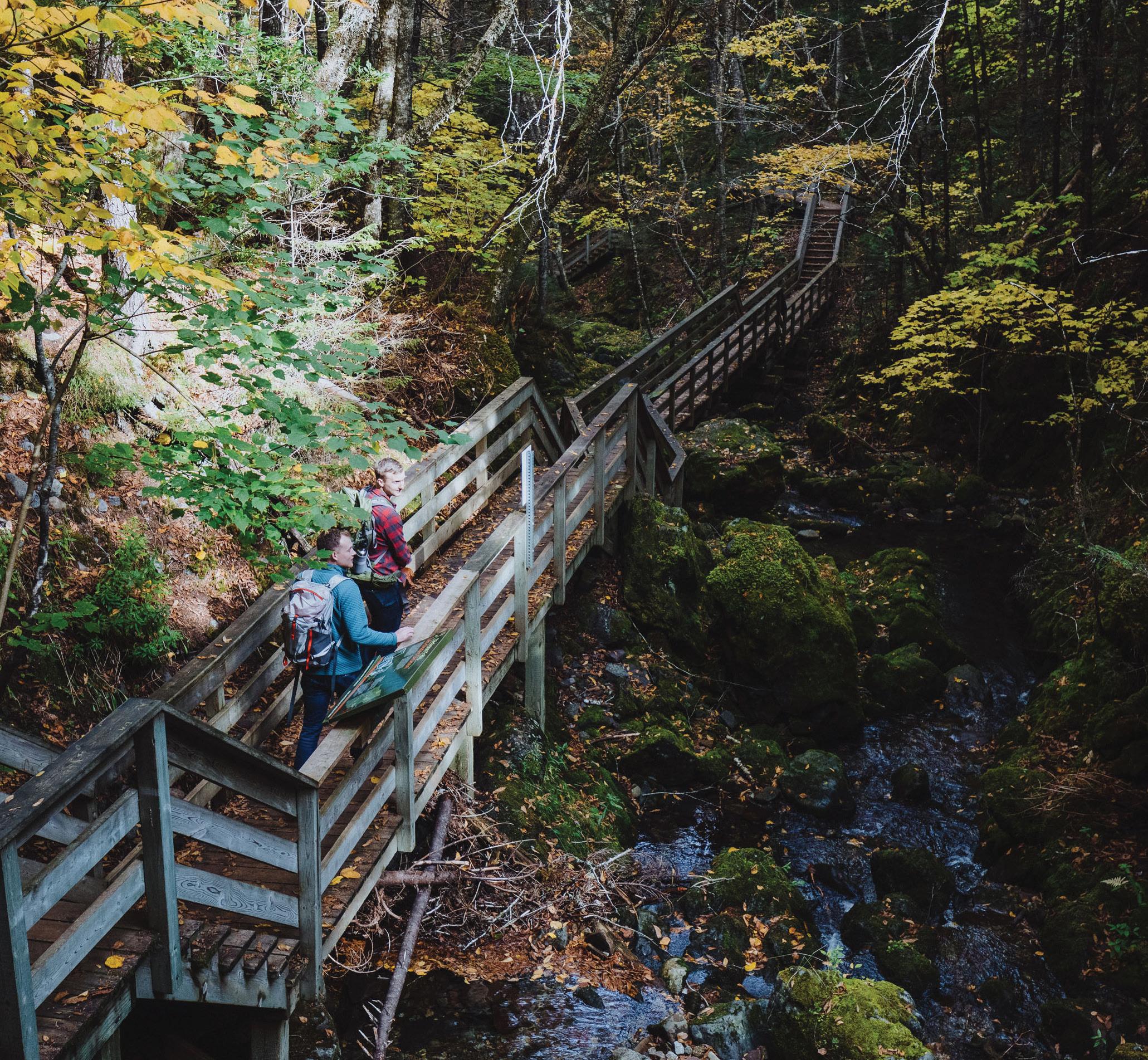
Imagine being hunkered down at a dreamy lakeside campsite, with crystal-clear water gently lapping the shore, the eerily white La Cloche Mountains as a backdrop and wolves howling in the distance. That’s Killarney Park in a nutshell and the best way to see it is on the La Cloche Silhouette Trail, a 78-kilometre loop around the park. The park is known for its crystal-clear lakes, white rock ridges and dreamy forests, but this hike is legit with plenty of elevation gain and rocky scrambles to keep things interesting. Most hikers complete the loop in seven to 10 days, though shorter sections are possible. Ontario Parks reservations are required, and hikers should be prepared for rugged terrain, limited water sources and challenging climbs. •

NOVA SCOTIA TOURISM NOVA SCOTIA
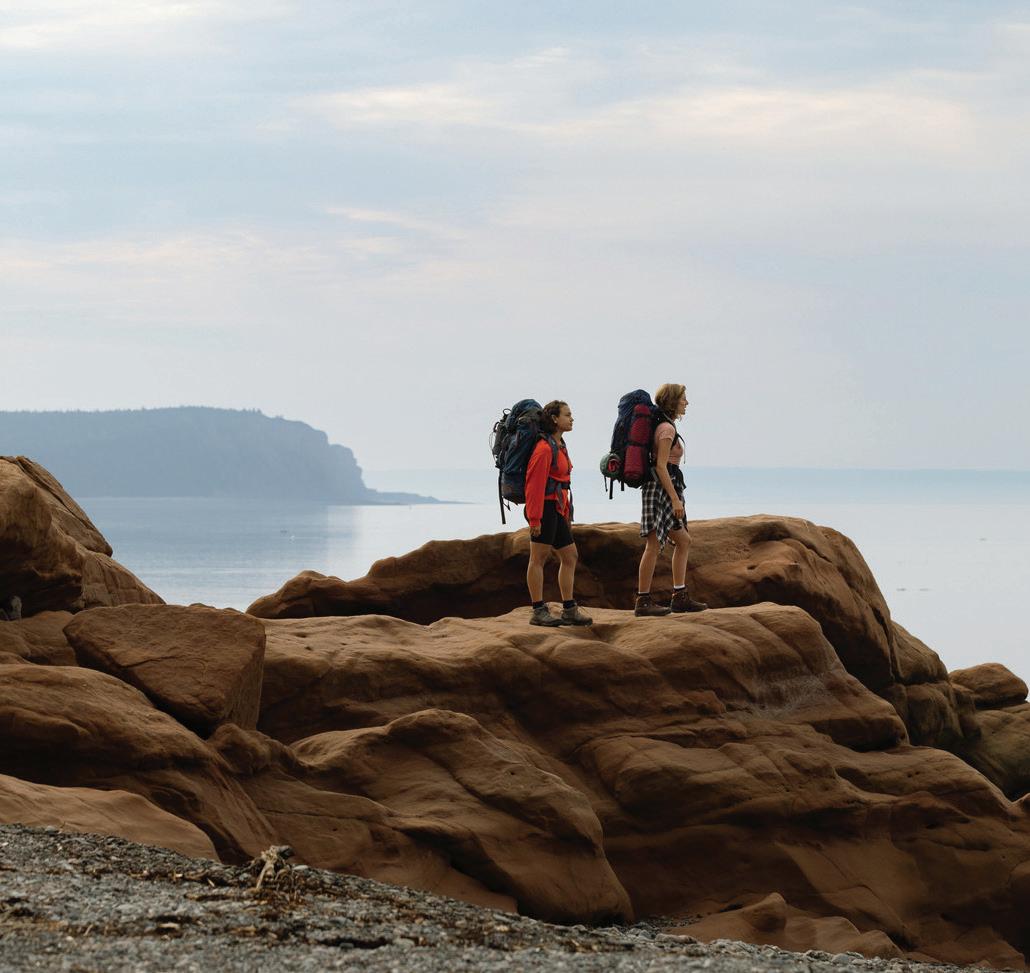
If dramatic hiking is what we’re after, there are few places that offer more heartpounding pathways than the Cape Chignecto Coastal Trail. The power of Atlantic Canada is on full display while tromping this 53-kilometre loop along the Bay of Fundy. The hike delivers one of Atlantic Canada's most dramatic wilderness experiences. Expect to find towering sea cliffs, secluded beaches and dense forested valleys that were lovingly carved by some of the world's highest tides. Most hikers spend three to four days camping along the route, although shorter day hikes are available. Word to the wise: try late spring through fall when the weather is far more predictable and conditions are optimal.

NEWFOUNDLAND NEWFOUNDLAND AND LABRADOR TOURISM/ALEX BUISSE
If the West Coast Trail represents the country’s wild Pacific side, the East Coast Trail delivers that same sense of awe and adventure from the opposite coast. This spectacular trail showcases Newfoundland's Avalon Peninsula with incredible coastal hiking. The East Coast Trail is made up of 25 individual wilderness paths that offer hikers everything from short day jaunts to multi-day backpacking extravaganzas. The trail is at its best along the dramatic cliffs that loom high above the North Atlantic, passing sea stacks, historic fishing communities, lighthouses and waterfalls. Don’t miss the Spout Path, where a natural ocean geyser shoots forth from a rocky coastline. Most hikers choose individual sections rather than completing the entire route, with trailheads accessible by car from St. John's.


BY EMILY MEYER EMILY MEYER
A Calgary, AB-based freelance writer and IMPACT Magazine guest editor. With a background in journalism and communications, she is passionate about exploring the intersections of fitness, travel and human resilience.
EMILY.MEYER.TRAVELTALES EMILYMEYER
My husband and I were staying at an Airbnb in Taupō, New Zealand, when our host asked if we planned to hike the Tongariro Alpine Crossing. I admitted I'd never even heard of it, which seemed to surprise her. After all, the Tongariro Alpine Crossing is widely considered one of the best day hikes in the world.
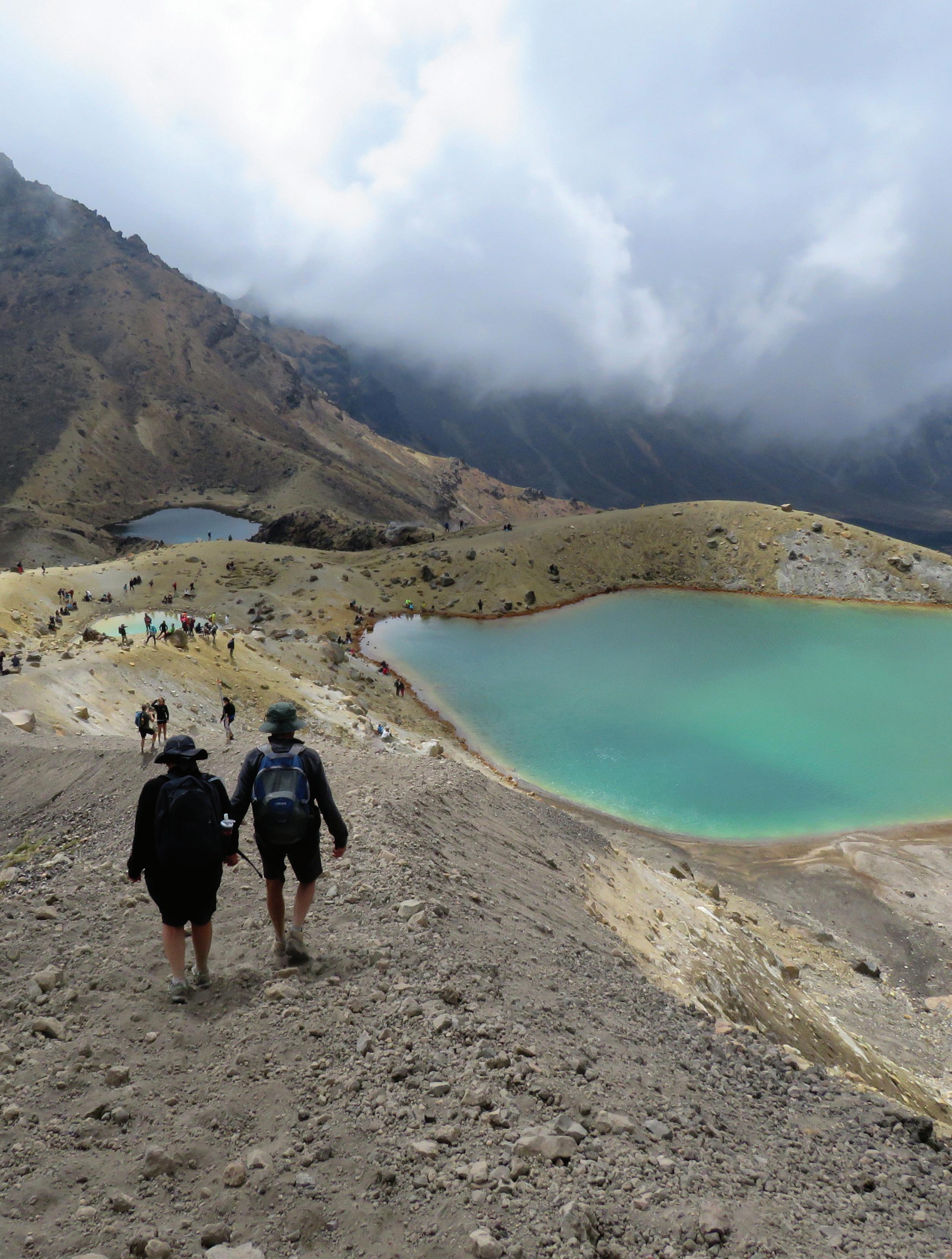
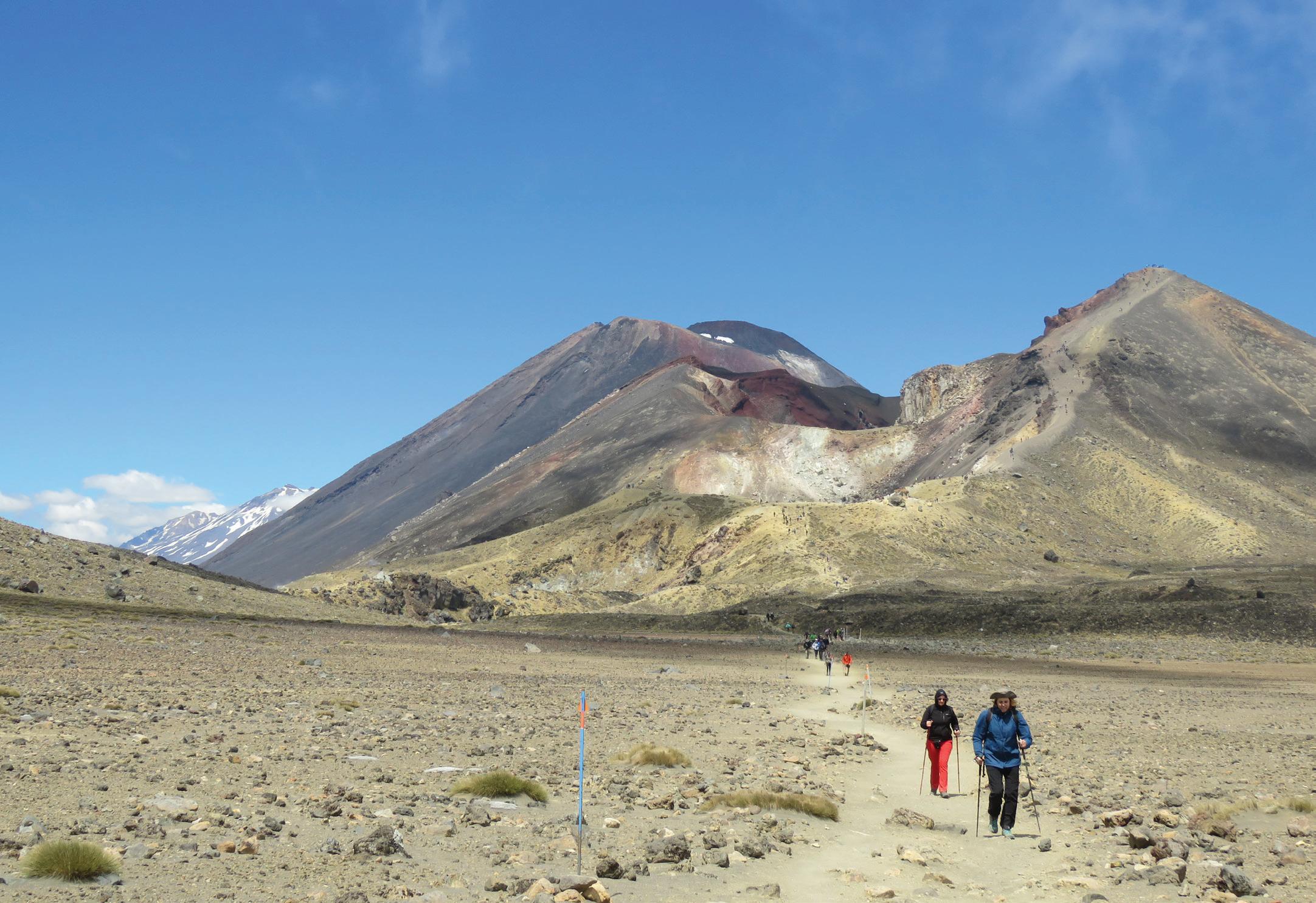
Think sweeping alpine views, shimmering emerald lakes, ancient volcanic craters, windblown tussock-covered hills, and lush native forests, all packed into a 19.4-kilometre trek.
We were sold.
What we didn't realize was that this wasn't your average scenic walk. After all, there aren’t too many hikes that I know of that require you to sit through an eight-minute safety video first.
The video highlighted everything from rapidly changing weather conditions to the importance of proper preparation. Because the crossing sits in an active volcanic landscape, conditions can change quickly. Thankfully, we were visiting during the New Zealand summer, one of the most stable times of year to tackle the trek.
Although the trail is free and no reservation is required, the crossing is a one-way trek, so most people book a shuttle from nearby towns such as National Park Village, Whakapapa Village or Taupō. •
Our alarm went off at 5:30 a.m. and a short while later we were leaving our peaceful retreat in Lake Taupō behind, on our way to the base of Tongariro.
I watched as the landscape began to change slowly, the alpine crossing looming on the horizon. The lush and green rolling hills of Lake Taupō area fell away and a dusty bushland grew up around us.
As we stood at the trailhead to the hike, we were handed a map with a printed guide for our crossing. Each section of the trail was separated into difficulty ratings with a smiley face, a neutral face, and a frowning face. I was less than enthusiastic to know that only about two hours of the hike would be “smiles”.
And most of those smiles would be at the beginning of the hike.
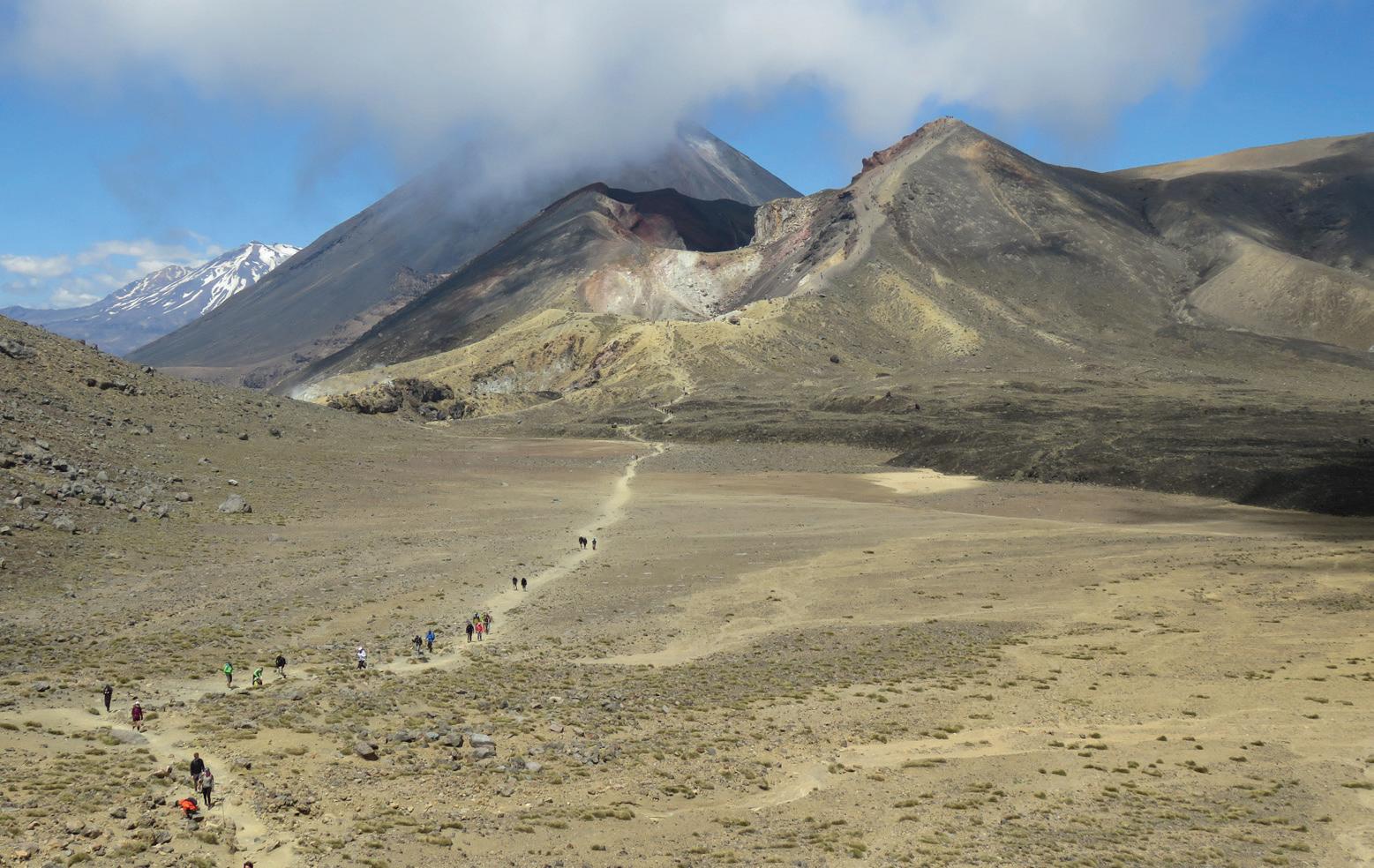
It’s easy to get a false sense of security at the start of the Tongariro Alpine Crossing. As the morning sun climbs higher in the sky, the trail begins gently, with flat terrain, wooden boardwalks and wellmaintained gravel paths. Perhaps it should have been an omen that looming ahead of us was Mount Ngauruhoe—better known as Mount Doom in The Lord of the Rings films.
Just as we were easing into the walk, our confidence growing and our enjoyment soaring, we came to Devil’s Staircase. The aptly named section of the trail features approximately two kilometres of sustained uphill climbing. Picture 370 steps and more than 200 metres of elevation gain.
This was the point where we began passing hikers turning back. Some looked exhausted, while others appeared to realize they weren't prepared for the challenge ahead. Flip flops hardly seem like the right choice of footwear to tackle such a hike.
And I won’t pretend Devil’s Staircase was a walk in the park, because it wasn’t. It was hard. Very hard. But as soon as we reached the top and stepped into the vast expanse of South Crater, surrounded by 360-degree views of rugged mountain ranges and volcanic terrain, the exhaustion seemed to disappear.
The walk across South Crater was easily my favourite part of the day, not least because, after the relentless climb of Devil’s Staircase, it was flat and a welcome reprieve. If it weren’t for the fact that we could see people disappearing into the clouds as they climbed toward Red Crater, I might have thought all the previous warnings were exaggerated.
But of course, 1.5 kilometres passes quickly and before long, we found ourselves traversing over loose rock and steep ledges as we made our attempt at the summit.
Now’s a good time to mention that when we packed for New Zealand, I had no intention of hiking across a mountain range, so the only athletic shoes I packed were my New Balance 680s. If you ever find yourself on the North Island of New Zealand and decide to tackle one of the world's most spectacular trails, learn from my mistake: bring proper hiking shoes, because my shoes were no match for the soft, dusty scree beneath my feet.
I used my hands as much as my feet to reach the top. And when I did, we sat for a few moments above the clouds, catching brief glimpses of the beautiful blue and green lakes to come and of the part of the trail we’d already conquered.
If I thought the climb to the summit was tough, getting back down was another level. Loose stones made the route to the
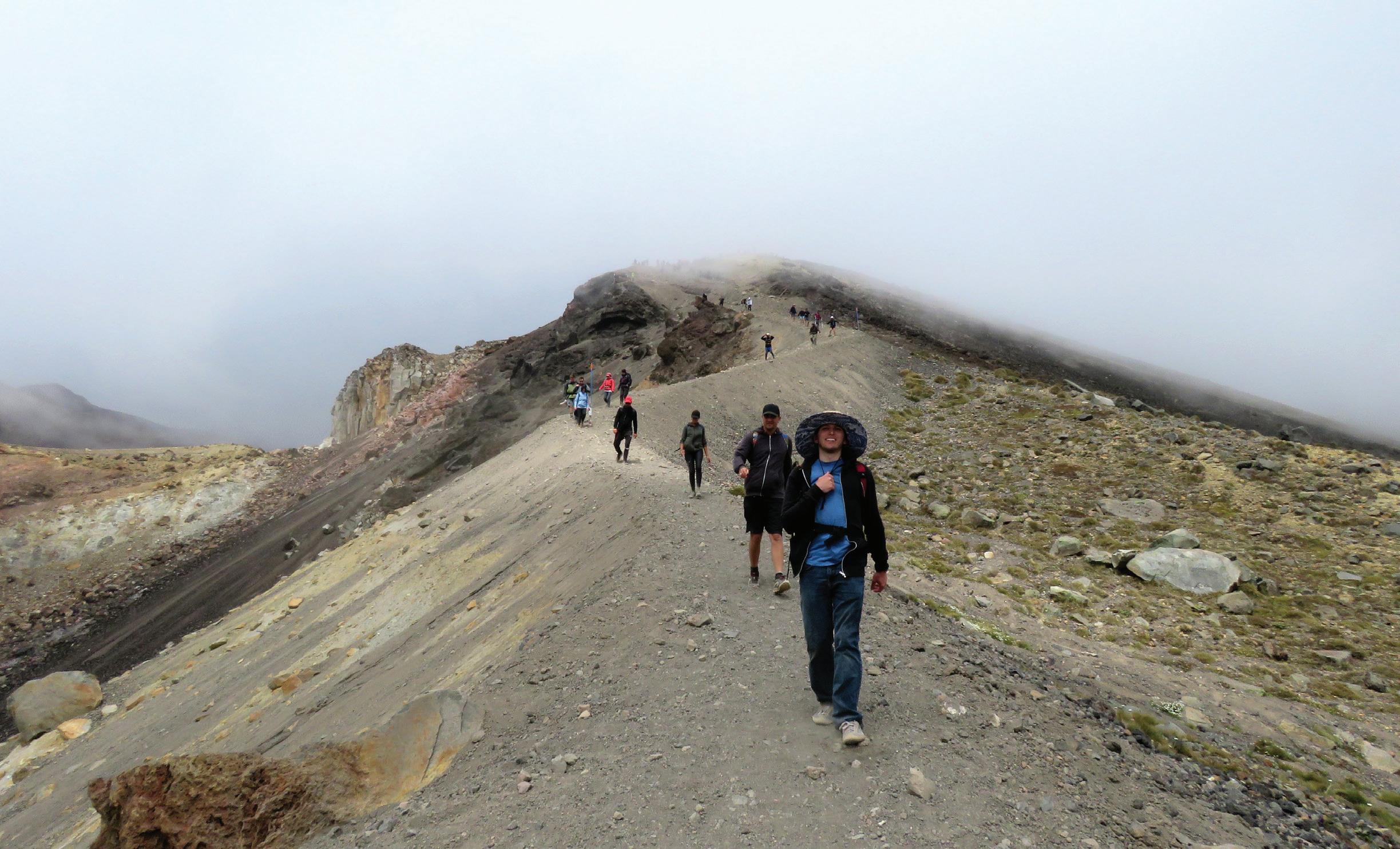
Emerald Lakes surprisingly tricky. People with hiking poles and proper footwear were struggling, and I had to stop multiple times to empty pebbles from my shoes.
But again, despite the challenge, we were rewarded with views you only ever see on postcards and computer backgrounds. Three emerald-coloured lakes stretched out below us, their vivid waters contrasted against the orange and red hues of the surrounding volcanic landscape.
The lakes get their striking colours from minerals in the surrounding volcanic rocks and geothermal activity beneath the surface. However, unlike other geothermal pools in the area, these lakes are cold. Even if you feel the urge to take a post-summit dip, you’ll want to resist—the pools are considered sacred by the Māori people of New Zealand, and touching the water is viewed as disrespectful.
We braked for lunch near to the lakes, although we were sure not to sit too long as our muscles were already starting to tighten. With more than two hours and approximately six kilometres left to tackle, we couldn’t afford to give in now.
So, our descent began.
It was amazing how quickly I began to yearn for the uphill sections of earlier in the day because it didn’t take long for my knees to begin to ache. The continuous downhill movement put pressure on my toes as they continuously slammed into the front of my shoes. A barefoot runner passed us, and although I felt a slight judgment about his choice in footwear, I realized that at least he’d still have toes intact by the end of the day.
It wasn’t just the pressure on my joints that made the last stretch of
Book your shuttle in advance.
The crossing is a one-way hike, so most visitors arrange transportation from nearby towns such as Taupō, National Park Village or Whakapapa Village. Parking at the trailhead is limited, making a shuttle the easiest option.
Check the weather before you leave.
Just because it’s nice in town or at the trailhead doesn’t mean it’s going to be nice when you reach the summit. High winds, rain, snow and low visibility are all possible on the crossing.
Wear proper footwear.
This is not a casual walking trail. Sturdy hiking shoes or boots with good grip are strongly recommended, especially for the steep scree descent from Red Crater. Better yet, also bring a set of hiking poles.
Pack layers.
Even in summer, crossing South Crater and climbing Red Crater can be cold and windy. Bring layers and rain protection. Bring enough food and water.
Once you get on the trail, there’s nowhere to resupply. Ensure you have enough food and water for a full day on the trail. Know that there are toilet stops along the way, but these can be limited.
the walk a challenge, it was the mental factor too. At this point, we could see the end of the trail in the distance. The people far off in front of us looked like ants, which meant we still had a big distance to cover.
We descended into the trees, lush and tropical plants spread out around us. The warm, humid air of the New Zealand summer had returned and the wind had all but died off. It was so bizarre to be in such a green and thriving forest after spending the last four and a half hours passing through extremely desolate landscape where even the strongest plants couldn’t survive.
At the start of the day, I found it almost impossible to picture the finish line—to imagine what it would be like to cross the 19th kilometre. But when we did hit the last kilometre marker and we knew it was only another 400 metres before we reached the end, a fresh burst of energy came over us both.
The burst of energy was powerful enough that as soon as we hit that marker, we took off running.
We could hear voices in the distance and the low murmur of engines. Our feet were blistered, our lungs on fire, our legs numb and our clothes soaked with sweat and dust, but with one stride after another, we closed in on the end.
6.5 hours, 30,000+ steps, 315 flights of stairs, 19.4 kilometres.
The Tongariro Alpine Crossing: challenging, humbling and incredibly rewarding.
Eventually, I regained feeling in my legs and my toes stopped aching. With the pain and exhaustion behind us, we were left only with memories of the wild views, dramatic landscapes and the pride that comes from tackling one of Earth’s most rewarding trails.
BY SEAN ALLT
Owner and head coach of Backcountry Strength in Chilliwack, B.C., and one of our Canada’s Top Fitness Trainers in 2022, 2024 & 2026. SEANALLTCPT SEAN.ALLT.71
When preparing for a high-altitude trek, people often spend hours researching boots, backpacks, clothing, and itineraries.
While those things matter, far fewer people spend that time preparing the piece of equipment they’ll rely on most: their body.
Altitude doesn’t create weaknesses. It exposes weaknesses that were already there.
Fortunately, there are three key systems you can—and should— train long before setting foot on the trail:
• A strong engine
• A strong body
• An efficient breathing system
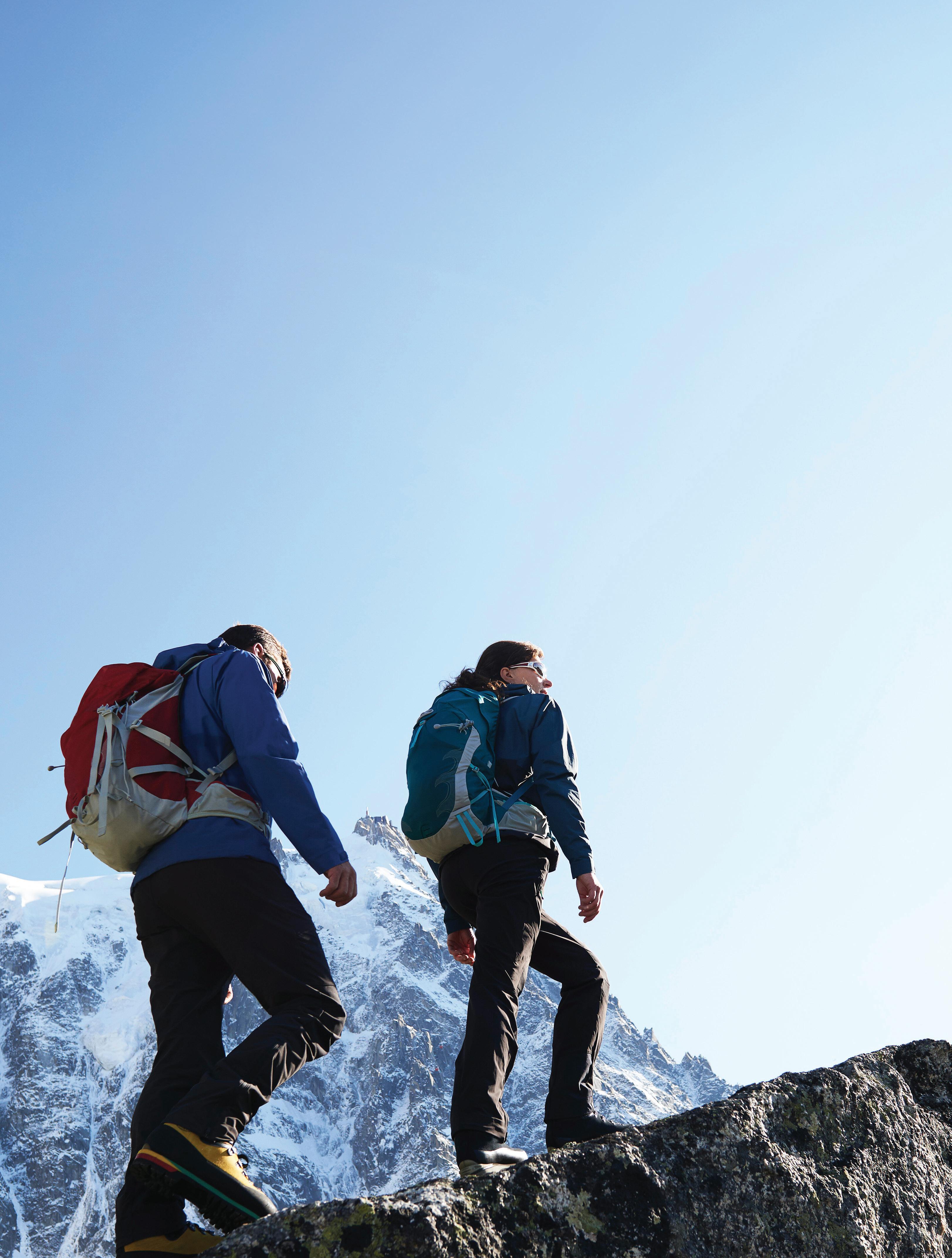
Long-distance trekking is an ultra-endurance activity. Your success—and enjoyment—will depend on your ability to spend hours each day on your feet carrying a pack.
Altitude raises the energy cost of every step, along with your heart rate and breathing demands.
There are no shortcuts here. Just adding more HIIT to your weekly routine will not build the specific endurance these adventures demand.
To build your aerobic base, spend progressively more time with your heart rate near the top of Zone 2. Without formal testing, Zone 2 is the highest intensity at which you can still speak in full sentences.
Rather than distance, focus on time on your feet. Choose terrain with elevation gain and loss to mimic the long climbs and descents of mountain trekking.
Add 5–10 per cent to your Zone 2 time on your feet each week, with a deload about once per month. For the deload, back off by 25–50 per cent for one week then pick back up where you left off. Use these sessions to get used to carrying your pack—ideally the one you'll take on your trek. Start light (~10 lb., or at most 10 per cent of your body weight) and add ~2 per cent each week until you reach your trek weight.
Strength training for trekking isn't about lifting impressive numbers. It's about making every step use less of your available strength.
Focus on lower-body strength and muscular endurance, with an emphasis on single-leg stability (split squats, step-ups, stepdowns), calf work, core strengthening, and shoulder endurance (especially important for making your pack feel lighter).
The result: noticeably less fatigue, better movement quality, and more energy in reserve for dealing with the altitude itself.
We measure strength, pace, and heart rate, yet few people ever measure breathing efficiency.
Most people accept their breathing as something that simply happens. But like strength and endurance, it's a skill that can be practiced and improved.
You can train the mechanical aspect by breathing primarily with your diaphragm. You can train the chemical aspect by increasing your tolerance to lower oxygen and higher carbon dioxide. And you can train the psychological aspect by staying relaxed when breathing becomes uncomfortable.
One of the simplest tools I use with clients is the Body Oxygen Level Test (BOLT) Score. It isn't an altitude test, but a snapshot of your breathing efficiency and tolerance to rising carbon dioxide. Here's how to check your BOLT Score:
• Grab a stopwatch and take a seat in a comfortable chair.
• Breathe normally through your nose for a few minutes.
• At the end of a natural exhale, pinch your nose and hold your breath (start the stopwatch).
• Hold it until you feel the first distinct desire to take another breath.
• Stop the timer and resume normal breathing.
• The number of seconds = your BOLT Score.

Understanding your BOLT Score:
• 25 seconds or more suggests efficient breathing mechanics.
• Under 25 seconds may indicate dysfunctional breathing patterns and could benefit from assessment with a qualified practitioner (e.g., Oxygen Advantage® Certified Functional Breathing Instructor). Important: This is not a max breath hold. You should immediately resume normal breathing without needing to "catch your breath."
Think of your BOLT Score like your resting heart rate: not the goal itself, but a meaningful insight into your current preparedness, and another metric to improve before your adventure begins.
The following breathing technique can be done regardless of BOLT score and can be done as a stand-alone or as the first part of a warm-up routine for a training session:
• Take a normal breath in and out through your nose.
• Hold your breath for 2–5 seconds.
• Breathe normally through your nose for 10 seconds.
• Repeat for 2.5–3 minutes.
Most successful trekkers aren't exceptional athletes, but they are incredibly well prepared.
The goal isn't simply to reach the summit or the mountain pass. It's to have enough left in the tank to enjoy the experience, appreciate the view, and return home with lasting memories.
1. SALKANTAY TREK, PERU (4,630 M)
A spectacular alternative to the Inca Trail, combining glaciated peaks, cloud forests, and a dramatic finish at Machu Picchu.
The world's highest free-standing mountain and one of the most accessible high-altitude summit experiences.
A legendary journey through Sherpa culture to the foot of the world's highest mountain.
One of the world's great trekking routes, offering incredible cultural diversity and the challenge of crossing the Thorong La Pass.
A remote, high-alpine adventure often considered one of the most spectacular trekking circuits anywhere on Earth.
Everything you need to know to stay safe, comfortable, and confident in open water
BY MARK FROMBERG, MD

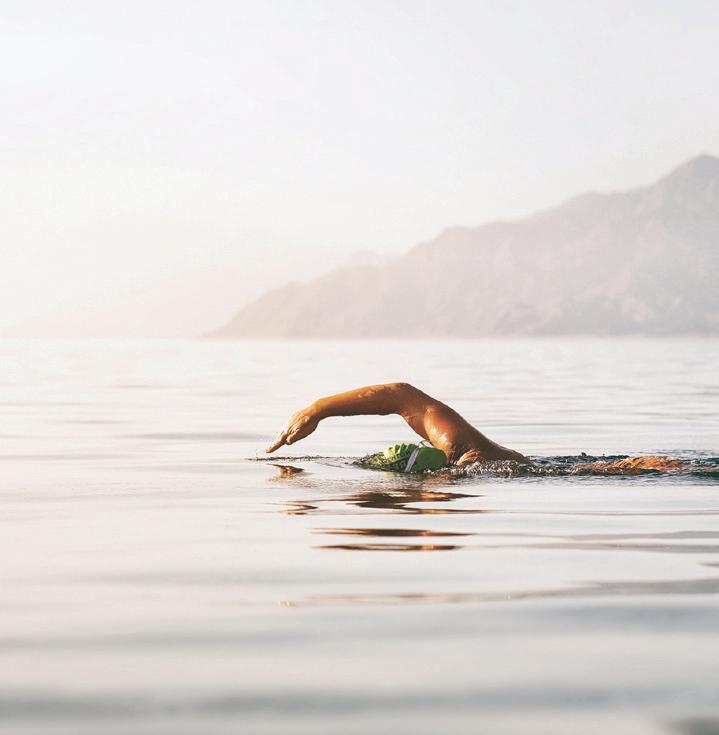
Open water swimming is one of summer’s best arguments for getting outside: simple, demanding, refreshing, and just wild and unpredictable enough to make a hot day feel transformed.
It can also feel like a brief escape, where the mind has less to juggle and the body returns to something more elemental than schedules, screens, and rooms.
So, let’s talk about the essentials of open water swimming.
Before you swim, learn the depth, currents, tides, wind, waves, temperature, visibility, boat traffic, and underwater hazards that you might encounter. A lake or coastline may look calm from shore and feel entirely different once you are in it.
If the water is unfamiliar, ask around, swim with locals, or chat with lifeguards—anyone who knows the place well. Their sense of what changes on the water can save you from discovering too late that a “good day” can turn bad quickly. Pools are predictable. Open water is not.
Open water is usually colder than body temperature, so heat loss is almost inevitable. Even when the water feels tolerable at first, a lot of that body heat is lost through the head.
In colder water, a silicone cap is better than a latex one, since it is thicker and more durable. In colder conditions, you can even double up with two silicone caps or switch to a neoprene cap for added insulation.
A wetsuit is also strongly recommended if you expect to be immersed continuously for more than 15-20 minutes. See side bar for more details.
Open water also asks for flexibility once you are in it. If the wind picks up, the chop gets ugly, or the temperature feels lower than expected, shorten the swim or call it off. Some days call for a longer outing, some for a shorter one, and some for no swim at all.
That is not failure. It is the humility to change course before the water makes the decision for you.
A brightly coloured swim cap and a fluorescent swim buoy help you stand out in the water.
Being seen also means making sure someone knows where you are and when you expect to be back. Whenever possible, swim with others, or let someone on shore know your route and your plans. Open water can change quickly, and even strong swimmers are safer when someone else is aware of their plans.
First your feet will feel the cold; if it feels like pins and needles, give it time. As you move deeper, get your hands into the water and keep them there so your body can start to acclimatize.
Splash water on your face and neck, since those areas are most likely to trigger the cold response. Then put your face in for a moment and see how it feels. If it is tolerable, try a few strokes. If it still feels manageable, keep going. If not, take a few short swims, each a little longer than the last, until you can swim about 50 metres under control.
A swimmer who can cover long distances comfortably in a pool may suddenly feel short of breath after only a few hundred metres in open water. Cold, poor visibility, distance from shore, unfamiliar currents, fogged goggles, or the fear of what lies beneath can all pile up at once and feel overwhelming.
For some people, the challenge is less about fitness than confidence: they need enough exposure and repetition for those anxieties to ease before they can relax into the swim.
The best open-water swimmers do not treat the water as a test to pass. They treat it as a place to return to. Open water should feel exhilarating, not reckless.
Open water swimming is compelling precisely because it is not fully controlled. It asks you to pay attention, to adapt, and to surrender a little of your usual grip on things. In return, it offers something remarkably rare: exercise that feels like freedom.
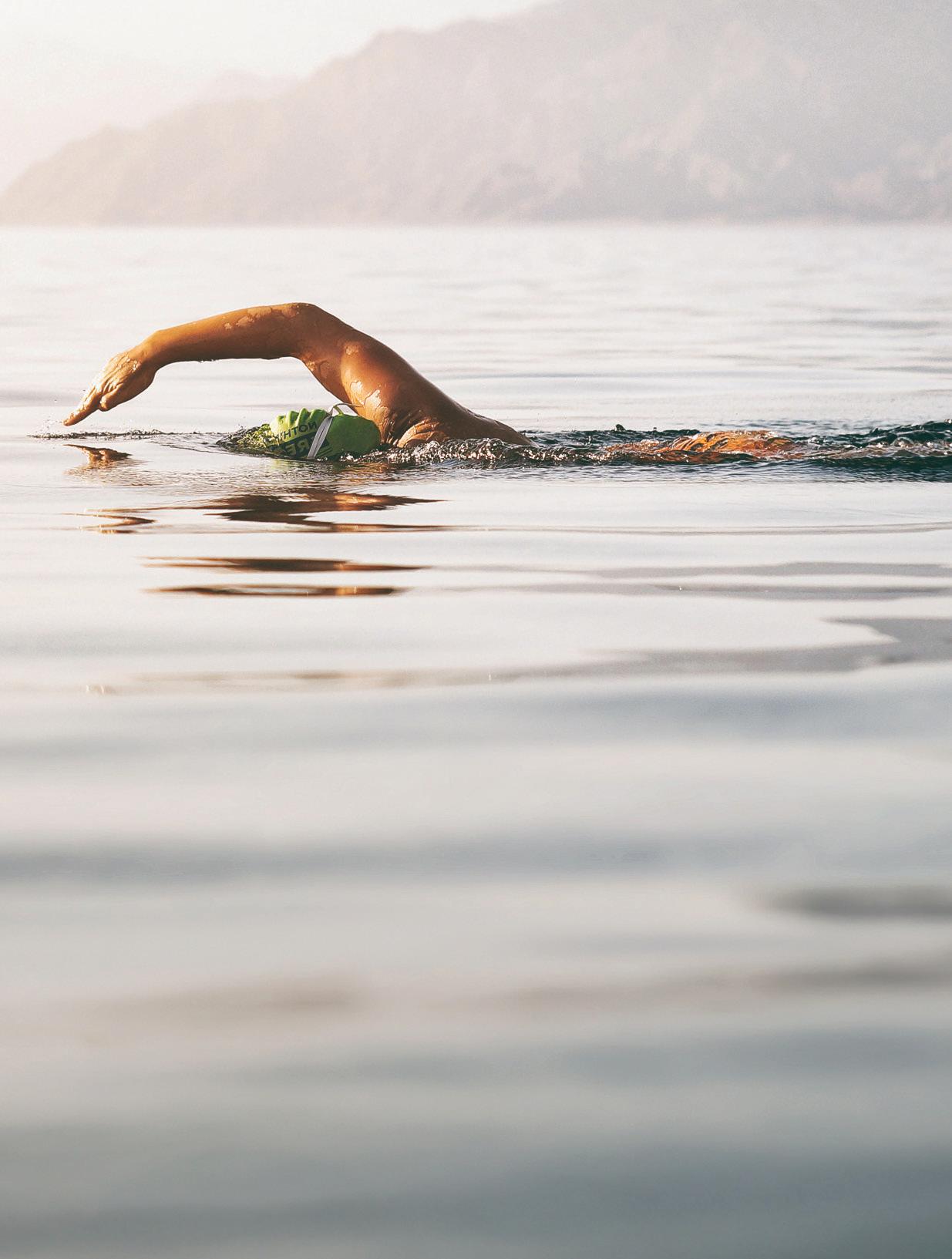
Open water swimming does not have to be expensive. Access is usually free, and the essential gear can be purchased for a few hundred dollars.
Unless you are swimming in very warm water, a wetsuit is the single most important piece of gear. It helps keep you warm and adds flotation. A good wetsuit should fit well: too tight, and it can restrict breathing; too loose, and cold water will keep flushing through. It should also allow enough shoulder freedom for a natural stroke.
A brightly coloured silicone cap helps you stand out in the water and gives you a little extra insulation through your head. A swim buoy such as a Swim Buddy improves visibility even more. It can also give you a place to pause, catch your breath, and calm down if needed.
Good goggles should fit well, not leak, and feel comfortable. Anti-fog lenses are especially important in open water, since you cannot do much to adjust them once you are away from shore. Polarized, tinted, or reflective lenses can also reduce glare and reflections on bright water, though most anti-fog coatings wear out after a season. Once you find a pair that fits your face well, it is worth owning two: one for training, and one kept fresh for events.
A tracking or timing device is useful if you want to measure distance, pace, or total time in the water. Garmin and other water-friendly devices work well for many swimmers, but a simple watch can also do the job.
BY LYNSEY ROMANO
When mileage drops, long runs get shorter, and workouts become less demanding in the final two to three weeks before race day, many runners are suddenly filled with doubt.
We begin asking ourselves: Am I losing fitness? Should I be doing more? What if I’m not ready? Ironically, these concerns often arise just as the body is beginning to absorb months of hard work.
When done well, taper is not a loss of training but one of the most powerful performance tools for endurance athletes. So, what exactly happens during those final weeks before race day to make such a difference?
The answer lies in the relationship between fitness and fatigue, two forces that shape every marathon training cycle.
A taper is the period immediately before a race when training load is deliberately reduced to allow the body to recover from accumulated training stress.
Throughout a marathon build, fitness and fatigue rise together. Every long run, workout, and high-volume week improves aerobic capacity, muscular endurance, and race-specific fitness. At the same time, those same training sessions create fatigue.
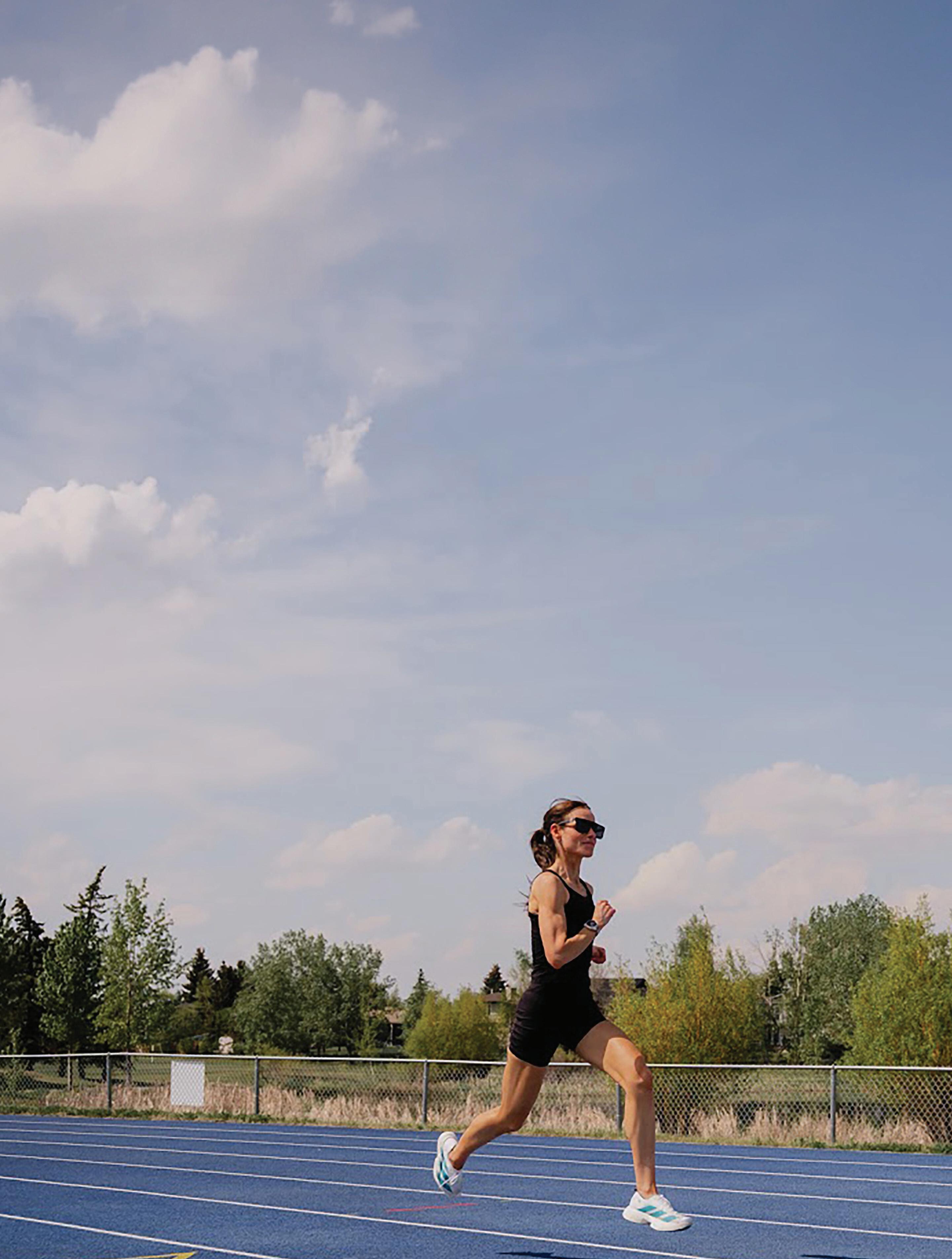
Research on tapering describes the goal as decreasing accumulated fatigue without jeopardizing training adaptations developed during the build. Simply put, the goal is not to build new fitness but to reveal the fitness already there.
For most runners, a marathon taper lasts between two and three weeks.
Research suggests the most effective tapers reduce training volume by about 41 to 60 per cent while maintaining training intensity and frequency.
More recent evidence supports this. A 2023 systematic review and meta-analysis found that tapers lasting 7 to 21 days can improve endurance performance when volume is reduced but intensity and frequency are maintained.
The exact duration depends on the athlete.
First-time marathoners, injury-prone runners, and athletes who feel they are carrying higher levels of fatigue may benefit from a longer taper. There is no universal formula, but the intention remains the same: reduce fatigue without significant loss of fitness.
The biggest adjustment is volume. Mileage decreases, but training frequency often stays similar.
A common taper mistake is eliminating faster running entirely.
Intensity should remain in smaller doses. That faster running preserves qualities runners need on race day, including neuromuscular coordination, running economy, and confidence at marathon pace.
The goal is not to create new fatigue but to give the body small reminders of how to move and respond. This is why shorter marathon-pace efforts, strides, and brief quality sessions can be useful during the taper, while long, demanding workouts are best left behind.
The benefits of tapering go well beyond simply feeling rested.
As training volume decreases, the body has more opportunity to repair microscopic muscle damage accumulated during peak training. Hormonal balance improves, inflammation decreases, and recovery processes become more effective.
Muscle glycogen stores also increase. Glycogen is the primary fuel source used during marathon running, and arriving at the start line with full stores is critical for performance.
The nervous system benefits as well. Reduced training stress can improve muscle recruitment, coordination, and running economy. In simple terms, runners become more efficient while feeling fresher.

Together, these physiological adaptations help explain why performance can improve despite a reduction in training volume.
For many runners, the biggest challenge of tapering is psychological. The sudden reduction in training creates space for overthinking. Minor aches and pains feel significant. Legs may feel heavy one day and energetic the next. Some runners become convinced they are losing fitness, while others feel so good they are tempted to test their fitness with an unnecessary workout. These experiences are normal.
Rather than channelling that nervous energy into extra training, focus on other factors that improve performance. This is the time to prioritize sleep, review your fuelling plan, lay out your race kit, and check race-day logistics. Use the extra mental bandwidth from the taper to prepare rather than worry.
It’s helpful to look at the taper as the final phase of training, not a break from training.
Remember that the purpose is not to make you fitter, but rather to allow the fitness you have spent months building to shine through on race day. By the time you hit those taper weeks, the hard work is done. There is no magical final workout that will boost your fitness, nor is it the time to prove your readiness. The greatest opportunity for improvement comes from arriving at the start line rested and ready to perform.
Sometimes the final act of great marathon training is having the confidence to let the work you’ve already done do its job.
How to build confidence, technique, and consistency when you take your running off-road
BY JACOB PUZEY
Professional runner, online running coach, race director and owner of Peak Run Performance, in Invermere, B.C. JACOBPUZEY
The sport of trail running is growing. Some folks are transitioning from the roads to the trails while others are taking up trail running as their introduction to running in general. Whether it is a desire to spend more time in nature or simply the need to mix things up, trail running provides a new challenge and plenty of opportunities to learn and grow. As with any new activity, the level of enjoyment one experiences correlates with the amount of confidence and competence one possesses.
On one hand, it’s exciting to try something new and tackle a new challenge. On the other hand, gaining at least some confidence and competence in the new activity certainly makes it a bit less intimidating and more fulfilling and sustainable in the long run.
So how does one increase competence and confidence on the trails?
Learning to trail run is like learning a new language. It’s different, yet familiar. It’s challenging, yet intriguing. It’s intimidating yet rewarding. And just as the best way to learn a new language is to immerse yourself into a new culture, the best way to learn to run on trails is to run on trails.
If you are transitioning from the roads to the trails, I recommend some skill development drills or plyometrics to help prepare for the specificity of running on trails, but drills alone won’t be enough to feel confident or competent.
As you immerse yourself by regularly practicing the skill of running on trails and dedicating some time to practice the unique skills of running up and down hills on uneven terrain, your confidence and competence will increase. Adding strength training to your running routine can also help prepare your body and mind for the demands of trail running.
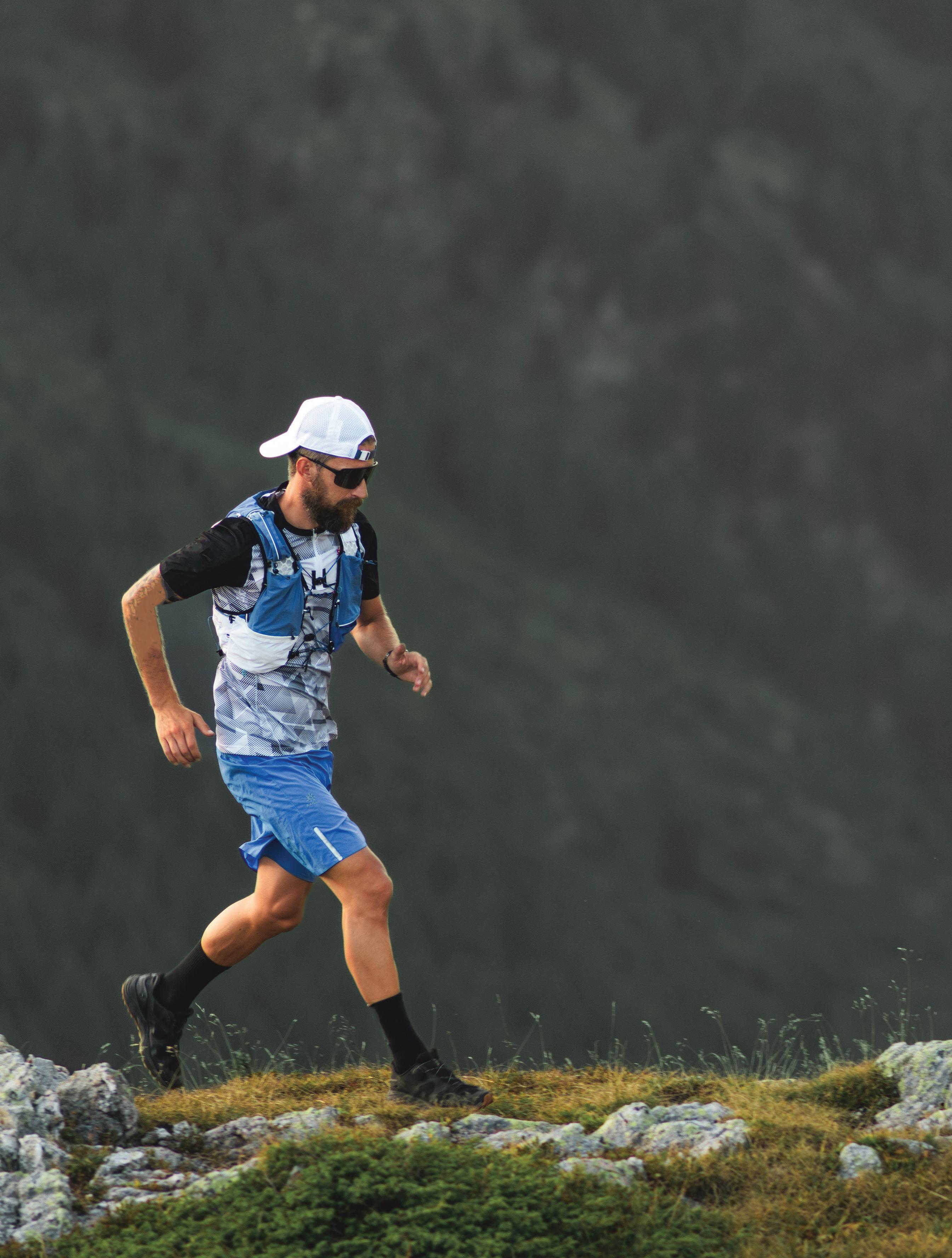
• Start small (one easy trail run per week) and incrementally increase the time that you spend on the trails by either lengthening the run or adding another run on trails each week.
• Do your easy/recovery runs on trails for a mental and physical break from the pavement. As with reading for pleasure, these low-stakes runs will help you gradually feel more confident without forcing it. Go as slow as you need to go and over time your confidence will simply increase.
• Before adding hill repeats, simply do some of your easy/ recovery and long runs on undulating terrain. Start by running these hills—up and down—at the same effort as you would the rest of the run. Over time you can begin increasing the intensity as you ascend and descend the hills.
• Uphill running. Lean into the hills at your heels, keep a short stride length—this allows for better foot placement and your forefoot will propel you forward. If you need to walk or hike that is fine, often at the end of a race a runner’s pace is more efficient hiking rather than running.
• Downhill running. As with the uphill, lean forward with your heels and strike in the forefoot/midfoot. Foot placement is important. When you see an obstacle like a rock, decide whether to go over it or around it. Flaying out the arms is normal—nobody said trail running was elegant!
• In any running plan, at least 80 per cent of it should be at a conversational pace at 5-10 RPE (Rate of Perceived Exertion). If trails are easily accessible, you could eventually work your way up to doing 80 per cent or more of your training on trails.

If trails are not accessible, aim to do at least some of your runs on dirt roads or grass, even if it means doing loops around sport fields.
• If you feel the need or desire to add some intensity to your training, start by doing cut-down runs, strides, fartlek, or hill repeats once a week on pavement. Once you feel comfortable and familiar enough with specific trails you can move these higher-intensity efforts to less technical trails or dirt roads. However, remember most trail running events aren’t short enough that you’ll need to be sprinting up or down hills or in the middle of a race on a flat section, so simply training at a conversational effort or a bit harder should suffice for most runners.
• Plyometrics / Agility Drills – these are explosive movements that are meant to increase muscle power. Typical exercises include jumping jacks, lunges, box jumps and push-ups.
• Easy runs – these aren’t slow slogs but run at an aerobic effort with a focus on feel and form.
• Cut-down runs – these are an effective way to prime the legs and lungs for future hard efforts. You start comfortably and increase the effort incrementally throughout the run, therefore “cutting” down the pace.
• Strides – after a warm-up increase your pace for 50-100 metres, rest and then repeat.
• Fartleks – the Swedish word for speed play. These are intervals done at a five- to 10-kilometre pace during a run.

BY DR. LUISA GILES
Associate Professor
When that WeatherCan air quality alert flashes the number seven, a heavy feeling in my stomach takes hold. It clearly doesn’t understand that for some of us, being outdoors is integral to well-being. So, what should we do?
Canadians are generally lucky to have good air quality, with most living in areas where pollutants remain below national standards.
We know that air pollution is bad for our health because when we inhale the mixture of gases and particles, it can affect our lungs, heart, brain, and many other systems in our body. In fact, air pollution is one of the leading causes of death globally. But given that most of us don’t have the luxury of moving our home just because of air quality, thinking about what we can do to manage our risk is important.
Exercise is an important tool in any health management strategy. By exercising, we are reducing our baseline risk of disease, which in turn could reduce pollution-related health impacts.
So, what happens to our bodies when we exercise outdoors when there is an air quality advisory?
Breathing more heavily increases our dose of air pollution and impairs some of our nasal defences, potentially making exercisers more susceptible to pollution’s effects. Despite this, research generally suggests the benefits of exercise outweigh the risks—even in more polluted areas.
In Canada, the personal dilemmas we face more often surround times when wildfire smoke blankets where we live and we feel trapped indoors. And that dilemma is only growing. As climate change accelerates, wildfires are becoming more frequent and more intense, reversing decades of progress on air quality. So, when the sky turns orange and the smoke rolls in, what should we do?
Early findings on wildfire smoke exposure during exercise are mixed: Mount Royal University scientists report effects on small blood vessels, while pilot work by undergraduate Sacha Schimmelpenninck from the UBC Environmental Physiology Lab found no impact on vascular or lung function. Importantly, smoke levels in these studies were far below the concentrations at which most people change workout plans, leaving major questions unanswered about how exercise interacts with the higher smoke levels Canadians increasingly face.
Despite this, a good place to start is the Air Quality Health Index (AQHI) or setting up the WeatherCan app to send you alerts about what to do when the air quality is poor. Exercising indoors is often the best first option—if the space is properly filtered. Closed windows and HEPA filtration matter; otherwise, indoor air may not differ much from outside conditions.
For some of us, being outside is integral to our well-being, and the thought of 10 kilometres on a treadmill seems about as enticing as a popsicle in Edmonton in February. So, if you need to get outside to move, should you go for a walk instead of that run?
Unfortunately, we don’t have a simple answer. Research in healthy people doesn’t suggest that exercising harder in air pollution is any worse for you than exercising moderately or resting. But there’s a catch: many studies have limitations. For example, some rely on diesel exhaust as a model of air pollution. That leaves a major unanswered question—whether those findings apply to the very different chemical mix found in wildfire smoke, which is becoming a more common exposure across North America.
Based on the research we have, if your run means that you are out for a shorter period, even if it’s more intense, you might be better off than going for a longer walk, as your overall air pollution exposure could be lower. Bear in mind that there isn’t lots of data on people who exercise for more than about 90 minutes, so we don’t always have comprehensive data to answer these questions fully.
In instances where you decide that it’s more beneficial for you to move outside, let your symptoms guide you, and if you have any symptoms related to air pollution, such as chest tightness, wheezing or shortness of breath, these are not to be ignored.
Like the person who meditates for five minutes in the morning, but is distracted and stressed throughout the day, there are many other hours in the day that we can do something about our exposure to air pollution. Having a portable air cleaner with a HEPA filter at home is a great way to reduce your exposure to harmful particles from wildfire smoke.
If commercial air cleaners are out of financial reach and you’re looking for a cheaper but effective option, DIY air cleaners are a great alternative.
You can also consider wearing an N95 mask during exercise. If you are someone with any kind of lung disease, including asthma, chat to your doctor first. Although it may decrease your overall exercise capabilities, it is one way to reduce your exposure to particles from wildfire smoke.
So back to that WeatherCan alert on my phone; would I go for that run? Like all good decisions, it depends. The smell of smoke makes me nauseous, so if it smells too smoky out, I’ll probably skip the run. But what should you do? My advice: weigh the AQHI messages with any mitigation strategies you can employ, along with the circumstances of your life and well-being.
BY DR. JOEL FUHRMAN

Dr. Joel Fuhrman has spent more than four decades treating patients who follow plant-based diets. While many experience impressive improvements in cardiovascular health and longevity, he noticed a concerning pattern among some long-term vegans: higher rates of neurological disease later in life.
Recent findings from the Seventh-day Adventist Health Study 2 have raised similar questions. The study followed approximately 88,000 participants over several decades and found that older vegans experienced higher mortality from stroke, dementia and Parkinson's disease than their non-vegan counterparts. Because Adventists generally avoid smoking and alcohol and tend to lead healthy lifestyles, researchers can more easily isolate the effects of dietary patterns.
Fuhrman believes one nutrient may help explain part of t he difference: DHA.
DHA is a long-chain omega-3 fatty acid that plays a critical role in brain structure and function. Research also suggests it may support the brain's ability to clear waste products and environmental toxins.
Dr. Cara Fuhrman, a naturopathic doctor and researcher, explains the mechanism plainly: "In vegans specifically, we're not eating enough DHA, and without DHA, your brain can't filter these toxins out, which is leading to the increase in Parkinson's disease."
While flaxseeds, chia seeds and walnuts contain ALA, a plantbased omega-3, the body must convert ALA into DHA before it can be used by the brain. Research suggests that conversion rates vary considerably, and many individuals may not produce enough DHA from plant sources alone.
Dr. Cara explains the timeline: "What the research shows is that flax and chia are high in ALA, which can increase your levels of EPA, but it doesn't increase your levels of DHA. That would take years and years and years."
In 2021, researchers published a study measuring omega-3 index levels in people's blood and tracking who lived longer.
People with an omega-3 index greater than 8 per cent lived about five years longer than those with an index below 4 per cent.
Five years doesn't sound like much until you realize: that's statistically equivalent to the longevity difference between smokers and non-smokers.
More recent research from 2024 analyzed every clinical trial on omega-3 supplementation and dementia prevention. Scientists from around the world spent years compiling data.
Their conclusion: People with higher omega-3 intake and higher levels of DHA and EPA in their red blood cells had a lower risk of cognitive decline.
Fuhrman's recommendation is not to abandon plant-based eating but to ensure it is nutritionally complete.
He advocates a plant-rich diet combined with strategic supplementation for nutrients that can be difficult to obtain from plants alone, particularly DHA, EPA, vitamin B12 and zinc.
"The recommendation is to follow a plant-rich diet and supplement intelligently with the few nutrients that the plantbased diet doesn't reliably provide," he says.
This approach explains why he's been ahead of the research for decades. He wasn't pushing veganism while secretly hoping his patients would figure out the gaps. He was recommending a different approach altogether—one that combines the protective benefits of plant-based eating with the nutritional completeness that smart supplementation provides.
For strict vegans, algae-based DHA supplements provide a direct source of omega-3s without relying on fish. Fuhrman also recommends monitoring B12 and zinc status and using blood testing when appropriate to help guide supplementation.
Plant-based diets remain one of the healthiest dietary patterns for longevity and chronic disease prevention. However, Fuhrman believes that nutritional completeness matters as much as dietary philosophy.
For people following a vegan or predominantly plant-based diet, ensuring adequate DHA intake may be one of the most important steps they can take to support long-term brain health. Don't wait for symptoms. Don't wait for memory problems. Don't wait for tremors.
Get your omega-3 index tested. Get your B12 levels checked. Know your actual numbers, not your assumptions. Then supplement accordingly.
This article is edited for length and reprinted with the permission of Dr. Fuhrman.
For anyone following a plant-rich diet (whether strictly vegan or not), these nutritional gaps require attention:
DHA/EPA (Omega-3 Fatty Acids)
• Use algae-based DHA, not fish or fish oil
• Keep refrigerated in dark glass to prevent oxidation
• Target omega-3 index: 6–9 per cent (get tested to know your actual level)
B12
• Most plant-based eaters already supplement this
• Get levels tested every few years

Zinc
• Often overlooked but critical for immune function and neurological health
• Plant-based sources have lower bioavailability
• Supplementation is likely necessary
Critical point: Don't guess at dosages. Get tested.
BY DR. NAVNIRAT NIBBER
A graduate of the Canadian College of Naturopathic Medicine and registered as a naturopathic doctor in Alberta. In addition to her clinical and consulting work, Dr. Nibber is a medical director and brand educator for Advanced Orthomolecular Research in Calgary, AB, engaging with international research in the naturopathic field and is a published health expert in over 25 international publications AORHEALTH AORHEALTH AOR-ADVANCED-ORTHOMOLECULAR-RESEACRH
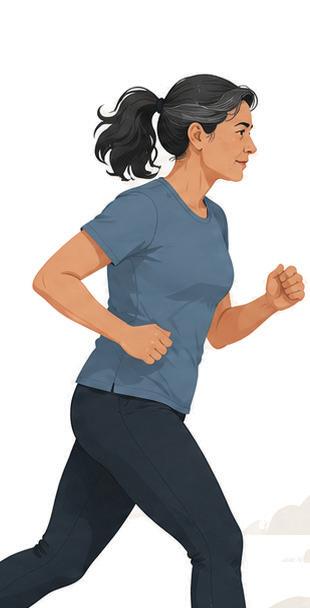
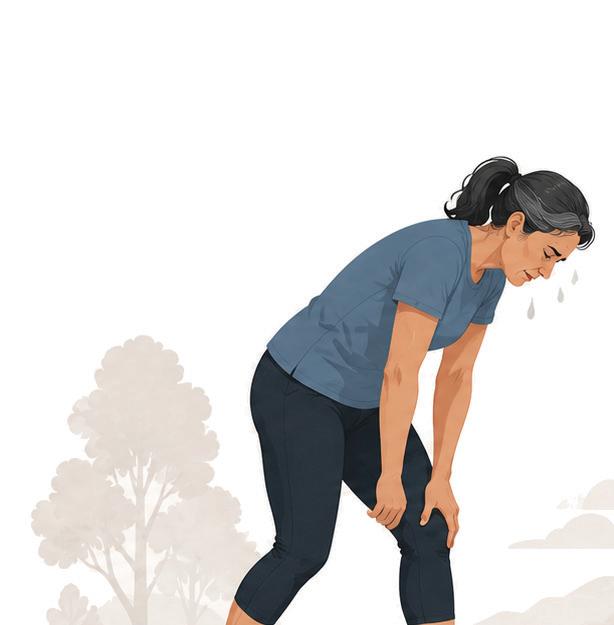
You got eight hours of sleep. You made it to the gym. You’ve been trying to eat well. On paper, you’re doing everything you usually do to stay on top of your health.
And yet, you're wiped out. Again. And then again the next day. Many active Canadians shrug this off. They blame a busy schedule or getting older, pour another coffee, push through another workout, and hope the weekend will fix it.
Only, sometimes “tired” isn’t a passing state. It’s something else entirely. It’s a sign of depletion.

In my work as a naturopathic doctor, I see this pattern all the time. People gradually stop feeling like themselves. Training feels harder, recovery takes longer, and the energy they once had simply isn't there.
They wake up tired, relying on caffeine to keep going, and can’t figure out why the habits that used to carry them aren’t doing much anymore.
There’s a real difference between tiredness and physical depletion. Tiredness is part of life. A rough night of sleep, a tough training session, or a stressful stretch at work can all take the wind out of you. But with rest and a bit of TLC, you come back.
Depletion doesn’t work that way.
Physical depletion happens when what you’re asking of your body consistently exceeds what it can recover from. Over time, stress, poor sleep, inadequate nutrition, intense exercise, and other life pressures can slowly drain the reserves you rely on to feel steady and strong.
And it’s easy to miss at first. You might notice:
• you wake up tired even after a full night of sleep
• you need more time to recover from workouts
• a dip in performance, drive, or enthusiasm
• brain fog, scattered focus, or trouble concentrating
• you feel snappy, overwhelmed, or on edge more easily
• you catch colds more often
• a nagging sense that something is “off”
Plenty of people live with these signs and write them off as just being busy. But living on empty all the time shouldn’t be treated as normal.
Most active people prioritize training but overlook recovery. Exercise is a stressor. You don't get stronger during the workout, but during the recovery that follows.
Sleep is one of the most powerful recovery tools we have. It gives the body time to repair tissues, restore energy, and regulate the hormones that support performance. Recovery days matter too.
Low-intensity Zone 1 exercise can help your body recover without adding significant physical stress.
What happens outside the gym matters, too. Chronic stress from work, family, finances, and daily responsibilities can quietly undermine recovery by affecting the body's ability to repair and adapt.
Nutrition is just as important. Many active Canadians don't realize they're asking more of their bodies than they're fuelling them for, often relying on convenience foods that fall short on the protein and nutrients needed to support recovery.
Hydration also plays a key role. Even mild dehydration can affect both physical and mental performance, and after prolonged exercise or heavy sweating, replacing electrolytes is just as important as replacing fluids.
Key nutrients, including protein, magnesium, iron, vitamin B12, and omega-3 fatty acids, also play essential roles in energy production and recovery.
When you feel run down, the instinct is often to do more anyway. Our culture rewards it. More work. More training. More output. But sometimes pushing harder isn’t the fix. Sometimes you don’t need to toughen up. You need to recover better. Start with the basics:
• Prioritize seven to nine hours of quality sleep each night to give your body enough time to complete the deep sleep cycles that support recovery.
• Fuel your body consistently with balanced meals that include enough protein, healthy fats, and fibre to support steady energy and recovery.
• Stay hydrated and replace electrolytes after prolonged exercise or heavy sweating.
• Treat recovery as part of your training plan. Schedule recovery days, incorporate low-intensity Zone 1 movement, and, for menstruating women, consider adjusting training intensity throughout the menstrual cycle.
• Manage stress intentionally through movement, mindfulness, time outdoors, or other recovery practices that work for you.
• Don't ignore persistent fatigue. If you're doing all the right things and still feel depleted, speak with a qualified healthcare professional. Ongoing fatigue may reflect nutrient deficiencies, hormonal imbalances, or other underlying health conditions. Feeling tired after a demanding week? That's normal. Feeling depleted for months? That's not.
If you don’t feel like yourself anymore, don’t brush it off. Your body may be asking for something many of us struggle to give ourselves: time, support, and real recovery.
Because performance isn’t only about how hard you go. It’s about how prepared your body is to bounce back.
BY CHANTAL MENARD CÔTÉ
A registered psychologist, teen life coach, and founder of Pyramid Psychology in Calgary, AB. PYRAMIDPSYCHOLOGY PYRAMID PSYCHOLOGY CHANTAL-COTE-

When athletes get injured, the treatment plan is usually pretty predictable.
While the journey of recovery isn’t linear, you can usually count on appointments to attend, exercises to complete, and checkpoints to measure progress along the way.
Physiotherapists, athletic therapists, physicians, and other professionals play an important role in helping athletes return to sport safely.
But there is another side of injury recovery that gets far less attention: the mental and emotional recovery.
As a psychologist and teen coach working with teenage girl athletes, I see the impact of injury every day. Most of the time family members and coaches are supportively focused on the physical recovery but are less aware of the fears, frustrations, and uncertainties their athletes are carrying that can make recovery even more challenging.
For many young female athletes, sport is much more than an activity they do. It provides community, purpose, confidence, connection, and identity.
What happens when that is suddenly taken away, even temporarily? The questioning takes root: Who am I without my sport? What if I never get back to where I was? What if my teammates and friends move on without me? What if I let everyone down? Do I still fit in?
These worries are all too common, yet many young female athletes feel pressured to stay positive, push through, and keep their struggles to themselves.
Emotional and mental recovery deserve just as much care as physical recovery but can be overlooked because the challenges aren't always as visible.
Injured athletes often experience:
• frustration with physical limitations
• fear of re-injury
• anxiety about returning to sport
• loss of confidence
• social isolation from teammates and friends (that may not fully understand their experience)
• disappointment over missed opportunities
• changes in identity
• challenges with body image and self-worth
These are normal human responses to a difficult situation.
Acknowledging these experiences can reduce shame and help athletes recognize they are not alone.
The mind and body are continuously exchanging information that influences both physical healing and emotional well-being. When fear, stress, self-doubt, and isolation build up, they influence how athletes experience the recovery process. It can also become harder to stay engaged with rehabilitation plans and maintain motivation during setbacks.
On the other hand, athletes who feel supported emotionally and mentally are better equipped to navigate uncertainty, communicate their needs, and remain committed to the recovery process.
Celebrate progress, not just outcomes
Recovery can feel slow and unclear, especially when focused on the finish line. Encourage athletes to notice the small victories along the way.
Perhaps they experienced a little less pain one day. Maybe they took a few extra steps, completed their rehabilitation exercises, or laughed with a friend without thinking about the injury.
All wins matter. They are reminders that progress is happening, even when it’s harder to see.
Focus on what’s within their control
Injury can make athletes feel powerless.
Shifting attention toward actions they can take such as stretching, prioritizing sleep, eating well, and doing things they enjoy outside of their sport can help restore a sense of confidence and agency.
Practice self-compassion
Many athletes are harder on themselves than they would ever be on others. On top of that, recovery doesn’t follow a perfectly straight line. There will be good and difficult days.
Practicing patience and self-compassion can help reduce unnecessary stress during the healing process. Encourage athletes to ask themselves: How would I treat a friend going through this same experience?
Build self-trust through small promises
When athletes follow through on their commitments, whether it’s attending appointments, taking rest days, or getting up early to establish routine, they strengthen trust in themselves.
Confidence and trust are built through consistency. Every small action sends an important message: "I can count on myself.”
Self-trust helps athletes listen to their bodies, advocate for their needs, ask questions, and trust the recovery process as they gradually return to sport.
Talk about what they’re carrying
One of the most powerful things an athlete can do is talk openly about their experience with people they trust.
Whether it is a parent, coach, teammate, therapist, or a trusted friend, having a safe space can reduce feelings of isolation and create opportunities for support and growth.
Better overall outcomes come from supporting the mental and emotional side of injury.
Recovery is more than returning to sport
It’s easy to think injury recovery is about one goal: getting back in the game.
But recovery is also an opportunity to develop resilience, self-awareness, self-compassion, and trust.
The physical aspects of healing are incredibly important. Yet when we also care for the emotional and psychological side of recovery, we support athletes not only in returning to sport, but in returning more confident and connected to themselves.
BY AMY MCDONNELL, PHD & DAVID STRAYER, PHD
Amy is an assistant professor of Cognitive Neuroscience in the Department of Psychology at Colorado State University in Fort Collins, CO. David is a professor emeritus of Cognitive Neuroscience in the Department of Psychology at the University of Utah in Salt Lake City, Utah.
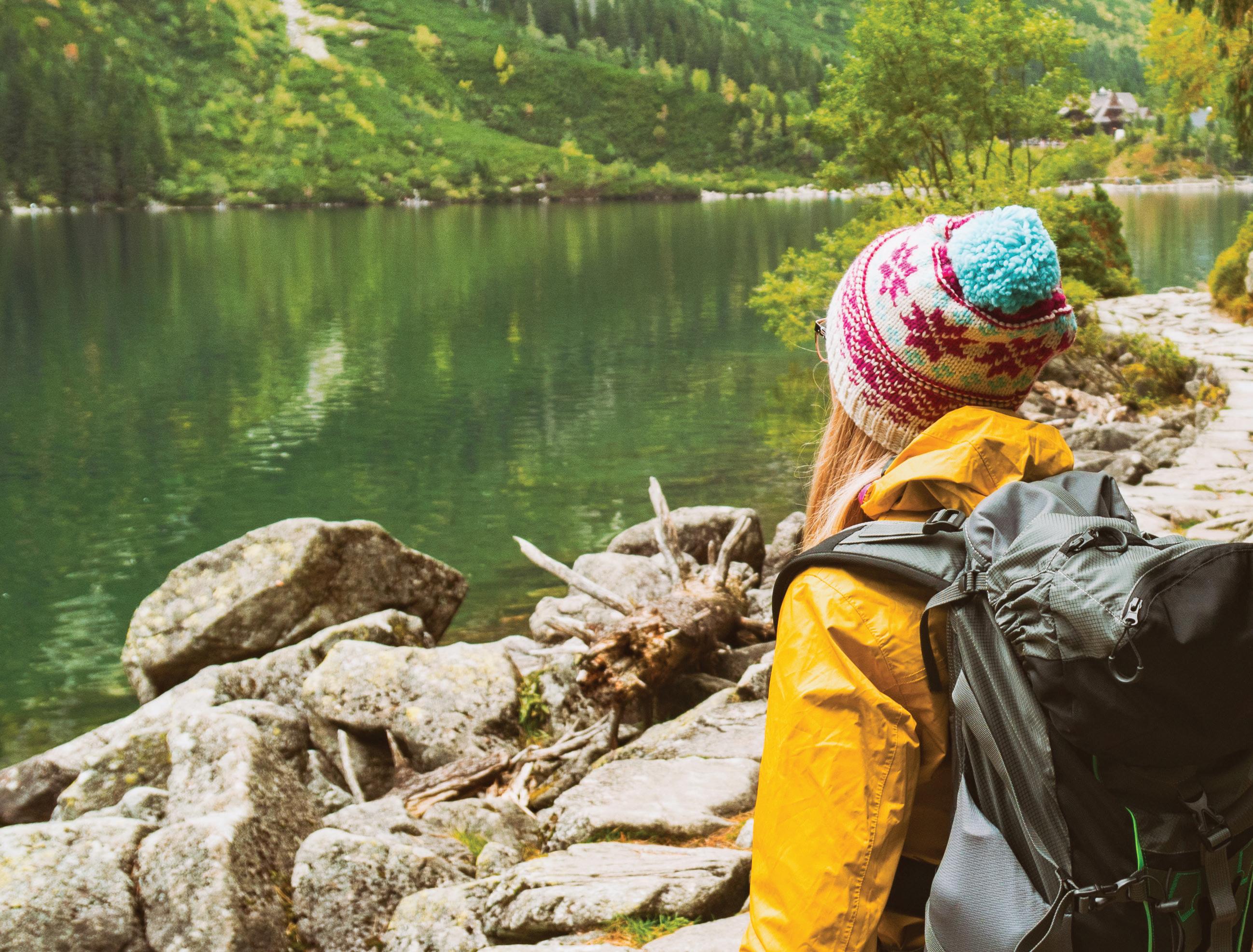
If Henry David Thoreau were alive today, he would probably tell you to get off your cell phone or computer and take a hike in a park or, better yet, take a longer trek into nature. Recent advances in the emerging field of environmental neuroscience are supporting Thoreau’s admonishing.
Over the past few decades, researchers have accumulated evidence showing that spending time in nature benefits mental health, physical health, stress physiology, and cognitive functioning.
This may seem intuitive. As our world becomes more and more urbanized, people spend an increasing amount of time indoors. For many of us, getting outside and into nature is the “mental reboot” we need to recalibrate our senses and reconnect with our evolutionary roots. We often return from an outing feeling more focused and less stressed. But why?
Research suggests that being in nature changes the way we attend to the world around us. In our everyday urban environments, we are constantly bombarded with stimuli competing for our limited attention—email notifications, text messages, television and persistent social media chatter. Over time, this constant stimulation depletes our neural reserves. When we are in nature and off our technology, we give the brain a chance to rest and recuperate from these relentless attentional demands.
Researchers at Colorado State University and the University of Utah are studying how this cognitive restoration may be reflected in our brain activity. Their research explores how attentional processes in the brain change in nature compared to urban environments.
Because urban environments place greater demand on our attentional networks than natural environments, the team hypothesizes that spending time in nature alters attention-related brain activity.
To test this, Dr. Amy McDonnell and Dr. David Strayer take research participants into the Southern Utah wilderness for multiple days at a time and record brain activity using a method called electroencephalography (EEG).
EEG measures the brain’s electrical activity through sensors placed on the scalp, allowing the researchers to track momentto-moment changes in brain functioning as participants are immersed in nature.
EEG is non-invasive and can provide a more objective measure of an individual’s experience in nature than self-report questionnaires. While self-reports are valuable, they can be influenced by an individual’s expectations or unintended pressure to provide socially desirable answers. By measuring brain activity directly, researchers can examine how the brain responds to nature in real time and identify the neural mechanisms that may underlie improvements in attention.
McDonnell and Strayer’s findings have largely supported their predictions. After four days of immersion in nature, research participants show changes in brain activity associated with working memory, visual engagement, error processing, and reward processing—all important aspects of attention and cognitive functioning. This work has helped researchers move beyond simply asking whether nature is beneficial and toward understanding exactly how exposure to nature changes the way the brain functions.
McDonnell and Strayer are also curious whether people need to spend several days in the wilderness to experience these benefits or whether a shorter exposure to nature can produce similar effects.
To answer this question, they have tested whether a short walk in a local arboretum replicates the attentional benefits they had observed following a multiday immersion in nature.
In one such study, 92 participants were randomly assigned to take a 40-minute walk either through Salt Lake City’s Red Butte Garden or on a nearby urban medical campus. The results mirrored those from the wilderness studies.
The urban walk placed greater demands on the brain’s attention networks, while the walk in nature appeared to give those networks an opportunity to rest and recover. As a result, participants who had walked in nature performed better on a subsequent cognitive task.
These findings suggest that you may not need to disappear into the wilderness for multiple days to experience nature’s benefits, but even a brief walk through a natural environment can help restore attention and improve cognitive functioning.
Researchers in this growing field of environmental neuroscience are working to understand what it is, specifically, about nature that has such a positive impact on mental, physical, and cognitive health.
Is it the exercise that is often associated with being outside?
Is it the opportunity to disconnect from our devices and escape the constant stream of notifications competing for our attention?
Is it the socializing we do around a campfire and on a hike with friends? Or is it a combination of these elements that creates a more restorative environment and gives the brain an opportunity to rest and recuperate?
The answers are still emerging. As researchers continue to investigate the mechanisms underlying nature’s benefits, they draw inspiration from both modern science and the observations of naturalists, philosophers, and indigenous communities who recognized the value of nature long before brain imaging existed.
In many ways, contemporary environmental neuroscience is beginning to provide empirical support for insights that thinkers like Thoreau articulated more than a century ago.
surprising neuroscience behind your next run
BY DR. SYL CORBETT
An endurance athlete, scientist and coach specializing in physical literacy and brain health, based in Calgary, AB. She has competed in numerous world championships in triathlon, mountain running, snowshoeing and marathons, and is the founder of Athleticwise and Rock On Clay. ROCKONCLAY ROCKONCLAY

There is nothing like a summer run to make you feel incredible. Whether it’s seeing a spectacular sunrise or rounding out the day with the cooler evening weather. You’re doing something that has cardiovascular benefits, improves your body composition, may make your muscles stronger and increases your endurance.
Beyond these perks, and perhaps less overt, is yet another magnificent effect that occurs between your ears. Running has the potential to drastically influence your brain function. It is an investment in your short- and long-term “healthspan,” including that of your brain. The mood-elevating effects may be seen immediately, and the regular adoption of this regime may manifest in myriad health gains systemically and gradually over time.
A now well-known benefit to your run may be its stimulation of brain-derived neurotrophic factor (BDNF). BDNF is one of the neurotrophic factors that sustain differentiation, maturation, and survival of neurons in the nervous system. It also demonstrates a neuroprotective effect under adverse conditions, such as neurotoxicity.
The exercise-induced elevation in circulating BDNF enhances neuroplasticity, i.e., the ability to adapt to new stimuli. Creativity and cognition may be heightened post-workout. BDNF and endocannabinoids, endogenous cannabinoids, both may contribute to this enhanced brain function.
An increase in cerebral blood flow may likely also factor in these advantages. A caveat is that overly vigorous or prolonged exercise may induce central fatigue and impair cognition. As you run, oxygen-rich blood courses through your body including your brain, and metabolites are removed—all of which diminish your risk of dementia and stroke.
Activation of the BDNF pathway may be explanatory in the mechanism of neuroprotection. Together, these changes don't just improve how the brain functions, they may also help it grow and adapt over time.
Neurogenesis, the birth of new neurons, occurs after exercise, especially in the hippocampus. This brain region is cited to be critical in memory, learning, and spatial navigation—except when you get lost on your run!
The mental effects of your healthy jaunts are palpable. Dopamine, serotonin, norepinephrine and endorphins are neurotransmitters that flood the brain when you physically exert yourself. Running may help you tolerate the stress-induced cortisol surges as well. You become more resilient to life stressors and recover expeditiously.
Running is such a powerful hack to give you clarity, focus, and a fresh perspective. Both acute and regular workouts demonstrate these effects.
Before an exam or stressful meeting, it may be auspicious to go on a run to maximize your subsequent performance.
Another factor that justifies your running habit is its effects on inflammation. Inflammation has been implicated in several mental health disorders such as depression, anxiety, and many neurodegenerative diseases.
Running may be both pro- and anti-inflammatory depending on factors such as fitness levels, training experience, ambient conditions, etc. Adequate rest between exertions may favor the latter milieu.
Recovery is another important piece of the puzzle.
Sleep quality may be improved by your running lifestyle. Better sleep is yet another viable mechanism that may support better brain health. You may experience less sleep latency, more slowwave sleep, and generally improved sleep efficiency. Your body undergoes healing and waste removal when you sleep, which may further support brain health.
Neurological research demonstrates white-matter integrity improves with regular aerobic exercise. White matter forms the connections between disparate brain regions and permits transmission of information. So not only are there functional gains, but so too, structural neurological adaptations to the efforts making the processing more efficient.
These benefits aren’t limited to the young developing brains but may occur throughout the lifespan. In fact, the hippocampus, critical for memory, may increase in volume with training in older adults. This correlates with an upregulation of BDNF in the serum. All said, aerobic fitness is something worth maintaining as we age.
The intensity of your run should stress the body enough to stimulate an adaptation. You can even experience benefits from a moderate intensity run although high-intensity workouts may be more time efficient to reap the neural rewards. The crucial factor is consistency. A smart strategy is to mix up your runs, varying the intensity throughout the week.
So, this summer, lace up your runners and “head” outdoors. With every running stride, you have the potential to bathe your noggin with powerful neurochemicals, boost your mood, declutter your mind, and elevate your entire general wellness. You can feel fantastic about doing something for both your body and brain alike.
Meet the 2026 Experts Transforming Local Healthcare
These top doctors and medical leaders are driven by compassion, innovation, and an unwavering commitment to exceptional, high-level care.


“Every joint injury, spinal condition and sports injury has a soft tissue component that must be addressed to achieve the best possible patient outcomes.”
Whether recovering from an injury, managing chronic pain or striving to perform at your best, having the right team behind you can make all the difference. At Active Sports Therapy, chiropractic care goes far beyond spinal adjustments. The team of nine chiropractors, working alongside more than 30 healthcare practitioners across two south Calgary locations—with a third clinic opening later this year—shares a common philosophy: every joint injury, spinal condition and sports injury has a soft tissue component that must be addressed to achieve the best possible patient outcomes.
What sets AST apart is that every chiropractor integrates advanced soft tissue treatment into patient care, including Active Release Techniques® (ART). This specialized hands-on approach identifies and releases adhesions within muscles, tendons,
fascia and nerves to restore normal tissue mobility. By treating both the joints and the surrounding soft tissues, our chiropractors help reduce pain, improve range of motion, restore function and accelerate recovery.
“Too often, the source of a patient’s pain isn’t just the joint—it’s the surrounding muscles and soft tissues,” says Dr. David Westmacott, President and CEO of Active Sports Therapy. “If you don’t treat those tissues, you frequently miss the underlying cause of the problem.”
AST chiropractors regularly treat repetitive strain and sports injuries, including rotator cuff injuries, achilles tendinopathy, tennis elbow, hip and hamstring strains, plantar fasciitis, neck and back pain, and tension-type headaches. By combining chiropractic care with advanced soft tissue treatment, patients recover more efficiently and return to the activities they love with greater confidence.
Willow Park 220-9950 MacLeod Trail SE Calgary, AB T2J 3K9 403-278-1405
Westman Village 148 Mahogany Centre SE Calgary, AB T3M 2X9 825-509-4780
activesportstherapy activesportstherapy www.activesportstherapy.ca
Patients also benefit from AST’s Unified Team Care model. Their chiropractors work closely with physiotherapists, registered massage therapists, Traditional Chinese Medicine doctors and naturopaths to develop coordinated treatment plans tailored to each patient’s individual needs.
“Our greatest strength is our team,” says Dr. Westmacott. “The collective knowledge and experience of our practitioners allows us to provide a level of care that no single practitioner can offer alone. By collaborating across disciplines, we consistently achieve better patient outcomes.”
“At Active Sports Therapy, our chiropractors don’t just treat the spine—we treat the whole person, including the oftenoverlooked soft tissues that are essential to lasting recovery, optimal performance and long-term health.”
119-8989 Macleod Trail SW Calgary, AB T2H 0M3
403-719-9192
alignmentfirstinc alignmentfirst.ca www.alignmentfirst.ca
“By the time many patients reach me, they have spent years navigating conflicting diagnoses and unsuccessful treatment plans. They have invested time, money, and hope. My first goal is to help their story make sense again— and help them regain hope.”
For many years, Geoff Dakin was best known as a low back pain specialist. Today, much of his work lies at the intersection of biomechanics, dentistry, and multidisciplinary healthcare.
For more than eleven years, Geoff has collaborated with dentists, orthodontists, upper cervical chiropractors, and other healthcare professionals on complex temporomandibular disorder (TMD) cases from across North America and around the world.
That evolution draws on nearly 37 years of practice, including serving as a therapist for the NHL’s Vancouver Canucks, becoming a published researcher, developing the Alignment First Protocol, and writing the Amazon bestseller The Body Mechanic’s Handbook. Elite sport also taught him what
he calls The Athlete’s Paradox: the strongestlooking bodies are often compensating the hardest.
In his newest book, The Biomechanical Brain, Geoff tells the story of Kim, who spent years using dental appliances and undergoing bite adjustments with little lasting success. The dentistry was not necessarily wrong. The timing was.
Her pelvis remained twisted, continually altering the mechanics above it. Only after her base stabilized did the true bite problem become visible—and treatable.
Not every bite problem begins in the pelvis. But treatment becomes more predictable when clinicians, regardless of profession, adopt a true Teeth-to-Toes perspective.
“My practice didn’t move from low backs to jaws. It evolved from treating body parts to
understanding systems,” says Geoff Dakin.
That philosophy guides the Alignment First Protocol whether Geoff is working with chronic pain sufferers, office workers, athletes, or patients with complex TMD.
His writing appears regularly in IMPACT Magazine and on Substack, where he explores biomechanics, chronic pain, dentistry, and multidisciplinary care.
Geoff also mentors therapists, helping them move beyond technique-centred care, strengthen their clinical reasoning, build referral networks, and become more valuable members of collaborative healthcare teams.
After nearly four decades in practice, his work is guided by a simple belief: healthcare works best when its experts learn to see the same interconnected human system.
You don’t have to see the whole staircase, just take the first step.
“Every face tells a story. My role is not to change who someone is, but to understand how they have aged, identify what will make the greatest difference, and create results that look healthy, balanced and naturally refreshed.”
There is a distinction between performing cosmetic procedures and practising aesthetic medicine.
For more than 23 years, Dr. Gidon Frame has combined advanced cosmetic medicine with over 40 years of physician experience. Skin quality, collagen loss, facial volume, hormonal changes, and overall health all influence how we age and heal. Rather than treating individual wrinkles, he evaluates the face as a complete three-dimensional structure — through the lens of a physician who understands the health of the whole patient.
The Art of Facial Balancing: Exceptional aesthetic medicine is rarely a single treatment. The most natural results come from understanding the relationship between facial support, skin quality, volume, movement, and tissue position. Every consultation includes a comprehensive facial assessment to determine which combination will provide the greatest benefit — so patients age gracefully, never overtreated, frozen, or artificial.
Advanced Expertise in Injectables and Aptos® Thread Lifting: Dr. Frame has spent
more than two decades refining advanced injectable techniques using neuromodulators, dermal fillers, biostimulatory injectables, and regenerative treatments that restore structure while maintaining natural facial movement.
Following advanced international training and certification, his expertise now extends to the latest generation of Aptos® Threads, which reposition facial tissues while stimulating the body’s own collagen production. For carefully selected patients seeking a minimally invasive alternative to surgery, Aptos® Threads can restore facial support, redefine the jawline, elevate the cheeks, and improve the neck while encouraging long-term collagen remodeling.
Premium Technologies for Skin Tightening: Exceptional outcomes require exceptional technology. The clinic offers the world’s most advanced non-surgical skin tightening systems, including Thermage® FLX and Ultherapy PRIME®.
Thermage FLX uses monopolar radiofrequency to strengthen existing collagen and stimulate new collagen, firming skin on
2200 West 4th Ave. Vancouver, BC V6K 1N8
604-261-9121
antiagingvan
AntiAgingVan antiagingvancouver.com
the face, eyes, neck, and body with little to no downtime. Ultherapy PRIME uses micro-focused ultrasound with real-time imaging to treat the deeper structural layers that support the face, lifting the brow, jawline, neck, and décolletage. These technologies work even better thoughtfully combined with injectables, Aptos® Threads, laser treatments, or medical-grade skincare — every plan built on the patient’s anatomy, lifestyle, and goals, never a standardized protocol.
A Physician’s Perspective: Consultations with Dr. Frame feel different. He brings the curiosity and thoroughness of four decades of medical practice and his role as a Clinical Assistant Professor at the University of British Columbia. Sometimes his advice means combining treatments; sometimes it means a more conservative approach — or no treatment at all. That honesty has earned the trust of patients who value thoughtful guidance as much as technical expertise.
By combining decades of medical experience with today’s most advanced technologies, Dr. Gidon Frame helps patients age beautifully — with results that are natural, balanced, and timeless.
Suite 101, 86 Norfolk St. Guelph, ON
519-827-0040
norfolkwellnessguelph
NorfolkWellness
www.norfolkwellness.com
At Norfolk Chiropractic Wellness Centre, health is about more than simply addressing symptoms, it’s about helping people and families achieve a greater level of wellness through a proactive, whole-person approach. Founded by Dr. Dean MacDonald in 2000, the clinic has provided high-quality natural health care to the Guelph community for over 25 years and is dedicated to building meaningful relationships with every patient and providing individualized care focused on long-term health and vitality.
As a multi-disciplinary health and wellness centre, Norfolk Chiropractic Wellness Centre brings together a team of experienced practitioners offering a comprehensive range of natural health services, including chiropractic, massage therapy, acupuncture, naturopathic medicine, osteopathy, laser and shockwave therapy, and custom foot orthotics.
“Wellness is more than a concept… it is a way of life, an integrated, enjoyable approach to living that emphasizes the importance of achieving harmony and balance in all parts of the person - mind, body, and spirit.”
Meet Dr. Sean Kallan, Dr. Adele Tersigni and Catherine Pilgrim, who are committed to providing collaborative, personalized patient care.
“Helping people move better, feel stronger, manage pain, and stay active is at the heart of what I do. My goal is to improve mobility, reduce pain, encourage physical activity, and help patients build habits that support their long-term health and wellbeing,” says Dr. Adele Tersigni.
For Dr. Sean Kallan, success is measured not by the diagnosis, but by the difference treatment makes in a patient’s everyday life. “A successful patient is someone who has achieved the goals they set out for themselves, no matter what those goals may be. Helping a parent get back to playing with their toddler pain-free is every bit as meaningful as helping my national-level athletes excel in competition. Both represent someone regaining the ability to do what matters most to them,” he says.
Registered Massage Therapist Catherine Pilgrim shares that same patient-first philosophy, focusing on helping people move comfortably and confidently through every stage of life. “One of the best parts of my job is helping people move more freely and confidently, so they can continue doing the things they love,” she says.
The clinic’s philosophy is rooted in helping patients optimize their health naturally by supporting the body’s ability to function and heal. Through an “inside-out” approach that considers physical, mental and emotional wellbeing, the team works with patients to develop personalized care plans that align with their unique needs, goals and lifestyles. Norfolk Chiropractic Wellness Centre offers a warm, welcoming environment where collaborative care comes first. Whether helping patients recover from injury or move with greater ease, the team is dedicated to helping every patient enjoy a healthy, active life.

“I’ve always found that being outdoors has a way of helping people slow down, breathe, and feel more relaxed, and I wanted to bring some of that same feeling into the clinic.”
When it comes to modern dentistry, Dr. Jay Patel believes a healthy smile is an important part of a healthy life. As the founder of Outdoor Dental in Seton Calgary, Dr. Patel is helping redefine the dental experience by combining advanced technology, preventive care, and a patient-first approach.
For Dr. Patel, dentistry is about more than just treating teeth. It’s about supporting overall health, confidence, and quality of life. His approach centres on education, prevention, and helping patients understand the important connection between oral health and their overall well-being.
The philosophy behind Outdoor Dental was inspired by something simple: spending time outdoors and living an active lifestyle are essential parts of feeling your best. Whether it’s hiking, biking, skiing, or simply enjoying time outside, Dr. Patel believes that
caring for your smile is another important step toward a healthier, more balanced life.
“Whether I’m camping, hiking, or exploring Alberta, the outdoors reminds me that health isn’t just about treating problems—it’s about creating the freedom to enjoy life. That philosophy carries over into how we care for patients. We take the time to listen, explain treatment clearly, and focus on prevention so patients can spend less time worrying about dental issues and more time doing the things they love,” explains Dr. Patel.
Dr. Patel’s passion for dentistry is rooted in providing comprehensive care that makes a difference for patients. After earning his Bachelor of Dental Surgery from University College Cork in 2011 and his doctor of Dental Medicine degree from University of Manitoba in 2015, he has continued to embrace innovation and advancements in dental care. He was the first dentist
104-3883 Front St. SE Calgary, AB
587-393-3704
outdoordentalyyc outdoordental www.outdoor.dental
in Calgary to offer drill- and needle-free fillings using the SOLEA Laser, bringing patients a more comfortable and modern dental experience.
Patients trust Dr. Patel for his commitment to compassionate care, advanced dental solutions, and his ability to make every visit feel comfortable and approachable. His goal is simple: to create healthier smiles through personalized treatment, innovative technology, and a dental experience built around the individual. “I hope patients leave feeling that they were genuinely cared for—not just as a patient, but as a person,” says Dr. Patel. From needle-free dentistry and same-day crowns to sedation dentistry and sleep apnea treatment, Outdoor Dental reflects Dr. Patel’s vision of dentistry that looks beyond the smile helping patients maintain their health, confidence, and quality of life for years to come.

PHI MEDICAL AESTHETICS
306, 3332 20 St. SW Calgary, AB
587-353-5933
beauty_phi
Phimedicalaesthetics
www.beautyphi.com
Since opening its doors nearly a decade ago, PHI Medical Aesthetics has become one of Calgary’s most respected destinations for cosmetic injectables and non-surgical facial rejuvenation. Founded by Jodie Tilley and Lisa Iverson, PHI was among the city’s first injectables-only clinics, building its reputation on exceptional clinical care, personalized treatment plans, and results that enhance rather than change a person’s natural features.
The philosophy at PHI is simple: confidence begins with feeling like the best version of yourself. Every patient experience is centred on education, transparency, and trust, empowering individuals to make informed decisions about their aesthetic journey in a welcoming, supportive environment.
The clinic’s experienced team of nurse practitioners, registered nurses, clinical aestheticians, laser technicians, and highly trained medical professionals brings decades of combined clinical experience to every consultation and treatment. Through ongoing education and advanced certification, the
“We wanted to create a clinic where ethics, education, and patient safety always come first”.
team remains at the forefront of the field. PHI continues to invest in the latest technologies and techniques, ensuring patients have access to innovative, minimally invasive treatments that deliver refined, natural-looking results.
PHI has also expanded its non-injectable aesthetics program with advanced energybased treatments, including BroadBand Light (BBL) therapy, laser resurfacing, and Sofwave® skin tightening, providing patients with a comprehensive range of treatments.
GLP-1 Treatments: PHI is proud to be among the first medical aesthetics clinics in Canada to offer a fully integrated, medically supervised GLP-1 weight management program, reflecting its commitment to innovation and exceptional patient care. Their expanded expertise offers patients a safe, evidence-based approach to achieving lasting health goals. Every patient begins with a thorough medical assessment that includes reviewing their health history, current medications, lifestyle, and weight-loss goals.
“GLP-1 therapy is never treated as a prescription alone, it’s a comprehensive medical
weight management program,” says Jodie Tilley, Co-Founder and Director of Operations.
“Throughout their journey, patients have regular follow-up appointments to monitor their progress, adjust dosing when appropriate, manage any side effects, and ensure they’re preserving muscle mass while losing fat. We also provide ongoing education around nutrition, protein intake, strength training, hydration, and healthy lifestyle habits, because lasting success depends on far more than medication.”
“Reaching a goal weight is an important milestone, but it’s not the finish line, it’s the beginning of the maintenance phase. Our focus shifts from weight loss to helping patients maintain their results for years to come. By combining medical oversight with sustainable lifestyle strategies, we’re able to give our patients the greatest opportunity for lifelong health, not just short-term weight loss.”
It is this commitment to excellence, innovation, and compassionate care that has established PHI as a trusted leader in Calgary’s medical aesthetics community.

“I believe that every person deserves to be heard, understood, and most importantly treated as an individual - not a diagnosis or an area of pain. I take the time to ask the questions and listen to the answers.”
For Dr. Nicole Arnold, exceptional care begins with understanding the person behind the symptoms. As a chiropractor, educator and lifelong learner, she is dedicated to helping patients move better, feel better and achieve their highest potential through personalized, evidence-informed care.
Her journey into chiropractic began at Sutherland Chiropractic Health Care Clinic, where she worked as a massage therapist and discovered the powerful role chiropractic care can play in supporting the body’s natural ability to heal and function optimally. Inspired by this approach to wellness, she went on to earn her Doctor of Chiropractic degree from Northwestern College of Chiropractic in Minnesota.
Today, Dr. Arnold brings a wealth of knowledge, experience and a deep
commitment to individualized treatment. Her dedication to ongoing education has taken her around the world to study with respected leaders in chiropractic and natural health, expanding her expertise in a variety of techniques and approaches. This diverse training allows her to tailor care to each patient’s unique needs, goals and lifestyle.
“There are so many rewards. I am grateful to everyone who chooses and trusts me to be their chiropractor. When first time parents bring in their newborn babe or when a niece brings in her 102-year-old aunt - that is an honour,” says Dr. Arnold.
Beyond her clinical practice, Dr. Arnold is passionate about making a difference in her community and beyond. She has travelled internationally to provide care and support to underserved populations, reflecting her belief that health and
Suite 2, 705 Central Ave. Saskatoon, SK
306-374-4390
sutherlandchiropractic sutherlandchiro www.sutherlandchiro.com
wellness are fundamental to quality of life.
Whether helping patients recover from injury, improve mobility or simply maintain their best health, Dr. Arnold approaches every person with compassion, curiosity and a commitment to excellence.
Outside the clinic, she embraces the same active lifestyle she encourages in her patients, enjoying the outdoors through gardening, biking and hiking.
“It is my goal to help people of all ages to maintain their health, mobility, and most importantly what they love to do with those that they love. Chiropractic care is about working together to increase quality of life. Sometimes that is pain management, often it is through education, discovering the underlying cause to the dysfunction and working together for long term health and resilience.”
WESTERN LASER EYE ASSOCIATES & TWENTY20 EYECARE
6427 Bowness Rd NW Calgary, AB T3B 0E6
Ophthalmology & Optometry 403-247-1477
WesternLaserEyeAssociates twenty20eyecare www.westernlasereye.com www.twenty20eyecare.ca
Great vision care starts with a deeper understanding of the patient behind the prescription. For Dr. Ellen Anderson Penno and Dr. Regan Nowlan, collaboration is key to delivering comprehensive care that addresses each person’s unique vision needs.
Dr. Penno, a Mayo Clinic-trained ophthalmologist, with a refractive fellowship with Dr. Gimbel, and founder of Western Laser Eye Associates, and Dr. Nowlan, optometrist and leader at Twenty20 Eyecare, bring together two complementary areas of expertise to create a more connected approach to eye health.
Working alongside optometrists Dr. Nana Boadi, and Dr. Vaneet Kaloti, the team takes a collaborative approach to eye care, ensuring patients benefit from the combined expertise of both optometry and ophthalmology at every stage of their vision journey.
A key part of their shared vision is educating patients about the benefits of collaborative care. By combining ophthalmology (also sometimes
“Dr. Nowlan and Dr. Anderson Penno have a uniquely collaborative practice where the optometry and ophthalmology expertise is leveraged to provide the most thorough and efficient eye care for every patient.”
called Eye MD, providing medical and surgical care of the eyes) with optometry’s focus on vision correction with glasses and contacts, their collaboration focuses on preventative care, and long-term eye health. Dr. Penno and Dr. Nowlan are working together to improve access, enhancing communication, and helping ensure patients receive the right care at the right time. Working side by side means that patients who present to the ophthalmologist needing updates on eyewear can be easily seen by optometry, and when people think they simply need an update in glasses or contacts but are in need of more advanced medical care they can more quickly be seen by an ophthalmologist. Advanced technology also plays an important role in delivering precise, personalized eye care. Western Laser Eye Associates uses sophisticated diagnostic tools such as ocular coherence tomography and Eidon retinal imaging to provide detailed assessments of the retina, optic nerve, and overall eye health, helping physicians detect and monitor conditions such as glaucoma, macular degeneration, and other retinal concerns.
For those looking to reduce their dependence on glasses or contact lenses, assessments for SMILE (small incision lenticular extraction – the newest technique in laser vision) are being done in collaboration with Visionmax, offering the only minimally invasive treatment method that combines the extensive experience and safety of traditional vision correction techniques with the newest femtosecond laser technology in a gentle one-step treatment.
Dr. Penno and Dr. Nowlan combine the latest technology with an individualized approach. From glasses or contacts to laser or other medical treatments, taking the time to listen, educate, and understand each person’s health, lifestyle, and vision goals allows for more informed decisions and customized treatment plans.
Whether patients are seeking preventive eye care, clearer vision, or specialized treatment, the clinic’s collaborative model reflects a commitment to making comprehensive eye care more accessible and helping patients protect their vision for the future.
“At the heart of our culture is a commitment to kindness, teamwork, and providing compassionate, evidence-based care that puts patients first.”
Healthcare is rarely one-size-fitsall, yet too often people are left searching for answers that extend beyond treating symptoms. At The Clinic YYC, they believe that lasting health begins with understanding the individual. By combining evidence-informed traditional therapies with advanced treatment modalities, the clinic helps patients move beyond temporary relief toward long-term wellness.
Every person arrives with a different story, unique health concerns, and personal goals. Whether someone is recovering from an injury, managing chronic pain, improving mobility, or working toward peak physical function, treatment is designed around their individual journey.
“The Clinic YYC was built from a simple idea that has now evolved over time. Healthcare should feel personal, collaborative, and collective. I saw an opportunity to create a space where patients weren’t rushed through appointments but instead felt heard, supported,
and genuinely cared for.” says owner, Dr. Sheena Walli. “From the beginning, the goal was to bring together healthcare practitioners who shared a patient-first mindset and believed that great outcomes come from treating the whole person, not just the symptoms and the belief that integrated collaborative care leads to better health outcomes,”
What truly sets the clinic apart is its integrated team of experienced practitioners. Rather than working in isolation, specialists collaborate to create comprehensive treatment plans that draw on their collective expertise. This multidisciplinary approach allows patients to benefit from complementary therapies that work together to relieve pain, restore function, prevent future injuries, and support lasting health outcomes.
With expertise spanning physiotherapy, chiropractic care, massage therapy, naturopathic medicine, acupuncture, athletic therapy, dietitian, kinesiology, osteopathy, counselling, aesthetics, and facial
Eau Claire Tower, Main Floor 611 2 Ave. SW Calgary, AB 587-353-5933
theclinicyyc theclinicyyc theclinicyyc.ca
rejuvenation, patients have the convenience of comprehensive care under one roof.
Education is equally important. The team believes patients should understand not only what treatments are being recommended, but why. By empowering people with knowledge and practical tools, they help patients take an active role in their own health and make informed decisions that support lifelong wellness.
While clinical excellence is the foundation of the practice, relationships are what define it. Patients are welcomed into an environment where they are treated with compassion, respect, and genuine care. The team strives to make every person who walks through the doors feel like family, building lasting partnerships based on trust, communication, and a shared commitment to better health.
“The Clinic YYC is more than a healthcare clinic, it’s a community. Our growth has reinforced that when you invest in people - both practitioners and patients, you create something much more meaningful than a business.”
BY ANDREA KATZ
Certified integrative nutrition coach, fitness instructor and owner of Best You Nutrition, from Winnipeg, MB. BESTYOUNUTRITIONCOACH BESTYOUNUTRITION

Most people try to overhaul everything in September. Successful people focus on one or two habits that anchor their entire day.
September can change so much—the days are getting shorter, there is a gentle crispness in the air, and the leaves start to change colour and fall, all reminding us that letting go can be a beautiful thing.
But with September, other changes to our routines can be overwhelming. Slow summer nights turn into busy sport and activity routines, mornings can go from calm to chaos, and the workday never seems to be long enough. Back to the office, back to school, back to routines filled with activities, meetings and commitments. It can all feel overwhelming.
With more on our plate, more decisions to make, and less time to do it all, many people feel like their healthy habits disappear. After-dinner summer walks are left behind, fresh farmers' market salads become less frequent, and slow mornings with coffee on the deck seem to vanish overnight. But is trying to keep it all going with so much more on the calendar realistic? Or even possible?
After years of coaching women on their health and wellness, one thing I have learned is that when we try to create too many changes at once, it can lead to overwhelm. Suddenly, motivation becomes the only thing getting us out the door for that brisk walk.
This is when anchor habits do the heavy lifting and become your greatest advantage. Anchor habits are small habits that create stability when life gets busy. They happen automatically, reduce decision fatigue and, most importantly, become part of who you are. So rather than adding more things to your to-do list, anchor habits help define your lifestyle.
Anchor habits tend to work best in the morning. Our mornings are the time of day we tend to have the most control over. Creating a calm, intentional morning creates momentum. Anchor habits work best when they're attached to something that already happens every day. Imagine waking up an hour before the rest of your household. You hydrate and take your
morning supplements, stretch while your coffee is brewing, meditate for 10 minutes or do a gratitude practice, build yourself a healthy breakfast while writing a priorities list for the day or week. The feeling of peace and calmness surrounds you, rather than starting your day chaotically, feeling rushed, late and behind before you even get started.
One of my other favourite anchor habits is to “meal think” for five minutes during this first hour. This is to simply consider what dinner will be tonight. Perhaps check the fridge for salad ingredients or the cupboards to see if you have enough grains. The “meal think” concept can make your dinner decision time feel like a breeze. Because at the end of a workday, after making countless decisions all day long, coming up with a dinner idea can be exhausting night after night. But if we use this five-minute “meal think” trick we can avoid the doom stare into the fridge at 6 p.m., hoping something is going to jump out at us.
When our day starts out calm and centred around our health, there is a ripple effect that carries us throughout the day. We have more energy, better focus, make better food choices, feel less stressed, and can consistently feel less like you’re playing catch-up and more like “you’ve got this.” Those benefits extend into every area of your life— from work and home to your physical and mental well-being. Remember, progress and consistently showing up for your personal health is the goal. Some days lunch won’t be ideal. Dinner might be later than planned or ordering out might be what happens. Being gentle to ourselves in those moments is important because success isn’t about perfect days. Success is having habits you can return to, day after day.
Try to choose one or two anchor habits and repeat them daily. Eventually, these aren't things you do—they become part of who you are. Let consistency do the heavy lifting and allow yourself to be the calm in the chaos.

1. Hydrate Before Caffeinate
Before your morning coffee, drink a large glass of water. This simple habit helps support hydration, digestion, and energy first thing in the morning.
2. Walk Immediately After Dinner
Even 10 minutes can support digestion, blood sugar balance, stress management, and consistency.
3. Create a Fruit Bowl Rule
Keep washed fruit visible and accessible on the counter or front shelf of the fridge.
BY DR. MICHAEL GREGER
American author, physician, professional speaker and founder of NutritionFacts.org.


early death appears to be simple calorie
consuming an ultra-processed diet gained more weight than those eating minimally processed foods—even when both diets were carefully matched for nutrients such as fat, sugar, and fibre. In other words, the difference in weight gain could not be explained by nutrient content alone. One explanation may be the speed at which these foods are eaten. Ultra-processed diets tend to be consumed more quickly, and in the study, participants ate roughly 50 per cent more calories per minute. Faster eating can override the body’s natural fullness signals, making it easier to consume more before feeling satisfied.
Texture and structure also matter. Processing often softens food, making it easier to chew and swallow rapidly. At the same time, ultra-processed foods tend to be more calorie-dense and have a disrupted “food matrix”— the natural structure that helps slow digestion and promote satiety.
Calorie density refers to how many calories are contained in a given weight or volume of food. Some foods pack far more energy into the same space than others. Oil is an extreme example: just one tablespoon contains about 120 calories, yet it barely registers in terms of fullness. By contrast, those same 120 calories could come from roughly two cups of blackberries—food that physically fills the stomach and takes longer to eat.
This contrast shows up across many common foods. A handful of jellybeans contains about 16 times the calories of a similar handful of cherry tomatoes. A large serving of French fries can match the weight of a baked potato yet contain roughly four times the calories. In each case, the higher-calorie option is far less filling for the same energy intake.
Overall, ultra-processed foods tend to be about twice as calorie-dense as minimally processed foods, often exceeding 1,000 calories per pound—similar to fast-food patterns.

By comparison, traditional rural diets in parts of West Africa, which are often used as a reference point for more minimally processed eating patterns, average fewer than 500 calories per pound.
This matters because human appetite regulation likely evolved in an environment where people ate several pounds of food per day. If the body is accustomed to a high volume of food for a given number of calories, but modern diets deliver those same calories in much smaller amounts of food, satiety signals may be reached before fullness is experienced.
In practical terms, that means someone could meet their daily energy needs in just two pounds of ultra-processed food instead of four or five pounds of minimally processed food. The question then becomes whether the body interprets that smaller volume as “enough,” even if the calorie target has been met.


This is where interpretation of the original study becomes important. Researchers were able to match the ultra-processed and unprocessed diets for calorie density only by including large volumes of beverage—specifically sugar-free drinks like diet lemonade—to balance out the calculations. One example ultra-processed meal included items such as a deli meat and cheese quesadilla with processed sides, while a comparison meal featured a large whole-food salad with beans, nuts, avocado, fruit, and vegetables.
When beverages are excluded and only solid foods are considered, the ultra-processed diet was still about 85 per cent higher in calorie density. That difference alone could help explain why participants consumed more energy and gained more weight, even under controlled conditions.
Ultimately, the challenge may not be one single ingredient or nutrient, but the combined effect of calorie density, texture, speed of eating, and altered food structure. Together, these features make ultra-processed foods easy to overconsume—without the body registering the same level of fullness as it would with less processed, more volumetric foods.
Reprinted with permission from www.nutritionfacts.org.
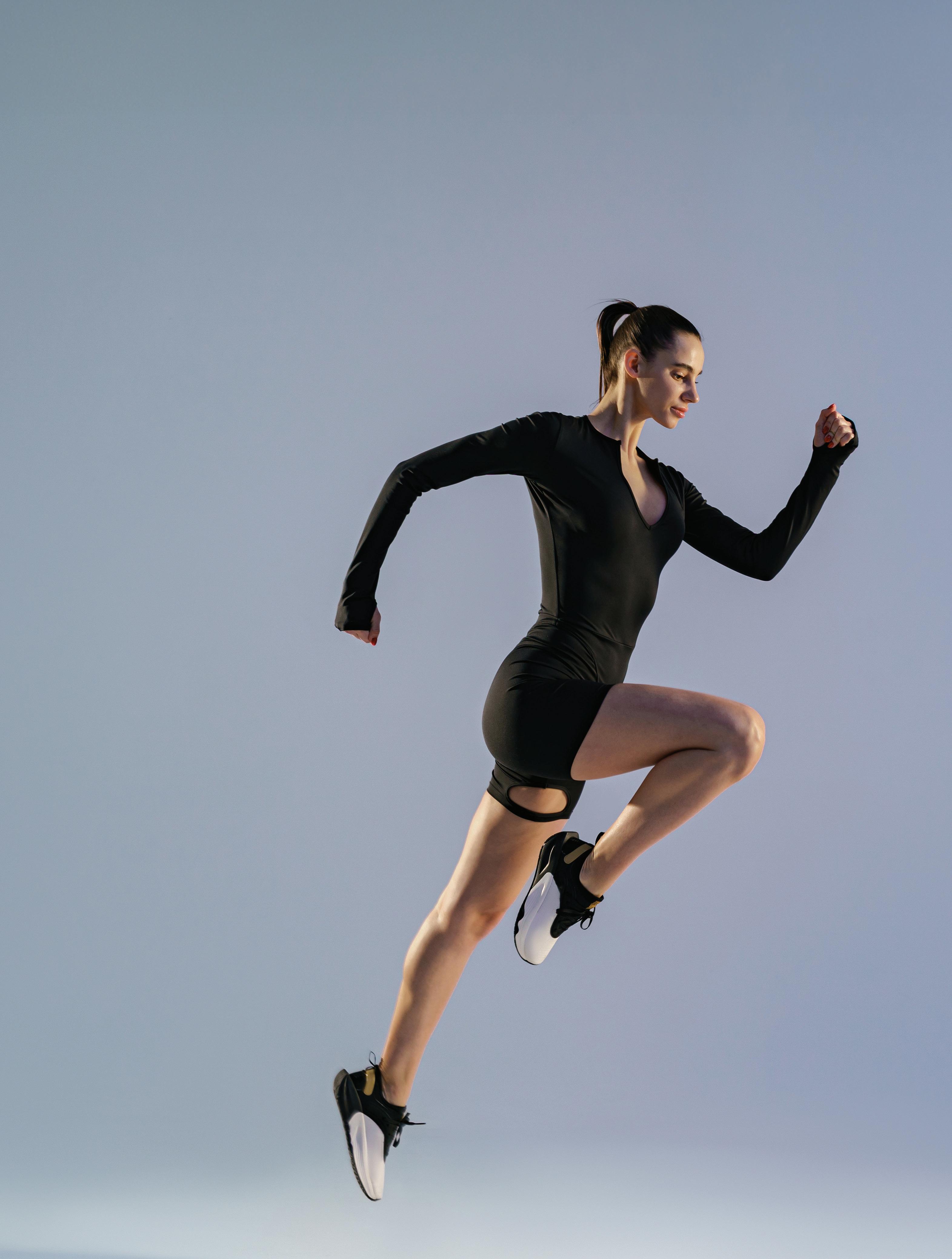
number that can impact your energy, immunity and performance
BY DR. NIEL KARROW, PHD
Immunotoxicologist and professor at the University of Guelph in Guelph, ON. He is co-founder and chief science officer of ImmunoCeutica Inc., where his research on how natural compounds regulate immune function has produced 249+ peer-reviewed publications with over 6,200 citations.
IMMUNOCEUTICA IMMUNOCEUTICA

You're doing everything right. Training consistently. Sleeping well. Eating clean. And yet, recovery feels slower than it should. Performance has plateaued. Your body feels heavier. Before you overhaul your training program or add another supplement to your toolbox, there's one number worth checking: your vitamin D level.
For athletes and active people pushing hard, vitamin D deficiency is a silent performance thief. And in Canada, most of us are vulnerable without even knowing it.
Here's what the research shows: roughly 70 to 97 per cent of Canadians are vitamin D insufficient, especially from October through March. All because of geography. Canada sits above the 42nd parallel. From October through March, UVB radiation at our latitude is insufficient to trigger meaningful vitamin D synthesis in the skin, no matter how much time you spend outdoors.
What surprises most people is that athletes aren't protected from this. In fact, research suggests active Canadians may be among the most vulnerable—especially those training indoors or at higher latitudes where winter darkness is most extreme.
Unless you're intentionally seeking out dietary sources of vitamin D, most of us get only a fraction of what our bodies need to maintain optimal health and function. The result? Many athletes are training hard on an empty tank without knowing it.
Vitamin D is not just a bone health nutrient. Vitamin D receptors exist in your muscle tissue, cardiovascular system, and immune cells, which means vitamin D's impact on athletic performance goes way beyond what most people assume.
On muscle function and power output, the data is clear. Athletes with vitamin D levels at or above 125 nmol/L consistently demonstrate improved muscle strength, power, and overall physical performance compared to deficient counterparts. A study of professional soccer players found those with levels above 125 nmol/L had significantly better VO2 max and sprint performance than those with lower levels.
When it comes to injury risk, the numbers are hard to ignore. Research on NFL players is striking: those with vitamin D below 80 nmol/L experienced significantly higher muscle injury
rates—26 per cent versus 12 per cent in players with adequate levels. For high-impact sports, low vitamin D is also associated with increased risk of stress fractures, a particular concern for athletes in running, jumping, and contact sports.
For immune resilience, athletes with adequate vitamin D experience fewer upper respiratory tract infections and recover more quickly during periods of intense training. For anyone whose season hinges on staying healthy during a key training block, this matters. And by helping to regulate inflammation, vitamin D plays a role in faster recovery between sessions—a quiet but meaningful edge over the long arc of a season.
Here's what stops most athletes: the "just take a supplement and hope" approach misses a critical point. Vitamin D requirements vary considerably between individuals based on body composition, skin tone, genetic background, and how much sun exposure you actually get.
Supplementing without testing is guessing.
A blood test or at-home test gives you an actual number. Once you know your baseline, you can supplement with a specific target in mind. Retest at 8 to 12 weeks and adjust accordingly. This feedback loop is what separates informed optimization from hope.
ImmunoCeutica's immunology team recommends an optimal target of 125 to 250 nmol/L where research supports both immune resilience and athletic performance. For most Canadians, a maintenance dose of 1,000 to 2,000 IU daily is a reasonable starting point. But athletes with confirmed deficiency often need significantly more to reach optimal levels. Work with a healthcare provider to calibrate the right dose for your individual needs, body composition, and training demands.
Vitamin D is not a performance enhancer in the conventional sense. It won't add watts to your FTP or shave seconds off your pace. It removes that invisible drag of deficiency that slows recovery, blunts immune function, and increases injury risk.
For active Canadians, particularly those training through fall and winter, knowing your vitamin D level is one of the most straightforward things you can do for your long-term health and performance.
Test. Supplement to a target range. Retest. It really is that simple.

Bright, crunchy and delightfully tangy, these quick-pickled radishes elevate almost any meal
RECIPE AND PHOTOGRAPHY BY HEIDI RICHTER A Vancouver Islandbased recipe developer, food writer and photographer. She is the author behind the award-nominated blog, The Simple Green.
THE_SIMPLE_GREEN THESIMPLEGREEN
Here is an easy way to prepare seasonal radishes from the local market or from your own garden. Tart, sweet and salty with great crunch, these quick-pickled radishes are easy to make. The pickling process needs a minimum of 8 hours, but prep is quick and they make a great addition to sandwiches or salads!

Makes 3
250 ml jars; 15 servings
• 350 g (approximately 3 cups) radishes, well washed, stem and leaves removed
• 1 Tbsp. peppercorns
• 2 cups white pickling vinegar
• ½ cup filtered water
• 1/3 cup organic cane sugar
• 1 tsp. pickling salt
Optional
• 2 garlic cloves, peeled
• 2 tsp. mustard seed
NOTE : Kosher salt can be used in exchange for pickling salt so long as it does not contain any anti-caking agents or other additives. Because these are quick pickles, they must stay refrigerated. These are best eaten within 1-2 weeks. However, if you observe any mold, fizzing, bubbles, slime, or other signs of spoilage, discard the pickles and do not eat them. All pickles carry some risk of food borne illness, however, quick pickles are generally quite safe to eat. Use your best judgement and when in doubt, discard.
Prepare the jars and radishes
1. Using hot soapy water, carefully clean 3 – 250 ml mason jars with lids and rings. Place the jars, lids and rings into a large pot and carefully pour boiling water over them to cover. Allow to sit for 5 minutes, then using tongs and heatproof gloves, carefully remove the jars, lids and rings from the water. Allow them to dry completely. Make sure all other equipment is thoroughly washed.
2. Divide the peppercorns and any optional seasonings evenly into each sterilized jar. Set aside.
3. Slide the radishes into 1/8” thick rounds and tightly pack them into the jars. They should be packed tight enough that they won’t float once brine is added.
Prepare the brine
1. In a medium pot bring the vinegar, water, sugar and salt to a boil and stir until the sugar and salt are dissolved. Using a canning funnel, carefully pour the brine into each jar until just covering the radishes leaving ½” of headspace. The radishes should all be immersed in brine.
Cool and store in fridge
1. Put on lids and let jars cool to room temperature.
2. Place them into the fridge for a minimum of 8 hours before consuming, preferably overnight.
Nutrition facts per serving Calories 20; protein .3 g; fat 0 g; carbs 5 g.

RECIPE AND PHOTOGRAPHY BY
JESSE LANE LEE
A holistic nutritionist in Toronto, ON. helping busy professionals build healthy habits that last. Through corporate wellness programs and her online course, Healthy Eating Made Easy for Busy Lives, she teaches practical, sustainable strategies to improve health without adding stress.
JESSELWELLNESS JESSELWELLNESS JESSELANELEE JESSELWELLNESS
Few summer foods capture the flavour of the season quite like grilled corn. Sweet, juicy, and lightly charred, it's the perfect canvas for bold Mexican-inspired flavours. This street corn delivers everything you love about the classic favourite. It’s smoky, tangy, creamy, and just a little spicy.
Beyond its incredible taste, corn deserves more recognition for its nutritional benefits. Fresh corn is naturally rich in fibre to support digestive health, provides essential vitamins and antioxidants, and has a high-water content that contributes to hydration, especially when steamed or boiled. Topped with a creamy dairy-free sauce, fresh lime, and vibrant herbs, this recipe is proof that wholesome, seasonal ingredients can be every bit as indulgent as they are nourishing. Fire up the grill and bring the fiesta to your plate!

Prep Time: 10 Minutes
Cook Time: 20 Minutes
Serves 6 sides
• 1 cup raw cashews, soaked overnight or in boiling water for 30 minutes
• ½ cup water
• ⅓ cup nutritional yeast
• 3 Tbsp. lime juice
• 2 tsp. lime zest
• 1 garlic clove
• ¼ tsp. chipotle pepper (optional)
• ¼ tsp. onion powder
• ¼ tsp. salt
• 1 Tbsp. avocado oil
• 6 ears of corn, husks removed
• ½ cup cilantro chopped
• Lime wedges to serve
1. Make the sauce by blending the cashews, water, nutritional yeast, lime juice, lime zest, garlic, chipotle pepper, onion powder and salt. Blend until smooth and set aside.
2. Heat grill to medium. Brush corn with avocado oil and place on the grill for 20 minutes, turning every 5 minutes to cook evenly.
3. Brush the vegan cheese sauce over the corn and top with a sprinkle of cilantro and chipotle pepper if you like spicy food.
Nutrition facts per serving Calories 305; protein 9 g; fat 20 g; carbs 29 g.
You don’t have to be a vegetarian or vegan to love these burgers
BY ANDREA BUCKETT PHOTOGRAPHY BY LORI RASMUSSEN
A certified Canadian chef, recipe developer, and bestselling cookbook author from Toronto, ON known for her approachable, flavour-forward cooking style. Her cookbook The Essential Cottage Cookbook reflects her signature focus on simple, elevated meals inspired by real life and seasonal living. ANDREABUCKETTCOOKS ANDREABUCKETTCOOKS
Mushrooms have long been a stand-in for meat-based burgers because of their substantial texture and their naturally umami-packed flavour. By adding plant-based ground round to the equation, this increases the protein to create a more satisfying and filling burger. Be sure to choose portobellos with caps that curl toward the stem. The flatter caps don’t provide a deep enough cavity to fill. Hoisin adds an incredible element of sweet richness to these epic burgers, while the unconventional but stellar topping of grilled chili-lemon broccolini adds a needed zing.

Makes 4 burgers
INGREDIENTS
• 4 large portobello mushrooms
• 2 Tbsp. oil
• Salt
• One 12 oz (340 g) package plant-based ground round
• (see Tip)
• ½ tsp. onion powder
• ½ tsp. garlic powder
• ¼ cup hoisin sauce
• ¼ cup panko
• 4 hamburger buns, sliced
• 1 bunch broccolini, trimmed
• 2 tsp. oil
• 1 tsp. chili flakes
• Pinch of salt
• ½ lemon
TIP : Choose a plant-based ground round product that forms easily into patties, not one that is crumbly.
1. Use a teaspoon to gently remove the stem and brown gills on the underside of each mushroom cap. Try to keep the outer edge of the mushroom intact. Brush the mushrooms with the oil. Season the underside of the caps with salt.
2. In a large bowl, combine the ground round, onion powder, garlic powder, hoisin, and panko. Divide the mixture into four equal portions and form each into a small patty. Gently press the patty into the hollow underside of each mushroom so that it fills the entire cavity. Transfer the mushroom patties to a plate, cover with plastic wrap, and chill in the fridge for at least 20 minutes or up to 24 hours.
3. Preheat a clean barbecue to medium-high heat (375–400°F).
4. In a large bowl, toss the broccolini with the oil, chili flakes, and season with salt.
5. Grill the mushroom burgers and the broccolini at the same time. For the mushroom burgers, place patty side down on the barbecue. Grill, undisturbed, for 6–8 minutes or until the patty has set and has grill marks. Do not fuss with the burgers. Use a stainless-steel spatula to gently turn the mushrooms over, close the lid, and grill for 5–6 minutes or until the ground round is cooked through and the mushrooms are tender. Do not attempt to flip the burgers again or the filling may fall out. Transfer the mushroom burgers to a plate and set aside. For the broccolini, grill for 8–10 minutes, turning occasionally, until it’s tender and slightly charred. Transfer the broccolini to a cutting board and chop into 2-inch pieces. Squeeze lemon juice over top.
6. Grill buns, cut side down, until toasted.
7. Top the bottom half of each bun with a mushroom burger, followed by some broccolini. Add your desired toppings such as ketchup, mayonnaise, sliced pickles, and sliced red onions, and cover with the top half of the bun. Dig in. Leftovers will keep in an airtight container in the fridge for up to two days.

Hearty, flavour-packed plant-based burgers with a nutritious boost of kale
BY HEIDI RICHTER
A recipe developer, food writer and photographer from Vancouver Island, B.C.
She is the author behind the award-nominated blog, The Simple Green THE_SIMPLE_GREEN THESIMPLEGREEN

This recipe is more than just your standard vegan black bean burger. It’s loaded with kale, quinoa, black beans, herbs and spices. It’s so delicious and makes a healthy lunch or dinner with family or friends. Topped with a tangy homemade Maple Dijon Sauce, feel free to dress your burger however you want.
Prep Time - 1 hour 20 minutes
Cook Time - 10 minutes
Makes 4 patties
Maple Dijon Sauce
• ½ cup raw cashews
• 1/3 cup filtered water
• 2 Tbsp. Dijon mustard
• 1 Tbsp. maple syrup
• 2 Tbsp. fresh lemon juice
• 1 pinch sea salt
Black Bean Quinoa Burger
• 1 ½ cups cooked black beans
• ½ cup cooked quinoa
• 1 Tbsp. olive oil, plus more for frying
• ½ medium yellow onion, chopped
• 1 cup chopped kale, tightly packed
• 1 clove garlic, minced
• ¾ tsp. sea salt
• 1 pinch fresh ground pepper
• ½ tsp. ground cumin
• ½ tsp. ground coriander
• ¼ tsp. mustard powder
• 1 tsp. smoked paprika
• 3 Tbsp. spelt flour, or whole wheat flour
NOTE : The burger patties can be stored covered in the fridge for up to 2 days. Reheat in the frying pan for a few minutes on each side.
To Assemble
• 4 ciabatta buns, or sesame buns
• 2 cups arugula
• ½ large English cucumber
• 1 large tomato
• Any other topping of choice
Prepare the Maple Dijon Sauce:
• In a blender, add all the ingredients and blend on high until smooth and creamy. Refrigerate covered for approximately one hour to allow the sauce to thicken. Keep refrigerated until ready to use.
Make the burgers:
• In a medium saucepan, heat the olive oil, then add the diced onion and garlic. Cook over medium heat, stirringly frequently until the onions are translucent (about 5 minutes). Add the chopped kale and cook, stirring frequently, until the kale is softened and cooked down. Remove from heat.
• To a food processor, add the cooked black beans, cooked quinoa, cooked onion/ kale mixture, salt and spices. Pulse a few times until the mixture starts to come together and there are still some large pieces remaining.
• Scrape the mixture into a medium bowl and mix in the spelt flour until distributed evenly. Note: if the mixture seems too wet, add an additional 1-2 more tablespoons of spelt flour. The mixture should be moist, but not sticky.
• Divide the mixture into 4 equal portions and roll each into a ball between your hands, then flatten into a 4-inch circle about ½-inch high. Place the patties on a dish and refrigerate for an hour to allow the ingredients to bind.
• After the hour has elapsed, preheat a tablespoon of olive oil in a large fry pan over medium heat. Cook the burgers 5-6 minutes a side or until golden brown. Remove from heat and assemble your burger with the toppings and a few tablespoons of maple Dijon sauce.

A
personal multi-marathon challenge for Leodhais Macpherson has become a life-long cause in his brother’s memory
BY LOUISE HODGSON-JONES SEAN EVANS
IMPACT guest editor, communications and event specialist in Victoria, B.C. LOUISEHODGSONJONES LOUISE.HODGSONJONES
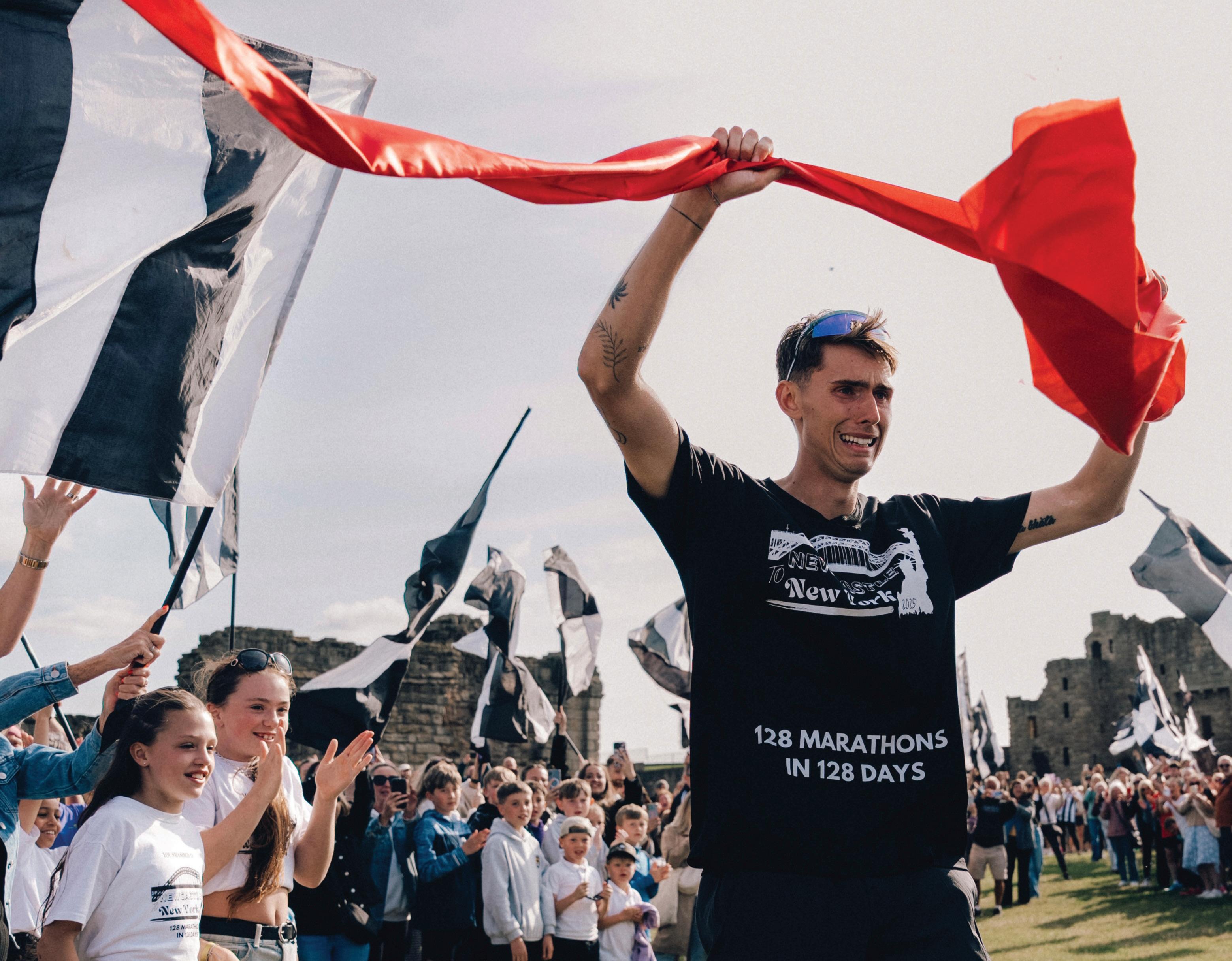
On the days when Leodhais Macpherson asked himself if he could take one more step on his marathon challenge, he thought of his brother. “Conor was always at the back of my mind even on the mornings when I asked myself: can I run another marathon today?”
He did—and ran 128 marathons in 128 days finishing on what would have been Conor’s 28th birthday. Macpherson took up the challenge last year when he was 24, seven years after his brother took his own life at sea. His 128 days covered 3,332 miles (5,362 kilometres), the equivalent of the distance between North Shields in the North of England and New York, where Conor wanted to live.
Finishing in June 2025, he raised £100,000 ($190,000) for two charities: the RNLI, U.K.’s Royal National Lifeboat Institution— who tirelessly tried to find Conor in the challenging waters off England’s rugged north-east coast—and the mental health charity, U Care Share Foundation.
“What also kept me going was the amount of donations every day—the odd 20 pounds here, 10 pounds there. That saw me through the tough times,” he recalls.
Running multiple marathons was a no-brainer for Macpherson. “I have been running my whole life—usually 50–60 miles a week.” Increasing to 100 miles+ was achievable. While juggling his job as an environmental scientist and part-time personal trainer, he would split some runs into two half marathons, one in the morning, then in the evening. But weekends he would complete
the 26.2 miles in one session.
His route was usually the same, around his hometown Tynemouth in North Shields. But there was something special about the final day. Macpherson proposed to his girlfriend, Jaimie Walker, at the finish line. They plan to get married in Spain in August 2027.
In the meantime, Macpherson has other projects in mind. Relocating to Port Coquitlam, B.C., where his fiancé works, he decided to become a full-time personal trainer and run coach and has embraced the west coast running culture, competing in many races.
He is also taking the Abbott World Marathon Majors challenge of running all nine majors consecutively. He ran the London Marathon in April and will follow up with Sydney in August and then Berlin, Chicago and New York in the fall. He will complete the challenge next year with Boston, Tokyo, Cape Town and Shanghai.
But he has some unfinished business in the U.K. He has been working on a documentary about his 128 marathons challenge with the hope of having some private premieres near his hometown at the end of September. “We won’t be sharing publicly just yet as we work out the media strategies.”
As with this documentary and any future projects, his brother will always be in his mind. “I hope to continue to share my message of mental health and suicide prevention.”