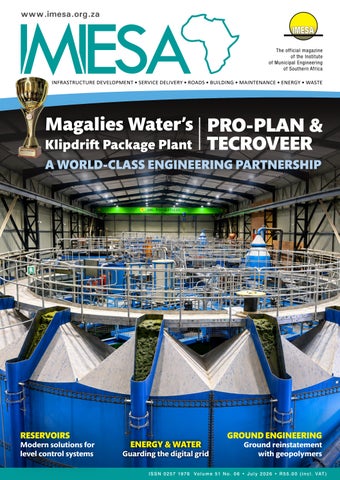
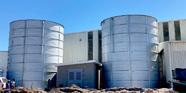
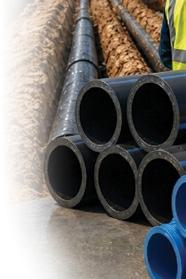
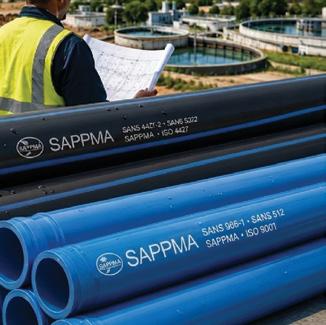
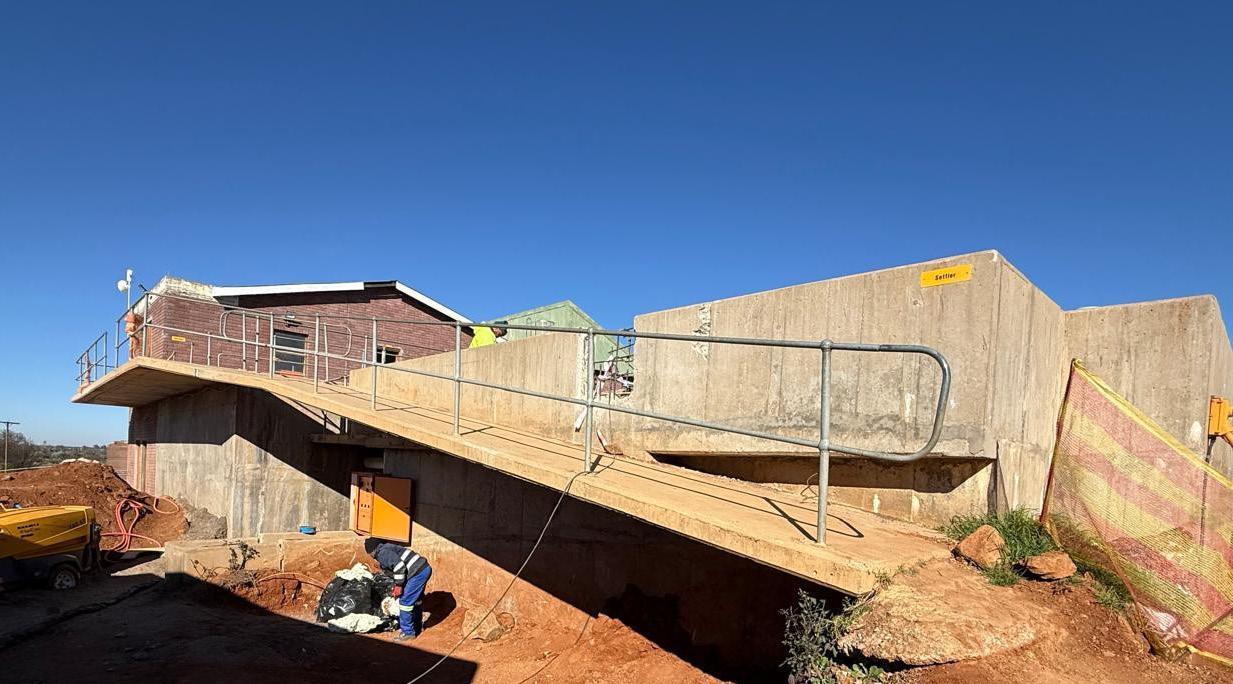
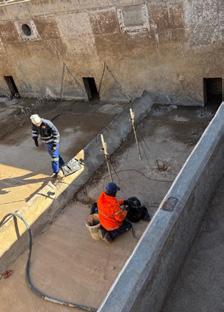
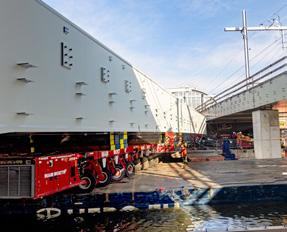
Showcasing innovation at its best at Magalies Water’s Klipdrift Water Treatment Works (WTW), the unique teamwork approach between Pro-Plan Consulting Engineers and Tecroveer, together with the collaboration of all parties, has set a new benchmark for emergency and long-term water infrastructure delivery. This follows the successful execution of an augmented solution to meet the pressing needs of the City of Tshwane’s Hammanskraal and surrounding communities. P6
Spatial Development & Planning
KwaZulu-Natal Golf Day 2026. Sun, swings and the R250k Hole in One
Bitumen & Asphalt
Energy & Water
the digital grid. Cybersecurity across CIGRE’s nine pillars of
All material herein IMIESA is copyright protected and may not be reproduced without the prior written permission of the publisher. The views of the authors do not necessarily reflect those of the Institute of Municipal Engineering of Southern Africa or the publishers.
Leadership and expertise are earned
In a world of constant change, those individuals and organisations that embrace resilience and innovation are the best equipped to adapt and grow. South Africa’s infrastructure and broader construction sector are prime examples, competing with the world’s best to consistently deliver fit-for-purpose solutions at any scale.
However, a key challenge for the civil engineering sector currently is that national and municipal public works funding is not keeping pace with demand, which in turn is placing undue pressure on the full construction supply chain, from consulting engineers and contractors to OEMs and material producers.
According to Statistics South Africa, the construction sector (encompassing private and public projects: buildings and civils) accounted for some 4,2% of Gross Domestic Product in 2008. However, by 2025 this had fallen to around 2,3%. From a size perspective, the South African construction sector has also shrunk in terms of overall value (in constant prices) from approximately R156 billion in 2016 to R99,1 billion in 2025.
Market contractions have also resulted in the demise of several JSE listed construction giants, and a surge in medium and smaller scale contractors. This trend clearly benefits emerging and new entrants, but it also has implications in terms of project management on large and mega projects.
Here world-class requirements for specialist skills, strong cash flow positions, and capital equipment come into play. Plus, top tier companies provide a crucial enabling role in terms of aspects like SMME mentorship and CIDB grading advancement, plus general skills development.
The infrastructure paradox
In the present context, the key frustration across the board is a continued trend where a percentage of public funds have been approved and allocated but are either not spent and returned to National Treasury at the end of the financial year; redirected for other priorities; wastefully expended; or fail to materialise.
The promise of funding and the inability to transition to bankability is part of the globally referenced infrastructure paradox. Key solutions hinge on publicprivate partnerships (PPPs) that can meaningfully facilitate projects to the implementation stage. This applies both in terms of engineering and project
management stakeholder partnerships, as well as co-financed PPP development.
Within the mix, proactive collaboration and engagement across national, provincial and local government organisations is essential. As we all know, this is especially important within the municipal sphere, where the major portion of town and city infrastructure development and maintenance should be self-funded. This means that financial management expertise is crucial to enable engineered solutions and service delivery.
AGSA 2024/2025 local government findings
However, while many municipalities are leading the way, a higher than acceptable percentage are not. This has been confirmed again by the recent Auditor-General of South Africa (AGSA) report on local government audit outcomes for the 2024-2025 financial year. The latter report homes in on compliance and performance against agreed targets.
Overall, only 39 out of 257 municipalities achieved clean audits. The latter account for approximately 8% (R52,6 billion) of the total local government expenditure budget. However, 117 municipalities received an unqualified audit opinion with findings, and 86 obtained a qualified with findings assessment.
To put that in perspective, municipalities in the unqualified audit opinion with findings group accounted for 45% of local government irregular expenditure, 37% of unauthorised expenditure, 30% of fruitless and wasteful expenditure and 31% of defined material irregularities. For those municipalities in the qualified with findings assessment category, the issues deepen further.
Why we have these extremes of excellence and underperformance is a complex discussion, but it clearly boils down to who is in command of the aircraft.
Ultimately, success occurs in any walk of life when goals are met through commitment, skill and dedication. However, it’s apparent from successive AGSA reports that this approach is too hit and miss at present within the public domain.
So, two things need to happen: PPPs must become the norm, and government expertise needs to be on a par with global civil service benchmarks that put South Africa in pole position.
To our avid readers, check out what we are talking about on our website, Facebook page or follow us on Twitter and have your say.
Cover opportunity
In each issue, IMIESA offers advertisers the opportunity to get to the front of the line by placing a company, product or service on the front cover of the journal. Buying this position will afford the advertiser the cover story and maximum exposure. For more information on cover bookings, contact Joanne Lawrie on +27 (0)82 346 5338.
CALL FOR NOMINATIONS :
members to serve on Council from October 202 6 to October 202 8
To nominate members, please complet e the form below and email it to admin@imesa.org.za before 16:00 on 14 August 20 2 4 . The form is also available online at www.imesa.org.za If you have any queries, please contact Ingrid Botton on (031) 266 3263 or admin@imesa.org.za
Proactive EQ is an essential ingredient for a happy society
At the onset of our working careers, a great deal of emphasis is placed on academic distinctions, university graduation and progressional registration. Clearly, they’re important for foundational entry into your chosen profession, but pure academics alone is not enough.
In modern times, we’ve come to recognise that EQ (standing for emotional quotient but more commonly referred to as emotional intelligence) is as or more important than IQ. The formula for the latter, which stands for intelligence quotient, was first introduced around 1912 by German psychologist William Stern and has since been further refined by other leading experts.
Meanwhile, the term EQ was first coined around 1990 by American psychologists, Peter Salovey and John Mayer, and is a tool used to achieve an overall emotional intelligence score. Key metrics encompass self-awareness, self-management, social awareness, and relationship management.
From both a leadership and teamwork perspective, EQ is one of the essential elements for high motivation, happiness and excellence. As the saying goes, “good people leave great organisations because of bad leaders”. In this respect, EQ is one of the safeguards in identifying current and aspiring managers who may have underlying imbalances. At the extreme level, this could include a narcissistic personality disorder (NPD). Sadly, those affected by NPD traits often seek leadership roles due to their underlying desire for attention seeking, power, control, and elevated status, but their influence can be very disruptive.
Everyone’s self-awareness can be improved
The upside is that unlike an IQ score – which is a relatively conclusive, cognitive “raw intelligence” rating – EQ can be developed and improved in any individual through specialised training and mentorship.
Within the mix, empathy is an innate trait which should be encouraged and developed because it builds trust and commitment. It demonstrates that you have listened, experienced and understood another person’s or stakeholder’s feelings or viewpoint. In our professional space as engineers, that has become a critical component in designing and building social and hard infrastructure solutions for and on behalf of communities.
In a world where financial and work stress is on the
rise, EQ also helps us find a healthy balance between our personal and professional life. Whether you’re a university student, coworker or team leader, EQ skills are also invaluable in recognising and responding to warning signs of emotional distress that could lead to self-harm.
Sympathy versus empathy
Expressing sympathy when someone is in distress is OK, but unlike empathy it simply acknowledges a person’s situation without potentially offering advice or a solution. That’s not to say that sympathy is insincere. However, empathy truly shows that you care. This makes it an essential characteristic for all managers, and for individuals within their work, family and social groups.
Every industry has its stress points, and the construction sector is among the most challenging. Major pressure points include relentless project deadlines, overwork/multitasking, the need for constant high-quality delivery, and maintaining a fine balance between profit and loss within a currently constrained economy.
If we drill down into the municipal engineering space specifically, we need to also consider the psychological pressure of working within municipalities where toxic work cultures exist due to dysfunctional administrative leadership and political infighting. These scenarios, along with technical skills gaps, have been regularly highlighted in recent Auditor-General South Africa reports.
In addition to the above, our municipal engineering staff are the first responders after disasters like flood events, bearing the brunt of the community’s desperation and frustration, but often without the necessary skills and support. Here the trauma of engaging with residents who have lost loved ones and precious belongings often goes unmanaged. Plus, in the case of large-scale events, multiple people need assistance in recovering and they want answers. At
the same time, municipal engineering staff are at the mercy of finance departments from across the local, provincial and national spectrum when it comes to the approval and provision of funds. It can be a “pressure cooker” situation.
Burnout
At some point, professional burnout can and will occur if not identified early. Left unchecked, it can result in elevated anxiety and/or depression. Add in a lack of support, plus physical or emotional isolation, and the first mental hairline cracks start to develop, which could end up running much deeper.
Before you try to help others, the essential starting point is to ensure your own well-being, and to master your own stress coping skills. Whatever your role on the team, that then places you in a stronger position to identify and assist others.
Construction ranks as one of the most stressful industries
A glance at the statistics shows that construction workers are especially vulnerable. A case in point is the Chartered Institute of Building’s (CIOB’s) 2020 “Understanding Mental Health in the Built Environment” report. Based on a UK survey of around 2 081 construction industry workers, this report reveals that 26% of respondents had experienced suicidal thoughts. Around 56% also stated that their organisation did not have a mental health policy in place.
In a construction sector that is still traditionally male dominated, workers have also stated in various surveys globally that they still feel too “ashamed” to speak out about personal issues because of the associated stigma. Plus, the evidence shows that too few organisations have accredited mental health policies and procedures in place. So, personnel suffer in silence, and some sadly take that ultimate self-destructive step.
For all organisations, therefore, the immediate priority is to ensure that mental health is openly spoken about, and that clear channels are in place for those who need to offload.
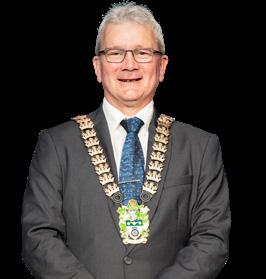
Geoff Tooley, Pr Eng Hon FIMESA, IMESA President: 2024-2026
FROM CRISIS TO BLUEPRINT AND FLAGSHIP PROCESS PLANT
The Hammanskraal Emergency Water Treatment Project wins Gold at IFME 2026
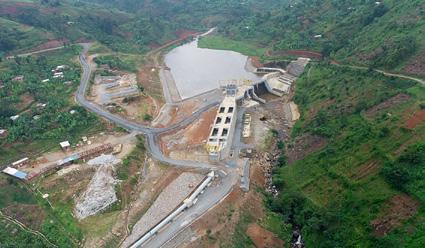
Showcasing innovation at its best at Magalies Water’s Klipdrift Water Treatment Works (WTW), the unique teamwork approach between Pro-Plan Consulting Engineers and Tecroveer, together with the collaboration of all parties, has set a new benchmark for emergency and long-term water infrastructure delivery. This follows the successful execution of an augmented solution to meet the pressing needs of the City of Tshwane’s Hammanskraal and surrounding communities.
At the heart of the system is the Calabash®, a proprietary modular water treatment technology purposedesigned by Tecroveer to meet Pro-Plan’s mandate as the client’s engineer. Recent recognition includes a landmark win at the International Federation of Municipal Engineering’s (IFME’s) 2026 World Congress in Helsinki, Finland, where the project won Gold in the Construction Category at the IFME 2026 Awards, competing against the globe’s best. Graeme Taylor, Group Engineering Mentor at Tecroveer Holdings and Technical Director of Kalabas, presented the winning paper in person at the congress to universal acclaim from
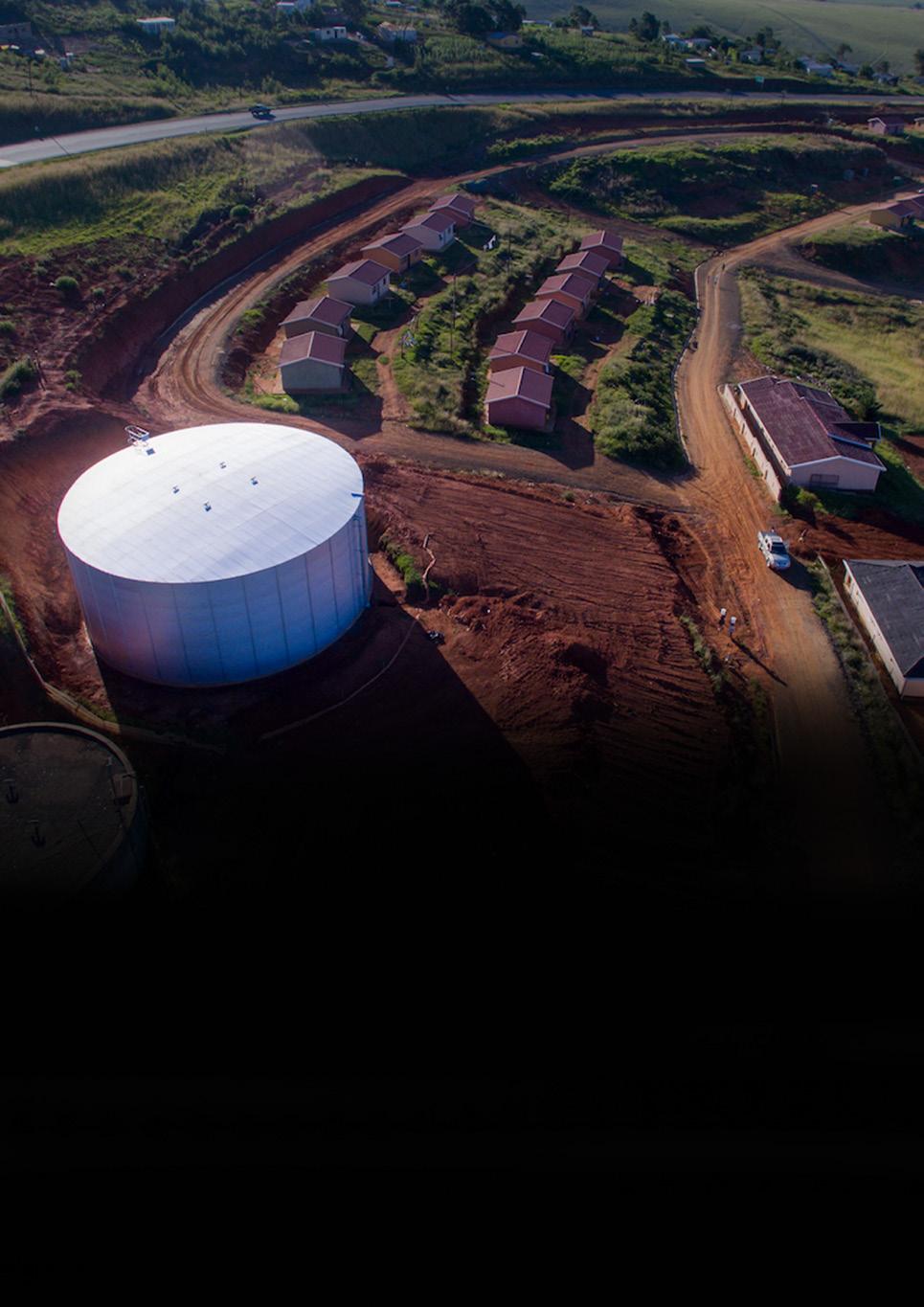
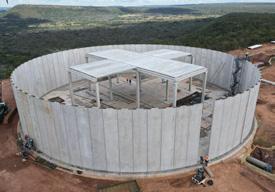
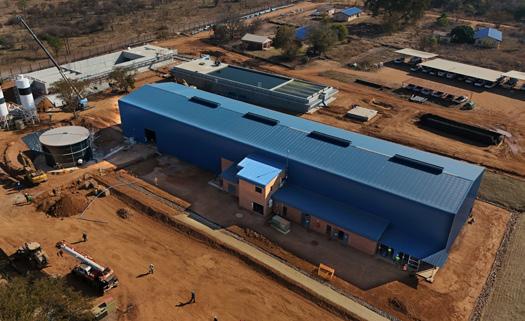
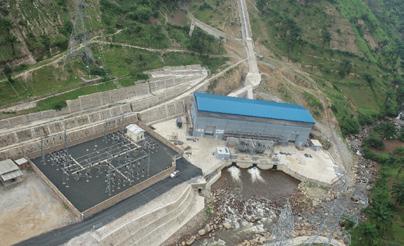
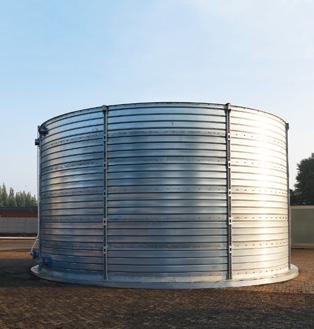
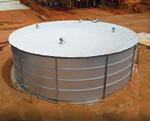
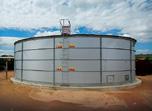
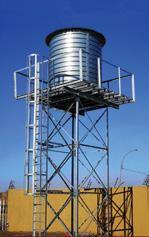
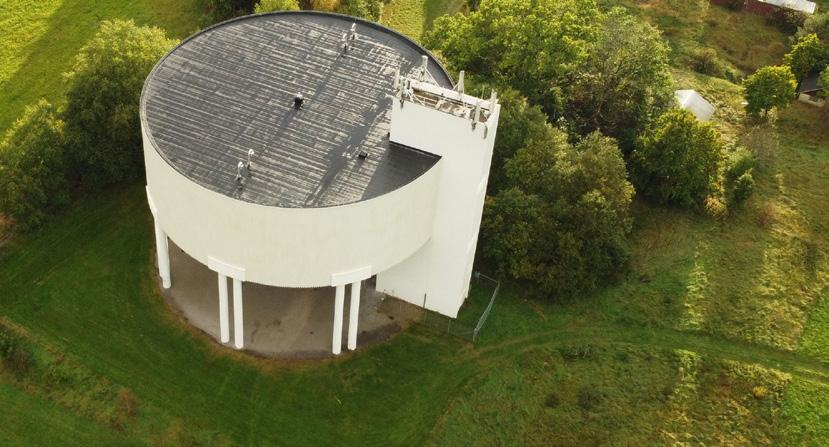
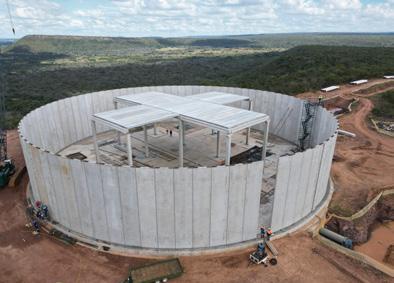
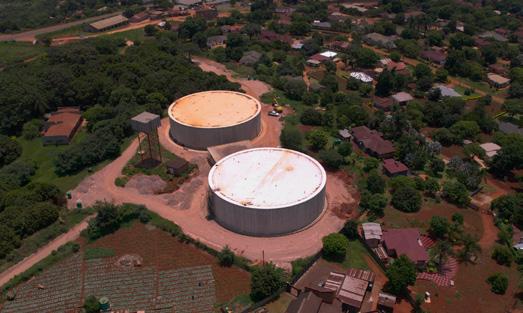
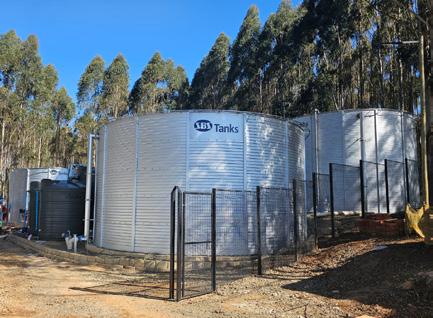
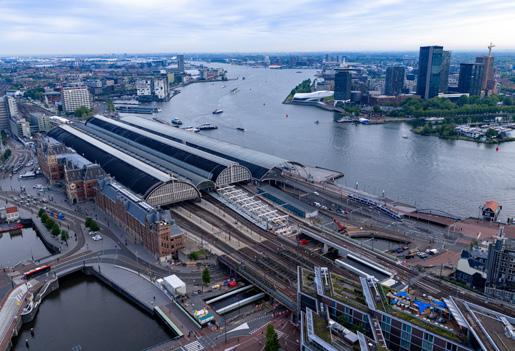
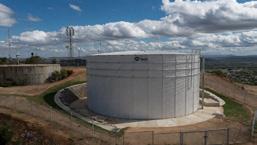
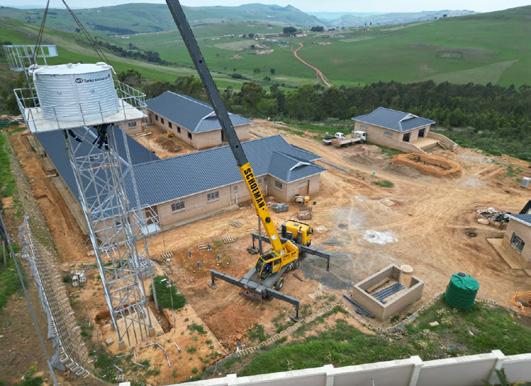
A bird’s eye view of Magalies Water’s Klipdrift package plant (centre), housing Tecroveer’s four modular water treatment units, which have a combined capacity of 50 MLD. In the background are two new concrete sedimentation tanks, one commissioned for the Klipdrift package plant, and the other for the existing conventional water treatment plant on site. Also shown is the package plant’s round steel buffer tank
“It was a great honour to represent South African municipal engineering as well as the project, and one we share with our Pro-Plan stakeholders in meeting an urgent need with an ‘out-of-the-box’ solution. Remarkably, the first phase of our 50 MLD plant roll-out (unit one) was up and running in less than a year, with the existing Klipdrift plant remaining fully operational throughout the
would have been impossible with a conventional treatment works upgrade of this magnitude in terms of design, procurement and construction,” Graeme explains.
Adds Japie Botha, professional engineer and programme leader at Pro-Plan: “While the project was initiated as an emergency response following the 2023 cholera outbreak in Hammanskraal, it quickly evolved into much more than a conventional water infrastructure project.”
“Catalysed by a Ministerial directive intervention, it became a collaborative effort between Central Government, the Department of Water and Sanitation,
Tecroveer’s Calabash® solution for Magalies Water’s Klipdrift package plant won Gold in the Construction Category at the IFME 2026 Awards, held in Helsinki, Finland
Magalies Water (as the implementing agent), the Gauteng Provincial Government, the City of Tshwane, Pro-Plan (with responsibility for the professional engineering services), Tecroveer (as the water treatment technical partner and supplier) and community leaders. Equally important was the commitment demonstrated by affected local communities.”
Every stakeholder contributed to the successful outcome of the project, and the mantra became “Team First and Foremost – Service – and Repeatable Technology”.
Active engagement by all parties throughout the construction programme also contributed to an exceptional safety record and ensured that the project experienced no lost time due to community unrest, despite the challenging operating environment.
Furthermore, the emergency response encouraged an unusually collaborative approval environment, with stakeholders working collectively to accelerate decision-making while maintaining engineering and regulatory integrity.
“Essentially, the project demonstrates how innovation, decisive leadership and integrated project delivery can redefine what is possible under extreme programme pressure. It’s a winning model that can and should be replicated in South Africa and beyond to meet similar infrastructure challenges and priorities,” Graeme asserts.
From the Ministerial directive in mid-2023 to the production of the first potable water in December 2024, the total project was delivered in approximately 18 months – an exceptional achievement for infrastructure of this scale.
The background: a race against time In May 2023, the Hammanskraal cholera outbreak became one of South Africa’s most visible reminders
of the consequences of ageing water infrastructure, resulting in numerous avoidable fatalities.
It was the tragic culmination of more than two decades of deteriorating water quality that now needed to be tackled head-on following this public health emergency. With cholera in their midst, surrounding communities lost complete confidence and became reliant on tanker delivery and bottled water as their primary potable water source.
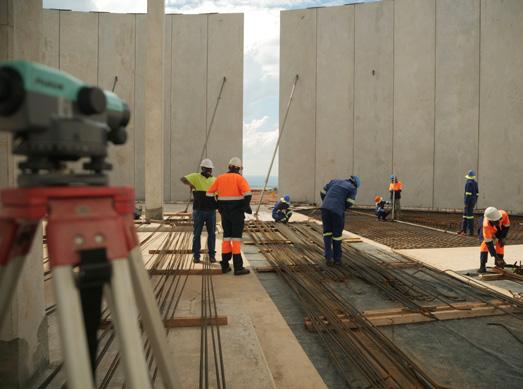
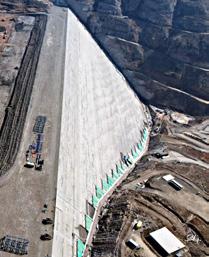
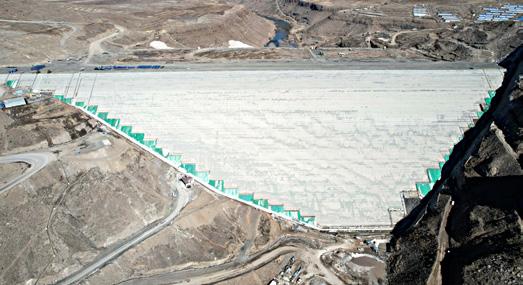
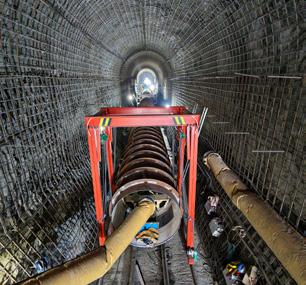
Construction in
Behind the scenes lay a complex chain of events and an ensuing engineering challenge. Leading up to the outbreak, the overloaded Rooiwal Wastewater Treatment Works in Tshwane was discharging non-compliant effluent into the Apies River, thereby degrading the water quality in the downstream Leeuwkraal Dam – the raw water source for the Temba WTW supplying Hammanskraal and allied communities.
Designed originally for a maximum output of 120 MLD, the level of contamination became so severe that the Temba WTW could no longer effectively treat the incoming water to safe potable standards.
This meant an immediate alternative needed to be identified, in parallel with the longer-term and ongoing rehabilitation of the Rooiwal Wastewater Treatment Works, and the Temba WTW, as well as environmental remediation within the Leeuwkraal Dam.
Challenging conventional approaches
From the outset, the Pro-Plan and Tecroveer project team recognised that conventional thinking would not deliver the required outcome. So, instead of asking how to build another traditional treatment plant, the team asked fundamentally different questions, namely, “What is possible?” and “How
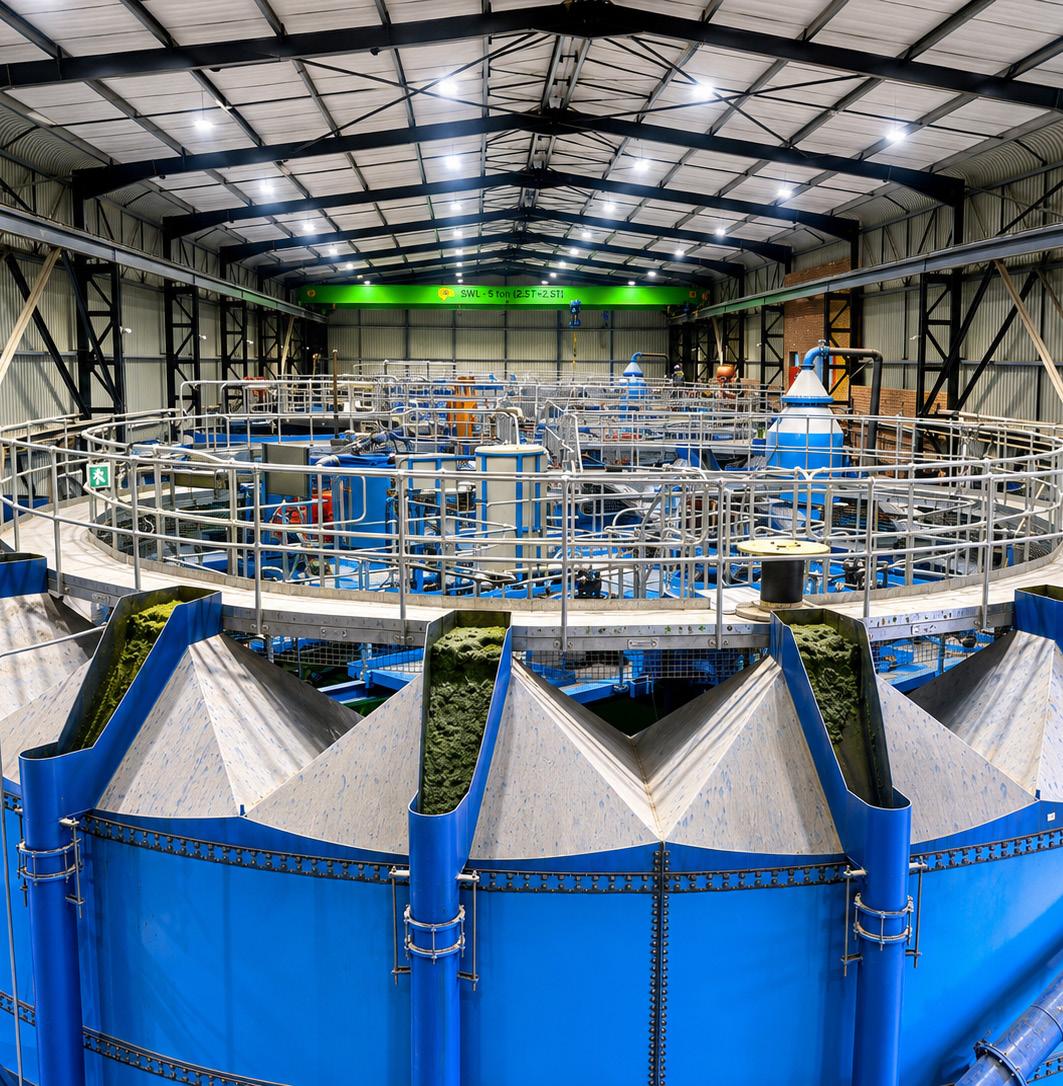
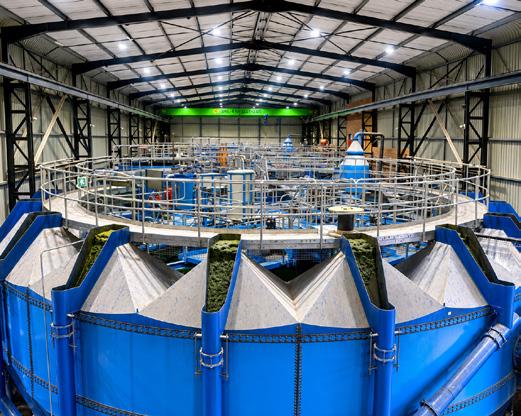
An interior view of the completed package plant building. Within each module, seven treatment processes are integrated, starting in sequence with coagulation, flocculation, de-gritting, dissolved air flotation (DAF), desilting, filtration and disinfection
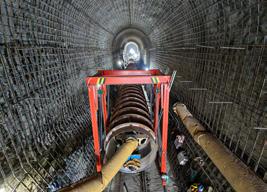
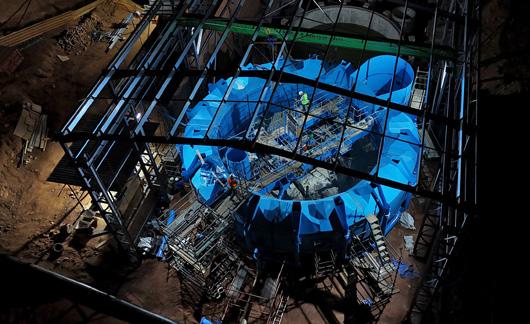
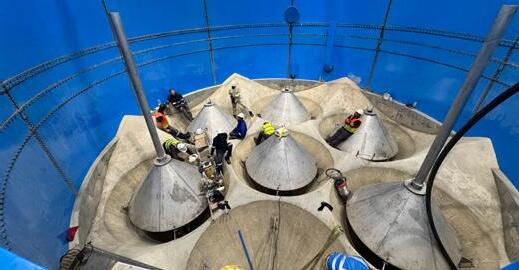
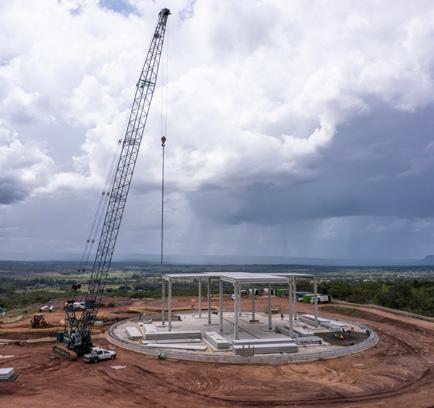
progress on one of the Calabash® modules
can safe drinking water reach people’s taps as quickly as possible while still creating lasting infrastructure value?”
An alternative water source was needed, and the logical starting point was the Klipdrift WTW, situated in Hammanskraal, within 10 km of the Temba WTW. In addition to being a fully functional WTW, Klipdrift also had the advantage of abstracting from the relatively unpolluted Pienaars River, so a plant upgrade here made socio-economic sense. The decision was therefore made to install Tecroveer’s 50 MLD Calabash® system at Klipdrift to boost process capacity from 42 MLD to 92 MLD within a live treatment works.
The next key question for Pro-Plan was how to transfer water back to the Hammanskraal community. That required the project team to reimagine the entire regional water supply system in an unprecedented way, which is another hallmark of this initiative.
Rather than constructing entirely new bulk pipelines, Pro-Plan proposed reversing the direction of the existing regional bulk water distribution system, in addition to the installation of some new pipelines. In terms of the proposal, water would be treated at Klipdrift WTW, pumped to the refurbished Babelegi command reservoir, and then conveyed through existing infrastructure towards Hammanskraal via Temba WTW’s already established municipal distribution network. With the green light given by the client, the plan went from blueprint to implementation.
Designing for local realities
Every major engineering decision by Pro-Plan and Tecroveer reflected the realities of operating municipal infrastructure in South Africa, including high algal (due to eutrophication) and sedimentation loads in rivers.
For example, prefeasibility hydraulic and hydrological analyses showed that raw water quality arriving at the Klipdrift WTW fluctuated dramatically during storm and dam release events, with turbidity often reaching 120 and occasionally 500 to 1 200 Nephelometric Turbidity Unit (NTU) levels. Therefore, rather than designing only for average operating conditions, the treatment process was developed to accommodate these extremes.
The final design includes sedimentation tanks upstream of the treatment units. However, Tecroveer’s units had to be designed to operate as standalone units for two summers while the tanks were being constructed i.e., all treatment steps from the river to drinking water.
“Integrating new civil, mechanical, electrical and process infrastructure into a live operating plant required careful sequencing, extensive temporary works and continuous coordination between design teams, contractors and plant operators,” Japie explains. “Every connection, shutdown and commissioning activity had to be planned to minimise operational risk.”
While site preparation, pump stations, reservoirs and pipelines were being constructed, Tecroveer’s treatment units were simultaneously being manufactured under factory-controlled conditions.
Calabash® process optimisation
Tecroveer’s Calabash® innovation is named after the large, hard-shelled fruit traditionally hollowed out and used by African communities as an everyday utensil that includes water storage. In Tecroveer’s case, these are utility scale modular plants designed and fabricated in South Africa that are among the largest of their kind available worldwide.
For the Klipdrift WTW, Tecroveer’s custom design comprised four integrated units housed within a single structure on a compact footprint, each capable of producing 12.5 MLD. “However, once we’d perfected our research and development (R&D) phases, we were able to value engineer additional enhancements that now enable the units to each deliver 16.6 MLD,” Graeme explains.
This effectively means that 50 MLD can be achieved by three units (16.6 MLD each), allowing the fourth to provide additional capacity or to remain on standby. Remarkably, energy usage is estimated at under 50 kW per ML of treated water.
“Plus, these units have a conservative service life exceeding 20 years,” says Graeme, “so the return on investment for the client is both immediate and longer-term, an ultimate win-win.”
By December 2024, the first unit was producing potable water for Hammanskraal and surrounding areas. One year later, all four had been fully commissioned.
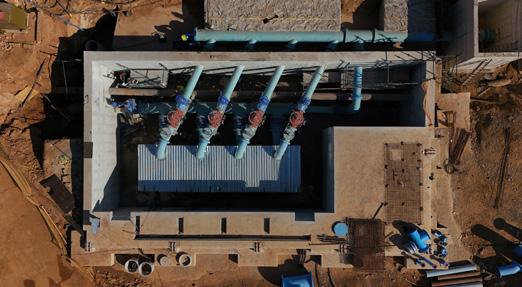
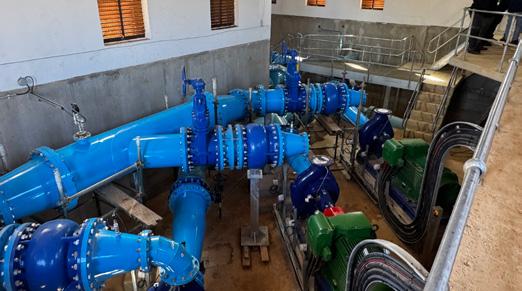
Pro-Plan Consulting Engineer’s system design included new pump and pipeline connections to transfer treated potable water from Klipdrift back to the Hammanskraal community
Seven process steps
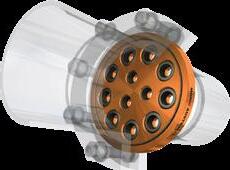
Within each unit, seven treatment processes are integrated, starting in sequence with coagulation, flocculation, de-gritting, dissolved air flotation (DAF), desilting, filtration and disinfection. In addition, each Calabash® unit incorporates the largest publicly documented module and single cell moving bed media filter (MBF) to date – the result of some nine months of intensive R&D. Each module has an active filtration area of 75 m2 and contains seven cells with a respective filtration area of 10.7 m2
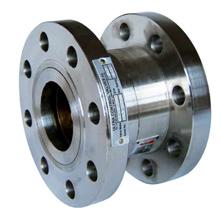
“An innovative approach was developed to enhance microbubble generation from the saturated water stream exiting the saturator,” Graeme explains. “Rather than relying on multiple precision engineered nozzles, this solution uses a multi-orifice device (white water generator) positioned in the pipework external to the DAF that produces a controlled drop in the water pressure and an optimal environment for the production of microbubbles.”
The result is consistent microbubble formation and the opportunity to effectively inject and disperse the white water into a controlled mixing zone in the DAF feed pipe, offering a significantly more cost-effective and low-maintenance alternative to traditional multi-nozzle systems. The Calabash® also utilises only 50% of the coagulant required by the conventional Klipdrift WTW.
“Furthermore, the travel distance in the DAF was optimised to ensure float formation and settlement. DAF performance and the removal of float and silt in the DAF were researched and improved by CFD and pilot trials within the existing Klipdrift DAFF systems. The final design enables automatic, periodic or continuous float removal without moving mechanical components
or the loss of free water,” Graeme expands. “The high-speed plug-flow DAF enables a 98–99% removal efficiency, even during high NTU periods (already tested up to 1 200 NTU) and almost zero short-circuiting or recycling.”
Separation of the DAF float and the waste stream (de-gritting, desilting, and backwash) – combined with the high solids content of the DAF float (between 3 and 8% solids compared to less than 1% in a conventional DAFF) – opened the opportunity to further treat the float and has reduced the required capacity of the float dewatering plant by two-thirds.
Energy savings were also top of mind, and the Calabash® system relies entirely on gravity to move water through the treatment stages before final pumping to the distribution network. In addition to reducing operational energy requirements, this set-up simplifies long-term operations and maintenance.
Additionally, sludge management forms part of the overall design philosophy, with mechanical dewatering through screw presses and planned beneficial reuse of the dewatered sludge for composting, reducing disposal requirements and supporting circular resource management.
www.proplansa.co.za
A blueprint for the future
“What this project illustrates is that South Africa’s water infrastructure challenges are significant, but so too is its engineering capability,” says Japie. “Even more significant is the power of collaboration and the Hammanskraal emergency intervention demonstrates what is possible when government provides decisive leadership, utilities embrace accountability, consulting engineers challenge conventional thinking, specialist contractors innovate, and communities become active partners in delivery.”
As water security becomes an increasingly important national priority, the lessons learnt at Hammanskraal extend far beyond Gauteng. They provide a blueprint for responding to future infrastructure emergencies and developments across South Africa and the world.
“Ultimately, the project’s greatest success cannot be measured only in megalitres per day, kilometres of pipeline or international awards. Its true achievement lies in restoring something far more fundamental: public confidence that engineering, when guided by purpose and collaboration, can protect both human dignity and the constitutional right to safe drinking water,” Japie continues. He adds that the regular publication of water quality results and civic briefings during the Hammanskraal construction programme helped rebuild public trust.
In fact, the joint solution delivered by ProPlan and Tecroveer didn’t just meet immediate requirements; it exceeded expectations.
“Most importantly, the project reaffirms that crises demand new thinking, because problems are dynamic in nature. Therefore, going forward our approaches must be adaptive, inclusive, locally grounded and scalable through innovative design and application-specific technologies,” Graeme expands.
“However, our first priority is to ensure that engineering decisions are directly linked to outcomes and community impact, including long-term environmental and social outcomes, and that proactive interventions prevent the occurrence of future public health emergencies,” Graeme concludes.
www.tecroveer.co.za
Each Calabash® module incorporates the largest known single-unit moving bed media filter (MBF) to date
PERFECT’: A WRAP-UP
The property development and construction industry gathered recently in Cape Town for the Western Cape Property Development Forum’s (WCPDF’s) 13th Annual Conference. Held at the CTICC on 24th and 25th June, the event saw a record-breaking attendance of over 500 private and public sector participants.
Speaking to the conference theme, “Future (City) Perfect”, WCPDF Chairperson Deon van Zyl explained that the title was deliberately provocative: “While the term ‘future perfect’ implies something completed by a specific point in time, cities are living ecosystems that are constantly evolving and never actually completed.”
“The future is not a story being written for some upcoming date in time; it is under construction right now,” said Van Zyl. “The question in South Africa is whether we are deliberately shaping that future, or simply allowing it to happen to us?”
Mega Cities or Mega Monsters
As cities grow ever closer throughout South Africa, with urban and rural areas converging, a key opening question for the conference was: “How do we set a master plan for the future of our cities – or do we risk the rise of unworkable monsters?”
Responding to this, Anton Bredell, Western Cape Provincial Minister of Local Government,
Environmental Affairs and Development Planning, highlighted the need for municipalities to collaborate more closely together on long-term planning, rather than working in isolation.
The role of water and sanitation in enabling resilient urban development was also front of mind, as presented by Ntombizanele Bila-Mupariwa, Western Cape Provincial Head of Water and
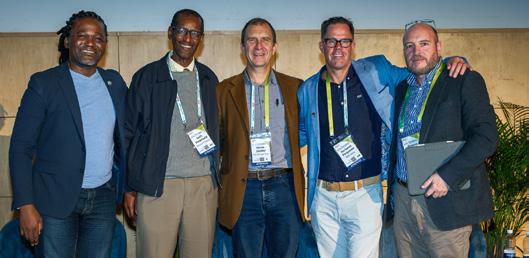
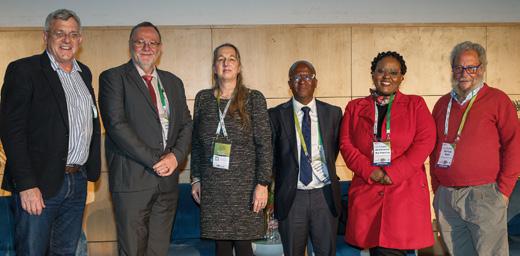
From left: WCPDF conference MC, Africa Melane; Seth Maqetuka, Cities Support Programme, National Treasury; Kevin Jacoby, CFO, City of Cape Town; Nick Ferguson, Executive Managing Director, RSA Aero Limited; and Eugene Booysen, CEO, Cape Town Stock Exchange
Sanitation, who outlined the province’s plans to strengthen its resilience against future water shortages.
Addressing urban mobility, Professor Marianne Vanderschuren from the University of Cape Town’s (UCT's) Civil Engineering Department, promoted the concept of the “15-Minute City”, in which improved land use, transport planning and higher-density neighbourhoods would effectively raise the quality of life for citizens by both reducing their travel times and incorporating more sustainable mobility.
different variables to be balanced in the planning process.”
Building future production pipelines
Population growth, infrastructure investment, policy reform and the rising challenges around cyber risk were all identified as determinants of future production pipelines.
Rail also featured prominently, with Raymond Maseko, PRASA’s Western Cape Regional Manager, outlining the recovery of Cape Town’s Southern Rail Line following the collapse of rail services in 2020. He noted infrastructure upgrades had included replacing tracks, modernising equipment and constructing 26 new substations.
Agriculturalist Michael Back from Backsberg Estate Cellars added another perspective to the conversation, warning that government policies were placing unnecessary constraints on farmers at a time when innovation, diversification and adaptability are essential to the sector’s very survival.
An urban design-led future Urban design also emerged as a central theme throughout the conference, with Dr Luyanda Mpahlwa, Adjunct Professor, UCT African Centre for Cities (ACC), advocating for cities to be viewed not only as collections of buildings, roads and infrastructure, but as social, cultural and spatial systems.
“We need to understand not only how people use cities, but who uses them,” he said, describing good urban design as fundamental to creating inclusive, liveable communities.
Architect and urban planner, Matthew Gray stressed that designing for safety should also become a non-negotiable element of urban design. He also called on planners and architects to recognise urban design as the profession that bridges multiple disciplines rather than competes with them.
Barbara Southworth, Director of Urban Design at the V&A Waterfront, firmly believes that while roads, water and power are central to enable value within a space, the public realm is the real product: “The public realm comprises two layers – the public space (the infrastructure)
and placemaking (the agile living layer). You budget and build the first, and you resource the second forever. And a place only works when both are held together.”
Representing the City of Cape Town, Bobby Gould-Pratt, Manager: Urban Design, outlined the city's updated Urban Design Policy, which links quality urban environments with quality of life. A new compendium of design guidelines is being developed to help implement the policy across developments of different scales.
“All developments are different,” said Gould-Pratt. “A one-size-fits-all approach is inappropriate. Good design thinking enables
Seraj Johaar, Executive Director: Corporate and Planning Services at Drakenstein Municipality, highlighted Drakenstein’s recently approved 260-hectare boundary extension, to accommodate its predicted population expansion from more than 311 000 people today to almost 420 000 by 2036.
The City of Cape Town is also planning for future growth through investment, with Dr Katherine Hyman, Head of Infrastructure Planning, noting that almost R40 billion of the City’s R87.79 billion budget has been allocated to basic infrastructure over the next three years.
Looking beyond infrastructure, public policy consultant Nick Graham of Nick Graham & Associates, argued that South Africa must rethink how policy is developed. He proposed three fundamental shifts: moving from control to disciplined enablement; from municipality-wide planning to policy that responds appropriately at precinct, sub-council, municipal and regional
left: Deon van Zyl, WCPDF Chairperson; Anton Bredell, Western Cape Provincial Minister of Local Government, Environmental Affairs and Development Planning; Professor Marianne Vanderschuren, Deputy Dean: Transformation and Social Responsiveness, Civil Engineering, Faculty of Engineering & the Built Environment, University of Cape Town; Raymond Maseko, Regional Manager, Rail Division, PRASA; Ntombizanele Bila-Mupariwa, Provincial Head: Western Cape Department of Water and Sanitation; and agriculturist, Michael Back
From
Western Cape Premier Alan Winde (second from left) responds during a panel discussion
Cape Town Executive Mayor Geordin Hill-Lewis (left) and Deon van Zyl, WCPDF Chairperson
scales; and from policy certainty based on plans to certainty based on outcomes.
“What the future of policy needs now are agreed common outcomes, clear policies and fast decisions,” he said.
With cyber risk increasing globally, a new challenge to the pipeline is the management of cybersecurity. According to Steve Fountain, Cybersecurity Strategist with the CyberQGroup, cybersecurity should now be a fundamental component of urban and building design as smart technologies become increasingly integrated into cities.
“Cyber-resilient design is becoming as important as sustainable design,” he said, noting that smart lighting, HVAC systems, IoT sensors, access control systems, elevators and security cameras all create potential vulnerabilities.
He also called for cybersecurity to become a board-level responsibility rather than remaining solely an IT function, with organisations prepared to answer three critical questions: “What happens if systems become unavailable for seven days? Who makes decisions during a cyber crisis? And have those scenarios ever been tested?”
Funding the cities of the future Public-private partnerships were highlighted as avenues towards the funding of infrastructure, first by Cape Town’s Executive Deputy Mayor Eddie Andrews and then by Cape Town Stock Exchange’s CEO, Eugene Booysen.
“Public finances alone can’t do it,” noted Booysen. “Globally, 70–90% of sustainable development finance must come from private capital, and South Africa is no exception. The investable capital exists locally through entities such as banks, pension funds, and insurers; what’s missing is a bankable pipeline and trust. The good news is that when government structure deals well private money moves fast.”
Speaking to the future of municipal finance, Kevin Jacoby, Chief Financial Officer, City of Cape Town, said the city now understood private sector industry was not asking for approvals to be guaranteed or legislation to be bypassed: “Instead, it is asking for a better coordinated development journey that improves transparency, accountability and predictability while maintaining regulatory integrity.”
Private catalytic projects were also to be supported and encouraged. Nick Ferguson, Executive Managing Director of RSA Aero Limited, which is developing the new Cape Winelands Airport, noted the impact of the airport on the local economy. This includes an addition of R9 billion to the GDP during construction (with some 35 000 direct and indirect jobs created), and 100 000 sustained jobs across a 20-year period.
“Cape Winelands Airport is not a transport project,” stressed Ferguson. “It is a new metropolitan node – a third city between Cape Town and the Winelands.”
Seth Maqetuka of National Treasury’s Cities Support Programme (CSP), outlined how the CSP was prioritising inner-city revitalisation: “Cities are too important to the national economy to fail.
Funding the cities of the future demands strong collaboration between the private and public sectors, sustainable revenue streams and placebased spatial investment.”
The CSP aims to influence reforms that would make inner-city projects viable; build technical support to enable development within metros; and offer hands-on programme support to move projects from plan to delivery.
Rebuilding capacity
While policy reform, infrastructure and financial investment are all critical to building future cities, Petra Devereux, Executive Director, Master Builders Association Western Cape, stressed that the industry still requires people on the ground,
highlighting the critical skills shortage facing South Africa.
The road ahead for graduates can no longer just be a “toolbox of skills”, according to Professor Kathy Michell, Director of UCT’s Sustainability + Cyber Oriented Research Unit for the Built Environment.
“Our professionals will need new knowledge and competencies,” said Michell. “The ‘how’ of what we teach will be more important than the ‘what’, and the embedding of soft skills will be critical. This will require digitally enabled education, peer-to-peer learning, and the collaboration of the industry.”
John Matthews, Group CEO, Garden Cities, questioned whether government and parastatals really possess the necessary skills and capacity themselves to deliver future cities. While there are islands of excellence, these are still drowning in seas of inefficiency, incompetence, empire building and self-indulgence.
Nkanyiso Mbatha, Development Asset Manager, Boxwood Property, felt: “Our ambitions are accelerating faster than our capability. The missing middle is the gap between education and industry readiness. The industry doesn’t have a skills gap – it has a transition gap. This is where apprenticeships and mentorship become critical. If we are serious about rebuilding our capacity, then we must stop assuming capability will emerge and start designing it deliberately.”
The need for further political and industry hard talk
Concluding the event in a final session with Western Cape Premier Alan Winde and Cape Town’s Executive Mayor, Geordin Hill-Lewis, Deon van Zyl reiterated that the main outcome of the conference lies once again in the willingness – particularly within the Western Cape – for the public and private sector to collaborate.
3 Raymond Maseko, Regional Manager, PRASA Western Cape 1 3 2
1 Eddie Andrews, Cape Town Executive Deputy Mayor and Mayoral Committee Member for Spatial Planning and Environment
2 Dr Katherine Hyman, Head: Infrastructure Planning, City of Cape Town
“The one clear takeaway from this conference,” noted Van Zyl, “is that property happens first at local government level, then regional, and only then at national. We must all fully understand that each Mayor’s office is more important than those within the Provincial leadership, which is in turn more important than the President’s office. When we speak to each other in this order, future city planning really begins.”
WASTE DATA IS BECOMING THE NEXT GREATEST TEST OF ESG CREDIBILITY
Many stakeholders now expect waste data to be reported with the same rigour as financial information. With a shifting environmental, social and governance (ESG) landscape, waste has become not only a compliance concern, but also a strategic ESG factor investors and financial institutions are taking a closer look at.
Detailed sustainability reporting has long been routine for large corporates and JSE-listed companies. Now that same expectation is reaching smaller businesses.
Lawrence Nundkissor, National Compliance Manager at Oricol Environmental Services, has watched these expectations climb in recent years.
“While sustainability policies can carry good intentions, investors will look straight into your data,” says Nundkissor. “They want robust waste data, they want stronger disclosure, and they want real traceability. Where did the waste go? Was it diverted, or is resource circularity actually practiced in the company?”
“Along with ESG reporting, enforcement of waste legislation and permitting conditions is getting notably tighter; waste reporting and carbon reporting are starting to merge; and government and the private sector are finally starting to pull in the same direction. If you are not ready for that, you will feel the pressure as compliance and reputation risks increase.”
Waste data integrity is key
The tyre hits the road in evidence. Many companies produce very attractive, well written sustainability reports. The real question is whether they can back the claims up at any given time.
“Oricol’s integrated management system gives clients complete traceability. Every month, our clients receive a comprehensive portfolio of documented proof, including waste manifests, collection records, weighbridge tickets, and recycling certificates, providing full traceability and verification of waste destinations,” Nundkissor explains.
and reporting purposes. We also provide detailed waste volume data relating to landfill diversion, together with verified environmental performance information that can be used by clients to support their carbon accounting, sustainability reporting, and ESG disclosure requirements.”
What waste data goes into a good sustainability report?
A credible waste section is built on a few nonnegotiables according to ESG requirements: volumes by waste stream, the verified destination of each stream, and diversion rates, backed by records attached to that waste.
Waste and carbon cannot be separated. Organic waste sent to landfill generates methane, meaning every tonne diverted has a direct impact on an organisation’s emissions profile. This is why accurate waste data has become a key foundation for credible carbon accounting and sustainability reporting.
The biggest gaps in attaining accurate waste data
“The challenges are seldom about willingness; they are usually practical. Waste is often mixed and commingled, making it difficult to accurately measure, track and manage. Responsibility for waste data is frequently unclear, with no single owner within the business,” Nundkissor continues.
“Many organisations still rely on spreadsheets rather than modern data management systems, while multiple service providers each report differently, resulting in fragmented information and no single, reliable view of waste performance.
no audit trail. Waste data is heading to exactly that standard.”
Good waste data creates value well beyond compliance
The companies that treat waste data as management information, rather than a reporting requirement, start seeing things they could never see before.
“This ensures they have the supporting evidence required for compliance, auditing
“You would never sign off on company financials kept on a loose spreadsheet with
“You spot the waste streams that are costing you money, the processes that are generating waste you do not need to generate, the contracts that are not delivering. That is real operational insight, and it goes straight to the bottom line,” says Nundkissor.
Clean, verifiable data gives investors a reason to trust the rest of a company’s ESG story, because numbers that hold up under scrutiny signal a business that is genuinely in control of its operations. The same data is becoming a deciding factor in competitive tenders, as more buyers and large corporates now ask suppliers to prove their environmental performance before awarding contracts.
“Your waste data is part of your reputation now,” Nundkissor says. “The companies that understand this are not reporting on waste because someone is forcing them to. They are doing it because they have realised there is real value in it and the impact without it, and they would rather capture that value than leave it on the table.”
Get moving early
“Accurate waste data starts with culture,” Nundkissor concludes. “Give it a clear owner, record it consistently, and work with waste management partners you can trust. The companies doing that today will be ready as the rules tighten. The ones who wait will be playing catch-up, and it will cost them more.”
IMESA KWAZULU-NATAL GOLF DAY 2026
SUN, SWINGS AND THE R250K HOLE IN ONE PRIZE
There is a specific kind of magic to a golf day – where the emails stop, the banter starts, and the only deadline that matters is the one on the scorecard.
That was the opening scene for the IMESA KwaZulu-Natal (KZN) Branch’s 5th Annual Golf Day on 12th June 2026, which brought 128 golfers to the stunning Cotswold Downs Golf and Country Estate. The wind was brisk, the competition fierce, and the work week a distant memory.
A highlight of the IMESA KZN calendar, this popular tournament draws engineers and allied
stakeholders from across the industry. It’s a healthy opportunity to network, strengthen professional relationships, and enjoy a break from the office and on-site project pressures. By 08h30, the putting green was a theatre of quiet focus. Some looked like seasoned pros; others like they were praying for a miracle. Either way, at 10h00 sharp a chorus of drivers echoed across the estate, and the hunt for glory was officially on.
The 5th hole: Where dreams (almost) came true
The 5th hole carried extra weight this year. While everyone was chasing the R100 000 Cotswold Hole in One prize, a voluntary R100 “buy-in” at the Solfab watering hole unlocked a shot at the massive R250 000 Solfab Grand Prize. Suddenly, a 150 m par three felt like the longest mile on earth. While no one walked away with the ace, the entry fees – split between a closest-to-the-pin prize and a local charity – ensured everyone left a winner.
The sponsors: The Engine Room Events like these do not run on fairways alone; they run on partnerships and IMESA KZN would like to thank and acknowledge the sponsors.
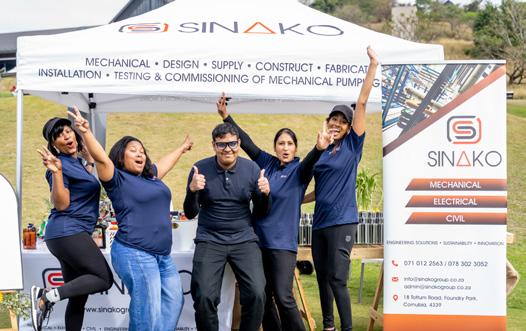
Sinako: Our Platinum Sponsor who ensured the field looked sharp in coordinated red shirts, backed by their show-stopping watering hole that gave each golfer that visited a truly platinum experience.
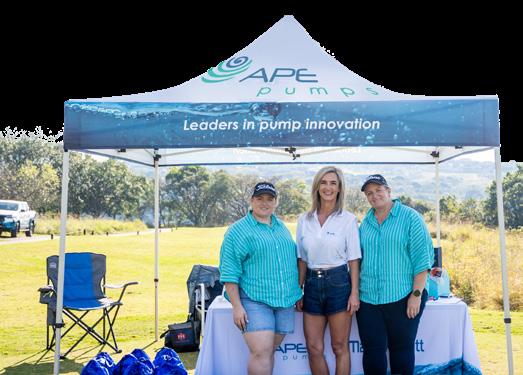
APE Pumps: A long-standing Golf Day partner.
APE Pumps ensured high-quality branded caps and their legendary, much-anticipated annual gift of premium Titleist caps for every player.
Solfab: Brought the spark with branded towels and turned the 5th hole into the day’s high-stakes centrepiece and a watering hole that was amazingly fun to visit.
Furken Good Civils: Added serious flair with branded golf bags and an unforgettable balloon arch that brought a true “fiesta” vibe to the course.
Gopique Asphalt Paving: Boosted confidence (and egos) by supplying Titleist Pro V1s –making every average swing feel tour-standard and had golf games at their hole that were great fun. Plus, they awarded a generous golf cart prize.
Drone Labs: Provided a bird’s eye view, finally settling those heated debates about where exactly that drive landed.
Riot Consulting and LVSA Group: Their generous watering holes sponsorship went above and beyond to keep our players refreshed, with
PLATINUM SPONSOR
RAFFLE SPONSOR
THANK YOU TO OUR SPONSORS
WATERING HOLES SPONSORS
their teams bringing infectious energy and a warm smile to all the golfers that visited.
Kufanikwa Consulting and Metsi Worx: Provided generous contributions as top prize sponsors. As long-standing partners of this event, they continue to elevate the golf day experience, with their hosted watering holes remaining a highlight for all participants.
Naidu Consulting: Provided a generous raffle sponsorship that added an extra incentive to each golfer on the day.
Foton: Brought the showroom to the course, adding serious automotive muscle to the day’s spectacle.
From fairways to fines
After the final putt dropped, the clubhouse became the main event. The prize giving was swift, with many prizes and raffles to be won; the laughter was loud; and the traditional “fines” session saw honest and not so honest players hide under the table. To end the day there was dinner, drinks, and the kind of camaraderie you only find after eighteen holes.
A heartfelt thanks
To our players, thank you for bringing the A-game and the even better attitude. To our sponsors,
you are the backbone of this event – thank you for making the day a success.
Finally, a massive shout-out to the IMESA KZN Golf Committee: Narisha Sogan, Roxanne Canny, Madhu Moopanar, Dhiveshni Naidu, Theo Wilcox, and Reudebaker Nel. You steered this ship with precision, and the seamless flow of the day was a testament to your hard work.
See you in 2027
Keep that Pro V1 somewhere safe – spend some time on the putting green – and let’s meet again in 2027!
RENOWNED ASPHALT EXPERT TO SHARE GLOBAL VIEW AT
The Society for Asphalt Technology (SAT) is proud to announce the participation of Dr Jean-Pascal Planche, one of the best-respected global experts in asphalt and bitumen science, at the SATBinderrr conference on 2nd and 3rd September 2026. Dr Planche will deliver the keynote address at the start of the event and host a masterclass directly after the conference.
The upcoming fourth SATBinderrr conference will take place at the Capital Zimbali Resort on the Dolphin Coast, north of Durban. In-person delegate bookings for this hybrid event are sold out. However, online registrations remain open for the conference. Masterclass participation is free for conference delegates and open in-person (subject to seating availability) or online at a fee for all other interested asphalt and bitumen practitioners.
SATBinderrr 2026 focuses on sustainable quality across all aspects of asphalt and bitumen. In line with SAT’s mandate, emphasis will be placed on showcasing talent and innovation and encouraging discussion and networking to come up with effective solutions.
Dr Planche will open proceedings with his keynote address, aptly titled “Binder Chemistry and Asphalt Performance: Quality Begins at the Molecular Scale”
Masterclass
Dr Planche’s hybrid masterclass, which will be held on Friday 4th September, is a half-day session that will explore lessons learnt in the field of modified binders from four decades of experience, research, development and practical application.
Dr Planche’s work is particularly relevant because it bridges refinery chemistry,
Dr Jean-Pascal Planche, keynote speaker and presenter of the SATBinderrr 2026 masterclass
binder formulation, field performance, and specification development.
“He will lead discussions that include the ins and outs of feedstock selection, process parameter control, and bitumenpolymer stability, to name a few,” explains SAT President Joanne Muller. “This is truly a must attend session for bitumen users, binder modifiers, binder suppliers, and all in-between, to gain the benefit of his hard learnt lessons spanning many years globally.”
Who is Dr Planche?
Dr Planche, known to his colleagues as JP, is currently consulting to help innovators of the asphalt industry develop new binder solutions through JP InnovAsphalt.
Until mid-2024 he was Chief Executive Officer of Western Research Institute (WRI) in Laramie, Wyoming, USA. He has worked across industry on polymer-modified bitumen (PMB), binder chemistry, rheology, and pavement durability and materials performance. His work has contributed to research, product development, and international binder specification initiatives.
JP has previously worked in the bitumen binders field for Elf and then TOTAL – both French oil majors – as research engineer, project leader, and later as research coordinator for TOTAL Bitumen worldwide.
During his years with WRI, he was Principal Investigator for the NCHRP 9-60 project on developing new specifications regarding binder cracking contribution in North America, and Project Manager of the Asphalt Industry Research Consortium, an initiative he launched with WRI to help the partners understand and address asphalt binder variability worldwide.
JP has worked in asphalt characterisation, formulation and modification for more than 30 years. In 2011 he was inducted into the Association of Modified Asphalt Producers Hall of Fame for lifetime achievement in the
development of polymer-modified bitumens (PMBs), and in 2023 into the Roll of Honour of the Asphalt Institute. He is also an honorary member of the Association of Asphalt Paving Technologists (AAPT).
He has a chemical engineering degree from the Chemistry National School of Mulhouse and a PhD in Macromolecular Science from the University of Lyon, both in France. He has co-authored more than 150 publications and co-invented more than 30 patents.
1 Avi-Nash Sukuram, Asphalt Focus Area Chair
2 Belindar Preethapal, Binders Focus Area Co-Chair
3 Nikisha Sewpersad, Binders Focus Area Co-Chair
4 Herman Mostert, Seals Focus Area Co-Chair
5 Nishaat Mowzer, Seals Focus Area Co-Chair
6 Nteseng Ramoraswi, Chemistry Focus Area Co-Chair
7 Sthabile Ngcobo, Chemistry Focus Area Co-Chair
8 Craig Naicker, Construction and Manufacturing Focus Area Chair
Research and leadership roles
JP’s research has focused on bitumen rheology, binder cracking behaviour, polymermodified binders, aging mechanisms, and the relationship between binder chemistry, binder mechanical properties and pavement performance.
He has served in leadership roles with TRB (Transportation Research Board), ISAP (International Society for Asphalt Pavements), AAPT (Association of Asphalt Paving Technologists), RILEM technical committees, and FHWA binder expert groups.
JP’s publications are often used to understand binder variability, emulsion compatibility, PMB stability, cracking resistance, and how chemistry translates into pavement performance.
In the current South African industry context, his keynote may touch on themes such as:
• Durability-driven binder design – influence of the binder source production process.
• Polymer-modified binders for climate resilience.
• Performance grading evolution.
• Balancing cost versus lifecycle performance.
• Sustainability and recycled materials, and
• The future of binder specifications in developing markets.
These focuses will be of interest to conference delegates involved in PMB production, emulsions, pavement preservation, quality
assurance and control, refinery supply, and municipal/provincial road systems.
“Over the years SATBinderrr has hosted some of the most respected voices in the international asphalt and pavement industry, and Dr Planche’s participation continues that tradition,” says Nik Berning, Honorary Secretary of SAT and a member of the SATBinderrr organising committee.
“What makes SATBinderrr special, however, is not only the technical calibre of the conference, but the people. We look forward to welcoming JP into the SAT family – a community of young, energetic South African professionals who are passionate about the future of our industry,” Berning concludes.
2 6 4 8 1 5 3 7
1 2
HOW FAIR WAGES STRENGTHEN PRODUCTIVITY AND MARGINS IN CIVIL ENGINEERING
As civil engineering contractors navigate tight margins in a constrained economic climate there is growing recognition of the value that predictable employment conditions and fair wage structures bring to the sector.
In an intensely competitive environment, contractors are grappling with rising input costs, compressed timelines and increasingly complex infrastructure projects, all while being expected to deliver safely, on time and within budget.
According to Lindie Fourie, Operations Manager at the Bargaining Council for the Civil Engineering Industry (BCCEI), contractors must also maximise community benefit on their projects and often contend with volatile social dynamics and even criminal activity on site.
“In this context, the positive impact of labour stability and workforce morale should not be underestimated,” Fourie says. “When employees feel heard and valued, and are earning a fair wage, this lays the foundation for a committed workforce that can drive productivity.”
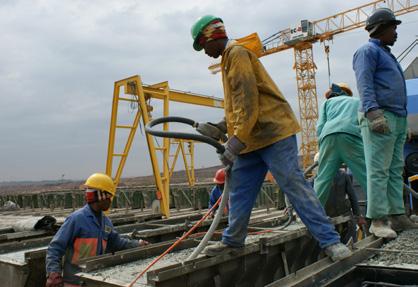
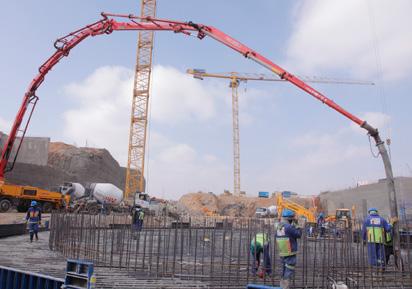
Construction remains a highly labour-intensive industry, with significant potential not only to create employment but to open pathways into the formal working environment. Particularly on public sector contracts, contractors frequently employ unskilled local labour and provide foundational training that enhances individual capability and improves overall workflow efficiency.
“Every member of the workforce must be focused on safe operations and the correct application of their skills and training,” she says. “Knowing they are being treated and paid fairly makes a tangible difference to the dedication and accountability with which they perform their duties.”
Multi-year collective agreements
A key role of the BCCEI is to facilitate multi-year collective agreements between employers and
1 Fair wages and predictable employment conditions are playing an increasingly important role in supporting stability and productivity across South Africa’s civil engineering sector
2 The BCCEI continues to support fair labour practices that strengthen workforce morale and operational continuity on infrastructure projects
employee representatives. These agreements, currently in place until August 2028, establish minimum wages and conditions across the sector, providing certainty and predictability for both contractors and workers. By creating a shared understanding of what applies on site, the agreements reduce the risk of disputes and disruptions that could compromise productivity.
“This certainty and fairness are critical in any workplace, but they take on added importance in construction where employees spend long hours outdoors, often exposed to demanding conditions,” Fourie notes.
Fair wages and consistent working conditions also strengthen the risk profile of civil engineering contracts. With competition intensifying and public sector budgets under pressure, even short delays or stoppages can severely erode already thin margins. Rework, disruptions and penalties for late delivery place further strain on contractors.
“When contractors understand the wage framework – not only for the current year but for the years ahead – they can price more accurately and plan more effectively,” she explains. “That certainty removes a significant source of risk during project execution.”
For collective agreements to deliver their intended stabilising effect, however, they must be observed by all participants on site, including smaller subcontractors. Fourie emphasises that membership of the BCCEI is not optional, regardless of company size.
“While large established contractors typically lead civil engineering projects, they rely on numerous smaller subcontractors to meet the local participation targets and to execute specialised tasks, spreading opportunity and value,” she says. “If any party underpays workers relative to agreed wage levels, it can quickly become a point of contention that disrupts progress.”
A level playing field is therefore fundamental to the BCCEI’s mandate. By ensuring that labour costs are aligned across the value chain, contractors and subcontractors alike can tender realistically and competitively.
“Contractors strive to manage and mitigate every risk on a project,” Fourie concludes. “Ensuring that labour conditions are clear, fair and consistently applied removes a significant variable from the productivity equation.”
Ultimately, fair wages are not simply a compliance requirement. In a sector defined by risk, tight margins and demanding delivery schedules, they are central to stability, efficiency and sustained productivity.
Lindie Fourie, Operations Manager at BCCEI
Sponsor a unique aspect of the conference and enjoy
such as: free exhibition stands complimentary delegate registrations brand representation at the event, promotion of your company in the conference proceedings magazine and online free entry for guests at the social evening and much more.
Terms and conditions apply
GUARDING THE DIGITAL GRID
CYBERSECURITY ACROSS CIGRE’S NINE PILLARS OF THE ENERGY TRANSITION
For over a century, the risks associated with municipal power system engineering in Southern Africa were predominantly physical: transmission towers falling, distribution transformers overloading, and physical copper cable theft. Today, municipal utilities are undergoing an unprecedented digital transformation. The integration of distributed energy resources (DERs), utility-scale renewable independent power producers (IPPs), and advanced metering infrastructure (AMI) has shifted our operational paradigm. By
In this modern, decentralised, and decarbonised energy landscape, electrons flow according to software logic, data analytics and remote telemetry signals. While these innovations are essential for grid flexibility and revenue preservation, they fundamentally merge our physical electrical networks with digital communications, creating a massive, highly vulnerable cyber-physical attack surface.
The International Council on Large Electric Systems (CIGRE) and the South African Institute of Electrical Engineers (SAIEE) have highlighted that cybersecurity is no longer a secondary
Devesh Mothilall
IT administrative task, but a core electrical engineering discipline. It is a critical, multi-layered protection barrier required to secure operational continuity, grid stability and municipal revenue.
For Southern Africa’s municipal engineers, technicians, and technical directors, ignoring this reality threatens the very foundation of local public service delivery.
The South African cyber-physical landscape: historical realities
The fragility of South Africa’s municipal utility sector – exacerbated by years of under-investment and distribution grid bottlenecks – means that
ABOUT THE AUTHOR
cyber incidents which might represent minor administrative hurdles in robust global grids can have catastrophic, compounding consequences locally.
A technical look at the following historical security breaches in South Africa’s public sector illustrates this vulnerability: City Power ransomware attack: In July 2019, Johannesburg’s local electricity distributor, City Power, suffered a highly disruptive ransomware attack. Malicious encryption payload targeted the utility’s web servers, internal databases, applications and network segments. This attack immediately crippled the utility’s website and active customer database, preventing up to 250 000 customers from purchasing prepaid electricity.
Furthermore, the encryption of internal SCADA and dispatch systems severely delayed localised fault logging and emergency repair dispatches, leaving several suburbs in the dark for extended periods.
Eskom corporate server ransomware attack:
In March 2022, South Africa’s national utility, Eskom, fell victim to an external ransomware campaign executed by the “Everest” cyberthreat syndicate. The attackers gained
Devesh attended the University of Cape Town for an Honours Degree in Electrical Engineering, the University of Pretoria for a Master’s Degree in Technology Management, and the University of Stellenbosch for a Master’s Degree in Renewable and Sustainable Energy. He also obtained a Master’s in Artificial Intelligence from the University of Johannesburg and is currently completing a PhD in Engineering Management.
unauthorised administrative access to Eskom’s corporate IT directories and general administrative servers. Stolen administrative data and server credentials were subsequently offered for sale on Tor-based dark web leak sites, with initial demands starting at US$125 000 and climbing to US$200 000. While general corporate administrative processes were disrupted, bulk generation SCADA networks and operational token vending systems were not compromised in this attack.
Eskom Online Vending System (OVS) breach: Unlike external ransomware incursions, the systemic breach of Eskom’s prepaid OVS – first formally disclosed in Eskom’s integrated financial results in December 2024 –was a profound failure of internal controls and data governance. Forensic audits revealed that internal employees and external criminal syndicates utilised unauthorised, privileged-level access credentials within the prepaid IT database to generate and distribute billions of rands worth of fraudulent prepaid electricity tokens (commonly referred to as “ghost vending”). These illicit tokens were sold on social media platforms at heavily discounted black-market rates (such as 600 kWh tokens sold for R150, translating to R0.25/kWh compared to the standard utility residential tariff of approximately R3.00/kWh). This massive internal database compromise directly inflated non-technical energy losses, which escalated to R7.1 billion during the 2024/25 financial year, severely draining utility capital and delaying vital grid maintenance.
Technical vulnerability profiles: STS meters, CDUS, and SGC loopholes
Understanding how syndicates bypass prepaid revenue systems is vital for municipal electrical engineers tasked with protecting local municipal revenue streams. The vulnerability in South African prepaid vending lies in the intersection of legacy physical hardware and incomplete modern configurations, namely:
The legacy vulnerability tail: When Eskom and various municipal distributors introduced the OVS in 2008 to mitigate fraud, they attempted to recall all legacy, offline Credit Dispensing Units (CDUs). However, weak physical asset tracking enabled corrupt personnel to steal decommissioned CDU machines directly from utility storage facilities. Alongside the physical CDUs, database disks containing proprietary cryptographic security algorithms and pricing files were taken. This allowed syndicates to generate highly convincing Standard Transfer Specification (STS) tokens completely offline. Over time, these networks evolved to recruit internal IT database administrators who possessed direct, highlevel administrative access to inject fraudulent meter transactions straight into the live OVS database.
Smart meter configuration vulnerabilities – Supply Group Codes: A major revenue leakage vector in local government is the cross-compatibility of fraudulent prepaid tokens across distinct utility boundaries. Under normal conditions, a prepaid token generated on Eskom’s vending platform should not be accepted by a municipality’s physical meters. However, modern smart meters utilise Standard Transfer Specification (STS) configurations that can be exploited if physical commissioning is neglected. When smart meters are manufactured, they are programmed with a default, manufacturer-specific Supply Group Code (SGC). During physical grid installation, field technicians are legally and technically required to input a “key change” token to bind the meter to the municipality’s unique, cryptographically secure SGC.
If municipal contractors leave meters configured with the manufacturer’s default SGC – either due to poor oversight or to simplify installation – the physical meter remains vulnerable. Once a correspondently configured
default key change token is entered, these meters can accept prepaid tokens generated by any other compromised STS-compliant utility database, including the breached Eskom OVS.
Mathematical models of grid cyber-physical risk and non-technical loss
To implement a data-driven defence strategy, municipal engineering departments must mathematically model their cyber-physical risk and continuously calculate energy variances.
Utilities can establish automated, continuous database scripts to reconcile active power dispatch against customer billing transactions. The net non-technical losses ( ) within a defined distribution network are calculated using:
Where:
is the active energy metered at the incoming municipal bulk supply substation.
is the cumulative metered energy billed to postpaid accounts. is the energy equivalent of cryptographically validated prepaid tokens successfully allocated to meter via verified online vending transactions.
represents the calculated physical technical losses within the conductors and step-down transformers, determined by:
Where:
is the current on grid branch is the branch resistance, and is the operational duration.
A sudden surge in across a specific feeder line serves as an immediate indicator of active meter bypassing or “ghost token” injection.
Cyber-physical substation risk index
To allocate limited capital budgets effectively, utilities must calculate the composite risk index ( ) for all connected Intelligent Electronic Devices (IEDs) and smart controllers across their distribution substations:
Where:
is the probability of threat vector exploit targeting device (based on open network ports, weak authentication, and exposed remote-access links). represents the structural vulnerability factor of device (such as outdated firmware or lack of transport-layer encryption).
is the operational consequence of compromise (safety impacts, loadshedding escalation, or financial revenue loss resulting from a failure or unauthorised switching command at device ).
Securing the water-OT nexus: expanding the municipal infrastructure domain
While electrical grids are a primary target, municipal cybersecurity strategies must extend to other critical services. Modern municipal water purification works, wastewater treatment systems, and bulk
pumping schemes are equally integrated cyber-physical environments. They utilise Operational Technology (OT) architectures that are structurally identical to electrical substations: relying on Programmable Logic Controllers (PLCs), Human-Machine Interfaces (HMIs), and remote telemetry units (RTUs) linked to centralised SCADA systems.
If a municipal water treatment facility’s OT network is compromised, the physical and public health consequences can be catastrophic, with the following potential scenarios:
Chemical dosing manipulation: Attackers can alter dosing parameter algorithms on PLCs, injecting toxic quantities of chlorine, ozone or chemical coagulants into the municipal drinking water supply, creating a major public health emergency.
Critical asset sabotage (water hammer): By spoofing telemetry sensors, hackers can force bulk water pumps to run dry or manipulate highpressure control valves to close rapidly. This induces extreme “water hammer” pressure waves, fracturing underground distribution pipelines and destroying expensive pumping infrastructure.
Environmental and regulatory compliance failures: Disabling aerators, sludge pumps or discharge sluice gates at municipal wastewater treatment works can result in millions of litres of untreated sewage spilling directly into local river systems, leading to severe environmental damage and heavy regulatory fines for the municipality.
By approaching cybersecurity as a unified municipal IT-OT convergence issue, engineering departments can utilise a single, coordinated security framework across both electrical and water infrastructure.
Key
National Breach Prevalence
Breach Recurrence Rate
Unfilled Cybersecurity Roles
Recruitment Obstacles
To implement a data-driven defence strategy, municipal engineering departments must mathematically model their cyber-physical risk and continuously calculate energy variances
Compliance, governance and South African statutory mandates
Municipal technical directors must ensure all engineering designs and digital configurations comply with national legal frameworks and SABS/NRS technical standards as follows:
The Protection of Personal Information Act (POPIA): Advanced Metering Infrastructure (AMI) and smart water meters continuously record granular, time-stamped consumption data. Under POPIA, this data is classified as personal information, as it can reveal a household’s occupancy, daily routines and financial status. Municipalities are legally obligated to secure this data both in transit and at rest. A failure to enforce data encryption on HES (Head-End Systems) exposes the local authority to severe administrative penalties and public liability lawsuits.
NERSA Grid Codes and NRS 049 Smart Metering Standards: The National Energy Regulator of South Africa (NERSA) is steadily introducing mandatory cybersecurity
88% of surveyed organisations suffered a security breach.
90% of breached entities were targeted and compromised multiple times.
63% of security positions remain partially or fully vacant.
55% of organisations report severe challenges in hiring staff.
Staff Awareness Deficit
Average Cost of a Data Breach
Only 32% of organisations trained over half their staff in the past year.
R53.1 million average cost per major security incident in South Africa.
guidelines into distribution licensing. Municipal smart meter rollouts must strictly comply with the NRS 049 standard for AMI. NRS 049 mandates secure communication architectures, utilising standardised protocols like DLMS/COSEM over IP networks, and requiring Transport Layer Security (TLS) and Mutual TLS (mTLS) to encrypt all data exchanged between the meter, head-end system and vending platform.
The Critical Infrastructure Protection Act (CIPA) 8 of 2019: Commencing in 2022, CIPA repealed the old National Key Points Act and placed clear legal accountability on the “person in control” of critical infrastructure. Under CIPA, municipal technical directors must legally demonstrate that they have implemented sufficient physical security and cyber-physical security measures to protect essential distribution substations and bulk water schemes from sabotage or cyber-intrusion.
Navigating the public sector skills deficit
The primary bottleneck preventing municipalities from successfully deploying robust cyberphysical defences is the severe national shortage of skilled cybersecurity professionals. The Council for Scientific and Industrial Research (CSIR) Information and Cybersecurity Centre’s national audits paint an alarming picture of public sector unpreparedness, as outlined in Table 1. This severe talent deficit means that municipalities cannot rely solely on in-house cyber defence teams.
Technical directors must advocate for a hybrid security model. This involves training local electrical technicians in basic OT hardening
Cyber-threats are an active operational reality, not a theoretical risk.
Attackers establish persistent backdoors due to weak postincident remediation.
Utilities lack dedicated security personnel, forcing general engineers to manage OT security.
Municipal salary structures cannot compete with private or international sectors.
General staff remain highly vulnerable to phishing and social engineering exploits.
A single major cyber incident can completely deplete a local municipality's annual capital budget.
TABLE 1 CSIR Cybersecurity Audit and Skills Metrics
while outsourcing real-time anomaly monitoring to a specialised, shared Security Operations Centre (SOC) operated regionally through the South African Local Government Association (SALGA) or the SAIEE.
A consolidated framework: CIGRE’s nine pillars and practical interventions
To systematically secure our infrastructure across the lifecycle of the energy transition, municipal engineers can utilise CIGRE’s nine pillars as a structured technical roadmap:
1. Asset visibility and risk mapping
No utility can protect an asset if it does not know what it owns. Municipalities must build a continuously updated, digital registry of every physical and logical IT/OT component –SCADA servers, PLCs, RTUs, smart meters, and communication gateways. These assets must be categorised by logical vulnerability and consequence of failure to prioritise protection.
2. Network segmentation and secure architecture
Following SANS/IEC 62443 (such as SANS 62443-2-1), utilities must isolate critical OT networks from corporate IT networks. The system must be partitioned into security zones connected only by highly restricted gateways (conduits), ensuring that an intrusion on the public-facing administrative network cannot propagate to bulk distribution switchgear or chemical dosing systems.
3. Identity and Access Management (IAM)
Shared passwords and unmanaged, permanent vendor VPN access are major security failures. Best practice demands role-based access control, strict multi-factor authentication (MFA) for all system-level administrative modifications, and time-bound, monitored remote sessions for third-party maintenance contractors.
By approaching cybersecurity as a unified municipal IT-OT convergence issue, engineering departments can utilise a single, coordinated security framework across both electrical and water infrastructure
4. Secure configuration and firmware patching
All network-connected equipment must be systematically hardened. Municipalities must disable unused communication ports, change all default manufacturer credentials (such as meter SGCs and PLC passwords), and execute a formal, risk-based firmware patching protocol designed to run without interrupting 24/7 public service operations.
5. Continuous monitoring and “three-way matching”
To actively detect ghost tokens and revenue theft, municipal finance and technical departments should implement a three-way matching audit script. This automated process continuously cross-references:
• All tokens generated and authorised by the OVS vending database.
• Ledger records within the municipal financial billing system.
• Active, real-time consumption telemetry returned by smart AMI meters.
Any mismatch immediately triggers an automated alarm, permitting immediate isolation of the compromised credential or tampered meter.
6. Operational incident response and resilience
Cybersecurity breaches are eventually inevitable; operational chaos is not. Municipalities must maintain physically isolated, offline backups of all critical SCADA database configurations and operating systems. Manual fallback procedures
– allowing staff to run substations and water treatment plants mechanically during network failures – must be practised and audited regularly.
7. Supply chain and vendor security
Every new hardware procurement or software contract must embed clear, enforceable cybersecurity SLAs. Municipal engineering bids should mandate that suppliers demonstrate a secure development lifecycle (SDL) and certify
that their smart meters and RTUs comply with open interoperability standards (NRS 049/DLMS/ COSEM) and security protocols.
8. Human factor and cybersecurity culture
Given that the CSIR reports malware and phishing as the primary entry points for utility security breaches, continuous, context-specific security training is crucial. Training must be tailored to different roles: engineers must understand OTspecific protocols, while administrative personnel must be trained to identify social engineering and credential theft attempts.
9. Governance and continuous improvement
Cybersecurity must be a permanent fixture on the municipal executive board’s risk register. Utilities should adopt the NIST Cybersecurity Framework (CSF) to transition their defence systems from reactive crisis response to an organised, continually improving lifecycle of risk assessment, detection and remediation.
The road forward for municipal engineers
As Southern Africa enters an era of rapid energy transition and municipal infrastructure modernisation, the responsibilities of the municipal engineer are expanding. We can no longer afford to design or operate utility infrastructure in physical silos.
In a world where a few lines of malicious code can disrupt bulk electricity supply and contaminate drinking water as effectively as physical sabotage, cybersecurity has emerged as a fundamental engineering discipline. By implementing strict STS key changes, mathematically tracking energy losses, securing the IT-OT boundary, and complying with national standards like NRS 049, our municipal engineers will protect local revenue, build public trust, and actively secure the digital grid for generations to come.
ENGINEERING RESILIENCE INTO AFRICA’S ENERGY FUTURE
WHAT BURUNDI’S JIJI AND MULEMBWE HYDROPOWER PROJECTS REVEAL ABOUT SUSTAINABLE INFRASTRUCTURE DELIVERY
Africa’s energy transition is often discussed in terms of generation capacity, investment pipelines and megawatts added to the grid. While these metrics matter, they only tell part of the story. The real challenge facing the continent is not simply producing more electricity. It is building resilient, integrated infrastructure systems that can support long-term economic and social development in increasingly complex environmental conditions.
Across Africa, countries are under pressure to expand access to affordable and reliable energy while simultaneously responding to climate volatility, rapid urbanisation, industrialisation and growing infrastructure demands. In this context, infrastructure projects can no longer be viewed as isolated engineering exercises. They must be designed as long-term development enablers.
By Mpho Ramphao
This is particularly true in the energy sector. Hydropower remains one of the most important renewable energy opportunities available to many African countries. When designed responsibly and strategically, it offers stable baseload power, reduced dependence on imported fossil fuels, and the potential to unlock economic growth across multiple sectors. However, modern hydropower infrastructure also demands a far more integrated approach than it did even a decade ago.
Resilience at the centre of infrastructure delivery
Today, resilience must sit at the centre of infrastructure delivery. That means engineering projects that can withstand changing climatic conditions, accommodate future demand, and operate sustainably over decades. It means accounting for sedimentation, flood risk, seismic activity and environmental impacts from the earliest design stages. It also means recognising that infrastructure is ultimately about people and the communities, businesses, schools, hospitals and industries that depend on reliable access to energy.
The Jiji and Mulembwe hydropower scheme in Burundi demonstrate what this integrated approach can look like in practice. Together, the two hydropower plants will add 49.5 MW of renewable energy capacity to Burundi’s national grid, increasing the country’s installed generation capacity from 60 MW to 109.5 MW.
Supported through funding partnerships involving the World Bank, European Union, African Development Bank and European Investment Bank, the approximately US$320 million development represents one of the country’s most significant recent infrastructure investments.
Zutari was responsible for the detailed design and construction drawings for both schemes, including the dams, tunnels, penstocks, powerhouses, permanent access roads and supporting infrastructure.
The project comprised a 32.5 MW plant on the Jiji River and a 17 MW plant on the Mulembwe River, each incorporating desilting structures, lowpressure pipelines, 1.1 km transfer tunnels, and power stations housing three horizontal Pelton turbines. After a construction period of six years, both plants were successfully commissioned in 2025 and are now connected to the Burundi grid, providing reliable renewable energy.
However, the significance of the projects extends well beyond the megawatts produced. From the outset, resilience and long-term sustainability formed part of the engineering approach. Extensive hydrological, sedimentation,
Mpho Ramphao, Managing Director: Water at Zutari
The Jiji and Mulembwe hydropower project incorporates advanced water infrastructure and Pelton turbine technology
The Jiji and Mulembwe hydropower project will add 49.5 MW of renewable energy to Burundi’s grid
geotechnical and seismic studies informed the design process, helping ensure the infrastructure could operate effectively within the realities of the local environment. The project also incorporated climate-related safety considerations into flood modelling to account for the increasing uncertainty associated with future rainfall patterns and extreme weather events.
Climate adaptation embedded in engineering
This kind of forward-looking design philosophy is becoming increasingly important across Africa. Infrastructure built today must be capable of performing under conditions that may look very different in 20 or 30 years’ time. Climate adaptation can no longer be treated as a secondary consideration or compliance requirement; it must be embedded within the engineering process itself.
Equally important is the recognition that energy infrastructure does not operate in isolation. Large-scale infrastructure projects often require supporting ecosystems that enable long-term operational success and community benefit.
In Burundi, this included not only the dams, tunnels, penstocks and powerhouses associated with the hydropower schemes, but also permanent access roads, housing, and support infrastructure. These elements are sometimes viewed as secondary components, yet they are essential to creating infrastructure systems that are functional, maintainable and socially sustainable.
For engineering partners working across Africa, this demands multidisciplinary collaboration on an unprecedented scale. Engineers, environmental specialists, hydrologists, planners, project managers and community stakeholders must increasingly work together to deliver infrastructure that is technically sound, socially responsive and economically viable.
Immense renewable energy potential in Africa
The continent’s infrastructure future will depend on this kind of integrated thinking. Africa possesses immense renewable energy potential but unlocking it will require more than financing and technical capability alone. It will require partnerships built on shared developmental
objectives, strong local understanding, and a commitment to infrastructure that creates lasting human value.
Importantly, projects such as Jiji and Mulembwe also demonstrate how infrastructure investment can contribute to broader national development priorities. Reliable electricity supply supports industrial productivity, improves healthcare and education outcomes, enables digital connectivity, and creates conditions for economic participation and job creation. Energy infrastructure therefore becomes not only an engineering asset, but a catalyst for inclusive growth.
As African countries continue navigating the energy transition, the focus must remain on infrastructure that is resilient, adaptable and people centred. Success will not be measured solely by the scale of generation delivered, but by the long-term impact infrastructure has on communities, economies and national development trajectories.
Engineering has a critical role to play in shaping that future: not simply by building assets, but by helping create systems that allow societies to thrive sustainably over generations.
ADVANTAGES
• Highly economical cost to volume ratio
• Easily transportable, especially for multiple tanks
• Easy assembly, even at elevated heights
• NO CRANES REQUIRED
• Robust steel tank with high life expectancy
• Replaceable liner allows for extended life
MODERN SOLUTIONS FOR LEVEL CONTROL SYSTEMS ON RESERVOIRS
Although reservoir levels can be controlled in many ways, cognisance is not always taken of the hydraulic laws which govern the correct usage of level control valves. In some cases where pressures are high, their incorrect sizing and application can lead to disastrous results and early demise of the valves. By
The two enemies of level control valves are pressure and flow, and although they are related, different solutions are available to solve both problems. The starting point is a sound understanding of the rules that govern flow into reservoirs in order to prevent early failure. Let’s start with high pressure management.
Peter Telle*
For reservoir level control valves, anything above 4 or 5 bar is high, and if above 6 to 8 bar it can have a devastating impact on these essential mechanical devices if precautions are not taken.
The key concern is cavitation. As most engineers know, cavitation occurs due to the rapid formation and collapse of vapor-filled bubbles (or cavities) when the water pressure
drops below its vapor pressure at ambient temperatures. This triggers high velocity microjets within the bubbles and if anywhere close to the walls (or any metallic part) of a valve, it causes severe erosion of the metal. Figure 1 illustrates the typical sequence which results in cavitation.
In scientific terms, cavitation is much like water boiling at ambient temperature (20°C). However, because the “recovery” pressure is normally much higher than the atmospheric pressure, the collapsing of the bubbles occurs at a much higher pressure than normal water boiling, so the reaction is a lot more violent.
Valves operating in a severe cavitation zone have been known to have holes eroded through the body walls in a matter of a few weeks.
All control valves have a certain ability to resist cavitation, which for simplicity can be expressed in the ratio between upstream and downstream pressure. In self-actuated globe control valves for the water Industry, the norm is 3:1, i.e., if upstream pressure is 12 bar the valve can handle a downstream pressure of 4 bar without cavitation setting in.
Some traditional diaphragm actuated globe control valves can achieve a 4:1 ratio due to a modified flow pattern design through the body. A case in point is the Ultra Alpine control valve, which can handle a 4:1 pressure drop ratio. This valve is supplied and supported by Ultra Control Valves in South Africa.
Flow rate
Every control valve has a maximum allowable flow rate, which is based on an acceptable velocity to ensure good controllability, long life and low noise levels. For standard diaphragm actuated
FIGURE 1 Graph showing bubble of cavitation forming
globe pattern valves, this velocity is generally 6 m/s for 24/7 operation, with a few hours a day at a velocity of 20% higher acceptable.
To better understand the flow limitations, the following control valve sizing formula is applied:
Where:
= flow rate
= the wide-open capacity for any particular make and size of valve
= the differential pressure across the valve.
So, for any make and size of valve, flow rate will increase as differential pressure increases if the valve is allowed to go into the wide-open position.
If one does the calculation on a few sizes of valves, one quickly realises that the maximum recommended flow rate for a particular valve is reached with a differential pressure of approximately 1.5 bar. So, if a valve is allowed to go wide-open with a differential pressure of more than 1.5 bar the flow rate will exceed the generally recommended maximum flow rate.
To illustrate the point, let’s use a diaphragm actuated globe control valve designed to handle a 4:1 pressure drop ratio (to avoid cavitation), as a working example. If the valve is allowed to go wideopen under the condition of 4 bar upstream and a back pressure of 1 bar (from the reservoir head), the flow rate through say a 200 mm valve would be 329 ℓ/s whereas its maximum recommended flow rate is only 200 ℓ/s. This would result in a much shorter valve lifespan.
THE SOLUTION
The solution is to ensure that the valve operates within the recommended pressure drop ratio design parameters (to prevent cavitation), and that the flow rate is not allowed to exceed the maximum recommended flow rate. This can be achieved by installing flow limiters and pressure drop limiters to match specific operational environments.
Flow limiters
If the dynamic head is more than 3 bar and the static head level of the reservoir is 10 m (or less) it is recommended to install a “Rate of Flow” control feature on the level control valve.
This will ensure that the recommended flow rate is not exceeded.
An even better option is to add a Maric flow control valve to the system (instead of an additional pilot).
Another locally supplied solution from Ultra Control Valves, the benefit of a Maric valve is that it adds another back pressure device with simplicity. It is also a tamperproof solution.
Pressure drop limiters
Pressure drop limiter selection gets a little more complicated and one needs to use good practice “rule of thumb” laws.
Back pressure device
After setting the flow rate to a fixed value, one can consider installing an artificial back pressure device (such as an orifice plate) sized to produce the required pressure drop to provide the correct back pressure for the valve.
BENEFITS
As an example, if the dynamic upstream pressure is 9 bar; the head from the reservoir is 1 bar; and the valve can handle a pressure drop ratio of 3:1, we would need to create an additional back pressure of 2 bar (as a pressure drop through the orifice plate). This would ensure a total back pressure of 3 bar and ensure that the 3:1 criterion is met.
Hydraulics Simplified
Because the Ratio Pressure Reducing Valve (RPRV) is of an inline Axial flow design, it has all the benefits of • High Cavitation resistance (5:1 ratios available) Fast response – almost instantaneous response to demand changes
• High range-ability and can control down to very low flow rates
Of course, the orifice plate solution is only applicable while the flow is what the valve is set to, as an orifice plate can only be sized to produce a specific pressure drop at a specific flow rate.
One problem with this solution is that end-of-line valves, such as reservoir level control valves, normally must close and open slowly to ensure that no water hammer is created in the pipeline. In some instances, engineers have a requirement for a closing speed of 10 minutes (or more).
Due to these features the Ultra RPRV can operate in series with other control valves without experiencing instability, and also would not require bypass PRV’s to cater for low flow periods. Sizing and application Engineering thus becomes simplified. If in doubt just install a line size RPRV in any position where pressure needs to be reduced without doing complicated sizing.
The Ultra ratio reducing valve, together with a cross-section schematic
their capabilities throughout the range and during opening and closing cycles.
Fast and Easy installation
The RPRV has a compact design, which makes it ideal for tight spaces such as fire installations and plumbing in High Rise buildings. They can be installed in any orientation.
In these cases, the orifice plate loses its effect during the opening and closing cycle, with the potential for cavitation. Therefore, precise judgement is required. Operators must decide whether the excess pressure drop and the time the valve has to endure this are within acceptable limits. In other words, would it result in premature valve failure? If that is the case, then another solution has to be investigated.
Pressure reducing valve
The ultimate solution is to install a pressure reducing valve upstream of the level control valve and with a “Rate of Flow” control feature. This solution will ensure that the valves are operating within
The Maric flow control valve
The Ultra Alpine control valve can handle a 4:1 pressure drop ratio
Complete security
• Fixed Ratio. No need for adjustments or calibration – the valve settings are fixed and cannot change with time.
In the case of valves that can handle a 3:1 ratio, this means that if the reservoir back pressure is 1 bar, a dynamic upstream pressure of 9 bar can be handled without the valve’s lifespan being compromised. An ideal pressure reducing valve to use is the Ultra ratio reducing valve due to its simplicity, stability and maintenance-free operation.
• Simple sealing only one moving shutoff when which can become become corroded
• Maintained downstream valve will remain downstream
• Ease of maintenance. person. This once every standard seals available.
• Tamper proof. pilot tubes,
• Leakages from problem in buildings
• No need to High Performance
One moving part seal results in without maintenance African Conditions.
In conclusion
Although water control valves are designed to destroy energy and, in some cases, handle pressures of up to 250 bar (such as in the mining industry and power station sector), these control valves become very vulnerable to cavitation and velocity damage on low pressure applications, such as level control.
It is the engineer’s duty to design around these problems to ensure that the level control valve does not operate outside its capability parameters. *CEO, Ultra Control Valves
PIONEERING INNOVATION IN A TRADITIONAL, CHANGE-RESISTANT INDUSTRY
Corestruc’s high-strength precast concrete wall panels reduce on-site construction, improve quality control and accelerate project delivery
South African municipalities are placing on sustainable, resilient infrastructure.
This reflects broader policy objectives contained in the National Development Plan 2030, the National Water and Sanitation Master Plan and National Treasury’s Infrastructure Asset Management Delivery Framework. All of these promote infrastructure that delivers greater resource efficiency, improved lifecycle performance and enhanced long-term value for public investment.
Corestruc has successfully challenged conventional mindsets by demonstrating that precast post-tensioned concrete reservoirs are far more than an alternative construction method.
“They are a fully engineered, turnkey solution that has been validated through rigorous design, comprehensive testing and proven in-service performance,” says Willie de Jager, Managing Director of Corestruc.
Few infrastructure sectors demand the same level of reliability and long-term performance as water infrastructure. Reservoirs, for example, are expected to operate safely and effectively for decades. Therefore, new construction technologies are subjected to rigorous evaluation before they are widely adopted.
As a result, even innovations offering clear technical and economic advantages can take 10 to 15 years to achieve mainstream acceptance.
Precast construction addresses many of the sector’s longstanding challenges by moving much of the construction process from site to a controlled factory environment. This significantly accelerates construction, improves quality and enhances programme certainty. It also strengthens health and safety by reducing work at height, minimising high-risk on-site operations and creating a more controlled construction process.
Notably, these safety advantages are the primary reason many European and North American clients specify precast construction for their South African projects, where meeting stringent corporate health and safety standards is a fundamental project requirement.
Beyond its safety benefits, factory-controlled manufacturing improves quality control, reduces
material wastage, enhances resource efficiency and shortens construction programmes.
The resulting lower environmental footprint and improved lifecycle performance align closely with the growing emphasis
“By combining factory-controlled precast manufacturing with precision post-tensioning techniques, we have developed a reservoir system that delivers exceptional structural integrity, watertightness, construction certainty and long-term durability.”
These engineering advantages enable municipalities to deliver critical water infrastructure more quickly and predictably, reduce lifecycle maintenance requirements, minimise service interruptions and maximise long-term returns on infrastructure investment.
Accelerating water infrastructure at scale
Having already contributed approximately 600 Mℓ of water storage capacity across South Africa through the delivery of precast posttensioned reservoirs and
High-strength precast concrete wall panels form the reservoir shell, while the modular precast roof structure is installed concurrently, enabling a more efficient construction sequence and shorter project programmes
precast roof structures for conventional reservoirs, Corestruc has established itself as the country’s leading specialist in precast concrete water infrastructure. The majority of this installed capacity comprises the company's post-tensioned reservoir systems, reflecting the growing acceptance of this construction methodology.
“Our expanding project portfolio demonstrates that the system is not only technically proven but also capable of accelerating the delivery of critical water infrastructure at scale,” says De Jager.
Certainly, a full order book and continued business expansion underscore growing market confidence as municipalities, water authorities and private sector clients increasingly recognise the value of faster, safer and more sustainable reservoir construction.
Specified during design engineering
When Corestruc first introduced its precast post-tensioned reservoir system, it was often engaged to recover projects where construction had fallen behind schedule or encountered significant delivery challenges. The system
restored programme certainty while maintaining the required structural performance and watertightness.
As confidence in the solution has grown and its performance has been demonstrated across an expanding portfolio of successful installations, its role has evolved considerably. Today, the technology is increasingly being specified from the outset by major municipalities. The City of Ekurhuleni, for example, has already completed seven precast post-tensioned reservoirs using the system, while the City of Tshwane has also adopted the technology for new reservoir construction.
“This marks a clear shift from project recovery to proactive adoption, reflecting growing confidence in the system’s ability to deliver highquality water infrastructure safely, efficiently and within programme in metropolitans,” De Jager says.
Engineering confidence through innovation
Although the construction industry has embraced innovation in many areas, the adoption of new materials and construction methods remains
relatively slow. Research shows that global construction productivity improved by just 10% between 2000 and 2022, compared with 50% for the overall economy and 90% for manufacturing. The same research concludes that construction continues to lag other sectors in adopting new materials and methods, with material innovation progressing considerably more slowly than digital technologies.
As a family-owned business, Corestruc can pursue innovation with a long-term perspective. Close alignment between ownership and management enables faster decision-making, strategic consistency and sustained investment in technologies that may take years to achieve widespread industry acceptance.
“Larger companies often need to balance innovation with more complex governance and investment processes,” states De Jager.
“We’ve been able to respond quickly to industry challenges, refine our technology through continuous improvement and remain focused on delivering practical engineering solutions that create lasting value for clients.”
Although the company has grown significantly, it has deliberately retained the values and culture
Structa Technology’s Prestanks are hygienically safe, cost effective and a reliable way to store water for commercial sectors, private sectors and even for personalized storage. Temporary or permanent erection at mines, powerstations, building sites, hospitals, water affairs, municipalities, rural communities and agriculture.
Pressed Steel Sectional Water Tanks
The reservoir takes shape as Corestruc’s precast concrete wall panels and modular roof system are assembled on site, creating a fully integrated water retaining structure engineered for quality, durability and faster project delivery
of a family business. Its flat organisational structure encourages accountability, collaboration and ownership at every level, empowering employees to contribute ideas, solve problems and maintain the high standards of quality and service on which the company has built its reputation.
“Our success stems from this agile philosophy,” De Jager says. “Every design is subjected to rigorous verification. Furthermore, we always return to first principles, using hand calculations to validate the outputs generated by advanced structural analysis software.”
He adds that all designs undergo comprehensive internal engineering reviews, while first-of-theirkind systems are independently reviewed by external specialists to provide an additional level of technical assurance.
This commitment extends well beyond design. Corestruc delivers a fully integrated turnkey solution, taking responsibility for every stage of the project – from design, manufacture and transport through to construction, commissioning, and the provision of appropriate guarantees and professional indemnity cover.
The company also invests significant engineering expertise, time and capital in demonstrating the technical viability of its solutions before project award through detailed engineering proposals, design calculations and constructability assessments. While this represents a substantial upfront investment, it establishes confidence and builds lasting client relationships. As he notes, few companies are willing to make this level of investment when introducing an alternative construction system to the market.
“We apply the same engineering standards to ourselves that we expect from our clients,” says De Jager. “We believe every construction
A Corestruc precast concrete reservoir taking shape, with large precast elements installed on-site to accelerate construction and reduce project timelines by up to 50%
challenge has a solution, but we also recognise that precast concrete is not always the answer. Our objective is not to promote a particular construction method, but to deliver the solution that offers the best long-term technical, operational and economic outcome for each project.”
Putting performance to the test
In 2019, Corestruc constructed its first two precast post-tensioned concrete reservoirs: the inaugural installation at KwaMhlanga, followed by a second reservoir at Bundu for the Thembisile Hani Local Municipality.
Securing these projects required more than an innovative concept. The confidence of the client and professional team was earned through Corestruc’s engineering discipline, its commitment to fully validating every aspect of the design and construction methodology, and its proven track record in delivering complex precast concrete structures. Together, these factors provided the assurance needed to pioneer a new approach to reservoir construction.
“We were fortunate that Ceenex and the Thembisile Hani Local Municipality gave us the opportunity to demonstrate the technology,” recalls De Jager. “While our engineering design was based on rigorous analysis, there is no substitute for proving a new system under real operating conditions.”
Both reservoirs successfully demonstrated the structural integrity, watertightness and constructability of the system while providing valuable practical insights that enabled the construction methodology to be further refined.
Early observations, including minor efflorescence associated with the timing of the posttensioning process, informed improvements to construction sequencing and post-tensioning procedures. Just as importantly, measured structural behaviour closely matched predicted design performance, providing further validation of the engineering methodology.
These lessons were immediately applied to the Bundu reservoir. Through refined construction sequencing and greater overlap between floor, wall and roof activities, Corestruc and the main contractor, Mbako Projects & Trading, significantly accelerated project delivery without compromising quality.
The close collaboration between the project teams demonstrated not only the speed at which the precast post-tensioned system could be constructed, but also the value of meticulous planning, coordination and disciplined execution. “This collaborative approach has since been carried forward to subsequent projects, enabling further refinement of the construction methodology and consistently delivering efficient, high-quality outcomes,” De Jager explains.
The success of these pioneering installations laid the foundation for broader industry acceptance of the technology. This was particularly significant given that the Bundu reservoir formed part of the largest infrastructure project ever undertaken by the municipality, where long-term performance and durability were critical requirements. The completed reservoir was subsequently recognised in the Department of Water and Sanitation’s Blue Drop assessment, providing
Corestruc’s completed structural precast concrete reservoirs provide reliable longterm water storage, helping municipalities strengthen water security and support growing communities
independent acknowledgement of the quality and performance of the infrastructure.
“The lessons learnt from these early projects have since been incorporated into Corestruc’s standard design and construction practices, resulting in a mature, proven system,” says De Jager.
Proven results, continuous improvement
Compared with conventional construction methods, the Corestruc system consistently delivers construction time savings of more than 50%. This efficiency has been demonstrated repeatedly on site, enabling the company to expand its market share while delivering measurable value through faster project delivery, reduced site costs and greater programme certainty.
The strength of this approach is reflected in a robust order book and a growing portfolio of projects that consistently demonstrate superior cost-effectiveness.
Seven years after its first installation, the system has evolved from an innovative concept into a mature, field-proven construction solution. Every project provides opportunities to refine the design, optimise construction methodologies and improve efficiency.
Continuous engineering improvement remains central to Corestruc’s philosophy because the
company believes reservoir construction can always be safer, faster and more economical.
“The cheapest solution at tender stage isn’t always the most economical solution over the life of the asset,” says De Jager. “Our job is to help them make infrastructure decisions that will still stand up twenty or thirty years from now.”
Holding Africa’s Water 30 Countries and Counting
•
• Tanks < 350kL require no concrete foundation
WASTEWATER TREATMENT, DELIVERED FASTER
HOW SBS TANKS SUPPORTED KLOMAC ENGINEERING WITH MODULAR STEEL TANKS FOR A COMPACT WASTEWATER
TREATMENT PROJECT IN KWAZULU-NATAL
SBS Tanks is a proudly South African, Level 2 B-BBEE manufacturer of engineered modular steel panel water storage tanks. Headquartered in Pinetown, KwaZulu-Natal, the company has delivered water storage systems for municipal, mining, fire protection, commercial and water conservation projects across South Africa, Africa, the USA and international markets since 1998.
From its 5 700 m² manufacturing facility, SBS combines factory-controlled production, Galvalume® steel panel tank technology, custom fitted liners, in-house engineering, R&D product optimisation, dedicated project management and specialist installation teams. With tanks ranging from 12 000 litres to 5.2 megalitres, SBS Tanks delivers infrastructure designed for quality, safety, durability and longevity.
Beyond storage: supporting the wastewater process
Wastewater infrastructure is one of South Africa’s most urgent service delivery challenges. Rapid population growth, urban expansion and ageing municipal networks continue to place pressure on treatment capacity, environmental compliance and community infrastructure.
In this environment, storage is no longer only about holding water. On certain projects, tanks form part of the process itself.
This was the case on the Klomac Engineering wastewater treatment project in uMgungundlovu
District Municipality, just north of Pietermaritzburg in KwaZulu-Natal. The project was commissioned by uMngeni-uThukela Water, with Klomac Engineering appointed to build and operate the plant prior to future handover to the local municipality.
The project was completed in June 2025, and SBS Tanks supplied five open-top modular steel panel tanks for the wastewater treatment process, providing approximately 2.9 Mℓ of installed process capacity.
Turning wastewater into safer discharge
The purpose of the plant is not potable water production. Its primary design function is to treat wastewater to a level suitable for environmentally safe secondary treatment discharge, in line with applicable wastewater and effluent quality requirements managed by the Department of Water and Sanitation and relevant local authorities.
For SBS Tanks, the project scope required a different level of project specific design coordination. The tanks were not simply being used as passive
SBS Tanks delivered across the full project – from drawings and technical reviews to site execution and follow-up support. From our side, we can only compliment the team.” Sydney Paton, Director, Klomac Engineering
SBS Tanks supplied five open-top modular steel panel tanks for the wastewater treatment process, providing approximately 2.9 Mℓ of installed process capacity
storage vessels. They needed to support aeration, decanting and holding functions within Klomac’s broader wastewater treatment process.
SBS’s in-house engineering capability was a key benefit on the project, enabling close collaboration with Klomac Engineering, the process design team and SBS project management to ensure the tank package met its intended wastewater treatment application.
Key technical considerations included:
Wastewater compatibility, including specialist liner selection and stainless-steel wetted fittings.
Open-top tank configuration to support aeration, decanting and holding functions.
Aeration pipework interfaces, including base and nozzle penetrations.
Freeboard, overflow, foundation and load bearing requirements to support safe operation.
Engineering tanks for process demands
Although the tank shell design remained within SBS’s proven modular steel panel system, the application required careful review of the components that would come into contact with the stored wastewater.
The liner, fittings and aeration interfaces were central to the design. SBS reviewed the wastewater quality information and worked with Klomac and suppliers to confirm suitable liner and stainlesssteel wetted fitting requirements.
Klomac Engineering’s wastewater treatment plant installation designed and built for uMgungundlovu District Municipality
Because aeration introduces air into the wastewater to support treatment and prevent stagnation, the tanks required more coordination than standard storage tanks. Detailed designs around base penetrations, nozzle orientation and interface points allowed Klomac’s process equipment to integrate with the SBS tanks while protecting liner integrity and containment performance.
Delivering capacity on a constrained site
The project was located in a compact and environmentally sensitive peri-urban area. Space was limited, and the plant had to be delivered within a smaller footprint than a traditional large-scale wastewater treatment works.
This is where modular steel construction offered practical value. The SBS tanks could be manufactured under controlled factory conditions, delivered to site in component form and installed as the civil platforms became available.
The tank package was constructed in stages, aligned with Klomac’s broader construction programme. SBS worked closely with the civil contractor and engineering team to co-ordinate foundation requirements, ring beam preparation, nozzle positions and installation sequencing. Site logistics also required planning.
Because space and laydown security were limited, SBS utilised a 12 m container to store the knock-down tank components on site. Materials could then be removed and assembled as required on site, helping to control access, protect components and support an orderly staged build.
Why modular steel design made sense
Conventional concrete infrastructure remains important in the traditional wastewater sector. However, concrete can require large footprints, extended construction periods, longer curing times and significant civil works before process equipment can become operational, making phased project completion almost impossible.
SBS
For this project, time was a critical factor. Klomac required a practical way to deliver wastewater process capacity faster than a conventional concrete approach.
SBS’s modular tank package supported the project through:
In-house engineering: close collaboration between SBS Tanks, Klomac and the end-user fast-tracked a suitable solution.
Speed: factory manufacture and staged installation shortened delivery timelines.
Cost efficiency: modular steel reduced the capital intensity of the tank package.
Footprint efficiency: significant process capacity was delivered on a compact site.
Adaptability: the tanks were configured for aeration, decanting and holding functions.
Maintainability: components remain accessible for inspection and future intervention.
Project support: engineering, project management and installation teams worked with Klomac from design review to handover.
A national infrastructure opportunity
The broader significance of this project goes beyond one successful wastewater plant in KwaZulu-Natal.
Across South Africa, many municipalities face the same problems: population growth and development have moved faster than bulk wastewater infrastructure. Large permanent treatment works are essential, but they can take years to plan, fund, approve and construct, still leaving an immediate and urgent need for interim treatment facilities to meet current needs.
Compact, modular wastewater treatment plants can help bridge that gap. Where appropriate, they can provide earlier treatment capacity while larger infrastructure is developed around them. This has clear social, environmental and economic value.
Earlier wastewater treatment capacity can help protect rivers, dams and groundwater resources. It can support residential and commercial development. It can reduce pressure on overloaded infrastructure. Most importantly, it can help communities receive critical services sooner than current planning will allow.
Because SBS tanks are modular and bolted, they also offer flexibility for phased or semi-permanent infrastructure. If a plant is later expanded, relocated or replaced by larger civil infrastructure, the tanks can be decommissioned, dismantled and potentially redeployed with far less environmental impact than permanent concrete structures might.
Process capacity, delivered faster
The Klomac Engineering wastewater treatment project demonstrates how SBS Tanks can support infrastructure beyond conventional water storage. In this application, the tanks became part of the wastewater treatment process itself, supporting aeration, decanting and holding within a compact plant.
For SBS Tanks, the project reinforces the value of combining manufacturing capability with engineering support, project management and installation experience. For contractors and infrastructure partners, it shows how modular steel tanks can help overcome time, footprint and budget constraints.
For South Africa, the lesson is broader. As urbanisation accelerates and wastewater infrastructure comes under pressure, proven alternative technologies must be considered by municipalities and delivery partners if the prevailing crisis is to be averted.
For SBS Tanks, projects like Klomac's show how modular engineering can help South Africa respond faster to infrastructure pressure, protect the environment and deliver essential services to more communities, sooner.
ENGINEERING EXCELLENCE BEGINS WITH QUALITY MATERIALS
The success of any piping system depends on sound engineering, robust technical specifications, quality manufacturing and proper installation.
Whether supplying drinking water to communities, supporting mining operations or serving industrial facilities, the longterm performance of plastic piping systems relies on every component meeting the highest standards of quality and compliance.
Piping material engineers play a pivotal role in bringing these elements together. Their decisions influence project costs, construction schedules, operational efficiency and, ultimately, the reliability and lifespan of critical infrastructure.
Supporting engineers in this important role is the Southern African Plastic Pipe Manufacturers Association (SAPPMA), which promotes compliance with South African National Standards (SANS), champions local manufacturing excellence, and helps safeguard the quality of plastic piping systems manufactured throughout Southern Africa.
“In an environment where infrastructure reliability, sustainability and value for money are more important than ever, specifying qualityassured, standards-compliant piping systems
FISHING LINE BIN INITIATIVE RELAUNCHED: AN INDUSTRY COLLABORATION
The Sustainable Seas Trust (SST), in partnership with Plastics SA, the Southern African Plastic Pipe Manufacturers Association (SAPPMA) and Marley Pipe Systems, has relaunched and expanded its successful Fishing Line Bin Initiative.
The Fishing Line Recovery and Recycling Programme was officially first launched by Plastics SA along the Gansbaai shoreline in 2010 to provide anglers with a convenient and environmentally responsible way to dispose of used fishing line. SST, based in Gqeberha, joined the initiative in 2022 and has since installed and monitored fishing line bins at key coastal sites in Nelson Mandela Bay.
The relaunch of the Fishing Line Bin Initiative has been made possible through a collaborative effort led by SAPPMA, which issued a call to its members to support the initiative through material donations.
Marley Pipe Systems immediately answered
the call, generously donating 80 units of each of the PVC pipe and fitting components required to construct the collection structures. The donation also included storage baskets that have proven invaluable in organising components during assembly and deployment.
“We are incredibly grateful to SAPPMA for facilitating this industry partnership and to Marley Pipe Systems for their swift and generous response. This contribution enables us not only to continue protecting our marine environment from discarded fishing line, but also to adapt the proven bin design for use in schools and other litter prevention initiatives,” says Dr Stacey Webb, Head of Marine and Coastal Impact Programmes at SST. Collaboration between STT and its partners is ongoing as the initiative expands nationally within the marine, education and community environment.
is not simply good engineering practice, it is essential for protecting South Africa’s critical infrastructure,” says Jan Venter, CEO of SAPPMA.
Great infrastructure starts with good engineering
In Engineering, Procurement and Construction (EPC) projects, piping material engineers play a strategic role that extends far beyond selecting the correct pipe. They ensure that materials are suitable for the intended application, comply with relevant South African and international standards, meet required pressure and environmental performance criteria, and deliver the best long-term lifecycle value.
“Every material decision has lasting consequences. Selecting the correct piping system from the outset reduces maintenance costs, improves operational efficiency and extends the service life of valuable infrastructure assets. Poor material choices or the use of noncompliant products, however, can lead to costly failures, repairs and unnecessary operational risks,” Venter explains.
One of the most important responsibilities of piping material engineers is the development of comprehensive piping specifications that guide designers, manufacturers, contractors and inspectors throughout a project. Selecting materials that can withstand operating pressures, temperatures, chemical exposure and environmental conditions is equally critical to ensuring reliable long-term performance.
“Having the right specifications on paper is only part of the equation,” says Venter. “Engineers also need confidence that the products specified will consistently meet those requirements once they arrive on site.”
Why standards matter
South Africa has well-established standards governing the manufacture and performance of plastic piping systems. Compliance with these standards is fundamental to protecting infrastructure, ensuring public safety and delivering long-term value for money.
“Unfortunately, not every product entering the market offers the same level of quality or compliance. While cheaper alternatives may appear attractive initially, substandard products often prove significantly more expensive over
their service life. This is why independent quality assurance and ongoing compliance monitoring remain so important,” Venter stresses.
SAPPMA: Raising the bar
For more than two decades, SAPPMA has worked alongside engineers, municipalities, contractors and manufacturers to raise standards across South Africa’s plastic pipe industry. Through independent product testing, factory audits and ongoing compliance monitoring, the Association helps ensure that pipes manufactured by its members consistently comply with applicable South African National Standards.
Beyond product compliance, SAPPMA also provides technical guidance to engineers, consultants and contractors, promotes industry best practice and supports skills development across the sector.
“By specifying piping systems manufactured by SAPPMA members and carrying the SAPPMA logo, engineers and infrastructure owners can be confident they are selecting products manufactured under independently monitored quality management systems,” Venter adds.
Investing in tomorrow's engineers
Recognising the need to strengthen engineering education, SAPPMA is also helping prepare the next generation of industry professionals by exposing engineering students to the latest developments in plastic piping technology.
The Association regularly collaborates with the University of Pretoria’s Department of Civil Engineering by providing technical input for lectures presented to third and fourthyear engineering students. Similar educational
sessions have also been presented at the University of the Witwatersrand, as well as to the Institute of Municipal Engineering of Southern Africa (IMESA), where SAPPMA members and industry specialists share their knowledge and practical experience.
These initiatives form part of SAPPMA’s broader commitment to bridging the gap between academic theory and practical industry knowledge, equipping tomorrow’s engineers with the insight and confidence to make informed material selection decisions throughout their careers.
“As South Africa continues to invest in water, sanitation, mining and industrial infrastructure, the partnership between skilled engineers, quality manufacturers and organisations such as SAPPMA will become increasingly important,” adds Venter.
“By promoting high manufacturing standards, supporting engineering education and encouraging the specification of standardscompliant piping systems, we can help ensure today’s infrastructure investments continue delivering value for decades to come. After all, engineering excellence always begins with quality materials,” Venter concludes.
QUALITY BUILDS TRUST.
STANDARDS DELIVER PERFORMANCE.
Every meter of pipe matters.
SAPPMA promotes excellence in plastic pipe manufacturing through compliance with South African National Standards, independent certification and continuous quality improvement.
Whether transporting drinking water, supporting mining operations, irrigating crops or protecting vital infrastructure, quality pipes begin with quality manufacturing.
WHY QUALITY MATTERS
Manufactured to applicable SANS standards Long service life and proven performance
Independently audited and certified Supporting SouthAfrica’s infrastructure for generations to come Safe, reliable and fit for purpose
Jan Venter, CEO of SAPPMA
GeoPoly’s ground stabilisation solution is rock solid
Addressing subsidence or ground instability issues is key for the safe restoration and preservation of structural form and function.
IMIESA speaks to Tony Pappalardo, Managing Director at GeoPoly Systems SA (GeoPoly), about two diverse case studies – one being a water treatment plant and the other a 1922 era heritage building – where their GeoPoly Precision Densification™ resin injection technology provided a new lease on life.
Seasonal soil contraction and expansion – especially in clayey conditions – compounded by water ingress and erosion are among the common causes of subsidence, as well as loss of load bearing support. Left unchecked, either will progressively undermine any structure.
Within this context, reinforced concrete water treatment plant structures like aeration tanks and clarifiers are especially sensitive to differential settlement. Being rigid, even the slightest ground movement can cause structural cracks, displace pipe connections, and misalign mechanical processes, resulting in leaks as well as compromised system performance.
Such was the potential scenario at the Warrenton Water Treatment Plant (WTP) in South Africa’s Northern Cape province. Here the plant’s lamella clarifier had settled due to subsurface void formations beneath the supporting 164 m² concrete floor slab.
GeoPoly was engaged to execute a remediation solution. The latter formed part of an upgrade programme at the Warrenton WTP being undertaken by the client’s consulting engineer, SMEC, and main contractor, Jorian Construction.
The brief was very specific: to fill the void and stabilise the structure – not to lift or relevel
it – and to form a geopolymer resin injected curtain around the clarifier perimeter to control future water movement through the surrounding ground. A settled corner of the Lower Pump Station on site – likewise undergoing renovation and upgrading by Jorian Construction – was also stabilised in a similar fashion.
With the structures out of service for the upgrade, the GeoPoly Precision Densification™ method allowed all three elements to be completed over a single three-day visit, with no excavation and minimal site disruptions.
Stabilisation sequence
GeoPoly’s crew arrived on site on Thursday 2 nd July 2026 and drilled the predetermined hole spacings for the geopolymer resin injection points required for the protective perimeter curtain and the clarifier floor slab stabilisation phases. Injection commenced the following morning.
“On drilling, a void was found directly beneath the 300 mm thick base slab, with poorly compacted material to about 1.2 m below slab level. However, the ground became firmer with depth and was very stable by 3 m – more competent at depth than the geotechnical report had indicated,” Pappalardo explains.
Injection was carried out from the deepest level upward and monitored throughout with calibrated rotating laser transmitters and receivers.
“In keeping with the fill-and-stabilise brief, movement was held to a minimum: the deepest level took resin without any lift, while the shallower levels confirmed full void closure and re-established contact with the underneath of the concrete slab, with only fractional movement recorded,” Pappalardo continues.
For the next stage, a 75 m injected curtain was formed around the lamella clarifier perimeter at two levels (approximately 3 m and 2 m) at 1.2 m centres – a spacing proven to form a continuous barrier in comparable seepage cut-off applications.
Moving on to the Lower Pump Station, drilling confirmed that settlement had occurred due
An external view of the lamella clarifier structure
CASE STUDY: WATER TREATMENT PLANT, WARRENTON
Geopolymer resin injection in progress beneath the 164 m² lamella clarifier floor slab
to a void directly beneath the foundation, but with stable ground below. A single level of injection beneath the foundation filled the void and re-supported the corner. This work was completed on Saturday morning.
“This project demonstrates the value of GeoPoly Precision Densification™ for water and industrial infrastructure. Voids can be filled, weak ground densified, and seepage curtains formed – all from the surface – through small ports, with no excavation and minimal disruption to surrounding operations,” says Pappalardo. “Plus, our method adapts readily to the ground conditions found on site.”
42 Eloff Street, Marshalltown
Moving from civil infrastructure to architecture, the stabilisation of the iconic 42 Eloff Street building in Marshalltown, Johannesburg, further underscores the precision and effectiveness of the GeoPoly Precision Densification™ technique.
Situated within the heart of the central business district, Marshalltown is the city’s oldest precinct, with its formation dating back to around 1886 and coinciding with the start of the Witwatersrand gold rush.
42 Eloff Street was constructed as a threestorey hotel around 1922 and served as such for many years. Subsequently in 1975 it was adapted for mixed use: the original timber floors were replaced with a suspended concrete slab supported on steel columns and beams, creating retail space on the ground floor and offices on the upper floors. The original ground floor round steel columns were also retained.
Fast forward to 2026 and 42 Eloff Street has now undergone a further upgrade by Olitzki Property Holdings, which has a dedicated focus on revitalising the inner city.
GeoPoly was engaged to provide a fast, nonintrusive underpinning solution ahead of a new shopfront installation. It was the fifth project GeoPoly has carried out for the client.
The challenge and solution
During the initial site investigation, GeoPoly carried out a Dynamic Cone Penetrometer (DCP) test, which confirmed weak material below the existing foundations. With the original steel columns now integral to the new shopfronts, and the shopfront installation imminent, the column foundations had to be supported quickly and without disturbance.
As with the Warrenton WTP project, the client’s strict instruction was to stabilise and not lift.
“Any uncontrolled lift could disturb the columns and the new shopfronts, so the treatment had to restore support beneath the foundations while holding movement to an absolute minimum,” explains Pappalardo.
“Conventional underpinning, with its open excavation and extended programme, was neither fast enough nor sufficiently non-intrusive for an occupied, heritage building in a busy city centre setting.”
Following the DCP investigation, GeoPoly presented an injection solution to the consulting engineer, Norman Caplan Structural Engineer, designed to treat the weak material at three depths below the column foundations, namely -3.5 m, -2.5 m and -1.2 m.
The works were carried out in a single early morning visit. GeoPoly’s crew arrived on site at 07:00. Small diameter access holes were then drilled to the specified depths alongside the foundations and column bases at set-out positions. The deeper levels were treated first, working upwards.
As a standard procedure, the structural response was monitored throughout via laser measurement, and injection at each point was halted as soon as the minimum measurable movement of 0.5 mm was recorded. This
confirmed full support beneath the foundations without lifting or disturbing the columns. The works were completed by 09:30.
“Within Marshalltown, where much of the early twentieth century building stock is being regenerated for new use, this combination of speed, precision and minimal disturbance is especially valuable for structurally sensitive older buildings,” adds Pappalardo.
“However, the same principle applies to any structure where the requirement is either to strengthen the existing bearing capacity or to relevel a subsided foundation using geopolymer resins. Once set, they are as hard or harder than concrete,” Pappalardo concludes.
CASE STUDY: 42 ELOFF STREET, MARSHALLTOWN
Geopolymer resin was injected to specified depths alongside the foundations and column bases at the set-out positions
Precision laser monitoring confirmed full support beneath the foundations without lifting or disturbing the columns
The opening of the new Khubelu and Mabuyaneng Bridges to traffic in early August 2026 marks the completion of the trio of major bridges under Phase II of the Lesotho Highlands Water Project (LHWP). This follows the opening of the majestic 825 m long Senqu Bridge earlier this year.
Designed by Zutari and constructed by the ConcorNthane Brothers JV, the new high clearance Khubelu and Mabuyaneng Bridges on Lesotho’s A1 route replace existing structures that will be submerged once the Polihali Dam in Phase II is completed. Like the Senqu Bridge, the Khubelu and Mabuyaneng Bridges are
LHWP MAJOR BRIDGES COMPLETED WHILE POLIHALI WORKS ADVANCE 2 3
designed to carry two-directional vehicular and pedestrian traffic.
The second largest of the three, Khubelu Bridge, has a massive 270 m long curved deck comprising nine 30 m spans and two abutments. At a height of approximately 25 m, the deck is supported by eight piers and sixty-three 30 m long precast beams, each weighing 52 tonnes.
The placement of every beam on top of the towering Khubelu Bridge piers is a story of careful planning, precision and patience, starting with assembly of reinforcement, erection of the shutters, casting and curing of the concrete, followed by the tensioning of the prestressing cables.
Following fabrication, each beam was transported from the precast yard to site some 1 km distant via a special purpose truck and trailer combination equipped with a “steerable” back dolly to navigate around 90-degree turns en route.
Each beam was lifted into position using a complex “tandem lift” method and lowered millimetre by millimetre before “free fixing” it into exactly the right position. Tandem lifts using
two cranes are slow, precise operations requiring highly experienced operators and riggers – all taking place under the watchful eyes of a team of engineers, surveyors, supervisors and OHS practitioners.
Seven beams were placed 1.75 m apart on each span. Only two to three beams were placed each day given the 2.5 to 3.5-hour duration of each placement.
New Mabuyaneng Bridge
The smallest of the three new crossings, but of equal importance, is the 120 m long Mabuyaneng Bridge. The latter has four 30 m spans and two abutments and stands at a height of approximately 12 m. It is supported by three piers and 28 precast beams.
Both the Khubelu and Mabuyaneng Bridges are 13.55 m wide and are lined on both sides by 2 m wide walkways.
A1 realignment
The project also included realigning a 2 km section of the A1 – which links the Mokhotlong district of the eastern highlands with Maseru –along with the allied construction of retaining walls, stormwater drainage networks and road safety infrastructure. The latter includes barriers designed to “catch and redirect” vehicles back onto the roadway to ensure the safety of the walkways on either side of the bridge. These walkways also feature anti-climb handrails at higher than standard height to protect pedestrians, cyclists and people on horseback.
1 Perspectives of the Khubelu Bridge at an advanced stage of completion
2 Installation of the 30 m long precast beams at the Khubelu Bridge using the “tandem lift” method. Seven beams were placed 1.75 m apart on each span
3 The 120 m long Mabuyaneng Bridge. The latter has four 30 m spans and two abutments and stands at a height of approximately 12 m. In the foreground is the original bridge, which will be submerged following the impoundment of the Polihali Dam
Polihali Dam developments
In the meantime, the overall construction programme on the new Polihali Dam has passed the halfway point, and at the end of June 2026 the upstream concrete curb and rockfill had reached the 2 024 m elevation mark.
With a total of 9.6 million m3 of rock placed at an average of 26 000 m3 per workday, the rockfill on the 166 m high concrete faced rockfill dam (CFRD) is now more than 67% complete. The next step is to raise the rockfill on the dam’s downstream side to equal the upstream rockfill and concrete curb.
The concrete curb forms a competent clean surface for the face slab construction, and the casting of the starter slabs for the main face slab is underway. The starter slabs are initial reinforced concrete panels constructed immediately adjacent to the toe slab or plinth at the base of the dam’s upstream slope. They serve as the starting point for
WATER BLADDERS
The most cost-effective storage solution, using our high quality bladders
DISCOVER THE CONVENIENCE AND FLEXIBILITY OF OUR WATER STORAGE AND DAM LINING UNITS
Advantages of Water Bladders:
•Strong & long lasting
sunlight penetration
algae growth •No evaporation – closed system
toxicity
more
Dam Liners
W We manufacture 550g PVC dam liners complete to size in our factory, typically up to 2,500m² in size For larger dams, we send a crew to site who will weld HDPE liners on site.
constructing the main concrete face. Concrete works on the main dam internal and external plinths are complete.
Work on the saddle dam, which is a 43 m high CFRD, is also progressing well. At the end of June 2026, 375 627 m3 of rock had been placed for the saddle dam wall; the
4
internal and external plinth concrete works were complete; and the concrete curb on the upstream side of the dam wall had reached the 2 047 m elevation.
Construction of the intake tower – a massive concrete structure 100 m high by 21 m across – is also underway. In turn, formation of the bottom outlet tunnel, with its embedded 2.2 m diameter compensation pipe (the source of downstream releases to the river) is ongoing. The latter will also feed a small 4.4 MW hydropower station.
4 A downstream view of the Polihali main dam and spillway under construction
5 At the end of June 2026, the upstream concrete curb and rockfill had reached the 2 024 m elevation mark at the Polihali main dam development
6 Polihali Dam outlet tunnel pipe installation in progress
ABOUT THE POLIHALI DAM
The Polihali Dam is approximately 1 km downstream from the confluence of the Khubelu and Senqu (Orange) Rivers and on completion will create a reservoir capable of storing 2 325 million m3
This will incrementally increase the volume of water supplied in Phase I of the LHWP (completed in 2003) from the current 780 million m3 to 1 270 million m3 annually.
In parallel, the spillway – another extremely large concrete structure – is taking shape both with final excavation and concrete construction. Plus, the excavation of the plunge pool is under way.
Exceptional safety record, community engagement
While the physical construction progress is clearly visible, there are other achievements on the Polihali Dam project which are a source of pride to the Lesotho Highlands Development Authority (LHDA) and the project team. These include its zero fatalities and high lost time injury-free numbers, and that it has created employment for many people.
By the end of April 2026, that figure stood at 2 709 people. Of these, 2 062 are semiskilled employees – 99% of whom are Basotho nationals – contributing to enhancing skills and hands-on learning in the country.
As construction progresses towards its expected completion in 2029, the Polihali Dam is testament to what can be achieved through innovative engineering, international cooperation, and a vision for sustainable development. It is not just a dam; it is a catalyst for regional transformation, enhancing water and energy security, plus regional connectivity.
Improving South Africa’s Water Quality Since 2016
Improving South Africa’s Water Quality Since 2016
Environmentally Friendly and Sustainably Manufactured South African Activated Carbons
Environmentally Friendly and Sustainably Manufactured South African Activated Carbons
KEEPING SEWER NETWORKS FLOWING
Urbanisation is reaching an all-time high as populations continue to grow, and it is not just a reality for residents in Johannesburg, Harare or Dar es Salaam.
Rapid urban migration is happening all over the globe, and even more so in Sub-Saharan Africa where weather patterns are becoming increasingly unpredictable with droughts and damaging rain causing chaos.
Within this context, municipalities and utilities face the ongoing challenge of managing fluctuating wastewater volumes while maintaining reliable service delivery and protecting the environment from overflows and contamination incidents. Effective wastewater management depends on one essential factor: accurate, continuous monitoring of sewer network performance.
Wastewater from households, commercial facilities and industrial operations is transported through extensive sewerage networks before reaching wastewater treatment and clarification plants. Throughout this journey, water levels within the sewer system must be carefully monitored to ensure the network operates efficiently and safely.
Level measurement at strategic points within the sewer system provides operators with valuable insight into the degree of network utilisation. By continuously tracking wastewater levels, operators can identify potential bottlenecks, detect unusual flow conditions and respond quickly to developing issues before they escalate into failures, or worse, environmental incidents.
The need for reliable measurement becomes even more important during periods of heavy rainfall. In many municipal systems, stormwater can enter sewer networks, causing rapid increases in flow rates and water levels. Without accurate level monitoring, these sudden changes can result in overflows, flooding and damage to infrastructure.
Across the board, measuring levels within sewer environments presents a unique set of challenges. Conditions are often harsh, with high humidity, condensation, foam and the potential for periodic flooding. Traditional contact-based measurement technologies can suffer from fouling, corrosion and increased maintenance requirements, leading to reduced reliability and much higher operating costs.
The switch to non-contact radar technology
For this exact reason, many utilities are turning to non-contact radar technology for sewer level monitoring. Radar level measurement offers significant advantages in wastewater applications because it operates without direct contact with the medium. This eliminates many of the problems associated with
Continuous level monitoring provides real-time visibility of sewer network performance, while accurate data supports better planning and asset management utilisation
sensors that are exposed to effluent, debris and corrosive atmospheres.
One solution designed specifically for these demanding conditions is the VEGAPULS C 21 radar level sensor. This instrument provides reliable non-contact level measurement in sewer mains and wastewater collection systems, delivering accurate data even in the presence of humidity, condensation and foam.
With a measuring range of up to 20 m, the sensor continuously monitors water levels within the conduit, enabling operators to maintain continuous visibility of system performance. The radar technology ensures dependable overfill detection without requiring a fouling-prone submergence shield, reducing maintenance demands and improving long-term reliability. Additionally, highly resistant materials contribute to long service life, helping utilities reduce the cost of ownership and ultimately, downtime.
Seamless and secure integration
Another key advantage is the simplicity of installation and commissioning. The compact design allows for straightforward integration into existing infrastructure, while wireless Bluetooth connectivity enables secure configuration and diagnostics using a smartphone, tablet or PC. This user-friendly approach simplifies setup, while accurate real-time level data enables proactive network management.
By combining robust non-contact radar technology with simple operation and maintenance-free performance, solutions such as the VEGAPULS C 21 help utilities maintain control of their sewer networks and ensure wastewater systems continue to function reliably at all times.
From left: the VEGABAR 86 submersible pressure transmitter with ceramic measuring cell; the VEGAPLUS C 21 wired radar sensor for continuous level measurement; and the VEGAMET 391 controller and display instrument
HIGH SPEED RAIL UPGRADE ACCELERATES AT AMSTERDAM CENTRAL STATION
Mammoet has concluded the second major bridge replacement at Amsterdam Central Station, following its successful completion of the first in 2025.
Five bridges are being upgraded in total, with this work forming part of the High-Frequency Rail Transport Programme (PHS) led by ProRail, which covers track optimisations, infrastructure adjustments and civil work inside the station building, aimed at enabling more trains to run to and from the station in the future.
Working alongside construction company
Dura Vermeer, Mammoet managed the loadout, transportation and installation of three steel deck sections manufactured by Hollandia Infra that make up the second bridge – two components of 28.5 m and 275 t, and a middle section of 21 m and 175 t.
As the station is in a busy capital city, getting the new bridges to site was a complex engineering and logistical challenge. Mammoet’s solution was to transport the sections on water, rather than roads, to minimise disruption and allow the station to remain open while the work was being carried out.
Each bridge section was delivered to the Oostertoegang side of the station on a flattop barge. There, the barge was partially submerged so that it could pass underneath a low footbridge.
Once in position, the sections were rotated 90 degrees, using Mammoet Self-Propelled Modular Transporters (SPMTs), before being jacked up using a four-point lifting system. The
eye
Mammoet’s SPMTs rotating a bridge element in preparation for jacking and installation
latter comprises four large hydraulic cylinders that can all extend at the same speed. Sitting inside tracks, they can be moved into different positions for precise movement and lifting.
Centre section installation
To allow the final centre section to be installed, the pile on which it would rest was built after the span was roughly positioned. First, the final section was floated into position at right angles to the installation direction. Thereafter, it was rotated 90 degrees and then lifted.
The centre section was then set down on consoles on the other two already installed bridge sections, taking its weight. The central bridge column was then built, following which Mammoet returned to lower the centre section onto it.
Thanks to precision planning and teamwork, each bridge section took approximately one week to install.
Each bridge section was delivered to site on a flat-top barge
Assembly of the new bridge deck sections at an advanced stage of completion
A bird’s
view of the Amsterdam Central Station, with construction works in progress
JCB BACKHOES IMPROVE EFFICIENCY AT UMZIMVUBU’S SOLID WASTE SITES
A competitively priced earthmoving machine will always win the day, especially when priced below 5% of a government initiative called the Municipal Infrastructure Grant (MIG), which assists local municipalities to stretch their budgets.
This was the case when Umzimvubu Local Municipality urgently needed a versatile machine to use on one of the two solid waste dump sites it manages, to replace a contractor and save the municipality money.
The Umzimvubu Local Municipality lies within the Alfred Nzo District Municipality and encompasses the towns of KwaBhaca, formerly known as Mount Frere, and EmaXesibeni, formerly known as Mount Ayliff. The municipality’s name is derived
The JCB 3CX Plus is equipped with a 4.4-litre turbocharged engine delivering a gross power output of 68.6 kW @ 2 200 rpm and a maximum torque of 408 Nm @ 1 200 rpm, making it a highly productive machine
from the Umzimvubu River, which flows from the Drakensberg and Maluti mountains, past the two towns and into the Indian Ocean at Port St. Johns.
“We service just over 700 households in the two towns with a few more in the periurban areas surrounding the towns. Each town has a landfill or solid waste dump site, and we manage those facilities as part of our mandate,” explains Babalwa Ndlangisa, the municipality’s Waste Management Officer and acting Manager of Community Services.
Babalwa mentions that, at the KwaBhaca site, a wheel loader belonging to the municipality is used to move and compact the waste once recyclable material, such as glass and plastic bottles, cans and cardboard, has been removed.
“It was at the KwaBhaca site that we used a contractor who operated a bulldozer,
One of Umzimvubu Local Municipality’s JCB 3CX Plus backhoe loaders deployed at its waste management sites
an excavator and a backhoe loader, but this proved to be an expensive exercise each month, as there is not that much solid waste,” she says.
“We did an analysis of what equipment could do an adequate job of handling the solid waste and we decided that a new backhoe loader owned by the municipality, and which could be maintained properly, would work just as well as it would offer a sustainable service by being on site all the time.”
Fortunately, the municipality had some monies available from the 2024 MIG, and with the proviso that only 5% of that could be used for the solid waste dump site, a suitable machine was sought.
“Bell Equipment is registered on our supplier database as a preferred supplier under the RT57 facility where we can buy equipment directly from the company without going through a lengthy tender process, as this was an urgent matter,” Babalwa continues. “Bell Equipment’s Sales Representative, Fundile Ntsinde, had been calling on us regularly and we turned to him to find a quick solution to our problem.”
Babalwa recalls that Fundile suggested a JCB 3CX Plus backhoe loader. Once all the machine’s features had been explained and a formal quotation reflecting a very competitive price had been accepted, the machine was delivered to the EmaXesibeni site in July 2025, where it was felt the machine would have the largest impact.
The solid waste dump site at EmaXesibeni is operational during weekdays and is serviced by a compactor truck, a skip-loader truck and two private contractors. Seven recyclers work in a cooperative way to handle recyclable material.
“Before, we’d only have the contractors in for five days at a time but now our own JCB 3CX Plus machine is there all the time and the entire site looks so much tidier. The machine’s fuel consumption has been a pleasant surprise to us, as we fill the 130-litre tank only once a week,” Babalwa explains.
Once layers of waste have been compacted, soil is spread over such layers and compacted again using the same backhoe loader. The soil is sourced within the confines of the site, and the machine’s backhoe is ideal as a digging tool with the front bucket used to cart the soil to where the compacted waste is to be covered.
Babalwa adds that the backhoe operator had already gained experience on a similar machine in the municipality’s infrastructure department. He took to the new JCB 3CX Plus backhoe loader quickly, saying that he enjoys the responsive controls.
Such is the success of the JCB 3CX Plus backhoe loader at EmaXesibeni that the municipality turned to Bell Equipment again earlier this year to acquire another backhoe loader, this time for the KwaBhaca site. This machine was delivered at the end of June 2026, and a contractor is now only needed on site to assist with compaction using a bulldozer.
Judging by how tidy and orderly the solid waste dump sites at EmaXesibeni and KwaBhaca are, it’s clear to see that the Umzimvubu Local Municipality is intent on managing waste responsibly. Babalwa and her team take it a step further with the handling of building rubble, which is not processed with domestic waste. They dump building rubble in dongas (ditches) in the veld, and in doing so create barriers that stop further soil erosion – a clear example of forward thinking, which is commendable.
COMPACT MOBILE SCALPER IDEAL FOR SMALLER SITES
Positioned as an entry-level mobile scalper, Pilot Crushtec International’s DynamiTrac XS200 is ideal for contractors, emerging operators and smaller sites that require dependable screening capability without the footprint, complexity or capital cost of larger plants.
“Many smaller sites need a machine that can move quickly, screen efficiently and be deployed without major infrastructure or transport costs,” says Jorge Abelho, Director Technical Support at Pilot Crushtec.
Its mobile design allows the unit to be positioned close to the working face, reducing haulage distances and improving material flow while supporting faster setup and relocation as production demands change.
Applications and screening media
The DynamiTrac XS200 is engineered for effective scalping and classification of run-of-mine, blasted and recycled material, helping remove oversize and fines early in the process. This improves downstream crushing efficiency, protects capital equipment and supports a more efficient overall plant layout.
Furthermore, the unit can be fitted with different screening media depending on the application, allowing operators to tailor performance for varying feed materials and final product requirements across quarrying, aggregates, construction and recycling environments.
Simple controls, fast commissioning and straightforward maintenance further support its appeal for operators seeking productivity without operational complexity.
A simple, user-friendly control panel enables quick startup, easy operation and efficient machine management
Water Institute of Southern Africa wisa@wisa.org.za
Wam Technology CC support@wamsys.co.za
Zimile info@zimile.co.za
Zutari charmaine.achour@zutari.com
PRESERVING, RESTORING AND EXTENDING CONCRETE ASSET LIFE
Across South Africa’s infrastructure landscape, ageing concrete structures are no longer a future concern but rather a present day reality. The challenge is clear: extend the life of assets without the cost and disruption of demolition.
Here modern concrete repair and protection systems offer a smarter solution, enabling engineers, contractors and asset owners to restore, protect and enhance structures while reducing both project timelines and lifecycle costs.
Sika’s approach combines specialised solutions across key sub-categories: Bonding agents (e.g., Sika® Latex® and Sika® MonoTop® primers) improve adhesion between old and new concrete, ensuring durable repairs and reducing the risk of failure.
Concrete repair mortars (e.g., the Sika MonoTop® range) restore structural integrity, repair spalled and damaged areas and reinstate the original profile of the concrete.
Grouts (like the SikaGrout® range) provide high-strength, precision grouting for under base plates, as well as concrete repair and anchoring applications. Corrosion protection (e.g., Sika® FerroGard® and SikaTop® Armatec®) for reinforcement steel against carbonation and chloride attack – one of the primary causes of concrete failure.
Coatings and water repellents (e.g., Sikalastic® and Sikagard® systems) that shield concrete surfaces from water ingress, chemicals, and environmental exposure.
Structural strengthening (e.g., Sika® CarboDur® and SikaWrap®), which increases load-bearing capacity and extends service life without major reconstruction, using Sika carbon fibre plates and fabrics. Together, these systems ensure a technically correct repair strategy, improving overall performance and extending the lifespan of structures.
In a market where downtime and budgets are critical, the benefits are immediate. For example, targeted repair versus full replacement reduces project scope and capital expenditure; faster application systems minimise site downtime and operational disruption; and integrated product systems simplify specification, installation and maintenance. Furthermore, long-term durability reduces repeat repairs and lifecycle costs.
By addressing the underlying cause of deterioration and applying the correct system from the outset, projects are completed faster, more efficiently and more cost-effectively.
AfriSam warns of margin squeeze for CPMs as cost pressures intensify
Concrete product manufacturers (CPMs) in South Africa are facing a tightening margin squeeze, with rising input and transport costs set to place further pressure on already constrained operations. According to AfriSam, this environment is forcing manufacturers to re-evaluate how they manage production efficiency, quality control and risk.
While the construction sector has shown early signs of recovery, many CPMs have yet to benefit from increased infrastructure spend. Instead, their exposure to smaller, interest rate-sensitive projects leaves them vulnerable to market fluctuations. At the same time, higher fuel prices are driving up transport costs, further eroding profitability.
“Our CPM customers generally operate on very thin margins, and their position looks likely to get more difficult,” says Mike McDonald, Manager of AfriSam’s Centre for Product Excellence (CPE).
“This means there is less room for disruption, breakage or errors in their process – and a greater need for continuous monitoring and quality control.”
McDonald highlights that many manufacturers still rely on broad cost-per-unit metrics, which often overlook hidden inefficiencies such as breakages and material wastage. These factors not only impact productivity but can also introduce significant commercial risk if product failures occur after installation.
AfriSam is increasingly working with CPMs to quantify and reduce these inefficiencies, linking improved data tracking directly to mix design optimisation. By refining material combinations
INDEX TO ADVERTISERS
and production processes, manufacturers can reduce breakages and build more consistent costeffective operations.
According to Adele Wentzel, Sales Manager Cement Manufacturing Gauteng at AfriSam, the complexity of concrete inputs adds another layer of risk – particularly when cost pressures push manufacturers to consider alternative materials.
“From cement, sand and aggregates to fly ash, slag and admixtures, every component must be carefully assessed for compatibility and performance,” she explains. “Substituting materials to reduce costs can introduce significant variability if not properly evaluated.”
AfriSam’s technical support extends beyond material selection to include production practices such as curing regimes, temperature control and batching accuracy. In some cases, this involves rethinking traditional approaches including reducing reliance on energy-intensive steam curing through more advanced cement systems and admixture strategies.
The company also emphasises the importance of real-time monitoring, using tools to track variables such as temperature and humidity, which can fluctuate significantly and impact product quality.
“Even small inconsistencies, like poor curing room control, can have serious consequences for
AfriSam is helping CPMs tighten process control and reduce waste as margin pressures intensify across the sector
strength development and production timelines,” McDonald notes.
As cost pressures intensify, AfriSam believes that closer technical collaboration between suppliers and manufacturers will be critical. In a market where differentiation is increasingly difficult, the ability to balance cost, quality and risk could determine long-term sustainability.
“In this challenging environment, CPMs need trusted partners to help them optimise processes and manage complexity,” McDonald concludes. “Those who can do this effectively will be best positioned to remain competitive.”
In a volatile market, technical partnerships and quality monitoring are becoming essential to improving efficiency and protecting profitability
As input costs rise, AfriSam is supporting manufacturers with smarter material selection and more robust quality control systems
AfriSam’s technical expertise is enabling CPMs to optimise mix designs, minimise breakages and manage production risk
GeoPoly Systems SA is your go-to expert for fast, non-disruptive repair of sunken or unstable ground, concrete slabs and foundations. Whether industrial, commercial or residential, GeoPoly's advanced geopolymeric technology densifies, stabilises excavation needed.
From roads and highways to homes and factories, GeoPoly's Multi-Level Soil Densification and Precision Slab Re-Levelling methods restore structures to their required levels while substantially improving the bearing capacity of the sub-base and soil beneath.
Whether your problem is routine or complex, we love a challenge cleanly, and precisely. Real-time laser monitoring throughout, with immediate results and no curing downtime.
NON-IN VASIV
Potable Water Storage | KwaBhaca | 2Ml Capacity
Operational Case Studies
Department of Public Works
Tank Model: 1x ET05/02 @ 15m
Total Capacity: 20 kl
Location: Nkandla, KwaZulu Natal
Kirkwood Water Supply Scheme
Tank Model: 1x ST31/09
Total Capacity: 3.3 Ml
Location: Kirkwood, Eastern Cape
Engineered modular steel tanks for potable water supply, fire protection, wastewater management, emergency reserves and infrastructure resilience.
Scan to Download
SBS Tanks® Municipal Leaflet & to view more successful case studies
Water storage for municipal projects across Africa and beyond.
www.sbstanks.com | info@sbstanks.co.za
In public sector infrastructure, water reliability is essential to community wellbeing and service delivery. SBS Tanks provides engineered modular steel water storage tanks designed for rapid deployment, long service life and dependable performance across demanding municipal environments.
Built for Municipal Success
Fast modular installation
Rapid installation. Proven durability.
Remote-site friendly logistics
Engineered for remote-site accessibility
Engineered for harsh environments
In-house engineering and support you can trust
Safer installation methodology
Reduced risk through smarter ground up installation
Low maintenance lifecycle value
Durable tanks with lower upkeep for asset management
ISO Certified manufacturing plant
Global-standard manufacturing supported by consistent, auditable quality systems.