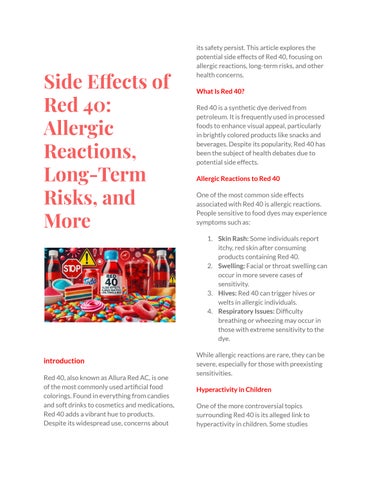
Side Eects of Red 40: Allergic Reactions,
Long-Term Risks, and More

introduction
Red 40, also known as Allura Red AC, is one of the most commonly used artificial food colorings. Found in everything from candies and soft drinks to cosmetics and medications, Red 40 adds a vibrant hue to products. Despite its widespread use, concerns about
its safety persist. This article explores the potential side effects of Red 40, focusing on allergic reactions, long-term risks, and other health concerns.
What Is Red 40?
Red 40 is a synthetic dye derived from petroleum. It is frequently used in processed foods to enhance visual appeal, particularly in brightly colored products like snacks and beverages. Despite its popularity, Red 40 has been the subject of health debates due to potential side effects
Allergic Reactions to Red 40
One of the most common side effects associated with Red 40 is allergic reactions. People sensitive to food dyes may experience symptoms such as:
1. Skin Rash: Some individuals report itchy, red skin after consuming products containing Red 40
2 Swelling: Facial or throat swelling can occur in more severe cases of sensitivity
3. Hives: Red 40 can trigger hives or welts in allergic individuals.
4. Respiratory Issues: Difficulty breathing or wheezing may occur in those with extreme sensitivity to the dye.
While allergic reactions are rare, they can be severe, especially for those with preexisting sensitivities.
Hyperactivity in Children
One of the more controversial topics surrounding Red 40 is its alleged link to hyperactivity in children. Some studies
suggest that artificial colorings, including Red 40, may exacerbate symptoms of Attention Deficit Hyperactivity Disorder (ADHD) in children. In fact, the European Union requires a warning label on foods containing Red 40, advising that the dye may have an adverse effect on children’s activity and attention
Long-Term Health Risks
The long-term effects of consuming Red 40 have been a matter of ongoing research and debate Here are some potential risks:
1. Cancer Concerns: Some animal studies have raised concerns about the carcinogenic potential of Red 40 While no conclusive evidence links Red 40 to cancer in humans, its potential risks have not been entirely ruled out.
2. Immune System Impact: Long-term consumption of synthetic dyes, including Red 40, may weaken the immune system, making the body more susceptible to infections and diseases.
3. Organ Damage: There is limited but worrying research suggesting that excessive consumption of Red 40 could potentially damage organs like the liver and kidneys.
Behavioral Changes
Some studies indicate a link between food dyes like Red 40 and behavioral changes, particularly in children. Reports suggest that children may experience irritability, mood swings, and restlessness after consuming products with Red 40 Though not definitive, these behavioral effects warrant attention,
especially for parents concerned about their children’s diet.
Regulatory Status
Red 40 is approved for use by the Food and Drug Administration (FDA) in the United States. However, it is banned or restricted in some European countries due to health concerns. The regulatory discrepancies highlight ongoing debates about its safety.
Conclusion
While Red 40 remains widely used, it is not without risks. From allergic reactions to potential long-term health effects, consumers should be mindful of their intake of products containing this dye. For those with known sensitivities or parents concerned about hyperactivity in children, avoiding Red 40 may be a wise choice