WINTER 2026
Health, Science & Wellness
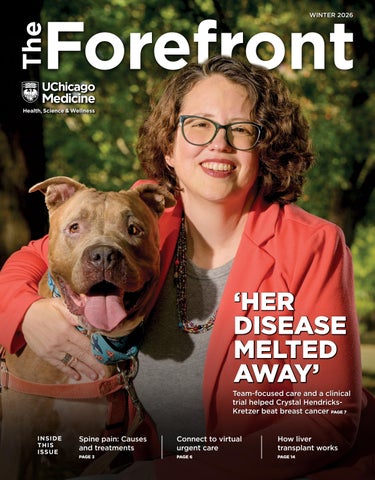
‘HER DISEASE MELTED AWAY’
Team-focused care and a clinical trial helped Crystal HendricksKretzer beat breast cancer PAGE 7
INSIDE THIS ISSUE
Spine pain: Causes and treatments
Connect to virtual urgent care
How liver transplant works
PAGE 3
PAGE 6
PAGE 14
INSIDE THIS ISSUE
GREETINGS FROM THE FOREFRONT
5
Care tailored to you
Breathing easier
“Personalized care” is a phrase you hear a lot these days — sometimes so much it starts to sound like a cliché.
Bloodless double-lung transplant surgery is one of Illinois’ first
At UChicago Medicine, we really mean it. Your care is shaped around your unique biology, goals and life circumstances, backed by the latest medical discoveries, cutting-edge technology and clinical trials. It’s precision care, with a deep human touch. COVER STORY
7
Trials and celebrations Team-based cancer care, clinical trial help woman beat breast cancer
Consider the journey of Crystal Hendricks-Kretzer, who came to us with Stage 2 breast cancer. With the help of a clinical trial and targeted treatment, Crystal is now cancer-free. (Read the story on Page 7.) Discovery is central to who we are. Cancer research represents nearly two-thirds of our clinical trial portfolio, with more than 78,000 patients involved in research here. This kind of participation helps us make breakthroughs that benefit people everywhere. As we prepare to open our new cancer pavilion in 2027, stories like Crystal’s remind us why we keep pushing the boundaries of medicine — and why hope and science go hand in hand to improve lives. No matter why you come to UChicago Medicine, you can trust that your care will be focused squarely on you.
13
I hope you enjoy this issue of The Forefront, where you’ll learn about our expertise in orthopaedics, pediatrics, transplant, women’s health and more — plus easy ways to connect with geriatricians, urgent care and behavioral health providers.
Faith in motion Inpatient rehab team helps preacher return to the pulpit
16
Wishing you a wonderful start to the new year,
Tom Jackiewicz
Balancing IBD and pregnancy
President, University of Chicago Health System
What moms-to-be should know
The Forefront magazine features stories about life-changing care and breakthroughs in medical research at the University of Chicago Medicine, Biological Sciences Division and the Pritzker School of Medicine. Mark Anderson, MD, PhD Dean of the University of Chicago Biological Sciences Division and the Pritzker School of Medicine and Executive Vice President for Medical Affairs Thomas E. Jackiewicz President, University of Chicago Health System
Vice President, Chief Marketing Officer: Andrew Chang Editor: Kevin Joy Design: Ryan Smith Contributing editors and writers: Jamie Bartosch, Kat Carlton, Novid Parsi, Sarah Richards, Angela Wells O’Connor Contributing photographers: Mark Black, Chris Jones, Jordan Porter-Woodruff, Nancy Wong
Main number: 1-773-702-1000 Appointments: 1-888-824-0200 Visit our website for more information: Adult care: UChicagoMedicine.org Children’s care: ComerChildrens.org Science, health and wellness news: UChicagoMedicine.org/Forefront Read The Forefront online at UChicagoMedicine.org/TheForefront Facebook.com/UChicagoMed Instagram.com/UChicagoMed X.com/UChicagoMed
Email: ImagineEditor@UChicagoMedicine.org This publication does not provide medical advice or treatment suggestions. If you have medical problems or concerns, contact a physician, who will determine your treatment. Do not delay seeking medical advice because of something you read here. For urgent needs, call 911.
5 steps to aging gracefully At the University of Chicago Medicine South Shore Senior Center, geriatrician Stacie Levine, MD, treats older adults who embrace aging with pride. “They’re focused on living their lives, not on death,” Levine said. She shared simple habits to foster independence, good health and joy.
KEEP MOVING
EXERCISE YOUR BRAIN
Stay active with at least 30 minutes of activity five days a week. Strengthen your thigh muscles by sitting down and standing up from a chair in repetition. This can improve balance and reduce falls, the leading cause of injury in older adults. Or work on your balance by standing on one foot while brushing your teeth.
Get busy with puzzles and crafts and other hands-on activities, even while watching TV. It’s also important to be social to help prevent dementia and depression. If you’re unsure whether a memory lapse is abnormal, talk to your doctor.
PRIORITIZE SLEEP
Good “sleep hygiene” matters. That means avoiding screens before bed, cutting back on liquids at night and reading a book instead of scrolling on your phone. Sleep patterns naturally change with age, and older adults may sleep fewer hours or less deeply.
Stacie Levine, MD
EAT SMART AND STAY HYDRATED
GET PREVENTIVE CARE
Skip the supplements and focus on a Mediterranean-style diet full of fruits, vegetables, fish and legumes such as beans and chickpeas. Hydration is critical — aging reduces your thirst, so keep water nearby and aim to drink six to eight glasses daily.
Routine visits are key to good health. Keep current on vaccines, bone density scans and screenings for lung or prostate health. (Talk to your doctor about any cancer scans that may be skipped based on your age and health history.)
When to call a geriatrician A geriatrician is a doctor who specializes in the care of older adults. A person or their family member might consult one when: » Health or cognitive issues cause major impairment or frailty » Loved ones and friends are under significant stress as caregivers » Complex treatments or multiple providers are too difficult to manage To make an appointment with a UChicago Medicine geriatrician, call 1-888-557-6846 or visit UChicagoMedicine.org/aging-info
M A K E A N A P P O I N T M E N T 1 - 8 8 8 - 8 2 4 - 0 2 0 0 | UCHICAGOMEDICINE.ORG » 1
Jonathan Boulahanis on his spine surgery: “The results far exceeded my expectations.”
Back in the swing Minimally invasive spine surgery helps golfer return to the green The stabbing pain in Jonathan Boulahanis’ back came on suddenly. After swinging his golf club on the fairway in September 2024, the 41-year-old fell to one knee.
But this time, it was different.
‘I FELT LIKE GIVING UP’
“I just completely locked up,” said Boulahanis, a corporate attorney from Chicago.
“The idea of getting back up from that one knee was horrifying to me,” said Boulahanis, who met with several doctors — including University of Chicago Medicine orthopaedic spine surgeon Michael Lee, MD.
A herniated disc occurs when the gel-like cushion between vertebrae slips out through a tear in its outer layer, pressing on spinal nerves. Treatments range from lifestyle changes and physical therapy to medication — with surgery often seen as a last resort.
A football player in high school and college, and a longtime weightlifter, Boulahanis was no stranger to episodes of lower back and sciatic pain, which had become longer and more frequent.
Lee suspected nerve root irritation, possibly from a herniated disc in the patient’s lower back, was causing the radiating pain and numbness that had spread to both legs and feet.
Boulahanis’ case was tricky because his scans showed only mild disc herniation. “It wasn’t clear that this was the cause of his pain based on the distribution and severity of his pain, and the MRI appearance,” Lee said.
2 »
The Forefront | W I N T E R 2 0 2 6
At first, Boulahanis tried physical therapy and mechanical diagnosis therapy — a type of rehabilitation for spine and disc problems — and two steroid injections near his tailbone, but nothing worked. He also stopped taking nerve pain medication because it caused drowsiness.
Michael Lee, MD
Meanwhile, he could no longer enjoy exercise or traveling, and he even hired a dog walker and canceled work trips due to pain.
“There were a lot of times where I felt like giving up on trying to fix my back,” Boulahanis said. SEARCH FOR TREATMENT
Several doctors elsewhere advised sticking with conservative treatment. And a surgeon at a different hospital suggested Boulahanis undergo extensive surgery that involved disc removal and spinal fusion with screws and rods.
Boulahanis is back to playing golf without spine pain.
to 95%, Boulahanis’ mild MRI findings and unusual symptoms made the outcome uncertain. Lee clearly explained the risks, benefits and realistic expectations before surgery. Boulahanis opted to proceed, and the operation took roughly 45 minutes last March. Lee performed a lumbar laminotomy and microdiscectomy via a small incision in Boulahanis' back.
After a thorough evaluation, Lee proposed a lessinvasive surgery: a microdiscectomy to remove anything that might be pressing against “I shaved off some the roots of the Adults experience back pain of the bone in the nerves likely lasting longer than three area of the nerves to causing leg months, making spine issues examine the nerve numbness. a leading cause of medical and assess whether visits and missed work any surrounding Lee is part Source: Centers for Disease Control tissue was irritating of UChicago and Prevention them in some way that Medicine’s couldn’t be seen on the Comprehensive Spine MRI,” Lee said. “Then, I Center, which combines removed part of the disc tissue that the expertise of neurosurgeons was slightly irritating the nerve.” and orthopaedic surgeons.
3 in 5
The center offers sophisticated, minimally invasive techniques — some of which were developed at UChicago Medicine — to help pinpoint the exact location of spine pain or other abnormalities.
EXPECTATIONS EXCEEDED
LESS-INVASIVE OPTION
After surgery, Boulahanis experienced some discomfort, but he followed Lee’s advice to stay active by walking. The pain and numbness in his leg and foot disappeared, and he returned to work three weeks later.
Although microdiscectomy success rates for leg symptom relief are typically 80%
At a follow-up visit, he reported feeling better than he had in over a decade,
Symptoms of spine pain » Stiffness and limited mobility » Radiating pain » Numbness and tingling » Weakness and coordination » Bowel or bladder problems
Causes of spine pain » Aging and degeneration » Nerve damage » Injuries and trauma » Infections » Congenital/structural Issues » Obesity
noting that “the results far exceeded my expectations.” Four months after surgery, Boulahanis was back to playing golf again. “Once I became confident that I wouldn’t have sciatic pain during my swing, I started to feel really good,” he said. “Even better, I felt no pain the next day.”
To make an appointment with UChicago Medicine’s Comprehensive Spine Center, call 773-900-4569 or visit UChicagoMedicine.org/spine-info
M A K E A N A P P O I N T M E N T 1 - 8 8 8 - 8 2 4 - 0 2 0 0 | UCHICAGOMEDICINE.ORG » 3
UChicago Medicine expands Cancer Network nationally The University of Chicago Medicine has expanded the UChicago Medicine Cancer Network to extend its capabilities. AdventHealth Cancer Institute Shawnee Mission in suburban Kansas City is the first national affiliate, offering advanced treatments, expert second opinions and access to UChicago Medicine clinical trials.
Specialized women’s care at Ingalls UChicago Medicine Ingalls Memorial recently launched the Obstetrics and Gynecology Clinic, bringing access to subspecialists in high-risk pregnancies, minimally invasive gynecology and gynecologic oncology to the Southland. The clinic, located in Harvey, also offers a birth center to support seamless, personalized care.
UCMC cancer program ranked Illinois’ best
Flight nurses become new moms Five flight nurses from the University of Chicago Medicine Aeromedical Network (UCAN) recently shared a unique bond: They all were expecting babies within months. Balancing the demands of air medical transport with pregnancy, the women supported each other at every step. “We’re a bunch of tough moms,” said Alex Tang, who has worked for UCAN since 2019.
Milestone with heart: 1K transplants performed Last October, the 1,000th heart transplant was performed at UChicago Medicine’s Heart and Vascular Center, the first site in Illinois to reach this number. The Heart Transplant Program at UChicago Medicine offers some of the shortest waits in the nation for donor hearts, and it routinely takes challenging cases and multi-organ transplants.
4 »
The Forefront | W I N T E R 2 0 2 6
The University of Chicago Medical Center (UCMC) has been recognized in 10 specialties in U.S. News & World Report’s 2025-26 Best Hospitals rankings. The cancer program maintained its No. 12 ranking and was named the best in Illinois for the third year in a row. UCMC’s gastroenterology and GI surgery program moved up five places to No. 20. The Medical Center received “high-performing” ratings in 17 common procedures and conditions.
Breathing easier Bloodless double-lung transplant, one of Illinois’ first, helps grandmother honor her faith Teresa Victoria almost didn’t make it to the medical appointment that would save her life. Suffering from end-stage pulmonary fibrosis, Victoria was on a flight to Chicago last December when the battery in her portable oxygen concentrator died. Flight attendants provided an emergency oxygen canister, but it ran out after 15 minutes. “That’s when I felt I was going to die,” said Victoria, 68, from Lakeland, Florida. Victoria made it to a consultation with Pablo Sanchez, MD, surgical director of the University of Chicago Medicine's Lung Transplant Program. She hoped for the seemingly impossible: a double-lung transplant without blood transfusions, in line with her Jehovah’s Witness faith. “I think that she never expected for us to say: ‘Let’s see what we can do,’” Sanchez said. SEARCH FOR ANSWERS
Forty years earlier, Victoria was hospitalized with pneumonia and later experienced coughing and phlegm build-up. But it wasn’t until 2023 that a doctor in Mexico diagnosed her with Stage 2 idiopathic pulmonary fibrosis — a condition causing scarring of lung tissue. “Your lungs are not as flexible and elastic,” Sanchez said. “Oxygen doesn't transfer well because the lungs start getting harder and harder.” Victoria was frequently hospitalized and had to use a portable oxygen concentrator. Most of her days were spent sitting or lying down. With her condition worsening, Victoria was given roughly a year to live and was approved for a double-lung transplant in 2024. Several surgeons in Florida refused to operate due to her age, frailty or refusal of blood transfusions. Teresa Victoria
team adapted these techniques for lung transplants. Rade Tomic, MD, medical director of the Lung Transplant Program, said the method yields better outcomes, regardless of a patient’s beliefs, because it lowers risks of graft dysfunction, arrhythmias and stroke. Pablo Sanchez, MD
Rade Tomic, MD
BLOODLESS SURGERY BENEFITS
Sanchez and his team believed they could help Victoria become one of Illinois’ first bloodless double-lung transplant recipients.
“Nobody in our region is doing it — because without the ability to transfuse the patient, it’s a technically challenging procedure,” Tomic said. A CAREFUL OPERATION
“Everybody else said no to Teresa, but we didn't say yes because we were crazy,” Sanchez said. He approaches every transplant aiming to minimize blood loss, as less blood loss leads to better outcomes.
Sanchez performed the operation last February. He connected Victoria’s heart to an extracorporeal membrane oxygenation (ECMO) system to temporarily replace lung function.
Bloodless transplant surgeries were developed for patients with certain religious beliefs, and UChicago Medicine’s
He removed the left lung first, carefully minimizing blood loss. After connecting the new lung’s vessels and ensuring ventilation, he repeated the process with the right lung. “We paid a lot of attention because we did not want this patient to bleed in the ICU later,” Sanchez said. After 10 hours, the transplant was complete. “I opened my eyes and smiled,” Victoria said. “I was so happy.” ACTIVE LIFESTYLE
Victoria’s breathing improved daily, and she no longer needs a portable oxygen concentrator. Her husband, Patella, manages her many medications with a pill organizer the size of an iPad. Victoria looks forward to reducing her pills and spending time with her son and grandchildren. “Before the transplant, I couldn’t do anything; now I can do life’s daily activities,” she said. “It was worth it.”
Get connected to virtual urgent care For non-life-threatening issues like colds, allergies and minor injuries, virtual urgent care can be a convenient choice. UChicago Medicine offers urgent care via computer, smartphone or tablet. Here’s what to know:
WHAT CAN BE TREATED?
WHO WILL I SEE?
HOW DO I SET UP A VISIT?
Common cases may include respiratory infections, seasonal or mild allergic reactions, digestive issues, skin concerns, musculoskeletal complaints and medication refills.
Trained remote physicians* (not your primary care doctor) who can access your current health records. Remember, virtual urgent care doesn’t replace primary care.
UChicago Medicine patients can book via MyChart. Virtual urgent care is available whenever you need it: 24 hours a day, 7 days a week — including holidays.
HOW CAN I PREPARE?
WHAT DO I NEED TO CONNECT?
Take your vital signs (such as temperature, weight and blood pressure) and have questions ready. Send photos of skin issues via MyChart. Have a small light or flashlight handy.
After booking, you’ll receive a secure video link via MyChart or email; try to join 10 minutes early. A stable internet connection and minimal background noise can help ensure a better experience.
*UChicago Medicine contracts with KeyCare Medical Group to provide virtual urgent care services. If you choose to continue with a virtual urgent care visit, you will be directed to KeyCare’s platform to check in and complete your video visit. KeyCare Medical Group providers are not agents or employees of the University of Chicago Medical Center, the University of Chicago, or UChicago Medicine Ingalls Memorial.
6 »
The Forefront | W I N T E R 2 0 2 6
TRIALS AND CELEBRATIONS Team-focused cancer care — and a clinical trial — help woman beat breast cancer
C
rystal Hendricks-Kretzer’s breast cancer was growing fast. A mammogram in June 2023 found that a tumor in her left breast had spread to her lymph nodes.
“She was someone I was very worried about,” said Nora Jaskowiak, MD, an oncologist at the University of Chicago Medicine. Hendricks-Kretzer was diagnosed with triple-positive breast cancer, a highly aggressive form. (CONTINUED ON NEXT PAGE)
Crystal Hendricks-Kretzer and her dog, Persephone
(CONTINUED FROM PREVIOUS PAGE)
Effective treatments are available, but she would need nearly all of them: immunotherapy, surgery and three types of chemotherapy. One of these drugs was doxorubicin, often called “the red devil” because of its severe side effects. Hendricks-Kretzer’s care team at the UChicago Medicine Comprehensive Cancer Center provided several choices — including participation in a clinical trial for breast cancer. TARGETED TREATMENT
One such trial was I-SPY2, an ongoing, nationwide study focused on developing targeted, personalized treatments. If successful, these treatments could shrink tumors or even help patients avoid harsh drugs like doxorubicin. Jaskowiak carefully explained the options. “She built a decision-tree diagram for me and did a great job of explaining how each treatment would work,” Hendricks-Kretzer said. “By the end, I felt like I had a path. She really empowered me at that appointment, and I felt optimistic.” The I-SPY2 trial uses gene expression data to identify biomarkers — biological signs — that predict which tumors will respond best to specific treatments. “It’s a very personalized way to treat breast cancer, and it gives the patients more shots at the goal of targeting the tumor and avoiding the most toxic chemotherapy,” said Frederick Howard, MD, a UChicago Medicine oncologist and one of the trial’s investigators. The trial continuously tests new therapies, while also allowing patients to receive standard treatments tailored to their response.
Clinical trials by the numbers
60%
UChicago clinical trials focused on cancer research
4,679
clinical research studies
854
investigators
78,000+ patients engaged in research
400+
clinical research staff Source: Office of Clinical Research (October 2025)
Crystal Hendricks-Kretzer has become active in patient and research advocacy.
allowing her to skip the “red devil” chemotherapy.
‘HER DISEASE MELTED AWAY’
Before joining the trial, Hendricks-Kretzer chose not to rely on online searches for information. “I decided I was really going to lean into UChicago Medicine’s expertise and not go out searching, because I knew I wouldn’t be able to understand or determine what information was good and what wasn’t,” she said. “I would place my full faith and trust in them.” Hendricks-Kretzer received a novel antibody-
8 »
This rapid response also enabled her to proceed with a single mastectomy surgery sooner and continue other targeted therapies more quickly. Nora Jaskowiak, MD
Frederick Howard, MD
drug conjugate treatment, followed by 12 weeks of standard chemotherapy. Afterward, MRI scans showed no detectable cancer,
The Forefront | W I N T E R 2 0 2 6
“She had this amazing response to her therapy and her disease melted away,” Jaskowiak said. “It was stunning.” While many targeted drugs are now available, clinical trials like I-SPY2 offer access to
Breast cancer screening: What’s new and notable UChicago Medicine uses advanced technologies that will also be available at a new 575,000-square-foot cancer center opening in 2027. Radiologist Kirti Kulkarni, MD, spoke about several offerings. AI-ASSISTED DIAGNOSIS
Advanced software can detect small breast cancers earlier and reduce false positives. Now available at UChicago Medicine’s Calumet City location and Ingalls Memorial Hospital, the tool will expand to the cancer pavilion, Flossmoor and Tinley Park locations. 3D BREAST ULTRASOUNDS
UChicago Medicine offers advanced mammogram tools and easy scheduling.
leading-edge treatments that may provide even greater precision to patients. “Instead of just saying: ‘We’re going to give you super-toxic medicine that kills everything around it,’ we can offer a more targeted therapy — and that’s what the future is all about,” Jaskowiak said.
Is a clinical trial right for you? BENEFITS
» Potential early access to medications, devices or procedures
ADVOCATE FOR OTHERS
» You may help others with
Hendricks-Kretzer is now cancer-free. She enjoys reading, crochet, strength training and spending time with her newly adopted dog, Persephone.
» Research team may follow
She will need to take anti-estrogen medication for the next five years and have regular mammograms and MRI scans, Jaskowiak said.
or at risk of getting cancer up with you more closely
RISKS
» New treatment may not be better or it may not work
» Unexpected side effects, visits and/or tests
» Additional costs (check
your insurance coverage)
Beyond her improved health, the clinical trial gave Hendricks-Kretzer a voice. She has become active in patient and research advocacy with organizations such as the American Cancer Society and the National Breast Cancer Coalition.
Hendricks-Kretzer said, adding that one reason she joined the I-SPY2 trial was to help others.
“It’s important that people know about their options when it comes to clinical trials, and it’s critical that the patient voice is at the center of all cancer research,”
“I realized that the only reason I had access to the amazing treatments I did was because of the women who participated in trials a decade ago.”
To make an appointment with a UChicago Medicine Comprehensive Cancer Center, call 855-603-3624 or visit UChicagoMedicine.org/cancer-info
Whole-breast ultrasounds create 3D images by stitching multiple scans to offer better visualization of dense breasts without radiation. The technology is available at Hyde Park and Crown Point, with planned expansions. ULTRAFAST ABBREVIATED MRI
Developed by a UChicago Medicine team, this system scans the breast every three seconds for about 10 minutes, completing the MRI faster and providing detailed tumor markers to identify smaller, more curable tumors. SAME-DAY BIOPSY
The new BIOPSY NOW initiative offers same-day breast and lymph node biopsies for patients with high cancer suspicion from imaging. The goal: to reduce diagnostic delays and enable faster treatment. ONLINE MAMMOGRAM SCHEDULING
The option, available at several UChicago Medicine and Ingalls Memorial locations, will soon expand to all sites. Easy-to-read mammogram reports offer information about breast density and additional screenings.
Kirti Kulkarni, MD
M A K E A N A P P O I N T M E N T 1 - 8 8 8 - 8 2 4 - 0 2 0 0 | UCHICAGOMEDICINE.ORG » 9
INCREDIBLE KIDS OF COMER CHILDREN’S Thousands of young patients and their families come to the University of Chicago Medicine Comer Children’s hospital each year, including cases that go beyond common injuries and conditions. Here are the stories of several amazing young patients. ‘THANKFUL’ FOR HER TEAM
Chicagoland Children’s Health Alliance celebrates first pediatric heart transplant When Nataly Paramó was told that she needed a heart transplant to survive, the 15-year-old was “a little nervous.” But as the first heart transplant patient served by the Chicagoland Children’s Health Alliance (CCHA), Nataly had the support of three medical systems: University of Chicago Medicine Comer Children’s Hospital, Advocate Children’s Hospital and Endeavor Health.
After receiving her transplant in December 2024, Nataly was home for Christmas. “Everybody was like a
10 »
MIRACULOUS SPINE SURGERY
Toddler’s ongoing recovery ‘beyond our wildest expectations’ A car accident during a family vacation in Mexico last April caused devastating injuries to Oliver Staub. Doctors could offer little hope to his German parents, Laura and Stefan. They said Oliver’s neck was broken and that he was a quadriplegic, brain-dead and could die in a matter of days. But Oliver fought to stay alive, and the family contacted top spinal-cord specialists, including Mohamad Bydon, MD, Chair of the Department of Neurological Surgery at UChicago Medicine and Health System Leader for Neurological Surgery. “You should never count out a 2-year-old,” Bydon said. “But it would require a complex multidisciplinary team, which is where the University of Chicago could help.” The first surgery reconstructed Oliver’s spine, repaired his spinal cord and stabilized the back of his head to his cervical spine using titanium rods and screws. A second surgery stabilized the front of his spinal cord and repaired a spinal cord herniation.
The alliance, founded in 2018, “allows our patients to benefit from the strength of our partners’ outpatient footprints and the expertise of UChicago Medicine’s research and clinical trials,” said Michael Earing, MD, Chief of Pediatric Cardiology at UChicago Medicine and the CCHA. Nataly’s heart failure was discovered during a sports physical. Her heart was too impaired to heal with medication therapy, said Stephen Pophal, MD, a UChicago Medicine pediatric cardiologist and CCHA’s Director of Heart Transplantation.
Oliver Staub
Nataly Paramó
One month later, Oliver was able to grab his mother’s hand, push someone away and recognize that he needed to urinate. And he could take some breaths on his own.
musician in an orchestra, and everybody played their part,” said Luca Vricella, MD, Chief of Pediatric Cardiac Surgery for Comer Children’s and the CCHA.
“We didn’t think he’d ever be able to move, and now he’s moving all four limbs,” Bydon said. “We know the spine is communicating with the brain and body again. It’s beyond our wildest expectations.”
Today, Nataly is on anti-rejection medications and plans to play high-school soccer. “I’m thankful for everything the doctors have done,” she said.
The Staubs plan to return to Comer Children’s this spring, when Bydon may be able to use novel stem-cell therapy clinical trials to improve Oliver’s physical functions.
The Forefront | WINTER 2024-25
TEEN’S STROKE SURVIVAL STORY
Patient saved by protocol developed at Comer Children’s While playing basketball, Mekhi Bailey took a hard hit to the neck. The pain was brief, but the next morning, he couldn’t feel his arm. Soon, the left side of his body drooped, and he slurred his words — signs of a stroke. “I wasn’t able to talk,” said Mekhi, who was 14 when the injury happened. An ambulance took Mekhi to UChicago Medicine Comer Children’s Hospital. Doctors quickly identified the stroke and performed emergency surgery.
Hillary, Harlow and Gerald Lofton-Mosley
STRENGTH AND SMILES
5-year-old beats uncommon type of leukemia following rare allergy to chemo Harlow Lofton-Mosley was all smiles before her trip to Jamaica, where she was set to be the flower girl in her mother’s wedding. Shortly before the big day in September 2022, the 2-year-old developed a cough and seemed off. In Jamaica, Harlow was too tired to walk down the aisle. Her coughing grew worse on the flight home. This prompted her mother, Hillary Lofton-Mosley, to seek immediate care at UChicago Medicine Comer Children’s Hospital — where Harlow was diagnosed with T-cell acute lymphoblastic leukemia, a rare form of childhood leukemia. “Almost every leukemia patient is diagnosed with something else first, whether it’s a cold or a skin infection, or even a bruise,” said Gabrielle LappingCarr, MD, a pediatric hematologist/ oncologist at Comer Children’s and one of Harlow’s doctors.
The family took comfort in knowing that Comer Children’s specialists offer the latest investigational therapies, as well as established treatments for all types of leukemia, and they do everything possible to minimize their effects on a child’s health. Harlow received chemotherapy, but she had a severe allergic reaction to one medication. Despite the challenges, she completed a 28-month treatment plan. On her mother’s 41st birthday, Harlow celebrated the end of cancer treatment by ringing the hospital bell, cheered on by family and Comer Children’s staff. Now 5, Harlow is healthy and joyful, enjoying family time and activities. Hillary Lofton-Mosley encourages others facing similar struggles to keep smiling: “That’s all you can do, because she smiled the whole time — and that, to me, is the biggest blessing.”
Mekhi was the first patient diagnosed under Comer Children’s new pediatric stroke protocol. This system, designed by pediatric neurologist Henry David, MD, and pediatric critical Mekhi Bailey care specialist Casey Stulce, MD, activates a specialized team to respond to pediatric strokes, and it educates medical staff and parents about stroke symptoms in children. “The stroke code activation was appropriately activated, and our team was there within minutes,” David said. Doctors found a traumatic dissection in Mekhi’s neck that was causing a large blood clot to travel to his brain. Mekhi quickly received clot-melting therapy and mechanical thrombectomy. Afterward, he had speech and physical therapy sessions. Six days later, Mekhi walked out of the hospital.
U.S. News ranks Comer Children’s No. 2 in Illinois C MO
RE
UChicago Medicine Comer Children’s Hospital has been recognized as the No. 2 pediatric hospital in the state for five consecutive years by U.S. News & World Report. The 2025-26 Best Children’s Hospitals rankings put Comer Children’s at No. 16 in the Midwest, up one spot from last year, and includes placements in three specialties: cancer (27, the program’s highest-ever ranking), diabetes and endocrinology (43), and neurology and neurosurgery (45).
M A K E A N A P P O I N T M E N T 1 - 8 8 8 - 8 2 4 - 0 2 0 0 | UCHICAGOMEDICINE.ORG » 11
How to find a therapist Therapy can be a vital step in taking care of your mental health. But there are many things to consider, and the search may feel overwhelming. Amanda Briick*, LCPC, Behavioral Health Clinical Liaison at UChicago Medicine Ingalls Memorial, shared advice to get started.
1
FOCUS ON THE POSITIVE
4
Think of therapy as a safe, helpful space where you can get guidance about what’s going on in your life. It’s a team effort: You and your therapist work together to set goals and find ways to cope. You don’t need a specific diagnosis to see a therapist.
5
In-person and online sessions can each be effective. Virtual therapy is convenient and you can do it from home. But if you prefer a face-to-face connection and take cues from body language, on-site sessions might be a better fit.
5 2
SET YOUR INTENTIONS
Before you dive in, think about what you really need. What issues do you want to work on? What kind of support feels right? Some people may seek therapy for help dealing with grief, major life transitions, conflict resolution or chronic illness.
3
4
KEEP AN OPEN MIND
If you’ve had a bad experience before, don’t give up. Be honest with your new therapist about what didn’t work. Sometimes, therapy plus medication or other resources can make a big difference. Keep exploring what feels right for you.
1
*Amanda Briick, LCPC, is employed by Synergy Behavioral Healthcare. Briick is not an employee or agent of the University of Chicago Medical Center, The University of Chicago, or UChicago Medicine Ingalls Memorial.
REVIEW THE LOGISTICS
Online directories allow you to search for therapists by location and specialty. Check with your insurance provider or a specific therapist to confirm coverage. Some nonprofits or community organizations offer no-cost or sliding-scale therapy.
CONSIDER VIRTUAL SESSIONS
2 3
To schedule a confidential, no-cost assessment at UChicago Medicine Ingalls Memorial Hospital, call 708-809-8190.
When traditional therapy isn’t enough Intensive outpatient programs offer specialized mental health care for adults and adolescents. IOPs support those with escalating symptoms, work or relationship struggles, or post-hospitalization needs. Patients spend 9 to 15 hours weekly
12 »
The Forefront | W I N T E R 2 0 2 6
in group and individual therapy, and they receive medication management and education. IOPs are offered at UChicago Medicine Ingalls Memorial locations in Harvey, Tinley Park, Flossmoor and Calumet City.
Faith in motion Inpatient rehab team helps preacher return to the pulpit Hugh Williams never expected to deliver a sermon at an inpatient rehabilitation facility. But after open-heart surgery, the South Side man spent 10 days at UChicago Medicine Ingalls Memorial Hospital recovering and building his endurance before returning to preach at Mission of Faith Baptist Church. His rehab team helped him with occupationbased exercises — including standing to deliver a mock sermon. Williams, 69, called it a “divine appointment” from God. David Weiss, MD, Medical Director of Rehabilitation Services at UChicago Medicine, said the idea shows how teams deliver custom care. “It’s crucial to design exercises around occupational tasks, David Weiss, MD because these activities strengthen the exact skills patients need to make their return to independent living more effective,” Weiss said. STRONG PARTNERSHIP
UChicago Medicine partnered with the Shirley Ryan AbilityLab, an internationally known rehab hospital, in 2019 UChicago Medicine Inpatient Rehabilitation teams lead the full spectrum of rehabilitative services for people with complex needs — such as spinal cord injuries or prostheses — but they also work with patients recovering from more common illnesses. Williams, who underwent triple bypass surgery in 2025, was transferred to Ingalls Memorial for daily three-hour rehab sessions. Physical therapist Alex Gockman, PT, DPT, led exercises to improve his balance and strength, helping Williams walk farther with less support. Occupational therapist Therese Swigart, OTR/L, assisted with activities like bathing and dressing, and teaching him to use a sock aid and a “grabber” device.
Hugh Williams is back to work at Mission of Faith Baptist Church.
“He went from needing help with things to be able to do everything for himself,” Swigart said. STANDING TALL
Swigart suggested Williams deliver a 20-minute standing sermon as part of his rehab. Using a laptop stand as a podium, Williams shared a message of hope and resilience. “You know, the worst thing you can do is give a Baptist preacher an audience,” Williams said with a chuckle. Williams had no breathing issues during the sermon, and he felt good afterward. Within a week, he progressed from wheelchair to walker. He soon began cardiac rehabilitation. “I’m asking God for 16 more years — 15 years and five months, at least,” Williams said. “If I get to 85, I’ll be real happy.”
Rehab excellence UChicago Medicine and Shirley Ryan AbilityLab teams work together at a dedicated facility on the Ingalls Memorial Hospital campus. Benefits include:
» Daily physician oversight » 24-hour nursing care » One-on-one, group therapy » Patient and family education » Easy communication » Private rooms
To learn about inpatient rehab at UChicago Medicine Ingalls Memorial, call 708-938-3289 or visit UChicagoMedicine.org/rehab-info
M A K E A N A P P O I N T M E N T 1 - 8 8 8 - 8 2 4 - 0 2 0 0 | UCHICAGOMEDICINE.ORG » 13
Liver lifeline What to know about liver failure, transplant eligibility and living donor options
A
s organ transplants go, livers are unique. They can regenerate, or grow back, which means part of a healthy person’s liver can be removed and given to someone with liver disease. This incredible feat was discovered at the University of Chicago Medicine, which performed the world’s first successful living donor liver transplant in 1989. Since then, it has since become one of the largest livingdonor transplantation programs in Illinois.
14 »
A person may also choose to donate their liver after death. UChicago Medicine transplant surgeons Rolf Barth, MD, and John Fung, MD, PhD, explained how the liver transplant process works for both types of donors. WHY WOULD SOMEONE NEED A LIVER TRANSPLANT?
Most adults require a liver transplant due to chronic liver failure from cirrhosis (scarring) caused by hepatitis B or C, fatty liver disease,
The Forefront | W I N T E R 2 0 2 6
alcohol-related damage or autoimmune conditions. Acute liver failure from infections or toxins and liver cancers are other reasons. IS A TRANSPLANT THE ONLY TREATMENT FOR LIVER FAILURE?
It depends on a person’s condition. Compensated disease (when the liver is damaged but can still perform essential functions) allows most people to live a near-normal life. But end-stage, or decompensated, liver disease can cause fatal complications, making transplant necessary.
Liver transplant at UChicago Medicine PERSONALIZED CARE: Pre- and post-transplant coordinators guide patients throughout the process EXPERTISE IN COMPLEX CASES: Surgeons are skilled in complex liver transplants and multi-organ transplants INNOVATIVE SUPPORT: Specialized research and treatment are available for patients with substance abuse histories
100+
87%
The number of liver transplants performed each year at UChicago Medicine
Three-year survival rate of UChicago Medicine liver transplant patients (compared to 86% nationally)
Source: UChicago Medicine
WHAT ARE THE BENEFITS OF A LIVING DONOR?
It assures the recipient receives a healthy portion of the donor liver with minimal damage, as the surgeries happen consecutively. Typically, 50% to 60% of a liver is donated for adults (25% to 30% for children). Donor and recipient livers regenerate fully within months. HOW LONG DOES IT TAKE TO GET A LIVER TRANSPLANT?
If a match is found, living-donor transplants can happen within weeks. Deceased-donor wait times may vary by a patient’s blood type, size, age and MELD score measuring the severity of illness. UChicago Medicine uses perfusion machines to preserve donor livers before transplant. SHOULD I SEEK A SECOND OPINION IF I’M TURNED DOWN?
Yes. Different centers have varying criteria for alcohol use, weight, age and other conditions. Most centers require six months of abstaining from alcohol, but UChicago
Cirrhosis: Myth vs. fact Cirrhosis is the term given to a severely scarred liver that could lose its ability to function. Many people assume the only cause is from drinking alcohol — but that’s not true, said UChicago Medicine hepatologist Helen S. Te, MD, who debunked some common misconceptions. MYTH: I DON’T HAVE SYMPTOMS, SO I CAN’T HAVE CIRRHOSIS
HOW ARE DONORS AND RECIPIENTS MATCHED?
Their blood types, liver sizes and anatomies all play a role. Ninety percent of liver transplants use deceased donors. Living donors are often family members — but they must be healthy, ages 18 to 65 and blood-type compatible. A recipient’s insurance usually covers donation costs.
Helen S. Te, MD
FACT: Early-stage cirrhosis can be
symptomless or have vague signs like fatigue. Jaundice, confusion, fluid buildup, bleeding and other warnings only appear when liver failure develops. Rolf Barth, MD
John Fung, MD, PhD
Medicine considers patients regardless of their alcohol history if other criteria are met. CAN HEART AND/OR KIDNEY DISEASE PATIENTS GET A LIVER TRANSPLANT?
Absolutely. UChicago Medicine surgeons have performed some of the largest volumes of combined heart/liver/kidney transplants in the world, and our teams are globally known for treating specialized conditions. WHAT IS RECOVERY LIKE?
Critically ill patients may be hospitalized for weeks and need rehab. Healthier patients often go home within 10 days. Patients take immunosuppressants to prevent rejection of the new liver. Medication doses decrease over time, but some level of immunosuppression is lifelong. WHAT LIFESTYLE CHANGES ARE NEEDED?
Patients can go back to normal activities after recovery, and they don’t require isolation. They should take medications as directed, receive follow-up care and live a healthful lifestyle that includes avoiding alcohol.
MYTH: CIRRHOSIS ONLY AFFECTS PEOPLE WHO DRINK ALCOHOL FACT: Liver scarring can be caused by
many other factors — including hepatitis B or C, hereditary iron or copper overload, autoimmune liver diseases and metabolic dysfunction-associated steatotic liver disease (fatty liver). MYTH: THE LIVER WILL HEAL ITSELF, EVEN IF I HAVE CIRRHOSIS FACT: The liver can regenerate but only if
it is not extensively scarred. Cirrhosis limits this ability, making reversal rare. MYTH: CIRRHOSIS ALWAYS LEADS TO LIVER CANCER FACT: Liver cancer is a possible
complication of cirrhosis, but it does not always occur. Regular monitoring is essential for early detection and treatment. MYTH: CIRRHOSIS MEANS I WILL NEED A LIVER TRANSPLANT FACT: Many people with cirrhosis live
without immediate transplant needs. Transplant is considered if complications or cancer develops.
M A K E A N A P P O I N T M E N T 1 - 8 8 8 - 8 2 4 - 0 2 0 0 | UCHICAGOMEDICINE.ORG » 15
Balancing IBD and pregnancy Women with inflammatory bowel disease (IBD) have often feared pregnancy was impossible or too risky. But with the right guidance and care, there is hope. “Women with IBD can have healthy pregnancies,” said Sushila Dalal, MD, a gastroenterologist at the University of Chicago Medicine — which offers a Sushila Dalal, MD comprehensive GI team that includes colorectal surgeons, ostomy nurses, dietitians and counselors to help at every step.
healed and you’re not having an active flare, which can affect fertility. Tests like MRI, blood or stool samples, or intestinal ultrasounds may be used. IS IT SAFE TO STAY ON IBD MEDICATIONS?
Most IBD medications are safe, but some, like methotrexate, must be stopped before pregnancy. Follow your doctor’s plan throughout pregnancy to avoid flares, which are riskier than continuing treatment. WILL IBD-RELATED SURGERY AFFECT MY PREGNANCY?
Surgeries such as ostomy or J-pouch can cause scar tissue that may make conception harder, but assistive reproductive technologies can help. During pregnancy, you may need special care, like ostomy bag adjustments or diet changes to prevent blockages.
Dalal answered common questions from patients. WHAT SHOULD I DO BEFORE I GET PREGNANT?
Meet with your healthcare team early to discuss medications, nutrition and create a pregnancy-safe plan. Your team may include a maternalfetal medicine specialist. Schedule any needed monitoring, like colonoscopies, before pregnancy to ensure your IBD is stable.
WHAT IF I HAVE AN IBD FLARE?
Treatment is similar to usual care. Your team will identify the cause and adjust medications. Don’t withhold therapy due to pregnancy concerns; uncontrolled disease is more dangerous.
WHEN IS THE BEST TIME TO CONCEIVE?
WILL I PASS IBD TO MY CHILDREN?
Conceive when your IBD has been in stable remission for at least three months. Your gastroenterology team will confirm your bowel is
Family history increases risk, but it doesn’t guarantee your child will have IBD. Genetics are only part of the cause.
IBD clinic offers pregnancy care Elizabeth Huggins’ first pregnancy in 2020 was complicated by Crohn’s disease and gestational hypertension, as well as poor coordination between her gastroenterology and OB/GYN providers. For her second pregnancy, Huggins sought care at UChicago Medicine’s Preconception and Pregnancy Inflammatory Bowel Disease (PPIBD) Clinic. The clinic, one of only three in the United States, offers gastroenterologists and maternal-fetal medicine specialists — as well as advanced intestinal ultrasound tools — to monitor IBD safely and “to get that extra time and expertise,” said UChicago Medicine gastroenterologist Amelia Kellar, MD, MSc. Huggins, 38, of River Forest, delivered healthy twins last July. She praised her experience with the PPIBD clinic and the value of specialized care for pregnant women with IBD. “It was a much more holistic experience,” she said. To learn more about Chicago Medicine’s Preconception and Pregnancy Inflammatory Bowel Disease Clinic, call 773-900-4859 or visit UChicagoMedicine.org/IBD-pregnancy
16 »
Elizabeth Huggins, pictured with her healthy newborn twins.
The Forefront | W I N T E R 2 0 2 6
Todd Martin, Martha Sutherlin Martin, Alyssa Martin Raine and Brittany Martin Graunke
Honoring Martha’s legacy Family gift supports new cellular therapies for cancer The family of Martha Sutherlin Martin, longtime supporters of cellular therapy research at the University of Chicago Medicine, have committed $9 million to create a multidisciplinary enterprise dedicated to novel cancer therapies. The gift is personal: When Martha was diagnosed with pancreatic cancer, she and her husband, Todd, sought care at UChicago Medicine. Pancreatic cancer is often difficult to treat, but a combination of chemotherapy, surgery and an experimental drug helped Martha, who lived just short of five years — putting her in the 98th percentile of life expectancy after a pancreatic cancer diagnosis. “Martha and I talked about philanthropic priorities, and our No. 1 became cancer research,” Todd said. For Martha, the generosity was natural. “I still remember Mom telling me, ‘I know this won’t save me, but it will save someone else,’” said Alyssa Martin Raine, one of the couple’s two daughters. In 2021, the family began supporting research in cellular therapy, which teaches a patient’s immune system to target cancer cells. While successful in blood cancers, these therapies are resisted by solid tumors like breast and pancreatic cancers. The family’s gift supports infrastructure and research led by Kunle Odunsi, MD, PhD,
Report highlights big impact The University of Chicago Medicine invested $715 million in community benefits in fiscal 2024 to help support the South Side, the south suburbs and Northwest Indiana. Investments include: $29.2 million in patient assistance (charity care) 58,000 pounds of food distributed via Feed1st pantries 1,529 volunteer hours for community health programs and events $300,000 for the Boys & Girls Clubs in Northwest Indiana 414 safe sleep cots for Ingalls Memorial’s Healthy Baby Network To read the report, visit community.uchicagomedicine.org/2024
AbbVie Foundation Distinguished Service Professor of Obstetrics and Gynecologic Oncology, and Director of the UChicago Medicine Comprehensive Cancer Center.
therapy and live biotherapeutics. It also supports two studies focused on chimeric antigen receptor (CAR) T-cell therapy for solid tumors.
“Our ultimate goal is to bring UChicago research out of the lab and into patients’ lives in the form of more effective treatments for the most complex and challenging diseases,” Odunsi said.
Todd, who joined UChicago’s Board of Trustees in 2024, is hopeful about potential new discoveries ahead.
The gift funds core facilities that unite expertise in medicinal chemistry, cellular
“The less it sounds like something we’ve done before, the more I like it,” he said. “It’s very ambitious, and who else is going to do this but the University of Chicago?”
M A K E A N A P P O I N T M E N T 1 - 8 8 8 - 8 2 4 - 0 2 0 0 | UCHICAGOMEDICINE.ORG » 17
NONPROFIT ORGANIZATION U.S. POSTAGE PAID NONPROFIT ORGANIZATION U.S. POSTAGE PAID IL CAROL STREAM, CAROL STREAM, IL PERMIT NO. 2003 PERMIT NO. 2003
The University of Chicago Medicine The University of Chicago Medicine 5841 S. Maryland Ave., MC 1110 5841 S. Maryland Ave., MC 1110 Chicago, IL 60637 Chicago, IL 60637
If you receive anan extra copy friend. If you receive extra copyofofthis thispublication, publication,please pleaseshare share itit with with aa neighbor neighbor or friend. If you prefer toto bebe removed If you prefer removedfrom fromour ourmailing mailinglist, list,please pleaseemail email ImagineEditor@UChicagoMedicine.org. ImagineEditor@UChicagoMedicine.org.
CANCER CENTER IN ILLINOIS. 3 YEARS IN A ROW. UChicagoMedicine.org/Cancer