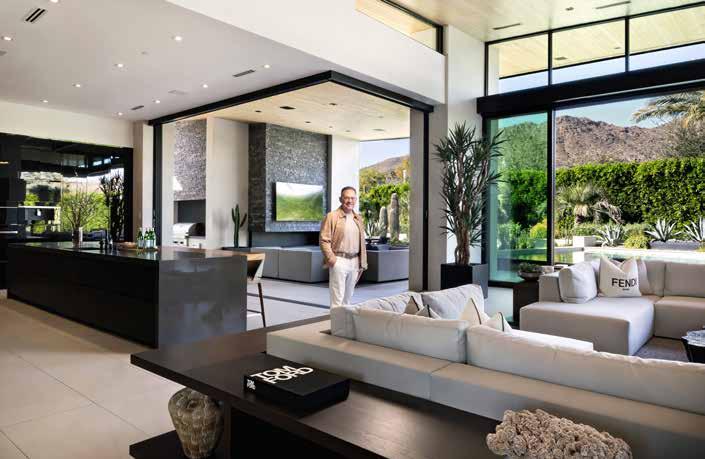
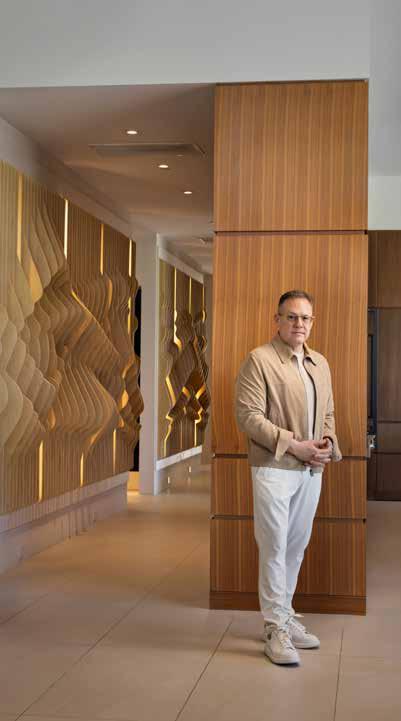
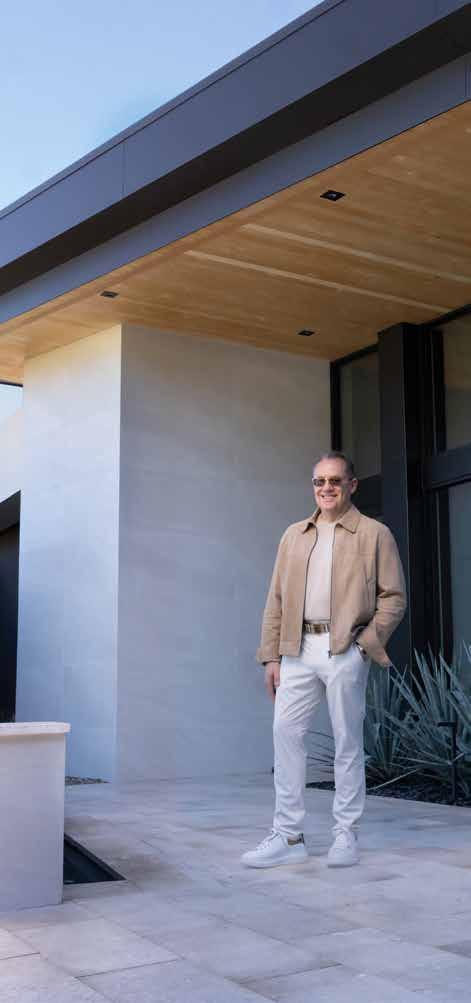
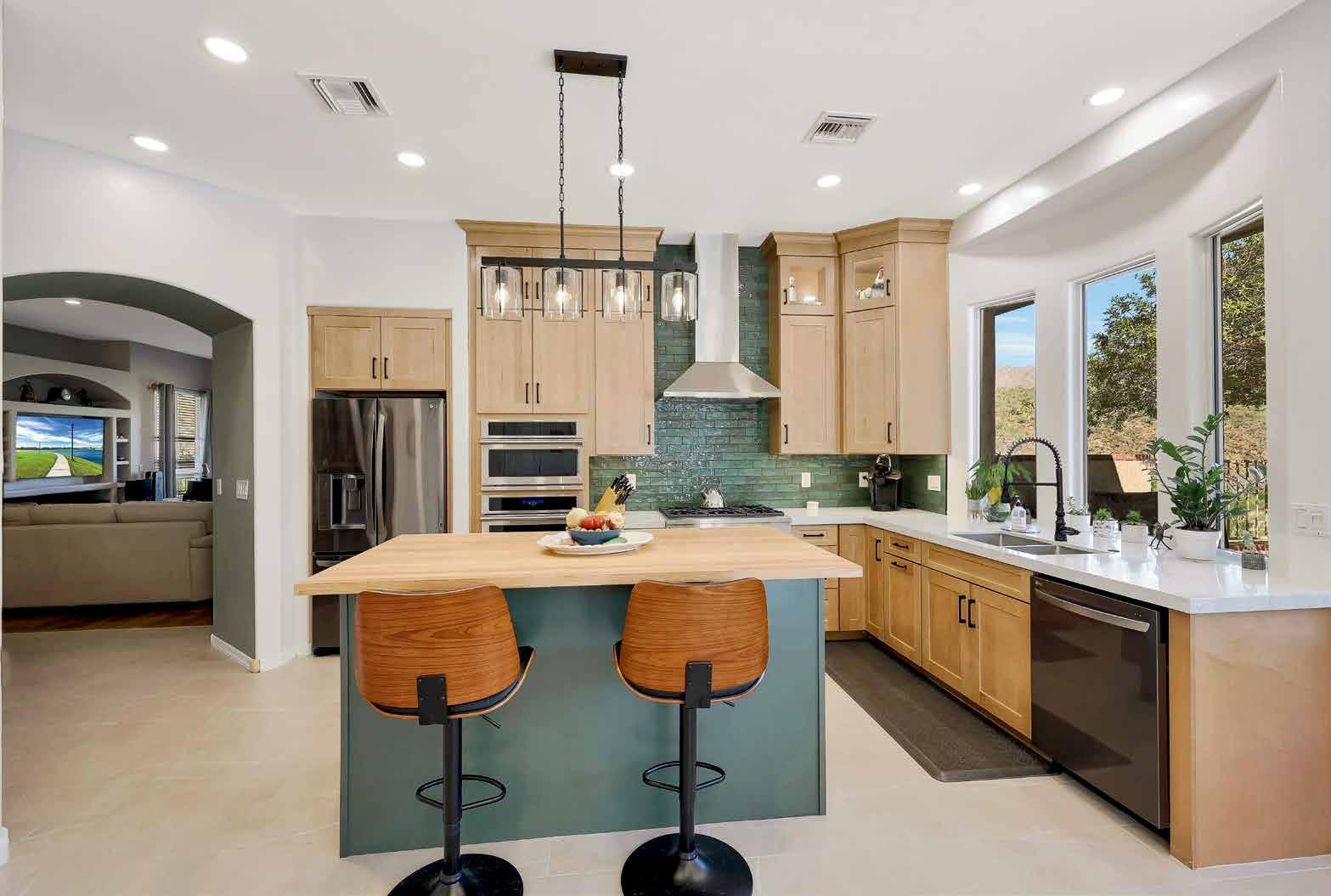
There is a moment — if you’ve been paying attention — when you stop seeing buildings and start reading them. The angle of a roof overhang, precisely calculated to block summer sun while admitting winter light. The way a floor material extends from inside to out without interruption, dissolving the boundary between shelter and landscape. The column that does not merely hold a ceiling but announces an idea about how people deserve to inhabit space. In Arizona, where the climate is both gift and challenge, design is never decorative. It is argument.
April’s issue of Images Arizona celebrates design as exactly that: a form of reasoning. Architecture, at its finest, is not the art of construction but the art of intention — of understanding a place, a person, a community, and translating that understanding into form. The architects, landscape designers and craftspeople in these pages have spent careers asking the question that drives all meaningful design: What should this place make you feel?
That question doesn’t belong to architects alone. We find it in every discipline where intention shapes experience — in fashion, in theater, even in nature itself. Design, in its broadest sense, is the human impulse to shape experience with intention — to refuse the accidental and choose the deliberate.
Images Arizona P.O. Box 1416
Carefree, AZ. 85377 623-341-8221
shelly@imagesaz.com imagesarizona.com
Spring in Arizona arrives this month with long evenings and perfect light — the season when the built world looks its best, when shadows stretch long and architecture finally has room to breathe. It is a good time to look up from the road, to see what the people who shaped this place were trying to tell us.
From our family to yours, we wish you a month full of discovery — and a fresh eye for the extraordinary design woven into your everyday world.
Happy spring!
Shelly Spence Publisher, Images Arizona
Photography by Loralei Lazurek
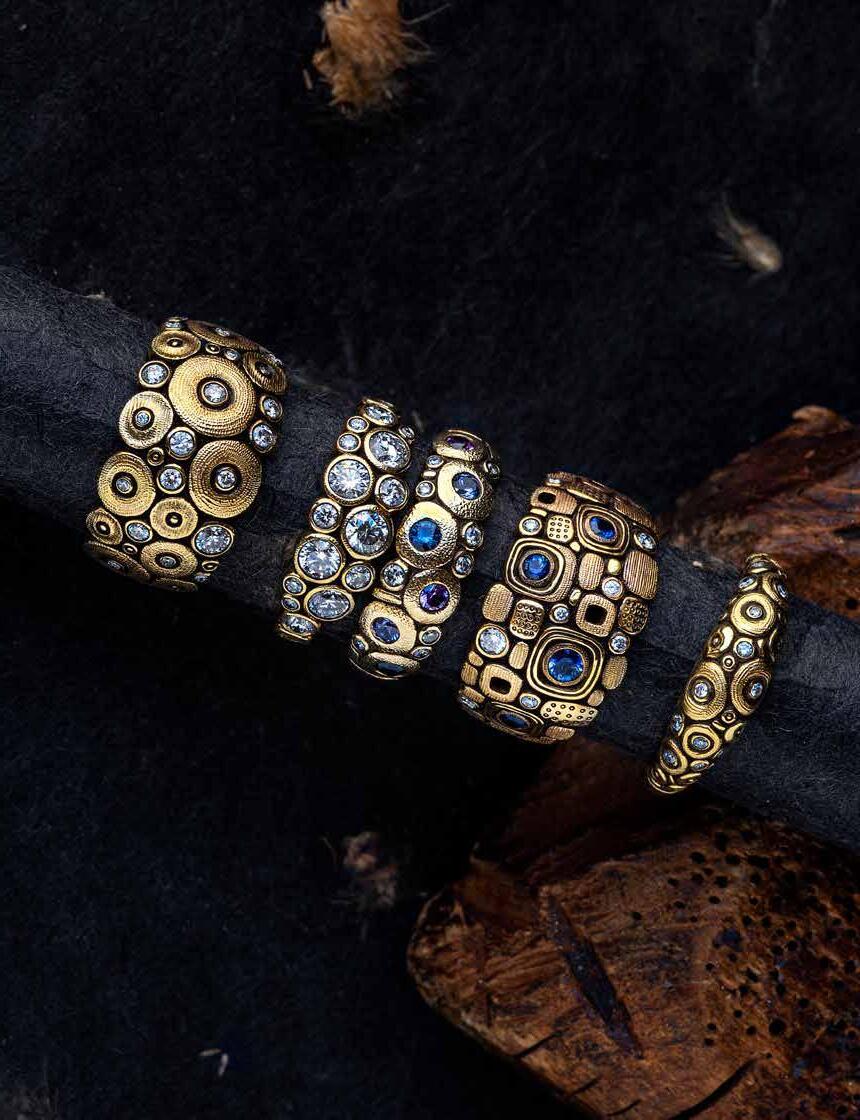
Reimagine Elegance
FROM ORDINARY TO EXTRAORDINARY
PRE-REDESIGN
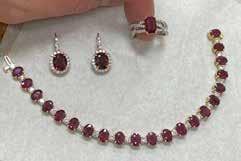
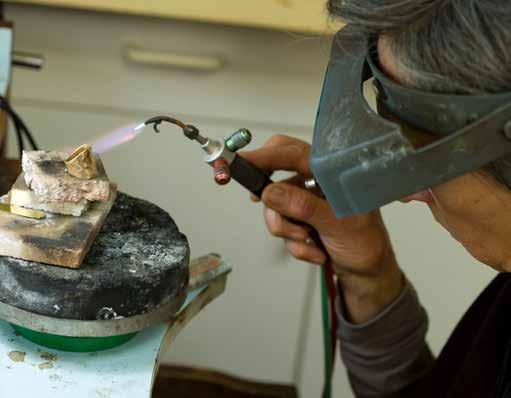
RUBY PARURE REDESIGN STORY
Created by David Gross for Grace
Renee Gallery
Ruby and Diamond Earrings
2 Oval Red Ruby (8.23 ctw) set with 14 diamonds (4.38 ctw) set in platinum
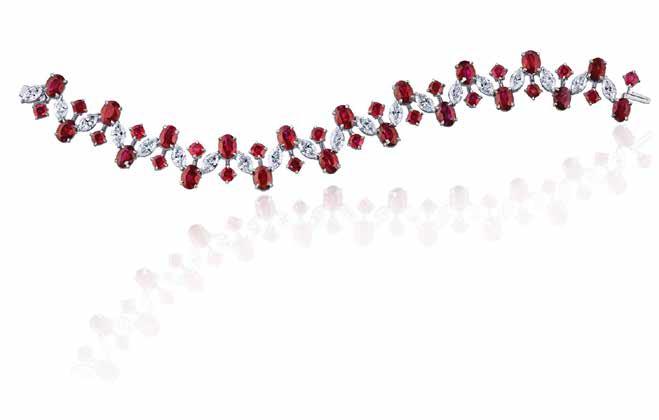
Ruby and Diamond Bracelet
20 oval shape rubies (21.12 ctw) and and 20 cushion cut rubies (6.13 ctw) and 20 marquis shape diamonds (8.10 ctw) set in platinum
Ruby and Diamond Ring
Emerald cut ruby (3.01 ctw) set with two emerald cut rubies (.82 ctw) and 14 diamonds (1.77 ctw) set in platinum scalloped halo ring
7212 E. Ho Hum Rd. # 7 | Carefree, AZ
Hours: Tue.–Sat. 10 a.m.–5 p.m. By appointment Sun. and Mon.
480.575.8080
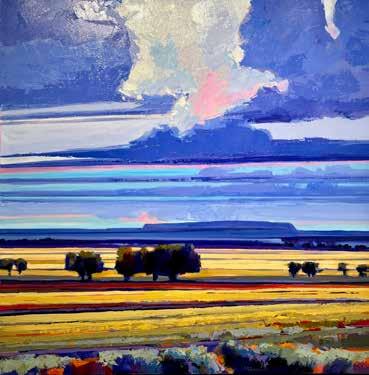
With bold color and gestural brush strokes, Martin’s contemporary landscape art is captivating and unique.
Hours: Tue.–Sat. 10 a.m.–5 p.m. By appointment Sun. and Mon. 480.575.8080
LEFT PAGE :
“Clouds Over Blue Mesa” 48” by 48”
ABOVE LEFT TO RIGHT : “Desert Memory” 48” by 36”
“Aspen Stand” 30” by 30”
Serious About Joy Hidden Masters of Museum-Quality Mirth
Writer Joseph J. Airdo
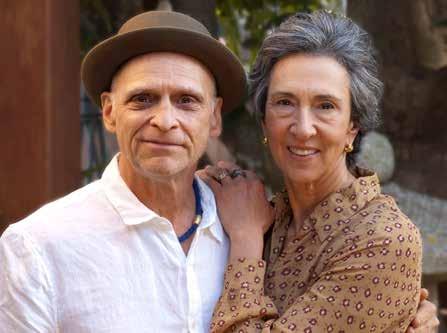
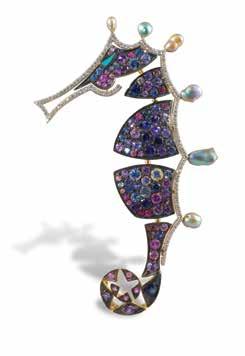
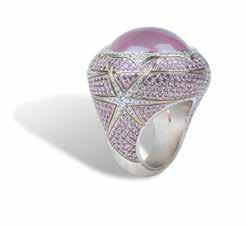
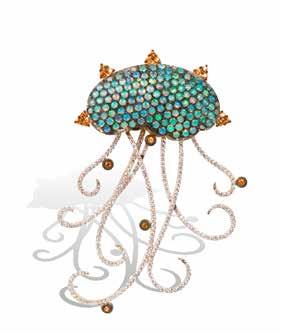
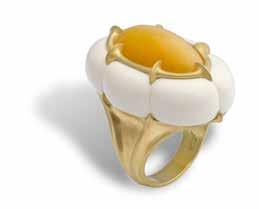
TSanta Barbara jewelry designers Gregoré Morin and Jennifer-Rabe Morin have won more than 30 international awards combining museumquality craftsmanship with playful, natureinspired designs.
he frog sits perfectly still, as frogs do, its opal body catching light from impossible angles. Diamonds stud its webbed feet. A pink sapphire gleams where an eye should be. This is not costume jewelry. This is not whimsy for whimsy’s sake. This is a Santa Barbara husband-and-wife team proving that technical perfection and genuine joy are not mutually exclusive — and that some of America’s most awarded jewelry designers got there by refusing to take themselves seriously, even when working with stones worth more than most cars.
Gregoré and Jennifer-Rabe Morin have quietly amassed more than 30 international design awards, including multiple AGTA Spectrum Best of Show honors and a shelf of MJSA Vision Awards that would make any jeweler envious. Yet their most celebrated pieces feature frogs, spiders perched on leaves, and Buddha figures carved from pink opal. It’s a fascinating duality: old-world discipline married to playful, nature-inspired narratives. And it’s precisely why collectors who appreciate both technical mastery and personality have made them one of the most sought-after design duos working today.
Their path to this rarefied position began in anonymity. For more than a decade, both worked as “hidden masters” — designing pieces that ended up in museums, on red carpets and in private collections around the world, all without their names attached.
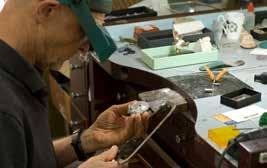
Jennifer’s journey began in London, where she received certification from City of London Goldsmiths Hall for fabrication and stone setting — under instructors who were creating pieces for Persian aristocrats. She’d already been at Silverhorn Jewelers for nearly a decade when Gregoré arrived. He worked his way up to head designer at the Santa Barbara gallery, known for its European-trained team and celebrity clientele.
While at Silverhorn, Jennifer earned her Master’s in Fine Art. Founder Michael Ridding purchased and sold the entire collection of gold brooches from her thesis exhibition — recognizing their merit even as they carried the Silverhorn name rather than hers
“Silverhorn was truly a special place,” Jennifer says.
“Founders Michael and Carole Ridding had this remarkable approach,” Gregoré adds. “If they thought a design had merit, they’d give us permission to make it, even if they suspected it might never sell. That’s extraordinarily rare in our industry. Most places we’ve worked, the response was always, ‘You know, it’s lovely, but I don’t think I can sell it, so we’re not going to make it.’”
That creative freedom, combined with the technical demands of working for high-jewelry houses, forged something unusual: artists who could execute at museumcollection levels but weren’t afraid to put a jeweled frog on your shoulder.
“If we designed something for Silverhorn that required a stone that didn’t exist in standard shapes, Michael would simply commission it from cutters in Idar-Oberstein, Germany,” Jennifer explains. “That opened up an entirely different world of design for us — we weren’t limited to classic gem shapes anymore. We carry that philosophy forward today by cutting many of our own gemstones, both by hand and with CNC equipment.”
That attitude — both the creative permission and the material support — permeated the entire workshop.
“It wasn’t just us,” Jennifer continues. “Every jeweler who came through Silverhorn was given that same creative freedom. It allowed all of us to blossom, to create increasingly beautiful work, and to really push ourselves as if we were our own bosses.”
The technical foundation came earlier, built through rigorous apprenticeships that sound almost Victorian in their intensity. Gregoré trained under Swiss, Hong Kong and elite American masters who taught him that “nothing is impossible” — a philosophy he internalized while working in Vancouver beside Hon Chu Wong, whom he calls “probably one of the most excellent technical goldsmiths I’ve ever encountered.” Wong, originally from Hong Kong, brought old-world discipline to the Canadian workshop.
“I was doing limited production pieces for that company, so I might have 10 pieces on my desk that all needed finishing,” he recalls. “Instead of doing it productionline style — filing all the sprues off, then doing all the polishing, then all the setting — I would finish one piece completely. Then I’d look at it and figure out all the
I bow down to nature because just when I think I’ve had the most intelligent idea, I realize that nature created everything before I did, and I’m just now discovering it.
Gregoré Morin
mistakes I’d made. On the next piece, I’d fix those mistakes. Then I’d examine that one, identify new mistakes, and correct them on the third piece. And on and on.
“This approach really helped me improve my ability to not make mistakes in the first place — to produce cleaner and cleaner work. My boss didn’t mind because I was just as fast as everybody else in the shop. He didn’t care how I got to the end product, as long as it was good.”
That iterative discipline — complete, examine, correct — now defines how the couple approaches every piece in their Santa Barbara studio, where they design and fabricate everything in-house. But here’s where it gets interesting: They’re not just making jewelry. They’re also performing precision quartz cutting for atomic force microscopes, machines worth millions of dollars that require tolerances far beyond normal jewelry practice.
“When we’re working on components for atomic force microscopes — specifically the Potomac Workhorse models — there’s no design element involved,” Gregoré explains. “The specifications are absolute: a hole here at exactly this diameter and depth, a slot positioned precisely there. There’s no ambiguity.
“Now, jewelry doesn’t require those kinds of tolerances. But the skills you develop from that precision work carry over in profound ways. You learn to research specialized cutters that can achieve what’s being asked. You figure out new approaches to tool pathing: how the cutter needs to move to avoid damaging the material.”
That discipline translates directly into pieces that judges consistently praise for being “finished from every angle” — brooches whose backs are as meticulously detailed as their fronts, rings designed to be appreciated like miniature sculptures rather than flat ornaments.
“I just feel a piece of jewelry is a sculpture — it should be beautiful from every angle,” Jennifer says. “Once you imagine yourself smaller than your jewelry — looking at it like it’s a huge monument — it becomes much easier to see what needs attention. It almost forces you to finish all the small details on every side, rather than just focusing on the parts that face outward.”
Which brings us back to that frog. The 2009 AGTA Spectrum Award-winning brooch combines 18-karat white and yellow gold with layered opals, moonstones and pink sapphires in a fully three-dimensional animal form. It requires complex stone-setting angles and structural engineering in two colors of gold. It’s also, unmistakably, charming.
Natasha Lazarova, jewelry curator and head gemstone expert at Grace Renee Gallery in Carefree, where the couple will appear this month, puts it succinctly: “Gregoré and Jennifer are a rare phenomenon in the art world. You have this Santa Barbara husband-and-wife team creating these delightful, whimsical narratives — frogs, insects, nature scenes — but the engineering behind them is absolutely serious high art.
“They come from a background of working on confidential projects for the world’s most prestigious jewelry houses, and you can see that rigorous discipline in their work. They are likely two of the most awarded designers working in the U.S. today because they’ve mastered a difficult balance: they use flawless, old-world technique to tell stories that are full of joy and humor.”
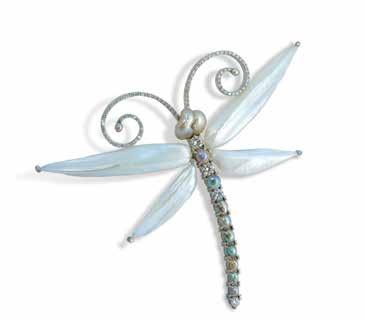
For Jennifer, whose childhood in Spain included collecting dragonflies and butterflies and arranging them meticulously under glass, the nature focus feels inevitable.
“It starts with awe and admiration — a kind of wanting that beauty to be part of me throughout the day,” she says. “When I was a child in Spain, finding these extraordinary living creatures, seeing how beautiful they were, it was like a beacon coaxing me to try to capture that in an object I could wear and share, to give that same happy feeling to somebody else.”
But the humor? That’s harder to explain, even for Gregoré, who once heard an American poet laureate describe how ideas arrive like tornadoes on her farm — if you don’t run fast enough to catch them, you’re left with only residue.
“Design is often like that for me,” he says. “Sometimes it’s perfect — instant. You have the whole picture. Other times it still needs some polishing around the edges. But often it almost feels like I didn’t do it. Like it wasn’t even me. And yet I know it was, because I was there to see it, to experience it.”
Jennifer offers a more pragmatic explanation rooted in their membership in the American Jewelry Design Council:
“To us, our craft is a form of art. It’s not about economic gain from selling a big sapphire and diamond. It really is an art form for us, and that influences the fact that we’re not concerned with what a design might sell. It’s more about speaking the language that excites us. It’s about paying honor to the design and not dumbing it down just to fit the masses.”
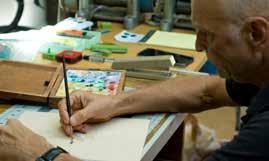
Working as a married couple in the same studio could theoretically create friction, but they’ve developed a system that respects individual vision while leveraging complementary skills. Jennifer, formally trained in fine arts and education, brings strength in form, drawing and composition. Gregoré, with his background in machining and tool-making, excels at technical problem-solving and fabrication.
EXPERIENCE
“Our pieces are really our own — we each design and execute our personal work independently,” Gregoré explains. “When we take on commissioned pieces from other designers that might be entered into shows like Spectrum, the commissioning artist has final say on the design direction.”
Jennifer describes her process as more internal: “I don’t like to be influenced too much — I actually try to do the whole thing myself. But for the CAD part, I’ll ask Gregoré to come in and give me some tips, because he’s far more skilled with that.”
But Gregoré is quick to acknowledge his own blind spots: “I get tunnel vision quite often. I’ll design something that feels like it’s working perfectly to me, but Jennifer will say, ‘Look, this feels off balance.’ And she’s usually right. If she tells me something needs to move or change, I should listen, because I tend to get tunnel vision. I fall in love with what I’m creating, and then obviously that piece can do no wrong in my eyes.”
It’s a partnership that has produced pieces like the Hiruko objet d’art — an 18-karat white and yellow gold
Jennifer Rabe-Morin’s childhood in Spain collecting butterflies and dragonflies now informs jewelry that captures natural beauty in wearable form.
Gregoré Morin trained under Swiss, Hong Kong and American masters who taught him “nothing is impossible” — a philosophy evident in his awardwinning sculptural pieces.
sculptural figure of one of Japan’s Seven Lucky Gods, carved from orange opal with paraiba tourmalines and diamonds — that won both MJSA Design Excellence and Laser Distinction awards simultaneously. Or the Buddha earrings: small engraved sculptures in pink opal with pink tourmaline drops that collectors wear as conversation pieces.
The Santa Barbara connection matters here, too. Like North Scottsdale and Carefree, it’s a landscape-driven, designconscious community where affluent collectors appreciate both natural beauty and artistic craftsmanship. Both environments attract people who view jewelry as wearable sculpture rather than status symbols, who want pieces with personality and provenance.
“An artist observes life, spending time aware of what is going on around him,” Gregoré says. “Every day, I work to make sure my work is extravagant, fun to look at. I bow down to nature because just when I think I’ve had the most intelligent idea, I realize that nature created everything before I did, and I’m just now discovering it.”
Jennifer’s approach is more direct: “My objective is to create beautiful shapes with rare materials so that people look at them with wonder and joy.”
At Grace Renee Gallery later this month, visitors will have the rare opportunity to meet these two artists and see firsthand how technical perfection and genuine delight can coexist in the same piece. The frog will be there, of course. So will several new pieces showcasing techniques they’ve been perfecting, including casting and anodizing aluminum into brilliant colors — something generally considered semiimpossible with castable grades.
“We’ve managed to break through that limitation,” Gregoré says, with the quiet confidence of someone who has spent decades being told things are impossible, then doing them anyway.
The work, ultimately, speaks for itself. Thirty-plus international awards. Museum placements. Red-carpet appearances. But also: frogs, spiders, Buddha figures. Important jewelry that doesn’t take itself too seriously. Technical mastery in service of joy.
“The work is the important part, not us,” Gregoré says. “We have to step back almost like a writer does when they talk about how characters develop themselves — how you’ve got to listen to the character, what the character wants to do. It’s the same thing with the work. The work is the important thing, and it needs to live. That’s what you're doing: giving it life so it can go out there and exist on its own, without us.”
Community
THROUGH MAY 3
TENDERLY: THE ROSEMARY CLOONEY MUSICAL
The Phoenix Theatre Company presents an intimate and poignant tribute to one of America’s most cherished voices. This twoperson musical traces Rosemary Clooney’s journey from her meteoric rise in Hollywood to her personal struggles with mental health and her triumphant comeback. $60+. See website for times. Judith Hardes Theatre, 1825 N. Central Ave., Phoenix. 602-2542151; phoenixtheatre.com
APRIL 1–MAY 3
DADDY LONG LEGS
The Phoenix Theatre Company presents this heartwarming musical based on the classic novel by Jean Webster. $60+. See website for times. Hormel Theatre, 1825 N. Central Ave., Phoenix. 602-254-2151; phoenixtheatre.com
APRIL 2
BIG IDEAS FORUM: THE TIPPING POINT
This presentation suggests that the world has reached “the tipping point” — the moment when climate change becomes irreversible regardless of human intervention. Free. 4:30 p.m. Anthem Civic
APRIL
24–25
GREGORE AND JENNIFER-RABE MORIN
Meet two of America’s finest jewelry designers, a Santa Barbara husband-and-wife team who reinterpret nature with humor and artistry. Each piece marries technical mastery with whimsical vision, creating singular works where precision craftsmanship transforms the natural world into wearable sculpture. Free. 10 a.m.–5 p.m. Grace Renee Gallery, Historic Spanish Village, 7212 E. Ho Road, Carefree. 480-575-8080; gracereneegallery.com
Building, 3701 W. Anthem Way, Anthem. 305-302-7536; bigideasforum.info
APRIL 4
TOUCH-A-TRUCK
Anthem Community Council invites families to get up close with first responder vehicles, construction trucks and more. This interactive event allows children to climb aboard, honk horns and learn about the machinery. Activities include painting sun catchers and wooden cars, plus Easter foam kit decorating. Free. 9 a.m.–1 p.m. Anthem Community Park, 41703 N. Gavilan Peak Parkway, Anthem. onlineatanthem.com
APRIL 9
SAMARA JOY
Presented by Arizona Musicfest, the three-time Grammy Award winner brings her rich, velvety vocals to the stage, channeling the spirit of jazz legends like Sarah Vaughan and Betty Carter. Known for her masterful interpretations of standards and her gospel-rooted technique, Joy performs selections from her acclaimed albums, including her breakout “Linger Awhile.” $64+. 7:30 p.m. Highlands Church, 9050 E. Pinnacle Peak Road, Scottsdale. 480422-8449; azmusicfest.org
APRIL
9–19
PHOENIX FILM FESTIVAL
The 26th annual festival brings filmmakers and movie lovers together for 11 days of storytelling and community celebration. The event features more than 250 films, filmmaking seminars, parties and student workshops. New competition categories this year include Music Videos and Deaf Directed Shorts, joining returning favorites like the Party Pavilion and Kids Day. $19+. See website for schedule. Harkins Scottsdale 101, 7000 E. Mayo Blvd., Phoenix. 480-5133195; phoenixfilmfestival.com
APRIL 11
AZ CRUSH MS WINE TASTING
AZ Crush MS hosts an afternoon of wine tasting to raise funds and awareness for people living with multiple sclerosis. Serving as a sanctioned fundraiser for the National MS Society, the event features a silent auction, a keynote speaker and pours from 10 local Arizona wineries. Proceeds support MS research, a local relief fund and families living with the disease, while the gathering provides an inclusive space for those with MS to connect with
the community. See website for prices. 3–6 p.m. Creighton University Ballroom, 3100 N. Central Ave., Phoenix. 602418-2452; azcrushms.org
APRIL 11
ANTHEM NIGHTS CAR SHOW
Anthem Cars and Coffee hosts an evening car show featuring a wide variety of vehicles. Spectators can stroll the lot, meet fellow auto enthusiasts and enjoy an easygoing community gathering under the lights. Free. 5–8 p.m. Outlets North Phoenix, 4250 W. Anthem Way, Phoenix. anthemcarsandcoffee.com
APRIL 11
THE BRITISH INVASION YEARS
Presented by Arizona Musicfest, this multimedia concert experience relives the dynamic era when British bands like the Beatles and the Rolling Stones transformed the music scene, alongside the American artists who responded with hits of their own. $47+. 2 p.m. and 7:30 p.m. Highlands Church, 9050 E. Pinnacle Peak Road, Scottsdale. 480-422-8449; azmusicfest.org
APRIL
11
GO GREEN RECYCLING
Anthem residents can safely dispose of household hazardous waste, electronics, paint and personal documents at this community recycling event. Republic Services and other partners facilitate the collection of items ranging from batteries to small appliances. St. Vincent de Paul will also be on-site to accept donations of nonperishable food, clothing and toiletries. Proof of residency is required, and vehicles must be in line by 10:30 a.m. Free. 8–11 a.m. Anthem Community Park (Lower Parking Lot), 41703 N. Gavilan Peak Parkway, Anthem. anthemcouncil.com
APRIL 16
ARTIST RECEPTION: MARTIN BLUNDELL
Meet Utah artist Martin Blundell, whose landscape oil paintings transform the natural world through vibrant color and bold impasto brushwork. Blundell’s compositions showcase masterful design sensibility honed through decades of fine art practice across multiple mediums. Free. 4–7 p.m. Grace Renee Gallery, Historic Spanish Village, 7212 E. Ho Road, Carefree. 480-575-8080; gracereneegallery.com
APRIL 16
FAMILY STEM NIGHT
Canyon Springs STEM Academy invites the community to explore hands-on student engineering projects from pre-K through eighth grade. The event features interactive displays from community STEM partners, open classrooms showcasing science, technology, engineering and math in action, and dinner available for purchase. Free. 5–7 p.m. Canyon Springs STEM Academy, 42901 N. 45th Ave., Anthem. 623-376-5200; dvusd.org/canyonsprings
Community
APRIL 18
FLYING AWAY (TO THE LAND DOWN UNDER)
ProMusica Arizona Chorale and Orchestra presents a vibrant musical journey celebrating the rich landscapes and cultures of Australia and America. Serving as a preview for the ensemble’s upcoming tour, the concert features energetic and evocative works including Percy Grainger’s “Mock Morris,” Paul Jarman’s “Pemulwuy,” Daniel Brinsmead’s “Firebird” and Arizona composer Craig Bohmler’s “Saguaro Song.” $35; discounts available. 3:30 p.m. All Saints Lutheran Church, 15649 N. Seventh St., Phoenix. 623-920-1194; pmaz.org
APRIL 18–19
LA CENERENTOLA
Arizona Opera presents a vibrant, semistaged production of Rossini’s beloved comedy, brimming with humor, charm and enchanting melodies. The story follows Angelina, who is mistreated by her stepfather Don Magnifico and his scheming daughters but dares to dream of a brighter future. With help from Prince Ramiro’s clever valet and a pair of sparkling bracelets, she navigates
APRIL 30 BLOOM
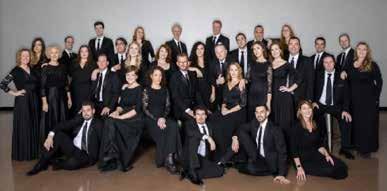
The Phoenix Chorale makes its debut at the MIM Music Theater with a one-night-only program celebrating renewal, travel and the joy of spring. A bouquet of 10 singers from the Grammy-winning ensemble presents an intimate concert curated and conducted by Assistant Conductor Tom Peterson. The repertoire traverses the globe and centuries, featuring lyrics by Shakespeare and E.E. Cummings alongside Italian madrigals and English dances. $51.50+. 7:30 p.m. The Musical Instrument Museum, 4725 E. Mayo Blvd., Phoenix. 480-4786000; mim.org
royal intrigue to find love. $30+. 7:30 p.m. Saturday; 2 p.m. Sunday. Symphony Hall, 75 N. Second St., Phoenix. 602266-7464; azopera.org
APRIL 24–26
RAGTIME: A THEATRICAL CONCERT EXPERIENCE
Presented by Arizona Musicfest, this production celebrates the Tony Awardwinning musical’s soaring score of ragtime, blues and jazz. Based on E.L. Doctorow’s novel, the concert features Broadway stars including Mamie Parris, Justin Austin and Ta’Nika Gibson alongside the Musicfest Pops Ensemble. $79.50+. See website for times. Herberger Theater Center, 222 E. Monroe St., Phoenix. 602-252-8497; azmusicfest.org
APRIL 25
ANTHEM CARS AND COFFEE
Classic and modern vehicles fill this monthly car show, complemented by coffee, food vendors and community fellowship. Free. 8–11 a.m. Outlets North Phoenix, 4250 W. Anthem Way, Phoenix. anthemcarsandcoffee.com
MAY 2 THE STELLA ARTOIS DERBY DAYCLUB
Arizona’s only Kentucky Derby party featuring live local horse racing returns to Turf Paradise for the 152nd “Run for the Roses.” Guests can watch the simulcast and live action from the Sanderson Lincoln Black Label Lounge or the open-air Stella Artois Jazz Pavilion. The event features mint juleps, food trucks, live DJs and jazz bands, plus a new champagne and bourbon tasting experience. $50+. See website for schedule. Turf Paradise, 1501 W. Bell Road, Phoenix. thepoloparty.com
PURSES FOR A PURPOSE RAISES OVER $89,000
Anthem Giving Circle raised more than $89,000 during its 16th annual Purses for a Purpose fundraiser in February. Featuring a Hollywood theme where attendees dressed the part, the event auctioned designer handbags to support the organization's philanthropic efforts. Proceeds will provide financial assistance to local families in need, as well as support local schools and food banks. anthemgivingcircle.com
The streetlight on Hollywood Boulevard started with a pool noodle.
Arizona Broadway Theatre’s acting technical director Cody Burgoon needed to replicate the rounded arm of a period streetlight — the kind that cast sodium-vapor orange over the stretch of Hollywood Boulevard where Vivian Ward makes her living in Pretty Woman: The Musical. The solution came together from schedule 40 pipe, box tube bent through the pipe bender, notched and welded, then sheathed in foam pool noodles to achieve the correct cylindrical profile.
This is how theatrical magic gets made at Arizona Broadway Theatre — not with smoke and mirrors but with ingenuity, steel and occasionally the sporting goods aisle. For “Pretty Woman: The Musical,” running March 13 through April 19, the Peoria dinner theater has constructed two complete architectural worlds on a single stage: the gritty hori-
zontal sprawl of 1990s Hollywood Boulevard and the gilded vertical grandeur of the Beverly Wilshire Hotel. Between scenic designer Clifton Chadick’s emotional vision and Burgoon’s structural reality, an entire city has been built — and engineered to disappear.
THE HOPEFUL BLUEPRINT
Chadick approaches scenic design not as decoration but as emotional argument. His Music City — which placed its audience inside a Nashville dive bar that simultaneously served as multiple locations throughout the show — earned a 2025 Drama Desk Award nomination for Outstanding Scenic Design of a Musical, placing him among nominees that included David Rockwell and Derek McLane. He traces his instincts to his grandfather, a NASA simulation engineer and amateur magician who took the family to Disney World three times and thought constantly about the marriage of engineering and wonder.
“As a toddler at Disney on Ice, I remember looking up at the grid and thinking, oh, there are going to
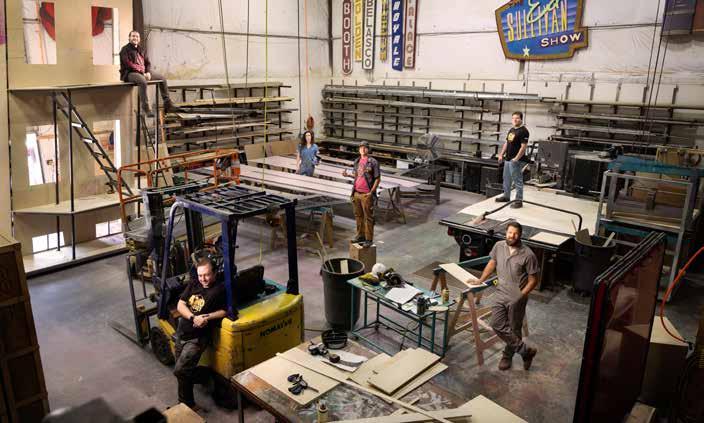
The scene shop attached to Arizona Broadway Theatre — an institutional rarity in regional theater — allows the entire “Pretty Woman” set to be built, painted and refined at full scale before rolling directly onto the stage.
Framing the Fairy Tale
The Art and Engineering Behind ABT’s ‘Pretty Woman’
Writer
be bubbles — I could see the bubble machines,” Chadick says. “I grew up in a blue-collar town, not a particularly artsy place, but somehow I was just exposed to that way of seeing early on. I think I saw a high school production when I was very young and something clicked: creating different worlds. How do we do that? My grandfather instilled that question in me, along with my parents.”
For “Pretty Woman,” the answer to that question began not with architecture but with feeling.
“This is a hopeful story — that was my starting point,” Chadick says. “I knew I wanted it to feel that way — a landscape of the Hollywood Hills and the Hollywood sign somewhere in the distance, something you’re reaching toward, something you desire. The colors carry that. We’re working in ‘80s vivid: hopeful, fun, vaporwave. It’s Vivian’s story, her Cinderella story, and the palette reflects that.”
The design’s visual signature is its portal landscape: forced-perspective palm trees and Spanish Revival arches framing the entire stage, embedded with LED elements that allow lighting to shift the show’s emotional register at the touch of a button. A ground row of the Hollywood Hills anchors the horizon. The class divide is encoded in the palette itself — purples, periwinkles and grays for Hollywood Boulevard; corals, golds and warm marble tones for the hotel world.
“Vivian’s world — Hollywood Boulevard — is really represented by two physical elements on stage: the apartment building and a wagon unit with a bus bench, a leaning streetlight, a trash can, those kinds of street-
Joseph J. Airdo // Photography by Loralei Lazurek
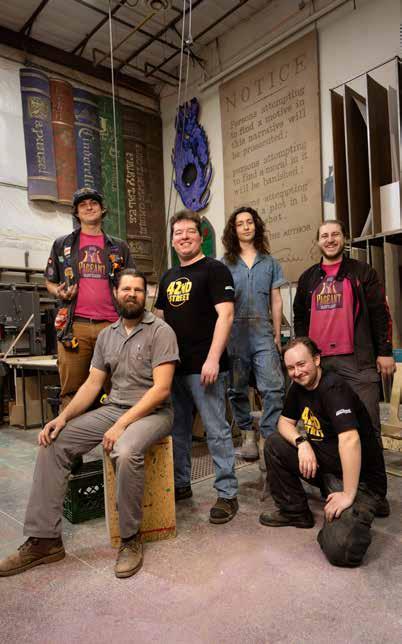
From left: carpenter Luke Hensley, carpenter Anthony Wieland, acting technical director Cody Burgoon, scenic charge artist Gray Passey, carpenter Jordan Yanofsky and carpenter Jude Graham comprise the Arizona Broadway Theatre scene shop team behind “Pretty Woman: The Musical.”
level details,” Chadick explains. “The lean of the apartment building and the streetlight says something — this is a deteriorating space, a world slightly off its axis. When we move to the hotel, everything gets bigger, grander, cleaner. That color shift is doing a lot of the class work without the set ever having to announce itself.”
The Beverly Wilshire interiors in the original 1990 film were built as sets at Disney Studios in Burbank, bearing limited resemblance to the actual Italian Renaissance building at Wilshire and Rodeo Drive. Chadick is designing a stage set of a movie set of a hotel — three layers of theatrical construction deep.
“I remembered the corals of the bathroom from the movie — those are interesting colors for a businessman’s penthouse, I always thought,” he says. “So I leaned into that, working from my memory of the film. From there I did my own grand columns, my own sense of what that lobby’s grandeur might feel like.”
The sheer coral drapes — swooped and swagged — fly in whenever the action moves to the hotel, regardless of which specific space, as a consistent visual shorthand for the elevated world. The polo match that opens Act Two introduces yet another architectural register.
“The polo tent is striped, very black and white, clean lines,” Chadick says. “Those rigid lines say something about the social construct that space represents.”
STRUCTURAL REALITY
Getting any of this from the rendering to the stage is Burgoon’s job. His path to ABT moved through a Kansas City community college, a Bachelor of Fine Arts in technical direction from the University of Minnesota Duluth and a string of summer stock positions in upstate New York before he arrived in Peoria last September as assistant technical director. When the permanent TD resigned to move his family to New York just weeks into Burgoon’s tenure, the 18-foot apartment building and everything attached to it became his responsibility.
“The first problem I identified was the apartment building,” he says. “It’s very tall, very large, and the entire thing is set at an angle because we wanted to create forced perspective. One of the walls has compound angles cut into steel, which we have to do manually with a portaband saw because none of our chop saws can actually make that cut. One degree off in one direction can throw something two feet out of alignment by the time you’re 18 feet away.”
Scenic charge artist Gray Passey is currently painting the hotel's grand column structure — a completely two-dimensional piece engineered to read as threedimensional architecture from across the house.
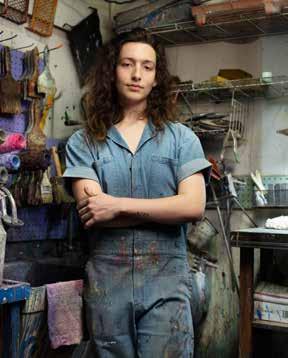
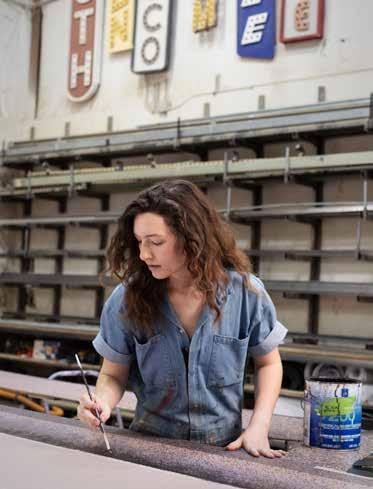
Gray Passey, scenic charge artist on “Pretty Woman: The Musical,” applies the surface language that transforms raw scenic construction into two distinct worlds: the gritty, graphic textures of Hollywood Boulevard and the warm Venetian plaster of the Beverly Wilshire.
Theater is a place where magic can be real. And I get to be part of making that magic happen. Cody Burgoon
The building’s engineering challenges didn’t end with the compound cuts. It was too tall to fit through ABT’s rolling shop door — and the problem had to be solved without compromising the design Chadick had built the whole production around.
“I was told in no uncertain terms that we were not leaning it over to angle it through,” Burgoon says. “So I talked with Clifton and we agreed to make it smaller. We made it smaller — and then the space between the two platforms wasn’t sufficient for the actor. So we had to make it taller again. We solved it by designing the top section to detach. We’ll get the main structure through the door during load-in, then attach the top once it’s on the stage side. It won’t come back through that door until strike.”
This kind of negotiation — between vision and physics, between what a rendering calls for and what a scene shop can deliver — is the central work of Burgoon’s role. He describes himself, without complaint, as the production’s designated no.
“You’re the no guy — you’re the one who sometimes has to say something can’t be done as specified,” he says. “But saying no almost always opens a conversation: okay, if we want this effect, how do we actually get there? Those conversations are some of the best parts of the job. I’ve always believed you should never stop learning, and this apartment building taught me something new about physics.”
That conversation runs through email threads copied to production manager Jamie Hohendorf-Parnell, pulled into shop discussions, resolved through proposals that try to preserve emotional intention while accommodating structural reality. Theater’s collaborative nature is not incidental to how ABT works — it’s load-bearing.
“When I hit a problem, I’ll draft a proposed solution — one that tries to preserve the artistic intention and the
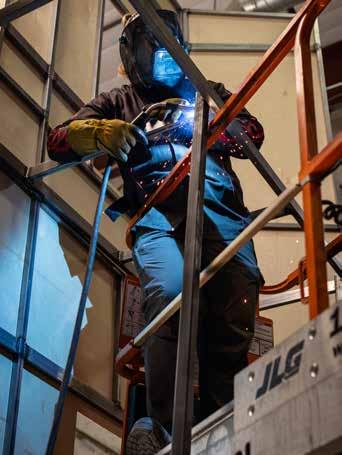
Jude Graham, a carpenter on “Pretty Woman: The Musical,” is part of the Arizona Broadway Theatre scene shop crew responsible for building the production's two-world set from the ground up.
Carpenter Jude Graham works out of ABT's in-house scene shop, where the entire “Pretty Woman” set — including an 18-foot forced-perspective apartment building — was constructed at full scale without ever leaving the building.
emotional effect while also being structurally possible,” Burgoon says. “I also think that being a good TD means understanding what you’re trying to achieve artistically, not just structurally. Every TD needs some background in set design, because if you don’t understand what an environment is trying to evoke for the audience, you can’t make smart compromises. You might solve the engineering problem while inadvertently killing the effect.”
The in-house scene shop attached to the theater — an institutional rarity in regional theater, where most productions truck finished pieces in from off-site builds — makes those compromises possible in ways they otherwise wouldn’t be.
“The biggest advantage is that we can build things at their full, final scale without ever having to break them down for transport,” Burgoon says. “If we’d been at an off-site shop, we would have had to build everything so it could fit in a box truck, then reassemble it on stage. Trying to make
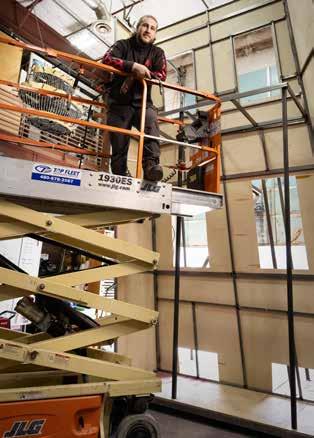
Cody Burgoon, acting technical director at Arizona Broadway Theatre, inherited the “Pretty Woman” build weeks into his tenure when the permanent TD resigned — including an 18-foot apartment building with compound-angle steel cuts and a cornice designed to detach at the shop door.
large scenic pieces fit into a box truck is a real constraint — and it can sometimes compromise the design in ways that shortchange the show. When we can just roll something directly onto the stage, we don’t have to play with hinges and break-away joints. We can weld the frame and know it’s going to be exactly right.”
THE LANGUAGE OF ILLUSION
Chadick, for his part, will be adding paint and detail until opening night — the proximity of shop to stage keeps the design fluid and responsive in ways that a distant build never could.
“I tend to be working on the set and finishing it and painting it and adding details right up until the day of opening,” he says. “It helps having the shop there, because I can just run and get whatever paint color or molding I need and then run back to the stage.”
Much of what gets added in those final days is surface — the language of illusion that Chadick directs through vocabulary as specific as the techniques themselves. Scenic charge artist Gray Passey is currently painting the hotel’s grand column structure, a piece that is entirely two-dimensional but will read as a colonnaded three-dimensional entryway from the house. The opera box — another hotel element — carries 70 individual pieces of trim, precisely placed to read as authentic architectural detail from across the room.
“A lot of my direction lives in the visual renderings themselves,” Chadick says. “But there’s also real conversation about technique — about how to paint brick to get that gritty, spattered quality, versus the Venetian plaster feel of a hotel room. When I was talking with Gray, I used terms like rag rolling — where you wrap fabric around your roller and paint with it, which creates that Venetian plaster effect in different sheens and different shades. Because we wanted this show to live in a stylized, heightened world, I painted in a way that has a slight graphic quality to it — not comic-book exactly, but theatrical. Fun. Exciting. Something that says right away that this world has been heightened.”
When audiences settle into their dinner tables and the house goes dark, none of this will be visible. Not the portaband saw cuts in compound steel, not the pool noodles, not the 70 pieces of opera box trim. Not the physics negotiation that determined exactly how tall an apartment building can be and still make it through a door. The work of Chadick and Burgoon exists precisely so that none of it shows.
“It goes back to why I fell in love with theater in the first place — building something and then watching people encounter it,” Burgoon says. “You can see them deciding to believe in what they’re looking at. Theater is a place where magic can be real. And I get to be part of making that magic happen.”
He just happens to know what the magic is made of.
azbroadway.org
‘Pretty Woman: The Musical’
For Cody Burgoon, the job of acting technical director is equal parts engineering and translation — converting a scenic designer's emotional vision into structures that can be welded, loaded in and trusted to hold eight shows a week.
March 13–April 19 // See website for showtimes // Arizona Broadway Theatre // 7701 W. Paradise Lane, Peoria See website for ticket prices // 623-776-8400 // azbroadway.org
photo essay
Photographer Tevin Jones
Horton Creek
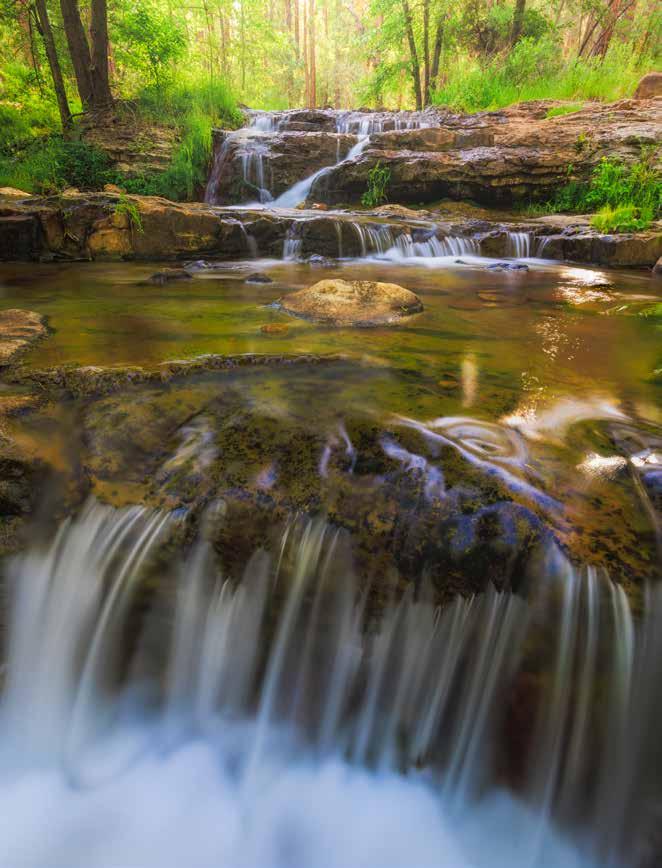
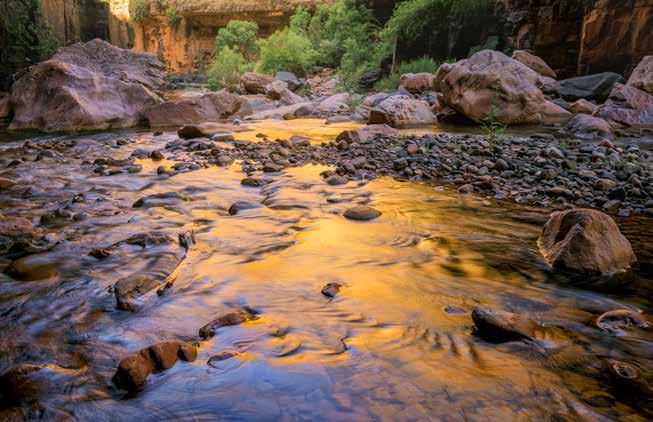
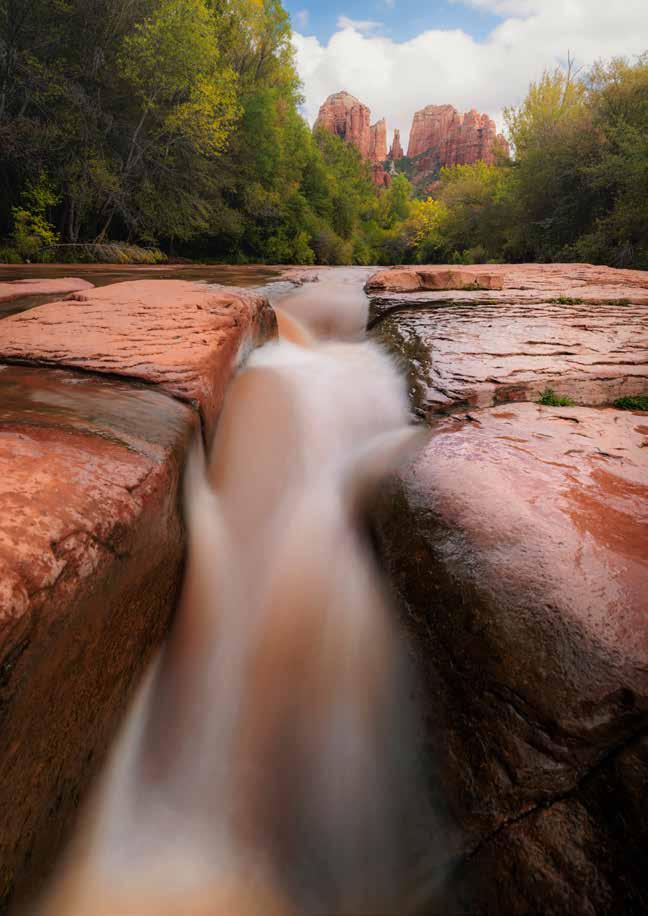
Through long exposures that transform rushing water into silk, North Phoenix photographer Tevin Jones reveals the quiet power of Arizona’s rarest element.
Current Affairs
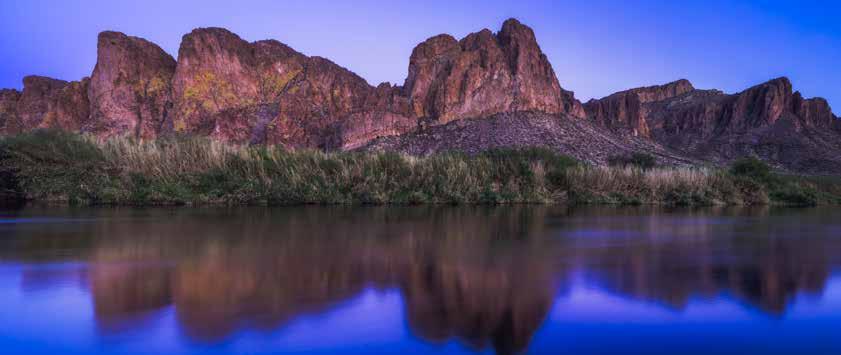
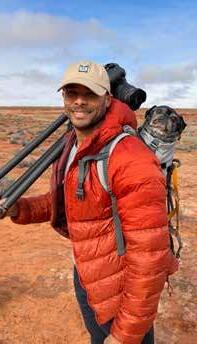
In Arizona, water is both architect and sculptor. Over millennia, it carves canyons, shapes stone, and writes stories across the desert that only those who seek it will ever read. For photographer Tevin Jones, these rivers and streams represent something more profound than scenic beauty — they’re visual meditations on time, impermanence, and the quiet power of persistence.
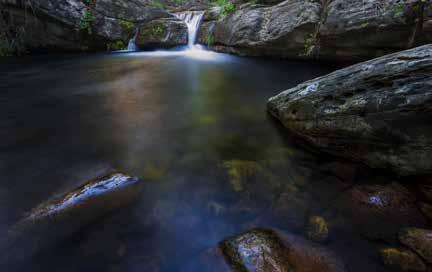
This collection of images transforms Arizona’s hidden waterways into silk and light. Through long exposures that blur rushing currents into painterly strokes, Jones captures not just what these places look like, but how they feel. Each photograph becomes a study in contrasts: the permanence of stone against the motion of water, the scarcity of our desert climate against the abundance of these rare riparian corridors, the chaos of rapids rendered into serene, milky flows.
The technique is deliberate. By allowing his camera’s shutter to remain open for seconds at a time, Jones compresses countless moments into single frames where water becomes ethereal, almost otherworldly. What the eye sees as turbulence, the lens translates into tranquility.
“I like the idea of water slowly carving through the landscape and shaping it over time, and that’s what I try to show with the movement of the water,” Jones says.
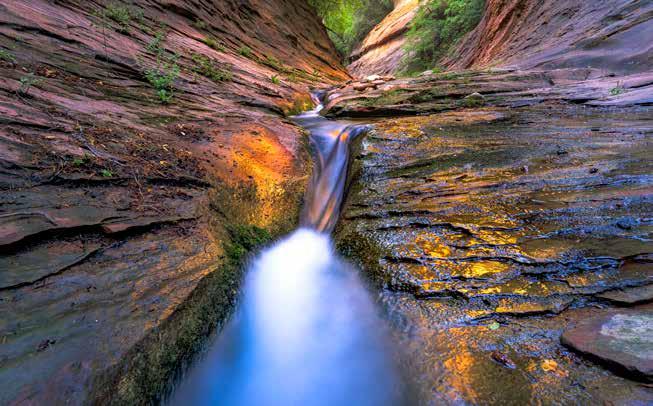
One of his favorite images in the collection — an intimate composition from West Fork — captures just this: a sinuous channel carved through rock, water flowing through its ancient path. It’s a portrait of patience, of geologic time made visible.
“When I look at it, I think about how over hundreds, thousands, or even millions of years, that channel has been carved out,” Jones reflects. “There’s a beauty in the fact that our time here is so short — that in the grand scheme of things, we’re so insignificant.”
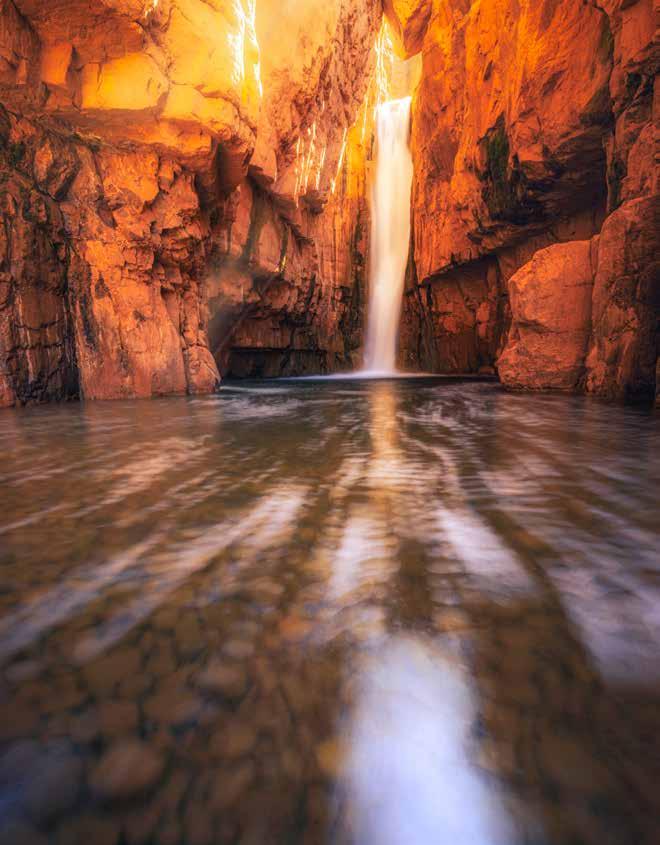
The crown jewel of this collection came during a predawn expedition to Cibecue Falls — a journey that required leaving at 2 a.m. to secure a permit and arrive before sunrise. His wife, newly pregnant at the time, couldn’t make the strenuous hike, so Jones brought his mother instead.
“It’s not even the photograph of the actual falls that’s my favorite,” he admits. “It’s this image of beautiful reflected light bouncing off the canyon walls. This canyon is unlike any other I’ve been to in Arizona. At just the right time, the water turns gold.”
They had the canyon to themselves that morning — a rare gift of solitude in Arizona’s increasingly discovered wild places.
Writer Joseph J. Airdo // Photographer Tevin Jones
Horton Creek
It’s the way that light and water interact that really brings me peace and inspiration. They’re two different elements that, when done properly, create some of the most stunning images possible. Tevin Jones
West Fork of Oak Creek
Cibecue Creek
I like the idea of water slowly carving through the landscape and shaping it over time, and that’s what I try to show with the movement of the water. Tevin Jones
Oak Creek
I’m always drawn to water — partly because I was born and raised in the desert, but also because I’m really drawn to the motion of it. Tevin Jones
Cibecue Creek
Meet the Photographer
Tevin Jones never really left home. After growing up in North Phoenix and attending Paradise Valley High School, he and his wife recently purchased their second house just 2 miles from where he was raised. But his roots run deeper than geography — they’re woven into the landscape itself.
“I grew up spending time outdoors all over Arizona. I love this state,” Jones says. “I’ve been doing photography on the side since I was about 11, and I fell in love with landscape photography because Arizona is such a beautiful place.”
His journey to photography began with a single frozen moment: his stepsister photographing him playing basketball when he was 10 years old.
“I’ll never forget: She had a film camera, and she took a picture of me playing basketball with one of my friends. I was just fascinated by how you could capture a moment like that,” he recalls.
By day, Jones works as a strength and conditioning coach, programming workouts for a gym near Arcadia. But his creative practice — whether photography, drawing or athletics — serves a deeper purpose.
“I’ve always had trouble sleeping. My mind’s always running. I can never really shut it off,” he explains. “The one way I’ve found to shut it off is through some sort of creative endeavor where I’m so focused. It’s the one time I have peace in my mind. And I’ve noticed that a lot of my photos are geared toward that: toward some kind of peaceful, inner peace that I want to portray to the world.”
Now a father to a 10-month-old son, Jones has adapted his practice to family life. Once-a-month camping trips with a trailer have replaced spontaneous road trips, but the mission remains unchanged.
“I hope my images inspire people to protect these places,” he says, noting the utmost importance of always packing out whatever you bring into an area.
It’s a photographer’s prayer: that beauty might inspire not just wonder but stewardship.
Writer Joseph J. Airdo
Building Blocks An Architectural Field Guide
You’ve driven past them a thousand times — the copper shimmer on Central Avenue, the inverted pyramid hovering over Tempe, the mushroom columns sheltering a bank on Camelback. But when was the last time you actually looked? The metro Phoenix area functions as an inadvertent open-air museum, where midcentury pioneers and contemporary visionaries left behind a vocabulary of concrete, steel, and shadow that speaks directly to our desert climate. This is your field guide to the sculptural language written into our daily commute.
HOTEL VALLEY HO
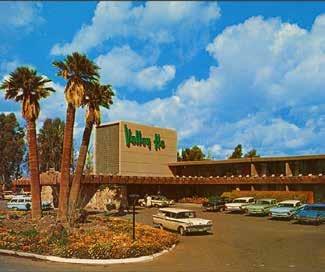
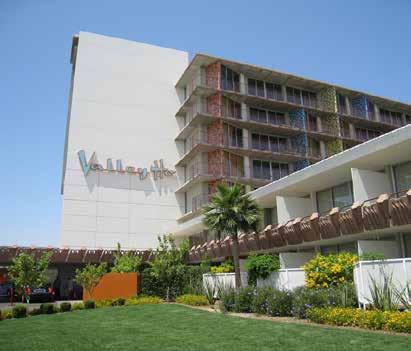
The low-slung resort on Main Street in Old Town Scottsdale represents a turning point in the city’s identity. Before Edward Varney’s 1956 Hotel Valley Ho, Scottsdale hospitality meant dude ranches and Old West kitsch. This design introduced Jetsons-style glamour for Hollywood stars seeking privacy. Precast concrete breeze blocks featuring abstract arrow patterns create the building’s signature texture, with constantly shifting shadows as the sun moves. The same facade looks entirely different at dawn versus dusk, the shadows reshaping the building’s appearance throughout the day. The guest room windows cant downward at an angle, a geometric trick that lets guests see out at night without interior lights reflecting back, while blocking brutal daytime heat.
After decades as a declining Ramada Inn and near-demolition in 2001, the 2005 rehabilitation finally realized Varney’s original vision, adding the seven-story tower he’d sketched but never built. The hotel’s lobby, ZuZo restaurant and bar areas remain open to the public — visitors can experience the breeze blocks, ribbon balconies and central courtyard without booking a room.
Hotel Valley Ho // Photographer Dru Bloomfield
Hotel Valley Ho
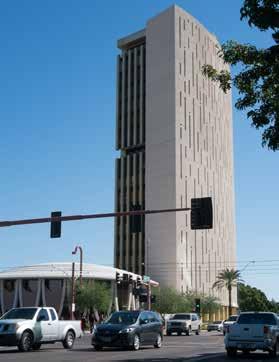
PHOENIX FINANCIAL CENTER
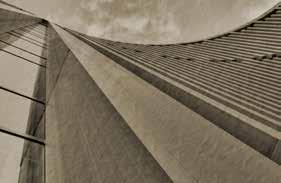
The 19-story tower at Central Avenue and Osborn Road earned its “Punchcard Building” nickname through architectural serendipity. W.A. Sarmiento designed the narrow vertical slot windows in 1964 for solar shading, but their rhythmic pattern accidentally mimicked the punch cards that fed IBM mainframes. The complex anchors Central Avenue through contrasting geometries: a curved tower (subtly concave on one face, convex on the other) paired with twin rotundas ringed by inverted parabolic arches. Gold-anodized aluminum creates a metallic shimmer that shifts as the sun moves — this building changes color by the hour.
Currently under redevelopment as a boutique hotel and residential project, the exterior remains the most recognizable silhouette in the Midtown skyline. The building is best viewed from the Valley Metro light rail stop at Central and Osborn, where the curves and gold shimmer project pure 1960s optimism about what corporate architecture could be.
The metro Phoenix area functions as an inadvertent open-air museum, where midcentury pioneers and contemporary visionaries left behind a vocabulary of concrete, steel and shadow that speaks directly to our desert climate.
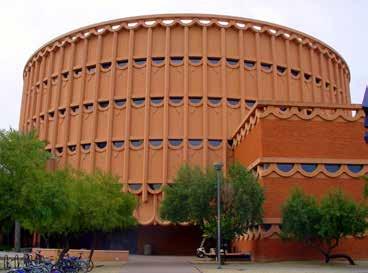
ASU MUSIC BUILDING
The circular, tiered structure adjacent to Gammage Auditorium solves an architectural challenge: how do you build next to a Frank Lloyd Wright masterpiece without embarrassing yourself? William Wesley Peters — Wright’s son-in-law — answered that question with contextual wit in 1970. He adopted Wright’s circular geometry and “Desert Rose” stucco but inverted the form. Where Gammage spreads horizontally, the Music Building stacks vertically in wedding-cake tiers. The decorative metal latticework wrapping each level in turquoise and gold adds playful ornamentation that Gammage would never tolerate — it’s the difference between the master’s restraint and the apprentice’s exuberance.
Curving elevated walkways connect the buildings, creating an architectural conversation across the lawn. The structure houses Katzin Concert Hall, the massive Fritts Organ and hundreds of soundproof practice rooms. The building is best viewed from the Gammage lawn at sunset when the Desert Rose stucco glows. The Music Library is open to visitors during academic hours.
Phoenix Financial Center // Photographer Michael Ruiz
Phoenix Financial Center // Photographer Paul Sableman
ASU Music Building // Photographer midiman
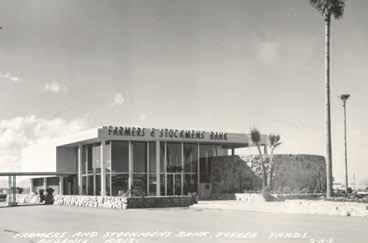
FARMERS & STOCKMENS BANK
The sleek glass pavilion at the southwest corner of Central Avenue and Camelback Road remains the Valley’s purest argument for why glass can work in 115-degree heat — if you understand shadow.
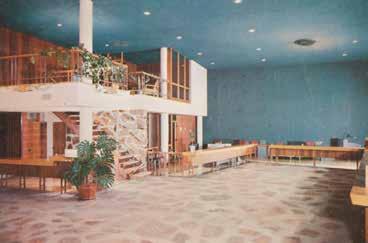
William Pereira’s 1951 design floats a massive flat roof over walls that dissolve the boundary between banking hall and street. Deep overhangs create shadow lines that protect the floor-to-ceiling glass while maintaining the illusion of weightlessness. But here’s the genius move: rough-hewn Arizona sandstone walls slice through the glass envelope, running continuously from the exterior plaza into the interior without pause, as if the desert floor itself had been pulled through the building.
When it opened in 1951, this intersection marked the northern edge of the city, gateway to the agricultural belt. The design proved cattle barons and cotton farmers could conduct business in buildings as sleek as anything in New York. The building now houses professional offices. Visitors walking the perimeter on Central Avenue can watch how the steel-framed glass reflects the northern mountain ranges, with the transparent walls offering clear views of the original stone planes from the sidewalk.
CHASE BANK
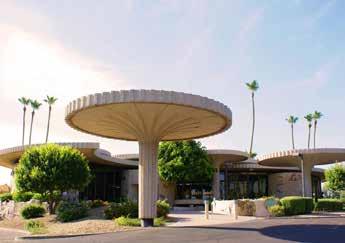
At the corner of 44th Street and Camelback Road, Frank Henry’s 1969 bank branch reads less like a financial institution and more like a grove of concrete trees. The design employs eight massive dendriform columns textured with exposed quartz aggregate that catches afternoon light like crushed diamonds. The columns taper outward as they rise, supporting a roof that extends far beyond the recessed glass walls, creating deep, cool shadow that makes brutalist fortress architecture feel protective rather than oppressive.
Walter Bimson, the visionary behind Valley National Bank, believed branches should be civic sculpture, not utilitarian vaults. For the affluent Arcadia corridor, he commissioned this masterpiece. The deep overhangs invite pedestrians to walk right up to the columns and examine the sparkling quartz texture. Inside, during normal banking hours, visitors can see the coffered ceiling — a waffle grid of geometric precision that appears to float overhead.
Farmers and Stockmens Bank
Farmers and Stockmens Bank
Chase Bank
TEMPE MUNICIPAL BUILDING
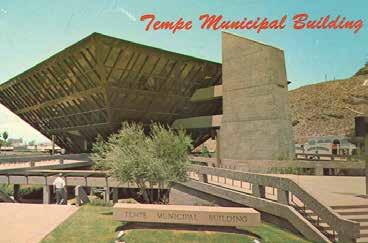
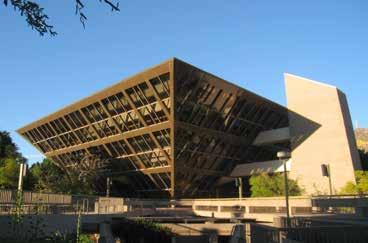
The geometric form hovering over the sunken plaza at Fifth Street in downtown Tempe is one of the few realized inverted pyramids in the world. Michael Goodwin’s 1971 design doesn’t just account for the Arizona sun — it makes solar geometry the entire concept. The 45-degree angle of the exterior walls is precise engineering: during summer, the building shades itself; in winter, lower-angled sun penetrates and warms the interior. The structure expands from roughly 2,000 square feet at ground level to 10,000 square feet at the top, creating a form that defies gravity while proving sustainability can be sculptural.
The genius appears at pedestrian level. The “ground” floor is actually a bridge — the true base is a sunken garden surrounded by lush vegetation that contrasts beautifully with the steel structure hovering above. Solar bronze glass reflects the desert sky. Separate concrete towers house the stairs and elevators, connected by bridges that keep the pyramid’s form pure. Visitors can walk through the sunken garden and experience standing beneath a building that appears to float, making this Tempe’s most photogenic landmark.
FIRST CHRISTIAN CHURCH
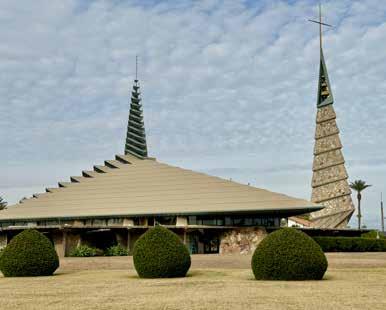
The diamond-shaped church complex on Seventh Avenue just south of Glendale Avenue is a Frank Lloyd Wright design that Wright never saw built. In 1950, he drew plans for a Southwest Christian Seminary that went bankrupt before construction. Twenty years later, William Wesley Peters — Wright’s son-in-law — retrieved the blueprints from the Taliesin archives and adapted them for this church site. The diamond-grid geometry rejects every right angle, creating sharp corners and prow-like edges that feel indigenous to the landscape. The 77-foot triangular campanile stands detached from the sanctuary, a threesided lantern tower supported by open pillars that allow desert air to pass through.
Wright’s signature “desert masonry” technique is on full display: rough native stones placed in forms with concrete poured around them, creating walls that mimic the variegated texture of desert geology. The teal roof color comes from copper developing its natural patina, serving as a neighborhood landmark. The church welcomes visitors during Sunday services and frequently participates in Modern Phoenix architectural tours. Inside, stained glass inserts cast jewel-toned light into the diamondshaped sanctuary.
First Christian Church // Photographer Warren LeMay
Tempe City Hall // Courtesy of Tempe Preservation
Tempe City Hall // Courtesy of Tempe Preservation
SCOTTSDALE MUSEUM OF CONTEMPORARY ART
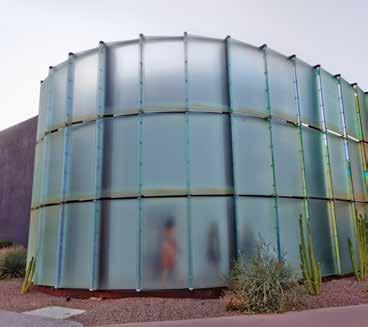
The iridescent steel structure in the Scottsdale Civic Center was once a generic 1976 movie theater. Will Bruder performed architectural alchemy in 1999, transforming it into a mysterious, glimmering art object. The building is wrapped in galvanized steel panels finished in custom iridescent purple-gray, designed to mimic the shadows of the Superstition Mountains. The metallic skin curves and shifts colors as visitors walk around it, reflecting the desert sky.
The real magic happens at the building’s edges. James Turrell’s “Knight Rise” Skyspace in the sculpture courtyard is a concrete elliptical chamber with a knife-edge aperture in the ceiling that frames the sky, isolating it as a pure plane of color. James Carpenter’s dichroic glass scrim wall on the south side captures sunlight and splits it into rainbows that dance across the exterior walkway. The installations aren’t just in the building — they are the building, proving that stripmall bones can be redeemed through intelligent cladding and integrated art. The museum is open to the public with paid admission, and sunset viewings of the Skyspace are particularly popular.
MONROE STREET ABBEY
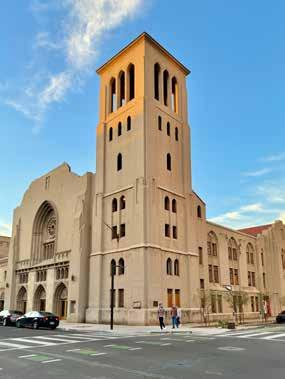
The roofless Gothic shell at the corner of Monroe Street and Third Avenue is downtown Phoenix’s most haunting architectural presence — a building defined by what it’s lost rather than what it’s preserved. Norman Marsh’s 1929 Italian Gothic Revival church was reduced to its skeleton by a 1984 fire. Here’s the twist: rather than restore or demolish, preservationists stabilized the walls and embraced the ruin. The poured concrete structure (which only looks like hand-carved stone) survived the flames that consumed the timber roof, leaving behind a roofless sanctuary where the sky now serves as ceiling.
The massive circular rose window frame on the south facade stands as dramatic silhouette — its concrete tracery intact though the original stained glass is gone. Inside, the columns and arches now function like a garden cloister, creating deep shadows and surreal indoor-outdoor atmosphere. The Abbey has transformed catastrophe into venue, hosting candlelight concerts and weddings beneath open sky and Gothic arches — a rare Phoenix example of accepting architectural loss as transformation rather than erasure. The facade is fully visible from Monroe and Third Avenue, though interior access generally requires a ticketed event.
SMoCA // Photographer Sean Deckert
Monroe Street Abbey // Photographer Warren LeMay
BURTON BARR CENTRAL LIBRARY
The massive copper-clad structure at Central Avenue and McDowell Road was designed by Will Bruder in 1995 to resemble a manmade geological formation — a mesa rising from the flat city grid. The east and west walls, clad in copper, have oxidized over three decades into purple-brown hues that shift with the light. The exterior is fortresslike, protecting books from brutal heat, but step inside and the experience transforms into a “crystal canyon” — a dramatic five-story atrium with glass elevators and a grand steel staircase pulling your eye upward.
The Great Reading Room’s ceiling appears to float weightlessly, suspended by a tensegrity cable system inspired by Buckminster Fuller. At exactly solar noon on the summer solstice, the sun aligns perfectly to project circles of light down through “candle” skylights to the floor — a modern Stonehenge effect engineered into the building’s bones. This structure put Phoenix architecture on the global map, earning the prestigious AIA 25-Year Award in 2021. Currently undergoing capital improvements through late 2026, the library remains operational. The copper skin puts on its best show at sunset when viewed from Central Avenue.
Burton Barr Central Library // Photographer Ellen Forsyth
Burton Barr Central Library // Photographer Ellen Forsyth
Look down into the paint of a car beneath a standard recessed garage light and you’ll see it: the bulb, reflected. A perfect circle of interruption in the finish, disrupting every curve the designer intended. Most people never notice. C.P. Drewett noticed immediately — and the question of what to do about it says everything about how he thinks.
The answer, for Drewett, is canvas. Light shot across a stretched surface until it becomes soft, allencompassing, ambient. No hotspots. No direct reflections. Just a glow that allows the body of the car to read exactly as its designers intended — every plane and crease and intentional line visible at once. It’s a detail that matters only to someone who understands that a serious automotive collection isn’t storage. It’s art. And art deserves proper light.
That understanding — that the spaces we inhabit are expressions of who we are, that every technical decision is also a philosophical one — has driven Drewett’s work since he arrived in Phoenix in 1993
fresh from Louisiana State University’s architecture program. Over the past three decades, the founder and principal of Drewett Works has become one of the North Valley’s most consequential architects, shifting the region’s luxury residential language from heavy Mediterranean enclosure to a transparent, horizontal modernism that doesn’t merely sit upon the Sonoran Desert but enters into conversation with it.
He is also, it should be said, not what you’d expect. Before the architecture, there was the military — a 14-year career in the Louisiana Army National Guard that ended at the rank of captain, with engineering school at Fort Belvoir, Virginia, and a platoon leader’s experience building roads, bridges, and structures in the field. There was a liver donation in 2001, when Drewett gave 80% of his organ to save his father-in-law’s life in what was only the third living-donor liver transplant in Mayo Clinic Hospital’s history. There was an Iron Chef battle at a Louisiana country club, which he won. There are Bach cantatas, sung in a three-octave range, and an orphanage in Uganda he helped build with his own
C.P. Drewett, founder and principal of Drewett Works, has spent three decades transforming the North Valley’s luxury residential landscape — from Mediterranean mandate to a transparent desert modernism that treats the Sonoran environment as collaborator rather than obstacle.
Home Is Where the Art Is
C.P. Drewett's Desert Modernism Transforms How the North Valley Lives
Writer Joseph J. Airdo // Photographer Loralei Lazurek
hands. The man contains multitudes. The architecture, it turns out, contains all of them.
“It looked very production-oriented,” Drewett says of the Valley he encountered in 1993. “What I felt was missing were districts — art districts, entertainment districts. It was sort of uncontrollable sprawl at the moment.”
But the landscape held him.
“Coming from the South, it was so remarkably clean here — pride of ownership, everything felt renewed, like a great wide-open playing field,” Drewett explains.
He would spend the next three decades trying to play it well.
His early career coincided with Silverleaf’s development — and the architectural mandate that came with it. DMB Development’s guidelines for the community specified Spanish and Mediterranean Revival styles: stucco exteriors, red-tiled roofs, grand archways, sprawling fountain courtyards, a deliberate transplant of European old-world character onto desert soil. Drewett worked within it. He is careful to note this: he was not an outsider rejecting the prevailing style but a practitioner fluent enough in its vocabulary to eventually argue for something better.
“I’ve had the fortune of mostly curating modern architecture, though I’ve definitely done a good bit of work in Silverleaf, which is the interpretation of a sort of desert-oriented Mediterranean architecture,” he says. “That was something of a pre-mandate.”
The shift came as Phoenix grew up around itself. As museum districts and cultural cores emerged, something
Named to Phoenix Home & Garden’s Masters of the Southwest in 2024, C.P. Drewett has built a practice — and a portfolio — defined by one consistent imperative: peel it back until only the essence remains.
Before the architecture came the military: Drewett served 14 years in the Louisiana Army National Guard, reaching the rank of Captain and commanding engineering units that built roads, bridges, and structures in the field. The discipline, he says, never left.
in the city’s collective eye began to sharpen. People’s expectations expanded.
“People’s awareness of architecture grows beyond just reaching for the word ‘contemporary’ — which I feel gets a little misused,” Drewett says. “Once we got grounded with these cultural centers, people started free-thinking and realizing that modern architecture really had its place here — and how connected it can be to our local topography. The metaphorical alignment could go on and on. It just makes so much sense with our landscape.”
He draws the line clearly.
“I think probably in the mid-1990s I really felt thae tide start to turn, shortly after I got here,” he says.
“And by the early 2000s, I wasn’t nudging people toward modern anymore. They were gravitating there on their own.”
The Valley’s relationship with the automobile made the next evolution almost inevitable. Scottsdale’s position as home to Barrett-Jackson and a constellation of collector car culture — favorable
I love people more than I love architecture. C.P. Drewett
climate, no corrosive salt air, no flood risk — has drawn some of the world’s most serious automotive enthusiasts to the North Valley. They arrived with their collections and a question architects had rarely been asked: how do we live with these things properly?
“Our clientele have really, increasingly, come to us with requests for spaces that can house and celebrate their collections,” Drewett says.
The collector car space is now among Drewett Works’ signature design challenges — and Drewett approaches it the way he approaches every problem: purpose first. Who is this collector? Are the cars museum pieces, static and pristine, or are they driven regularly? The answer determines everything: the circulation logic, the door systems, the relationship between the garage and the motor court.
“There are really a few different approaches, depending on the client,” he explains. “There’s the approach where the car is essentially a museum piece — static, no fluids, never driven. And then there’s the driver who actually uses every car in the collection. So movement is front and center: how do you navigate around the space without dodging and having to move things out of the way?”
The fenestration options alone reflect how seriously Drewett takes the design problem. Drivable sliding door tracks. Guillotine glass. Hangar-style doors borrowed from aviation architecture.
“The way the space opens and connects to the exterior — that’s a great moment to celebrate, just like how we live,” he says. “Indoor-outdoor space is such a premium for us here, and opening up the auto collection to the motor court, having people over, entertaining — that whole experience is what it turns into.”
Which brings us back to the light. The canvas system that eliminates the recessed bulb’s reflection isn’t merely a technical solution — it’s a philosophical position. The car deserves to be studied. Its design deserves to be read in full.
“When the light is ambient and far-extending, it really allows you to study the car — to see how the body movement and all the intentionality of the design actually reads,” Drewett says.
The same precision governs natural light throughout his homes. The Sonoran Desert’s sun is the region’s greatest asset and its most demanding engineering problem, and Drewett has developed an exacting vocabulary for managing it. North light is soft and calming — ideal for certain interior spaces. South light is handled with horizontal projections that intercept
On the Boards
Architect C.P. Drewett’s ambitions are no longer limited to individual residences. He has recently launched a development company — an extension of what he describes as a lifelong interest in designing not just homes but the community fabric around them.
“I’ve always loved helping craft and create vision for communities,” he says. “I’m excited to bring some renewed thinking to how we do our planning and how we assemble the fabric we live in.”
Closer to home, he’s watching Old Town Scottsdale’s ongoing transformation with particular enthusiasm.
“There’s been some push and pull about what needs to change and what doesn’t, but all in all, it’s a bit of a renaissance,” he says. “Some really great projects are coming online, and we have some interesting things coming ourselves.”
Drewett Works holds active licenses in nine states — Arizona, Colorado, Florida, Hawaii, Iowa, Massachusetts, Nevada, Texas, and Utah — with international work extending into Mexico.
the high summer arc while admitting lower winter sun. East and west are the difficult exposures, the sun arriving at its most intense right at the horizon line.
“You can’t combat that with a roofline,” he says flatly. “You can’t extend it far enough. Instead, you use a vertical panel.”
When a site offers no good southern exposure at all, Drewett goes vertical.
“You lift it up — really pay attention to the Z axis — and you can allow remarkable light in through clerestories,” he explains. “When a space is largely shaded at the human level and then you have this halo of light from above, it’s really something.”
The material palette that holds all of this together — limestone, rift-cut oak, copper, steel — is governed by a principle Drewett calls hierarchy. Not symmetry. Not visual balance in the conventional sense. A deliberate ranking of materials according to the spaces and views they serve, with a hero material anchoring each zone and a supporting cast stepping down from it.
“When I’m designing, I’m trying to be reductive — peel it back, peel it back, peel it back — until I find the bare essence of the solution I’m striving for,” he says. “It’s not about needing more stone on this portion of the house for balance. It’s about understanding the solvency of what each material is doing, where and why.”
The logic, once established, becomes selfperpetuating.
“Once you create that vocabulary and establish clear rules of engagement for the materials, they start placing themselves,” Drewett says. “And once that logic is founded, people experience it — they may not know tangibly what’s driving it, but they feel it.”
That feeling — the sense of being held by a space without being able to articulate why — is the closest Drewett comes to describing what he’s ultimately after. Ask him what daily life feels like inside one of his homes and he deflects, characteristically, toward the people who live there rather than the structures they inhabit.
The business of loving people and creating space that’s relatable for them means you
really need to be a student of your clients
C.P. Drewett
“I love people more than I love architecture,” he says. It sounds like humility. It is, in fact, a design philosophy.
“The business of loving people and creating space that’s relatable for them means you really need to be a student of your clients,” Drewett continues. “The relatability of the space comes from having spent so much time studying my clients, learning their lives and how they live, and then knowing I have the freedom to express that spatially. There’s a sense of belonging in the architecture. It’s embracing.”
That embrace is expanding. Drewett has recently launched his own development company — “I’ve always loved helping craft and create vision for communities,” he says — and is watching Old Town Scottsdale with the particular attention of someone who spent three decades shaping the Valley’s edges and is now focused on its center.
“Our city is at the precipice of growing up,” he says. “We’re seeing an increasingly refined clientele — people with very particular palettes — and a lot of relocation. Some really unique families are moving to the Valley.”
It is, in its way, the same thing he said when he arrived in 1993: the playing field is wide open. The difference is that now he has spent 30 years learning exactly how to play it — and the light, finally, is right.
drewettworks.com
Writer Shannon Severson // Photography by Loralei Lazurek
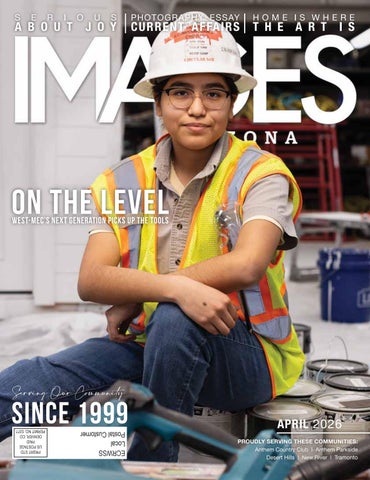
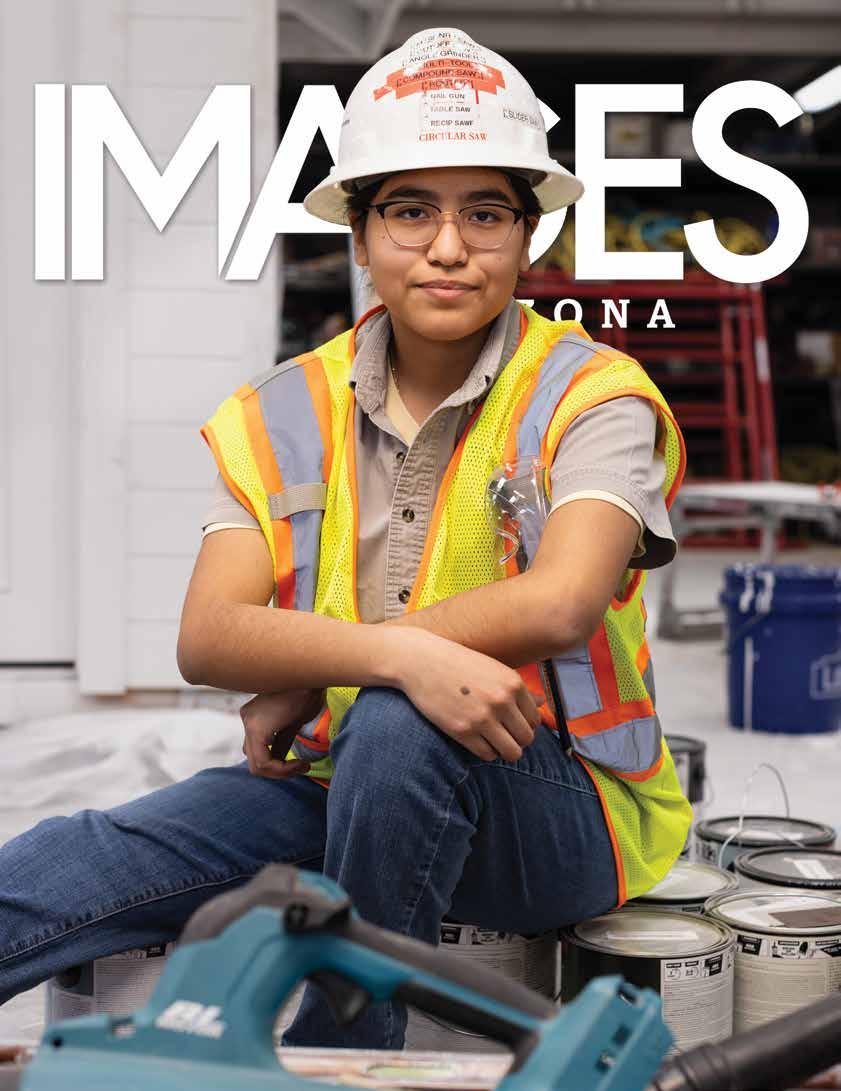
West-MEC’s Next Generation Picks Up the Tools
On the Level
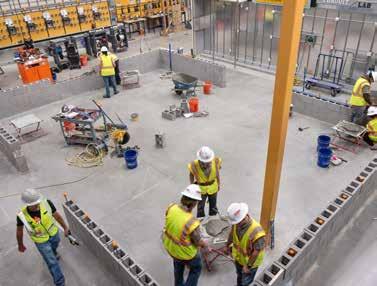
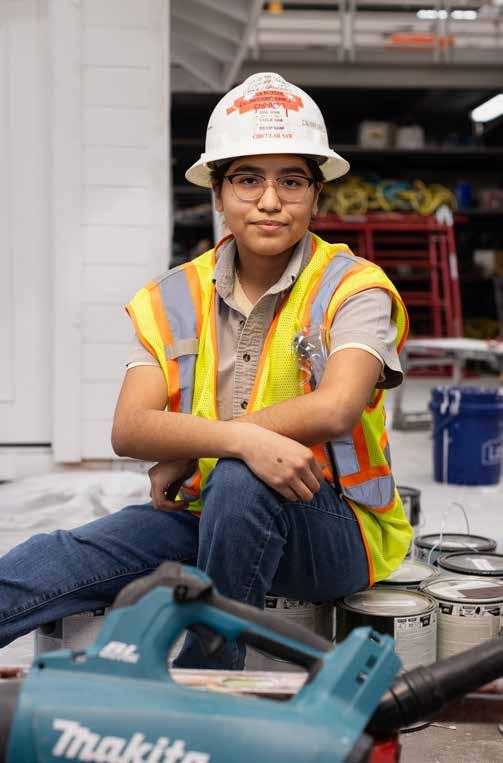
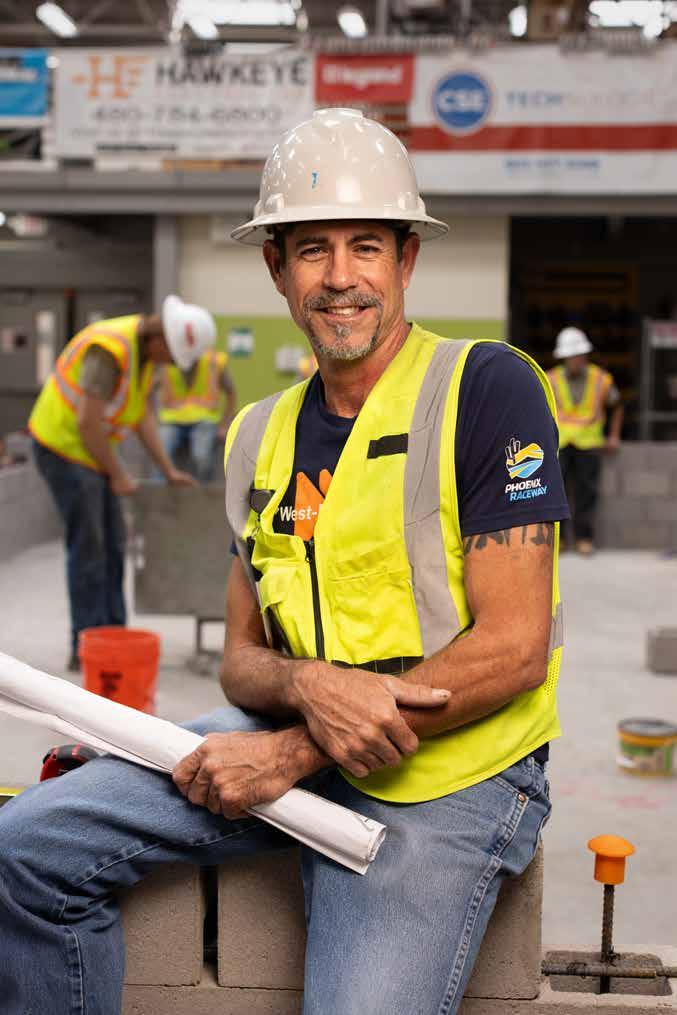
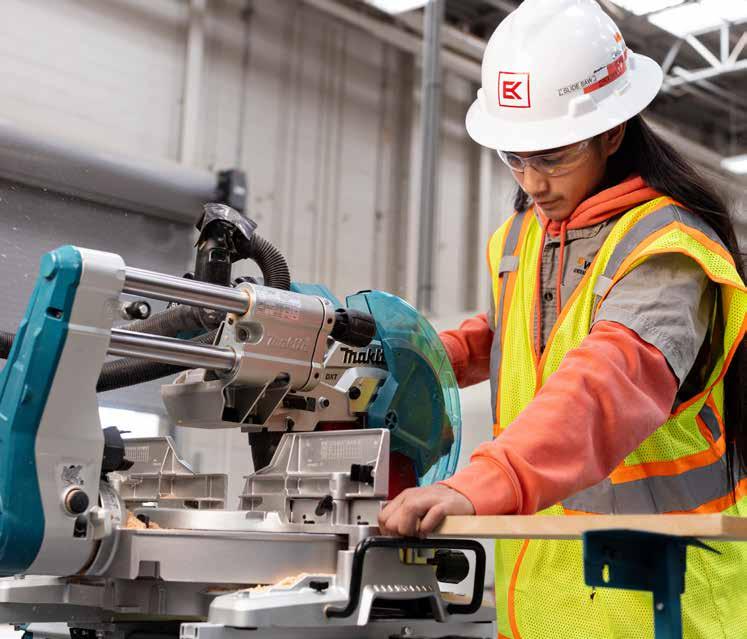
Awarm breeze flows through the bay doors of West-MEC’s Northeast Campus construction lab, lifting concrete dust and ruffling the edges of project plans. Students arrive in hard hats, safety glasses and bright vests; two haul cut concrete blocks for inspection, another needs help with a jammed tape measure. Instructor Robert Wellman is fair but exacting — praising precise edges, calling out sloppy cuts, demonstrating a trick for the tape measure with an easy smile — pushing his students to solve problems themselves with steady care.
“I’ve been an instructor, trainer and facilitator my entire career, and when I found out about this program, I knew I needed to be a part of it,” Wellman says of his first year on the job.
He proudly points to six students who took top honors at a recent skills competition.
“When their eyes light up and they realize, ‘I did it!’ — that is a win for me,” he continues. “It’s been a phenomenal experience.”
These exchanges across sawhorse workbenches are the program’s foundation — lessons in measurement, safety and workmanship that build toward steady jobs and a healthier Arizona economy.
Wellman helps students navigate the language of the blueprint, acting as translator until the concepts click, reminding them not to fear the challenge. First-year students often arrive wary of the math; Wellman watches their confidence grow as they acquire a new fluency.
“The empowerment of building is the biggest thing,” he says. “They can go into any building and get hired on the spot because they know every aspect — it lets them shed fear and worry. When you shut down the generator and roll up the tools, you can tangibly look at what you did.”
He recalls a student who failed a truss challenge one year, then placed first in the skills competition the next.
“He got an honorable mention for his attention to detail, and in that mention, he just looked over his shoulder and
When you shut down the generator and roll up the tools, you can tangibly look at what you did. Robert Wellman
smiled, and I kind of teared up,” Wellman says, his eyes welling at the memory.
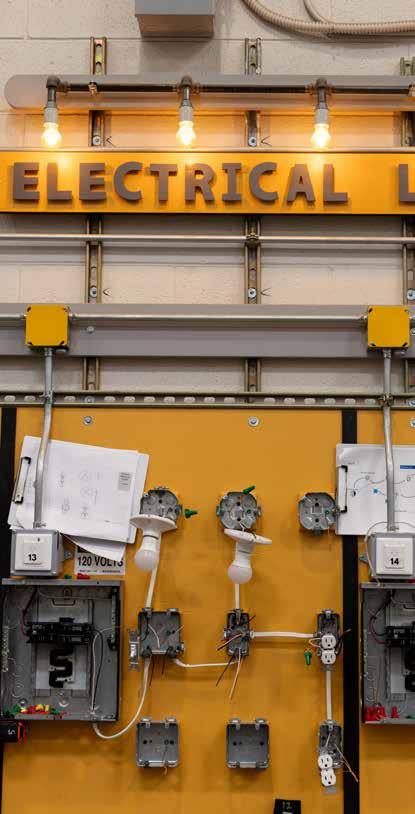
He watches for engagement and a willingness to stop and fix small issues — the same quality control the job site demands. In the shop, students rotate through concrete and masonry, framing, drywall, basic electrical and plumbing, rigging and materials handling — all reinforced with tool mastery, estimating and site safety.
These fundamentals lay the groundwork for future specialization.
Fabian Hernandez and Nancy Solis, both juniors, say the program has reshaped how they see construction.
“Not a lot of people think construction is a valuable job,” says Solis, a Thunderbird High School student whose hard hat is plastered with tool mastery stickers. “In reality, it’s really important that more people have that experience to get the job done. You can build from apprentice to foreman or superintendent; the work reflects the skills you’re building.”
Solis is building a movable desk as a personal project — designing, measuring, cutting and refining the finish.
“I’ve learned there’s a difference between quality and quantity,” she says.
She plans to enlist in the Marines and later pursue finish carpentry.
Hernandez, a Moon Valley High School student who grew up helping his father build office spaces, is serving as foreman on a masonry wall the class is constructing. The experience, he says, has extended well beyond technique.
“I’ve got to lead but also do my part,” Hernandez says. “I have to work with different people, different skill levels and approaches to the project.”
He’s new to framing but plans to focus there, with welding close behind.
“I’ve learned more of the different jobs and what fits best for me. Some trades earn more than carpentry, but I want to do something I enjoy.”
For some graduates, the program is a direct launch into the industry; for others, it’s a foundation for college or military service. Wellman is proud to be part of both pathways.
Foundations and framing are just the beginning. A structure is finished only when its systems work — electrical, plumbing, HVAC — and the program introduces those too.
The Greater Phoenix Chamber Foundation’s Build Your Future Arizona campaign estimates at least 10,000 construction jobs in the state are currently unfilled — a shortfall expected to widen to more than 20,000 by 2030. The Associated General Contractors of America reports that more than half of current construction workers are over 45. The 83 students enrolled across West-MEC’s Northeast and Southwest campuses represent one local pipeline producing young, skilled reinforcements to meet that demand.
John Russell, director of operations at Concord General Contracting in Mesa and the father of a current student, knows the industry’s stakes firsthand.
“In construction, we can’t make many mistakes,” Russell says, “so to be in a class setting where you can mis-measure or miscut something and learn from it is an immense opportunity.”
He’s confident the foundational skills taught at West-MEC give graduates a leg up in the job market. Entry-level construction wages vary — the Bureau of Labor Statistics cites a range of roughly $12.50 to $20.70 an hour — making career and technical education a direct pathway to earning a living.
David Thomas, a field manager for DSI, a trim and carpentry firm serving greater Phoenix and Tucson, has 13 years in the
industry and has worked with several vocational programs. He singles out West-MEC’s approach.
“One of our biggest challenges is finding capable, dedicated individuals who are willing to step confidently into the workforce,” Thomas says. “West-MEC plays a vital role in addressing this need. Their instructors’ real-world experience allows them to provide honest, practical insight into what the industry truly requires and what it takes to build a lasting career in carpentry.”
DSI hosts student visits that offer a firsthand look at the pace and expectations of a carpentry career. Thomas says program
graduates tend to arrive motivated, competent and clear-eyed about the realities of the trade.
The industry benefits from more than technical skill — it benefits from the character and confidence instructors like Wellman actively cultivate.
“This is not just a job,” Wellman tells his students. “We’re not just building the state and the nation — we are reinvigorating the American tradesman. This is not just a need that needs to be fulfilled, something we have neglected for some time. We are also getting our dignity back as a nation.”
It’s a mission that extends beyond graduation day. Wellman urges his students to focus on knowledge and certifications that will carry them through market fluctuations and shifting headlines.
“There will always be a need for builders,” he says. “So I tell them, ‘You keep pushing full steam ahead and remember the objective is that empowerment, that knowledge, that certification — you are set.’”
This fall, families and students can learn about and apply for the 2027-28 school year of the growing two-year program, which is expected to reach capacity.
“We all need each other and we’re one of the major spokes in the wheel,” Wellman says. “Building infrastructure is something that’s easy to take for granted — the door that opens and closes easily, the lights and plumbing that operate. I want to bring that back to the forefront. We need this industry; it’s critical; it’s valued; and the people that do it need to understand that they are badly needed.”
westmec.edu
SPRING BOUQUET FOCACCIA
INGREDIENTS:
Focaccia:
Recipe
Focaccia is already a pleasure to make — elastic, forgiving dough that rewards patience with a golden, dimpled crust. This spring version transforms that simple foundation into something closer to a garden painting: chive stems, parsley leaves and jewel-toned cherry tomato blossoms arranged across the dough’s surface before baking, then emerging from the oven as a centerpiece as beautiful as it is edible. The technique is as approachable as any loaf of bread; the result is worthy of any Easter table, Mother’s Day brunch or springtime celebration.
Yield: 12 servings
1 teaspoon honey 1 teaspoon kosher salt
3/4 cup extra-virgin olive oil, divided
2 1/2 cups all-purpose flour, plus more for kneading 1 cup lukewarm water (100–110°F)
2 1/4 teaspoons (one 1/4-ounce packet) active dry yeast
Flaky sea salt, to taste Fresh basil leaves, for topping
DIRECTIONS:
1. In a medium bowl, combine the yeast, lukewarm water and honey; stir to combine. Set aside until foam forms on the surface of the liquid, about 5 minutes.
2. Add 1/4 cup oil to the yeast mixture, followed by the flour and salt. Using a fork, stir until a shaggy dough forms, then turn out onto a lightly floured work surface. Knead until smooth and supple, about 10 minutes, then form into a ball. Alternatively, pour the oil in with the yeast mixture, transfer to the bowl of a stand mixer, add the flour and salt, and knead on medium-low speed with the dough hook for 7 to 8 minutes.
3. Lightly grease a large bowl with 1 tablespoon oil. Add the dough, cover with plastic wrap and set aside to rise until just slightly more than doubled in size, about 1 hour.
4. Brush a 9-by-13-inch rimmed baking sheet with 2 tablespoons oil. Transfer the dough to the pan and use your fingers to spread it to the edges. Press all over to form dimples, then drizzle 2 tablespoons oil over the top. Cover loosely with plastic wrap and set aside to rest until the dough puffs slightly, about 30 minutes.
5. Set a rack in the center of the oven and preheat to 450°F. Arrange chives as flower stems across the dough surface. Add parsley sprigs at the tops of the chive stems to suggest leaves. Halve some cherry tomatoes in a zigzag cut through the center, removing seeds where possible. Quarter others vertically without cutting through the base and fan open. Arrange the tomato pieces over the dough to form blossoms.
8. Bake until pastry is golden and cheese is nicely melted, 14–18 minutes. Writer
6. Drizzle the remaining 2 tablespoons olive oil over the top and sprinkle with flaky salt to taste. Bake until the focaccia is golden at the edges and browned on the bottom, about 20 minutes.
7. Remove from the oven and let cool slightly. Use an offset spatula to slide the focaccia onto a cutting board. Top with fresh basil leaves and let cool completely before cutting into pieces and serving.right side over the first side. Brush the top and sides of the pastry with more egg wash, being careful not to use too much. Sprinkle with fresh ground pepper.