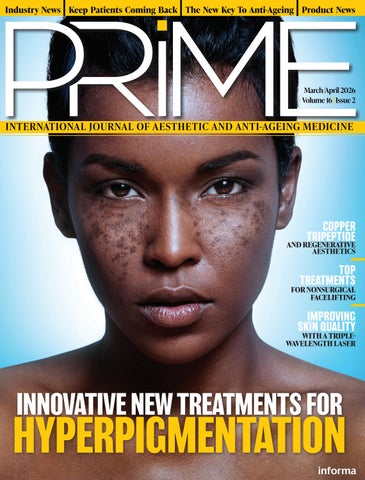
PRIME March/April 2026

Page 1


The Ulthera® System is intended for non-invasive dermatological sculpting and lifting of the dermis of the upper face, lower face, neck and décolleté, and to improve the appearance of skin laxity on the abdomen, anterior arms, and posterior arms.

References:

1 Ulthera® Instructions for Use. 2 Sasaki G, et al. Journal of Cosmetics, Dermatological Sciences and Applications. 01/01 2012;02:108116. doi:10.4236/jcdsa.2012.222022.

©2026 Merz Aesthetics GmbH. All Rights Reserved. MERZ AESTHETICS is a trademark and/or registered trademark of Merz Pharma GmbH & Co. KGaA in the EU and/or certain other countries. ULTHERA, ULTHERAPY, ULTHERAPY PRIME, DEEPSEE, and the squiggle logo are trademarks and/or registered trademarks of Ulthera, Inc. in the EU and/or certain other countries.

Learn more about Ultherapy PRIME® at www.Ultherapy.com

AS WE STEP INTO THE SECOND QUARTER OF THE YEAR, THE WORLD OF aesthetic medicine continues to evolve rapidly. Patients are increasingly looking for natural outcomes, and there’s a growing understanding of skin biology that’s shaping the way we think about treatment.

In this March/April issue, we turn our attention to a topic that resonates with many: hyperpigmentation. Our cover story takes a closer look at the latest advancements in skin-lightening and pigment management, highlighting new topical treatments like cysteamine, 2-MNG, and thiamidol. Hyperpigmentation is one of the most common concerns prompting people to seek treatment globally. It can affect anyone, regardless of skin tone or background, and conditions such as melasma, post-inflammatory hyperpigmentation, and solar lentigines can have a profound impact on one’s quality of life. Often, managing these issues requires long-term approaches.

Traditional treatments like hydroquinone are facing mounting scrutiny and tolerability challenges, making way for safer, evidence-based alternatives that are gaining popularity. The feature digs into the science behind these newer options and how they can fit into modern treatment strategies that prioritise effectiveness, safety, and inclusivity.

The theme of precision continues throughout this issue. We discuss a groundbreaking triple-wavelength diode laser protocol that combines 810, 940, and 1060 nm wavelengths, demonstrating the potential to improve skin tone and texture and reduce wrinkles, while maintaining a robust safety profile. Additionally, we explore the regenerative power of copper tripeptide GHK-Cu, which connects cosmetic enhancement with genuine tissue repair on a cellular level. Non-surgical facelifting also garners attention, as practitioners refine personalised techniques that effectively lift and contour the face without the need for surgery. In her case series feature, Dr Marwa Ali challenges the traditional view that some level of controlled trauma is necessary for anti-ageing treatments, presenting regenerative aesthetics as a powerful alternative to damage-based methods.

Affiliated partners:

International Journal of Aesthetic and Anti-Ageing Medicine

Informa Australia, Level 4/24 York St, Sydney, NSW, 2000, Australia ISSN 2159-8908 (print) ISSN 2159-8916 (online)

Editor Balraj Juttla

balraj.juttla@informa.com

Art Director David ‘Spike’ McCormack

Digital Marketing Manager Slim Hakimi slim.hakimi@informa.com

Production & Ads Department  balraj.juttla@informa.com

Please

This issue doesn’t shy away from broader applications either. We discuss intimate regenerative treatments using exosomes for post-episiotomy repair and consider how practices can enhance patient retention—a crucial aspect often overlooked in ensuring sustainable growth.

We are excited to share that this edition will also be showcased at AMWC Monaco, one of the most influential gatherings in aesthetic medicine worldwide. The congress brings together leaders from dermatology, surgery, and regenerative science, and we look forward to engaging with our colleagues and learning more about the latest insights in aesthetic and anti-ageing medicine. We also look ahead to the debut of AMWC Korea in Seoul this June, marking another step in expanding the congress’s global reach.

March/April 2026

PRACTICE MANAGEMENT

6 AMWC Korea debuts on 19-20 June, bringing global aesthetics leaders to Seoul

8 Cosmetic surgery trends show rapid growth among ethnic minority patients

INDUSTRY INSIDER

10 Top treatments for nonsurgical facelifting

As nonsurgical facelifting gains momentum, personalised, layered treatment strategies and precise anatomical assessment are redefining what can be achieved without surgery CASE STUDY

16 Why trauma is not always the key to anti-ageing

Dr Marwa Ali explains why regenerative aesthetics provides a strong alternative to controlled damage

AESTHETIC FEATURES

20 Innovations in skin-lightening: new topicals for hyperpigmentation

As hyperpigmentation continues to impact quality of life worldwide, emerging topicals such as cysteamine, 2-MNG and thiamidol offer promising, evidence-based alternatives to traditional therapies

28 Triple-wavelength diode laser for skin quality improvement

A triple-wavelength diode laser protocol combining 810, 940, and 1060 nm demonstrates promising improvements in skin tone, texture and wrinkles, with strong safety and high patient satisfaction in a small clinical study

36 Copper tripeptide GHK-Cu and regenerative aesthetics

Raheleh Sarbaziha, MD, and David Goldberg, MD, JD, explain how copper peptide GHK-Cu bridges cosmetic science and true tissue regeneration across multiple clinical applications

40 Knowing how to keep patients coming back Wendy Lewis shares how many aesthetic practices focus heavily on attracting new patients, yet overlook the revenue and loyalty potential within their existing client base

PRIME PROMOTION

42 New paradigm in aesthetics: skin cellular detox first

The effectiveness of aesthetic interventions depends on technology and skin health. Skin Cellular Detox aims to optimise cellular function, improve outcomes, and support long-term skin health

44 Sunekos® Performa: visible rejuvenation with a strong safety profile

A study of 60 women demonstrates that Sunekos® Performa delivers statistically significant improvements in skin elasticity and hydration while maintaining a strong safety profile and only minor, transient adverse events

46 YVOIRE Y-Solution 360 for precise lip and perioral rejuvenation This case series highlights how the tailored rheology of YVOIRE Y-Solution 360 enables refined micro-injections, delivering natural-looking correction for both youthful contouring and age-related perioral restoration

50 ASCEplus Intimate Care Exosomes in post-episiotomy scar and vaginal mucosa repair

Grace Chen, MD, Daniel Chen, MD, and Byong Cho, MD, explore the integration of surgical scar revision and Damask rose stem cell-derived exosomes (IRLV) to enhance mucosal healing, reduce scarring, and restore functional outcomes

PRODUCT NEWS

52 The latest product news for the aesthetic and anti-ageing industry

EVENTS

58 A round-up of the major industry events around the world over the next 12 months

NEWS

A round-up of news stories in the aesthetic and anti-ageing medicine industry

AMWC KOREA DEBUTS ON 19-20 JUNE, BRINGING

GLOBAL AESTHETICS LEADERS TO SEOUL

SEOUL EDITION EXTENDS AMWC’S RENOWNED CONGRESS EXPERIENCE TO THE KOREAN MARKET

The Aesthetic & Anti-Aging Medicine World Congress (AMWC) will launch AMWC Korea on 19–20 June 2026, welcoming global physicians, researchers, and industry leaders to the InterContinental Grand Seoul Parnas in the heart of Gangnam.

Building on more than two decades of AMWC’s global congress expertise, AMWC Korea is designed as a high-impact, Asiafocused meeting point for continuing medical education, hands-on clinical exchange, and industry innovation in aesthetics and anti-ageing medicine. AMWC has been recognised internationally for bringing together top faculty, high-quality scientific lectures, and strong exhibitions—now expanding its footprint with a flagship event in Seoul.

A new gateway for global innovation—powered by Korea

AMWC Korea arrives at a defining moment for the region. Korea has become a reference market for aesthetic medicine known for leadership in non-surgical procedures, energybased devices, skin regeneration approaches, and trend-setting techniques that prioritise natural results and rapid recovery. AMWC Korea will serve as a ‘launchpad’ for global innovation and a gateway to the Asian market, connecting international expertise with Korea’s fast-moving clinical and technological advancements.

Korea’s wider healthcare and travel ecosystem further reinforces Seoul as a strategic host city. According to official government statistics, over 1,170,000 international patients visited Korea in 2024, underscoring Korea’s strong global appeal as a medical destination. This momentum— combined with Seoul’s connectivity to Japan,

China, and Southeast Asia—creates an ideal environment for knowledge exchange, cross-border collaboration, and new partnerships across the aesthetics value chain.

Two

days of science, business, and networking

AMWC Korea will deliver a practical, clinically oriented programme shaped with input from an international scientific committee and designed for application in day-to-day practice. Sessions will span the full spectrum of aesthetic and anti-ageing disciplines, from dermatology and minimally invasive treatments to broader practice-growth and patient outcomes.

The event will also feature a dedicated exhibition environment where industry brands can engage directly with decisionmakers, showcase evidence and innovations, and build relationships with clinicians from Korea and across the region.

A premium venue in the centre of Seoul’s medical and business district

AMWC Korea will be hosted at the InterContinental Grand Seoul Parnas, a landmark venue located near Samseong Station with convenient access to COEX and surrounding business and retail hubs— supporting a seamless delegate experience for both local and international attendees.

Organised by global leaders in aesthetic medical education

AMWC Korea is supported by IM-Aesthetics (Informa Medical Aesthetics)—an established producer of international conferences and training in aesthetic and anti-ageing medicine.

Registration now open

Early-bird registration is currently available, and delegates are encouraged to secure their place for the inaugural edition in Seoul. Find out more at: www.amwc-korea.com

STUDY HIGHLIGHTS GROWTH IN COSMETIC PROCEDURES ACROSS DIVERSE PATIENT DEMOGRAPHICS

se of cosmetic surgery by racial/ethnic minority patients has increased substantially in recent years, well beyond their relative increase in the US population, reports a study in the March issue of Plastic and Reconstructive Surgery®, the official medical journal of the American Society of Plastic Surgeons (ASPS).

U COSMETIC SURGERY TRENDS SHOW RAPID GROWTH AMONG ETHNIC MINORITY PATIENTS

non-White Hispanic patients and 92% for Asian patients.

Implications for cosmetic surgery in an increasingly diverse population

‘Our study provides new evidence on the changing demographics of patients undergoing cosmetic surgery in the United States,’ comments ASPS Member Surgeon Alvin Kwok, MD, MPH, of the University of Utah, senior author of the new study. ‘Plastic surgeons should be aware of the rising demand for cosmetic procedures among non-White patients, as well as the financial and cultural factors that may be driving this trend.’

Updated look at cosmetic surgery rates by race/ethnicity

Using a national surgery database, the researchers analysed trends in cosmetic plastic surgery among patients of different racial/ethnic groups from 2010 to 2023. The analysis focused on five common cosmetic procedures: liposuction, breast augmentation, abdominoplasty (tummy tuck), mastopexy (breast lift) and blepharoplasty (eyelid surgery).

The analysis included nearly 38,000 patients undergoing cosmetic surgery. Trends among White and non-White patients were analysed, including comparison with national shifts in demographic characteristics.

‘From 2010 to 2023, the racial and ethnic composition of cosmetic surgery patients shifted substantially,’ Dr. Kwok and colleagues write. Minority representation nearly doubled, from 17% to 33.5%, while the proportion of White patients decreased, from 83% to 66.5%.

Percentage increases in representation differed among non-White minority groups: by about 83% for Black or African American patients, 55% for White Hispanic patients, 548% for

The percentage of minority patients increased for all five procedures analysed. Black and non-White Hispanic patients had the greatest increases in breast augmentation, abdominoplasty and liposuction, while White Hispanic patients had the largest increase in mastopexy.

Racial and ethnic changes in cosmetic surgery exceeded demographic shifts in the US population. Representation of non-White patients in cosmetic surgery increased by an

As the cosmetic surgery population is becoming more diverse, it is becoming increasingly important for surgeons to be cognizant of cultural and socioeconomic factors that may impact surgical decisionmaking, patient satisfaction and surgical outcomes.

average of 10% per year, compared to the 2% annual growth in the US population: a difference of 8% per year. In contrast, the proportion of White patients undergoing cosmetic surgery declined by an average of 7% per year, relative to the population. The trend was consistent across all five procedures.

Historically, White patients have accounted for a large majority of cosmetic surgery patients. Overall rates of cosmetic surgery have increased dramatically in recent years. While previous studies have reported rising rates of cosmetic surgery use by non-White patients, the new analysis is the first to compare these changes with population trends.

The researchers identify several factors that may contribute to increases in cosmetic surgery among minority patients. These include rising incomes among non-White Americans, increasing financial accessibility, shifting cultural attitudes, with an emphasis on enhancing rather than altering natural ethnic features, and increased racial/ethnic diversity in beauty advertising.

‘As the cosmetic surgery population is becoming more diverse, it is becoming increasingly important for surgeons to be cognizant of cultural and socioeconomic factors that may impact surgical decisionmaking, patient satisfaction and surgical outcomes,’ Dr. Kwok and colleagues conclude. They also reinforce the need for ‘continued efforts to diversify our plastic surgery workforce.’

TOP TREATMENTS FOR NONSURGICAL FACELIFTING

As nonsurgical facelifting gains momentum, personalised, layered treatment strategies and precise anatomical assessment are redefining what can be achieved without surgery

AS THE DEMAND FOR NONSURGICAL facelifting continues to accelerate within the field of aesthetic medicine, providers must stay well-versed in both the latest treatment options and emerging technologies. Success hinges on a thorough patient assessment and clear communication of realistic expectations, ensuring that individual needs are carefully evaluated. With a growing number of top treatments available, aesthetic professionals are uniquely positioned to deliver effective, personalised rejuvenation without the risks and downtime of surgery.

'Every patient requires a customised approach,' reported cosmetic surgeon Andre Berger, MD, founder of Rejuvalife Vitality Institute (Beverly Hills, CA, USA). He stated that, given the distinct components involved in facial ageing and the availability of targeted treatments for each aspect, protocols should be tailored according to comprehensive patient assessments. 'A very thorough clinical evaluation helps create your treatment roadmap,' he said. 'During the evaluation, I explain to the patient that not one treatment addresses everything, but the right combination of treatments can provide a great outcome, which helps the patient follow through with the treatment plan. Providers should also keep the patient’s budget in mind because when you stack modalities, you also stack costs. Each component should be thoroughly addressed during the evaluation process to help manage expectations and increase patient satisfaction.'

Top treatments for facial rejuvenation

Today’s aesthetic providers have access to an impressive arsenal of nonsurgical facelifting modalities. Popular options to achieve nonsurgical facelifting encompass energy-based devices such as radiofrequency (RF) and ultrasound, which stimulate collagen and tighten the skin, as well as minimally invasive techniques like injectable fillers and neuromodulators that restore volume and soften dynamic lines. Thread lifts offer immediate lifting and contouring, while laser-based treatments, including those targeting skin laxity and texture, further refine the overall appearance. Advanced options such as Endolift (Eufoton s.r.l., Trieste, Italy) integrate cutting-edge technology to remodel tissue at deeper levels, enhancing jawline definition and facial contours without the need for incisions or extended recovery.

tissue lift. But providers can get the most impact by combining these two treatments to harness the thermal effects of RF and the mechanical effects of ultrasound. He added that other treatments he frequently utilises in his Beverly Hills practice are suspension surgery, or thread lifting, and fat grafting.

'I often combine PLLA threads with injectable biostimulators or hyaluronic acid (HA),' Dr Berger stated. 'Some barbed PDO threads offer a lifting effect but are more effective at collagen stimulation, while PLLA threads offer a much more substantial lifting effect. I also use fat grafting to address a number of issues like volume and skin quality, or nano fat grafting to really target skin quality, especially around certain areas like under the eyes, for enhanced results. I may also use Botox to lift the brow or the platysma. If I can address all of the patient’s concerns with one modality, I will because it’s easier and more cost-effective. But most often we need a combination of treatments.'

Treatments must be applied with an understanding of depth: superficial tightening for skin quality, mid-dermal interventions for collagen induction and deeper volumisation to restore structural harmony. Overfilling or misaligned approaches can lead to unnatural results.

MD

Dr Berger clarified that RF energy shows improvements for skin tightening, and while not suited for severe skin laxity, it is effective for mild to moderate laxity and patients in their 30s to 60s. High-intensity focused ultrasound (HIFU) can be used to target different depths of 1.5 up to 4.5 mm to reach the superficial musculoaponeurotic system (SMAS) layer for collagen remodelling and some

According to board-certified plastic surgeon Dr Tunc Tiryaki, founder of the London Regenerative Institute (London, England), the most consistent and measurable outcomes for nonsurgical facelifting across age groups are achieved through a combination of RF microneedling with exosomes, biofiller and Botox. 'For mild to moderate laxity, nonsurgical options can provide excellent outcomes, but patients with advanced sagging may be better suited to surgical lifting. I use skin pinch tests and elasticity assessments to evaluate tissue quality,' he explained. After the assessment, he favours a layered approach to lifting, often beginning with RF microneedling combined with exosomes to tighten, remodel and enhance skin architecture through regenerative signalling. He then strategically incorporates biofiller to enhance definition and provide structural support, and Botox to relax dynamic facial muscles, smooth lines and complement the lifting effect. 'Together, these modalities deliver reproducible improvements in skin quality, contour definition and overall facial rejuvenation. In addition, minimally invasive techniques such as fat injections enriched with stem cells restore volume while rejuvenating the surrounding tissues, further enhancing both the longevity and natural quality of results.' He cautioned that the key to consistent outcomes is to respect the natural lifting vectors of the face, particularly those along the SMAS and retaining ligaments. 'Treatments must be applied with an understanding of depth: superficial tightening for skin quality, mid-dermal interventions for collagen induction and deeper volumisation to restore structural harmony. Overfilling or misaligned approaches can lead to unnatural results,' he added.

Vanessa Christopher, MD, a facial plastic surgeon at Sunder Plastic Surgery (Beverly Hills, CA, USA), utilises a similar philosophy with a focus on energy-based devices

ANDRE BERGER, MD, founder of Rejuvalife Vitality Institute, Beverly Hills, CA, USA; TUNC TIRYAKI, MD, founder of the London Regenerative Institute, London, England; VANESSA CHRISTOPHER, MD, facial plastic surgeon at Sunder Plastic Surgery, Beverly Hills, CA, USA; ELENA GOLTSOVA, PHD, MD, dermatologist and cosmetologist, Moscow, Russia

that target the SMAS or deep dermis, particularly RF microneedling and HIFU systems. 'Among these devices, those with precise thermal coagulation point targeting offer reliable lifting in the lower face and jawline by stimulating collagen and elastin production, and contraction at the level of the SMAS,' she reported. 'RF microneedling has also shown strong consistency across a broad patient demographic and offers both dermal remodelling and mild lifting through volumetric heating, with the added benefit of skin resurfacing. It is especially effective in patients with early to moderate skin laxity and is well-tolerated across a range of Fitzpatrick skin types. For volume-deficient patients, biostimulators such as Sculptra® (Galderma, Zug, Switzerland) play a dual role in providing both scaffold-like support and stimulating long-term collagen production. When used in a vector-based approach, these agents can produce measurable lifting effects, especially in the mid- and lateral face.'

The

vector approach

Dr Berger emphasised that he finds the most effective nonsurgical facelifting protocols are rooted in a layered, multi-modal approach that mimics the vectors, depth, and structural support typically achieved in surgical procedures, but with lower downtime and incremental results. According to him, as far as the vectors are concerned, during ageing the skin succumbs to gravity and often sags or loses firmness along very predictable vectors, including vertical and diagonal vectors, usually along the brow, midface, and jowls. Injecting fillers or biostimulators along the vectors of the mid-cheek to the temple or zygoma to the jawline supports the lifting effect.  'A vector lift, or V-lift, basically combines deep and superficial filler injections to reposition the tissues in alignment with support of the facial ligaments,' he clarified. 'Additionally, threads and energybased treatments should mimic the natural anatomy or the tension lines of the natural anatomy and avoid horizontal pulling, which distorts facial expression.'

Comprehensive protocols required

Elena Goltsova, MD, PhD, a dermatologist and cosmetologist, noted that a true facelift is only possible through surgery; however, in the nonsurgical space, certain rejuvenation techniques can yield long-term results. 'Nonsurgical facelifting entails skin reconstruction, enhancement of collagen fibre production, improvement of skin quality and facial ligament integrity, adjustment of skin tone, management of facial fat pads, and reduction of excessive muscle hypertonicity,' she stated, and added that this comprehensive approach harmonises facial features to achieve a facelift-like visual effect by providing multi-level rejuvenation that addresses all tissues and layers of the face.

Dr Goltsova stated that for younger patients, treating facial muscles with botulinum therapy to prevent depressor muscle hyperactivity and maintaining skin health with nonablative lasers, RF microneedling, and injections to boost skin regeneration and collagen is sufficient. For middle-aged patients, she recommends adding ligament treatments like micro-focused ultrasound (MFU) and lasers, while older individuals should receive comprehensive treatments that address the skin, ligaments, fat compartments, and volume restoration for optimal results.

'Since 2020, I have successfully offered lifting techniques with micro-focused ultrasound to target ligaments of the face,' Dr Goltsova continued. 'To reduce unwanted fat pads, especially in the submandibular zone, and to contribute to a clear contour of the face, I prefer Endolift, a laser technology with which we can gently but effectively reduce excess fat, stimulate the synthesis of skin collagen, improve metabolic processes in the skin, and achieve visible lifting effects. Microneedling RF devices are also very popular in my combined protocols for skin contraction.' She noted that each facelift protocol is very individual and complex and thought should be given while planning treatment and throughout the treatment course. 'Before and after all facelifting procedures, I consider the preparation of all facial tissues for regeneration and improvement of metabolic processes. I prefer to use multilevel non-ablative laser technologies in combination with injections (PDRN-complex, amino acids, highly purified hyaluronic acid, and PRP-therapy) to maintain the homeostasis of skin cells during the treatment series.'

Patient assessment

Nonsurgical facelifting entails skin reconstruction, enhancement of collagen fibre production, improvement of skin quality and facial ligament integrity, adjustment of skin tone, management of facial fat pads, and reduction of excessive muscle hypertonicity.

According to Dr Christopher, assessing patient candidacy for nonsurgical facelifting begins with a comprehensive evaluation of both skin quality and underlying structural changes, particularly volume loss, ligament laxity, and fat compartment descent. She explained that when performing nonsurgical facelifting treatments, the most critical anatomical considerations involve an understanding of facial structure, vascular pathways, and ageing patterns. 'First and foremost, it's essential to assess the SMAS because although it is not surgically manipulated in these procedures, energy-based devices like HIFU and RF often aim to stimulate collagen remodelling at or near the SMAS level, so accurate depth targeting is vital. Equally important is vascular anatomy. A comprehensive knowledge of facial danger zones (such as the angular artery near the nasolabial fold, the supraorbital and supratrochlear vessels, and the facial artery’s course) is essential to avoid complications during injectables or device-based treatments. Facial fat compartments also necessitate close attention. Understanding how superficial and deep fat pads age and descend allows us to apply lifting techniques more strategically, often in combination with volumising

treatments, to restore structural harmony. Lastly, the integrity of retaining ligaments and their anchoring points, such as the zygomatic and mandibular ligaments, must be respected to achieve effective yet natural-looking results. Ultimately, it is the interplay between anatomical precision and individualised assessment that ensures both safety and optimal aesthetic outcomes in nonsurgical facial rejuvenation.'

Dr Christopher added that she typically evaluates three key parameters: elasticity, thickness, and redundancy, while volume loss is mapped both statically and dynamically. This includes a tactile assessment, dynamic observation during facial movement, and, in some cases, imaging such as ultrasound to assess SMAS integrity and dermal density, which is especially important when considering energybased modalities. Fitzpatrick type and sun damage history also guide her choice of modality and risk stratification. 'I assess the superficial and deep fat compartments, particularly in the midface, temporal region, and jawline. Bony resorption in the pyriform, orbital rim, and mandible are also considered, as these significantly affect facial projection and contour. High-resolution photography helps document asymmetry and guide volumisation strategies. Candidacy is then determined by matching the anatomical findings with what nonsurgical modalities can reasonably achieve.'

Aesthetic advancements

In light of these innovations, the future of nonsurgical facelifting promises even greater safety, natural results, and longevity. Dr Berger mentioned an exciting advancement includes a device that utilises MFU with realtime imaging and offers deep collagen stimulation, as well as an acoustic wave-based technology for lifting that works across all the anatomical layers. 'In just a few sessions, patients see some improvement in an eyebrow lift, jowl tightening, a reduction in fine lines, and their skin looks more vital,' he added. 'Additionally, new systems that use AI facial mapping to address the patient’s tissue gaps and anatomical contours and automatically tailor the energy being delivered are equally impressive.'

In Dr Tiryaki’s opinion, the most exciting developments are in regenerative medicine, particularly exosome therapy and bioengineered fillers. 'These do more than provide volume - they actively repair and restore tissue quality. Also, minimally invasive fat grafting techniques enriched with stem cells are rapidly evolving, making nonsurgical lifting far more effective and durable. These innovations are shifting the field from temporary correction to true biological rejuvenation.' By embracing these advancements, providers can deliver more natural, harmonious rejuvenation for a broader spectrum of patients, redefining what is possible in nonsurgical facial aesthetics.

Figures 1–2 © Dr Andre Berger

Figure 1 (A) Before, (B) after facial fat transfer
Figure 2 (A) Before, (B) after nonsurgical facelifting protocol and threads

Unlock new revenue with Al diagnostics

Discover a pathway reshaping clinic growth

Grow your business with the latest AI-driven model designed to deliver clearer diagnostics, more effective treatment pathways, and visibly superior outcomes.

Diagnose with certainty

Dp SCAN™ provides AI-powered skin and scalp insights for confident recommendations and stronger client commitment.

Record the transformation

Capture and demonstrate progress to elevate trust and position your clinic as a leader in results-driven care.

Deliver synergistic treatments

Dermapen 4®, Dp Dermaceuticals L.E.D. and Exosome-powered care combine seamlessly for fully customisable solutions that deliver exceptional results.

AI-Enabled Skin Diagnostics

Deliver personalised treatment plans, backed by clinical-grade data, in a way you clients can see and understand.

20x Optical & UV-A Camera

Capture high-resolution macro and micro images of scalp and skin with clinical clarity.

Auto-Sterilising Cradle

UV-C light disinfects the device between uses for safe, hygienic operation.

Rechargeable Battery

Long-lasting power for busy days.

Non-Contact Sensor Suite

Measures temperature, moisture, and odour levels.

Accurate Scalp Insights in Seconds

Support hair and scalp protocols with measurable data. Show clients exactly what’s happening beneath the surface.

WHY TRAUMA IS NOT ALWAYS THE KEY TO ANTI-AGEING

Dr Marwa Ali explains why regenerative aesthetics provides a strong alternative to controlled damage

FOR DECADES, AESTHETIC MEDICINE HAS BEEN BUILT ON A SINGLE prevailing philosophy: in order to regenerate the skin, we must first injure it. From ablative lasers and aggressive chemical peels to deep radiofrequency and even the strategic placement of filler, the narrative has always been that controlled trauma stimulates repair. Damage the dermis, trigger inflammation, and collagen will follow, but what if the future of anti-ageing actually lies in combining this approach with intelligent regeneration?

We are now witnessing a significant shift in patient demand and clinical innovation. Invasive procedures are being delayed by tweakments, and even filler injections (once the gold standard of facial rejuvenation) are slowly losing popularity among a more discerning, better-informed patient population. Today’s patient is seeking something different: longevity over immediacy, skin health over artificial volume, and regeneration over reaction. With a boom in polynucleotide technology and PLLAs such as JULÄINE™ (Nordberg Medical, Huddinge, Sweden), injectables always have a place in rejuvenation, but the goal is now different.

I believe the next wave in aesthetics will be ‘No-Trauma Treatments’: technologies that stimulate collagen and restore function without provoking extreme heat, tissue destruction or prolonged inflammation. For some, downtime is not an option, and without sacrificing patient outcomes, we can deliver optimal results with a different approach. At Harrods Wellness Clinic, this philosophy underpins everything we do. It’s time to replace the era of ‘no pain, no gain’ with a much more palatable ‘less trauma, sustainable gain.’

Is this the end of the trauma paradigm?

Traditional resurfacing devices rely on thermal injury. High heat creates micro-wounds in the skin, initiating a wound-healing cascade. This inflammation recruits fibroblasts, which then lay down new collagen. The result can be effective, but it can come at a cost: downtime, risk of pigmentation, barrier disruption, and, in some cases, long-term sensitisation. In the right hands, trauma-induced skin optimisation is a viable option that reaps rewards, but only with careful consideration of the patient’s recovery timeframe.

KEYWORDS

Skin regeneration, energy-based devices, laser, ultrasound

Repeated inflammatory cycles may not always be the best route to longevity. Chronic inflammation, even at low levels, is increasingly recognised as one of the fundamental drivers of ageing, what we refer to as ‘inflammageing.’ If inflammation accelerates ageing

MARWA ALI, MBBS
PGD ip D erm , is a London - based aesthetic doctor and graduated in medicine from St George’s, University of London. She also completed her Postgraduate Diploma in Clinical Dermatology at Queen Mary University of London. Dr Ali is a member of the British Cosmetic Dermatology Group and serves as the principal consultant and resident aesthetic doctor at The Wellness Clinic in Harrods, London, UK

systemically, do we need to repeatedly rely on it therapeutically?

Modern regenerative aesthetics asks a more refined question: can we stimulate collagen directly, precisely and safely, without triggering a full trauma response?

Collagen banking: skinsurance for the future

At the forefront of this movement is Lynton’s RedTouch PRO (DEKA M.E.L.A. s.r.l., Florence, Italy), a 675 nm laser system that we have just introduced in the UK at Harrods Wellness Clinic.

Chronic inflammation, even at low levels, is increasingly recognised as one of the fundamental drivers of ageing, what we refer to as ‘inflammageing’.

Unlike traditional lasers that target water or pigment, RedTouch PRO works directly and selectively on collagen. The 675 nm wavelength bypasses melanin and epidermal tissue, reaching the mid-dermis where collagen types I, III and IV reside. There is no ablation, no epidermal disruption, no excessive heat diffusion. Instead, the laser delivers controlled micro-pulses that stimulate fibroblast activity at its source.

Figure 1 (A) Before, (B) after 3 sessions of RedTouch Pro for neck rejuvenation
Figure 2 (A) Before, (B) after 1 session of RedTouch Pro for facial rejuvenation

A B C

The concept I share with my patients is simple: collagen banking. From our mid-twenties onwards, we lose approximately 1% of collagen per year. By our forties and fifties, this cumulative loss becomes visible as laxity, fine lines and textural change. With RedTouch PRO, we are not just correcting existing damage; we are proactively restoring and preserving collagen density over time.

Each treatment session builds on the last. There is no anaesthetic, no downtime, and no interruption to daily life. Patients return to work immediately, glowing rather than peeling. Over three to six sessions, spaced eight to twelve weeks apart, the dermal architecture strengthens progressively. Monthly maintenance helps patients future-proof their skin for true ‘skinsurance.’ Instead of waiting for ageing to appear and then aggressively correcting it, we are quietly, intelligently preventing it.

The Korean influence: clear glass skin without damage

This no-trauma philosophy aligns closely with Korean aesthetic trends, where the focus has long been on prevention, hydration and luminosity rather than heavy intervention. The coveted ‘glass skin’ look smooth, poreless, luminous and translucent is not achieved through trauma, but only through layered regeneration.

anti-inflammatory support. This multi-modal approach treats the skin as an ecosystem rather than a surface.

The CAV1 regulator

At Harrods, our Korean Glass Skin Facial is a synergistic protocol combining Lynton RedTouch PRO for targeted collagen stimulation, LDM® Triple (Bruchsal, Germany) technology for regenerative ultrasound therapy and Dermalux MD LED (Warrington, UK) for cellular repair and

Recently launched from Germany and already one of the most requested treatments in Korea, LDM Triple represents another leap forward in regenerative technology. This medical-grade ultrasound device operates at multiple frequencies, including 1MHz, 3MHz, 10MHz, and up to 19MHz, delivering dynamic wave patterns into the dermis. Its niche is its ability to regulate Caveolin-1 (CAV1), a protein critical to skin integrity, inflammation control and cellular repair.

CAV1 plays a central role in maintaining dermal homeostasis. Dysregulation has been linked to ageing, acne, rosacea and impaired barrier function. By modulating CAV1 expression, LDM Triple reduces inflammation, accelerates collagen synthesis, improves hydration and barrier strength, and enhances recovery post-procedure.

We once believed that intensity equalled efficacy, but this device challenges that assumption entirely. Remarkably, it is gentle enough to be performed daily without redness, peeling or compromise to the skin barrier, which is almost unheard of in device-based aesthetics. It is suitable for ageing skin, inflammatory conditions, acne scarring and post-treatment repair.

Figure 3 (A) Before, (B) after 8 sessions of LDM Triple, and (C) 1 month follow-up

A B C

LED: the cellular amplifier

To complete our Korean Glass Skin Facial protocol, we integrate Dermalux MD LED, delivering clinically proven wavelengths of red, blue and near-infrared light to enhance adenosine triphosphate (ATP) production and optimise cellular function.

LED therapy has long been misunderstood as ‘just a light.’ In reality, photobiomodulation stimulates mitochondrial activity, increases circulation and further supports collagen production. When paired with RedTouch and LDM Triple, it amplifies regenerative signalling without adding trauma. The result is skin that appears refined, hydrated, and radiant, not inflamed.

Direct collagen targeting, cellularlevel protein regulation, and barrier preservation, with zero downtime and cumulative, repeatable results, are quickly gaining traction.

The decline of filler culture

There is also a cultural shift underway. Patients are increasingly wary of overfilled faces and unnatural volume, instead opting for authenticity. They want to look wellrested, not altered.

Bioregenerative treatments such as polynucleotides and exosomes began this transition, moving from volumisation to cellular repair. However, even injectable distillates create micro-trauma through needle penetration. I prefer to administer them via a cannula rather than injecting them with a needle. The blunt cannula allows you to distribute the biostimulator over a larger surface area with fewer entry points into the skin, reducing the risk of bruising and trauma to the surrounding structures.

No-trauma device technologies take this evolution one

step further. We can stimulate fibroblasts, regulate inflammatory pathways and rebuild dermal density without puncturing, heating or ablating, for aesthetic longevity.

A new standard

Patients today are sophisticated and seek evidence-led treatments that deliver cumulative benefit. They are not chasing dramatic before-and-afters, but instead cultivating resilient, healthy skin that ages slowly and beautifully.

When I experienced the Korean Glass Skin facial myself, I noticed visible luminosity and firmness after a single session. Over time, the effect compounded: subtle, powerful and entirely natural.

Intelligent, not aggressive

As clinicians, we must continually reassess long-held beliefs. The idea that we must injure the skin to heal it is being challenged by emerging science, with precision replacing inflammation as our primary tool.

The future of anti-ageing is changing and treatments are adapting to the recovery needs of patients. Direct collagen targeting, cellular-level protein regulation, and barrier preservation, with zero downtime and cumulative, repeatable results, are quickly gaining traction.

Patients are considering whether they want to recover from their treatments or if downtime is not an option. They want treatments that work with their biology for intelligent regeneration with little to no trauma, no inflammation cascade, and no dramatic peeling. The most powerful results don’t always have to come from how aggressively we treat the skin, but from how intelligently we respect it.

Declaration of interest None

Figure 4 (A) Patient with papulopustular rosacea before treatment, (B) after 8 sessions of LDM Triple, and (C) 10 month follow-up after 12 sessions
Figure 1 © Prof. Paolo Bonan; Figure 2 © Dr Silvia Bianchi; Figure 3 © Dr I. Chervinskaya; Figure 4 © Wellcomet GmbH

JANDOLYN E. WASHINGTON, BA, Morehouse School of Medicine, Atlanta, GA, USA; YACINE N. SOW, MD, Department of Dermatology, University of California San Francisco, San Francisco, CA, USA; VALERIE D. CALLENDER, MD, Callender Dermatology and Cosmetic Center, Glenn Dale, MD, USA and Department of Dermatology, Howard University College of Medicine, Washington, DC

email: drcallender@CallenderSkin.com

KEYWORDS Hyperpigmentation, cysteamine, 2-MNG, thiamidol, depigmentation, pigmentary disorders, cosmeceuticals, lightening agents

INNOVATIONS IN SKIN-LIGHTENING: NEW TOPICALS FOR HYPERPIGMENTATION

As hyperpigmentation continues to impact quality of life worldwide, emerging topicals such as cysteamine, 2-MNG and thiamidol offer promising, evidence-based alternatives to traditional therapies

ABSTRACT

Hyperpigmentation is a prevalent dermatologic complaint with significant psychosocial impact and chronicity that may require longterm management. Conventional options for depigmentation may be associated with adverse effects, irritation, or poor tolerability. Additionally, some conditions of hyperpigmentation are refractory to traditional treatment options, prompting the need for novel,

Ssafer alternatives. We review the mechanisms of action, clinical relevance, and therapeutic potential of three emerging topical agents for hyperpigmentation: cysteamine, 2-mercaptonicotinoyl glycine (2MNG), and thiamidol. Cysteamine has demonstrated significant depigmenting activity through antioxidant mechanisms and modulation of melanin synthesis pathways, with favourable tolerability in long-term use and for

KIN COLOUR DEPENDS ON THE AMOUNT and distribution of melanin, a complex polymer and pigment produced by melanocytes1–3. Melanin is also a skin chromophore, contributing to colour perception by absorbing and reflecting light2. Cutaneous hyperpigmentation can result from increased melanin production, a higher density of active melanocytes, or deposition of exogenous substances1–3. Various internal and external factors can contribute to hyperpigmentation, which explains why treatment favours a multimodal approach that incorporates both preventative measures and active interventions.

Hyperpigmentation varies in presentation and clinical context, underscoring its status as an umbrella term for various conditions (Table 1). While most conditions can be addressed within months of appropriate treatment, more refractory or resistant conditions may require biopsy for appropriate diagnosis. Pigmentary conditions are some of the most common chief ambulatory presenting complaints of dermatology patients, while also disproportionately affecting women and individuals of colour.

The melanogenesis pathway drives the development of therapeutic, enzymatic targets in hyperpigmentation. The enzyme tyrosinase is the rate-limiting enzyme that catalyses the synthesis of melanin from tyrosine4. This

recalcitrant pigmentation. 2-MNG, a recently introduced thiopyroidine derivative, inhibits melanin synthesis through the modulation of precursors and shows promise in efficacy, onset of action, and tolerability. Thiamidol, a patented human tyrosinase inhibitor, has been shown in multiple clinical trials to reduce hyperpigmented lesions effectively with minimal irritation, representing a viable alternative to topical

hydroquinone. The therapeutic landscape for hyperpigmentation is rapidly evolving, with newer agents offering effective and better-tolerated options for longterm management. Cysteamine, 2-MNG, and thiamidol represent considerable additions to the armamentarium for treating hyperpigmentation. Further longitudinal studies and clinical trials are warranted to establish their optimal use in clinical practice.

explains why tyrosinase inhibitors encompass the standard treatments for hyperpigmentation. Other potential targets include inhibiting melanocyte stimulation and melanosome transfer, antagonising various melanocyte cell receptors, and degrading melanin formed in keratinocytes4,5. Although hyperpigmentation is not considered physiologically harmful, there is a significant impact on quality of life with a considerable burden on mental health, negative self-perception, and stigma6,7. Facial pigmentary conditions are commonly associated with depression, isolation, anxiety, and hyperself-awareness, negatively impacting an individual’s healthrelated quality of life6

Treatment options include cosmeceuticals, prescription topicals, oral medications, and procedures such as laser and microneedling. Photoprotection remains one of the most important ways to prevent hyperpigmentation and sustain treatment efficacy. Benefits, risks, and side effects should be considered when selecting treatment options. For instance, corticosteroids may result in skin atrophy and hypopigmentation, while retinoids may also lead to photosensitivity, peeling, and xerosis. More severe sequelae, such as exogenous ochronosis, can result from hydroquinone misuse8. Generally, hyperpigmentation may require months or even years to achieve clinically significant results9,10. A prolonged treatment course may contribute to poor patient adherence and satisfaction. Ultimately, there is room for improvement in the

Although hyperpigmentation is not considered physiologically harmful, there is a significant impact on quality of life with a considerable burden on mental health, negative self-perception, and stigma.

Table 1 Common conditions of hyperpigmentation

CONDITION MORPHOLOGY

Ephelides Light to medium brown macules, 1–5 mm in size, oval or irregular in shape, and with either smooth or jagged borders

Solar lentigines Smooth or irregular macules or patches, ranging from 2 mm to 2 cm, light brown to black in colour, occurring on sun-exposed areas

Melasma Symmetrical brown to gray-brown facial patches, commonly seen on the cheeks, forehead, and upper lip

Post-inflammatory hyperpigmentation (PIH)

Lichen planus pigmentosus (LPP)

Erythema dyschromicum perstans (EDP)

Idiopathic eruptive macular hyperpigmentation (IEMH)

Exogenous ochronosis

Darkened macules or patches, either sharply defined or poorly demarcated, located at sites corresponding to prior inflammation

Gray, slate, or blue-grey macules or patches, symmetrically distributed on sun-exposed or flexural regions

Ashy-blue or grey patches and macules with indistinct edges, often found on the trunk and limbs

Brown, flat, asymptomatic macules, typically seen on the trunk and proximal extremities

Blue-black or grey-brown pigmentation with a mottled appearance, sometimes presenting with ‘caviar-like’ papules or diffuse facial darkening

treatment landscape for hyperpigmentation, calling for more timely, effective, and safer approaches.

The industry has responded to the demand for novel treatments for hypermelanosis with the development of three new topicals: cysteamine, 2-MNG, and thiamidol (Table 2). We will review these agents, their pathogenesis, and therapeutic potential while exploring their potential to treat recalcitrant or dermal pigmentary conditions.

Cysteamine

The preclinical development of cysteamine started in the 1960s, with animal models and expanding into the 1980s and early 2000s11–14. These studies served as the biochemical basis for later clinical trials, with the first pivotal randomised controlled trial published in 2015 Since then, multiple clinical trials have demonstrated the value of cysteamine as an equally effective method to treat pigmentation compared to more established treatments.

MELANIN DEPOSITION

Epidermal I–III

Epidermal I–IV

Epidermal/ Dermal/Mixed III–VI

Epidermal/ Dermal IV–VI

Acquired Dermal IV–VI

Acquired Dermal IV–VI

Acquired Dermal IV–VI

No melanin deposition. Homogentisic acid in connective tissue IV–VI

The preclinical development of cysteamine started in the 1960s, with animal models and ex vivo work expanding into the 1980s and early 2000s.

Cysteamine ex vivo studies

Cysteamine is a compound initially identified as an aminothiol that results from the natural degradation of L-cysteine. Its thiol-based molecular structure makes it a known inhibitor of tyrosinase and peroxidase, two key enzymes in melanin synthesis12,16. The compounded function of thiols contributes to cysteamine’s overall depigmenting effects, as thiols may also scavenge dopaquinone, chelate iron, and copper ions16,17. Removing dopaquinone from the pathway will reduce melanin production, while chelating ions disrupt Fenton reactions that lead to pigment synthesis. Melanocytes were cultured with cysteamine, which decreased melanocyte hyperactivity and increased intracellular glutathione levels16,18. Glutathione has been shown to shift melanin synthesis away from eumelanin formation18

Cysteamine clinical studies

A double-blind, randomised 2015 trial was the first to evaluate the efficacy of cysteamine on melasma15. After four months of nightly use, 5% cysteamine cream showed statistically significant reductions in MASI score and melanin content with colourimetry compared to placebo15 These preliminary results prompted investigators to use a more stabilised topical formulation and compare it with standard treatment regimens. Comparative studies began in 2020 with a pivotal Brazilian randomised controlled trial that compared 5% cysteamine to 4% hydroquinone among women with melasma19. Forty participants used either agent nightly on their hyperpigmented facial areas for 120 days19. All participants were instructed to wear tinted sunscreen daily19. Cysteamine had comparable therapeutic effects to hydroquinone, with similar scores on primary and secondary assessment measures. The strong depigmenting effects of cysteamine suggest it may be a feasible alternative for patients with melasma. Another mainstay of topical melasma treatment is Kligman’s Formula, or triple combination therapy (TTC), which is composed of hydroquinone, a retinoid, and a low-potency steroid. Even compared to the TTC, cysteamine demonstrated similar efficacy and a similar onset of action at 4 weeks20. Cysteamine’s potential for long-term daily use is important to consider, given that hydroquinone-based treatments must be cycled. The lack of retinoid in cysteamine also reduces the risk of photosensitivity. Other side effects, such as skin dryness, atrophy, irritation, and erythema, were less prevalent among the cysteamine group15,19–21. One study found that individuals applying cysteamine for melasma had a reduction related burden, but this not statistically significant those taking cysteamine 22 .

Topical cysteamine has also been used for other common pigmentary conditions, such as acne-induced post-inflammatory hyperpigmentation (A-PIH) and solar . In just 12 weeks, daily cysteamine

application resulted in a statistically significant improvement in all objective measures of pigmentation in subjects with A-PIH and solar lentigines23,24. These statistically significant results also translated to high subject satisfaction23,24.

Opportunities for cysteamine research

Although cysteamine has become a viable option for treatment, there is still a need for more research. Current literature on cysteamine use only includes controlled trials for 12 or 16 weeks15,20-24. Long-term, observational studies are needed. The role of topical cysteamine in refractory pigmentation has only been studied with case reports. One report describes the treatment of biopsyproven lichen planus pigmentosus-like drug reaction25 The individual applied 5% cysteamine cream daily for 6 months along with eight separate treatment sessions with 1,064 nm Q-switched Nd:YAG laser25. After the patient failed numerous conventional therapies, this combination treatment yielded significant improvement. The risk of exogenous ochronosis with long-term cysteamine use also needs to be further studied. Given cysteamine’s numerous therapeutic targets, there may be promise in the agent for treating conditions with dermal melanophages. Further studies are needed to establish evidence-based guidelines.

2-Mercaptonicotinoyl glycine

Another emerging agent in hyperpigmentation management includes 2-mercaptonicotinoyl glycine (2-MNG), a new proprietary molecule.

Table 2 Summary of novel topicals for hyperpigmentation

AGENT MECHANISM

Cysteamine Inhibits tyrosinase and peroxidase; scavenges dopaquinone; chelates iron and copper ions

2-MNG Binds melanin precursors (L-DOPA, DHICA); induces oxidative stress to inhibit melanogenesis

Thiamidol Competitive human tyrosinase inhibitor (thiazolyl-resorcinol derivative)

Comparable to 4% hydroquinone and triple combination therapy; lower risk of photosensitivity; no retinoid-related effects

Mild irritation (burning and stinging), dryness.

Outperforms standard topicals in UV-protection studies; safe, over-the-counter potential; effective in skin of colour

No cases of irritation, hypopigmentation, or any type of intolerance.

Comparable to hydroquinone and triple therapy. Fast onset, dose-dependent efficacy; minimal irritation

Need for long-term efficacy/safety evaluation.

2-MNG mechanism of action

Unlike conventional therapies that focus on inhibiting key melanogenesis enzymes, 2-MNG has a novel mechanism: it binds melanin precursors, i.e., L-DOPA, DHICA, and DHI, to prevent their integration to form melanin26,27. This unique pathogenesis ensures depigmentation without inducing melanocyte cell death. Instead, 2-MNG induces oxidative stress, reducing the chemical reactivity across the melanocyte environment and making them more vulnerable to reactive oxygen species (ROS)26,28. Epidermal melanocytes are particularly susceptible to oxidative stress, serving as an ideal target to reduce melanogenesis28.

2-MNG in vitro and ex vivo studies

Unlike conventional therapies that focus on inhibiting key melanogenesis enzymes, 2-MNG has a novel mechanism: it binds melanin precursors.

Investigators used an in vitro technique called highthroughput screening (HTS) to blindly screen a large library of molecules that could potentially inhibit melanin production in human melanocytes26. Safety, environmental impact, and skin penetration were also considered26. From this collection of molecules, thiopyridone was isolated as one of the more potent chemicals for depigmentation26. This approach resulted in 192 new formulations that were tested using human skin explants and reconstructed epidermis models (ex vivo), leading to the discovery of 2-MNG26. 2-MNG’s potency may be attributed to its structural similarity with thiouracil (TU), which also interacts with melanin intermediates26. The multi-step study of the biological assay confirmed that 2-MNG, the newest member of the thiopyridine family, can be used to treat hyperpigmentation.

2-MNG clinical studies

The first series of preclinical studies on 2-MNG were designed to evaluate its ability to prevent pigmentation after controlled ultraviolet violet (UV) light exposure. Studies were conducted in Mauritius, Shanghai, Paris, and Budapest27,29. Controlled UV light was administered on the backs of subjects in designated areas where 2-MNG formulations and other conventional serums were administered27,29. Although the duration, frequency, and strength of light exposure varied across studies, they all supported the photoprotective and depigmenting role of 2-MNG27,29. Specifically, 2-MNG prevented darkening from day 12 through day 47, with a stronger and longer-

lasting effect27. 2-MNG formulated with other topicals, such as a salicylic acid derivative, and a broad ultraviolet-A (UVA) absorber had the earliest and strongest effect, starting on day 927. Regardless of whether the topical was solely 2-MNG or a combination formulation, formulas with 2-MNG outperformed all standards and controls26, 29 . 2-MNG has been studied for the use of acne-induced post-inflammatory hyperpigmentation, with a sample population of individuals from Mauritius with predominantly darker-pigmented skin (Fitzpatrick scale IV-VI)30,32. Subjects (age 14-46) used 2-MNG as a prospective agent for acne-induced PIH30. Results showed a significant improvement in the global post-acne hyperpigmentation index (PAHPI) score and notable improvements in the mean darkness of lesions among the 2-MNG group30 Pigmentation intensity and lesion size also showed statistically significant reductions30. Subjects also acknowledged benefits, with results showing a moderate improvement in self-perceived PAHPI and a significant decrease in global stigmatisation by the end of the study. Subject satisfaction was also high, with most individuals noting that 2-MNG was more effective than other topical hyperpigmentation treatments previously trialled30 Continuous work on optimising formulation is needed, as 2-MNG offers an over-the-counter, potentially safer alternative for treating pigmentation.

Thiamidol

Thiamidol is another topical cosmeceutical product developed after ten years of laboratory research. Although it has been in use since 2019, momentum towards its use has increased in recent years.

Thiamidol in vitro and ex vivo studies

While topical cysteamine and 2-MNG have distinct mechanisms of inhibiting melanogenesis, thiamidol focuses on inhibiting tyrosinase. Similar to 2-MNG, researchers utilised an active screening approach to search for agents with the potential to inhibit melanin formation31 Investigators used recombinant human tyrosinase to screen a collection of over 50,000 compounds31. In vitro HTS was done to identify structural motifs that could inhibit human tyrosinase31. The newly discovered molecules were then compared with other well-known depigmenting agents (i.e., hydroquinone, kojic acid, and arbutin)31. From this extensive search, derivatives of thiazolyl-resorcinol showed the most promising effect on tyrosinase inhibition31. Thiamidol was the most potent inhibitor, with results demonstrating almost complete enzyme inhibition occurring at concentrations above 10 µmol/L31. Thiamidol’s most unique property is demonstrated by its strict competitive inhibition of human tyrosinase31,32. Thiamidol is better at inhibiting the human form of tyrosinase, compared to the other agents that demonstrate greater inhibition of mushroom tyrosinase31,32. Using a threedimensional model for human skin (ex vivo), purified

Key points

Hyperpigmentation is multifactorial, often requiring a multimodal approach including photoprotection and targeted therapy.

Cysteamine demonstrates comparable efficacy to hydroquinone and triple combination therapy, with favourable tolerability for long-term use.

2-MNG introduces a novel mechanism by binding melanin precursors, offering depigmentation without melanocyte cytotoxicity.

Thiamidol is a highly selective human tyrosinase inhibitor with rapid, dose-dependent clinical results across skin types.

Evidence for these agents in recalcitrant or dermal pigmentation remains limited, highlighting the need for further long-term and diverse clinical studies.

human tyrosinase was used to compare the effect of arbutin, kojic acid, rhododendrol, hydroquinone, 4-butylresorcinol, and thiamidol31. Thiamidol was the most potent inhibitor of melanin production in these human skin models31.

Thiamidol clinical studies

Thiamidol also has clinical efficacy, with multiple studies demonstrating a statistically and clinically significant reduction in hyperpigmentation.

The first studies evaluating the effect of thiamidol on facial hyperpigmentation were published in 2019. A randomised controlled split-face study showed that using 0.2% thiamidol twice daily significantly reduced mild-tomoderate melasma severity as early as 2 weeks, with continued improvement over 12 weeks33. The compound was also well tolerated with minimal adverse effects over the 12-week study period33. Another study even went a step further to test the clinical efficacy of thiamidol four times per day, demonstrating a dose-dependent response34. Applying thiamidol four times per day was significantly more effective than twice a day application34. Subjects also found the formulation tolerable and suitable for incorporation into their daily routine34,35. Overall, this new agent has consistently demonstrated rapid, safe, and tolerable depigmenting effects across skin types and severity35.

Thiamidol’s most unique property is demonstrated by its strict

Thiamidol has also been compared to other conventional treatments, such as hydroquinone and Kligman’s formula (varying strengths of hydroquinone, retinoic acid, and lowpotency steroid)36,37. When comparing validated scales for melasma severity, i.e., MASI or mMASI, scores were equally comparable among the thiamidol combination group, hydroquinone, and triple combination topical therapy36,37. This makes it a promising alternative for individuals who may want to mitigate the possible cutaneous side effects of retinoids and hydroquinone. Other studies also evaluated the combination of thiamidol with other cosmeceuticals, such as hyaluronic acid38. Among individuals from Thailand, this study supported a synergistic benefit of combining thiamidol with hydrating agents such as hyaluronic acid38. Although the generalizability of this study may be limited due to the lack of ethnoracial diversity in the study population, this population is more susceptible to pigmentary disorders. Thus, incorporating thiamidol into a multimodal approach may be helpful for individuals who are more prone to resistant hyperpigmentation. Considering the relapsing and remitting course of melasma, further studies are needed to evaluate if the long-term use of thiamidol is safe and effective.

Recalcitrant pigmentation

Recalcitrant pigmentation persists or recurs despite appropriate therapy. Although aetiology and pathogenesis may differ among distinct types of resistant hyperpigmentation, several key features make them more difficult to treat: chronicity, deep pigment deposition in the dermal layer of the

skin, and underlying triggers that are not being adequately addressed9,10,39,40. Certain conditions that are more difficult to treat include drug-induced pigmentation from drugs such as minocycline, amiodarone, antimalarials, or chemotherapy agents[1]. Prolonged use of these medications could lead to the presence of melanin and melanophages in the dermis. Other conditions include lichen planus pigmentosus, pigmented contact dermatitis, erythema dyschromicum perstans, exogenous ochronosis, maturational hyperpigmentation, periorbital hyperpigmentation, and nevus of Ota. Biopsies of these conditions can offer insight into why pigmentation is persistent or refractory, such as the presence of melanin-laden macrophages in papillary and/or reticular dermis, basal layer vacuolar degeneration or interface dermatitis, dermal fibrosis, or subtle signs of ongoing low-grade inflammation41–43. Once the diagnosis is confirmed, treatment options must also expand as patients may fail traditional options. There is limited literature on the role of cysteamine, 2-MNG, and thiamidol on refractory pigmentation, with only case reports demonstrating the efficacy of topical cysteamine 5% for drug-induced lichen-planus pigmentosus and resistant post-inflammatory hyperpigmentation25,40 Thiamidol and 2-MNG studies have only focused on the

References

1. Bolognia JL. Dermatology - E-Book: 2-Volume Set. 5th ed. Elsevier; 2024. 2. Zamudio Díaz DF, Busch L, Kröger M, et al. Significance of melanin distribution in the epidermis for the protective effect against UV light. Sci Rep. 2024;14(1):3488. doi:10.1038/ s41598-024-53941-0

3. Lambert MW, Maddukuri S, Karanfilian KM, Elias ML, Lambert WC. The physiology of melanin deposition in health and disease. Clin Dermatol. 2019;37(5):402-417. doi:10.1016/j. clindermatol.2019.07.013

4. Hida T, Kamiya T, Kawakami A, et al. Elucidation of Melanogenesis Cascade for Identifying Pathophysiology and Therapeutic Approach of Pigmentary Disorders and Melanoma. Int J Mol Sci. 2020;21(17):6129. doi:10.3390/ijms21176129

5. Carlson JA, Linette GP, Aplin A, Ng B, Slominski A. Melanocyte receptors: clinical implications and therapeutic relevance. Dermatol Clin. 2007;25(4):541-557, viii-ix. doi:10.1016/j.det.2007.06.005

6. Yadav A, Garg T, Mandal AK, Chander R. Quality of life in patients with acquired pigmentation: An observational study. J Cosmet Dermatol. 2018;17(6):1293-1294. doi:10.1111/jocd.12686

7. Taylor A, Pawaskar M, Taylor SL, Balkrishnan R, Feldman SR. Prevalence of pigmentary disorders and their impact on quality of life: a prospective cohort study. J Cosmet Dermatol. 2008;7(3):164-168. doi:10.1111/j.1473-2165.2008.00384.x

8. Lazar M, De La Garza H, Vashi NA. Exogenous Ochronosis: Characterising a Rare Disorder in Skin of Color. J Clin Med. 2023;12(13):4341. doi:10.3390/jcm12134341

9. Ko D, Wang RF, Ozog D, Lim HW, Mohammad TF. Disorders of hyperpigmentation. Part II. Review of management and treatment options for hyperpigmentation. J Am Acad Dermatol. 2023;88(2):291-320. doi:10.1016/j. jaad.2021.12.065

10. Pandya AG, Guevara IL. DISORDERS OF HYPERPIGMENTATION. Dermatologic Clinics. 2000;18(1):91-98. doi:10.1016/ S0733-8635(05)70150-9

11. Chavin W, Schlesinger W. Some potent

melanin depigmentary agents in the black goldfish. Naturwissenschaften. 1966;53(16):413-414. doi:10.1007/BF00625789

12. Atallah C, Charcosset C, Greige-Gerges H. Challenges for cysteamine stabilisation, quantification, and biological effects improvement. J Pharm Anal. 2020;10(6):499516. doi:10.1016/j.jpha.2020.03.007

13. Qiu L, Zhang M, Sturm RA, et al. Inhibition of melanin synthesis by cystamine in human melanoma cells. J Invest Dermatol. 2000;114(1):21-27. doi:10.1046/j.1523-1747.2000.00826.x

14. Ito Y, Jimbow K, Ito S. Depigmentation of black guinea pig skin by topical application of cysteaminylphenol, cysteinylphenol, and related compounds. J Invest Dermatol. 1987;88(1):77-82. doi:10.1111/1523-1747. ep12465072

15. Mansouri P, Farshi S, Hashemi Z, Kasraee B. Evaluation of the efficacy of cysteamine 5% cream in the treatment of epidermal melasma: a randomised double-blind placebo-controlled trial. Br J Dermatol. 2015;173(1):209-217. doi:10.1111/bjd.13424

16. Besouw M, Masereeuw R, van den Heuvel L, Levtchenko E. Cysteamine: an old drug with new potential. Drug Discov Today. 2013;18(15-16):785-792. doi:10.1016/j. drudis.2013.02.003

17. Kasraee B. Peroxidase-Mediated Mechanisms Are Involved in the Melanocytotoxic and Melanogenesis-Inhibiting Effects of Chemical Agents. Dermatology. 2002;205(4):329-339. doi:10.1159/000066439

18. Smit NP, Van der Meulen H, Koerten HK, et al. Melanogenesis in cultured melanocytes can be substantially influenced by L-tyrosine and L-cysteine. J Invest Dermatol. 1997;109(6):796800. doi:10.1111/1523-1747.ep12340980

19. Lima PB, Dias JAF, Cassiano D, et al. A comparative study of topical 5% cysteamine versus 4% hydroquinone in the treatment of facial melasma in women. Int J Dermatol. 2020;59(12):1531-1536. doi:10.1111/ijd.15146

20. Sachdev M, Grimes PE, Callender V, et al. Cysteamine Isobionic-Amide Complex Versus Kligman’s Formula for the Treatment of Melasma: Equal Efficacy and Rapid Onset of

most common conditions, such as epidermal melasma, PIH, and solar lentigines24,27,30,33,34,37. Thus, there is an important need to explore how these new topicals can expand treatment options.

Conclusion

Treating pigmentation requires a comprehensive, multimodal approach. New treatment options have emerged, as novel compounds and molecular structures are screened and tested for their ability to prevent and treat pigmentation. As one of the most common patient complaints, it is increasingly important that dermatologists are aware of newer options. With additional research focused on efficacy, tolerability, and safety, these three new agents have the potential to become part of the gold standard for treating hyperpigmentation disorders.

Declaration of interest Dr. Valerie Callender is a consultant for L'Oréal and Beiersdorf and has conducted clinical research with L'Oréal.

Action. J Drugs Dermatol. 2024;23(2):9-16. doi:10.36849/JDD.7428

21. Desai S, Hartman C, Grimes P, Shah S. Topical Stabilized Cysteamine as a New Treatment for Hyperpigmentation Disorders: Melasma, Post-Inflammatory Hyperpigmentation, and Lentigines. J Drugs Dermatol. 2021;20(12):1276-1279. doi:10.36849/jdd.6367

22. Sepaskhah M, Karimi F, Bagheri Z, Kasraee B. Comparison of the efficacy of cysteamine 5% cream and hydroquinone 4%/ascorbic acid 3% combination cream in the treatment of epidermal melasma. J Cosmet Dermatol. 2022;21(7):2871-2878. doi:10.1111/jocd.15048

23. Ahmadi K, Miri A, Bizaval Z, et al. Assessing the Effectiveness of Stabilized Cysteamine 5% Cream Compared to Hydroquinone 4%/Ascorbic Acid 3% Combination Cream in Treating Acne-induced Post-inflammatory Hyperpigmentation: A Randomised, Controlled Study. J Clin Aesthet Dermatol. 2024;17(4):37-41.

24. Saki N, Modabber V, Kasraei H, Kasraee B. Successful treatment of solar lentigines by topical application of stabilised cysteamine: A vehicle-controlled, double-blind randomised study. Health Sci Rep. 2024;7(2):e1930. doi:10.1002/hsr2.1930

25. Murray TN, Rajanala S, Friedman PM. Improvement of Lichen Planus Pigmentosus-Like Drug Reaction Using a Combination of the Fractionated 1,550-nm Erbium-Doped Fiber Laser and Topical Cysteamine Cream. Dermatol Surg. 2023;49(11):1046-1048. doi:10.1097/ DSS.0000000000003902

26. Sextius P, Warrick E, Prévot-Guéguiniat A, et al. 2-Mercaptonicotinoyl glycine, a new potent melanogenesis inhibitor, exhibits a unique mode of action while preserving melanocyte integrity. Pigment Cell Melanoma Res. 2024;37(4):462-479. doi:10.1111/ pcmr.13168

27. de Dormael R, Sextius P, Bourokba N, et al. 2-Mercaptonicotinoyl glycine prevents UV-induced skin darkening and delayed tanning in healthy subjects: A randomised controlled clinical study. J Cosmet Dermatol. 2024;23(5):1745-1752. doi:10.1111/jocd.16200

28. Denat L, Kadekaro AL, Marrot L, Leachman SA, Abdel-Malek ZA. Melanocytes as instigators and victims of oxidative stress. J Invest Dermatol. 2014;134(6):1512-1518. doi:10.1038/ jid.2014.65

29. Muller B, Flament F, Jouni H, et al. A Bayesian network meta-analysis of 14 molecules inhibiting UV daylight-induced pigmentation. J Eur Acad Dermatol Venereol. 2024;38(8):1566-1574. doi:10.1111/jdv.19910

30. Demessant-Flavigny AL, Petkar G, Jodun D, Le Dantec G, Le Floc’h C, Kerob D. Efficacy of a 2-MNG-Containing Depigmenting Serum in the Treatment of Post-Inflammatory Hyperpigmentation. J Cosmet Dermatol. 2025;24(2):e16735. doi:10.1111/jocd.16735

31. Mann T, Gerwat W, Batzer J, et al. Inhibition of Human Tyrosinase Requires Molecular Motifs Distinctively Different from Mushroom Tyrosinase. J Invest Dermatol. 2018;138(7):1601-1608. doi:10.1016/j. jid.2018.01.019

32. T. Mann, V. Welge, J. Weise, D. Roggenkamp, L. Kolbe. Efficacy of Thiamidol, Niacinamide, Tranexamic acid, Cysteamine, Azelaic acid on melanin production in vitro. Virtual Poster Presentation presented at: 29th EADV Congress 2020; October 29, 2020; Virtual.

33. Arrowitz C, Schoelermann AM, Mann T, Jiang LI, Weber T, Kolbe L. Effective Tyrosinase Inhibition by Thiamidol Results in Significant Improvement of Mild to Moderate Melasma. J Invest Dermatol. 2019;139(8):1691-1698.e6. doi:10.1016/j.jid.2019.02.013

34. Philipp-Dormston WG, Vila Echagüe A, Pérez Damonte SH, et al. Thiamidol containing treatment regimens in facial hyperpigmentation: An international multi-centre approach consisting of a double-blind, controlled, split-face study and of an open-label, real-world study. Int J Cosmet Sci. 2020;42(4):377-387. doi:10.1111/ ics.12626

35. Frey C, Grimes P, Callender VD, et al. Thiamidol: A Breakthrough Innovation in the Treatment of Hyperpigmentation. J Drugs Dermatol. 2025;24(6):608-616. doi:10.36849/ JDD.9093

36. Bertold C, Fontas E, Singh T, et al. Efficacy

and safety of a novel triple combination cream compared to Kligman’s trio for melasma: A 24-week double-blind prospective randomised controlled trial. J Eur Acad Dermatol Venereol. 2023;37(12):2601-2607. doi:10.1111/jdv.19455

37. Lima PB, Dias J a. F, Cassiano DP, et al. Efficacy and safety of topical isobutylamido thiazolyl resorcinol (Thiamidol) vs. 4% hydroquinone cream for facial melasma: an evaluator-blinded, randomised controlled trial. J Eur Acad Dermatol Venereol. 2021;35(9):18811887. doi:10.1111/jdv.17344

38. Disphanurat W, Srisantithum B. Efficacy and safety of 0.15% isobutylamido thiazolyl resorcinol combined with hyaluronic acid vs 0.15% isobutylamido thiazolyl resorcinol or hyaluronic acid alone in melasma treatment: A randomised evaluator-blind trial. J Cosmet Dermatol. 2021;20(11):3563-3572. doi:10.1111/ jocd.14031

39. Wang RF, Ko D, Friedman BJ, Lim HW, Mohammad TF. Disorders of hyperpigmentation. Part I. Pathogenesis and clinical features of common pigmentary disorders. J Am Acad Dermatol. 2023;88(2):271288. doi:10.1016/j.jaad.2022.01.051

40. Mathe N, Balogun M, Yoo J. A case report on the use of topical cysteamine 5% cream in the management of refractory postinflammatory hyperpigmentation (PIH) resistant to triple combination cream (hydroquinone, topical corticosteroids, and retinoids). J Cosmet Dermatol. 2021;20(1):204-206. doi:10.1111/ jocd.13755

41. Phansuk K, Vachiramon V, Jurairattanaporn N, Chanprapaph K, Rattananukrom T. Dermal Pathology in Melasma: An Update Review. Clin Cosmet Investig Dermatol. 2022;15:11-19. doi:10.2147/ CCID.S343332

42. Brown TM, Krishnamurthy K. Histology, Dermis. In: StatPearls. StatPearls Publishing; 2022. Accessed September 3, 2022. http:// www.ncbi.nlm.nih.gov/books/NBK535346/ 43. Wang L, Xu AE. Four views of Riehl’s melanosis: clinical appearance, dermoscopy, confocal microscopy and histopathology. J Eur Acad Dermatol Venereol. 2014;28(9):1199-1206. doi:10.1111/jdv.12264

TRIPLE-WAVELENGTH DIODE LASER FOR SKIN QUALITY IMPROVEMENT

A triple-wavelength diode laser protocol combining 810, 940 and 1060 nm demonstrates promising improvements in skin tone, texture and wrinkles, with strong safety and high patient satisfaction in a small clinical study

KYUNGKOOK HONG, MD, Clinique Hus, hu, Seoul, South Korea, and Sinclair, Barcelona, Spain; JOSÉ ANTONIO

FERRÁNDEZ, MD, Sinclair, Barcelona, Spain; LORENA

URBANO, MD, Sinclair, Barcelona, Spain; GYUYUB LEE, MD, Clinique Hus, hu, Seoul, South Korea; SEWOONG OH, MD, Clinique Hus, hu, Seoul, South Korea; GREGORIO VIERA, MD, Sinclair, Barcelona, Spain

email: kyungkook.hong@gmail. com/ gregorioviera@sinclair.com

KEYWORDS

Triple-wavelength, diode laser, skin quality, skin texture, redness, pores, wrinkles

ABSTRACT

The use of high-power diode lasers to improve skin quality remains relatively underreported. In this article, the effects of a triple-wavelength diode laser system on the overall facial skin quality are evaluated. Five patients were treated with the Primelase Excellence® (Sinclair; Barcelona, Spain) device, which uses a triple-wavelength high-power diode laser (810, 940, and 1060 nm). A threestep protocol with varying pulse durations and fluences was developed. The authors obtained quantitative

Pand qualitative results, supported by photographic records. Computational simulations using the COMSOL Multiphysics software were used to complement results.

Significant improvements in skin redness, wrinkles, texture, and pore size were observed, with no major adverse events. Beyond its conventional application in hair removal, the use of a triple-wavelength diode laser with both long and short pulse durations appears to be effective to safely and efficiently improve skin quality.

HOTO-AGEING AND CHRONOLOGICAL AGEING PRIMARILY MANIFEST

as skin deterioration. This process is accelerated by intrinsic factors, including age and genetics, as well as extrinsic factors such as sun exposure, diet, and health habits. Common symptoms include a decline in skin texture and hydration, irregular pigmentation, wrinkle formation, and reduced elasticity1. Laser technologies are commonly used to treat conditions associated with skin ageing. The main objective is to utilise the absorption of light by specific chromophores to generate heat and trigger biological responses.

Non-invasive and non-ablative lasers emit light at specific wavelengths that are selectively absorbed by melanin, water, and haemoglobin chromophores to heat the skin. The use of a single wavelength provides specific penetration and targeted absorption of energy, which is employed primarily in treatments targeting a single chromophore, such as melanin, in hair removal2. Nevertheless, concerns have been raised regarding the safety of these treatments for individuals with darker skin types as well as their efficacy in addressing conditions that may require multiple wavelengths to target different tissue layers.

In high-powered diode lasers, two primary wavelength combinations are typically utilised: 755-810-1064 and 810-940-1060 nm. A number of studies involving hair removal have established the efficacy and safety of both combinations3-5. Nevertheless, the efficacy of these wavelengths in treating visible signs of ageing remains poorly studied, with only limited evidence available for the 755-810-1064 nm combination6.

The objective of this study was to investigate the safety and efficacy of a triple-wavelength diode laser system that combines 810, 940, and 1060 nm, using a protocol that integrates both long and short pulses to improve facial skin quality. To support these findings, COMSOL Multiphysics simulations were conducted to model the interactions between the laser energy and various layers of the skin.

Materials and methods

This small sample size retrospective study involved five Korean female patients aged between 39 and 69 years, all of whom expressed concerns regarding their facial appearance, tone, and texture (Table 1). The cohort was comprised of healthy individuals with no contraindications commonly associated with diode laser treatment. The

The objective of this study was to investigate the safety and efficacy of a triple-wavelength diode laser system that combines 810, 940, and 1060 nm, using a protocol that integrates both long and short pulses to improve facial skin quality.

participants were treated at Clinique Hus, Hu (Seoul, South Korea) and provided informed consent before the procedure.

Patients underwent one to four treatments at 1-month intervals, utilising the Primelase Excellence® (Sinclair; Barcelona, Spain) 4,800 W diode laser, the triple-wavelength Blend handpiece (810, 940, and 1064 nm), and a spot size of 20 mm x 9 mm. The treatment protocol was designed specifically for the device and handpiece.

The treatment protocol comprised three stages targeting the cheeks and neck, with 75% of the total treatment time allocated to the cheeks and 25% to the neck. The treatment parameters used in each step are listed in Table 2.

■ Step 1: A static mode with long pulses of 400 ms at high fluence was employed to achieve deep-tissue heating with additional skin contact cooling. Slow sweeping movements were performed to cover the entire treatment period, ensuring the completion of the predefined number of pulses.

■ Step 2: Dynamic mode with short 9 ms pulses at low fluence, combined with skin-contact cooling, was employed to heat the dermis and raise the hair follicle temperature. Rapid sweeping movements were applied across the entire treatment area until the designated treatment time elapsed, and the specified energy was fully delivered.

■ Step 3: A dynamic mode with 4 ms short pulses at low fluence was used for a fast-sweeping movement without skin cooling. This step aimed to superficially heat the dermis while maintaining the hair follicle temperature above 50°C. Rapid sweeping was conducted across the entire study area. However, the lack of skin cooling can

1

2 Female,

3

4

5 Female, 41 III

Skin quality was assessed using an objective score obtained using the Visia® system.

result in excessive heat. An infrared thermometer was used to monitor the skin temperature and, if it exceeded 42°C, the treatment was paused for 20 seconds to allow the skin to cool. The treatment was continued in an alternating sequence of pulse applications and pauses until the required accumulated energy was delivered.

The treatment sessions were conducted by a single physician, Kyungkook Hong. High-resolution photographs were obtained using the Visia® and Vectra® imaging systems (Canfield Scientific, Inc.; Parsippany, NJ, USA).

Skin quality was assessed using an objective score obtained using the Visia® system. The system was used 3 months after two treatment sessions to quantitatively evaluate changes in redness, wrinkles, skin texture, brown spots, and pore size. This system has been previously validated to provide objective clinical data7. The results are presented as medians and interquartile ranges (IQRs).

The Vectra® imaging system was used in follow-up sessions to evaluate overall aesthetic clinical efficacy and facial contour, with GAIS (Global Aesthetic Improvement Scale) scores recorded by two experienced physicians. Patients’ pain levels and incidence of adverse effects were documented at each treatment session and follow-up appointment. Patient satisfaction was recorded at the end of the follow-up session using the scale presented in Table 3

A realistic 3D model was created using COMSOL Multiphysics® software (version 6.0, COMSOL Inc.; Burlington, MA, USA) to simulate the effects of the treatment protocol on skin tissue. The geometry consisted of a sapphire laser spot surface, biological tissues (epidermis and dermis), and residual hair in the centre of the tissue (Figure 1). The scientific foundation of this simulation was consistent with that of a previous study that modelled the performance of the same diode laser handpiece for hair removal8.

Several modifications were made in the current study to ensure alignment with the defined protocol:

■ The wavelength utilised in this study was a simultaneous combination of 810, 940, and 1060 nm

■ The laser spot size and energy were adjusted to 7 cm x 7 cm to simulate movement and energy accumulation during the treatment. The energy applied at each step accounted for 75% of the total treatment energy to simulate treatment of the cheek area, excluding the

Table 3 PGAIS and patient satisfaction scoring

Table 1 Patient characteristics
Table 2 Parameters defined for each step of the protocol

neck, with a single conversion of the equivalent energy delivered for a 7 cm x 7 cm spot

■ The three steps of the protocol were simulated continuously, with a 35s pause time between steps and a total treatment time of 10 min

■ Residual hair was included in the model

■ Blood perfusion and heat flow between the epidermis and dermis were simulated during pauses between the stages of the protocol.

Results

In addition to the anticipated adverse effects, including mild-to-moderate erythema and slight post-treatment oedema, which dissipated within a few hours, no significant adverse events were observed in any patient. The patients reported experiencing mild-to-moderate pain during treatment. Figure 2 illustrates the Visia® photographs of the patients before and 3 months after two treatment sessions, illustrating changes in the assessed endpoints, including redness (a–b), wrinkles (c–d), skin texture (e–f), brown spots (g–h), pores (i–j) and Vectra® images obtained before treatment and during follow-up sessions (k–l). Visia® analysis was not conducted for Patient 1. These images facilitate the assessment of the overall facial changes and contours. Table 4 presents the results for the clinical endpoints, given the small sample size.

The overall aesthetic clinical effectiveness, using the GAIS scale at follow-up, was assessed as ‘improved’ and ‘very improved’ compared with baseline in 40% and 60% of patients, respectively. All patients reported satisfaction with the results as ‘good’ (60%) or ‘outstanding’ (40%).

Simulation results

Figure 3 illustrates the simulated distribution of temperature in the skin at the end of each step and during

In addition to the anticipated adverse effects, including mild-tomoderate erythema and slight posttreatment oedema, which dissipated within a few hours, no significant adverse events were observed in any patient.

the 35-s pause in the protocol, as well as the heat distribution into the residual hair from a single pulse at each step.

Figure 4 shows the simulated temperature progression at various tissue depths at the end of each treatment step, along with the protocol's pause times. Table 5 lists the temperatures of the different hair types simulated at each of the three steps for varying skin types.

Discussion

The objective of this study was to assess the efficacy and safety of a novel diode laser device with a combination of wavelengths (810, 940, and 1060 nm) in a small cohort of patients to improve the appearance, texture, and tone of the skin. Five patients were treated, and the results suggest that the protocol offers promising outcomes. The use of multiple wavelengths in conventional hair removal treatments has not been sufficiently explored. The application of this device for global skin improvement remains poorly researched9

As stated by Park et al.10, the four most common skin quality problems in Asia are uneven skin tone, skin surface irregularity, skin laxity, overactive sebaceous glands, and enlarged pores. Our results indicate a notable reduction in facial redness, with a median change of -11.6% (IQR -16.0 to -8.3), as illustrated in Figure 2 (a–b). Facial redness and telangiectasia are common dermatological conditions that can negatively affect skin appearance. Conventional lifting devices have proven to be ineffective in addressing these issues. However, the absorption of 940 nm by haemoglobin enabled the Primelase Excellence® Blend handpiece to potentially improve facial redness and telangiectasia.

A reduction was observed in the depth and visibility of wrinkles, including both fine and deep wrinkles (Figure 2 c–d), with a median reduction of -13.8% (IQR -22.5 to -4.0).

Figure 1 3D geometrical layout of the simulation model which consists of the laser spot, epidermis, dermis, and residual hairs
Shaft

This suggested that the temperatures necessary to stimulate collagen production were attained, resulting in a more uniform and youthful complexion, consistent with the simulation findings. Furthermore, a notable improvement in skin texture (-20.9%) was observed (IQR -27.8 to -15.9), as illustrated in Figure 2 (e–f). Additionally, a -15.6% (IQR -20.7 to -10.4) reduction in pores was noted, as shown in Figure 2 (i–j). These changes suggest a trend towards a more uniform and healthier skin appearance, which can lead to improvements in patient self-perception and satisfaction. However, given the small sample size (N=5), the generality of these findings is limited, and caution should be exercised when interpreting the results. These findings are comparable to those obtained using alternative technologies such as diode lasers11, 12

A remarkable finding of the study was the reduction in brown spots and skin pigmentation by -4.9% (IQR -6.6 to -2.7), as shown in Figure 2 (g–h). This finding suggests that the high-wavelength combination did not worsen pigmentation issues such as melasma, nor did it provoke post-treatment hyperpigmentation. Rather, it appears to have improved skin tone. The safety of pigmentation management helps in determining the most appropriate procedures for patients with sensitive skin or a history of altered pigmentation. These results can be compared with those obtained using other laser diode technologies9, 13

Implementation of this protocol resulted in a noticeable improvement in skin appearance in all treated patients. GAIS scores were ‘improved’ or ‘very much improved’ in all treatments. Improvements were visible from the first treatment session (Figure 2 k–l) but became more pronounced after 2–4 sessions. The protocol was safe, with no serious or permanent adverse effects. The most common adverse effects were mild to moderate pain and transient erythema, indicating that this technique was well tolerated. Patient satisfaction scores were ‘good’ and ‘outstanding’ for all patients. Patient satisfaction was higher than the GAIS score of doctors, which may be because patients valued the resolution of visible signs of photodamage and ageing more than physicians when assessing clinical endpoints.

In addition to employing combined wavelengths (810, 940, and 1060 nm), the protocol incorporated high fluences with long pulses and low fluences with short pulses in various stages. Multiphysics simulations provided

Table 4 Endpoint results. Extracted from Visia® absolute score calculations for each endpoint

ENDPOINT

Redness -11.6% (-16.0 to -8.3)

Wrinkles -13.8% (-22.5 to -4.0)

Skin texture -20.9% (-27.8 to -15.9)

Brown spots -4.9% (-6.6 to -2.7)

Pores -15.6% (-20.7 to -10.4)

A B C D E F G K I H J L

2 Before and after results with Visia (a–j) and Vectra (k–l). (a) Patient 2 (P2), redness

(b) P4, redness

(c)

wrinkles

(d) P4, wrinkles

(e) P2, skin texture  -17.4%; (f) P1, skin texture -37.8%; (g) P3, brown spots -0.0%; (h) P4, brown spots -7.9%; (i) P3, pores -13.5%; (j)

Implementation of this protocol resulted in a noticeable improvement in skin appearance in all treated patients. GAIS scores were ‘improved’ or ‘very much improved’ in all treatments. Improvements were visible from the first treatment session (Figure 2 k–l) but became more pronounced after 2–4 sessions.

P1, pores -29.9%; (k) P5, 1 session, follow up 4 months, GAIS 'much improved'; (l) P4, 4 sessions, follow up 6 months, GAIS 'much improved'.

26-27-28 MARCH

THE FUTURE OF AESTHETIC INNOVATION IN ONE STAGE DURING AMWC MONACO

The Aesthetic & Anti-Aging Medicine World Congress (AMWC) is proud to introduce the Catalyst Stage This dual-platform initiative is designed to connect rigorous scientific validation with commercial acceleration within the fields of aesthetic and regenerative medicine.

The Catalyst Science Stage focuses on rigorous clinical content, enabling companies to present scientific evidence behind their products and technologies.

CHAIRMEN

Bertrand CHUBERRE

Global Medical Affairs Strategist, France

Steven DAYAN Plastic surgeon, USA

Designed for companies looking to accelerate their business development, the Catalyst Pitch & Connect Stage highlights the commercial and strategic side of innovation..

CHAIRMAN

Benoit CHARDON

Global Commercial Strategist, France

CONFIRMED PARTICIPATING INDUSTRY LEADERS AND EMERGING BRANDS

Grimaldi Forum, Monaco

insights into the thermal effects of these parameters on different skin structures and depths, as illustrated in Figures 3–4. Simulations have been employed to illustrate the thermal distribution of other technologies with different applications, such as cryolipolysis14 and treatments for skin improvement, including radiofrequency15. Furthermore, the simulations illustrated the efficacy of the diode laser in this protocol for hair removal, demonstrating its effectiveness and safety on dark skin5, 8

The use of high fluences and long pulses in the initial phase of the protocol led to a general elevation in skin temperature to approximately 40°C at a depth of up to 3 mm (Figure 4). This effect was due to the absorption of the 940 and 1060 nm wavelengths by water and haemoglobin in the tissues, respectively, without excessive heating of the residual hair. In the second step, a combination of lower fluences and short pulses resulted in an overall increase in tissue temperature to approximately 42°C and an elevation in the temperature of residual hair to 51°C. Short pulses, which are shorter than the thermal relaxation time of the hair, combined with the 810 nm wavelength that targets melanin in the hair, produce this effect. The increase in temperature creates a thermal environment around the hair of over 50°C, which may promote collagen fibre contraction and denaturation16, resulting in enhanced skin contraction and remodelling. The first two steps of the protocol included contact cooling of the applicator tip, which prevented a significant increase in the skin temperature. This finding correlates

Key points

The safety and efficacy of a triple-wavelength diode laser system that combines 810, 940, and 1060 nm, was investigated for the improvement of facial skin quality.

100% of patients rated as 'improved' or 'very improved' on GAIS.

Three months after two treatment sessions, objective Visia® analysis showed improvements in tone, elasticity and overall skin uniformity.

Only mild-to-moderate erythema and slight oedema were observed, resolving within hours; while patients reported mild-to-moderate pain.

with the mild pain reported by the patients and their ability to tolerate treatment without compromising the targeted tissue temperatures.

In the final stage of the protocol, a shorter pulse and lower fluence were used without contact cooling. This resulted in an increase in surface skin temperature and a further rise in internal tissue temperature to over 42°C, with hair temperature reaching 52°C. Figures 3 and 4 illustrate that by the end of the treatment, uniform heating of the target area was achieved, with temperatures ranging from 40 to 43°C at a depth of 7 mm. These temperatures promote long-term collagen remodelling and neocollagenesis and induce the release of growth factors, cytokines, and members of the heat shock protein (HSP) family16, 17

Figure 3 (A) Simulated temperature distribution at the end of each step and off time of the protocol. Step 1: 400 ms, 26 J/cm2, 2Hz, contact cooling; Step 2: 9 ms, 5 J/cm2, 10 Hz, contact cooling; Step 3: 4 ms, 3 J/cm2, 10 Hz, no contact cooling. (B) Simulated temperature distribution of a residual brown hair structure of a single shot with the parameters of each step.

Controlled and selective heating of hair is of paramount importance for the implementation of this protocol. Heating hair to temperatures exceeding 50°C is expected to result in shrinkage and denaturation of collagen in the surrounding tissue, thereby enhancing treatment efficacy. Table 5 lists the simulation results for various hair types. As expected, blonde hair, which has a lower melanin content, underwent less heating than fine black hair, which reached significantly higher temperatures. These simulations provide valuable insights and show that it is essential to adjust the treatment parameters to achieve a balance between selective hair heating and overall skin heating without causing damage. When the skin is heated homogeneously, combined with high temperatures around the hair, a thermal needling effect (TNE) is produced, which is comparable to that achieved with other technologies such as micro-focused ultrasound or fractional lasers. However, the TNE approach avoids the complications associated with these more invasive techniques11, 12 .

The main limitation of this study was its small sample size (N=5). Future research should include a larger and more diverse patient population to validate these findings and explore the effect of treatment on different skin types, including male skin with thicker facial hair.

Figure 4 Temperature evolution: Results from simulation

Table 5 Simulated hair temperature values for each step for various skin types and fluences

F: fluence, Res.: residual

Conclusions

The findings of this study suggest that the use of multiplewavelength laser diodes may be an effective method for improving skin appearance and achieving greater uniformity in skin colour and texture. Furthermore, the combination of high fluence with long pulses and low fluence with short pulses appears to result in immediate contraction and denaturation of skin collagen fibres, while also providing long-term stimulation of new collagen production. The use of multiphysics simulations has enhanced our understanding of the energy distribution in the skin, thereby expanding the potential applications of laser diodes beyond their conventional use in hair removal.

Declaration of interest This study received no external funding.

References

1. M. Yaar and B. A. Gilchrest, “Photoageing: Mechanism, prevention and therapy,” Nov. 2007. doi: 10.1111/j.1365-2133.2007.08108.x.

2. S. D. Gan and E. M. Graber, “Laser hair removal: A review,” Jun. 2013. doi: 10.1111/ dsu.12116.

3. E. P. Raj Kirit, A. Sivuni, S. Ponugupati, and M. H. Gold, “Efficacy and safety of triple wavelength laser hair reduction in skin types IV to V,” J Cosmet Dermatol, vol. 20, no. 4, pp. 1117–1123, Apr. 2021, doi: 10.1111/jocd.13995.

4. M. H. Gold et al., “Safety and efficacy for hair removal in dark skin types III and IV with a high-powered, combined wavelength (810, 940 and 1060 nm) diode laser: A single-site pilot study,” J Cosmet Dermatol, vol. 21, no. 5, pp. 1979–1985, May 2022, doi: 10.1111/jocd.14926.

5. A. Pall and G. Viera-Mármol, “Triple Wavelength and 810 nm Diode Lasers for Hair Removal: A Clinical and in Silico Comparative

Study on Indian Skin,” Journal of Cosmetics, Dermatological Sciences and Applications, vol. 12, no. 04, pp. 164–173, 2022, doi: 10.4236/ jcdsa.2022.124014.

6. J. Y. Jo, D. H. Suh, H. Park, S. J. Lee, and H. J. Ryu, “Skin rejuvenating effect of a combined triple-wavelength (755 nm, 810 nm, and 1064 nm) laser: a preliminary study,” Lasers Med Sci, vol. 38, no. 1, Dec. 2023, doi: 10.1007/ s10103-023-03936-6.

7. H. Henseler, “Validation of the Visia ® Camera System for for skin analysis through assessment of the correlations among the three offered measurements – the percentile, feature count and absolute score – as well as the three capture perspectives, from the left, front and right,” GMS Interdisciplinary Plastic and Reconstructive Surgery, vol. 11, 2022

8. G. Viera Mármol and J. Villena, “New 3D in silico model of hair and skin heating during laser hair removal,” Interna-tional Research

Controlled and selective heating of hair is of paramount importance for the implementation of this protocol.

Ethics Statement All study procedures were conducted according to the Declaration of Helsinki. The authors confirm that ethical review committee approval is not necessary as the study device is already FDA-approved and CE-marked. The device was used in accordance with the parameters of use validated by these authorities and in line with local standards. All participants were fully informed about the procedures and gave informed consent before participation.

Data Availability Statement The datasets generated during and/or analysed during the current study are available from the corresponding author upon reasonable request due to patients’ privacy reasons.

Journal of Pharmacy and Medical Sciences (IRJPMS), vol. 1, no. 1, pp. 15–24, 2019.

9. N. Voravutinon, K. Seawthaweesin, A. Bureethan, A. Srivipatana, and P. Vejanurug, “Efficacy of diode laser (810 and 940 nm) for facial skin tightening,” 2015.

10. J.-Y. M. Park, J.-F. M. Chen, H. M. Choi, and wilson W. S. Ho, “Insights on Skin Quality and Clinical Practice Trends in Asia Pacific and a Practical Guide to Good Skin Quality from the Inside Out,” Journal of Clinical and Aesthetic Derma-tology, vol. 15, no. 6, pp. 10–21, 2022, [Online]. Available: https://www. researchgate.net/publication/361799484

11. N. Saedi, K. Petrell, K. Arndt, and J. Dover, “Evaluating facial pores and skin texture after low-energy nonablative frac-tional 1440-nm laser treatments,” J Am Acad Dermatol, vol. 68, no. 1, pp. 113–118, Jan. 2013, doi: 10.1016/J. JAAD.2012.08.041.

12. J. Y. Park, S. Youn, W. Hong, K. C. Lee, and I. Kim, “Treatment Protocol on Using Microfocused Ultrasound with Vis-ualization for Skin Quality Improvement: The Korean Experience,” Plast Reconstr Surg Glob Open, vol. 11, no. 5, p. e5029, May 2023, doi: 10.1097/ GOX.0000000000005029.

13. A. Koren et al., “Evaluation of subject response following treatment for pigmentation or wrinkles using a diode laser,” J Cosmet Dermatol, vol. 19, no. 6, pp. 1371–1376, Jun. 2020, doi: 10.1111/jocd.13200.

14. G. Viera Mármol and J. Villena, “New Cooltech Define® Cryoadipolysis Applicators: A Scientific and Comparative Study with Cooltech® Applicators,” Eurasian Journal of Medical Investigation, vol. 3, no. 2, pp. 85–94, 2019, doi: 10.14744/ejmi.2019.35267.

15. G. V. Mármol, A. L. U. Bojorge, A. R. Jorge, J. A. F. Martínez, and O. C. Lozano, “From Simulation to Reality: A Com-prehensive Study

on the Efficacy of a Rotating Monopolar and Bipolar Radiofrequency System through <i>In-Silico</i> Modeling and Pre-Clinical and Clinical Validation,” J Biomed Sci Eng, vol. 17, no. 06, pp. 107–128, 2024, doi: 10.4236/jbise.2024.176009.

16. L. Bozec and M. Odlyha, “Thermal denaturation studies of collagen by microthermal analysis and atomic force mi-croscopy,” Biophys J, vol. 101, no. 1, pp. 228–236, Jul. 2011, doi: 10.1016/j. bpj.2011.04.033.

17. J. R. Macdonald and H. P. Bächinger, “HSP47 Binds Cooperatively to Triple Helical Type I Collagen but Has Little Effect on the Thermal Stability or Rate of Refolding,” Journal of Biological Chemistry, vol. 276, no. 27, pp. 25399–25403, Jul. 2001, doi: 10.1074/jbc. M102471200.

COPPER TRIPEPTIDE GHK-CU AND

REGENERATIVE AESTHETICS

Raheleh Sarbaziha, MD, and David Goldberg, MD, JD, explain how copper peptide GHK-Cu bridges cosmetic science and true tissue regeneration across multiple clinical applications

ABSTRACT

GHK-Cu, a copper-binding tripeptide, has emerged as a multifunctional molecule in aesthetic and regenerative medicine. GHK-Cu functions as both a signal and carrier peptide, delivering copper ions essential for enzymatic activation, collagen synthesis, and tissue repair.

Extensive in vitro, animal, and clinical studies demonstrate that GHK-Cu enhances extracellular matrix production, stimulates collagen and elastin synthesis, improves skin density and elasticity, reduces photodamage, and supports

Dwound healing through angiogenesis and growthfactor upregulation. In aesthetic dermatology, it has shown efficacy comparable to established agents such as vitamin C and retinoic acid in stimulating collagen deposition. Synergistic effects with hyaluronic acid further strengthen its role in dermal-epidermal junction repair.

Beyond skin rejuvenation, copper peptides such as GHK-Cu and AHK-Cu exhibit potent hairregenerative effects by stimulating dermal papilla cell proliferation and reducing apoptosis.

Liposomal and microneedle delivery systems have

ISCOVERED IN THE EARLY 19TH

century1, peptides have since evolved into a cornerstone of modern biomedical science. The copper tripeptide GHK-Cu was first identified and developed by Loren Pickart in 19732,3. This review explores the history, mechanisms, and expanding clinical applications of GHKCu spanning its roles in aesthetic medicine (skin rejuvenation and hair restoration), wound repair, and regenerative medicine4–22 .

What is a peptide

The term 'peptides' dates back to the early 19th century, when Emil Fischer and Franz Hofmeister first described their chemical structures1. In 1901, Fischer and Fourneau achieved the first peptide synthesis, identifying glycylglycine as the simplest peptide and later elucidating the structures of dipeptides, tripeptides, and polypeptides1 With ongoing biochemical advances, numerous natural and synthetic peptides have been developed. Among these, the copper-binding tripeptide glycyl-L-histidyl-Llysine (GHK-Cu) was discovered by Loren Pickart in 1973, marking a key early milestone in regenerative and aesthetic peptide science2,3. However, it was not until the late 1980s that copper peptides began appearing in commercial skincare formulations1.

Topical cosmeceutical peptides are generally divided into four main functional categories: signal peptides, carrier peptides, neurotransmitter-inhibiting peptides, and enzyme-inhibiting peptides1 To achieve optimal biological activity, these peptides typically require a molecular weight under 500 Da, allowing effective penetration across the skin barrier1

enhanced dermal penetration and wound-healing outcomes, highlighting translational potential in regenerative medicine.

Mechanistically, GHK-Cu modulates inflammatory and oxidative pathways by suppressing NF- κ B and p38 MAPK signalling while activating antioxidant defences via Nrf2. Although widely incorporated into cosmeceutical formulations, GHK-Cu lacks FDA clearance for injectable use. Continued research, including well-designed human trials, is warranted to fully define its therapeutic scope and long-term clinical applications.

proteoglycan, and glycosaminoglycan synthesis while exerting potent anti-inflammatory and antioxidant effects6–13

Today, GHK-Cu is a cornerstone in cosmetic and dermatologic medicine, valued for its diverse applications in anti-ageing, anti-wrinkle, post-sun repair, skin hydration, and hair growth stimulation7–14.

Why is GHK attached to CU?

GHK (glycyl-L-histidyl-L-lysine) is a naturally occurring tripeptide first identified in human plasma, serum, saliva, and urine, where it was shown to promote cell growth and tissue repair2,3. The molecule has a strong affinity for copper(II) ions, forming the chelated complex GHK-Cu2,3.

Physiologically, plasma concentrations of GHK average about 200 ng/mL at age 20 but decline to approximately 80 ng/mL by age 60, a reduction that may reflect the body’s decreased regenerative capacity over time2,3,9. Studies have consistently shown that GHK-Cu supports skin and connective tissue health by enhancing cell proliferation, collagen production, and repair signalling7–14.

GHK-CU in aesthetics

With copper being an essential trace mineral required for collagen and elastin formation, GHK-Cu serves as a natural carrier of copper ions, promoting connectivetissue repair and regeneration.

Carrier peptides, including copper- and manganese-binding tripeptides, play an essential role in stabilising and transporting trace elements critical for wound healing, enzymatic activation, and tissue regeneration1,5. Among them, GHK-Cu remains one of the most extensively studied. It acts as both a signal and a carrier peptide, supporting the extracellular matrix remodelling and being released at sites of inflammation or tissue injury, where it promotes collagen, elastin,

For nearly four decades, GHK-Cu has been recognised for its ability to remodel tissue and enhance wound healing4,8–10. With copper being an essential trace mineral required for collagen and elastin formation, GHKCu serves as a natural carrier of copper ions, promoting connective-tissue repair and regeneration1,5,10,12

Early work by Siméon and Wegrowski demonstrated that GHK-Cu stimulates the synthesis of glycosaminoglycans (GAGs), increases chondroitin sulfate accumulation, and enhances type I collagen production, leading to improved skin elasticity, clarity, and smoothness6,15. Clinically, these findings explain why GHKCu remains a key ingredient in many anti-ageing and reparative skin formulations1,4,7,8.

When GHK-Cu is combined with hyaluronic acid (HA), studies show a synergistic effect on collagen expression. The combination enhances collagen IV production by up to 25-fold in cell models and nearly 2-fold in human skin samples —especially at a 1:9 ratio of GHK-Cu to low-

email: doctorrahimd@gmail.com

KEYWORDS

GHK-Cu, copper peptides, collagen stimulation, hair regeneration, wound healing

RAHELEH SARBAZIHA, MD, The Aesthetic Room by Dr. Rahi, Beverly Hills, CA, USA; DAVID GOLDBERG, MD, JD, Schweiger Dermatology Group and Icahn School of Medicine at Mt. Sinai, New York, NY, USA

molecular-weight HA5,16. This synergy improves the dermal-epidermal junction (DEJ), contributing to firmer, more resilient skin4–6, 16 .

Several placebo-controlled clinical and in vitro studies confirm GHK-Cu’s broad regenerative activity, including increased keratinocyte proliferation, improved firmness, elasticity, and barrier protection, and reduced rhytides, hyperpigmentation, and photodamage11. Topical application has been shown to stimulate procollagen synthesis more effectively than vitamin C, tretinoin, or melatonin11.

In a comparative trial, GHK-Cu increased collagen deposition in 70% of participants, compared with 50% with vitamin C and 40% with retinoic acid after 1 month of daily application7. Likewise, Leyden et al. found that 12 weeks of treatment with GHK-Cu cream improved skin density, thickness, elasticity, and moisture, producing smoother, more youthful-appearing skin4. A separate 12-week study involving 67 women confirmed that twice-daily GHK-Cu cream significantly thickened the epidermis and dermis and stimulated keratinocyte proliferation, consistent with visible improvements in texture and radiance7

GHK-Cu and hair growth

What is AHK?

The copper tripeptide AHK-Cu (L-alanyl-L-histidyl-L-lysineCu² +) has demonstrated potent hair-regenerative activity in human models. Ex vivo studies show that AHK-Cu significantly stimulates human hair-follicle elongation at extremely low concentrations (10-¹² to 10-⁹ M), indicating high biological potency22. In cultured dermal papilla cells (DPCs) the key regulators of the hair-growth cycle AHKCu enhances cellular proliferation and metabolic activity, supporting stronger signalling to the surrounding follicular matrix22.

Importantly, AHK-Cu also shifts the apoptotic balance toward cell survival by increasing anti-apoptotic Bcl-2 expression, reducing pro-apoptotic Bax, and markedly lowering levels of cleaved caspase-3 and PARP fragmentation by 42.7% and 77.5%, respectively22. This coordinated reduction in apoptosis promotes healthier, more resilient DPCs capable of sustaining active anagen-phase growth.

Thus, AHK-Cu supports hair regeneration by stimulating DPC proliferation, enhancing follicle elongation, and protecting hair-regulatory cells from apoptosis, resulting in stronger, longer-growing hair follicles22

GHK-Cu has also been shown to stimulate hair growth, supporting follicular enlargement, improving scalp collagen, and enhancing hair shaft strength with outcomes comparable to those of topical minoxidil2,12,22. Patients using topical GHK-Cu post-hair transplant also demonstrated increased follicle density and healthier scalp structure2,22

GHK-Cu and wound care

When GHK-Cu is combined with hyaluronic acid (HA), studies show a synergistic effect on collagen expression.

Researchers developed liposome-encapsulated GHK-Cu to evaluate its effects on cell proliferation and wound healing. In cell studies using human umbilical vein endothelial cells (HUVECs), GHK-Cu liposomes increased cell proliferation by approximately 33%, with more cells observed in the G1 (growth) phase and fewer in the G2 (division) phase, indicating enhanced cell-cycle activity. The treatment also upregulated the expression of VEGF, FGF-2, CDK4, and cyclin D1, all of which are key factors involved in cell growth and angiogenesis. In an animal model of scald injury, liposomal GHK-Cu promoted angiogenesis more effectively than free GHK-Cu, with stronger CD31 and Ki67 staining that reflected active vascular and cellular regeneration. Wound closure time was shortened to about 14 days postinjury, demonstrating faster recovery and improved tissue repair. Overall, the study found that GHK-Cu liposomes enhance cell proliferation, promote new blood-vessel formation, and accelerate wound healing, suggesting significant potential for use in regenerative and aesthetic medicine21

Extensive research also shows that GHK-Cu accelerates wound closure, enhances wound contraction, improves skingraft integration, and increases angiogenesis across multiple animal models8. At very low, non-toxic concentrations, the peptide stimulates collagen, glycosaminoglycans, and proteoglycans such as decorin, while modulating matrix metalloproteinases and their inhibitors to regulate extracellular-matrix remodelling during healing8. GHK-Cu additionally exerts meaningful anti-inflammatory and

antioxidant actions by reducing cytokines such as TGF-β and TNF-β and increasing antioxidant enzyme activity.

Collectively, GHK-Cu promotes robust tissue repair through its ability to enhance extracellular-matrix production, stimulate angiogenesis, and regulate TIMP-1 and TIMP-2 during remodelling. Studies in rat models show dose-dependent increases in collagen, DNA, and glycosaminoglycan content at wound sites following GHKCu application5. The copper component also activates lysyl oxidase, the enzyme responsible for cross-linking collagen and elastin, thereby improving the tensile strength of newly formed tissue. Furthermore, microneedle-mediated delivery has demonstrated significantly enhanced dermal penetration, with up to 705 nanomoles of copper transported across treated skin, highlighting new opportunities for regenerative and aesthetic dermatology5

Taken together, these findings position GHK-Cu as a powerful therapeutic that bridges aesthetic improvement and true regenerative wound healing, supporting scar remodelling, tissue renewal, and enhanced structural integrity5,8,21.

GHK-Cu has been shown to upregulate basic fibroblast growth factor (bFGF) and vascular endothelial growth factor (VEGF) in irradiated human dermal fibroblasts, both of which support angiogenesis and improve blood flow in damaged tissue.

GHK-Cu and wellness

GHK-Cu has been shown to upregulate basic fibroblast growth factor (bFGF) and vascular endothelial growth factor (VEGF) in irradiated human dermal fibroblasts, both of which support angiogenesis and improve blood flow in damaged tissue2,3. It also promotes bone healing and enhances osteoblastic cell attachment, likely through increased collagen synthesis and extracellular matrix remodelling2,3,9,12,.

Both GHK and its copper(II) complex, GHK-Cu, exhibit potent antioxidant and anti-inflammatory properties3,9,12 The unbound peptide scavenges toxic lipid peroxidation products, such as 4-hydroxy-trans-2-nonenal and acrolein, which contribute to oxidative damage in conditions like diabetes and neurodegenerative disease3,9. When bound to copper, GHK-Cu further reduces inflammation by suppressing TNF-β and IL-6 production through inhibition of NF-κB p65 and p38 MAPK signalling, thereby limiting excessive inflammatory responses3,12

At the molecular level, GHK-Cu modulates gene expression related to immune regulation and tissue repair, including YWHAB, MAP3K5, LMNA, APP, GNAQ, F3, NFATC2, and TGM23,13. In animal studies, treatment with GHK-Cu significantly reduced pro-inflammatory cytokines, such as TNF-β, IL-6, and IL-1β in injured tissue while increasing superoxide dismutase (SOD) activity and lowering reactive oxygen species (ROS) levels12. Histologic analysis revealed

Key points

GHK-Cu is a multifunctional copperbinding tripeptide that stimulates collagen, elastin, glycosaminoglycan synthesis, and extracellular matrix remodelling

Clinical and preclinical research demonstrates benefits in skin rejuvenation, hair regeneration, wound healing, and inflammatory modulation

Despite widespread topical use in cosmeceuticals, GHK-Cu is not FDA-cleared for injectable applications, underscoring the need for further human trials

less oedema, reduced leukocyte infiltration, and overall preservation of tissue structure. Mechanistically, these protective effects were associated with inhibition of NF-κB and p38 MAPK pathways and activation of Nrf2-driven antioxidant defences, underscoring GHK-Cu’s dual role in inflammation control and oxidative protection3,12.

FDA

considerations

At this time, GHK-Cu does not have FDA clearance for injection despite the fact that many anti-ageing and regenerative clinics are offering this peptide to their patients. Copper peptide is readily used as a cosmeceutical in medical-grade skincare.

Conclusions

Collectively, the research on GHK-Cu demonstrates its broad therapeutic and regenerative potential.

It exhibits potent anti-inflammatory and antioxidant properties9,12,14. These mechanisms highlight its capacity to modulate both inflammatory and oxidative stress pathways, suggesting clinical relevance in many inflammatory and aesthetic conditions3,12,14

In summary, GHK-Cu emerges as a multifunctional bioactive molecule—one with regenerative, antioxidant, antiinflammatory, and gene-modulatory properties. Its safety profile, biological versatility, and influence on pathways central to repair and longevity position it as a compelling candidate for future therapeutic and preventive applications in regenerative and aesthetic conditions.

Continued investigation, including well-designed human trials, is warranted3,12,14

Declaration of interest none

References

1. Schagen SK. Topical peptide treatments with effective anti-ageing results. Cosmetics. 2017;4(2):16. doi:10.3390/cosmetics4020016.

2. Pickart L, Margolina A. Anti-ageing activity of the GHK peptide — The skin and beyond. J Ageing Res Clin Pract. 2012;1(1):13–16.

3. Pickart L, Margolina A. Regenerative and protective actions of the GHK-Cu peptide in the light of the new gene data. Int J Mol Sci. 2018;19(7):1987. doi:10.3390/ijms19071987.

4. Adnan SB, Maarof M, Fauzi MB, Fadilah NIM. Exploring the role of tripeptides in wound healing and skin regeneration: A comprehensive review. Int J Med Sci. 2025;22(16):4175–4200. doi:10.7150/ ijms.118118.

5. Mortazavi SM, Mohammadi Vadoud SA, Moghimi HR. Topically applied GHK as an anti-wrinkle peptide: advantages, problems, and prospective. BioImpacts. 2024;15:30071. doi:10.34172/bi.30071.

6. Maquart FX, Pickart L, Laurent M, Gillery P, Monboisse JC, Borel JP. Stimulation of collagen synthesis in fibroblast cultures by the tripeptide–copper complex GHK-Cu. FEBS Lett. 1988;238(2):343–346.

7. Leyden JJ, et al. Clinical evaluation of a copper tripeptide cream and serum for photodamaged skin. J Cosmet Dermatol. 2002;1(3):197–204.

8. Pickart L, Gillery P, Maquart FX. Collagen

synthesis and matrix remodelling induced by copper peptides. Clin Dermatol. 1999;17(2):181–186.

9. Pickart L, Vasquez-Soltero JM, Margolina A. The human tripeptide GHK-Cu in prevention of oxidative stress and degenerative conditions of aging. Oxid Med Cell Longev. 2012;2012:324832.

10. Maquart FX, Wegrowski Y, Bontemps Y. Expression of glycosaminoglycans and small proteoglycans in wounded skin and regulation by the tripeptide–copper complex GHK-Cu. J Invest Dermatol. 2000;115(6):962–968.

11. Pickart L, Margolina A. Skin regenerative and anti-cancer actions of copper peptides. Cosmetics.2018;5(2):29.

12. Pickart L, Margolina A. GHK peptide as a natural modulator of multiple cellular pathways in skin regeneration. Biomedicines. 2022;10(2):305.

13. Pickart L, Margolina A. Modulation of gene expression in human breast cancer MCF7 and prostate cancer PC3 cells by the human copper-binding peptide GHK-Cu. OBM Genetics. 2021;5(2).

14. Pickart L, Vasquez-Soltero JM, Margolina A. The human tripeptide GHK-Cu in prevention of oxidative stress and degenerative conditions of aging: implications for cognitive health. Oxid Med Cell Longev. 2012;2012:324832.

16. Finkey M, et al. Synergistic stimulation of collagen IV expression by a combination of GHK-Cu and low–molecular-weight hyaluronic acid. J Cosmet Dermatol. 2019;18(3):735–742.

17. Leyden JJ, et al. Anti-aging benefits of a GHK-Cu facial and eye cream: A randomised 12-week clinical trial. Dermatol Surg. 2005;31(7):809–816.

18. Wang X, Liu B, Xu Q, et al. GHK-Cu liposomes accelerate scald wound healing in mice by promoting cell proliferation and angiogenesis. Wound Repair Regen. 2017;25(2):270–278.

19. Leyden JJ, et al. Long-term improvements in photodamaged skin following GHK-Cu application: histologic and clinical evidence. Dermatol Surg. 2005;31(7):809–816.

20. Yoo PY, Sim WY, Lee Y, Lee SY. The effect of tripeptide–copper complex on human hair growth in vitro. Ann Dermatol. 2007;19(1):21–25.

21. Pickart L, Margolina A. GHK peptide as a modulator of stem cell functions and anti-cancer agent. Front Pharmacol. 2023;14:1172896.

15. Siméon A, Wegrowski Y, Bontemps Y, Maquart FX. Expression of glycosaminoglycans and small proteoglycans in wounded skin and regulation by GHK-Cu. J Invest Dermatol. 2000;115(6):962–968.

22. Pickart L, Margolina A. GHK-Cu in hair follicle biology and skin remodeling. Int J Trichology. 2021;13(2):45–50.

KNOWING HOW TO KEEP PATIENTS COMING BACK

Wendy Lewis explains how many aesthetic practices focus heavily on attracting new patients, yet overlook the revenue and loyalty potential within their existing client base

WENDY LEWIS is Founder/ President of Wendy Lewis & Co Ltd, Global Aesthetics Consultancy since 1997, author of 13 books, and frequent presenter on the international stage. Her first textbook, Aesthetic Clinic Marketing in the Digital Age (CRC Press) debuted a second edition in 2024.

email: wl@wendylewisco.com

MANY PRACTICES LEAVE MONEY ON THE TABLE BY FAILING TO educate their clients sufficiently as often as they can. This is an alltoo-common missed opportunity that can hurt your bottom line.

For example, just by scheduling next visits while the patient is still in the practice, you can give your clients the best experience and make a big difference in keeping patients coming back for their next treatment. Packaging a treatment series can elevate your bottom line substantially, while giving clients the best possible experience.

Build trust to enhance the experience

In a competitive category like medical aesthetics, focusing on building trust and expanding the client’s experience are tried and true strategies for growing long-term patient relationships.

According to Bryan G. Forley, MD, FACS, an aesthetic plastic surgeon in New York City, 'Patient retention is a key element in building a healthy practice. The patient experience in the office is more important than marketing materials, repetitive emails and newsletters, or a slick website for maintaining loyalty. A caring, interactive, positive experience with all members of the office team, from the doctor to the front desk, and staff will be long remembered when it comes time to book a future appointment or treatment.'

'Aesthetic patients have a lot of choices in every market, and practices need to keep that in mind. There is nothing more certain to drive a patient out of a practice than a rude or demeaning interaction with someone at the front desk, regardless of the expertise and years of specialised training of the physician,' he adds.

Fostering strong client relations

Building trust and rapport with patients is critically important in aesthetics. They have a vast array of options where they can choose to spend their money on aesthetic treatments. It is very important to strive to keep your best clients in your practice, rather than the other businesses in your area.

'The current environment in most major sites is steep competition from big hospitals and chains,' says Judith Hellman, a dermatologist practising in New York City and South Florida. 'Patients may leave a doctor after a long relationship because their insurance changes, they may move to another city or find someone else who has cheaper fees.'

'It is very important to retain your existing patients first while trying to attract new ones. Make sure that you let them know they are very important to you, and try to keep them happy with their experience in your practice. We go above and beyond to address their needs and to show them that we care about them as individuals, not just as patients. This entails personalised correspondence, a warm and friendly reception, and remembering little things about their lives and families. These small gestures can make a big difference to retain the patients you already have,' she said.

Many practices miss an easy opportunity to strengthen relationships: proactive follow-up. A brief check-in call or personalised message 48–72 hours after a procedure reinforces care and professionalism. It also creates space to address concerns before they escalate. Automated systems can help, but personal touches remain far more impactful.

Educate instead of pitching

Implement a follow-up protocol that is more educational than selling. Consider creating a one-page patient journey for your most requested treatments and share it with your clients via email or text rather than paper that may get lost.

According to Josh DeBlasio, a 25-year aesthetic industry veteran, 'Patient retention is never a sexy subject. I often hear from practices, “All our patients come back.” However, they may not have any idea where to start or to measure how they are doing.'

'In my experience, there is no metric that is more important to a practice than patient retention. That tells

In my experience, there is no metric that is more important to a practice than patient retention. That tells you all you really need to know.
Josh DeBlasio

you all you really need to know.  At every conference, there are talks on “How to boost your Instagram followers,” “Effective use of influencers,” and “Add 5 new patients per week guaranteed.” These talks are always packed.  However, when there is a panel on “How to measure and improve patient retention,” people start looking at their phones or going to grab a coffee. Learning how to get your current patients to come back to your practice costs much less than spending money to bring in new ones. Many practices are neglecting their current patients in 95% of the practices I know.'

Consider how you feel when an aggressive salesperson follows you around Bloomindales asking, 'Do you need any help?' It can be a real turnoff unless you are looking for something specific. A common response may be, ‘no thanks’ or 'just browsing.'

However, you can engage with a client in a different way by making it educational. All aesthetic practices offer education as well as outcomes. You are also offering your expertise in terms of skin, hair, body, aesthetic treatments, and much more. This is where your expertise can really shine.

Create protocols for your most important treatments and products, one for staff and another for clients.

Don’t become a discounter!

If you consistently offer discounts, packages, and ‘friends and family’ perks, you are basically training your clients to wait for the next sale or discounts. It is akin to the concept of ‘Pavlov’s

I have seen some practices that have created a clever way to share a limited sale, one or two times per year, for VIP clients to stock up on some of the most popular products for friends and family.

Rather than relying on frequent discounts, practices can focus on value-based positioning. Highlight clinical expertise, safety protocols, technology investment, and personalised care. Patients who perceive high value are less price-sensitive. Occasional strategic promotions may work, but they should reward loyalty not condition patients to wait for sales.

NEW PARADIGM IN AESTHETICS: SKIN CELLULAR DETOX FIRST

The effectiveness of aesthetic interventions depends on technology and skin health. Heleo4 Skin Cellular Detox aims to optimise cellular function, improve outcomes, and support long-term skin health

Aesthetic medicine is undergoing a fundamental shift. We are gradually moving away from the long-standing paradigm of stimulation at any cost toward a more measured, scientifically grounded approach focused on cellular rebalancing and longevity biology.

Today, the key determinant of successful aesthetic outcomes is not how aggressively we stimulate the skin, but how effectively we restore its physiological balance. One of the most meaningful innovations I introduced into my clinical protocols in 2018 is Heleo4 Skin Cellular Detox (ZXA Group Ltd.; Sofia, Bulgaria), a technology developed by an international

team of dermatologists, biochemists, and photobiomodulation experts. Rather than merely improving the skin’s appearance, it reshapes the way we prepare, support, and enhance every therapeutic and aesthetic pathway.

Challenges of modern aesthetic practice

Many clients present with skin that has been repeatedly exposed to intensive procedures such as chemical peels, laser treatments, injectables, and device-based interventions. These methods can be effective, but only when the cellular environment is healthy and resilient enough to respond.

In reality, we often encounter the opposite: reduced mitochondrial activity, elevated oxidative stress, impaired barrier function, microbiome imbalance, and an accumulation of damaged or senescent cells with diminished regenerative capacity. Under these conditions, additional stimulation yields limited results.

This is precisely where Skin Cellular Detox becomes essential. In my clinical practice, Heleo4 serves as the starting point for nearly every therapeutic and aesthetic programme. The technology does far more than prepare the skin; it reactivates physiological

balance at the cellular level, restoring the skin’s ability to respond effectively to rejuvenation and corrective procedures.

By normalising mitochondrial function, reducing oxidative stress, strengthening the skin barrier, and supporting microbiome balance, it helps establish a renewed cellular baseline. As a result, anti-ageing procedures, acne therapies, rosacea management, and scar treatments yield more visible, more stable, and more predictable outcomes. In our clinic, we consistently observe accelerated regeneration, faster post-procedural recovery, and more durable improvements

across a wide range of cases.

A new paradigm in aesthetics: Skin preparation first Modern aesthetic medicine increasingly recognises that skin ageing is not driven by a single mechanism, but by a convergence of mitochondrial dysfunction, oxidative stress, chronic inflammation, barrier impairment, and dysregulated cellular communication.

Addressing these factors requires a shift from isolated corrective interventions toward integrated, longevity-oriented strategies.

In this context, Skin Cellular Detox prioritises long-term skin performance, resilience, and recovery capacity. By restoring

VALERIA VAKARCHUK, MD ; is a dermatologist with 20 years of clinical experience, Founder and Medical Director of VV07 Clinic, Marbella, Spain
Figure 1 Demonstrating steps 2 and 3 of the treatment. Step 2 involves applying a patentpending active complex to the skin. It includes a unique chlorella-based compound. Step 3 involves applying the Heleo Pro LED Plus, an optional step in the procedure that activates additional skin cellular detox processes by combining clinically proven wavelengths of blue, red, and yellow light.

cellular balance before interventions and supporting recovery afterwards, practitioners can reduce complication rates, shorten downtime, and achieve outcomes that are not only aesthetically pleasing but biologically sustainable.

Versatility across indications While Skin Cellular Detox integrates seamlessly into almost any combined protocol, it is equally effective as a standalone procedure. In my practice, it is used not only for rejuvenation, but also for prejuvenation, helping younger clients maintain skin quality and delay visible ageing by supporting cellular balance early on. It has also proven highly valuable in improving acne-prone and rosacea-prone skin, where microbiome imbalance, barrier impairment, and cellular stress play a central role. Additionally, by addressing oxidative stress and improving overall skin function, the procedure contributes to a more even complexion and supports protocols targeting hyperpigmentation.

This flexibility allows Skin Cellular Detox to be adapted to a wide range of clinical scenarios, making it a foundational tool in modern aesthetics.

Technology designed for cellular rebalancing Heleo4 harnesses the synergy of two key components: a patentpending chlorella-based dermocosmetic system, formulated to enhance

detoxification mechanisms and mitochondrial performance; and the Heleo Pro LED Plus device, a next-generation photobiomodulation platform with nine bio-coded light modes designed to modulate cellular functions without damage.

Together, these elements help reduce the activity of damaged or senescent cells while stimulating the division of young, healthier cells, contributing to a structured biological reset of the skin. Importantly, the procedure is safe for all skin types, ages, and genders, making it a versatile tool within both aesthetic and therapeutic protocols.

To date, more than 100,000 Heleo4 Skin Cellular Detox procedures have been performed across over 25 countries, supported by clinical data and without reported side effects. The treatment is painless, requires minimal practitioner involvement, can be performed year-round, and does not interrupt clients’ daily routines.

A strategic advantage for modern clinics

For my clinic, Heleo4 represents more than a treatment; it has become a strategic differentiator. In an increasingly competitive aesthetic market, clients are no longer seeking isolated procedures; they are seeking coherent strategies, visible results, and long-term skin quality. By integrating a technology rooted in cellular longevity and physiological restoration, we offer clients not simply another procedure, but a philosophy of care that prioritises a conscious

“To date, more than 100,000 Heleo4 Skin Cellular Detox procedures have been performed across over 25 countries, supported by clinical data and without reported side effects.”

approach, biological integrity, predictability, and sustainability. This approach fosters trust, improves satisfaction, and supports long-term relationships between the clinic and the client.

In my experience, Heleo4 Skin Cellular Detox is not just a standard; it is a signature. It

reflects a commitment to innovation, longevity science, and meaningful aesthetic medicine, setting our practice apart in a way clients can genuinely feel, see, and trust.

Find out more at: www.heleo4.com

Figure 2 Patient outcomes following the Heleo4 Skin Cellular Detox course of procedures. (A) Before, (B) after
Figure 3 Patient outcomes following complex rejuvenation with Heleo4 Skin Cellular Detox used as the foundational skin preparation protocol. (A) Before, (B) after

SUNEKOS® PERFORMA: VISIBLE REJUVENATION WITH A STRONG SAFETY PROFILE

A study of 60 women demonstrates that Sunekos® Performa delivers statistically significant improvements in skin elasticity and hydration while maintaining a strong safety profile and only minor, transient adverse events

ZUZANNA SWIERCZEWSKA, MD , WIOLETTA BARANSKARYBAK , MD, PhD; (pictured above) Department of Dermatology, Venereology and Allergology, Medical University of Gdansk, Poland

SKIN AGEING, A COMPLEX and dynamic biological process, is driven by the interplay between extrinsic factors such as oxidative stress, environmental pollution, UV radiation, and lifestyle choices, with internal elements like hormonal changes and genetic susceptibility1. Ageing is linked to a gradual decrease in fibroblast activity at the cellular level, which results in reduced production of collagen, elastin, and glycosaminoglycans, three essential structural elements of the dermal extracellular matrix. Wrinkles, laxity, uneven texture, and a loss of radiance are the final results of these alterations, which also affect the skin’s mechanical strength, elasticity, and capacity to hold moisture.

A naturally occurring glycosaminoglycan with a high capacity for water binding, hyaluronic acid (HA) is a key component involved in preserving skin moisture and homeostasis. Endogenous HA’s content and molecular integrity decline with age, leading to changes in skin architecture and decreased hydration2. This accelerates the observable indicators of ageing and creates an unfavourable microenvironment for cellular activity.

Bypassing the drawbacks of topical administration, needle mesotherapy has become a minimally invasive method for delivering bioactive chemicals straight into the dermal layer. It stimulates physiological regenerative processes and enables precision targeting of aged skin via controlled intradermal microinjections. According to scientific research, biostimulatory therapies based on complexes of hyaluronic acid and amino acids can enhance skin quality indicators, including hydration, firmness, and elasticity, especially in the early to moderate stages of ageing2-4

Study methods

The study group consisted of 60 women aged between 23 and 67 years old, who were divided into two groups:

■ Group 1: Patients injected with 3.5 ml of the product (lower eyelids 1 ml, forehead 1 ml, neck 1.5ml)  (n=30)

■ Group 2: Patients injected with 7 ml of the product (lower eyelids 2 ml, forehead 1.5 ml, neck 3.5 ml) (n=30)

During the baseline visit, subjects were screened in accordance with predefined inclusion and exclusion criteria. Eligible participants received three treatment sessions with Sunekos® Performa (Professional Dietetics S.p.A., Milan, Italy), administered at two-week intervals. The product was injected into the deep dermis of the forehead, periocular region, and neck. The dose per treatment session was 3.5 mL for Group 1 (30 subjects) and 7.0 mL for Group 2 (the remaining 30 subjects). Follow-up assessments were conducted at 2, 3, and 6 months following the initial visit to evaluate safety and clinical efficacy. Potential adverse events were recorded during the entire investigational period.

The primary endpoint of the study was the subject’s selfassessment of improvement in facial skin ageing, defined as mild to moderate wrinkles. This evaluation was conducted at 8, 12, and 24 weeks following the initial treatment using the Global Aesthetic Improvement Scale (GAIS). Secondary performance

endpoints included the investigator’s assessment of clinical efficacy and the results of non-invasive instrumental evaluations, including elastometry and corneometry, performed during selected follow-up visits. At the final visit, the investigator conducted a Global Satisfaction Assessment (GSA) of the corrective procedure based on standardised digital photographs acquired with the Aura® imaging system at baseline and during follow-up evaluations.

Results

On the GAIS scale, 75% of women obtained ‘Very much improved’ results. No subjects reported worsening of wrinkles at any visit. According to the investigator’s assessment, 56 subjects (93.3%) were rated as ‘satisfying’ or ‘very satisfying’. Comparisons revealed statistically significant differences in forehead, eyes and neck skin elasticity and corneometry between measurements for each treatment group. A statistically significant improvement in skin elasticity and hydration was demonstrated with each treatment. Women in Group 2 (7mL) also demonstrated greater skin elasticity and hydration than women in Group 1 (3.5mL) at each treatment stage.

Throughout the entire duration of the study, only minor adverse events were reported or observed

by the investigator. The study concluded that Sunekos Performa is a safe and effective product for improving mild to moderate facial skin ageing (Figures 1–3).

Conclusions

Sunekos Performa, a premixed vial composed of non-crosslinked low-molecular-weight hyaluronic acid and six specific amino acids, as well as other preparations combining non-crosslinked HA with amino acids, offers a dual mode of action. While amino acids are necessary building blocks for the creation of collagen and elastin fibres, hyaluronic acid enhances cellular signalling, tissue elasticity, and hydration. Without causing volumetric changes, these substances aid in fibroblast metabolism and the restoration of a more youthful extracellular matrix composition.

As a medical practitioner, I frequently use Sunekos Performa in my practice to address visible signs of ageing. Patients often notice improvements after the first session, encouraging them to complete the full recommended course. I have observed particularly impressive results in the periocular area. Patients with dark circles consistently report high satisfaction, noting a visible improvement in the appearance of under-eye hollows and overall brightness.

Each Sunekos Performa vial contains 3.5 mL, allowing multiple areas to be treated with one vial. However, results from our recent study demonstrate

“Comparisons revealed statistically significant differences in forehead, eyes and neck skin elasticity and corneometry between measurements for each treatment group.”

that using 7 mL per treatment is both safe and highly effective for wrinkle reduction. The study showed that Sunekos Performa increases hydration and elasticity in all treated areas, including the forehead, periocular region, and neck. Furthermore, the results were dose-dependent, with higher volumes yielding statistically significant improvements compared to lower amounts.

The product is smooth and easy to inject, making

treatments quick and comfortable. Pain is minimal, and topical numbing cream can be applied if patients prefer. Downtime is also minimal, allowing patients to return to their daily routines immediately and follow standard aftercare recommendations. In my practice, the only minor drawbacks I have observed are transient oedema and bruising, which resolve quickly.

Find out more at: sunekos.com

References

1.

on

and

3.

4.

with hyaluronic acid solutions enriched by amino acids in the neck area: open-label uncontrolled, monocentric study. Journal of cosmetic and laser therapy, 2025; 27(4-5): 121–126.

Hussein RS, Bin Dayel S, Abahussein O, El-Sherbiny AA. Influences
Skin
Intrinsic Aging: Biological, Environmental, and Therapeutic Insights. J Cosmet Dermatol. 2025; 24(2)
2. Scarano A, Qorri E, Sbarbati A, et al. The efficacy of hyaluronic acid fragments with amino acid in combating facial skin aging: an ultrasound and histological study. J Ultrasound 2024; 27(3): 689-697
Siquier-Dameto G, Boadas-Vaello P, Verdú E. Intradermal Treatment with a Hyaluronic Acid Complex Supplemented with Amino Acids and Antioxidant Vitamins Improves Cutaneous Hydration and Viscoelasticity in Healthy Subjects. Antioxidants (Basel). 2024; 13(7): 770
Scarano, A, Qorri, E, Sbarbati, A, et al. Mesotherapy
Figure 1 Study outcomes of Sunekos Performa used on the forehead; (A) Before, (B) after
Figure 2 Study outcomes of Sunekos Performa used on the periorbital area; (A) Before, (B) after
Figure 3 Study outcomes of Sunekos Performa used on the neck; (A) Before, (B) after

YVOIRE Y-SOLUTION 360 FOR PRECISE LIP AND PERIORAL REJUVENATION

This case series highlights how the tailored rheology of YVOIRE Y-Solution 360 enables refined micro-injections, delivering natural-looking correction for both youthful contouring and age-related perioral restoration

HWAPYUNG LEE, MD , The Miracle Clinic, Suncheon-si, Jeollanam-do, Republic of Korea; SEO HWAN KIM , MD, Petit 2.7 Clinic, Gwangju, Republic of Korea; WONKI LEE, MD , Beautyque Clinic (Incheon Guwol Branch), Incheon, Republic of Korea; HYEONJEONG KIM , MD, (pictured above) The Miracle Clinic, Suncheon-si, Jeollanam-do, Republic of Korea

THE LIPS ARE A CRUCIAL aesthetic area where demand has expanded beyond simple augmentation to include the correction of bilateral asymmetry, contour irregularities, and ageing-related involutional changes1. Given the anatomical sensitivity, procedures require extreme caution and precision. Hyaluronic acid (HA) fillers are the preferred approach for such refinements2; however, achieving natural, well-balanced results depends largely on selecting fillers with rheological properties tailored for minute, targeted

injections. This precision is especially vital for ageing lips, where dermal thinning and tissue atrophy limit the capacity to accommodate filler3. Consequently, strategic product selection and subtle layering are essential to restore structural integrity while avoiding surface irregularities.

YVOIRE Y-Solution 360 (YYS 360), a premium HA filler from LG Chem, Ltd. (Seoul, Republic of Korea), features an optimised structure that maximises elasticity and cohesivity while ensuring a smooth extrusion and a superior safety profile4,5. These properties offer high versatility, ranging from delicate perioral refinement in younger patients to precise correction of age-related changes. Through this case series, we demonstrate how the superior rheology of YYS 360, combined with precise treatment techniques, delivers remarkable clinical outcomes for sophisticated micro-procedures in the lip and perioral region.

Patients and methods

Twenty Korean female patients received YYS 360 treatment, with four representative cases, two from the young group (Cases 1 and 2) and two from the older group (Cases 3 and 4), selected to demonstrate the filler’s performance across

demographics. Injection techniques were customised: Cases 1 and 2 utilised a multilinear, retrograde fanning approach (31G needles; 0.01–0.02 mL/bolus; Figure 1A), while Cases 3 and 4 employed retrograde and bolus injections (30G needles; 0.02–0.05 mL; Figure 1B). To optimise outcomes, all patients underwent a retouch session (0.3–0.8 mL) 2–8 weeks post-initial treatment.

Aesthetic outcomes and patient satisfaction were evaluated using the Global Aesthetic Improvement Scale (GAIS) at three follow-up visits: immediately after the initial injection (V1), immediately after the retouch (V2), and 12–13 weeks following the baseline treatment (V3) (Table 1). Clinical efficacy was documented through standardised photography at baseline and V3 (Figure 2). Pain intensity was measured during and immediately after injection using a 10-point Visual Analogue Scale (VAS), and the occurrence of any acute or delayed adverse events was monitored. All participants received comprehensive procedural information and provided informed consent.

Cases

Case 1: A 29-year-old female received a corner lift and lip extension. An initial 1.2 mL was

injected initially, followed by a 0.85 mL retouch. Patient-assessed GAIS responder rates were 100% with a mean score of 4.7/5.0. Pain was minimal, with VAS scores of 1 (injection) and 0 (post-procedure).

Case 2: A 35-year-old female underwent natural lip enhancement. The protocol included three sessions: initial (0.7 mL), retouch (0.3 mL), and an additional 0.3 mL at V3. Physicianassessed GAIS scores remained high at 4.0/5.0, and the procedure was well tolerated (VAS 1-2).

Case 3: A 66-year-old female sought correction for age-related lip changes and asymmetry. Small boluses (0.03–0.05 mL/ point) were injected across the muscle, submucosal, and dry mucosa (1.00 mL initially, 0.8 mL retouch). Patient-assessed GAIS score was 4.0/5.0. The VAS scores during the injection were relatively high at 6 (initial) and 5 (retouch).

Case 4: A 62-year-old female with thin lips and asymmetry received 0.9 mL filler injected deeply into the muscle layer, supplemented by boluses at the wet-dry mucosal junction to induce eversion. A 0.7 mL retouch was performed at 8 weeks, alongside botulinum toxin to correct drooping oral commissures. While aesthetic satisfaction was high (GAIS 4.0/5.0), procedural pain was significant (VAS 6-7).

Results and discussion

Unique rheological advantages of YYS 360

YYS 360 is a versatile HA filler for lip and perioral rejuvenation, providing contour enhancement for younger individuals and structural restoration for older patients. Its clinical success stems from a specific rheological profile, crucial for maintaining aesthetic naturalness and functional stability in the highly dynamic and vascular lip region. With a storage modulus (G’) of 89 Pa, YYS 360 occupies a strategic middle ground between ultra-soft and high-structured fillers5,6. This optimised balance allows the filler to mimic the natural texture of the lip mucosa while providing sufficient integrity to resist migration despite constant perioral muscle activity.

Enhanced Clinical Utility YYS 360

The utility of YYS 360 is further distinguished by its compatibility with ultrafine 31G needles, a result of its optimised G’ and low extrusion force. This is particularly vital for the highly innervated and sensitive perioral area. While standard retrograde injections typically yield a mean VAS of 3 2,7 . YYS 360 minimises procedural trauma and pain by enabling precise delivery of minute volume (0.01–0.02 mL), effectively reducing treatment-related anxiety a primary barrier to patient satisfaction.

As shown in Table 1, the use of 31G needles led to better aesthetic outcomes and greater patient satisfaction. While the GAIS

“YYS 360 is a versatile HA filler for lip and perioral rejuvenation, providing contour enhancement for younger individuals and structural restoration for older patients.”

and

Note: Data are based on a total of 20 subjects. GAIS scores are presented as a percentage of the 5-point maximum. The responder rate is defined as the percentage of subjects who achieved a GAIS score of ≥3 (Improved). All data are stratified across follow-up intervals and by the needle gauges (31G or 30G) used for treatment. Values in brackets represent 95% confidence intervals (CIs); CIs for responder rates were calculated using the Clopper-Pearson exact method, and CIs for mean scores were based on the t-distribution.

Figure 1 Schematic representation of the YYS 360 injection methods. (A) A multilinear retrograde fanning approach with 31G needles was used for Cases 1 and 2. (B) In contrast, Cases 3 and 4 were performed using retrograde and bolus injection with 30G needles
Table 1 GAIS Responder Rates
Scores by Evaluation Time Points [95% CI]

PROMOTION

Baseline Visit 3

responder rate reached an exceptional 100% across all subjects at every evaluation time point, further analysis by injection parameters showed that the 31G needle and smaller bolus volume group achieved superior GAIS scores from both subject and investigator perspectives compared to the 30G needle group. This correlation suggests that the use of 31G needles for such small boluses not only yielded significantly lower VAS scores but also translated into superior aesthetic outcomes.

Optimised two-stage protocol

To enhance outcomes and mitigate post-injection lip oedema8, we implemented a two-stage injection protocol in this study. Splitting treatment into an initial session and a 2–3 week

retouch minimised internal tissue pressure and ensured more refined symmetry. This staged approach is particularly beneficial for ageing lips since atrophic tissues often lack the elastic capacity to accommodate large volumetric changes in a single session3 Gradual layering reduces risks of filler displacement or surface irregularities, leading to high GAIS and satisfaction scores across all patients and throughout the entire duration of the study. This suggests that a staged approach, facilitated by YYS 360’s seamless tissue integration, is ideal for achieving stable long-term volume and patient compliance.

Therapeutic versatility and safety of YYS 360

The high cohesivity of YYS 360 ensures filler particles remain

rejuvenation. Its optimised rheology allows for high-precision, low-pain micro-injections via 31G needles, ensuring natural aesthetic outcomes and high patient tolerability. These results establish YYS 360 as a safe and effective solution for both youthful enhancement and age-related restoration in modern aesthetic medicine.

Find out more at: global.lgyvoire.com/yvoire

Acknowledgements: This study was supported by LG Chem, Ltd. (Seoul, Republic of Korea). The authors would like to thank CC&I Research for their technical assistance with data analysis and manuscript preparation.

Declaration of Interest: The authors declare no other competing interests or commercial associations that might pose a conflict of interest in connection with the submitted manuscript.

Reference

1. Sun F, Liu Y, Zhang T. Aging of the human lip: Current knowledge and clinical implications. J Cosmet Dermatol. 2025;24:e70310

2. Surgeons ASoP. 2024 plastic surgery statistics. 2025;2025

integrated within the dynamic lip tissue rather than dispersing. Paired with our two-stage injection protocol, this creates a persistent scaffold that delays the initial degradation rate. Such prolonged efficacy suggests a dual purpose in reversing age-related lip transformations, such as Cupid’s bow flattening and downturned commissures9. Furthermore, no acute or delayed-onset adverse reactions were observed, consistent with the superior safety profile reported5. These findings underscore the therapeutic versatility of YYS 360, positioning it as a safe solution for both lips and other delicate facial areas, such as the infraorbital region.

Conclusion

YYS 360 demonstrates significant clinical utility for perioral

3. Penna V, Stark G, Eisenhardt SU, Bannasch H, Iblher N. The aging lip: A comparative histological analysis of age-related changes in the upper lip complex. Plast Reconstr Surg. 2009;124:624-628

4. EW Jang JL. Yvoire y-solution 720: A paradigm shift in hyaluronic acid filler technology throughout optimised cohesivity, elasticity, and minimised bdde cross-linking. PRIME. 2024;14:62-65

5. Park SJ, Yoo KH. One-year safety evaluation of new hyaluronic acid fillers (yys series): A prospective, multicenter, observational study. Dermatol Surg. 2024;50:731-738

6. Guo J, Fang W, Wang F. Injectable fillers: Current status, physicochemical properties, function mechanism, and perspectives. RSC Adv. 2023;13:23841-23858

7. Galadari H, Mariwalla K, Delobel P, Sanchez-Vizcaino Mengual E. Pain and bruising levels after lip augmentation: A comparison of anterograde and retrograde techniques using an automated motorised injection device. A blinded, prospective, randomised, parallel within-subject trial. Dermatol Surg. 2020;46:395-401

8. Jang WE, No JI, Lee C, Kim Y, Kim T, Lee J. Evaluation of hyaluronic acid filler injections in mice over 28 days: A controlled in vivo study. Plast Reconstr Surg Glob Open. 2025;13:e7161

9. Iblher N, Kloepper J, Penna V, Bartholomae JP, Stark GB. Changes in the aging upper lip--a photomorphometric and MRI-based study

(on a quest to find the right rejuvenation approach). J Plast Reconstr Aesthet Surg. 2008;61:1170-1176
Figure 2 Clinical assessment of patient lips. Photographs were taken from four representative cases at baseline and Visit 3 (12–13 weeks post-treatment) to assess the improvement and maintenance provided by YYS 360

ASCEPLUS INTIMATE CARE EXOSOMES IN POSTEPISIOTOMY SCAR AND VAGINAL MUCOSA REPAIR

Grace

Chen, MD, Daniel Chen, MD ,

and

Byong Cho, MD , explore the integration of surgical scar revision and Damask rose stem cell-derived exosomes (IRLV) to enhance mucosal healing, reduce scarring, and restore functional outcomes

VAGINAL AND VULVAR wound healing involves a complex interplay of mucosal repair, immune modulation, and scar remodelling. In menopausal women, atrophy, reduced oestrogen levels, and prior

obstetric trauma, such as episiotomy, may compromise tissue integrity and contribute to persistent symptoms. Recent advancements in regenerative medicine have introduced exosome-based therapies, including IRLV (ASCEplus Intimate Care Exosomes), offering novel approaches to enhance local tissue regeneration.

IRLV is a lyophilised exosome formulation derived from Damask Rose stem cells and specifically designed for intimate mucosal application. Preclinical studies have demonstrated that rose-derived exosomes facilitate tissue regeneration through paracrine signalling, modulating inflammation, promoting angiogenesis, and stimulating

fibroblast and keratinocyte proliferation. Publications including Park et al. (2024) and recent MDPI articles highlight their role in accelerating wound closure, reducing scar formation, and enhancing epithelialisation in vulvar and cutaneous tissue models.

In contrast to facial or scalp rejuvenation, this report focuses exclusively on the therapeutic role of IRLV in vaginal mucosal repair and perineal scar management. This case serves as clinical evidence supporting the translational potential of rose stem cellderived exosomes in managing chronic post-episiotomy complications and mucosal fragility.

A 55-year-old postmenopausal woman presented with a

longstanding history of dyspareunia that had significantly worsened over the previous five years. She had undergone an episiotomy during childbirth nearly 20 years prior and experienced recurrent vaginal introitus tearing, mucosal bleeding, and discomfort related to scarring. She had previously received intermittent treatments, including hormone therapy (irregularly administered over several years), G2 fractional RF chair treatment, topical antibiotic ointments (neomycin, gentamicin, Spersin), topical lidocaine, and two sessions of platelet-rich plasma (PRP) injection.

Despite these interventions, symptoms persisted. A staged surgical plan was proposed,

GRACE SHEN, MD; DANIEL CHEN, MD; BYONG CHO, MD , Mimi Aesthetic Clinic, Taipei, Taiwan
Figure 1 (A) Preoperative appearance. (B) 1 month postoperative outcomes: great healing result (frontal view of the healed scar). (C) 1 month postoperative outcomes: a. post labia minora reduction scar, b. post excision of the fibrotic episiotomy scar (extended with partial V-Y advancement flap). (D) 3 month postoperative outcomes

“Exosomes derived from Damask rose stem cells in ASCEplus IRLV have been shown to support fibroblast migration, upregulate collagen synthesis, and improve angiogenesis.”

including labia minora reduction and labia majora fat grafting using autologous fat harvested via VASER lipolysis from the thigh (21cc right, 23cc left, combined with PRP). Then, the excision of the fibrotic episiotomy scar (extended with partial V-Y advancement flap) was performed. Scar tension was minimised using Vicryl 4-0/5-0 interrupted and subcuticular suturing techniques. IRLV was applied directly onto the wound bed intraoperatively. Beginning 1 week postoperatively, the patient returned biweekly for a total of six sessions of IRLV application over the reconstructed mucosa and flap, combined with gentle massage. The patient demonstrated excellent wound healing with minimal scarring and significantly reduced pain

during intercourse. At 3 and 6 months, mucosal evaluation showed complete epithelialisation and softening of the previously scarred areas. Sexual function satisfaction scores (FSFI) improved dramatically, with positive feedback on comfort, lubrication, and psychological confidence. At the 3- and 6-month postoperative follow-ups, long-term satisfaction was significantly enhanced.

IRLV represents a new frontier in regenerative intimate care, offering biologic wound modulation in fragile mucosal tissue. Its mechanism of

action–via exosome-mediated modulation of TGF- β signalling, MMP expression, and inflammatory cytokine reduction–provides a targeted solution for fragile mucosa. The successful integration of surgical techniques and biologic therapies highlights the potential of combination approaches to address chronic dyspareunia.

Exosomes derived from Damask rose stem cells in ASCEplus IRLV have been shown to support fibroblast migration, upregulate collagen synthesis, and improve angiogenesis (JoCD 2023; MDPI Pharmaceutics 2024). In this

case, the synergy among surgical release, autologous tissue restoration, and IRLVbased repair enabled optimal healing and functional outcomes.

This case supports the clinical benefit of combining scar revision, labiaplasty, fat grafting, and exosome-based wound modulation using IRLV in managing chronic postepisiotomy dyspareunia. Further studies are warranted to expand clinical indications and establish IRLV treatment protocols.

Find out more at: www.exocobio.com

“The patient demonstrated excellent wound healing with minimal scarring and significantly reduced pain during intercourse. Sexual function satisfaction scores (FSFI) improved dramatically, with positive feedback on comfort, lubrication, and psychological confidence. ”
Figure 2 (A) 6 month postoperative outcomes: great healing result and great elasticity when force exerted (right side view of the healed scar). (B) 6 month postoperative outcomes: great healing result, fat survival rate, minimal scarring(frontal view of the healed scar). (C) 6 month postoperative outcomes: great healing result and great elasticity when force exerted (left side view of the healed scar)

Product news

The latest product news and technologies for the aesthetic and anti-ageing market

Application Regenerative aesthetics

Every batch of certified Age Zero™️ Exosomes undergoes US CLIA laboratory testing. Independent validation by Harvard Core Labs with transmission electron microscopy, demonstrating intact vesicle morphology and preserved signalling architecture, alongside comprehensive omics and RNA profiling verifying biologically active intercellular communication. This is not a label claim it is our manufacturing standard. Our clinical programme reflects that rigour. A 100-patient facial rejuvenation trial the largest exosome aesthetics study to date has been completed and is advancing into a 600-patient Derma-Punch biopsy partnership for histological validation. Hair restoration outcomes are being evaluated across multiple delivery platforms. Post-surgical research includes scar remodelling after Mohs surgery and breast augmentation recovery studies with leading dermatologists and plastic surgeons. Designed for plastic surgeons, dermatologists, and aesthetic leaders worldwide.

Contact Resiliélle Cosmetics LLC. ● www.resilielle.com

Hair Growth Gummies

Application Hair growth

Xtressé® Hair Growth Gummies are raising the bar in the hair supplement category. Developed by leading dermatologists and hair restoration experts, these biotin-free gummies take a modern, science-backed approach to supporting stronger, healthier-looking hair. Rather than relying on megadoses or one-size-fits-all vitamin formulas, Xtressé® is powered by the proprietary X3-BioActive Blend™️, a synergistic combination of NAD+, pumpkin seed extract, saw palmetto, ashwagandha, pea sprout extract, and key micronutrients selected to help combat oxidative stress and support follicle health at the cellular level. The sugar-free, easy-to-take format also addresses one of the biggest barriers to supplement compliance: consistency. For physicians, nurses, and medical spas, Xtressé® offers a clinically informed, differentiated option that aligns with patient demand for smarter, more targeted hair support. As interest in hair wellness continues to grow, Xtressé® Hair Growth Gummies provide a compelling, expert-developed solution worth exploring.

Contact Xtressé ● Xtresse.com

Application Hair growth

Nutrafol is the leading dermatologist-recommended hair growth supplement brand, recognised for its whole-body, evidence-based approach to hair health. Its physician-formulated, 100% drug-free nutraceuticals are designed to support those experiencing hair thinning across various life stages and lifestyles, targeting the key underlying root causes of thinning hair. Since its founding a decade ago, Nutrafol has prioritised clinical rigour, with over 25 published clinical studies including three randomised, placebo-controlled trials - conducted on diverse populations to support the efficacy of its final formulations. Nutrafol’s products are developed with high-quality ingredients supported by published research, and it is the first and only hair growth supplement brand to earn NSF Certified for Sport® the preeminent certification programme that verifies quality, safety, and label accuracy for dietary supplements. Adopted by 7,500 healthcare providers nationwide, Nutrafol is helping advance a sciencedriven, integrative approach to hair health.

Contact Nutraceutical Wellness, Inc. ● www.nutrafol.com

ENERGIST UK

NEOGEN NITROGEN PLASMA

Application Energy-based skin rejuvenation

NeoGen Nitrogen Plasma is an advanced non-ablative plasma technology that delivers controlled thermal energy using ionised nitrogen gas to treat the full skin architecture without relying on chromophores, unlike traditional lasers. By preserving the epidermis as a natural biological dressing, it supports faster healing and reduced downtime, while simultaneously regenerating the dermis to stimulate long-term collagen and elastin production. NeoGen Nitrogen Plasma addresses a broad range of core aesthetic concerns, as well as facial and body rejuvenation. The 25 mm nozzle additionally enables coagulation of tissue in dermatological procedures. Advanced dermatological indications include actinic keratosis, superficial skin lesions, and acne scars. It is appropriate for a wide range of patients, including all ages and those with thin or sensitive skin, when protocols are followed for Fitzpatrick skin types I–IV. Clinically, the platform enables practitioners to treat multiple concerns in a single session, delivering outcomes comparable to ablative resurfacing but with reduced downtime and fewer complications. Backed by multiple FDA-cleared indications, more than 30 clinical studies, and hundreds of thousands of treatments performed globally, it offers strong evidence and credibility.

Contact Energist UK ● www.neogenplasma.co.uk

DEFENAGE 8-in-1 BioSerum PRO

Application Skin rejuvenation

Comprehensive Rejuvenation for Post-GLP-1 Skin. GLP-1 medications may transform the body, but their visible impact on the skin can be complex, often accelerating the appearance of wrinkles, sagging, crepey texture, uneven tone, and a noticeable loss of density and resilience that goes far beyond dryness. As natural renewal slows, skin may appear thinner, less elastic, and visibly aged. DefenAge 8-in-1 BioSerum PRO is designed to address this full spectrum of cosmetic changes. According to Beverly Hills plastic surgeon Dr Gregory Keller, FACS, DefenAge’s proprietary Defensins act as biological triggers, awakening dormant LGR6 stem cell pathways the body preserves for repair. Once activated, these LGR6-positive stem cells support the formation of new basal cells and fresh-looking skin, helping restore the appearance of skin quality associated with a more youthful state. The result is a multi-dimensional approach to visible rejuvenation supporting smoother texture, improved firmness, refined tone, and renewed resilience, making 8-in-1 BioSerum PRO a strategic solution for skin following GLP-1 use.

Contact Defenage ● defenagepro.com

HAIRCELL

Application Hair growth

HairCell is GetHairMD’s advanced bioelectric stimulation treatment, designed to strengthen scalp health and help reactivate dormant follicles through targeted cellular signalling. Using precisely calibrated impulses, HairCell supports the body’s natural regenerative processes by encouraging key growth factors tied to circulation, reduced inflammation, and improved follicle function. A central part of its science is the activation of Klotho, a naturally occurring longevity protein linked to cellular repair, oxidative stress control, and stem cell performance. Because Klotho levels in hair follicles decline with age, stimulating its production may help extend the growth phase and support healthier follicle activity over time. At GetHairMD, HairCell is integrated into a personalised combination therapy programme that addresses multiple causes of hair loss at once. This coordinated approach helps create an optimal environment for stronger, thicker growth. GetHairMD holds global exclusivity for this FDA-cleared technology, available only through our network as part of a comprehensive restoration plan.

Contact GetHairMD ● gethairmd.com/hair-loss-solutions/haircell

GETHAIRMD

ITHREAD

Application Skin lifting with threads iThread is a premium PDO lifting thread manufactured in Korea. Currently distributed in over 50 countries, iThread offers a comprehensive portfolio of more than 20 product lines designed to address various facial and body indications. Each product has been developed through years of accumulated research, extensive clinical experience, real-market data, and advanced manufacturing expertise. The threads are meticulously refined in terms of shape, depth, angle, and cutting uniformity to ensure optimal performance. This experience-based technology guarantees stable tissue anchoring, excellent lifting strength and durability, high reproducibility across different clinical environments, and consistent cog quality with minimal product deviation. Developed based on numerous studies and academic publications related to PDO lifting, iThread is structurally engineered and clinically validated, offering scientifically proven safety and performance for aesthetic practitioners worldwide. We at iThread are always open to inquiries and would be pleased to assist you with any questions or further information.

Contact Healux Co, LTD ● info@ihealux.com

Application Non-invasive skin rejuvenation

CO2Lift Pro is a medical-grade carboxytherapy gel treatment used for non-invasive skin rejuvenation and post-procedure care. It delivers carbon dioxide (CO2) through a topical gel that sits on the skin for 35–60 minutes, either in-office or at home The treatment works by introducing CO2 to the treatment area. When the two gel components are mixed, the CO2 is released and diffuses into the skin, triggering the body’s natural response to increase blood flow and oxygen delivery to the area (via the Bohr Effect). This boosts microcirculation, collagen stimulation, hydration, and tissue regeneration, leading to firmer, smoother, more radiant skin with no downtime. Treatment with CO2Lift Pro is often likened to topical hyperbaric oxygen therapy. According to Dr Rodrigues Rohrich, ‘it’s a game changer,’ and Dr Lee Walker believes, ‘it’s going to be standard in all complication kits.’

System

Application Energy-based device skin rejuvenation

The Matrix™️ System by Candela is a clinically proven skin renewal workstation designed to regenerate the skin’s foundation and improve tone, tightness, and texture. Powered by advanced radiofrequency technology and energybased volumisation, Matrix supports natural skin renewal across multiple treatment depths. The platform features three complementary applicators and is FDA-cleared for non-invasive wrinkle treatment, skin ablation, and resurfacing. Its RF microneedling applicator delivers controlled energy at multiple depths and intensities, while real-time impedance feedback enables precise, customised treatments with consistent outcomes. Matrix applicators may be used individually or in combination, allowing providers to address a broad range of skin concerns across skin types and patient demographics. Engineered with Safety-by-Design and Candela’s signature Aesthetic Intelligence, Matrix reads, adapts, and displays tissue impedance in real time. By integrating multi-depth RF microneedling with three synergistic applicators in one workstation, Matrix delivers precision, versatility, and treatment confidence while supporting patient retention and practice growth.

Contact Candela Medical ● melindaf@candelamedical.com

CANDELA MEDICAL Matrix™️

Pure Impact™️

Application Non-invasive muscle toning

From the founders of the aesthetic industry, Sofwave™️ Medical introduces a novel approach to non-invasive muscle toning with innovative Plyopulse™️ technology. Sofwave™️’s breakthrough technology delivers a new standard of non-invasive EMS, providing safe body toning procedure for patients. Pure Impact™️ is the only solution for muscle firming and toning – emulating the real plyometric exercises. Pure Impact™️ is designed for optimal performance, using up to 16 wireless electrodes simultaneously. Therefore, the patients can enjoy a diverse range of treatment protocols with no need for adjustments. These revolutionary protocols were developed by expert physiologists to emulate four body plyometric exercises. This groundbreaking plyopulse technology is beyond traditional EMS treatments, by stimulating different muscle groups and synchronisation, rapidly contracting and relaxing them, achieving unparalleled results.

Contact Sofwave ● sofwave.com

REMEDIALS LABORATOIRE

Woman Essentials

Application Feminine wellness topical

Application Hyaluronic acid injectable

The BELOTERO® range of hyaluronic acid fillers is celebrating 20 years on the market. Merz Aesthetics is launching its new premium syringe, already available in 13 countries in the EMEA region. This innovation combines smart design, more precise control, and enhanced safety, offering an improved injection experience while retaining the essential: the same proven formula that doctors have appreciated, approved, and used for decades! This success is the result of close collaboration with partner physicians and KOLs in the field, whose feedback contributed to the development of this new syringe. It represents an important and highly anticipated milestone, confirming the laboratory’s leading position in the sector.

Contact Merz Aesthetics ● merzaesthetics.com

Woman Essentials is a French high-end Gynceutical brand dedicated to intimate care and feminine wellness, designed for integration into aesthetic and functional gynaecology protocols. Developed by Remedials Laboratoire, the brand accompanies daily intimate care and medical recovery through versatile routines addressing post-laser inflammation, vulvo-perineal scars, menopausal dryness, hyperpigmentation, microbiota imbalance and procedure-related sensitivity. 100% made in France, natural and vegan, the formulas are enriched with rare botanical actives led by Bio-Regenerative Orchid, combining medical safety with refined sensoriality.The range is supported by extensive in vivo patient data and in vitro studies on proprietary 3D artificial mucosa models developed with CNRS and Hôpital de Créteil, enabling precise evaluation of hydration, tissue repair and tyrosinase activity under realistic microbiome and inflammatory conditions. Designed to complement energy-based devices, surgery and brightening procedures. Available in Europe, UK, Asia, Middle East (USA MoCRA compliant).

Contact Remedials Laboratoire ● contact@womanessentials.fr

MERZ AESTHETICS BELOTERO®

DKK DERM™️

Application Melasma and hyperpigmentation treatment

Breakthrough autologous treatment for melasma and hyperpigmentation. DKK DERM™️ is an innovative autologous solution designed to target melasma at the cellular level. The DKK DERM kit isolates a plasma product rich in DKK-1, a natural Wnt pathway inhibitor known for its powerful effects on melanocyte regulation. The kit features a patented separation device with a unique platelet activator made of spherical borosilicate particles carrying a permanent electrostatic charge. This activator stimulates platelets to release high levels of DKK-1, helping control pigmentation processes. DKK DERM™️ works by inhibiting melanocyte density and differentiation, suppressing the Wnt pathway, and regulating melanin production and distribution. DKK DERM™️ provides dual benefits: 1ml of DKK-PRP for melasma treatment, and 2ml of activated plasma for skin regeneration. It is the first of its kind to offer a regenerative, DKK-1-enriched therapy — making it a groundbreaking tool for professionals seeking an effective, science-driven approach to treating pigmentation disorders. Market availability — Biovico Medical Esthetics solutions are available in 33 countries all over the world.

Contact Biovico ● medicalesthetics.biovico.com

SKIN TECH®

PHARMA

GROUP RRS® HA Long

Lasting

Application

Hyaluronic acid skinbooster

RRS® HA Long Lasting is the first skin builder designed with a dual-action approach focused on skin longevity, addressing both skin quality and natural facial volume restoration in a single treatment. The formulation is based on cross-linked hyaluronic acid (HA) (21 mg/3 mL) and includes a protective buffer composed of 15 amino acids with antioxidant properties, helping protect HA from oxidative degradation and supporting its stability within the tissue environment. Through its dual mechanism, the treatment progressively improves skin quality by enhancing hydration, firmness, and texture, promoting a healthier skin appearance over time. At the same time, it provides immediate restoration of natural facial volume, helping soften wrinkles, folds, and fine lines while creating a visible lifting effect. This combined approach allows patients to leave the clinic with an immediate visible result while continuing to experience progressive improvements in the following weeks, supporting natural-looking outcomes and high patient satisfaction.

Application Skin rejuvenation

Primelase® Excellence with the innovative 3T Protocol redefines skin rejuvenation through precision, power, and performance. Designed to deliver tightening, toning, and texture improvement, the 3T protocol combines three synergistic wavelengths (810 nm, 940 nm, and 1060 nm) to target multiple skin depths effectively. With up to 4000W of power and adjustable pulse durations (3–400 ms), it provides controlled energy delivery for optimal collagen stimulation and neo-collagenesis. The treatment follows a unique three-step approach: Static Mode for deep dermal heating, Dynamic Mode for medium-depth stimulation, and Spacer Mode for superficial refinement. This structured energy layering maximises clinical outcomes while maintaining patient comfort with advanced sapphire contact cooling. By blending high power, precision control, and multi-depth targeting, Primelase® 3T Protocol sets a new standard in non-invasive skin tightening and rejuvenation, delivering visible improvements in firmness, elasticity, and overall skin quality.

Contact Sinclair ● primelase-excellence.com

Contact Skin Tech® Pharma Group ● www.skintechpharmagroup.com

Supernova® Innovative Biphasic Peelings

Application Chemical peels

Supernova® Innovative Biphasic Peelings by Ksurgery MED represent a patented advancement in needle-free skin regeneration and biorevitalisation. The line includes Nebula ACTO2 (TCA 10%) and Nebula ACTO2 ORION (TCA 14%), formulated with a unique biphasic technology that combines an exfoliating acid phase with an oxygenating and reparative phase. Active ingredients include trichloroacetic acid, mandelic acid, an azelaic acid derivative, Vitamin B12, and perfluorocarbons to promote controlled keratolysis, enhanced cell turnover, and reduced inflammation. Clinical and in vitro studies demonstrate superior stratum corneum renewal (up to 12% higher than competitors) and a significant reduction in pro-inflammatory IL-1 α levels, with mild and transient side effects. The treatment is suitable for all skin types, including sensitive skin, with no photosensitisation and minimal downtime. Indications include acne, dyschromia, pigmentation disorders, fine lines, superficial laxity, and post-procedure recovery. Supernova® delivers safe, scientifically validated dermo-epidermal regeneration with enhanced tolerability and year-round application.

Contact Ksurgery MED ● k-surgerymed.com

SINCLAIR PRIMELASE® EXCELLENCE

Events

Industry events in 2026 for the aesthetic and anti-ageing market

26–28 MARCH 2026

AMWC Monaco Monte Carlo, Monaco www.amwc-conference.com

16–19 APRIL 2026

International Dermatology and Cosmetology Congress İstanbul, TÜRKİYE www.indercos.org

15–17 MAY 2026

Worldwide Dermatology Summit 2026 Clusone, Italy www.wdc-clusone2026.it

28–30 MAY 2026

European Association of Plastic Surgeons Annual Meeting Vienna, Austria www.euraps.org/meetings

26–27 JUNE 2026

The Aesthetic Show London, UK www.im-aesthetics.com

30 JUNE – 2 JULY 2026

Annual Meeting of the British Association of Dermatologists Manchester, UK badannualmeeting.co.uk

18–19 SEPTEMBER 2026 5-CC

Madrid, Spain www.5-cc.com

30 SEPTEMBER – 3 OCTOBER 2026 EADV Congress 2026

Vienna, Austria eadv.org/congress

13–17 MAY 2026

Music City SCALE symposium Nashville, Tennessee scalemusiccity.com

25–28 JUNE 2026

The Aesthetic Show Las Vegas, Nevada www.aestheticshow.com

28–30 MAY 2026

Vegas Cosmetic Surgery & Aesthetic Dermatology Las Vegas, Nevada www.vegascosmeticsurgery.com

1–3 MAY 2026

AMWC Asia-TDAC Taipei, Taiwan www.amwc-asia.com

19–20 JUNE 2026

AMWC Korea Seoul, Korea www.amwc-korea.com

21–23 OCTOBER 2026

AMWC Dubai Dubai, UAE www.amwc-dubai.com

Turn static files into dynamic content formats.

Create a flipbook