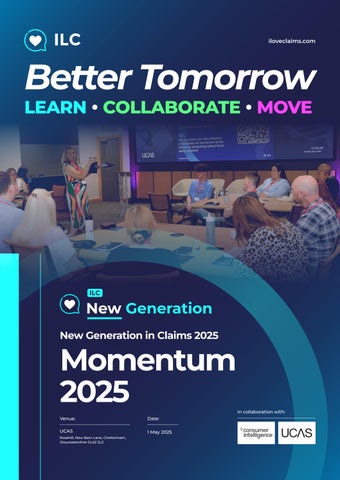
Better Tomorrow
In collaboration with:
Date: 1 May 2025

In collaboration with:
Claims Ambassadors





DISCLAIMER
Contributors
The views and opinions expressed within Better Tomorrow are reported from live events and are those of the individual contributor/s. They do not necessarily reflect the official policy or position of the contributor’s employer, organisation, committee or other group or individual.
ILC
While every effort has been made to ensure the accuracy of information, ILC will not accept responsibility for errors or omissions or for consequences arising from reliance on information published.
The opinions expressed in Better Tomorrow are not necessarily the opinions of, or endorsed by ILC unless otherwise stated.
COPYRIGHT



All rights reserved. No part of the material contained within this publication may be reproduced or copied in any form or by any means without written permission from ILC.
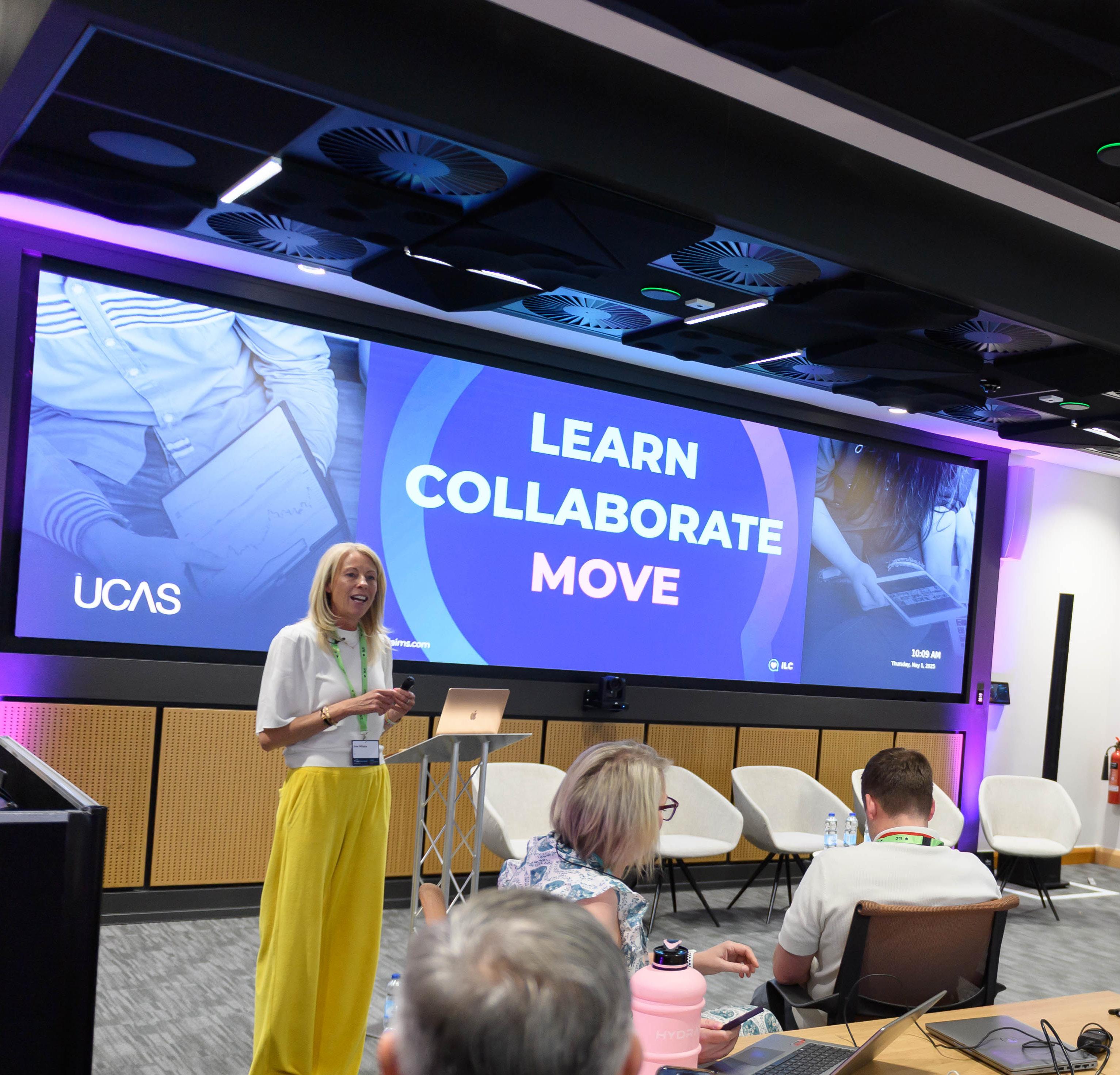
Welcome to the ILC New Generation Discovery Day postevent publication. As I look back on an incredible day filled with insightful discussions, powerful collaborations, and forwardthinking dialogue, I am truly inspired by the energy and commitment shown by everyone who joined us.
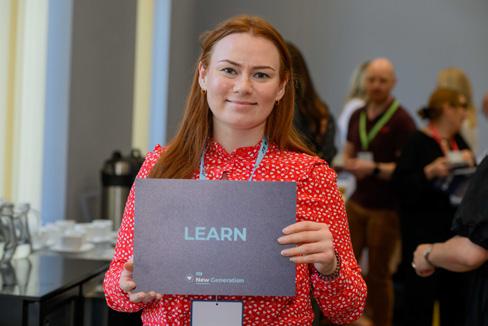
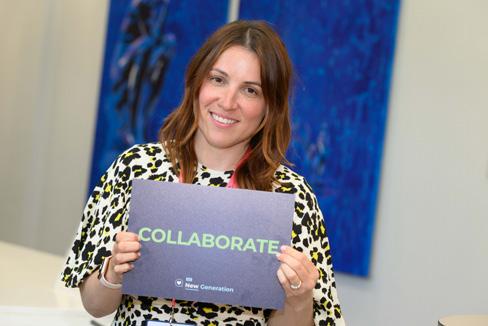
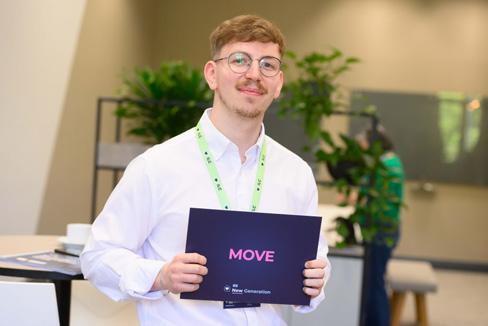
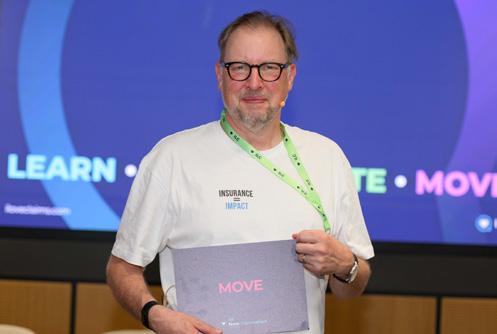
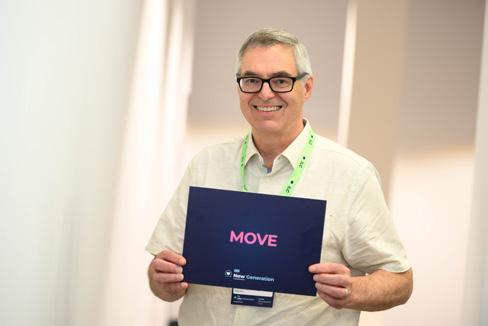
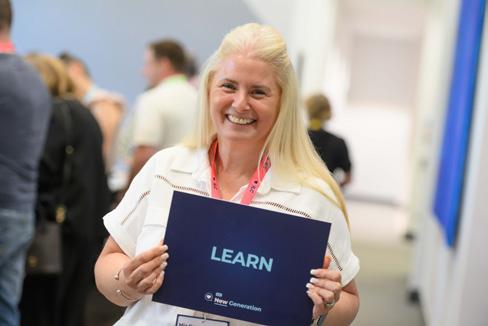
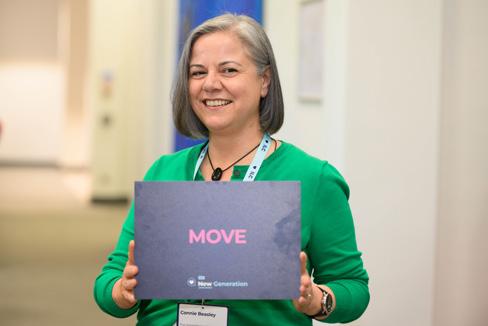
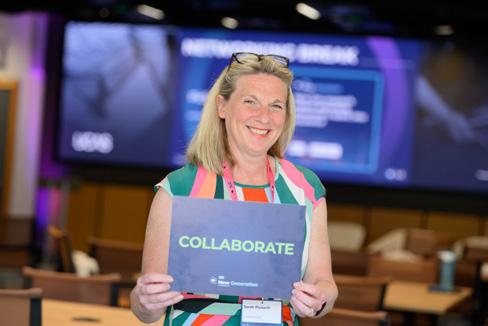
Under the theme of Learn - CollaborateMove, we came together to address one of the most pressing challenges facing our industryattracting and nurturing the next generation of talent into the insurance claims sector.
A heartfelt thank you to UCAS for graciously hosting us in such a welcoming venue and for their unwavering support throughout the initiative. Special thanks also to Consumer Intelligence for their collaboration with this programme.
We are too immensely grateful to our Claims Ambassadors – Activate Group, Ageas, Carpenters Group, Crawford, e2e, Enterprise, esure, Gemini ARC, Howden, Innovation Group, Kennedys, NWVA, Policy Expert, Repairify, S&G Response, Solera Audatex, VW Group UK, and Zurich Insurance - whose passion, insights, and dedication have been instrumental in shaping the survey and the conversations we had on the day.
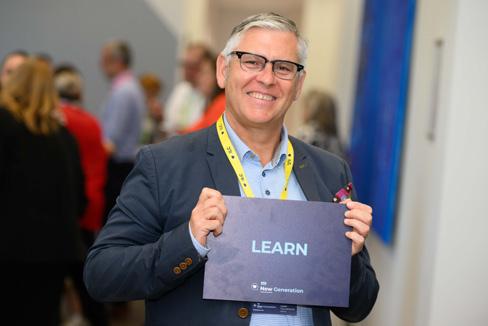
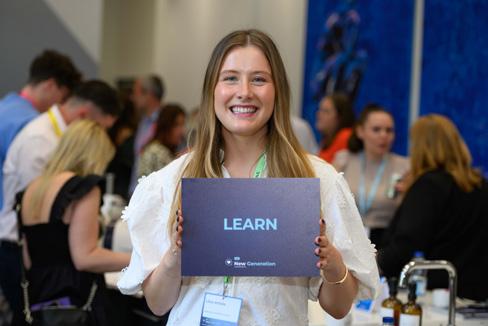
Throughout the day, we had the opportunity to Learn from industry leaders like Lindsay Conroy, Head of Apprenticeships at UCAS, who shared valuable insights from their Next Generation research project. We also gained perspective from Consumer Intelligence CEO, Ian Hughes, which conducted the largest-ever survey on early career perceptions in our industry.
We then moved into the Collaborate phase, engaging in targeted breakout sessions led by our Ambassadors. These sessions allowed us to focus on key themes around talent acquisition, industry perception, and practical strategies for sector-wide impact. It was encouraging to witness so many open and honest discussions, as well as the willingness to share experiences and ideas.
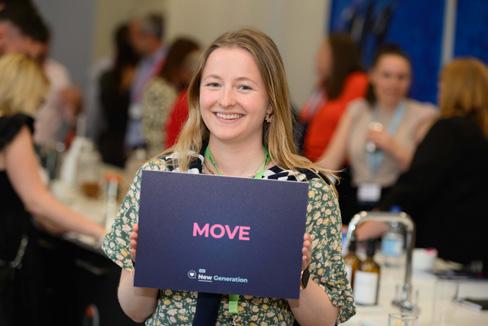
Finally, we concluded the day with a focus on how we can Move forward together. The interactive session brought everyone back together to identify actionable steps that can be implemented within individual organisations as well as across the wider industry.
Thank you to everyone who participated, shared their insights, and contributed to such a dynamic and impactful day. Your voices are crucial as we work together to attract the next generation of talent and drive positive change throughout the claims sector.
In terms of next steps for this initiative – this publication provides some great insight as to where we go next. Are you in?
Kind regards,

Sue Whyte CEO ILC
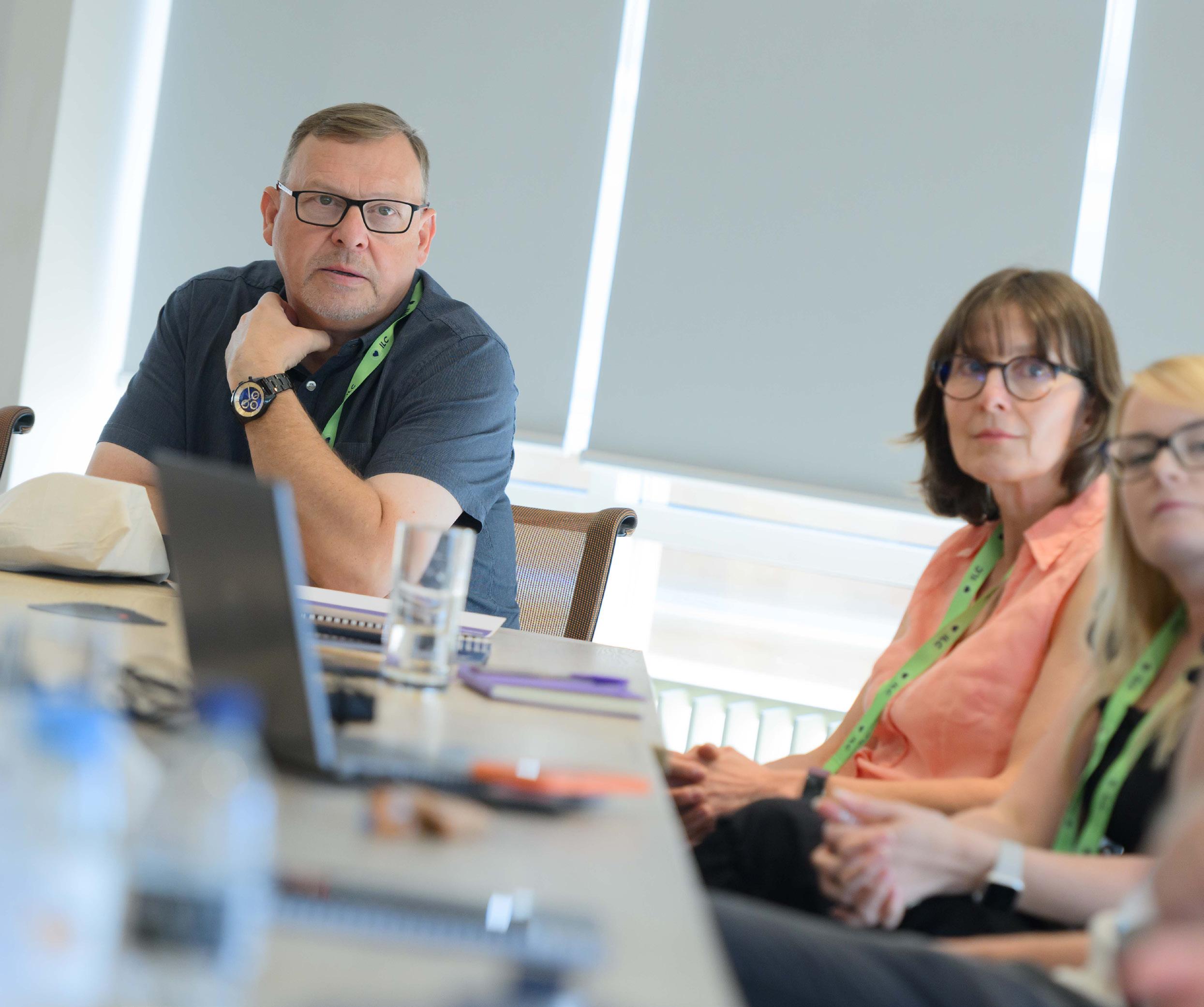
This year’s event was part of ILC’s ongoing New Generation programme, launched in 2023 to tackle the insurance sector’s talent pipeline crisis.
Following two highly successful years of gathering together some of the most influential names within the industry to explore the issues impacting the industry, 2025 was the year for action. In collaboration with Consumer Intelligence and UCAS – and with the input and support of our 18 New Generation in Claims Ambassadors – the sector issued one of the largest surveys of its kind, focusing on early career perceptions of the insurance claims industry.
Creation of the survey was a real collaboration between the New Generation in Claims stakeholders kick-started with a series of virtual group sessions created to glean feedback from Ambassadors as to what actionable insights they felt would benefit all.
With the key themes agreed and clear objectives in hand, Consumer Intelligence teamed up with UCAS to design the survey with two versions created:
• One for Consumer Intelligence’s consumer panel, targeting 17–30-year-olds
• Another tailored for UCAS’s audience of university applicants
The outcome of this work was significant: the survey (combined) received input from over 2,000 individuals - more than double the anticipated volume - helping: understand how to reach and attract new generation talent; know how to breakthrough the perceptions of the sector; and learn what new generation talent wants from a career.
The first exclusive reveal of the insights took centre stage at Momentum 2025: Learn – Collaborate –Move, where key industry professionals had the chance to explore the findings, discuss solutions, and drive meaningful change.
Sue Whyte, CEO of ILC said, “The report is rooted in robust data, direct insights from young people, and the voice of the industry. It is part of our New Generation initiative, founded on three principles: Learn; Collaborate; Move.
“We are learning from young talent, uncovering their perceptions, ambitions, and expectations. We are collaborating with partners across education, research, and industry to deepen our understanding and share best practices. And we are moving - acting on the insights we’ve gained to change how we attract, engage, and retain future claims professionals.”
Sue continued, “As a cohort we are actively shaping the movement towards a better tomorrow.”
ILC’s New Generation in Claims Ambassadors are: Activate Group, Ageas, Carpenters Group, Crawford, e2e, Enterprise, esure, Gemini ARC, Howden, Innovation Group, Kennedys, NWVA, Policy Expert, Repairify, S&G Response, Solera Audatex, VW Group UK and Zurich Insurance.

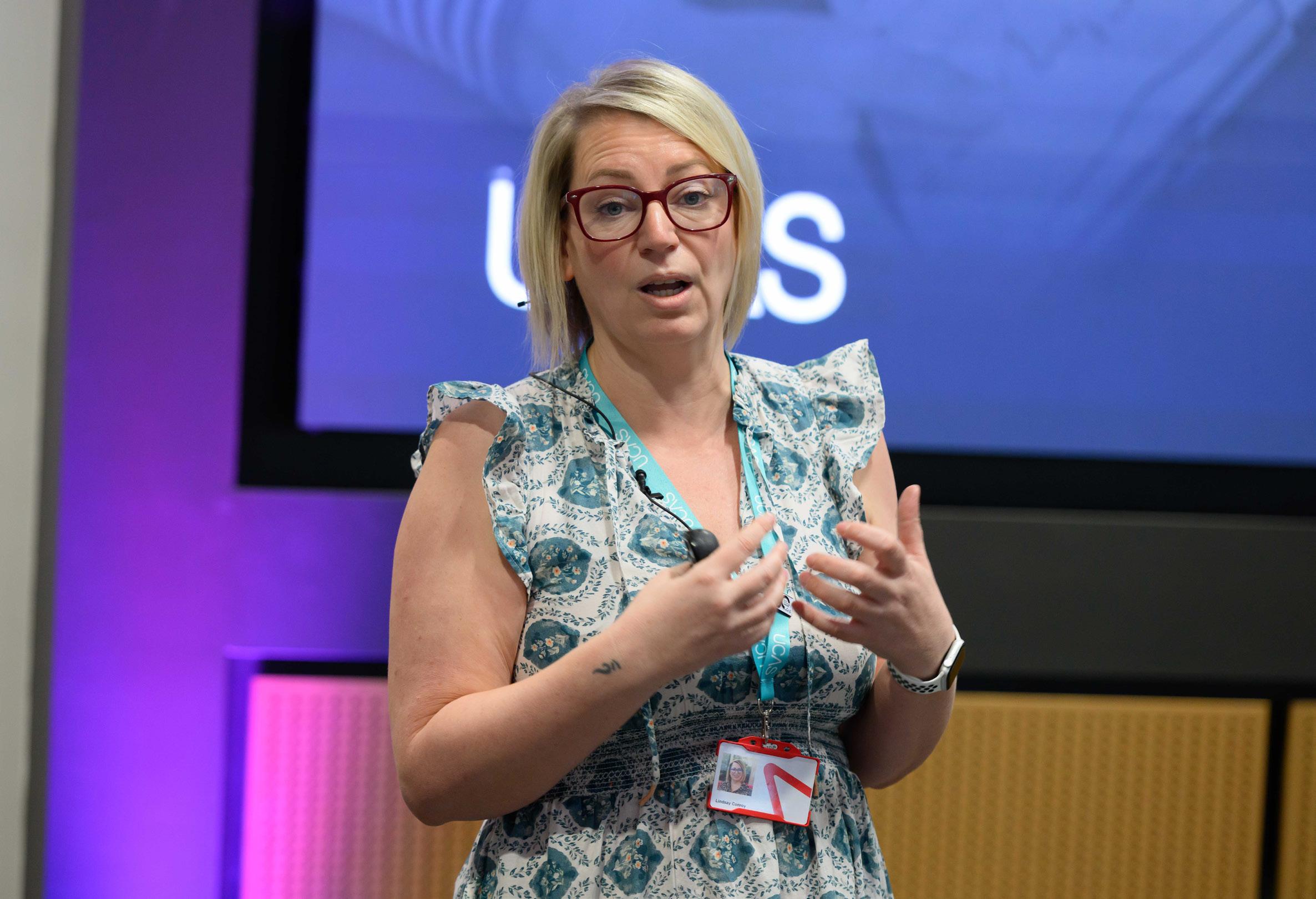
Lindsay Conroy Head of Apprenticeships UCAS
Lindsay Conroy, Head of Apprenticeships and early careers at UCAS, delivered an energised and insight-packed session on the changing expectations and behaviours of young people - and what the insurance industry could do to engage them.
In her keynote, Lindsay pulled no punches in highlighting both the opportunities and challenges employers face when trying to attract tomorrow’s talent.
“We’re seeing a huge shift in how young people view their next steps - university isn’t the only game in town anymore,” Lindsay told the room of leading influencers.
Lindsay began by giving an introduction to UCAS - explaining that UCAS is an independent charity which provides UK’s shared admissions service for higher education, as well as a huge range of information, advice and guidance about all things education and careers.
As well as showcasing undergraduate university and college courses, UCAS also allows students to see the most relevant apprenticeship opportunities for them, following the development of its apprenticeship service in 2023. This means applicants can explore apprenticeships alongside degree courses on their UCAS student Hub.
“We support a broad range of further and higher education pathways, like technical routes, apprenticeships, and even direct-to-employment pathways,” explained Lindsay.
UCAS sees over 1.5 million young people engage with its platform annually. That includes around seven million searches specifically for apprenticeships and early careers opportunities, with a significant increase in awareness of and interest in apprenticeships in recent years.
“Many don’t realise that UCAS is the top source for finding universities and courses. 85% of students called UCAS their go-to source, ahead of Google’s 68%” Lindsay pointed out.
A key theme was the rapid growth of interest in apprenticeships - from 150,000 learners exploring the route in 2021 to nearly 500,000 in the current academic cycle.
But barriers remain. Young people, especially from under-represented backgrounds, face challenges accessing good information and navigating complex application processes, and the number of apprenticeship starts among young people remains relatively low.
“Researching apprenticeships can be overwhelming. There’s no single research destination, so it’s important that we’re all clued up on how best to support the next generation of apprentices”, she noted. One particularly stark statistic reveals: one-third of young people from lower socioeconomic backgrounds receive no support in applying for apprenticeships.
UCAS is committed to ensuring students understand all the options available to them, and provides visibility for both university and apprenticeship pathways on UCAS.com, enabling students to compare different routes to the same end goal.
Lindsay drew on UCAS’ major research project, Project Next Generation, which surveyed over 1,000 young people aged 13–17. The findings offer employers a clear roadmap for improving outreach and recruitment:
• 47% cite job enjoyment as the primary driver in choosing a career
• 85% consider work experience critical in making career decisions
• 60% abandon apprenticeships due to lack of local availability
• Nearly 40% want clearer information on salaries
“Listing a ‘competitive salary’ is a real blocker,” Lindsay warned. “Be transparent. Be clear. Especially if you want to attract candidates from diverse or disadvantaged backgrounds.”
“We’re seeing a huge shift in how young people view their next steps - university isn’t the only game in town anymore.”
UCAS remains a highly trusted brand among young people – when surveyed, many students said they would trust UCAS more with their personal data than their high street bank. That’s a serious asset for employers who partner with UCAS on outreach and recruitment.
Through UCAS’ Career Finder tools, employers can promote apprenticeships, internships, graduate roles, and work placements as well as degree options.
The site also allows for branded employer profiles, offering what Lindsay called a “shop window” for businesses.
Six of ILC’s New Generation in Claims ambassador brands already use this feature.
Perhaps the most actionable takeaway came in the form of advice around timing.
Peak search periods on UCAS for apprenticeships are September and January. Interest starts young - years nine and 11 see the highest curiosity - but this fades by year 13 as decisions crystallise.
Employers were also encouraged to avoid recruitment drives during high-stress academic periods, such as GCSE and A-Level revision months. “Running interviews during Easter revision weeks is setting people up to fail,” Lindsay said plainly.
Lindsay highlighted how companies like Specsavers have embraced in-person discovery events, using fun, interactive stands to engage students and break down industry barriers. However, she was quick to reassure attendees that there are options available at all budget levels.
“Events aren’t just for the big brands with flashy budgets,” she said. “What matters is authenticity - sharing what it’s like to work with you.”
UCAS also offers virtual outreach tools including YouTube-style videos, digital work experience, and email campaigns tailored to segmented student audiences.
Building inclusive pipelines: tips and tools
Lindsay provided a series of practical tips for building fairer, more inclusive recruitment systems:
• Offer clear job descriptions with salary information
• Share interview questions in advance to level the playing field
• Promote alternative ways of gaining experience beyond formal internshipsvolunteering, extracurriculars, or parttime jobs
• Encourage existing apprentices to visit schools and “tell their story”
And while many employers worry that young people don’t read emails, UCAS research says otherwise. Over 50% prefer email as their primary channel for career information.
“It’s not just about TikTok and YouTube. Young people will open your emails - if you write them well,” she said.
“Listing a ‘competitive salary’ is a real blocker… Be transparent. Be clear.”
Lindsay concluded by urging employers to connect with both the heads and hearts of the next generation.
“They want to know what it’s like to work with you. They want to feel a sense of purpose. That’s what gets them in the door and keeps them,” she said.
The insurance industry has a golden opportunity, Lindsay emphasised, but it could take proactive steps to make career pathways visible, supportive and appealing - before talented young people drift elsewhere.
Lindsay’s session was a clarion call to the insurance claims sector: early engagement, transparency and empathy are now essentials, not extras.
From simplifying apprenticeship access to offering meaningful experiences, the future of insurance talent hinges on how well the industry can adapt to the evolving expectations of the UK’s young people.
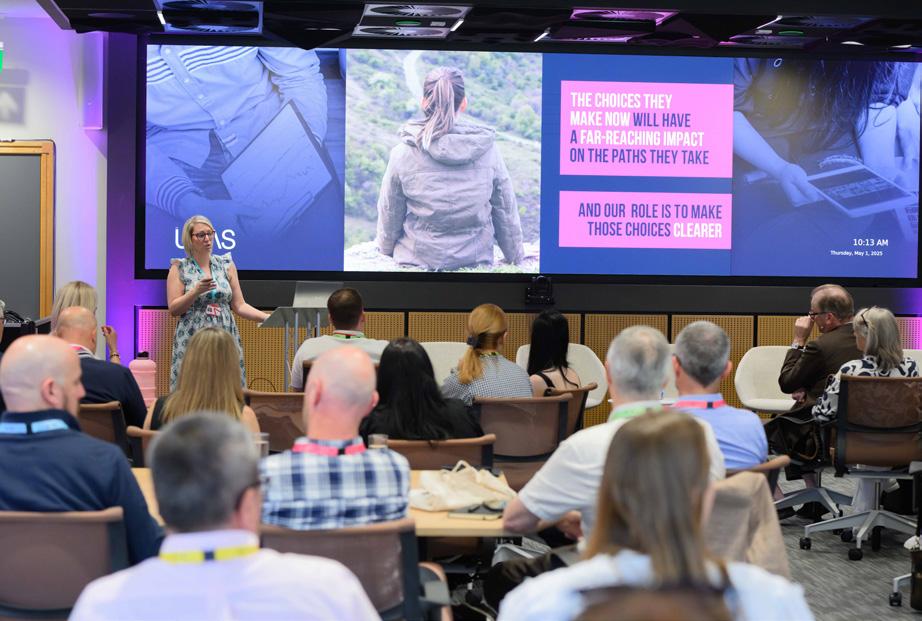
“They want to know what it’s like to work with you. They want to feel a sense of purpose. That’s what gets them in the door and keeps them.”
Changing the narrative: how the claims industry can attract the new generation of talent

Ian Hughes CEO Consumer Intelligence

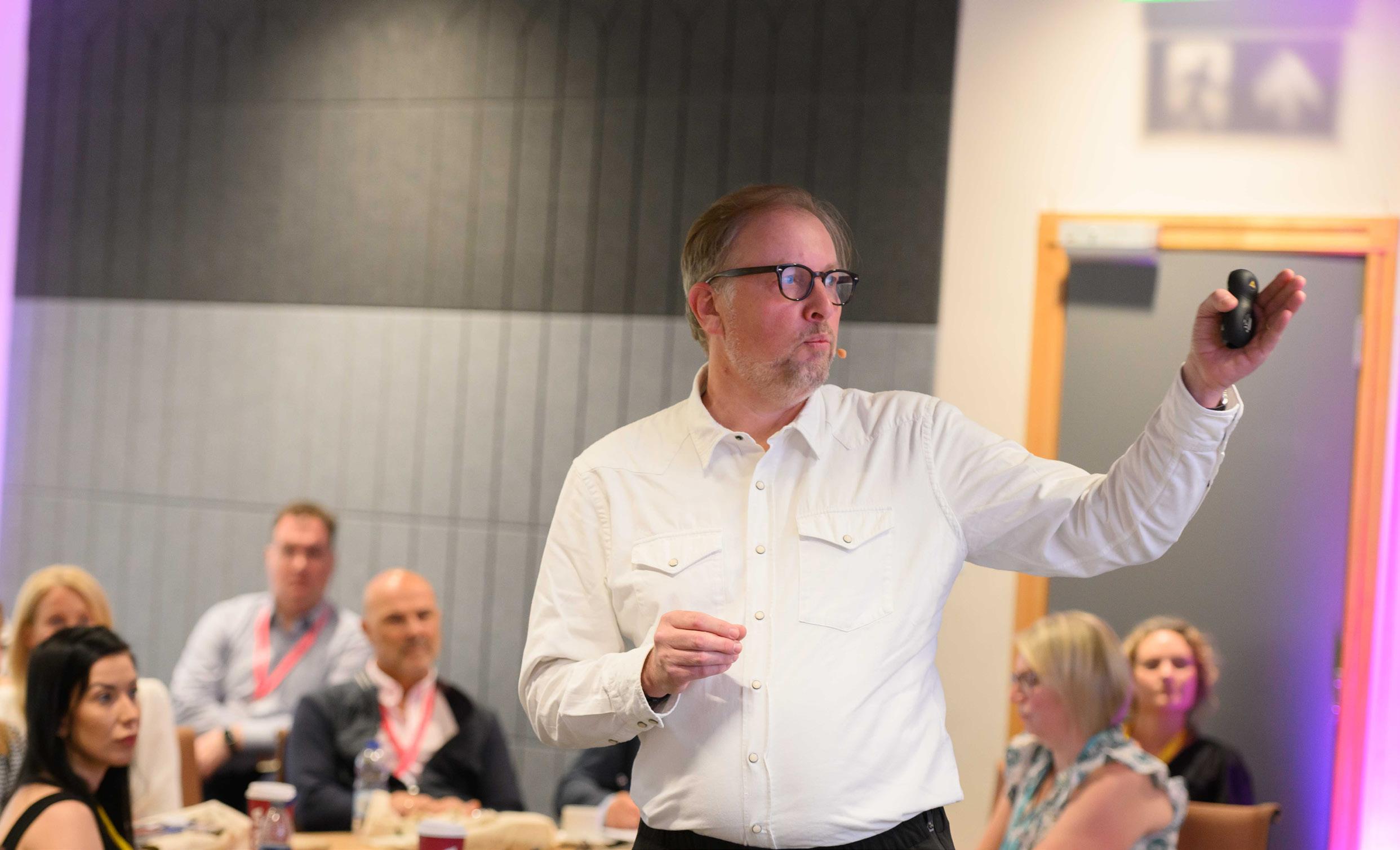
Keynote speaker, Ian Hughes, CEO of Consumer Intelligence, delivered a provocative session that laid bare the sector’s public perception - and its consequences.
With stark honesty, Ian unpacked recent research into how young people perceive the industry, presenting a challenge to the assembled professionals: either shift how the sector is marketed or risk losing a generation of talent.
Ian opened with a jolt of realism: “Your customers today are young people trying to decide their future - and they don’t want to work for you.”
Drawing on fresh research from UCAS applicants and a broader general population (Gen Pop) cohort, Ian revealed an uncomfortable truth: insurance and claims are seen as some of the least desirable career options available to young people.
“When we asked if they’d consider a career in insurance, the only thing they wanted to do less was pour concrete,” Ian said bluntly.
The findings showed particularly negative views among UCAS applicants, who were more likely to associate the sector with monotony, bureaucracy, and ethical ambiguity. One respondent even wrote: “It feels cruel to try my best to ruin people’s lives by cutting corners and denying them money they need.”
Such perceptions, Ian argued, aren’t just inaccurate - they’re harmful. “They think you’re boring, bureaucratic, and unethical. And if we don’t change that narrative, we won’t get the talent we need.”
Despite the bleak survey responses, Ian was clear in his belief that claims professionals make a real difference. Recounting a recent drive along the M4, where he witnessed a serious car crash, he used it as a poignant example of the sector’s role during people’s worst days.
“That family was having the worst day of their lives. And without insurance, it would be much worse. What you do matters. It’s not boring. It’s lifesaving,” he said.
Yet, the industry isn’t telling that story. Instead, it’s bogged down in outdated communication and uninspiring imagery. “You’ve got images of bent metal and desk jobs. Meanwhile, other sectors show smiling people walking hand-in-hand,” he pointed out. “No wonder students are running the other way.”
So, what does the next generation want from a career?
Purpose, progression, flexibility, and support topped the list. Ian highlighted that Gen Z seeks work that aligns with their values and offers a clear pathway for growth. Interestingly, priorities differed slightly by gender - salary and benefits mattered more to men, while women valued job security and supportive environments.
“University is just the next step,” Ian said. “You’re offering a life. But are you making that clear?”
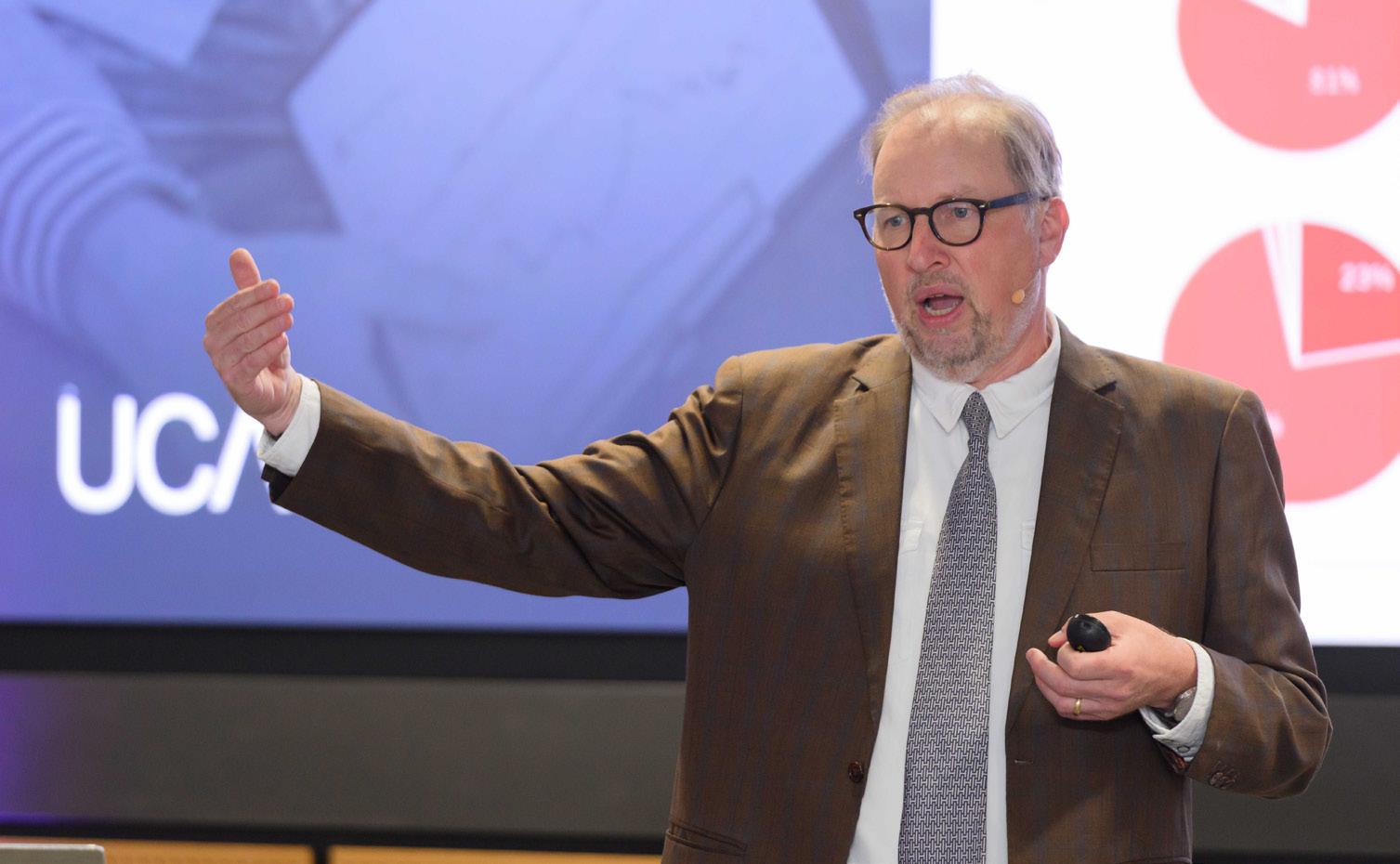
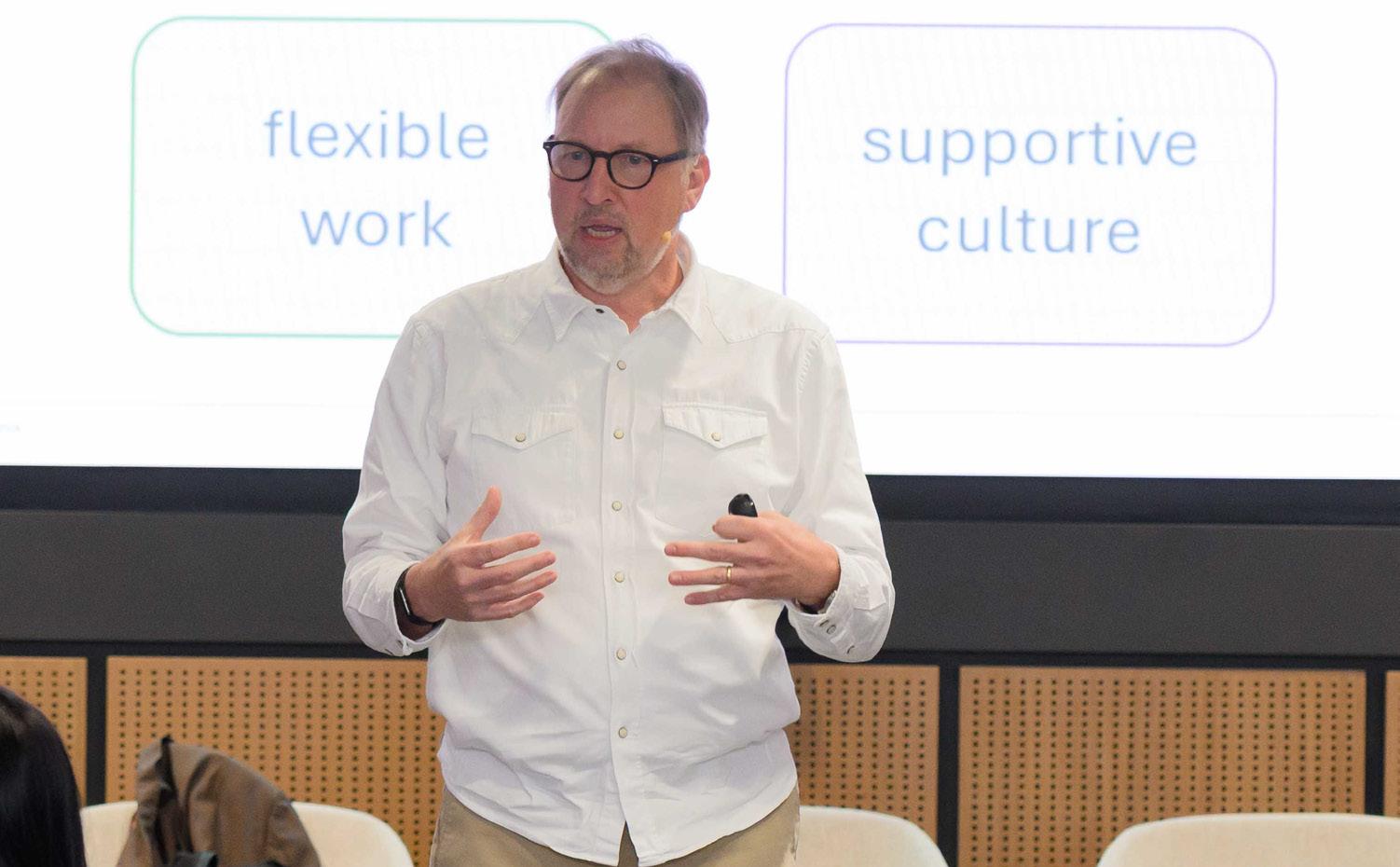
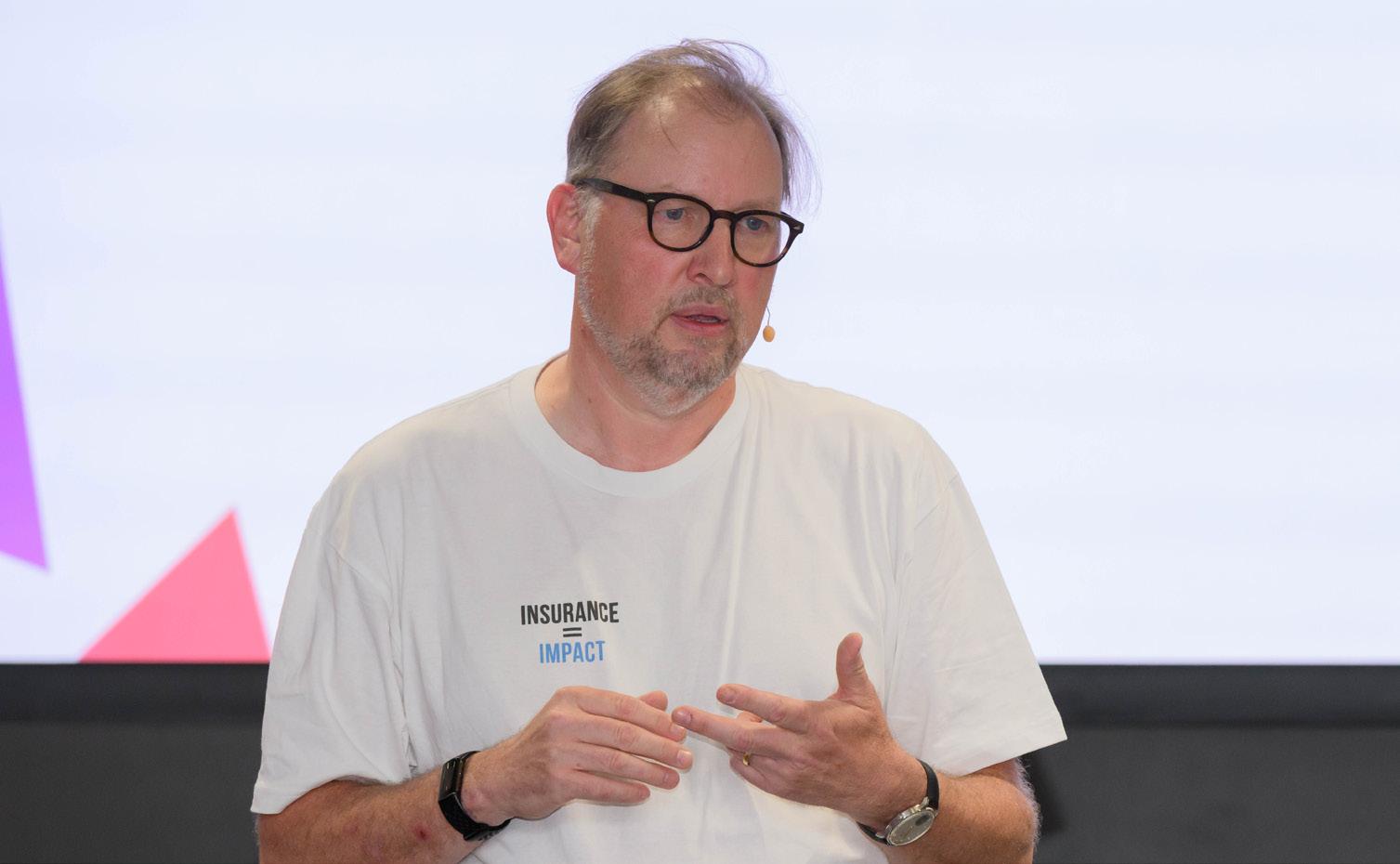
One of the most powerful moments came when Ian removed his jacket and tie mid-presentation, shifting into a more relaxed, authentic style. “I haven’t changed who I am. I’ve just changed how you see me. That’s what this industry needs to do.”
“The only thing young people want to do less than work in insurance is pour concrete.”
Ian stressed that perception isn’t just a recruitment problem - it’s a marketing problem. The industry must stop communicating like it’s drafting policy documents.
“Stop writing job descriptions like they’re terms and conditions,” he said. “Young people want clarity, simplicity, and impact. You’ve got all that - you’re just not showing it.”
He laid out five actionable takeaways for the sector:
1. Increase visibility – Not just of your company, but of the entire claims sector
2. Speak authentically – Drop the jargon. Use real language that resonates
3. Emphasise purpose and impact – Make it clear that claims professionals help people, every single day
4. Simplify the message – Ditch the complexity. Get straight to the value
5. Empower participation – Show young people they can shape the future of the industry from day one
The session was a powerful wake-up call for a sector that risks being misunderstood out of relevance. Ian’s message was clear: the insurance claims industry doesn’t need to change what it does - it needs to change how it’s seen.
“You don’t need to change who you are,” Ian concluded. “But if you don’t start showing your value in a way that resonates with young people, you will make no impact.”
As ILC’s New Generation in Claims initiative continues, the challenge now lies with industry leaders, HR teams, and marketers to rise to this moment. If they do, there’s a real opportunity to secure a passionate, purposedriven generation ready to make their mark.
“What you do on someone’s worst day is extraordinary. Start telling that story.”
“You don’t need to change what you doyou need to change how you’re perceived.”

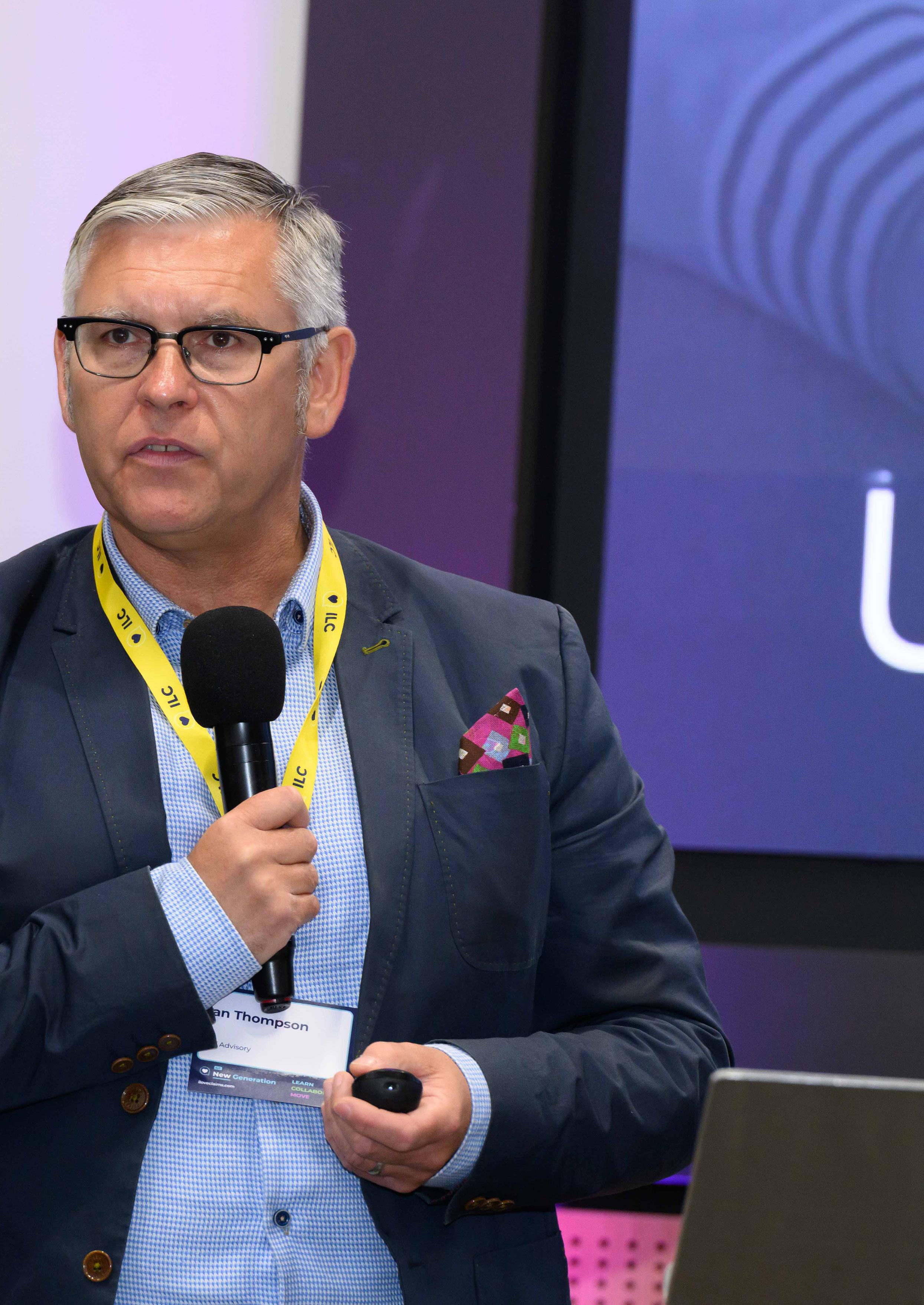
Ian Thompson Founder IMT Advisory


At the event, the challenge was clear: move beyond inspiration and into action.
Ian Thompson, Director of IMT Advisory Ltd urged attendees to channel their collective energy into lasting change.
Tasked with translating insights into industry movement, Ian offered a tone of urgency and resolve.
“I thought I might have a difficult job standing up and talking about the need to collaborate,” he admitted. “But I’m somewhere between angry, upset and really enthused by what we’ve just heard.” That mix of emotion, he explained, stemmed from the raw data and honest feedback delivered earlier in the day [insights highlighted from the New Generation research report]highlighting both the great potential of the industry and the deep perception issues it faces among younger talent.
Ian quickly reframed the afternoon’s goal: “What we’ve now got to take is your energy, enthusiasm, help, and turn that into something we can walk away from today.”
The risk, he noted, was all too familiar - leaving powerful insights and intentions behind in the meeting room. “We’ve all been in workshops before where we have a great discussion. Then you walk out, go back to your emails, and pretty much everything that was talked about… is left in the room and doesn’t carry on,” he said.
To avoid that fate, Ian called on attendees to consider themselves not as participants but as ‘leaders of change’.
“This is about change leadership,” he said. “You are all going to be leaders in this context.”
Ian set the room a dual task:
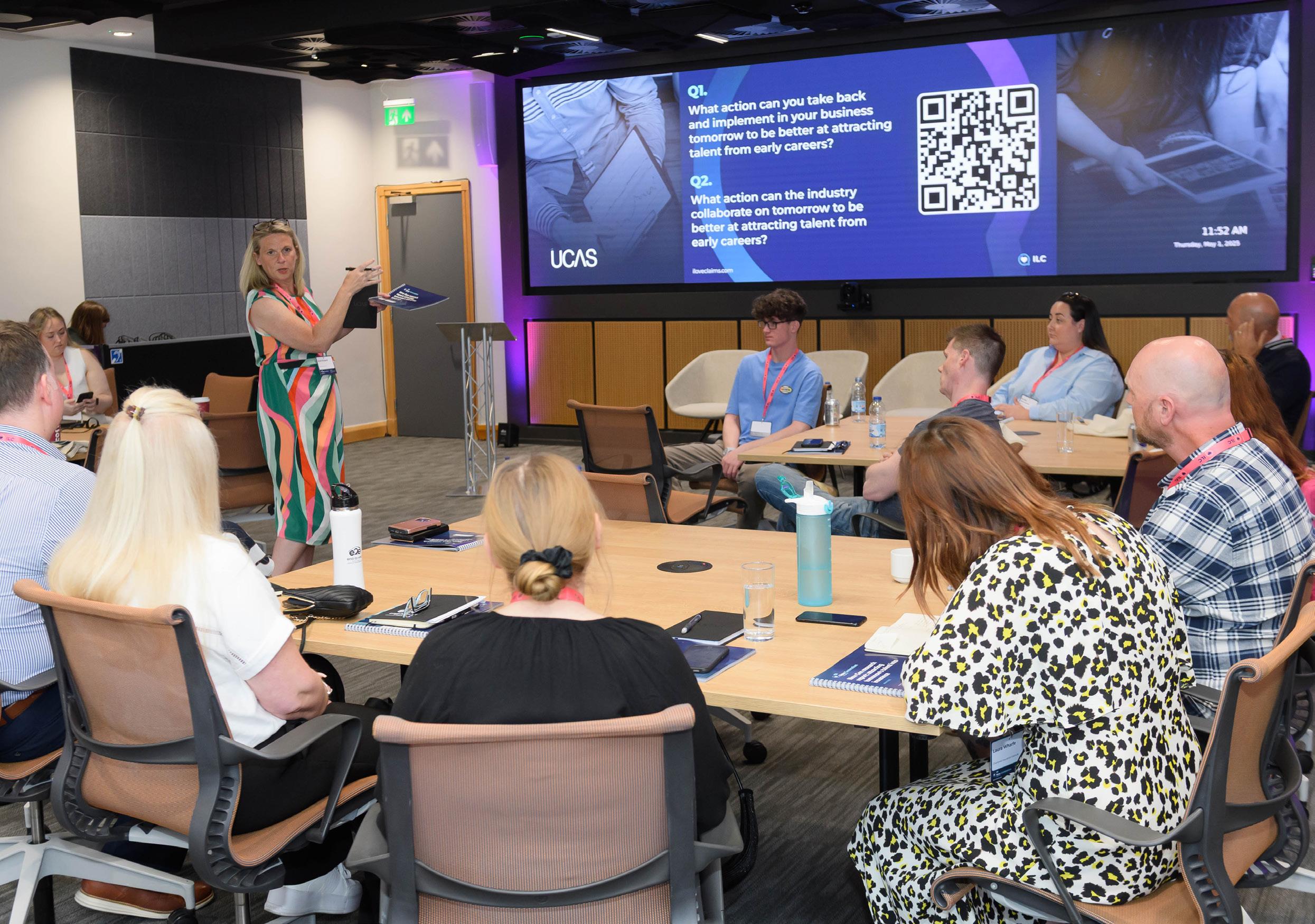
1. What action can you take back and implement in your business tomorrow to be better at attracting talent from early careers?
2. What action can the industry collaborate on tomorrow to be better at attracting talent from early careers?
These weren’t rhetorical. Printed and displayed during breakout sessions, the questions served as prompts for structured discussion and idea generation, all aimed at producing real-world strategies for attracting the next generation of claims professionals.
“This is the beginning,” Ian reminded attendees. “Getting the survey out wasn’t the end - it’s the start. And the start is really not even ending today.”
Ian reiterated the need for both visionary and pragmatic thinking.
“Yes, sure, visionary,” he said. “We want to change things. We want to change the perception of the industry. But also think about how we can take some practical, pragmatic steps to actually move us on this next phase of the journey.”
The breakout groups which followed Ian’s session, he stressed, weren’t just for discussion. They were the first stage of building momentum - identifying business-level changes and collective industry commitments that could begin immediately.
“This is about change leadership. You are all going to be leaders in this context.”
“Wouldn’t it be great if actually in the future, when people talk about a career in insurance claims, it’s with energy, enthusiasm, it’s about the value it brings and the impact it makes?”
He urged attendees to bring the same facilitation values they promote in their own organisations. “Make sure you take into the workshop all those rules that you stand up and talk about when you’re running things in your own teams,” he said.
Beyond the buzz of ideas and networking, the underlying mission was clear: redefine the insurance claims industry as a destination career.
Ian concluded with a powerful vision: “Wouldn’t it be great if actually in the future, when people talk about a career in insurance claims, it’s with energy, enthusiasm, it’s about the value it brings and the impact it makes?”
This, he said, is the opportunity and the obligation of the current generation of leaders. “This is our challenge, our opportunity, but also our purpose.”
Through Ian’s leadership and the involvement of committed ambassadors across the sector, the session reminded participants that meaningful change begins with intent and continues with action.
With the energy of the day captured in ideas, pledges, and collaborative thinking, the next phase is execution. From boardrooms to branch offices, the challenge now is to embed this momentum into the fabric of the industry - so that the next generation doesn’t just see a career in claims as viable, but as desirable.

“We’ve all been in workshops before… then you walk out, go back to your emails, and pretty much everything that was talked about… is left in the room. We can’t afford to do that today.”
The breakout sessions were split across four groups, each facilitated by an industry leading figure and supported by online feedback. The aim of the sessions was clear: identifying business-level changes and collective industry commitments that could begin immediately.


Sarah Pickerill Head of People Carpenters Group
BLUE ROOM

RED ROOM Sharna Thomson
Victoria Sutton
Business Performance Director (Corporate & Commercial Claims)
Howden
GREEN ROOM

Liisa Antola
Senior Policy Adviser, Diversity, Equity and Inclusion ABI
YELLOW ROOM

Head of Customer
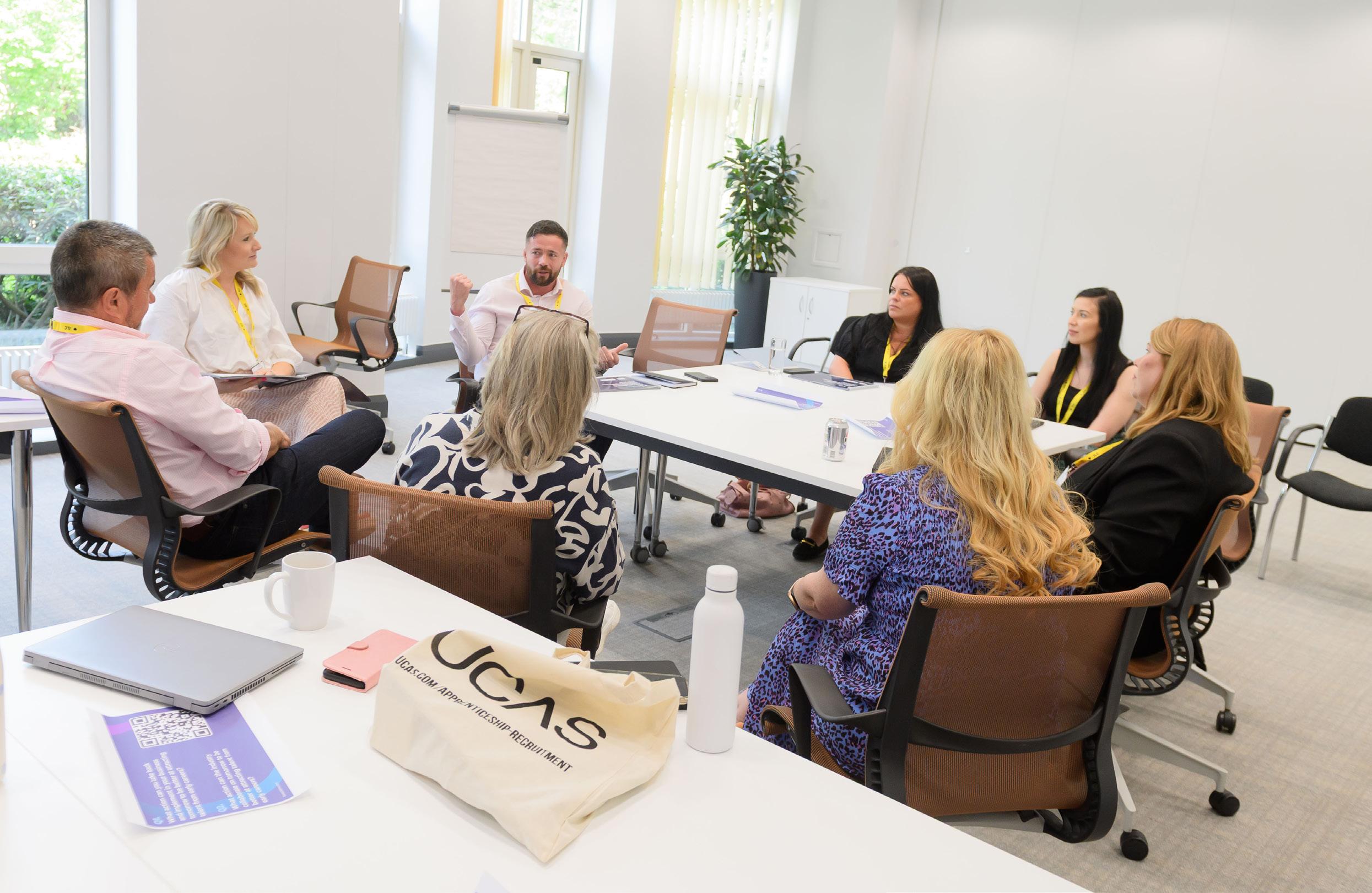
RED ROOM BREAKOUT
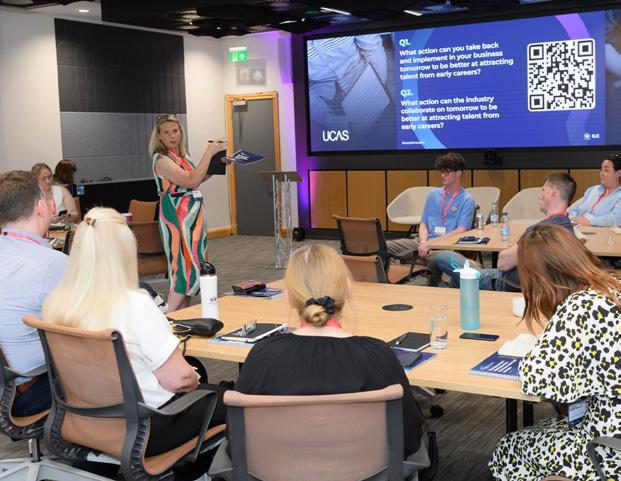
GREEN ROOM BREAKOUT
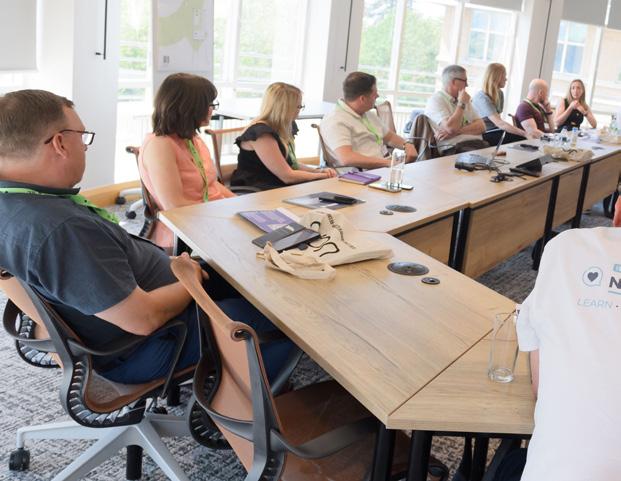
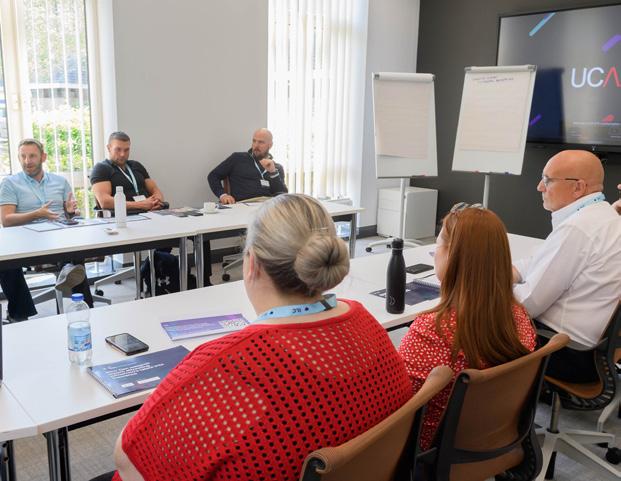
YELLOW ROOM BREAKOUT BLUE ROOM BREAKOUT
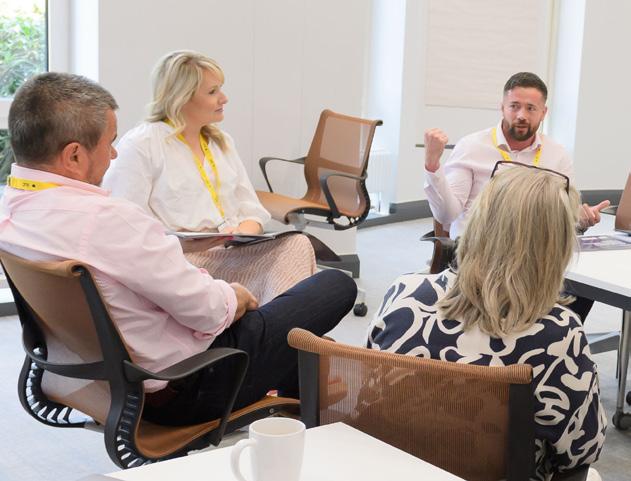
Here, we provide a
summary of some of the findings from the sessions…
What action can the industry collaborate on tomorrow to be better at attracting talent from early careers?
“Create a cross section of employer group – plus series of student events that we all attend to showcase sector.”
“Increased visibility / central ‘hub’ where organisations can share what they are doing in the career space... Insurance talent network is a new CII initiative…”
“Industry bodies should be collaborating with companies to modernise the industry perception... getting involved in social trends.”
“Create a platform working with companies across the industry to reach out to colleges / high schools / social media... making it interactive, attractive.”
“Increase time and resource on research to ascertain what our members/future members/early careers audience want… before we make assumptions…”
“Develop a programme with local education at 6th form level to showcase the roles in the industry… including commitment to 9 week work experience and opportunity for a role at the end.”
“Raise awareness of the findings in the New Gen research to senior leadership… How can we both reframe insurance that it isn’t insurance, it’s something meaningful and purposeful.”
“We all need to collaborate to shape the external perception of insurance. It is human. It does help people. Share real stories of the impact of what we do.”
“To understand where the gaps are and commit to investing in filling those.”
“We do a lot of work with local schools, colleges etc already from a CSR perspective but it tends to be the more senior populations who get involved which probably doesn’t help to change perceptions – so I will try to get more junior or younger colleagues involved.”
“To adjust our lens and language and use the research to change the approach to attracting talent in the right way. Sell the fact that it’s a role with purpose.”
“Start to lobby for insurers mandating/rewarding employers to take on apprentices.”
“Get our apprentices into schools to tell their story.”
“Spread the message at school level (and within our organisations) about what the purpose of insurance is –back to basics – supporting the community – doing good!!”
“Emphasise the importance of social media platforms in promoting positive messaging about the industry.”
“ILC YouTube channel! ILC UCAS Discovery Day. We need to change perception of industry together. Challenge Which!”
“Create a platform working with companies across the industry to reach out to colleges / high schools / social media within the UK – making it interactive, attractive.”
“Work with schools to do early years career talks with year 8 onwards… ensure our marketing reflects the actual collaborative and creative culture we have… attend grad/apprentice shows to get the reality of the world of claims and insurance out there.”
“Replicate our internal ‘purpose’ messaging externally.”
“We all need to collaborate to shape the external perception of insurance. It is human. It does help people. Share real stories of the impact of what we do.”
“See how our business can benefit from having a presence on the UCAS website.”
“We do a lot of work with local schools, colleges etc already from a CSR perspective but it tends to be the more senior populations who get involved which probably doesn’t help to change perceptions – so I will try to get more junior or younger colleagues involved.”
“To adjust our lens and language and use the research to change the approach to attracting talent in the right way. Sell the fact that it’s a role with purpose.”
“Start to lobby for insurers mandating/rewarding employers to take on apprentices.”
MOVE: Rewriting the insurance narrative: how the new generation in claims is redefining purpose and talent attraction
Sue Whyte CEO ILC
Ian Hughes CEO Consumer Intelligence
An energised and often candid exploration of how the industry presents itself, where it falls short, and how it might evolve was core to the event.
The afternoon was dedicated to grouping together feedback from the breakout sessions and providing a rounded overview of the day. Ian Hughes, CEO, Consumer Intelligence and Sue Whyte, CEO of ILC highlighted what the day had already proved.
The morning sessions zeroed in on learning. Lindsay Conroy, Head of Apprenticeships at UCAS shared insight on the current apprenticeship landscape, while Ian Hughes, CEO of Consumer Intelligence, presented newly gathered data exploring industry perceptions.
“The feedback told us one thing loud and clear: we’re not telling our story well enough,” said Sue. “We’re seen as boring, bureaucratic, even unethical. And that’s not the industry we experience.”
Ian didn’t mince words either. “If the C-suite doesn’t see a reason to change tomorrow, they won’t,” he said. “Data alone isn’t a driver. It has to be a burning platform - something they can’t ignore because it’s hurting performance or reputation.”
Attendees agreed that telling the right story - one of purpose, collaboration and career opportunity - was the key to changing perceptions, both internally and externally.
During collaborative workshops, attendees discussed practical takeaways for both their businesses and the wider industry. Common themes quickly emerged: the need to improve
social media usage, the importance of speaking the language of young talent, and the call for unified messaging about the industry’s value.
One group captured it perfectly: “We need to replicate our internal purpose messaging externally. If our mission is to be there on the worst day of someone’s life, why isn’t that on our careers page or Instagram feed?”
There was also strong sentiment around the idea of industry-wide unity. “We’re good at competing,” said one participant, “but we need to get better at collaborating - especially when it comes to talent attraction.”
Ian added weight to this by comparing the claims sector to direct marketing. “Claims is where the action is,” he said. “It’s the place where promises are fulfilled. Why wouldn’t we lead with that in our recruitment efforts?”
Action was the focus of the afternoon session –pooling sentiment from the day to determine what changes could be made immediately, and which would need investment or structural shifts.
Among the top ideas:
• Use TikTok, Instagram and relatable storytelling to attract younger audiences
• Share apprenticeship levy benefits with smaller suppliers to grow opportunities across the supply chain
• Co-create messaging with young employees and early careers talent
• Launch an industry-wide influencer campaign using existing employees as authentic messengers
The consensus? Many actions were achievable with minimal cost - but execution was inconsistent. As one delegate put it, “We’ve got the content. What we lack is consistency and coordination.”
The group also debated what would have the biggest impact.
Top of the list: changing the public’s perception of the claims industry through modern, multichannel storytelling. While some worried about the cost, Ian pushed back: “This doesn’t have to be expensive. You don’t need a marketing department to shoot a TikTok video.”
Still, there was recognition that brand alignment and governance were needed.
“It’s not about advertising roles,” said one attendee, “It’s about creating a narrative people want to be part of.”
The day closed with a powerful exercise: defining the industry’s purpose. Attendees contributed dozens of responses in realtime. Themes like “protect”, “reassure”, and “give confidence” were common.
Ian offered a challenge: “If you had to write a children’s book about claims, could you do it in six words? That’s how simple and clear our messaging needs to be.”
“If the C-suite doesn’t see a reason to change tomorrow, they won’t”
Ian Hughes, CEO, Consumer Intelligence
“The content is already there - we just need to start using it”
Sue Whyte, CEO, ILC
Sue summed it up by pointing to the opportunity: “Claims equals impact. If we asked every handler to share their most meaningful case, we’d have a library of stories overnight. The content is already there - we just need to start using it.”
The Discovery Day wasn’t just another industry gathering. It was a call to arms. The insurance claims sector has the people, stories, and purpose to attract new talent - but it needs to package that value more effectively.
As Sue concluded, “This industry collaborates more than any other. Our customer’s journey relies on multiple parties working together seamlessly. Why can’t we apply that same mindset to recruitment and brand?”
If this momentum continues - through storytelling, shared purpose, and modern tools - the industry could not only fix its talent pipeline but redefine its reputation altogether.
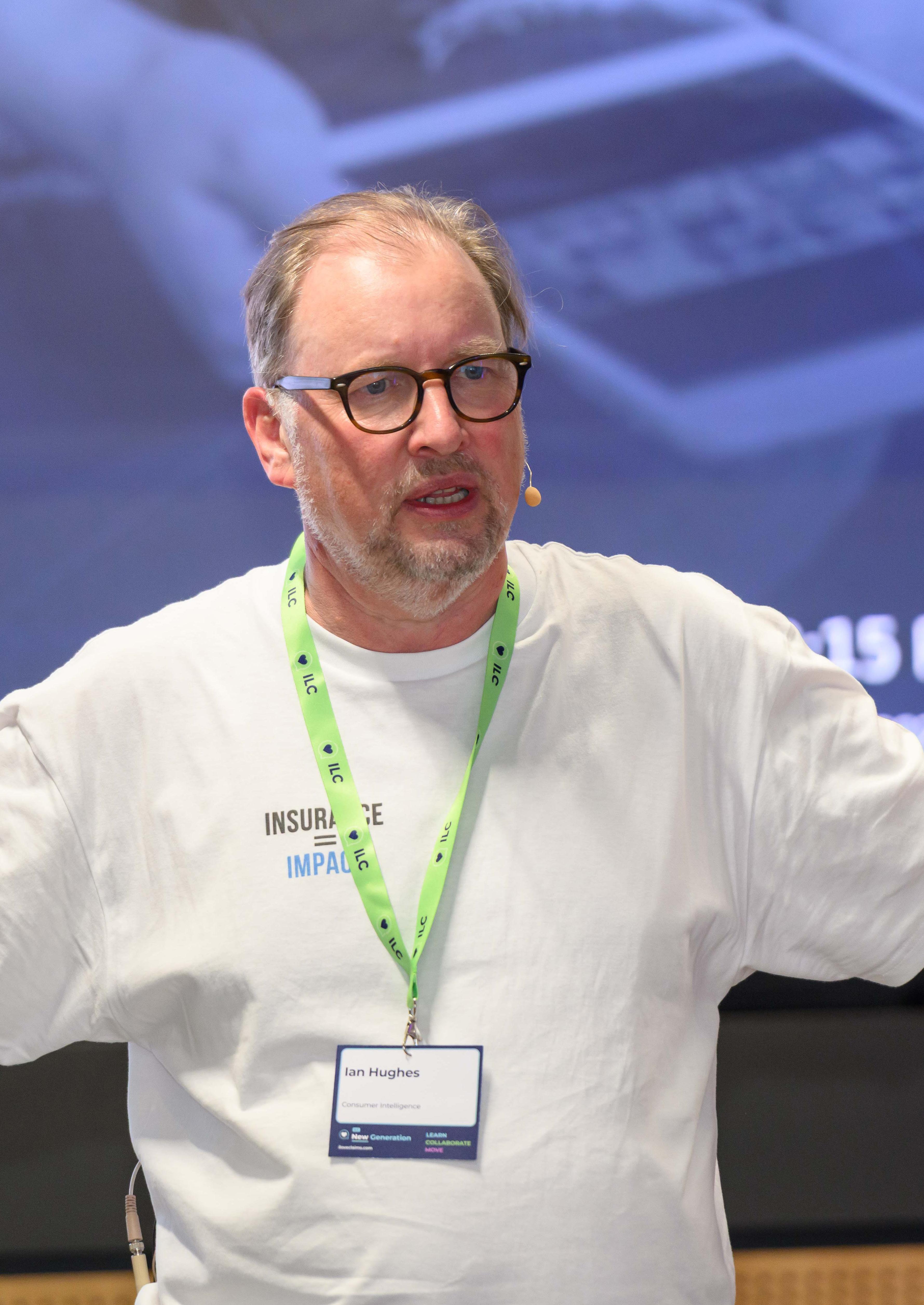
“Claims is where the action is. This is the moment where promises are kept”
Ian Hughes, CEO, Consumer Intelligence

At the heart of the event was an honest, solutions-focused exploration of what needs to change in claims and insurance to secure a sustainable, inclusive future workforce.
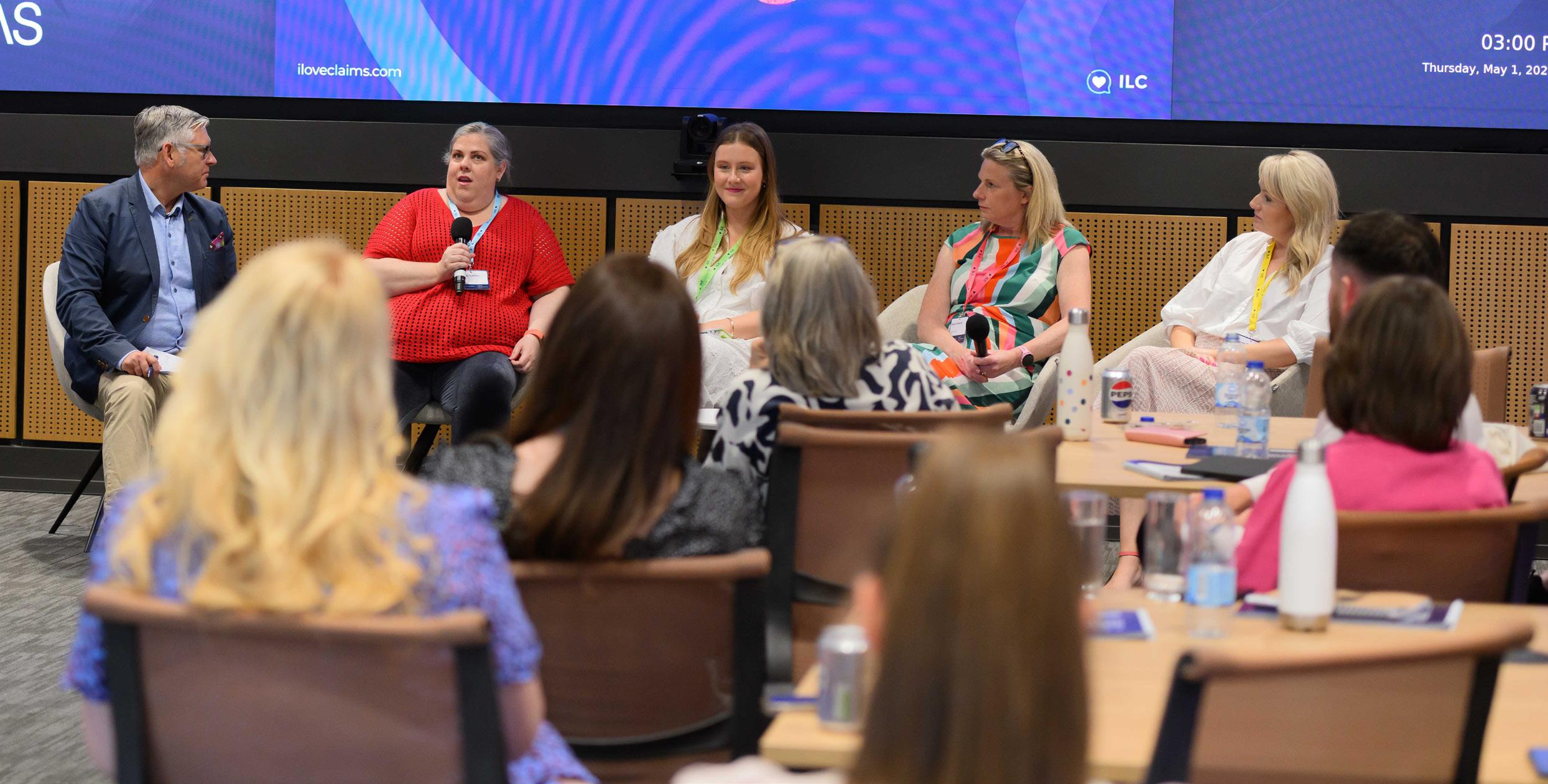
The panel session, chaired by Ian Thompson, Director of IMT Advisory Ltd, crystallised the energy of the day. Featuring senior voices from across the sector, the discussion laid bare the challenges and practical opportunities to better engage new talent while also nurturing existing employees.
Opening the panel, Ian posed a blunt question: “How difficult is it to recruit talent?” The responses were unanimous - recruitment is not impossible, but it is an uphill battle.
Sharna Thomson, Head of Customer for UK Claims at Zurich Insurance, provided a striking example: “In our last Glasgow apprentice intake, we had seven virtually identical candidates. They were lovely, but that tells you everything about the size and diversity of the pool we’re fishing in.”
This homogeneity, Sharna explained, is not a reflection of a lack of effort, but rather of limited reach and entrenched perceptions. “We’re not short of applicants, but we’re working very hard to attract them,” she admitted.
Liisa Antola, Senior Policy Adviser for Diversity, Equity and Inclusion at the ABI, linked the issue to systemic barriers formed early in life. “OECD research shows that career paths are often set by the age of 10,” she said. “We need to look beyond just the candidates - parents, teachers, community groups all influence those decisions. If we’re not engaging them, we’re already too late.”
“It has to be embedded. Business leaders must treat talent development as a commercial imperative.”
Victoria Sutton, Howden
The theme of representation permeated the session. Sarah Pickerill, Head of People at Carpenters Group, pointed to a visual and cultural disconnect in how the sector presents itself: “When we bring people into our organisations, they want to see someone like them. It’s not enough to say we’re inclusive - we have to prove it visibly.”
Victoria Sutton, Business Performance Directorat Howden, echoed the sentiment with a call to action. “We all have volunteer days. We should use those days to go into schools and communities, show young people what insurance is, and make ourselves visible. That’s how we use our power for good.”
Liisa added urgency around disability representation: “We don’t even have accurate data for disability across the sector. We need to get honest about this. The investment management sector reports just three per cent disability representation - vastly under what we know exists in wider society.”
The panellists were clear that corporate social responsibility can no longer sit on the periphery of business operations.
“We had a great early careers programme” explained Victoria, “but for various reasons it’s on pause which slows the momentum of the apprentices coming through. As an industry we need to find a way to ensure consistency even if it means short-term pain for long-term gain. We all want more skilled claims professionals, and the best way is to grow your own, that is going to take sustained investment from everyone.”
This strategic shift needs to start at the top. “It’s not about leaders squeezing this in on top of everything else,” Victoria said. “It has to be embedded. Business leaders must treat talent development as a commercial imperative.”
One area of concern was the declining availability of meaningful work experience. From data protection to safeguarding and access to systems, logistical challenges abound. Both Sarah and Victoria highlighted how difficult it is to provide value to young people in these placements, even when the will is there.
But solutions were on the table. Liisa spoke of Phoenix Group’s rotational work experience programme across several financial services firms. “It’s not about hiring those individualsit’s about access, awareness, and making the sector visible.”
Victoria proposed a collaborative model: “In Colchester alone, you’ve got multiple insurance businesses. Why not run a shared ‘intro to claims’ week? It doesn’t need to be London-centric.”
Sarah agreed: “We don’t want to give them tea runs or filing. We need to show them what a career in this sector really looks like.”
It’s not just about getting people in the door - it’s about keeping them. And this, the panel agreed, is just as fraught. Sharna highlighted a common challenge: “People leave for money. Simple as that. We’ve had people go for thousands more and then come back. You can’t always compete on salary.”
Leadership culture also came under scrutiny. “Don’t people leave their managers?” asked Ian.
“Sometimes”, Sharna agreed. “We’ve got to get better at tackling poor leadership if we want to retain talent.”
Victoria reflected on the learning from Howden’s early careers programme. “We gave our young recruits access to the senior leadership team from day one, which has its place but has also led to inflated expectations. We’ve realised we need frontline staff involved in mentoring and onboarding - those doing the job every day. It makes the experience more grounded and more realistic.”
A question about AI and its threat to claims jobs brought a passionate rebuttal. Sarah was firm: “Empathy cannot be automated. You’re dealing with people on their worst days. That needs a human.”
Victoria framed AI differently - not as a threat, but as an enabler: “Let AI handle the admin. That frees up our people to focus on complex, value-adding work. AI should empower, not replace.”
“We’re not short of applicants - we’re just working hard to get them through the door.”
Sharna Thomson, Zurich Insurance
As the panel drew to a close, Ian challenged each speaker to commit to one action they’d take after the event.
• Sharna pledged to revisit Zurich’s engagement with UCAS: “I’m going to take this report back to EXCO and push for support in tackling this industry issue.”
• Sarah committed to regular engagement with schools: “A quarterly insight week could build a stronger, more consistent pipeline.”
• Liisa vowed to push for campaign work at ABI with diversity at the centre: “We’re not attracting from the widest talent pool - we need to change that.”
• Victoria summarised her learnings as twofold: “We need to start outreach much earlier and we need to support sector-wide insight days.”
Ian closed the session with a personal pledge: to launch a podcast series showcasing real journeys into insurance. “Storytelling is powerful,” he said. “Let’s share our people’s stories - why they joined, what they’ve learned, and why insurance matters.”
The Discovery Day did more than share ideasit lit a fire. From diversity to digital disruption, early careers to executive buy-in, the event highlighted not just the challenges the industry faces, but the tangible, collaborative steps that can transform the future of claims. As the sector continues to evolve, it’s clear: recruitment and retention aren’t HR concerns - they’re businesscritical. And change starts now.
“Empathy cannot be automated. People are calling us on their worst days - they need a human response.”
Sarah Pickerill, Carpenters Group
The day concluded by pulling all the feedback during the Workshop sessions together and then presenting it for final input from delegates on the day. Here, we present the findings…
Which other actions would you like to find out more about as a follow up to take back to your business?
• Selling the story, it’s not just a job it’s a career opportunity, being relatable and transparent.
• Emphasise the importance of social media platforms in promoting positive messaging about the industry.
• There needs to be a burning platform for leadership teams to do something different tomorrow from what they did yesterday, using the data to help senior leadership teams understand the problem and the opportunity.
Top actions the industry can adopt based on believed maximum impact, easiest implementation and lowest investment costs.
The actions that were voted to offer the best perceived balance across the categories were...
• ILC outreach programmes , ‘Early Careers Schools Programme’, utilising the ILC YouTube channel, student input at events
• Being more creative with social media to attract young people.
Tiktok, puzzles, challenges
However, the action which was believed could prove most impactful, yet carried the perceived highest investment was...
• Changing the public perception of the industry, through modern tools, multi channel bitesize success stories and engaging more
One of the final asks of the day related to what ILC can do to support the next steps… we asked what delegates felt was next.
What role can ILC play that would help attract new talent into our industry?
Example responses
“Share success stories “
“Bring the trade federations together with help to shape this as a collective approach. That is key”
“Help us collaborate and form tangible actions and delivery that makes a real difference”
“Support a coordinated insight days/ work experience across claims chain”
“Help us in our efforts to engage with schools with sector specific activities / presentations”
“Help provide us with an audience for us to be able to talk about the insurance industry”
“Help the industry collaborate”
We then got AI to summarise exactly what it is that comes next:
ILC can play a vital role in attracting new talent to the claims industry by uniting the sector to share real, tangible success stories and insights through impactful presentations, collaborative projects, and engaging media.
By working with schools, federations, and firms to highlight the wide variety of career paths and skills needed, ILC can help shape a more interesting and accessible narrative about insurance—driving awareness, excitement, and a sense of purpose among the next generation.
As it had become clear throughout the day, a core component in the bid to advance the insurance industry amongst the new generation was trying to define its purpose.
We canvassed delegates for their feedback – examples of which are included below.
“To support policy holders and innocent person(s) when they are harmed or inconvenienced”
“To create a level of trust within this unstable world
“Be the safety blanket in all aspects of life”
“A safety net for when things go wrong”
“Protecting futures, shaping innovation & make a real impact”
“To catch people in their worst moments and set them back where they were”
“Offer stability”
“To provide an overall positive economical and societal impact”
“Everyone’s Superhero”
“Provide protection for the hard times in life”
“Protect against unknown risk”
“To enable the world to function and evolve”
“Enabling you to live the life you want to lead”
“Provide piece of mind”
We then got AI to combine all the ideas to provide a succinct summary of how the industry might describe itself to prospective onlookers:
The purpose of the insurance industry, is to provide stability and support when it matters most.
It exists to “help individuals and businesses recover from setbacks” and “support people when they are at their most vulnerable.” It is a “safety net that enables progress” and a way of “providing peace of mind” during uncertain times.
Together, it is an industry focused on trust, resilience, and delivering a better tomorrow.
“Some really good engagement from people in the room, a shared purpose.”
“Great content & good cross section of the market.”
“Delegates all seemed passionate and enthusiastic to address the challenge.”
“Great speakers - Ian H was outstanding!”
“I thought it ran very well. Credit to you all, you did a fantastic job.”
“Loved seeing the data from the survey & the breakout discussion groups.”
“Enjoyed seeing real passion and desire for change inspired by the content of the day.”
Secure your copy
To secure your copy of the New Gen research reportproviding insight into more than 2,000 early careers voices on their perceptions of a career in insurance claims, click the below link.


liane@iloveclaims.com 07850 220 714

07813 146 944